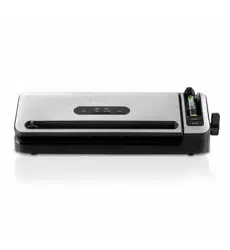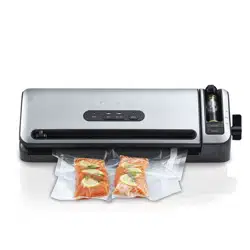
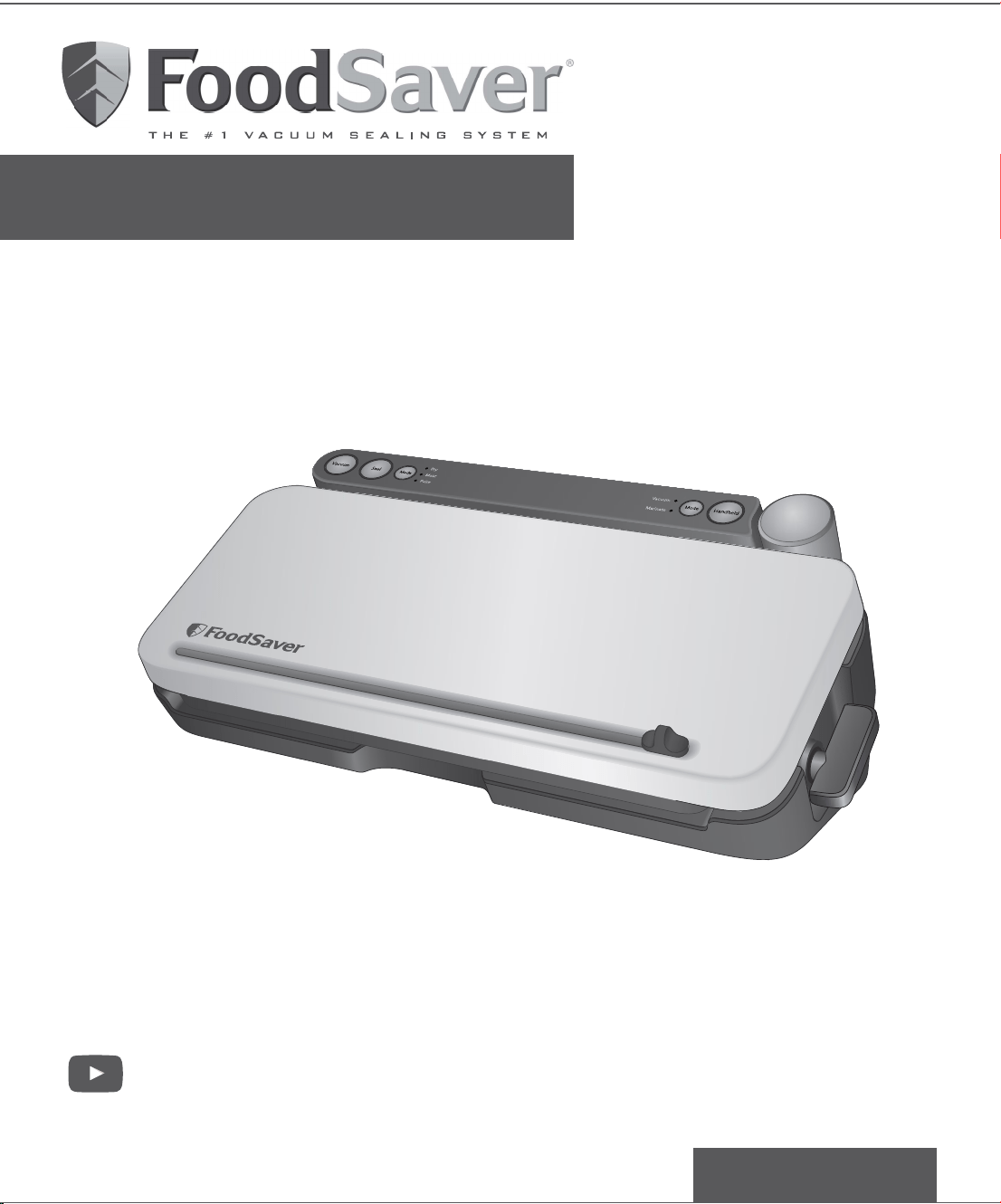
VS3198
Owner’s Manual
Registering your appliance is quick and easy at www. sunbeam.com.au/en/Service-
Support/Register-Your-Product. If you register on our website, you will have the
opportunity to receive special promotional offers.
For more usage tips and safety information, please refer to this Reference Guide or
visit our website.
AU: foodsaver.com.au 1300 881 861
NZ: foodsaver.co.nz 0800 786 232

Important Safeguards
Product Features
“How To”
Make a FoodSaver
®
Bag
Vacuum Seal a FoodSaver
®
Bag
Vacuum Seal with FoodSaver
®
Accessories
Care & Cleaning
Storage Guide
Guidelines
Vacuum Sealing and Food Safety
Food Preparation and Reheating Tips
Sealing Non-Food Items
Troubleshooting
Replacement Parts
Warranty
2
4
6
10
11
12
18
20
21

32
• Read carefully and save all the
instructions provided with an
appliance.
• Always turn the power off at the
power outlet before you insert
or remove a plug. Remove by
grasping the plug - do not pull on
the cord.
• Turn the power off and remove the
plug when the appliance is not in
use and before cleaning.
• Do not use your appliance with
an extension cord unless this cord
has been checked and tested by
a qualified technician or service
person.
• Always use your appliance from a
power outlet of the voltage (A.C.
only) marked on the appliance.
• This appliance is not intended for
use by persons (including children)
with reduced physical, sensory
or mental capabilities, or lack of
experience and knowledge, unless
they have been given supervision
or instruction concerning use
of the appliance by a person
responsible for their safety.
• Children should be supervised to
ensure that they do not play with
the appliance.
• The temperature of accessible
surfaces may be high when the
appliance is operating.
• Never leave an appliance
unattended while in use.
• Do not use an appliance for any
purpose other than its intended
use.
• Do not place an appliance on
or near a hot gas flame, electric
element or on a heated oven.
• Do not place on top of any other
appliance.
• Do not let the power cord of an
appliance hang over the edge of
a table or bench top or touch any
hot surface.
• Do not operate any electrical
appliance with a damaged cord
or after the appliance has been
damaged in any manner. If damage
is suspected, return the appliance
to the nearest Sunbeam Appointed
Service Centre for examination,
repair or adjustment.
Important Safeguards
Read the instructions carefully. For your own safety, always follow these precautions
when using this FoodSaver
®
appliance.
Sunbeam is very safety conscious when designing and manufacturing consumer
products, but it is essential that the product user also exercise care when using an
electrical appliance. Listed below are precautions which are essential for the safe use
of an electrical appliance:
• For additional protection, Sunbeam
recommend the use of a residual
current device (RCD) with a tripping
current not exceeding 30mA in the
electrical circuit supplying power to
your appliances.
• Do not immerse the appliance in
water or any other liquid unless
recommended.
• Appliances are not intended to be
operated by means of an external
timer or separate remote control
system.
• This appliance is intended to be
used in household and similar
applications such as: staff kitchen
areas in shops, offices and other
working environments; farm
houses; by clients in hotels,
motels and other residential type
environments; bed and breakfast
type environments.
If you have any concerns regarding the performance and use of your appliance,
please visit www.sunbeam.com.au or www.sunbeam.co.nz or contact the Sunbeam
Consumer Service Line. Ensure the above safety precautions are understood.

32
• Read carefully and save all the
instructions provided with an
appliance.
• Always turn the power off at the
power outlet before you insert
or remove a plug. Remove by
grasping the plug - do not pull on
the cord.
• Turn the power off and remove the
plug when the appliance is not in
use and before cleaning.
• Do not use your appliance with
an extension cord unless this cord
has been checked and tested by
a qualified technician or service
person.
• Always use your appliance from a
power outlet of the voltage (A.C.
only) marked on the appliance.
• This appliance is not intended for
use by persons (including children)
with reduced physical, sensory
or mental capabilities, or lack of
experience and knowledge, unless
they have been given supervision
or instruction concerning use
of the appliance by a person
responsible for their safety.
• Children should be supervised to
ensure that they do not play with
the appliance.
• The temperature of accessible
surfaces may be high when the
appliance is operating.
• Never leave an appliance
unattended while in use.
• Do not use an appliance for any
purpose other than its intended
use.
• Do not place an appliance on
or near a hot gas flame, electric
element or on a heated oven.
• Do not place on top of any other
appliance.
• Do not let the power cord of an
appliance hang over the edge of
a table or bench top or touch any
hot surface.
• Do not operate any electrical
appliance with a damaged cord
or after the appliance has been
damaged in any manner. If damage
is suspected, return the appliance
to the nearest Sunbeam Appointed
Service Centre for examination,
repair or adjustment.
Important Safeguards
Read the instructions carefully. For your own safety, always follow these precautions
when using this FoodSaver
®
appliance.
Sunbeam is very safety conscious when designing and manufacturing consumer
products, but it is essential that the product user also exercise care when using an
electrical appliance. Listed below are precautions which are essential for the safe use
of an electrical appliance:
• For additional protection, Sunbeam
recommend the use of a residual
current device (RCD) with a tripping
current not exceeding 30mA in the
electrical circuit supplying power to
your appliances.
• Do not immerse the appliance in
water or any other liquid unless
recommended.
• Appliances are not intended to be
operated by means of an external
timer or separate remote control
system.
• This appliance is intended to be
used in household and similar
applications such as: staff kitchen
areas in shops, offices and other
working environments; farm
houses; by clients in hotels,
motels and other residential type
environments; bed and breakfast
type environments.
If you have any concerns regarding the performance and use of your appliance,
please visit www.sunbeam.com.au or www.sunbeam.co.nz or contact the Sunbeam
Consumer Service Line. Ensure the above safety precautions are understood.
54
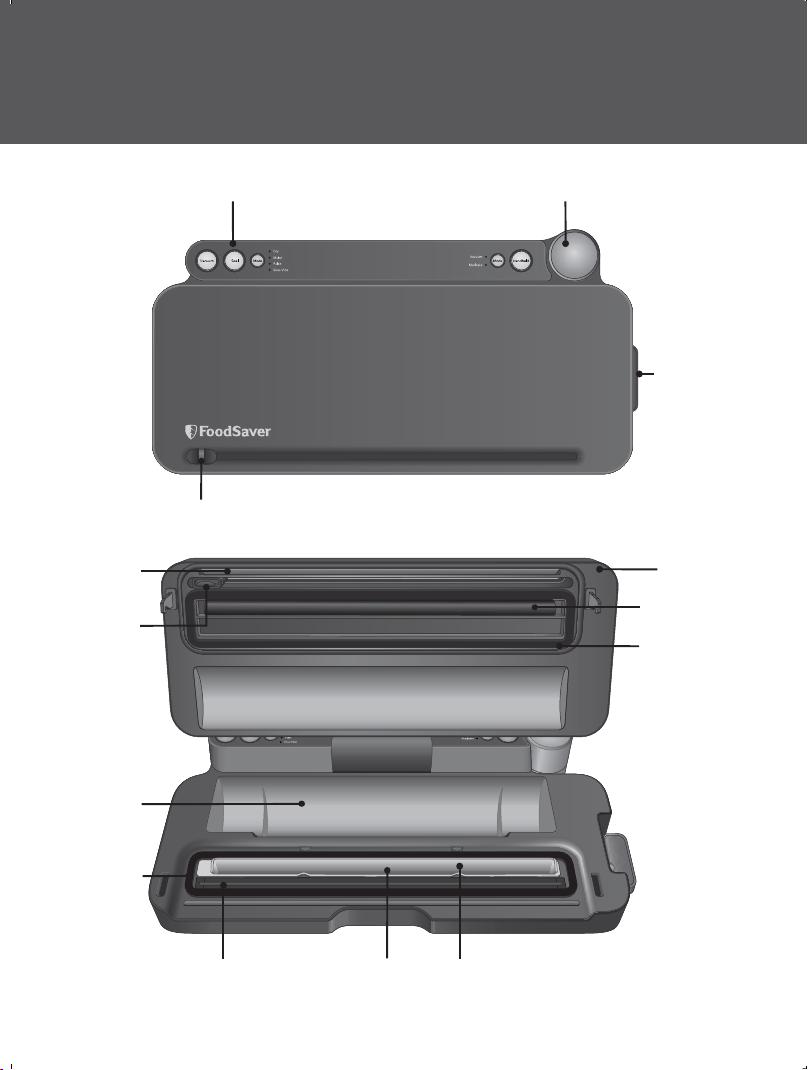
The user-friendly, intuitive control panel makes it easy for
you to get the most out of your FoodSaver
®
System:
Product Features
Latch
Control Panel
Bag Cutter
Built-In
Handheld
Sealer
Upper
Foam
Gasket
Extra-Wide
Sealing Strip
Vacuum
Channel
Removable
Drip Tray
Roll
Storage
Lower
Foam
Gasket
Appliance
Lid
Upper Seal
Profile
Bag
Cutter
Cutter
Stabiliser
Prole
Heat Seal Controls
1. Vacuum Button
Press to vacuum seal food airtight. Appliance shuts off automatically.
2. Seal Button
This button has three uses:
i. Press button to create a seal when making bags using a FoodSaver
®
Roll.
ii. Press to immediately stop vacuum process and begin sealing bag.
iii. Press to create a seal on film bags (such as a potato chip and cereal bags) to keep food sealed airtight.
3. Mode Button
Press Mode Button to select custom setting. Indicator light will illuminate next to the custom setting that is
initiated.
3a. Dry
For optimal vacuuming and sealing of dry foods. This is the default setting.
3b. Moist
For optimal vacuuming and sealing of moist or juicy foods.
3c. Pulse
Press and hold to manually control the vacuum function. Press Seal Button when ready to seal bag.
3d. Sous Vide
For optimal vacuuming and sealing of bags to use in Sous Vide cooking.
Handheld Sealer Controls
4. Handheld Button
Press for use with FoodSaver
®
accessories using Built-In Handheld Sealer.
5. Mode Button
Press Mode Button to select setting. Indicator light will illuminate next to the custom setting that is initiated.
5a. Vacuum
For use with FoodSaver
®
Zipper Bags and Containers.
5b. Marinate
For use with FoodSaver
®
Containers using built-in Handheld Sealer. Vacuum pulse sequence takes 12
minutes or less. It allows for optimum flavour infusion in less time. Appliance will vacuum and release three
times.
6. Latch
Operate - Adjust Down to put unit in Operate Mode. This turns unit on for vacuuming and sealing.
Store - Adjust Centre to Store
Open - Adjust Up to Open

54
The user-friendly, intuitive control panel makes it easy for
you to get the most out of your FoodSaver
®
System:
Product Features
Latch
Control Panel
Bag Cutter
Built-In
Handheld
Sealer
Upper
Foam
Gasket
Extra-Wide
Sealing Strip
Vacuum
Channel
Removable
Drip Tray
Roll
Storage
Lower
Foam
Gasket
Appliance
Lid
Upper Seal
Profile
Bag
Cutter
Cutter
Stabiliser
Prole
Heat Seal Controls
1. Vacuum Button
Press to vacuum seal food airtight. Appliance shuts off automatically.
2. Seal Button
This button has three uses:
i. Press button to create a seal when making bags using a FoodSaver
®
Roll.
ii. Press to immediately stop vacuum process and begin sealing bag.
iii. Press to create a seal on film bags (such as a potato chip and cereal bags) to keep food sealed airtight.
3. Mode Button
Press Mode Button to select custom setting. Indicator light will illuminate next to the custom setting that is
initiated.
3a. Dry
For optimal vacuuming and sealing of dry foods. This is the default setting.
3b. Moist
For optimal vacuuming and sealing of moist or juicy foods.
3c. Pulse
Press and hold to manually control the vacuum function. Press Seal Button when ready to seal bag.
3d. Sous Vide
For optimal vacuuming and sealing of bags to use in Sous Vide cooking.
Handheld Sealer Controls
4. Handheld Button
Press for use with FoodSaver
®
accessories using Built-In Handheld Sealer.
5. Mode Button
Press Mode Button to select setting. Indicator light will illuminate next to the custom setting that is initiated.
5a. Vacuum
For use with FoodSaver
®
Zipper Bags and Containers.
5b. Marinate
For use with FoodSaver
®
Containers using built-in Handheld Sealer. Vacuum pulse sequence takes 12
minutes or less. It allows for optimum flavour infusion in less time. Appliance will vacuum and release three
times.
6. Latch
Operate - Adjust Down to put unit in Operate Mode. This turns unit on for vacuuming and sealing.
Store - Adjust Centre to Store
Open - Adjust Up to Open
76
1
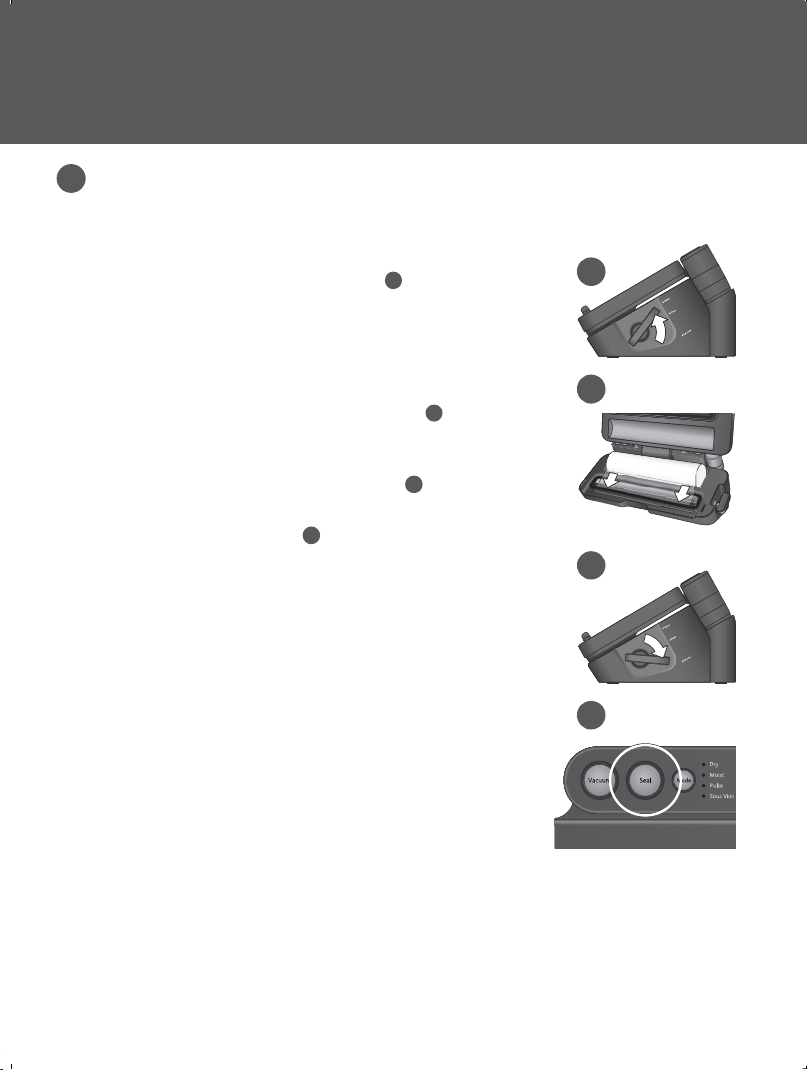
Make a FoodSaver
®
Bag
1. Turn Latch to Open position
A
and open
lid.
2. Place roll inside unit’s internal storage
space as indicated. Pull enough bag
material to edge until it is on top of the
sealing strip to make the first seal
B
and
close lid.
3. Turn Latch to Operate position
C
.
4. Press Seal Button
D
to seal open end of
bag. Wait until Seal Indicator Light turns
off.
CAUTION: To reduce risk of burns,
do not touch sealing strip while
using appliance.
How to
5. Turn Latch to Open position
E
, open
lid
and pull enough bag material out to
desired length for whatever you intend
to vacuum seal
F
and close lid.
6. Turn Latch to Operate position
G
.
7. Press Seal Button
H
to make seal for
next bag. While sealing, you can slide
bag cutter across
I
to remove bag.
A
G C
H D
I
B
F
E
S
E
A
LE
D
E
N
D
S
E
A
L
E
D
E
N
D
76
1
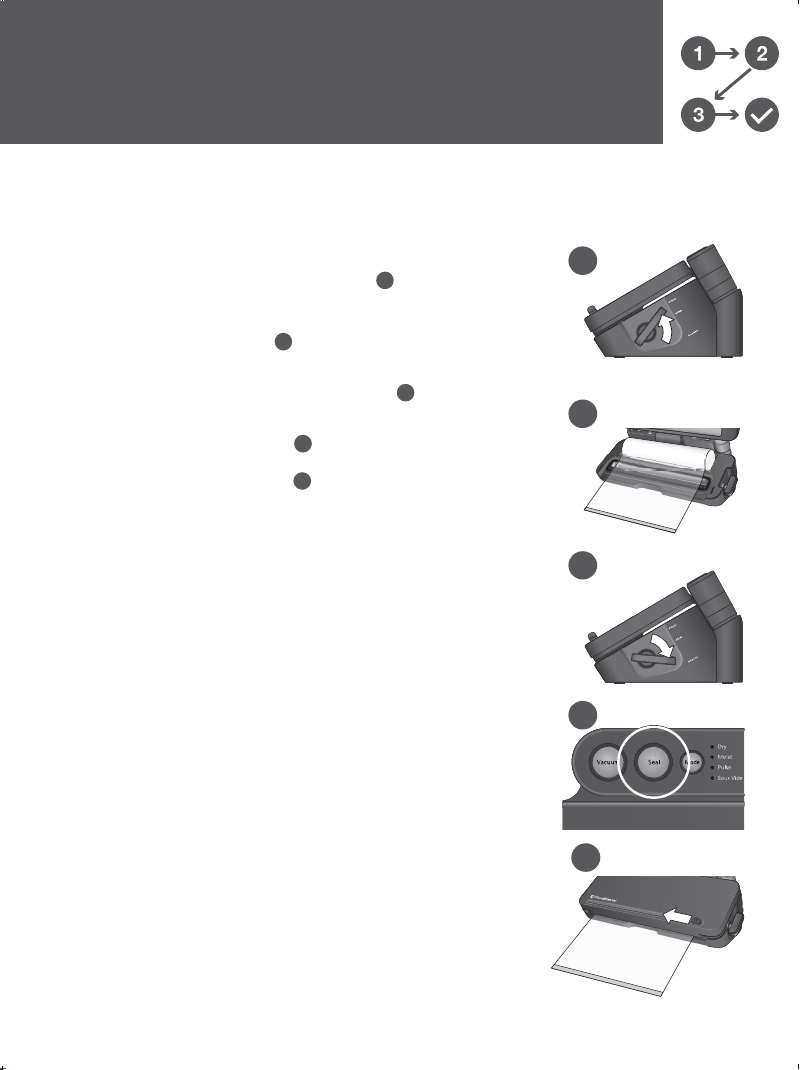
Make a FoodSaver
®
Bag
1. Turn Latch to Open position
A
and open
lid.
2. Place roll inside unit’s internal storage
space as indicated. Pull enough bag
material to edge until it is on top of the
sealing strip to make the first seal
B
and
close lid.
3. Turn Latch to Operate position
C
.
4. Press Seal Button
D
to seal open end of
bag. Wait until Seal Indicator Light turns
off.
CAUTION: To reduce risk of burns,
do not touch sealing strip while
using appliance.
How to
5. Turn Latch to Open position
E
, open
lid
and pull enough bag material out to
desired length for whatever you intend
to vacuum seal
F
and close lid.
6. Turn Latch to Operate position
G
.
7. Press Seal Button
H
to make seal for
next bag. While sealing, you can slide
bag cutter across
I
to remove bag.
A
G C
H D
I
B
F
E
S
E
A
LE
D
E
N
D
S
E
A
L
E
D
E
N
D
98
For Zipper Bags & Containers:
1. Turn Latch to Operate position and pull
Handheld Sealer
A
from appliance.
2. Place Built-in Handheld Sealer on zipper bag
B
or container
C
valve.
3. Press Mode button until the Indicator light next
to Vacuum is illuminated. Then press Handheld
button to vacuum.
D
IMPORTANT TIPS:
• Let appliance cool down for 20 seconds after
each use. Always store appliance with Latch in
centre Store position.
• To minimise bag waste, do not insert too
much bag material into Removable Drip Tray.
Place bag just over edge of Removable Drip
Tray.
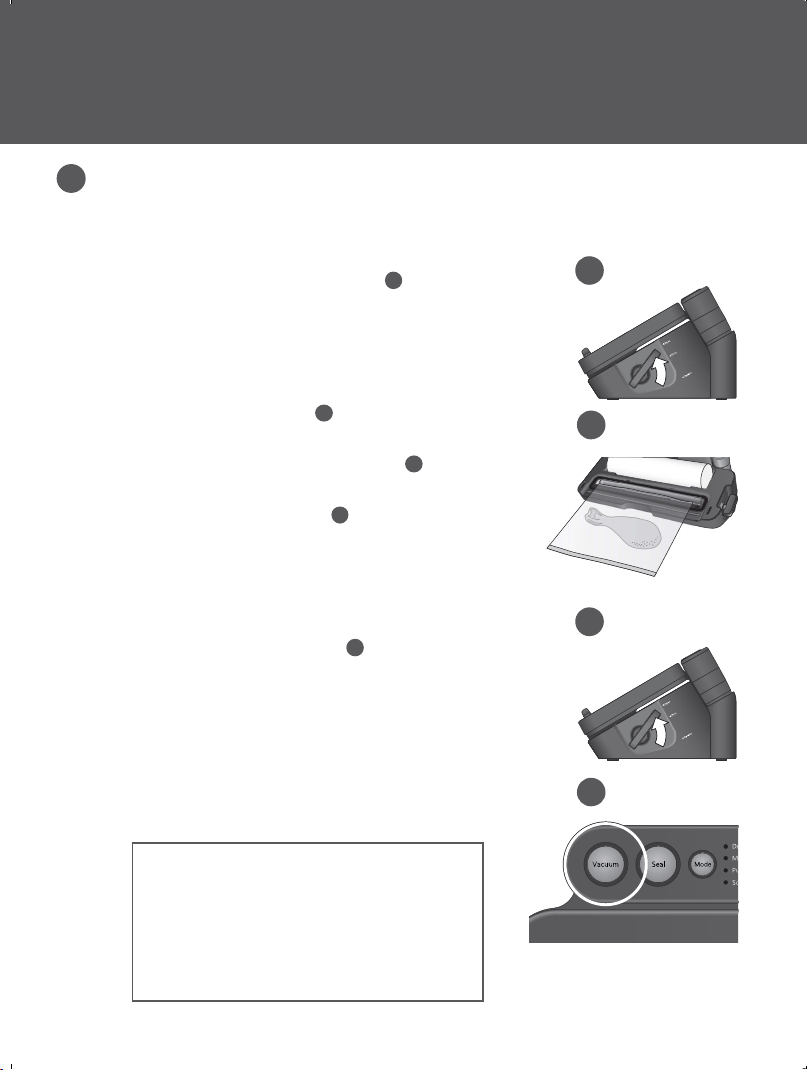
1. Turn Latch to Open position
A
and open
lid.
2. Place item(s) in bag, allowing at least 8cm
of space between contents and open end
of bag. Place open end of bag into Vacuum
Channel (Drip Tray)
B
and close lid.
3. Turn Latch to Operate position
C
.
4. Press Vacuum Button
D
to begin vacuum
and sealing process of open end of bag.
Motor will continue to run until bag is fully
vacuumed, then will automatically seal.
5. When Seal Indicator Light turns off, turn
Latch to Open position
A
and open lid.
Remove bag. Refrigerate, freeze or store as
needed. (See FoodSaver
®
Guidelines, pg. 12
for safe food storage tips.)
CAUTION: To reduce risk of burns,
do not touch sealing strip while
using appliance.
Your new FoodSaver
®
Appliance includes a Built-In Handheld Sealer
for accessories.
2
Vacuum Seal a FoodSaver
®
Bag
3
Vacuum Seal with FoodSaver
®
Accessories
How to
A
B
C
B
C
A
O
P
E
N
E
N
D
SE
A
L
E
D
E
N
D
98
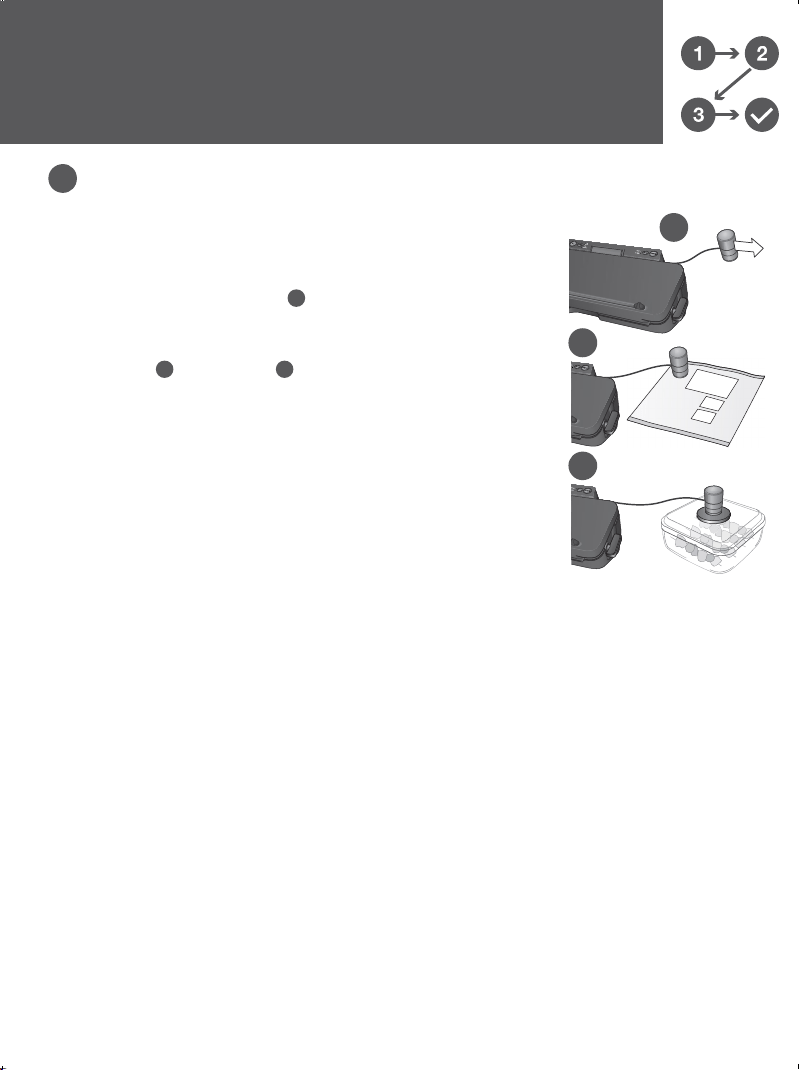
For Zipper Bags & Containers:
1. Turn Latch to Operate position and pull
Handheld Sealer
A
from appliance.
2. Place Built-in Handheld Sealer on zipper bag
B
or container
C
valve.
3. Press Mode button until the Indicator light next
to Vacuum is illuminated. Then press Handheld
button to vacuum.
D
IMPORTANT TIPS:
• Let appliance cool down for 20 seconds after
each use. Always store appliance with Latch in
centre Store position.
• To minimise bag waste, do not insert too
much bag material into Removable Drip Tray.
Place bag just over edge of Removable Drip
Tray.
1. Turn Latch to Open position
A
and open
lid.
2. Place item(s) in bag, allowing at least 8cm
of space between contents and open end
of bag. Place open end of bag into Vacuum
Channel (Drip Tray)
B
and close lid.
3. Turn Latch to Operate position
C
.
4. Press Vacuum Button
D
to begin vacuum
and sealing process of open end of bag.
Motor will continue to run until bag is fully
vacuumed, then will automatically seal.
5. When Seal Indicator Light turns off, turn
Latch to Open position
A
and open lid.
Remove bag. Refrigerate, freeze or store as
needed. (See FoodSaver
®
Guidelines, pg. 12
for safe food storage tips.)
CAUTION: To reduce risk of burns,
do not touch sealing strip while
using appliance.
Your new FoodSaver
®
Appliance includes a Built-In Handheld Sealer
for accessories.
2
Vacuum Seal a FoodSaver
®
Bag
3
Vacuum Seal with FoodSaver
®
Accessories
How to
A
B
C
B
C
A
O
P
E
N
E
N
D
SE
A
L
E
D
E
N
D
1110
of your Vacuum Sealer
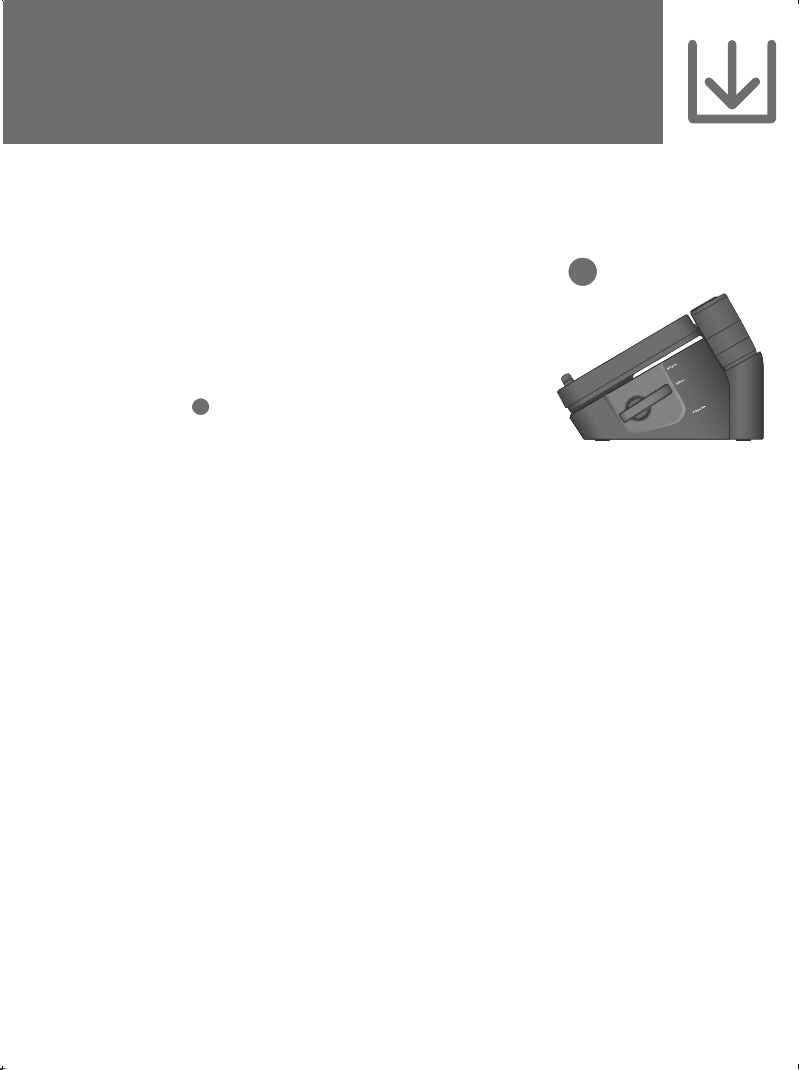
To Store Appliance:
Clean unit thoroughly as detailed in
“Care & Cleaning” section.
After unit has been cleaned and allowed to fully
dry, close lid and push Latch into Store (middle)
position
A
. This setting will keep lid closed
but prevents any undue pressure from being
applied to internal sealing Gaskets of unit.
Always leave Latch in Store position when not
in use. Never store Lid in Operate position as
Gaskets may become compressed and unit will
not vacuum bag.
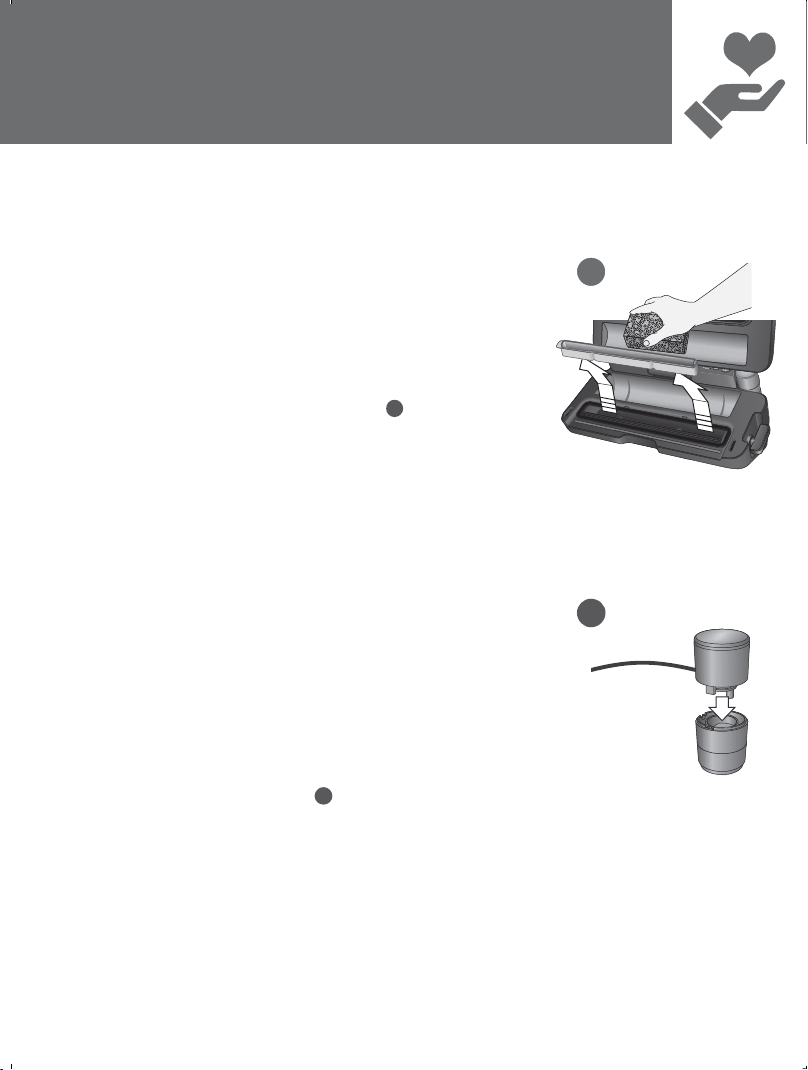
To Clean Appliance:
CAUTION: Remove Power Cord from electrical
outlet. Do not immerse in liquid.
Check Gaskets and around Drip Tray to make sure
they are free from food materials. Wipe off Gasket
with warm soapy cloth if needed
A
. Upper and
Lower Gaskets may be removed for cleaning.
Clean with warm, soapy water and allow gaskets
to dry before reinserting in machine.
The Removable Drip Tray makes cleanup easy
when small amounts of liquids are pulled into
Vacuum Channel during vacuum process.
Empty Drip Tray after each use. Wash in warm
soapy water or place in top rack of dishwasher.
Check for food residues in Drip Tray Slot. Clean
if needed. Dry thoroughly before reinserting into
appliance.
To Clean Built-in Handheld Sealer Reservoir:
Empty Reservoir after each use. To remove
Reservoir from Handheld Sealer, holding top
portion firmly (black upper piece), pull Lower
Reservoir down and off
B
. Wash in warm soapy
water. Air dry before replacing.
NOTE: Always clean after each use when fluid is visible.
A
Push Latch into Store
position to store.
Lift Drip Tray out
Pull Reservoir off
A
B
of your Vacuum Sealer
Care & Cleaning Storage Guide
1110
of your Vacuum Sealer
To Store Appliance:
Clean unit thoroughly as detailed in
“Care & Cleaning” section.
After unit has been cleaned and allowed to fully
dry, close lid and push Latch into Store (middle)
position
A
. This setting will keep lid closed
but prevents any undue pressure from being
applied to internal sealing Gaskets of unit.
Always leave Latch in Store position when not
in use. Never store Lid in Operate position as
Gaskets may become compressed and unit will
not vacuum bag.
To Clean Appliance:
CAUTION: Remove Power Cord from electrical
outlet. Do not immerse in liquid.
Check Gaskets and around Drip Tray to make sure
they are free from food materials. Wipe off Gasket
with warm soapy cloth if needed
A
. Upper and
Lower Gaskets may be removed for cleaning.
Clean with warm, soapy water and allow gaskets
to dry before reinserting in machine.
The Removable Drip Tray makes cleanup easy
when small amounts of liquids are pulled into
Vacuum Channel during vacuum process.
Empty Drip Tray after each use. Wash in warm
soapy water or place in top rack of dishwasher.
Check for food residues in Drip Tray Slot. Clean
if needed. Dry thoroughly before reinserting into
appliance.
To Clean Built-in Handheld Sealer Reservoir:
Empty Reservoir after each use. To remove
Reservoir from Handheld Sealer, holding top
portion firmly (black upper piece), pull Lower
Reservoir down and off
B
. Wash in warm soapy
water. Air dry before replacing.
NOTE: Always clean after each use when fluid is visible.
A
Push Latch into Store
position to store.
Lift Drip Tray out
Pull Reservoir off
A
B
of your Vacuum Sealer
Care & Cleaning Storage Guide

1312
Vacuum Sealing and Food Safety
The vacuum sealing process extends the life of foods by removing most
of the air from the sealed container, thereby reducing oxidation, which
affects nutritional value, flavour and overall quality. Removing air can also
inhibit growth of microorganisms, which can cause problems under certain
conditions:
Mould – Easily identified by its fuzzy characteristic. Mould cannot grow in a
low oxygen environment, therefore vacuum sealing can slow the growth of
mould.
Yeast – Results in fermentation, which can be identified by smell and taste.
Yeast needs water, sugar and a moderate temperature to grow. It can also
survive with or without air. Slowing the growth of yeast requires refrigeration,
while freezing stops it completely.
Bacteria – Results in an unpleasant odour, discolouration and/or soft or slimy
texture. Under the right conditions, anaerobic bacteria such as Clostridium
Botulinum (the organism that causes Botulism) can grow without air and
sometimes cannot be detected by smell or taste. Although it is extremely rare,
it can be very dangerous.
To preserve foods safely, it is critical that you maintain low temperatures. You
can significantly reduce the growth of microorganisms at temperatures of 4°C
or below. Freezing at -17°C does not kill microorganisms, but stops them from
growing. For long-term storage, always freeze perishable foods that have
been vacuum sealed, and keep refrigerated after thawing.
It is important to note that vacuum sealing is NOT a substitute for canning and
it cannot reverse the deterioration of foods. It can only slow down the changes
in quality. It is difficult to predict how long foods will retain their top-quality
flavour, appearance or texture because it depends on age and condition of
the food on the day it was vacuum sealed.
Food Preparation & Reheating Tips
Thawing and Reheating
Vacuum-Sealed Foods
Always thaw foods in either refrigerator or microwave — do not thaw perishable
foods at room temperature.
To reheat foods in a microwave in a FoodSaver
®
Bag, always cut corner of the
bag before placing it on a microwave-safe dish. However, to avoid hot spots, do
not reheat bone-in meat or greasy foods in microwave within a FoodSaver
®
Bag.
You can also reheat foods in FoodSaver
®
Bags by placing them in water at a low
simmer below 75°C.
Preparation Guidelines
for Meat and Fish:
For best results, pre-freeze meat and fish for 1-2 hours before vacuum sealing
in a FoodSaver
®
Bag. This helps retain the juice and shape, and guarantees a
better seal.
If it’s not possible to pre-freeze, place a folded paper towel between meat or fish
and top of bag, but below seal area. Leave paper towel in bag to absorb excess
moisture and juices during vacuum sealing process.
NOTE: Beef may appear darker after vacuum sealing due to the removal of oxygen. This is not an
indication of spoilage.
Preparation Guidelines for Hard Cheeses:
To keep cheese fresh, vacuum seal it after each use. Make your FoodSaver
®
Bag
extra long, allowing 2.5cm of bag material for each time you plan to open and
reseal in addition to the 8cm room you normally leave between contents and
seal. Simply cut sealed edge and remove cheese. When you’re ready to reseal
the cheese, just drop it in bag and reseal.
IMPORTANT:
Due to the risk of anaerobic bacteria, Soft cheeses should never be vacuum sealed.
IMPORTANT:
Vacuum sealing is NOT a substitute for refrigeration or freezing.
Any perishable foods that require refrigeration must still be refrigerated or frozen after
vacuum sealing.
Guidelines
1312
Vacuum Sealing and Food Safety
The vacuum sealing process extends the life of foods by removing most
of the air from the sealed container, thereby reducing oxidation, which
affects nutritional value, flavour and overall quality. Removing air can also
inhibit growth of microorganisms, which can cause problems under certain
conditions:
Mould – Easily identified by its fuzzy characteristic. Mould cannot grow in a
low oxygen environment, therefore vacuum sealing can slow the growth of
mould.
Yeast – Results in fermentation, which can be identified by smell and taste.
Yeast needs water, sugar and a moderate temperature to grow. It can also
survive with or without air. Slowing the growth of yeast requires refrigeration,
while freezing stops it completely.
Bacteria – Results in an unpleasant odour, discolouration and/or soft or slimy
texture. Under the right conditions, anaerobic bacteria such as Clostridium
Botulinum (the organism that causes Botulism) can grow without air and
sometimes cannot be detected by smell or taste. Although it is extremely rare,
it can be very dangerous.
To preserve foods safely, it is critical that you maintain low temperatures. You
can significantly reduce the growth of microorganisms at temperatures of 4°C
or below. Freezing at -17°C does not kill microorganisms, but stops them from
growing. For long-term storage, always freeze perishable foods that have
been vacuum sealed, and keep refrigerated after thawing.
It is important to note that vacuum sealing is NOT a substitute for canning and
it cannot reverse the deterioration of foods. It can only slow down the changes
in quality. It is difficult to predict how long foods will retain their top-quality
flavour, appearance or texture because it depends on age and condition of
the food on the day it was vacuum sealed.
Food Preparation & Reheating Tips
Thawing and Reheating
Vacuum-Sealed Foods
Always thaw foods in either refrigerator or microwave — do not thaw perishable
foods at room temperature.
To reheat foods in a microwave in a FoodSaver
®
Bag, always cut corner of the
bag before placing it on a microwave-safe dish. However, to avoid hot spots, do
not reheat bone-in meat or greasy foods in microwave within a FoodSaver
®
Bag.
You can also reheat foods in FoodSaver
®
Bags by placing them in water at a low
simmer below 75°C.
Preparation Guidelines
for Meat and Fish:
For best results, pre-freeze meat and fish for 1-2 hours before vacuum sealing
in a FoodSaver
®
Bag. This helps retain the juice and shape, and guarantees a
better seal.
If it’s not possible to pre-freeze, place a folded paper towel between meat or fish
and top of bag, but below seal area. Leave paper towel in bag to absorb excess
moisture and juices during vacuum sealing process.
NOTE: Beef may appear darker after vacuum sealing due to the removal of oxygen. This is not an
indication of spoilage.
Preparation Guidelines for Hard Cheeses:
To keep cheese fresh, vacuum seal it after each use. Make your FoodSaver
®
Bag
extra long, allowing 2.5cm of bag material for each time you plan to open and
reseal in addition to the 8cm room you normally leave between contents and
seal. Simply cut sealed edge and remove cheese. When you’re ready to reseal
the cheese, just drop it in bag and reseal.
IMPORTANT:
Due to the risk of anaerobic bacteria, Soft cheeses should never be vacuum sealed.
IMPORTANT:
Vacuum sealing is NOT a substitute for refrigeration or freezing.
Any perishable foods that require refrigeration must still be refrigerated or frozen after
vacuum sealing.
Guidelines
1514
Preparation Guidelines for Fruits:
When freezing soft fruits or berries, it is best to pre-freeze them for 1-2 hours or
until solidly frozen. To freeze fruit in individual servings, first place on a baking
sheet and spread them out so they are not touching. This prevents them from
freezing together in a block. Once they are frozen, remove from baking sheet
and vacuum seal fruit in a FoodSaver
®
Bag. After they have been vacuum sealed,
return them to the freezer.
You can vacuum seal portions for baking or in your favourite combinations for
easy fruit salad all year round. If storing in the refrigerator, we recommend using
a FoodSaver
®
Container.
Preparation Guidelines
for Baked Goods:
To vacuum seal soft or airy baked goods, we recommend using a FoodSaver
®
Container so they will hold their shape. If using a bag, pre-freeze for 1-2 hours or
until solidly frozen. To save time, make cookie dough, pie shells, whole pies, or
mix dry ingredients in advance and vacuum seal for later use.
Preparation Guidelines for
Coffee and Powdery Foods:
To prevent food particles from being drawn into the vacuum pump, place a
coffee filter or paper towel at top of bag or container before vacuum sealing.
You can also place the food in its original bag inside a FoodSaver
®
Bag.
Preparation Guidelines
for Vegetables:
Vegetables need to be blanched before vacuum sealing. This process stops the
enzyme action that could lead to loss of flavour, colour and texture.
To blanch vegetables, place them in boiling water or in the microwave until they are
cooked, but still crisp. Blanching times range from 1 to 2 minutes for leafy greens
and peas; 3 to 4 minutes for snap peas, sliced zucchini or broccoli; 5 minutes
for carrots; and 7 to 11 minutes for corn on the cob. After blanching, immerse
vegetables in cold water to stop the cooking process. Finally, dry vegetables on a
towel before vacuum sealing.
NOTE: All vegetables (including broccoli, brussels sprouts, cabbage, cauliflower, kale, turnips)
naturally emit gases during storage. Therefore, after blanching, they must be stored in freezer only.
When freezing vegetables, it is best to pre-freeze them for 1-2 hours or until
solidly frozen. To freeze vegetables in individual servings, first place on a baking
sheet and spread them out so they are not touching. This prevents them from
freezing together in a block. Once they are frozen, remove from baking sheet
and vacuum seal vegetables in a FoodSaver
®
Bag. After they have been vacuum
sealed, return them to the freezer.
IMPORTANT:
Due to the risk of anaerobic bacteria, Fresh mushrooms, onions and garlic should never
be vacuum sealed.
Preparation Guidelines
for Leafy Vegetables:
For best results, use a FoodSaver container to store leafy vegetables. First
wash the vegetables, and then dry with a towel or salad spinner. After they are
dried, put them in a container and vacuum seal as normal. Store in refrigerator.
Food Preparation & Reheating Tips
Guidelines
Food Preparation & Reheating Tips
1514
Preparation Guidelines for Fruits:
When freezing soft fruits or berries, it is best to pre-freeze them for 1-2 hours or
until solidly frozen. To freeze fruit in individual servings, first place on a baking
sheet and spread them out so they are not touching. This prevents them from
freezing together in a block. Once they are frozen, remove from baking sheet
and vacuum seal fruit in a FoodSaver
®
Bag. After they have been vacuum sealed,
return them to the freezer.
You can vacuum seal portions for baking or in your favourite combinations for
easy fruit salad all year round. If storing in the refrigerator, we recommend using
a FoodSaver
®
Container.
Preparation Guidelines
for Baked Goods:
To vacuum seal soft or airy baked goods, we recommend using a FoodSaver
®
Container so they will hold their shape. If using a bag, pre-freeze for 1-2 hours or
until solidly frozen. To save time, make cookie dough, pie shells, whole pies, or
mix dry ingredients in advance and vacuum seal for later use.
Preparation Guidelines for
Coffee and Powdery Foods:
To prevent food particles from being drawn into the vacuum pump, place a
coffee filter or paper towel at top of bag or container before vacuum sealing.
You can also place the food in its original bag inside a FoodSaver
®
Bag.
Preparation Guidelines
for Vegetables:
Vegetables need to be blanched before vacuum sealing. This process stops the
enzyme action that could lead to loss of flavour, colour and texture.
To blanch vegetables, place them in boiling water or in the microwave until they are
cooked, but still crisp. Blanching times range from 1 to 2 minutes for leafy greens
and peas; 3 to 4 minutes for snap peas, sliced zucchini or broccoli; 5 minutes
for carrots; and 7 to 11 minutes for corn on the cob. After blanching, immerse
vegetables in cold water to stop the cooking process. Finally, dry vegetables on a
towel before vacuum sealing.
NOTE: All vegetables (including broccoli, brussels sprouts, cabbage, cauliflower, kale, turnips)
naturally emit gases during storage. Therefore, after blanching, they must be stored in freezer only.
When freezing vegetables, it is best to pre-freeze them for 1-2 hours or until
solidly frozen. To freeze vegetables in individual servings, first place on a baking
sheet and spread them out so they are not touching. This prevents them from
freezing together in a block. Once they are frozen, remove from baking sheet
and vacuum seal vegetables in a FoodSaver
®
Bag. After they have been vacuum
sealed, return them to the freezer.
IMPORTANT:
Due to the risk of anaerobic bacteria, Fresh mushrooms, onions and garlic should never
be vacuum sealed.
Preparation Guidelines
for Leafy Vegetables:
For best results, use a FoodSaver container to store leafy vegetables. First
wash the vegetables, and then dry with a towel or salad spinner. After they are
dried, put them in a container and vacuum seal as normal. Store in refrigerator.
Food Preparation & Reheating Tips
Guidelines
Food Preparation & Reheating Tips

1716
Silverware
To vacuum seal silver, wrap fork tines in soft cushioning material, such as a paper
towel, to avoid puncturing bag, and seal as normal. Your silver will be clean, fresh
and untarnished right when you need it for your next dinner gathering.
Camping
Your FoodSaver
®
Bags are ideal for outdoor excursions. For camping and
bushwalking, keep your matches, maps and food dry and compact.
Water
To have fresh water for drinking, simply fill a FoodSaver
®
Bag with ice, seal it, and
when needed, let the ice pack melt. You can trim the corner off the bag to make
a spout for drinking or pouring.
Boating
If you’re going sailing or boating, you can vacuum seal your food, extra batteries,
memory cards, cash, identification cards, boating license and a dry change of
clothes. Just remember to bring scissors or a knife to open the bags when you
need them!
Emergency
To keep emergency kits safe and dry, vacuum seal flares, batteries, flashlights,
matches, candles, first aid kits, extra food and other necessities. Your emergency
items will stay dry and organized in your home, car, boat, caravan or 4WD.
Preparation Guidelines for Liquids:
Before you vacuum seal liquids such as soup stock, pre-freeze in a casserole
dish, loaf pan or ice cube tray until solid. Remove frozen liquid from pan and
vacuum seal in a FoodSaver
®
Bag. You can stack these “frozen bricks” in your
freezer. When you’re ready to use, just cut corner of bag and place in a dish in
microwave or drop into water at a low simmer, below 75°C.
Preparation Guidelines for Make-ahead Meals,
Leftovers and Sandwiches:
Efficiently store your make-ahead meals, leftovers and sandwiches in the
stackable, lightweight FoodSaver
®
containers. They are microwaveable, top rack
dishwasher safe and come with a custom adaptor. The lightweight containers
will be ready to head off to the office, to school or the great outdoors whenever
you are!
Preparation Guidelines
for Snack Foods:
Your snack foods will maintain their freshness longer when you vacuum seal
them. For best results, use a FoodSaver
®
Container for crushable items like
crackers.
Food Preparation & Reheating Tips
Guidelines
Vacuum Sealing Non-Food Items
The FoodSaver
®
Vacuum Sealing System also protects non-food items from oxidation,
corrosion and moisture. Simply follow directions to vacuum seal items using FoodSaver
®
Bags,
Containers and Accessories.
1716
Silverware
To vacuum seal silver, wrap fork tines in soft cushioning material, such as a paper
towel, to avoid puncturing bag, and seal as normal. Your silver will be clean, fresh
and untarnished right when you need it for your next dinner gathering.
Camping
Your FoodSaver
®
Bags are ideal for outdoor excursions. For camping and
bushwalking, keep your matches, maps and food dry and compact.
Water
To have fresh water for drinking, simply fill a FoodSaver
®
Bag with ice, seal it, and
when needed, let the ice pack melt. You can trim the corner off the bag to make
a spout for drinking or pouring.
Boating
If you’re going sailing or boating, you can vacuum seal your food, extra batteries,
memory cards, cash, identification cards, boating license and a dry change of
clothes. Just remember to bring scissors or a knife to open the bags when you
need them!
Emergency
To keep emergency kits safe and dry, vacuum seal flares, batteries, flashlights,
matches, candles, first aid kits, extra food and other necessities. Your emergency
items will stay dry and organized in your home, car, boat, caravan or 4WD.
Preparation Guidelines for Liquids:
Before you vacuum seal liquids such as soup stock, pre-freeze in a casserole
dish, loaf pan or ice cube tray until solid. Remove frozen liquid from pan and
vacuum seal in a FoodSaver
®
Bag. You can stack these “frozen bricks” in your
freezer. When you’re ready to use, just cut corner of bag and place in a dish in
microwave or drop into water at a low simmer, below 75°C.
Preparation Guidelines for Make-ahead Meals,
Leftovers and Sandwiches:
Efficiently store your make-ahead meals, leftovers and sandwiches in the
stackable, lightweight FoodSaver
®
containers. They are microwaveable, top rack
dishwasher safe and come with a custom adaptor. The lightweight containers
will be ready to head off to the office, to school or the great outdoors whenever
you are!
Preparation Guidelines
for Snack Foods:
Your snack foods will maintain their freshness longer when you vacuum seal
them. For best results, use a FoodSaver
®
Container for crushable items like
crackers.
Food Preparation & Reheating Tips
Guidelines
Vacuum Sealing Non-Food Items
The FoodSaver
®
Vacuum Sealing System also protects non-food items from oxidation,
corrosion and moisture. Simply follow directions to vacuum seal items using FoodSaver
®
Bags,
Containers and Accessories.

1918
Problem Solution Problem Solution
Troubleshooting
Seal LED
flashing
• Unit is overheated. Always allow 20 seconds between seals.
Under heavy usage, appliance will shut off automatically and
Seal Light will flash. Wait for 20 min. for unit to cool off.
• Always wait 20 seconds between seals.
• Latch has been left in Operate position: Gaskets may be
compressed. Turn Latch to Open or Store position and allow
10 to 20 minutes for Gaskets to expand.
• Vacuum pump running more than 120 seconds. Under heavy
usage, appliance will shut off automatically and Seal Light will
flash. See next section Vacuum Pump is running, but bag is
not evacuating.
• Latch was left in On position for 5 minutes and not being
used reminding user to turn Latch to Open or Store position.
Vacuum Pump
is running,
but bag
is not
evacuating
• If making a bag from a roll, make sure one end of bag is sealed.
See How to Make a Bag from a FoodSaver
®
Vacuum Sealing Roll.
• Adjust the bag and try again. Make sure the open end of the
bag is down inside the Drip Tray.
• Check for wrinkles in bag along Sealing Strip. To prevent
wrinkles in the seal, gently stretch bag flat while inserting
bag into Drip Tray.
• Open unit and make sure Gaskets are inserted properly and
there are no foreign objects, dirt or debris on the Upper or
Lower Gasket (See Care and Cleaning on pg 10).
• Latch has been left in Operate position: Gaskets may be
compressed. Turn Latch to Open or Store position and allow
10 to 20 minutes for Gaskets to expand.
• Make sure the lid is latched down all the way. If the Latch
does not catch the lid and bring it down, there will be a leak
between the Gaskets.
Gasket is
loose or
has a tear
• Take out the gasket, clean it and re-insert the Gasket into the
Gasket Channel (See Care and Cleaning on pg 10).
• If Gasket has minor damage remove, flip over and reinstall.
• Call AU: 1300 881 861 / NZ: 0800 786 232 or visit website for
replacement.
Bag is not
sealing
properly
• Too much liquid in bag, freeze before vacuuming.
• Check for food debris around seal area. If present, take out
the gasket, clean it and re-insert the Gasket into the Vacuum
Channel (See Care and Cleaning on pg 10).
• Bag has wrinkles: To prevent wrinkles in the seal, gently
stretch bag flat while inserting bag into Gasket Channel.
No lights on the
control panel
• Make sure unit is plugged in.
• Make sure wall outlet is functional.
• Make sure lid is all the way down, and the Latch is in the Operate
position.
Nothing happens
when Latch is
closed and Button
is pressed
• Make sure unit is plugged in.
• Make sure wall outlet is functional.
• Open Latch, make sure lid is all the way down, re-latch lid.
Cannot
insert bag into
machine
• Make sure there is enough bag material to reach centre of drip
tray. Always allow 8cm extra space to allow the bag to seal tightly
around food contents.
• Gently stretch bag flat while inserting. Insert bag curl down into
Drip Tray.
Air was removed
from the bag,
but now air has
re-entered
• Examine the seal. A wrinkle along the seal may cause air to
re-enter the bag. To prevent wrinkles in the seal, gently stretch
bag flat while inserting bag into Drip Tray.
• Sometimes moisture or food material (such as juices, grease,
crumbs, powders, etc.) along seal prevents bag from sealing
properly. Cut bag open, wipe top inside of bag and re-seal.
• Sharp food items may have punctured bag. Use a new bag if
there is a hole. Cover sharp food items with a soft cushioning
material, such as a paper towel, and re-seal.
• Fermentation or the release of natural gases from inside the
foods may have occurred. When this happens, food may have
begun to spoil and should be discarded.
• Faulty bag. Bag could be punctured. Try another bag.
Bag melts
• Sealing Strip may have become too hot. Always wait at least 20
seconds for appliance to cool down before you vacuum seal
another item.
• Use FoodSaver
®
brand bags. Our FoodSaver
®
Bags and Rolls are
specially designed for FoodSaver
®
units.
Container does
not vacuum
• The lid of the container must be correctly placed on and aligned
to the container.
• Make sure you press the Handheld Button.
• Make sure lid is closed securely on all 4 sides.
• Make sure rubber gasket on inside of lid is free from food
residues.
• Examine rim of container for cracks or scratches. Make sure
container valve is clean.
If you need
further
assistance:
• Call Consumer Services at AU: 1300 881 861 / NZ: 0800 786 232.
• For additional tips and answers to frequently asked questions,
go to www.foodsaver.com.au or www.foodsaver.co.nz and click
the “Service & Support” tab.
1918
Problem Solution Problem Solution
Troubleshooting
Seal LED
flashing
• Unit is overheated. Always allow 20 seconds between seals.
Under heavy usage, appliance will shut off automatically and
Seal Light will flash. Wait for 20 min. for unit to cool off.
• Always wait 20 seconds between seals.
• Latch has been left in Operate position: Gaskets may be
compressed. Turn Latch to Open or Store position and allow
10 to 20 minutes for Gaskets to expand.
• Vacuum pump running more than 120 seconds. Under heavy
usage, appliance will shut off automatically and Seal Light will
flash. See next section Vacuum Pump is running, but bag is
not evacuating.
• Latch was left in On position for 5 minutes and not being
used reminding user to turn Latch to Open or Store position.
Vacuum Pump
is running,
but bag
is not
evacuating
• If making a bag from a roll, make sure one end of bag is sealed.
See How to Make a Bag from a FoodSaver
®
Vacuum Sealing Roll.
• Adjust the bag and try again. Make sure the open end of the
bag is down inside the Drip Tray.
• Check for wrinkles in bag along Sealing Strip. To prevent
wrinkles in the seal, gently stretch bag flat while inserting
bag into Drip Tray.
• Open unit and make sure Gaskets are inserted properly and
there are no foreign objects, dirt or debris on the Upper or
Lower Gasket (See Care and Cleaning on pg 10).
• Latch has been left in Operate position: Gaskets may be
compressed. Turn Latch to Open or Store position and allow
10 to 20 minutes for Gaskets to expand.
• Make sure the lid is latched down all the way. If the Latch
does not catch the lid and bring it down, there will be a leak
between the Gaskets.
Gasket is
loose or
has a tear
• Take out the gasket, clean it and re-insert the Gasket into the
Gasket Channel (See Care and Cleaning on pg 10).
• If Gasket has minor damage remove, flip over and reinstall.
• Call AU: 1300 881 861 / NZ: 0800 786 232 or visit website for
replacement.
Bag is not
sealing
properly
• Too much liquid in bag, freeze before vacuuming.
• Check for food debris around seal area. If present, take out
the gasket, clean it and re-insert the Gasket into the Vacuum
Channel (See Care and Cleaning on pg 10).
• Bag has wrinkles: To prevent wrinkles in the seal, gently
stretch bag flat while inserting bag into Gasket Channel.
No lights on the
control panel
• Make sure unit is plugged in.
• Make sure wall outlet is functional.
• Make sure lid is all the way down, and the Latch is in the Operate
position.
Nothing happens
when Latch is
closed and Button
is pressed
• Make sure unit is plugged in.
• Make sure wall outlet is functional.
• Open Latch, make sure lid is all the way down, re-latch lid.
Cannot
insert bag into
machine
• Make sure there is enough bag material to reach centre of drip
tray. Always allow 8cm extra space to allow the bag to seal tightly
around food contents.
• Gently stretch bag flat while inserting. Insert bag curl down into
Drip Tray.
Air was removed
from the bag,
but now air has
re-entered
• Examine the seal. A wrinkle along the seal may cause air to
re-enter the bag. To prevent wrinkles in the seal, gently stretch
bag flat while inserting bag into Drip Tray.
• Sometimes moisture or food material (such as juices, grease,
crumbs, powders, etc.) along seal prevents bag from sealing
properly. Cut bag open, wipe top inside of bag and re-seal.
• Sharp food items may have punctured bag. Use a new bag if
there is a hole. Cover sharp food items with a soft cushioning
material, such as a paper towel, and re-seal.
• Fermentation or the release of natural gases from inside the
foods may have occurred. When this happens, food may have
begun to spoil and should be discarded.
• Faulty bag. Bag could be punctured. Try another bag.
Bag melts
• Sealing Strip may have become too hot. Always wait at least 20
seconds for appliance to cool down before you vacuum seal
another item.
• Use FoodSaver
®
brand bags. Our FoodSaver
®
Bags and Rolls are
specially designed for FoodSaver
®
units.
Container does
not vacuum
• The lid of the container must be correctly placed on and aligned
to the container.
• Make sure you press the Handheld Button.
• Make sure lid is closed securely on all 4 sides.
• Make sure rubber gasket on inside of lid is free from food
residues.
• Examine rim of container for cracks or scratches. Make sure
container valve is clean.
If you need
further
assistance:
• Call Consumer Services at AU: 1300 881 861 / NZ: 0800 786 232.
• For additional tips and answers to frequently asked questions,
go to www.foodsaver.com.au or www.foodsaver.co.nz and click
the “Service & Support” tab.
2120
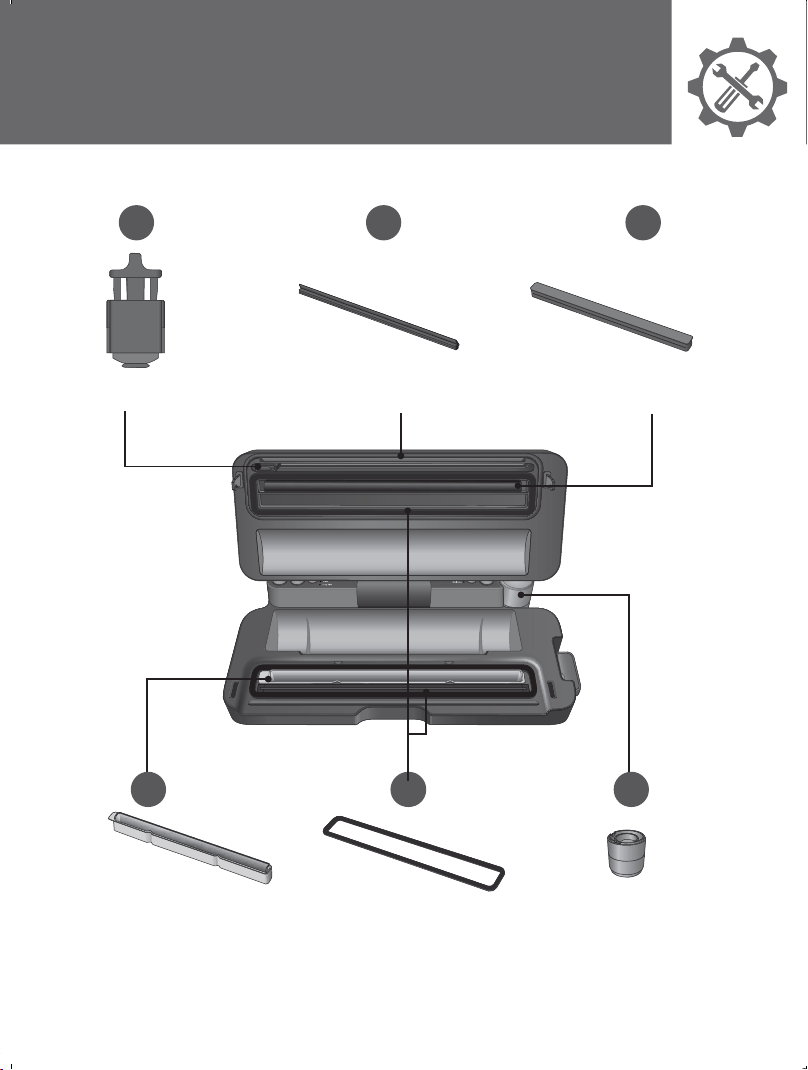
Parts
WarrantyReplacement
Replacement parts are available for purchase on
AU: foodsaver.com.au / NZ: foodsaver.co.nz or by calling
AU: 1300 881 861 / NZ: 0800 786 232
FoodSaver
®
Reservoir Accessory
FoodSaver
®
Bag Cutter
FoodSaver
®
Upper Seal Profile
FoodSaver
®
Cutter Stabiliser Profile
1 3 2
64 5
FoodSaver
®
Drip Tray Accessory
FoodSaver
®
Upper and Lower
Foam Gaskets
This FoodSaver product is covered by a 12 month replacement
or repair warranty, which is in addition to your rights under
the Australian Consumer Law (if your product was purchased
in Australia) or New Zealand Consumer Guarantees Act (if your
product was purchased in New Zealand).
Upon receipt of your claim, Sunbeam will seek to resolve your difculties or, if the product is
defective, advise you on how to obtain a replacement or refund.
To assist us in managing warranty claims, we recommend you register your product as soon as
practicable after purchase by creating a MySunbeam account on our website and uploading a
copy of your original receipt.
In order to make a claim under our warranty, you must have the original proof of purchase
documentation for the product and present it when requested (if not already uploaded to
our website].
Should your product develop any defect within 12 months of purchase because of faulty
materials or workmanship, we will replace or repair it, at our discretion, free of charge. A product
presented for repair may be replaced by a refurbished product of the same type rather than
being repaired. Refurbished parts may be used to repair the product.
Our replacement or repair warranty only applies where a defect arises as a result of faulty
material or workmanship during the warranty period. Your warranty does cover misuse or
negligent handling (including damage caused by failing to use the product in accordance
with this instruction booklet), accidental damage, or normal wear and tear.
Your warranty does not:
• cover freight or any other costs incurred in making a claim, consumable items,
accessories that by their nature and limited lifespan require periodic renewal (such as
lters and seals) or any consequential loss or damage; or
• cover damage caused by:
- power surges, power dips, voltage supply problems, or use of the product on incorrect
voltage;
- servicing or modication of the product other than by Sunbeam or an authorised Sunbeam
service centre;
- use of the product with other accessories, attachments, product supplies, parts or
devices that do not conform to Sunbeam specications; or
- exposure of the product to abnormally corrosive conditions; or
• extend beyond 3 months if the product is used in commercial, industrial, educational or
rental applications.
The benets given to you by our warranty are in addition to other rights and remedies under
law in relation to the product.
In Australia our goods come with guarantees that cannot be excluded under the Australian
Consumer Law. You are entitled to a replacement or refund for a major failure and for
compensation for any other foreseeable loss or damage. You are also entitled to have the
goods repaired or replaced if the goods fail to be of acceptable quality and the failure does
not amount to a major failure.
Our goods also come with guarantees that cannot be excluded under the New Zealand
Consumer Guarantees Act.
If your warranty claim is not accepted, we will inform you and if requested to do so by you,
repair the product provided you pay the usual charges for such repair. You will also be
responsible for all freight and other costs.
Should your product require repair or service after the warranty period, contact your nearest
Sunbeam service centre. For a complete list of Sunbeam’s service centres, visit our website
or call our customer service line for advice on 1300 881 861 in Australia, or 0800 786 232 in
New Zealand.
Should you experience
any difculties with
your product during the
warranty period, please
contact our customer
service line lor advice on
1300 881 861 in Australia,
or 0800 786 232 in New
Zealand.
Australia
foodsaver.com.au
1300 881 861
Units 5 & 6,
13 Lord Street,
Botany NSW 2019
Australia
New Zealand
foodsaver.co.nz
0800 786 232
Level 6, Building 5,
Central Park,
660-670 Great South Road,
Greenlane, Auckland
New Zealand
2120
Parts
WarrantyReplacement
Replacement parts are available for purchase on
AU: foodsaver.com.au / NZ: foodsaver.co.nz or by calling
AU: 1300 881 861 / NZ: 0800 786 232
FoodSaver
®
Reservoir Accessory
FoodSaver
®
Bag Cutter
FoodSaver
®
Upper Seal Profile
FoodSaver
®
Cutter Stabiliser Profile
1 3 2
64 5
FoodSaver
®
Drip Tray Accessory
FoodSaver
®
Upper and Lower
Foam Gaskets
This FoodSaver product is covered by a 12 month replacement
or repair warranty, which is in addition to your rights under
the Australian Consumer Law (if your product was purchased
in Australia) or New Zealand Consumer Guarantees Act (if your
product was purchased in New Zealand).
Upon receipt of your claim, Sunbeam will seek to resolve your difculties or, if the product is
defective, advise you on how to obtain a replacement or refund.
To assist us in managing warranty claims, we recommend you register your product as soon as
practicable after purchase by creating a MySunbeam account on our website and uploading a
copy of your original receipt.
In order to make a claim under our warranty, you must have the original proof of purchase
documentation for the product and present it when requested (if not already uploaded to
our website].
Should your product develop any defect within 12 months of purchase because of faulty
materials or workmanship, we will replace or repair it, at our discretion, free of charge. A product
presented for repair may be replaced by a refurbished product of the same type rather than
being repaired. Refurbished parts may be used to repair the product.
Our replacement or repair warranty only applies where a defect arises as a result of faulty
material or workmanship during the warranty period. Your warranty does cover misuse or
negligent handling (including damage caused by failing to use the product in accordance
with this instruction booklet), accidental damage, or normal wear and tear.
Your warranty does not:
• cover freight or any other costs incurred in making a claim, consumable items,
accessories that by their nature and limited lifespan require periodic renewal (such as
lters and seals) or any consequential loss or damage; or
• cover damage caused by:
- power surges, power dips, voltage supply problems, or use of the product on incorrect
voltage;
- servicing or modication of the product other than by Sunbeam or an authorised Sunbeam
service centre;
- use of the product with other accessories, attachments, product supplies, parts or
devices that do not conform to Sunbeam specications; or
- exposure of the product to abnormally corrosive conditions; or
• extend beyond 3 months if the product is used in commercial, industrial, educational or
rental applications.
The benets given to you by our warranty are in addition to other rights and remedies under
law in relation to the product.
In Australia our goods come with guarantees that cannot be excluded under the Australian
Consumer Law. You are entitled to a replacement or refund for a major failure and for
compensation for any other foreseeable loss or damage. You are also entitled to have the
goods repaired or replaced if the goods fail to be of acceptable quality and the failure does
not amount to a major failure.
Our goods also come with guarantees that cannot be excluded under the New Zealand
Consumer Guarantees Act.
If your warranty claim is not accepted, we will inform you and if requested to do so by you,
repair the product provided you pay the usual charges for such repair. You will also be
responsible for all freight and other costs.
Should your product require repair or service after the warranty period, contact your nearest
Sunbeam service centre. For a complete list of Sunbeam’s service centres, visit our website
or call our customer service line for advice on 1300 881 861 in Australia, or 0800 786 232 in
New Zealand.
Should you experience
any difculties with
your product during the
warranty period, please
contact our customer
service line lor advice on
1300 881 861 in Australia,
or 0800 786 232 in New
Zealand.
Australia
foodsaver.com.au
1300 881 861
Units 5 & 6,
13 Lord Street,
Botany NSW 2019
Australia
New Zealand
foodsaver.co.nz
0800 786 232
Level 6, Building 5,
Central Park,
660-670 Great South Road,
Greenlane, Auckland
New Zealand

Printed in China. GCDS-FSV-SL
VS3198_20EM1 (ANZ) P.N: 200570
Newell Australia Pty Ltd I ABN 68 075 071 233
FoodSaver is a registered trade mark.
Made in China to FoodSaver’s specification.
Due to minor changes in design or otherwise, the product you
buy may differ slightly from the one shown here.
Approved by the appropriate electrical regulatory authorities.
© Copyright FoodSaver 2020.
Need help with your appliance?
Contact our Customer Care Team or
visit our website for information and tips
on getting the most from your appliance.
AUSTRALIA
Visit:
Phone:
Mail:
New Zealand
Visit:
Phone:
Mail:
foodsaver.com.au
1300 881 861
Units 5 & 6, 13 Lord Street,
Botany NSW 2019
foodsaver.co.nz
0800 786 232
Level 6, Building 5, Central Park,
660–670 Great South Road, Greenlane, Auckland