
USER GUIDE
US CA
VACUUM SEAL DRAWER
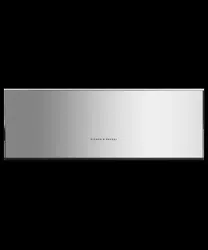
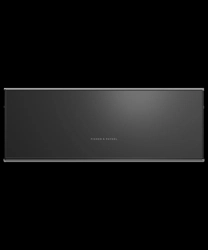
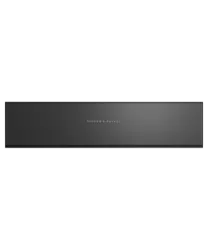
MINIMAL VB24SDEB1 & VB0SDEB1
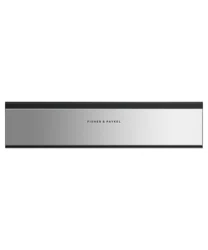
CONTEMPORARY VB24SDEX1 & VB0SDEX1
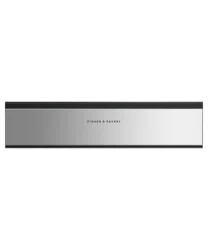
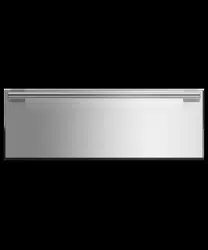
PROFESSIONAL VB0SPEX1


4
SAFETY AND WARNINGS
!
WARNING!
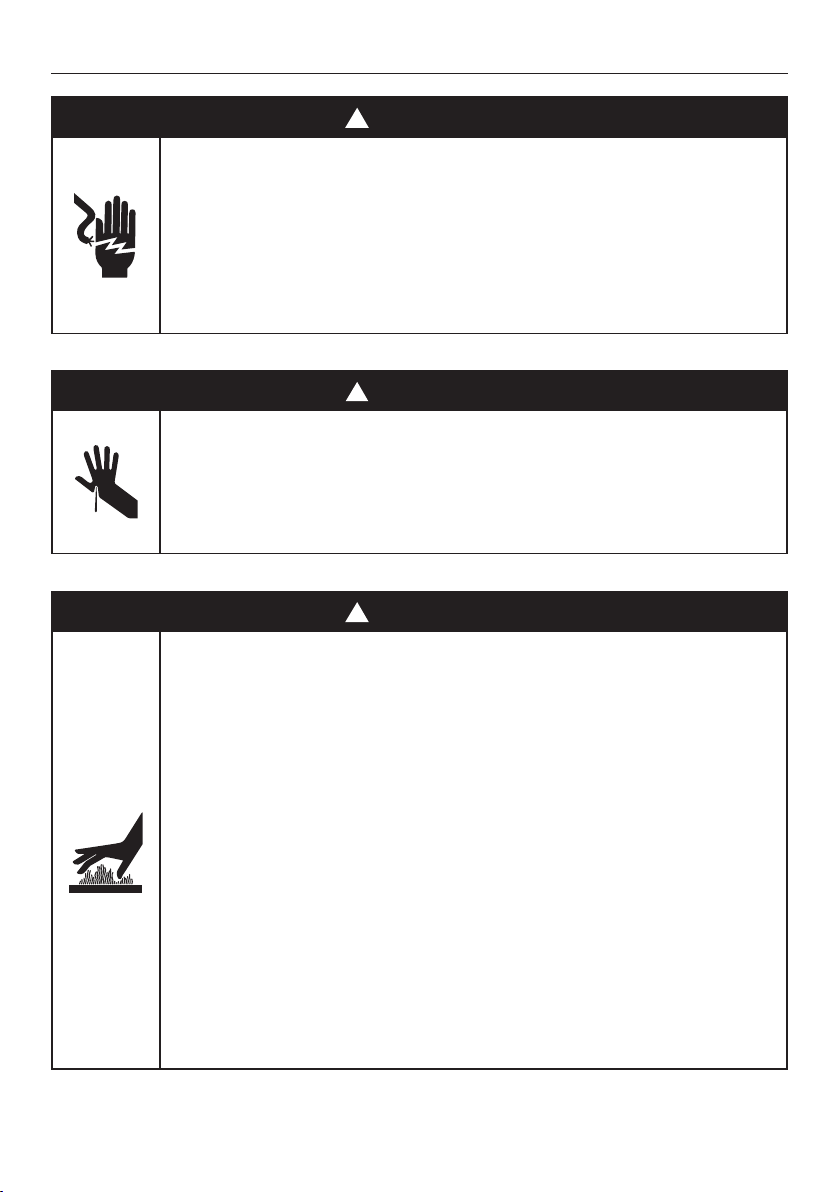
Cut Hazard
Failure to use caution could result in injury.
• Take care: some edges may be sharp.
• Do not put fingers in the drawer when closing.
!
WARNING!
Electric Shock Hazard
Failure to follow this advice may result in
electric shock or death.
• If the product is damaged, switch the appliance
off and disconnect it from the power supply to
avoid possible electric shock.
!
WARNING!
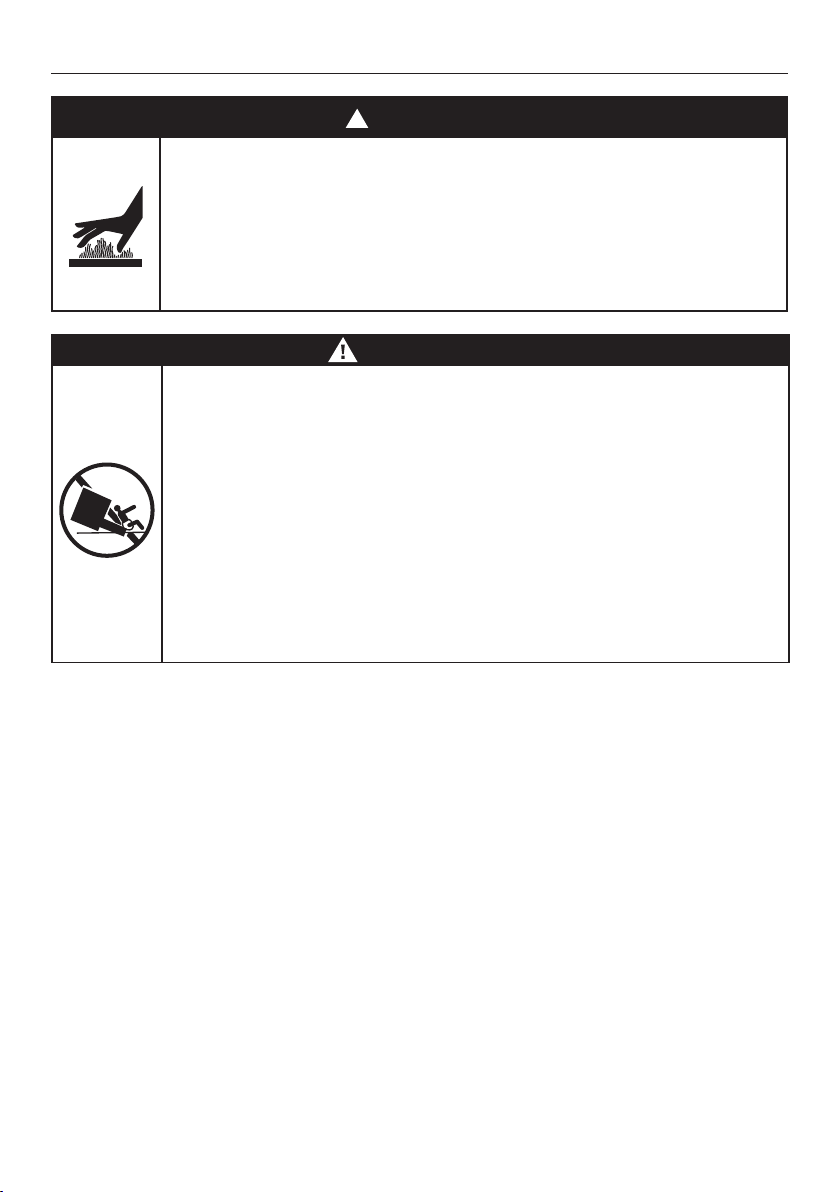
Hot Surface Hazard
Failure to follow this advice could result in
burns and scalds.
• To avoid burns and scalds, keep children away
from this appliance.
• Surfaces of the appliance may become hot
enough to cause burns.
• Do not touch the sealing bar of the appliance.
• Use protective gloves when handling hot
surfaces.
• During and after use, do not touch or let
clothing or other flammable materials contact
sealing bar of the appliance until it has cooled.
5
SAFETY AND WARNINGS
!
WARNING!
Fire Hazard
Failure to follow this advice may result in
overheating, burning, and injury.
• Flammable materials should not be stored in the
appliance or near its surface.
WARNING!
Tipping Hazard
This product may tip. Keep children away
and take care. Failure to follow this advice
may result in injury.
• The drawer must be secured in place by
supplied screws.
• Ensure there is a fixed shelf directly above
the drawer if it is not installed under another
product.

6
READ AND SAVE THIS GUIDE
WARNING!
To reduce the risk of fire, electrical shock, injury to persons or damage when using the
appliance, follow the important safety instructions listed below. Read all the instructions
before using the appliance. Use the appliance only for its intended purpose as described
in these instructions.
General Use
z
This appliance is designed for use in a normal domestic (residential) environment.
z
Do not use the appliance outdoors.
z
Children should be supervised to ensure that they do not play with the appliance.
z
This appliance can be used by children aged from 8 years and above and persons with
reduced physical, sensory or mental capabilities or lack of experience and knowledge
if they have been given supervision or instruction concerning use of the appliance in a
safe way and understand the hazards involved.
z
To avoid hazard due to instability of the appliance, it must be fixed in accordance with
installation instructions.
z
Keep the operating panel clean and dry. Wash and dry your hands before operating the
drawer to ensure the buttons will respond properly.
z
If vacuum-sealing food in bags several times in succession, the heat-sealing bar
becomes increasingly hotter. This may impair the quality of the heat-sealing seam. After
several vacuum-sealing processes, you must select a lower heat-sealing time or allow
the appliance to cool for approximately two minutes between the processes.
Installation
z
Ensure your appliance is properly installed and earthed by a qualified technician.
z
Ensure this appliance is connected to a circuit which incorporates an isolating switch
providing full disconnection from the power supply.
z
Do not install or operate the appliance if it is damaged or not working properly. If you
receive a damaged product, contact your local dealer or installer immediately.
z
Do not install the appliance near a hot gas or electric burner or in a heated oven.
Servicing
z
Check the appliance for any damage inside or outside surface of the appliance. Do
not use damaged cord or plug. If there is any damage, do not operate the appliance.
Contact a Fisher & Paykel trained and supported service technician.
z
Do not repair or replace any part of the appliance unless specifically recommended
in this user guide. All other servicing must be done by a qualified person or
Fisher and Paykel trained and supported service technician.
Cleaning and maintenance
z
Ensure the appliance is turned off before cleaning.
z
Cleaning and user maintenance shall not be undertaken by children without supervision.
z
Use a moderately damp cloth for cleaning. Do not spray water outside or inside the
appliance. Water can cause damage inside the appliance.
z
Unplug from the power outlet and allow the appliance to cool down after use before
cleaning the drawer.
SAFETY AND WARNINGS

7
SAFETY AND WARNINGS
z
Do not use aggressive or abrasive detergent or sharp metal scrapers for cleaning the
glass lid of the appliance. This can scratch the surface which can cause the glass lid to
shatter.
z
Clean the accessories with soapy water. Do not use a cleaning agent.
z
Ensure no liquids or solids get into the suction inlet of the vacuum pump. This would
cause irreparable damage to the pump.
Safety
z
Do not touch hot surfaces. Use handles or knobs.
z
Accessible parts, such as sealing bar, gets hot during use. Use protective gloves or oven
cloths.
z
Do not sit or lean on the glass lid of the appliance or use it as a storage surface.
Damage to the surface of the glass may cause it to shatter.
z
Do not operate the appliance if the lid is cracked or broken.
z
Do not store hazardous objects that can explode, like containers with gas or air
chambers such as spray cans.
z
Do not immerse cord, plug or other parts in water or other liquid to protect against
electrical shock. Do not let the cord hang over the edge of table or counter, or in a
heated oven.
z
Do not use accessory attachments that are not recommended.
Packaging disposal
z
Remove packaging and recycle materials that can be reused.
z
Dispose packaging materials in accordance with local regulations on waste disposal.
WARNING!
This product contains a chemical known to the State of California to cause cancer, birth
defects or other reproductive harm.
For more information on these regulations and a list of chemicals,
visit:https://oehha.ca.gov/proposition-65/general-info/proposition-65-plain-language.
8
BEFORE YOU BEGIN
z
Ensure the installer has completed the final checklist in the installation instructions.
z
Read this guide, taking special note of the Safety and warnings section.
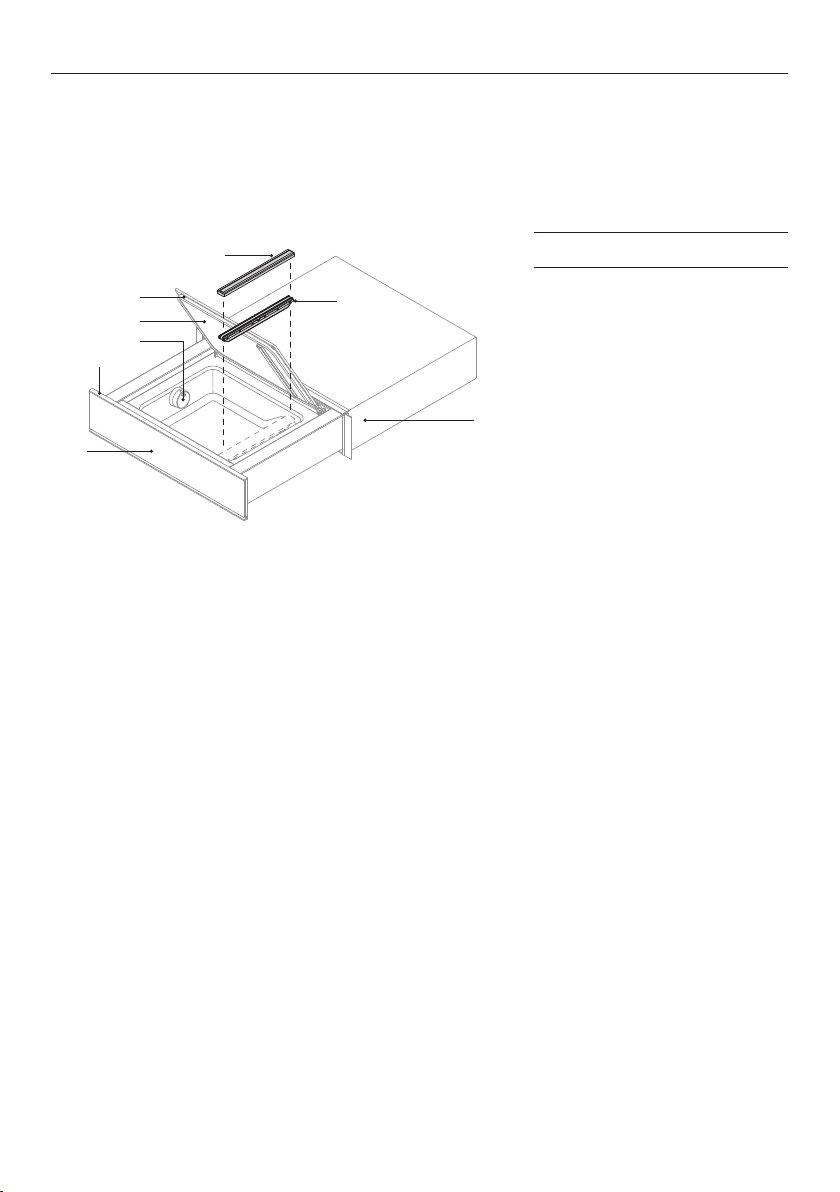
Drawer features
1 Glass lid
2 Control panel
3 Lid gasket
4 Sealing bar
5 Sealing bar cover
6 Suction inlet adapter
7 Push-to-open door*
8 Serial plate**
9 Bag clip (not shown)
!0 Handle*** (not shown)
* Available in VB24SD & VB30SD models
** Located inside the chassis of the drawer
** Available in VB30SP models
2
3
1
6
4
5
7
8
9
Vacuum Level Sealing Level External Vacuum
BEFORE YOU BEGIN
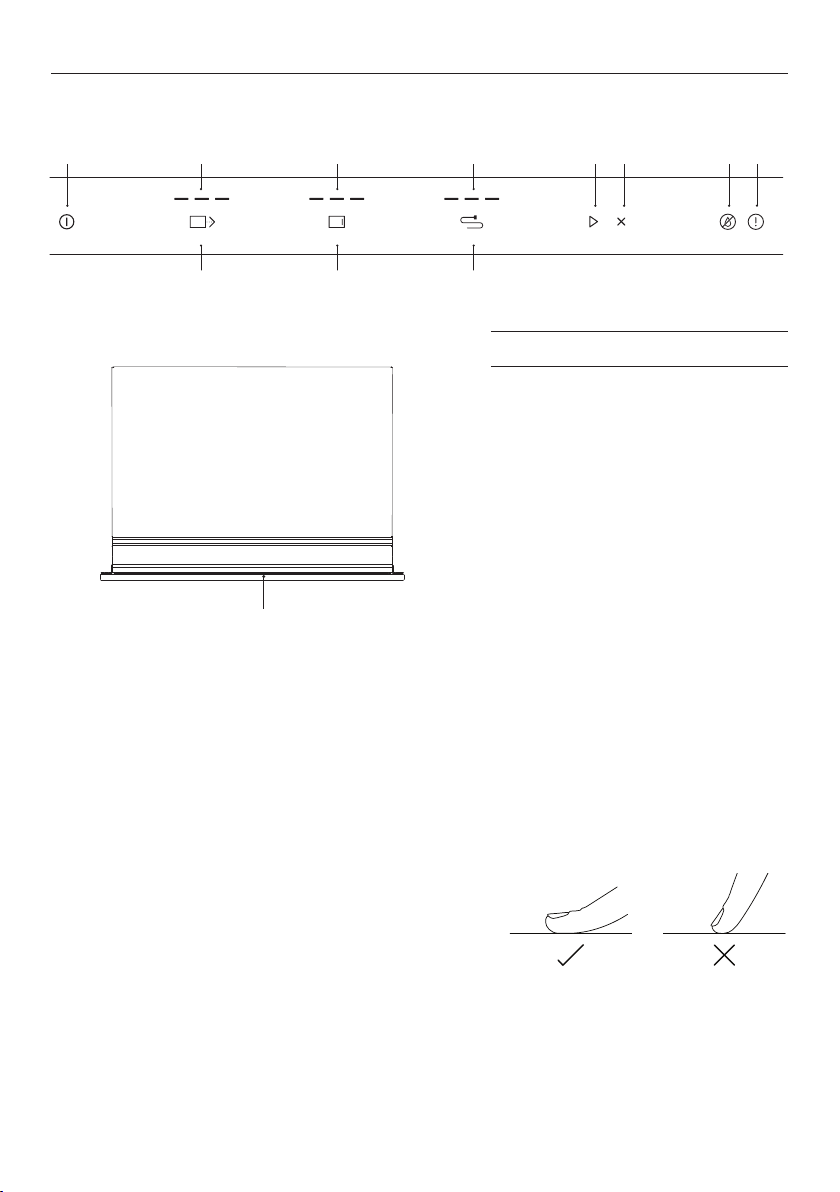
Using the touch controls
Your Vacuum Seal Drawer is operated using a touch
control panel. To operate the control panel, use the
ball of your finger, not its tip. The controls respond to
touch, so pressure is not needed.
Control panel features
1 Power On/Off
2 Vacuum level indicator
3 Sealing Level indicator
4 External vacuum indicator
5 Vacuum level control
6 Sealing level control
7 Suction inlet adapter
8 Start
9 Cancel
!0 Moisture indicator
!1 Maintenance indicator
1
2 3 4 8 9
!0 !1
Control panel
5
6 7
control panel
Keep the operating panel clean and dry. Wash and dry
your hands before operating the drawer to ensure the
buttons will respond properly.

10
BEFORE YOU BEGIN
Selecting a vacuum bag
z
Your Vacuum Seal Drawer is supplied with two different sized vacuum bags. Each bag
can be used within temperatures of -40 °F (-40°C) to 239 °F (+115°C).
z
DO NOT use polycarbonate plastic bags. These can become soft and can damage the
sealing bar.
z
Other bags, such as resealable freezer bags, should only be used for vacuum sealing
and the sealing time must be adjusted to suit the material of the bag. Refer to 'Selecting
vacuuming levels' for more information.
Preparing the food
z
Never vacuum seal warm or hot food.
z
A bag containing food that has been sealed under vacuum must be pierced or opened
before microwaving. Build up of pressure can cause the vacuum bag to burst.
Filling the vacuum bag
z
When filling the bag, ensure the sealing portion of the bag remains clean in order to seal
properly.
z
Fold the top of the bag down (inside facing out) before filling.
z
The bag should only be filled to two-thirds of its capacity.
If vacuum-sealing food in bags several times in succession, the heat-sealing bar becomes
increasingly hotter. This may impair the quality of the heat-sealing seam. After several
vacuum-sealing processes, you must select a lower heat-sealing time or allow the
appliance to cool for approximately two minutes between the processes.
11
USING YOUR VACUUM SEAL DRAWER
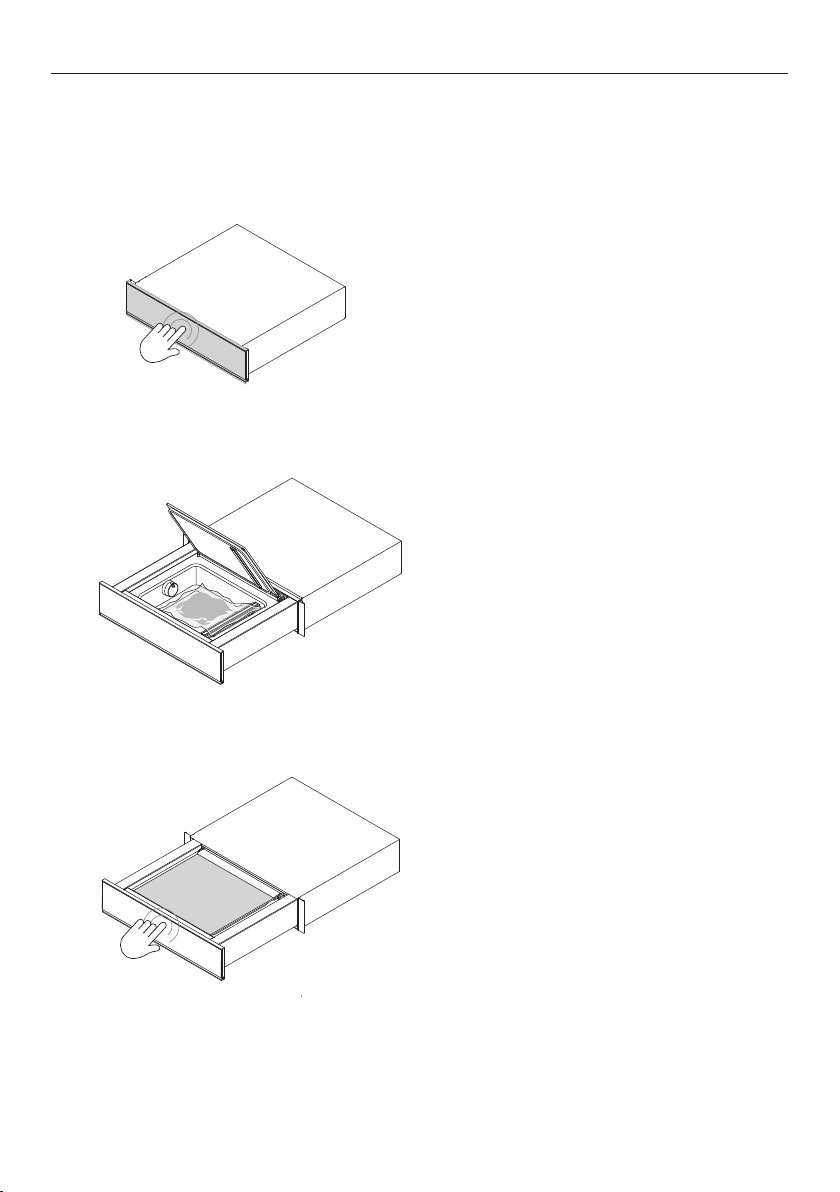
For push-to-open models, press the
center-front of the drawer to open.
Do not force the drawer open.
1
2
Place the food inside the vacuum bag.
Open the glass lid and place the bag inside
the drawer.
Secure the opening of the bag under the
bag clip and position across the sealing
bar.
3
Close the lid and select the function you
want to use.
Press the center of the door to close the
drawer.
First time use
If using the vacuum seal drawer for the first time, two LEDs in vacuum level indicators and
two LEDs in sealing level indicators are illuminated at start up.
12
USING YOUR VACUUM SEAL DRAWER
Cancelling the operation
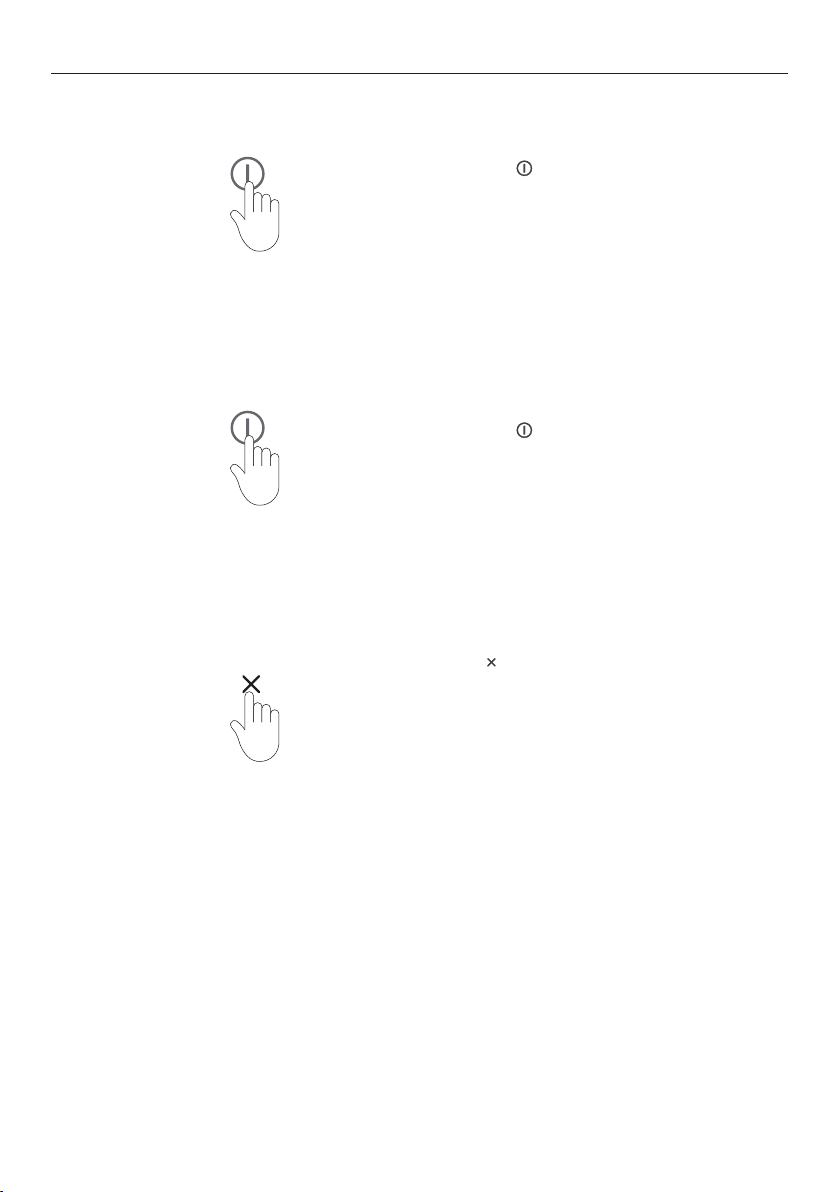
Touch the
Vacuum Level Sealing Level External Vacuum
button on the control panel to
switch on the Vacuum Seal Drawer.
A tone will sound indicating the drawer is
now ready to use.
Switching ON the Vacuum Seal Drawer
Switching OFF the Vacuum Seal Drawer
Touch the
Vacuum Level Sealing Level External Vacuum
button on the control panel to
switch off the Vacuum Seal Drawer.
A tone will sound when the process is
complete.
Touch
Vacuum Level Sealing Level External Vacuum
to cancel if you wish to stop
the operation at any point during the
vacuuming process.
If the bag is not sealed, the vacuuming
process (ventilation running) cannot be
interrupted.
13
FUNCTIONS
Vacuuming and sealing function
This is the standard function of the Vacuum Seal Drawer. Underpressure is generated inside
the vacuum tank which seals the opening of the bag inside the drawer.
If you vacuum-seal food in bags several times in succession, the heat-sealing bar becomes
increasingly hotter. After several vacuum-sealing processes, you should select a lower heat-
sealing time or allow the appliance to cool for approximately two minutes between the
processes.
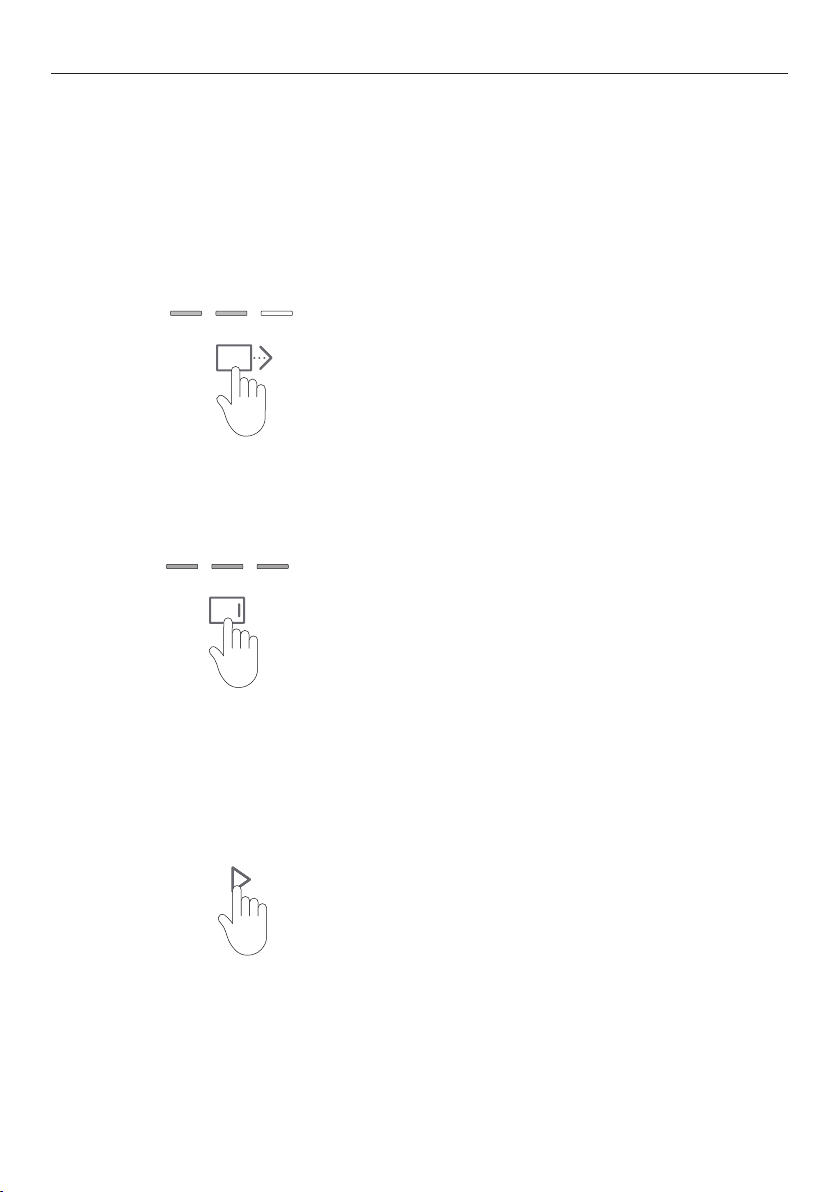
Touch the vacuum level button once or
more to select a suitable vacuuming level.
Refer to 'Selecting Vacuum Levels'.
1
Touch the sealing level button to select a
suitable level for sealing time.
Refer to 'Selecting Seal Levels'.
2
Close the glass lid and touch the start
button.
Once the pressure is equalized, the process
is complete and a tone will sound.
3
14
FUNCTIONS
Vacuuming function
Suitable for vacuuming and airtight-sealing jars with screw-top lids. Jars must not be more
than 3 3/8" (85mm) in height to avoid damaging the glass lid when closing the drawer.
Loosely close the screw-top lid of the jar
before placing inside the Vacuum Seal
Drawer.
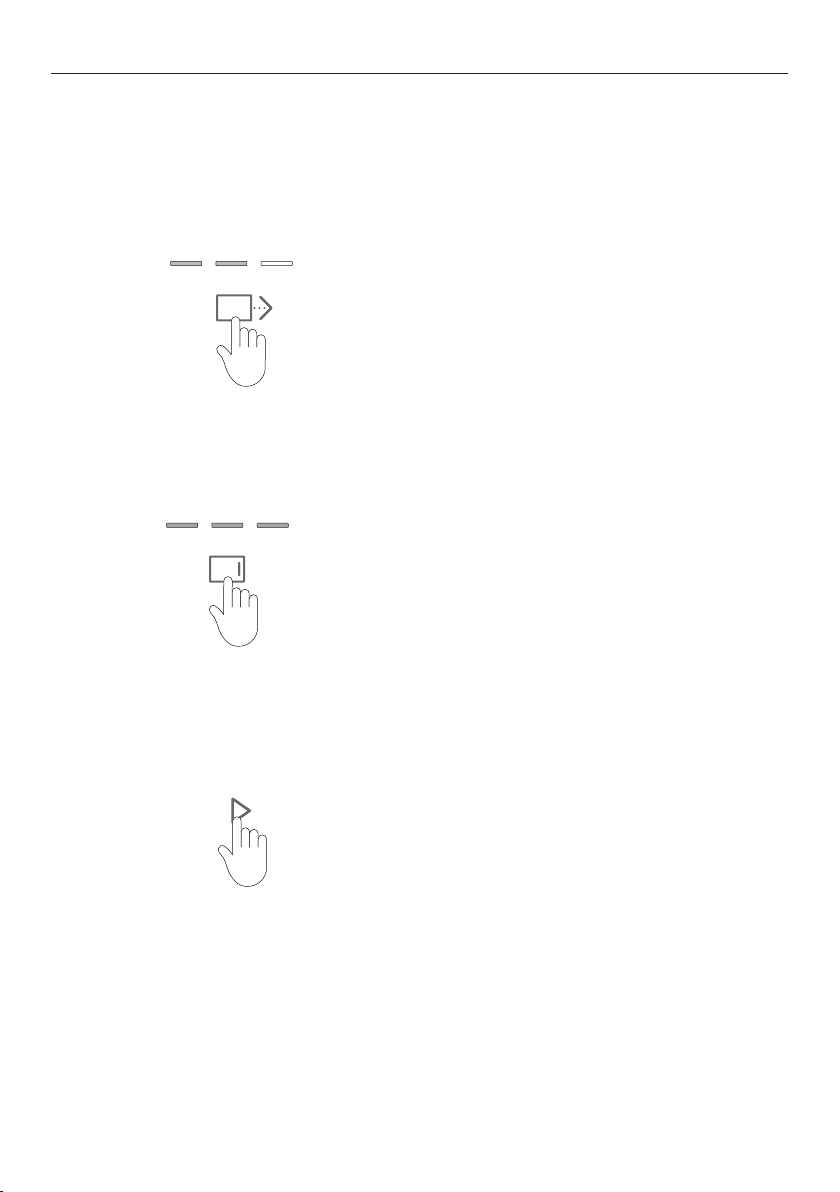
Touch the vacuum level button to select a
suitable vacuuming level.
Refer to 'Selecting Vacuuming Levels' for
more information.
1
Touch the sealing level button repeatedly
until all sealing level indicators dim.
2
Close the glass lid and touch the start
button.
3
15
FUNCTIONS
Sealing function
Suitable for closing a bag airtight without creating a vacuum.
If you seal food in bags several times in succession, the heat-sealing bar becomes
increasingly hotter. After several sealing processes, you should select a lower heat-sealing
time or allow the appliance to cool for approximately two minutes between the processes.
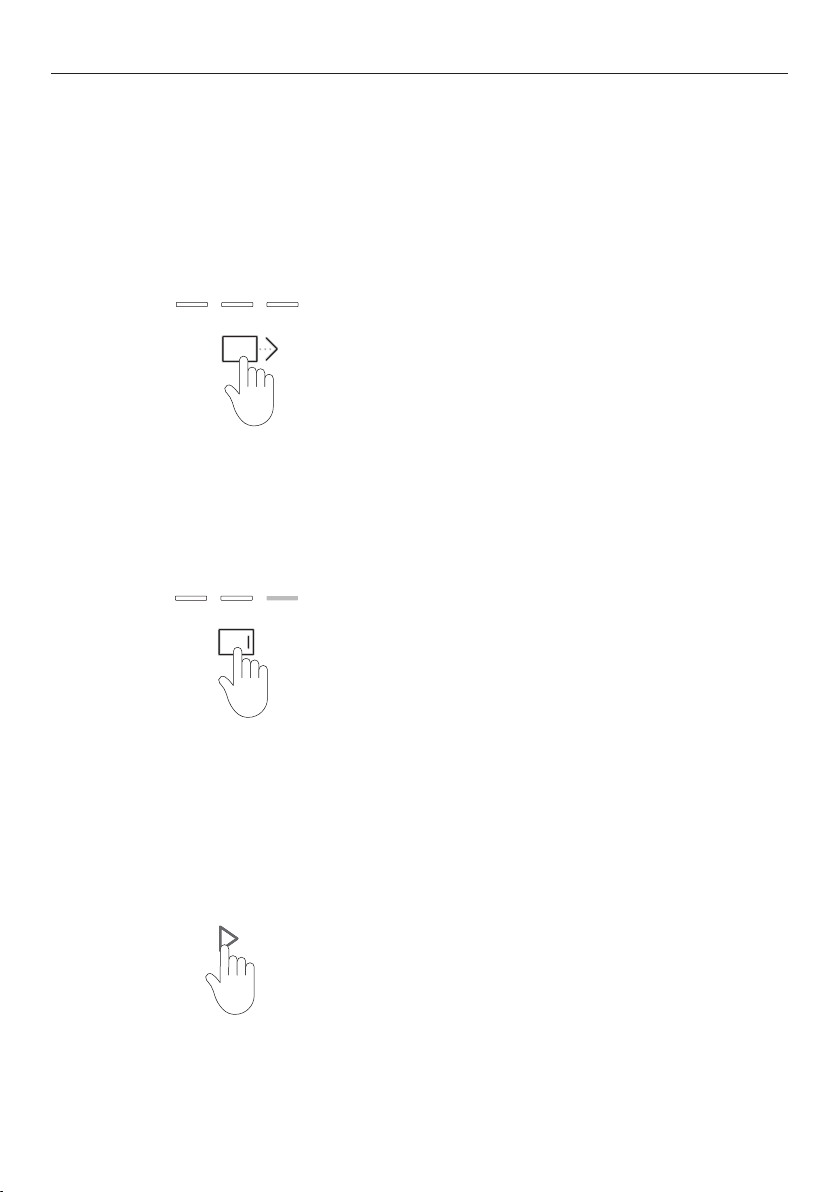
Touch the vacuum level button repeatedly
until all vacuum level indicators dim.
1
Touch the sealing level button to select a
suitable level for sealing time.
2
Close the glass lid and touch the start
button.
3
16
adapter
FUNCTIONS
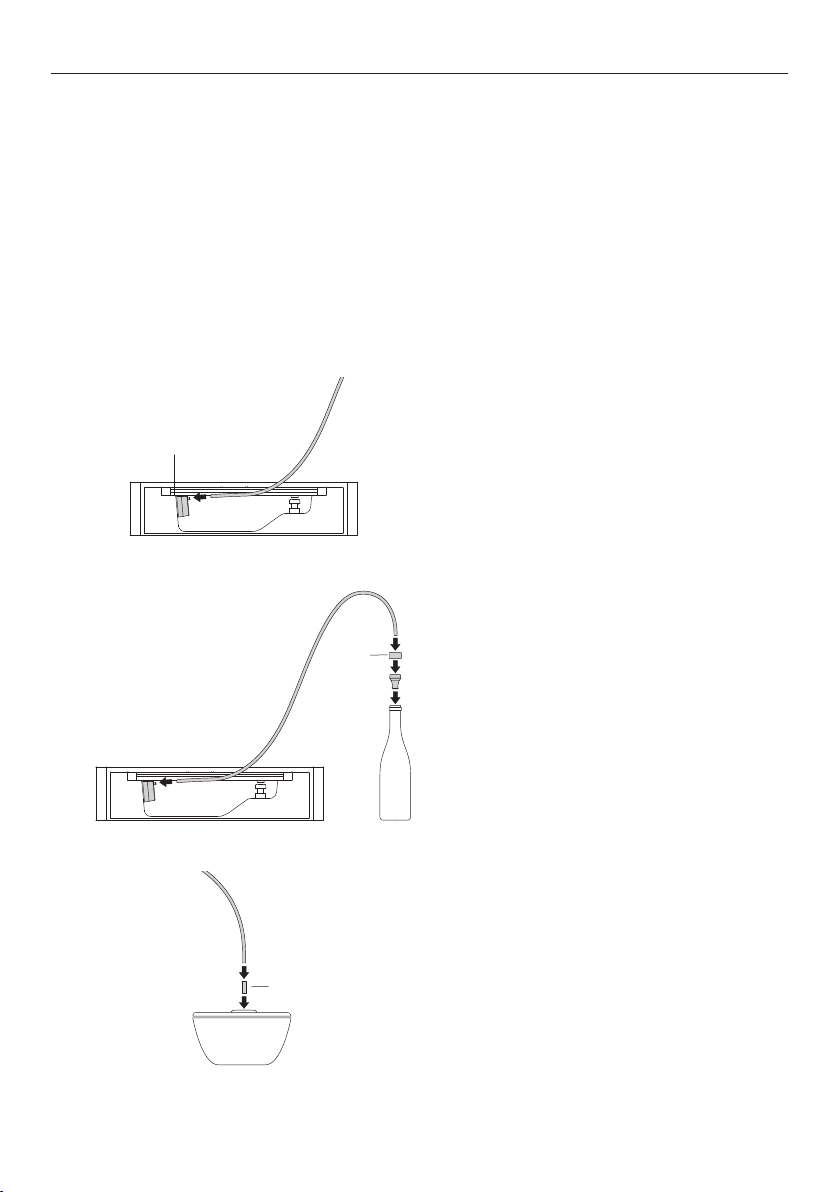
External vacuuming
Select this function to release air out of glass bottles containing, eg oil or wine to prevent
reaction with oxygen.
Ensure that the vacuum container is safe for use with food or use a commercially available
vacuum container.
For external vacuuming of glass bottles, only use bottles that are suitable for vacuuming.
Unsuitable or damaged bottles could implode during external vacuuming and cause injury.
When evacuating air from wine bottles, set external vacuuming to level 1 to avoid gas in the
wine from being affected.
An external vacuuming accessories kit is supplied for this function. The kit includes a
suction inlet adapter, a tube, a vacuum stopper and a stopper adapter.
1
2
adapter
3
adapter
Connect one end of the suction tube to
the large adapter attached to the suction
inlet in the vacuum tank.
To release air from the bottle:
Place the bottle on a flat and stable
surface near the drawer.
Connect the stopper adapter to the other
end of the tube, and connect the adapter
to the vacuum stopper of the bottle.
To release air from the vacuum container:
Connect the other end of the tube to
the vacuum container. Use an adapter if
necessary.
17
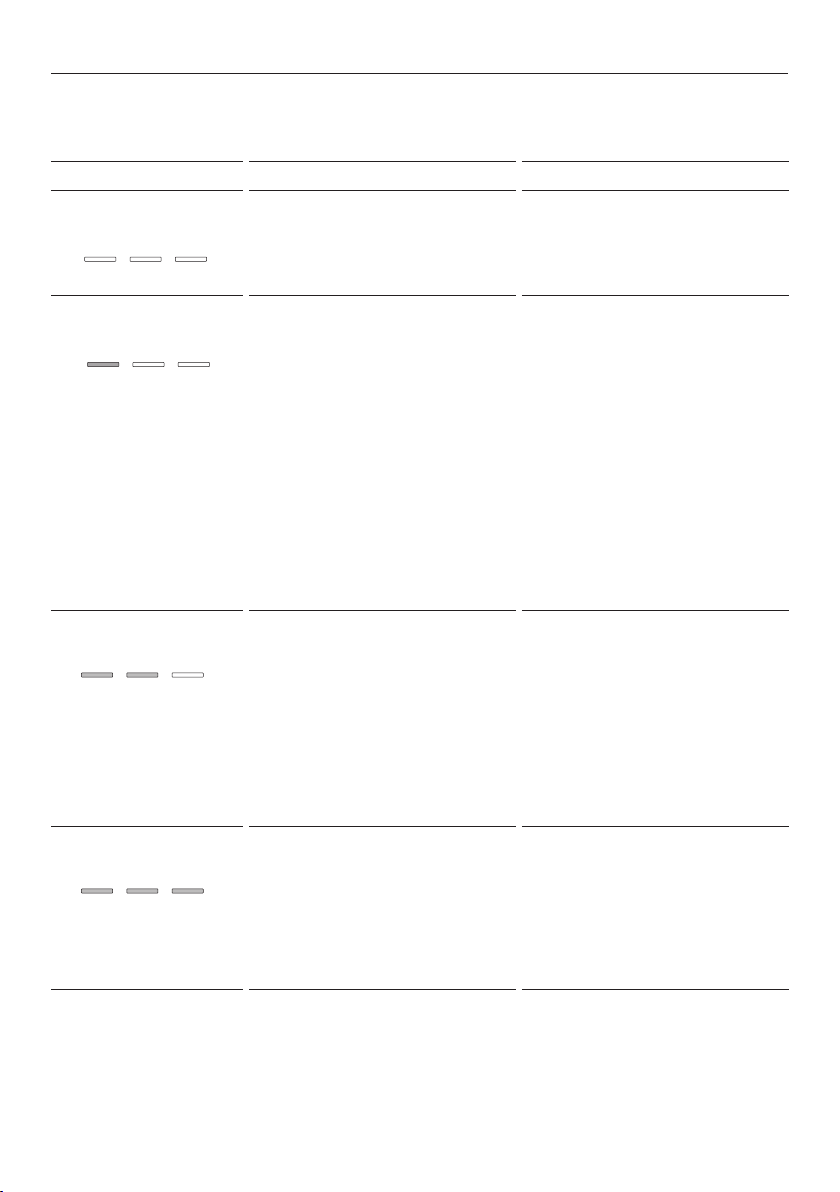
SELECTING VACUUMING LEVELS
Refer to the table below for available vacuuming levels (after portioning) for packaging,
marinating, sous vide cooking, freezing or storing:
LEVEL INDICATOR FOOD CATEGORY DESCRIPTION
0
(sealing only)
z
Fragile and delicate food,
such as crisps and salad.
z
Seals fragile and delicate
food to keep shape and
consistency. Vacuuming is
not necessary.
1
z
Soft fruit, e.g. berries,
plums, apricots, bananas.
z
Liquids such as soups,
sauces
z
Foods with liquid such
as meat with a lot of
marinade.
z
Jars and bottles, e.g. jars
of nuts, seeds and opened
jars of sauces.
z
Retains the shape and
consistency of fragile and
delicate fruits.
z
Vacuum food e.g. meat
marinated with vinegar or
wine. Reduces oxidation of
wine and vinegar.
z
Opened jars can be sealed
airtight again
z
Vacuum seals nuts or
seeds, etc. to protect
against infestation or
oxidation.
z
Evacuates air from bottles
of oil and wine.
2
z
Firmer fruits such as apples
and pears.
z
Softer vegetables such as
bell peppers, tomatoes and
zucchini.
z
Fish, whole unskinned or
filleted.
z
Foods with some liquid,
e.g. meat with a little
marinade.
z
Vacuum seals firmer fruit.
z
Ideal for vegetables.
z
Suitable for meat in a
sauce or with a little
marinade.
3
z
Meat, e.g. medallions, steak.
z
Firm or root vegetables,
e.g. carrots, beetroot,
sweet potato.
z
Food for freezing
z
Hard cheese for storing.
z
Seasoned meat without
added liquid.
z
Firmer vegetables for sous
vide cooking.
z
Food to be frozen.
Extracting the air helps
prevent freezer burn.

18
FOOD CARE
Quality and hygiene
The initial bacterial content of food determines how long a product can be preserved. The
higher the bacterial content, the shorter the maximum storage time. In order to preserve
food for as long as possible, only vacuum seal food that is in perfect condition. Products
that have been kept for some time before vacuum sealing have a higher bacterial content
and are therefore not suitable for long-term storage.
To prevent fresh food from being contaminated with bacteria, the following points should
be observed:
z
Wash hands well before handling food.
z
Ensure food preparation surfaces are smooth and hygienically clean.
z
Clean all utensils (knives, forks, spoons, etc.) before use.
Preparing special types of food
Some types of food may require special preparation before they can be stored.
Blanching
Brassica vegetables (such as cauliflower, broccoli, white cabbage, red cabbage), pulses
(fresh beans, peas), and stalks and shoots (asparagus), should be blanched before vacuum
sealing to release gas. Blanch in a steam cooker or in boiling water before running the
vegetables under cold water or place in an ice bath to chill quickly. Vacuum sealing your
food can reduce storage space in your freezer.
Storage
To store food safely, the following points must be observed:
z
Food that is to be stored must be fresh and in perfect condition.
z
Food must be at storage temperature before vacuum sealing.
z
Where possible, dry the food before vacuum sealing.
z
Avoid mixing raw and cooked foods.
z
Select the highest level of vacuuming possible. Refer to 'Selecting Vacuuming Levels' for
recommended levels.
z
Large pieces of food can be preserved for longer than smaller pieces.
z
Store food at the lowest temperature as much as possible.
Vacuum sealed food can be steamed at a low temperature in a steam cooker or in our
Fisher & Paykel Combi-Steam ovens using Sous Vide function. Use only the vacuum bags
supplied by Fisher & Paykel for this method.

19
CARE AND CLEANING
Ensure that the appliance is turned off or set in STANDBY mode before cleaning.
External cleaning
z
Remove any soiling or excess cleaning agent immediately.
z
Clean the surfaces with a soft cloth dampened with water and a little washing-up liquid
for metallic surfaces. Rub in the direction of the original polish lines.
z
Dry with a soft cloth.
Internal cleaning
z
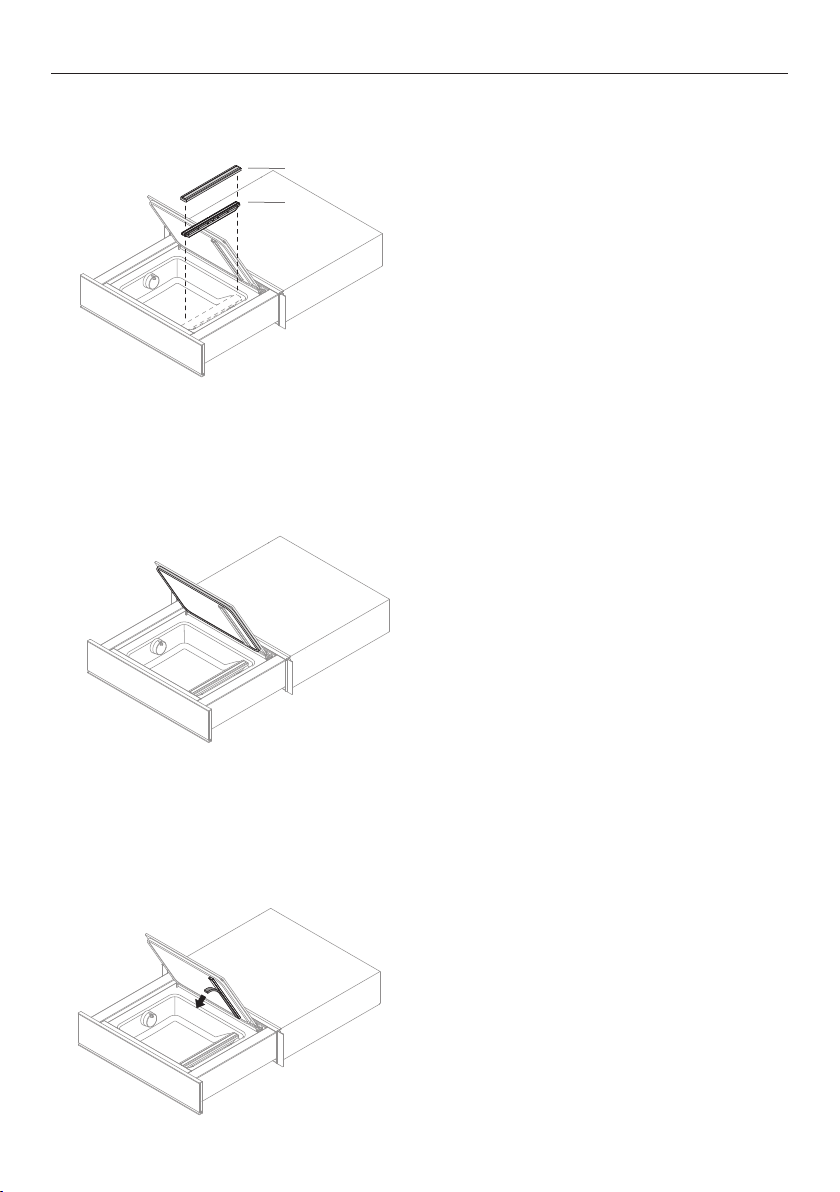
Remove the sealing bar and sealing bar cover from the appliance.
z
Remove any soiling or excess cleaning agent immediately.
z
Clean the surfaces with a soft cloth dampened with water and a little washing-up liquid
for metallic surfaces. Rub in the direction of the original polish lines.
z
Dry with a soft cloth.
z
Clean the sealing bar with a soft cloth dampened with water and a little washing-up
liquid and dry with a soft cloth. The sealing bar cover can be cleaned in the dishwasher.
z
Put the sealing bar cover back in place in the appliance.
z
Position the sealing bar on the two locating pins in the appliance.
Drawer lid gasket
z
Clean the appliance lid gasket with a soft cloth dampened with water. Do not use
detergent and dry with a soft cloth.
Parts used in external vacuuming
Clean the external vacuuming parts (adapters, tube, and vacuum stopper) with hot water
and small amount of washing-up liquid. Wipe dry with a soft cloth or sponge.
20
CARE AND CLEANING
1 Remove the sealing bar A together
with the sealing bar cover B from the
appliance.
2 Mount the sealing bar cover in place to
the appliance.
3 Position the new sealing bar on two
locating pins in the appliance.
1 Remove the damaged lid gasket
2 Fit the new appliance lid gasket.
The seal pad is located on the underside of
the drawer lid.
1 Remove the damaged seal pad from
the holder.
2 Insert the new seal pad in the holder.
A
B
Replacing the sealing bar
Replacing the drawer lid gasket
Replacing the seal pad

21
CARE AND CLEANING
System check
Vacuum Level Sealing Level External Vacuum
If the maintenance button illuminates, the vacuum pump cannot achieve the required
underpressure in the allotted time. The drawer lid may not be closed properly or the lid
gasket may be dirty or damaged.
1 Clean the lid gasket. Do not use any cleaning agents.
2 Close the drawer lid and press down.
3 If after the next vacuuming process the button remains illuminated, a lower vacuuming
level must be selected.
4 If the button lights up repeatedly, wait until
Vacuum Level Sealing Level External Vacuum
illuminates and dehumidify the vacuum
pump.
Dehumidifying
Dehumidification is necessary when the oil in the vacuum pump contains too much water
from frequently vacuuming moist foodstuffs.
If
Vacuum Level Sealing Level External Vacuum
and
Vacuum Level Sealing Level External Vacuum
buttons illuminate, the oil in the vacuum pump can be dehumidified.
Close the drawer lid and touch the
Vacuum Level Sealing Level External Vacuum
button to start dehumidification.
If
Vacuum Level Sealing Level External Vacuum
and
Vacuum Level Sealing Level External Vacuum
buttons illuminate, the oil in the vacuum pump must be dehumidified.
Close the drawer lid and touch the
Vacuum Level Sealing Level External Vacuum
button to start dehumidification.
The dehumidifying process takes a maximum of 20 minutes. If the button remains
illuminated, the process must be repeated. It is necessary to wait for one hour between
dehumidifying processes as the oil in the vacuum pump gets hot. During this time,
Vacuum Level Sealing Level External Vacuum
and
Vacuum Level Sealing Level External Vacuum
are illuminated, but they cannot be operated.
22
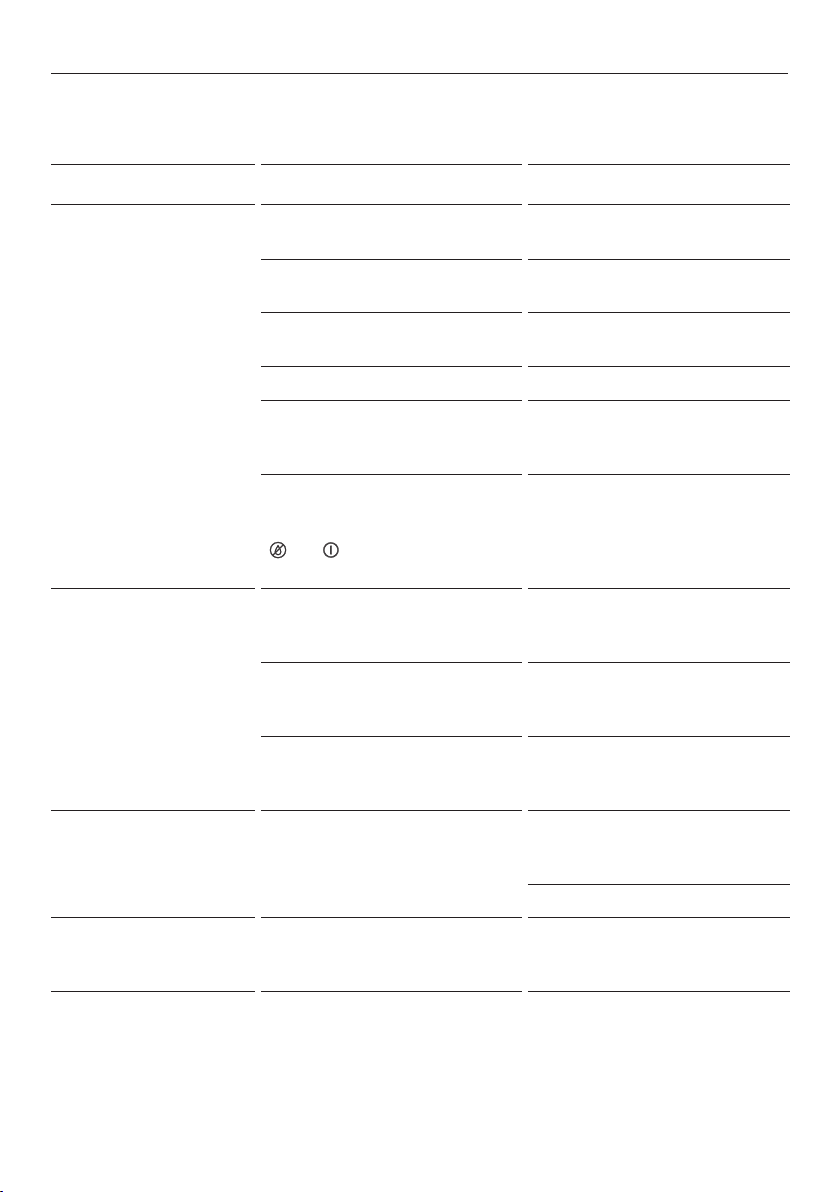
TROUBLESHOOTING
PROBLEM POSSIBLE CAUSES SOLUTION
The appliance is
not working
A household fuse or circuit breaker
has tripped due to an overload.
Replace the fuse or switch the
circuit breaker back on again.
The fuse or circuit breaker keeps
blowing.
Contact customer support
An interruption in the power
supply.
Check the power supply.
The appliance is faulty. Contact customer support
Repeated vacuuming has caused
the appliance to overheat.
Allow the appliance to cool down
before using again. Wait for two
minutes after each vacuuming.
The appliance is in a cooling
phase between two dehumidifying
processes. During this time,
Vacuum Level Sealing Level External Vacuum
and
Vacuum Level Sealing Level External Vacuum
buttons are illuminated,
but they cannot be operated.
Wait one hour before repeating
the dehumidifying process.
Insufficient vacuum in
the bag
The vacuuming level selected was
too low for the particular foodstuff
used.
Select the next highest level.
The suction inlet of the vacuum
pump is obstructed.
Ensure the bag is not obstructing
the suction inlet of the vacuum
pump.
The bag is not airtight. Vacuum seal the food in a new
bag, selecting a higher level for
the sealing time if necessary.
The liquid in the vacuum
bag is boiling vigorously
while being vacuumed
Liquids start to boil at low
temperatures when under high
vacuum.
Select vacuuming level 1 for
vacuuming liquid foodstuffs.
Sealing sooner
No vacuum is being
created in the bottle during
external vacuuming
The tube and vacuum stopper are
showing signs of wear and tear.
Replace the tube and vacuum
stopper with new ones.
If there is a problem with your oven, please check the following points before contacting
your local Fisher & Paykel trained and supported service technician or the Customer Care
Center.

23
TROUBLESHOOTING
PROBLEM POSSIBLE CAUSES SOLUTION
The vacuum bag is
incorrectly sealed
The sealing time set was
insufficient for the selected
vacuuming level.
Select the next highest sealing
time level.
The vacuum bag is not positioned
correctly on the sealing bar.
Adjust the position of the vacuum
bag.
The vacuum bag is contaminated
around the sealing seam.
Clean the sealing area before the
process.
The seal pad, located on the
appliance lid, is very worn.
Replace the seal pad.
Repeated vacuuming has caused
the appliance to overheat.
Allow the appliance to cool down
before using again.
The seal pad, located on the
appliance lid, is very worn.
Replace the insulation for the
sealing bar.
The appliance lid could not
be open
The appliance is in operation. Wait until the appliance is
ventilated at the end of the
process and an acoustic signal is
emitted.
There was an interruption in the
power supply.
Reconnect the power supply. The
appliance is being ventilated.
Noises can be heard during
operation
Appliance can make noises during
operation (e.g. switching and
pumping noises).
This is normal.
The maintenance button
illuminates
The pump output is reduced. Dehumidify the oil in the
vacuum pump when the button
illuminates.
The appliance cannot reach the
desired under-pressure.
Hold the appliance lid down when
starting the vacuuming process.
Check the appliance lid gasket and
the contact surface of the gasket
and clean if necessary. If the
gasket is not lying flat, smooth it
out with a finger.
Select a lower vacuuming level,
e.g. for food with liquid.
If the vacuum bag is protruding
from under the appliance lid
gasket, position the bag correctly.

24
SERVICE AND WARRANTY
Before you call for service or assistance
Refer to the installation instructions and your user guide and check that:
z
Your product is correctly installed.
z
You are familiar with its normal operation.
z
Model number.
z
Serial number (can be found on the inside, right side panel behind the drip pan handle.
z
Code (can be found on the inside, right side panel behind the drip pan handle.
z
Date of installation
If after checking these points you still need assistance or parts, please refer to the Service
& Warranty book for warranty details and your nearest Service Center, Customer Care, or
contact us through our website www.fisherpaykel.com or email:
customer.care@fisherpaykel.com
Complete and keep for safe reference:
Mode
Serial No.
Purchase Date
Purchaser
Dealer
Suburb
Town
Country


591995A 07.20
FISHERPAYKEL.COM
© Fisher & Paykel Appliances 2020. All rights reserved.
The models shown in this guide may not be available in all markets
and are subject to change at any time.
The product specifications in this guide apply to the specific products and
models described at the date of issue. Under our policy of continuous product
improvement, these specifications may change at any time.
For current details about model and specification availability in your country,
please go to our website or contact your local Fisher&Paykel dealer.