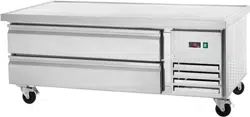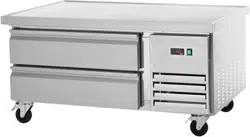
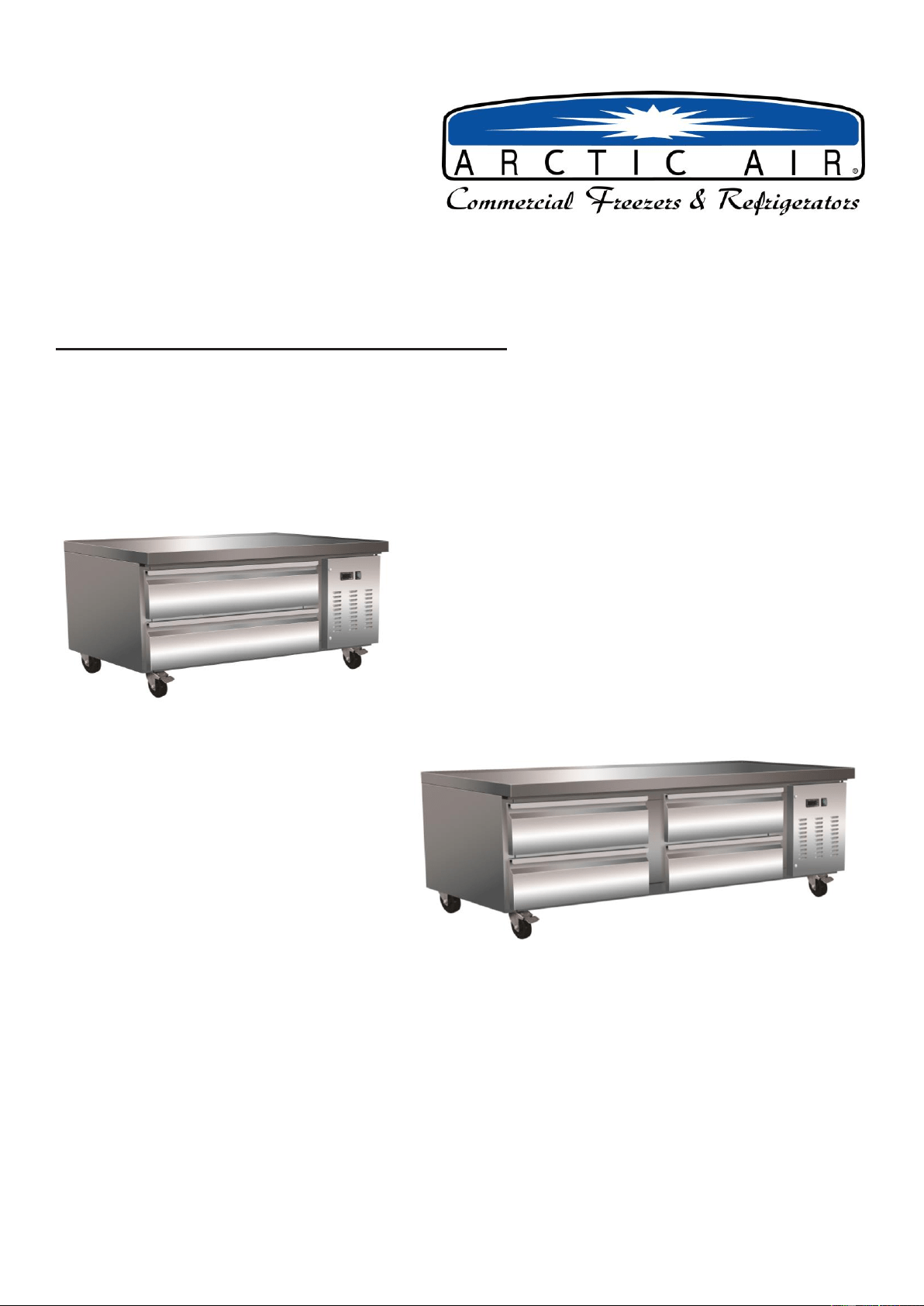
Chef Base Refrigerators
Service, Installation and Care Manual
Please read this manual completely before attempting to install or operate this equipment.
Notify carrier of damage! Inspect all components immediately. See page 2.
IMPORTANT INFORMATION
READ BEFORE USE
PLEASE SAVE THESE INSTRUCTIONS!

Service and Installation Manual
2
CONTENTS
RECEIVING & INSPECTING EQUIPMENT………………………………………..…………………2
SPECIFICATIONS…………………………………………………….……………………….………3
INSTALLATION………………………………………………………………………….…………..….4
OPERATION………..……………………………………………………………………..……………5
MAINTENANCE……………………………………………………………………….……………….7
WIRING DIAGRAM…………………………………………………………………………………9
All rights reserved. Reproduction without written permission is prohibited.
SERIAL NUMBER INFORMATION
The serial number of all self-contained refrigerators and freezers is located outside the unit on the left hand
side near the top on the wall and also on the back of the unit.
Always have the serial number of your unit available when calling for parts or service.
This manual covers standard units only. If you have a custom unit, consult the customer service department
at the number listed on the last page.
RECEIVING AND INSPECTING THE EQUIPMENT
Even though most equipment is shipped crated, care should be taken during unloading so the equipment is not
damaged while being moved into the building.
1. Visually inspect the exterior of the package and skid or container. Any damage should be noted and reported
to the delivering carrier immediately.
2. If damaged, open and inspect the contents with the carrier.
3. In the event that the exterior is not damaged, yet upon opening, there is concealed damage to the equipment,
notify the carrier. Notification should be made verbally as well as in written form.
4. Request an inspection by the shipping company of the damaged equipment. This should be done within 10
days from receipt of the equipment.
5. Be certain to check the compressor compartment housing and visually inspect the refrigeration package. Be
sure lines are secure and base is still intact.
6. Freight carriers can supply the necessary damage forms upon request.
7. Retain all crating material until an inspection has been made or waived.
Service and Installation Manual
3
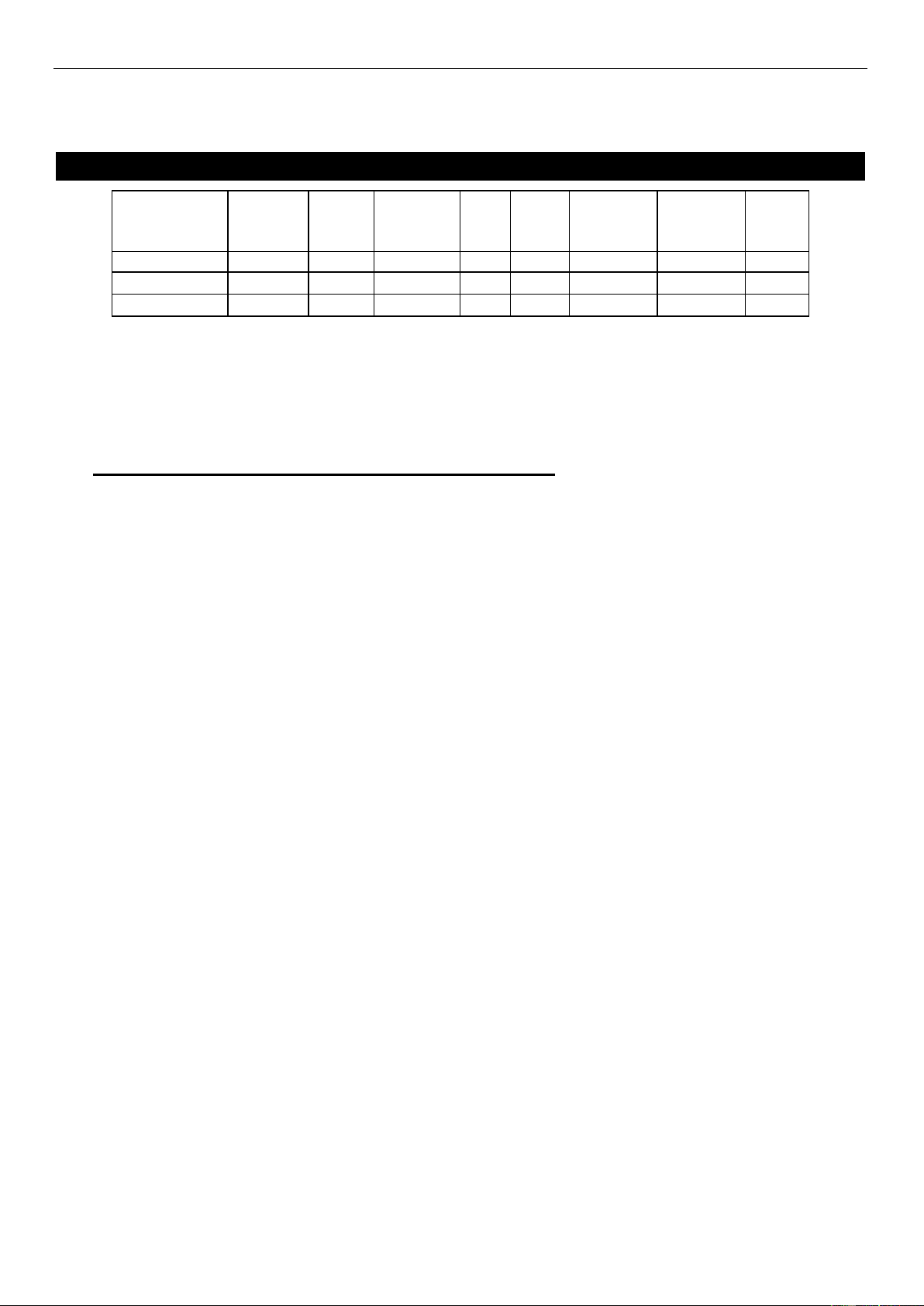
SPECIFICATION
MODEL#
V/Hz/Ph
AMPS
STORAGE
CAPACITY
Cu-ft
HP
BTU
CHARGE
OZ
SHIP
WEIGHT
LBS
NEMA
PLUG
ARCB48
115/60/1
5.8
6.5
1/3
5800
9.5
265
5-15P
ARCB60
115/60/1
5.8
8.8
1/3
5800
10.6
310
5-15P
ARCB72
115/60/1
5.8
11.1
1/3
5800
12.3
355
5-15P
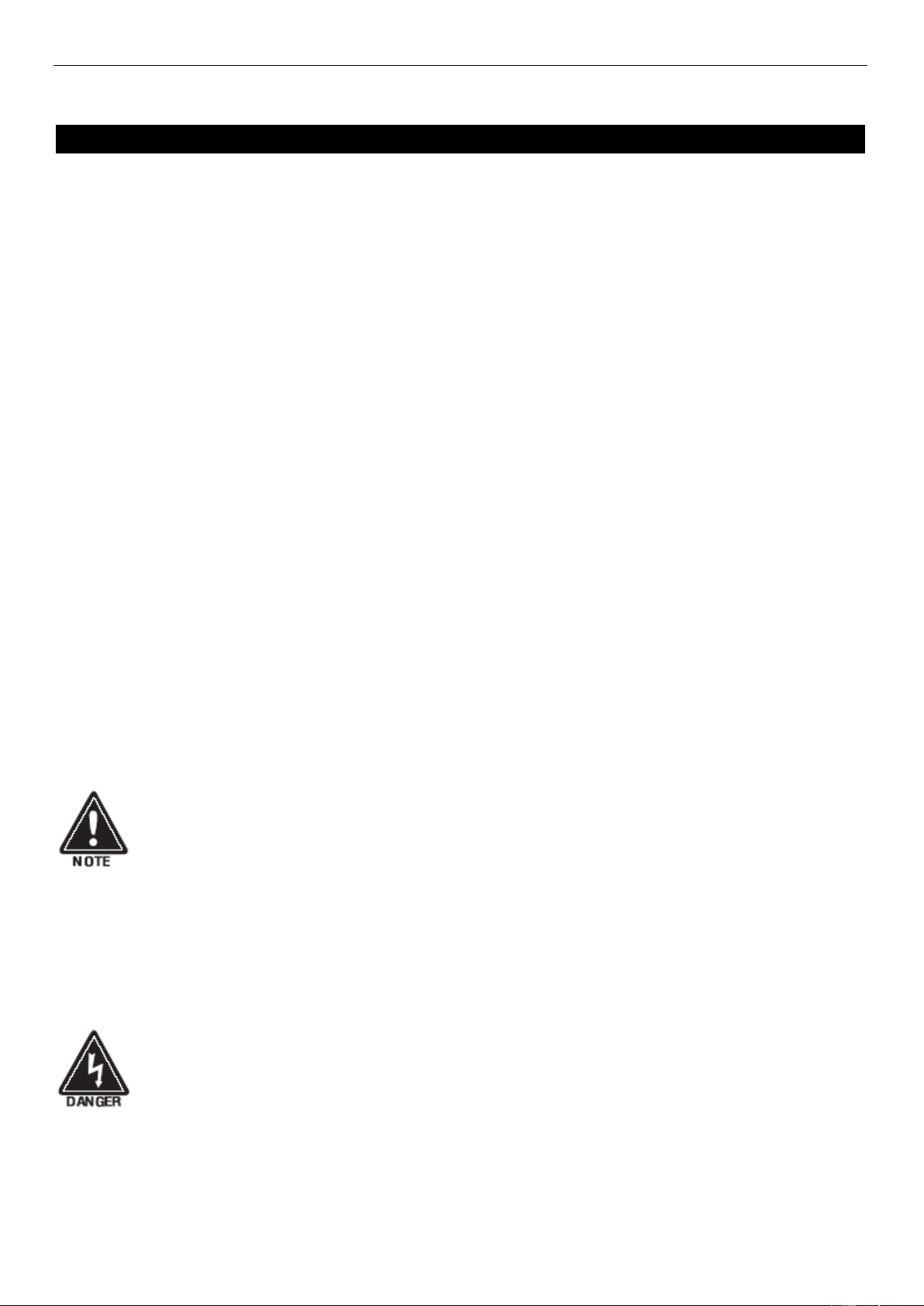
***REQUIRED OPERATING CONDITIONS:
• Minimum clearance of 4” required between bottom of cooking equipment heating element
and ARCB top. Failure to provide clearance voids manufacturer warranty.
• Installation of a heat shield (supplied by others) is recommended for optimum performance.
• Counter top cooking equipment should be used in conjunction with the manufacturer
supplied legs.
Service and Installation Manual
4
INSTALLATION
Location
Units represented in this manual are intended for indoor use only. Be sure the location chosen has a floor
strong enough to support the total weight of the cabinet and contents. A fully loaded unit can weigh as much
as 1500 pounds. Reinforce the floor as necessary to provide for maximum loading. For the most efficient
refrigeration, be sure to provide good air circulation inside and out.
Inside cabinet
Do not pack the units so full that air cannot circulate. The refrigerated air is discharged at the top rear of the
unit. It is important to allow for proper air flow from the top rear to the bottom of the unit. Obstructions to this
air flow can cause evaporator coil freeze ups and loss of temperature or overflow of water from the
evaporator drain pan. However, bags and other items can still be located to the far rear of the cabinet. Air is
brought into the evaporator coil with fans. Prevent obstruction to allow the outlet or inlet of air flow.
Outside cabinet
Be sure that the unit has access to ample air. It is recommended that the unit be installed no closer than 3" from
any wall
Leveling
A level cabinet looks better and will perform better because the doors will line up with the frames properly. Use
a level to make sure the unit is level from front to back and side to side. Units supplied with legs will have
adjustable bullet feet to make the necessary adjustments. If the unit is supplied with casters, no adjustments are
available. Ensure the floor where the unit is to be located is level.
Stabilizing
All models are supplied with casters for your convenience. It is very important, however, that the cabinet be
installed in a stable condition with the front wheels locked while in use.
Should it become necessary to lay the unit on its side or back for any reason, allow at least 24 hours before
start-up to allow compressor oil to flow back to place. Failure to meet this requirement can cause
compressor failure and unit damage.
Unit repairs will not be subject to standard unit warranties if due to improper installation
pr procedures.
Electrical connection
Refer to the amperage data on page 3, the serial tag, your local code or the National Electrical Code to be sure
the unit is connected to the proper power source. A dedicated 20 Amp circuit is required for each unit.
Improper electrical connection will void warranty.
Use of extension cords is strictly prohibited and will also void warranty.
The unit must be turned OFF and disconnected from the power source whenever
performing service, maintenance functions or cleaning the refrigerated area.
Service and Installation Manual
5
OPERATION
Do not throw items into the storage area. Failure to heed these recommendations could result in damage to
the interior of the cabinet.
Refrigerated cabinets
Temperature range for the internal cabinets is 33°to 40°F for all food prep units, under-counter and
worktop refrigerators, and -7°to -3°F for under-counter and worktop freezers. The rail’s temperature
range for all prep units is 33° to 41°F.
Food Prep units should operate with pans in place. Operating without pans and/or pan covers in place will
lower the efficiency and may damage the unit due to continuous over-use.
Continuous opening and closing of the door will prevent the unit’s ability to maintain optimum refrigeration
temperature.
Top section is not intended for overnight storage. Product should be removed from pans. Pans can remain
in cabinet if empty.
Defrosting:
Every 6 hours, the unit will turn off so the evaporator coil can defrost. The controller now displays the
defrost symbol. When the coil temperature reaches the terminal temperature or after 20 minutes of defrost,
the unit will turn on.
On/Off Switch:
An on/off switch is located on the front of the bottom panel and on the condenser compartment door for the
Pizza prep tables. When the unit is on, the switch will glow green.
SOLID-STATE THERMOSTAT DESCRIPTIONS
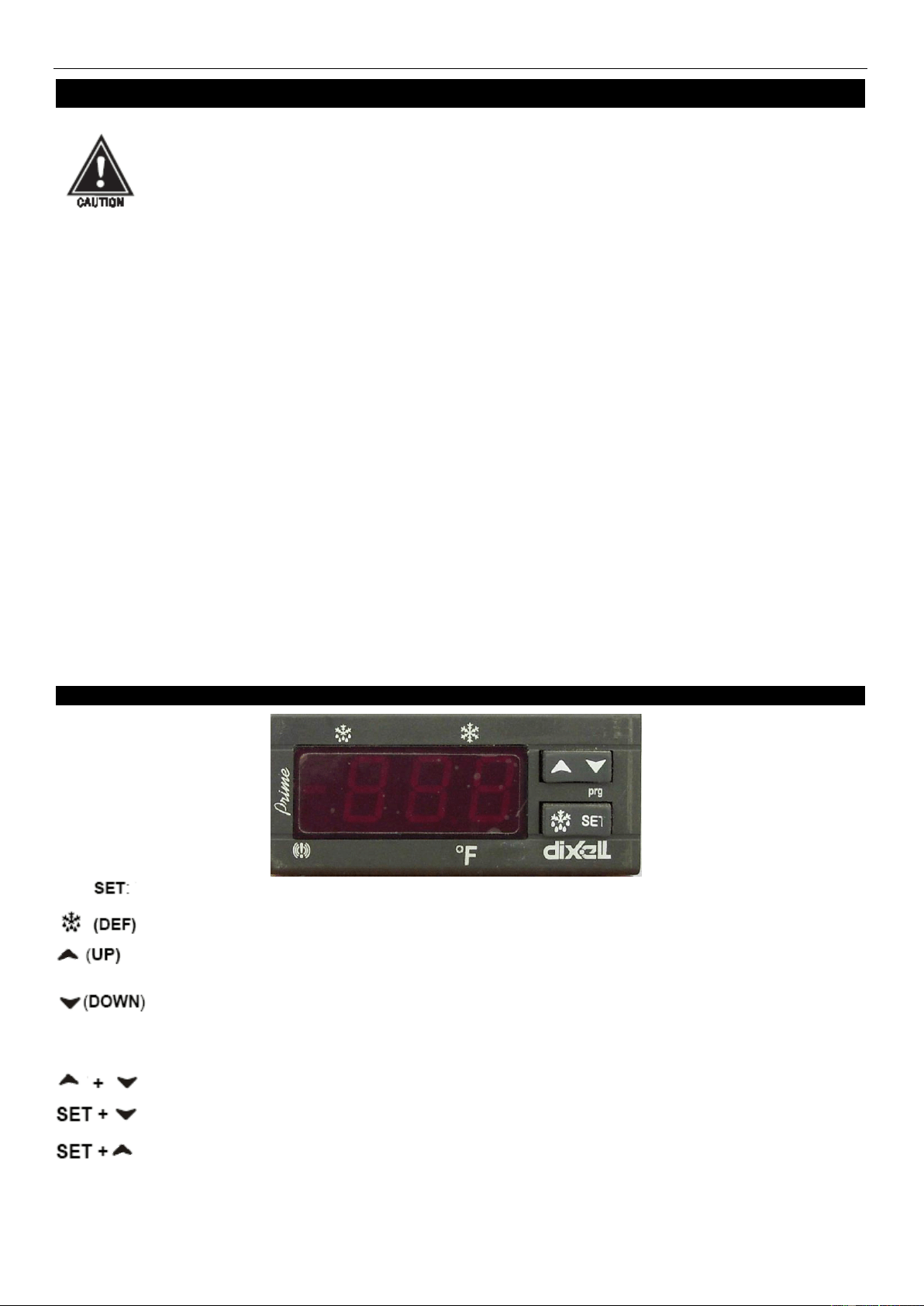
1. FRONT PANEL COMMANDS
To display target set point; in programming mode it selects a parameter or confirms an operation.
To start a manual defrost
To view the last alarm occurrence; in programming mode, it browses the parameter
codes or increases the display value
To view the last alarm occurrence; in programming mode, it browses the parameter
codes or decreases the display value
KEY COMBINATION
To lock & unlock the keyboard
To enter in programming mode
To return to the room temperature display
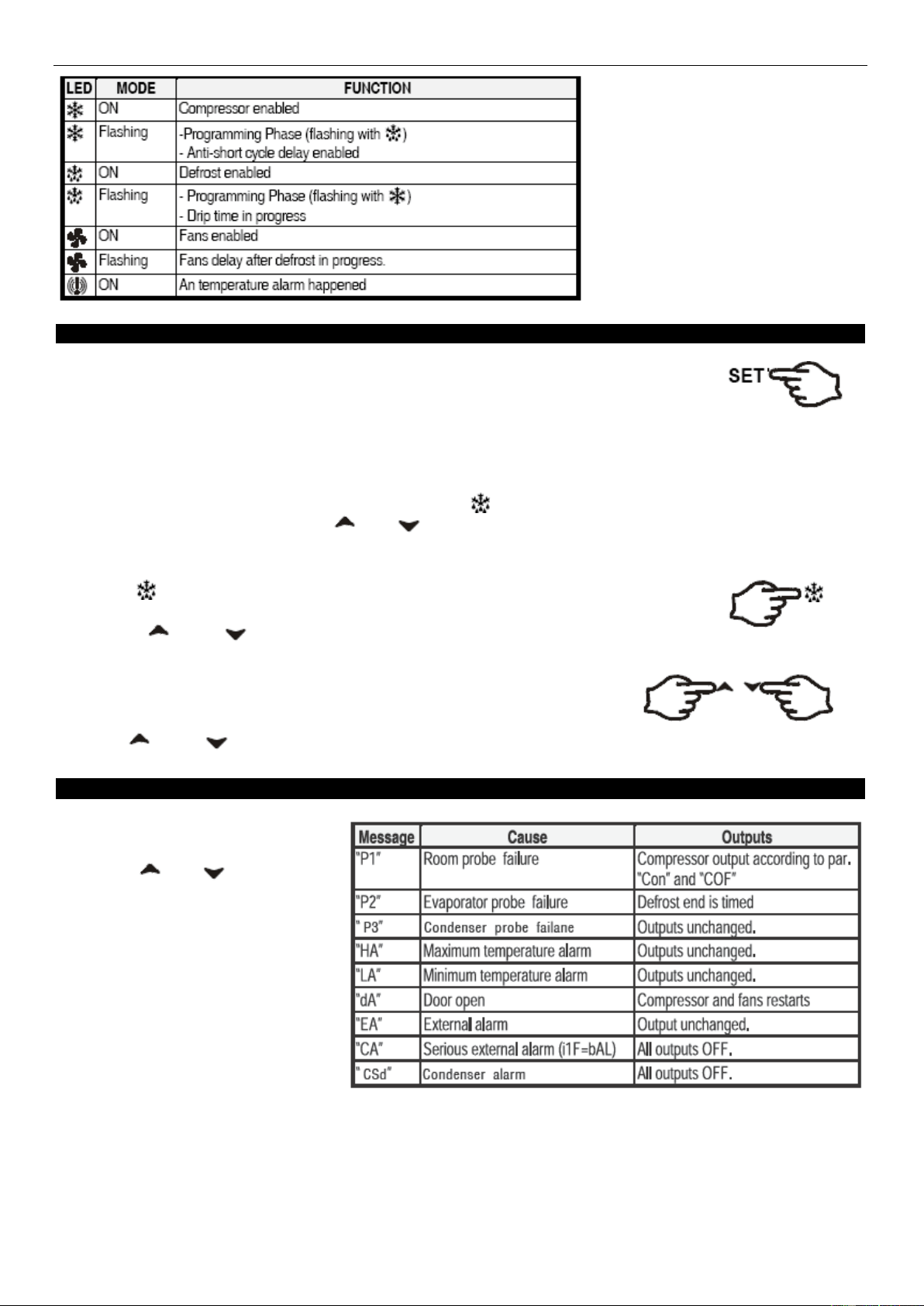
1.1 Function of LEDS
Service and Installation Manual
6
2. MAIN FUNCTIONS
2.1 HOW TO SEE THE SETPOINT
1. Push and immediately release the SET key: the display will show the set point value.
2. Push and immediately release the SET key or wait for 5 seconds to display the
sensor value again.
2.2 HOW TO CHANGE THE SETPOINT
1. Push the SET key for more than 2 seconds to change the set point value.
2. The value of the set point will be displayed and the LED starts blinking.
3. To change the set value push the or key within 10s.
4. To set new point value, push the SET key again or wait 10s.
2.3 HOW TO START A MANUAL DEFFROST
Push the key for more than 2 seconds and a manual defrost will start
2.4 HOW TO LOCK THE KEYBOARD
1. Hold the and keys for more than 3s.
2. The “POF” message will be displayed and the keyboard will be locked. At this point, it will be possible only
to see the set point or the MAX or Min temperature stored.
3. If a key is pressed more than 3s the ”POF” message will be displayed.
2.5 HOW TO UNLOCK THE KEYBOARD
Hold the and keys together for more than 3s, till the “POF” message is displayed.
3. ALARM SIGNALS
HOW TO SEE THE ALARM AND
RESET THE RECORDED ALARM
1. Hold the or key to
display the alarm signals.
2. When the signal is displayed, hold
the SET key until the “rst” message
is displayed. Push the SET key
again. The “rst” message will start
blinking and the normal temperature
will be displayed again.
Service and Installation Manual
7
MAINTENANCE
The power switch must be turned OFF and the unit disconnected from the power source
whenever performing service, maintenance functions or cleaning the refrigerated area.
Cleaning the Condenser Coil
The condenser coil requires regular cleaning. Cleaning is recommended every 90 days. In some instances,
you may find that there is a large amount of debris and dust or grease accumulated prior to the 90 day time
frame. In these cases the condenser coil should be cleaned every 30 days.
If the build up on the coil consists of only light dust and debris, the condenser coil can be cleaned with a simple
brush. Heavier dust build-up may require a vacuum or even compressed air to blow through the condenser
coil.
If heavy grease is present, there are de-greasing agents available for refrigeration use and specifically for the
condenser coils. The condenser coil may require cleaning with the de-greasing agent and then blown through
with compressed air.
Failure to maintain a clean condenser coil can initially cause high temperatures and excessive run times.
Continuous operation with dirty or clogged condenser coils can result in compressor failures. Neglecting the
condenser coil cleaning procedures will void any warranties associated with the compressor or cost to replace
the compressor.
Never use a high pressure water wash for this cleaning procedure as water can damage the
electrical components located near or at the condenser coil.
In order to maintain proper refrigeration performance, the condenser fins must be cleaned of dust, dirt and
grease regularly. It is recommended that this be done at least every three months. If conditions are such that
the condenser is totally blocked in three months, the frequency of cleaning should be increased. Clean the
condenser with a vacuum cleaner or stiff brush. If extremely dirty, a commercial-grade condenser cleaner may
be required.
Stainless Steel Care and Cleaning
To prevent discoloration of rust on stainless steel, several important steps need to be taken. First, we need to
understand the properties of stainless steel. Stainless steel contains 70-80% iron which will rust. It also contains
12-30% chromium which forms an invisible passive film over the steels surface which acts as a shield against
corrosion. As long as the protective layer is intact, the metal is still stainless. If the film is broken or
contaminated, outside elements can begin to breakdown the steel and begin to form rust of discoloration.
Proper cleaning of stainless steel requires soft cloths or plastic scouring pads,
NEVER USE STEEL PADS, WIRE BRUSHES OR SCRAPERS!
Service and Installation Manual
8
MAINTENANCE
Cleaning solutions need to be alkaline based or non-chloride based. Any cleaner containing chlorides will
damage the protective film of the stainless steel. Chlorides are commonly found in hard water, salts, and
household and industrial cleaners. If cleaners containing chlorides are used, be sure to rinse and dry
thoroughly.
Routine cleaning of stainless steel can be done with soap and water. Extreme stains or grease should be
cleaned with a non-abrasive cleaner and plastic scrub pad. It is always good to rub with the grain of the steel.
There are also stainless steel cleaners available which can restore and preserve the finish of the steels
protective layer.
Early signs of stainless steel breakdown can consist of small pits and cracks. If this has begun, clean
thoroughly and start to apply stainless steel cleaners in attempt to restore the passivity of the steel.
Never use an acid based cleaning solution!Many food products have an acidic content
which can deteriorate the finish. Be sure to clean the stainless steel surfaces of ALL food
products.
Gasket Maintenance
Gaskets require regular cleaning to prevent mold and mildew build up and also to keep the elasticity of the
gasket. Gasket cleaning can be done with the use of warm soapy water. Avoid full strength cleaning
products on gaskets as this can cause them to become brittle and prevent proper seals. Do not use sharp
tools or knives to scrape or clean the gasket which could possibly tear the gasket and rip the bellows.
Gaskets can easily be replaced and don’t require the use of tools or authorized service technicians. The
gaskets are "Dart" style and can be pulled out of the grove in the door and replaced by pressing the new one
back into place.
Doors/Hinges
Over time and with heavy use, door hinges may become loose. If the door is beginning to sag, tighten the
screws that mount the hinge brackets to the frame of the unit. If the doors are loose or sagging this can
cause the hinge to pull out of the frame which may damage to both the doors and the door hinges.
Drain Maintenance
Each unit has a drain located inside the unit which removes the condensation from the evaporator coil and
evaporates it into an external condensate evaporator pan. Each drain can become loose or disconnected from
moving or bumping the drain. If you notice excessive water accumulation on the inside of the unit, be sure the
drain tube is connected from the evaporator housing to the condensate evaporator drain pan. If water starts to
collect underneath the unit, you may want to check the condensate evaporator drain tube to be sure it is still
located inside the drain pan. The leveling of the unit is important as the units are designed to drain properly
when on a level surface. If your floor is not level this can also cause drain problems. Be sure all drain lines are
free of obstructions because this may cause water to back up and overflow the drain pans.
Service and Installation Manual
9
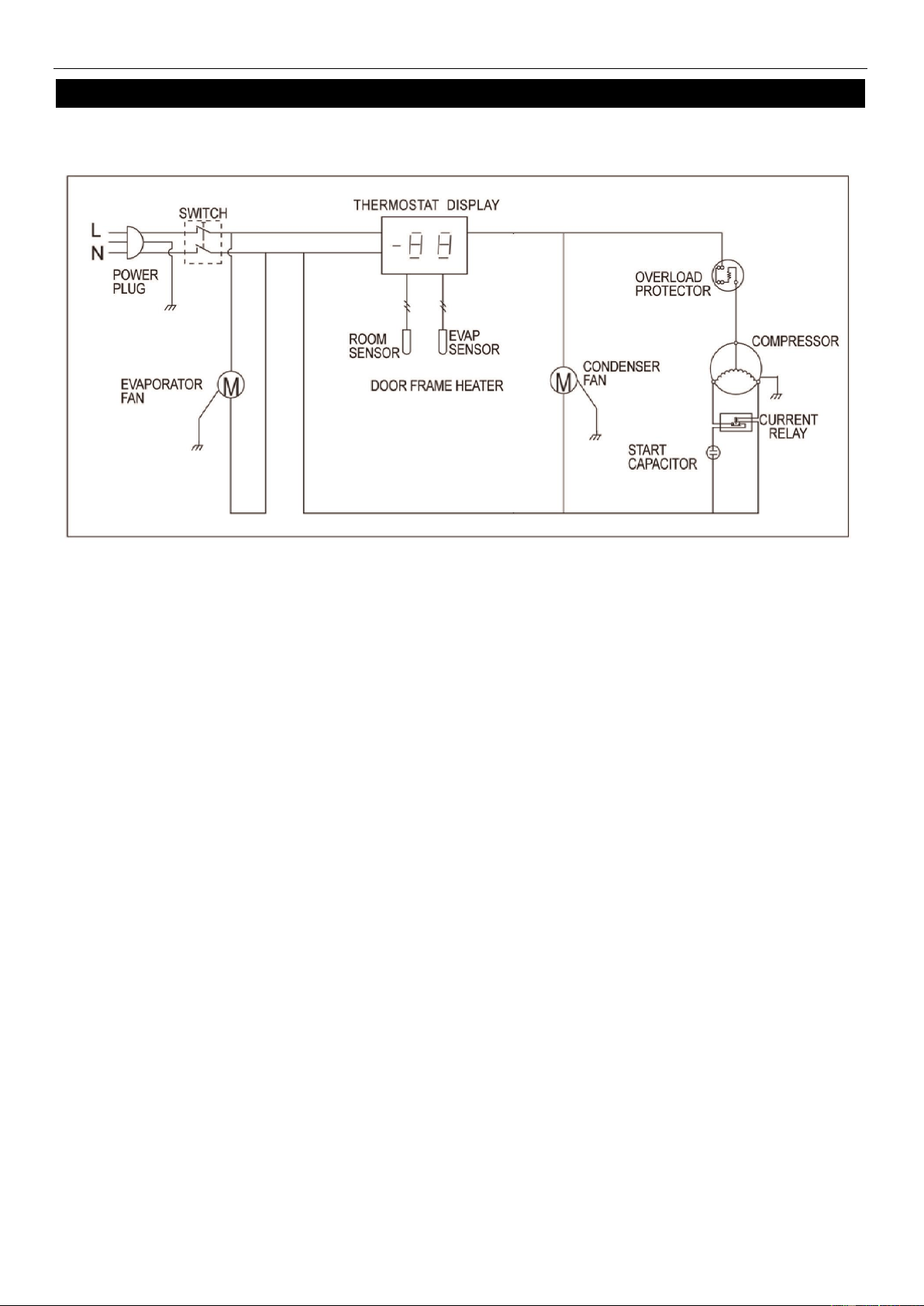
WIRING DIAGRAM
MODEL: ARCB48/ARCB60/ARCB72
Service and Installation Manual
10
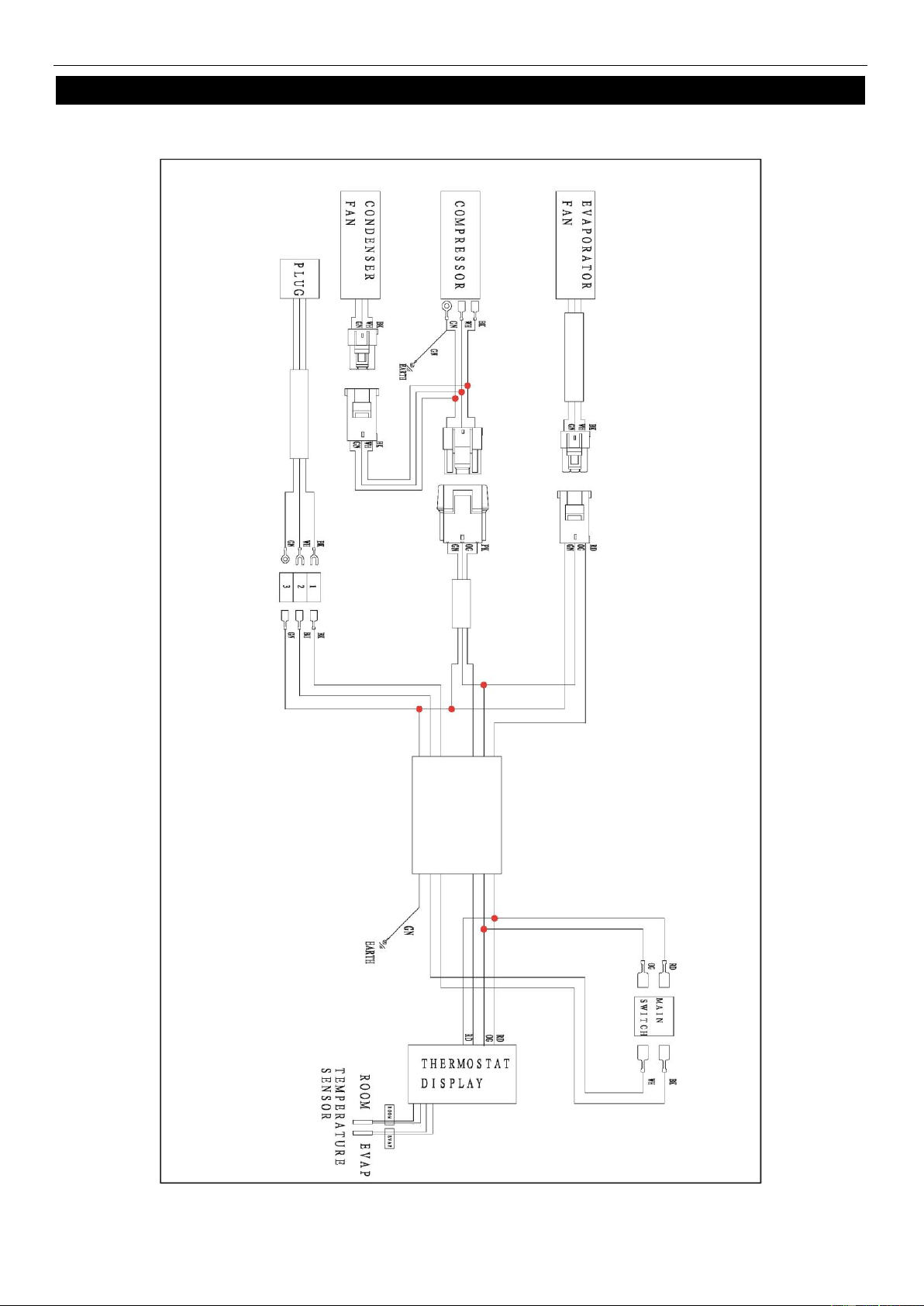
WIRING DIAGRAM
MODEL: ARCB48/ARCB60/ARCB72