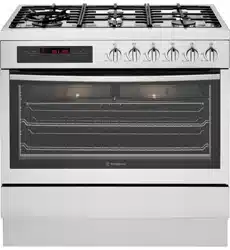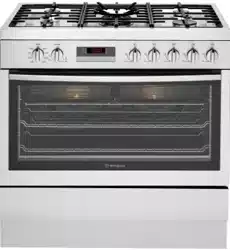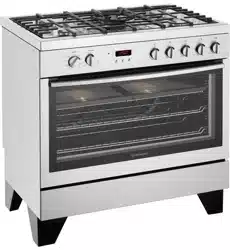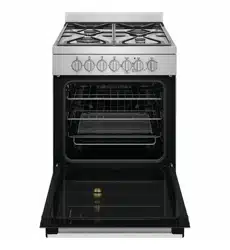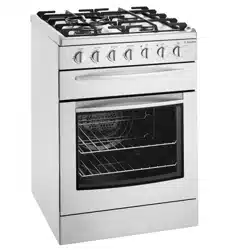
600mm SLOT-IN UPRIGHT RANGE COOKER
USER MANUAL
PSP632, DSP635, GSP625, GSP627

2 3
SAFETYCONTENTS
TIPS & INFORMATION
IMPORTANT – CHECK FOR ANY DAMAGE OR MARKS.
If you find the appliance is damaged or marked, you must
report it within 7 days if you wish to claim for damage/
marks under the manufacturer’s warranty. This does not affect
your statutory rights.
ENVIRONMENTAL TIPS
INFORMATION ON DISPOSAL FOR USERS
• Most of the packing materials are recyclable.
Please dispose of those materials through your local
recycling depot or by placing them in appropriate
collection containers.
• If you wish to discard this product, please contact your
local authorities and ask for the correct method of disposal.
Please read the user manual carefully and store in a handy
place for later reference. The symbols you will see in this
booklet have these meanings:
WARNING
THIS SYMBOL INDICATES INFORMATION CONCERNING YOUR PERSONAL
SAFETY
CAUTION
THIS SYMBOL INDICATES INFORMATION ON HOW TO AVOID DAMAGING
THE APPLIANCE
TIPS & INFORMATION
THIS SYMBOL INDICATES TIPS AND INFORMATION ABOUT USE OF THE
APPLIANCE
ENVIRONMENTAL TIPS
THIS SYMBOL INDICATES TIPS AND INFORMATION ABOUT ECONOMICAL
AND ECOLOGICAL USE OF THE APPLIANCE
OVEN
• During use the appliance becomes hot. Care should be
taken to avoid touching the hot surfaces inside the oven.
• Switch the appliance off before removing the oven light
glass for globe replacement.
• To avoid an accident, ensure that oven shelves and ttings
are always inserted into the appliance in accordance with
the instructions.
• Do not use the door as a shelf.
• Do not push down on the open oven door.
INSTALLATION, CLEANING AND SERVICING
• An authorised person must install this appliance.
(Certicate of Compliance to be retained)
• Before using the appliance, ensure that all packing
materials are removed from the appliance.
• In order to avoid any potential hazard, the enclosed
installation instructions must be followed.
• Ensure that all specied appliance vents, openings and
airspaces are not blocked.
• Where the appliance is built into a cabinet, the cabinet
material must be capable of withstanding 85°C
• Only authorised personnel should carry out servicing.
(Certicate of Compliance to be retained)
• Always ensure the appliance is switched off before
cleaning or replacing parts.
• Do not use steam cleaners, as this may cause
moisture build up.
• Always clean the appliance immediately after any
food spillage.
• To maintain safe operation, it is recommended that the
product be inspected every ve years by an authorised
serviceperson.
• If rigid gas pipe is used for installation it should include
sufcient loops to allow the appliance to be removed
from installed position without the need to disconnect
the piping.
THIS APPLIANCE MUST BE EARTHED
• For appliances supplied with a supply cord, if the
supply cord is damaged, it must be replaced by the
Manufacturer or its service agent or similarly qualied
person in order to avoid a hazard.
GENERAL WARNINGS
• This appliance is not intended for use by persons
(including children) with reduced physical, sensory
or mental capabilities, or lack of experience and
knowledge, unless they have been given supervision or
instruction concerning use of the appliance by a person
responsible for their safety.
• Children should be supervised to ensure that they do not
play with the appliance.
• During use, this appliance becomes hot. Care should
be taken to avoid touching hot surfaces, e.g. oven door,
heating elements or internal surfaces of the oven.
• This appliance must not be used as a space heater.
• Do Not install gas models in marine craft, caravans or
mobile homes because these products are not tted
with a ame safeguard on each burner.
• In order to avoid a re, the appliance must be kept clean
and vents kept unobstructed.
• Do not spray aerosols in the vicinity of the appliance
during operation.
• Do not store ammable materials in or under the
appliance, e.g. Aerosols.
• Accessible parts will become hot when in use. To avoid
burns and scalds children should be kept away.
• Do not line the bottom of the oven or grill with foil
or cookware.
• Always use gloves when handling hot items inside
grill or oven.
• Do not use harsh abrasive cleaners or sharp metal
scrapers to clean the oven door glass since they can
scratch the surface, which may result in shattering
of the glass.
GRILL
• Always turn the grill off immediately after use as fat
left there may catch fire.
• Always keep the grill dish clean as any fat left
may catch fire.
• Do not leave the grill on unattended.
• To avoid a re, ensure that grill trays and ttings are
always inserted into the appliance in accordance
with the instructions.
• Do not place thick portions of food under the grill.
Foods may curl, catch and ignite.
• Accessible parts may become hot when grill is in use.
Children should be kept away.
IMPORTANT SAFETY INSTRUCTIONS
Congratulations and thank you for choosing our Product.
We are sure you will nd your new appliance a pleasure to
use and a great asset to your cooking. Before you use the
appliance, we recommend that you read through the whole
user manual which provides a description of the product and
its functions.
To avoid the risks that are always present when you use a
gas appliance, it is important that the appliance is installed
correctly and that you read the safety instructions carefully to
avoid misuse and hazards. For future reference, please store
this booklet in a safe place.
This appliance complies with the requirements of Australian
Standard AS/NZ 60335.2.6. Gas appliances also comply
with the requirements of AS4551.
CONDITIONS OF USE
This appliance is intended to be used in household
and similar applications such as:
• Staff kitchen areas in shops, ofces and other
working environments
• Farm houses
• By clients in hotels, motels and other residential
type environments
• Bed and breakfast type environments.
CONTENTSCONGRATULATIONS
Important safety instructions � � � � � � � � � � � � � � � � � � � � � � � � 3
Description of your appliance � � � � � � � � � � � � � � � � � � � � � � � � 4
Before operating your appliance for the first time� � � � � � � � � � � � � � 5
Installing your oven accessories � � � � � � � � � � � � � � � � � � � � � � 5
Using the hotplate� � � � � � � � � � � � � � � � � � � � � � � � � � � � � � 7
Using the grill � � � � � � � � � � � � � � � � � � � � � � � � � � � � � � � � 8
Guide to better grilling � � � � � � � � � � � � � � � � � � � � � � � � � � � 9
Using the timer � � � � � � � � � � � � � � � � � � � � � � � � � � � � � � �10
Using the oven � � � � � � � � � � � � � � � � � � � � � � � � � � � � � � �12
Dealing with cooking problems � � � � � � � � � � � � � � � � � � � � � � �15
Electronic burner control(models 625 and 627 only) � � � � � � � � � � � �16
Cleaning your appliance� � � � � � � � � � � � � � � � � � � � � � � � � � �17
Cleaning your oven accessories� � � � � � � � � � � � � � � � � � � � � � �18
Solving problems � � � � � � � � � � � � � � � � � � � � � � � � � � � � � �19
Installing the appliance � � � � � � � � � � � � � � � � � � � � � � � � � � �20
Wiring requirements� � � � � � � � � � � � � � � � � � � � � � � � � � � � �22
Connecting to services and commissioning� � � � � � � � � � � � � � � � �22
Testing the operation of the gas cooker� � � � � � � � � � � � � � � � � � �25
Warranty� � � � � � � � � � � � � � � � � � � � � � � � � � � � � � � � � � �27
RECORD MODEL AND SERIAL NUMBER HERE:
Model: ....................................................................
Serial number: ..........................................................

4 5
INSTALLATIONDESCRIPTION
DESCRIPTION OF YOUR APPLIANCE
MODEL PSP632
MODEL DSP635
ILLUSTRATION ONLY DO NOT PRINT
REVISIONS
This drawing contains confidential information and is the property of Aktiebolaget Electrolux, Sydney, Australia without whose permission it may not
be copied, shown or handed to a third party or otherwise used, and it is to be returned promptly upon request to Aktiebolaget Electrolux.
ART4905a
Westinghouse Panel Control #:GSP625W
Previously ART4896
A
Guides Updated. MRN A 22/05/12
Westinghouse
Michael Newton
04/04/12
100%
MODEL GSP625
MODEL GSP627
Hotplate power on
indicator lamp
Hotplate
controls
Hotplate
controls
Hotplate
controls
Hotplate
controls
Dual ring
hotplate
control
Grill
temperature
selector
Grill
temperature
selector
Grill
temperature
selector
Grill
temperature
selector
Oven
temperature
selector
Oven
temperature
selector
Oven
temperature
selector
Oven
temperature
selector
‘Auto Off’
timer
‘Auto Off’
timer
‘Auto Off’
timer
Electronic
clock and
timer
Grill indicator
lamp
Grill indicator
lamp
Grill indicator
lamp
Grill indicator
lamp
Oven indicator
lamp
Oven indicator
lamp
Oven indicator
lamp
Oven indicator
lamp
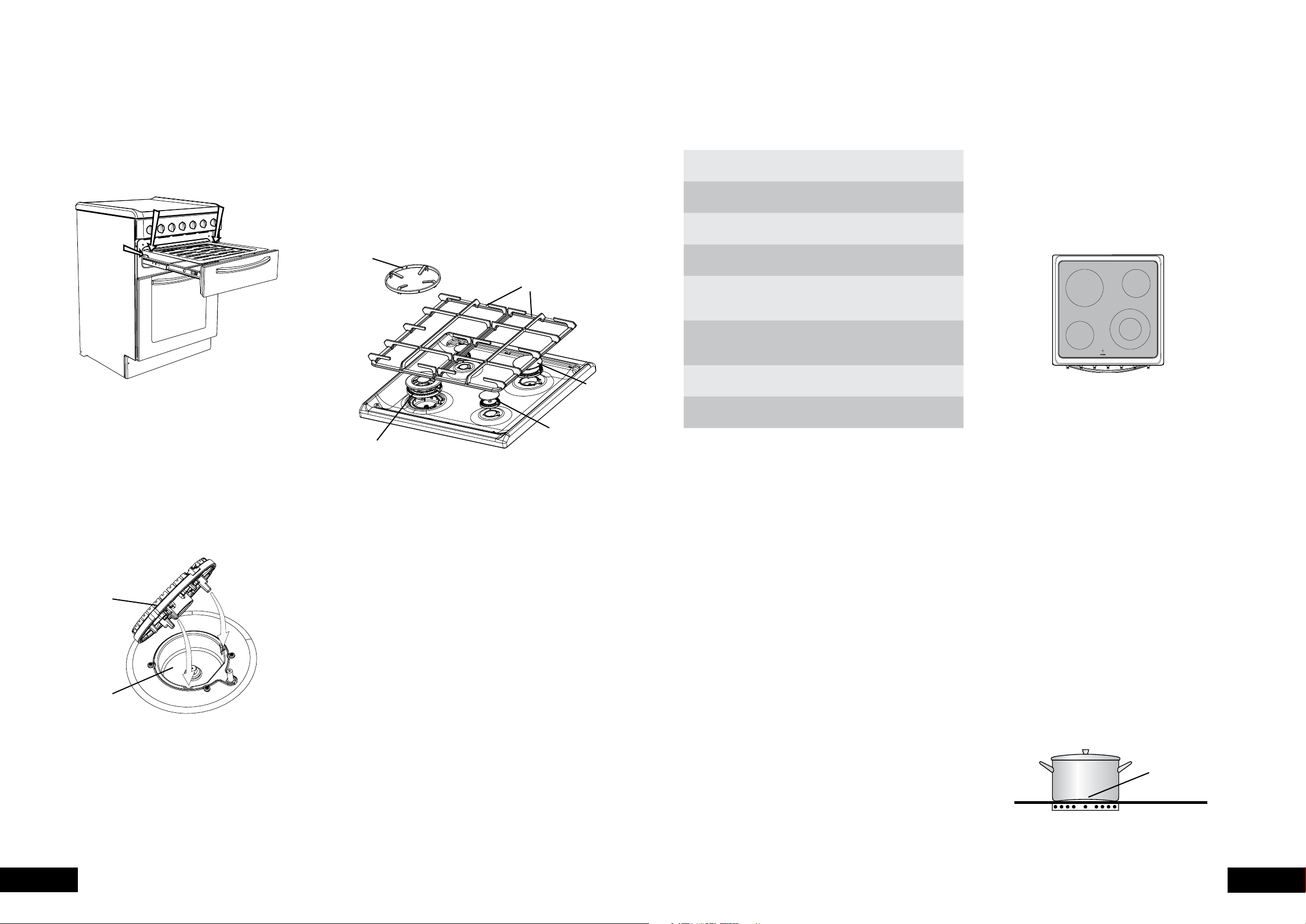
SIDE RACKS (SHELF SUPPORT)
• Insert the twin pegged side into the rear access holes
provided, ensuring the pegs are fully inserted.
• Then locate the front peg into the front access hole
and push firmly.
SETTING THE TIME
If you have purchased a model tted with an electronic
timer, you must set the time of day before you can operate
your appliance.
3 BUTTON ELECTRONIC CLOCK
• After the appliance has been electrically connected “12.00”
will be displayed and the “clock” indicator will ash.
• To set the time of day, press the – or + buttons. 5 seconds
after the last change, the “clock” indicator will disappear,
conrming the time has been set.
NOTE: The clock has a 24-hour display.
PREPARING YOUR APPLIANCE FOR THE FIRST TIME
• Please remove all internal boxes and bags from the oven
before operation.
• Please wipe out the oven interior prior to operation with
warm soapy water and polish dry with a soft clean cloth.
Do no close the oven door until the oven is completely dry.
• New appliances can have an odour during rst operation.
It is recommended to ‘run in’ your oven before you cook
for the rst time. Run the oven at 180°C for 2–4 hours
and ensure the room is well ventilated.
• DO NOT line the oven with foil. It will damage the enamel.
• If your appliance is fitted with a “Auto Off” timer, make
sure it is set to the “Off” marker for manual operation.
See image.
COOLING/VENTING FAN
Your appliance is tted with a cooling fan. This prevents
your kitchen cabinet from overheating and reduces the
condensation inside the oven. It will operate whenever you
are using your oven or grill and will blow warm air across the
top of the grill door. The cooling fan may continue to operate
after the appliance is turned off. It will switch off by itself
once the oven is cool.
BEFORE OPERATING YOUR APPLIANCE
FOR THE FIRST TIME
INSTALLING YOUR OVEN ACCESSORIES
6 7
USING THE
HOTPLATE
INSTALLATION
GRILL TRAY
To insert the grill tray, fully open the drawer and position
the tray so that the slots on the outer edges t over the tabs
on the slides.
Place the grill tray insert into the grill tray.
BURNER CROWNS AND CAPS
• The burner crown must be tted correctly into the burner
cup or damage will occur during operation.
• To do this, ensure that the 2 ribs on either side of the
spark plug hole are positioned into the 2 slots on the
burner cup (see diagram).
• The burner cap is simply positioned over the top of the
burner crown.
NOTE: When the burner is correctly fitted it will sit level
on the hob.
TRIVETS
• The rubber feet on the trivets locate into the recesses
on the hob.
• Take care when placing the trivets as dropping them
may damage the hob or trivet.
• The wok trivet sits on top of the base trivet above the
wok burner.
burner crown
burner cup
CERAMIC HOTPLATES
The cooktop is made from ceramic glass, a tough, durable
material that withstands heating and cooling without
breaking. It is strong enough to hold the heaviest utensils.
However, it must be remembered that as it is GLASS, it may
break. Treat it accordingly!
Should you have any questions about the glass in your new
appliance, please contact the service centre by dialling 13 13 49.
The heating elements are concealed under the smooth glass
surface which has a pattern to show the location of the elements.
When cooking, turn the control to the required setting.
The ceramic cooktop glass will retain heat for a period of
time after the control is turned off. This will be indicated by
the hot surface warning light which will continue to glow until
the temperature drops below 60°C.
NOTE: If the ceramic glass is cracked switch off the
appliance to avoid the possibility of electric shock.
• Use pans with smooth, clean and dry bottoms to avoid
scratching or burning residue into the glass.
• Ensure the pan bottom is the same size as the
working element.
• We do not recommend ceramic glass pans because they
do not conduct heat well.
• Stainless steel or enamelled saucepans are best.
• Do not use pans with copper or aluminium bottoms
because they can leave traces which are difcult to
remove from the glass.
• If buying new utensils select enamelled steel pans with
2-3mm thick bottoms or stainless steel pans with sandwich
bottoms 4-6mm thick. The pan bottom should be at, or
preferably, slightly concave at room temperature so that it
lies flat on the glass surface when hot.
HOTPLATE DOS AND DON’TS
•
Do not place heat resistant mats, wire mats or
aluminium foil under pots and pans.
•
Do not allow pots and pans to boil dry, as damage
to both pan and hotplate may result.
•
Do not use the hotplate as extra bench space or as a
cutting board.
•
Do not allow children on or near the cooktop at
any time.
•
Do not allow large cookware to overhang the hotplate
onto the adjacent benchtop. This will cause scorching
to the benchtop surface.
•
Do not use round bottom woks or similar utensils which
could lead to overheating of the hotplates and possible
damage to the cooking surface.
•
Use the stored heat in the hotplate by turning the control
to off before the nal few minutes of cooking.
•
Do not slide pans across the surface of the ceramic glass
as it could result in scratching of the surface.
USING THE HOTPLATE
a flat or slightly
concave pan is
preferable for
ceramic hotplates
wok trivet
burner cap
trivets
wok burner
burner crown
8 9
USING THE GRILLUSING THE GRILL
GAS HOTPLATES
OPERATION
• To ignite, push knob in and turn anti-clockwise to the
ignition symbol
.
• Sparks are sent to all burners.
• Release knob once burner has ignited and adjust the ame.
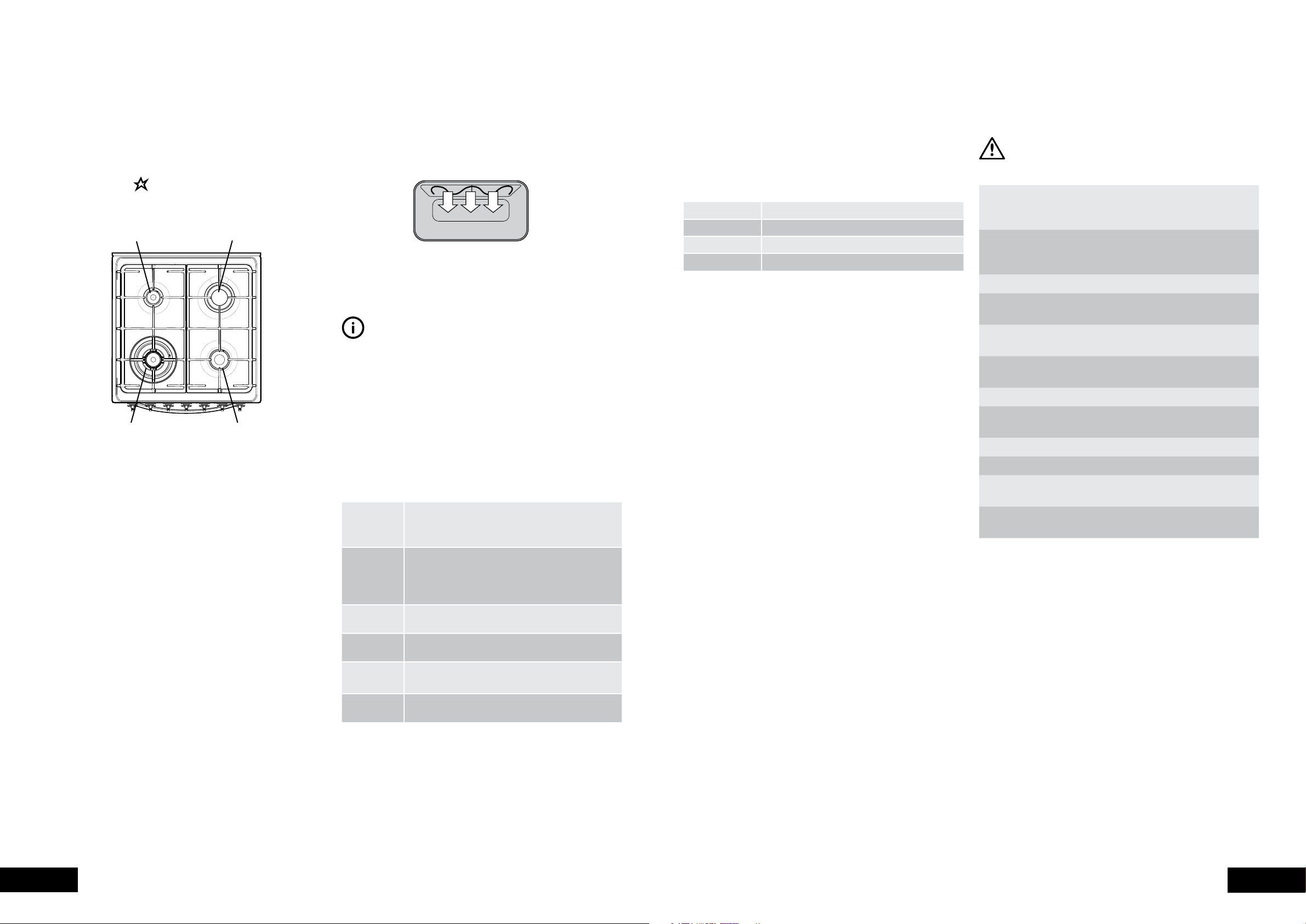
1 Low heat burner (5.1 MJ/h)
Used for simmering and for use with small cookware items.
2 High heat burner (12.7 MJ/h)
Used for fast heating with large size cookware items.
3 Intense heat wok burner (14.4 MJ/h)
Used for very fast heating with woks and other large size
cook ware items. Use wok support provided when cooking
with a wok.
4 Medium heat burner (9.0 MJ/h)
Used for normal cooking and simmering with mid size
cookware items.
To conserve gas, place the pan centrally over the burner
and adjust the flame so that it does not go past the edge
of the cookware.
NOTE: In the absence of electrical power, carry out the
ignition directly to the burner with a hand held ignition source.
USING THE GRILL
WHAT IS GRILLING?
• The grill directs heat from the electric element in the grill
compartment onto the food.
• This way of cooking traps the juices inside the food and
increases the avour.
• Grilling is suitable for tender cuts of meat, steak, chops,
sausages, sh and other foods which cook quickly.
TIPS & INFORMATION
ALWAYS CLEAN THE GRILL TRAY AND GRILL TRAY INSERT AFTER EVERY
USE. EXCESSIVE FAT BUILD UP MAY CAUSE A FIRE.
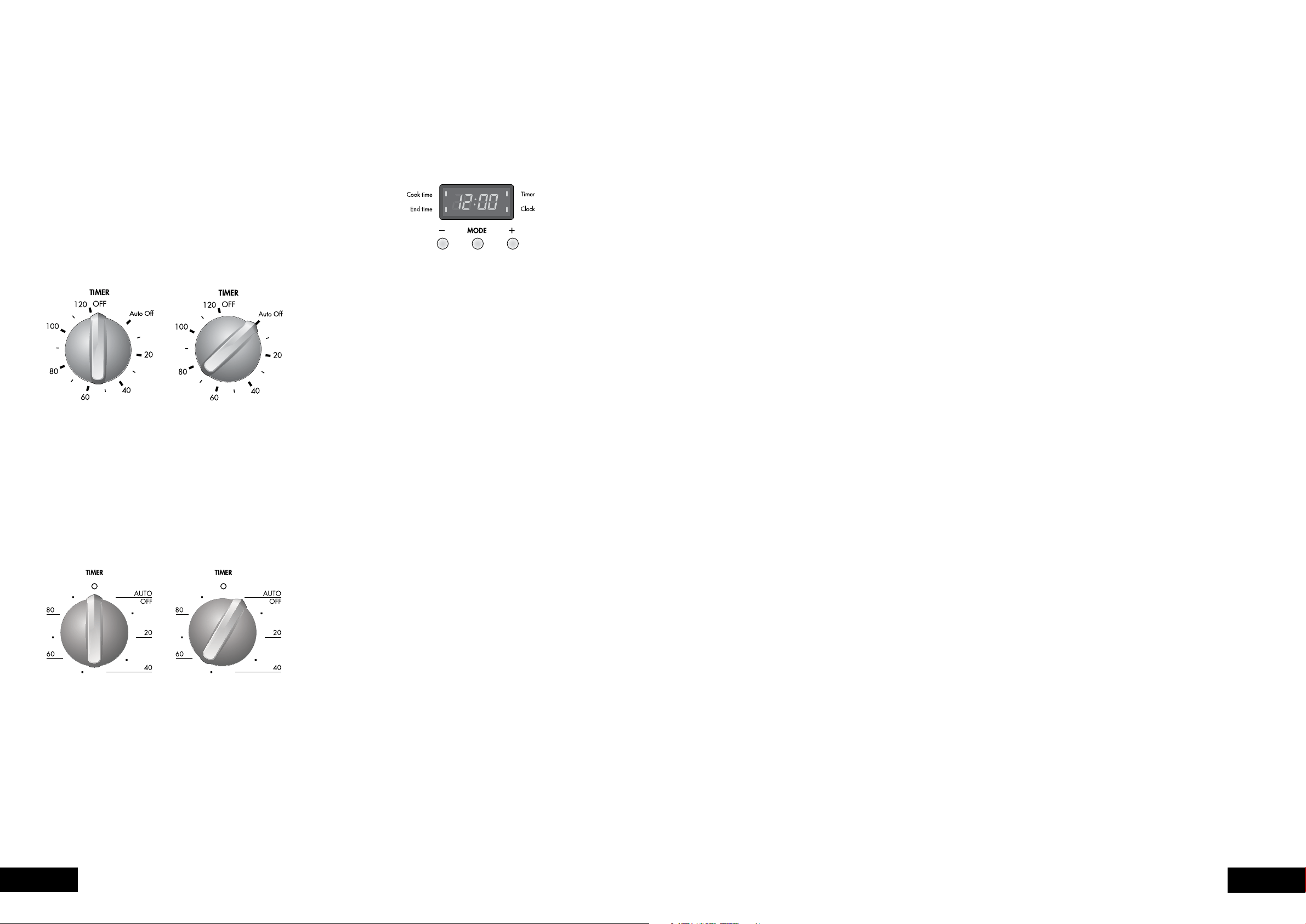
IT IS BEST FOR YOUR APPLIANCE WHEN GRILLING IF THE GRILL DRAWER IS
APPROXIMATELY TWO FINGER WIDTHS AJAR.
As a method of cooking, grilling can be used to:
• Enhance the avours of vegetables, sh, poultry
and meat.
• Seal the surface of the food and retain the natural juices.
This table shows how to grill different types of meat:
Beef You can use tenderloin, rump, sirloin. Brush
with oil or melted butter, especially if the meat
is very lean.
Lamb You can use loin chops, shortloin chops,
chump chops, and forequarter chops.
Remove skin or cut at intervals to stop curling.
Brush with oil or melted butter.
Sausages Prick sausages to stop skin from bursting.
Poultry Divide into serving pieces. Brush with oil.
Fish Brush with oil or melted butter and
lemon juice.
Bacon Remove rind. Grill at.
1
3
2
4
WARNING
SAFETY WARNINGS ABOUT THE GRILL
•
Do not cook food on the bottom of the grill
compartment. Always use the grill dish and grill
dish insert.
•
Do not place foil under the food on the grill dish insert,
as this prevents fats and oils running away and may
cause a fire.
•
Always use the grill parts according to instructions.
•
Do not put thick pieces of food too near the element.
They may curl and catch fire.
•
Always turn the grill off immediately after cooking.
Left-over fat may cause a re.
•
Always clean the grill dish and insert after use. Fat
build up may cause a re.
•
Do not let children play with the grill.
•
Do not let children use the grill without adult
supervision.
•
Do not leave the grill unattended when on.
•
Be careful not to touch hot surfaces.
•
Do not spray aerosols near the grill, when it is
turned on.
•
Do not keep ammable materials in or near the grill,
eg chemicals, aerosols, etc.
No denite times can be given for grilling because this
depends on your own taste and the size of the food. These
times should only be used as a guide and remember to turn
the food over half way through the cooking process.
Steak 15 - 20 minutes
Chops 20 - 30 minutes
Fish 8 -10 minutes
Bacon 4 - 5 minutes
For better grilling results, follow these easy instructions:
1. Preheat the grill for at least 3 minutes to obtain best
results. This will help to seal the natural juices.
2. Choose only prime cuts of meat or sh. If the cut is less
than 5mm thick it will dry out. If the cut is more than
40mm thick, the outside may burn whilst the inside
remains raw.
3. Do not place aluminium foil under the food as this
prevents fats and oils from draining away, which could
result in a fire.
4. Baste the food during cooking with butter, olive oil
or marinade. Grilled food is better if marinated
before cooking.
5. Use tongs to turn food as a fork pierces the surface
and will let juices escape.
6. Set the height of the grill tray insert to the most
suitable height.
• The grill insert can be used on both sides to provide
two different grill heights
• Thinner pieces of food should be nearer the element
and thicker pieces should be 10mm away.
GUIDE TO BETTER GRILLING
10 11
USING THE TIMERUSING THE TIMER
2-HOUR “AUTO OFF” TIMER
The 2- hour timer features an automatic oven “cut off”.
This means that a cooking period of up to 120 minutes
can be used. When the timer has counted back to “Auto Off”
a bell will sound and the oven element will be switched off.
Although the oven element is off, the oven light, the cooling/
venting fan and the oven fan will remain on whilst the timer is
in “Auto Off” mode. They will stay on until both the timer and
the oven knobs are moved to the “Off” position.
Once automatic baking is complete, return to manual
operation by setting the timer to the “OFF” marker.
90 MINUTE “AUTO OFF” TIMER
The 90 minute timer features an automatic oven “cut off”.
A cooking period of up to 90 minutes can be used. When
the timer has counted back to “Auto Off” a ding will sound
and the oven element will be switched off. Although the oven
element is off, the oven light, the cooling/venting fan and
the oven fan will remain on whilst the timer is in “Auto Off”
mode. They will stay on until both the timer and the oven
knobs are moved to the “Off” position.
Once automatic baking is complete, return to manual
operation by setting the timer to the “OFF” marker.
NOTE: It is not recommended to use this timer for a short
duration (e.g. grilling toast).
USING THE TIMER
3 BUTTON PROGRAMMABLE TIMER
GENERAL FEATURES
Your 3 button programmable timer has the following features:
• Timer – your 3 button programmable timer allows you
to set a countdown time that will beep when the set time
has elapsed.
• Cooking duration – You can set a cooking duration.
A timer will count down the preset cooking time, beep
when the time has elapsed and turn the oven off.
• End cooking time – you can set a cooking nish time. A
timer will count down the preset cooking time, beep when
the nish time has been reached and turn the oven off.
• Delayed start cooking time – You can combine the
cooking time and stop cooking time to switch the oven on
and off at a specific time during the day.
NOTE: Your 3 button programmable timer only operates with
your main oven.
SETTING THE TIME OF DAY
You must set the time of day before you can operate your
appliance. When power is supplied to your oven “12.00“
will be displayed and the “clock” indicator will ash.
1. To set the time of day in hours and minutes, press the – or
+ buttons. 5 seconds after the last change, the “clock”
indicator will disappear, conrming the time has been set.
NOTE: The clock has a 24-hour display.
SETTING THE TIMER
1. Press the “mode“ button until the “timer” indicator
begins ashing.
2. Set the countdown time you want by using the – and +
buttons. 5 seconds after the last change the “timer” indicator
will stop ashing, conrming the timer has been set.
3. To stop the beeper, press any button.
TO CHECK OR CANCEL SETTINGS
1. To check your settings, press the “mode” button until the
setting you want is displayed. A red indicator light will
ash next to the mode (cook time, end time etc) that is
currently on display.
2. To cancel “delayed start” press the “mode” button until
the indicator next to “end time” ashes. Press and hold
the – button until the clock no longer reverses (you will
hear a beep). If you have left the temperature and function
knobs at a setting the oven will start once the “end time”
indicator stops flashing.
3. To cancel “auto shut off” press the mode button until the
indicator next to “cook time” ashes. Press and hold
the – button until the clock no longer reverses at (“0:00”
and you will hear a beep). This automatically cancels
“delayed start”. If you have left the temperature and
function knobs at a setting, the oven will start once the
“cook time” indicator stops ashing. Because you have
cancelled “auto off” the oven will continue to heat until
you manually turn it off.
ON COMPLETION OF COOKING
The oven will turn off, the timer will beep and the “end time“
and/or “cook time“ indicators will ash.
1. Turn the function and temperature controls to the
off position.
2. Press any button to stop the timer from beeping.
SWITCHING THE CLOCK DISPLAY ON AND OFF
1. Press any two buttons together for 2 seconds to switch
’off’ the display.
2. Press any button to switch the clock display ’on’ again.
NOTE: If a timer mode is set, then it is not possible to switch
the display off.
SETTING THE COOKING DURATION
1. Check the clock displays the correct time of day.
2. Select the desired oven function and temperature. The
oven indicator light will glow and the heating source will
come on.
3. Press the “mode“ button until the “cook time” indicator
begins ashing.
4. Set the cooking duration you want by using the – or +
buttons. 5 seconds after the last change, the “cook time”
indicator will stop ashing, and the time of day will be
displayed.
NOTE: Do not forget to add preheating time if necessary.
SETTING THE COOKING END TIME
1. Check the clock displays the correct time of day.
2. Select the desired oven function and temperature. The
oven indicator light will glow and the heating source will
come on.
3. Press the “mode“ button until the “end time” indicator
begins ashing.
4. Enter the time of day you want to nish cooking by
pressing the – or + buttons. 5 seconds after the last
change, the “end time” indicator will stop ashing and the
current time of day will be displayed.
SETTING THE DELAYED START COOKING TIME
1. Program the “cook time“ and “end time“ as described
in the relevant sections. Once both the “cook time“ and
“end time“ have been set, the “cook time“ and “end time”
indicators will stop flashing and the current time of day
will be displayed.
12 13
USING THE OVENUSING THE OVEN
FAN BAKING
The temperature in the oven is controlled by a thermostat.
The fan distributes the heat throughout the oven compartment.
This allows:
• Baking on all shelves at the same time with little variation
in browning or cooking.
• Cooking at slightly lower temperatures.
• Cooking from a cold start so there is no need to preheat
the oven – this is good for casseroles and fruit cakes.
• Good cooking results for cream mixtures, rich pastries and
bread but with these foods, preheating the oven for 10 to
15 minutes is required.
DEFROSTING
• Defrosting uses air that is circulated by the fan.
• You should defrost food before cooking it.
• You can also use the defrost function to raise yeast dough
and dry fruit, vegetables and herbs.
CONDENSATION
Condensation fogs the oven door and happens when you
are cooking large quantities of food from a cold start. You
can minimise condensation by:
• keeping the amount of water used in cooking to
a minimum;
• making sure that the oven door is rmly closed;
• cooking casseroles with a lid.
NOTE: If you are using water in cooking, this will turn to
steam and may condense outside the oven. This is not a
problem or a fault.
USING THE OVEN
COOKING GUIDE
• Select the correct shelf location for food being cooked.
• The grill tray can be used in the oven as a baking dish,
except in oven shelf location 1.
• Make sure dishes will t into the oven and remove
unnecessary trays or dishes before you switch it on.
• Keep edges of baking dishes at least 40mm from the
side of the oven. This allows free circulation of heat and
ensures even cooking.
• Do not open the oven door more than necessary.
• Do not place foods with a lot of liquid into the oven with
other foods. This will cause food to steam and not brown.
• After the oven is turned off it retains the heat for some
time. Use this heat to nish custards or to dry bread.
• Do not use a lot of cooking oil when roasting. This will
prevent splattering oil on the sides of the oven and the
oven door. Polyunsaturated fats can leave residue which is
very difcult to remove.
• When cooking things which require a high heat from
below (e.g. tarts), place the cooking dish on a scone tray
in the desired shelf position.
• For sponges and cakes use aluminium, bright nished or
non-stick utensils.
OVEN SHELF LOCATION
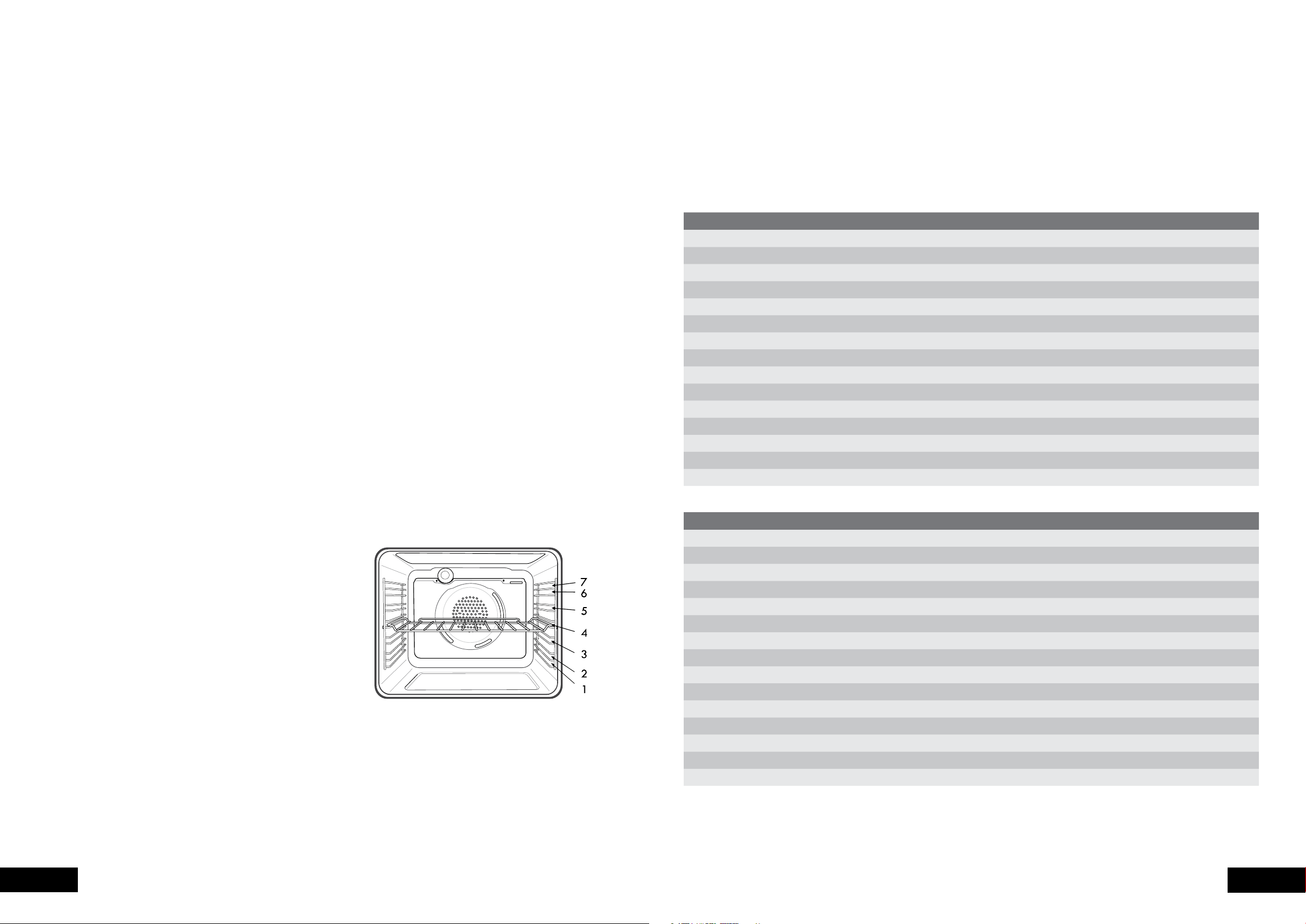
Your oven has seven positions for shelves. These are
numbered from 1 (the lowest shelf position) to 7 (the highest
shelf position). See diagram.
To give maximum space above and below the shelves, load
them in this way:
• When cooking with 1 shelf, use position 3 or 4.
• When cooking with 2 shelves, use position 3 and 5.
Use the oven efciently, by cooking many trays of food at the
same time. For example:
– Cook 2 trays of scones, small cakes or sausage rolls.
ELECTRIC OVEN
FOOD TEMPERATURE IN
O
C OVEN SHELF POSITION TIME IN MINUTES
Scones Plain or fruit 210 Any 10 -15
Biscuits Rolled 150 Any 10 - 15
Spooned 180 Any 12 - 15
Shortbread biscuits 150 Any 30 - 35
Meringues Hard - individual 100 Any 90
Soft - individual 165 Any 15 - 20
Pavlova - 6 egg 100 Any 75
Cakes Patty cakes 180 Any 15 - 20
Sponge - 4 egg 170 Any 20 - 30
Shallow butter cake 170 Any 30 - 40
Rich fruit cake 130 Any 180
Pastry - shortcrust Cornish pasties 180 Any 40 - 45
Custard tart 190 / 170 Any 20 - 30
Pastry - choux Cream puffs 200 Any 25 - 30
Yeast goods Bread 200 Any 25 - 30
GAS OVEN
FOOD TEMPERATURE IN
O
C OVEN SHELF POSITION* TIME IN MINUTES
Scones Plain or fruit 210 Any 10 -15
Biscuits Rolled 170 3 & 5 10 - 15
Spooned 180 3 & 5 12 - 15
Shortbread biscuits 150 3 & 5 30 - 35
Meringues Hard - individual 100 Any 90
Soft - individual 165 Any 15 - 20
Pavlova - 6 egg 100 Any 75
Cakes Patty cakes 180 3 & 5 15 - 20
Sponge - 4 egg 170 3 20 - 30
Shallow butter cake 170 3 & 5 30 - 40
Rich fruit cake 130 3 180
Pastry - shortcrust Cornish pasties 180 / 160 3 40 - 45
Custard tart 190 / 170 3 20 - 30
Pastry - choux Cream puffs 200 3 & 5 25 - 30
Yeast goods Bread 200 Any 25 - 30
* Counting from the bottom shelf up. Refer to “oven shelf location” section for more detailed information.
CHOOSING THE BEST OVEN SETTINGS
The following tables are intended as a guide and experience
may show some variation in cooking times necessary to meet
individual requirements.
For best results when baking you must preheat your oven
for 30 minutes.

14 15
USING THE OVENUSING THE OVEN
ROASTING MEAT
• You can use the grill tray and grill tray insert for roasting
meat in the oven.
• Place the meat in the oven and set the temperature
between 180°C and 200°C. (It is recommended to
wrap your meats in an oven roasting bag or foil to
prevent fats and oils from splattering, making it easier
to clean your oven.)
• Do not pierce the meat, as this will allow juices to escape.
• When the meat is cooked, take the roast out of the oven,
wrap in aluminum foil and leave to stand for about
10 minutes. This will help retain the juices when the
meat is carved.
The table shows temperatures and cooking times for different
kinds of meat. These may vary depending on the thickness or
bone content of the meat.
MEAT RECOMMENDED
TEMPERATURE
MINUTES PER KG
Beef 200°C Rare 35 - 40
Medium 45 - 50
Well done 55 - 60
Lamb 200°C Medium 40
Well done 60
Veal 180°C Well done 60
Pork 200°C Well done 60
ROASTING POULTRY AND FISH
• Place the poultry or sh in an oven set at a moderate
temperature of 180°C.
• Place a layer of foil over the sh for about three quarters
of the cooking time.
The table shows temperatures and cooking times for different
kinds of sh and poultry. These may vary depending on the
thickness or bone content of the meat.
POULTRY
& FISH
RECOMMENDED
TEMPERATURE
MINUTES PER KG
Chicken 180°C 45 - 50
Duck 180 - 200°C 60 - 70
Turkey 180°C 40 - 45 (<10kg)
35 - 40 (>10kg)
Fish 180°C 20
PROBLEM CAUSES WHAT TO DO
Uneven cooking Incorrect shelf position Select shelf that puts food in centre of oven
Oven tray too large Try other trays or dishes
Trays not in centre Put trays in centre
Air ow in oven uneven Rotate food during cooking
Grill tray affecting thermostat Remove grill tray from oven on bake modes
Baked products too brown on top Oven not preheated Preheat the oven
Baking tins too large for recipe Use correct size tins
Baking tins not evenly spaced Stagger baking tins at least 3cm between tins
and the oven walls
Products not evenly sized or spaced on trays Make into same size and shape and spread
evenly over trays
Baking temperature too high Lower the Temperature
Baked products too brown on
bottom
Baking tins too large for recipe Use correct size tins
Baking tins are dark metal or glass Change to shiny, light tins or lower the
temperature by 10°C
Food too low in oven Cook one shelf higher
Oven door opened too frequently during baking Don’t open the oven door until at least half the
cooking time has passed
Baking temperature too high Lower the temperature
Grill tray affecting thermostat Remove grill tray from oven on bake modes
Cakes have a cracked thick crust Baking temperature too high Lower the temperature
Food too low in oven Cook one shelf higher
Cake batter over mixed Mix just long enough to combine the ingredients
Baking tin too deep Check size of tin and use recommended size
Baking tins dark Change to shiny light tins
Baked products are pale, at and
undercooked
Baking temperature too low Raise the temperature
Food too low in oven Cook one shelf higher
Baking time too short Increase cooking time
Incorrect baking tin size Use correct size tin
Cakes fallen in centre Baking temperature too low Raise the temperature
Baking time too short Increase cooking time
Proportions of ingredients incorrect for recipe Check recipe
Opening door too early during baking Do not open door until the last quarter of cooking
time
Roast meat and potatoes not
brown in fan oven
Poor hot air circulation Elevate food onto a rack to allow air circulation
Grill tray affecting thermostat Remove grill tray from oven on bake modes
Juices running out of meat Do not pierce meat with fork, turn with tongs
Grilled meats overcooked on
outside & raw in the centre
Grill at lower insert position
Grilled chops & steaks curling Cut into fat every 2cm (¾")
DEALING WITH COOKING PROBLEMSGET TO KNOW YOUR NEW OVEN WITH THIS
‘SIMPLE TEST CAKE’
Although we strive for a perfect performing oven, it’s possible
that there will be some variation in colour when baking.
Therefore, we suggest this simple, easy and delicious to
make Simple Test Cake, it can help you understand your
new oven. All ovens do sometimes have hot or cold spots,
therefore it is important to judge with your eye as you may
require to rotate during baking.
‘SIMPLE TEST CAKE’
125g butter, softened to room temperature
1 cup caster sugar
1 teaspoon pure vanilla essence
4 large eggs
2 cups self-raising our
pinch of salt
4 tablespoons (80mL) full-cream milk
METHOD:
1. Butter base and sides of two, 20cm straight-sided round
or square cake pans. Then line the base with grease
proof or baking paper.
2. Preheat oven to moderate ‘180°C’ (170°C fan forced)
and ensure oven shelf is in the centre position of oven.
3. Cream softened butter and sugar until light in colour.
4. Add vanilla essence.
5. Then eggs one at a time, beating well after each addition.
6. Sift our and salt into the mixture and beat until
well combined.
7. Add milk and beat or stir to combine.
8. Spoon mixture equally between prepared cake pans.
9. Bake in preheated oven, middle shelf for about 25 to
35 minutes or until when tested with a ne cake skewer
it comes out clean or the edges of the cakes have come
away slightly from the sides of the cake pans.
10. Remove from oven to wire cake rack and rest for 5 minutes
before removing from cake pans. Cool completely.
To Serve: sandwich together with your favourite jam or
conserve, and dust top with pure icing sugar.
NOTE: if desired substitute butter for either margarine or olive
oil spread.
Recipe is based on the Australian standard metric 250ml cup
and 20ml tablespoon sets

16 17
CLEANINGUSING THE OVEN
Your gas oven is tted with an electronic controller which
manages the operation of the burner and monitors the
flame. This controller includes features which ensure the safe
operation of your appliance and will prevent the build up of
unburnt gas, should a fault occur.
It is normal for the flame to turn on and off during cooking,
to maintain a stable temperature in the oven. The Thermostat
Indicator Light indicates when the ame is on or igniting
(indicator glows), or when the ame is off (indicator off).
The burner ame can be seen by viewing through the 2 holes
in the front of the burner cover.
IGNITION AND RESPONSE TO IGNITION FAILURE
The controller will attempt to ignite the ame when an oven
function is selected and the Thermostat turns on (indicator
light changes from off to on). The controller will make up to
2 attempts to ignite the ame, stopping if a ame is detected
by the controller. If by the end of the 2 attempts a ame is not
detected then the burner and ignition will be turned off and a
delay of 90 seconds will be observed. During this delay the
controller will not respond to the Thermostat controls.
At the end of this delay, switch the Thermostat Selector
off and leave off for at least 5 seconds. Then switch the
Thermostat on again to re-attempt ignition.
If the oven controls are left on when the delay ends then
ignition will not be attempted until the Thermostat is rst turned
off for 5 seconds.
RESPONSE TO FLAME FAILURE
If the controller cannot detect flame due to a fault, then the
controller will respond
• rstly by attempting to re-light the burner with a sequence
of up to 3 attempts and
• If the re-lighting sequence is not successful the burner will
be shut off.
The re-lighting sequence will include up to 3 attempts to
re-light the burner, stopping if a ame is detected by the
controller. If by the end of the re-lighting sequence a ame
is not detected then the burner and ignition will be turned
off and a delay of 90 seconds will be observed. During
this delay the controller will not respond to the Function and
Thermostat controls.
At the end of this delay, switch the Thermostat off and leave
it off for at least 5 seconds. Then switch the thermostat and
Function Selector on again to re-attempt ignition.
If the oven controls are left on when the delay ends then
ignition will not be attempted until the Thermostat is rst turned
off for 5 seconds.
ELECTRONIC BURNER CONTROL
(models 625 and 627 only)
RECOGNISING A SAFETY SHUT-DOWN CONDITION
During normal cooking the Thermostat indicator light is on
when the burner ame is igniting or on, and the Thermostat
indicator light is off when the flame is off.
If an oven function is selected and the Thermostat light is
on, but the ame is not on or attempting to ignite then the
controller has invoked a safety shutdown of the burner.
A 90 second delay is observed from the time the shut-down
occurred before the controller will respond to the oven controls.
Once the delay period has ended the Thermostat must
be turned off for at least 5 seconds before oven functions
can resume.
POWER FAILURE
In the event of an interruption to mains power, the restoration
of power will not cause the burner to ignite if the controls
were left on. However the grill element will resume heating
on models which do not have an electronic clock.
To resume operation of the appliance after a power interruption:
• First turn the Thermostat controls to the off position. The
controls must remain in this position for at least 5 seconds
• If the appliance has an electronic clock then set the time
of day on the electronic clock. Normal operation of the
appliance may now resume.
GLASS
• Glass surfaces on doors and control panels are best
cleaned immediately after soiling.
• A damp cloth may help remove baked on food deposits.
• Oven cleaners can be used to remove stubborn marks
and stains.
WARNING
THE DOOR GLASS ON THIS APPLIANCE IS MADE FROM TOUGH DURABLE
MATERIAL THAT WITHSTANDS HEATING AND COOLING WITHOUT
BREAKING. HOWEVER IT MUST BE REMEMBERED THAT IT IS GLASS, IT
MAY BREAK. TREAT IT ACCORDINGLY!
Should you have any questions about the glass in your
appliance, please contact the customer care centre by calling
1300 363 640. Do not use harsh cleaners or sharp metal
scrapers to clean the oven door since they can scratch the
surface, which may result in shattering of the glass.
CERAMIC HOTPLATE
• Remove all spilt food and fat with the supplied razor blade
scraper, while the ceramic glass is still warm but not hot.
Wipe clean with dishwashing detergent on a damp cloth.
• If aluminium foil, plastic items or high sugar content
foods are allowed to melt on the ceramic glass, clean
immediately with the supplied razor blade scraper before
the surface has cooled down, otherwise pitting of the
surface can occur.
NOTE: Items with high sugar content not only include jam and
fruit, but also vegetables such as peas, tomatoes and carrots.
• When the ceramic glass is cool, apply a suitable cleaner
(supplied with the appliance).
• It is important to follow the cleaner manufacturer’s
instructions. Remove any cleaning residue from the surface
as staining of the cooktop may occur.
• Do not use abrasive sponges or scourers, as they may
scratch the surface.
• Any pitting, staining, scratches or other surface
deterioration is excluded from the warranty.
• All stains/water marks can be removed by vigorous
cleaning, using the supplied ceramic cleaner.
OVEN
• Always keep your appliance clean. Ensure that fats and
oils do not accumulate around elements, burners or fans.
• Always keep oven dishes, baking trays, grill trays and grill
tray insert clean, as any fat deposits may catch fire.
• Always wrap your meats in foil or an oven roasting bag
to minimise cleaning. Any polyunsaturated fats can leave
a varnish-like residue which is very difcult to remove.
GRILL
• Always keep the grill tray and grill tray insert clean, as
any fat deposits may catch fire.
CAUTION
• Always make sure that the oven is electrically isolated
before cleaning. This can be done via the functional switch
located nearby. Do not use steam cleaners.
• Do not line the bottom of the oven or grill with foil or cookware.
ENAMEL
• Wash with warm soapy water and rinse with clean water.
• Rub persistent stains vigorously with a nylon scourer or
creamed powder cleansers.
NOTE: You can also use household oven enamel cleaners
– follow the manufacturer’s instructions carefully.
• Do not use harsh abrasive cleaners, powder cleaners,
steel wool or wax polishes.
STAINLESS STEEL
All grades of stainless steel can stain, discolour or become
greasy. You must clean these areas regularly by following the
procedures below, if you want your appliance to look its best,
perform well and have a long life.
WARNING
CARE MUST BE TAKEN WHEN WIPING EXPOSED STAINLESS STEEL EDGES.
THEY CAN BE SHARP!
Your stainless steel appliance is manufactured from a mark
resistant stainless steel. This special stainless steel resists marks
such as fingerprints and water spots. To keep your stainless
steel appliance looking its best, you should clean it regularly.
Wash with warm soapy water and rinse with clean water.
Wipe with clean water and a soft cloth to remove soap residue.
NOTE: Make sure you follow the polish or brushing lines in
the steel.
CAUTION
DO NOT USE STAINLESS STEEL CLEANERS, ABRASIVE PADS OR OTHER
CLEANERS AS THEY ARE LIKELY TO SCRATCH THE SURFACE. DAMAGE DUE
TO POOR CLEANING TECHNIQUE IS NOT COVERED BY YOUR WARRANTY.
GAS HOTPLATE
• The trivets can be removed for cleaning by carefully lifting
them form the hob.
• Clean by washing with warm soapy water.
• The burner caps and crowns are also removable for cleaning.
• If the caps, crowns and cups are heavily soiled, use a
non-abrasive cleaning compound.
• Flame port blockages should be removed by using a
matchstick or brush.
• Do not clean them with abrasive or caustic type cleaners,
or clean them in a dishwasher.
CLEANING YOUR APPLIANCE
18 19
SOLVING
PROBLEMS
CLEANING
REMOVING AND REPLACING THE OVEN LIGHT
• Turn oven light glass anticlockwise to remove it for
globe replacement.
A special high temperature resistant globe should be
used that can be purchased from the Electrolux Customer
Care Centre.
WARNING
MAKE SURE THE APPLIANCE IS TURNED OFF BEFORE YOU REMOVE OR
REPLACE PARTS, TO AVOID THE POSSIBILITY OF ELECTRIC SHOCK.
CLEANING YOUR OVEN ACCESSORIES
REMOVING THE SHELVES FROM THE OVEN
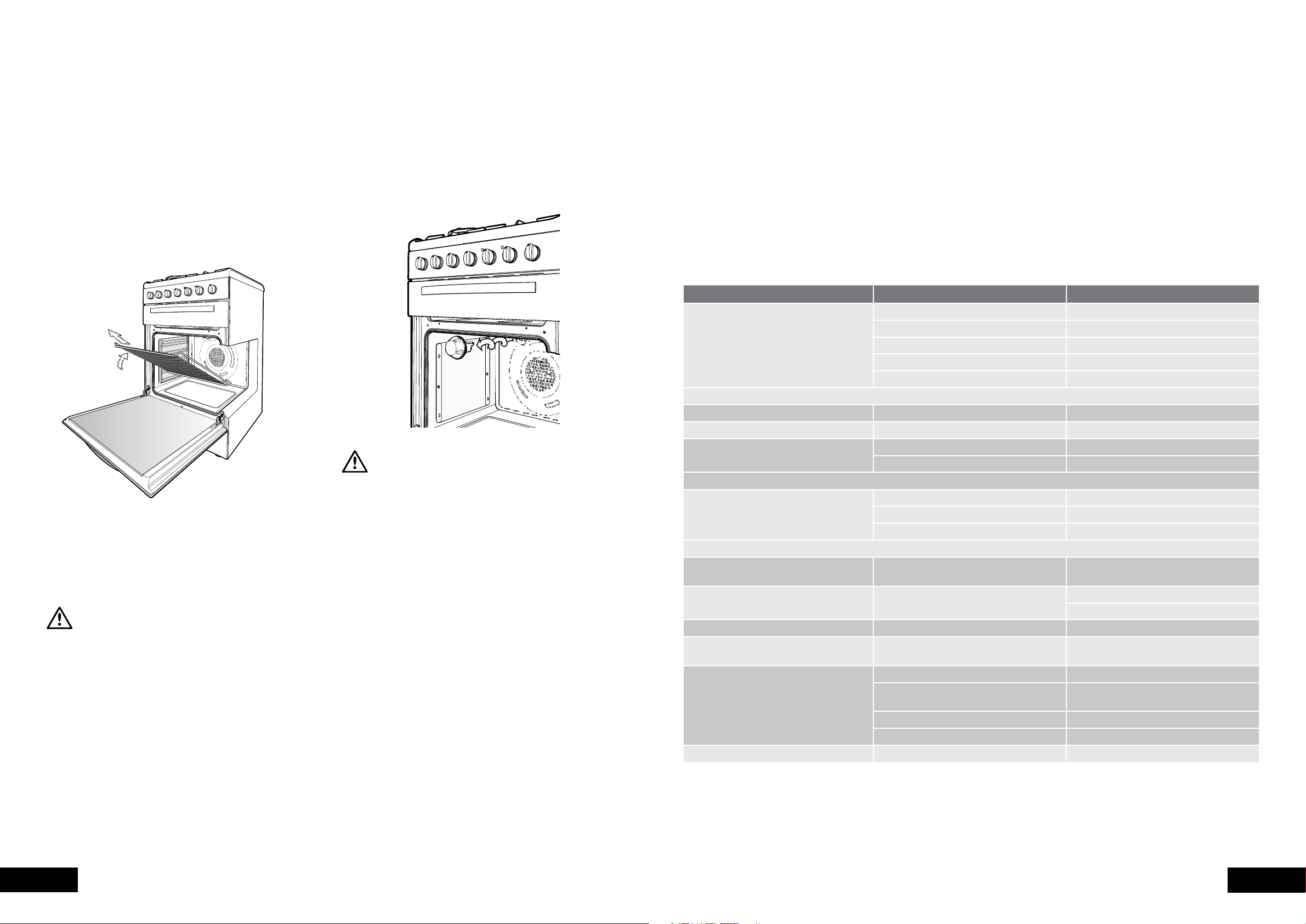
• Slide the shelves towards you until they reach the
front stop.
• Tilt them up at the front, taking care not to spill any contents.
• Lift them clear.
• Wash the shelves in hot soapy water.
• Reverse the above steps to put the shelves back again.
• Refer to “Installing your oven accessories” for more details.
REMOVING THE SIDE RACKS (SHELF SUPPORTS)
• Grasp the middle wire at the front.
• Pull rmly inwards.
CLEANING THE GRILL
GRILL TRAY AND GRILL PAN
• Wash the grill tray and grill pan in hot soapy water.
WARNING
ALWAYS KEEP THE GRILL PAN CLEAN AS ANY FAT LEFT IN IT MAY
CATCH FIRE.
GRILL COMPARTMENT
• Clean the grill compartment with hot soapy water.
• If stronger action is needed use a non-abrasive oven
cleaner applied with a nylon scourer.
PROBLEM POSSIBLE CAUSES WHAT TO DO
Oven or grill not working Power not turned on Switch on electricity
Household fuse blown Check fuses
Controls incorrectly set Reset controls
Circuit breaker tripped Check circuit breaker
Clock not set Set time of day on timer
NOTE: If the household fuse continues to blow, call the Electrolux Customer Care Centre.
Oven not heating enough Foil or trays on bottom of oven Remove foil or trays
Light and fans on continuously Timer not in manual mode Set timer to manual mode
Oven not working Timer not in manual mode Set timer to manual mode
Household fuse blown Check fuses
NOTE: If the household fuse continues to blow, call the Electrolux Customer Care Centre.
Oven light not working Household fuse blown Check fuses
Circuit breaker tripped Check circuit breaker
Lamp blown or loose in socket Replace or tighten lamp
NOTE: If the household fuse continues to blow, call the Electrolux Customer Care Centre.
Cooker smoking when rst used Protective oils being removed Turn grill on high for 30 mins and then the
oven on 220°C for 1 hour
Too much condensation building up when
baking
Too much water used when cooking Reduce amount of water
Leave oven door open after cooking
Smells when rst using oven Protective oils being removed This is normal
120 minute timer ring not audible Timer not wound sufficiently Turn timer knob past 20 minutes then turn
back to required number of minutes
Gas hotplates not working Power not turned on at appliance Switch on electricity
Household fuse has blown or power supply
is turned off
Check fuses
Gas is off Check gas is supplied to the cooker
Burner parts or spark plugs are wet or dirty Clean and dry burners or spark plugs
Timer flashing Power failure or interruption Reset time of day
SOLVING PROBLEMS
FAULTS
If there is a problem with the oven and/or grill, please:
• Check the points listed below before calling for service.
It may be possible to avoid a call by xing the problem
yourself – and so continue cooking.
• For cooking problems, refer to “Dealing with cooking
problems”.
NOTE: We may charge for service even in the guarantee
period if your problem is due to the causes listed below.
FURTHER INFORMATION
If you need more information, service, replacement parts or have
a warranty enquiry, please contact the Customer Care Centre:
• Australia – 1300 363 640, 8.00am - 5.00pm EST
Monday - Friday
• New Zealand – 09 573 2384, 8.00am - 5.00pm EST
Monday - Friday
Please have the following information ready: Model, Model
Number and Serial Number. This is shown on the data plate
which is visible when the oven door is open.
NOTE: In the event of a power failure the gas burners may
still be lit with a handheld igniter and used. Take care to
avoid letting unburnt gas ow for more than 5 seconds when
attempting to light the burner.
20 21
INSTALLATIONINSTALLATION
CABINET REQUIREMENTS
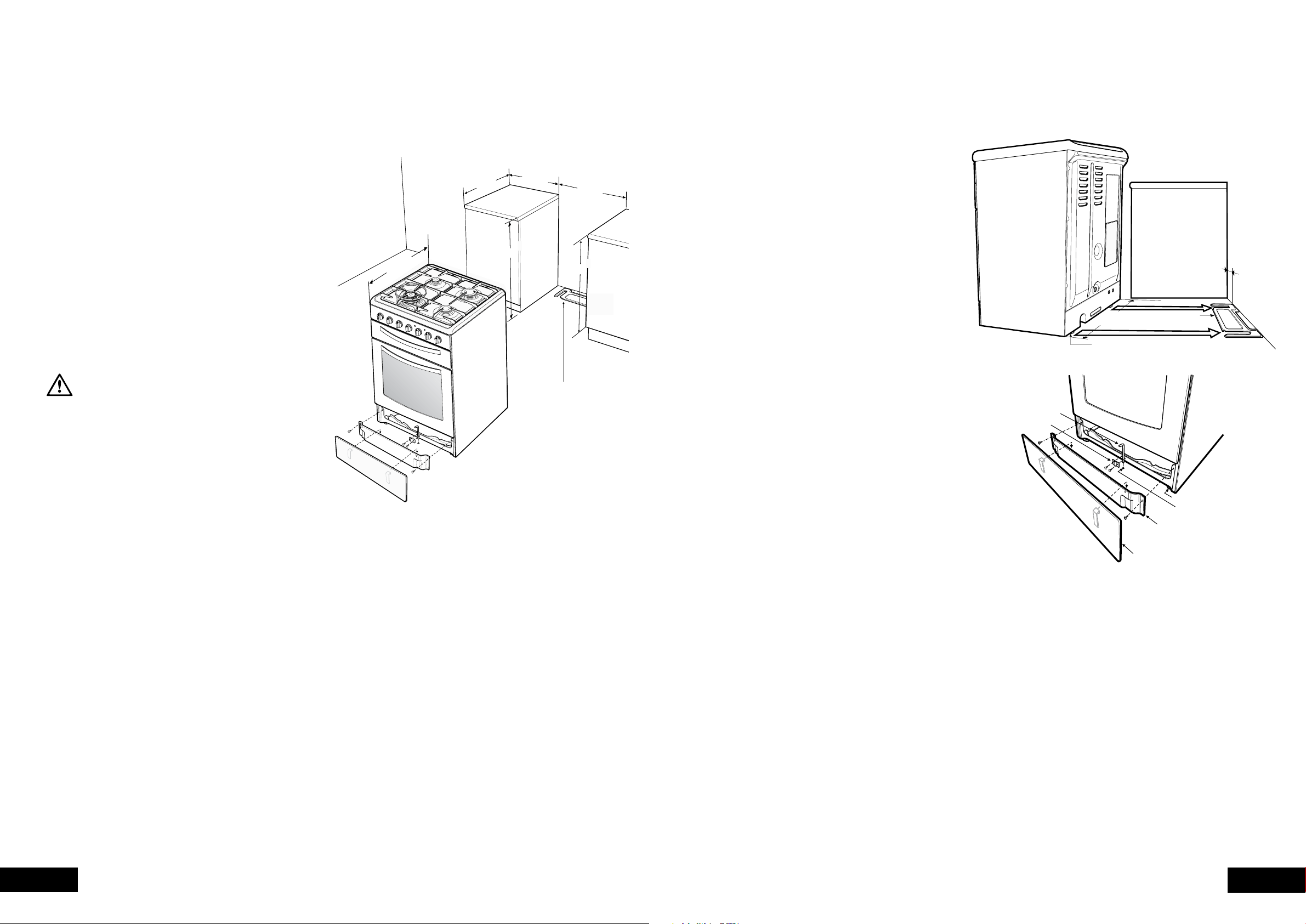
This appliance has been designed to ‘slot-in’ to a 600mm
wide gap built-in standard kitchen cabinets. As such the
appliance can be installed matching the height and depth of
benches and behind the kick rail of the cabinets. This allows
the cooker to integrate well into contemporary kitchens. The
cooker may also be installed at the end of a line of benches or
with a free space on either side.
• The appliance must not be installed in a corner. It must be
installed at least 100mm from the side wall.
• This appliance is not supplied with a splashback.
• Ensure that all vertical surfaces (rear and sides) are non-
combustible surfaces (eg ceramic tiles, sheet metal or
toughened glass).
• Refer to section 6.10.1 AS/NZS 5601.1 for overhead
clearances.
WARNING
THIS APPLIANCE HAS BEEN TESTED AND APPROVED TO THE RELEVANT
AUSTRALIAN STANDARDS. IT IS DESIGNED TO COOK FOOD, IT WILL
GET HOT. CABINET MATERIALS MUST BE CAPABLE OF WITHSTANDING
85
O
C. INSTALLATION INTO LOWER TEMPERATURE TOLERANT CABINETRY
(EG VINYL COATED) MAY RESULT IN DETERIORATION OF THE LOW
TEMPERATURE COATING BY DISCOLOUR OR BUBBLING.
Electrolux Home Products cannot accept responsibility for
damage caused by installation into low temperature tolerant
cabinets.
INSTALLING THE APPLIANCE
RECOMMENDED CABINET DESIGN
INSTALLATION SEQUENCE
1. Check that the required services are correctly positioned
(see electrical and gas services requirements section and
cabinet requirements section).
2. Ensure that cabinetry has correct details (see cabinet
requirements section).
3. Unpack the cooker.
4. Remove the foam pack containing accessories.
5. Remove the internal pack from the oven and position shelf
supports and grill trays.
6. On gas cookers position gas burners and trivets.
m600 m
600mm
mminimu
m
1
00 m
mminimu
0 m( M72 m NO )
anti-tilt bracket
600mm
m( )900m NOM
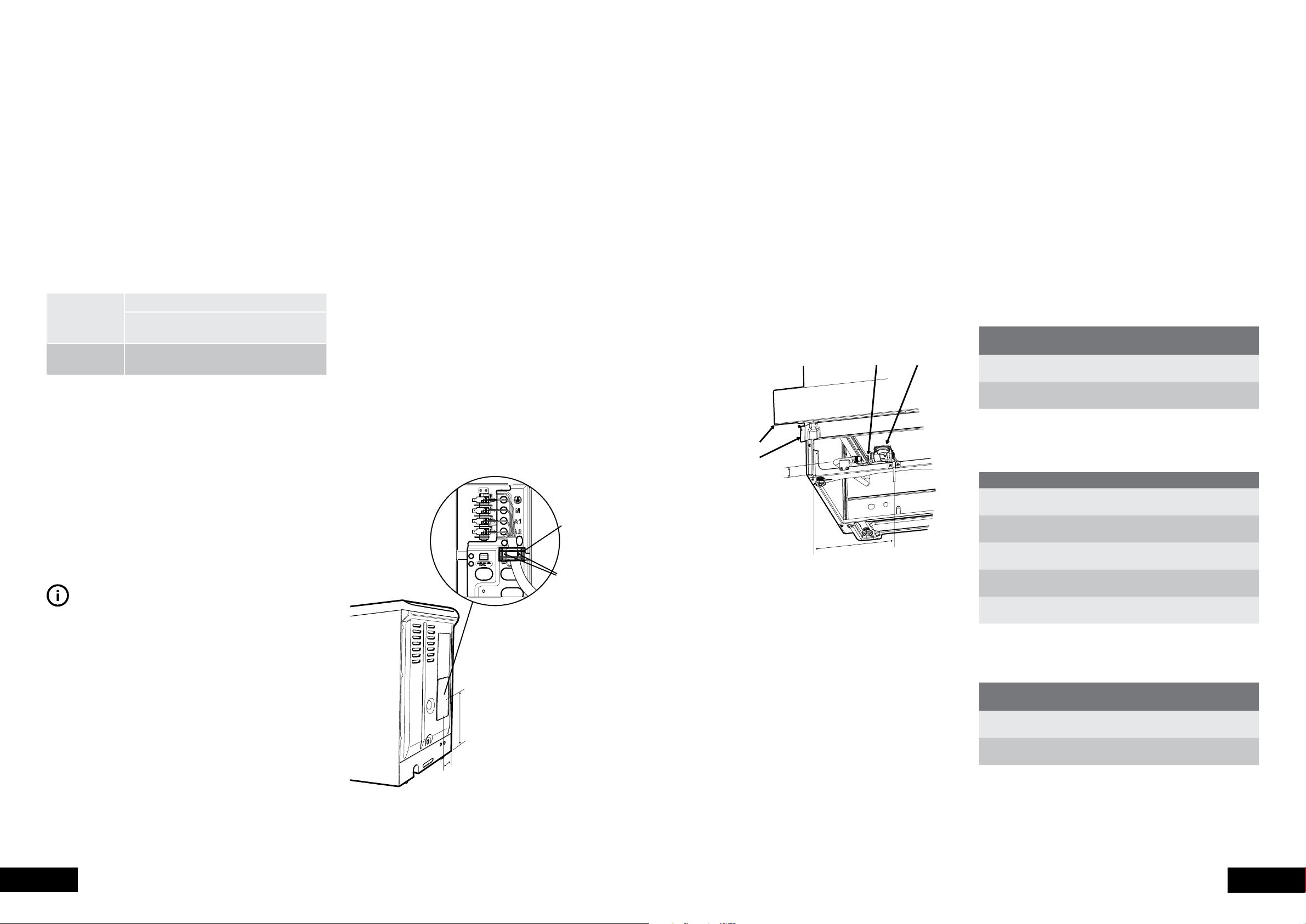
FITTING THE ANTI-TILT PLATE & STABILISING BOLT
Cooker Stability
NOTE: To ensure cooker stability, both the anti-tilt plate
and stability bolt MUST be installed on all cookers
(electric and gas).
INSTALLATION SEQUENCE
1. The cooker is delivered with the anti-tilt plate. Locate the
anti-tilt plate against the rear wall. If locating between 2
cupboards, then t the plate in the centre of the space.
If locating the cooker at the end of a cupboard, then
position the side of the plate 48mm from the cupboard.
NOTE: If cooker cannot be located against rear wall,
move anti-tilt plate forward to suit.
2. Securely x the anti-tilt plate to the oor with appropriate
fasteners.
3. Slide the cooker back into the anti-tilt plate so that rear
cover rests against the rear wall.
Then check the height and level of the cooker. If required,
pull the cooker back out and adjust the levelling feet as
required.
4. Fasten the stability bolt bracket to the front frame with the
2 screws supplied.
5. Reposition the cooker back into the anti-tilt plate and then
mark the position of the stability bolt hole.
6. Pull the cooker back out and drill the bolt location hole.
Use a 6.5mm masonry or wood drill. When drilling into
concrete ensure a minimum hole depth of 30mm.
7. Reposition the cooker back into the anti-tilt plate, aligning
the stability bolt bracket with the 6.5mm drilled hole. Then
slide the bolt through the bracket and into the hole.
8. Connect gas and electricity supply (refer to pages
following).
9. Fit the kick panel bracket and kick panel onto the cooker.
48mm to side
of bracket
Anti-Tilt Bracket
Rear Adjustable Foot
Cooker Width
600mm
Adjustable Feet
Stability Bolt
Stability Bolt Bracket
Kick-panel
Kick-panel Bracket
6.5mm Drilled
Location Hole
22 23
INSTALLATIONINSTALLATION
The cooker MUST be installed in compliance with:
• wiring connections in AS/NZS 3000 Wiring Rules
• local regulations, municipal building codes and other
statutory regulations
• For New Zealand Only:
The cooking range must be connected to the supply by
a supply cord fitted with the appropriately rated plug
that is compatible with the socket-outlet tted to the nal
sub-circuit in the xed wiring that is intended to supply this
cooking range.
Data plate gives information about rating
is located behind the bottom of the oven
door
Circuit
diagram
is located on the back panel of the
appliance
• A functional switch MUST be provided near the
appliance in an accessible position (AS/NZS 3000 -
Clause 4.7.1).
• Wiring MUST be protected against mechanical failure
(AS/NZS 3000 - Clause 3.9).
• The cooker requires a means of all pole disconnection
incorporated into the xed wiring. This MUST have a
disconnection gap of 3mm.
• The cooker MUST be properly earthed.
NOTE: When connections are made to a multi-phase
230/240V supply, the bridge piece MUST be removed from
between the active connections.
TIPS & INFORMATION
BEFORE YOU COOK IN YOUR NEW OVEN IT IS IMPORTANT THAT
THE PROTECTIVE OILS USED IN THE MANUFACTURE OF THE PRODUCT
BE REMOVED.
• Make sure that the room is well ventilated (to allow smoke
to escape).
• Run the grill on high for 30 minutes without grill dish.
• Then run the oven on 220°C for 1 hour.
CONNECTING TO SERVICES AND COMMISSIONINGWIRING REQUIREMENTS
This appliance must be installed by an authorised person,
according to all codes and regulations of:
• Electrical supply authorities.
• Building regulations
• Local government and council authorities.
• AS/NZS 5601.1 (particular attention to clause 6.10.1
and gure 6.3 on page 97, and clause 6.10.1.11).
• AS/NZS 3000 (particular attention to clause 4.7.1 and
clause 3.9).
ELECTRICAL SUPPLY CONNECTION
• DSP635 models are tted with a 20-Amp service cord.
• GSP625 and GSP627 models are tted with a 10-Amp
service cord.
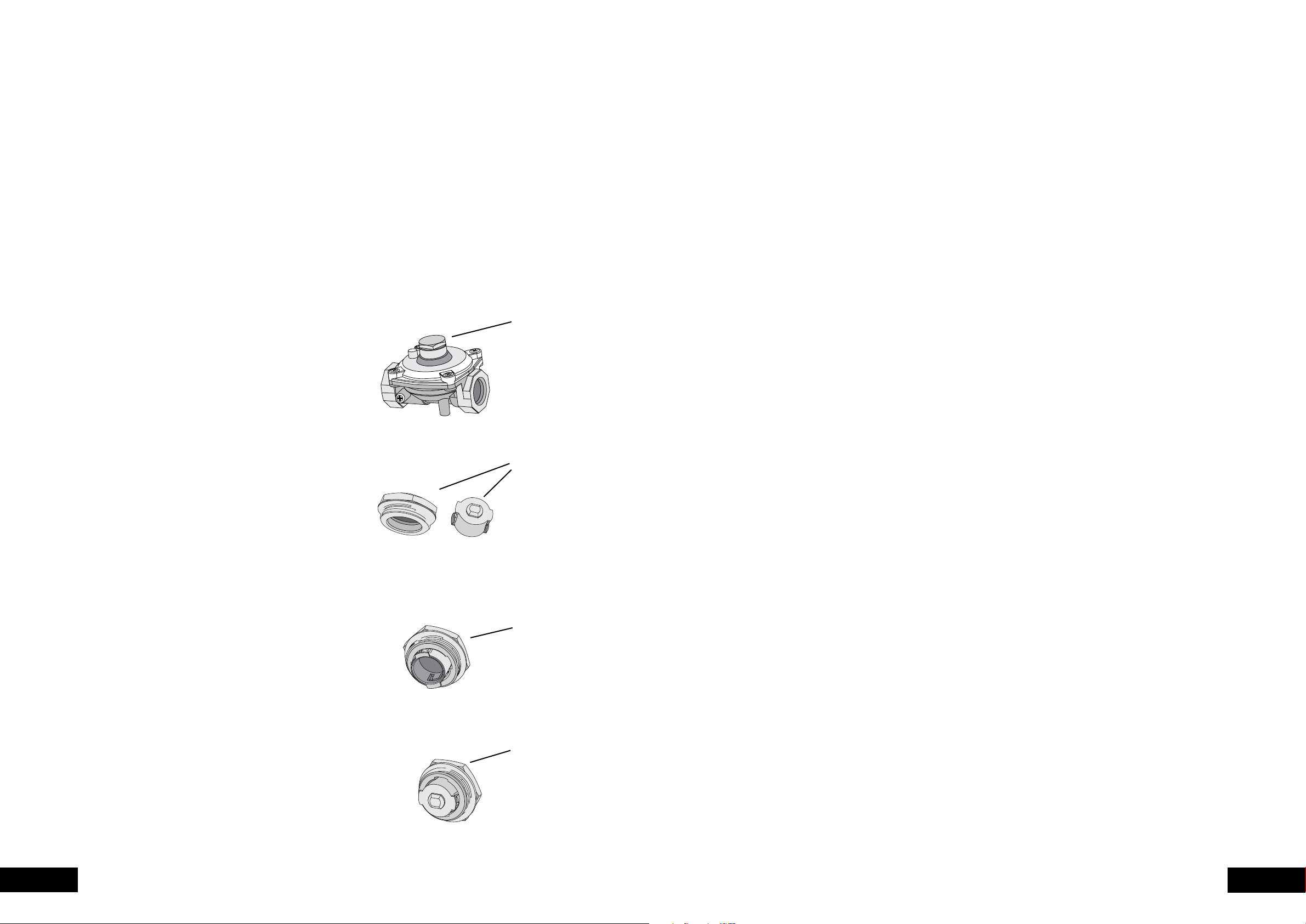
HARD WIRING DETAIL (PSP632 MODELS ONLY)
1. Remove terminal cover plate from rear panel of appliance.
2. Fit wires through hole in cover plate and make connections
to terminals.
3. Engage wires into plastic clip. Secure plastic clip with two
long silver screws (supplied in separate bag).
4. Replace cover plate onto rear panel.
INSTALLING THE GAS COOKER
GAS CONNECTION
Read these points before connecting to the gas supply:
• Slide cooker into nal position checking that anti-tilt bracket
is engaged and that wiring loops and gas supply are free
from jamming and obstacles.
• Fit the supplied pressure regulator for Natural Gas
or supplied test point union for LPG appliances using
the supplied sealing washer. Ensure the arrow is pointing
towards appliance and that the pressure test point
is accessible.
• Make the gas connection to the inlet of the regulator or
test point adaptor using a tting to suit ½” BSP parallel
internal thread found on these ttings. Flexible connections
are not permitted with this appliance.
Kick-panel bracket
70mm
225mm to end
of regulator
Kick-panel
Sealing washer NG regulator
CHECKING GAS PRESSURES
The cooker MUST be installed in compliance with:
• the Australian/New Zealand Standard AS/NZS 5601.1
(particular reference to clause 6.10.1).
• local gas tting regulations, municipal building codes and
other statutory regulations.
The cookers come in two gas types: Natural gas and
Universal LPG. Before installation check that the cooker is
suitable for the gas supply. To do this check the gas type on
the carton sticker or on the data plate behind the bottom of
the oven door.
The following table shows the supply and operating pressures
for various gas supplies.
GAS TYPE NATURAL
GAS
UNIVERSAL
LPG
SUPPLY PRESSURE
at inlet to appliance regulator (if tted)
1.13 (kPa)
Minimum
2.75*
(kPa)
OPERATING PRESSURE
at appliance test point
1.00 (kPa) 2.75 (kPa)
*If the regulator is placed upstream of the cooker inlet, as is normal for
cookers operating on LPG, then the supply pressure and operating pressure
are the same.
The following table shows the injector sizes for each burner.
INJECTOR ORIFICE NATURAL GAS UNIVERSAL LPG
LOW HEAT
BURNER
1.00 mm 0.55 mm
MEDIUM HEAT
BURNER
1.35 mm 0.70 mm
HIGH HEAT
BURNER
1.60 mm 0.90 mm
INTENSE HEAT WOK
BURNER
1.75 mm 1.00 mm
OVEN
– main injector
1.50 mm 0.82 mm
CHECKING PIPE SIZE
To work out a suitable pipe size for connection use:
• the information in this table.
GAS TYPE NATURAL
GAS
UNIVERSAL
LPG
Hourly gas consumption for
GSP625/627
51.1MJ/h 44.4MJ/h
Hourly gas consumption for
DSP635
40.6MJ/h 35.4MJ/h
• information about the length of the run, number of elbows,
tees and bends, the available service pressure and the
supply requirements.
NOTE: AS/NZS 5601.1 will help you with this matter.
Gas connection front view
Rear view terminal block position
Plastic clips
Plastic clip
securing points
410mm to centre
of electrical panel
200mm to centre
of electrical panel
24 25
TESTING THE
OPERATION
INSTALLATION
Once these checks have been completed, if the regulator
still fails to perform in a satisfactory manner it should
be replaced.
9. One by one, turn the knobs to minimum and screw in the
bypass screw (accessible when the knob is removed) until
a small stable ame results. Turn the knob to maximum
and then back to minimum to ensure that the correct
minimum flame is maintained.
10. Attach the LPG sticker to the cooker, near the gas supply
inlet. Cover the Natural Gas label that is factory tted.
TESTING THE OPERATION OF THE GAS COOKER
NOTE: You MUST test the cooker after installation, before
you hand it over to the customer.
You MUST have a manometer and a connecting tube.
CHECKING GAS SUPPLY
1. Check the manometer zero point is correct.
2. Connect the manometer to the cooker pressure test point.
This is located on the regulator or LPG inlet tting.
3. Turn on the gas supply and the electricity and try to ignite
the gas.
NOTE: It will take additional time to light the gas for the first
time as air needs to be purged from the pipes.
4. Check the operating pressure for the particular gas type
(see table on page 23).
FOR LPG COOKERS: Adjust the regulator if necessary (this may be
remote from the cooker).
FOR NATURAL GAS COOKERS
Regulators are supplied pre-adjusted and congured by the
component maker for use with Natural Gas. The appliance
installer is not required to make an adjustment to obtain the
correct outlet pressure setting.
An arrow on the base of the regulator indicates the direction
of gas flow when the inlet and outlet of the regulator are
orientated correctly. When the regulator has been tted check
for leaks from the connections with soapy water.
CHECKING THE FUNCTION OF THE REGULATOR
With the appliance operating check the outlet pressure:
• when all burners of the appliance are operating
at maximum,
• when the smallest burner of the appliance is operating
at minimum.
Under these conditions the outlet pressure should not vary
from the nominal outlet pressure by more than ±20% of the
nominal outlet pressure (ie ±0.20kPa for Natural Gas).
If the regulator appears to not be performing satisfactorily
then check the following points.
1. If the outlet pressure is consistently too low then the inlet
pressure may be too low and adjustment of an upstream
regulator may be needed, or an upstream regulator or
valve with insufcient ow capacity may be present in
the gas supply line. If this is suspected then it may be
necessary to repeat the checks whilst measuring both the
inlet and outlet pressure to determine if the inlet pressure is
in the range 1.13 – 5kPa.
Hex nut assembly,
fully screwed down
Hex nut assembly,
removed from
regulator and insert
disassembled
Insert oriented for
Natural Gas operation
Insert oriented for
LPG operation
2. Check that the regulator has been tted to the gas supply
line in the correct orientation, the arrow on the base of the
body indicates the direction of gas ow.
Once these checks have been completed, if the
regulator still fails to perform in a satisfactory manner it
should be replaced.
TESTING THE COOKER FEATURES
• Observe the ame appearance on each burner. If it is
much smaller or larger than expected, then the injector
size needs checking.
NOTE: When flame is unsatisfactory, then refer to the Electrolux
Technical Publications and correct the fault, if possible.
When maximum ame appearance is correct, then check the
turn-down setting on each burner. If the settings appear to be
incorrect, proceed as follows:
1. Adjust the bypass screw mounted on the body of each
hotplate control cock. This is accessible when the control
knob and the control panel are removed.
2. Check the ignition on all burners both separately and
in combination.
3. Check the operation of the electrical components,
if applicable.
4. If you are satised that the cooker is operating correctly,
then turn it off and show the customer how to use it.
Make sure you ask the customer to operate the clock
and controls.
NOTE: If the cooker cannot be adjusted to perform correctly,
then inform the customer of the problem and put a warning
notice on the cooker. If the problem is dangerous, then
disconnect the cooker. If there is a fault, then the customer
should be advised to contact the manufacturer’s local service
organisation or the retailer.
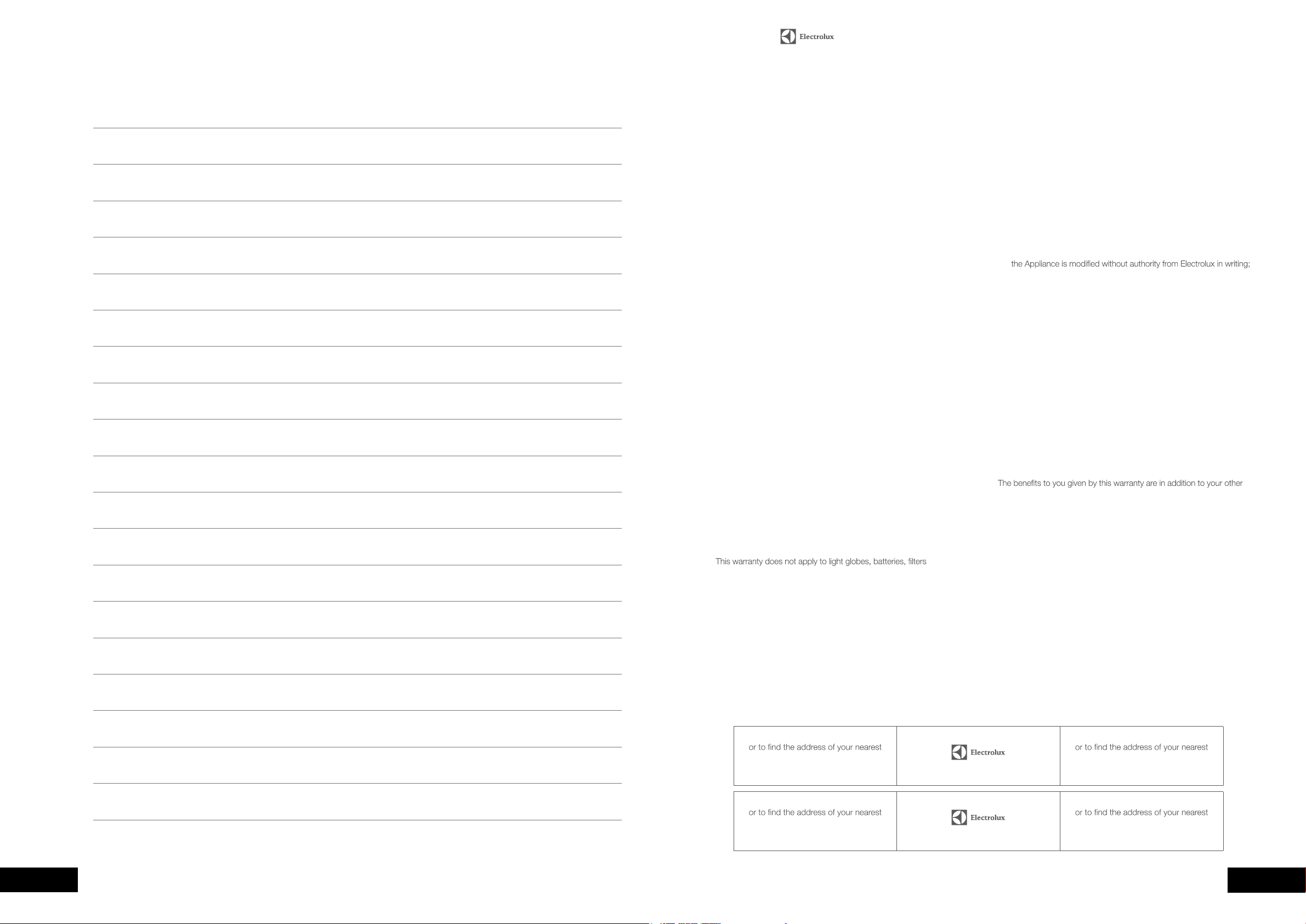
LPG CONVERSION – IMPORTANT (MODEL 635 ONLY)
This appliance is tted with Natural Gas burner injectors.
Please follow the procedure below if a conversion to suit
UNIVERSAL LPG is required.
The conversion kit contains 5 injectors and 1 LPG sticker.
1. Remove the hotplate burners to access the hotplate
injectors. Replace the factory tted NG injectors with the
appropriate injectors, as supplied.
2. Unscrew the hex nut from the regulator. The hex nut, brass
washer and nylon insert will disengage as an assembly.
3. Unclip the nylon insert from the nut assembly by rotating
the insert 1/4 turn, and pulling it free.
4. Turn over the insert, and clip back into position.
5. Ret the hex nut assembly to the regulator ensuring that
it is fully screwed down. The regulator is now set for
connection to LPG.
6. Turn on the gas supply and at each new connection check
for leaks using soapy water: each hotplate valve should
be turned on, one at a time, and the injector hole blanked
off for several seconds.
7. The operation of the regulator can be conrmed by
connecting a manometer to the pressure test point located
on the side of the regulator body adjacent to the outlet.
With the appliance operating check the outlet pressure
• when all burners of the appliance are operating
at maximum,
• when the smallest burner of the appliance is operating
at minimum.
Under these conditions the outlet pressure should not
vary from the nominal outlet pressure of 2.60kPa by more
than ±0.52kPa.
8. If the regulator appears to not be performing satisfactorily
then check the following points.
• If the outlet pressure is consistently too low then
the inlet pressure may be too low and adjustment of
an upstream regulator may be needed, or an upstream
regulator or valve with insufcient ow capacity may
be present in the gas supply line. If this is suspected
then it may be necessary to repeat the checks
whilst measuring both the inlet and outlet pressure
to determine if the inlet pressure is in the range
2.75 – 7.00kPa.
• Check that the insert has been tted correctly.
• Check that the turret screw is fully screwed down.
• Check that the regulator has been tted to the gas
supply line in the correct orientation, the arrow on the
base of the body indicates the direction of gas ow.
26 27
NOTES WARRANTY
This document sets out the terms and conditions of the product
warranties for Electrolux Appliances. It is an important document.
Please keep it with your proof of purchase documents in a safe place
for future reference should you require service for your Appliance.
1. In this warranty
(a) ‘acceptable quality’ as referred to in clause 10 of this warranty has
the same meaning referred to in the ACL;
(b) ‘ACL’ means Trade Practices Amendment (Australian Consumer
Law) Act (No.2) 2010;
(c) ‘Appliance’ means any Electrolux product purchased by you
accompanied by this document;
(d) ‘ASC’ means Electrolux’ authorised serviced centres;
(e) ‘Electrolux’ means Electrolux Home Products Pty Ltd of 163
O’Riordan Stree
t, Mascot, NSW 2020, ABN 51 004 762 341 in
respect of Appliances purchased in Australia and Electrolux (NZ)
Limited of 3-5 Niall Burgess Road, Mount Wellington, in respect
of Appliances purchased in New Zealand;
(f) ‘major failure’ as referred to in clause 10 of this warranty has the
same meaning referred to in the ACL and includes a situation when
an Appliance cannot be repaired or it is uneconomic for Electrolux, at
its discretion, to repair an Appliance during the Warranty Period;
(g) ‘Warranty Period’ means:
(i) where the Appliance is used for personal, domestic or household
use (i.e. normal single family use) as set out in the instruction
manual, the Applian
ce is warranted against manufacturing
defects in Australia for 24 months and in New Zealand for 24
months, following the date of original purchase of the Appliance;
(ii) where the Appliance is used for commercial purposes (including
being used to directly assist a business or where the Appliance is
used in a multi-family communal or share type environment), the
Appliance will then be warranted against manufacturing defects
in Australia for 3 months and in New Zealand for 3 months,
following the date of original purchase of the Appliance.
(h) ‘you’ means the purchaser of the Appliance not having purchased
the Appliance for re-sale, and ‘your’ has a corresponding meaning.
2. This warranty only applies to Appliances purchased and used in Australia
or New Zealand and is in addition to (and does not exclude, restrict, or
modify in any way) any non-excludable statutory warranties in Australia
or New Zealand.
3. During the Warranty Period Electrolux or its ASC will, at no extra charge
if your Appliance is readily accessible for service, without special
equipment and subject to these terms and conditions, repair or replace
any parts which it considers to be defective. Electrolux or its ASC may
use remanufactured parts to repair your Appliance. You agree that
any replaced Appliances or parts become the property of Electrolux.
or similar
perishable parts.
4. Parts and Appliances not supplied by Electrolux are not covered by
this warranty.
5. You will bear the cost of transportation, travel and delivery of the
Appliance to and from Electrolux or its ASC. If you reside outside of the
service area, you will bear the cost of:
(a) travel of an authorised representative;
(b) transportation and delivery of the Appliance to and from Electrolux or
its ASC,
In all instances, unless the Appliance is transported by Electrolux or an
Electrolux authorised representative, the Appliance is transported at the
owner’s cost and risk while in transit to and from Electrolux or its ASC.
6. Proof of pur
chase is required before you can make a claim under
this warranty.
7. You may not make a claim under this warranty unless the defect claimed
is due to faulty or defective parts or workmanship. Electrolux is not liable
in the following situations (which are not exhaustive):
(a) the Appliance is damaged by:
(i) accident
(ii) misuse or abuse, including failure to properly maintain or service
(iii) normal wear and tear
(iv) power surges, electrical storm damage or incorrect power supply
(v) incomplete or improper installation
(vi) incorrect, improper or inappropriate operation
(vii) insect or vermin infestation
(viii) failure to comply
with any additional instructions supplied with
the Appliance;
(b)
(c) the Appliance’s serial number or warranty seal has been removed
or defaced;
(d) the Appliance was serviced or repaired by anyone other than
Electrolux, an authorised repairer or ASC.
8. This warranty, the contract to which it relates and the relationship
between you and Electrolux are governed by the law applicable where
the Appliance was purchased. Where the Appliance was purchased in
New Zealand for business purposes the Consumer Guarantee Act does
not apply.
9. To the extent permitted by law, Electrolux excludes all warranties and
liabilities (other than as contained in this document) including liability for
any loss or damage whether direct or indirect arising from your purchase,
use
or non use of the Appliance.
10. For Appliances and services provided by Electrolux in Australia,
the Appliances come with a guarantee by Electrolux that cannot be
excluded under the Australian Consumer Law. You are entitled to a
replacement or refund for a major failure and for compensation for any
other reasonably foreseeable loss or damage. You are also entitled to
have the Appliance repaired or replaced if the Appliance fails to be of
acceptable quality and the failure does not amount to a major failure.
rights and remedies under a law in relation to the Appliances or services
to which the warranty relates.
11. At all times during the Warranty Period, Electrolux shall, at its discretion,
determine whether repair, replacement or refund will apply if an
Appliance has a valid warranty claim applicable to it.
12. For Appliances and services provided by Electrolux in New Zealand,
the Appliances come with a guarantee by Electrolux pursuant to the
provisions of the Consumer Guarantees Act, the Sale of Goods Act and
the Fair Trading Act.
13. To enquire about claiming under this warranty, please follow these steps:
(a) carefully check the operating instructions, user manual and the terms
of this warr
anty;
(b) have the model and serial number of the Appliance available;
(c) have the proof of purchase (eg an invoice) available;
(d) telephone the numbers shown below.
14. You accept that if you make a warranty claim, Electrolux and its ASC
may exchange information in relation to you to enable Electrolux to meet
its obligations under this warranty.
Warranty
FOR SALES IN AUSTRALIA AND NEW ZEALAND
APPLIANCE: BUILT-IN OVEN, COOKTOP
AND UPRIGHT RANGE COOKER
Important Notice
Before calling for service, please ensure that the steps listed in point 13 above have been followed.
FOR SERVICE
state service centre in Australia
PLEASE CALL 13 13 49
For the cost of a local call (Australia only)
SERVICE AUSTRALIA
ELECTROLUX HOME PRODUCTS
www.electrolux.com.au
FOR SPARE PARTS
state spare parts centre in Australia
PLEASE CALL 13 13 50
For the cost of a local call (Australia only)
FOR SERVICE
authorised service centre in New Zealand
FREE CALL 0800 10 66 10
(New Zealand only)
SERVICE NEW ZEALAND
ELECTROLUX HOME PRODUCTS
www.electrolux.co.nz
FOR SPARE PARTS
state spare parts centre in New Zealand
FREE CALL 0800 10 66 20
(New Zealand only)
GOV_Warr_Apr11
NOTES

AUSTRALIA
phone: 1300 363 640
fax: 1800 350 067
email: [email protected]
web: www.westinghouse.com.au
NEW ZEALAND
phone: 09 573 2384
fax: 0800 363 600
email: [email protected]
web: www.westinghouse.co.nz
For more information on all Westinghouse appliances,
or for dimension and installation information, call into your retailer,
phone or email our customer care team or visit our website:
TOP SERVICE
Top Service encompasses the after sales service
provided by The Electrolux Group to consumers
including delivery, home service and spare parts.
Westinghouse. We are part of the Electrolux family.
Share more of our thinking at www.electrolux.com
P/No: 0342 001 587 RevB ECN No. 12Q009D
© 2012 Electrolux Home Products Pty Ltd
ABN 51 004 762 341
Print code: W600FSUM_Nov12