Form I-UDA, P/N 195673 R24, Page 1
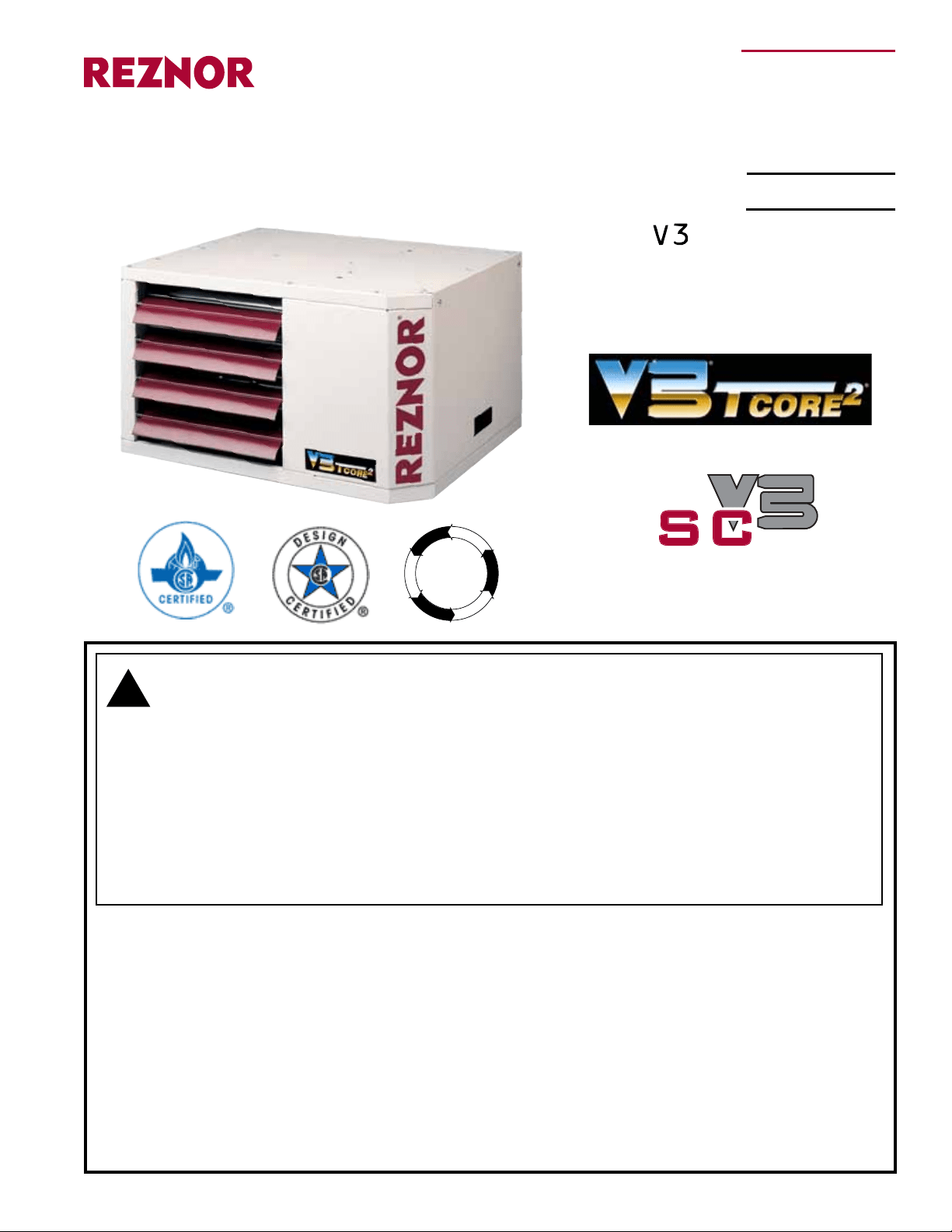
Applies to: Model UDAP
and Model UDAS
Series Fan-Type
Unit Heaters
Form I-UDA (10-14)
Obsoletes I-UDA (Version B.8)
Installation / Operation
!
WARNING:
FIRE OR EXPLOSION HAZARD
Failure to follow safety warnings exactly could result in serious injury, death, or
property damage.
Be sure to read and understand the installation, operation, and service instructions in
this manual.
Improper installation, adjustment, alteration, service, or maintenance can cause
serious injury, death, or property damage.
— Do not store or use gasoline or other ammable vapors and liquids in the vicinity
of this or any other appliance.
— WHAT TO DO IF YOU SMELL GAS
• Do not try to light any appliance.
• Do not touch any electrical switch; do not use any phone in your building.
• Leave the building immediately.
• Immediately call your gas supplier from a phone remote from the building. Follow
the gas supplier’s instructions.
• If you cannot reach your gas supplier, call the re department.
— Installation and service must be performed by a qualied installer, service agency,
or the gas supplier.
Form I-UDA, P/N 195673 R24, Page 2
HAZARD INTENSITY LEVELS
1. DANGER: Failure to comply will result in severe personal
injury or death and/or property damage.
2. WARNING: Failure to comply could result in severe personal
injury or death and/or property damage.
3. CAUTION: Failure to comply could result in minor personal
injury and/or property damage.
WARNING
Gas-red appliances are not designed for use in hazardous
atmospheres containing ammable vapors or combustible
dust, in atmospheres containing chlorinated or halogenated
hydrocarbons, or in applications with airborne silicone
substances. See Hazard Levels, above.
WARNING
Should overheating occur, or the gas supply control system
fail to shut off the ow of gas, shut off the manual gas valve
to the utility heater before shutting off the electrical supply.
1.0 General
1.1 Hazard Labels and Notices
There are warning labels on the unit and throughout this manual. For your safety, read
the denitions below and comply with all boxes labeled CAUTION, WARNING, and
DANGER during installation, operation, maintenance, and service of this heater.
Denitions of Hazard Intensity Levels in this Manual
Table of Contents
1. General ....................................................... 2-4
1.1 Hazard Labels and Notices ............................ 2
1.2 General Installation Information .................... 3
1.3 Warranty .......................................................... 4
1.4 Installation Codes ........................................... 4
2. Unit Heater Location .................................. 4-6
2.1 Heater Throw .................................................. 4
2.2 Location Recommendations .......................... 5
3. Uncrating and Preparation ........................ 6-7
3.1 Uncrating and Inspecting ............................... 6
3.2 Preparing for Installation ............................... 6
4. Clearances and Dimensions .................... 7-9
4.1 Clearances ....................................................... 7
4.2 Dimensions ..................................................... 8
5. Hanging the Heater ................................ 10-11
5.1 Weights .......................................................... 10
5.2 Lifting and Suspending ................................ 10
6. Mechanical ............................................. 11-16
6.1 Gas Piping and Pressures ............................11
6.2 Combustion Air - Models UDAP and
UDAP-CV ........................................................ 16
7. Electrical Supply and Wiring ................ 16-22
7.1 General .......................................................... 16
7.2 Supply Wiring ................................................ 17
7.3 24V Control Wiring Connections ................. 17
7.4 Wiring Diagrams ........................................... 18
7.5 Electrical Operating Components ............... 21
8. Controls and Operation ......................... 22-26
8.1 Thermostat .................................................... 22
8.2 DDC Controls, Options D10 and D14 .......... 23
8.3 Ignition System ............................................. 24
9. Commissioning and Startup ................. 27-28
9.1 Check the installation prior to startup: ....... 27
9.2 Heater Startup: .............................................. 27
9.3 Check installation after startup: .................. 28
10. Maintenance and Service .................... 29-36
10.1 Maintenance Schedule ............................... 30
10.2 Maintenance Procedures ........................... 31
10.3 Troubleshooting ......................................... 36
APPENDIX ....................................................... 38
Index ................................................................ 39
INSTALLATION RECORD .............................. 40
Form I-UDA, P/N 195673 R24, Page 3
1.2.1 Certication
UDAP and UDAS Models 30, 45, 60, 75, 100, and 125 are design certied by the Cana-
dian Standards Association for use in residential, industrial, and commercial installa-
tions. Utility heaters certied for “residential use” are intended for heating of non-living
spaces that are attached to, or part of a structure that contains space for family living
quarters. They are not intended to be the primary source of heat in residential applica-
tions or to be used in sleeping quarters.
Models UDAP 150, 175, 200, 225, 250, 300, 350, and 400 and UDAS 150, 175, 200,
225, 250, 300, 350, and 400 are design certied by the Canadian Standards Associa-
tion for use in industrial and commercial installations only.
All models and sizes are available for use with either natural or propane gas. The type
of gas, the gas input rate, and the electrical supply requirement are shown on the
heater rating plate. Check the rating plate to verify that the heater is appropriate for the
installation site.
1.2.2 Venting Manual
Installation requires both this manual AND the venting manual.
BOTH this manual
and the correct
venting manual
are REQUIRED for
installation of this
heater.
1.2 General
Installation
Information
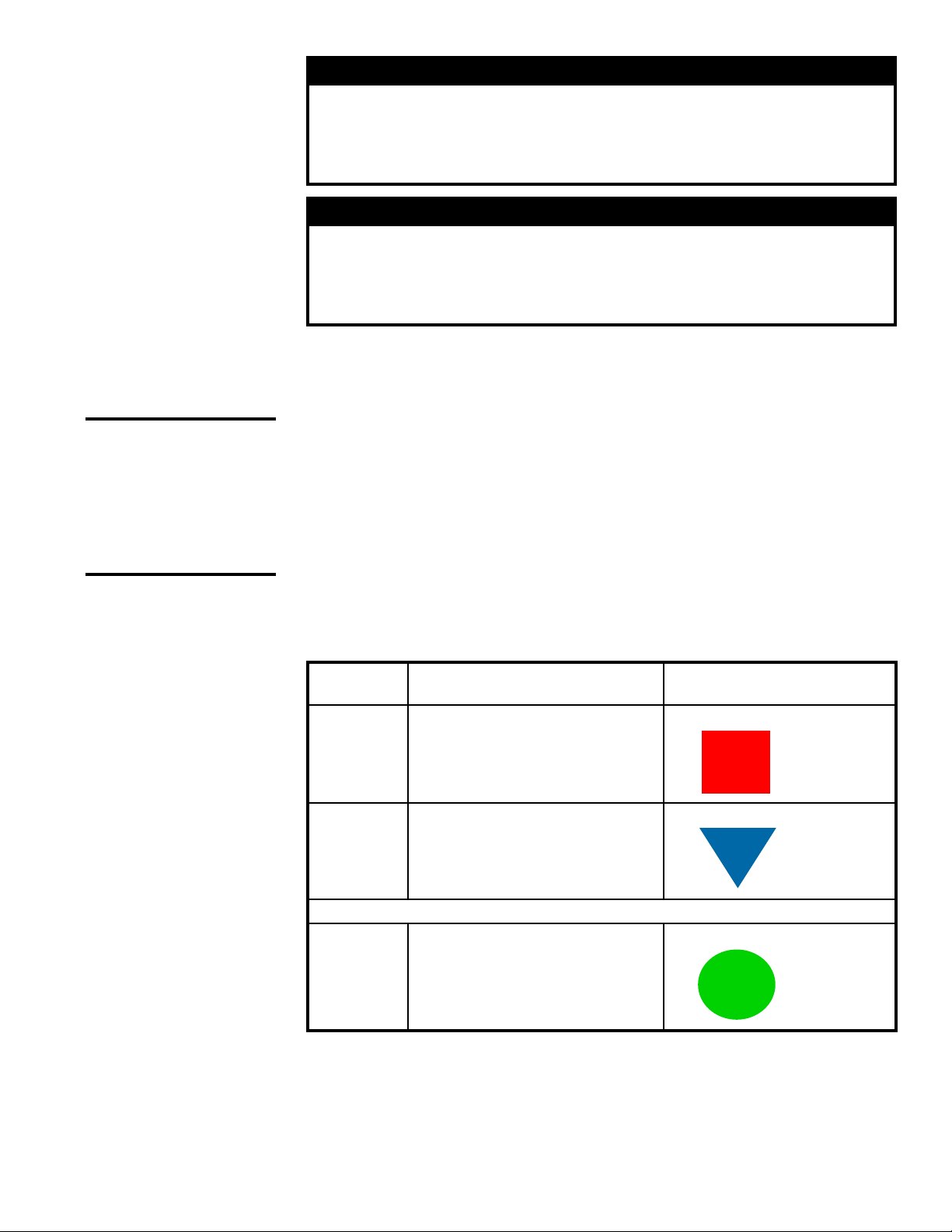
Model Venting Instruction Manual by
Form No.
Look for Matching Label on
Venting Manual and Heater
UDAP Form I-UD-V-PV,
Standard Power Vent Installation
(Each heater has its own
dedicated vent.)
Label with a RED SQUARE
UDAP-CV Form I-UD-V-CV,
Optional Common Vent Installation
(Model UDAP heater must be
equipped with Option AV6.)
Label with a BLUE TRIANGLE
Note: Model UDAP-CV is available in Sizes 30, 45, 60, 75, 100 only
UDAS Form I-UD-V-SC,
Separated Combustion (Model
UDAS requires eld installation of
either Option CC2, CC6, or CC14
Vent/Combustion Air Kit)
Label with a GREEN CIRCLE
Both this installation manual and the appropriate venting manual are shipped
with the heater. Verify that the literature is correct for the heater being installed. If
either manual is missing or incorrect, contact your distributor before beginning
installation.
The instructions in this manual apply only to the models listed.
Installation should be done by a qualied agency in accordance with these instructions.
The qualied service agency installing this heater is responsible for the installation.
Venting Manual by
Model
WARNING
Do not use this appliance if any part has been under water.
Immediately call a qualied service technician to inspect the
appliance and replace any gas control that has been under
water.
CAUTION
Models UDAP & UDAS unit heaters should not be installed
in an environment where the ambient temperature is below
50°F. The low space temperature may result in condensate
forming in the heat exchanger.
Form I-UDA, P/N 195673 R24, Page 4
Special Installations
(Aircraft Hangars/
Repair Garages/
Parking Garages)
1.3 Warranty
Refer to the limited warranty information on the Warranty Card in the “Literature Bag”.
Warranty is void if ...
a. Wiring is not in accordance with the diagram furnished with the heater.
b. The unit is installed without proper clearance to combustible materials.
c. A fan model is connected to a duct system or if the air delivery system is
modied.
California Warning
Label
Massachusetts
Requirement
1.0 General
(cont’d)
1.4 Installation
Codes
These units must be installed in accordance with local building codes. In the absence of
local codes, in the United States, the unit must be installed in accordance with the National
Fuel Gas Code, ANSI Z223.1. A Canadian installation must be in accordance with the CSA
B149 Installation Codes. These codes are available from CSA Information Services, 1-800-
463-6727. Local authorities having jurisdiction should be consulted before installation is
made to verify local codes and installation procedure requirements.
Installations in aircraft hangars should be in accordance with ANSI/NFPA No. 409 (latest
edition), Standard for Aircraft Hangars; in public garages in accordance with ANSI/NFPA No.
88A (latest edition), Standard for Parking Structures; and for repair garages in accordance
with ANSI/NFPA No. 88B (latest edition), Standard for Repair Garages. In Canada, instal-
lations in aircraft hangars should be in accordance with the requirements of the enforcing
authorities, and in public garages in accordance with CSA B149 codes.
If the heater is being installed in the state of California, the installer MUST attach a warning
label on the outside of the access door. The California Warning label is shipped in the litera-
ture bag along with this manual, the warranty form, and any other paperwork that applies.
If installation is in California, select a location on the heater access panel. Be sure the sur-
face is clean and dry and adhere the label.
If the heater is being installed in the Commonwealth of Massachusetts, these units must be
installed by a licensed plumber or licensed gas tter.
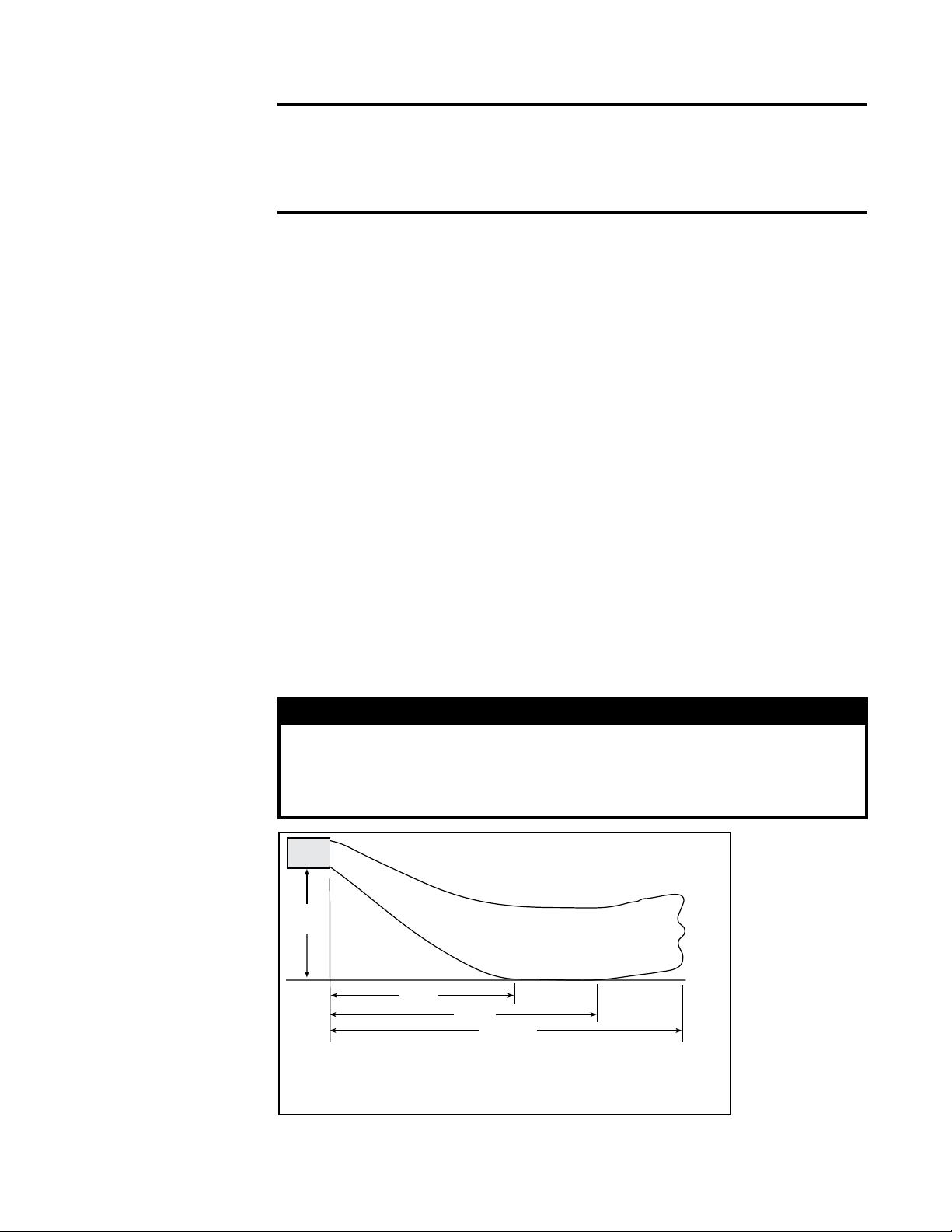
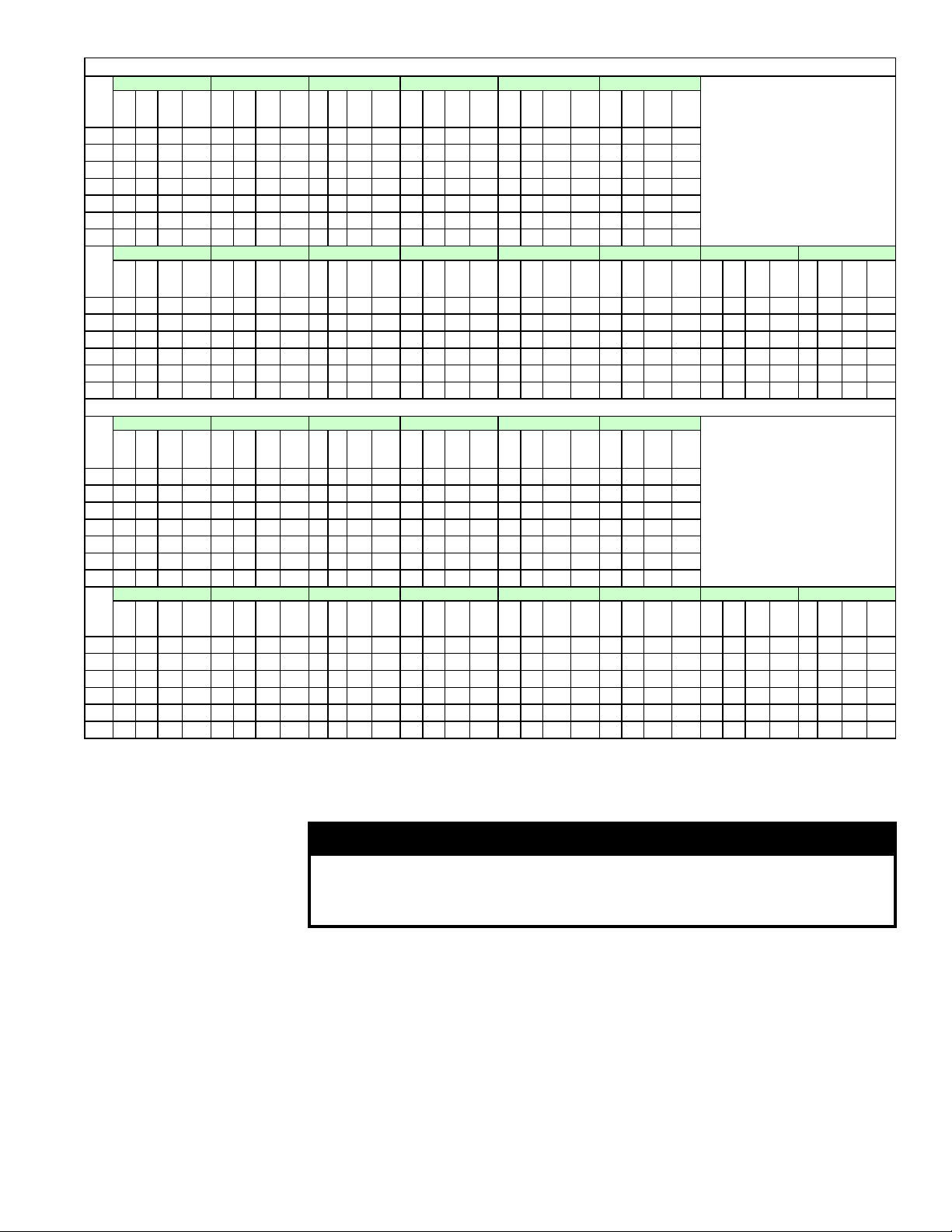
FIGURE 1 - Throw for
Fan Models UDAP and
UDAS
2.0 Unit Heater
Location
2.1 Heater Throw
Use the sound data in Technical Data table in the APPENDIX (page 38), clearances
in Paragraph 4.1; the combustion air requirements in Paragraph 6.2; the throw tables,
mounting height requirements, and location recommendations in Paragraphs 2.1 and
2.2; the weights in Paragraph 5.1; and the venting requirements in the Venting Manual
to determine where to suspend the heater.
NOTE: Throws listed are with standard adjustable horizontal louvers at the angles
listed (angle is relative to the top of the heater). Throw pattern changes with the addi-
tion of optional vertical louvers and/or downturn nozzles.
CAUTION
Model UDAP and UDAS unit heaters should not be used in an
application where the heated space temperature is below 50°F.
Operating under low ambient conditions may cause condensation
to form in the heat exchanger.
Form I-UDA, P/N 195673 R24, Page 5
Locate the heater so that it is a minimum of ve feet (1.5M) above the oor and in
compliance with the clearances in Paragraph 4.1.
WARNING
If touched, the vent pipe and internal heater surfaces that are
accessible from outside the heater will cause burns. Suspend the
heater a minimum of 5 feet (1.5M) above the oor.
For best results, the heater should be placed with certain rules in mind. In general, a
unit should be located from 8 to 12 feet (2.4-3.7M) above the oor. Units should always
be arranged to blow toward or along exposed wall surfaces, if possible. Where two or
more units are installed in the same room, a general scheme of air circulation should
be maintained for best results.
Suspended heaters are most effective when located as close to the working zone as
possible, and this fact should be kept in mind when determining the mounting heights
to be used. However, care should be exercised to avoid directing the discharged air
directly on the room occupants.
Partitions, columns, counters, or other obstructions should be taken into consideration
when locating the unit heater so that a minimum quantity of airow will be deected by
such obstacles.
2.2 Location Recommendations
Dimensions X, Y, and Z (feet) Model UDAP and Model UDAS with Standard Horizontal Louvers at Mounting Heights of 5 - 18 ft
H
30 45 60 75 100 125
X Y Z
Louver
Angle*
X Y Z
Louver
Angle*
X Y Z
Louver
Angle*
X Y Z
Louver
Angle*
X Y Z
Louver
Angle*
X Y Z
Louver
Angle*
5 ft 6 14 30 -21° 7 16 40 -20° 8 18 45 -16° 9 20 57 -14° 9 20 59 -18° 10 22 65 -14°
8 ft 7 13 26 -39° 9 16 37 -34° 10 18 42 -29° 12 22 54 -25° 11 21 56 -28° 12 23 63 -24°
10 ft 6 11 22 -52° 9 15 33 -43° 10 17 39 -37° 12 22 52 -32° 12 20 52 -36° 13 24 60 -30°
12 ft - - - - 8 12 27 -55° 10 16 34 -46° 12 21 48 -39° 11 19 47 -44° 14 23 57 -36°
14 ft - - - - - - - - 9 14 29 -56° 12 19 44 -46° 11 17 42 -51° 14 22 53 -43°
16 ft - - - - - - - - - - - - 11 17 38 -54° 10 14 34 -58° 13 20 47 -50°
18 ft - - - - - - - - - - - - - - - - - - - - 11 17 40 -57°
H
150 175 200 225 250 300 350 400
X Y Z
Louver
Angle*
X Y Z
Louver
Angle*
X Y Z
Louver
Angle*
X Y Z
Louver
Angle*
X Y Z
Louver
Angle*
X Y Z
Louver
Angle*
X Y Z
Louver
Angle*
X Y Z
Louver
Angle*
8 ft 13 24 73 -26° 15 28 90 -22° 16 30 93 -20° 14 27 86 -24° 16 29 93 -21° 15 28 94 -24° 17 31 105 -20° 18 34 113 -17°
10 ft 14 24 69 -32° 17 29 87 -27° 17 31 91 -25° 15 27 82 -30° 17 30 90 -26° 16 28 89 -29° 18 32 103 -25° 20 35 110 -21°
12 ft 14 24 64 -39° 18 29 84 -32° 18 31 88 -30° 16 27 78 -35° 18 30 87 -31° 17 28 85 -34° 19 32 98 -30° 21 36 108 -25°
14 ft 14 22 59 -45° 18 28 79 -37° 19 30 84 -34° 16 26 73 -41° 18 30 83 -36° 17 27 80 -40° 20 32 95 -34° 23 35 105 -29°
16 ft 13 20 53 -51° 18
27 74 -42° 19 29 79 -39° 16 24 67 -47° 19 28 78 -41° 17 25 74 -45° 21 31 90 -38° 23 35 101 -33°
18 ft 11 17 44 -58° 17 26 68 -48° 19 28 74 -44° 14 22 60 -53° 18 27 72 -46° 16 24 66 -51° 20 30 85 -43° 23 35 97 -37°
Dimensions X, Y, and Z (meters) Model UDAP and Model UDAS with Standard Horizontal Louvers at Mounting Heights of 1.5 - 5.5M
H
30 45 60 75 100 125
X Y Z
Louver
Angle*
X Y Z
Louver
Angle*
X Y Z
Louver
Angle*
X Y Z
Louver
Angle*
X Y Z
Louver
Angle*
X Y Z
Louver
Angle*
1.5 M 1.8 4.3 9.1 -21° 2.1 4.9 12.2 -20° 2.4 5.5 13.8 -16° 2.7 6.1 17.4 -14° 2.7 6.1 18.0 -18° 3.0 6.7 19.9 -14°
2.4 M 2.1 4.0 7.9 -39° 2.7 4.9 11.3 -34° 3.0 5.5 12.8 -29° 3.7 6.7 16.5 -25° 3.4 6.4 17.1 -28° 3.7 7.0 19.2 -24°
3.0 M 1.8 3.4 6.7 -52° 2.7 4.6 10.0 -43° 3.0 5.2 11.9 -37° 3.7 6.7 15.8 -32° 3.7 6.1 15.8 -36° 4.0 7.3 18.3 -30°
3.7 M - - - - 2.4 3.7 8.2 -55° 3.0 4.9 10.4 -46° 3.7 6.4 14.6 -39° 3.4 5.8 14.3 -44° 4.3 7.0 17.4 -36°
4.3 M - - - - - - - - 2.7 4.3 8.8 -56° 3.7 5.8 13.4 -46° 3.4 5.2 12.8 -51° 4.3 6.7 16.1 -43°
4.9 M - - - - - - - - - - - - 3.4 5.2 11.6 -54° 3.0 4.3 10.4 -58° 4.0 6.1 14.3 -50°
5.5 M - - - - - - - - - - - - - - - - - - - - 3.4 5.2 12.2 -57°
H
150 175 200 225 250 300 350 400
X Y Z
Louver
Angle*
X Y Z
Louver
Angle*
X Y Z
Louver
Angle*
X Y Z
Louver
Angle*
X Y Z
Louver
Angle*
X Y Z
Louver
Angle*
X Y Z
Louver
Angle*
X Y Z
Louver
Angle*
2.4 M 4.0 7.3 22.3 -26° 4.6 8.5 27.4 -22° 4.9 9.1 28.0 -20° 4.3 8.2 26.2 -24° 4.9 8.8 28.3 -21° 4.6 8.5 28.7 -24° 5.2 9.4 32.0 -20° 5.5 11.3 34.4 -17°
3.0 M 4.3 7.3 21.0 -32° 5.2 8.8 26.6 -27° 5.2 9.4 27.7 -25° 4.6 8.2 25.0 -30° 5.2 9.1 27.4 -26° 4.9 8.5 27.1 -29° 5.5 9.8 31.4 -25° 6.1 10.7 33.5 -21°
3.7 M 4.3 7.3 19.5 -39° 5.5 8.8 25.6 -32° 5.5 9.4 26.8
-30° 4.9 8.2 23.8 -35° 5.5 9.1 26.5 -31° 5.2 8.5 25.9 -34° 5.8 9.8 29.9 -30° 6.4 11.0 32.9 -25°
4.3 M 4.3 6.7 18.0 -45° 5.5 8.5 24.1 -37° 5.8 9.1 25.6 -34° 4.9 7.9 22.3 -41° 5.5 9.1 25.3 -36° 5.2 8.2 24.4 -40° 6.1 9.8 29.0 -34° 7.0 10.7 32.0 -29°
4.9 M 4.0 6.1 16.2 -51° 5.5 8.2 22.6 -42° 5.8 8.8 24.1 -39° 4.9 7.3 20.4 -47° 5.8 8.5 23.8 -41° 5.2 7.6 22.6 -45° 6.4 9.4 27.4 -38° 7.0 10.7 30.8 -33°
5.5 M 3.4 5.2 13.4 -58° 5.2 7.9 20.7 -48° 5.8 8.5 22.6 -44° 4.3 6.7 18.3 -53° 5.5 8.2 21.9 -46° 4.9 7.3 20.1 -51° 6.1 9.1 25.9 -43° 7.0 10.7 26.9 -37°
NOTE: Venting
requirements may
affect location.
Consult the Venting
Manual for this heater
before making nal
determination.

Form I-UDA, P/N 195673 R24, Page 6
Hazards of Chlorine -
applies to location
of Model UDAS
heater with regard to
combustion air inlet
When units are located in the center of the space to be heated, the air should be dis-
charged toward the exposed walls. In large areas, units should be located to discharge
air along exposed walls with extra units provided to discharge air in toward the center
of the area.
At those points where inltration of cold air is excessive, such as at entrance doors and
shipping doors, it is desirable to locate the unit so that it will discharge directly toward
the source of cold air from a distance of 15 to 20 feet (4.6-6.1M).
CAUTION: Do not locate the heater where it may be exposed to
water spray, rain, or dripping water.
For a location where dirt, dust, or other airborne contaminants are present in the indoor
environment, it is recommended to install a separated-combustion unit, Model UDAS,
that uses outside air for combustion. Using a separated-combustion unit will reduce the
build-up of contaminants on the burner. Any buildup on the burner will adversely affect
the combustion process.
The presence of chlorine vapors in the combustion air of gas-red heating equipment
presents a potential corrosion hazard. Chlorine found usually in the form of freon or
degreaser vapors, when exposed to ame will precipitate from the compound, and go
into solution with any condensation that is present in the heat exchanger or associated
parts. The result is hydrochloric acid which readily attacks all metals including 300
grade stainless steel. Care should be taken to separate these vapors from the combus-
tion process. This may be done by wise location of the unit vent and combustion air
terminals with regard to exhausters or prevailing wind directions. Chlorine is heavier
than air. Keep these facts in mind when determining installation location of the heater
in relation to building exhaust systems.
2.0 Unit Heater
Location
(cont’d)
2.2 Location
Recommendations
(cont’d)
3.0 Uncrating and
Preparation
3.1 Uncrating and Inspecting
This unit was test operated and inspected at the factory prior to crating and was in
operating condition. If the heater has incurred any damage in shipment, document the
damage with the transporting agency and contact an authorized Reznor
®
Distributor.
If you are an authorized Distributor, follow the FOB freight policy procedures as pub-
lished by Reznor for Reznor
®
products.
Check the rating plate for the gas specications and electrical characteristics of the
heater to be sure that they are compatible with the gas and electric supplies at the
installation site.
High Altitude Kit, Option DJ20 or DJ21
If the heater is being installed at an elevation above 2000 ft (610M), the input rate will
have to be derated. This is done by adjusting the valve outlet pressure.
3.2 Preparing for
Installation
Read this booklet and become familiar with the installation requirements of your par-
ticular heater. If you do not have knowledge of local requirements, check with the local
gas company or any other local agencies who might have requirements concerning
this installation. Before beginning, make preparations for necessary supplies, tools,
and manpower.
IMPORTANT: Shipping brackets are attached with cabinet screws. When remov-
ing shipping brackets, re-insert ALL screws into the cabinet.
3.2.1 Field-Installed
Parts
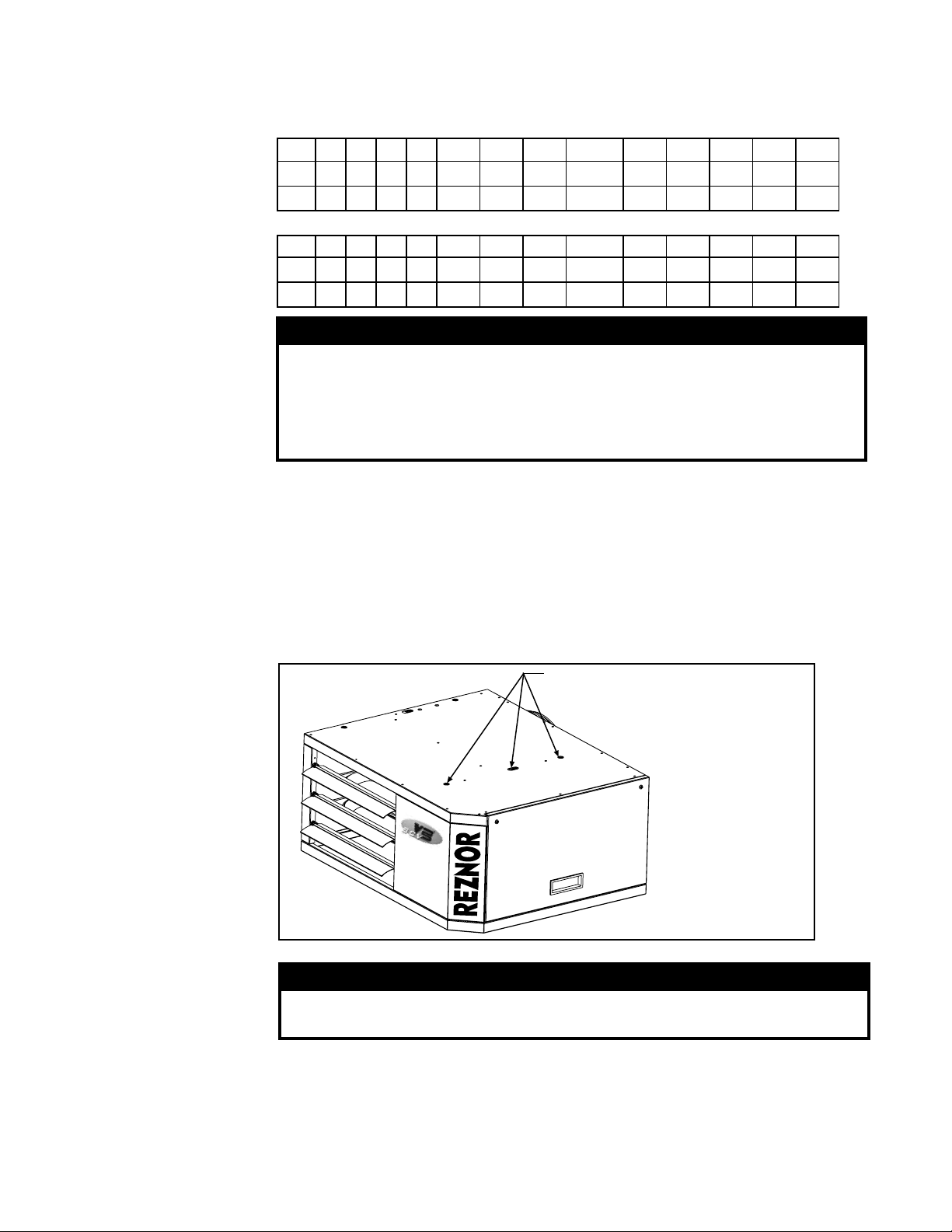
Model UDAS - In the literature bag, nd three cap screws, P/N 203311, and three seal-
ing washers, P/N 61658. After attaching the hanging hardware (Paragraph 5.2), these
screws and washers must be used to seal the unused holes in the top of the heater.
Models UDAP and UDAS - If the installation includes optional vertical louvers, downturn
nozzle, ceiling mounting bracket, hanger kit, high altitude kit, multiple heater control,
sensor for DDC control, and/or stepdown transformer, install these options before
the heater is suspended. Complete instructions are in this form or in the option pack-
age; option packages are shipped separately.
Other shipped separate items could include a vent cap (Option CC1 for UDAP); a vent/
combustion air kit (Option CC2 or CC6 for UDAS); a manual gas valve; a thermostat
bracket kit; a thermostat; and/or a thermostat guard. Be sure all options ordered are at
the installation site.
Form I-UDA, P/N 195673 R24, Page 7
4.0 Clearances
and
Dimensions
Clearances
Size
Top Flue Connector Access Panel Non-Access Side Bottom* Rear**
inches mm inches mm inches mm inches mm inches mm inches mm
30 - 125 1 25 6 152 18 457 1 25 1 25 18 457
150 - 400 4 102 6 152 18 457 2 51 1 25 18 457
*Suspend the heater so that the bottom is a minimum of 5 feet (1.5M) above the oor.
** Measure rear clearance from the fan motor.
4.1 Clearances
Units must be installed so that the clearances in the table are provided for combustion
air space, inspection and service, and for proper spacing from combustible construc-
tion. Clearance to combustibles is dened as the minimum distance from the heater
to a surface or object that is necessary to ensure that a surface temperature of 90°F
(50°C) above the surrounding ambient temperature is not exceeded.
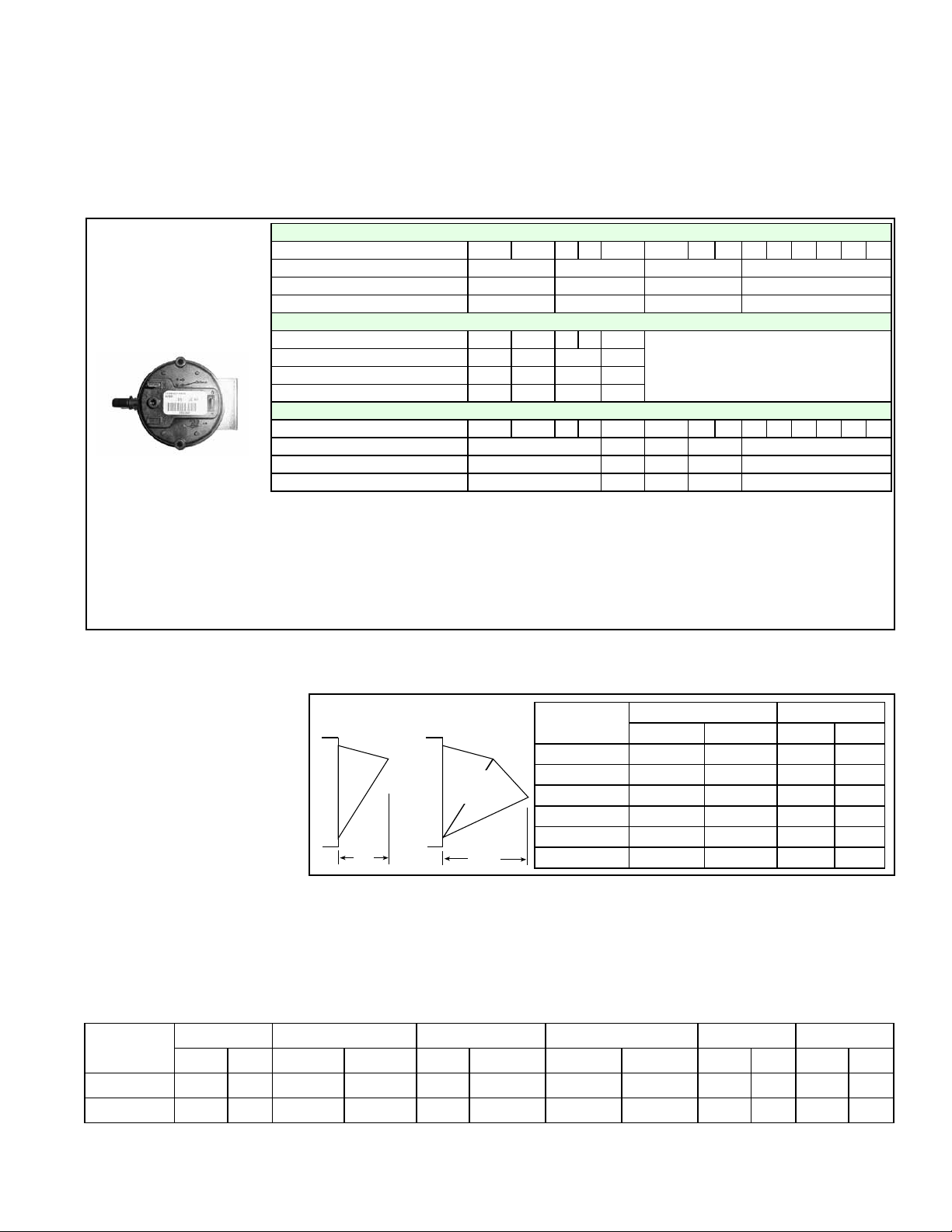
FIGURE 2 -
Installing High
Altitude Pressure
Switch required
above 6000 ft
(1830M) elevation
Gas valve adjustment
for high altitude can
only be done after
heater is operating;
see Paragraph 6.1.
Instructions for Changing Pressure Switch
1. In the control compartment, locate the pressure switch.
2. Mark and disconnect the two wires attached to the pressure switch.
3. Disconnect the sensing tubes from the pressure switch.
4. Locate the two screws holding the switch mounting bracket. Remove the screws and the pressure switch. Save
the screws.
5. Using the same screws, install the high altitude pressure switch. Attach the sensing tubes and wires.
Pressure Switch
Model UDAP
Size 30 45 60 75 100 125 150 175 200 225 250 300 350 400
High Altitude Switch P/N 197031 197032 197031 201160
Negative Pressure OFF Setpoint "w.c. 0.35 0.45 0.35 1.05
Label color Purple Pink Purple Brown
Model UDAP-CV with Option AV6 for Common Venting
Size 30 45 60 75 100
High Altitude Switch P/N 197029 197032 196362 196388
Negative Pressure OFF Setpoint "w.c. 0.60 0.45 0.55 0.50
Label color Lt Blue Pink White Orange
Model UDAS
Size 30 45 60 75 100 125 150 175 200 225 250 300 350 400
High Altitude Switch P/N 197029 196388 197030 197031 201160
Differential Pressure OFF Setpoint "w.c. 0.60 0.50 0.40 0.35 1.05
Label color Lt. Blue Orange Green Purple Brown
Adjusting the valve outlet pressure is done after the heater is in operation; follow the
instructions in Paragraph 6.1. Capacities and inputs for derated units are also listed in
Paragraph 6.1.
If the pressure switch needs to be changed, do that before the heater is operated; fol-
low the instructions in FIGURE 2.
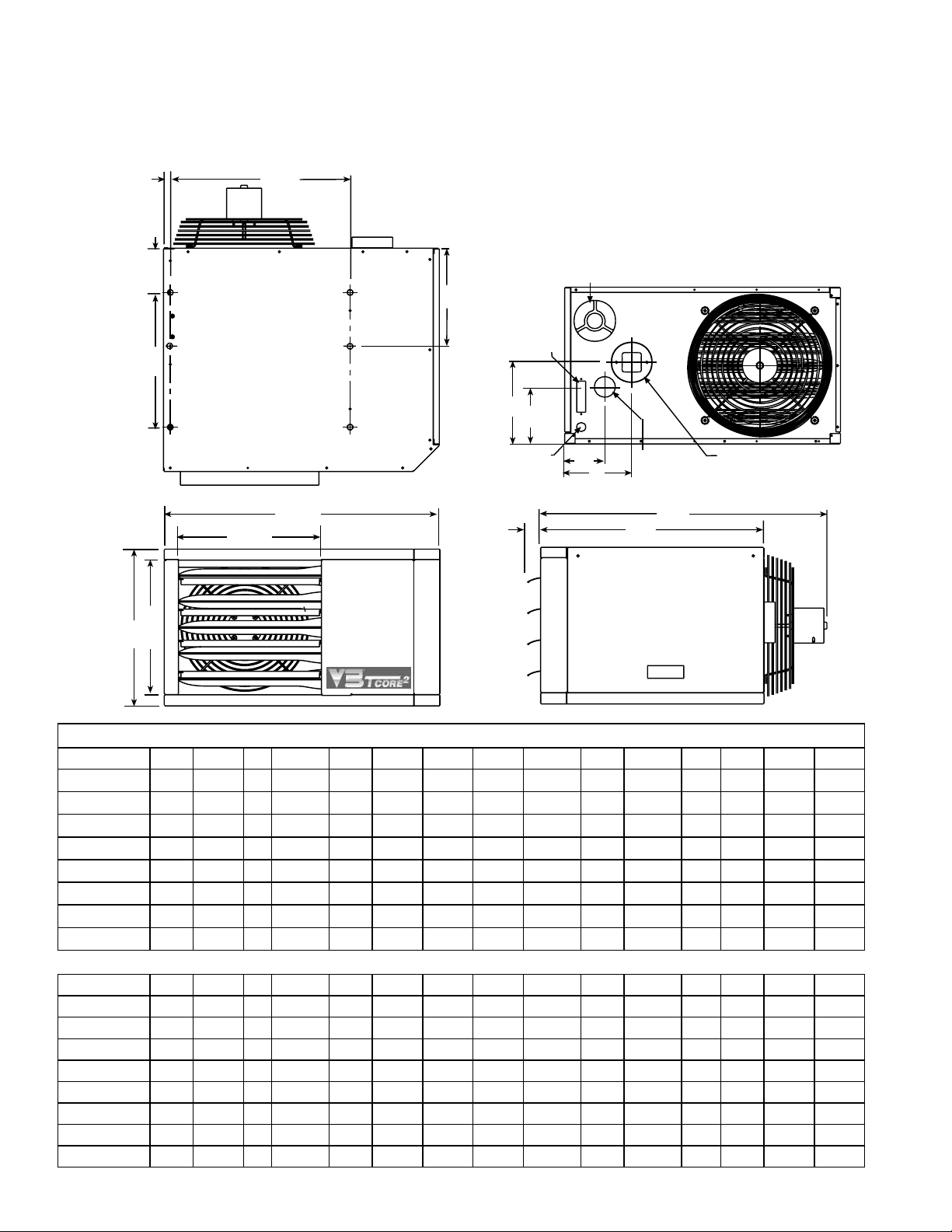
Downturn Nozzle Kits,
Option CD 2, 3, or 4
Follow the instructions with the kit to install. Additional length beyond the front of the
unit is shown in FIGURE 3.
U U
With
Option
CD3
With
Option
CD2
or
CD4
UDAP or UDAS
UDAP or UDAS
Downturn nozzles require
4-pt suspension.
FIGURE 3 -
With Optional
Downturn Nozzle
Dimension “U”
-- Applies to both UDAP
and UDAS
Size
Options CD2 and CD4 Option CD3
inches mm inches mm
30, 45 7-1/8 181 12-3/8 314
60, 75 8-5/8 219 15 381
100, 125 12-5/8 321 21-7/8 556
150, 175, 200 11-1/2 292 19-7/8 505
225, 250 14-1/2 368 25-1/8 638
300, 350, 400 18-1/2 470 32 813
In addition, if the heater is being installed at an altitude above 6000 ft (1830M), the
pressure switch will have to be changed. If ordered with the unit as Option DJ20 or
DJ21, the pressure switch is shipped separately for eld installation.
Form I-UDA, P/N 195673 R24, Page 8
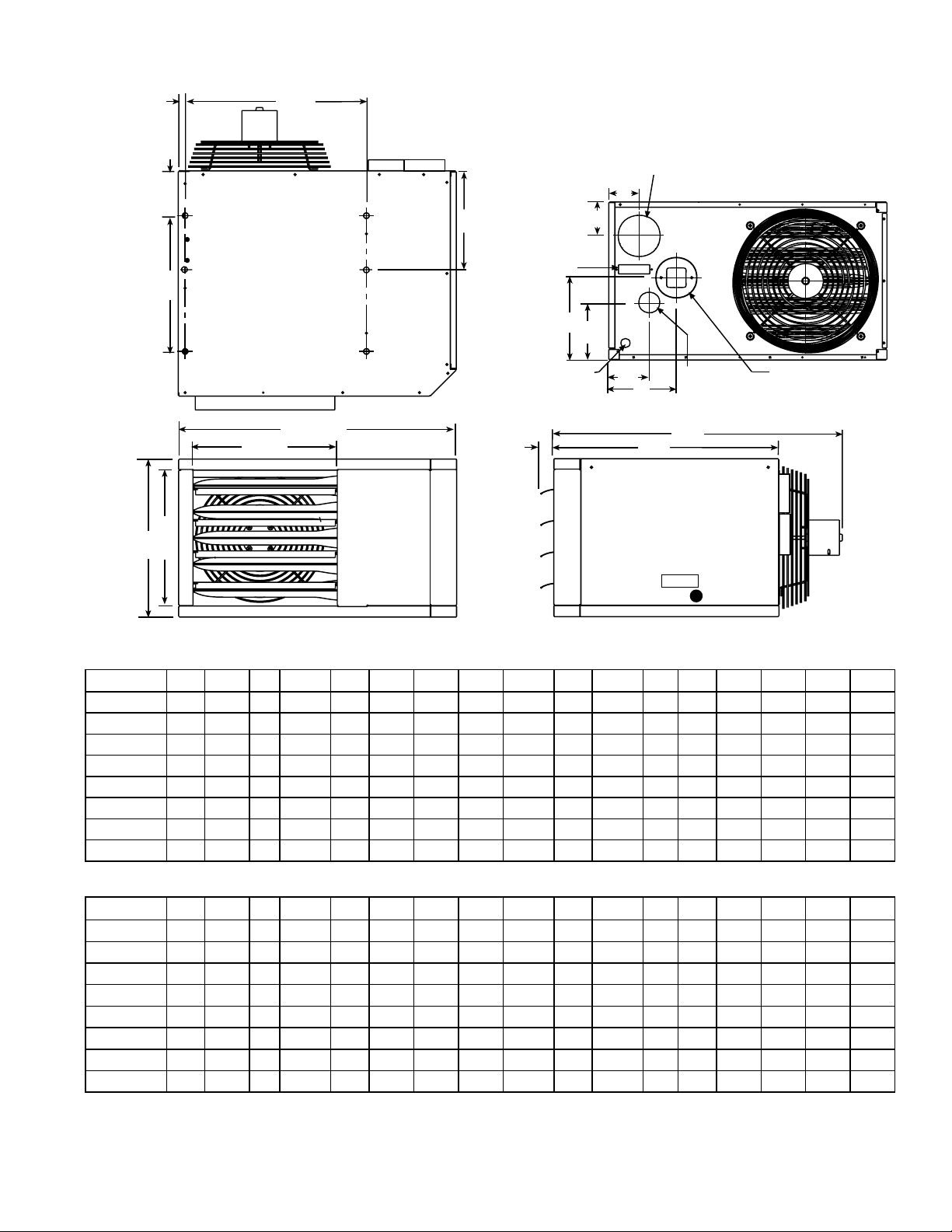
FIGURE 4 - Model UDAP, Power Vented Fan Model
Model UDAP Dimensions (inches ± 1/16)
Size
A B C D E F G H J K M N P Q R
30, 45
12-1/8 26-5/8 10 13-13/16 26 21-9/16 5-3/16 6-1/2 2-11/16 3-7/8 17-3/8 11/16 4-5/16 13 9-9/16
60
15-1/8 26-5/8 13 13-13/16 27 21-9/16 7-7/8 6-1/2 5-1/2 3-7/8 17-3/8 11/16 4-5/16 13 10-1/2
75
15-1/8 26-5/8 13 13-13/16 27-5/8 21-9/16 7-7/8 6-1/2 5-1/2 3-7/8 17-3/8 11/16 4-5/16 13 10-1/2
100
23-1/8 26-5/8 21 13-13/16 28-5/8 21-9/16 14-1/2 6-1/2 8-3/4 3-7/8 17-3/8 11/16 4-5/16 13 10-1/2
125
23-1/8 26-5/8 21 13-13/16 29-3/8 21-9/16 14-1/2 6-1/2 8-3/4 3-7/8 17-3/8 11/16 4-5/16 13 10-1/2
150, 175, 200
20-1/8 38-3/16 16 23 42 35-3/8 8-1/2 8-1/4 5-7/16 6-1/2 25-11/16 1-3/8 8-3/16 22-3/16 16-3/8
225, 250
26-1/8 38-3/16 22 23 42 35-3/8 13-1/16 8-13/16 9 6-1/2 25-11/16 1-3/8 8-3/16 22-3/16 15-5/8
300, 350, 400
34-1/8 41 30 23 42 35-3/8 17-1/16 9 11-13/16 7-5/16 27-11/16 1-3/8 8-3/16 22-3/16 16-3/16
Model UDAP Dimensions (mm ± 2)
Size A B C D E F G H J K M N P Q R
30, 45 308 676 254 351 660 548 132 165 68 98 441 17 110 330 243
60 384 676 330 351 686 548 200 165 140 98 441 17 110 330 267
75 384 676 330 351 702 548 200 165 140 98 441 17 110 330 267
100 587 676 533 351 727 548 368 165 222 98 441 17 110 330 267
125 587 676 533 351 746 548 368 165 222 98 441 17 110 330 267
150, 175, 200 511 970 406 584 1067 899 216 210 138 165 652 35 208 564 416
225, 250 664 970 559 584 1067 899 332 224 229 165 652 35 208 564 397
300, 350, 400 867 1041 762 584 1067 899 433 229 300 186 703 35 208 564 411
4.0 Clearances and Dimensions (cont’d)
4.2 Dimensions
Form I-UDA, P/N 195673 R24, Page 9
FIGURE 5 - Model UDAS, Separated Combustion Fan Model
Model UDAS Dimensions (inches ± 1/16)
Size
A B C D E F G H J K M N P Q R S T
30, 45
12-1/8 26-5/8 10 13-13/16 26 21-9/16 5-3/16 6-1/2 2-11/16 3-7/8 17-3/8 11/16 4-5/16 13 9-9/16 2-15/16 2-15/16
60
15-1/8 26-5/8 13 13-13/16 27 21-9/16 7-7/8 6-1/2 5-1/2 3-7/8 17-3/8 11/16 4-5/16 13 10-1/2 3-1/4 2-15/16
75
15-1/8 26-5/8 13 13-13/16 27-5/8 21-9/16 7-7/8 6-1/2 5-1/2 3-7/8 17-3/8 11/16 4-5/16 13 10-1/2 3-1/4 2-15/16
100
23-1/8 26-5/8 21 13-13/16 28-5/8 21-9/16 14-1/2 6-1/2 8-3/4 3-7/8 17-3/8 11/16 4-5/16 13 10-1/2 4-5/8 2-15/16
125
23-1/8 26-5/8 21 13-13/16 29-3/8 21-9/16 14-1/2 6-1/2 8-3/4 3-7/8 17-3/8 11/16 4-5/16 13 10-1/2 4-5/8 2-15/16
150, 175, 200
20-1/8 38-3/16 16 23 42 35-3/8 8-1/2 8-1/4 5-7/16 6-1/2 25-11/16 1-3/8 8-3/16 22-3/16 16-3/8 4-1/8 8-5/16
225, 250
26-1/8 38-3/16 22 23 42 35-3/8 13-1/16 8-13/16 9 6-1/2 25-11/16 1-3/8 8-3/16 22-3/16 15-5/8 5-9/16 8-5/16
300, 350, 400
34-1/8 41 30 23 42 35-3/8 17-1/16 9 11-13/16 7-5/16 27-11/16 1-3/8 8-3/16 22-3/16 16-3/16 9-1/16 8-9/16
Model UDAS Dimensions (mm ± 2)
Size A B C D E F G H J K M N P Q R S T
30, 45
308 676 254 351 660 548 132 165 68 98 441 17 110 330 243 75 75
60
384 676 330 351 686 548 200 165 140 98 441 17 110 330 267 89 75
75
384 676 330 351 702 548 200 165 140 98 441 17 110 330 267 89 75
100
587 676 533 351 727 548 368 165 222 98 441 17 110 330 267 117 75
125
587 676 533 351 746 548 368 165 222 98 441 17 110 330 267 117 75
150, 175, 200
511 970 406 584 1067 899 216 210 138 165 652 35 208 564 416 105 211
225, 250
664 970 559 584 1067 899 332 224 229 165 652 35 208 564 397 141 211
300, 350, 400
867 1041 762 584 1067 899 433 229 300 186 703 35 208 564 411 230 217
Form I-UDA, P/N 195673 R24, Page 10
WARNINGS
Check the supporting structure to be used to verify that it has
sufcient load carrying capacity to support the weight of the unit.
Suspend the heater only from the threaded nut retainers or with
a manufacturer provided kit. Do NOT suspend from the heater
cabinet.
5.0 Hanging the
Heater
5.2 Lifting and Suspending
When the heater is lifted for suspension, support the bottom of the heater with plywood
or other appropriately placed material. If the bottom is not supported, damage could
occur. Before hanging, verify that any screws used for holding shipping brackets were
re-installed in the cabinet.
Model UDAS - Whether using the suspension points or a hanger kit, when installing
a Model UDAS, any unused suspension points on the control side of the heater
MUST be plugged. Plug these holes with the 1/2” long cap screws and at washers
shipped in the bag with the heater. (See FIGURE 6.)
5.1 Weights
Before suspending the heater, check the supporting structure to be used to verify that
it has sufcient load-carrying capacity to support the weight of the unit.
Model UDAP
Size 30 45 60 75 100 125 150 175, 200 225 250 300 350 400
lbs 54 59 67 72 96 101 172 187 203 215 269 294 306
kg 24 27 30 33 44 46 78 85 92 98 122 133 139
Model UDAS
Size 30 45 60 75 100 125 150 175, 200 225 250 300 350 400
lbs 55 60 68 73 97 102 173 188 204 216 270 295 307
kg 25 27 31 33 44 46 78 85 93 98 122 134 138
FIGURE 6 - Model
UDAS - Plug the
unused suspension
points on the control
side of the heater with
the three 1/2” long
screws, P/N 203311,
and the three sealing
washers, P/N 61658.
Find the screws
and washers in the
literature bag shipped
inside the heater.
WARNING
Unit must be level for proper operation. Do not place or add
additional weight to the suspended heater. Hazard Levels, page 2.
5.2.1 Two-Point or Four-Point Suspension
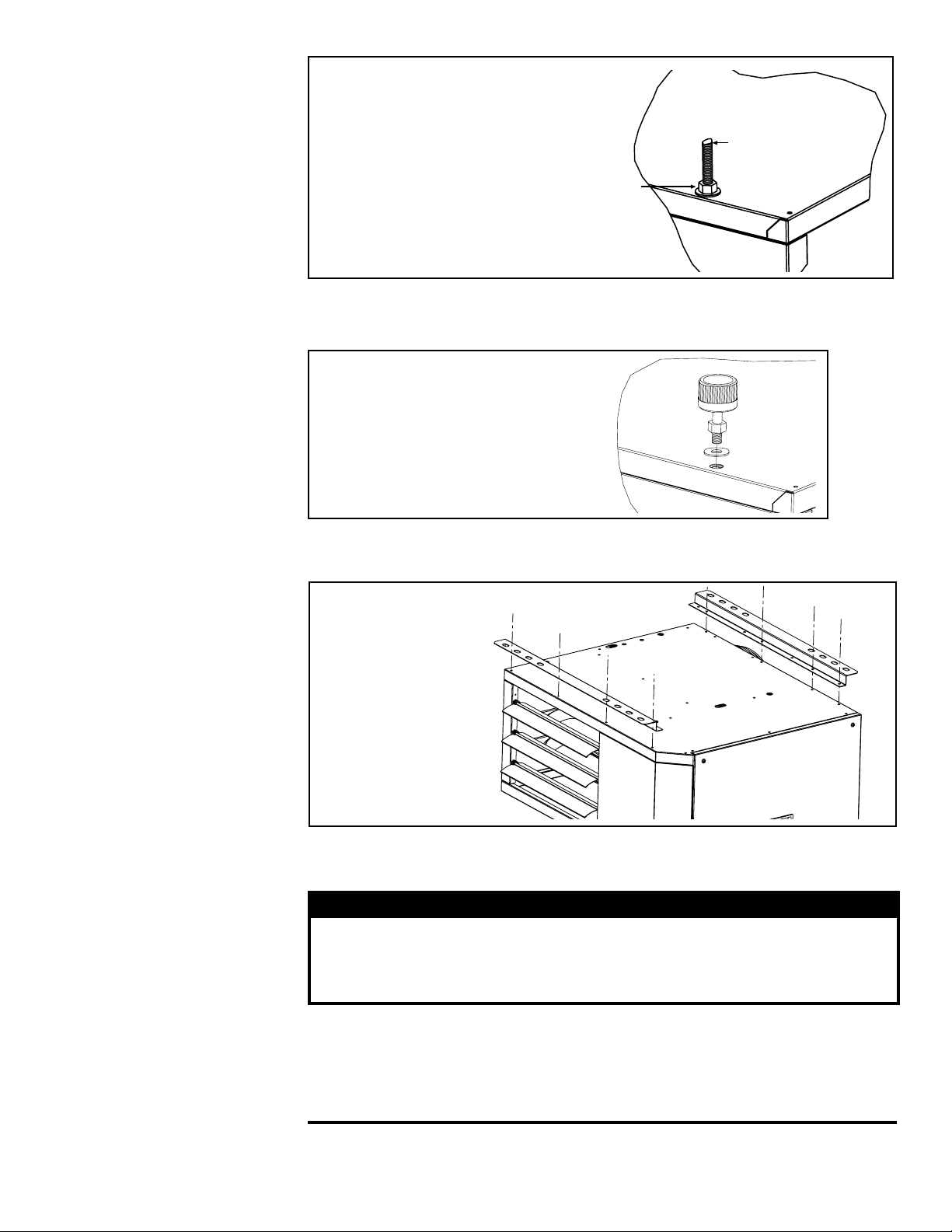
The heater is equipped for either two-point or four-point suspension. A 3/8”-16 threaded
nut retainer is located at each suspension point. NOTE: Four-point suspension is
required when installing an optional downturn nozzle. See Dimensions in Paragraph
4.2 and the illustration in FIGURE 7A.
Form I-UDA, P/N 195673 R24, Page 11
FIGURE 7B - Swivel
Connectors to Suspend
the Heater from 1”
Pipe, Option CK8 (2-pt)
or CK10 (4-pt)
Be sure the
threaded swivel
connectors
are locked to
the heater as
illustrated.
5.2.2 Hanger Kits, Option CK8, CK10, and CK22
If ordered with swivel connectors for 1” pipe, Option CK8 or CK10, attach the swivels
at the threaded nut retainers. Suspend with 1” pipe. (See FIGURE 7B.)
FIGURE 8 - Suspending
the Heater using
Option CK22, Ceiling
Suspension Kit (no
hanger rods)
Recommended
maximum hanger
rod length is
6 feet (1.8M).
Available for
Sizes 30-125.
Allows the
heater to be
installed one
inch from the
ceiling.
Add a 3/8 nut
and washer to
lock the hanger
rod to the heater.
3/8 threaded rod
(field supplied)
FIGURE 7A -
Suspending the
Heater with Rods from
the Threaded Nut
Retainers (either two or
four point suspension)
Be sure the threaded hanger rods are
locked to the heater as illustrated.
Length of threaded rod extending into
the heater MUST NOT exceed 1/2”
(13mm).
If ordered with a ceiling suspension kit, Option CK22, follow the illustrated instructions
in the kit. (See FIGURE 8.)
6.0 Mechanical
6.1 Gas Piping and
Pressures
6.1.1 Gas Supply and Connections
WARNING
This appliance is equipped for a maximum gas supply pressure of 1/2
psi, 3.5 kPa, or 14 inches water column. Supply pressure greater than 1/2
psi requires installation of an additional lockup-type service regulator
external to the unit.
WARNING: PRESSURE TESTING SUPPLY PIPING
Test Pressures Above 1/2 PSI: Disconnect the heater and manual valve
from the gas supply line which is to be tested. Cap or plug the supply line.
Test Pressures Below 1/2 PSI: Before testing, close the manual valve on the
heater.
Form I-UDA, P/N 195673 R24, Page 12
Gas Connection Size
All piping must be in accordance with requirements outlined in the National Fuel Gas
Code ANSI/Z223.1a (latest edition) or CSA-B149.1 and B149.2 (See Paragraph 2).
Gas supply piping installation should conform with good practice and with local codes.
Support gas piping with pipe hangers, metal strapping, or other suitable material; do
not rely on the heater to support the gas pipe.
The heater is oriced for operation with natural gas having a heating value of 1000 (±
50) BTU per cubic ft or propane gas with a heating value of 2500 (± 100) BTU per cubic
ft. If the gas at the installation does not meet these specications, consult the factory
for proper oricing.
Pipe joint compounds (pipe dope) shall be resistant to the action of liqueed petroleum
gas or any other chemical constituents of the gas being supplied.
Install a ground joint union and manual shutoff valve upstream of the unit control sys-
tem, as shown in FIGURE 9. Installation of a trap with a minimum 3” (76mm) drip leg
is required.
The unit is equipped with a nipple that extends outside the cabinet. The gas connection
is either 1/2” or 3/4”.
Leak-test all connections by brushing on a leak-detecting solution.
WARNING
All components of a gas supply system must be leak tested prior
to placing equipment in service. NEVER TEST FOR LEAKS WITH
AN OPEN FLAME. Failure to comply could result in personal
injury, property damage or death.
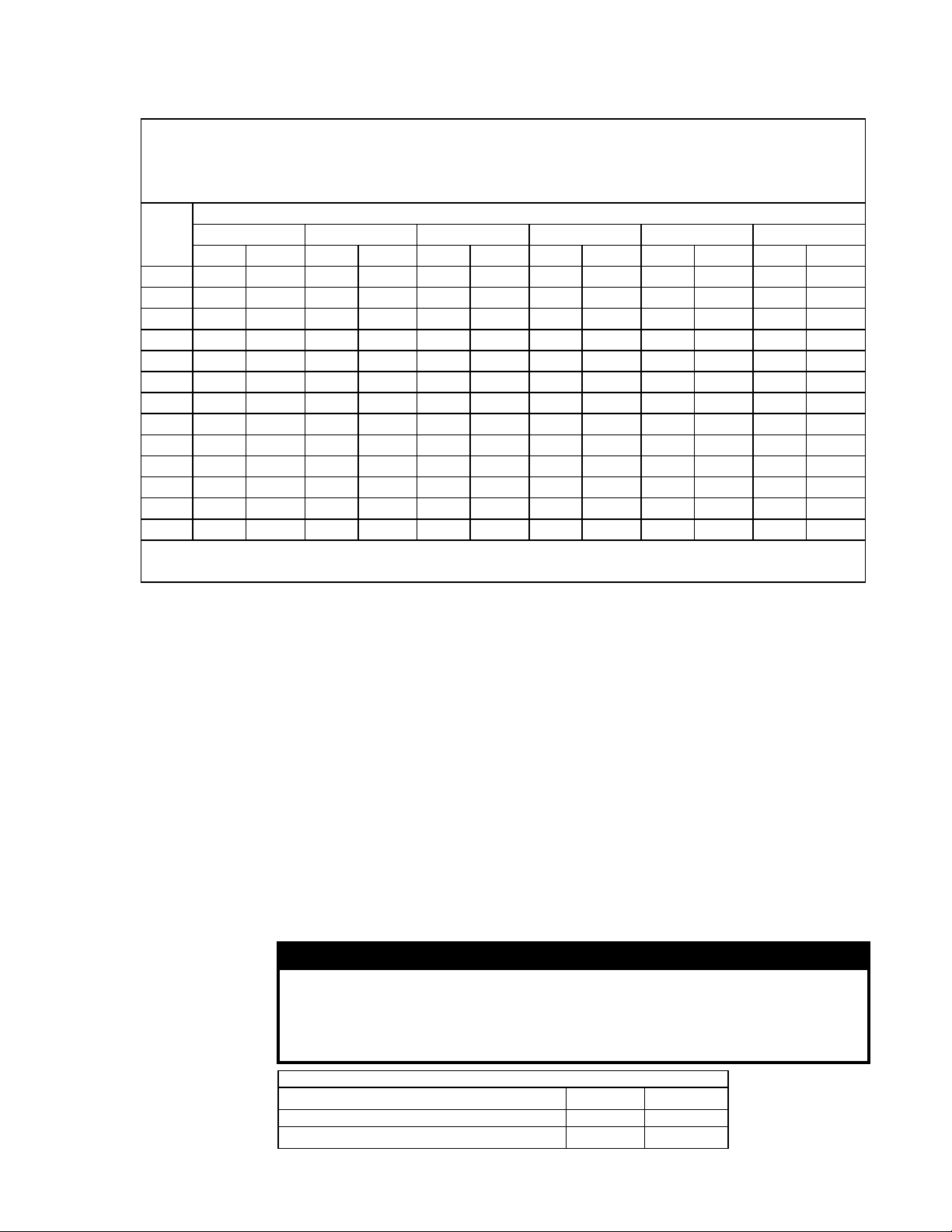
Capacity of Piping
Cubic Feet per Hour based on 0.3" w.c. Pressure Drop
Specic Gravity for Natural Gas -- 0.6 (Natural Gas -- 1000 BTU/Cubic Ft)
Specic Gravity for Propane Gas -- 1.6 (Propane Gas -- 2550 BTU/Cubic Ft)
Length Diameter of Pipe
of 1/2" 3/4" 1" 1-1/4" 1-1/2" 2"
Pipe Natural Propane Natural Propane Natural Propane Natural Propane Natural Propane Natural Propane
20' 92 56 190 116 350 214 730 445 1100 671 2100 1281
30' 73 45 152 93 285 174 590 360 890 543 1650 1007
40' 63 38 130 79 245 149 500 305 760 464 1450 885
50' 56 34 115 70 215 131 440 268 670 409 1270 775
60' 50 31 105 64 195 119 400 244 610 372 1105 674
70' 46 28 96 59 180 110 370 226 560 342 1050 641
80' 43 26 90 55 170 104 350 214 530 323 990 604
90' 40 24 84 51 160 98 320 195 490 299 930 567
100' 38 23 79 48 150 92 305 186 460 281 870 531
125' 34 21 72 44 130 79 275 168 410 250 780 476
150' 31 19 64 39 120 73 250 153 380 232 710 433
175' 28 17 59 36 110 67 225 137 350 214 650 397
200' 26 16 55 34 100 61 210 128 320 195 610 372
Note: When sizing supply lines, consider possibilities of future expansion and increased requirements.
Refer to National Fuel Gas Code for additional information on line sizing.
Sizing
Gas
Supply
Line
6.0 Mechanical
(cont’d)
6.1 Gas Piping and Pressures (cont’d)
6.1.1 Gas Supply and Connections (cont’d)
Gas Connection (inches)
Size Natural Propane
30, 45, 60, 75, 100, 125, 150, 175, 200 1/2 1/2
225, 250, 300, 350, 400 3/4 3/4
Form I-UDA, P/N 195673 R24, Page 13
FIGURE 9 - Gas
connection is at
the pipe nipple that
extends outside the
cabinet.
Illustration shows
both a vertical and
horizontal gas supply;
requirements are the
same.
6.1.2 Valve Outlet
or Orice Pressure
Setting
Measuring valve outlet gas pressure cannot be done until the heater is in operation. It
is included in the steps of the “Check-Test-Start” procedure in Paragraph 9. The follow-
ing warnings and instructions apply.
WARNING
Valve outlet gas pressure must never exceed 3.5” w.c. for natural
gas and 10” w.c. for propane gas.
For Natural Gas: When the heater leaves the factory, the combination gas valve is set
so that the valve outlet gas pressure for a single-stage valve or high re of a two-stage
valve is regulated to 3.5” w.c. Low re on a two-stage valve is set to 1.8” w.c. Inlet sup-
ply pressure to the valve for natural gas must be a minimum of 5” w.c. or as noted on
the rating plate and a maximum of 14” w.c.
For Propane Gas: When the heater leaves the factory, the combination gas valve is
set so that the valve outlet gas pressure for a single-stage valve or high re of a two-
stage valve is regulated to 10” w.c. Low re on a two-stage valve is set to 5.0” w.c.
Inlet supply pressure to the valve for propane gas must be a minimum of 11” w.c. and
a maximum of 14” w.c.
Before attempting to measure or adjust valve outlet gas pressure, the inlet supply
pressure must be within the specied range both when the heater is in operation and
on standby. Incorrect inlet pressure could cause excessive valve outlet gas pressure
immediately or at some future time. If natural gas supply pressure is too high, install a
regulator in the supply line before it reaches the heater. If natural gas supply pressure
is too low, contact your gas supplier.
Instructions
NOTE: If operating at high altitude, outlet pressure requires adjustment. Follow
instructions on page 14.
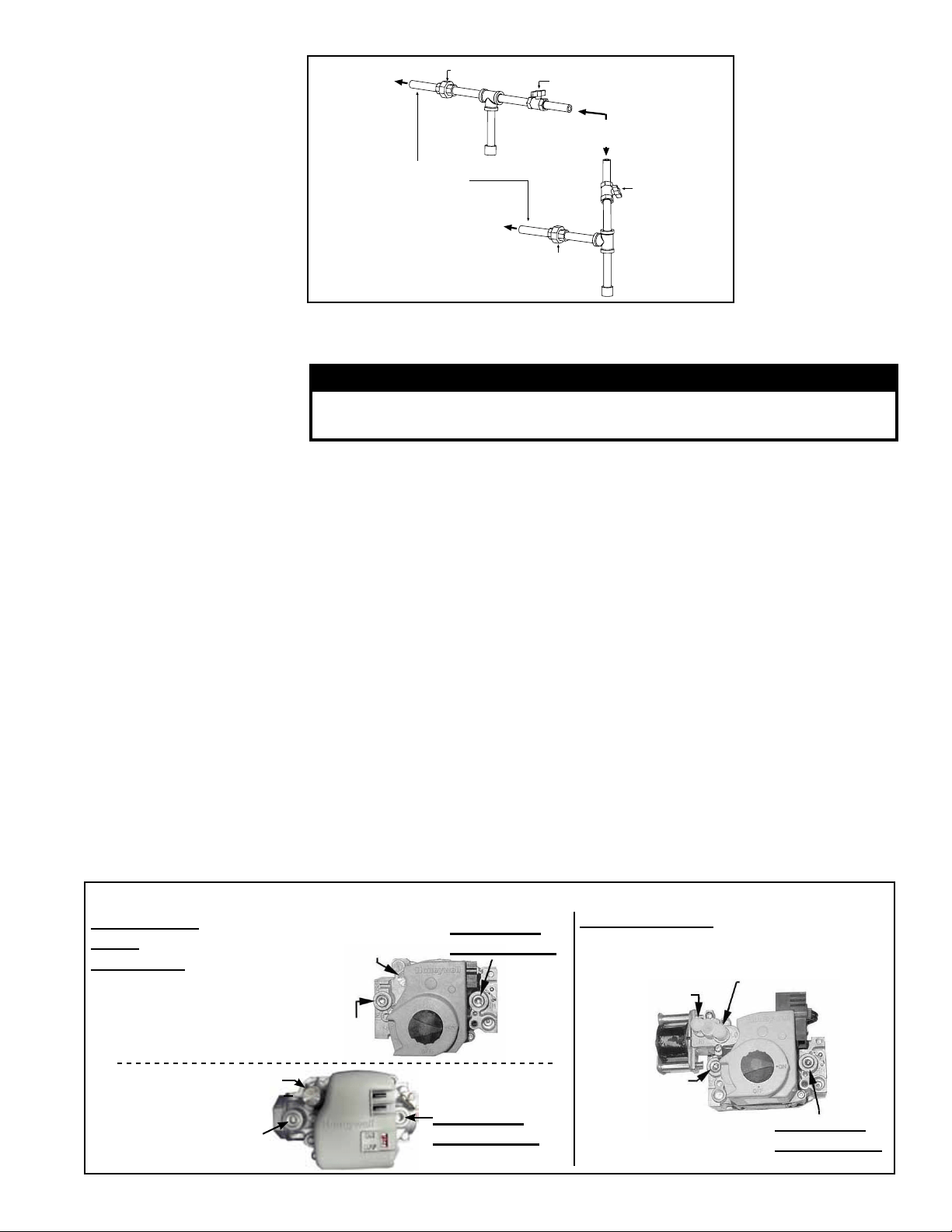
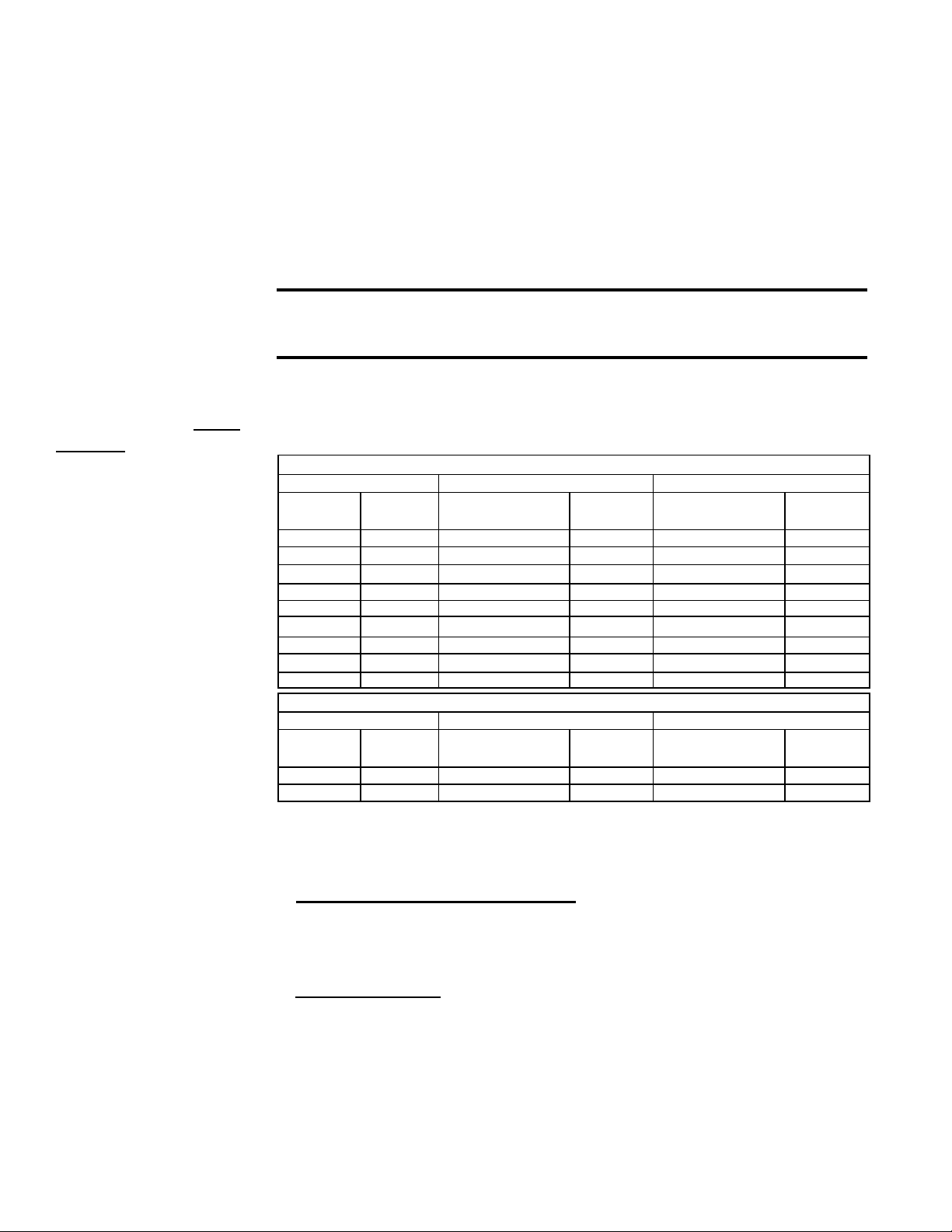
1) Locate the 1/8” output pressure tap on the valve (See FIGURE 10). With the man-
ual valve turned off to prevent ow to the gas valve, connect a manometer to the
1/8” pipe outlet pressure tap in the valve. NOTE: A manometer (uid-lled gauge)
Check Valve Outlet
Pressure (can only be
done after heater is
operating)
NOTE: Gas Conversion
Kits are available
for changing from
propane gas to natural
gas or natural gas to
propane gas. A factory-
authorized conversion
kit MUST be used.
FIGURE 10 - Top View of Valves showing Outlet Pressure Tap and Adjustment Locations
Single-Stage
Valve
(two styles)
1/8” Outlet
Pressure Tap
Adjust Outlet
Pressure
Inlet
Pressure Tap
Two-Stage Valve
Adjust High
Fire Outlet
Pressure
Adjust Low
Fire Outlet
Pressure
Inlet
Pressure
Tap
1/8” Outlet
Pressure Tap
1/8” Outlet
Pressure Tap
Inlet Pressure Tap
Adjust Outlet Pressure
Form I-UDA, P/N 195673 R24, Page 14
2. Locate the 1/8” output pressure tap on the valve (See FIGURE 10, page 13). Turn
the knob or switch on the top of the valve to “OFF”. Connect a manometer to the
1/8” pipe outlet pressure tap in the valve. Use a water column manometer that is
readable to the nearest tenth of an inch.
3. Single-Stage and Two-Stage High Fire - Turn the knob or switch on the top of
the valve to “ON”. Remove the cap from the pressure adjusting screw and adjust
the gas train pressure to the pressure selected from the table above. Adjust
pressure by turning the regulator screw IN (clockwise) to increase pressure or
OUT (counterclockwise) to decrease pressure.
Two-Stage Low Fire - Disconnect the wire from the “HI” terminal on the gas valve
and check the low re pressure. Turn the regulator screw to adjust the low re
outlet pressure to the “Low Fire” pressure selected from the table. Re-connect the
wire to the gas valve.
4. Turn up the thermostat. (NOTE: On Model UDAS, depress and hold the door
safety switch.) Cycle the burner once or twice to properly seat the adjustment
spring in the valve.
Re-check the pressure(s). When the outlet pressure is right for the installation,
remove the manometer and replace the cap.
Check for leak at the pressure tap tting.
6.1.3 Derate by Valve
Outlet Pressure
Adjustment for High
Altitude Operation
Instructions for High Altitude Derate
1. Determine the required valve outlet pressure for the elevation where the heater will
be operating. If unsure of the elevation, contact the local gas supplier.
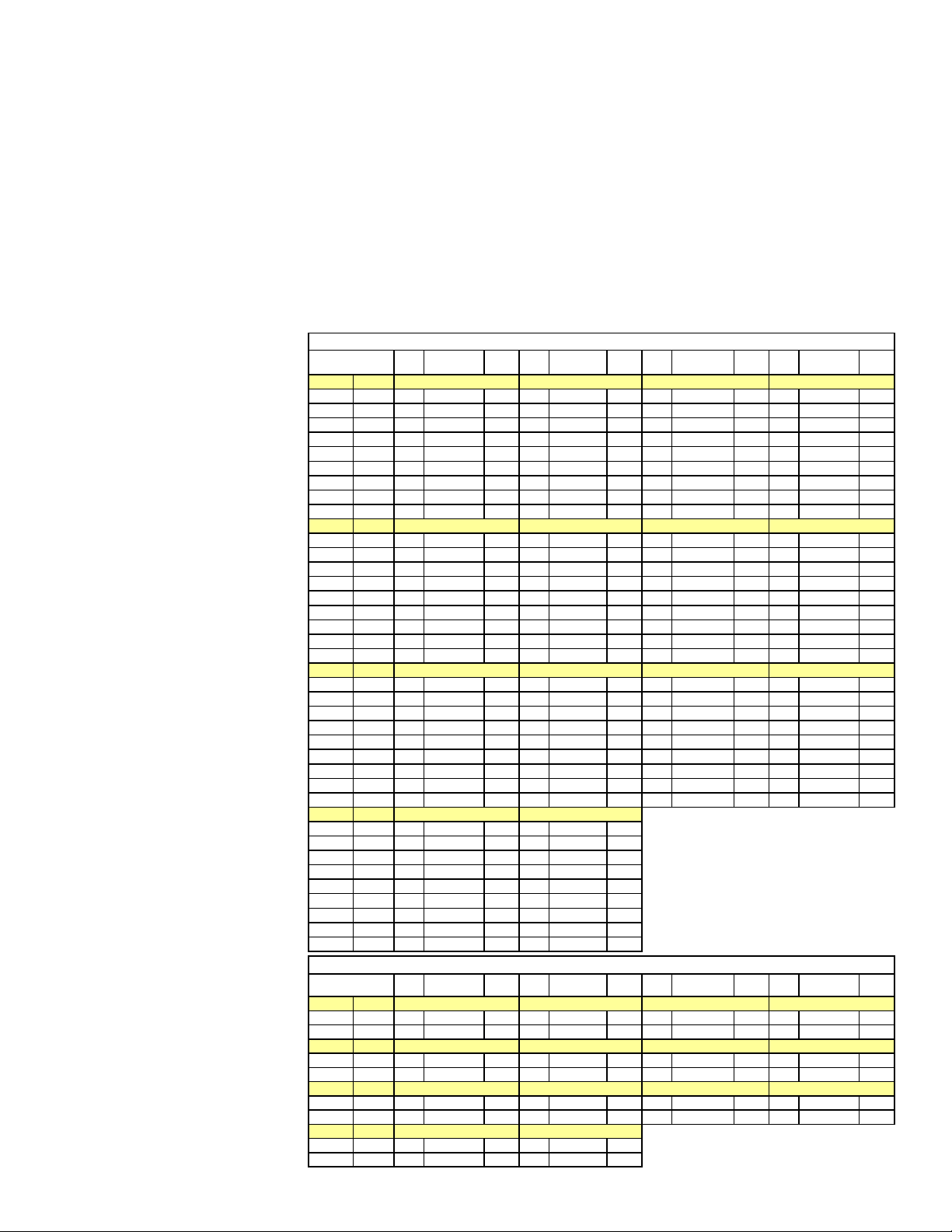
Valve Outlet Pressure Settings by Elevation
This adjustment
can only be done
after the heater is in
operation. High altitude
adjustment is included
in the startup Steps.
NOTE: If elevation is
above 6000 ft (1830M),
a high altitude pressure
switch is required; see
Paragraph 3.2.1.
Manifold Pressure Settings by Altitude for the UNITED STATES
Altitude Natural Gas (inches w.c.) Propane Gas (inches w.c.)
Feet Meters
Single-Stage and
Two-Stage High Fire
Two-Stage
Low Fire
Single-Stage and
Two-Stage High Fire
Two-Stage
Low Fire
0-2000 0-610 3.5 1.8 10.0 5.0
2001-3000 611-915 3.1 1.6 8.8 4.4
3001-4000 916-1220 3.0 1.5 8.5 4.2
4001-5000 1221-1525 2.8 1.5 8.1 4.1
5001-6000 1526-1830 2.7 1.4 7.7 3.9
6001-7000 1831-2135 2.6 1.3 7.4 3.7
7001-8000 2136-2440 2.5 1.3 7.1 3.5
8001-9000 2441-2745 2.4 1.2 6.7 3.4
9001-10000 2746-3045 2.3 1.2 6.7 3.4
Manifold Pressure Settings by Altitude for CANADA
Altitude Natural Gas (inches w.c.) Propane Gas (inches w.c.)
Feet Meters
Single-Stage and
Two-Stage High Fire
Two-Stage
Low Fire
Single-Stage and
Two-Stage High Fire
Two-Stage
Low Fire
0-2000 0-610 3.5 1.8 10.0 5.0
2001-4500 611-1373 2.8 1.5 8.1 4.1
6.0 Mechanical
(cont’d)
6.1 Gas Piping
and Pressures
(cont’d)
is recommended rather than a spring type gauge due to the difculty of maintaining
calibration of a spring type gauge.
2) Open the manual valve and operate the heater. (NOTE: On Model UDAS, depress
and hold the door safety switch.) Measure the outlet pressure of the gas valve. To
measure low-stage pressure on a unit equipped with a two-stage valve, disconnect
the wire from the “HI” terminal on the valve. (Be sure to reconnect the wire.)
Normally when operating at sea level, adjustments should not be necessary to the
factory setting. (For high altitude settings, see next paragraph.)
If adjustment is necessary, remove the cap from the adjustment screw(s). Set
pressure to correct settings by turning the regulator screw IN (clockwise) to
increase pressure. Turn regulator screw OUT (counterclockwise) to decrease
pressure.
6.1.2 Valve Outlet
or Orice Pressure
Setting (cont’d)
CAUTION: DO NOT bottom out the gas valve regulator adjusting screw.
This can result in unregulated manifold pressure causing excess overre
and heat exchanger failure.
Form I-UDA, P/N 195673 R24, Page 15
High Altitude
Capacity Changes
5. With the heater operating determine that the inlet pressure to the heater for
natural gas is between 5 and 13.5 inches w.c. and for propane between 10 and
13.5 inches w.c. Take this reading as close as possible to the heater (Heaters are
equipped with gas valves that have an inlet pressure tap.) If the inlet pressure is
not within the specied range, the inlet pressure must be corrected and Steps 3
and 4 repeated.
6. Find the High Altitude Adjustment label in the plastic bag that contained these
instructions. Using a permanent marker, ll-in the appropriate information from the
tables below. Select a location for the label on the outside of the heater access
panel so that it will be conspicuous to anyone operating or servicing the unit. Be
sure the surface is clean and dry and adhere the label.
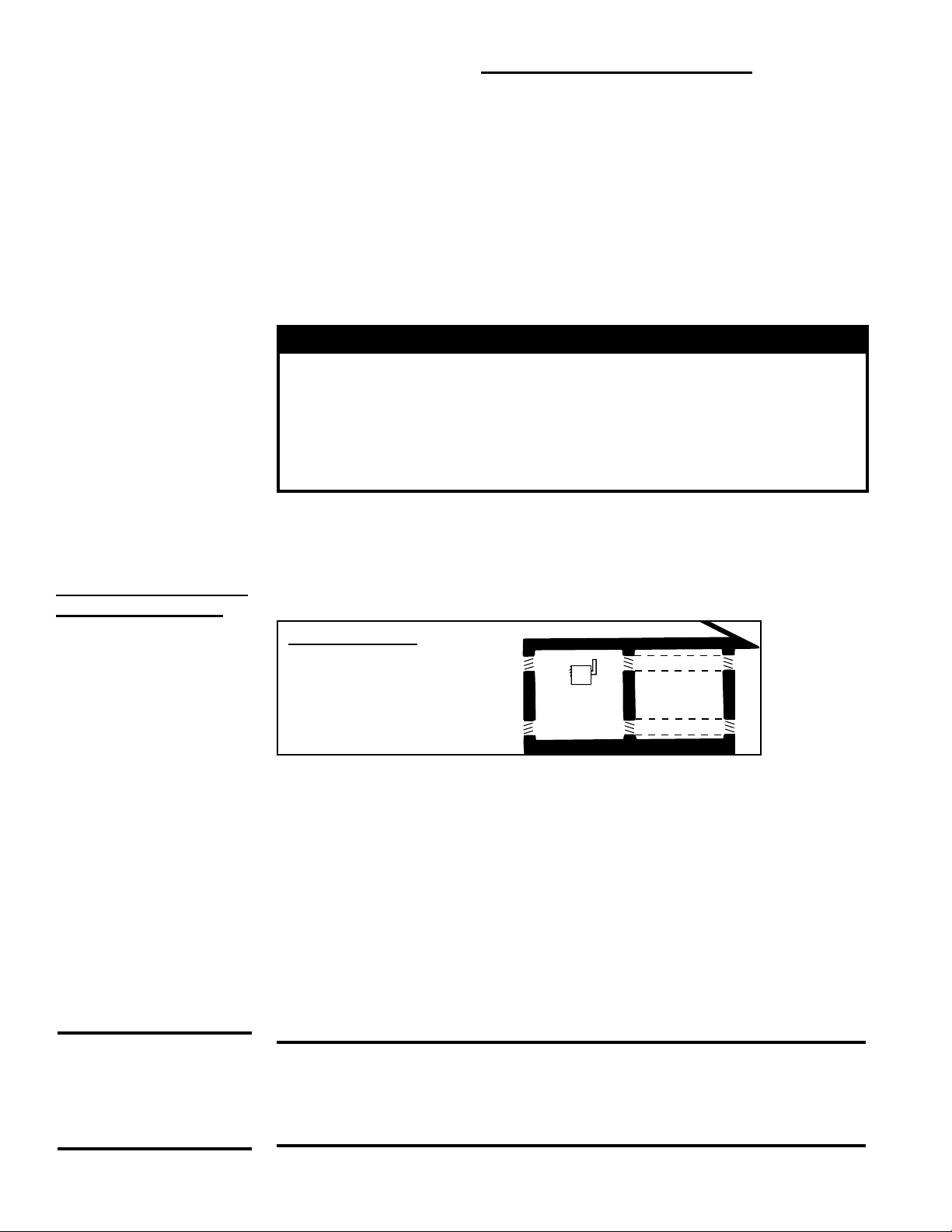
The input and/or the capacity of the heater changes with the derate. The tables below
list inputs and capacities at altitudes from sea level to 10,000 ft (3045M).
BTUH Inputs and Capacities by Altitude in the UNITED STATES for Model UDAP and Model UDAS
ALTITUDE
Normal
Input
Thermal Output
Capacity
Minimum
Input
Normal
Input
Thermal Output
Capacity
Minimum
Input
Normal
Input
Thermal Output
Capacity
Minimum
Input
Normal
Input
Thermal Output
Capacity
Minimum
Input
Feet Meters Size 30 Size 45 Size 60 Size 75
0-2000 0-610 30000 24600 30000 45000 37350 45000 60000 49800 42000 75000 62250 52500
2001-3000 611-915 28200 23124 28200 42300 35109 42300 56400 46812 39480 70500 58515 49350
3001-4000 916-1220 27600 22632 27600 41400 34362 41400 55200 45816 38640 69000 57270 48300
4001-5000 1221-1525 27000 22140 27000 40500 33615 40500 54000 44820 37800 67500 56025 47250
5001-6000 1526-1830 26400 21648 26400 39600 32868 39600 52800 43824 36960 66000 54780 46200
6001-7000 1831-2135 25800 21156 25800 38700 32121 38700 51600 42828 36120 64500 53535 45150
7001-8000 2136-2440 25200 20664 25200 37800 31374 37800 50400 41832 35280 63000 52290 44100
8001-9000 2441-2745 24600 20172 24600 36900 30627 36900 49200 40836 34440 61500 51045 43050
9001-10000 2746-3045 24000 19680 24000 36000 29880 36000 48000 39840 33600 60000 49800 42000
Feet Meters Size 100 Size 125 Size 150 Size 175
0-2000 0-610 105000 87150 73500 120000 99600 84000 150000 124500 105000 175000 145250 122500
2001-3000 611-915 98700 82908 69090 112800 94752 78960 141000 117030 98700 164500 136535 115150
3001-4000 916-1220 96600 81144 67620 110400 92736 77280 138000 114540 96600 161000 133630 112700
4001-5000 1221-1525 94500 79380 66150 108000 90720 75600 135000 112050 94500 157500 130725 110250
5001-6000 1526-1830 92400 77616 64680 105600 88704 73920 132000 109560 92400 154000 127820 107800
6001-7000 1831-2135 90300 75852 63210 103200 86688 72240 129000 107070 90300 150500 124915 105350
7001-8000 2136-2440 88200 74088 61740 100800 84672 70560 126000 104580 88200 147000 122010 102900
8001-9000 2441-2745 86100 72324 60270 98400 82656 68880 123000 102090 86100 143500 119105 100450
9001-10000 2746-3045 84000 70560 58800 96000 80640 67200 120000 99600 84000 140000 116200 98000
Feet Meters Size 200 Size 225 Size 250 Size 300
0-2000 0-610 200000 166000 140000 225000 186750 157500 250000 207500 175000 300000 249000 210000
2001-3000 611-915 188000 156040 131600 211500 175545 148050 235000 195050 164500 282000 234060 197400
3001-4000 916-1220 184000 152720 128800 207000 171810 144900 230000 190900 161000 276000 229080 193200
4001-5000 1221-1525 180000 149400 126000 202500 168075 141750 225000 186750 157500 270000 224100 189000
5001-6000 1526-1830 176000 146080 123200 198000 164340 138600 220000 182600 154000 264000 219120 184800
6001-7000 1831-2135 172000 142760 120400 193500 160605 135450 215000 178450 150500 258000 214140 180600
7001-8000 2136-2440 168000 139440 117600 189000 156870 132300 210000 174300 147000 252000 209160 176400
8001-9000 2441-2745 164000 136120 114800 184500
153135 129150 205000 170150 143500 246000 204180 172200
9001-10000 2746-3045 160000 132800 112000 180000 149400 126000 200000 166000 140000 240000 199200 168000
Feet Meters Size 350 Size 400
0-2000 0-610 350000 290500 245000 400000 332000 280000
2001-3000 611-915 329000 273070 230300 376000 312080 263200
3001-4000 916-1220 322000 267260 225400 368000 305440 257600
4001-5000 1221-1525 315000 261450 220500 360000 298800 252000
5001-6000 1526-1830 308000 255640 215600 352000 292160 246400
6001-7000 1831-2135 301000 249830 210700 344000 285520 240800
7001-8000 2136-2440 294000 244020 205800 336000 278880 235200
8001-9000 2441-2745 287000 238210 200900 328000 272240 229600
9001-10000 2746-3045 280000 232400 196000 320000 265600 224000
BTUH Inputs and Capacities by Altitude in CANADA for Models UDAP and UDAS
ALTITUDE
Normal
Input
Thermal Output
Capacity
Minimum
Input
Normal
Input
Thermal Output
Capacity
Minimum
Input
Normal
Input
Thermal Output
Capacity
Minimum
Input
Normal
Input
Thermal Output
Capacity
Minimum
Input
Feet Meters Size 30 Size 45 Size 60 Size 75
0-2000 0-610 30000 24600 30000 45000 37350 45000 60000 49800 42000 75000 62250 52500
2001-4500 611-1373 27000 22140 27000 40500 33615 40500 54000 44820 37800 67500 56025 47250
Feet Meters Size 100 Size 125 Size 150 Size 175
0-2000 0-610 105000 87150 73500 120000 99600 84000 150000 124500 105000 175000 145250 122500
2001-4500 611-1373 94500 79380 66150 108000 90720 75600 135000 113400 94500 157500 132300 110250
Feet Meters Size 200 Size 225 Size 250 Size 300
0-2000 0-610 200000 166000 140000 225000 186750 157500 250000 207500 175000 300000 249000 210000
2001-4500 611-1373 180000 151200 126000 202500 170100 141750 225000 189000 157500 270000 226800 189000
Feet Meters Size 350 Size 400
0-2000 0-610 350000 290500 245000 400000 332000 280000
2001-4500 611-1373 315000 264600 220500 360000 302400 252000
Form I-UDA, P/N 195673 R24, Page 16
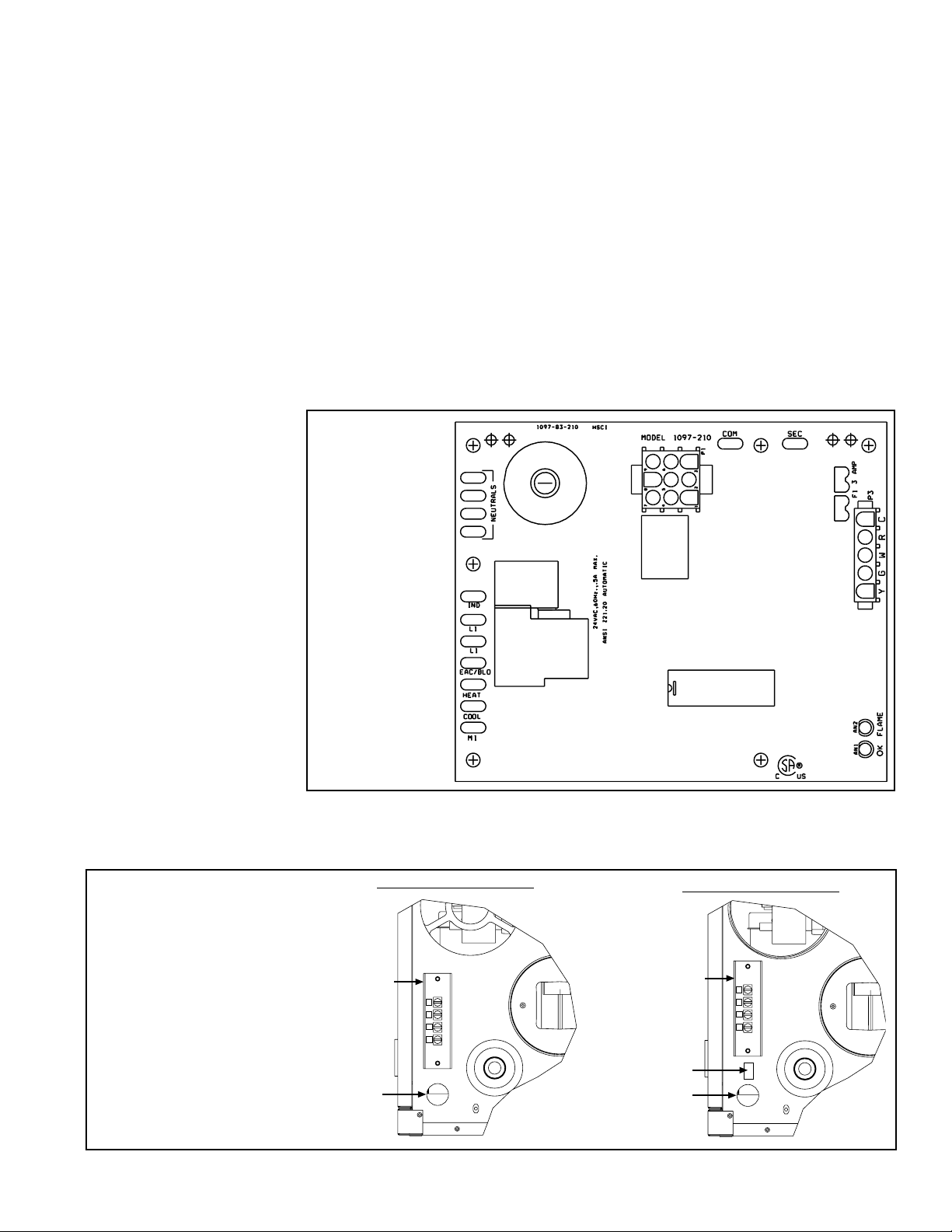
Conned Space:
A space whose volume is
less than 50 cubic feet per
1000 BTUH of the installed
appliance input rating
Combustion Air
Requirements for a
Heater Located in
a Conned Space -
applies to Model UDAP
and Model UDAP-CV
FIGURE 11 - Denition
of Conned Space and
Required Openings for
Combustion Air
6.2 Combustion Air - Models UDAP and UDAP-CV
This heater must be supplied with the air that enters into the combustion process and is
then vented to the outdoors. Sufcient air must enter the equipment location to replace
that exhausted through the heater vent system. In the past, the inltration of outside air
assumed in heat loss calculations (one air change per hour) was assumed to be suf-
cient. However, current construction methods using more insulation, vapor barriers,
tighter tting and gasketed doors and windows, weather-stripping, and/or mechanical
exhaust fans may now require the introduction of outside air through wall openings or
ducts.
The requirements for combustion and ventilation air depend upon whether the unit is
located in a conned or unconned space. An “unconned space” is dened as a space
whose volume is not less than 50 cubic feet per 1000 BTUH of the installed appliance.
Under ALL conditions, enough air must be provided to ensure there will not be a
negative pressure condition within the equipment room or space.
WARNING
Model UDAP and UDAP-CV power-vented unit heaters are
designed to take combustion air from the space in which the
unit is installed and are not designed for connection to outside
combustion air intake ducts. Connecting outside air ducts voids
the warranty and could cause hazardous operation. See Hazard
Levels, page 2.
Do not install a unit in a conned space without providing wall openings leading to and
from the space. Provide openings near the oor and ceiling for ventilation and air for
combustion as shown in FIGURE 11, depending on the combustion air source as noted
in Items 1, 2, and 3 below.
Add total BTUH of all appliances in the conned space and divide by gures below for
square inch free area size of each (top and bottom) opening.
(Note: For Model
UDAS, see
Venting Manual
for combustion air
requirements.)
1. Air from inside the building -- openings 1 square inch free area per 1000 BTUH.
Never less than 100 square inches of free area for each opening. See (1) in
FIGURE 11.
2. Air from outside through duct -- openings 1 square inch free area per 2000
BTUH. See (2) in FIGURE 11.
3. Air direct from outside -- openings 1 square inch free area per 4000 BTUH. See
(3) in FIGURE 11.
NOTE: For further details on supplying combustion air to a conned space, see the
National Fuel Gas Code ANSI Z223.1a (latest edition).
6.0 Mechanical
(cont’d)
7.1 General
All electrical wiring and connections, including electrical grounding MUST be made in
accordance with the National Electric Code ANSI/NFPA No. 70 (latest edition) or, in
Canada, with CSA Standard C22.1. In addition, the installer should be aware of any
local ordinances or gas company requirements that might apply.
CAUTION: If any of the original wire as supplied with the appliance must
be replaced, it must be replaced with wiring material having a temperature
rating of at least 105°C, except for limit control, ame rollout, and sensor
lead wires which must be 150°C. See Hazard Levels, page 2.
7.0 Electrical
Supply and
Wiring
CAUTION: Route
wires so that they do
not contact the ue
wrapper or venter
housing.
Form I-UDA, P/N 195673 R24, Page 17
FIGURE 12 - Supply
Wiring Connections at
the Circuit Board (DSI
Integrated Control
Module)
Supply Wiring
Connections
NOTE: Circuit
board is polarity
sensitive; “hot”
wire MUST BE
connected to
Terminal L1.
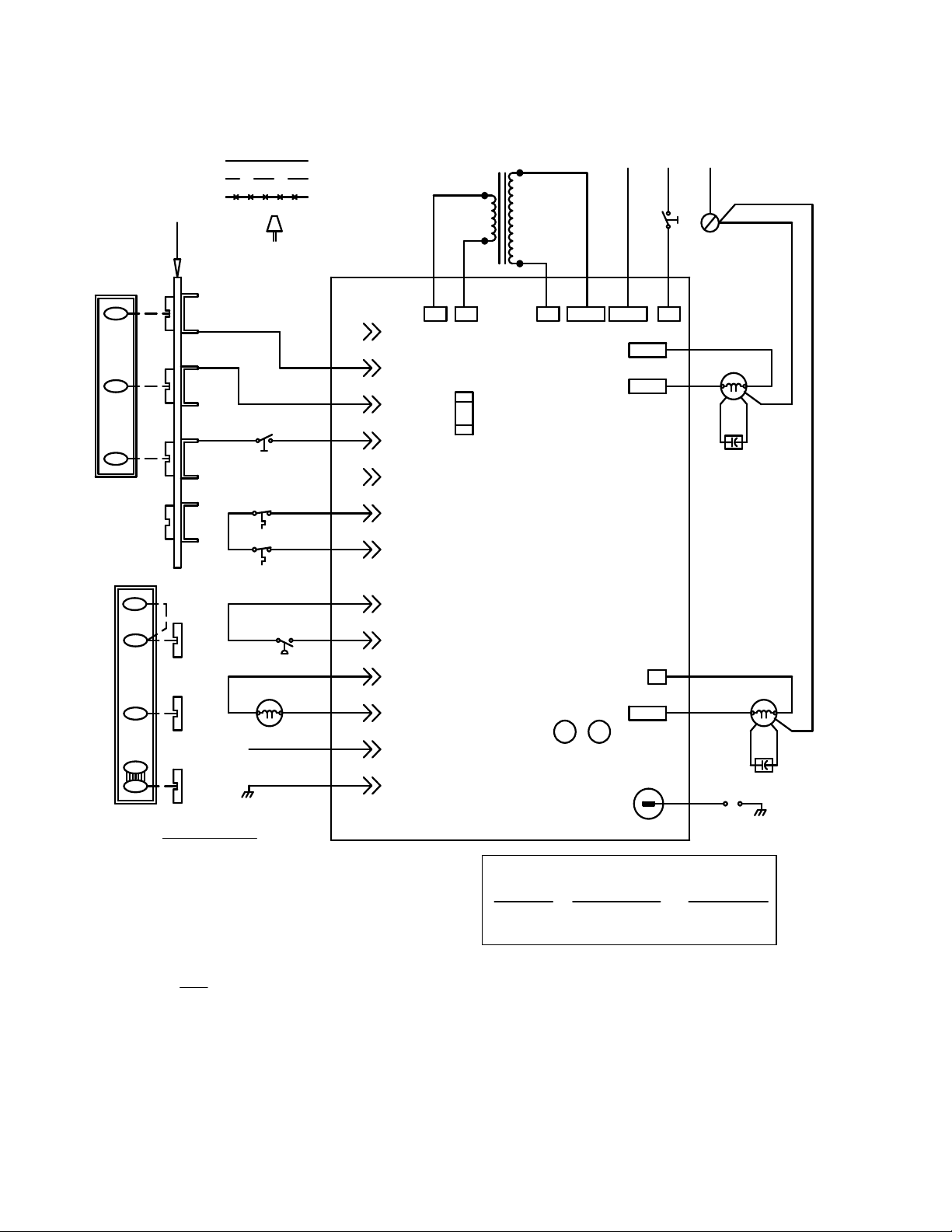
For all models, the terminal strip for 24 volt thermostat connections is located on the
outside of the cabinet at the back of the heater (See FIGURE 13). Wires from the ter-
minal strip are factory wired to the circuit board.
7.3 24V Control
Wiring
Connections
7.2 Supply Wiring
Check the rating plate on the heater for the supply voltage and current requirements.
A dedicated line voltage supply with disconnect switch should be run directly from the
main electrical panel to the heater. All external wiring must be within approved conduit
and have a minimum temperature rise rating of 60°C
.
Conduit must be run so as not
to interfere with the heater access panel. If the installation requires a stepdown trans-
former (Option CG), follow the instructions shipped with the option package for attach-
ing the transformer to the heater.
The electrical supply enters at the rear of the heater (See FIGURE 13). Model UDAS
includes a built-in disconnect switch (20A @ 115V; 10A @ 230V Rating). Model UDAS
supply wiring connects to leads located inside a sealed electrical box. To maintain the
sealing feature of the electrical box, always replace the cover plate. Model UDAP sup-
ply wiring connects directly to leads on the integrated circuit board.
The circuit board (See FIGURE 12) is located inside on the bottom of the control com-
partment. The circuit board is polarity sensitive. It is advisable to check the electrical
supply to be certain that the black wire is the “hot” wire and that the white wire is the
neutral wire. The supply connection made to “L1” on the circuit board must be the “hot”
wire.
FIGURE 13 - Terminal
Strip for 24-volt wiring
is on the outside rear of
the heater.
NOTE: The size of heater
illustrated has a vertical
terminal strip. Some sizes
have a horizontal terminal
strip.
Form I-UDA, P/N 195673 R24, Page 18
7.0 Electrical
Supply and
Wiring (cont’d)
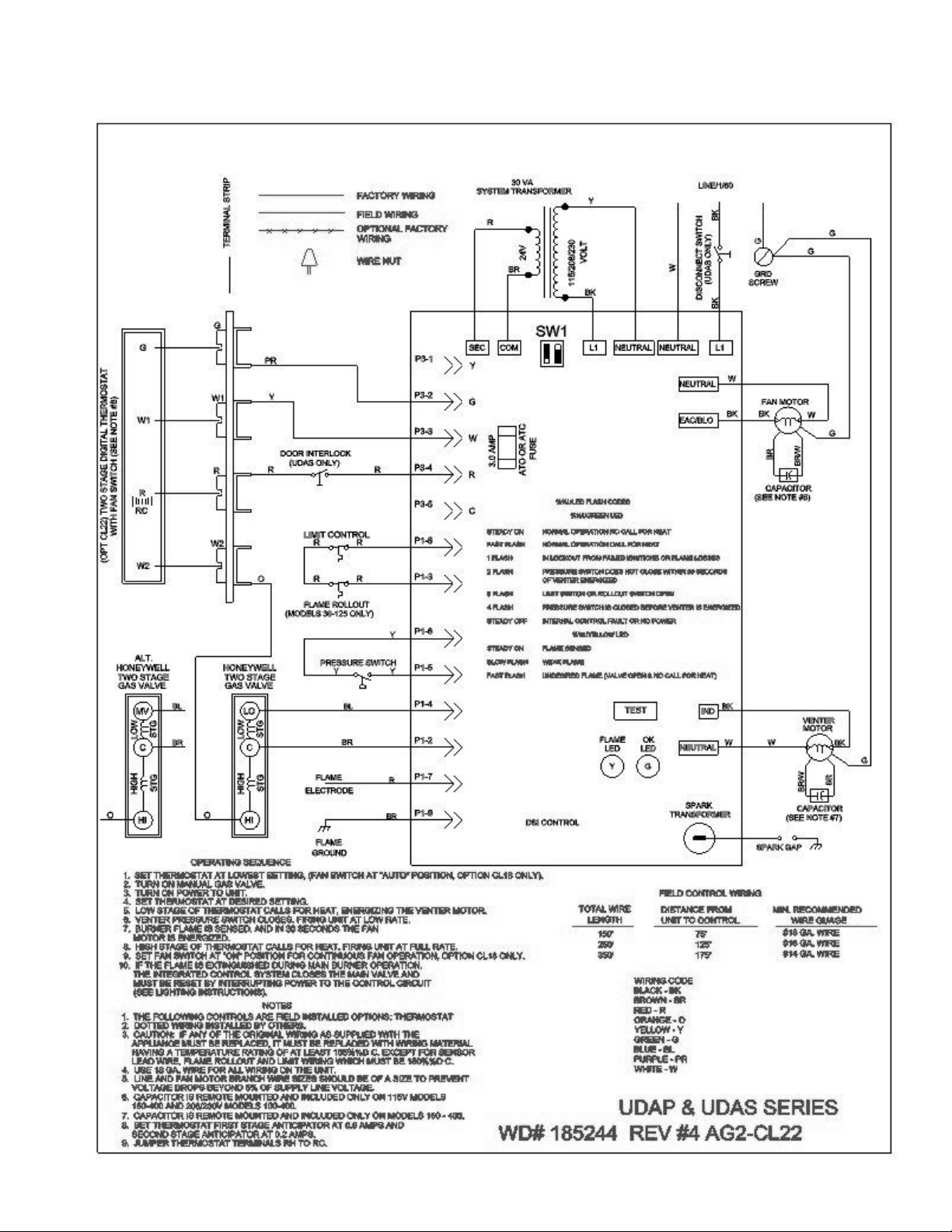
FIGURE 14A - Typical Wiring Diagram for Model UDAP or Model UDAS,
Single Stage
WD# 185139 REV #4
UDAP & UDAS SERIES
AG1-CL1 or CL22
VENTER
FAN MOTOR
PRESSURE SWITCH
SPARK GAP
GREEN LED
FIELD CONTROL WIRING
150'
250'
350'
75'
125'
175'
#18 GA. WIRE
#16 GA. WIRE
#14 GA. WIRE
TOTAL WIRE
LENGTH
DISTANCE FROM
UNIT TO CONTROL
MIN. RECOMMENDED
WIRE GUAGE
LED
Y
Y
WIRE CONNECTOR
FIELD WIRING
OPTIONAL FACTORY
FACTORY WIRING
DSI CONTROL
FAST FLASH
1 FLASH
2 FLASH
3 FLASH
4 FLASH
STEADY OFF
LED FLASH CODES
NORMAL OPERATION CALL FOR HEAT
IN LOCKOUT FROM FAILED IGNITIONS OR FLAME LOSSES
PRESSURE SWITCH DOES NOT CLOSE WITHIN 30 SECONDS
LIMIT SWITCH OR ROLLOUT SWITCH OPEN
PRESSURE SWITCH IS CLOSED BEFORE VENTER IS ENERGIZED
INTERNAL CONTROL FAULT OR NO POWER
YELLOW LED
FLAME SENSEDSTEADY ON
SLOW FLASH WEAK FLAME
UNDESIRED FLAME (VALVE OPEN & NO CALL FOR HEAT)FAST FLASH
IND
BK
NEUTRAL
W
MOTOR
LED
OKFLAME
GY
NEUTRAL
BK
W
LIMIT CONTROL
R R
R R
FLAME ROLLOUT
R
BR
FLAME
ELECTRODE
FLAME
GROUND
P1-8
P1-3
P1-6
P1-5
P1-7
P1-9
BK
W
GAS VALVE
BL
BR
P1-2
P1-4
BL
24V
115/208/230
Y
BK
BR
R
L1 NEUTRAL NEUTRAL L1COMSEC
SYSTEM TRANSFORMER
EAC/BLO
W
WIRING
OF VENTER ENERGIZED
VOLT
BK
ATO OR ATC
3.0 AMP
C
R
W
G
Y
R
W1
TERMINAL STRIP
R
Y
PR
P3-4
P3-3
P3-2
NORMAL OPERATION NO CALL FOR HEATSTEADY ON
G
G
G
G
G
GRD
SCREW
LINE/1/60
CAPACITOR
(SEE NOTE #6)
CAPACITOR
(SEE NOTE #7)
BR/W
BR
BR
BR/W
SPARK
TRANSFORMER
G
(MODELS 30-125 ONLY)
P3-5
P3-1
WIRING CODE
BLACK - BK
BROWN - BR
RED - R
ORANGE - O
YELLOW - Y
GREEN - G
BLUE - BL
PURPLE - PR
WHITE - W
Y
W
FUSE
(UDAS ONLY)
R
DOOR INTERLOCK
(UDAS ONLY)
DISCONNECT SWITCH
BK BK
(OPT CL1) SINGLE STAGE THERMOSTAT
WITH FAN SWITCH (SET ANT. AT 0.6 AMPS)
R
W
G
WITH FAN SWITCH (SEE NOTES #8 THRU #10)
(OPT CL22) TWO STAGE DIGITAL THERMOSTAT
RC
R
R
W2
G
W1
W1
G
W2
OPERATING SEQUENCE
1. SET THERMOSTAT AT LOWEST SETTING, (FAN SWITCH
2. TURN ON MANUAL GAS VALVE.
3. TURN ON POWER TO UNIT.
4. SET THERMOSTAT AT DESIRED SETTING.
5. THERMOSTAT CALLS FOR HEAT, ENERGIZING THE VENTER MOTOR.
6. VENTER PRESSURE SWITCH CLOSES, FIRING UNIT AT FULL RATE.
7. BURNER FLAME IS SENSED, AND IN 30 SECONDS THE FAN
MOTOR IS ENERGIZED.
8. IF THE FLAME IS EXTINGUISHED DURING MAIN BURNER OPERATION,
THE INTEGRATED CONTROL SYSTEM CLOSES THE MAIN VALVE AND
MUST BE RESET BY INTERRUPTING POWER TO THE CONTROL CIRCUIT
(SEE LIGHTING INSTRUCTIONS).
NOTES
1. THE FOLLOWING CONTROLS ARE FIELD INSTALLED OPTIONS: THERMOSTAT
2. DOTTED WIRING INSTALLED BY OTHERS.
3. CAUTION: IF ANY OF THE ORIGINAL WIRING AS SUPPLIED WITH THE
APPLIANCE MUST BE REPLACED, IT MUST BE REPLACED WITH WIRING MATERIAL
HAVING A TEMPERATURE RATING OF AT LEAST 105° C. EXCEPT FOR SENSOR
LEAD WIRE, FLAME ROLLOUT AND LIMIT WIRING WHICH MUST BE 150° C.
4. USE 18 GA. WIRE FOR ALL WIRING ON THE UNIT.
5. LINE AND FAN MOTOR BRANCH WIRE SIZES SHOULD BE OF A SIZE TO PREVENT
VOLTAGE DROPS BEYOND 5% OF SUPPLY LINE VOLTAGE.
6. CAPACITOR IS REMOTE MOUNTED AND INCLUDED ONLY ON 115V MODELS
150-400 AND 208/230V MODELS 100-400.
7. CAPACITOR IS REMOTE MOUNTED AND INCLUDED ONLY ON MODELS 150 - 400.
9. SET FAN SWITCH AT "ON" POSITION FOR CONTINUOUS FAN OPERATION.
AT "AUTO" POSITION.
8. VERIFY JUMPER ON CL22 THERMOSTAT TERMINALS R TO RC.
9. FAN SWITCH OR LOW STAGE OF CL22 THERMOSTAT ENERGIZES THE BLOWER MOTOR.
10. HIGH STAGE OF CL22 THERMOSTAT INITIATES A CALL FOR HEAT.
7.4 Wiring Diagrams
Form I-UDA, P/N 195673 R24, Page 19
FIGURE 14B - Typical Wiring Diagram for Model UDAP or Model UDAS, Two Stage Gas Valve or
Recirculation
Form I-UDA, P/N 195673 R24, Page 20
7.5.1 Combustion Air Proving (Pressure) Switch
The combustion air proving switch is a pressure sensitive switch that monitors air pres-
sure to ensure that proper combustion airow is available. On Model UDAP, the switch
is a single pole/normally open device which closes when a negative pressure is sensed
in the venter housing. On Model UDAS, the switch senses the differential pressure
between the negative pressure in the venter housing and the pressure in the cabinet.
(For switch location, see FIGURE 18, page 30.)
On startup when the heater is cold, the sensing pressure is at the most negative level,
and as the heater and ue system warm up, the sensing pressure becomes less nega-
tive. After the system has reached equilibrium (about 20 minutes), the sensing pres-
sure levels off.
If a restriction or excessive ue length or turns cause the sensing pressure to be out-
side the switch setpoint, the pressure switch will function to shutoff the main burner.
The main burner will remain off until the system has cooled and/or the ue system
resistance is reduced.
The Tables on the left below list the approximate water column negative pressure
readings and switch setpoints for sea level operating conditions for Model UDAP and
Model UDAP-CV heaters. The Table on the right lists the approximate water column
differential pressure readings and switch setpoints for sea level operating conditions
for Model UDAS heaters.
7.5 Electrical
Operating
Components
Pressure Switch
Settings
DANGER
Safe operation of this unit requires proper venting ow. NEVER
bypass combustion air proving switch or attempt to operate the
unit without the venter running and the proper ow in the vent
system. Hazardous conditions could result. See Hazard Intensity
Levels, page 2.
Model
UDAP
Startup
Cold
Equilibrium
Hot
Setpoint OFF
Setpoint
ON
Label
Color
Switch
P/N
Model
UDAS
Startup
Cold
Equilibrium
Hot
Setpoint
OFF
Setpoint
ON
Label
Color
Switch
P/N
Negative Pressure (" w.c.) Differential Pressure (" w.c.)
30 1.0 0.8 0.4 0.6 Green 197030 30 1.0 0.8 0.65 0.8 Yellow 197028
45 1.0 0.8 0.4 0.6 Green 197030 45 1.1 0.8 0.65 0.8 Yellow 197028
60 1.0 0.8 0.5 0.7 Orange 196388 60 1.1 0.9 0.65 0.8 Yellow 197028
75 1.0 0.9 0.5 0.7 Orange 196388 75 1.1 0.9 0.65 0.8 Yellow 197028
100 0.9 0.7 0.5 0.7 Orange 196388 100 0.9 0.7 0.55 0.7 White 196362
125 0.8 0.6 0.4 0.6 Green 197030 125 0.8 0.6 0.45 0.6 Pink 197032
150, 175 0.8 0.7 0.4 0.6 Green 197030 150, 175 0.8 0.6 0.40 0.6 Green 197030
200, 225 2.2 1.5 1.1 1.3 Blue 201158 200, 225 2.2 1.5 1.10 1.3 Blue 201158
250, 300 2.3 1.6 1.1 1.3 Blue 201158 250, 300 2.3 1.6 1.10 1.3 Blue 201158
350, 400 2.6 1.8 1.1 1.6 Red 201159 350, 400 2.6 1.8 1.10 1.6 Blue 201158
Model UDAP-CV
with Opt AV6
Startup Cold
Equilibrium
Hot
Setpoint
OFF
Setpoint
ON
Label
Color
Switch
P/N
Negative Pressure (" w.c.)
30 1.1 0.8 0.65 0.8 Yellow 197028
45 1.1 0.8 0.50 0.7 Orange 196388
60 0.9 0.8 0.60 0.8 Lt Blue 197029
75 1.0 0.8 0.60 0.8 Lt Blue 197029
100 0.9 0.7 0.55 0.7 White 196362
7.5.2 Limit Control
All units are equipped with a temperature activated auto reset limit control. The con-
trol is factory set and is non-adjustable. If the setpoint is reached, the limit control will
interrupt the electric supply to the gas valve. This safety device provides protection in
the case of motor failure or lack of airow due to a restriction at the inlet or outlet. (For
location, see FIGURE 18, page 30.)
CAUTION: The auto reset limit control will continue to shut down the
heater until the cause is corrected. Never bypass the limit control;
hazardous conditions could result. See Hazard Intensity Levels, page 2.
7.0 Electrical
Supply and
Wiring (cont’d)
Form I-UDA, P/N 195673 R24, Page 21
8.0 Controls and
Operation
8.1 Thermostat
Use either an optional thermostat available with the heater or a eld-supplied 24-volt
thermostat. Install according to the thermostat manufacturer’s instructions, paying par-
ticular attention to the requirements regarding the location of the thermostat.
Make sure that if there is a heat anticipator setting on the thermostat, it is set at 0.6 amps
(or in accordance with the amperage value noted on the heater wiring diagram).
Make thermostat connections at the terminal strip on the back of the heater. The strip
has four terminals, R, G, W1, and W2; refer to the wiring diagram.
IMPORTANT: All units MUST be operated by a 24-volt thermostat. Never use a
line voltage disconnect switch as a means of operating the heater. Operating Model
Sizes 30-125 by means other than a 24-volt thermostat may result in the ame rollout
switch tripping.
Unit Mounted Thermostat, Option CM3 - If the heater was ordered with Option CM3,
a kit for mounting the thermostat on the rear of the heater is shipped separately. Follow
the instructions in the option package to attach the bracket.
Select a snap-action thermostat when using the unit mounted thermostat bracket. Do
not use a mercury switch thermostat because the vibration may cause excessive unit
cycling. Be careful with the thermostat leads; shorting the thermostat wires to a metal
surface will cause the transformer to fail.
Sizes 30-125 are equipped with a temperature activated manually reset ame rollout
switch. The ame rollout switch is located at the top of the burner assembly. It is fac-
tory set and is non-adjustable. If the setpoint is reached, the ame rollout acts to inter-
rupt the electric supply to the gas valve. If the ame rollout switch activates, identify
and correct the cause before resetting the switch. Refer to the Maintenance Section,
Paragraph 10.2.10, for information on probable causes and instructions on resetting
the ame rollout switch. (For location, see FIGURE 18, page 30.)
DANGER
If the manual reset ame rollout switch activates, identify and
correct the cause before resetting the switch. Never bypass the
ame rollout switch; hazardous conditions could result. See
Hazard Intensity Levels, page 2.
7.5.3 Door Switch -
Model UDAS only
All sizes of Model UDAS heaters are equipped with a door switch which prevents
the heater from operating when the service door panel is open. The service panel of
a Model UDAS is equipped with a pliable gasket material that fully seals the door to
provide added protection from building air entering the combustion zone of the heater.
(For switch location, see FIGURE 18, page 30.)
The main operating gas valve is powered by the 24-volt control circuit through the ther-
mostat and safety controls. The main control valve is of the diaphragm type providing
regulated gas ow preset at the factory. (For location, see FIGURE 18, page 30.)
WARNING
The operating valve is the prime safety shutoff. All gas supply
lines must be free of dirt or scale before connecting the unit to
ensure positive closure. See Hazard Levels, page 2.
7.5.4 Gas Valve
7.5.5 Fan Motor
The fan motor is equipped with thermal overload protection of the automatic reset type.
Should the motor refuse to run, it may be because of improper current characteristics.
Make certain that the correct voltage is available at the motor.
NOTE: If the unit is equipped with an optional totally enclosed motor or optional volt-
age, the horsepower may be larger than the standard motor. Refer to the motor name-
plate to verify horsepower.
7.5.6 Venter Motor
The venter motor is assembled to the venter wheel and operates to provide combus-
tion airow. Operation is controlled by the ignition control module (circuit board); refer
to ignition system in Paragraph 8.3.
Form I-UDA, P/N 195673 R24, Page 22
8.2 DDC Controls,
Options D10 and
D14
FIGURE 15A -
DDC Control with
Transformer and
Relays is Mounted on
a Specially Designed
Bracket in the Control
Compartment
Multiple Heater Control, Option CL31 and Option CL32 - If the heater was ordered
with a multiple heater control option, one thermostat can be used to control up to six
heaters. The option includes a 40VA transformer that replaces the standard trans-
former in the “controlling” unit and a relay assembly that attaches to the additional
unit. Option CL31 provides for control of two heaters. If control of additional heaters is
desired (up to six total), Option CL32 which is the relay assembly only must be added
to each additional heater.
The option packages are shipped separately and include complete instructions on
installation and wiring.
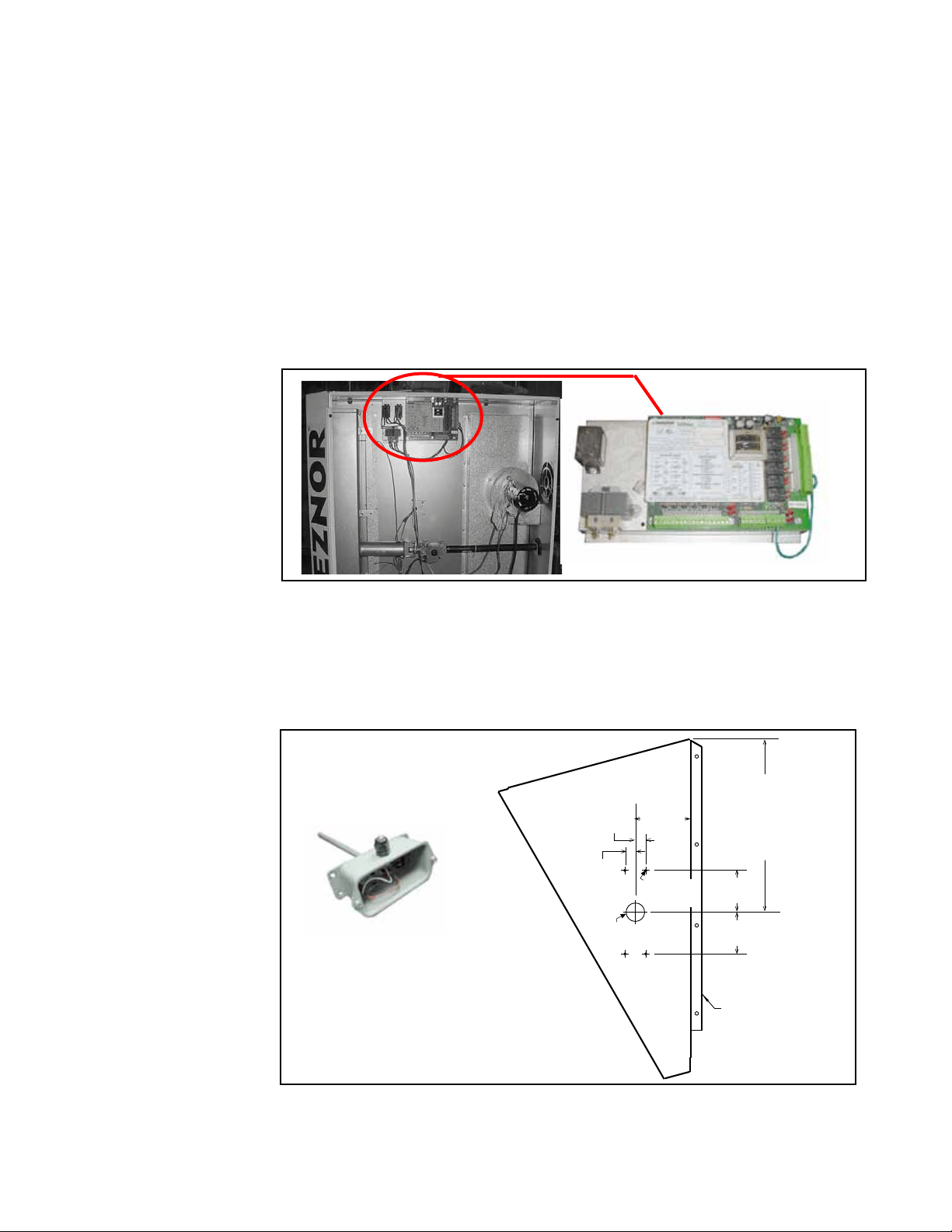
If the heater was ordered with Option D10 or D14, it is equipped with a Novar Minio
control module. The Novar control with its accompanying relays and power transformer
are mounted in the control compartment of the unit. See FIGURE 15A. This control
offers a wide variety of input and output points that can be congured to meet a wide
range of building management applications. User-selectable input types are Thermis-
tor, 4-20 milliamp, 1-5 volts, or digital.
Control Option D10 includes the controller and the sensor to be eld mounted at the
heater discharge. Option D14 requires a eld-supplied sensor that is compatible with
the control. For regulatory compliance specications, and safety precautions, review
the control manufacturer’s installation instructions in the owner’s envelope.
The recommended location for mounting the sensor is on the side of a eld-installed
optional downturn nozzle. See FIGURE 15B for an illustration of the sensor included
with Option D10 and dimensions for mounting it on the nozzle side.
Before installing the
discharge nozzle, drill
the holes in the side
panel as illustrated.
Mount the sensor on the nozzle side.
Drill a 7/8” hole in the cabinet top above the controller and install the bushing supplied
with the unit for running the sensor wire. Wire the sensor to the controller as illustrated
on the wiring diagram on the heater. Sensor wire is eld-supplied.
FIGURE 15B -
Recommended
Location for Mounting
the Sensor is on
the Side Panel of a
Discharge Nozzle
(Option CD 2, 3, or 4)
8.0 Controls and
Operation
(cont’d)
8.1 Thermostat
(cont’d)
Form I-UDA, P/N 195673 R24, Page 23
1) Call for Heat - The thermostat calls for heat by energizing the “W” terminal. The
control checks to see that the limit switch is closed and the pressure switch is open. If
the limit switch is open, the control responds as dened in the “Abnormal Heat Cycle,
Limit Switch Operation”. If the pressure switch is closed, the control will do four ashes
on the green LED and wait indenitely for the pressure switch to open. If the pressure
switch is open, the control proceeds to prepurge.
2) Prepurge - The control energizes the venter motor and waits for the pressure switch
to close. If the pressure switch does not close within 30 seconds of the venter motor
energizing, the control will do two ashes on the green LED. The control will leave the
venter motor energized indenitely as long as the call for heat remains and the pres-
sure switch is open.
When the pressure switch is proven closed, the control begins the prepurge time. If
ame is present any time while in prepurge, the prepurge time is restarted. If ame
is present long enough to cause lockout, the control responds as dened in “Fault
Modes, Undesired Flame”.
The control runs the venter motor for a 20 second prepurge time, then proceeds to the
ignition trial period.
3) Ignition Trial Period - The control energizes the spark and main gas valve. The
venter remains energized. If ame is sensed during the rst 16 seconds, the spark is
de-energized and the control proceeds to heat fan/blower on delay. If ame has not
been sensed during the rst 16 seconds, the control de-energizes the spark output
and keeps the gas valve energized for an additional one second ame proving period.
If ame is not present after the ame proving period, the control de-energizes the gas
valve and proceeds with ignition re-tries as specied in “Abnormal Heat Cycle, Ignition
Retry”. If ame is present, the control proceeds to the fan/blower on delay.
4) Fan/Blower On Delay - The control waits for 30 seconds from the time the gas
valve opened and then energizes the fan/blower motor. The gas valve and venter
motor remain energized. The control proceeds to steady heat mode.
5) Steady Heat - Control inputs are continuously monitored to ensure limit and
pressure switches are closed, ame is established, and the thermostat call for heat
remains. When the thermostat call for heat is removed, the control de-energizes the
gas valve and begins post-purge and fan/blower off delay timing.
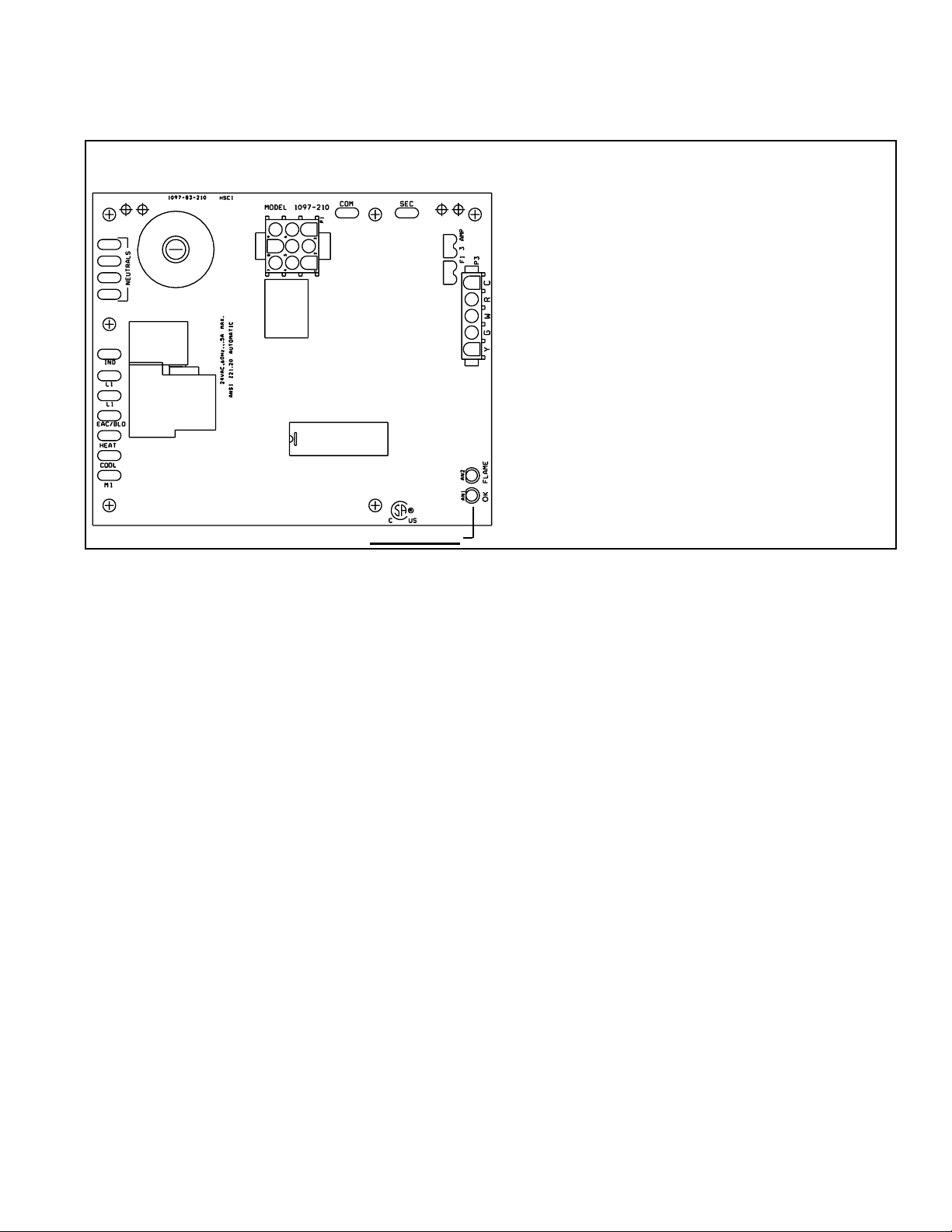
This heater is equipped with a direct spark integrated control module (circuit board).
The module monitors the safety devices and controls the operation of the fan and ven-
ter motors and the gas valve between heat cycles.
8.3 Ignition System
Control Status - Green LED Codes
Steady ON .......... Normal Operation, No call for heat
Fast Flash ...........Normal Operation, Call for heat
1 Flash ................System Lockout, Failed to detect or
sustain ame
2 Flashes ............ Pressure Switch Did Not Close within 30
Seconds of Venter motor
3 Flashes ............ High Limit or Flame Rollout Switch Open
4 Flashes ............ Pressure switch is closed before venter
motor is energized
Steady OFF ........Blown Fuse, No Power, or Defective Board
Flame Status - Yellow LED Codes
Steady ON ....... Flame is sensed
Slow Flash ....... Weak ame (current below 1.0
microamps ±50%)
Fast Flash ........ Undesired Flame (valve open and no
call for heat)
FIGURE 16 – DSI Integrated Control Module (circuit board)
LED Lights
LED lights are visible through a viewport on Model UDAS. Remove door panel to view LED lights
on Model UDAP.
Normal Heat
Cycle Operating
Sequence
LED lights are visible
through viewport on
Model UDAS. Remove
door panel to view LED
lights on Model UDAP.

Form I-UDA, P/N 195673 R24, Page 24
6) Post Purge - The venter motor output remains on for a 45-second post-purge period
after the thermostat is satised.
7) Fan/Blower Off Delay - The fan/blower motor is de-energized after a fan/blower off
delay (120 seconds). Timing begins when the thermostat is satised.
Interrupted Thermostat Call for Heat - If the thermostat demand for heat is removed
before the ame is recognized, the control will run the venter motor for the post purge
period and de-energize all outputs.
If the thermostat demand for heat is removed after successful ignition, the control will
de-energize the gas valve, run the venter motor through post purge, and run the fan/
blower motor on heat speed for the selected delay off time.
Ignition Retry - If ame is not established on the rst trial for ignition period, the control
de-energizes the gas valve and the venter motor remains energized for an inter-purge
period of 10 seconds. The spark and gas valve are then re-energized, and the control
initiates another trial for ignition.
If ame is not established on the second trial for ignition, the control de-energizes the
gas valve, energizes the fan/blower motor on heat speed, and venter motor remains
energized. The fan/blower motor is shut off after 120 seconds. When the fan/blower
motor de-energizes, the spark and gas valve are re-energized and the control initiates
another trial for ignition. (This fan delay is self-healing feature for an open auxiliary limit
switch).
If ame is not established on the third trial for ignition period, the control de-energizes
the gas valve, and the venter motor remains energized for an inter-purge period of 10
seconds. The control then re-energizes the gas valve and spark and initiates another
trial for ignition.
If ame is not established on the fourth trial for ignition (initial try plus 3 re-tries), the
control de-energizes the gas valve and goes into lockout. The control goes to one ash
on the green LED to indicate ignition failure lockout.
Limit Switch Operation - The limit switch is ignored unless a call for heat is pres-
ent (W energized). If the limit switch is open and a call for heat is present, the control
de-energizes the gas valve and turns the fan/blower motor on heat speed and runs
the venter motor. The control will be in soft lockout and ashing fault code “3” before
returning to normal operation.
When the switch re-closes or the call for heat is lost, the control runs the venter motor
through post purge and runs the blower/fan motor through the selected fan off delay.
Pressure Switch - If the pressure switch opens before the trial for ignition period, the
venter motor will run through the pressure switch recognition delay (2 seconds), the
gas valve will be de-energized, and the venter motor will run through the postpurge
time. The control will re-start the heat cycle at the pressure switch proving state if the
call for heat still exists.
Pressure switch opening for less than 2 seconds during the trial for ignition period shall
not interrupt the heat cycle. (Gas valve will de-energize while the pressure switch is
open.)
If the pressure switch opens after a successful ignition, the control will de-energize
the gas valve. If ame is lost before the end of the 2 second pressure switch recogni-
tion delay, the control will respond to the loss of ame. If the pressure switch remains
open for 2 seconds and the ame remains, the control de-energizes the gas valve, the
venter motor runs through post-purge, and the fan/blower motor runs on heat speed
through the selected fan off delay. When the fan off delay is over, the fan/blower motor
is de-energized, and a heat cycle is begun if the call for heat still exists.
When the thermostat calls for continuous fan (G) without a call for heat, the fan motor is
energized after a .25 second delay. NOTE: This brief on delay is to allow the “G” termi-
nal to energize slightly before “Y” and an external changeover relay to switch from “G”
to “W” without causing momentary glitches in the fan/blower output. The fan remains
energized as long as the call for fan remains without a call for heat.
Abnormal Heat Cycle
Functions
8.3 Ignition System
(cont’d)
8.0 Controls and
Operation
(cont’d)
Normal Heat Cycle Operating Sequence (cont’d)

Form I-UDA, P/N 195673 R24, Page 25
If a call for heat (W) occurs during continuous fan, the fan/blower will de-energize.
A call for fan is ignored while in lockout.
Undesired Flame - If ame is sensed longer than 20 seconds while the gas valve is
de-energized, the control shall energize the venter motor and fan/blower motor on heat
speed. When ame is no longer sensed, the venter motor will run through postpurge,
and the fan/blower motor will run through the selected heat fan off delay time. The
control will do a soft lockout, but will still respond to open limit and ame. The FLAME
(yellow) LED shall ash rapidly when lockout is due to undesired ame.
Gas Valve Relay Fault - If the control senses the gas valve as energized for more than
one second when the control is not attempting to energize the gas valve, or the gas
valve is sensed as not energized when it is supposed to be energized, then the control
will lockout with green LED off. The control assumes either the contacts of the relay
driving the gas valve have welded shut, or the sensing circuit has failed. The venter
motor is forced off to open the pressure switch to stop gas ow unless ame is pres-
ent.
If the gas valve was sensed as closed when it should be open, and has not de-ener-
gized after the venter motor was shutoff for 15 seconds, then the venter motor is re-
energized to vent the unburned gas.
Soft Lockout - The control shall not initiate a call for heat or call for continuous fan
while in lockout. The control will still respond to an open limit and undesired ame.
Lockout shall automatically reset after one hour. Lockout may be manually reset by
removing power from the control for more than one second or removing the thermostat
call for heat for more than one and less than 20 seconds.
Hard Lockout - If the control detects a fault on the control board, the status LED will be
de-energized, and the control will lockout as long as the fault remains. A hard lockout
will automatically reset if the hardware fault clears.
Power Interruption - During a momentary power interruption or at voltage levels below
the minimum operating voltage (line voltage or low voltage) the system will self-recover
without lockout when voltage returns to the operating range.
Power interruptions of less than 80mS shall not cause the control to change operating
states. Power interruptions greater than 80mS may cause the control to interrupt the
current operating cycle and re-start.
Lockout
Fault Modes
Continuous Fan
Operation
Form I-UDA, P/N 195673 R24, Page 26
9.0 Commissioning
and Startup
Check to be sure that all screws used to hold shipping brackets were re-
installed in the heater cabinet.
Check suspension. Unit must be secure and level.
Check clearances from combustibles. Requirements are in Paragraph 4.1.
Check vent system to be sure that it is installed according to the
instructions in the appropriate Vent Installation Manual as listed in
Paragraph 2.2.
Check piping for leaks and proper gas line pressure. Bleed gas lines of
trapped air. See Paragraph 6.1.
Check electrical wiring. Be sure all wire gauges are as recommended.
A service disconnect switch should be used. Verify that fusing or circuit
breakers are adequate for the load use.
Check polarity. Verify that line voltage exists between the black “L1” and
earth ground.
If installed in California, verify that California Warning Label is displayed.
WARNINGS
For your safety, read before operating. If you do not follow
these instructions exactly, a re or explosion may result
causing property damage, personal injury, or loss of life.
• This appliance does not have a pilot. It is equipped with an
ignition device which automatically lights the burner. Do not try
to light the burner by hand.
• Before operating, smell all around the appliance area for gas.
Be sure to smell next to the oor because some gas is heavier
than air and will settle on the oor.
WHAT TO DO IF YOU SMELL GAS
• Do not try to light any appliance.
• Do not touch any electrical switch; do not use any phone in
your building.
• Leave the building immediately.
• Immediately call your gas supplier from a phone remote from
the building. Follow the gas supplier’s instructions.
• If you cannot reach your gas supplier, call your re department.
• Use only your hand to turn the gas control ON/OFF knob on
the gas valve. Never use tools. If the valve ON/OFF knob will
not turn by hand, do not try to repair it. Call a qualied service
technician. Force or attempted repair may result in a re or
explosion.
• Should overheating occur, or the gas supply control system fail
to shut off the ow of gas, turn off the manual gas valve to the
appliance before shutting off the electrical supply.
• Do not use this appliance if any part has been under water.
Immediately call a qualied service technician to inspect the
appliance and to replace any part of the control system and any
gas control which has been under water.
9.1 Check the installation prior to startup:
9.2 Heater Startup:
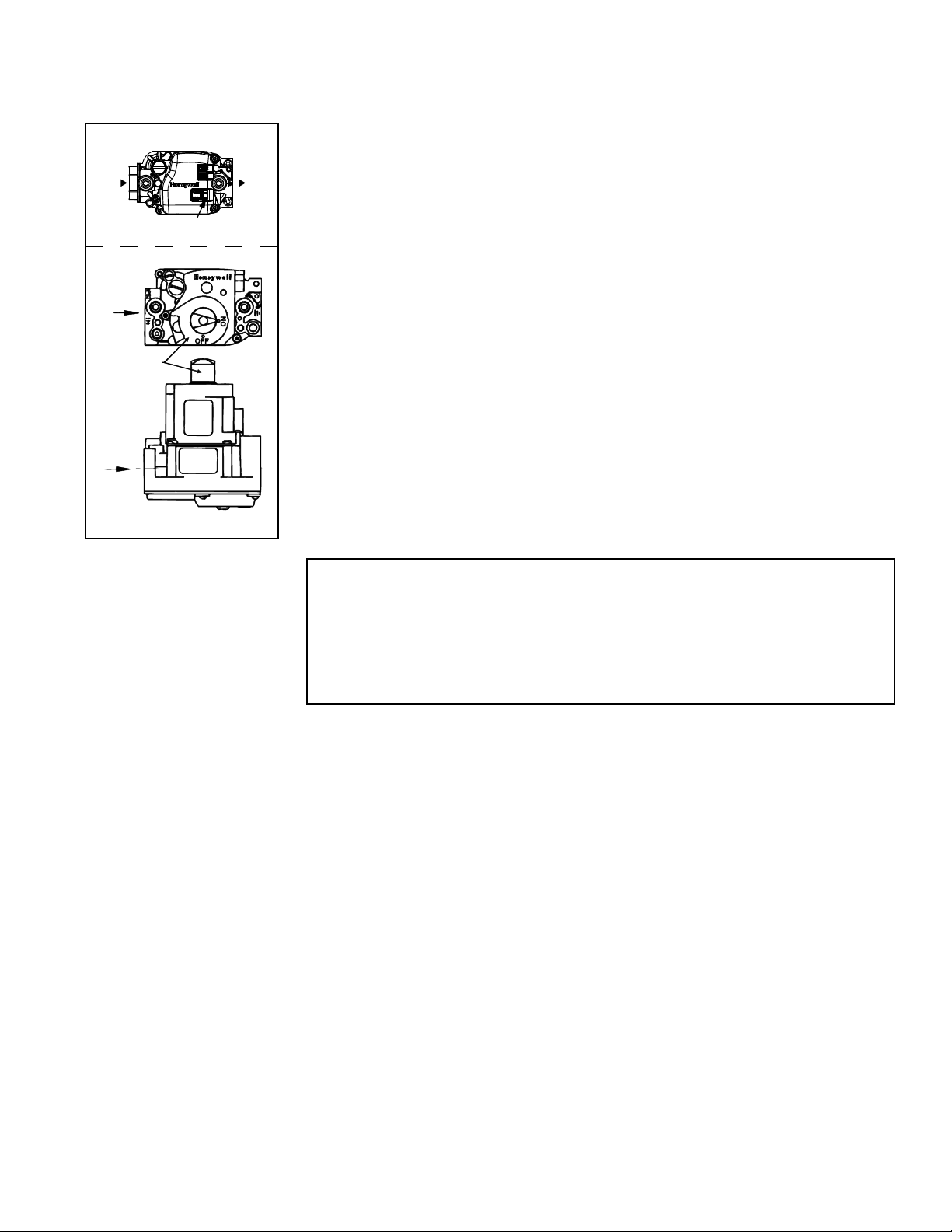
Form I-UDA, P/N 195673 R24, Page 27
Operating Sequence
1. Set thermostat at lowest setting.
2. Turn off all electric power to the appliance.
3. This appliance is equipped with an ignition device which automatically lights the
burner. Do not try to light the burner by hand. Open the access door and locate the
gas control (ON/OFF) knob or switch on the gas valve. (See FIGURE 17.)
4. Turn the gas control switch to “OFF” or the knob clockwise to “OFF”.
5. Wait ve (5) minutes to clear out any gas. Then smell for gas, including near the
oor. If you smell gas, STOP! and follow the steps in the WARNINGS printed
above or on the Operating Label on the heater. If you do not smell gas, proceed to
the next step.
6. Turn the gas control switch to “ON” or the knob counterclockwise to “ON”.
7. Close the access door.
8. Turn on the electric power to the heater.
9. Set the thermostat to the desired setting.
NOTE: If the appliance does not operate, follow the instructions “To Turn Off Gas to
Appliance” printed below (and on the Operating Label on the heater) and call your
service technician.
10. Thermostat calls for heat, energizing the venter motor.
11. Venter pressure switch closes, ring the unit.
12. Burner ame is sensed and in 30 seconds after the gas valve is energized, the
fan motor is energized.
13. If the ame is extinguished during the main burner operation, the integrated con-
trol system closes the main valve and must be reset by interrupting power to the
control circuit. (See lighting instructions on the heater.).
TO TURN OFF GAS TO THE APPLIANCE
1) Set thermostat to lowest setting
2) If service is to be performed, turn off all electric power to the appliance.
3) Open the access door.
4) Turn the gas control switch to “OFF” or turn knob clockwise to “OFF” (Do not
force).
5) Close the access door.
FIGURE 17 - Gas Valve
9.3 Check
installation after
startup:
Vent System Testing Procedure
The steps below shall be followed with each heater or utility heater connected to the
venting system placed in operation while any other appliance(s) connected to the vent-
ing system(s) is not in operation.
1. Seal unused openings(s) in the venting system.
2. Inspect the venting system for proper size and horizontal pitch as required in the
National Flue Gas Code, ANSI Z223.1/NFPA 54, or the Natural Gas and Propane
Installation Code, CSA B149.1, and the venting manual instructions. Verify that
there is no blockage or restriction, leakage, corrosion, and/or other deciencies
that could cause an unsafe condition.
3. In so far as is practical, close all doors, windows, other open spaces within the
building, and all doors between the space in which the appliance(s) connected to
the venting system is located. Turn on clothes dryers and any exhaust fans (such
as range hoods and bathroom exhausts) so they operate at maximum speed. Do
not operate a summer exhaust fan. Close replace dampers.
4. Following the lighting instructions, place the utility heater being inspected in
operation. Adjust the thermostat so that the utility heater will operate continuously.
5. After it has been determined that each utility heater connected to the venting
system properly vents when tested as outlined above, return doors, windows,
exhaust fans, replace dampers, and any other gas-burning appliance to their
previous condition of use.
6. If improper venting is observed during any of the above tests, the venting system
must be corrected.
Top View
ON/OFF Switch
Form I-UDA, P/N 195673 R24, Page 28
DANGER
The gas burner in this gas-red equipment is designed and equipped to provide safe
controlled complete combustion. However, if the installation does not permit the
burner to receive the proper supply of combustion air, complete combustion may
not occur. The result is incomplete combustion which produces carbon monoxide,
a poisonous gas that can cause death. Safe operation of indirect-red gas burning
equipment requires a properly operating vent system that vents all ue products to
the outside atmosphere. FAILURE TO PROVIDE PROPER VENTING WILL RESULT
IN A HEALTH HAZARD WHICH COULD CAUSE SERIOUS PERSONAL INJURY OR
DEATH.
Always comply with the combustion air requirements in the installation codes
and in Paragraph 6.2. Combustion air at the burner should be regulated only by
manufacturer-provided equipment. NEVER RESTRICT OR OTHERWISE ALTER THE
SUPPLY OF COMBUSTION AIR TO ANY HEATER. Model UDAP units installed in a
conned space must be supplied with air for combustion as required by Code and
in Paragraph 6.2 of this heater installation manual. MAINTAIN THE VENT OR VENT/
COMBUSTION AIR SYSTEM IN STRUCTURALLY SOUND AND PROPER OPERATING
CONDITION.
With the unit in operation, measure valve outlet gas pressure. If operated at high
altitude, adjust outlet gas pressure for altitude.
See information and instructions in Paragraph 6.1.
Turn the unit off and on, pausing two minutes between each cycle. Observe for
smooth ignition.
Place the "Literature Bag" containing the Limited Warranty, this booklet, the venting
manual, and any control or optional information in an accessible location near the
heater.
10.0 Maintenance
and Service
WARNING
If you turn off the power supply, turn off the gas. See Hazard
Levels, page 2.
The material contained in the MAINTENANCE AND SERVICE Section of this manual
is designed to aid a qualied service person in maintaining and servicing this equip-
ment. This heater will operate with a minimum of maintenance. To ensure long life and
satisfactory performance, a heater that is operated under normal conditions should be
inspected and cleaned at the start of each heating season. If the heater is operating in
an area where an unusual amount of dust or soot or other impurities are present in the
air, more frequent maintenance is recommended.
When any service is completed, be careful to reassemble correctly to ensure that no
unsafe conditions are created. When re-lighting, always follow the lighting instructions
on the heater.
This heater is equipped with a
TCORE
2
®
burner.
Inspect the burner/control compartment annually to determine if cleaning is necessary.
9.0 Commissioning
and Startup
(cont’d)
9.3 Check
installation after
startup (cont’d)
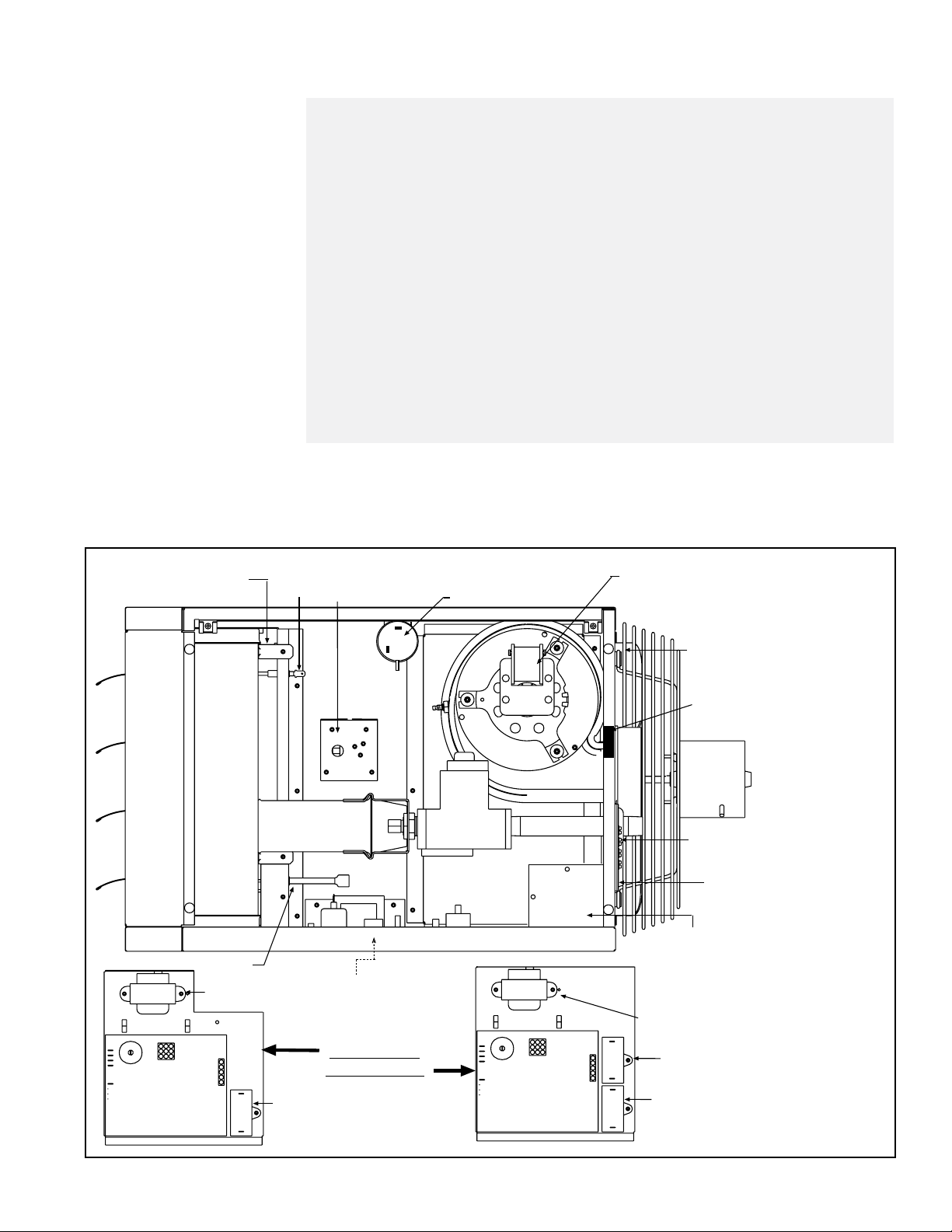
Form I-UDA, P/N 195673 R24, Page 29
FIGURE 18 - Location of Controls
10.1 Maintenance
Schedule
Maintenance Schedule - The following procedures should be carried out at least
annually (See FIGURE 18 and Paragraphs 10.2.1 - 10.2.14.):
• Clean all dirt, lint, and grease from the combustion air opening
(UDAP) and venter assembly.
• Clean all dirt, lint, and grease from the fan blade, fan guard, and
motor.
• Check the heat exchanger both internally and externally.
• Check the burner for scale, dust, or lint accumulation. Clean if
needed.
• Check gas valve to ensure that gas ow is being shutoff completely.
• Check the vent or vent/combustion air system for soundness. Clean
openings. Replace any parts that do not appear sound.
• Check the wiring for any damaged wire. Replace damaged wiring.
(See Paragraph 7 for replacement wiring requirements.)
NOTE: If replacement parts are required, use only factory-authorized
parts.
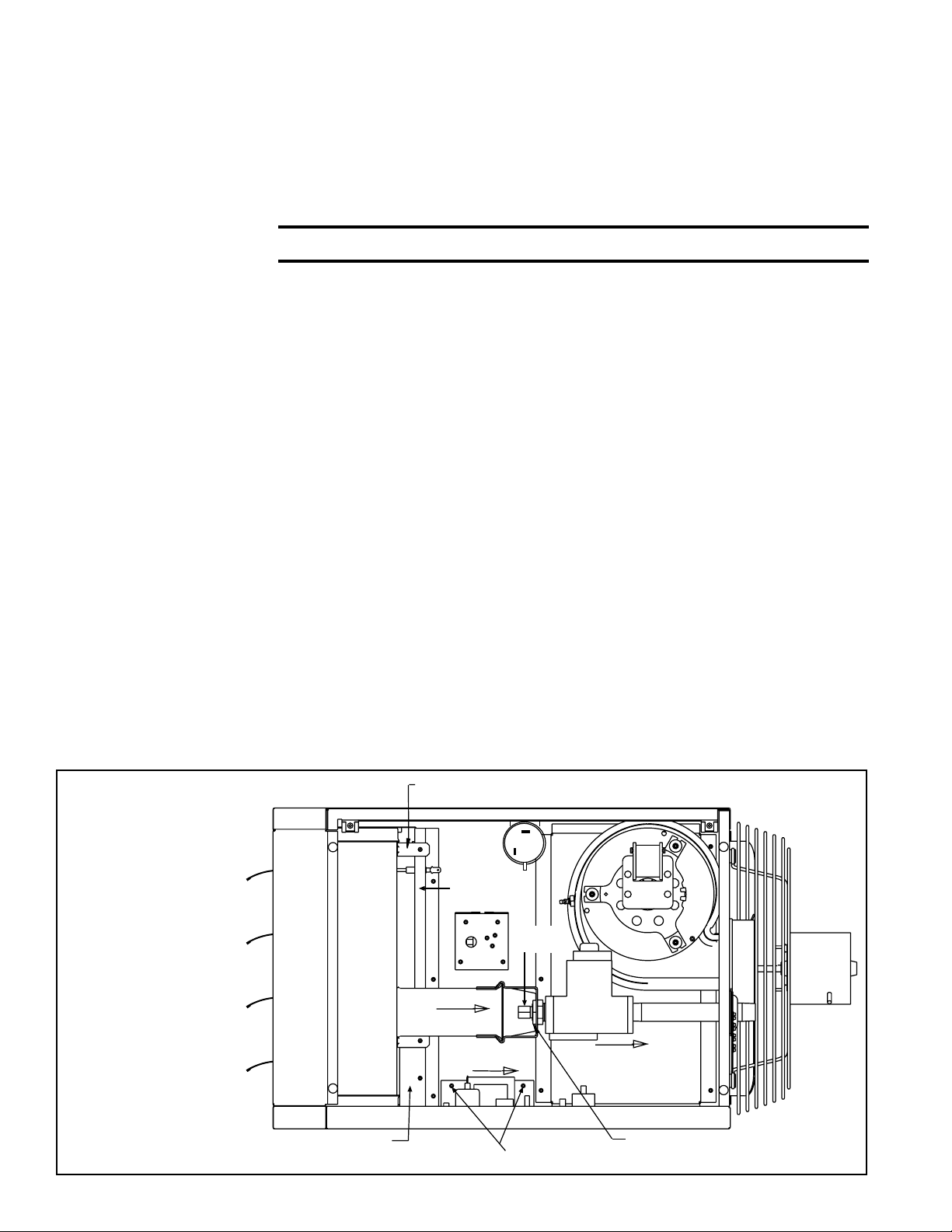
Form I-UDA, P/N 195673 R24, Page 30
10.2 Maintenance
Procedures
10.2.1 Heat
Exchanger
Maintenance
This heater has a TCORE
2
®
heat exchanger.
Remove any external dirt or dust accumulation. Visually check the heat exchanger for
cracks and holes. If a crack or hole is observed, replace the heat exchanger.
NOTE: Inspection of the lower portion of the heat exchanger is done with the burner
removed. See the Burner Service section below for information on inspecting the lower
portion of the heat exchanger.
10.2.2 Burner
Maintenance
If there is an accumulation of dirt, dust, and/or lint, clean the compartment and follow
the instructions below to remove and clean the burner.
CAUTION: Use of eye protection is recommended.
Burner Removal
Instructions (Refer to
FIGURE 19.)
1. Outside the cabinet, shut the gas supply off at the manual valve ahead of the
union.
2. Turn off electric supply.
3. Disconnect the gas supply at the union outside of the cabinet.
4. Remove the access panel.
5. Disconnect and Move the Gas Train - At the gas valve, mark and disconnect the
wires. Carefully remove the burner orice and orice adapter locking nut. Slide the
orice adapter out through the bracket on the burner pushing the gas train to the
right. This will move the gas train out of the way.
6. Move the Control Assembly - Remove the two screws holding the control
assembly bracket. Being careful not to disconnect any wires, slide the control
assembly to the right.
7. Remove Secondary Air Bafes (Sizes 60-400 only) - Vertical along the right side
of the burner, locate the at plate(s) identied as the secondary air bafe(s). The
quantity of bafes could be one to four depending on heater size. Each bafe is
held in place by one screw. For re-assembly, on the secondary air shield, mark
the location (top and bottom) of each bafe. Remove all bafes.
8. Remove Burner Assembly
a) Locate the burner body supports. Depending on the size, the burner will have
two or more supports. At each support, remove the one screw that attaches it to
the secondary air shield
b) Holding the venturi tube, slide the entire burner assembly slightly to the right to
disengage the burner from the supports on the left. Then rotate the open end
of the venturi tube inward toward the heater. Carefully pull the burner assembly
out of the cabinet.
FIGURE 19 - Burner
Removal (UDAP
illustrated; same
process for both
UDAP and UDAS)
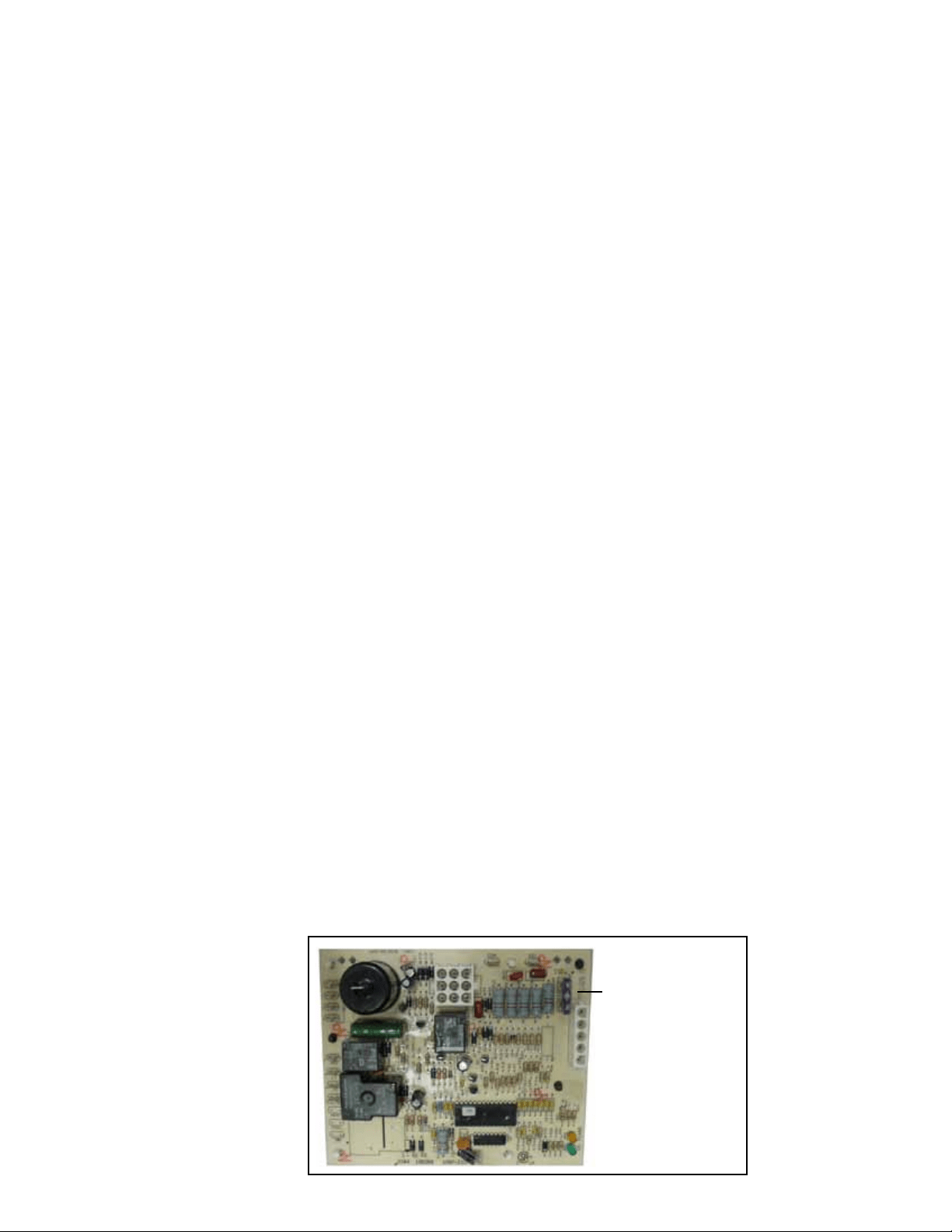
Form I-UDA, P/N 195673 R24, Page 31
Inspect and Clean the
Burner
With the burner assembly removed, shine a ashlight on the burner ribbons. Look for
carbon buildup, scale, dust, lint, and/or anything that might restrict ow through the
spaces between the burner ribbons. Holding the burner assembly so that any foreign
material will fall away from the burner, use a stiff bristle brush to loosen and remove
any foreign material(s). If the burner is excessively dirty, remove one of the burner end
caps. Remove the four screws that hold the end cap to the burner housing. Lightly tap
the end cap to remove it.
Clean all foreign material from the burner and venturi. After the burner is thoroughly
clean, replace the end cap making certain that it is tight against the burner housing.
NOTE: If any of the burner components are damaged or deteriorated, replace the
burner assembly.
Inspect the Lower Portion of the Heat Exchanger (with burner assembly
removed)
At the burner ame entrance of each tube, shine a bright light into each heat exchanger
section. With the light shining into the heat exchanger, observe the outside for visible
light. Repeat this procedure with each heat exchanger section. If any light is observed,
replace the heat exchanger.
Re-Install the Burner
Instructions to Re-Install the Burner (Refer to FIGURE 19)
1. Attach the Burner Assembly - Holding the venturi tube, slide the entire burner
assembly into position. Align the supports on the left side with the slots in the
burner shield; sliding the supports into the slots. On the right, re-attach each
burner body support to the secondary air shield.
2. Attach the Secondary Air Bafes (Sizes 60-400 only) - Re-attach the secondary
air bafes as marked. Bafes may be different sizes and each must be attached in
the correct location.
3. Attach the Control Assembly - Carefully slide the control assembly into position.
Re-attach with the same screws. Check to be sure all wire connections are secure.
4. Attach the Gas Train - Slide the gas train so that the orice adapter is through
the bracket. Fasten the gas train to the bracket with the locking nut. Install the gas
orice. Re-connect the wires to the gas valve.
5. Close the access panel.
6. Reconnect the gas supply at the union outside of the cabinet. Leak test the
connection with leak detecting solution.
7. Turn on the electric and the gas. Check for proper operation.
10.2.3 Burner Orice
Burner orice usually only needs to be replaced when installing a gas conversion kit. If
ordering a replacement orice only, give BTUH content and specic gravity of gas, as
well as the model and serial number of the unit. When removing or replacing the burner
orice, be careful not to damage the venturi tube and/or the bracket.
10.2.4 Ignition System
DSI Integrated Control Module (circuit board) - See FIGURE 20. The module moni-
tors the operation of the heater including ignition. The only replaceable component is
the 3 amp Type ATC or ATO fuse. If the fuse is blown, the problem is most likely an
external overload. Correct the problem and replace the fuse.
FIGURE 20 - DSI
Integrated Control
Module (Circuit Board)
Only
replaceable
part is a Type
ATC or ATO 3
amp fuse (Color
Code Violet),
P/N 201685
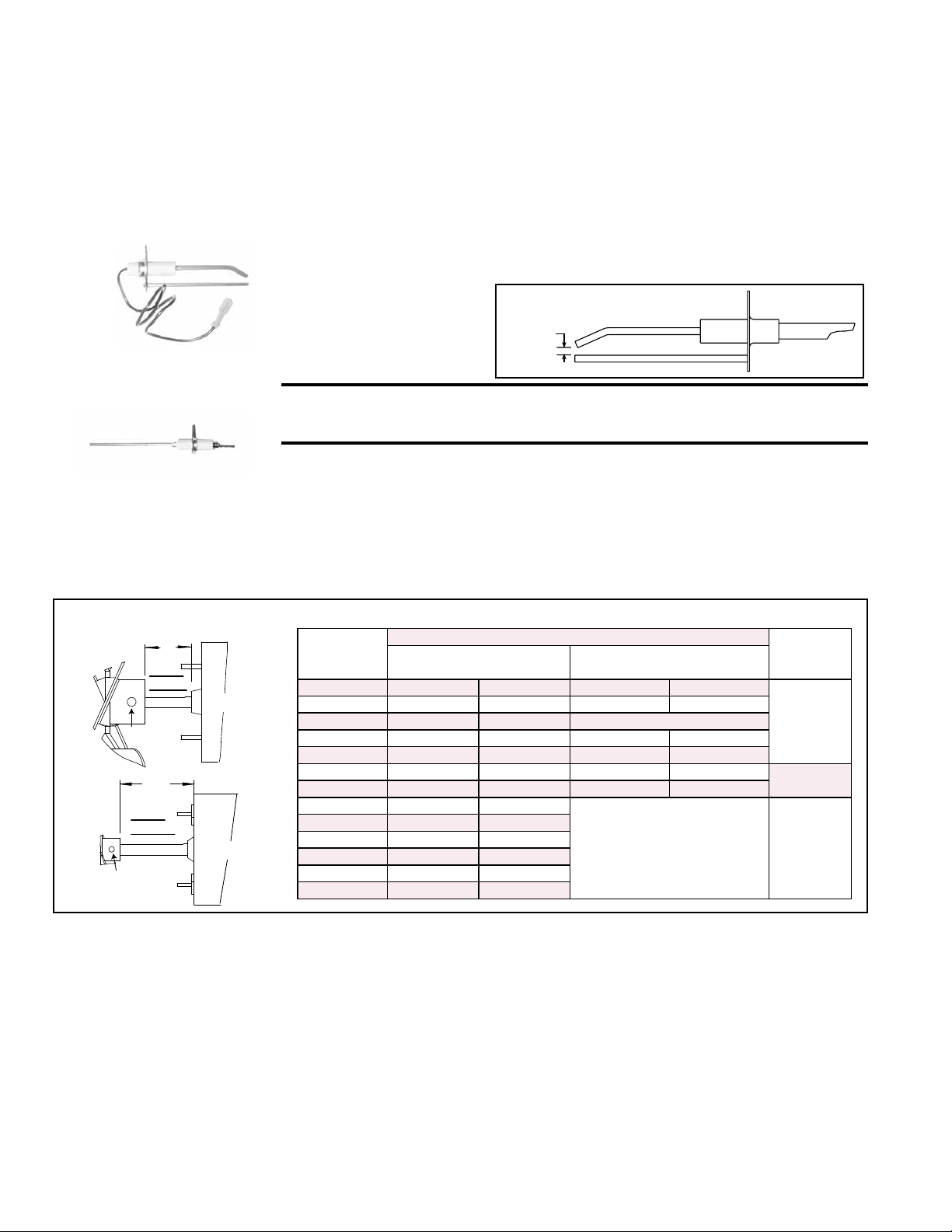
Form I-UDA, P/N 195673 R24, Page 32
FIGURE 21 - Ignitor
showing required Spark
Gap measurement
Ignitor - Refer to FIGURE 18 and locate the ignitor. Disconnect the wire; remove the
screw and the ignitor. Clean the ignitor assembly with an emery cloth.
Spark gap must be maintained to 1/8”. See FIGURE 21.
Ignitor
CAUTION: Due to high voltage on the spark wire and electrode,
do not touch when energized. See Hazard Levels, page 2.
Flame Sensor - Refer to FIGURE 18 and locate the ame sensor. Disconnect the
wire; remove the screw and the ame sensor. Clean with an emery cloth.
Flame Sensor
Do not attempt to disassemble the control module. However, each heating season
check the lead wires for insulation deterioration and good connections.
Proper operation of the direct spark ignition system requires a minimum ame signal
of 1.0 microamps as measured by a microampmeter.
For further information and check out procedure on the direct spark ignition system,
refer to Paragraph 8.3 and the Troubleshooting Flow Chart in Paragraph 10.3.
10.2.5 Fan Motor, Fan
Blades, and Guard
Remove dirt and grease from the motor, the fan guard, and blades. Use care when
cleaning the fan blades to prevent causing misalignment or imbalance. Check that the
hub of the fan blades is secure to the shaft.
Follow these instructions for replacement of the fan guard, fan motor and/or fan
blades.
FIGURE 22 - Fan Blade Position on the Shaft by Unit Size and Type of Fan Guard
1. If the heater is installed, turn off the gas and disconnect the electric power.
2. Open the access door and disconnect the fan motor wires, capacitor wires at the
capacitor, and ground screw.
3. Remove the assembled parts (the fan guard, the motor and the fan blade).
4. Disassemble and replace whatever parts are needed and reassemble using
whatever part(s) are being replaced and the original parts.
Be sure the fan blade is in the proper position on the shaft; refer to the illustration
and table in FIGURE 22.
Position the assembly on the heater. Attach the fan guard.
Rotate the fan blade to check for adequate clearance. If adjustment is required,
loosen the mounting screws, re-position the fan guard, and tighten the screws.
Rotate the fan blade and re-check for adequate clearance. Repeat this procedure
until the assembly is positioned properly.
10.0 Maintenance
and Service
(cont’d)
10.2 Maintenance
Procedures
(cont’d)
10.2.4 Ignition System (cont’d)
UDAP/UDAS
Size
A = Fan Spacing
Setscrew
Torque
(in/lbs ±10)
Standard Wire Fan Guard
with .5” (13mm) Spacing
Option AZ8 Wire Fan Guard
with .334” (8.5mm) Spacing
30 1” 25 mm 1” 25 mm
80
45 9/16” 14 mm 1-1/16” 27 mm
45-LN 3/4” 19 mm N/A
60 1-1/2” 38 mm 1-3/4” 44 mm
75 2-1/8” 54 mm 1-1/2” 38 mm
100 2-3/8” 60 mm 2-3/8” 60 mm
120
125 2-5/16” 59 mm 2-1/8” 54 mm
150 2-3/8” 60 mm
N/A 130
175 2-1/8” 54 mm
200 1-5/8” 41 mm
225/250/300 2” 51 mm
350 1-7/8” 48 mm
400 1-3/8” 35 mm
A
Fan
Blade
Sizes
30-250
Motor
Setscrew
A
Sizes
300-400
Motor
Fan
Blade
Setscrew
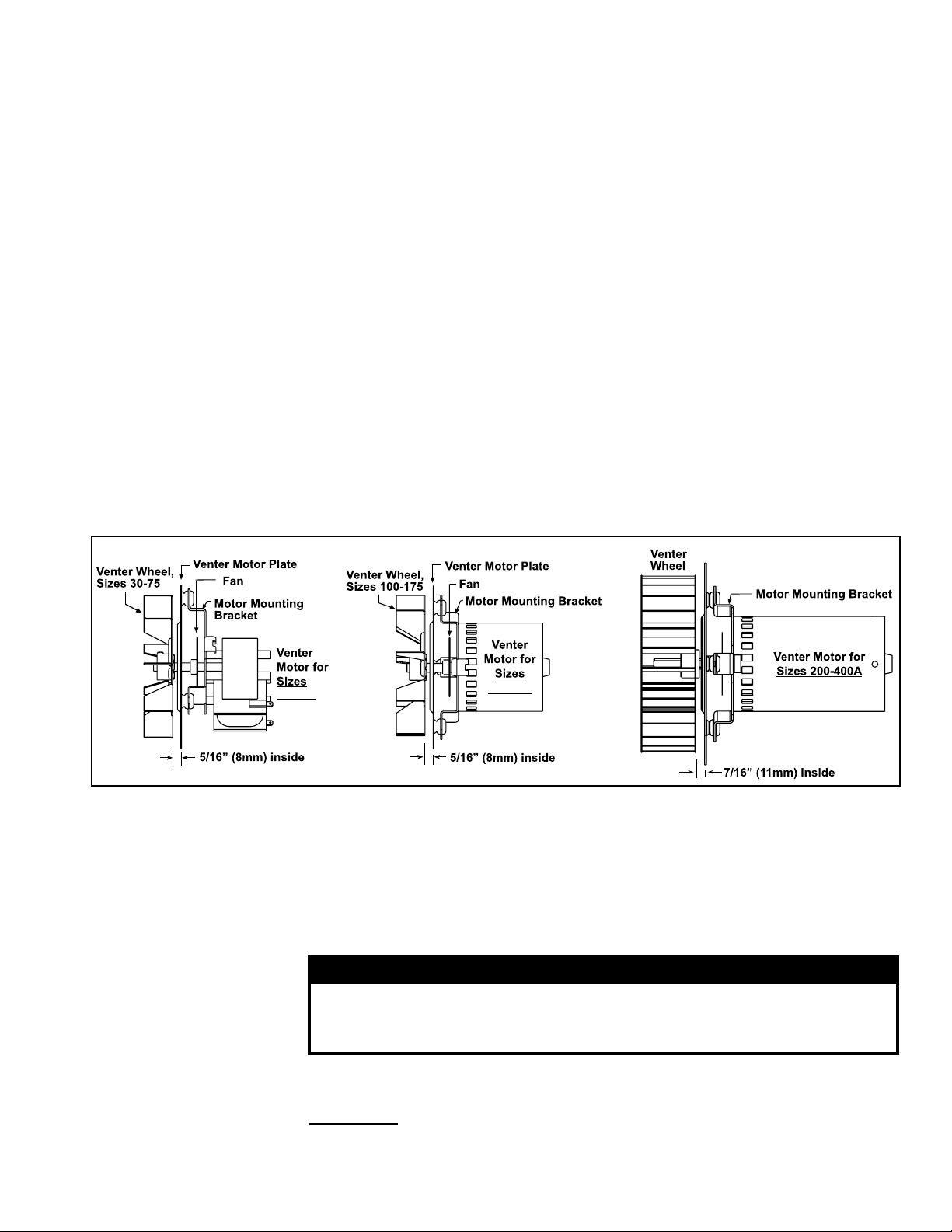
Form I-UDA, P/N 195673 R24, Page 33
FIGURE 23 - Venter
Wheel Position on
Shaft
10.2.6 Venter Motor
and Wheel
Replacement Instructions
5. Reconnect the fan motor wires according to the wiring diagram and close the
access panel.
6. Restore power to the heater and turn on the gas. Light, following the instructions
on the lighting instruction plate. Check for proper operation.
10.2.7 Operating Gas
Valve
Carefully remove external dirt accumulation and check wiring connections.
WARNING
The operating valve is the prime safety shutoff. All gas supply
lines must be free of dirt or scale before connecting to the unit to
ensure positive closure. See Hazard Levels, page 2.
The combination gas valve must be checked annually to ensure that the valve is shut-
ting off gas ow completely.
Instructions:
1) Locate the 1/8” NPT pressure tap on the combination valve. (See FIGURE 24,
page 34.
7. Follow the wiring diagram to connect the venter wires.
8. Sizes 30 and 45 - Reconnect the gas supply at the union outside of the cabinet.
Leak test the connection with leak detecting solution.
9. Replace the access panel. Restore power to the heater and turn on the gas.
Light, following the instructions on the lighting instruction plate. Check for proper
operation.
Remove dirt and grease from the motor casing, the venter housing, and the venter
wheel. Venter motor bearings are permanently lubricated. Follow these instructions for
replacement of the venter motor and wheel assembly. Keep all hardware removed to
be used in re-assembling and installing the replacement parts.
1. Turn off the gas and disconnect the electric power.
2. Open the burner/control compartment access panel.
3. Disconnect the three venter motor wires at the DSI control, capacitor wires at the
capacitor (if applicable), and ground screw (located on the control panel).
4. Sizes 30 and 45 - Disconnect the gas train and move it out of the way. Disconnect
the gas supply at the union outside of the cabinet. At the gas valve, mark and
disconnect the wires. Carefully remove the burner orice and orice adapter
locking nut. Slide the orice adapter out through the bracket on the burner pushing
the gas train to the right. This will move the gas train out of the way.
5. Holding the venter motor, remove the three or four screws that attach the venter
motor mounting plate to the venter housing. Remove the motor and wheel
assembly from the heater.
6. Re-assemble with the replacement venter motor and wheel assembly. See
FIGURE 23.
150-175
30-125
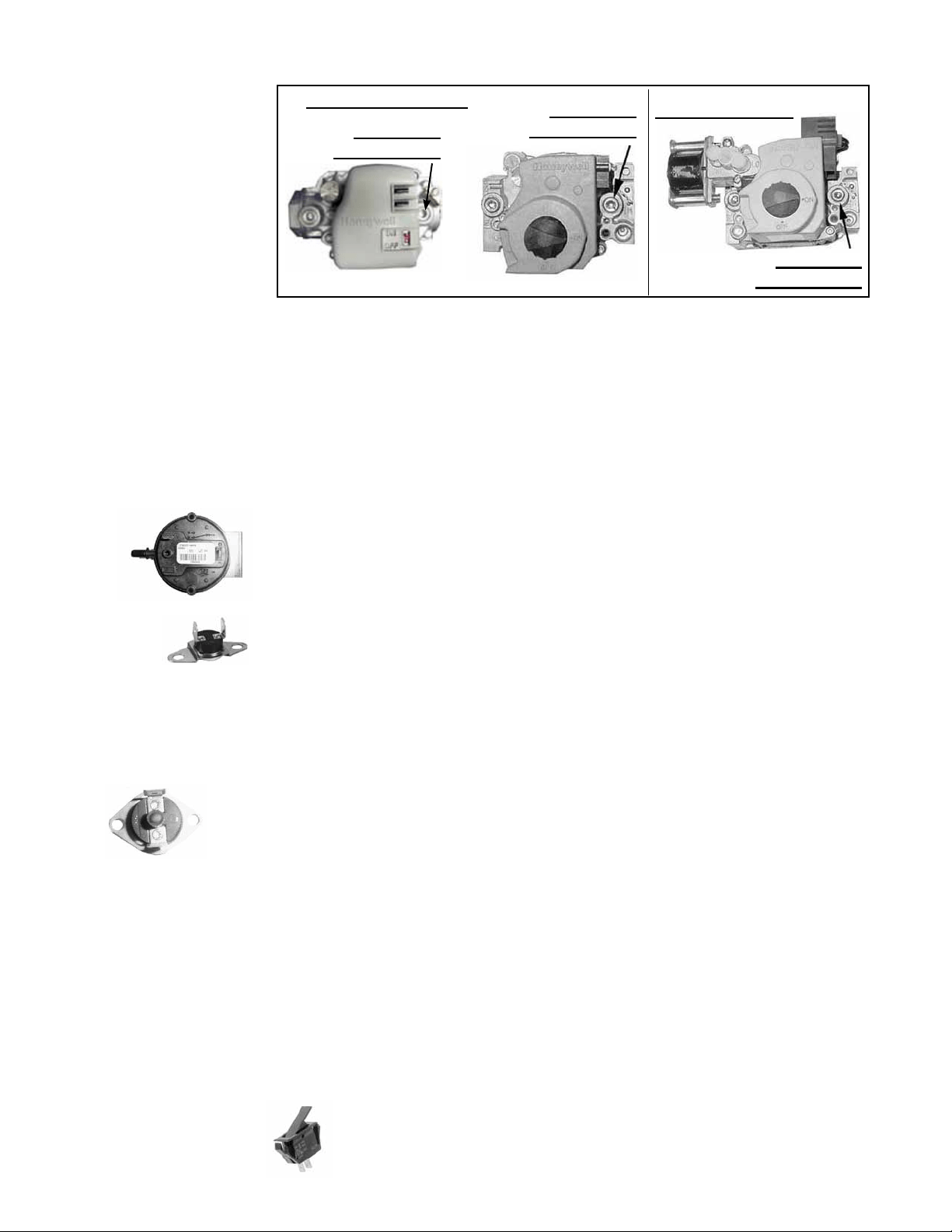
Form I-UDA, P/N 195673 R24, Page 34
10.2.8 Combustion Air
Pressure Switch
See FIGURE 18, page 30, for location. (NOTE: Depending on date of manufacture and
size, pressure switch may not be in the location indicated. Check the control bracket
on the bottom of the compartment or further down on the compartment wall.) If it is
determined that the pressure switch needs replacing, use only the factory-authorized
replacement part that is designed for the model and size of heater being serviced.
NOTE: A unit operating above 6000 ft (1830M) elevation requires a high altitude pres-
sure switch. See Paragraph 3.2.
If it is determined that the limit control needs replacing, use only a factory-authorized
replacement part that is designed for the size of heater.
For approximate limit location, see FIGURE 18, page 30.
10.2.9 Limit
Control
NOTE: Operational
pressure settings and
instructions for checking
pressure settings are in
Paragraph 6.1.
2) With the manual valve turned off to prevent ow to the gas valve, connect a
manometer to the 1/8” outlet pressure tap in the valve. NOTE: A manometer (uid-
lled gauge) is recommended.
3) Turn the manual valve to the ON position and the heater OFF. Use your nger to
fully block the main burner orice for several seconds. Observe the manometer
with the orice blocked, and if any pressure is indicated, the gas valve is leak-
ing. A leaking gas valve must be replaced before the heater is put back in
operation.
10.2.10 Flame Rollout
Switch - Sizes 30-125
only
For location, see
FIGURE 18, page 30.
The cause of a ame rollout switch activating must be determined. Activation of the
manually reset ame rollout switch could be caused by one or more of the following:
• Restricted combustion air inlet or exhaust outlet
in combination with a defective pressure switch
• Electrical power interruption during operation
• Unit being operated with a line voltage
disconnect (a 24-volt thermostat is required)
If a ame rollout switch trips, inspect the burner/control compartment for signs of
excessive heat and burned wiring.
If the compartment appears normal, reset by depressing the red button on the
switch. 15 to 20 minutes are required for the switch to cool sufciently for reset-
ting. A distinct click will be felt when the switch resets. Operate the furnace. If the
ame rollout switch trips again, determine and correct the cause before resetting
the switch.
If there is damage to the control compartment, repairs must be made before
resetting the switch.
If it is determined that the ame rollout switch needs replacing, use only the factory-
authorized replacement part that is designed for that size of heater.
The disconnect switch is located in the sealed electrical box inside the control com-
partment with the toggle on the rear of the heater.
• Restricted or plugged heat
exchanger
• Too much building exhaust
• Manifold gas pressure too
high
10.2.11. Door Switch -
UDAS only
If it is determined that the door switch needs replacing, use only a factory-
authorized replacement part that is designed for the heater.
For approximate switch location, see FIGURE 18, page 30.
FIGURE 24 - Pressure
Tap for Checking Gas
Flow Shutoff
10.0 Maintenance
and Service
(cont’d)
10.2 Maintenance
Procedures
(cont’d)
10.2.7 Operating Gas Valve (cont’d)
Single-Stage Valves
1/8” Outlet
Pressure Tap
1/8” Outlet
Pressure Tap
Two -Stage Valve
1/8” Outlet
Pressure Tap
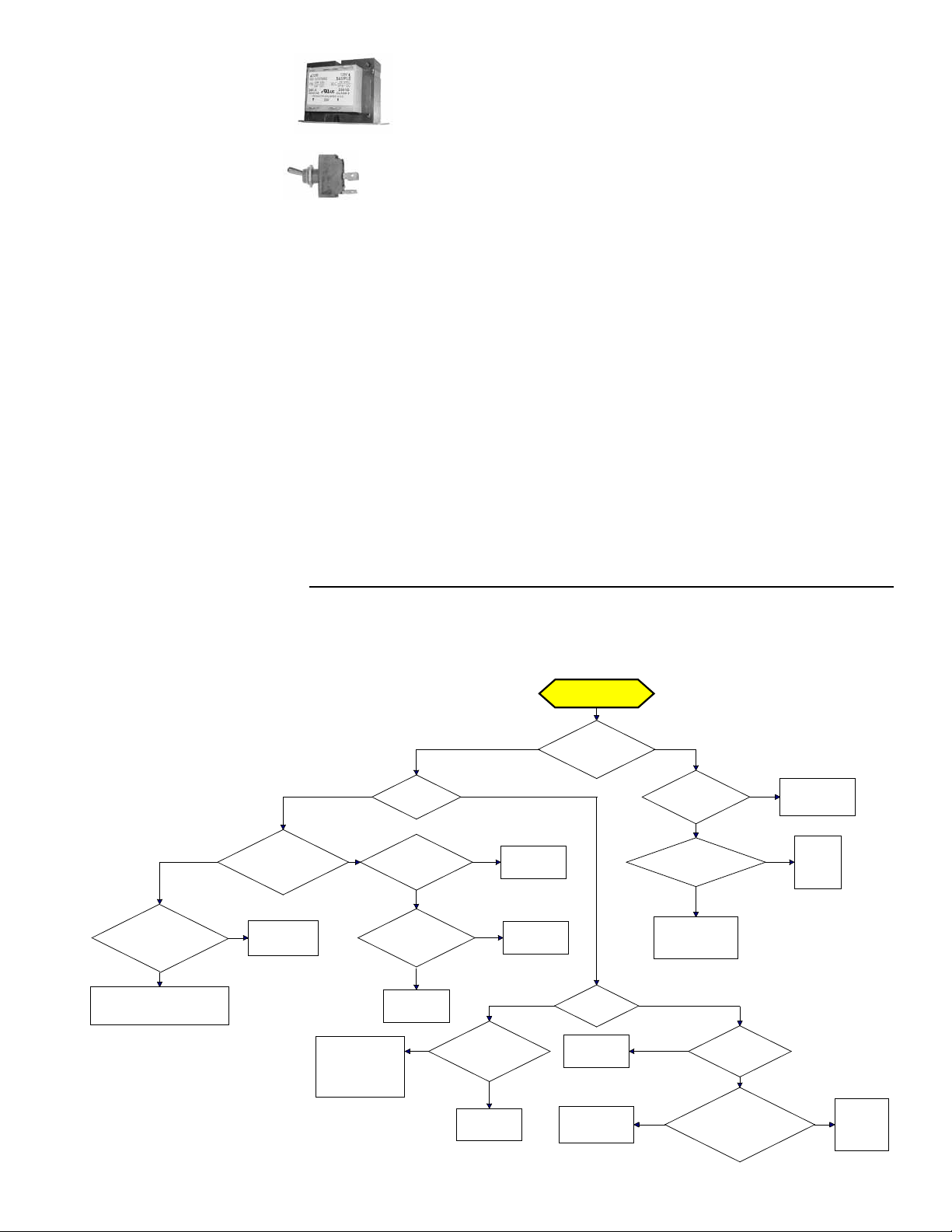
Form I-UDA, P/N 195673 R24, Page 35
10.2.12 Transformer
See FIGURE 18, page 30, for location. Use a voltmeter to verify that
there are 24 volts output from the transformer. If the transformer is not
functioning, it must be replaced. Use a replacement transformer identi-
cal to the factory-installed model.
10.2.14 Vent or Vent/
Combustion Air
System
10.2.13 Disconnect
Switch - UDAS only
If it is determined that the disconnect switch needs replacing, use only the
factory-authorized replacement part that is designed for the heater. Always
replace electrical box cover.
Check the complete system at least once a year. Inspection should include all joints,
seams, concentric adapter box (UDAS), inlet air guard or inlet air cap (UDAS), and the
vent terminal cap. Clean openings. Replace any defective parts.
10.3 Troubleshooting
Check the Lights on
the DSI Integrated
Control Module
(Circuit Board)
The integrated circuit board monitors the operation of the heater and includes two
LED signal lights that indicate normal operation and various abnormal conditions. If
the heater fails to operate properly, check this signal to determine the cause and/or
to eliminate certain causes. LED is visible through viewport on Model UDAS. Remove
access panel on Model UDAP. See operating sequence in Paragraph 9.
Do not attempt to repair the DSI integrated control module (circuit board); the only eld
replaceable component is the fuse.
Control Status - Green LED Codes
Steady ON Normal Operation, No call for heat
Fast Flash . Normal Operation, Call for heat
1 Flash ...... System Lockout, Failed to detect or sustain ame
2 Flashes .. Pressure Switch Did Not Close within 30 Seconds of Venter Motor
3 Flashes .. High Limit or Flame Rollout Switch Open
4 Flashes ....Pressure Switch is Closed Before Venter Motor is Energized
Steady OFF Blown fuse, No Power, or Defective Board
Flame Status - Yellow LED Codes
Steady ON ..Flame is sensed
Slow Flash ..Weak ame (current below 1.0 microamps ± 50%)
Fast Flash ...Undesired Flame (valve open and no call for heat)
IMPORTANT: When using
a multimeter to troubleshoot
the 24 volt circuit, place the
meter’s test leads into the 5
or 9 pin connectors located
on the ignition control. Do
not remove connectors or
terminals from the electri-
cal components. Doing so
can result in misinterpreted
readings due to the ignition
control board’s fault mode
monitoring circuits.
DSI Integrated Control Module (Circuit
Board) Trial Troubleshooting Flowchart
Trial for Ignition
Call for Heat
Is there a
spark across gap at
ignitor?
Does gas
ignite?
Is there minimum
flame current at the
flame sensor?
Is there
minimum flame current
at the control
module?
Replace control
module.
Check connections to flame
sensor and/or moisture in the
burner assembly.
Is the flame
sensor corroded?
Clean flame
sensor.
Is the sensor
located in flame
correctly?
Replace flame
sesnsor.
Reposition
flame sensor.
Is gas
flowing?
Is the ignitor
position correct in the
gas flow?
Check gas pressure
and supply voltage.
If either are low,
correct and repeat
startup.
Reposition
spark ignitor.
Is there
24VAC at the gas
valve?
Is there 24VAC
from gas valve output on
control module to
chassis?
Check wiring and
connections to
gas valve.
Replace
ignition
control
module.
Replace gas
valve.
Is there
spark voltage at
control?
Check high
voltage wire
continuity.
Is there 24V P1-2
to power control?
Replace
control
module.
Check wiring
and/or 24VAC
transformer output.
YES NO
YES NO
YES NO
YES
NO
YES
NO
YES
NO
YES NO
YES
NO
NO
YES
YES NO
YES
NO
YES
NO
Form I-UDA, P/N 195673 R24, Page 36
PROBLEM PROBABLE CAUSE REMEDY
Venter motor will not
start
1. No power to unit. 1. Turn on power, check supply fuses or circuit breaker.
2. No 24 volt power to integrated circuit board. 2. Turn up thermostat; check control transformer output.
3. Integrated circuit board fuse blown. 3. Correct cause. Replace fuse (type ATC or ATO, 32VDC, 3A).
4. No power to venter motor. 4. Tighten connections at circuit board and/or motor terminals.
5. Integrated circuit board defective. 5. Replace integrated circuit board.
6. Defective venter motor. 6. Replace venter motor. See Paragraph 29.
Burner will not light 1. Manual valve not open. 1. Open manual valve.
2. Air in the gas line. 2. Bleed gas line (initial startup only).
3. Gas pressure too high or too low. 3. Supply pressure should be 5" - 14" w.c. for natural gas or 11" - 14" w.c. for
propane.
4. No Spark:
4.
a) Loose wire connections a) Be certain all wire connections are solid.
b) Transformer failure.
:
b) Be sure 24 volts is available.
c) Incorrect spark gap. c) Maintain spark gap at 1/8".
d) Spark cable shorted to ground. d) Replace worn or grounded spark cable.
e) Spark electrode shorted to ground. e) Replace if ceramic spark electrode is cracked or grounded.
f) Burner not grounded. f) Make certain integrated circuit board is grounded (Terminal P1-9).
g) Circuit board not grounded. g) Make certain integrated circuit board is grounded to furnace chassis.
h) Unit not properly grounded. h) Make certain unit is properly eld grounded to earth ground and properly
phased (L1 to hot lead L2 to neutral).
i) Integrated circuit board fuse blown. i) Correct cause. Replace fuse (type ATC or ATO, 32VDC, 3A).
j) Faulty integrated circuit board. j) If 24 volt is available to the integrated circuit board and all other causes have
been eliminated, replace board.
5. Lockout device interrupting control circuit by
above causes.
5. Reset lockout by interrupting control at the thermostat or main power.
6. Combustion air proving switch not closing. 6.
a) Make sure unit is properly vented.
b) Remove obstructions from vent.
c) Replace faulty tubing to pressure switch.
7. Faulty combustion air proving switch. 7. Replace combustion air proving switch.
8. Main valve not operating. 8.
a) Defective valve. a) If 24 volt is measured at the valve connections and valve remains closed,
replace valve.
b) Loose wire connections b) Check and tighten all wiring connections.
9. Integrated circuit board does not power main
valve.
9.
a) Loose wire connections. a) Check and tighten all wiring connections.
b) Flame sensor grounded. b) Be certain ame sensor lead is not grounded or insulation or ceramic is not
cracked. Replace as required.
c) Incorrect gas pressure. c) Supply pressure should be 5" - 14" w.c. for natural gas or 11" - 14" w.c. for
propane.
d) Cracked ceramic at sensor. d) Replace sensor.
Burner cycle on and
off
1. Gas pressure too high or too low. 1. Supply pressure should be 5" - 14" w.c. for natural gas or 11" - 14" w.c. for
propane.
2. Burner not grounded 2. Make certain integrated circuit board is grounded (Terminal P1-9).
3. Circuit board not grounded. 3. Make certain integrated circuit board is grounded to furnace chassis.
4. Faulty integrated circuit board 4. If 24 volt is available to the integrated circuit board and all other causes have
been eliminated, replace board.
5. Combustion air proving switch not closing. 5.
a) Make sure unit is properly vented.
b) Remove obstructions from vent.
c) Replace faulty tubing to pressure switch.
6. Faulty combustion air proving switch. 6. Replace combustion air proving switch.
7. Flame sensor grounded. 7. Be certain ame sensor lead is not grounded or insulation or ceramic is not
cracked. Replace as required.
8. Cracked ceramic at sensor. 8. Replace sensor.
9. Incorrect polarity. 9. Reverse line volt leads to integrated circuit board.
10. Pin terminal loose on 9 pin plug. 10. Replace wire harness.
General Troubleshooting
10.3 Troubleshooting (cont’d)
Form I-UDA, P/N 195673 R24, Page 37
No heat (Heater Op-
erating)
1. Incorrect valve outlet pressure or orice. 1. Check valve outlet pressure. See Rating plate for manifold pressure.
2. Cycling on limit control. 2. Check air throughput.
3. Improper thermostat location or adjustment. 3. See thermostat manufacturer's instructions.
Fan or venter motor
will not run
1. Circuit open. 1. Check wiring and connections.
2. Defective integrated circuit board. 2. Replace board.
3. Defective motor or starter. 3. Replace motor or starter.
Fan or venter motor
turns on and off while
burner is operating
1. Motor overload device cycling on and off. 1. Check motor load against motor rating plate. Replace motor if needed.
Fan or venter motor
cuts out on overload
1. Low or high voltage supply. 1. Correct electric supply.
2. Defective motor. 2. Replace motor.
3. Poor airow. 3. Clean motor, fan, fan guard, lter, and coils
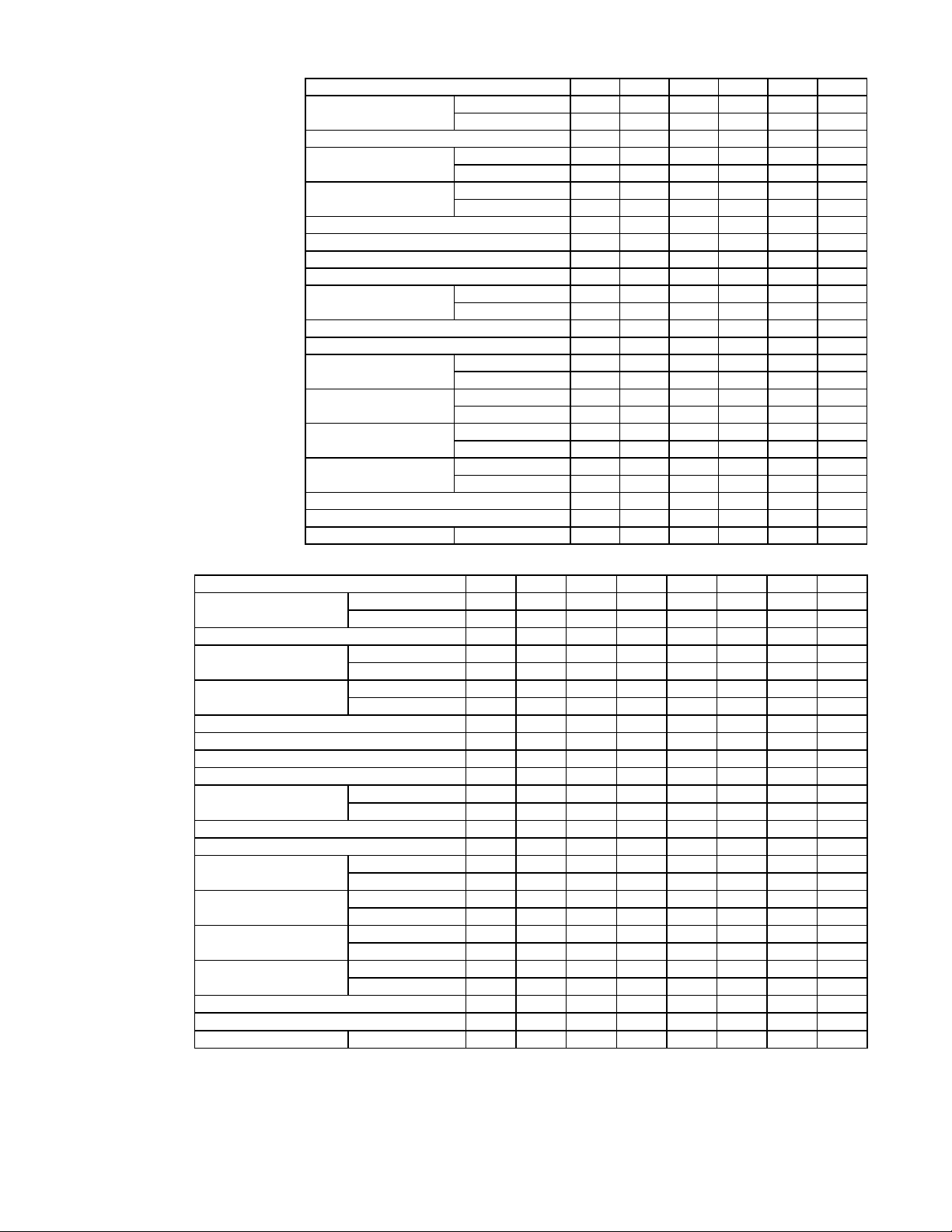
Form I-UDA, P/N 195673 R24, Page 38
APPENDIX
TECHNICAL DATA - Sizes 150 - 400 (Data applies to both Models UDAP and UDAS unless noted otherwise.)
Size 150 175 200 225 250 300 350 400
Input Heating Capacity
BTUH 150,000 175,000 200,000 225,000 250,000 300,000 350,000 400,000
kw 43.9 51.2 58.6 65.9 73.2 87.8 102.5 117.1
Thermal Efciency (%) 83 83 83 83 83 83 83 83
Output Heating Capacity
A
BTUH 124,500 145,250 166,000 186,750 207,500 249,000 290,500 332,000
kw 36.4 42.5 48.6 54.7 60.8 72.9 85.1 97.2
Gas Connection (inches)
B
Natural 1/2 1/2 1/2 3/4 3/4 3/4 3/4 3/4
Propane 1/2 1/2 1/2 3/4 3/4 3/4 3/4 3/4
Vent Connection
C
(inches diameter) 5 5 5 5 5 6 6 6
Combustion Air Inlet
C
(inches diameter) - UDAS only 6 6 6 6 6 6 6 6
Control Amps (24 volt) 1.0 1.0 1.0 1.0 1.0 1.0 1.0 1.0
Full Load Amps (115 volt) 3.8 3.8 4.6 7.5 7.5 10.7 10.7 10.7
Maximum Over Current
Protection
D E
Standard 115V 15 15 15 15 15 20 20 20
Optional 208V or 230V 15 15 15 15 15 15 15 15
Normal Power Consumption (watts) 392 392 491 747 747 1086 1086 1086
Discharge Air Temperature Rise (°F) 60 60 60 60 60 60 60 60
Air Volume
CFM 1921 2242 2562 2882 3202 3843 4483 5123
M
3
/minute 54.4 63.5 72.5 81.6 90.7 108.8 126.9 145.1
Discharge Air Opening Area
ft
2
2.6 2.6 2.6 3.5 3.5 4.8 4.8 4.8
M
2
0.2 0.2 0.2 0.3 0.3 0.5 0.5 0.5
Output Velocity
FPM 752 877 1003 820 911 802 936 1069
M/minute 229 267 306 250 278 244 285 326
Fan Motor HP
E
Standard Open 1/6 1/6 1/6 1/4 1/4 1/2 1/2 1/2
Optional Enclosed 1/4 1/4 1/4 1/4 1/4 1/2 1/2 1/2
Fan Motor RPM 1050 1050 1050 1050 1050 1050 1050 1050
Fan Diameter (inches) 18 18 18 20 20 24 24 24
Sound Level dba @ 15 ft 51 52 53 56 56 59 61 62
TECHNICAL DATA - Sizes 30 - 125 (Data applies to both Models UDAP and UDAS unless noted otherwise.)
Size 30 45 60 75 100 125
Input Heating Capacity
BTUH 30,000 45,000 60,000 75,000 105,000 120,000
kw 8.8 13.2 17.6 22.0 30.8 35.2
Thermal Efciency (%) 82 83 83 83 83 83
Output Heating Capacity
A
BTUH 24,600 37,350 49,800 62,250 87,150 99,600
kw 7.2 11.0 14.6 18.3 25.6 29.2
Gas Connection (inches)
B
Natural 1/2 1/2 1/2 1/2 1/2 1/2
Propane 1/2 1/2 1/2 1/2 1/2 1/2
Vent Connection
C
(inches diameter) 4 4 4 4 4 4
Combustion Air Inlet
C
(inches diameter) - UDAS only 4 4 4 4 4 4
Control Amps (24 volt) 1.0 1.0 1.0 1.0 1.0 1.0
Full Load Amps (115 volt) 1.9 2.4 2.4 3.3 3.9 5.1
Maximum Over Current
Protection
D E
Standard 115V 15 15 15 15 15 15
Optional 208V or 230V 15 15 15 15 15 15
Normal Power Consumption (watts) 109 155 155 217 276 354
Discharge Air Temperature Rise (°F) 50 55 60 60 60 60
Air Volume
CFM 456 629 769 961 1345 1537
M
3
/minute 12.9 17.8 21.8 27.5 36.7 45.9
Discharge Air Opening Area
ft
2
1.0 1.0 1.2 1.2 2.0 2.0
M
2
0.1 0.1 0.1 0.1 0.2 0.2
Output Velocity
FPM 475 656 616 770 668 763
M/minute 145 200 188 238 196 245
Fan Motor HP
E
Standard Open 0.0 0.0 0.0 0.1 1/30 1/20
Optional Enclosed N.A. N.A. N.A. N.A. 1/4 1/4
Fan Motor RPM 1550 1550 1550 1550 1050 1050
Fan Diameter (inches) 10 10 12 12 16 16
Sound Level dba @ 15 ft 40 40 40 49 54 55
A
CSA ratings for altitudes to 2000 ft.
B
Size shown is for gas connection to a single-stage gas valve, not supply line size.
C
Smaller and/or larger vent and combustion air pipe diameters may be permissible. For Model UDAS refer to the Venting Installation Manual for
Separated Combustion Units. For Model UDAP refer to the Venting Installation Manual for Power Vented units. For a Model UDAP with Option AV6,
refer to the Venting Installation Manual for Common Venting.
D
MOCP = 2.25 x (largest motor FLA) + smallest motor FLA. Answer is rounded to the next lower standard circuit breaker size.
E
Except where indicated, information in this table is based on a heater equipped with a standard 115 volt open fan motor.

Form I-UDA, P/N 195673 R24, Page 39
A
Abnormal Heat Cycle Functions 24
Aircraft Hangars 4
Control Amps 38
Full Load Amps 38
APPENDIX 38
B
Clean the Burner 31
Burner Maintenance 30
Burner Orice 31
Burner Removal 30
C
California Warning Label 4
Ceiling Suspension Kit 11
Certication 3
Check installation after startup 27
Check the installation prior to startup
26
Check the Lights 35
Chlorine 6
Clearances 7
LED Codes 23, 35
Combustion Air 16
Combustion Air Inlet 38
Combustion Air Pressure Switch 34
Combustion Air Proving
(Pressure)Switch 20
Commissioning 26
Conned Space 16
Contact 40
Control Wiring 17
Conversion Kits 13
D
DDC Controls 22
Dimensions 8
Disconnect Switch 35
Door Switch 34
Door Switch - Model UDAS only 21
Downturn Nozzle Kits 7
DSI Integrated Control Module 23, 31
E
Thermal Efciency 38
Electrical Supply 16
F
Continuous Fan Operation 25
Fan/Blower Off Delay 24
Fan/Blower On Delay 24
Fan Blades 32
Fan Motor 21
Fault Modes 25
Field-Installed Parts 6
Flame Rollout Switch 34
Flame Sensor 32
G
Garages 4
Gas Connection 38
Gas Connection Size 12
Gas Supply 11
Gas Supply Line 12
Gas Valve 21, 33
Gas Valve ON/OFF Control Knob 27
H
Hanger Kits 11
Hanging the Heater 10
HAZARD INTENSITY LEVELS 2
Hazard Labels and Notices 2
Heat Exchanger Maintenance 30
High Altitude Capacity 15
High Altitude Derate 14
High Altitude Kit 6, 7
I
Ignition System 23, 31
Ignition Trial Period 23
Ignitor 32
Input Heating Capacity 38
Installation Codes 4
L
Leak-test 12
Lifting 10
LED lights 23
Limit Control 20, 34
Limit Switch 24
Literature Bag 28
Location 5
Unit Heater Location 4
Location of Controls 29
Lockout 25
Optional vertical louvers 6
M
Maintenance Procedures 30
Maintenance Schedule 29
Massachusetts Requirement 4
Fan Motor 32
Venter Motor 33
Motor HP 38
Multiple Heater Control 22
N
Normal Heat Cycle 23
O
Operating Sequence 27
Option CC1 6
Option CC2 or CC6 3, 6
Option CD 2, 3, or 4 7
Option CK8, CK10, and CK22 11
Option CL31 22
Option CL32 22
Option CM3 21
Option DJ20 or DJ21 6
Options D10 and D14 22
Orice Pressure 13
Output Heating Capacity 38
P
Plug the unused suspension points 10
Post Purge 24
Power Interruption 25
Preparing for Installation 6
Prepurge 23
Pressure Switch 24
Pressure Switch Settings 20
PRESSURE TESTING SUPPLY PIP-
ING 11
S
Mounting the Sensor 22
Sound Level 38
Spark Gap 32
Startup 26
Stepdown transformer 6
Supply Wiring 17
Suspending 10
Suspending the Heater with Rods 11
Suspend the Heater from 1” Pipe 11
Swivel Connectors 11
T
TECHNICAL DATA 38
Thermostat 21
Unit Mounted Thermostat 21
Throw 4
Transformer 35
Troubleshooting 35, 36
Troubleshooting Flowchart 35
TURN OFF GAS TO THE APPLIANCE
27
U
Uncrating and Inspecting 6
V
Valve Outlet Pressure 13
Vent 35
Vent/Combustion Air 35
Vent/Combustion Air Kit 3
Vent/combustion air kit 6
Vent cap 6
Vent Connection 38
Venter Wheel 33
Venting Manual 3, 5
Vent System Testing Procedure - Model
UDAP 27
W
Warranty 4
Weights 10
WHAT TO DO IF YOU SMELL GAS 26
Wiring Connections 17
Wiring Diagram for Model UDAP or
Model UDAS, Single Stage 18
Wiring Diagram for Model UDAP or
Model UDAS, Two Stage Gas Valve
19
Wiring Diagrams 18
INDEX

Form I-UDA, P/N 195673 R24, Page 40
www.ReznorHVAC.com; (800) 695-1901
©2014 Reznor LLC, All rights reserved.
Trademark Notes: Reznor
®
, TCORE
2®
, and
are registered in at least the United States.
All other trademarks are the property of their respective owners.
10/14 Form I-UDA
Installer:
Name ________________________________________________________
Company ________________________________________________________
Address ________________________________________________________
________________________________________________________
________________________________________________________
Phone _________________________________
Distributor (company from which the unit was purchased):
Company ________________________________________________________
Contact ________________________________________________________
Address ________________________________________________________
________________________________________________________
________________________________________________________
Phone _________________________________
Model ________________ Serial No.______________________________Date of Installation ____________
SPECIFIC INSTALLATION NOTES: (i.e. Location, Amps, Gas Pressure, Temperature, Voltage, Adjustments,
Warranty, etc.)
________________________________________________________________________________________
________________________________________________________________________________________
________________________________________________________________________________________
________________________________________________________________________________________
________________________________________________________________________________________
BUILDING OWNER OR MAINTENANCE PERSONNEL:
For service or repair
• Contact the installer listed above.
• If you need additional assistance, contact the Reznor
®
Distributor listed above.
• For more information, contact your Reznor
®
Representative by calling 1-800-695-1901.
Reznor
150 McKinley Avenue
Mercer, PA 16137
INSTALLATION RECORD - to be completed by the installer:
