225D1844P001 49-60525 07-07 JR
La section française commence à la page 45
La sección en español empieza en la página 85
Safety Instructions . . . . . . . . . . . . . . . . . . . . . .2, 3
For Australia and New Zealand . . . . . . . . . . . . . .39
Operating Instructions
Additional Features . . . . . . . . . . . . . . . . . . . . . . . .8
Automatic Icemaker . . . . . . . . . . . . . . . . . . . . . .12
Care and Cleaning . . . . . . . . . . . . . . . . . . . . . . . .13
Controls . . . . . . . . . . . . . . . . . . . . . . . . . . . . . . .4–5
Crispers and Pans . . . . . . . . . . . . . . . . . . . . . . . . .9
Freezer . . . . . . . . . . . . . . . . . . . . . . . . . . . . . .10, 11
Replacing the Light Bulbs . . . . . . . . . . . . . . . . . .14
Shelves and Bins . . . . . . . . . . . . . . . . . . . . . . . .7, 8
Water Filter . . . . . . . . . . . . . . . . . . . . . . . . . . . . . .6
Installation Instructions
For Australia and New Zealand . . . . . . . . . . .40–42
Installing the Anti-Tip Floor Bracket . . . . . . .18–19
Installing the Refrigerator . . . . . . . . . . . . . . .20–25
Preparing to Install the Refrigerator . . . . . . . . . .17
Removing and Replacing
the Freezer Drawer . . . . . . . . . . . . . . . . . . . .26, 27
Reversing the Door Swing
(Single Door Refrigerator Models only) . . . .28–30
Removing and Replacing the Doors
(Double Door Refrigerator Models only) . . .31–33
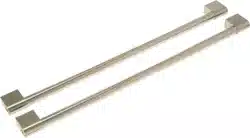
Trim Kits and Decorator Panels . . . . . . . . . . .15–16
Troubleshooting Tips . . . . . . . . . . . . . . . . . .34–38
Normal Operating Sounds . . . . . . . . . . . . . . . . .34
Consumer Support
Performance Data Sheet . . . . . . . . . . . . . . . . . . .43
State of California Water
Treatment Device Certificate . . . . . . . . . . . . . . . .44
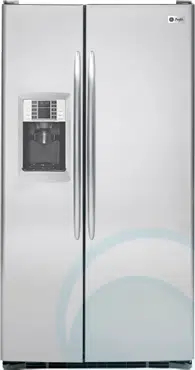
Réfrigérateurs
Congélateur inférieur
Frigoríficos
Congelador inferior
Models 21 and 25
Write the model and serial
numbers here:
Model #______________________
Serial # ______________________
Find these numbers on a label on
the right side, near the top of the
refrigerator compartment.
Owner’s Manual and Installation
Manuel d’utilisation et d’installation
Manual del propietario e instalación
Refrigerators
Bottom Freezer
La sezione in italiano inizia alla pagina numero 125
Frigoriferos
Freezer inferiore
Manuale del proprietario e d'installazione
O capítulo em português tem início na página 163
Frigoríficos
Congelador inferior
Manual do Proprietário e Instalação
Die deutsche Anleitung befindet sich auf Seite 201
Kühlschränke
Unteres Gefrierfach
Bedienungsanleitung und Installation
Instructies in het Nederlands vindt u vanaf pagina 239
Koelkasten
Koel/vriescombinatie
Handleiding en installatie-instructies
To ∂ÏÏËÓÈÎfi ÎÂÊ¿Ï·ÈÔ ·Ú¯›˙ÂÈ ÛÙË ÛÂÏ›‰· 277
æ˘Á›·
K
¿
Ùˆ ηٷ„‡ÎÙ˘
∂Á¯ÂÈÚ›‰ÈÔ ÃÚ‹ÛÙË Î·È ∂ÁηٿÛÙ·Û˘
IMPORTANT SAFETY INFORMATION.
READ ALL INSTRUCTIONS BEFORE USING.
WARNING!
Use this appliance only for its intended purpose as described in this Owner’s Manual.
SAFETY PRECAUTIONS
When using electrical appliances, basic safety precautions should be followed, including the following:
■
■ This refrigerator must be properly installed
and located in accordance with the Installation
Instructions before it is used.
■
■ Do not attempt to stand on top of the refrigerator.
Doing so may result in bodily injury or damage to
the refrigerator.
■
■ Do not allow children to play with the refrigerator
or tamper with the controls.
■
■ Installation of the icemaker must be done by
a qualified service technician.
■
■ Do not allow children to climb, stand or hang
on the shelves in the refrigerator. They could damage
the refrigerator and seriously injure themselves.
■
■ Do not touch the cold surfaces in the freezer
compartment when hands are damp or wet.
Skin may stick to these extremely cold surfaces.
■
■ Do not store or use gasoline or other flammable
vapors and liquids in the vicinity of this or any other
appliance.
■
■ Keep fingers out of the “pinch point” areas;
clearances between the doors and between the doors
and cabinet are necessarily small. Be careful closing
doors when children are in the area.
■
■ In refrigerators with automatic icemakers,
avoid contact with the moving parts of the ejector
mechanism, or with the heating element that releases
the cubes. Do not place fingers or hands on the
automatic icemaking mechanism while the
refrigerator is plugged in.
■
■ Unplug the refrigerator before cleaning and making
repairs.
NOTE: Any servicing should be performed by a qualified
individual.
■
■ Before replacing a burned-out light bulb, the refrigerator
should be unplugged in order to avoid contact with a
live wire filament. (A burned-out light bulb may
break when being replaced.)
■
■ To ensure stability of the product, an anti-tip bracket
is required for some models. Please refer to page 18,
Installing the Anti-Tip Floor Bracket.
■
■ Setting either or both controls to 0 (off) does not
remove power to the light circuit.
■
■ Do not refreeze frozen foods which have thawed
completely.
PROPER DISPOSAL OF THE REFRIGERATOR
Child entrapment and suffocation are not problems
of the past. Junked or abandoned refrigerators are still
dangerous…even if they will sit for “just a few days.”
If you are getting rid of your old refrigerator, please
follow the instructions below to help prevent accidents.
Before You Throw Away Your Old Refrigerator
or Freezer:
■ Take off the doors.
■ Leave the shelves in place so that children may not
easily climb inside.
Refrigerants
All refrigeration products contain refrigerants,
which under federal law must be removed prior to
product disposal. If you are getting rid of an old
refrigeration product, check with the company
handling the disposal about what to do.
DANGER! RISK OF CHILD ENTRAPMENT
2
USE OF EXTENSION CORDS
Because of potential safety hazards under certain conditions, we strongly recommend against
the use of an extension cord.
3
READ AND FOLLOW THIS SAFETY INFORMATION CAREFULLY.
SAVE THESE INSTRUCTIONS
WARNING!
HOW TO CONNECT ELECTRICITY
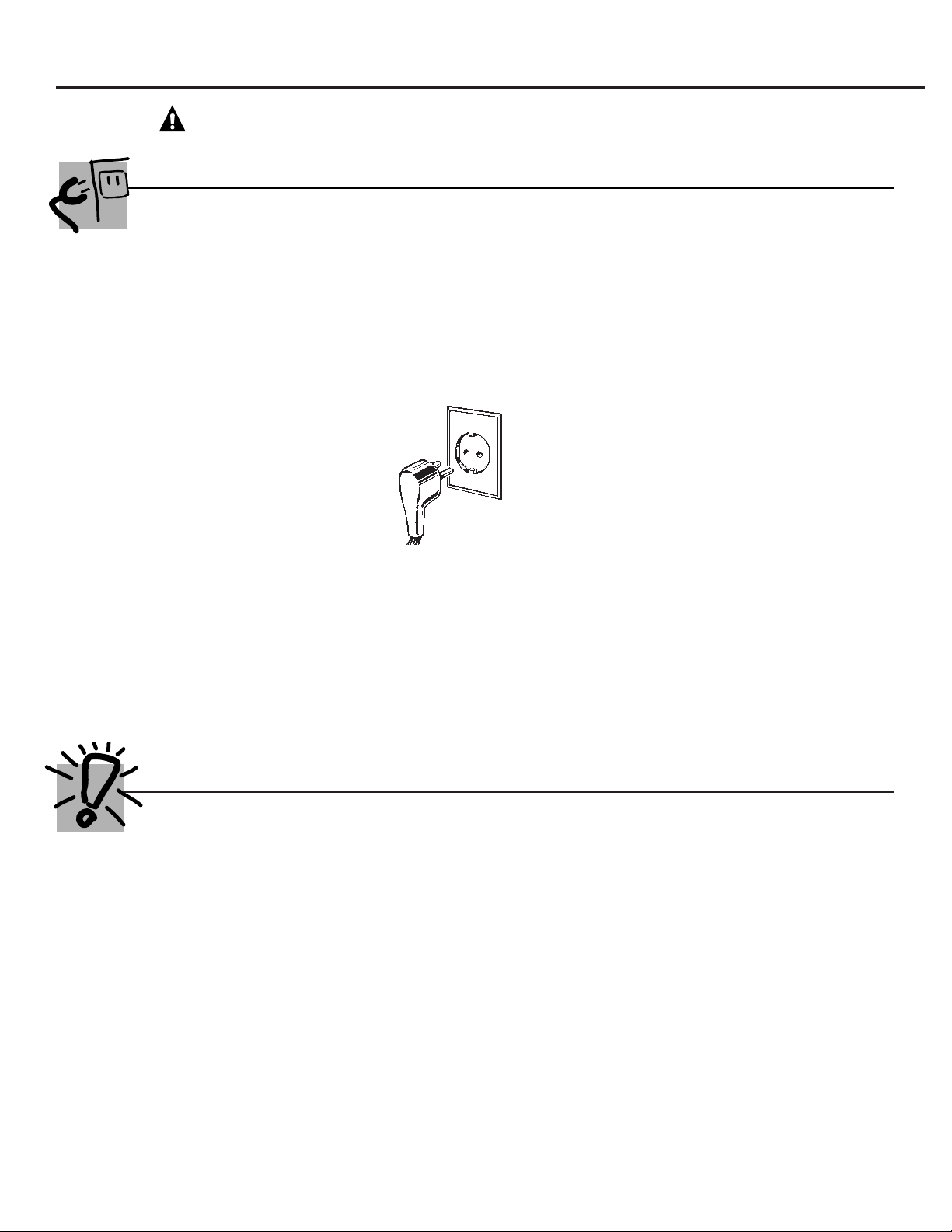
The power cord of this appliance is equipped with
an earthing plug which mates with a standard
earthed wall outlet to minimize the possibility of
electric shock hazard from this appliance.
Have the wall outlet and circuit checked by a
qualified electrician to make sure the outlet is
properly earthed.
Where an unearthed wall outlet is encountered,
it is your personal responsibility and obligation to
have it replaced with a properly earthed wall outlet.
The refrigerator should
always be plugged into
its own individual
electrical outlet.
This provides the
best performance
and also prevents
overloading house
wiring circuits which could cause a fire hazard from
overheated wires. Please refer to the rating plate on
the refrigerator for the correct voltage, wattage and
frequency. If the product plug does not fit your
outlet, the product should be fitted with a new plug.
IMPORTANT: The refitting of electric plugs and cables should
be done by a qualified technician or service agent. In some
countries the refitting of electric plugs and cables is only
permitted when the work is completed by a qualified technician.
If the power supply cord becomes damaged, it must
be replaced by a qualified service agent in order to
avoid a safety hazard.
Never unplug your refrigerator by pulling on the
power cord. Always grip plug firmly and pull straight
out from the outlet.
Repair or replace immediately all power cords that
have become frayed or otherwise damaged. Do not
use a cord that shows cracks or abrasion damage
along its length or at either end.
When moving the refrigerator away from the wall,
be careful not to roll over or damage the power cord.
Mains lead replacement
If the mains lead on your refrigerator needs
replacing at any time, it must be replaced by a
special lead which is obtainable from your local
dealer. A charge will be made for the replacement
of the mains lead if you have damaged the lead.
The refrigerator must be positioned so that the plug
is accessible.
Insure proper earthing
exists before using.
Earthing plug
-18 3
4
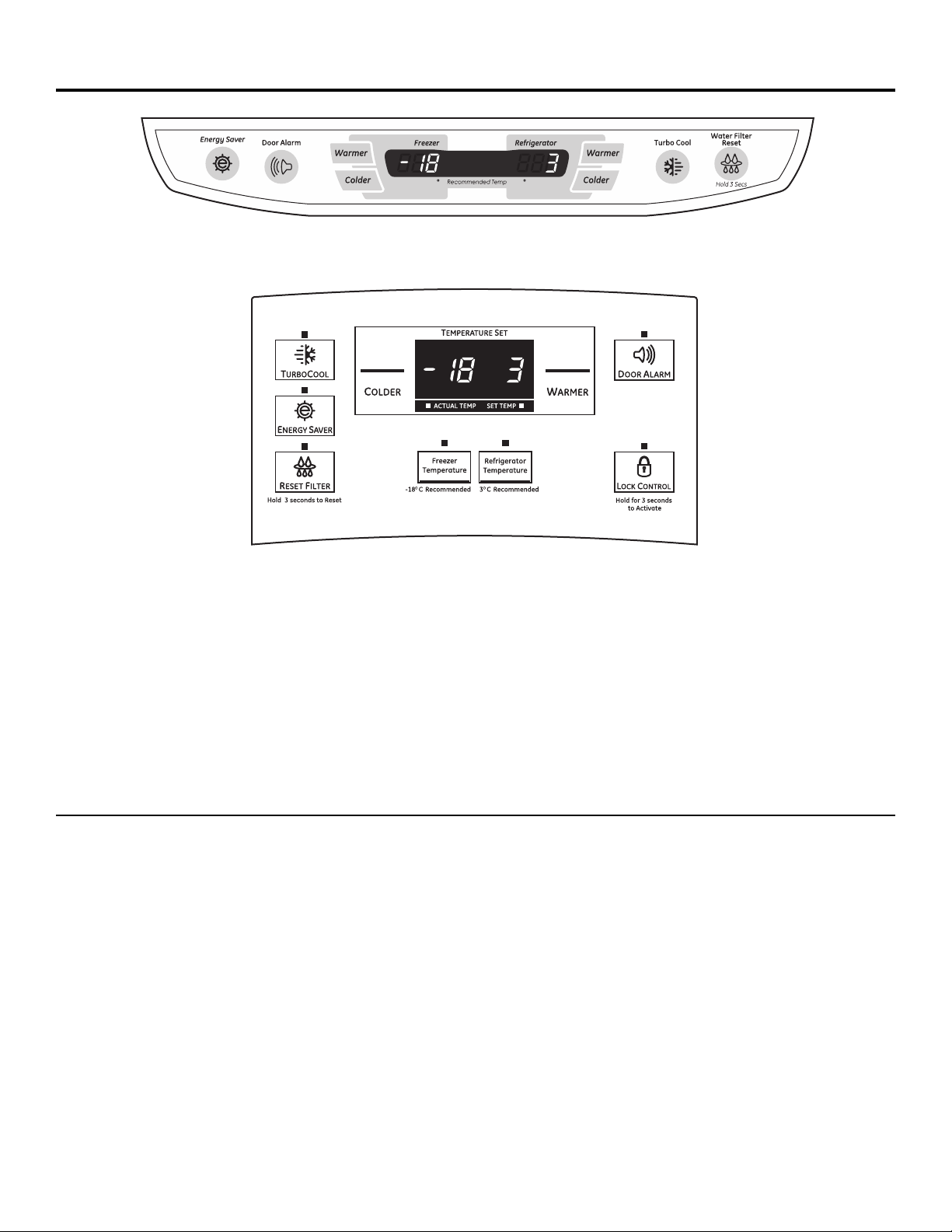
About the controls with temperature settings.
The temperature controls are preset in the factory at 3°C for the refrigerator compartment and
-18°C for the freezer compartment. Allow 24 hours for the temperature to stabilize to the preset
recommended settings.
The temperature controls can display both the SET temperature as well as the actual
temperature in the refrigerator and freezer. The actual temperature may vary slightly from
the SET temperature based on usage and operating environment.
Setting either or both controls to OFF stops cooling in both the freezer and refrigerator
compartments, but does not shut off electrical power to the refrigerator.
For Controls-on-the-Door Models:
To change the temperature, press and release the
WARMER or COLDER pad. The ACTUAL TEMP light
will come on and the display will show the actual
temperature. To change the temperature, tap either
the WARMER or COLDER pad until the desired
temperature is displayed.
This control only displays one compartment
temperature at a time. To display or change the
other compartment temperature, press the FREEZER
or REFRIGERATOR pad, then follow above “To change
the temperature” instruction.
For Controls Inside the Refrigerator:
Opening the door displays the actual temperature.
To change the temperature, press either the WARMER
or COLDER touch pads until the desired temperature is
displayed.
Once the desired temperature has been set,
the temperature display will return to the actual
refrigerator and freezer temperatures after 5 seconds.
Several adjustments may be required.
Each time you adjust controls, allow 24 hours for the
refrigerator to reach the temperature you have set.
To turn the cooling system off, tap the WARMER pad for
either the refrigerator or the freezer until the display
shows OFF. To turn the unit back on, press the COLDER
pad for either the refrigerator or freezer. Then press
the COLDER pad again and it will go to the preset points
of -18°C for the freezer and 3°C for the refrigerator.
Setting either or both controls to OFF stops cooling in
both the freezer and refrigerator compartments, but
does not shut off electrical power to the refrigerator.
Changing the Temperature
NOTE: The refrigerator is shipped with protective film covering the temperature controls.
If this film was not removed during installation, remove it now.
(on some models)
(on some models)
How it Works
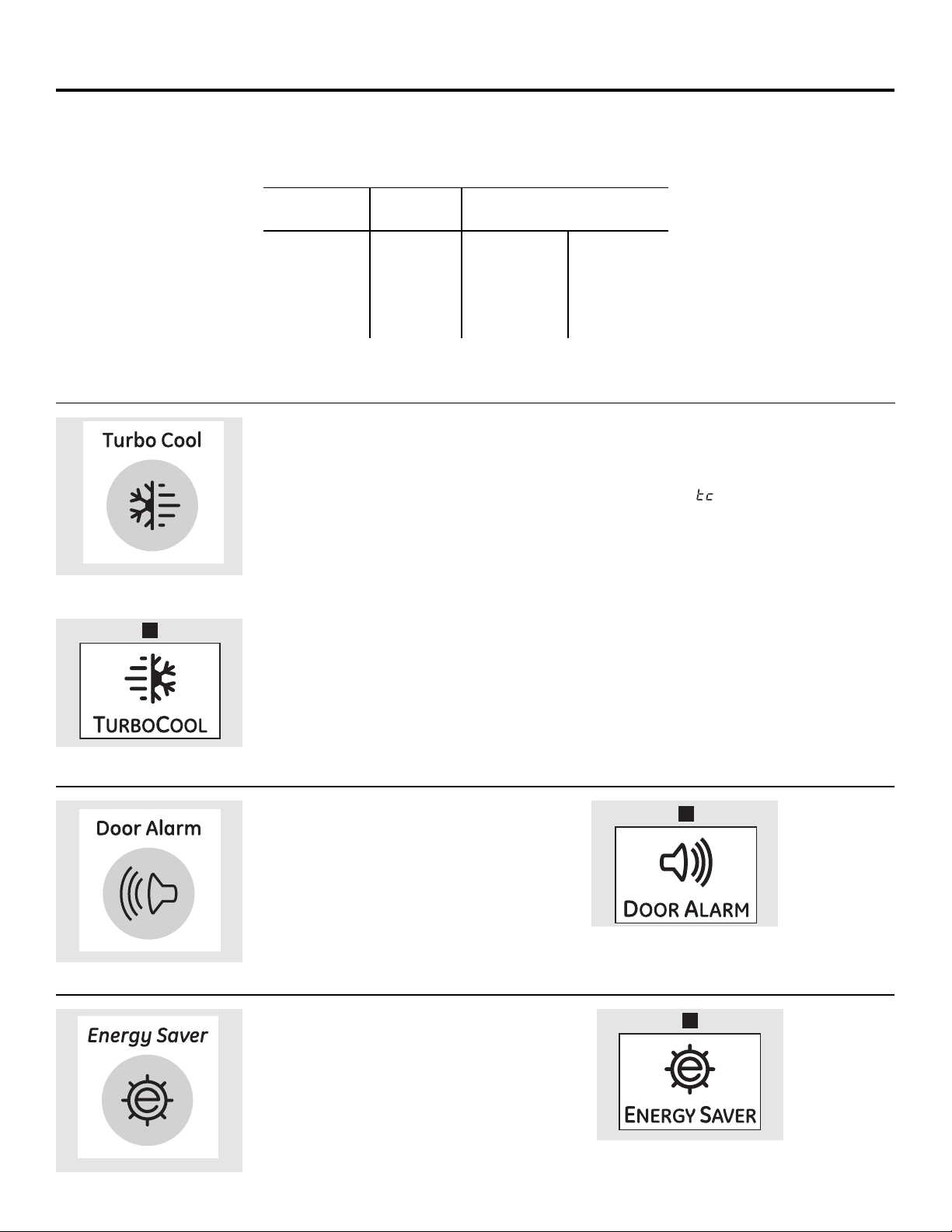
TurboCool rapidly cools the refrigerator
compartment in order to more quickly
cool foods. Use TurboCool when adding
a large amount of food to the refrigerator
compartment, putting away foods after they
have been sitting out at room temperature or
when putting away warm leftovers. It can also
be used if the refrigerator has been without
power for an extended period.
Once activated, the compressor will turn
on immediately and the fans will cycle on
and off at high speed as needed for eight
hours. The compressor will continue to run
until the refrigerator compartment cools to
approximately 1°C, then it will cycle on and
off to maintain this setting. After 8 hours, or
if TurboCool is pressed again, the refrigerator
compartment will return to the original setting.
How to Use
Press TurboCool. The refrigerator temperature
display will show .
After TurboCool is complete, the refrigerator
compartment will return to the original setting.
NOTES: The refrigerator temperature cannot
be changed during TurboCool.
The freezer temperature is not affected
during TurboCool.
When opening the refrigerator door
during TurboCool, the fans will continue
to run if they have cycled on.
About Door Alarm (on some models)
The door alarm will sound if any door is open
for more than 2 minutes. The beeping stops
when you close the door.
(on some models)
(on some models)
About Energy Saver (on some models)
This product is equipped with an Energy Saver
feature. The refrigerator is shipped with the
Energy Saver feature enabled.
Over time, moisture can form on the front
surface of the refrigerator cabinet and cause
rust. If moisture does appear on the front
surface of the refrigerator cabinet, turn off the
Energy Saver feature by pressing and releasing
the ENERGY SAVER pad on the control panel.
(on some models)
5
About TurboCool.
™
(on some models)
Ambient Room Temperature Limits
This refrigerator is designed to operate in ambient temperatures
specified by its Temperature Class, which is marked on the rating plate.
Temperature Symbol Ambient Temperature
Class Maximum Minimum
Extended-
Temperate SN 32°C 10°C
Temperate N 32°C 16°C
Subtropical ST 38°C 18°C
Tropical T 43°C 18°C
NOTE: Internal temperature may be affected by such factors as the location of the refrigerator, ambient temperature
and frequency of door openings. Adjust temperature controls as required to compensate for these
factors.
(on some models)
(on some models)
(on some models)
Water Filter Cartridge
The water filter cartridge is located in the
back upper right corner of the refrigerator
compartment.
When to Replace the Filter
There is a replacement indicator light for
the water filter cartridge on the temperature
display. This light will turn orange to tell you
that you need to replace the filter soon. The
filter cartridge should be replaced when the
replacement indicator light turns red or if the
flow of water to the dispenser or icemaker
decreases.
Installing the Filter Cartridge
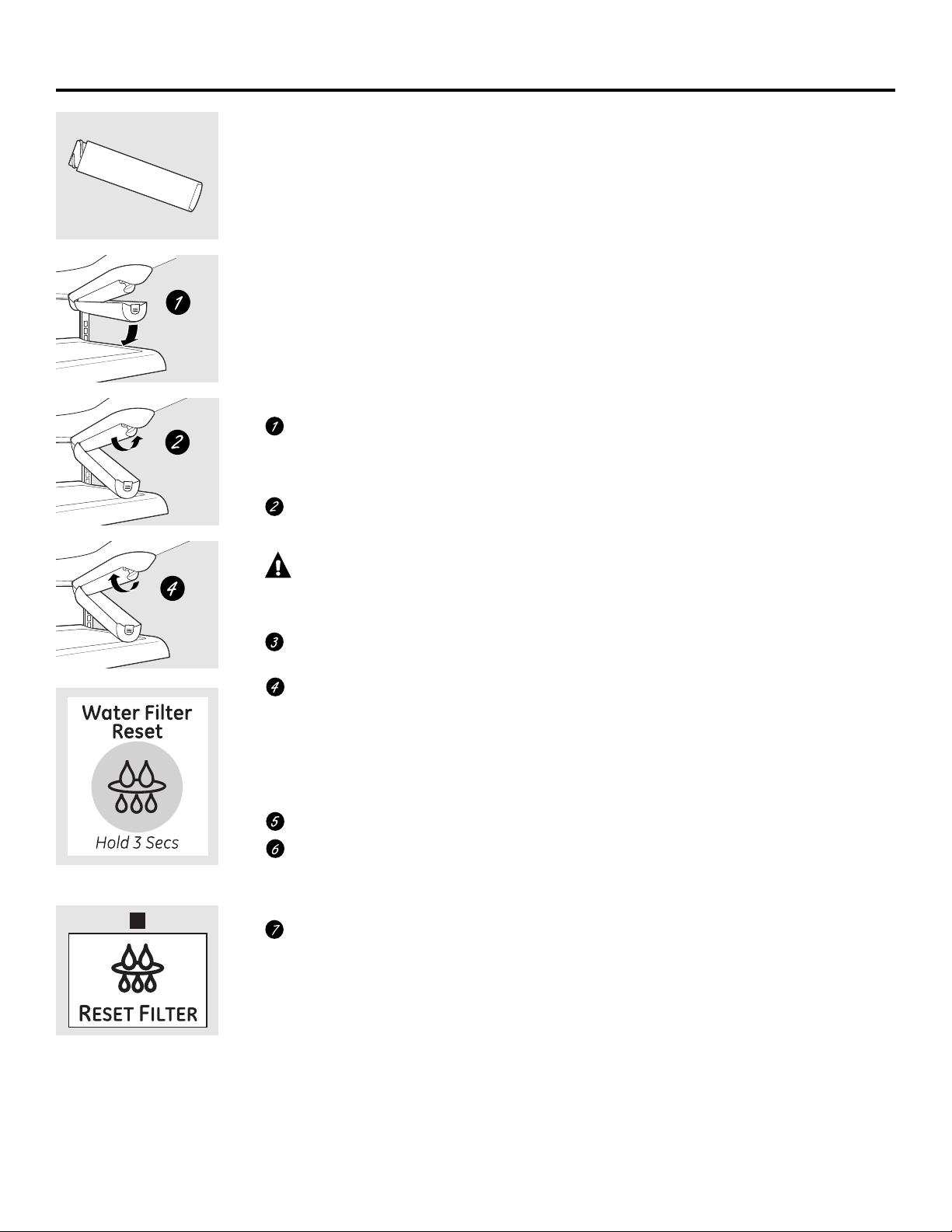
If you are replacing the cartridge, first
remove the old one. Open the cartridge
cover by pressing in on the tab at the front
and pulling down.
Remove the cartridge by slowly rotating it
counterclockwise. A small amount of water
may drip down.
CAUTION: If air has been trapped in
the system, the filter cartridge may be ejected as it is
removed. Use caution when removing.
Remove the protective foil from the end of
the cartridge.
Lining up the arrow on the cartridge
and the cartridge holder, slowly rotate the
cartridge clockwise until it stops. When the
cartridge is properly installed, you will feel
it “click” as it locks into place. The grip on
the end of the cartridge should be
positioned vertically. Do not overtighten.
Close the cartridge cover.
Run water from the dispenser for
3 minutes (about 5 liters) to clear
the system and prevent sputtering.
See To Use the Dispenser section.
Press and hold the Water Filter Reset pad
for 3 seconds.
NOTE: A newly-installed water filter cartridge
may cause water to spurt from the dispenser.
Filter Bypass Plug
You must use the filter bypass plug when a
replacement filter cartridge is not available.
The icemaker will not operate without the filter
or filter bypass plug.
Replacement Filters:
Replacement filters can be ordered through a GE
authorized distributor.
About the water filter. (on some models)
6
(on some models)
(on some models)
7
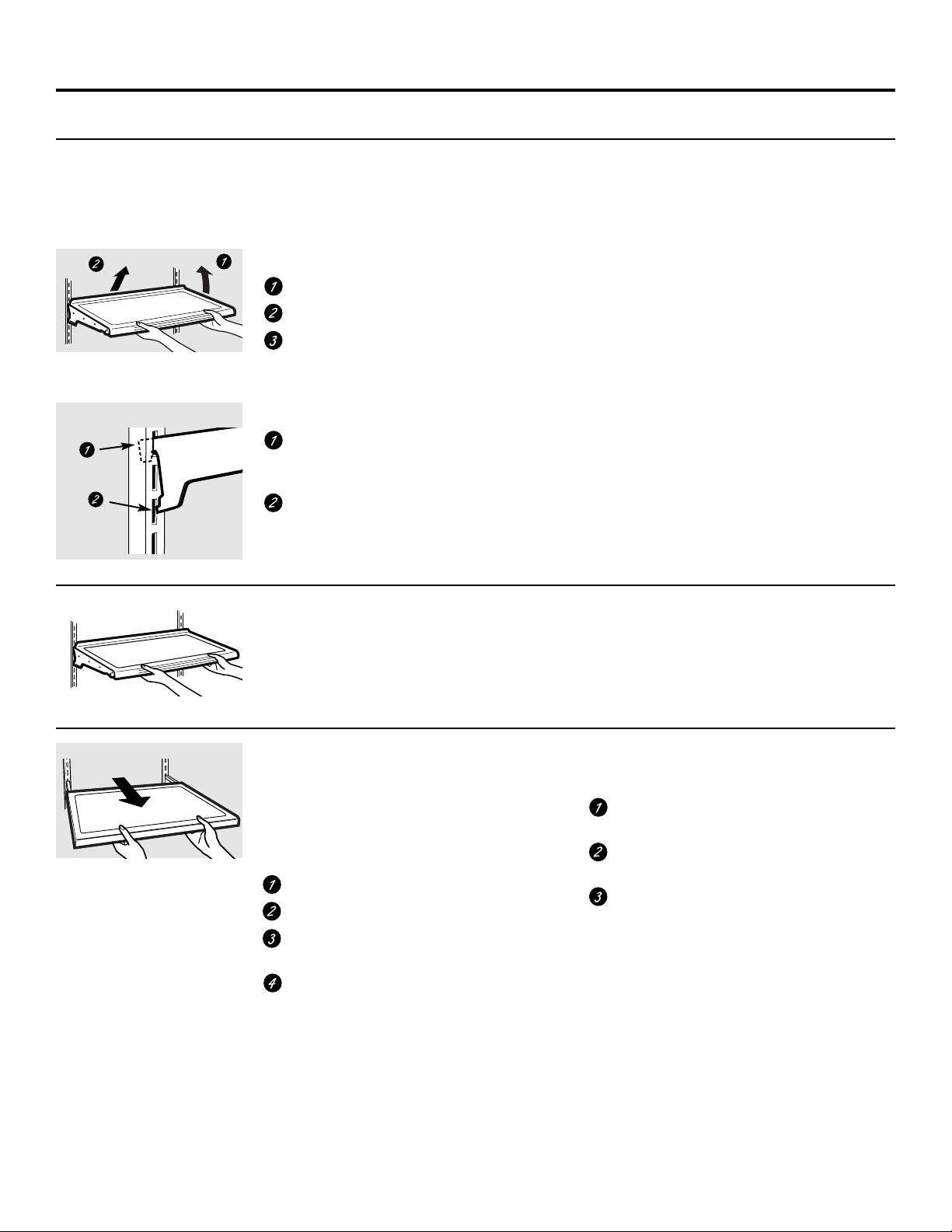
Rearranging the Shelves
To remove:
Remove all items from the shelf.
Tilt the shelf up at the front.
Lift the shelf up at the back and
bring the shelf out.
To replace:
While tilting the shelf up, insert the top
hook at the back of the shelf in a slot on
the track.
Lower the front of the shelf until the
bottom of the shelf locks into place.
Spillproof Shelves (on some models)
Spillproof shelves have special edges to
help prevent spills from dripping to lower
shelves. To remove or replace the shelves, see
Rearranging the Shelves.
About the shelves and bins.
Not all features are on all models.
Some models have wire shelves that
can be adjusted in the same manner.
Shelves in the refrigerator compartment are adjustable.
Refrigerator Compartment
Slide-Out Spillproof Shelf (on some models)
The slide-out spillproof shelf allows you
to reach items stored behind others. The
special edges are designed to help prevent spills
from dripping to lower shelves.
To remove:
Remove all items from shelf.
Slide the shelf out until it stops.
Lift the front edge of the shelf until the
central tabs are above the front bar.
Continue pulling the shelf forward until it
can be removed.
To replace:
Place the rear shelf tabs just in front of the
central notches on the shelf frame.
Slide the shelf in until the central tabs are
slightly behind the front bar.
Lower the shelf into place until it is
horizontal and slide the shelf in.
Make sure that the shelf sits flat after reinstallation and
doesn’t move freely from side to side.
Make sure you push the shelves all the way in before
you close the door.
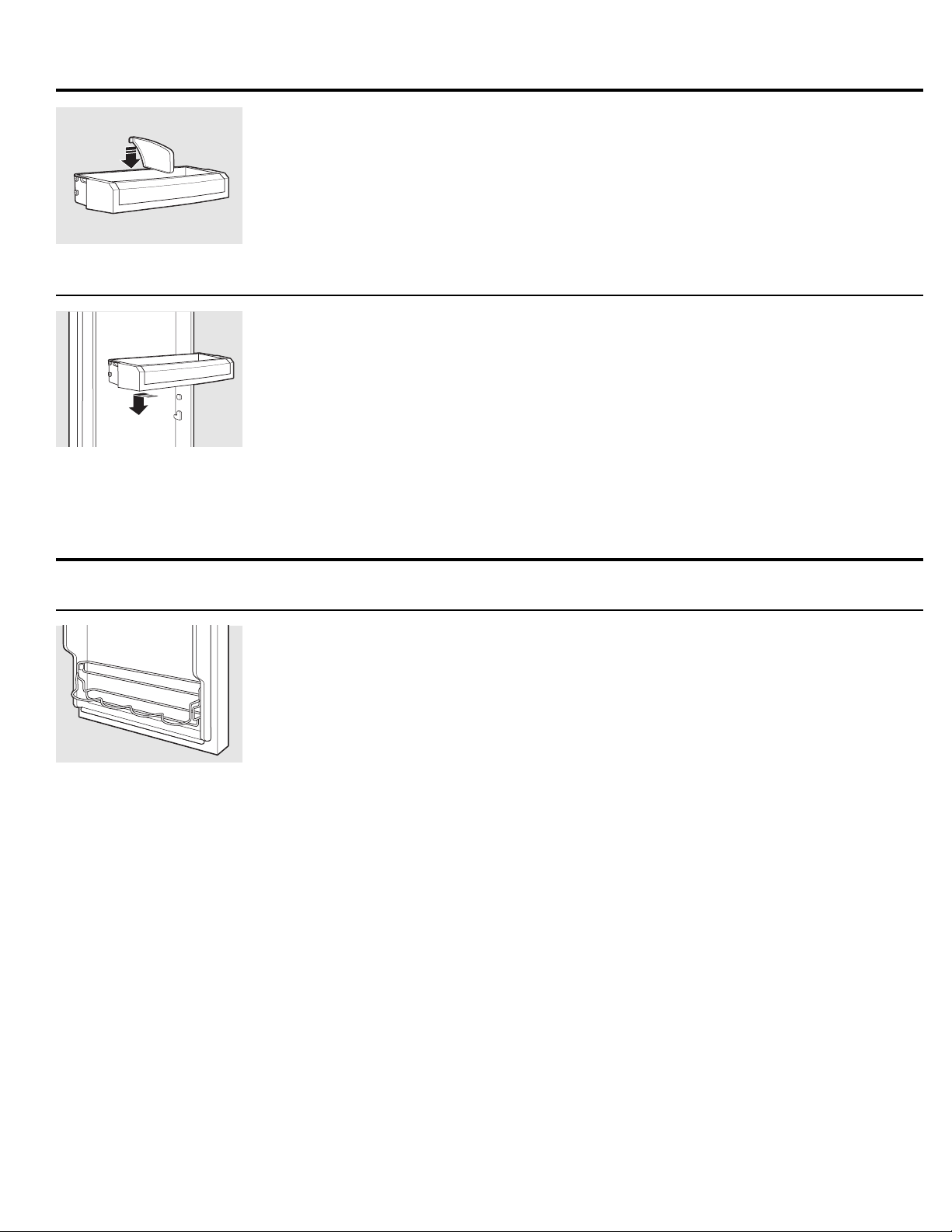
Non-Adjustable Bins on the Door
To remove: Lift the bin straight up, then pull out.
To replace: Engage the bin in the molded
supports on the door and push down. It will lock
in place.
Adjustable Bins on the Door
Adjustable bins can easily be carried from
refrigerator to work area.
To remove: Lift bin straight up, then pull out.
To replace or relocate: Slide in the bin just above
the molded door supports, and push down. The
bin will lock in place.
The snugger helps prevent tipping, spilling or
sliding of small items stored on the door shelf.
Grip the finger hold near the rear of the snugger
and move it to fit your needs.
About the additional features.
Not all features are on all models.
Non-Adjustable Beverage Rack
To remove: Lift the rack straight up, then pull out.
To replace: Engage the rack in the molded
supports on the door and push down. It will lock
in place.
About the shelves and bins.
8
9
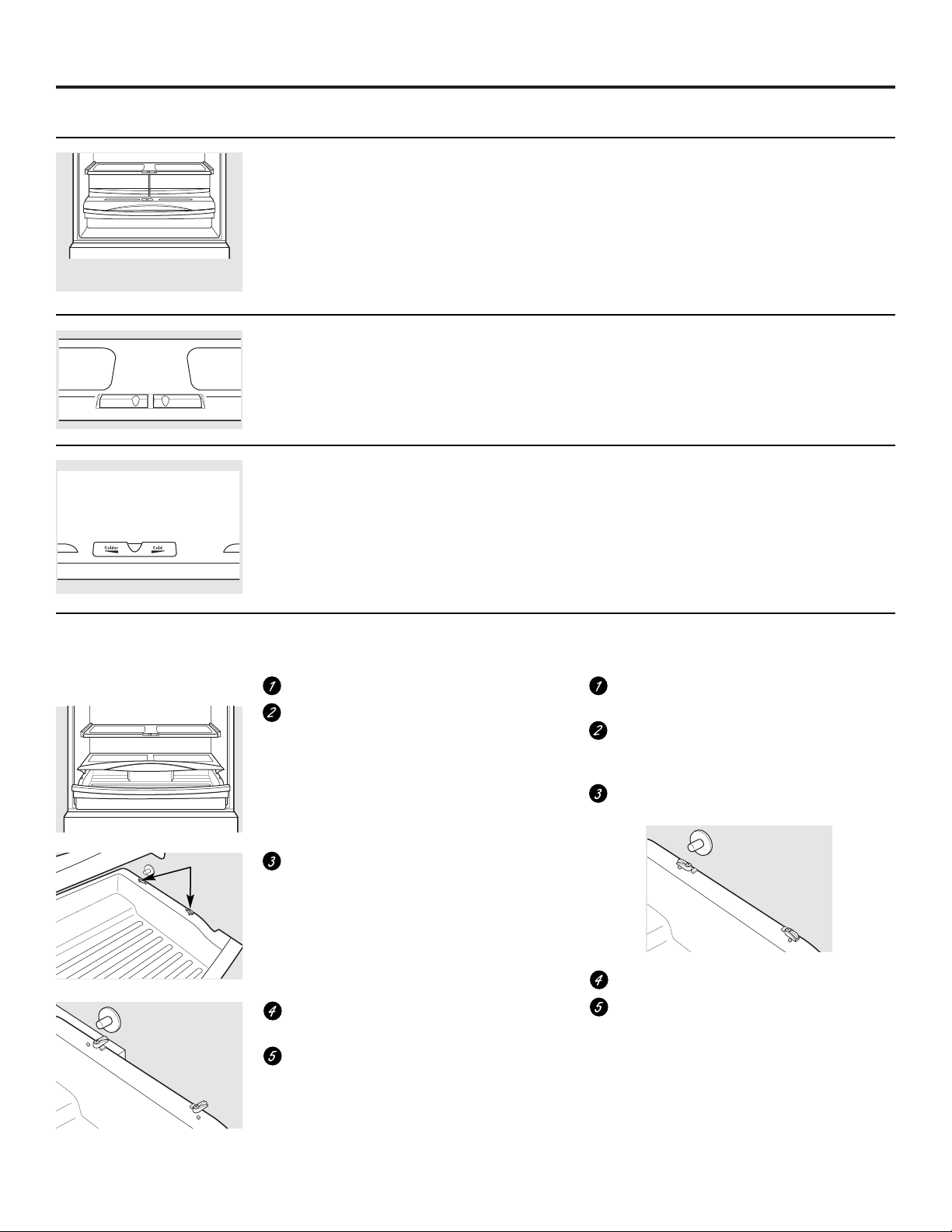
About the crispers and pans.
Not all features are on all models.
Fruit and Vegetable Crisper
Excess water that may accumulate in the
bottom of the drawers or under the drawers
should be wiped dry.
Adjustable Humidity Crisper (on some models)
Slide the control all the way to the HIGH setting
to provide high humidity recommended for
most vegetables.
Slide the control all the way to the LOW setting
to provide lower humidity levels recommended
for most fruits.
Adjustable Temperature Deli Pan (on some models)
Slide the control all the way to the left for the
coldest temperature.
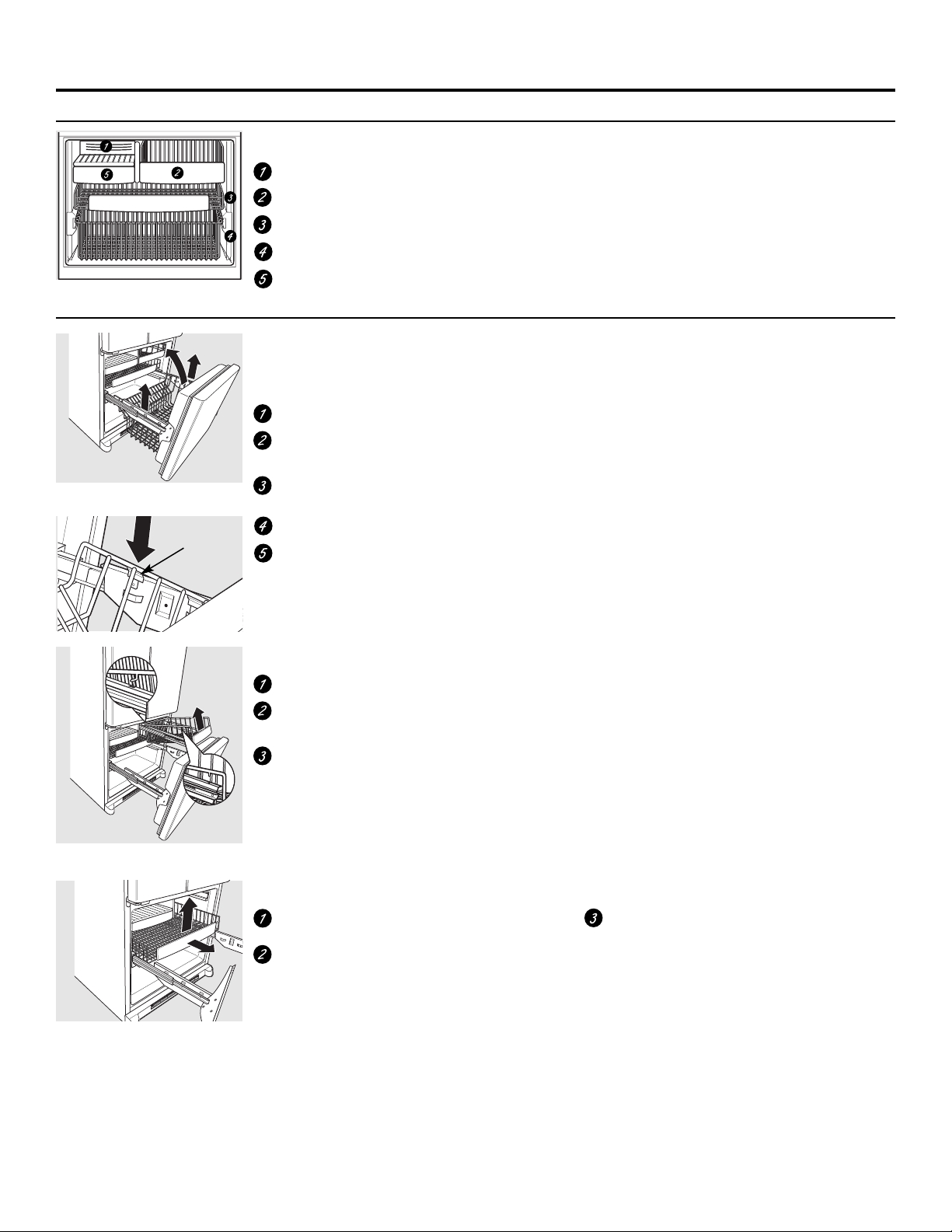
To remove:
Remove the fruit and vegetable drawers.
Pull the drawer out to the stop position.
Lift the lid to access the 4 swing locks.
Rotate all four swing locks to the unlock
position.
Lift the front of the drawer up and out.
To replace:
Make sure all four swing locks are in the
unlock position.
Place the sides of the drawer into the
drawer supports, making sure the swing
locks fit on the drawer slots.
Lock all four swing locks by rotating them
to the lock position.
Lower the lid and slide in the drawer.
Replace the fruit and vegetable drawers.
How to Remove and Replace the Deli Pan
Swing Locks
10
Freezer Shelves and Baskets
A shelf above the ice storage bin
A half-width basket
A shallow full-width basket
A deep full-width basket
An ice storage bin can be used to store
other food items.
Basket Removal
To remove the shallow full-width basket:
Pull the basket out to the stop location.
Lift the front up and over the stop location.
Lift the basket up and out.
To remove the deep full-width basket on freezer
drawer models:
Open the freezer drawer until it stops.
The freezer basket rests on the inside tabs
on the drawer slides.
Lift the basket so that all 4 tabs are out of
the slide bracket.
Tilt the basket and lift out of the drawer.
Make sure the plastic sleeves remain
attached to the 4 tabs on the slide brackets.
When replacing the deep full-width basket:
Tilt the basket back and lower it down into
the drawer. Rotate the basket to a horizontal
position and press it down into the 4 alignment
tabs.
NOTE: Always be sure that all 4 basket tabs are
engaged in the slide brackets before sliding
back into the freezer.
To remove the half-width basket:
Pull the basket out to the stop location.
Lift the basket up at the front to release it
from the slides.
Lift the back up and out of the slide.
When replacing the basket, make sure that the
wire tabs and wire hooks on the sides of the
basket go into the slots in the top of the upper
basket slides.
NOTE: Always be sure to fully close this basket.
About the freezer.
Not all features are on all models.
Appearance and features may vary
Appearance may vary
Appearance may vary
Appearance may vary
Tab
11
Loading the Freezer Compartment
Load so that at least 15 mm of space remains
clear between stacks of packages and 15 mm to
25 mm of space between the top of any stack
and any shelf or basket above it. Packages may
hang over the front of shelves but must remain
15 mm from doors.
■ Food to be frozen must not be placed
in direct contact with food in storage.
If food is to be frozen every day, it may
be necessary to reduce the quantity to
be frozen.
■ If a quantity of food needs to be frozen,
set the freezer control to its coldest setting.
After the food is frozen, reset the freezer
control to its initial position.
■ Food is most quickly frozen on the middle
three shelves of the freezer compartment and
most slowly in the freezer door shelves.
■ Do not store commercially quick-frozen food
longer than the time recommended by the
food manufacturers.
■ If the power to the appliance is shut off for
an extended time or if the refrigerating
system fails, do not open the doors unless
absolutely necessary. When it is necessary,
close them as quickly as possible so the
frozen food will stay frozen as long as
possible.
■ The freezer door storage shelves marked with
a two-star label are only appropriate for the
storage of previously frozen food.
Effervescent drinks should not be stored in the
freezer compartment.
Freezer Performance
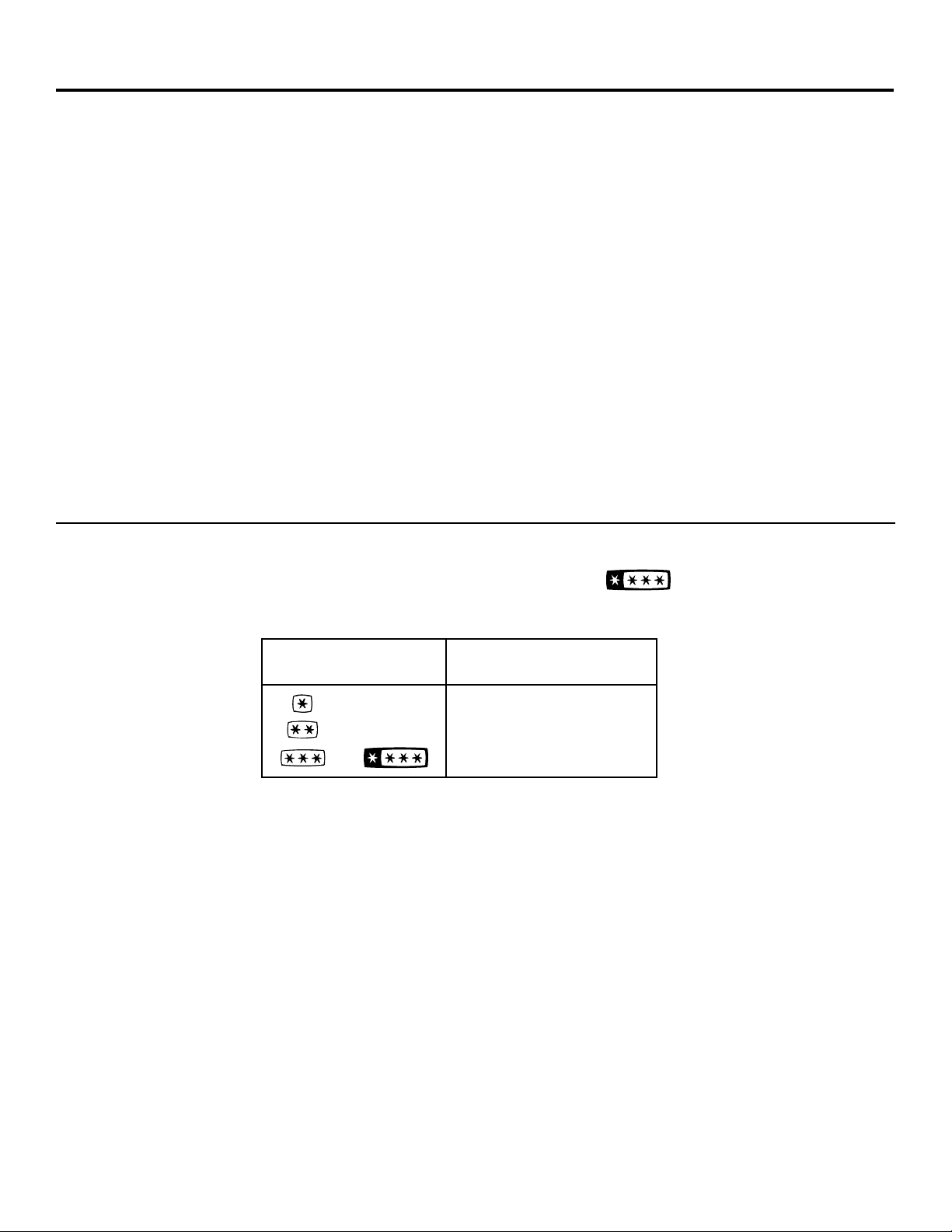
This Refrigerator/Freezer has an overall “Four Star” rating.
Freezer performance is classified by star ratings defined by ISO 8561 STANDARD AND
SUMMARY BELOW:
CODE
or
FREEZING–LOAD TEMP.
(FOOD TEMPERATURE)
Below –6°C.
Below –12°C.
Below –18°C.
About the freezer compartment.
12
About the automatic icemaker.
Automatic Icemaker (on some models)
The icemaker will produce seven cubes
per cycle—approximately 100–130 cubes
in a 24-hour period, depending on freezer
compartment temperature, room temperature,
number of door openings and other use
conditions.
See below for how to access ice and reach the
power switch.
If the refrigerator is operated before the water
connection is made to the icemaker, set the
power switch in the O (off) position.
When the refrigerator has been connected
to the water supply, set the power switch to the
l (on) position. The icemaker power light will
turn green when the freezer light switch is
pressed in or when the freezer door is closed.
The icemaker will fill with water when it cools
to –10°C. A newly installed refrigerator may take
12 to 24 hours to begin making ice cubes.
You will hear a buzzing sound each time
the icemaker fills with water.
Throw away the first few batches of ice to allow
the water line to clear.
Be sure nothing interferes with the sweep
of the feeler arm.
When the bin fills to the level of the feeler arm,
the icemaker will stop producing ice. It is
normal for several cubes to be joined together.
If ice is not used frequently, old ice cubes will
become cloudy, taste stale and shrink.
NOTE: In homes with lower-than-average water
pressure, you may hear the icemaker cycle multiple times
when making one batch of ice.
NOTE: Set the power switch to the O (off) position if
the water supply is shut off.
A newly installed refrigerator may take 12 to 24 hours to begin making ice.
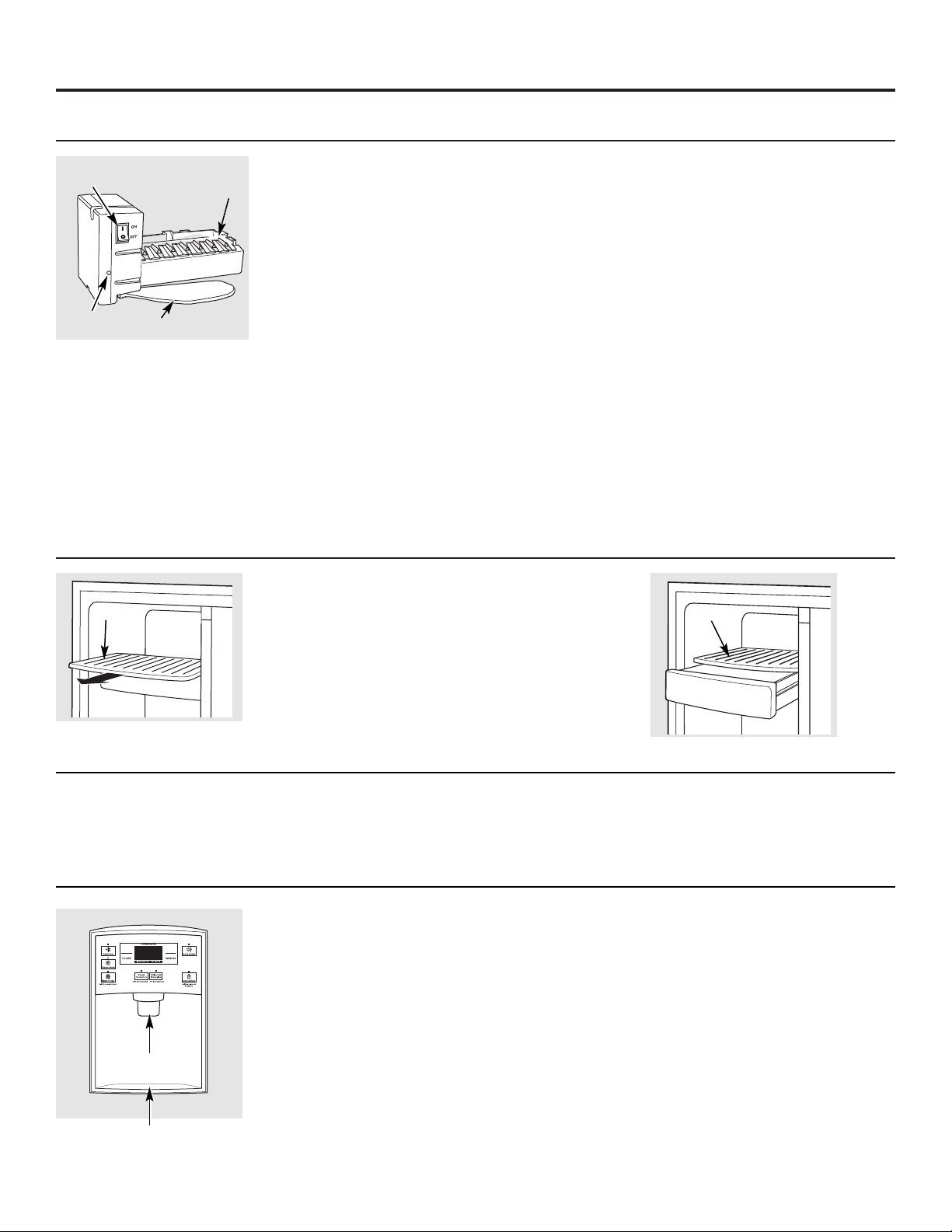
Icemaker
Feeler Arm
Power
Switch
Green
Power Light
Accessing Ice and Reaching
the Power Switch
To reach the icemaker power switch, pull the
shelf above the ice bin straight out. Always be
sure to replace the shelf.
To access ice, simply pull the bin forward.
To access ice.
Shelf
Ice Bin
To reach the power switch.
Shelf
Ice Bin
Icemaker Accessory Kit
If your refrigerator did not come already
equipped with an automatic icemaker, an
icemaker accessory kit is available at extra cost.
Check the back of the refrigerator for the
specific icemaker kit needed for your model.
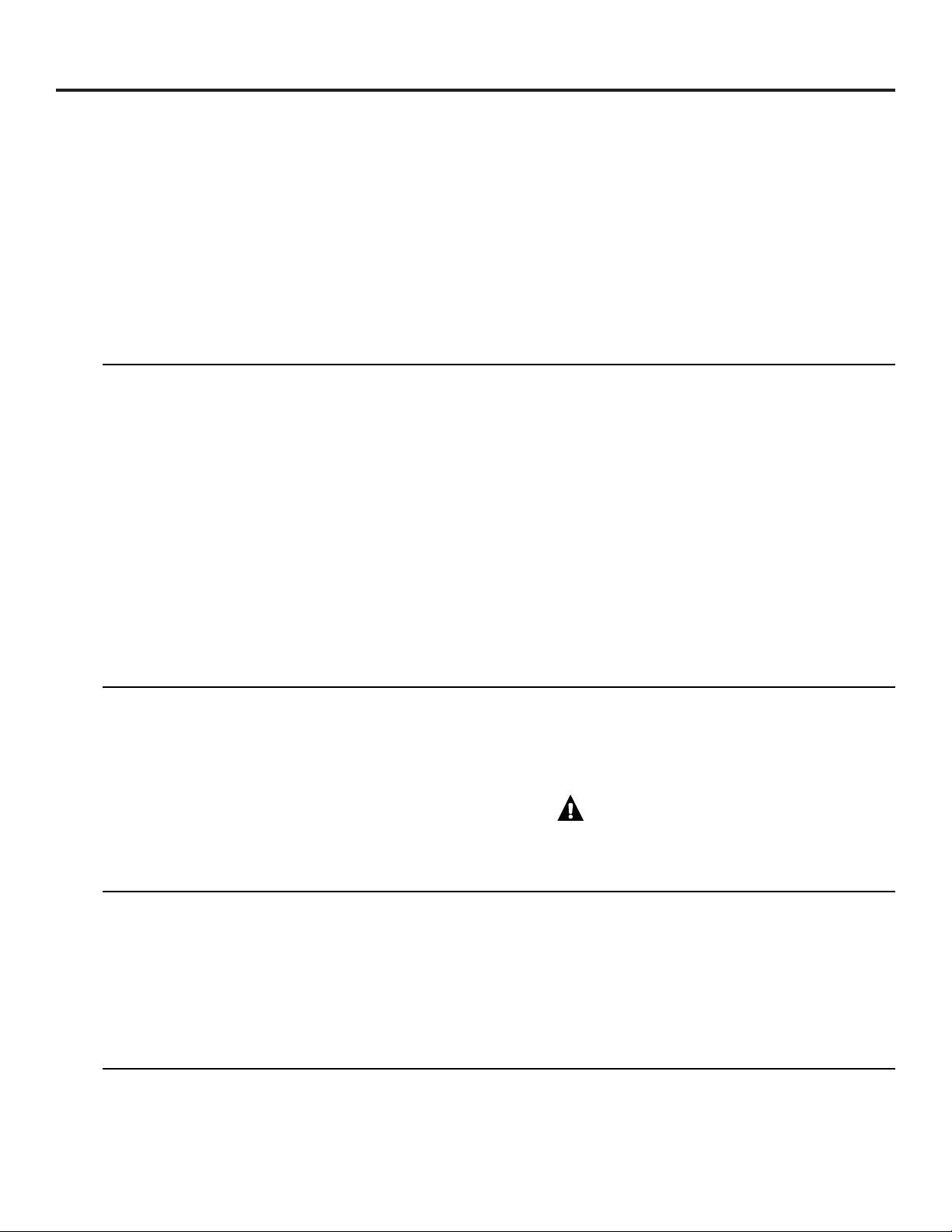
To Use the Dispenser
Press the glass gently against the top of the
dispenser cradle.
The spill shelf is not self-draining. To reduce
water spotting, the shelf should be cleaned
regularly.
If no water is dispensed when the refrigerator is first
installed, there may be air in the water line system.
Press the dispenser arm for at least two minutes to
remove trapped air from the water line and to fill the
water system. To flush out impurities in the water line,
throw away the first six glassfuls of water.
Locking the Dispenser
Press the LOCK pad for 3 seconds to lock
the dispenser and control panel. To unlock,
press and hold the pad again for 3 seconds.
Door Alarm
To set the alarm, press the DOOR ALARM pad.
The indicator light will illuminate.
This alarm will sound if either door is
open for more than 2 minutes. The beeping
stops when you close the door.
Spill Shelf
Dispenser Cradle
Care and cleaning of the refrigerator.
Cleaning the Outside
The door handles and trim. Clean with a cloth
dampened with soapy water. Dry with a soft cloth.
Do not use wax on the door handles and trim.
Keep the outside clean. Wipe with a clean cloth
lightly dampened with kitchen appliance wax or
mild liquid dish detergent. Dry and polish with a
clean, soft cloth.
Do not wipe the refrigerator with a soiled dish cloth or wet
towel. These may leave a residue that can erode the paint.
Do not use scouring pads, powdered cleaners, bleach or
cleaners containing bleach because these products can
scratch and weaken the paint finish.
The stainless steel panels and door handles.
Stainless steel (on some models) can be cleaned
with a commercially available stainless steel cleaner.
A spray-on stainless steel cleaner works best.
Do not use appliance wax or polish on the stainless
steel.
Metal-plated and -accented plastic parts. Wash parts
with soapy water. Wipe clean with a sponge, damp
cloth or paper towel.
Do not scrub with steel-wool pads or other abrasive
cleaners.
Cleaning the Inside
To help prevent odors, leave an open box of baking
soda in the refrigerator and freezer compartments.
Unplug the refrigerator before cleaning. If this is not
practical, wring excess moisture out of sponge or
cloth when cleaning around switches, lights or
controls.
Use an appliance wax polish on the inside surface
between the doors.
Use warm water, soap, soda or detergent to clean
the inside of the refrigerator. Rinse and wipe dry.
After cleaning the door gaskets, apply a thin layer of
Vaseline to the door gaskets at the hinge side. This
helps keep the gaskets from sticking and bending
out of shape.
Avoid cleaning cold glass shelves with hot water because
the extreme temperature difference may cause them to break.
Handle glass shelves carefully. Bumping tempered glass can
cause it to shatter.
Do not wash any plastic refrigerator parts in the dishwasher.
Metal-plated and -accented plastic parts. Wash parts
with soapy water. Wipe clean with a sponge, damp
cloth or paper towel.
Do not scrub with steel-wool pads or other abrasive
cleaners.
For long vacations or absences, remove food and
unplug the refrigerator. Clean the interior with a
baking soda solution of one tablespoon (15 ml) of
baking soda to one quart (1 liter) of water. Leave
the doors open.
Set the icemaker power switch to the O (off) position
and shut off the water supply to the refrigerator.
If the temperature can drop below freezing, have a
qualified servicer drain the water supply system (on
some models) to prevent serious property damage
due to flooding.
Behind the Refrigerator
Be careful when moving the refrigerator away
from the wall. All types of floor coverings can be
damaged, particularly cushioned coverings and
those with embossed surfaces.
Raise the leveling legs located at the bottom front
of the refrigerator.
Pull the refrigerator straight out and return it
to position by pushing it straight in. Moving the
refrigerator in a side direction may result in damage
to the floor covering or refrigerator.
Lower the leveling legs until they touch the floor.
WARNING! When pushing the
refrigerator back, make sure you don’t roll over the power cord
or icemaker supply line (on some models) and ensure the anti-
tip bracket is engaged (if equipped).
Preparing for Vacation
Preparing to Move
Secure all loose items such as base grille, shelves and
drawers by taping them securely in place to prevent
damage.
When using a hand truck to move the refrigerator,
do not rest the front or back of the refrigerator
against the hand truck. This could damage the
refrigerator. Handle only from the sides of the
refrigerator.
Be sure the refrigerator stays in an upright position during
moving.
13
14
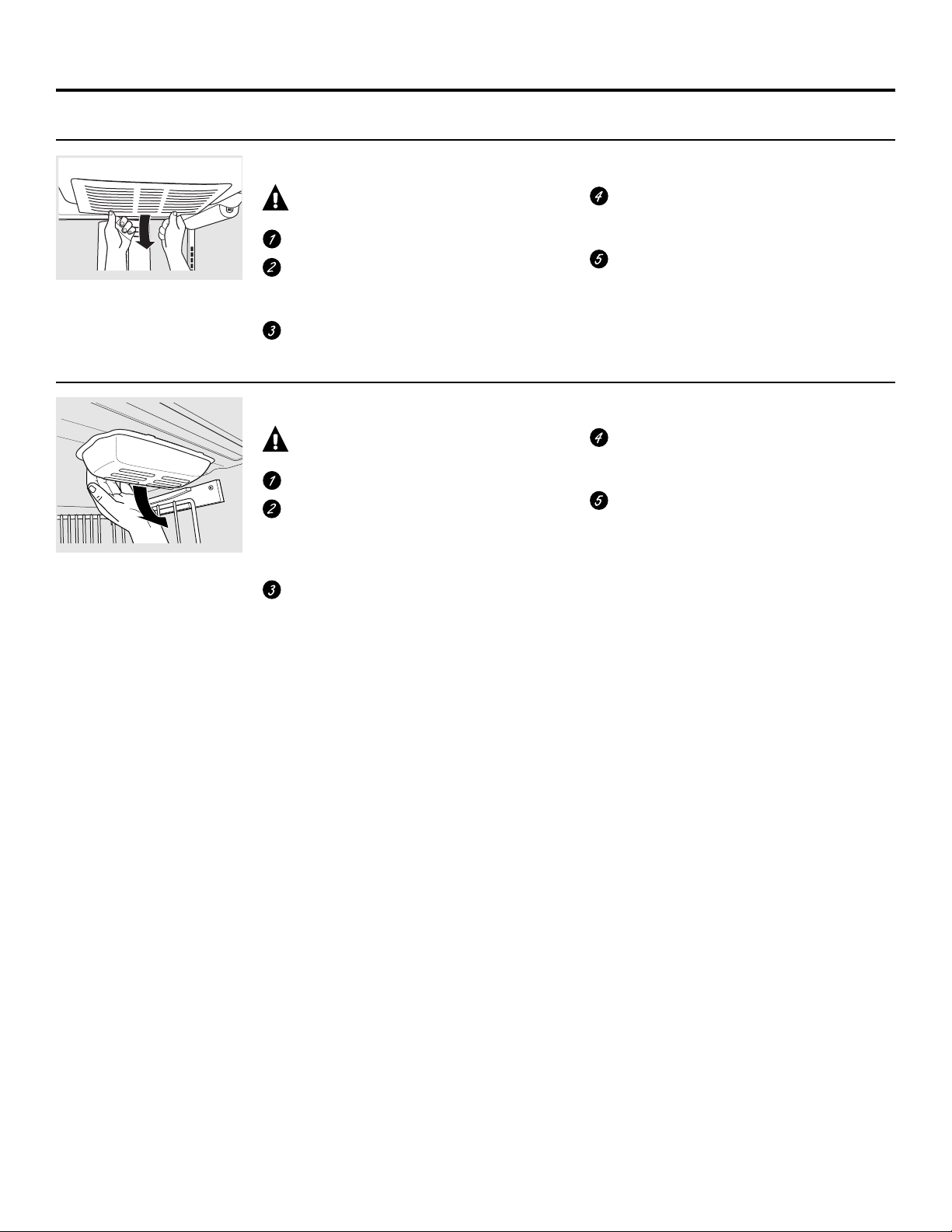
Refrigerator Lights
CAUTION: Light bulbs may be hot.
Unplug the refrigerator.
To remove the light shield, grasp the shield
at the back and pull out to release the tabs
at the back.
Rotate the shield down and then forward to
release the tabs at the front of the shield.
After replacing with an appliance bulb of
the same or lower wattage, replace the
shield.
Plug the refrigerator back in.
NOTE: Appliance bulbs should be ordered from
a GE authorized distributor.
Freezer Light
Replacing the light bulbs.
Turning the control to the 0 (off) position does not remove power to the light circuit.
Appearance may vary
CAUTION: Light bulbs may be hot.
Unplug the refrigerator.
The bulb is located at the top of the freezer
inside a light shield. To remove the shield,
grasp the shield at the back and pull out to
release the tabs at the back.
Rotate the shield down and then forward to
release the tabs at the front of the shield.
After replacing with an appliance bulb of
the same or lower wattage, replace the
shield.
Plug the refrigerator back in.
15
Trim kits and decorator panels.
Read these instructions completely and carefully.
Before You Begin
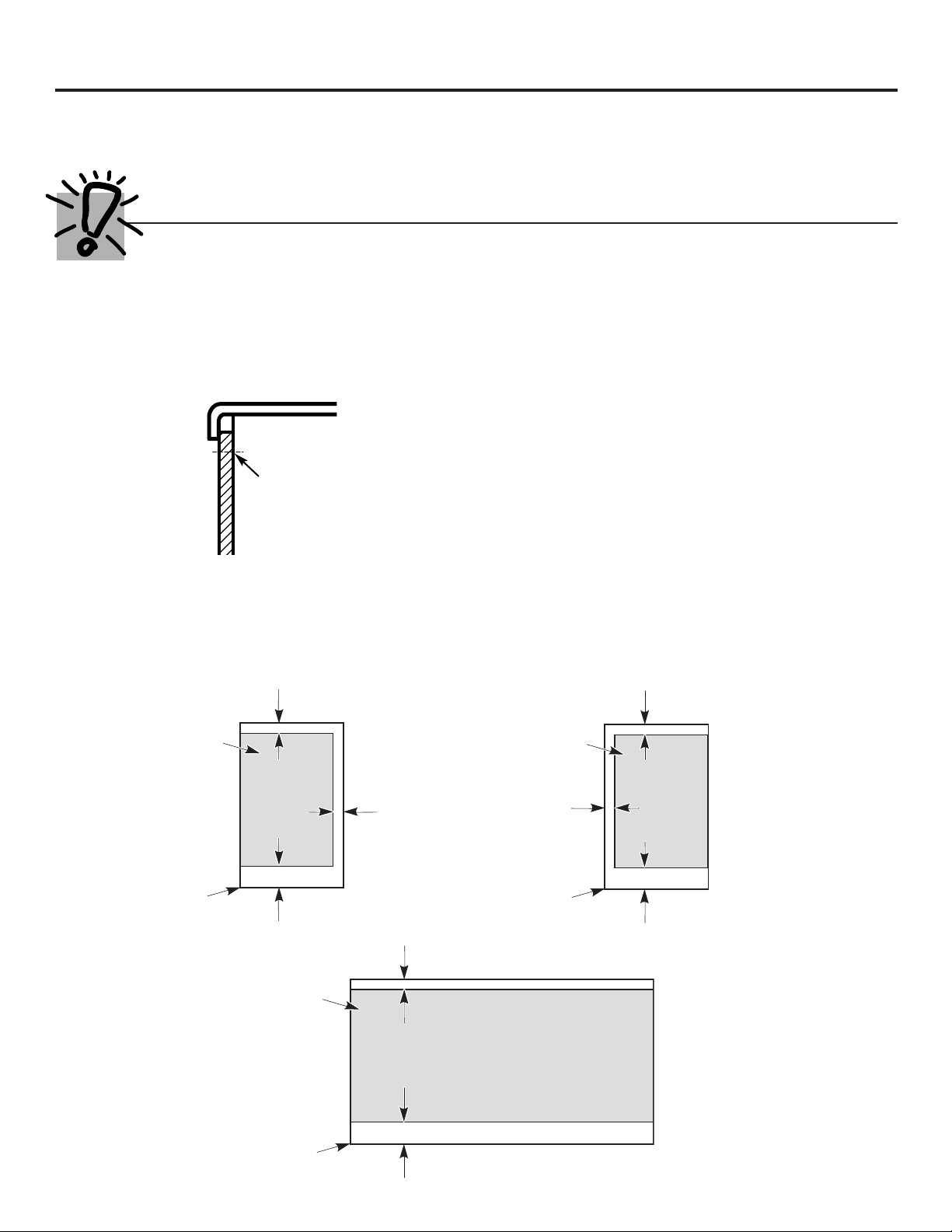
Some models are equipped with trim kits that allow you to install door panels.
Panels less than 6.3 mm thick
When installing wood panels less than 6.3 mm thick, you need to create a filler panel, such as cardboard, that will
fit between the face of the door and the wood panel. If you are installing the pre-cut decorator panels, pre-cut filler
panels are included in the kit. The combined thickness of the decorator or wood panel and the filler panel should
be 8.7 mm with the panel itself being no larger than 6.3 mm.
For panel required models
Panels 6.3 mm thick or less
6.3 mm max
The handle and the top and bottom trim stand in front of the surface of the door, which requires that the filler
be smaller in length and width than the panel. Use the guidelines below and tape the filler onto the back of
the panel.
Left Fresh Food Door
Freezer Door
Filler
63.5 mm
19.1 mm
19.1 mm
Panel
Filler
63.5 mm
19.1 mm
Panel
Right Fresh Food Door
Filler
63.5 mm
19.1 mm
19.1 mm
Panel
16
Trim kits and decorator panels.
19.1 mm or Raised Panel
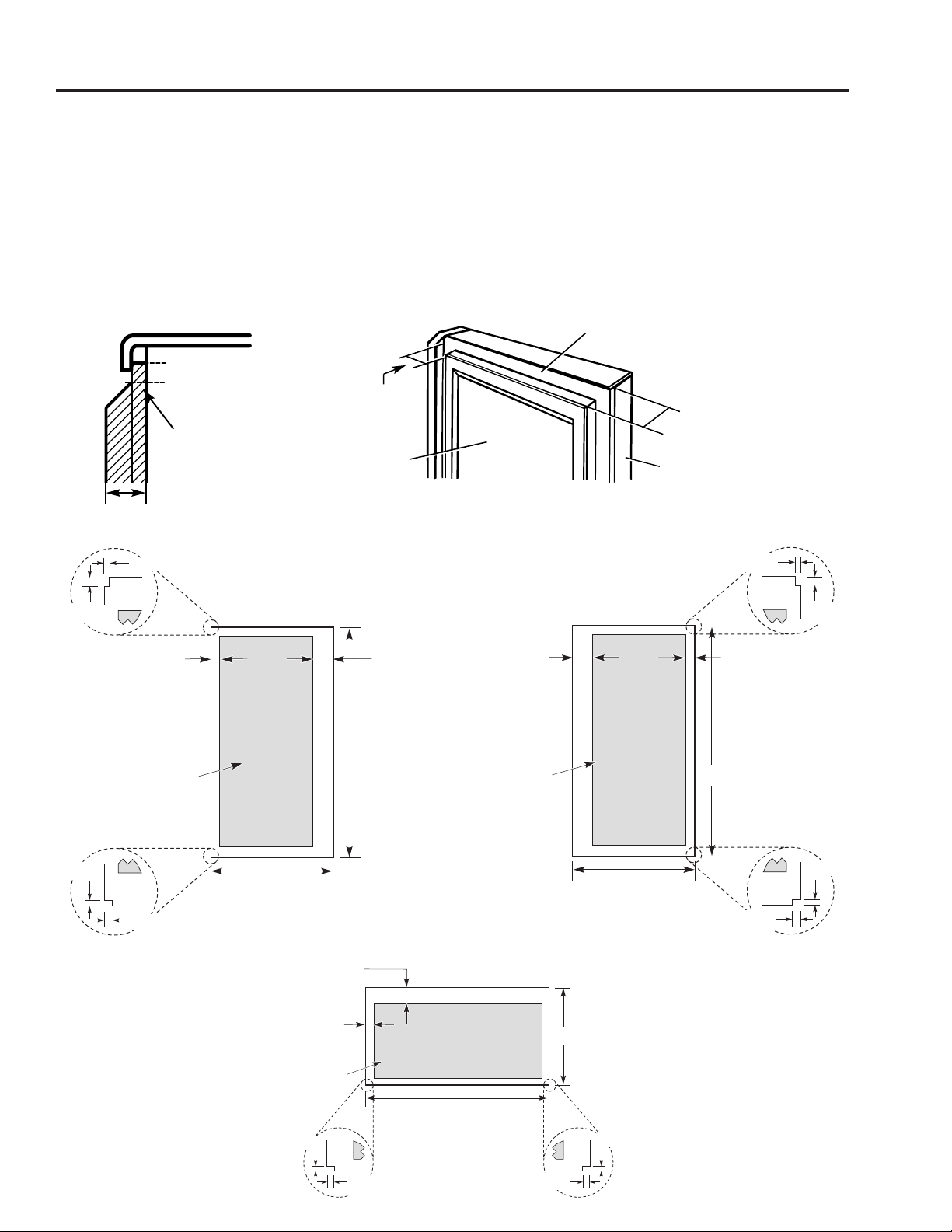
A raised panel design screwed or glued to a 6.3 mm thick backing, or a 19.1 mm routed board can be used.
The raised portion of the panel must be fabricated to permit clearances of at least 5.1 cm from the handle
side for fingertip clearance.
Panels thicker than 6.3 mm, up to 19.1 mm max., will require that the outer 7.9 mm of panel perimeter be
no thicker than 6.3 mm.
Weight limitations for custom panels:
Fresh Food 4.5 kg max. for each door
Freezer Door 8 kg max.
5.1 cm
Clearance
Handle Side
Appearance
Panel
Refrigerator
Door
6.3 mm Thick
Backing
19.1 mm
Panels thicker than 6.3 mm
6.3 mm max
19.1 mm
7.9 mm
Dimensions for Custom Wood Panels
Right Fresh Food Door
Freezer Door
Top, right and
bottom
42.9 cm
7.9 mm
minimum at
6.3 mm thickness
Raised portion
of panel
50.8 mm
minimum at
6.3 mm thickness
Handle side
66.3 cm
50.8 mm minimum
at 6.3 mm thickness
Handle side
Left, right and
bottom sides
7.9 mm minimum
at 6.3 mm thickness
91.2 cm
Raised
portion
of panel
98.9 cm
Left Fresh Food Door
Top, left and
bottom
42.9 cm
7.9 mm minimum
at 6.3 mm thickness
Raised portion
of panel
50.8 mm
minimum at
6.3 mm thickness
Handle side
98.9 cm
3.2 mm
3.2 mm
3.2 mm
3.2 mm
3.2 mm
6.3 mm
6.3 mm
6.3 mm
6.3 mm
6.3 mm
3.2 mm
6.3 mm
Installation
Refrigerator
Instructions
Models 21 and 25
BEFORE YOU BEGIN
Read these instructions completely and carefully.
•
IMPORTANT — Save these instructions for
local inspector’s use.
•
IMPORTANT — Observe all governing
codes and ordinances.
• Note to Installer – Be sure to leave these
instructions with the Consumer.
• Note to Consumer – Keep these instructions for
future reference.
• Skill level – Installation of this appliance requires
basic mechanical skills.
• Completion time – Refrigerator Installation
20 minutes
Water Line Installation
30 minutes
Anti-Tip Bracket Installation
20 minutes
• Proper installation is the responsibility of the
installer.
• Product failure due to improper installation is not
covered under the Warranty.
PREPARATION
MOVING THE REFRIGERATOR INDOORS
If the refrigerator will not fit through a doorway, the
refrigerator door and freezer drawer can be removed.
• To remove the refrigerator door, see Step 1 in the
Reversing the Door Swing section.
• To remove the freezer drawer, see the Removing
the Freezer Drawer section.
WATER SUPPLY TO THE ICEMAKER AND
DISPENSER (ON SOME MODELS)
If the refrigerator has an icemaker, it will have
to be connected to a cold water line. A GE water
supply kit (containing tubing, shutoff valve, fittings
and instructions) is available at extra cost from
your local distributor.
Maximum permissible inlet water pressure–8.2 bars.
Minimum permissible inlet water pressure–2.8 bars.
Installation of the icemaker must be done by a
qualified service technician.
17
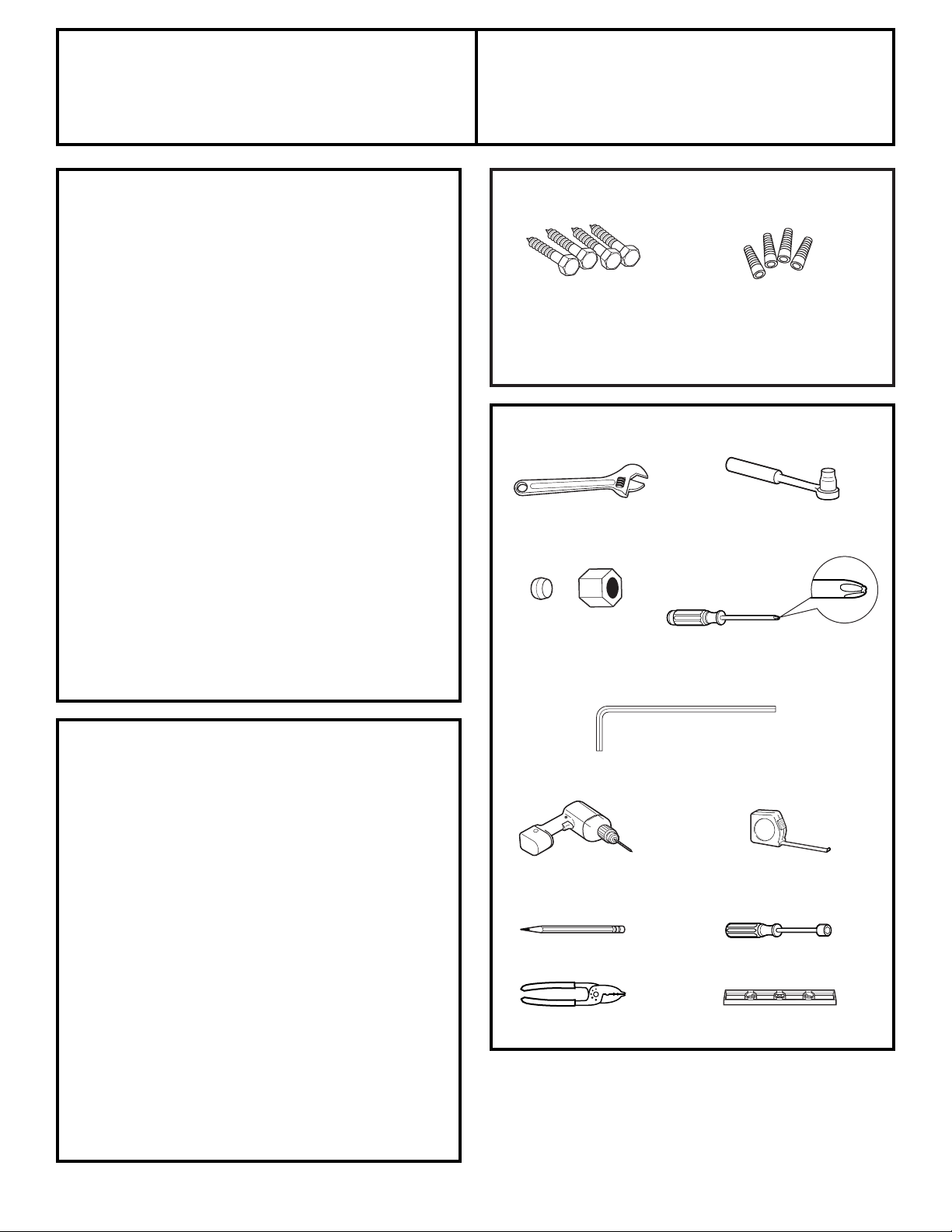
MATERIALS YOU MAY NEED (not included)
Lag Bolts
Anchor Sleeves
For Anti-Tip Bracket Mounted on CONCRETE Floors Only
Drill Bit Appropriate for Anchors
TOOLS YOU MAY NEED
Adjustable Wrench
1/4″ Outer Diameter
Compression Nut
and Ferrule (sleeve)
(icemaker models only)
Phillips Head Screwdriver
3/8″ and 5/16″ Socket
Ratchet/Driver
3/32″, 1/8″ and 1/4″ Allen
wrenches
Pencil
1/8″ Drill Bit and
Electric or Hand Drill
Tape measure
1/4″ Nut Driver
Wire Cutters
Level
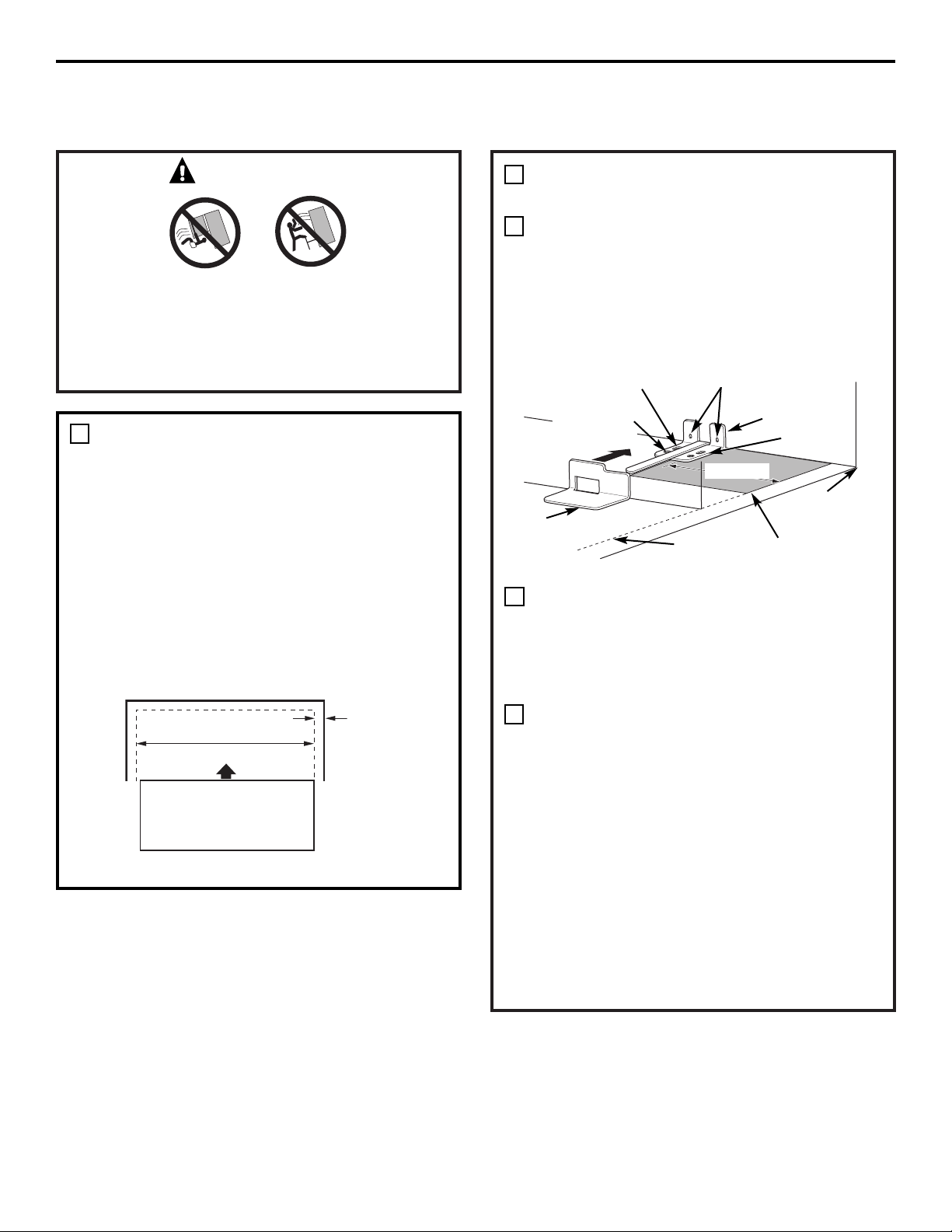
LOCATING THE ANTI-TIP
FLOOR BRACKET
Place the anti-tip floor bracket locator
template (included inside the anti-tip kit)
onto the floor up against the rear wall,
within W, and in line with the desired
location of the RH side of the refrigerator
(see Figure 1).
Place the anti-tip floor bracket onto the
locator template with its RH floor holes
lined up with the floor holes indicated
on the template sheet, approximately
184.2 mm from the edge of the sheet or
the RH side of the refrigerator.
Hold down in position and use the anti-tip
floor bracket as a template for marking
the holes based upon your configuration
and type of construction as shown in
Step 3. Mark the hole locations with a
pencil, nail or awl.
NOTE:
• It is REQUIRED to use at least 2 screws
to mount the floor bracket (one on each
side of the anti-tip floor bracket). Both
must be into either the wall or the floor.
Figure 2 indicates all the acceptable
mounting configurations for screws.
Identify the screw holes on the anti-tip
floor bracket for your configuration.
MEASURE CABINET OPENING
AVAILABLE VS. REFRIGERATOR
WIDTH
Measure width of cabinet opening where
refrigerator will be placed, W.
Be sure to account for any countertop
overhang, baseboard thickness and any
clearance desired. Width, W, should not
be less than 914.4 mm. The refrigerator
will be placed approximately in the
middle of this opening.
WARNING
Under certain circumstances, this refrigerator
can tip forward.
Injury to persons can result.
Install Anti-Tip Bracket packed with this
refrigerator.
1
Baseboard
Thickness
or Countertop
Overhang
(Whichever
Is Greater)
Plus Any
Desired
Clearance
Rear Wall
Front
RH Side
2
A
B
C
W
Base
Bracket
on the
Refrigerator
2 Wall Holes
RH Side of
Refrigerator
Floor – Concrete
(2 Holes)
Floor – Wood
(2 Holes)
184.2 mm
Locator
Template Sheet
Floor
Bracket
to Install
RH Holes
Rear RH
Corner of
Cabinet Wall
REFRIGERATOR
Figure 1 – Installation Overview
18
Installation Instructions
INSTALLING THE ANTI-TIP FLOOR BRACKET
(on all 21 ft. models and 25 ft. single door models)
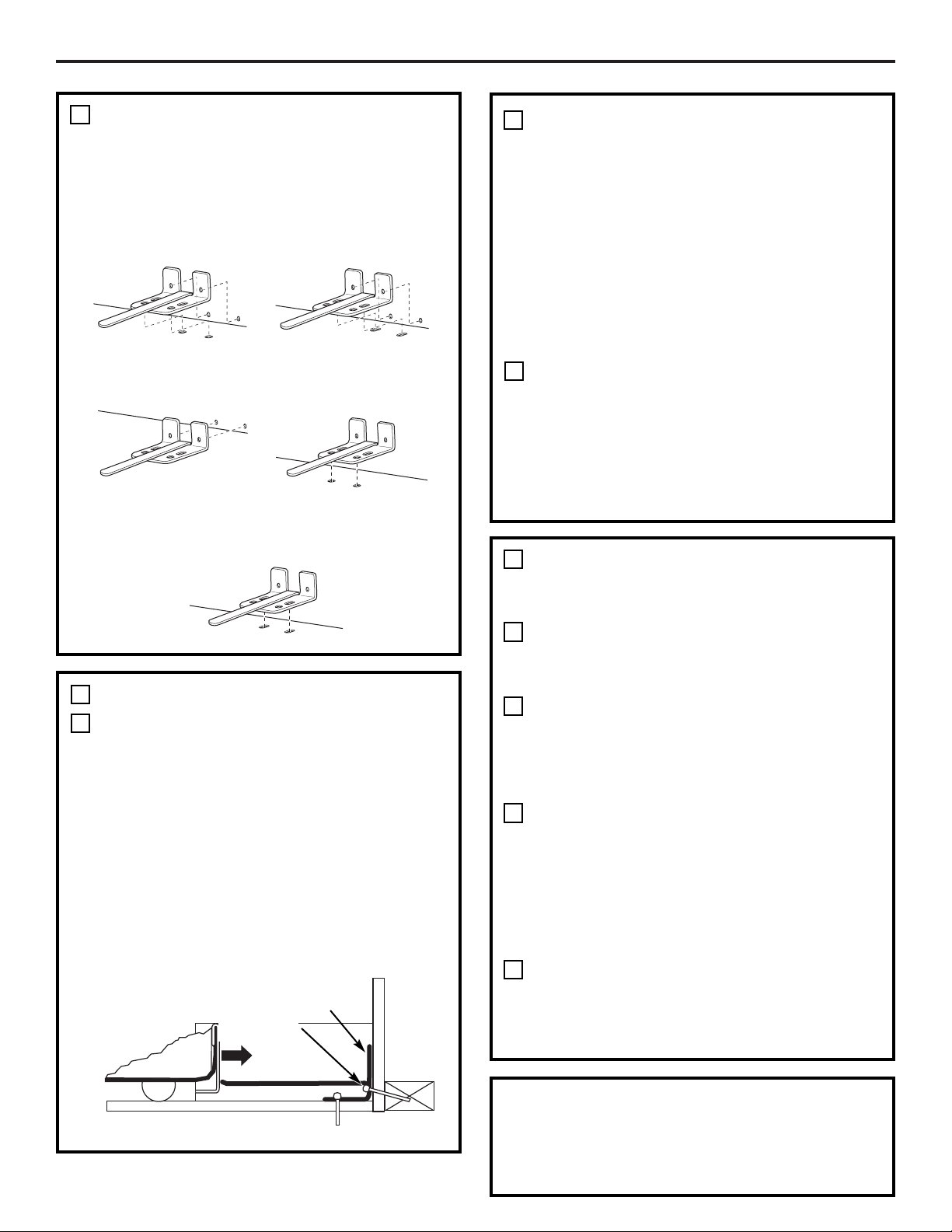
Installation Instructions
LOCATING THE ANTI-TIP
FLOOR BRACKET (cont.)
2
Preferred Installation –
Wood
Preferred Installation –
Concrete
Minimum Acceptable #1 –
Wall Plate Stud
Minimum Acceptable #2 –
Wood Floor
Minimum Acceptable #3 –
Concrete Floor
Figure 2 – Acceptable Screw
Placement Locations
CONCRETE Wall and Floor Construction:
• Anchors required (not provided):
4 each 6 mm x 38 mm lag bolts
4 each 12 mm O.D. sleeve anchors
• Drill the recommended size holes for
the anchors into the concrete at the
center of the holes marked in Step 2.
• Install the sleeve anchors into the drilled
holes. Place the anti-tip floor bracket as
indicated in Step 2. Remove the locator
template from the floor.
• Install the lag bolts through the anti-tip
floor bracket and tighten appropriately.
WOOD Wall and TILE Floor Construction:
• For this special case, locate the 2 wall
holes identified in Fig. 1. Drill an angled
3 mm pilot hole (approx. as shown in
Fig. 3) in the center of each hole.
• Mount the anti-tip floor bracket using
the Minimum Acceptable Installation #1,
as illustrated in Fig. 2.
C
B
ANTI-TIP BRACKET INSTALLATION
WOOD Wall and Floor Construction:
• Drill the appropriate number of 3 mm
pilot holes in the center of each floor
bracket hole being used (a nail or awl
may be used if a drill is not available)
AND remove the locator template from
the floor.
• Mount the anti-tip floor bracket by
fastening the 2, or preferably 4, #10-16
hex-head screws tightly into place as
illustrated in Figure 3.
3
A
POSITIONING THE REFRIGERATOR
TO ENGAGE THE ANTI-TIP FLOOR
AND BASE BRACKETS
Before pushing the refrigerator into the
opening, plug the power cord into the
receptacle and connect waterline (if
equipped). Check for leaks.
Locate the refrigerator’s RH side and
move back approximately in line with the
RH side of the cabinet opening, W. This
should position the anti-tip floor bracket
to engage the anti-tip base bracket on the
refrigerator.
Gently roll the refrigerator back into
the cabinet opening until it comes
to a complete stop. Check to see if
the refrigerator front lines up with the
cabinet front face. If not, carefully rock
the refrigerator forward and backward
until engagement occurs and you notice
that the refrigerator is fully pushed up
against the rear wall.
OPTIONAL: Adjust the rear (and front)
wheel height settings to fully engage the
rear anti-tip brackets, while also aligning
the refrigerator front with the cabinet
front face.
4
A
C
B
D
Figure 3 – Attachment to
Wall and Floor
NOTE:
If you pull the refrigerator out and away from
the wall for any reason, make sure the anti-tip
floor bracket is engaged when the refrigerator
is pushed back against the rear wall.
Rear RH
Corner of the
Refrigerator
Floor
Wall
Plate
Stud
Floor
Bracket
2 Screws
Must Enter
Wood or
Metal Stud
Wall
19
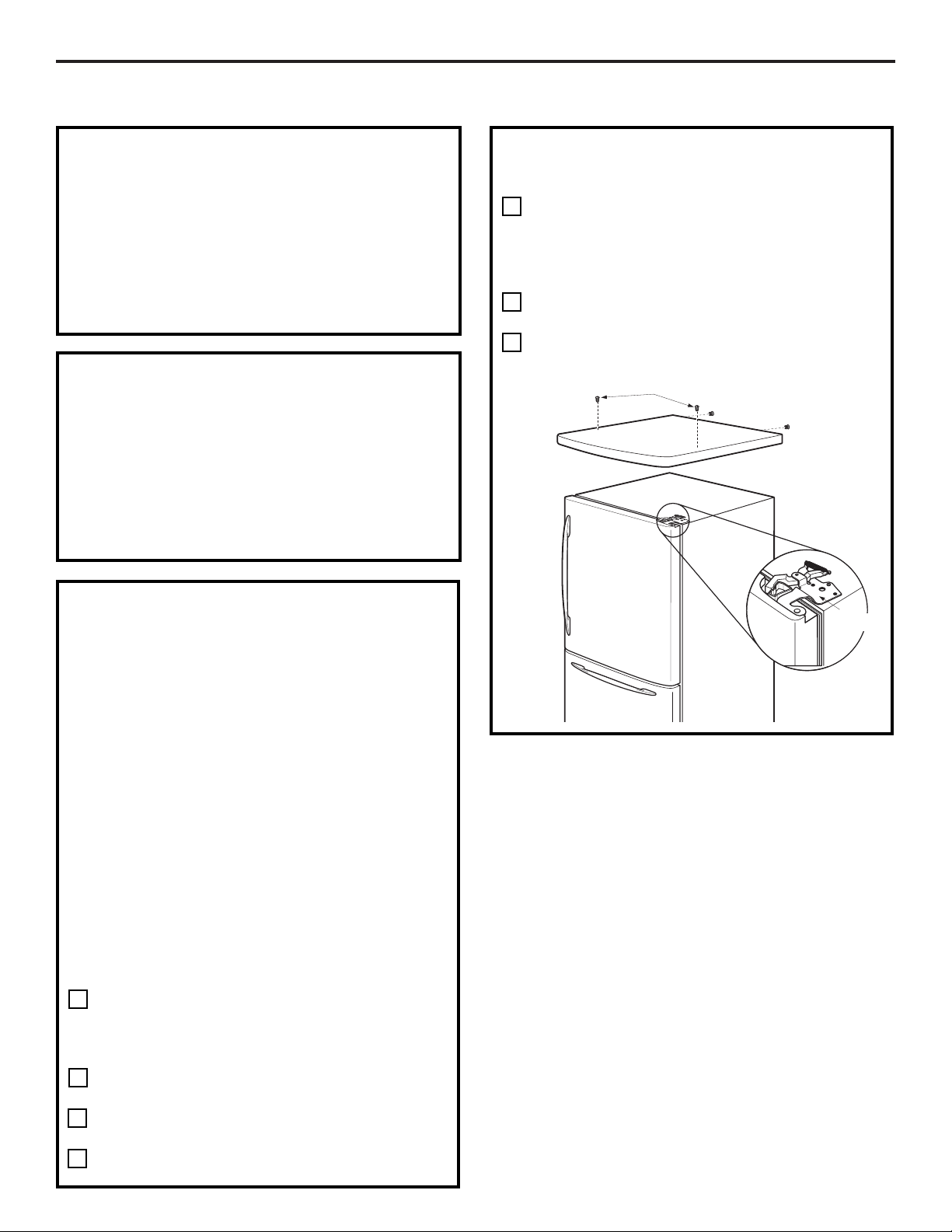
Installation Instructions
INSTALLING THE REFRIGERATOR
REFRIGERATOR LOCATION
• Do not install the refrigerator where the
temperature will go below 16°C because it will not
run often enough to maintain proper temperatures.
• Do not install the refrigerator where the
temperature will go above 37°C because it will not
perform properly.
• Install it on a floor strong enough to support it fully
loaded.
REMOVE TOP CAP
(on some models)
• IMPORTANT NOTE: This refrigerator is 876.3 mm
deep. Doors and passageways leading to the
installation location must be at least 914.4 mm wide
in order to leave the doors and handles attached to
the refrigerator while transporting it into the
installation location. If passageways are less than
914.4 mm, the refrigerator doors and handles can
easily be scratched and damaged. The top cap and
doors can be removed to allow the refrigerator to be
safely moved indoors. Start with Step A.
• If it is not necessary to remove doors, skip Step A.
Leave tape and all packaging on doors until the
refrigerator is in the final location.
• SKID REMOVAL: Tilt refrigerator to each side to
remove skid.
• NOTE: Use a padded hand truck to move this
refrigerator. Place the refrigerator on the hand
truck with a side against the truck. We strongly
recommend that TWO PEOPLE move and complete
this installation.
Locate and remove the two Phillips head screws
on the top of the refrigerator. Remove the two
screws on each side at the rear of the top cap.
Lift off and remove top cap.
Remove the fresh-food door. Refer to Steps 1
through 3 of “Reversing the Door Swing” section.
Remove the bottom freezer drawer. Refer to
“Removing Freezer Drawer” section.
Move refrigerator to the installation location.
A
B
C
D
20
REMOVE TOP CAP (cont.) (on some models)
REINSTALL DOORS, DRAWERS AND TOP CAP
Carefully lower the door onto the center hinge.
Reinstall top hinge. NOTE: Ensure the door is
properly aligned to the case top to avoid
readjustment of the door during top cap
reinstallation.
Place cap over the top of the refrigerator. Reinstall
the original screws in the top and back of the cap.
Reinstall the bottom freezer drawer. Refer to
“Replacing the Freezer Drawer” section.
E
F
G
A
Top Hinge B
CLEARANCES
Allow the following clearances for ease of installation,
proper air circulation and plumbing and electrical
connections.
Standard Depth Counter Depth
Models Models
Sides 1/8″ (3 mm) 1/8″ (3 mm)
Top 1″ (25 mm) 1″ (25 mm)
Back 1″ (25 mm) 1/2″ (13 mm)
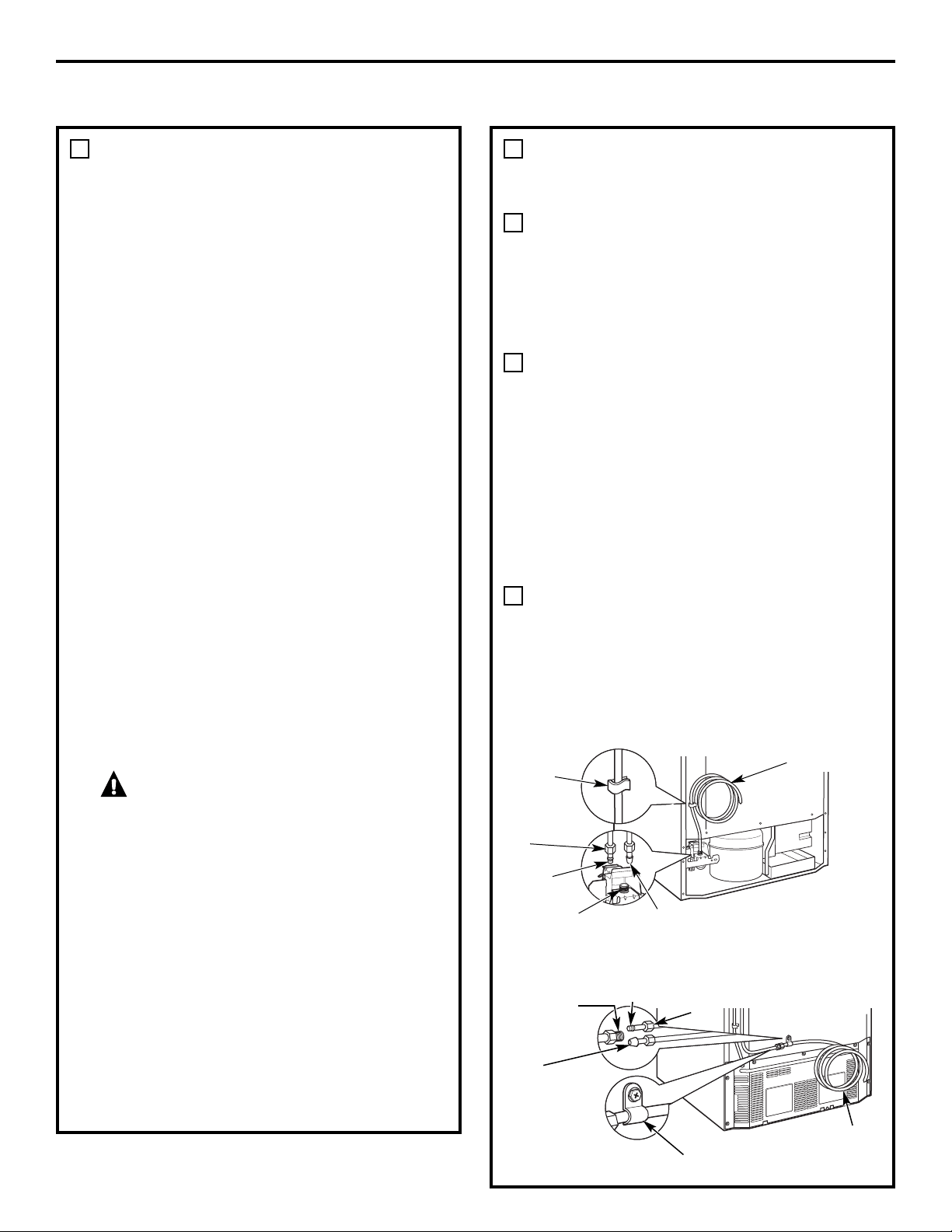
CONNECTING THE REFRIGERATOR
TO THE HOUSE WATER LINE
(icemaker and dispenser models)
A cold water supply is required for automatic
icemaker operation. If there is not a cold water
supply, you will need to provide one.
BEFORE YOU BEGIN
The water line installation is not warranted by
the refrigerator or icemaker manufacturer. Follow
these recommendations carefully to minimize the
risk of expensive water damage.
Water hammer (water banging in the pipes)
in house plumbing can cause damage to
refrigerator parts and lead to water leakage or
flooding. Call a qualified plumber to correct water
hammer before installing the water supply line to
the refrigerator.
To prevent burns and product damage, do not
hook up the water line to the hot water line.
If you use your refrigerator before connecting the
water line, make sure the icemaker power switch
is in the O (off) position.
Do not install the icemaker tubing in areas where
temperatures fall below freezing.
When using any electrical device (such as a
power drill) during installation, be sure the device
is insulated or wired in a manner to prevent the
hazard of electric shock.
All installations must be in accordance with local
plumbing code requirements.
Installation of the icemaker must be
done by a
qualified service technician.
WARNING!
Connect to potable
water supply only.
NOTES:
• It is the installer’s responsibility to ensure
plumbing is compliant with local codes and
regulations.
• Before making the connection to the
refrigerator, be sure the refrigerator power cord
is not plugged into the wall outlet.
• If your refrigerator does not have a water filter,
we recommend installing one if your water
supply has sand or particles that could clog the
screen of the refrigerator’s water valve. Install it
in the water line near the refrigerator. If using
GE SmartConnect
™
Refrigerator Tubing Kit, you
will need an additional tube (WX08X10002) to
connect the filter. Do not cut plastic tube to
install filter.
1
CONNECTING THE REFRIGERATOR
TO THE HOUSE WATER LINE
(cont.)
If you are using copper tubing, place a
compression nut and ferrule (sleeve) onto
the end of the tubing coming from the
house cold water supply.
If you are using the GE SmartConnect
™
tubing, the nuts are already assembled to
the tubing.
If you are using copper tubing, insert
the end of the tubing into the refrigerator
connection, at the back of the refrigerator,
as far as possible. While holding the
tubing, tighten the fitting.
If you are using GE SmartConnect
™
tubing, insert the molded end of the
tubing into the refrigerator connection,
at the back of the refrigerator, and tighten
the compression nut until it is hand tight.
Then tighten one additional turn with a
wrench. Overtightening may cause leaks.
Fasten the tubing into the clamp provided
to hold it in position. You may need to pry
open the clamp.
One of the illustrations below will look like
the connection on your refrigerator.
Icemaker-Ready models
Icemaker-Installed Models
21
Installation Instructions
1
A
B
C
1/4″ Tubing
Tubing Clamp
1/4″
Compression
Nut
Ferrule
(sleeve)
SmartConnect
™
Tubing
Refrigerator
Connection
1/4″ Copper
Tubing
1/4″
Compression
Nut
Ferrule
(sleeve)
SmartConnect
™
Tubing
Refrigerator
Connection
Tubing
Clamp
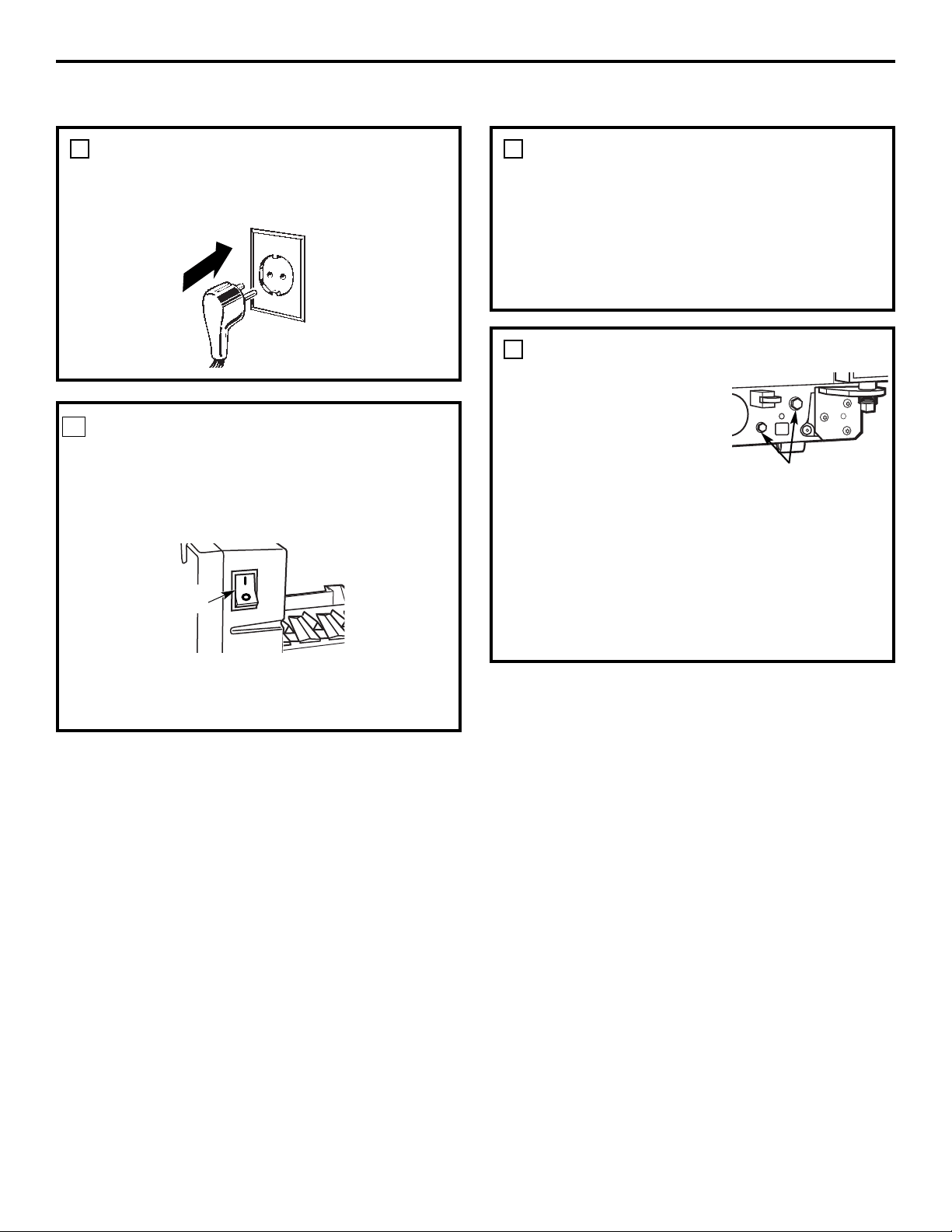
INSTALLING THE REFRIGERATOR (cont.)
Installation Instructions
22
PUT THE REFRIGERATOR IN PLACE
Move the refrigerator to its final location. Make
sure the back side of the refrigerator engages the
anti-tip bracket properly. The anti-tip floor bracket
should line up with the cutout in the back bottom
of the refrigerator, and fit through the cutout
when the refrigerator is pushed into position.
(Refer to page 18, Step 2A for more information.)
4
LEVEL THE REFRIGERATOR
Turn the front roller
adjusting screws clockwise
to raise the refrigerator,
counterclockwise to lower
it. Use a 3/8″ hex wrench
with extension, or an
adjustable wrench.
To adjust the rollers on 21
‘ Counter Depth models:
These models also have rear adjustable rollers
so you can align the refrigerator with your
kitchen cabinets. Use a 3/8″ hex wrench with
extension to turn the screws for the rear rollers—
clockwise to raise the refrigerator,
counterclockwise to lower it.
5
Roller adjusting screws
PLUG IN THE REFRIGERATOR
On models with an icemaker, before plugging in
the refrigerator, make sure the icemaker power
switch is set to the O (off) position.
2
Set the icemaker power switch to the l position.
The icemaker will not begin to operate until it
reaches its operating temperature of –9°C or below.
It will then begin operation automatically if the
icemaker power switch is in the l position.
NOTE: In lower water pressure conditions, the
water valve may turn on up to 3 times to deliver
enough water to the icemaker.
START THE ICEMAKER
3
Power
switch
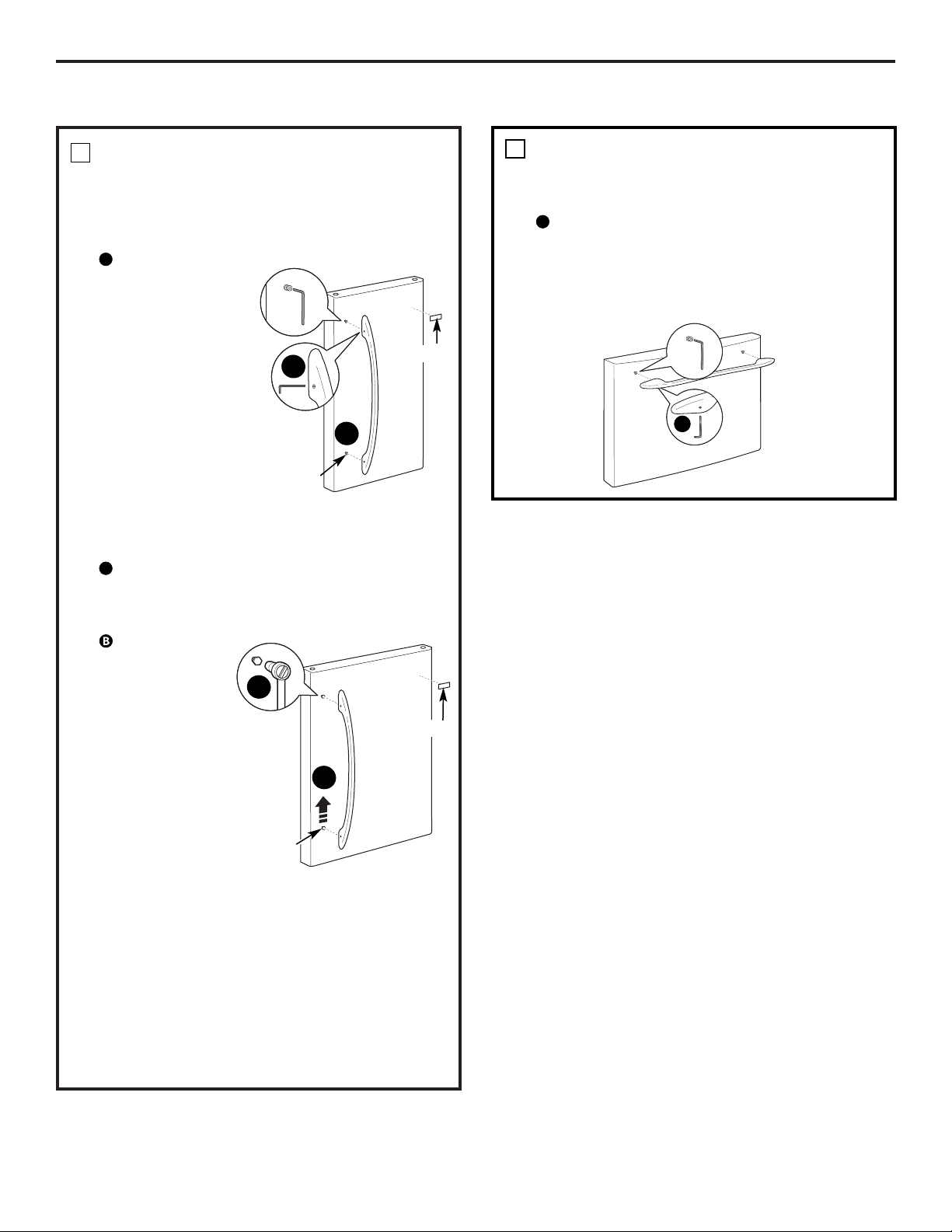
Installation Instructions
REMOVE THE FRESH FOOD
DOOR HANDLE
(For placement in the installation location or
reversal of the handles – on some models)
Stainless steel (on some models):
REMOVING
THE DOOR
HANDLE: Loosen
the set screws
with the 3/32″
Allen wrench
and remove
the handle. NOTE:
For Double Door
models follow the
same procedure
on the opposite
door.
Plastic handle (on some models):
REMOVING THE DOOR HANDLE: Depress the
tab on the underside of the handle and slide
the handle up and off of the mounting
fasteners.
REVERSING
THE DOOR
HANDLE (on
some models):
• Remove
the handle
mounting
fasteners with
a 1/4″ Allen
wrench and
transfer the
handle
mounting
fasteners to
the right side.
• Remove the
logo badge.
• Remove and transfer the plug button to
the left side of the fresh food door. NOTE:
Use a flat plastic edge to prevent damaging
the door. Remove any adhesive on the door
with a mild detergent. Remove the paper
covering on the adhesive backing on the logo
badge prior to carefully attaching the badge
to the door.
A
A
6
A
B
A
B
Mounting
Fasteners
Mounting
Fasteners
Badge
Badge
(appearance may vary)
(appearance may vary)
REMOVE THE FREEZER DOOR
HANDLE
Stainless steel and plastic handles:
Loosen the set screws located on the underside
of the handle with the 1/8″ Allen wrench and
remove the handle.
NOTE: If the handle mounting fasteners need
to be tightened or removed use a 1/4″ Allen
wrench.
A
7
A
23
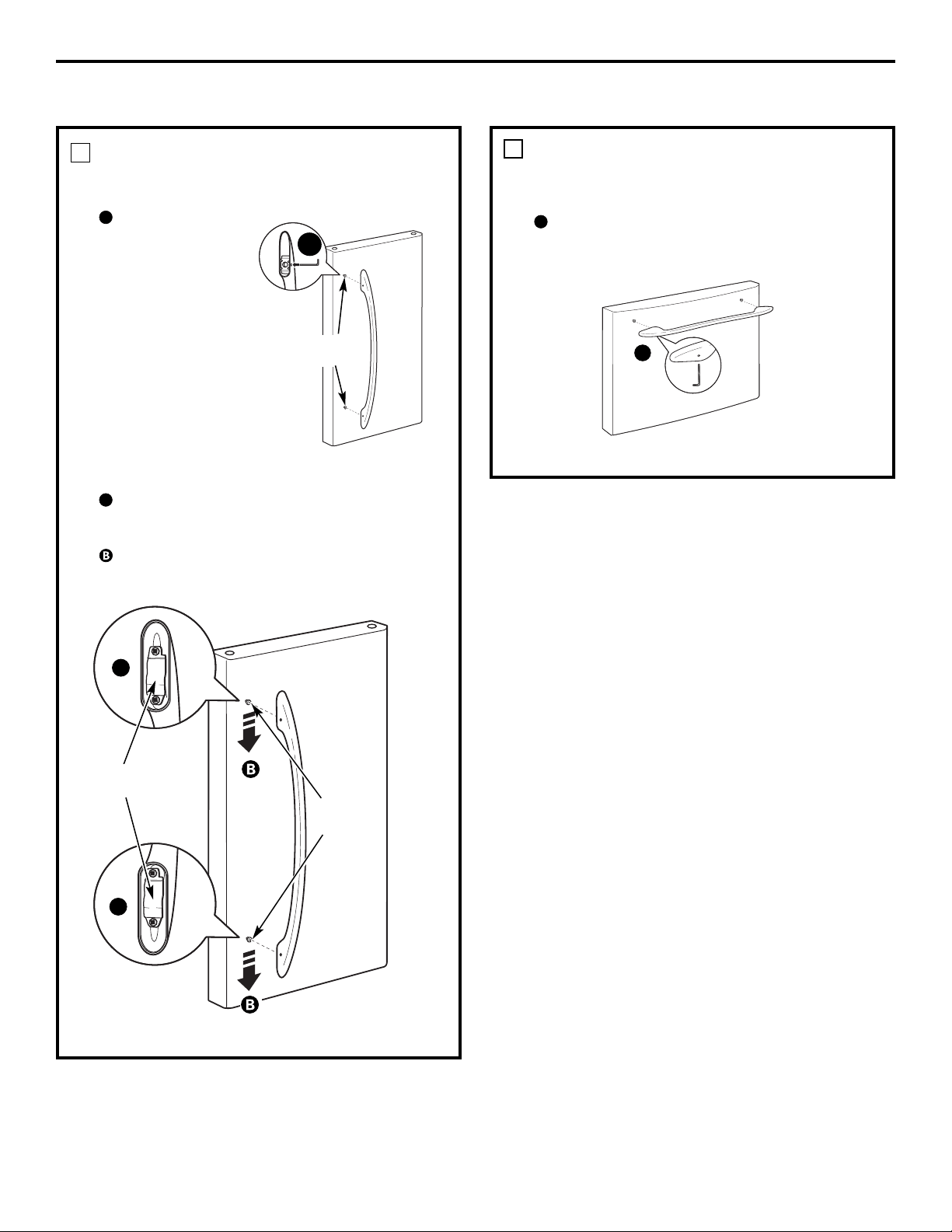
INSTALLING THE REFRIGERATOR (cont.)
ATTACH THE FREEZER DOOR
HANDLE
Stainless steel and plastic handles:
Attach the handle firmly to the mounting
fasteners and tighten the set screws on the
bottom of the handle with a 1/8″ Allen wrench.
A
Installation Instructions
24
ATTACH THE FRESH FOOD
DOOR HANDLE
Stainless steel handle:
Attach the handle
to the handle
mounting
fasteners and
tighten the set
screws with a
3/32″ Allen
wrench.
NOTE: For Double
Door models
follow the same
procedure on the
opposite door.
Plastic handle:
Attach the handle to the handle mounting
fasteners by aligning the slots with the handle
mounting fasteners.
Slide it down until it is firmly locked into
position.
A
A
8
A
Mounting
Fasteners
(appearance may vary)
(appearance may vary)
Mounting
fasteners
Slots on back
of handle
A
A
9
A
(appearance may vary)
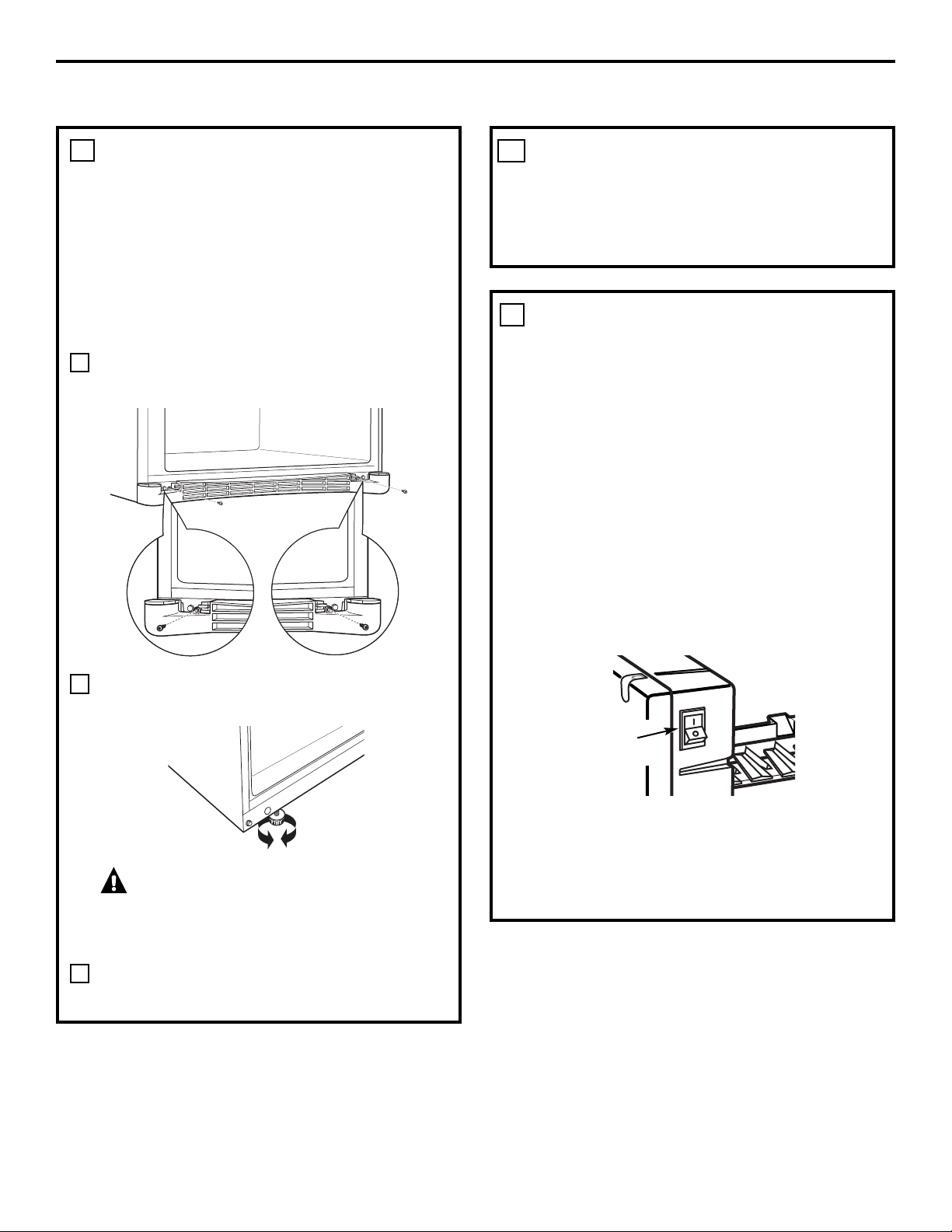
LEVEL THE REFRIGERATOR
The leveling legs have 2 purposes:
1) Leveling legs adjust so the refrigerator
is firmly positioned on the floor and
does not wobble.
2) Leveling legs serve as a stabilizing
brake to hold the refrigerator securely
in position during operation and
cleaning. The leveling legs also prevent
the refrigerator from tipping.
Remove the grille by removing the two
Phillips head screws.
Turn the leveling legs clockwise to raise the
refrigerator, counterclockwise to lower it.
CAUTION: To avoid possible
personal injury or property damage, the
leveling legs must be firmly touching
the floor.
Replace the base grille by inserting the two
Phillips head screws.
10
A
Installation Instructions
25
SET THE CONTROLS
Set the controls to the recommended
setting:
Freezer: –18°C
Refrigerator: 3°C
11
REMOVE PACKAGING
START ICEMAKER
(icemaker models)
A) Remove all tape, foam and protective
packing from shelves and drawers.
B) Remove the tie downs from the freezer
baskets.
C) Place half width basket onto drawer
slides. See About the freezer section
for instructions.
Set the icemaker power switch to the
I (on) position. The icemaker will not
begin to operate until it reaches its
operating temperature of –9°C or below.
It will then begin operation automatically.
It will take 2–3 days to fill the ice bin.
NOTE:
In lower water pressure conditions, the
water valve may turn on up to 3 times
to deliver enough water to the icemaker.
12
Power
switch
B
C
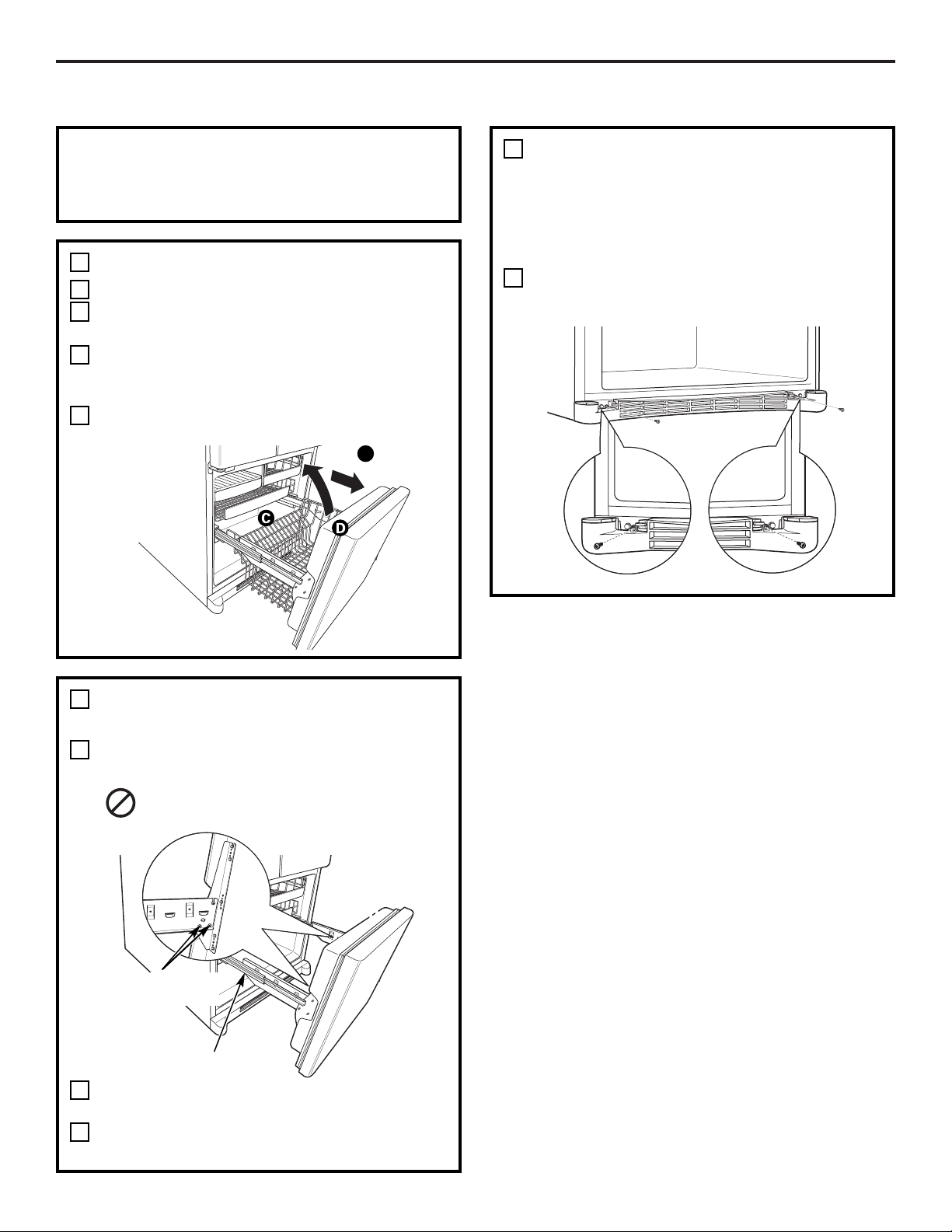
26
Installation Instructions
REMOVING THE FREEZER DRAWER
(on some models)
REMOVE THE BASKET
Open the freezer drawer until it stops.
Cut the 2 wire ties off of the basket with
wire cutters.
The freezer basket rests inside 4 tabs on
the freezer slides. Lift the basket up and
out of the 4 tabs.
Tilt the front up and lift the entire basket
up and out of the drawer.
1
A
C
D
REMOVE THE BASE GRILLE
(if needed)
If, after removing the freezer drawer and
refrigerator door, the refrigerator will still
not fit through a doorway, the base grille
can be removed.
Remove the base grille by removing the
2 Phillips head screws.
3
The freezer drawer can be removed, if needed,
to fit through tight areas.
Read these instructions completely and carefully.
REMOVE THE DRAWER FRONT
FROM THE SLIDES
Remove the 10 hex head screws from the
door and remove the door.
DO NOT remove the torx screws
from the rail assemblies.
Set the drawer front on a non-scratching
surface.
Push the rail assemblies back into the
cabinet.
2
A
DO NOT remove
torx screws
Rail Assembly
A
A
B
C
B
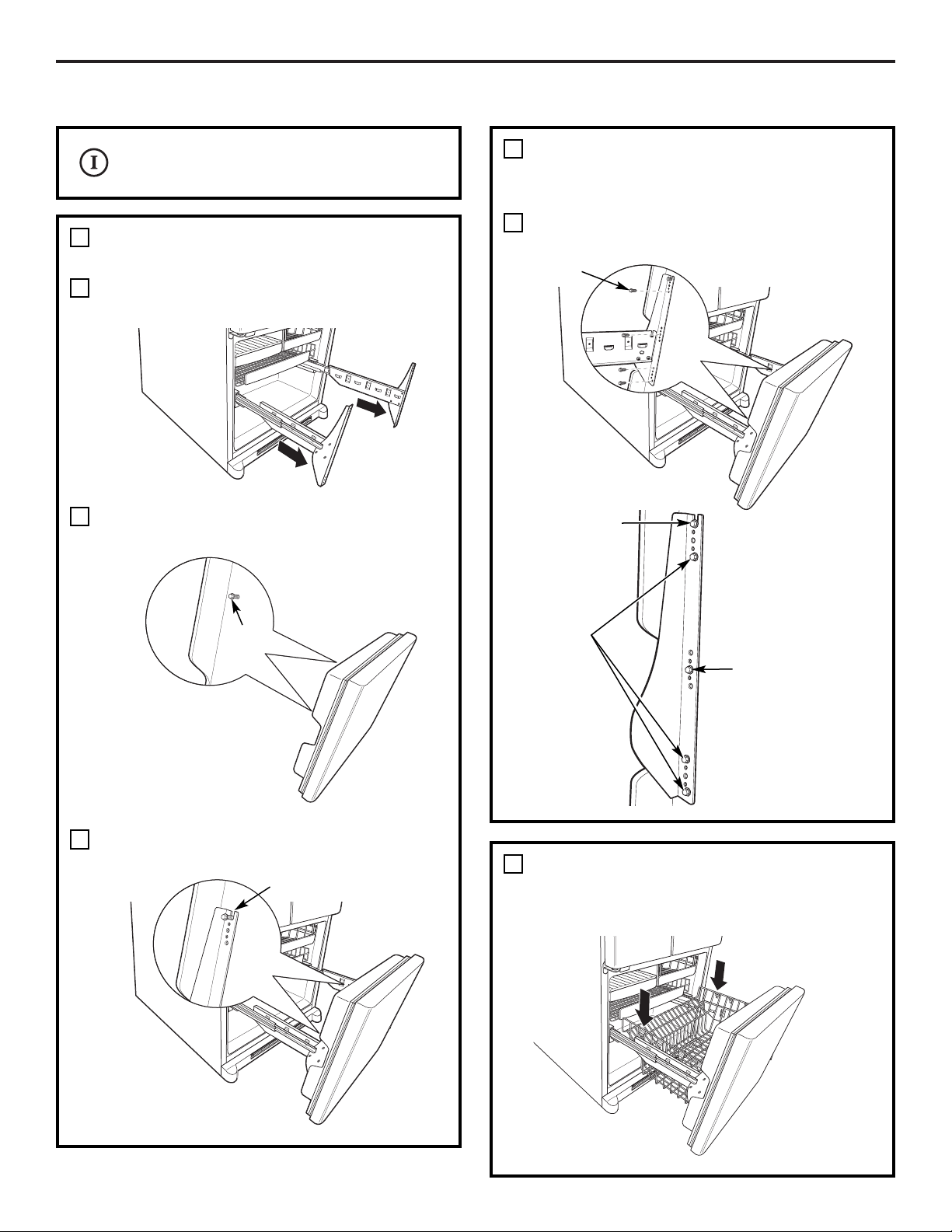
27
Installation Instructions
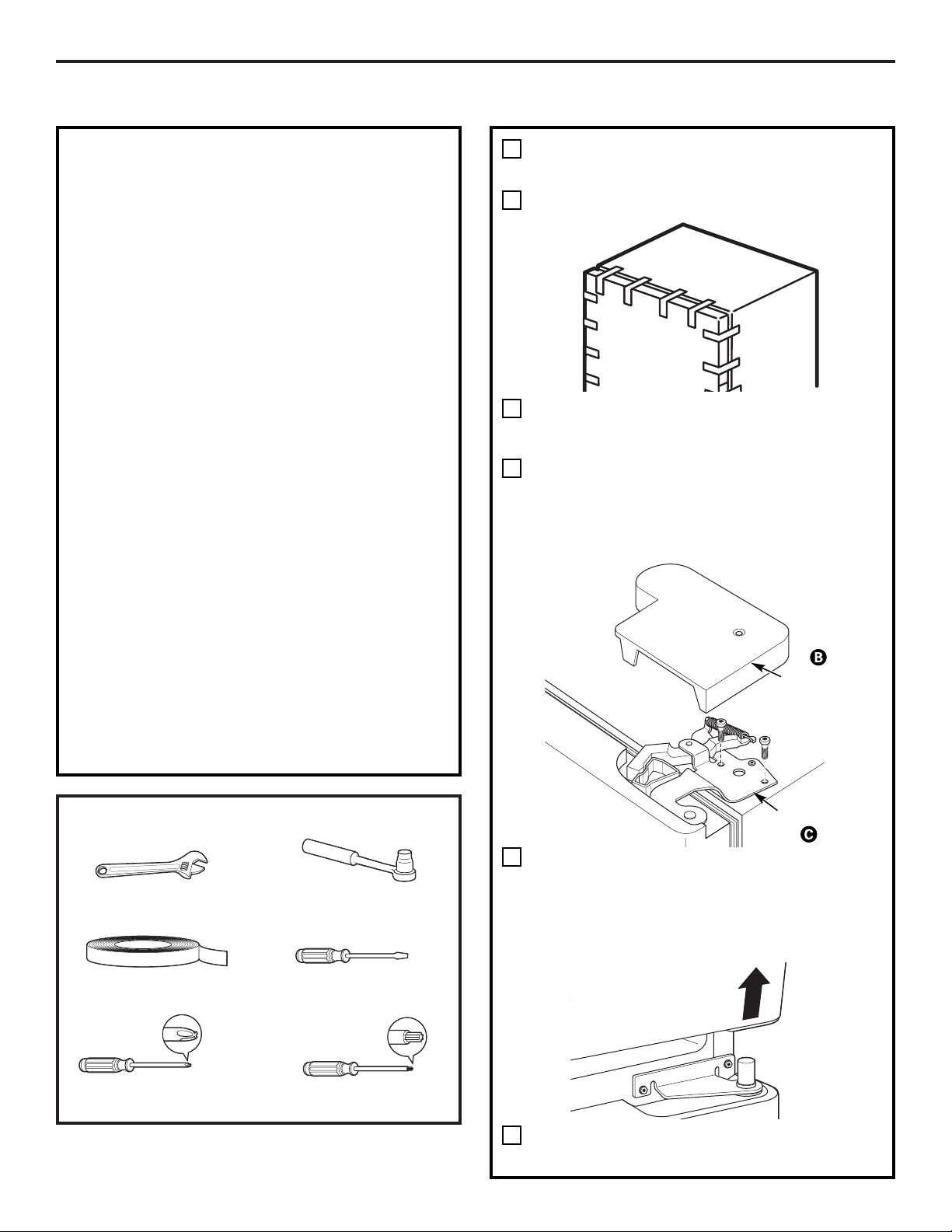
REPLACING THE FREEZER DRAWER (on some models)
ATTACH AND SECURE THE
DRAWER FRONT TO THE SLIDES
Pull out the rail assemblies to the full
length on each side of the cabinet.
Drive the top screw into the door on each
side until it is 1/2 way in.
Hang the drawer front onto open slots on
the slides.
1
A
B
REPLACE THE FREEZER BASKET
Replace the lower freezer basket by
lowering it into the frame.
2
Two people may be required to complete
this procedure.
Screw
ATTACH AND SECURE THE
DRAWER FRONT TO THE SLIDES
(CONT.)
Drive screws fully. (There are 10 screws.)
1
Screw
Slot
D
C
Step D2:
Drive
fully.
Step D3:
Drive
screws
in these
holes.
Step D1:
Line up
screw
hole in
freezer
drawer
and
drive
fully.
TOOLS YOU WILL NEED
Installation Instructions
REVERSING THE DOOR SWING (Single Door Refrigerator Models only)
IMPORTANT NOTES
When reversing the door swing:
NOTE: Door swing is not reversible on stainless
steel models.
• Read the instructions all the way through
before starting.
• Parts are included in the door hinge kit.
• Handle parts carefully to avoid scratching
paint.
• Set screws down by their related parts to
avoid using them in the wrong places.
• Provide a non-scratching work surface for
the doors.
IMPORTANT: Once you begin, do not move the
cabinet until door-swing reversal is completed.
These instructions are for changing the hinges
from the right side to the left side—if you ever
want to change the hinges back to the right side,
follow these same instructions and reverse all
references to left and right.
• Once door swing is finalized, ensure
the logo badge is properly aligned and
permanently secured to the door by removing
the adhesive cover on the back side.
NOTE: A replacement logo badge is included
in the hinge kit.
Unplug the refrigerator from its electrical outlet.
Empty all door shelves, including the dairy
compartment.
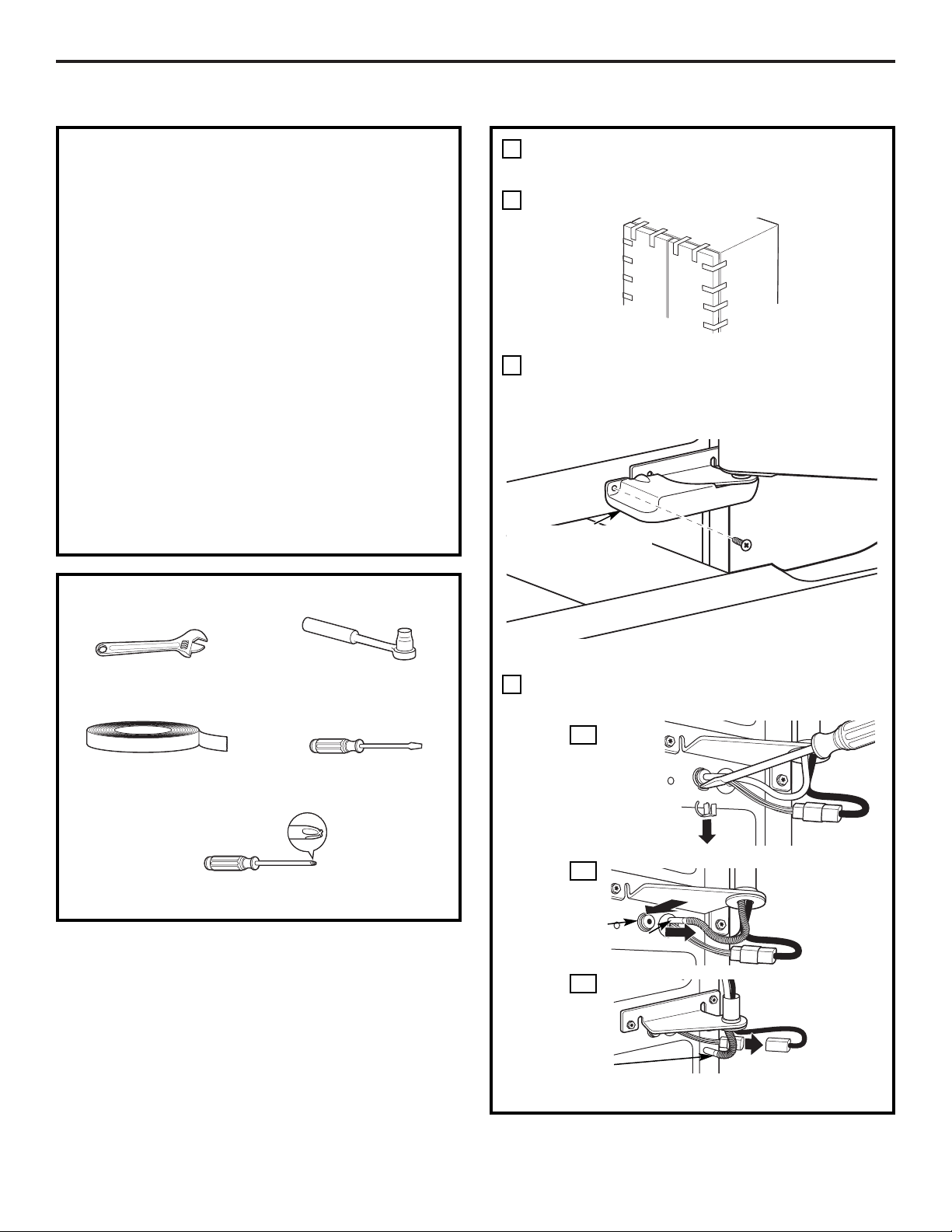
Thin-blade Screwdriver
Masking Tape
Adjustable Wrench
5/16″ Socket
Ratchet/Driver
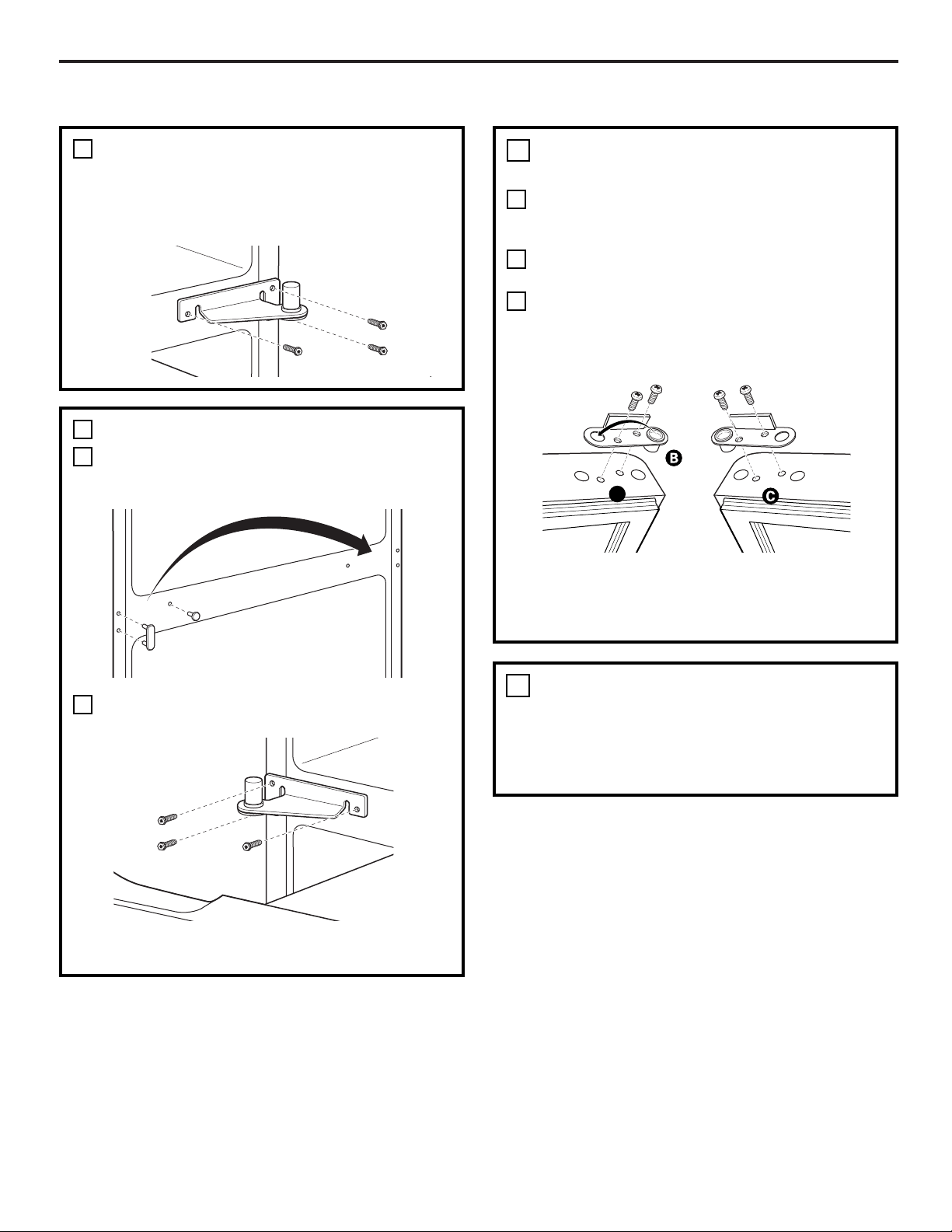
REMOVE THE
REFRIGERATOR DOOR
Tape the door shut with masking tape.
Remove the hinge cover on top of the
refrigerator door by removing the Phillips
head screws and pulling it up.
Using a 5/16″ socket ratchet/driver,
remove the bolts securing the top hinge to
the cabinet. Then lift the hinge straight up
to free the hinge pin from the socket in
the top of the door.
Remove the tape and tilt the door away
from the cabinet. Lift the door off the
center hinge pin. Ensure that the plastic
hinge pin thimble remains on the hinge pin
or inside door hinge pin hole located in the
bottom of the door.
Set the door on a non-scratching surface
with the inside up.
1
A
B
C
Hinge Cover
Top Hinge
Phillips Screwdriver
28
Torx T-20 Driver
D
E
Installation Instructions
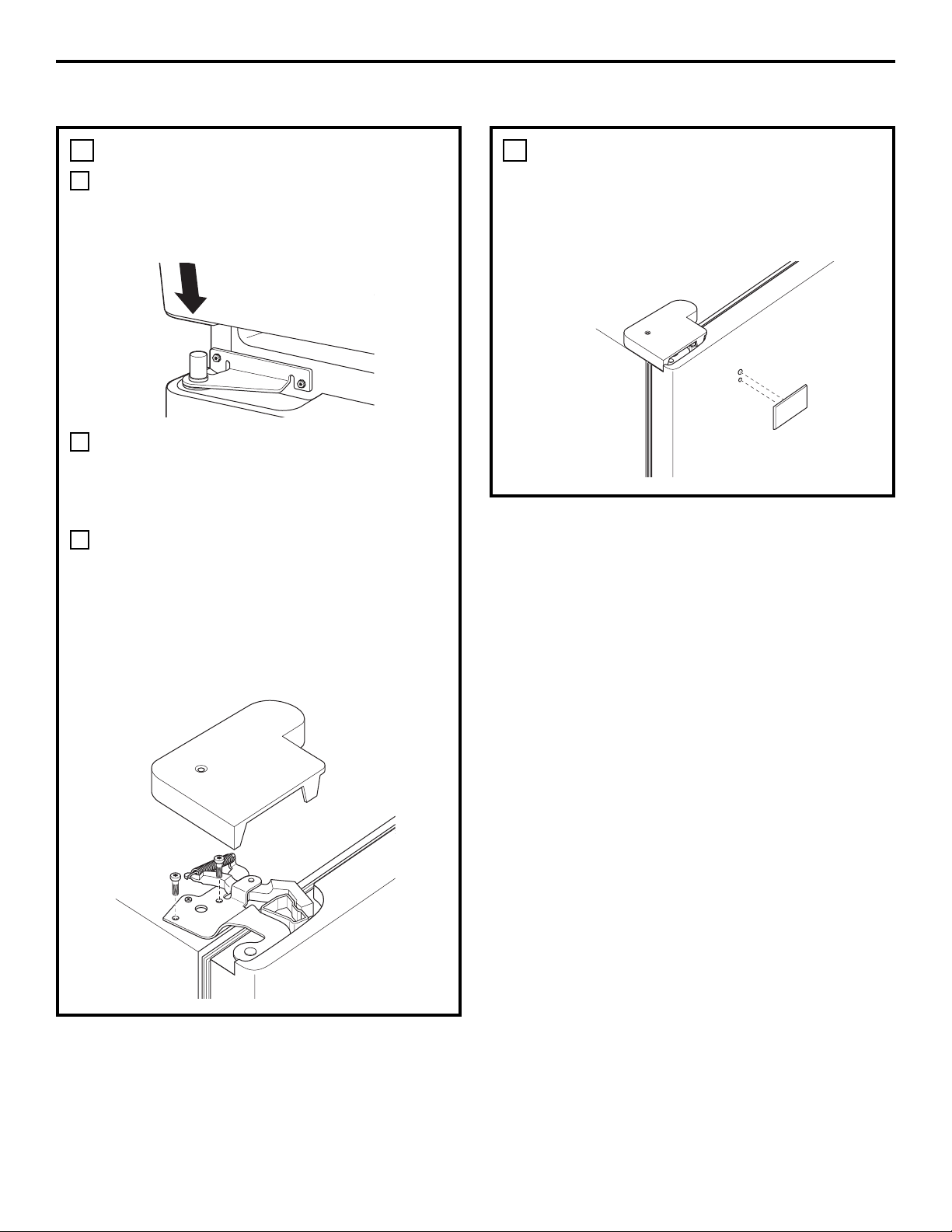
REMOVE CENTER HINGE
Using a 5/16″ socket ratchet/driver,
remove the bolts securing the center
hinge to the cabinet. Set the hinge
and bolts aside.
2
29
INSTALL CENTER HINGE
Transfer the plug button and screw hole
cover in the hinge holes on the left side to
the right side.
Install the center hinge from the kit on the
left side.
NOTE: A new hinge will be required for the
left side (supplied in the door hinge kit).
3
A
B
TRANSFER REFRIGERATOR
DOOR STOP
Remove the door stop on right side of
the bottom of the refrigerator door by
removing the two screws.
Move the plastic hinge hole thimble to the
opposite hole.
Install the door stop on the left side,
making sure to line up the screw holes
in the door stop with the holes in the
bottom of the door.
4
A
B
C
Bottom of
Refrigerator Door
(Right Side)
Bottom of
Refrigerator Door
(Left Side)
A
TRANSFER REFRIGERATOR
DOOR HANDLE TO RIGHT
Refer to Remove the Fresh Food Door
Handle and Attach the Fresh Food Door
Handle sections for instructions.
5
REHANG REFRIGERATOR DOOR
Lower the refrigerator door onto the
center hinge pin. Ensure that the plastic
hinge pin thimble is on the center hinge
pin or inside door hinge pin hole located
in the bottom of the door.
Insert the top hinge pin into the hinge hole
on top of the refrigerator door. Make sure
the door is aligned with the cabinet.
Attach the hinge to the top of the cabinet
loosely with the bolts.
Make sure the gasket on the door is
flush against the cabinet and is not folded.
Support the door on the handle side and
make sure the door is straight and the gap
between the doors is even across the
front. While holding the door in place,
tighten the top hinge bolts. Replace the
hinge cover.
6
A
B
C
Installation Instructions
30
INSTALL THE LOGO BADGE
Remove the adhesive backing paper
and align the pins on the back of the
badge with the holes in the door. Apply
pressure to the badge to ensure it sticks
to the door.
7
REVERSING THE DOOR SWING (cont.)
Installation Instructions
REMOVING THE DOORS (Double Door Refrigerator Models only)
IMPORTANT NOTES
NOTE: Door swing is not reversible.
• Read the instructions all the way through
before starting.
• Handle parts carefully to avoid scratching
paint.
• Set screws down by their related parts to
avoid using them in the wrong places.
• Provide a non-scratching work surface for
the doors.
IMPORTANT: Once you begin, do not move
the cabinet.
These instructions are for removing the
doors.
Unplug the refrigerator from its electrical
outlet.
Empty all door shelves, including the dairy
compartment.
REMOVE THE
REFRIGERATOR DOORS
Tape the doors shut with masking tape.
Start with right-hand door first: Remove
the screw securing the center hinge cover,
lift the hinge cover and place to the side
on top of the refrigerator.
Remove water coupling and power
coupling.
1
A
B
31
TOOLS YOU WILL NEED
Thin-blade Screwdriver
Masking Tape
Adjustable Wrench
5/16″ Socket
Ratchet/Driver
Phillips Screwdriver
Remove hinge cover
(1 Phillips screw)
C
Water Coupling
Remove the metal spring
clip. Use a screwdriver to
push the red plastic locking
clip down and off.
C1
Water Coupling
Push red collar
and hold.
Pull tube.
Power Coupling
Black mark
flush with
collar assembly
Pull apart power
coupling to
disconnect
C2
C3
(for water dispenser models)
(for water dispenser models)
REMOVE THE
REFRIGERATOR DOORS (cont.)
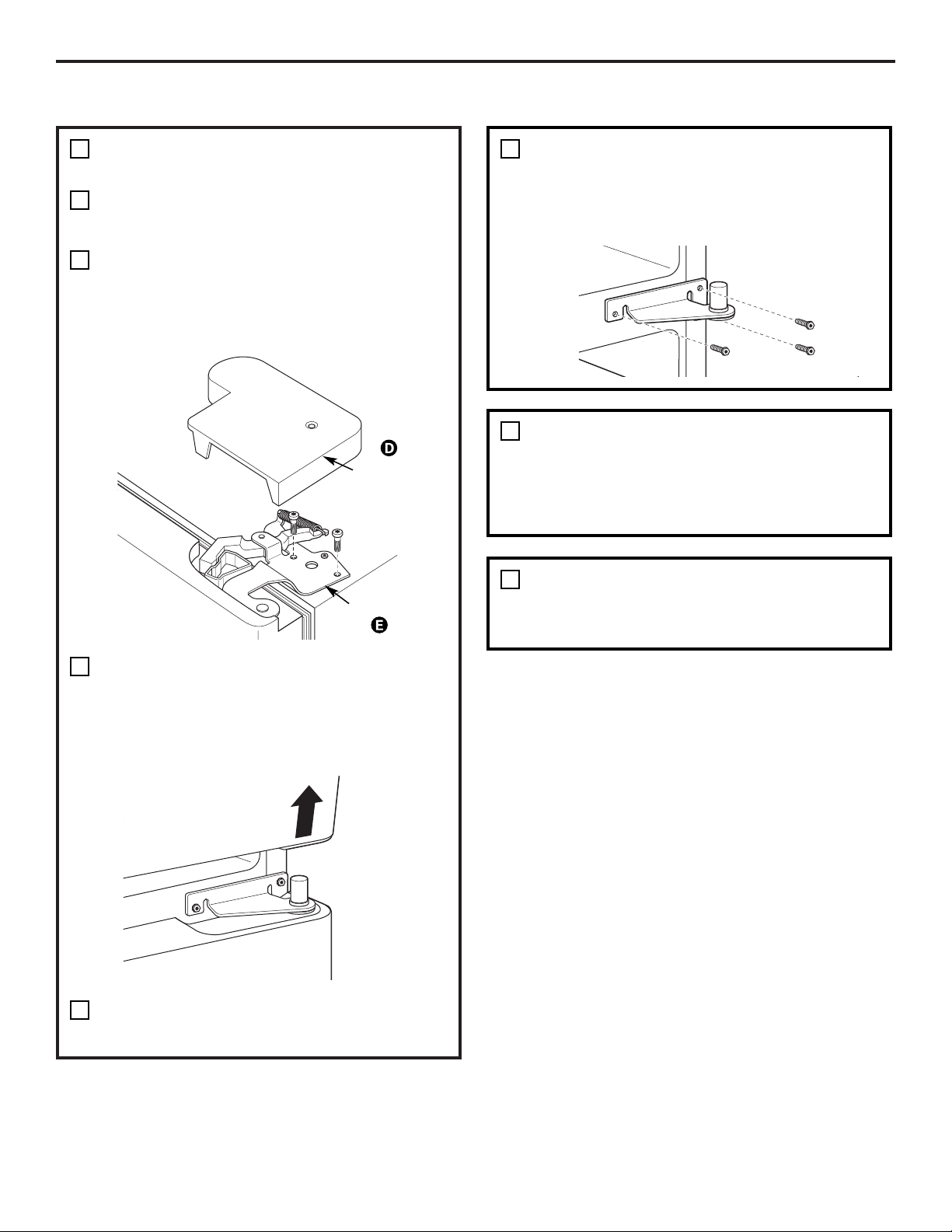
Remove the hinge cover on top of the
refrigerator door by removing the Phillips
head screws and pulling it up.
Using a 5/16″ socket ratchet/driver,
remove the bolts securing the top hinge to
the cabinet. Then lift the hinge straight up
to free the hinge pin from the socket in
the top of the door.
Remove the tape and tilt the door away
from the cabinet. Lift the door off the
center hinge pin. Ensure that the plastic
hinge pin thimble remains on the hinge pin
or inside door hinge pin hole located in the
bottom of the door.
Set the door on a non-scratching surface
with the inside up.
Installation Instructions
32
REMOVE OPPOSITE DOOR
Follow the same procedure on the
opposite door. There are no wires, water
lines or center hinge covers on the
opposite side.
3
REMOVE FREEZER DRAWER
Refer to the Removing the Freezer Drawer
section for instructions.
4
F
G
1
D
Hinge Cover
Top Hinge
REMOVE CENTER HINGE
Using a 5/16″ socket ratchet/driver,
remove the bolts securing the center
hinge to the cabinet. Set the hinge
and bolts aside.
2
E
REMOVING THE DOORS (Double Door Refrigerator Models only) (cont.)
Installation Instructions
REPLACING THE DOORS (Double Door Refrigerator Models only)
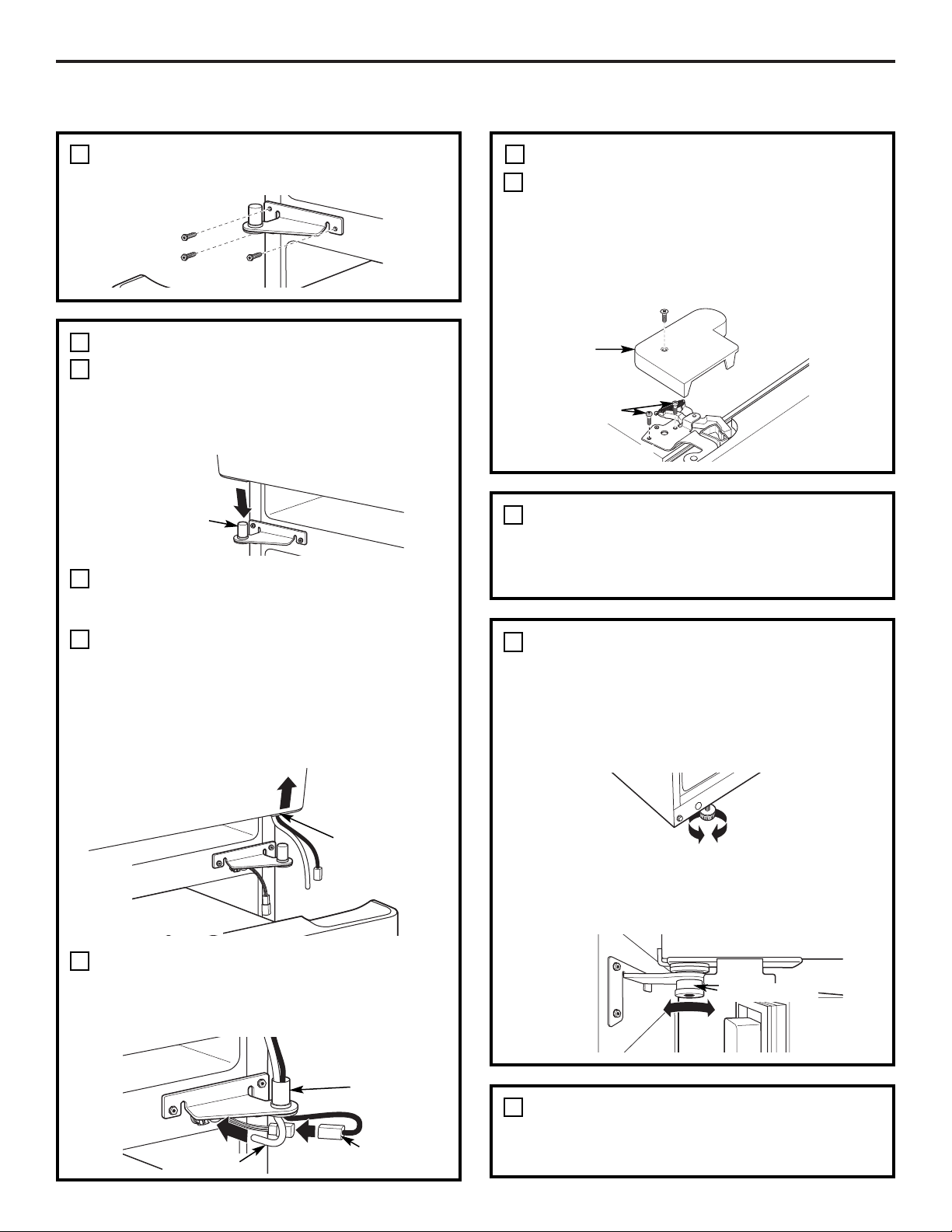
INSTALL CENTER HINGE
Install the center hinge on each side.
REHANG REFRIGERATOR DOORS
Lower the refrigerator door onto the
center hinge pin. Ensure that the plastic
hinge pin thimble is on the center hinge
pin or inside door hinge pin hole located
in the bottom of the door.
Securely tape the door shut with masking
tape or have a second person support
the door.
Route wires through bottom right hinge
pin slot. Insert the top hinge pin into the
hinge hole on top of the refrigerator door.
Make sure the door is aligned with the
cabinet and opposite door. Attach the
hinge to the top of the cabinet loosely
with the bolts.
On right-hand doors, carefully pass the
wires and water line through the center
hinge pin. Then connect the water line
and 4-pin connector.
A
B
REHANG REFRIGERATOR DOORS (CONT.)
Make sure the gasket on the door is
flush against the cabinet and is not folded.
Make sure the door is straight and the gap
between the doors is even across the front.
While holding the aligned door in place,
tighten the top hinge bolts. Replace the
hinge cover and screw.
E
C
Hinge Pin
Bottom
Right Hinge
Pin Slot
4-Pin
Connector
Water Line
Top Hinge Bolts
Hinge Cover
ALIGN DOUBLE DOORS
If the top of the doors are uneven, first
try to raise the lowest door by turning the
leveling leg on the same side as the door
until the doors are even. If the unit rocks,
re-adjust the leveling legs to the extent
that the unit is stable.
If the doors remain uneven, turn the
adjustable pin to raise, or lower, the left
door to match the right door. Use a 1/4″
Allen wrench to turn the pin.
Adjustable pin
REPLACE FREEZER DRAWER
Refer to the Replacing the Freezer Drawer
section for instructions.
5
D
33
REPLACE OPPOSITE DOOR
Follow the same procedure on the
opposite door. There is no water line or
hinge cover.
(appearance may vary)
(appearance may vary)
4
3
2
2
1
Center
Hinge Pin
34
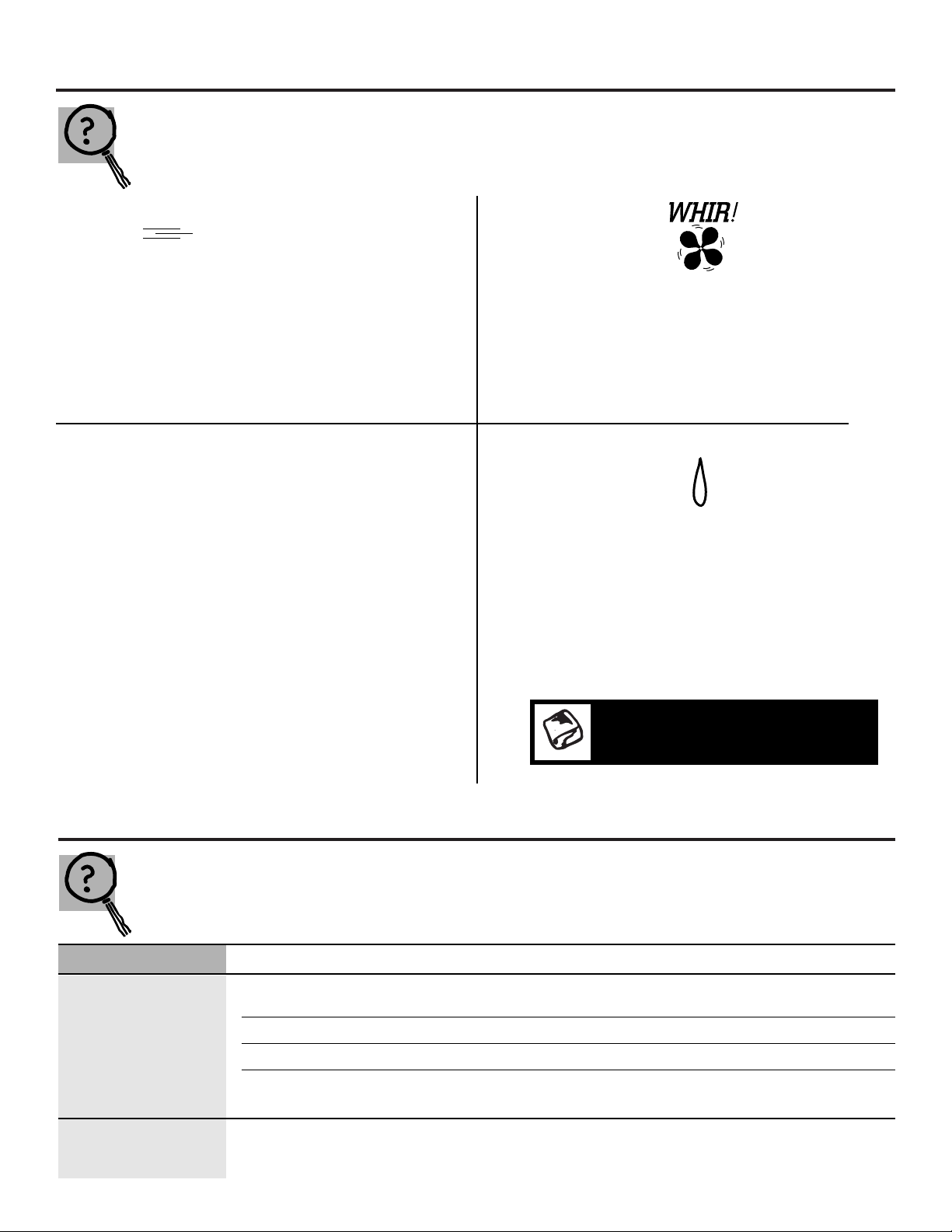
Normal operating sounds.
Before you call for service…
Troubleshooting Tips
Save time and money! Review the charts on the following
pages first and you may not need to call for service.
Newer refrigerators sound different from older refrigerators.
Modern refrigerators have more features and use newer technology.
HUMMM...
WHOOSH...
■
The new high efficiency compressor may run faster and longer
than your old refrigerator and you may hear a high-pitched
hum or pulsating sound while it is operating.
■
You may hear a whooshing sound when the doors close.
This is due to pressure equalizing within the refrigerator.
■
You may hear the fans spinning at high speeds. This happens
when the refrigerator is first plugged in, when the doors are
opened frequently or when a large amount of food is added to
the refrigerator or freezer compartments. The fans are helping
to maintain the correct temperatures.
■
The fans change speeds in order to provide optimal cooling
and energy savings.
CLICKS, POPS,
CRACKS and SNAPS
■
You may hear cracking or popping sounds when the
refrigerator is first plugged in. This happens as the refrigerator
cools to the correct temperature.
■
The freezer control will click when starting or stopping the
compressor.
■
Defrost timer snapping in and out of the defrost cycle.
■
Expansion and contraction of cooling coils during and after
defrost can cause a cracking or popping sound.
■
On models with an icemaker, after an icemaking cycle, you
may hear the ice cubes dropping into the ice bucket.
■
On models with a dispenser, during water dispense, you
may hear the water lines move at initial dispense and after
dispenser button is released.
WATER SOUNDS
■
The flow of refrigerant through the freezer cooling coils may
make a gurgling noise like boiling water.
■
Water dropping on the defrost heater can cause a sizzling,
popping or buzzing sound during the defrost cycle.
■
A water dripping noise may occur during the defrost cycle as
ice melts from the evaporator and flows into the drain pan.
■
Closing the door may cause a gurgling sound due to pressure
equalization.
Do you hear what I hear? These sounds are normal.
Problem Possible Causes What To Do
Refrigerator does not Refrigerator in defrost cycle. • Wait about 30 minutes for defrost cycle to end.
operate
Control in 0 (off) position. • Move the control to a temperature setting.
Refrigerator is unplugged. • Push the plug completely into the outlet.
The fuse is blown/circuit • Replace fuse or reset the breaker.
breaker is tripped.
Vibration or rattling Leveling legs need adjusting. • See Level the Refrigerator.
(slight vibration
is normal)
For additional information on normal
icemaker operating sounds, see the
About the automatic icemaker section.
Problem Possible Causes What To Do
Motor operates for Normal when refrigerator • Wait 24 hours for the refrigerator to completely cool down.
long periods or cycles is first plugged in.
on and off frequently.
Often occurs when large • This is normal.
(Modern refrigerators
amounts of food are
with more storage
placed in refrigerator.
space and a larger
Door left open. • Check to see if package is holding door open.
freezer require more
Hot weather or frequent • This is normal.
operating time. They
door openings.
start and stop often
Temperature control • See About the controls.
to maintain even
set at the coldest setting.
TurboCool function has been •This is normal when the TurboCool function is activated.
activated. See About TurboCool for more information.
Refrigerator or freezer Temperature controls not set • See About the controls.
compartment too warm cold enough.
Warm weather or frequent • Set the temperature control one step colder.
door openings. See About the controls.
Door left open. • Check to see if package is holding door open.
Frost or ice crystals Door left open. • Check to see if package is holding door open.
on frozen food
Door openings too frequent
(frost within package
or too long.
is normal)
Frequent “buzzing” Icemaker power switch is in • Set the power switch to the O (off) position. Keeping it
sound the I (on) position, but the in the I (on) position will damage the water valve.
water supply to the refrigerator
has not been connected.
Small or hollow cubes Water filter clogged. • Replace filter cartridge with new cartridge or with plug.
Automatic icemaker Icemaker power switch is •Set the power switch to the I (on) position.
(on some models) not on. The icemaker power light will turn green when the freezer
does not work light switch is pressed in or when the freezer door is closed.
Water supply turned off or •See Installing the water line.
not connected.
Freezer compartment •Wait 24 hours for the refrigerator to completely
too warm. cool down.
Piled up cubes in the storage •Level cubes by hand.
bin cause the icemaker
to shut off.
Ice cubes stuck in icemaker. •Turn off the icemaker, remove cubes and turn the
(Green power light on icemaker back on.
icemaker blinking.)
Icemaker light is not lit. •This is normal when the freezer door is open. The icemaker
power light will turn green when the freezer light switch is
pressed in or when the freezer door is closed.
temperatures.)
35
36
Before you call for service…
Troubleshooting Tips
Problem Possible Causes What To Do
Ice cubes have Food transmitting odor/taste • Wrap foods well.
odor/taste to ice cubes.
Interior of refrigerator •See Care and cleaning.
needs cleaning.
•Keep an open box of baking soda in the refrigerator;
replace every three months.
Slow ice cube freezing Door left open. • Check to see if package is holding door open.
Freezer control not set • See About the controls.
cold enough.
Refrigerator has odor Foods transmitting • Foods with strong odors should be tightly wrapped.
odor to refrigerator.
• Keep an open box of baking soda in the refrigerator;
replace every three months.
Interior needs cleaning. • See Care and cleaning.
Moisture forms on Not unusual during • Wipe surface dry and reset the refrigerator control
outside of refrigerator periods of high humidity. one setting colder.
Moisture collects inside Too frequent or too
(in humid weather, air long door openings.
carries moisture into
refrigerator when doors
are opened)
Refrigerator or freezer No power at outlet. •Replace fuse or reset the breaker.
compartment light does
Light bulb burned out or loose. •See Replacing the light bulbs.
not work
Door/drawer does not Leveling legs need adjusting. •See Installing the Refrigerator.
close by itself
Freezer door/drawer This is normal if, after popping • This indicates that there is a good seal on the freezer
pops open when open, the freezer door/drawer door/drawer. If the freezer door/drawer does not
refrigerator door closed on its own. automatically close after popping open, then see the
is closed Problem: Door/drawer does not close by itself, above.
Hot air from bottom Normal air flow cooling
of refrigerator motor. In the refrigeration
process, it is normal that
heat be expelled in the
area under the refrigerator.
Some floor coverings will
discolor at these normal
and safe temperatures.
Food freezing in Food too close to the air vent • Move the food away from the air vent.
the refrigerator at the back of the refrigerator.
Refrigerator control is set •Move the refrigerator control to a warmer temperature
too cold. setting one increment at a time.
Orange glow Defrost heater is on. •This is normal.
in the freezer
37
Problem Possible Causes What To Do
Water has poor Water dispenser has not been • Dispense water until all water in system is replenished.
taste/odor used for a long time.
Water in first glass Normal when refrigerator • Wait 24 hours for the refrigerator to completely cool down.
is warm is first installed.
Water dispenser has not been • Dispense water until all water is system is replenished.
used for a long time.
Water system has been drained. •Allow several hours for replenished supply to chill.
Water dispenser Water supply line turned off •See Installing the water line.
does not work or not connected.
Water filter clogged. •Replace filter cartridge or remove filter and install plug.
Air may be trapped in •Press the dispenser arm for at least 2 minutes.
the water system.
Water in reservoir is frozen •Set the refrigerator control to a warmer setting and wait
because the controls are set 24 hours. If water does not dispense after 24 hours, call
too cold. for service.
Water spurting from Newly-installed filter cartridge. •Run water from the dispenser for 3 minutes (about 5.7 liters).
dispenser
No water or ice cube Supply line or shutoff valve •Call a plumber.
production is clogged.
Water filter clogged. •Replace filter cartridge or remove filter and install plug.
Filter cartridge not • Remove and reinstall filter cartridge, being certain that
properly installed. it locks into place. The blade on the end of the cartridge
should be positioned vertically.
Water is leaking from Glass not being held under • Hold the glass underneath the dispenser for 2–3 seconds
dispenser the dispenser long enough after releasing the dispenser button. Water may continue
after button is released. to dispense after the button is released.
Air may be present in the • Dispense water for at least 2 minutes to remove air
water line system, causing from system.
water to drip after being
dispensed.
38
Before you call for service…
Troubleshooting Tips
Problem Possible Causes What To Do
My display is showing TurboCool function is activated. • See About TurboCool for more information.
Water filter indicator light This is normal. • See About the water filter for more information.
changed color
Water filter indicator light Water filter indicator must •Press and hold the Water Filter Reset pad for 3 seconds.
remains red even after be reset. See About the water filter for more information.
replacing the water filter
Water filter indicator This is normal. This light will •See About the water filter for more information.
light is not lit turn orange to tell you that you
need to replace the filter soon.
The filter cartridge should be
replaced when the replacement
indicator light turns red.
Handle is loose / handle Handle needs adjusting. •See Attach the Fresh Food handle and Attach the Freezer handle
has a gap sections for detailed instructions.
Refrigerator beeping This is the door alarm. •Close door.
Control setting is not lit On some models, the light •If the control settings do not light up, check to see if the
bulbs at the top of the refrigerator light bulbs are burned out, and replace if necessary.
compartment light up the
temperature control settings.
Refrigerator doors are Doors need realigning. •See Align Double Doors section located under
not even (on Double Door Replacing the Door (Double Door Refrigerator Models only).
models only)
39
Special Safety Instructions for Australia and New Zealand.
(in addition to other information in Owner’s Manual)
IMPORTANT SAFETY INSTRUCTIONS
To reduce the risk of personal injury or damage to property, follow basic safety precautions when using this
refrigerator, including the following:
When using any Electrical Product, basic precautions should always be followed, including the following:
READ THESE INSTRUCTIONS CAREFULLY BEFORE
USING THE REFRIGERATOR. KEEP THE INSTRUCTIONS
HANDY FOR FUTURE REFERENCE.
■
■ IMPORTANT: Always operate the refrigerator
from a power source of the same Voltage,
Frequency and Rating as indicated on the
refrigerator identification plate. Operate the
refrigerator from an Earthed (Grounded) 3 pin
power outlet fully accessible when the refrigerator
is located in its normal operating position.
■
■ Close supervision is necessary when any electrical
product is used by or operated near children or
infirm persons; young children should be
supervised to ensure that they do not play
with the refrigerator.
■
■ IMPORTANT: Do not operate the refrigerator with
a damaged Supply cord or Plug. If it is damaged it
must be replaced by the manufacturer, distributor
or its service agent or a similarly qualified person
in order to avoid a hazard. Special tools are
required to replace the Supply flexible cord.
■
■
WARNING: Avoid the use of extension
cords. If it is necessary to use an extension cord,
prior to its use, make sure the extension cord is
safe to use, capable of handling the electrical load
of the product (refer to Product identification
plate) and has been checked and tested by your
electricity supplier or a qualified technician.
To avoid becoming entangled in the cord, never
lay it through or along a walkway or thoroughfare.
■
■ Do not allow the cord to hang over the edge of a
bench top where it may be grabbed by children or
become entangled with the user.
40
Special Installation Instructions for Australia and New Zealand.
Installing the Water Line
For Australian and New Zealand installation, read these instructions completely and carefully.
■
■ IMPORTANT: Government legislation and Codes
in most States and Territories of Australia
require installation by a licensed plumber.
The installation must conform to Australian
Standard AS 3500.1 Water supply.
■
■ Water hammer (water banging in the pipes)
in house plumbing can cause damage to the
refrigerator parts and lead to water leakage or
flooding. Call a qualified plumber to correct
water hammer before installing the water supply
line to the refrigerator.
■
■ To prevent burns and refrigerator damage, do
not hook up the water line to the hot water line.
■
■ If you use your refrigerator before connecting the
water line, make sure the icemaker power switch
is set to the O position.
■
■ Do not install the icemaker tubing in areas where
the temperatures fall below freezing.
Before You Begin
For models fitted with an icemaker, a water supply
kit (containing flexible tubing and fittings) is
supplied with the refrigerator.
The water pressure must be between 138 and
827 kPa on models without a water filter fitted
and between 275 and 827 kPa on models with
a water filter fitted.
Turn Off the water and open a low tap to drain the
water from the pipe.
Complying with the plumbing codes, install a
suitable branch fitting (not supplied) to the cold
water supply.
Extend the branch to a suitable location adjacent
to the refrigerator when it is located in its operating
position. Terminate the branch with a shutoff valve
(not supplied).
IMPORTANT: The shut-off valve should be accessible
(such as in an adjacent cupboard, as close to the
wall as possible) when the refrigerator is in its
normal operating position.
If your water supply pressure is higher than 690 kPa
during the day (if so, it may reach higher levels at
night), install a suitable Pressure limiting valve
(not supplied), after the shut-off valve, making sure
the “flow arrows” on the body of the device face the
same direction as the water flow.
If necessary, assemble a suitable fitting (not
supplied) to the up-stream end of the shutoff valve
(or pressure limiting valve) for attachment of the
fitting supplied with the water supply kit.
NOTE: PTFE tape should be used for a water tight
seal when assembling all the above fittings.
Do not turn the water supply On at this time.
Shut Off the Main Water Supply
41
Attach the fitting with the male thread supplied
with the water supply kit to the shutoff valve (or
pressure limiting valve, if fitted), and tighten.
NOTE: PTFE tape should be used for a water tight
seal when assembling all the above fittings.
Route the tubing through a hole drilled in the side
of the cupboard as close to the wall as possible.
Make sure there is sufficient length of tubing
[approximately 240 cm coiled into 3 turns of
approximately 25 cm] to allow the refrigerator
to move out from the wall after installation.
Insert and push the end of the tubing into the
fitting as far as possible.
With the free end of the tubing located in a suitable
container, turn the main water supply
On and flush out the tubing until the water is clear.
Turn Off the shutoff valve after approximately 1 litre
of water has been flushed through the tubing.
Connecting the Tubing to the Shutoff Valve
Before making the connection to the refrigerator, be
sure the power is turned OFF and the power cord is
disconnected from the Power Outlet.
If your refrigerator does not include a water filter,
we recommend installing one in the water line
near the refrigerator if your water supply has sand
or particles that could clog the screen of the
refrigerator’s water valve.
Remove the refrigerator access cover.
Remove the plastic flexible cap from the water valve
(refrigerator connection).
Attach the fitting with the female thread supplied
with the water supply kit to the water valve and
tighten.
Insert and push the end of the tubing into the
fitting as far as possible.
Fasten the tubing into the clamp provided to hold
it in position. You may need to pry open the clamp.
Connecting the Tubing to the Refrigerator
Installing the Water Line (cont.)
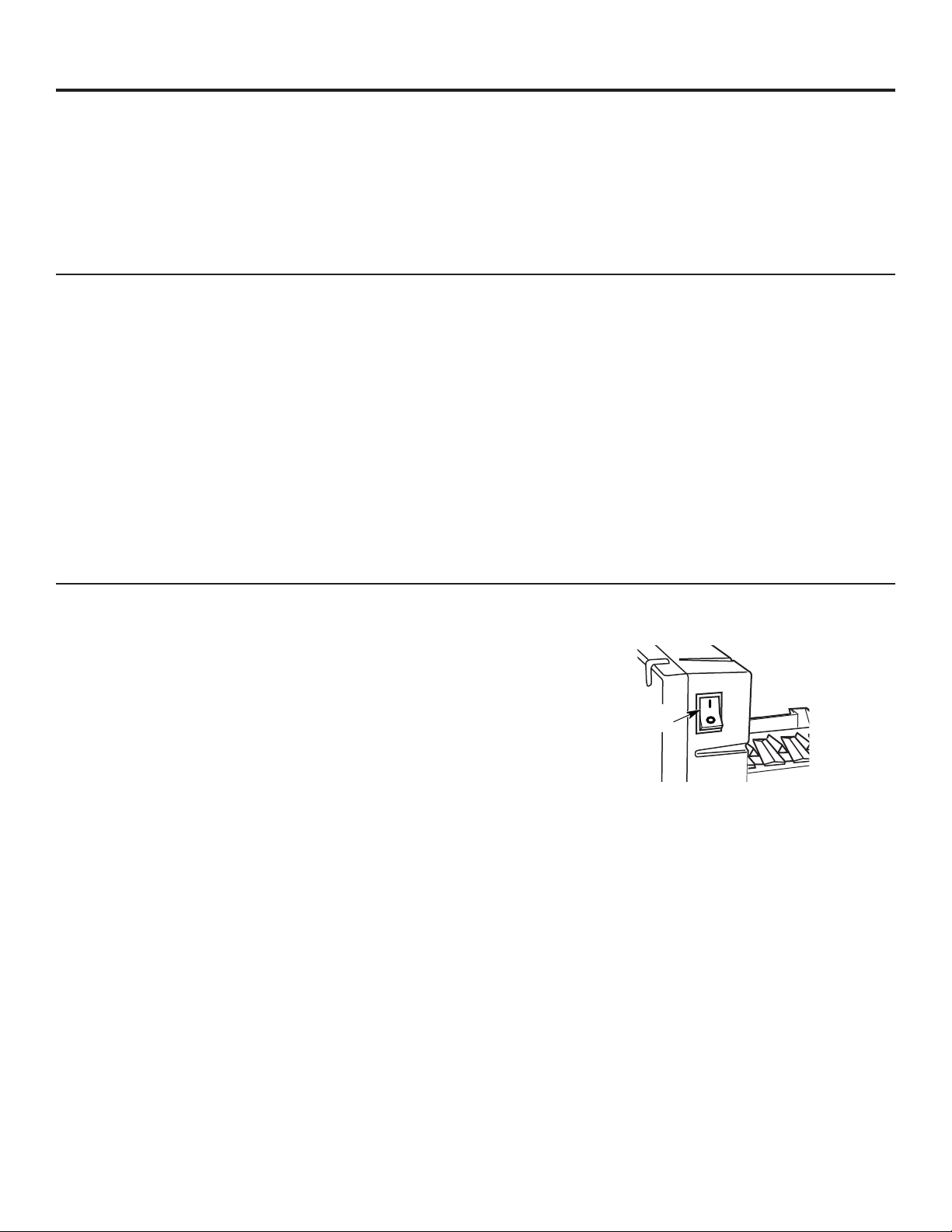
42
Special Installation Instructions for Australia and New Zealand.
Turn the water On at the shutoff valve.
Tighten any connection that leaks.
Replace the access cover and tighten all screws
(on some models).
Turn the Water On
Plug in the refrigerator to the Power Outlet and
turn On.
IMPORTANT: Always operate the Refrigerator from a
power source of the same Voltage, Frequency and
Rating as indicated on the Refrigerator
Identification Plate. Operate the Refrigerator from
an Earthed (Grounded) 3 Pin Power Outlet fully
accessible when the refrigerator is located in its
normal operating position.
Arrange the coil of tubing so that it does not
vibrate against the back of the refrigerator or
against the wall.
Push the refrigerator back to the wall, making sure
the power cord and the water line tubing are not
trapped, entangled or squashed by the refrigerator
(including the wheels) or wall.
Plug In the Refrigerator
Set the icemaker power switch to the I position.
The icemaker will not begin to operate until it
reaches its operating temperature of –9°C or below.
It will then begin operation automatically if the
icemaker power switch is in the I position.
NOTE: In lower water pressure conditions, the water
valve may turn on up to 3 times to make sure
enough water reaches the icemaker.
Start the Icemaker
Power
switch
43
Manufactured for: General Electric Company, Louisville, KY 40225
Performance Data Sheet
SmartWater Filtration System
GSWF Cartridge
This system has been tested according to NSF/ANSI 42/53 for reduction of the substances listed below.
The concentration of the indicated substances in water entering the system was reduced to a concentration
less than or equal to the permissible limit for water leaving the system, as specified in NSF/ANSI 42/53.*
(100% safety factors built in for unmetered usage)
Standard No. 42: Aesthetic Effects
Parameter USEPA Influent Influent Challenge Effluent % Reduction Min. Required
MCL Average Concentration Average Maximum Average Minimum Reduction
Chlorine — 1.845 mg/L 2.0 mg/L+10% < 0.05 mg/L 0.05 mg/L > 97.29% 96.43% >
50%
T & O — — — — — — — —
Particulate** — 143,333 #/mL
at least 10,000 particles/mL
29.83 #/mL 140 #/mL 99.98% 99.91% >
85%
Standard No. 53: Health Effects
Parameter USEPA Influent
Influent Challenge
Effluent % Reduction Min. Required
MCL Average Concentration Average Maximum Average Minimum Reduction
Turbidity 1 NTU*** 10.3 NTU*** 1+1 NTU*** 0.106 NTU 0.14 NTU 98.97% 98.61% 0.5 NTU
Cysts
99.95% Reduction
200,000 #/L
Minimum 50,000 L
0 0 > 99.99% > 99.99% > 99.95%
Lead at pH 6.5 0.015 mg/L 0.15 mg/L 0.15 mg/L+
10% < 0.001 mg/L < 0.001 mg/L > 99.33% > 99.33% 0.010 mg/L
Lead at pH 8.5 0.015 mg/L 0.14 mg/L 0.15 mg/L+10% 0.001 mg/L 0.003 mg/L > 99.29% 97.86% 0.010 mg/L
Lindane
0.0002 mg/L
0.0216 mg/L 0.002 mg/L+10%
< 0.00002 mg/L < 0.00002 mg/L
99.07% 98.75% 0.0002 mg/L
Atrazine
0.003 mg/L
0.008 mg/L 0.009 mg/L+
10% < 0.002 mg/L < 0.002 mg/L > 76.12% > 66.67% 0.003 mg/L
* Tested using a flow rate of 0.5 gpm; pressure of 60 psig; pH of 7.5 ± 0.5; temp. of 68° ± 5°F (20° ± 3°C)
** Measurement in Particles/ml. Particles used were 0.5-1 microns
*** NTU=Nephelometric Turbidity units
Operating Specifications
Capacity: certified for up to 750 gallons (2,838 l); up to six months
Pressure requirement: 40–120 psi (2.8–8.2 bar)
Temperature: 33–100ºF (0.6–38ºC)
Flow rate: 0.5 gpm (1.9 lpm)
General Installation/Operation/Maintenance Requirements
Flush new cartridge at full flow for 3 minutes to purge out trapped air.
Replace cartridge when flow becomes too slow.
Special Notices
Installation instructions, parts and service availability, and standard warranty are included with the product when shipped.
This drinking water system must be maintained according to manufacturer’s instructions, including replacement of filter
cartridges.
Do not use with water that is microbiologically unsafe or of unknown quality without adequate disinfection before or
after the system. Systems certified for cyst reduction may be used on disinfected water that may contain filterable cysts.
The contaminants or other substances removed or reduced by this water treatment system are not necessarily in your
water.
Check for compliance with the state and local laws and regulations.
Note that while the testing was performed under standard laboratory conditions, actual performance may vary. Systems
must be installed and operated in accordance with manufacturer’s recommended procedures and guidelines.
NSF
®
System tested and certified by NSF International against Standard 42 for the reduction of
chlorine, taste and odor, particulate Class I and Standard 53 for the reduction of cyst,
lead, Lindane, Atrazine and turbidity.
44
State of California
Department of Health Services
Water Treatment Device
Certificate Number
Date Issued: April 28, 2003
Trademark/Model Designation
Replacement Elements
155903 -
GE GSWF GSWF
Manufacturer: General Electric Consumer Products
The water treatment device(s) listed on this certificate have met the testing requirements pursuant to Section
116830 of the Health and Safety Code for the following health related contaminants:
Cysts
Turbidity
Asbestos
Lead
Atrazine
Lindane
2,4-D
Microbiological Contaminants and Turbidity
Inorganic/Radiological Contaminants
Organic Contaminants
Do not use where water is microbiologically unsafe or with water of unknown quality, except that systems certified for
cyst reduction may be used on disinfected waters that may contain filterable cysts.
750 galRated Service Capacity: 0.5 gpm
Rated Service Flow:
Conditions of Certification: