SHT B361
C
1
2
3A
3B
A
B(4x) C(4x)
E
F (4x)
G2 (4x)
H1 (8x)
(4x)
D(4x)
G1(4x)
A1
H2 (4x)
B
G1
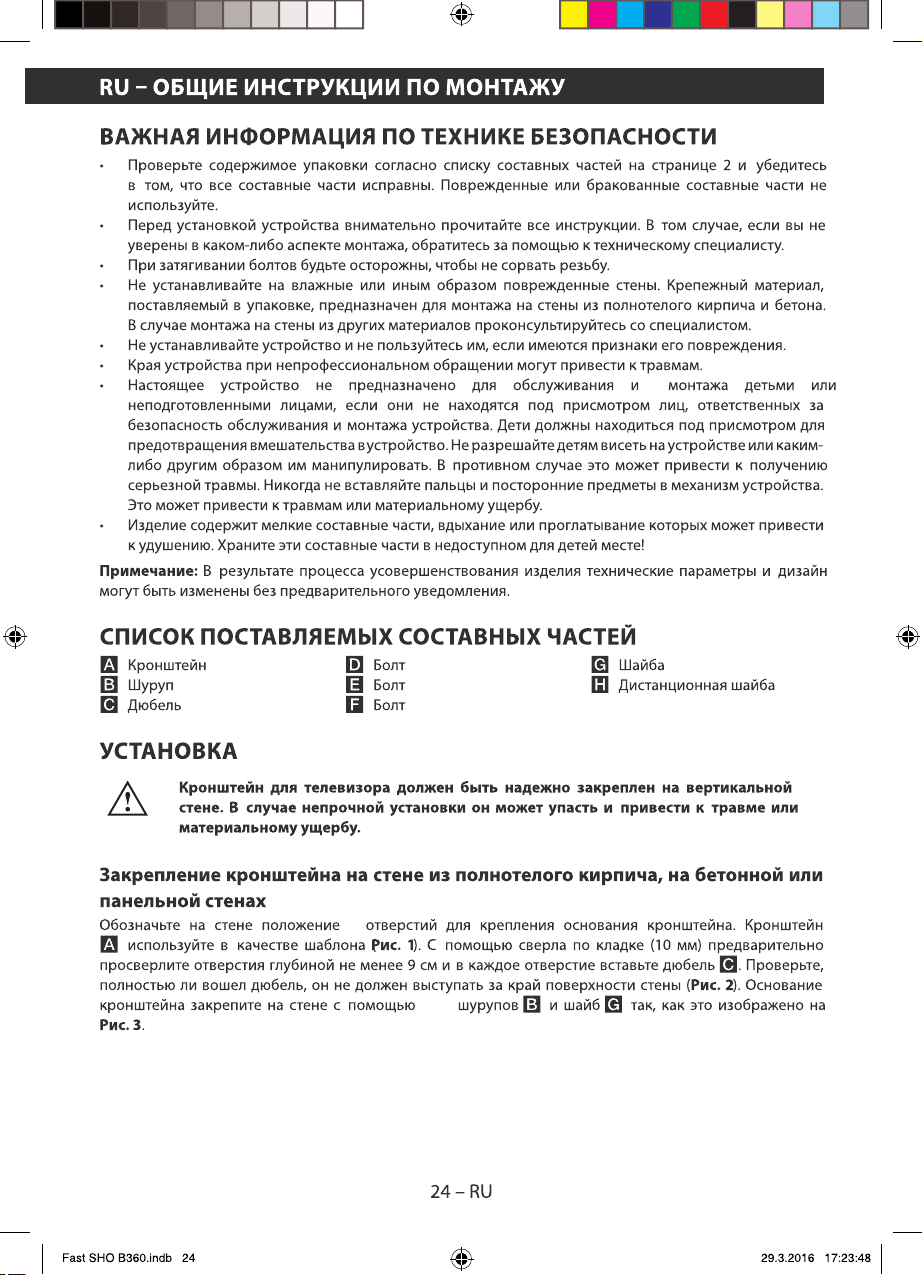
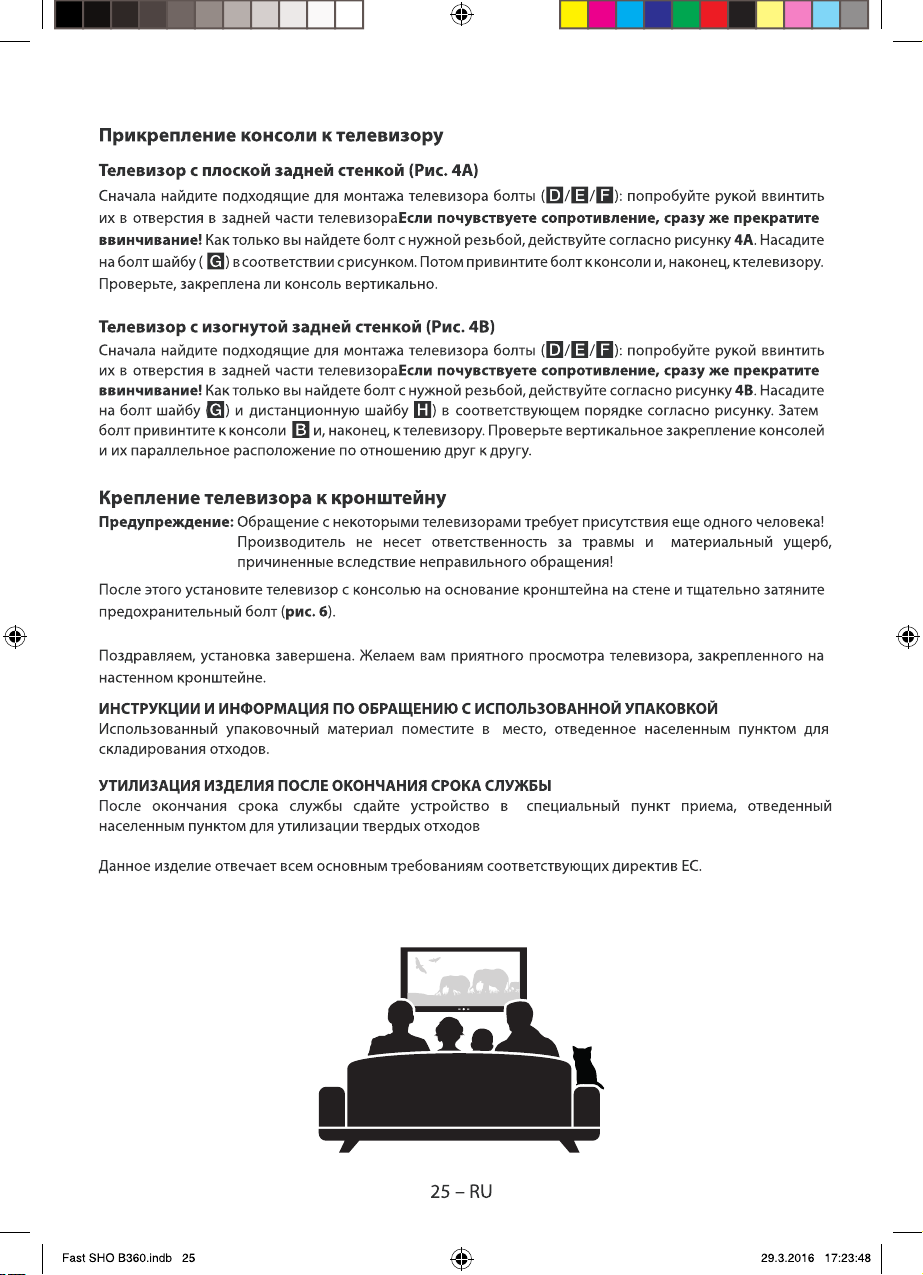
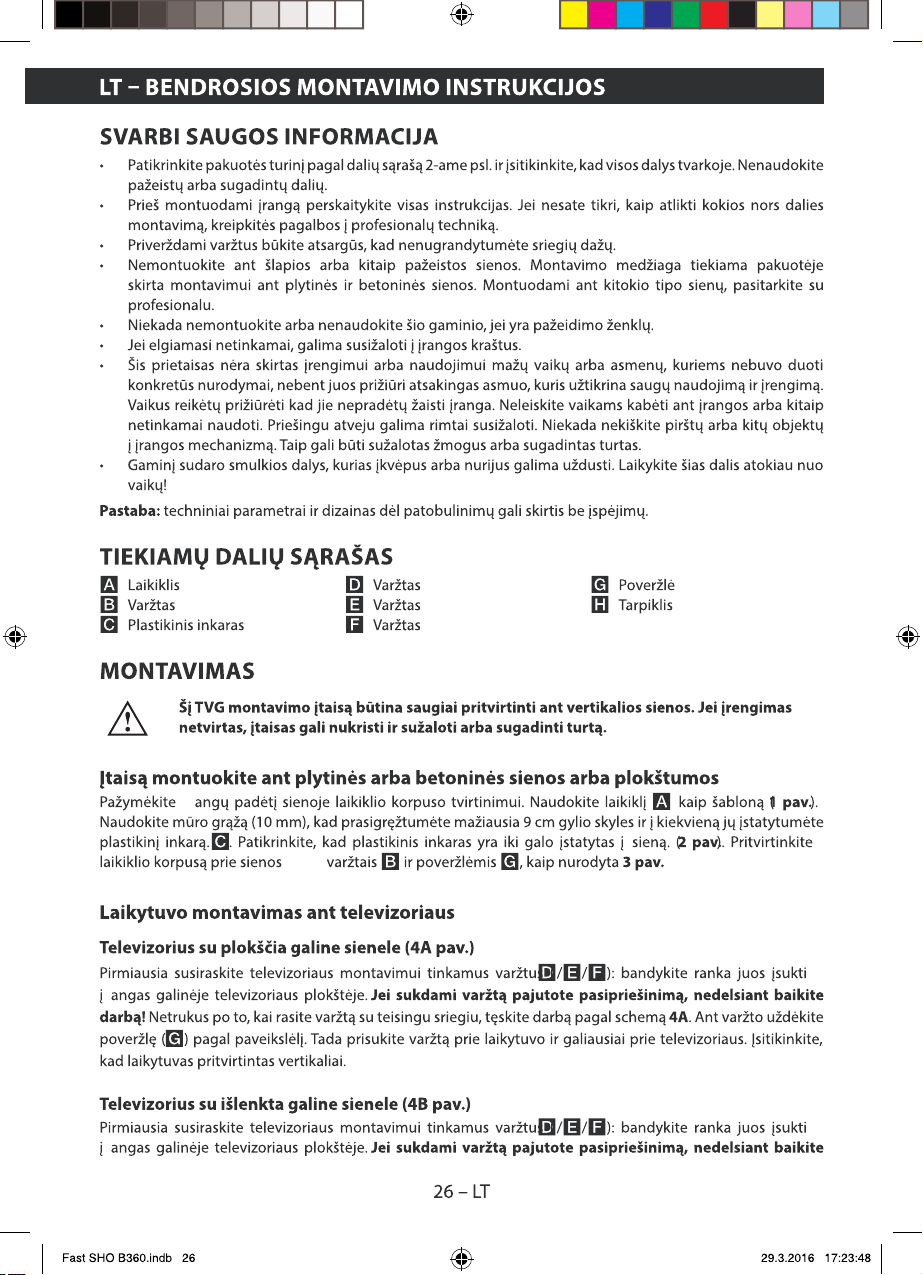
4A
4B
CURVED TV
FLAT TV
D/E/F
G2
H1/H2
±15°
M5 = D+
M6 = E+
M8 = F
+
G2
+
H1/H2
G2
+
H1/H2
G2
+
H1/H2
ST6.3x55
φ10xφ6xL50
M5x14/30
M6x14/30
M8x20/30
D6/D5-D8
D8xH5/H15
4
4

φ10xφ6xL50
ST6.3x55
M5x14/30
M6x14/30
M8x20/30
D6/D5-D8
D8xH5/H15
4
4
ST6.3x55
φ10xφ6xL50
M5x14/30
M6x14/30
M8x20/30
D6/D5-D8
D8xH5/H15
4
4
ST6.3x55
φ10xφ6xL50
M5x14/30
M6x14/30
M8x20/30
D6/D5-D8
D8xH5/H15
4
4

ST6.3x55
φ10xφ6xL50
M5x14/30
M6x14/30
M8x20/30
D6/D5-D8
D8xH5/H15
4
4
(

ST6.3x55
φ10xφ6xL50
M5x14/30
M6x14/30
M8x20/30
D6/D5-D8
D8xH5/H15
4
4
M5x14/30
M6x14/30
M8x20/30
D6/D5-D8
D8xH5/H15
φ10xφ6xL50
ST6.3x55
4
4

M5x14/30
M6x14/30
M8x20/30
D6/D5-D8
D8xH5/H15
φ10xφ6xL50
ST6.3x55
4
4

φ10xφ6xL50
ST6.3x55
M5x14/30
M6x14/30
M8x20/30
D6/D5-D8
D8xH5/H15
4
4

φ10xφ6xL50
ST6.3x55
M5x14/30
M6x14/30
M8x20/30
D6/D5-D8
D8xH5/H15
4
4
φ10xφ6xL50
ST6.3x55
M5x14/30
M6x14/30
M8x20/30
D6/D5-D8
D8xH5/H15
4
4
φ10xφ6xL50
ST6.3x55
M5x14/30
M6x14/30
M8x20/30
D6/D5-D8
D8xH5/H15
4
4
φ10xφ6xL50
ST6.3x55
M5x14/30
M6x14/30
M8x20/30
D6/D5-D8
D8xH5/H15
4
4

φ10xφ6xL50
ST6.3x55
M5x14/30
M6x14/30
M8x20/30
D6/D5-D8
D8xH5/H15
4
4


φ10xφ6xL50
ST6.3x55
M5x14/30
M6x14/30
M8x20/30
D6/D5-D8
D8xH5/H15
4
4
VESA
What is VESA?
Perhaps when selecting a suitable television mount you were surprised by the salesperson‘s
question „A what type of VESA do you have?“... Information about VESA and the weight of the
appliance constitutes the key parameters when selecting atelevision mount or stand.
The majority of today‘s modern television and monitor manufacturers already take into account that you
may wish to mount the purchased appliance on awall using amount or to attach it to astand. So already
during production, they include threaded screw holes on the rear side. This is, of course, very practical.
The catch is, however, that the location of these screw holes (their distance from each other) varies for
individual types of appliances and this fact must be considered when selecting amount or stand.
In order to know which mount to choose for your television, you need to know the VESA dimension of
your TV (you may also encounter VESA STANDARD or VESA NORM). It describes the span, i.e. the vertical
and horizontal distance between the screw holes on the rear side of the appliance – this determines the
type of mount or stand that is suitable for your appliance.
When you nd the VESA dimensions on the rating label of your TV: 400 × 300 mm means that the
horizontal distance is 400 mm and the vertical distance is 300 mm. This means that you need to purchase
amount that supports VESA 400 × 300.
VESA
Co je to VESA?
Možná ivás při vybírání vhodného držáku ktelevizi překvapil prodavač dotazem „A jakou tam
máte VESU?“… Údaj VESA totiž patří společně s informací o hmotnosti přístroje k základním
parametrům při výběru televizního držáku nebo stojanu.
Většina dnešních výrobců moderních televizí amonitorů už předem počítá smožností, že si budete chtít
zakoupený přístroj pověsit na zeď pomocí držáku nebo uchytit na stojan. Proto již při výrobě osazuje na
jeho zadní stranu otvory se závitem pro šrouby. To je samozřejmě praktické. Háček je vtom, že umístění
těchto otvorů (tedy jejich vzájemná vzdálenost) se ujednotlivých typů přístrojů liší, aprávě tento fakt je
třeba zohlednit při výběru držáku nebo stojanu.
Aby jste věděli, který držák ke své televizi zvolit, musíte znát tzv. údaj VESA vaší televize (můžete se setkat
is pojmenováním VESA STANDARD nebo VESA NORMA). Ten udává rozteč – tedy svislou avodorovnou
vzdálenost montážních otvorů na zadní straně přístroje – aurčuje, jaký typ držáku či stojanu se pro váš
přístroj hodí.
Najdete-li tedy na štítku své televize označení VESA: 400 × 300 mm, znamená to, že vodorovná
vzdálenost je 400 mm asvislá 300 mm. Pro Vaši televizi je tady nutné použít držák, či stojan umožňující
VESA 400 × 300.