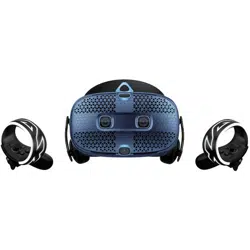
VIVE Cosmos Elite User guide

Contents
System requirements
What's inside the box? 5
What are the system requirements? 5
Headset and headphones
Headset 7
Headphones 27
Common solutions 39
Converter
About the converter for VIVE Cosmos Elite 41
Connecting the headset to your computer via the converter 41
Restarting the converter for VIVE Cosmos Elite 42
Can I use a laptop with VIVE Cosmos Elite? 43
My computer monitor and headset are turned on but why can't I see anything? 43
Base stations
About the VIVE base stations 44
Installing the base stations 45
Tips for setting up the base stations 47
Using the mounting kit 48
Updating base station firmware via cable connection 49
Updating base station firmware via Bluetooth 49
What does the status light on the base stations mean? 50
What should I do if any of the base stations is not detected? 50
Can I use the older version of the base stations together with SteamVR Base Station 2.0? 50
Which VIVE hardware is compatible with my base stations? 51
Are the base stations covered by warranty if accidentally damaged? 51
Controllers
About the VIVE controllers 52
Charging the controllers 53
Turning the controllers on or off 53
Pairing the controllers with the headset 53
Attaching the lanyards to the controllers 54
Updating controller firmware 54
What does the status light on the controllers mean? 55
What should I do if any of the controllers is not tracked? 55
How do I know which of the controllers is not being tracked? 55
What can I do if the controller's trackpad is oversensitive? 56
What should I do if my controller won't turn on? 56
The controller automatically turns off. What should I do? 56
My controller won't turn on after I accidentally unplugged it during firmware update. What should I do? 57
2 Contents

Play area
What is the play area? 58
Planning your play area 58
Choosing the play area 59
Setting up VIVE Cosmos Elite for the first time 60
Setting up a standing-only play area 60
Setting up a room-scale play area 61
Resetting the play area 61
Verifying your setup 62
After setting up, how do I turn the VIVE system on? 62
What is the recommended space for the play area? 63
Can I include space occupied by furniture for the play area? 63
Will VR apps for seated/standing-only experiences work with room-scale setup? 63
How do I resolve download errors during VIVE Setup installation? 63
I can't complete the room setup. What should I do? 63
Settings
System Dashboard 64
Changing the Chaperone settings 64
How can I capture screenshots in VR? 65
Disabling Volume limit 65
Enabling motion compensation 65
Updating the firmware 66
Troubleshooting VIVE Cosmos Elite 66
Joining the VIVE Cosmos Elite beta program 66
Seeing real surroundings 67
What do the error codes and messages mean? What can I do? 67
Trademarks and copyrights
Index
3 Contents

About this guide
We use the following symbols to indicate useful and important information:
This is a note. It provides detailed information for setup, common questions, and what to do in
specific situations.
This is a tip. It will give you an alternative way to do a particular step or procedure that you may
find helpful.
This indicates important information that you need in order to accomplish a certain task or to
get a feature to work properly.
This is a warning. Take note to avoid potential problems or prevent damage to your hardware.
Information contained in this guide may have changed. For the most up-to-date information,
including the latest version of this guide, go to VIVE Support.
Before using the product, carefully review VIVE safety information and follow all product safety
and operating instructions on https://www.vive.com/legal/.
4 About this guide
System requirements
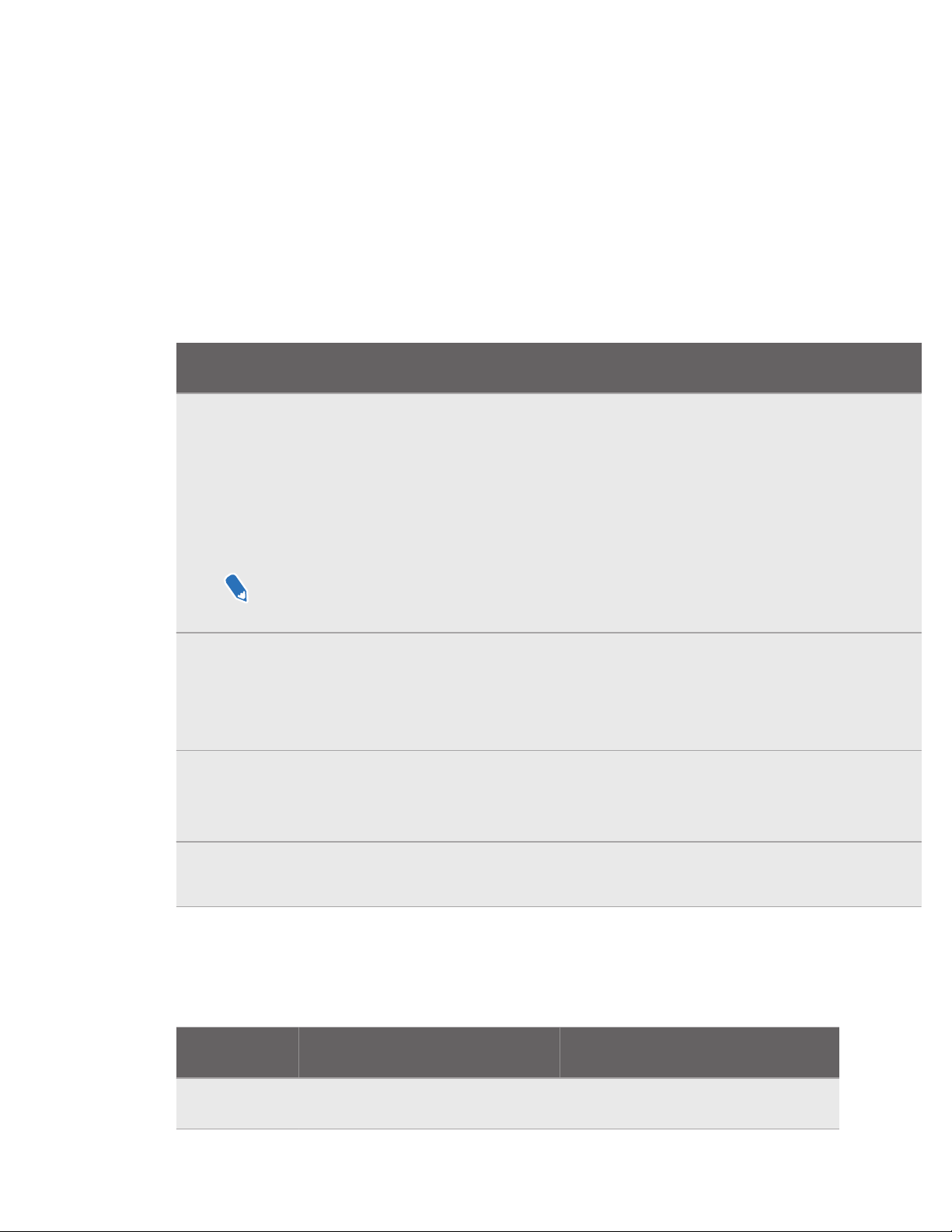
What's inside the box?
Your VIVE Cosmos Elite comes with the following items, which you'll use to experience immersive
VR environments:
Main
component
Accessories
VIVE Cosmos
Elite
§ Headset cable (attached)
§ Audio cable (attached)
§ Top strap (attached)
§ Face cushion frame with cushions (attached)
§ Cleaning cloth
§ On-ear headphones (attached)
To use your own headphones with VIVE Cosmos Elite, you'll need the replacement kit for
headphones. For details on how to order the kit, contact customer care.
Converter § Power adapter
§ DisplayPort
™
cable
§ USB 3.0 cable
§ Mini DisplayPort to DisplayPort adapter
VIVE
™
controllers
(x2)
§ Power adapters (x2)
§ Lanyards (attached, x2)
§ Micro-USB cables (x2)
Base stations
(x2)
§ Power adapters (x2)
§ Mounting kit (2 mounts, 4 screws, and 4 wall anchors)
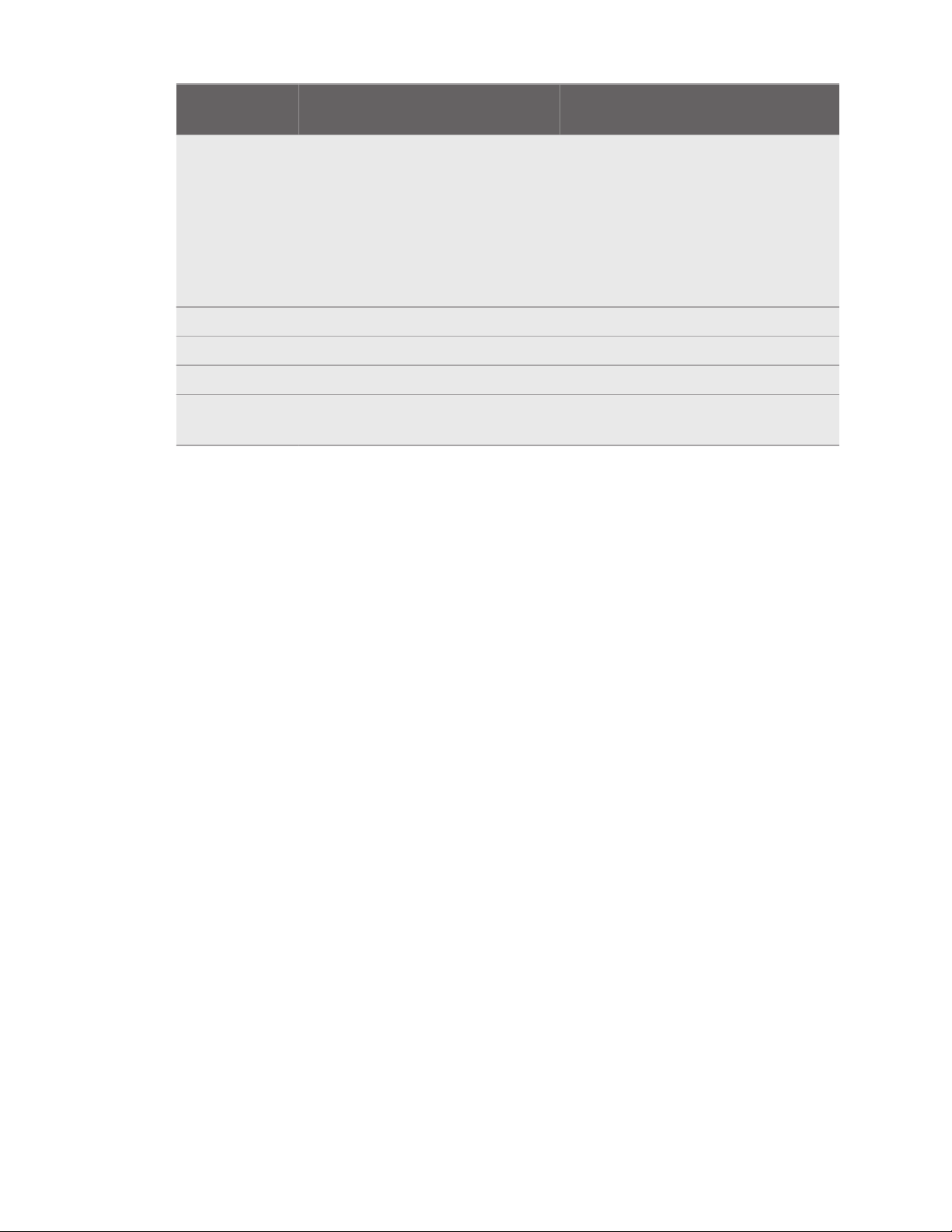
What are the system requirements?
To use VIVE Cosmos Elite, your computer must meet the following system requirements.
Component
Minimum system requirements Recommended system
requirements
Processor Intel
®
Core
™
i5-4590/AMD FX
™
8350 equivalent or better
Intel Core i5-4590/AMD FX 8350
equivalent or better
5 System requirements
Component Minimum system requirements Recommended system
requirements
GPU NVIDIA
®
GeForce
®
GTX 970 4GB,
AMD Radeon
™
R9 290 4GB
equivalent or better VR Ready
graphics card.
Refer to AMD or NVIDIA's VR Ready
website for a list of VR Ready
graphics cards.
NVIDIA GeForce GTX 1070/Quadro
P5000 equivalent or better, AMD
Radeon Vega 56 equivalent or better
VR Ready graphics card.
Refer to AMD or NVIDIA's VR Ready
website for a list of VR Ready graphics
cards.
Memory 4 GB RAM or more 8 GB RAM or more
Video output DisplayPort 1.2 or newer DisplayPort 1.2 or newer
USB port 1x USB 3.0 or newer 1x USB 3.0 or newer
Operating
system
Windows
®
10 Windows 10
6 System requirements
Headset and headphones
Headset
About the VIVE Cosmos Elite headset
The headset is your window to the VR environment.
The cameras on the headset are sensitive. Do not cover or scratch the cameras. These
cameras are used for inside-out tracking and to view real surroundings when the headset is
using a supported front cover. By default, VIVE Cosmos Elite does not use these cameras and
needs base stations for tracking.
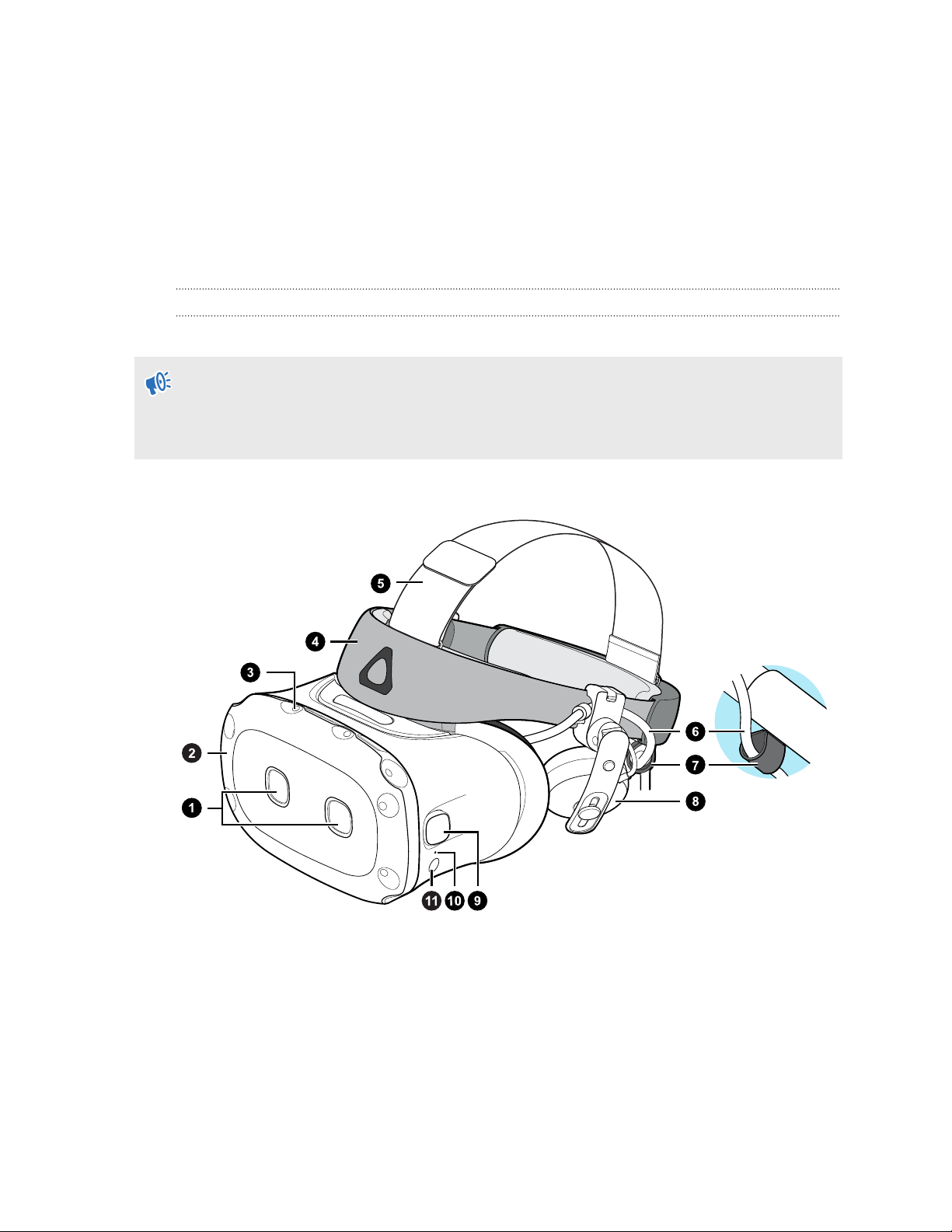
Front and side views
1. Dual cameras
2. Front cover
3. Tracking sensor
4. Headset band
5. Top strap
6. Headset cable
7. Headset cable strip
7 Headset and headphones
8. On-ear headphone
9. Side cameras
10. Status light
11. Headset button
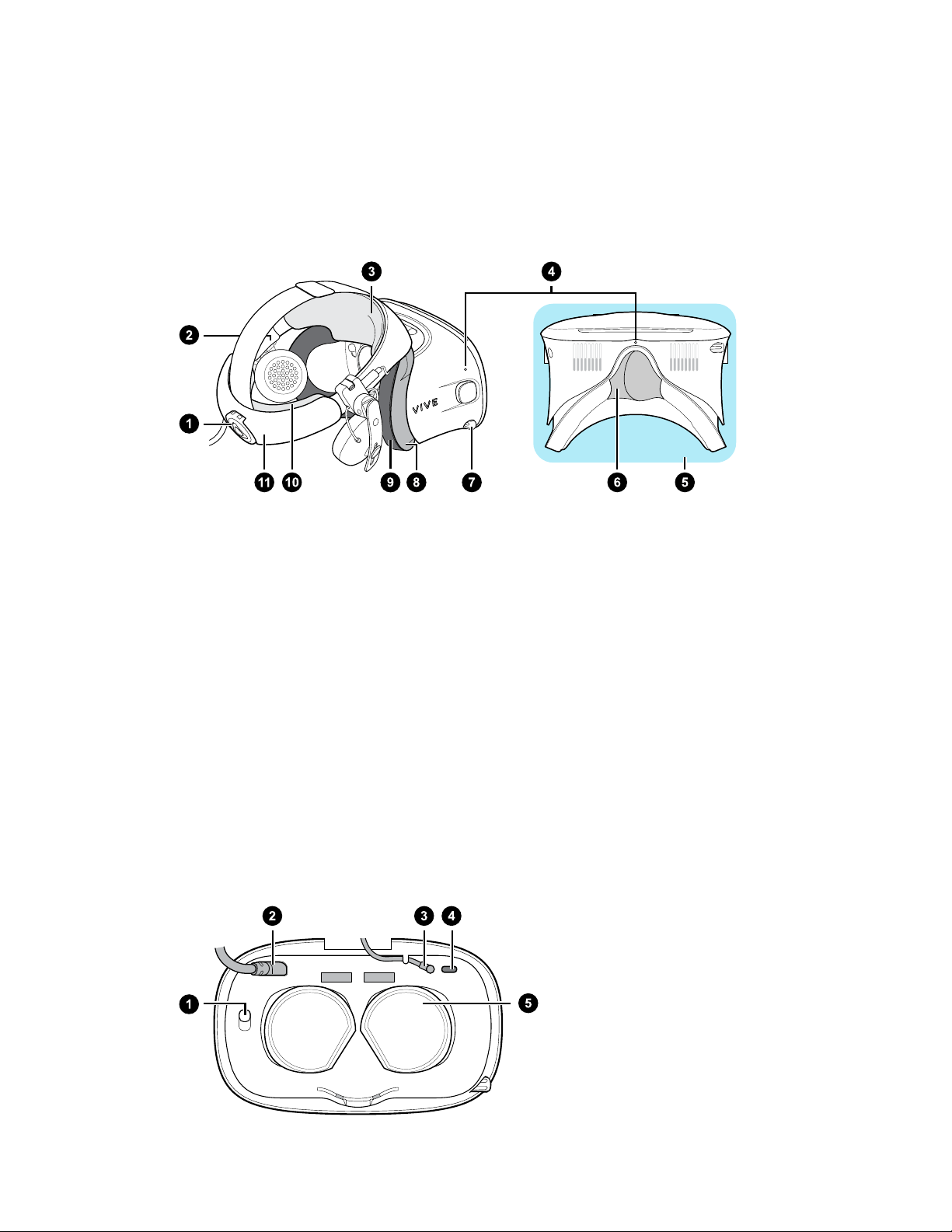
Back and bottom views
1. Adjustment dial
2. Side cushion
3. Front pad
4. Mic
5. Visor
6. Nose rest
7. Interpupillary distance (IPD) knob
8. Face cushion frame
9. Face cushion
10. Back pad
11. Headset band
Inner view (face cushion frame removed)
1.
Front cover lock button
2. Headset cable
3. Audio cable
4. USB Type-C cable slot
5. Lenses
8 Headset and headphones
Putting on the VIVE Cosmos Elite headset
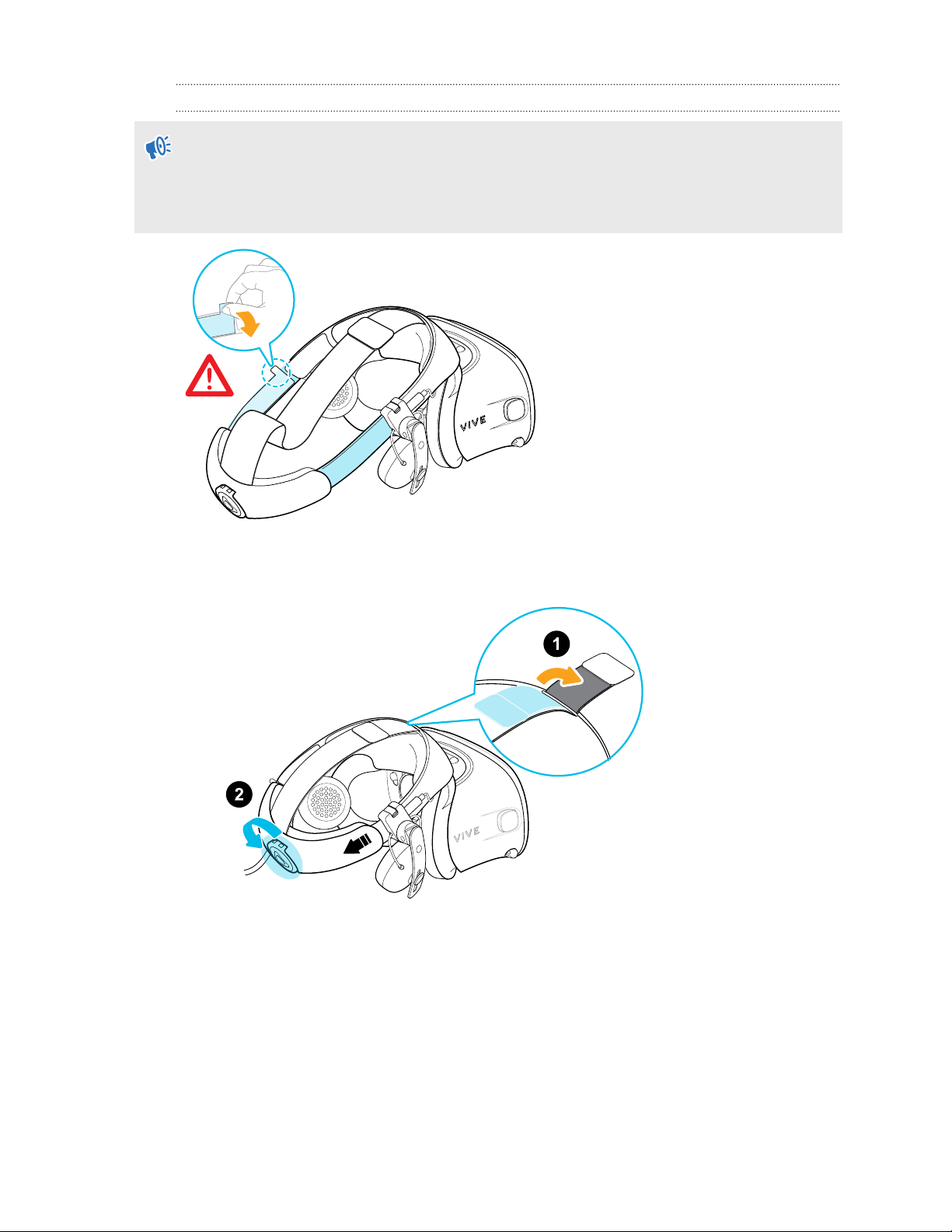
Before wearing the headset for the first time, make sure to:
§ Peel off the protective film on the lenses.
§ Fully loosen the band and peel off the protective film starting from the left side of the band.
1. Detach the velcro fastener on the top strap, and then loosen the band by turning the
adjustment dial counter-clockwise.
2. While holding the visor with one hand, pull up the band.
9 Headset and headphones
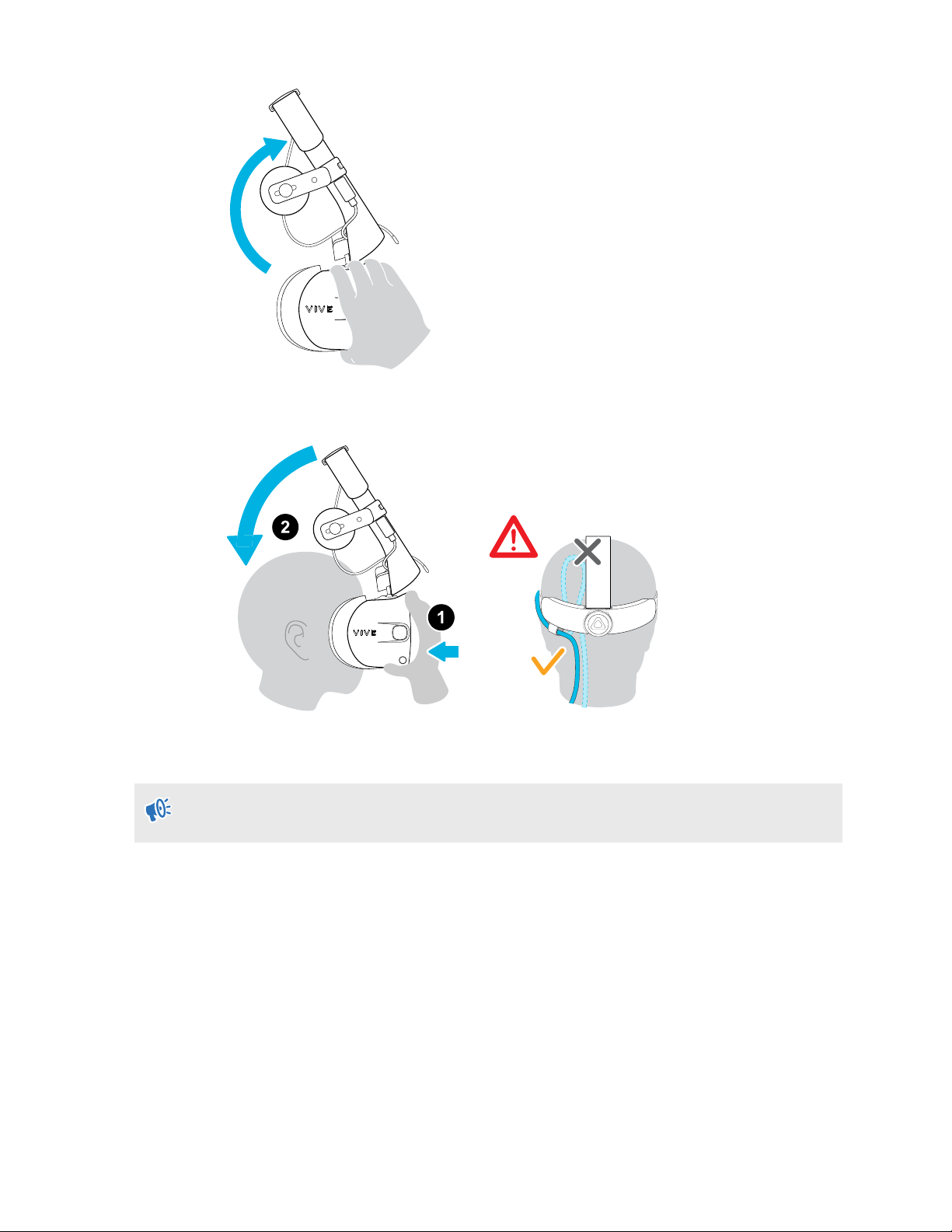
3. Hold the visor to your eyes. Adjust the position of the visor until you see a clear image
inside the headset.
4. Pull down the headset band around the back of your head until you hear a click. The click
indicates that the headset band has locked into place.
When you pull down the band, make sure the headset cable is not caught in between the band
and your head. Let the headset cable run straight down your back.
10 Headset and headphones
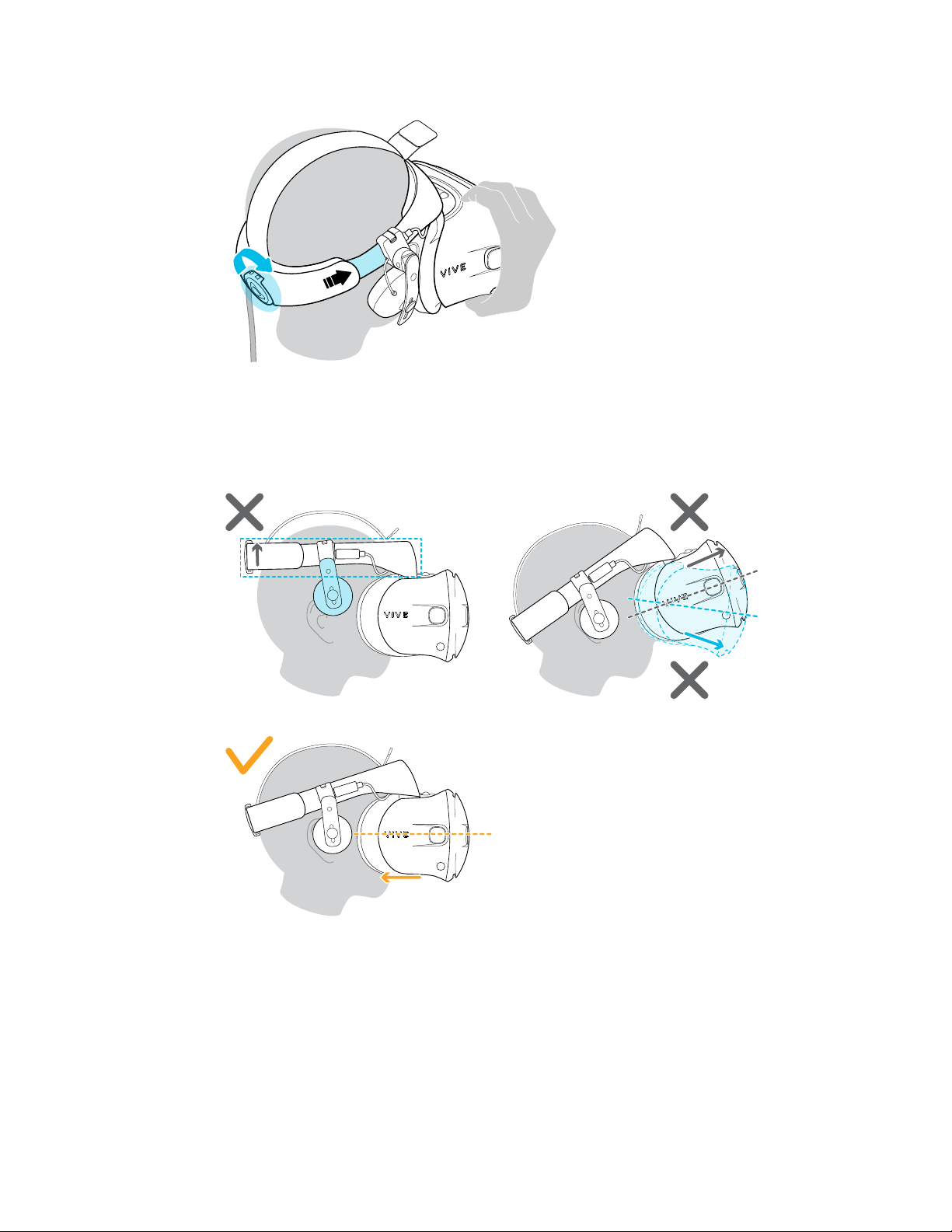
5. Turn the adjustment dial clockwise until the headset fits snugly.
Make sure the visor faces straight ahead. If the band sits too low or high on the back of
your head, the visor will be tilted. It will also be difficult to position the on-ear headphones
properly on your ears. If there's light leakage around the areas of your nose or cheeks,
adjust the position of the band.
6. Adjust the top strap until snug, and then fasten the velcro strap.
11 Headset and headphones
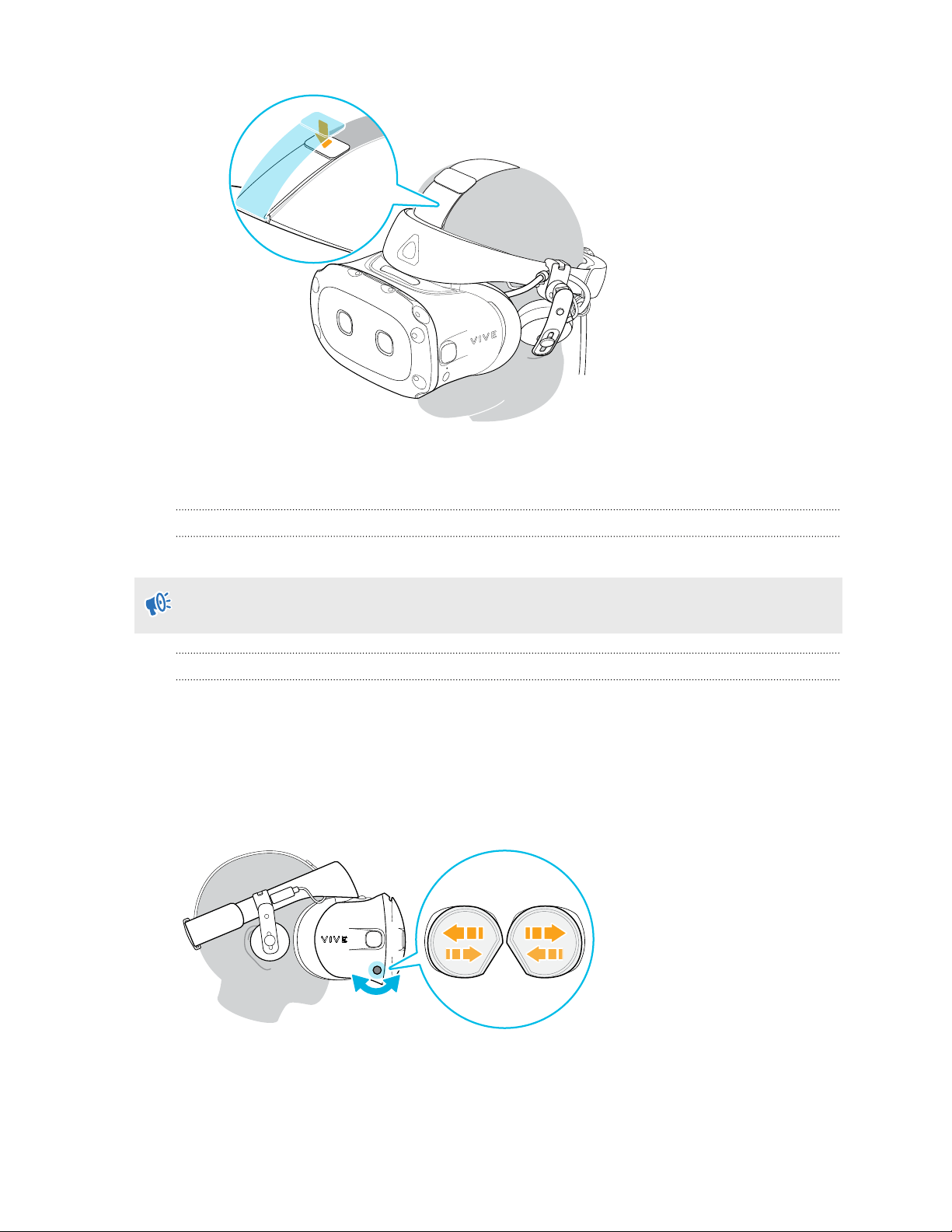
If there's light leakage around the areas of your nose or cheeks, readjust the strap and
reposition the band.
Can I wear my prescription glasses while using VIVE Cosmos Elite?
Most glasses fit inside the headset.
Make sure that no part of your glasses scratch the headset lenses.
Adjusting the IPD on the headset
Interpupillary distance (IPD) is the distance between the centers of your pupils. A quick way to get
an estimate is by facing a mirror and holding a millimeter ruler against your brow. Use this
measurement as a guide to adjust the distance between the lenses of the headset so that you'll
have a better viewing experience.
To increase the distance between the lenses, rotate the IPD knob clockwise. To decrease, rotate
the IPD knob counterclockwise.
As you adjust the IPD, you'll see a prompt indicating the current distance between the centers of
the lenses.
12 Headset and headphones
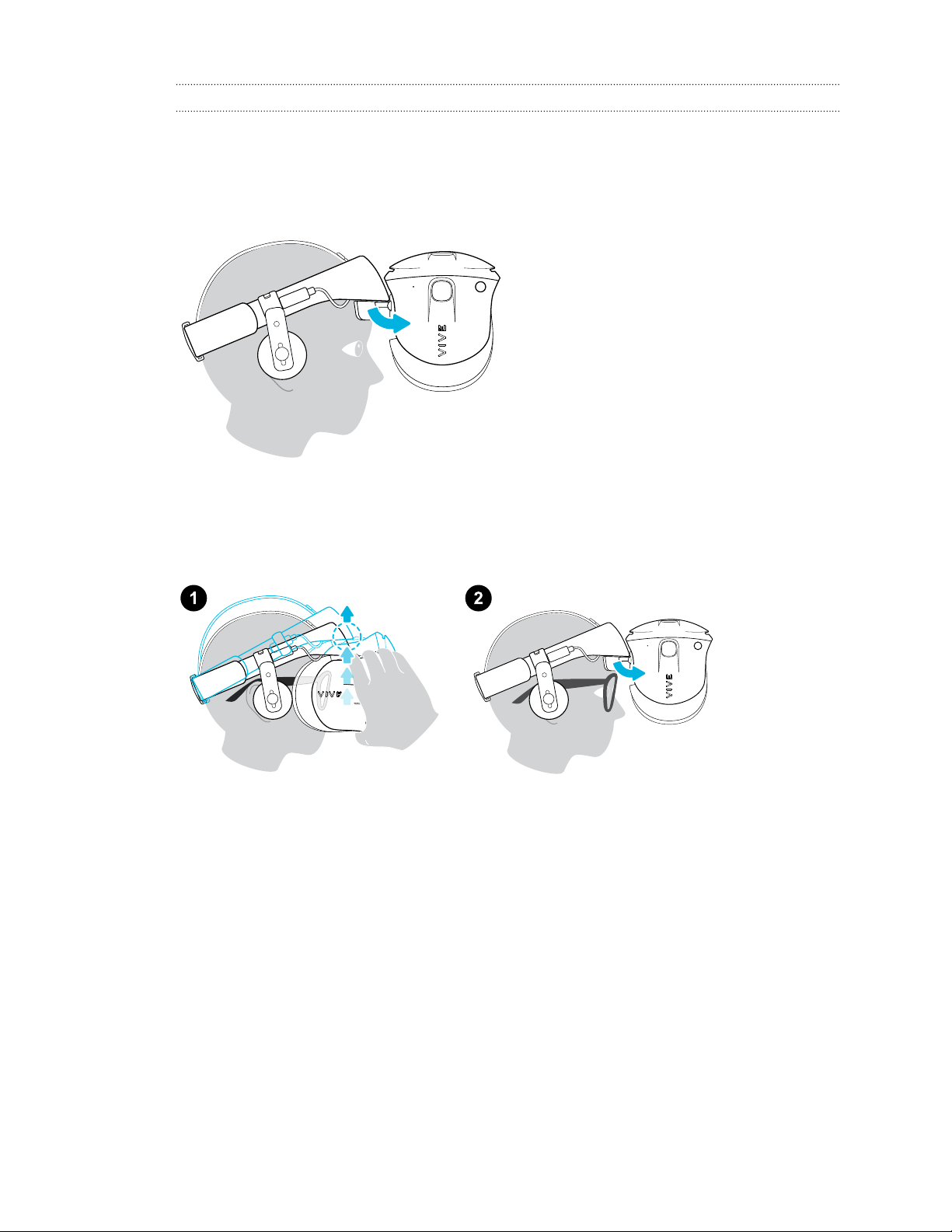
Flipping up the visor
Quickly take a break from VR to check your surroundings.
While wearing VIVE Cosmos Elite, hold the visor with one or both hands, and then gently flip it up.
To return it to its original position, tilt the visor down until it completely covers your eyes.
If you wear large glasses, you may need to adjust the headset to sit higher on your head when
flipping the visor up or down.
13 Headset and headphones
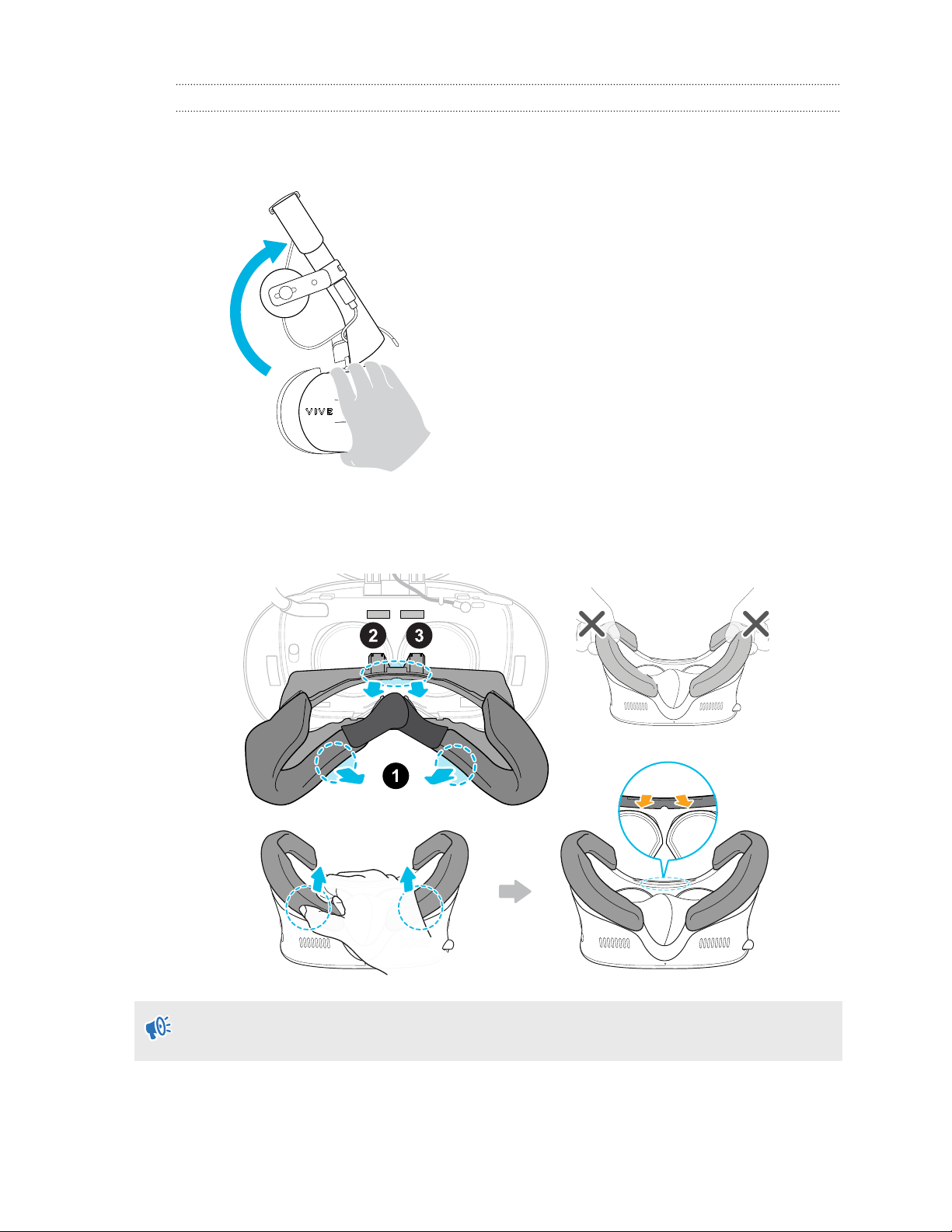
Connecting a USB device to VIVE Cosmos Elite
You can connect a compatible USB Type-C device to VIVE Cosmos Elite using a USB cable.
1. While holding the visor with one hand, pull up the band.
2. Detach the face cushion frame from the headset. To release the frame from its latches,
gently pull on any side of the frame starting from the bottom, and then pull one side at a
time on the top.
Avoid pulling or squeezing on the sides of the face cushion frame to prevent damaging the
frame.
14 Headset and headphones
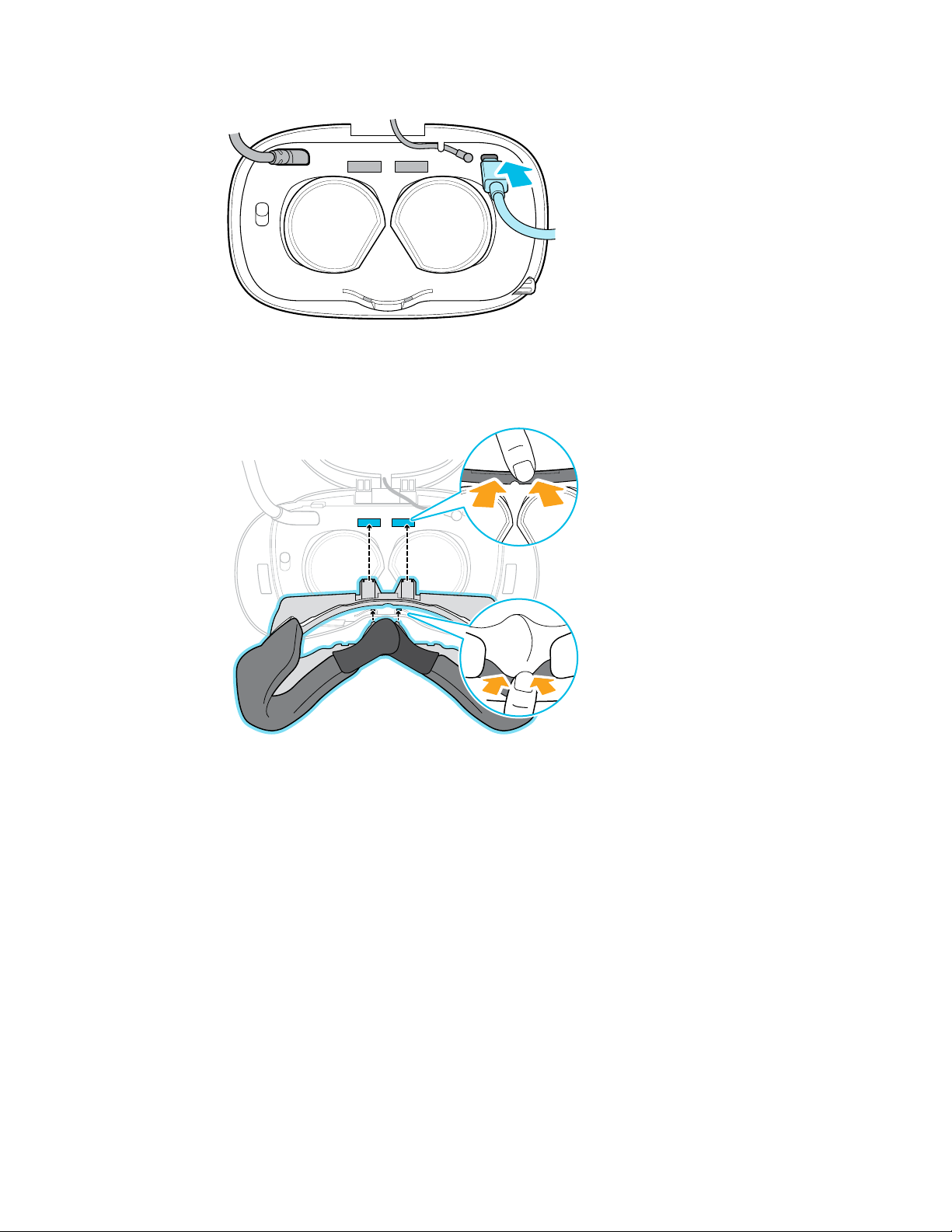
3. Insert the cable connector of the device into the USB Type-C port on the headset.
4. Align and push the tabs on the face cushion frame into their corresponding slots on the
headset. Make sure to position the ridge of the face cushion frame below the headset,
audio, and USB cables. You'll hear a click when the face cushion frame locks in place.
5. Connect the other end of the USB cable to USB Type-C device.
15 Headset and headphones
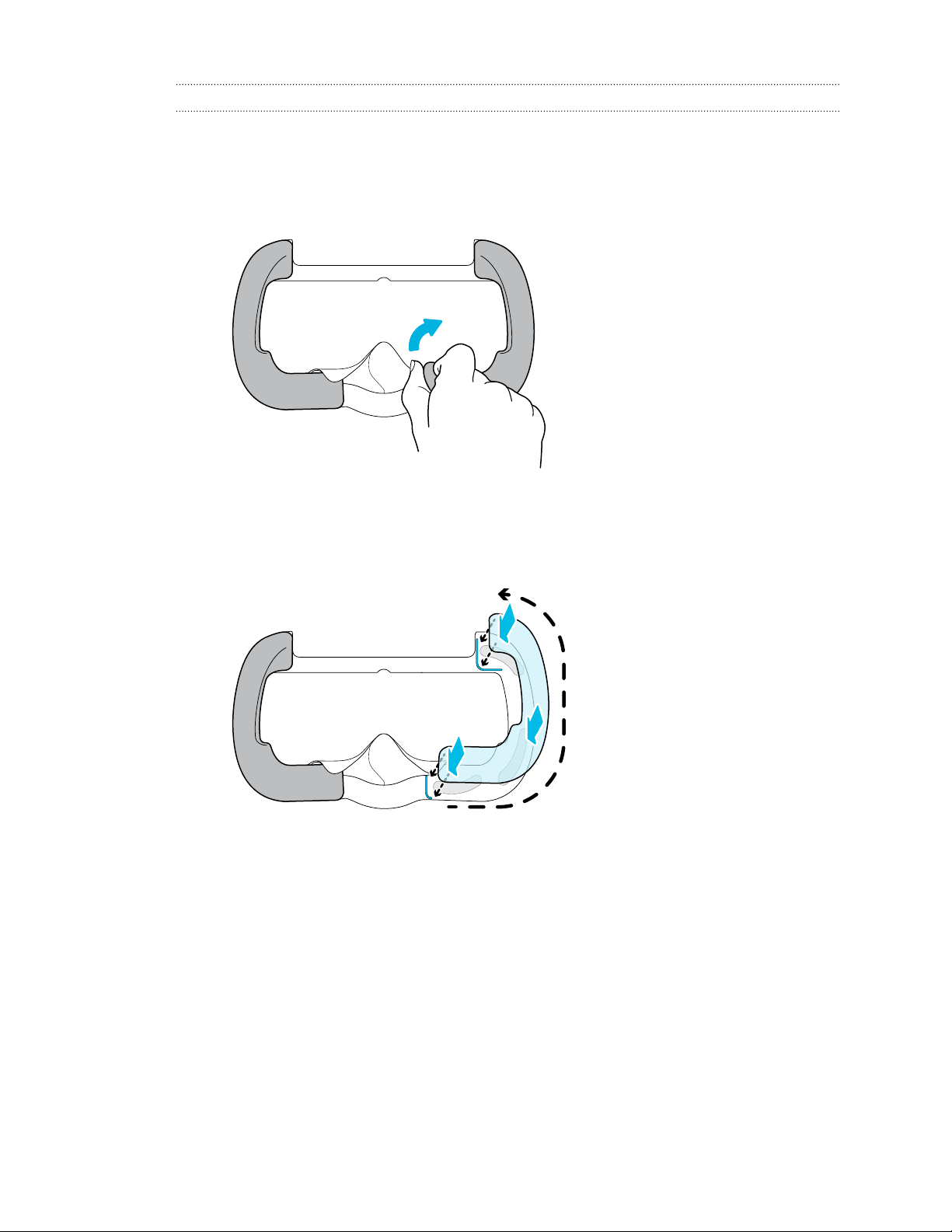
Removing the face cushions
You can remove the face cushions for cleaning. To learn how to clean the face cushion, see
Cleaning the face cushions on page 24.
1. To remove the face cushions, gently peel starting from the bottom ends of each face
cushion until they detach from the face cushion frame.
2. To reattach, align one end of the face cushion with the marker on the bottom part of the
face cushion frame. Press down the face cushion against the outline of the frame, and then
check that the other end of the face cushion lines up with the marker on the top part of the
frame.
Make sure that the velcro and adhesive strips attach firmly.
16 Headset and headphones
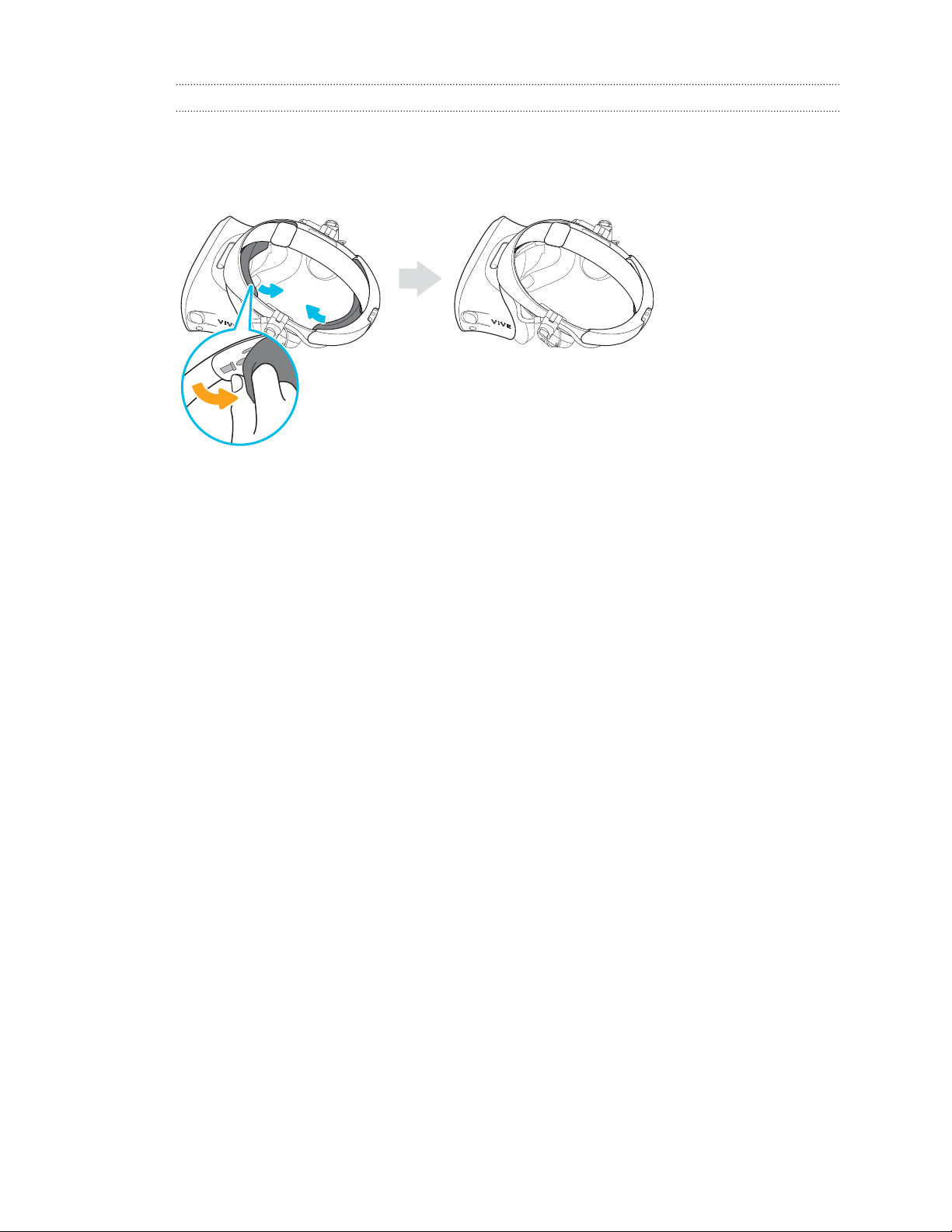
Removing the front and back pads
You can remove the front and back pads from the headset band for cleaning.
To remove the front and back pads, peel starting from the ends of each pad until they detach
from the headset band.
17 Headset and headphones
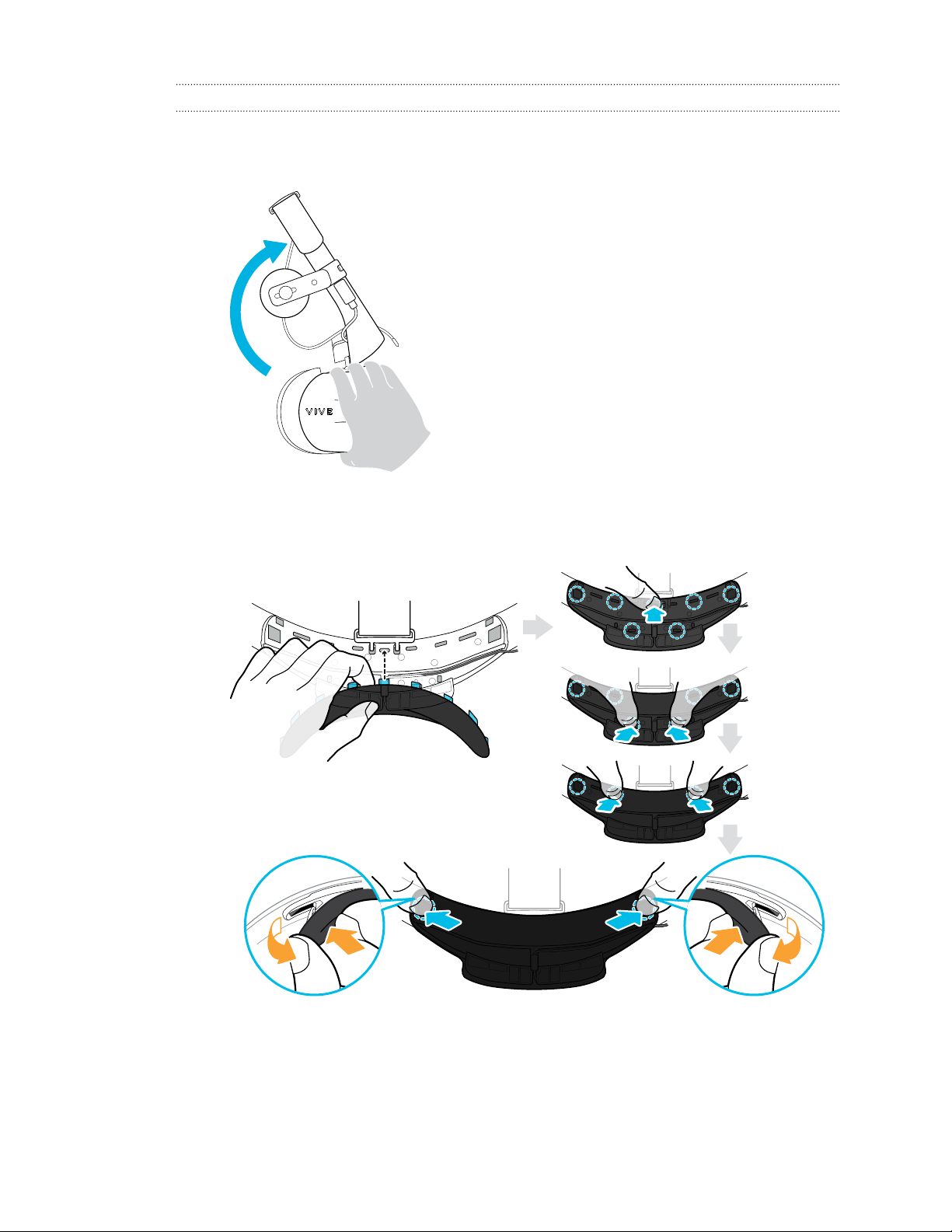
Reattaching the front and back pads to the headset
Always make sure that the front and back pads are attached to the headset.
1. While holding the visor with one hand, pull up the band.
2. Starting from the middle, align the front pad tabs with their corresponding slots on the
band, and then press along the front pad. You may need to gently bend the ends of the
front pad to align the outermost tabs with the slots on the band.
Make sure to minimize the gap between the pad and the band and that all tabs are fully
locked into place.
3. Align the back pad tabs with their corresponding slots on the band, and then press along
the back pad to reattach.
18 Headset and headphones
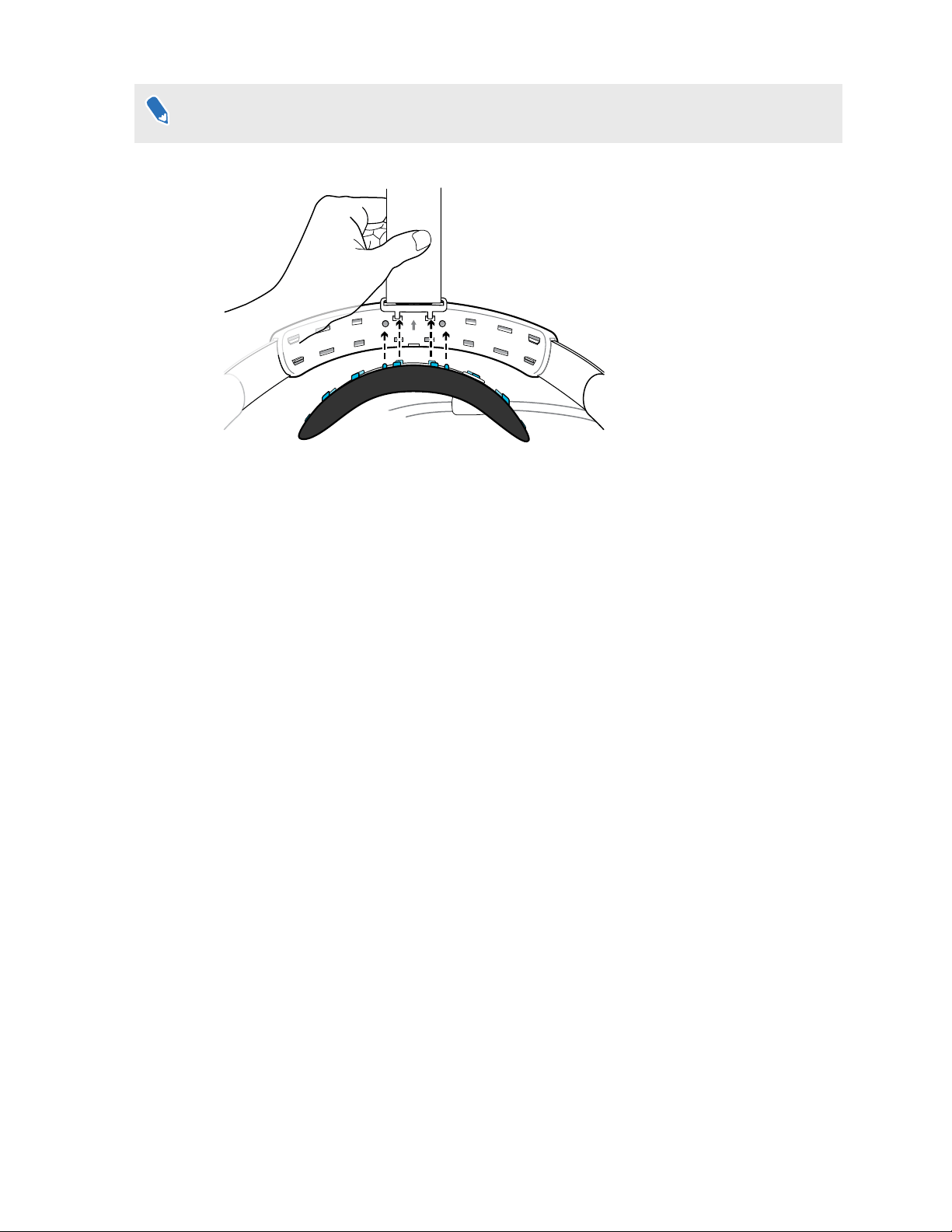
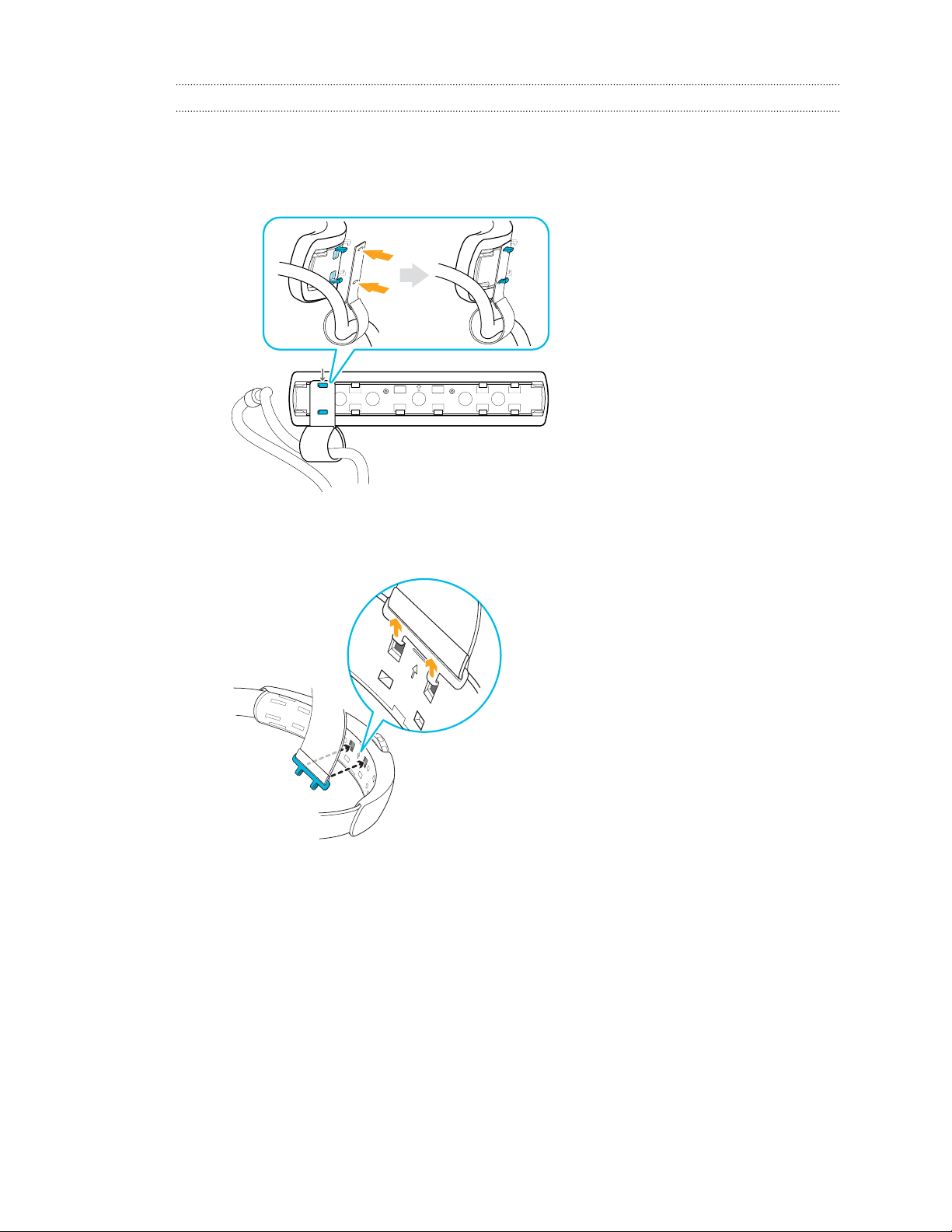
Reattaching the headset cable strip to the back pad
The fabric strip guides the headset cable, and is inserted on the back pad.
1. Insert the back pad tabs second to the left-most corner tabs into the holes of the headset
cable strip with its flap down. Make sure that the strip is firmly attached.
1 2
2. Reattach the top strap to the headset band. For details, see Attaching the top strap to the
headset band on page 23.
20 Headset and headphones
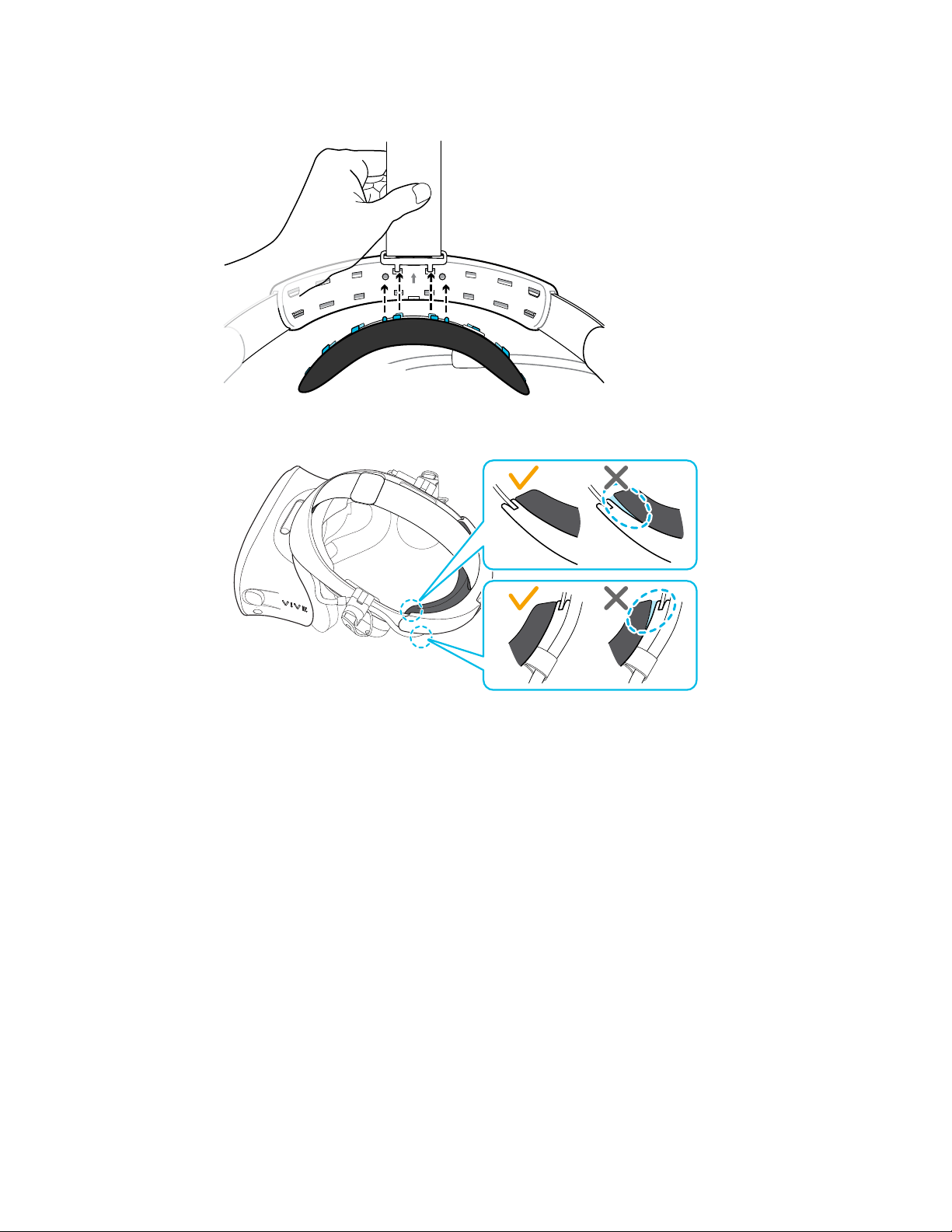
3. Align the back pad tabs with their corresponding slots on the band, and then press along
the back pad to reattach. You'll hear a click when the tabs are inserted.
4. Make sure to minimize the gap between the pad and the band.
21 Headset and headphones
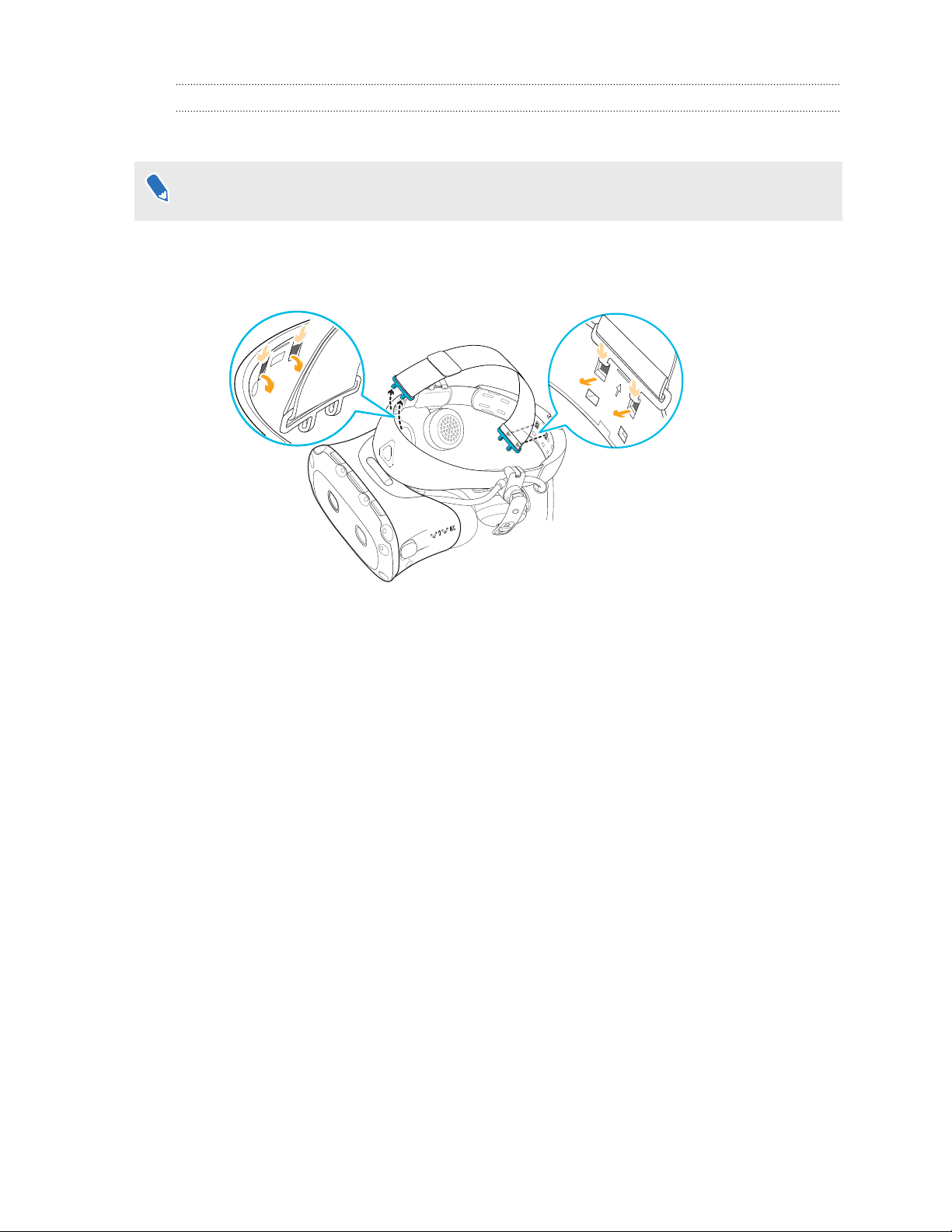
Detaching the top strap from the headset band
If you want to, you can detach the top strap from the headset band.
You'll need to first remove the front and back pads on the headset. For details, see Removing
the front and back pads on page 17.
1. Starting from the rear of the headset band, pull down the strap to unhook it.
2. On the other end of the strap, pull down and out the strap to unhook it.
3. Reattach the front and back pads to the headset. For details, see Reattaching the front and
back pads to the headset on page 18.
22 Headset and headphones
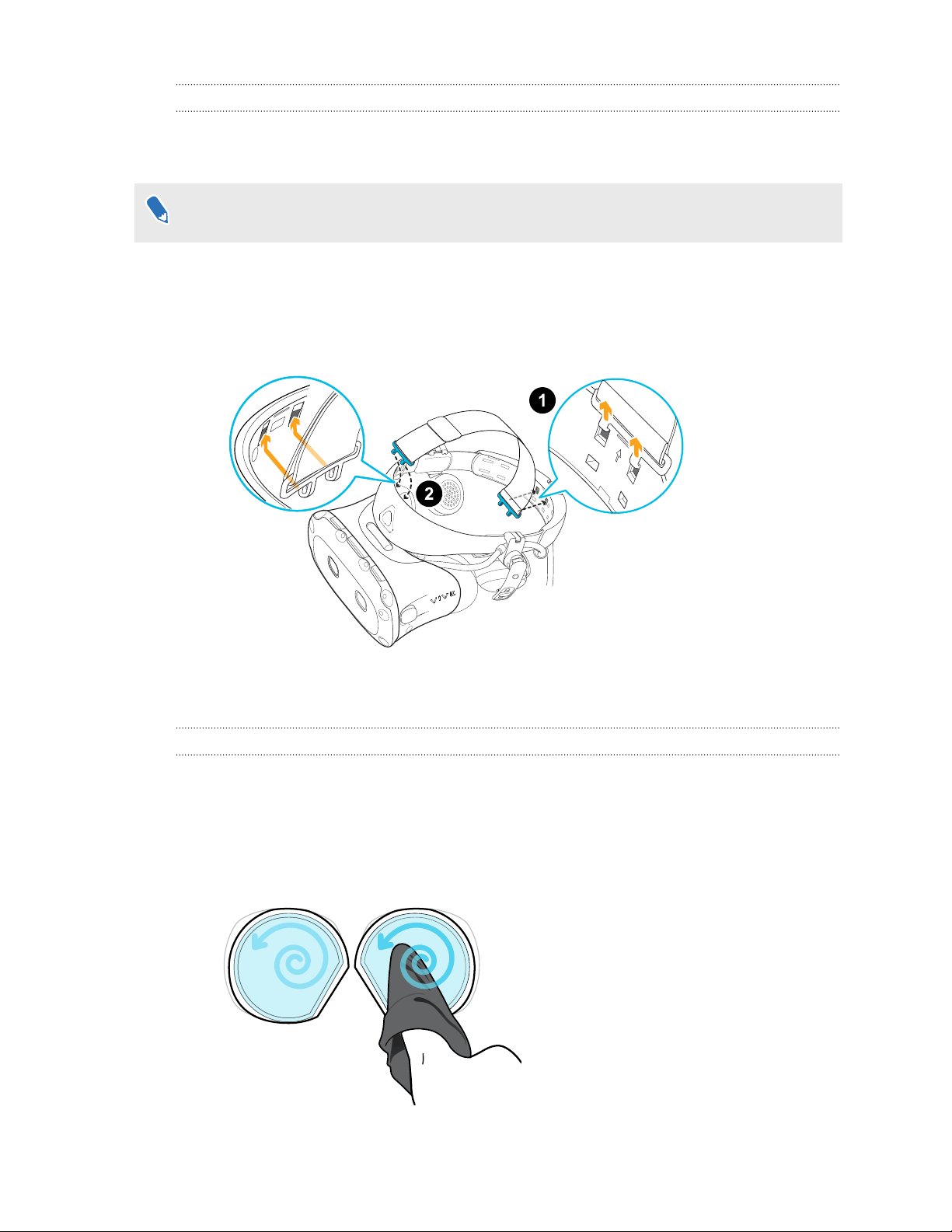
Attaching the top strap to the headset band
For added comfort, attach the top strap before wearing the headset. You can adjust the top strap
by using the velcro strip.
You'll need to first remove the front and back pads on the headset. For details, see Removing
the front and back pads on page 17.
1. Starting from the rear of the headset band, align the hooks of the top strap (side without
the clasp) to its corresponding slots. Gently pull up the strap to hook into place.
2. Align and insert the hooks on the other end of the top strap with the inner slots of the
headset band, and then pull up on the strap to hook into place.
3. Reattach the front and back pads to the headset. For details, see Reattaching the front and
back pads to the headset on page 18.
Cleaning the headset lenses
1. Use the cleaning cloth provided in the box to wipe the lenses.
2. Wipe in a circular motion from the center to the outer edges of the lenses.
While cleaning the lenses, do not scratch the lenses nor disassemble other parts of the
headset.
23 Headset and headphones
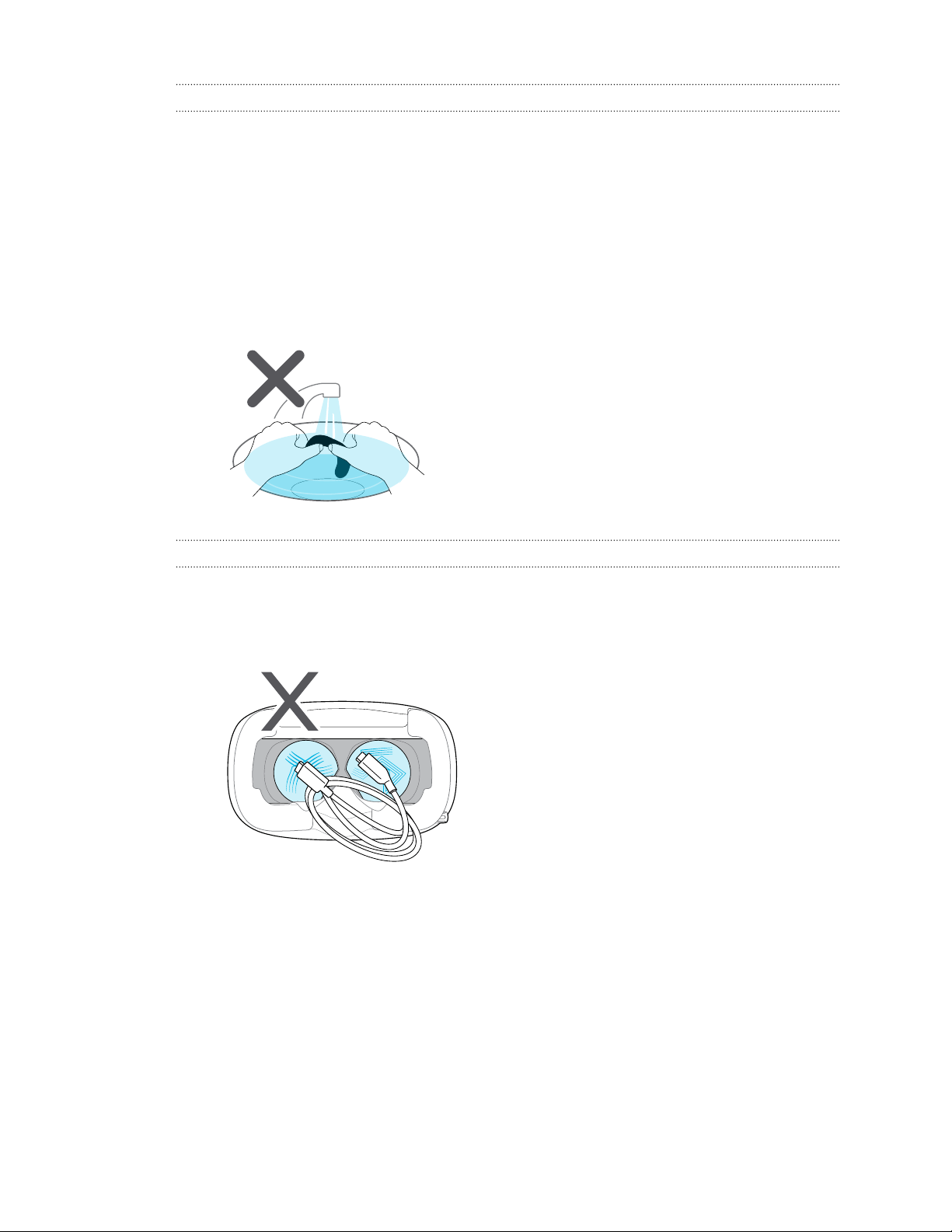
Cleaning the face cushions
1. Before cleaning the face cushions, remove it first from the VIVE Cosmos Elite headset.
2. When cleaning the face cushions, remember to:
§ Dampen a clean smooth cloth with cold water and gently wipe the area you want to
clean.
§ Air dry at room temperature. Don't tumble dry, iron, or expose it to direct sunlight.
§ Don't scrub, wring, or bleach.
§ Don’t dip or soak in water.
Caring for your VIVE Cosmos Elite
Follow these tips to properly care for your VIVE Cosmos Elite.
§ Keep the headset lenses away from sharp objects, including cable tips. This will prevent
the headset lenses from being scratched.
§ When not in use, store the headset in a cool, dark, and low humidity environment.
24 Headset and headphones
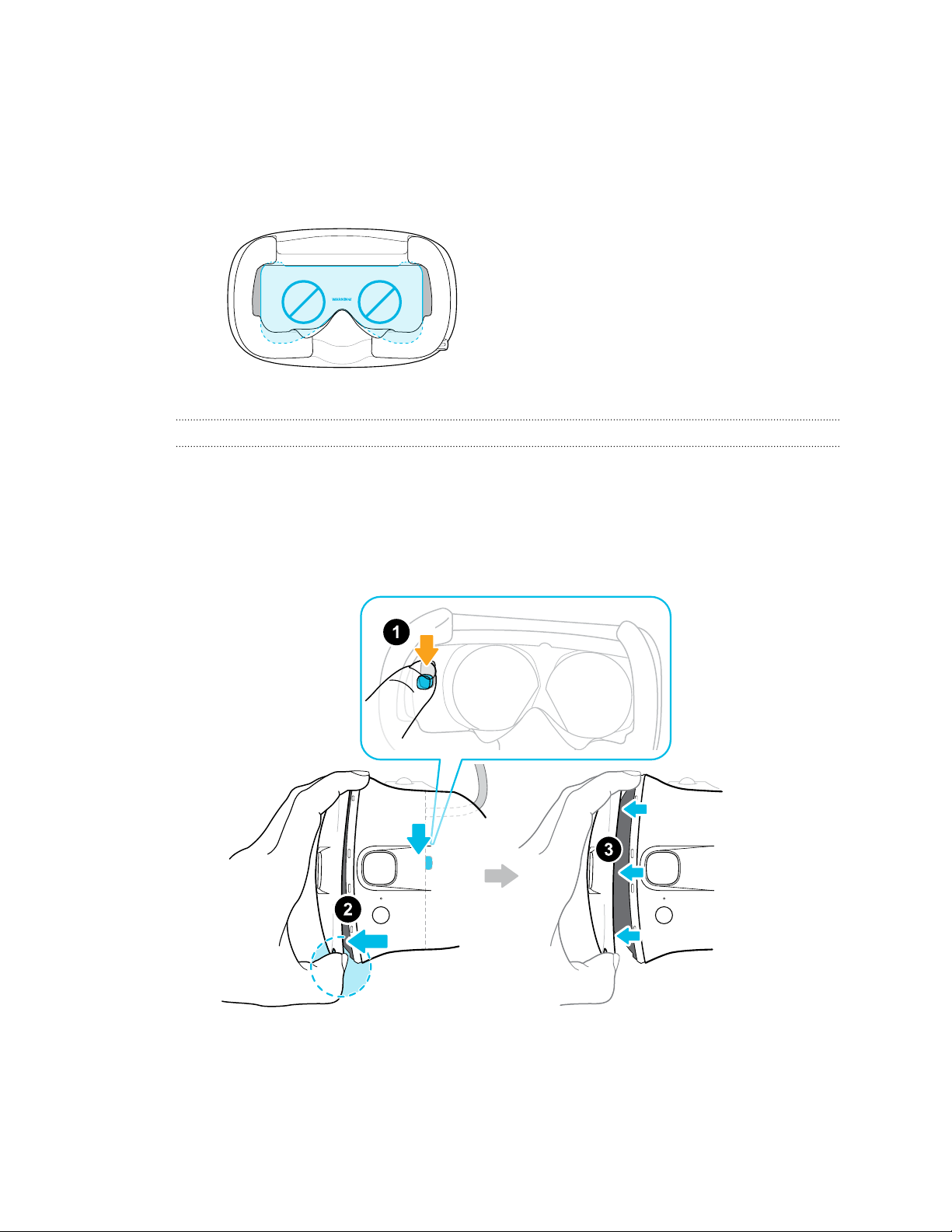
§ When not in use, store the headset with the lenses pointed away from direct sunlight.
Failure to do so may damage the headset display.
§ When storing the headset, it is recommended to cover the lenses with the paper cover to
help prevent accidental scratches.
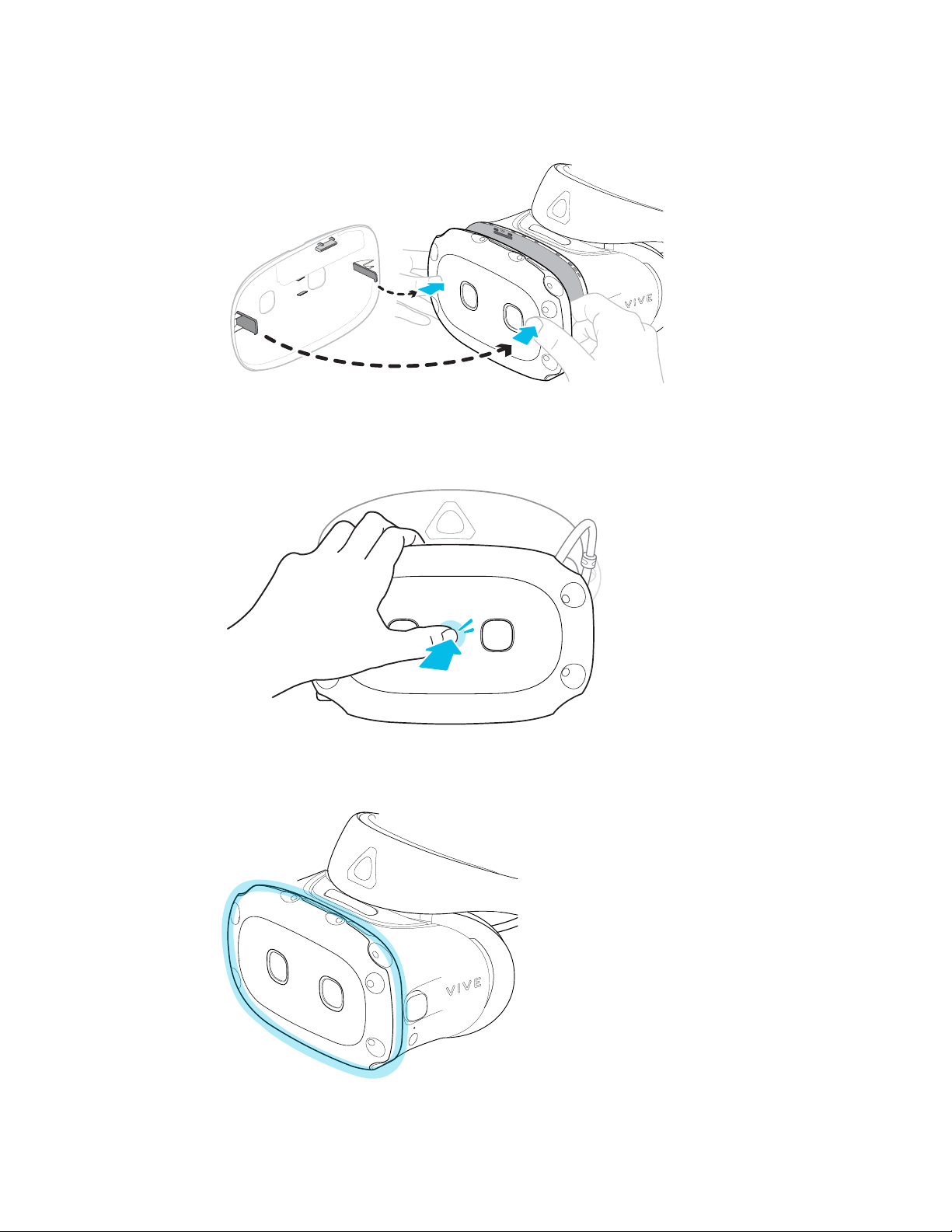
Replacing the front cover
You can replace the front cover on the headset.
1. Slide down and hold the lock button inside the compartment to unlatch the front cover.
2. Pry open the front cover starting from the bottom right corner with the visor facing you.
3. Carefully pull out the front cover until it detaches from the visor.
4. Grab the replacement cover.
25 Headset and headphones
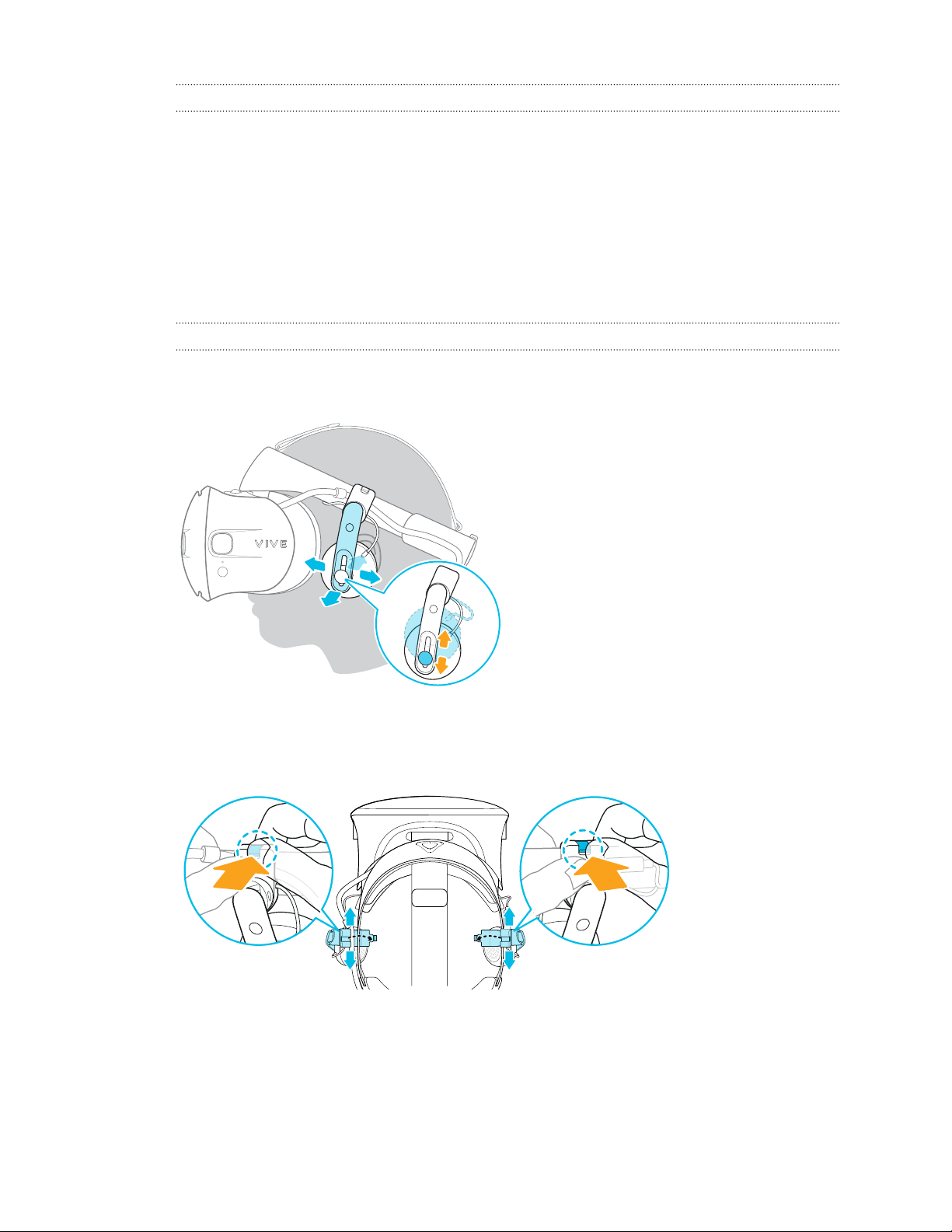
5. Insert the tabs on the front cover into the slots on the visor.
6. Press the right side of the front cover first, and then press the left side of the front cover.
7. With the front cover attached to the visor, press the center of the front cover.
8. Make sure to minimize the gap between the front cover and the visor, and that all tabs are
fully locked into place.
You'll hear a click when the front cover locks in place.
26 Headset and headphones
What does the status light on the headset mean?
The status light turns:
§ Green when the headset is in normal mode
§ Dim green when the headset is on standby
§ Red when the headset is in sleep mode
Headphones
Adjusting the fit of the on-ear headphones
While wearing the VIVE Cosmos Elite headset, adjust the on-ear headphones to a comfortable
position over your ears, then press the headphones into place.
Is the fit too loose or tight? In case you feel pressure around your temples, adjust the position of
the on-ear headphones for a more comfortable fit. To do so, flip open the metal clasp on each
headphone and reposition the headphone clip on the headset band.
27 Headset and headphones
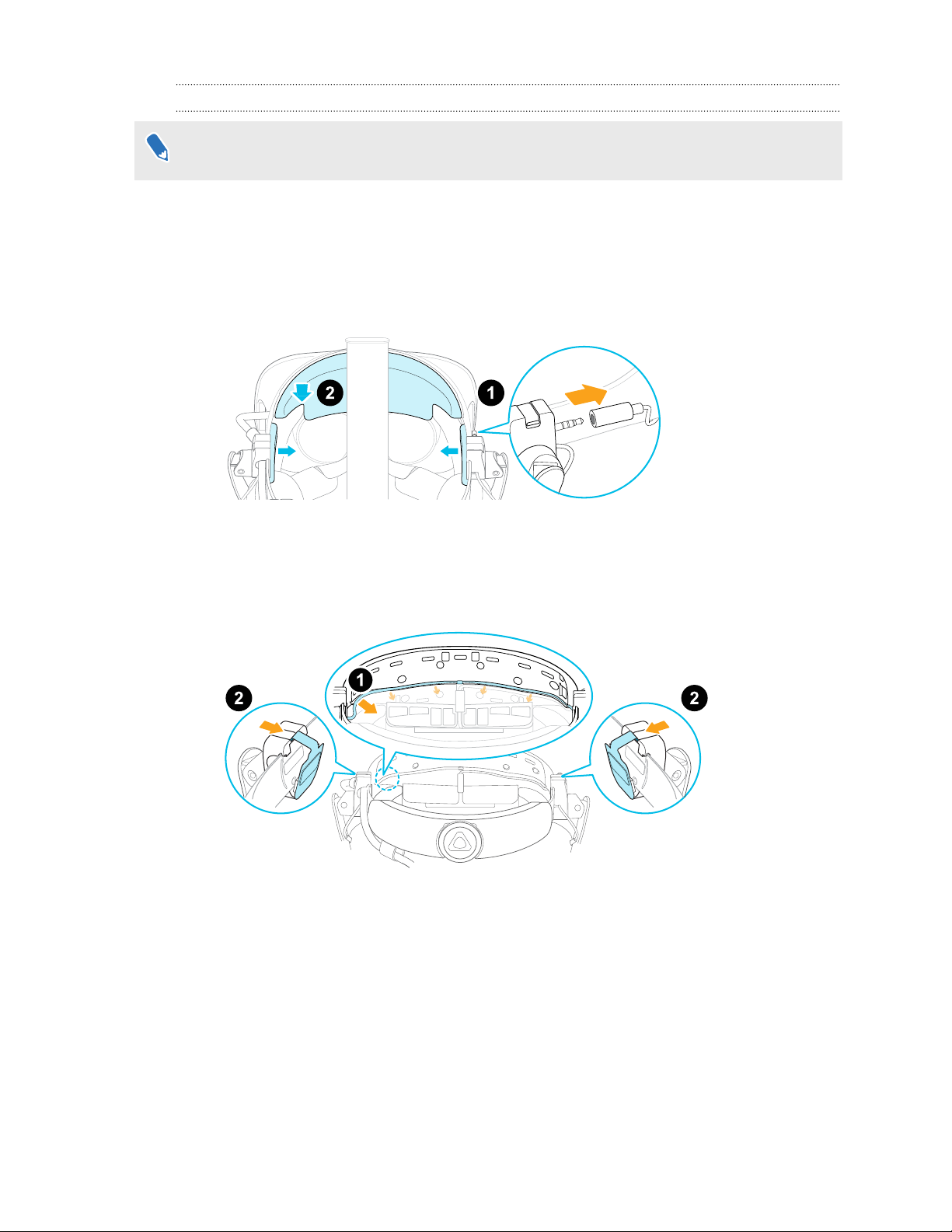
Detaching the on-ear headphones from the headset band
To use your own headphones with VIVE Cosmos Elite, you'll need the replacement kit for
headphones. For details on how to order the kit, contact customer care.
Before using your own earphones, you first need to detach the on-ear headphones from the
headset band.
1. On the right side of the band, disconnect the audio plug from the audio cable connector.
2. Remove the side cushions and front pad from the headset band. For details, see Removing
the front and back pads on page 17.
3. On the front section of the band, carefully pull out the cable of the on-ear headphones
from the groove.
4. On the left and right sides of the band, flip open the metal clasp of each headphone to
detach it.
After detaching the on-ear headphones, you need to attach cable guides before plugging in your
own earphones. For details, see Attaching the cable guides to the headset band on page 37.
28 Headset and headphones
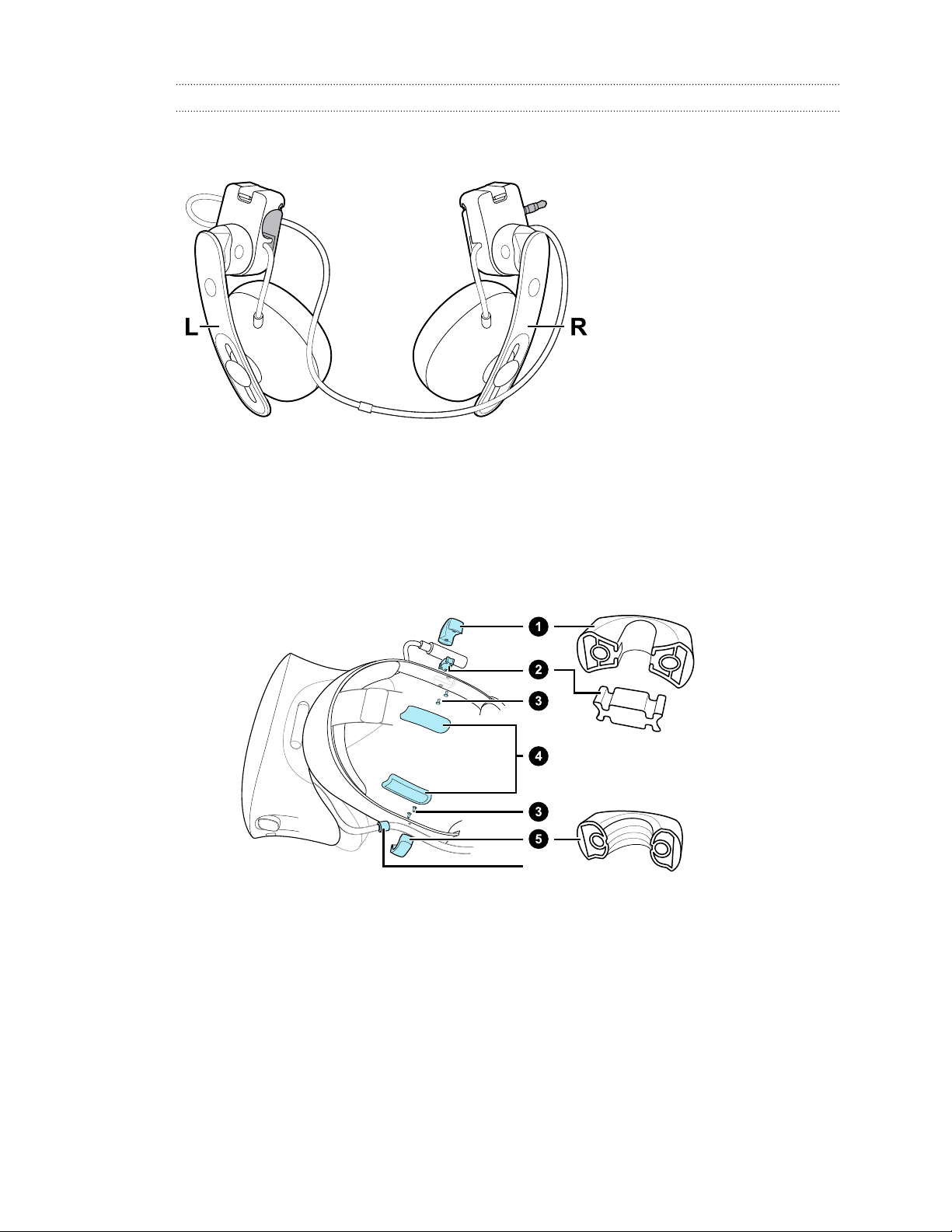
Reattaching the on-ear headphones to the headset band
You can reattach the on-ear headphones if you've used your own earphones with VIVE Cosmos
Elite.
Before attaching the on-ear headphones to the headset band, do the following:
1. Remove the cable guides, screws, and rubber pad, which are part of the replacement kit
for earphones, as well as the side cushions from the headset band. For details, see
Detaching the cable guides from the headset band on page 38.
Use a cross-shaped screwdriver (PH00) to detach the screws. Make sure to keep these
parts in a safe place.
29 Headset and headphones
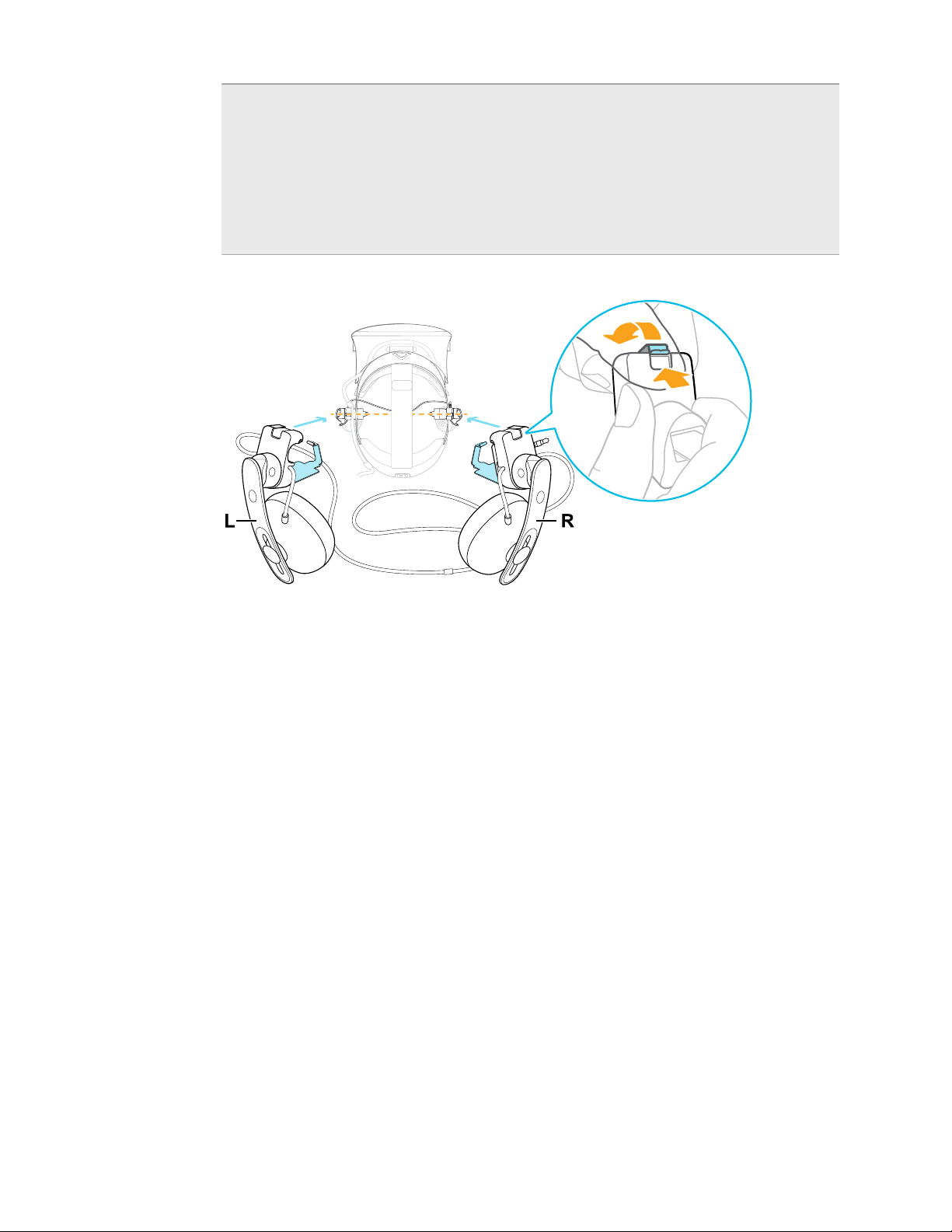
1. Audio cable guide
2. Rubber pad
3. Screws
4. Side cushions
5. Headset cable guide
6. Cable stopper
2. Flip open the metal clasps on the left and right on-ear headphones.
30 Headset and headphones
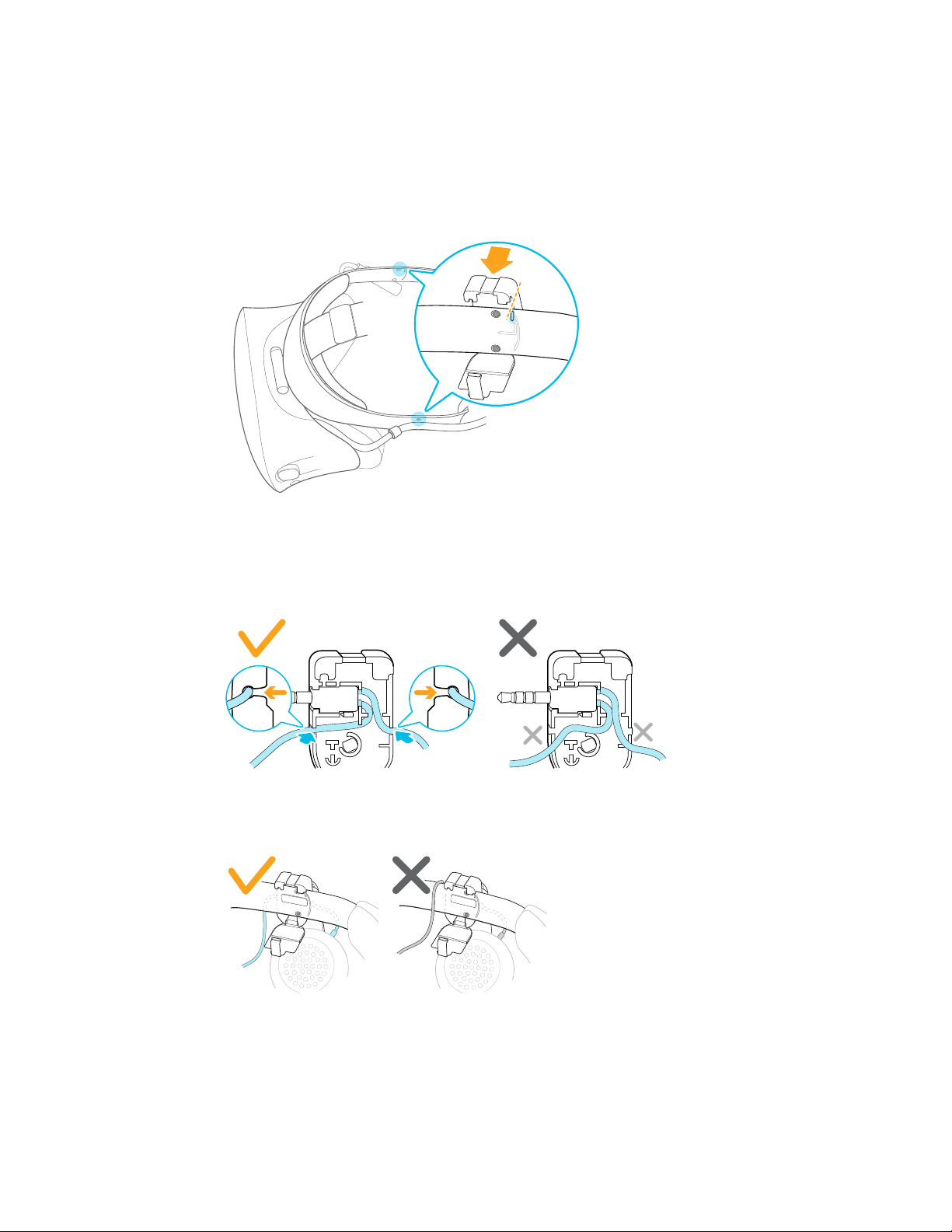
Attaching the right on-ear headphone
Attach the right headphone with the audio plug to the right side of the headset band.
1. Hook the headphone clip over the top of the band.
The screw holes and line marker on the band are helpful guides for positioning the clip.
While the clasp is loose, you can reposition the headphone clip for a more comfortable fit.
Just make sure that the other clip is similarly placed on its side of the band.
2. Make sure the audio cable is firmly pressed and not falling out of the groove.
3. Make sure the audio cable runs under the band, and not over the top. Check that it isn't
also wedged between the clip and the band.
31 Headset and headphones
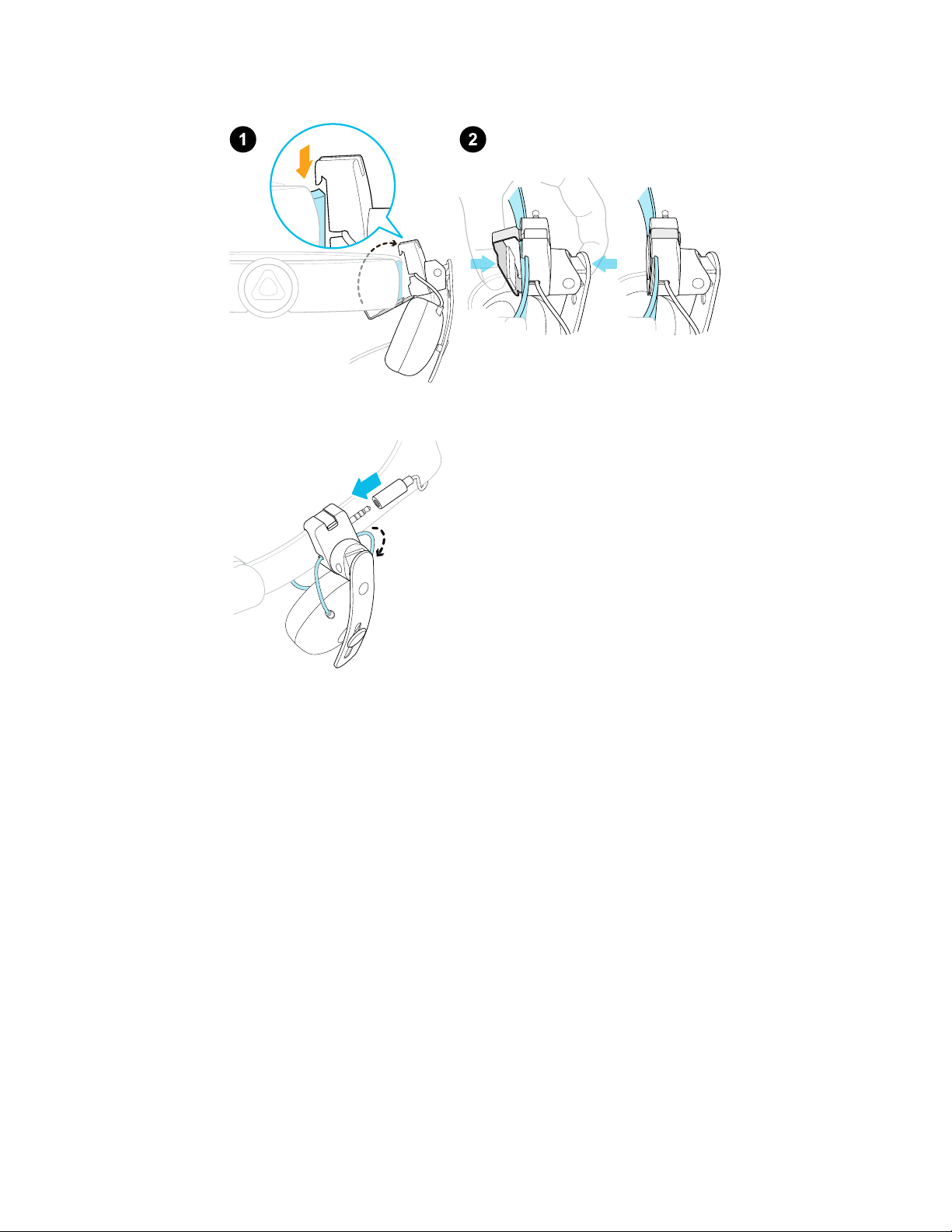
4. Close the clasp around the band, and then snap into place.
5. Connect the audio cable connector to the headphone plug.
32 Headset and headphones
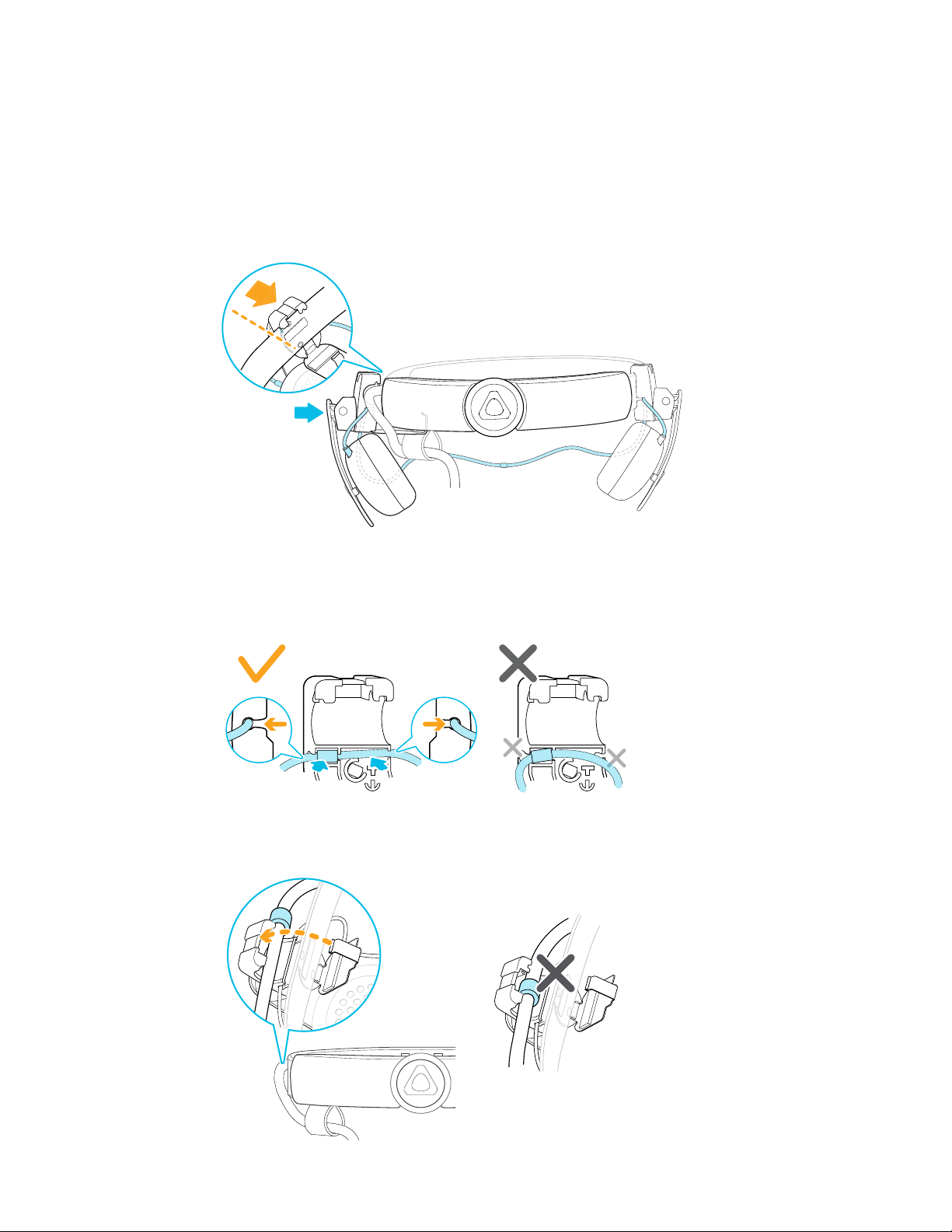
Attaching the left on-ear headphone
Attach the left headphone to the left side of the headset band.
1. Pin the headset cable along the cable guide on the left headphone.
2. Hook the headphone clip over the top of the band.
The screw holes and line marker on the band are helpful guides for positioning the clip.
While the clasp is loose, you can reposition the headphone clip for a more comfortable fit.
Make sure that the other clip is similarly placed on its side of the band.
3. Make sure the audio cable is firmly pressed in place and not falling out of the groove.
4. Make sure that the stopper on the headset cable isn't caught in the clasp, and is on the
visor side to prevent damage to the visor while gaming.
33 Headset and headphones
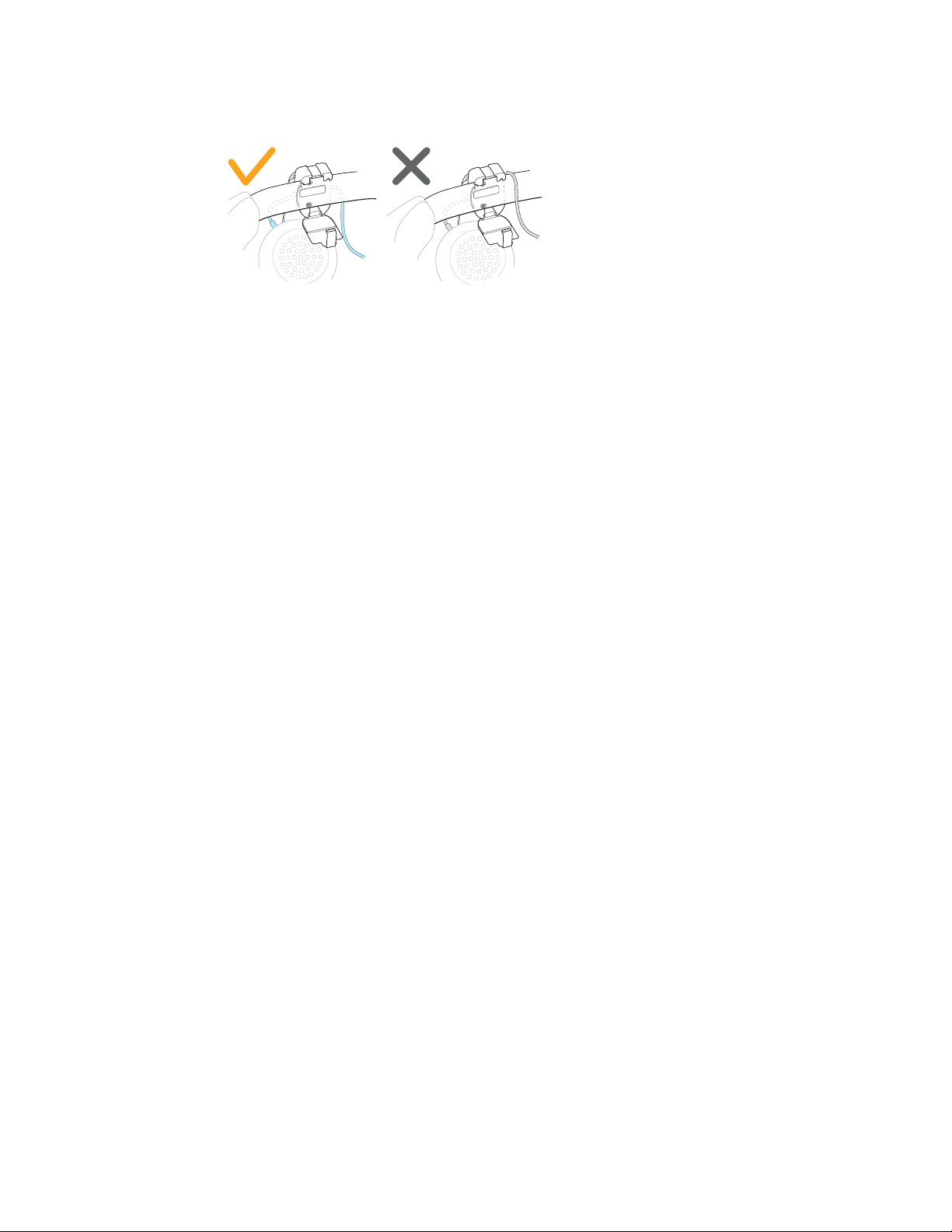
5. Make sure the audio cable runs under the band, and not over the top. Check that it isn't
also wedged between the clip and the band.
6. Close the clasp around the band and snap into place.
34 Headset and headphones
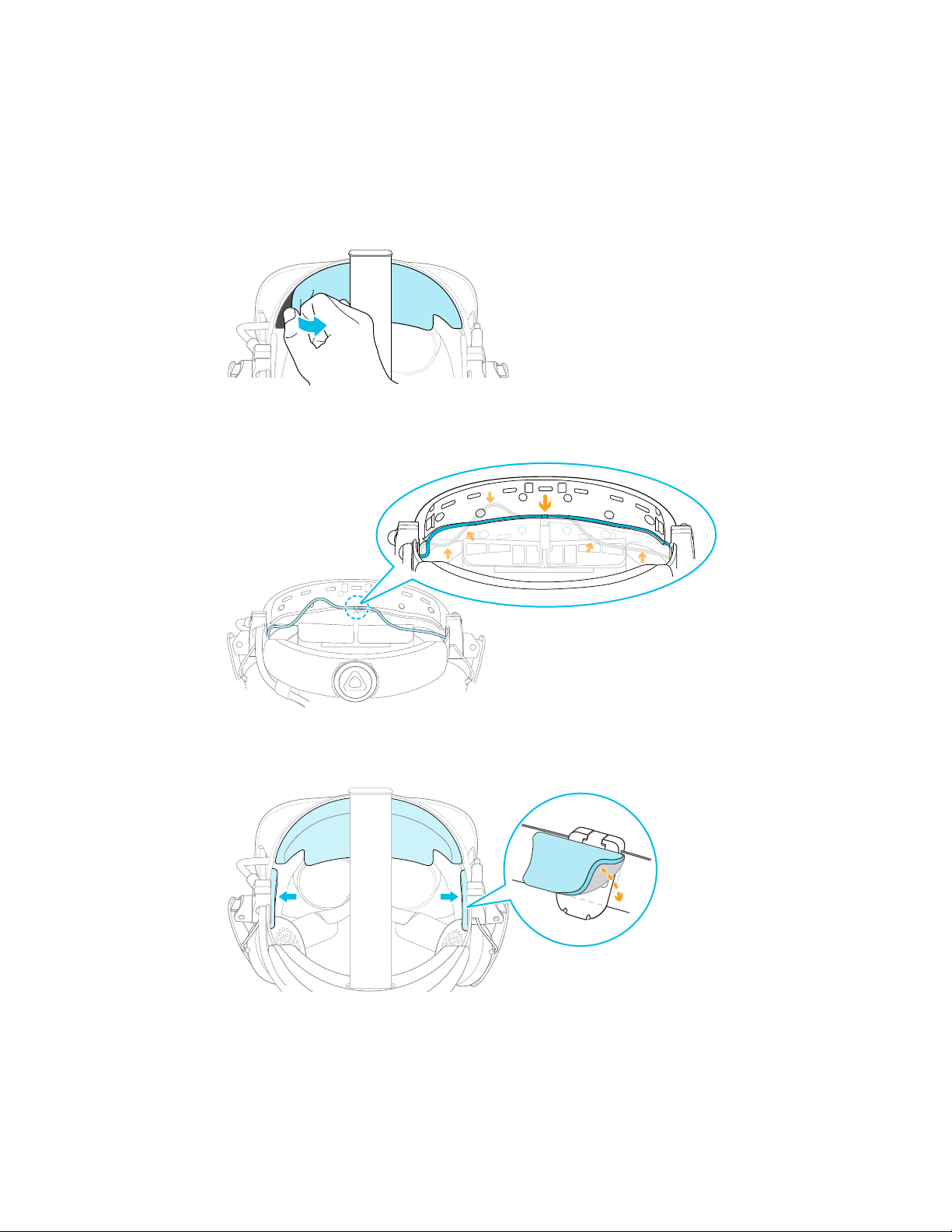
Attaching the headphone audio cable
After the left and right on-ear headphones have been attached, attach the headphone audio
cable to the headset band.
1. Remove the front pad from the headset band. For details, see Removing the front and back
pads on page 17.
2. On the front section of the band, press the audio cable marker into the slot at the center.
Then press the cable along the groove until flush with the band.
3. Reattach the front pad and side cushions to the headset band. Make sure that the side
cushions cover the metal clasps on the band.
35 Headset and headphones
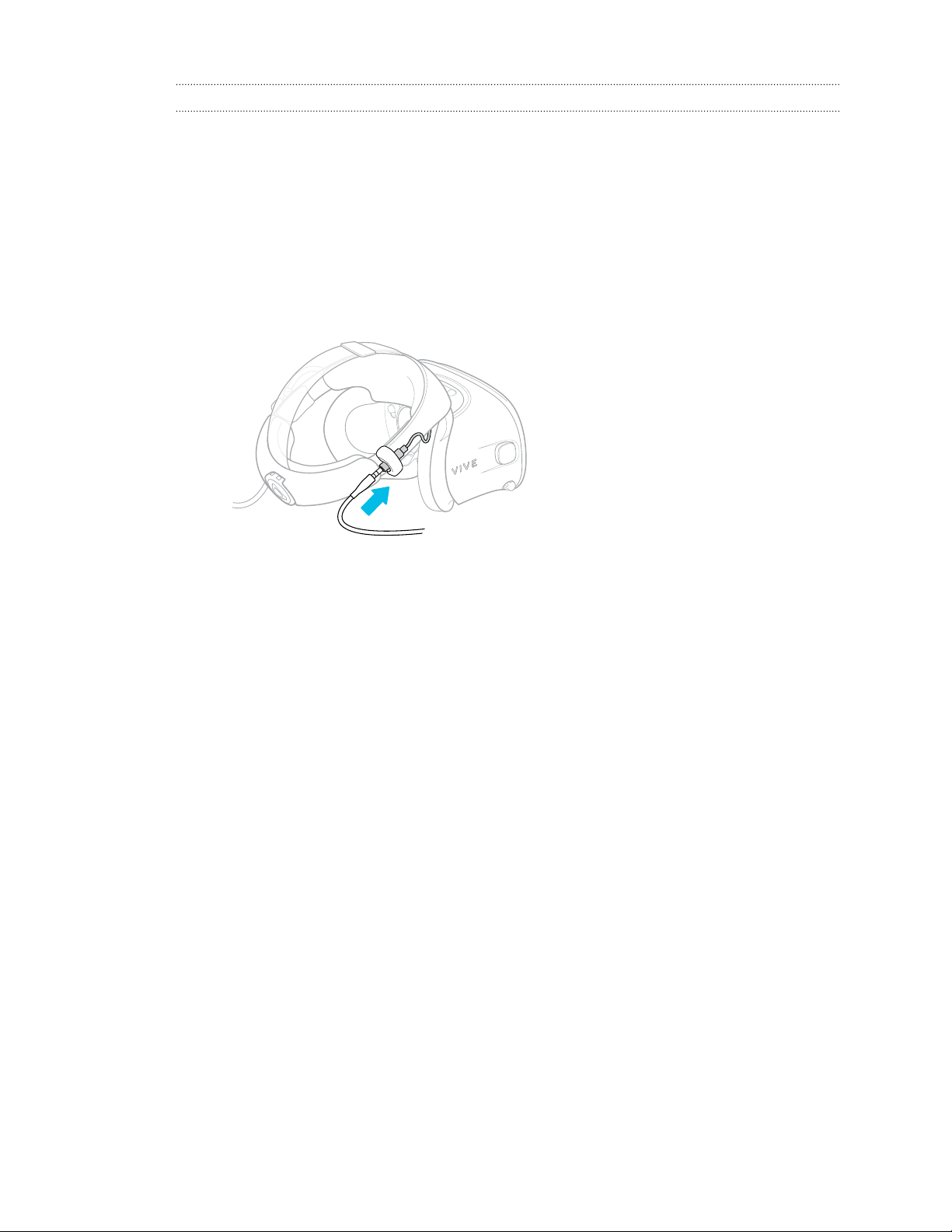
Plugging in your earphones
If you prefer, you can use your own earphones with VIVE Cosmos Elite. To do this, you'll need the
replacement kit for earphones. Contact customer care for details on how to order it.
1. Detach the on-ear headphones. For details, see Detaching the on-ear headphones from
the headset band on page 28.
2. Attach the cable guides to the headset band. For details, see Attaching the cable guides to
the headset band on page 37.
3. Insert the earphone plug into the 3.5mm audio cable connector on the right side of the
headset band.
36 Headset and headphones
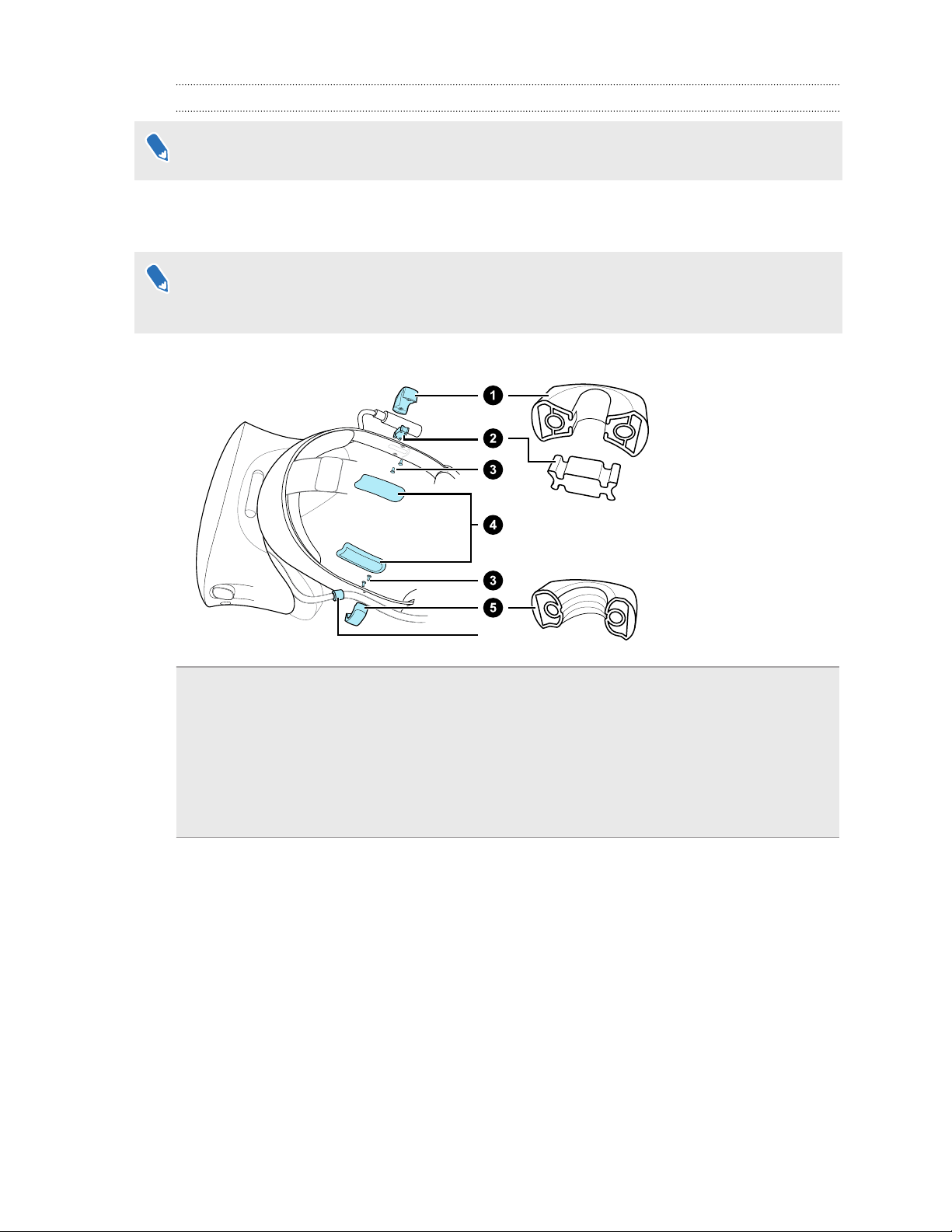
Attaching the cable guides to the headset band
To use your own headphones with VIVE Cosmos Elite, you'll need the replacement kit for
headphones. For details on how to order the kit, contact customer care.
Before plugging in your earphones, you need to attach the audio cable guide and headset cable
guide to the headset band. The cable guides are included in the replacement kit for earphones.
Before you attach the cable guides, make sure to remove the on-ear headphones from the
headset band, including the front pad and side cushions. For details, see Detaching the on-
ear headphones from the headset band on page 28.
Use a cross-shaped screwdriver (PH00) to attach the screws.
1. Audio cable guide
2. Rubber pad
3. Screws
4. Side cushions
5. Headset cable guide
6. Cable stopper
1. On the right side of the band, place the audio connector between the rubber pad and audio
cable guide. Align the holes on the band, rubber pad, and audio cable guide, and then
screw in place.
2. On the left side of the band, align the headset cable guide holes with the holes on the
band, then screw in place. Make sure that the headset cable passes through the headset
cable guide. The stopper on the headset cable must also be placed on the visor side of the
cable guide.
3. Reattach the front pad and side cushions to the headset band. Make sure that each side
cushion is aligned with the curvature on the band.
37 Headset and headphones
After attaching the cable guides, you can now plug in the earphones. For details, see Plugging in
your earphones on page 36.
Detaching the cable guides from the headset band
If you want to reattach the on-ear heaphones, you first need to detach the audio cable guide and
headset cable guide from the headset band. The cable guides are included in the replacement kit
for earphones. For details on how to order the replacement kit for earphones, contact customer
care.
Make sure to keep these parts in a safe place.
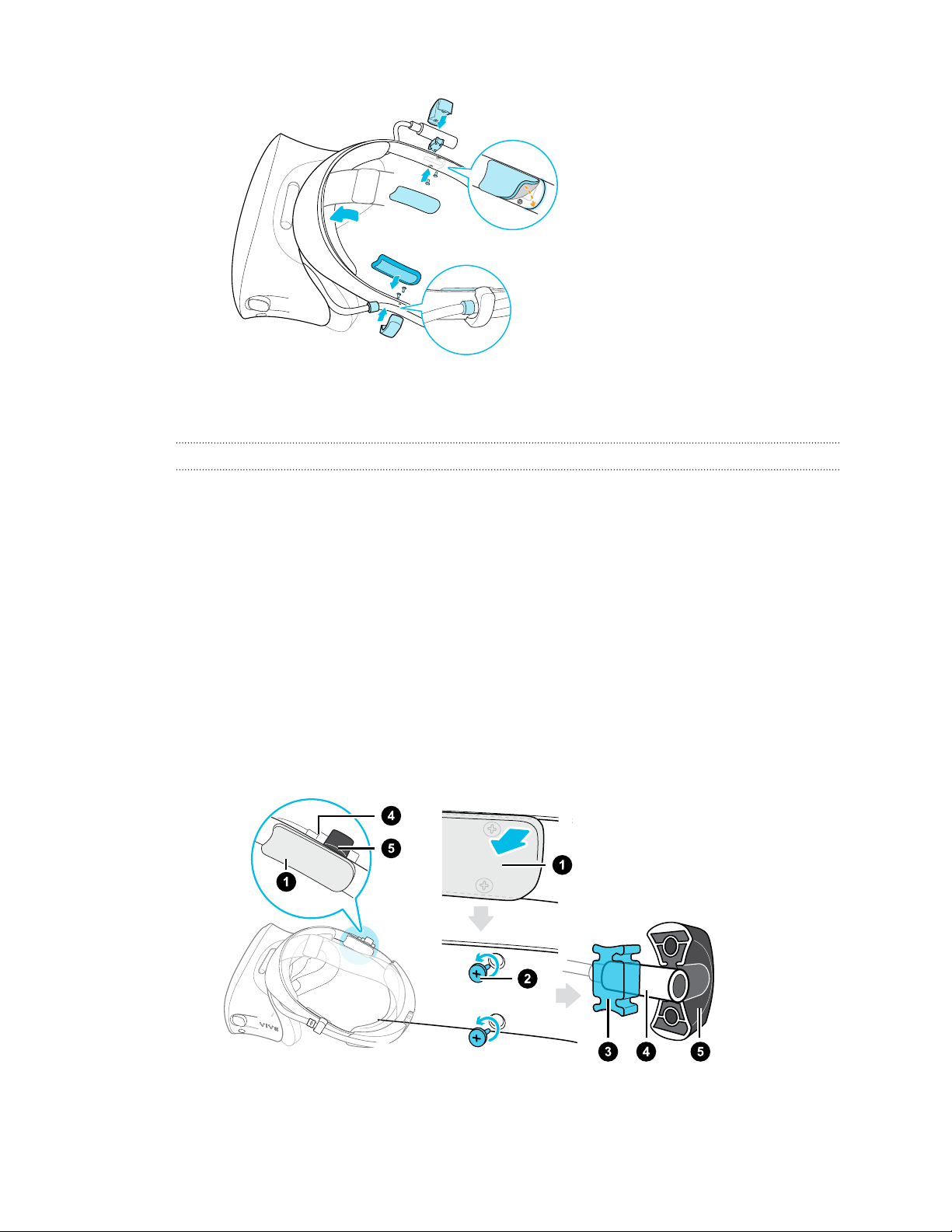
Detaching the audio cable guide
You can remove the audio cable guide from the right side of the band.
1. Remove the side cushion.
2. Remove the screws using a cross-shaped screwdriver (PH00).
3. Remove the rubber pad that holds the audio cable connector against the audio cable
guide.
38 Headset and headphones
1. Side cushion
2. Screws
3. Rubber pad
4. Audio connector
5. Audio cable guide
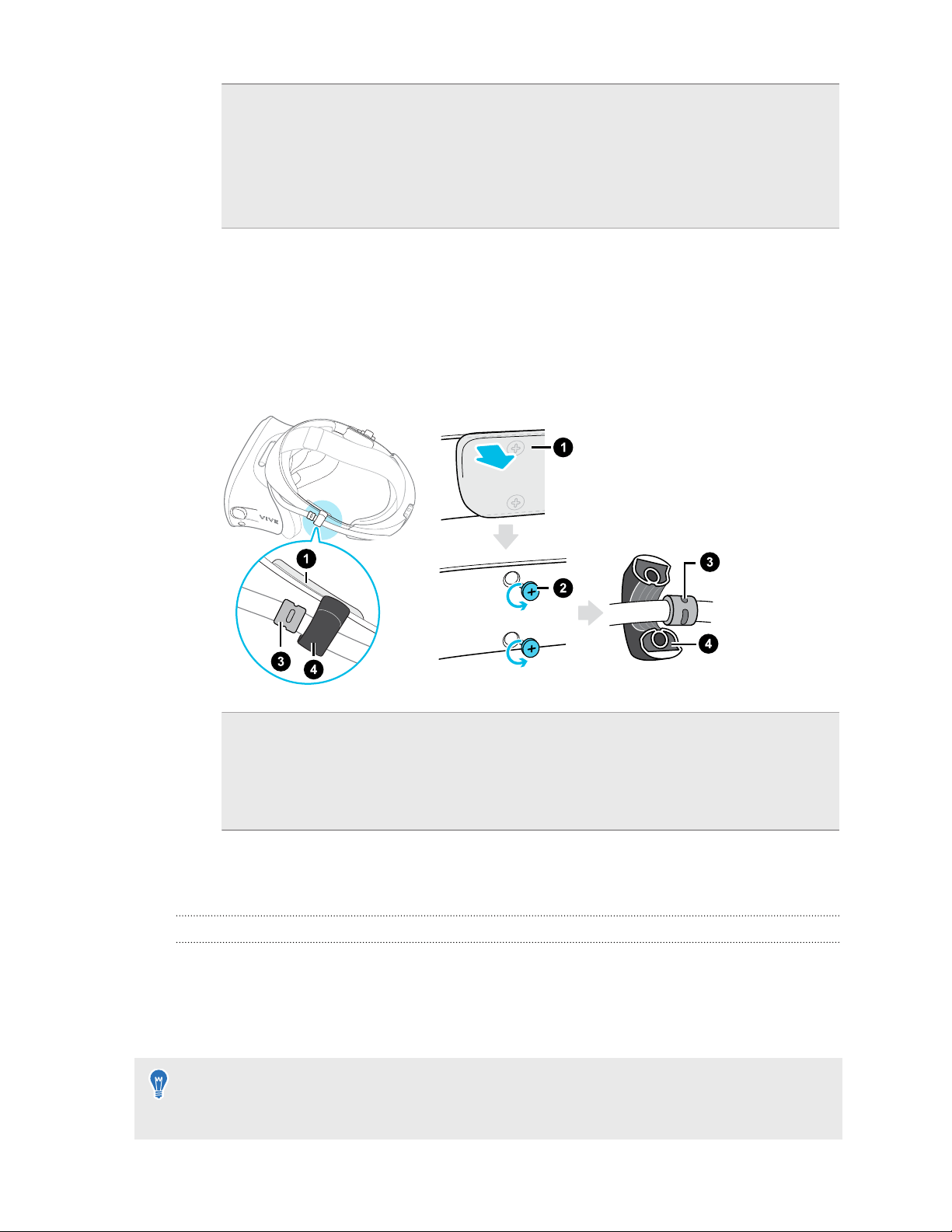
Detaching the headset cable guide
You can remove the headset cable guide from the left side of the band
1. Remove the side cushion.
2. Remove the screws using a cross-shaped screwdriver (PH00).
3. Detach the headset cable guide.
1. Side cushion
2. Screws
3. Cable stopper
4. Headset cable guide
Common solutions
I can't place the on-ear headphones on my ears. What can I do?
You can move the position of the headphones along the headset band so they can be placed on
your ears.
Flip open the metal clasp on each headphone and reposition it on the headset band. See
Adjusting the fit of the on-ear headphones on page 27 for more details.
You can also try adjusting the top strap and headset band so that you can position the on-ear
headphones properly on your ears. See Putting on the VIVE Cosmos Elite headset on page 9
for details.
39 Headset and headphones

I can't hear anything from the headphones. What can I do?
If there is no sound coming out of the headphones, go through the list below and see if it fixes the
problem.
Check the following:
§ Make sure the headphones are plugged into the 3.5mm audio cable connector of the
headset.
§ The volume level is not 0. See System Dashboard on page 64.
§ Make sure the USB cable is connected to a USB 3.0 or higher port on your computer. If the
USB cable is connected to a lower-speed USB port, move and plug it to a USB 3.0 or higher
port. Restart the computer and converter. See Restarting the converter for VIVE Cosmos
Elite on page 42.
§ If the USB cable is already connected to a USB 3.0 or higher port on your computer, try
switching to a different USB 3.0 or higher port. After switching, restart the computer and
converter. See Restarting the converter for VIVE Cosmos Elite on page 42.
Can I use VIVE Cosmos Elite when SteamVR is in Safe mode?
No, you cannot. Make sure that SteamVR is not running in Safe mode before using VIVE Cosmos
Elite.
40 Headset and headphones
Converter
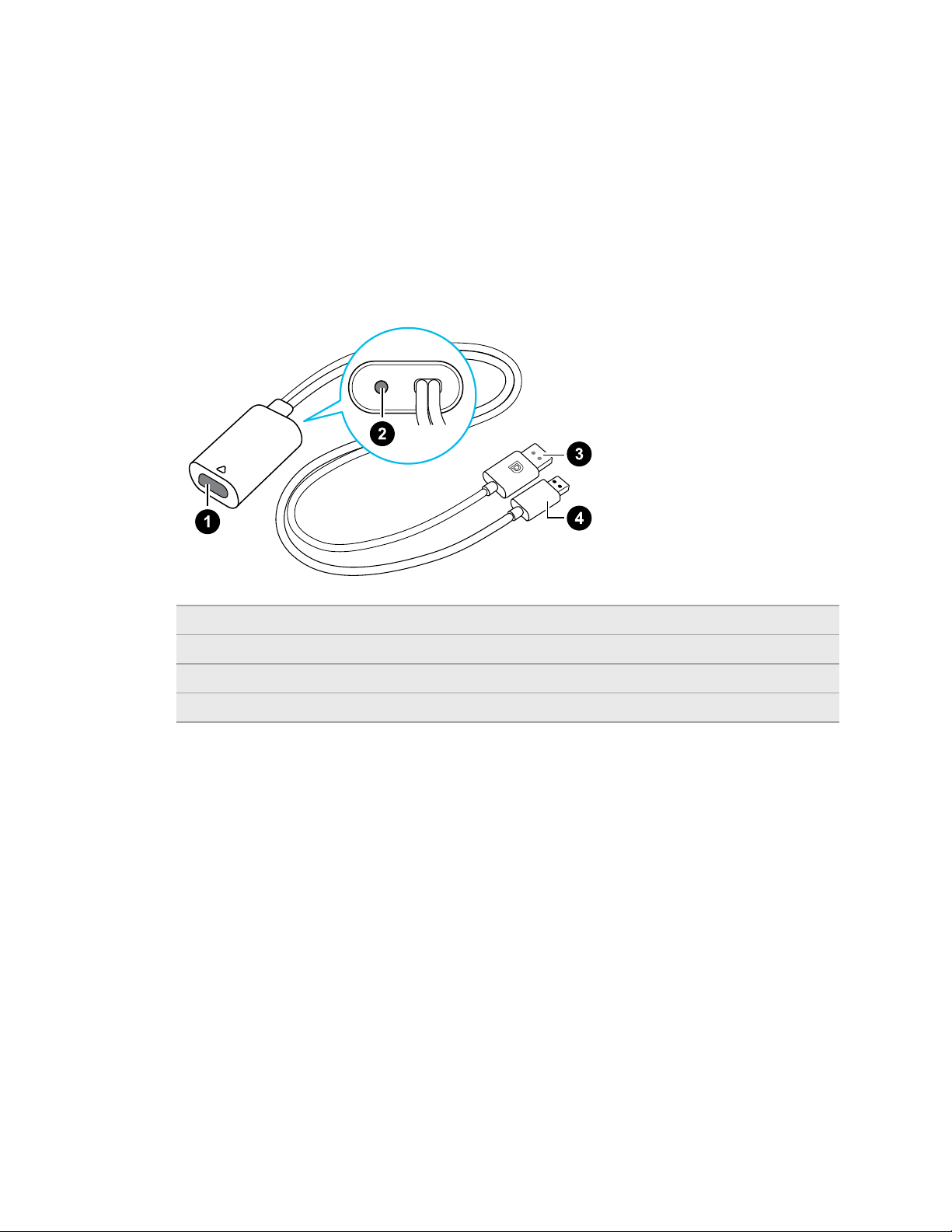
About the converter for VIVE Cosmos Elite
Use the converter to connect the headset to your computer.
1 Headset cable port
2 Power port
3 DisplayPort cable
4 USB 3.0 cable
Connecting the headset to your computer via the
converter
1. Connect the power adapter cable to its corresponding port on the converter for
VIVE Cosmos Elite.
2. Plug the power adapter into an electrical outlet.
3. Connect the opposite end of the USB 3.0 cable to a USB 3.0 port on your computer.
41 Converter
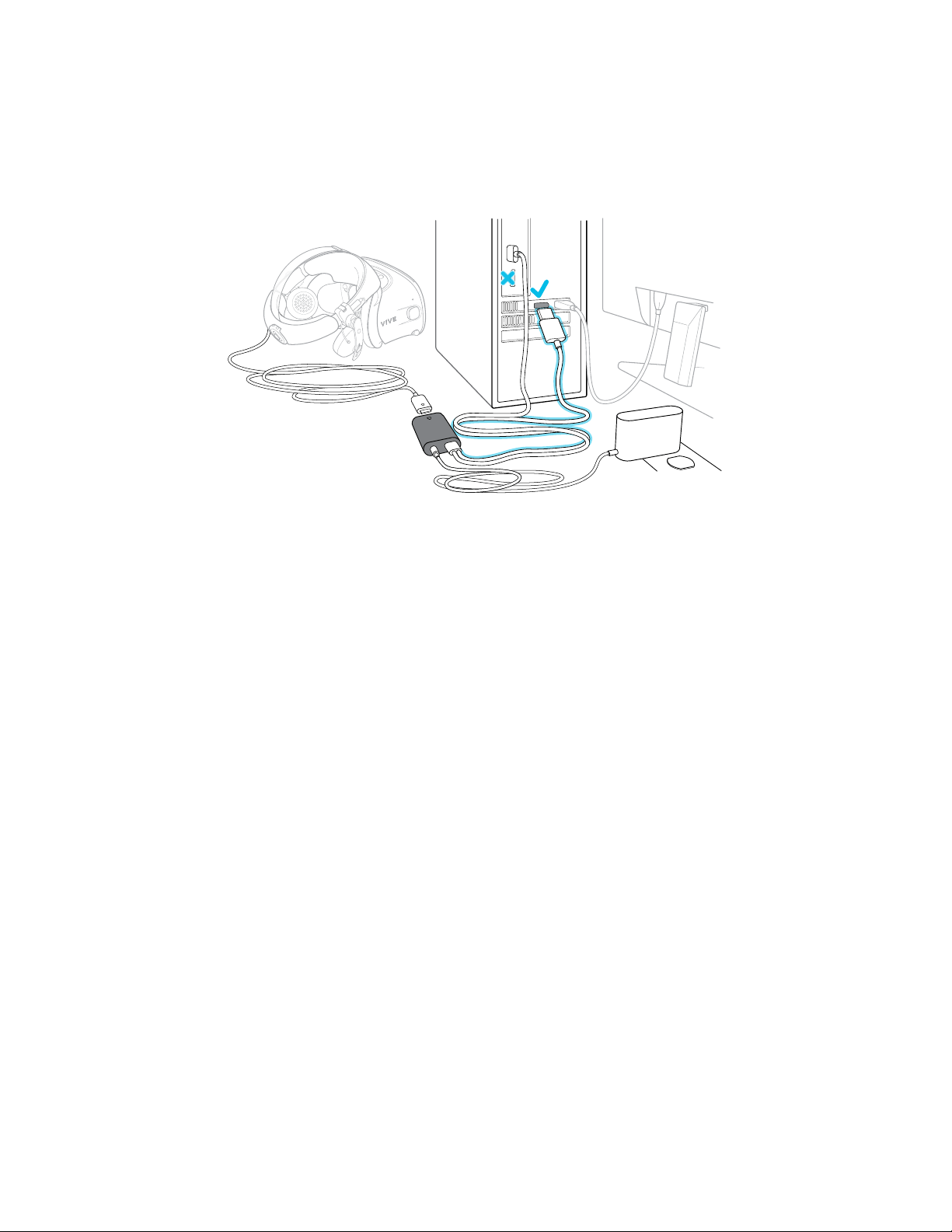
4. Connect the other end of the DisplayPort cable to the DisplayPort port on the graphics
card of your computer where the monitor is also connected. Do not connect the
DisplayPort cable to ports on the motherboard.
5. Insert the headset cable connector (side with triangle mark up) to the port on the converter
with the corresponding triangle mark.
Restarting the converter for VIVE Cosmos Elite
If you need to restart the converter, follow these steps.
1. Close the VIVE Console app as well as SteamVR app on your computer.
2. Unplug the power cable from the converter.
3. Wait for a few seconds, and then plug the power cable back in. On your computer, you
might see a notification that drivers are being installed. Wait for the installation to finish.
4. To verify that VIVE hardware are detected, restart the VIVE Console app on your computer.
42 Converter
Can I use a laptop with VIVE Cosmos Elite?
As long as your laptop meets the system requirements, you can use it with VIVE Cosmos
Elite.
If your laptop does not have a DisplayPort port but has a Mini DisplayPort port instead,
you can use a Mini DisplayPort-to-DisplayPort adapter. If you require one, contact HTC
customer care.
A Mini DisplayPort-to-DisplayPort adapter may block another port on your laptop.
My computer monitor and headset are turned on but why can't I
see anything?
Try the following steps to fix the problem.
1. Disconnect the headset cable from the converter.
2. Restart your computer.
3. Reconnect the headset cable to the converter.
43 Converter
Base stations
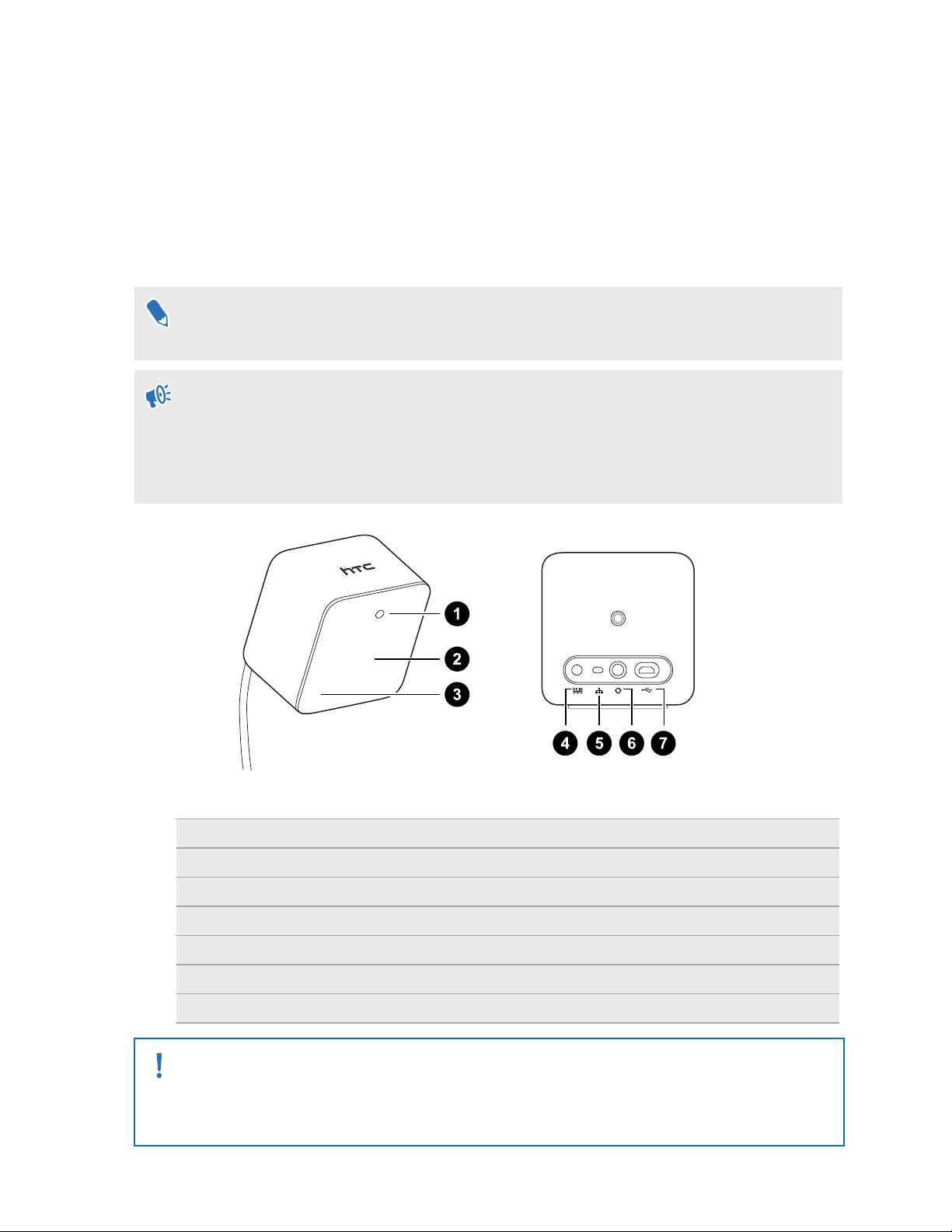
About the VIVE base stations
The hardware may be purchased separately from the Accessories tab on www.vive.com/
product/.
§ The base stations beam signals to the headset and controllers. Do not cover the front panel
with any material.
§ When the base stations are turned on, they may affect some nearby infrared sensors, such as
those used by an IR TV remote control.
1 Status light
2 Front panel
3 Channel indicator (recessed)
4 Power port
5 Channel button
6 Sync cable port (optional)
7 Micro-USB port (for firmware updates)
§ Do not attempt to pry open the base stations as doing so could injure you or damage the
product.
§ If the front panel is cracked or damaged, stop using the base stations.
44 Base stations
Installing the base stations
The hardware may be purchased separately from the Accessories tab on www.vive.com/
product/.
Before installing the base stations, decide first whether you want to set up a room-scale or
seated/standing-only play area. See Planning your play area on page 58.
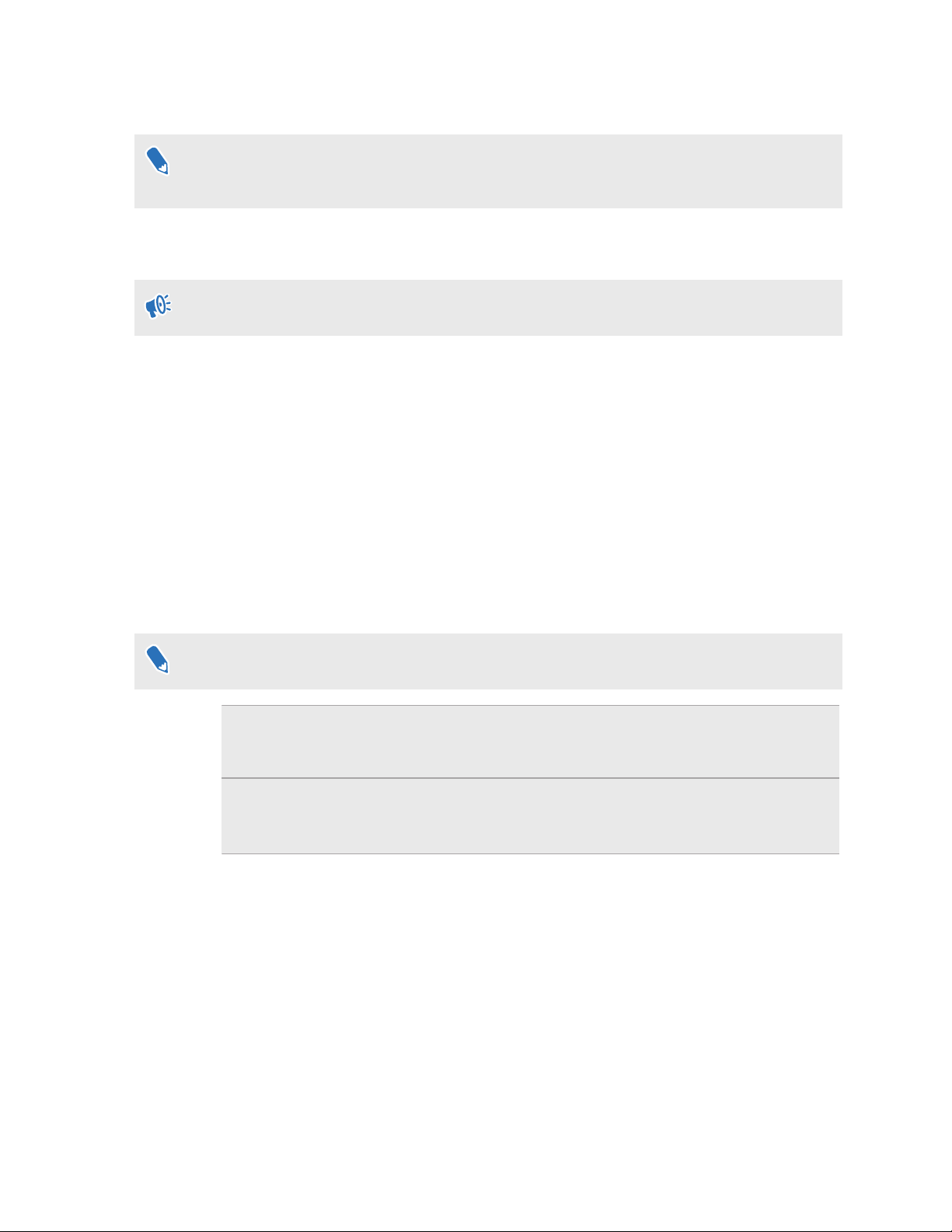
During unboxing, remove the thin film that covers the front panel of the base stations.
1. Mount the base stations diagonally at opposite corners of your space.
For details on how to use the mounting kit, see Using the mounting kit on page 48.
You can also use tripods, light stands, or cargo poles when mounting the base stations, or
even place it on stable book cases. Just avoid using unstable mounting solutions or
surfaces that are prone to vibration.
2. Adjust the base stations so that the front panels are facing toward the center of the play
area.
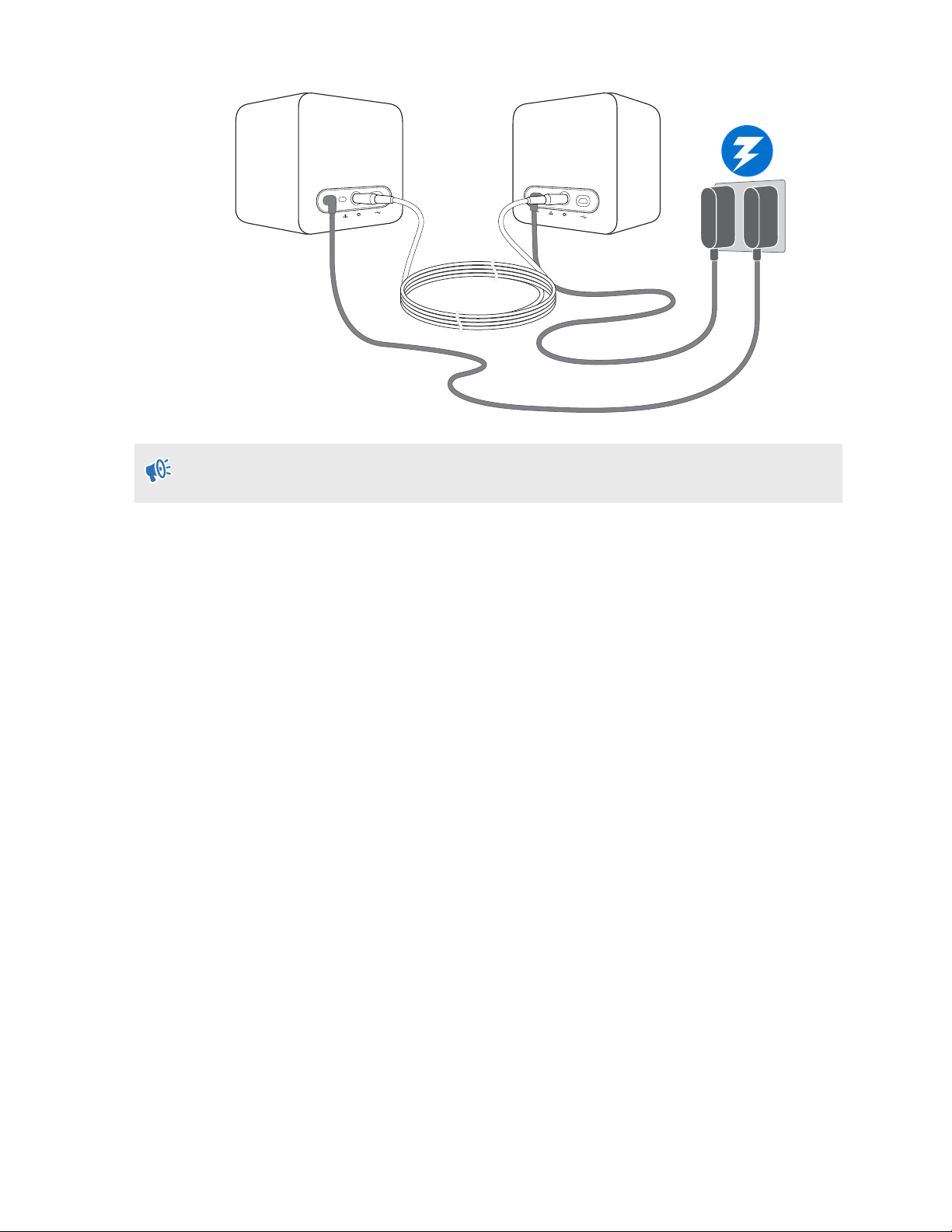
3. Attach the power cables to the base stations, and then plug them each into a power outlet
to turn them on. The status lights should be green.
4. Connect the base stations and set the channels.
For details on how to get the sync cable, contact customer care.
Without the sync
cable
Press the Channel buttons at the back of the base stations so
that one base station is set to channel “b”, while the other is set
to channel “c”.
With the sync cable
(optional for added
reliability)
Press the Channel buttons at the back of the base stations so
that one base station is set to channel “A”, while the other is set
to channel “b”.
45 Base stations
Once turned on, do not move or adjust the angles of the base stations as it could disrupt the
tracking process. Otherwise, you will need to set up the play area again.
46 Base stations
Tips for setting up the base stations
The hardware may be purchased separately from the Accessories tab on
www.vive.com/product/.
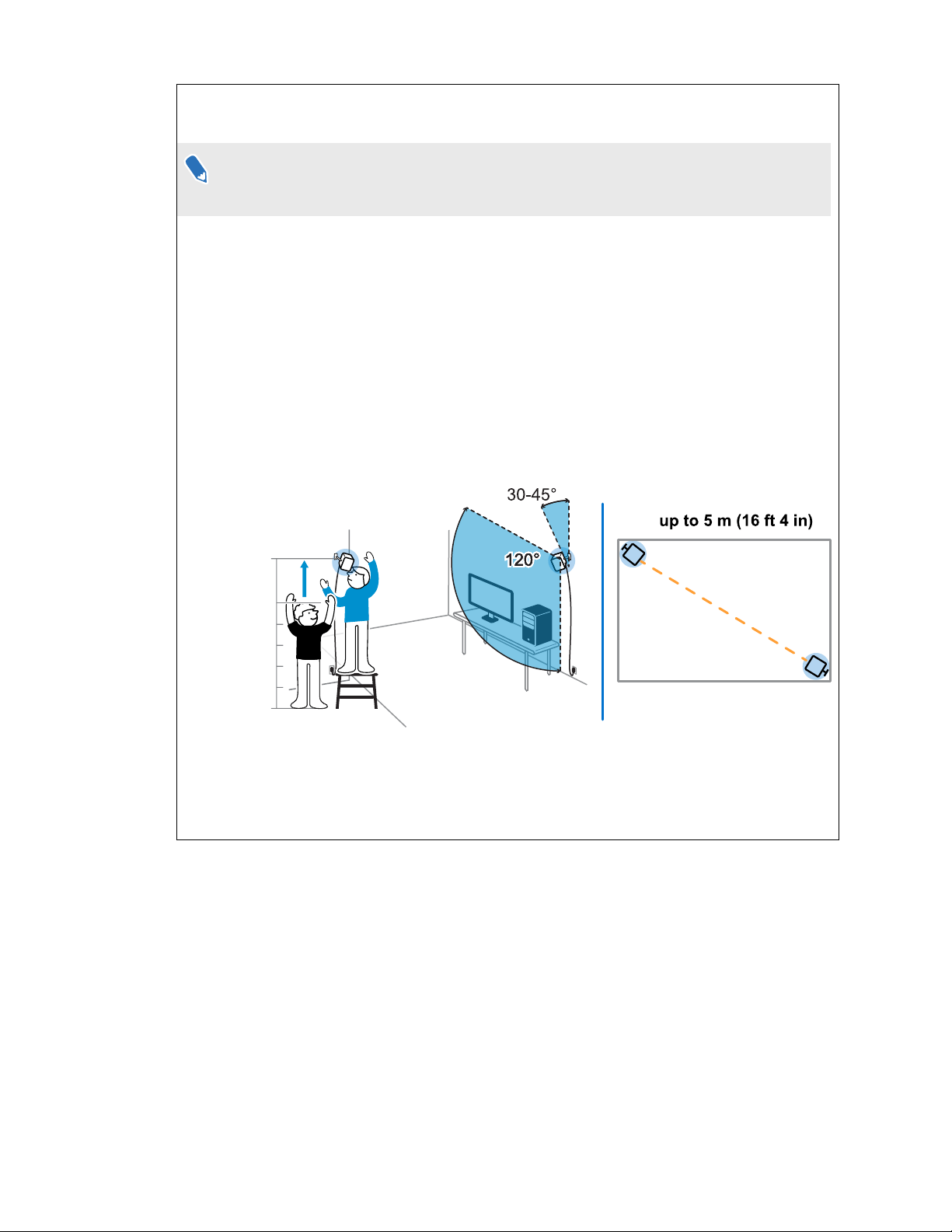
You may set up the base stations in a way that's suitable for your place. For best results,
you may follow these recommendations:
§ Mount the base stations diagonally and above head height, ideally more than 2 m (6
ft 6 in).
§ Secure the base stations in a location where they can't be easily jostled or moved.
§ Each base station has a 120-degree field of view, so it's ideal to adjust its angle
between 30 and 45 degrees to fully cover your play area.
§ For optimal tracking, make sure that the maximum distance between the two base
stations is 5 m (16 ft 4 in).
§ Avoid setting up in an area with bright light, which may negatively affect the
performance of the base stations.
47 Base stations
Using the mounting kit
For best results, install the base stations using a mounting kit. If you previously bought first-
generation VIVE hardware, the mounting kit is provided as an in-box item. Otherwise, you can
separately purchase a similar mounting kit from a third-party supplier.
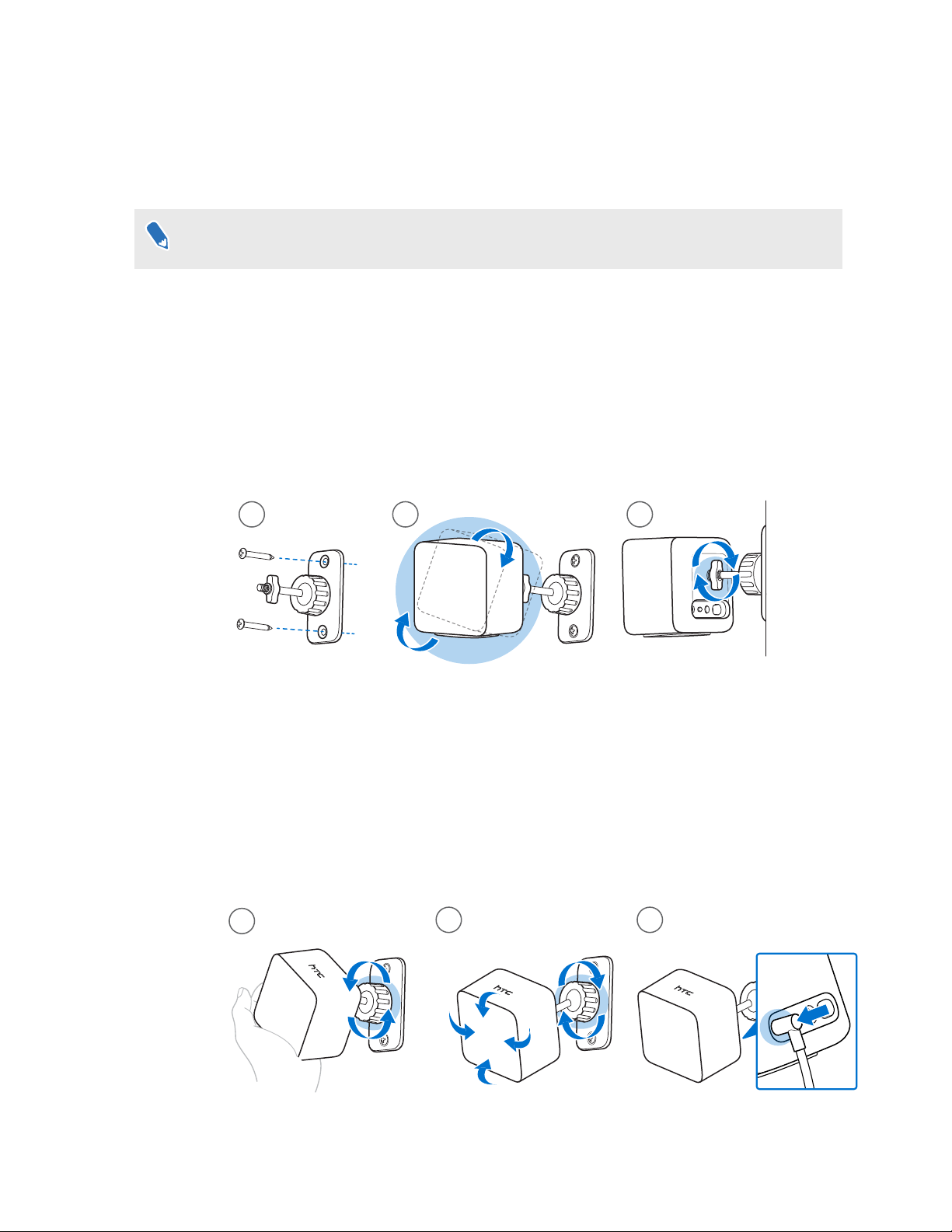
You will need a screwdriver or drill to install the mounts. Ask a professional for help when
using power tools.
1. Mark where you want to install each of the mounts on your wall, and then screw the
mounts in.
When mounting on concrete or drywall, first drill ¼ inch holes and insert anchors before
screwing mounts in.
2. Rotate the base station to screw it onto the threaded ball joint. Do not screw the base
station all the way in, only enough to be stable and oriented correctly.
3. Tighten the wingnut to the base station to secure it in place.
1 2 3
4. To adjust the angle of the base station, loosen the clamping ring while carefully holding
the base station to prevent it from falling.
5. Tilt the base station toward the play area.
Make sure it has an unobstructed view of the other base station. Each base station has a
120-degree field of view. They should be angled down between 30 and 45 degrees.
To fix the angle of the base station, tighten the clamping ring back in.
6. Attach the power cable to each base station.
4
65
48 Base stations
Updating base station firmware via cable connection
The hardware may be purchased separately from the Accessories tab on www.vive.com/
product/.
1. From your computer, open the SteamVR app.
2. If you see the icon, mouse over it to check if the firmware is out of date. If so, click
Update base station firmware.
3. Unplug the base stations from their power adapters, and then carefully unmount them.
4. Using a micro-USB cable, connect the base stations to one of your computer’s USB ports
one at time.
5. While pressing the Channel button at the back of the base station, plug in the base
station’s power adapter.
Once the base station is detected by the SteamVR app, the firmware update will start
automatically.
Do not unplug the micro-USB cable or power cable any time before the firmware update is
complete. Doing so could result in a firmware error.
6.
When the update is complete, click Done.
Updating base station firmware via Bluetooth
The hardware may be purchased separately from the Accessories tab on
www.vive.com/
product/.
1. From your computer, open the SteamVR app.
2. Click Devices Bluetooth Settings Enable Bluetooth .
3. Do one of the following:
§ Click Devices Update Device, and then select the base stations.
§ If you see the icon, mouse over it to check if the firmware is out of date. If so, click
Update Device.
4. Follow the onscreen instructions to complete the process.
Do not unplug the power cable before the firmware update is complete. Doing so may result in
a firmware error.
49 Base stations
What does the status light on the base stations mean?
The hardware may be purchased separately from the Accessories tab on www.vive.com/
product/.
The status light shows:
§ Green when the base station is in normal mode
§ Blue when the base station is waiting to stabilize. If it remains in this state, check if it is
mounted securely or on a surface that's not prone to vibration.
§ Dim green when the base station is on standby
§ Purple when the base stations are trying to sync
§ Blinking purple when syncing is blocked. If you're connecting the base stations wirelessly,
you may need to use the sync cable. For details on how to get the sync cable, contact
customer care.
What should I do if any of the base stations is not
detected?
The hardware may be purchased separately from the Accessories tab on
www.vive.com/
product/.
Try the following methods to troubleshoot the issue:
§ Turn the base station off and on again.
§ Make sure that you've installed your base stations correctly. For details, see Installing the
base stations on page 45.
§ Restart the SteamVR app. If you still get an error, reboot your computer and reopen the
SteamVR app.
For more information, you may refer to the SteamVR Troubleshooting page.
Can I use the older version of the base stations together
with SteamVR Base Station 2.0?
The hardware may be purchased separately from the Accessories tab on
www.vive.com/
product/.
50 Base stations
No, they are not compatible. SteamVR Base Station 2.0 has a different method of syncing. Use
only the same versions of the base stations in your play area so that your setup will work
correctly.
Which VIVE hardware is compatible with my base
stations?
Use only the same version of base stations together. Different base station versions are not
interchangeable.
Check the table below to see which VIVE hardware you can use with your base stations:
Base station version Compatible VIVE hardware
1.0 § VIVE headset
§ VIVE Pro headset
§ VIVE Pro Eye headset
§ VIVE controllers
§ VIVE controllers (2018)
§ VIVE Tracker (2018)
§ VIVE Cosmos with VIVE Cosmos External Tracking Faceplate
2.0 § VIVE Pro headset
§ VIVE Pro Eye headset
§ VIVE controllers (2018)
§ VIVE Tracker (2018)
§ VIVE Cosmos with VIVE Cosmos External Tracking Faceplate
Are the base stations covered by warranty if accidentally
damaged?
The hardware may be purchased separately from the Accessories tab on
www.vive.com/
product/.
Please follow the recommended setup instructions for the base stations carefully, since product
warranty does not cover accidental damage.
Stop using the base stations if they are damaged, especially if its front panels are cracked.
51 Base stations
Controllers
About the VIVE controllers
The hardware may be purchased separately from the Accessories tab on www.vive.com/
product/.
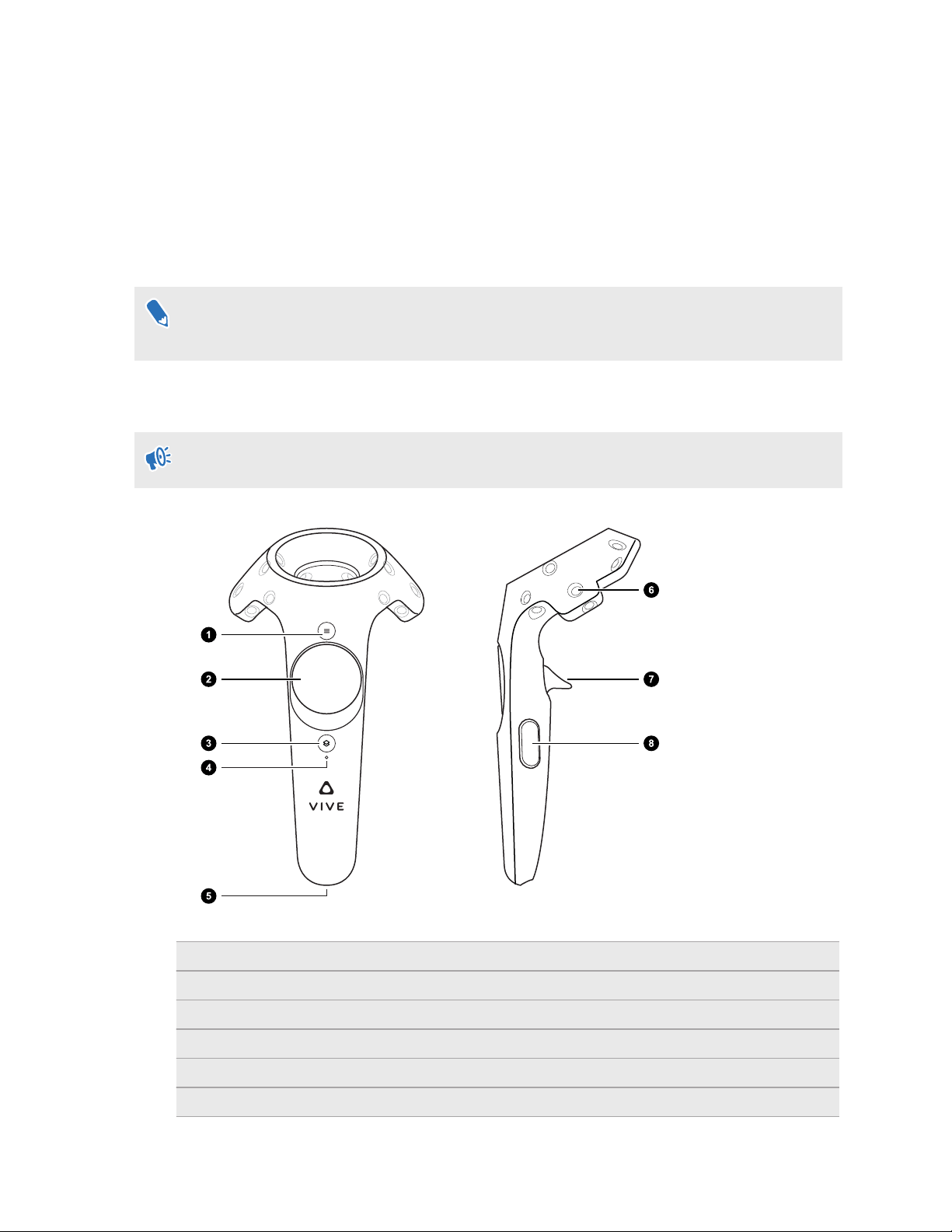
Use the controllers to interact with objects in the VR world.
The controllers have sensors that are tracked by the base stations.
The sensors on the controllers are sensitive. Do not cover or scratch the sensor lenses.
1 Menu button
2 Trackpad
3 System button
4 Status light
5 Micro-USB port
6 Tracking sensor
52 Controllers
7 Trigger
8 Grip button
Charging the controllers
The hardware may be purchased separately from the Accessories tab on www.vive.com/
product/.
You can check the battery level of the controllers when no apps are running, or when the System
Dashboard is up. When the battery is low, the indicator will show a single red dot .
You can also check the SteamVR app. If you see , this means the controller battery is low.
Charge each controller using the provided power adapters and USB cables.
When the controller is plugged in and fully charged, its status light shows green if the controller
is on or white if the controller is off.
Turning the controllers on or off
The hardware may be purchased separately from the Accessories tab on
www.vive.com/
product/.
§ To turn the controller on, press the System button until you hear a beeping sound.
§ To turn the controller off, press and hold the System button until you hear a beeping
sound.
When you quit the SteamVR app, the controllers will automatically turn off. The controllers
will also automatically turn off after being idle for a period of time.
Pairing the controllers with the headset
The hardware may be purchased separately from the Accessories tab on
www.vive.com/
product/.
§ Once the controllers are turned on for the first time, they will automatically pair with the
headset.
The status light shows as blinking blue while the pairing is in progress. The status light
turns solid green when the controllers are paired with the headset.
§ To manually pair the controllers, launch the SteamVR app, tap , and then select
Devices Pair Controller. Follow the on-screen instructions to complete the process.
53 Controllers
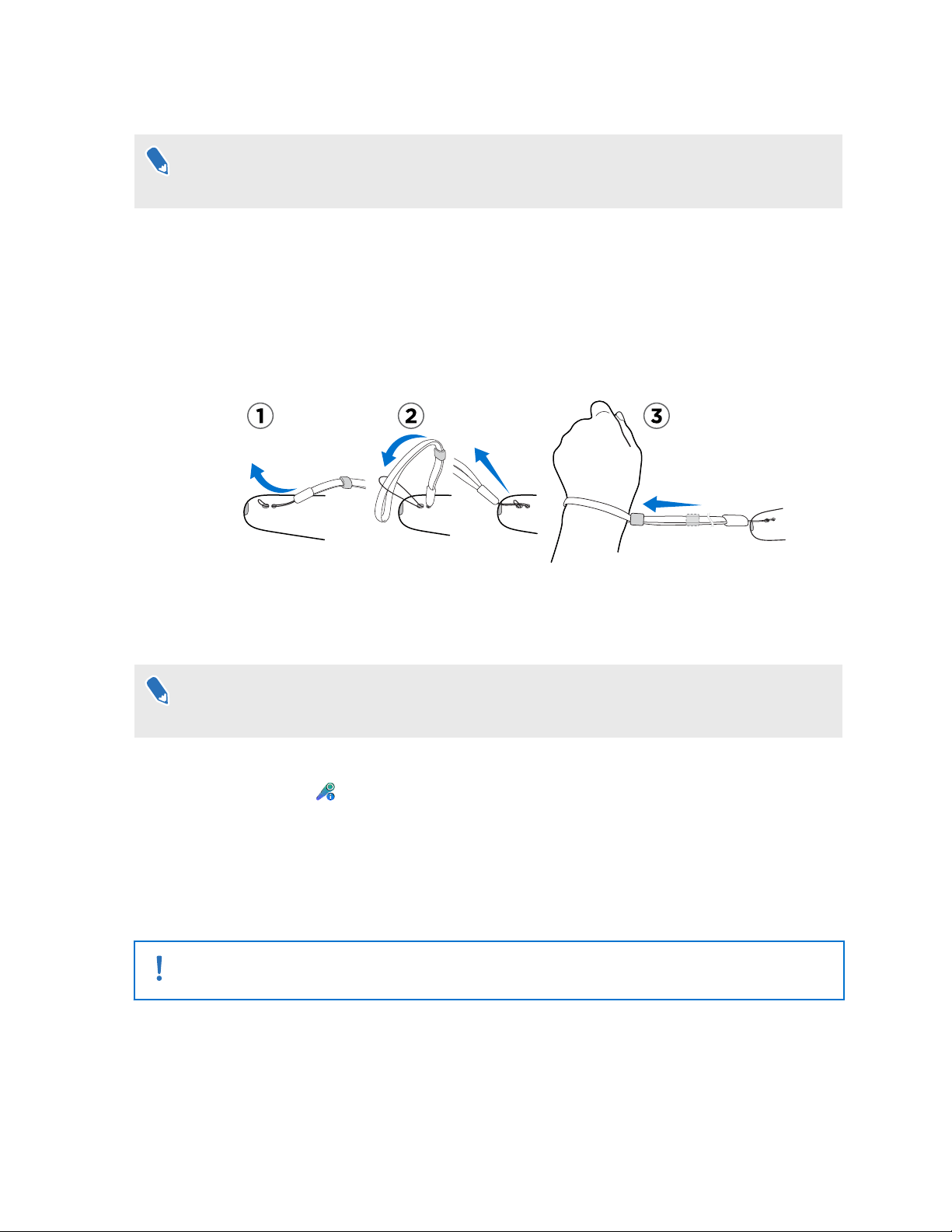
Attaching the lanyards to the controllers
The hardware may be purchased separately from the Accessories tab on www.vive.com/
product/.
Using the lanyards may help prevent the controllers from accidentally being dropped; however,
please do not fling or violently throw the controller because the lanyard may break.
1. While holding the controller, insert the lanyard’s thread from the top to the bottom hole.
2. Loop the lanyard through the thread, and then tug the lanyard to fasten it in place.
3. Place the lanyard on your wrist, and then adjust the lock to tighten the lanyard comfortably
around your wrist.
Updating controller firmware
The hardware may be purchased separately from the Accessories tab on
www.vive.com/
product/.
1. From your computer, open the SteamVR app.
2. If you see the icon, mouse over it to check if the firmware is out of date. If so, click
Update controller firmware.
3. Using a micro-USB cable, connect the controllers to one of your computer's USB ports
one at time.
Once the controller is detected by the SteamVR app, the firmware update will start
automatically.
Do not unplug the micro-USB cable any time before the firmware update is complete. Doing
so could result in a firmware error.
4. When the update is complete, click Done.
54 Controllers
What does the status light on the controllers mean?
The hardware may be purchased separately from the Accessories tab on www.vive.com/
product/.
The status light shows:
§ Green when the controller is in normal mode
§ Blinking red when battery is low
§ Blinking blue when the controller is pairing with the headset
§ Blue when the controller is connecting with the headset
§ Orange when charging
What should I do if any of the controllers is not tracked?
The hardware may be purchased separately from the Accessories tab on www.vive.com/
product/.
Try the following methods to troubleshoot the issue:
§ Make sure that the controller is placed inside the play area.
§ Turn the controller off and on again to reactivate the tracking.
§ Restart the SteamVR app. If you still get an error, reboot your computer and reopen the
SteamVR app.
For more information, you may refer to the SteamVR Troubleshooting page.
How do I know which of the controllers is not being
tracked?
The hardware may be purchased separately from the Accessories tab on
www.vive.com/
product/.
If one of your controllers is not being tracked and you want to find out which one, follow these
steps.
1. On your computer, open the SteamVR app.
2. Hover your cursor on the icon of the controller that's not tracked.
3. Click Identify controller.
The status light on the controller rapidly flashes white.
For more information, you may refer to the SteamVR Troubleshooting page.
55 Controllers
What can I do if the controller's trackpad is
oversensitive?
The hardware may be purchased separately from the Accessories tab on www.vive.com/
product/.
Check if there's a firmware update available for the controllers. After which, re-calibrate the
controller by doing these steps:
1. From your computer, open the SteamVR app.
2. Right-click , and then click Calibrate Controller.
3. Follow the onscreen prompts to complete the calibration process.
For more information, you may refer to the SteamVR Troubleshooting page.
What should I do if my controller won't turn on?
The hardware may be purchased separately from the Accessories tab on www.vive.com/
product/.
Try these troubleshooting suggestions:
§ Press and hold the System button for at least 5 seconds and see if the controller turns on.
§ Charge the controller using the other cable and adapter, and plug the adapter to a
different power outlet.
§ On the SteamVR dashboard, check if the controllers are detected. If controllers are
detected but the LED light is off, it may indicate an issue with the LED.
§ Check if you have a firmware update that failed. To recover from this error, see My
controller won't turn on after I accidentally unplugged it during firmware update. What
should I do? on page 57.
The controller automatically turns off. What should I do?
The hardware may be purchased separately from the Accessories tab on
www.vive.com/
product/.
Do the following steps to troubleshoot the issue:
1. Make sure that the controller is charged.
2. Check that the status light on the controller shows as green, which means that it is paired
with the headset.
56 Controllers

3. Plug the USB cable from the converter into another USB 3.0 port on the computer.
4. Manually update the USB driver on your computer. You can also download and install
official driver updates from the website of your motherboard or USB port manufacturer.
My controller won't turn on after I accidentally
unplugged it during firmware update. What should I do?
The hardware may be purchased separately from the Accessories tab on www.vive.com/
product/.
Do the following steps to recover your controller from bootloader mode.
1. Using a micro-USB cable, connect the controller to one of your computer's USB ports.
2. From your computer, open the SteamVR app.
3. Once the controller is detected by the SteamVR app, follow the onscreen prompts to
complete the firmware update.
57 Controllers
Play area
What is the play area?
The play area sets the virtual boundaries of VIVE Cosmos Elite. Your interaction with VR objects
happens within the play area.
VIVE Cosmos Elite is designed for room-scale setup, but you can also use it if you have limited
space or for stationary experiences.
Planning your play area
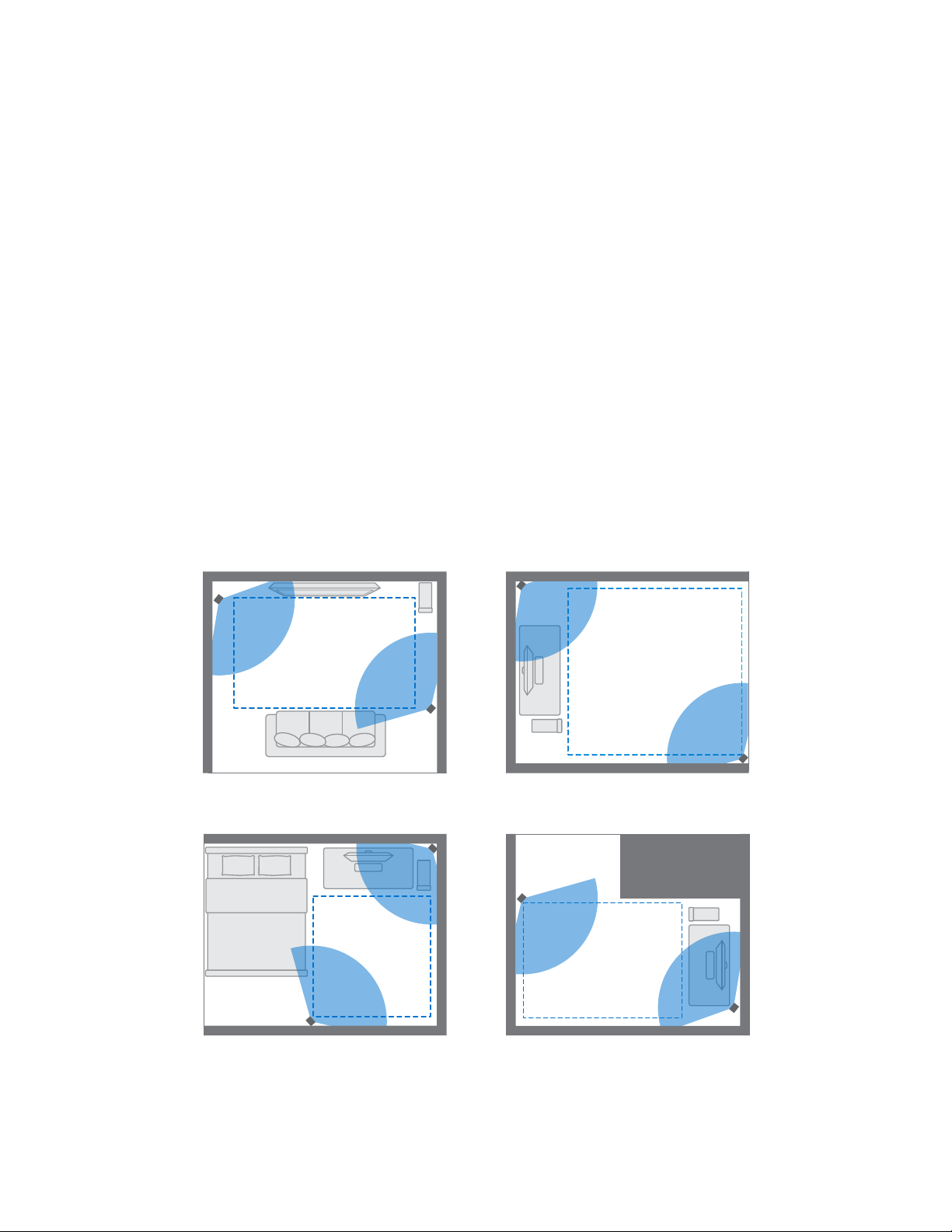
Before choosing your setup, make sure that you have enough space.
Room-scale setup needs a minimum play area of 2 m x 1.5 m (6 ft 6 in x 5 ft). Examples of room-
scale setup:
58 Play area
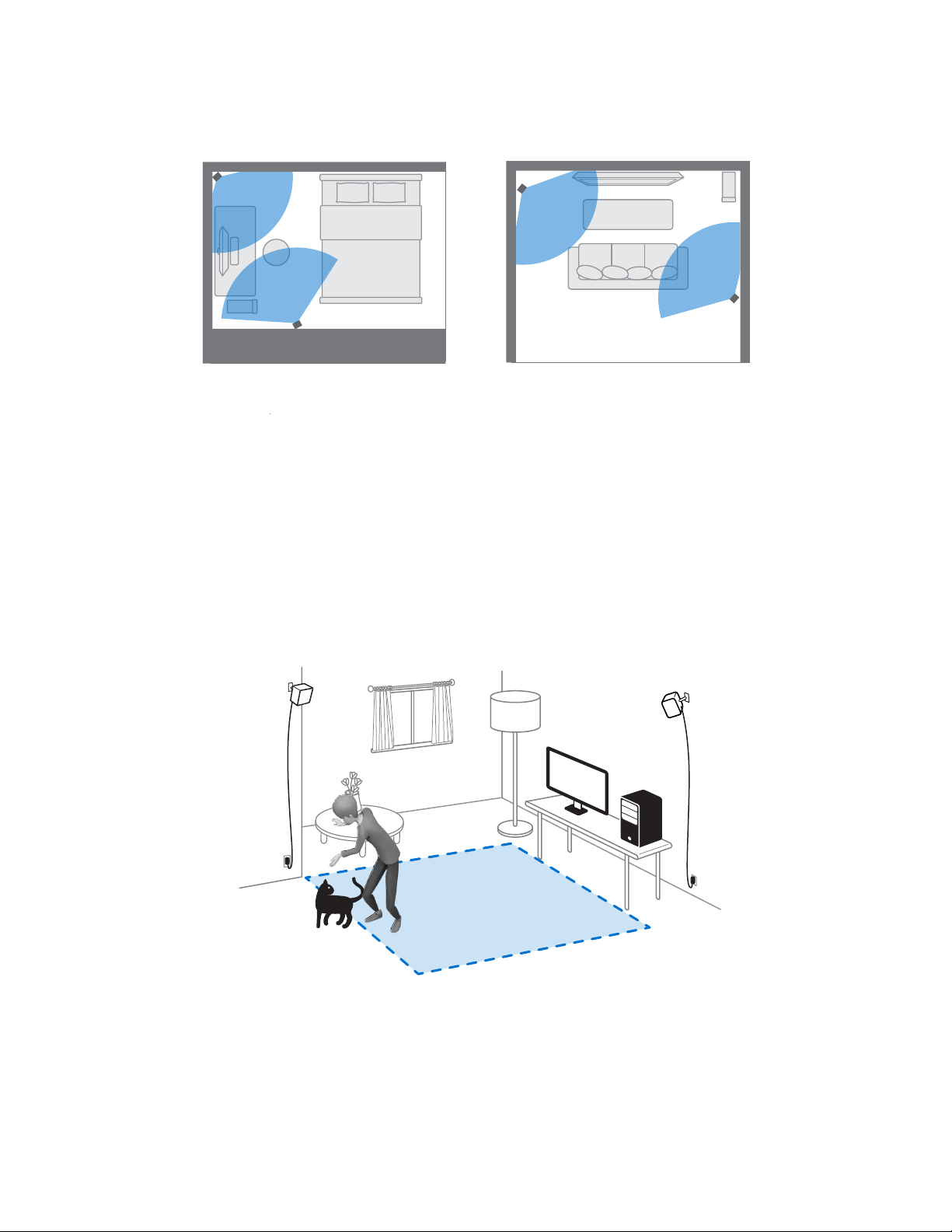
Limited space (stationary experience) do not have space requirements. Examples of limited
space (stationary experience) setup:
Choosing the play area
Find a space that you will designate as the play area. For best results, do the following:
§ Move furniture and other obstacles (like pets) out of the play area.
§ Place your computer next to your play area. The headset cable extends around 5 m (16 ft 4
in) from your computer.
§ Make sure that there are power outlets close to where you mount the base stations. Use
12V extension cords as needed.
§ Do not leave your headset in direct sunlight, as it may damage your headset display.
59 Play area
Setting up VIVE Cosmos Elite for the first time
Before you can use VIVE Cosmos Elite, you’ll need to complete the setup process, which includes
installing VIVE and SteamVR software, setting up the hardware, and defining your play area.
To start the setup process, download the setup file on your computer from:
www.vive.com/setup/
Run the setup file and follow the prompts to complete the process.
Once you've completed the room setup, you need to run it again if you moved or adjusted the
angles of the base stations or if you transfer your VIVE Cosmos Elite VR system to a different
room.
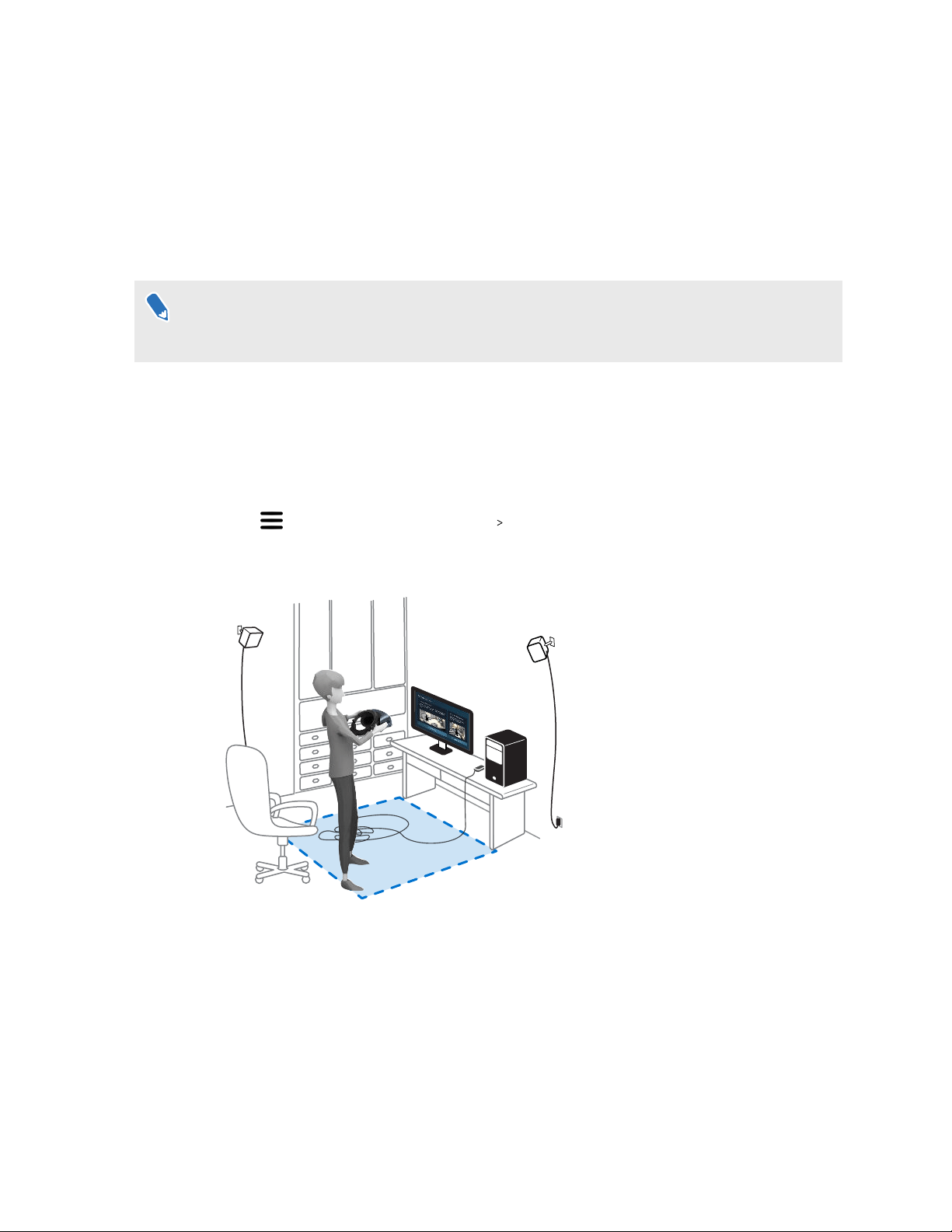
Setting up a standing-only play area
Choose this option if you only want to experience VR in a seated or standing position.
1. From your computer, open the SteamVR app.
2. Click
, and then select Room Setup Standing only.
3. Review the prompts and follow the on-screen instructions to complete the process.
60 Play area
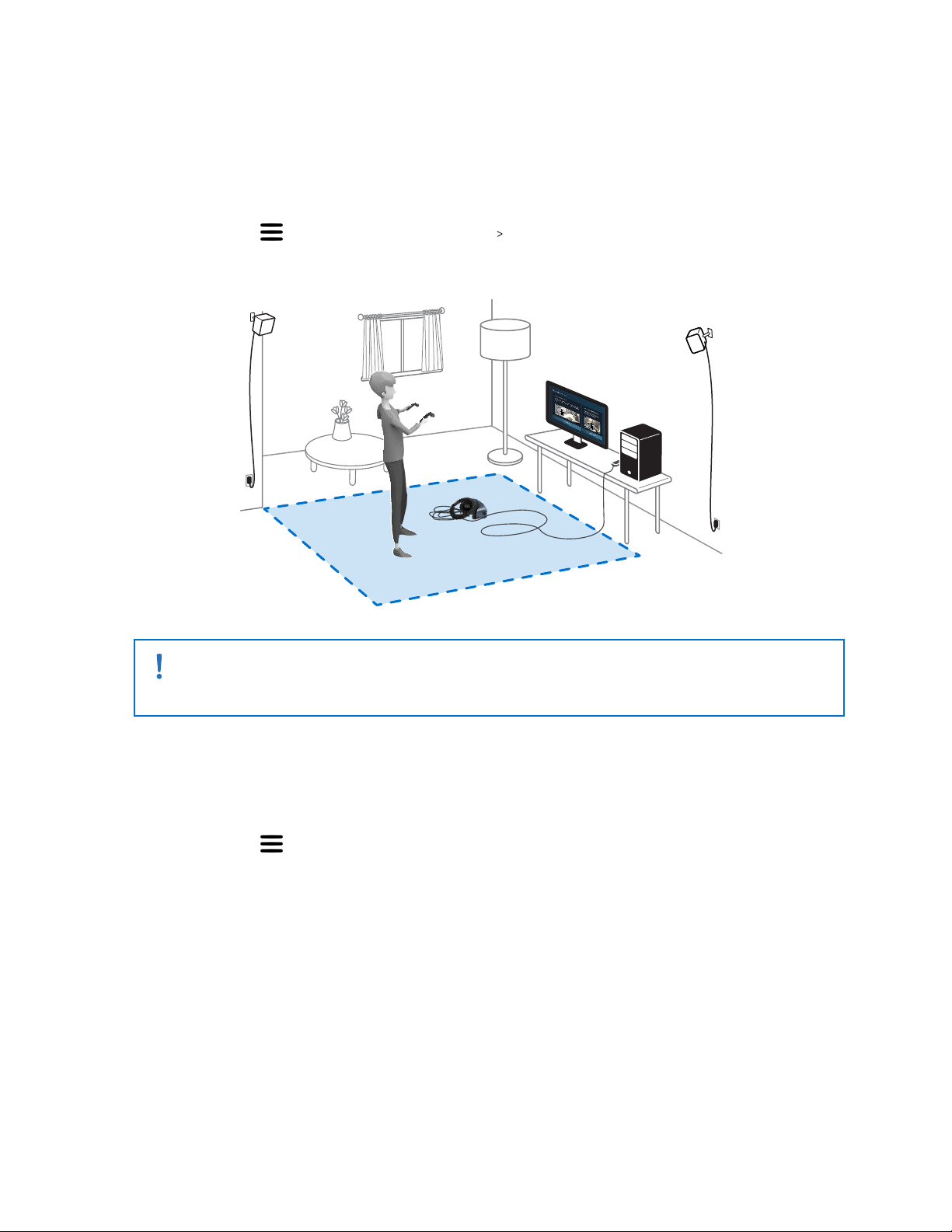
Setting up a room-scale play area
Choose to set up a room-scale play area to enjoy moving around and fully engage with the VR
experience.
1. From your computer, open the SteamVR app.
2. Click , and then select Room Setup Room-scale.
3. Review the prompts and follow the on-screen instructions to complete the process.
When tracing the boundaries of the play area, make sure that the floor is cleared. Do not trace
across space occupied by things (such as a table or a chair) since this may cause you to trip
into the object while in VR.
Resetting the play area
1. From your computer, open the SteamVR app.
2. Click , and then select Room Setup.
3. Choose the type of play area you want and then follow the prompts to complete the
process.
61 Play area
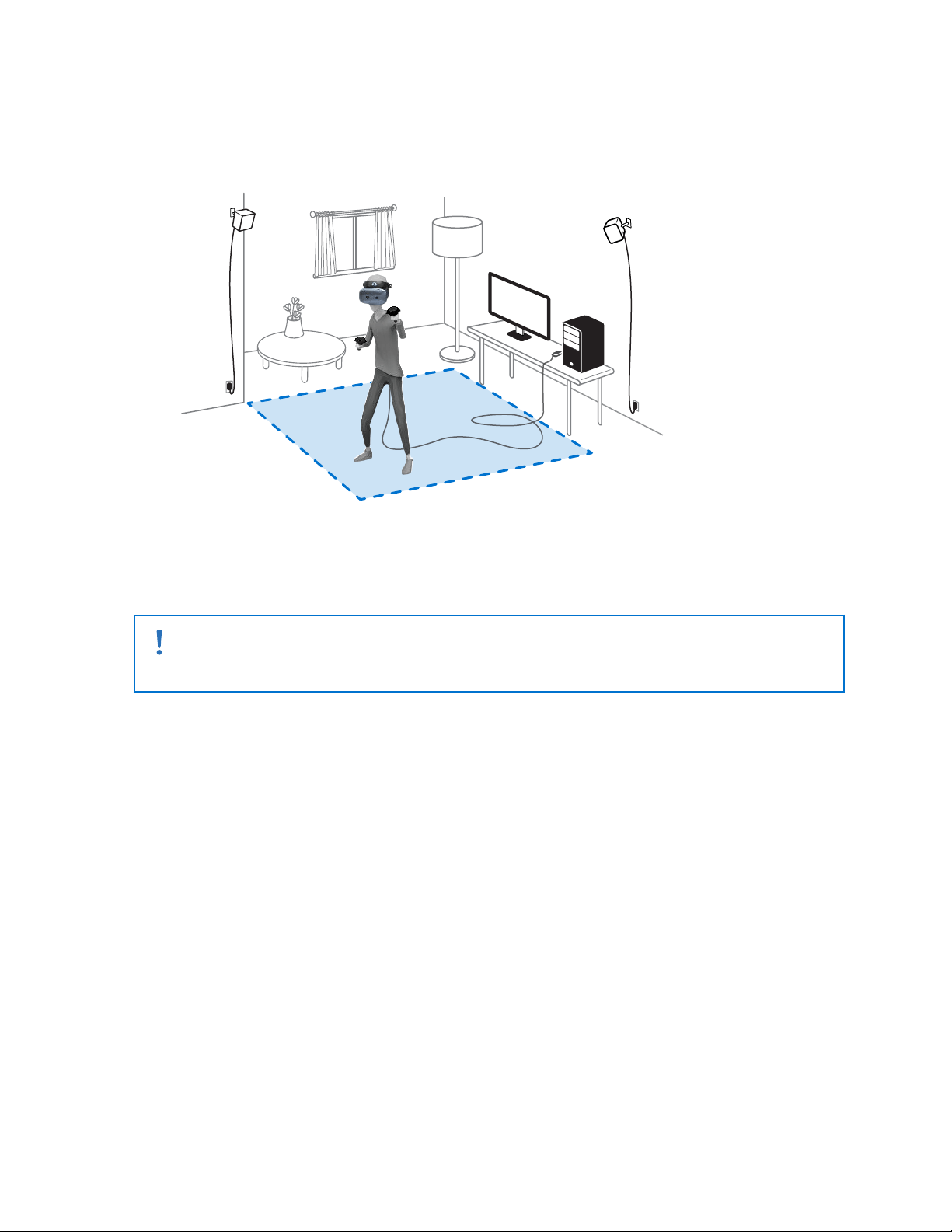
Verifying your setup
Once you've completed the VIVE setup process, you can now put on the headset and hold the
controllers to start exploring VR.
While you're in the play area, the headset and the controllers should remain at least 0.5 m (1 ft 7
in) and no further than 5 m (16 ft 4 in) away from a base station. This will ensure that the devices
are properly tracked within the base station’s 120-degree field of view.
For health and safety warnings, please refer to the Safety and regulatory guide, which is
periodically updated for accuracy and completeness. For the latest version, check
www.vive.com/.
After setting up, how do I turn the VIVE system on?
1. From your computer, open the VIVE Console app.
2. Make sure your base stations are powered.
3. Make sure that your headset is connected to the computer via the link box or converter.
For details, see or Connecting the headset to your computer via the converter on page 41.
4. Turn the controllers on. For details, see Turning the controllers on or off on page 53.
5. Check that VIVE hardware is tracked. The status icons on the SteamVR app are blue and
the status lights on the hardware are green.
6. Put the headset on. For details, see Putting on the VIVE Cosmos Elite headset on page 9.
7. Grab your controllers.
To bring up the System Dashboard, press the System button on either controller.
62 Play area

What is the recommended space for the play area?
Movement within a diagonal area of up to 5 m (16 ft 4 in) is supported. For example, a 3.5 m x 3.5
m (around 11 ft 5 in x 11 ft 5 in) space. For room-scale setup, a minimum play area of 2 m x 1.5 m
(6 ft 6 in x 5 ft) is required. There's no minimum for seated and standing experiences.
Can I include space occupied by furniture for the play
area?
It is not recommended to do so. When setting the boundaries of the play area, make sure that the
floor is cleared. Do not trace across space occupied by things (such as a table or a chair) since
this may cause you to trip into the object while in VR.
Will VR apps for seated/standing-only experiences work
with room-scale setup?
Even if you have a room-scale setup, you can still use VR apps that are designed for seated or
standing-only experiences. Just make sure that your headset and controllers are tracked within
the play area.
How do I resolve download errors during VIVE Setup
installation?
Download errors are usually caused by incorrect network settings. For example, due to wrong
DNS, the download server address is unresolved by the host. Some network destinations may be
inaccessible, even as connection to other websites seems normal. Please make sure that your
network settings are correct, or ask your network administrator for support.
I can't complete the room setup. What should I do?
Check if you're using special characters (such as à or é) in your local Windows user name, which
could cause the problem.
As a workaround, you can add a new Windows account using basic Latin alphabet for its user
name. After logging in with the new user name, reinstall VIVE Setup and complete the process.
63 Play area

Settings
System Dashboard
The System Dashboard serves as your central point of entry in VR.
While in the dashboard, some of the things you can do are:
§ Launch or close a VR app
§ Control sound volume and mic access
§ Change settings, such as style of the collision bounds in Chaperone or the in-headset
background
§ Turn the VIVE Cosmos Elite system off
To bring up the dashboard, press the System button on either controller.
Changing the Chaperone settings
The Chaperone shows a grid whenever you're close to the bounds of your play area. You can
change how the grid looks.
1. From the System Dashboard, select
.
2. Select Chaperone.
3. Choose the style of the collision bounds that you prefer.
4. Drag the sliders to change the color and opacity.
5. To show a constant visual reference of your floor while in VR, select Floor bounds always
on.
64 Settings
How can I capture screenshots in VR?
While in VR, press the System button and the trigger at the same time. You'll see a notification
when the screenshot is saved.
You can access screenshots directly from the Steam client by clicking View Screenshots.
To find screenshots from apps downloaded in VIVEPORT, navigate to the Steam installation
folder. The default location on 64-bit versions of Windows is:
C:\Program files (x86)\Steam\userdata\[Steam user number]\760\remote
\0\screenshots
If you have chosen a custom installation folder, navigate to it and find the following subfolder:
...\Steam\userdata\[Steam user number]\760\remote\0\screenshots
Screenshots from other apps can be found in their respective folder:
...\Steam\userdata\[Steam user number]\760\remote\[app folder]
\screenshots
Disabling Volume limit
By default, Volume limit is turned on for safety reasons. If you feel that the volume of the plugged
headphones or your own headphones is not loud enough for you even with the volume level set
high, you can turn this setting off.
Listening at a high volume for a long time may damage your hearing.
1. From your computer, open the VIVE Console app.
2. Click , and then select Settings Audio.
3. Click the Volume limit On/Off switch to turn the setting off.
Enabling motion compensation
Turning on motion compensation helps keep the frame rate consistently high even if you have
less-than-ideal computer specs.
1. From your computer, open the VIVE Console app.
2. Click , and then select Settings Video.
3. Click the Motion compensation On/Off switch to enable it.
Some graphic cards may not support motion compensation.
65 Settings
Updating the firmware
Firmware updates may include improved functionality and bug fixes.
1. From your computer, open the VIVE Console app.
2. If a firmware update is detected for any of the VIVE Cosmos Elite hardware, click
Firmware update. You'll see a list of hardware that has an available firmware update.
3. Click Update.
4. Check that the progress is complete. If the controllers have updated, you may need to turn
them back on.
Troubleshooting VIVE Cosmos Elite
If there is a persistent problem withVIVE Cosmos Elite that cannot be solved, you can reset the
headset and settings.
1. From your computer, open the VIVE Console app.
2. Click
, and then select Settings Troubleshooting Reset headset and settings.
You can also report an issue or send feedback by clicking
Report.
Joining the VIVE Cosmos Elite beta program
Opting in to the VIVE Cosmos Elite beta program lets you receive preview builds and give
feedback.
Beta software may be unstable and not work as intended.
1. From your computer, open the VIVE Console app.
2. Click , and then select Settings Advanced.
3. Click the Beta program On/Off switch to enable it. When prompted, confirm whether to
join the beta program or not.
You can opt-out of the beta program anytime by turning the Beta program switch off.
66 Settings
Seeing real surroundings
Currently, when using the VIVE Cosmos Elite, you cannot use the headset cameras to see your
real surroundings. To quickly check your real surroundings, flip up the headset visor. See
Flipping up the visor on page 13.
What do the error codes and messages mean? What can
I do?
Check the error code associated with the issue, and then try to resolve the error with the
suggested steps.
Error
code
Issue Steps to resolve issue
001
Headset is not
connected.
§ Check that the headset is properly connected to your
computer.
§ Use a different USB port on your computer.
§ If the issue persists, restart your computer.
002
VIVE Console needs to
be restarted.
1. Close VIVE Console.
2. Open Task Manager.
3. Find and select HID_Manager_Server.exe.
4. Click End task.
5. Restart VIVE Console.
003
DisplayPort cable is
disconnected or no
video stream detected.
1. Make sure the DisplayPort cable is plugged in to the link
box or converter and computer.
2. On your computer, go to Control Panel System and
Security System.
3. Click Device Manager, and then click to expand the list
under Universal Serial Bus controllers.
4. Right-click Generic USB Hub (there may be more than
one with the same label), and then select Properties.
5. Click the Power Management tab, and then de-select
Allow the computer to turn off this device to save
power.
6. Restart the link box or converter.
7. Restart VIVE Console.
If the issue persists, try updating your GPU driver to the
latest version.
005
Make sure front cover
is firmly attached to the
headset.
Make sure front cover is firmly attached to the headset.
67 Settings
Error
code
Issue Steps to resolve issue
006
DisplayPort connection
is not stable.
§ Try restarting the headset.
§ Try another DisplayPort port on your computer.
§ Check if your graphics card supports DisplayPort.
007, 008 ROM checksum failed.
Try again after
updating the software.
1. Follow the steps to re-download and update the
software.
2. Run the firmware update again.
009
The USB cable must be
connected to a USB
3.0 or higher port on
the computer.
1. Make sure the USB cable is connected to a USB 3.0 or
higher port on the computer.
2. If the USB cable is already connected to a USB 3.0 or
higher port on the computer, try switching to a different
USB 3.0 or higher port.
3. If the issue persists, on your computer, go to Control
Panel System and Security System.
4. Click Device Manager, and then click to expand the list
under Universal Serial Bus controllers.
5. Right-click Generic USB Hub (there may be more than
one with the same label), and then select Properties.
6. Click the Power Management tab, and then de-select
Allow the computer to turn off this device to save
power.
7. Restart the link box or converter.
8. Restart VIVE Console.
68 Settings
Error
code
Issue Steps to resolve issue
010
No audio coming from
the headset.
1. In the Windows audio settings, adjust the volume level
and make sure the volume is not muted.
2. If the issue persists, in the Windows task tray, right-click
the volume icon Sounds. In the Playback tab, right-
click VIVE Cosmos Set as Default Device.
3. If the issue persists, in the Playback tab, right-click
Speaker VIVE Cosmos Multimedia Audio Set as
Default Device.
4. If the issue persists, restart the link box or converter.
5. If the issue persists, plug the USB cable into a different
USB 3.0 port on your computer.
6. If the issue persists, manually update the USB driver on
your computer. You can also download and install official
driver updates from the website of your motherboard or
USB port manufacturer.
7. If the issue persists, restart your computer.
8. If updating your USB driver doesn't solve the issue,
purchase and use another PCI-Express USB card (with
Intel chipset).
100
USB hub update failed. 1. From your computer, open the Device Manager.
2. Under Universal Serial Bus controllers, find and right-
click Generic USB Hub, and then select Properties.
3. Click the Details tab, and then select Hardware IDs
from the drop-down list.
4. Under Values, find the following nodes:
§ VID: 0BB4, PID: 0315
§ VID: 0BB4, PID: 0323
5. Click the Power Management tab, and then de-select
Allow the computer to turn off this device to save
power option.
6. Restart your computer as well as the link box or
converter.
7. Retry the firmware update.
101
Audio update failed. 1. Restart your computer as well as the link box or
converter.
2. Retry the firmware update.
102, 106,
107, 108
Headset firmware
update failed.
1. Restart your computer as well as the link box or
converter.
2. Retry the firmware update.
69 Settings
Error
code
Issue Steps to resolve issue
103
Controller firmware
update failed.
1. Restart your computer as well as the link box or
converter.
2. Retry the firmware update.
105
Headset not
connected.
1. Restart your computer as well as the link box or
converter.
2. Retry the firmware update.
109, 110,
111, 112
Camera firmware
update failed.
1. Restart your computer as well as the link box or
converter.
2. Retry the firmware update.
200
The headset cannot be
detected. Make sure
that cables are properly
connected and then
restart the headset.
Make sure the cables between the headset, link box or
converter, and computer are all properly connected and
then restart the headset.
201
The headset display
cannot be detected.
Make sure that the
headset cable is
properly connected.
Make sure the headset cable is properly connected.
202
Calibration data is lost.
For assistance on how
to fix this, contact
customer care.
Contact customer care.
203, 205,
206, 207
Oops! This should not
happen. Re-install VIVE
software to fix this.
Re-install the VIVE software.
208
Update VIVE software
and firmware to fix this.
Update both the VIVE software and firmware.
209
The server is
disconnected. Restart
VIVE Console to fix
this.
1. Restart VIVE Console.
2. If the issue persists, restart your computer.
210
The compositor is
disconnected. Restart
VIVE Console to fix
this.
Restart VIVE Console.
211
Check that your GPU
driver is updated to the
latest version.
Make sure your GPU driver is updated to the latest version.
70 Settings
Error
code
Issue Steps to resolve issue
212,
213,214
Restart VIVE Console
to fix this [error ID
number].
Restart VIVE Console.
215
Please update graphics
card driver.
Update your graphics card driver to the latest version.
216
Please check that
SteamVR was installed
properly or has finished
updating.
Make sure SteamVR was installed properly or has finished
updating.
217
SteamVR has
encountered an
unexpected problem.
Restart VIVE Console
to fix this.
Restart VIVE Console.
218
The VIVE Cosmos Elite
camera is being used
by another application.
1. In Windows’ Privacy settings Camera, make sure
Allow apps to access your camera is enabled. Then,
restart VIVE Console.
2. If the issue persists, check if the VIVE Cosmos Elite
camera is occupied by another Windows application. If
yes, close the application using the camera, and then
restart VIVE Console.
3. If the issue persists, restart your headset.
4. If the issue persists, use a different USB 3.0 port on your
computer. Then, restart VIVE Console.
219
The VIVE Cosmos Elite
headset can't be
recognized when
SteamVR is in safe
mode.
Disable SteamVR safe mode, and restart SteamVR. If the
problem persists, do the following:
1. Update SteamVR to version 1.10.28 or later.
2. In SteamVR, click Settings.
3. Click Startup / Shutdown Manage Add-Ons.
4. In Manage SteamVR Add-Ons, do one of the following:
§ To the right of viveVR, click Unblock.
§ Make sure viveVR is turned On.
5. Close SteamVR.
6. Restart VIVE Console.
71 Settings
Error
code
Issue Steps to resolve issue
220
There is a compatibility
problem with the
DisplayPort connection
(HDCP error)
If you're using an MSI notebook, go to MSI's technical
support web page for help on how to update your
notebook to the latest V-BIOS.
If you're not using an MSI notebook, submit a report using
VIVE Console. In VIVE Console, go to Settings >
Troubleshooting > Report issue.
221
The front cover has
been changed. Restart
VIVE Console to fix
this.
Restart VIVE Console.
222
The headset cannot be
detected. Make sure
the USB cable is
properly connected.
Make sure the USB cable is properly connected on the link
box and/or computer.
223
Make sure the
headset's camera
firmware is updated to
the latest version.
1. Open VIVE Console.
2. Click Firmware update Update.
3. Restart VIVE Console.
72 Settings

Trademarks and copyrights
©
2019 HTC Corporation. All Rights Reserved.
VIVE, the VIVE logo, VIVEPORT, the VIVEPORT logo, HTC, the HTC logo, and all other HTC
product and service names are trademarks and/or registered trademarks of HTC Corporation
and its affiliates in the U.S. and other countries.
Steam, the Steam logo and SteamVR are trademarks and/or registered trademarks of Valve
Corporation in the U.S. and/or other countries.
All other trademarks and service marks mentioned herein, including company names, product
names, service names and logos, are the property of their respective owners and their use herein
does not indicate an affiliation with, association with, or endorsement of or by HTC Corporation.
Not all marks listed necessarily appear in this User Guide.
Screen images contained herein are simulated. HTC shall not be liable for technical or editorial
errors or omissions contained herein, nor for incidental or consequential damages resulting from
furnishing this material. The information is provided “as is” without warranty of any kind and is
subject to change without notice. HTC also reserves the right to revise the content of this
document at any time without prior notice.
No part of this document may be reproduced or transmitted in any form or by any means,
electronic or mechanical, including photocopying, recording or storing in a retrieval system, or
translated into any language in any form without prior written permission of HTC.
73 Trademarks and copyrights

Index
B
Base stations
- about
44
- installing
45
- mounting with the kit
48
- setup tips
47
Beta program
66
C
Cable guides
- attaching
37
- detaching
38
Controllers
- about
52
- attaching lanyards
54
- charging
53
- pairing with the headset
53
- turning on or off
53
Converter
- about
41
- connecting the headset
41
- restarting the converter
42
D
Disabling volume limit
65
F
Firmware updates
66
H
Headset
- adjusting the IPD
12
- cleaning the lenses
23
- connecting a USB device
14
- putting on
9
- replacing the face cushion
16
- status lights
27
M
Motion compensation
65
O
On-ear headphones
- adjusting
27
- attaching
31, 33
- detaching
28
P
Play area
- about
58
- choosing
59
- room-scale
61
- setting up
58
- standing/seated experience
60
- verifying the setup
62
R
Room-scale
- setting up
61
S
Standing/seated experience
- setting up
60
T
Troubleshooting VIVE Cosmos
66
V
VIVE Console
- beta program
66
- Firmware update
66
- motion compensation
65
- troubleshooting
66
- volume limit
65
Vive system
- turning on
62
74 Index