W10834952A
REFRIGERATOR SAFETY ...................................................... 2
Proper Disposal of Your Old Refrigerator .............................. 3
INSTALLATION INSTRUCTIONS ........................................... 3
Unpack the Refrigerator ........................................................ 3
Location Requirements ......................................................... 4
Electrical Requirements ......................................................... 4
Water Supply Requirements .................................................. 4
Connect the Water Supply .................................................... 5
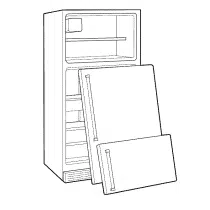
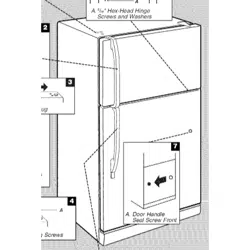
REFRIGERATOR DOORS ....................................................... 6
Adjust the Doors .................................................................... 7
REFRIGERATOR USE ............................................................. 8
Using the Controls ................................................................. 8
REFRIGERATOR FEATURES ................................................. 9
Refrigerator Shelves .............................................................. 9
Deli Drawer .......................................................................... 10
Crisper ................................................................................. 10
FREEZER FEATURES ........................................................... 11
Freezer Shelf........................................................................ 11
DOOR FEATURES ................................................................. 11
Door Rails ............................................................................ 11
Door Bins ............................................................................. 11
Utility Compartment ............................................................ 11
Ice Maker ............................................................................. 12
REFRIGERATOR CARE ........................................................ 12
Cleaning .............................................................................. 12
Changing the Light Bulb ...................................................... 13
Vacation and Moving Care .................................................. 13
TROUBLESHOOTING ............................................................ 14
Refrigerator Operation ......................................................... 14
Temperature and Moisture .................................................. 15
Ice and Water ...................................................................... 15
ACCESSORIES ....................................................................... 16
ASSISTANCE OR SERVICE ................................................... 16
Table of Contents/Table des matières
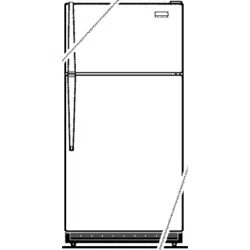
REFRIGERATOR
USE AND CARE GUIDE
SÉCURITÉ DU RÉFRIGÉRATEUR ....................................... 17
Mise au rebut appropriée de votre vieux réfrigérateur ........ 18
INSTRUCTIONS D’INSTALLATION ...................................... 18
Déballage du réfrigérateur ................................................... 18
Exigences d’emplacement .................................................. 19
Spécications électriques ................................................... 19
Spécications de l’alimentation en eau ............................... 20
Raccordement de la canalisation d’eau .............................. 20
PORTES DU RÉFRIGÉRATEUR ............................................ 21
Ajustement des portes ........................................................ 22
UTILISATION DU RÉFRIGÉRATEUR ................................... 23
Utilisation des commandes ................................................. 23
CARACTÉRISTIQUES DU RÉFRIGÉRATEUR .................... 25
Tablettes du réfrigérateur .................................................... 25
Tiroir pour spécialités alimentaires ...................................... 25
Bac à légumes ..................................................................... 26
CARACTÉRISTIQUES DU CONGÉLATEUR ....................... 26
Tablette du congélateur ....................................................... 26
CARACTÉRISTIQUES DE LA PORTE .................................. 27
Tringles de porte .................................................................. 27
Balconnets de porte ............................................................ 27
Compartiment utilitaire ........................................................ 27
Machine à glaçons .............................................................. 27
ENTRETIEN DU RÉFRIGÉRATEUR ..................................... 28
Nettoyage ............................................................................ 28
Remplacement des ampoules d’éclairage .......................... 29
Entretien avant les vacances
ou lors d’un déménagement ............................................... 29
DÉPANNAGE .......................................................................... 30
Fonctionnement du réfrigérateur ......................................... 30
Température et humidité ...................................................... 31
Glaçons et eau .................................................................... 31
ACCESSOIRES ....................................................................... 32
ASSISTANCE OU SERVICE ................................................... 32
2
REFRIGERATOR SAFETY
You can be killed or seriously injured if you don't immediately
You
can be killed or seriously injured if you don't
follow
All safety messages will tell you what the potential hazard is, tell you how to reduce the chance of injury, and tell you what can
happen if the instructions are not followed.
Your safety and the safety of others are very important.
We have provided many important safety messages in this manual and on your appliance. Always read and obey all safety
messages.
This is the safety alert symbol.
This symbol alerts you to potential hazards that can kill or hurt you and others.
All safety messages will follow the safety alert symbol and either the word “DANGER” or “WARNING.”
These words mean:
follow instructions.
instructions.
DANGER
WARNING
IMPORTANT SAFETY INSTRUCTIONS
To reduce the risk of fire, electric shock, or injury to persons when using the refrigerator, follow basic precautions,
including the following:
WARNING:
SAVE THESE INSTRUCTIONS
■ Plug into a grounded 3 prong outlet.
■ Do not remove ground prong.
■ Do not use an adapter.
■ Do not use an extension cord.
■ Disconnect power before servicing.
■ Replace all parts and panels before operating.
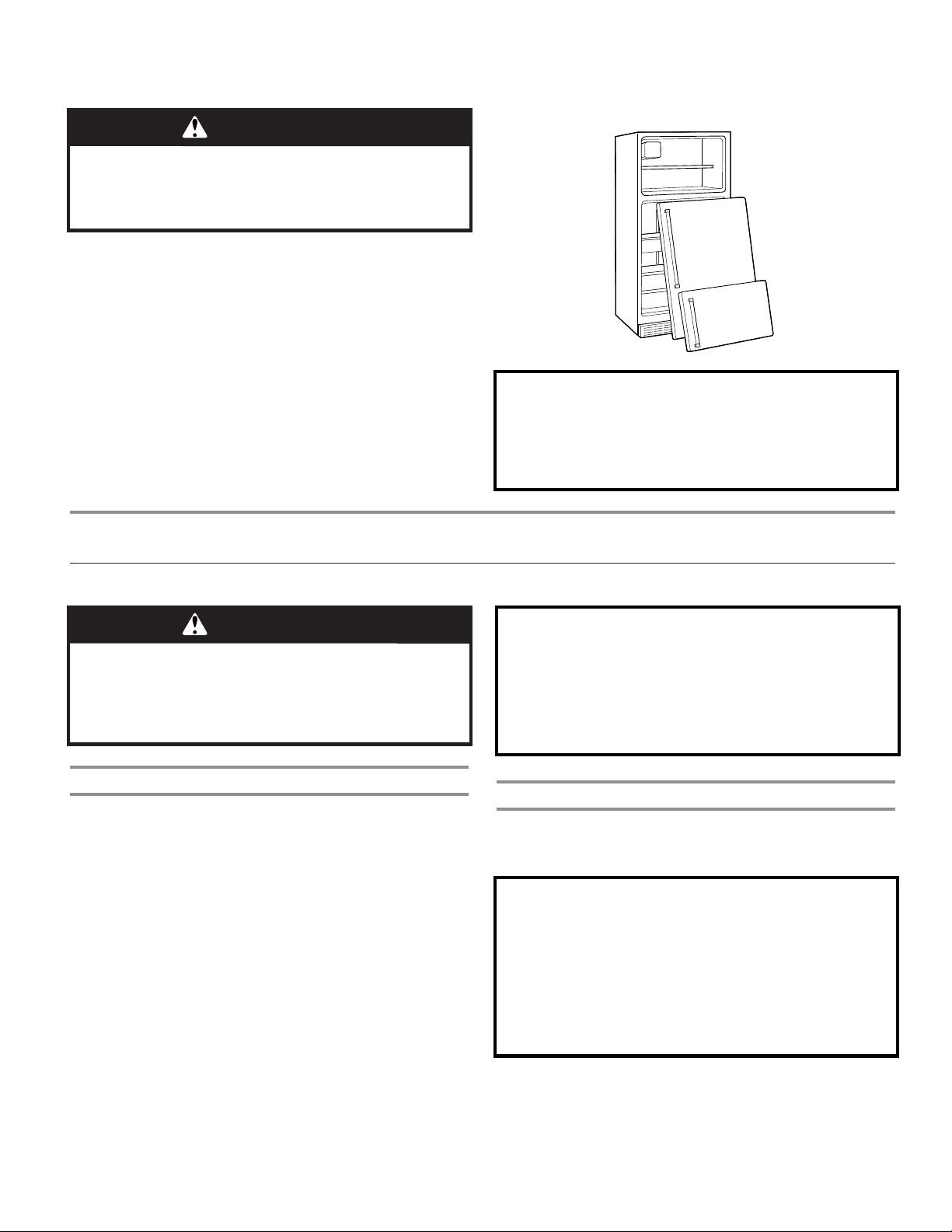
■ Remove doors from your old refrigerator.
■ Use nonflammable cleaner.
■ Keep flammable materials and vapors, such as gasoline,
away from refrigerator.
■ Use two or more people to move and install refrigerator.
■ Disconnect power before installing ice maker (on ice maker
kit ready models only).
■ A qualified service technician must install the water line and
ice maker.
■ This appliance is not intended for use by persons (including
children) with reduced physical, sensory or mental
capabilities, or lack of experience and knowledge, unless
they have been given supervision or instruction concerning
use of the appliance by a person responsible for their
safety.
■ Children should be supervised to ensure that they do not
play with the appliance.
■ This appliance is intended to be used in household and
similar applications such as: staff kitchen areas in shops,
offices and other working environments; farm houses and
by clients in hotels, motels and other residential type
environments; bed and breakfast type environments; and
catering and similar non-retail applications.
■ If the power supply cord is damaged, it must be replaced by
the manufacturer, its service agent or a similarly qualified
person in order to avoid a hazard.
3
Proper Disposal of
Your Old Refrigerator
WARNING
Suffocation Hazard
Remove doors from your old refrigerator.
Failure to do so can result in death or brain damage.
IMPORTANT: Child entrapment and suffocation are not
problems of the past. Junked or abandoned refrigerators are
still dangerous – even if they will sit for “just a few days.” If
you are getting rid of your old refrigerator, please follow these
instructions to help prevent accidents.
Before You Throw Away Your Old Refrigerator or Freezer:
■ Take off the doors.
■ Leave the shelves in place so that children may not easily
climb inside.
Important information to know about disposal of
refrigerants:
Dispose of refrigerator in accordance with Federal and Local
regulations. Refrigerants must be evacuated by a licensed,
EPA certified refrigerant technician in accordance with
established procedures.
INSTALLATION INSTRUCTIONS
Unpack the Refrigerator
WARNING
Excessive Weight Hazard
Use two or more people to move and install
refrigerator.
Failure to do so can result in back or other injury.
When Moving Your Refrigerator:
Your refrigerator is heavy. When moving the refrigerator for
cleaning or service, be sure to cover the floor with
cardboard or hardboard to avoid floor damage. Always pull
the refrigerator straight out when moving it. Do not wiggle or
“walk” the refrigerator when trying to move it, as floor
damage could occur.
Important information to know about glass shelves
and covers:
Do not clean glass shelves or covers with warm water when
they are cold. Shelves and covers may break if exposed to
sudden temperature changes or impact, such as bumping.
Tempered glass is designed to shatter into many small,
pebble-size pieces. This is normal. Glass shelves and covers
are heavy. Use both hands when removing them to avoid
dropping.
Remove the Packaging
IMPORTANT: Do not remove the white foam air return insert
from behind the control panel on the ceiling of the refrigerator.
If the insert is removed, ice may migrate down from the freezer
and cause icicles to form.
■ Remove tape and glue residue from surfaces before turning
on the refrigerator. Rub a small amount of liquid dish soap
over the adhesive with your fingers. Rinse with warm water
and dry with a soft cloth.
■ Do not use sharp instruments, rubbing alcohol, flammable
fluids, or abrasive cleaners to remove tape or glue. These
products can damage the surface of your refrigerator. For
more information see “Refrigerator Safety.”
Clean Before Using
After you remove all of the package materials, clean the inside
of your refrigerator before using it. See the cleaning instructions
in “Refrigerator Care.”
4
Location Requirements Electrical Requirements
WARNING
Explosion Hazard
Keep flammable materials and vapors, such as
gasoline, away from refrigerator.
Failure to do so can result in death, explosion, or fire.
Electrical Shock Hazard
Plug into a grounded 3 prong outlet.
Do not remove ground prong.
Do not use an adapter.
Do not use an extension cord.
Failure to follow these instructions can result in death,
fire, or electrical shock.
WARNING
IMPORTANT: This refrigerator is designed for indoor household
use only.
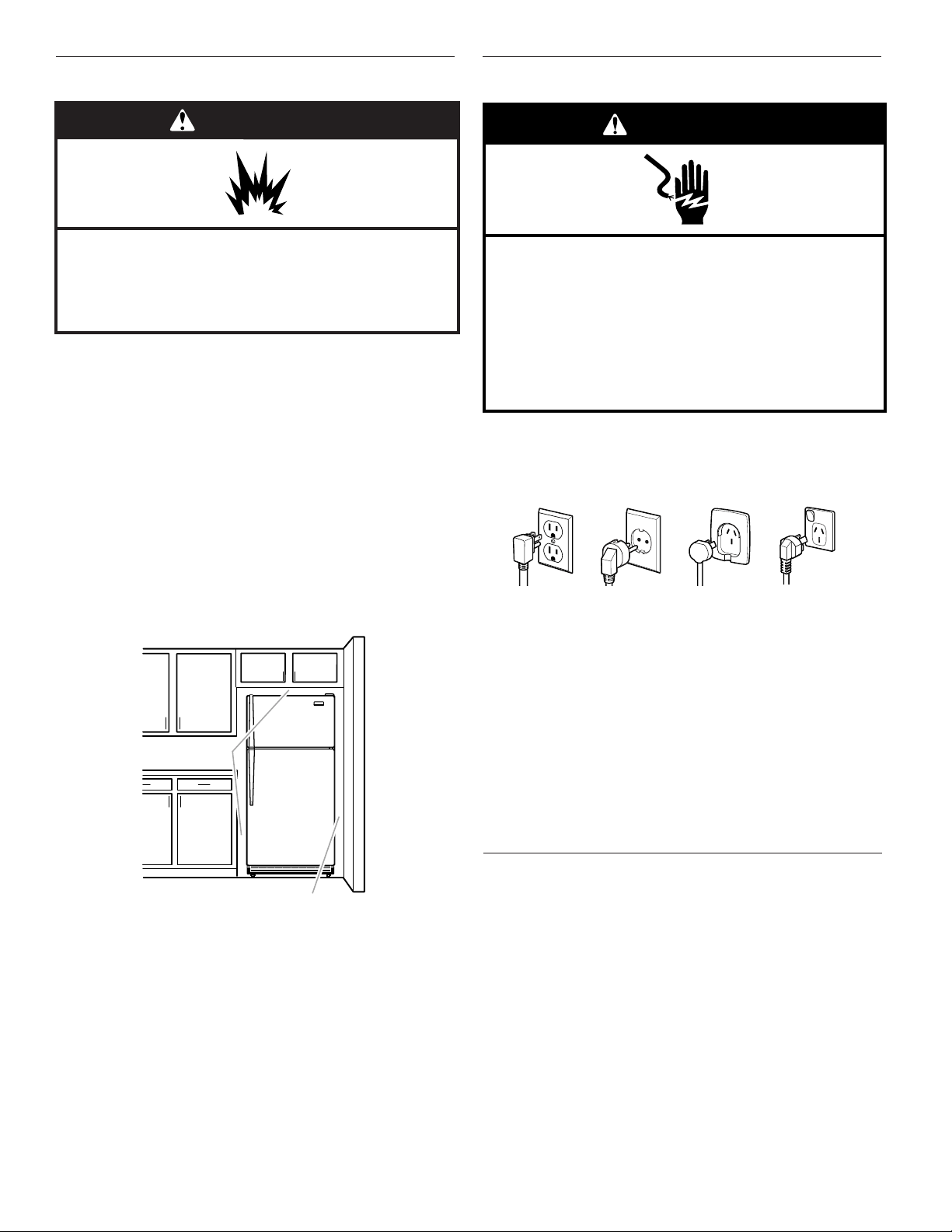
To ensure proper ventilation for your refrigerator, allow for
½" (1.25 cm) of space on each side and at the top. Allow for
1" (2.54 cm) of space behind the refrigerator. If your refrigerator
has an ice maker, allow extra space at the back for the water
line connections. When installing your refrigerator next
to a fixed wall, leave a 2" (5.08 cm) minimum space on the
hinge side (some models require more) to allow the door
to swing open.
NOTE: This refrigerator is intended for use in a location where
the temperature ranges from a minimum of 55°F (13°C) to a
maximum of 110°F (43°C). The preferred room temperature
range for optimum performance, which reduces electricity
usage and provides superior cooling, is between 60°F (15°C)
and 90°F (32°C). It is recommended that you do not install
the refrigerator near a heat source, such as an oven or radiator.
Before you move your refrigerator into its final location,
it is important to make sure you have the proper electrical
connection.
1
/
2" (1.25 cm)
2" (5.08 cm)
Recommended Grounding Method
A 115 Volt 60 Hz. (Plug 1), 220-240 Volt 50 Hz. (Plugs 2 or 3),
or 220-240 Volt 60 Hz. (Plug 4) AC only 10-amp fused and
grounded (earthed) electrical supply is required.
It is recommended that a separate circuit serving only your
refrigerator be provided. Use an outlet that cannot be turned
off by a switch or pull chain. Do not use an extension cord.
NOTE: Before performing any type of installation or cleaning,
or removing a light bulb, turn cooling off or turn the control
(Thermostat, Refrigerator or Freezer Control depending
on the model) to OFF, and then disconnect the refrigerator
from the electrical source. When you are finished, reconnect
the refrigerator to the electrical source and turn cooling on or
reset the control (Thermostat, Refrigerator or Freezer Control
depending on the model) to the desired setting. See “Using the
Controls” in the User Instructions, User Guide, or Use & Care
Guide.
Water Supply Requirements
IMPORTANT: Connect to potable water supply only.
Gather the required tools and parts before starting installation.
Read and follow the instructions provided with any tools listed
here.
TOOLS NEEDED:
■ Flat-blade screwdriver
■
7
⁄16" and ¹⁄2" Open-end or
two adjustable wrenches
■ ¹⁄
4" Nut driver
■ ¹⁄
4" Drill bit
■ Cordless drill
NOTE: Your refrigerator dealer has a kit available with a
¹⁄
4" (6.35 mm) saddle-type shutoff valve, a union, and copper
tubing. Before purchasing, make sure a saddle-type valve
complies with your local plumbing codes. Do not use a
piercing-type or ³⁄
16" (4.76 mm) saddle valve which reduces
water flow and clogs more easily.
Plug 1 Plug 2 Plug 4Plug 3
5
Water Pressure
A cold water supply with water pressure of between 30 and
120 psi (207 and 827 kPa) is required to operate the water
dispenser and ice maker. If you have questions about your
water pressure, call a licensed, qualified plumber.
Reverse Osmosis Water Supply
IMPORTANT: The pressure of the water supply coming out
of a reverse osmosis system going to the water inlet valve
of the refrigerator needs to be between 30 and 120 psi
(207 and 827 kPa).
If a reverse osmosis water filtration system is connected
to your cold water supply, the water pressure to the reverse
osmosis system needs to be a minimum of 40 to 60 psi
(276 to 414 kPa).
If the water pressure to the reverse osmosis system is less than
40 to 60 psi (276 to 414 kPa):
■ Check to see whether the sediment filter in the reverse
osmosis system is blocked. Replace the filter if necessary.
■ Allow the storage tank on the reverse osmosis system
to refill after heavy usage.
If you have questions about your water pressure, call
a licensed, qualified plumber.
Connect to Water Line
1. Unplug refrigerator or disconnect power.
2. Turn OFF main water supply. Turn ON nearest faucet long
enough to clear line of water.
3. Locate a ½" to 1¹⁄
4" (1.25 cm to 3.18 cm) vertical cold water
pipe near the refrigerator.
IMPORTANT:
■ Make sure it is a cold water pipe.
■ Horizontal pipe will work, but drill on the top side of the pipe,
not the bottom. This will help keep water away from the drill
and normal sediment from collecting in the valve.
4. Determine the length of copper tubing you need. Measure
from the connection on the lower left rear of refrigerator to
the water pipe. Add 7 ft (2.1 m) to allow for cleaning. Use
¹⁄
4" (6.35 mm) O.D. (outside diameter) copper tubing. Be sure
both ends of copper tubing are cut square.
5. Using a cordless drill, drill a ¹⁄
4" hole in the cold water pipe
you have selected.
Connect the Water Supply
Read all directions before you begin.
IMPORTANT: If you turn the refrigerator on before the water
line is connected, turn the ice maker OFF.
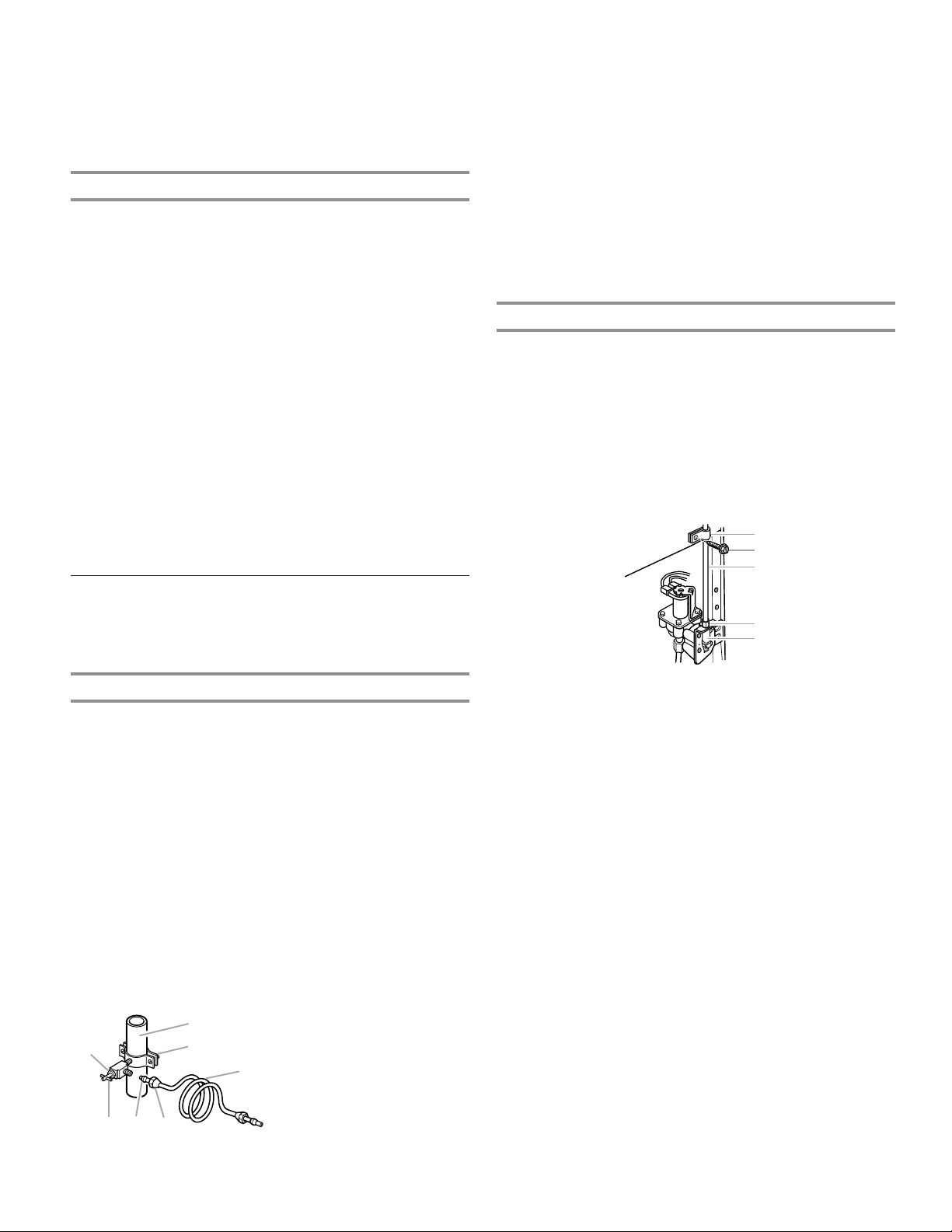
A
B
C
DEF
G
A. Cold water pipe
B. Pipe clamp
C. Copper tubing
D. Compression nut
E. Compression sleeve
F. Shutoff valve
G. Packing nut
6. Fasten the shutoff valve to the cold water pipe with the pipe
clamp. Be sure the outlet end is solidly in the ¹⁄
4" drilled
hole in the water pipe and that the washer is under the pipe
clamp. Tighten the packing nut. Tighten the pipe clamp
screws slowly and evenly so washer makes a watertight seal.
Do not overtighten or you may crush the copper tubing.
7. Slip the compression sleeve and compression nut on the
copper tubing as shown. Insert the end of the tubing into the
outlet end squarely as far as it will go. Screw compression
nut onto outlet end with adjustable wrench. Do not
overtighten.
8. Place the free end of the tubing in a container or sink, and
turn ON the main water supply. Flush the tubing until water is
clear. Turn OFF the shutoff valve on the water pipe. Coil the
copper tubing.
Connect to Refrigerator
1. Unplug refrigerator or disconnect power.
2. Attach the copper tubing to the valve inlet using a
compression nut and sleeve as shown. Tighten the
compression nut. Do not overtighten.
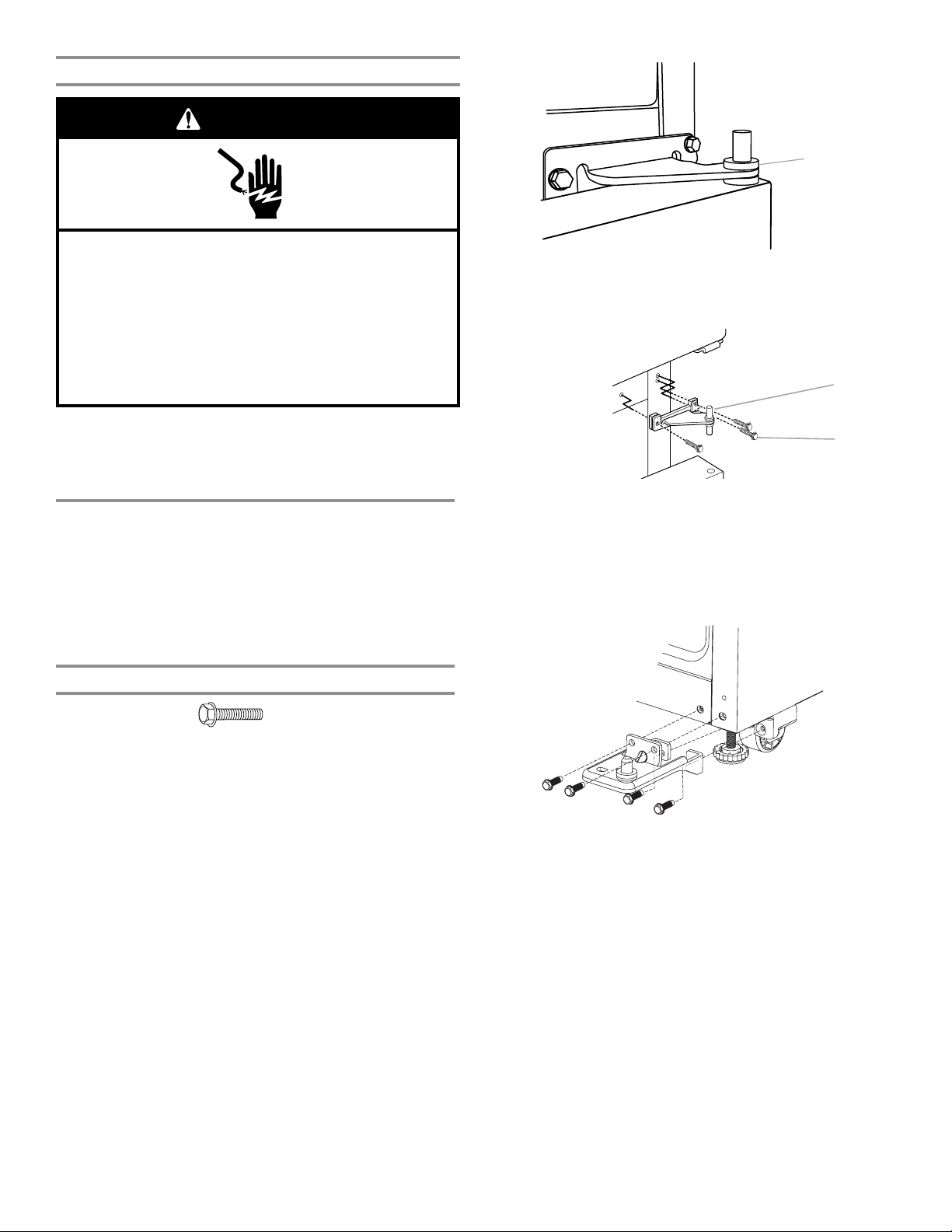
3. Use the tube clamp on the back of the refrigerator to secure
the tubing to the refrigerator as shown. This will help avoid
damage to the tubing when the refrigerator is pushed back
against the wall.
4. Turn shutoff valve ON.
5. Check for leaks. Tighten any connections (including
connections at the valve) or nuts that leak.
A
C
B
D
E
A. Tube clamp
B. Tube clamp screw
C. Copper tubing
D. Compression nut
E. Valve inlet
6. The ice maker is equipped with a built-in water strainer. If
your water conditions require a second water strainer, install
it in the ¹⁄
4" (6.35 mm) water line at either tube connection.
Obtain a water strainer from your nearest appliance dealer.
IMPORTANT:
■ All installations must meet local plumbing code
requirements.
■ Use copper tubing and check for leaks. Install copper tubing
only in areas where the household temperatures will remain
above freezing.
6
REFRIGERATOR DOORS
Depending on the width of your doorway, you may need to
remove the doors to move the refrigerator into your home.
IMPORTANT:
■ Before you begin, turn the refrigerator control OFF, unplug
refrigerator or disconnect power. Remove food and any
adjustable door or utility bins from doors.
Remove Doors and Hinges
5
⁄16" Hex-Head Hinge Screw
1. Unplug refrigerator or disconnect power.
2. Using a hex-head socket wrench, remove the three
5
⁄16" hex-
head hinge screws from the Top Hinge and lift up to remove
the hinge. See Top Hinge graphic.
NOTE: Provide additional support for the doors while
the hinges are being moved. Do not depend on the door
magnets to hold the doors in place while you are working.
3. Lift the freezer door off of the center hinge and set it aside.
4. Remove the washer from the top of the Center Hinge pin.
A
5.
Using a hex-head socket wrench and an open-end wrench,
remove the three screws from the Center Hinge and remove
the hinge. Set aside.
A. Center hinge
B.
5
⁄
16
" Hex-head
hinge screws
A
B
6. Remove the washer from the bottom of the Center Hinge pin.
7. Lift the refrigerator door from the Bottom Hinge, and set
aside.
8. Using a hex-head socket wrench, remove the four
5
⁄16"
hex-head hinge screws from the Bottom Hinge and pull the
hinge from the bottom of the refrigerator door.
A. Washer
Complete the Installation
Electrical Shock Hazard
Plug into a grounded 3 prong outlet.
Do not remove ground prong.
Do not use an adapter.
Do not use an extension cord.
Failure to follow these instructions can result in death,
fire, or electrical shock.
WARNING
1. Plug into a grounded 3 prong outlet.
NOTE: Allow 24 hours to produce the first batch of ice.
Discard the first three batches of ice produced. Allow 3 days
to completely fill ice container.
7
Door Closing
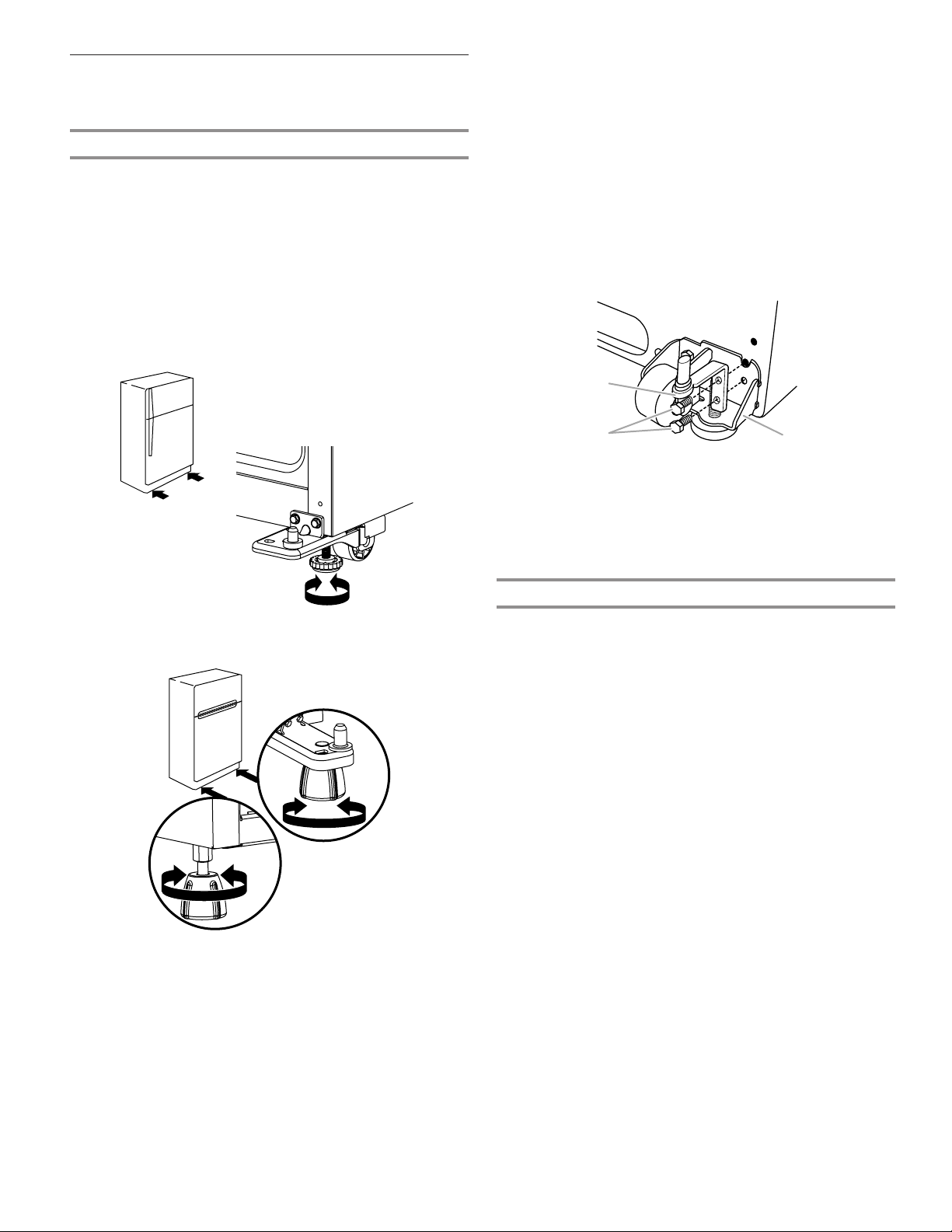
Your refrigerator has two front adjustable levelers - one on the
right and one on the left. If your refrigerator seems unsteady or
you want the doors to close easier, adjust the refrigerator's tilt
using the following instructions:
1. Turn the leveler to lower or raise that side of the refrigerator.
It may take several turns to adjust the tilt of the refrigerator.
■ To raise, turn the leveler to the right.
■ To lower, turn the leveler to the left.
NOTE: Having someone push against the top of the
refrigerator takes some weight off the levelers and rollers
which makes it easier to adjust.
Adjust the Doors
IMPORTANT: Your refrigerator complies with American
Disabilities Act (ADA) guidelines.
2. Open both doors again to make sure they close as easily as
you like. If not, tilt the refrigerator slightly more to the rear by
turning both leveling legs to the left; it may take several more
turns.
NOTES:
■ To keep the refrigerator level, you should turn both
leveling legs the same amount.
■ On models with the leveling/roller assembly, after
adjusting the refrigerator to the desired tilt, turn the
leveling leg until it is rmly against the oor as shown.
3. Using a level, be sure that the refrigerator is still level side to
side. Readjust if necessary.
NOTE: On some models if your product has an extra leveler
adjust it, turning right or left to prevent product tipping.
Door Aligning
If the space between your doors looks uneven, you can adjust
it using the following instructions:
1. Depending on your model, remove the Top Hinge cover.
2. Loosen the top hinge screws using a
5
⁄16" socket or wrench.
3. Have someone hold the door in place or put a spacer
between the doors while you tighten the top hinge screws.
4. Replace the Top Hinge cover, if removed in Step 1.
On some models
C
B
A
A.Bottom hinge
B.Screws
C.Leveling/roller assembly
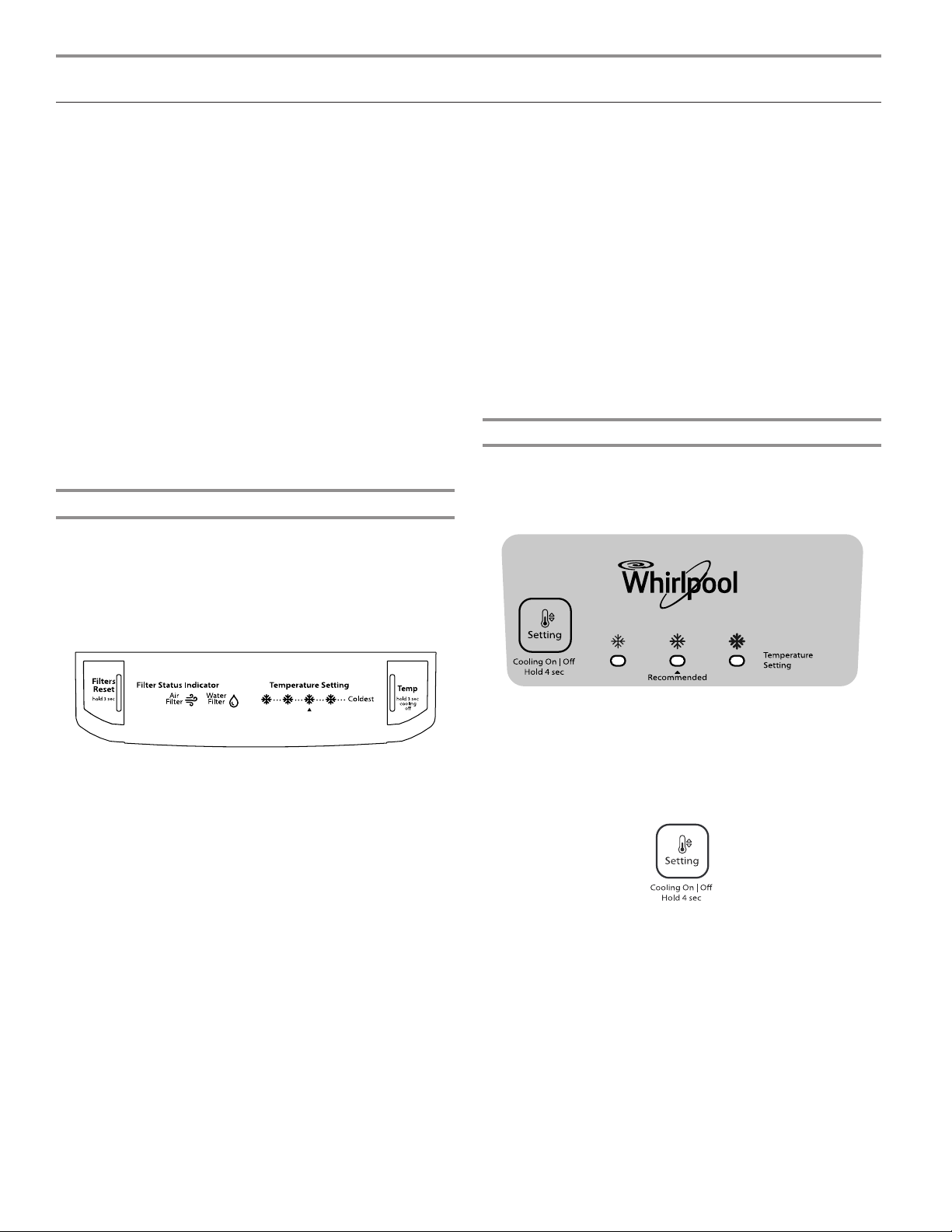
4. Replace the base grille.
8
REFRIGERATOR USE
Using the Controls
Depending on your model, your refrigerator either has controls
that affect the temperature. The Temperature control located at
the top front of the refrigerator compartment and/or the Airflow
control located on the back wall of the freezer compartment.
Follow the instructions specific to your model.
IMPORTANT:
■ The recommended setting should be correct for normal
household refrigerator use. The controls are set correctly
when milk or juice is as cold as you like and when ice cream
is firm.
■ Wait 24 hours for your refrigerator to cool completely before
adding food. If you add food before the refrigerator has
cooled completely, your food may spoil.
NOTE: Adjusting the refrigerator and freezer temperature
controls to a colder than recommended setting will not cool the
compartments any faster.
■ If the temperature is too warm or too cold in the refrigerator
or freezer, first check the air vents to be sure they are not
blocked before adjusting the controls.
Interior Dispenser Models (on some models)
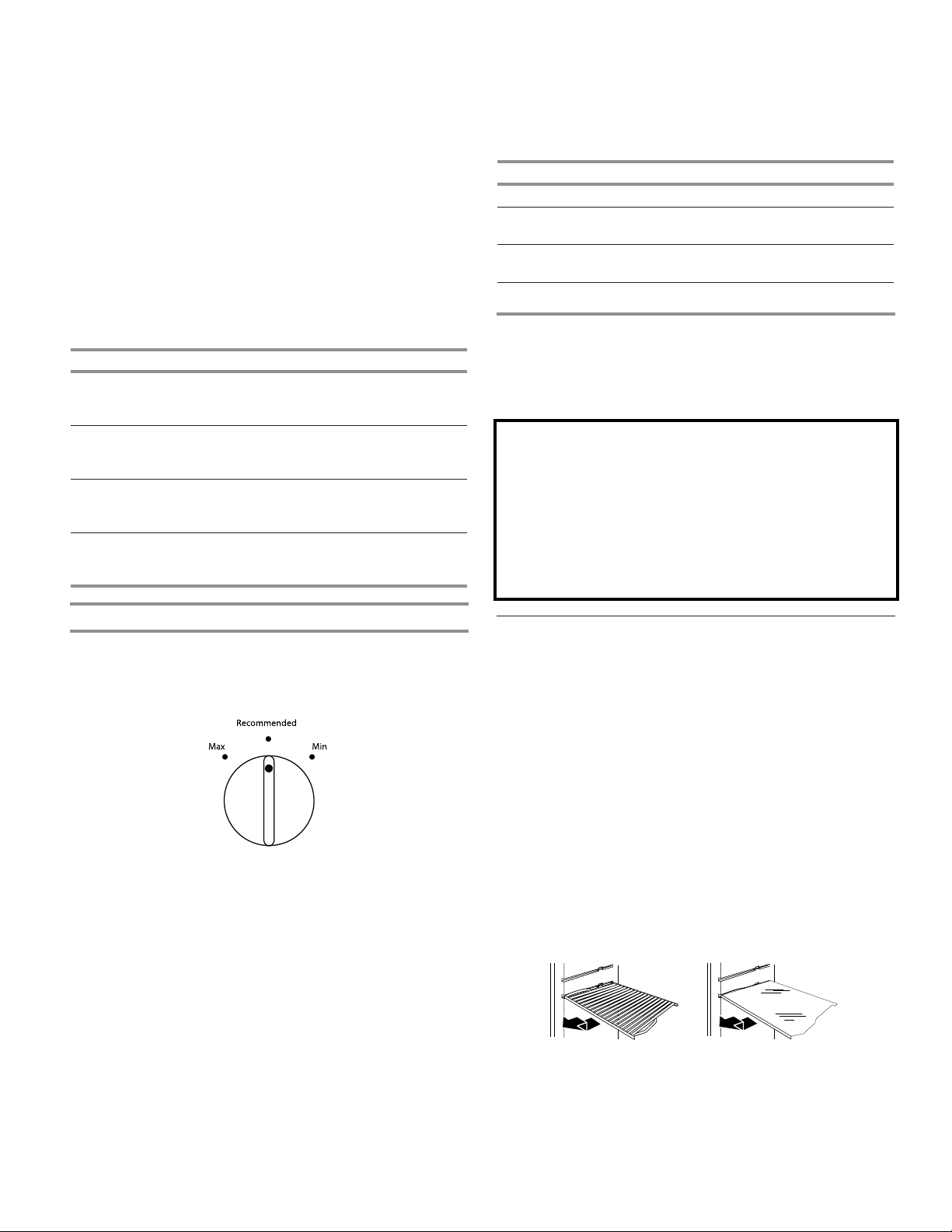
The control panel is located at the top front of the refrigerator
compartment.
For your convenience, the temperature control is preset at the
factory. When you first install your refrigerator, make sure the
control is still set to the recommended setting as shown.
Recommended Setting “3rd Snowflake"
Cooling On/Off
■ Press and hold TEMP for 3 seconds to turn cooling off.
To turn cooling back on, press and hold TEMP again for
3 seconds.
NOTE: Neither compartment will cool when the control is set
to OFF.
Additional Features
Filters Reset (on some models)
The Filters Reset control allows you to restart the filter status
tracking feature each time you replace the air filter or water
filter.
■ Press and hold FILTERS RESET for 3 seconds. The filter
icons will turn off. See “Install Air Filter” and “Water Filtration
System.”
Temperature Control (on some models)
For your convenience, the Temperature control is preset at the
factory. When you first install your refrigerator, make sure the
control is still preset as shown.
Recommended Setting
Cooling Off/On
■ To turn cooling off, press and hold the Setting button for 4
seconds until all lights are illuminated for 1 second. To turn
cooling back on, press and hold the Setting button again for
4 seconds.
NOTE: Neither compartment will cool when the control is set
to OFF.
9
Adjusting the Temperature Control (depending on model)
If you need to adjust the temperature in either the refrigerator or
freezer compartment, use the settings listed in the chart below
as a guide.
NOTE: Except when starting the refrigerator, do not adjust the
control more than one setting at a time. Wait 24 hours between
adjustments for the temperature to stabilize.
■ Press the TEMP button to display the desired number
of snowflakes (1 snowflake [least cold] to all snowflakes
[coldest]).
or
■ Press the SETTING button to toggle among the three LED
lights which indicate the temperature setting. Reading from
left to right, the LED in the first position is the least cold. The
LEDs indicate increasingly colder settings as you continue to
the right until all three LEDs are illuminated.
CONDITION/REASON: ADJUSTMENT:
REFRIGERATOR too warm REFRIGERATOR Control or
TEMPERATURE Control one
setting higher
FREEZER too warm/too little
ice
FREEZER Control, AIRFLOW
or TEMPERATURE Control
one setting higher
REFRIGERATOR too cold REFRIGERATOR Control or
TEMPERATURE Control one
setting lower
FREEZER too cold FREEZER Control, AIRFLOW
or TEMPERATURE Control
one setting lower
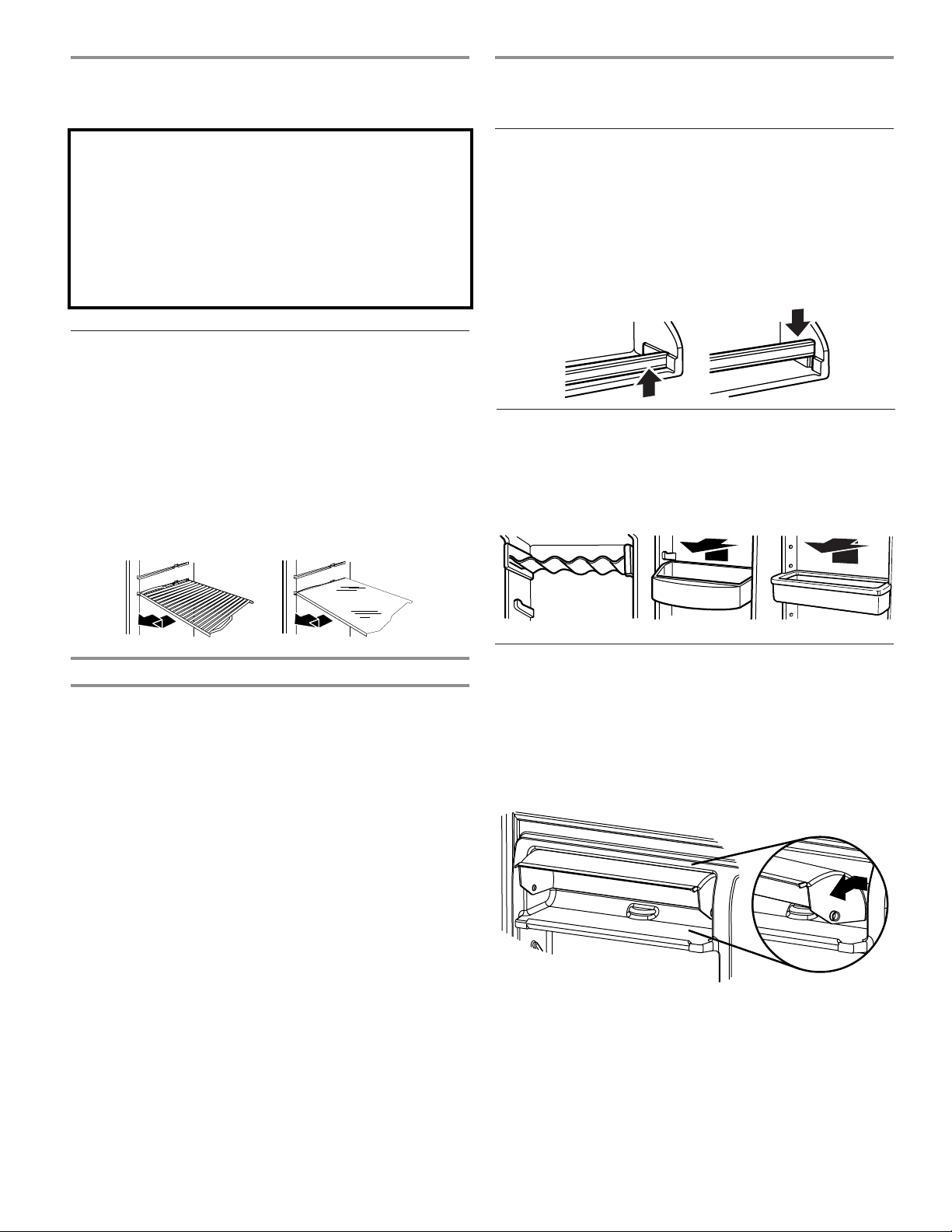
Airflow Control (on some models)
The Airflow control regulates the amount of air flowing between
the freezer and the refrigerator compartments.
When you plug in the refrigerator for the first time, turn the
Airflow control to the Recommended setting.
Adjusting the Airflow Control (Freezer Temperature Control)
If you want to temporarily increase the cold airflow to a specific
compartment, adjust the control.
■ Max - Increase airflow to the freezer (this will make
the freezer colder).
CONDITION/REASON: ADJUSTMENT:
Heavy ice use Max
Hot room temperature Max - To maintain ice making
production rate
Large quantity of groceries Min - To quickly chill food
and beverages
■ Min - Increase airflow to the refrigerator (this will make
the freezer warmer).
IMPORTANT: Once the performance is achieved, return the
Airflow control to the Recommended setting to keep the
refrigerator operating at optimum efficiency.
REFRIGERATOR
FEATURES
Your model may have some or all of these features.
Important information to know about glass shelves
and covers:
Do not clean glass shelves or covers with warm water when
they are cold. Shelves and covers may break if exposed to
sudden temperature changes or impact, such as bumping.
Tempered glass is designed to shatter into many small,
pebble-size pieces. This is normal. Glass shelves and covers
are heavy. Use both hands when removing them to avoid
dropping.
Refrigerator Shelves
The shelves in your refrigerator are adjustable to match your
individual storage needs.
Storing similar food items together in your refrigerator and
adjusting the shelves to fit different heights of items will make
finding the exact item you want easier. It will also reduce the
amount of time the refrigerator door is open, and save energy.
To remove and replace a shelf:
1. Remove items from the shelf.
2. Slide the shelf straight out to the stop.
3. Depending on your model, lift back or front of the shelf past
the stop. Slide shelf out the rest of the way.
4. Replace the shelf by sliding the back of the shelf into the
track in the wall of the cabinet.
5. Guide the front of the shelf into the shelf track. Be sure to
slide the shelf in all the way.

10
Deli Drawer
The deli drawer design allows flexible positioning.
Deli Drawer
To reposition the deli drawer:
1. Remove deli drawer.
2. Release cover and place it between the desired crossbars.
3. Secure the rear clips onto the shelf.
4. Replace the deli drawer.
To remove and replace the deli drawer:
1. Slide deli drawer out to the stop.
2. Lift front of deli drawer with one hand while supporting
bottom of drawer with other hand. Slide drawer out the rest
of the way.
3. Replace the drawer by sliding it back in fully past the
drawer stop.
Deli Drawer Cover
To remove and replace the deli drawer cover:
Style 1 - Wire Shelves
1. Remove the deli drawer.
2. Push the cover back to release the rear clips from the shelf.
Tilt the cover up at the front, and then pull it forward.
3. Replace the deli drawer cover by fitting the notches and clips
on the cover over the rear and center crossbars on the shelf.
4. Replace the deli drawer.
Style 2 - Glass Shelves
1. Remove the deli drawer.
2. Remove items from the shelf.
3. Slide the shelf straight out to the stop.
4. Slide the deli cover to one side until free.
5. Insert the cover into the shelf tracks.
6. Slide the shelf back into the refrigerator, and then replace
the deli drawer.
NOTE: The deli drawer slides sideways on the shelf to allow
for flexible positioning.
Meat Storage Guide
Store most meat in original wrapping as long as it is airtight and
moisture-proof. Rewrap if necessary. See the following chart for
storage times. When storing meat longer than the times given,
freeze the meat.
Fresh fish or shellfish...................... use same day as purchased
Chicken, ground beef, variety meats (liver) ................... 1-2 days
Cold cuts, steaks/roasts ............................................... 3-5 days
Cured meats................................................................ 7-10 days
Leftovers - Cover leftovers with plastic wrap, aluminum foil,
or plastic containers with tight lids.
Crisper
Crisper Drawers
To remove and replace the crisper drawer:
1. Slide the crisper drawer straight out to the stop. Lift the front
and slide the drawer out the rest of the way.
2. Replace the drawer by sliding the drawer in fully past
the stop.
Crisper Cover
To remove and replace the crisper cover:
1. Remove the crisper(s).
2. Pull the glass straight out.
3. Replace the glass by pushing it straight in.
Crisper Humidity Control
You can control the amount of humidity in the moisture-sealed
crisper. Adjust the control to any setting between LOW
and HIGH.
LOW (open) lets moist air out of the crisper for best storage of
fruits and vegetables with skins.
■ Fruit: Wash, let dry and store in refrigerator in plastic bag or
crisper. Do not wash or hull berries until they are ready to
use. Sort and keep berries in original container in crisper, or
store in a loosely closed paper bag on a refrigerator shelf.
■ Vegetables with skins: Place in plastic bag or plastic
container and store in crisper.
HIGH (closed) keeps moist air in the crisper for best storage of
fresh, leafy vegetables.
■ Leafy vegetables: Wash in cold water, drain and trim or tear
off bruised and discolored areas. Place in plastic bag or
plastic container and store in crisper.
11
FREEZER FEATURES
Your model may have some or all of these features.
Important information to know about glass shelves
and covers:
Do not clean glass shelves or covers with warm water when
they are cold. Shelves and covers may break if exposed to
sudden temperature changes or impact, such as bumping.
Tempered glass is designed to shatter into many small,
pebble-size pieces. This is normal. Glass shelves and covers
are heavy. Use both hands when removing them to avoid
dropping.
Depending on your model, the shelf may be wire or glass.
To remove and replace a shelf:
1. Remove items from the shelf.
2. Slide the shelf straight out to the stop.
3. Depending on your model, lift back or front of the shelf past
the stop. Slide shelf out the rest of the way.
4. Replace the shelf by sliding the back of the shelf into the
track in the wall of the cabinet.
5. Guide the front of the shelf into the shelf track. Be sure to
slide the shelf in all the way.
Freezer Shelf
Frozen Food Storage Guide
Storage times will vary according to the quality and type of
food, the type of packaging or wrap used (should be airtight
and moisture-proof), and the storage temperature. Seal the
package or container securely to avoid taste and odor transfer
throughout the product. Ice crystals inside a sealed package
are normal. This simply means that moisture in the food and air
inside the package have condensed, creating ice crystals.
Put no more unfrozen food into the freezer than will freeze
within 24 hours (no more than 2 to 3lbs of food per cubic foot
[907 to 1,350 g per L] of freezer space). Leave enough space
in the freezer for air to circulate around packages. The freezer
door must close tightly.
NOTE: For more information on preparing food for freezing,
check a freezer guide or reliable cookbook.
DOOR FEATURES
Your model may have some or all of these features.
The door rails may be removed for easier cleaning.
To remove and replace the rails:
1. Depending on your model, remove the rails by pushing in
slightly on the front of the bracket while pulling out on the
inside tab. Repeat these steps for the other end.
2. Replace the rails by aligning the ends of the brackets with
the buttons on the sides of the door liner. Firmly snap bracket
and assembly onto the tabs above the shelf as shown.
Door Rails
To remove and replace the bins:
1. Remove the bin by lifting it and pulling it straight out.
2. Replace the bin by sliding it in above the desired support
and pushing it down until it stops.
Door Bins
The utility compartment may be removed for easier cleaning.
To remove and replace the utility compartment:
1. Remove the utility compartment by squeezing against one
side while raising the utility compartment up and pulling it
straight out.
2. Replace the utility compartment by positioning one side in
the lock and sliding in the opposite side until it stops.
Utility Compartment
12
IMPORTANT: For models with a water filter, after connecting
the refrigerator to a water source or replacing the water filter,
fill and discard three full containers of ice to prepare the water
filter for use.
Ice Maker
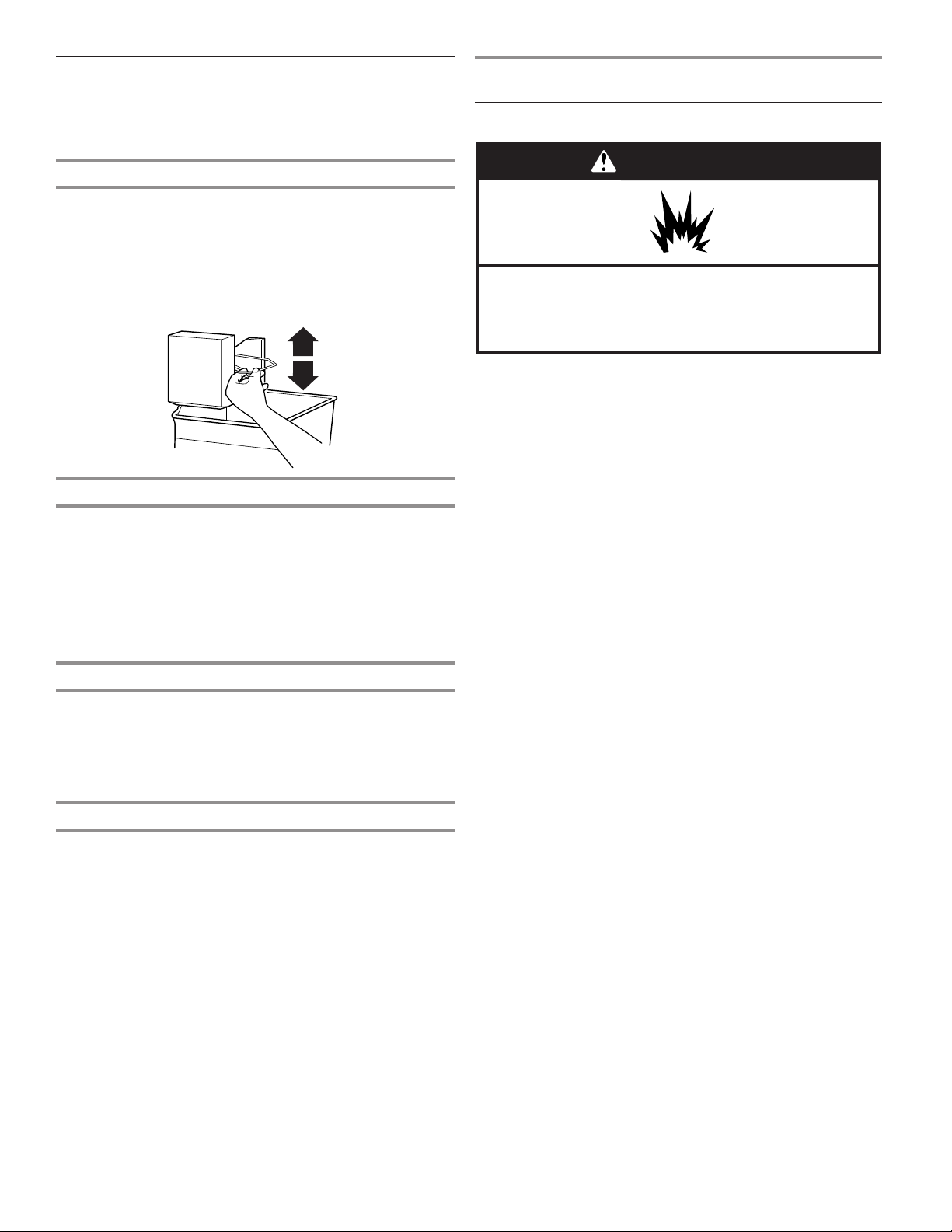
Turning the Ice Maker On/Off
To turn the ice maker ON, simply lower the wire shutoff arm.
To manually turn the ice maker OFF, lift the wire shutoff arm to
the OFF (arm up) position and listen for the click.
NOTE: Your ice maker has an automatic shutoff. As ice is
made, the ice cubes will fill the ice storage bin and the ice
cubes will raise the wire shutoff arm to the OFF (arm up)
position. Do not force the wire shutoff arm up or down.
Ice Storage Bin
1. Wash the ice storage bin with mild soap and warm water.
2. Slide the ice storage bin under the ice maker, and push it
toward the back as far as it will go.
3. Lower the arm on the ice maker to the “ON” position.
NOTE: It usually takes approximately 24 hours for the ice
maker to begin producing ice. You may notice the ice has
an “off-taste.” If so, discard the first three batches of ice
produced. After that the “off-taste” should be gone.
Ice Production Rate
■ The ice maker should produce approximately 8 to 12
batches of ice in a 24-hour period. Allow 3 days to
completely fill the ice container.
■ To increase ice production, lower the freezer and refrigerator
temperature. See “Using the Controls.” Wait 24 hours
between adjustments.
Remember
■ The quality of your ice will be only as good as the quality
of the water supplied to your ice maker. Avoid connecting
the ice maker to a softened water supply. Water softener
chemicals (such as salt) can damage parts of the ice maker
and lead to poor quality ice. If a softened water supply
cannot be avoided, make sure the water softener is operating
properly and is well maintained.
■ Do not use anything sharp to break up the ice in the bin. This
can cause damage to the ice storage bin and the dispenser
mechanism.
■ Do not store anything on top of or in the ice maker or ice
storage bin.
REFRIGERATOR CARE
Cleaning
WARNING
Explosion Hazard
Use nonflammable cleaner.
Failure to do so can result in death, explosion, or fire.
Both the refrigerator and freezer sections defrost automatically.
However, clean both sections about once a month to avoid
buildup of odors. Wipe up spills immediately.
IMPORTANT:
■ Because air circulates between both sections, any odors
formed in one section will transfer to the other. You must
thoroughly clean both sections to eliminate odors. To avoid
odor transfer and drying out of food, wrap or cover foods
tightly.
■ For stainless steel models, stainless steel is corrosion resistant
and not corrosion-proof. To help avoid corrosion of your
stainless steel, keep your surfaces clean by using the following
cleaning instructions.
To Clean Your Refrigerator:
NOTE: Do not use abrasive or harsh cleaners such as window
sprays, scouring cleansers, flammable fluids, muriatic acid,
cleaning waxes, concentrated detergents, bleaches or cleansers
containing petroleum products on exterior surfaces (doors and
cabinet), plastic parts, interior and door liners or gaskets. Do not
use paper towels, scouring pads, or other harsh cleaning tools.
1. Unplug refrigerator or disconnect power.
2. Hand wash, rinse, and dry removable parts and interior
surfaces thoroughly. Use a clean sponge or soft cloth and
a mild detergent in warm water.
3. Clean the exterior surfaces.
Painted metal: Wash painted metal exteriors with a clean,
soft cloth or sponge and a mild detergent in warm water.
Rinse surfaces with clean, warm water and dry immediately to
avoid water spots.
Stainless steel: Wash stainless steel surfaces with a clean,
soft cloth or sponge and a mild detergent in warm water.
Rinse surfaces with clean, warm water and dry immediately to
avoid water spots.
NOTE: When cleaning stainless steel, always wipe in the
direction of the grain to avoid cross-grain scratching.
4. There is no need for routine condenser cleaning in normal
home operating environments. If the environment is
particularly greasy or dusty, or there is significant pet traffic
in the home, the condenser should be cleaned every 2 to
3 months to ensure maximum efficiency.
If you need to clean the condenser:
■ Remove the base grille.
■ Use a vacuum cleaner with a soft brush to clean the grille,
the open areas behind the grille and the front surface area
of the condenser.
13
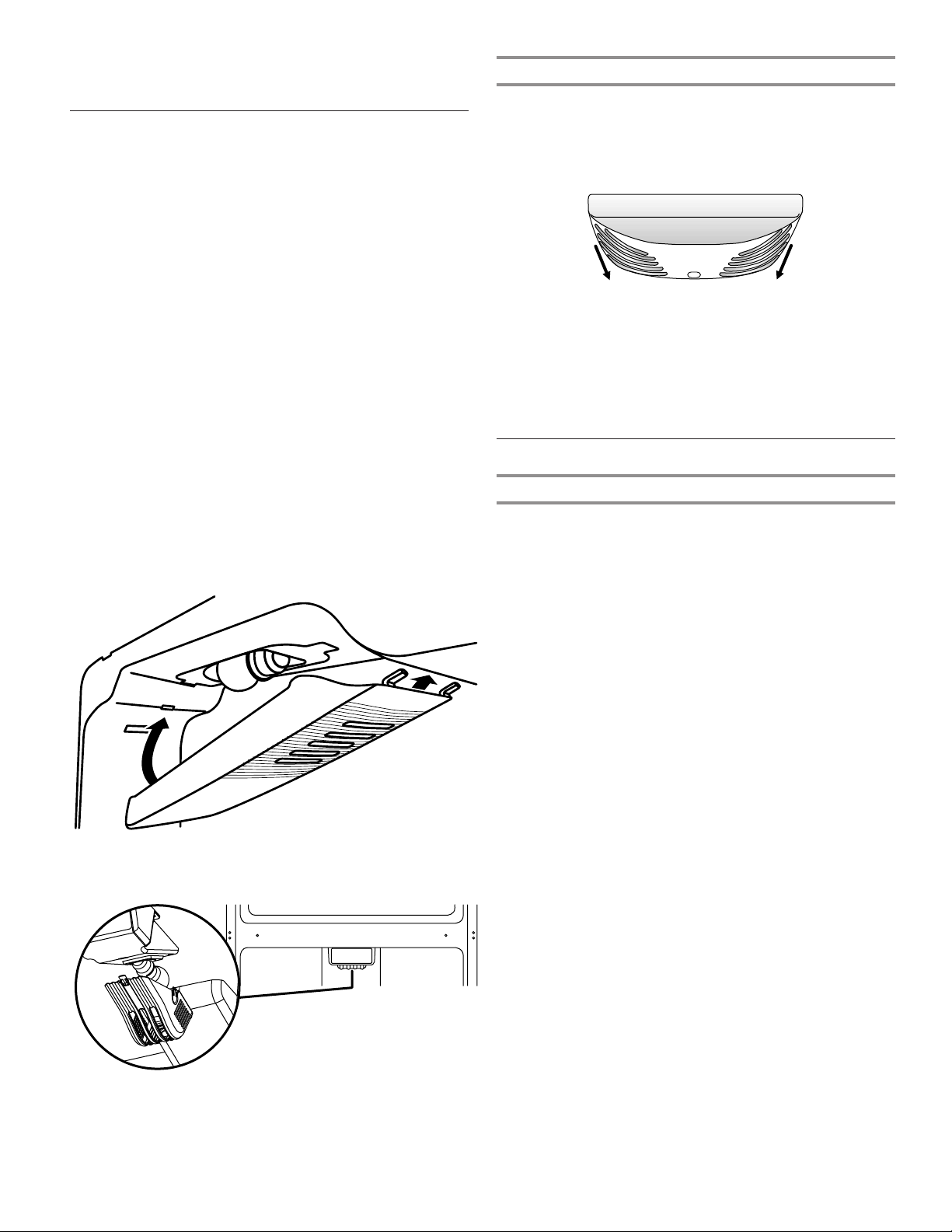
The light bulb is located behind the Temperature control.
IMPORTANT: Depending on your model, the light bulb in the
your new refrigerator may use LED technology. If your model
uses LED lighting and the light does not illuminate when the
refrigerator door is opened, call for assistance or service. See
Warranty for phone numbers.
1. Unplug refrigerator or disconnect power.
2. Remove the light shield by squeezing in on the sides and
pulling it straight down.
3. Remove the light bulb and replace it with an appliance bulb
of the same size and shape.
■ For the refrigerator compartment, to replace with
an LED light bulb, order part number W10716219
(4 watts).
NOTE: Some LED replacement bulbs are not
recommended for wet/damp environments. The
refrigerator and freezer compartments are considered to
be wet/damp environments. If using a brand of LED bulb
other than the Whirlpool recommended LED bulb, before
installation, read and follow all instructions on the LED
packaging.
■ If an incandescent bulb is used to replace an LED bulb,
use only incandescent bulbs for household appliances
with a maximum of 60 watts.
4. Replace the light shield.
Style 1
Changing the Light Bulb
5. Plug in refrigerator or reconnect power.
Vacation and Moving Care
Vacations
If You Choose to Leave the Refrigerator On While You’re
Away:
1. Use up any perishables and freeze other items.
2. If your refrigerator has an automatic ice maker, and is
connected to the household water supply, turn off the water
supply to the refrigerator. Property damage can occur if the
water supply is not turned off.
3. If you have an automatic ice maker, turn off the ice maker.
NOTE: Raise the wire shutoff arm to OFF (up) position.
4. Empty the ice bin.
If You Choose to Turn Off the Refrigerator Before You
Leave:
1. Remove all food from the refrigerator.
2. If your refrigerator has an automatic ice maker:
■ Turn off the water supply to the ice maker at least one day
ahead of time.
■ When the last load of ice drops, raise the wire shutoff arm
to the OFF (up) position.
3. Turn off the Temperature controls. See “Using the Controls.”
4. Clean refrigerator, wipe it, and dry well.
5. Tape rubber or wood blocks to the tops of both doors to
prop them open far enough for air to get in. This stops odor
and mold from building up.
■ Replace the base grille when finished.
5. Plug in refrigerator or reconnect power.
Style 2
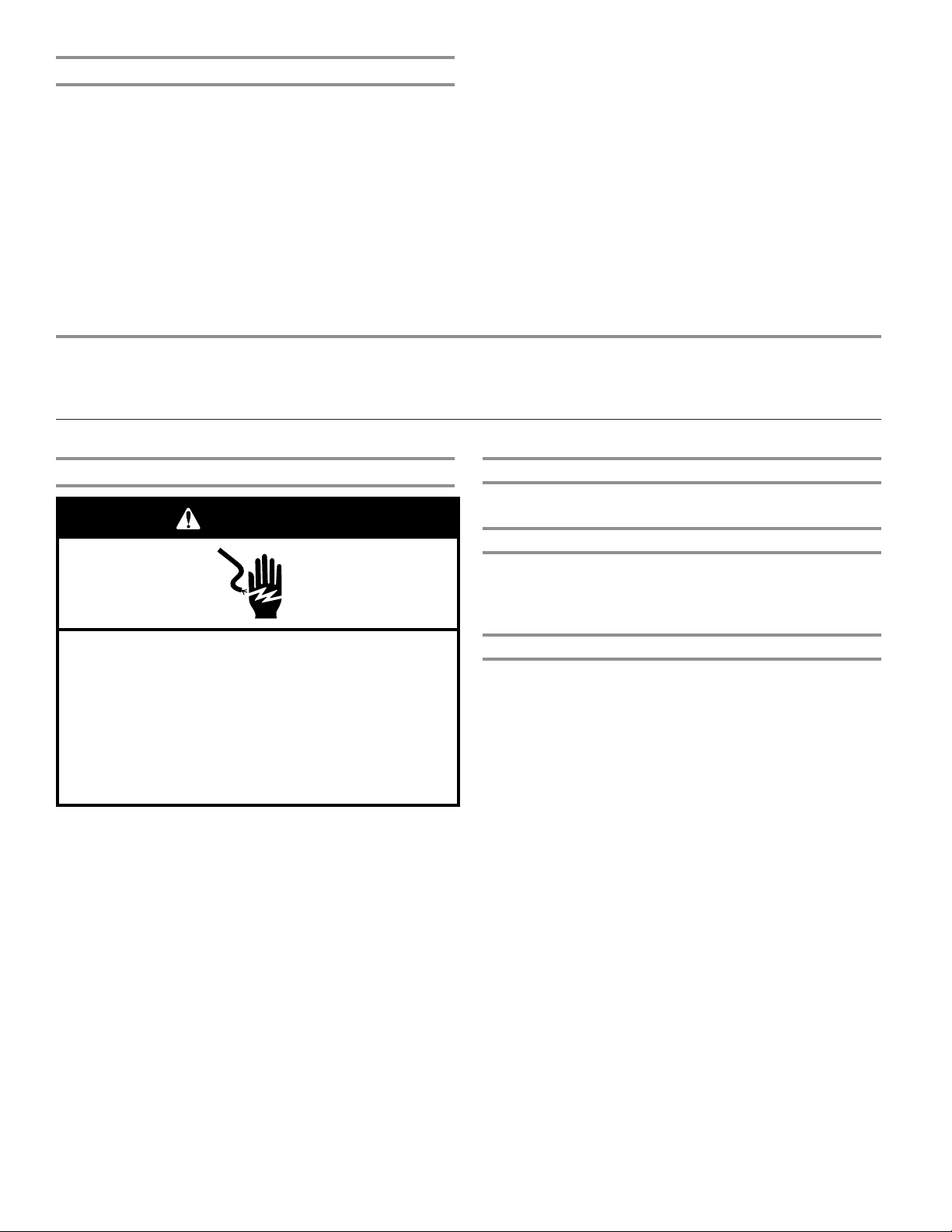
Freezer Compartment Light (on some models)
1. Unplug refrigerator or disconnect power.
2. Remove the light shield (on some models).
■ Top of the freezer compartment - Slide the light shield
toward the back of the compartment to release it from the
light assembly.
3. Remove the light bulb and replace it with an appliance bulb
of the same size and shape.
■ To replace the light bulb, order part number W10451451
(25 watts).
4. Replace the light shield.
5. Plug in refrigerator or reconnect power.
14
Moving
When you are moving your refrigerator to a new home, follow
these steps to prepare it for the move.
1. If your refrigerator has an automatic ice maker:
■ Turn off the water supply to the ice maker at least one day
ahead of time.
■ Disconnect the water line from the back of the refrigerator.
■ When the last load of ice drops, raise the wire shutoff arm
to the OFF (up) position.
2. Remove all food from the refrigerator and pack all frozen
food in dry ice.
3. Empty the ice bin.
4. Turn off the Temperature controls. See “Using the Controls.”
5. Unplug refrigerator.
6. Clean, wipe, and dry thoroughly.
7. Take out all removable parts, wrap them well, and tape them
together so they don’t shift and rattle during the move.
8. Depending on the model, raise the front of the refrigerator so
it rolls more easily OR raise the leveling screws so they don't
scrape the floor. See “Adjust the Doors” or “Door Closing
and Door Alignment.”
9. Tape the doors closed and tape the power cord to the back
of the refrigerator.
When you get to your new home, put everything back and
refer to the “Installation Instructions” section for preparation
instructions. Also, if your refrigerator has an automatic ice
maker, remember to reconnect the water supply to the
refrigerator.
TROUBLESHOOTING
First try the solutions suggested here. If you need further assistance or more recommendations that may help you avoid a service
call, refer to the warranty page in this manual and scan the code with your mobile device.
Refrigerator Operation
The refrigerator will not operate
■ Power cord unplugged? Plug into a grounded 3 prong
outlet.
■ Is outlet working? Plug in a lamp to see if the outlet is
working.
■ Household fuse blown or circuit breaker tripped? Replace
the fuse or reset the circuit breaker. If the problem continues,
call an electrician.
■ Control(s) on? Make sure the refrigerator control is on. See
“Using the Control(s).”
■ New installation? Allow 24 hours following installation for
the refrigerator to cool completely.
NOTE: Adjusting the temperature controls to coldest setting
will not cool the refrigerator more quickly.
Electrical Shock Hazard
Plug into a grounded 3 prong outlet.
Do not remove ground prong.
Do not use an adapter.
Do not use an extension cord.
Failure to follow these instructions can result in death,
fire, or electrical shock.
WARNING
The lights do not work
Light bulb burned out? Replace light bulb. See “Changing the
Light Bulb.”
The motor seems to run too much
Your new refrigerator may run longer than your old one due to
its high-efficiency compressor and fans. The unit may run even
longer if the room is warm, a large food load is added, the door
is opened often, or if the door has been left open.
The refrigerator seems noisy
Refrigerator noise has been reduced over the years. Due to
this reduction, you may hear intermittent noises from your new
refrigerator that you did not notice from your old model. Below
are listed some normal sounds with explanations.
■ Buzzing - heard when the water valve opens to fill the ice
maker.
■ Pulsating - fans/compressor adjusting to optimize
performance.
■ Hissing/Rattling - flow of refrigerant, movement of water
lines, or from items placed on top of the refrigerator.
■ Sizzling/Gurgling - water dripping on the heater during
defrost cycle.
■ Popping - contraction/expansion of inside walls, especially
during initial cool-down.
■ Water running/dripping - may be heard when ice melts
during defrosting and water runs into the drain pan.
■ Creaking/Cracking - occurs as ice is being ejected from the
ice maker mold.
15
The door is difficult to open
■ Gaskets dirty or sticky? Clean gaskets and contact
surfaces with mild soap and warm water. Rinse and dry with
soft cloth.
WARNING
Explosion Hazard
Use nonflammable cleaner.
Failure to do so can result in death, explosion, or fire.
Temperature and Moisture
Temperature is too warm
■ New installation? Allow 24 hours following installation for
the refrigerator to cool completely.
■ Door opened often or left open? Allows warm air to enter
refrigerator. Minimize door openings and keep door fully
closed.
■ Large load of food added? Allow several hours for
refrigerator to return to normal temperature.
■ Control(s) set correctly for the surrounding conditions?
Adjust the control(s) a setting colder. Check temperature in
24 hours. See “Using the Controls.”
There is interior moisture buildup
NOTE: Some moisture buildup is normal.
■ Humid room? Contributes to moisture buildup.
■ Door opened often or left open? Allows humid air to enter
refrigerator. Minimize door openings and keep door fully
closed.
Ice and Water
The ice maker is not producing ice or not enough ice
■ Refrigerator connected to a water supply and the supply
shutoff valve turned on? Connect refrigerator to water
supply and turn water shutoff valve fully open.
■ Kink in the water source line? A kink in the line can reduce
water flow. Straighten the water source line.
■ Ice maker turned on? Make sure wire shutoff arm or switch
(depending on model) is in the ON position.
■ New installation? Wait 24 hours after ice maker installation
for ice production to begin. Allow 3 days to completely fill the
ice container.
■ Large amount of ice recently removed? Allow 24 hours for
ice maker to produce more ice.
■ Ice cube jammed in the ice maker ejector arm? Remove
ice from the ejector arm with a plastic utensil.
■ Reverse osmosis water filtration system connected to
your cold water supply? This can decrease water pressure.
See “Water Supply Requirements.”
The ice cubes are hollow or small
NOTE: This is an indication of low water pressure.
■ Water shutoff valve not fully open? Turn the water shutoff
valve fully open.
■ Kink in the water source line? A kink in the line can reduce
water flow. Straighten the water source line.
■ Reverse osmosis water filtration system connected to
your cold water supply? This can decrease water pressure.
See “Water Supply Requirements.”
■ Questions remain regarding water pressure? Call a
licensed, qualified plumber.
Off-taste, odor or gray color in the ice
■ New plumbing connections? New plumbing connections
can cause discolored or off-flavored ice.
■ Ice stored too long? Discard ice. Wash ice bin. Allow 24
hours for ice maker to make new ice.
■ Odor transfer from food? Use airtight, moisture proof
packaging to store food.
■ Are there minerals (such as sulfur) in the water? A water
filter may need to be installed to remove the minerals.
The doors will not close completely or they pop open
■ Door blocked open? Move food packages away from door.
■ Bin or shelf in the way? Push bin or shelf back in the correct
position.
■ Crisper cover in the way? Make sure the crisper cover is
fully pushed in, so that the back rests on the supports.
■ Refrigerator not tilted toward the rear? So the doors will
close easier, raise the front of the refrigerator so that it tilts
slightly downward toward the rear. See “Adjust the Doors.”
■ Door closed too quickly? Close the door slowly and firmly
to keep the door from popping open.
16
ACCESSORIES
To order accessories, contact the dealer from whom you
purchased your refrigerator and ask for the appropriate part
number listed below.
ASSISTANCE OR SERVICE
Before calling for assistance or service, please check
“Troubleshooting.” It may save you the cost of a service call. If
you still need help, follow the instructions below.
Contact the dealer from whom you purchased the refrigerator.
If you need replacement parts
To locate factory specified replacement parts in your area,
contact the dealer from whom you purchased your refrigerator.
Warranty
Contact the dealer from whom you purchased the refrigerator
for warranty information.
Keep this book and your sales slip together for future
reference. You must provide proof of purchase or
installation date for in-warranty service.
Write down the following information about your appliance to
help you obtain assistance or service if you ever need it. You
will need to know your complete model number and serial
number. You can nd this information on the model and serial
number label, located on the inside wall of the refrigerator
compartment.
Dealer name ____________________________________________
Serial number ___________________________________________
Address ________________________________________________
Phone number __________________________________________
Model number___________________________________________
Purchase date ___________________________________________
11/15