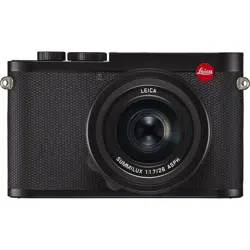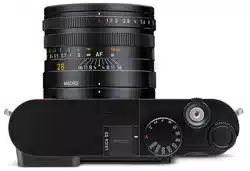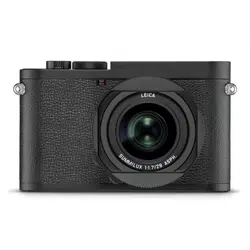

LEICAQ2 MONOCHROM
Instruction manual
Q2 Monochrom/EN/2020/11/2/1.0

EN
2
FOREWORD
Dear Customer,
We wish you a great deal of fun and success taking photographs
with your new Leica Q2 Monochrom. Please read this manual
thoroughly to familiarize yourself with the full scope of functions
your camera has to offer. You can find all information about the
Leica Q2 Monochrom whenever you need it at: q2-monochrom.
leica-camera.com.
Your Leica Camera AG
SCOPE OF DELIVERY
Before using your camera for the first time, please check that the
accessories supplied are complete.
– LeicaQ2 Monochrom with attached lens hood
– Lithium-ion battery Leica BP-SCL4
– Charger Leica BC-SCL4, incl. mains cable (US, EU)
– Lens hood cap
– Thread protection ring
– Accessory shoe cover
– Carry strap
– Quick Start Guide
– Test certificate
– CE flyer
– Creative Cloud flyer
Subject to changes in design and production.
Foreword/Scope of delivery
3
EN
REPLACEMENT PARTS/ACCESSORIES
Please contact Leica Customer Care or visit the Leica Camera AG
website for information on the extensive range of Leica replacement
parts/accessories:
en.leica-camera.com/Photography/Leica-Q/Accessories
Only the accessories specified and described in this manual or
by Leica Camera AG must be used with the camera (battery,
charger, mains plug, mains cable, etc.). These accessories
should only be used with this product. Third-party accessories
may result in malfunctions or damage to the product.
Please read the chapters “Legal information”, “Safety
remarks”, and “General information” before using your camera
for the first time. Knowledge of the content will prevent
inadvertent damage to the product, possible injuries and other
risks.
Replacement parts/accessories

EN
4
LEGAL INFORMATION
COPYRIGHT NOTICE
• Compliance with copyright laws is mandatory. The recording and
publication of pre-recorded media like tapes, CDs or other
published or broadcast material may breach copyright laws. The
same applies for all software supplied in the scope of delivery.
• The following applies for all video material created with this
camera: This product is governed by the AVC Patent Portfolio
license and is meant for private use by a consumer only. The
device may furthermore be used for purposes for which the
consumer receives no remuneration, e.g. (i) encoding in
accordance with the AVC Standard (“AVC Video”) and/or (ii)
decoding of AVC Video that was encoded by a consumer in
accordance with the AVC Standard within the scope of personal
use and/or which the consumer has received from the provider,
who is in possession of a license to offer AVC Video. No license
is granted or implied for any other use. Any other use, specifical-
ly the provision of AVC video in exchange for remuneration, may
require a separate license agreement with MPEG LA, L.L.C.
Please visit the MPEG LA, L.L.C. website at: www.mpegla.com
for more information.
LEGAL INFORMATION ABOUT THIS MANUAL
COPYRIGHT
All rights reserved.
All text, images and graphics are subject to copyright and other
laws to protect intellectual property. They must not be copied,
modified or used for any purpose including trade purposes.
TECHNICAL DATA
Product changes with regards to the product or services may have
occurred after the editorial deadline. The manufacturer reserves
the right to effect structural or shape changes, color deviations and
changes to the scope of delivery or service, where these changes
or deviations are reasonably acceptable for the customer, while
taking into consideration the interests of Leica Camera AG. In that
respect, Leica Camera AG reserves the right to changes and
errors. The images in this manual may depict accessory, special
features or other items that are not part of the standard scope of
delivery or service. Some pages may contain model types and
services, which are not offered in specific countries.
Legal information

EN
5
BRANDS AND LOGOS
The brand names and logos used in this documented are protected
trademarks. These brands or logos must not be used without prior
approval by Leica Camera AG.
LICENSE RIGHTS
Leica Camera AG intends to provide you with innovative and
informative documentation. Due to the amount of creativity that
has gone into its design, we ask for your understanding that Leica
Camera AG must protect its intellectual property, including patents,
trademarks and copyrights and that possession of the documenta-
tion does not infer any licensing rights of the intellectual property
of Leica Camera AG.
IMPORTANT NOTES REGARDING THE USE OF
WLAN/BLUETOOTH
®
• Appropriate measures must be taken to ensure security and
protect against disruptions to the systems in place where
devices or computer systems are in use that require more
stringent security than WLAN devices.
• Leica Camera AG shall not accept liability for damages arising
from the use of the camera for purposes other than as a WLAN
device.
• It is assumed that the WLAN function will be used in countries
where this camera is sold. There may be a risk of breaching
statutory wireless communication regulations when using the
camera in other countries. Leica Camera AG shall not accept
liability for such breaches.
• Please note that there is a risk of unauthorized third party
interception of wirelessly communicated data. We highly
recommend that you activate encryption in the wireless access
point settings to ensure data safety.
• Avoid using the camera in areas where it can be exposed to
magnetic fields, static electricity or other interferences, e.g. near
a microwave oven. RF transmissions may otherwise not reach
the camera.
Legal information
EN
6
• Using the camera near devices like microwave ovens or wireless
phones that use the 2.4 GHz RF band may negatively affect the
performance of both devices.
• Do not attempt to connect to wireless networks you are not
authorized to use.
• The device will automatically search for wireless networks, once
the WLAN function is enabled. A list, including networks you are
not authorized to access, will be displayed (SSID: Network
identifier for a WLAN network). Do not attempt to connect to
such a network, as this could be construed as unauthorized
access.
• We recommend disabling the WLAN function while on an
aircraft.
• The use of the WLAN-RF band between 5150MHz and
5350MHz is permitted only in enclosed spaces.
• Please read the important notes on specific functions of Leica
FOTOS on p.138.
REGULATORY INFORMATION
You will find the manufacturing date of your camera on the stickers
in the Warranty Card and/or on the packaging.
The date format is year/month/day.
Specific regional approvals for this device can be found in the
camera menu.
▸ Select Camera InformationCamera Information in the main menu
▸ Select Regulatory InformationRegulatory Information
CE MARK
The CE mark on our products documents compliance with the
fundamental requirements of applicable EU guidelines.
English
Declaration of Conformity (DoC)
Hereby, “Leica Camera AG” declares that this product is in compliance with the
essential requirements and other relevant provisions of Directive 2014/53/EU.
Customers can download a copy of the original DoC to our Radio Equipment
products from our DoC server:
www.cert.leica-camera.com
In case of further questions, please contact: Leica Camera AG, Am Leitz-Park 5,
35578 Wetzlar, Germany
Depending on product (see technical data)
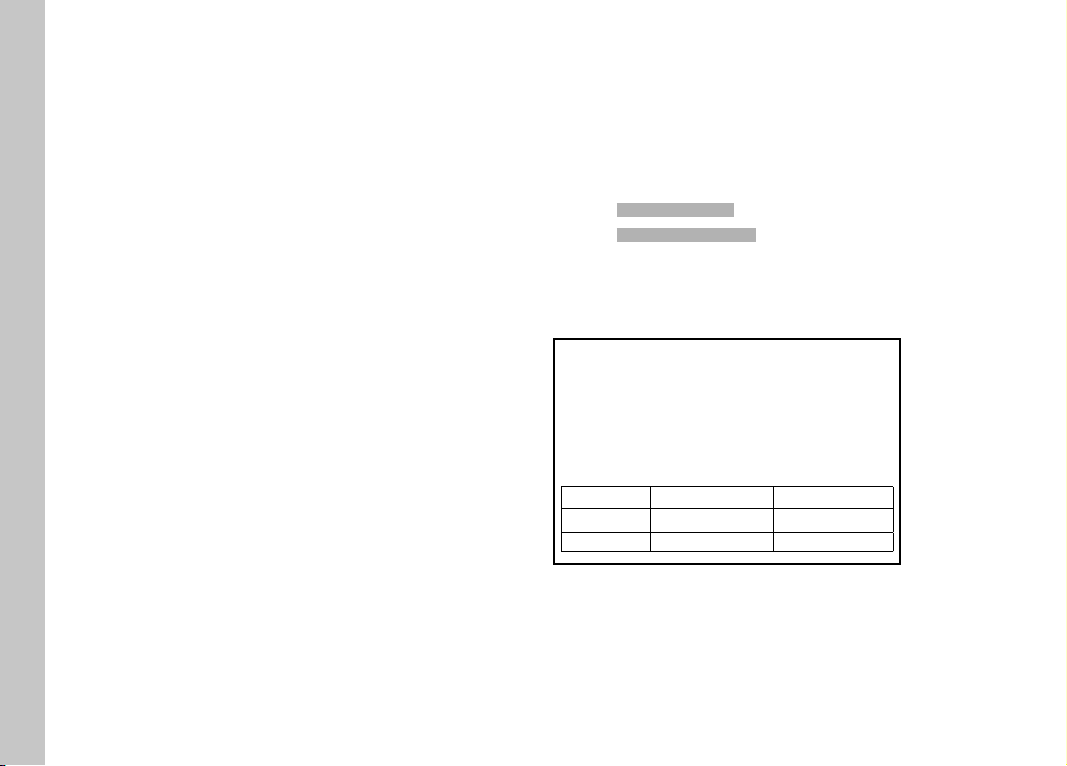
Type
Frequency band (central frequency) Maximum power
(dBm E.I.R.P.)
WLAN
2412–2462/5180–5240 MHz/
5260–5320/5500–5700 MHz
20
Bluetooth
®
Wireless
Technology
2402–2480 MHz 20
Legal information
EN
7
DISPOSAL OF ELECTRICAL AND ELECTRONIC
EQUIPMENT
(Applies within the EU and for other European countries
with active waste separation policies.)
This device contains electric and/or electronic components which
must not be disposed of in general household waste. Instead, it
should be disposed of at a recycling collection point provided by
your local authority.
This service is free of charge. Any standard or rechargeable
batteries used in this device must be removed and disposed of
separately in accordance with local regulations.
Please contact your local authorities, waste disposal collection
point or the retailer, from whom you purchased the device for more
information on correct waste disposal.
Legal information

EN
8
SAFETY REMARKS
GENERAL INFORMATION
• Do not use your camera in the immediate vicinity of devices that
generate powerful magnetic, electrostatic or electromagnetic
fields (e.g. induction ovens, microwave ovens, television sets or
computer screens, video game consoles, cell phones, broad-
casting equipment). Their electromagnetic fields can interfere
with recordings.
• Strong magnetic fields, e.g. from speakers or large electric
motors can damage the stored picture data or disrupt recording.
• Switch off the camera, remove the battery briefly, replace it and
switch the camera back on in case of a camera malfunction due
to the effects of electromagnetic fields.
• Do not use the camera in the immediate vicinity of radio
transmitters or high-voltage power lines. Their electromagnetic
fields may interfere with recordings.
• Always store small parts e.g. the accessory shoe cover as
follows:
– out of the reach of children
– in a safe location, where they will not get lost or stolen
• State-of-the-art electronic components are sensitive to static
discharge. Since people can easily pick up charges of several
10 000 volts by walking on synthetic carpets, a discharge can
occur when you touch the camera, and especially it is placed on
a conductive surface. A static discharge on the camera housing
poses no risk for the electronics. Despite built-in safety circuits,
you should avoid direct contact with external camera contacts
like those in the flash shoe.
• Take care not to soil or scratch the sensor for lens detection in
the bayonet. You must similarly prevent direct contact of the
bayonet with grains of sand or similar particles, as these could
cause irreparable damage. This component must only be
cleaned with a dry cloth (in system cameras).
• Use a cotton or linen cloth instead of a microfiber cloth from an
optician's (synthetic) when cleaning the contacts. Make sure to
discharge any electrostatic charge by deliberately touching a
heating or water pipe (conductive, grounded material). Dirt
deposits and oxidation on the contacts can be avoided by
storing your camera in a dry location with the lens cap and the
flash shoe/viewfinder cap (in system cameras) attached.
• Only use accessories specified for this model to prevent faults,
short circuits or electric shock.
• Do not attempt to remove parts of the housing (covers) yourself.
Repairs must be done at authorized service centers only.
• Protect the camera against contact with insect sprays and other
aggressive chemicals. Petroleum spirit, thinner and alcohol must
not be used for cleaning. Some chemicals and liquids can
damage the camera housing or the surface finish.
• Rubber and plastics are known to expel aggressive chemicals
and should therefore not be kept in contact with the camera for
extended periods of time.
• Prevent any sand or dust or water penetration into the camera,
e.g. during snowfall or rain or on the beach. Be extra careful
when changing the lens (in system cameras) and when inserting
or removing the memory card and rechargeable battery. Sand
and dust can damage the camera, the lens, the memory card
and the battery. Moisture can cause malfunctions and
irreparable damage to the camera and memory card.
LENS
• A camera lens can have the effect of a magnifying glass when
exposed to direct frontal sunlight. The camera must therefore be
protected against extended exposure to direct sunlight.
Safety remarks

EN
9
• Attaching the lens cap and keeping the camera in the shade or
ideally in its camera case, will help prevent damage to the
interior of the camera.
RECHARGEABLE BATTERY
• Improper use of the batteries or the use of unapproved battery
types may result in an explosion!
• Do not expose the rechargeable battery to sunlight, heat,
humidity or moisture for prolonged periods of time. Likewise, the
batteries must not be placed in a microwave oven or a
high-pressure container as this would pose a fire or explosion
hazard.
• Do not under any circumstances charge or insert a damp or wet
battery into the camera!
• A safety valve in the battery ensures that any excess pressure
caused by improper handling is discharged safely. It is neverthe-
less important to dispose of a bloated battery immediately. It
may pose an explosion hazard!
• Keep the battery contacts clean and easily accessible. Although
lithium-ion batteries are secured against short circuits, they
should still be protected against contact with metal objects like
paper clips or jewelry. A short-circuited battery can get very hot
and cause severe burns.
• When a battery is accidentally dropped, make sure to check the
housing and the contacts immediately for any damage. A
damaged battery can damage the camera.
• The battery must be removed from the camera or charger and
must be replaced immediately in case of a strange smell,
discoloration, deformation, overheating or leakage. Continued
use of the battery may result in overheating, which can cause
fire and/or explosion!
• Never throw batteries into a fire as they may explode.
• Keep the battery away from sources of heat in case of leakage
or if you smell burning. Leaked fluid can catch fire!
• The use of other chargers not approved by Leica Camera AG can
cause damage to the batteries – and in extreme cases – cause
serious or life-threatening injuries.
• Make sure that the power socket is freely accessible at all times.
• Do not attempt to open the battery or the charger. Repairs must
only be carried out by authorized service centers.
• Keep batteries out of the reach of children. Batteries can cause
suffocation when swallowed.
FIRST AID
• Battery fluid may cause blindness if it comes into contact
with the eyes. Rinse the eyes thoroughly with clean water
immediately. Avoid rubbing. Seek medical attention
immediately.
• Leaked battery fluid poses an injury hazard when it comes in
contact with clothing or skin. Rinse the affected areas
thoroughly with clean water.
CHARGER
• Using the charger in the vicinity of broadcasting receivers may
interfere with reception. Ensure a distance of at least 1m (3 ft)
between the charger and the receiver.
• When the charger is in use, it may emit a buzzing sound – this is
normal and not a malfunction.
• Disconnect the charger from the mains when it is not in use, as
it consumes electricity (a very small amount), even if no battery
is inserted.
• Always keep the charger contacts clean, and never short circuit
them.
Safety remarks

EN
10
MEMORY CARD
• Never remove the memory card during a datasave or card
reading process. The camera must not be switched off or be
subjected to impact or vibrations while working.
• Do not open the cover/remove the memory card or the battery
while the status LED is lit, which indicates memory access. Data
on the card may otherwise be destroyed and camera malfunc-
tions may occur.
• Do not drop or bend memory cards as this will cause damage
and result in the loss of stored data.
• Do not touch the connections on the reverse of the memory card
and keep them clean and dry.
• Keep memory cards out of the reach of children. Swallowing a
memory card may cause suffocation.
SENSOR
• Cosmic radiation (e.g. during flights) may cause pixel defects.
CARRY STRAP
• Carry straps are usually made of very robust material. You should
therefore keep it out of the reach of children. A carry strap is not
a toy and poses a strangulation risk.
• Use the carry strap only for its intended purpose on a camera or
on binoculars. Any other use poses the risk of injury and may
possibly result in damage to the carry strap and is therefore not
permitted.
• Carry straps should also not be used for cameras/binoculars
during sports activities that pose a risk of entanglement (e.g.
when mountain climbing and similar outdoor activities).
TRIPOD
• When using a tripod, make sure it is standing securely and turn
the camera only by turning the tripod, not the actual camera.
Ensure that the tripod screw is hand-tightened only. Avoid
transporting the camera while the tripod is attached. You might
injure yourself or others and the camera could get damaged.
FLASH
• The use of incompatible flash units with your LeicaQ2 Mono-
chrom may result in irreparable damage to the camera and/or
the flash unit.
Safety remarks

EN
11
Safety remarks

EN
12
GENERAL INFORMATION
Please read the section about “Care/Maintenance” for more
information about what to do in case of problems.
CAMERA/LENS
(For system cameras)
• Make a note of the serial numbers of your camera (engraved in
the base of the camera housing) and lenses, as this information
will be extremely important in case of loss.
• Make sure to always have a lens or the camera bayonet cover
attached to prevent dust or other foreign bodies penetrating the
camera.
• That is why you should always replace lenses quickly and in a
dust-free environment.
• Never store the camera bayonet cover or the lens back cover in
a pants pocket, as they will attract lint and dust, which could
then be accidentally introduced into the camera.
LCD PANEL
• Condensation may form on the LCD panel if the camera is
exposed to great temperature fluctuations. Wipe the screen
carefully with a soft, dry cloth.
• The screen image will initially be slightly darker than normal if
the camera is very cold when it is switched on. The normal level
of brightness will be reached as soon as the LCD panel warms
up.
RECHARGEABLE BATTERY
• The battery must have a temperature between +10°C and
+30°C for charging (otherwise the charger will not switch on or
will switch off again immediately).
• Lithium-ion batteries can be charged at any time, regardless of
their current charge level. A partially charged battery will charge
to full capacity faster than a fully discharged one.
• The rechargeable batteries come only partly charged ex works
and should therefore be charged fully before their first use.
• A new battery only reaches its full capacity after it has been fully
charged and – by using it in the camera – depleted 2 to 3 times.
This depletion process should be repeated roughly every 25
cycles.
• Battery and charger heat up during the charging process. That is
normal and not a malfunction.
• Rapid flashing of the two LEDs (>2Hz) when charging
commences indicates a charging error (e.g. maximum charging
time exceeded, voltages or temperatures outside permitted
ranges or a short circuit). Disconnect the charger from the
mains and remove the battery. Ensure that the above tempera-
ture conditions are met and then restart the charging process.
Please contact your dealer, the Leica representative in your
region or Leica Camera AG if the problem persists.
• Rechargeable lithium-ion batteries generate power by way of
internal chemical reactions. These reactions are influenced by
ambient temperature and humidity. To ensure a maximum
service life of the battery, it should not be exposed to extreme
temperatures (high or low) for extended periods of time (e.g. in a
parked car in the summer or winter).
• However, every battery has a limited service life! After several
hundred charging cycles, this limitation will become evident as
the operating times get significantly shorter.
General information

EN
13
• The replaceable battery supplies power to a backup battery,
which is permanently installed in the camera. This backup
battery retains the date and time for some weeks. Once the
backup battery is depleted, it must be replenished by inserting a
charged main battery. The time and date will have to be set
again after a full depletion of both batteries.
• As the battery capacity deteriorates or if using an older battery,
warning messages may appear and some functions may be
restricted or blocked entirely.
• Always remove the battery if the camera will not be used for an
extended period of time. Make sure to switch the camera off via
the main switch before removing the battery. Leaving the battery
in the camera will result in a deep discharge after a few weeks.
Voltage levels will decrease significantly, as the camera uses a
low idle current to maintain settings.
• Dispose of damaged batteries in accordance with the relevant
regulations at an approved collection point for proper recycling.
• The date of manufacture can be found on the battery. The date
format is week/year.
MEMORY CARD
• The range of available SD/SDHC/SDXC cards on the market is
too extensive for Leica Camera AG to test for compatibility and
quality. Generally, any type of memory card may be used without
any damage to the camera or memory card. As some “no name”
cards may not fully comply with the SD/SDHC/SDXC standards,
Leica Camera AG cannot provide any guarantee of function.
• We recommend formatting memory cards from time to time, as
fragmented residual data from deleted files may block some of
the storage capacity.
• Generally, it is not necessary to format (initialize) memory cards
that have been previously used. Formatting will, however, be
necessary if you insert an unformatted memory card or a card
that was formatted in another device (e.g. a computer) for the
first time.
• We recommend backing up your data on a PC, because
electromagnetic fields, static electricity and any damage to the
memory card or camera defects may result in irretrievable
damage or loss of your data.
• SD, SDHC, and SDXC memory cards come with a write
protection slider to prevent accidental overwriting. This slider is
located on the non-beveled side of the card. All data on the card
is protected when the slider is set to its lower position, marked
LOCK.
• All data stored on a memory card will be lost during formatting.
Formatting will not be prevented by the deletion protection set
for individual pictures.
SENSOR
• Any dust or dirt particles stuck to the glass cover of the sensor
may result in noticeable dark stains or specks on the pictures (in
system cameras). You can send your camera to the Leica
Customer Care department for sensor cleaning (see p.164).
This service is not part of the warranty offering and will therefore
incur charges.
DATA
• All data, including personal information, may be changed or
deleted due to incorrect or accidental operation, static
discharge, accidents, malfunctions, repairs and other measures.
• Please note that Leica Camera AG does NOT accept liability for
direct or consequential damage due to the manipulation or
destruction of data and personal information.
General information

EN
14
FIRMWARE UPDATE
Leica is continuously working on the further development and
optimization of Leica Q2 Monochrom. As digital cameras have
many functions that are controlled electronically, improvements
and enhancements to the functions can be installed on the camera
retroactively. Leica releases what are known as firmware updates
at irregular intervals. Cameras are always supplied ex works with
the latest firmware installed or you can download the latest version
from our website yourself and transfer it to your camera.
You will receive a newsletter informing you of the availability of a
new firmware update if you register your camera on the Leica
Camera homepage.
Visit the download section or the “Customer Area” for information
about how to register or how to get firmware updates for your Leica
Q2 Monochrom. Additionally, you can find information about
changes or additions to the manual at: club.leica-camera.com
Leica releases firmware updates for lenses at irregular intervals.
You can download any new firmware version from our homepage
and transfer it to your lens. Please see p.136 for more informa-
tion.
Select the menu item Camera InformationCamera Information (see p. 136) to check
whether your camera and lenses are running the latest firmware
version.
General information

EN
15
WARRANTY
In addition to your statutory warranty rights regarding your dealer,
you will receive an additional Leica Camera AG product warranty
valid from the date of purchase at an authorized Leica retailer.
Previously, the product warranty was included with the product in
the packaging. From now on, the product warranty will only be
available online as a new service. You will be able to review the
warranty conditions for your product at any time, without having to
search fr the document. Please note that this new policy applies
only for products that are no longer delivered with a hardcopy
product warranty included in the packaging. Any products still
delivered with the warranty document in the packaging remain
governed exclusively by that document. For more information
regarding the warranty scope, services and limitations, please visit:
warranty.leica-camera.com
Leica Q2 Monochrom comes with splash water and dust
protection.
The camera was tested under controlled laboratory conditions
and is classes as IP52 in accordance with DIN EN 60529. Please
note: The splash water and dust protection coating is not
permanent and will diminish over time. Please read the section
on “Care/Storage” for detailed instructions on how to clean and
dry the camera. The warranty does not cover liquid damage. Any
attempt to open the camera casing by an unauthorized retailer
or service partner will cause an immediate expiration of the
splash water and dust warranty.
Warranty

Table of content
EN
16
TABLE OF CONTENT
FOREWORD ...................................................................................... 2
SCOPE OF DELIVERY ....................................................................... 2
REPLACEMENT PARTS/ACCESSORIES .......................................... 3
LEGAL INFORMATION ..................................................................... 4
SAFETY REMARKS ........................................................................... 8
GENERAL INFORMATION .............................................................. 12
WARRANTY ..................................................................................... 15
TABLE OF CONTENT ...................................................................... 16
PART DESIGNATIONS .................................................................... 20
DISPLAYS ........................................................................................ 22
PHOTO ......................................................................................................... 22
VIDEO .......................................................................................................... 24
PREPARATION ................................................................................ 28
ATTACHING THE CARRY STRAP ................................................................. 28
PREPARING THE CHARGER ........................................................................ 28
CHARGING THE BATTERY........................................................................... 29
INSERTING/REMOVING THE BATTERY ..................................................... 30
INSERTING/REMOVING THE MEMORY CARD .......................................... 31
ATTACHING/DETACHING THE LENS HOOD ............................................. 32
DIOPTER ADJUSTMENT .............................................................................. 33
CAMERA OPERATION..................................................................... 34
CONTROL ELEMENTS ................................................................................. 34
MAIN SWITCH ................................................................................................... 34
SHUTTER BUTTON ............................................................................................ 35
SHUTTER SPEED SETTING DIAL ....................................................................... 36
THUMBWHEEL .................................................................................................. 36
THUMBWHEEL BUTTON ................................................................................... 37
DIRECTIONAL PAD/CENTER BUTTON .............................................................. 37
PLAY BUTTON/FN BUTTON/MENU BUTTON .................................................. 38
ZOOM/LOCK BUTTON ...................................................................................... 38
LCD PANEL (TOUCH SCREEN) .......................................................................... 39
MENU CONTROL ......................................................................................... 40
CONTROL ELEMENTS ....................................................................................... 40
MENU SECTIONS .............................................................................................. 40
SWITCHING MENU SECTIONS .................................................................................. 42
STATUS SCREEN ............................................................................................... 43
MAIN MENU ...................................................................................................... 45
MENU NAVIGATION .......................................................................................... 46
SUBMENU ......................................................................................................... 47
KEYBOARD/NUMBER PAD ....................................................................................... 47
MENU BAR .............................................................................................................. 48
SCALE MENU ........................................................................................................... 49
DATE/TIME MENU ................................................................................................... 49
USER-DEFINED OPERATION ...................................................................... 50
FAVORITES MENU ............................................................................................. 50
MANAGING THE FAVORITES MENU .......................................................................... 50
DIRECT ACCESS TO MENU FUNCTIONS .......................................................... 51
DYNAMIC DIRECT ACCESS ...................................................................................... 51
STATIC DIRECT ACCESS ........................................................................................... 52
CAMERA BASIC SETTINGS ............................................................ 54
MENU LANGUAGE ...................................................................................... 54
DATE/TIME .................................................................................................. 54
DATE .................................................................................................................. 54
TIME................................................................................................................... 54
TIME ZONE ........................................................................................................ 55
DAYLIGHT SAVING TIME ................................................................................... 55
POWER SAVE MODE (STANDBY MODE) .................................................... 55
AFTER A FEW SECONDS .......................................................................................... 55
AFTER A FEW MINUTES............................................................................................ 55
DISPLAY/VIEWFINDER SETTINGS ............................................................ 56
LCD PANEL/EVF USE ........................................................................................ 56

EN
Table of content
17
EYE SENSOR SENSITIVITY ................................................................................ 57
BRIGHTNESS ..................................................................................................... 57
LCD PANEL .............................................................................................................. 57
EVF .......................................................................................................................... 57
COLOR RENDERING .......................................................................................... 58
LCD PANEL .............................................................................................................. 58
EVF .......................................................................................................................... 58
AUTOMATIC LCD PANEL SHUTDOWN .............................................................. 58
EVF FRAME RATE .............................................................................................. 58
ACOUSTIC SIGNALS ................................................................................... 59
VOLUME ............................................................................................................ 59
ACOUSTIC SIGNALS.......................................................................................... 59
ELECTRONIC SHUTTER SOUND ....................................................................... 59
AUTOFOCUS CONFIRMATION .......................................................................... 59
SILENT PHOTOGRAPHY .................................................................................... 59
BASIC RECORDING SETTINGS (PICTURE) .................................... 62
FILE FORMAT .............................................................................................. 62
JPG SETTINGS ............................................................................................. 63
RESOLUTION ..................................................................................................... 63
IMAGE PROPERTIES .......................................................................................... 64
CONTRAST .............................................................................................................. 64
SHARPNESS ............................................................................................................ 64
TONING ................................................................................................................... 64
IMAGE STABILIZATION ............................................................................... 65
BASIC RECORDING SETTINGS (VIDEO) ........................................ 66
FILE FORMAT .............................................................................................. 66
VIDEO FORMAT ........................................................................................... 66
MICROPHONE ............................................................................................. 66
WIND NOISE REDUCTION .......................................................................... 66
VIDEO STABILIZATION ............................................................................... 66
IMAGE PROPERTIES ................................................................................... 67
PICTURE MODE .............................................................................. 68
DRIVE MODE ............................................................................................... 68
FOCUSING ................................................................................................... 69
AF PHOTOGRAPHY ............................................................................................ 69
AUTOFOCUS MODES ........................................................................................ 69
AFs (single) .............................................................................................................. 69
AFc (continuous) ...................................................................................................... 69
AUTOFOCUS METERING METHODS ................................................................. 70
MULTI-FIELD METERING ........................................................................................... 70
SPOT/FIELD METERING ........................................................................................... 70
FACE DETECTION ..................................................................................................... 71
TOUCH AF ............................................................................................................... 71
MF ASSIST FUNCTIONS .................................................................................... 72
ENLARGEMENT IN AF MODE .................................................................................... 72
AF ASSIST LIGHT ..................................................................................................... 73
ACOUSTIC AF CONFIRMATION ................................................................................. 73
AF QUICK SETTING ........................................................................................... 73
ACCESSING AF QUICK SETTING............................................................................... 73
ADJUSTING THE METERING FIELD SIZE .................................................................... 73
MANUAL FOCUSING (MF) ................................................................................ 74
MF ASSIST FUNCTIONS .................................................................................... 74
FOCUS PEAKING...................................................................................................... 74
ENLARGEMENT IN MF MODE ................................................................................... 75
MACRO FUNCTION ........................................................................................... 76
ISO SENSITIVITY ......................................................................................... 76
FIXED ISO VALUES ............................................................................................ 76
AUTOMATIC SETTING ........................................................................................ 77
LIMITING SETTING RANGES ..................................................................................... 77
EXPOSURE................................................................................................... 78
EXPOSURE METERING METHODS .................................................................... 78
SPOT METERING ...................................................................................................... 78
CENTER-WEIGHTED METERING ................................................................................ 78
MULTI-FIELD METERING ........................................................................................... 78
EXPOSURE MODES ........................................................................................... 79
SELECTING A MODE ................................................................................................ 79

Table of content
EN
18
FULLY AUTOMATIC EXPOSURE SETTING – P ................................................... 79
AUTOMATIC PROGRAM – P ...................................................................................... 79
CHANGING THE PRESET SHUTTER SPEED AND APERTURE COMBINATIONS (SHIFT) 80
SEMI-AUTOMATIC EXPOSURE SETTING – A/S ................................................ 80
APERTURE PRIORITY - A ........................................................................................... 80
SHUTTER SPEED PRIORITY – S ................................................................................ 81
MANUAL EXPOSURE SETTING – M .................................................................. 82
SETTING SHUTTER SPEEDS .............................................................................. 82
LONG-TERM EXPOSURE – T .............................................................................. 83
EXPOSURE CONTROL ....................................................................................... 84
EXPOSURE PREVIEW ................................................................................................ 84
EXPOSURE LOCK ..................................................................................................... 84
EXPOSURE COMPENSATION .................................................................................... 87
PICTURE RECORDING MODES ................................................................... 88
SERIAL EXPOSURES ......................................................................................... 88
INTERVAL SHOOTING ....................................................................................... 89
EXPOSURE BRACKETING .................................................................................. 91
SELF-TIMER ....................................................................................................... 92
DIGITAL ZOOM .................................................................................................. 93
INFO DISPLAYS ........................................................................................... 94
INFO DISPLAYS IN PICTURE MODE .................................................................. 94
AUXILIARY DISPLAYS ........................................................................................ 95
CLIPPING ................................................................................................................. 95
LEVEL GAUGE .......................................................................................................... 96
GRID ........................................................................................................................ 97
HISTOGRAM ............................................................................................................ 97
FLASH PHOTOGRAPHY .............................................................................. 98
COMPATIBLE FLASH UNITS .............................................................................. 98
FLASH EXPOSURE METERING (TTL METERING) .............................................. 99
HSS (HIGH SPEED SYNC.) ................................................................................ 99
SETTINGS ON THE FLASH UNIT ....................................................................... 99
FLASH MODES ................................................................................................ 100
AUTOMATIC FLASH ACTIVATION ............................................................................ 100
MANUAL FLASH ACTIVATION ................................................................................. 100
AUTOMATIC FLASH ACTIVATION AT SLOWER SHUTTER SPEEDS (LONG-TERM
SYNCHRONIZATION) .............................................................................................. 100
FLASH CONTROL ............................................................................................ 101
SYNC POINT .......................................................................................................... 101
FLASH RANGE ................................................................................................. 102
FLASH EXPOSURE COMPENSATION .............................................................. 102
FLASH EXPOSURE DISPLAYS IN THE VIEWFINDER....................................... 104
VIDEO MODE ................................................................................106
START/EXIT VIDEO MODE ....................................................................... 106
START/END VIDEO RECORDING ............................................................. 107
EXPOSURE CONTROL ............................................................................... 107
FOCUSING ................................................................................................. 107
PLAYBACK/REVIEW MODE ......................................................... 108
CONTROL ELEMENTS IN PLAYBACK/REVIEW MODE ........................... 108
INITIATE/EXIT PLAYBACK/REVIEW MODE ............................................ 109
SELECTING/SCROLLING THROUGH RECORDINGS ............................... 110
INFO DISPLAYS IN PLAYBACK/REVIEW MODE ..................................... 111
DISPLAYING ASSIST FUNCTIONS ..................................................................112
PICTURE SERIES REVIEW ........................................................................ 112
JUMPING TO A SPECIFIC PICTURE IN THE GROUP .................................................. 113
RESUMING PLAYBACK/REVIEW ............................................................................. 113
SAVE AS A VIDEO .................................................................................................. 114
SCROLLING THROUGH THE INDIVIDUAL PICTURES OF A SERIES ........................... 114
CROPPED SECTION ZOOM ....................................................................... 115
DISPLAYING MULTIPLE RECORDINGS AT ONCE .................................... 116
TAGGING/RATING OF RECORDINGS ....................................................... 118
DELETING RECORDINGS .......................................................................... 118
QUICK ACCESS TO DELETE FUNCTIONS .......................................................119
DELETING INDIVIDUAL RECORDINGS ............................................................119
DELETING MULTIPLE RECORDINGS ............................................................... 120
DELETING ALL RECORDINGS .........................................................................121
DELETING UNRATED RECORDINGS ............................................................... 122
DELETING PICTURE SERIES ............................................................................122
PREVIEW OF LATEST RECORDING .......................................................... 123

EN
Table of content
19
Definition of the various categories of information found in
this manual
Note
Additional information
Important
Failure to comply with instructions may result in damage to the
camera, the accessories or the recordings
Attention
Non-compliance may result in personal injury
SLIDE SHOW ............................................................................................. 123
VIDEO PLAYBACK ..................................................................................... 124
VIDEO EDITING ...............................................................................................127
OTHER FUNCTIONS .....................................................................130
USER PROFILES ........................................................................................ 130
DATA MANAGEMENT ................................................................................ 132
DATA STRUCTURE ON THE MEMORY CARD ...................................................132
EDIT FILE NAMES ............................................................................................133
CREATING A NEW FOLDER ............................................................................. 133
RECORDING THE IMAGE LOCATION WITH GPS ............................................. 134
FORMATTING A MEMORY CARD .....................................................................134
DATA TRANSFER..............................................................................................135
USING RAW DATA (DNG) ..........................................................................135
RESETTING THE CAMERA TO FACTORY SETTINGS ................................ 136
FIRMWARE UPDATES ............................................................................... 136
UPDATING THE CAMERA FIRMWARE .............................................................137
LEICA FOTOS ................................................................................ 138
CONNECTING ............................................................................................ 138
REMOTE CAMERA CONTROL ...................................................................140
CARE/STORAGE ........................................................................... 142
FAQ ................................................................................................144
MENU OVERVIEW ........................................................................150
INDEX ............................................................................................154
TECHNICAL DATA ......................................................................... 160
LEICA CUSTOMER CARE ..............................................................164
LEICA ACADEMY ..........................................................................164
Part Designations
EN
20
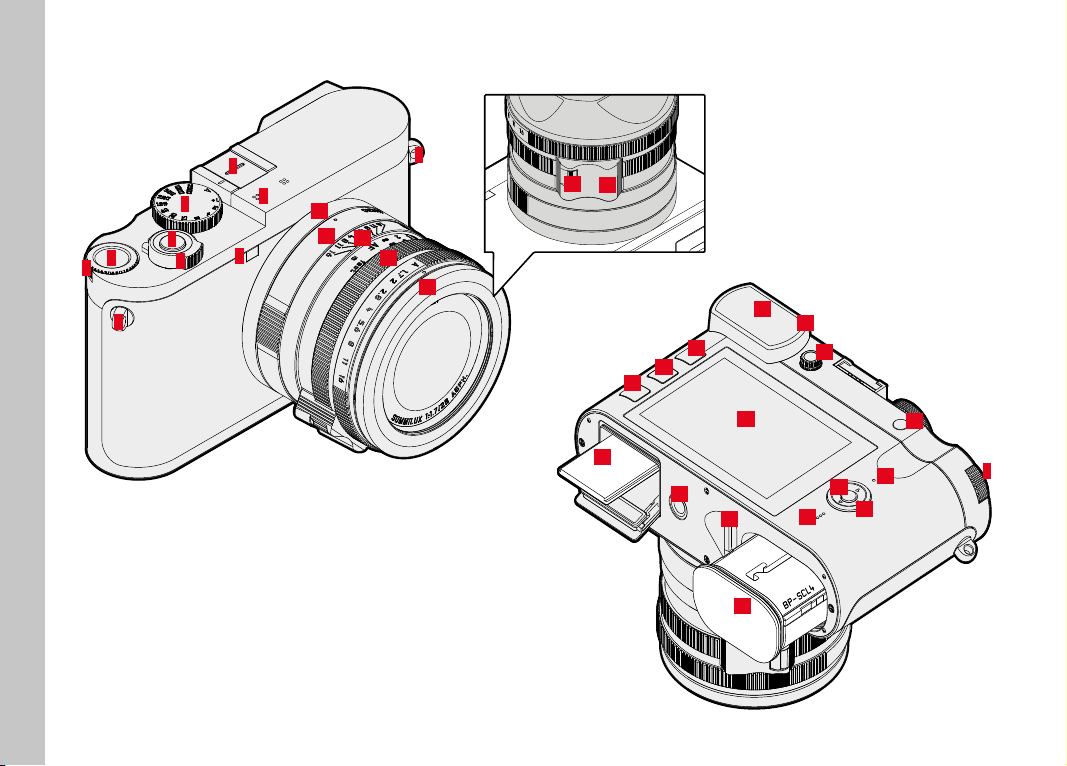
PART DESIGNATIONS
6
4
5
1
2
3
8
7
6
26
27
28
29
9
30
21
10
11
12
13
19
20
14
15
16
17
22
23
24
25
4
18
31
32

EN
Part Designations
21
LEICA Q2 MONOCHROM
1 Main switch
2 Shutter button
3 Shutter speed setting dial
4 Thumbwheel
5 Thumbwheel button
6 Strap lugs
7 Accessory shoe
8 Microphone
9 Self-timer LED/AF assist light
10 Viewfinder eyepiece
11 Eye sensor
12 Diopter setting wheel
13 Zoom/Lock button
14 PLAY button
15 FN button
16 MENU button
17 LCD panel
18 Status LED
19 Directional pad
20 Center button
21 Speaker
22 Memory card slot
23 Tripod thread
24 Battery release lever
25 Battery compartment
LENS “SUMMILUX 28 f/1.7 ASPH.”
26 Alignment point for macro function
27 Macro setting ring
28 Focus ring
29 Aperture setting ring
30 Thread protection ring
31 AF/MF lock release
32 Focus tab
Displays
EN
22
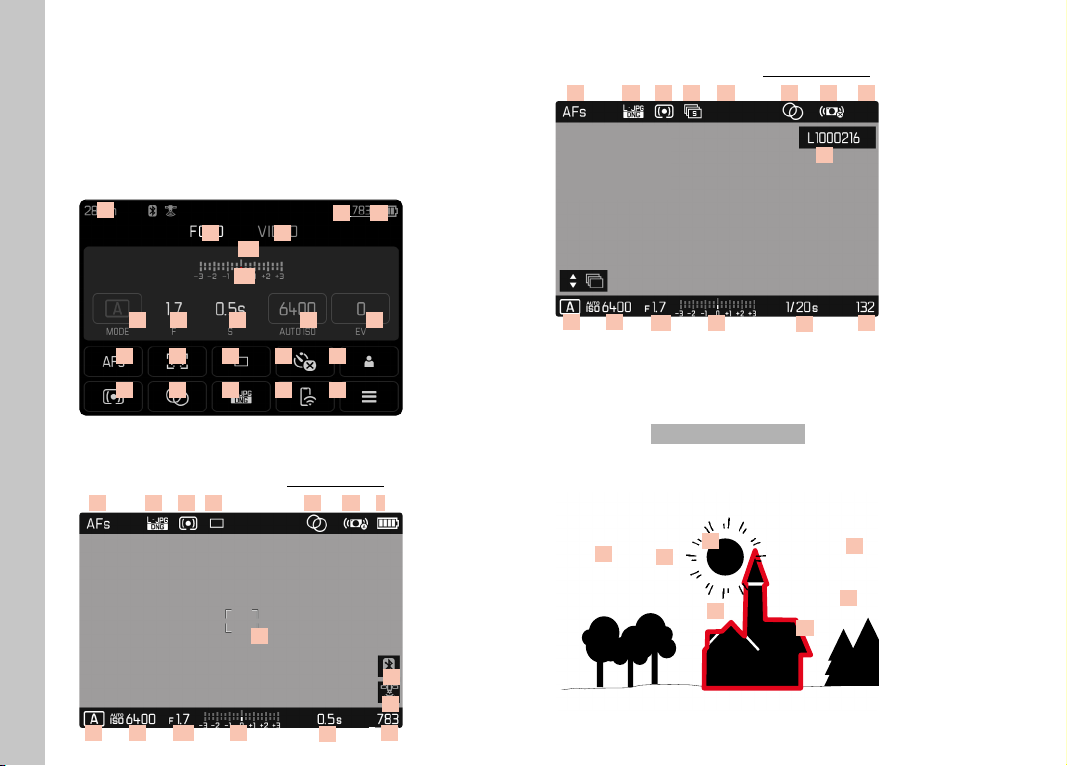
DISPLAYS
The images displayed on the LCD panel and in the viewfinder are
identical.
PHOTO
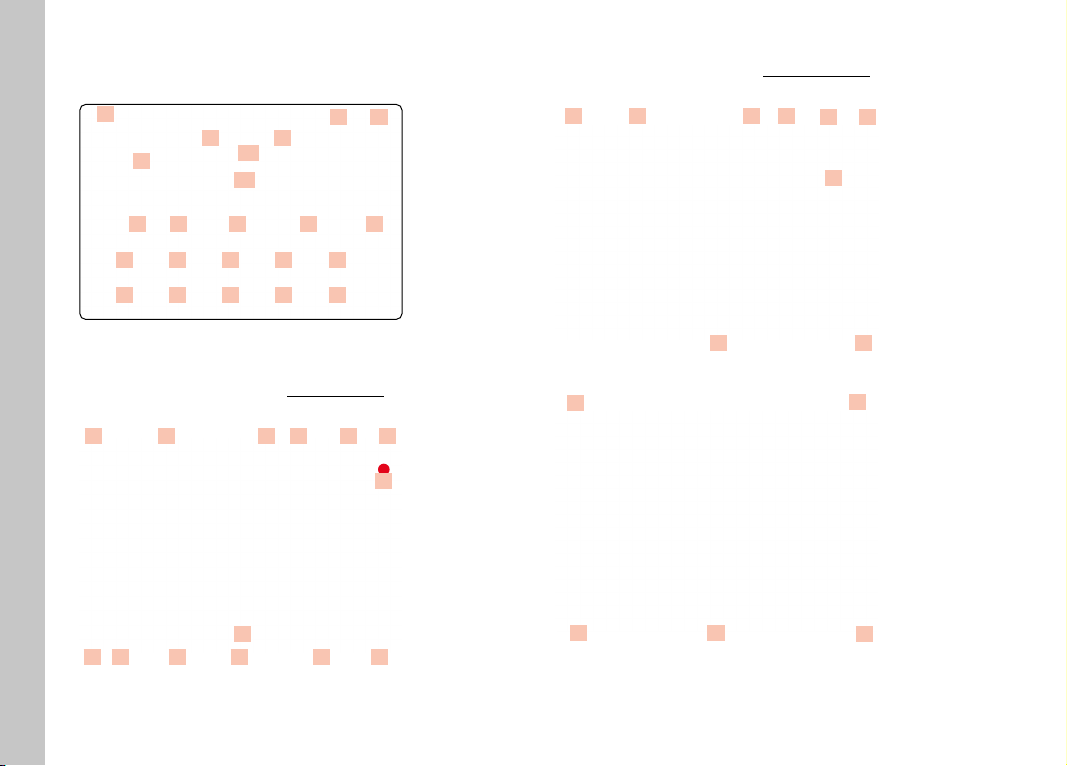
STATUS SCREEN
01
04 05
07
06
08
13
18
14
19
15
20
16
21
17
22
09 10 11 12
02 03
WHEN TAKING A PICTURE
All displays/values refer to the actual settings.
13 19
25
02
10
0709
1108
20 18 3
24
26
27
15
IN REVIEW/PLAYBACK MODE
All displays/values refer to the displayed image.
13 19
30
10
0709
1108
20 18
29
24 28
15 23
ACTIVATED Capture AssistantsCapture Assistants
INFO
35
34
31
33
32
37
36
EN
Displays
23
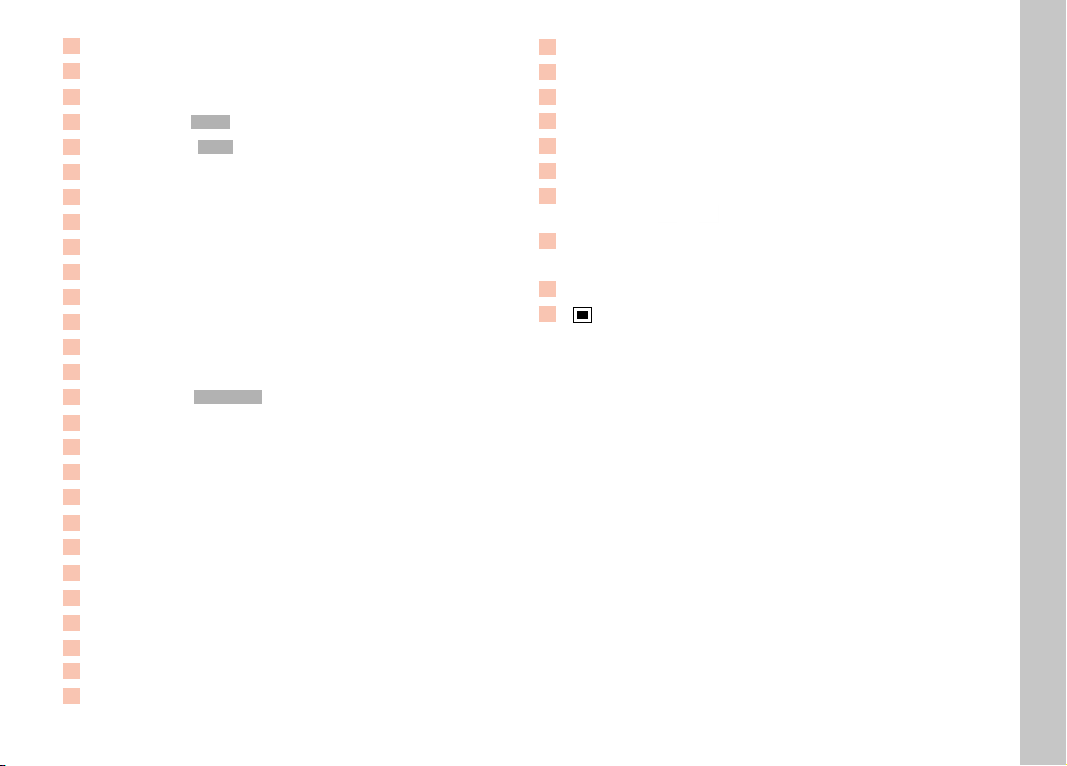
01
Focal length
02
Remaining memory capacity
03
Battery capacity
04
Menu section PHOTOPHOTO
05
Menu sections VIDEOVIDEO
06
Light balance
07
Exposure compensation scale
08
Exposure mode
09
Exposure value
10
Shutter speed
11
ISO Sensitivity
12
Exposure compensation value
13
Focus mode
14
Autofocus metering method
15
Picture mode (Drive ModeDrive Mode)
16 Self-timer
17
User profile
18
Exposure metering method
19
Toning
20 File format/compression level/resolution
21
Leica FOTOS
22 Favorites menu / Main menu
23 Flash mode/flash exposure compensation
24 Stabilization activated
25 AF Field
26
Bluetooth
®
(Leica FOTOS)
27
Automatic storage of the recording location (Exif data)
(Only while connection to Leica FOTOS is active)
28 Icon for marked picture
29 File name
30 File number of the picture shown
31
Histogram
32
Grid lines
33
Clipping identification of overexposed subject elements
34
Automatic magnification as focus assistance for manual
focusing (3x or 6x magnification available)
35
Focus peaking
(identification of in sharp edges in the object)
36
Level gauge
37
Display of cropped section size and position
(only visible for enlarged sections)
Displays
EN
24
VIDEO
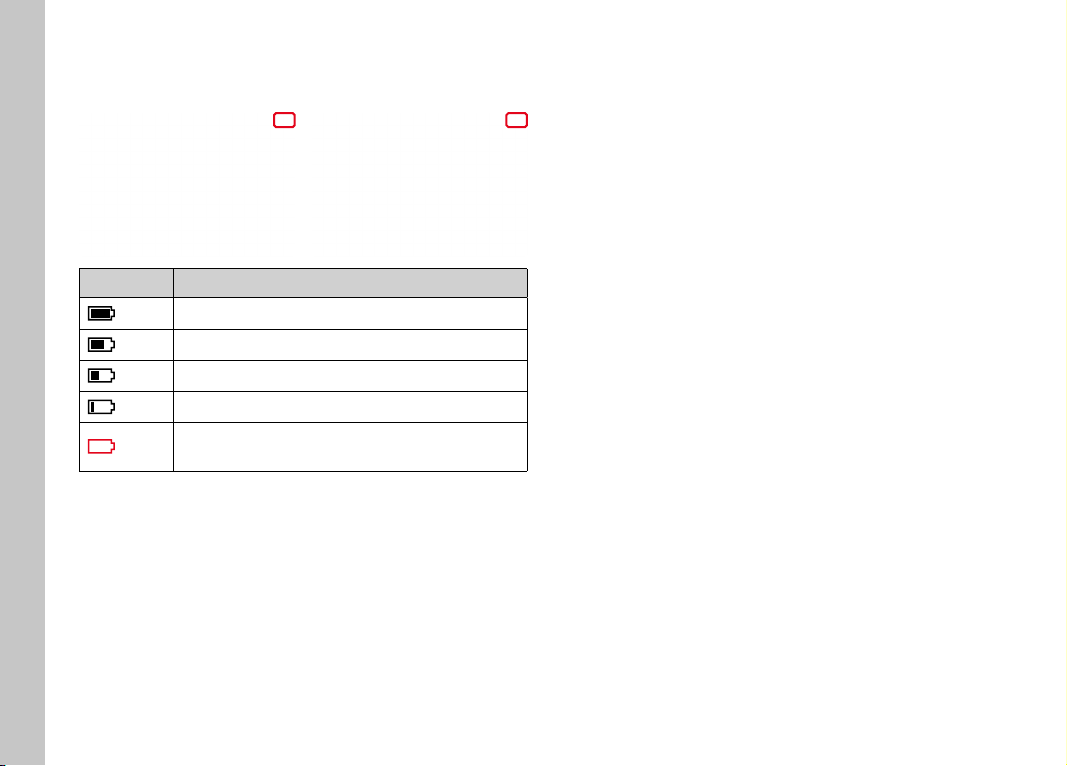
STATUS SCREEN
38
41 42
45
44
46
51
56
52
57
53
58
54
59
55
60
47 48 49 50
39 40
43
WHEN TAKING A PICTURE
All displays/values refer to the actual settings.
51
3948454746 49
44
58 43 57 4061
62
IN REVIEW/PLAYBACK MODE
All displays/values refer to the displayed image.
51 5758
65
6644
63
61 64
67
69 70
71
68

EN
Displays
25
38
Focal length
39
Remaining memory capacity
40
Battery capacity
41
Menu section PHOTOPHOTO
42
Menu sections VIDEOVIDEO
43
Microphone recording level
44
Light balance
45
Exposure compensation scale
46
Exposure mode
47
Exposure value
48
Shutter speed
49
ISO Sensitivity
50
Exposure compensation value
51
Focus mode
52
Autofocus metering method
53
Microphone sensitivity (Microphone GainMicrophone Gain)
54
Video stabilization
55
User profile
56
Exposure metering method
57
Toning
58
Resolution / Frame rate
59
Leica FOTOS
60
Favorites menu / Main menu
61
Stabilization activated
62
Indicates recording in progress
63
Length of recording
64 Icon for marked picture
65
File name
66
File number of the picture shown
67
Video editing function
68
Exiting video playback
69
Current time of the playback
70
Playback status bar
71
Playback volume
Displays
EN
26
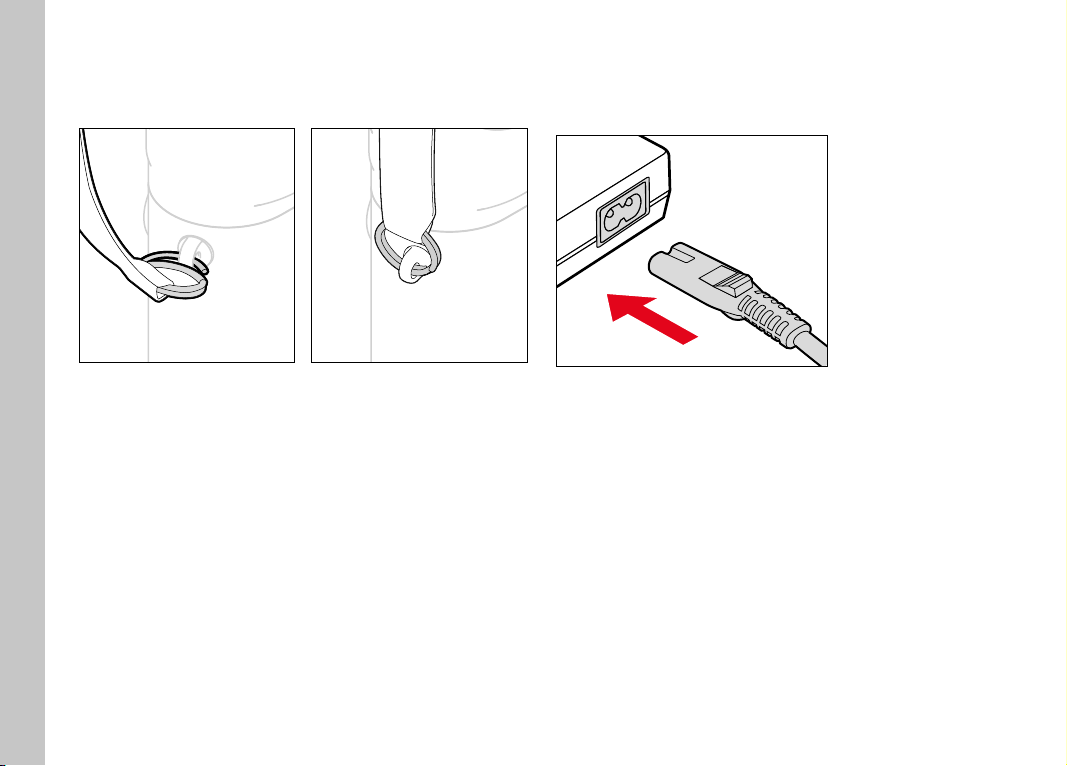
CHARGE STATUS INDICATOR ON THE LCD PANEL
The battery charge status is displayed in the status screen and in
the header line at the top right.
Display Charge status
approx. 75 - 100%
approx. 50 - 75%
approx. 25 - 50%
approx. 0 - 25%
approx. 0%
The battery needs charging or replacing

EN
Displays
27
Preparation
EN
28
PREPARATION
ATTACHING THE CARRY STRAP
Attention
• Once you have attached the carry strap, please make sure that
the clips are mounted correctly to prevent the camera from
falling.
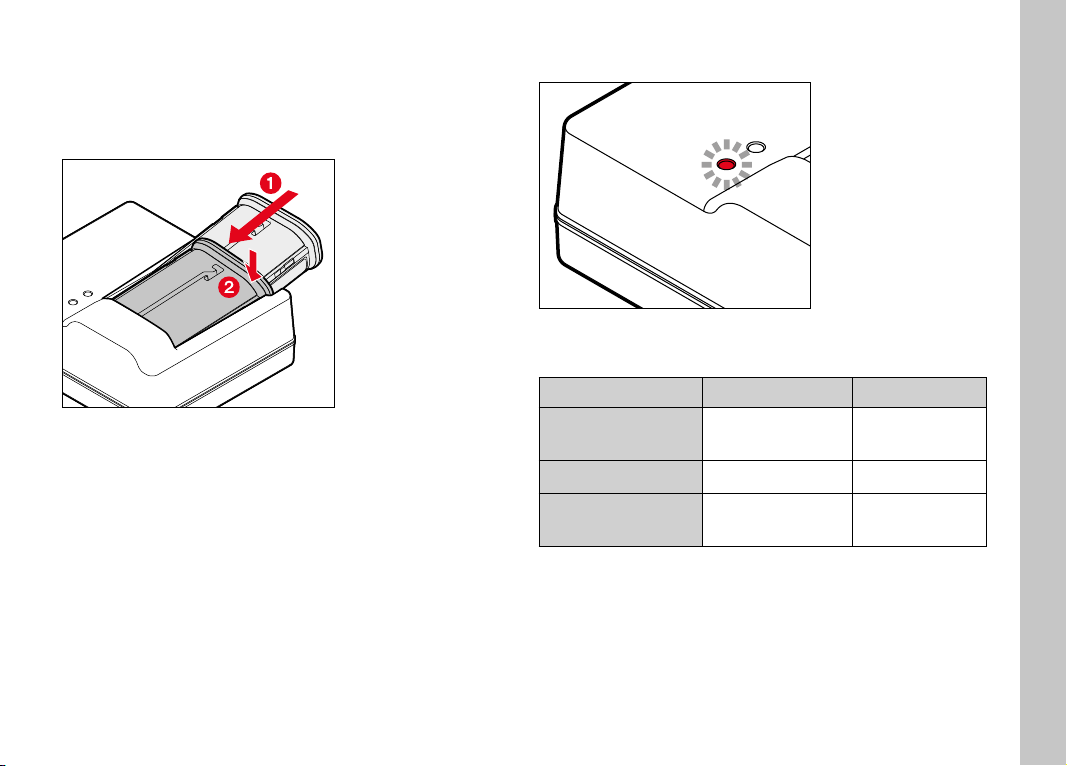
PREPARING THE CHARGER
Use the mains cable with the matching regional plug to connect
the charger to mains electricity.
Note
• The charger will automatically adapt to local mains voltage.
EN
Preparation
29
CHARGING THE BATTERY
The camera is powered by a lithium-ion battery.
INSERTING THE BATTERY IN THE CHARGER
▸ Slide the battery into the charger with the groove facing up until
the contacts meet
▸ Press down on the battery until you can hear and feel it clicking
into place
▸ Ensure that the battery is fully inserted into the charger
REMOVING THE BATTERY FROM THE CHARGER
▸ Tilt the battery up and lift it out at an angle
CHARGE STATUS INDICATORS ON THE CHARGER
The status LED indicates a correct charging process.
Display Charge status Charge time*
CHARGE flashes
green
battery is charging
80% lights up orange
80% approx. 2 h
CHARGE continuous
green light
100% approx. 3½ h
Disconnect the charger from mains electricity when the charging
process is complete. There is no risk of overcharging.
* for a completely discharged battery
Preparation
EN
30
INSERTING/REMOVING THE BATTERY
▸ Ensure that the camera is switched OFF (see p.34)
INSERTION
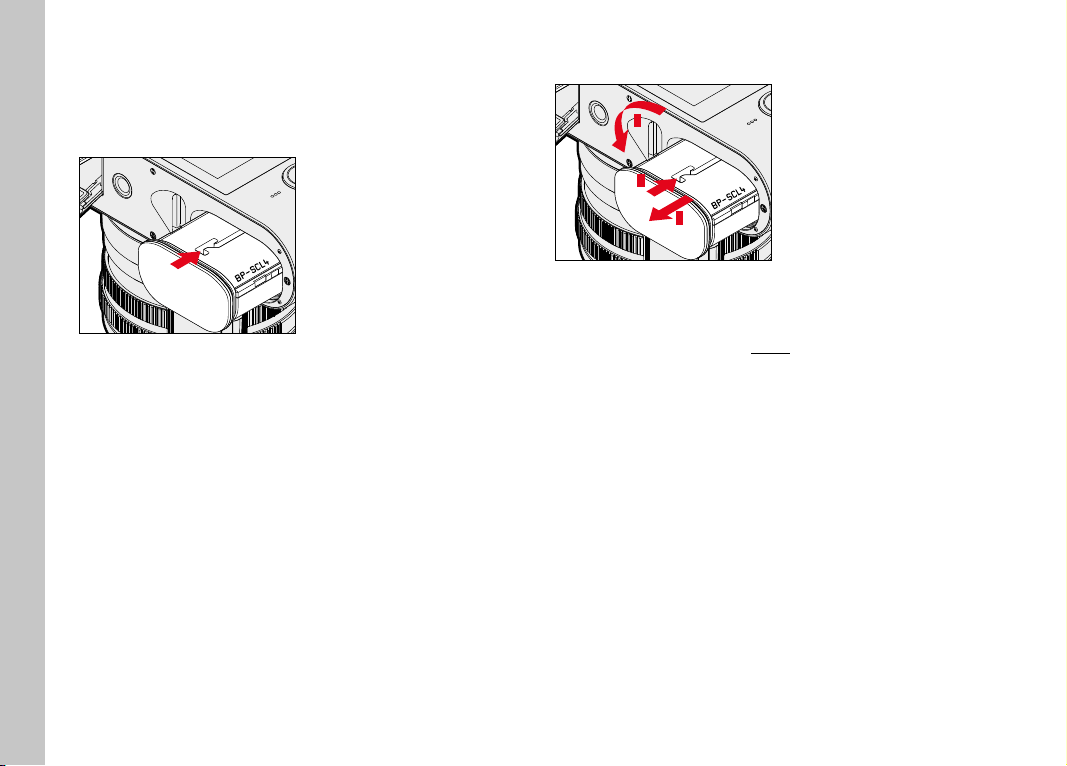
▸ Insert the battery into the slot with the groove pointing towards
the LCD panel and gently push until you hear and feel it clicking
into place
REMOVAL
1
2
3
▸ Turn the battery release lever
• Battery is pushing out slightly.
▸ Press down on the battery lightly
• The battery unlocks and pushes out fully.
▸ Removing the battery
Important
• Removing the battery while the camera is switched on may
result in the loss of custom settings or damage to the memory
card.
EN
Preparation
31
INSERTING/REMOVING THE MEMORY CARD
The camera will save exposures to an SD (Secure Digital), SDHC
(High Capacity) or SDXC (eXtended Capacity) memory card.
Notes
• SD/SDHC/SDXC memory cards are available from various
suppliers in various sizes and with differing read/write speeds.
Memory cards with high storage capacities and high read/write
speeds offer quick storage and rendering.
• The memory card may not be supported (capacity) or will have
to be formated in the camera before first use (see p.134). The
camera will in that case display a relevant message. Please see
the section “Technical Data” for information about supported
cards.
• Check the memory card for correct alignment if you are having
difficulties inserting it into the camera.
• See p. 10 and p. 13 for additional information.
• Video recordings require a high write speed.
▸ Ensure that the camera is switched OFF (see p.34)
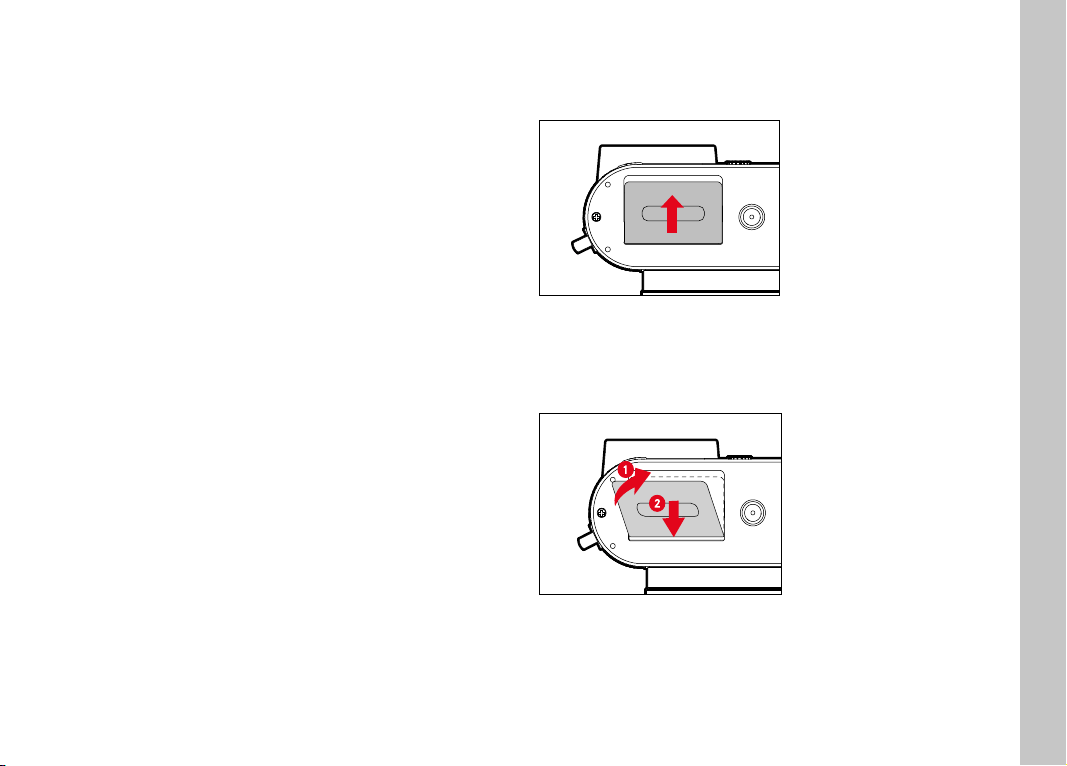
OPENING THE COVER OVER THE MEMORY CARD SLOT
▸ Slide the cover as shown in the illustration until you hear a click
• The cover lifts automatically.
CLOSING THE COVER OVER THE MEMORY CARD SLOT
▸ Close and hold down the cover
▸ Slide the cover as shown in the illustration until it audibly clicks
into place
Preparation
EN
32
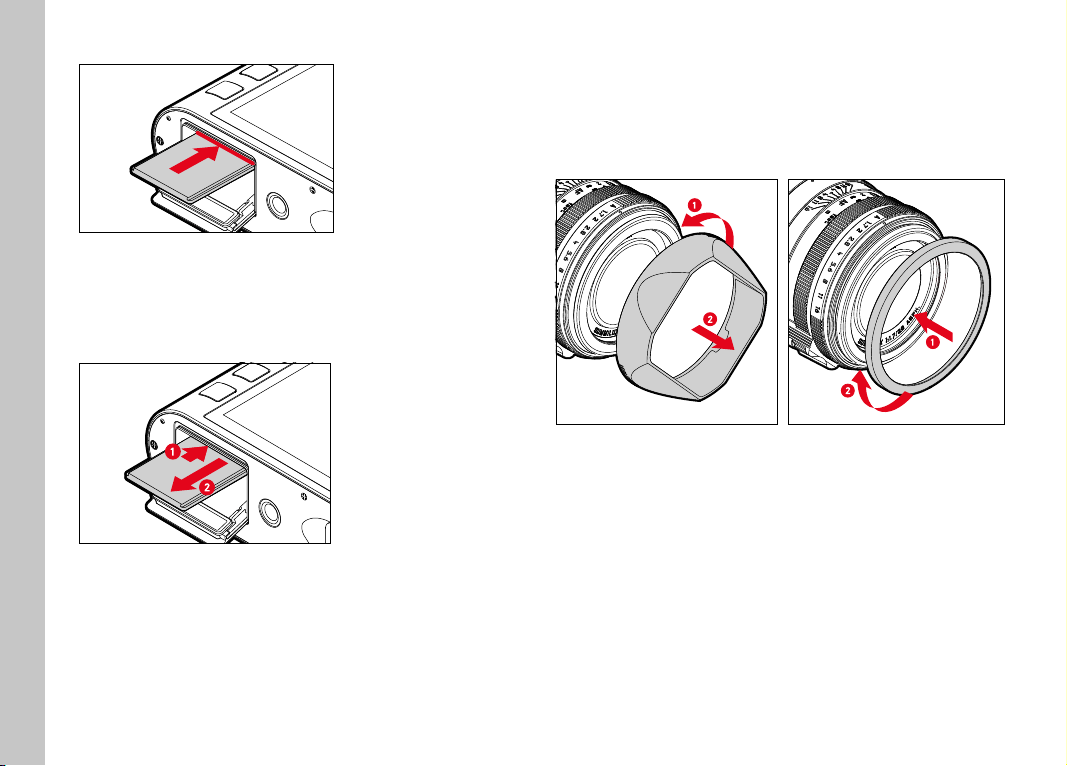
INSERTION
▸ Push the memory card into the slot with the contacts pointing
towards the LCD panel until you hear and feel it clicking into
place
REMOVAL
▸ Push down on the card until you hear a click
• The card pushes out slightly.
▸ Remove the memory card
ATTACHING/DETACHING THE LENS HOOD
This camera comes with a matching lens hood. It is pre-mounted
ex works.
The use of the lens hood is recommended to reduce vignetting.
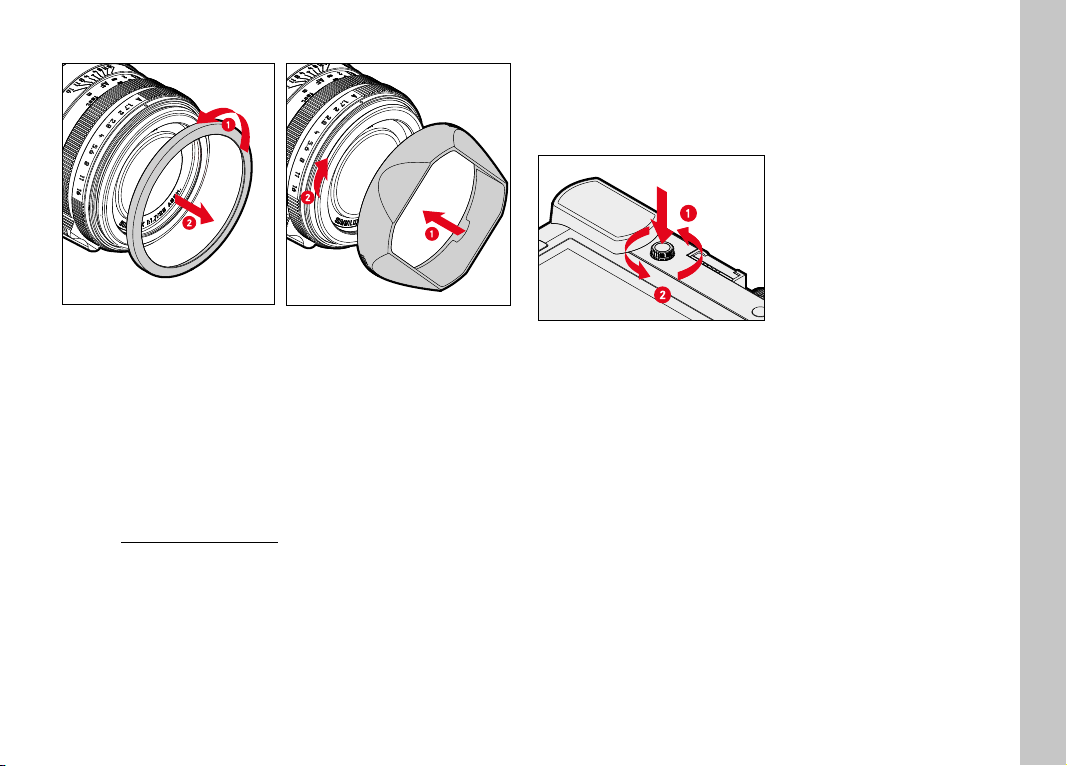
DETACHING
Fig. 1 Fig. 2
▸ Unscrew the lens hood in counter-clockwise direction (Fig. 1)
▸ Screw on the thread protection ring (Fig. 2)
EN
Preparation
33
ATTACHING
Fig. 1 Fig. 2
▸ Unscrew the thread protection ring in counter-clockwise
direction (Fig.1)
▸ Screw on the lens hood in clockwise direction to the stop
(Fig.2)
Notes
• The lens hood cover supplied will only fit the lens hood and
cannot be used as lens cover on its own.
• A matching lens front cap E49 (Order No. 14001) is available as
an optional accessory for use of the camera without the lens
hood: store.leica-camera.com
DIOPTER ADJUSTMENT
The viewfinder has a diopter setting function with a range between
+3 and -4 diopter to allow glasses wearers the use of the camera
without eyeglasses (Diopter adjustment).
▸ Push the diopter setting wheel into its groove until you hear an
audible click
• This unlocks the diopter setting wheel and it pushes out a
little.
▸ Look through the viewfinder
▸ Turn the diopter setting wheel until you see the image in the
viewfinder and the displays in perfect focus
▸ Push the diopter setting wheel back into its groove until it
audibly clicks into place
Camera operation
EN
34
CAMERA OPERATION
CONTROL ELEMENTS
MAIN SWITCH
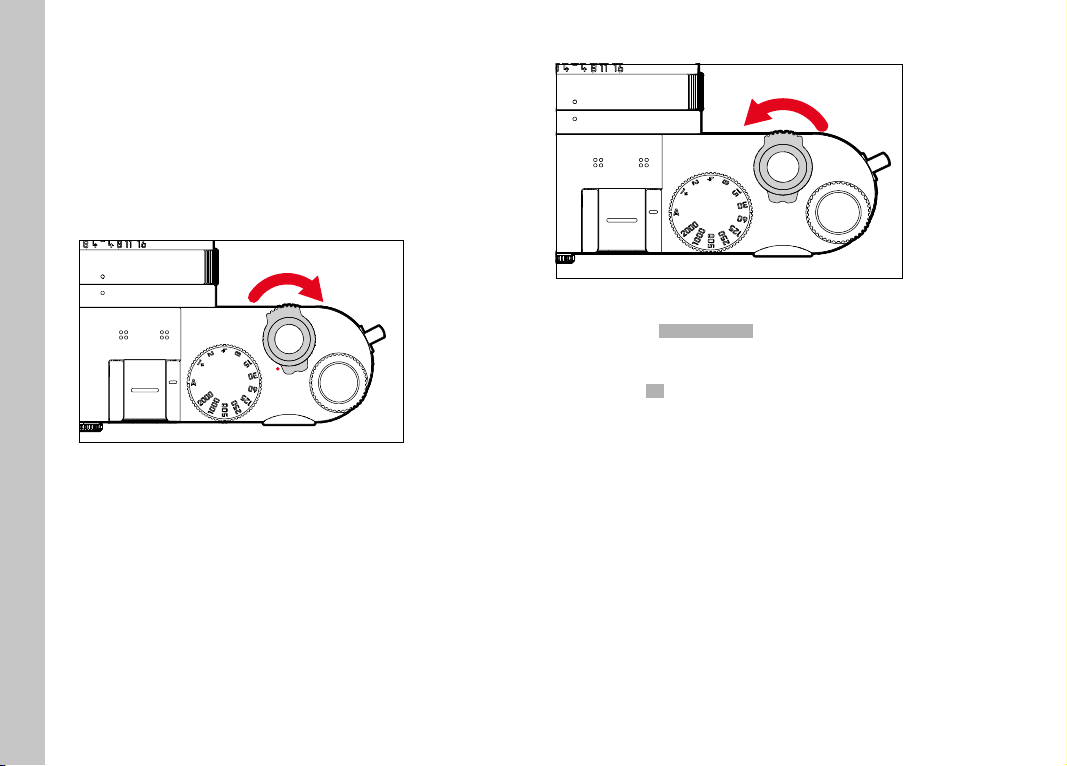
The main switch switches the camera on and off.
SWITCHING THE CAMERA ON
Notes
• Once switched on, the camera will be ready to use after approx.
1s.
• The LED lights up briefly and the displays in the viewfinder
appear.
SWITCHING THE CAMERA OFF
Note
• The function Auto Power OffAuto Power Off (see p.55) deactivates the
camera automatically if no operation occurs within a preset
time. Use the main switch to deactivate the camera if this
function is OffOff to prevent inadvertent exposures and battery
discharge when the camera is not in use.
EN
Camera operation
35
SHUTTER BUTTON
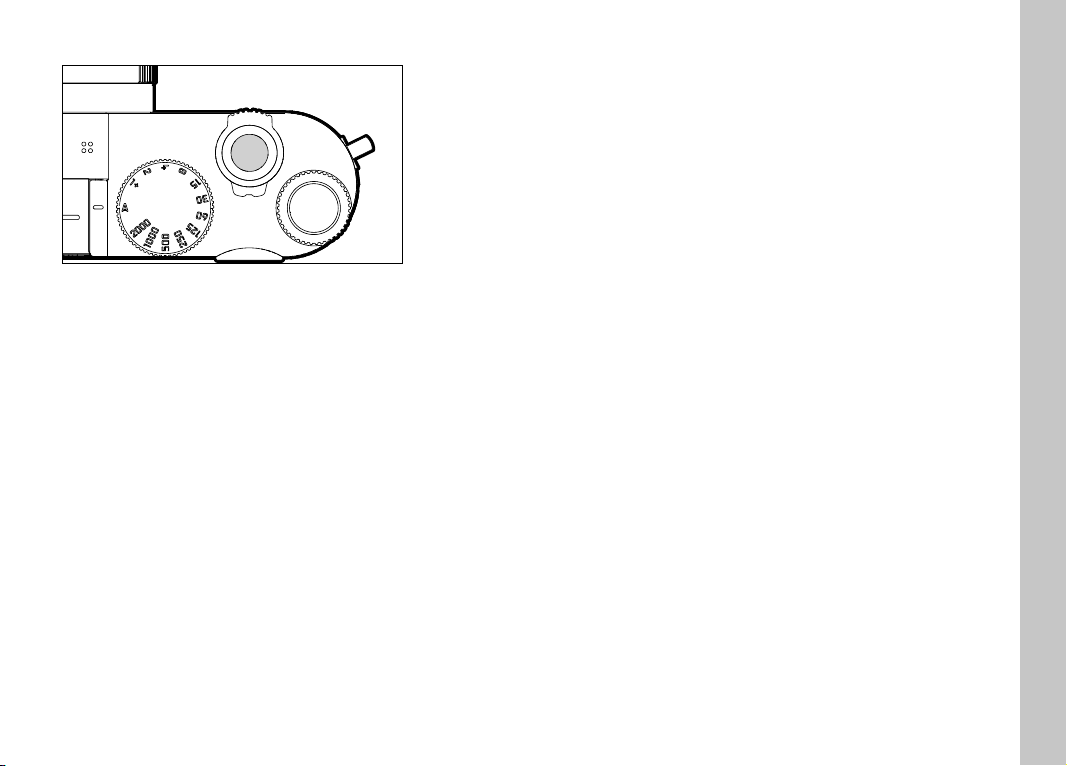
The shutter button works in two stages.
1. Tapping (= Pressing the shutter button to the 1st pressure
point)
– Activating the camera electronics and displays
– Metering memory lock (metering & saving):
– saves the metered exposure value in aperture priority
mode, i.e. the shutter speed calculated by the camera
– Canceling a running self-timer delay time
– Return to picture mode
– from review/playback mode
– from menu control
– from standby mode
2. Press down fully
– Shutter release
• The data is then transferred to the memory card.
– Starting a preselected self-timer delay time
– Starting a picture series or interval shooting
Notes
• Press down the shutter button in a smooth motion until you hear
the click of the shutter to prevent camera shake.
• The shutter button remains locked:
– if the memory card inserted and/or the internal buffer
memory are (temporarily) full
– if the battery has exceeded its performance limits (capacity,
temperature, age)
– if the memory card is write-protected or damaged
– if the sensor is too hot
Camera operation
EN
36
SHUTTER SPEED SETTING DIAL
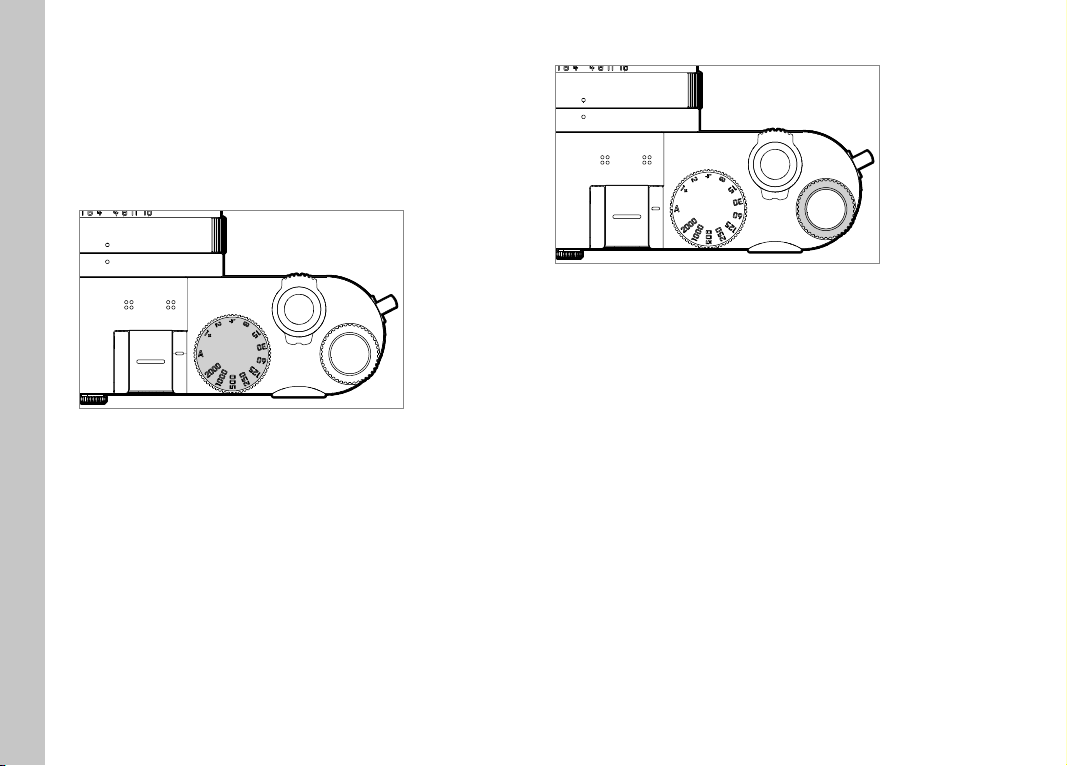
The shutter speed setting dial has no stop, which means it can be
turned in either direction from any position. It will click at each
engraved position and for intermediate values. Intermediate
positions outside the click positions must not be used. Please read
the section “Exposure” (see p.78) for details about exposure
settings.
– A: Aperture priority
(automatic shutter speed control)
– 2000 - 1+: Fixed shutter speeds
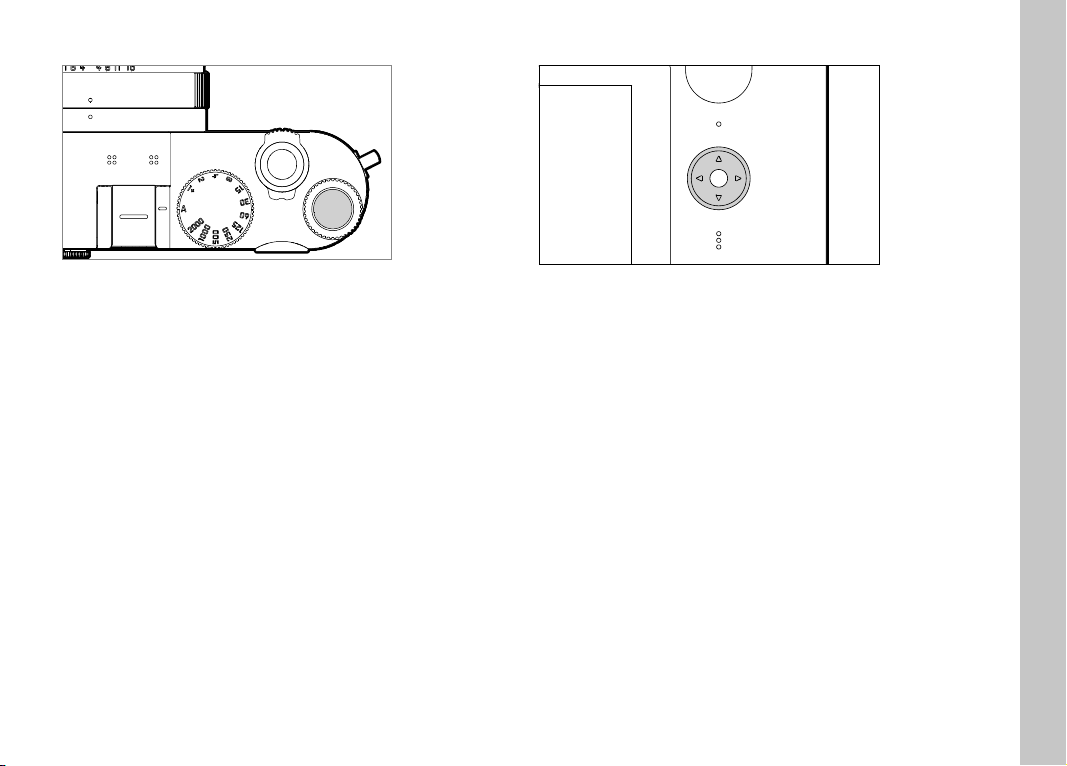
THUMBWHEEL
– Menu navigation
– Exposure compensation value selection
– Enlarging/reducing viewed pictures
– Setting selected menu items/functions
– Setting the program shift
EN
Camera operation
37
THUMBWHEEL BUTTON
– Applying menu settings
– Direct access to menu functions
– Accessing the submenu
DIRECTIONAL PAD/CENTER BUTTON
DIRECTIONAL PAD
– Menu navigation
– Setting selected menu items/functions
– Scrolling through the picture memory
– Shifting the metering field (Field or Spot AF)
CENTER BUTTON
– Accessing the information display
– Accessing the submenu
– Applying menu settings
– Display of settings/data when recording
– Display of picture data during review
– Playback of video recordings
– Confirming the prompts
Camera operation
EN
38
PLAY BUTTON/FN BUTTON/MENU BUTTON
PLAY BUTTON
– Activation and deactivation of the (continuous) review/playback
mode
– Return to full-screen display
FN BUTTON
– Direct access to menu functions
– Direct access to delete function
MENU BUTTON
– Accessing the menu (incl. status screen)
– Accessing the Playback/Review menu
– Exiting the currently displayed (sub) menu
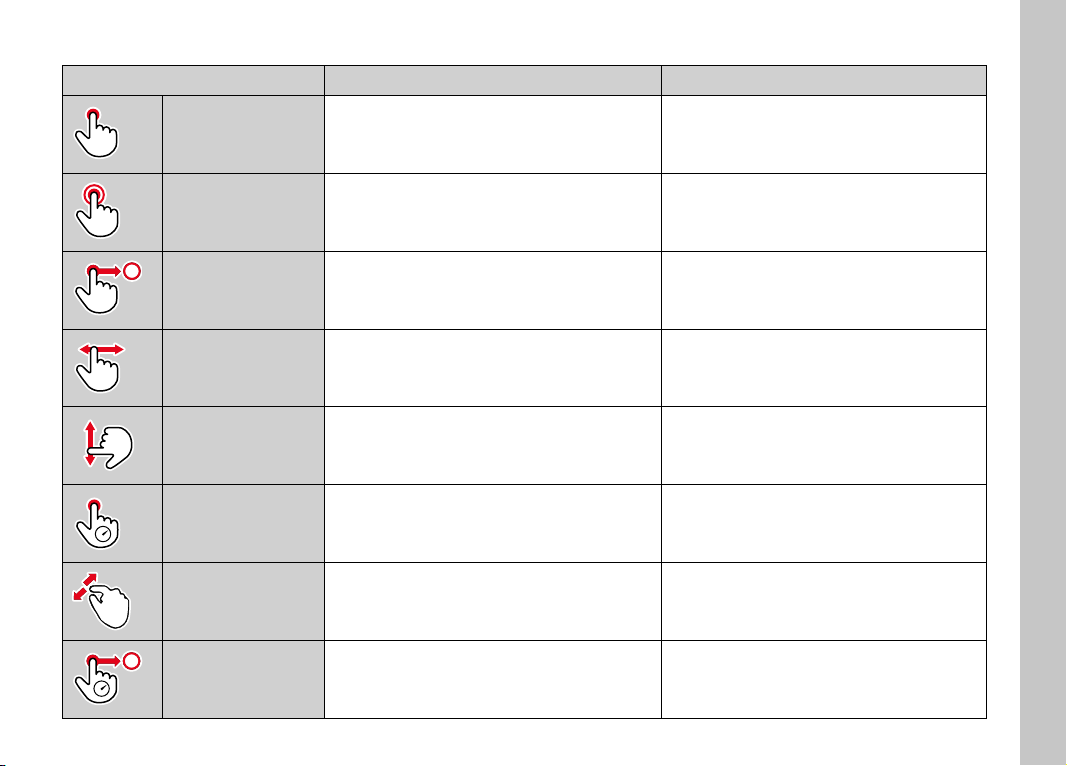
ZOOM/LOCK BUTTON
– Direct access to menu functions
– Marking/rating a recording
EN
Camera operation
39
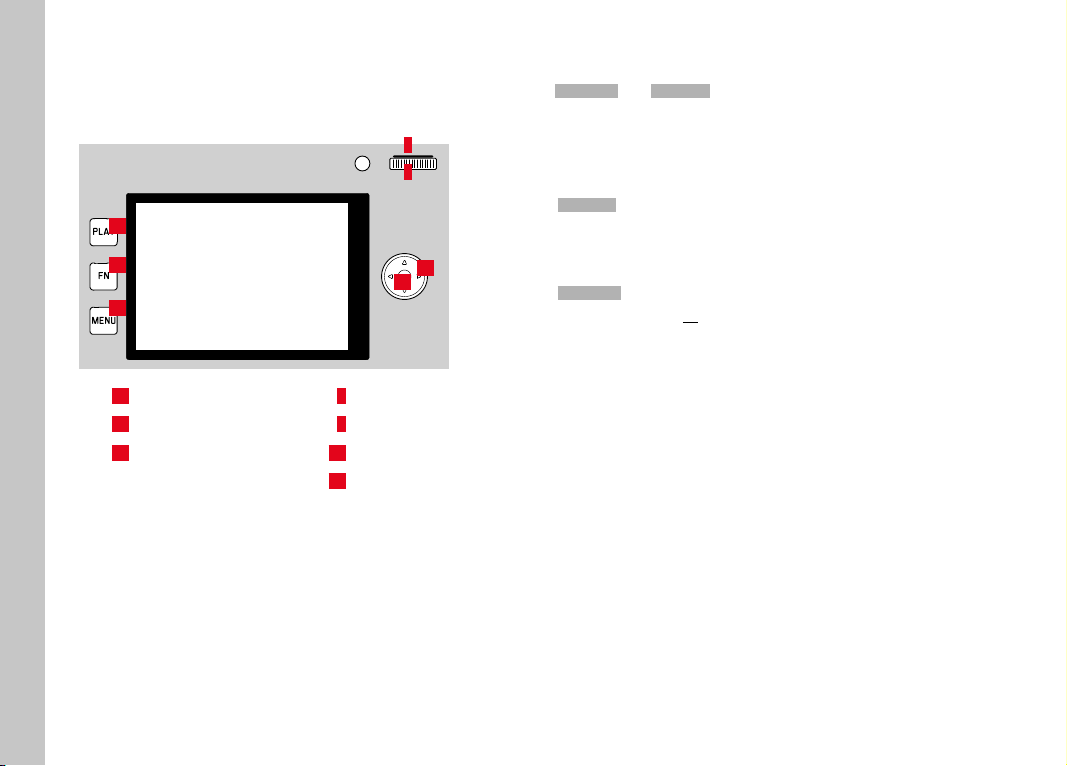
LCD PANEL (TOUCH SCREEN)
TOUCH CONTROL* in picture mode in playback/review mode
tap briefly Shifting the AF metering field and focusing
(while Touch AF is activated)
Select the recording
double tap Reseting the AF metering field
(while Touch AF is activated)
Enlarging/reducing viewed pictures
swipe Scrolling through the picture memory
Shifts the enlarged image section
horizontal swipe
(full length)
Mode change (photo/video) Scrolling through the picture memory
vertical swipe
(full length)
Switch to playback/review mode Switch to picture mode
touch and hold Adjusting the size of the AF metering field
two-finger pinch/
spread
Enlarging/reducing viewed pictures
swipe and hold/
hold and swipe
Shifting the AF metering field and focusing
(while Touch AF is activated)
Continuous scrolling
* A light touch is enough, don't apply pressure.
Camera operation
EN
40
MENU CONTROL
CONTROL ELEMENTS
The following elements are used for menu control.
14
15
16
5
4
19
20
14
PLAY button
5
Thumbwheel button
15
FN button
4
Thumbwheel
16
MENU button
19
Directional pad
20
Center button
MENU SECTIONS
The following menu sections are available: Status Screen,
Main MenuMain Menu and FavoritesFavorites.
Status screen:
– quick access to the most important settings
FavoritesFavorites:
– your custom list (see p.50 for details on how to manage this
list)
Main MenuMain Menu:
– offers access to all menu items
– contains various submenus
Note
• The favorites menu can only be displayed if it has at least one
menu item assigned.

EN
Camera operation
41
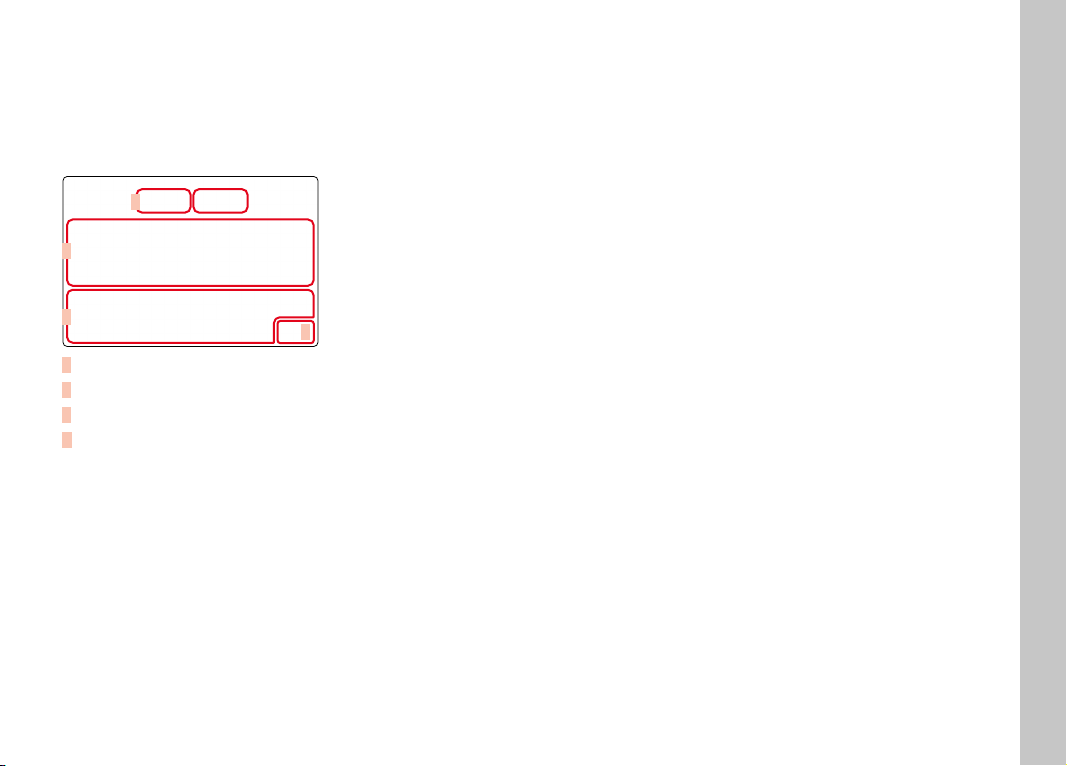
STATUS SCREEN
Photo Video
FAVORITES
MAIN MENU
Camera operation
EN
42
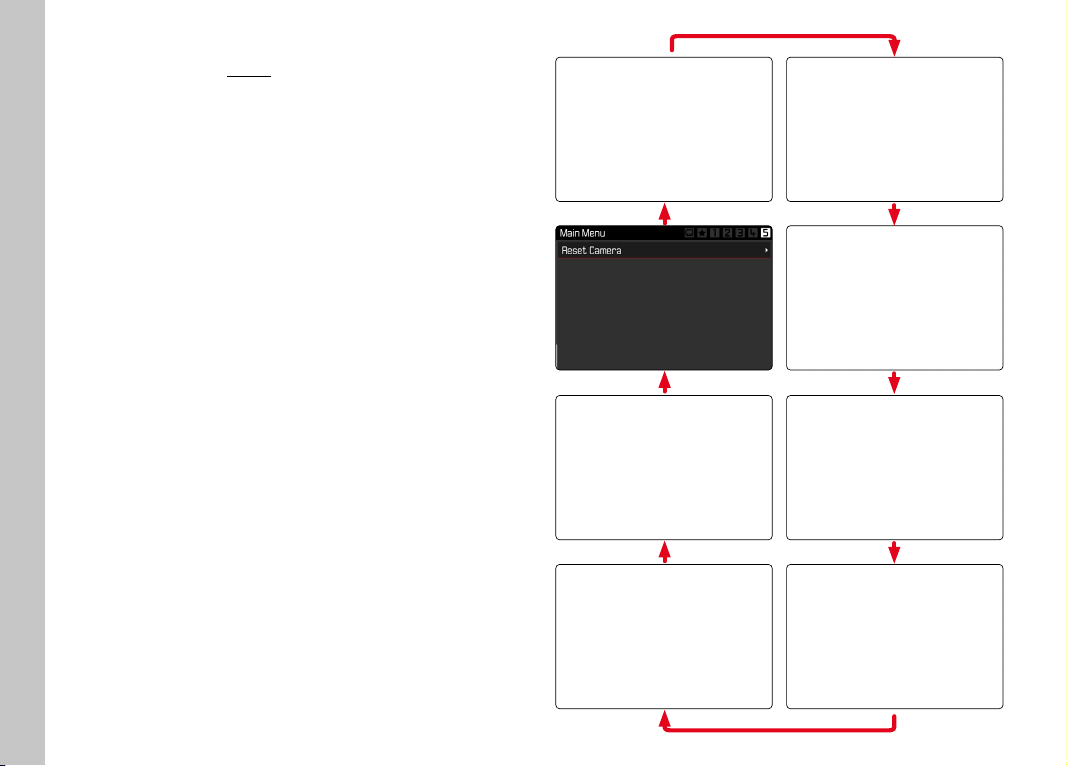
SWITCHING MENU SECTIONS
The status screen will always be displayed as the first menu
section. The top menu level is organized into pages, which are
displayed in the header line: Status Screen, Favorites Menu (up to
2 pages) and five subsections of the main menu. You can switch
between menu sections by scrolling through the pages. Alternative-
ly, the status screen and the favorites menu offer access to the
main menu as their respectively last menu item.
To scroll forward
▸ Press the MENU button
• The status screen will appear again after page 5 of the main
menu.
To scroll backward
▸ Press the directional pad left
• In reverse order, you can only browse back to the status
screen.
EN
Camera operation
43
STATUS SCREEN
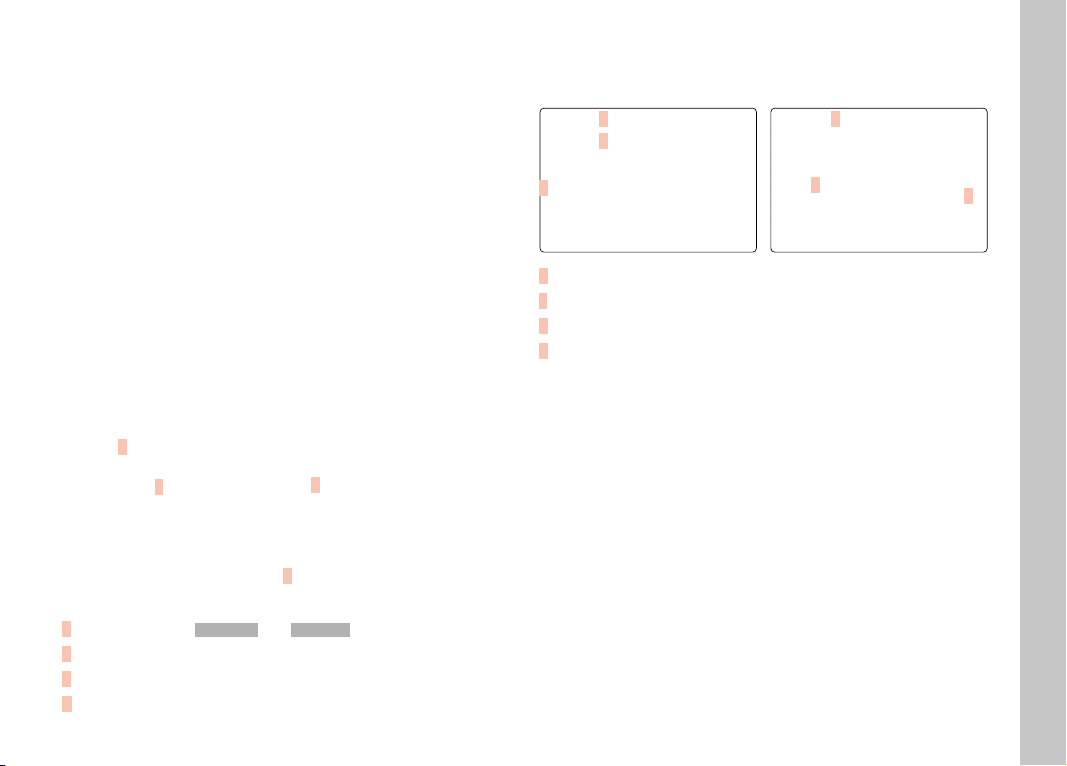
The status screen offers an overview of the most important
information regarding the current camera status and active
settings.
It furthermore allows direct access to important settings. The
status screen is optimized for touch control.
A
B
C
D
A
Mode: picture/video
B
Exposure settings (see p.78 and p.106)
C
Menu items
D
Access to the main menu
Notes
• Where touch control is not possible or not desirable (e.g. in EV
mode), the status screen can alternatively be controlled via the
directional pad, center button, thumbwheel and the thumbwheel
button.
• The settings become effective immediately.
• The framed control panels can be selected. Unframed values are
added in automatically (depending on the active exposure
mode).
• The available menu items in picture and video mode differ.
Camera operation
EN
44
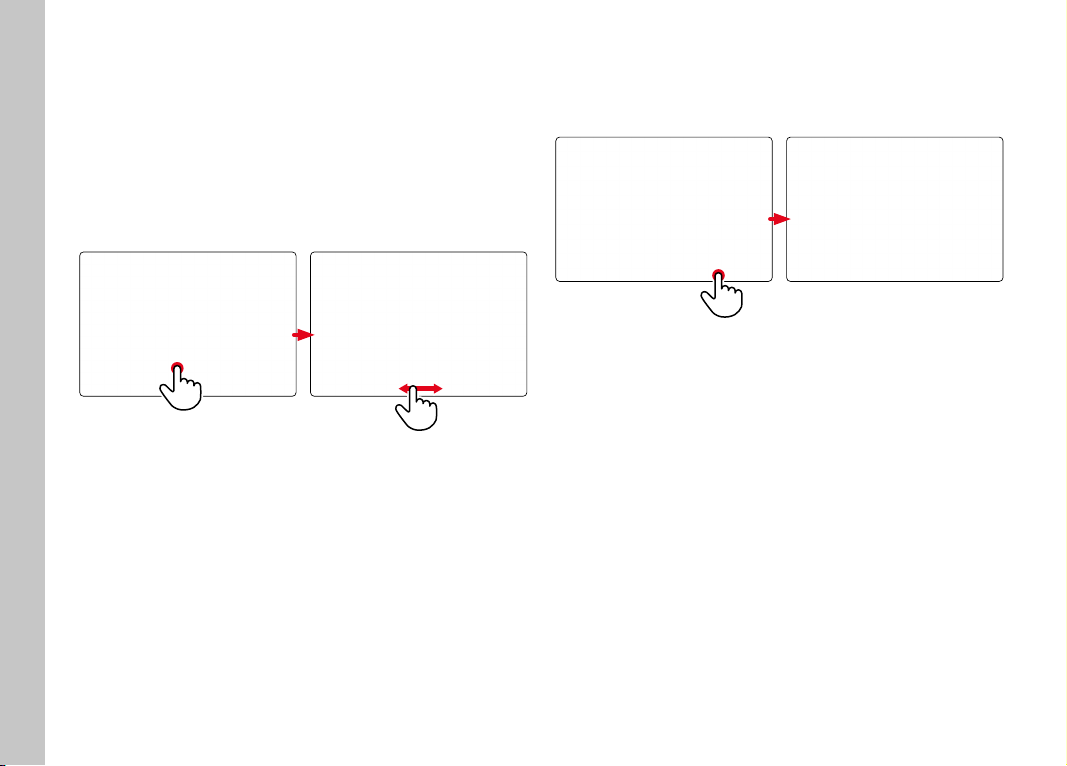
SELECTING SETTINGS
Settings can be selected in various ways from within the status
screen. The setting types vary from menu to menu.
▸ Briefly touch the desired control panel
• The relevant menu appears.
DIRECT SETTINGS
A version of the menu bar appears in the lower area of the status
screen (see p.48).
▸ Select the desired function directly or swipe
ACCESSING A STANDARD SUBMENU
These menus behave as if they were accessed from within the main
menu (see p.45). Touch control is therefore unavailable. From
there, you return to the status screen and not to the next higher
menu item.
▸ Select the desired setting
EN
Camera operation
45
FAVORITES MENU
The favorites menu offers quick access to the most frequently used
menu items. It can contain up to 15 menu items. These can be
assigned individually (see p.50).
MAIN MENU
The main menu offers access to all settings. Most of these are
organized in submenus.
A
B
C
D
A
Menu sections: Main MenuMain Menu and FavoritesFavorites
B
Menu item name
C
Menu item setting
D
Submenu reference
SUBMENU
There are various types of submenus available. The following pages
describe their operation.
A
B
D
A
B
C
A
Current menu item
B
Submenu item
C
References to other submenus
D
Scrollbar
There are various types of submenus available. The following pages
describe their operation.

Camera operation
EN
46
MENU NAVIGATION
SCREEN BY SCREEN NAVIGATION
To scroll forward
▸ Press the MENU button (repeatedly if needed)
• The status screen will appear again after page 5 of the main
menu.
To scroll backward
▸ Press the directional pad left
• In reverse order, you can only browse back to the status
screen.
LINE BY LINE NAVIGATION
(Function/function option selection)
▸ Press the directional pad up/down
or
▸ Turn the thumbwheel
(to the right = down, to the left = up)
• Once the last menu item has been reached scrolling up or
down, the display will automatically jump to the previous or
next screen. The currently active menu section (Favorites,
Main Menu) is not exited.
Note
• Some menu items can only be accessed under specific
circumstances. The text in the relevant line is displayed in gray
to signify the existence of a submenu.
SHOW SUBMENU
▸ Press the center button/thumbwheel button
or
▸ Press the directional pad to the right
CONFIRM SELECTION
▸ Press the center button/thumbwheel button
• The screen image changes back to the active menu item. The
set function variant is shown on the right in the relevant menu
line.
Note
• No confirmation is needed for the selection of OnOn or OffOff. An
automatic save is done.

EN
Camera operation
47
GO BACK ONE STEP
(Return to the superordinate menu item)
▸ Press the directional pad left
• This option is only available for list-type submenus.
GO BACK TO TOP MENU LEVEL
▸ Press the MENU button 1x
• The top level of the currently selected menu section is
displayed.
EXITING THE MENU
You can exit the menus and submenus at any time – with/without
applying the settings selected there.
go to picture mode
▸ Tap the shutter button
go to review mode
▸ Press the PLAY button
SUBMENU
KEYBOARD/NUMBER PAD
D
C
B
E
A
F
G
D
C
B
E
A
G
G
A
E
C
B
D
A
Entry line
B
Keyboard/Number pad
C
“Delete” button (deletes the last character entered)
D
“Confirm” button
(to apply individual values and existing settings)
E
Return to previous menu level
F
Shift key (toggles between upper and lower case letters)
G
Changing the character type

Camera operation
EN
48
SELECTING A BUTTON (ICON/FUNCTION BUTTON)
Using button control
▸ Press the directional pad left or right as needed
• The currently active button will be highlighted.
or
▸ Turn the thumbwheel
• The currently active button will be highlighted.
• There will be an automatic jump to the next/previous line
when the end/beginning of the line is reached.
▸ Press the center button
Using touch control
▸ Press the button of your choice
SAVE
▸ Select button D
CANCEL
▸ Select button E
MENU BAR
Using button control
▸ Press the directional pad left/right
or
▸ Turn the thumbwheel
Using touch control
▸ Select the desired function directly or swipe
Notes
• The currently active setting displayed in the center is highlighted
in red.
• The set value is displayed above the scale/below the menu bar.
• The following applies for direct access: The selected function
requires no additional confirmation and will be active immediately.
EN
Camera operation
49
SCALE MENU
Using button control
▸ Press the directional pad left/right
or
▸ Turn the thumbwheel
Using touch control
▸ Select the desired setting directly or swipe
Note
• The currently active setting displayed in the center is highlighted
in red.
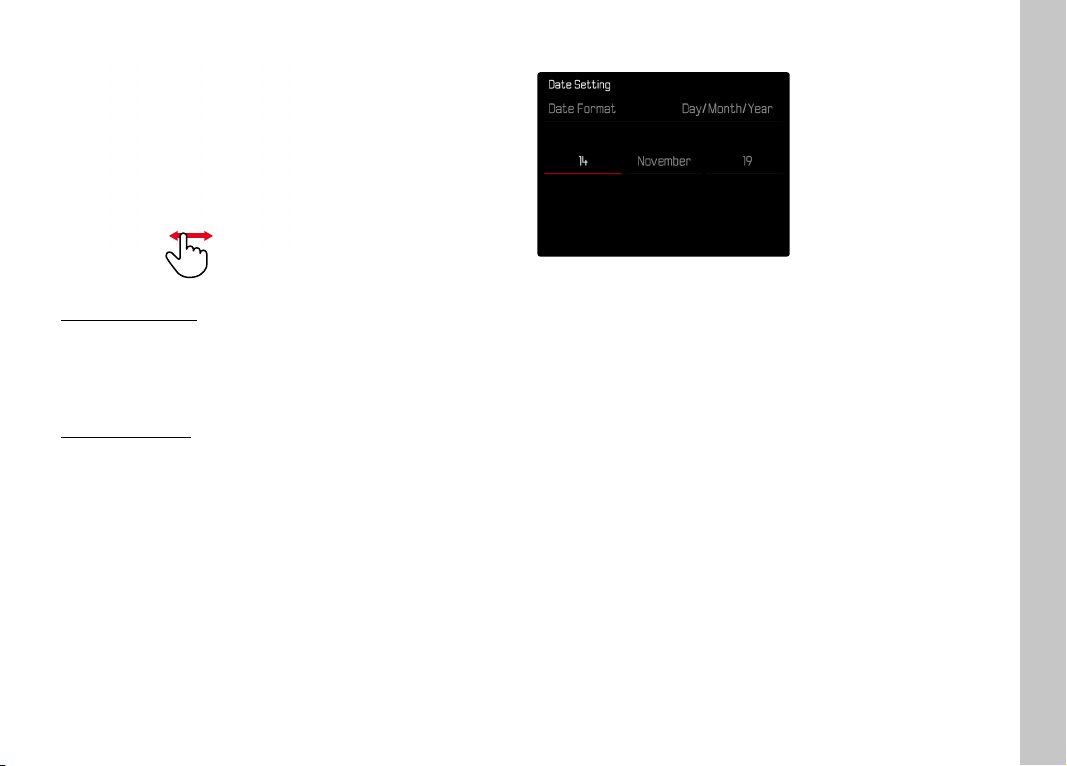
DATE/TIME MENU
To move to the next settings field
▸ Press the directional pad left/right
To set values
▸ Press the directional pad up/down
or
▸ Turn the thumbwheel
To save and return to superordinate menu item
▸ Press the center button

Camera operation
EN
50
USER-DEFINED OPERATION
FAVORITES MENU
Assign your most frequently used menu items to a favorites menu
(up to 15 items) for quick and easy access. The available functions
are shown in the list on p.150.
The favorites menu will be represented by an asterisk in the header
line, provided it contains at least one menu item.
MANAGING THE FAVORITES MENU
▸ Select Customize ControlCustomize Control in the main menu
▸ Select Edit FavoritesEdit Favorites
▸ Select the desired menu item
▸ Select OnOn/OffOff
• A warning message appears when the favorites menu has
reached the maximum of 15 menu items and no further items
can be added.
Note
• The favorites menu will be deleted completely if all menu items
are set to OffOff.
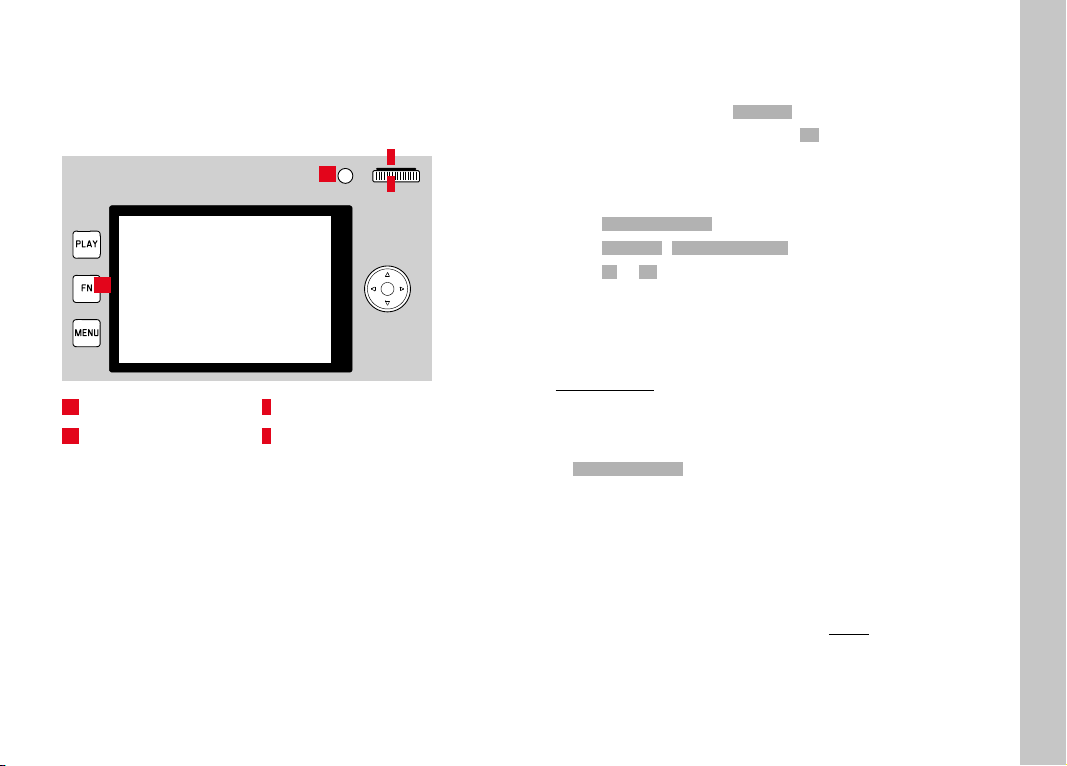
EN
Camera operation
51
DIRECT ACCESS TO MENU FUNCTIONS
You can assign specific menu functions to the following operating
elements for extra quick direct access to menu items in recording
mode. The available functions are shown in the list on p.150.
15
13
5
4
13 Zoom/Lock button 5 Thumbwheel button
15 FN button 4 Thumbwheel
Notes
• The submenus accessed via direct access may look differently
than when they are accessed via the main menu. Specifically,
they often appear as menu bars to allow quick settings.
• The settings can be done via key control or using touch control
on the LCD panel. The operating mode depends on the type of
submenu.
DYNAMIC DIRECT ACCESS
The two following buttons additionally allow a quick assignment of
menu functions from a custom list of items.
– FN button (factory setting: Self TimerSelf Timer)
– Thumbwheel button (factory setting: ISOISO)
CREATING THE CUSTOM LIST
▸ Select Customize ControlCustomize Control in the main menu
▸ Select FN buttonFN button/Right Wheel ButtonRight Wheel Button
▸ Select OnOn or OffOff for each menu item
• You can activate a maximum of 8 menu items for this list.
CHANGING AN ASSIGNMENT
▸ Press and hold the FN button / thumbwheel button
• The direct access list you have created will appear on the LCD
panel.
• This list can be modified at any time via the menu item
Customize ControlCustomize Control.
▸ Select the menu item you want by pressing the center button
• You will not be prompted to acknowledge your selection. The
change is applied immediately.
ACCESSING THE ASSIGNED MENU FUNCTION
▸ Press the FN button/thumbwheel button briefly
• The assigned function is accessed, or a submenu appears on
screen.
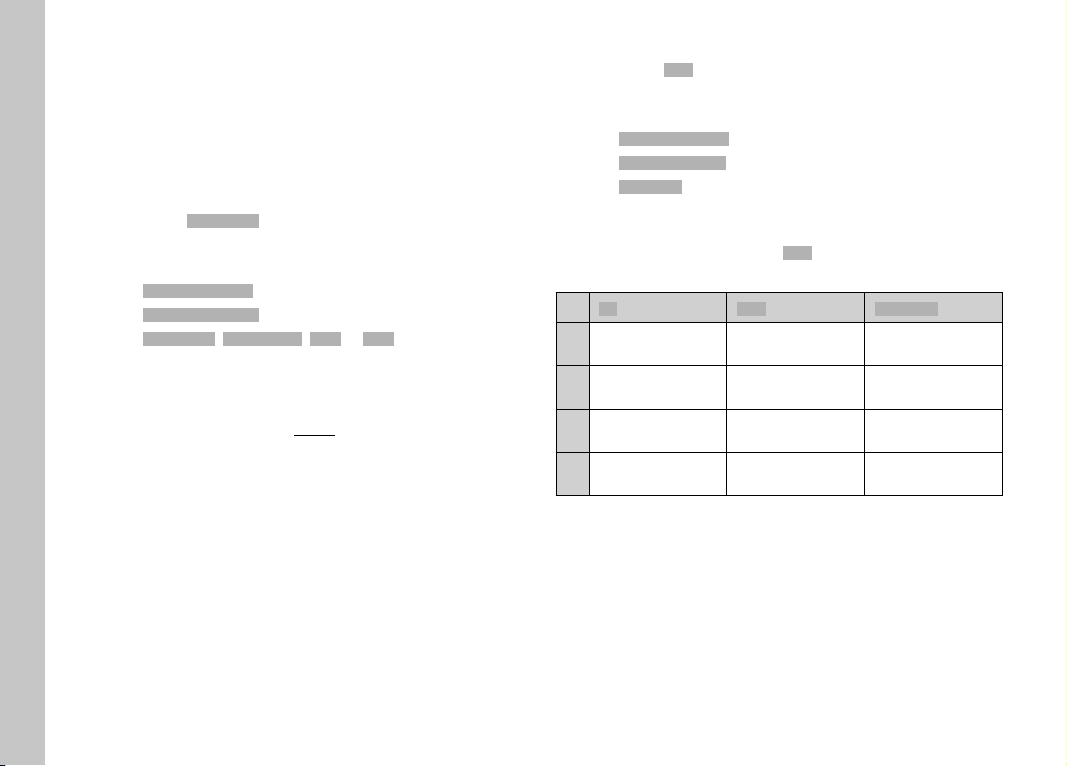
Camera operation
EN
52
STATIC DIRECT ACCESS
The two following operating elements can only be assigned one of
the preset functions via menu control. A custom list is not
available.
– Zoom/Lock button
– Thumbwheel
ZOOM/LOCK BUTTON
Factory setting: Digital ZoomDigital Zoom
Alternatively, you can assign automatic exposure metering and/or
metering memory lock to the Zoom/Lock button.
▸ Select Customize ControlCustomize Control in the main menu
▸ Select Zoom/Lock-ButtonZoom/Lock-Button
▸ Select Digital ZoomDigital Zoom, AF-L + AE-LAF-L + AE-L, AE-LAE-L or AF-LAF-L
ACCESSING THE ASSIGNED MENU FUNCTION
▸ Press the Zoom/Lock button briefly
THUMBWHEEL
Factory setting: AutoAuto
You can assign the exposure compensation function to the
thumbwheel permanently.
▸ Select Customize ControlCustomize Control in the main menu
▸ Select Wheel AssignmentWheel Assignment
▸ Select Exp. Comp.Exp. Comp.
The thumbwheel has varying functions depending on the exposure
mode (see p.79) when it is set to AutoAuto.
OffOff AutoAuto Exp. Comp.Exp. Comp.
P
No function Program shift Exposure
compensation
A
No function Shutter speed Exposure
compensation
S
No function Exposure
compensation
Exposure
compensation
M
No function Shutter speed Exposure
compensation
ACCESSING THE ASSIGNED MENU FUNCTION
▸ Turn the thumbwheel to the left/right

EN
Camera operation
53

Camera basic settings
EN
54
CAMERA BASIC SETTINGS
For details on how to navigate in the menus and for inputs see
chapter “Menu control” (see p.40).
• The two menu items LanguageLanguage and Date & TimeDate & Time appear automati-
cally when switching the camera on for the first time, after a
reset to factory settings (see p.136), or after a firmware
update.
MENU LANGUAGE
Factory setting: English
Available menu languages: German, French, Italian, Spanish,
Russian, Japanese, Korean, Traditional or Simplified Chinese
▸ Select LanguageLanguage in the main menu
▸ Select your language
• Aside from a few exceptions, the language will be changed for
all information.
DATE/TIME
DATE
You can choose one of 3 options.
▸ Select Date & TimeDate & Time in the main menu
▸ Select Date SettingDate Setting
▸ Select the desired date format
(Day/Month/YearDay/Month/Year, Month/Day/YearMonth/Day/Year, Year/Month/DayYear/Month/Day)
▸ Set the date
TIME
▸ Select Date & TimeDate & Time in the main menu
▸ Select Time SettingTime Setting
▸ Select the desired brightness
(12 Hours12 Hours, 24 Hours24 Hours)
▸ Set the time
(Select amam or pmpm for the 12-hour format)

EN
Camera basic settings
55
TIME ZONE
▸ Select Date & TimeDate & Time in the main menu
▸ Select Time ZoneTime Zone
▸ Select your time zone/current location
– The Greenwich Mean Time offset is shown on the left of the
line
– Major cities in the relevant time zones are shown on the right
DAYLIGHT SAVING TIME
▸ Select Date & TimeDate & Time in the main menu
▸ Select Daylight Saving TimeDaylight Saving Time
▸ Select OnOn/OffOff
POWER SAVE MODE (STANDBY MODE)
The camera will switch to the power-saving standby mode after a
preset time to extend battery life if this function is activated.
The device has three power save levels.
– Activates device standby mode in seconds
– Activates device standby mode in minutes
– Automatic LCD panel shutdown (see p.58)
AFTER A FEW SECONDS
The camera will switch to standby mode within a few seconds to
maximize battery capacity.
Factory setting: OffOff
▸ Select Power SavingPower Saving in the main menu
▸ Select Power Saving ModePower Saving Mode
▸ Select the desired setting
(OffOff, 3 s3 s, 5 s5 s, 10 s10 s)
AFTER A FEW MINUTES
Factory setting: 2 min2 min
▸ Select Power SavingPower Saving in the main menu
▸ Select Auto Power OffAuto Power Off
▸ Select the desired setting
(OffOff, 2 min2 min, /5 min/5 min, /10 min/10 min)
Note
• The camera can be woken from standby mode at any time by
pressing the shutter button or by switching the main switch off
and on again.
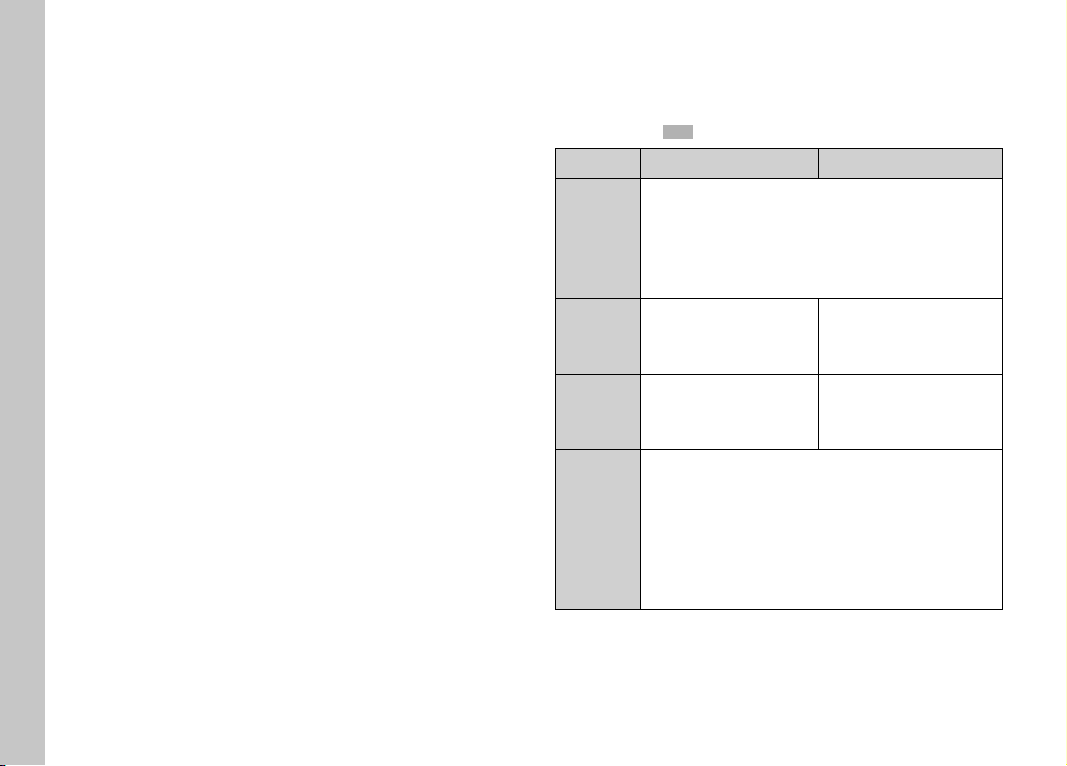
Camera basic settings
EN
56
DISPLAY/VIEWFINDER SETTINGS
The camera comes equipped with a 3” liquid crystal color panel,
which is protected by a glass cover made of extremely hard and
scratch-resistant Gorilla
®
glass.
The following functions can be configured and used individually:
– Use of the LCD panel and EVF (electronic viewfinder)
– Eye sensor sensitivity
– Brightness
– Color rendering
– Information display
– Automatic LCD panel shutdown
LCD PANEL/EVF USE
You can preset the situations in which EVF and LCD panel should
be used. The displays appearing on screen and in the viewfinder
are identical.
Factory setting: AutoAuto
EVF LCD panel
Auto
The eye sensor in the viewfinder automatically
toggles the camera between LCD panel and EVF.
• Recording
• Playback/Review
• Menu control
LCD
• Recording
• Playback/Review
• Menu control
EVF
• Recording
• Playback/Review
• Menu control
EVF
extended
Only EVF is used for picture mode. The eye sensor
in the viewfinder automatically toggles the camera
between LCD panel and EVF for playback and menu
control.
• Recording
• Playback/Review
• Menu control

EN
Camera basic settings
57
▸ Select Display SettingsDisplay Settings in the main menu
▸ Select EVF-LCDEVF-LCD
▸ Select the desired setting
Note
• Select EVFEVF if you want to keep the LCD panel switched off (e.g.
on dark environments).
EYE SENSOR SENSITIVITY
You can adjust the eye sensor sensitivity to ensure that the
changeover functions reliably if you wear eyeglasses.
Factory setting: LowLow
▸ Select Display SettingsDisplay Settings in the main menu
▸ Select Eye Sensor SensitivityEye Sensor Sensitivity
▸ Select the desired setting
BRIGHTNESS
You can adjust brightness for best visibility in various lighting
conditions. Brightness is set individually for the LCD panel and the
viewfinder. Selection occurs via key control or touch control.
LCD PANEL
▸ Select Display SettingsDisplay Settings in the main menu
▸ Select LCD BrightnessLCD Brightness
▸ Select the desired brightness of AutoAuto
▸ Confirm selection
EVF
▸ Select Display SettingsDisplay Settings in the main menu
▸ Select EVF BrightnessEVF Brightness
▸ Look through the viewfinder
▸ Select the desired brightness
▸ Confirm selection
Note
• The setting AutoAuto is not available here.

Camera basic settings
EN
58
COLOR RENDERING
Color rendering can also be adjusted. Brightness is set individually
for the LCD panel and the viewfinder. Selection occurs via key
control or touch control.
LCD PANEL
▸ Select Display SettingsDisplay Settings in the main menu
▸ Select LCD Color AdjustmentLCD Color Adjustment
▸ Select the desired color setting
▸ Confirm selection
EVF
▸ Select Display SettingsDisplay Settings in the main menu
▸ Select EVF Color AdjustmentEVF Color Adjustment
▸ Look through the viewfinder
▸ Select the desired color setting
▸ Confirm selection
AUTOMATIC LCD PANEL SHUTDOWN
The LCD panel deactivates automatically to save power.
Factory setting: 1 min1 min
▸ Select Power SavingPower Saving in the main menu
▸ Select All Displays Auto OffAll Displays Auto Off
▸ Select the desired setting
(30 s30 s, 1 min1 min, 5 min5 min)
EVF FRAME RATE
The image frequency of the EVF can be set.
▸ Select Display SettingsDisplay Settings in the main menu
▸ Select EVF Frame RateEVF Frame Rate
▸ Select the desired setting
(60 fps60 fps, 120 fps120 fps)

EN
Camera basic settings
59
ACOUSTIC SIGNALS
Some functions can be acknowledged with acoustic signals. The
following special functions can be configured separately:
– Electronic shutter sound
– AF confirmation
VOLUME
The volume of active signals can be set.
▸ Select Acoustic SignalAcoustic Signal in the main menu
▸ Select VolumeVolume
▸ Select LowLow/HighHigh
ACOUSTIC SIGNALS
This setting specifies, whether the camera shout output general
notification signals, e.g. during the delay time of the self-timer or
as a warning signal, when the memory card is full.
▸ Select Acoustic SignalAcoustic Signal in the main menu
▸ Select Acoustic SignalsAcoustic Signals
▸ Select OnOn
ELECTRONIC SHUTTER SOUND
▸ Select Acoustic SignalAcoustic Signal in the main menu
▸ Select Electronic Shutter SoundElectronic Shutter Sound
▸ Select OnOn
AUTOFOCUS CONFIRMATION
A signal sound can be selected for successful AF settings.
▸ Select Acoustic SignalAcoustic Signal in the main menu
▸ Select AF ConfirmationAF Confirmation
▸ Select OnOn
SILENT PHOTOGRAPHY
When pictures should be taken as quietly as possible.
▸ Select Acoustic SignalAcoustic Signal in the main menu
▸ Select Electronic Shutter SoundElectronic Shutter Sound/AF ConfirmationAF Confirmation/Acoustic SignalsAcoustic Signals
▸ Select OffOff for each of these menu items
Camera basic settings
EN
60
ELECTRONIC SHUTTER
The LeicaQ2 Monochrom comes equipped with a mechanical shut-
ter and a purely electronic shutter function. The electronic shutter
expands the available shutter area and functions completely
noiseless, which may be important in some work environments.
▸ Select Electronic ShutterElectronic Shutter in the main menu
▸ Select the desired setting
OffOff Only the mechanical shutter is used. Working range:
120s to 1⁄2000s.
Always OnAlways On Only the electronic shutter function is used.
Working range: 1⁄2500s to 1⁄40000s.
ExtendedExtended You can add in the electronic shutter functions if
you need faster shutter speeds than can be
achieved with the mechanical shutter. Working
range: 120s to 1⁄2000s + 1⁄2500s to 1⁄40000s.

EN
Camera basic settings
61

Basic recording settings (picture)
EN
62
BASIC RECORDING SETTINGS (PICTURE)
FILE FORMAT
Choose the JPG format JPGJPG or the standardized raw data format
DNGDNG (= digital negative). These can be used individually or
simultaneously.
Factory setting: DNG + JPGDNG + JPG
▸ Select Photo File FormatPhoto File Format in the main menu
▸ Select a format
(DNGDNG, DNG+JPGDNG+JPG, JPGJPG)
Notes
• The standardized DNG (Digital Negative) format is used for the
storage of raw picture data.
• When picture data is saved in DNGDNG and in JPGJPG format simultane-
ously, then the camera will use the resolution setting for the JPGJPG
format is used for the JPG file.
• The DNGDNG format always works with the highest available
resolution, no matter what JPGJPG setting is selected.
• The remaining number of frames shown in the LCD panel will not
necessarily change after every picture taken. That very much
depends on the object; very fine image structures result in
higher data quantities, while homogeneous surfaces mean less
data.
EN
Basic recording settings (picture)
63
JPG SETTINGS
The functions and settings described in this section apply for
pictures taken in JPGJPG format only.
RESOLUTION
The JPGJPG format setting offers 3 image resolution (number of pixels)
options. L-JPGL-JPG (47MP), M-JPGM-JPG (24MP) and S-JPGS-JPG (12MP). You can
therefore adjust your settings to the intended use and available
memory card capacity.
Factory setting: L-JPGL-JPG
▸ Select JPG SettingsJPG Settings in the main menu
▸ Select JPG ResolutionJPG Resolution
▸ Select the desired resolution
When the Digital Zoom function (see p.93) is selected, then
images will be saved with the following actual resolutions.
28mm Digital Zoom
35mm
Digital Zoom
50mm
Digital Zoom
75mm
L-JPGL-JPG
47MP
30MP 15MP 7MP
M-JPGM-JPG
24MP
15MP 8MP 3MP
S-JPGS-JPG
12MP
8MP 4MP 2MP

Basic recording settings (picture)
EN
64
IMAGE PROPERTIES
One of the many advantages of digital photography is that it is very
easy to change key image properties.
You can manipulate contrast, sharpness and toning before
recording.
CONTRAST
The contrast setting, i.e. the difference between light and dark
image sections, determines whether an image comes across as
“flat” or “brilliant”. Increasing or decreasing this difference impacts
on contrast, meaning that some image sections are rendered with
more or less light.
Factory setting: StandardStandard
▸ Select JPG SettingsJPG Settings in the main menu
▸ Select ContrastContrast
▸ Select the desired level
(LowLow, Medium lowMedium low, StandardStandard, Medium highMedium high, HighHigh)
SHARPNESS
The impression of sharpness in a picture is largely determined by
edge sharpness, i.e. by how slight the transition area between light
and dark is at edges in the picture. Expanding or reducing these
areas will therefore change the impression of sharpness.
Factory setting: StandardStandard
▸ Select JPG SettingsJPG Settings in the main menu
▸ Select SharpnessSharpness
▸ Select the desired level
(LowLow, Medium lowMedium low, StandardStandard, Medium highMedium high, HighHigh)
TONING
A color tone can be added to recordings. The color and intensity of
this effect can be adjusted.
Factory setting: OffOff
▸ Select JPG SettingsJPG Settings in the main menu
▸ Select ToningToning
▸ Select the desired setting
(Sepia (weak)Sepia (weak), Sepia (strong)Sepia (strong), Blue (weak)Blue (weak), Blue (strong)Blue (strong),
Selenium (weak)Selenium (weak), Selenium (strong)Selenium (strong))

EN
Basic recording settings (picture)
65
IMAGE STABILIZATION
The less favorable the lighting conditions during recording, the
slower will be the required shutter speeds for correct exposure.
Visual image stabilization is a great tool for preventing out-of-focus
images due to blurring.
Factory setting: AutoAuto
▸ Select Optical Image StabilizationOptical Image Stabilization in the main menu
▸ Select the desired setting
(OnOn, OffOff, AutoAuto)

Basic recording settings (video)
EN
66
BASIC RECORDING SETTINGS (VIDEO)
FILE FORMAT
Videos are recorded in MP4 format.
VIDEO FORMAT
Video can be recorded in the formats C4K (Cinema4K)
(4096x2160 pixel), +4 (3840x2160 pixel) or Full HD
(1920x1080 pixel).
Video can be recorded with different frame rates if 4K4K or Full HDFull HD is
selected.
– 4K4K: 24fps (frames per second), 30fps
– Full HDFull HD: 24fps, 30fps, 60fps, 120fps
You can therefore adjust your settings to the intended use and
available memory card capacity.
▸ Select Video ResolutionVideo Resolution in the main menu
▸ Select the desired resolution / frame rate
(C4K / 24 fpsC4K / 24 fps, 4K / 30 fps4K / 30 fps, 4K / 24 fps4K / 24 fps, Full HD / 120 fpsFull HD / 120 fps, Full HD / 60 fpsFull HD / 60 fps,
Full HD / 30 fpsFull HD / 30 fps, Full HD / 24 fpsFull HD / 24 fps)
MICROPHONE
The sensitivity of the integrated microphone can be set.
Factory setting: MediumMedium
▸ Select Video SettingsVideo Settings in the main menu
▸ Select Microphone GainMicrophone Gain
▸ Select the desired level
(HighHigh, MediumMedium, Medium lowMedium low, LowLow, OffOff)
Note
• The Autofocus function and manual focal length adjustments
generate noise that may be picked up in the recording.
WIND NOISE REDUCTION
Factory setting: OnOn
▸ Select Video SettingsVideo Settings in the main menu
▸ Select Wind Noise ReductionWind Noise Reduction
▸ Select OnOn/OffOff
VIDEO STABILIZATION
The stabilization function helps to reduce blurring for handheld
recordings.
▸ Select Video SettingsVideo Settings in the main menu
▸ Select Video Stabil.Video Stabil.
▸ Select OnOn/OffOff

EN
Basic recording settings (video)
67
IMAGE PROPERTIES
The image properties for video recordings are easy to customize.
You can manipulate contrast, sharpness and toning before
recording.
CONTRAST
Factory setting: StandardStandard
▸ Select Video Style SettingsVideo Style Settings in the main menu
▸ Select ContrastContrast
▸ Select the desired level
(LowLow, Medium lowMedium low, StandardStandard, Medium highMedium high, HighHigh)
SHARPNESS
Factory setting: StandardStandard
▸ Select Video Style SettingsVideo Style Settings in the main menu
▸ Select SharpnessSharpness
▸ Select the desired level
(LowLow, Medium lowMedium low, StandardStandard, Medium highMedium high, HighHigh)
TONING
Factory setting: OffOff
▸ Select Video Style SettingsVideo Style Settings in the main menu
▸ Select ToningToning
▸ Select the desired setting
(Sepia (weak)Sepia (weak), Sepia (strong)Sepia (strong), Blue (weak)Blue (weak), Blue (strong)Blue (strong),
Selenium (weak)Selenium (weak), Selenium (strong)Selenium (strong))
Picture Mode
EN
68
PICTURE MODE
DRIVE MODE
The functions and settings described in the following generally
refer to the exposure of individual pictures. In addition to single
frame shots, the Leica Q2 Monochrom offers a number of other
picture modes. Please read the relevant sections for information
about functionalities and setting options.
▸ Select Drive ModeDrive Mode in the main menu
▸ Select the desired function options
Mode Setting options / Variants
Single frame exposure Singleingle
Serial exposures
(see p.88)
Speed:
– Continuous - Low SpeedContinuous - Low Speed
– Continuous - High SpeedContinuous - High Speed
Self-timer
(see p.92)
Delay time:
– Self Timer 2 self Timer 2 s
– Self Timer 12 self Timer 12 s
Interval shooting
(see p.89)
Number of FramesNumber of Frames
Interval between the pictures (IntervalInterval)
Delay time (CountdownCountdown)
Exposure bracketing
(see p.91)
Number of FramesNumber of Frames (3 or 5)
EV StepsEV Steps
Exposure CompensationExposure Compensation

EN
Picture Mode
69
FOCUSING
Your Leica Q2 Monochrom allows automatic as well as manual
focusing. There are 2 operating modes and 3 metering methods
available for AF photography.
AF PHOTOGRAPHY
▸ Press and hold the AF/MF release button
▸ Turn the focus ring to the AF position
▸ Position the AF metering field as needed
▸ Tap and hold the shutter button
• Focusing occurs one time (AFs) or continuously (AFc).
• Metering was successful: The AF metering field lights up
green.
• Metering was unsuccessful: The AF metering field lights up
red.
• Alternatively, focus settings and/or exposure settings can be
done and saved via the Zoom/Lock button (“Exposure lock”,
see p.84).
▸ Shutter release
MF PHOTOGRAPHY
▸ Press and hold the AF/MF release button
▸ Turn the focus ring away from the AF position
▸ Use the focus ring to manually focus on the object
▸ Shutter release
Please read the following chapters for more information.
AUTOFOCUS MODES
The following AF modes are available: AFsAFs and AFcAFc. The currently
selected AF mode is shown in the header line.
AFs (single)
Suitable for objects with little or no movement. Focusing is done
only once and the setting remains as long as the shutter button is
held at the pressure point. That also applies if the AF metering field
is pointed at another object.
AFc (continuous)
Suitable for objects in motion. As long as the shutter button is held
at the 1st pressure point, focusing is continuously adjusted to the
object in the AF metering field.
▸ Select FocusingFocusing in the main menu
▸ Selecting Focus ModeFocus Mode
▸ Select the desired setting
Picture Mode
EN
70
AUTOFOCUS METERING METHODS
The AF mode offers various metering methods for focusing. A
successful focus setting is identified by a green metering field, an
unsuccessful one is shown in red.
Factory setting: Multi-FieldMulti-Field
▸ Select FocusingFocusing in the main menu
▸ Select AF ModeAF Mode
▸ Select the desired setting
(Multi-FieldMulti-Field, SpotSpot, FieldField, Face DetectionFace Detection)
Note
• AF focusing can be unsuccessful:
– If the distance to the object is too great (macro mode) or too
small
– If the object is not sufficiently illuminated
MULTI-FIELD METERING
Several metering fields are detected automatically. This function is
particularly useful for snapshots.
SPOT/FIELD METERING
Both methods detect only those parts of the object that are within
the relevant AF metering fields. The metering fields are indicated
by a small frame (field metering) or a cross (spot metering). The
very small measuring range for spot metering allows focusing on
tiny details of the subject.
The slightly larger measuring range in field metering is less critical
for focusing, but still permits selective metering.
These metering methods can also be used for serial exposures in
which the part of the object you want to focus on will always be at
the same off-center position in the image.
Simply move the AF metering field to another position.
▸ Press the directional pad left or right as needed
or
▸ Briefly tap the LCD panel
(while Touch AF is activated)
Note
• In both cases, the metering fields remain at their last positions
set, even if the metering method is changed or the camera is
switched off.
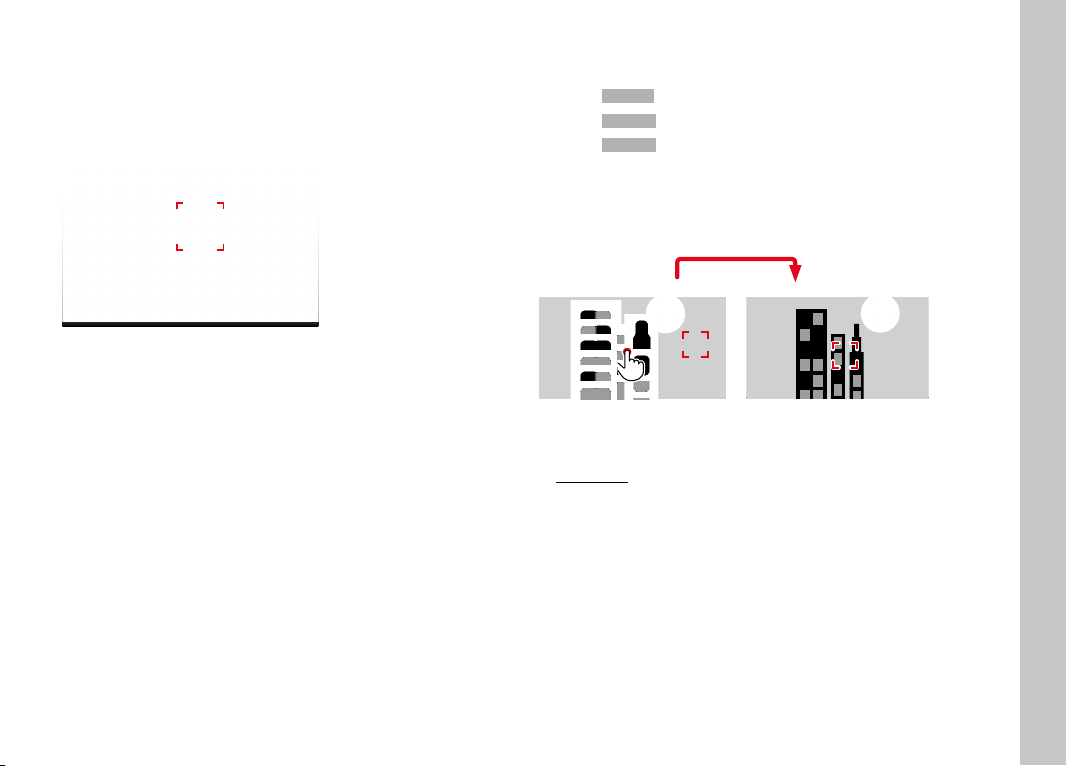
EN
Picture Mode
71
FACE DETECTION
In this metering method, the Leica Q2 Monochrom automatically
detects faces in the image field. The focus is set automatically on
the faces closest to the camera. Multi-field metering is used if no
faces are detected.
TOUCH AF
Touch AF allows a direct placement of the AF metering field.
▸ Select FocusingFocusing in the main menu
▸ Select Touch AFTouch AF
▸ Select Touch AFTouch AF
Positioning the AF Metering Field
▸ Briefly tap the LCD panel in the desired position
1/80002.8F 12500ISO EV
-3 2 1 0 21 3+
823412MP
To move the metering field back to the center of the screen
▸ Double tap the LCD panel
Note
• This function is available in conjunction with the AF metering
methods Spot metering and Field metering.

Picture Mode
EN
72
TOUCH AF + SHUTTER BUTTON
The combination Touch AF + ReleaseTouch AF + Release allows a direct placement of the
AF metering field for immediate recording.
▸ Select FocusingFocusing in the main menu
▸ Select Touch AFTouch AF
▸ Select Touch AF + ReleaseTouch AF + Release
▸ Briefly tap the LCD panel in the desired position
TOUCH AF IN EVF MODE
Touch AF is deactivated by default when EVF is in use to prevent
any inadvertent altering of the AF metering field. Touch AF can,
however, also be used in EVF mode.
Factory setting: OffOff
▸ Select FocusingFocusing in the main menu
▸ Select Touch AF in EVFTouch AF in EVF
▸ Select OnOn/OffOff
Note
• In this case, you can change the position of the AF metering field
by swiping.
MF ASSIST FUNCTIONS
ENLARGEMENT IN AF MODE
You can access the enlargement function independent of focusing
for a better assessment of the settings.
The MagnificationMagnification function must be assigned to the FN button or
thumbwheel button to use this feature (see p.51).
Accessing the enlargement function
▸ Press the FN button / thumbwheel button
• An enlarged image section appears. The position of the
enlargement depends on the position of the AF metering field.
• The rectangle within the frame at the top right represents the
current magnification, as well as its position in the displayed
cropped section.
Adjusting the enlargement function
▸ Press the center button
• The image section toggles between magnification factors
(3x/6x).
Changing the position of the enlarged section
▸ Press the directional pad left or right as needed
Exiting the enlargement function
▸ Tap the shutter button
Notes
• The enlargement function remains active until it is exited.
• The most recently used function and zoom factor will still be set
the next time the function is accessed.
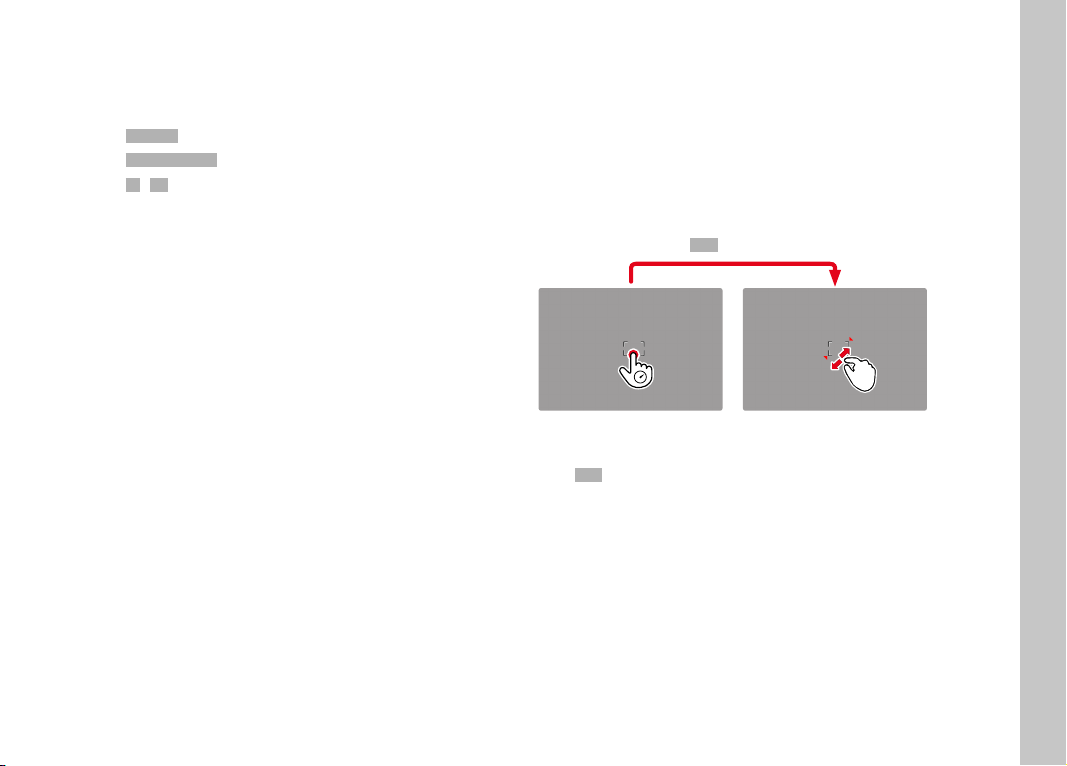
EN
Picture Mode
73
AF ASSIST LIGHT
The integrated AF assist light allows operation of the AF system in
unfavorable lighting conditions. This light comes on as soon as the
shutter button is pressed, provided the function is activated.
▸ Select FocusingFocusing in the main menu
▸ Select AF Assist LampAF Assist Lamp
▸ Select OnOn/OffOff
Notes
• The AF assist light illuminates an area of up to approx. 5m.
• The AF assist light switches off automatically, once focusing was
successful (AF metering field is green) or has failed (AF metering
field is red).
ACOUSTIC AF CONFIRMATION
You can set an acoustic confirmation signal for successful focus
metering in AF mode (see p. 59).
AF QUICK SETTING
The AF quick setting allows quick changes to the metering field size
during field metering. The viewfinder image remains visible
continuously during setting adjustments.
ACCESSING AF QUICK SETTING
▸ Touch and hold the LCD panel
• All auxiliary displays are hidden.
• Red triangles appear at two corners of the metering field if the
metering method FieldField is set.
ADJUSTING THE METERING FIELD SIZE
(only FieldField)
▸ Turn the thumbwheel
or
▸ Two-finger pinch/spread
• The size of the AF-metering field is adjustable in 3 incre-
ments.
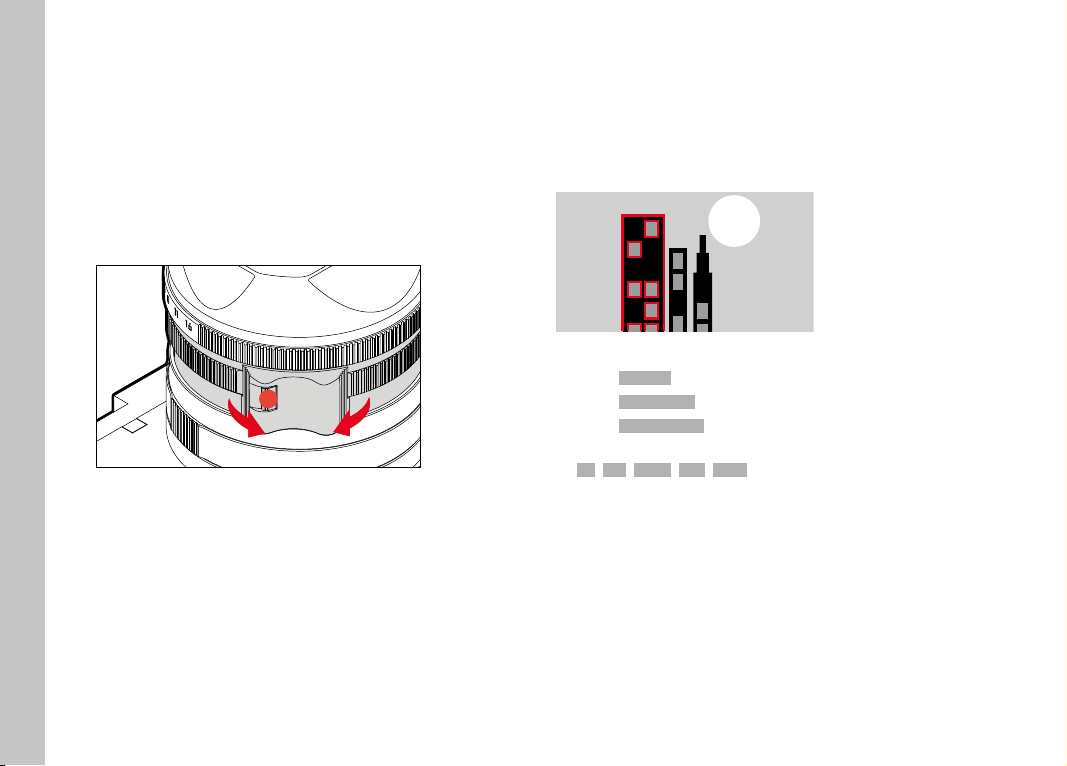
Picture Mode
EN
74
MANUAL FOCUSING (MF)
Focusing manually may in some situations be a better choice than
autofocus.
– the same setting is used for several exposures
– it would take longer to use the metering memory lock function
– the setting is to be kept at infinity for landscape pictures
– poor, i.e. very dark lighting conditions prevent AF operation or
would slow it down
▸ Move the focus ring out of the AF position
(press and hold the AF/MF lock release)
▸ Turn the focus ring until the desired part of the object is in clear
focus
MF ASSIST FUNCTIONS
The following assist functions are available in MF mode.
FOCUS PEAKING
This assist function highlights the edges of in focus subject
elements in color. The color can be user-specified.
1/80002.8F 12500ISO EV
-3 2 1 0 21 3+
823412MP
▸ Select FocusingFocusing in the main menu
▸ Select Focus AssistFocus Assist
▸ Select Focus PeakingFocus Peaking
▸ Select the desired setting
(OffOff, RedRed, GreenGreen, BlueBlue, WhiteWhite)
▸ Select an image section
▸ Turn the focus ring to mark the desired subject elements
Note
• Focus peaking is based on subject contrast, i.e. differences
between light and dark. As a result, high contrast subject parts
could be marked, even if they are not completely in focus.

EN
Picture Mode
75
ENLARGEMENT IN MF MODE
The larger the details of the subject are shown, the better you can
assess their sharpness and the more accurately you can focus.
Turning the focus ring will automatically enlarge the image section
in the center, which means the focus quality can be better
assessed.
▸ Select FocusingFocusing in the main menu
▸ Select Focus AssistFocus Assist
▸ Select Auto MagnificationAuto Magnification
▸ Select OnOn
▸ Turn the focus ring
• An enlarged image section appears. The position of the
enlargement depends on the position of the AF metering field.
• The rectangle within the frame at the top right represents the
current magnification, as well as its position in the displayed
cropped section.
▸ Tap the shutter button
• The image is no longer enlarged.
Adjusting the enlargement function
▸ Press the center button
• The image section toggles between magnification factors
(3x/6x).
Changing the position of the enlarged section
▸ Press the directional pad left or right as needed
Notes
• The enlargement will automatically return to normal viewing size
about 5s after the last turn of the focus ring.
• The most recently used function and zoom factor will still be set
the next time the function is accessed.
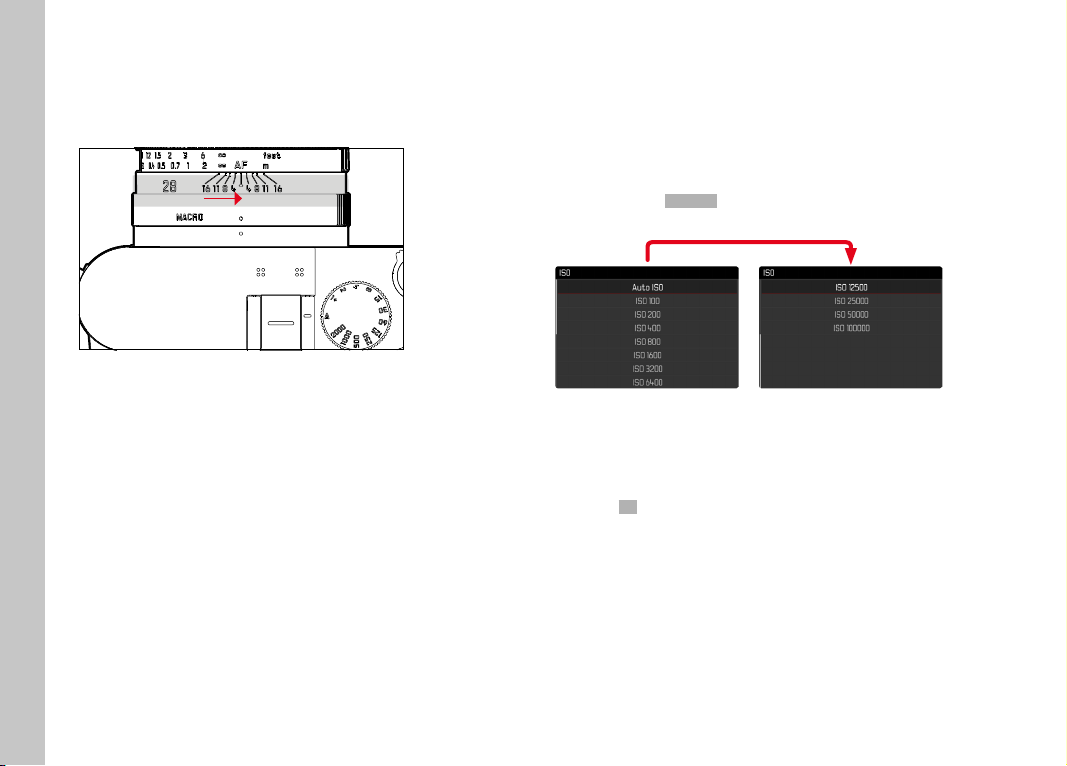
Picture Mode
EN
76
MACRO FUNCTION
The working range for the focus setting can be switched quickly
and easily from the standard focus range (30cm to infinity) to the
macro range (17cm to 30cm) using the macro setting ring. AF
and MF mode are available in both ranges.
▸ Turn the macro setting ring until the alignment point is set to
MACRO
• The distance scales on the focus ring change when the focus
ranges change.
ISO SENSITIVITY
The ISO setting covers a range between ISO 100 and ISO 100 000,
allowing you to adapt to the relevant situation as required.
There is more leeway for the use of preferred shutter speed and
aperture combinations when setting the exposure manually. You
can set priorities within the scope of the automatic setting, e.g. for
reasons of picture composition.
Factory setting: Auto ISOAuto ISO
FIXED ISO VALUES
Values between ISO 100 and ISO 100 000 can be selected in 11
increments.
▸ Select ISOISO in the main menu
▸ Select the desired value
Note
• When high ISO values are used or the image is edited later,
image noise, as well as vertical and horizontal stripes may
become visible, particularly in larger, evenly lit areas of the
object.

EN
Picture Mode
77
AUTOMATIC SETTING
The camera automatically adjusts the sensitivity to ambient
brightness and/or to the configured shutter speed/aperture
settings combination. In conjunction with aperture priority mode,
this function extends the range for automatic exposure control.
▸ Select ISOISO in the main menu
▸ Select Auto ISOAuto ISO
LIMITING SETTING RANGES
A max. ISO value can be set, which will then limit the automatic
setting range (Maximum ISOMaximum ISO). A max. exposure time can also
optionally be configured. There are focal length related settings (1/f1/f,
1/(2f)1/(2f), 1/(3f)1/(3f), 1/(4f)1/(4f)) and fixed max. shutter speeds 1/21/2s and 1/20001/2000s
available for that purpose.
In the focal length-specific settings, the camera will only switch to
a higher sensitivity if the shutter speed would fall below the set
threshold due to low light.
Separate settings are available for flash photography.
LIMITING ISO VALUES
All values from ISO 400 are available.
Factory setting: 64006400
▸ Select Auto ISO SettingsAuto ISO Settings in the main menu
▸ Select Maximum ISOMaximum ISO
▸ Select the desired value
LIMITING SHUTTER SPEED RANGES
Factory setting: 1/(2f)1/(2f)
▸ Select Auto ISO SettingsAuto ISO Settings in the main menu
▸ Select Min. Shutter SpeedMin. Shutter Speed
▸ Select the desired value
(1/f1/f, 1/(2f)1/(2f), 1/(3f)1/(3f), 1/(4f)1/(4f), 1/20001/2000, 1/10001/1000, 1/5001/500, 1/2501/250, 1/1251/125, 1/601/60, 1/301/30,
1/151/15, 1/81/8, 1/41/4, 1/21/2)
LIMITING ISO VALUES (FLASH)
All values from ISO 400 are available.
Factory setting: 64006400
▸ Select Auto ISO SettingsAuto ISO Settings in the main menu
▸ Select Maximum ISO with FlashMaximum ISO with Flash
▸ Select the desired value
LIMITING SHUTTER SPEED RANGES (FLASH)
Factory setting: 1/(2f)1/(2f)
▸ Select Auto ISO SettingsAuto ISO Settings in the main menu
▸ Select Shutter Speed Limit with FlashShutter Speed Limit with Flash
▸ Select the desired value
(1/f1/f, 1/(2f)1/(2f), 1/(3f)1/(3f), 1/(4f)1/(4f), 1/20001/2000, 1/10001/1000, 1/5001/500, 1/2501/250, 1/1251/125, 1/601/60, 1/301/30,
1/151/15, 1/81/8, 1/41/4, 1/21/2)

Picture Mode
EN
78
EXPOSURE
EXPOSURE METERING METHODS
Optional methods are Spot metering, Center-Weighted and
Multi-Field metering.
SPOT METERING –
This metering method is concentrated exclusively on a small area
in the center of the image. The metering fields are joined together
when the exposure metering method SpotSpot is combined with the AF
metering methods SpotSpot and FieldField. Exposure metering will then occur
at the point specified by the AF metering field, even if it is moved.
CENTER-WEIGHTED METERING –
This method considers the entire image field. The subject elements
captured in the center will, however, impact on the calculation of
the exposure value more so than areas around the edges.
MULTI-FIELD METERING –
This metering method is based on the detection of multiple values.
These values are used in an algorithm to calculate an exposure
value appropriate for a good rendering of the assumed main
subject.
▸ Select Exposure MeteringExposure Metering in the main menu
▸ Select a metering method
(SpotSpot, Center-WeightedCenter-Weighted, Multi-FieldMulti-Field)
• The selected metering method is displayed in the header line
of the screen image.
Spot metering allows a shifting of the metering field:
▸ Press the directional pad left or right as needed
Note
• The exposure information (ISO value, aperture, shutter speed
and light balance with exposure compensation scale) will help to
determine the settings required for correct exposure.
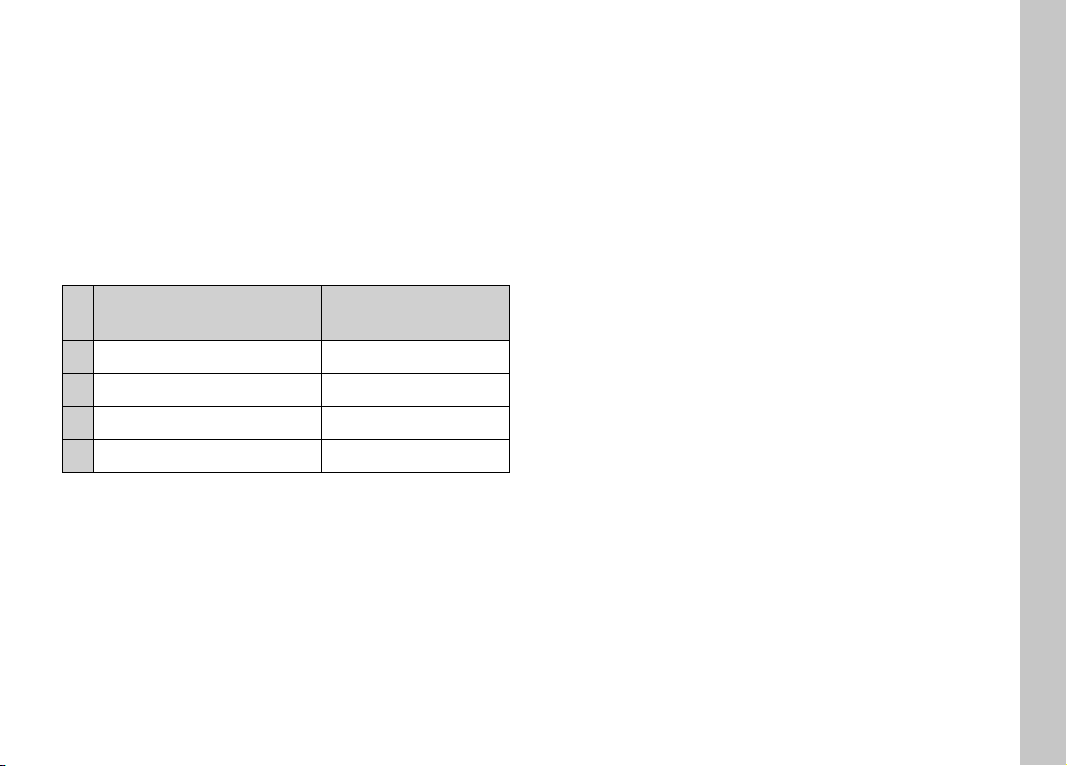
EN
Picture Mode
79
EXPOSURE MODES
There are four exposure modes available to adjust the rendering of
the object or to create the desired picture composition:
– Automatic program (P)
– Aperture priority mode (A)
– Shutter speed priority mode (S)
– Manual setting (M)
SELECTING A MODE
The four operating modes are activated automatically via the
following setting combinations:
Setting via the shutter
speed setting dial
Setting via the
aperture setting ring
P A A
A A
manual setting
S
manual setting
A
M
manual setting manual setting
▸ Set the shutter speed setting dial to the relevant position
▸ Set the aperture setting ring to the relevant position
FULLY AUTOMATIC EXPOSURE SETTING – P
AUTOMATIC PROGRAM – P
The automatic program mode facilitates fast and fully automatic
photography. The exposure is controlled by an automatic shutter
speed and aperture setting.
▸ Turn the shutter speed setting dial to the A position
▸ Turn the aperture setting ring to the A position
▸ Tap and hold the shutter button
• Exposure information is displayed at the bottom of the screen.
This contains the automatically set value pair of aperture
setting and shutter speed.
• All other visible displays of the info bars will be hidden.
▸ Shutter release
or
▸ Adjusting the automatically set value pair
(Program shift)

Picture Mode
EN
80
CHANGING THE PRESET SHUTTER SPEED AND APERTURE
COMBINATIONS (SHIFT)
Changing the preset values using the Shift function combines the
reliability and speed of fully automatic exposure control with the
opportunity to vary the speed/aperture combination selected by
the camera at any time to fit in with your own ideas and intentions.
The overall exposure, i.e. the brightness of the image, remains
unchanged. Faster shutter speeds are a good choice for e.g. sports
pictures, while longer speeds will offer more depth of field for e.g.
landscape pictures.
▸ Turn the thumbwheel to the left/right
(left = greater depth of field, right = shorter shutter speeds)
• Shifted value pairs are marked with an asterisk next to the PP.
Notes
• The adjustment range is limited to guarantee correct exposure.
• The values will be reset after each shot (and also if exposure
metering is set to deactivate automatically after 12s) to prevent
unwanted use.
SEMI-AUTOMATIC EXPOSURE SETTING – A/S
APERTURE PRIORITY - A
Aperture priority mode sets the exposure automatically according
to the manually selected aperture. This mode is suitable for
pictures in which the depth of field is a critical compositional
element.
By selecting an appropriately low exposure value, you can reduce
the depth of field range, for example to make a face “stand out” in
sharp focus against an unimportant or distracting background.
Conversely, you can use a higher exposure value to increase the
depth of field range, so that everything from the foreground to the
background will be in full focus in a landscape shot.
▸ Turn the shutter speed setting dial to the A position
▸ Set the exposure value setting via the aperture setting ring
▸ Tap and hold the shutter button
• Exposure information is displayed at the bottom of the screen.
This contains the automatically set value pair of aperture
setting and shutter speed.
• All other visible displays of the info bars will be hidden.
▸ Shutter release

EN
Picture Mode
81
Notes
• The remaining exposure time after shutter release is counted
down in seconds on the display for shutter speeds greater than
2s.
• Image noise becomes apparent when using higher sensitivities,
particularly on uniform dark areas. Long exposure times may
cause severe image noise. In order to reduce this annoying
phenomenon, the camera will take a second “black picture”
(taken with the shutter closed) automatically after pictures taken
with slow shutter speeds and high ISO values. The noise metered
in this parallel picture is then digitally “subtracted” from the data
for the actual picture. In such cases the message
Noise reduction in progressNoise reduction in progress will appear with a relevant time value.
The doubling of the “exposure” time must be taken into account
for long-term exposure times. The camera must not be switched
off during that time.
SHUTTER SPEED PRIORITY – S
Shutter speed priority mode will set exposure automatically accord-
ing to the manually selected shutter speed. It is therefore
particularly suitable for pictures of moving objects, where the
sharpness of the movement depicted is a critical picture composi-
tion element.
An appropriately fast shutter speed can help to avoid e.g.
unwanted motion blurring and will “freeze” the object. Conversely,
an appropriately longer shutter speed can help create a better
feeling of motion in the image with targeted “tracer effects”.
▸ Turn the aperture setting ring to the A position
▸ Select the desired shutter speed
– via the shutter speed setting dial: in full increments
– using the thumbwheel: fine tuning in 1⁄3 increments
▸ Tap and hold the shutter button
• Exposure information is displayed at the bottom of the screen.
This contains the automatically set value pair of aperture
setting and shutter speed.
• All other visible displays of the info bars will be hidden.
▸ Shutter release
Note
• Fine tuning can alternatively be done via the status screen. This
will be the only option if Exp. Comp.Exp. Comp. (see p.52) is assigned to
the thumbwheel.
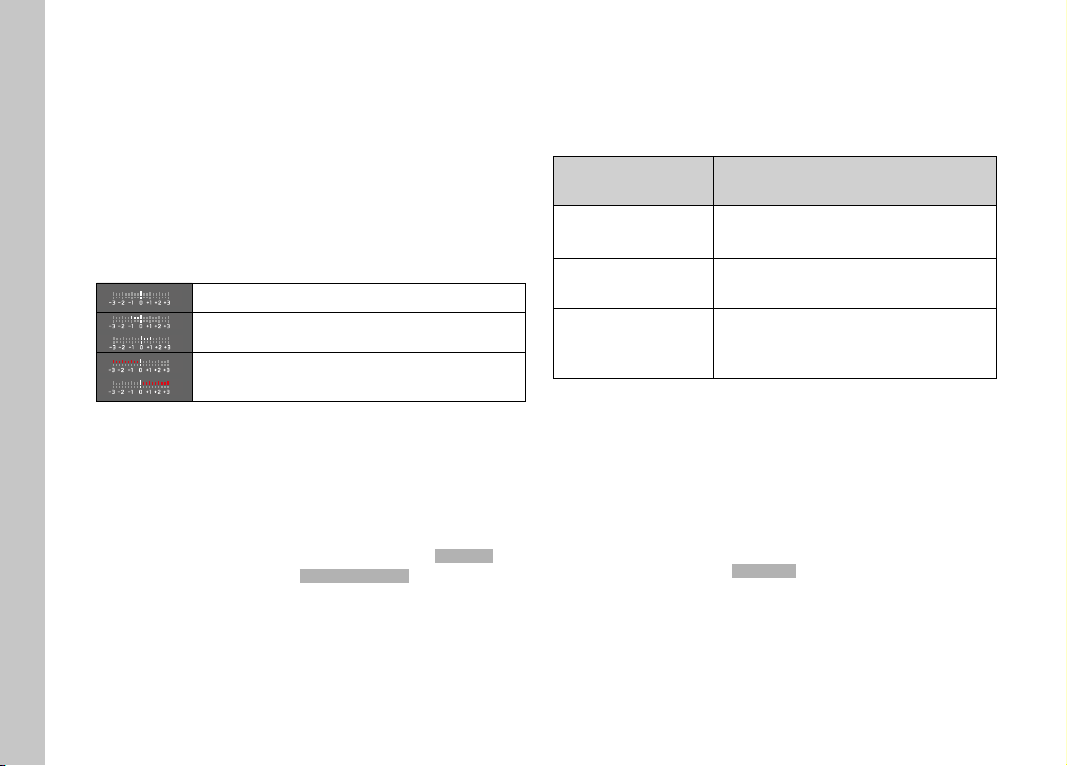
Picture Mode
EN
82
MANUAL EXPOSURE SETTING – M
The following manual settings for shutter speed and aperture are a
good choice:
– to create a special image mood that can only be achieved with a
very specific type of exposure
– to ensure a perfectly identical exposure for multiple images with
different cropped sections
▸ Set the desired exposure manually (using the shutter speed
setting dial and the aperture setting wheel on the lens).
• The exposure compensation is done using the scale of the
light balance:
Correct exposure
under/overexposure by the displayed value
under or overexposure by more than 3EV
(Exposure Value)
▸ Tap the shutter button
• Exposure information is displayed at the bottom of the screen.
• All other visible displays of the info bars will be hidden.
▸ Shutter release
Notes
• The screen image will show an exposure preview if P-A-S-MP-A-S-M is
selected under the menu item Exposure PreviewExposure Preview.
• The shutter speed setting dial must be clicked to one of the
engraved exposure shutter speeds.
SETTING SHUTTER SPEEDS
The shutter speed is set in two steps.
1. via the shutter speed setting dial: in full increments
2. using the thumbwheel: fine tuning in 1⁄3 increments
Shutter speed
setting dial
Thumbwheel
all settings from 2 to
1000
Fine tuning the shutter speed in 1⁄3EV
increments, max. ±2⁄3EV
Set to 1+
Longer shutter speeds than 1s (0.6s to
120s in 1⁄3EV increments)
Set to 2000
Shorter shutter speeds than 1⁄1000s
(1⁄1250s to 1⁄40000s in 1⁄3EV
increments)
EXAMPLES FOR SHUTTER SPEED FINE TUNING SETTINGS
– set shutter speed 1⁄125s + move the thumbwheel one click to
the left = 1⁄100s
– set shutter speed 1⁄500s + move the thumbwheel two clicks to
the right = 1⁄800s
Note
• Fine tuning can alternatively be done via the status screen. This
will be the only option if Exp. Comp.Exp. Comp. (see p.52) is assigned to
the thumbwheel.

EN
Picture Mode
83
LONG-TERM EXPOSURE – T
In this setting, the shutter remains open after shutter release until
the shutter button is pressed again (ax. 2min depending on ISO
setting).
▸ Set the shutter speed setting dial to 1+
▸ Set the aperture setting ring to a fixed value
▸ Turn the thumbwheel until the time value in the footer line
changes to TT
▸ Shutter release
Notes
• The thumbwheel must have the assignment OffOff or AutoAuto (see
p.52).
• Image noise becomes apparent when using higher sensitivities,
particularly on uniform dark areas. Long exposure times may
cause severe image noise. In order to reduce this annoying
phenomenon, the camera will take a second “black picture”
(taken with the shutter closed) automatically after pictures taken
with slow shutter speeds and high ISO values. The noise metered
in this parallel picture is then digitally “subtracted” from the data
for the actual picture. In such cases the message
Noise reduction in progressNoise reduction in progress will appear with a relevant time value.
The doubling of the “exposure” time must be taken into account
for long-term exposure times. The camera must not be switched
off during that time.

Picture Mode
EN
84
EXPOSURE CONTROL
EXPOSURE PREVIEW
The brightness of the screen image mirrors the effects of the
selected exposure settings when pressing and holding the shutter
button on the first pressure point. You can now assess and control
the effect of the relevant exposure setting on the image before
taking the picture. This will apply as long as the subject brightness
and the set exposure don’t result in excessively low or high
brightness values.
This function can be disabled for the manual exposure setting (M).
Factory setting: P-A-S-MP-A-S-M
▸ Select Exposure PreviewExposure Preview in the main menu
▸ Select P-A-SP-A-S (only in automatic, aperture priority and shutter
speed priority mode) or P-A-S-MP-A-S-M (also for manual setting)
Notes
• Depending on ambient lighting conditions, the brightness of the
screen image may differ from that of the actual pictures, despite
the settings described above. The screen image will appear
considerably darker than the – correctly exposed – picture. That
is particularly the case in long-term exposures.
• The exposure preview will also be displayed if exposure metering
is done via another control element (e.g. using the Zoom/Lock
button, provided is was assigned the AE-LAE-L function).
EXPOSURE LOCK
We often want to arrange important subject elements outside the
center of the picture for reasons of picture composition and these
elements may sometimes be very bright or very dark. Cen-
ter-weighted metering and spot metering, however, mainly capture
an area in the center of the image and are calibrated to an average
gray scale value.
In that case the metering memory lock initially allows a metering of
the main object and to store the relevant settings until the final
image section is set. The same applies for focusing (AF-L) in any
autofocus mode.
Usually both lock functions (focusing and exposure) are done at the
same time with the shutter button. You can, however, divide the
lock functions between the shutter button and the Zoom/Lock
button or assign both to the Zoom/Lock button. The functions
include settings and storage.

EN
Picture Mode
85
AE-L (AUTO EXPOSURE LOCK)
The camera stores the exposure value. The focus can therefore be
set on another object, no matter which exposure value is selected.
AF-L (AUTO FOCUS LOCK)
The camera stores the focus setting. That makes it easier to change
the image section when focusing is fixed.
AE-L/AF-L
With this option enabled, the camera stores the exposure value and
the focus setting when the assigned button is pressed and held.
Notes
• A metering memory lock doesn’t make much sense in conjunc-
tion with multi-field metering, because a targeted capture of an
individual object element will not be possible.
• A change in the aperture setting after the metering memory lock
is set will not result in an adjustment of the shutter speed, i.e.
the end result would be an incorrect exposure.
• Only one of the two exposure locks (AF-LAF-L or AE-LAE-L), or both at the
same time (with AF-L + AE-LAF-L + AE-L) can be set for a recording.
• The assigned button must be pressed again to remove the
memory lock and to take a new measurement.
Picture Mode
EN
86
METERING MEMORY LOCK IN AF MODE
The metering functions are distributed as follows while the Zoom/
Lock button is pressed and held:
Menu settings Shutter button Zoom/Lock
button
AF-L + AE-LAF-L + AE-L No function Exposure and focus
AF-LAF-L Exposure Sharpness
AE-LAE-L Sharpness Exposure
The shutter button will retain both functions, provided no exposure
lock is done via the Zoom/Lock button.
Via the shutter button
▸ Aim at the key part of the object or at a similar detail
▸ Tap and hold the shutter button
• The measurement is taken and saved.
▸ Pan the camera to capture the final image section while keeping
the shutter button pressed
▸ Shutter release
Via the Zoom/Lock button
▸ Select Customize ControlCustomize Control in the main menu
▸ Select Zoom/Lock-ButtonZoom/Lock-Button
▸ Select the desired setting
(AF-L + AE-LAF-L + AE-L, AE-LAE-L, AF-LAF-L)
▸ Aim at the object
▸ Press and hold the Zoom/Lock button
• The measurement is taken and saved.
• A small padlock icon with the letters AE appear at the bottom
left of the screen to signify that the exposure value was saved.
• A green AF metering field signifies that the focusing was
saved.
• The exposure value/focusing remain until the same button is
pressed again.
▸ Select the final image section
▸ Shutter release
METERING MEMORY LOCK IN MF MODE
In MF mode, only the exposure can be locked via the shutter
button. Similarly, the Zoom/Lock button will only have that one
function (with an assignment of AF-L + AE-LAF-L + AE-L or AE-LAE-L).
EN
Picture Mode
87
EXPOSURE COMPENSATION
Exposure meters are calibrated for a medium gray scale value,
which matches a standard, i.e. average image object. Should the
measured image detail not fulfill that requirement, then the a
relevant exposure compensation can be effected.
Specifically where several pictures are taken in sequence, for
example if for a series a slightly lesser or greater exposure is
desired for a particular reason, then exposure compensation can
be a very useful function: Once set, the setting remains active
– unlike the metering memory lock – until it is reset.
Exposure compensation values can be set in the range ±3 EV in
1⁄3EV increments (EV: Exposure Value).
A
A
Set compensation value (marks at 0 = Off)
Using thumbwheel control
▸ Select Customize ControlCustomize Control in the main menu
▸ Select Wheel AssignmentWheel Assignment
▸ Select Exp. Comp.Exp. Comp.
▸ Set the desired value using the thumbwheel
Using menu control
▸ Select Exposure CompensationExposure Compensation in the main menu
• A scale appears as a submenu item.
▸ Set the value on the scale
• The set value is displayed above the scale.
Notes
• While setting the value, you can see the effect on the screen
image, which becomes darker or lighter.
• This function can be selected for direct access via the thumb-
wheel (see p.52). That will allow the user to set the values
quickly using the thumbwheel.
• The following applies for set compensation values, no matter
how they were initially set: They remain effective until they are
manually reset to 00, i.e. even if the camera is switched off and
on again in the meantime.
• The set exposure compensation is indicated by a mark on the
exposure compensation scale in the footer line.

Picture Mode
EN
88
PICTURE RECORDING MODES
SERIAL EXPOSURES
The camera is set to single shot exposures by default (SingleSingle). Serial
exposures can also be created to e.g. capture motion sequences at
various stages.
▸ Select Drive ModeDrive Mode in the main menu
▸ Select the desired setting
(Continuous - Low SpeedContinuous - Low Speed, Continuous - Medium SpeedContinuous - Medium Speed,
Continuous - High SpeedContinuous - High Speed, Continuous - Very High SpeedContinuous - Very High Speed)
Once you have finalized your settings, the camera will take serial
exposures as long as you keep the shutter button pressed down
fully (and you have sufficient space on your memory card).
Notes
• We recommend deactivating the preview playback mode
(PreviewPreview) when using this function.
• The specified picture sequence stated in the technical
information refers to a default setting (ISO 200ISO 200, JPG format L-JPGL-JPG).
• Regardless of how many pictures were taken in a series, the last
picture in the series or the last picture saved on the memory
card while the save process is ongoing will be displayed first in
both review modes.
• Serial exposures with Continuous - High SpeedContinuous - High Speed set are taken at a
frequency of max. 10 fps, provided shutter speeds of 1⁄60s or
faster are used.
• Serial exposures are not possible if a flash is used. Only a single
picture will be taken if the flash function is activated.
• Serial exposures are not available in combination with the
self-timer function.
• The buffer memory of the camera only allows a limited number
of exposures in series and in the selected exposure frequency.
The exposure frequency is reduced, once the capacity limit of
the camera is reached. This slow-down is due to the time
required to transfer the data from the buffer memory to the
card.
• Continuous - Low SpeedContinuous - Low Speed/Continuous - Medium SpeedContinuous - Medium Speed:
For the modes AFsAFs, AFcAFc and MFMF, the exposure settings are done
individually for every recording. Focusing is done additionally in
the modes AFsAFs and AFcAFc.
• Continuous - High SpeedContinuous - High Speed/Continuous -Very High SpeedContinuous -Very High Speed:
In the modes AFsAFs, AFcAFc and MFMF the exposure and focus settings
specified for the first recording will be applied to all subsequent
recordings.

EN
Picture Mode
89
INTERVAL SHOOTING
This camera allows you to capture motion sequences over
extended periods of time automatically using the interval shooting
function. You specify the number of pictures, the intervals between
pictures, and the start time of the series.
The exposure and focus settings are no different from those for
normal pictures, but you should remember that the lighting
conditions may change during the course of the picture series.
SPECIFYING THE NUMBER OF PICTURES
▸ Select Drive ModeDrive Mode in the main menu
▸ Select Interval ShootingInterval Shooting
▸ Select Number of FramesNumber of Frames
▸ Enter the desired value
SPECIFYING THE INTERVALS BETWEEN SHOTS
▸ Select Drive ModeDrive Mode in the main menu
▸ Select Interval ShootingInterval Shooting
▸ Select IntervalInterval
▸ Enter the desired value
SETTING THE DELAY TIME
▸ Select Drive ModeDrive Mode in the main menu
▸ Select Interval ShootingInterval Shooting
▸ Select CountdownCountdown
▸ Enter the desired value
To get started
▸ Press the shutter button
• The remaining time until the next exposure and its number is
displayed at the top right.
• The LCD panel will switch off automatically between
recordings. Tapping the shutter button reactivates the LCD
panel.
To cancel a running serial exposure
▸ Press the PLAY button
• A small menu appears.
▸ Select EndEnd

Picture Mode
EN
90
Notes
• The use of autofocus in interval shooting may result in not all
exposures having their focus on the same object.
• The camera may switch off and on again if “Auto power off” is
set and no other camera operation occurs between the
individual shots.
• Interval shooting over an extended period of time in a cold
location or in a place with high temperature and humidity may
result in malfunctions.
• Interval shooting will be interrupted or canceled in the following
situations:
– if the battery is depleted
– if the camera is switched off
Make sure to check the battery for sufficient charge.
• Interrupted or canceled interval shooting can be resumed by
switching the camera off, replacing the battery or memory card
as needed and then switching the camera back on. A prompt will
be displayed on screen if the camera is switched off and on
again while the Interval ShootingInterval Shooting shooting function is active.
• The interval function remains active after a picture series is
completed, and also after the camera is switched off and on
again, until another exposure mode (picture series) is set.
• Availability of the interval function does not mean that the
camera is suitable for use as a monitoring device.
• Regardless of how many pictures were taken in a series, the last
picture in the series or the last picture in the series or the last
picture saved on the memory card while the saving process is
ongoing will be displayed first in both review modes.
• The pictures of an interval shoot are marked with in review
mode.
• The camera may under some circumstances be unable to take
good pictures. That may happen if, for example, focusing was
unsuccessful. In that case, the camera will not take a picture
and the series will continue with the next interval. The message
Some Frames are droppedSome Frames are dropped appears on screen.

EN
Picture Mode
91
EXPOSURE BRACKETING
Many attractive objects are rich in contrast, which means they
have very bright and very dark areas. The image effect can be
dramatically different, depending on which of these areas you
choose to align your exposure with. The automatic bracketing
function in aperture priority mode allows you to produce several
alternatives with graduated exposure values and varying shutter
speeds. You can then select the picture you like best or use
relevant picture editing software to calculate an image with a
particularly broad contrast spectrum (HDR).
A
B
C
D
E
A
Number of pictures
B
Exposure difference between the pictures
C
Exposure compensation
D
Light value scale
E
Exposure values of the images marked in red
(The scale will be offset by the relevant value if exposure
compensation is set concurrently.)
You can select the desired number of exposures (3 or 5). The
exposure difference, which can be set via EV StepsEV Steps, can be up to
3EV.
▸ Select Drive ModeDrive Mode in the main menu
▸ Select Exposure BracketingExposure Bracketing
▸ Select the desired number of pictures under Number of FramesNumber of Frames in
the submenu
▸ Select the desired exposure offset under EV StepsEV Steps in the
submenu
▸ Select the desired Exposure CompensationExposure Compensation value in the submenu
• The marked exposure values change positions according to
the settings selected. In the case of exposure compensation,
the scale also shifts.
• The selected exposure compensation value will be applied to
the entire exposure series.
▸ Select the desired setting under AutomaticAutomatic submenu
• With the factory setting in place (OnOn), the entire exposure
series will run after the shutter button is pressed once; when
the setting is OffOff, each picture must be taken individually.
▸ All pictures are taken by pressing the shutter button once or
several times

Picture Mode
EN
92
Notes
• Appears on the LCD panel if the bracketing function is
activated. You can watch the effect of the function on screen
while the pictures are taken (brighter or darker).
• Depending on the exposure mode, the exposure gradations are
produced by changing the shutter speed and/or aperture value:
– Shutter speed (A/M)
– Aperture (S)
– Shutter speed and aperture value (P)
• The picture sequence: underexposure/correct exposure/
overexposure.
• The working range for automatic bracketing may be limited
depending on the available shutter speed/aperture combination.
• With automatic ISO sensitivity control enabled, the sensitivity
calculated by the camera automatically for the raw picture will
also be applied to all other pictures in a series, i.e. the ISO value
will not change during bracketing. This may mean that the
slowest shutter speed specified under Min. Shutter SpeedMin. Shutter Speed is
exceeded.
• The focus range for automatic bracketing may be limited
(depending on the originally set shutter speed). The specified
numbers of pictures will be taken regardless. Several pictures in
a series may consequently be taken with the same exposure
values.
• The function remains active until another function is selected in
the Drive ModeDrive Mode submenu. If no other function is selected, another
series of pictures is taken each time the shutter button is
pressed.
SELF-TIMER
The self-timer function allows taking pictures with a preset time
delay. We recommend that the camera is placed on a tripod.
▸ Select Self TimerSelf Timer in the main menu
▸ Select Self Timer 2 sSelf Timer 2 s/Self Timer 12 sSelf Timer 12 s
▸ Shutter release
• The remaining time until exposure is counted down on screen.
The self-timer LED at the front of the camera counts down the
delay time. It flashes slowly during the first 10s, then fast for
the last 2s.
• The self-timer delay time can be canceled at any time by
taping the shutter button; the relevant settings remain intact.
Notes
• Exposure metering is done first; in autofocus mode, focusing is
first. Only then will the delay time commence.
• The function remains active until another function is selected in
the Self TimerSelf Timer submenu.
• The self-timer function is only available for individual recordings.
EN
Picture Mode
93
DIGITAL ZOOM
Three cropped section sizes are available in addition to the
Summilux 28 f/1.7 ASPH. image section. They are similar to the
focal lengths 35mm, 50mm and 75mm.
35mm 50mm
75mm
PERMANENT SETTING
▸ Select Digital ZoomDigital Zoom in the main menu
▸ Select the desired setting
DIRECT ZOOM CHANGE
▸ Press and hold the Zoom/Lock button
• A frame appears around the image section on screen,
indicating the final image size.
• Pressing the Zoom/Lock button will toggle the display
between 28mm (full screen), 35mm, 50mm and 75mm.
• The selected increment will remain set until the next change.
Notes
• The relevant setting must be selected via the menu if the Zoom/
Lock button has a different function assigned (direct access, see
p.52).
• The desired cropped section is displayed for DNG recordings,
but the entire 28mm image field will be saved. That will allow a
later editing of the full image.
• Only an enlarged cropped section will be displayed and stored
for JPG images. A higher zoom value means a lower resolution as
shown in the following table. Cropped sections can also be
created using editing software.
28mm Digital Zoom
35mm
Digital Zoom
50mm
Digital Zoom
75mm
L-JPGL-JPG
47MP
30MP 15MP 7MP
M-JPGM-JPG
24MP
15MP 8MP 3MP
S-JPGS-JPG
12MP
8MP 4MP 2MP
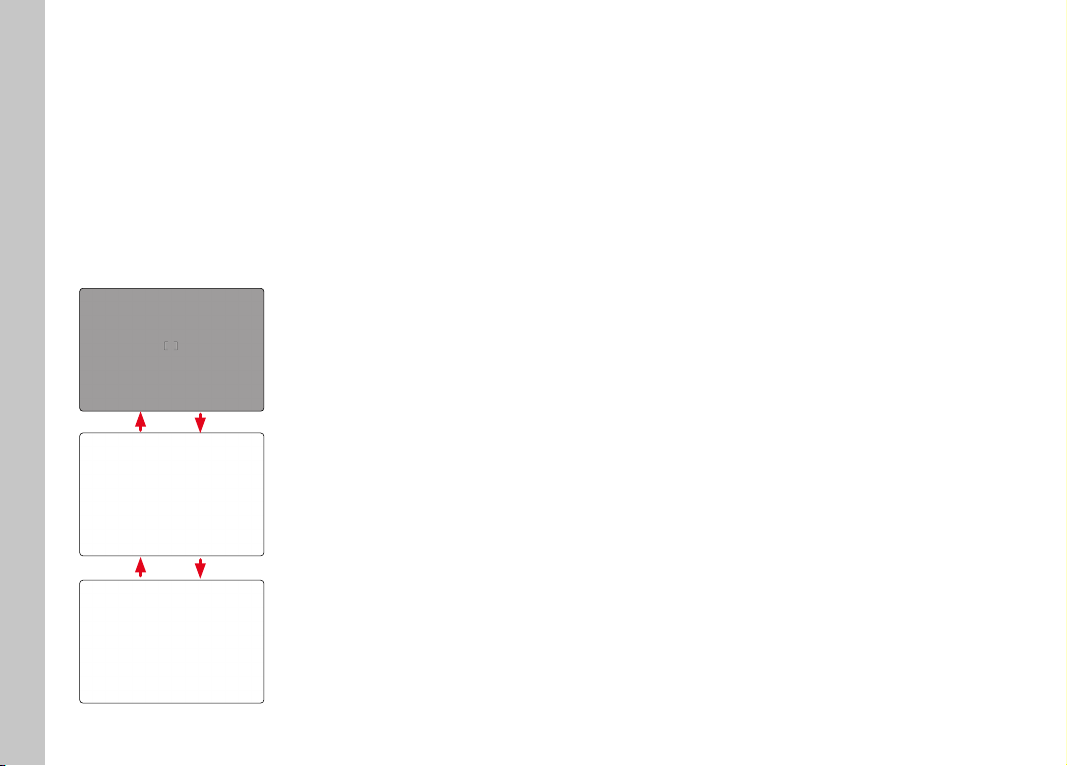
Picture Mode
EN
94
INFO DISPLAYS
INFO DISPLAYS IN PICTURE MODE
Various information is displayed in the header and/or footer line.
The exposure information (ISO value, aperture, shutter speed and
light balance with exposure compensation scale) will help to
determine the settings required for correct exposure. Select one of
the three available display options.
▸ Press the center button
• The display cycles through the display options.
– No picture data
– Footer with exposure information,
auxiliary displays
– Header with recording information,
footer with exposure information,
auxiliary displays
Showing/hiding information temporarily
▸ Tap and hold the shutter button
• (Only) the exposure information and currently active auxiliary
functions will be visible.
Note
• All displays are visible at all times in video mode.
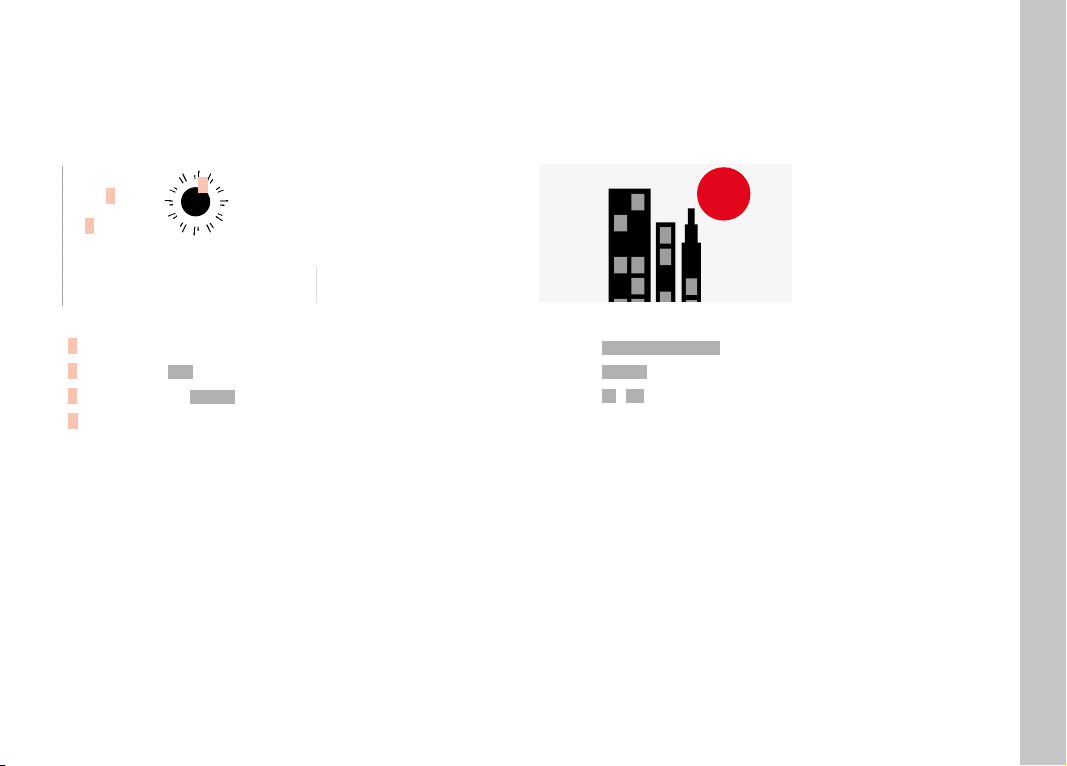
EN
Picture Mode
95
AUXILIARY DISPLAYS
You can select a number of other displays in addition to the
standard information contained in the header and footer to adapt
the screen image to your needs. Four functions are available.
INFO
A
D
C
A
Histogram
B
Grid lines (GridGrid)
C
Level display (HorizonHorizon)
D
Clipping
Note
• Histogram, clipping display and level gauge will only be visible
when the relevant information display is visible. The grid will
appear independently of the info display.
CLIPPING
The Clipping display marks very bright image areas. This function is
a very easy and exact tool for checking the correct exposure
setting.
999-9000
▸ Select Capture AssistantsCapture Assistants in the main menu
▸ Select ClippingClipping
▸ Select OnOn/OffOff
▸ Tap and hold the shutter button
• The clipping display appears.
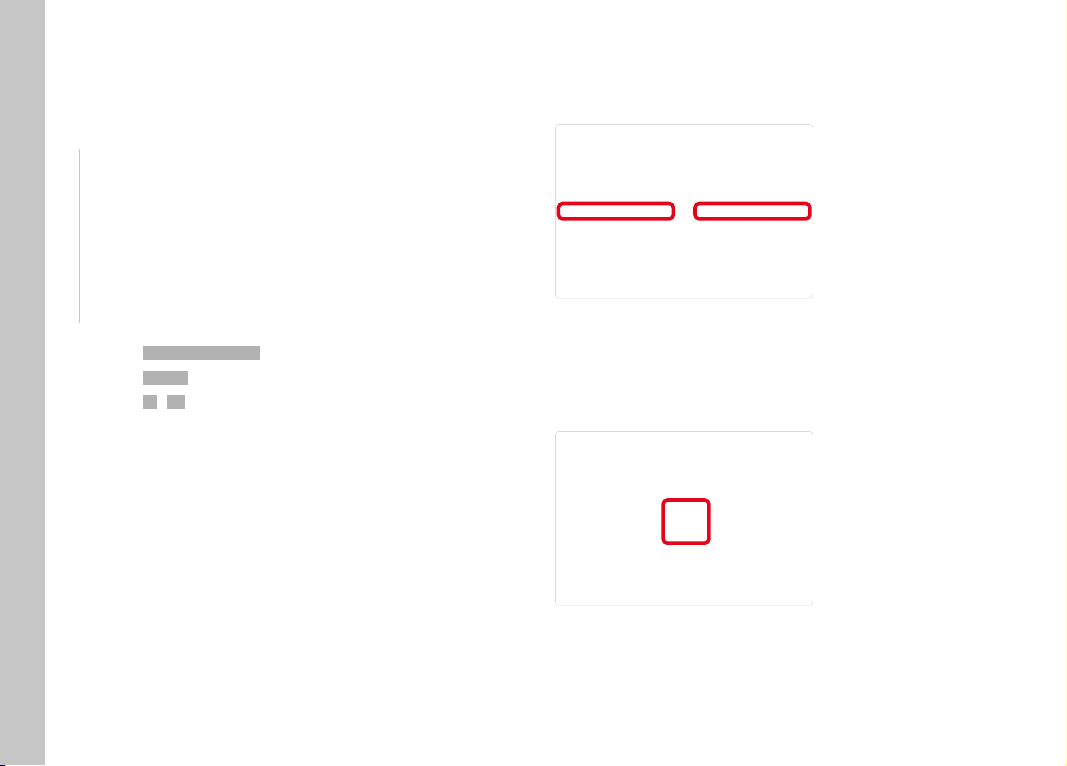
Picture Mode
EN
96
LEVEL GAUGE
The integrated sensors of the camera show its orientation. These
indicators ensure exact camera orientation along the longitudinal
and transverse axes of critical objects, e.g. architecture.
▸ Select Capture AssistantsCapture Assistants in the main menu
▸ Select HorizonHorizon
▸ Select OnOn/OffOff
Two long lines to the left and right of the image center indicate the
transverse axis on screen.
– in zero position = green
– in tilted position = red
The longitudinal axis is indicated in level position by two green
double-lines immediately left and right of the image center. When
the camera is tilted, these lines are white, and a short red line
appears above or below them.
Note
• The camera will switch the aspect of the level gauge autono-
mously for pictures taken in portrait format.
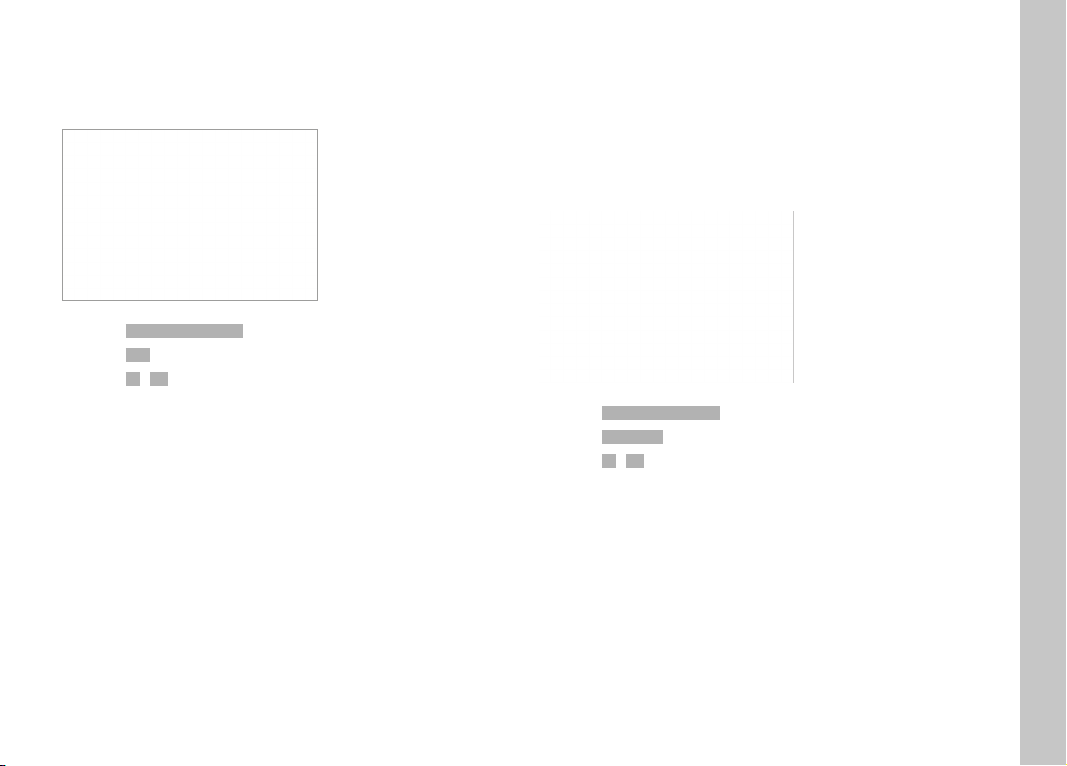
EN
Picture Mode
97
GRID
The grids divide the image frame into multiple fields. They facilitate
picture composition and an exact camera orientation.
▸ Select Capture AssistantsCapture Assistants in the main menu
▸ Select GridGrid
▸ Select OnOn/OffOff
HISTOGRAM
Histogram represents the brightness distribution in the picture. The
horizontal axis shows the graduated values from black (left)
through gray to white (right). The vertical axis corresponds to the
number of pixels at each brightness level.
This type of rendering allows an additional quick and easy
assessment of the exposure setting.
▸ Select Capture AssistantsCapture Assistants in the main menu
▸ Select HistogramHistogram
▸ Select OnOn/OffOff
Notes
• The histogram is always based on the brightness displayed;
depending on the settings used, it may not represent the final
exposure.
• In picture mode, the histogram should be regarded as a “trend
indicator”.
• The histogram during rendering may differ slightly from the one
during exposure.
• Histogram is available only in full screen mode.

Picture Mode
EN
98
FLASH PHOTOGRAPHY
The camera determines the necessary flash intensity by firing one
or more pre-flashes before taking the actual picture. The main flash
fires immediately after, i.e. during exposure. All factors influencing
exposure (e.g. filters, aperture settings, distance to the main
subject, reflective ceilings, etc.) are automatically considered.
COMPATIBLE FLASH UNITS
The entire scope of functions described in this instruction manual,
incl. TTL flash metering, is available only for Leica system flash
units like the SF40. Other flash units, which only have a positive
middle contact, can be safely fired via the Leica Q2 Monochrom,
but cannot be controlled via the camera. Correct function cannot
be guaranteed when using any other flash unit.
Important
• The use of incompatible flash units with your LeicaQ2
Monochrom may result in irreparable damage to the camera
and/or the flash unit.
ATTACHING THE FLASH UNIT
▸ Switch off the camera and flash unit
▸ Pull off the accessory shoe cover and store it in a safe place
▸ Slide the foot of the flash unit all the way into the accessory
shoe and use the clamping nut (where available) to secure it
against accidental movement
• Movement inside the accessory shoe can interrupt required
contacts and therefore cause malfunctions.
DETACHING THE FLASH UNIT
▸ Switch off the camera and flash unit
▸ Detaching the flash unit
▸ Replace the accessory shoe cover
Note
• The accessory shoe cover should always be attached when no
accessory is used.
EN
Picture Mode
99
FLASH EXPOSURE METERING (TTL METERING)
The camera offers a fully automated, camera-controlled flash mode
in conjunction with system-compatible flash units (see p. 98)
and for the auto modes aperture priority and manual setting.
In aperture priority mode and with manual setting, the camera
furthermore allows the use of other interesting flash techniques
like flash synchronization and firing with slower shutter speeds than
the max. sync time.
The camera additionally communicates the sensitivity setting to the
flash unit. The flash unit can use this information to automatically
adjust its range data, provided the device comes with these
displays and the aperture setting selected on the lens is also
entered manually on the flash unit. The ISO sensitivity setting
cannot be altered via the flash unit on system-compatible units,
because the information is received from the camera.
HSS (HIGH SPEED SYNC.)
Automatic flash activation at fast shutter speeds
A fully automated, camera-controlled HSS flash mode for all
shutter speeds and all exposure modes is available in the Leica Q2
Monochrom for use with system-compatible flash units (see
p.98). It is activated by the camera automatically if the selected
or calculated shutter speed is faster than the sync speed (1⁄180s).
Note
• The range for HSS flashes is significantly smaller than for TTL
flashes.
SETTINGS ON THE FLASH UNIT
Operating mode
TTL
Automatic control by the camera
A
SF40, SF60:
Automatic camera control, no flash exposure compen-
sation
SF58, SF64:
Control via the flash unit using a built-in exposure
sensor
M
The flash exposure must be set to an output level to
match the aperture and shutter speed settings
determined by the camera.
Notes
• Set the flash unit to TTL mode to allow automatic control of the
unit by the camera.
• When set to A, objects with above or below average brightness
may not be exposed correctly.
• Please read the relevant manual provided with third party flash
units regarding their various operating modes.

Picture Mode
EN
100
FLASH MODES
Select one of the three available operating modes.
– Automatic
– Manual
– Long-term exposure
AUTOMATIC FLASH ACTIVATION
That is the default flash mode. The flash unit will fire automatically
if poor lighting conditions would mean slower shutter speeds,
which could result in blurred images.
MANUAL FLASH ACTIVATION
This mode is suitable for backlit pictures in which the main subject
does not fill the entire frame and is in shadow, or in situations
where a fill-in flash will moderate sharp contrasts (e.g. in direct
sunlight). The flash will fire each time a picture is taken, regardless
of prevailing lighting conditions. The flash intensity depends on the
metered ambient brightness: in poor light it is the same output as
in automatic mode, with output decreasing with increasing
brightness. The flash will then work as a fill-in light, e.g. to light up
dark shadows in the foreground or backlit objects, and to create
more balanced overall lighting.
AUTOMATIC FLASH ACTIVATION AT SLOWER SHUTTER
SPEEDS (LONG-TERM SYNCHRONIZATION)
This mode ensures appropriately exposed, brighter dark back-
grounds and bright foreground.
The shutter speed is not extended beyond 1⁄30s in the other flash
modes to minimize the risk of blurring. This may mean, however,
that pictures with flash exposure can end up with objects in the
background not illuminated by the flash and therefore being
underexposed. In this mode, slower shutter speeds (up to 30s) are
permitted to avoid this effect.
▸ Select Flash SettingsFlash Settings in the main menu
▸ Select Flash ModeFlash Mode
▸ Select the desired setting
• The currently active mode is displayed on screen.

EN
Picture Mode
101
FLASH CONTROL
The settings and functions described in the following sections only
apply to settings and functions available in this camera and in
system-compatible flash units.
SYNC POINT
Flash exposures are lit by two light sources:
– Ambient light
– Flash
Any subject elements lit primarily by the flash will almost always be
rendered in perfect focus by the short burst of light, provided the
focus is set correctly. All other subject elements in the same frame
lit by ambient light or lit from within will be rendered with varying
degrees of sharpness. Whether or not these object elements will
be rendered in sharp focus or blurred, as well as the degree of
“blurriness” depends on two interdependent factors:
– the shutter speeds
– the speed of movement of the subject elements or camera
during recording
The longer the shutter speed and the faster the motion, the greater
the difference between the two superimposed partial images.
A flash is usually fired at the start of exposure (Start of Exp.Start of Exp.). This
may result in apparent contradictions, e.g. the picture of a vehicle
being overtaken by its own light trail. This camera allows you to
synchronize the flash firing with the end of exposure (End of Exp.End of Exp.).
The sharp image will in this case be a rendering of the end of the
captured motion. This flash technique creates a more natural
impression of movement and dynamics in the image.
This function is available with all camera and flash unit settings.
Factory setting: End of Exp.End of Exp.
▸ Select Flash SettingsFlash Settings in the main menu
▸ Select Flash SyncFlash Sync
▸ Select the desired setting
(Start of Exp.Start of Exp., End of Exp.End of Exp.)
Notes
• Do not use sync cables that are longer than 3 m/10 ft.
• When using the flash with faster shutter speeds, a difference
between the two flash times will be barely discernible or only
noticeable for very fast movements.

Picture Mode
EN
102
FLASH RANGE
The usable flash range depends on the aperture and sensitivity
values set manually or calculated by the camera. It is important to
ensure that the subject is within the relevant flash range for
sufficient illumination. A permanent setting to the shortest
available shutter speed for flash mode (sync time) may often result
in unnecessary underexposure of those subject elements that are
not lit sufficiently by the flash.
This camera allows the fine tuning of the shutter speed used in
flash mode in combination with aperture priority depending on the
conditions of the object or your own picture composition ideas.
Factory setting: 1/(2f)1/(2f)
▸ Select Auto ISO SettingsAuto ISO Settings in the main menu
▸ Select Shutter Speed Limit with FlashShutter Speed Limit with Flash
▸ Select the desired value
(1/f1/f, 1/(2f)1/(2f), 1/(3f)1/(3f), 1/(4f)1/(4f), 1/20001/2000, 1/10001/1000, 1/5001/500, 1/2501/250, 1/1251/125, 1/601/60, 1/301/30,
1/151/15, 1/81/8, 1/41/4, 1/21/2)
FLASH EXPOSURE COMPENSATION
This function can be used to selectively reduce or enhance flash
exposure regardless of ambient light, e.g. to brighten the face of a
person in the foreground when taking a picture outdoors in the
evening while retaining the same general lighting mood.
Factory setting: 0 EV0 EV
▸ Select Flash SettingsFlash Settings in the main menu
▸ Select Flash Exp. CompensationFlash Exp. Compensation
• The submenu displays a scale with a red setting mark. The
function is deactivated if the value is set to 00.
▸ Set the value on the scale
• The set value is displayed above the scale.

EN
Picture Mode
103
Notes
• The following applies for set compensation values, no matter
how they were initially set: They remain effective until they are
manually reset to 00, i.e. even if the camera is switched off and
on again in the meantime.
• A compensation value configured on the camera will be
overruled when a relevantly equipped flash unit is attached, e.g.
a Leica SF60 and a compensation value is entered on that flash
unit.
• The menu item Flash Exp. CompensationFlash Exp. Compensation can only be used in
conjunction with flash units on which the compensation value
cannot be set manually (e.g. Leica SF26).
• A brighter flash illumination with Plus compensation will require
a greater flash intensity. Flash exposure compensation will
therefore impact on the flash range: A Plus correction will
decrease it, a Minus correction will increase it.
• An exposure compensation set on the camera will only affect
the measurement of ambient light. If a simultaneous TTL flash
exposure metering compensation is desired in flash mode, then
it must be additionally set on the flash unit. (Exception: On the
Leica SF26, the compensation value must be set on the camera
via menu control.)
FLASH PHOTOGRAPHY
▸ Switch on the flash unit
▸ Set the desired guide number control mode (e.g. TTL or GNC =
Guide Number Control) on the flash unit
▸ Switching the camera on
▸ Set the desired exposure mode, shutter speed and/or aperture
setting
• It is imperative to take note of the shortest flash sync speed, as
it determines whether a “normal” flash or an HSS flash is fired.
▸ Tap the shutter button before each flash exposure to activate
exposure metering
• The flash unit may not fire if this step is missed by pressing the
shutter button down completely and skipping these settings.

Picture Mode
EN
104
Notes
• A flash unit that is not ready to flash may cause incorrect
exposures or error messages.
• Studio flash systems may have a very long flash firing duration. It
may therefore be advantageous to select a slower shutter speed
than 1⁄180s when using such a system. The same applies for
RF-controlled flash firing for so-called “off-camera” flashes, as
the transmission time may cause a delay.
• Serial exposures and automatic bracketing with flash are not
available. With the camera set to one of these modes, there will
be no flash display on screen even if the flash unit is attached
and the flash will not fire.
• Use a tripod to prevent blurring at slow shutter speeds.
Alternatively, you can select a higher sensitivity.
• The setting (long-term synchronization) is unavailable and
grayed out if a flash unit is attached that is not system compatible.
• Depending on the setting selected in the Auto ISO SettingsAuto ISO Settings menu,
the camera may not support slower shutter speeds, because an
increase in ISO sensitivity takes priority.

EN
Picture Mode
105
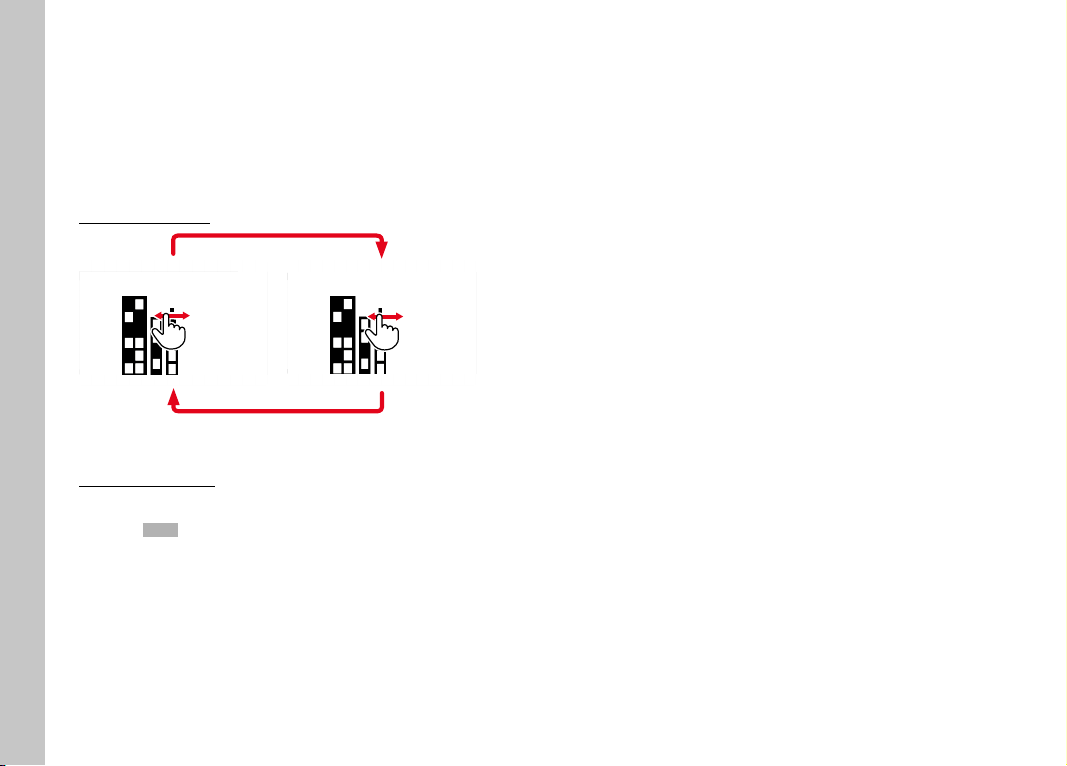
Video Mode
EN
106
VIDEO MODE
START/EXIT VIDEO MODE
This camera is equipped to take pictures and record video.
There are two methods for toggling between Picture and Video
mode:
Using touch control
1/80002.8F 12500ISO EV
-3 2 1 0 21 3+
823412MP
VideoPhoto
1/80002.8F 12500ISO EV
-3 2 1 0 21 3+
823412MP
Using button control
▸ Accessing the status screen
▸ Select VIDEOVIDEO
▸ Tap the shutter button
Notes
• As only part of the sensor area is used in video recordings, the
relevantly effective focal length is increased, which slightly
reduces the size of the image sections.
• You can record up to 29minutes of uninterrupted video.
• The max. file size for uninterrupted video recording is 96GB.
Once a recording exceeds this file size, the overrun will be
automatically stored in a new file (but cannot be longer than
29min).
• Some menu items are unavailable in Video mode. The text in the
relevant line is displayed in gray to signify the existence of a
submenu.
• The max. length for an uninterrupted video recording depends
on the selected resolution.
• The screen image of video recordings with the Leica Q2
Monochrom appears with corresponding frame depending on
the selected resolution and aspect ratio.
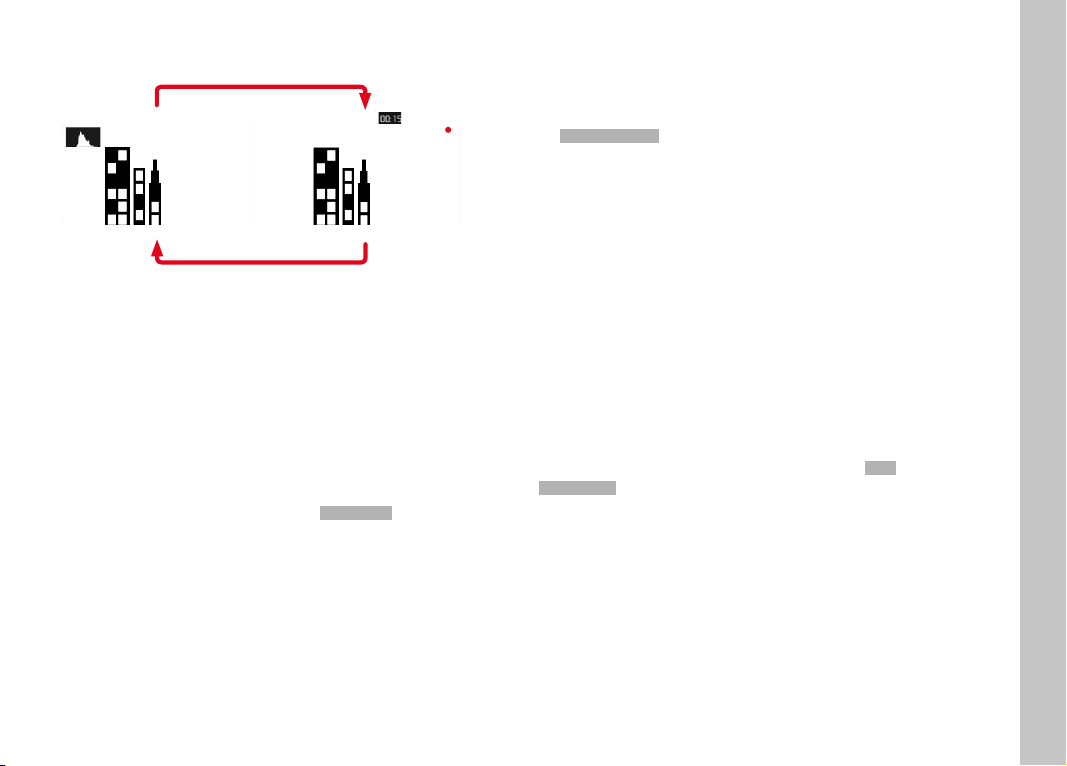
EN
Video Mode
107
START/END VIDEO RECORDING
1/80002.8F 12500ISO EV
-3 2 1 0 21 3+
823412MP
1/80002.8F 12500ISO EV
-3 2 1 0 21 3+
823412MP
▸ Press the shutter button
• Video recording begins.
• The dot flashes red.
• Recording time is running.
• The Status LED flashes.
▸ Press the shutter button again
• Video recording ends.
• The dot lights in gray.
Notes
• Basic video settings (see p. 66) and Digital ZoomDigital Zoom (see p. 93)
must be configured before recording.
• Access to menu functions (including direct access) is limited
during video recording.
EXPOSURE CONTROL
The exposure mode and exposure settings are selected exactly like
in picture mode. Please note the following:
– The max. available shutter speed is limited by the set frame rate
(Video ResolutionVideo Resolution).
– Automatic exposure control takes into account any fluctuations
in brightness. Set the shutter time manually if this is undesirable,
e.g. for landscape recordings or panning.
– The clipping display is unavailable in video mode.
FOCUSING
Focusing can be done during operation, depending on the selected
focus mode:
– by turning the focus ring (MF)
– by tapping and holding the shutter button (AFs)
– automatic (AFc)
Focusing is done as needed when AFs is in use. The area in the AF
metering field will be focused continuously if AFc is in use.
Continuous focusing can be suppressed by using a metering
memory lock. The Zoom/Lock button must have AF-LAF-L or
AF-L + AE-LAF-L + AE-L assigned (see p.84).
Note
• The AF assist light is deactivated in video mode.
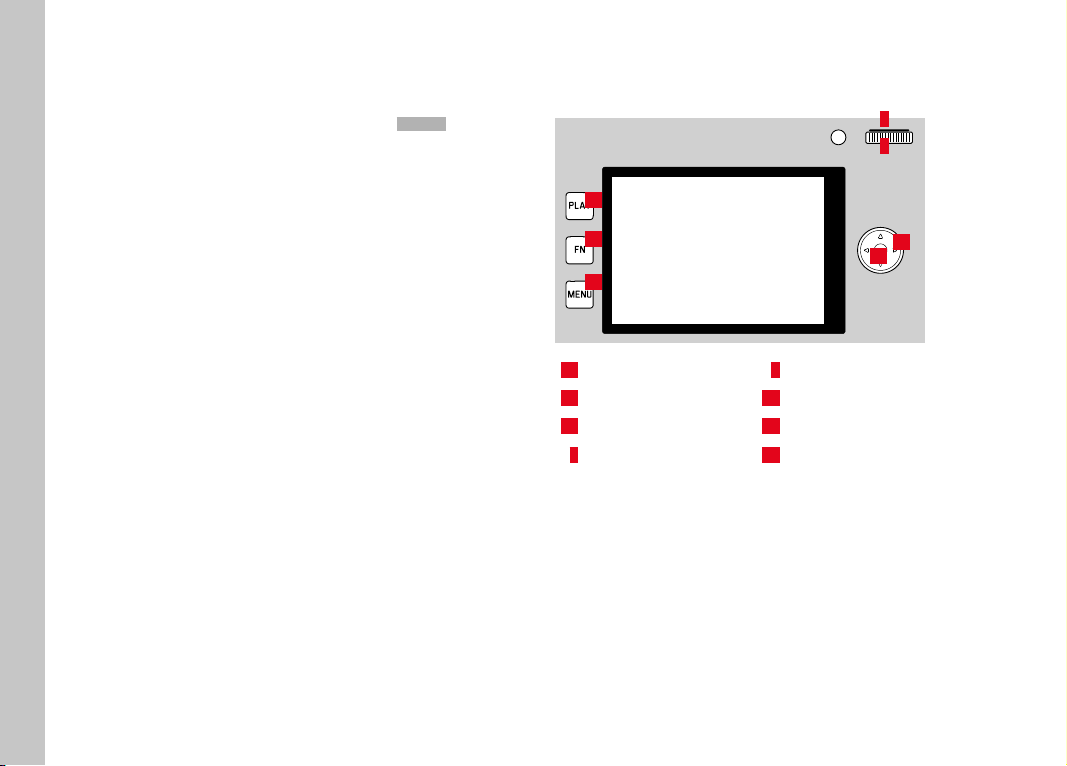
Playback/Review mode
EN
108
PLAYBACK/REVIEW MODE
There are two completely independent playback/review functions
available:
– short-term rendering directly after exposure (PreviewPreview)
– normal Review mode, in which the stored recordings can be
viewed and managed for any length of time
Notes
• Recorded pictures are not automatically rotated in Review mode
to utilize the full screen area.
• It may not be possible to render files with this camera that were
not recorded with this device.
• In some cases, the screen image may not have the expected
quality, or the LCD panel will remain blank and only display the
file name.
• You can toggle back from review mode to recording mode at any
time by tapping the shutter button.
• The histogram and clipping displays are available only when
viewing the full size picture, but not during zooming or in the
overview.
CONTROL ELEMENTS IN PLAYBACK/REVIEW MODE
CONTROL ELEMENTS ON THE CAMERA
14
15
16
5
4
19
20
14
PLAY button
5
Thumbwheel button
15
FN button
13
Zoom/Lock button
16
MENU button
19
Directional pad
4
Thumbwheel
20
Center button
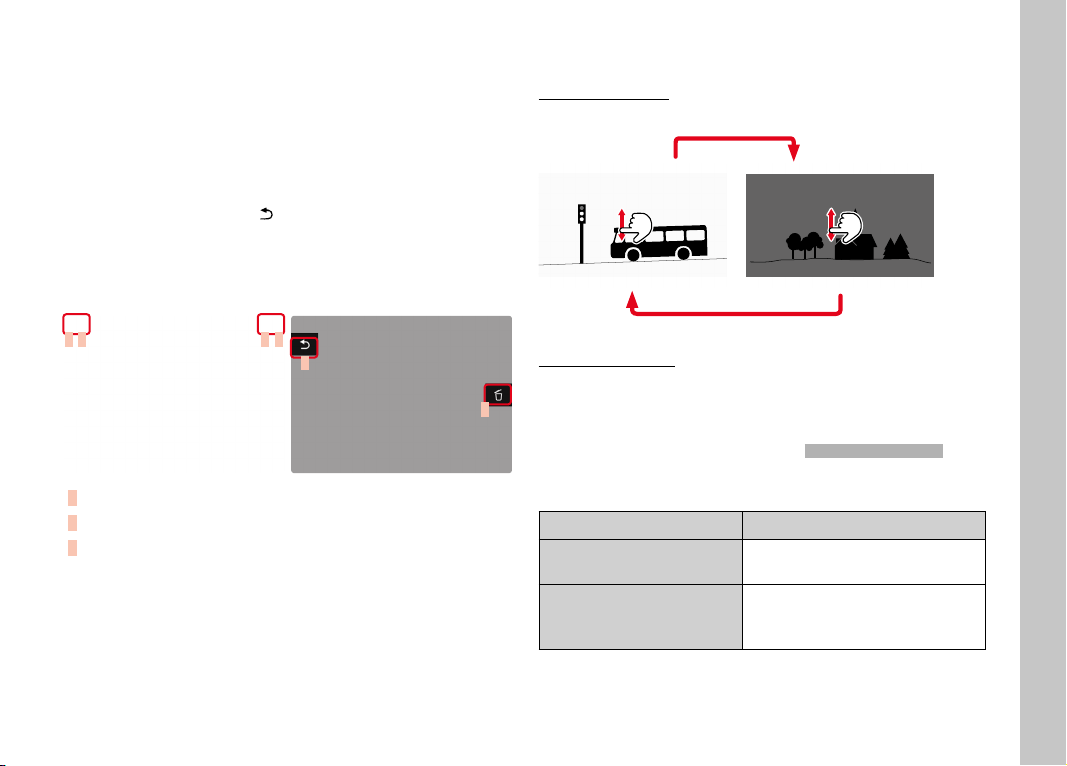
EN
Playback/Review mode
109
CONTROL ELEMENTS ON THE LCD PANEL
On-screen control elements generally function by intuitively by
touch. Many can also be selected by pressing one of the three
buttons to the left of the LCD panel. A control element in the
header is accompanied by an icon denoting the relevant button. A
control element on the edge of the screen will be positioned
directly next to the relevant button.
Example: The “Go back” icon can be selected in one of two
ways:
– Tap the “Go back” icon briefly right away
– Press the relevant button
(top button = PLAY button)
C B A C
A
B
A
Control element “Go back”
B
Control element “Delete”
C
Display of the relevant button
INITIATE/EXIT PLAYBACK/REVIEW MODE
Using touch control
▸ Swipe up or down
Playback/ReviewRecording
INFO
1/80002.8F 12500ISO EV
A
-3 2 1 0 21 3+
823412MP
Using button control
▸ Press the PLAY button
• The last picture taken appears on the screen.
• The following message appears if the inserted memory card
does not contain any picture data: No valid picture to playNo valid picture to play.
• The PLAY button function differs, depending on the current
camera setting:
Initial situation
After pressing the PLAY button
Full screen display of a
recording
Picture mode / Recording mode
Display of an enlarged
cropped section/or several
thumbnails
Full screen display of the
recording
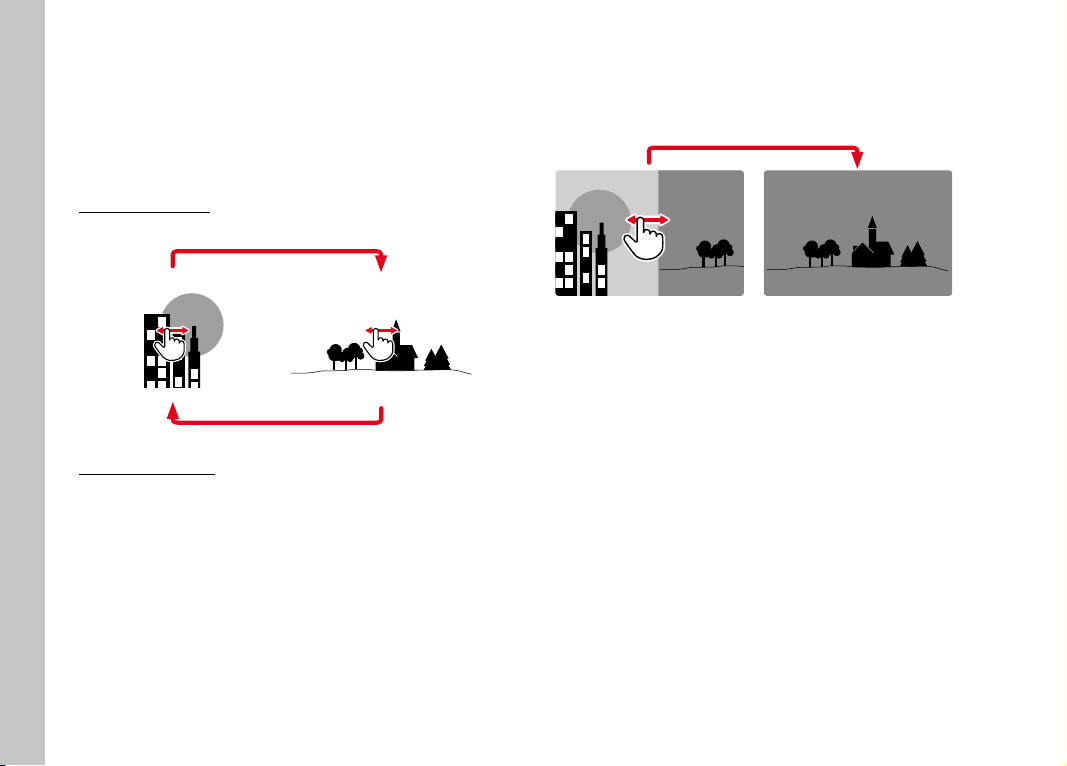
Playback/Review mode
EN
110
SELECTING/SCROLLING THROUGH RECORDINGS
The recordings are visually arranged in a horizontal reel. When the
end of an image series is reached, the display automatically jumps
back to the first image in the series. All recordings can therefore
be reached by scrolling either right or left.
SINGLE
Using touch control
▸ Swipe to the left or right
Using button control
▸ Press the directional pad left/right
CONTINUOUS
▸ Swipe to the left or right and hold the finger on the edge of the
screen
• The subsequent recordings will move past continuously.

EN
Playback/Review mode
111
INFO DISPLAYS IN PLAYBACK/REVIEW MODE
With the factory settings in place, recorded pictures will be
displayed without the information in the header and footer lines for
an unobstructed view of the image.
INFO
The configured displays can be accessed at any time. The displays
for HistogramHistogram and ClippingClipping will appear if these functions are
activated.
▸ Press the center button
• The displays for HistogramHistogram and ClippingClipping will appear if these
functions are activated.
Video recordings are always rendered with header and footer and
with on screen.

Playback/Review mode
EN
112
DISPLAYING ASSIST FUNCTIONS
The display of histogram and clipping in playback/review mode can
be set separately from the relevant settings for the recording
mode.
▸ Select Play Mode SetupPlay Mode Setup in the main menu
▸ Select HistogramHistogram/ClippingClipping
▸ Select OnOn/OffOff
Note
• The clipping display is not available in video mode.
PICTURE SERIES REVIEW
Serial and interval shootings often produce a large number of
individual images. It would be very difficult to find other pictures
that are not part of a series if every image of all these series was
displayed individually. Organizing the images in groups creates
more clarity in Review mode.
Factory setting: OffOff
▸ Select Play Mode SetupPlay Mode Setup in the main menu
▸ Select Group display modeGroup display mode
▸ Select OnOn/OffOff
All images in all series are displayed individually if OffOff is selected.
The images are grouped in series and only one representative
image will be displayed if OnOn is selected. Only that one representa-
tive image will be displayed and all other images in that series are
hidden during scrolling.
The representative image is shown with in the center and
at the bottom left.
There are two options for viewing the images in a group: manual
scrolling or automatic playback. Automatic playback is the default
setting.

EN
Playback/Review mode
113
UNINTERRUPTED PLAYBACK OF THE PICTURE SERIES
The images in a group can be played back from start to finish
without interruption. This may be very helpful to get a better idea of
the processes or conditions rendered than if the images were
scrolled manually.
▸ Touch briefly
or
▸ Press the center button
• Auto Review commences.
A prompt screen with additional functions can be accessed while
playback is running.
▸ Briefly tap the LCD panel
or
▸ Press the center button
Playback stops, the current picture in the series is displayed.
Various control elements appear on screen.
Note
• The control elements disappear after about 3s. Touching the
LCD panel or pressing the center button will cause them to be
displayed again.
JUMPING TO A SPECIFIC PICTURE IN THE GROUP
▸ Touch the playback status bar briefly at the desired position
RESUMING PLAYBACK/REVIEW
While the control elements are visible:
▸ Briefly tap the LCD panel
or
▸ Press the center button
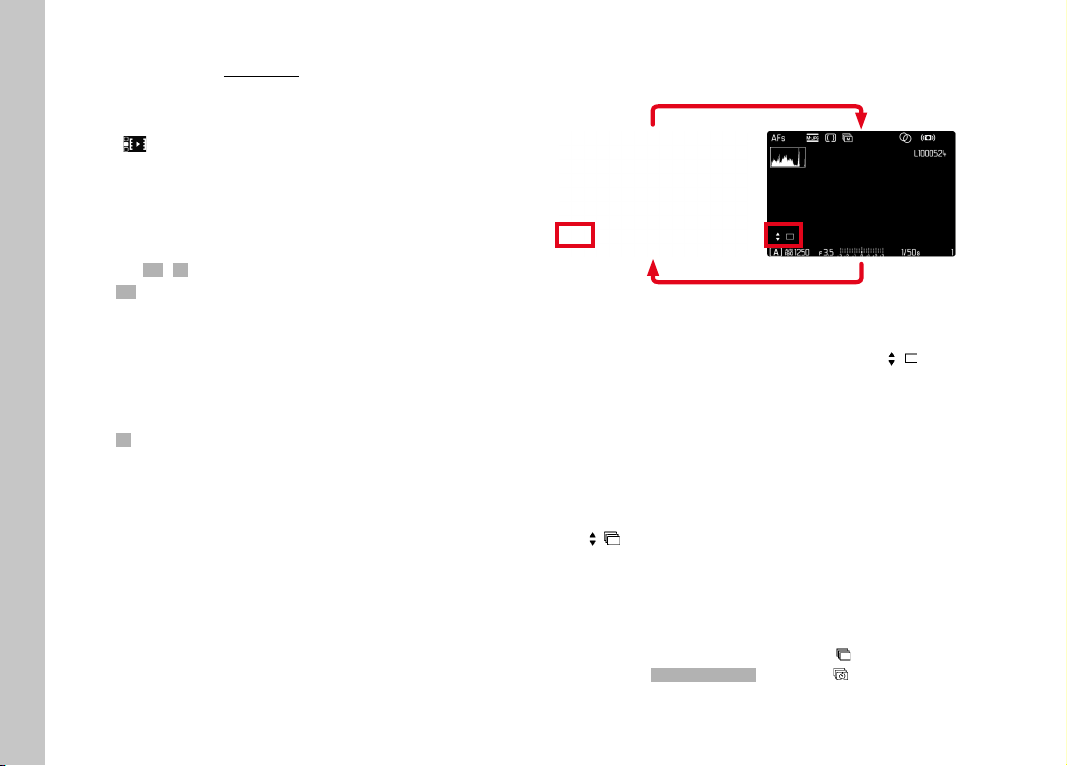
Playback/Review mode
EN
114
SAVE AS A VIDEO
The image series can additionally be saved as a video.
▸ Starting and stopping playback/review
• The control elements appear.
▸ Tap
or
▸ Start playback
▸ Press the FN button
• The prompt screen for video creation appears.
▸ Select YesYes/NoNo
– YesYes: A video is created
• A progress screen for the video creation is displayed
briefly (while the data is being processed). It also offers
the option of canceling the process by pressing the cen-
ter button.
• Once video creation is complete, the first frame of the
new video is displayed.
– NoNo: Revert to the same picture of the (still paused) automatic
review
SCROLLING THROUGH THE INDIVIDUAL PICTURES OF A SERIES
The images in a picture series can also be viewed individually.
Switch to the manual scrolling function to do so.
▸ Press the directional pad up/down
• The information displays disappear in full-screen mode.
• When the information displays are activated, will appear
at the bottom left of the image.
▸ Press the directional pad left/right
or
▸ Swipe to the left or right
Returning to standard Playback/Review mode
▸ Press the directional pad up/down
• Is displayed at the bottom left of the image.
Notes
• The review will be limited to the current picture series for as long
as you are scrolling in that series, which also applies to the
overview display of 12 or 30 thumbnails.
• The images of a series are marked with in the header line,
those of an Interval ShootingInterval Shooting shoot by a .
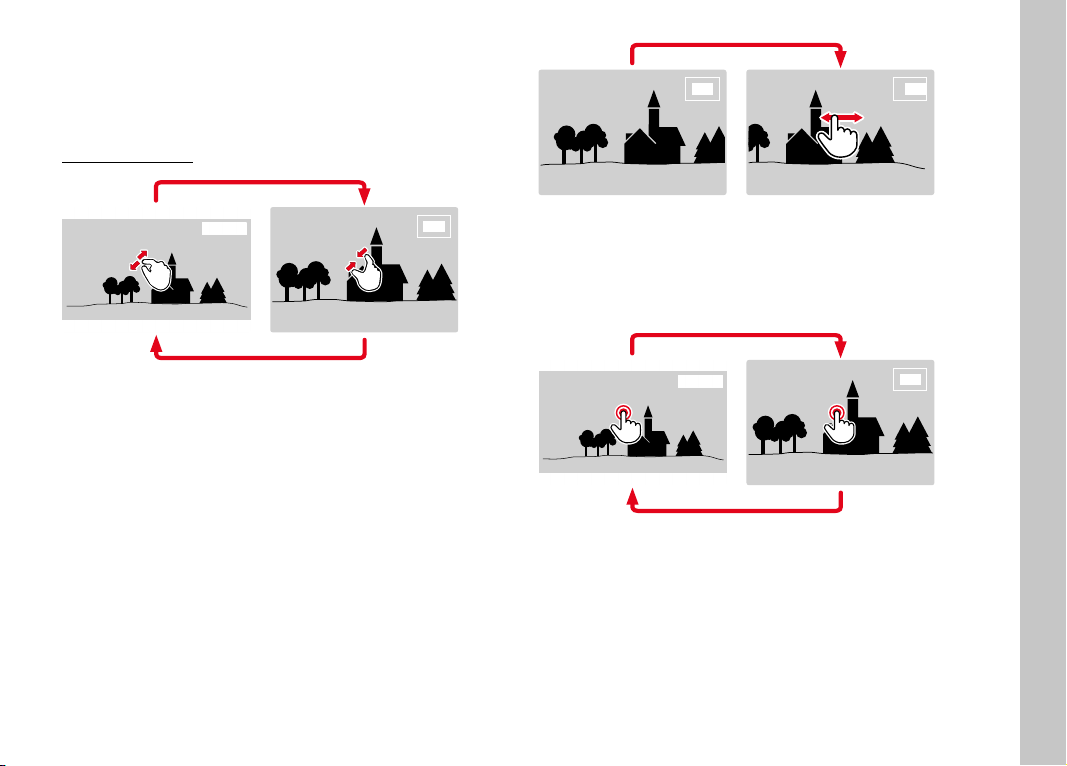
EN
Playback/Review mode
115
CROPPED SECTION ZOOM
You can zoom in to any section of an image for closer inspection.
You have a five-step zoom factor available via the thumbwheel,
while zooming is stepless if you use touch control.
Using touch control
▸ Two-finger pinch/spread
• The recording will be zoomed in/zoomed out at the desired
point.
▸ Swiping will allow you to move the position of an enlarged
cropped section
• The rectangle within the frame in the top right corner
represents the currently magnified section, as well as its
position in the image.
▸ Double tap
• Toggles between the third zoom increment at the tap position
and standard full screen view.
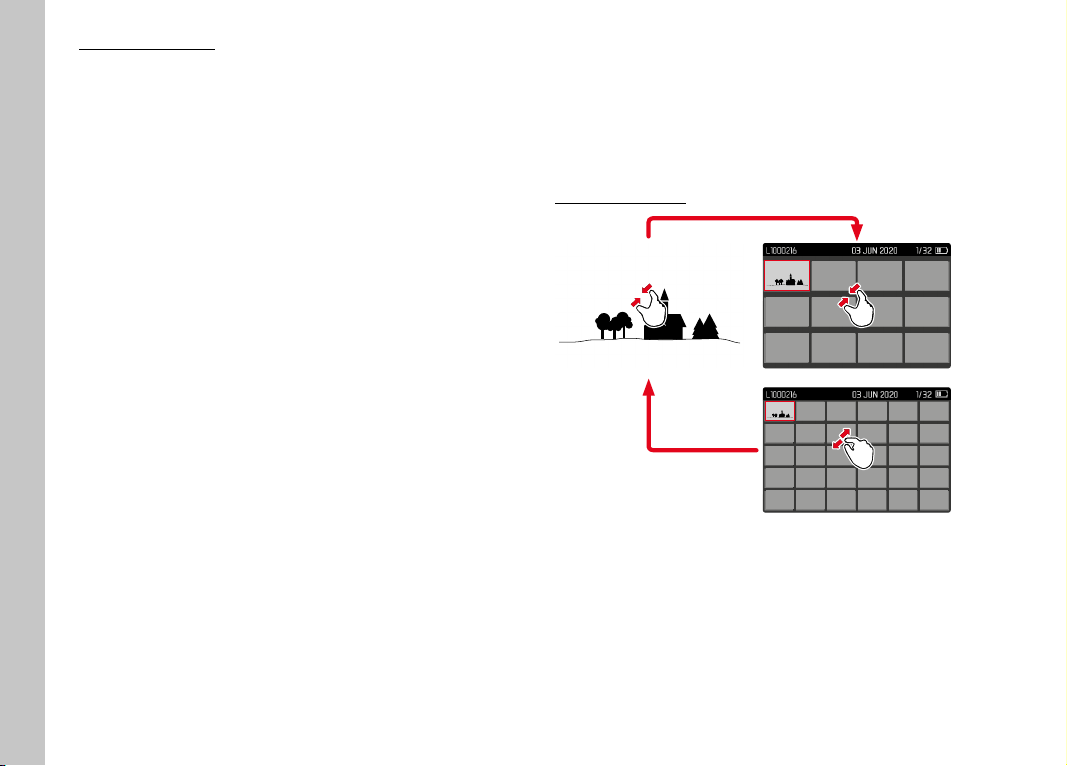
Playback/Review mode
EN
116
Using button control
▸ Turn the thumbwheel
(to the right: increase magnification, to the left: decrease
magnification)
or
▸ Press the thumbwheel button
• Toggles between the third zoom increment at the tap position
and standard full screen view.
▸ Press the directional pad to move the cropped section anywhere
in the enlarged image
• The rectangle within the frame in the top right corner
represents the currently magnified section, as well as its
position in the image.
You can move directly from one picture to the next in magnification
mode, which will then also be displayed with the same magnifica-
tion.
▸ Press and hold the PLAY button while turning the thumbwheel
Notes
• It may not be possible to enlarge pictures taken with other
camera types.
• Video recordings cannot be enlarged.
DISPLAYING MULTIPLE RECORDINGS AT ONCE
The camera offers an overview function in which several thumbnail
images can be viewed on one screen, which makes it easier to find
a specific image. You can choose 12 or 30 images per overview.
OVERVIEW
Using touch control
▸ Two-finger pinch
• The display toggles from 12 to 30 thumbnails.
To view other recordings
▸ Swipe up or down
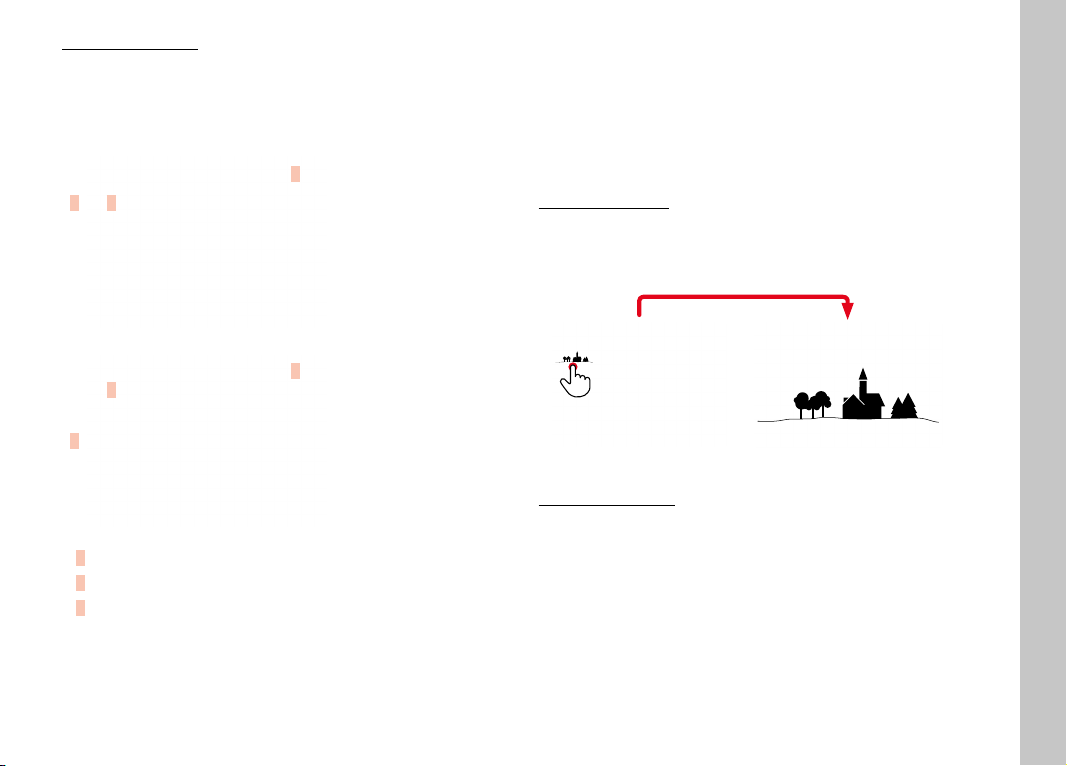
EN
Playback/Review mode
117
Using button control
▸ Turn the thumbwheel to the left
• 12 thumbnails are shown at the same time. Another turn on
the thumbwheel increases the number of displayed recordings
to 30.
A
B
C
A
B
C
A
Currently selected recording
B
Number of the currently selected recording
C
Scrollbar
The currently viewed recording is framed in red and can be
selected for a closer look.
To navigate between recordings
▸ Press the directional pad left or right as needed
or
▸ Press and hold the PLAY button while turning the thumbwheel
To display the recording in full size
Using touch control
▸ Two-finger spread
or
▸ Briefly touch the recording
Using button control
▸ Turn the thumbwheel to the right
or
▸ Press the thumbwheel button / the PLAY button / the center
button

Playback/Review mode
EN
118
TAGGING/RATING OF RECORDINGS
Recordings can be tagged as favorites to find them quicker or to
simplify the later deletion of multiple recordings. Tagging can be
done in regular view mode or in the overviews.
Note
• You can exit the review menu at any time by pressing the MENU
button.
Tagging a recording
▸ Press and hold the Zoom/Lock button
• The recording is marked with . The icon will appear in the
header line on the far right when viewing images in full size,
and in the top left corner of the thumbnail in overview mode.
Removing a tag
▸ Press and hold the Zoom/Lock button
• The marking disappears.
DELETING RECORDINGS
There are several methods available to delete recordings:
– deleting individual recordings
– deleting multiple recordings
– deleting all recordings without a tag/ranking
– deleting all recordings
Important
• Once deleted, recordings are no longer retrievable.

EN
Playback/Review mode
119
QUICK ACCESS TO DELETE FUNCTIONS
All functions of the playback/review menu can be assigned to the
FN button. That way, you can access the delete functions you use
most frequently with a single button push.
Factory setting: Delete SingleDelete Single
▸ Pres and hold the FN button
• A list of functions of the playback/review menu will appear.
▸ Select the desired function
• The function is assigned to the FN button.
The descriptions in the next few sections presume factory settings.
Note
• The assigned function is independent of the current display
mode; the delete functions overview can therefore be accessed
directly in full screen display mode. That will not apply if the FN
button controls an LCD panel control element (e.g. in the
deletion screen).
DELETING INDIVIDUAL RECORDINGS
▸ Press the MENU button
▸ Select DeleteDelete in the Playback/Review menu
• The Delete screen appears.
▸ Select the Delete icon
(tap the icon briefly or press the center button)
• The LED will flash during the delete process. The process may
take a few seconds.
• The next recording will be displayed once deletion is
complete. The following message appears if no other
recordings are saved on the card: No valid picture to playNo valid picture to play.

Playback/Review mode
EN
120
To cancel deletion and return to the normal Playback/
Review mode
▸ Select the “Go back” icon
(tap the icon briefly or press the PLAY button)
Notes
• The Delete screen can be called up only by pressing the MENU
button when in overview mode, because the menu function
DeleteDelete of the Review menu is not available in this context.
• The “Scroll” and “Magnify” functions continue to be available
when the “Delete” screen is active.
DELETING MULTIPLE RECORDINGS
Several recordings can be marked in a Delete overview with twelve
thumbnails and can then be deleted all at once. This overview can
be reached in two ways.
▸ Turn the thumbwheel to the left
• The overview screen appears.
▸ Press the MENU button
▸ Select Delete MultiDelete Multi in the Review menu
• The Delete overview appears.
or
▸ Press the MENU button
▸ Select DeleteDelete in the Playback/Review menu
• The Delete screen appears.
▸ Turn the thumbwheel to the left
• The Delete overview appears.
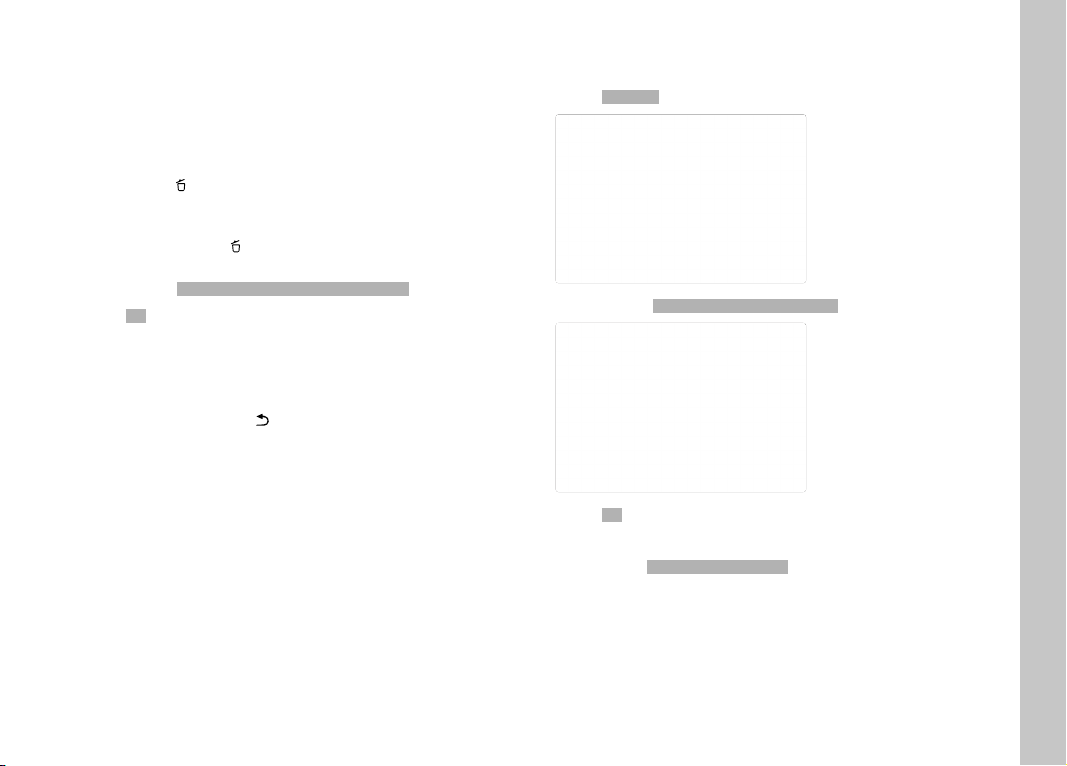
EN
Playback/Review mode
121
Any number of recordings can be selected in this view.
▸ Select a recording
▸ Press the center button/thumbwheel button
or
▸ Briefly touch the recording
• The recordings selected for deletion are marked with a red
Delete icon .
To delete the selected recordings
▸ Select the Delete icon
(tap the icon briefly or press the center button)
• The prompt Do you want to delete all marked files?Do you want to delete all marked files? appears.
▸ Select YesYes
To cancel deletion and return to the normal Playback/
Review mode
▸ Select the “Go back” icon
(tap the icon briefly or press the PLAY button)
DELETING ALL RECORDINGS
▸ Press the MENU button
▸ Select Delete AllDelete All in the Review menu
• The prompt Do you want to delete all files?Do you want to delete all files? appears.
▸ Select YesYes
Note
• The message No valid picture to play.No valid picture to play. appears after successful
deletion. The same picture is displayed again if deletion was
unsuccessful. When deleting several or all pictures/recordings,
a notification screen may appear for the time needed to process
the data.
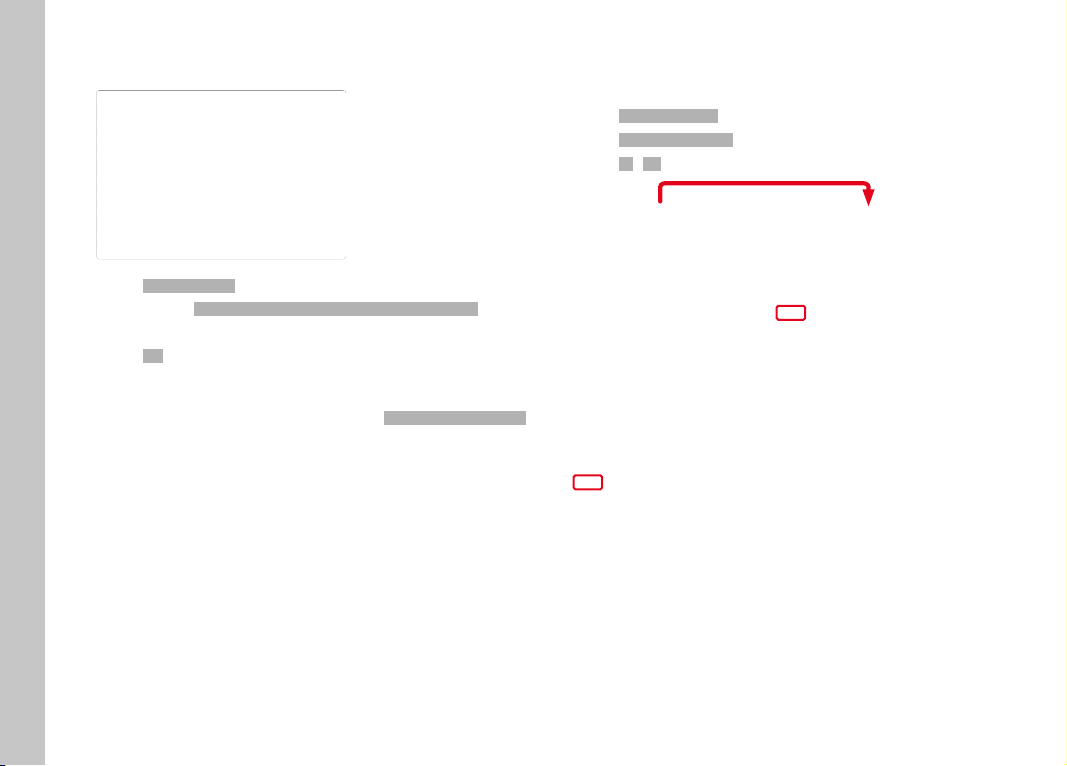
Playback/Review mode
EN
122
DELETING UNRATED RECORDINGS
▸ Press the MENU button
▸ Select Delete UnratedDelete Unrated in the Review menu
• The prompt Do you really want to delete all not rated files?Do you really want to delete all not rated files?
appears.
▸ Select YesYes
• The LED will flash during the deletion process. The process
may take a few seconds. The next marked recording appears
once deletion is complete. The message No valid picture to play.No valid picture to play.
appears if no other recordings are saved on the card.
DELETING PICTURE SERIES
Picture series can be displayed in groups for quick deletion. The
pictures will have to be displayed in groups.
▸ Select Play Mode SetupPlay Mode Setup in the main menu
▸ Select Group display modeGroup display mode
▸ Select OnOn/OffOff
▸ Select the representative image
▸ Delete
• All pictures in the picture series will be deleted.

EN
Playback/Review mode
123
PREVIEW OF LATEST RECORDING
Photo and video recordings can be displayed automatically directly
after they are taken to e.g. check the success of the recording
quickly and easily. A duration for the automatic display can be
configured.
▸ Select PreviewPreview in the main menu
▸ Select the desired function or duration in the submenu
(OffOff, 1 s1 s, 3 s3 s, 5 s5 s, PermanentPermanent, Shutter pressedShutter pressed)
Permanentermanent: The most recent recording is displayed until automatic
review is ended by pressing the PLAY button or by tapping the shut-
ter button.
Shutter pressedhutter pressed: The most recent recording is displayed for as long
as the shutter button is pressed down.
Notes
• All buttons except the FN button, the menu button and the
thumbwheel button change to the regular Review mode and
execute their normal functions there for the duration of the
automatic review. The camera will remain in Playback/Review
mode until it is exited.
• Tagging and deleting can only be done in regular Playback/
Review mode and not during automatic review.
• When pictures were taken with the functions Serial exposures or
Interval shooting, then the last image in the series will be
displayed or – if the save process is still incomplete – the last
image in the series saved to the memory card.
• Where display times were configured (1 s1 s, 3 s3 s, 5 s5 s) automatic
review can be ended immediately by pressing the PLAY button or
tapping the shutter button.
SLIDE SHOW
A slide show function is available in Review mode, in which the
saved images are shown automatically in series. Choose to see all
recordings (Play AllPlay All), only photos (Pictures OnlyPictures Only) or only videos
(Videos OnlyVideos Only) should be displayed. For photos, select how long each
image should be displayed (DurationDuration).
SETTING THE DURATION
▸ Press the MENU button
▸ Select SlideshowSlideshow in the Review menu
▸ Select DurationDuration
▸ Select the desired duration (1 s1 s, 2 s2 s, 3 s3 s, 5 s5 s)
Playback/Review mode
EN
124
STARTING THE SLIDE SHOW
▸ Press the MENU button
▸ Select SlideshowSlideshow in the Review menu
▸ Select the desired setting
(Play AllPlay All, Pictures onlyPictures only, Videos onlyVideos only)
• The slide show will start automatically with the selected
recordings and runs in an endless loop until it is exited.
ENDING THE SLIDE SHOW
▸ Press the PLAY button
or
▸ Tap the shutter button
• The camera switches to the relevant mode.
Notes
• An intermediate screen may appear while the data is prepared
for playback.
• The settings in DurationDuration remain intact even after the camera is
switched off and on again.
• The SlideshowSlideshow can also be assigned to the FN button for quick
access (see p.119).
VIDEO PLAYBACK
appears on screen if you have selected a video file in
playback mode.
START PLAYBACK
▸ Press the center button
or
▸ Touch briefly
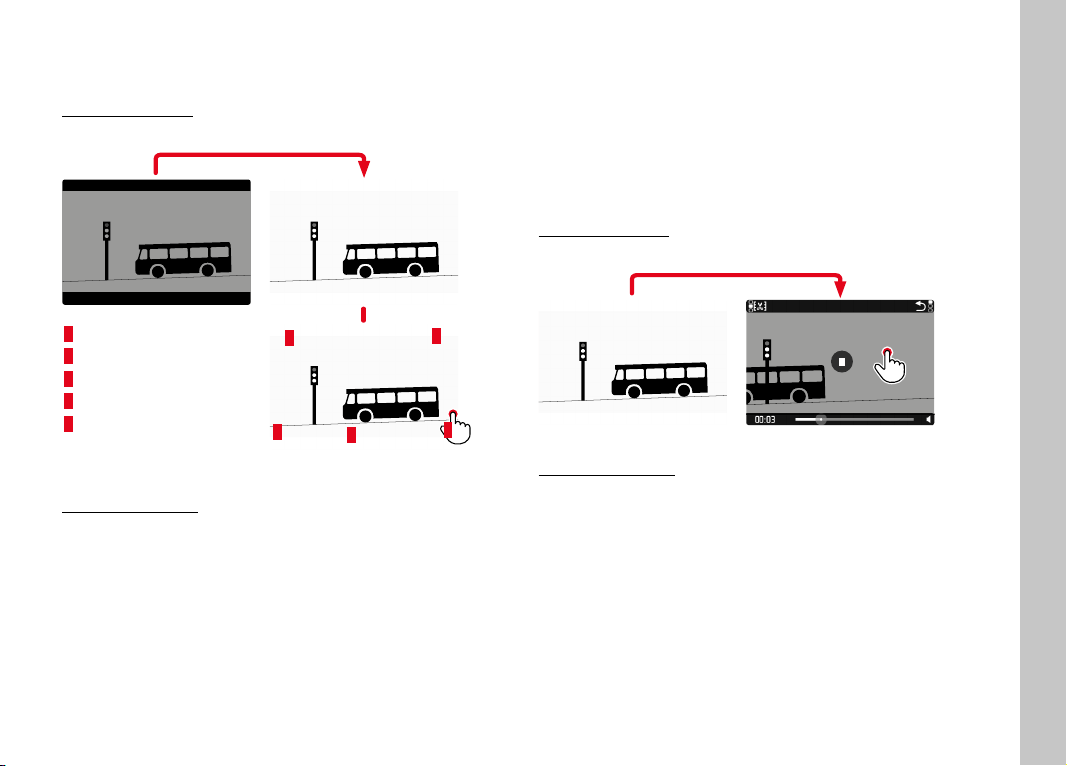
EN
Playback/Review mode
125
ACCESSING THE CONTROL ELEMENTS
The control elements are displayed when playback is stopped.
Using touch control
▸ Briefly tap the LCD panel
INFO
1/80002.8F 12500ISO EV
SET
-3 2 1 0 21 3+
823412MP
INFO
1/80002.8F 12500ISO EV
SET
-3 2 1 0 21 3+
823412MP
2
3
1
4
5
1
Video editing function
2
Exiting video playback
3
Current time of the playback
4
Playback status bar
5
Playback volume
INFO
1/80002.8F 12500ISO EV
SET
-3 2 1 0 21 3+
823412MP
Using button control
▸ Press the center button
Note
• The control elements disappear after about 3s. Touching the
LCD panel or pressing the center button will cause them to be
displayed again.
PAUSE PLAYBACK
▸ Briefly tap the LCD panel
or
▸ Press the center button
RESUMING PLAYBACK/REVIEW
While the control elements are visible:
Using touch control
▸ Touch the LCD panel briefly anywhere in the picture
INFO
1/80002.8F 12500ISO EV
SET
-3 2 1 0 21 3+
823412MP
18:26
Using button control
▸ Press the center button
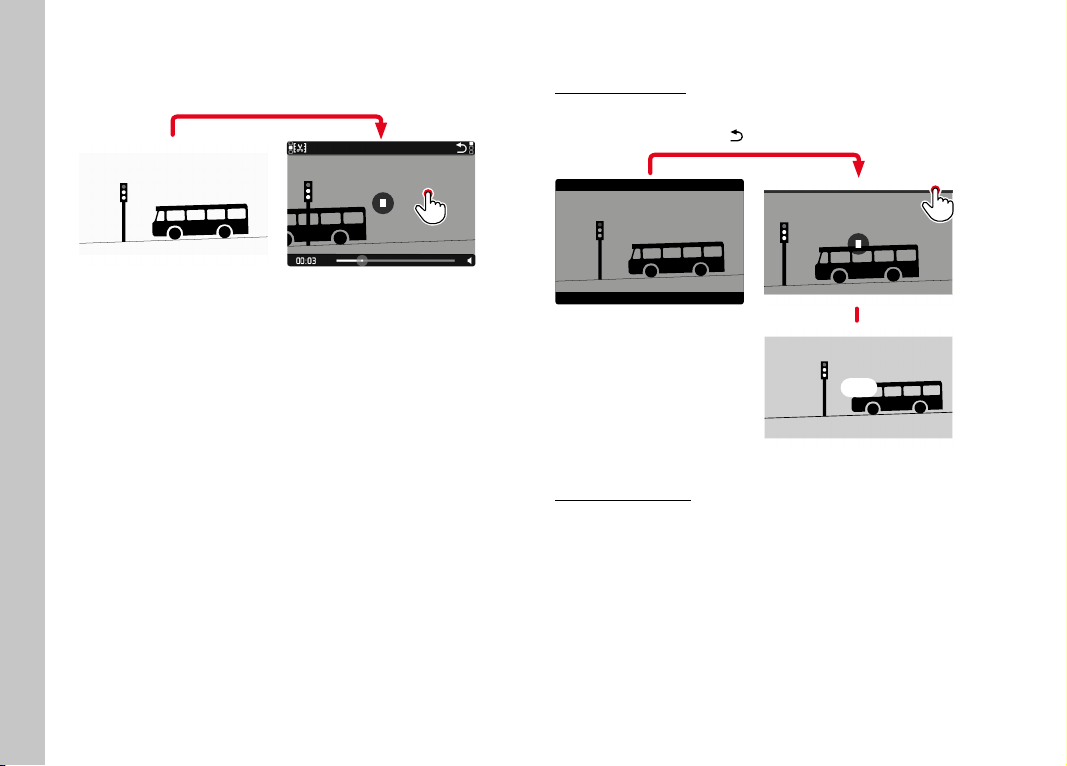
Playback/Review mode
EN
126
CONTINUE PLAYBACK FROM ANY POINT IN THE FILE
While the control elements are visible:
▸ Touch the playback status bar briefly at the desired position
INFO
1/80002.8F 12500ISO EV
SET
-3 2 1 0 21 3+
823412MP
18:26
END PLAYBACK
Using touch control
While the control elements are visible:
▸ Tap the “Go back” icon briefly
16:12
INFO
1/80002.8F 12500ISO EV
SET
-3 2 1 0 21 3+
823412MP
Using button control
▸ Press the PLAY button
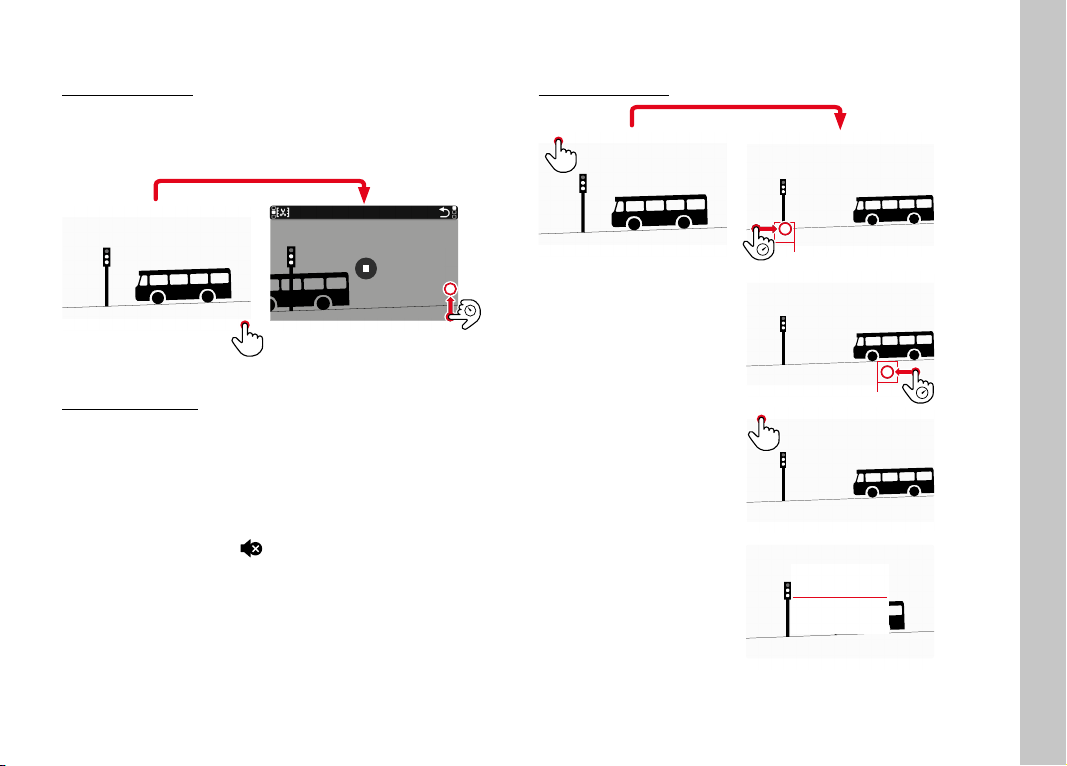
EN
Playback/Review mode
127
SETTING THE VOLUME
Using touch control
While the control elements are visible:
▸ Tap the volume icon briefly
▸ Touch the volume status bar briefly at the desired position
INFO
1/80002.8F 12500ISO EV
SET
-3 2 1 0 21 3+
823412MP
18:26
Using button control
▸ Press the directional pad up/down
• The volume status bar appears.
▸ Press the directional pad up (louder) or down (quieter)
Note
• Sound is switched off at the lowest part of the bar and the
volume icon changes to .
VIDEO EDITING
Using touch control
INFO
1/80002.8F 12500ISO EV
SET
-3 2 1 0 21 3+
823412MP
Playback/Review mode
EN
128
Using button control
ACCESSING THE VIDEO EDITING FUNCTION
▸ Press the FN button
• The video editing screen appears, the left cutting mark is
highlighted in red (= active).
CHANGING THE CURRENT CUTTING POINT
▸ Press the directional pad left/right
• The selected cutting point is highlighted in red (= active).
MOVING THE ACTIVE CUTTING POINT
▸ Turn the thumbwheel
• The currently selected time of the relevant cutting point is
displayed at the bottom left of the footer line. A still of the
video sequence at that point is displayed in the background.
CUTTING
▸ Press the FN button to confirm the cuts
• The Video TrimmingVideo Trimming menu appears.
▸ Select a function from the Video TrimmingVideo Trimming menu
(Save as newSave as new, OverwriteOverwrite, PreviewPreview)
Save as newSave as new
The new video is additionally saved, the
original video remains unchanged.
OverwriteOverwrite
The newly cut video is saved and the original
one is deleted.
PreviewPreview
The new video is played. The newly cut video
is not saved and the original remains
unchanged.
CANCELLING THE VIDEO EDITING FUNCTION
The editing function can be canceled at any time, provided no
selection was made in the Video TrimmingVideo Trimming menu.
▸ Press the PLAY button
• The video playback screen reappears.
Notes
• In all three cases, a notification screen appears while the data is
being processed. Then the new video is played back.
• The numbering of existing recordings will not be changed when
Save as newSave as new is selected. The newly created video will be added to
the end of the series of videos.

EN
Playback/Review mode
129

Other functions
EN
130
OTHER FUNCTIONS
USER PROFILES
This camera allows the permanent storage of any menu settings, to
e.g. access them quickly and easily for recurring conditions/image
objects. Six memory slots are provided to store custom settings,
plus the factory setting, which is always available and cannot be
modified (Default ProfileDefault Profile). You can assign names for the saved
profiles yourself.
Any profiles configured for the camera can be saved to a memory
card for use on another camera. Similarly, profiles saved on a
memory card can be transferred to the camera.
SAVING CURRENT SETTINGS AS A USER PROFILE
Saving settings/creating a profile.
▸ Create custom settings for the desired functions via menu
control
▸ Select User ProfileUser Profile in the main menu
▸ Select Manage ProfilesManage Profiles
▸ Select Save as ProfileSave as Profile
▸ Select a memory slot
▸ Confirm the selection
Note
• Existing profiles are overwritten with the latest settings.

EN
Other functions
131
RENAMING PROFILES
▸ Select User ProfileUser Profile in the main menu
▸ Select Manage ProfilesManage Profiles
▸ Select Rename ProfilesRename Profiles
▸ Select a profile
▸ Enter a name for the profile via the associated submenu
keyboard and confirm your input (see p. 47)
APPLY/ACTIVATE PROFILES
Factory setting: Default ProfileDefault Profile
▸ Select User ProfileUser Profile in the main menu
• A list of profile names is displayed.
▸ Select a profile
• The selected profile is marked as ActiveActive.
• Free memory slots appear in gray.
DELETING PROFILES
▸ Select User ProfileUser Profile in the main menu
▸ Select Manage ProfilesManage Profiles
▸ Select DeleteDelete
▸ Select a profile
▸ Confirm the selection
EXPORTING/IMPORTING PROFILES TO/FROM THE
MEMORY CARD
▸ Select User ProfileUser Profile in the main menu
▸ Select Manage ProfilesManage Profiles
▸ Select Export ProfilesExport Profiles or Import ProfilesImport Profiles
▸ Confirm the selection
Notes
• When importing and exporting, all profile slots are transferred to
the card, i.e. including any empty slots. Any existing profiles
stored in the camera will be overwritten, during the profile
import. Individual profiles cannot be imported or exported.
• Any existing set of profiles will be replaced on the memory card
during an export without an acknowledgment prompt.

Other functions
EN
132
DATA MANAGEMENT
DATA STRUCTURE ON THE MEMORY CARD
FOLDER STRUCTURE
The files (= pictures) on the memory cards are saved in automati-
cally generated folders. The first three characters signify the folder
number (numerals), the last five the folder name (letters). The first
folder is assigned the name “100LEICA”, the second “101LEICA”.
A folder will always be created with the next available number; you
can have max. 999 folders.
FILE STRUCTURE
The file names in these folders consist of eleven characters. In the
factory settings, the first file is named “L1000001.XXX”, the
second “L1000002.XXX”, etc. The first letter can be selected, the
“L” from the factory settings denotes the camera brand. The first
three characters signify the folder number (numerals). The next
four digits denote the sequential file number. Once file number
9999 is reached, then a new folder will be automatically created, in
which the file numbering begins at 0001 again. The last three
places after the dot denote the file format (DNG or JPG).
Notes
• When using memory cards that were not formatted with this
camera, the file numbering will begin with 0001 again. Should
the memory card already contain a file with a higher number,
then numbering will be continued from that number.
• A relevant message will be displayed on the LCD panel once
folder number 999 and file number 9999 are reached, and all
numbering must be reset.
• Format the memory card and reset the picture number right
after to reset the folder number to 100.

EN
Other functions
133
EDIT FILE NAMES
▸ Select Edit File NameEdit File Name in the main menu
• A keyboard submenu is displayed.
• The input line contains the factory setting “L” as the first letter
of the file name. Only this letter can be changed.
▸ Enter a letter of your choice (see p. 47)
▸ Confirm
Notes
• The change to a file name applies to all subsequent pictures or
until a new change is made. The sequential number will not be
affected; but it will be reset when a new folder is created.
• During a reset to factory settings, the first letter will always be
reset to “L”.
• Lower case letters are unavailable.
CREATING A NEW FOLDER
▸ Select Reset Image NumberingReset Image Numbering in the main menu
• A relevant prompt is displayed.
▸ Confirm the creation of a new folder (YesYes) or cancel the new
folder (NoNo)
Note
• The name part (first letter) of a new folder created this way
remains unchanged. The file numbers in that folder will start
again at 0001.

Other functions
EN
134
RECORDING THE IMAGE LOCATION WITH GPS
(ONLY IN CONNECTION WITH THE LEICA FOTOS APP)
The GPS (global positioning system) allows the pinpointing of a
receiver anywhere in the world. The GPS function is activated
automatically when a connection to the Leica FOTOS app is active.
The camera will then continuously receive the current GPS data
(latitude and longitude, elevation above sea level) and writes this
information into the Exif data of the images.
Notes
• This function is available only as long as the camera is on line
with the Leica FOTOS app.
• The use of GPS and associated technologies may be restricted
in some countries or regions. Violations will be prosecuted by
local authorities.
• You should therefore contact your travel agent or the embassy of
your destination country for relevant information beforehand.
FORMATTING A MEMORY CARD
Memory cards that have already been in use with this camera will
usually not require formatting. An unformatted memory card that is
inserted into the camera for the first time must be formatted. We
recommend formatting memory cards from time to time, because
residual data traces (data pertaining to individual pictures) may
reduce the card’s memory capacity.
▸ Select Format CardFormat Card in the main menu
▸ Confirm the selection
Notes
• Never switch off the camera while data transfer is in progress.
• All data stored on the memory card will be lost during format-
ting. Formatting will not be prevented by the deletion protection
set for individual pictures.
• All images should therefore be regularly transferred to a safe
mass storage medium, e.g. the hard disk of a computer.
• A simple formatting process will initially not irretrievably destroy
existing data on the card. Only the directory will be deleted,
which means the data will no longer be directly accessible. Data
access can be restored with appropriate software. Only data
that is overwritten when new data is saved will actually be
irretrievable.
• A memory card should be formatted again in the camera if it was
formatted in another device, e.g. a computer.
• Contact your retailer or Leica Customer Care if the memory card
cannot be formatted/overwritten (see p. 164).

EN
Other functions
135
DATA TRANSFER
Data can be conveniently transferred to mobile devices via Leica
FOTOS (see p. 138). Alternatively, a card reader can be used for
the transfer.
Note
• We recommend using a card reader for the transfer of large files.
USING RAW DATA (DNG)
You will need specific software for editing data in DNG format, e.g.
the professional raw data converter Adobe
®
Photoshop
®
Light-
room
®
.
It allows high-quality conversions of stored raw data. It furthermore
provides quality-optimized algorithms for digital color processing,
delivering exceptionally low-noise photographs with incredible
resolution. During editing, you can adjust parameters like
gradation, sharpness etc. in retrospect to achieve the best possible
image quality.
You will receive a temporary membership for the Adobe Creative
Cloud Foto subscription with the purchase of this camera. You will
have to register the camera online to take advantage of this
membership: club.leica-camera.com

Other functions
EN
136
RESETTING THE CAMERA TO FACTORY SETTINGS
This function allows you to reset all your custom menu settings
back to the factory settings. You can optionally exclude the user
profiles, WiFi and Bluetooth settings, as well as the image
numbering from the reset individually.
▸ Select Reset CameraReset Camera in the main menu
• The prompt Reset Camera Settings?Reset Camera Settings? appears.
▸ Confirm or reject the reset to factory settings (YesYes) / (NoNo)
• Selecting NoNo will cancel the reset and the display will return to
the main menu. Selecting YesYes will trigger additional prompts
regarding the settings you can opt to keep.
▸ Confirm or reject the reset of the user profiles (YesYes) / (NoNo)
▸ Confirm or reject the reset of the WiFi and Bluetooth settings
(YesYes) / (NoNo)
▸ Confirm or reject the reset of the image numbering (YesYes)/ (NoNo)
• The message Please Restart the CameraPlease Restart the Camera appears.
▸ Switch the camera off and on again
Notes
• Date & time, as well as the preferred language will have to be set
up again after a reset. Relevant prompts will appear on screen.
• You reset the image file numbering separately via the menu item
Reset Image NumberingReset Image Numbering (see p.133).
FIRMWARE UPDATES
Leica is continuously working on the further improvement and
optimization of your camera. Since many camera functions are
entirely controlled by software, some of these improvements and
additions to the functional scope can be installed in retrospect.
Leica offers firmware updates at irregular intervals, which you can
download from our website.
Leica will notify you of any new updates, once you have registered
your camera.
Find out which firmware version is currently installed
▸ Select Camera InformationCamera Information in the main menu
• The current firmware versions are displayed.
More information about registering, firmware updates and how to
download them to your camera, as well as any amendments and
additions to this manual can be found in the customer area of our
website at:
club.leica-camera.com

EN
Other functions
137
UPDATING THE CAMERA FIRMWARE
▸ Download the latest firmware version
▸ Save the download to the memory card
▸ Insert the memory card into the camera
▸ Switching the camera on
▸ Select Camera InformationCamera Information in the main menu
▸ Select FirmwareFirmware
▸ Select Start UpdateStart Update
• A prompt with information about the camera is displayed.
▸ Check the version information
▸ Select YesYes
• The prompt Save profiles on SD Card?Save profiles on SD Card? appears.
▸ Select YesYes/NoNo
• The update will start automatically.
• Once the process has completed successfully, a relevant
on-screen message and prompt to restart the device will
appear on screen.
▸ Switch the camera off and on again
Notes
• The camera must not be switched off before the update is
completed.
• The message Insufficient batteryInsufficient battery Update not possibleUpdate not possible will appear if
the battery is not sufficiently charged. Please recharge the
battery and then repeat the process described above.
• Data & time, as well as the preferred language will have to be set
up again after the restart. Relevant prompts will appear on
screen.
• You will find additional device and country-specific registration
marks and numbers in the Camera InformationCamera Information submenu.
Leica FOTOS
EN
138
LEICA FOTOS
The camera can be controlled remotely using a smartphone/tablet
PC. This will require an installation of the Leica FOTOS app on the
mobile device.
▸ Scan the following QR code with the mobile device
or
▸ The app is available from Apple App Store™/Google Play Store™
CONNECTING
FIRST-TIME CONNECTION TO A MOBILE DEVICE
The connection is established via Bluetooth. A pairing of the
camera and the mobile device is required for a first-time connec-
tion to a mobile device.
ON THE MOBILE DEVICE
▸ Activate Bluetooth
▸ Launch the Leica FOTOS app
▸ Select the camera model

EN
Leica FOTOS
139
IN THE CAMERA
▸ Select Leica FOTOSLeica FOTOS in the main menu
▸ Select BluetoothBluetooth
▸ Select OnOn
• Activate the Bluetooth function.
▸ Select PairingPairing
▸ Follow the Leica FOTOS instructions
• The process adds the camera to the list of known devices.
• The icons “Bluetooth” and “GPS” appear on the LCD panel
once a connection is established.
Notes
• The pairing process may take a few minutes to complete.
• Each mobile device only needs to be paired with the camera
once. The process adds the device to the list of known devices.
• GPS data will be automatically determined and written to the Exif
data when pictures are taken while the camera is connected to
the Leica FOTOS app.
CONNECTING WITH PAIRED DEVICES
▸ Select Leica FOTOSLeica FOTOS in the main menu
▸ Select BluetoothBluetooth
▸ Select OnOn
• Activate the Bluetooth function.
• The camera connects to the mobile device automatically.
Notes
• Should there be more than one known device in the vicinity of
the camera, then it will automatically connect to the first device
responding. A favorite mobile device cannot be specified.
• Disconnect and reconnect if the wrong device was connected.
SHUTTING DOWN THE CONNECTION
It is recommended to shut down the WLAN provided by the
camera, once a connection to a mobile device is no longer needed.
▸ Select Leica FOTOSLeica FOTOS in the main menu
▸ Select BluetoothBluetooth
▸ Select OffOff

Leica FOTOS
EN
140
REMOVING PAIRED DEVICES FROM THE LIST
We recommend removing rarely used devices from the list of
known devices to prevent unwanted connections.
▸ Select Leica FOTOSLeica FOTOS in the main menu
▸ Select DeleteDelete
▸ Select the relevant device
• A security prompt appears on the LCD panel.
▸ Select YesYes
Note
• The pairing process will have to be repeated to reconnect a
deleted device to the camera.
REMOTE CAMERA CONTROL
You can take pictures and record video remotely via the mobile
device, and can also change image settings or transfer data to the
mobile device. A list of available functions and instructions for their
use can be found in the Leica FOTOS app.
REMOTE CAMERA ACTIVATION
The camera can be activated remotely from off or standby if this
function is activated in the camera. The Bluetooth function must be
active.
▸ Select Leica FOTOSLeica FOTOS in the main menu
▸ Select Remote WakeupRemote Wakeup in the submenu
▸ Select OnOn
• The camera will scan for known devices and automatically
establishes a connection.
EN
Leica FOTOS
141
Important information
• Remote activation will activate the camera even if it was
switched off via the main switch.
• Accidental remote camera activation may result in unwanted
pictures taken and excessive power consumption.
• A third-party device can – provided is has been paired with
the camera – access the camera remotely if your own mobile
device is not currently connected or its Bluetooth function is
deactivated. This poses a danger of unauthorized access to
your data or camera functions.
Solution
• Only activate this function just before you want to use it.
• Disable the function as soon as it is no longer needed.

Care/Storage
EN
142
CARE/STORAGE
We recommend the following if the camera will not be used for an
extended period of time:
– Switching the camera off
– Remove the memory card
– Remove the battery (after approx. 2 months the set date and
time will be lost)
CAMERA HOUSING
• Keep your equipment meticulously clean, as any kind of dirt
residue presents a breeding ground for micro organisms.
• Only clean the camera with a soft, dry cloth. Stubborn dirt
should first be moistened with a watered-down detergent and
can then be wiped away with a dry cloth.
• Wet a soft cloth with tap water, wring it out thoroughly and use it
to wipe down the camera. Then wipe it down thoroughly with a
dry cloth.
• Wipe the camera with a clean, lint-free cloth to remove stains
and fingerprints. Tougher dirt in hard to reach corners of the
camera housing can be removed with a small brush. Take care
not to touch the shutter blades.
• Store the camera in a closed and padded container to prevent
friction damage and protect it against dust accumulation.
• Keep the camera in a dry, sufficiently ventilated place, where it
will not be subjected to high temperatures and humidity. Make
sure to remove all moisture from the camera if it was used in
humid conditions.
• Do not store the camera in a leather case for extended periods
of time to prevent fungal contamination.
• Empty you camera bag completely if it ever gets wet during use.
Your equipment might otherwise be subjected to moisture and
tanning residue released by the moist leather.
• All mechanical bearings and sliding surfaces on your camera are
lubricated. Remember to press the shutter button several times
every three months to prevent the lubrication points hardening if
the camera will not be used for an extended period of time. We
also recommend repeated adjustment and use of all the other
operating elements.
• When using your camera in tropical climates, make sure to
expose the equipment to sunlight and fresh air as much as
possible to prevent fungal growth. Storage in airtight containers
or cases is recommended only in conjunction with a desiccant
like silica gel.
LENS
• A soft-bristle brush will usually suffice to remove dust from the
outer lenses. Remove more severe soiling with a clean, soft cloth
that is completely free of foreign matter. Wipe the lens in a circu-
lar motion from the center outward. We recommend using
microfiber cloths that come in a protective container and are
available from photography shops and other optical retailers.
These cloths are machine-washable at 40°C. Do not use fabric
softener and do not iron them. Never use spectacle lens
cleaning cloths, as these are soaked in chemicals, which could
damage the glass of the camera lenses.
• Attach a transparent UVA filter for optimal front lens protection
in unfavorable conditions (e.g. sand, salt water spray). Please
remember that the filter may create unwanted light reflections in
some backlight situations and in case of high contrasts.
• Lens caps also protect the lens against accidental fingerprint
smudges and rain.
• All mechanical bearings and sliding surfaces on your lens are
lubricated. Make sure to periodically move the focus ring and the
aperture setting ring to prevent seizing if the lens will not be
used for an extended period of time.

EN
Care/Storage
143
VIEWFINDER/LCD PANEL
• Switch off your camera and leave it to stand at room tempera-
ture for around 1 hour if condensation has formed on or in the
camera. The condensation will disappear, once the camera
temperature has reached room temperature.
RECHARGEABLE BATTERY
• Lithium-ion rechargeable batteries should only be stored
partially charged, i.e. not fully depleted or fully charged. The
camera LCD panel will show the current charge level of the
battery. Charge the battery twice a year for around 15 minutes
to avoid deep discharge in case of very long storage periods.
MEMORY CARDS
• Make sure to store memory cards in their anti-static container
when not in use.
• Do not store memory cards where they will be exposed to high
temperatures, direct sunlight, magnetic fields or static
electricity. Always remove the memory card if the camera will
not be used for an extended period of time.
• We recommend formatting the memory card from time to time,
because fragmented residual data from deleted files may block
some of its storage capacity.
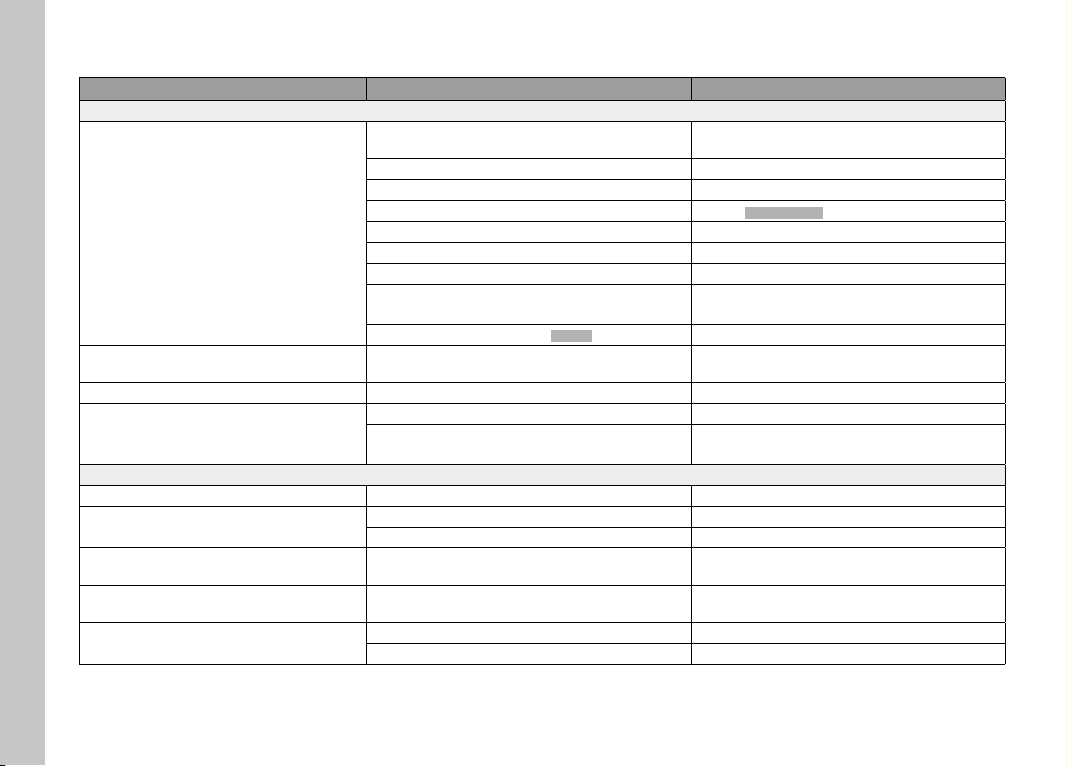
FAQ
EN
144
FAQ
Problem possible cause to be verified Troubleshooting suggestions
Battery issues
Battery is depleted too quickly Battery too cold Warm the battery (e.g. in pants pocket) and only insert
directly before use
Battery too hot Allow battery to cool down
LCD panel or EVF set too bright Reduce brightness
Power save mode deactivated Activate Auto Power OffAuto Power Off
AF mode permanently activated Select other mode
Permanent WLAN connection Deactivate WLAN when not in use
Continuous use of LCD panel (e.g. in Live View mode) Deactivate the function
Battery has been recharged too many times The battery has reached the end of its operating time
Replace battery
Preview of the recorded images (PreviewPreview) activated Deactivate the function
Charging process not starting Incorrect battery polarization or faulty charger
connection
Check polarization and connection
Charging takes too long Battery too hot or too cold Charge the battery at room temperature
Charging pilot light is on, but battery isn't charging The battery contacts are dirty Clean the contacts with a soft, dry cloth
Battery has been recharged too many times The battery has reached the end of its operating time
Replace battery
Camera problems
The camera suddenly switches itself off Battery is depleted Charge or replace the battery
The camera won’t switch on Battery is depleted Charge or replace the battery
Battery too cold Warm the battery (e.g. in pants pocket)
Camera is heating up Heat development due to high-res video recording (4K) or
serial exposures with DNG
Not a fault; allow camera to cool down if it gets too hot
The camera switches off again immediately after it
is switched on
Battery is depleted Charge or replace the battery
Camera does not recognize the memory card The memory card is not compatible or defective Replace the memory card
Memory card is incorrectly formatted Format the memory card in the camera
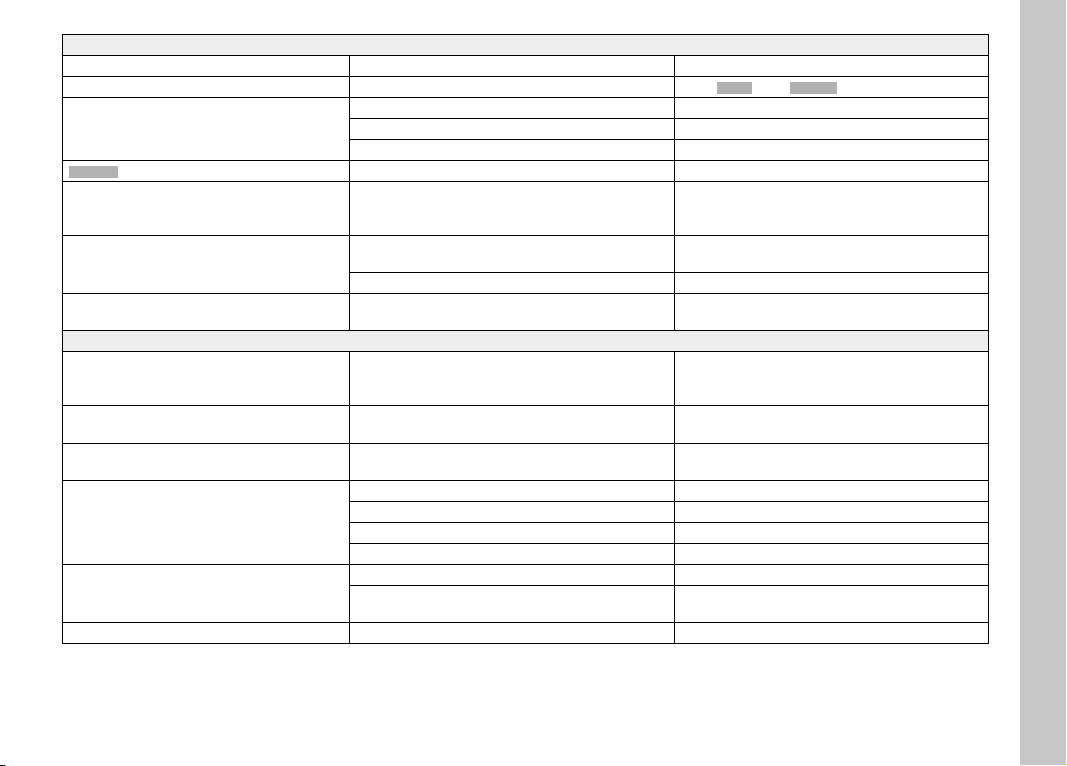
EN
FAQ
145
Menus and displays
Electronic viewfinder is dark EVF brightness is set too low Set the EVF brightness
Display language is not English - Select EnglishEnglish in the LanguageLanguage menu
The LCD panel is to dark or too bright/not clear The brightness setting is incorrect Adjust the display brightness
Viewing angle is too small View it at a perpendicular angle
Brightness sensor blocked Make sure that the brightness sensor is not blocked
FavoritesFavorites menu does not appear The favorites menu is empty Add at least one function
Live View stops suddenly or doesn't start The camera is hot due to high ambient temperature,
extended Live View operation, extended video recording
or serial exposures
Allow camera to cool down
The brightness in Live View mode is not the same
as in the pictures
The brightness settings for the LCD panel have no
influence over the exposures
Adjust the brightness settings as needed
Exposure Simulation is deactivated Activate the function
The number of remaining exposures does not
count down after a picture is taken
The exposure requires only very little memory space This is not a fault; the number of remaining exposures
is calculated as approximations
Recording
Image noise appears on the LCD panel/in the
viewfinder when the shutter button is pressed to
the first pressure point
The gain is increased to aid image composition if the
object is insufficiently lit with reduced aperture opening
Not a fault – picture quality will not be impacted
LCD panel/viewfinder deactivates after a very
short time
Power Save settings are activated Change the settings as needed
The display switches off after the picture is taken/
the LCD panel goes dark after the picture is taken
Flash loads after picture is taken, LCD panel deactivates
during load time
Wait until the flash is loaded
Flash won't fire The flash cannot be used with the current settings Refer to the list of flash function-compatible settings
Battery is depleted Charge or replace the battery
Pressing the shutter button while flash is still loading Wait until the flash is loaded
Automatic bracketing or Picture series is activated Change the setting
The flash does not fully illuminate the object Object is outside the flash range Move object into flash range
Flash is covered Make sure the th flash unit is not covered by your finger
or some object
Image does not sharpen automatically AF is deactivated Activate AF
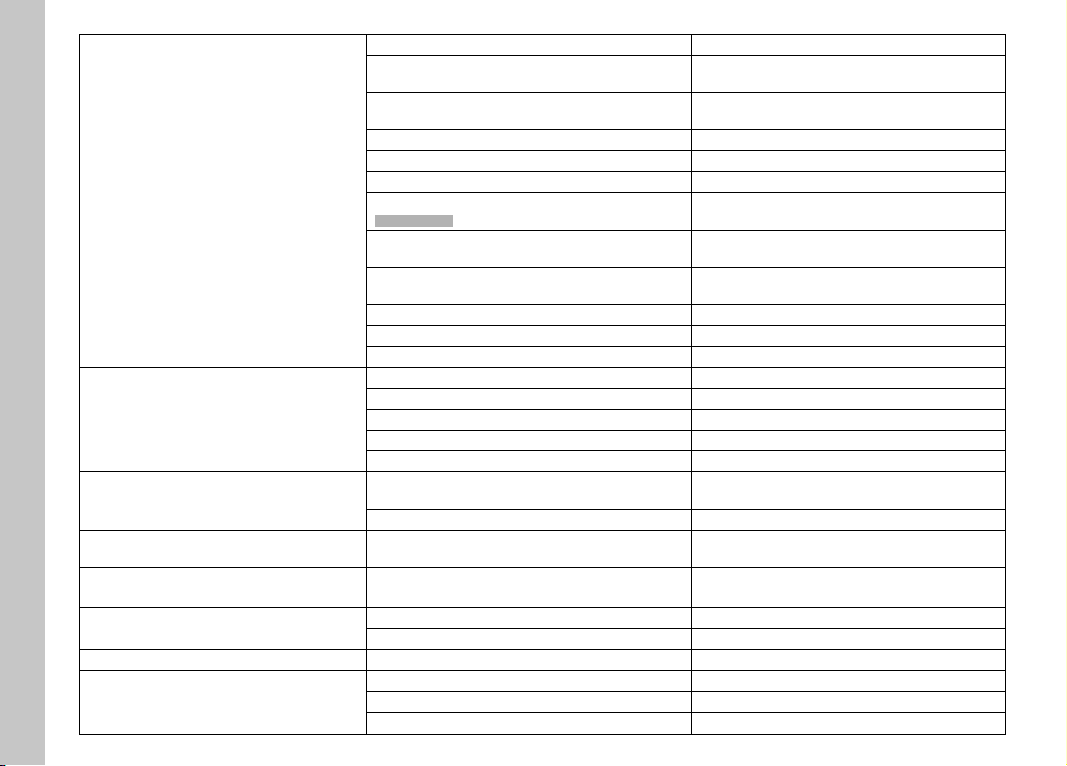
FAQ
EN
146
The camera won’t take a picture/shutter button is
deactivated
Memory card is full Replace the memory card
The memory card is not formated Reformat the memory card
(Caution: Loss of data!)
The memory card is write protected Deactivate the write protection on the memory card
(small lever on the side of the memory card)
Dirt on the memory card contacts Clean the contacts with a soft cotton or linen cloth
The memory card is damaged Replace the memory card
The sensor is overheating Allow camera to cool down
The camera has switched off automatically
(Auto Power OffAuto Power Off)
Switch the camera on again
deactivate auto shutdown as needed
Picture data is being written to the memory card and the
cache is full
Wait
Noise reduction function is working (e.g. after night
photography with long exposure times)
Wait or deactivate noise reduction
Battery is depleted Charge or replace the battery
Camera is processing a picture Wait
Image numbering has reached its limit See section “Data Management”
No face detection/faces are not recognized Face is covered (sunglasses, hat, long hair, etc.) Remove distracting objects
Face takes up to little space in the picture composition Change image composition
Face is tilted or horizontal Keep face straight
Camera not held straight Hold camera straight
Face is insufficiently lit Use flash, improve illumination
Camera selects incorrect object The incorrectly selected object is closer to the image
center that the main object
Change the image section or take picture using the
focus lock
The incorrectly selected object is a face Deactivate face detection
No continuous recording available The camera is overheated and the function was
temporarily disabled to protect the camera
Allow camera to cool down
The image on the LCD panel displays lots of noise Light enhancement function of the LCD panel in dark
surroundings
Not a fault – picture quality will not be impacted
Image storage takes a long time Noise Suppression is activated for long-term exposures Deactivate the function
The memory card inserted is slow Use a suitable memory card
Electronic viewfinder is dark Switchover between EVF and LCD incorrectly set Select a suitable setting
Camera does not focus Desired object part is too close to the camera Select Macro mode
Desired object part is very far away Exit Macro mode
Object not suitable for AF Use Focus lock or select manual focus
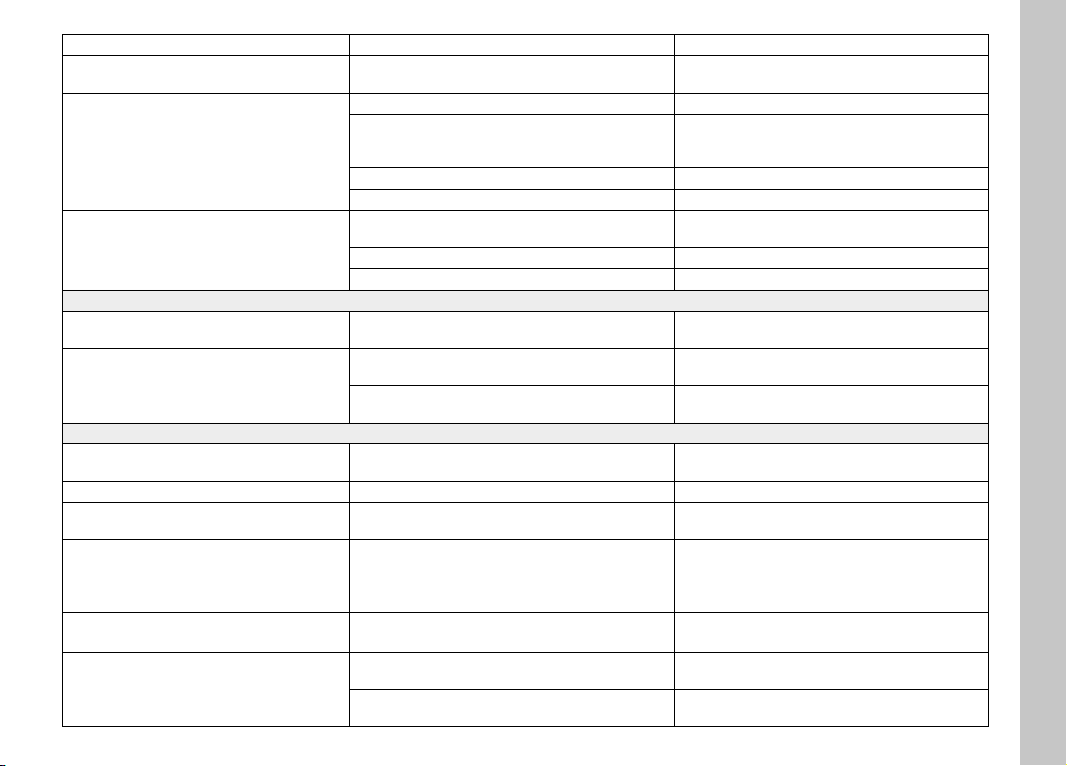
EN
FAQ
147
Viewfinder is out of focus Check the diopter setting and adjust as needed
AF metering field is framed in red with activated
AF; images out of focus
Focusing was unsuccessful Try to focus again
No AF metering field selectable Focus ring not in AF position Turn the focus ring to the AF position
Automatic Metering Field Control, Portrait Mode in the
Scene Modes menu or Face Detection in AF mode is
selected
Select other control mode
Image Review is activated Deactivate Image Review
Camera is in Standby mode Press the shutter button to the first pressure point
AF assist light does not light up The AF mode “AFc” is selected or “Continuous AF” is
activated in AFs mode
Change the mode
Camera is recording a video or is in Live View mode Change the mode
Function is deactivated Activate AF
Video recording
No video is recorded The camera is overheated and the function was
temporarily disabled to protect the camera
Allow camera to cool down
Video recording stops Maximum length of individual video sequence was
reached
The memory card's write speed is too low for the
selected video resolution/compression
Insert another memory card or change the storage
method
Review/playback and video/image management
Selected images cannot be deleted Some of the selected images are write protected Remove write protection (using the device with which
the file was originally set to write protected)
File numbering does not start at 1 The memory card contains previously stored images See section “Data Management”
The time and date settings are incorrect or are not
displayed
The camera has not been in use for an extended period
of time (the battery was removed)
Insert a charged battery and configure the correct
settings
The time and date stamp on images are incorrect Time settings are incorrect Set the time correctly
Caution: Time settings will be lost if the camera is not
used/remains in storage with a depleted battery over
an extended period of time
The time and date stamp on images are unwanted Setting was ignored Cannot be removed in retrospect
Deactivate the function as needed
Pictures/recordings are damaged or missing The memory card was removed while the readiness
indicator was flashing
Never remove the memory card while the readiness
indicator is flashing. Charge the battery.
The memory card formatting is faulty or the card is
damaged
Reformat the memory card
(Caution: Loss of data!)
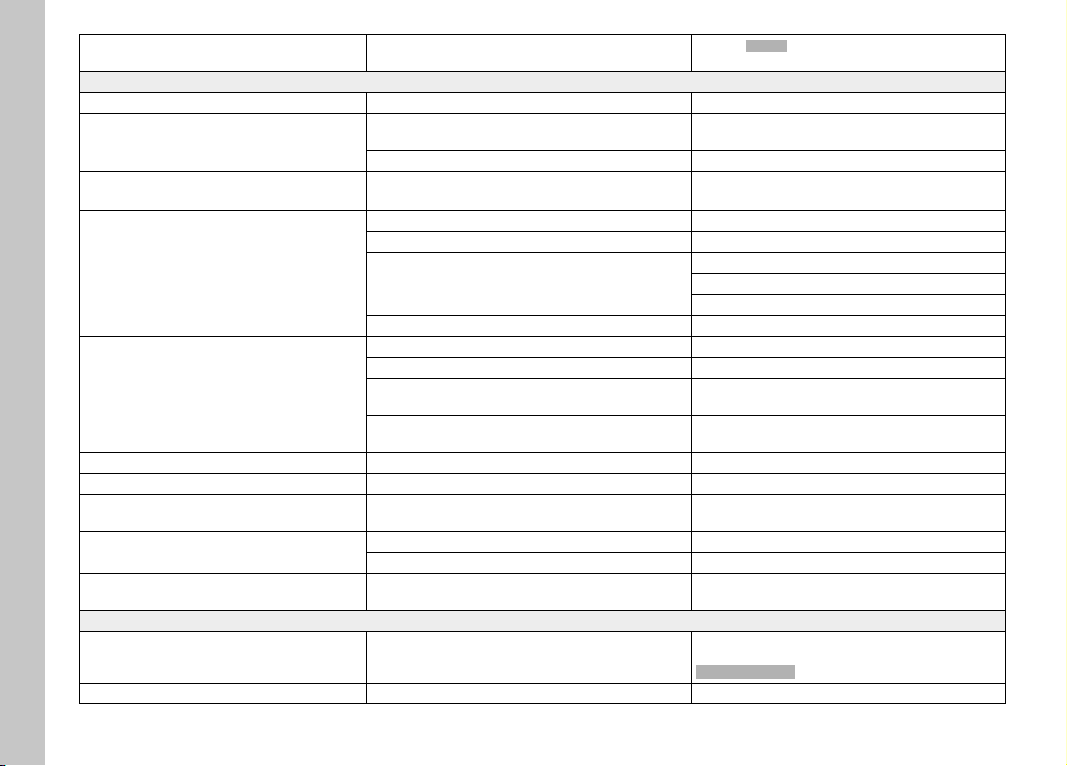
FAQ
EN
148
The most recent recording is not displayed on the
LCD panel
Preview is deactivated Activate PreviewPreview
Picture quality
The picture is too bright Light sensor was covered while picture was taken Make sure that the light sensor is not obstructed
Image noise Long exposure times (>1s) Activate the noise suppression function for long
exposure times
ISO sensitivity set too high Decrease ISO sensitivity
Round white stains, similar to soap bubbles Flash photography in very dark environment: reflections
of dust particles
Deactivate the flash
Images are out of focus Lens is dirty Clean the lens
Lens is obstructed Make sure that lens is unobstructed
Camera moved during exposure Flash, modes
Mount the camera on a tripod
Use shorter shutter speeds
Macro Function Select the appropriate mode
Images are overexposed Flash is activated in bright surroundings Change the flash mode
Strong light source in the image Avoid strong light sources in picture composition
(Half) backlight falling into the lens (also from light
sources outside the image range)
Use the lens hood or change to another subject
Selected exposure time is too long Select a shorter exposure time or turn the shutter
speed setting dial to A
Out of focus/picture stabilizer not functioning Exposure at a dark location without flash Use a tripod
The image is grainy or there is image noise ISO sensitivity set too high Decrease ISO sensitivity
Horizontal stripes Picture was taken with electronic shutter under a light
source like a fluorescent lamp
Try shorter shutter speeds
No images are displayed No memory card inserted Insert the memory card
The recordings were taken with another camera Transfer the recordings to another device to view them
Images cannot be displayed File name of the image was changed on a PC Use appropriate software for image transfers from a PC
to the camera
Video quality
Video recordings show flickering/stripes Light source interference in artificial lighting Select a different frame rate (suitable for the local
Alternating current (AC) grid frequency) under
Video ResolutionVideo Resolution
Camera noise in video recording The setting wheels were used Avoid using the setting wheels during video recordings
EN
FAQ
149
No sound on video recording Playback volume is set too low Increase playback volume
Microphone was covered during recording Make sure the microphone is not obstructed while
recording video
Speakers are covered Make sure that speakers are unobstructed during
playback
Microphone was deactivated while recording Activate the microphone
Flickering or horizontal stripes in the video
recording
CMOS sensors will display this phenomenon when light
sources like LED lamps or fluorescent tubes are used
Quality may be improved by selecting a manual shutter
speed (e.g. 1/100s)
Smartphones/WLAN
WLAN connection gets interrupted Camera deactivates when it overheats (safety feature) Allow camera to cool down
Cannot pair with a mobile device The camera was already paired with the mobile device Delete the camera registration from the Bluetooth
settings in the mobile device and repeat pairing
process
Mobile device connection/image transfer not
working
The mobile device is too far away Bring the devices closer to each other
Interference from other devices in the vicinity, e.g. other
smartphones or a microwave oven
Increase distance to interfering devices
Interference from multiple mobile devices in the vicinity Re-establish the connection/remove other mobile
devices
Mobile device is currently connected to another device Check connection
Camera does not appear on the WLAN
configuration screen of the mobile device
Mobile device does not recognize camera Switch the WLAN function of the mobile device off and
on again
Menu overview
EN
150
MENU OVERVIEW
DYNAMIC DIRECT ACCESS
FavoritesFavorites menu
FN button Thumbwheel button Page
Available settings
l
Factory settings
l
Drive ModeDrive Mode
l l l l l l
68
Interval ShootingInterval Shooting
l l l
89
Exposure BracketingExposure Bracketing
l l l l
91
Self TimerSelf Timer
l l l l l
92
FocusingFocusing
l l l l
69 — 75
Focus ModeFocus Mode
l l l
69
AF ModeAF Mode
l l l
70
Focus AssistFocus Assist
l
74, 75
Auto MagnificationAuto Magnification
l l
75
Focus PeakingFocus Peaking
l l
74
Exposure MeteringExposure Metering
l l l l l l
78
Exposure CompensationExposure Compensation
l l l l
87, 91
ISOISO
l l l l
76, 77
Auto ISO SettingsAuto ISO Settings
l l l
77
Photo File FormatPhoto File Format
l l l l l
62
JPG SettingsJPG Settings
l
63, 64
JPG ResolutionJPG Resolution
l l l
63
Toning PhotoToning Photo
l l l l l
64
Digital ZoomDigital Zoom
l l l
93
Optical Image StabilizationOptical Image Stabilization
l l l
65
Electronic ShutterElectronic Shutter
l l l
60
Flash SettingsFlash Settings
l l l
100 — 102
Exposure PreviewExposure Preview
l l l
84
User ProfileUser Profile
l l l l l l
130 — 131
Video ResolutionVideo Resolution
l l l
66
EN
Menu overview
151
FavoritesFavorites menu
FN button Thumbwheel button Page
Video SettingsVideo Settings
l
66
Microphone GainMicrophone Gain
l l
66
Video Style SettingsVideo Style Settings
l l
67
Toning VideoToning Video
l l l l
67
Capture AssistantsCapture Assistants
95 — 97
Display SettingsDisplay Settings
l
56 — 58
EVF-LCDEVF-LCD
l l l
56
LCD BrightnessLCD Brightness
l
57
EVF BrightnessEVF Brightness
l
57
EVF Frame RateEVF Frame Rate
l
58
PreviewPreview
123
Customize ControlCustomize Control
l
50 — 53, 86 — 87
Edit FavoritesEdit Favorites
l
50
Wheel AssignmentWheel Assignment
l l l
52, 87
Zoom/Lock-ButtonZoom/Lock-Button
l l l
52, 86
Leica FOTOSLeica FOTOS
l l l l l
138
Edit File NamesEdit File Names
133
Reset Image NumberingReset Image Numbering
133
Power SavingPower Saving
55
Acoustic SignalsAcoustic Signals
59
Play Mode SetupPlay Mode Setup
112, 122
Format CardFormat Card
l l l
134
MagnificationMagnification*
l l
72
* The MagnificationMagnification function is only available via direct access and not via the main menu.
Menu overview
EN
152
STATIC DIRECT ACCESS
Status screen Zoom/Lock button Thumbwheel Page
Exposure CompensationExposure Compensation
l l
87, 91
Digital ZoomDigital Zoom
l l
93
Exposure lockExposure lock
(AF-L + AE-L, AE-L, AF-L)(AF-L + AE-L, AE-L, AF-L)
l
86
Focus ModeFocus Mode
l
69
AF ModeAF Mode
l
70
Drive ModeDrive Mode
l
68
Self TimerSelf Timer
l
92
User ProfileUser Profile
l
130 — 131
Exposure MeteringExposure Metering
l
78
ToningToning
l
64, 67
File FormatFile Format
l
62, 66
Leica FOTOSLeica FOTOS
l
138

EN
Menu overview
153

Index
EN
154
INDEX
4K ............................................................................................. 66
A
A (Aperture priority) ................................................................... 80
Accessory .................................................................................... 3
Acoustic signals ......................................................................... 59
AE-L ..................................................................................... 84, 85
AF assist light ............................................................................ 73
AFc ............................................................................................ 69
AF confirmation ......................................................................... 59
AF-L........................................................................................... 85
AF/MF, toggling ......................................................................... 69
AF mode .................................................................................... 69
AFs ............................................................................................ 69
Akademie, Leica .......................................................................164
Aperture .................................................................................... 79
Aperture priority ........................................................................ 80
App.......................................................................................... 138
Assist functions, AF.................................................................... 72
Assist functions, MF ................................................................... 74
Autofocus .................................................................................. 69
Auto ISO ....................................................................................77
Automatic program ....................................................................79
Automatic review ............................................................. 112, 123
Auto Review ............................................................................. 123
Auxiliary displays ........................................................................ 95
B
Basic recording settings ............................................................. 62
Basic settings, camera ............................................................... 54
Brightness, EVF .......................................................................... 57
Brightness, LCD panel ................................................................ 57
Button assignment .....................................................................51
C
Camera information ................................................................. 136
Care ........................................................................................ 142
Carry strap .......................................................................... 10, 28
Center button ............................................................................ 37
Center-weighted metering .......................................................... 78
Charger ................................................................................. 9, 28
Charge status, charger ............................................................... 29
Charge status, LCD panel ........................................................... 26
Charging the battery .................................................................. 29
Clipping ............................................................................. 95, 111
Color rendering, EVF .................................................................. 58
Color rendering, LCD panel ........................................................58
Color settings, EVF .....................................................................58
Color settings, LCD panel ........................................................... 58
Connection, mobile devices .....................................................138
Contact. Leica ......................................................................... 164
Contrast, image properties ................................................... 64, 67
Customer service ..................................................................... 164
D
Data management ....................................................................132
Data structure .......................................................................... 132
Data transfer............................................................................ 135

EN
Index
155
Date .................................................................................... 49, 54
Deactivation, LCD panel ............................................................. 58
Deletion, recordings ................................................................. 118
Deletion, user profiles ..............................................................131
Digital zoom ......................................................................... 52, 93
Diopter adjustment ....................................................................33
Direct access ............................................................................. 51
Directional pad .......................................................................... 37
Displays ............................................................................... 22, 24
Display, settings ......................................................................... 56
Display, standby ......................................................................... 58
Disposal ....................................................................................... 7
DNG .................................................................................. 62, 135
Drive Mode .................................................................... 68, 88, 89
E
Editing, video ........................................................................... 127
Electronic shutter ................................................................. 59, 60
Electronic shutter sound ............................................................59
EVF ............................................................................................ 58
Exposure .................................................................................... 78
Exposure, automatic ...................................................................79
Exposure bracketing ................................................................... 91
Exposure compensation ....................................................... 52, 87
Exposure compensation, flash .................................................. 102
Exposure lock ............................................................................ 84
Exposure, long-term ................................................................... 83
Exposure, manual ....................................................................... 82
Exposure metering, flash ............................................................99
Exposure, metering methods ...................................................... 78
Exposure, modes ....................................................................... 79
Exposure preview ....................................................................... 84
Exposure simulation ................................................................... 84
Exposure time, max. ................................................................... 83
Eye sensor ................................................................................. 57
F
Face detection ........................................................................... 71
Factory settings ....................................................................... 136
FAQ ......................................................................................... 144
Favorites, menu ................................................................... 45, 50
Favorites, pictures .................................................................... 118
Field metering ............................................................................ 70
File format ................................................................................. 62
File format, video ....................................................................... 66
File name ................................................................................. 133
Firing point, flash ..................................................................... 101
Firmware ........................................................................... 14, 136
Fixed ISO value ..........................................................................76
Flash .......................................................................................... 98
Flash, control ........................................................................... 101
Flash, exposure compensation .................................................102
Flash, exposure metering ........................................................... 99
Flash, firing point ..................................................................... 101
Flash, operating mode .............................................................. 100
Flash, range ............................................................................. 102
Flash, setting ..................................................................... 99, 100
Flash, synchronization ..............................................................101
Flash units, compatible .............................................................. 98
FN button ............................................................................ 38, 51
Focus assist ............................................................................... 74
Focusing .................................................................................... 69

Index
EN
156
Focusing, automatic ................................................................... 69
Focusing, manual ....................................................................... 74
Focusing, metering methods ...................................................... 70
Focus mode ............................................................................... 69
Focus peaking ............................................................................ 74
Folder, creating new ................................................................. 133
Folders .................................................................................... 132
Folder structure ....................................................................... 132
Format ....................................................................................... 62
Formatting, memory card ......................................................... 134
Full HD ......................................................................................66
G
General information ................................................................... 12
Grid ........................................................................................... 97
H
HDR ........................................................................................... 91
Histogram .................................................................................. 97
Horizon ...................................................................................... 96
I
Image numbering .....................................................................132
Image properties ........................................................................ 64
Image stabilization, picture ......................................................... 65
Image stabilization, video ...........................................................66
Individual button assignment ...................................................... 51
Information display ..................................................................... 94
Information, regulatory ................................................................. 6
Inserting/removing the battery .................................................. 30
Interval shooting ........................................................................ 89
ISO Sensitivity ............................................................................ 76
ISO value, greatest .....................................................................77
J
JPG ...................................................................................... 62, 63
JPG settings ...............................................................................63
K
Keyboard ................................................................................... 47
L
Language ................................................................................... 54
LCD panel .................................................................................. 56
LCD panel, setting ...................................................................... 56
Legal information ......................................................................... 4
Leica Academy.........................................................................164
Leica Customer Care................................................................164
Leica FOTOS ........................................................................ 5, 138
Lens .................................................................................... 8, 142
Lens hood .................................................................................. 32
Level gauge ................................................................................ 96
Long-term exposure ................................................................... 83
M
Macro ........................................................................................ 76
Magnification, MF assist function ............................................... 75
Magnification, picture mode ....................................................... 72
Magnification, playback/review mode ......................................115
Magnifying glass ........................................................................ 75
Main menu ................................................................................. 45
Main switch ............................................................................... 34

EN
Index
157
Manual exposure setting ............................................................82
Manual focusing ......................................................................... 74
Maximum exposure time ............................................................83
Memory card ................................................. 10, 13, 31, 134, 143
Menu bar ................................................................................... 48
MENU button ............................................................................. 38
Menu control ............................................................................. 40
Menu language ..........................................................................54
Menu navigation................................................................... 42, 46
Menu screen .............................................................................. 40
Metering memory lock ............................................................... 52
Metering method, AF .................................................................. 70
Metering method, exposure ........................................................78
MF ............................................................................................. 74
Microphone ............................................................................... 66
M (Manual exposure setting) ......................................................82
Multi-field metering, exposure .................................................... 78
Multi-field metering, focusing .....................................................70
N
Name, file ........................................................................ 132, 133
Name, folder ............................................................................ 132
Navigation, menu ................................................................. 42, 46
Noiseless ................................................................................... 59
Noise reduction ................................................................... 80, 83
Notes, legal .................................................................................. 4
Number pad ............................................................................... 47
O
Operating mode, exposure ......................................................... 79
Operating mode, flash .............................................................. 100
Operation, customized ............................................................... 50
Optical image stabilization ..........................................................65
P
Part Designations ....................................................................... 20
Parts, overview .......................................................................... 20
P (automatic program)................................................................ 79
Picture, interval .......................................................................... 89
Picture mode ............................................................................. 68
Picture series ................................................................. 88, 89, 91
Playback/Review, automatic ....................................................123
Playback/Review mode ............................................................ 108
Playback, video ........................................................................124
PLAY button ............................................................................... 38
Power off, automatic ............................................................ 55, 58
Power save mode ....................................................................... 55
Problems ................................................................................. 144
Profile, user ............................................................................. 130
Q
Quick access ....................................................................... 50, 51
R
Rating, recording ...................................................................... 118
Raw data..................................................................................135
Rechargeable battery, capacity ...................................................26
Rechargeable battery, notes ........................................... 9, 12, 143
Recording, delete ..................................................................... 118
Recording, marking .................................................................. 118
Recording, rating ......................................................................118
Regulatory information ................................................................. 6

Index
EN
158
Remote control ........................................................................ 140
Repair ...................................................................................... 164
Replacement parts ....................................................................... 3
Reset, camera ..........................................................................136
Reset, image numbering ........................................................... 133
Resolution ..................................................................................63
Resolution, video ........................................................................66
S
Safety remarks ............................................................................. 8
Saving, energy ........................................................................... 55
Scale ......................................................................................... 49
Scope of delivery ......................................................................... 2
SD card ......................................................... 10, 13, 31, 134, 143
Self-timer ................................................................................... 92
Sensitivity, eye sensor ................................................................ 57
Sensitivity, ISO ........................................................................... 76
Sensor ................................................................................. 10, 13
Serial exposures ........................................................................ 88
Service .................................................................................... 164
Setting shutter speeds ...............................................................82
Settings, store.......................................................................... 130
Settings, video ...........................................................................66
Sharpness, image properties ................................................ 64, 67
Shift .................................................................................... 52, 80
Short cut ............................................................................. 50, 51
Shutter button............................................................................ 35
Shutter, electronic................................................................ 59, 60
Shutter release ..........................................................................35
Shutter speed ...................................................................... 52, 79
Shutter speed/aperture combination ......................................... 79
Shutter speed priority mode ....................................................... 81
Shutter speed setting dial ...........................................................36
Signals, acoustic ........................................................................ 59
Silent ......................................................................................... 59
Silent operation ......................................................................... 59
Slideshow ................................................................................123
Smartphone ............................................................................. 138
Sound ................................................................................ 59, 127
Spot metering, exposure ............................................................ 78
Spot metering, focusing ............................................................. 70
S (Shutter speed priority mode) .................................................. 81
Standby mode ............................................................................55
Status screen ................................................................. 22, 24, 43
Storage .................................................................................... 142
Submenu ................................................................................... 45
Switching, mode ......................................................................109
Switching off, camera................................................................. 34
Switching on, camera ................................................................. 34
Sync point ............................................................................... 101
T
Tagging, recordings .................................................................. 118
Technical Data ......................................................................... 160
Thumbwheel ........................................................................ 36, 52
Thumbwheel button .............................................................. 37, 51
Time .................................................................................... 49, 54
Time lapse ......................................................................... 89, 114
Time zone .................................................................................. 55
Toning, image properties ...................................................... 64, 67
Touch AF .................................................................................... 71
Touch control ....................................................................... 39, 71

EN
Index
159
Transfer, data ........................................................................... 135
Troubleshooting ....................................................................... 144
TTL metering ........................................................................ 98, 99
U
Update, firmware ............................................................... 14, 136
User-defined operation ............................................................... 50
User profiles ............................................................................ 130
V
Video ....................................................................................... 124
Video mode ............................................................................. 106
Video stabilization ...................................................................... 66
Volume ...................................................................................... 59
Volume, video .......................................................................... 127
W
Warning signal ........................................................................... 59
Warranty .................................................................................... 15
Wi-Fi/WLAN ................................................................................ 5
Wind noise reduction ................................................................. 66
Z
Zoom ......................................................................................... 93
Zoom/Lock button...............................................................38, 52

Technical Data
EN
160
TECHNICAL DATA
CAMERA
DesignationDesignation
Leica Q2 Monochrom
Camera typeCamera type
Digital 35mm compact camera
Type no.Type no.
4889
Order No.Order No.
19 055 EU/JP/US, 19 056 ROW (black)
Buffer memoryBuffer memory
DNG™: 14recordings
JPG: 25recordings
Storage mediumStorage medium
UHS-II (recommended), UHS-I, SD cards up to 2GB / SDHC cards up
to 32GB / SDXC cards up to 512GB
MaterialMaterial
Full metal housing: Magnesium die-cast, leather covering
Operating conditionsOperating conditions
0 to +40°C
InterfacesInterfaces
ISO accessory shoe with additional control contacts for Leica flash
units
Tripod threadTripod thread
A 1⁄4 DIN 4503 (1⁄4”) with stainless steel in the base
Dimensions (WxHxD)Dimensions (WxHxD)
130x80x87mm
WeightWeight
approx. 718g/637g (with/without battery)
SENSOR
Sensor sizeSensor size
CMOS sensor, 50.4/47.3MP (total/actual)
ProcessorProcessor
Leica Maestro series (Maestro III)
File formatsFile formats
Photo: DNG™ (raw data), DNG+JPG, JPG
Video: MP4 (AAC sound recording format)
ResolutionResolution
DNG™:8368x5584pixels (46.7MP)
JPG: 8368x5584pixels (46.7MP), 6000x4000pixels (24MP),
4272x2848pixels (12MP)
File sizeFile size
DNG™: 84.4MB
JPG: depending on resolution and image content
Color depthColor depth
DNG™: 14bit
JPG: 8bit
Color spaceColor space
sRGB
Video resolution/frame rateVideo resolution/frame rate
C4KC4K (4096x2160pixels): 24fps
4K4K (3840x2160pixels): 24fps, 30fps
Full HDFull HD (1920x1080pixels): 24fps, 30fps, 60fps, 120fps
LENS
DesignationDesignation
Leica Summilux 28 f/1.7 ASPH., 11 lenses in 9 segments, 3 aspherical
lens areas
Lens filter threadLens filter thread
E49

EN
Technical Data
161
Digital ZoomDigital Zoom
Optionally approx. 1.25x (equivalent to 35mm), approx.1.8x
(equivalent to 50mm) or approx. 2.7x (equivalent to 75mm)
Image stabilizationImage stabilization
Visual compensation system for picture and video recordings
Aperture rangeAperture range
1.7 to +16 in 1⁄3EV increments
VIEWFINDER/LCD PANEL
Viewfinder (EVF)Viewfinder (EVF)
Resolution: 3.68MP, 120 fps, magnification: 0.76x, aspect ratio: 4:3,
exit pupil position: 20mm, setting range +3/-4diopters, with eye
sensor for automatic switchover between viewfinder and LCD panel
LCD panelLCD panel
3” TFT LCD, 1,036,800dots, touch control available
SHUTTER
Shutter typeShutter type
Mechanical central shutter or optional electronic shutter
Shutter speedsShutter speeds
Mech. shutter: 120s to 1⁄2000s
Electronic shutter function: 1⁄2500s to 1⁄40000s
Flash Synchronization: up to 1⁄2000s
Shutter buttonShutter button
Two-step (1.step: Activation of the camera electronics including
exposure metering and exposure lock (in aperture priority mode);
2.step: firing)
Self-timerSelf-timer
Delay time: 2s or 12s
Drive ModeDrive Mode
SingleSingle
Continuous - Low SpeedContinuous - Low Speed approx. 2fps
Continuous - Medium SpeedContinuous - Medium Speed approx. 6fps
Continuous - High SpeedContinuous - High Speed approx. 10fps
Continuous - Very High SpeedContinuous - Very High Speed approx. 20fps
Interval ShootingInterval Shooting
Exposure BracketingExposure Bracketing
FOCUSING
Working rangeWorking range
30cm to ∞
With macro setting: from 17cm
Focus ModeFocus Mode
Automatic (Autofocus) or manual
With manual setting: optional magnifying glass function
(Auto MagnificationAuto Magnification) and edge marking (Focus PeakingFocus Peaking) available as
focus aids
Autofocus systemAutofocus system
Based on contrast metering
Autofocus modesAutofocus modes
AFsAFs (exposure only after successful focusing), AFcAFc (anytime exposure),
AF setting can be saved
Autofocus metering methodsAutofocus metering methods
Spotpot (can be shifted), FieldField (can be shifted), Multi-FieldMulti-Field, Face DetectionFace Detection
EXPOSURE
Exposure meteringExposure metering
TTL (exposure metering through the lens), with working aperture
Exposure Metering MethodsExposure Metering Methods
SpotSpot, Center-WeightedCenter-Weighted, Multi-FieldMulti-Field
Exposure compensationExposure compensation
±3 EV in 1⁄3EV increments

Technical Data
EN
162
Automatic bracketingAutomatic bracketing
3 or 5 exposures, up to ±3EV, in 1⁄3EV increments
Shift function:up to ±9EV
ISO sensitivity rangeISO sensitivity range
Auto ISOAuto ISO: ISO200 to ISO100 000
Manual: ISO100 to ISO100 000
FLASH EXPOSURE CONTROL
Flash unit connectorFlash unit connector
Via accessory shoe with central and control contacts
Flash sync timeFlash sync time
:1⁄2000s, slower shutter speeds available, automatic changeover
to TTL linear flash mode with HSS-compatible Leica system flash units
if sync time is undercut
Flash exposure meteringFlash exposure metering
Using center-weighted TTL pre-flash metering with Leica flash units
(SF26, SF40, SF60) or with system-compatible flash units, remote
controlled flash SFC1
Flash exposure compensationFlash exposure compensation
SF 40:±2EV in 1⁄2EV increments
SF 60:±2EV in 1⁄3EV increments
EQUIPMENT
MicrophoneMicrophone
Stereo
SpeakerSpeaker
Mono
WLANWLAN
WLAN function for connecting to the Leica FOTOS app. The Leica app
is available from the Apple App Store™ or the Google Play Store™.
Complies with Wi-Fi IEEE802.11b/g/n, 2.4 GHz, channel 1-11
(2412-2462 MHz) and Wi-Fi IEEE802.11ac, 2.4 GHz & 5 GHz, channel
39-48 (5180-5240 MHz), channel 52-64 (5260-5320 MHz), channel
100-140 (5500-5700 MHz) (standard WLAN protocol), encryption
method: WLAN-compatible WPA™/WPA2™
GPSGPS
Not available everywhere due to country-specific legislation; can be
added via the Leica FOTOS app. Data is written to Exif header of the
picture files.
BluetoothBluetooth
Bluetooth v4.2 (Bluetooth Low Energy (BLE)), 2402 to 2480 MHz
Menu languagesMenu languages
English, German, French, Italian, Spanish, Russian, Japanese, Simplified
Chinese, Traditional Chinese, Korean
POWER SUPPLY
Rechargeable battery (Leica BP-SCL4)Rechargeable battery (Leica BP-SCL4)
Lithium-ion rechargeable battery, rated voltage: 7.2V (DC); capacity:
1860mAh (min.), approx. 340/300recordings (LCD/EVF, based on
CIPA standard); charging time: approx. 140min (after deep discharge);
manufacturer: Panasonic Energy (Wuxi) Co. Ltd., Made in China
Charger (Leica BC-SCL4)Charger (Leica BC-SCL4)
Input: AC 100–240V, 50/60Hz, 0.25A, automatic switchover;
Output: DC 8.4V 0.85A; Manufacturer: Salom Electric (Xiamen) Co.,
Ltd., Made in China

EN
Technical Data
163

Leica Customer Care
EN
164
LEICA CUSTOMER CARE
Please contact the Customer Care department of Leica Camera AG
for the maintenance of your Leica equipment and for help and
advice regarding Leica products and how to order them. You can
also contact the Customer Care department or the repair service
provided by your regional Leica subsidiary for repairs or warranty
claims.
Leica Camera AG
Leica Customer Care
Am Leitz-Park 5
35578 Wetzlar
Germany
Phone: +49 (0)6441 2080-189
Fax: +49 (0)6441 2080-339
Email: customer.care@leica-camera.com
www.leica-camera.com
LEICA ACADEMY
Have a look at our full seminar program with many interesting
workshops on the topic of photography at:
us.leica-camera.com/Leica-Akademie/Global-Leica-Akademie