AP18733 REV. 3.2.17
1
NOTE TO CONSUMER: DO NOT DESTROY THIS MANUAL. PLEASE READ CAREFULLY AND KEEP ALL INSTRUCTIONS
FOR FUTURE REFERENCE.
CONDENSING
TANKLESS
WATER HEATER
Use and Care Manual
User’s Information
Installation
Start-Up
Maintenance
Parts
180,000 / 199,000 Btu/Hr Models
WARNING
The surfaces of these products contacted by consumable water contain less than 0.25% lead by weight, as
required by the Safe Drinking Water Act, Section 1417.
If the information in these instructions is not followed exactly, a re or explosion may result, causing property damage, personal injury, or death.
FOR YOUR SAFETY!
•
Do not store or use gasoline or other ammable vapors and liquids in the vicinity of this or any other appliance. To do so may result in
an explosion or re.
•
Installation and service must be performed by a qualied installer, service agency, or the gas supplier.
WHAT TO DO IF YOU SMELL GAS
•
Do not try to light any appliance.
• Do not touch any electrical switch; do not use any phone in your building.
• Immediately call your gas supplier from a neighbor’s phone. Follow the gas supplier’s instructions.
• If you cannot reach your gas supplier, call the re department.
• Do not return to your home until authorized by the gas supplier or re department.
This water heater is not suitable for use in manufactured (mobile) homes.
www.rhem.com
Printed in the USA.
AP18733 REV. 3.2.17
2
WARNING
CAUTION
The following dened terms are used throughout this manual to bring attention to the presence of hazards of various risk levels, or to
important product information.
DANGER indicates an imminently hazardous situation which, if not avoided, will result in death or serious injury.
WARNING indicates a potentially hazardous situation which, if not avoided, could result in death or serious injury.
CAUTION indicates a potentially hazardous situation which, if not avoided, may result in minor or moderate injury.
IMPORTANT is used to indicate a potentially hazardous situation which, if not avoided, may result in property damage, FOR YOUR SAFETY is
used to indicate specic safety related instructions or procedures, and NOTICE is used to address practices not related to personal injury.
SPECIAL ATTENTION BOXES
DANGER
IMPORTANT
NOTE: Contains additional information important to a procedure.
AP18733 REV. 3.2.17
3
This manual must only be used by a qualied heating installer/service technician. Read all instructions in this manual before installing. Perform
steps in the order given. Failure to comply could result in substantial property damage, severe personal injury, or death.
This appliance must be installed by qualied and licensed personnel. The installer should be guided by the instructions furnished with the water
heater, and with local codes and utility company requirements. In the absence of local codes, preference should be given to the National Fuel
Gas Code, ANSI Z223.1-2002.
INSTALLATIONS MUST COMPLY WITH:
Local, state, provincial, and national codes, laws, regulations and ordinances.
The latest version of the National Fuel Gas Code, ANSI Z223.1, from American Gas Association Laboratories, 8501 East Pleasant Valley Road,
Cleveland, OH 44131.
In Canada – CGA No. B149 (latest version), from Canadian Gas Association Laboratories, 55 Scarsdale Road, Don Mills, Ontario, Canada
M3B 2R3. Also, Canadian Electrical Code C 22.1, from Canadian Standards Association, 5060 Spectrum Way, Suite 100, Mississauga, Ontario,
Canada L4W 5N6.
Code for the installation of Heat Producing Appliances (latest version), from American Insurance Association, 85 John Street, New York, NY
11038.
The latest version of the National Electrical Code, NFPA No. 70.
NOTE: The gas manifold and controls met safe lighting and other performance criteria when the water heater underwent tests specied in ANSI
Z21.10.3 – latest edition.
▪ FOR THE INSTALLER
▪ FOREWORD
This manual is intended to be used in conjunction with other literature provided with the water heater. This includes all related control information.
It is important that this manual, all other documents included with this system, and additional publications including the National Fuel Gas Code,
ANSI Z223.1-2002, be reviewed in their entirety before beginning any work.
Installation should be made in accordance with the regulations of the Authority Having Jurisdiction, local code authorities, and utility companies
which pertain to this type of water heating equipment.
Authority Having Jurisdiction (AHJ) – The Authority Having Jurisdiction may be a federal, state, local government, or individual such as a
re chief, re marshal, chief of a re prevention bureau, labor department or health department, building ofcial or electrical inspector, or others
having statutory authority. In some circumstances, the property owner or his/her agent assumes the role, and at government installations, the
commanding ofcer or departmental ofcial may be the AHJ.
NOTE: Rheem reserves the right to modify product technical specications and components without prior notice.
DANGER
WARNING
California Proposition 65 Warning: This product contains chemicals known to the State of California to cause cancer birth defects,
or other reproductive harm.

AP18733 REV. 3.2.17
4
TABLE OF CONTENTS
USER’S INFORMATION..........................................................................................................................................................7
A. PRODUCT AND SAFETY INFORMATION......................................................................................................................7
1. BEFORE OPERATION.................................................................................................................................................8
2. DURING OPERATION.................................................................................................................................................8
3. TROUBLESHOOTING AND GENERAL CAUTIONARY STATEMENTS....................................................................9
B. MAINTENANCE.............................................................................................................................................................10
1. SERVICE TECHNICIAN.............................................................................................................................................10
2. OWNER MAINTENANCE..........................................................................................................................................10
C. MAINTENANCE PROCEDURES..................................................................................................................................11
1. DAILY MAINTENANCE..............................................................................................................................................11
2. MONTHLY MAINTENANCE.......................................................................................................................................11
3. 6 MONTH MAINTENANCE........................................................................................................................................12
4. ANNUAL MAINTENANCE.........................................................................................................................................13
D. TROUBLESHOOTING...................................................................................................................................................13
THE FOLLOWING ARE INSTALLATION INSTRUCTIONS FOR THE CONTRACTOR.......................................................14
ITEMS SHIPPED WITH THE WATER HEATER....................................................................................................................15
SAFETY REGULATIONS.......................................................................................................................................................15
A. OPERATION AND INSTALLATION WARNINGS..........................................................................................................15
B. IMPROPER COMBUSTION...........................................................................................................................................16
C. GAS...............................................................................................................................................................................16
D. WHEN SERVICING THE WATER HEATER..................................................................................................................17
E. WATER CHEMISTRY REQUIREMENTS.......................................................................................................................17
F. FREEZE PROTECTION.................................................................................................................................................17
G. SCALDING....................................................................................................................................................................18
H. HIGH ELEVATION INSTALLATIONS............................................................................................................................18
SPECIFICATIONS..................................................................................................................................................................19
A. SPECIFICATIONS.........................................................................................................................................................19
B. COMPONENTS.............................................................................................................................................................20
C. DIMENSIONS................................................................................................................................................................21
PREPARE WATER HEATER LOCATION..............................................................................................................................22
A. BEFORE LOCATING THE WATER HEATER...............................................................................................................22
B. LEVELING.....................................................................................................................................................................23
C. CLEARANCES FOR SERVICE ACCESS.....................................................................................................................23
D. RESIDENTIAL GARAGE AND CLOSET INSTALLATIONS.........................................................................................23
E. EXHAUST VENT AND INTAKE PIPE............................................................................................................................... 24
F. CARBON MONOXIDE DETECTORS............................................................................................................................ 24
G. PREVENT COMBUSTION AIR CONTAMINATION......................................................................................................24

AP18733 REV. 3.2.17
5
H. REMOVING A WATER HEATER FROM A COMMON VENT SYSTEM..........................................................................25
I. UNPACKING THE WATER HEATER..............................................................................................................................25
J. WALL-MOUNTING THE WATER HEATER....................................................................................................................26
VENTING................................................................................................................................................................................27
A. INTAKE PIPE AND EXHAUST VENT GUIDELINES........................................................................................................27
B. APPROVED VENT MATERIALS...................................................................................................................................30
C. ALLOWED SCHEDULE 40 VENT LENGTHS (PVC, CPVC, PP).................................................................................31
D. TIGHTENING WATER HEATER COLLAR TO EXHAUST VENT AND INTAKE PIPE.................................................32
E. VENT TERMINATION....................................................................................................................................................32
1. Direct Vent, Two Pipe Roof and Sidewall Vent Terminations...............................................................................33
2. Direct Vent, Optional Horizontal and Vertical Vent Kits........................................................................................33
3. Screen Installation....................................................................................................................................................33
4. Power Venting, Indoor Combustion Air Installation in Conned or Unconned Space....................................34
F. COMMON VENT PIPING...............................................................................................................................................36
1. VENT DIAMETER SIZING AND LENGTHS..............................................................................................................36
2. RECOMMENDED EXHAUST PIPE TRANSITIONS.................................................................................................37
3. TWO PIPE VENT SYSTEM (DIRECT VENT)............................................................................................................38
INSTALL THE CONDENSATE DRAIN..................................................................................................................................38
GAS PIPING..........................................................................................................................................................................40
A. GAS PIPE SIZING TABLES..............................................................................................................................................40
1. Gas Pipe Sizing.................................................................................................................................................................40
2. Natural Gas Pipe Sizing...................................................................................................................................................40
3. LP (Liquid Propane) Gas Pipe Sizing..............................................................................................................................41
B. GAS CONNECTION REQUIREMENTS............................................................................................................................42
C. ADDITIONAL PRECAUTION FOR EXCESS FLOW VALVE (EFV)..................................................................................43
D. ADJUSTING GAS PRESSURE AT THE WATER HEATER..............................................................................................43
E. SETTING AND VERIFYING THE COMBUSTION SETTING............................................................................................43
WATER PIPING ......................................................................................................................................................................44
A. GENERAL PLUMBING CONNECTION GUIDELINES.....................................................................................................44
B. INSTALL A BACKFLOW PREVENTER........................................................................................................................... 46
C. PIPING THE WATER HEATER.........................................................................................................................................46
D. APPLICATIONS.................................................................................................................................................................46
E. PRESSURE RELIEF VALVE.............................................................................................................................................49
CONNECT ELECTRICAL POWER / INITIAL STARTUP.......................................................................................................50
A. WIRING INFORMATION................................................................................................................................................... 50
B. DIP SWITCHES.................................................................................................................................................................51

AP18733 REV. 3.2.17
6
OPERATING SYSTEM INSTRUCTIONS...............................................................................................................................57
A. CONTROL PANEL............................................................................................................................................................57
B. LCD DISPLAY DESCRIPTIONS........................................................................................................................................57
C. START-UP SEQUENCE.....................................................................................................................................................58
D. CHANGING THE DHW SET-POINT..................................................................................................................................58
E. STATUS DISPLAY MODE..................................................................................................................................................59
F. CHANGING THE TIME.......................................................................................................................................................60
G. INSTALLER MODE...........................................................................................................................................................61
H. USING RECIRCULATION MODES – STEP 1...................................................................................................................62
I. SETTING THE RECIRCULATION TIMER – USING RECIRCULATION MODES – STEP 2..............................................63
1. Set the Recirculation Timer Type............................................................................................................................64
2. Setting the Recirculation Run Time (Pro9 Recirculation Timer)..........................................................................65
3. Resetting the Recirculation Run Time....................................................................................................................66
J. ERROR MODE...................................................................................................................................................................67
K. ERROR TREE ANALYSIS.................................................................................................................................................67
1. FLAME DETECTION..................................................................................................................................................71
2. GAS DETECTION......................................................................................................................................................72
3. AIR PRESSURE SWITCH..........................................................................................................................................72
4. Inlet / DHW / Operating Temperature Sensors.......................................................................................................73
FINAL INSTALLATION CHECKLIST.....................................................................................................................................74
TROUBLESHOOTING...........................................................................................................................................................76
DIAGNOSTICS AND SUGGESTED CORRECTIVE ACTIONS ............................................................................................76
MAINTENANCE PROCEDURES...........................................................................................................................................77
REPLACEMENT PARTS.......................................................................................................................................................81
Limited Warranty for 180,000 / 199,000Btu/hr Tankless Water Heaters...........................................................................82
MAINTENANCE REPORT......................................................................................................................................................84
MAINTENANCE NOTES........................................................................................................................................................85
CUSTOMER INSTALLATION RECORD FORM....................................................................................................................86
AP18733 REV. 3.2.17
7
WARNING
WARNING
WARNING
FAILURE TO ADHERE TO THE GUIDELINES IN THIS MANUAL CAN RESULT IN SUBSTANTIAL PROPERTY DAMAGE, SEVERE
PERSONAL INJURY, OR DEATH.
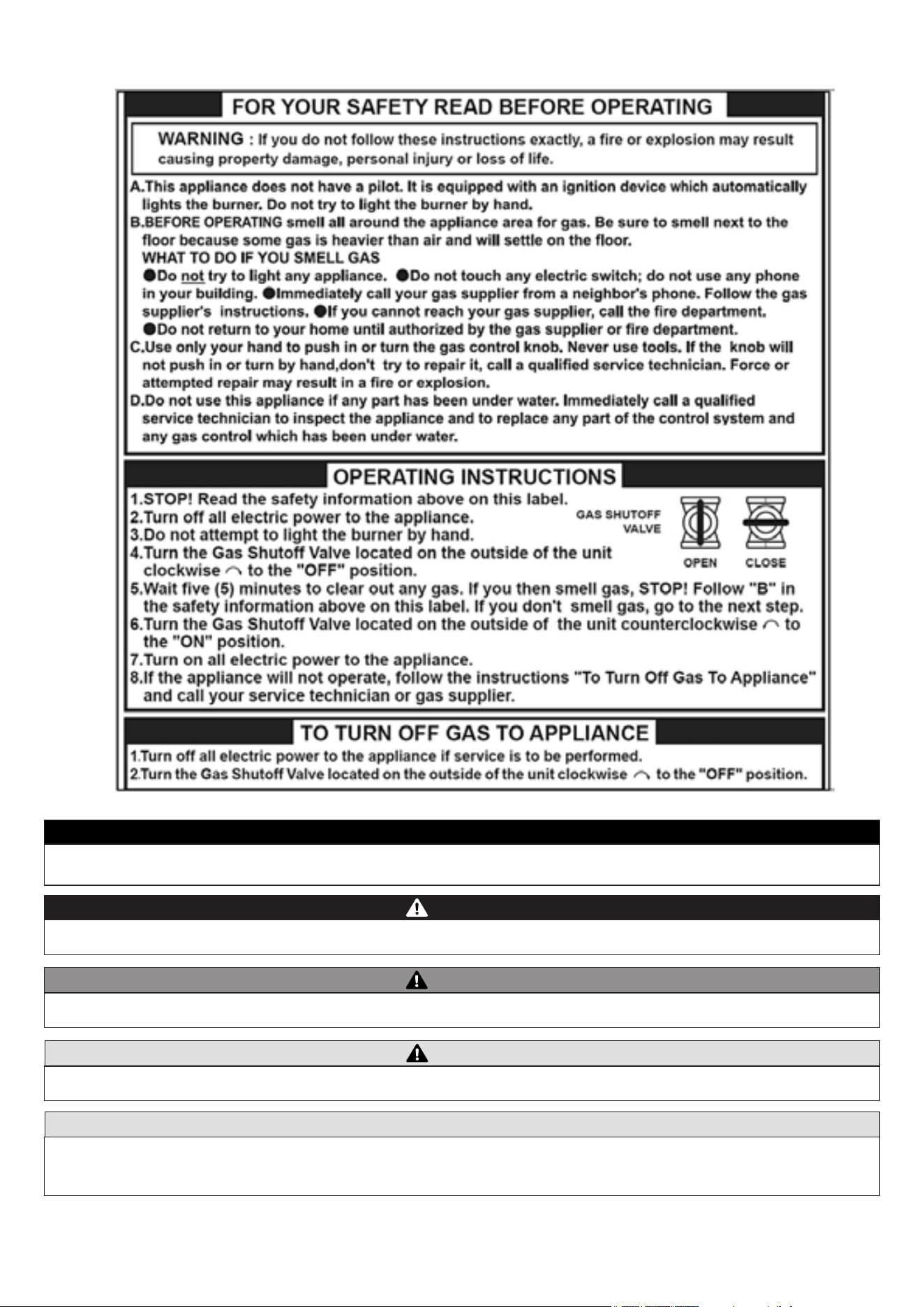
TO TURN OFF GAS TO THE WATER HEATER
1. Set the thermostat to the lowest setting.
2. Turn off all electrical power to the water heater.
3. Turn manual gas shutoff valve to “OFF”.
USER – Have this water heater serviced/inspected by a qualied service technician annually.
OPERATING INSTRUCTIONS
1. STOP! DO NOT use this water heater unless it is completely lled with water.
2. Ensure electrical power to the water heater is turned OFF.
3. This water heater is equipped with an ignition device which automatically lights the burner. DO NOT attempt to light the burner by hand.
4. Turn the gas shut-off valve clockwise to the “OFF” position. Do not force.
5. Wait ve (5) minutes to clear out any gas. If you smell gas, STOP! Follow the information on page 2, this manual. If you don’t smell gas,
go to the next step.
6. Turn manual gas shut-off valve to the “ON” position.
7. Turn ON electrical power to the water heater.
8. Wait until default temperature (120°F/ 49°C) is displayed. Set desired water temperature.
9. If the water heater will not operate, follow the instructions on page 2 to turn off the gas to the water heater. Then call your service
technician or gas supplier.
USER'S INFORMATION
▪ A. PRODUCT AND SAFETY INFORMATION
Proper care of this water heater is the user’s / owner’s responsibility. The user / owner should carefully read and understand the Operating
Information in this manual before operating this water heater.
It is the user / owner’s responsibility to know the location of the gas shut-off valve and how to operate it. Immediately close the gas shut-off valve
if the water heater is subjected to re, overheating, ood, physical damage, or any other damaging condition that might affect the operation of the
unit. Have the water heater checked by a qualied technician before resuming operation.
DO NOT use this water heater if ANY part has been under water. Immediately call a qualied technician to inspect the water heater and replace
any part of the control system or gas control which has been under water.
DO NOT power up the water heater unless the gas and water supply valves are fully opened. Make sure the fresh air intake pipe and exhaust
vents are open and functional.
DO NOT attempt to install, repair, or service this water heater. Contact a qualied technician if the water heater needs repair or maintenance. Ask
your gas supplier for a list of qualied service providers.
DO NOT use spray paint, hair spray, or any other ammable sprays near the water heater or near the exterior fresh air intake pipe termination. DO
NOT place any items in or around the exterior exhaust vent termination and/or fresh air intake pipe that could restrict or block the ow in or out of
the vent system.
All safety devices must be tested after the water heater is installed.
Always verify proper water heater operation after servicing.
The gas ignition system components must be protected from water (dripping, spraying, rain, etc.) during water heater operation and service
(circulator replacement, condensate trap, control replacement, etc.)
The E80 code will display when there is no water in the water heater. Ensure the water heater is full of water. Then manually reset the water
heater to resume operation.
This water heater features a factory installed overheating prevention device. This limit provides water heater shutdown in the event that the water
heater water temperature exceeds the set point of the limit control. Certain local codes require additional water temperature limiting devices.
Failure to follow these warnings could result in property damage, personal injury, or death.
AP18733 REV. 3.2.17
8
▪ 1. BEFORE OPERATION
1. Check the Gas Type (NG/LP)
When operating the water heater for the rst time, ensure the connected gas type matches that of the gas type of the water heater. Check
whether the gas supplied is NG or LP. The water heater gas type is indicated on the rating plate on the side of the water heater.
2. Check the Power (120V 60Hz)
Ensure the water heater is connected to a properly rated power supply.
3. Check the Cold Water Inlet Valve
Ensure the cold water inlet valve is open when operating the water heater. The water heater will not operate if there is insufcient water
supply.
4. Check the Gas Valve
Ensure the manual shut-off gas valve is open. The water heater will not operate unless it is supplied with gas.
5. Check the Area around the Water heater
Remove any combustible or ammable materials from the area around the water heater and do not hang wet laundry from the exhaust vent
pipe.
WARNING
Attempting to operate this water heater on a gas supply other than specied on the rating plate will result in improper water heater operation, and
could result in property damage, personal injury, or death.
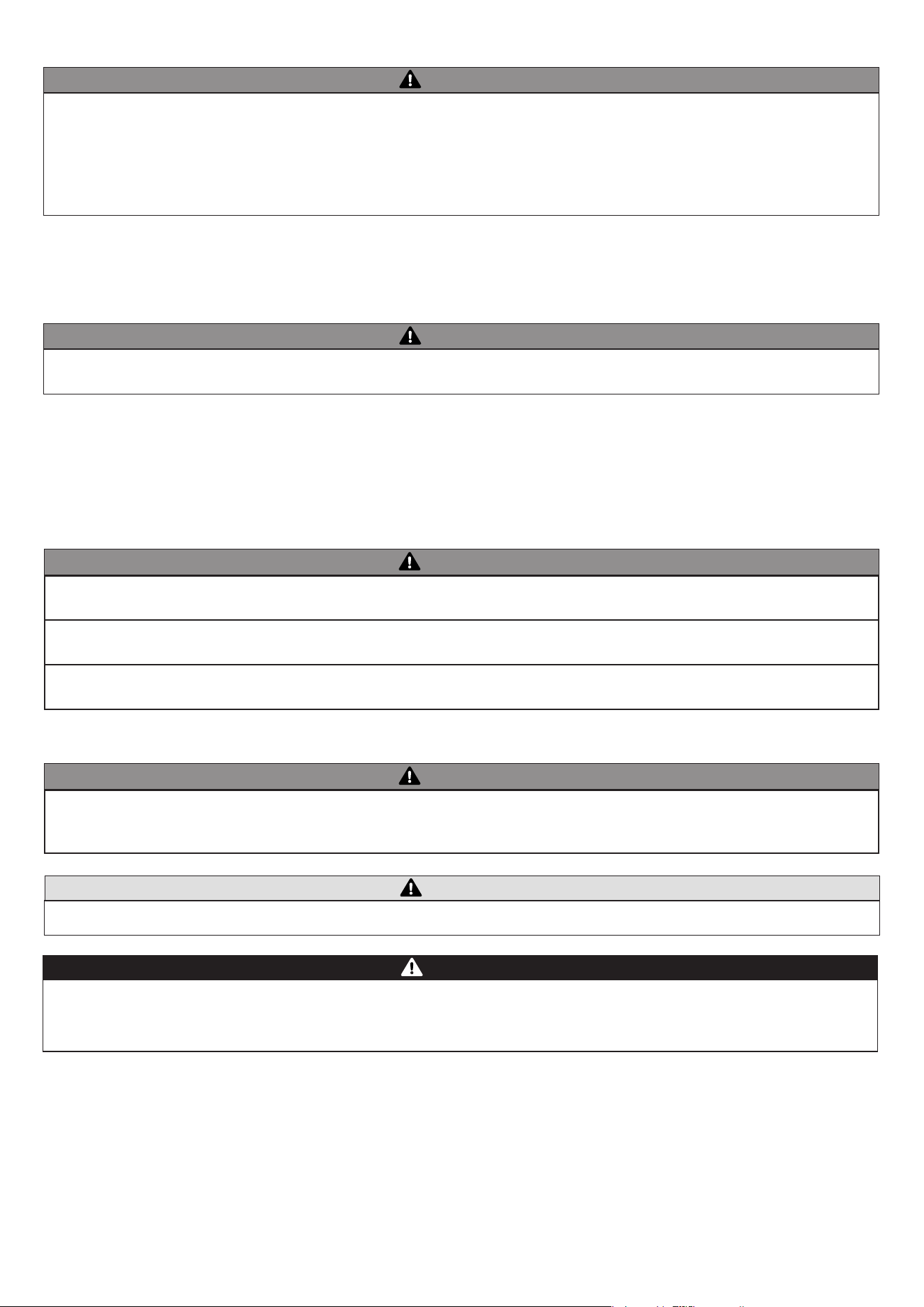
Do not operate the water heater if its combustion air intake is located in or near one of the areas or in the vicinity of products listed in Table 1.
These areas will always contain hazardous contaminates that can form strong acids while passing through the burner and vent system. These
acids will corrode the water heater’s heat exchanger, burner components and vent system, resulting in ue gas spillage and/or water leakage,
possible substantial property damage, severe personal injury, or death. If the water heater combustion air intake is located in any area likely to
cause or contain contamination, or if products which would contaminate the air cannot be removed, the intake must be re-piped and terminated
to another location.
DO NOT re-pipe ventilation system on your own. Call a qualied service provider for assistance.
DANGER
PRODUCTS TO AVOID AREAS LIKELY TO HAVE CONTAMINANTS
Spray cans containing uorocarbons Dry cleaning/laundry areas and establishments
Permanent wave solutions Swimming pools
Chlorinated waxes/cleaners Metal fabrication plants
Chlorine-based swimming pool chemicals Beauty shops
Calcium chloride used for thawing Refrigeration repair shops
Sodium chloride used for water softening Photo processing plants
Refrigerant leaks Auto body shops
Paint or varnish removers Plastic manufacturing plants
Hydrochloric or Muriatic acid Furniture renishing areas and establishments
Cements and glues New building construction
Antistatic fabric softeners used in clothes dryers Remodeling areas
Chlorine-type bleaches, laundry detergents, and cleaning solvents Garages and workshops
Adhesives used to fasten building products
WARNING
After any repair of the gas pipeline or replacement of the gas regulator, call a qualied
service technician to observe the installation and replacement before restoring power
to the water heater. Failure to do so could result in a re or explosion, substantial
property damage, severe personal injury, or death.
▪ 2. DURING OPERTAION
1. Check for Gas Leaks
Frequently check the gas pipe and connections for leaks with a soapy solution. If
air bubbles appear during the test, gas is leaking out. Close the gas supply valve
and call your gas supplier for inspection.
2. Check for Proper Ventilation
Ensure there is sufcient ventilation while operating the water heater. Improper
ventilation could result in premature water heater failure. Such failures ARE NOT
covered by water heater warranty.
Table 1
AP18733 REV. 3.2.17
9
WARNING
WARNING
Exhaust gas entering the living space can cause carbon monoxide poisoning. If exhaust gas should leak into the living space:
• Shut down the water heater.
• Close the gas valve.
• Open windows for ventilation.
Immediately call a qualied service technician to inspect the water heater and exhaust vent pipe. Any damages to the exhaust vent pipe should
be repaired immediately. Failure to do so could result in substantial property damage, severe personal injury, or death.
Storing ammable or combustible materials near this water heater could result in a re or explosion, substantial property damage, severe
personal injury, or death.
▪ 3. TROUBLESHOOTING AND GENERAL CAUTIONARY STATEMENTS
DO NOT use this water heater for any purposes other than those specifically described by Rheem (to provide domestic hot water). Using this
water heater for unapproved purposes WILL VOID the warranty, and could result in property damage, serious personal injury, or death.
3. Burn Warning
Take caution when inspecting the water heater, exhaust vent, and/or water pipes. These components can get extremely hot during water
heater operation.
4. Combustibles and Flammable Material Warning
Do not store combustibles or flammable materials in the vicinity of this water heater. Do not hang clothes from the exhaust pipe.
5. Check for Water Leaks
• Do not attempt to clean the heating system. Call a qualified service technician for service.
• If you notice any leaks, immediately call a qualified service technician. Leaks in water heater or piping must be repaired at once.
If the water heater is not to be used for an extended period of time during freezing conditions, consider shutting down the system and draining it
of water. Shut off the gas and cold water supply valves.
WARNING
WARNING
DO NOT wipe the water heater or control panel with a wet cloth. Doing so may result in an electric shock, substantial property damage, premature
water heater failure, severe personal injury, or death.
DO NOT shut off the water heater for long periods of time during potentially freezing conditions. This water heater has a freeze protection function.
The ceramic heater installed inside of the heater’s heat exchanger is designed to protect the water heater from freezing.
Ensure the exposed water pipes are thermally insulated to prevent damage due to freezing conditions. If the water heater is not to be used for an
extended period of time during freezing conditions, shut down the system and completely drain the water heater.
DO NOT attempt to disassemble this water heater. Doing so could result in improper water heater operation or premature water heater failure,
substantial property damage, and/or severe personal injury or death due to electric shock, re, or explosion. If repairs are required, contact a
qualied service technician.
CAUTION
DO NOT touch the exhaust vent or hot water pipes during water heater operation. Doing so could result in substantial personal injury.
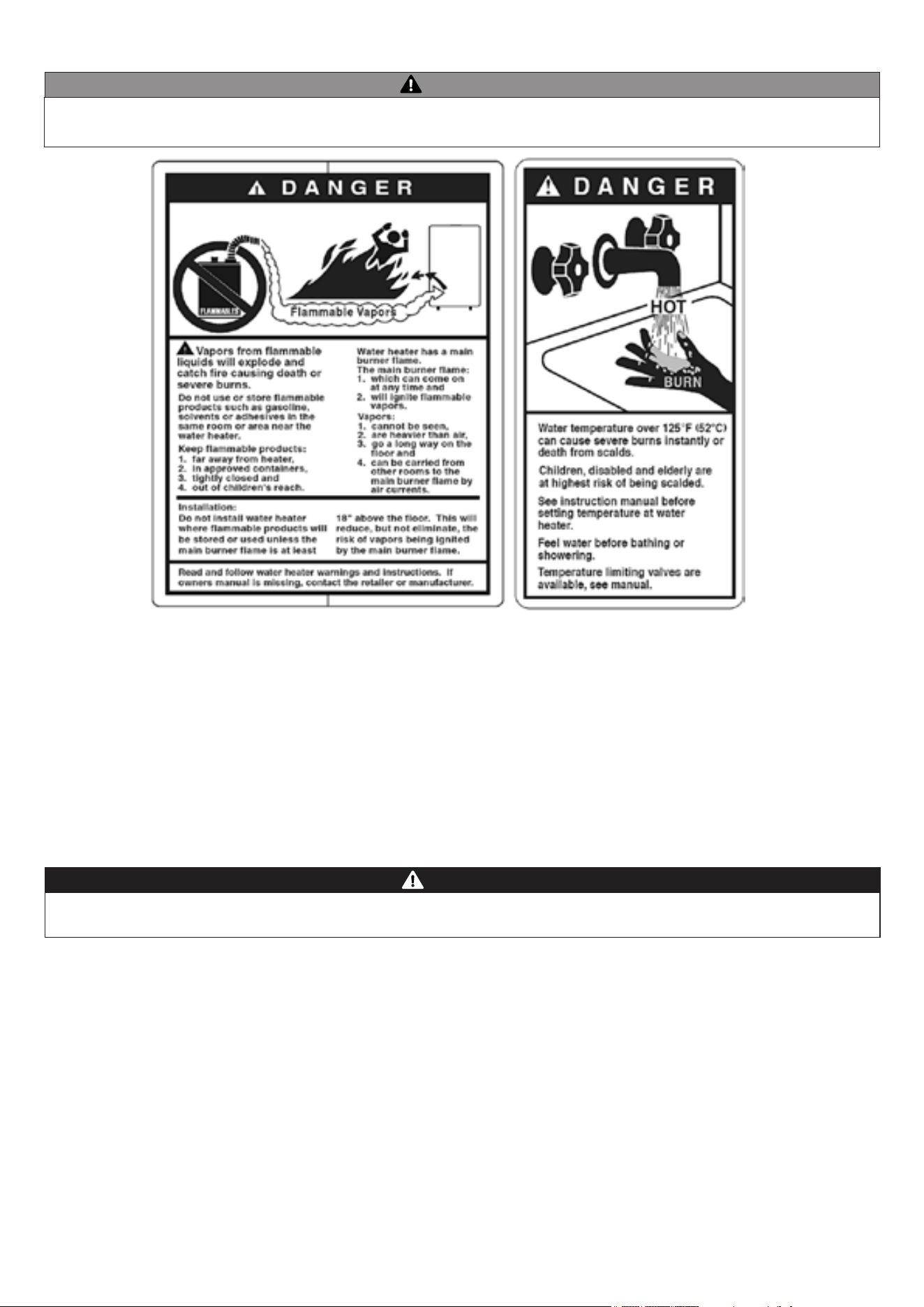
Be careful when opening a hot water faucet or draining water from the water heater. Water temperature over 125
°
F can instantly cause severe
burns, or death, from scalds. Children, disabled, and elderly are at the highest risk of being scalded. See instruction manual before setting
temperature at water heater. Feel water before bathing or showering!
DANGER
AP18733 REV. 3.2.17
10
▪ B. MAINTENANCE
1. SERVICE TECHNICIAN
The following maintenance should be performed by a qualified service technician annually:
General
• Attend to any reported problems.
• Inspect the interior of the water heater cabinet; clean and vacuum if necessary.
• Clean the condensate trap and fill with fresh water.
• If applicable, check the condensate neutralizer and ensure it is full of condensate neutralizing marble chips.
• Check for leaks: Water, gas, flue and condensate.
• Verify exhaust vent and intake piping are in good condition and sealed tight.
• Check exhaust vent and intake pipe bracing. Ensure bracing is undamaged and in good condition.
• Check water heater water pressure, piping and expansion tank.
• Check control settings.
• Check ignition electrode. Sand off any white oxide. Clean and reposition.
• Check ignition and ground wiring.
• Check all control wiring and connections.
• Check burner flame pattern (stable and uniform).
Additional Items if Combustion or Performance is Poor
• Clean heat exchanger and flue ways.
• Remove burner assembly and clean burner head using compressed air only.
Once the maintenance items are completed, the service technician should review service with the owner.
2. OWNER MAINTENANCE
Periodically
• Check area around the water heater.
• Check and remove any blockage from the outdoor exhaust vent and intake pipe terminations. DO NOT perform this maintenance
if exhaust vent and intake pipe terminations are in difficult to reach locations.
• Check the temperature/pressure gauge.
Monthly
• Check exhaust vent and intake piping.
• Check exhaust vent and intake pipe bracing. Ensure bracing is undamaged and in good condition.
• Check the pressure relief valve.
• Check the condensate drain system.
• If applicable, check the condensate neutralizer and ensure it is full of condensate neutralizing marble chips.
Every 6 Months
Check water heater piping and gas supply piping for corrosion or signs of potential leakage.
The water heater must be inspected and serviced annually, preferably at the start of the heating season, by a qualied service technician. In
addition, the maintenance and care of the water heater as outlined in this manual must be performed by the user/owner to assure maximum
efciency and reliability. Follow the maintenance procedures given throughout this manual. Failure to perform the service and maintenance or
follow the directions in this manual could damage the water heater or system components, resulting in substantial property damage, severe
personal injury, or death.
The water heater must be inspected and serviced annually, preferably at the start of the heating season, by a qualied service technician. In
addition, the maintenance and care of the water heater as outlined in this manual must be performed by the user/owner to assure maximum
efciency and reliability. Follow the maintenance procedures given throughout this manual. Failure to perform the service and maintenance or
follow the directions in this manual could damage the water heater or system components, resulting in substantial property damage, severe
personal injury, or death.
DANGER
DANGER
▪ C. MAINTENANCE PROCEDURES
1. DAILY MAINTENANCE
Check the Surrounding Area
Combustible/Flammable Materials
Do not store combustible materials, gasoline, or other flammable vapors or liquids near the water heater. If found, remove these materials
immediately
.
Air Contaminates
If allowed to contaminate combustion air, products containing chlorine or fluorine will produce acidic condensate that will cause significant
damage to the water heater. Read the list of potential contaminates and areas likely to have these contaminates in Table 1, Part 2. If
any of these contaminates are in the room where the water heater is located, or combustion air is taken from one of the areas listed, the
contaminates must be removed immediately or the intake pipe must be relocated to another area.
AP18733 REV. 3.2.17
11
Ensure the Water heater Cabinet is Closed
Ensure the water heater cabinet is closed. Tighten the two upper and lower screws to secure it. The cabinet must be closed while the water
heater is running.
Check the Power Source
Make sure the power cord is properly connected. The main power line is connected to the manual switch box inside the water heater.
Check the Status of the Control Panel
Observe the Control Panel to ensure the water heater is powered on, and to check for any error codes. Clear any debris from the panel.
Check Exhaust Vent and Intake Pipe Terminations
Verify that the water heater exhaust vent and intake pipe terminations are clean and free of obstructions. Remove any debris from the
exhaust vent or intake pipe openings. If removing the debris does not allow the water heater to operate correctly, contact your qualified
service technician to inspect the water heater and the vent system.
2. MONTHLY MAINTENANCE
Check Exhaust Vent and Intake Piping
Visually inspect the exhaust vent for any signs of blockage, leakage, or deterioration of the piping. Inspect the exhaust vent bracing. Ensure
bracing is undamaged and in good condition. Notify a qualified service technician immediately if any problems are found.
WARNING
DO NOT attempt to disassemble this water heater. Doing so could result in improper water heater operation or premature water heater failure,
substantial property damage, and/or severe personal injury or death due to electric shock, re, or explosion. If repairs are required, contact a
qualied service technician.
Visually inspect the intake piping for any signs of blockage. Inspect the entire length of the intake pipe to ensure piping is intact and all
joints are properly sealed. Inspect the intake pipe bracing. Ensure bracing is undamaged and in good condition. Notify a qualified service
technician if any problems are found.
Check Pressure Relief Valve
• Visually inspect the primary pressure relief valve and discharge pipe for signs of weeping or leakage.
• If the pressure relief valve often weeps, the expansion tank may not be operating properly. Immediately contact a qualified service
technician to inspect the water heater and system.
Check the Condensate Drain System
• While the water heater is running, check the discharge end of the condensate drain tubing. Ensure no flue gas is leaking from the
condensate drain tubing by holding your fingers near the opening.
• If you notice flue gas leaking from the opening, this indicates a dry condensate drain trap. If problem persists, contact a qualified service
technician to inspect the water heater and condensate line and refill the condensate trap.
• If applicable, check the condensate neutralizer and ensure it is full of condensate neutralizing marble chips.
Cleaning the Air Intake Filter
The air intake filter should be cleaned once a month. If not, the water heater could encounter combustion problems.
To clean the air intake filter:
1. Press the Power button on the control panel to turn off the water heater.
2. Disconnect the power supply from the water heater.
3. If water heater has been operating, wait for it to cool before continuing.
4. Remove the front cover of the water heater cabinet.
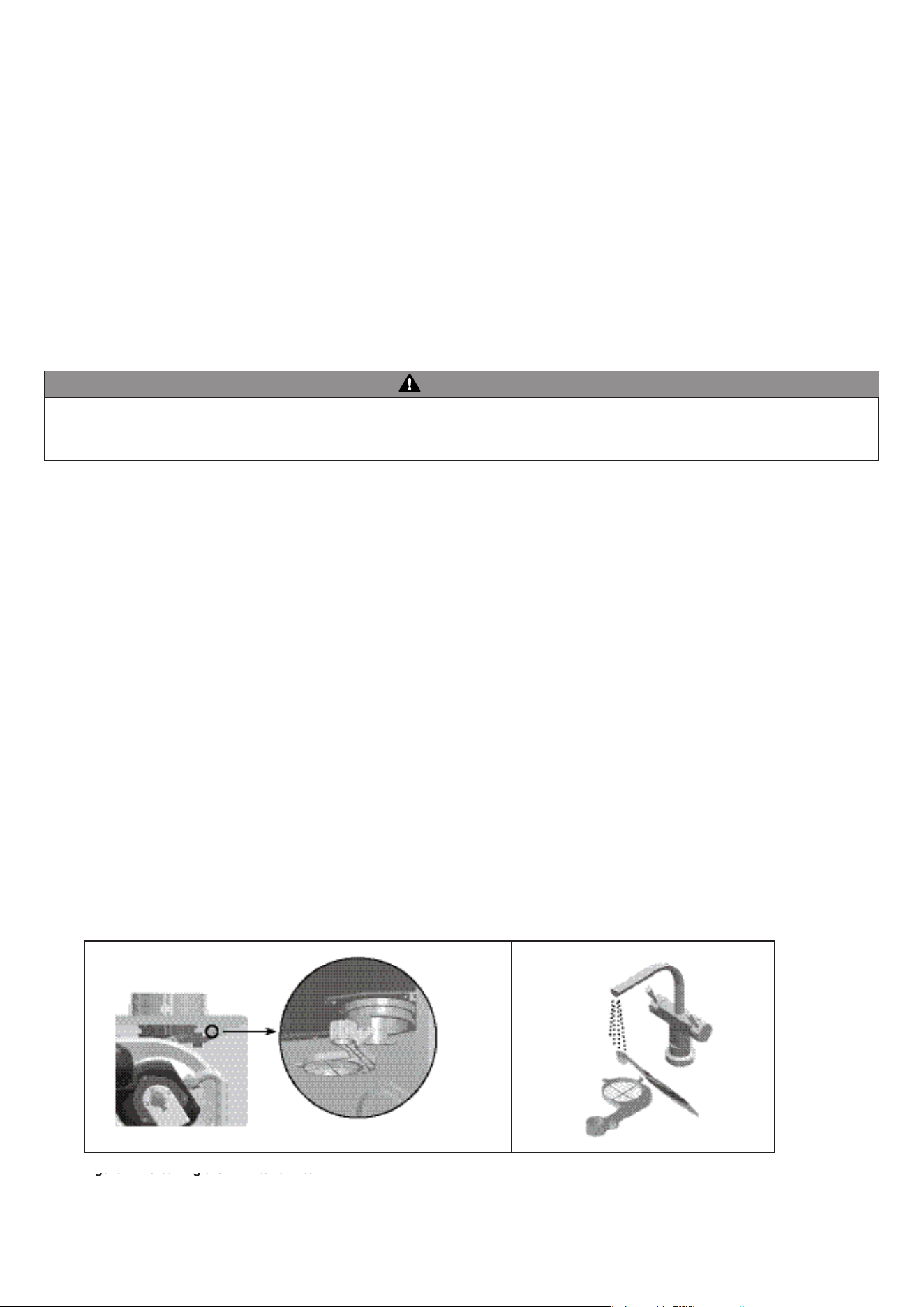
5. Pull the filter screen screw and pull the filter out of the air intake adapter.
6. Remove the filter from the plastic assembly and clean it with a toothbrush and clean running water. See Figure 1.
7. Dry the filter completely. Then reinsert the filter into the plastic assembly.
8. Replace the front cover of the water heater cabinet. Reconnect power supply to the water heater.
9. Press the Power button on the control panel to turn on the water heater.
Figure 1 – Cleaning the Air Intake Filter
AP18733 REV. 3.2.17
12
3. 6 MONTH MAINTENANCE
Check Primary and Gas Piping
• Remove the water heater cover and perform a gas leak inspection following Operating Instructions, page 2, this manual. If gas odor or
leak is detected, follow procedures on page 2. Call a qualified service technician.
• Visually inspect for leaks around the internal water heater water connections and around the heat exchanger. Visually inspect the
external system piping, circulators, and system components and fittings. Immediately call a qualified service technician to repair any leaks
• Lift the relief valve lever. If water flows freely, release the lever and allow the valve to seat. Watch the end of the relief valve discharge
pipe to ensure that the valve does not weep after the line has had time to drain. If the valve weeps, lift the lever again to attempt to clean the
valve seat. If the valve does not properly seat and continues to weep, contact a qualified service technician to inspect the valve and system.
• If water does not flow from the valve when you completely lift the lever, the valve or discharge line may be blocked. Immediately shut the
water heater down per instructions on page 2 and call a qualified service technician to inspect the valve and system.
• If relief valve seats properly, restore power to the water heater. Observe operation for five minutes and ensure it operates properly.
WARNING
WARNING
Have leaks xed at once by a qualied service technician. Failure to comply could result in substantial property damage, severe personal injury, or
death.
To avoid water damage or scalding due to relief valve operation, a discharge line must be connected to the valve outlet and directed to a safe
place of disposal. This discharge line must be installed by a qualied service technician or heating/plumbing installer in accordance with the water
heater installation manual. The discharge line must be terminated so as to eliminate possibility of severe burns or property damage should the
valve discharge.
4. ANNUAL MAINTENANCE
Check the Burner
The burner should be checked and cleaned only by a qualied service technician.
Cleaning the Cold Water Inlet Filter (Draining the Water Heater)
The Cold Water Inlet Filter should only be cleaned by a qualied service technician.
Flushing the Water Heater
Flushing the Water Heater heat exchanger is a complicated procedure that should only be performed by a qualied service technician.
NOTE: Improper maintenance WILL VOID water heater warranty.
Operate Pressure Relief Valve
• Before proceeding, verify that the relief valve outlet has been piped to a safe place of discharge, avoiding any possibility of scalding from
hot water.
• Shut power off to the water heater. To avoid scalding, wait for water heater to cool before operating the relief valve.
AP18733 REV. 3.2.17
13
▪ D. TROUBLESHOOTING
To save time and money, review the following initial diagnostic steps before calling for service.
Problem Possible Solution
Burner Does Not Ignite
Make sure that the ON/OFF button on the Control Panel is ON
If the display on the Control Panel is blank, make sure the power cord is plugged in and 3A fuses
on the main controller in the water heater are good
Make sure that the water heater is supplied with water. The unit activates when inlet water ow
sensor detects ow over 0.5 gpm / 1.9 lpm.
Make sure the cold and hot water lines are not plumbed in reverse
Ensure the cold water and gas supply lines are open
Make sure the water lines are not frozen.
Water is Not Hot Enough
Ensure the temperature setting on the water heater is not too low
Ensure the lter in the cold water supply line is not clogged with debris
Make sure the water heater is connected to the correct gas supply
Check that supply and manifold gas pressures are in accordance with specications
Ensure the water flow sensor with three wires is properly connected on the top of the heat
exchanger
Water is Too Hot
Ensure the temperature setting is not too hot
Ensure the lter in the cold water supply line is not clogged with debris
Make sure the water heater is connected to the correct gas supply
Hot Water Temperature Fluctuates at Tap
Ensure the lter in the cold water supply line is not clogged with debris
Make sure the water heater is connected to the correct gas supply
Ensure the supply gas pressure is sufcient
The Blower Continues to Operate After
Combustion Stops
This is normal. The blower operates for one minute after combustion has stopped to vent the
remaining exhaust gas from the ue.
Cannot Change the DHW Mode Setpoint
above 120
°
F (49
°
C)
This is a safety device to prevent scalding. Hot water temperature over 125
°
F (51
°
C) can cause
instant severe burns or death. To change water temperature above 120
°
F (49
°
C), see CHANGING
THE DHW SET-POINT section, this manual.
The Water Heater Makes Abnormal Sounds
During Operation
Ensure the venting installation complies with the installation manual.
Ensure supply gas pressure is sufficient. Insufficient gas pressure will cause unstable burner
ame and noise.
Table 2 – Troubleshooting Chart
WARNING
This water heater is equipped with a blocked vent shutoff system. If Error Codes Er:29, Er:41, or Er:94 occur, turn off the gas valve at the manual
shutoff. Check the vent terminations for obstructions. If no obstructions are found, reset the water heater by pressing the power button. If the error
continues to occur, call a qualied service technician or the gas supplier to check the water heater. Failure to follow these instructions could result
in property damage, personal injury, or death.

AP18733 REV. 3.2.17
14
THE FOLLOWING ARE INSTALLATION
INSTRUCTIONS FOR THE CONTRACTOR
AP18733 REV. 3.2.17
15
SAFETY REGULATIONS
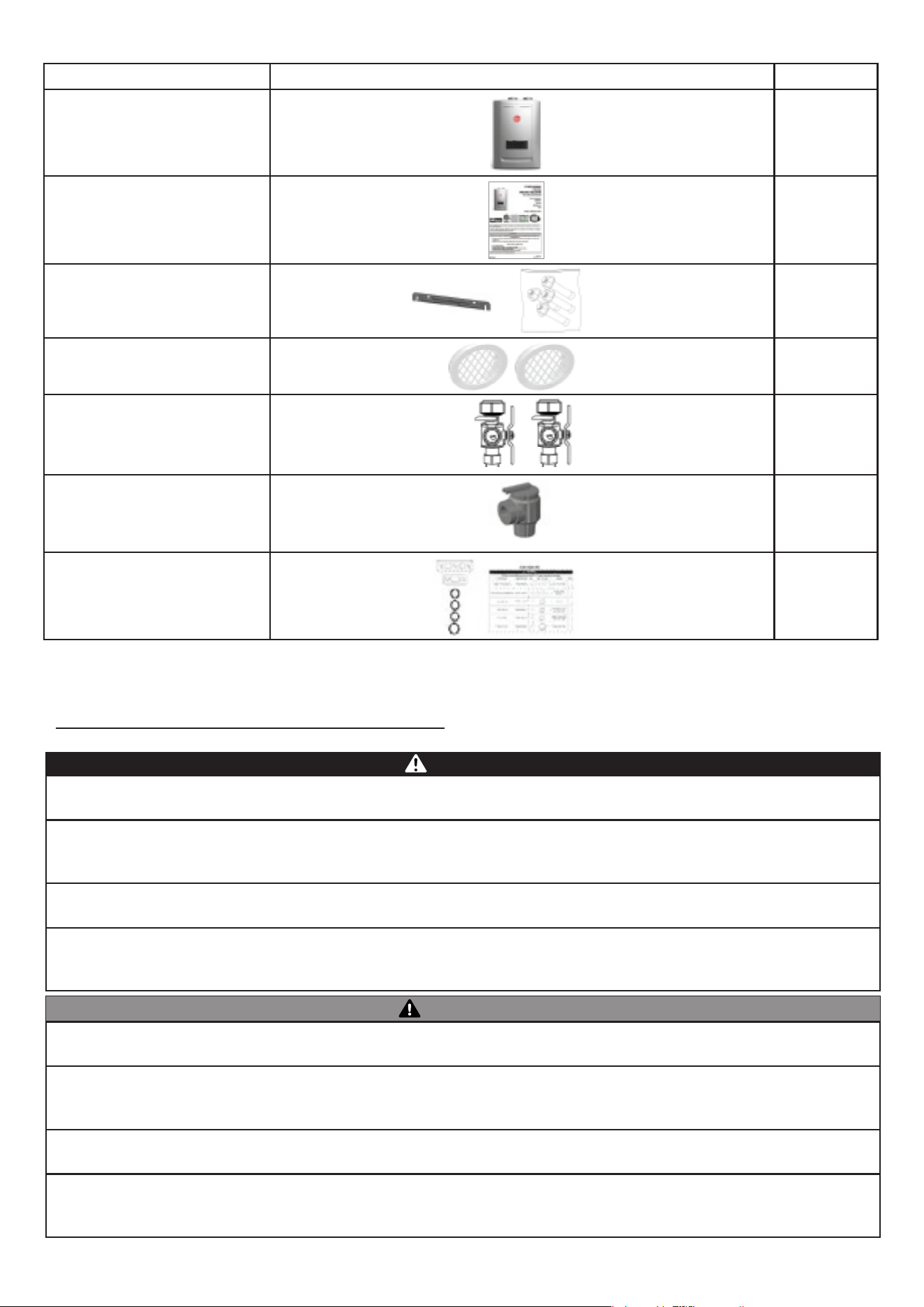
ITEM DESCRIPTION QUANTITY
Tankless Water Heater
1
Use and Care Manual
1 Each
Anchors and Wall Mounting Bracket 4
Vent Screens (3" [7.6 cm]) 2 Screens
Isolation Valve
* On some models only
1
Pressure Relief Valve
for DHW (ASME Certied)
(3/4
”,150 psi)
* On some models only
1
Emergency Kit
1
Table 3 – Items Included with the Water Heater
▪ A. OPERATION AND INSTALLATION WARNINGS
To avoid serious injury or death, read, understand, and follow all the precautions listed here.
WARNING
This water heater must be installed by a licensed plumber, licensed gas tter, and/or professional service technician. Improper installation and/or
operation can cause a potentially hazardous situation, which, if not avoided, could result in serious injury or death, and will void the warranty.
Rheem cannot anticipate every circumstance that might involve a potential hazard. Each installation has its own specialized characteristics,
requirements, and possible hazards. Therefore, all possible incidents are not included in these warnings. Proper and safe installation, operation,
and service are the responsibility of the professional service technician.
Proper care of the water heater is the user’s responsibility. Ensure the user carefully reads and understands the User’s Information Manual before
operating and maintaining the water heater.
Make sure the user knows the location of the gas shut-off valve and how to operate it. Immediately close the gas shut-off valve if the water heater
is subjected to re, overheating, ood, physical damage, or any other damaging condition that might affect the operation of the unit. Have the
water heater checked by a qualied technician before resuming operation.
DANGER
Vapors from ammable liquids will explode and can cause a re, resulting in personal injury or death. The water heater has a burner that can
come on at any time and ignite vapors. DO NOT use or store ammable liquids around the water heater.
Improper venting can cause a build-up of carbon monoxide. Breathing carbon monoxide can result in brain damage or death. DO NOT operate the
water heater unless it is properly vented to the outside and has an adequate fresh air supply for safe operation. Inspect the exterior exhaust gas
outlet port and fresh air inlet port on a regular basis to ensure they are functioning properly.
A concentration of carbon monoxide as small as .04% (400 parts per million) in the air can be fatal. When making high re or low re adjustments,
CO levels must be monitored using a ue gas analyzer such that a CO level of no more than 150 ppm is exceeded at any time during operation.
Adjusting the “low re offset” or the “main ow restrictor” in small increments can result in a signicant increase in CO concentration. To avoid
serious injury or death, DO NOT make any adjustments to the gas valve without monitoring the exhaust gases with a fully functional and calibrated
ue gas analyzer.
AP18733 REV. 3.2.17
16
WARNING
WARNING
WARNING
Keep the area around the water heater clean and free of all materials that can burn. DO NOT store or place gasoline, oils, spray paint, or other
ammable products near the water heater.
DO NOT use spray paint, hair spray, or any other ammable spray near the water heater or near the exterior fresh air intake port. DO NOT place
any items in or around the exterior exhaust gas outlet port and/or fresh air inlet port that could restrict or block the ow in or out of the vent system.
DO NOT store or place newspapers, laundry, or other combustible items near the water heater or the exterior exhaust gas outlet and/or fresh air
inlet port.
The owner should inspect the system monthly for damage, water stains, signs of rust, corrosion, and exhaust vent and air intake blockage. If
inspection of the unit shows signs of damage, the water heater should be shut off until the problem is repaired by a qualied technician.
After installation, all water heater safety devices should be tested.
This water heater is certied for indoor installations only. The water heater consists of gas ignition system components which must be protected
from water (dripping, spraying, etc.) during operation and service. Carefully consider installation location and the placement of critical components
(circulators, condensate neutralizers, etc.) before installing the water heater.
DO NOT allow children to operate this unit. DO NOT use this unit if it does not appear to be operating correctly. A qualied technician should
service and inspect the water heater annually.
The water heater temperature is factory set to 120
°
F (49
°
C). To avoid scalding, always check the temperature of the hot water before bathing,
showering, washing, etc. DO NOT adjust the water temperature while the water heater is being used by other persons.
DO NOT USE THIS APPLIANCE IF ANY PART HAS BEEN SUBMERGED IN WATER. Immediately call a qualified service technician. The
appliance MUST BE replaced if it has been submerged. Attempting to operate an appliance that has been submerged could create numerous
harmful conditions, such as a potential gas leakage causing a re and/or explosion, or the release of mold, bacteria, or other harmful particulates
into the air. Operating a previously submerged appliance could result in property damage, severe personal injury, or death.
NOTE: Appliance damage due to ood or submersion is considered an Act of God, and IS NOT covered under product warranty.
Be sure to disconnect electrical power before opening water heater cabinet or performing service. Label all wires while performing service to
ensure proper re-wiring of the water heater. Wiring errors can cause improper or dangerous operation. Failure to do so could result in an electrical
shock, improper water heater operation, property damage, serious personal injury, or death.
Do not obstruct the ow of combustion and ventilating air. Adequate air must be provided for safe operation. Failure to keep the exhaust vent and
intake pipe clear of ice, snow, or other debris could result in property damage, serious personal injury, or death.
NOTICE
If the water heater is exposed to the following, do not operate until all corrective steps have been made by a qualied service technician:
1. FIRE
2. DAMAGE
3. WATER
DO NOT alter or modify the water heater or water heater controls. This can be dangerous and WILL VOID the warranty.
This water heater is equipped with a three prong plug. It should only be plugged directly into a properly grounded three prong receptacle. DO NOT
remove the ground plug from the plug.
Any claims for damage or shortage in shipment must be led immediately against the transportation company by the consignee.
This water heater provides a overheat shutdown limit. In the event the water heater water exceeds the set point of the control limit, the cutoff
will trip and the water heater will shut down. Certain local codes require additional temperature limits. In addition, certain types of systems may
operate at temperatures below the minimum set point of the limit provided with the water heater. Contact Rheem for additional overheat controls.
NOTE: When inquiring about service or troubleshooting, reference the model and serial numbers from the water heater rating label.
▪ B. IMPROPER COMBUSTION
▪ C. GAS
Should overheating or gas supply fail to shut off, do not turn off or disconnect electrical supply to the circulator. Instead, shut off the gas supply
at a location external to the appliance
Do not power up the unit unless the gas and water supply valves are fully opened. Make sure the fresh air intake port and exhaust gas port are
open and functional.
No one but a professional service technician should attempt to install, service, or repair this water heater. There are no serviceable parts which
can be changed by the user / owner. User / Owner: Contact the original professional service technician if the water heater needs repair or
maintenance. If the original technician is unavailable, ask your gas supplier for a list of qualied service providers.
AP18733 REV. 3.2.17
17
▪ D. WHEN SERVICING THE WATER HEATER
• To avoid electric shock, disconnect electrical supply before performing maintenance.
• To avoid severe burns, allow water heater to cool.
• Do not use petroleum-based cleaning or sealing compounds in a water heater system. Gaskets and seals in the system may be damaged,
possibly resulting in substantial property damage.
• Do not use “homemade cures” or “patent medicines”. Substantial property damage, damage to water heater, and/or serious personal injury may result.
• Always verify proper operation after servicing the water heater.
IMPORTANT
Chemical imbalance of the water supply may affect efciency and cause severe damage to the appliance and associated equipment. Water quality
must be professionally analyzed to determine whether it is necessary to treat the water. Various solutions are available to adjust water quality.
Adverse water quality will affect the reliability of the system. In addition, operating temperatures above 135
°
F will accelerate the build-up of lime
scale and possibly shorten appliance service life. Failure of an appliance due to lime scale build-up, low pH, or other chemical imbalance IS NOT
covered by the warranty.
▪ E. WATER CHEMISTRY REQUIREMENTS
The water must be potable, free of corrosive chemicals, sand, dirt, and other contaminates. It is up to the installer to ensure the water does not
contain corrosive chemicals or elements that can damage the heat exchanger. Potable water is dened as drinkable water supplied from utility or
well water in compliance with EPA secondary maximum contaminant levels (40 CFR Part 143.3) as shown in the table below. If the water contains
contaminants higher than outlined by the EPA, water treatment is recommended and additional, more frequent maintenance may be required.
If you suspect that your water is contaminated in any way, discontinue use of the appliance and contact an authorized technician or licensed
professional.
NOTE: Damages resulting from incorrect installation or from use of products not approved by Rheem ARE NOT covered by warranty.
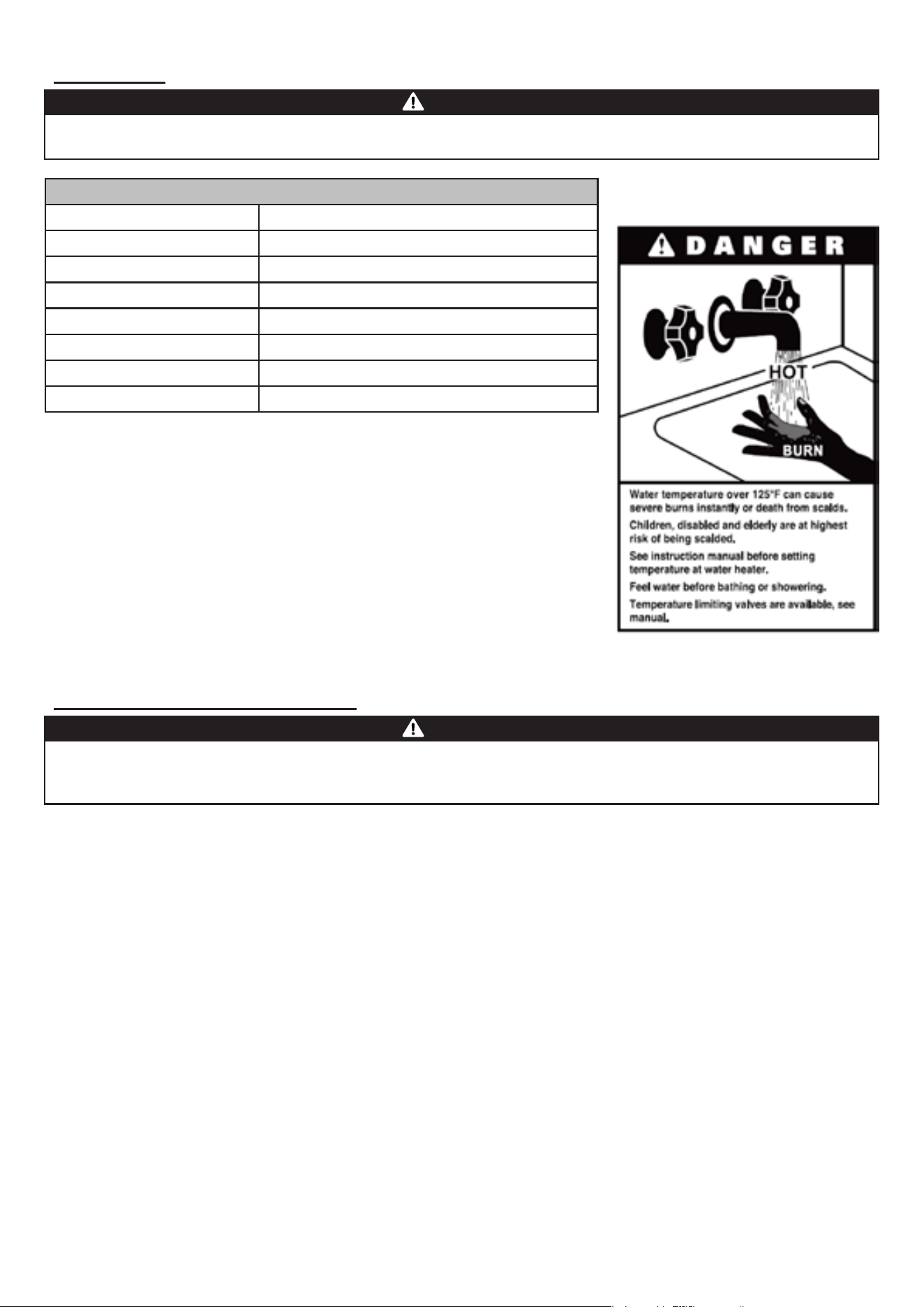
The water heater control is equipped with freeze protection that activates based on internal water temperature. See the table below for details on
freeze protection operation.
NOTE: Freeze protection will not be active if the water heater loses power.
System Freeze Protection
(Activates Based on Internal Water
Temperature)
Freeze Protection Operation
Stage 1 – If control detects water temperature of 46
°
F (8
°
C) and below, the internal pump cycles until the
control detects return water temperature of 50
°
F (10
°
C) and above.
Stage 2 – If control detects water temperature of 41
°
F (5
°
C) and below, the burner and internal pump will
run continuously until the control detects return water temperature of 104
°
F (40
°
C) and above.
Contaminant Maximum Allowable Level Contaminant Maximum Allowable Level
Total Hardness
(Residential Use - Below 140°F
water temperature)
200 mg/l
(12 grains/gallon) pH 6.5-8.5
Total Hardness
(Commercial Use - 140°F and
above water temperature)
120 mg/l Sulfate 205 mg/l
Aluminum 0.05 to 0.2 mg/l Total Dissolved Solids (TDS) 500 mg/l
Chloride 100 mg/l Zinc 5 mg/l
Manganese 0.05 mg/l Dissolved Carbon Dioxide (CO
2
) 15 mg/l or PPM
IMPORTANT
Consider water heater piping and installation when determining water heater location.
▪ F. FREEZE PROTECTION
Table 4 – Water Quality Specications
Table 5 – Freeze Protection Detail
AP18733 REV. 3.2.17
18
▪ G. SCALDING
▪ H. HIGH ELEVATION INSTALLATIONS
DANGER
DANGER
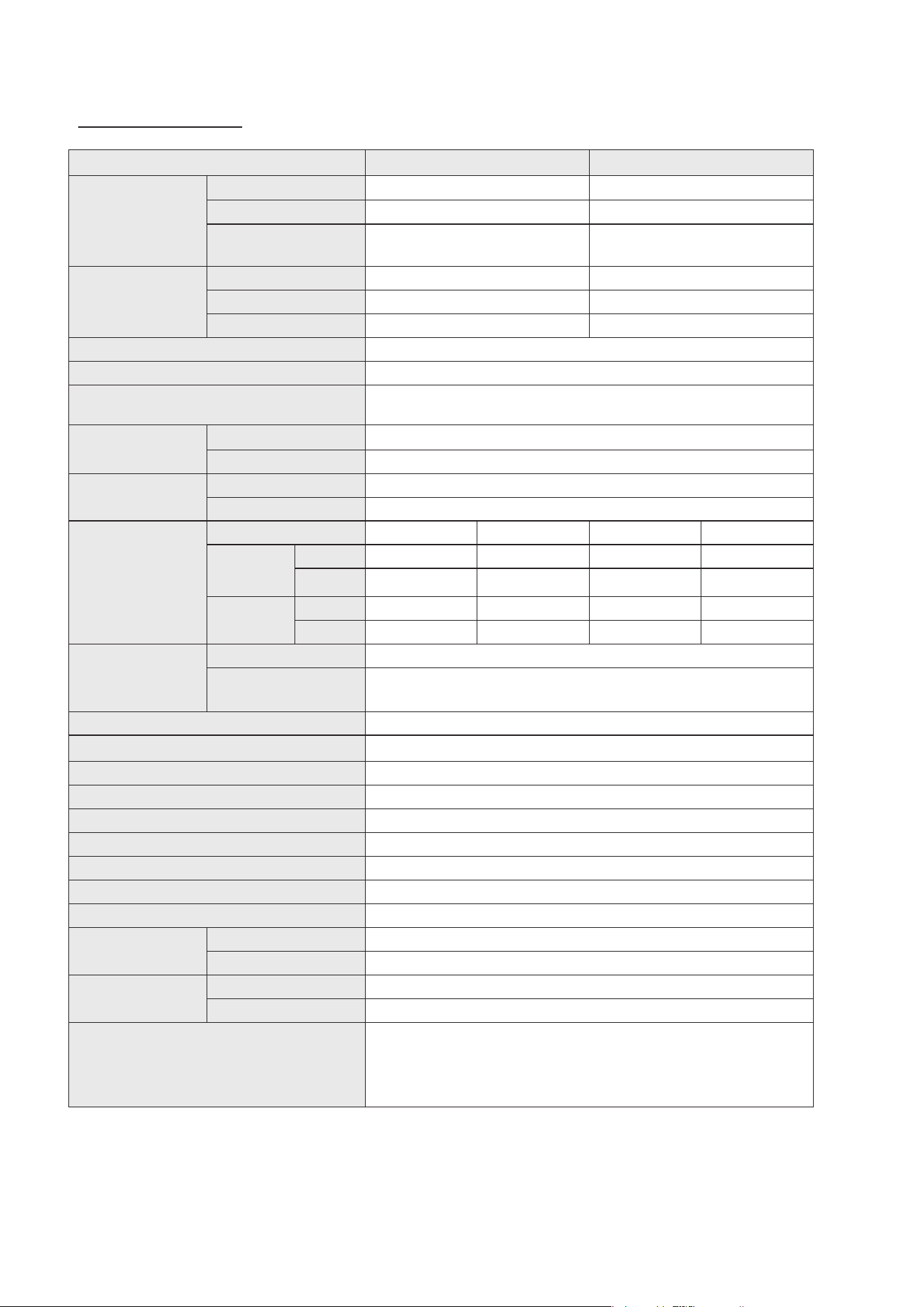
Households with small children, disabled, or elderly persons may require 120
°
F (49
°
C) or lower thermostat setting to prevent contact with “HOT”
water
Natural gas at high elevation might contain less heating value than typical 1,000 BTU/cu ft and therefore can cause improper air / gas mix leading
to improper combustion. For natural gas installations above 3,000 ft, call your gas provider to determine the heating value of the supplied natural
gas.water
APPROXIMATE TIME / TEMPERATURE RELATIONSHIPS IN SCALDS
120°F More than 5 minutes
125°F 1 ½ to 2 minutes
130°F About 30 seconds
135°F About 10 seconds
140°F Less than 5 seconds
145°F Less than 3 seconds
150°F About 1 ½ seconds
155°F About 1 second
This heater can deliver scalding water. Be careful whenever using hot water to avoid scalding
injury. Certain appliances, such as dishwashers and automatic clothes washers may require
increased water temperature. By setting the thermostat on this heater to obtain the increased water
temperature required by these appliances, you may create the potential for scald injury.
To protect against injury, you should install a mixing valve in the water system. This valve will reduce
point of discharge temperature by mixing cold and hot water in branch supply lines. Such valves are
available from your local plumbing supplier.
Table 6 details the relationship of water temperature and time with regard to scald injury and may be
used as a guide in determining the safest water temperature for your applications.
To set the water heater to operate at the installation elevation, see INSTALLER MODE, this manual.
Table 6 – Time and Temperature Relationship in Scalds
AP18733 REV. 3.2.17
19
SPECIFICATIONS
Model Name
RTGH-RH11DV RTGH-RH10DV
Gas Input Rate
MAX 199,000 Btu/h 180,000 Btu/h
MIN 18,000 Btu/h 18,000 Btu/h
High Altitude
(2,500~4,500ft)
180,000 Btu/h 180,000 Btu/h
Hot Water Capacity
35°F Rise 11.0 Gal 9.2 Gal
45°F Rise 8.5 Gal 7.2 Gal
77°F Rise 5.0 Gal 4.2 Gal
Installation Indoor Wall Hung
Flue System Sealed Combustion Direct Vent, Single Vent
Max Vent Run 2″(50ft) / 3″(100ft) Schedule 40 PVC, CPVC, PP
Orice Size
NG (Gas / Needle) 0.342″(8.7mm) / 0.354″(9.0mm)
LP (Gas / Needle) 0.263″(6.7mm) / 0.267″(6.8mm)
Gas Supply Pressure
NG 5.0″ W.C to 10.5″ W.C
LP 9.5″ W.C to 13.0″ W.C
Manifold Pressure
Gas Type NG LP NG LP
Low Fire
2″ VENT
-0.07" W.C -0.02" W.C -0.07" W.C -0.02" W.C
3″ VENT
-0.07" W.C -0.02" W.C -0.07" W.C -0.02" W.C
High Fire
2″ VENT
-0.38" W.C -0.3" W.C -0.36" W.C -0.28" W.C
3″ VENT
-0.33" W.C -0.25" W.C -0.31" W.C -0.23" W.C
Power Supply
Main Supply 120V 60Hz
Maximum
Power Consumption
172W(82W+90W_PUMP)
Ignition System Direct Electronic Ignition / Automatic Flame Sensing
Burner System Premixed Metal Fiber Burner
Gas Valve System Air ratio valve
Minimum Flow Activation Flow 0.5 GPM
Internal Pipe Material STS 304, Copper Tubing
Dimensions W17.3″ – H28.7″ – D14.8″
Weight 85 lbs
Water Holding Capacity Under 2 Gallon
Control Panel / Main Controller P-950C / NGTH-9700C
Water Pressure
MAX Hot water 150 psi
MIN 15 psi
Materials
Casing Cold Rolled Carbon Steel
Heat Exchanger Heat Exchanger : STS 304
Safety Devices
Flame Sensor, Overheat Cut Off Limit Switch ,
Gas Leak Detector sensor, Water Leak Detector Sensor
Exhaust Temperature Sensor,
Water Temperature Sensor
▪ A. SPECIFICATIONS
AP18733 REV. 3.2.17
20
3
5
2
1
4
6
7
8
9
10
11
12
13
15
17
20
18
19
14
21
22
23
24
25
26
28
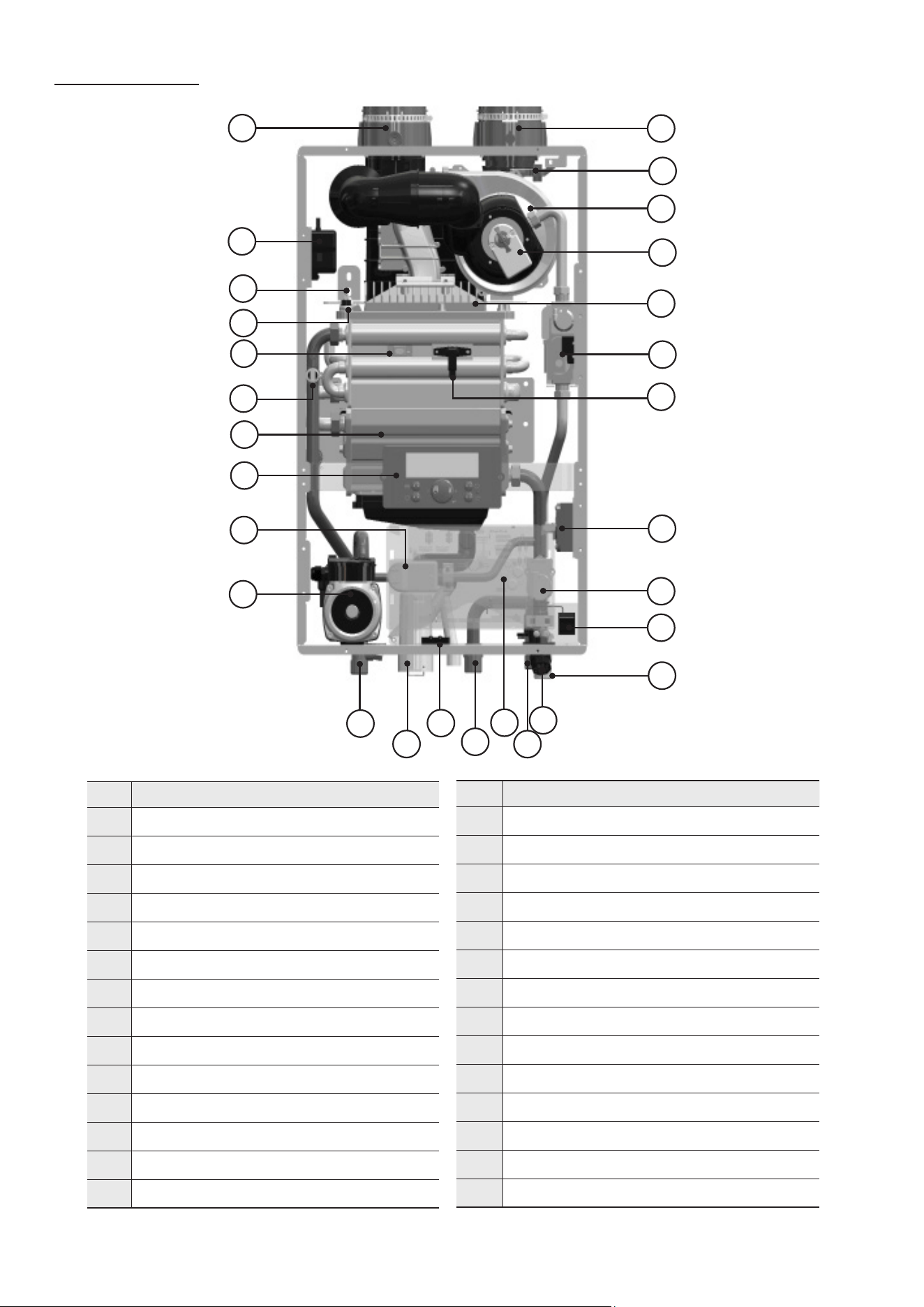
NO Name of Component
1
Exhaust Outlet Collar
2
Ignition Trans
3
Ignition Rod
4
Over-heating Switch
5
Primary Heat Exchanger
6
H/E Temperature Sensor
7
Secondary Heat Exchanger
8
Control Panel
9
Mixing Valve
10
Recirculation Pump
11
'DHW' supply Adapter
12
Condensate Trap
13
Low level sensor
14
Recirculation Return Adapter
NO Name of Component
15
Main Controller
16
‘DHW’ Inlet Filter
17
‘DHW’ Inlet Adapter
18
Gas Inlet Adapter
19
Manual Power Switch
20
Water Flow Control Valve
21
Air Pressure Switch
22
Flame Detection Sensor
23
Gas Valve
24
Burner Case
25
AGM(Air Gas Mixer)
26
BLDC Fan
27
Air Intake Filter
28
Air Intake Collar
16
27
▪ B. COMPONENTS
AP18733 REV. 3.2.17
21
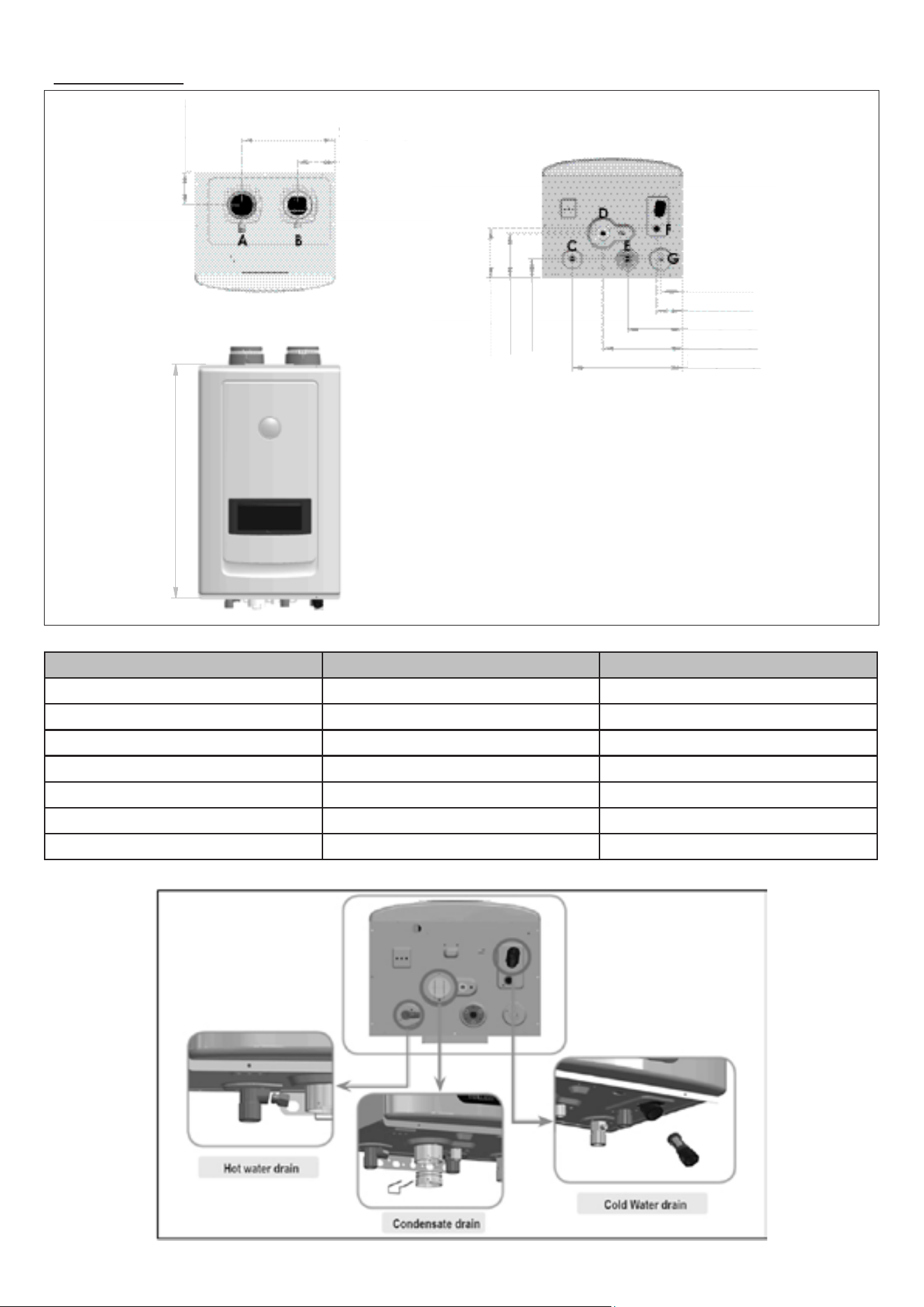
▪ C. DIMENSIONS
Table 7 – Adapter Specications
Figure 3 – Water Heater Drainage Locations
DESCRIPTION DIAMETER
A Exhaust Outlet Pipe 3" (7.6 cm)
B Air Intake 3" (7.6 cm)
C DHW Outlet Adapter ¾" (1.9 cm)
D Condensate Adapter ½" (1.2 cm)
E Recirculation Return ¾" (1.9 cm)
F DHW Inlet Adapter ¾" (1.9 cm)
G Gas Inlet ¾" (1.9 cm)
6.1" [156mm]
5.4" [136mm]
2.4" [60mm]
6.8" [173mm]
2.6" [67mm]
3.2" [81mm]
10.2" [260mm]
13.6" [346mm]
4.0" [101mm]
11.5" [292mm]
4.6" [117mm]
28.7" [728mm]
Figure 2 – Specications and Dimensions
AP18733 REV. 3.2.17
22
PREPARE WATER HEATER LOCATION
IMPORTANT
Carefully consider installation when determining water heater location. Please read the entire manual before attempting installation. Failure to
properly take factors such as water heater venting, piping, condensate removal, and wiring into account before installation could result in wasted
time, money, and possible property damage and personal injury.
WARNING
WARNING
WARNING
Incorrect ambient conditions can lead to damage to the heating system and put safe operation at risk. Ensure that the water heater installation
location adheres to the information included in this manual. Failure to do so could result in property damage, serious personal injury, or death.
This water heater is certied for indoor installations only. Do not install the water heater outdoors. Failure to install this water heater indoors could
result in substantial property damage, severe personal injury, or death.
This water heater must be installed as described in this manual: upright, with the vent adapters in the vertical position. DO NOT attempt to install
this water heater in any other orientation. Doing so will result in improper water heater operation and property damage, and could result in serious
personal injury or death.
Failure to keep water heater area clear and free of combustible materials, liquids, and vapors can result in substantial property damage, severe
personal injury, or death.
▪ A. BEFORE LOCATING THE WATER HEATER
IMPORTANT
IMPORTANT
IMPORTANT
Failure of water heater or components due to incorrect operating conditions IS NOT covered by product warranty.
The service life of the water heater’s exposed metallic surfaces, such as the cabinet, as well as internal surfaces, such as the heat exchanger, are
directly inuenced by proximity to damp and salty marine environments. In such areas, higher concentration levels of chlorides from sea spray
coupled with relative humidity can lead to degradation of the heat exchanger and other water heater components. In these environments, water
heaters must not be installed using direct vent systems which draw outdoor air for combustion. Such water heaters must be installed using room
air for combustion. Indoor air will have a much lower relative humidity and, hence, potential corrosion will be minimized.
Locate the water heater where any leakage from the relief valve, related piping, tank, or connections will not result in damage to surrounding
areas or lower oors of the building. The water heater should be located near a oor drain, or installed in proximity to an adequately drained drain
pan. Rheem WILL NOT be held liable for leakage damages.
To conserve water and energy, insulate all water piping, especially the hot and recirculation water lines.
1. Installation Area (Mechanical Room) Operating Conditions
• Ensure ambient temperatures are higher than 33°F/0.6°C and lower than 120°F/49°C
• Prevent the air from becoming contaminated by the products, places, and conditions listed in this manual.
• Avoid continuously high levels of humidity
• Never close existing ventilation openings
2. Check for nearby connections to:
• System water piping
• Venting connections
• Gas supply piping
• Electrical power
• Condensate drain
3. Check area around water heater. Remove any combustible materials, gasoline, and other ammable liquids.
4. Gas control system components must be protected from dripping water during operation and service.
AP18733 REV. 3.2.17
23
▪ B. LEVELING
▪ C. CLEARANCES FOR SERVICE ACCESS
IMPORTANT
IMPORTANT
In order for the condensate to properly ow out of the collection system, the water heater must be installed level.
Do not connect the water heater to any heating systems or components that have been previously used for non-potable applications.
Do not introduce toxic chemicals, such as antifreeze or water heater treatments, into the water heater or any piping meant for potable water
purposes.
Ensure that all piping and components connected to the water heater are suitable for potable water applications.
Do not use this water heater for space heating applications.
Circulators suitable for DHW applications must be used.
The service life of the water heater’s exposed metallic surfaces, such as the cabinet, as well as internal surfaces, such as the heat exchanger, are
directly inuenced by proximity to damp and salty marine environments. In such areas, higher concentration levels of chlorides from sea spray
coupled with relative humidity can lead to degradation of the heat exchanger and other water heater components. In these environments, water
heaters must not be installed using direct vent systems which draw outdoor air for combustion. Such water heaters must be installed using room
air for combustion. Indoor air will have a much lower relative humidity and, hence, potential corrosion will be minimized.
5. If the water heater is to replace an existing water heater, check for and correct any existing system problems, such as:
• System leaks
• Location that could cause the system and water heater to freeze and leak.
• Incorrectly-sized expansion tank
6. Clean and ush system when reinstalling a water heater.
NOTE: When installing in a zero clearance location, it may not be possible to read or view some product labeling. It is recommended to make note
of the water heater model and serial number.
See Table 8 for recommended service clearances. If these minimum clearances are not provided, it may not be possible to service the water heater
without removing it from the space.
NOTE: The exhaust vent piping for this direct vented appliance is approved for zero clearance to combustible construction.
NOTE: If the water heater is installed in a narrow space or corner, ensure that there is sufcient space for service and maintenance access. There
should be easy access to the gas and water lines and internal components for future service. A combustible door or removable panel is acceptable
front clearance.
WARNING
Space must be provided with combustion/ventilation air openings correctly sized for all other appliances located in the same space as the water
heater. The water heater cover must be securely fastened to prevent it from drawing air from the water heater room. This is particularly important if
the water heater is in a room with other appliances. Failure to comply with the above could result in substantial property damage, severe personal
injury, or death.
MINIMUM CLEARANCES
Installation Clearances from Non-Combustibles / Combustibles Recommended Service and Proper Operation Clearances
Top 9 in. (228.6 mm) 9 in. (228.6 mm)
Back 5/8 in. (15.9 mm) 5/8 in. (15.9 mm)
Front 6 in. (152.4 mm)
24 in. (609.6 mm) or more (Front of Water heater)(A combustible door
or removable panel is acceptable front clearance.)
Right Side
3 in. (76.2 mm) 3 in. (76.2 mm)
Left Side
Bottom 12 in. (304.8 mm) 12 in. (304.8 mm)
Table 8 – Minimum Installation and Service Clearances
▪ D. RESIDENTIAL GARAGE AND CLOSET INSTALLATIONS
IMPORTANT
Check with your local Authority Having Jurisdiction for requirements when installing water heater in a garage or closet. Please read the entire
manual before attempting installation. Failure to properly take factors such as venting, piping, condensate removal, and wiring into account before
installation could result in wasted time, money, and possible property damage and personal injury.
AP18733 REV. 3.2.17
24
PRECAUTIONS
If the water heater is located in a residential garage, it should be installed per the latest edition of the National Fuel Gas Code, ANSI Z223.1, and
CGA-B149 Installation Code in Canada.
• Mount the bottom of the water heater a minimum of 18" (457 mm) above the oor of the garage, to ensure the burner and ignition devices
are well off the oor.
• Locate or protect the water heater so it cannot be damaged by a moving vehicle.
WARNING
The space must be provided with correctly sized combustion/ventilation air openings for all other appliances located in the space with the water
heater. Do not install the water heater in an attic. Failure to comply with these warnings could result in substantial property damage, severe
personal injury, or death.
WARNING
WARNING
WARNING
Vents must be properly supported. The water heater exhaust and intake connections are not designed to carry heavy weight. Vent support
brackets must be within 1’ (30 cm) of the water heater and the balance at 4’ (1.22 m) intervals. Venting must be readily accessible for visual
inspection for the rst 3’ (91 cm) from the water heater.
Failure to comply with these requirements could result in product damage, severe personal injury, or death.
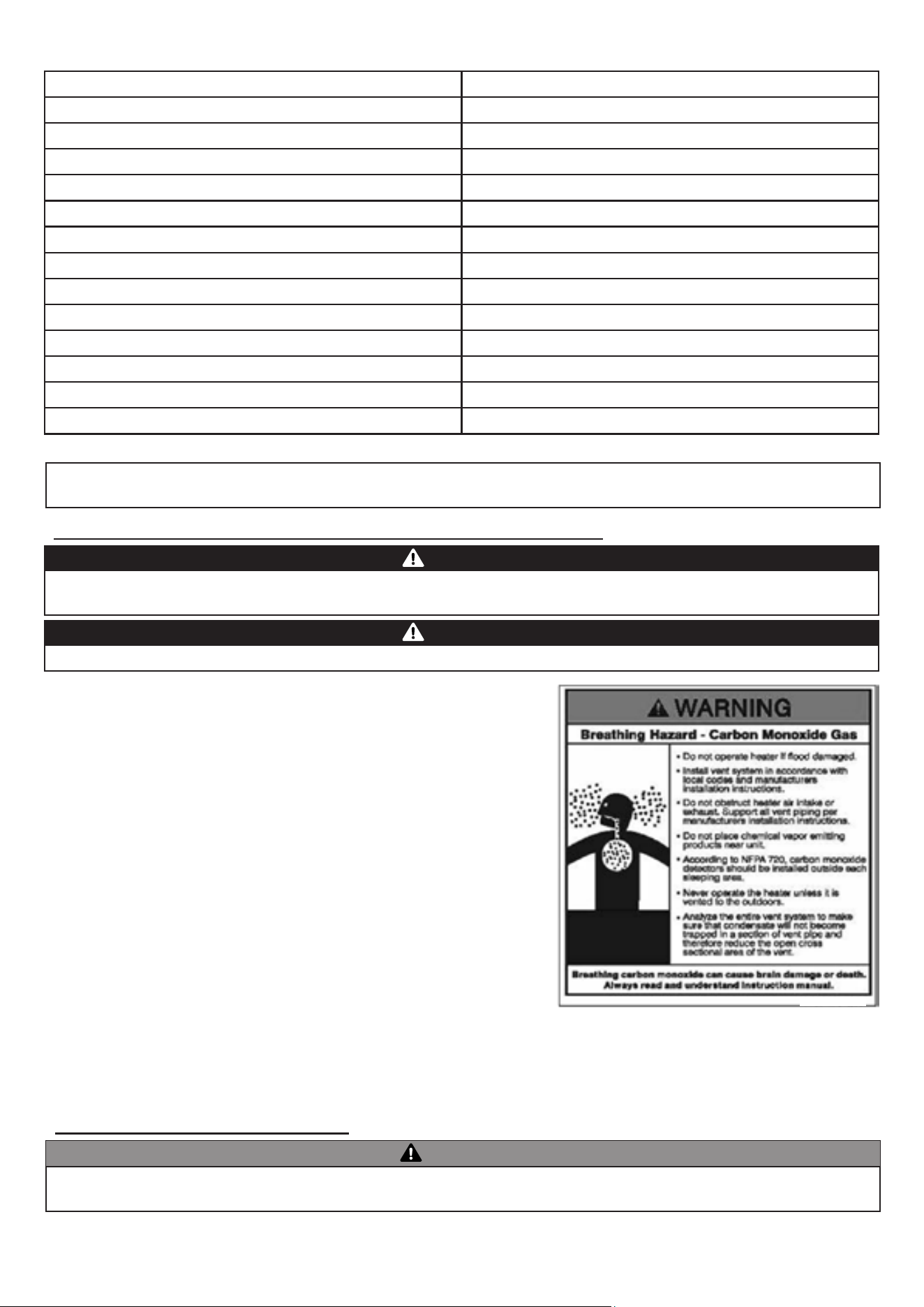
Ensure that the intake air will not contain any of the contaminants below. For example, do not pipe intake near a swimming pool. Avoid areas
subject to exhaust fumes from laundry facilities. These areas always contain contaminants. Contaminated air will damage the water heater,
resulting in possible substantial property damage, severe personal injury, or death.
▪ E. EXHAUST VENT AND INTAKE PIPE
▪ F. CARBON MONOXIDE DETECTORS
In the Commonwealth of Massachusetts and As Required by State and Local Codes
Installation of Carbon Monoxide Detectors: At the time of installation or replacement of the vented gas fueled appliance, the installing plumber
or gas tter shall observe that a hard wired carbon monoxide detector with an alarm and battery back-up is installed on the oor level where the
gas appliance is installed, unless the appliance is located in a detached, uninhabitable structure separate from the dwelling, building, or structure
used in whole or in part for residential purposes.
In addition, the installing plumber or gas tter shall observe that a hard wired carbon monoxide detector with an alarm and battery back-up is
installed on each additional level of the dwelling, building, or structure served by the vented gas appliance. It shall be the responsibility of the
property owner to secure the service of qualied licensed professionals for the installation of hard wired carbon monoxide detectors.
a. In the event that the vented gas fueled appliance is installed in a crawl space or attic, the hard wired carbon monoxide detector with
alarm and battery back-up shall be installed on the next adjacent oor level.
b. In the event that these requirements cannot be met at the time of completion of installation, the owner shall have a period of thirty (30)
days to comply with the above requirements; provided, however, that during said thirty (30) day period, a battery operated carbon monoxide
detector with an alarm shall be installed.
▪ G. PREVENT COMBUSTION AIR CONTAMINATION
Install intake piping for the water heater as described in the Venting section. Do not terminate exhaust in locations that can allow contamination of
intake air.
NOTE: To prevent combustion air contamination, see Table 9 in this section when considering exhaust vent and intake pipe termination.
Exhaust vent and intake pipe may be vented vertically through the roof or out a side wall. Venting methods are detailed in the Venting Section. Do
not attempt installation using any other means. Be sure to locate the water heater so exhaust vent and intake piping can be routed through the
building and properly terminated. Exhaust vent and intake piping lengths, routing, and termination method must comply with methods and limits
given in the venting section.
Approved Carbon Monoxide Detectors: Each carbon monoxide detector as required in accordance with the above provisions shall comply with
NFPA 70 and be ANSI/UL 2034 listed and IAS certied.
AP18733 REV. 3.2.17
25
NOTE: DAMAGE TO THE WATER HEATER CAUSED BY EXPOSURE TO CORROSIVE VAPORS IS NOT COVERED BY WARRANTY. (Refer
to the limited warranty for complete terms and conditions).
When removing an existing water heater, the following steps must be followed.
1. Seal any unused openings in the common venting system.
2. Visually inspect the venting system for proper size and horizontal pitch to determine
if there is blockage, leakage, corrosion or other deficiencies that could cause an unsafe
condition.
3. If practical, close all building doors, windows and all doors between the common
venting system and other spaces in the building. Turn on clothes dryers and any
appliances not connected to the common venting system. Turn on any exhaust fans,
such as range hoods and bathroom exhausts, at maximum speed. Do not operate a
summer exhaust fan. Close all fireplace dampers.
4. Place in operation the appliance being inspected. Follow the lighting instructions.
Adjust the thermostat so the appliance will operate continuously.
5. Test for spillage at the draft hood relief opening after 5 minutes of main burner
operation. Use the flame of a match or candle or smoke from a cigarette.
6. After it has been determined that each appliance remaining connected to common
venting system properly vents when tested as outlined, return doors, windows, exhaust
fans, fireplace dampers and any other gas burning appliance to their previous condition
of use.
7. Any improper operation of the common venting system should be corrected so the installation conforms to the National Fuel Gas Code, ANSI
Z223.1. When resizing any portion of the common venting system, the common venting system should be resized to approach the minimum size
as determined using the appropriate tables in Appendix G in the National Fuel Gas Code, ANSI Z 223.1.
PRODUCTS TO AVOID AREAS LIKELY TO HAVE CONTAMINANTS
Spray cans containing uorocarbons Dry cleaning/laundry areas and establishments
Permanent wave solutions Swimming pools
Chlorinated waxes/cleaners Metal fabrication plants
Chlorine-based swimming pool chemicals Beauty shops
Calcium chloride used for thawing Refrigeration repair shops
Sodium chloride used for water softening Photo processing plants
Refrigerant leaks Auto body shops
Paint or varnish removers Plastic manufacturing plants
Hydrochloric or Muriatic acid Furniture renishing areas and establishments
Cements and glues New building construction
Antistatic fabric softeners used in clothes dryers Remodeling areas
Chlorine-type bleaches, laundry detergents, and cleaning solvents Garages and workshops
Adhesives used to fasten building products
Table 9
▪ H. REMOVING A WATER HEATER FROM A COMMON VENT SYSTEM
DANGER
DANGER
Do not install the water heater into a common vent with any other appliance. This will cause ue gas spillage or appliance malfunction, resulting in
possible substantial property damage, severe personal injury, or death.
Failure to follow all instructions can result in ue gas spillage and carbon monoxide emissions, causing severe personal injury or death.
WARNING
UNPACKING WATER HEATER – Any claims for damage or shortage in shipment must be led immediately against the transportation company
by the consignee.
▪ I. UNPACKING THE WATER HEATER
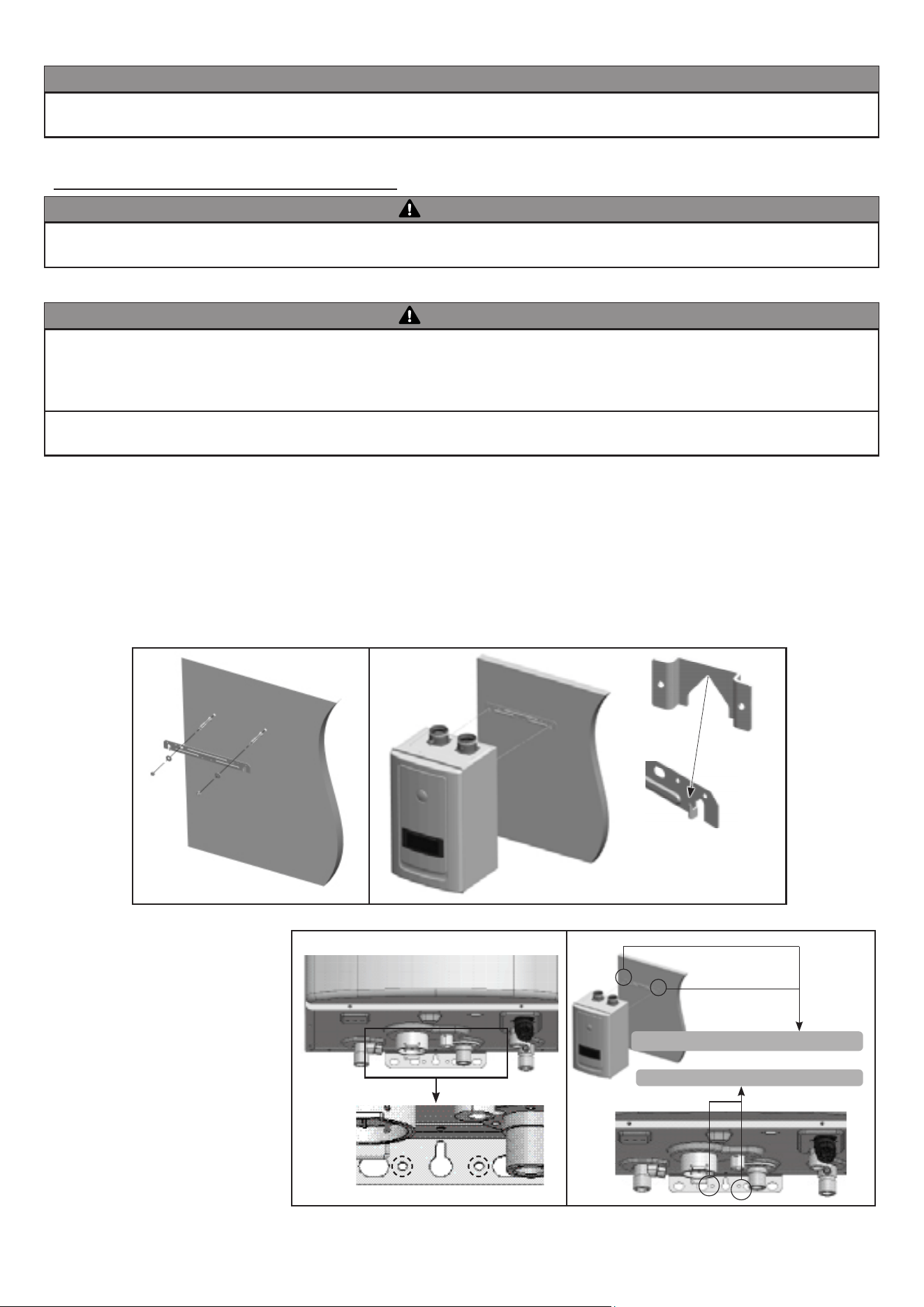
AP18733 REV. 3.2.17
26
WARNING
WARNING
The water heater must be installed on a wall that can bear its weight (more than 88 lbs. [40 kg] when fully plumbed and full of water). Installing the
water heater on a wall which cannot support its weight could result in property damage, personal injury, or death.
This water heater is too heavy for one person to lift. It is highly recommended to install the water heater with two people. Use caution as to not
drop the water heater, which could damage the water heater and cause property damage and/or severe personal injury. Verify that the water
heater is properly and securely mounted before leaving unsupervised. Failure to comply with the above and properly mount the water heater could
result in substantial property damage, severe personal injury, or death.
This wall mounting system is not seismic rated and should not be applied as such. Failure to comply with the above and properly mount the water
heater could result in substantial property damage, severe personal injury, or death.
▪ J. WALL-MOUNTING THE WATER HEATER
IMPORTANT
Cold weather handling – If water heater has been stored in a very cold location (below 0°F) before installation, handle with care until the plastic
components come to room temperature.
Remove all sides of the shipping crate to allow the water heater to be lifted into its installation location.
The water heater may be installed on any suitable internal wall (suitable sound-proong may be required when installing onto a stud partition wall).
POSITIONING THE WATER HEATER ON THE WALL
1. Attach the wall bracket on the location where you want to install the water heater. Ensure it is level and on stud (16" [406 mm] centers)
before proceeding.
2. Mark the two (2) drill holes with a pencil or marker. Remove the wall bracket.
3. Drill two (2) holes using a 15/32" (12mm) drill bit at the marked hole locations.
4. Mount the wall bracket to the wall with the two (2) included anchor bolts. Ensure the mounted bracket is level. Place washers and nuts on
each anchor bolt and tighten. See Figure 4.
5. Align the heater bracket grooves on the back of the water heater with the tongues on the wall bracket and hang the water heater on the
bracket. See Figure 4.
6. Locate the lower mounting
bracket on the bottom of the water
heater. The two (2) screws and dry
wall anchors will be used to secure
the bottom of the unit to the wall.
7. Mark two (2) holes. Remove the
water heater from the wall.
8. Drill two (2) holes with a 17/64"
(7mm) size bit. Then insert two (2)
dry wall anchors into the wall.
9. Place the water heater back on
the wall as described in Step 5.
10. Screw the two (2) screws into the
dry wall anchors.
Figure 5 – Wall Mounting the Water Heater
Figure 4 – Wall Mounting the Water Heater Top BracketHeater
Position the bracket securely to the wall.
Afx the screws into dry wall anchors.
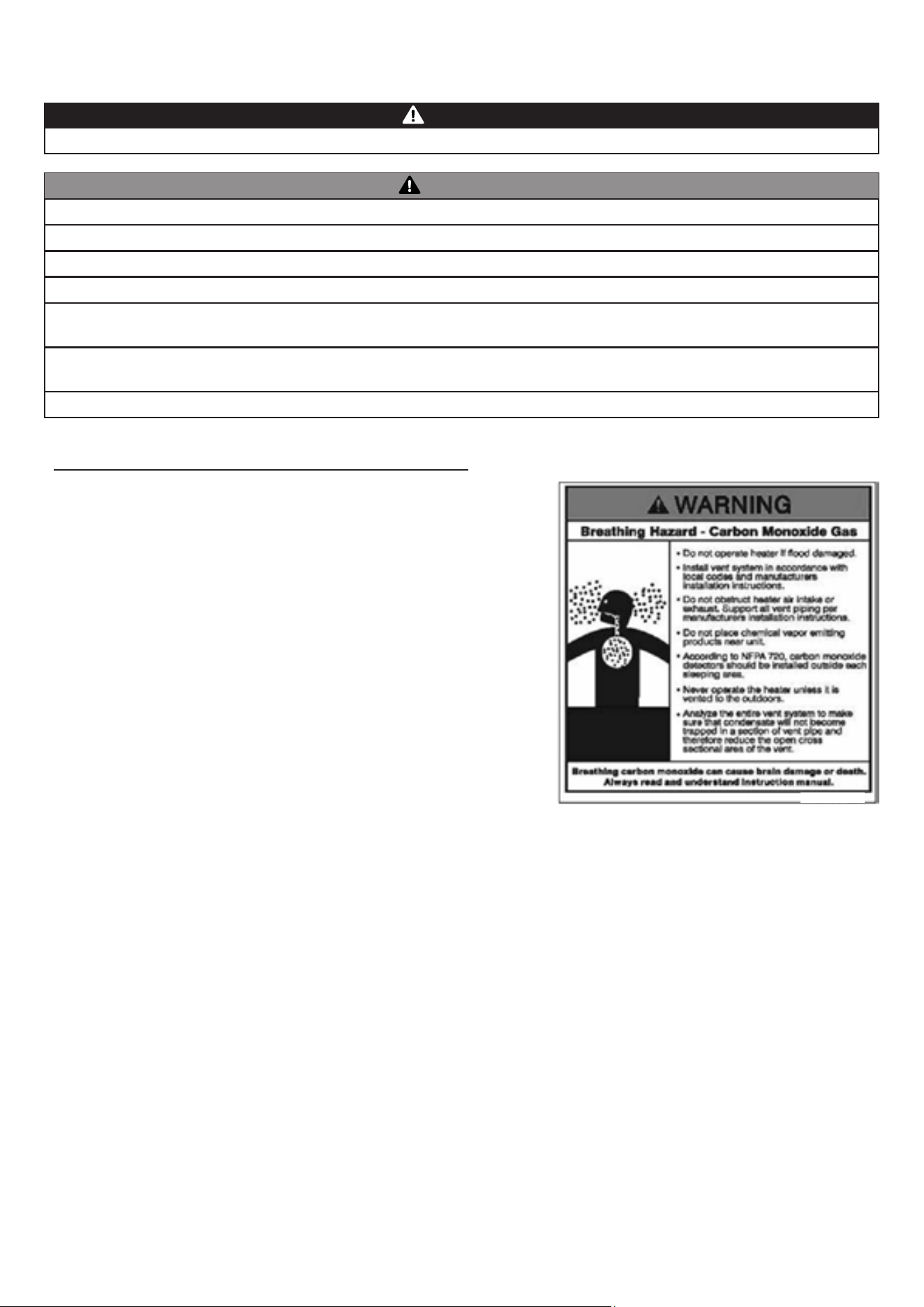
AP18733 REV. 3.2.17
27
WARNING
DO NOT mix vent systems or materials unless specically told to do so in this manual.
DO NOT thermally insulate the exhaust vent or intake pipes.
DO NOT use an electric damper, vent damper, or draft hood with this water heater.
DO NOT locate the exhaust vent or intake pipe terminations where exposed to prevailing winds.
Moisture will be produced by the exhaust vent. Take precautions when determining exhaust vent termination. Moisture may fall from the vent
termination to the ground and turn to ice in freezing conditions. Moisture or ice can produce a hazardous condition.
Exhaust condensate is acidic, and could deteriorate the surface below the exhaust vent termination. Ensure this surface is in good repair (sealed,
painted, etc.) to prevent deterioration.
Failure to follow these instructions could result in property damage, severe personal injury, or death.
VENTING
DANGER
Vent this water heater in accordance with these instructions. Failure to do so will result in property damage, severe personal injury, or death.
▪ A. INTAKE PIPE AND EXHAUST VENT GUIDELINES
1. Vent system must be installed in accordance with local codes, or, in absence of
local codes, the National Fuel Gas Code, ANSI Z223.1 / NFPA 54 and/or CSA B149.1,
Natural Gas and Propane Installation Code.
2. For installation in Canada, installer supplied plastic vent piping must comply with
CAN/CGA B149.1 and be certified to the Standard for Type BH Gas Venting Systems,
ULC-S636. Components of this listed system must not be interchanged with other vent
systems or unlisted pipes or fittings. All plastic components and specified primers and
glues must be from a single system manufacturer and must not be intermixed with
another system manufacturer’s products. Clean and dry all applicable surfaces before
applying cement.
3. This water heater is designed to be installed in as a direct vent (sealed combustion)
type. In direct vent installations, combustion air must be supplied directly from the
outdoors to the burner, and the flue (exhaust) gases should be vented directly to the
outdoors through the wall or roof.
4. This water heater uses 2" (5.1 cm) or 3" (7.6 cm) diameter pipe for exhaust vent and
intake pipe. It is important to ensure an airtight seal from the water heater collar to the vent terminations. It is EXTREMELY IMPORTANT that the
maximum allowed combined venting lengths are not exceeded. See Table 11 for a list of Approved Vent Materials and Table 12 for Approved Vent
Lengths.
5. Do not install venting system components on the exterior of the building except as specifically required by these instructions.
• Vent terminals must be at least 1 foot (30 cm) from any door, window, or gravity inlet into the building.
• Maintain the correct clearance and orientation between the exhaust vent and intake pipe terminals.
• The exhaust vent and air intake terminals must be at the same height and their center lines must be spaced apart 1 foot (30 cm) minimum.
• The bottom of the exhaust vent and intake pipe terminals must be at least 1 foot (30 cm) above the normal snow accumulation level. In no
case should these terminals be installed less than 1 foot (30 cm) above normal snow accumulation level.
• Do not install the exhaust vent terminals directly above windows or doors.
• Intake pipe terminal must not terminate in areas that might contain combustion air contaminates, such as near swimming pools.
• For sidewall venting, the minimum horizontal distance between adjacent exhaust vent terminations is 1 foot (30 cm). It is recommended this
distance be greater than 1 foot (30 cm) to better avoid frost damage to building surfaces.
• For roof venting, minimum horizontal distance between any adjacent exhaust vent termination is 1 foot (30 cm).
• If the exhaust vent is to be terminated in a walled off area (such as a roof with a parapet wall), ensure the exhaust vent terminates a
minimum of 10' (3m) from nearest wall and extends level with or above the top of the wall. This will ensure flue gas does not get trapped
and possibly recirculated into the intake air pipe, which could contaminate the combustion air.
AP18733 REV. 3.2.17
28
WARNING
All joints of positive pressure vent systems must be sealed completely to prevent leakage of ue products into living space.
• Remove all burrs and debris from joints and fittings.
• When using PVC or CPVC pipe, all joints must be properly cleaned, primed, and cemented. Use only cement and primer approved for use
with the pipe material. Cement must conform to ASTM D2564 for PVC and ASTM F493 for CPVC pipe.
NOTE: DO NOT CEMENT POLYPROPYLENE PIPE.
• Ensure the vent is located where it will not be exposed to prevailing winds.
• In all roof venting applications, exhaust discharge must point away from the pitch of the roof.
• To prevent water leakage, install adequate roof flashing where the pipe enters the roof.
• Do not locate vent over public walkways, driveways, or parking lots. Condensate could drip and freeze, resulting in a slip hazard or damage
to vehicles and machinery.
• Due to potential moisture build-up, sidewall venting may not be the preferred venting option. To save time and cost, carefully consider
venting installation and location.
• Horizontal lengths of exhaust vent must slope back towards the water heater not less than ¼" (0.6 cm) per foot to allow condensate to drain
from the vent pipe.
• The exhaust vent must terminate where vapors cannot make accidental contact with people or pets, or damage shrubs or plants.
• In vacant chimney applications, install and seal a rain cap over existing chimney openings.
• All piping must be fully supported. Use pipe hangers at a minimum of 4 foot (1.22 m) intervals to prevent sagging of the pipe where
condensate may form.
• Do not use the water heater to support any piping.
• DO NOT vent near soffit vents, crawl space vents, or other areas where condensate or vapor could create a nuisance or hazard or cause
property damage.
• DO NOT vent where condensate vapor could cause damage or could be detrimental to the operation of regulators, relief valve, or other
equipment.
• DO NOT vent the water heater in a chimney flue serving a separate appliance designed to burn solid fuel. The water heater may only be
vented in vacant chimneys.
• Maximum Snow Level Determination: These installation instructions reference snow levels in establishing a minimum height for the
installation of exhaust vent or air intake terminations. Snow levels shall be determined as follows:
a. The installation location may, by ordinance, designate how snow levels are calculated in that location; or
b. In the absence of specific ordinances, snow levels shall be calculated from the average monthly maximum depth of snow
accumulation as indicated by the National Weather Service’s 10 year statistics for the installation location/geographical area.
In the Commonwealth of Massachusetts and as Required by State and Local Codes:
• The vented gas fueled appliance shall not be installed so its combustion, ventilation, or dilution air is obtained from a bedroom or bathroom.
• Signage: Whenever any through-the-wall (horizontal or sidewall) vent is installed less than seven feet above the finished grade, a metal
or plastic identification plate shall be permanently mounted to the exterior of the building at a minimum height of eight feet above grade
directly in line with the exhaust vent terminal. The sign shall read, in print no less than 0.5 inches in size, “GAS VENT DIRECTLY BELOW.
KEEP CLEAR OF ALL OBSTRUCTIONS”.
• Marking of Exhaust Vent and Intake Pipe: Piping used for ventilation, make-up, or combustion air intake shall be labeled as follows:
a. Throughout the entire developed length:
i. Labels must be placed every ten feet for exposed/visible piping; or
ii.Labels must be placed every three feet for concealed piping.
b. At all changes of direction;
c. On each side of a penetration through a partition, wall or ceiling; and
d. The labels shall be black lettering that:
i. Indicates that the piping is used for ventilation, make-up, or combustion air intake, and
ii.The letters shall be sized equal to a minimum of the pipe diameter. However, for piping with a diameter exceeding two inches,
said lettering does not need to be larger than two inches.
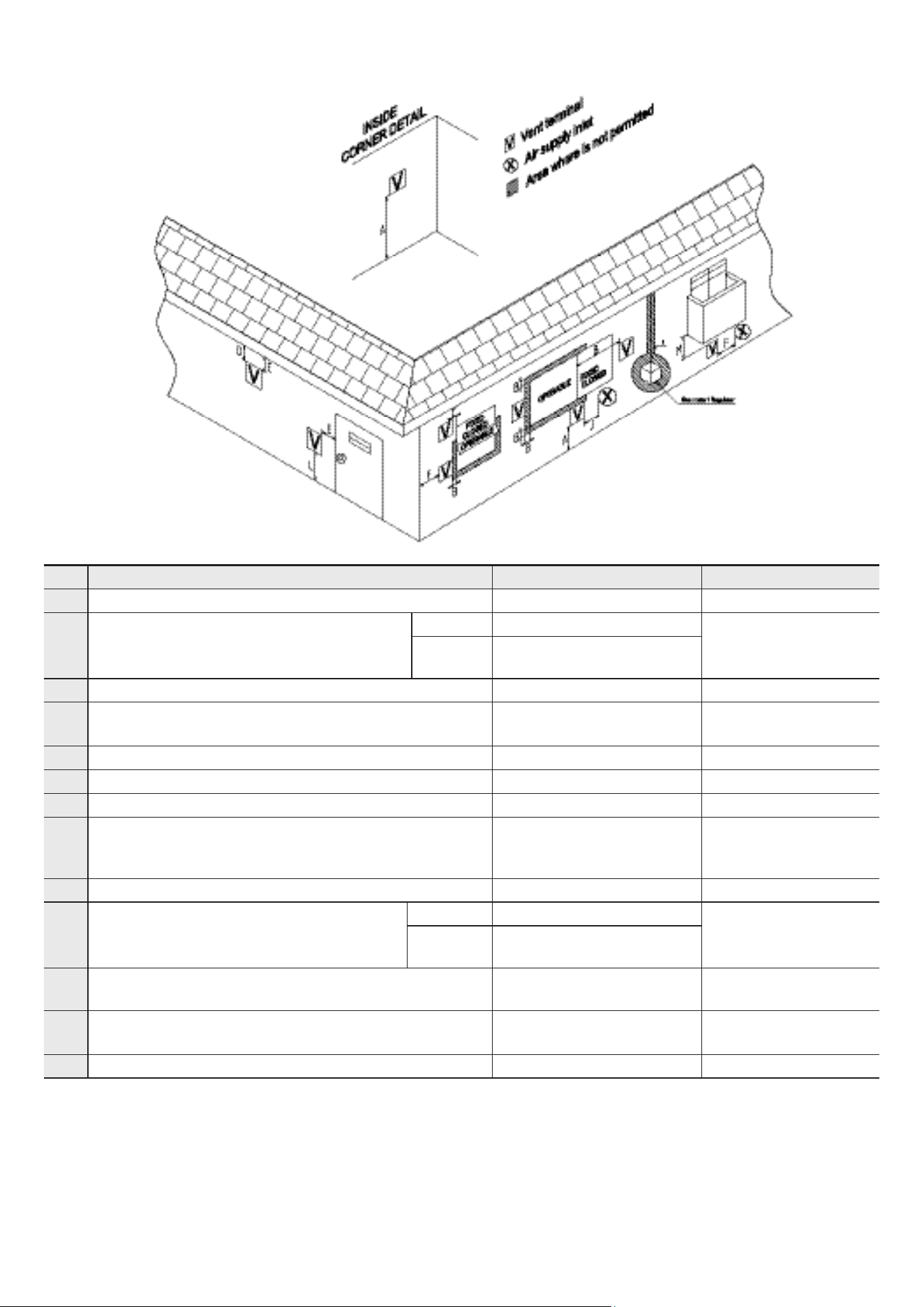
AP18733 REV. 3.2.17
29
Figure 6 - Vent Termination Detail
Description US Canadian
A Clearance above grade, veranda, porch, deck, or balcony 1 foot (30 cm) 1 foot (30 cm)
B Clearance to window or door that may be opened
Direct Vent 1 foot (30 cm)
3 feet (91 cm)
Power Vent
1 foot (30 cm) above, or 4 feet (1.22
m) below or to side of opening
C Clearance to permanently closed window * *
D
Vertical clearance to ventilated soft located above the terminal within
a horizontal distance of 2 feet from the center line of the terminal
* *
E Clearance to unventilated soft * *
F Clearance to outside corner * *
G Clearance to inside corner * *
H
Clearance to each side of center line extended above meter/regulator
assembly
*
3 feet (91 cm) with a height
15 feet (4.57 m) above meter
/ regulator assembly
I Clearance to service regulator vent outlet * 3 feet (91 cm)
J
Clearance to non-mechanical air supply inlet to building
or the combustion air inlet to any other appliance
Direct Vent 12 in (30 cm)
3 feet (91 cm)
Power Vent
1 foot (30 cm) above, or 4 feet (1.22
m) below or to side of opening
K Clearance to a mechanical air supply inlet
3 ft (91 cm) above if within 10 ft (3
m) horizontally
6 feet (1.83 m)
L
Clearance above paved sidewalk or paved driveway located on public
property
* 1 foot (30 cm)
M Clearance under veranda, porch, deck, or balcony * 12 in (30 cm)
‡
Table 10 – Vent Termination Clearances - *NOTE: For clearances not specied in ANSI Z223.1/NFPA 54 or CAN/CSA-B 149.1, please use
clearances in accordance with local installation codes and the requirements of the gas supplier.
AP18733 REV. 3.2.17
30
IMPORTANT
High heat sources (sources generating heat 100
°
F / 37
°
C or greater, such as stove pipes, space heaters, etc.) may damage plastic components
of the water heater as well as plastic vent pipe materials. Such damages ARE NOT covered by warranty. It is recommended to keep a minimum
clearance of 8" from high heat sources. Observe heat source manufacturer instructions, as well as local, state, provincial, and national codes,
laws, regulations and ordinances when installing this water heater and related components near high heat sources.
APPROVED EXHAUST VENT AND INTAKE PIPE MATERIAL
Item Material
Standards for Installation in:
United States Canada
Exhaust vent or Intake pipe and
ttings
CPVC schedule 40 ASTM-D2846 PP, CPVC, and PVC venting must
be ULC-S636 Certied. IPEX is an
approved manufacturer in Canada,
supplying vent material listed to
ULC-S636.
PVC schedule 40 ANSI/ASTM D1785
Polypropylene ULC-S636, UL-1738
Stainless Steel AL29-4C
Certied for Category IV and direct
vent appliance venting
Certied for Category IV and direct
vent appliance venting
Pipe Cement
PVC ANSI/ASTM D2564
IPEX System 636 Cements &
Primers
CPVC ANSI/ASTM F493
Pipe Primer PVC / CPVC ASTM F656
DANGER
• The exhaust and intake components installed with this water heater must be used for near water heater piping BEFORE transitioning to
the approved materials listed above. DO NOT REMOVE these installed components. Doing so WILL VOID warranty.
• PVC/CPVC pipe and ttings of the same diameter are considered interchangeable.
• Use of cellular core pipe PVC (ASTM F891), cellular core CPVC, or Radel® (polyphenysulfone) in nonmetallic venting systems is
prohibited.
• DO NOT connect PVC/CPVC to PP without an approved vent connector.
• When installing AL29-4C vent piping, install a PVC-to-stainless adapter at the water heater vent connection, and at the termination when
using a Rheem PVC termination kit. DO NOT mix AL29-4C piping from different manufacturers unless using adapters specically designed
for the purpose by the manufacturer.
• Covering non-metallic vent pipe and ttings with thermal insulation is prohibited.
• DO NOT obstruct the ow of combustion or ventilation air.
• When using Pipe Cement/Primer, follow the instructions included with the Cement/Primer closely. Clean and dry all applicable surfaces
before applying.
Failure to follow these directions will result in substantial property damage, severe personal injury, or death.
Table 11 – Approved Venting Materials
WARNING
Vent adaptors are not designed as load-bearing devices, and must not be used to support exhaust vent piping. All vent pipes must be properly
connected, supported, and the exhaust must be pitched a minimum of ¼" per foot back to the heater to allow drainage of condensate. Failure to
properly support vent piping and follow the information in this statement could result in product damage, severe personal injury, or death.
WARNING
Consult Table 11 or the most recent edition of ANSI Z223.1/NFPA 54 or CAN/CGA B149.1 as well as all applicable local codes and regulations
when selecting vent pipe materials.
▪ B. APPROVED VENT MATERIALS
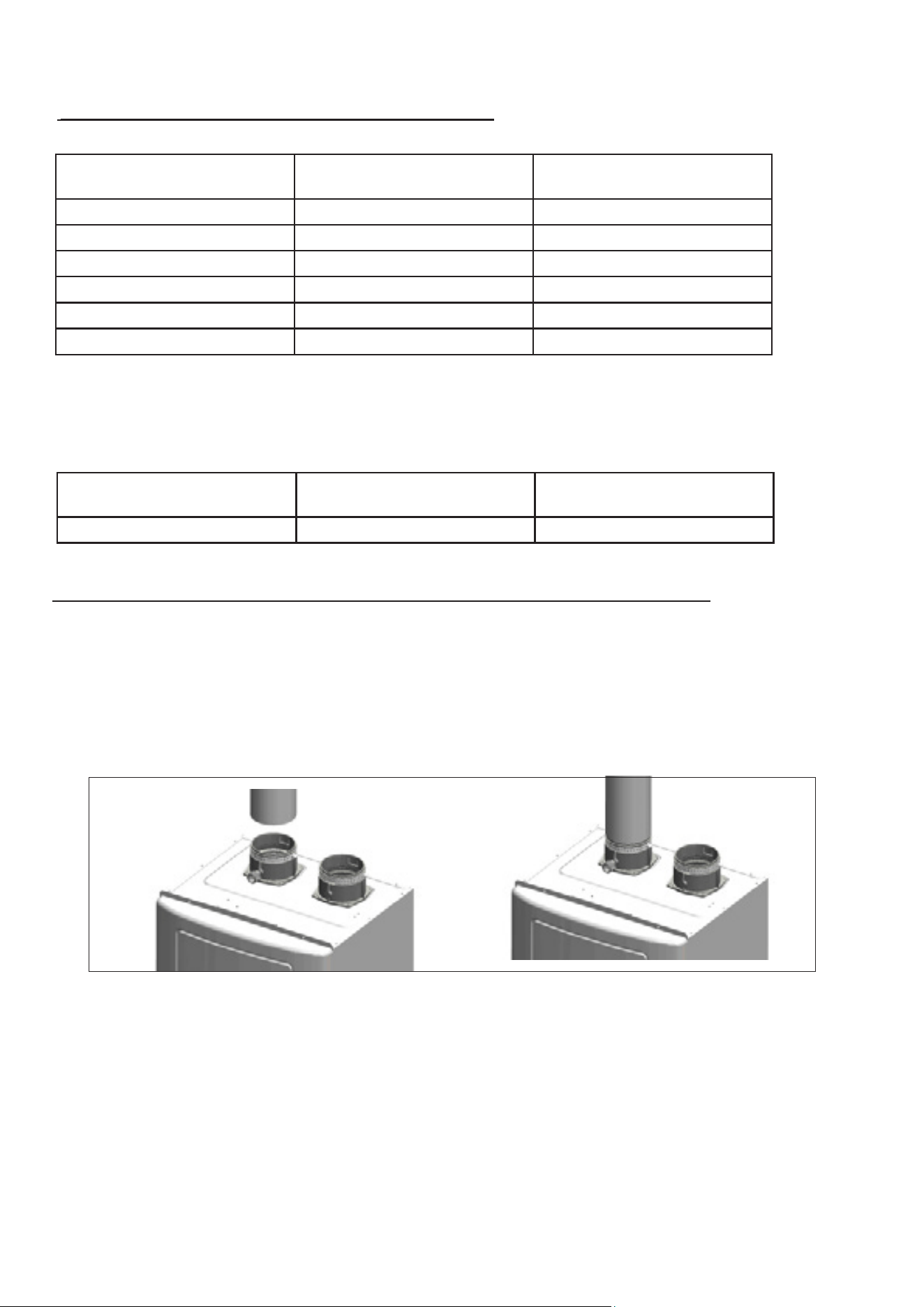
AP18733 REV. 3.2.17
31
1. Maximum Vent Length (Intake/outlet)
Number of 90º elbows
Maximum length of 2"
straight pipe
Maximum length of 3"
straight pipe
0 or 1 50ft.(15.24m) 100ft. (30m)
2 42ft. (12.8m) 95ft. (29m)
3 34ft. (10.4m) 90ft. (27.4m)
4 26ft. (7.9m) 85ft. (25.9m)
5 18ft. (5.4m) 80ft. (24.4m)
6 Not Available 75ft. (22.9m)
A. 3 inch diameter 90º elbow is equivalent to 5ft. (1.5m) of straight pipe.
A. 2 inch diameter 90º elbow is equivalent to 8ft. (2.4m) of straight pipe.
A. 3 inch diameter 45º elbow is equivalent to 2.5ft. (0.75m) of straight pipe.
A. 2 inch diameter 45º elbow is equivalent to 4ft. (1.2m) of straight pipe.
Number of 90º elbows
Minimum length of 2"
straight pipe
Minimum length of 3"
straight pipe
1 7ft. (2.1m) 7ft. (2.1m)
2. Maximum Vent Length (Intake/outlet)
▪ C. Allowed Schedule 40 Vent Length (PVC, CPVC, PP)
▪ D. TIGHTENING WATER HEATER COLLAR TO EXHAUST VENT AND INTAKE PIPE
This appliance uses 2" (5.1 cm) or 3" (7.6 cm) diameter pipe for exhaust vent and intake pipe. In order to use 2" (5.1 cm) pipe, it is required to
reduce pipe size in a vertical length of pipe with a 3" (7.6 cm) x 2" (5.1 cm) reducing coupling (not included). Follow the steps below to install 3" (7.6
cm) pipe into the appliance collar. See Figure 7 for additional details.
1. Clean and dry the appliance connection. DO NOT use primer or cement on the appliance connection.
2. Push the length of pipe into the connection until it touches the bottom of the fitting.
3. Tighten the clamps using a screwdriver.
4. Ensure the pipe is secure before continuing installation.
5. For 2" (5.1 cm) installations, install the reducing coupling in a vertical section of pipe. At least a 6" (15.2 cm) length of 3" (7.6 cm) pipe
MUST BE INSTALLED before reducing to 2" (5.1 cm). See Figure 8
Figure 7 – Correct Installation into the Water Heater Collar
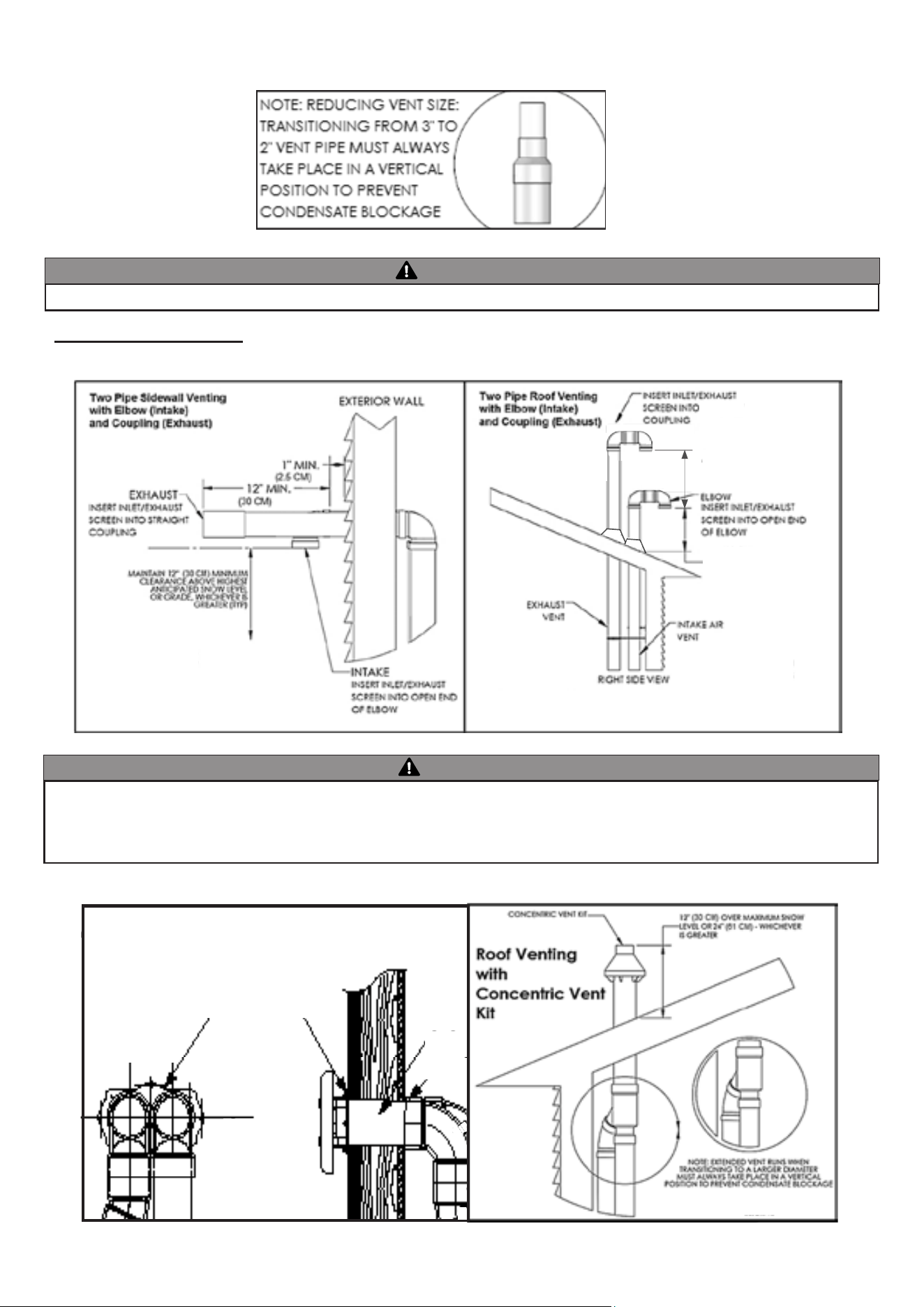
AP18733 REV. 3.2.17
32
WARNING
Do not use bushing to reduce vent size. Doing so could result in product damage, severe personal injury, or death.
Figure 8 – Transitioning from 3" (7.6 cm) to 2" (5.1 cm) Vent Pipe
Figure 9 – Direct Vent, Roof and Sidewall Vent Terminations
▪ E. VENT TERMINATION
1. Direct Vent, Two Pipe Roof and Sidewall Vent Terminations
Check Primary and Gas Piping
WARNING
All vent pipes must be glued, properly supported, and the exhaust must be pitched a minimum of ¼" (0.6 cm) per foot back to the appliance to
allow drainage of condensate. When placing support brackets on vent piping, the rst bracket must be within 1 foot (30 cm) of the appliance and
the balance at 4 foot (1.22 m) intervals on the vent pipe. Appliance venting must be readily accessible for visual inspection for the rst three feet
from the appliance.
2. Direct Vent, Optional Horizontal and Vertical Vent Kits
ELBOW
12" Min (30cm)
Intake
Exhaust
Termination Wall
Plate Outside
Maintain 12" (30cm) min.
Clearance above highest
anticipated snow level.
Maximum of 24″(60cm) above
roof
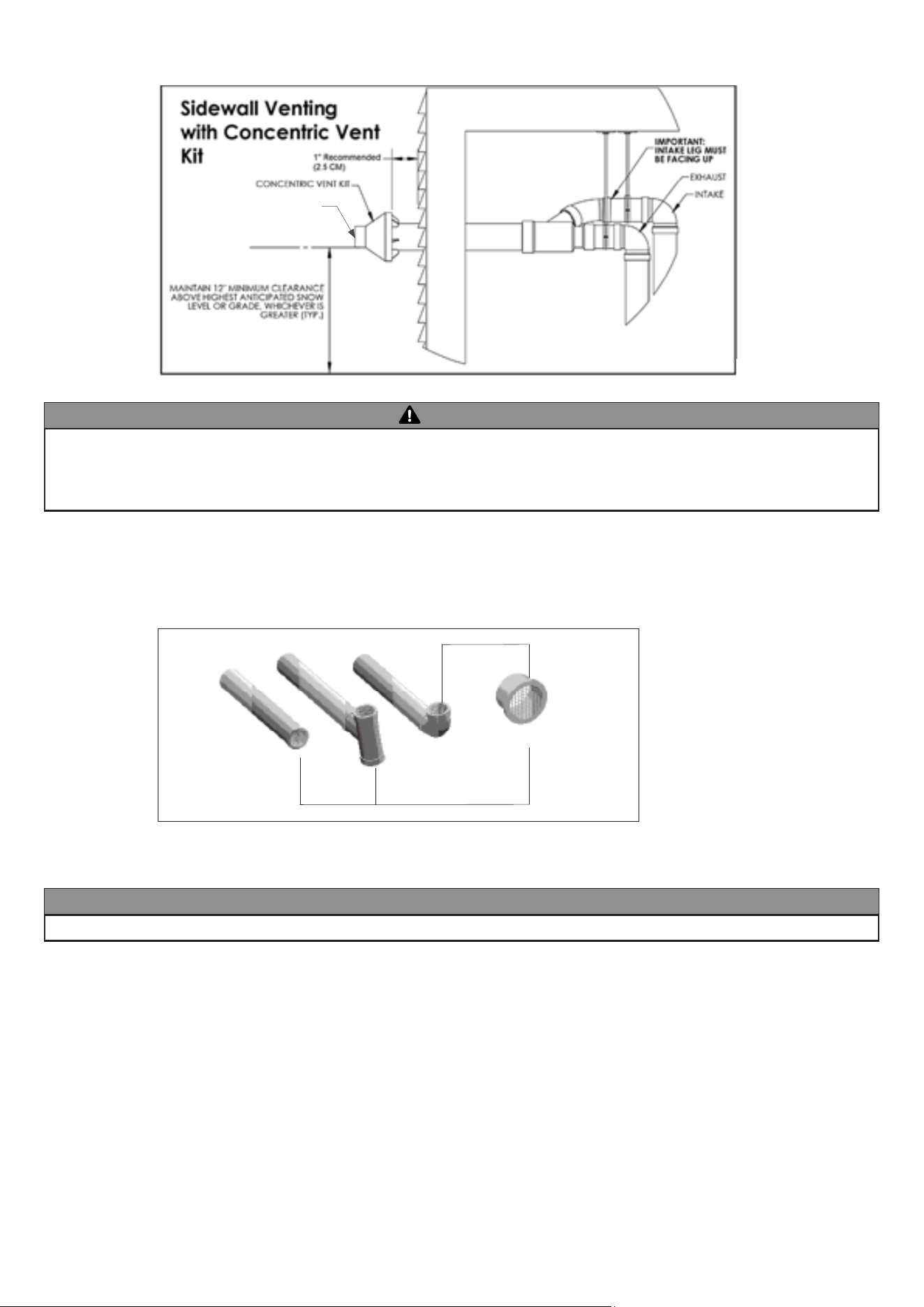
AP18733 REV. 3.2.17
33
3. Screen Installation
After connecting the intake air and exhaust vent pipes, it is required to install the included screens into the exhaust vent and intake pipe
terminations to prevent damages to the unit due to blockages. See Figure 11 for installation detail.
Screens can freeze in areas with severe cold weather. In such areas it is recommended not to use screens.
Figure 10 – Direct Vent, Vent Terminations (With Optional Kits)
WARNING
FOR YOUR SAFETY
All vent pipes must be glued, properly supported, and the exhaust must be pitched a minimum of ¼" (0.6 cm) per foot back to the appliance to
allow drainage of condensate. When placing support brackets on vent piping, the rst bracket must be within 1 foot (30 cm) of the appliance and
the balance at 4 foot (1.22 m) intervals on the vent pipe. Appliance venting must be readily accessible for visual inspection for the rst three feet
from the appliance.
Do not connect any other appliance vents to the water heater exhaust vent or intake pipes.
Figure 11 - Screen Installation - NOTE: Vent termination elbow is meant to be installed open end facing
the ground. Orientation in Figure 11 is meant to demonstrate proper Vent Screen installation ONLY.
(7.6CM) (0.6CM)
3″ Vent Screen 1/4″ Mesh
*Stating tee tting requires
a screen at both ends.
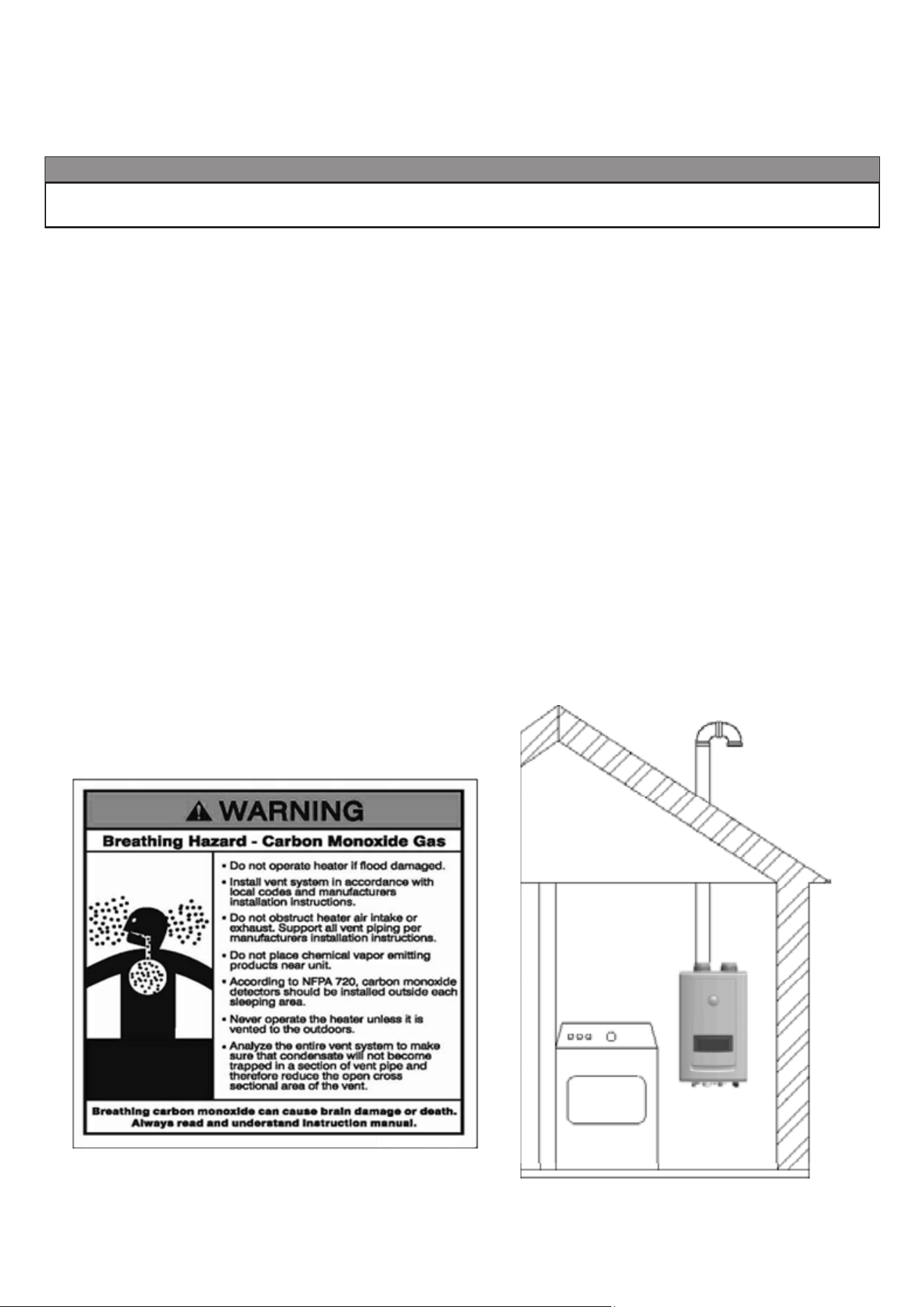
AP18733 REV. 3.2.17
34
This appliance requires fresh, uncontaminated air for safe operation and must be installed in a mechanical room where there is adequate
combustion and ventilating air. NOTE: To prevent combustion air contamination, see Table 9. Follow the National Fuel Gas Code (ANSI
Z223.1 / NFPA 54).
Combustion air from the indoor space can be used if the space has adequate area or when air is provided through a duct or louver to supply
sufcient combustion air based on the appliance input. Never obstruct the supply of combustion air to the appliance. If the appliance is installed
in areas where indoor air is contaminated (see Figure 12) it is imperative that the appliance be installed as direct vent so that all combustion air
is taken directly from the outdoors into the appliance intake connection.
Unconned space is space with volume greater than 50 cubic feet per 1,000 Btu/hour (4.8 cubic meters per kW) of the total input rating of
all fuel-burning appliances installed in that space. Rooms connected directly to this space, through openings not furnished with doors, are
considered part of the space.
Conned space is space with volume less than 50 cubic feet per 1,000 Btu/hour (4.8 cubic meters per kW) of the total input rating of all fuel-
burning appliances installed in that space. Rooms connected directly to this space, through openings not furnished with doors, are considered
part of the space.
When drawing combustion air from inside a conventionally constructed building to a conned space, such space should be provided with two
permanent openings: one located 6" (15 cm) below the space ceiling, the other 6" (15cm) above the space oor. Each opening should have a
free area of one square inch per 1,000 Btu/hr (22cm
2
/kW) of the total input of all appliances in the space, but not less than 100 square inches
(645).
If the conned space is within a building of tight construction, air for combustion must be obtained from the outdoors as outlined in the Venting
section of this manual. See Figure 13.
DO NOT PLACE
DRYER IN PROXIMITY
TO WATER HEATER
Figure 12 – LP-325-X
4. Power Venting, Indoor Combustion Air Installation in Confined or Unconfined Space
NOTE: This water heater should be installed using direct venting in any instance where there are or may be ammable vapors in the area.
FOR YOUR SAFETY
Do not store or use gasoline or other ammable vapors and liquids in the vicinity of this or any other appliance. To do so may result in an explosion
or re.
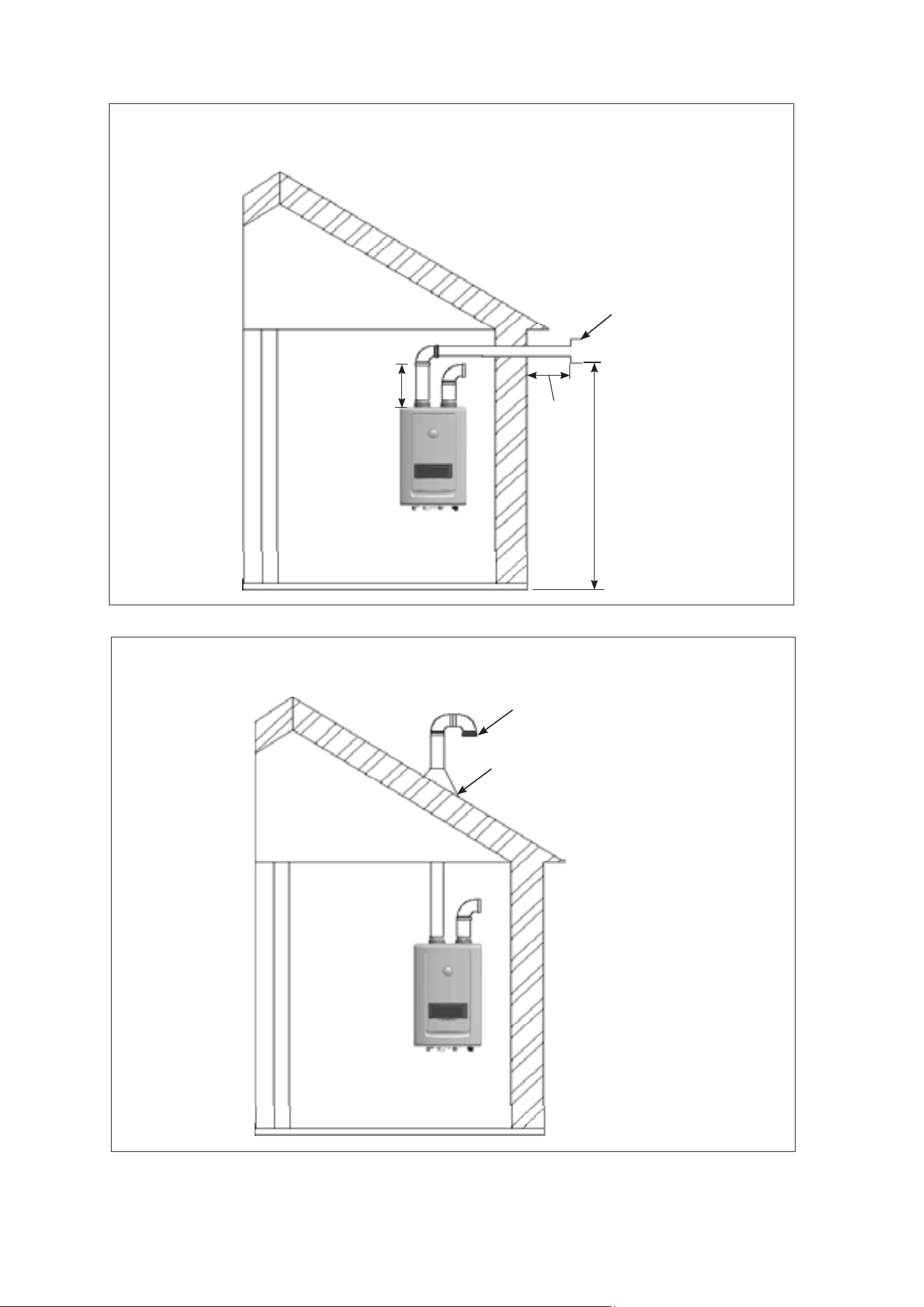
AP18733 REV. 3.2.17
35
Figure 12 – LP-325-X
Figure 13 – NOTE: These drawings are meant to demonstrate system venting only. The installer is responsible for
all equipment and detailing required by local codes.
INDOOR COMBUSTION AIR (SINGLE PIPE) _HORIZIONTAL
INSERT SCREEN IN EACH
OPEN END OF TEE
INDOOR COMBUSTION AIR (SINGLE PIPE)_Vertical
ROOF FLASHING
3"Min
(7.5cm)
MAINTAIN 12"(30cm) MINIMUM
CLEARANCE ABOVE
HIGHEST ANTICIPATED SNOW
LEVEL OR GRADE,
WHICHEVER IS GREATER.
1΄(30cm)
INSERT SCREEN IN
EACH OPEN END OF TEE
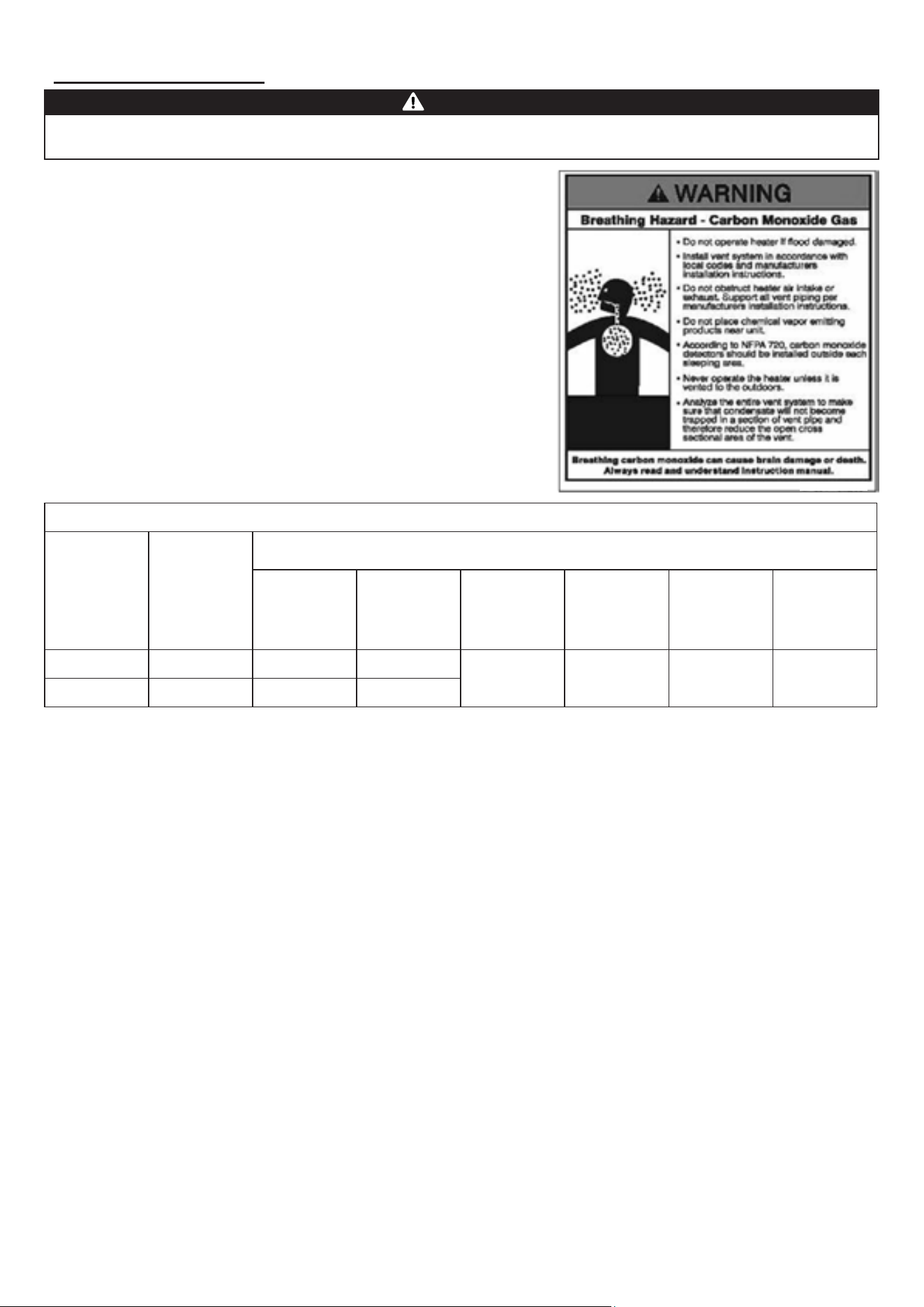
AP18733 REV. 3.2.17
36
▪ F. COMMON VENT PIPING
DANGER
Common Vented water heaters must be direct vented, with an exhaust vent and intake air pipe vented to the outdoors. DO NOT power vent
Common Vented water heaters! Doing so will result in property damage, severe personal injury, or death.
These water heaters can be common vented. Connecting several water heaters
together requires proper sizing of the intake and exhaust pipes. Up to eighteen water
heaters can be connected (cascading) together.
1. VENT DIAMETER SIZING AND LENGTHS
These water heaters are designed for 3 inch exhaust vent and intake pipes. The
following chart outlines the maximum length of common venting allowable. A vent
system’s length is calculated by adding the length of all straight pieces used (both
horizontal and vertical) and then adding the equivalent lengths of each tting used in
the system. A vent system’s length must not exceed the maximum length outlined in
the chart below.
NOTE: Reduce the maximum equivalent length above by 5 feet per 90
°
C elbow used and by 2 feet per 45
°
C elbow used. DO NOT exceed the
above set limits.
Maximum Vent Length (in Ft.) for Direct Vent (2 Pipe)
Number
of Water
Heaters
Common
Vented
Load
(BTU/Hr)
Pipe Size
3″ 4″ 6″ 8″ 10″ 12″
1 199,000 100 N/A
N/A N/A N/A N/A
2 398,000 50 83
Table 13 – Maximum Common Vent Length for Direct Vent (2 Pipe)
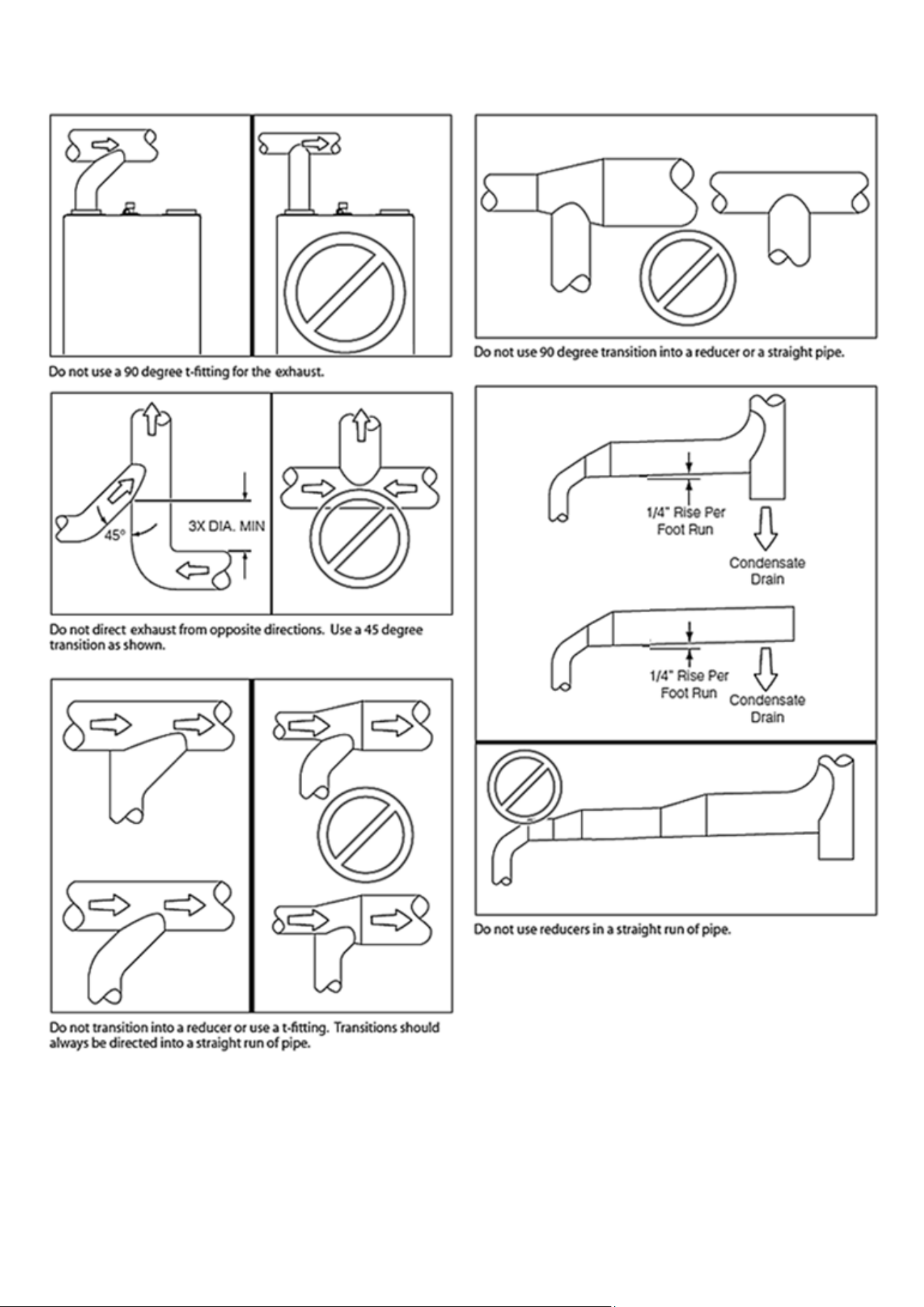
AP18733 REV. 3.2.17
37
2. RECOMMENDED EXHAUST PIPE TRANSITIONS
Figure 14 – Recommended Exhaust Pipe Transitions
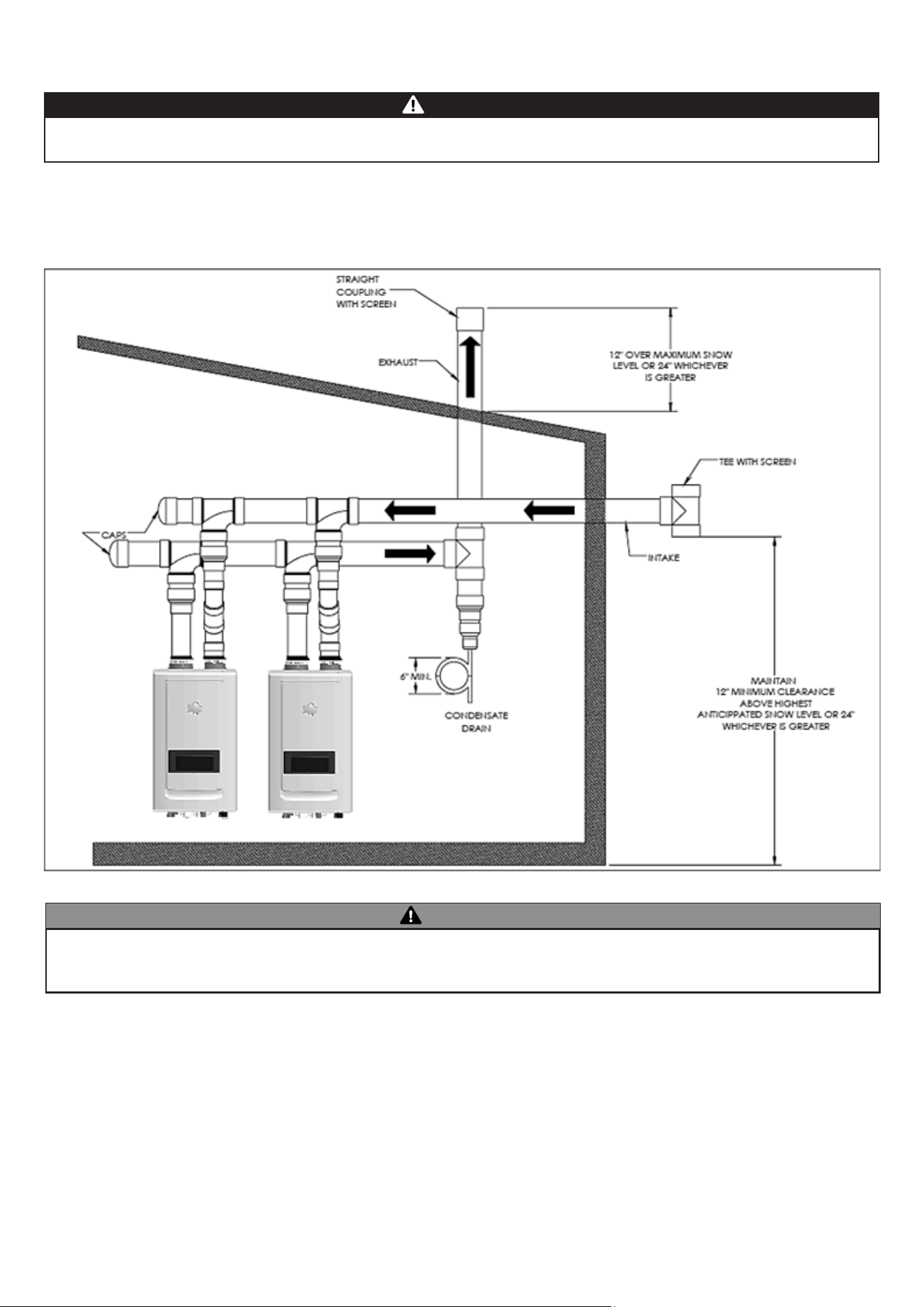
AP18733 REV. 3.2.17
38
3. TWO PIPE VENT SYSTEM (DIRECT VENT)
Figure 15 – Common Vented Water Heaters – Unbalanced Venting
DANGER
Common Vented water heaters must be direct vented with an exhaust vent and intake air pipe vented to the outdoors. DO NOT power vent
Common Vented water heaters! Doing so will result in property damage, severe personal injury, or death.
The water heater can be direct vented without any modication using a 3 inch diameter pipe. The following diagrams represent some typical direct
venting congurations and are included to assist in designing the vent system. Possible congurations are not limited to the following diagrams.
See Table 13 for trunk line sizing when common venting multiple heaters.
WARNING
All vent pipes must be glued, properly supported, and the exhaust must be pitched a minimum of ¼" per foot back to the appliance to allow
drainage of condensate. When placing support brackets on vent piping, the rst bracket must be within 1 foot of the appliance and the balance at
4 foot intervals on the vent pipe. Appliance venting must be readily accessible for visual inspection for the rst three feet from the appliance.
NOTE: This drawing is meant only to demonstrate system venting. The installer is responsible for all equipment and detailing required by
local codes. For sidewall applications, terminate the outlet on the exterior wall at least 12" above the ground, or as required by local building
codes. In areas of high snowfall, protect both sidewall and roof vent terminations from blockage by installing at least 12" above the maximum
anticipated snowfall accumulation.
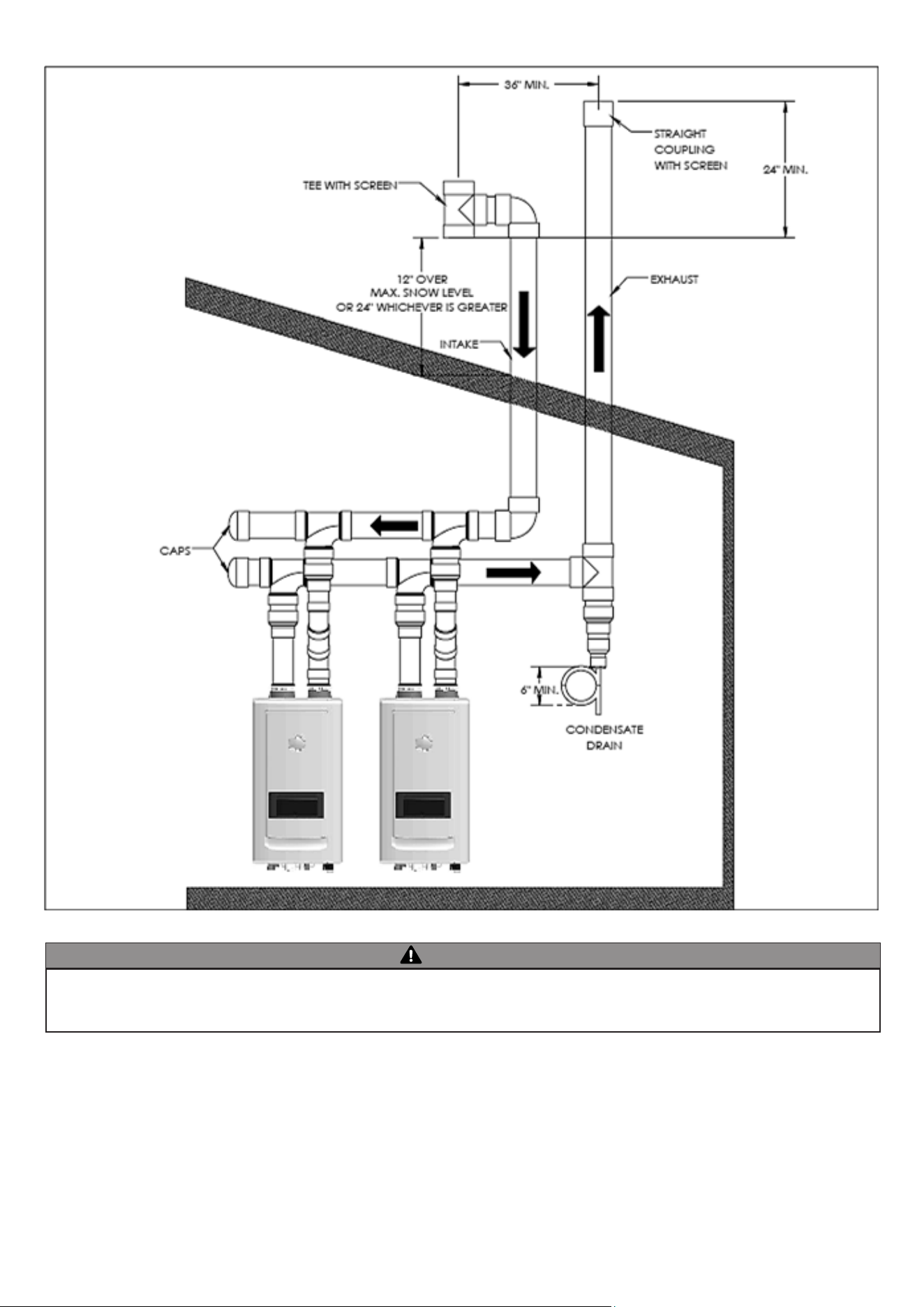
AP18733 REV. 3.2.17
39
Figure 16 –Common Vented Direct Vent Congurations
WARNING
All vent pipes must be glued, properly supported, and the exhaust must be pitched a minimum of ¼" per foot back to the appliance to allow
drainage of condensate. When placing support brackets on vent piping, the rst bracket must be within 1 foot of the appliance and the balance at
4 foot intervals on the vent pipe. Appliance venting must be readily accessible for visual inspection for the rst three feet from the appliance.
NOTE: This drawing is meant only to demonstrate system venting. The installer is responsible for all equipment and detailing required by
local codes. For sidewall applications, terminate the outlet on the exterior wall at least 12" above the ground, or as required by local building
codes. In areas of high snowfall, protect both sidewall and roof vent terminations from blockage by installing at least 12" above the maximum
anticipated snowfall accumulation.
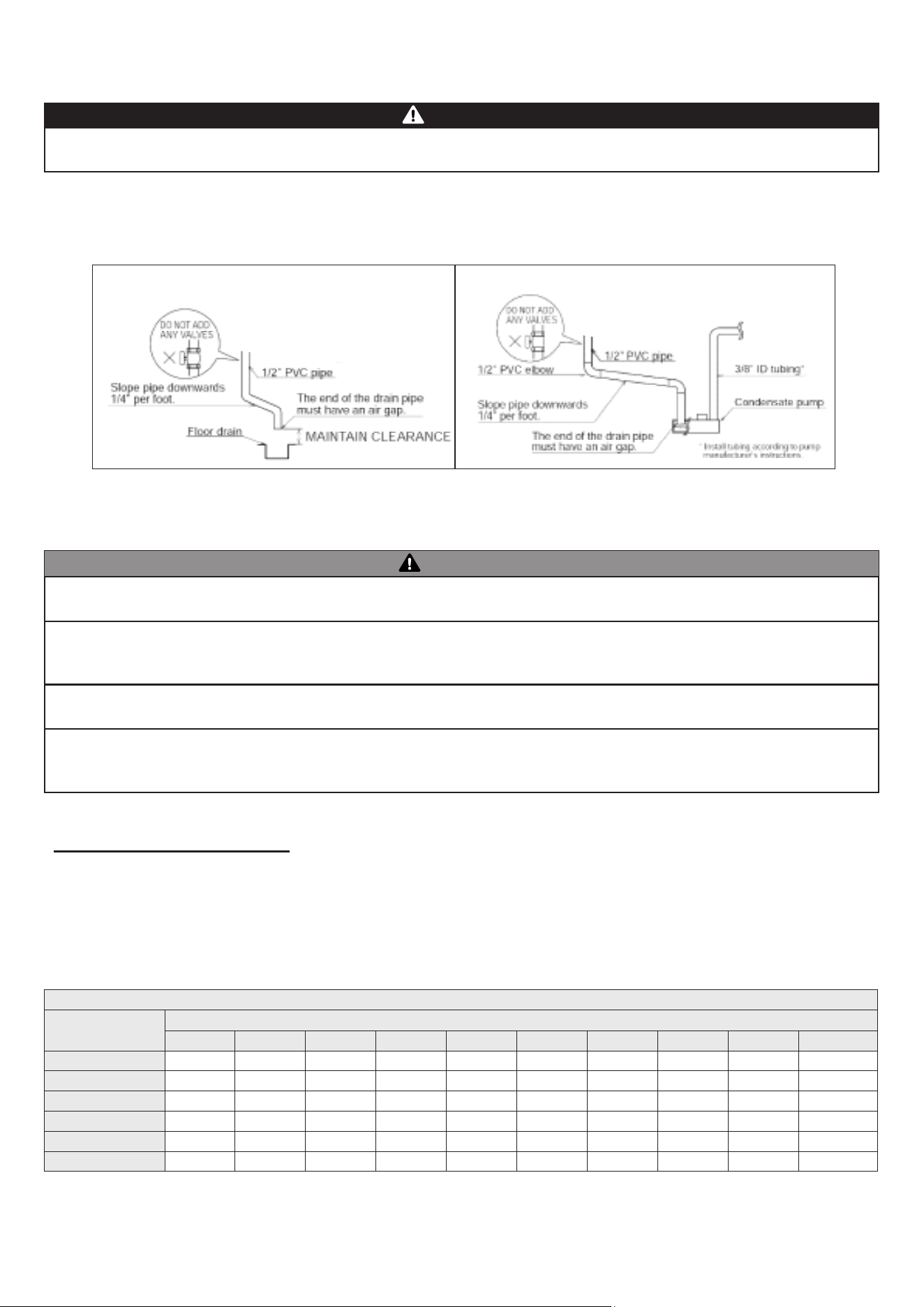
AP18733 REV. 3.2.17
40
INSTALL THE CONDENSATE DRAIN
GAS PIPING
DANGER
Common Vented water heaters must be direct vented, with an exhaust vent and intake air pipe vented to the outdoors. DO NOT power vent
Common Vented water heaters! Doing so will result in property damage, severe personal injury, or death.
NOTE: This drawing is meant only to demonstrate system venting. The installer is responsible for all equipment and detailing required by local
codes. For sidewall applications, terminate the outlet on the exterior wall at least 12" above the ground, or as required by local building codes. In
areas of high snowfall, protect both sidewall and roof vent terminations from blockage by installing at least 12" above the maximum anticipated
snowfall accumulation.
Figure 17 – Condensate Detail
Table 14 – Natural Gas Delivery Capacity – Corrugated Stainless Steel Pipe – Refer to ANSI Z223.1 – National Fuel Gas Code, Latest
Edition
WARNING
FIRE AND/OR EXPLOSION HAZARD
To avoid serious injury or death, the gas line installation and the gas line inlet pressure test must be done by a licensed professional.
Always match the water heater with the type of gas supplied to the unit (natural gas or LP gas). This water heater must be converted into propane
operation unless specically manufactured for use with propane. Follow Gas Conversion Manual instructions (separate document). Propane ready
water heaters have the sufx “LP” after the model serial number.
Make sure the gas line pressures are within normal limits. Pressures outside normal limits can result in poor performance and hazardous
operating conditions.
This water heater must be converted into propane operation unless it is specically manufactured to operate on propane. Propane-ready water
heaters have the sufx “LP” after the model serial number. Failure to ensure the water heater is set to operate on the provided gas supply could
result in property damage, personal injury, or death.
1. Gas Pipe Sizing
This information is for reference use only. Refer to gas pipe manufacturer specications for actual delivery capacity. The DOE standard for
Natural Gas is 1100 BTU/ft
3
. Contact the local gas supplier for actual BTU/ft
3
rating.
2. Natural Gas Pipe Sizing
The following tables list maximum capacity of pipe in cubic feet of gas per hour for gas pressures of 11" (27.9 cm) or less and a pressure
drop of 0.5 inches (0.12 kPa) water column, based on a 0.60 specic gravity for natural gas.
▪ A. GAS PIPE SIZING TABLES
Maximum Natural Gas Delivery Capacity – Length of Corrugated Stainless Steel Pipe in Feet
Pipe
size
Cubic Feet per Hour (0.60 Specic Gravity, 0.5 WC [0.12 kPa] Pressure Drop)
10 20 30 40 50 60 80 100 150 200
½" (1.2 cm) 82 58 47 41 37 37 29 26 20 18
¾" (1.9 cm) 192 137 112 97 87 80 69 62 48 44
1" (2.5 cm) 383 269 218 188 168 153 132 118 91 82
1 ¼" (3.1 cm) 639 456 374 325 292 267 232 208 171 148
1 ½" (3.8 cm) 1260 888 723 625 559 509 440 393 320 277
2" (5 cm) 2930 2080 1700 1470 1320 1200 1040 933 762 661
Condensate piping to oor drain
Condensate piping with pump
AP18733 REV. 3.2.17
41
Table 15 – Natural Gas Delivery Capacity – Black Iron Pipe – Refer to ANSI Z223.1 – National Fuel Gas Code, Latest Edition
Table 16 – Liquid Propane Delivery Capacity – Corrugated Stainless Steel Pipe – Refer to ANSI Z223.1 – National Fuel Gas Code, Latest
Edition
Table 17 – Liquid Propane Delivery Capacity – Black Iron Pipe – Refer to ANSI Z223.1 – National Fuel Gas Code, Latest Edition
Maximum Natural Gas Delivery Capacity – Length of Black Iron Pipe (Sch. 40 Metallic) in Feet
Pipe
size
Cubic Feet per Hour (0.60 Specic Gravity, 0.5 WC [0.12 kPa] Pressure Drop)
10 20 30 40 50 60 80 100 150 200
½" (1.2 cm) 10 20 30 40 50 60 80 100 150 200
¾" (1.9 cm) 172 118 95 81 72 65 56 50 40 34
1" (2.5 cm) 360 247 199 170 151 137 117 104 83 71
1 ¼" (3.1 cm) 678 466 374 320 284 257 220 195 157 134
1 ½" (3.8 cm) 1390 957 768 657 583 528 452 400 322 275
2" (5 cm) 2090 1430 1150 985 873 791 677 600 482 412
2 ½" (6.35 cm) 4020 2760 2220 1900 1680 1520 1300 1160 928 794
3" (7.6 cm) 6400 4400 3530 3020 2680 2430 2080 1840 1480 1270
4" (10.1 cm) 11300 7780 6250 5350 4740 4290 3670 3260 2610 2240
23100 15900 12700 10900 9660 8760 7490 6640 5330 4560
Maximum Liquid Propane Delivery Capacity – Length of Corrugated Stainless Steel Pipe in Feet
Pipe
size
Cubic Feet per Hour (1.5 Specic Gravity, 0.5 WC [0.12 kPa] Pressure Drop)
10 20 30 40 50 60 80 100 150 200
½" (1.2 cm) 129 91 74 64 58 53 45 41 31 28
¾" (1.9 cm) 303 216 177 153 137 126 109 98 75 69
1" (2.5 cm) 605 425 344 297 265 241 208 186 143 129
1 ¼" (3.1 cm) 971 661 528 449 397 359 307 270 217 183
1 ½" (3.8 cm) 1990 1400 1140 988 884 805 696 621 506 438
2" (5 cm) 4640 3290 2680 2330 2080 1900 1650 1480 1210 1050
Maximum Liquid Propane Delivery Capacity – Length of Black Iron Pipe (Sch. 40 Metallic) in Feet
Pipe
size
Cubic Feet per Hour (1.5 Specic Gravity, 0.5 WC [0.12 kPa] Pressure Drop)
10 20 30 40 50 60 80 100 150 200
½" (1.2 cm) 291 200 160 137 122 110 101 94 84 67
¾" (1.9 cm) 608 418 336 287 255 231 212 197 175 140
1" (2.5 cm) 1150 787 632 541 480 434 400 372 330 265
1 ¼" (3.1 cm) 2350 1620 1300 1110 985 892 821 763 677 543
1 ½" (3.8 cm) 3520 2420 1940 1660 1480 1340 1230 1140 1010 814
2" (5 cm) 6790 4660 3750 3210 2840 2570 2370 2200 1950 1570
3. LP (Liquid Propane) Gas Pipe Sizing
The following is intended for use for piping between a Single or Second Stage (Low Pressure) Regulator and the water heater. The following
tables list maximum capacity of pipe in cubic feet of gas per hour for an inlet pressure of 14" water column and specic pressure drop of 0.5
inches (0.12 kPa) water column based on 1.5 specic gravity for liquid propane.
1. The gas connection fitting on the water heater is ¾" (1.9 cm) female NPT. NOTE: The pipe size must not be less than ¾" (1.9 cm).
2. The supply line must be sized for the maximum output of the water heater being installed. If there are additional gas appliances from the
main supply line, measure the size of the supply line according to the COMBINED total maximum BTUH draw for the appliances as if they were
operating at the same time.
3. Measure the length of the gas supply line from the gas meter to the water heater. Water heater must be installed downstream of the gas
meter to ensure adequate gas supply. Use the tables in this manual or refer to the gas line manufacturer’s sizing information to determine the
correct supply pipe size.
4. A manual gas shut-off valve should be installed in the gas supply line close to the water heater. See Figure 18 for detail.
5. To facilitate any future maintenance, it is also recommended that an approved gas union fitting be installed in the supply line between the
shut-off valve and the ¾" (1.9 cm) female NPT connection on the water heater.
▪ B. GAS CONNECTION REQUIREMENTS
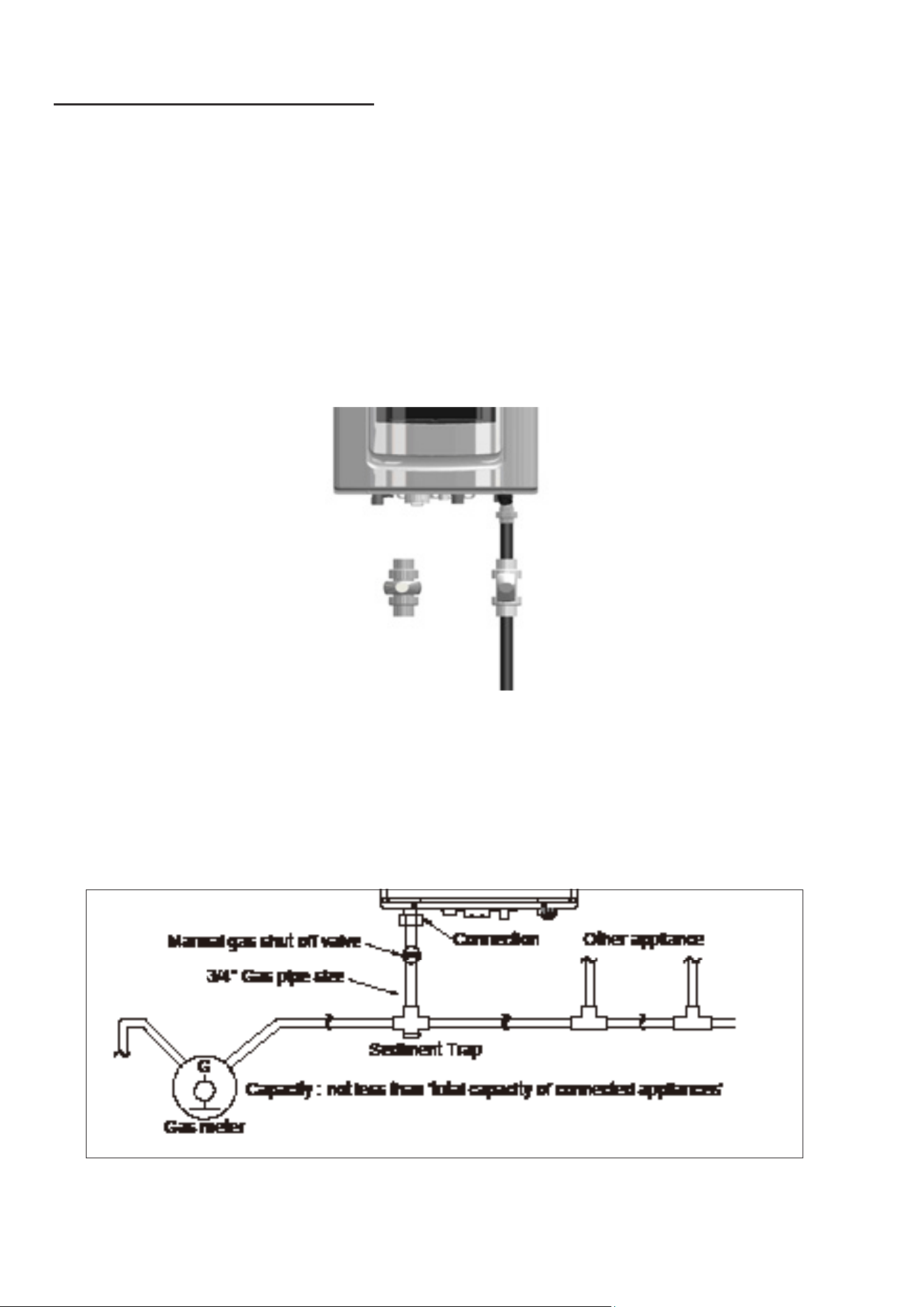
AP18733 REV. 3.2.17
42
▪ B. GAS CONNECTION REQUIREMENTS
1. The gas connection tting on the water heater is ¾″ (1.9 cm) female NPT. NOTE: The pipe size must not be less than ¾″ (1.9 cm).
2. The supply line must be sized for the maximum output of the water heater being installed. If there are additional gas appliances from the
main supply line, measure the size of the supply line according to the COMBINED total maximum BTUH draw for the appliances as if they were
operating at the same time.
3. Measure the length of the gas supply line from the gas meter to the water heater. Water heater must be installed downstream of the gas meter to
ensure adequate gas supply. Use the tables in this manual or refer to the gas line manufacturer’s sizing information to determine the correct supply
pipe size.
4. A manual gas shut-off valve should be installed in the gas supply line close to the water heater. See Figure 18 for detail.
5. To facilitate any future maintenance, it is also recommended that an approved gas union tting be installed in the supply line between the shut-
off valve and the ¾″ (1.9 cm) female NPT connection on the water heater.
Figure 18 – Gas Line With Shut-Off Valve Detail
6. Test the gas pressure to make sure it meets the minimum standards and does not exceed the maximum standards of the water heater.
7. Leak test the gas line pipe before placing the water heater in operation. Only use approved leak detector liquid solutions to check for leaks.
8. A properly sized gas regulator must be installed 18" away from the water heater.
9. Do not operate the water heater until all connections have been completed and the heat exchanger is lled with water.
Figure 19 – Natural Gas Piping Installation – NOTE: Capacity to be not Less than Total Capacity of Connected Appliances
GAS VALVE OFF
GAS VALVE ON
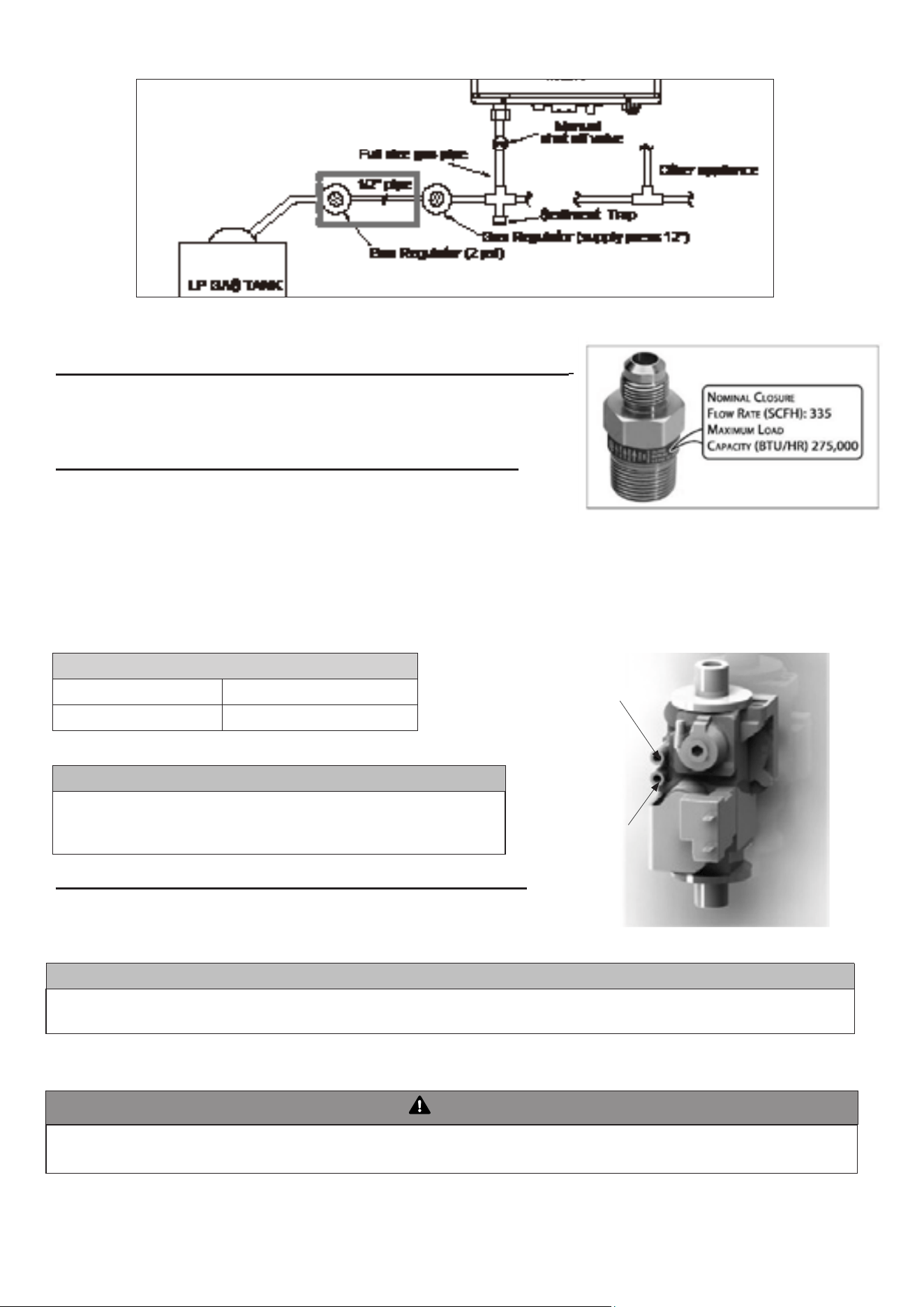
AP18733 REV. 3.2.17
43
▪ C. ADDITIONAL PRECAUTION FOR EXCESS FLOW VALVE (EFV
)
If an excess ow valve (EFV) is in the gas line, check the manufacturer’s minimum and
maximum ow capacity ratings. An improperly sized EFV will not allow for a full ow of gas
to the water heater and will cause the water heater to malfunction. See Figure 21.
▪ D. ADJUSTING GAS PRESSURE AT THE WATER HEATER
NOTE: Refer Figure 22 when adjusting gas pressure. Loosen the bolts before checking the
gas inlet pressure.
1. The water heater and its individual shutoff valve must be disconnected from the gas
supply piping system during any pressure testing of the system at test pressures greater
than ½ psi (3.5 kPa).
Figure 20 – LP Gas Piping Installation – NOTE: Capacity to be Not Less than Total Capacity of Connected Appliances
2. The water heater must be isolated from the gas supply piping system by closing its individual manual shutoff valve during any pressure testing of
the gas supply piping system at test pressures equal to or less than ½ psi (3.5 kPa). The minimum and maximum inlet gas line pressures must meet
the requirements shown in Table 18.
LP GAS / NATURAL GAS
Minimum Pressure 5.0" W.C (1.25 kPa)
Maximum Pressure 13.0″ W.C (3.24 kPa)
Manifold pressure port
Inlet Gas pressure port
Figure 21 – Excess Flow Valve (EFV)
Table 18 – Gas Pressure Requirements
NOTICE
Do not re (operate) the water heater until all connections have been complet-
ed and the heat exchanger is lled with water. Doing so will damage the water
heater and void the warranty.
Figure 22 – Inlet Gas Pressure Port Detail
▪ E. SETTING AND VERIFYING THE COMBUSTION SETTING
NOTE: Turn on a hot water faucet at a nearby location in the water heating system to
draw water at a high ow rate. This will ensure the water heater will run continuously
while running the combustion test.
NOTICE
Do not re (operate) the water heater until all connections have been completed and the heat exchanger is lled with water. Doing so will
damage the water heater and void the warranty.
1. After the appliance has red, ip DIP switch seven (7) to the ON position (low re). Proceed to check appliance combustion values.
NOTE: Use a combustion analyzer to ensure CO and CO
2
values are within the range shown in Table 19.
WARNING
It is required to use a combustion analyzer to verify nal adjustment according to the combustion chart (Table 19). Failure to do so could
result in serious personal injury or death.
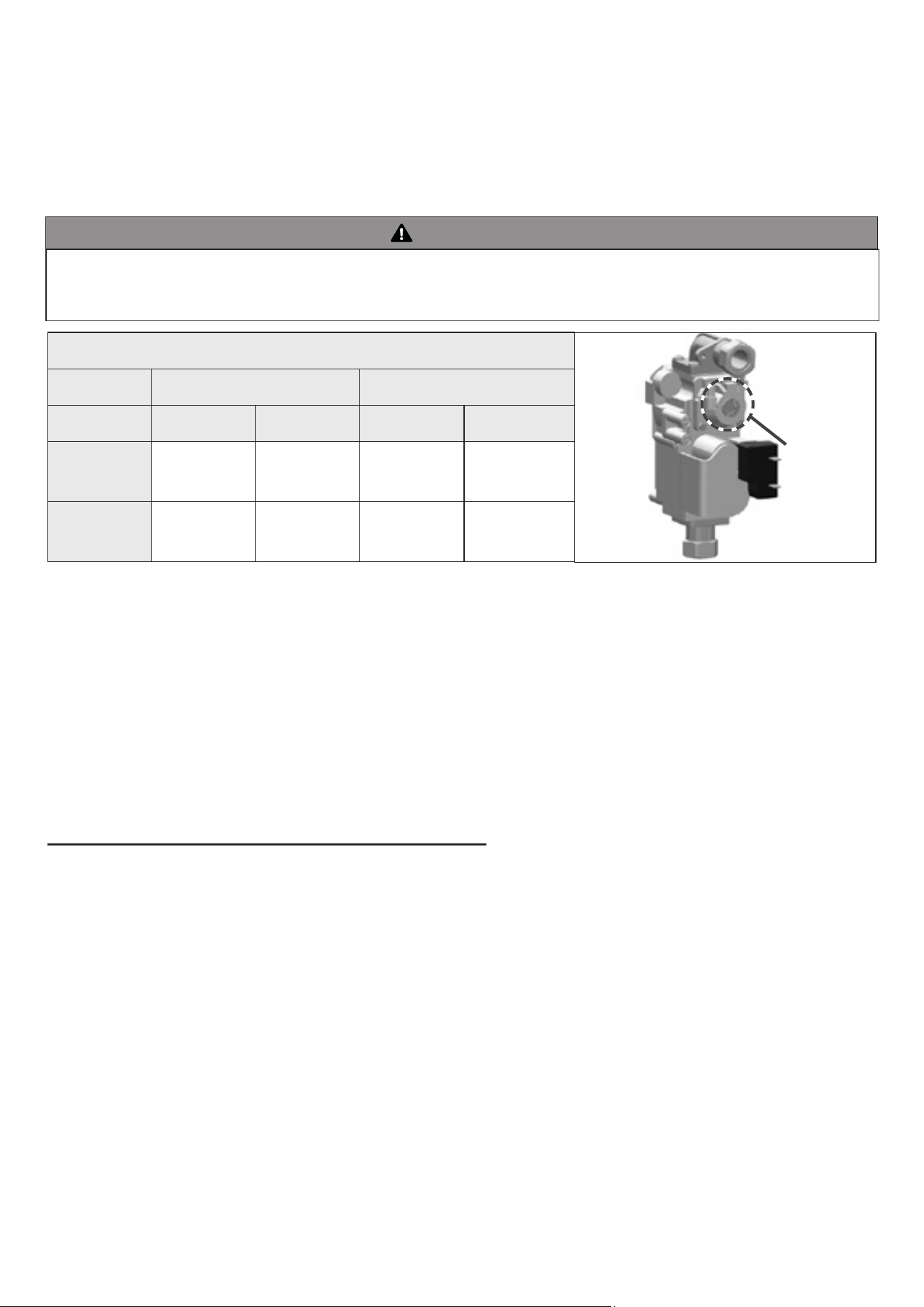
AP18733 REV. 3.2.17
44
If the readings obtained are lower or higher than the combustion readings in Table 19, use a 5m Allen key to adjust the offset screw in a
clockwise (positive) or counterclockwise (negative) direction (approximately 1/4 turn). See Figure 23. Check your combustion values. Repeat
this procedure until the values obtained on the combustion analyzer agree with those stated in Table 18.
NOTE: If the appliance makes a whistling sound (harmonics) at low re, adjust the offset screw in a clockwise (positive) direction
(approximately 1/8 turn). Check your combustion values and ensure they agree with those stated in Table 19 before proceeding.
It is very important that this conversion be set within the recommended CO measurements listed in Table 19. Visually looking at the burner does
not determine combustion quality. Failure to measure combustion with a Combustion Analyzer and set the throttle within the recommended CO
measurements could result in property damage, severe personal injury, or death.
WARNING
COMBUSTION SETTINGS
NATURAL GAS LP GAS
FAN SPEED LOW HIGH LOW HIGH
CO PPM <60 <200 <60 <200
CO
2
(%) 8 - 10 8 ½ - 10 ½ 9 – 10 ½ 9 ½ - 10 ½
Offset Screw
Figure 23 – Gas Valve Offset Screw
Table 19 – Combustion Settings
2. When low re settings have been obtained, ip DIP switch seven (7) to its original (OFF) position.
This will return the appliance to normal mode.
3. Flip DIP switch six (6) to ON (high re). Again check combustion readings with a combustion analyzer.
4. When complete, ip DIP switch six (6) to its original (OFF) position. This will return the appliance to normal mode.
Shut off water at hot water faucet.
5. Allow appliance to operate normally. Ensure it is operating properly.
6. Reinstall the appliance front cover.
WATER PIPING
▪ A. GENERAL PLUMBING CONNECTION GUIDELINES
• Pipe material must be suitable to meet local codes and industry standards.
Do not use lead, PVC, iron, or any piping which has been treated with chromates, boiler seal, or other chemicals.
• Pipe runs should be kept as short as possible to keep heat loss at a minimum.
• The pipe must be cleaned and without blemish before any connections are made.
• Do not apply a torch within 12" (30 cm) of the bottom connections of the water heater. Doing so could damage the water heater.
Such damages ARE NOT covered by product warranty.
• The size of the hot water pipe should be ¾" (1.9 cm) diameter.
• Isolation (shutoff valves) are included and should be used to ease future servicing.
• All piping should be insulated.
• Ensure water pressure to the unit is within 14 (96 kPa) to 70 psi (483 kPa). If water pressure is too low or high, the water heater will not be
able to perform to its full capacity and could be damaged. Such damages are not covered by product warranty.
• If the unit is installed on an upper level to supply water to the levels below, ensure the water pressure to the unit does not fall below 29 psi
(200 kPa). It may be necessary to install a pump system to ensure that the water pressure is maintained at this level.
• If feed water pressure is too high take measures to prevent water hammer (such as installing a pressure regulating valve).
• If this water heater will be installed in an application where the supply water is hard, the water must be treated with a water softener.
Water softeners may be regulated by the local codes. Consult with the Authority Having Jurisdiction for codes, sizing,
and installation guidelines.
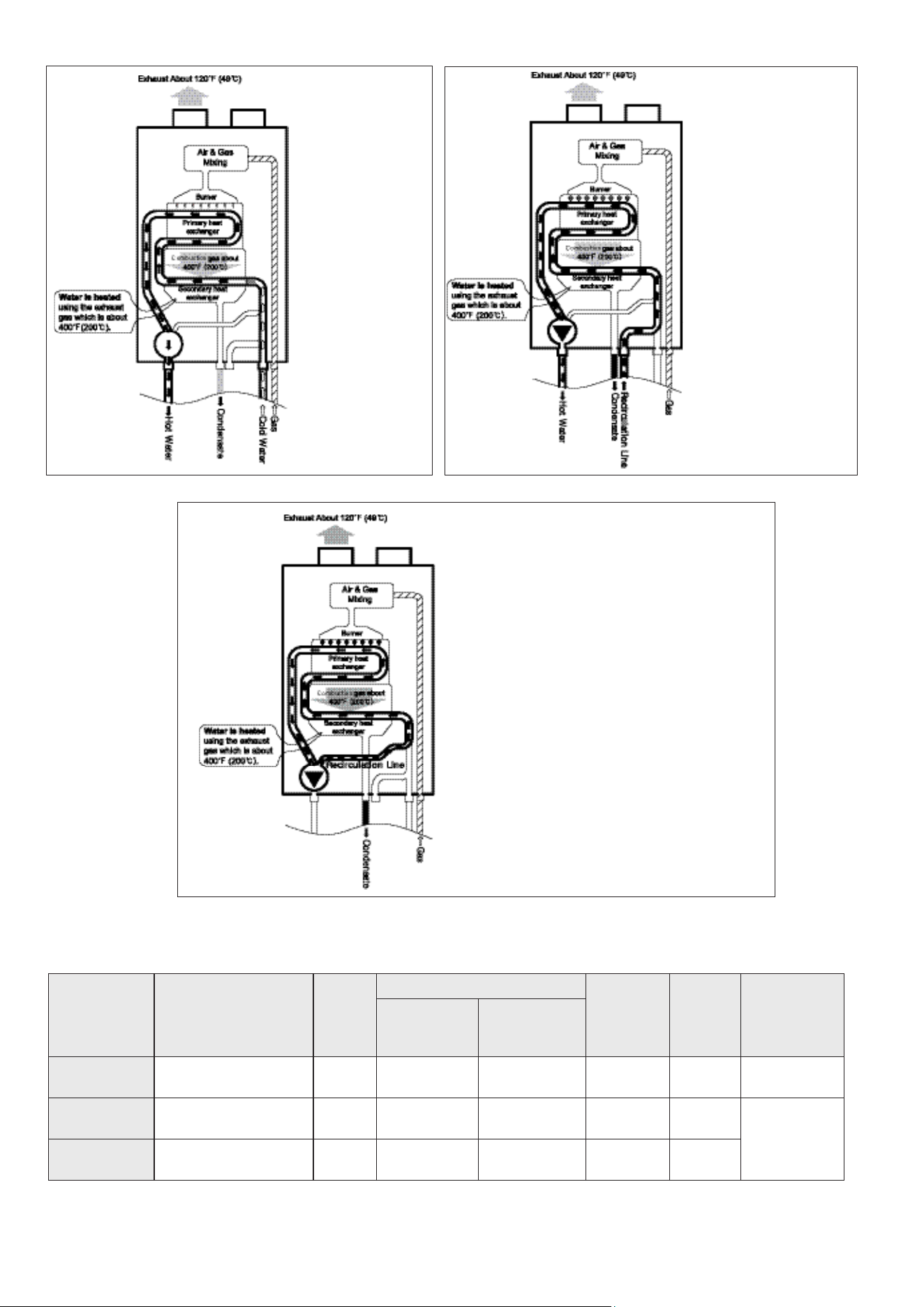
AP18733 REV. 3.2.17
45
Figure 24.1 – Standard(DHW) Mode
Internal Recirculation Mode allows the installer to program specic recirculation functions by day and time to circulate and heat water
more efciently - when the user most needs hot water. See Recirculation Functions, this manual, for details.
Mode Description
Return
Line
Installer Mode Setting
Hot Water
Speed
(To
Fixtures)
Energy
Usage
Default
Recirculation
Run Time
Recirculation
Setting
(6:RC)
Recirculation
Mode
(7:RM)
Standard
(Default)
Same as Standard Tankless
Water Heater
N/A OFF N/A Good Best -
Internal
Recirculation
Similar to Tank Water Heater
without Recirculation Loop
N/A ON Internal Better Better
5:00 ~ 8:00 AM
5:00 ~ 11:00 PM
External
Recirculation
Quicker Hot Water with
External Recirculation Loop
Required ON External Best Good
Table 20 – Detail of Recirculation Modes
* Cross-over kit is available for installations where dedicated return lines are not available.
Standard (DHW)
Mode – This is the
operating mode
when there is a call
for hot water.
External Recirculation
Mode – This mode keeps
an external recirculation
loop warm to make hot
water production more
efficient and also aid in
freeze protection. An
external recirculation line
must be installed in order
to recirculate water exter-
nally. The installer may
program specic recircula-
tion functions by day and
time to circulate and heat
water when the user most
needs hot water. See Re-
circulation Functions, this
manual, for details.
Preheat or Internal Recirculation Modes – When
calls for hot water are satised, the water heater is
factory programmed to Preheat and automatically
maintain the temperature set point of the water heat-
er – 24 hours a day, 7 days a week. The differential
setting can be adjusted to control the temperature
set point.
Figure 24.2 – External Recirculation Mode
Figure 24.3 – Preheat or Inernal Recirculation Mode
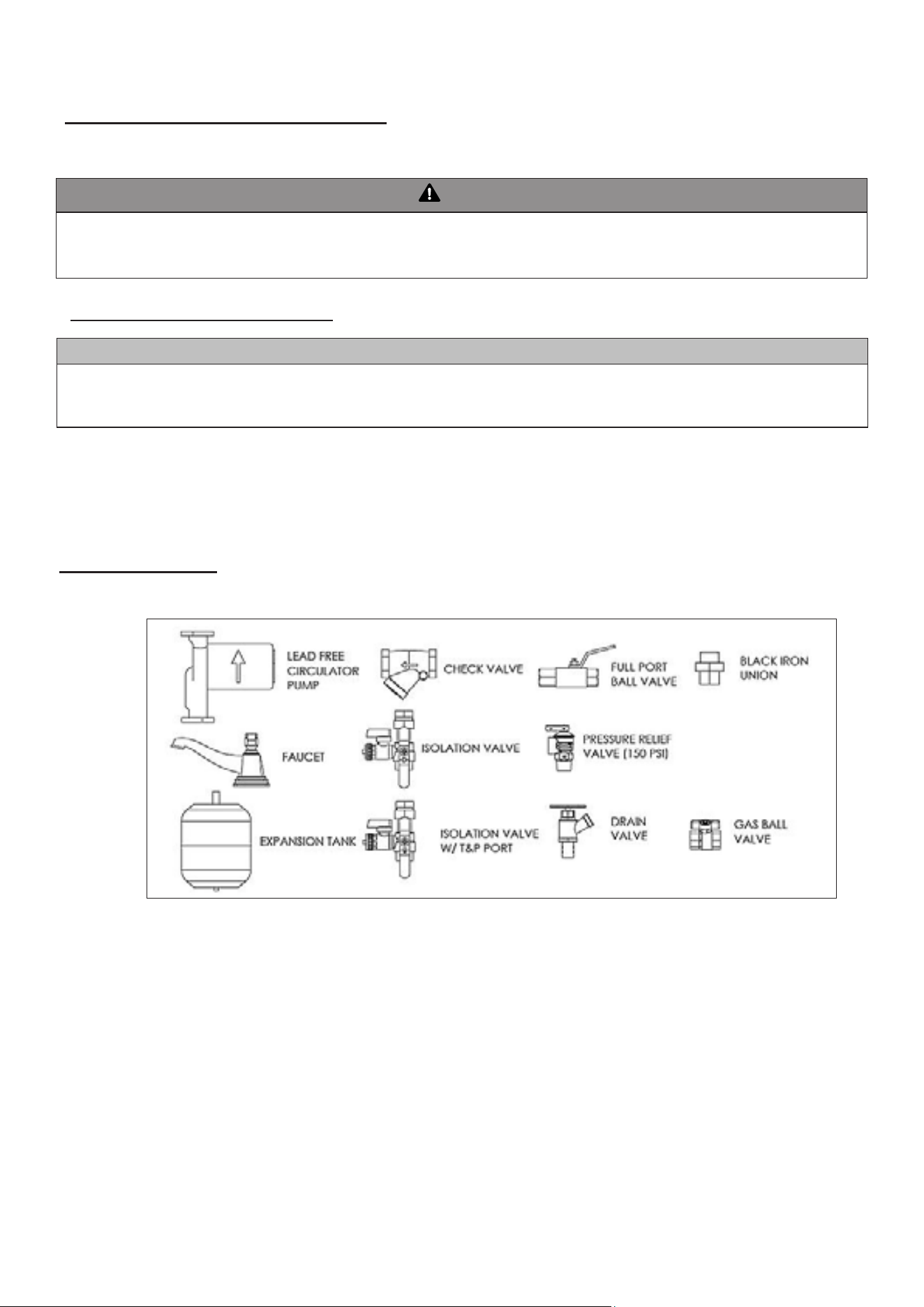
AP18733 REV. 3.2.17
46
CAUTION
Use at least the MINIMUM pipe size for all water heater loop piping This is to avoid the possibility of inadequate ow through the water heater.
Using less than the required minimum pipe size and piping could result in system problems, property damage, and premature water heater
failure. Such problems ARE NOT covered by product warranty.
Use both thread tape and pipe dope to connect to the ¾" (1.9 cm) domestic water inlet and outlet. Tankless isolation valves between the city
water supply and tank inlet are recommended for ease of service.
▪ D. APPLICATIONS
▪ B. INSTALL A BACKFLOW PREVENTER
It may be recommended to use a back ow preventer – check local codes. If a back ow preventer or a no return valve is used, a thermal
expansion tank must be installed on the cold water supply between the water heater and valve.
WARNING
To control thermal expansion, a thermal expansion tank should be installed in systems with an installed backow preventer. DO NOT use
a closed type expansion tank. Follow expansion tank manufacturer’s specications to properly size an expansion tank to the installation.
Failure to properly accommodate thermal expansion could result in property damage, severe personal injury, or death.
▪ C. PIPING THE WATER HEATER
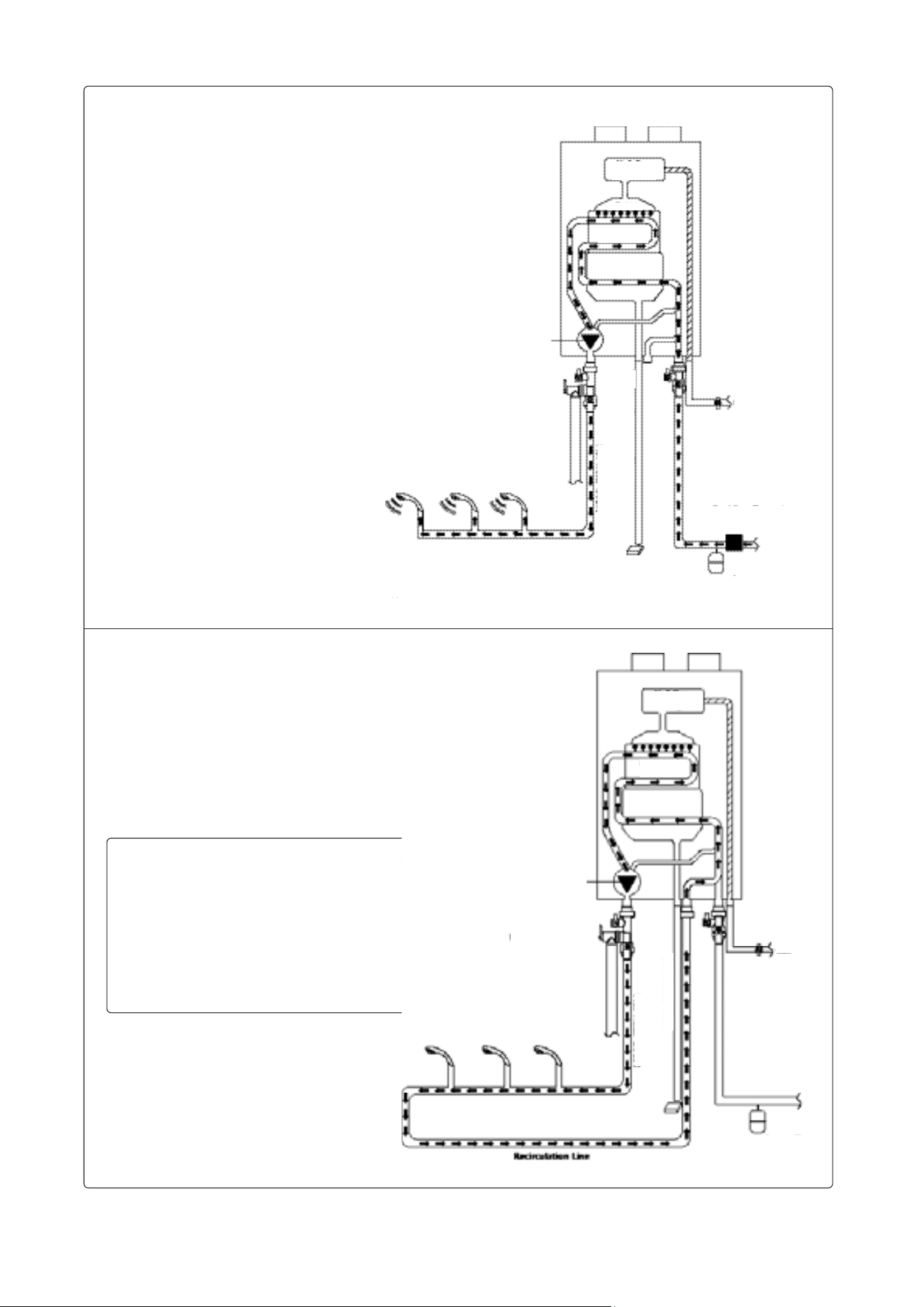
AP18733 REV. 3.2.17
47
1. Only POTABLE water may be plumbed through the water heater.
2. The water heater cannot be used for space heating applications.
3. Expansion tank is required if a backow preventer is installed.
4. Isolation valve kits are recommended for this installation.
Figure 25 – Standard Mode Piping, Single Water Heater
Standard Mode
Air & Gas
Mixing
Recirculation
Pump
Hot Water Oulet
Condensate Hose
Burner
Secondary heat
exchanger
Primary heat
exchanger
Cold Water Inlet
Gas
Pressure Relief Valve
Expansion Tank (Install
according to local code)
Backow Preventer
(optional)
NOTE: These drawings are meant to show system piping concept only. Installer is responsible for all equipment and detailing required
by local codes.
When using external recirculation mode with the
built-in pump, check the following maximum recir-
culation pipe lengths including fittings (3/4" pipe is
recommended):
-1/2" Pipe- 200' (60m) of equivalent length
-3/4" Pipe- 500' (150m) of equivalent length Lengths
in excess of these limits will require an external
recirculation pump.
External Recirculation mode
The recirculation pipe must be installed in the eld in
order to use ‘External Recirculation Mode’.
This mode allows the water heater to recirculate
heated water through the system and additionally
serves as a freeze protection function.
Figure 26 – Piping with External Recirculation Mode
Expansion Tank (Install
according to local code)
Recirculation
Pump
Pressure Relief Valve
Hot Water Oulet
Condensate Hose
Cold Water Inlet
Gas
Air & Gas
Mixing
Primary heat
exchanger
Burner
Secondary heat
exchanger
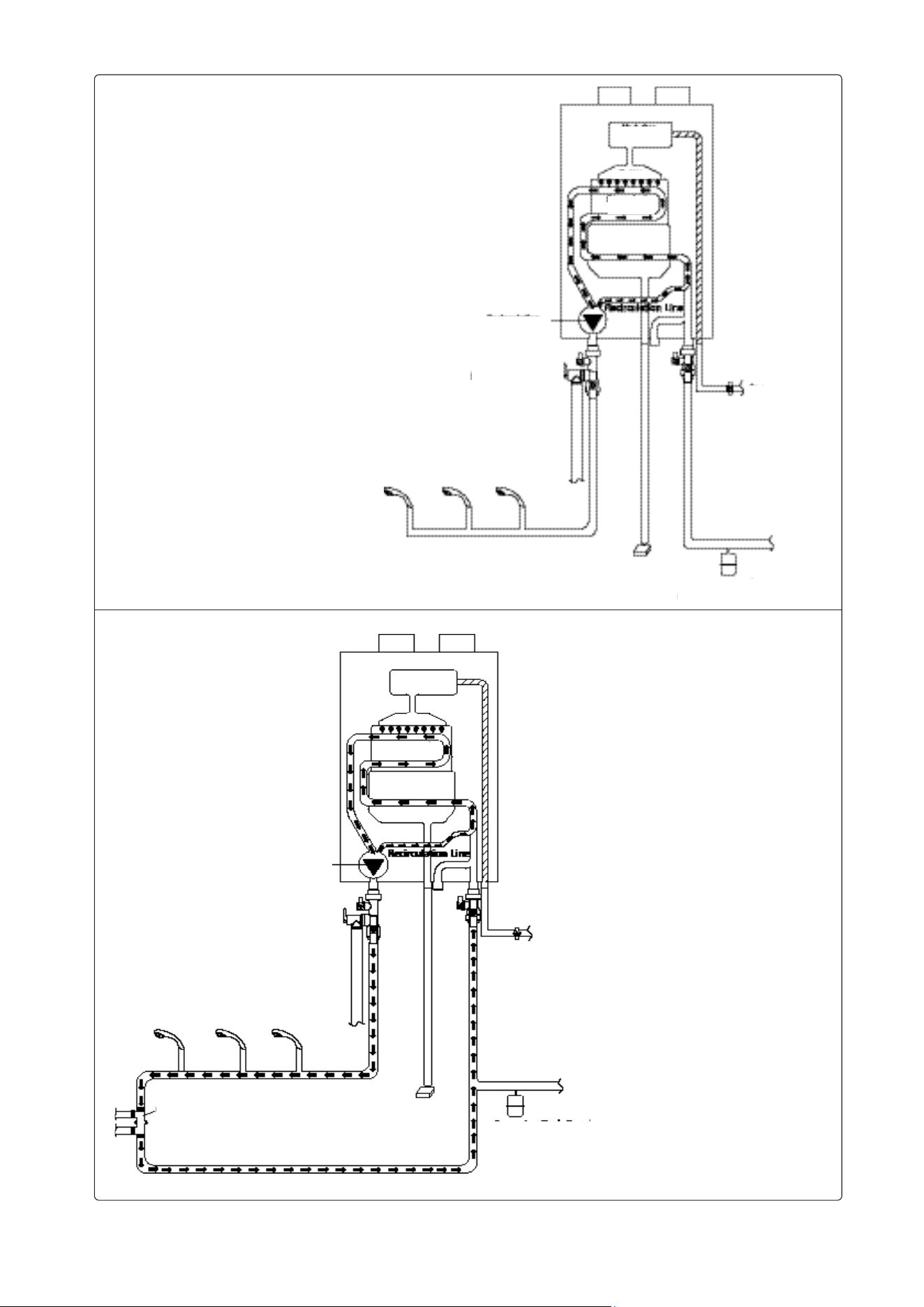
AP18733 REV. 3.2.17
48
bYPS Recirculation Mode may be used with
a cross over valve assembled at the furthest
tting
NOTE: These drawings are meant to show system piping concept only. Installer is responsible for all equipment and detailing
required by local codes.
Figure 28 – Other Piping Conguration
Primary heat
exchanger
Burner
Air & Gas
Mixing
Recirculation
Pump
Secondary heat
exchanger
Pressure Relief Valve
Hot Water Oulet
Condensate Hose
Cold Water Inlet
Gas
Expansion Tank
(Install according to local code)
Preheat or Internal Recirculation Mode may
be used without an installed recirculation
pipe. The water heater is preheated and
protected from freezing.
Preheat or Internal Recirculation Mode
Figure 27 – Preheat or Internal Recirculation Mode
Air & Gas
Mixing
Primary heat
exchanger
Burner
Secondary heat
exchanger
Recirculation
Pump
Pressure Relief Valve
Hot Water Oulet
Condensate Hose
Cold Water Inlet
Gas
Expansion Tank (Install
according to local code)
Cross Over Valve
bYPS Recirculation Mode
with Cross
Over Valve
Recirculation Line
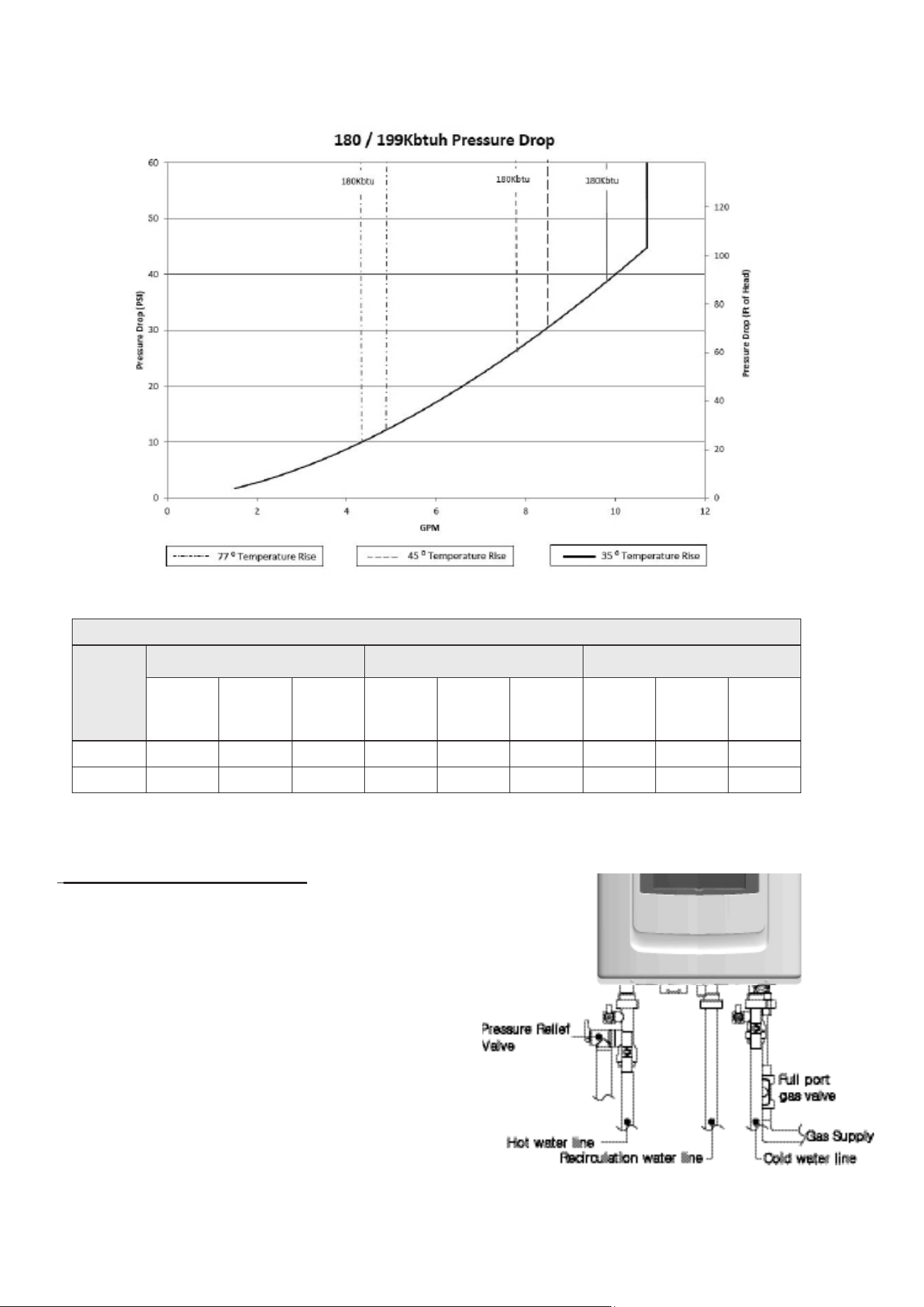
AP18733 REV. 3.2.17
49
Figure 29 – Pressure Drop through the Heat Exchanger
RECOMMENDED WATER PIPE SIZE
Number
of units
∆T = 77
°F
(25°C) ∆T = 45
°F
(7.2°C) ∆T = 35
°F
(1.6°C)
Flow Rate
(GPM)
Water
Velocity
(ft/s)
Pipe
Dia. (in)
Flow Rate
(GPM)
Flow Rate
(GPM)
Pipe
Dia. (in)
Flow Rate
(GPM)
Water
Velocity
(ft/s)
Pipe
Dia. (in)
1 5 3.75 3/4 9 3.61 1 11 4.64 1
2 10 4.22 1 18 3.21 1 1/2 23 4.13 1 1/2
Table 21 – Recommended Water Pipe Size
NOTE: The above pipe sizes are recommended based on maximum water velocity of 5 ft/s and maximum water temperature of 140°F.
▪ E. PRESSURE RELIEF VALVE
An external pressure relief valve must be installed on this water heater.
When installing, observe the following guidelines. Failure to comply with
these guidelines can result in substantial property damage, personal in-
jury, or death.
This water heater must be provided with an approved 150 psi (1,034 kPa),
¾" ASME HV Valve that must be installed on the DHW outlet line (See Figure
30). The 150 psi Pressure Relief Valve must be installed on the DHW supply
line to ensure a compliant installation and safe operation.
This water heater has a high-temperature shut-off switch built in as a stand-
ard safety feature. Therefore, a “pressure only” relief valve is required. DO
NOT operate this water heater before the supplied pressure relief valve is
installed with sufcient relieving capacity in accordance with the ASME
rating plate on the water heater.
Figure 30 – Pressure Relief Valve
AP18733 REV. 3.2.17
50
Pressure relief valves must be installed as close to the water heater as possible. No other valves should be placed between the pressure relief
valve and the appliance. DO NOT install a relief valve with a pressure rating greater than 150 psi (1,034 kPa). This is the maximum allowable relief
valve setting for this water heater.
After installing the relief valve and lling and pressurizing the system, test the operation of the valve by lifting the lever. Make sure the valve dis-
charges freely. If the valve fails to operate correctly, replace it with a new relief valve. Ensure that the maximum BTU/H rating on the pressure
relief valve is equal to or greater than the maximum input BTU/H rating of the water heater.
To avoid water damage or scalding due to relief valve operation:
• Discharge line must be connected to relief valve outlet and run to a safe place of disposal. Terminate the discharge line in a manner that will
prevent possibility of severe burns or property damage should the relief valve discharge.
• Discharge line must be as short as possible and the same size as the valve discharge connection throughout its entire length.
• Discharge line must pitch downward from the valve and terminate at least 6" (30 cm) above the oor drain, making discharge clearly visible.
• Discharge line shall terminate plain, not threaded, with a material serviceable for temperatures of 375°F (191°C) or greater.
• Do not pipe discharge to any location where freezing could occur.
• No shutoff valve may be installed between the relief valve and water heater or in the discharge line. Do not plug or place any obstruction in
the discharge line.
• Test the operation of the relief valve after lling and pressurizing the system by lifting the lever. Make sure the valve discharges freely. If the
valve fails to operate correctly, replace it with a new relief valve.
• Test relief valve at least once annually to ensure the waterway is clear. If valve does not operate, turn the water heater “off” and call a
plumber immediately.
• Take care whenever operating relief valve to avoid scalding injury or property damage.
• For water heaters installed with only a pressure relief valve, the separate storage vessel must have a temperature and pressure relief valve
installed. This relief valve shall comply with Relief Valves for Hot Water Supply Systems, ANSI Z21.22 CSA4.4.
FAILURE TO COMPLY WITH THE ABOVE GUIDELINES COULD RESULT IN FAILURE OF RELIEF VALVE OPERATION, RESULTING IN
POSSIBILITY OF SUBSTANTIAL PROPERTY DAMAGE, SEVERE PERSONAL INJURY, OR DEATH.
WARNING
CONNECT ELECTRICAL POWER / INITIAL STARTUP
Install wiring and electrically ground water heater in accordance with the authority having jurisdiction or, in the absence of such an authority,
follow the National Electrical Code, NFPA 70, and/or CSA C22.1 Electrical Code-Part 1 in Canada. Failure to follow all applicable local, state,
and national regulations, mandates, and building supply codes for guidelines to install the electrical power supply could result in property
damage, serious personal injury, or death.
WARNING
ELECTRICAL SHOCK HAZARD – To ensure safety, turn off electrical power supply at service entrance panel before making any electrical
connections to avoid possible electric shock hazard. Failure to do so could result in property damage, serious personal injury, or death.
WARNING
A. WIRING INFORMATION
1. The electrical supply required by the water heater is 120V at 60Hz. Power consumption may be up to 172W. Use an appropriate, dedicated
circuit.
2. Do not disconnect the power supply when the water heater is not in use. When the power is off, the freeze protection in the water heater will
not activate, resulting in possible freeze damage.
3. Do not let the power cord contact gas piping. Tie redundant power cord outside the water heater. Putting the redundant length of cord inside
the water heater may cause electrical interference and faulty operation.
4. This water heater must be properly grounded. Ensure the electrical receptacle that the water heater will be plugged into is properly grounded.
5. Do not attach the ground wire to either the gas or water piping, or to a telephone line.
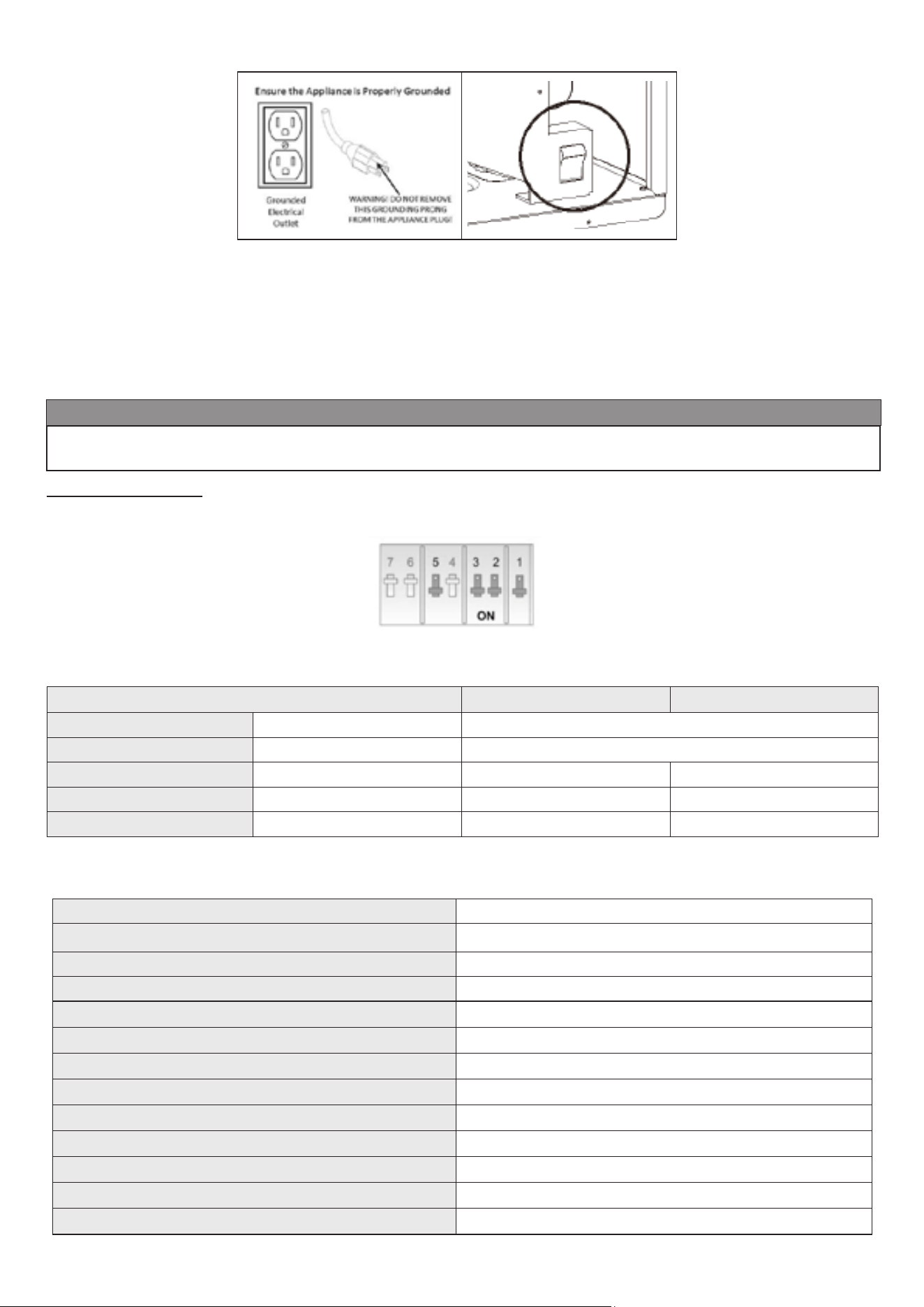
AP18733 REV. 3.2.17
51
6. The wiring diagrams contained in this manual are to be used for reference purposes only.
7. Refer to these diagrams and the wiring diagrams of any external controls used with the installation when wiring the water heater. Read, under-
stand, and follow all wiring instructions supplied with the controls.
8. Do not disconnect the power supply when the water heater is in normal operation.
NOTE: For additional electrical protection, the use of a whole house surge protector is recommended. Damage caused by power surges is not
covered by the warranty.
NOTICE
If the water heater display does not come ON, rst check the plug. Also check the electrical panel circuit breaker and reset it if necessary. If the
circuit breaker trips again, do not reset. Disconnect the plug and have a qualied technician diagnose the problem.
▪ B. DIP SWITCHES
There is one DIP switch. DIP switches 6 and 7 need to be set to OFF for the water heater to operate normally.
– Dip Switch Detail (Factory Setting Shown)
DIP SWITCH OFF ON
1 – 3 Factory Use Only Factory Use Only
4 Factory Use Only Factory Use Only
5 Gas Type LP NG
6 High Fire Normal High Fire
7 Low Fire Normal Low Fire
DIP SWITCH GROUP
Table 22 – DIP Switch Group
SYSTEM CONTROL SETTINGS
MAXIMUM FLAME DETECTING VOLTAGE 2.5V
PRE-PURGE TIME (Tp) Maximum 10 seconds, minimum 1 second
SAFETY TIME (IGNITING TIME) (Ts) 3.5 seconds
IGNITING INTERVAL TIME <10 seconds
POST-PURGE TIME (Tip) 30 seconds
OVER-HEATING 1,2,3 PROTECTION DETECTION TIME <1 seconds
TEMPERATURE SENSOR FAULT DETECTION TIME <2 seconds
# OF IGNITION ATTEMPTS (Ntl) 10
DHW SET TEMPERATURE RANGE 100°F – 140°F (38°C – 60°C)
DHW OFF TEMPERATURE
DHW Target Temperature + DHW Differential Temperature 27°F (15°C)
DHW ON TEMPERATURE Below DHW Target Temperature 9°F (5°C)
DHW WATER ON MINIMUM WATER FLOW .5 gallons (2 liters) (12Hz)
DHW WATER OFF MINIMUM WATER FLOW .4 gallons (1.5 liters) (8Hz)
Figure 31 – Proper Grounding – Internal Manual Power Switch
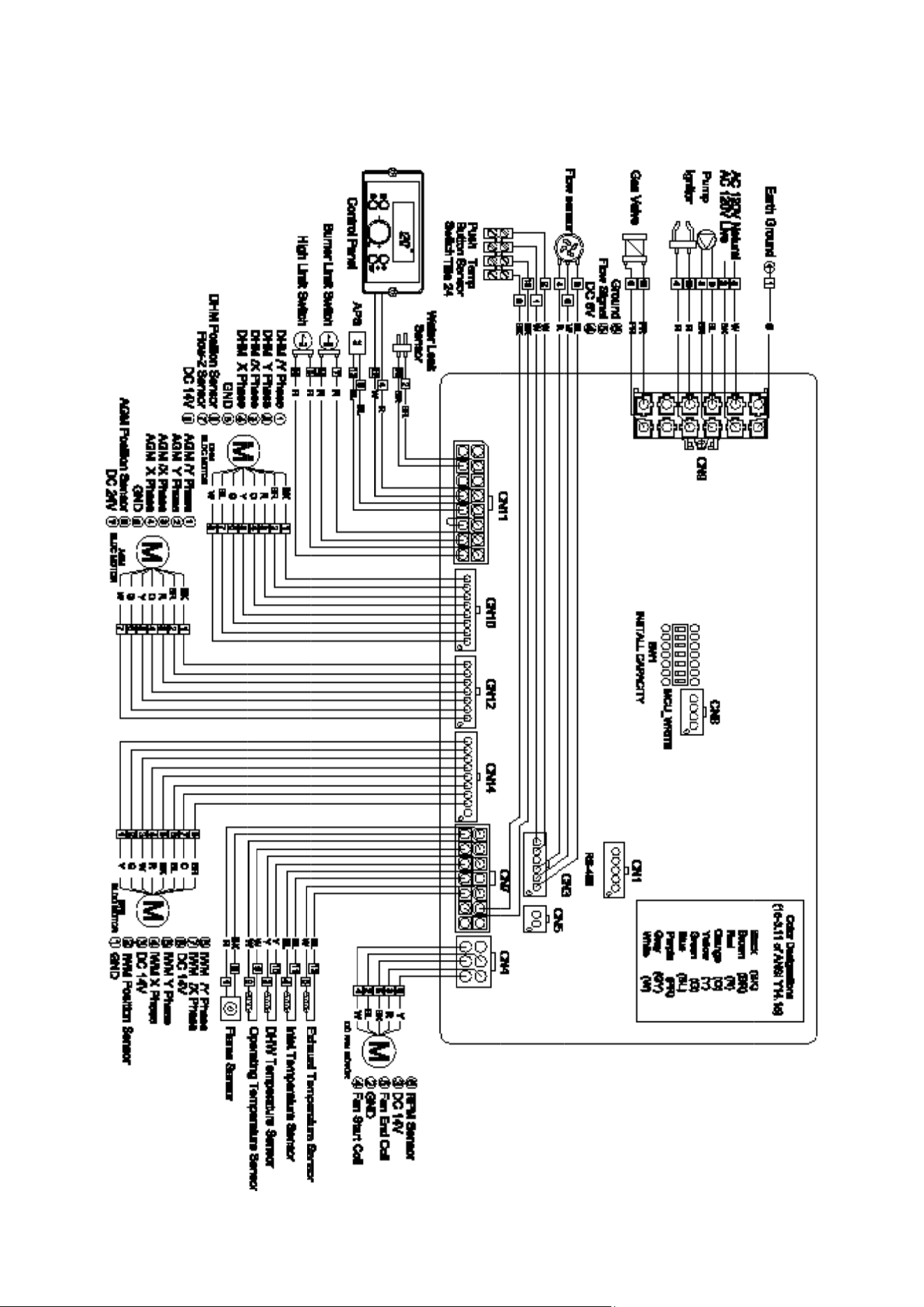
AP18733 REV. 3.2.17
52
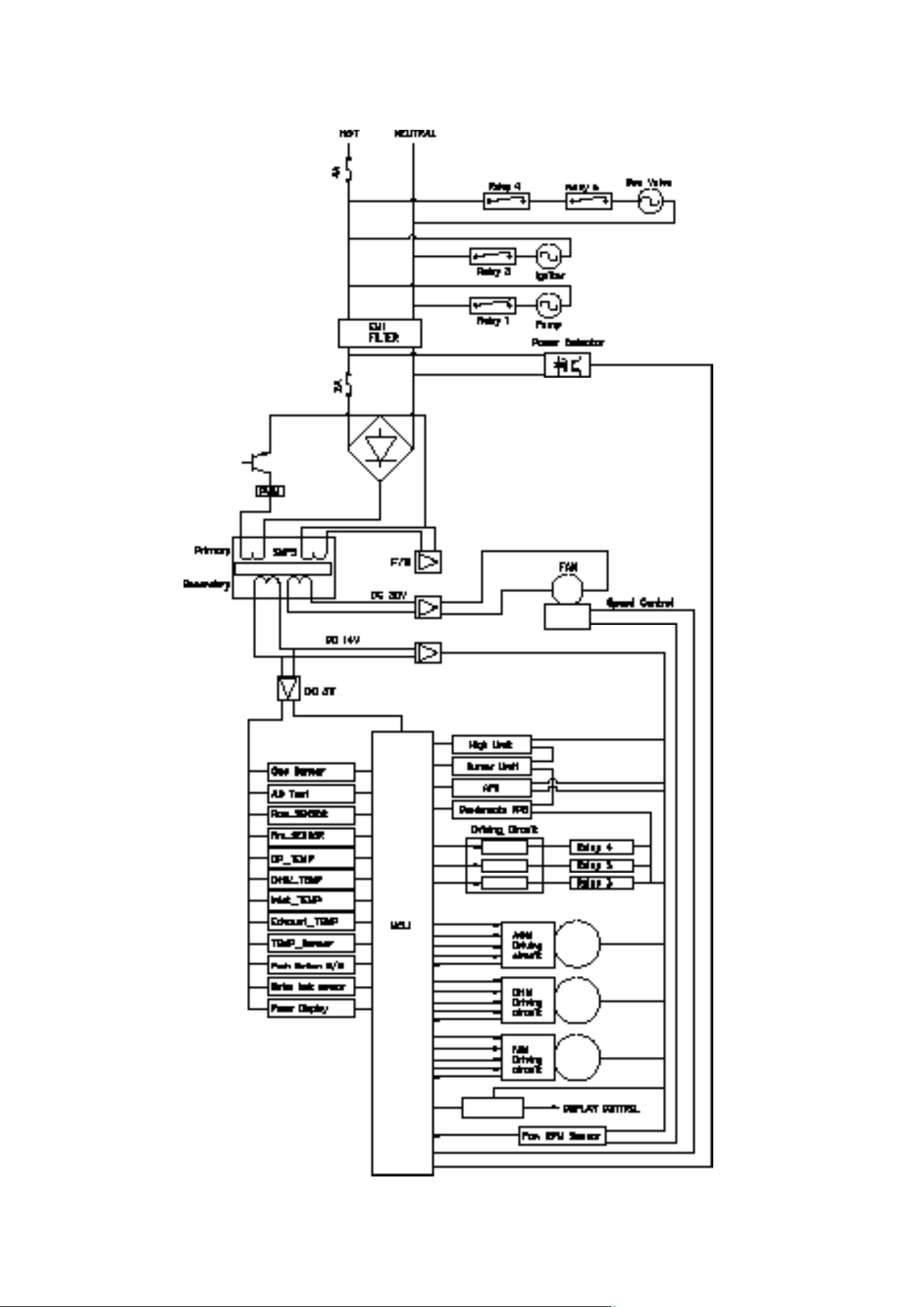
AP18733 REV. 3.2.17
53
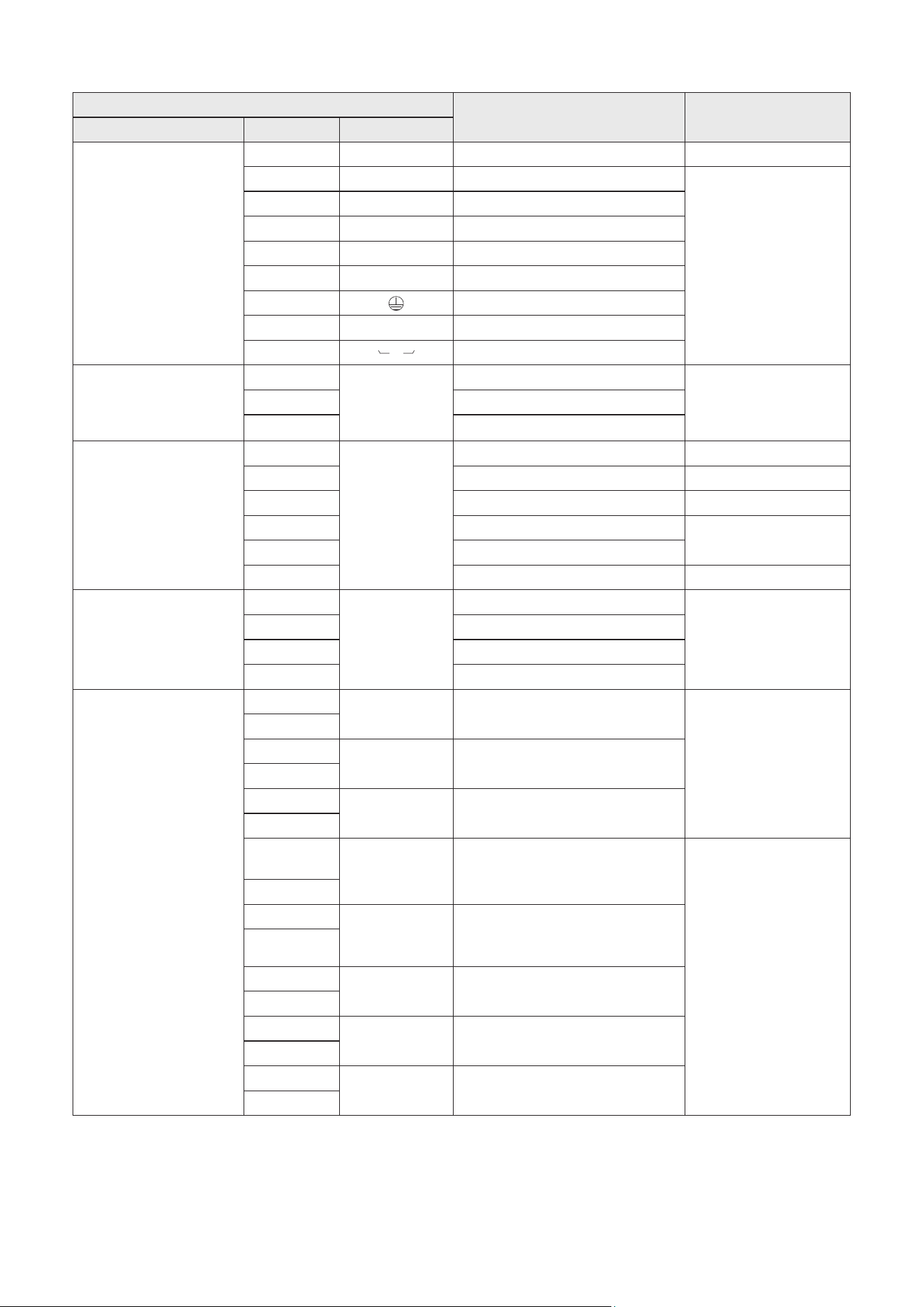
AP18733 REV. 3.2.17
54
CONNECTOR
DESCRIPTION HT SELV
NO. OF LOCATION PIN BOARD SILK
CN9
65001WS-12
1 - EARTH GROUND -
2
L Power Supply Line HT (120V~)
3
CP1 Circulation Pump
4
IT Igniter
5
L(HT) UNUSED
6
GV Gas Valve
7
UNUSED
8
N
Power Supply Neutral
9-12
N
AC Power COM Line
CN1
SMW250-03
1
RS-485
RS485 + SELV (5V)
2
GND
3
RS485 -
CN4
LWD1140-06
1
FAN
Unused -
2
GND SELV (30V)
3
VDD SELV (14V)
4
Fan power (start coil)
SELV (30V)
5
Fan power (end coil)
6
Fan speed feedback signal
SELV (14V)
CN8
SMW250-04
1
MCU ISP
GND
SELV (5V)
2
ISP / Reset Port
3
ISP TOOL0 Data Port
4
VCC
CN11
1
HWL
Unused
SELV(12V~)
9
2
LWL Water Leak Sensor
10
3
HD Unused
11
4
TH
Connect to the Display Control
(Thermostat)
SELV (14V)
12
5
Condensate APS Condensate Air Pressure Switch
13
6
Flue APS Unused
14
7
BL Burner Limit
15
8
HL Water High Limit
16
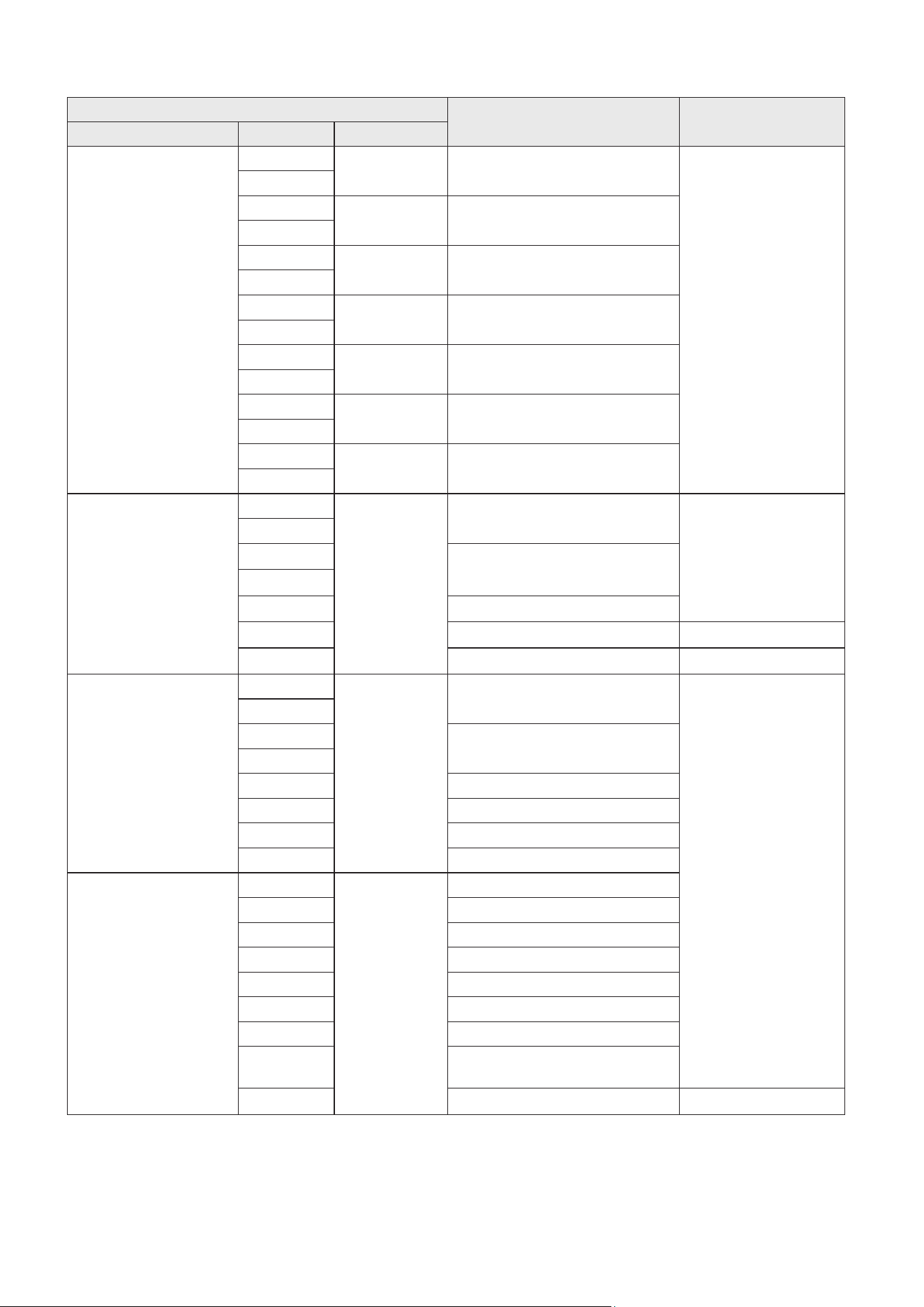
AP18733 REV. 3.2.17
55
CONNECTOR
DESCRIPTION HT SELV
NO. OF LOCATION PIN BOARD SILK
CN7
LWD1140-14
1
F.S Flame Detect Sensor
SELV (5V)
8
2
OP.S Operating Water Temperature Sensor
9
3
DH.S DHW Temperature Sensor
10
4
I.S Inlet Water Temperature Sensor
11
5
BG.S
Exhaust Temperature Sensor
12
6
OT.S
Optional Temperature sensor
13
7
SP.S
Unused
14
CN12
SMW250-07
1
AGM
AGM Stepper Motor Coil / Y Phase
SELV (24V)
2
3
AGM Stepper Motor Coil / X Phase
4
5 GND -
6 AGM Stepper Motor Position SELV (14V)
7 VDD SELV (24V)
CN10
SMW250-08
1
DHM
(Mixing Valve)
DHM Stepper Motor Coil / Y Phase
SELV (14V)
2
3
DHM Stepper Motor Coil / X Phase
4
5 GND
6 DHM Stepper Motor Position
7 Unused
8 VDD
CN14
SMW250-09
1
IWC
(Flow Control
Valve)
GND
2 IWC Stepper Motor Position
3 VDD
4 IWC Stepper Motor Coil X Phase
5 IWC Stepper Motor Coil Y Phase
6 VDD
7 IWC Stepper Motor Coil / X Phase
8
IWC Power IWM Stepper Motor Coil / Y
Phase
9 Unused -
AP18733 REV. 3.2.17
56
CONNECTOR
DESCRIPTION HT SELV
NO. OF LOCATION PIN BOARD SILK
CN3
SMW250-06
1
OPB Optional Push Button
SELV(5V)2
3 Unused
4
FLUX1
VCC
SELV (5V)
5 Water Flow Sensor
6 GND
CN5
SMW250-10
1
RPM
Fan RPM Check
2 GND
Table 23 – Water Heater Wiring 2
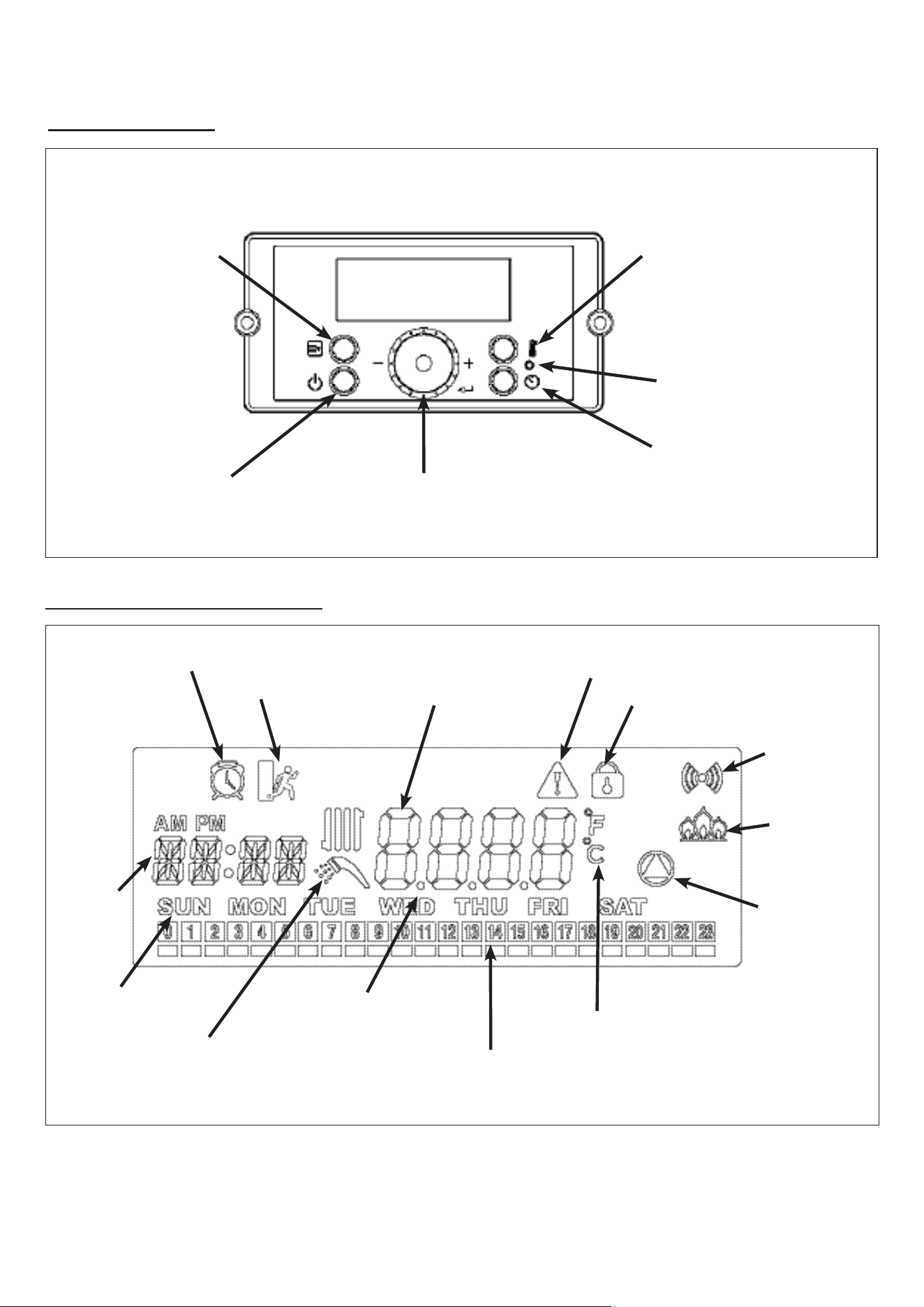
AP18733 REV. 3.2.17
57
CONNECTOR
DESCRIPTION HT SELV
NO. OF LOCATION PIN BOARD SILK
CN3
SMW250-06
1
OPB Optional Push Button
SELV(5V)2
3 Unused
4
FLUX1
VCC
SELV (5V)
5 Water Flow Sensor
6 GND
CN5
SMW250-10
1
RPM
Fan RPM Check
2 GND
A. CONTROL PANEL
▪ OPERATING SYSTEM INSTRUCTIONS
Press this Button Less than 5
Seconds Change DHW set-Point
Temperature 100-120
°F (38-49°C)
Hold this Button More than 5 Seconds
Change DHW Set-Point Temperature
121-140°F (49.4-60°C)
Indicator (Green)
Indicates Water Heater is Operating
Press this Button Less than 5
Seconds Change Current Time
Setting
Year/Month/Date/Hour/Minute/Day
of Week
Press This Button Less than 5 Seconds
Cancel/Return
Hold This Button More than 5 Seconds
When Control Panel Power is ON
status Display Mdoe
When Control Panel
Power is OFF Installer Mode
Press This Button Less than 5 Seconds
Turn Control Power Panel ON/OFF
Press this Button Less than 5 Seconds
Select Menu by Pressing Dial Button
Scroll Values by Turning Dial Clockwise(+) or
Counterclockwise(-)
Figure 32 – Water Heater Control Panel Detail
▪ B. LCD DISPLAY DESCRIPTIONS
Status Display Mode
or Installer Mode is
Operational
High Temperature
Warning
Lock Mode Icon
Appliance is in a
Communication
Sate
Flame On
Internal Pump On
Celsius and Fahrenheit Indicators
Recirculation Mode Notication
Display Number Indicates Hour in 24 Hour Scale
Full On Rectangular Icon Indicates Half Hour
Eight(8) Segment Display with Colon
and Decimals Displays Numerals
and Characters
Appliance is Operating
in DHW mode
Current Scheduled
Day of Week
Current
Time
Recirculation
Time Icon
Vacation Mode is
Operational
Figure 33 – LCD Display Detail
LCD also features a backlit lamp that will illuminate:
• When a user action is detected (a button is pressed)
• The display will turn off after approximately 20 seconds if no buttons are pressed
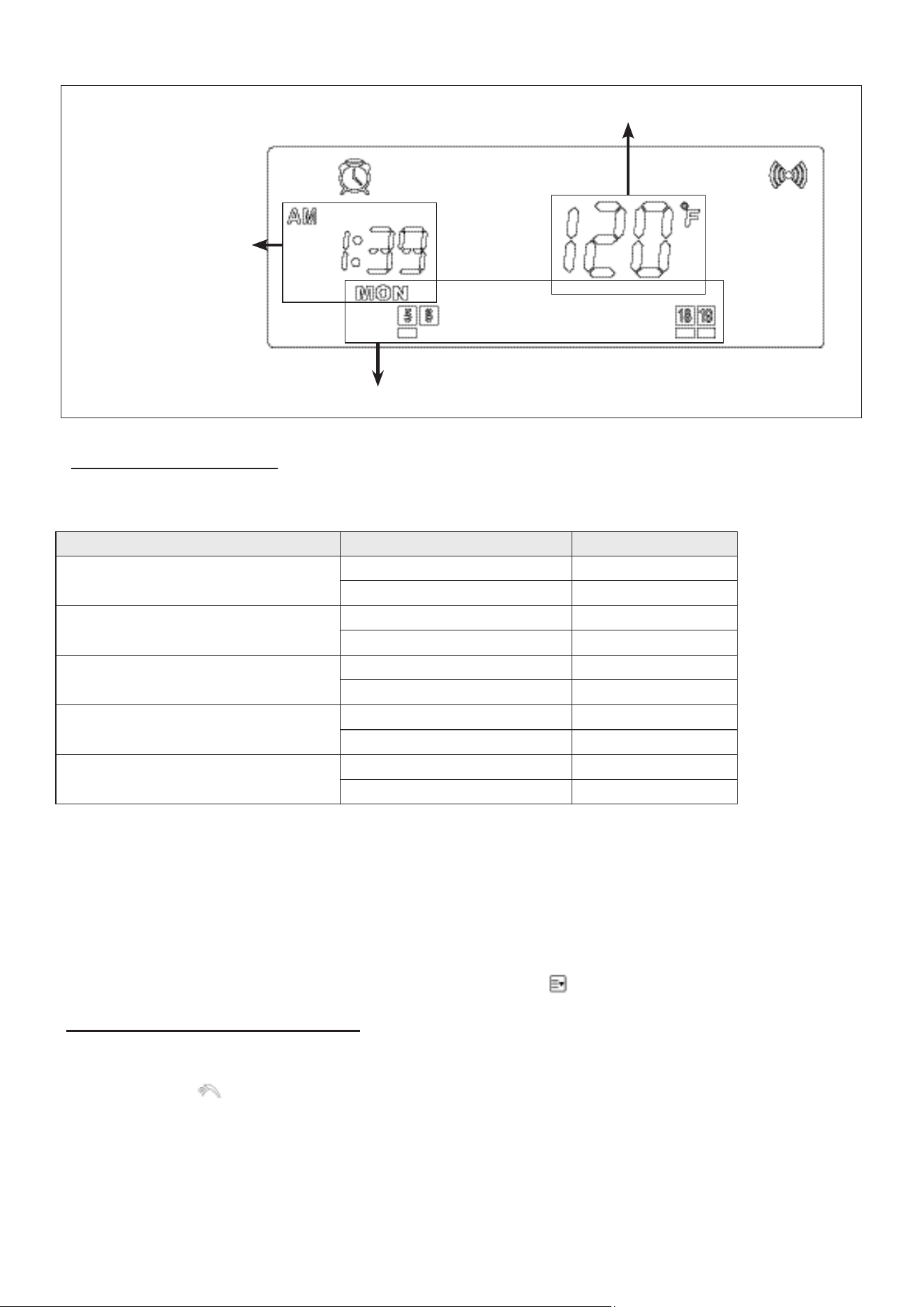
AP18733 REV. 3.2.17
58
CURRENT TIME : AM 1:39
CURRENT DAY : MONDAY
TIMER SETTING : MONDAY 5:00~6:30 , 18:00~20:00
DESIRED HOT WATER TEMPERATURE : 120
°F
Figure 34 – Example Display
▪ C. START-UP SEQUENCE
After the appliance is powered ON, the LCD display shows a sequence of information. The icons will ash, followed by various indicators that
describe the appliance controller and software versions. It will take the appliance roughly 15 seconds to cycle through the Start-Up Sequence.
Display Items Time for Display Remarks
LCD Test
1 Sec All segments “ON”
0.5 Sec All segments “OFF”
Category: 199
1 Sec Pdn
1 Sec 0061
Software Version for Front Panel
1 Sec SPn
1 Sec 00.XX
Software Version for Water Heater
1 Sec SFn
1 Sec XX.XX
Hardware Version for Water Heater
1 Sec Hdn
1 Sec 00XX
Table 24 – Start-Up Sequence
The Control System can operate through user and service modes that have specic LCD outputs and dedicated controls, including:
• Changing the Set-Point Temperature
• Error Mode
• Status Display Mode
• Installer Mode
• High Elevation Mode
• High Temperature Mode
NOTE: The Control System will not allow changes if Lock Mode is activated unless the button is pressed for more than 5 seconds.
▪ D. CHANGING THE DHW SET-POINT
NOTE: The setpoint cannot be changed if water is owing through the unit. Ensure there is no demand on the water heater when
changing setpoint.
The display shows the icon when the DHW set-point can be changed.
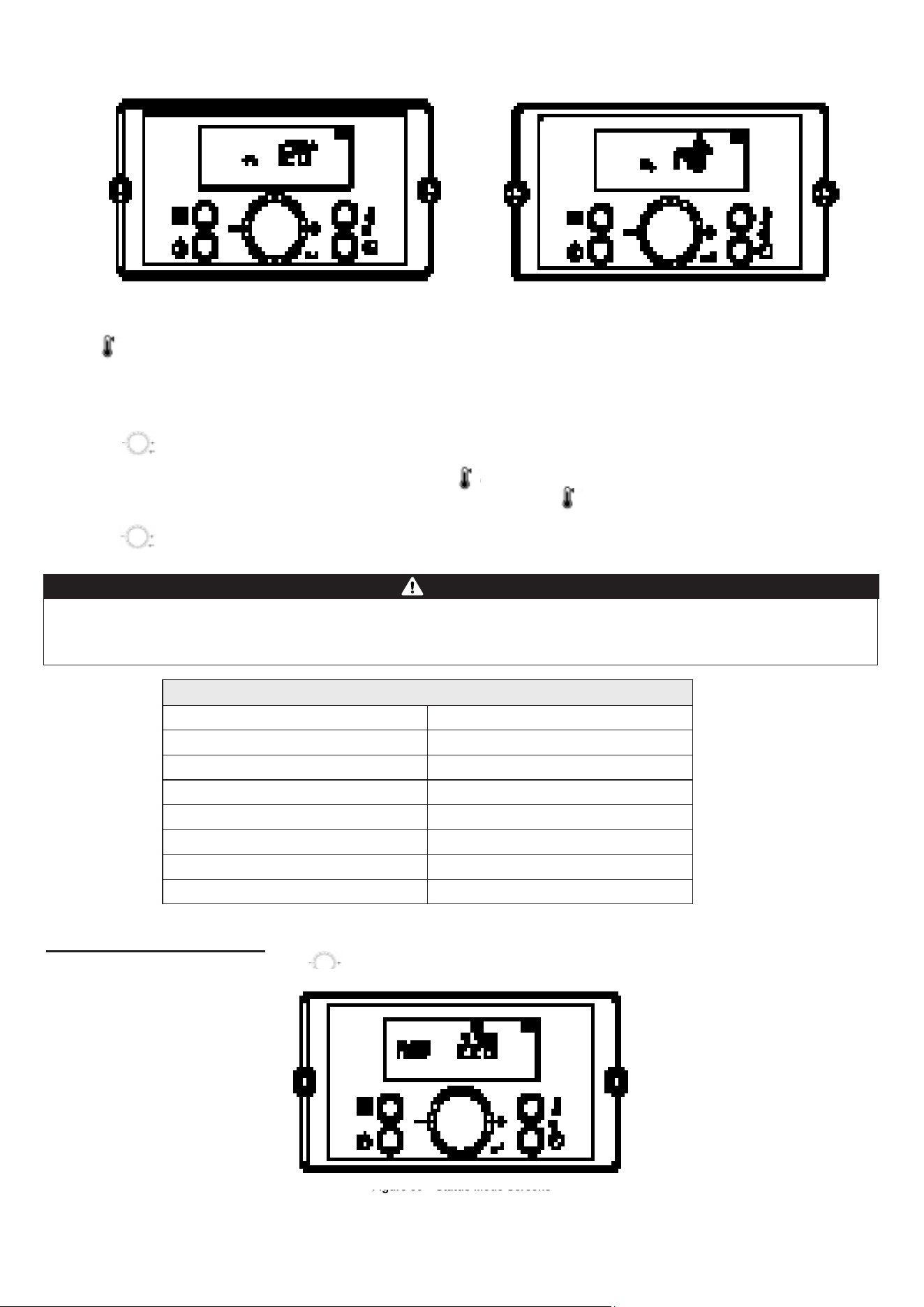
AP18733 REV. 3.2.17
59
Figure 35 – DHW Set-Point Screens
Press the button when the display panel is powered ON to change the DHW Set-Point. The DHW icon and current set-point will display and ash.
This indicates that the DHW Set-Point can be changed. Factory DHW Set-Point is 120°F(49°C). Initial DHW Set-Point range is 100 – 140°F (38 –
60°C).
The recommended starting temperature is 120 °F (49°C).
Turn the dial counterclockwise to lower and clockwise to raise the DHW set-point. After changing the temperature, press the button to save
the set-point.
To change the DHW Set-Point above 121°F (49.5°C), press and hold the button when the display panel is powered ON.
The current DHW set-point will display. The DHW icon will ash. Then press and hold the button for ve seconds. The scald warning letter “H”
(High Temperature Warning icon) will display. High temperature DHW Set-Point range is 121°F – 140°F (49.5°C – 60°C).
Turn the dial counterclockwise to lower and clockwise to raise the DHW set-point. After changing the temperature, press the button to save
the set-point.
Hotter water increases the risk of scald injury. Scalding may occur within 5 seconds at a setting of 140°F (60°C). Water temperature over 125°F
can instantly cause severe burns, or death, from scalds. Children, disabled, and elderly are at the highest risk of being scalded. See instruction
manual before setting temperature at appliance. Feel water before bathing or showering!
DANGER
APPROXIMATE TIME / TEMPERATURE RELATIONSHIPS IN SCALDS
120°F More than 5 minutes
125°F
1 ½ to 2 minutes
130°F
About 30 seconds
135°F
About 10 seconds
140°F
Less than 5 seconds
145°F
Less than 3 seconds
150°F
About 1 ½ seconds
155°F
About 1 second
E. STATUS DISPLAY MODE
Status Display Mode will activate when button is pressed and held for ve seconds when the display panel is turned on at Standby Mode.
Figure 36 – Status Mode Screens
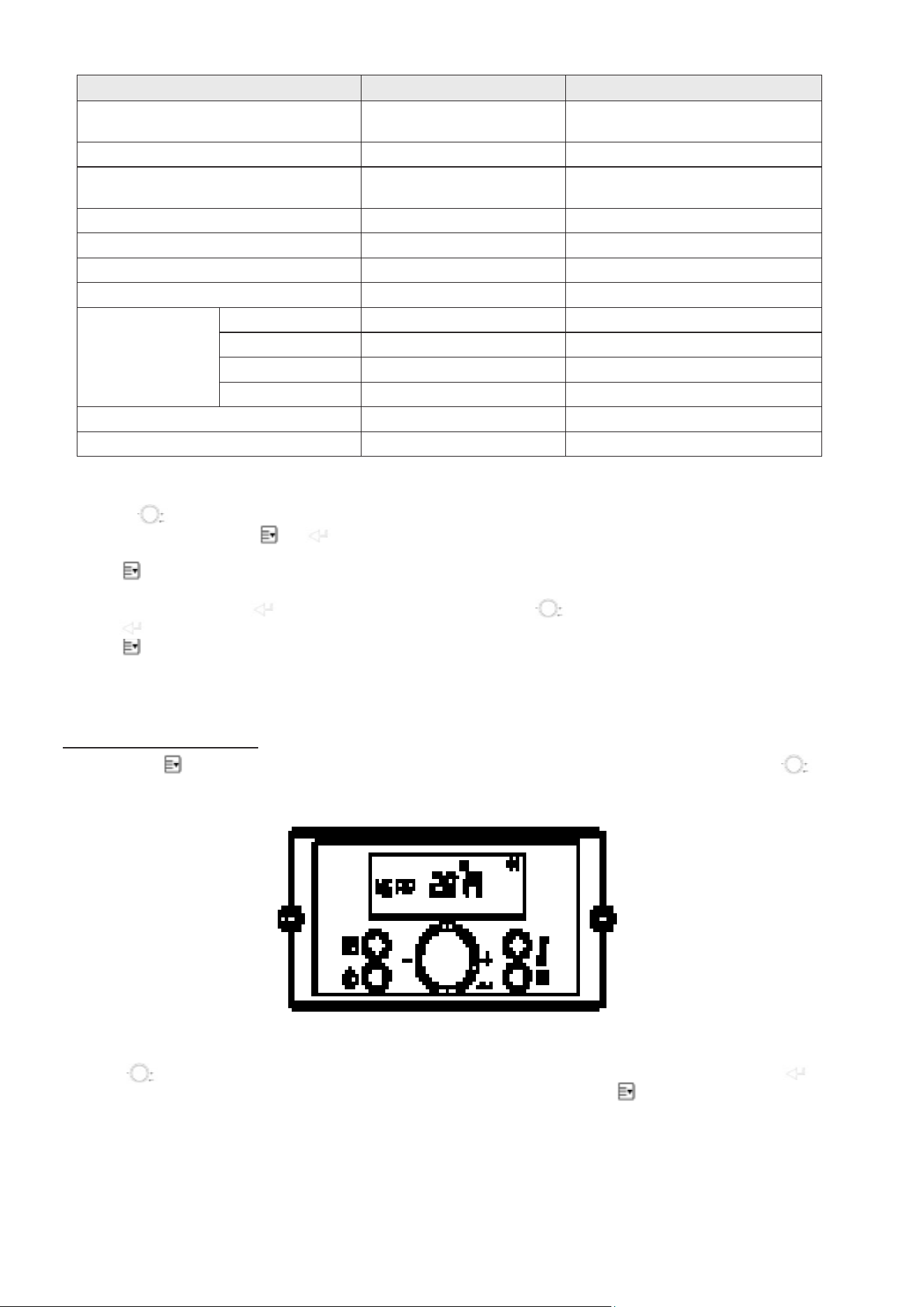
AP18733 REV. 3.2.17
60
Parameter Detail Description
A:Li or GA Flow Unit
Current Flow Unit
(Li: Liters/min, GA: Gallons/min)
b:Fr
Fan Speed (RPM) Current Fan Speed RPM Value
C:Lc Lock Mode
Lock Mode is In Use (ON) or Unused (OFF)
Allows user to lock out any temperature change.
d:Op
Operating Temperature Current Heat Exchanger Operating Temperature
E:dH
DHW Outlet Temperature Current DHW Outlet Temperature
F:Eh
Exhaust Temperature Current Exhaust Temperature
H:In
Inlet Water Temperature Current Inlet Water Temperature
I:rt
PH
Power On Time Power On Time: 1,000 hour increments
rH
Burner Operating Time Burner Operating Time: 1,000 hour increments
bnCY
Burner Cycles Burner Cycles: 1,000 times unit displayed
PPHr
Pump Running Time 1,000 hour increments
J:AG
AGM Adjusts AGM Position: + / - 50
K:TA
Time Adjustment Current Clock Setting
Table 25 – Status Mode Display Screen Descriptions – NOTE: Shaded Parameters Not Used on This Software Version
Turn the dial counterclockwise and clockwise to scroll through the displayed parameters. To view parameter details, press the button at
the appropriate screen. Press the or buttons to leave the parameter.
Press the button again to return to Operation Mode.
To turn on Lock Mode, press the button at the C: Lc parameter. Turn the dial counterclockwise and clockwise to scroll On or Off.
Press the button to save the selection and return to the parameters.
Press the button again to return to Operation Mode.
NOTE: The Control System will not allow the changes if Lock Mode is activated. Lock Mode will have to be turned off before making further
changes
▪ F. CHANGING THE TIME
Press and hold the button for ve seconds when the display panel is powered ON to enter Status Display Mode. Turn the dial
counterclockwise and clockwise to scroll through the displayed parameters to parameter K:TA Press the button to enter and change the time.
The time can be adjusted as follows: Year / Month / Date / Hour / Minute / Day of Week.
Figure 37 – Changing the Time Screen
Turn the dial counterclockwise to lower and clockwise to raise the current time setting. After changing the setting, press the button to
save it. The next adjustable setting will appear. After the time settings have been entered, press the button to save and return to the Status
Display screens.
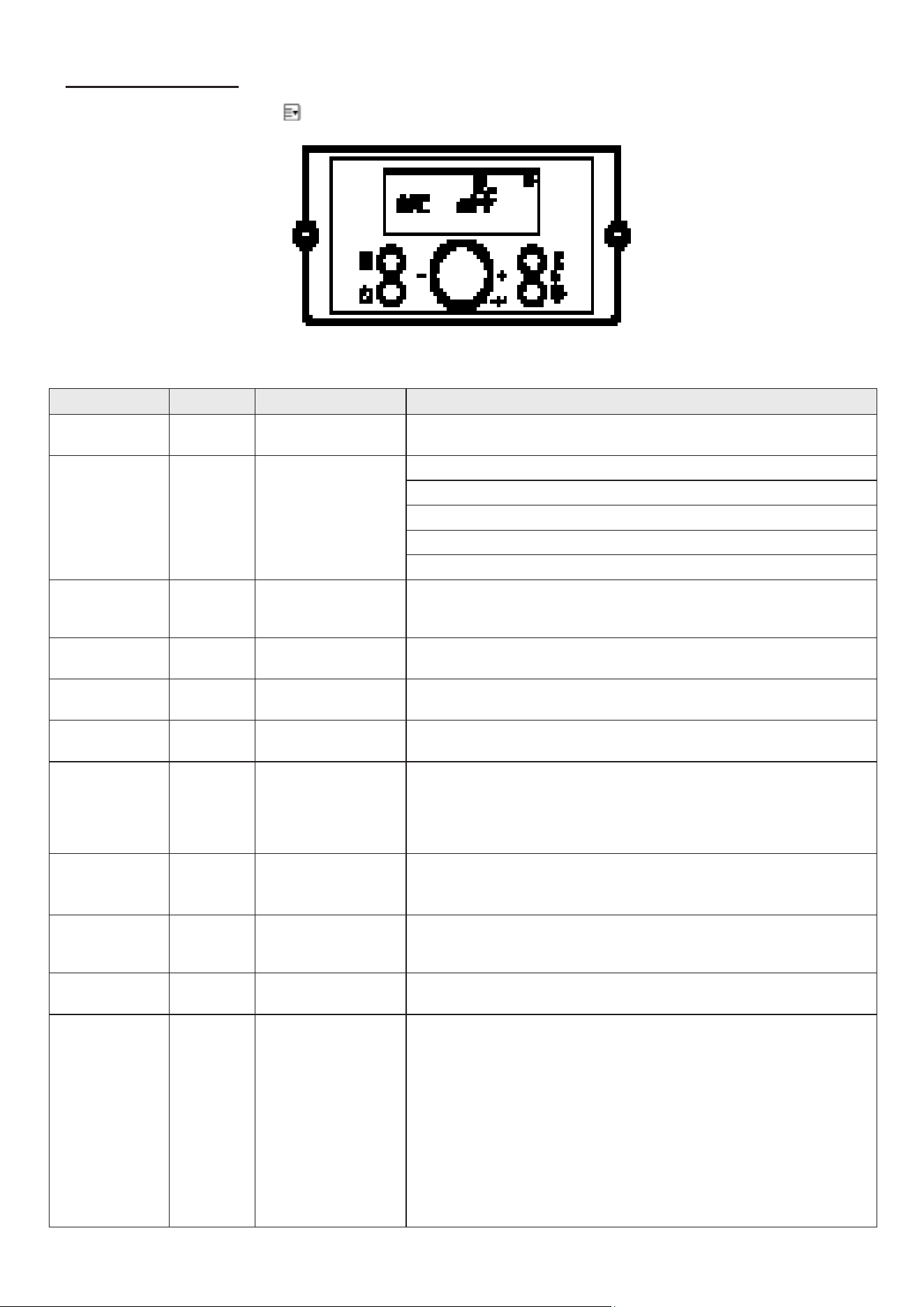
AP18733 REV. 3.2.17
61
▪ G. INSTALLER MODE
Installer Mode will activate when button is pressed and held for ve seconds while the water heater display is powered Off.
Figure 38– Installer Mode Screens
Index Default Parameter Description
1:EH N/A Error History
Allows the Installer to View the Unit Error History
Range: E0:XX – E9:XX
2:CE
Clear Error & System
initialize
EHIS :Error History
rH : Burn Hour
bnCY : Burn Cycle
PPHr : Pump Running Time
In: System initialize
3:FC GA Unit
Use to choose unit (Water ow rate, Temperature)
LIt
℃
: Liter/minute, Celsius
GAL °F : Gallon/minute, Fahrenheit
4:FH 00 Maximum Fan Speed
Adjusts Maximum Fan Speed
Range: -30 - +30
5:FL 00 Minimum Fan Speed
Adjusts Minimum Fan Speed
Range: -30 -+30
6:RC oFF
Recirculation Pump
Operation
Turns the Recirculation Pump On and Off
Range: On – Pump On, oFF – Pump Off
7:RM Itnl Recirculation Mode
NOTE: 6:RC must be set to On to select 7:RM
Sets the Recirculation Mode
Range: ItnL – Internal Recirculation
EtnL – External Recirculation / On Demand Kit,
tt24 – Tilte 24 Mode, bYPS-Cross over
8:RT HI-2 Recirculation Temperature
Sets Recirculation Temperature
Range: LO – Low Temperature, HI-1 – Middle Temperature,
HI-2 – High Temperature
9:HT HI-2 Hot Water Temperature
Sets Hot Water Temperature
Range: LO – Low Temperature, HI-1 – Middle Temperature,
HI-2 – High Temperature
10:IV 6 Prevent Ignition
Temporarily disables the water heater from igniting for a set period of time.
Range: 0 – 20 Minutes
11:HA 0 - 2 High Elevation Mode
This water heater may be installed at elevations up to 10,000 feet and operate on either
Natural or LP. The appliance will de-rate by 4% for each 1,000 feet above sea level.
Select the appropriate installation location as described below.
Selects Installation Location for Proper Water Heater Operation at Altitude:
0-2 for installation locations from sea level to 2,000 feet
2-5 for locations from 2,000 to 5,000 feet
5-8 for locations from 5,000 to 8,000 feet
Default: 0 – 2
NOTE: Use a combustion analyzer to ensure CO and
CO
2
are within the ranges shown in
this manual. Adjust the offset screw in the clockwise (positive) or counterclockwise
(negative) directions (approximately 1/8 turn) if the measured
CO
2
value on LOW FIRE
is out of range.
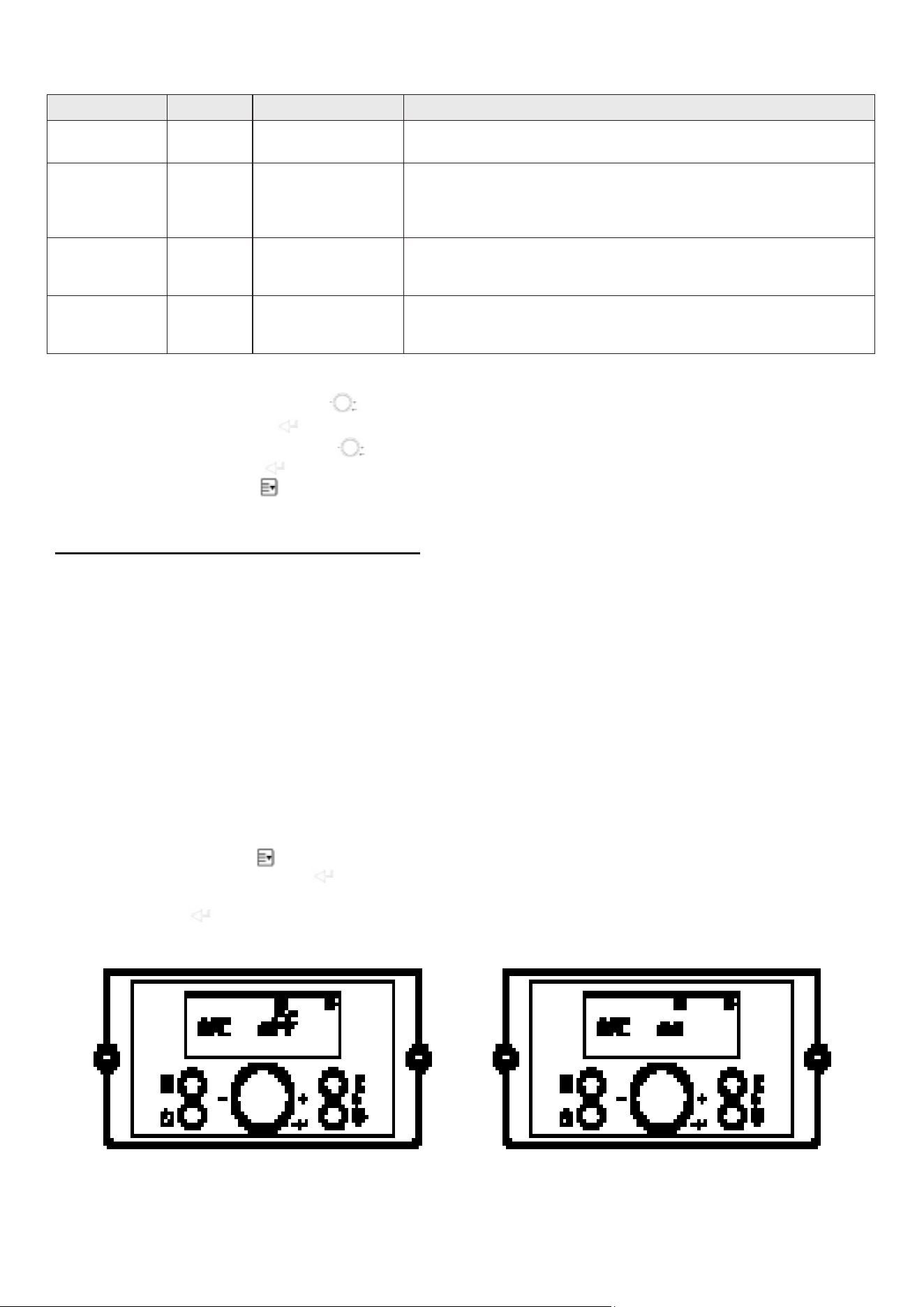
AP18733 REV. 3.2.17
62
Index Default Parameter Description
12:Cn oFF Cascade
Enables Cascade Mode on the water heater.
Range: on – Cascade is used, oFF – Cascade is not used
13:Eh on Common Vent
NOTE: 12:Cn must be set to On to select 13:Eh
Enables Common Venting on the water heater.
Range: on – Common Venting is used,
oFF – Common Venting is not used
14:T1 oFF Test Mode 1
Used to test the water heater when operating in Internal Recirculation Mode only.
The water heater may operate while Test Mode 2 is operating.
Range: on, oFF
15:T2 oFF Test Mode 2
Used to purge air from the water heating system with an external recirculation pump.
The water heater does not need to operate while Test Mode 2 is operating.
Range: on, oFF
Table 26 – Installer Mode Descriptions
Toggle through displayed items by turning the dial .
To change an item, press the Dial button
.
Displayed items can be changed by turning the dial counterclockwise to lower, and clockwise to raise, the displayed value.
To save settings, press the Dial button again.
To leave Installer Mode, press button again. The water heater will return to power off mode.
▪ H. USING RECIRCULATION MODES – STEP 1
The following section explains and details the use of the Internal / External Recirculation Modes.
Preheat or Internal Recirculation Modes – When calls for hot water are satised, the water heater is factory programmed to Preheat and au-
tomatically maintain the temperature set point of the water heater – 24 hours a day, 7 days a week. The differential setting can be adjusted to
control the temperature set point.
Internal Recirculation Mode allows the installer to program specic recirculation functions by day and time to circulate and heat water more ef-
ciently - when the user most needs hot water. See Recirculation Functions, this manual, for details.
External Recirculation Mode – This mode keeps an external recirculation loop warm to make hot water production more efcient and also aid
in freeze protection. An external recirculation line must be installed in order to recirculate water externally. The installer may program specic re-
circulation functions by day and time to circulate and heat water when the user most needs hot water. See Recirculation Functions, this manual,
for details.
To set Recirculation Modes:
1. Installer Mode will activate when is pressed and held for ve seconds while the water heater display is powered Off.
2. Turn the dial to 6:RC. Press the Dial button . “oFF” will ash when the 6:RC setting is ready to be changed.
3. Turn the dial to “oFF” to turn off the Recirculation Pump, or “on” to turn the Recirculation Pump on.
Press the dial button to select the setting and return to the Installer Mode.
Figure 39 –6:RC - Recirculation Pump Operation
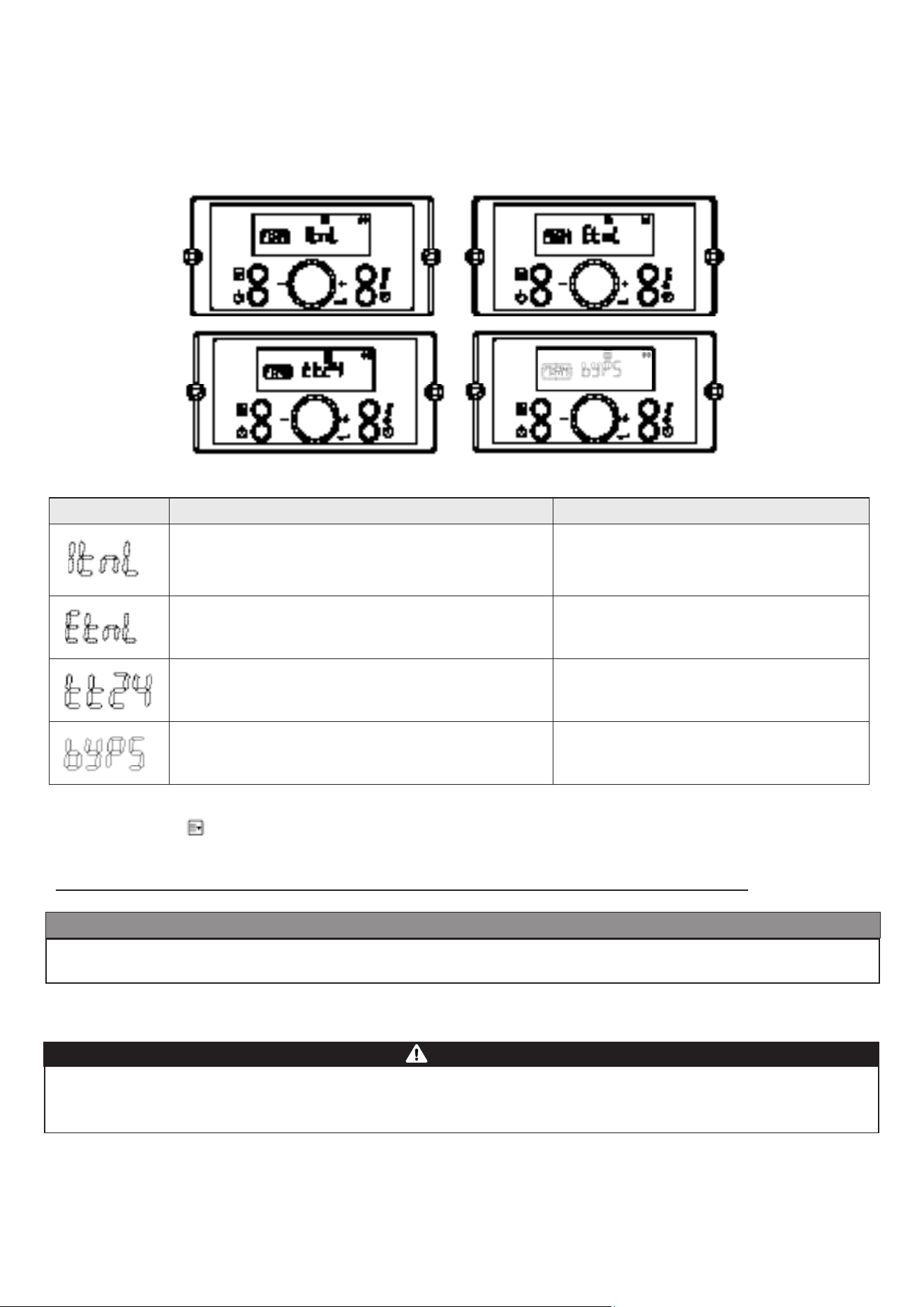
AP18733 REV. 3.2.17
63
4. Next, turn the dial to 7:RM. Press the Dial button. “ItnL” will ash when the 7:RM setting is ready to be changed.
5. Turn the dial to “Itnl” to turn on Internal Recirculation Mode, or “Etnl” to use External Recirculation, or “tt24” to use Title 24 application,
or “bYPS” to use Bypass Valve. Press the dial button to select the setting and return to the installer Mode.
NOTE: 7:RM can only be selected after 6:RC has been turned on.
Figure 40 – 7:RM – Recirculation Mode
6. When nished, press to exit this menu and turn power back on. Proceed to Step 2 to program the recirculation functions.
▪ I. SETTING THE RECIRCULATION TIMER – USING RECIRCULATION MODES – STEP 2
NOTICE
Before setting the Recirculation Timer, go into the Installer Mode and change 6:RC from “oFF” to “on”. Recirculation Mode will not work if it is not
activated in Installer Mode. See Table 28 for Recirculation Timer details.
NOTE: In order to set temperature for external recirculation mode, change from 7:RM to Etnl from installer mode and set one of three options
LO (Low temp), HI-1 (Middle temp) and H1-2 (High temp) from 8:RT in installer mode.
Hotter water increases the risk of scald injury. Scalding may occur within 5 seconds at a setting of 140°F (60°C). Water temperature over 125°F
can instantly cause severe burns, or death, from scalds. Children, disabled, and elderly are at the highest risk of being scalded. See instruction
manual before setting temperature at appliance. Feel water before bathing or showering!
DANGER
There are three Recirculation Timer settings: Act, SEt, and cLr. Act is used to set the Recirculation Timer type. SEt is used to manually set the day
and times when the Recirculation Function will be active. cLr is used to clear and reset the Recirculation Timer setting.
Setting Detail Description
Preheat or Internal Recirculation Mode Turns on Internal Recirculation
External Recirculation Mode or On Demand Application Turns on External Recirculation
Comply with Title 24 Regulation Turns on External Recirculation
Applied with Crossover valve included Turn on Internal Reciculation
Table 27 – Internal / External Recirculation Mode Overview
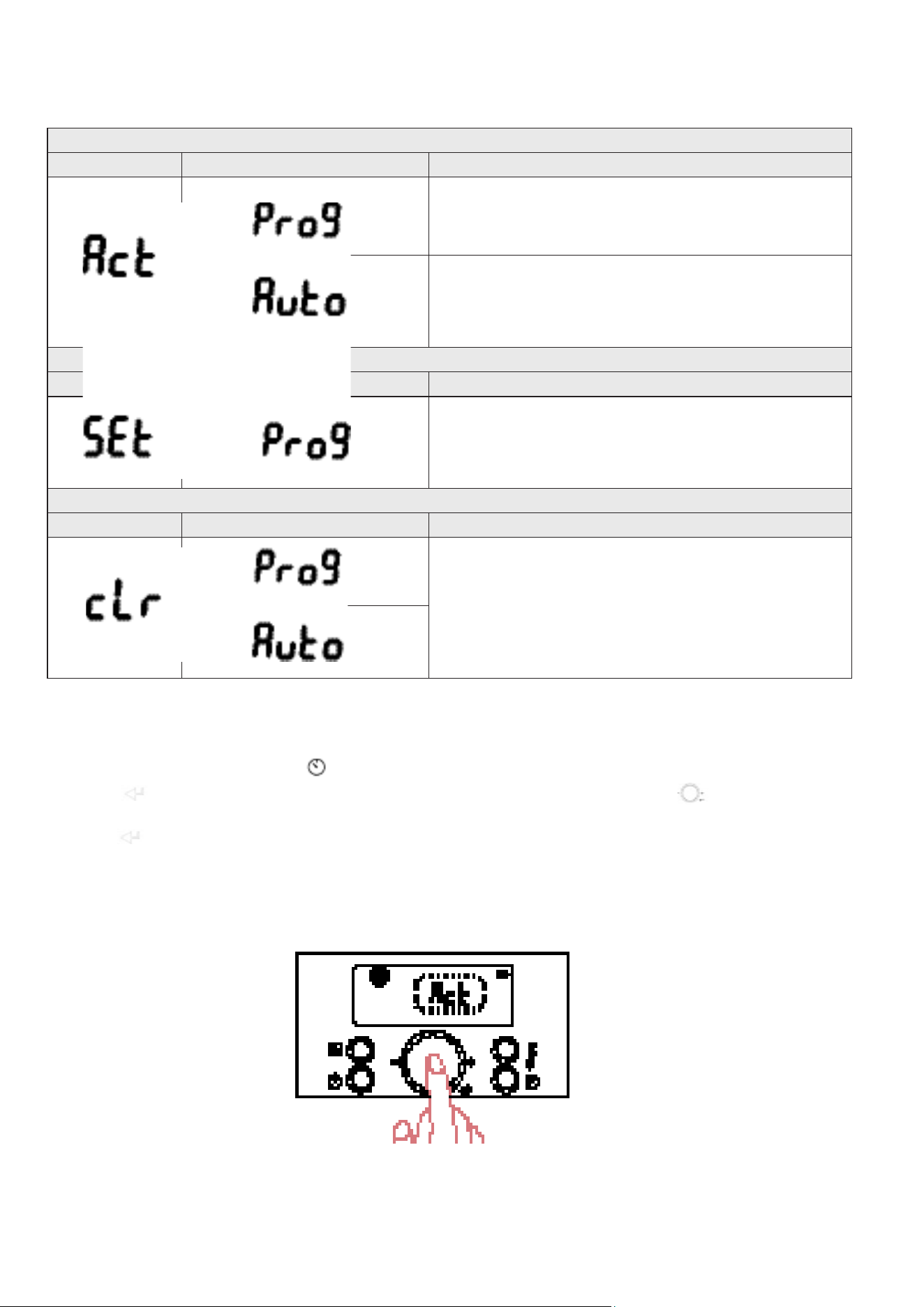
AP18733 REV. 3.2.17
64
The following section details the various Recirculation Timer Functions.
Step 1: Set the Recirculation Timer Type.
Setting Detail Description
Allows the installer to customize the Recirculation Function. The recirculation day
and time values must be set in Step 2, SEt.
When set in Smart Auto-Learn, the pump will run in Standard Mode for the rst
seven (7) days. During this period the water heater will monitor and record hot
water usage patterns. After the initial seven (7) day learning period, the water
heater will use the preceding week’s usage pattern to cycle the pump and
preheat the water.
Step 2: Set the Recirculation Run Time.
Setting Detail Description
Pro9 is a factory set recirculation run time setting with day and time values.
This setting can be customized for your installation. Day and Time can be
programmed. Default: 6 - 7:30AM, 6 - 7:30 PM
Step 3: Reset the Recirculation Run Time setting.
Setting Setting Setting
Resets the Pro9 or Auto Recirculation Run Time to the factory settings.
Table 28 – Recirculation Function Overview
▪ 1. Set the Recirculation Timer Type
a. Enter the Recirculation Timer by pressing
at Standby Mode while the water heater display is powered on.
b. Press the
button at the “Act” screen to select the Recirculation Timer type. See Figure 41. Turn the dial to choose between “Auto”
or “Pro9”.
c. Press the
button to select the Recirculation Timer Type.
d. The Recirculation Timer Type is now set.
NOTE: If “Auto” is selected, the water heater will monitor and record hot water usage patterns over a period of seven (7) days. After this learn-
ing period, the water heater will use the usage pattern to automatically cycle the pump and preheat the water.
NOTE: If “Pro9” is selected, continue to step 2 below to set the recirculation run time setting.
Figure 41 – Setting the Recirculation Timer Type
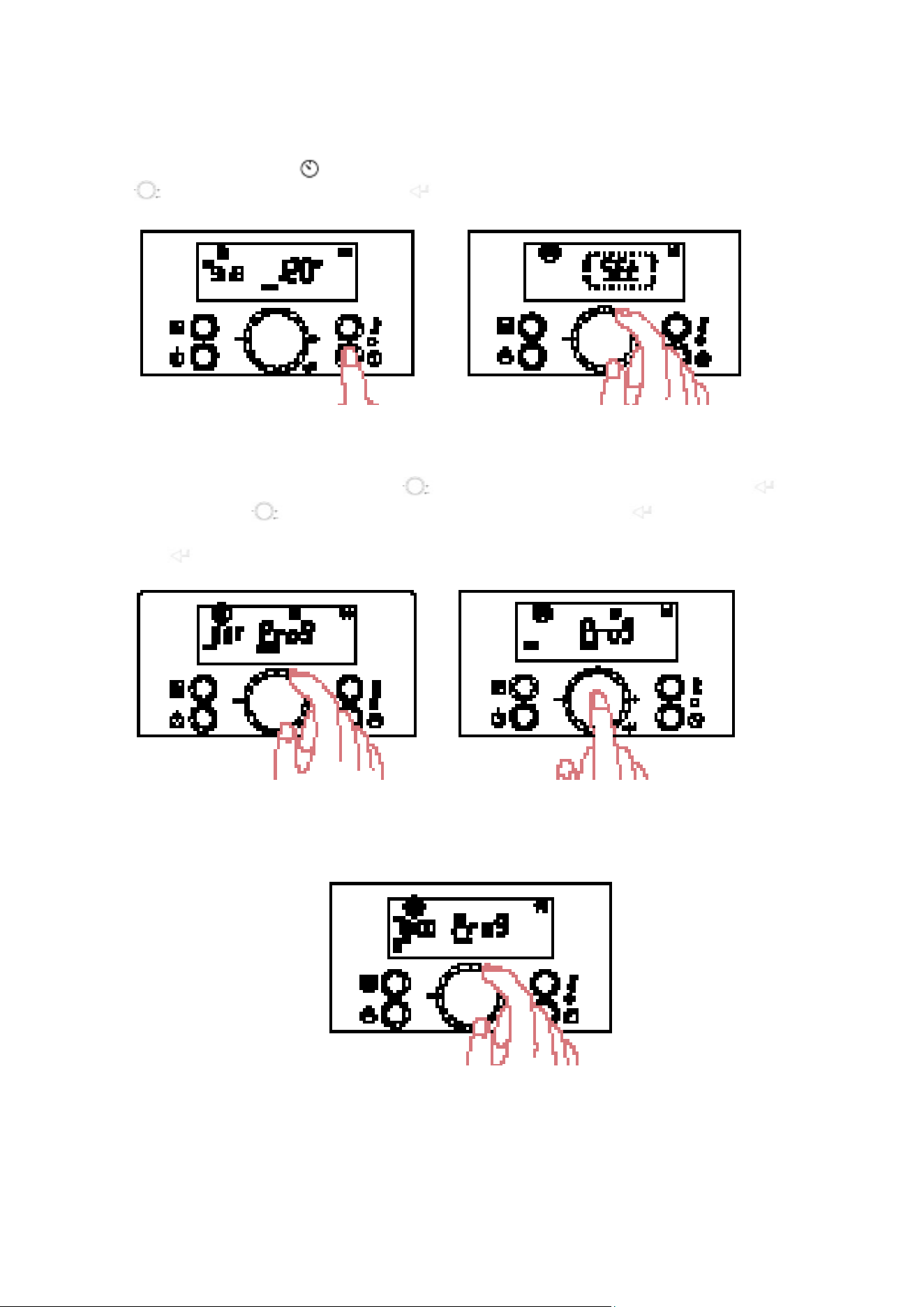
AP18733 REV. 3.2.17
65
NOTE: This step is only necessary if “Pro9” was selected as the Recirculation Timer Type. If “Auto” was selected the water heater will automatical-
ly program its recirculation operating patterns.
a. Enter the Recirculation Timer by pressing at Standby Mode while the water heater display is powered on.
b. Turn the dial
until “SEt” ashes on the screen. Press the button at the “SEt” screen to set the Recirculation Run Time. See Figure 42.
▪ 2. Setting the Recirculation Run Time (Pro9 Recirculation Timer)
Figure 42 – Setting the Recirculation Run Time
c. To set the day, ensure “Pro9” is on the display. Turn the dial When the desired day appears on the screen, press the button to se-
lect and store the day. Turn the dial
until the next desired day appears on the display. Press the button to select and store the day.
Repeat this step to include more days.
d. Press and hold the
button for two (2) seconds to set the time.
Figure 43 – Setting the Recirculation Day – In this Example, Sunday and Wednesday Are Chosen
e. To set the time, ensure “Pro9” and “12:00” are on the display.
Figure 44 – Setting the Recirculation Time
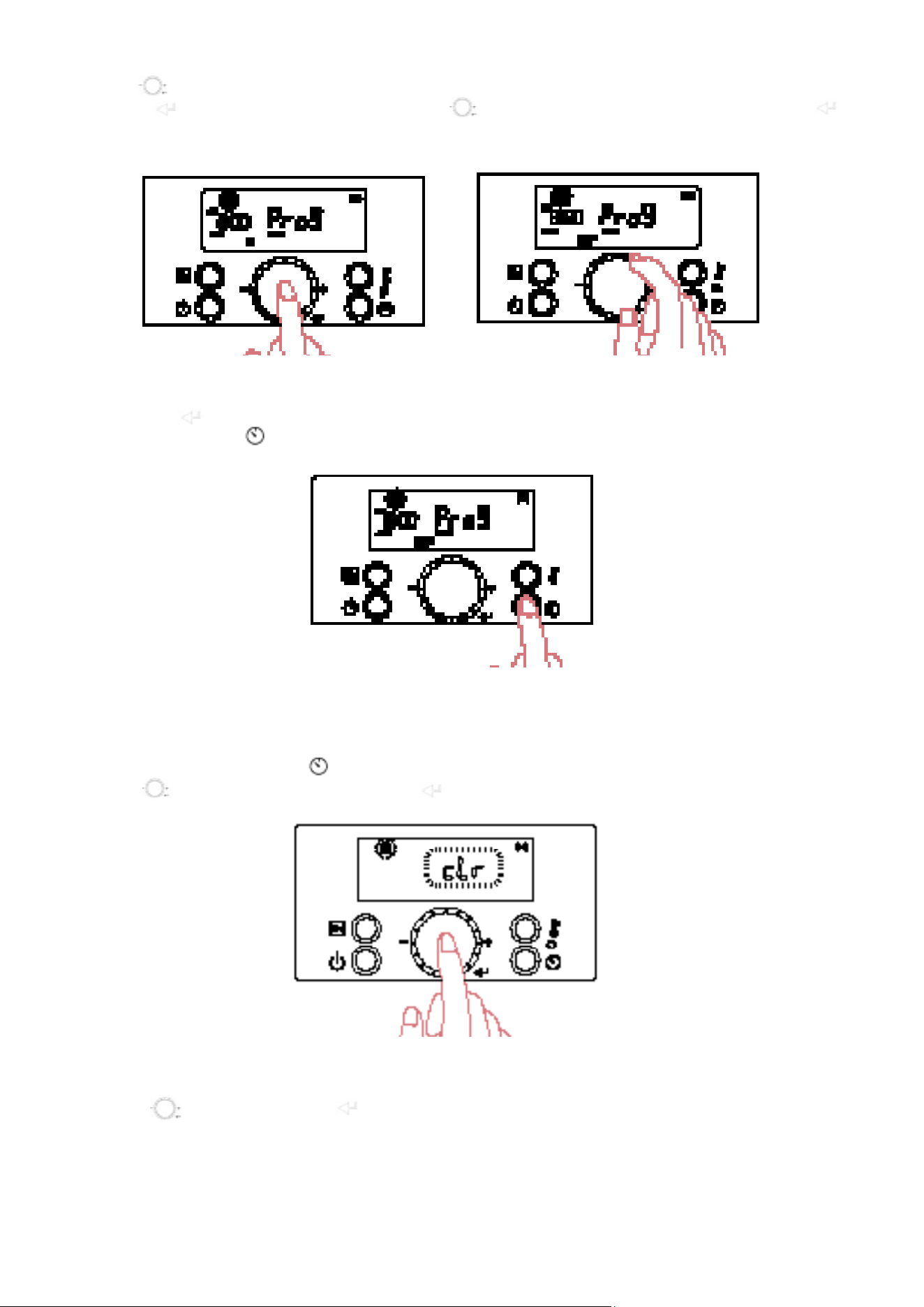
AP18733 REV. 3.2.17
66
f. Turn the dial . The start time on the screen will change in increments of thirty (30) minutes. When the desired start time appears on the
screen, press the button to select and store it. Next, turn the dial
until the desired end time appears on the display. Press the
button to select and store the end time. Repeat this step to set the start and end times for more days.
Figure 45 – Setting Start and End Recirculation Times
g. Press and hold the button for two (2) seconds to store the time.
h. If all settings are stored, press to return to Standby Mode.
Figure 46– Storing Recirculation Run Time
▪3. Resetting the Recirculation Run Time
NOTE: This step is only necessary if the “Pro9” or “Auto” Recirculation Run Times need to be reset. If “Auto” was selected the water heater
will automatically program its recirculation operating patterns.
a. Enter the Recirculation Timer by pressing at Standby Mode while the water heater display is powered on.
b. Turn the dial
until “cLr” ashes on the screen. Press the button at the “cLr” screen to reset the Recirculation Run Time.
See Figure 47.
Figure 47 – Resetting the Recirculation Run Time
c. Turn the dial to “Pro9” or “Auto”. Press at the Recirculation Timer Type you wish to reset. See Figure 48.
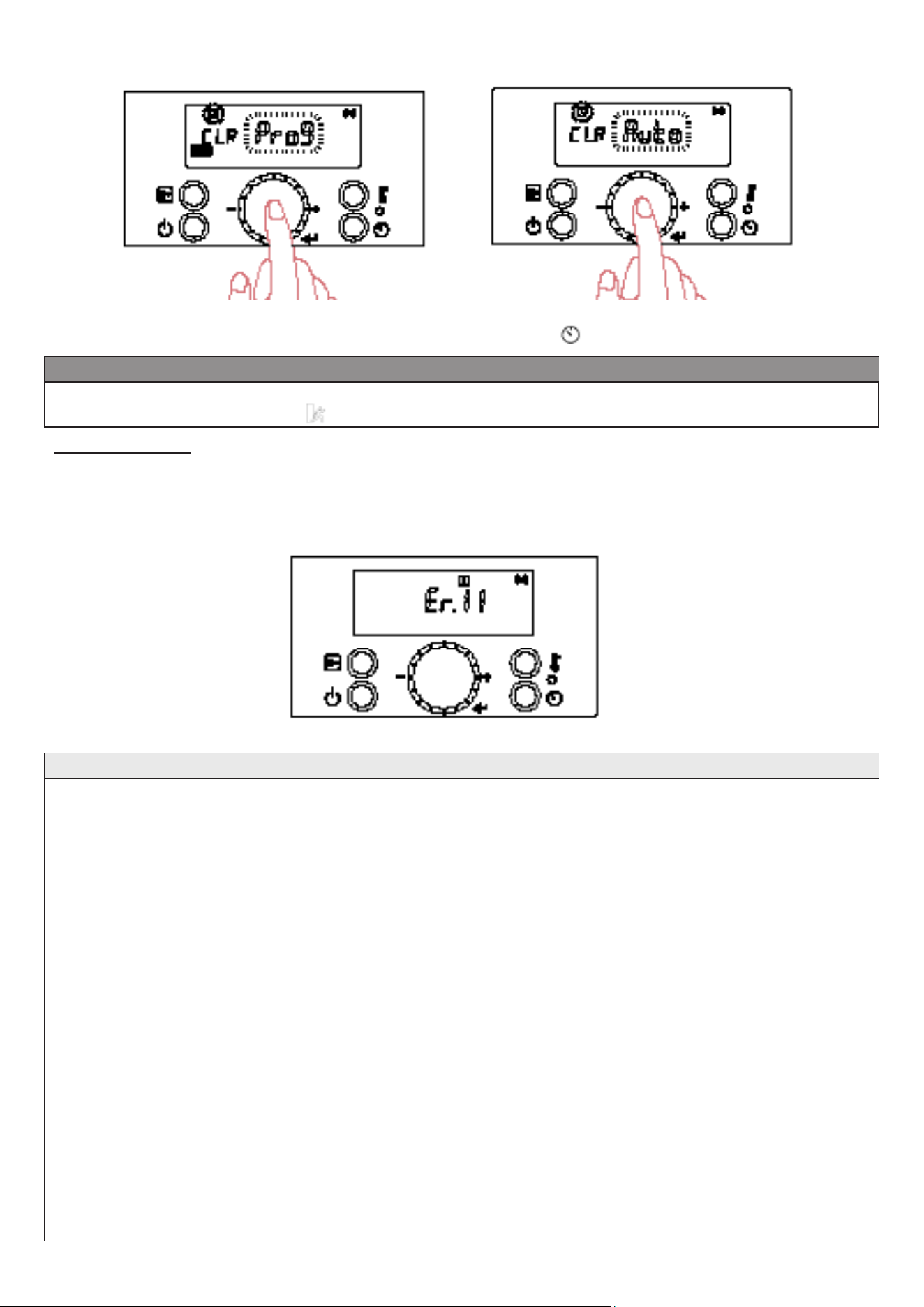
AP18733 REV. 3.2.17
67
Figure 48 – Resetting the Recirculation Run Time
d. The Recirculation Run Time has now been reset to the factory default settings. Press to return to Standby Mode.
NOTICE
If hot water is not used for more than thirty (30) hours, the recirculation program will be stopped and the water heater will automatically go into
Vacation Mode and display the vacation icon .
▪ J. ERROR MODE
When the water heater encounters an error, the display will ash “Er” followed by a numerical code. The water heater shall enter a soft lockout con-
dition if the error is such that it can return to normal operation once the condition relieves itself (overheat conditions, NTC open or shorts, etc.).
The water heater shall enter a hard lockout if the condition indicates something more serious (ame, ignition, condensate line, etc.) To clear a hard
lockout Error Code, press the Power button. The following screen will display when the water heater encounters an error.
Figure 49 – Error Mode Screen
Error Code Error Code Description Possible Remedies
Er:10
Flame has been lost Eight (8)
Times
Press the Power button to clear the Error Code.
If Error happens again:
1. Monitor the gas pressure to the water heater while in operation. Ensure pressure is be-
tween 5.0" W.C and 13.0" W.C (1.25 to 3.24 kPa).
2. Check gas valve wire. Ensure connection is secure.
3. Check ame detection sensor. Ensure connections are secure. Normal operating settings
are more than 2.5DC before ignition, less than 2.5DC after ignition.
4. Check igniter transformer for proper connection.
5. Clean the spark igniter with steel wool to remove oxides. Ensure proper separation (3-4
mm).
6. Replace the spark igniter if damaged.
7. Assure that the ame is stable when lit.
8. If the problem persists, replace the main control.
Er:11
Ignition has Failed 10 (Ten)
Times
Press the Power button to clear the Error Code.
If Error happens again:
1. Monitor the gas pressure to the water heater while in operation. Ensure pressure is between
5.0"
W.C and 13.0" W.C (1.25 to 3.24 kPa).
2. Check gas valve wire. Ensure connection is secure.
3. Check ame detection sensor. Ensure connections are secure. Normal operating settings are more
than 2.5DC before ignition, less than 2.5DC after ignition.
4. Check igniter transformer for proper connection.
5. Clean the spark igniter with steel wool to remove oxides. Ensure proper separation (3-4 mm).
6. Replace the spark igniter if damaged.
7. Assure that the ame is stable when lit.
8. If the problem persists, replace the main control.
AP18733 REV. 3.2.17
68
Error Code Error Code Description Possible Remedies
Er:16
Operating Temperature Sen-
sor or DHW Sensor detects
Water Temperature Greater
than 199°F (93°C)
This Error Code will go away when the DHW temperature decreases.
If Error happens again:
1. Check if dip switch High Fire setting is ON. Switches 6 and 7 should be OFF for normal
operation.
2. Check if DHW pipe is blocked. Ensure there is enough water owing to the water heater.
3. Check DHW sensor at DHW outlet. If resistance is zero, replace the sensor.
4. Check Operating Temperature sensor at the heat exchanger. If resistance is zero, replace
the sensor.
5. If the problem persists, replace the main control.
Er:20
High Limit Overheat Switch
– Closed is Normal, Open is
Fault
Press the Power button to clear the Error Code.
1. Inspect the High Limit Overheat switch. Ensure proper connections.
2. Check High Limit Overheat switch resistance. If resistance is zero, replace the switch.
3. If the problem persists, replace the main control.
Er:29
APS/Condensate – Closed
is Normal, Open is Fault
(Condensate Drain Trap)
Press the Power button to clear the Error Code.
1. Check APS/Condensate and main controller connections. Ensure all are secure.
2. Check APS/Condensate resistance. If resistance is zero, replace the switch.
3. Check APS/Condensate hose. Ensure it is connected and in good condition.
4. Check condensate line and termination for blockages.
5. Check exhaust vent for blockages.
6. If the problem persists, replace the main control.
Er:31
Water Inlet Sensor Open or
Short
This Error Code will go away when inlet water temperature decreases.
If Error happens again:
1. Check inlet water temperature sensor. Ensure connections are secure.
2. Check sensor resistance. If resistance is zero, replace the sensor.
3. If the problem persists, replace the main control.
Er:32
Water Outlet Sensor Open or
Short
This Error Code will go away when outlet water temperature decreases.
If Error happens again:
1. Check DHW outlet temperature sensor. Ensure connections are secure.
2. Check sensor resistance. If resistance is zero, replace the sensor.
3. If the problem persists, replace the main control.
Er:33
H/X Temperature Sensor
Open or Short
This Error Code will go away when outlet water temperature decreases.
If Error happens again:
1. Check operating temperature sensor. Ensure connections are secure.
2. Check sensor resistance. If resistance is zero, replace the sensor.
3. If the problem persists, replace the main control.
Er:35
Exhaust Sensor Open or
Short
This Error Code will go away when exhaust temperature decreases.
If Error happens again:
1. Check exhaust temperature sensor. Ensure connections are secure.
2. Check sensor resistance. If resistance is zero, replace the sensor.
3. Check exhaust vent for blockage.
4. If the problem persists, replace the main control.
Er:39
Flame Detected after Exiting
a Flame On Condition
This Error Code will go away when the false ame condition is remedied.
If Error happens again:
1. Check the water heater cover. Ensure it is secure. Flame detection sensor can detect an external
light source.
2. Check ame detection sensor. Ensure connections are secure. Normal operating settings are more
than 2.5DC before ignition, less than 2.5DC after ignition.
3. If the problem persists, replace the main control.
Er:40
Gas Leakage continuously
detected for 10 Minutes, or
three times within One Hour
(Greater than 5 Seconds
Each Time)
IMPORTANT: If you smell gas, STOP! Follow the instructions on page 2, this manual, and call a quali-
ed service technician or the fuel gas utility.
Press the Power button to clear the Error Code.
If Error happens again:
1. Check the water heater cover. Ensure it is secure.
2. Check gas connections for leakage with a soapy solution. Fix any leaks.
3. Check condition of the burner assembly.
4. If the problem persists, replace the main control.
AP18733 REV. 3.2.17
69
Error Code Error Code Description Possible Remedies
Er:16
Operating Temperature Sen-
sor or DHW Sensor detects
Water Temperature Greater
than 199°F (93°C)
This Error Code will go away when the DHW temperature decreases.
If Error happens again:
1. Check if dip switch High Fire setting is ON. Switches 6 and 7 should be OFF for normal
operation.
2. Check if DHW pipe is blocked. Ensure there is enough water owing to the water heater.
3. Check DHW sensor at DHW outlet. If resistance is zero, replace the sensor.
4. Check Operating Temperature sensor at the heat exchanger. If resistance is zero, replace
the sensor.
5. If the problem persists, replace the main control.
Er:20
High Limit Overheat Switch
– Closed is Normal, Open is
Fault
Press the Power button to clear the Error Code.
1. Inspect the High Limit Overheat switch. Ensure proper connections.
2. Check High Limit Overheat switch resistance. If resistance is zero, replace the switch.
3. If the problem persists, replace the main control.
Er:29
APS/Condensate – Closed
is Normal, Open is Fault
(Condensate Drain Trap)
Press the Power button to clear the Error Code.
1. Check APS/Condensate and main controller connections. Ensure all are secure.
2. Check APS/Condensate resistance. If resistance is zero, replace the switch.
3. Check APS/Condensate hose. Ensure it is connected and in good condition.
4. Check condensate line and termination for blockages.
5. Check exhaust vent for blockages.
6. If the problem persists, replace the main control.
Er:31
Water Inlet Sensor Open or
Short
This Error Code will go away when inlet water temperature decreases.
If Error happens again:
1. Check inlet water temperature sensor. Ensure connections are secure.
2. Check sensor resistance. If resistance is zero, replace the sensor.
3. If the problem persists, replace the main control.
Er:32
Water Outlet Sensor Open or
Short
This Error Code will go away when outlet water temperature decreases.
If Error happens again:
1. Check DHW outlet temperature sensor. Ensure connections are secure.
2. Check sensor resistance. If resistance is zero, replace the sensor.
3. If the problem persists, replace the main control.
Er:33
H/X Temperature Sensor
Open or Short
This Error Code will go away when outlet water temperature decreases.
If Error happens again:
1. Check operating temperature sensor. Ensure connections are secure.
2. Check sensor resistance. If resistance is zero, replace the sensor.
3. If the problem persists, replace the main control.
Er:35
Exhaust Sensor Open or
Short
This Error Code will go away when exhaust temperature decreases.
If Error happens again:
1. Check exhaust temperature sensor. Ensure connections are secure.
2. Check sensor resistance. If resistance is zero, replace the sensor.
3. Check exhaust vent for blockage.
4. If the problem persists, replace the main control.
Er:39
Flame Detected after Exiting
a Flame On Condition
This Error Code will go away when the false ame condition is remedied.
If Error happens again:
1. Check the water heater cover. Ensure it is secure. Flame detection sensor can detect an external
light source.
2. Check ame detection sensor. Ensure connections are secure. Normal operating settings are more
than 2.5DC before ignition, less than 2.5DC after ignition.
3. If the problem persists, replace the main control.
Er:40
Gas Leakage continuously
detected for 10 Minutes, or
three times within One Hour
(Greater than 5 Seconds
Each Time)
IMPORTANT: If you smell gas, STOP! Follow the instructions on page 2, this manual, and call a quali-
ed service technician or the fuel gas utility.
Press the Power button to clear the Error Code.
If Error happens again:
1. Check the water heater cover. Ensure it is secure.
2. Check gas connections for leakage with a soapy solution. Fix any leaks.
3. Check condition of the burner assembly.
4. If the problem persists, replace the main control.
Error Code Error Code Description Possible Remedies
Er:41
Fan Speed too High with
Flame On
Press the Power button to clear the Error Code.
If Error happens again:
1. Check the vent connections for blockages.
2. Check the burner assembly.
3. Check fan operation. If fan appears to be operating normally but RPMs are too low or too
high, replace the fan.
4. If the problem persists, replace the main control.
Er:43
Burner Overheat Switch
Open
Press the Power button to clear the Error Code.
If Error happens again:
1. Check burner overheat switch connections. Ensure connections are secure.
2. Check switch resistance. If resistance is zero, replace the switch.
3. If the problem persists, replace the main control.
Er:44 Recirculation Abnormality
Press the Power button to clear the Error Code.
If Error happens again:
1. Ensure water heater inlet and outlets are open and water is supplied to the water heater.
2. Check the pump operation.
3. If it doesn’t work, ensure wiring connections to pump.
4. If even supply power to pump and doesn’t run it replace the pump.
If Error happens again:
1. Verify recirculation loop length is within specication. Air purge is not enough.
2. Too much restriction on recirculation loop.
3. Return loops are clogged.
4. Check the recirculation loop condition
Er:45 Water Leak
1. Turn power off to the water heater.
2. Valve off the water heater to isolate it from the system.
3. Call a qualied service technician to diagnose and repair the source of the leak.
Er:60
Hot Water Temperature
Abnormality
Press the Power button to clear the Error Code.
If Error happens again:
1. Ensure water heater inlet and outlets are open and water is supplied to the water heater.
If Error happens again:
1. Ensure water heater inlet and outlets are open and water is supplied to the water heater.
2. Check the pump operation.
3. If it doesn’t work, ensure wiring connections to pump.
4. If even supply power to pump and doesn’t run it, replace the pump.
If Error happens again:
1. Verify recirculation loop length is within specication. Air purge is not enough.
2. Too much restriction on recirculation loop.
3. Return loops are clogged.
4. Check the recirculation loop condition.
Er:61
Fan Speed Feedback Signal
Abnormal
This Error Code will go away when the condition is remedied.
If Error happens again:
1. Check the connections to the fan. Ensure all are secure.
2. If the fan does not rotate during the ignition sequence, check for DC15~30V power at the fan
connection. If DC15~30V power is present at the control, replace the fan. If the blower does not
have DC15~30V power, check power at the control. If DC15~30V power is not present at the control,
replace the control.
3. If the problem persists, replace the main control.
Er:65 Supply Water Valve Error
Press the Power button to clear the Error Code.
If Error happens again:
1. Turn power OFF and ON at the main power switch internal to the water heater.
2. Check wiring connections to supply water valve. Ensure all are secure.
3. Replace supply water valve.
4. If the problem persists, replace the main control.
Er:66 Mixing Valve Error
Press the Power button to clear the Error Code.
If Error happens again:
1. Turn power OFF and ON at the main power switch internal to the water heater.
2. Check wiring connections to mixing valve. Ensure all are secure.
3. Replace mixing valve.
4. If the problem persists, replace the main control.
AP18733 REV. 3.2.17
70
Error Code Error Code Description Possible Remedies
Er:67 AGM Error
Press the Power button to clear the Error Code.
If Error happens again:
1. Turn power OFF and ON at the main power switch internal to the water heater.
2. Ensure fan inlet hole is completely open after turning the power OFF and ON.
3. Check wiring connections to the AGM. Ensure all are secure.
4. Check AGM operation.
5. Replace AGM components.
6. If the problem persists, replace the main control.
Er:72
Flame Signal Detected
before Ignition
This Error Code will go away when the condition is remedied.
If Error happens again:
1. Check the water heater cover. Ensure it is secure. Flame detection sensor can detect an
external light source.
2. Check ame detection sensor. Ensure connections are secure. Normal operating settings
are more than 2.5DC before ignition, less than 2.5DC after ignition.
3. If the problem persists, replace the main control.
Er:73 DIP Switch is abnormal
This Error Code will go away when the condition is remedied.
If Error happens again:
1. Check dip switches. Ensure switches match the ratings plate requirements of the water heater. See
dip switch details, this manual, for default settings.
2. If the problem persists, replace the main control.
Er:76 Poor Communication
This Error Code will go away when the condition is remedied.
If Error happens again:
1. Check connections from main control to display panel.
2. If the problem persists, replace the display and/or the main control.
Er:78
Cascade Communication
Error
NOTE: This error will only appear in a cascaded system.
1. Turn power OFF and ON at the appliance display panel.
2. If error reappears, ensure all cascaded appliances are powered ON.
3. If error reappears, check Installer Mode parameter 10:Cn at among the both units.
Ensure the setting as “on” in 10:Cn of Installer Mode.
4. If error reappears, check the wire cables into the ‘Main PCB’ connector inside both units.
Ensure the connection of cascade cable between both appliances.
5. If there was no problem wiring connection, replace damaged cables.
6. If the problem persists, replace the main control.
Er:94
Exhaust NTC detects Vent
Temperature is Greater than
149°F/ 65°C
(185°F / 85°C when High
Temp set point is Selected)
This Error Code will go away when the condition is remedied.
If Error happens again:
1. Check if dip switch High Fire setting is ON. Switches 6 and 7 should be OFF for normal operation.
2. Check exhaust temperature sensor. Ensure connections are secure.
3. Check sensor resistance. If resistance is zero, replace the sensor.
4. Check exhaust vent for blockage.
5. If the problem persists, replace the control.
6. If the problem persists, replace the heat exchanger.
Table 29 –Diagnostics and Suggested Corrective Actions
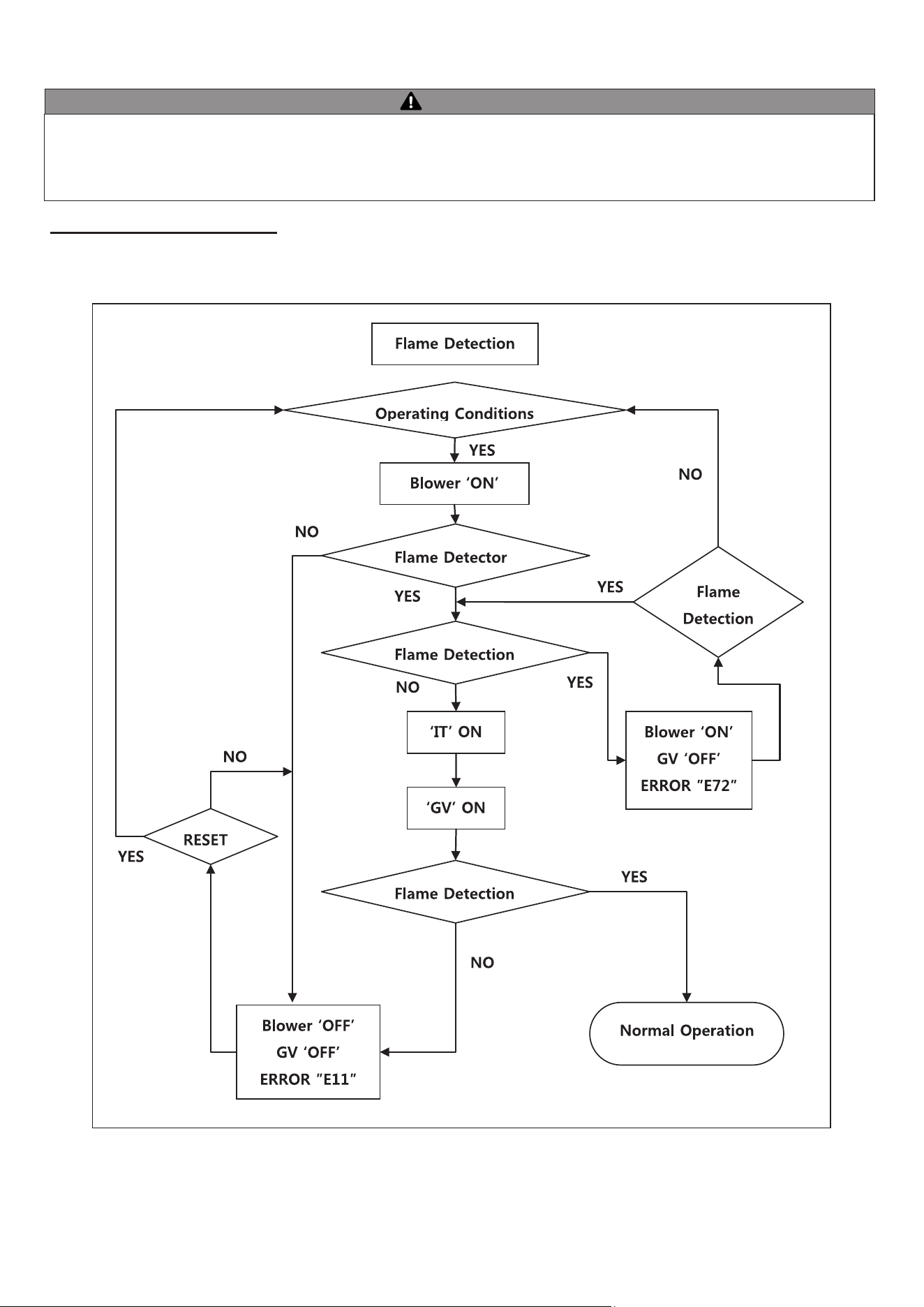
AP18733 REV. 3.2.17
71
Error Code Error Code Description Possible Remedies
Er:67 AGM Error
Press the Power button to clear the Error Code.
If Error happens again:
1. Turn power OFF and ON at the main power switch internal to the water heater.
2. Ensure fan inlet hole is completely open after turning the power OFF and ON.
3. Check wiring connections to the AGM. Ensure all are secure.
4. Check AGM operation.
5. Replace AGM components.
6. If the problem persists, replace the main control.
Er:72
Flame Signal Detected
before Ignition
This Error Code will go away when the condition is remedied.
If Error happens again:
1. Check the water heater cover. Ensure it is secure. Flame detection sensor can detect an
external light source.
2. Check ame detection sensor. Ensure connections are secure. Normal operating settings
are more than 2.5DC before ignition, less than 2.5DC after ignition.
3. If the problem persists, replace the main control.
Er:73 DIP Switch is abnormal
This Error Code will go away when the condition is remedied.
If Error happens again:
1. Check dip switches. Ensure switches match the ratings plate requirements of the water heater. See
dip switch details, this manual, for default settings.
2. If the problem persists, replace the main control.
Er:76 Poor Communication
This Error Code will go away when the condition is remedied.
If Error happens again:
1. Check connections from main control to display panel.
2. If the problem persists, replace the display and/or the main control.
Er:78
Cascade Communication
Error
NOTE: This error will only appear in a cascaded system.
1. Turn power OFF and ON at the appliance display panel.
2. If error reappears, ensure all cascaded appliances are powered ON.
3. If error reappears, check Installer Mode parameter 10:Cn at among the both units.
Ensure the setting as “on” in 10:Cn of Installer Mode.
4. If error reappears, check the wire cables into the ‘Main PCB’ connector inside both units.
Ensure the connection of cascade cable between both appliances.
5. If there was no problem wiring connection, replace damaged cables.
6. If the problem persists, replace the main control.
Er:94
Exhaust NTC detects Vent
Temperature is Greater than
149°F/ 65°C
(185°F / 85°C when High
Temp set point is Selected)
This Error Code will go away when the condition is remedied.
If Error happens again:
1. Check if dip switch High Fire setting is ON. Switches 6 and 7 should be OFF for normal operation.
2. Check exhaust temperature sensor. Ensure connections are secure.
3. Check sensor resistance. If resistance is zero, replace the sensor.
4. Check exhaust vent for blockage.
5. If the problem persists, replace the control.
6. If the problem persists, replace the heat exchanger.
WARNING
This water heater is equipped with a blocked vent shutoff system. If Error Codes Er:29, Er:41 or Er:94 occur, turn off the gas valve at the manual
shutoff. Check the vent terminations for obstructions. If no obstructions are found, reset the water heater by pressing the power button. If the
error continues to occur, call a qualied service technician or the gas supplier to check the water heater. Failure to follow these instructions could
result in property damage, personal injury, or death.
▪ K. ERROR TREE ANALYSIS
1. FLAME DETECTION
Figure 50 – Flame Detection Error Analysis Tree
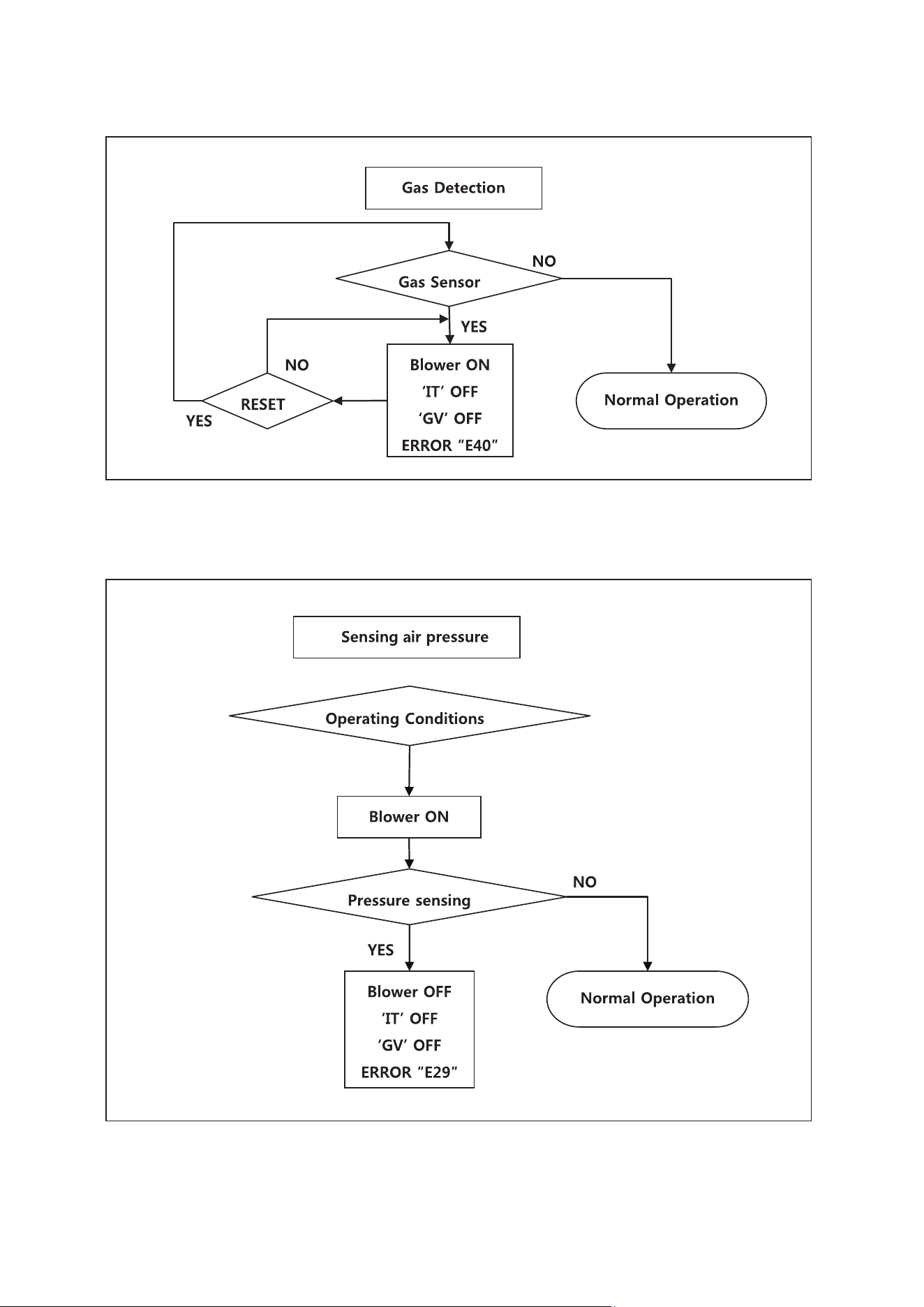
AP18733 REV. 3.2.17
72
2. GAS DETECTION
3. AIR PRESSURE SWITCH
Figure 51 – Gas Detection Error Analysis Tree
Figure 52 – Air Pressure Switch Analysis Tree
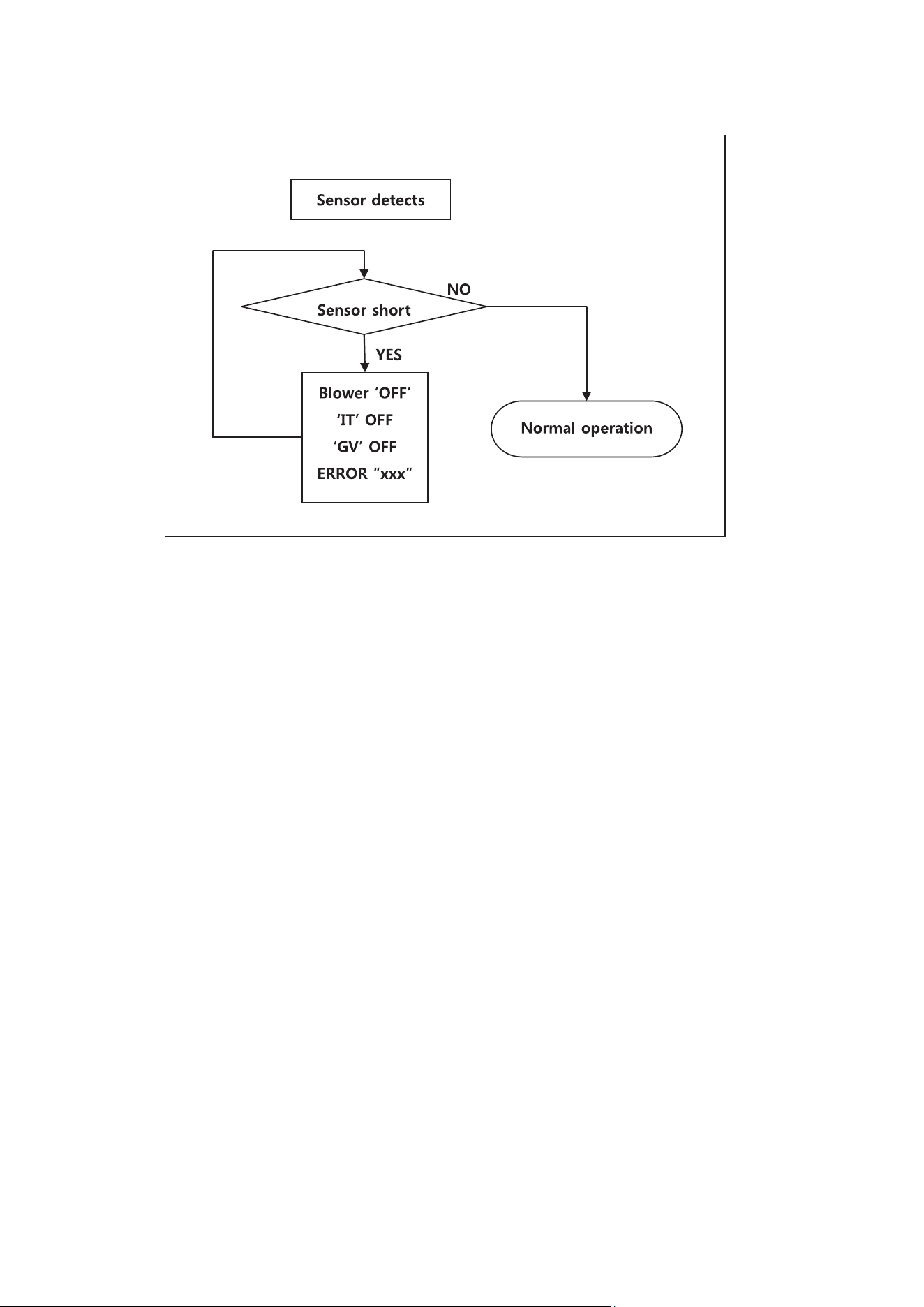
AP18733 REV. 3.2.17
73
4. Inlet / DHW / Operating Temperature SENSORS
Figure 53 – Inlet / DHW / Operating Temperature Sensors Error Analysis Tree
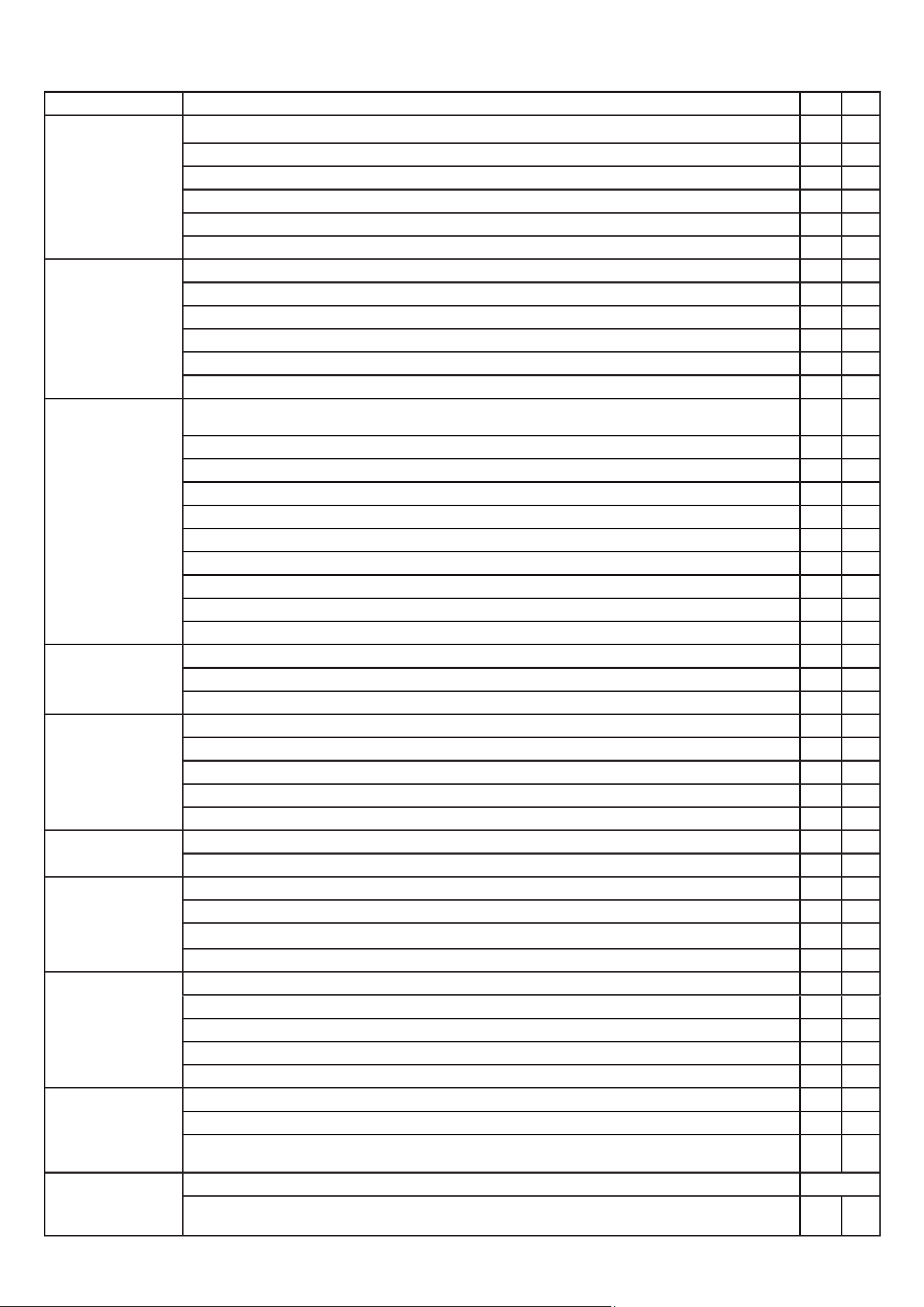
AP18733 REV. 3.2.17
74
FINAL INSTALLATION CHECKLIST
YES NO
BEFORE INSTALLING
Is there enough space to ensure proper installation?
Does installation location allow for proper service clearances?
Are water and gas lines properly sized and set at proper pressures for the installation?
Is water heater location as near the exhaust vent / intake pipe terminations as possible?
Have combustible materials been cleared from the installation location?
Is there a drain close to the water heater?
INSTALL WATER PIPING
Does water heater loop piping meet the minimum sizing requirements listed?
NOTE: Smaller piping will cause performance problems.
Has water chemistry been checked?
Does water chemistry meet requirements?
If water chemistry does not meet requirements, have treatment measures been put in place?
Has the system been cleaned and ushed?
INSTALL EXHAUST VENT
AND INTAKE PIPING
Has the water heater been vented with the approved materials listed in this manual (3" [7.6 cm] PVC, CPVC, Polypropylene, etc.) or to
meet local codes?
Is air supply sufcient for proper water heater operation?
Is total vent piping length within the maximum vent length restriction listed in this manual?
Have venting lengths been minimized?
Are terminations properly spaced from windows, doors, and other intake vents?
Have all vent terminations been installed at least one foot above exterior grade and one foot above normal snow accumulation level?
Is vent piping properly supported?
Has vent piping been checked for leaks?
Has the exhaust vent line been pitched back to the water heater at a rate of ¼" (0.6 cm) per foot?
Have the exhaust vent and intake pipes been properly installed into the connectors provided on the water heater?
INSTALL CONDENSATE
PIPING / TUBING AND
COMPONENTS
Have all condensate line components included with the water heater been installed?
Is the condensate line piped with the approved materials listed in this manual?
Has the condensate line been routed to a laundry tub or other drain?
INSTALL GAS PIPING
Is the gas supply line a minimum of ¾" (1.9 cm) in diameter?
Is the gas supply line length and diameter adequate to deliver the required BTUs?
Has gas supply line pressure been measured?
Does the gas type match the type indicated on the water heater rating plate?
Has a union and shut-off valve been installed?
PRESSURE RELIEF
VALVES
Have you installed approved pressure relief valves on the hot water outlet near the water heater?
Is the pressure relief valve in the DHW line at least ¾" (1.9 cm) in diameter?
WIRE THE WATER
HEATER
Connect the power and control wiring per water heater wiring diagram, this manual.
Have all DIP switches been set on the main water heater board?
Is electrical connection polarity within water heater requirements?
Do power specications meet water heater requirements? 120V AC?
START-UP, ADJUST, AND
TEST
Has the water heater been started?
If necessary, has the water heater gas valve been adjusted?
Has the installation been customized per installation location requirements?
Have all customized system parameters been tested?
Has proper water heater operation been conrmed?
BURNER FLAME
Has the burner ame been checked?
Is the burner ame a proper blue color?
If the ame does not appear normal, it may need to be cleaned by a qualied service technician. See Figure 54 for ame sight glass
window location.
FINAL INSTALLATION
APPROVALS
SIGNED BY TECHNICIAN DATE
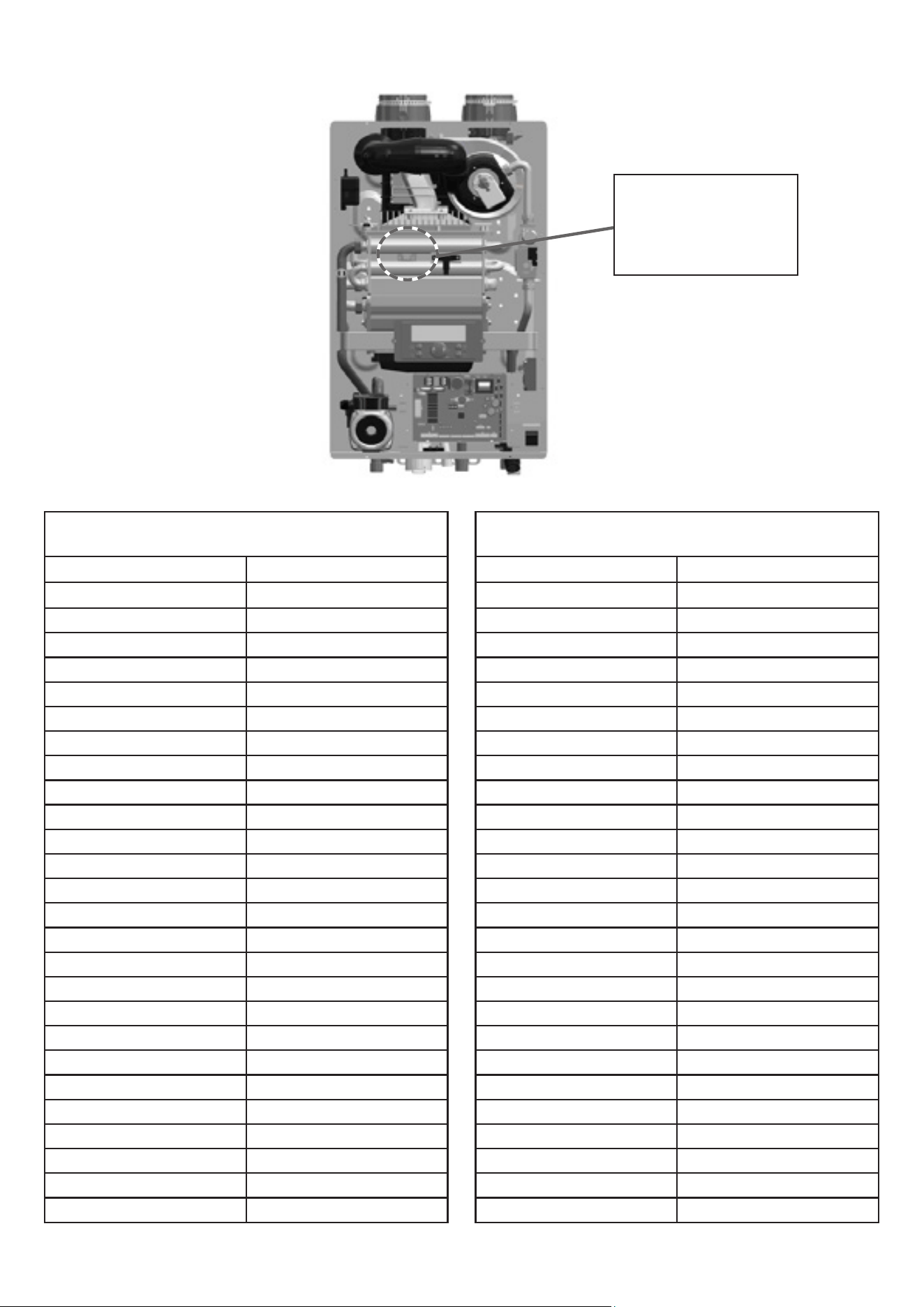
AP18733 REV. 3.2.17
75
Figure 54 – Flame Sight Glass
DHW Inlet Temperature Sensor (7850P-015) Exhaust Temperature
Sensor (7850P-070)
Temperature (°F/ °C) Resistance (Ω)
Resistance (Ω)
-4 / -20 28409
5 / -15 22152
14 / -10 17408
23 / -5 13782
32 / 0 10990
41 / 5 8824
50 / 10 7131
59 / 15 5800
68 / 20 4747
77 / 25 3906
86 / 30 3233
95 / 35 2690
104 / 40 2250
113 / 45 1891
122 / 50 1598
131 / 55 1356
140 / 60 1155
149 / 65 989
158 / 70 850
167 / 75 733
176 / 80 635
185 / 85 552
194 / 90 482
203 / 95 421
212 / 100 370
DHW Inlet Temperature Sensor (7850P-015) Exhaust Temperature
Sensor (7850P-070)
Temperature (°F/ °C) Resistance (Ω)
Resistance (Ω)
-4 / -20 62162
5 / -15 48440
14 / -10 38045
23 / -5 30107
32 / 0 23998
41 / 5 19261
50 / 10 15562
59 / 15 12655
68 / 20 10353
77 / 25 8520
86 / 30 7051
95 / 35 5867
104 / 40 4908
113 / 45 4125
122 / 50 3485
131 / 55 2957
140 / 60 2520
149 / 65 2157
158 / 70 1854
167 / 75 1600
176 / 80 1386
185 / 85 1205
194 / 90 1051
203 / 95 920
212 / 100 808
Visual check Port
Port should show
blue flame.
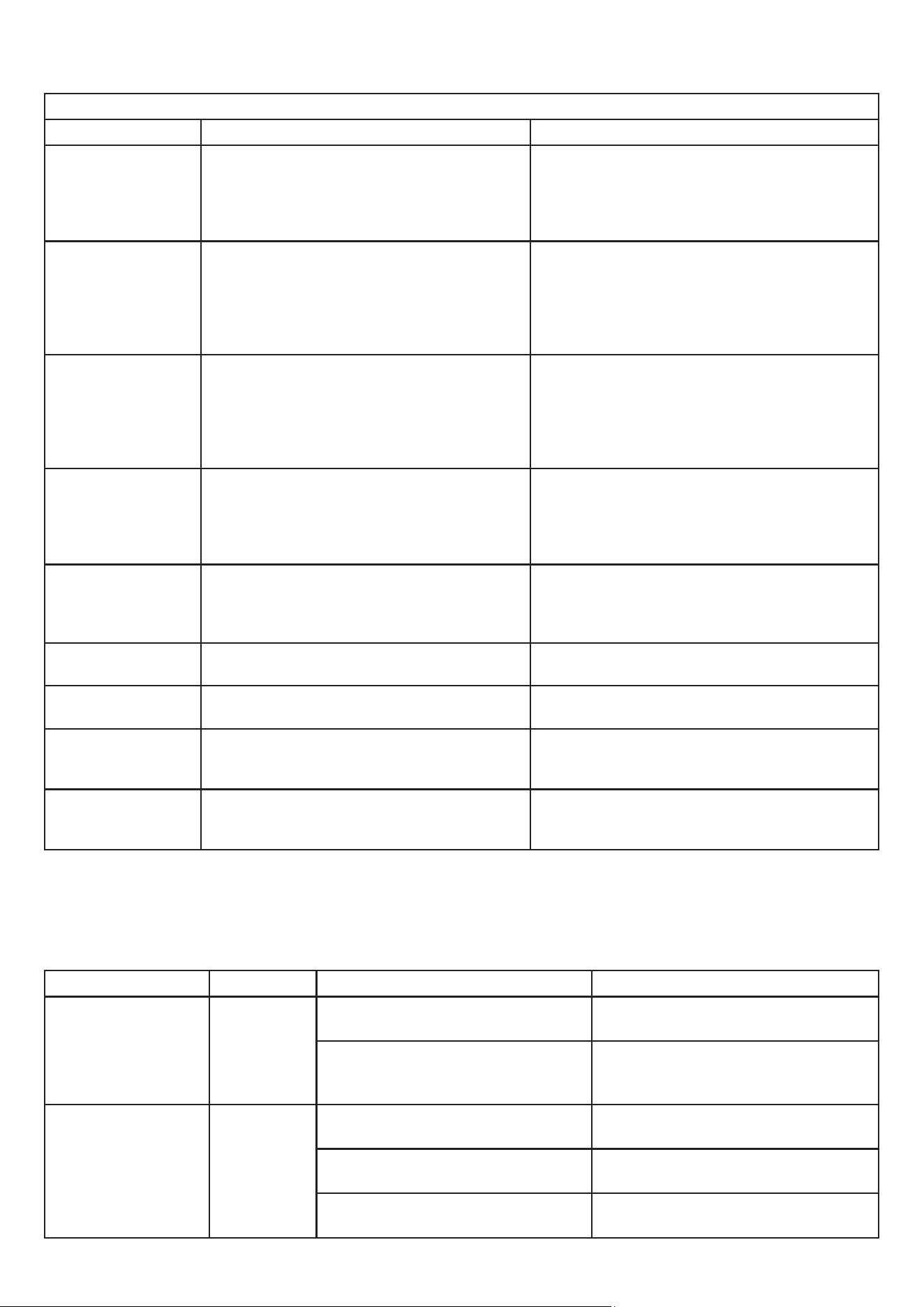
AP18733 REV. 3.2.17
76
Table 30 – Troubleshooting Chart
TROUBLESHOOTING CHART
PROBLEM POSSIBLE CAUSES POSSIBLE REMEDIES
No electrical power to the
water heater
1. Is the plug on the power supply cord unplugged from the
electrical outlet?
2. Is electrical panel’s 10 Amp circuit breaker tripped?
3. Is the fuse on the circuit board good?
4. Is there a power outage to the home?
1. Reset the plug.
2. Reset the circuit breaker.
3. If the display panel is blank, unplug the unit or contact an
authorized service technician.
4. Contact the power company.
No water available when a
faucet is opened
1. Is the water supply valve shut off at the meter
(do cold water faucets work)?
2. Is the water supply valve near the unit open?
3. Is the water pipe frozen?
4. Is an error code ashing on the display panel (leak
detected)?
1. Open the closed supply valve.
2. Open the water supply valve.
3. Turn OFF the unit, close all water valves and the gas valve.
Contact an authorized service technician.
4. Refer to error code information and contact an authorized
service technician.
Hot water is not available
when the faucet is opened.
1. Does the water heater have power (plugged in)?
2. Is the water heater turned ON?
3. Is an error code ashing on the display panel?
4. Is the gas supply valve open or shut off at the meter
(do other gas devices work)?
5. Has the ow sensor failed?
1. Restore electrical power to the unit.
2. Press and hold the Power button to turn the unit ON.
3. Refer to the Diagnostic and Error Codes section in this
manual.
4. Open the gas supply valve.
5. Check ow sensor.
The water temperature is
not hot enough or turns
cold during use.
1. Is the faucet open enough to draw at least 0.6 gallons
(2.3L) per minute through the water heater?
2. Is an error code ashing on the display panel?
3. Is the outlet water temperature set too low?
1. Open the faucet to allow more water ow.
2. Refer to the Diagnostic and Error Codes section in this
manual.
3. Adjust the outlet water temperature (refer to the procedure
in this manual).
It takes a long time before
hot water ows from the
faucet.
Is the faucet some distance from the water heater?
a. Allow time for the cold water already in the pipes to ow
from the faucet.
b. Have recirculation valves and/or plumbing return line(s)
installed and program the unit for recirculation mode.
The water is not hot
enough.
Is the water temperature set too low? Adjust the temperature setting.
The water at the faucet is
too hot.
Is the water temperature set too high? Adjust the temperature setting.
A fan can be heard even
when the unit is not
operating.
1. The fan continues to operate after the burner shuts off to
clear the exhaust vent of combustion gases.
2. The fan may run to help prevent freezing.
1. This is normal operation – no action is required.
2. Protect the water heater from freezing temperatures or shut
off and drain the unit.
White “smoke” can be
seen coming out of the
exterior exhaust gas vent.
Depending on the outside temperature, water vapor can be
produced as the exhaust is vented.
This is normal operation – no action is required.
DIAGNOSTICS AND SUGGESTED CORRECTIVE ACTIONS
The water heater control is able to record information about the water heater’s condition at the time of the ten previous faults or errors.
This information is available to view in the Installer Mode under the History screen. The following screens may be displayed when reviewing
the water heater history. The table below also includes diagnostic information and possible corrective actions.
Display Condition Diagnostic Possible Corrective Actions
Nothing appears on the
display control panel but
the fan runs at full speed
Control is not
receiving power
Check wiring for short circuit or incorrect wiring
Correct wiring per wiring diagram including
connection of transformer to the control
Check transformer connection to the control
per wiring diagram. Check for 14V output of
panel wire
Push the Power button on the control panel
Nothing appears on the
display control panel and
no other water heater
components are operating
Control is not
receiving 120V
power
Ensure service switch and/or circuit breaker to
water heater is turned ON
Turn on service switch or circuit breaker to
power water heater
Is there 120V at the service switch
Troubleshoot and correct the power supply to
the manual switch
Is the ON/OFF switch inside the water heater
cabinet is turned on
Turn ON the manual power switch inside the
water heater cabinet
TROUBLESHOOTING
AP18733 REV. 3.2.17
77
Check for 120V at the line voltage terminal block
located inside the water heater cabinet
Correct wiring inside the water heater cabinet using
the wiring diagram in the installation manual
Inspect the fuse. Replace as necessary
Replace the fuse with the proper part found in the
replacement part section of this manual. If fuse
blows again, recheck the wiring per diagram
Nothing appears on
the display control
panel, but the water
heater is operating
Occurs when
communications
is lost from the
control to the
display
Check for loose connections and proper pin
alignment / engagement on the control’s plug
Check for continuity on the wire harness from the
display to the control. See repair parts section for
proper replacement part.
Cycle power off and on using water heater
power switch and check for operation
Replace with new display module. See repair parts
section for proper replacement part.
Display repeatedly
goes through
initialization sequence
Occurs when
control does not
receive signal
from fan
Cycle power off and on using appliance power
switch and check for operation
Replace fan.
Table 31 –Diagnostics and Suggested Corrective Actions
MAINTENANCE PROCEDURES
DANGER
DANGER
The water heater must be inspected and serviced annually, preferably at the start of the heating season, by a qualied service technician. In
addition, the maintenance and care of the water heater as outlined in this manual must be performed by the user/owner to assure maximum
efciency and reliability. Follow the maintenance procedures given throughout this manual. Failure to perform the service and maintenance or
follow the directions in this manual could damage the water heater or system components, resulting in substantial property damage, severe
personal injury, or death.
To prevent the potential of substantial property damage, severe personal injury, or death, eliminate all the materials listed in Table 1 from the area
surrounding the water heater and the vicinity of the combustion air intake. If contaminates are found:
● Remove products immediately from area.
● If contaminates have been there for an extended period, call a qualied service technician to inspect the water heater for possible damage
from acid corrosion.
If products cannot be removed, immediately call a qualified service technician to re-pipe the combustion air intake piping away from the
contaminated areas.
Combustible/Flammable Materials
Do not store combustible materials, gasoline, or other ammable vapors or liquids near the water heater. If found, remove these materials
immediately.
Air Contaminates
If allowed to contaminate combustion air, products containing chlorine or uorine will produce acidic condensate that will cause signicant
damage to the water heater. Read the list of potential contaminates and areas likely to have these contaminates in Table 1. If any of these
contaminates are in the room where the water heater is located, or combustion air is taken from one of the areas listed, the contaminates must
be removed immediately or the intake pipe must be relocated to another area.
Ensure the Water Heater Cabinet is Closed
Ensure the water heater cabinet is closed. Tighten the two upper and lower screws to secure it. The cabinet must be closed while the water
heater is running.
Check the Power Source
Make sure the power cord is properly connected. The main power line is connected to the manual switch box inside the water heater.
Check the Status of the Control Panel
Observe the Control Panel to ensure the water heater is powered on, and to check for any error codes. Clear any debris from the panel.
Check Exhaust Vent and Intake Pipe Terminations
Verify that the water heater exhaust vent and intake pipe terminations are clean and free of obstructions. Remove any debris from the exhaust
vent or intake pipe openings. If removing the debris does not allow the water heater to operate correctly, contact your qualified service
technician to inspect the water heater and the vent system.
Check Exhaust Vent and Intake Piping
Visually inspect the exhaust vent for any signs of blockage, leakage, or deterioration of the piping. Inspect the exhaust vent bracing. Ensure
bracing is undamaged and in good condition. Notify a qualied service technician immediately if any problems are found.
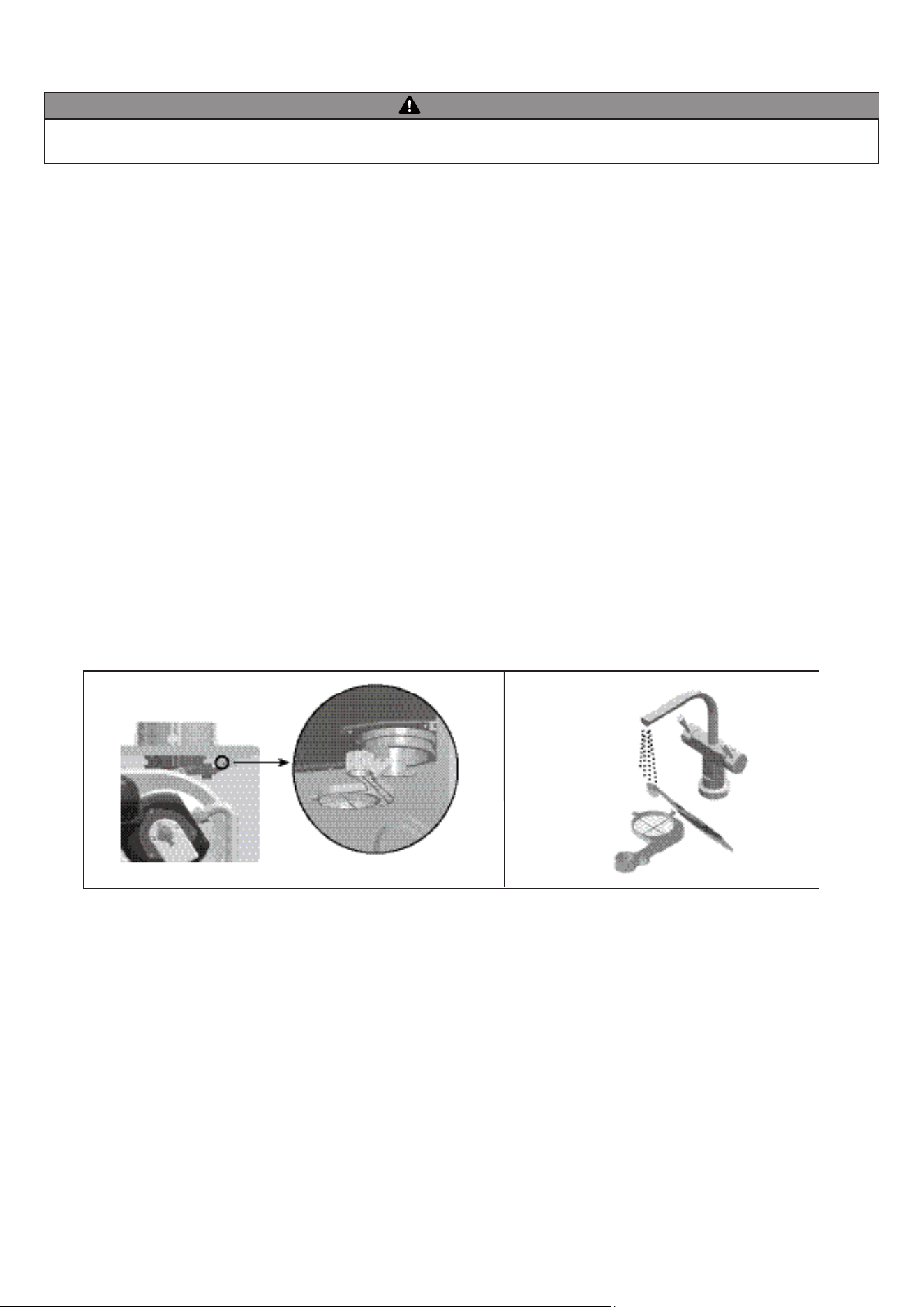
AP18733 REV. 3.2.17
78
Visually inspect the intake piping for any signs of blockage. Inspect the entire length of the intake pipe to ensure piping is intact and all joints are
properly sealed. Inspect the intake pipe bracing. Ensure bracing is undamaged and in good condition. Notify a qualied service technician if any
problems are found.
Check Pressure Relief Valve
● Visually inspect the primary pressure relief valve and discharge pipe for signs of weeping or leakage.
● If the pressure relief valve often weeps, the expansion tank may not be operating properly. Immediately contact a qualied service technician
to inspect the water heater and system.
Check the Condensate Drain System
● While the water heater is running, check the discharge end of the condensate drain tubing. Ensure no flue gas is leaking from the
condensate drain tubing by holding your ngers near the opening.
● If you notice ue gas leaking from the opening, this indicates a dry condensate drain trap. If problem persists, contact a qualied service
technician to inspect the water heater and condensate line and rell the condensate trap.
● If applicable, check the condensate neutralizer and ensure it is full of condensate neutralizing marble chips.
Cleaning the Air Intake Filter
The air intake lter should be cleaned once a month. If not, the water heater could encounter combustion problems.
To clean the air intake lter:
1. Press the Power button on the control panel to turn off the water heater.
2. Disconnect the power supply from the water heater.
3. If water heater has been operating, wait for it to cool before continuing.
4. Remove the front cover of the water heater cabinet.
5. Pull the lter screen screw and pull the lter out of the air intake adapter.
6. Remove the lter from the plastic assembly and clean it with a toothbrush and clean running water. See Figure 55.
7. Dry the lter completely. Then reinsert the lter into the plastic assembly.
8. Replace the front cover of the water heater cabinet. Reconnect power supply to the water heater.
9. Press the Power button on the control panel to turn on the water heater.
Check Primary and Gas Piping
●Remove the water heater cover and perform a gas leak inspection following Operating Instructions, page 2, this manual. If gas odor or leak
is detected, follow procedures on page 2. Call a qualied service technician.
● Visually inspect for leaks around the internal water heater water connections and around the heat exchanger. Visually inspect the external
system piping, circulators, and system components and ttings. Immediately call a qualied service technician to repair any leaks.
WARNING
Failure to inspect the venting system and have it repaired by a qualied service technician can result in vent system failure, causing severe
personal injury or death.
Figure 55 – Cleaning the Air Intake Filter
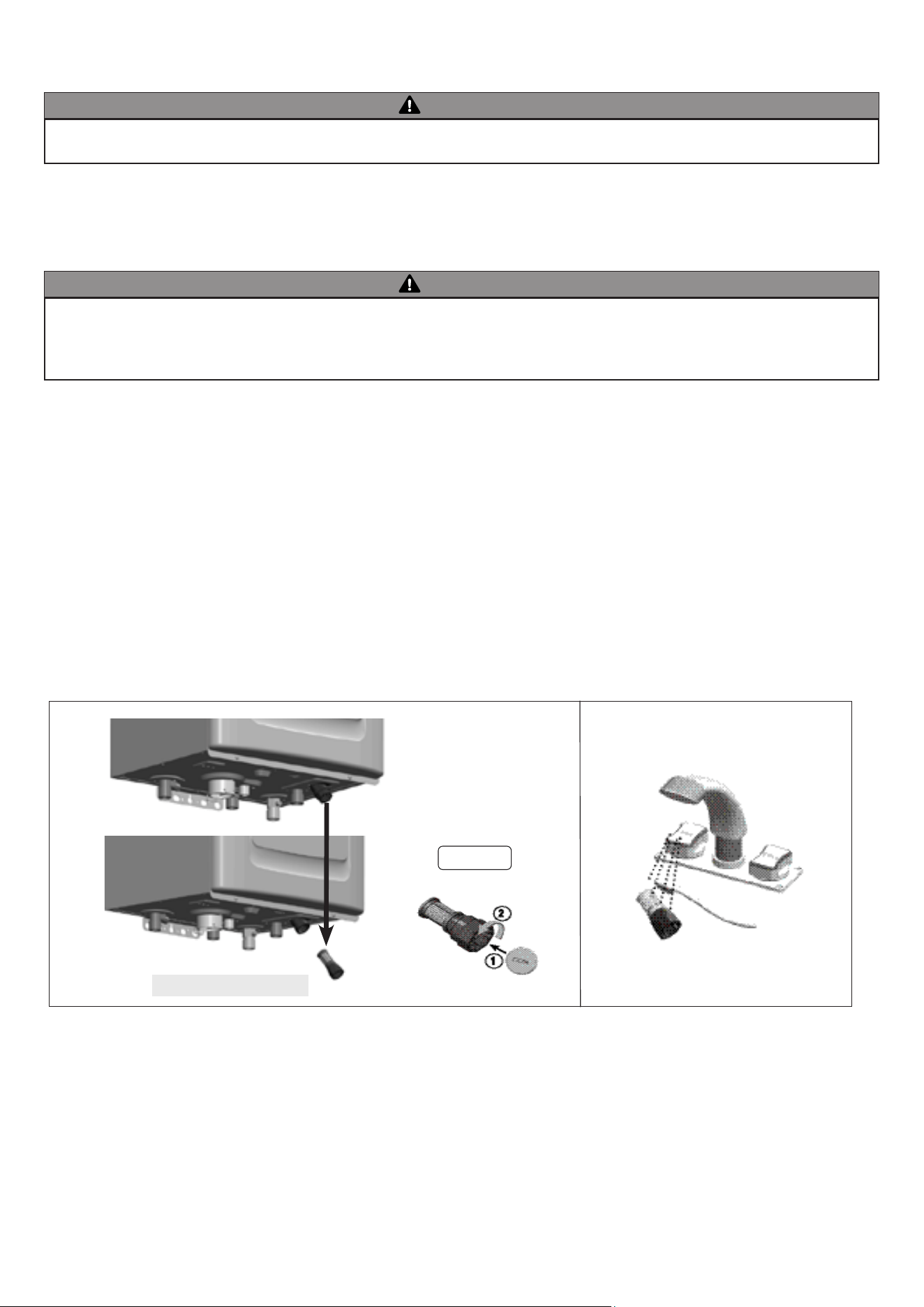
AP18733 REV. 3.2.17
79
WARNING
WARNING
Have leaks xed at once by a qualied service technician. Failure to comply could result in substantial property damage, severe personal injury, or
death.
To avoid water damage or scalding due to relief valve operation, a discharge line must be connected to the valve outlet and directed to a safe
place of disposal. This discharge line must be installed by a qualied service technician or heating/plumbing installer in accordance with the water
heater installation manual. The discharge line must be terminated so as to eliminate possibility of severe burns or property damage should the
valve discharge.
Operate Pressure Relief Valve
● Before proceeding, verify that the relief valve outlet has been piped to a safe place of discharge, avoiding any possibility of scalding from hot
water.
● Shut power off to the water heater. To avoid scalding, wait for water heater to cool before operating the relief valve.
6. Reinstall the cold water inlet filter.
7. Restore water service to the water heater by opening the isolation valves, or turning on the main water valve.
8. Turn on the gas valve. Turn on electrical power to the water heater and press the Power button to turn the water heater on.
●List the relief valve lever. If water flows freely, release the lever and allow the valve to seat. Watch the end of the relief valve discharge pipe
to ensure that the valve does not weep after the line has had time to drain. If the valve weeps, lift the lever again to attempt to clean the valve
seat. If the valve does not properly seat and continues to weep, contact a qualified service technician to inspect the valve and system.
● If water does not flow from the valve when you completely lift the lever, the valve or discharge line may be blocked. Immediately shut the
water heater down per instructions on page 2 and call a qualified service technician to inspect the valve and system.
● If relief valve seats properly, restore power to the water heater. Observe operation for five minutes and ensure it operates properly.
Check the Burner
Clean the exterior of the burner.
Cleaning the Cold Water Inlet Filter (Draining the Water Heater)
1. Place a bucket under the appliance to collect the residual water inside the water heater.
2. Press the Power button on the control panel to turn off the electrical power to the water heater. Then turn off the gas valve.
3. Valve off the water heater from the system. If the water heater cannot be isolated from the system, turn off the main water valve. Open the hot
water faucets in the system to aid in draining the system.
5. Use a coin to remove the cold water inlet lter. Then clean it with a toothbrush and clean running water. See Figure 56.
Figure 56 – Draining the Water Heater
Use a coin.
Cold Water Filter
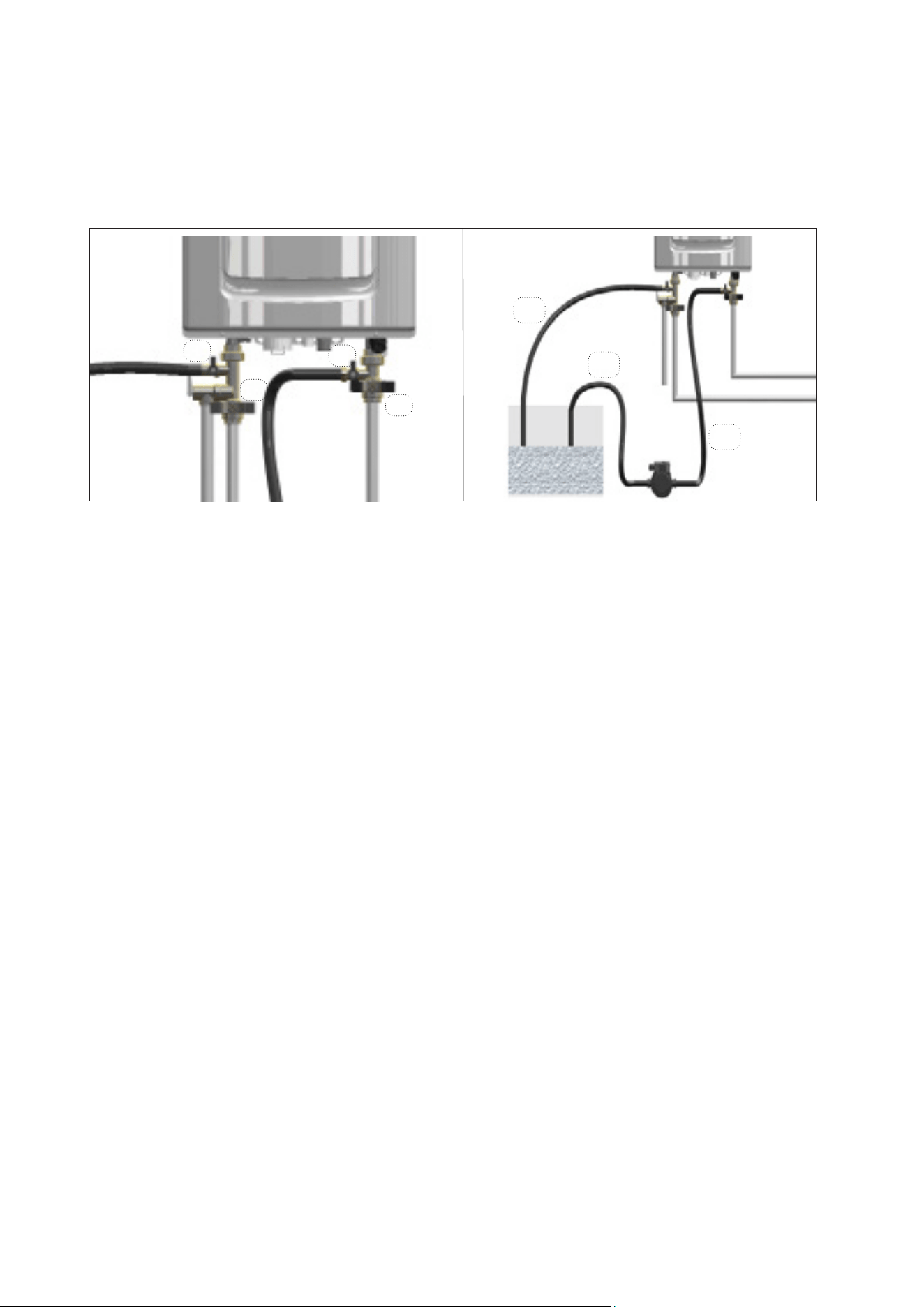
AP18733 REV. 3.2.17
80
Flushing the Water Heater
Flushing the heat exchanger is a complicated procedure that should only be performed by a qualified service technician.
NOTE: Improper maintenance WILL VOID water heater warranty.
1. Disconnect electrical power to the water heater.
2. Close the shutoff valves on both hot water outlet and cold water inlet lines (V1 and V2). See Figure 57.
3. Connect one hose (D1, Figure 57) to the valve (V3) and place the free end in a bucket. Connect one of the hoses (D3) to the circulation pump
outlet and the cold water inlet line to valve V4. Connect the other hose (D2) to the circulation pump inlet and place the free end in the bucket.
4. Pour tankless water heater cleaning solution into the bucket. Ensure the cleaning solution is approved for potable water systems. Place the
drain hose (D1) and hose D2 to the pump inlet in the cleaning solution.
5. Open service valves (V3 and V4) on the hot water outlet and cold water inlet lines.
6. Turn on the circulation pump. Operate the pump and allow the cleaning solution to circulate through the water heater for at least 1 hour at a
rate of 4 gallons per minute. This will remove any possible harmful scale deposits.
7. Rinse the cleaning solution from the combination water heater as follows:
a. Remove the free end of drain hose D1 from the bucket.
b. Close service valve V4 and open shutoff valve V2.
c. Do not open shutoff valve V1.
d. Allow water to flow through the water heater for 5 minutes.
e. Close shutoff valve V2.
8. Disconnect all hoses.
9. Remove the cold water inlet filter from the water heater and clean out any residues.
10. Reinsert the filter and ensure the filter cap is securely tightened.
11. Connect electrical power to the water heater.
12. Open a hot water faucet. Run the water heater continuously for five minutes to ensure all cleaning solution is purged from the system.
Check for leaks and ensure the water heater is operating properly.
Figure 57 – Flushing the Water Heater
V4
D1
D2
D3
V2
V3
V1
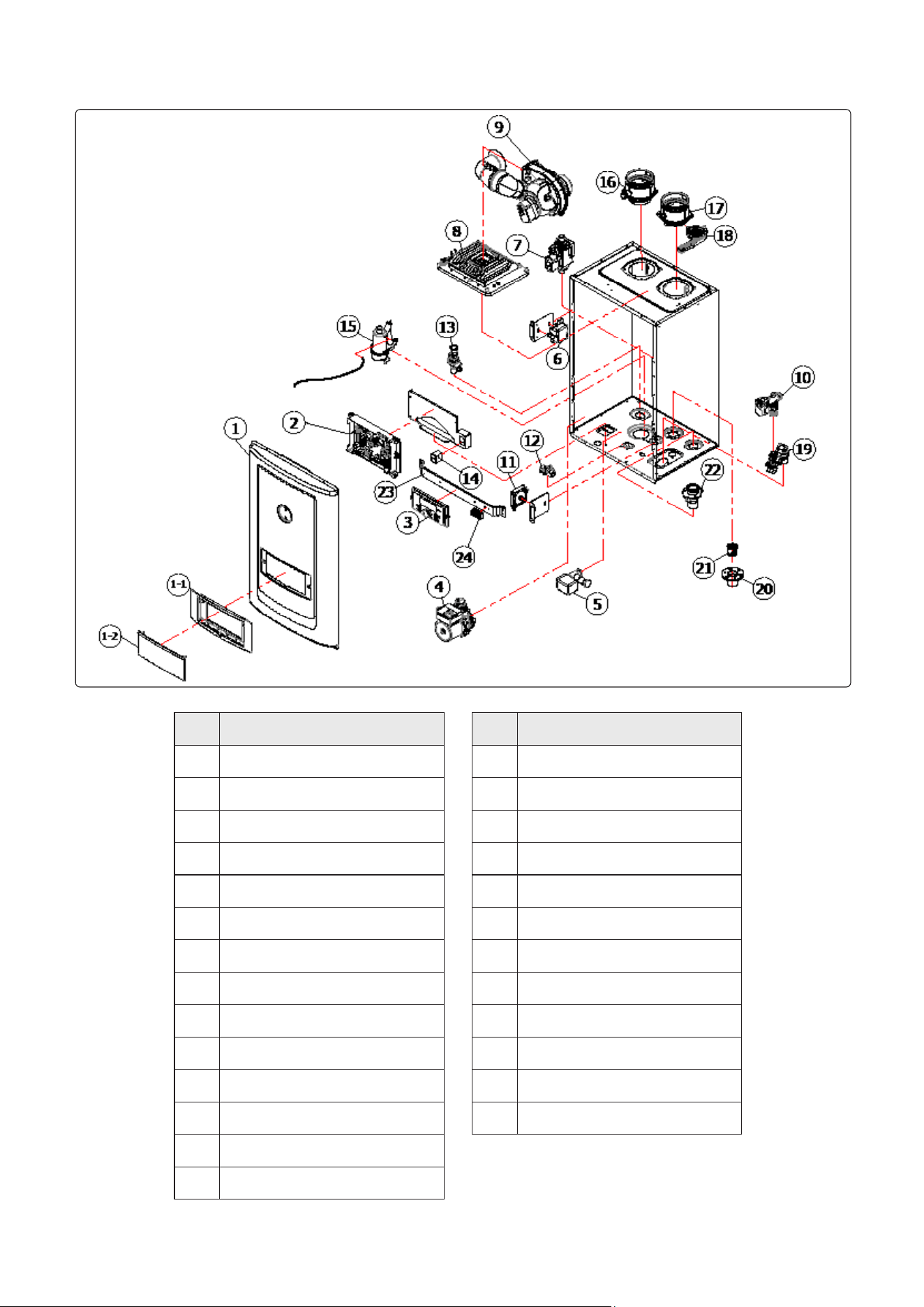
AP18733 REV. 3.2.17
81
Table 32 – Cabinet Replacement Parts
Figure 58 – Cabinet Replacement Parts
REPLACEMENT PARTS
Ref # Description
1.
Front Cover
1-1.
Control Panel Bracket
1-2.
Control Panel Window
2.
PCB
3.
Control Panel
4.
Circulation Pump
5.
Mixing Valve
6.
Igniter
7.
Gas Valve Assembly
8.
Burner Assembly
9.
Blower & Silencer
10.
Flow Control Valve
11.
Air Pressure Switch
12.
Water Leak Detector
Ref # Description
13.
Hot Water Pipe Assembly
14.
Rocker Switch
15.
Condensate Trap
16.
Exhaust Assembly
17.
Air Intake Assembly
18.
Air Intake Filter
19.
Cold Water Valve Assembly
20.
Recirculation Return Connection
21.
Check Valve
22.
Gas Inlet Connection
23.
Control Panel Steel Bracket
24.
Terminal Block
AP18733 REV. 3.2.17
82
AP18733 REV. 3.2.17
83
AP18733 REV. 3.2.17
84
WARNING
Allowing the water heater to operate with a dirty combustion chamber will hurt operation. Failure to clean the heat exchanger as needed by the
installation location could result in water heater failure, property damage, personal injury, or death. Such product failures ARE NOT covered under
warranty.
INSPECTION ACTIVITIES DATE LAST COMPLETED
Piping 1st YEAR 2nd YEAR 3rd YEAR 4th YEAR
Near water heater
piping
Check water heater and system piping for any sign of leakage. Leaking pipes could
cause property damage. Make sure all piping is properly supported. Flush tankless heat
exchanger annually (more in hard water conditions). See User’s Information manual for
instructions.
Vent
Check condition of all vent pipes and joints. Ensure all vent piping is properly supported.
Check for obstructions exhaust and intake termination points.
Gas
Check Gas piping, test for leaks and signs of aging. Make sure all pipes are properly
supported.
SYSTEM
Visual Do a full visual inspection of all system components.
Functional Test all functions of the system (Heat, Safeties)
ELECTRICAL
Connections Check wire connections. Make sure they are tight.
Switch and Plug Verify ON/OFF switch and convenience plug are both functional
CHAMBER/BURNER
Combustion Chamber
Check burner tube and combustion chamber coils. Clean according to maintenance
section of manual. Vacuum combustion chamber.
Spark Electrode Clean. Set gap at 1/8" (0.3 cm).
CONDENSATE
Condensate Trap Clean debris from the condensate trap. Fill with clean water.
Neutralizer Check condensate neutralizer. Replace if necessary.
Condensate hose
Disconnect condensate hose. Clean out dirt and re-install. (NOTE: Verify the flow of
condensate, making sure that the hose is properly connected during nal inspection.)
GAS
Pressure Measure incoming gas pressure (NG : 5.0" to 10.5" W.C.) (LP : 9.5" to 13.0" W.C.)
Check gas pipe for leaks Check piping for leaks. Verify that all are properly supported.
COMBUSTION
CO/
CO
2
Levels Check CO and
CO
2
levels in Exhaust. Record at high and low re.
SAFETIES
ECO (Energy Cut Out) Check continuity on Flue and Water ECO. Replace if corroded.
FINAL INSPECTION
Check list
Verify that you have completed entire check list. WARNING: FAILURE TO DO SO COULD
RESULT IN SERIOUS INJURY OR DEATH.
Homeowner Review what you have done with the homeowner.
TECH SIGN OFF
The water heater requires minimal periodic maintenance under normal conditions. However, in unusually dirty or dusty conditions, periodic
vacuuming of the cover to maintain visibility of the display and indicators is recommended.
Periodic maintenance should be performed once a year by a qualified service technician to assure that all the equipment is operating safely and
efficiently. The owner should make necessary arrangements with a qualified heating contractor for periodic maintenance of the water heater.
Installer must also inform the owner that the lack of proper care and maintenance of the water heater may result in a hazardous condition.
Table 34 - *Continue annual maintenance beyond the 4th year as required.

AP18733 REV. 3.2.17
85
MAINTENANCE NOTES
AP18733 REV. 3.2.17
86
CUSTOMER INSTALLATION RECORD FORM
The following form should be completed by the installer for you to keep as a record of the installation in case of a warranty claim. After reading the
important notes at the bottom of the page, please also sign this document.
IMPORTANT NOTES:
Customer: Please only sign after the installer has reviewed the installation, safety, proper operation and maintenance of the system.
In the case that the system has any problems, please call the installer. If you are unable to make contact, please contact your Sales
Representative.
Distributor/Dealer: Please insert contact details.
Customer’s Name:
Installation Address:
Date of Installation:
Installer’s Code/Name:
Product Serial Number(s):
Combustion Setting at Time of Installation:
Comments:
Installer’s Phone Number:
Signed by Installer:
Signed by Customer:
