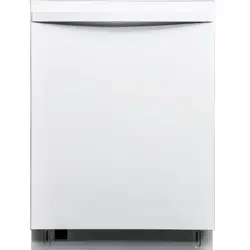
Use & Care Guide Guía de uso y cuidada English / Español
Models/Modèles: 587.1233*
P/N:6710008840RevA Artwork:6710008840Rev001 Sears Brands Management Corporation Hoff man Estates. IL 60179 U.S.A. www.kenmore.com www.sears.com
Sears Canada Inc.
Toronto. Ontario. Canada M5B 2C3
Kenmore Dishwasher Lavavajillas
+ = Color number. numéro de color
Record Model/Serial Numbers
Please read and save these instructions
This Use & Care Guide provides specifi c operating instructions for your model.
Use your unit only as instructed in this guide. These instructions are not meant to cover every possible condition and situation that may occur. Common sense and caution must be practiced when installing. operating. and maintaining any appliance.
Please record your model and serial numbers below for future reference. This information is found on the serial plate located inside the Dishwasher.
Record Model/Serial Numbers .2 Important Safety Instructions 2-3 Warranty Information .4 Master Protection Agreements .5 Dishwasher Features 6 Operating Instructions 7-9 Preparing and Loading Dishes ..10-12 Dishwasher Dispenser & Detergents 13 Factors Affecting Performance ..14 Care & Cleaning 15-16 Solutions to Common Dishwashing Problems 16-18 Service Numbers .Back Cover
Table of Contents
587.
Safety Precautions
Do not attempt to install or operate your unit until you have read the safety precautions in this manual. Safety items throughout this manual are labeled with a Danger. Warning. or Caution based on the risk type.
Defi nitions
This is the safety alert symbol. It is used to alert you to potential personal injury hazards. Obey all safety messages that follow this symbol to avoid possible injury or death.
Important Safety Instructions
IMPORTANT
Indicates installation. operation. or maintenance information which is important but not hazard-related.
CAUTION
CAUTION indicates a potentially hazardous situation which. if not avoided. may result in minor or moderate injury.
WARNING
WARNING indicates a potentially hazardous situation which. if not avoided. could result in death or serious injury.
DANGER
DANGER indicates an imminently hazardous situation which. if not avoided. will result in death or serious injury.
Model Number:
Serial Number:
Purchase Date:
For Your Safety
• Use your dishwasher only as instructed in this Use and Care Guide.
• Use only detergents or rinse agent recommended for use in a dishwasher. and keep them out of reach of children.
• When loading items to be washed: Locate sharp items and knives so that they are not likely to damage the door seal or tub. Load sharp items and knives with the handles up to reduce the risk of cut-type injuries.
• Do not wash plastic items unless marked “dishwasher safe” or the equivalent. Check with manufacturer for recommendations. if not marked.
Plastic Items that are not dishwasher safe may melt and create a potential fi re hazard.
• Do not touch the heating element during or immediately after use.
• Do not operate your dishwasher unless all enclosure panels are properly in place.
Important Safety Instructions
• If the dishwasher drains into a food disposer. maker sure disposer is completely empty before running dishwasher.
• Disconnect electrical power to dishwasher before servicing.
• Do not tamper with controls.
• Do not let children abuse. sit. stand or play on door or racks of a dishwasher.
• Keep young children and infants away from dishwasher when it is operating.
• Under certain conditions. hydrogen gas may be produced in a hot water system that has not been used for two weeks or more.
HYDROGEN GAS IS EXPLOSIVE. If the hot water system has not been used for such a period. before using the dishwasher turn on all the hot water faucets and let the water fl ow from each for several minutes. This will release any accumulated hydrogen gas. As the gas is fl ammable. do not smoke or use an open fl ame during this time.
• Remove the door to the washing compartment when removing an old dishwasher from service or discarding it.
WARNING
Please read all safety instructions before using your new appliance.
WARNING
These guidelines must be followed to ensure that safety mechanisms in this unit will operate properly.
Tip Over Hazard
Do not use dishwasher until completely installed.
Do not push down on open door.
Doing so can result in serious injury or cut.
Warranty Information KENMORE APPLIANCE WARRANTY FOR ONE YEAR from the date of sale this appliance is warranted against defects in material or workmanship when it is correctly installed. operated and maintained according to all supplied instructions.
WITH PROOF OF SALE. a defective appliance will receive free repair or replacement at option of seller.
For warranty coverage details to obtain free repair or replacement. visit the web page: www. kenmore.com/warranty This warranty applies for only 90 DAYS from the sale date in the United States. and is void in Canada. if this appliance is ever used for other than private household purposes.
This warranty covers only defects in material and workmanship. Sears will NOT pay for: 1. Expendable items that can wear out from normal use. including but not limited to fi lters. belts. bags or screw-in base light bulbs.
2. A service technician to clean or maintain this appliance. or to instruct the user in correct appliance installation. operation and maintenance.
3. Service calls to correct appliance installation not performed by Sears authorized service agents. or to repair problems with house fuses. circuit breakers. house wiring. and plumbing or gas supply systems resulting from such installation.
4. Damage to or failure of this appliance resulting from installation not performed by Sears authorized service agents. including installation that was not in accord with electrical. gas or plumbing codes.
5. Damage to or failure of this appliance. including discoloration or surface rust. it it is not correctly operated and maintained according to all supplied instructions.
6. Damage to or failure of this appliance. including discoloration or surface rust. resulting from accident. alteration. abuse. misuse or use for other than its intended purpose.
7. Damage to or failure of this appliance. including discoloration or surface rust. caused by the use of detergents. cleaners. chemicals or utensils other than those recommended in all instructions supplied with the product.
8. Damage to or failure of parts or systems resulting from unauthorized modifi cations made to this appliance.
9. Service to an appliance if the model and serial plate is missing. altered. or cannot easily be determined to have the appropriate certifi cation logo.
Disclaimer of implied warranties; limitation of remedies Customer’s sole and exclusive remedy under this limited warranty shall be product repair or replacement as provided herein. Implied warranties. including warranties of merchantability or fi tness for a particular purpose. are limited to one year or the shortest period allowed by law.
Seller shall not be liable for incidental or consequential damages. Some states and provinces do not allow the exclusion or limitation of incidental or consequential damages. or limitations on the duration of implied warranties of merchantability or fi tness. so these exclusions or limitations may not apply to you.
This warranty applies only while this appliance is used in the United States and Canada*.
This warranty gives you specifi c legal rights. and you may also have other rights which vary from state to state.
+In-home repair service is not available in all Canadian geographical areas. nor will this warranty cover user or servicer travel and transportation expenses if this product is located in a remote area (as defi ned by Sears Canada Inc.) where an authorized servicer is not available.
Sears Brands Management Corporation. Hoff man Estates. IL 60179 Sears Canada Inc. Toronto. Ontario. Canada M5B 2C3
Master Protection Agreements
Congratulations on making a smart purchase. Your new Kenmore product is designed and manufactured for years of dependable operation. But like all products. it may require preventive maintenance or repair from time to time. That’s when having a Master Protection Agreement can save you money and aggravation.
The Master Protection Agreement also helps extend the life of your new product.
Here’s what the Agreement* includes:
• Parts and labor needed to help keep products operating properly under normal use. not just defects. Our coverage goes well beyond the product warranty. No deductibles. no functional failure excluded from coverage – real protection.
• Expert service by a force of more than 10. 00 authorized Sears service technicians. which means someone you can trust will be working on your product.
• Unlimited service calls and nationwide service. as often as you want us. whenever you want us.
• “No-lemon” guarantee – replacement of your covered product if four or more product failures occur within twelve months.
• Product replacement if your covered product can not be fi xed.
• Annual Preventive Maintenance Check at your request – no extra charge.
• Fast help by phone – we call it Rapid Resolution – phone support from a Sears representative on all products. Think of us as a “talking owner’s manual”.
• Power surge protection against electrical damage due to power fl uctuations.
• $250 Food Loss Protection annually for any food spoilage that is the result of mechanical failure of any covered refrigerator or freezer.
• Rental reimbursement if repair of your covered product takes longer than promised.
• 25% discount off the regular price of any non-covered repair service and related installed parts.
Once you purchase the Agreement. a simple phone call is all that it takes for you to schedule service. You can call anytime day or night. or schedule a service appointment online.
The Master Protection Agreement is a risk free purchase. If you cancel for any reason during the product warranty period. we will provide a full refund. Or. a prorated refund anytime after the product warranty period expires. Purchase your Master Protection Agreement today!
Some limitations and exclusions apply. For prices and additional information in the U.S.A. call 1-800-827-6655.
+ Coverage in Canada varies on some items. For full details call Sears Canada at 1-800-361-6665.
Sears Installation Service
For Sears professional installation of home appliances. garage door openers. water heaters. and other major home items. in the U.S.A. or Canada call 1-800-4-MY HOME.
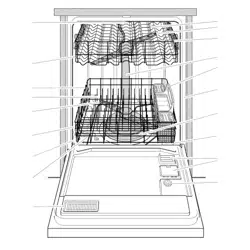
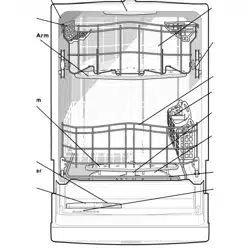
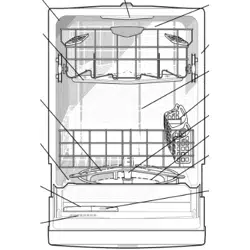
Dishwasher Features
GETTING STARTED 1. Load dishwasher (See Preparing and Loading Dishes).
2. Add detergent (See Dishwasher Dispenser & Detergents).
3. Add rinse aid. if needed (See Rinse Aid).
4. Completely close the door so that it is latched shut.
5. Select desired CYCLE (See Cycle Chart). The indicator light above the pad will glow when selected.
6. Select desired OPTIONS (See Energy Options). The indicator light above the pad will glow when selected.
7. Run hot water faucet nearest dishwasher until water is hot. Turn water off .
8. To start. press START/CANCEL pad.
Your dishwasher cleans by spraying a mixture of hot water and detergent through the spray arms against soiled surfaces. Each cycle begins by fi lling with water covering the fi lter area. Water is then pumped through the fi lter and spray arms. Soil particles go down the drain as the water is pumped out and replaced with clean water. The number of water fi lls will vary with the cycle being used.
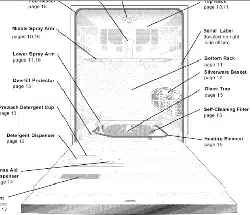
Tub Gasket
Upper Rack Upper Spray Arm Cup Shelf
Middle Spray Arm
Lower Spray Arm
Detergent Dispenser
Vent
Serial Label (located on right side of tub)
Bottom Rack
Silverware Basket
Filter Heating Element
Glass Trap
Rinse Aid Dispenser
Wash Cycle Selections Cycle times are approximate and will vary with options selected. Hot water is necessary to activate dishwasher detergent and melt fatty food soils. An automatic sensor will check the incoming water temperature and. it is is not hot enough. the timer will be delayed for automatic water heating in the main wash of all cycles.
This happens even when HI-TEMP WASH option has not been selected. When HI TEMP WASH is selected. an even higher temperature will be guaranteed to handle heavier soil loads.
Operating Instructions
NOTE
The dishwasher is programmed to remember your last cycle so you do not have to reset each time. To start the dishwasher using the same cycle and options selected on the previous wash. just press the START/CANCEL pad.
Appearance may vary from your model
Hi-Temp Wash When HI-TEMP WASH option is selected. the dishwasher heats water in the main wash to approximately 1400F (600C).
This increase in water temperature helps dishwasher detergent remove food grease and soil from dishes more eff ectively and aids in drying. HI-TEMP WASH option can be used with all cycles except CHINA GENTLE and RINSE ONLY. HI-TEMP WASH is automatically provided when POTS PANS cycle is selected.
When HI-TEMP WASH option is selected. the light above the pad will come on and remain on until end of cycle. To turn off the HI-TEMP WASH option. press the pad a second time. The light above the pad will turn off .
Air Dry The unit defaults to heated dry when it is started with any cycle selected. This drying uses a combination of heated dry with rinse aid that achieves enhanced drying performance. If you prefer to only have AIR DRY for dishes. you will select AIR DRY and the unit will not energize the heating element. This will reduce energy consumption. but will also reduce drying performance.
Operating Instructions
Child Lock Controls To Prevent children from accidently changing the dishwasher cycle or starting the dishwasher. lock the dishwasher controls by pressing and releasing the AIR DRY pad for 3 seconds while the door is latched.
An indicator light on the lock graphic pad will illuminate when the controls are locked and no new selections can be made until the lock is released. To unlock the controls. press the AIR DRY pad until the indicator light goes out.
To Cancel a Cycle You can cancel a cycle anytime during the cycle. Press START/CANCEL pad and the dishwasher will start a 60 second drain. At the end of the drain. select the desired cycle.
Cycle Water (Approx.) Washes/ Rinses
Pots Pans 136 mins* 2 Washes 5 Rinses
Time* (Approx.)
6.3 gal.
23.8 Liters.
Normal Wash
87 mins*
120 mins*
Cycle Chart
Delay Start
The DELAY START option allows you to automatically delay starting your dishwasher from 1-24 hours.
To start 1-24 hour delay. press the DELAY START pad until the desired delay time shows in the STATUS window. A light will come on indicating the delay start hours and will remain on until cycle start.
To cancel the DELAY START option and begin the cycle before the delay period is over. press the START/CANCEL pad.
To Select Cycle
Select POTS PANS and desired OPTIONS.
HI-TEMP WASH will automatically be provided.
For pots. pans. casseroles and dinnerware with dried on or baked-on soils.
For regularly soiled dishes and silverware.
Select NORMAL WASH and desired OPTIONS.
5.4 gal.
20.4 Liters.
2 Washes 4 Rinses
China Gentle For lightly soiled China and Crystal.
Select CHINA GENTLE and desired OPTIONS.
3.6 gal.
13.6 Liters.
1 Wash 3 Rinses
ECO Wash For lightly soiled or pre-rinsed dishes and silverware.
Select ECO Wash and desired OPTIONS.
2.7 gal.
10.2 Liters.
89 mins* 1 Wash 2 Rinses
Rinse Only For rinsing dishes that will be washed later.
Select RINSE ONLY.
DO NOT USE detergent.
1.8 gal.
6.8 Liters.
26 mins* 2 Rinses
+Includes dry time.
Cycle time will also vary based on the options selected and the incoming water temperature.
Not all cycles available on all models.
Status Window The STATUS window. indicates the following activity:
Operating Instructions
Status Indicator Lights The WASHING light comes on at the beginning of cycle and remains on until the end of the main wash.
The DRYING light indicates the drying portion of the cycle. The light will come on when either drying option is selected.
The LOW RINSE light comes on at the end of a cleaning cycle when the rinse agent reservoir is low. The light will remain on throught 5 successive cyles or until the reservoir is fi lled.
The CLEAN light will come on at the end of cycle and remain on until door is opened.
H-24H. Number of delay start hours. The Last hour will count down in minutes.
CL. Close dishwasher door.
The status indicator lights will also fl ash to indicate current cycle status.
Hd. Incidates a water heat delay.
MINUTES. Number of minutes left in cycle (1-99). If cycle is longer than 99 minutes. a small light will appear in the lower right corner and remain on until time counts below 99.
PF Appears in window when dishwasher is fi rst installed. or when power has been interrupted. HI TEMP WASH and AIR DRY indicator lights will also fl ash. To clear. touch START/CANCEL pad.
LO .. Appears in window when the rinse aid dispenser is low and needs to be refi lled.
Preparing and Loading Dishes
Dish Preparation
Loading the Upper Rack
Scrape away large pieces of food. bones. pits. toothpicks. etc. The continuous fi ltered wash system will remove remaining food particles.
Burned-on foods should be loosened before loading. Empty liquids from glasses and cups.
Foods such as mustard. mayonnaise. vinegar. lemon juice and tomato based products may cause discoloration of stainless steel and plastics if allowed to sit for a long period of time. Unless the dishwasher is to be operated at once. it is best to rinse off these food soils.
Load racks so that large items do not prevent the detergent dispenser from opening. Check manufacturer’s recomendations before washing items in question. If the dishwasher drains into a food disposer. be sure disposer is completely empty before starting dishwasher.
Features and appearance of racks and silverware basket may vary from your model.
The upper rack is designed for fl exibility in loading a wide variety of items including cups. glasses. stemware. small plates. bowls. etc.
Load glasses in upper rack. Damage may occur if placed in bottom rack.
Load plastic items in upper rack only. Melting may occur if placed in bottom rack.
Load items with open ends facing down for better cleaning and draining.
Damage may occur if delicate items touch each other during dishwasher operation.
Be sure nothing protrudes through the bottom of the rack to block the rotation of the middle spray arm.
10 place settings standard loading pattern
12 place settings standard loading pattern
Some models have a fold-down cup shelf or a cup shelf/stemware holder. They can be used to load two levels of cups. juice glasses. and other short items. Stagger items on upper level so that water can reach all inside surfaces.
Fold up to load tall glasses.
Preparing and Loading Dishes
Features and appearance of racks and silverware basket may vary from your model.
Load the silverware basket while it is in the bottom rack or take the basket out for loading on the counter or table.
Place small items like baby bottle caps. jar lids. corn cob holders. etc. in a covered section. Close the cover to hold small items in place.
Use suggested loading patters. as shown. to increase washability of your silverware.
Be sure nothing protrudes through bottom of basket or rack to block the spray arm.
Do not mix silver and stainless to avoid damaging the silver fi nish.
The silverware basket can be separated and placed in several locations in the bottom rack.
Load silverware in all sections or just one. depending on your load.
Loading the Bottom Rack
Features and appearance of racks and silverware basket may vary from your model.
The lower rack is best for plates. saucers. bowls. and cookware. Large items should be placed along the edge so they do not block the spray arm rotation. For best results. place bowls. casseroles. and sauce pans with soiled surface facing down or toward the center. Tilt slightly for better drainage.
Make sure tall items do not block the rotation of the spray arm.
Be sure pan handles do not protrude through the bottom of the rack and block the rotation of the spray arm.
10 place settings standard loading pattern
12 place settings standard loading pattern
Loading the Silverware Basket
Preparing and Loading Dishes
CAUTION
Load sharp items (knives. skewers. etc.) pointing down.
Failure to do so may result in injury.
When covers are up. mix items in each section of the basket with some pointing up and some down to avoid nesting. Water spray cannot reach nested items.
Hold the center basket and onse small basket. Slide the small basket back to release the tabs from the corresponding slots.
Pull the baskets apart.
To remove small basket:
Adding a Dish
To add or remove items after wash cycle starts:
Unlatch door and wait a few seconds until wash action stops before opening.
Add the item and wait a few seconds to allow cold air to slowly expand inside dishwasher.
Close door fi rmly to latch and resume cycle.
Dishwasher Dispenser & Detergents
The detergent dispenser has one covered and one uncovered cup. Detergent in the uncovered cup falls into the dishwasher when the door is closed. The covered cup opens later automatically to release detergent during the main wash.
Use only fresh automatic dishwashing detergent. Other detergents may cause oversudsing. When using automatic dishwashing detergents tabs. place one tab in main wash cup and close. Add detergent just before starting cycle. Store detergent in a cool. dry location.
Moist or caked detergent will not wash eff ectively and may not dissolve properly.
Filing the Detergent Dispenser
CAUTION
The use of industrial grade detergent can damage the heating coil and other parts of the dishwasher leading to damage to the unit and surrounding property.
Use only household grade automatic dishwasher detergents.
If the cover is closed on the Main Wash Cup open by pressing the Cover Latch.
Cover
Main Wash Cup
Cover Latch Pre-Wash Cup
How much Detergent to use
The amount of detergent to use depends on the water hardness. which is measured in grains per gallon. Using too little detergent can result in poor cleaning and hard water fi lming or spotting. Using too much detergent in soft water can cause etching. a permanent surface damage that looks like a fi lm on the dishware.
Your local water company. water softener company or county extension agent can tell you the water hardness in your area.
Detergent Usage Chart
Soft Water (0-3 grains) Medium Hard Water (4-8 grains) Hard Water (9-12 grains) Very Hard Water (Over 12 grains)
2 teaspoons (each cup 1/4 full)
5 teaspoons (each cup- fi ll to line above “Regular”)
8 teaspoons (each cup completely full)
Each Cup Completely Full (water softener recommended)
Cycle
Pots Pans or Normal Wash
ECO Wash or China Gentle
2 teaspoons (Main Wash cup- 1/4 full)
5 teaspoons (Main Wash cup- fi ll to line above “Regular”)
8 teaspoons (Main wash cup completely full)
Main Wash Cup Completely Full (water softener recommended)
Rinse Only No Detergent (water softener recommended)
NOTE
For very hard water. detergent alone may not be enough. A water softener is recommended to improve water quality and dishwashing performance. Try adding more detergent at the beginning of the main wash portion of the cycle. As a rule. add 1 teaspoon of detergent for each water hardness grain above 12. Unlatch the door. open slowly and add detergent to the bottom of the tub. Close the door to latch and the dishwasher will continue through the cycle.
IMPORTANT
Before starting a cycle. run hot water to clear cool water from pipe.
Water Temperature
Hot water is needed for best dishwashing and drying results. Water entering the dishwasher should be at least 120oF (49oC) to give satisfactory results.
To check water temperature entering dishwasher: Turn on hot water faucet nearest dishwasher for several minutes to clear cool water from pipes. Hold a candy or meat thermometer in the water stream to check the temperature. If temperature is below 120oF (49oC). have a qualifi ed person raise the hot water heater thermostat setting.
The HEAT DRY option in combination with rinse aid will enhance drying performance. The energy required to use the HEAT DRY option costs pennies per cycle. Turning off the HEAT DRY option; will result in more of the dish load being wet at the end of the cycle.
Factors Aff ecting Performance
Rinse Aid
Rinse aid greatly improves drying. reduces water spots. fi lming. and lubricates wash arm bearing for proper rotation. With it water “sheets” off dishes rather than forming water droplets that cling and leave spots.
A dispenser. located next to the detergent cup. automatically releases a measured amount of rinse aid during the last rinse. If spotting and poor drying are problems. increase the amount of rinse aid dispensed by rotating the dial to a higher number. The dial is located under the dispenser cap. The indicator will be dark when full and will show clear when it is time to refi ll. On models with a STATUS window. LO will appear at the end of the cycle indicating that it is time to refi ll.
To add liquid rinse aid. turn dispenser cap 1/4 turn counterclockwise and lift out.
Pour in rinse aid until liquid touches the indicated fi ll level Replace cap.
Do not overfi ll since this can cause oversudsing. Wipe up any spills with a damp cloth.
The dispenser holds enough for 35 to 140 washes. depending on setting.
Water Pressure
Dispenser Opening Indicator
Adjustable Setting Dispenser Cap
The hot water supply line to dishwasher must provide water pressure between 20 and 120 psi.
Low Water pressure may occur when laundry or showers are in operation. If you experience poor wash performance you may need to wait until water use is reduced before starting the dishwasher.
Less More
Care and Cleaning
WARNING
Burn Hazard
Allow heating element to cool before cleaning the interior.
Failure to do so can result in burns.
Outside - Occasionally. use a soft cloth to wipe the outside with a mild nonabrasive detergent and water. Then rinse and dry.
Models with Stainless Steel Door Clean outer door with warm soapy water and a dishcloth or sponge. Rinse with clean water and a dry cloth. Do not use harsh cleaners.
Inside - The inside of the dishwasher is self - cleaning with normal use. If needed. clean around the tub gasket area with a damp cloth.
NOTE
Hard water may cause lime deposit buildup on the interior of the dishwasher. For cleaning instructions see “Removing Spots and Film” section.
Care of Drain Air Gap If a drain air gap was installed for your built-in dishwasher. check to make sure it is clean so the dishwasher will drain properly. A drain air gap is usually mounted on countertop and can be inspected by removing the cover. This is not part of your dishwasher and is not covered by warranty.
Cleaning the Filter For optimum performance. your dishwasher is equipped with a fi lter assembly featuring a main fi lter. cup and fi ne fi lter as shown in the image above.
All food fragments are removed from the dishwasher as water passes through the fi lter assembly.
Each part of the assembly should be cleaned often to ensure that all food fragments are removed from the dishes.
To remove food fragments from the fi lter assembly. the fi lters must be removed form the dishwasher. To remove the fi lters. rotate the cup counterclockwise to remove cup and main fi lter. Next. rinse the main fi lter and fi ne fi lter under running water.
Cleaning with a brush may also be necessary to remove any fragments trapped in the fi lters. Once cleaning has been completed. simply reassemble the fi lter as shown in the drawing. To ensure that the fi lter is fully seated. press down on the top of the main fi lter. Using the dishwasher without a properly installed fi lter is not recommended as it will reduce the cleaning effi ciency and may damage dishware.
CAUTION
Property Damage Hazard
Freezing temperatures may cause water line to rupture. Be sure all supply lines to and circulating lines within dishwasher are protected.
Failure to do so could result in property damage.
Care and Cleaning
NOTE
See Installation Instructions for more details on disconnecting and restoring service to your dishwasher.
A dishwasher left in an unheated place should be protected from freezing. Have a qualifi ed person do the following:
To Disconnect Service:
Turn off electrical power to the dishwasher at the supply source by removing fuses or tripping circuit breaker.
Shut off water supply.
Place a pan under the inlet valve.
Disconnect water line from inlet valve and drain into pan.
Disconnect drain line from pump and drain water into pan.
To Restore Service:
Reconnect the water. drain. and electrical power supply.
Turn on water and electrical power supply.
Fill both detergent cups and run dishwasher through a POTS PANS cycle.
Check connections to make sure they do not leak.
Winterizing
Cleaning the Spray Arm
The spray arm may need to be cleaned to insure that there are no clogs to the spray arm jets and bearings due to hard water chemicals.
To remove spray arm simply hold the spray arm in place and turn the retaining nut clockwise and pull up on the spray arm lifting off the shaft.
To clean the spray arm use warm soapy water using a soft brush to clean the jets and bearings.
To replace the spray arm simply set the spray arm on the shaft. take the retaining nut and turn it counterclockwise until it has locked into place.
Solutions to Common Dishwashing Problems
Before calling for service. review this list. It may save you both time and expense. This list includes common experiences that are not the result of defective workmanship or material in your dishwasher.
Food Soils Left on Dishes
Choose another cycle for longer washing time. Check rack loading section for proper loading-avoid nesting items. Home water pressure may be too low should be 20 to 120 pounds per square inch (psi). Check incoming water temperature. It should be about 120oF (49oC). (See Factors Aff ecting Performance.)
Solutions to Common Dishwashing Problems
Check water hardness. For extremely hard water. it may be necessary to install a water softener. (See Detergent Chart). Use Fresh Detergent. Make sure items are not blocking the spray arms. preventing them from rotating. Assure that dishware is not extending over the square area in the middle of the lower rack and so preventing the arm from telescoping up to spray into the upper rack.
Dishes not Dry
Select heat dry option. Make sure the rinse aid dispenser is fi lled. Increase the discharge setting of rinse aid. (See Rinse Aid). Check the incoming water temperature.
Be sure it is at least 120oF (49oC). Check for proper loading-avoid nesting items. Plastic items may need to be towel dried.
Glassware/Flatware Spotted or Cloudy
Check water hardness. For extremely hard water. it may be necessary to install a water softener. (See Detergent Chart). Water temperature may be low. Avoid extremely low or high temperatures. (See Factors Aff ecting Performance. Avoid overloading and improper loading. (See Preparing and Loading Dishes).
Dishware Chipped
Load with care and do not overload. (See Preparing and Loading Dishes). Place delicate items in top rack. Place glasses securely against pins and not over pins. Load items so they are secure and don’t jar loose when moving racks in and out.
Move racks in and out slowly. Make sure tall glasses and stemware will clear top of tub when rack is pushed in. Fine antique china and crystal should be hand-washed.
Cups with a concave bottom will collect water. Load them at the far left and right of the upper rack so they will be held in a tilited position. Unload the lower rack fi rst. During unloading any liquid left in depressed areas of mugs or other dishware in the upper rack may fall onto any dishware left in the lower rack.
Dishware Stained or Discolored
Tea and coff ee can stain cups. Remove the stains by hand washing in a solution of 1/2 cup (120 ml) bleach and one quart (1L) of warm water. Rinse thoroughly. Iron deposits in water can cause a yellow or brown fi lm. A special fi lter installed in the water supply line will correct this problem. (See Removing Spots and Film). Aluminum utensils can leave gray/black marks when they rub against other items.
Load Properly. Certain high acid foods can cause discoloration of stainless steel and plastics if allowed to sit for a long period. Use the Rinse Only cycle or rinse by hand if not operating dishwasher at once.
Use fresh detergent. Old detergent is ineff ective. Make sure rinse aid dispenser is fi lled. Check to see that the proper amount of detergent is being used for cycle selected. (See Detergent Dispenser). Home water pressure may be too low-it should be 20 to 120 pounds per square inch (psi).
Etching Using too much detergent especially in soft or softened water causes damage that looks like a fi lm but cannot be removed. Adjust the amount of detergent based on the water hardness. (Check Detergent Chart). Use the heat dry option and do not leave dishware in unit longer than necessary.
Detergent Left in Cups
Detergent may be old. Discard and use fresh detergent. Be sure the dish load doesn’t block spray from entering the detergent cup. Check to see if cycle has been completed. Make sure items do not prevent the detergent dispenser from opening.
Solutions to Common Dishwashing Problems
Vapor at Vent
Water vapor escapes fromt he vent during the cycle. This is normal and essential for drying. Spilled rinse aid can cause foam and lead to overfl owing. Wipe up any spills with a damp cloth. Check to see that dishwasher is level. (See Installation Instructions).
Normal Sounds You Will Hear
Normal sounds include water fi ll. water circulation. motor sounds. and fl uid draining.
Water in Bottom of Tub
Water left in the tub bottom after the cycle is complete is not normal. If water remains in the bottom of the tub. the dishwasher may not be draining properly. (See Dishwasher Does not Drain Properly).
Dishwasher Won’t Run
Check to see if circuit breaker is tripped or if a fuse is blown. Make sure water supply is turned on. Check to see if cycle is set correctly. (See Operating Instructions). Make sure door is closed and latched.
Dishwasher Won’t Fill
Is water supply turned on?
Dishwasher Does Not Drain Properly
If unit is hooked up to a food waste disposer. make sure the disposer is empty. Check to see if the knockout plug has been removed from inside the food waste disposer inlet. Check to see if drain hose is kinked. Make sure cycle is complete. not in a pause.
Cycle Takes a Long Time Is cycle in a water heating delay?
Removing Spots and Film Hard water can cause lime depsoit buildup on the interior of the dishwasher. Dishes and glasses may also get spots and fi lm for a number of reasons. (See Glassware/Flatware Spotted or Cloudy section). To remove buildup. and fi lm. clean using the following instructions:
Load clean dishes and glasses in normal manner. Do not load any metal utensils or silverware.
Do not add detergent.
Select the NORMAL WASH cycle. Close and latch door. Press START/CANCEL pad.
Allow dishwasher to run until it starts the second water fi ll (approximately 10 minutes). The SENSING light will be off .
Unlatch an dopen door and pour 2 cups of white vinegar into the bottom of dishwasher.
Close and latch door and allow cycle to fi nish.
Note: If these conditions persist. a home water softener system should be considered.
Dishwasher Leaks
Assure that the incoming water temperature is about 1200F (490C).
Dishwasher has an Odor
Run the dishwasher regularly - whether a full load is available or not. Soiled dishes left in dishwasher too long can create an odor. There will be a “new” smell when fi rst installed. This is normal. Check to see if unit is draining properly. (See Dishwasher Does Not Drain Properly).
Stains on Tub Interior
Washing large amounts of dishware with tomato - based soil can cause a pink/ orange appearance. This will not aff ect performance and will gradually fade over time. Pre-rinsing will reduce the chance of staining. Using the Air Dry option will lessen staining.
Use only fresh detergent designed for automatic dishwashers. Measure detergent carefully. Try a diff erent brand. Check that the seal for the door is seated. Check that the hoses are free of cracks and still connected at each end. Check that the unit is installed in a level position according to the installation instructions that were provided with the unit or can be found on line. Check that the fl oat is free to move up and down.
® Registered Trademark / TM Trademark of KCD IP. LLC in the United States. or Sears Brands. LLC in other countries ® Marca Registrada / TM Marca de Fábrica de KCD IP. LLC en Estados Unidos. o Sears Brands. LLC in otros países
MC Marque de commerce / MD Marque déposée de Sears Brands. LLC
Get it fixed. at your home or ours!
Your Home For troubleshooting. product manuals and expert advice:
For repair – in your home – of all major brand appliances. lawn and garden equipment. or heating and cooling systems. no matter who made it. no matter who sold it!
For the replacement parts. accessories and owner’s manuals that you need to do-it-yourself.
For Sears professional installation of home appliances and items like garage door openers and water heaters.
Call anytime. day or night (U.S.A. and Canada)
Our Home
For repair of “carry-ins” like handheld lawn equipment or home electronics items. call anytime for the location of your nearest
Sears Parts & Repair Service Center
1-800-488-1222 (U.S.A.) 1-800-469-4663 (Canada) www.sears.com www.sears.ca
To purchase a protection agreement on a product serviced by Sears:
1-800-827-6655 (U.S.A.) 1-800-361-6665 (Canada)
Para pedir servicio de reparación a domicilio. y para ordenar piezas: 1-888-SU-HOGAR
(1-888-784-6427) www.sears.com
Au Canada pour service en français: 1-800-LE-FOYER MC
(1-800-533-6937) www.sears.ca