| Problem |
Possible Cause |
What To Do |
| Start status indicator light flashing |
The door was opened or the cycle was interrupted. |
Press the Start pad once and close the door within 4 seconds to start the dishwasher. Press the Start pad a second time when the dishwasher is running only if you wish to cancel the cycle. |
| Dishwasher BEEPS once every minute (on some models) |
This is a reminder that your dishwasher door has been left open during operation. It will continue beeping until you press Start and close the door |
Press Start and close the door. |
| Beeping at the end of the cycle (on some models) |
This is normal. Dishwasher will beep twice at the end of the cycle. |
To turn off the double beep indicator (or re-activate it if it was previously turned off), press the Heated Dry pad 5 times within 3 seconds. A triple beep will sound to indicate the end-of-cycle beep option has been turned on or off. |
| Dishes and flatware not clean |
Ultra-Fine Filter or Fine Filter is clogged
Low inlet water temperature
Water pressure is temporarily low
Air gap or disposer clogged
High drain loop or air gap not installed
Improper rack loading
Poor performing detergent
|
See the Care and Cleaning section.
Make sure inlet water temperature is correct (see the USING THE DISHWASHER section). Turn on the hot water faucet nearest the dishwasher, let run until the water temperature stops rising. Then start the dishwasher and turn off the faucet. This ensures the entering water is hot. Select Wash Temp Boost if available.
Turn on a faucet. Is water coming out more slowly than usual? If so, wait until pressure is normal before using your dishwasher. Normal water pressure to the dishwasher should be 20-120 psi.
Clean the air gap or flush the disposer.
Refer to the Installation Instructions for proper drain line installation.
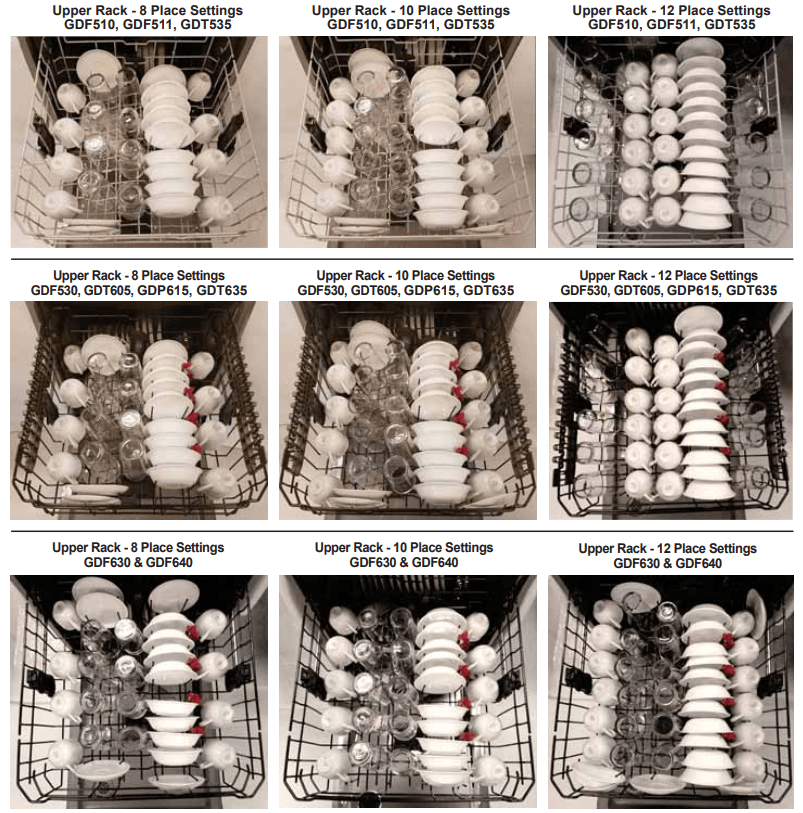
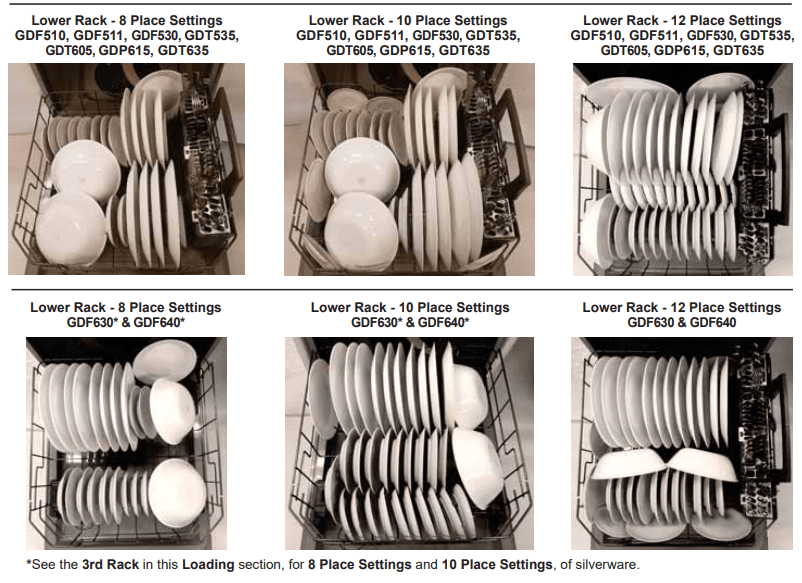
Make sure large dishware does not block the detergent dispenser or the wash arms. See the Loading section
Use a highly rated detergent such as Finish® Quantum® Automatic Dishwashing Detergent.
|
| Spots and filming on glasses and flatware |
Extremely hard water
Low inlet water temperature
Overloading or improper loading of the dishwasher
Old or damp powder detergent
Rinse agent dispenser empty
Too little or low performing detergent
|
Use rinse agents such as Finish® Jet-Dry® Rinse Aid to prevent spots and prevent new film build-up. If water is extremely hard, a softener may be required
Make sure water temperature is at least 120°F (49°C).
Load dishwasher as shown in the Loading section.
Make sure detergent is fresh. Use a highly rated detergent such as Finish® Quantum® Automatic Dishwashing Detergent.
Refill with rinse agent such as Finish® Jet-Dry® Rinse Aid.
Make sure you use the proper amount of highly rated detergent.
|
| Cloudiness on glassware |
Combination of soft water and too much detergent
Low performing phosphatefree detergent
Water temperature entering the dishwasher exceeds 150°F (66°C)
|
This is called etching and is permanent. To prevent this from happening, use less detergent if you have soft water. Wash glassware in the shortest cycle that will get it clean
See A white film on glassware, dishware and the interior in this TROUBLESHOOTING section.
This could be etching. Lower the water heater temperature.
|
| Suds in the tub |
Wrong detergent
Rinse agent was spilled
|
Use only automatic dishwasher detergents to avoid sudsing. Finish® Quantum® Automatic Dishwashing Detergent has been approved for use in all GE Appliances dishwashers. To remove suds from the tub, open the dishwasher and let suds dissipate. Pump out water by pressing Start and close the door. Wait 30 seconds. Open the door, press and hold Start for 3 seconds, and close the door. Repeat if necessary
Always wipe up rinse agent spills immediately.
|
| Detergent left in dispenser cups |
Dishes are blocking the detergent cup |
Reposition the dishes, so the water from the lower spray arm can flush the detergent cup. See the Loading section. Reposition dishware that may be keeping the dispenser cup door from opening. See the Loading section. |
| Black or gray marks on dishes |
Aluminum utensils have rubbed against dishes |
Remove marks with a mild, abrasive cleaner. |
| Dishes don’t dry |
Low inlet water temperature
Rinse agent dispenser is empty
Additional drying time is needed
Cycle selection
Cycle completion
|
Make sure inlet water temperature is at least 120°F. Select Heated Dry or Dry Boost. Use Wash Temp Boost. Select a higher cycle, such as Steam Sani or Heavy
Check the rinse agent dispenser and fill as required.
Leave door closed after the Clean light appears to allow the fan to run an additional 90 minutes (on some models). Note: If you open the door, this fan extension will be cancelled
If using Light cycle which uses lower water temperature and thus limited dry performance, switch to a different cycle.
Allow cycles to fully complete. See Long cycle times in this Troubleshooting Tips section
|
| Long cycle times |
Dishwasher washes by alternating mid and lower spray arms
Soil level
|
Longer cycles are normal. For best wash and dry performance, let cycle complete.
The turbidity sensor senses how much soil is on the dishes. Heavy soiled dish loads will add more time to the cycle. This is normal function. For best wash and dry performance, allow cycle to complete.
|
| Control panel responded to inputs but dishwasher never filled with water |
Door may not be completely closed
Water valve may be turned off
Flood float may be stuck
|
Make sure the door is firmly closed.
Make sure water valve (usually located under the sink) is turned on.
Remove Ultra-Fine filter and lightly tap the piece under the ultra fine filter that looks like a dome. Replace the filter.
|
| Stained tub interior |
Some tomato-based foods can cause reddish stains
Tea or coffee stains
An overall yellow or brown film can be caused by iron deposits in water
White film on inside surface— hard water minerals
|
Remove the stain by hand, using a solution of 1/2 cup bleach and 3 cups warm water. NOTE: Do not use bleach on stainless steel inner door. Before cleaning interior, wait at least 20 minutes after a cycle for the heating elements to cool down. Failure to do so can result in burns.
A special filter in the water supply line is the only way to correct this problem. Contact a water softener company
GE Appliances recommends Finish® Jet-Dry® Rinse Aid to help prevent hard water mineral deposits from forming. Run dishwasher with citric acid to remove mineral deposits. Citric acid (Part number: WD35X151) can be ordered through GE Appliances Parts. See back cover for ordering information. Alternatively, purchase Finish® Dishwasher Cleaner and follow the directions on the label.
|
| Dishwasher won’t run |
Fuse is blown or circuit breaker is tripped
Power is turned off
Control panel is locked
|
Replace fuse or reset circuit breaker. Remove any other appliances from the circuit.
In some installations, the power to the dishwasher is provided through a wall switch, often located next to the disposer switch. Make sure it is on.
Unlock control panel. See the Getting started section.
|
| Control panel lights go off when you’re setting controls |
Time too long between touching of selected buttons |
Each pad must be touched within 30 seconds of the others. To relight, touch any pad again or open the door and unlock (top control). |
| Water standing in the bottom of the tub |
Air gap is clogged
High drain loop or air gap not installed
|
Clean the air gap. See the Care and Cleaning section
Refer to the Installation Instructions for proper drain line installation.
|
| Water won’t pump out of the tub |
Drain is clogged |
If you have an air gap, clean it. See the Care and Cleaning section.
If the dishwasher drains into a disposer, run disposer clear. Check to see if your kitchen sink is draining well. If not, you may need a plumber.
|
| Steam |
This is normal |
Warm, moist air comes through the vent during drying and when water is being pumped out. This is necessary for drying. |
| Sanitized light does not illuminate at the end of the cycle |
The door was opened and the cycle was interrupted during final rinse
The incoming water temperature was too low
|
Do not interrupt the cycle by opening the door during the wash cycle.
Raise the water heater temperature to between 120°F and 150°F.
|
| Noise |
Normal operating sounds: Beeping at the end of the cycle (on some models) Detergent cup opening Water entering dishwasher Motor stops and starts at various times during cycle Spray arms start and stop at various times Drain pump sounds during pump out Drain pump starts and stops several times during each drain
Rattling dishes when the spray arm rotates
Rattling silverware against door during wash
|
These are all normal. No action is required.
Make sure dishes are properly loaded. See the Loading section.
Tall utensils may be placed in the upper rack to avoid bumping against inner door during wash cycle.
|
| A white film on glassware, dishware and the interior |
This problem is likely caused by a low quality phosphate-free dishwasher detergent |
To remove the white film, run your dishes through a dishwasher cycle with citric acid. Use a WD35X151 citric acid kit found online. Otherwise, use Finish® Dishwasher Cleaner found at your local grocery store. Pour the citric acid in the detergent cup and close the cover. Place the filmed but otherwise clean glassware and dishware in the dishwasher. Leave silverware and other metal items out of the dishwasher. Turn the dishwasher on and let it run through a complete cycle without detergent. The glassware, dishware, and dishwasher should come out film free. Alternatively, a vinegar rinse may be used. Pour 1 cup of vinegar into dishwasher just after the detergent cup opens and let the dishwasher complete its cycle. This may be repeated several times a year as needed. The use of a rinse agent such as Finish® Jet-Dry® Rinse Aid may help minimize a repeat build up of film. Also, the use of a highly rated detergent such as Finish® Quantum® Automatic Dishwashing Detergent will help prevent film build-up. |