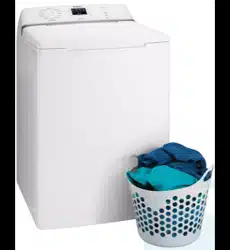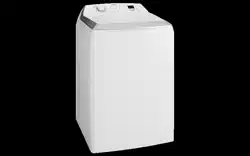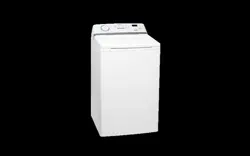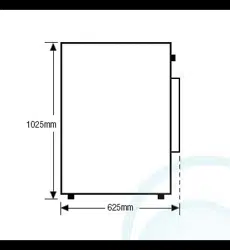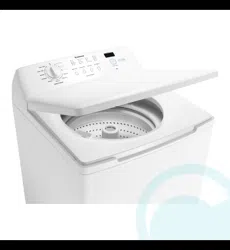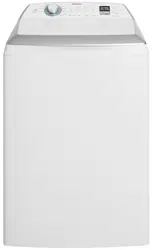

SWT8043
SWT9043
SWT1043
SWT9043A
SWT1023A
TOP-LOAD WASHING MACHINE USER MANUAL
...................................................... .................................................
CONTENTS
CUSTOMER CARE AND SERVICE
SAFETY INFORMATION
2
SAFETY INFORMATION
PRODUCT DESCRIPTION
CONTROL PANEL
WASHING INSTRUCTIONS
DAILY USE
CARING FOR YOUR WASHING MACHINE
HELPFUL HINTS IN DEALING WITH WASHING PROBLEMS
A GUIDE TO STAIN REMOVAL
TROUBLE SHOOTING
................................................................................... 2
................................................................................ 5
............................................................................................ 9
............................................................................ 17
..................................................................................................... 19
..................................................... 24
......................... 27
....................................................................... 29
.................................................................................... 31
1.
2.
3.
4.
5.
6.
7.
8.
9.
ENVIRONMENT CONCERNS ....................................................................... 3310.
WARRANTY ...................................................................................................3511.
We recommend the use of original spare parts.
When contacting Service, ensure that you have the following data available.
The information can be found on the rating plate. Model, PNC, Serial Number.
In the interest of your safety and to
ensure the correct use, before
installing and first using the appliance,
read this user manual carefully,
including its hints and warnings.
This appliance is intended to be used
in household and similar applications
such as:
Farm houses
By clients in serviced apartments,
holiday apartments and residential
type environments.
CONDITIONS OF USE
To avoid unnecessary mistakes and
accidents, it is important to ensure
that all people using the appliance are
thoroughly familiar with its operation
and safety features.
Save these instructions and make
sure that they remain with the
appliance if it is moved or sold, so
that everyone using it through its life
will be properly informed on
appliance use and safety.
Warning / Caution-Safety information.
General information and tips.
Environmental information.
Subject to change without notice.
1.
-
-
Use the hose supplied with the
washing machine.
DO NOT USE OLD HOSES.
GENERAL SAFETY
It is dangerous to alter the specifica-
tions or attempt to modify this
product in anyway.
Only use the advised quantities of
fabric softener and detergent.
Damage to the fabric can ensue if
you overfill. Refer to the
manufacturer’s recommendations of
quantities.
This appliance is not intended for
use by persons (including children)
with reduced physical, sensory or
mental capabilities, or lack of
experience and knowledge, unless
they have been given supervision or
instruction concerning use of the
appliance by a person responsible
for their safety.
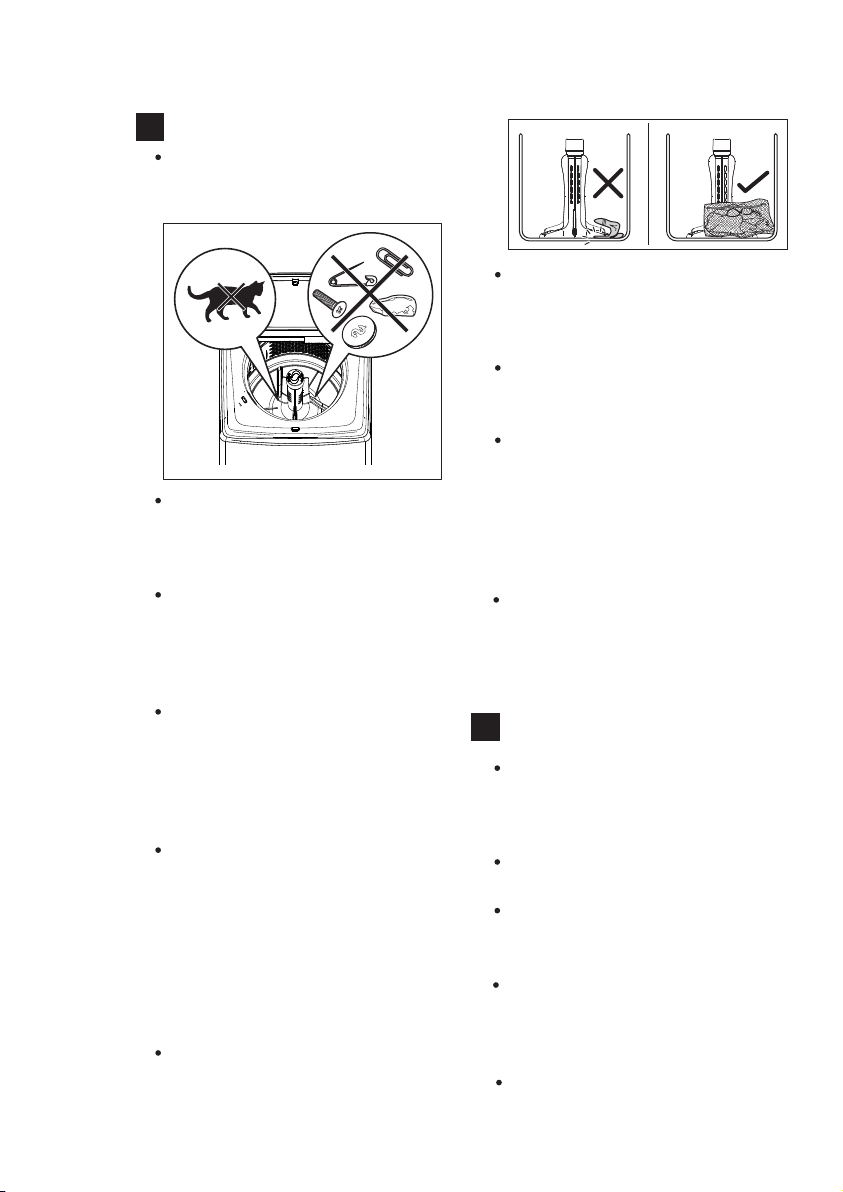
Wash small items such as socks,
laces, washable belts etc in a
washing bag or pillow case as it is
possible for such items to slip down
between the tub and the agitator.
Do not use your washing machine
to wash articles with whale bones,
material without hems or torn
material.
Always unplug the appliance and
turn off the water supply after use,
clean and maintenance.
Under no circumstances should you
attempt to repair the machine
yourself. Repairs carried out by
inexperienced persons may cause
injury or serious malfunctioning.
Contact your local Service Centre.
Always insist on genuine spare parts.
When unpacking the appliance,
check that it is not damaged. If in
doubt, do not use it and contact
the Service Centre.
After having installed the appliance,
check that it is not standing on the
inlet and drain hose.
Appliance should not be installed in
a humid place.
Always be sure, that there is no
water leakage from hoses and their
connections after the installation.
INSTALLATION
Any objects such as coins, safety
pins, nails, screws, stones or any
other hard, sharp material can cause
extensive damage and must not be
placed into the machine.
Make sure that small pets do not
climb into the washbowl. To avoid
this, please check into the wash-
bowl before using the appliance.
3
1.1
1.2
If the supply cord is damaged,
should the appliance power supply
cable need to be replaced, this shall
be carried out by our Service Centre.
If the machine is situated on a
carpeted floor, please adjust the
feet in order to allow air to circulate
freely.
4
Any plumbing work required to
install this appliance should be
carried out by a qualified plumber.
Any electrical work required to
install this appliance should be
carried out by a qualified electrician.
This appliance is designed for
domestic use. It must not be used
for purposes other than those for
which it was designed.
Only wash fabrics which are
designed to be machine washed.
Follow the instructions on each
garment label.
Do not overload the appliance. See
the relevant section in the user
manual.
Before washing, ensure that all
pockets are empty and buttons and
zips are fastened. Avoid washing
frayed or torn articles and treat
stains such as paint, ink, rust, and
grass before washing.
Garments which have been in
contact with volatile petroleum
products should not be machine
washed. If volatile cleaning fluids are
used, care should be taken to
ensure that the fluid is removed from
the garment before placing in the
machine.
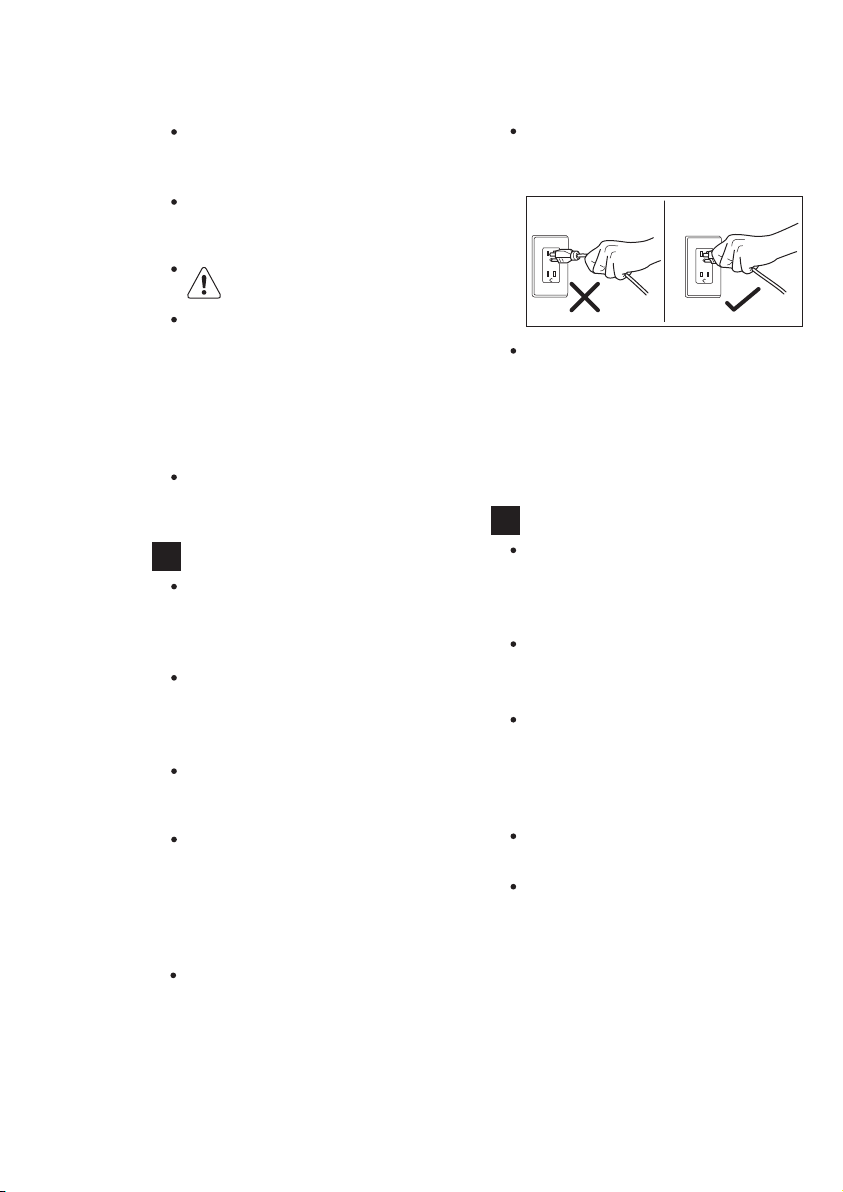
Never pull the power supply cable
to remove the plug from the socket,
always take hold of the plug itself.
Never use the washing machine if
the power supply cable, the control
panel, the working surface or the
base are damaged so that the
inside of the washing machine is
accessible.
This washing machine is not
intended for use by young children
or infirm persons without supervi-
sion.
Children should be supervised to
ensure that they do not play with
the appliance.
The packaging components (e.g.
plastic film, polystyrene) can be
dangerous to children - danger of
suffocation! Keep them out of
children’s reach.
Keep all detergents in a safe place
out of children’s reach.
Make sure that children or pets do
not climb into the washbowl.
USE
CHILD SAFETY
If this appliance is supplied from a
cord extension set or electrical
portable outlet device, the cord
extension set or electrical portable
device must be positioned so that it
is not subject to splashing or
ingress of moisture.
Water pressures between minimum
50kPa and maximum 800kPa are
acceptable.
Connect the machine to an
earthed socket outlet.
1.3
1.4
5
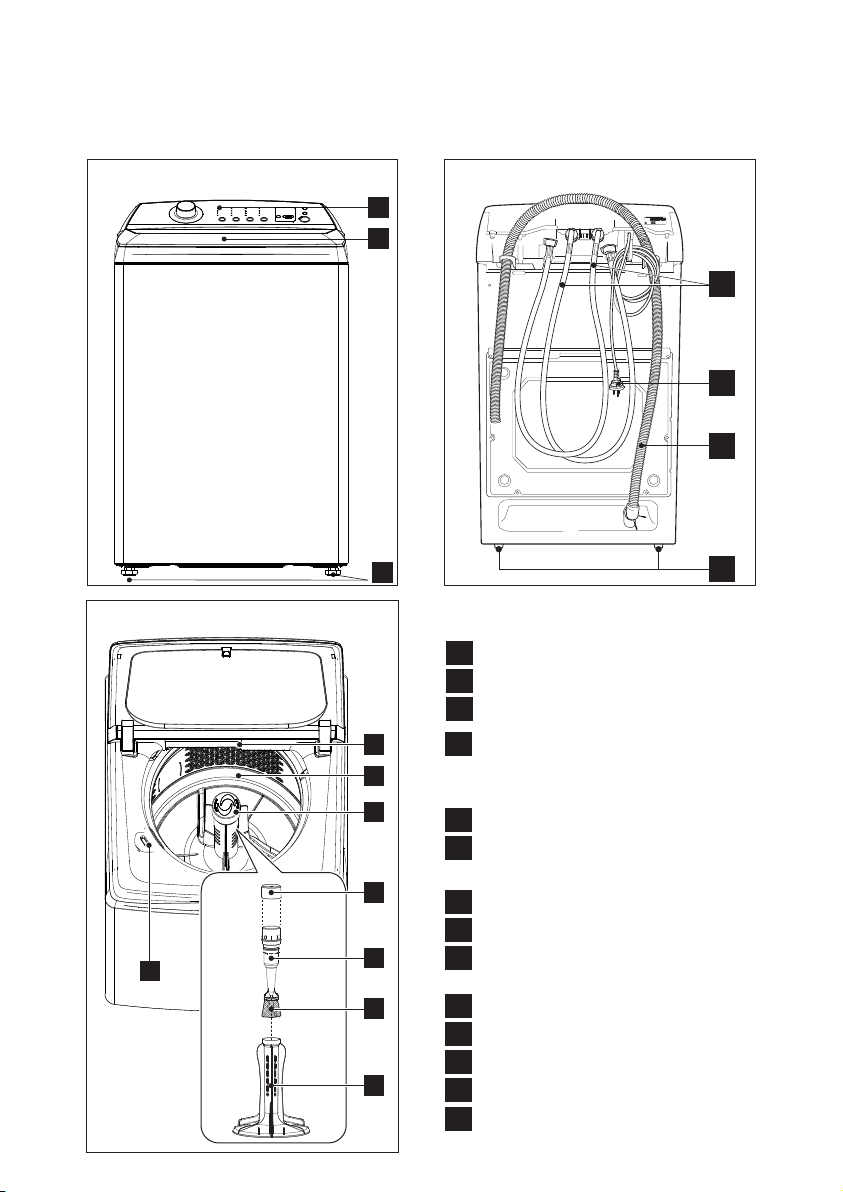
PRODUCT DESCRIPTION2.
FRONT VIEW BACK VIEW
1
2
3
1
2
Control Panel
PARTS LIST
INSIDE VIEW
3
Machine Lid
4
Front Feet
6
5
7
Water Inlet Hose
- RED fittings (Hot Water)
- BLUE fittings (Cold Water)
Mains Cable
8
Outlet Hose/Drain Hose (See installation
instructions to fit & position drain hose)
Back Feet
9
Bleach Dispenser,See Page 21
Detergent Dispenser Drawer
See Page 19
10
11
Wash Bowl
Cap Agitator
12
Frame Filter
13
Lint Filter See page 24
14
Agitator
10
11
9
11
12
13
14
WASHING MACHINE PARTS **SWT8043 , SWT9043 , SWT1043
4
5
6
7
8
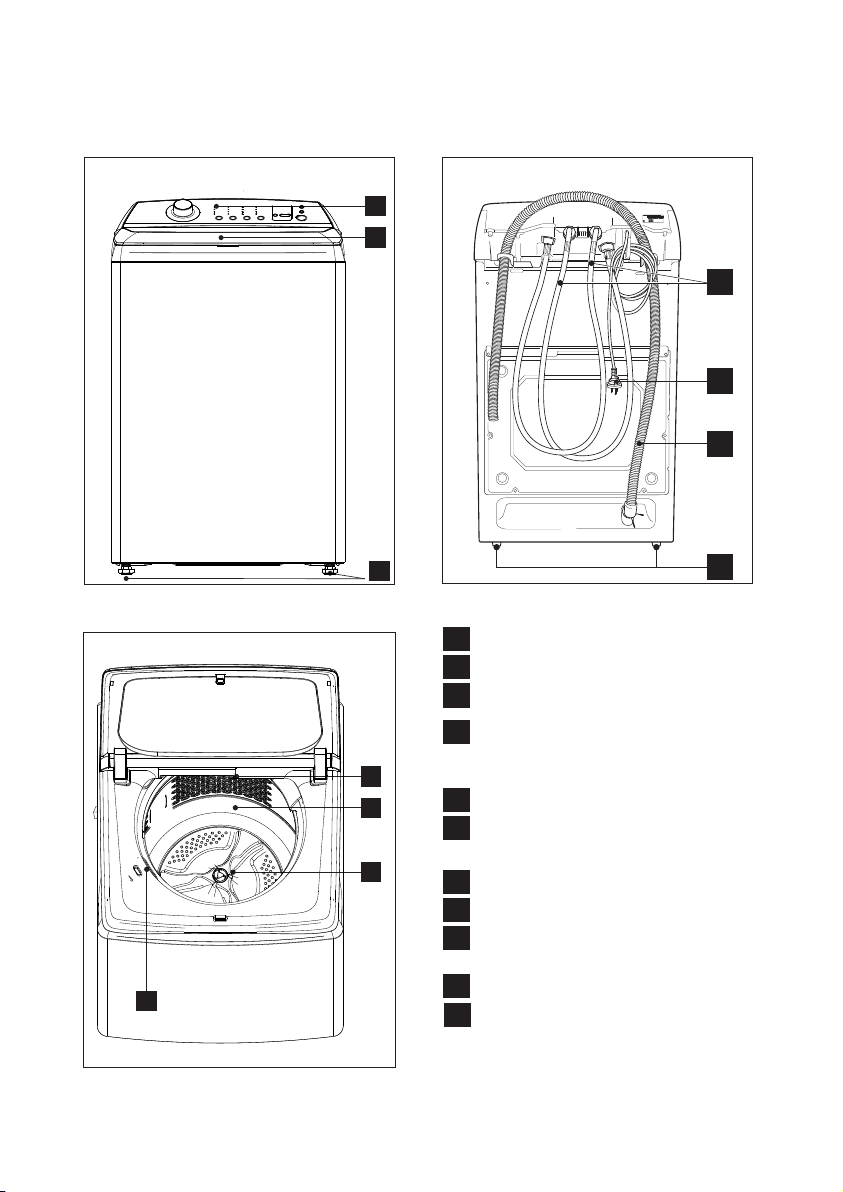
PRODUCT DESCRIPTION2.
FRONT VIEW
1
2
3
1
2
Control Panel
PARTS LIST
INSIDE VIEW
3
Machine Lid
4
Front Feet
6
5
7
Water Inlet Hose
- RED fittings (Hot Water)
- BLUE fittings (Cold Water)
Mains Cable
8
Outlet Hose/Drain Hose (See installation
instructions to fit & position drain hose)
Back Feet
9
Bleach Dispenser,See Page 21
Detergent Dispenser Drawer
See Page 19
10
11
Wash Bowl
Gentle Wash Agitator
(Low Profile Agitator)
10
11
9
8
WASHING MACHINE PARTS **SWT9043A , SWT1023A
6
BACK VIEW
4
5
6
7
The out of balance has 2 level which are low
level and high level.
The high level: Machine will be stopped,
caused by an uneven distribution of clothes in
the wash bowl. To rectify the out of balance
condition, open the lid and redistribute the
clothes evenly in the wash bowl. Closing the
spin stage of the wash.
The low level: The washing machine try to
optimize by reduce spin speed to avoid out of
balance to finish the cycle.
If you have frequent out of balance
interruptions, it may be due to your
washing machine not standing firm and level
on the floor. This can be corrected by adjust
the washing machine legs as described
in the Installation Instructions supplied with
your machines.
7
ABOUT YOUR WASHING MACHINE
Out of Balance Interruption
Watch the lights on the control panel to see
the effect pressing a touchpad or turning a
program selector knob has, and listen for
“BEEPS”.
When you press a touchpad you will get a
short “BEEP” to acknowledge the entry.
If the option is not available at the time, the
machine will not allow you to select it. After
the machine has started, the entire wash
option touchpad will be disabled and machine
will give three short beeps to indicate the
touchpad is disabled. The Star/Pause To
Pause touchpad is still active but you need
to press and hold the touchpad for
minimum 1.2 seconds to pause machine.
This is to confirm that you really want to pause
the machine.
NOTE: All functions of the washing machine
will stop when the lid is open.
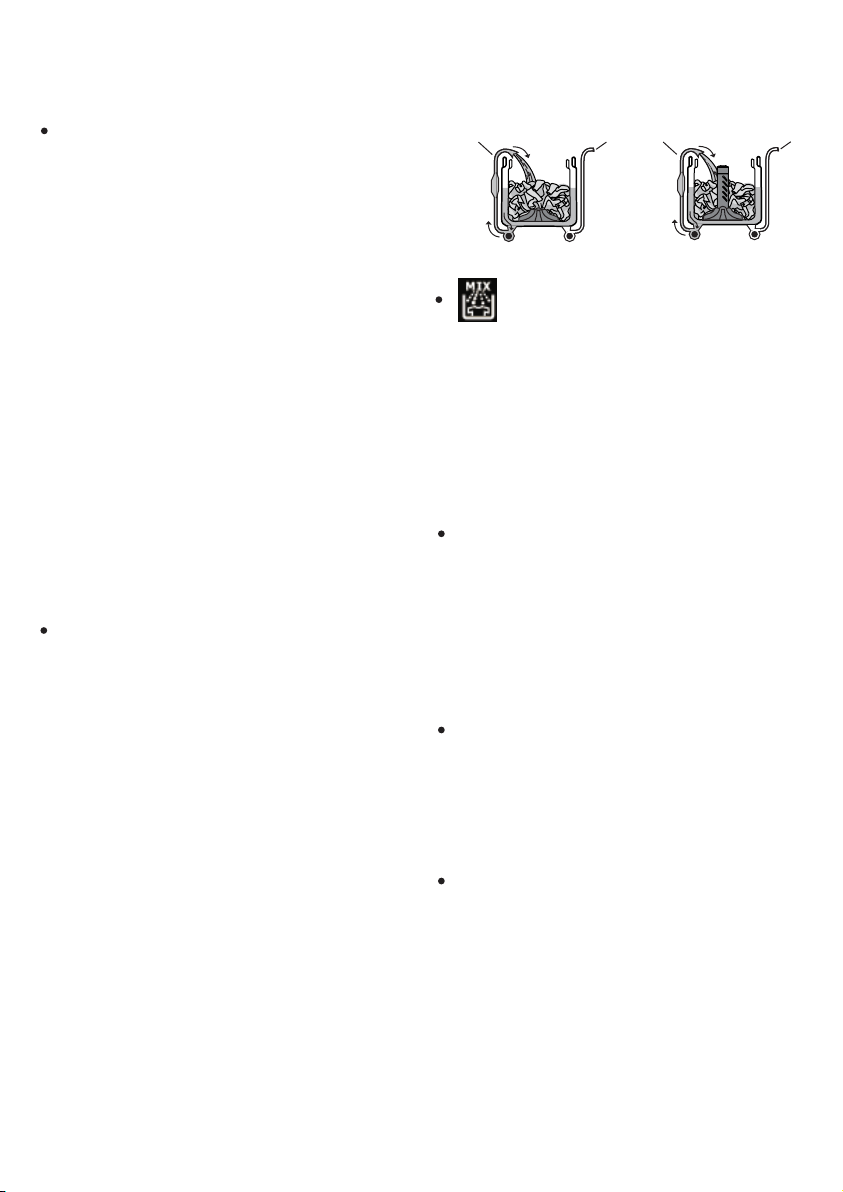
ActiveBoost™
This product features the new ActiveBoost
Wash System that uses less amount of water,
and is more energy efficient,during the washing
process. It achieves this with just the right
amount of water needed, and by a detergent
pre-mixing system that minimizes detergent
residue even during cold wash to give you a
cleaner wash result.
Water at 35 C is combined with detergent
to dissolve and activate it. Depending on
model, this concentrated solution is then
circulated or showered over the clothes in
combination with unique bowl and agitator
rotations to provide wash action at the selected
wash temperature.
After the wash operation is completed, the
bowl is filled with more water. The low profile
agitator or agitator then moves in an energy
efficient mode, generating additional
mechanical actions.
(SWT9043A / SWT1023A)
(SWT1043)
(Only for SWT1043/SWT9043A/SWT1023A)
Your washing machine has selectable
“Auto” sensing water level option as well
as allowing you to choose a manual
water level if you wish. We recommend
you to use the Auto water level option to
ensure there is just the right amount of
water for the wash load in the machine.
In other words, it will usually give you the
best wash while also being the most
efficient in terms of water usage.
Auto Water Level Feature
Wash Operation
Agitation
water spraying
pump on
drain hose
water spraying
pump on
drain hose
Touchpad Response and Lights
Always press touchpads gently.
o

8
SAVING WATER AND ENERGY
This washing machine features water and
energy saving options.
Your machine is most water efficient when
Eco Rinse is used as the rinse option.
To save energy, the wash time can be shortened
for a load of less dirty clothes by selecting the
appropriate wash program e.g. Fast Wash.
The washing machine is energy efficient and most
water efficient when used with a full load of clothes
and with Eco Rinse selected. You should use
Eco Rinse (where available) instead of Deep Rinse
to reduce the amount of water used for
rinsing clothes.
Each time you switch on your washing machine the
machine will select most suitable rinse option for
the selected program. You can change rinse option
if you wish. The difference between Deep rinse and
Eco rinse is explained on the page 13.
POWER FAILURE RECOVERY
When there is power failure while
machine is washing or rinsing or
spinning. The machine tries to save
the settings at which stage the
machine is doing and then when
the power returns back the machine
will starts washing from the stage
where it is left off.
9
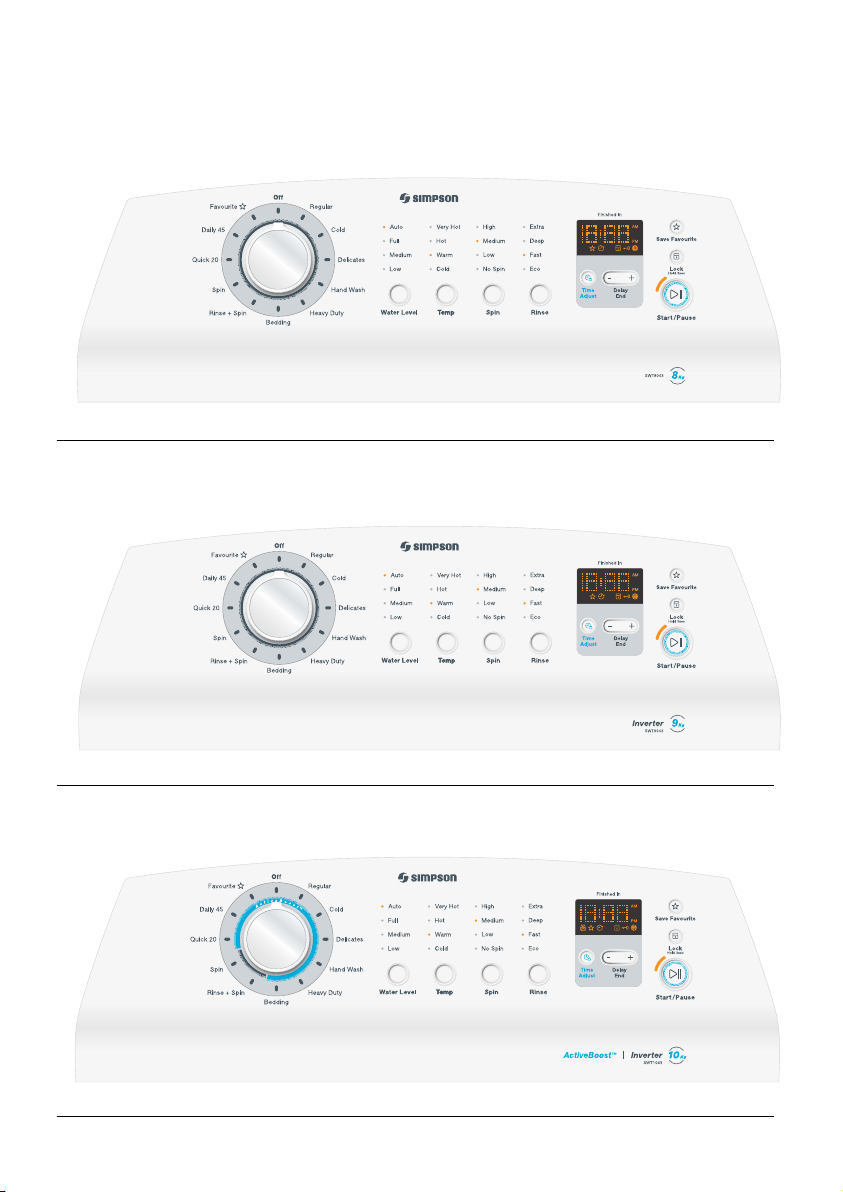
3. CONTROL PANEL
8 Kg. SWT8043
9 Kg. SWT9043
10 Kg. SWT1043
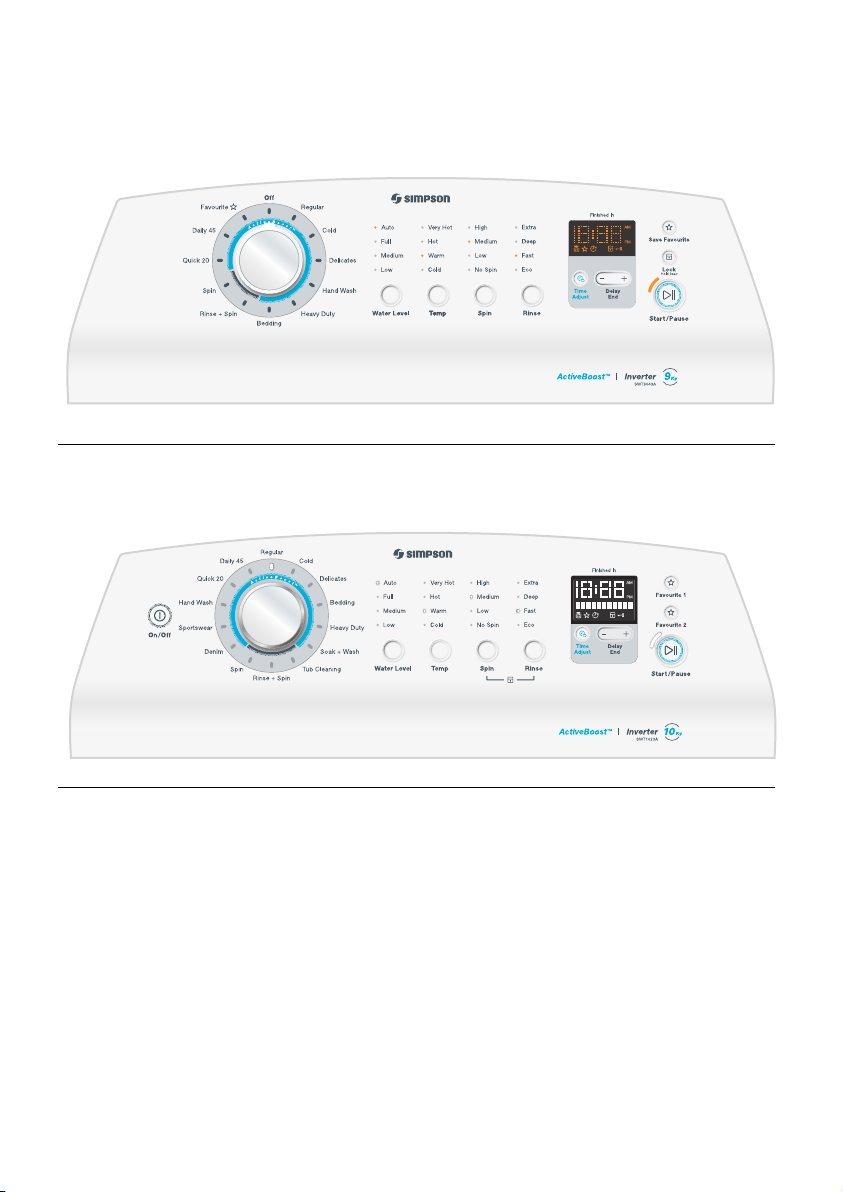
9 Kg. SWT9043A
10 Kg. SWT1023A
10
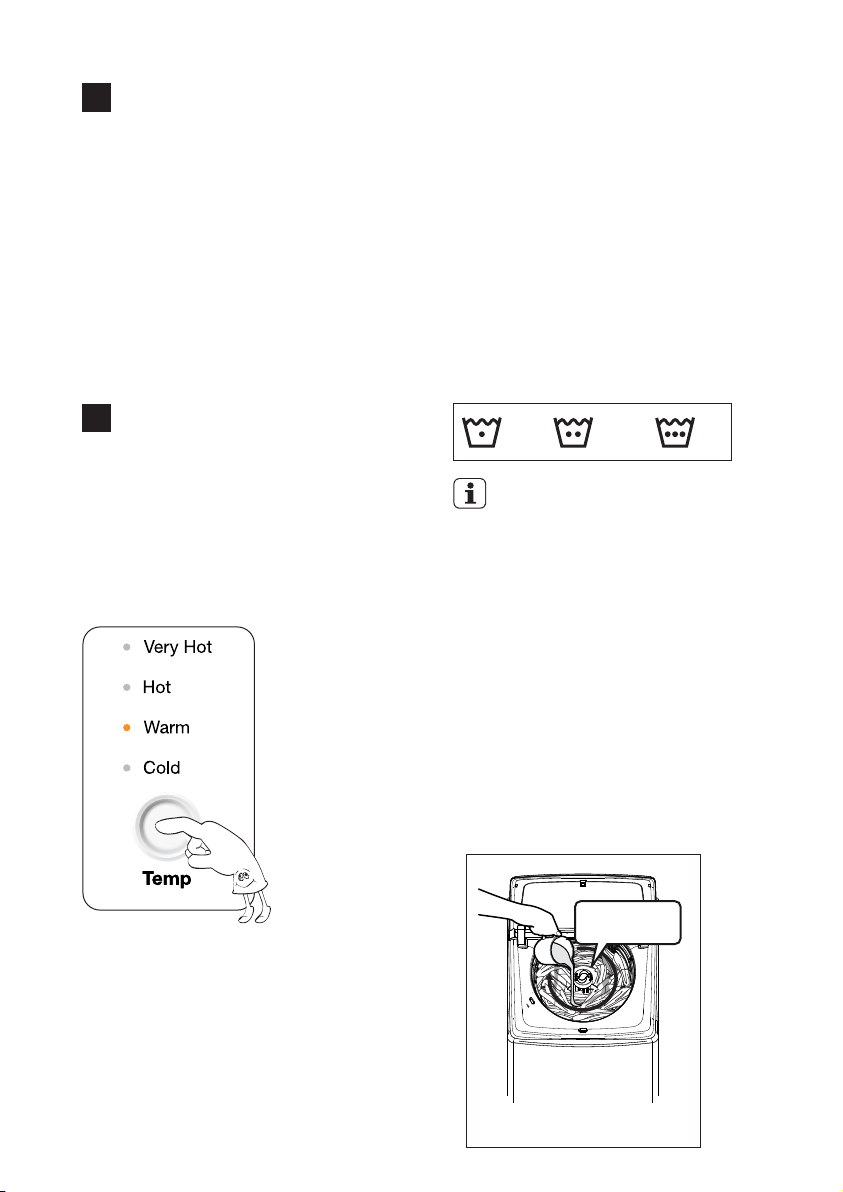
Turn the Program Selector knob to
choose the wash program you
want. The table “Your Program
Guide” shown on page 16 will help
you in selecting the right program.
The Program Selector knob is not a
timer. Once you select a wash
program, the Program Selector
knob will stay at that position for
the whole wash cycle.
3.1
PROGRAM SELECTOR
KNOB
For each wash program your
washing machine automatically
selects a suitable fill water
temperature. If you want to use a
different wash water temperature,
press the Temperature button
repeatedly.
The temperature of warm water will
depend on the temperature and
pressure of your hot and cold water
supplies. The recommended
temperature for warm is 35°C.
You have four
temperatures to
choose from Very
Hot, Hot, Warm
and Cold.
The water temp
lights will tell you
the temperature
for each press of
the button.
3.2
WATER TEMPERATURES
BUTTON
Always check your label for the
washing temperature symbols
which the International Care
Labelling Code now uses
You can adjust the flow rate of the
water supplies to adjust the Warm
temperature. All rinse water
temperatures are cold.
Cold, Warm, Hot.
NOTE:
If you have a cold water connection
ONLY and the hot inlet valve is
capped off (refer installation
instructions) you must select Cold
washes only. To fill detergent, you
must follow steps as below:
1.
Measure the correct amount of
powder detergent by following
the recommendations on the
package.
2.
Mix powder detergent in one
litre of hot or warm water.
3.
Add the pre-mixed detergent to
the wash load.
11
move around
agitator
12
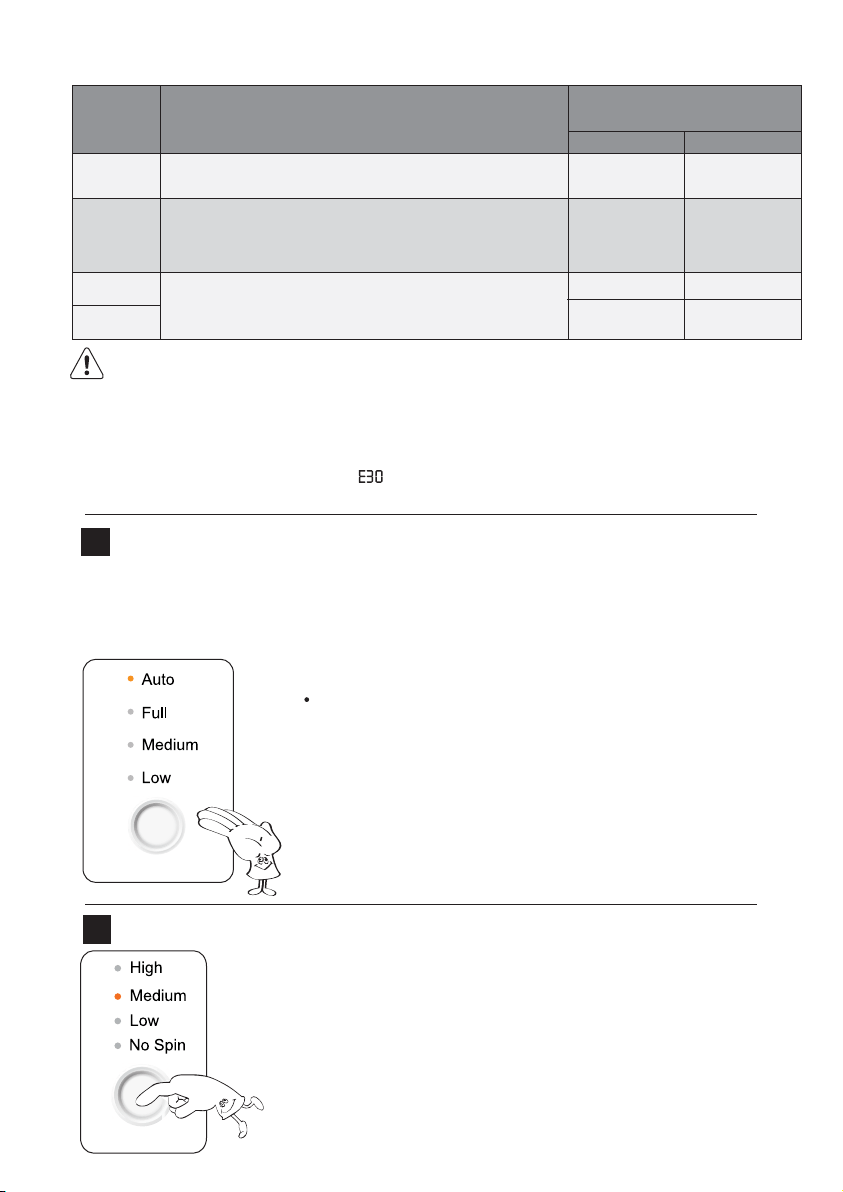
CHOOSE THE SPIN
TOUCH THE OPTIONS BUTTON TO SELECT THE SPIN OPTION.
Regular, Cold, Bedding,Heavy Duty,Rinse+Spin,Spin,Quick 20,
Daily 45,Heavy Duty,Denim(*SWT1023A),Hand Wash,
Sportswear (*SWT1023A) : Can select all spin options
Delicates : Can select Medium, Low and No Spin
Note: No spin is effect only to final spin by spin at gentle
speed 1 minute only to prevent water drop to floor when
moving the clothes out of the drum.
Spin
Water Level
3.4
3.3
Choose the water level by pressing Water Level touchpad.
You can select:
Use only the amount of water you need for the wash load.
( Auto level: the exact water level required to wash your clothes
effectively is determined and set for you automatically, ensuring
no water is wasted.)
1.
2.
Auto, Full, Medium and Low
CHOOSE THE WATER LEVEL
Choose the water level by pressing Water Level button. Use only the amount of
water you need for the wash load.
WATER LEVEL BUTTON
Flood diagnostic is explained on page 32. You should refer to this if you have water pouring
onto the floorThe display will show “ ” and you will hear rapid short beep continuously to
remind you about this problem.
IMPORTANT: Components in the washing machine are designed to be used
with water no hotter than 70°C. If your water supply is too hot,
you should have a temperature limiting valve fitted by a qualified
plumber.
Very Hot
Temp.
Water Temperatures
Descriptions
Hot & Cold water usage
propertion
Hot valve Cold valve
Hot
Warm
Cold
for normally soiled, colourfast garments
(e.g. shirts, night dresses, pyjamas....) in linen,
cotton or synthetic fibres and for lightly soiled
for delicate items (e.g. net curtains), mixed laundry
including synthetic fibres and
machine washable,
for normally soiled white cottons and linen
(e.g. teaclothes, towels, tableclothes, sheets...).
100 %
67 % 33 %
50 % 50 %
0 % 100 %
white cotton (e.g.underwear).
non-shrink.
NOTE:
Pressing the “Rinse Option” touchpad
allows you to change the rinse type.
For most washes the machine
automatically selects “Deep Rinse” for you
3.5
RINSE OPTION BUTTON
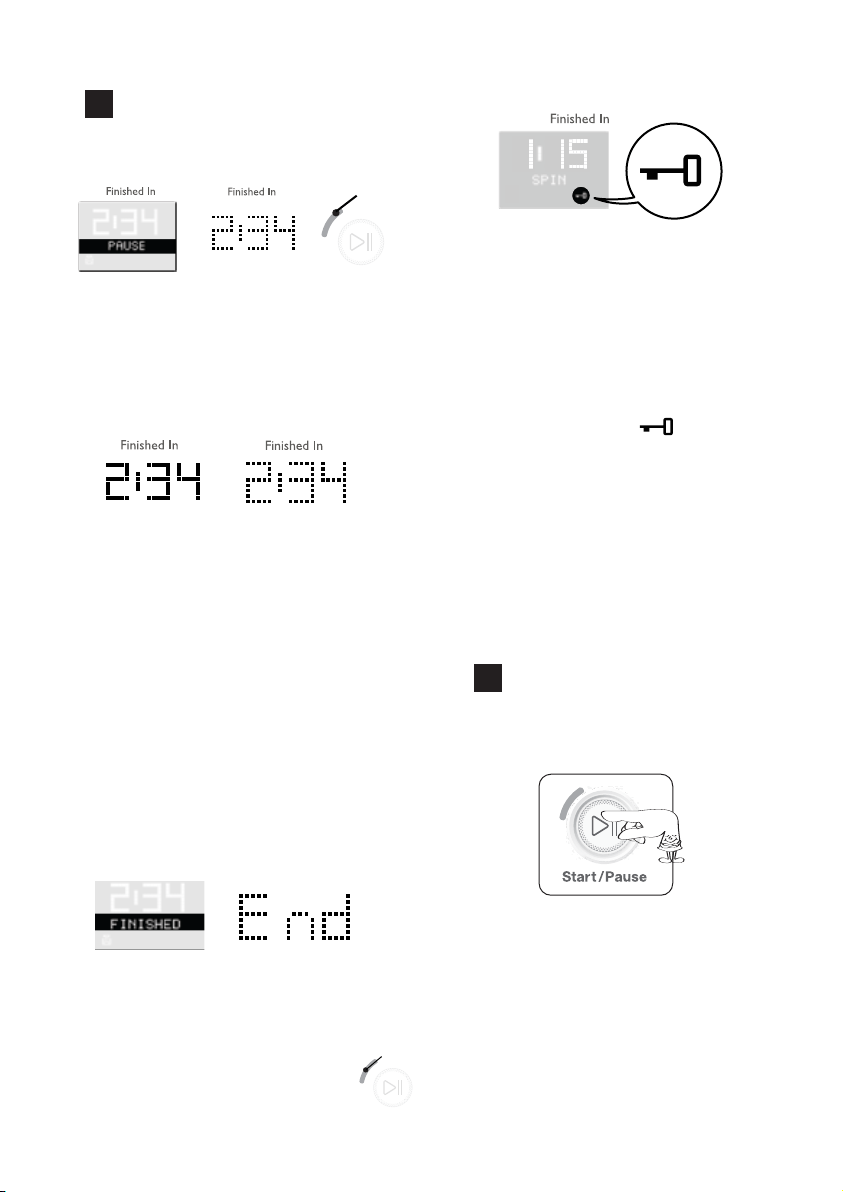
When Eco rinse is used, rinse water
is sprayed into the washbowl in pulses.
After each pulse the washbowl will spin
to remove detergent laden water from
the clothes.
How does Eco Rinse work ?
There are four rinses to choose from...
Fast rinse, Eco rinse, Deep rinse and
Extra rinse.
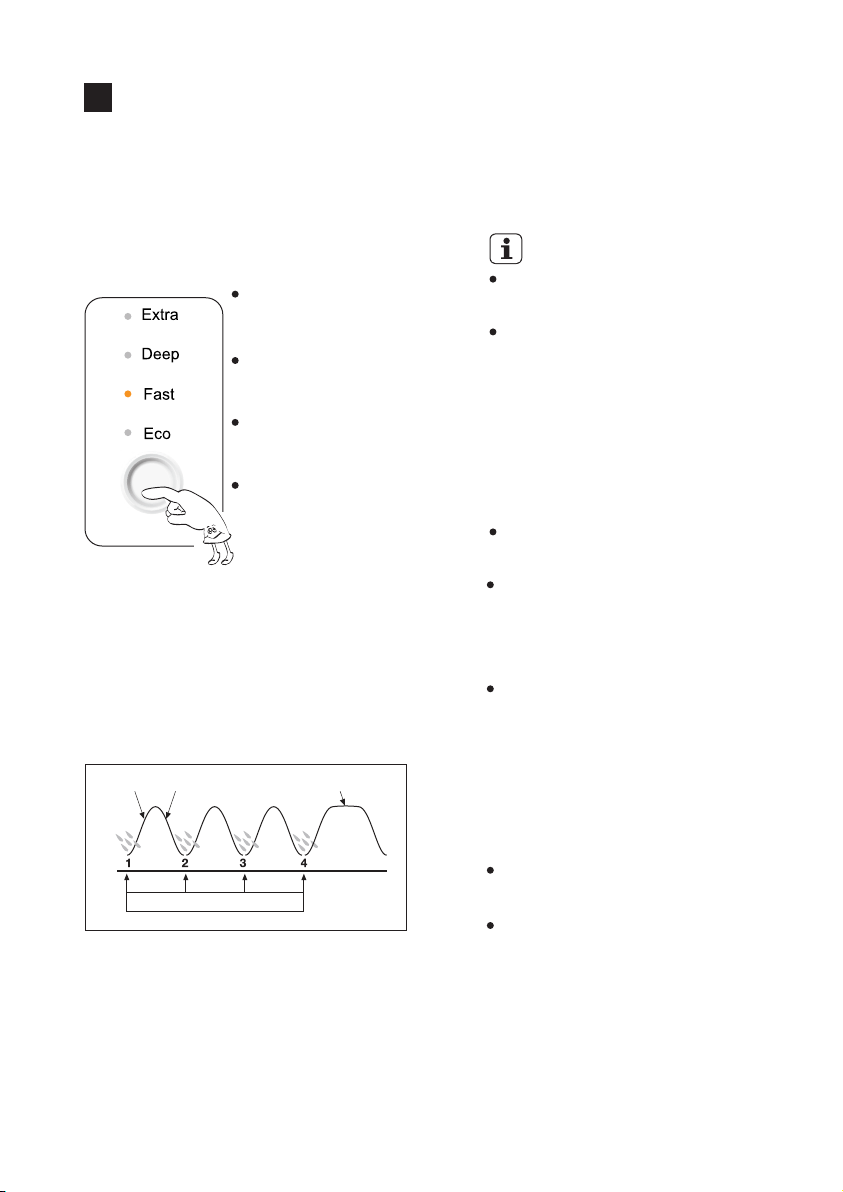
Extra : Extra rinse, the
machine fills twice, giving
you two deep rinses.
Deep : Deep rinse the
machine fills once, giving
you one deep rinse.
Eco : Eco rinse is a spray
rinse giving you maximum
water saving.
Fast : Fast rinse uses less
time then Eco rinse by
performing only 3 Eco sprays
but the amount of water in
each spray is increased.
The machine will go through a series of
maximum four pulses spray and short spin
cycles in this manner, depending on
program selection, followed by a final long
spin that removes the water from the clothes
to complete the full wash program.
Compare this with Deep rinse where
much more water is used.
Deep rinse, water enters the machine
filling up to the wash water level selected.
The washer agitates and finally empties
the rinse water through the drain hose.
Extra rinse, this is special option for those
people who suffer from allergies, this extra
rinse will provide two deep rinses to ensure
all detergent residue has been removed.
Eco Rinse and Fast Rinse
Daily program rinse is fixed with
Deep rinse only
Quick20 program rinse is fixed with
Fast rinse only
CANNOT be
selected with Bedding
program.
We strongly recommend you use Eco
rinse for your washes whenever you can.
There is considerable saving of water
when Eco is used instead of Deep or
Extra to rinse clothes.
Eco and Fast rinse is not designed
to be used with fabric softener.
Select Deep or
Extra rinse if you are
going to use fabric softener.
Deep rinse ensures the fabric
softener is correctly dispensed and
thoroughly removed from your clothes
during rinsing.
Pulse spray of rinse water
Spin up Spin down Final long spin
13
Rinse
3.6
DISPLAY
The display shows the following
information:
14
ENABLING/DISABLING END OF
WASH BEEP
User can also disable the buzzer by pressing
the [Water Level] button + [Spin] button
down for 3 sec and release.
The volume level is set in the factory and
cannot be adjusted by the user.
MACHINE IN PAUSE MODE
User needs to touch [Start / Pause] button
once to pause the appliance.
Under the remaining time is show text <PAUSE>
3.7
START/PAUSE BUTTON
TO START THE WASH CYCLE /
PROGRAM
WASH CYCLE IN PROGRESS
END OF PROGRAM
SWT1023A
SWT1023A
SWT9043A / SWT1043
SWT9043 / SWT8043
SWT9043A / SWT1043
SWT9043 / SWT8043
SWT1023A
SWT9043A / SWT1043
SWT9043 / SWT8043
After selecting a program, the duration is
displayed in hours and minutes
(for example 2:34 which means 2 hour
and 34 minutes)
The duration is calculated automatically on the
basis of the maximum recommended load
for each type of fabric.
After the program has started, the time
remaining is updated every minute.
When the wash program is completed,
the display shows text <FINISHED> or
<END> .
The Start/Pause button LED will
turn Off.
The Start/Pause button LED will always light
(not blink) to indicate that now machine is in
executing mode.
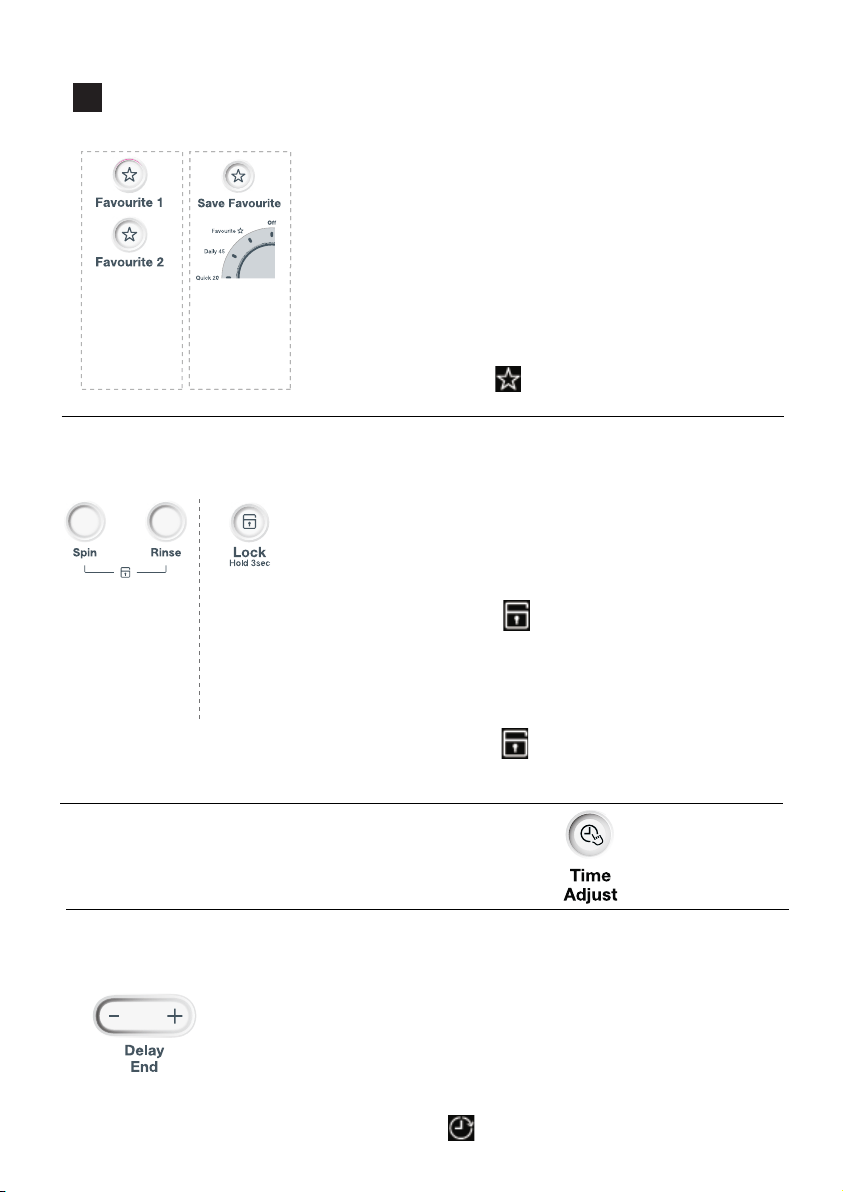
LID LOCK FEATURE
This is a safety feature so as to prevent
anyone from opening the door lid when
(Except SWT8043)
the drum is spinning.
To unlock the lid, user needs to tap
[Start / Pause] button once to pause the
appliance and the display will turn Off the lid
lock icon.
The mechanical lock unlocks when the
The Lid Lock indicator will light up when
the feature activate
drum stops spinning.
Press the Start/Pause button to Pause.
Start/Pause to Pause is used to Start,
Stop and Continue the wash.
If you have started your wash and you
wish to stop it for some reason, press the
Start/PauseTo Pause touchpad and
hold it for 1.2 secounds to enter
pause mode.
The Start/Pause button LED will blink.
Start/Pause LED
Start/Pause LED
it will disable power on sound also.
When child lock is activated, the door will be locked all the time during the machine is working.
CHILD LOCK
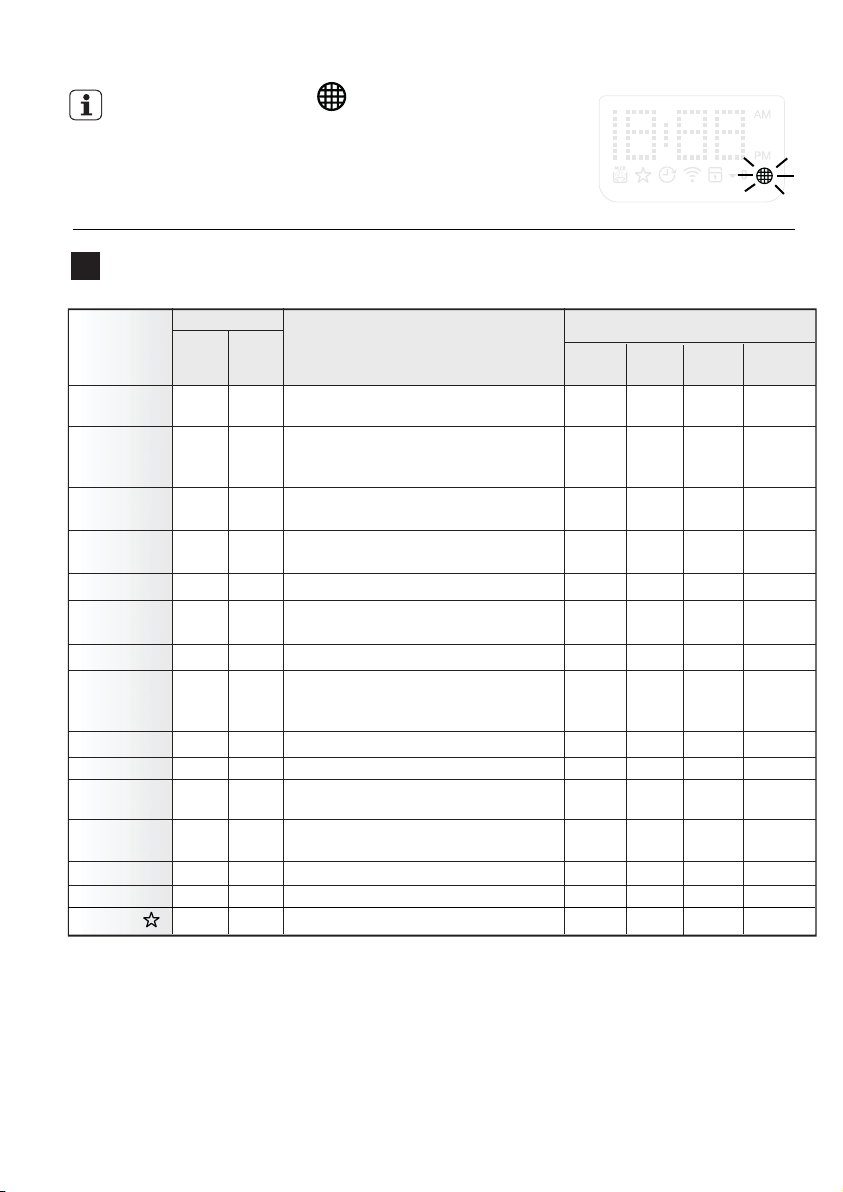
FAVOURITE
TIME ADJUST
You can set your washing machine to finish your wash at a later
time you specify, choosing a delay of between 1 to 19 hours in
1-hour increments. The hour displayed indicates the time when
the cycle will finish. After selecting the wash program, tapping on
either the [-] or [+] button once will start the delay end and set the
Tapping [+] button increases the end time.
1-19 hours of the end time of the entire wash cycle.
Tapping [-] button decreases the end time.
Press the Start / Pause button
The Delay end indicator will light up and the clock will begin
counting down until it reaches the set time.
DELAY END
15
The Favourite indicator will light up when this feature
is activated.
3.8
FAVOURITE , CHILD LOCK , TIME ADJUST , DELAY END BUTTON
SWT1023A
FIG A.
FIG A.
SWT1023A
FIG B.
FIG B.
SWT8043
SWT9043
SWT1043
SWT9043A
To Activate the child lock :
FIG A : Hold down the “Spin” and “Rinse” at the same time
for 3 seconds.
FIG B : Hold down the “Lock” for 3 seconds.
The child lock indicator will light up when this feature is
activated.
SWT8043
SWT9043
SWT1043
SWT9043A
Knob Dial
The favourite function is the ability to tailor individual wash features
and save them as a custom programme until the next time.
FIG A : Select the Favourite 1 or 2, choose wash method, spin ,
temperature ,Rinse, then touch and hold the Favourite button for
>1.5 seconds .“Beep sound”is activated and the programme is
stored for later use with a single button press.
FIG B : Select the Save Favourite, choose wash method, spin ,
temperature ,Rinse, then touch and hold the Favourite button for
>1.5 seconds .“Beep sound”is activated and the programme is
stored for later use with select Favourite program on Knob Dial.
Your appliance is provided with CHILD SAFETY LOCK which
permits you to leave the appliance unsupervised with the door
closed without having to worry that children might be injured by
or cause damage to the appliance.
This option allows you to increase/decrease washing time by
changing the 3 different levels.
: medium > maximum > minimum
To Deactivate the child lock :
FIG A : Hold down the “Spin” and “Rinse” at the same time
for 3 seconds.
FIG B : Hold down the “Lock” for 3 seconds,
The child lock indicator will disappear when this feature is
deactivated.
NOTE:
When indication appears and blinks after
appropriate number of wash cycles are finished,
this is to remind user to clean the lint filters.
See page 24.
16
YOUR PROGRAM GUIDE (KNOB DIAL)
Water
Temp Spin Rinse
Auto Warm High
Deep/Eco*
Auto Warm
Warm
High Deep
Auto Warm High Deep
Auto Warm
Warm
Warm
High Deep
Low Warm High Fast
Full Cold High Deep
- Hot - -
- -- -
- - High -
Auto Cold High Deep
Auto High Deep
Auto High Deep
Auto Deep
Auto Cold Medium
Medium
Deep
Auto Hot High Deep
For normally soiled cotton load at rated load
capacity.
For synthetic or mixed fabrics, underwear,
coloured garments, non-shirnk shirts,
blouses.
For lingerie, lace, trimmed and embroidered
items.
For bedding fabrics labelled “Machine
Washable”
For a heavily soiled cotton wash load.
For normally soiled cotton load.
Clean the tub.
For items that you want to rinse and spin eg.
clothes items you have hand washed in
a wash tub.
For very wet clothes to remove the water.
For a heavily soiled Denim/Jeans wash load.
For a Sport ware fabrics labelled “Machine
Washable”
For wool fabric and Hand Wash labelled
“Machine Washable”
For a very small load of mixed fabrics.
For a small load of mixed fabrics.
For using favourite program.
Regular *
O O
O X
O O
O O
O X
O X
X
O O
O O
O O
O
SWT1023A SWT9043A
SWT1043
SWT9043
SWT8043
Cold O O
Delicates O O
Bedding O O
Heavy Duty O O
Soak & Wash
Tub Cleaning
Rinse+Spin
Spin
Denim
Sports Wear
Hand Wash
Quick 20
Favourite
Daily 45
Program Select this program
Recommended
Model
O X
3.9
To clear this indication turn the knob to Off
position for SWT8043, SWT9043, SWT1043.
* “Regular wash, Auto level, Warm, High spin, Eco rinse, Max Time Adjust”
is recommended for a full load of normally soiled cottons.
17
4.1
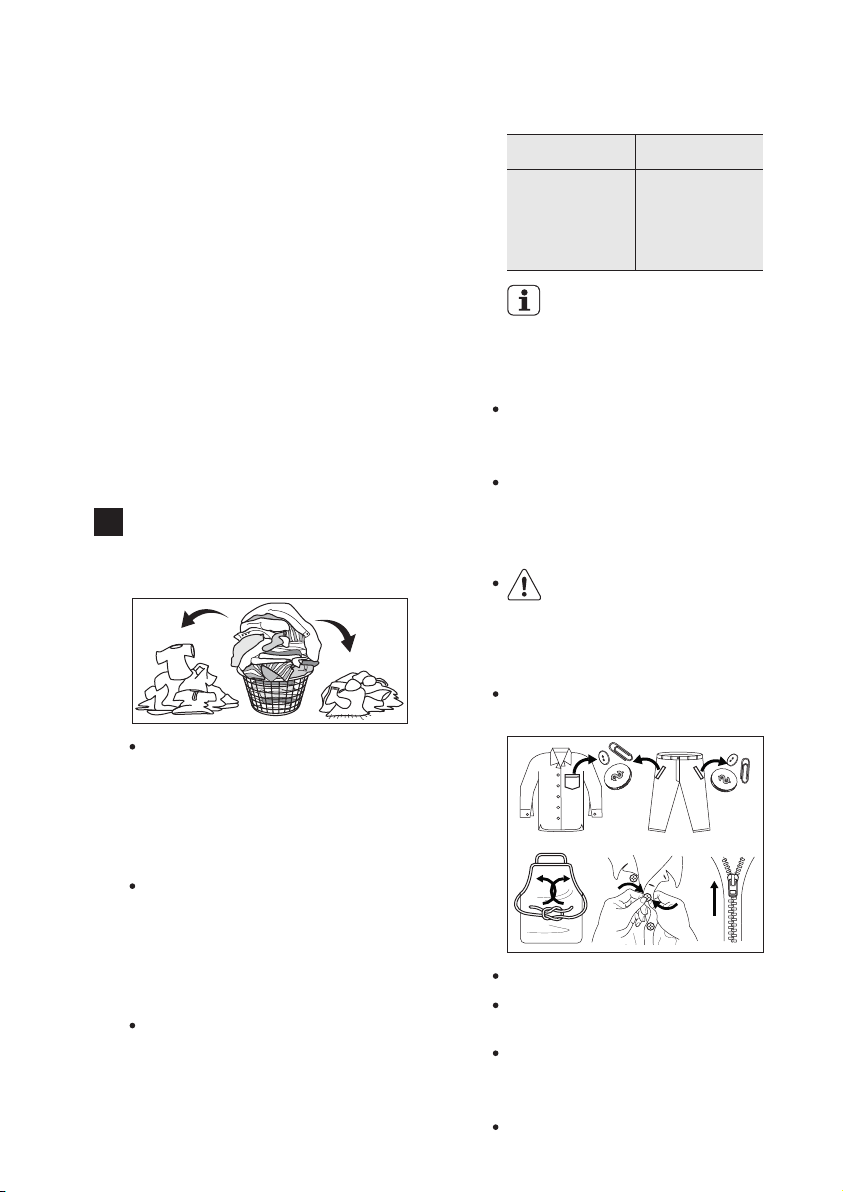
SORT YOUR WASHING
INTO SEPARATE WASH
LOADS
Each load of washing should
contain clothing which needs the
same washing conditions. For
example, you should not wash
delicate clothes with very dirty
work clothes.
Colour fast and non-colourfast
fabrics should be separated.
Knowing the type of fabrics you
have and how dirty they are will
help when you make selections
from the wash program options.
Some fabrics are lint collectors
and can pick up lint, dirt and
colour from other fabrics which
are lint producers. Some
examples are listed below:
Lint collectors
Lint producers
- Corduroy
- Synthetics
- Permanent
press fabrics
- Towels
- Nappies
- Chenille/
Candlewick
Make sure that you wash lint
collectors separately from lint
producers.
WASHING INSTRUCTIONS4.
NOTE:
IMPORTANT!
However, due to the variables of fabric
types, soil levels, detergent types and
available program settings you may find
some combinations of these which do
not always result in the perfect wash.
If for example you see residuals of
detergent or soils on some items,
please read the section Residues on
washed items paragraph.
Over time you will learn what is the best
set-up of programs, detergent and load
sorting for different load types and soils.
These Washing Instructions are of a
general nature and you should get good
wash results by following them.
Rub particularly soiled areas with
a special detergent or detergent
paste.
Treat curtains with special care.
Never wash whites and coloureds
together. Whites may lose their
“whiteness” in the wash.
New coloured items may run in
the first wash; they should
therefore be washed separately
the first time.
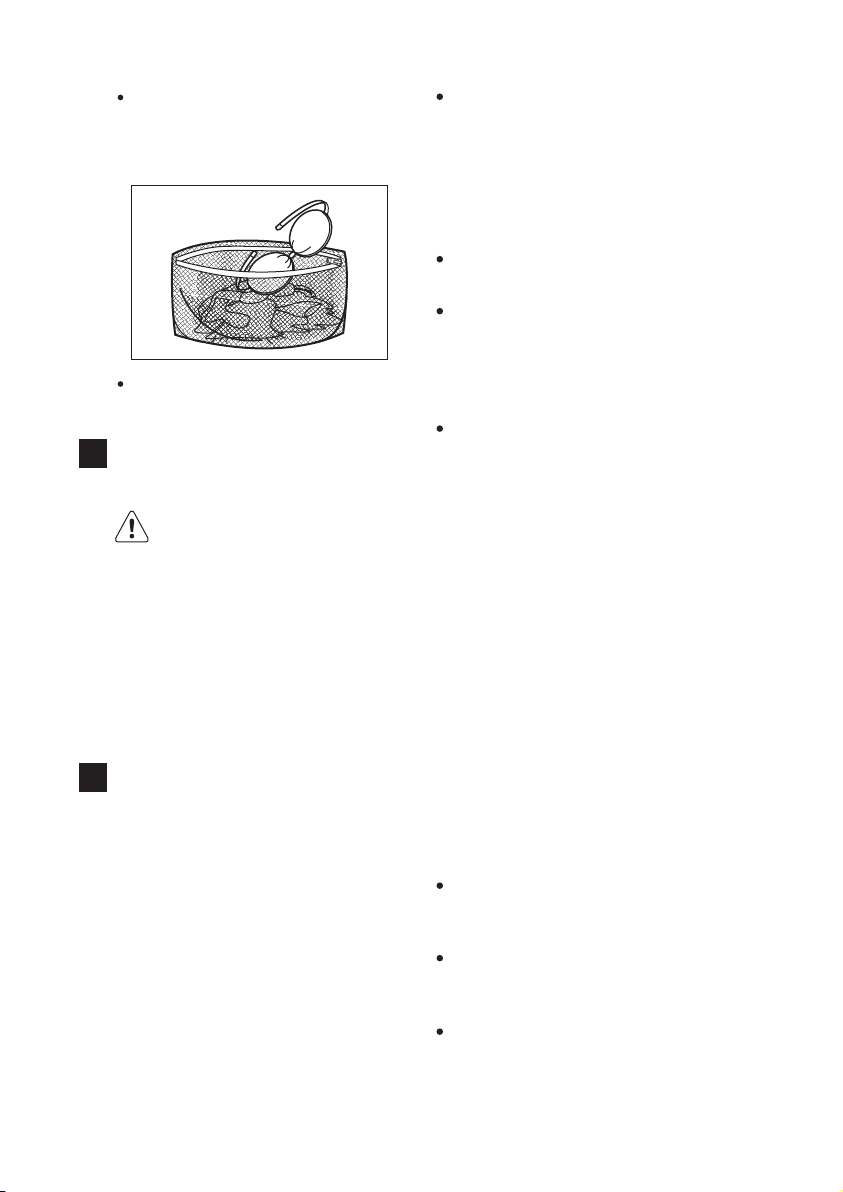
Button up pillowcases, close zip
fasteners, hooks and poppers.
Tie any belts or long tapes.
Remove persistent stains before
washing.
Make sure that no metal objects
are left in the laundry (e.g. hair
clips, safety pins, pins).
4.2
4.3
If you use pre-treatment sprays or
stain removers, apply them to the
clothing well away from your
washing machine.
PRE-TREATMENT SPRAYS
AND STAIN REMOVERS
Pre-treatment sprays and stain
remover can damage plastic
components on your washing
machine.
DETERGENT
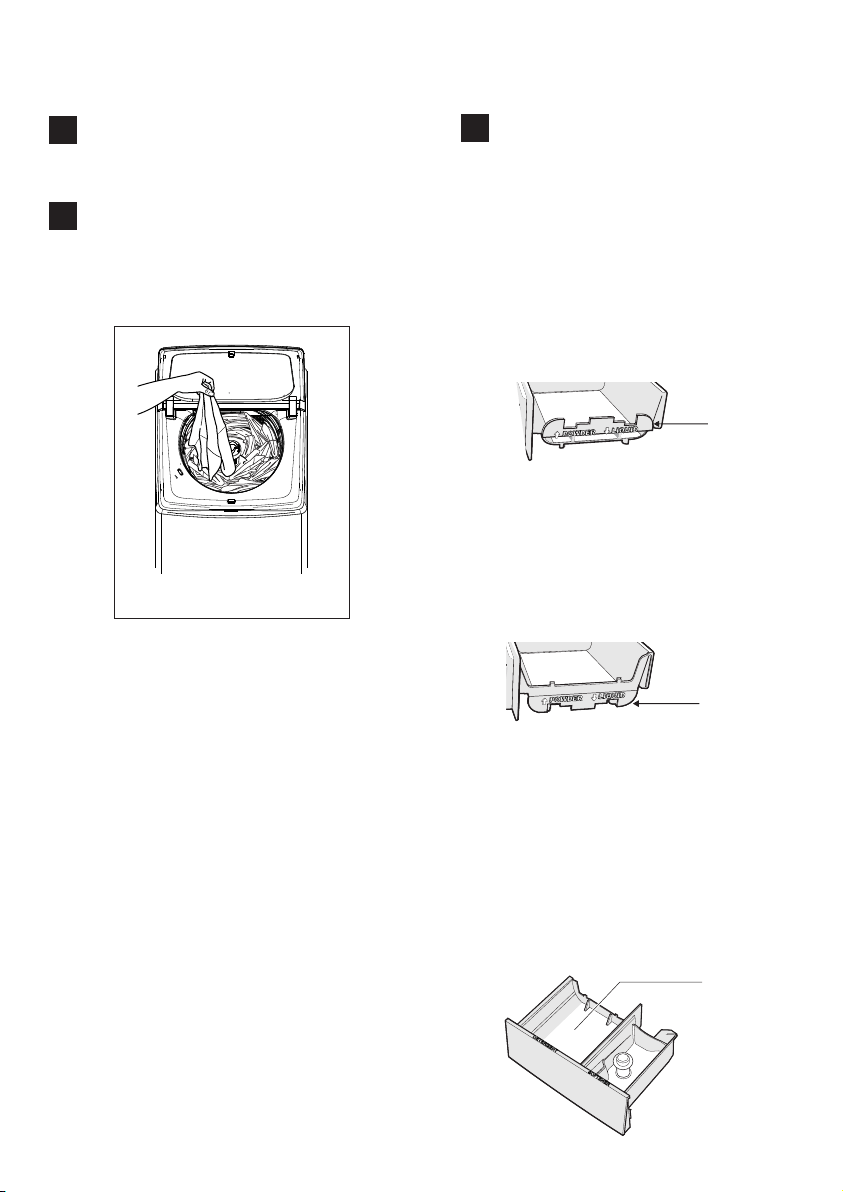
Wash bras, pantyhose and other
delicates in a mesh laundry bag,
which you can purchase from
your supermarket.
WARNING!
Don’t use the wrong type of detergent.
You must use a low sudsing detergent
designed for front load washing
machines or high efficiency top
loaders, such as Cold Power for Front
Loaders and High Efficiency Top
Loaders or detergents labelled “Matic”.
Don’t use soap-based products in
your washing machine.
Don’t use too much detergent. This
can result in excessive suds that can
cause low spin speeds, poor rinsing
and overloading the motor during spin
stages of the wash program.
Don’t use too little detergent because
you will get a poor wash. If you think
you need more, increase dosages by
only small amounts to avoid excessive
suds.
Quantity of detergent to be used
Good washing results also depend
on the choice of detergent and use
of the correct quantities to avoid
waste and protect the environment.
Although biodegradable, deter-
gents contain substances which, in
large quantities, can upset the
delicate balance of nature.
The choice of detergent will
depend on the type of fabric
(delicates, cottons, etc.),
the colour, washing temperature
and degree of soiling.
The type and quantity of detergent will
depend on the type of fabric, load size,
degree of soiling and hardness of the
water used.
Information on hardness of the water in
your area can be obtained from the
relevant water supply company, or from
your local authority.
Follow the product manufacturers’
instructions on quantities to use.
Not enough washing powder causes:
the washload to turn grey, greasy
clothes.
Too much washing powder causes:
sudsing, reduced washing effect,
inadequate rinsing.
Use less detergent if: you are washing
a small load, the laundry is lightly
soiled, large amounts of foam form
during washing.
Water hardness is classified in so-called
“degrees” of hardness.
Remove hooks or tie them up in
a bag or net.
18
19
LOAD THE WASHING MACHINE
STARTING YOUR WASHING MACHINE
When loading the clothes into your
washing machine, there are four things
to remember:
Clothes must be loaded evenly around the
agitator.
For best result load small items first, followed
by large items.
1.
1.
Clothes must not be wrapped around
the agitator.
For example, a typical load should be loaded
using the following sequence : handkerchiefs,
wash cloths, undershorts, pillow cases,
T-shirts, business shirts, tablecloths, sheets,
bath towels.
2.
The washing machine must not be overloaded.
Clothes must be able to move during wash.
3.
The load should contain only three or four large
items, for example sheets. The rest of the load
should be small items. A mixed load of large
and small items will wash cleaner than a load of
all large items.
4.
DAILY USE5.
Connect the mains plug to the mains socket.
2.
Turn the water tap on.
ADD THE DETERGENT
When using the washing machine for
the first time,check that the dispenser
is set for the type of detergent you will
use. To do this, proceed as follows:
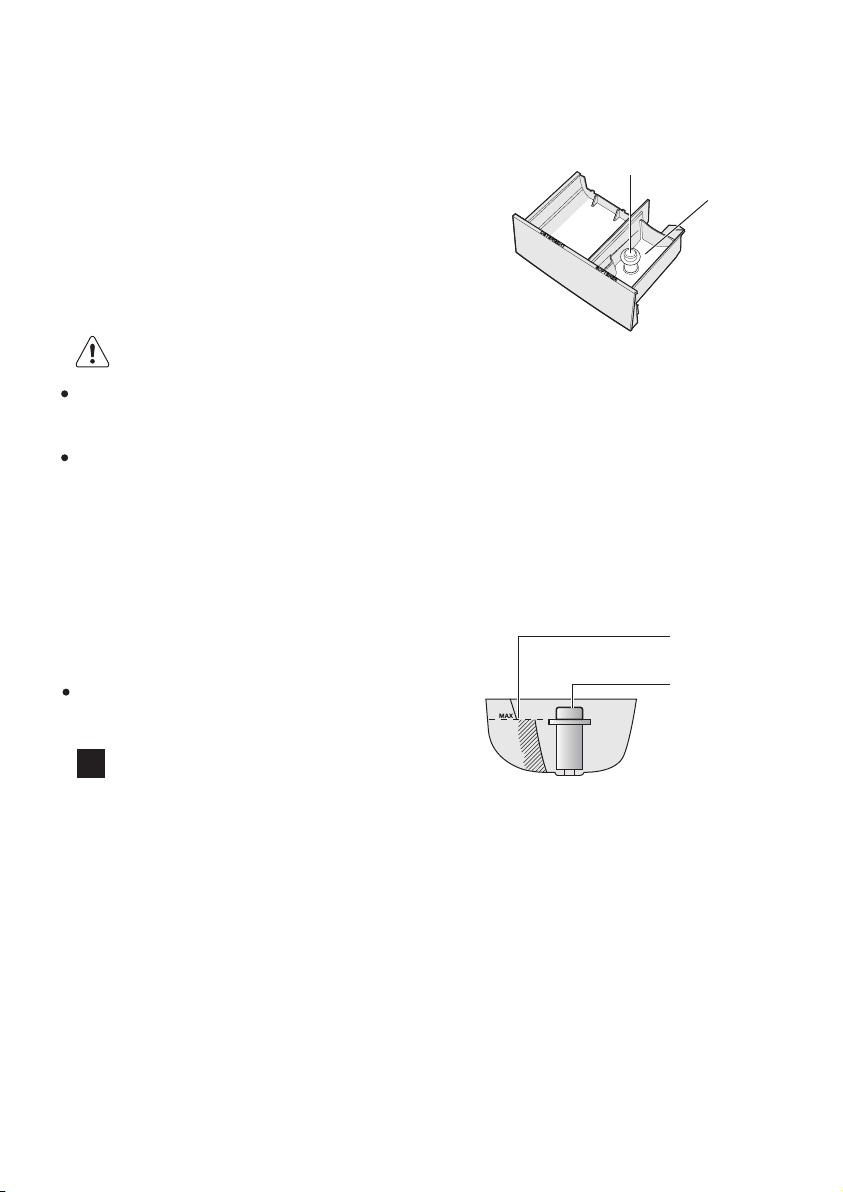
Pull the dispenser drawer forward
until it stops.
1.
Lift the front of the drawer up and
forward to
remove it from the runners.
2.
Check the position of the flap at the
rear of the detergent compartment in
the dispenser drawer.
(Factory setting is flap up for powder.)
3.
Clip the flap down if you intend to
use liquid detergent.
Remember: If you change the type
of detergent you use, the position
of the flap will need changing.
See picture.
4.
Refit the dispenser back into its runners.
5.
clip flap down for
liquid
You are now ready to add detergent.
Measure the amount required and pour
it into the detergent compartment of
the dispenser drawer.
6.
add detergent
clip flap up for
powder
5.1
5.2
5.3
Don’t do these things:
20
5.4
When using liquid detergent, some may leadk
out of the dispenser into the wash load earlier
than expected through small openings in the
back of the dispenser.
The openings are to help flushing out of
detergent.
7. If you want to use fabric softener, see
“Add fabric softener”.
8. Close the drawer by pushing it backwards
into the top panel of the washing machine
when you have finished adding detergent.
Using too little detergent will give you a poor
wash result.
Using excessive detergent will create too
much suds and may cause overloading of the
motor during the spin stage of the wash
cycle.
To avoid excessive suds, reduce the amount
of detergent you use. It is best to use
detergent labelled low susing. Good quality,
front load detergent will perforn will in this
machine.
Use soap based products in your washing
machine.
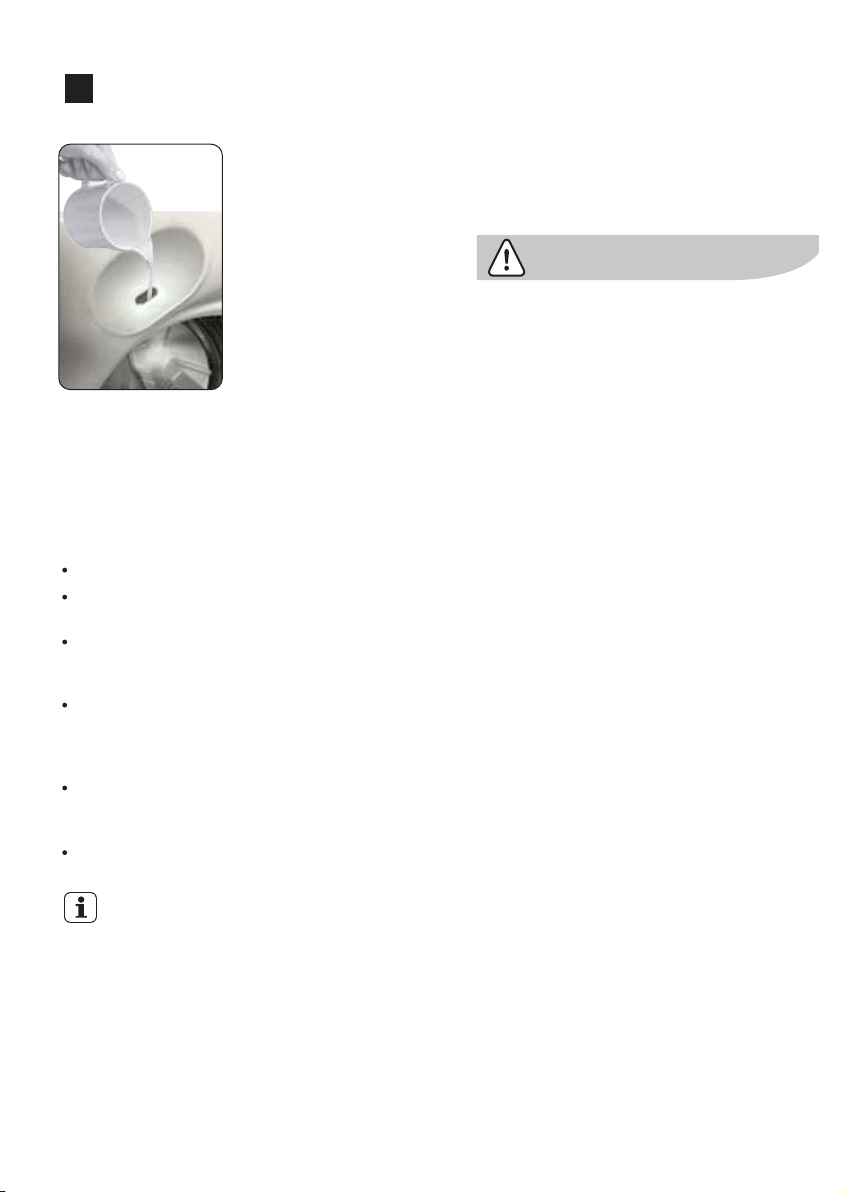
Before adding softener to the dispenser,
make sure the siphon cap is pushed firmly
down onto the spigot in the drawer.
The softener will not siphon out if the cap is
incorrectly fitted, is missing or blocked with
residue. You are now ready to add fabric
softener.
Measure the correct amount as recom-
mended on the softener package into a cup
and then pour it into the softener compart-
ment of the dispenser drawer.
Overfilling and then siphoning out too early
can cause softener and detergent to mix
resulting in staining problems.
The softener dispenser holds 90ml when filled
up to the MAX marker. Any level lower than
MAX will function correctly.
Caution: Only use the detergent
compartment for detergent and
the fabric softener compartment
for fabric softener.
ADD FABRIC SOFTENER
Caution: Do not overfill the fabric
softener dispenser.
MAX - Do not fill above
this height
siphon cap
siphon cap
pushed down
add fabric
softener
5.5
Lid Soft Landing Feature
When the lid is fully opened, to close just
pull down initially the lid then the lid will
close down slowly by itself.
Lid soft landing device will not be working if
opened less than 80 degree (Please
keep your hand away, lid will close
rapidly and hurt your hand). .
Bleaching of clothes can
help to remove stains,
heavy soiling and to kill
bacteria.
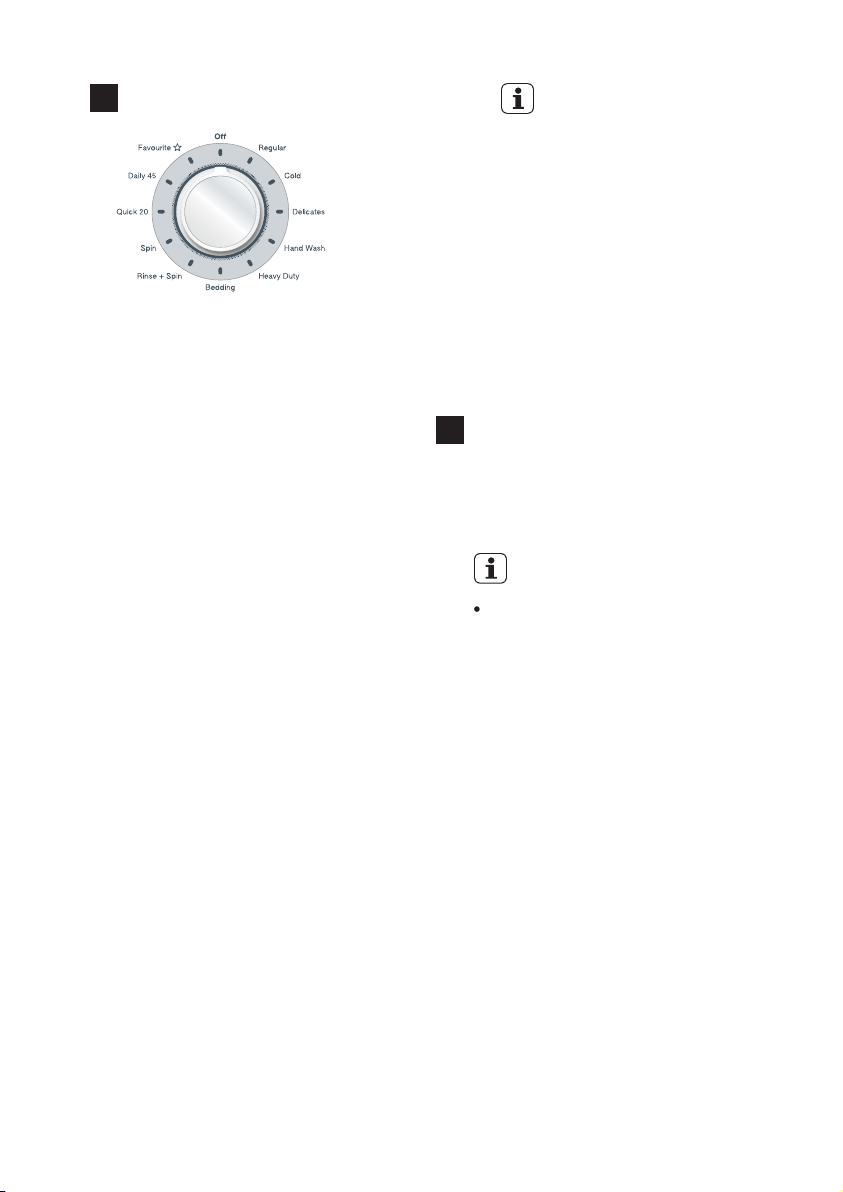
Oxygen type - This is
generally a powder type
bleach. Mix the required
quantity with water and
pour down the hole in
the top panel during the
fill when there is some
water in the wash bowl.
ADDING BLEACH
21
Refer to the instructions on the bleach container.
Chlorine type - This type of bleach should NOT be
mixed with detergent. Mix the bleach with water as per
the instructions on the container.
- Turn Program Selector to a Regular Wash position.
- Press the Start/Pasue To Pause touchpad to
commence water fill.
- Pour the bleach solution down the hole in the top
panel during fill when there is some water in the
wash bowl.
- Allow the machine to agitate for a few minutes, then
let it stand for the required time by pressing and holding
the Star/Hold To Pause touchpad for 1.2 seconds to
pause machine.
- Turn Program Select to Drain & Spin position and
press the Star/Hold To Pause touchpad to empty the
wash bowl.
- You can now wash the clothes load using detergent
and your selected wash program.
Bleach should NOT be used on silk,
wool, rayon or drip dry clothes.
NOTE :
5.6
SETTING A PROGRAM
5.7
22
- Press the ON/OFF button
(SWT1023A)
NOTE:
STARTING A PROGRAM
To start a program, press the
Start/Pause button, a default
program duration will be displayed
on the screen.
1.
Turn the program selector to
the required program.
The relevant light will light up.
-
Your washing machine is
now in STAND-BY-MODE
and ready to wash your
clothes.
-
The buzzer will sound.
-
Once you selected a
program, the program
selected will stay at that
position for the whole of the
cycle.
-
The selector dial can be
turned either clockwise or
anticlockwise.
-
The display shows the
program duration.
-
3.
If you want
to define the end of
the washing program
, press
the “Delay End” button
repeatedly to choose your
machine end time.
2.
If you want your laundry to be
washed with functions different
from the one proposed by the
machine, press Temperature,
Water Level, Spin Time and
Rinse Option buttons.
Different functions can be
combined which is dependent
on the program selected.
When these buttons are
pressed, the corresponding
pilot lights come on.
If the settings shown on the
control panel are what you
want to use, press the
Start/Pause button to start
your wash.
When you select the Drain+Spin
program, there will be a delay of
at least 2 minutes before the
washing machine starts to spin.
This delay is a pump out (Drain)
period to ensure the bowl is
empty of water, which is neces-
sary before spin commences.
Even though you may have only
put wet clothes into an empty
bowl, the delay before spin will
still occur to be safe and to
protect your washing machine.
NOTE

5.8
5.9
5.10
5.11
5.12
INTERRUPTION OF A
PROGRAM
CHANGING A PROGRAM
Press the Start/Pause again. The
program will continue.
It is possible to change only before
start the program.
The appliance stops automati-
cally.
The display will show
SWT1023A : “ FINISHED ”
SWT1043 / SWT9043 / SWT8043
SWT9043A : “ END ”
and with End sound every
15 second in 2 minutes.
-
-
-
-
-
-
-
Remove the laundry from the
appliance. Make sure that the
washing tub is empty.
Keep the lid ajar, to prevent the
mildew and odours.
Turn the Program Selector knob
Press the ON/OFF button
(SWT1023A)
to the position “ Off ” or
-
Turn off the water tap.
If you have started your wash and
you wish to stop it for some reason,
press the Start/Pause button to
enter PAUSE mode. The time
remaining is shown then “ PAUSE ”.
You can turn the Program Selector
Knob to a new program position at
any time. If you do move the
Program Selector Knob the effect
will be different depending on the
status of the machine at the time
you do this, as follows:
CHANGING THE OPTIONS
AT THE END OF THE
AUTO OFF
PROGRAM
When the machine is in PAUSE
mode, moving the Knob to a
new position 3 short beeps to
remind you that cannot change
the program in pause mode.
When the machine is running,
moving the Knob to a new
position will result in the machine
continuing the wash and
3 beeps to remind you that this
option is not allowed.
23
After 5 min without any user
interaction with the appliance, during
the machine is in stand by or after the
end of the cycle, the appliance receives
no further instructions, it will
automatically turned Off
(for energy savings in conformity with the
standards on energy consumption).
All the settings are stored so that
when the appliance is turned back on,
the program is ready or if the auto-off
mode was triggered after the end of the
cycle, the user can see that the cycle
ended normally, and can restart it.
6.1
6.2
CARING FOR YOUR WASHING MACHINE6.
Your washing machine will give you long
and trouble-free service, if you follow
the instructions in this section. These
instructions show you how to care for
your washing machine.
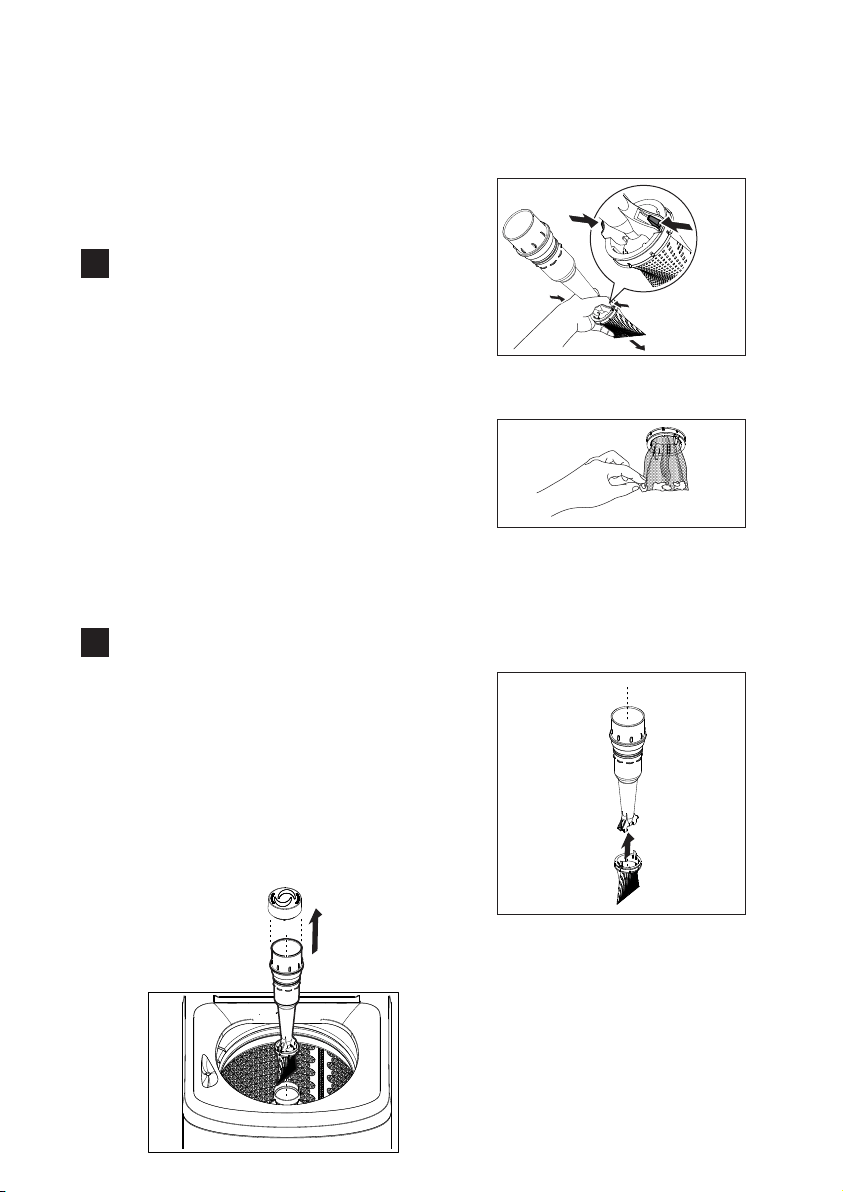
Turn the Program Selector
knob to the position “Off”.
1.
Remove the Cap Agitator
and filter
column from
the centre
of the agitator.
1.
Unclip the filter bag from the
column.
2.
Turn the bag inside out and
remove the lint.
3.
Wash the filter bag and
dispenser cup in hot water.
4.
Reassemble the filter to the
column and place it back in the
centre of the agitator.
(SWT8043 , SWT9043 , SWT1043)
5.
Turn off the water taps. This will
extend the life of the inlet hoses.
3.
Leave lid open for a while. This
allows time for moisture inside
the washing machine to
evaporate and for any odours
to disperse.
4.
Lint is a collection of threads and
fluff which comes off your clothes
during washing. Your washing
machine collects this lint in the lint
filter. It is important to clean out this
lint filter preferably after each wash.
Switch off the electricity at the
power point.
2.
WHAT TO DO AFTER YOU
HAVE FINISHED YOUR
WASHING.
CLEANING THE LINT FILTER
How to clean the lint filter:
Squeeze tabs
together and
push out.
24
To clean the inside and outside of your washing machine you should:
Never use solvents, aerosol cleaners,
spray pack cleaners, glass, cleaners, metal
polishes, caustic materials, scourers or general
household cleaners on or near top panel
and lid, control panel or other parts of
your washing machine.
Wipe the surface with a mild dishwashing detergent and warm water.1.
Wipe dry with a soft cloth.2.
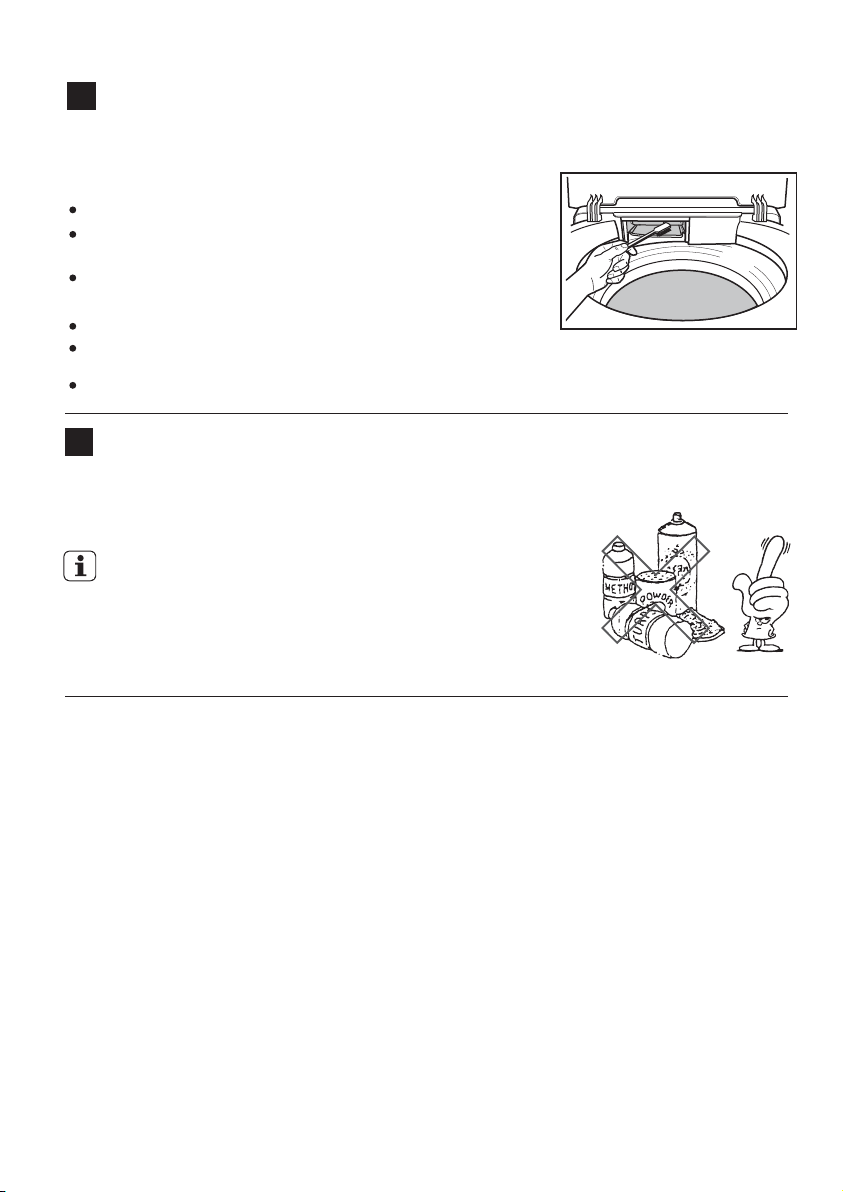
The dispenser needs to be cleaned regularly, preferably after each wash. Inspect the
dispenser after each wash to see if there is any residue of detergent.
To do this proceed as follows:
CLEANING THE DISPENSER
CLEANING YOUR WASHING MACHINE
Pull the dispenser drawer forward until it stops.
Lift the front of the drawer up and forward to remove
it from the runners.
Clean the dispenser drawer with hot water and a brush,
eg. an old toothbrush.
Dry the drawer.
Before replacing the dispenser back in its recess, clean the inside of the
drawer with an old toothbrush.
Put the dispenser back into its runners and close the drawer.
25
6.3
6.4
IMPORTANT:
6.5 6.6
26
Don’t leave wet clothing
(especially swimwear) in the bowl
for too long before you wash it.
metal objects such as bobby
pins, dressmaking pins and nails;
body oils and grease from very
dirty or sweaty clothes being
deposited around the top of the
washbowl;
excessive foam during wash if
incorrect or too much detergent
is used.
salt;
Stains in the wash bowl can be
caused by:
CLEANING STAINS IN THE
WASHBOWL
Check all pockets before loading
clothes into your washing
machine.
IMPORTANT:
Never use bleach cleaners or
steel wool to clean the
stainless steel washbowl.
IMPORTANT:
Wipe with a cleaning product
which is marked suitable for
stainless steel.
1.
Oily deposits can be removed
by wiping surfaces with a mild
dishwashing detergent and
warm water.
2.
How To Clean the Stainless
Steel Wash Bowl :
To avoid this build-up :
do not use too much fabric
softener with cold water;
select a hot water wash at least
once a month;
always dissolve the detergent in
one litre of warm water.
If you only wash with cold water,
undissolved detergent and body
oils will build up in the washing
machine. This build-up can cause
spotting on your clothes.
AVOIDING BUILD UP OF
UNDISSOLVED
DETERGENTS
7.2
7.1
27
HELPFUL HINTS IN DEALING WITH WASHING PROBLEMS
7.
RESIDUES ON WASHED
ITEMS
STAINED CLOTHES - HINTS
FOR REMOVING STAINS
Some detergents have ingredients
which do not fully dissolve and as a
consequence, may leave white
residue or particles evident on the
surface of darker clothes in the
finished wash load. Similarly some
soils may not dissolve fully, resulting
in residue evident on lighter
coloured clothes.
The guide to stain removal on page
30 may assist you in stain removal.
Treat all stains as soon as possible.
The longer you leave a stain the
harder it will be to remove. Try
soakers and stain removers first.
If you use pre-treatment sprays or
stain removers, apply them to the
clothes items in a well ventilated
area away from your washing
machine.
If you are experiencing residue on
some clothes, the following tips will
help:
Check that you are using frontload
type detergent to minimise
over-sudsing. You may find
different brands of detergent give
better results. Liquid detergent
may be better than powder in
your situation.
Avoid the use of hot water on
stains as hot water will set stains.
Use light strokes and don’t rub
the stain remover into the fabric.
If you use a chlorine bleach,
follow the instructions on the
bottle and dilute it before putting
it on clothing.
Test coloured fabrics on an inside
seam for colour fastness before
using any stain removers or
bleaches.
Test synthetic fabric on an inside
seam before using any chemicals
or bleaches.
Pre-mix the detergent thoroughly
in warm or hot water to improve
the dissolving.
Reduce detergent dosage to
between a 1/2 and 2/3 of the
manufacturer’s standard
recommendation to avoid over
concentration (the lower water
usage requires lower detergent
usage.)
Some residue maybe
re-deposited lint, so be careful
not to have lint-producing items
in a load which has darker
clothes.
Select deep rinse and not eco
rinse to help flush more particles
away.
Reduce the clothes load size per
wash to give more freedom for
the clothes to move around in the
wash bowl.
– The Colours Program
– The Heavy Duty Program
Use another program as below,
which has been designed to
minimise residual particles (they
are in order of increasing benefit
and will help you choose the best
program for your wash load.)
NOTE:
Chemicals referred to for stain
removal are available from your
local supermarket, hardware
store or the chemist.
7.3
28
YELLOWING OR GREYING CLOTHES
Problem Possible causes What to do
Greyness
Yellowing
ONLY use low sudsing,
front load washer detergent
in this machine, such as
Cold Power for Front
Loaders and High Efficiency
Top Loaders or detergent
labelled “Matic”.
Incorrect wash times and
using insufficient detergent
which can cause redeposit-
ing of detergent on clothes.
Using incorrect type or too
much detergent can cause
poor rinsing and poor spin
performance.
A build-up of oils in clothes
that come into close
contact with the skin, eg
underwear, T-shirts.
Ageing of clothes. Iron
deposits in the wash water.
Use of chlorine bleaches on
fabrics with resin finishes.
Incorrect drying.
Incorrect water tempera-
tures ie. too hot or too cold.
1.
Re-sort load, then re-wash
using wash program
selections suitable for the
fabric using hot or warm
water.
1.
If the water is very dirty or
very sudsy, repeat 1 above
reducing the amount of
detergent you use.
NOTE: Synthetics which
have been washed in very
hot water will not respond
to any treatment.
2.
Re-sort load, then re-wash
using program selections
suitable for the fabric using
hot or warm water.
2.
If the water is very dirty or
very sudsy, repeat 2 above
reducing the amount of
detergent you use.
3.
Pre-treatment sprays and stain
removers can damage plastic
components on your washing
machine.
WARNING !
Do no use dry cleaning fluids or
solvents near your washing
machine. These fluids will damage
your washing machine and may
cause an explosion.
CAUTION !
Mixing whites with very dirty
clothes, eg work clothes.
Using soap flakes instead
of laundry detergent.
29
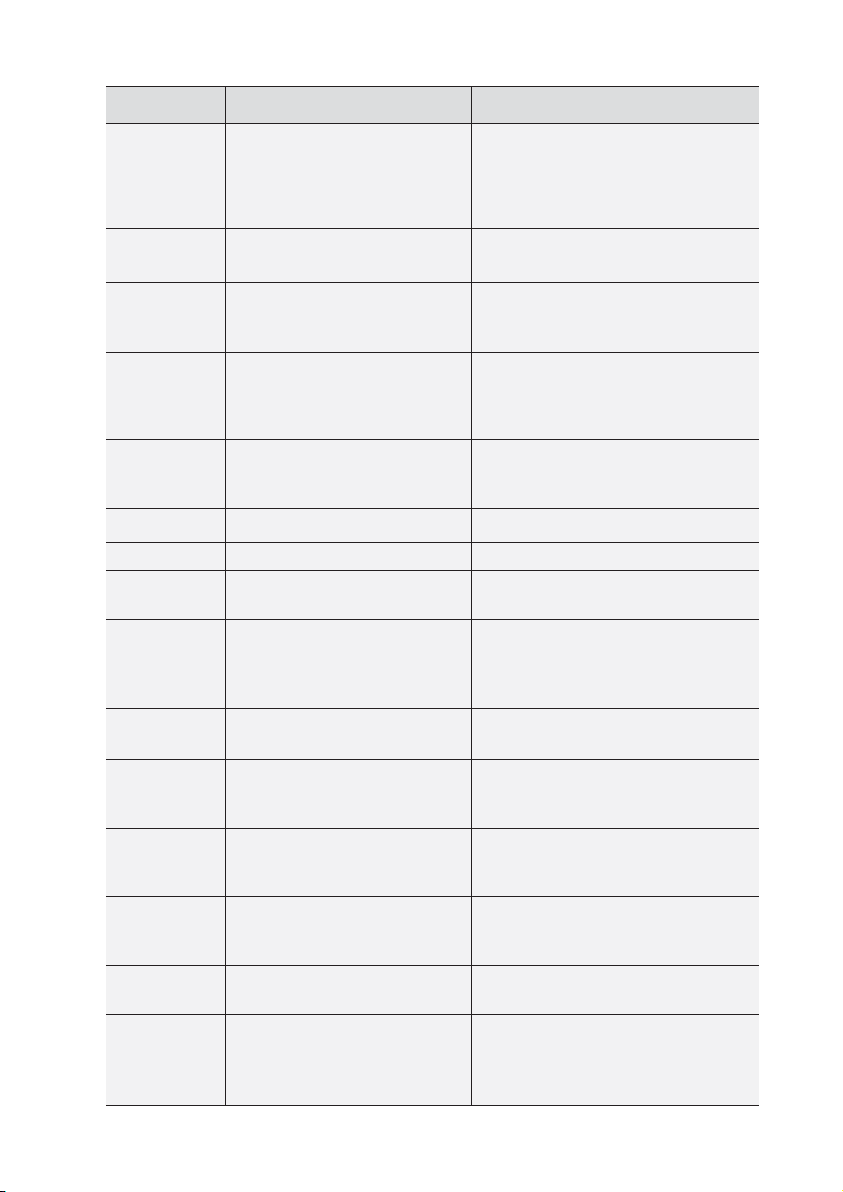
Stain White Cottons And Linens Washable Coloured Fabrics
Spong with methylated spirit.
Bleach if required.
Same as for whites - use oxygen type
bleach.
Ball Point
Pen Ink
Rinse as soon as possible under
cold water. Bleach if necessary.
Same as for whites - use oxygen type
bleach.
Beetroot
Cover area with meat tenderiser
(msg). Apply warm water to make
a paste. Wait 15-20 minutes.
Sponge with cool water or with
diluted bleach.
Same as for whites but select water
temperature suitable to fabric - use
oxygen type bleach.
Blood, Meat
Juice, Egg
(Dry Stain)
Rinse in cold water. If stain
remains, sprinkle with meat
tenderiser (msg). Let stand for
15-20 minutes. If stain still
remains, then sponge with diluted
bleach. Wash using hot water.
Same as for whites but select water
temperature suitable to fabric - use
oxygen type bleach.
Blood, Meat
Juice, Egg
(Fresh Stain)
Scrape off excess, place stain
between clean white blotter or
several layers of facial tissue.
Sponge with dry cleaning fluid. If
spot remains, bleach.
Same as for whites - use oxygen type
bleach.
Candle Wax
Rub with ice to harden. Scrape
off excess with blunt knife.
Sponge with dry cleaning fluid.
Same as for whites.
Chewing
Gum
Soak in warm water with
pre-soak product, and wash in
lukewarm water. Use dry
cleaning fluid (white spirits) to
remove any grease spots.
Soak in warm water with pre-soak or
detergent solution. Treat any remaining
stain with oxygen bleach.
Chocolate
Rinse or soak in cold water. Work
detergent into stain. Thoroughly
rinse and dry. If a stain remains,
sponge with dry cleaning fluid. If
stain remains, bleach.
Same as for whites - use oxygen type
bleach.
Coffee/tea
(Milk Or
Cream)
Pour boiling water through stain.
Bleach if necessary.
Soak or rinse in cold water or sponge
with warm water and detergent. Use
oxygen type bleach.
Coffee/tea
(Black), Fruit
Juice, White
Wine
Scrape off as much as possible.
Rub clean with paint thinner or
white spirits.
Same as for whites.
Correcting
Fluid
Sponge with prewash stain
remover, liquid detergent or rub
with soap. If greasy stain persists,
soak in enzyme product then
wash.
Same as for whites.
Cosmetics
A GUIDE TO STAIN REMOVAL
8.
30
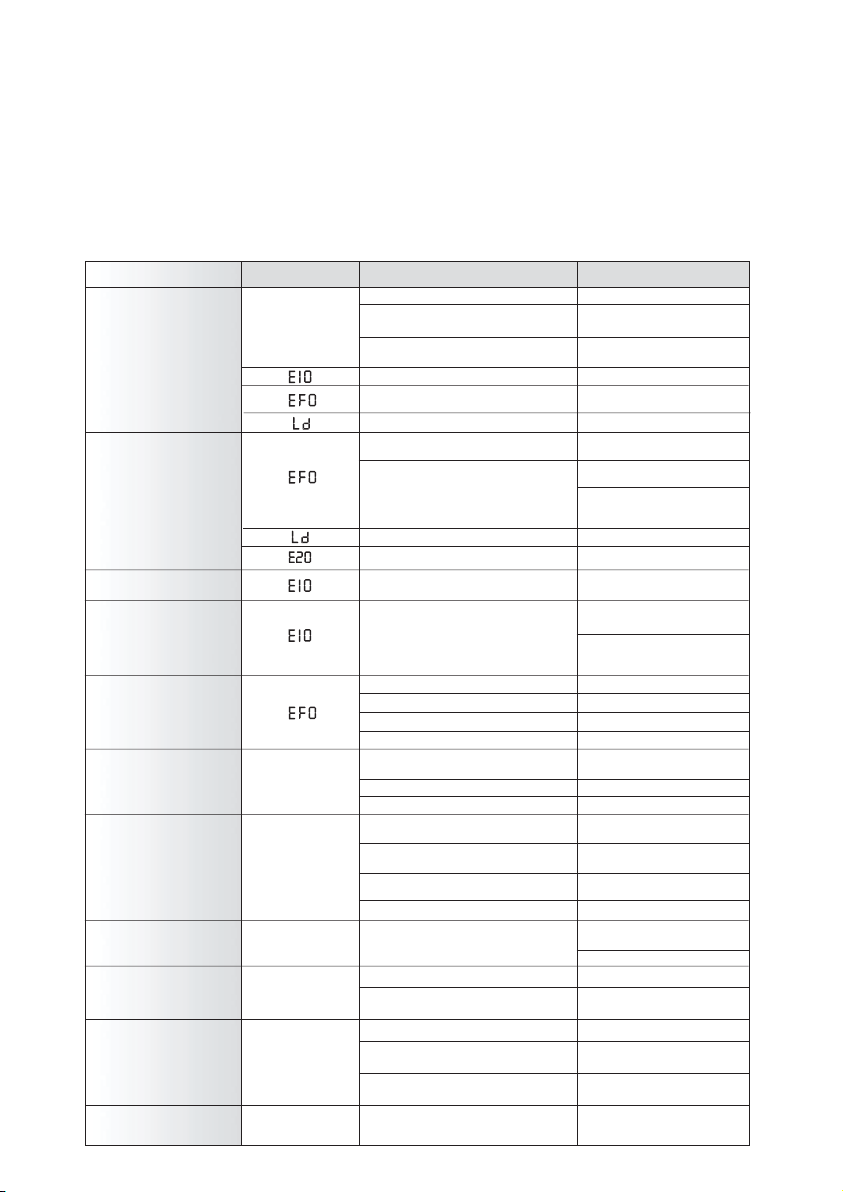
Stain White Cottons And Linens Washable Coloured Fabrics
Soak/rinse in lukewarm water
until a majority of the colour is
removed. Sponge with solvent to
break down any remaining fats
and oils then wash.
Same as for whites. Check for colour
fastness before applying solvent.
Curries
Sponge with dry cleaning fluid
(white spirits).
Same as for whites.Fat/Grease/
Oil
Sponge with warm water and
wash. Bleach remaining stain
with oxygen bleach.
Pour boiling water through stain.
Bleach remaining stain.
Fruit
Sponge with methylated spirit.
Wash using warm water.
Same as for whites. Check colourfast-
ness before applying methylated spirit.
For acetate, sponge with dry cleaning
fluid.
Grass,
Green
Vegetables
Rinse or soak in cold water then
wash. If ice cream contains fruit
or chocolate treat as such.
Same as for whites.
Ice Cream,
Cream Milk
Wash using hot water. Wash using warm water.Iodine
Apply oxalic acid and place in sun. Apply lemon juice and place in sun.Iron Rust
Rub with lard and wash using hot
water. Bleach if necessary.
Rub with lard and wash using warm
water.
Lipstick
Wash using hot water. Moisten
with lemon juice and let dry in
sun. If stain persists, bleach. Old
stains are hard to remove.
Same as for whites but select water
temperature to suit fabric.
Mildew
Wash using hot water and
bleach.
Wash using warm water and use
oxygen bleach.
Mustard
Sponge with dry cleaning fluid or
nail polish remover. Bleach
remove dye.
Sponge with dry cleaning fluid.
Nail Polish
Scrape off fresh paint. Soften dry
paint with lard or oil, then sponge
with turpentine (turps).
Same as for whites.
Paint (Oil
Based)
Rub salt into the stain. Pour
boiling water through stain.
Bleach if necessary.
Same as for whites.
Red Wine
Moisten and place in sunlight.
Bleach if necessary.
Usually a permanent stain. Brush
wools lightly with sandpaper.
Soak in cool water for 10 minutes.
Rub in liquid detergent then wash.
If stain persists, try dry cleaning
fluid or bleach.
Same as for whites - use oxygen type
bleach.
Scorch
Tomato
Sauce
31
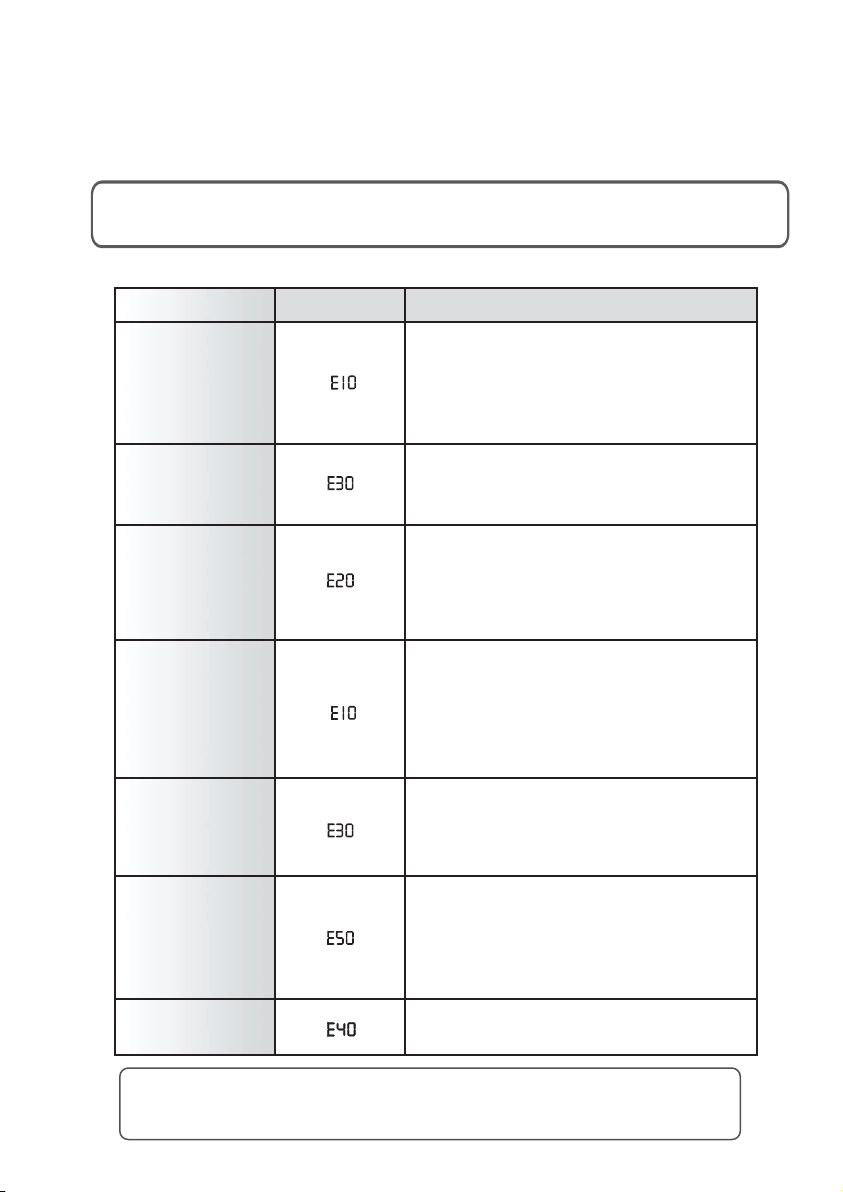
DO NOT call for service until you have checked the points listed below.
If you call for service and there is nothing wrong with your washing machine, you will
have to pay for the service call.
You will have to pay even when your washing machine is under warranty. Before you
call for service, check the points in the table below.
TROUBLE SHOOTING
9.
Problem
Machine not working.
Machine has washed
load but will not spin.
Water in washbowl.
Will not fill with water.
Water flowing into
washbowl
indefinitely.
Machine goes out of
balance or vibrates
excessively when
spinning.
Water on floor.
Clothes still dirty
after wash program.
Scraping noise
on spin.
Humming, clicking
and other noises.
Possible CausesDisplay Code
Water taps not turned on.
Out of balance switch off.
Lid not fully closed.
Out of balance.
Lid not fully closed.
Drain hose blocked.
Water taps not turned on
Inlet hoses blocked.
Drain hose too low.
Machine not level.
Levelling feet not adjusted.
Clothes not evenly distributed.
Too much water for load size.
Loose inlet hose
connections.
Incorrect water level for size of load.
Condensation from hot water.
Not enough or no detergent.
Too many clothes in load.
Incorrect wash program or
temperature selected.
Incorrect water level selected.
Bra wire or other thin items
caught between inner and
outer washbowls.
Bowl rotation at start of wash.
Brake activation when
stopping after spin.
What to do
Switch on power point.
Check power point with
another appliance.
Press power switch on at the
back of a washing machine.
Turn on taps.
Open lid, redistribute load
and close lid.
Close lid.
Open lid, redistribute load,
close lid.
Close lid.
Check drain hose for blockage.
Turn taps on.
Clean tap filters/washers.
Raise drain hose or fit a
syphon break.
Refer to installation
instructions for correct
positioning of hose.
Make the machine level.
Adjust feet to touch the floor.
Redistribute clothes evenly.
Check connections at taps
and rear of machine.
Use low water level.
Check detergent use and
rewash clothes.
Remove some clothes and
rewash.
Reselect program or
temperature and rewash.
Use a higher water level.
If the item is visible, remove
it with pliers.
Use a wash bag in future.
Normal noise.
Normal noise.
Power not switched on.
No electricity supply through
the power point.
Machine not switched on.
Detergent residue.
Bad smell or mold on
clothes.
Overloaded laundry.
Cold water temperature less than
20°C.
Detergent overdosage.
Lint filter not cleaned.
Put appropriate load in washer.
Correct supply water
temperature.
Check detergent use and
rewash clothes.
Clean lint filter.
Too much suds causing
motor temperature
overload.
Wait a short while, the wash
will continue.
In future, reduce detergent
dose or use low sudsing
(front load) detergent.
32
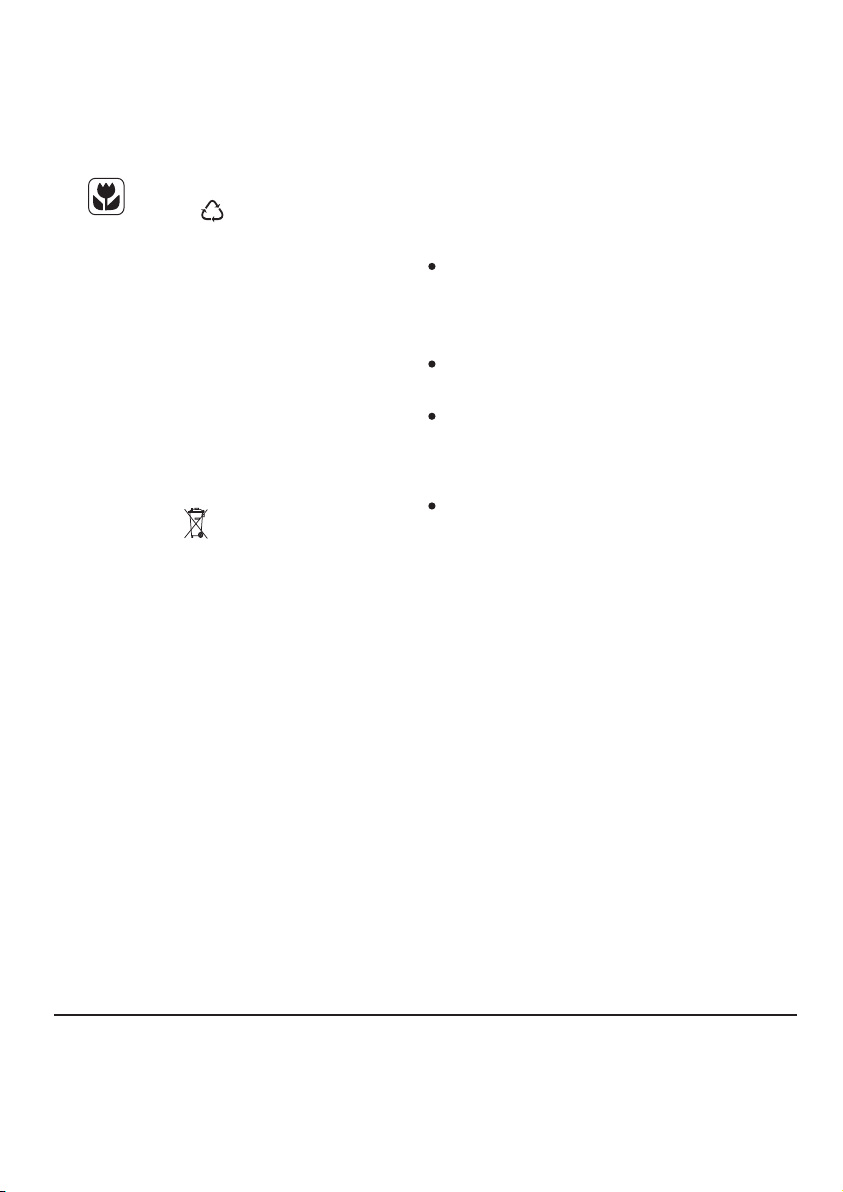
Description
Not filling with
water.
Flood.
Draining problem.
Loss of water,
while washing.
Water level
problem.
Motor fault.
Lid can’t lock
/ can’t unlock
Customer action (Summary)
Display Code
Wait a few minutes to see if the fault is corrected.
If not, press the Start/Hold To Pause touchpad and
hold it for 1.2 second to enter pause mode then
check the drain hose for blockage.
If the water is pouring onto the floor, turn OFF both
wall taps.
Make sure both wall taps are on and hose filters are
not blocked.
Press Start/Hold To Pause to re-start wash.
If problem remains, call Service.
Raise drain hose if water is flowing out of drain hose.
Wait a few minutes to see if the fault is corrected.If
not, call Service.
Press Start/Hold To Pause to continue the wash.
If problem remains, call Service.
If water level in wash bowl is low and water is flooding
the floor, turn Program Selector Knob to Drain & Spin
position, then press Start/Hold To Pause.
Should this make things worse, press the power
button off (some models) and call Service.
Wait, this fault may clear itself.
If not, turn Program Selector Knob to Drain & Spin
position, then press Start/Hold To Pause to drain the
wash bowl.
If not, turn Program Selector Knob to Drain & Spin
position to drain the wash bowl.
If this problem is repeated, call Service.
If this problem is repeated, call Service.
Wait, this fault may clear itself.
If this problem is repeated, call Service.
Otherwise, press Start/Hold To Pause to continue the
wash.
OTHER DIAGNOSTIC HELP AND A GUIDE FOR
WHEN YOU SHOULD CALL FOR SERVICE
If you are having a problem with your washing machine, make sure you have followed
ALL of the instructions on page 31 in the “What to do” column before calling for service.
This product has auto load sensing feature to select optimum amout of water to
suit the cloth load which might seem lower than conventional machine. This is
normal condition.
*
33
Packaging materials
The materials marked with the
symbol are recyclable.
>PE<=polyethylene
>PS<=polystyrene
>PP<=polypropylene
Old machine
Ecological hints
This means that they can be recycled
by disposing of them properly in
appropriate collection containers.
Use authorised disposal sites for your
old appliance. Help to keep your
country tidy!
The symbol on the product or on its
packaging indicates that this product
may not be treated as household
waste.
Instead it shall be handed over to the
applicable collection point for the
recycling of electrical and electronic
equipment.
By ensuring this product is disposed of
correctly, you will help prevent potential
negative consequences for the
environment and human health, which
could otherwise be caused by
inappropriate waste handling of this
product.
To save water, energy and to help
protect the environment, we
recommend that you follow these tips:
Normally soiled laundry may be
washed without prewashing in order
to save detergent, water and time (the
environment is protected too!).
The machine works more economi-
cally if it is fully loaded.
With adequate pre-treatment, stains
and limited soiling can be removed;
the laundry can then be washed at a
lower temperature.
Measure out detergent according to
the water hardness, the degree of
soiling and the quantity of laundry
being washed.
For more detailed information about
recycling of this product, please contact
your local city office, your household
waste disposal service or the shop
where you purchased the product.
ENVIRONMENT CONCERNS
10.

NOTE
34
This document sets out the terms and conditions of the product
warranties for Electrolux Appliances. It is an important document.
Please keep it with your proof of purchase documents in a safe place
for future reference should you require service for your Appliance.
1. In this warranty
(a) ‘acceptable quality’ as referred to in clause 10 of this warranty has
the same meaning referred to in the ACL;
(b) ‘ACL’ means Schedule 2 to the Competition and Comsumer Act 2010;
(c) ‘Appliance’ means any Electrolux product purchased by you and
accompanied by this document;
(d) ‘ASC’ means Electrolux’ authorised serviced centres;
(e) ‘Electrolux’ means Electrolux Home Products Pty Ltd of 163
O’Riordan Street, Mascot NSW 2020, ABN 51 004 762 341 in
respect of Appliances purchased in Australia and Electrolux (NZ)
Limited of 3-5 Niall Burgess Road, Mount Wellington, in respect
of Appliances purchased in New Zealand;
(f) ‘major failure’ as referred to in clause 10 of this warranty has the
same meaning referred to in the ACL and includes a situation when
an Appliance cannot be repaired or it is un-economic for Electrolux,
at its discretion, to repair an Appliance during the Warranty Period;
(g) ‘Warranty Period’ means the Appliance is warranted against
manufacturing defects in Australia and New Zealand for 24 months
with an additional 96 months parts only warranty for the Appliance’s
inverter motor , if applicable (for appliances purchased after 1st January
2015), following the date of original purchase of the Appliance;
(h) ‘you’ means the purchaser of the Appliance not having purchased
the Appliance for re-sale, and ‘your’ has a corresponding meaning.
2. This warranty only applies to Appliances, purchased and used in
Australia or New Zealand and is in addition to (and does not exclude,
restrict, or modify in any way) any non-excludable statutory warranties in
Australia or New Zealand and are used in normal domestic applications.
3. During the Warranty Period Electrolux or its ASC will, at no extra charge
if your Appliance is readily accessible for service, without special
equipment and subject to these terms and conditions, repair or replace
any parts which it considers to be defective. Electrolux or its ASC may
use remanufactured parts to repair your Appliance. You agree that
any replaced Appliances or parts become the property of Electrolux.
This warranty does not apply to light globes, batteries, lters or similar
perishable parts.
4. Parts and Appliances not supplied by Electrolux are not covered by
this warranty.
5. To the extent permitted by law, you will bear the cost of transportation,
travel and delivery of the Appliance to and from Electrolux or its ASC. If
you reside outside of the service area, you will bear the cost of:
(a) travel of an authorised representative;
(b) transportation and delivery of the Appliance to and from Electrolux or
its ASC,
In all instances, unless the Appliance is transported by Electrolux or an
Electrolux authorised representative, the Appliance is transported at the
owner’s cost and risk while in transit to and from Electrolux or its ASC.
6. Proof of purchase is required before you can make a claim under
this warranty.
7. You may not make a claim under this warranty unless the defect claimed
is due to faulty or defective parts or workmanship. Electrolux is not liable
in the following situations (which are not exhaustive):
(a) the Appliance is damaged by:
(i) accident
(ii) misuse or abuse, including failure to properly maintain or service
(iii) normal wear and tear
(iv) power surges, electrical storm damage or incorrect power supply
(v) incomplete or improper installation
(vi) incorrect, improper or inappropriate operation
(vii) insect or vermin infestation
(viii) failure to comply with any additional instructions supplied with the
Appliance;
(b) the Appliance is modied without authority from Electrolux in writing;
(c) the Appliance’s serial number or warranty seal has been removed
or defaced;
(d) the Appliance was serviced or repaired by anyone other than
Electrolux, an authorised repairer or ASC.
8. This warranty, the contract to which it relates and the relationship
between you and Electrolux are governed by the law applicable where
the Appliance was purchased. Where the Appliance was purchased in
New Zealand for commercial purposes the Consumer Guarantee Act
does not apply.
9. To the extent permitted by law and subject to your non-excludable
statutory rights and warranties, Electrolux excludes all warranties and
liabilities (other than as contained in this document) including liability for
any loss or damage whether direct or indirect arising from your purchase,
use or non use of the Appliance.
10. For Appliances and services provided by Electrolux in Australia,
the Appliances come with a guarantee by Electrolux that cannot be
excluded under the ACL. You are entitled to a replacement or refund
for a major failure and for compensation for any other reasonably
foreseeable loss or damage. You are also entitled to have the Appliance
repaired or replaced if the Appliance fails to be of acceptable quality and
the failure does not amount to a major failure.
The benets to you given by this warranty are in addition to your other
rights and remedies under a law in relation to the Appliances or services
to which the warranty relates.
11. At all times during the Warranty Period, Electrolux shall, at its discretion,
determine whether repair, replacement or refund will apply if an
Appliance has a valid warranty claim applicable to it.
12. For Appliances and services provided by Electrolux in New Zealand,
the Appliances come with a guarantee by Electrolux pursuant to the
provisions of the Consumer Guarantees Act, the Sale of Goods Act and
the Fair Trading Act.
13. To enquire about claiming under this warranty, please follow these steps:
(a) carefully check the operating instructions, user manual and the terms
of this warranty;
(b) have the model and serial number of the Appliance available;
(c) have the proof of purchase (eg an invoice) available;
(d) telephone the numbers shown below.
14. You accept that if you make a warranty claim, Electrolux and its ASC
may exchange information in relation to you to enable Electrolux to meet
its obligations under this warranty.
Warranty
FOR SALES IN AUSTRALIA AND NEW ZEALAND
APPLIANCE: WASHING MACHINE, WASHER/DRYER
Important Notice
Before calling for service, please ensure that the steps listed in clause 13 above have been followed.
FOR SERVICE
or to nd the address of your nearest
state service centre in Australia
PLEASE CALL 13 13 49
For the cost of a local call (Australia only)
SERVICE AUSTRALIA
ELECTROLUX HOME PRODUCTS
electrolux.com.au
FOR SPARE PARTS
or to nd the address of your nearest
state spare parts centre in Australia
PLEASE CALL 13 13 50
For the cost of a local call (Australia only)
FOR SERVICE
or to nd the address of your nearest
authorised service centre in New Zealand
FREE CALL 0800 10 66 10
(New Zealand only)
SERVICE NEW ZEALAND
ELECTROLUX (NZ) Limited
electrolux.co.nz
FOR SPARE PARTS
or to nd the address of your nearest
state spare parts centre in New Zealand
FREE CALL 0800 10 66 20
(New Zealand only)
GWM_Warr_Sep15
35

www.simpson.com.au
G0011551-003-119730429