WM 77110 NBL01
Front-Loading Automatic
Washer
Owner’s Guide & Installation
Instructions
To prevent accidents and machine damage, read these
instructions before installation or use. Use the washer only as
instructed in this owner’s guide and installation instructions
included with your washer. Keep this guide for future reference
As an ENERGY STAR® partner,
BLOMBERG has determined that this
product meets the ENERGY STAR®
guidelines for energy efficiency.
2 / English
Front-Loading Automatic Washer
Please read this guide first!
Dear Customer,
We hope that your product which has been manufactured in modern facilities and passed through a
strict quality control procedure will give you the best results.
Therefore, we advise you to read through this document carefully before using your product and keep
it for future reference.
This guide will…
…help you use your washer in a fast and safe way.
•Pleasereadtheguidebeforeinstallingandstartingyourwasher.
•Particularlyfollowtheinstructionsrelatedtosafety.
•Keepthisguidewithineasyreach.Youmayneeditinthefuture.
•Pleasereadalladditionaldocumentssuppliedwiththiswasher.
Pleasenotethatthisowner’sguide&installationinstructionsmaybeapplicableforseveralother
models. Differences between models will be identified in the guide.
Explanation of symbols
Throughout this guide the following symbols are used:
C
CAUTION
Ò Important information or useful hints about usage.
A
WARNING
Ò Warning for hazardous situations with regard to life and property.
B
WARNING
Ò Warning for electrical shock
If you have questions, call:
Call Center (toll free number)
1-800-459-98-48 (USA)
or send e-mail to:
For the list of dealers/retailers, distributors and authorized service agents, visit:
http://www.blombergappliances.com
Please fill the information below for future reference.
Model no:
Serial no:
Purchasedate:

Owner’s Guide & Installation Instructions
3 / English
TABLE OF CONTENTS
1 Your Washer 5
Overview. . . . . . . . . . . . . . . . . . . . . . . . . . . . . . . . . . . . . . . . . . . . . . . . . . . . . . . . . . . . . . . . . . 5
Specifications . . . . . . . . . . . . . . . . . . . . . . . . . . . . . . . . . . . . . . . . . . . . . . . . . . . . . . . . . . . . . . 6
2 Important Safety Instructions 7
3 Installation Instructions 10
The Right Location of Installation . . . . . . . . . . . . . . . . . . . . . . . . . . . . . . . . . . . . . . . . . . . . . . . 10
Installation Clearances. . . . . . . . . . . . . . . . . . . . . . . . . . . . . . . . . . . . . . . . . . . . . . . . . . . . . . . 10
Allowable Clearances for Undercounter Installation . . . . . . . . . . . . . . . . . . . . . . . . . . . . . . . . . . 11
Allowable Clearances for Closet Installation. . . . . . . . . . . . . . . . . . . . . . . . . . . . . . . . . . . . . . . . 11
Stacked Installation . . . . . . . . . . . . . . . . . . . . . . . . . . . . . . . . . . . . . . . . . . . . . . . . . . . . . . . . . 11
Removing packaging reinforcement . . . . . . . . . . . . . . . . . . . . . . . . . . . . . . . . . . . . . . . . . . . . . 11
Removing shipping bolts . . . . . . . . . . . . . . . . . . . . . . . . . . . . . . . . . . . . . . . . . . . . . . . . . . . . . 12
Levelling the washer . . . . . . . . . . . . . . . . . . . . . . . . . . . . . . . . . . . . . . . . . . . . . . . . . . . . . . . . 12
Electrical Connection . . . . . . . . . . . . . . . . . . . . . . . . . . . . . . . . . . . . . . . . . . . . . . . . . . . . . . . . 13
Powersupplyandcircuit . . . . . . . . . . . . . . . . . . . . . . . . . . . . . . . . . . . . . . . . . . . . . . . . . . . . . 14
Water Supply Connection. . . . . . . . . . . . . . . . . . . . . . . . . . . . . . . . . . . . . . . . . . . . . . . . . . . . . 14
Drainage. . . . . . . . . . . . . . . . . . . . . . . . . . . . . . . . . . . . . . . . . . . . . . . . . . . . . . . . . . . . . . . . . 15
Installation Checklist . . . . . . . . . . . . . . . . . . . . . . . . . . . . . . . . . . . . . . . . . . . . . . . . . . . . . . . . 16
Transportation . . . . . . . . . . . . . . . . . . . . . . . . . . . . . . . . . . . . . . . . . . . . . . . . . . . . . . . . . . . . . 16
Disposal Information . . . . . . . . . . . . . . . . . . . . . . . . . . . . . . . . . . . . . . . . . . . . . . . . . . . . . . . . 17
Appliance Disposal . . . . . . . . . . . . . . . . . . . . . . . . . . . . . . . . . . . . . . . . . . . . . . . . . . . . . . . . . 17
4 Operating Instructions 18
First Use . . . . . . . . . . . . . . . . . . . . . . . . . . . . . . . . . . . . . . . . . . . . . . . . . . . . . . . . . . . . . . . . . 18
Laundry Tips . . . . . . . . . . . . . . . . . . . . . . . . . . . . . . . . . . . . . . . . . . . . . . . . . . . . . . . . . . . . . . 18
Preparingthelaundry . . . . . . . . . . . . . . . . . . . . . . . . . . . . . . . . . . . . . . . . . . . . . . . . . . . . . . . 19
Loading the washer . . . . . . . . . . . . . . . . . . . . . . . . . . . . . . . . . . . . . . . . . . . . . . . . . . . . . . . . . 20
Detergent Use . . . . . . . . . . . . . . . . . . . . . . . . . . . . . . . . . . . . . . . . . . . . . . . . . . . . . . . . . . . . . 21
Detergent Quantity . . . . . . . . . . . . . . . . . . . . . . . . . . . . . . . . . . . . . . . . . . . . . . . . . . . . . . . . . 21
Detergent Dispenser . . . . . . . . . . . . . . . . . . . . . . . . . . . . . . . . . . . . . . . . . . . . . . . . . . . . . . . . 22
Water Consumption. . . . . . . . . . . . . . . . . . . . . . . . . . . . . . . . . . . . . . . . . . . . . . . . . . . . . . . . . 24

4 / English
Front-Loading Automatic Washer
TABLE OF CONTENTS
5 Selecting a Program and Operating Your Washer 25
Control panel . . . . . . . . . . . . . . . . . . . . . . . . . . . . . . . . . . . . . . . . . . . . . . . . . . . . . . . . . . . . . 25
Display symbols . . . . . . . . . . . . . . . . . . . . . . . . . . . . . . . . . . . . . . . . . . . . . . . . . . . . . . . . . . . 26
Turning the washer on . . . . . . . . . . . . . . . . . . . . . . . . . . . . . . . . . . . . . . . . . . . . . . . . . . . . . . . 26
Programcycleselection. . . . . . . . . . . . . . . . . . . . . . . . . . . . . . . . . . . . . . . . . . . . . . . . . . . . . . 26
Wash Cycles . . . . . . . . . . . . . . . . . . . . . . . . . . . . . . . . . . . . . . . . . . . . . . . . . . . . . . . . . . . . . . 27
Additional programs . . . . . . . . . . . . . . . . . . . . . . . . . . . . . . . . . . . . . . . . . . . . . . . . . . . . . . . . 27
Special programs . . . . . . . . . . . . . . . . . . . . . . . . . . . . . . . . . . . . . . . . . . . . . . . . . . . . . . . . . . 28
Temperature selection . . . . . . . . . . . . . . . . . . . . . . . . . . . . . . . . . . . . . . . . . . . . . . . . . . . . . . . 28
Spin Speed selection . . . . . . . . . . . . . . . . . . . . . . . . . . . . . . . . . . . . . . . . . . . . . . . . . . . . . . . . 28
ProgramCycleSelectionTable . . . . . . . . . . . . . . . . . . . . . . . . . . . . . . . . . . . . . . . . . . . . . . . . . 29
Auxiliary functions . . . . . . . . . . . . . . . . . . . . . . . . . . . . . . . . . . . . . . . . . . . . . . . . . . . . . . . . . . 31
Time display . . . . . . . . . . . . . . . . . . . . . . . . . . . . . . . . . . . . . . . . . . . . . . . . . . . . . . . . . . . . . . 32
StartingtheProgram . . . . . . . . . . . . . . . . . . . . . . . . . . . . . . . . . . . . . . . . . . . . . . . . . . . . . . . . 33
Progressofprogram . . . . . . . . . . . . . . . . . . . . . . . . . . . . . . . . . . . . . . . . . . . . . . . . . . . . . . . . 33
Changing the selections after the program has started. . . . . . . . . . . . . . . . . . . . . . . . . . . . . . . . 33
Switching the washer to standby mode. . . . . . . . . . . . . . . . . . . . . . . . . . . . . . . . . . . . . . . . . . . 33
Child-proof lock. . . . . . . . . . . . . . . . . . . . . . . . . . . . . . . . . . . . . . . . . . . . . . . . . . . . . . . . . . . . 34
Ending the program through canceling . . . . . . . . . . . . . . . . . . . . . . . . . . . . . . . . . . . . . . . . . . . 35
End of program . . . . . . . . . . . . . . . . . . . . . . . . . . . . . . . . . . . . . . . . . . . . . . . . . . . . . . . . . . . . 35
6 Preparation 36
Starting. . . . . . . . . . . . . . . . . . . . . . . . . . . . . . . . . . . . . . . . . . . . . . . . . . . . . . . . . . . . . . . . . . 36
Canceling a program . . . . . . . . . . . . . . . . . . . . . . . . . . . . . . . . . . . . . . . . . . . . . . . . . . . . . . . . 36
Adding more laundry . . . . . . . . . . . . . . . . . . . . . . . . . . . . . . . . . . . . . . . . . . . . . . . . . . . . . . . . 37
Re-spinning the laundry. . . . . . . . . . . . . . . . . . . . . . . . . . . . . . . . . . . . . . . . . . . . . . . . . . . . . . 38
After the program is finished . . . . . . . . . . . . . . . . . . . . . . . . . . . . . . . . . . . . . . . . . . . . . . . . . . 38
7 User maintenance instructions 39
Cleaning detergent dispenser. . . . . . . . . . . . . . . . . . . . . . . . . . . . . . . . . . . . . . . . . . . . . . . . . . 39
Cleaning the door seal . . . . . . . . . . . . . . . . . . . . . . . . . . . . . . . . . . . . . . . . . . . . . . . . . . . . . . 39
Cleaning the outer cabinet and control panel. . . . . . . . . . . . . . . . . . . . . . . . . . . . . . . . . . . . . . . 40
Cleaning the water inlet strainers . . . . . . . . . . . . . . . . . . . . . . . . . . . . . . . . . . . . . . . . . . . . . . . 40
Cleaning the drain pump filter . . . . . . . . . . . . . . . . . . . . . . . . . . . . . . . . . . . . . . . . . . . . . . . . . 41
Descaling the washer . . . . . . . . . . . . . . . . . . . . . . . . . . . . . . . . . . . . . . . . . . . . . . . . . . . . . . . 42
8 Troubleshooting 43
9
WARRANTY STATEMENT FOR THE BLOMBERG CLOTHES WASHERS 53
10 HOW TO GET SERVICE 54
Owner’s Guide & Installation Instructions
5 / English
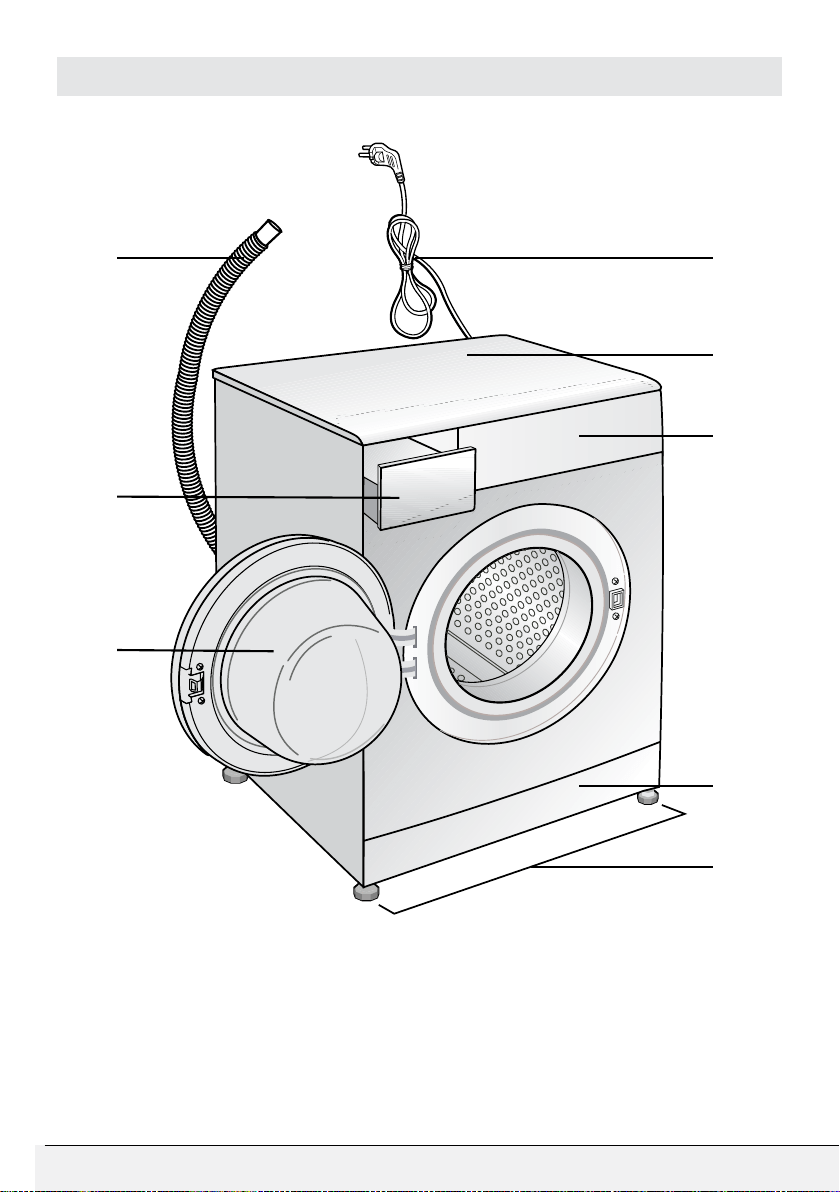
Overview
1
Your Washer
7
3
4
6
5
2
1
8
1-PowerCord
2 - Top Lid
3-ControlPanel
4 - Filter Cap
5 - Height-adjustable Feet
6 - Loading Door
7 - Detergent Dispenser
8 - Drain Hose
6 / English
Front-Loading Automatic Washer
Your Washer
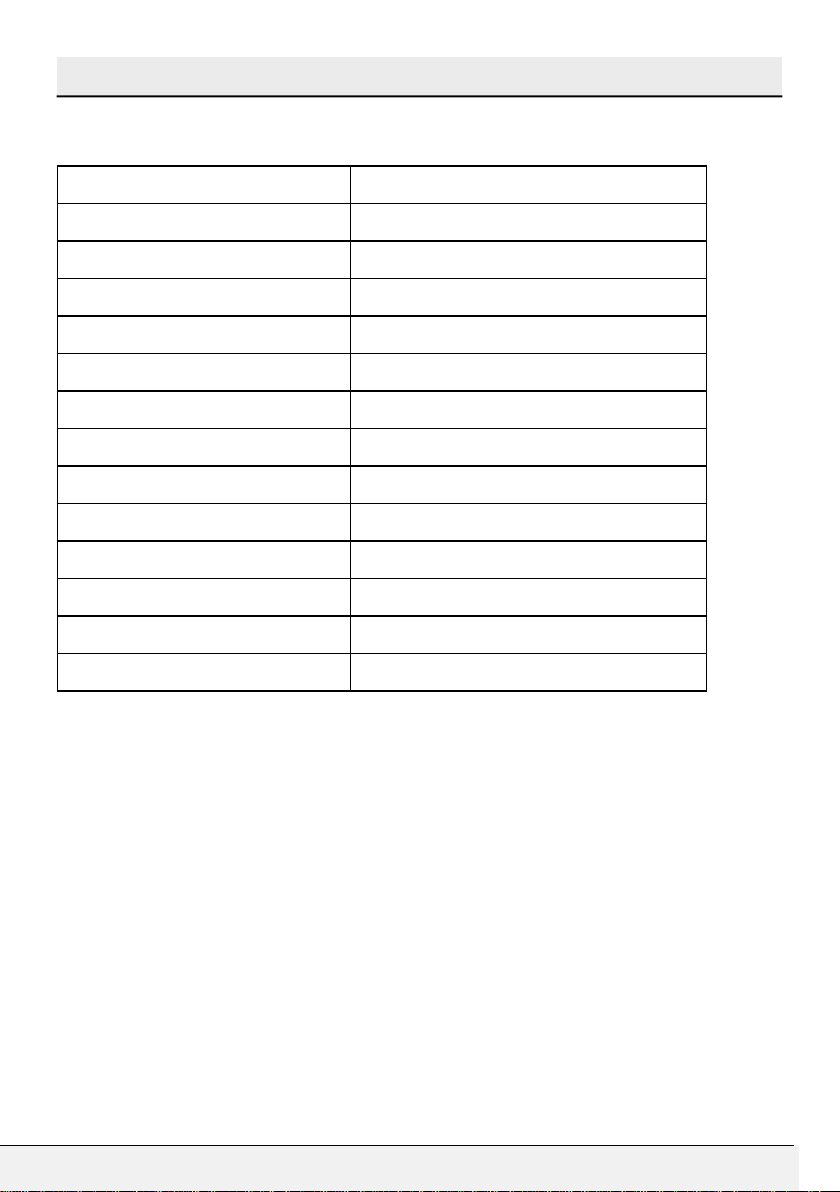
Front Loadng Automatc Washer
WM 77110 NBL01
33.1 / 84
23.6 / 60
21.7 / 55
159 / 72
208-240 / 60
10
2000-2350
1200
(15-145) / (1-10)
4.9 / 1.5
1.95
15.43 / 7
Specifications
Specifications of this appliance may change without notice to improve the quality of the product.
Figures in this guide are schematic and may not match your product exactly.
Values stated on the washer labels or in the documentation accompanying it are obtained
in laboratory in accordance with the relevant standards. Depending on operational and
environmental conditions of the appliance, these values may vary.
Models
Height (in) / (cm)
Width (in) / (cm)
Depth (in) / (cm)
Net Weight (lbs) / (kg)
Electricity (V/Hz.)
Total Current (A)
TotalPower(W)
Spinning cycle (rpm max.)
Water pressure (psi) / (bar)
Drain height (ft.) / (m.)
Wash capacity (cu. Ft.)
Dry Load Capacity (lbs)/(kg)
Owner’s Guide & Installation Instructions
7 / English
B
WARNING
Ò To reduce the risk of fire, electric shock or injury to persons while using your
appliance follow basic safety precautions, including the following:
• Readallinstructionsbeforeusingthewasher.
• Donotwasharticlesthathavebeenpreviouslycleanedin,washedin,soakedin,orspottedwith
gasoline, dry-cleaning solvents, or other flammable or explosive substances (acetone, alcohol,
kerosene, some liquid household cleaners, some spot removers, turpentine, waxes and wax
removers) as they give off vapors that could ignite or explode.
• Donotaddgasoline,dry-cleaningsolvents,orotherflammableorexplosivesubstancestothewash
water. These substances give off vapors that could ignite or explode.
• Undercertainconditions,hydrogengasmaybeproducedinahot-watersystemthathasnotbeen
usedfor2weeksormore.HYDROGENGASISEXPLOSIVE.Ifthehot-watersystemhasnotbeen
used for such a period, before using a washing machine, turn on all hot-water faucets and let the
water flow from each for several minutes. This will release any accumulated hydrogen gas. As the
gas is flammable, do not smoke or use an open flame this time.
• Donotallowchildrentoplayonorintheappliance.Closesupervisionofchildrenisnecessary
when the appliance is used near children.
• Beforetheapplianceisremovedfromserviceordiscarded,removethedoorandthepowercord/
main plug to prevent accidents.
• Donotreachintotheapplianceifthedrumismoving.Waituntilthedrumhascompletelystopped
before opening the door.
• Donotinstallorstorethisappliancewhereitwillbeexposedtotheweatheranddirectsunlight.
• Donottamperwithcontrols.
• Donotrepairorreplaceanypartoftheapplianceorattemptanyservicingunlessspecifically
recommended in the user-maintenance instructions or in published user-repair instructions that
you understand and have the skills to carry out.
• Thisappliancemustonlybeusedforthepurposeofwashing,rinsingandspinningmachine-
washable items using laundry additives that are suitable for use in washers . The appliance
manufacturer cannot be held responsible for damage caused by improper or unintended use of the
appliance.
• Onlydetergents,softenersandadditivessuitableforuseinHE(High-efficiency)washersmaybe
used. Always follow the instructions and information given by the laundry detergent manufacturers
when using these products.
• Alwaysfollowthefabriccareinstructionsofgarmentmanufacturers.
• Donottouchthedoorglasswhilewashingathightemperatures.Dangerofburning!
• Donotsitontopofthewasher.
• Donotclimbontothewasher.
• Destroytheshippingcarton,plasticbagandotherpackingmaterialsafterthewasherisunpacked.
Keepchildrenawayfromthesepackingmaterials.Dangerofsuffocationfromplasticsheetsand
cartons!
2 Important Safety Instructions

8 / English
Front-Loading Automatic Washer
Important Safety Instructions
• Donotmixchlorinebleachwithammoniaoracidssuchasvinegarand/orrustremoverwhen
washing. This mixture can produce hazardous fume which may cause death.
• Donotoperatethisapplianceifitisdamaged,malfunctioning,partiallydisassembled,orhas
missing or broken parts, including a damaged cord or plug.
• Storelaundrydetergentsandadditivesinacool,dryplaceoutofchildren’sreachduetodangerof
chemicalpoisoningandskinirritation.Followthemanufacturers’instructionswhenusinglaundry
products.
• Donotmachinewashfiberglassmaterials.Smallparticlescansticktofabricswashedinfollowing
cycles and may lead to skin irritation.
• Donotwashitemsstainedwithvegetableoil,cookingoilorpetroleum.Theseitemsmaycontain
some flammable oils after laundering and the fabric may smoke or catch fire by itself.
• Besuretounplugthepowercablebeforeattemptingmaintenanceorcleaningofyourapplianceto
minimize the risk of electric shock. Always unplug the cable by grasping the plug, not the cord.
• Donotusewethandswhenplugging/unpluggingthepowercable.
• Checkthewaterinletanddrainhoseconnectionsregularlyforanyleakage.Hosesshouldbe
replaced every 5 years.
• Donotleavethewasherdooropentopreventchildrenhurtthemselvesbyhangingonthedooror
going inside the drum.
• Becarefulwhentheapplianceisdraininghotwater.Dangerofburning!
• Attheendofawashingday,turnoffthe water faucets to prevent any leakage that may occur due
to a faulty condition of the appliance.
• Checktheapplianceandinlethoseconnectionsforwaterleakageaftereachuse.Ifthereis
leakage, turn off the appliance and water faucets and call service.
• Donotmachinewashitemshavinglargeorheavymetalpartssuchasbuttonsorbuckles.These
items could severely damage the appliance.
• Alwaysbesuretoemptyallforeignmaterialsfromthepocketsofyourclothingassmallitemssuch
as coins, pins etc could severely damage the appliance.
• Donotinstallandoperatetheapplianceinplacesexposedtotemperaturesbelowfreezing.Frozen
water may cause severe damage by bursting hoses and pump.
• Makesurethatshippingboltsareremovedbeforeyouoperatethewasher.Ifserviceisrequiredas
a result of not removing the bolts, it will not be covered by the warranty.
• Makesurethatthewashdrumisemptybeforeyouloadthewasher.
• Donotstoreanduseanyflammableandcombustiblesubstancessuchaslint,paperand
chemicals near the appliance.
• Alwaysfollowthemanufacturer’sinstructionswhenyouareusingadescalingagent.Besurethat
descaling agent contains rust-protective materials and rinse the washer a few times thoroughly
after the descaling process (See, Descaling the washer).
• Installandoperatethewasheronasolidfloortopreventvibrationormovement.Itisnot
recommended to install and operate the washer on wooden floor or on a carpet.
• Theratedvoltageofyourwasheris208/240V,soitshouldnotbedirectlyconnectedtothemains
of 110/120V. A special junction box will be provided and used for the mains connection (See,
Installation Instructions for Grounding Instructions and Requirements).
• Ifanabnormalsoundisheardduringthewasheroperation,refertothe“Troubleshooting” of this
guide.
• Callserviceforcheckinganypossibledamageorfaultiftheapplianceisdroppedorbumped.
• Theendofdrainhoseshouldnotcontactthedischargewaterinanywayasthismightcause
siphoning of water.
• Alwaysleavethepropertyaftercheckingthatthewashcycleiscompletedandthewasheris
turned off.
• DamagedorwornpowercordsandplugsmustonlybereplacedbyaBlombergServicetechnician.

Owner’s Guide & Installation Instructions
9 / English
Important Safety Instructions
• Neveruseanextensioncordoradaptertoconnecttheappliancetotheelectricalpowerduetothe
risk of electric shock and/or fire.
• Allbrokenandfaultycomponents,panelsandpartsmustonlybereplacedwithoriginalBlomberg
spare parts by a Blomberg Service technician.
• Donotforcethewasherdooropenwhenitislocked.Thedoormustbeclosedanytimeduringthe
programme cycle.
• Donotusefabricsoftenersorproductstoreducestaticunlessrecommendedbythemanufacturers
of the fabric softener product.
• Checkthedrainpumpfilteroccasionallytoremovecoins,buttonsandsuchsmallobjects.
• Alwaysdrainoffthewatercompletelybeforecleaningthepumpfilter,beforetransportingthe
washer, when there is a danger of frost and when there is a power failure (For emergency draining,
See User maintenance instructions).
• Alwaysbesurethatthewasherhasbeenproperlyinstalledbylicensedpersonnel,waterand
electrical connections and grounding conform to all relevant codes and requirements.
• Thismanualdoesnotcovereverypossibleconditionandsituationthatmayoccur.Usecommon
sense and caution when installing, operating, and maintaining any appliance.
SAVE THESE INSTRUCTIONS
Alwaysfollowtheinstructionsonthisuserguide.Ifyouaren’tsurehowtoperformthem,pleasecall
Customer Service for assistance and scheduling service.
A
WARNING
Ò This product may ccontain chemicals known to the state of California to
cause cancer or birth defects or other reproductive harm.

10 / English
Front-Loading Automatic Washer
Readthisfirst!
This washer can be individually installed in free-standing and built-in installations. You can also install
your washer with your dryer as a free-standing or built-in pair. Before you install your appliance, read
the following instructions completely and carefully:
• Savetheseinstructionsforfuturereference.
• Thisappliancemustbeproperlyinstalledandgroundedbyqualifiedandskilledtechniciansin
accordance with all local codes and ordinances and the latest edition of the National Electrical
Code,ANSI/NFPA70.
• Properinstallationofthisapplianceistheresponsibilityoftheownerandfailureduetoimproper
installation is not covered by the warranty.
The Right Location of Installation
You can install your washer in a basement, closet or in a laundry room if the location has proper
drainage, plumbing and power supply system. Always follow these instructions for installation:
• Donotinstallorstorethisappliancewhereitwillbeexposedtotheweather,rain,dampplaces,
water and direct sunlight. The ambient temperature must be higher than 60°F (15.6°C) for proper
operation. Installation location must have the proper ventilation.
• Donotstoreanduseanyflammableandcombustiblesubstancessuchaslint,paper,curtains,
gasoline, coal and liquid or vapor chemicals near the appliance.
• Installandoperatethewasheronastrongsolidconcretefloortopreventvibration,noiseor
movement in case of load unbalance. The floor must have sufficient load carrying capacity and the
washer must be leveled properly before the operation.
• Itisnotrecommendedtoinstallandoperatethewasheronawoodenfloororsoftfloor.Ifyou
have to install your washer on a wooden or frame construction floor, the floor must be reinforced
properly and the washer must be located in the corner of the room if possible.
• Neverplaceyourwasheronacarpet.Thispreventsaircirculation.Theelectricalcomponentsofthe
machine may overheat and cause damage.
• Donotstandapplianceonthepowercable.
• Donotinstallandoperateyourwasherinambienttemperatureslowerthan32˚F(0˚C).Controls
may stop working properly in such condition.
• Ifthereisdangeroffrost,drainallremainingwaterinpumpandhosessinceitmayfreezeand
causedamagebyburstingthem(see“Cleaningthedrainpump filter”).
Installation Clearances
C
CAUTION
Ò The installation location must be large enough for the washer door to be fully
opened for loading.
Ò The installation location must be large enough for ease of operation,
maintenance and service.
Ò Ensurethereismin1/2”ofclearanceoneachsideofthewashertoallow
slight side ways movement during washing and spin drying.
3 Installation Instructions
Owner’s Guide & Installation Instructions
11 / English
Installation Instructions
Allowable Clearances for Undercounter Installation
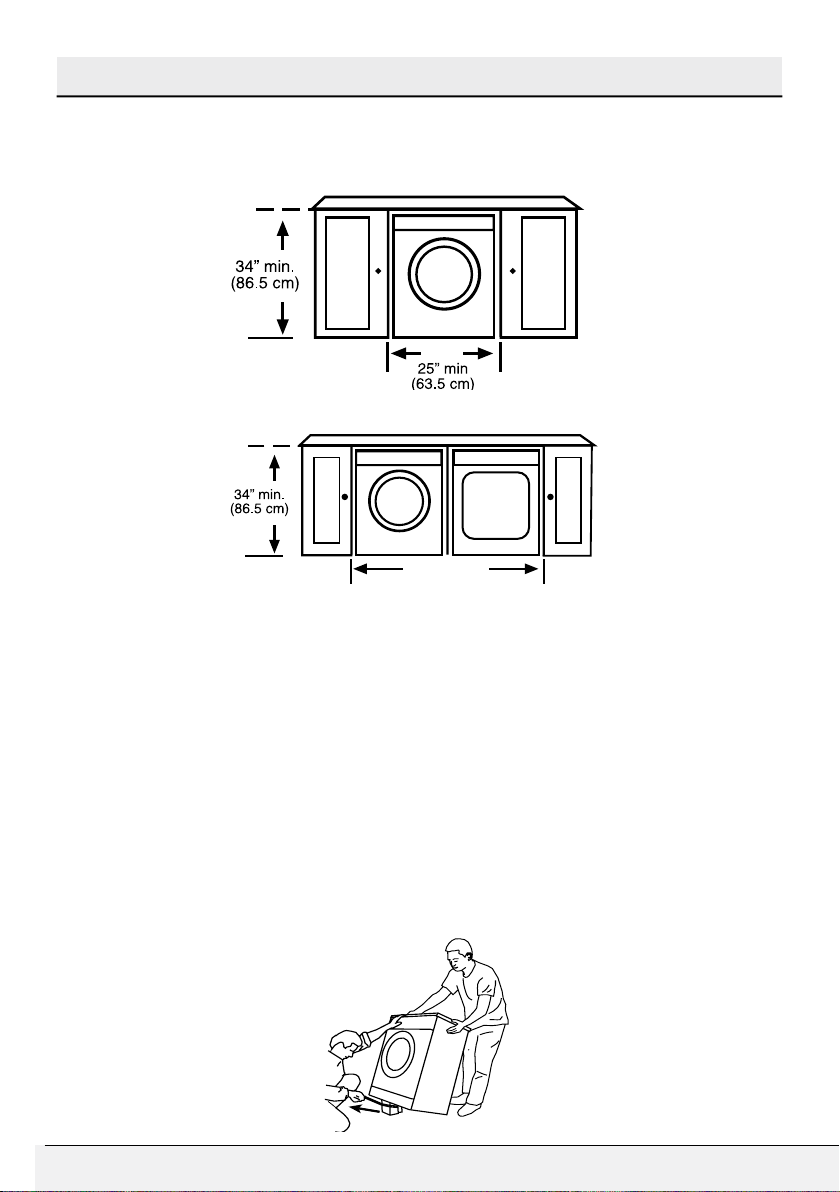
Thedimensionsarefortherecommendedspacing.Counterdepthshouldbe23.5-24.5”(60-62cm).
Custom undercounter installation – Washer only
Minimumcounterwidthshouldbe50”(127cm)forapairofBlombergwasher&dryer.
Customundercounterinstallation–Washer&Dryer
50Ó
(127 cm)
Allowable Clearances for Closet Installation
When installed in closet (washer only/washer dryer stacked) :
Sides, Rear, Front 1/2 in. (1.27 cm), Top= 1 in. (2.54 cm)
Closet door ventilation requirement: A louver having minimum 23 in2 (148 cm2) air opening located at
3 in (7.62 cm) from the bottom of closet door.
Stacked Installation
You can stack your Blomberg washer and dryer (model no: DV 16540 NBL00) by using a special
stackingkit(PartNo.2967100100).Ifnecessary,consultyourdealerortechnicalserviceforsupplying
the stack kit. In stacked closet installation, following configuration is necessary:
A louver having minimum 23 in2 (148 cm2) air opening located at 3 in (7.62 cm) height from the
bottomofclosetdoor(forwasher)&Alouverofminimum46in2(297cm2)airopeninglocatedat3in
(7.62 cm) distance from the top of closet door (for dryer).
Removing packaging reinforcement
Tilt the washer to remove the packaging reinforcement. Remove the packaging reinforcement by
pulling the ribbon.
12 / English
Front-Loading Automatic Washer
Installation Instructions
Removing shipping bolts
B
WARNING
Ò Shippingboltsmustberemovedbeforeoperatingthewasher!Otherwise,the
appliancewillbedamagedseriously!
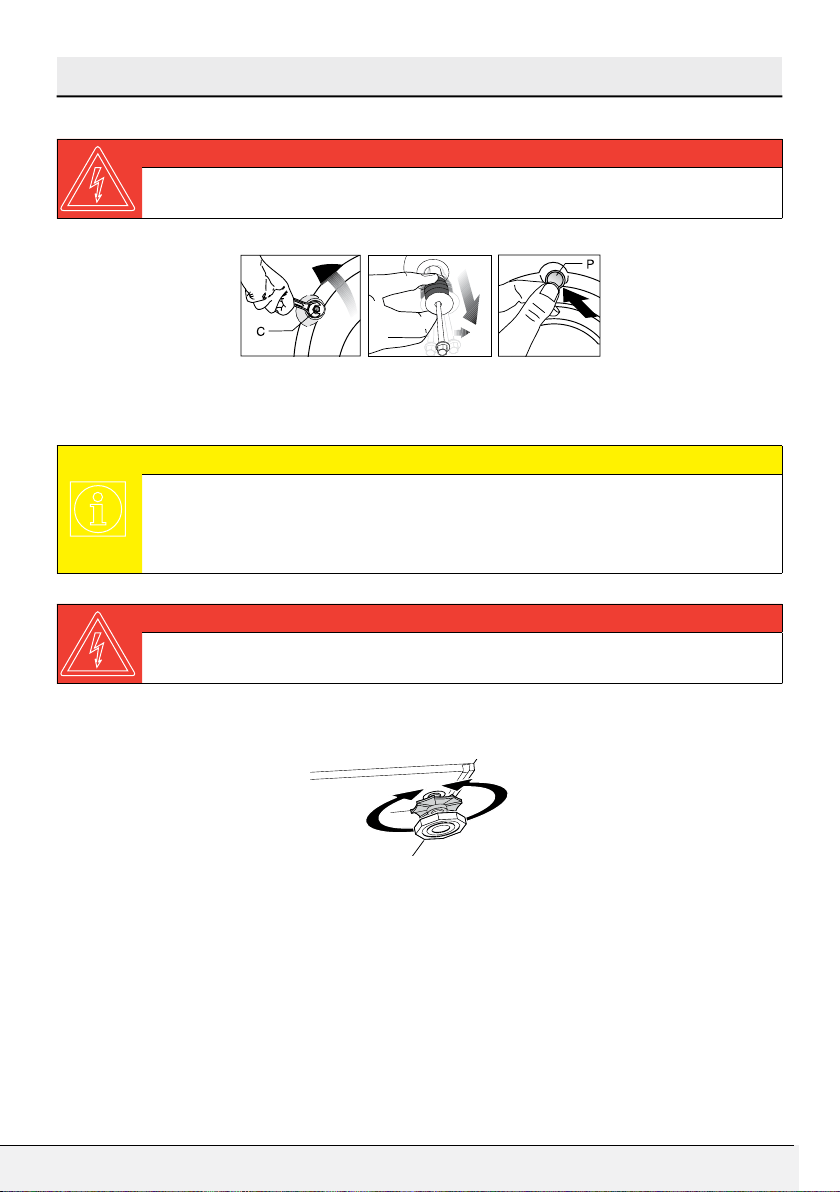
1. Loosenalltheboltswithaspanneruntiltheyrotatefreely(“C”)
2. Remove the shipping bolts by turning them gently.
3. Boltholecovers(suppliedinthebagwiththeowner’sguide)arefittedintotheholesontherear
panel with a special lock mechanism. To fit the cover, first insert it into the hole and then rotate it
counterclockwise with a screwdriver until it is locked. To unlock, apply the procedure in reverse.
C
CAUTION
Ò Keeptheshippingboltsinasafeplacetoreusewhentheclotheswasher
needs to be moved again in the future.
Ò Nevermovetheappliancewithoutshippingboltsproperlyfixedinplace!
Levelling the washer
B
WARNING
Ò Do not use any tools to loosen the lock nuts. Otherwise, they can be
damaged.
1. Manually (by hand) loosen the lock nuts on the feet.
2. Adjust them until the washer stands level and firmly.
3. Important: Tighten all lock nuts up again.
Owner’s Guide & Installation Instructions
13 / English
Installation Instructions
Electrical Connection
Grounding Instructions
This appliance must be grounded. In the event of malfunction or breakdown, grounding will reduce
the risk of electric shock by providing a path of least resistance for electric current. This appliance is
equipped with a cord having an equipment-grounding conductor and a grounding plug. The plug must
be plugged into an appropriate outlet that is properly installed and grounded in accordance with all
localcodesandordinancesandthelatesteditionoftheNationalElectricalCode,ANSI/NFPA70.
B
WARNING
Ò Improper connection of the equipment-grounding conductor can result in a
risk of electric shock. Check with a qualified electrician or serviceman if you
are in doubt as to whether the appliance is properly grounded.
Ò Do not modify the plug provided with the appliance – if it will not fit the
outlet, have a proper outlet installed by a qualified electrician.
Ò Be sure that the power cord is always accessible by the user after the
appliance is installed.
Ò Never use an extension cord or adapter to connect the appliance to the
electrical power due to the risk of electric shock and/or fire.
Ò It is the personal responsibility and obligation of the appliance owner to
provide a proper and grounded outlet installed by a qualified electrician.
Ò Never use a damaged power cord since there is a risk of electric shock and/
or fire.
Ò The damaged power cord must be replaced by a qualified electrician as soon
as possible.
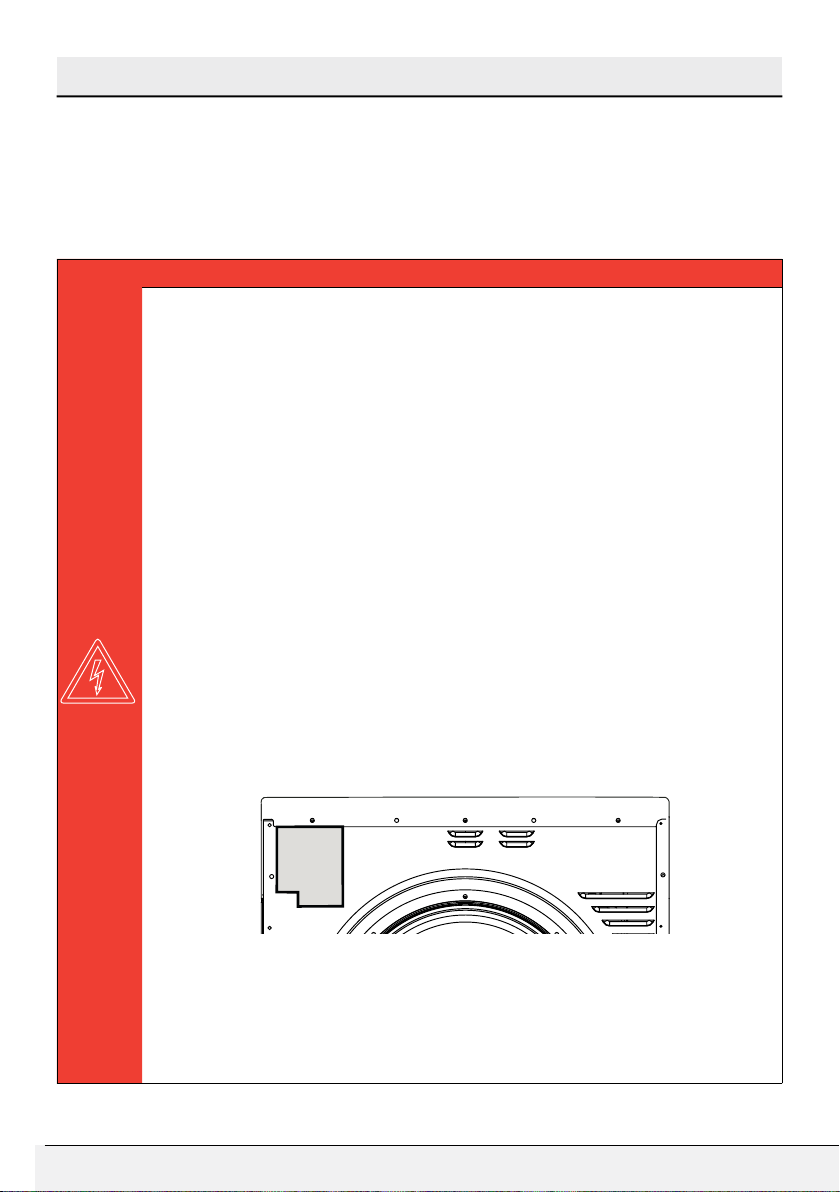
Ò Electrical supply voltage must conform to the voltage specifications (208-
240V, 60Hz) located on the appliance. For this purpose, a junction box (as
seen in picture below) must be obtained. Junction box is supplied with
Blomberg Clothes Dryer (model no: DV 16540 NBL00) and it works as a
voltage converter from 110/120V to 208/240V between the mains and
appliance.
Ò Only one appliance must be connected to a properly grounded individual
branch circuit outlet.
Ò Be sure to unplug the power cable before attempting maintenance or
cleaning of your appliance to minimize the risk of electric shock. Always
unplug the cable by grasping the plug, not the cord.
Ò Do not use wet hands when plugging/unplugging the power cable.
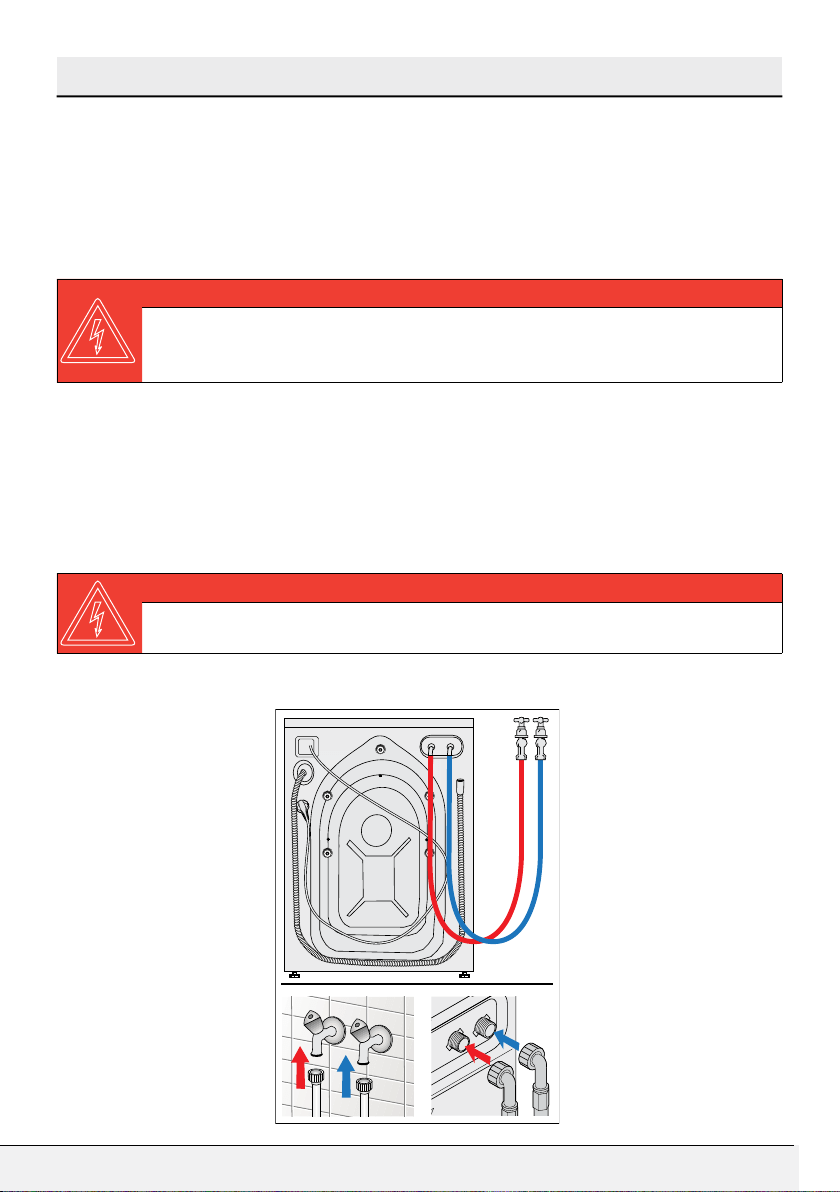
14 / English
Front-Loading Automatic Washer
Installation Instructions
Power supply and circuit
Connect the clothes washer to the junction box supplied. Junction box must be connected to an
earthed outlet protected by a fuse of suitable capacity.
Important:
• Mainsconnectionshouldcomplywithnationalregulations.
• Thevoltageandmaximumtotalcurrent arespecifiedinthesection“Specifications”.
• Theappliancemustnotbedirectlyconnectedtothemainsincaseofabsenceofjunctionbox.
• Connectionviaextensioncordsormulti-plugsshouldnotbemade.
B
WARNING
Ò A damaged power cable must be replaced by a qualified electrician.
Ò Theappliancemustnotbeoperatedunlessitisrepaired!Thereistheriskof
electricshock!
15 Amp. Fuse or circuit breaker, 208-240 volt, 60 Hz, grounded, alternating current
Properlygrounded3-prongreceptacleandjunctionboxtobelocatedsothepowersupplycordsare
accessible when the washer is in installed position.
Water Supply Connection
Your washer comes with both cold and hot water connections. Connect the blue marked cold water
supply hose to the cold water inlet valve/faucet and the red marked hot water intake hose to the hot
water inlet valve/faucet. Screw the connecting bolts by hand and tighten the connection properly using
a plier. Over tightening may cause damage on bolted connection.
B
WARNING
Ò Be sure that the water connection of this washer is handled by a qualified
service technician or a plumber.
Thewasherhastwobolted½’’watersupplyhosesand¾’’femalehoseconnectionsthatcanbe
connectedto¾’’hotandcoldwaterfaucets.

Owner’s Guide & Installation Instructions
15 / English
Installation Instructions
B
WARNING
Ò Be sure that there are rubber seals located on the hose connections. These
seals and adjustable bolts ensure a safe connection without leaking. After the
water connection is done, turn on both water faucets slowly and completely
to check any water leaks.
Ò Be sure that water supply hoses are not crushed and they have no kinking,
bulges or cuts before the water connection.
The water pressure must be between 15-145 psi (1-10 bar) for the proper operation of this washer.
1 bar corresponds to more than 2.1 US gallons (8 liters) per minute flow rate with a fully open faucet.
Water inlet hoses and valves should withstand a water pressure of 145 psi (10 bar) at maximum. If the
pressure is higher than 145 psi, a pressure-reducing valve must be installed before the water inlet.
If the water pressure is lower than 15 psi (1 bar), water fill time may extend or water inlet valve may
shut off completely.
• Hotwatersupplytemperaturemustnotexceed140˚F(60˚C).(Ideally120˚F(48˚C))
• Donotconnectthewashertoanunpressurizedwaterboilersincewaterpressuremaynotbe
adequate for proper operation.
• Donotremovethefilterslocatedonthewatersupplyhoses(onfaucet/hoseandhose/inletvalve
connections).
• Alwaysusegenuine“Blomberg”watersupplyhoseswhenconnectingwiththiswasher.Oldor
worn-out hoses must not be reused. It is not advised to extend inlet or drain hoses, if necessary
consult your dealer or technical service about hose extensions.
• Hotandcoldwaterfaucetsmustalwaysbeeasilyaccessibletotheuser.
• Attheendofawashingday,turnoffwaterfaucetstopreventanyleakageorwaterdamagethat
may occur due to a faulty condition of the appliance.
• Checktheapplianceandinlethoseconnectionsforwaterleakageaftereachuse.Ifthereis
leakage, turn off the appliance and water faucets and call service.
• Checkthewaterinletanddrainhoseconnectionsregularlyforanyleakage.Hosesshouldbe
replaced every 5 years.
• Ifthereisnohotwatersupply,hotwatervalvemustbeconnectedtoacoldwaterfaucet
nevertheless. Both water valves should be connected to water supply for proper operation of your
washer.
Drainage
B
WARNING
Ò Drain hose should not be bent. Be sure that there are no kinks or cuts on it.
Ò Drain hose outlet must not contact the drained water.
Drain hose may be connected into a sink, into the drain of a sink, to a standpipe and floor drain.
• Whenconnectingintoasink,thedrainhoseshouldbeplacedattheedgeofthesinkandsecured
with the hose guide supplied by the manufacturer. Additionally, the guided hose may be tied to the
water faucet with a strap for extra security.
• Drainhosemaybeconnectedintothedrainofasink.Besurethattheconnectionissafeandnot
leaking. An additional clip etc can be used for safe connection.
• Drainhosemayalsobeconnectedtoaminimum1.26in(32mm)diameterstandpipe.
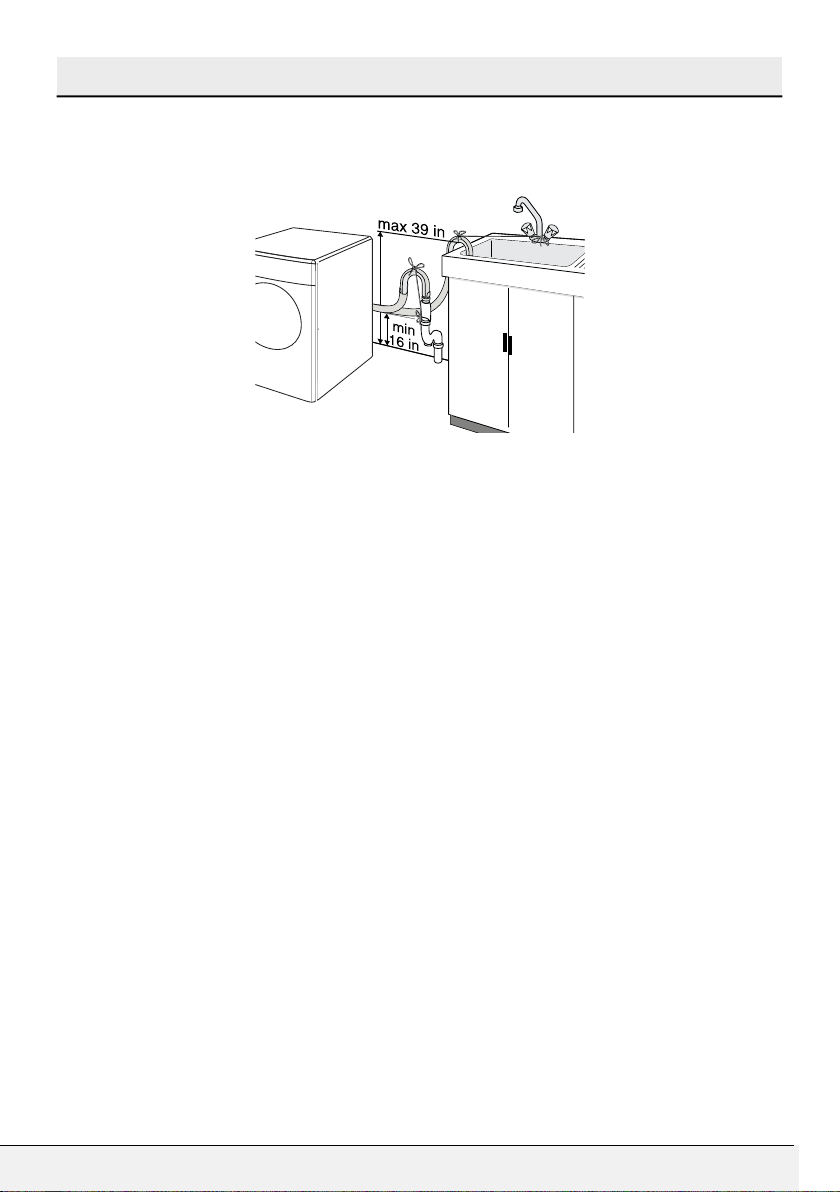
16 / English
Front-Loading Automatic Washer
Installation Instructions
• Besuretosecurethedrainhosetightlytothepipe(standpipe,drainpipe/edgeofthesink)witha
strap etc.
• Thehoseshouldbeplacedbetween16and39in.(40and100cm)fromthefloorlevel
• Ifyouhavefloordrainsystem,youcanplacethedrainhoseintheholelocatedonthefloor.
Installation Checklist
• Waterinlethosesandaccessorybagsmustberemovedfromthewashdrum.
• Transportation/shippingboltsmustberemoved.
• Washermustbeproperlyleveledbyusingtheadjustablefeet.
• Waterinlethosesareconnectedtothewaterfaucets,securedandcheckedforanyleaksby
turning on both faucets.
• Draininstallationisdoneproperlyanddrainhoseischeckedandsecuredtopreventanyflooding.
• Washerisconnectedthejunctionboxwhichispluggedtoaproperlygroundedlivemainsoutlet.
• Besurethatpoweroutlet,waterfaucetsanddrainoutletmustbealwaysaccessibletotheuser.
Transportation
Before you transport the washer, you should carry out the following:
1. Turn off both water faucets.
2. Before you disconnect the water inlet hoses, decrease the pressure inside hoses by turning on the
washerchoosinganywashprogram.AssoonastheStart/Pause/Cancelledstartsblinking,turnoff
the appliance. You may securely disconnect inlet hoses without any water gush.
3. Disconnect the drain hose and hang it on the back plate by inserting into the holder plastic
brackets.
4. Unplug the power cord and hang it on the back plate by inserting into the holder plastic brackets.
5. Remove bolt hole covers and reinstall shipping bolts to their places. You can apply the procedure in
chapter“Removingshipping bolts”inreversetoaccomplishthis.
6. Be sure that rubber bushes are properly located in holes and bolts are screwed back tightly for
secure transportation of the appliance.
Owner’s Guide & Installation Instructions
17 / English
Installation Instructions
Disposal Information
Packing Disposal
A
WARNING
Ò Packingmaterialsoftheappliancearepotentiallydangerousforchildren.
Materials such as plastic bags, films or wrappings must be kept away from
children or disposed properly to prevent the danger of suffocation.
C
CAUTION
Ò Packingmaterialsaremadeofbiodegradableandrecyclablesubstances.You
should consult your local authority or dealer about the environmental-friendly
disposal of the packaging of your appliance.
Appliance Disposal
A
WARNING
Ò Be sure to unplug the power cable, cut off the plug and disable the door lock
before you dispose your old appliance. Otherwise there is a risk of injury for
children and pets.
C
CAUTION
Ò Old appliances contain many recyclable parts. You should consult your local
environmental authority about a proper disposal. A proper disposal enables
recycling therefore protects the environment.
18 / English
Front-Loading Automatic Washer
First Use
A
WARNING
Ò To reduce the risk of fire, electric shock, or injury to persons, read the
IMPORTANTSAFETYINSTRUCTIONSbeforeoperatingthisappliance.
Before the first use,
• Besurethatthewasherisinstalledproperlybyaqualifiedinstallerorservicetechnicianin
accordance with all national and local codes and requirements.
• Readallinstructionscarefullybeforeusingthewasher.
• Checkthatshippingboltsarecompletelyremoved.
• Besurethatthelocationofinstallationhasproperelectricalsupplyvoltage(junctionboxmustbe
used for connecting the washer to the mains) and plumbing system needed for the operation of the
appliance.
• Turnonbothwaterfaucetsandbesurethattherearenoleaksonhose-faucetconnectionpoints
or on hoses themselves.
• Checkthatthewashdrumisempty.
• Turnonthewasher,choose“sanitary”cycleontheprogramselectorknobandstartthewasher
as empty and without any laundry additives. When the cycle is finished, your washer is ready for
subsequent uses.
Laundry Tips
Sorting the laundry
C
CAUTION
Ò Always follow the fabric care instructions of garment manufacturers. These
instructions would give you proper guidance on suitable wash cycles, wash
temperatures and bleach usage.
4 Operating Instructions
Owner’s Guide & Installation Instructions
19 / English
Operating Instructions
C
CAUTION
Ò Washtheitemswhicharecarelabeledas“machine-washable”.Donot
machine wash items that are having
symbol on fabric care label.
Ò Sort the laundry according to the following fabric types, color groups and
wash them separately:
• Whiteandcolor fast fabrics
• Non-fast,coloredfabrics
• Permanentpressitems(mensshirt,dresspants,poly-cottonblends)
• Delicatefabrics(silk,rayonetc.)
• Woolens(onlywashwoolensthatarelabeled“machinewashable”or“handwashable”
• Handknits(Theyshouldbeplacedinsideoutinthewasher)
C
CAUTION
Ò Do not wash dark colors with light colors and whites. Color items may bleed
and white and light colored items may be discolored. Avoid extended contact
of damp clothes before or after washing to prevent dye transfer.
Ò Wash heavily and lightly soiled items separately.
Ò Lint producers (towels, linen etc) and lint collectors (easy care, permanent
press) should be washed separately. Lint producers should be washed
inside-out.
Preparing the laundry
• Itemsoflaundrywithmetalparts(e.g.underwirebras,beltbuckles,metalbuttons)willdamagethe
washer. Remove metal parts of place the items in a cloth bag, pillow case, or something similar.
• Removeanynon-washableitemsandaccessoriesfromlaundrybeforewashing.
• Emptypockets,removeallforeignobjects(e.g.coins,pens,paperclips).Ifpossible:Turnpockets
inside out and brush.
• Placesmallitemsoflaundry(e.g.tights)inaclothbag,pillowcaseorsomethingsimilar.Thiscan
also help you to avoid searching for lost socks.
• Handlecurtainsspecialcare.Removenon-stainlesscurtainrunnersandleadtape.Placerunners
thatcan’tberemovedinaclothbag,pillowcaseorsomethingsimilar.
• Heavystainsshouldbepretreatedwithsoapywaterappropriatelybeforewashing(Donotrubor
scratch the stained area). If in doubt, check with a chemist or dry-cleaner.
• Useonlydyes/discoloringandanti-scalingagentssuitableformachinewash.Makesuretofollow
the instructions on the package.
A
WARNING
Ò Wash jeans, delicates, pants and sweat-shirts inside-out.

20 / English
Front-Loading Automatic Washer
Operating Instructions
Loading the washer
Maximum load capacity depends on the fabric type of laundry, soiling amount of laundry and program
cycle you wish to use.
C
CAUTION
Ò Do not exceed the maximum load capacity of the selected program cycle.
Washing results are adversely affected by an overloaded drum. Overloading
may also cause wrinkling and abrasion on clothes.
Make sure power button is off before loading the washer. To load the washer,
• Pullthedoorhandle.
• Placelaundryitemslooselyinthedrum.
• Mixsmallandlargeitemsforanevenloaddistribution.Largeitemsshouldbeloadedfirst.Large
items should not be more than half of the total wash load.
• Ifyouputawashbagornetwhichisfilledwithsmallitemsinthedrum,putanadditionalwash
bag to prevent load unbalance. Both wash bags should have the same amount of items to provide
an even load distribution.
• Beforewashingasingleorafewitemssuchasapillow,ateddybear,asingleorapairofshirts,
sweat shirts etc, put some additional items in the drum for better load distribution and spinning.
• Makesurethatthereisnoclothingobstructingthedoororcaughtbetweenthedoorandrubber
seal.
• Pushtheloadingdoorfirmlyshutuntilyouhearitlockintospace(especiallyifyouloadthewasher
with full load or big items).
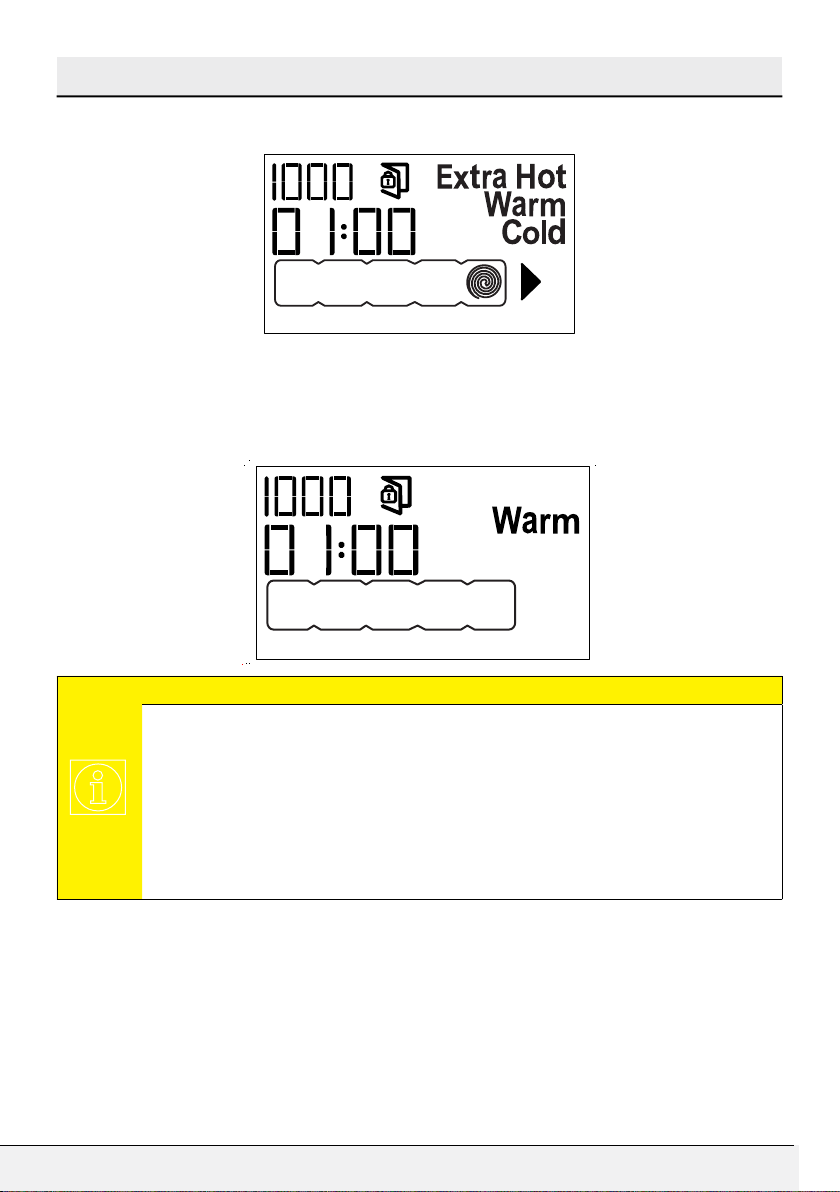
• Incasethedoorisnotlocked,“door”expressionwillappeareonthescreen.Inthatcase,door
should be opened and closed again firmly.
• Ifthedoorisnotclosedcompletely,themachinewillnotstart.Thisisasafetyprecaution.Thefront
door is locked until end of the washing program and it can not be opened untill the door icon on
LCD is off following the end of the program.
• Unloadthewasheditemsjustaftertheprogramcyclehasfinished.Delayofunloadingmaycause
wrinkling and unwanted odor on laundry.
• Checktoseeanysmallmetalitemssuchaspins,coinsetcleftinrubbersealwhileunloadingthe
washer. Any residual metal items may cause rusting on the rubber seal.
• Ifthereisanywaterleftinrubberseal,removewithasoftcloth.
Owner’s Guide & Installation Instructions
21 / English
Operating Instructions
Detergent Use
About Detergent
C
CAUTION
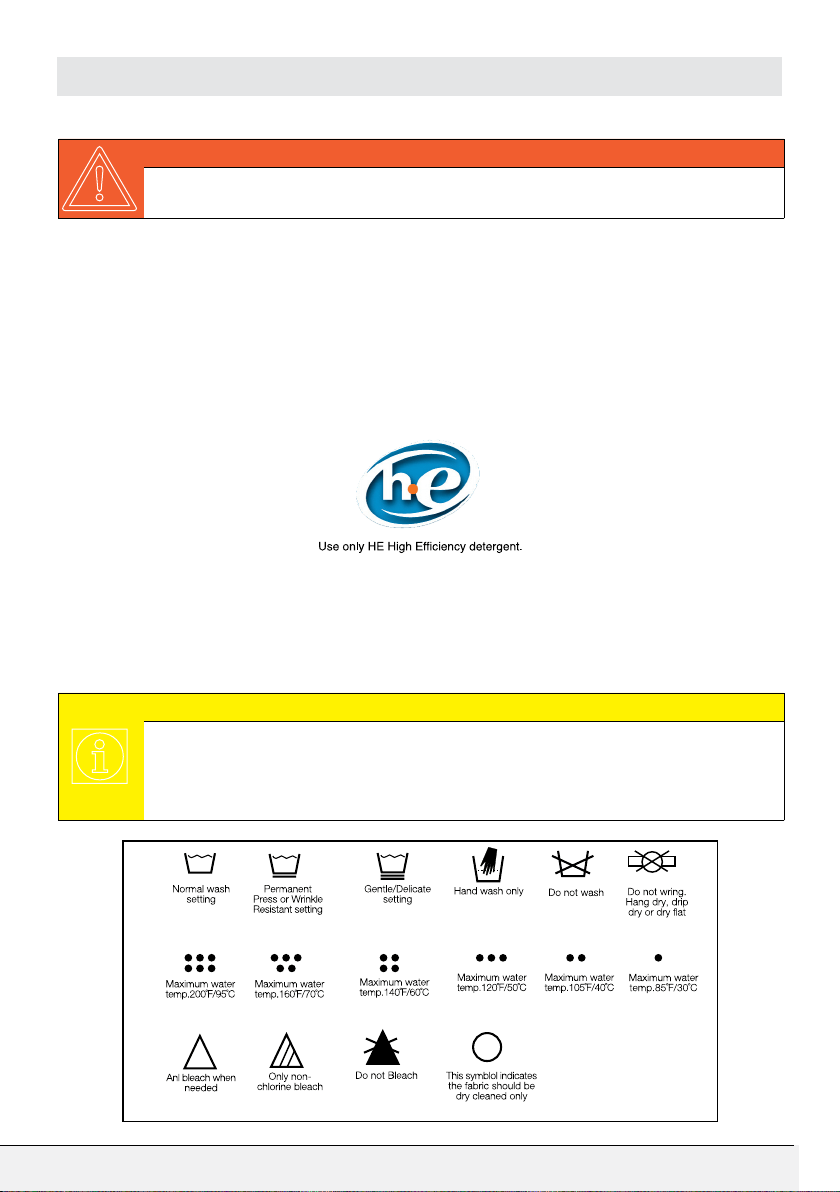
Ò Your washer is designed to use only HE (high efficiency) detergents. You
should always look for the following symbol on the label of detergents:
If you use a non-HE detergent with this washer, high sudsing will occur. High sudsing will decrease
tumble action effectiveness, washing and rinsing performance worsen. Suds may flow out of
detergent dispenser giving damage to your washer.
C
CAUTION
Ò Thedetergentslabeledas“HEcompatible”mayalsoleadtohighsudsing
andinefficienttumbleaction.Don’tusesuchdetergents.
Always follow the instructions and information given by laundry detergent manufacturers when using
these products.
A
WARNING
Ò Storelaundrydetergentsandadditivesinacool,dryplaceoutofchildren’s
reach due to danger of chemical poisoning and skin irritation.
Detergent Quantity
The amount of washing detergent to use depends on the amount of laundry, the degree of soiling and
water hardness.
For small amounts of laundry or only slight soiling use accordingly less detergent.
Too much detergent causes an excessive amount of foaming, bad washing and rinsing results and a
strain on water resources.
Too little washing detergent causes laundry to turn grey and calcification of the machine.
Recommended amount of powder detergent is max. 1/3 cup (80 ml). Recommended amount of liquid
detergent is max. 1/4 cup (60 ml).
Light soiling
No visible stains or soiling
Normal soiling
A few visible light stains or soiling
Heavy soiling
Highly visible stains or soiling
22 / English
Front-Loading Automatic Washer
Operating Instructions
Detergent Dispenser
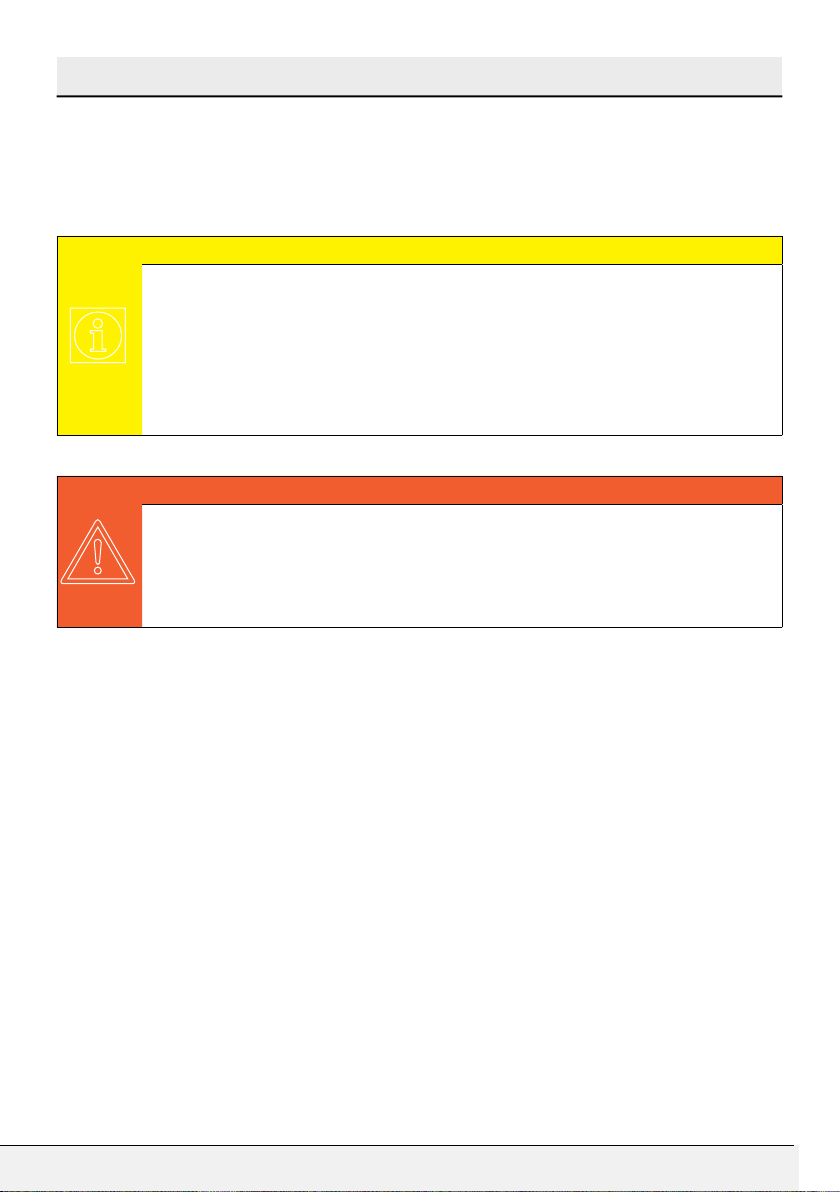
Detergent dispenser of your washer has three separate compartments for main wash detergent, fabric
softener and liquid bleach. Each of these laundry additives are automatically dispensed at appropriate
time during wash program.
C
CAUTION
Ò Do not put laundry additives directly in the wash drum. Always use the
detergent dispenser.
Ò After adding laundry additives do not close the drawer too quickly. This may
cause early dispensing of the additives thus poor wash results and fabric
damage.
Ò Do not open the drawer during wash program (except for addition of liquid
main wash detergent at the beginning of main wash water intake).
Dispenser compartments are as follows:
-leftcompartmentnumberedas“II”(mainwashcompartment)
-middlecompartmentmarkedas“ ”(liquidfabricsoftenercompartment)
-rightcompartmentnumberedas“I”(liquidchlorinebleachcompartment)
(II) Main Wash Detergent Compartment
AddHE(Highefficiency)powderdetergenttothiscompartmentnumberedas“II”beforestartingthe
wash program.
Usethedetergentmanufacturer’sdosingcupandfollowtheinstructionsonthepackage.
If you use a liquid detergent, be sure to use a HE (High efficiency) detergent and add detergent directly
to main wash compartment before operating your washer. If you observe liquid detergent stains on
washed items, it is recommended for subsequent wash cycles that you should add liquid detergent
during first water intake.
Color-safe bleach in powder or liquid form may be added into main wash detergent compartment with
main wash detergent. Be sure to use main wash detergent and color-safe bleach in same form (either
powder or liquid) when adding into main wash compartment.

Owner’s Guide & Installation Instructions
23 / English
Operating Instructions
Liquid Fabric Softener Compartment
Addtherecommendedamountofliquidfabricsoftenertothemiddlecompartmentmarkedas“
”and
dilute it with warm water to the maximum fill line.
C
CAUTION
Ò Especially concentrated fabric softeners must be diluted with warm water
otherwise siphon may be clogged in time.
Do not fill the fabric softener above the maximum fill line as any excess amount will mix into the wash
water and you will have to re-fill the compartment. Do not pour the softener directly onto laundry, it
may cause stains.
Liquid fabric softener is automatically dispensed during the final rinse of wash program.
Using liquid detergents
If the product contains a liquid detergent cup:
• Makesurethatyouhaveplacedtheliquiddetergentcupincompartmentnr.“2”.
• Iftheliquiddetergenthaslostitsfluidity,diluteitwithwaterbeforeputtinginthedetergentcup.
If the product does not contain a liquid detergent cup:
• Donotuseliquiddetergentfortheprewashinaprogramwithprewash.
• LiquiddetergentstainsyourclotheswhenusedwithDelayedStartfunction.Ifyouaregoingtouse
the Delayed Start function, do not use liquid detergent.
24 / English
Front-Loading Automatic Washer
Operating Instructions
(I) Liquid Chlorine Bleach Compartment
Addliquidchlorinebleachtotherightcompartmentnumberedas“I”.Measure1/3cup(80ml)of
bleach and pour it into the special container located in the right compartment of the dispenser. This
container ensures dispensing and dilution of bleach during the first rinse of wash cycle. There is a
maximum fill line on the container. Do not exceed the maximum fill line to prevent early dispensing.
Early dispensing may damage your clothes.
C
CAUTION
Ò Be sure that bleach container is present in the right compartment of
dispenser before you add liquid bleaching agent. You may remove bleach
container if you would not use bleach. However do not put any other laundry
additives to the empty compartment.
Ò Be sure to choose extra rinse option if you are using bleach in wash
program. Bleach must be rinsed from laundry properly otherwise it may
cause skin irritation.
Bleach is automatically dispensed and diluted during the first rinse of wash program.
A
WARNING
Ò BleachmayonlybeusedinRegular/CottonandPermanentPresscycles.
Don’tusebleachwithdelicates,handwashablesorwools,itwillleadto
clothes damage.
Ò The liquid bleach cup insert
must be removed if not using liquid bleach to
avoid water leaking from the dispenser.
Water Consumption
Your clothes washer automatically adjusts the water consumption according to load amount. This
feature ensures high wash performance results with efficient water and energy consumption.

Owner’s Guide & Installation Instructions
25 / English
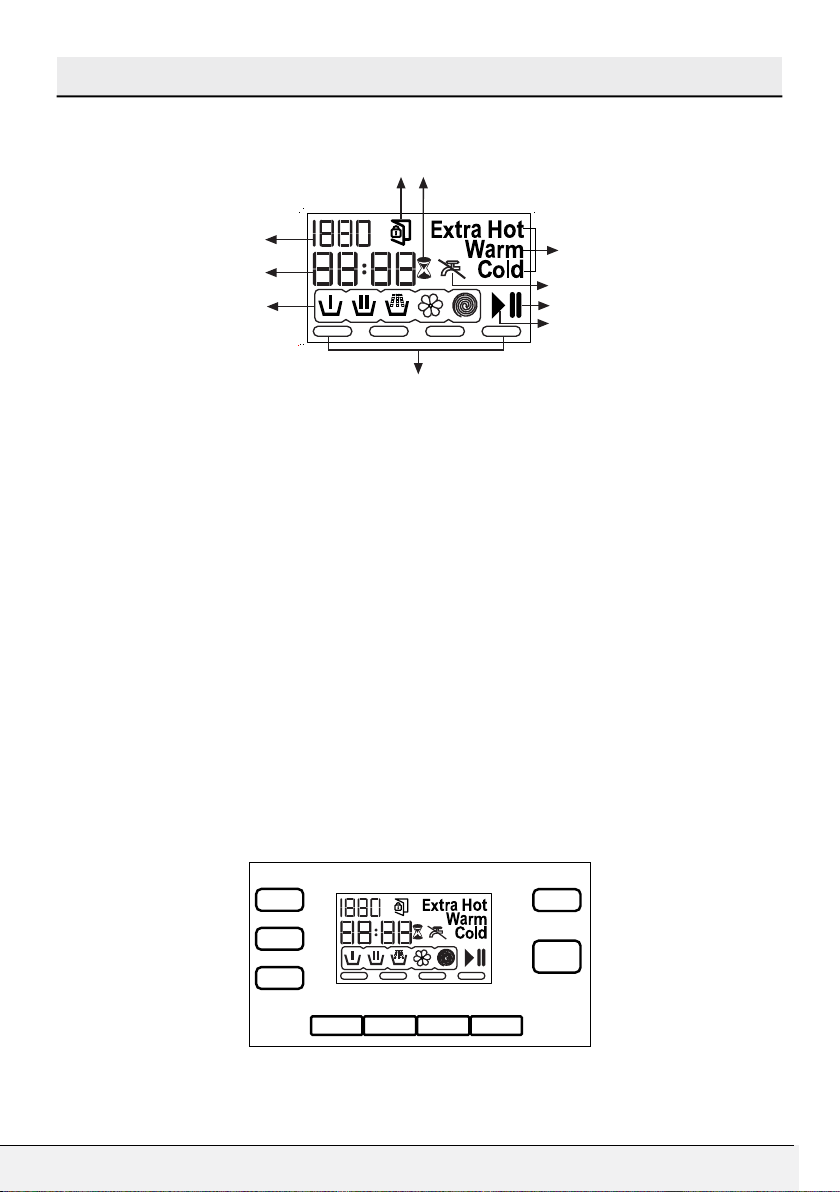
Control panel
5 Selecting a Program and Operating Your Washer
1 - Spin Speed Adjustment Button
2 - Display
3 - Temperature Adjustment Button
4-ProgramSelectionKnob
5 - On/Off Button
6 - Time Delaying Button (+/-)
7 - Auxiliary Function Buttons
8-Start/Pause/CancelButton
1
6 7
8
2
3
4
5
26 / English
Front-Loading Automatic Washer
Selecting a Program and Operating Your Washer
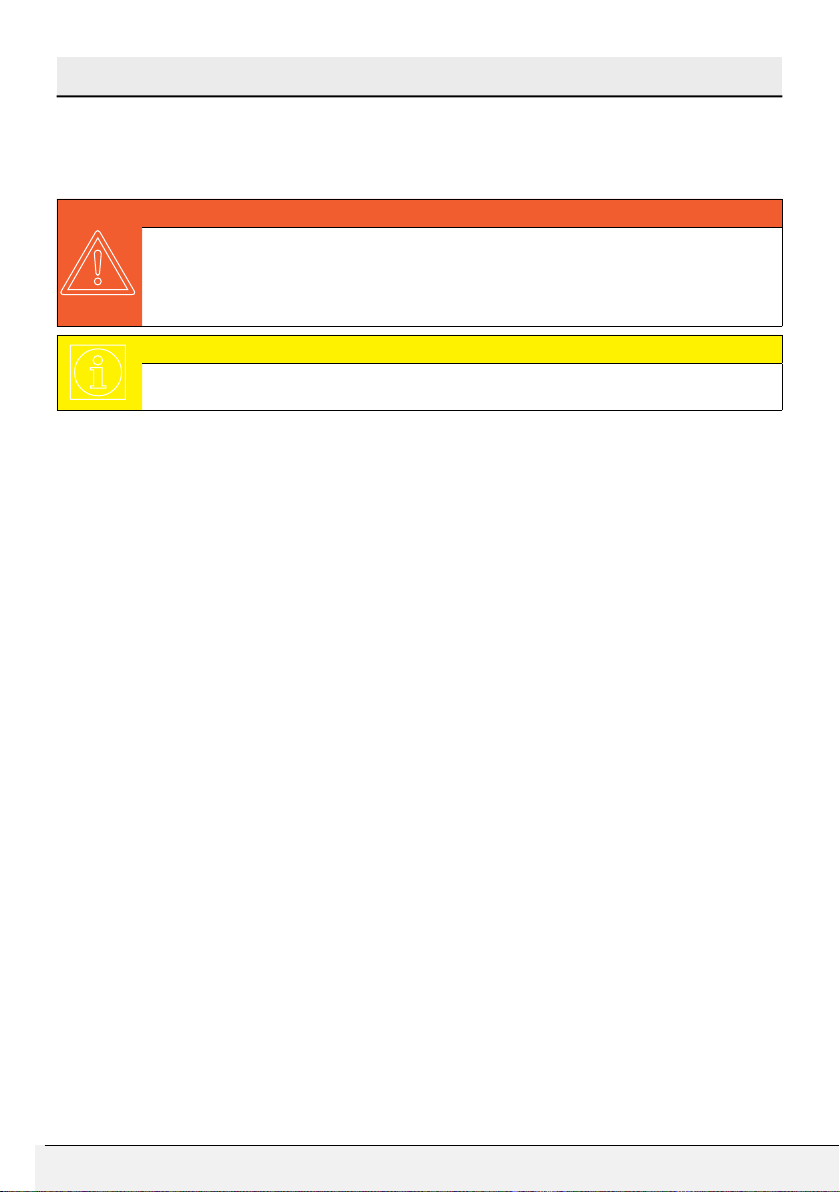
Display symbols
a b
c
d
e
f
g
h
i
k
a - Door Locked Symbol
b - Time Delaying Symbol
c - Temperature Indicator
d–Watercut-offsymbol(Accordingtoyourmachine’smodel)
e - Standby Symbol
f - Start Symbol
g - Auxiliary Function Symbols
h-ProgramIndicatorSymbols(Soak/mainwash/rinse/softener/spin)
i - Remaining Time and Delaying Time Indicator
k - Spin Speed Indicator
Turning the washer on
Pluginyourwasher.Turnthetaponcompletely.Checkifthehosesareconnectedtightly.Placethe
laundryinthewasher.Adddetergentandsoftener.Pressthe“On/Off”button.
Program cycle selection
Select the appropriate program from the program table according to type, amount and degree of
soiling of the laundry and washing temperatures.
TurntheProgramSelectionKnobtotheprogrammodethatyouwishtowashyourlaundry.
Therecommendedtemperatureandspinspeedfortheselectedprogramappear.Press“Start/Pause/
Cancel”buttontostarttheprogram.
Owner’s Guide & Installation Instructions
27 / English
Selecting a Program and Operating Your Washer
Wash Cycles
Depending on the type of fabric, the following main programs are available. Each of these main
programs comprise of a complete washing process, including washing, rinsing and, if required, spin
cycles.
A
WARNING
Ò When selecting the program you are going to use, always consider type of
fabric, color, degree of soiling and permissible water temperature.
Ò Always select the lowest required temperature. Higher temperature means
higher power consumption.
C
CAUTION
Ò Forfurtherprogramdetails,see“ProgramCycleSelectionTable”
•Regular/Cotton
You can wash your durable white and colorfast items with this cycle. Washes with vigorous tumbling
movements in a longer washing cycle. It is recommended for your cotton or linen items (such as bed
sheets, pillowcases,jeans,towels, bathrobes,garments, T-shirts,sweat-shirts , etc.). You can select
wash temperature according to the soiling level and/or care label of items. Sanitary should be chosen
for items that need extra hygiene such as baby clothes, kitchen towels and garments.
•Sanitary
You can wash your durable white and colorfast items with this cycle. Washes with vigorous tumbling
movements in a longer washing cycle. It is recommended for your cotton or linen items that need extra
hygiene such as baby clothes, kitchen towels and garments.
• Permanent Press
You can wash your easy care items on this cycle. Washes with gentler tumbling movementsand in
shorter washing cycles. It is recommended for your cotton,synthetic or blended items (such as shirts,
pants, wrinkle-free items, etc.). You can select wash temperature according to the soiling level and/or
care label of items.
•Delicates
You can wash your delicate easy-care and wrinkle-free items on this program. It has more sensitive
tumbling movements and does not do intermediate spinning compared to the permanent program. It
must be used for cotton, synthetic or blended clothes for which sensitive washing is recommended.
•Wools
You can wash your machine-washable wool items on this program. It is recommended to use
appropriate detergents and laundry additives for wools.
Additional programs
For special cases, there are also extra programs available:
C Additional programs may differ according to the model of your washer.
• BabyProtect
Increased hygiene is provided by a longer heating period and an additional rinse cycle. It is
recommended for baby clothes and clothes worn by allergic people.
• Hand wash
Youcanwashyourwoolen/delicateclothesthatbear“handwashonly”labelsforwhichhandwashis
recommended on this program. It washes the laundry with very tender washing movements without
damaging your clothes.
28 / English
Front-Loading Automatic Washer
Selecting a Program and Operating Your Washer
• Quick Wash
This program is used to wash a few very lightly soiled and unstained cotton, synthetics or blended
items in a short time. e.g.: daily clothes that have been used only once.
• Sports
This program is used to wash half capacity of normally or lightly soiled daily cotton, synthetics or
blended clothes. e.g.: daily clothes and sportswear that have been used only once.
• Jeans
This programme is used to wash half capacity of normally or lightly soiled jeans and denim jackets.
Turnyourjeansorjacketsinsideoutbeforewashing.Youshouldn’twashmorethanfourpairatatime,
this may cause an unbalanced load in the washer.
Special programs
For specific applications, select any of the following programs:
• Rinse
This cycle is used when you want to rinse separately.
• Drain & Spin
This program is used to discharge the water and spin dry the load with selected spin speed.
Spin&Drainmaybeselectedasoneprograminthismodel.
C
CAUTION
Ò You should select a lower spin speed for delicate wash items.
Temperature selection
Whenever a new program is selected, the temperature anticipated for that program appears on the
temperature indicator.
To change the temperature, press the temperature button. There are four temperature options being
cold,warm,hot and extra hot. Temperature selectability depends on the type of wash cycle.
Whenthe“Temperature”buttonispressedafterColdisselected,themaximumtemperatureofthe
program you have selected will be displayed.
Todecreasethetemperature,pressthe“Temperature”buttonagain.
Spin Speed selection
Whenever a new program is selected, the maximum spin speed of the selected program is displayed
on the spin speed indicator.
Todecreasethespinspeed,pressthe“Spin”button.Spinspeeddecreasesgradually.Then,rinsehold
and no spin options are shown respectively.
You can use no spin function in order to drain the water without spinning at the end of the program.
Owner’s Guide & Installation Instructions
29 / English
Selecting a Program and Operating Your Washer
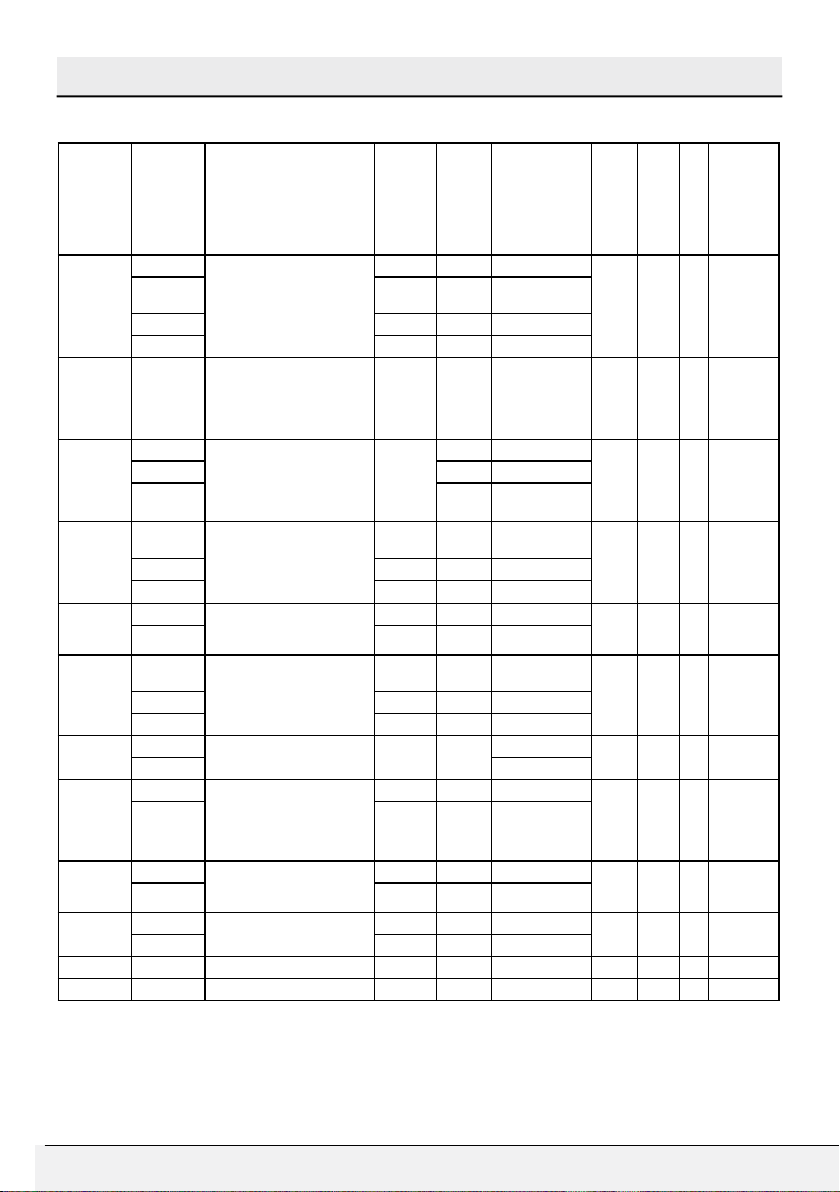
Program Cycle Selection Table
•:Selectable
* : Automatically selected, not cancellable.
- : See program description for maximum load.
Selectableoptionsofawashcycleareextrarinse“R”,superwash“SW”,soak"S"andanticrease
“A”.
Wash Cycle
Load Type
Soil Level
Water Intake (1)
Wash water Temp.
Max Spin Speed
(rpm) (2)
Load Capacity
(max) (3)
Bleach (4)
Options Available
Regular/
Cotton
Extra Hot
White and colorfast items made
of cotton and linen (towels,
jeans, T-shirts, sweatshirts,
work clothes)
Heavy Hot 145F / 63°C
1200 Full • SW,S,R,A
Hot
Normal/
Heavy
Hot 122F / 50°C
Warm Light Hot-cold 91F/ 33°C
Cold Light Cold 60F / 15°C
Sanitary Extra Hot
White and colorfast items
made of cotton and linen (baby
clothes, garments, sheets,
pillowcases, kitchen towels,
tablecloths)
Heavy Hot 158F / 70°C 1200 Full • SW,S,R,A
BabyProtect
Extra Hot
Baby clothes and clothes worn
by allergic people
Normal/
Heavy
Hot 158F / 70°C
1200 Full • SW,S,R
Hot Hot 126F / 52°C
Warm Hot-cold 95F/ 35°C
Permanent
Press
Hot
Easy-care items made of
cotton, linen, synthetics or
blends (dress shirts/pants,
wrinkle-free items, poly/cotton
blends)
Normal/
Heavy
Hot 126F / 52°C
1000 1/2 • SW,S,R,A
Warm Light Hot-cold 95F/ 35°C
Cold Light Cold 60F / 15°C
Sports
Warm Normally or lightly soiled daily
cotton, synthetics or blended
clothes. e.g.: sportswear
Normal Cold 95F/ 35°C
1000 1/2 x SW,S,R
Cold Light Cold 60F / 15°C
Jeans
Hot
Jeans and denim jackets
Normal/
Heavy
Hot-Cold 126F / 52°C
1000 1/2 x SW,S,R,A
Warm Normal Hot-Cold 95F/ 35°C
Cold Light Cold 60F / 15°C
Quick Wash
Warm
Very lightly soiled cotton,
synthetics or blended items
Very Light Cold
86F/ 30°C
1000 1/4 x R
Cold 60F / 15°C
Delicates
Warm Delicate easy-care and wrinkle-
free items made of cotton,
linen, synthetics or blends
(dress shirts, blouses, curtains,
sheer or lacy garments)
Light Hot-cold 95F/ 35°C
1000 1/3 x SW,S,R,A
Cold Light Cold 60F / 15°C
Hand Wash
Warm Hand washable items made of
synthetics, wool and silk (bras,
special care garments, lingerie)
Light Cold 86F/ 30°C
1000 1/4 x SW,R
Cold Light Cold 60F / 15°C
Wools
Warm
Machine washable wool items
Light Cold 95F/ 35°C
1000 1/4 x SW,R
Cold Light Cold 60F / 15°C
Rinse Any - Cold 60F / 15°C 1200 Full x -
Drain&Spin Any - - - - Full - -
30 / English
Front-Loading Automatic Washer
Selecting a Program and Operating Your Washer
1. Even if there is no hot water system, hot water inlet must still be connected to another cold water
faucet. Otherwise a fault will occur on water intake.
2.Programsarelimitedwiththemaximumspinspeedappropriateforthatparticulartypeofload.
3. Maximum load capacities are suggested for various load types. Wash cycles of full load (Regular/
Cotton, permanent press) should be half loaded for better wash results if the laundry is heavily
soiled. Half loading would also minimize wrinkling of the load.
4.BleachmayonlybeusedinRegular/CottonandPermanentPresscycles.Don’tusebleachwith
delicates, handwashables, wools, jeans and sports, this will lead to clothes damage.
C
CAUTION
Ò The auxiliary functions in the table vary according to the model of your
washer.
Ò Water and power consumption and program duration differ from the table
subject to changes in water pressure, water hardness and temperature,
ambient temperature, type and amount of laundry, selection of auxiliary
functions, and changes in supply voltage.
Ò Programdurationwillbedisplayedonthescreenofyourwasheraccording
to your selection.
Owner’s Guide & Installation Instructions
31 / English
Selecting a Program and Operating Your Washer
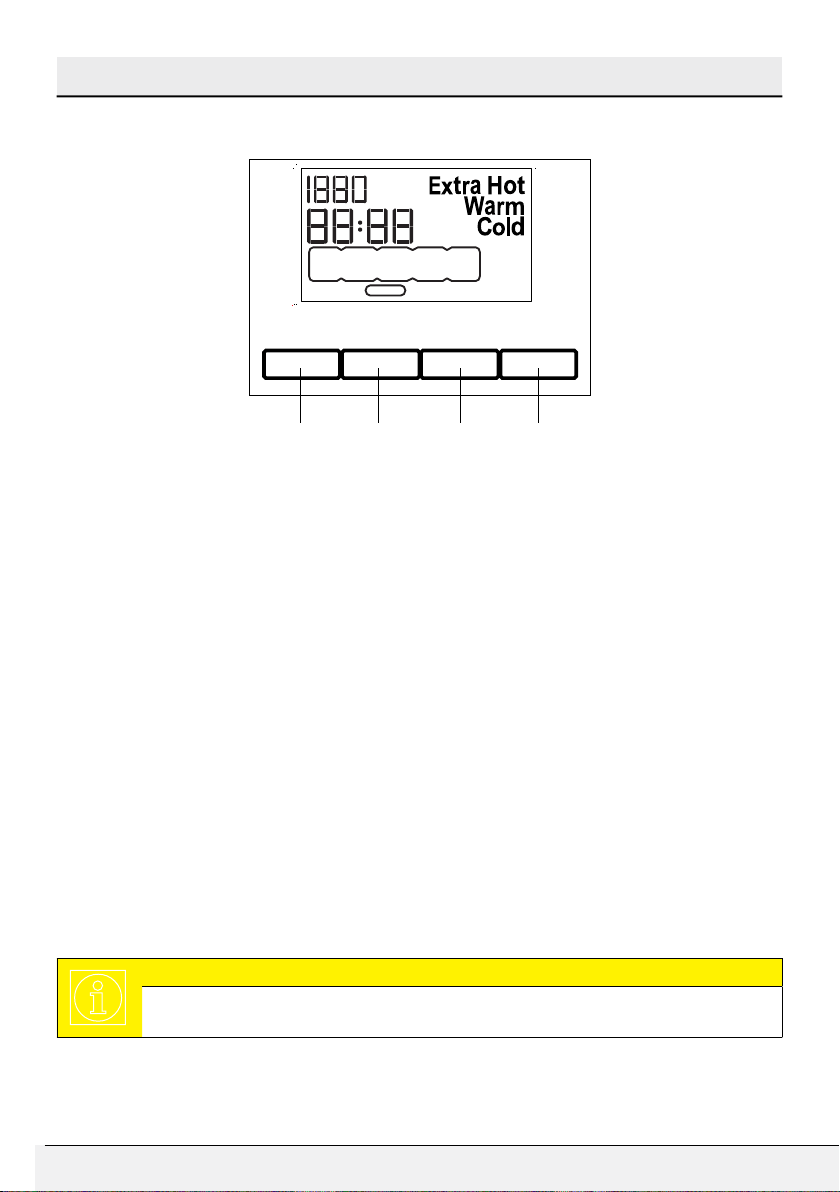
Auxiliary functions
Auxiliary Function Selection Buttons
a b c d
•Dependingontheprogram,youcanselectthedesiredauxiliaryfunctionbypressingthebuttonsa,
b, c, d.
•Selecttherequiredauxiliaryfunctionsbeforestartingtheprogram.
•Symboloftheselectedauxiliaryfunctionwilllightup.
Auxiliary function selection
Auxiliaryfunctionthatisnotcompatiblewiththeprogramcannotbeselected.(see,“ProgramCycle
SelectionTable”)
• Super Wash
This function (a) increases washing times for heavily soiled items for better wash results. Washer will
only take in cold water when this function is chosen. This function also increases the amount of rinse
waterfor“Regular/Cotton”cycle.
• Soak
This function (b) is used for heavily soiled items when you want to pre-treat them before washing.
Laundry is soaked in a relatively high amount of warm water for an hour and a half approximately. You
canusefullloadandHE“Highefficiency”detergentforsoaking.Use1/3-1/2oftherecommended
detergent dosage for the load amount to be soaked.
• Extra Rinse
When this function (c) is selected, you can increase the number of current rinsing steps. Thus,
sensitiveskins’riskofbeingaffectedbytheremainingdetergentontheclotheswillbedecreased.
• Anti-Crease
With this function (d), drum movement will be lessened to prevent creasing and spinning speed is
limited. In addition, washing is carried out at a higher water level.
•Usethisfunctionfordelicatelaundriesthatcreaseeasily.
C
CAUTION
Ò Whenever you select this auxiliary function, load your washer with half of the
maximum laundry specified in the program table.
32 / English
Front-Loading Automatic Washer
Selecting a Program and Operating Your Washer
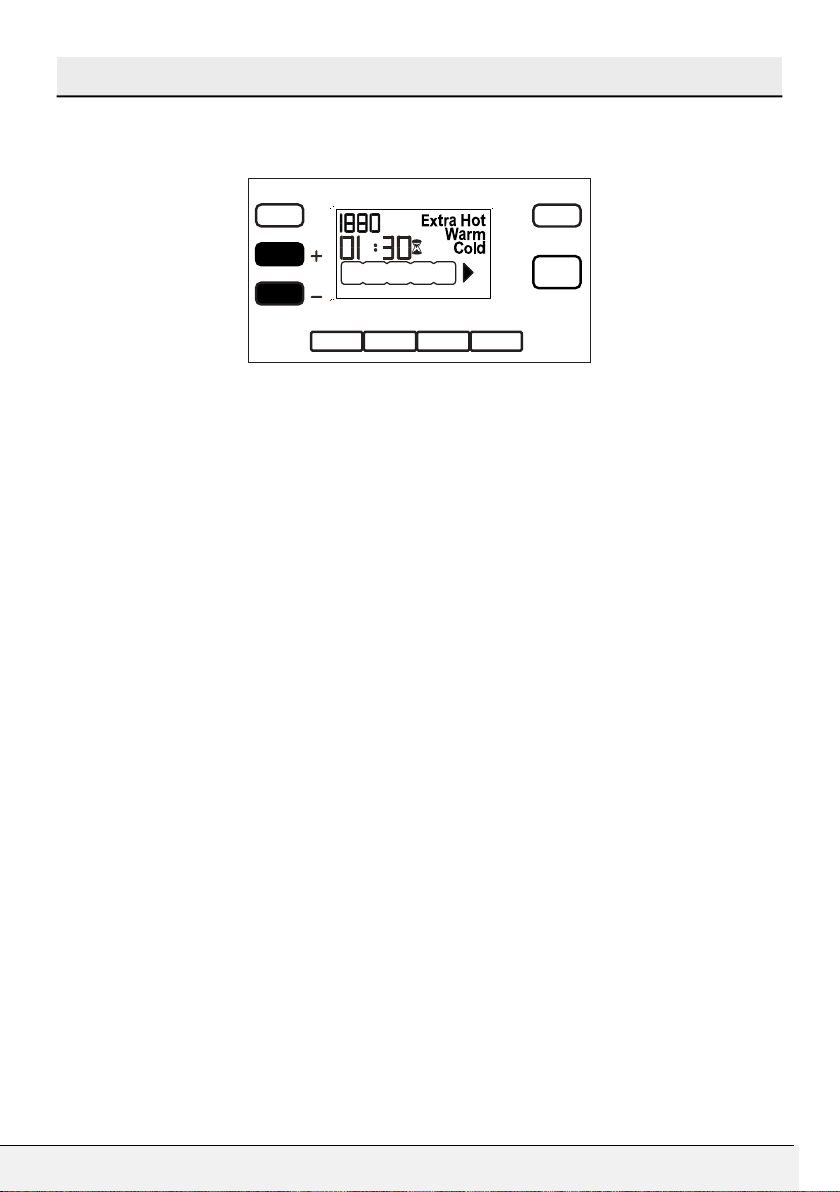
Time display
The display shows the time remaining for the program to complete while a program is running. Time is
displayedinhoursandminutesas“01:30”.
Time delay
Withthe“Timedelay”functionyoucandelaytheprogramstartupto24hours.Settingcanbemadein
intervals of 30 minutes.
1. Open the loading door, place the laundry inside and fill detergent drawer.
2. Set the washing program, temperature, spin speed and, if required, select the auxiliary functions.
3.Press“Timedelaying”buttons“+”and“-”tosetyourdesiredtimedelay.TheTimedelayingsymbol
will flash.
4.Press“Start/Pause/Cancel”button.Thenthetimedelaystartstocountdown.TheTimedelaying
symbol will light up. The Start symbol will light up.
The“:”inthemiddleofthedisplayedtimedelaywillstarttoflash.
• More laundry may be loaded or taken out during the time delay period. At the end of the time delay
countdown process, time delaying symbol fades and the washing starts as the program duration is
displayed.
Changing the delay time
If you want to change the time during the countdown:
1.Press“Start/Pause/Cancel”button.“:“inthemiddleofthescreenwillstopflashing.TheStandby
symbol will light up. The Time delaying symbol will flash. The Start Symbol will fade.
2.Press“Timedelaying”buttons“+”or“-”tosetyourdesiredtimedelay.
3.Press“Start/Pause/Cancel”button.TheTimedelayingsymbolwilllightup.TheStandbysymbolwill
fade. The Start symbol will light up.
4.The“:”inthemiddleofthedisplayedtimedelaywillstarttoflash.
Canceling the time delay
If you want to cancel the time delay countdown and start the program immediately:
1.Press“Start/Pause/Cancel”buttonThe“:”inthemiddleofthedisplayedtimedelaywillstop
flashing.
2. Start symbol will fade. The standby symbol and the time delaying symbol will flash.
3.Presstimedelayingbutton“-”todecreasethedesiredtimedelay.Programdurationafter30
minutes shall be displayed.
4.PressStart/Pause/CancelButtontostarttheprogram.

Owner’s Guide & Installation Instructions
33 / English
Selecting a Program and Operating Your Washer
Starting the Program
1.PressStart/Pause/Cancelbuttontostarttheprogram.
2. The start symbol which indicates that the program has started will light up.
3. The door locks and the door locked symbol will light up.
4. The Symbol of the relevant step (prewash, main wash, rinse, softener and spin) that the program
has started from will light up.
Progress of program
The progress of a running cycle is shown through a number of symbols on the screen.
• At the beginning of each program step, the relevant symbol in the series of symbols will light up
and thus, at the end of the program, all symbols will remain lit up. The symbol that lights up at the
far right of the series of symbols indicates the step that is being carried out.
Soak
When“Soak”auxiliaryfunctionisselected,soaksymbolwilllightuptoindicatethebeginningofthis
wash step.
Main wash
Main wash symbol will light up to indicate that the main wash cycle has started.
Rinse
Rinse symbol lights up at the beginning of the rinse step.
Softener
Softener symbol lights up at the beginning of softener step.
Spin
Spinsymbolwilllightupatthebeginningofthefinalspin,during“Drain&Spin”specialprograms.
• If the washer is not spinning, the program may be in rinse hold mode or the automatic spin
correction system has been activated due to an excessive unbalanced distribution of laundry in the
washer.
Changing the selections after the program has started
The selected spin speed and program temperature fade out. An empty frame appears.
Whenthe“Programselection”buttonisbroughttotheappropriateposition,rpmandtemperaturedata
reappear.
Switching the washer to standby mode
Thewasherisswitchedtostandbymodebypressing“Start/Pause/Cancel”buttonmomentarily.The
Standby symbol which indicates the washer is in standby mode lights up and the start symbol that
shows the program has started and is still continuing fades out.
Selecting or canceling an auxiliary function in pause mode
Auxiliary functions can be cancelled or selected in accordance with the step the program is at.
Adding/removing laundry in pause mode
The door can be opened if the water level is suitable. The door locked symbol will light up until the
door is suitable for opening. This symbol will fade out as soon as the door is allowed to open. Laundry
may be added / taken out by opening the door.
34 / English
Front-Loading Automatic Washer
Selecting a Program and Operating Your Washer
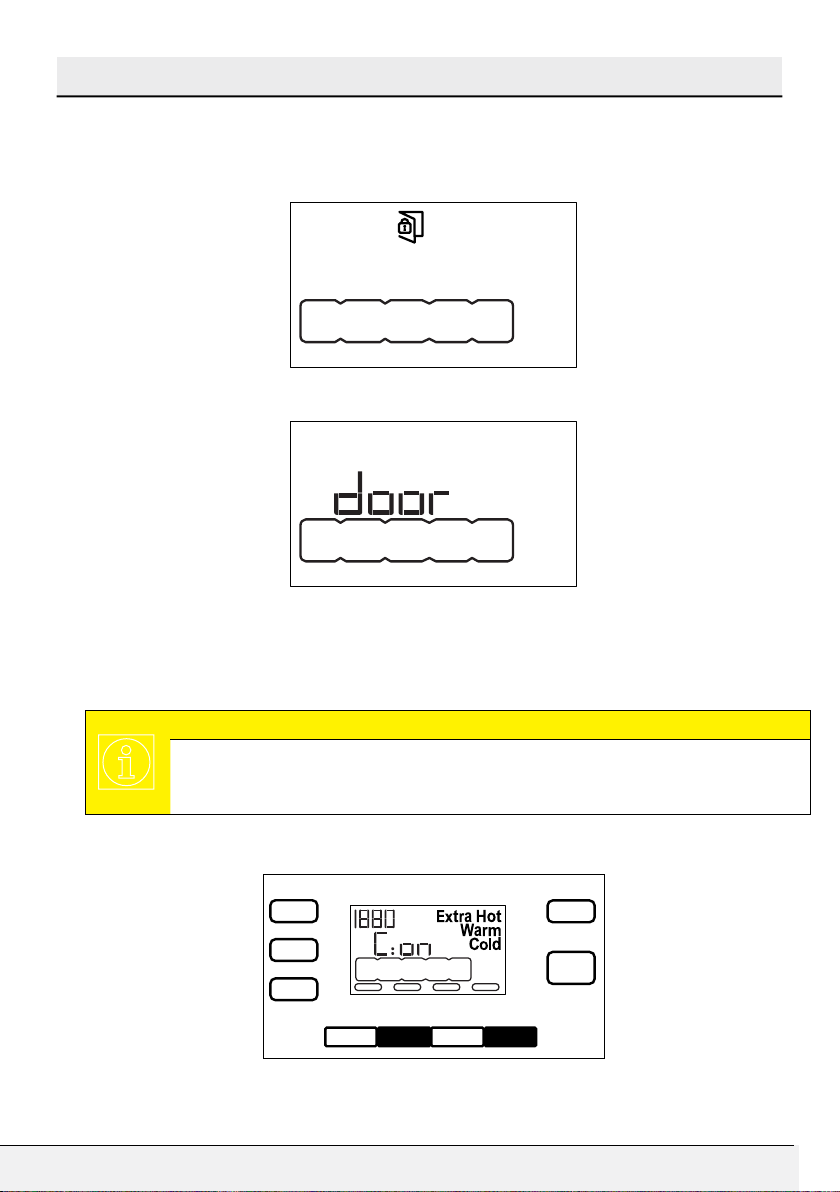
Door lock
The Door Locked Symbol lights up when the loading door is locked. This symbol will flash until the
door is allowed to open. Do not force the door at this stage. This symbol will fade out as soon as
the door is allowed to open. You may open the door after the symbol fades out.
When the electricity is off in door locked position, door will keep the locked position for two
minutes. After two minutes, door is allowed to open.
Incasethedoorisnotlocked,“door”expressionwillappeareonthescreen.Inthatcase,door
should be opened and closed again firmly.
Child-proof lock
Protecttheappliancefrombeingtamperedbychildrenbymeansofthechild-prooflock.Inthis
case, no change can be made in the running program.
C
CAUTION
Ò Your washer can be turned on and off with On/Off button while the child-
proof lock is activated. In this case, your washer will resume its program with
child-proof lock activated.
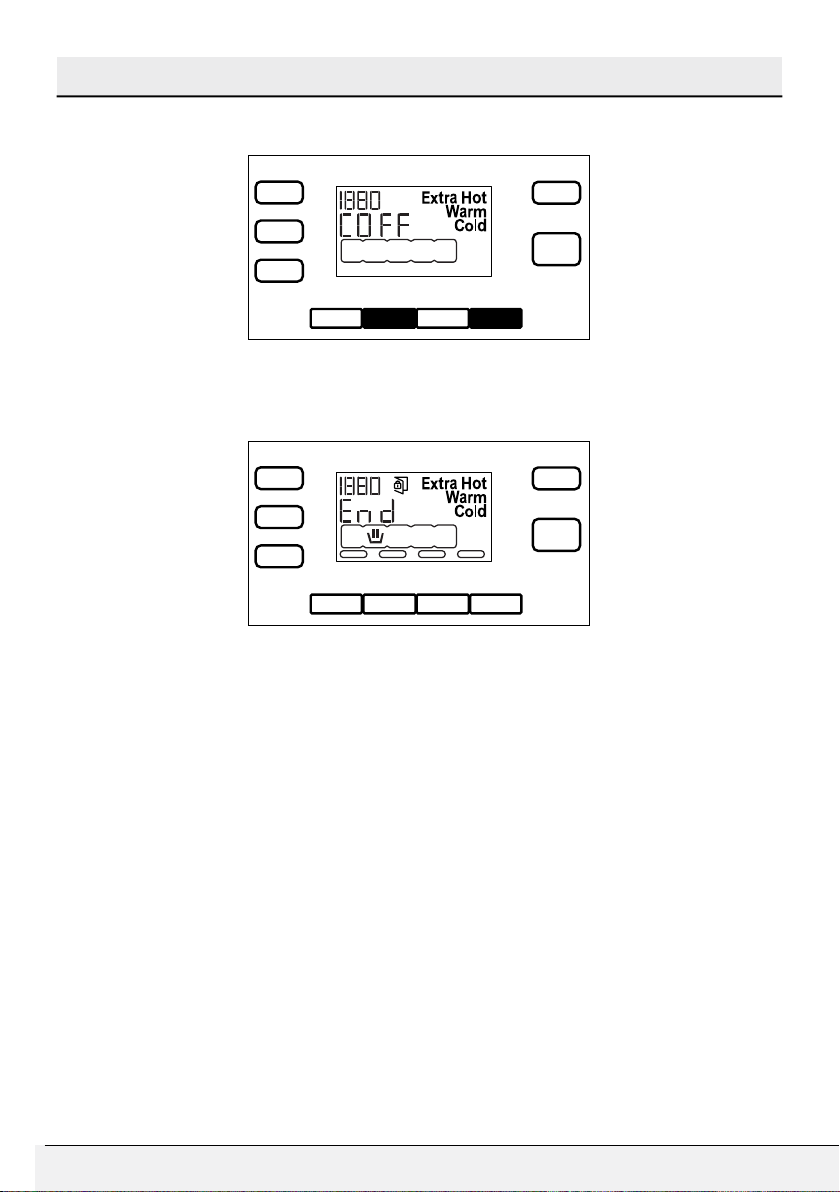
The washer is switched to child-lock by pressing the 2nd and 4th auxiliary functions for 3 sec.
“C:on”(Child-prooflockisactivated)labelappearsonthedisplay.
The same symbol will also be displayed whenever any button is pressed while the washer is child-
locked.
Owner’s Guide & Installation Instructions
35 / English
Selecting a Program and Operating Your Washer
To deactivate the child-proof lock, press the 2nd and 4th auxiliary function buttons for 3 sec.
“C:OFF”(Child-prooflockisdeactivated)labelappearsonthescreen.
Ending the program through canceling
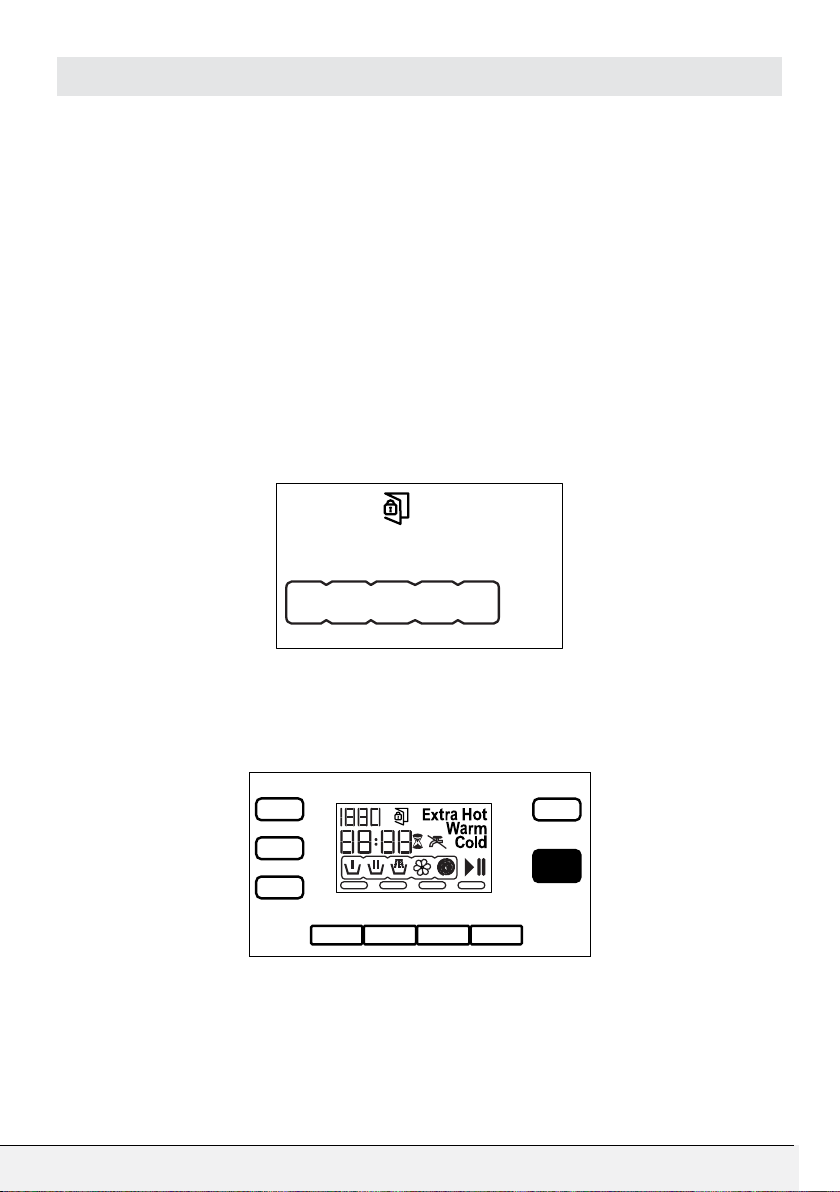
“Start/Pause/Cancel”buttonispressedfor3secondstocanceltheprogram.Startsymbolwillflash
during cancellation. After cancellation, the symbol of the corresponding step at which the cancellation
wasmadewillremainlitand“End”willappearonthescreen.
End of program
When the program is finished, the symbols of the relevant steps will remain lit up and the auxiliary
function,spinandtemperaturedataselectedatthestart-upoftheprogramwillremainselected.“End”
will appear on the display.
36 / English
Front-Loading Automatic Washer
1. Turn on both hot and cold water faucets fully. Check and be sure the water connection is tight.
2.Placethelaundryinthedrum.
3. Add laundry additives (e.g. detergent, fabric softener,bleach).
Starting
1.Pressthe“On/Off”button.
2. Select the appropriate wash cycle and temperature suitable for your items.
3. If required:
– select any auxiliary function,
– adjust the spin speed,
– set the time delay,
4. Close the loading door.
5.Press“Start/Pause/Cancel”button.
The display shows the time remaining for the program to complete if time delay is not set.
The display shows the time remaining for the program to start if the time delay is set.
6. Check if the Door Locked Symbol lights up on the screen.
The Door Locked Symbol will light up if time delay is not set.
The Door Locked Symbol will fade if time delay is set.
Canceling a program
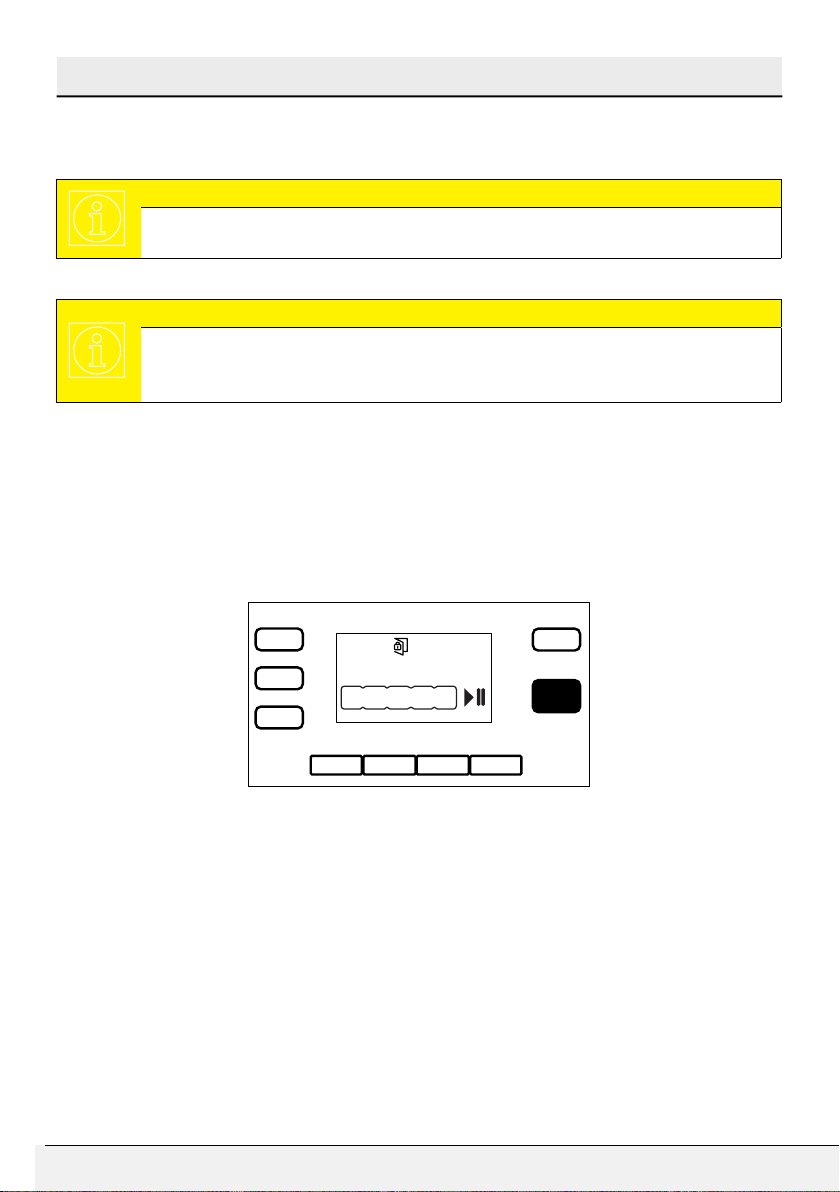
1.Pressandholdthe`Start/Pause/Cancel`buttonforabout3seconds;the“Start”symbolwillstart
flashing.
2. The washer can drain all the water or can take in water for 3 times at most to cool down the clothes
and complete draining process.
6 Preparation
Owner’s Guide & Installation Instructions
37 / English
Preparation
Adding more laundry
This is only possible under the following conditions:
1. during time delay,
C
CAUTION
Ò You may add or remove laundry during the time delay (until the program
starts).
2. At the beginning of a washing cycle,
C
CAUTION
Ò Washer allows adding more laundry during a future step only if the water
level is low enough to open the loading door or if the temperature in the
washer is low
In order to add laundry after the start-up of the program:
1.Press“Start/Pause/Cancel”button.Waitforthesafetylocktoopen.
2. Open the loading door and put in more laundry.
3. Close the loading door.
4.Press“Start/Pause/Cancel”button.
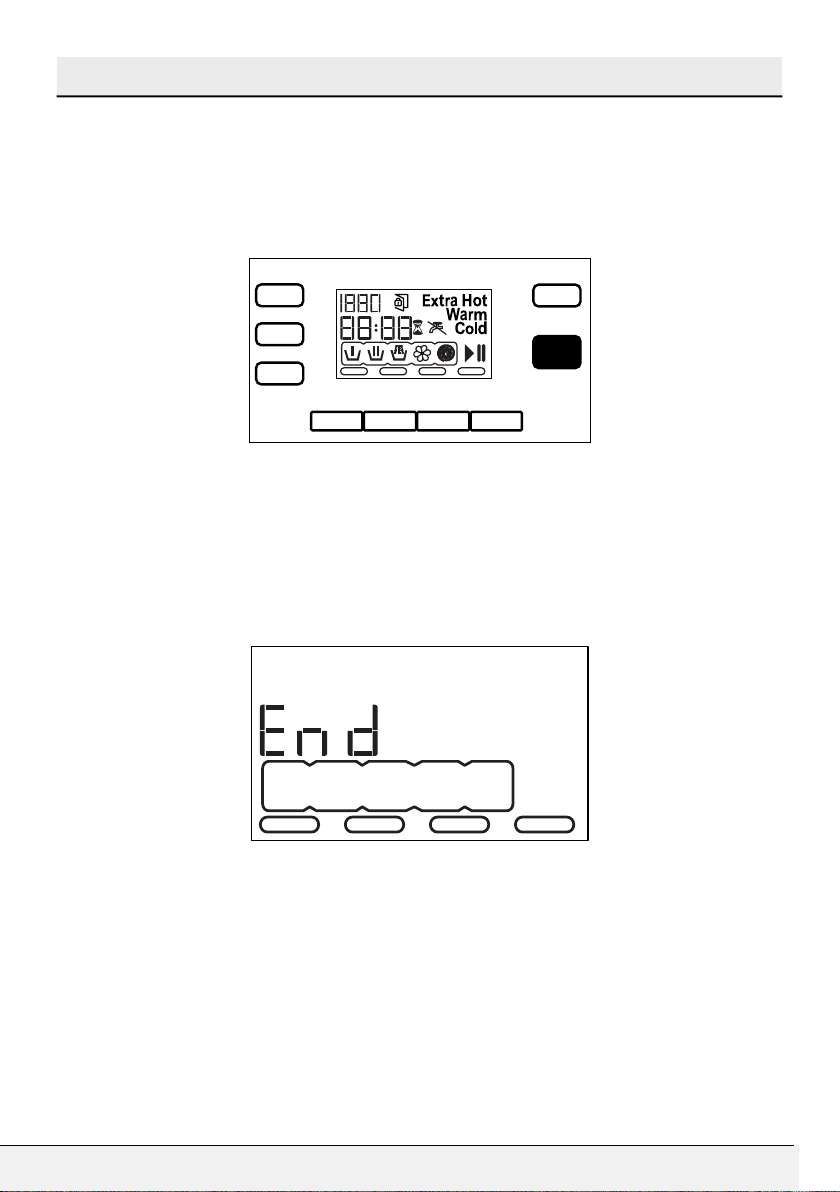
If you want to discharge the water without spinning:
1.Press“Start/Pause/Cancel”button.
2. The standby symbol fades out and the start symbol lights up.
3. The program continues and only pumps out the water.
38 / English
Front-Loading Automatic Washer
Preparation
Re-spinning the laundry
The control system for an unbalanced load can pause the spinning in cases when the distribution of
the laundry in the drum is not balanced.
If you want to re-spin the clothes:
1. Rearrange the previously placed clothes in the drum.
2. Select the spin program.
3. Adjust the spin speed.
After the program is finished
Programindicatorsymbolsonthescreenwilllightupaftertheprogramisfinished.“End”willappear
on the screen.
1. Open the loading door and remove the laundry when the door locked symbol on the display fades
out.
2.Pressthe“On/Off”button.
3. Turn off the faucets.
4. Check the rubber door seal for any foreign objects.
5. Leave the door and dispenser drawer open to dry.
Owner’s Guide & Installation Instructions
39 / English
A
WARNING
Ò Be sure to unplug the power cable before attempting maintenance or
cleaning of your appliance to minimize the risk of electric shock.
Cleaning detergent dispenser
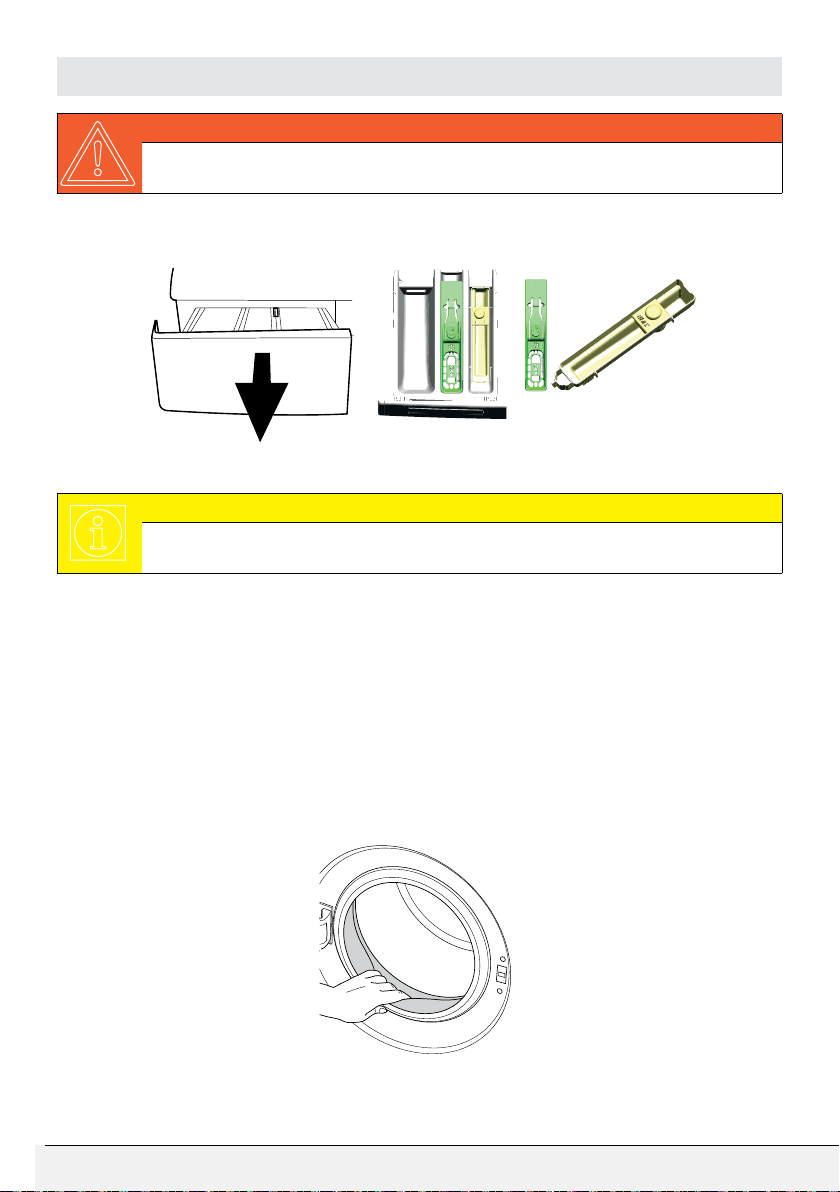
Removeanypowder/liquidresiduebuildupinthedispenserdrawer.Todothis;
1. Pressthedottedpointonthesiphonofthesoftenercompartmentandpulltowardsyourselfuntil
the it is removed from the dispenser.
C
CAUTION
Ò If more than a normal amount of water and softener/bleach mixture starts to
gather in the dispenser compartments, dispenser must be cleaned.
2. Wash the dispenser drawer, liquid chlorine bleach container and siphon of softener under running
warm water in a sink etc. Wear protective gloves or use an appropriate brush or sponge to avoid
touching the detergent residues in the drawer when cleaning.
3. Replace the drawer into its housing after cleaning. Check if the siphon and container are in their
original locations.
Cleaning the door seal
Besuretochecktherubberdoorsealafterunloadingyourwasher.Pullthesealbacktosearchforany
foreign objects. Residual metal objects such as pins and coins may form rust stains on rubber seal,
and cause the seal to leak.
Wipe the stained areas with soapy water using a damp cloth. Then wipe with a dry cloth properly. Do
not use an abrasive scrubbing agent when cleaning rubber seal.
Cleaning the drum
Check the wash drum for any foreign objects after unloading your washer. Residual metal objects
such as pins and coins may form rust stains on drum surface and your clothes. Do not use abrasive
7 User maintenance instructions
40 / English
Front-Loading Automatic Washer
User maintenance instructions
materials while cleaning the inner surface of the drum. Use soapy water with a damp cloth to wipe the
inner surface, then dry it and leave the door open to let inside dry properly.
Sanitary cycle with extra rinse option should be used for monthly cleaning of drum. To carry out this
procedure:
First be sure that the drum is empty.
Add 80ml of liquid chlorine bleach to the bleach container in the right compartment of the dispenser.
Selectsanitarycycle,closethedoorandpress“start/pause”button.Atthecompletionofcycle,leave
the door open for drying of drum interior.
Monthly cleaning of the washer is necessary for removal of bacteria and mold residues and prevention
of unwanted odor in wash drum.
Cleaning the outer cabinet and control panel
When necessary:
• Wipetheexteriorpanelsofyourwasherwithsoapywaterormilddetergent.Dryitwithasoftcloth.
• Useonlyasoftanddampclothtocleanthecontrolpanel.
C
CAUTION
Ò Never use a sponge or scrubbing material. These will damage the painted
and plastic parts.
Cleaning the water inlet strainers
There is a strainer at the end of each water inlet valve at the back side of the washer and also at the
end of each water inlet hose where they are connected to the faucets. These strainers prevent the
foreign substances and dirt in the water to enter into the washer. Strainers should be cleaned from
time to time.
• Closethewaterfaucets.
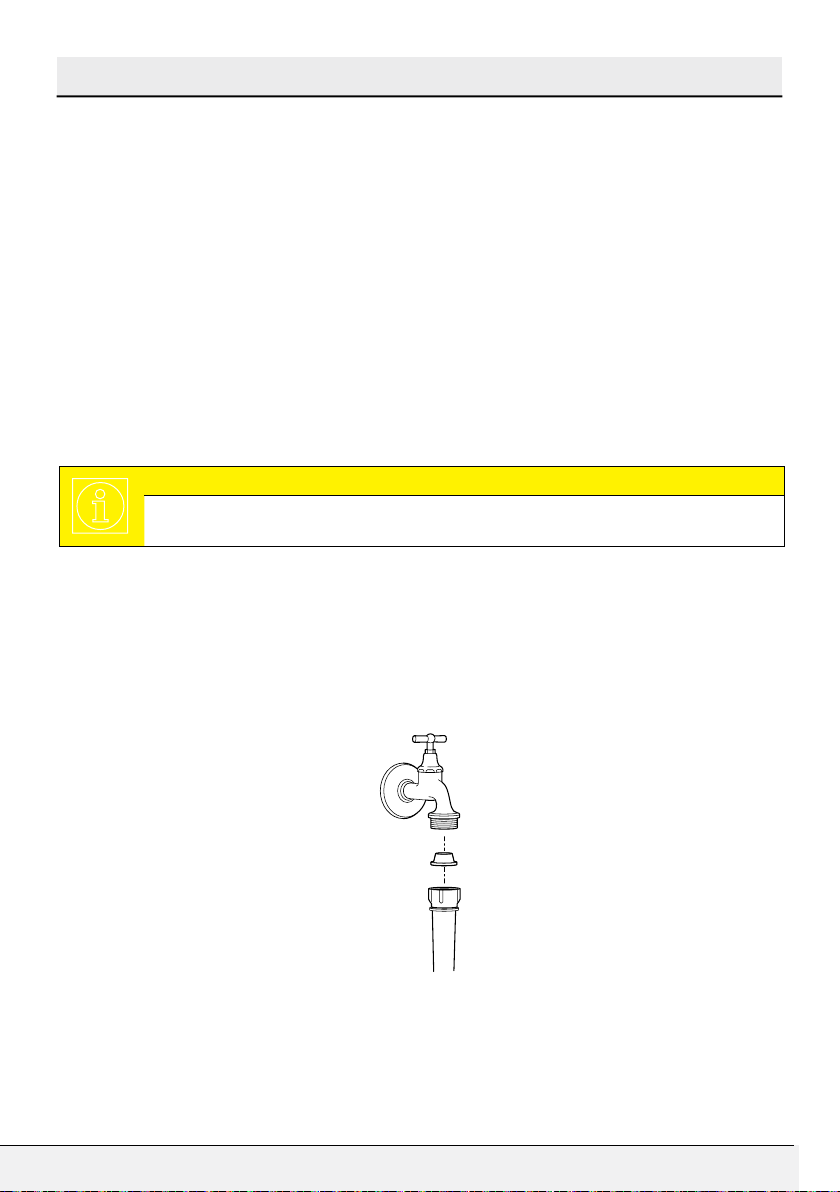
• Removethenutsofthewaterinlethosestocleanthesurfacesofthestrainersonthewaterinlet
valves with an appropriate brush.
• Ifthestrainersareverydirty,youcanpullthemoutbymeansofpliersandcleanthem.
• Takeoutthestrainersontheflatendsofthewaterinlethosestogetherwiththerubbersealsand
clean thoroughly under running water.
• Replacetherubbersealsandstrainerscarefullyandtightenthehosenutsbyhand.

Owner’s Guide & Installation Instructions
41 / English
User maintenance instructions
Cleaning the drain pump filter
Filter system in your washer prevents solid items such as buttons, coins and fabric fibers clogging the
pump impeller during discharging of the washing water. Thus, a good water discharge is achieved and
the pump life is extended.
• Ifyourwasherfailstodrainthewater,thepumpfiltermaybeclogged.Youmayhavetocleanit
occasionally to prevent any clogging. Water must be drained completely to clean the pump filter.
In addition, water may have to be drained off completely in the following cases:
• beforetransportingtheappliance(e.g.whenmoving)
• whenthereisadangeroffrost
Inordertocleanthedirtyfilteranddischargethewater;
1- Disconnect or unplug the washer from the power supply.
A
WARNING
Ò There may be water at 158F (70°C) in the drum. Therefore, the filter must
be cleaned only after the inside water is cooled down to avoid hazard of
scalding.
2- Open the filter cap. The filter cap may be composed of one or two pieces according to the model of
your washer.
If it is composed of two pieces, press the tab on the filter cap downwards and pull the piece out
towards yourself.
If it is composed of one piece, hold it from both sides and open it by pulling out.
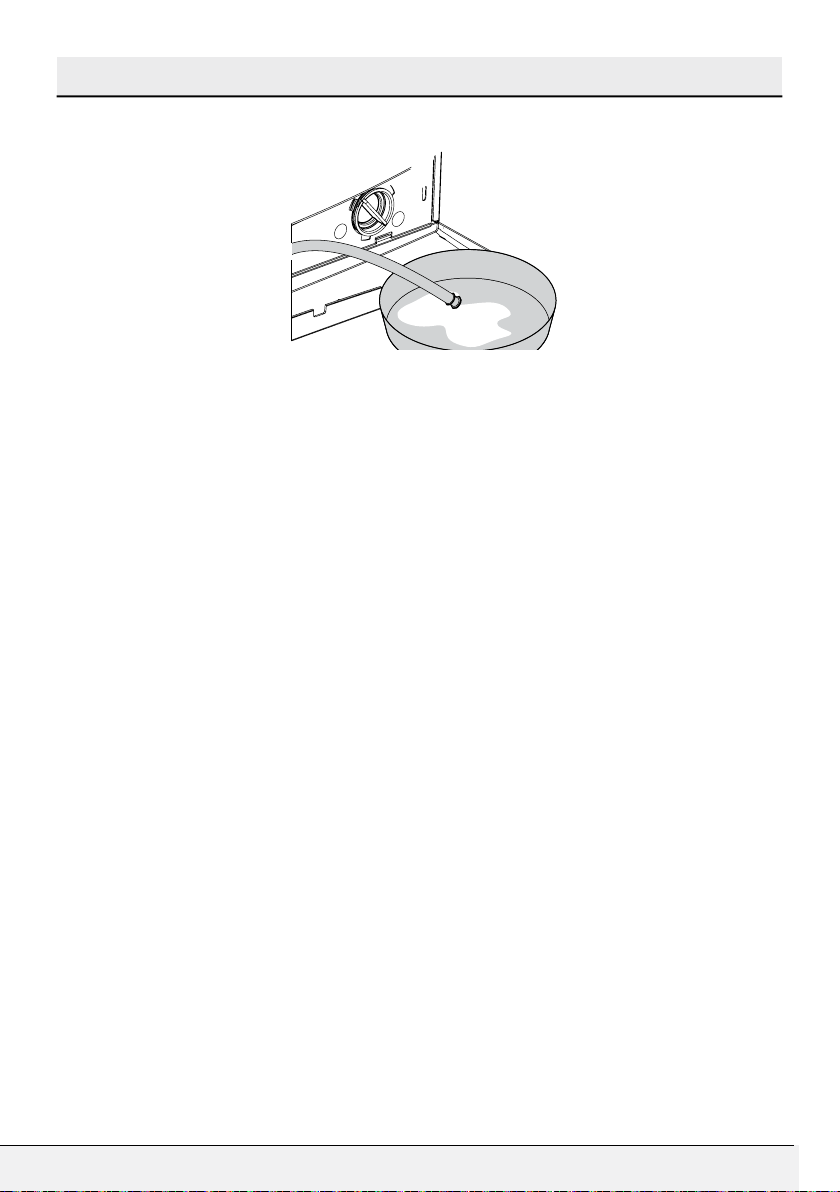
3- An emergency drain hose is supplied with your washer.
42 / English
Front-Loading Automatic Washer
User maintenance instructions
Do the following as shown in the figure below:
• Pullouttheemergencydrainhosefromitshousing.
• Placealargecontainerattheendofthehose.Drainthewateroffintothecontainerbypullingout
the plug at the end of the hose. If the amount of water to be drained off is greater than the volume
of the container, replace the plug, pour the water out, then resume the draining process.
• Afterdrainingprocessiscompleted,replacetheplugintotheendofthehoseandfitthehoseback
into its place.
• Whenthereisnowaterleft,turnthepumpfilteruntilitiscompletelylooseandremoveit.
• Cleananyresiduesinsidethefilteraswellasfibers,ifany,aroundtheimpellerregion.
•Neverforcethefilterwhilereplacingitintoitshousing.Fitthefilterfullyintoitshousing;otherwise,
water may leak from the filter cap.
4- Close the filter cap.
Close the two-piece filter cap of your product by pushing the tab on it.
Close the one-piece filter cap of your product by fitting the tabs on the bottom into their positions and
pushing the upper part of it.
Descaling the washer
Hard water can cause scale build-up inside the drum and other parts of your washer in time. Scaling
may lead to some serious problems such as clogging in hoses, heater or pump failure eventually.
To prevent scaling, wash drum should be cleaned frequently. Do not use abrasive materials such as
metal wool while cleaning the drum.
Takethemanufacturer’sinstructionsintoaccountifyouareusingadescalingagent.Descalingagents
may contain materials that are hazardous for washer components. Use descaling agents compatible
for use in clothes washers.
When using a powder descaling agent, add 1 cup to the main wash compartment of the dispenser and
run a regular hot cycle (with extra rinse) without any clothes and detergents.
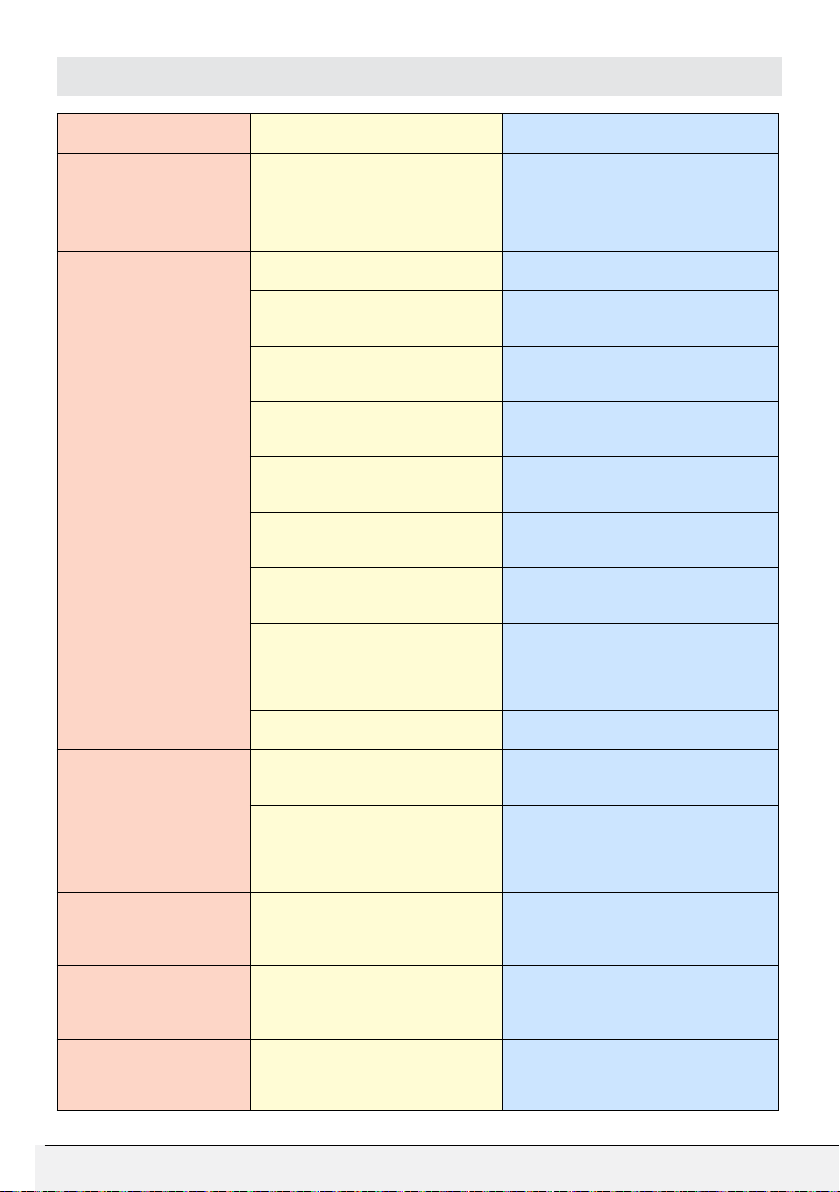
Owner’s Guide & Installation Instructions
43 / English
Problem Cause Explanation / Suggestion
Water in the washer.
There may be some water in your
appliance when you receive it. This
is from the quality control process
and is normal.
It is not harmful to your washer. You
should run a “sanitary” cycle without
any clothes and laundry additives
before the first use of your washer.
Washer does not fill with
water or wash after the
program was selected and
the “Start/Pause/Cancel”
button was pressed.
Faucets may be turned off. Open the water faucets fully.
Water inlet hose may be folded.
Check the water inlet hose and
straighten if necessary.
Water inlet strainers might be
clogged.
Clean the water inlet strainers.
Is there power at the outlet?
Call an electrician and have the power
outlet / circuit breaker / fuse checked.
Washer might be unplugged.
Plug the power cord to a live electrical
outlet.
Drain hose may be folded.
Check the drain hose and straighten if
necessary.
Washer may be in handwash, wools
or soak cycle.
Wait for a short time and tumbling will
start.
Drain pump filter or drain itself may
be clogged.
Clean the drain pump filter (See “User
maintenance instructions” ). If the
house drain pipes are clogged, call a
plumber for assistance.
Door may not be closed properly. Close the loading door.
Washer does not drain
water / Washer drains
water slowly.
Drain hose may be folded.
Check the drain hose and straighten if
necessary.
Drain pump filter or drain itself may
be clogged.
Clean the drain pump filter (See “User
maintenance instructions” ). If the
house drain pipes are clogged, call a
plumber for assistance.
The water being taken in is
directly discharged.
Improper position of the drain hose.
Connect the drain hose as described
in the user manual (See “Installation
Instructions, Drainage”).
No water can be seen in
the drum during washing.
This is not a problem. The water
level is not visible from the outside
of the washer.
Washer stopped shortly
after the program cycle
started.
Washer can stop temporarily due to
low voltage.
It will resume operating when the
voltage is back to the normal level.
8 Troubleshooting
44 / English
Front-Loading Automatic Washer
Troubleshooting
There is water coming
from the bottom of the
washer.
Inlet hose connections may be
leaking.
Be sure the strainers and rubber seals
of the water inlet hoses are solid and
securely fitted.
End of the drain hose may be loosely
inserted into the waste pipe or sink.
Tightly attach the drain hose to the
waste pipe or sink (See “Installation
Instructions, Drainage”).
House drain may be clogged.
If the house drain pipes are clogged, call
a plumber for assistance.
Filter cap of the drain pump may not
be properly fitted.
Make sure that the pump filter cap is
tightly closed.
Hose connections inside the washer
may be leaking.
Internal hose connections (e.g.
dispenser hoses, drain system) should
be checked by a service technician.
Washer fills with water
when a process is
cancelled.
There may be hot water inside
washer.
For safety reasons, water should be
cycled in and out a couple times.
Time delay function does
not work.
Door may not be closed properly. Close the loading door.
The door will not open.
Water level might be above the
lower level of the door.
Run “Drain” , “Spin” or “Drain&Spin”
program.
Washer might be heating up the
water or it may be at the spinning
cycle.
Wait until the process is over.
Due to electrical safety mechanism,
the door can only be opened a few
minutes after the program has
stopped.
Wait until the process is over.
If the door can not be opened after
minimum ten minutes the program
has stopped , on/off buton should be
placed to off position.
In this situation, call the qualified
service technician.
The door will not lock/
door expression is on LCD
Door is not properly closed/Door
hinge is not aligned with lock
switch.
Push the loading door firmly shut until
you hear it lock into space
Owner’s Guide & Installation Instructions
45 / English
Troubleshooting
Cycle time takes longer
than the time specified in
the owner’s guide.
Water pressure may be low.
The washer will wait until there is a
sufficient amount of water, which may
lengthen the cycle time to avoid poor
washing results due to insufficient
water.
Supply voltage may be low.
Cycle time is lengthened to avoid
poor washing results when the supply
voltage is low.
Inlet temperature of water may be
low.
Cycle time lengthens to heat up the
water when the inlet water is cold. Also,
washing time can be lengthened to
avoid poor washing results.
There may be an imbalance of load
in the drum.
The automatic spin correction system
might have been activated due to the
unbalanced distribution of the laundry
in the drum.
Number of rinse cycles might have
increased to obtain a better rinse.
Use a proper amount of HE detergent.
Reduce the amount of detergent next
time you operate the washer.
It continuously washes.
Remaining time does not
count down.
In the case of a paused countdown
while taking in water: Timer will not
countdown until the washer is filled
with the correct amount of water.
Time will not count down until
the selected temperature for the
program is reached
The washer will wait until there is a
sufficient amount of water to avoid poor
washing results due to lack of water.
Then the timer will start to count down.
In the case of a paused countdown
at the heating step: Time will not
count down until the selected
temperature for the program cycle
is reached.
In the case of a paused countdown
at the spinning step: There may
be an imbalance of laundry in the
drum.
The automatic spin correction system
might have been activated due to the
unbalanced distribution of the laundry
in the drum.
The laundry in the drum may be tangled
up too much. Laundry should be
rearranged and re-spun.
No spinning is performed when the
laundry is not evenly distributed in the
drum to prevent any damage to the
appliance and to its environment.

46 / English
Front-Loading Automatic Washer
Troubleshooting
It continuously spins.
Remaining time does not
count down.
There may be an imbalance of load
in the drum.
The automatic spin correction system
might have been activated due to the
unbalanced distribution of the laundry
in the drum.
The laundry in the drum may be tangled
up too much. Laundry should be
rearranged and re-spun.
No spinning is performed when the
laundry is not evenly distributed in the
drum to prevent any damage to the
appliance and to its environment.
Excess foaming occurs.
Using excessive amount of
detergent.
Use the recommended amount of
HE detergent appropriate for water
hardness, soil level and amount of
laundry.
Not using HE detergent Use HE detergent.
Detergent may have been stored
improperly.
Store detergent in a cool and dry place.
Type of material being washed (lace
items will cause excessive foam due
to their meshed structure).
Reduce the amount of detergent for lace
items.
Washer is completely
full of suds/Suds coming
out of dispenser during
operation.
Not using HE detergent / Using
excessive amount of detergent
Push “Start/Pause/Cancel” button.
Mix 2 cups of water with 1-2
tablespoon of fabric softener and
pour it into detergent dispenser. Push
“ S t a r t / P a u s e / C a n c e l ” b u t t o n a g a i n .
Use proper amount of HE detergent next
time you operate the washer.
Load is still too soapy /
Washer is full of suds at
the end of program.
Not using HE detergent / Using
excessive amount of detergent
Do not unload the washer. Operate
a quick wash cycle (e.g. Delicates,
Wools) without any detergent. Add
1-2 tablespoon of fabric softener into
main wash compartment of detergent
dispenser during water intake.
Use proper amount of HE detergent next
time you operate the washer.
Load is still too wet at the
end of program.
Unbalance detection due to 1-2
small items in the drum (uneven
load distribution)
Add more laundry (e.g. a few additional
towels) to the drum and start a “Spin”
or “Spin&Drain” cycle.
Poor spinning results due to
not using HE detergent / using
excessive amount of detergent
Use proper amount of HE detergent.
Owner’s Guide & Installation Instructions
47 / English
Troubleshooting
Washer did not spin.
There may be an imbalance of load
in the drum. Therefore, the program
cycle might have been completed
without spinning.
The automatic spin correction system
might have been activated due to the
unbalanced distribution of the laundry
in the drum. No spinning is performed
when the laundry is not evenly
distributed in the drum to prevent any
damage to the appliance and to its
environment.
The laundry in the drum may be tangled
up too much. Laundry should be
rearranged and re-spun.
Unbalance detection due to 1-2
small items in the drum (uneven
load distribution)
Add more laundry (e.g. a few additional
towels) to the drum and start a “Spin”
or “Spin&Drain” cycle.
Drain hose may be folded.
Check the drain hose and straighten if
necessary.
“No spin” setting may be adjusted. See “Spin Speed Selection”.
Drain pump filter or drain itself may
be clogged.
Clean the drain pump filter (See “User
maintenance instructions” ). If the
house drain pipes are clogged, call a
plumber for assistance.
Washing performance is
poor: Laundry turns gray/
yellow
Using insufficient amount of
detergent.
Use the recommended amount of
HE detergent appropriate for water
hardness and soil level of laundry.
Washing at low temperatures for a
long time
Select the proper temperature for the
laundry to be washed (See “Laundry
Tips” & “Program Cycle Selection”).
Using insufficient amount of
detergent for hard water (soil can
stick to the laundry)
If the water hardness is high, using an
insufficient amount of detergent can
cause laundry to turn gray over time.
Using excessive amount of
detergent (detergent can stick to the
laundry).
It is difficult to eliminate such grayness
once it occurs.
Not using HE detergent Use HE detergent.
Dyeing problem occurs.
Sort the wash load by color (See
“Laundry Tips”).
Hot water inlet temperature is not
high enough.
Set your water heater for delivering
120-140F (48-60 C) hot water.
A higher temperature might have
been selected.
Select the proper program cycle and
temperature according to the type and
soiling degree of the laundry.
48 / English
Front-Loading Automatic Washer
Troubleshooting
Washing performance is
poor: Stain could not be
removed, not cleaned.
Laundry could not be
whitened.
Wrong program cycle and
temperature might have been
selected.
Select the proper program cycle
and temperature for the laundry to
be washed (See “Laundry Tips” &
“Program Cycle Selection”).
Using insufficient amount of
detergent.
Use the recommended amount of
HE detergent appropriate for water
hardness and soil level of laundry.
Using wrong type of detergent.
Use liquid detergent for cold wash
cycle for good wash results. Use proper
detergents recommended for wools,
handwashable and delicate items.
Mixing different sorts of items.
Sort the laundry according to care
labels and user manual (See “Laundry
Tips”).
Mixing different types of laundry
additives.
Put the detergent in the correct
compartment of dispenser (See
“Detergent Dispenser”).
Do not mix detergent with bleaching
agent or fabric softener.
Excessive laundry may be loaded
into washer.
Do not load the washer in excess.
Washing performance is
poor: Oily stains appear on
laundry.
Oily accumulations of prior wash
cycles on the drum may have stuck
to the laundry.
Washer must be operated empty at
sanitary cycle with detergent.
The detergent may have been placed
into the wrong compartment; the
detergent may be mixed with the
softener.
Softener should not come into contact
with detergent when being added.
Bad odor in the drum and
detergent dispenser.
Such odor and bacteria layer may
be formed on the drum as a result
of continuous washing at lower
temperatures and/or in short programs.
Leave the dispenser drawer as well
as the loading door ajar after each
washing. Thus, a humid environment
favorable for bacteria cannot be created
inside the machine.
For monthly cleaning procedure of the
drum, See “Cleaning the Drum”.
Wash and clean the dispenser with
warm water frequently (See “Cleaning
Detergent Dispenser”).
Owner’s Guide & Installation Instructions
49 / English
Troubleshooting
Clothes are stiff and/or do
not smell like the fabric
softener.
Using insufficient amount of
detergent.
If the water hardness is higher, using
insufficient amount of detergent can
cause the laundry to become stiff
in time. Use appropriate amount of
detergent according to the water
hardness.
Softener being released early.
You may have added too much softener
beyond max fill line.
The detergent dispenser might be
problematic. Water may be siphoned
(pulling the softener into the washer
early) during the fill or rinse cycles.
There might be problems with the water
inlet valves.
The detergent may have been placed
into the wrong compartment; the
detergent may be mixed with the
softener.
Softener should not come into contact
with detergent / bleach when being
added.
Color of the clothes faded.
A higher temperature might have
been selected.
Select the proper program and
temperature according to the type
and soiling degree of the laundry (See
“Laundry Tips” & “Program Cycle
Selection”).
Exposure of laundry to undiluted
liquid chlorine bleach.
Do not pour undiluted liquid bleach
onto laundry. Always pour it into bleach
compartment of the dispenser prior to
beginning of the wash cycle .
Do not overfill the bleach compartment.
Fill up to max line at the most.
Excessive laundry might have been
loaded in.
Do not load the washer in excess.

50 / English
Front-Loading Automatic Washer
Troubleshooting
Rinsing performance is
poor.
Intermediate spins may be skipped.
There may be an imbalance of laundry
in the machine. The laundry in the drum
may be tangled up too much. Laundry
should be rearranged and re-spun. No
spinning is performed when the laundry
is not evenly distributed in the drum to
prevent any damage to the appliance
and to its environment.
The amount and storage conditions
of the detergent used might not be
appropriate.
Store detergents in a cool and dry
place. Do not keep them under high
temperatures.
Not using HE detergent Use HE detergent.
Using excessive amount of
detergent
Reduce the amount of detergent.
Drain hose may be folded.
Check the drain hose and straighten if
necessary.
Drain pump filter or drain itself may
be clogged.
Clean the drain pump filter (See “User
maintenance instructions” ). If the
house drain pipes are clogged, call a
plumber for assistance.
Detergent or softener
residue in the dispenser/
Too much water remains in
the softener compartment.
Detergent (powder) may have been
put in wet dispenser drawer.
Dry the dispenser drawer before putting
in powder detergent.
Detergent (powder) may have gotten
damp.
Store detergent in a cool and dry
place. Do not keep them under high
temperatures.
Softener may be too dense or
concentrated.
Dilute the softener by pouring some
warm water on it (dilute up to max fill
line).
Water pressure might be low.
Detergent might be mixed with the
bleach/softener.
Softener/bleach should not come into
contact with detergent when being
added.
Owner’s Guide & Installation Instructions
51 / English
Troubleshooting
Washer vibrates, shakes or
makes too much noise.
Feet might require adjustment.
Adjust the washer feet (See “Levelling
the Washer”).
Shipping bolts might not have been
removed.
Remove the shipping bolts (See
“Removing Transport/Shipping Bolts”).
There may be a small amount of
laundry in the drum.
Add more laundry to the drum for even
load distribution next time you operate
the washer.
The drum may be overloaded or the
clothes may be distributed unevenly.
Reduce the amount of laundry in the
drum or balance the load by hand next
time you operate the washer.
The appliance might be touching a
solid surface.
Ensure that nothing touches the washer.
Strange noise in the drain
pump.
This is not a problem. Lapping
sound is normal at the end of the
drain operation.
It is not harmful to your washer.
Clanking noise in the
drum.
Metal objects such as coins, pins
may be in the drum.
Stop the program cycle (See “Cancelling
a Program”) ,check the drum for any
foreign objects.
Water fill temperature is
incorrect.
Water inlet hoses or valves may be
clogged.
Disconnect inlet hoses from the valves.
Clean inlet strainers and valve filters of
any debris.
There may be a long distance
between the water heater and
washer.
Run the hot water faucets in the
bathroom or kitchen (whichever is close
to the location of your washer) for a
short time to purge the hot water line.
There may be a problem with water
heater.
Be sure that your water heater is
delivering hot water min 120F (49C) at
the faucet.
52 / English
Front-Loading Automatic Washer
Troubleshooting
Detergent residue left on
the laundry.
Excessive laundry might have been
loaded in.
Do not load the washer in excess.
Wrong program cycle and
temperature might have been
selected.
Select the proper program cycle
and temperature for the laundry to
be washed (See “Laundry Tips” &
“Program Cycle Selection”).
Using insufficient amount of
detergent.
Use the recommended amount of
HE detergent appropriate for water
hardness and soil level of laundry.
Using powder or granular detergents
in cold water washing may leave
residue on wash load.
Try to use a liquid detergent when
washing in cold water.
Using wrong type of detergent.
Use liquid detergent for cold wash
cycle for good wash results. Use proper
detergents recommended for wools,
handwashable and delicate items.
Clothes get tangled up too
much in the drum when
washing.
Excessive laundry might have been
loaded in.
Do not load the washer in excess.
Washing many items of the same
type or size of clothes together.
Load the wash drum with items of
different sizes.
Load is wrinkled.
Delay in unloading the washer.
Unload the washer as soon as the wash
cycle ends.
Wrong program cycle might have
been selected.
Select the proper program cycle for the
laundry to be washed (See “Laundry
Tips” & “Program Cycle Selection”).
Excessive laundry might have been
loaded in.
Do not load the washer in excess.
Washer does work. Nothing
is displayed on the screen.
The plug might not be plugged in the
mains outlet.
Check the plug.
Fuse may have blown. Check the fuse / circuit breaker.
Power may be cut off. Check the supply power.
The “On/Off” button might not have
been pressed.
Press this button.
Water Cut off symbol on LCD
is light up
Water may have been cut off.
You can restart your machine by pressing
the “Start/Pause/Cancel” button for a
short time after ensuring that the water is
not cut off.

Owner’s Guide & Installation Instructions
53 / English
The warranties provided by Blomberg in these statements only apply to Blomberg washers sold to the original purchaser or
homeowner in the US and Canada. The warranty is not transferable. To obtain warranty service, please contact our nearest
distributor as listed by state. You will need your washer model number, serial number, retailer name and address, where
purchased and purchase date / installation date. This warranty gives you specific legal rights, and you may also have other rights
which vary from state to state.
1 year * limited warranty from date of first installation Blomberg will repair or replace at no cost to the consumer any defective
parts of the washer if used under normal household conditions (warranty is void if the product is used commercially e.g., bed +
breakfast, nursing home etc.). Service must also be performed by an authorized Blomberg service agency. (Cosmetic defects must
be reported within 10 business days from installation)
2year*++limitedwarrantyfromdateoffirstinstallation(Partsonly)Blombergwillrepairorreplaceanypartsatnocosttothe
consumer if material defects
or workmanship have caused the damage or failure of these components. Again the appliance must have been used under
normal household conditions and not commercially as stated above (Labor charges are the responsibility of the consumer)
5 year * ++ limited warranty from date of first installation (parts only 2-5 years) Blomberg will repair or replace any circuit boards
or washer drum (excluding any plastic attachments) at no cost to the consumer if material defects or workmanship have caused
the damage or failure of these components. The washer must have been used under normal household conditions and not
commercially (Labor charges are the responsibility of the consumer)
Lifetime limited warranty from date of first installation * ++ (parts only) Blomberg will repair or replace to the original owner the
stainless steel drum if rust through occurs under normal household use and normal water conditions (no excessive chlorine).
Blomberg may, at its option, also replace the whole washer with the same and/or equivalent model with equal or better
functionality if the original model is no longer available. (Labor, removal and installation charges are the responsibility of the
consumer.)
Disclaimers of warranties and exclusions:
Warranty does not cover service costs by an authorized service agent to correct installation, electrical and plumbing problems or
educational instruction on the use of the washer. The warranty also does not cover defects or damage caused by an act of god
(such as storms, floods, fires, mudslides, etc.), damage cause by use of the washer for purposes other than those for which it was
designed, misuse, abuse, accident, alteration, improper installation, maintenance, travel fees, service calls outside normal service
hours, unauthorized service work or work.
This product is fully tested and went through official quality assurance inspections before leaving the original manufacturing site.
Warranty terms for this Blomberg household appliance is not valid if the product is altered, tampered, modifed, additional parts
assembled, fixed and re-packed by an authorized distributor, servicer, a third party retailer, reseller or by any other unauthorized
person(s)”
TOTHEEXTENTPERMITTEDBYLAW,THISWARRANTYISINLIEUOFALLOTHEREXPRESSEDANDIMPLIEDWARRANTIES,
INCLUDINGTHEIMPLIEDWARRANTIESOFMERCHANTABILITYANDFITNESSFORAPARTICULARPURPOSE.BLOMBERG
UNDERTAKESNORESPONSIBILITYFORTHEQUALITYOFTHISPRODUCTEXCEPTASOTHERWISEPROVIDEDINTHISWARRANTY
STATEMENT.BLOMBERGASSUMESNORESPONSIBILITYTHATTHEPRODUCTWILLBEFITFORANYPARTICULARPURPOSEFOR
WHICHYOUMAYBEBUYINGTHISPRODUCT,EXCEPTASOTHERWISEPROVIDEDINTHISWARRANTYSTATEMENT.
Blomberg does not assume any responsibility for incidental or consequential damages. Such damages include, but are not limited
to, loss of profits, loss of savings or revenue, loss of use of the washer or any associated equipment, cost of capital, cost of any
substitute equipment, facilities or services, downtime, the claims of third parties, and injury to property. Some states do not allow
the exclusion or limitation of incidental or consequential damages, so the above limitations or exclusion may not apply to you.
* installation date shall refer to either purchase date or 5 business days after delivery of the product to the home, whichever is
later.
++Partsreplacedwillassumetheidentityoftheoriginalparts+theiroriginalwarranty.
No Other Warranties. This Warranty Statement is the complete and exclusive warranty from the manufacturer. No employee of
Blomberg or any other party is authorized to make any warranty in addition to those made in this Warranty Statement.
However, Arcelik should also make sure that its warranty which is given to consumers makes it clear that the warranty does not
cover any modifications or additions to the product made by the distributor or anyone else. It covers only the product as delivered
by Arcelik to the distributor, and any modification or addition by the distributor or anyone else voids the warranty.
9 WARRANTY STATEMENT FOR THE BLOMBERG CLOTHES WASHERS

54 / English
Front-Loading Automatic Washer
10 HOW TO GET SERVICE
PleasecontacttheDistributorforyourStateorProvinceaslistedontheDistributorContactList,orcallourToll
Free Number at 1 800 459 9848 for direction to an Authorized Blomberg Service Agent.

Owner’s Guide & Installation Instructions
55 / English