tüm siyah yazılar matbaaya giderken
gönderilmiyor.
Atılım rması basıyor
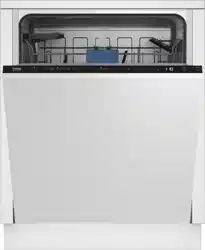
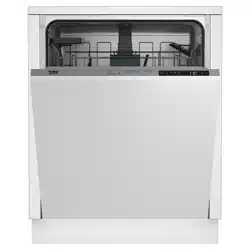
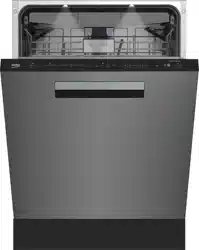
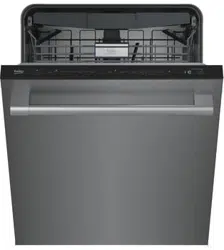
Dishwasher
Instruction Manual
tüm siyah yazılar matbaaya giderken
gönderilmiyor.
Atılım rması basıyor
This product was manufactured using the latest technology in environmentally friendly conditions.
Please read ths user manual frst!
Dear Customer,
We hope that you get the best results from the product whch has been
manufactured n state-of-the-art plants and passed through a strct qualty
control procedure.
Therefore, please read the entre user manual carefully before usng the
product and keep t as a reference for future use. In case of transferrng the
product to someone else, gve the manual as well.
The user manual wll help you use your product n a fast and safe way.
• Read the user manual before nstallng and startng your product.
• Always follow the safety nstructons.
• Keep ths user manual wthn easy reach for future reference.
• Read also the other documents suppled wth the product.
Remember that ths user manual s also applcable for several other models.
Derences between models wll be dentfed n the manual.
Explanaton of symbols
Throughout ths User Manual the followng symbols are used:
Important nformaton or useful hnts about usage
Warnng for hazardous stuatons wth regard to lfe and property
Warnng for electrc shock
Packagng materals of the product are manufactured
from recyclable materals n accordance wth our Natonal
Envronment Regulatons.
Do not dspose of the packagng materals together wth the domestc or other
wastes. Take them to the packagng materal collecton ponts desgnated by
the local authortes.
CONTENTS
1. Dshwasher 3
Techncal specfcatons 4
2. Important safety nstructons 5
General safety 5
Intended use 6
Chldren’s safety 6
3. Installaton 7
Approprate nstallaton locaton 7
Connectng water supply 7
Connecton to the dran 8
Adjustng the feet 9
Aquasafe+ 9
Electrcal connecton 9
Intal use 9
Dsposng of packagng materal 10
Transportaton of the product 10
Complance wth the WEEE Drectve and
Dsposng of the Waste Product: 10
Complance wth RoHS Drectve: 10
4. Prewashng 11
Tps for energy savng 11
Detergent 11
Addng detergent 11
Rnse ad 12
Slverware basket 15
Slverware basket pece 15
Movable slverware basket 15
Collapsble lower basket
wres (2 peces) 16
Collapsble lower basket
wres (4 peces) 16
Collapsble lower basket
wres (6 peces) 17
Collapsble lower basket
wres (4 & 8 peces) 18
Lower basket multpurpose / heght
adjustable servce rack 19
Lower Basket Glass Holder 20
SoftTouch
Accessory 20
Lower basket bottle wre 20
Upper basket heght adjustable rack 21
Upper basket drawer 21
Upper basket glass support pece 21
Collapsble upper basket wres 22
Upper basket glass support pece 22
Collapsble upper basket wres 23
Adjustng the heght of loaded upper
basket 24
Adjustng the heght of
loaded upper basket 25
Adjustng the heght of
empty upper basket 26
Celng slverware basket 27
5. Operatng the product 28
Keys 29
Preparng the machne 29
Programme selecton 29
Auxlary functons 31
Schedulng the washng tme 33
Startng the programme 33
Cancellng the programme 33
Salt ndcator (
) 34
Rnse Ad ndcator (
) 34
End of programme 34
Water cut-o warnng 34
Overowng warnng 34
6. Mantenance and cleanng 35
Cleanng the outer surface of the
product 35
Cleanng the nteror of the machne 35
Cleanng the flters 35
Cleanng the hose flter 36
Cleanng the mpellers 36
7. Troubleshootng 38
3
EN
1
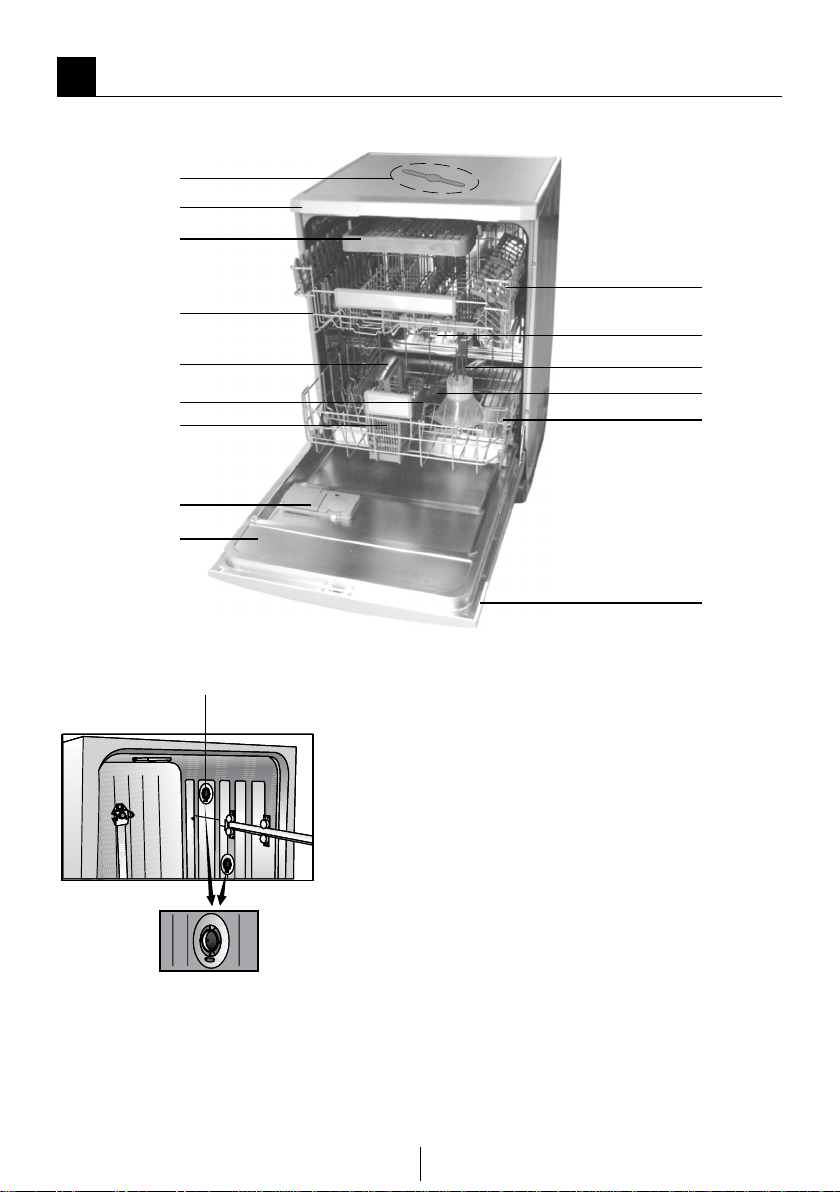
Dshwasher
Overvew
1.Upper basket wth rack
2.Upper mpeller
3.Lower mpeller
4.Flters
5.Lower basket
6.Control panel
7.Door
8.Detergent dspenser
9.Slverware basket
10.Lower mpeller slot
11.Salt reservor ld
12.Upper basket ral
13.Celng slverware basket
14.Tabletop (depends on the model)
15.Celng mpeller
16.Fan dryng system (depends on the model)
4
EN
Techncal specfcatons
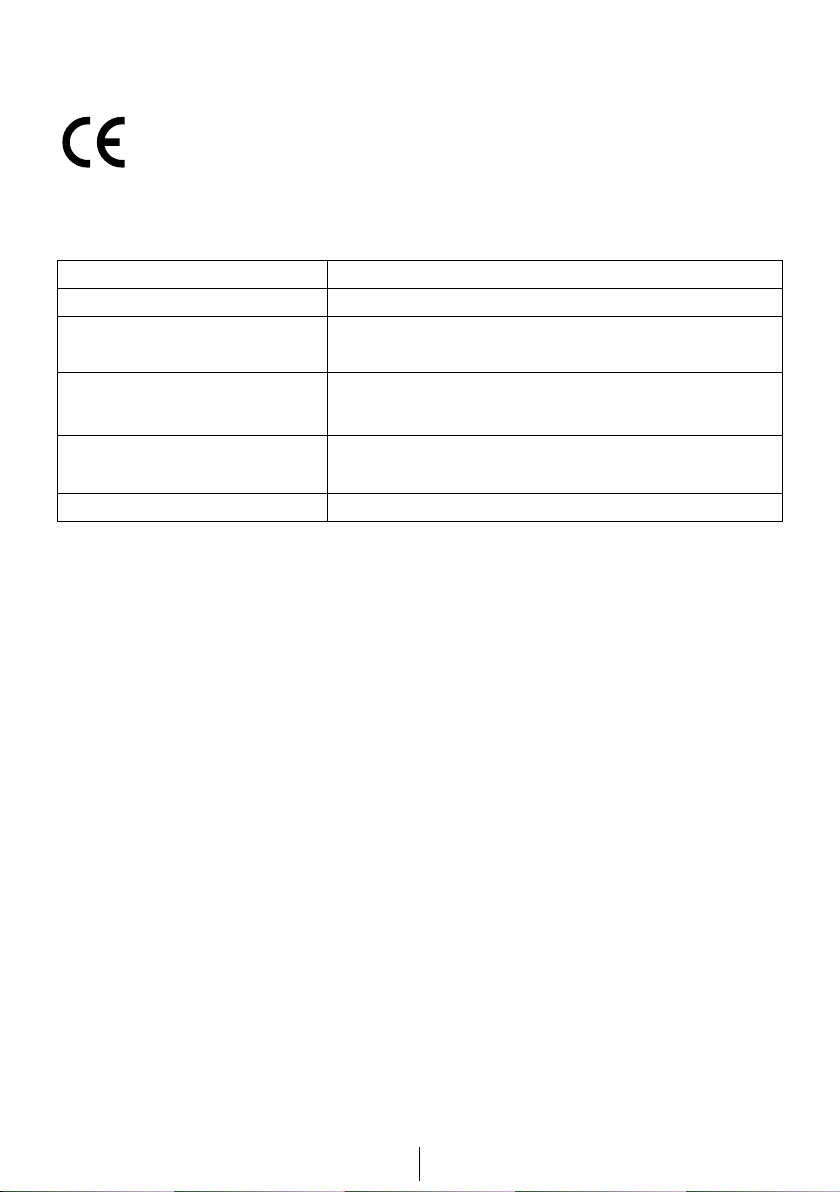
Ths product comples wth the followng EU drectves:
Development, producton and sales stages of ths product comply
wth the safety rules ncluded n all pertanng European Communty
regulatons.
2006/95/EC, 2004/108/EC, 93/68/EEC, IEC 60436, EN 50242
Power nput 220-240 V, 50 Hz
Total power consumpton 1800-2100 W
Heater power
consumpton
1800 W
Total current
(depends on the model)
10 A (see type plate)
Dran pump power
consumpton
30 W
Water pressure 0.3 –10 bar (= 3 – 100 N/cm = 0.03-1.0 Mpa)
C Techncal specfcatons may be changed wthout pror notce to mprove
the qualty of the product.
C Fgures n ths manual are schematc and may not match the product
exactly.
C Values stated on the product labels or n the documentaton accompanyng
t are obtaned n laboratory condtons n accordance wth the relevant
standards. Dependng on operatonal and envronmental condtons of the
product, these values may vary.
Note for test nsttutons:
Data requred for performance tests shall be provded upon request. Requests
can be e-maled to the followng address:
Do not forget to provde the code, stock and seral numbers of the product to be
tested n your request e-mal along wth your contact nformaton. Code, stock
and seral numbers of the product s located on the type label attached to the
sde of the door.
dishw[email protected]

5
EN
2
Important safety nstructons
Ths secton contans safety
nstructons that wll help to
get protected from rsk of
personal njury or property
damage Falure to follow
these nstructons shall vod
all warrantes.
General safety
•
Never place the product
on a carpet-covered oor;
otherwse, lack of arow
beneath the product wll
cause electrcal parts
to overheat. Ths wll
cause problems wth your
product.
• Do not operate the
product f the power
cable / plug s damaged!
Call the Authorsed
Servce Agent.
• Connect the product
to a grounded outlet
protected by a fuse
complyng wth the
values n the “Techncal
specfcatons” table. Do
not neglect to have the
groundng nstallaton
made by a qualfed
electrcan. Manufacturer
shall not be lable for any
damages that wll arse
when the product s used
wthout groundng n
accordance wth the local
regulatons.
• The water supply and
dranng hoses must be
securely fastened and
reman undamaged.
• Unplug the product when
not n use.
• Never wash the product
by spreadng or pourng
water onto t! There s the
rsk of electrc shock!
• Never touch the plug
wth wet hands! Never
unplug by pullng on the
cable, always pull out by
grabbng the plug.
• The product must
be unplugged
durng nstallaton,
mantenance, cleanng
and reparng procedures.
• Always have the
nstallaton and reparng
procedures carred out by
the Authorsed Servce
Agent. Manufacturer
shall not be held lable for
damages that may arse
from procedures carred
out by unauthorsed
persons.
• Never use chemcal
solvents n the product.
They brng forth rsk of
exploson.
• When you pull the upper
and lower baskets out
completely, the door
of the product wll bear
all the weght of the

6
EN
baskets. Do not put
other loads on the door;
otherwse, the product
may tlt.
• Never leave the door
of the product open
apart from loadng and
unloadng procedures.
• Do not to open the door
of the product when t s
runnng unless necessary.
Be careful for the rush of
hot steam when you need
to open the door.
Intended use
Ths applance s ntended
to be used n household and
smlar applcatons such as:
• sta ktchen areas n
shops, oces and other
workng envronments;
• farm houses;
• by clents n hotels,
motels and other
resdental type
envronments;
• bed and breakfast type
envronments;
• Only dshwasher safe
detergents, rnse ads and
addtves must be used.
• The manufacturer waves
any responsblty arsen
from ncorrect usage or
transportaton.
• Ths product should
not be used by persons
wth physcal, sensory
or mental dsorders
or unlearned or
nexperenced people
(ncludng chldren)
unless they are attended
by a person who wll be
responsble for ther
safety or who wll nstruct
them accordngly for use
of the product.
Chldren’s safety
•
Electrcal products
are dangerous for the
chldren. Keep chldren
away from the product
when t s n use. Do not
let them to tamper wth
the product.
• Do not forget to close the
door of the product when
leavng the room where t
s located.
• Store all detergents and
addtves n a safe place
away from the reach of
the chldren.

7
EN
3
Installaton
Refer to the nearest Authorsed
Servce Agent for nstallaton of your
product. To make the product ready
for use, make sure that the electrcty,
tap water supply and water dranage
systems are approprate before
callng the Authorsed Servce
Agent. If they are not, call a qualfed
techncan and plumber to have any
necessary arrangements carred out.
C Preparation of the location and
electrical, tap water and waste
water installations at the place of
installation is under customer's
responsibility.
B Installation and electrical
connections must be carried out
by the Authorised Service Agent.
Manufacturer shall not be held
liable for damages that may arise
from procedures carried out by
unauthorised persons.
B Prior to installation, visually check
if the product has any defects on
it. If so, do not have it installed.
Damaged products cause risks for
your safety.
A Make sure that the water inlet
and discharge hoses are not
folded, pinched or crushed while
pushing the product into its place
after installation or cleaning
procedures.
When placing the product, pay
attention not to damage the floor,
walls, piping, etc. Do not hold the
product from its door or panel to
move it.
Approprate nstallaton
locaton
· Place the product on a sold and
at oor that has sucent load
carryng capacty! The product
must be nstalled on a at surface
n order for the door to be closed
comfortably and securely.
· Do not nstall the product at
places where temperature may
fall below 0ºC.
· Place the product at least 1 cm
away from the edges of other
furnture.
· Place the product on a rgd oor.
Do not place t on a long ple rug
or smlar surfaces.
A Do not place the product on the
power cable.
· Make sure that you select a
locaton that wll allow you to
load and unload the dshes n a
fast and comfortable manner.
· Install the product n a place close
to the tap and the dran hole.
Select the nstallaton locaton
by consderng that t wll not be
changed after the connectons
are made.
Connectng water supply
C We recommend attaching a filter
on the house/apartment supply
water inlet to protect the machine
from damages that may arise
from impurities (sand, dirt, rust,
etc.) coming from the urban water
supply system or from your own
water system as well as to prevent
complaints such as yellowing or
8
EN
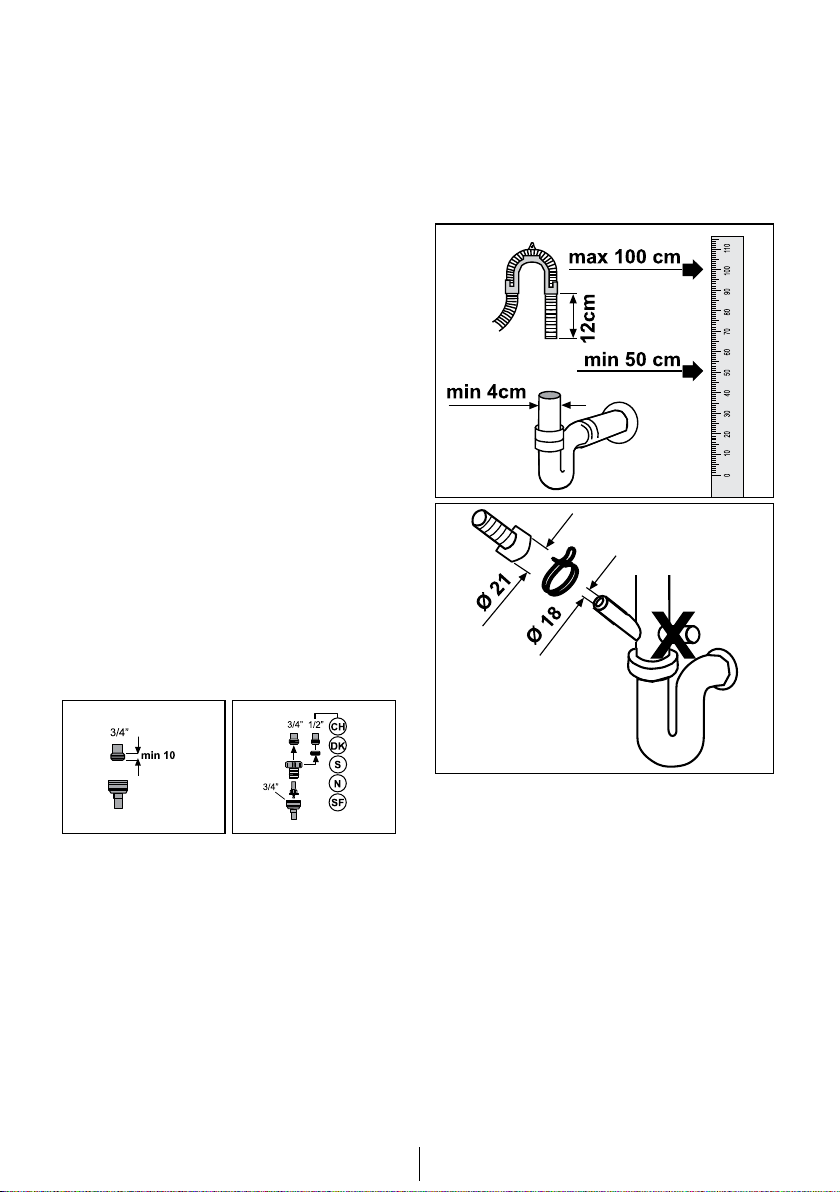
Connecton to the dran
Water dscharge hose can drectly
be connected to the dran hole or
snk’s dranage. The length of ths
connecton must be mn. 50 cm and
max. 100 cm from the oor.
A dscharge hose longer than 4
meters causes drty washng.
Attach the water dscharge hose to
the dranppe wthout bendng t.
Tghtly fx the water dscharge hose
to the dranppe n order to prevent
any dslocaton of the water dscharge
hose durng operaton of the product.
C Dranppe must be connected to
the sewage system and t should
not be connected to any surface
water.
sludge accumulation at the end of
washing.
Permtted water temperature: up
to 25°C
The dshwasher may not be
connected to open warm water
devces or ow-through water
heaters.
• Do not use old or used water nlet
hose on the new product. Use the
new water nlet hose suppled
wth the product.
• Connect the water nlet hose
drectly to the water tap.
Pressure comng from the tap
should be mnmum 0.3 and
maxmum 10 bars. If the water
pressure exceeds 10 bars, a
pressure relef valve should be
nstalled n between.
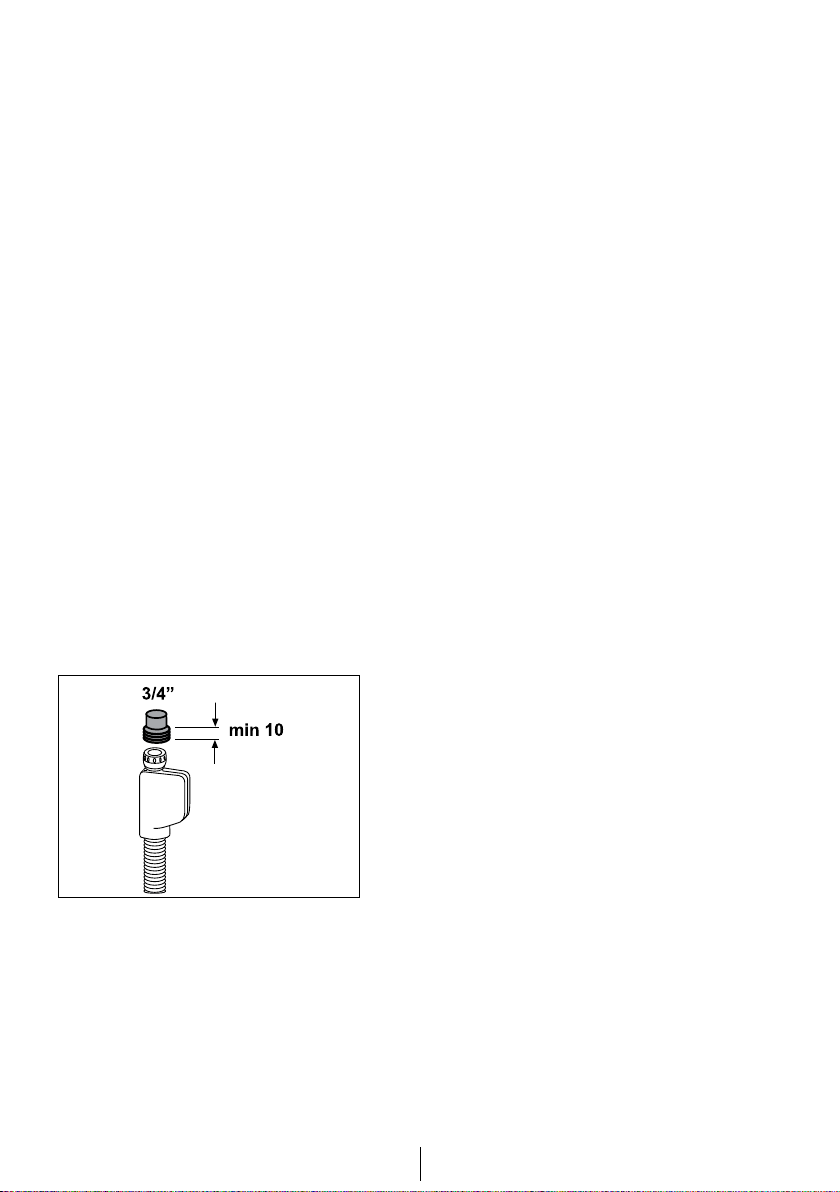
C Use a screw-on hose connector to
connect the water nlet hose to a
water tap wth a ¾ nch external
thread. If requred, use a flter
nsert to flter deposts from the
ppes.
• Open the taps completely after
makng the connectons to check
for water leaks.
A For your safety, close the water
nlet tap completely after the
washng programme s over.
9
EN
Adjustng the feet
If the door of the product cannot
be closed properly or f the product
swngs when you push t slghtly,
then you need to adjust the feet
of the product. Adjust the feet of
the product as llustrated n the
nstallaton manual suppled wth the
product.
Aquasafe+
(depends on the model)
Protect the Aquasafe+ system
aganst water leaks that may occur
at hose nlet. Water contact wth
the valve box of the system must
be prevented. Otherwse, electrcal
assembly wll get damaged. If the
Aquasafe system s damaged, unplug
the product and call the Authorsed
Servce Agent.
A As the hose set contains electrical
connections and assemblies,
never shorten or lengthen the
hose with extension hoses.
Electrcal connecton
Connect the product to a grounded
outlet protected by a fuse complyng
wth the values n the "Techncal
specfcatons" table. Manufacturer
shall not be lable for any damages
that wll arse when the product
s used wthout groundng n
accordance wth the local regulatons.
• Connecton must comply wth
natonal regulatons.
• Power cable plug must be wthn
easy reach after nstallaton.
A Unplug the product after the
washng programme s over.
• The voltage and allowed fuse or
breaker protecton are specfed
n the “Techncal specfcatons”
secton. If the current value of
the fuse or breaker n the house
s less than 16 Amps, have a
qualfed electrcan nstall a 16
Amp fuse.
• The specfed voltage must be
equal to your mans voltage.
• Do not make connectons va
extenson cables or mult-plugs.
B Damaged power cables must
be replaced by the Authorsed
Servce Agent.
B If the product has a falure, t
should not be operated unless
t s repared by the Authorsed
Servce Agent! There s the rsk of
electrc shock!
Intal use
Before startng to use the product,
make sure that all preparatons
are made n accordance wth the
nstructons n sectons "Important
safety nstructons" and "Installaton".
• To prepare the product to do the
dshes, perform frst operaton
n the shortest programme wth
detergent whle the machne s
empty. Durng the ntal use, fll
the salt reservor wth 1 ltre of
water pror to fllng t wth salt.
C Some water mght have remaned
n the product due to the
qualty control processes n the
producton. It s not harmful for
the product.
10
EN
Dsposng of packagng
materal
Packagng materals are dangerous to
chldren. Keep packagng materals n
a safe place away from reach of the
chldren.
Package nformaton
Packagng materals of the product
are manufactured from recyclable
materals n accordance wth our
Natonal Envronment Regulatons.
Do not dspose of the packagng
materals together wth the domestc
or other wastes. Take them to the
packagng materal collecton ponts
desgnated by the local authortes.
Transportaton of the
product
A
If you need to move the product,
do t n uprght poston and hold
from the rear sde. Slantng the
product onto ts front sde may
cause the electronc parts n t get
wet and damaged.
1. Unplug the product before
transportng t.
2. Remove water dranage and
water supply connectons.
3. Dran the remanng water n the
product completely.
Complance wth the
WEEE Drectve and
Dsposng of the Waste
Product:
Ths product comples wth EU
WEEE Drectve (2012/19/EU). Ths
product bears a classfcaton symbol
for waste electrcal and electronc
equpment (WEEE).
This product has been manufactured
with high quality parts and materials
which can be reused and are suitable
for recycling. Do not dispose of the
waste product with normal domestic
and other wastes at the end of its
service life. Take it to the collection
center for the recycling of electrical
and electronic equipment. Please
consult your local authorities to learn
about these collection centers.
Complance wth RoHS
Drectve:
The product you have purchased
complies with EU RoHS Directive
(2011/65/EU). It does not contain
harmful and prohibited materials
specied in the Directive.
11
EN
4
Prewashng
Tps for energy savng
Followng nformaton wll help you
use the product n an ecologcal and
energy-ecent manner.
• Wpe away any coarse food
remnants on the dshes before
puttng them n the product.
• Operate the product after fllng t
completely.
• When selectng a programme,
refer to the “Programme Table”.
• Do not put more detergent than
suggested on the detergent
package.
Detergent
You can use powder or tablet
detergent n the machne.
C Only use n the machne the
detergents produced partcularly
for use wth dshwashers. We
recommend you not to use
detergents that contan chlorne
and phosphate as they are
harmful for the envronment.
C Contact the detergent producer
f the dshes are wet and/or f you
notce lmescale spots partcularly
on glasses after the washng
programme s over.
Addng detergent
C Refer to the “Programme Table”
to determne the correct amount
of detergent for the selected
programme.
B Do not put solvents nto the
detergent dspenser. There s the
rsk of exploson!
Put the detergent nto the detergent
dspenser just before operatng the
machne as llustrated below.
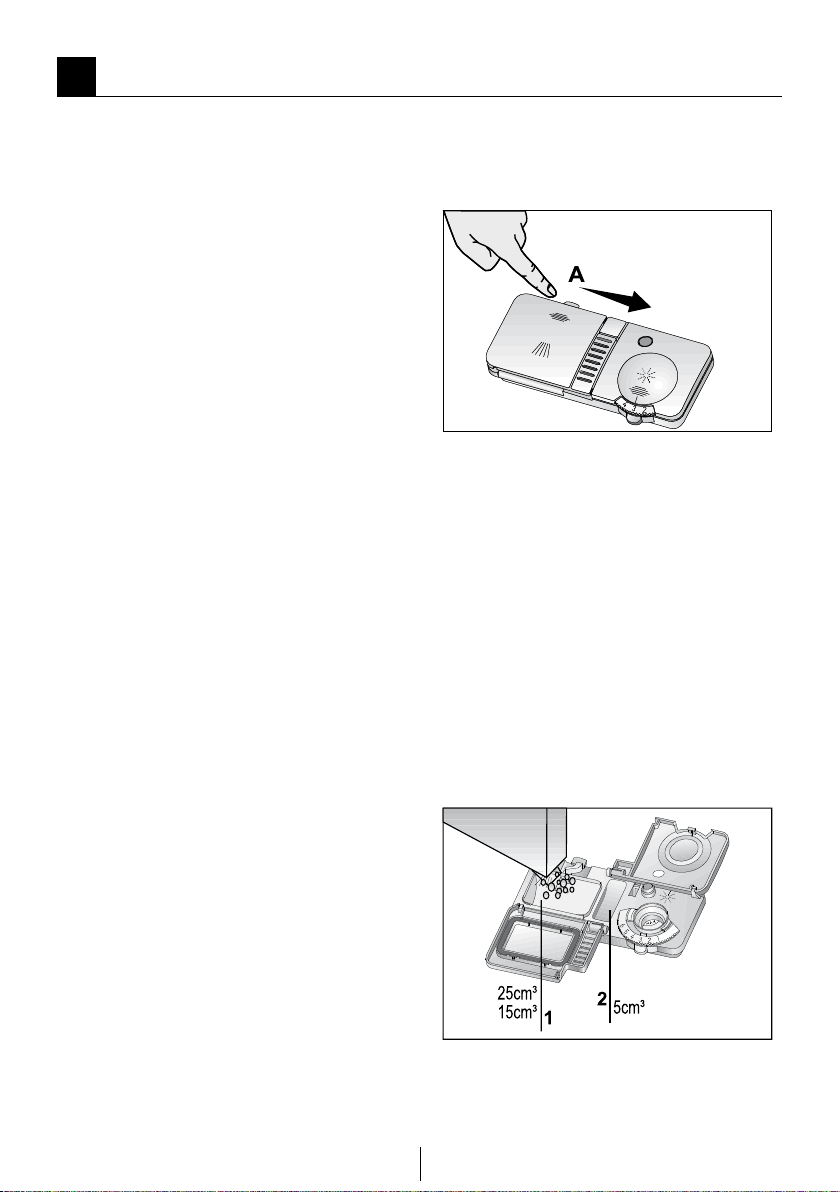
1. Push the latch to rght to open the
detergent dspenser ld (A).
2. Put suggested amount of
powder or tablet detergent n the
dspenser.
C Insde the detergent dspenser,
there are level markngs that
help you use approprate
amount of detergent. When
brmful, detergent dspenser wll
contan 40 cm of detergent.
Fll detergent up to 15 cm or 25
cm level marks n the detergent
dspenser accordng to fullness of
the machne and/or solng degree
of the dshes (1).
C If dshes have been watng for a
long tme and have dred resdues,
fll the 5 cm compartment too (5).
12
EN
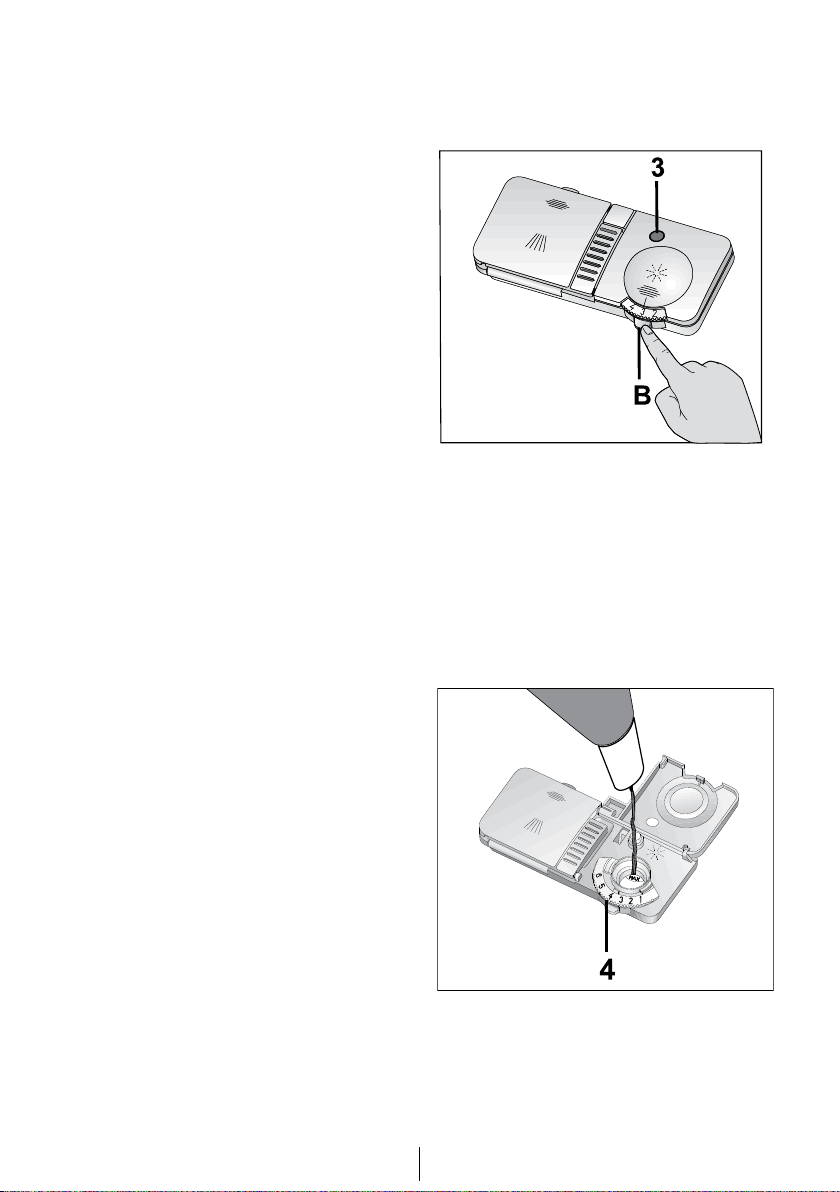
ndcator s lght, add rnse ad.
1. Open the ld of the rnse ad
reservor by pressng ts latch (B).
2. Fll the reservor untl “MAX” level.
3. Close the ld of the reservor by
pressng on t lghtly.
C Wpe clean any splled rnse ad
outsde the reservor. Rnse ad
that splled accdentally wll cause
foamng and t wll eventually
decrease washng performance.
4. Turn the rnse ad amount
adjuster manually to a poston
between 1 and 6 (4). If there are
3. Close the detergent dspenser
ld by pressng on t lghtly. A
“clck” wll be heard when the ld s
closed.
C In programmes wth prewash and
at hgh temperature, n whch you
use tablet detergents, make sure
that the detergent dspenser ld s
closed frmly.
C Use powder detergent n short
programmes wthout prewash
snce the solublty of the tablet
detergent changes dependng on
the temperature and tme.
A Excessve usage of powder
detergents wll cause the
detergent not dssolve completely
and wll also cause scratches on
the glassware.
Rnse ad
C The rnse ad used n dshwashers
s a specal combnaton used to
ncrease dryng effcency and
prevent water or lmescale stans
on the washed tems. For ths
reason, care must be pad to have
rnse ad n the rnse ad reservor
and to use rnse ads produced
specally for dshwashers only.
Check Rnse Ad Indcator to
determne whether t s necessary
to add rnse ad or not 3 (depends
on the model). Havng a dark lght
on the ndcator shows that there
s sucent amount of rnse ad n
the dspenser. If the colour of the

13
EN
the dshes before placng them n
the dshwasher.
• Place thn, narrow peces n the
mddle sectons of baskets f
possble.
• There are two separate baskets
n whch you can place your
dshes n the dshwasher. Place
the heavly soled and bgger
tems n the lower basket and
smaller, delcate and lght tems
n the upper basket.
• Place the hollowed dshes such
as bowls, glasses and pans upsde
down n the dshwasher. Thus,
accumulaton of water n deep
hollows s prevented.
A To prevent possble njures,
always place the sharp and
ponted dshes such as servce
fork, bread knfe, etc. upsde down
so as ther ponted ends wll face
down or they wll le horzontally
on the dsh baskets.
• Unload dshes n the lower basket
frst and then the dshes n the
upper basket.
stans on tableware tems after
washng, level must be ncreased
and f there s a blue trace after
wpng them by hand, t must be
decreased. Ths s set to poston 4
as factory default.
Items not sutable for washng n
the dshwasher
• Never wash dshes soled by
cgarette ash, candle remnants,
polsh, dyestu, chemcals, etc. n
your dshwasher.
• Do not wash ron alloy tems
n the dshwasher. It can get
corroded or leave stans on other
tems.
• Do not wash slverware and
cutlery wth wooden or bone
stems, glued peces, or peces
that are not resstant to heat,
as well as copper and tn-plated
contaners n the dshwasher.
C Decoratve prnts of chnaware as
well as alumnum and slver tems
may get dscoloured or tarnshed
after washng n the dshwasher
just as t happens n handwashng
as well. Some delcate glass types
and crystals may become dull n
tme. We strongly recommend
you to check f the tableware you
are gong to purchase s sutable
for washng especally n the
dshwasher.
Placng the dshes nto the
dshwasher
You can use your dshwasher n the
optmum way wth respect to energy
consumpton and washng and dryng
performance only f you place the
dshes n an orderly way.
• Wpe away any coarse food
remnants (bones, seeds, etc.) on
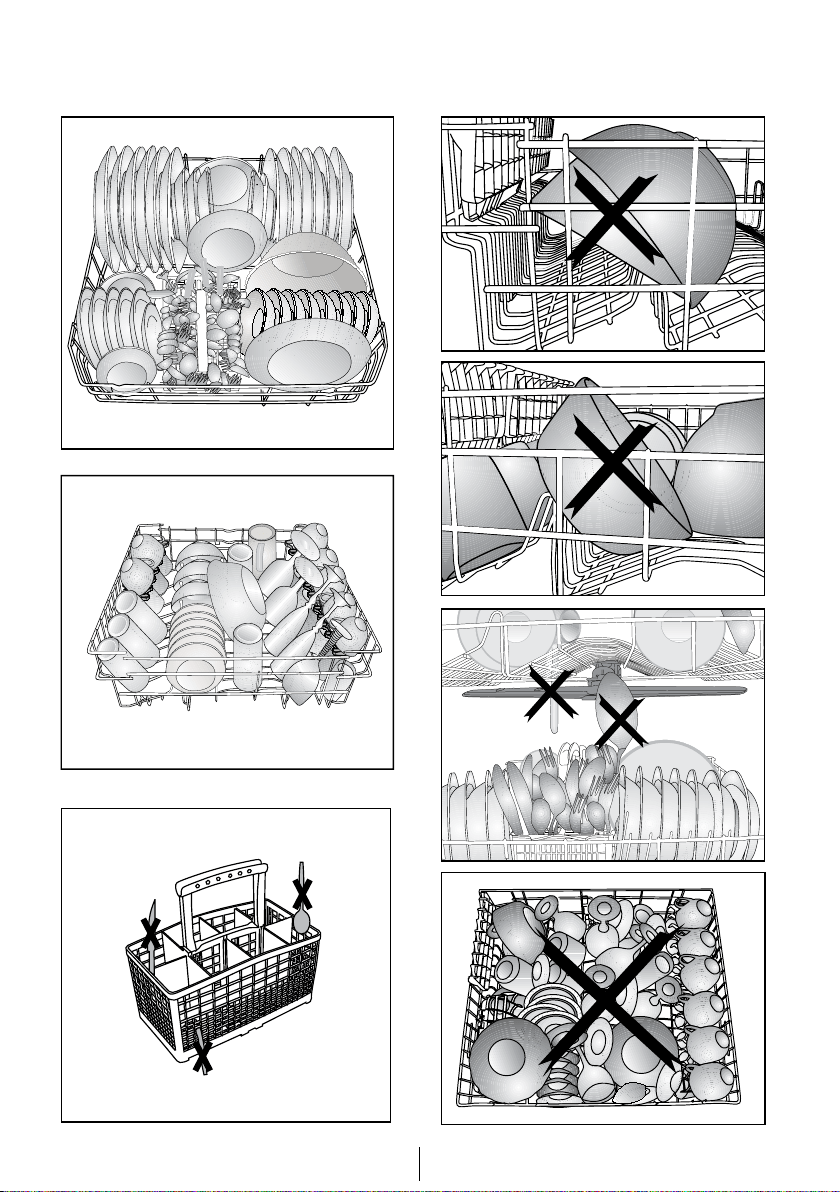
14
EN
Suggestons for loadng the
dshwasher
Lower basket
Upper basket
Improper Loadng Of Dshware
Improper Loadng Of Dshware
15
EN
Slverware basket
(depends on the model)
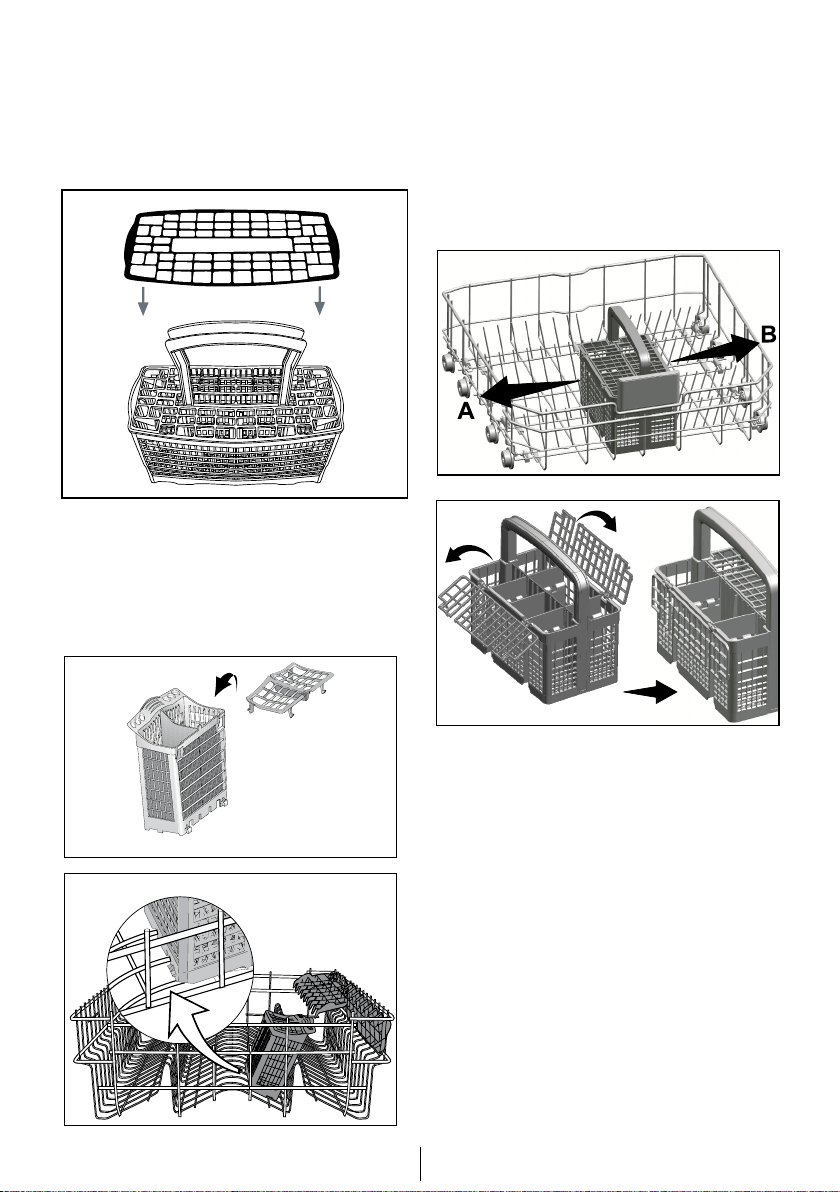
Slverware basket s desgned to wash
your dshes such as fork, spoon and
etc. n a cleaner manner.
Slverware basket pece
(depends on the model)
You can place your forks, spoons
and etc. to upper basket wth the
addtonal pece n the fgure.
Movable slverware basket
(depends on the model)
Snce the cutlery basket can be
moved (A, B), you can create a wder
space whle placng your dshes to the
lower basket and free up space for
your dshes n derent szes.
16
EN
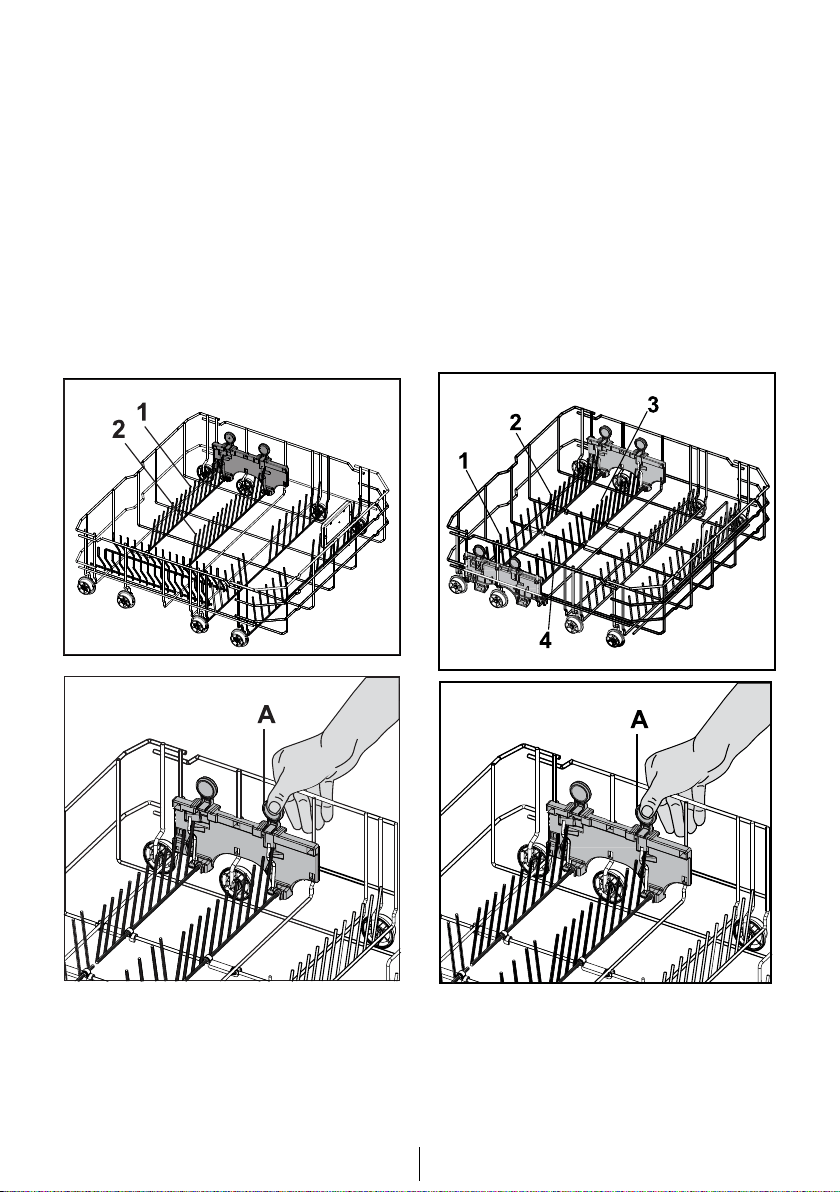
Collapsble lower basket
wres (4 peces)
(depends on the model)
The four pece foldable wres located
at the lower basket of the machne
are desgned for an easer placement
of large peces such as pans, bowls,
etc. (1, 2, 3, 4). You can create
larger spaces by foldng each wre
ndvdually or all of them at once. Lay
the foldable wres down by pressng
on the latch (A).
Collapsble lower basket
wres (2 peces)
(depends on the model)
The two pece foldable wres located
at the lower basket of the machne
are desgned for an easer placement
of large peces such as pans, bowls,
etc. (1, 2).
You can create larger spaces by
foldng each wre ndvdually or all of
them at once. Lay the foldable wres
down by pressng on the latch (A).
17
EN
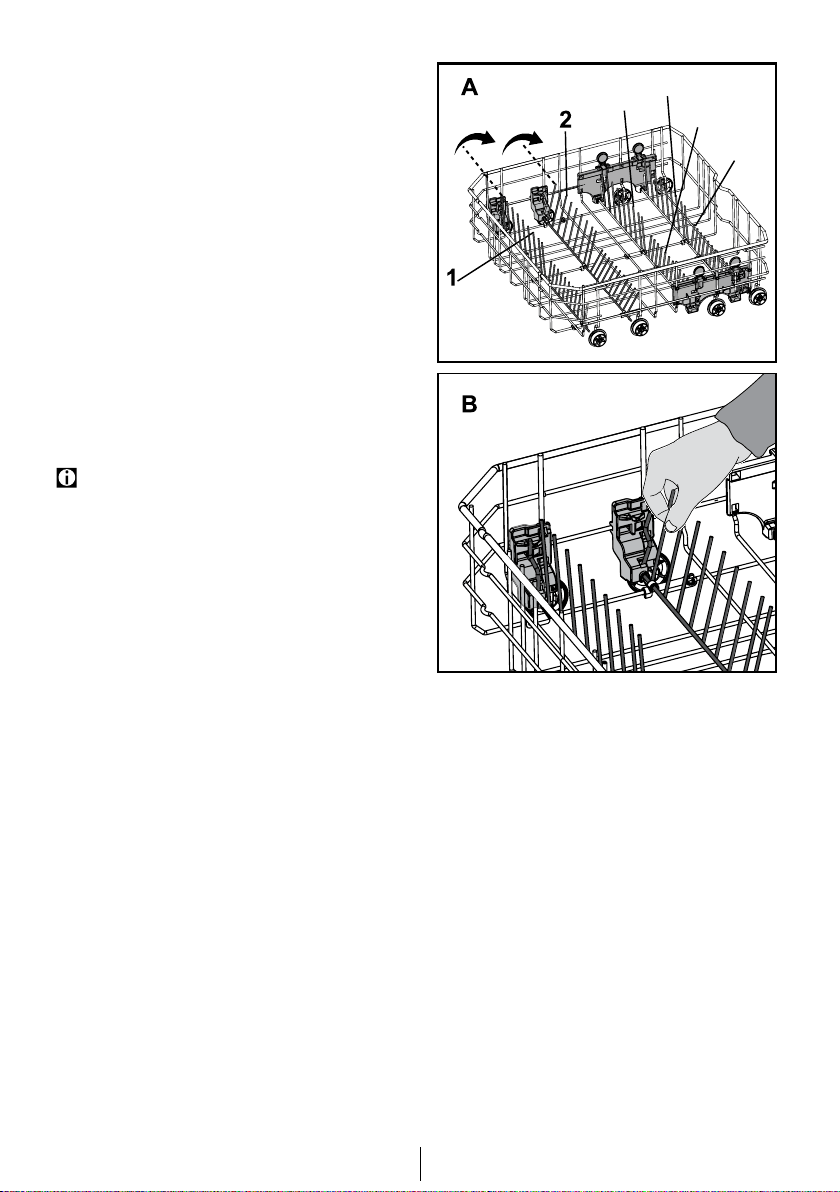
Collapsble lower basket
wres (6 peces)
(depends on the model)
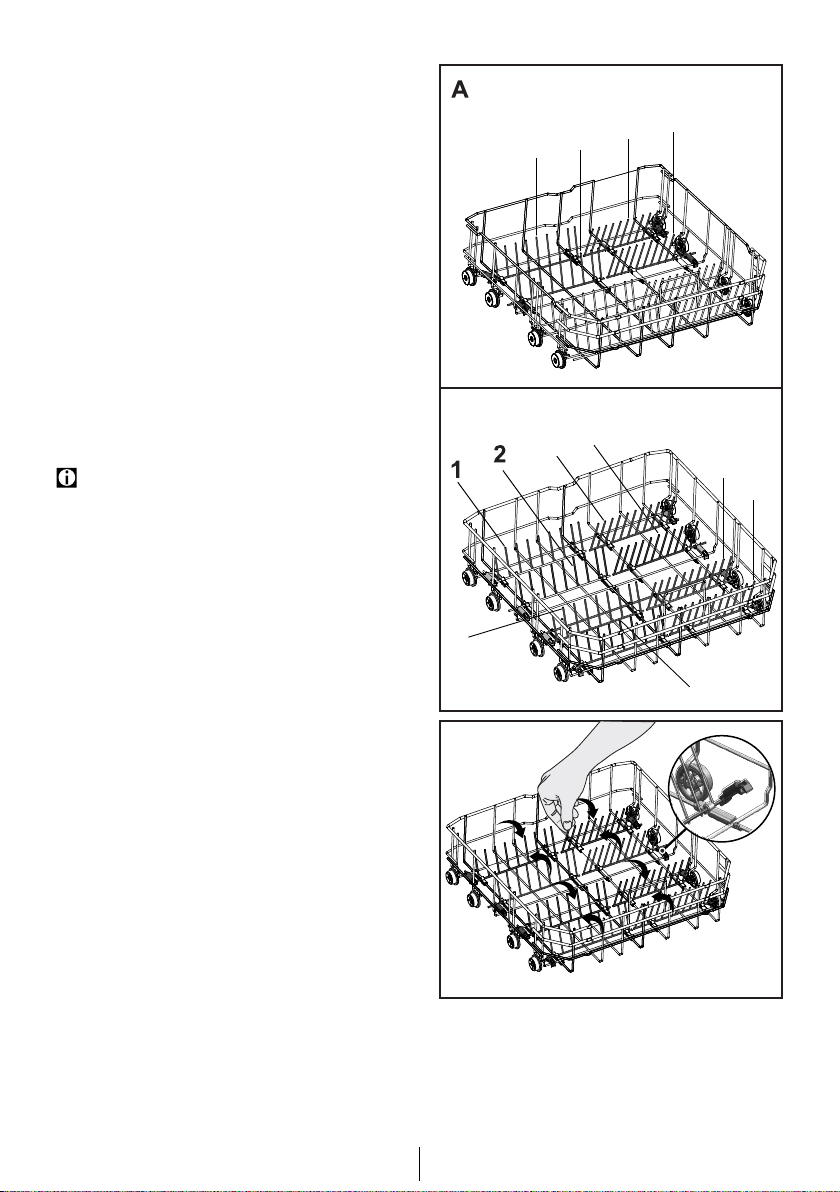
The foldable wres (A) located at
the lower basket of the machne are
desgned for an easer placement
of large peces such as pans, bowls,
etc. You can create larger spaces by
foldng each wre ndvdually or all
them at once.
To brng the collapsble wres nto
horzontal poston, grab the wre
from md poston and push them n
the drectons of arrows (B) To brng
the wres back to vertcal poston,
just lft them up. Collapsble wres wll
clck nto the latch agan.
Bringing the wires to the
horizontal position byholding
them from the tips may cause
them to bend. Therefore, it will be
appropriate to bring the wires in
the middle to horizontal or vertical
position by holding them from
their stems and pishing in the
direction of arrow.
3
4
6
5
18
EN
Collapsble lower basket
wres (4 & 8 peces)
(depends on the model)
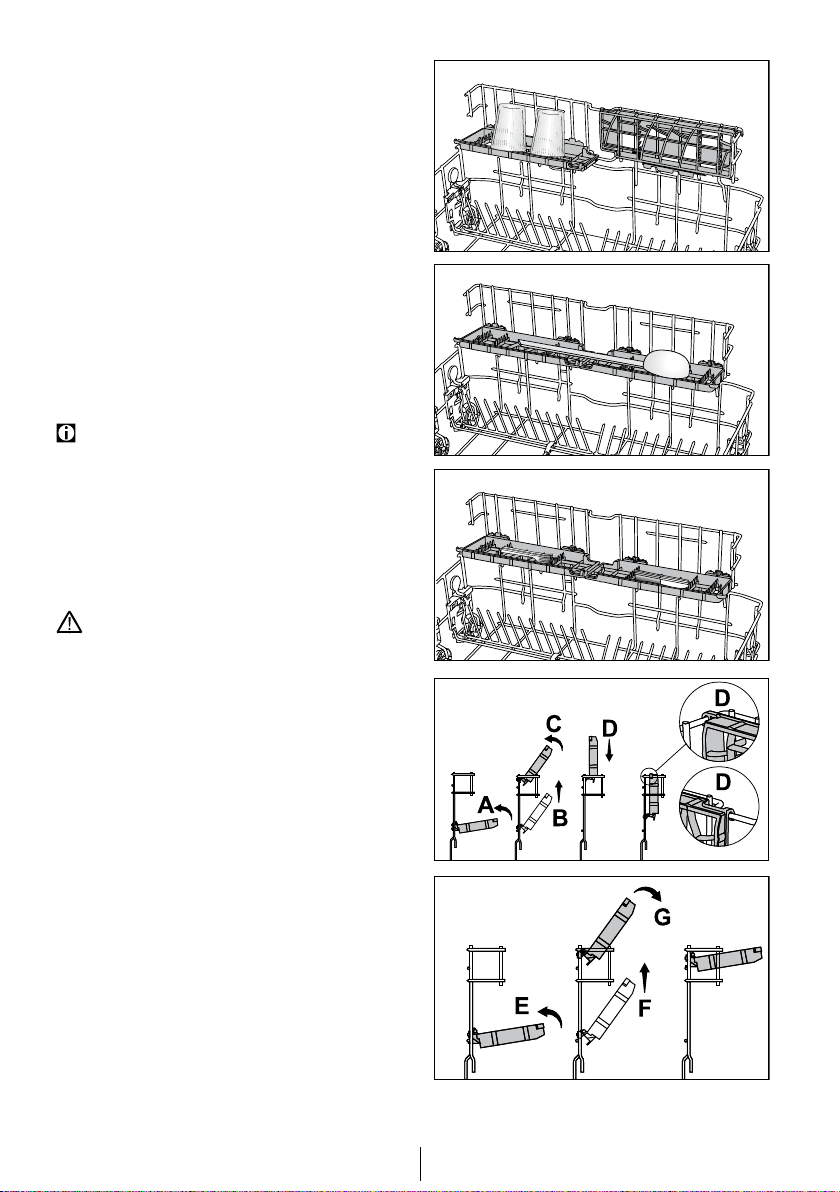
The foldable wres (A) located at
the lower basket of the machne are
desgned for an easer placement
of large peces such as pans, bowls,
etc. You can create larger spaces by
foldng each wre ndvdually or all
them at once.
To brng the collapsble wres nto
horzontal poston, grab the wre
from md poston and push them n
the drectons of arrows (B) To brng
the wres back to vertcal poston,
just lft them up. Collapsble wres wll
clck nto the latch agan (C).
Bringing the wires to the
horizontal position byholding
them from the tips may cause
them to bend. Therefore, it will be
appropriate to bring the wires in
the middle to horizontal or vertical
position by holding them from
their stems and pishing in the
direction of arrow.
33
44
55
77
88
66
BB
CC
11
22
33
44
19
EN
Lower basket multpurpose
/ heght adjustable servce
rack
(depends on the model)
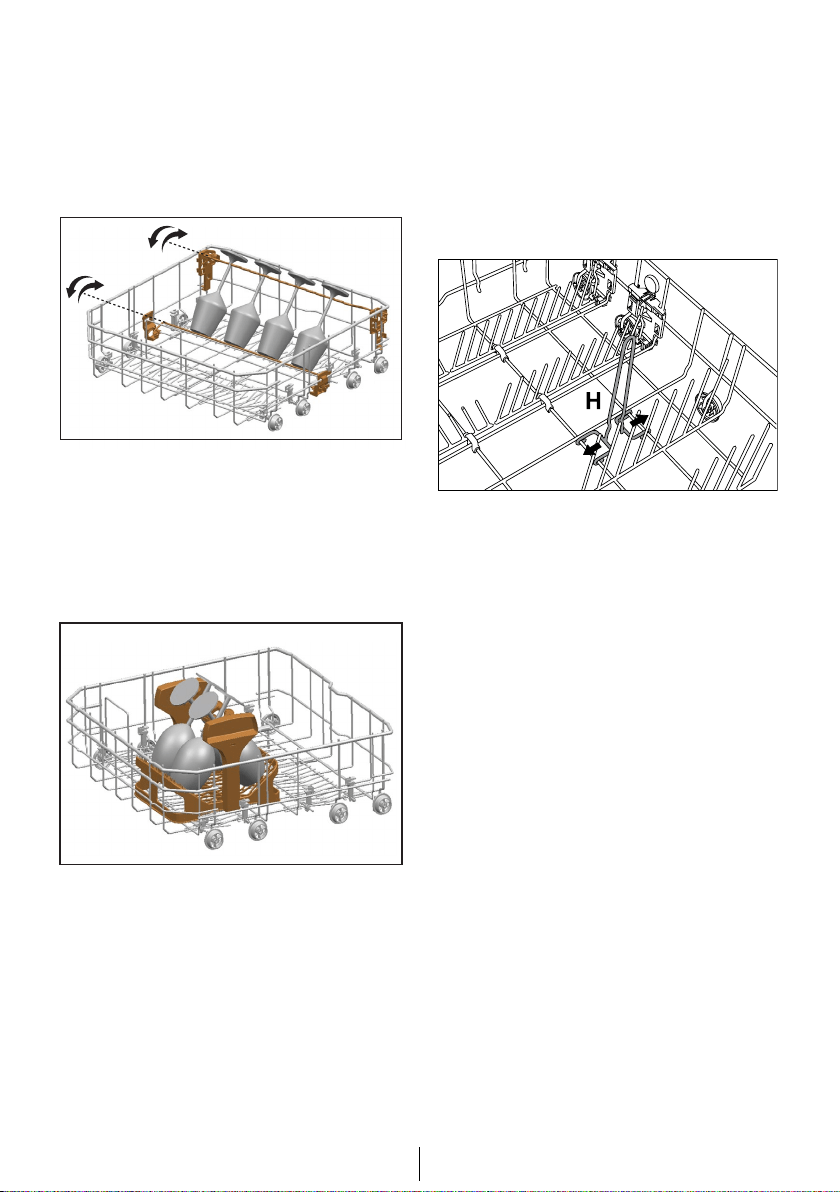
Ths accessory located at the lower
basket of the machne allows you
to easly wash peces such as extra
glasses, long ladles and bread knves.
To close the racks:
1. Fold the rack (A).
2. Slide the rack up (B).
3. Put the rack in vertical position (C).
4. Slide the rack down and lock it
with the tabs (D).
Perform the same process in
reverse order to open the racks.
To adjust the heght of the racks:
1. Fold the rack (E).
2. Slide the rack up (F).
3. Open the rack at the desired level
(G).
Make sure that the impeller does
not touch the dishes you placed
on the racks.
20
EN
Lower basket bottle wre
(depends on the model)
The bottle wre s desgned for easer
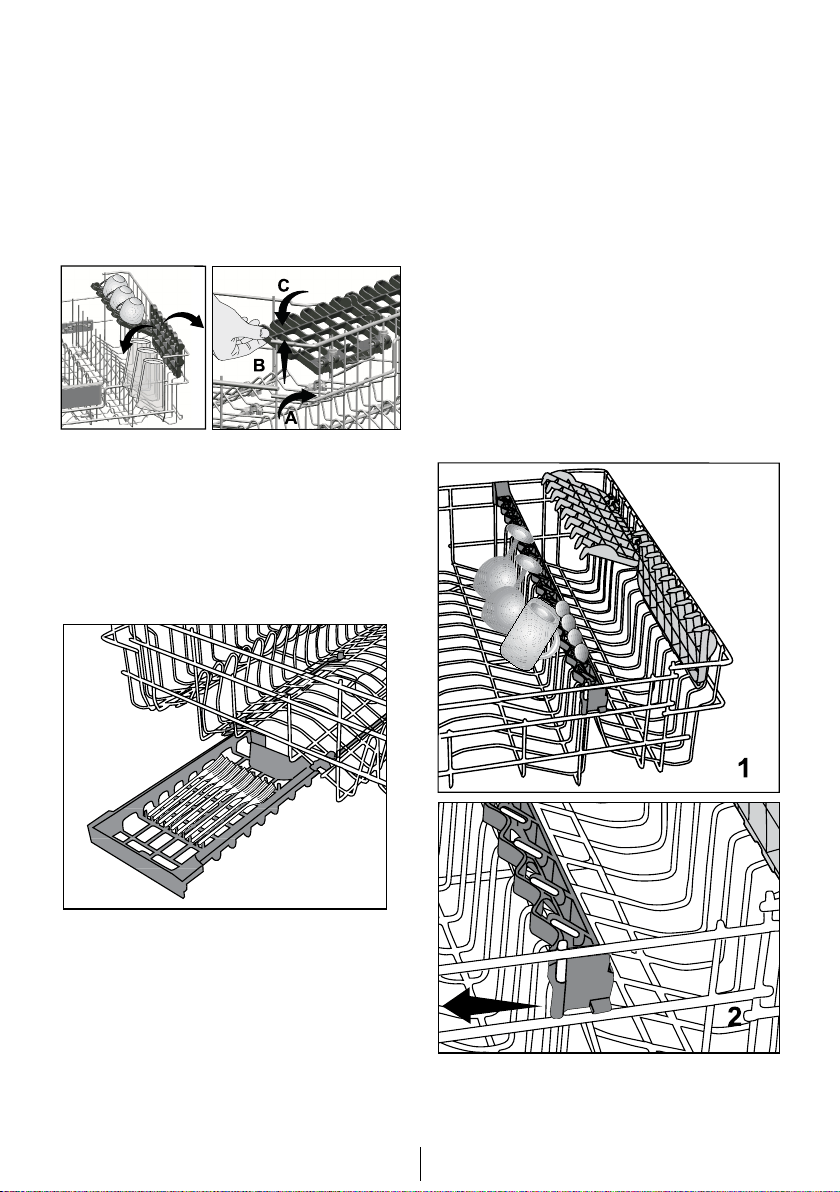
washng of long peces wth wde
mouths. You may take out the bottle
wre from the basket when not n use
by pullng t out from both sdes (H).
Lower Basket Glass Holder
(depends on the model)
Lower Basket Glass Holder found n
the lower basket of your machne
enables a safe washng for your
overszed and tall glasses.
SoftTouch Accessory
(depends on the model)
The SoftTouch Accessory found n the
lower basket of your machne enables
a safe washng for your fragle
glasses.
21
EN
Upper basket glass support
pece
(depends on the model)
When placng long stemmed glasses
or wne glasses, do not lean them
aganst other peces but to the edge
of the basket or to the rack (1). Do not
lean long glasses aganst each other.
They can move and get damaged
durng washng.
If you wsh to place large-volume
peces on the upper basket, release
the tab of the glass support pece
from the upper basket wre t s
hooked to. Thus, you can obtan a
wder space.
Upper basket drawer
(depends on the model)
You can easly place addtonal desert
spoons, small forks and knves nto
the basket drawer nstalled to the
upper basket of your machne.
Upper basket heght
adjustable rack
(depends on the model)
Use the lower and upper parts of the
heght adjustable racks n the upper
basket of the machne by sldng them
down or up accordng to the heghts
of the glasses, cups or etc. (A, B, C).
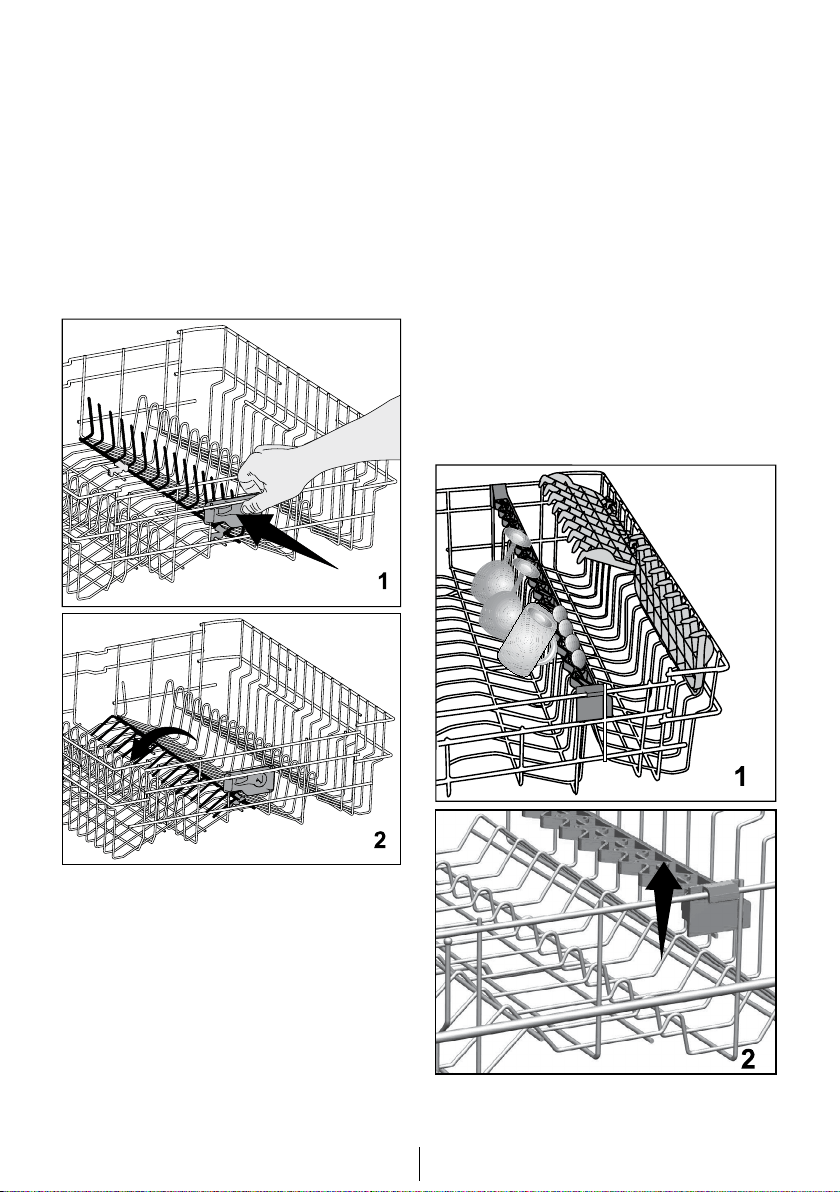
22
EN
Collapsble upper basket
wres
(depends on the model)
To brng the collapsable wres on the
upper basket of the machne nto
horzontal poston, press on the latch
(1). Place your larger dshes nto the
area created (2). To brng the wres
back to vertcal poston, just lft them
up.
Upper basket glass support
pece
(depends on the model)
When placng long stemmed glasses
or wne glasses, do not lean them
aganst other peces but to the edge
of the basket or to the rack (1). Do not
lean long glasses aganst each other.
They can move and get damaged
durng washng.
If you wsh to place large-volume
peces on the upper basket, release
the tab of the glass support pece
from the upper basket wre t s
hooked to. Thus, you can obtan a
wder space.
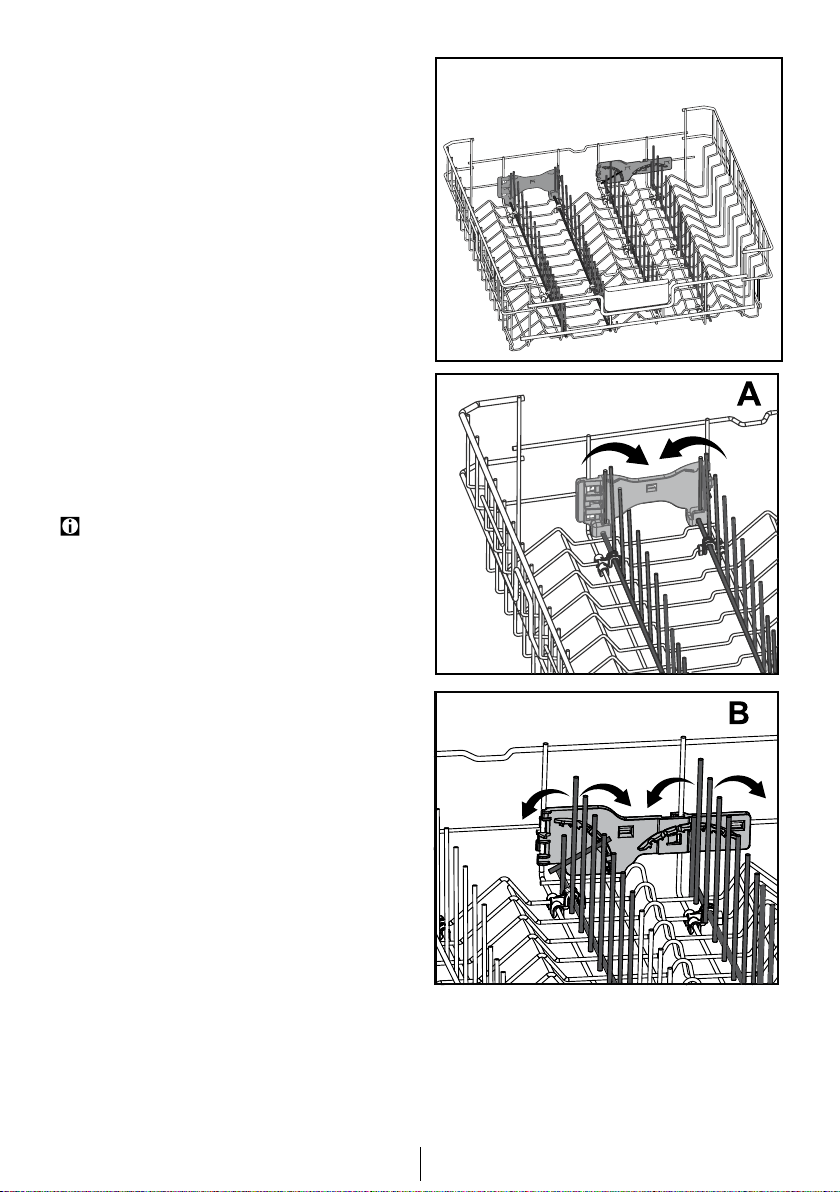
23
EN
Collapsble upper basket
wres
(depends on the model)
There are collapsble wres on the
upper basket of the machne that you
can lay down when you need a larger
room for bg dshes.
On your upper basket there are two
types of collapsble wres namely,
fully lad system (A) and gradually lad
system (B). To brng the collapsble
wres nto horzontal poston, push
the wres n the drecton of the arrow
by holdng them from the mddle. You
can place your larger dshes nto the
area created. To brng the wres back
to vertcal poston, just lft them up.
Collapsble wres wll clck nto the
latch agan.
Holding the wires from ends to
put them in lying position may
cause the wires to bend. For this
reason, it will be appropriate to
hold the wires in the middle from
their bottoms and to push in the
direciton of the arrow to lay down
or bring them to vertical position.
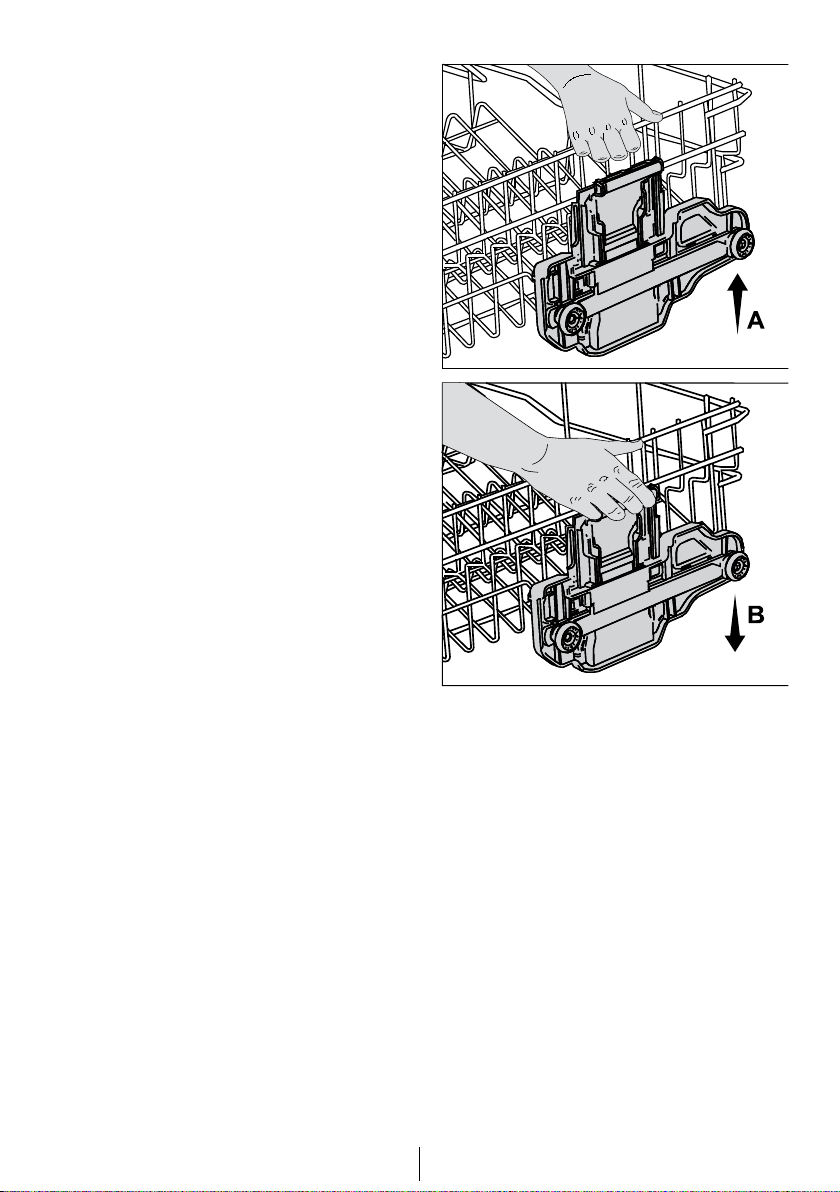
24
EN
Adjustng the heght of
loaded upper basket
(depends on the model)
Basket adjustment mechansm on
the upper basket of the machne s
desgned to allow you create wder
areas n the upper or lover secton
of the machne based on your
requrements by adjustng the heght
of the loaded basket n up or down
drectons wthout removng t from
the machne.
To rase the basket:
1. Grab one of the upper basket
wires (right or left) and lift it up
(A).
2. Repeat the same process to raise
the other side of the basket.
3. Make sure that both sides of
the basket height adjustment
mechanism are at the same level
(down or up).
To lower the basket:
1. Press the latch on the basket
adjustment mechanism (right or
left) to lower the basket (B).
2. Repeat the same process to lower
the other side of the basket.
3. Make sure that both sides of
the basket height adjustment
mechanism are at the same level
(down or up).
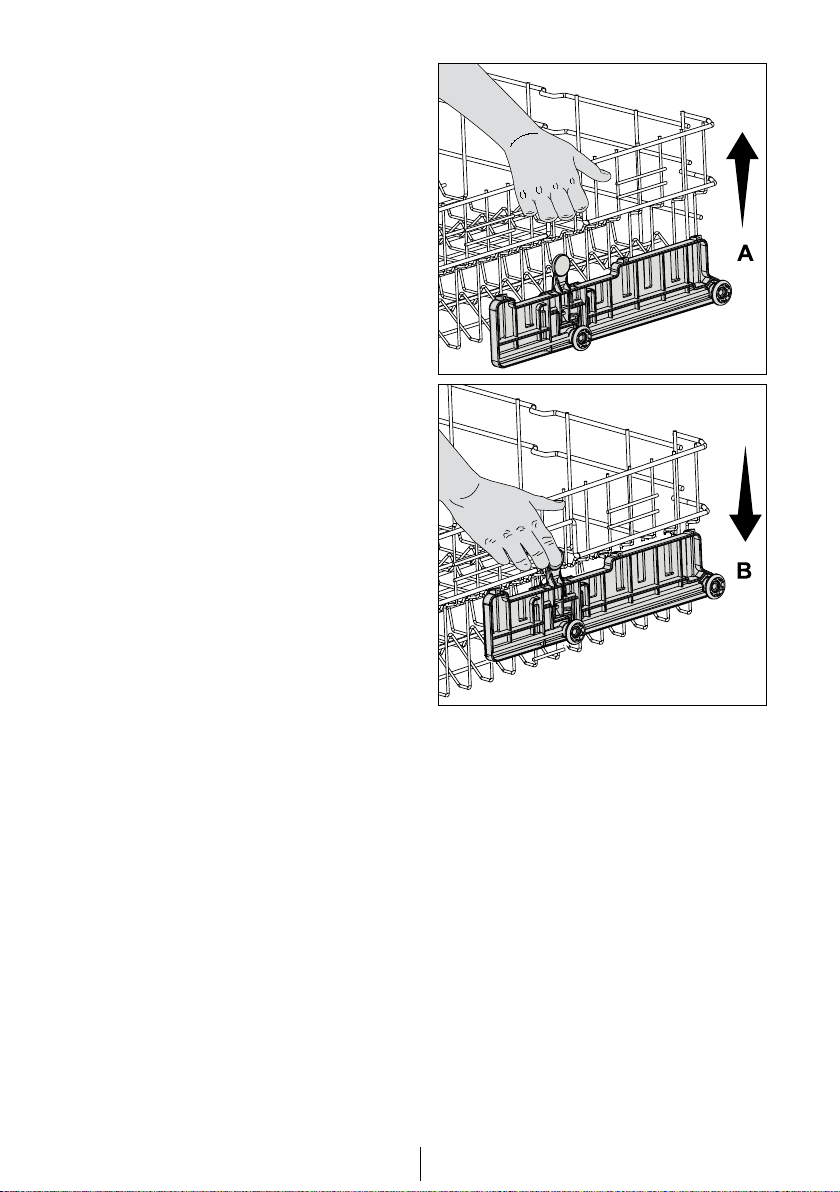
25
EN
Adjustng the heght of
loaded upper basket
(depends on the model)
Basket adjustment mechansm on
the upper basket of the machne s
desgned to allow you create wder
areas n the upper or lover secton
of the machne based on your
requrements by adjustng the heght
of the loaded basket n up or down
drectons wthout removng t from
the machne.
To rase the basket:
1. Grab one of the upper basket
wires (right or left) and lift it up
(A).
2. Repeat the same process to raise
the other side of the basket.
3. Make sure that both sides of
the basket height adjustment
mechanism are at the same level
(down or up).
To lower the basket:
1. Press the latch on the basket
adjustment mechanism (right or
left) to lower the basket (B).
2. Repeat the same process to lower
the other side of the basket.
3. Make sure that both sides of
the basket height adjustment
mechanism are at the same level
(down or up).
26
EN
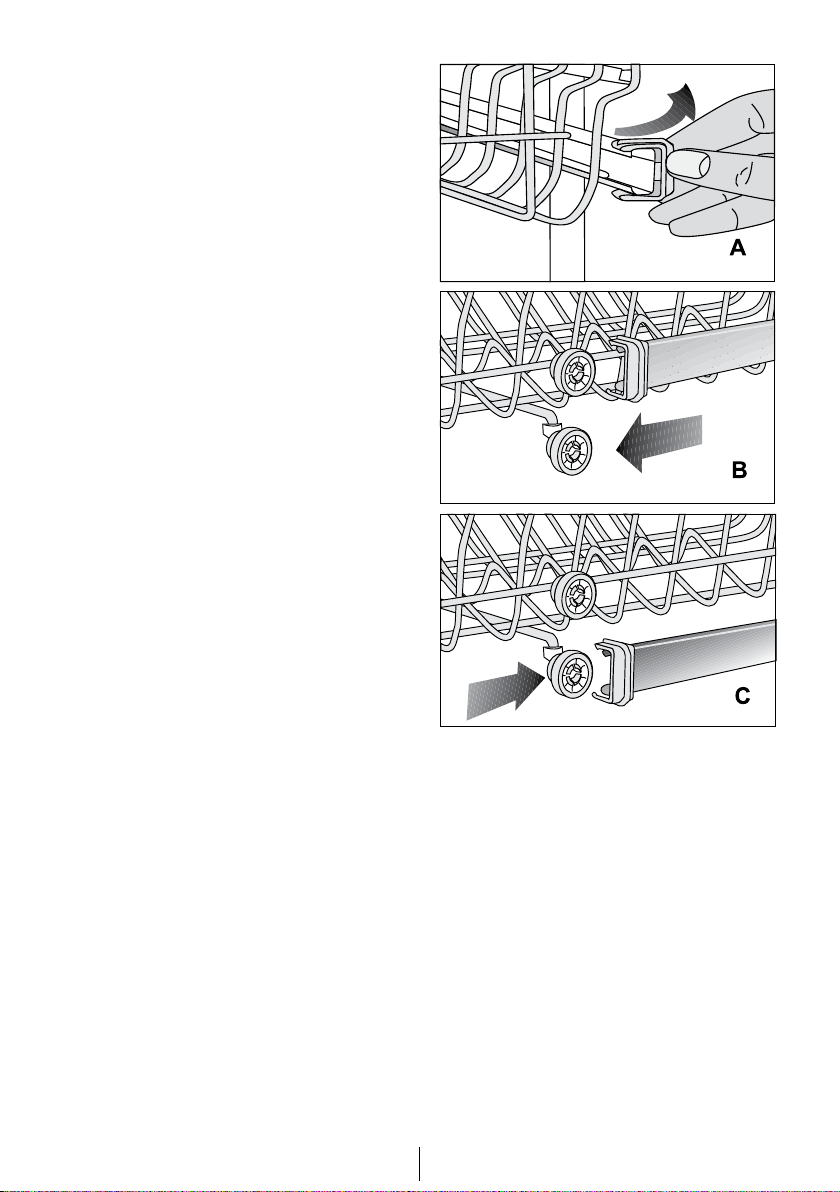
Adjustng the heght of
empty upper basket
(depends on the model)
You can adjust the heght of the
upper basket accordng to the sze
of the dsh to be washed. Use basket
rollers to change the basket heght.
1. Turn the stoppers on the ends of
the upper basket rails by turning
them aside (A).
2. Take the basket out (B).
3. Change the position of the rollers,
place the basket into the rail and
close the stoppers (C).
27
EN
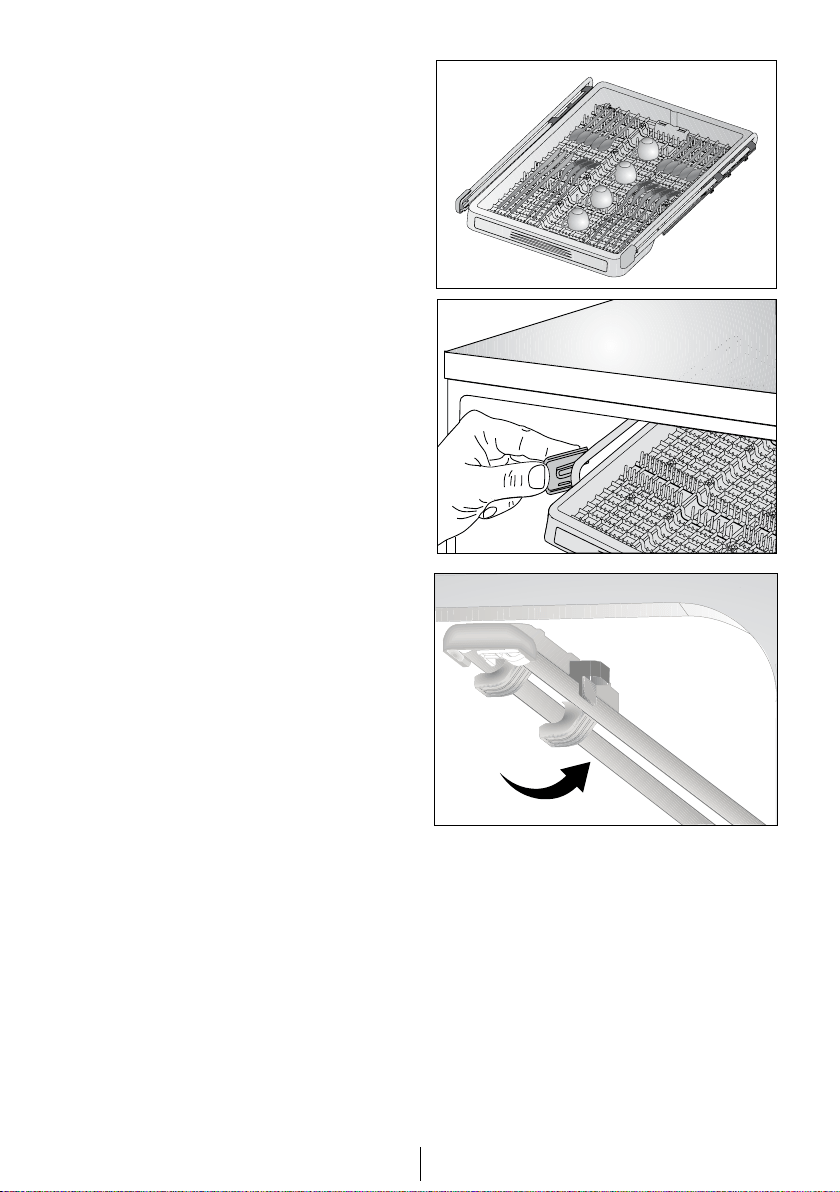
Celng slverware basket
Celng slverware basket s desgned
to wash small tems or tems that
are too long to ft nto the lower
slverware basket.
Snce t can be removed from the
machne easly, t allows takng
out the dshes from the machne
together wth the basket after they
are washed. It s compatble wth all
standard drawer szes and can be
placed nto ktchen drawers and racks.
Thus, there s no need to take the
dshes out of the basket and lay them
anymore.
Removng and nstallng the celng
slverware basket:
1. Pull the basket towards yourself.
2. Turn the ral caps (A) outwards
and pull them towards yourself to
remove them.
3. Rase the basket upwards and
take t out the machne.
4. Pull the carrer pece towards
yourself to remove t from the
rals.
5. Replace the ral caps and push the
rals back nto ther places.
6. Turn the rals nsde the machne
outwards (B) and seat them
properly n ther places.
C In order to install the ceiling
silverware basket into its place,
repeat the removal process in
reverse order.
28
EN
5
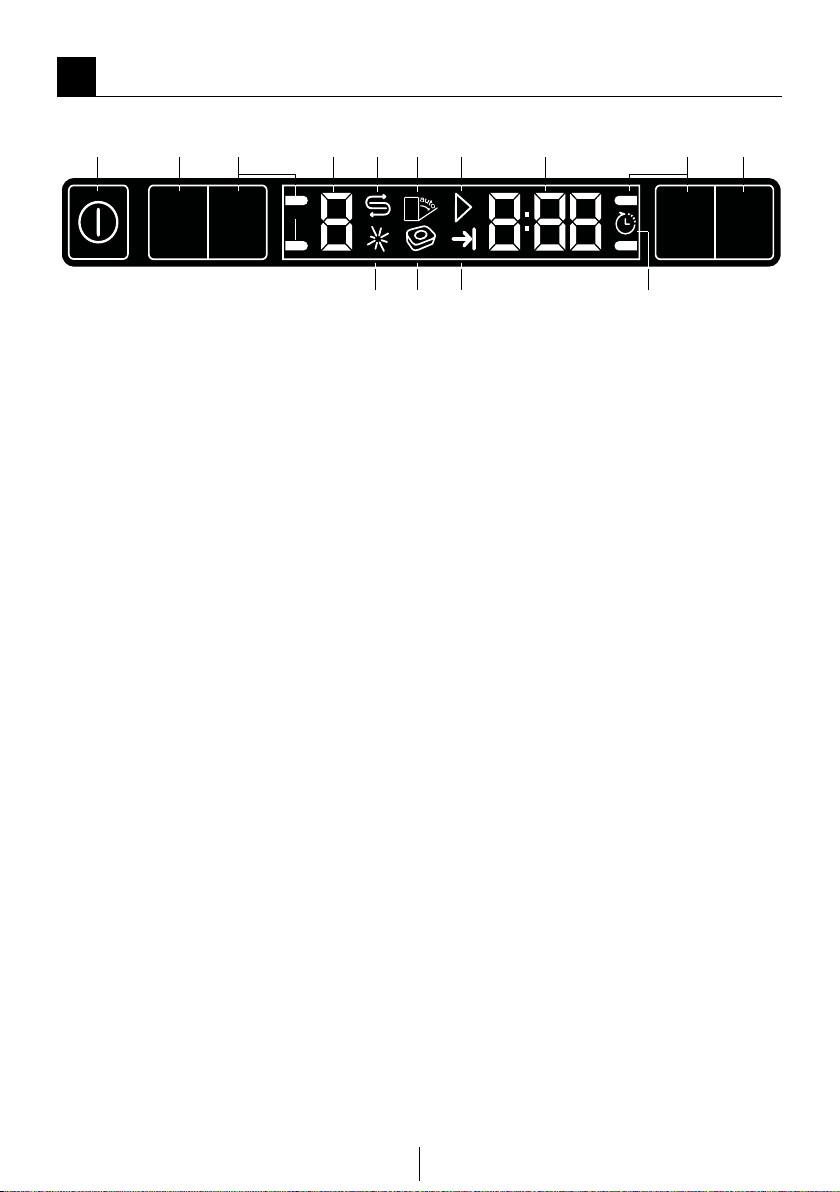
Operatng the product
1. On/Off key
2. Programme Selection /
Programme Cancel (3 seconds) key
3. Function keys
F1
F2
F3
F4
4. Programme indicator
5. Salt indicator
6.
7. Start / Cancel indicator
8. Time Delay / Programme Time
indicator
9. Time Delay key
10. Time Delay indicator
11. End of Programme indicator
12.
13. Rinse Aid indicator
AquaIntense Function
SteamGloss function
Fast+ Functon
(Not in use)
(Not in use)
Half Load Functon
1 2 4 5 6 7 83
3
9
10111213

29
EN
Keys
On/Off key
When you press On / O key, ndcator
lghts llumnate on the dsplay for
ON poston. The lghts turn o n OFF
poston.
Programme Selecton /
Programme Cancel key
Press this key until the desired
programme appears in the programme
indicator.
To cancel the running programme
open the door of the product. Press
and hold the Programme Selection /
Programme Cancel keys for 3 seconds.
After the 3 - 2 - 1 countdown, 0:01
is displayed, close the door of the
product and wait for the draining
process complete. Draining is
completed in 2 minutes and the
machine gives an audible warning
when it is completed.
Functon keys
If you press any of the Functon keys
durng programme selecton or tme
delay selecton, an armatve key
sgnal wll be heard provded that the
relevant functon s supported by the
selected programme. Functon wll be
deemed selected when the ndcator
of the selected functon s lt.
To cancel the selected functon, keep
the functon key pressed untl the
functon ndcator dsappears.
Preparng the machne
1. Open the door of the dishwasher.
2. Place the dishes in accordance
with the instructions in the user
manual.
3. Make sure that the upper and lower
impellers rotate freely.
4. Put adequate amount of detergent
into the detergent dispenser.
Programme selecton
1. Press the On/Off button to turn on
your machine.
2. Check the Salt and Rinse Aid
indicators and add salt and/or
rinse aid if needed.
3. Refer to the table of “Programme
data and average consumption
values” to determine a washing
programme suitable for your
dishes.
4. Selected programme will start
when you close the door of your
machine.
30
EN
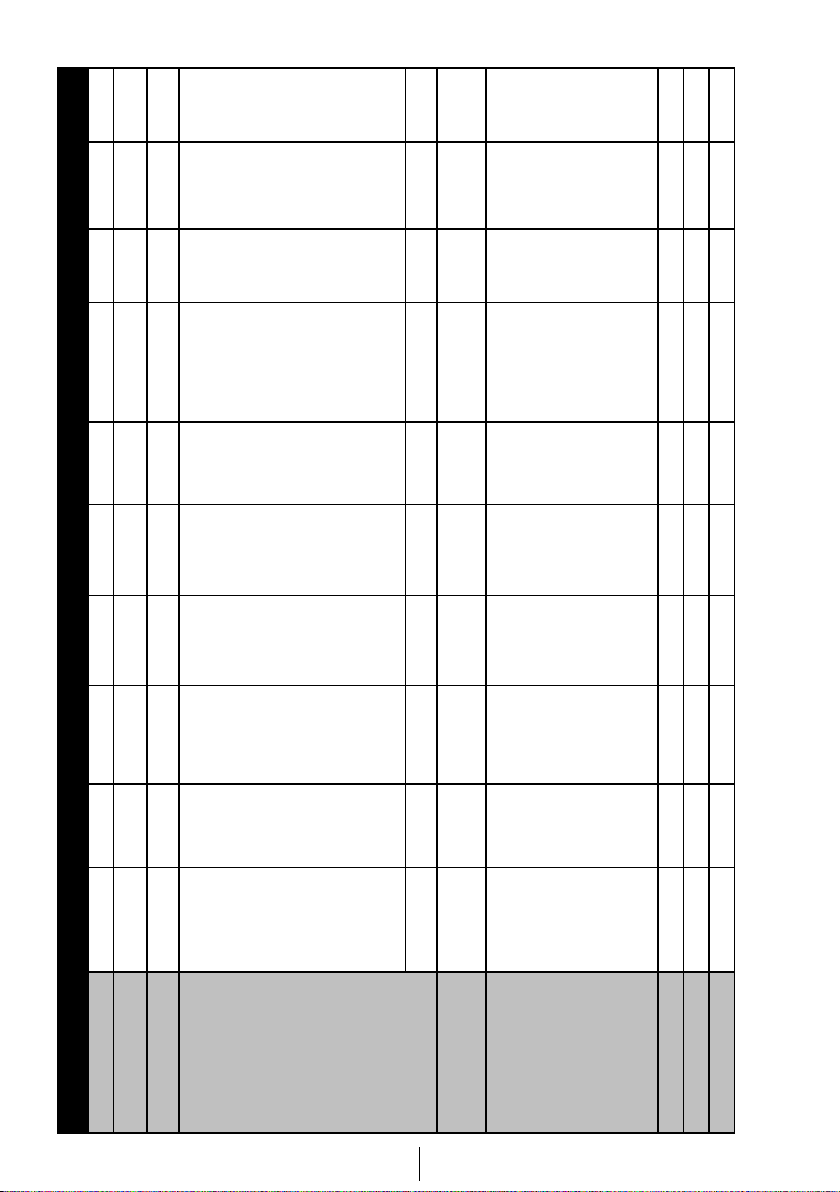
Programme Table
Programme number
P0 1 Reference* 2 3 4 5 6 7 8 9
Programme name
Cleaning temperature
Degree of Soiling
This programme
is recommended
to be operated on
each 1-2 months for
machine cleaning
and necessary
hygiene. The
programme should
be operated while
the machine is
empty.
In order to achieve
an efcient result,
it is recommended
to use together with
special machine
cleaning agents.
Most
economical
washing
program for the
medium soiled
daily dishes that
are kept waiting.
Determines the
soiling degree of
the dishes and sets
the temperature
and amount of the
washing water as
well as the washing
time automatically.
Suitable for all
types of dishes.
It is the most
suitable washing
programme
for daily mixed
dishes including
plastic items.
While delicate
glass items are
washed in the
upper basket,
pans and trays
can be washed in
the lower basket.
Suitable for the
dishes which
require extra
hygiene such as
articles for babies.
Also suitable for
heavily soiled
dishes.
Suitable for
heavily soiled
dishes, pots and
pans.
Daily washing program
at which the medium
soiled dishes that
are kept waiting are
cleaned in the fastest
way.
Suitable
for dishes
that are not
pre-cleaned
but washed
immediately.
Suitable for
lightly soiled
daily dishes that
are scraped or
pre-cleaned.
Suitable for
removing the
remnants on
the soiled
dishes that
will be kept
waiting in the
machine for
a few days,
and thus, for
preventing
the bad odor
buildup.
Medium Medium to high High High High Medium Few Few -
Detergents
A=25 cm³/15 cm³ B=5
cm³
A+B A A+B A+B A+B A+B A A -
Programme sequence
(without options)
Pre-wash
-
Wash
-
Cold rinse
-
Hot Rinse
-
Dry
-
End
The programme
sequence is
adjusted to the
amount of soiling
Pre-wash
-
Wash
-
Cold rinse
-
Hot Rinse
-
Hot Rinse
-
Dry
-
End
Pre-wash
-
Wash
-
Cold rinse
-
Hot Rinse
-
Dry
-
End
Pre-wash
-
Wash
-
Cold rinse
-
Hot Rinse
-
Dry
-
End
Wash
-
Cold rinse
-
Hot Rinse
-
Dry
-
End
Pre-wash
-
Wash
-
Cold rinse
-
Hot Rinse
-
Dry
-
End
Wash
-
Cold rinse
-
Hot Rinse
-
End
Pre-wash
-
End
Duration (min)
75 195 110-210 189 135 156 58 102 30 15
Water (I)
14,4 12,7 10,2-14,4 18,6 17,6 16,2 10,2 13 10,4 4
Energy (kWh)
0,66 0,62 0,90-1,45 1,36 1,68 1,43 1,3 0,92 0,8 -
The consumption values shown in the table were determined under standard conditions. Differences may therefore occur under practical conditions.
* Reference programme for testing institutes according to AS/NZS 2007
Pre-wash
ecoInnerClean Mini 30'Quick & CleanIntensive GlassCareBaby ProtectAquaFlexAuto
35°C45°C- 70°C70°C 40°C70°C -40°C- 65°C -
31
EN
SteamGloss functon
It provdes superor dryng
performance.
Fast+ Functon
It shortens the tme of the washng
cycle selected and decreases water
consumpton by enablng washng
under hgher pressure.
AquaIntense Functon
AquaIntense
mpeller located
under the lower
mpeller helps
washng your
heavly soled
dshes places n the rght sde of the
lower basket. It wll gve better results
to place the most soled dsh to the
rght front sde.
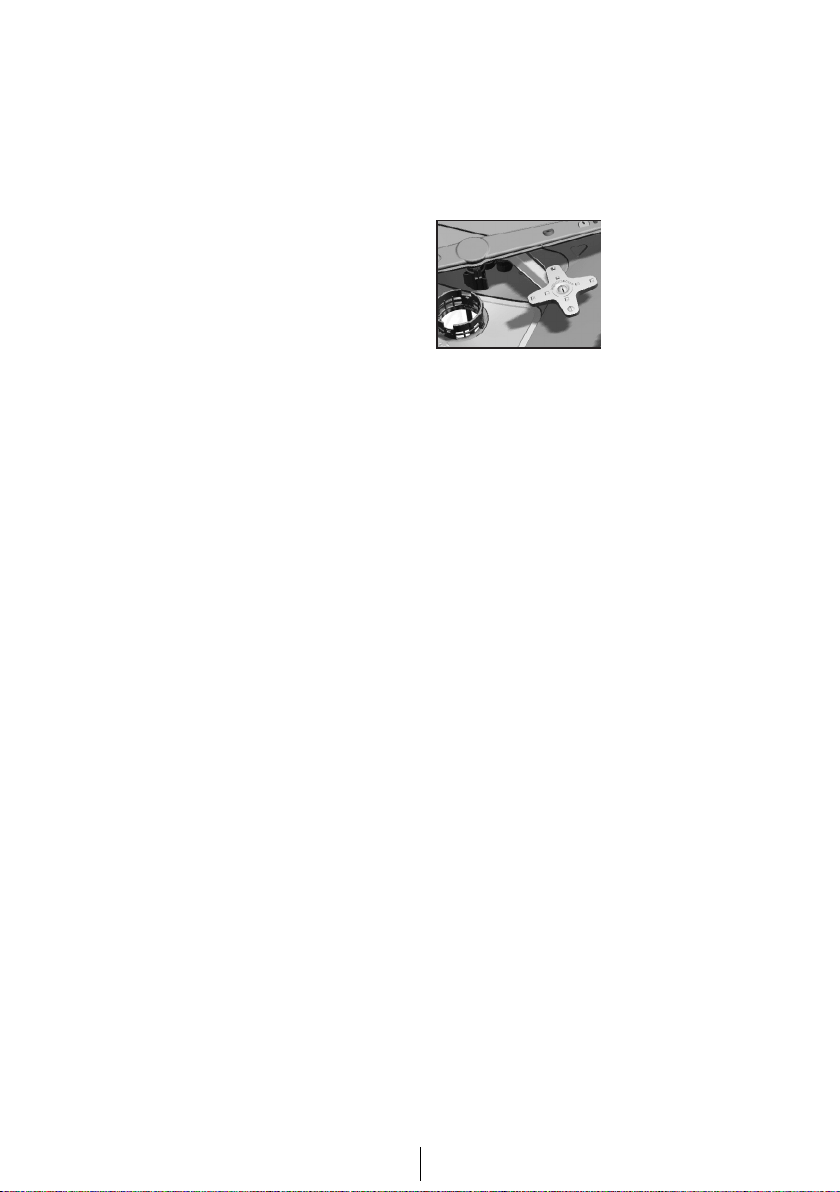
C Do not try to remove the
AquaIntense impeller!
Auxlary functons
Washng programmes of your
dshwasher are desgned to obtan
the best cleanng eect, consderng
the type of the solng, solng degree
and propertes of the dshes to be
washed.
Auxlary functons allow you save
from tme, water and power.
C Auxiliary functions may cause
changes in the programme
duration.
C Auxiliary functions are not
suitable for all washing programs.
Indicator of the auxiliary function
that is not compatible with the
programme will not be active.
Half Load functon
It s used to operate the machne
wthout loadng t completely.
It s used to operate the machne
wthout loadng t completely.
1. Load your dishes in the machine
as you like.
2. Turn the machine on with On/Off
key.
3. Select the desired programme and
press the Half Load key. The Half
Load indicator will light on the
display in the Function Selected
indicator.
4. Close the door of the machine to
start the programme.
C With the Half Load function you
can save both water and power
while using the lower and upper
baskets of the machine.

32
EN
Interor Lghtng (Depends on the
model)
Some models have nteror lghtng to
llumnate the nteror when the door
s opened.
Changing the interior lighting
setting
1. After turning on the machine,
press Time Delay and P/P+ keys
simultaneously. Continue to press
until the countdown 3, 2, 1 is
completed on the display.
2. Press P/P+ key to activate the
L: option. The interior lighting
is turned off at "L:0" option and
turned on at "L:1" option. Set the
desired option with the Time
Delay key.
Automatc Detergent Detecton
Feature
The product has a feature to
automatcally detect the type of the
detergent and adjust the washng
programme and dryng system to the
best performance. If specal tablet
detergent s used, the programme
duraton can be extended by 20
mnutes n order to optmze the
washng and dryng performance.
To deactivate:
1. After turning on the machine,
press Time Delay and P keys
simultaneously. Keep them
pressed until the countdown 3, 2,
1 is completed on the display.
2. Press P key to activate the a:
option. Automatic detergent
detection feature is disabled at
“a:0” option and enabled at "a:1"
option. Set the desired option by
pressing the Time Delay key.
3. Turn off the machine with On/Off
key to save the changes.
Floor llumnaton
Warnng to show that machne s
n washng phase
(depends on the model)
Your machne reects a lght to the
oor durng the washng process.
Ths lght turns o after the washng
process s complete.
C Floor illumination is activated
automatically when the washing
programme starts and remains lit
until the end of the programme.
C Floor illumination cannot be
cancelled by the user.
3. Turn off the machine with On/Off
key to save the changes.
InnerClean
Ths programme s recommended
to be operated on each 1-2 months
for machne cleanng and necessary
hygene. The programme should be
operated whle the machne s empty.
In order to acheve an ecent result,
t s recommended to use together
wth specal machne cleanng agents.
A Do not use Machine Cleaning
programme to clean dishes. As it
operates in high temperatures, it
is harmful for the dishes.
Changng Warnng Sound Volume
1. After turning on the machine,
press Time Delay and P / P+
keys simultaneously. Keep them
pressed until the countdown 3, 2,
1 is completed on the display.
2. Press P / P+ key to activate the S:
position.
3. Each pressing on the Time Delay
key will change the warning sound
volume as "S:0" off, "S:1" medium"
and "S:2" high.

33
EN
Schedulng the washng tme
Tme Delay
If an economcal electrcty tar s
appled n your regon, you can use
the Tme Delay functon to wash your
dshes durng approprate hours.
You can delay the start of the selected
programme untl 24 hours.
1. Press the Time Delay function
key after selecting the washing
programme and other auxiliary
functions.
2. Once you press the Time Delay key,
Display Information Line will show
"0:30" and Time Delay indicator will
start flashing.
3. Set the desired time by pressing
the Time Delay key. Time will
increase with increments of 30
minutes up to 6 hours and after
that in 1 hour increments up to 24
hours every time you press the key.
4. Close the door of your machine
after setting the Delayed Start.
Once the delay time is over, the
selected programme will start
automatically.
Changng the settngs whle Tme
Delay functon s actve
Whle the Tme Delay functon s
actvated, you cannot make changes
n the washng programme, auxlary
functons or the duraton of delay tme.
C Programme and auxiliary functions
cannot be set/changed after the
programme has started.
To cancel the Tme Delay functon
Open the door of the product Press
and hold the Programme Selecton /
Programme Cancel keys for 3 seconds.
After the 3 - 2 - 1 countdown, 0:01
s dsplayed, close the door of the
product and wat for the dranng
process complete. Dranng s
completed n 2 mnutes and the
machne gves an audble warnng
when t s completed.
C You can select and start a
new programme following
the cancellation of Time Delay
function.
C Time Delay function cannot be set
after the programme starts.
Startng the programme
Close the door of your machne to start
t after selectng the programme and
auxlary functons.
C Your machine performs water
softening depending on the
hardness level of the supply water.
Washing time can change while the
programme is running depending
on the ambient temperature
where your machine is installed,
temperature of the supply water
and amount of the dishes.
C Pay attention not to open the door
of the machine when it is running.
There may be a rush of vapour
when you open the door of your
machine; be careful.
C The machine will remain silent in
pause mode for some time in order
to remove the water in the machine
and on the dishes completely and
to have the water softener cleaned,
and then it will resume running in
drying mode.
Cancellng the programme
Open the door of the product Press
and hold the Programme Selecton /
Programme Cancel keys for 3 seconds.
4. Turn off the machine with On/Off
key to save the changes.
C Factory setting of your machine is
“S:2”.

34
EN
After the 3 - 2 - 1 countdown, 0:01 s
dsplayed, close the door of the product
and wat for the dranng process
complete. Dranng s completed n
2 mnutes and the machne gves an
audble warnng when t s completed.
C There might be residues of
detergent or rinse aid in the
machine and/or on the pieces being
washed depending on the step the
programme you have cancelled was
in.
Salt ndcator ( )
Please check the salt ndcator on
the dsplay to see whether there s
adequate amount of softenng salt
n the dshwasher or not. You need
to refll the salt reservor wth salt
whenever salt ndcator appears on the
dsplay of your machne.
C Adjusting the water hardness level
is explained in Water Softening
System section.
Rnse Ad ndcator ( )
Please check the rnse ad ndcator
on the dsplay to see whether there
s adequate amount of rnse ad n the
dshwasher or not. You need to refll
the rnse ad reservor wth rnse ad
whenever rnse ad ndcator appears
on the dsplay of your machne.
End of programme
C When the programme you have
selected comes to an end, an
audible warning signal will warn
you to turn off your machine. This
audible signal will warn you with
certain intervals before it turns off.
C End of Programme indicator
will light up when the washing
programme is over (Depends on the
model).
1. Open the door of the machine.
2. Press On/Off key to turn off your
machine.
3. Close the tap.
4. Unplug the machine from the
socket.
C For energy saving, the machine is
automatically turned off following
the completion of the programme
or if the programme is not started.
C Leave your dishes in the machine
for about 15 minutes to allow them
cool down after they are washed.
Your dishes will dry in a shorter
time if you leave the door of your
machine ajar during this period.
This process will increase the drying
effectiveness of your machine.
Water cut-o warnng
If mans water s cut or water nlet
tap s turned o the machne cannot
take water n and E:02 con wll ash
on the programme ndcator. As long
as the problem contnues, washng
programme s paused and the water
nlet s checked regularly by the
machne; when the water s restored
E:02 con wll dsappear after a whle
and the washng programme resumes.
Overowng warnng
If the machne ntakes too much
water or there s leakage at any of
the components then the machne
wll detect ths and E:01 con wll ash
on the Programme ndcator. As long
as the overowng contnues safety
algorthm wll be actve and try to
dscharge the water. If overowng
stops and safety s assured, E:01
con wll dsappear. If E:01 does not
dsappear, there s a permanent fault.
In ths case the authorsed servce
should be contacted.
35
EN
left on the flters. If there are food
resdues on flters, take them out and
clean well under runnng water.
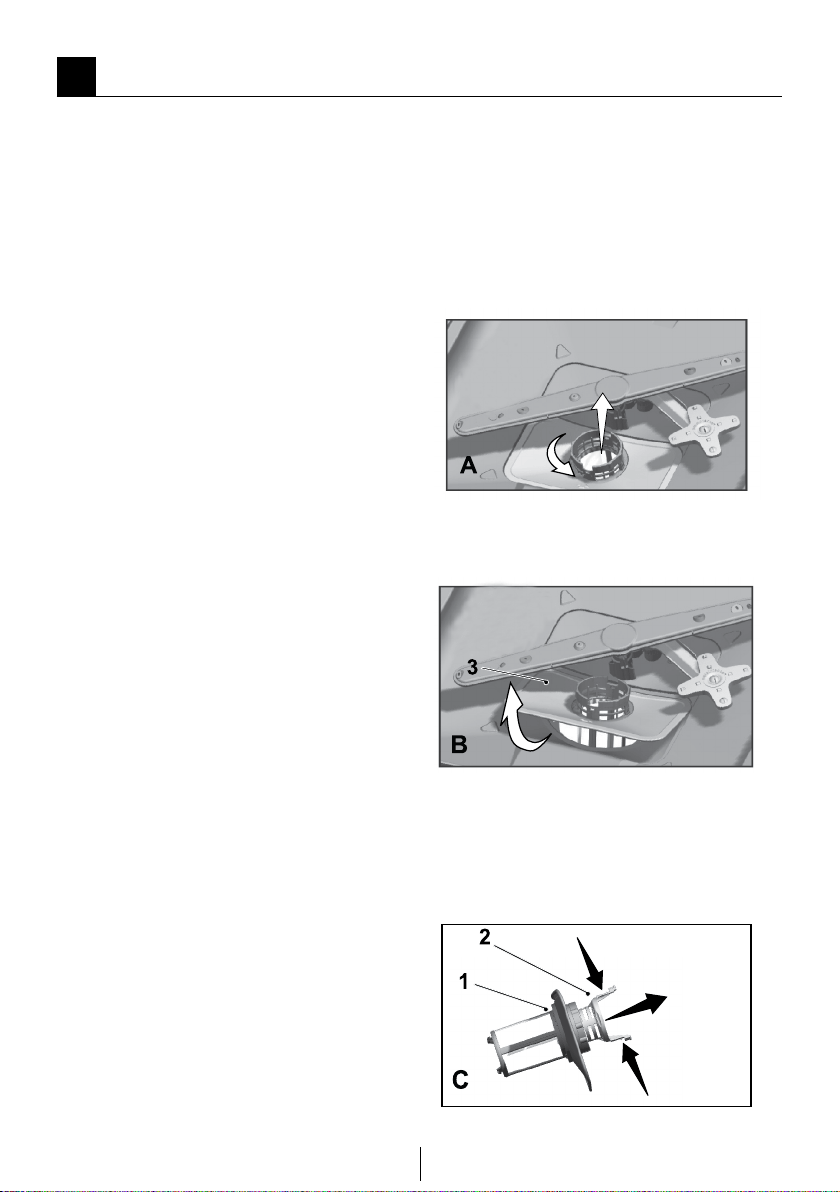
1. Turn the mcro flter (1) and
coarse flter (2) assembly counter
clockwse and pull t out from ts
seatng (A).
2. Pull out the metal / plastic filter
(3) (B).
3. Press the two pawls on the coarse
flter nwards and separate the
coarse flter from the assembly
(C).
6
Mantenance and cleanng
Servce lfe of the product extends
and frequently faced problems
decrease f t s cleaned at regular
ntervals.
A Unplug the product and turn off
the tap before attemptng any
cleanng procedures.
C Do not use abrasve substances
for cleanng.
C Clean the flters and mpellers at
least once a week.
Cleanng the outer surface
of the product
Clean the outer surface and door
gaskets of the product gently wth a
mld cleanng materal and damp cloth.
Wpe the control panel only wth a
damp cloth.
Cleanng the nteror of the
machne
— Clean the nteror of the machne
and the tank by runnng a prewash
programme wthout detergent or
a long washng programme wth
detergent based on the degree of
solng.
— If water has remaned n the
machne, dran the water by
performng the procedures
under the topc “Cancelng a
programme”. If the water cannot
be dscharged, clean any leftover
deposts that have pled up n the
bottom of the machne, blockng
the water path.
Cleanng the flters
Clean the flters at least once a week
n order for the machne operates
ecently. Check f food resdues are
36
EN
4. Clean all three flters under tap
water by means of a brush.
5. Replace the metal/plastc flter.
6. Place the coarse flter nto the
mcroflter. Make sure that t s
properly seated. Turn the coarse
flter clockwse untl a “clck”
sound s heard.
A Do not use the dshwasher
wthout flter.
C Incorrect placement of the flters
wll reduce washng effcency.
Cleanng the hose flter
Damages on the machne that may be
caused by mpurtes comng from the
urban supply water or your own water
nstallaton (such as sand, drt, rust,
etc.) can be prevented by means of
the flter attached to the water nlet
hose. Check the flter and the hose
regularly and clean them f necessary.
1. Turn off the tap and remove the
hose.
2. After takng out the flter, clean t
under runnng tap water.
3. Place the cleaned flter back to ts
seat n the hose.
4. Install the hose to tap.
(depends on the model)
Cleanng the mpellers
Clean the mpellers at least once
a week n order for the machne
operates ecently.
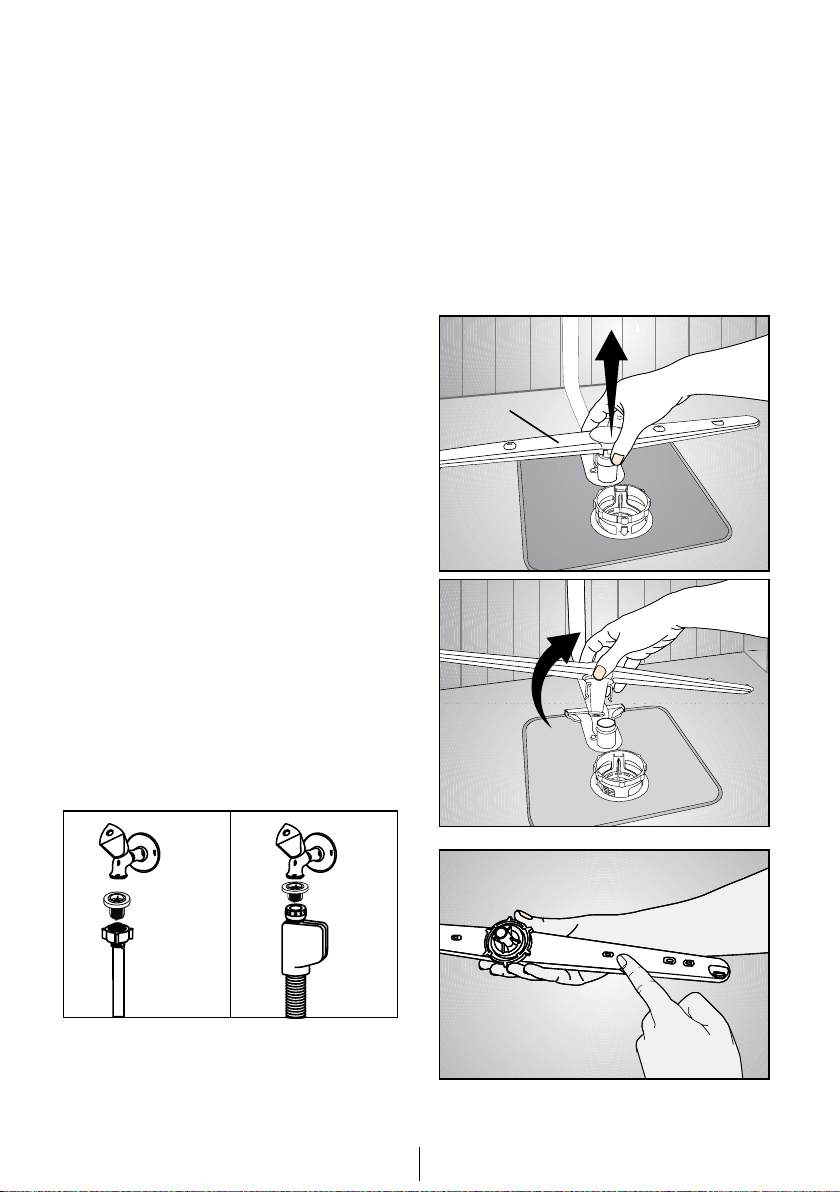
Lower mpeller
Check f the holes on the lower
mpeller (1) are clogged. If they
are clogged, remove and clean the
mpeller. Pull the lower mpeller up to
remove t (A, B).
37
EN
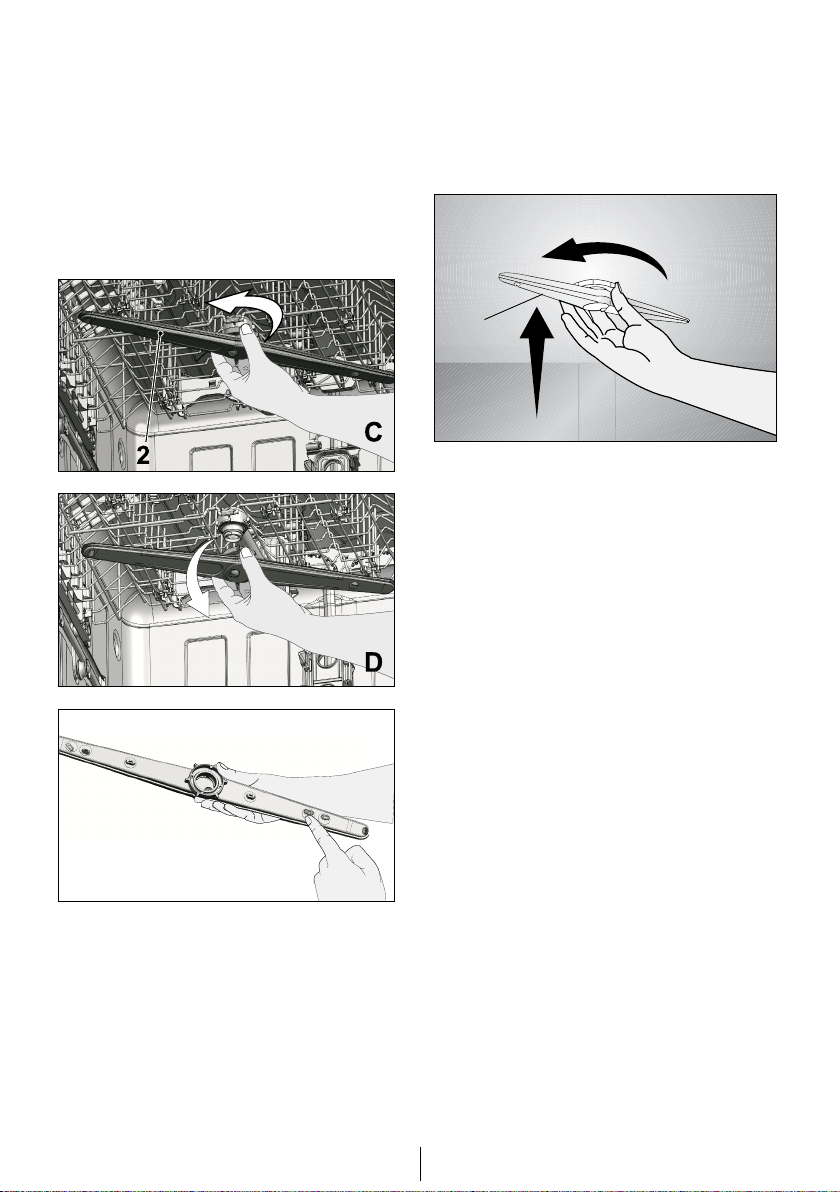
Upper mpeller
Check f the holes on the upper
mpeller (2) are clogged. If they
are clogged, remove and clean the
mpeller. Turn ts nut to left to remove
the upper mpeller (C, D).
Make sure that the nut s tghtened
well when nstallng the upper
mpeller.
Celng mpeller
Check f the holes on the top celng
mpeller (3) of your machne are
clogged. If they are clogged, remove
and clean.
To remove the mpeller, slghtly
(E) push t upwards and then turn
clockwse (F).
To nstall the mpeller, seat t nto ts
slot, push slghtly upwards and turn
t antclockwse untl t s securely
ftted. When the mpeller s released,
check f t rotates wthout any
obstructon.

38
EN
Troubleshootng
Machne does not start.
• Power cable s unplugged. >>> Check if the power cable is plugged in.
• Fuse s blown. >>> Check the fuses in your house.
• Water s cut. >>> Make sure that the water inlet tap is open.
• Door of the machne s open. >>> Make sure that you have closed the door
of the machine.
• On / Off button s not pressed. >>> Make sure that you have turned on the
machine by pressing the On / Off button.
Dshes are not washed clean
• Dshes are not placed orderly n the machne. >>> Load the dishes as desc-
ribed in the user manual.
• Selected programme s unsutable. >>> Select a programme with a higher
temperature and cycle time.
• Impellers are stuck. >>> Prior to starting the programme, turn the lower
and upper impellers by hand to make sure that they rotate freely.
• Impeller holes are clogged. >>> Lower and upper impeller holes might be
clogged with food remnants such as lemon pips. Clean the impellers regu-
larly as illustrated in section “Cleaning and Care”.
• Flters are clogged. >>> Check if the filter system is clean. Clean the filter
system regularly as illustrated in section “Cleaning and Care”.
• Flters are nstalled ncorrectly. >>> Check the filter system and make sure
that it is installed correctly.
• Baskets are overloaded. >>> Do not overload the baskets in excess of
their capacity.
• Detergent s stored under unsutable condtons. >>> If you are using
powder detergent, do not store the detergent package in humid places.
Keep it in a closed container if possible. For ease-of-storing, we recom-
mend you to use tablet detergents.
• Detergent s not suffcent. >>> If you are using powder detergent, adjust
the amount of detergent according to the soiling degree of your dishes
and/or programme definitions. We recommend you to use tablet deter-
gents for optimum results.
• Rnse ad s not suffcent. >>> Check the rinse aid indicator and add rinse
aid if necessary. Increase the rinse aid setting if there is enough amount
of rinse aid in the machine.
• Detergent dspenser ld s left open. >>> Make sure that the detergent
dispenser lid is closed tightly after adding detergent.
7

39
EN
Dshes are not dry at the end of cycle
• Dshes are not placed orderly n the machne. >>> Place your dishes in a
way that no water will accumulate in them.
• Rnse ad s not suffcent. >>> Check the rinse aid indicator and add rinse
aid if necessary. Increase the rinse aid setting if there is enough amount
of rinse aid in the machine.
• Machne s unloaded rght after the programme s over. >>> Do not unload
your machine right after washing process is completed. Slightly open the
door and wait for evacuation of the steam inside for a while. Unload the
dishes after the pieces cool down to a touchable level. Start unloading
process from the lower basket. Thus, dropping of water remained on a
piece at upper basket onto the pieces at lower basket is prevented.
• Selected programme s unsutable. >>> Since rinsing temperature is low
at programmes with short duration, drying performance will also be low.
Select programmes with longer duration for a higher drying performance.
• Surface qualty of the ktchen utensls s deterorated. >>> Desired was-
hing performance can not be obtained at kitchen utensils with deteriora-
ted surfaces and it is not suitable to use such utensils in terms of hygiene
as well. Also, water can not flow easily on deteriorated surfaces. It is not
recommended to wash such kitchen utensils in dishwasher.
C It s normal that dryng complants can be experenced wth Teflon ktchen
utensls. It s assocated wth the structure of Teflon. Snce the surface
tensons of Teflon and water are dfferent, water droplets wll reman as
beads on the Teflon surface.
Tea, cafe or lpstck stans reman on dshes.
• Selected programme s unsutable. >>> Select a programme with a higher
temperature and cycle time.
• Surface qualty of the ktchen utensls s deterorated. >>> Tea and cafe
stains or other dye spots may not be cleaned in dishwasher when they
have penetrated in deteriorated surfaces. Desired washing performance
can not be obtained at kitchen utensils with deteriorated surfaces and it
is not suitable to use such utensils in terms of hygiene as well. It is not re-
commended to wash such kitchen utensils in dishwasher.
• Detergent s stored under unsutable condtons. >>> If you are using
powder detergent, do not store the detergent package in humid places.
Keep it in a closed container if possible. For ease-of-storing, we recom-
mend you to use tablet detergents.

40
EN
Lme traces reman on dshes and glassware gans a msty appearance
• Rnse ad s not suffcent. >>> Check the rinse aid indicator and add rinse
aid if necessary. Increase the rinse aid setting if there is enough amount
of rinse aid in the machine.
• Water hardness settng s low or salt level s nsuffcent >>> Measure the
hardness of the supply water appropriately and check the water hardness
setting.
• Salt leakage exsts. >>> Pay attention not to spill salt around the salt fil-
ling hole while adding salt. Make sure that the salt reservoir lid is tightly
closed after finishing the filling process. Run the prewash programme to
remove the salt that spilled inside the machine. Since the salt granules
that will remain under the lid will dissolve during prewash, causing the lid
loosen, check the lid once again at the end of the programme.
There s a dfferent odour n the machne
C A new machne has a pecular odour. It wll fade out after a couple of was-
hng.
• Flters are clogged. >>> Check if the filter system is clean. Clean the filter
system regularly as illustrated in section "Cleaning and Care".
• Drty dshes are kept n dshwasher for 2-3 days. >>> If you are not going
to start the machine right after you have put the dishes into it, remove
the remnants on the dishes and run the Prewash programme without de-
tergent every 2 days. In such cases, do not close the door of the machine
completely in order to avoid odour build up in machine. You can also use
commercially available odour removers or machine cleaners.

41
EN
Rust, dscoloraton or surface deteroraton occurs on dshes
• Salt leakage exsts. >>> Salt may cause deterioration and oxidation on
metal surfaces. Pay attention not to spill salt around the salt filling hole
while adding salt. Make sure that the salt reservoir lid is tightly closed
after finishing the filling process. Run the prewash programme to remove
the salt that spilled inside the machine. Since the salt granules that will
remain under the lid will dissolve during prewash, causing the lid loosen,
check the lid once again at the end of the programme.
• Salty food remnants have remaned on dshes for a long tme. >>> If sil-
verware soiled with such foods will be kept waiting in machine, dirt must
be removed by prewash or dishes must be washed without being kept wa-
iting.
• Electrc nstallaton s not grounded. >>>Check if your machine is connec-
ted to the actual grounding line. Otherwise, the static electric created in
the product causes arcs on the surfaces of metal items creating pores,
removing the protective cover on the surface and causing discoloration.
• Intensve cleansers such as bleaches are used. >>> Protective cover on
metal surfaces gets damaged and looses its efficiency in time when it gets
in contact with cleansers such as bleach. Do not wash your dishes with
bleach.
• Metal tems partcularly such as knves are used for purposes other then
ther ntended uses. >>> Protective cover on the edges of knives may get
damaged when they are used for purposes such as opening cans. Do not
use metal kitchen utensils out of their intended uses.
• Slverware are made of low qualty stanless steel. >>> Corrosion on such
items is inevitable; they should not be washed in dishwashers.
• Ktchen utensls that are already corroded are washed n dshwasher. >>>
Rust on a corroded item can migrate to other stainless steel surfaces and
cause corrosion on those surfaces as well. Such items should not be was-
hed in dishwashers.

42
EN
Detergent remans n detergent dspenser.
• Detergent dspenser was damp when addng detergent. >>> Make sure
that the detergent dispenser is dried well prior to filling it with detergent.
• Detergent s added long before the washng process. >>> Pay attention to
add detergent shortly before start-up of the washing.
• Openng of the detergent dspenser ld s prevented durng washng. >>>
Place the dishes in a way that will not prevent the detergent dispenser lid
from opening and the water going into the machine from impellers.
• Detergent s stored under unsutable condtons. >>> If you are using
powder detergent, do not store the detergent package in humid places.
Keep it in a closed container if possible. For ease-of-storing, we recom-
mend you to use tablet detergents.
• Impeller holes are clogged. >>> Lower and upper impeller holes might be
clogged with food remnants such as lemon pips. Clean the impellers regu-
larly as illustrated in section "Cleaning and Care".
Decoratons and ornaments on ktchen utensls are beng erased.
C Decorated glasses and decorated luster porcelans are not sutable for
washng n the dshwasher. Manufacturers of glassware and porcelan
tableware tems do not recommend washng such ktchen utensls n the
dshwashers ether.
Dshes are scratched.
C Ktchen utensls that contans or are made of alumnum should not be was-
hed n dshwasher.
• Salt leakage exsts. >>> Pay attention not to spill salt around the salt
filling hole while adding salt. Spilled salt can cause scratches. Make sure
that the salt reservoir lid is tightly closed after finishing the filling process.
Run the prewash programme to remove the salt that spilled inside the
machine. Since the salt granules that will remain under the lid will dissolve
during prewash, causing the lid loosen, check the lid once again at the end
of the programme.
• Water hardness settng s low or salt level s nsuffcent >>> Measure the
hardness of the supply water appropriately and check the water hardness
setting.
• Dshes are not placed orderly n the machne. >>> When placing the glas-
ses and other glassware into the basket lean them not against other dis-
hes but the edges or racks of the basket or the glass support wire. Strkng
of the glasses to each other or to other dshes due to the mpact of water
durng washng can cause breaks, or scratches on ther surfaces.

43
EN
A smear remans on glasses that resembles mlk stan whch can not
be removed when wped by hand. A blush / ranbow appearance
occurs when the glass s ponted to lght.
• Excessve rnse ad s used. >>>Lower rinse aid setting. Clean the spilled
rinse aid when adding rinse aid.
• Corroson has occurred on glass due to soft water. >>> Measure the hard-
ness of the supply water appropriately and check the water hardness
setting. If your supply water is soft (<5 dH), do not use salt. Choose prog-
rammes that wash in higher temperatures (e.g. 60-65°C). You can also use
glass protective detergents that are commercially available.
Foam forms n the machne.
• Dshes are washed wth hand-wash detergent by hand but not rnsed be-
fore placng them nto the machne. >>> Hand-wash detergents do not
contain antifoam. There is no need to hand-wash the dishes before pla-
cing them into the machine. Removing the coarse soil on the dishes under
tap water, with a tissue paper or fork will be sufficient.
• Rnse ad has splled nto the machne when addng rnse ad. >>> Take
care that rinse aid is not spilled in the machine when you are filling it.
Clean any spilled rinse ait with the help of a tissue paper/towel.
• Ld of the rnse ad reservor s left open. >>> Make sure that the lid of the
rinse aid reservoir is closed after adding rinse aid.
Ktchen utensls are broken.
• Dshes are not placed orderly n the machne. >>> Load the dishes as desc-
ribed in the user manual.
• Baskets are overloaded. >>> Do not overload the baskets in excess of
their capacity.
Water remans n the dshwasher at the end of the programme.
• Flters are clogged. >>> Check if the filter system is clean. Clean the filter
system regularly as illustrated in section “Cleaning and Care”.
• Dscharge hose s clogged/blocked. >>> Check the discharge hose. If ne-
cessary, remove the discharge hose, clear the blockage and insert is as
illustrated in the user manual.
C If you cannot elmnate the problem although you follow the nstructons n
ths secton, consult your dealer or the Authorsed Servce Agent. Never try
to repar a nonfunctonal product yourself.

Mandatory Warnings
Dishwashers
• The appliance is not intended for use by persons (including children)
with reduced physical, sensory or mental capabilities, or lack of
experience and knowledge, unless they have been given supervised or
instruction concerning use of the appliance by a responsible person for
their safely.
• Young children should be supervised to ensure that they do not play
with the appliance.
• If the supply cord is damaged, it must be replaced by the manufacturer
or its service agent or a similarly qualified person in order to avoid a
hazard.
• Capacity - 14 standard place settings
• Please do not leave the door open as this will cause a tripping hazard
• The dishwasher must always be connected to the water system using
new hose sets.
• Water Supply Min: 0.03 MPa - Max: 1.0 MPa
• If the appliance is installed on a carpet floor, take care that the openings
in its base are not obstructed
• WARNING - Knives and other utensils with sharps points must be
loaded in the basket with the points down or placed in a horizontal
position.
• WARNING: SOME DISHWASHER DETERGENTS ARE STRONGLY
ALKALINE. THEY CAN BE EXTREMELY DANGEROUS IF SWALLOWED.
AVOID CONTACT WITH SKIN AND EYES AND KEEP CHILDREN AWAY
FROM THE DISHWASHER WHEN THE DOOR IS OPEN.
• This appliance is intended to be used in household and similar
applications such as:
-
Staff kitchen areas in shops, offices and other working environments;
-
Farm houses;
-
By clients in hotels, motels and other residential type environments;
-
Bed and Breakfast type environments

15 0251 01 00_AD_(EN)
www.beko.com