GE Appliances
GE Answer Center
®
800.626.2000
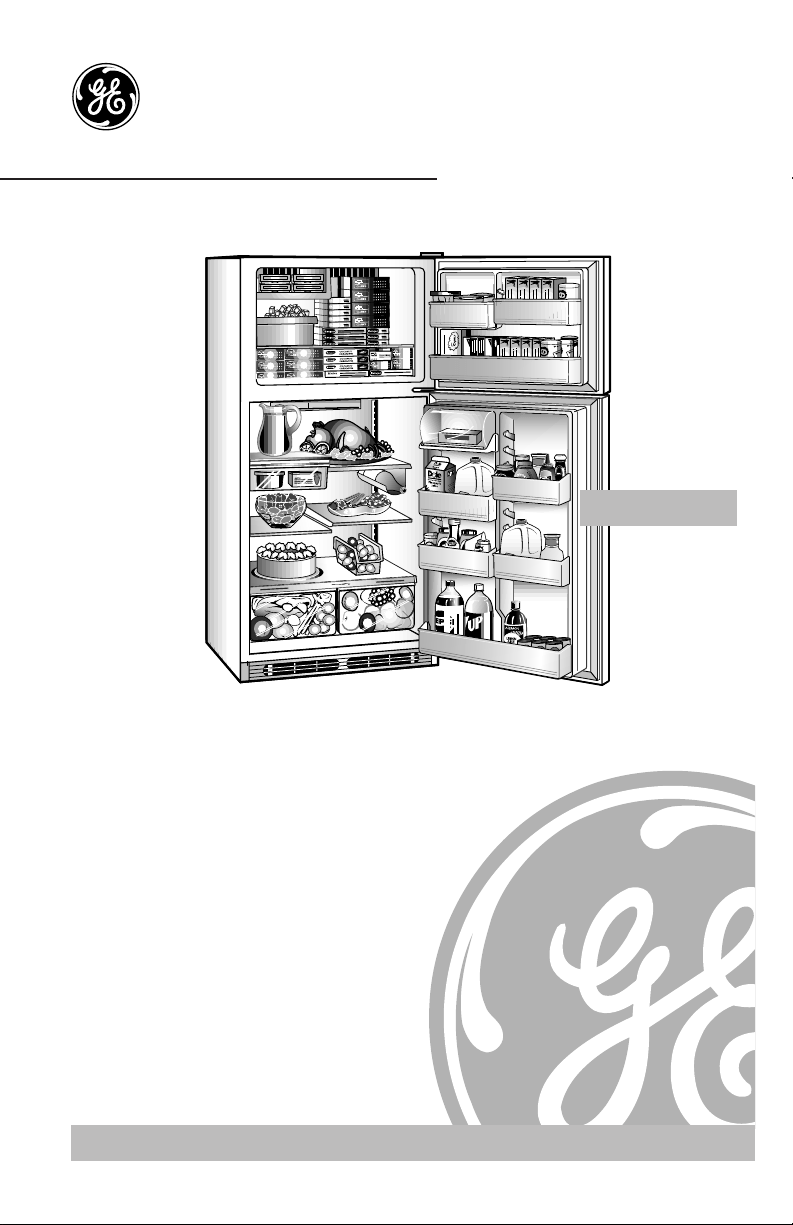
Refrigerators
Top-mount no-frost
Part No. 162D3948P007 Pub. No. 49-60012 12-98 CG
Models 18–25
Owner’s Manual
Congratulations!
You Are Now Part of the GE Family.
Welcome to the GE family.
We’re proud of our quality
products and we are
committed to providing
dependable service. You’ll
see it in this easy-to-use
Owner’s Manual and you’ll
hear it in the friendly voices
of our customer service
department.
Best of all, you’ll experience
these values each time you
use your refrigerator.
That’s important, because
your new refrigerator will
be part of your family for
many years. And we hope
you will be part of ours for a
long time to come.
We thank you for buying
GE. We appreciate your
purchase, and hope you
will continue to rely on us
whenever you need quality
appliances for your home.
2
Important!
Staple sales slip or cancelled
check here.
Proof of the original purchase date
is needed to obtain service under
the warranty.
Write the model and serial
numbers here.
#
#
You can find them on a label on the
left side, near the top of the fresh food
compartment.
GE & You,
AService Partnership.
Inside you will find many
helpful hints on how to use and
maintain your refrigerator
properly. Just a little preventive
care on your part can save you a
great deal of time and money
over the life of your refrigerator.
Read this Manual
Ask any GEappliance owner and they will
tell you we stand behind our products with
unmatched quality service. However, did
you know that most questions result from
simple problems that you can easily fix
yourself in just a few minutes? This
Owner’s Manual can tell you how.
You’ll find many answers to
common problems here.
If you review our chart of
Troubleshooting Tips first,
you may not need to call for
service at all.
Review the Section on
Troubleshooting Tips
If you do need service, you can
relax knowing help is only a
phone call away. A list of toll-free
customer service numbers is
included in the back section.
Or,
in the U.S.,
you can always
call the GE Answer Center
®
at 800.626.2000, 24 hours a day,
7 days a week.
In Canada,
call
1-800-361-3400.
If You Need Service
Safety Information
Safety Precautions . . . . . . . . . . .4
How to Connect Electricity . . . .6
Use of Adapter Plugs . . . . . . .6, 7
Use of Extension Cords . . . . . . .7
Operating Instructions
Temperature Controls . . . . .8–10
Features . . . . . . . . . . . . . . .11–16
Automatic Icemaker . . . . . . . . .17
Ice and Water Dispenser . .18, 19
Care and Cleaning . . . . . . .20–22
Installation Instructions
Preparing to
Install the Refrigerator . . . .23, 24
Water Line Installation . . .25–29
Reversing the Door Swing/
Removing the Doors . . . . .30–37
Troubleshooting Tips
Normal Operating Sounds . . . .38
Before You
Call For Service . . . . . . . . .39–42
Customer Service
Warranty
for Canadian Customers . . . . .46
Warranty
for U.S. Customers . . . . . . . . . .47
Service Telephone
Numbers . . . . . . . . . .Back Cover
3
Troubleshooting TipsInstallation Instructions Customer ServiceOperating InstructionsSafety Information
IMPORTANT SAFETY INFORMATION.
READ ALL INSTRUCTIONS BEFORE USING.
4
Use this appliance only for its intended purpose as
described in this Owner’s Manual.
■ This refrigerator must be
properly installed and
located in accordance with
the Installation Instructions
before it is used.
■ Do not allow children to
climb, stand or hang on the
shelves in the refrigerator.
They could damage the
refrigerator and seriously
injure themselves.
■ Do not touch the cold
surfaces in the freezer
compartment when hands
are damp or wet. Skin may
stick to these extremely cold
surfaces.
■ Do not store or use gasoline
or other flammable vapors
and liquids in the vicinity of
this or any other appliance.
■ In refrigerators with
automatic icemakers, avoid
contact with the moving parts
of the ejector mechanism, or
with the heating element that
releases the cubes. Do not
place fingers or hands on the
automatic icemaking
mechanism while the
refrigerator is plugged in.
■ Keep fingers out of the
“pinch point” areas;
clearances between the
doors and between the doors
and cabinet are necessarily
small. Be careful closing
doors when children are in
the area.
■ Unplug the refrigerator
before cleaning and making
repairs.
NOTE: We strongly recommend
that any servicing be performed
by a qualified individual.
■ Turning the control to the
OFF
position does not remove
power to the light circuit.
■ Do not refreeze frozen foods
which have thawed
completely.
SAFETY PRECAUTIONS
Operating Instructions
Installation Instructions
Safety InformationTroubleshooting TipsCustomer Service
When using electrical appliances, basic safety precautions
should be followed, including the following:
WARNING!
5
Troubleshooting TipsInstallation Instructions Customer ServiceOperating InstructionsSafety Information
PROPER DISPOSAL OF THE REFRIGERATOR
Child entrapment and suffocation are not problems of
the past. Junked or abandoned refrigerators are still
dangerous…even if they will sit for “just a few days.”
If you are getting rid of your old refrigerator, please
follow the instructions below to help prevent accidents.
Before You Throw Away Your Old Refrigerator
or Freezer:
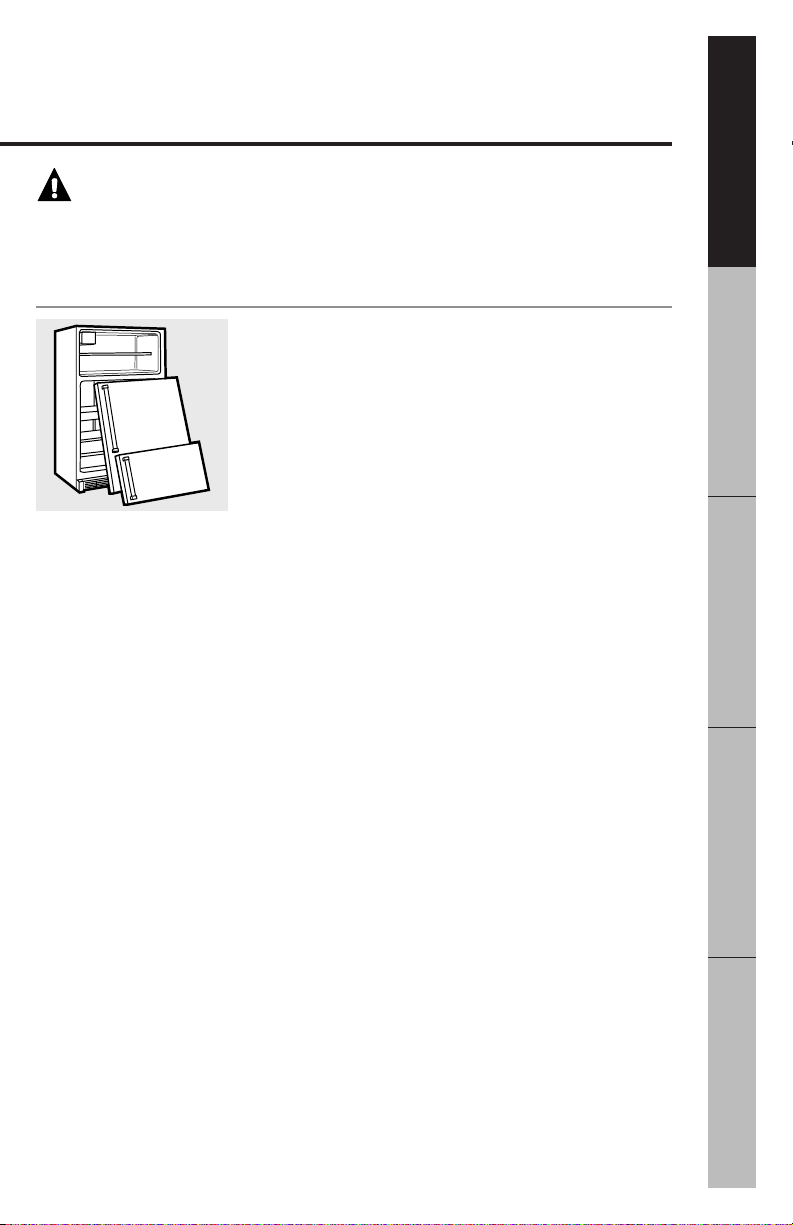
■ Take off the doors.
■ Leave the shelves in place so that children may not
easily climb inside.
CFC Disposal
Your old refrigerator has a cooling system that used
CFCs (chlorofluorocarbons). CFCs are believed to harm
stratospheric ozone.
If you are throwing away your old refrigerator, make
sure the CFC refrigerant is removed for proper disposal
by a qualified servicer. If you intentionally release this
CFC refrigerant you can be subject to fines and
imprisonment under provisions of environmental
legislation.
DANGER! RISK OF
CHILD ENTRAPMENT
IMPORTANT SAFETY INFORMATION.
READ ALL INSTRUCTIONS BEFORE USING.
6
Operating Instructions
Installation Instructions
Safety InformationTroubleshooting TipsCustomer Service
HOW TO CONNECT ELECTRICITY
Do not, under any circumstances, cut or remove the third
(ground) prong from the power cord. For personal safety,
this appliance must be properly grounded.
The power cord of this appliance is equipped with a 3-prong
(grounding) plug which mates with a standard 3-prong
(grounding) wall outlet to minimize the possibility of electric
shock hazard from this appliance.
Have the wall outlet and circuit checked by a qualified electrician
to make sure the outlet is properly grounded.
Where a standard 2-prong wall outlet is encountered, it is your
personal responsibility and obligation to have it replaced with a
properly grounded 3-prong wall outlet.
The refrigerator should always be plugged into its own individual
electrical outlet which has a voltage rating that matches the rating
plate.
This provides the best performance and also prevents overloading
house wiring circuits which could cause a fire hazard from
overheated wires.
Never unplug your refrigerator by pulling on the power cord.
Always grip plug firmly and pull straight out from the outlet.
Repair or replace immediately all power cords that have become
frayed or otherwise damaged. Do not use a cord that shows cracks
or abrasion damage along its length or at either end.
When moving the refrigerator away from the wall, be careful not to
roll over or damage the power cord.
USE OF ADAPTER PLUGS
(Adapter plugs not permitted in Canada)
Because of potential safety hazards under certain conditions,
we strongly recommend against the use of an adapter plug.
However, if you must use an adapter, where local codes permit, a
temporary connection
may be made to a properly grounded 2-prong
wall outlet by use of a UL-listed adapter available at most local
hardware stores.
WARNING!
7
The larger slot in the adapter must be aligned with the larger slot in
the wall outlet to provide proper polarity in the connection of the
power cord.
When disconnecting the power cord from the adapter, always hold
the adapter in place with one hand while pulling the power cord
plug with the other hand. If this is not done, the adapter ground
terminal is very likely to break with repeated use.
If the adapter ground terminal breaks,
DO NOT USE
the refrigerator
until a proper ground has been established.
Attaching the adapter ground terminal to a wall outlet cover screw does not
ground the appliance unless the cover screw is metal, and not insulated, and the
wall outlet is grounded through the house wiring. You should have the circuit
checked by a qualified electrician to make sure the outlet is properly grounded.
Troubleshooting TipsInstallation Instructions Customer ServiceOperating InstructionsSafety Information
USE OF EXTENSION CORDS
Because of potential safety hazards under certain
conditions, we strongly recommend against the use of an
extension cord.
However, if you must use an extension cord, it is absolutely
necessary that it be a UL-listed (in the United States) or a CSA
certified (in Canada), 3-wire grounding type appliance extension
cord having a grounding type plug and outlet and that the electrical
rating of the cord be 15 amperes (minimum) and 120 volts.
REMEMBER…
Your continued health and safety are important to us.
Please read and follow this Safety Information carefully.
We want you to remain a happy and healthy part of our
GE family.
SAVE THESE INSTRUCTIONS
8
Operating Instructions
Installation Instructions
Safety InformationTroubleshooting TipsCustomer Service
About the controls on the refrigerator.
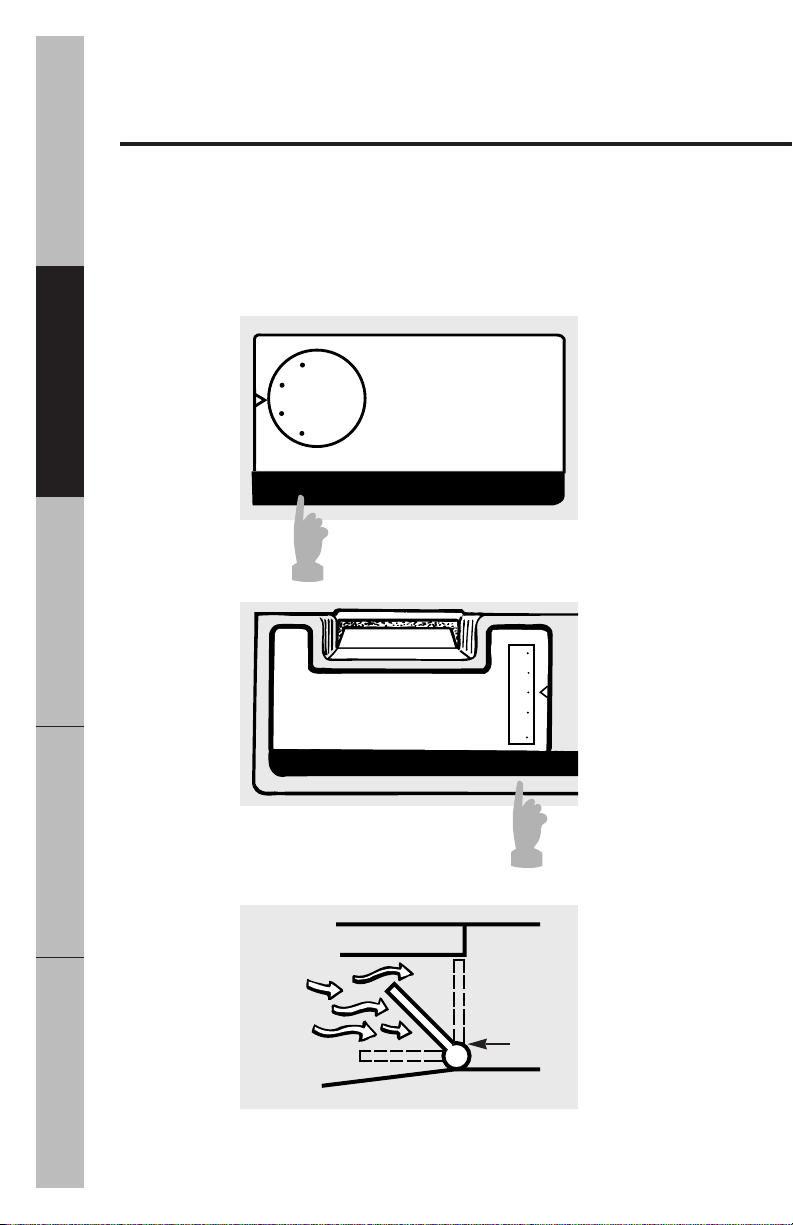
The temperature controls on your refrigerator have letters and numbers.
Initially set the fresh food control at 5 and the freezer control at C.
If you want colder or warmer temperatures, adjust the fresh food
temperature first. When satisfied with that setting, adjust the freezer
temperature.
1
3
5
7
OFF
9
5 INITIAL SETTING
9 COLDEST
FRESH FOOD
E
D
C
B
A
INITIAL SETTING C
COLDEST E
FREEZER
A
C
E
1
2
Cold air
from freezer
compartment
(Warmest setting)
Damper
(Coldest setting)
Damper
Side View
Fresh Food Control
The fresh food control maintains the temperatures
throughout the refrigerator.
Moving the fresh food control to
OFF
stops cooling in
both areas—fresh food and freezer—but does not shut
off power to the refrigerator.
Freezer Control
The freezer control moves a damper to change the
amount of cold air that moves from the freezer to the
fresh food compartment.
Power Saver Switch
Push switch to the
POWER SAVER
setting to reduce
the amount of electricity required to operate your
refrigerator.
With this switch turned to the
POWER SAVER
setting,
moisture may form on the outside of the refrigerator,
especially when the weather is humid.
Over time, moisture that forms on the surface may
cause rust.
To prevent moisture on the outside, move the power
saver switch from the
POWER SAVER
setting.
Cost? About the same as it costs to use 2 night lights.
9
Troubleshooting TipsInstallation Instructions Customer ServiceOperating InstructionsSafety Information
1
2
Control Settings
About the controls on the refrigerator.
10
Operating Instructions
Installation Instructions
Safety InformationTroubleshooting TipsCustomer Service
Use the milk test for the fresh food compartment. Place a container
of milk on the top shelf and check it a day later. If the milk is too
warm or too cold, adjust the temperature controls.
Use the ice cream test for the freezer compartment. Place a
container of ice cream in the center of the freezer and check it after
a day. If it’s too hard or too soft, adjust the temperature controls.
After changing the controls, allow 24 hours for the refrigerator to reach the
temperature you have set.
How To Test Temperatures
The type of packaging used and the storage temperatures will affect
how long food will keep in the refrigerator.
New food storage guidelines are constantly being developed.
Consult the County Extension Service for the latest information on freezing and
storing foods.
Food Storage
About the refrigerator shelves and dishes.
11
Troubleshooting TipsInstallation Instructions Customer ServiceOperating InstructionsSafety Information
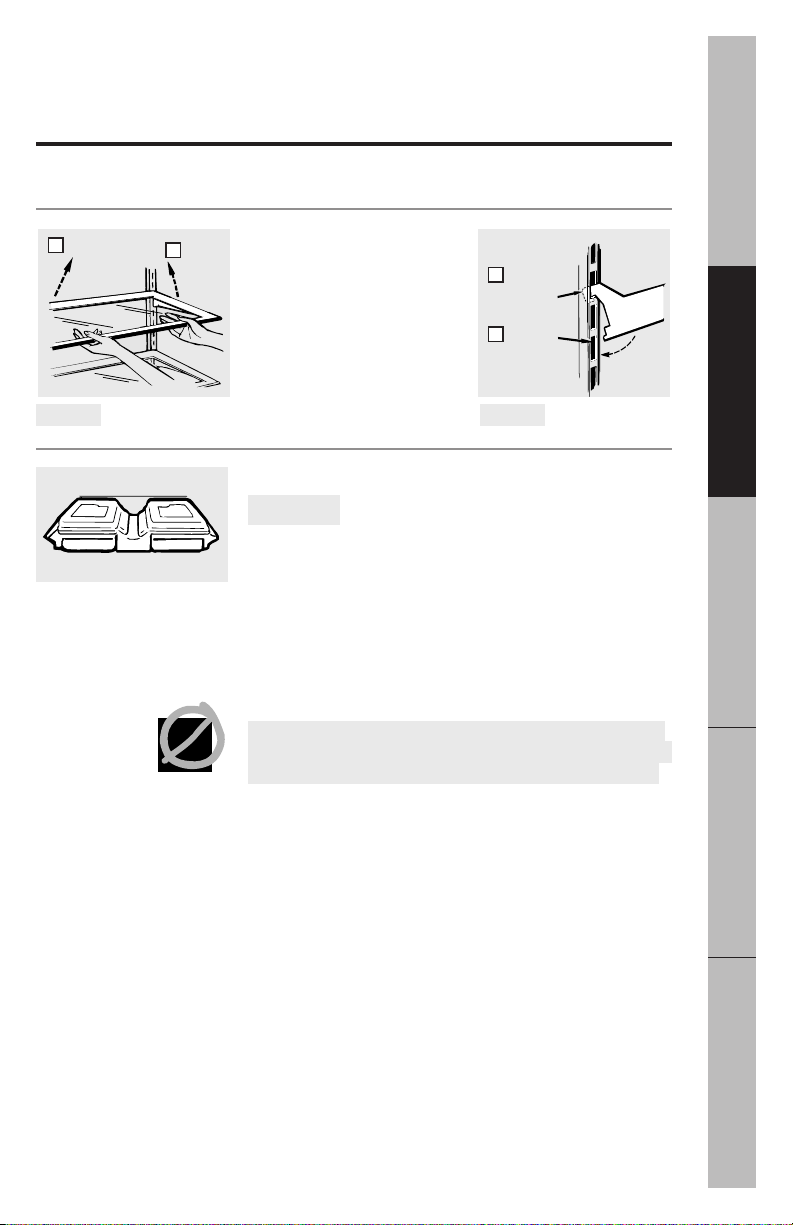
Rearranging the Shelves
Shelves in the fresh food
and freezer compartments
are adjustable.
Lift up and out
2
Tilt up
1
Insert
top hook
1
Lower to
lock in place
2
To Remove To Replace
Not all features are on all models.
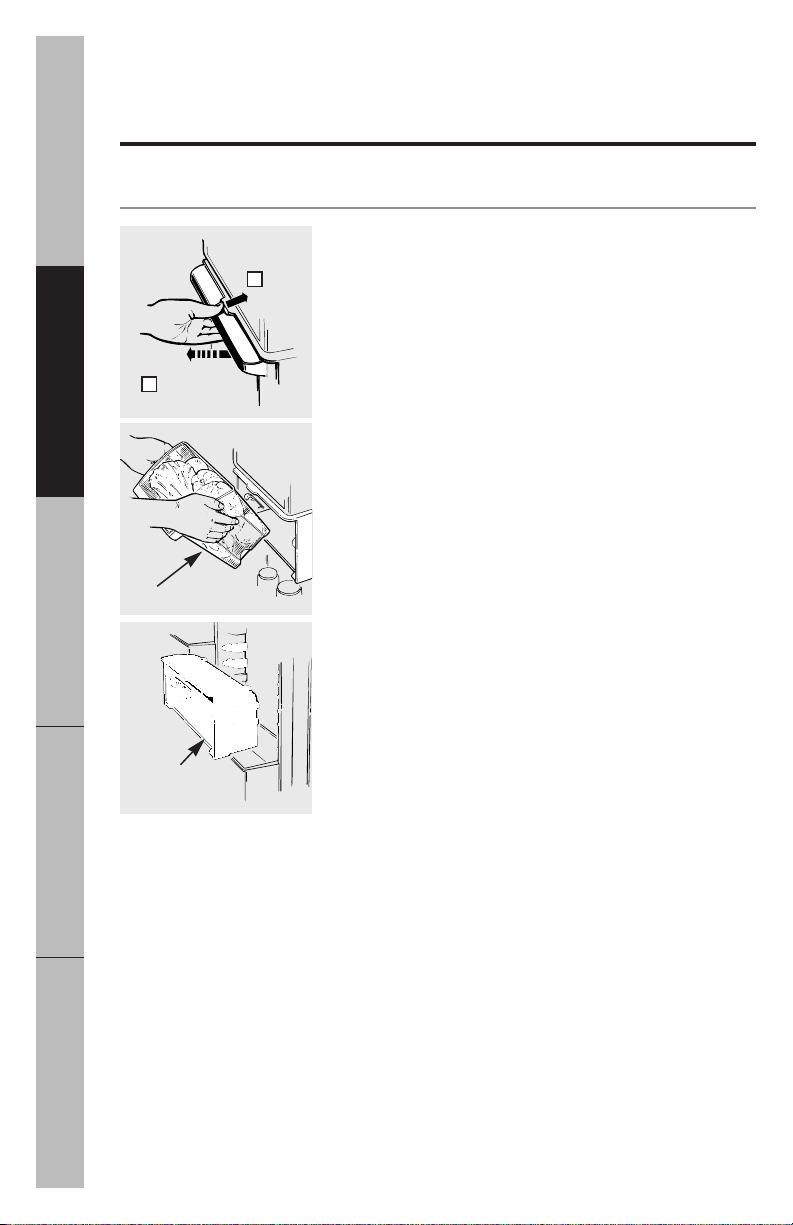
Quick Serve™ System
CAUTION: Dishes and lids are not designed for
use on the range top, broiler or in the regular
oven. Such use can be hazardous.
Quick Serve™ dishes fit into a rack that hangs on the
fresh food or freezer door. The rack can be moved in
the same manner as the door bins.
Dishes and lids are safe for use in microwave ovens,
refrigerators and freezers.
Do not use when cooking high-fat foods, such as bacon, and high-
sugar foods, such as candy and syrup. The high temperatures of the
fat and sugar can cause bubbles to form on the inside of the dish.
12
Operating Instructions
Installation Instructions
Safety InformationTroubleshooting TipsCustomer Service
About the refrigerator bins.
Not all features are on all models.
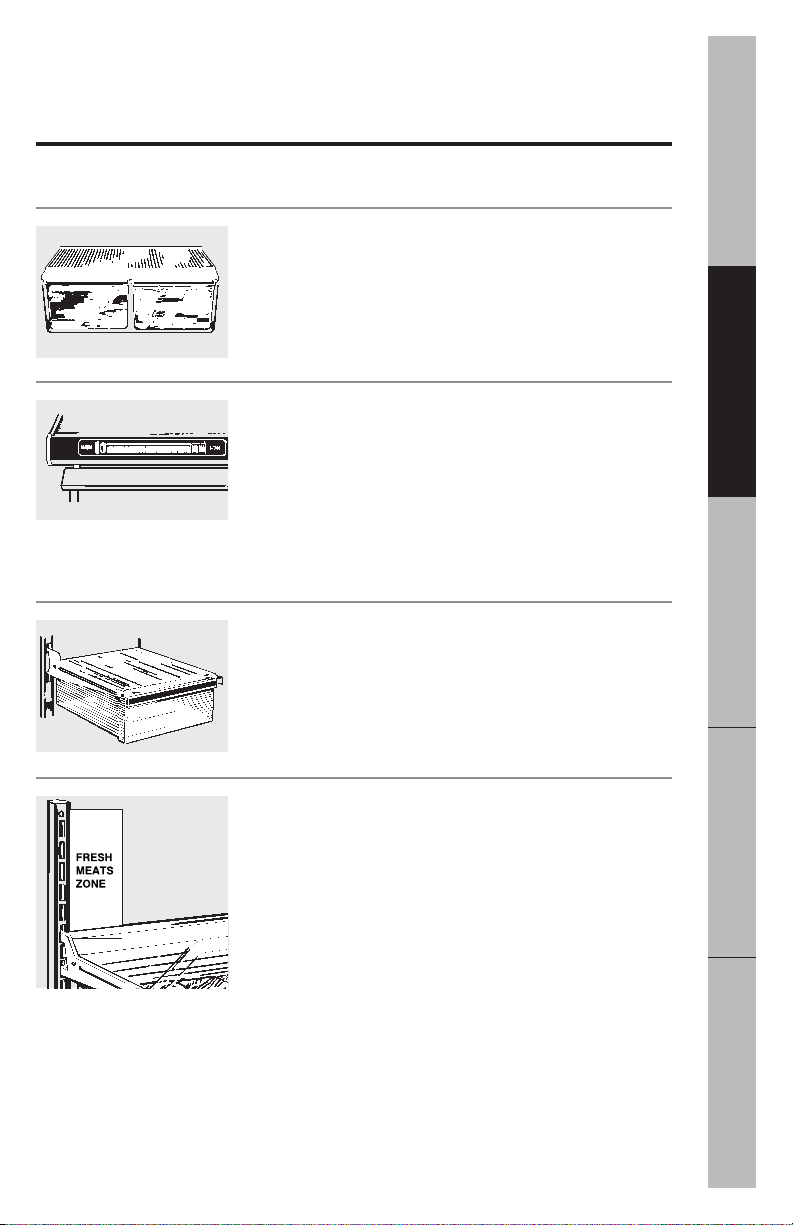
Quick Store Bin
To avoid damaging the refrigerator, make sure the bin is
closed and latched before closing the refrigerator door.
This bin can be placed on the fresh food or freezer doors.
To remove the bin,
lift up and out of the bin housing.
To move,
lift the bin housing up and out of the supports
on the door. You do not have to remove the bin from
the housing when moving it.
QUICK S
Pull forward
2
To open:
Bin Housing
Push up
1
Quick Store Bin
About the storage drawers.
Not all features are on all models.
Fruit and Vegetable Drawers
Excess water that may accumulate in the bottom of the
drawers should be emptied and the drawers wiped dry.
13
Troubleshooting TipsInstallation Instructions Customer ServiceOperating InstructionsSafety Information
Adjustable Humidity Drawers
Slide the control all the way to the
HIGH
setting
to provide high humidity recommended for most
vegetables.
Slide the control all the way to the
LOW
setting to
provide lower humidity levels recommended for
most fruits.
Snacks Drawer
The snacks drawer can be moved to the most useful
location for your family’s needs.
Adjustable Temperature Meat Drawer
When the drawer is placed in the top 6 slots on the left
side and the lever is set at
COLDEST,
air from the freezer
is forced around the drawer to keep it very cold.
You can move the drawer to any location if you don’t
want the extra cold storage.
The settings can be adjusted anywhere between
COLD
and
COLDEST.
When set at
COLD,
the drawer will stay at the normal
refrigerator temperature.
The
COLDEST
setting provides the coldest storage area.
About storage drawer and cover removal.
Not all features are on all models.
14
Operating Instructions
Installation Instructions
Safety InformationTroubleshooting TipsCustomer Service
About the additional features.
Not all features are on all models.
Snuggers
Place a finger on either side of the snugger near the
front to move the snugger back and forth to fit your
needs.
Step 1 Step 2 Step 3
2
4
3
1
1
2
4
3
1
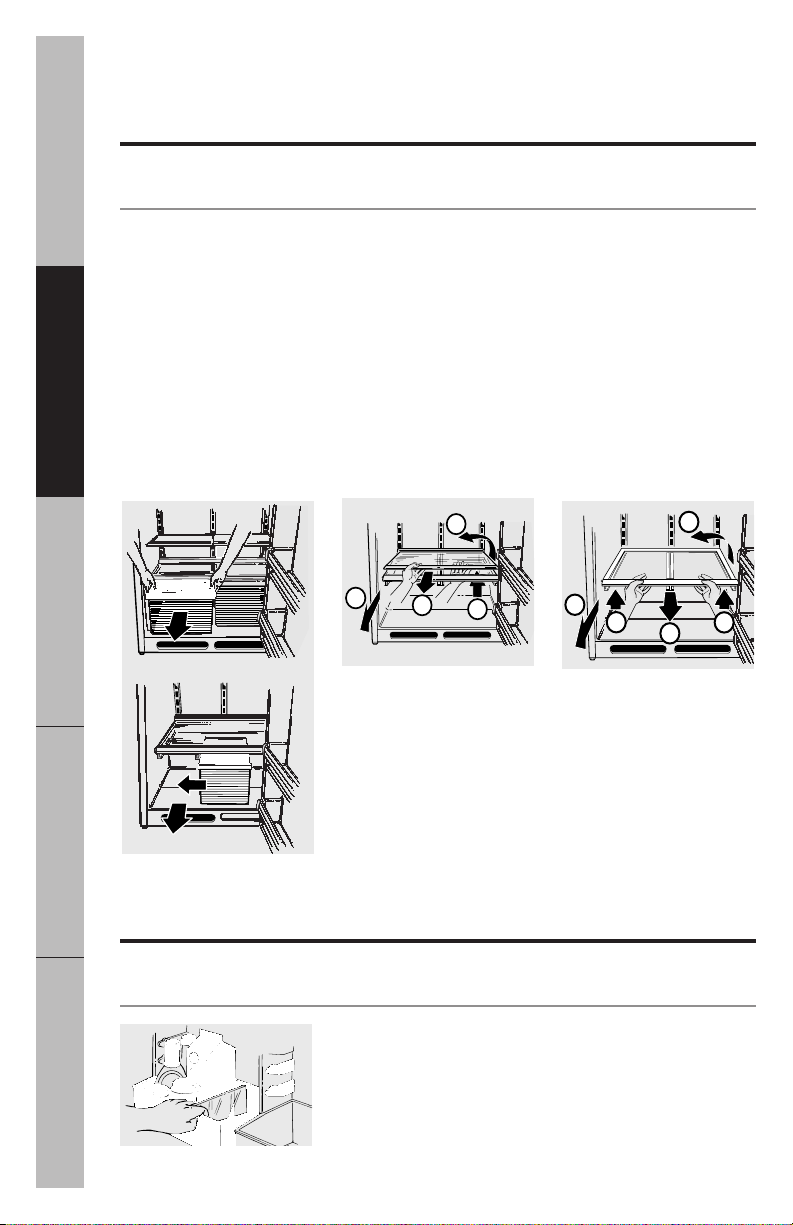
To Remove:
These drawers can be removed easily by lifting up slightly while
pulling the drawers past the
stop
location.
When the door cannot be opened enough to pull the drawer
straight out, slide the drawer toward the middle and remove it.
Remove the glass, then the frame. When replacing the glass, push
the rear edge firmly into the frame.
Storage Drawers
Troubleshooting TipsInstallation Instructions Customer ServiceOperating InstructionsSafety Information
Two-Position Freezer Shelf
For models without an icemaker, the shelf can be placed
in either position.
For models with an icemaker, the shelf must be placed
in the lower position.
15
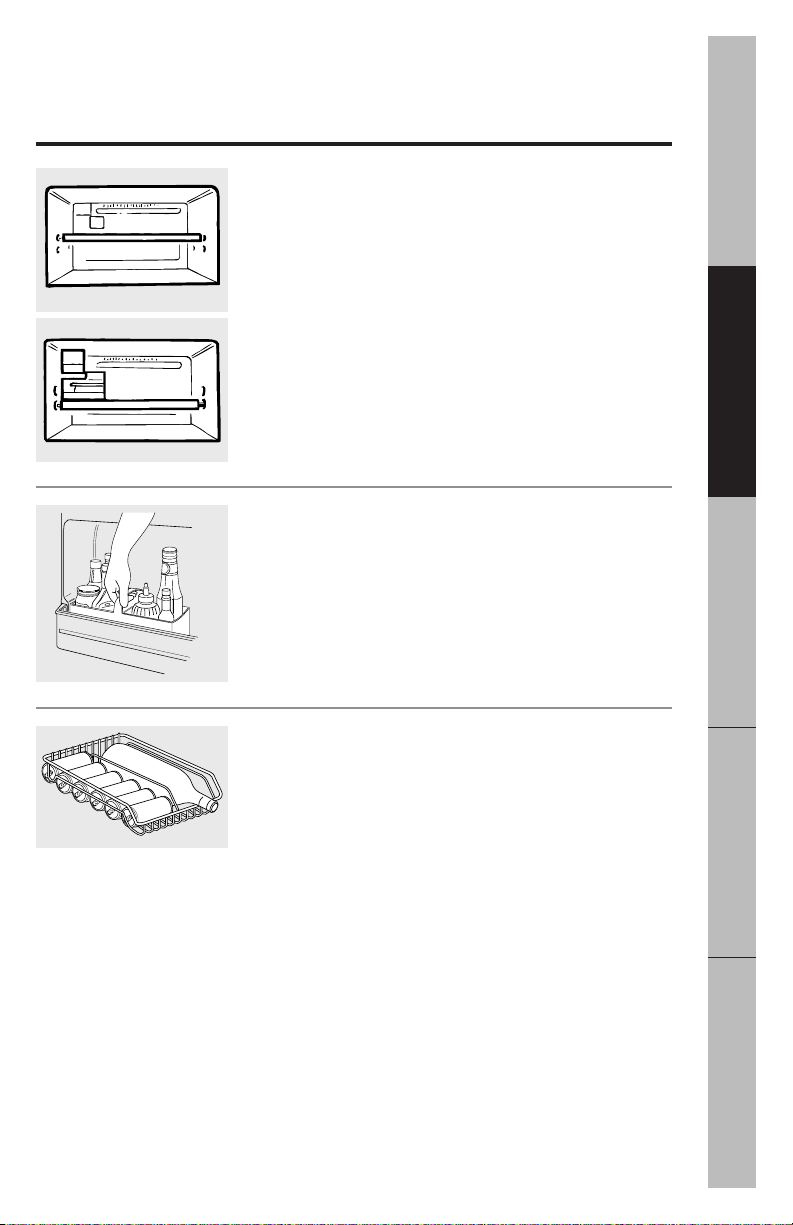
Condiment Caddy
The condiment caddy keeps frequently used
condiments together. It fits in your refrigerator door
shelf. A convenient handle allows condiments to be
easily carried to the table.
Beverage Rack
Slide-out beverage rack holds twelve cans of soda or
two wine/water bottles (lengthwise). Can be removed
for cleaning.
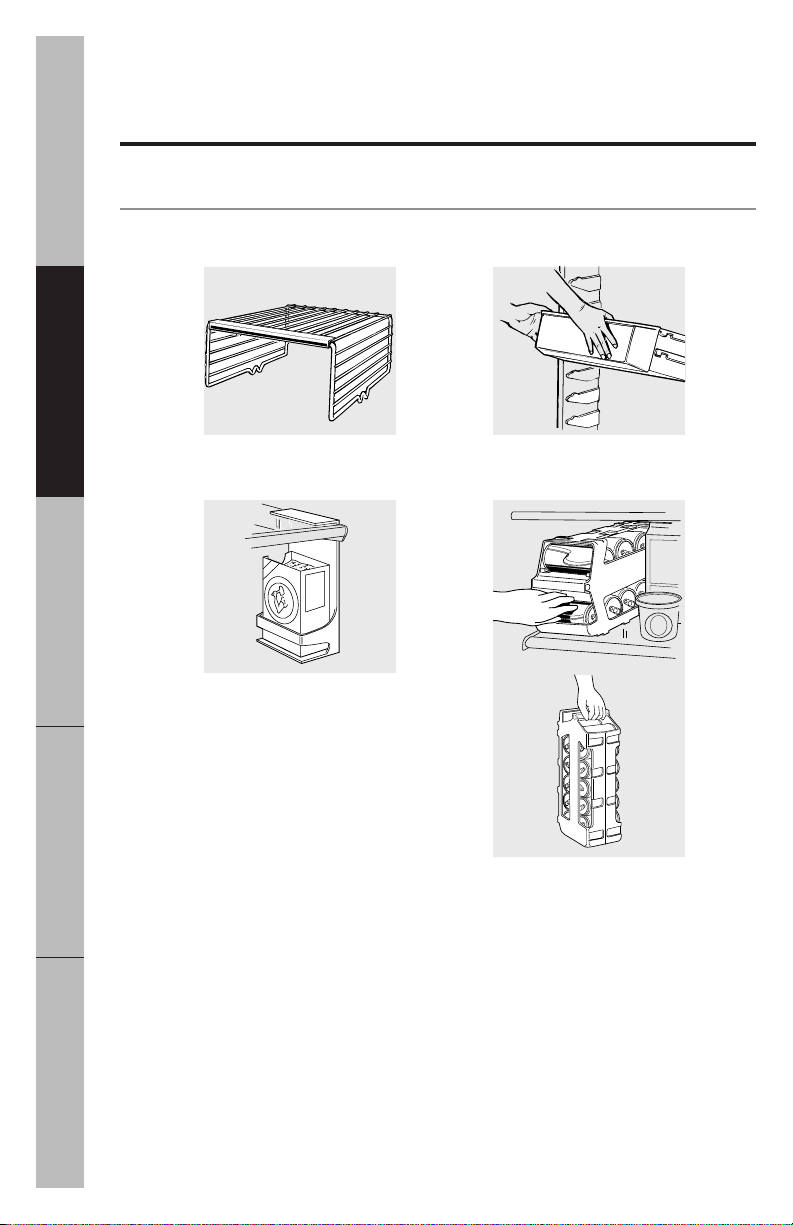
16
Operating Instructions
Installation Instructions
Safety InformationTroubleshooting TipsCustomer Service
About the additional features.
Extra Freezer Shelf
Baking Soda Holder
Bins on the Doors
Can Dispenser
Not all features are on all models.
17
Troubleshooting TipsInstallation Instructions Customer ServiceOperating InstructionsSafety Information
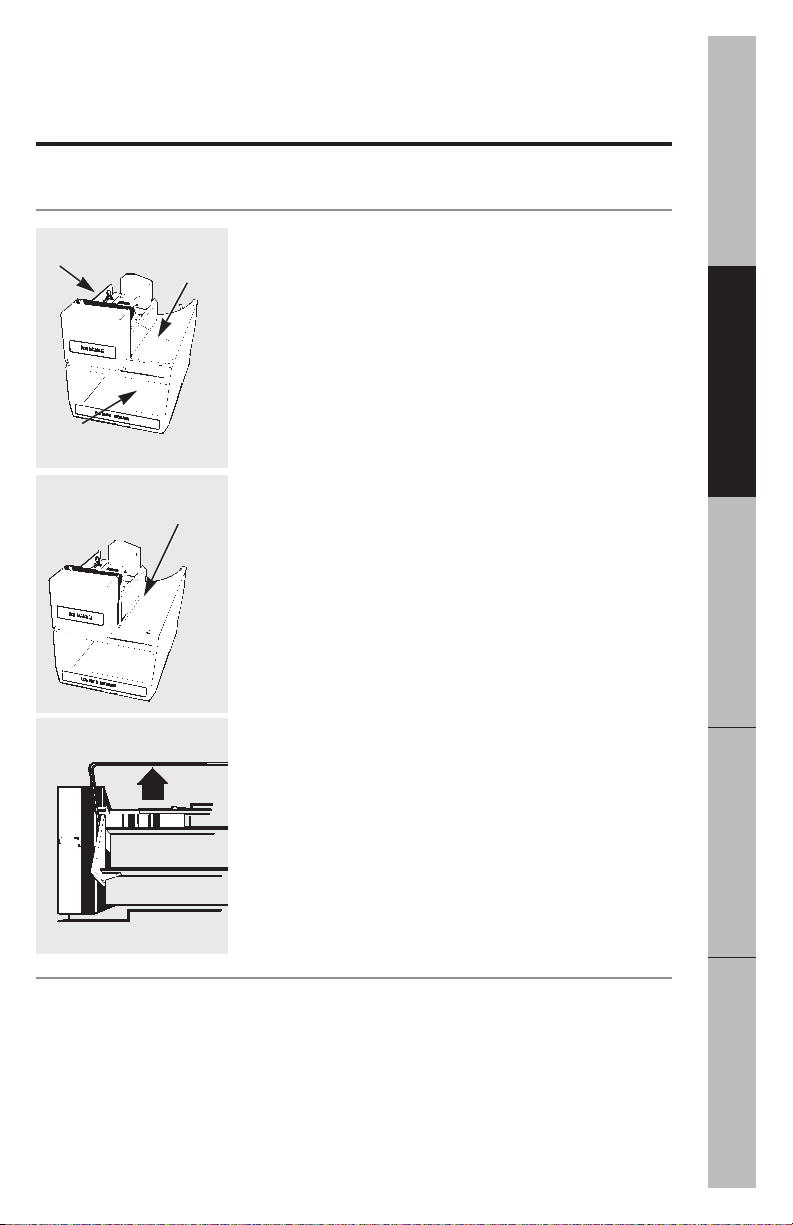
About the automatic icemaker.
A newly-installed refrigerator may take 8 to 12 hours to begin making ice.
Automatic Icemaker
(on some models)
The icemaker will produce eight cubes per cycle—
approximately 100 cubes in a 24-hour period,
depending on freezer compartment temperature, room
temperature, number of door openings and other use
conditions.
If the refrigerator is operated before the water
connection is made to the icemaker, keep the feeler arm
in the
STOP
(up) position.
When the refrigerator has been connected to the water
supply, move the feeler arm to the
ON
(down) position.
The icemaker will fill with water when it cools to
freezing. A newly-installed refrigerator may take
8 to 12 hours to begin making ice cubes.
Throw away the first few batches of ice to allow the water
line to clear.
Be sure nothing interferes with the swing of the
feeler arm.
It is normal for several cubes to be joined together.
If ice is not used frequently, old ice cubes will become
cloudy and taste stale.
Icemaker
Ice Storage Bin
Feeler arm
in the
STOP
(up) position
Feeler arm in the
ON
(down) position
If your refrigerator did not already come equipped with an
automatic icemaker, an icemaker accessory kit is available at extra
cost. Check the back of the refrigerator for the specific icemaker kit
needed for your model.
Icemaker Accessory Kit
Feeler arm in the
STOP
(up) position
Feeler arm on the dispenser model.
18
Operating Instructions
Installation Instructions
Safety InformationTroubleshooting TipsCustomer Service
About the ice and water dispenser.
On some models
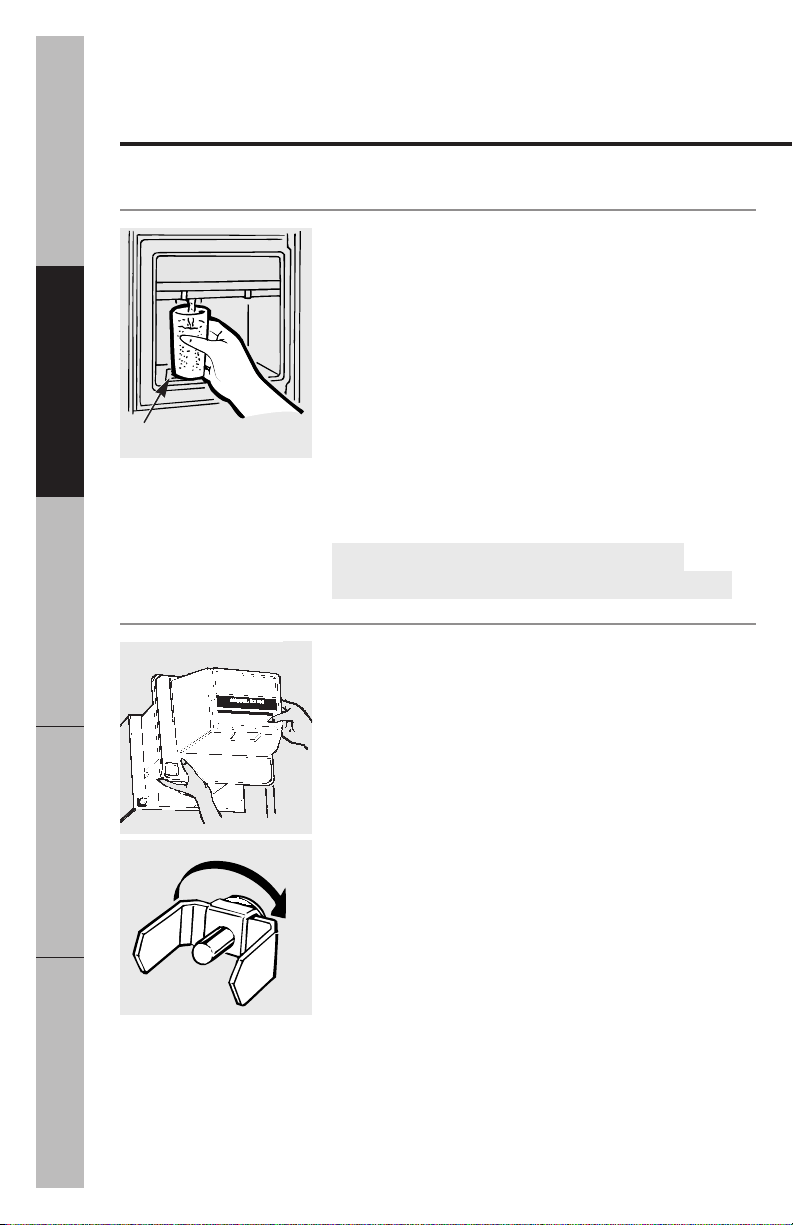
Rotate
Drive
Mechanism
Ice Storage Bin
To remove:
Lift the front of the bin and pull the bin straight out
while supporting it at front and rear.
To replace:
Slide it back on the ice bin shelf. If the bin does not go
all the way back, remove it and rotate the drive
mechanism 1/4 turn. Then push the bin back again.
To Use the Dispenser
Press the rim of the glass gently against the dispenser pad.
Set the selector switch to
ICE CUBES,CRUSHED ICE
or
WATER
(on some models).
The spill shelf is not self-draining. To reduce water
spotting, the shelf and its grille should be cleaned
regularly.
If no water is dispensed when the refrigerator is first installed, there
may be air in the water line system. Press the dispenser pad for at
least two minutes to remove trapped air from the water line and to
fill the water system. To flush out impurities in the water line, throw
away the first six glassfuls of water.
CAUTION: Never put fingers or any other
objects into the ice crusher discharge opening.
Spill Shelf
19
Troubleshooting TipsInstallation Instructions Customer ServiceOperating InstructionsSafety Information
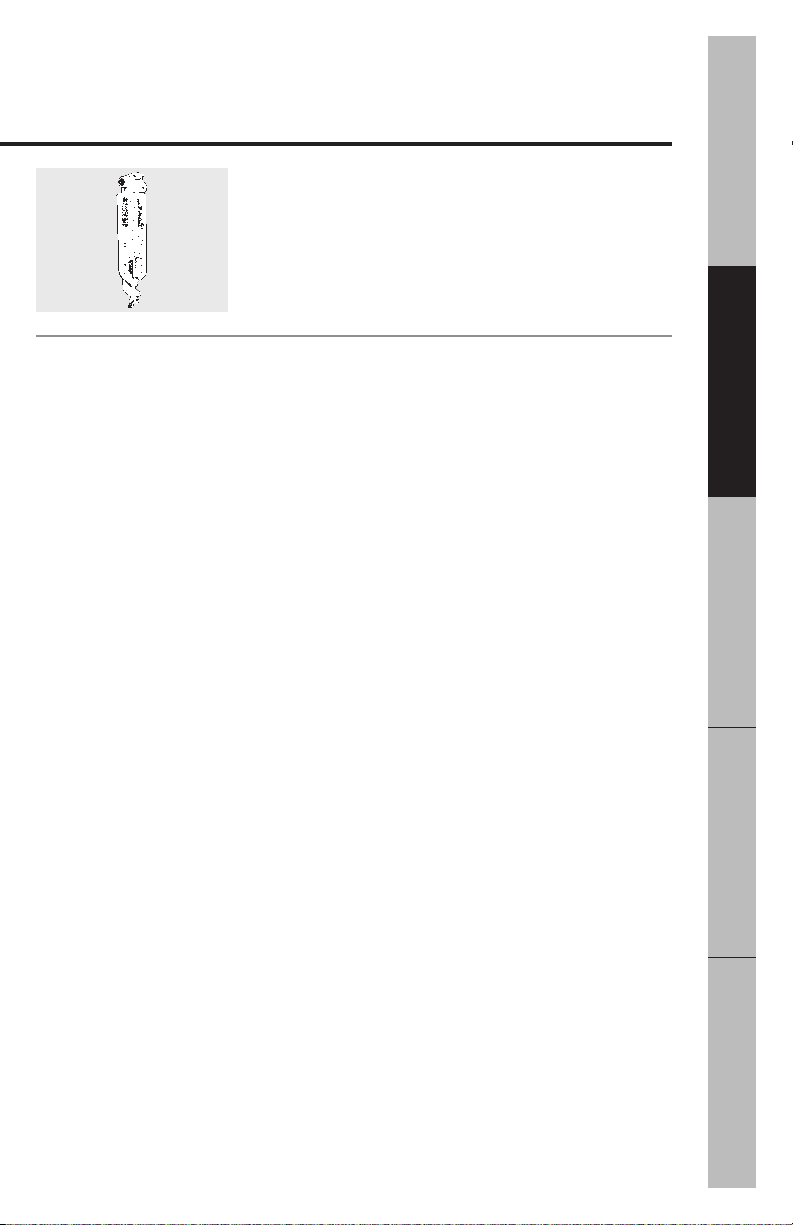
Water Filter Accessory
The water filter is an option at extra cost and is available
from your dealer. Specify WR97X0214. It has complete
installation instructions and installs on 1/4″O.D.
copper water line.
■
Add ice before filling the glass with a beverage. This will prevent
splashing, which could cause the ice selector switch to stick or bind.
■ Do not add ice from trays or bags to the storage bin. It may not
crush or dispense well.
■ Avoid overfilling glass with ice and use of narrow or extra-tall
glasses. Backed-up ice can jam the chute or cause the door in the
chute to freeze shut. If ice is blocking the chute, poke it through
with a wooden spoon.
■ Beverages and foods should not be quick-chilled in the ice
storage bin. Cans, bottles or food packages in the storage bin
may cause the icemaker or auger to jam.
■ Some crushed ice may be dispensed even though you selected
ICE CUBES.
This happens occasionally when a few cubes
accidentally get directed to the crusher.
■ After crushed ice is dispensed, some water may drip from
the chute.
■ Sometimes a mound of snow will form on the door in the ice
chute. This condition is normal and usually occurs when you
have dispensed crushed ice repeatedly. The snow will eventually
evaporate.
■ Dispensed water is not ice cold. For colder water, add crushed ice
or cubes before dispensing water.
Important Facts About Your Dispenser
20
Operating Instructions
Installation Instructions
Safety InformationTroubleshooting TipsCustomer Service
Care and cleaning of the refrigerator.
Cleaning the Outside
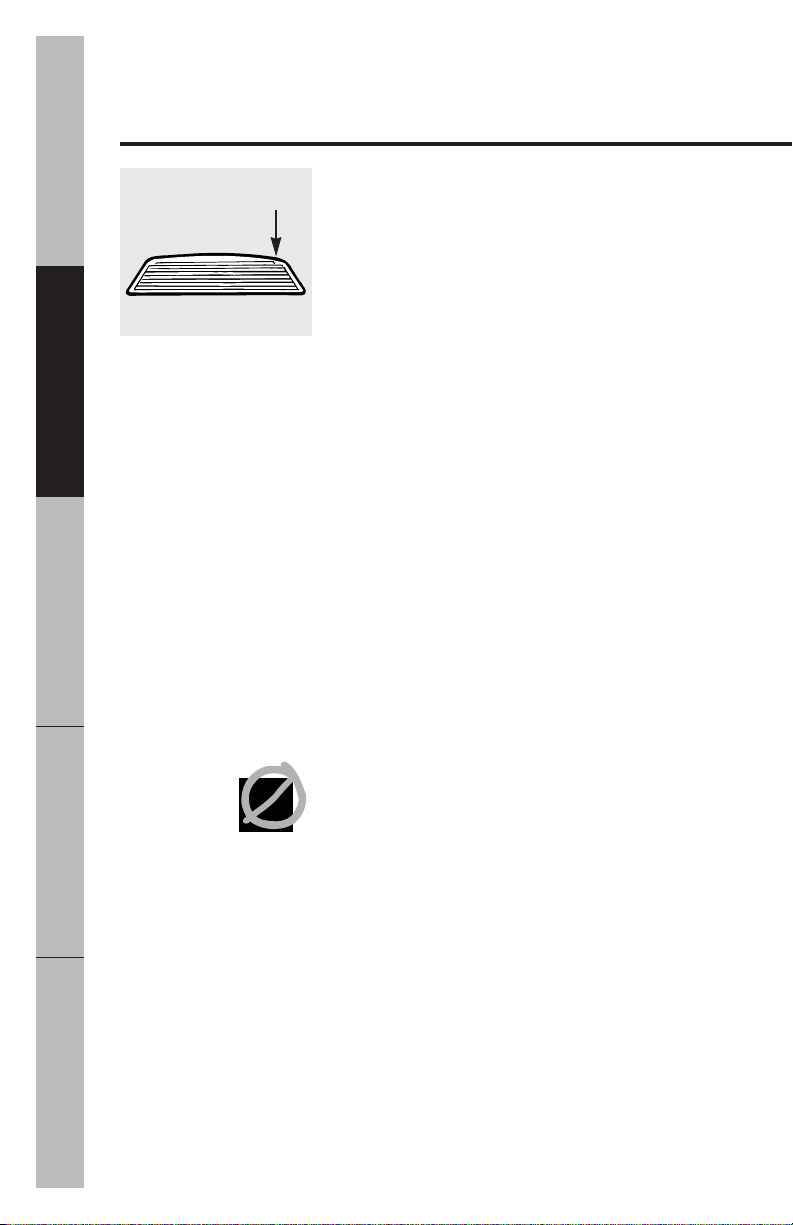
The dispenser well
, beneath the grille, should be wiped
dry. Water left in the well may leave deposits. Remove
the deposits by adding undiluted vinegar to the well.
Soak until the deposits disappear or become loose
enough to rinse away.
The dispenser pad
(on some models). Clean with a warm
water and baking soda solution—about a tablespoon
(15 ml) of baking soda to a quart (1 l) of water. Rinse
thoroughly and wipe dry.
HINT: Open the freezer door part way to prevent dispensing of ice
or water when cleaning.
The door handles and trim
(on some models). Clean with a
cloth dampened with soapy water. Dry with a soft cloth.
The soft door handles
(on some models) are easy to
keep clean if they are waxed every few months. Use a
household wax such as Pledge brand or Jubilee brand
to coat the handles. Clean with soapy water or a
non-abrasive, all-purpose cleaner.
Keep the outside clean.
Wipe with a clean cloth lightly
dampened with kitchen appliance wax or mild
liquid dish detergent. Dry and polish with a clean,
soft cloth.
Do not wipe the refrigerator with a soiled dish cloth or wet towel.
These may leave a residue that can erode the paint. Do not use
scouring pads, powdered cleaners, bleach or cleaners containing
bleach because these products can scratch and weaken the paint
finish.
Press here to
remove grille.
21
Troubleshooting TipsInstallation Instructions Customer ServiceOperating InstructionsSafety Information
Cleaning the Inside
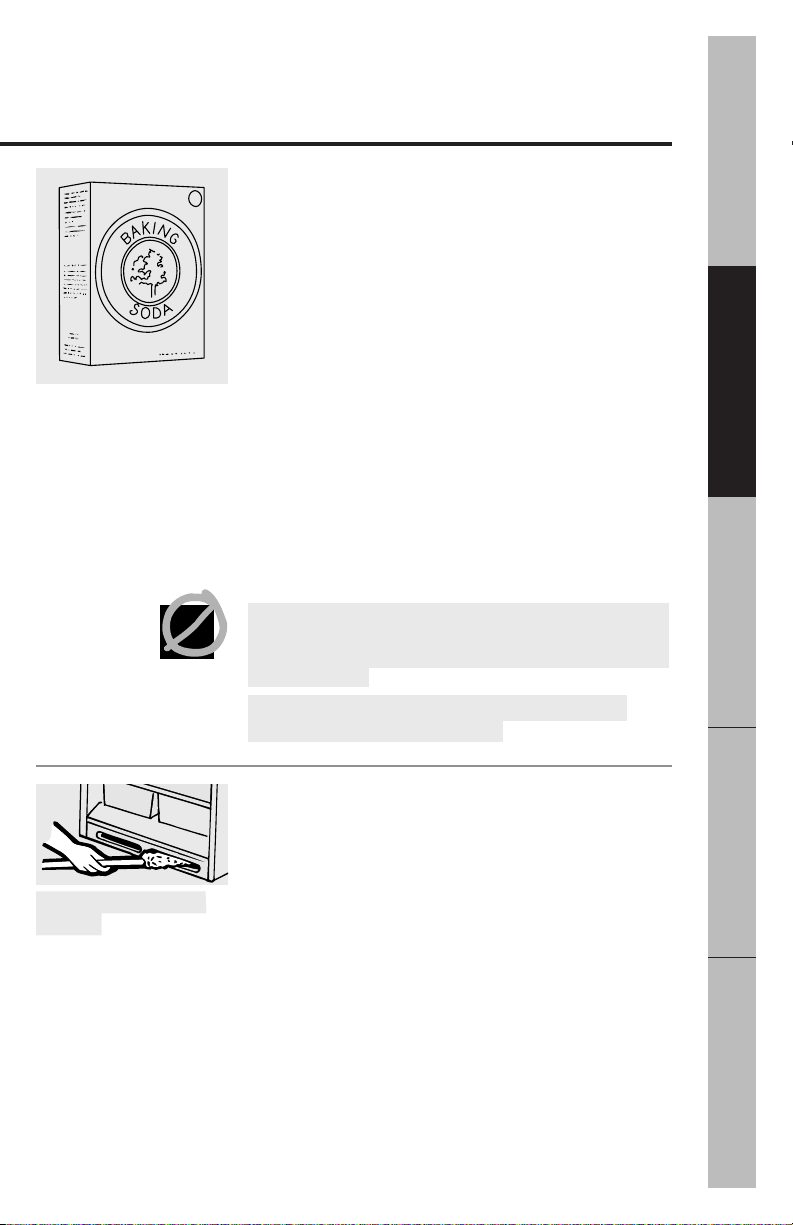
To help prevent odors,
leave an open box of baking soda
in the fresh food and freezer compartments.
Unplug the refrigerator before cleaning.
If this is not
practical, wring excess moisture out of sponge or cloth
when cleaning around switches, lights or controls.
Use an appliance wax polish on the inside surface
between the doors.
Use a warm water and baking soda solution—about a
tablespoon (15 ml) of baking soda to a quart (1 l) of
water. This both cleans and neutralizes odors. Rinse
and wipe dry.
After cleaning the door gaskets, apply a thin layer of
petroleum jelly to the door gaskets at the hinge side.
This helps keep the gaskets from sticking and bending
out of shape.
Avoid cleaning cold glass shelves (on some models) with hot water
because the extreme temperature difference may cause them to
break. Handle glass shelves carefully. Bumping tempered glass can
cause it to shatter.
Do not wash any plastic refrigerator parts in the dishwasher
except Quick Serve dishes and lids.
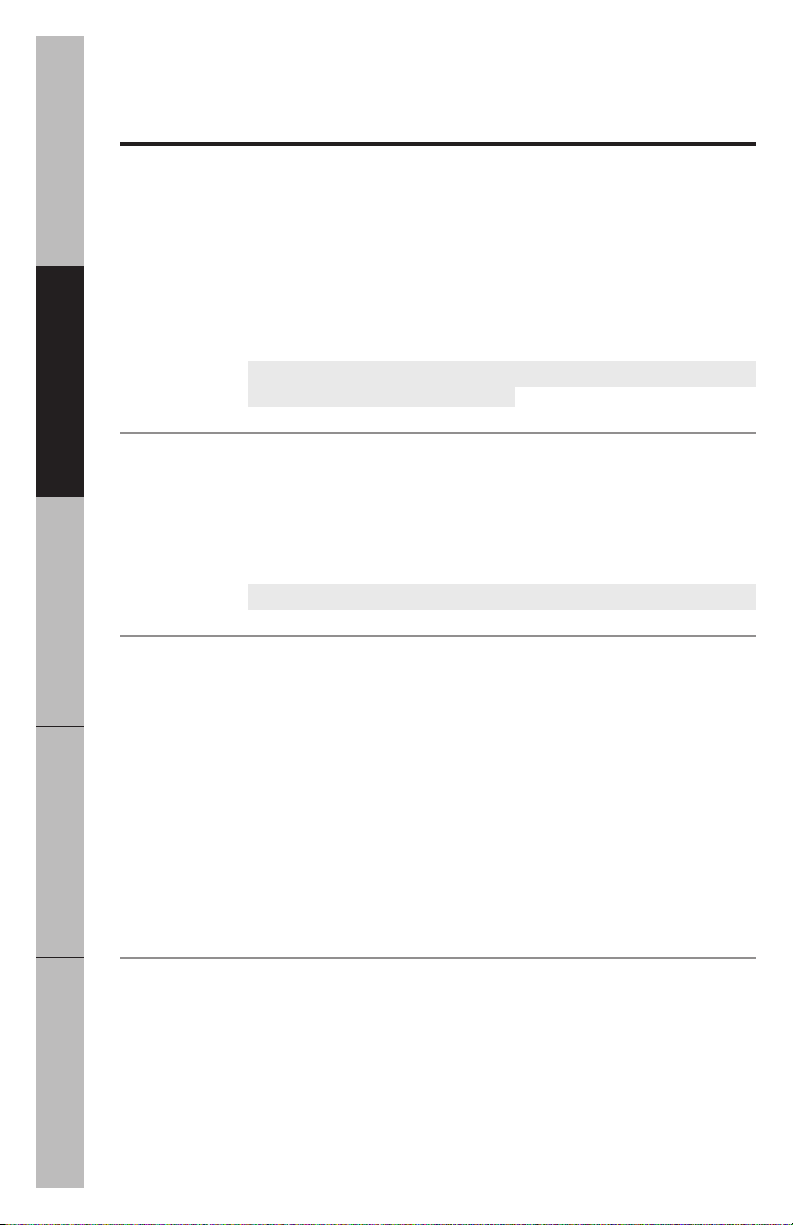
Under the Refrigerator
For most efficient operation, keep the area under the
refrigerator clean. Remove the base grille and sweep
away or vacuum up dust.
For best results, use a brush specially designed for this
purpose. It is available at most appliance parts stores.
Clean the condenser coils at least
once a year.
Care and cleaning of the refrigerator.
22
Operating Instructions
Installation Instructions
Safety InformationTroubleshooting TipsCustomer Service
Behind the Refrigerator
Be careful when moving the refrigerator away from the wall. All
types of floor coverings can be damaged, particularly cushioned
coverings and those with embossed surfaces.
Pull the refrigerator straight out and return it to position by
pushing it straight in. Moving the refrigerator in a side direction
may result in damage to the floor covering or refrigerator.
When pushing the refrigerator back, make sure you don’t roll over the power cord
or icemaker supply line (on some models).
For long vacations or absences, remove food and unplug the
refrigerator. Move the fresh food control to the
OFF
position, and
clean the interior with a baking soda solution of one tablespoon
(15 ml) of baking soda to one quart (1 l) of water. Leave the
doors open.
Move the icemaker feeler arm to
STOP
(up) position and shut
off the water supply to the refrigerator.
If the temperature can drop below freezing, have a qualified
servicer drain the water supply system (on some models) to
prevent serious property damage due to flooding.
Preparing for Vacation
If the doors need to be removed, see the
Removing the doors
section.
On dispenser models, the water line to the dispenser must be
disconnected before the doors are removed.
Secure all loose items such as grille, shelves and drawers by taping
them securely in place to prevent damage.
Be sure the refrigerator stays in an upright position during moving.
Preparing to Move
To replace a burned-out bulb, unplug the refrigerator from its
electrical outlet, remove the light shield, unscrew the bulb when
cool and replace it with an appliance bulb of the same or lower
wattage.
Turning the control to the OFF position does not remove power to the light circuit.
Light Bulb Replacement
Troubleshooting TipsInstallation Instructions Customer ServiceOperating InstructionsSafety Information
23
Preparing to install the refrigerator.
Read these instructions completely and carefully.
Water Supply to the Icemaker
(on some models)
If the refrigerator has an icemaker, it will have to be connected to a
cold water line.
A water supply kit (containing copper tubing, shutoff valve, fittings
and instructions) is available at extra cost from your dealer or from
Parts and Accessories, 800-626-2002.
Do not install the refrigerator where the temperature will go below
60°F (16°C) because it will not run often enough to maintain
proper temperatures.
Install it on a floor strong enough to support it fully loaded.
Refrigerator Location
Allow the following clearances for ease of installation, proper air
circulation and plumbing and electrical connections:
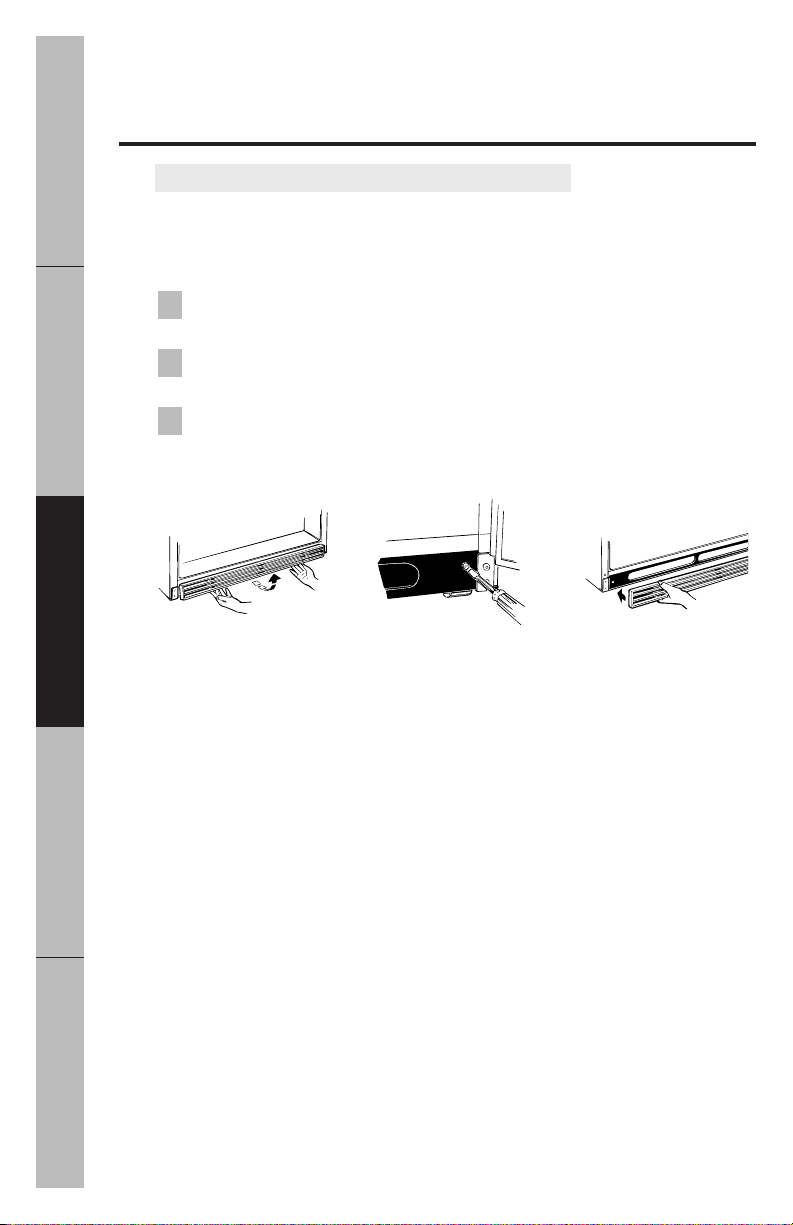
Sides 3/4″(19 mm)
Top 1″ (25 mm)
Back 1″(25 mm)
If a 19′, 22′or 25′ model is to be installed next to a wall on the hinge
side, allow 1
1
/
2
″(38 mm) for door clearance.
Clearances
24
Preparing to install the refrigerator.
Read these instructions completely and carefully.
Rollers
(on some models)
The rollers have 3 purposes:
Rollers adjust so the door closes easily when opened about halfway.
[Raise the front about 3/4″(19 mm) from the floor.]
Rollers adjust so the refrigerator is firmly positioned on the floor
and does not wobble.
Rollers allow you to move the refrigerator away from the wall for cleaning.
3
2
1
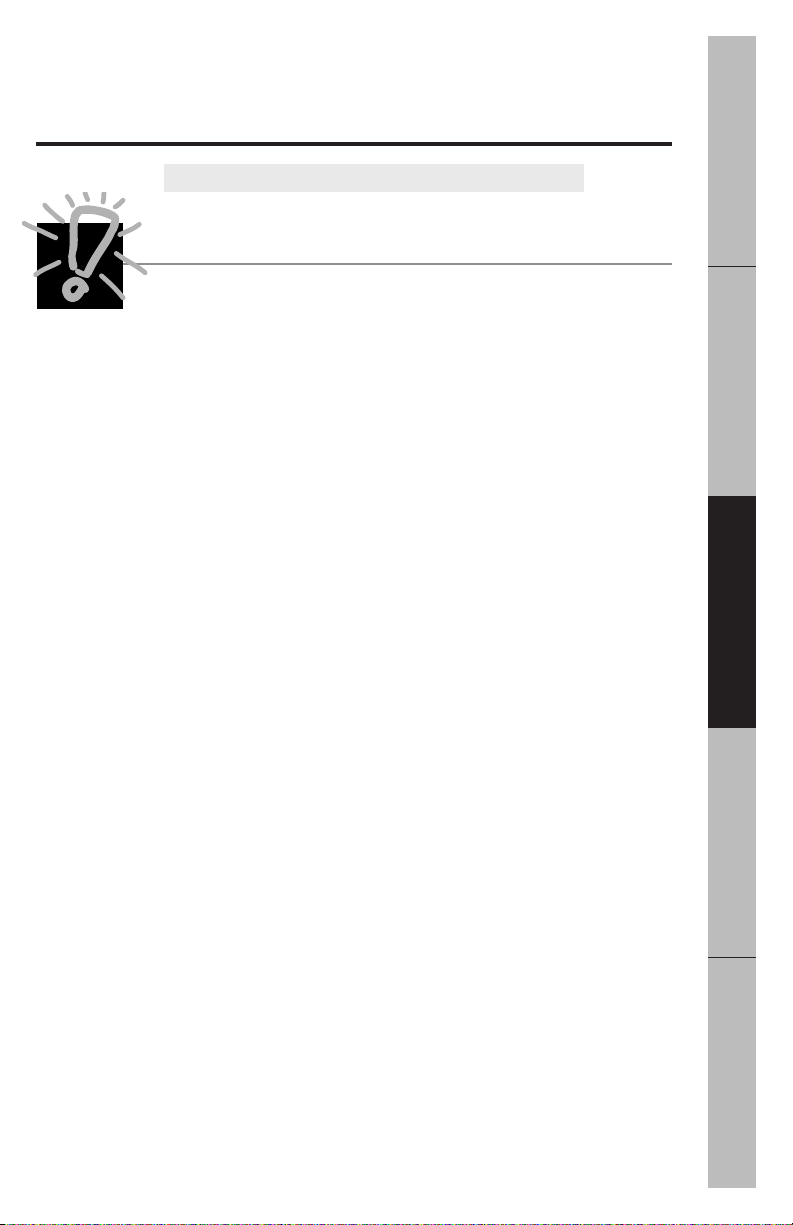
To adjust the rollers:
Remove the base grille
by pulling out at the
bottom.
Turn the two front
roller adjusting
screws clockwise to
raise the refrigerator,
counter-clockwise to
lower it.
Replace the base grille
by pushing forward until
it snaps into place.
Operating Instructions
Installation Instructions
Safety InformationTroubleshooting TipsCustomer Service
Troubleshooting TipsInstallation Instructions Customer ServiceOperating InstructionsSafety Information
25
Installing the water line.
Read these instructions completely and carefully.
Before You Begin
This water line installation is not warranted by the
refrigerator or icemaker manufacturer. Follow these
instructions carefully to minimize the risk of expensive
water damage.
Water hammer (water banging in the pipes) in house
plumbing can cause damage to refrigerator parts and lead
to water leakage or flooding. Call a qualified plumber to
correct water hammer before installing the water supply
line to the refrigerator.
To prevent burns and product damage, do not hook up the
water line to the hot water line.
If you use your refrigerator before connecting the water line,
make sure the icemaker feeler arm is kept in the STOP(up)
position.
Do not install the icemaker tubing in areas where
temperatures fall below freezing.
When using any electrical device (such as a power drill)
during installation, be sure the device is insulated or wired
in a manner to prevent the hazard of electric shock.
All installations must be in accordance with local plumbing
code requirements.
26
Operating Instructions
Installation Instructions
Safety Information
Troubleshooting TipsCustomer Service
Installing the water line.
Read these instructions completely and carefully.
To determine how much copper tubing you need:
Measure the distance from the water valve on the back of the
refrigerator to the water supply pipe. Then add 8 feet (244 cm).
Be sure there is sufficient extra tubing [about 8 feet (244 cm)
coiled into 3 turns of about 10 inches (25 cm) diameter] to allow
the refrigerator to move out from the wall after installation.
■
A water supply kit
(containing copper tubing, shutoff valve and
fittings listed below) is available at extra cost from your dealer or
from Parts and Accessories, 800-626-2002.
■
A cold water supply.
The water pressure must be between
20 and 120 p.s.i.
■
Power drill.
■
Copper tubing,
1/4″outer diameter to connect the refrigerator to
the water supply. Be sure both ends of the tubing are cut square.
Do not use plastic tubing or plastic fittings because the water supply line is under
pressure at all times. Certain types of plastic tubing may become brittle with age
and crack, resulting in water leakage.
■
Two 1/4″ outer diameter compression nuts and 2 ferrules (sleeves)—
to connect the copper tubing to the shutoff valve and the
refrigerator water valve.
■ If your existing water line has a flared fitting at the end, you will
need an
adapter
(available at plumbing supply stores) to connect
the water line to the refrigerator
OR
you can cut off the flared
fitting with a
tube cutter
and then use a compression fitting.
■
Shutoff valve
to connect to the cold water line. The shutoff valve
should have a water inlet with a minimum inside diameter of
5/32″at the point of connection to the
COLD WATER LINE.
Saddle-type shutoff valves are included in many water supply
kits. Before purchasing, make sure a saddle-type valve complies
with your local plumbing codes.
What You Will Need
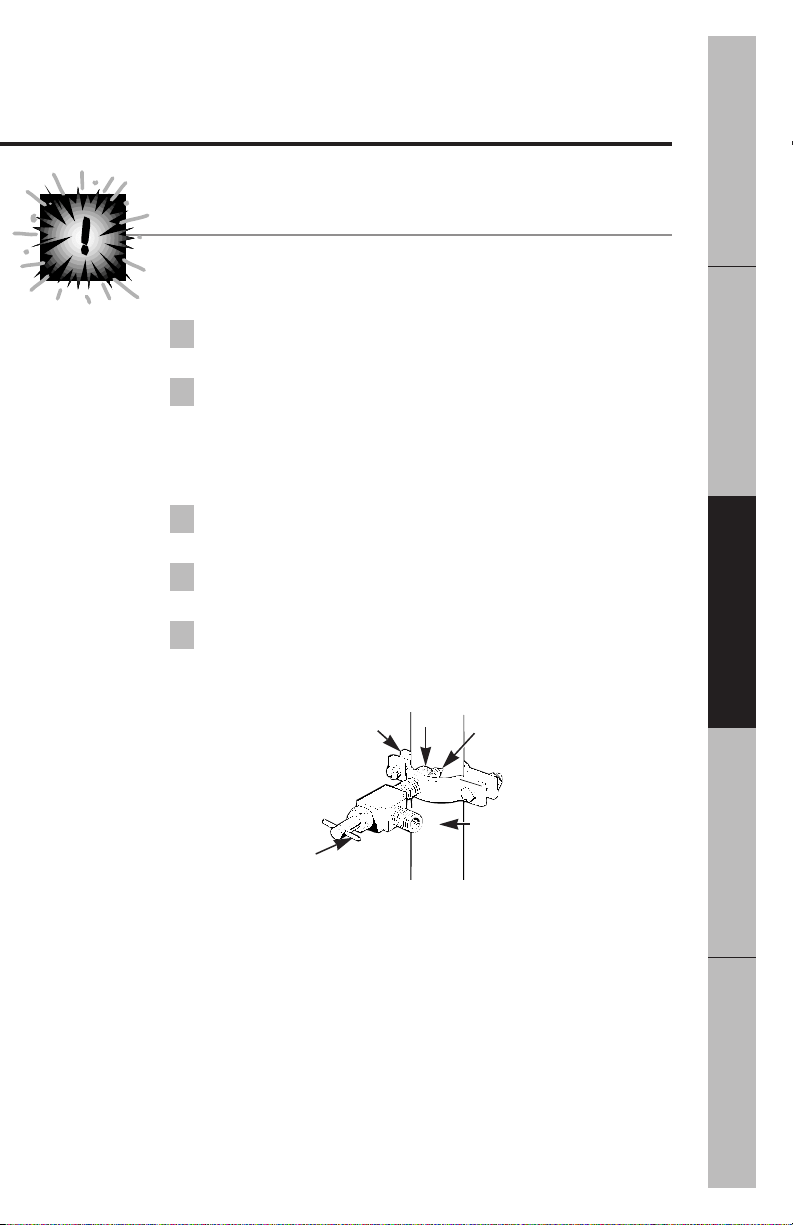
27
Troubleshooting TipsInstallation Instructions
Customer Service
Operating InstructionsSafety Information
Turn on the nearest faucet long enough to clear the line of water.
Install the Shutoff Valve
Install the shutoff valve on the nearest frequently used drinking
water line.
Choose a location for the valve that is easily accessible. It is best
to connect into the side of a vertical water pipe. When it is
necessary to connect into a horizontal water pipe, make the
connection to the top or side, rather than at the bottom, to
avoid drawing off any sediment from the water pipe.
Drill a 1/4″hole in the water pipe, using a sharp bit. Remove
any burrs resulting from drilling the hole in the pipe.
Fasten the shutoff valve to the cold water pipe with the pipe
clamp.
Tighten the clamp screws until the sealing washer begins
to swell.
Do not overtighten or you may crush the copper tubing.
5
4
3
2
1
Shut Off the Main Water Supply
Washer
Inlet End
Pipe Clamp
Vertical Cold Water Pipe
Saddle-Type Shutoff Valve
Installing the water line.
28
Read these instructions completely and carefully.
Operating Instructions
Installation Instructions
Safety InformationTroubleshooting TipsCustomer Service
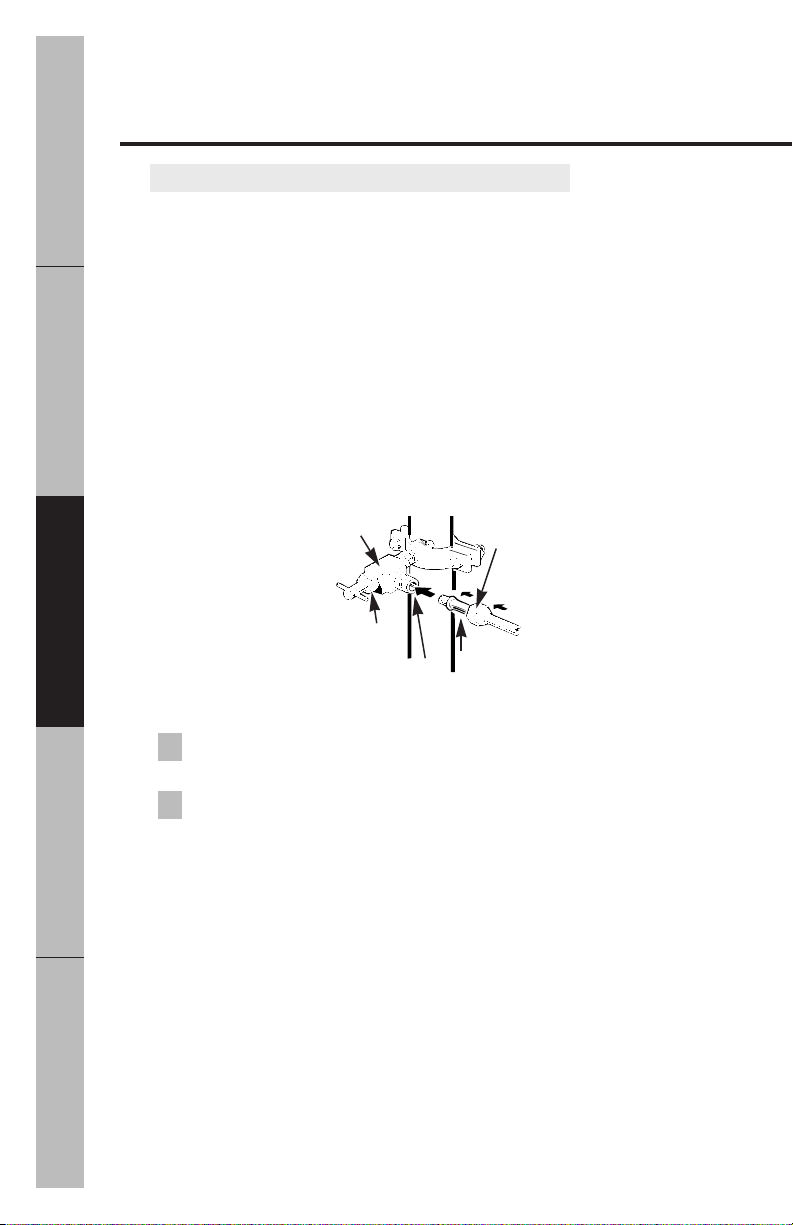
Route the Copper Tubing and Connect It to the Shutoff Valve
Route the copper tubing between the cold water line and the refrigerator.
Route the tubing through a hole drilled in the wall or floor (behind the
refrigerator or adjacent base cabinet) as close to the wall as possible.
Be sure there is sufficient extra tubing [about 8 feet (244 cm) coiled into 3 turns of about
10″ (25 cm) diameter] to allow the refrigerator to move out from the wall after installation.
Place the compression nut and ferrule (sleeve) onto the end of the tubing and
connect it to the shutoff valve.
Make sure the tubing is fully inserted into the valve. Tighten the compression
nut securely.
Saddle-Type Shutoff Valve
Compression Nut
Packing
Nut
Outlet Valve
Ferrule (sleeve)
Turn On the Water and Flush Out the Tubing
Turn the main water supply on and flush out the tubing until the water
is clear.
Shut the water off at the water valve after about one quart (1 l) of water has
been flushed through the tubing.
2
1
29
Troubleshooting TipsInstallation Instructions
Customer Service
Operating InstructionsSafety Information
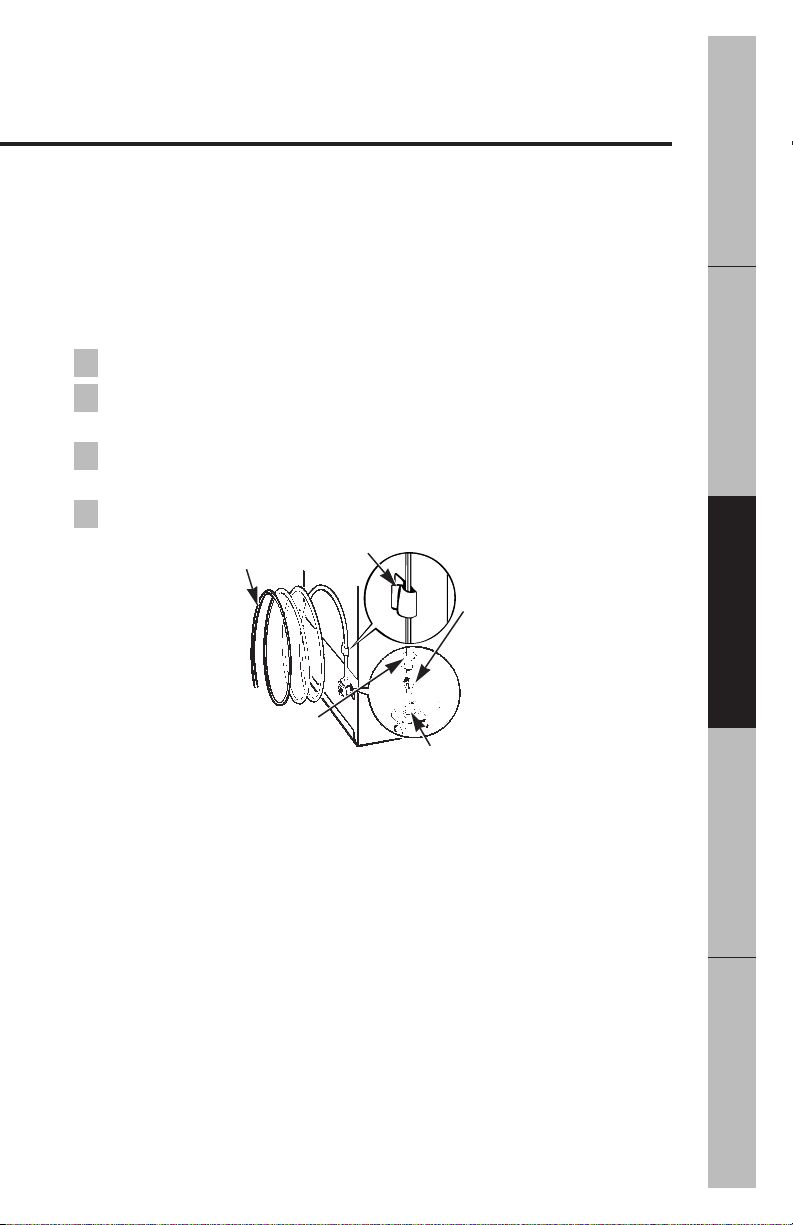
Connect the Tubing to the Refrigerator
Before making the connection to the refrigerator, be sure the
refrigerator power cord is not plugged into the wall outlet.
We recommend installing a water filter if your water supply has sand or particles
that could clog the screen of the refrigerator’s water valve. Install it in the water
line near the refrigerator.
Remove the plastic flexible cap from the water valve.
Place the compression nut and ferrule (sleeve) onto the end of the tubing
as shown.
Insert the end of the copper tubing into the water valve connection as far as
possible. While holding the tubing, tighten the fitting.
Fasten the copper tubing into the clamp provided to hold it in a vertical
position. You may need to pry open the clamp.
4
3
2
1
1/4″ Compression Nut
1/4″ Copper Tubing
Ferrule (sleeve)
Tubing Clamp
Refrigerator Connection
Turn the Water On at the Shutoff Valve
Tighten any connections that leak.
Plug In the Refrigerator
Arrange the coil of copper tubing so that it does not vibrate against the back of
the refrigerator or against the wall. Push the refrigerator back to the wall.
Start the Icemaker
Set the icemaker feeler arm to the
ON
(down) position. The icemaker will
not begin to operate until it reaches its operating temperature of 15°F (-9°C)
or below. It will then begin operation automatically if the icemaker feeler arm
is in the
ON
(down) position.
NOTE: The icemaker may double-cycle when it first starts, causing some water spillage from
the icemaker into the ice bucket. This is normal and should not happen again.
30
Operating Instructions
Installation Instructions
Safety InformationTroubleshooting TipsCustomer Service
Reversing the door swing/Removing the doors.
Important Notes
NOTE: Doors on dispenser models do not reverse. However, if you need to
remove the doors on a dispenser model, first disconnect the water line to the
dispenser. See the Removing the doors section. To rehang the doors, see
the Rehanging the doors section.
When reversing the door swing (on non-dispenser models):
■ Read the instructions all the way through before starting.
■ Handle parts carefully to avoid scratching paint.
■ Set screws down by their related parts to avoid using them in the
wrong places.
■ Provide a non-scratching work surface for the doors.
IMPORTANT: Once you begin, do not move the cabinet until
door-swing reversal is completed.
These instructions are for changing the hinges from the
right side to the left side—if you ever want to change the
hinges back to the right side, follow these same instructions
and reverse all references to left and right.
Read these instructions completely and carefully.
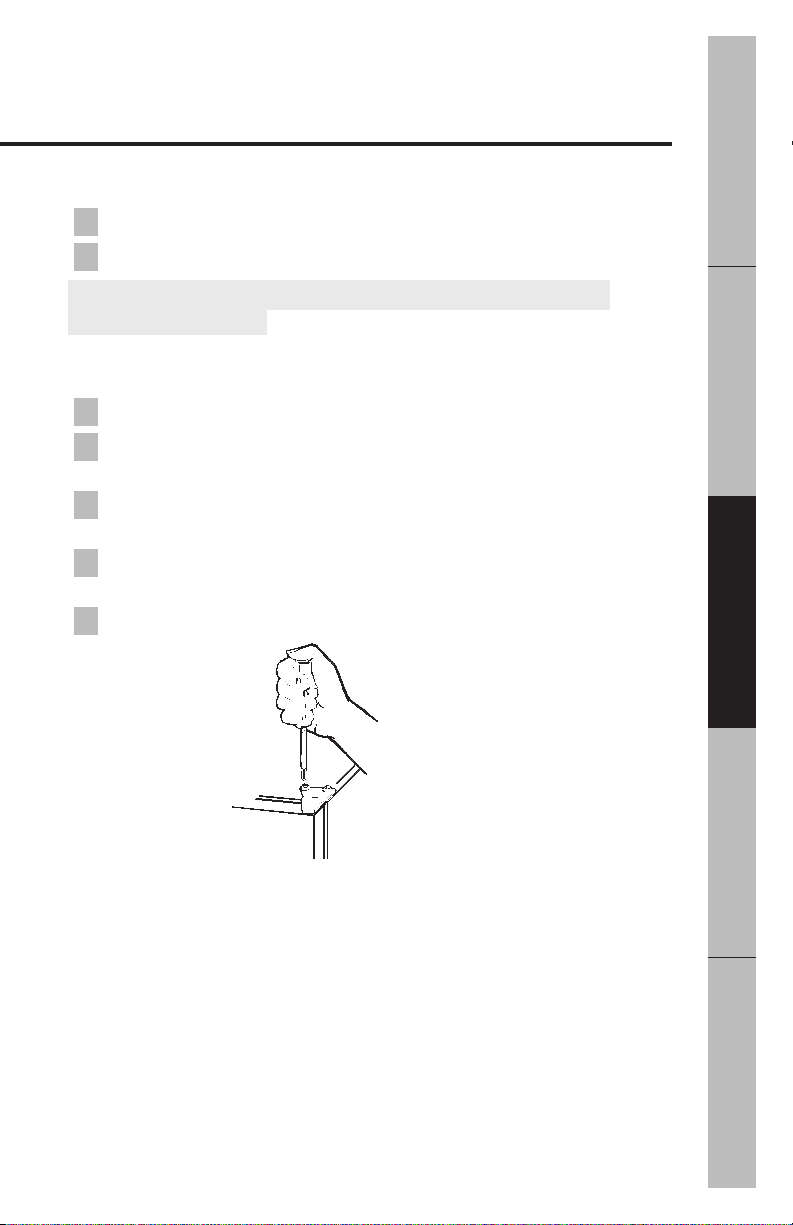
■ Phillips screwdriver
■ Masking tape
■ T20 or T25 Torxdriver, whichever your model requires
■ Putty knife or thin-blade screwdriver
■ 3/8″socket and ratchet (a 6-point socket is recommended)
Tools Required
Troubleshooting TipsInstallation Instructions
Customer Service
Operating InstructionsSafety Information
31
Before Removing the Doors
Unplug the refrigerator from its electrical outlet.
Empty all door shelves, including the dairy compartment.
CAUTION: Do not let either door drop to the floor. To do so could
damage the door stop.
2
1
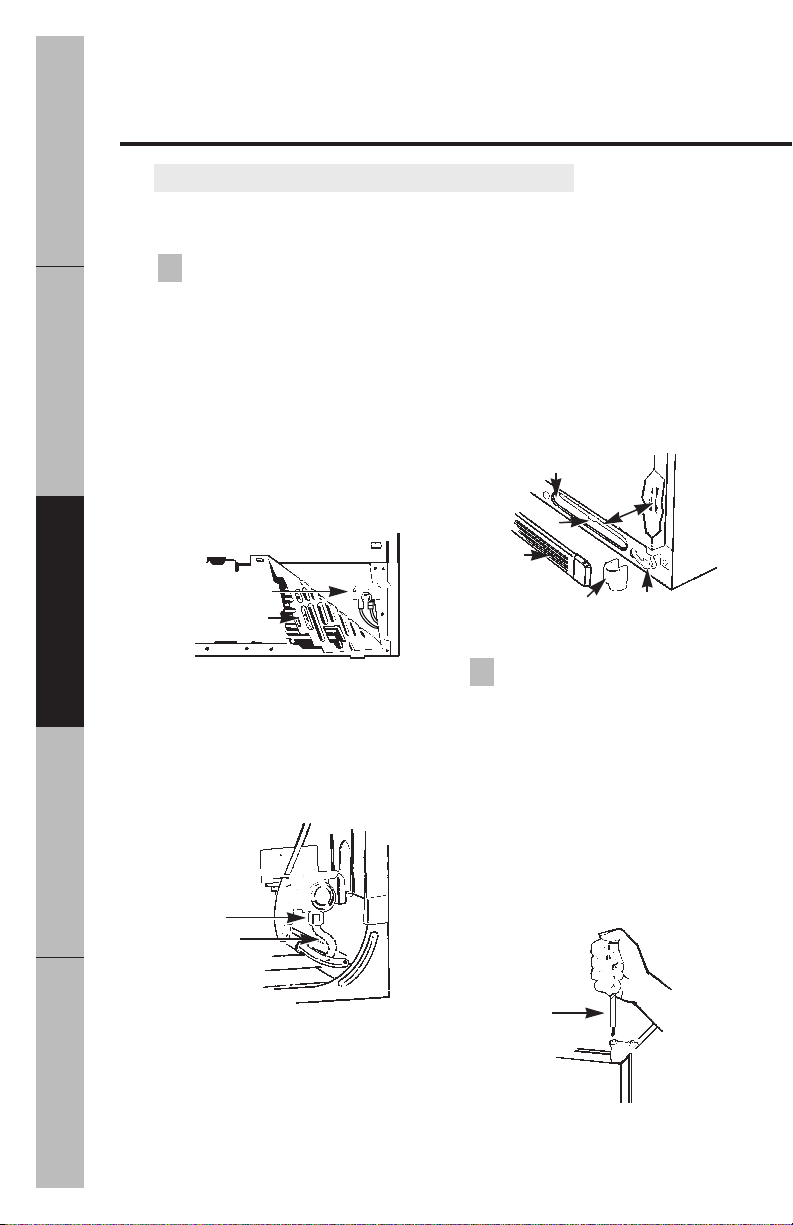
Remove the Freezer Door on Non-Dispenser Models
Tape the door shut with masking tape.
With a Phillips screwdriver, remove the hinge cover on top of the freezer
door (on some models).
Lift the hinge straight up to free the hinge pin from the socket in the
top of the door.
Remove the tape and tilt the door away from the cabinet. Lift it off the
bottom socket.
Set the door on a non-scratching surface with the outside up.
5
4
3
2
1
Removing the doors.
32
Operating Instructions
Installation Instructions
Safety InformationTroubleshooting TipsCustomer Service
Read these instructions completely and carefully.
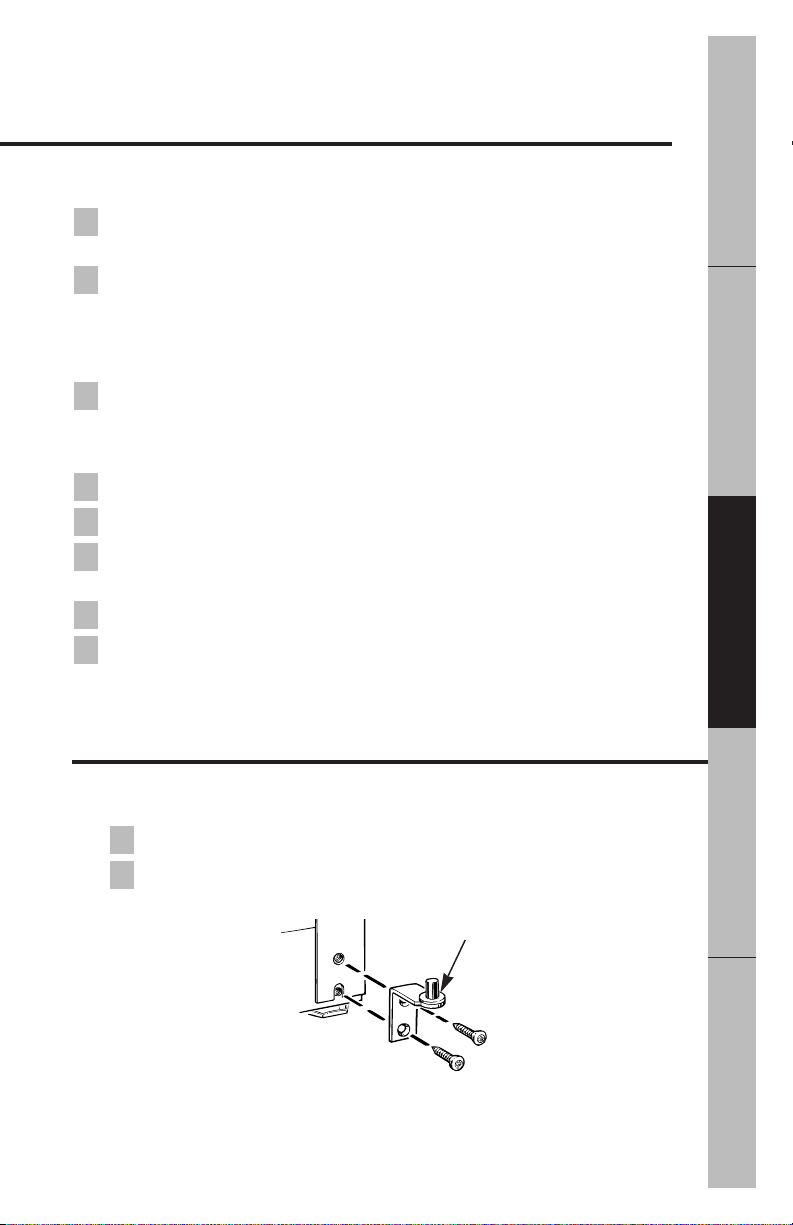
Remove the Freezer Door on Dispenser Models
Tape the door shut with masking
tape. There is a water line that
runs from the dispenser to the
hinge area and to the water valve
at the back of the refrigerator.
This line needs to be disconnected
at the valve before you remove the
door hinge.
To disconnect this line, first
remove or bend back the
compressor compartment cover.
Use a wrench to loosen the plastic
nut (counterclockwise) and pull
out the water line. This may
require some effort. Drain the
water line into a cup.
At the front of the refrigerator,
unsnap the hinge cover at the
bottom of the fresh food door.
Remove the base grille and unclip
the water line from the hinge area
and from behind the base
channel. Pull the tubing through
to the front of the refrigerator.
With a Phillips screwdriver,
remove the hinge cover on top
of the freezer door (on some
models).
There will be 2 wire connectors
under the hinge cover. Pull them
apart.
With a T-20 Torx Driver, remove
the 2 Torx screws that hold the top
hinge to the cabinet.
2
1
Water Valve
Base Channel
Bottom Hinge Cover
(on some models)
Grille
Water
Tubing
Clip
Clip
Cover
Plastic
Nut
Water
Line
T-20 Torx
driver
Freezer
Door
Troubleshooting TipsInstallation Instructions
Customer Service
Operating InstructionsSafety Information
33
Remove the Freezer Door on Dispenser Models
Lift the hinge straight up to free the hinge pin from the socket in the top of
the door.
Remove the tape and tilt the door away from the cabinet. Lift it off the
bottom socket.
Pull out the water line until the line comes all the way out. This may require
2 people, one to hold the door and another to pull out the water line.
Set the door on a non-scratching surface with the outside up.
5
4
3
Remove the Fresh Food Door
Tape the door shut with masking tape.
Remove the hinge pin with a 3/8″socket.
Remove the tape and tilt the door away from the cabinet. Remove and save
the washer on the hinge pin.
Lift the door straight off the bottom hinge bracket.
Set the door on a non-scratching surface with the outside up.
5
4
3
2
1
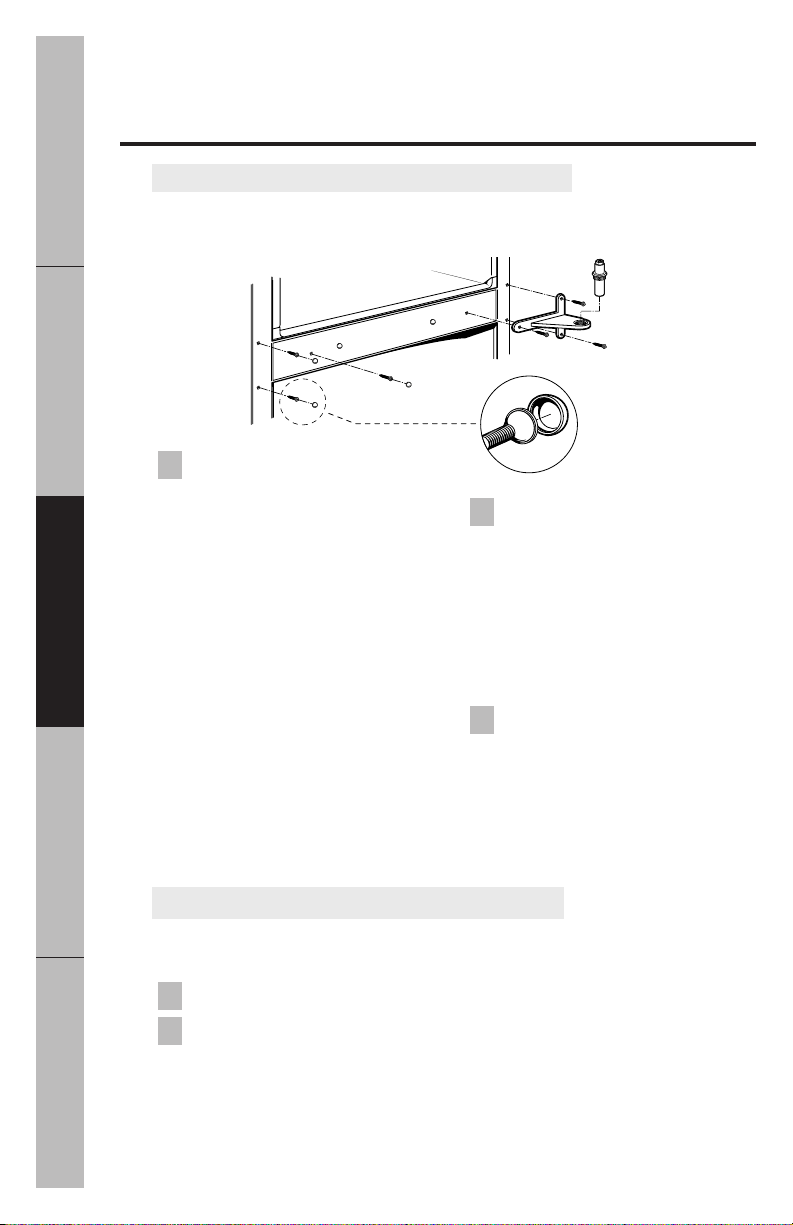
Reversing the hardware.
Transfer Bottom Hinge Bracket to the Left
Remove the base grille by pulling it straight out.
Using a Torx Driver, move the bottom hinge bracket and plastic washer
from the right side to the left side.
2
1
Plastic Washer
Hinge Bracket
Reversing the hardware.
34
Read these instructions completely and carefully.
Operating Instructions
Installation Instructions
Safety InformationTroubleshooting TipsCustomer Service
Transfer Top Hinge to the Left
Interchange hinge and screws at top right with screws at top left of cabinet.
Do not tighten screws on hinge side at this time.
Transfer Door Stops
On each door, move the metal door stop from the right to the left.
Move any screws from the left to the right.
2
1
Transfer Center Hinge Bracket to the Left
Remove the center hinge
bracket by removing the three
Torx screws.
NOTE: Keep these screws with the hinge
bracket. They are long screws and will be used
when installing the hinge on the other side.
On some models,
you will need to
remove the color-matched caps
from the screw heads before you
can remove the screws. Use the
edge of a thin flat blade to gently
pry the caps off the screw heads.
(A putty knife works well for this.)
Cover the blade with tape to
prevent scratching the paint.
Remove the three Torx screws
from the center left side of the
cabinet. Screw them into the holes
on the right side.
Place the center hinge bracket
over the holes at the center left
side of the cabinet. Insert and
tighten the three long screws.
Replace the caps by snapping them
over the screws with your finger.
3
2
1
35
Troubleshooting TipsInstallation Instructions
Customer Service
Operating InstructionsSafety Information
Reversing the door handles.
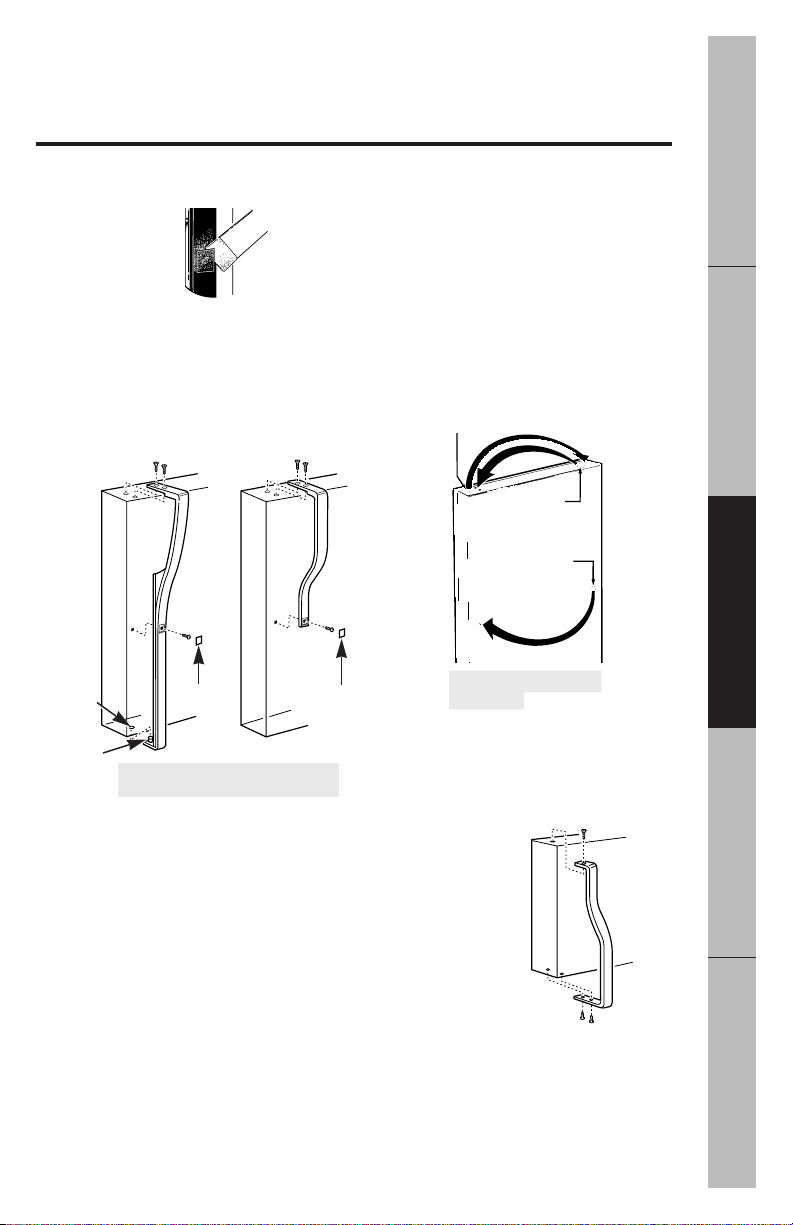
Transfer Fresh Food Door Handle
■ Remove the handle plug using a
putty knife under the edge. Remove
the screw underneath.
■ Remove the two screws holding the
handle to the top of the door.
■ Move the large plug button from
the left edge of the door and insert
it into the hole on the opposite side.
■ Move the small plug buttons from
the right side of the door and insert
them into the holes on the opposite
side.
■ Move the door medallion.
To reattach the handle on the
opposite side.
Models with long handles have a pin
that fits into a hole at the bottom of the door.
Large Plug Button
Small Plug
Buttons
Medallion
Transfer Freezer Door Handle
■ Remove the screws holding the handle to the top and
bottom of the door.
■ Move the plug button on the right side of the door
to the handle screw hole on the left side.
■ Reattach the handle on the opposite side using the
holes closest to the edge of the door.
Handle Plug Handle Plug
Pin
Hole
Rehanging the doors.
36
Read these instructions completely and carefully.
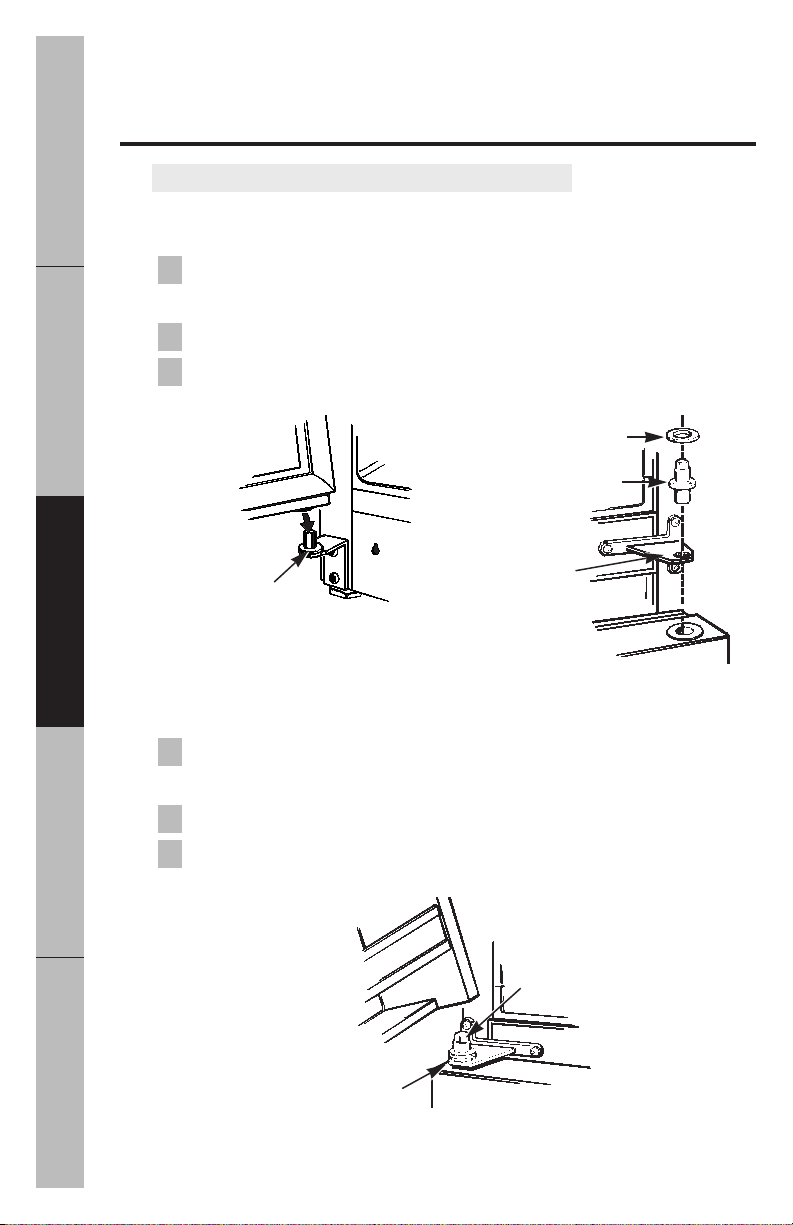
Rehang the Fresh Food Door
Lower the fresh food door onto the bottom hinge pin.
Be sure the washer is in place.
Straighten the door and line it up with the center hinge bracket.
Reinstall the hinge pin with a 3/8″ socket. Turn it until it extends through
the hinge bracket and into the door.
3
2
1
Plastic
Washer
Plastic Washer
Fresh Food Door
Hinge Pin
Center Hinge Bracket
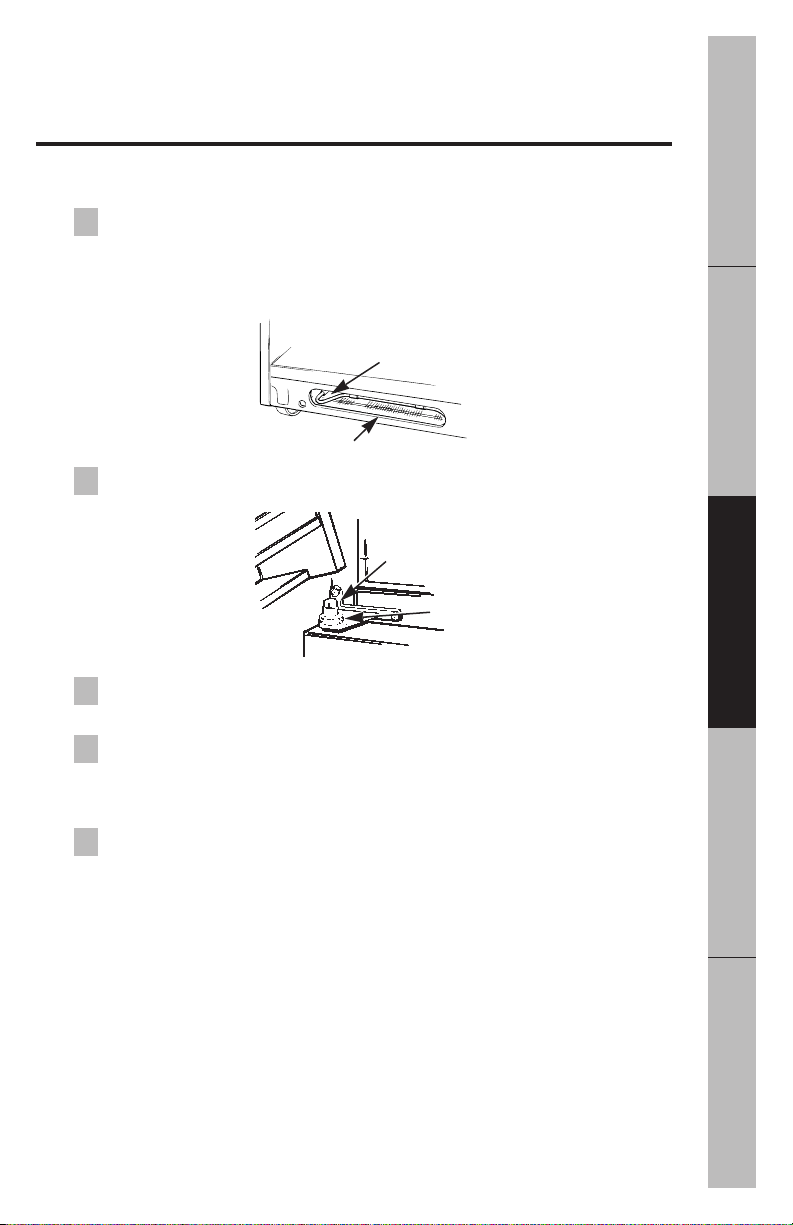
Rehang the Freezer Door on Non-Dispenser Models
Lower the freezer door onto the center hinge pin.
Be sure the washer is in place.
Lift the top hinge so the pin fits into the door socket.
Make sure the door is straight and the gap between the doors is even across
the front. Tighten the top hinge screws.
3
2
1
Center Hinge Pin
Plastic Washer
Operating Instructions
Installation Instructions
Safety InformationTroubleshooting TipsCustomer Service
Reversing the doors.
37
Troubleshooting TipsInstallation Instructions
Customer Service
Operating InstructionsSafety Information
Rehang the Freezer Door on Dispenser Models
One person will need to hold the door as the other person routes the water
line through the conduit.
The conduit goes down into the fresh food door hinge. Insert the water line
into the conduit and push it through until it goes down to the bottom of the
refrigerator.
Lower the bottom socket of the freezer door onto the center hinge pin.
Be sure the washer is in place.
Tilt the door toward the cabinet, lifting the top hinge so the pin fits into the
socket on top of the door.
Tighten the top hinge screws after making sure the gap between the doors is
even all across the front.
Reconnect the 2 wire connectors.
Replace the 2 Torx screws to hold the top hinge to the cabinet. Replace the
hinge cover (on some models).
If the door swing is on the right side you will need to route the water line
across the front to the conduit on the bottom left side of the refrigerator.
Secure the water line in the clip behind the base channel. Feed the water line
through the conduit on the bottom until it comes out at the back of the
refrigerator near the water valve. Tighten the plastic nut firmly. Replace the
compressor compartment cover.
Replace the base grille and bottom hinge cover. Push the hinge cover on
completely.
Press the dispenser pad for at least 2 minutes. This will remove trapped air,
flush out the water line and fill the water system.
5
4
3
2
1
Conduit
Center Hinge Pin
Plastic Washer
Base Channel
38
Operating Instructions
Installation Instructions
Safety InformationTroubleshooting TipsCustomer Service
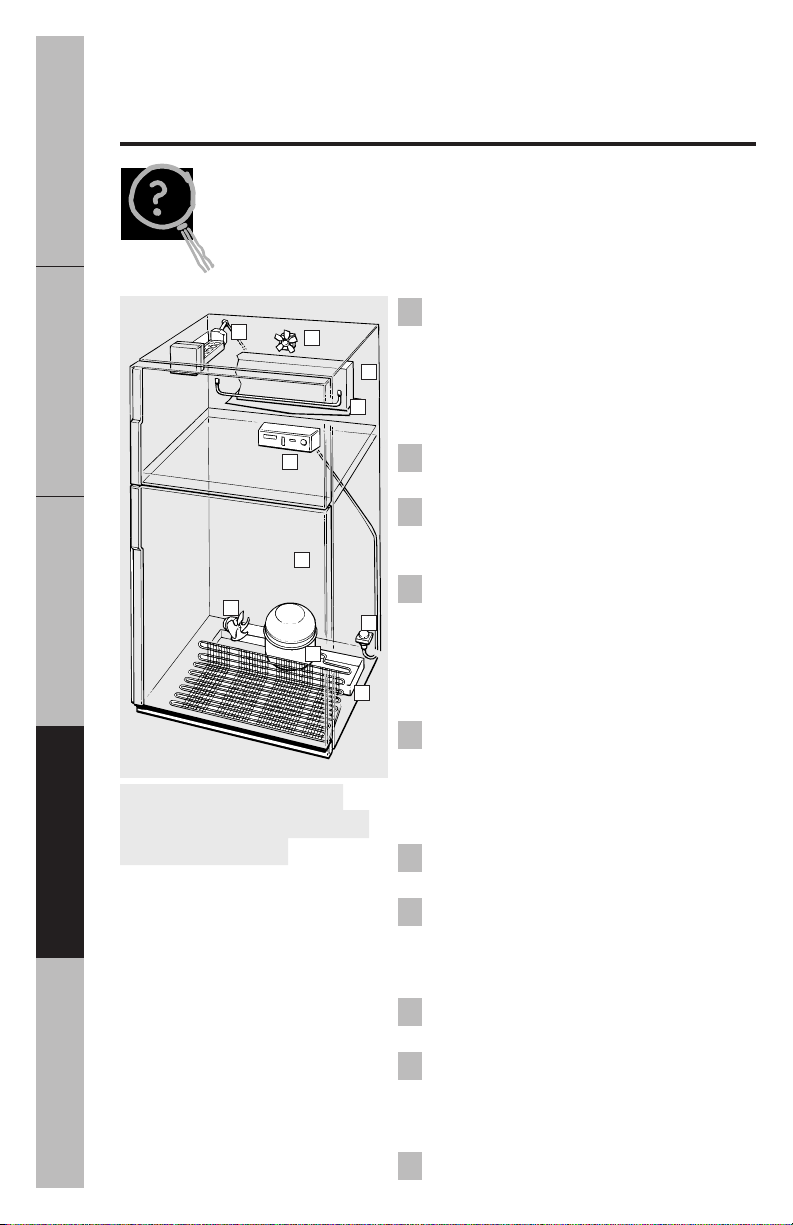
Normal operating sounds.
Depending on the placement of the refrigerator in your kitchen,
you may want to place a piece of rubber backed carpet under the
refrigerator to reduce noise.
Icemaker (on some models).
Occasionally you
will hear ice cubes dropping into the ice bin.
If this is your first icemaker, you’ll hear
occasional sounds that may be unfamiliar.
They are normal icemaking sounds and are
not a cause for concern.
Evaporator Fan.
You may hear air being
forced through the cabinet by the fan.
Evaporator.
The flow of refrigerant through
the evaporator may create a boiling or
gurgling sound.
Defrost Heater.
During defrost cycles,
water dripping onto the heater may
cause a hissing or sizzling sound. After
defrosting, a popping sound may occur
and the evaporator may create a boiling
or gurgling sound.
Cold Control & Defrost Timer.
These parts
can produce a snapping sound when
turning the refrigerator on or off. The
timer also produces a sound similar to
an electric clock.
Plastic Liner.
Cracking or popping sounds
due to expansion of the plastic liner.
Water Valve (on models equipped with an
automatic icemaker).
When the icemaker fills
with water, a buzzing sound and running
water will be heard.
Water Pan.
Water may be heard running into
the drain pan during the defrost cycle.
Compressor.
Modern, high efficiency
compressors operate much faster than older
models. The compressor may have a high
pitched hum or pulsating sound.
Condenser Fan.
You may hear air being
forced over the condenser by the fan.
9
8
7
6
5
4
3
2
1
These sounds are normal
and are due mostly to highly
efficient operation.
1
2
3
4
5
6
7
8
9
10
10
39
Troubleshooting TipsInstallation Instructions
Customer Service
Operating InstructionsSafety Information
Before you call for service…
Troubleshooting Tips
Save time and money! Review the charts on the following pages
first and you may not need to call for service.
Problem Possible Causes What To Do
Refrigerator does not
Refrigerator in • Wait about 30 minutes for
operate
defrost cycle. defrost cycle to end.
Fresh food control • Move the fresh food
in
OFF
position. control to a temperature
setting.
Refrigerator is • Push the plug completely
unplugged. into the outlet.
The fuse is blown/ • Replace fuse or reset
circuit breaker is the breaker.
tripped.
Motor operates for
Normal when • Wait 24 hours for the
long periods or cycles
refrigerator is first refrigerator to completely
on and off frequently.
plugged in. cool down.
(Modern refrigerators with
Often occurs when large • This is normal.
more storage space and
amounts of food are
a larger freezer require
placed in refrigerator.
more operating time.
Door left open or door is • See
Rollers.
They start and stop often
not sealing when closed
to maintain even
because refrigerator is
temperatures.)
not level.
Hot weather or frequent • This is normal.
door openings.
Temperature controls • See
About the controls.
set at the coldest setting.
Grille and condenser • See
Care and cleaning.
need cleaning.
Vibration or rattling
Rollers need adjusting. • See
Rollers.
(slight vibration is
normal)
40
Operating Instructions
Installation Instructions
Safety InformationTroubleshooting TipsCustomer Service
Before you call for service…
Problem Possible Causes What To Do
Fresh food or freezer
Temperature control • See
About the controls.
compartment too warm
not set cold enough.
Warm weather or • Set the temperature
frequent door openings. control one step colder.
See
About the controls.
Door left open. • Check to see if package is
holding door open.
Package blocking air • Check to see if package is
duct in freezer blocking air duct in freezer
compartment. compartment.
Frost or ice crystals on
Door left open. • Check to see if package is
frozen food (frost within
holding door open.
package is normal)
Too frequent or too
long door openings.
Automatic icemaker
Icemaker feeler arm in • Move the feeler arm to the
does not work STOP
(up) position.
ON
(down) position.
(on some models)
• Cubes may have fused to
the side of the mold. Move
the feeler arm to the
STOP
(up) position then remove
these cubes.
Water supply turned • See
Installing the water line.
off or not connected.
Freezer compartment • Wait 24 hours for the
too warm. refrigerator to completely
cool down.
Piled up cubes in the • Level cubes by hand.
storage bin cause the
icemaker to shut off.
Cubes too small
Water shutoff valve • Call a plumber to clean
(on some models)
connecting refrigerator the valve.
to water line may be
clogged.
Slow ice cube freezing
Door left open. • Check to see if package is
holding door open.
Temperature control • See
About the controls.
not set cold enough.
Troubleshooting TipsInstallation Instructions Customer ServiceOperating InstructionsSafety Information
Problem Possible Causes What To Do
Ice cubes have
Ice storage bin needs • Empty and wash bin.
odor/taste
cleaning. Discard old cubes.
Food transmitting odor/ • Wrap foods well.
taste to ice cubes.
Interior of refrigerator • See
Care andcleaning.
needs cleaning.
Moisture forms on
Not unusual during • Wipe surface dry and
cabinet surface
periods of high make sure the power saver
between the doors
humidity. switch is not set at the
POWER SAVER
setting.
Moisture collects inside
Too frequent or too
(in humid weather, air
long door openings.
carries moisture into
refrigerator when doors
are opened)
Food freezing in
Food too close to • Move the food away from
the refrigerator
air vent. the air vent (near controls).
Fresh food control is • Move the fresh food control
set too cold. to a warmer temperature.
Cube dispenser does not
Icemaker turned off or • Turn on icemaker or
work (on some models)
water supply turned off. water supply.
Ice cubes are frozen to • Remove cubes and move
icemaker feeler arm. the feeler arm to the
ON
(down) position.
Irregular ice clumps in • Break up with fingertip
storage container.
pressure and discard
remaining clumps.
• Freezer temperature may
be too warm. Adjust the
freezer control to a colder
setting, one position at a
time, until the clumps do
not form.
Refrigerator has odor
Foods transmitting • Foods with strong odors
odor to refrigerator. should be tightly wrapped.
• Keep an open box of baking
soda in the refrigerator;
replace every three months.
Interior needs cleaning. • See
Care and cleaning.
41
Before you call for service…
42
Operating Instructions
Installation Instructions
Safety InformationTroubleshooting TipsCustomer Service
Problem Possible Causes What To Do
Hot air from bottom
Normal air flow cooling • Your floor covering
of refrigerator
motor. In the supplier should be
refrigeration process, consulted if you object to
it is normal that heat be this discoloration.
expelled in the area
under the refrigerator.
Some floor coverings
will discolor at these
normal and safe
temperatures.
Orange glow in
Defrost heater is on. • This is normal.
the freezer
Door does not close
Rollers need adjusting. •
See
Rollers.
by itself
Troubleshooting TipsInstallation Instructions Customer ServiceOperating InstructionsSafety Information
Notes
43
Notes
44
Operating Instructions
Installation Instructions
Safety InformationTroubleshooting TipsCustomer Service

Troubleshooting TipsInstallation Instructions Customer ServiceOperating InstructionsSafety Information
45
Consumer Warranty
For customers in Canada
46
■This warranty applies only to single family domestic use in Canada when the
Refrigerator has been properly installed according to the instructions supplied by
Camco and is connected to an adequate and proper utility service. Damage due to
abuse, accident, commercial use, and alteration or the removal or defacing of the
serial plate, cancels all obligations of this warranty. Service during this warranty must
be performed by an Authorized Camco Service Agent.
■Neither Camco nor the Dealer is liable for any claims or damages resulting from any
failure of the Refrigerator or from service delays beyond their reasonable control.
■To obtain warranty service, purchaser must present the original bill of sale.
Components repaired or replaced are warranted through the remainder of the
original warranty period only.
■This warranty does not cover expense involved in making this appliance readily
accessible for servicing.
■This warranty gives you specific legal rights. Additional warranty rights may be
provided by law in some areas.
Camco Service is available coast-to-coast. See Consumer Services section for service information.
If further help is needed concerning this Warranty, contact:
Manager, Consumer Relations, Camco Inc., Consumer Service,
Suite 310, 1 Factory Lane, Moncton, N.B. E1C 9M3
Terms and Conditions
Next Four Years
CAMCO
warrants the hermetically sealed refrigerator (namely: Evaporator,
Condenser, Motor Compressor, Interconnecting Tubing, Drier and Refrigerant
Charge) against defects in material or workmanship for an additional four years.
These parts will be repaired or replaced at the option of Camco without charge,
subject to the terms and conditions set out below.
The
DEALER
warrants for the next four years to provide the service labor necessary to
repair or replace the hermetically sealed refrigeration system to the terms and
conditions set out below.
Operating Instructions
Installation Instructions
Safety InformationTroubleshooting TipsCustomer Service
First Year
CAMCO
warrants the replacement or repair of all parts of this Refrigerator which
prove to be defective in material or workmanship for one year from the date of
purchase. Such parts will be repaired or replaced at the option of Camco without
charge, subject to the terms and conditions set out below.
The
DEALER
warrants to provide the service labor for the repair or replacement of all
parts of this Refrigerator which prove to be defective in material or workmanship for
one year from the date of purchase.
Refrigerator Warranty
(For customers in the United States)
All warranty service provided by our Factory Service Centers,
or an authorized Customer Care
®
technician. For service,
call 800-GE-CARES.
This warranty is extended to the original purchaser and any succeeding owner for products purchased
for home use within the USA. In Alaska, the warranty excludes the cost of shipping or service calls to
your home.
Some states do not allow the exclusion or limitation of incidental or consequential damages. This
warranty gives you specific legal rights, and you may also have other rights which vary from state to
state. To know what your legal rights are, consult your local or state consumer affairs office or your
state’s Attorney General.
Warrantor: General Electric Company. Louisville, KY 40225
For The Period Of: GE Will Replace:
One Year Any part
of the refrigerator which fails due to a defect
From the date of the
in materials or workmanship. During this
full one-year
original purchase warranty,
GE will also provide,
free of charge,
all labor
and in-home service to replace the defective part.
Five Years Any part of the sealed refrigerating system
(the compressor,
From the date of the
condenser, evaporator and all connecting tubing)
original purchase
which fails due to a defect in materials or workmanship.
During this
five-year warranty,
GE will also provide,
free
of charge,
all labor and in-home service to replace the
defective part.
Lifetime Any see-through pan or drawer made from Lexan
®
From the date of the polycarbonate resin
furnished with the refrigerator if the
original purchase
pan or drawer breaks during normal household use.
Drawer covers are not included.
■ Service trips to your home to teach
you how to use the product.
■ Improper installation.
■ Failure of the product if it is
abused, misused, or used for other
than the intended purpose or used
commercially.
■ Loss of food due to spoilage.
■ Replacement of house fuses or
resetting of circuit breakers.
■ Damage to the product caused by
accident, fire, floods or acts of God.
■ Incidental or consequential damage to
personal property caused by possible
defects with this appliance.
What GE Will Not Cover:
47
Troubleshooting TipsInstallation Instructions Customer ServiceOperating InstructionsSafety Information
Printed in the United States
Operating Instructions
Installation Instructions
Safety InformationTroubleshooting TipsCustomer Service
Service Telephone Numbers.
The GE Answer Center® is open 24 hours a day, 7 days a week.
In Canada,
contact: Manager, Consumer Relations, Camco Inc.,
Suite 310, 1 Factory Lane, Moncton, N.B. E1C 9M3.
GE Answer Center
®
In the U.S.: 800.626.2000
Expert GE repair service is only a phone call away.
In Canada,
call
1-800-361-3400.
In-Home Repair Service
In the U.S.: 800-432-2737
GE offers, free of charge, a brochure to assist in planning a
barrier-free kitchen for persons with limited mobility.
In the U.S.,
call
800-TDD-GEAC (800-833-4322
).
In Canada,
contact: Manager, Consumer Relations, Camco Inc.,
Suite 310, 1 Factory Lane, Moncton, N.B. E1C 9M3.
Special Needs Service
In the U.S.: 800.626.2000
Purchase a GE service contract while your warranty is still in effect and
you’ll receive a substantial discount. GE Consumer Service will still be
there after your warranty expires.
In Canada,
call
1-800-461-3636.
Service Contracts
In the U.S.: 800-626-2224
Individuals qualified to service their own appliances can have parts or
accessories sent directly to their homes (VISA, MasterCard and Discover
cards are accepted).
Instructions contained in this manual cover procedures
to be performed by any user. Other servicing generally should be referred to
qualified service personnel. Caution must be exercised, since improper
servicing may cause unsafe operation.
Customers
in Canada
should consult the local telephone directory for
the nearest Camco service center, or call
1-800-361-3400.
Parts and Accessories
In the U.S.: 800-626-2002
If you are not satisfied with the service you receive from GE:
First,
contact
the people who serviced your appliance.
Next,
if you are still not pleased,
in
the U.S.,
write all the details—including your phone number—to: Manager,
Customer Relations, GE Appliances, Appliance Park, Louisville, KY
40225; or,
in Canada,
to Director, Consumer Relations, Camco Inc.,
Suite 310, 1 Factory Lane, Moncton, N.B. E1C 9M3.
Finally,
if your
problem is still not resolved, write Major Appliance Consumer Action
Program, 20 North Wacker Drive, Chicago, IL 60606 (U.S. only).
Service Satisfaction
48