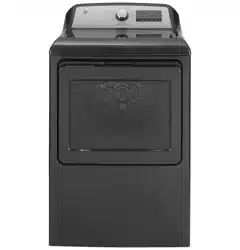
Problem | Possible Cause | What To Do |
| Dryer shakes or makes noise | Some shaking/noise is normal. Dryer may be sitting unevenly. | Move dryer to an even floor space, or adjust leveling legs as necessary until even. |
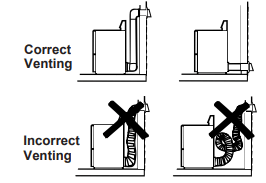
Clothes take too long to dry | Improper or obstructed ducting | Check the Installation Instructions to make sure the dryer venting is correct. Make sure ducting is clean, free of kinks and unobstructed. Check to see if outside wall damper operates easily. |
| Improper sorting | Separate heavy items from lightweight items (generally, a well-sorted washer load is a well-sorted dryer load). |
| Large loads of heavy fabrics (like beach towels) | Large, heavy fabrics contain more moisture and take longer to dry. Separate large, heavy fabrics into smaller loads to speed drying time. |
| Controls improperly set | Match control settings to the load you are drying. |
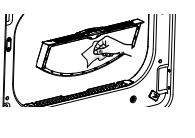
| Lint filter is full | Clean lint filter before every load. |
Blown fuses or tripped circuit breaker | Replace fuses or reset circuit breakers. NOTE: Some electric dryers use 2 fuses/breakers, make sure both are operating. |
| Overloading/combining loads | Do not put more than one washer load in the dryer at a time. |
| Underloading | If you are drying only one or two items, add a few items to ensure proper tumbling. |
| ecoDry is enabled | The ecoDry feature is designed to operate your dryer in the most energy efficient mode, which is not always the fastest mode. In some instances, dry times may be extended to reduce overall energy usage for the cycle. |
The Dry dryness level was chosen but load is still damp | Load consists of a mixture of heavy and light fabrics | When combining heavy and light fabrics in a load, choose More Dry. |
| Exhaust system is blocked | Inspect and clean exhaust system. |
| Dryer doesn’t start | Control panel is “asleep” | This is normal. Press Power to activate the control panel. |
| Dryer is unplugged | Make sure the dryer plug is pushed completely into the outlet. |
| Fuse is blown/circuit breaker is tripped | Check the building’s fuse/circuit breaker box and replace fuse or reset breaker. NOTE: Some electric dryers use two fuses/ breakers, make sure both are operating. |
Dryer was accidentally paused when starting Delay Dry | If the light on the Start/Pause button is flashing, the dryer is paused. Press Start/Pause to restart the countdown. |
No numbers displayed during cycle, only lights | Dryer is continuously monitoring the amount of moisture in the clothes | This is normal. When the dryer senses a low level of moisture in the load, the dryer will display the dry time remaining. |
| Time Remaining jumped to a lower number | The estimated time may change when a smaller load than usual is drying | This is normal. |
| Cannot make a selection and the dryer beeps twice | The dryness Level, Temp or option that you are trying to select is incompatible with the chosen dry cycle | This is normal. |
Dryer is running but 00 is displayed in Time Remaining | The Wrinkle Care option was chosen | This is normal. During extended tumbling, the time remaining is not displayed. The extended tumbling option lasts approximately 60 minutes. |
| “Check Vent” light is on | Lint filter is full | Clean lint filter, dry a load on an automatic cycle and verify that light turns off. |
| Improper or obstructed ducting | Check the Installation Instructions to make sure the dryer venting is correct. Make sure ducting is clean, free of kinks and unobstructed. Check to see if outside wall damper operates easily. Dry a load on an automatic cycle and verify that light turns off. |
| Exhaust system is blocked | Inspect and clean the exhaust system. Dry a load on an automatic cycle and verify that light turns off. |
| Dryer doesn’t heat | Fuse is blown/circuit breaker is tripped; the dryer may tumble but not heat | Check the building’s fuse/circuit breaker box and replace both fuses or reset both breakers. Your dryer may tumble if only one fuse is blown or one breaker tripped. NOTE: Some electric dryers use 2 fuses/breakers, make sure both are operating. |
| Gas service is off (gas models only) | Make sure gas shutoff at dryer and main shutoff are fully open. |
| LP gas supply tank is empty or there has been a utility interruption of natural gas (gas models only) | Refill or replace tank. Dryer should heat when utility service is restored. |
| No heat temperature selected | Select another heat setting |
| Inconsistent drying times | Type of heat | Drying time will vary according to the type of heat used. If you recently changed from an electric to a gas (natural or LP) dryer, or vice versa, the drying time could be different. |
| Type of load and drying conditions | The load size, types of fabric, wetness of clothes and the length and condition of the exhaust system will affect drying times. |
| Clothes are still wet and dryer shut off after a short time | The door was opened mid-cycle. The load was then removed from the dryer and a new load put in without selecting a new cycle | A dry cycle must be reselected each time a new load is put in. |
| Small load | When drying 3 items or less, choose QUICK DRY or TIMED DRY. |
| Load was already dry except for collars and waistbands | Choose QUICK DRY or TIMED DRY to dry damp collars and waistbands. In the future, when drying a load with collars and waistbands, choose More Dry. |
| Dryer is not level | Move dryer to an even floor space or adjust leveling legs as necessary until even. |
| Clothes are wrinkled | Overdrying | Select a shorter drying time. Remove items while they still hold a slight amount of moisture. Select a Less Dry or Damp setting. |
| Letting items sit in dryer after cycle ends | Remove items when cycle ends and fold or hang immediately, or use the Wrinkle Care option. |
| Overloading | Separate large loads into smaller ones. |
| Clothes shrink | Some fabrics will naturally shrink when washed. Others can be safely washed, but will shrink in the dryer. | To avoid shrinkage, follow garment care labels exactly. Some items may be pressed back into shape after drying. If you are concerned about shrinkage in a particular item, do not machine wash or tumble dry it. |
Greasy spots on clothes | Improper use of fabric softener | Follow directions on fabric softener package. |
| Drying dirty items with clean ones | Use your dryer to dry only clean items. Dirty items can stain clean items and the dryer. |
| Clothes were not completely clean | Sometimes stains which cannot be seen when the clothes are wet appear after drying. Use proper washing procedures before drying. |
| Lint on clothes | Lint filter is full | Clean lint screen before each load. |
| Improper sorting | Sort lint producers (like chenille) from lint collectors (like corduroy). |
| Static electricity can attract lint | See suggestions in this section under Static occurs. |
| Overloading | Separate large loads into smaller ones. |
| Paper, tissue, etc., left in pockets | Empty all pockets before laundering clothes. |
| Static occurs | No fabric softener was used | Try a fabric softener. Bounce® Fabric Conditioner Dryer Sheets have been approved for use in all GE Appliances dryers when used in accordance with the manufacturer’s instructions. |
| Overdrying | Try a fabric softener. Adjust setting to Less Dry or Damp. |
| Synthetics, permanent press and blends can cause static | Try a fabric softener. |
| Collars and waistbands still wet at end of cycle | The dryness monitor senses that the body of the clothes is dry | Choose QUICK DRY or TIMED DRY to dry damp collars and waistbands. In the future, when drying a load with collars and waistbands, choose More Dry. |
| Slight variation in metallic color | This is normal | Due to the metallic properties of paint used for this unique product, slight variations of color may occur due to viewing angles and lighting conditions. |
| Dryer continues to tumble after display says Complete | Wrinkle Care was selected | Ensure Wrinkle Care option is not selected. For the Steam Refresh cycle, Wrinkle Care will automatically be turned on and cannot be turned off. |
| Door is too foggy to see clothes during a steam cycle | Steam condenses on inner door | This is normal. |
Water seen on inside of door and top of lint filter when opening door after steam cycle | Steam condenses on these surfaces | This is normal. |
Small areas on clothes are damp after steam cycle | Steam condenses on inner drum | If using the STEAM Dewrinkle cycle, manually reduce the cycle time. If using the STEAM Refresh cycle, add more garments to the load. |
| Small amount of water on floor in front of dryer | Inadequate load size for steam cycle selected, excess steam condenses inside cabinet and leaks out | If using the STEAM Dewrinkle cycle, manually reduce the cycle time. If using the STEAM Refresh cycle, add more garments to the load. |
| Water on floor in back of dryer | Loose water hose connection | Tighten connection. |
| Hose missing rubber washer at connection with valve | Install rubber washer provided with hose. |
Water drips from door when opened after a Steam Cycle | Steam condenses on inner door | This is normal. |
| Cannot see steam at beginning of cycle | Steam released at different times in the cycle | This is normal. |
| Cannot see steam during cycle | The steam nozzle might be clogged with debris from your water supply | Call GE Appliances at 877.959.8688 to order nozzle replacement kit WE25M71 or to request a technician to replace this for you. |
| Garments still wrinkled after steam cycle | Too many garments | Load fewer garments; manually increase time. |
| Garments still wrinkled after steam cycle | Lint filter not clean | Clean lint filter |
| Load is children/infant garments | Use the Steam Refresh cycle |



 (on some models)
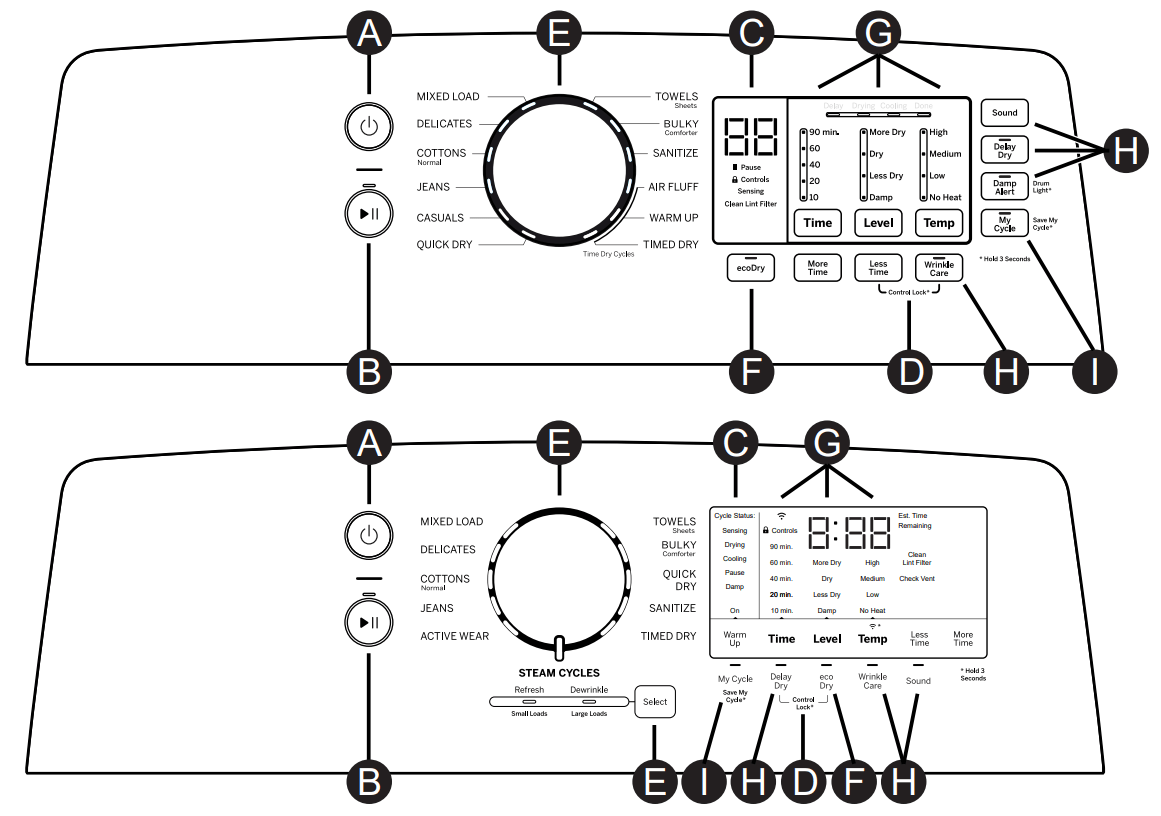
 Controls