
197D5616P006 49-60566 05-08 JR
ge.com
Write the model and serial numbers here:
Model # __________________________
Serial # __________________________
Find these numbers on a label inside
the refrigerator on the side wall.
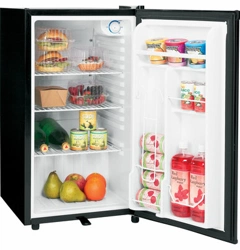
Refrigerators
SMR03BAV
SFR03BAV
Owner’s Manual
& Installation
Instructions
Safety Information
. . . . . . . . . . .2, 3
Operating Instructions
Care and Cleaning . . . . . . . . . . . . . .6, 7
Control Settings . . . . . . . . . . . . . . . . . . .4
Refrigerator Features . . . . . . . . . . . . . .5
Installation Instructions . . . .8–10
Troubleshooting Tips . . . . . .13, 14
Consumer Support
Consumer Support . . . . . .Back Cover
Warranty . . . . . . . . . . . . . . . . . . . . . . . .15
ATTENTION:
Defrosting—Do not use sharp,
pointed objects to remove frost or
ice from surfaces of the refrigerator
and/or freezer compartment. Doing
so could puncture the cooling coil,
causing the unit to lose its ability
to maintain cold temperatures
and voiding the warranty.
See the Care and Cleaning
section for instructions on
defrosting the refrigerator
and/or freezer compartment.
2
IMPORTANT SAFETY INFORMATION.
READ ALL INSTRUCTIONS BEFORE USING.
Safety Instructions
Operating Instructions
Troubleshooting Tips
Consumer Support
Installation Instructions
DANGER! RISK OF CHILD ENTRAPMENT
Use this appliance only for its intended purpose as described
in this Owner’s Manual.
WARNING!
■ This refrigerator must be
properly installed and located in
accordance with the Installation
Instructions before it is used.
■ Do not allow children to climb,
stand or hang on the shelves
in the refrigerator. They could
damage the refrigerator and
seriously injure themselves.
■ Do not store or use gasoline
or other flammable vapors
and liquids in the vicinity
of this or any other appliance.
■ Keep fingers out of the “pinch
point” areas; clearances between
the doors and cabinet are
necessarily small. Be careful
closing doors when children
are in the area.
■ Unplug the refrigerator before
cleaning and making repairs.
■ GE does not support any
servicing of the refrigerator.
■ Turning the temperature control
dial to the OFF position stops
cooling but does not shut off
power to the refrigerator.
When using electrical appliances, basic safety precautions
should be followed, including the following:
SAFETY PRECAUTIONS
Child entrapment and suffocation
are not problems of the past.
Junked or abandoned refrigerators
are still dangerous… even if
they will sit for “just a few days.”
If you are getting rid of your
old refrigerator, please follow
the instructions below to help
prevent accidents.
Before You Throw Away Your
Old Refrigerator or Freezer:
■ Take off the doors.
■ Leave the shelves in place so
that children may not easily
climb inside.
Refrigerants
All refrigeration products contain
refrigerants, which under federal
law must be removed prior to
product disposal. If you are getting
rid of an old refrigeration product,
check with the company handling
the disposal about what to do.
PROPER DISPOSAL OF THE REFRIGERATOR
ge.com
3
Safety Instructions
Operating Instructions
Troubleshooting Tips Consumer Support
Installation Instructions
USE OF EXTENSION CORDS
Because of potential safety hazards under certain conditions,
we strongly recommend against the use of an extension cord.
However, if you must use an extension cord, it is absolutely necessary
that it be a UL-listed, 3-wire grounding type appliance extension cord
having a grounding type plug and outlet and that the electrical rating
of the cord be 15 amperes (minimum) and 120 volts.
HOW TO CONNECT ELECTRICITY
Do not, under any circumstances, cut or remove the third
(ground) prong from the power cord. For personal safety,
this appliance must be properly grounded.
The power cord of this appliance
is equipped with a 3-prong
(grounding) plug which mates
with a standard 3-prong
(grounding) wall outlet to minimize
the possibility of electric shock
hazard from this appliance.
Have the wall outlet and circuit
checked by a qualified electrician
to make sure the outlet is properly
grounded.
If you have only a standard
2-prong wall outlet, it is your
personal responsibility and
obligation to have it replaced
with a properly grounded
3-prong wall outlet.
The refrigerator should always
be plugged into its own individual
electrical outlet which has
a voltage rating that matches
the rating plate.
This provides the best
performance and also prevents
overloading house wiring circuits
which could cause a fire hazard
from overheated wires.
Never unplug your refrigerator by
pulling on the power cord. Always
grip plug firmly and pull straight
out from the outlet.
Repair or replace immediately
all power cords that have become
frayed or otherwise damaged.
Do not use a cord that shows
cracks or abrasion damage
along its length or at either end.
When moving the refrigerator
away from the wall, be careful
not to roll over or damage
the power cord.
About the control on the refrigerator.
4
Control Settings
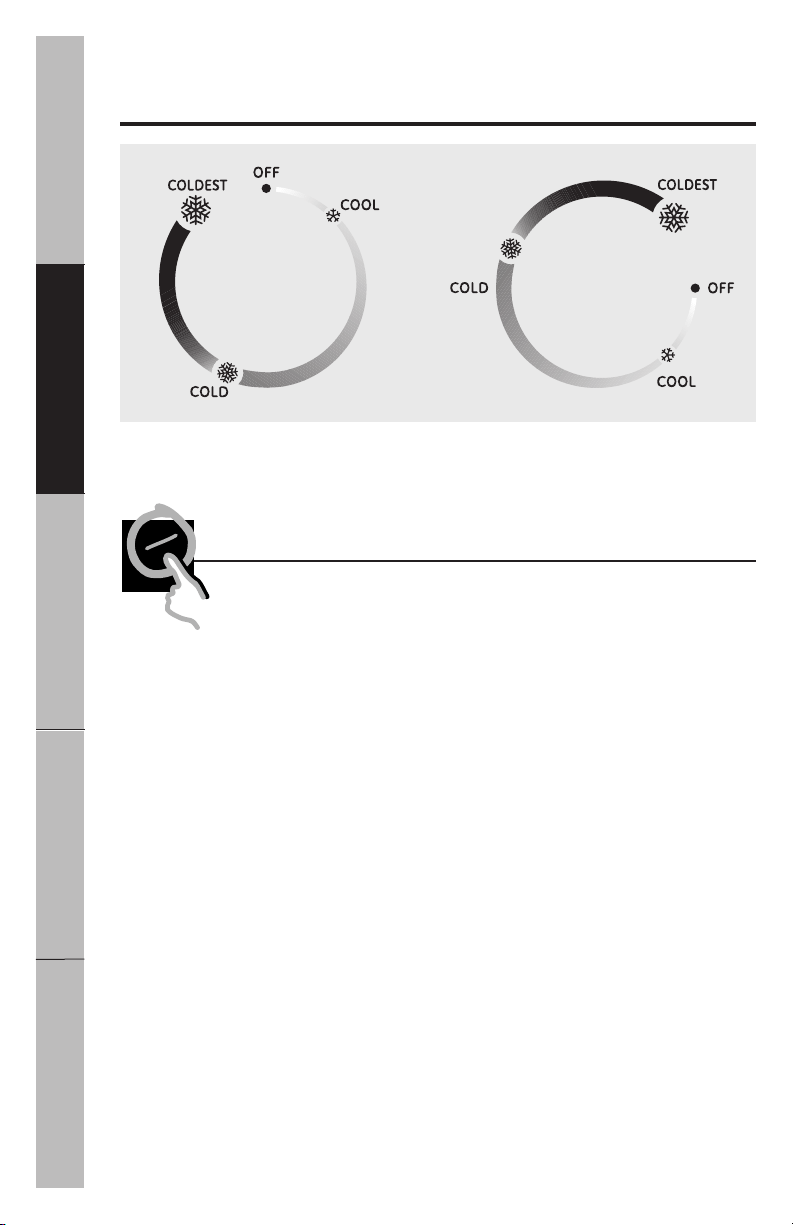
The temperature control maintains the temperature in the refrigerator.
COOL is the warmest setting; and COLDEST is the coldest setting.
The typical setting is COLD.
Allow 24 hours for the refrigerator to reach the desired temperature.
If you want a colder or warmer temperature, move the dial one setting
at a time. Moving the control to OFF stops the cooling but does not turn
off the power to the refrigerator. Setting the control too high may cause
freezing in the refrigerator, depending on the room temperature.
How To Test Temperatures
Use the milk test. Place a container of milk on a shelf and check it
a day later. If the milk is too warm or too cold, adjust the temperature
control.
After changing the control, allow 24 hours for the refrigerator to reach
the temperature you have set.
The control will look like one of the above.
Safety Instructions
Operating Instructions
Troubleshooting Tips
Consumer Support
Installation Instructions
5
Safety Instructions
Operating Instructions
Troubleshooting Tips Consumer Support
Installation Instructions
Shelves
To remove a shelf, lift up the back slightly and pull forward.
Some models have multi-position shelves that can be moved
to different levels.
Ice Tray Compartment (on some models)
This compartment is designed for production of ice cubes
and short-term storage (a few days at most) of some
commercially-frozen foods when in contact with
the evaporator (cold surface in compartment.)
Door Shelves
Shelves on the door provide convenient storage for frequently
used items. Some models have doors that are deep enough to
store large bottles.
About the refrigerator features. ge.com
Key-Ejecting Lock (on some models)
The key for the spring-loaded lock is automatically ejected—
key will not remain in lock in either the open or closed position.
Keep the key out of reach of children and away from the refrigerator.
If a replacement key is needed, it can be ordered by visiting our
Website www.GEAppliances.com, or calling GE Parts and Accessories,
800.626.2002.
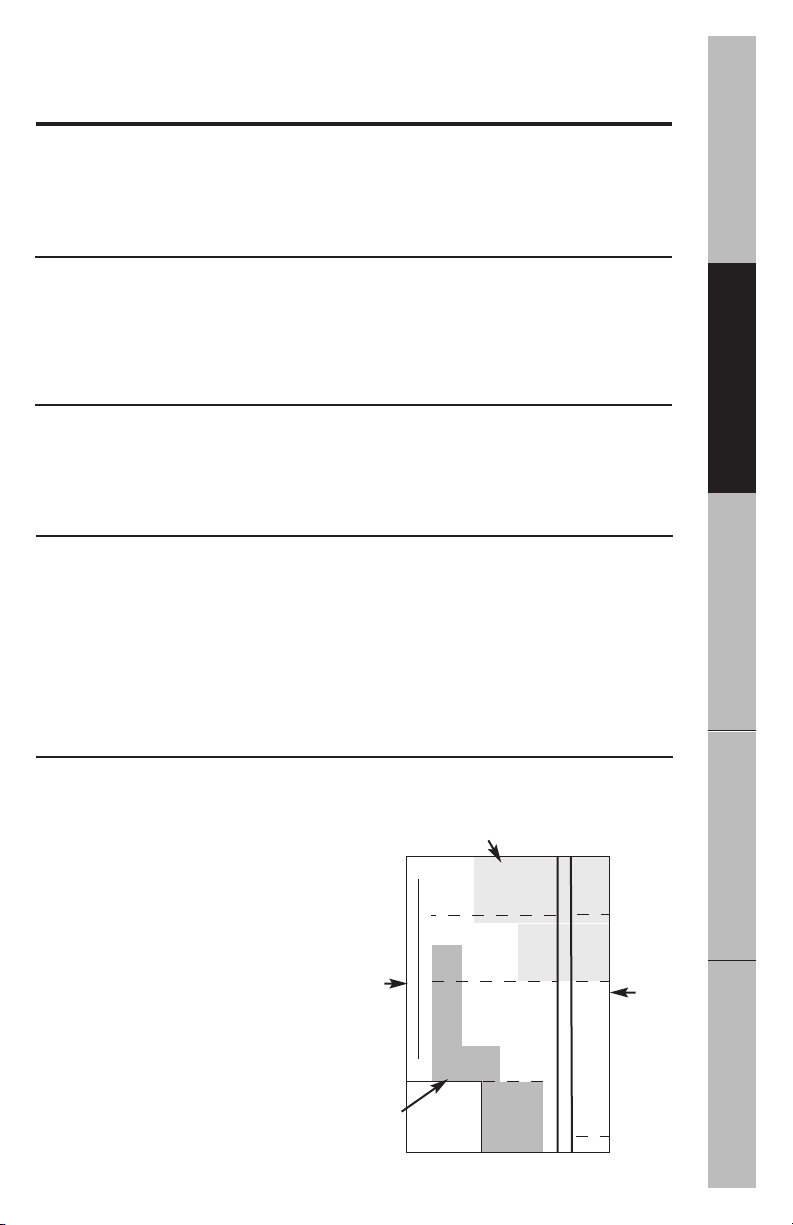
Refrigerator Storage Zones
(all-refrigerator models)
For best results follow
the recommended
storage zones:
■ The top and (front)
middle shelf are best
for storing fruits and
vegetables.
■ The (rear) middle
shelf and bottom shelf
are best for storing
beverages, deli meats
and cheeses.
Case
Back
Door
(Front)
BEST FOR BEVERAGES, DELI
MEATS, AND CHEESES
Bottom
Shelf
Middle Shelf
Top Shelf
DELI
ZONE
FRUIT
ZONE
REFRIGERATOR STORAGE ZONES
BEST FOR FRUITS, VEGETABLES
Side View of Refrigerator
6
Safety Instructions
Operating Instructions
Troubleshooting Tips
Consumer Support
Installation Instructions
Cleaning the Outside
Keep the outside clean. Wipe with a clean cloth lightly
dampened with kitchen appliance wax or mild liquid dish detergent.
Dry and polish with a clean, soft cloth.
Do not wipe the refrigerator with a soiled dish cloth or wet towel.
These may leave a residue that can erode the paint. Do not use
scouring pads, powdered cleaners, bleach or cleaners containing
bleach because these products can scratch and weaken the paint
finish.
Protect the paint finish. The finish on the outside of the refrigerator
is a high quality, baked-on paint finish. With proper care, it will
stay new-looking and rust-free for years. Apply a coat of kitchen/
appliance wax when the refrigerator is new, and then at least
twice a year.
Cleaning the Inside
To help prevent odors, leave an open box of baking soda
in the refrigerator.
Unplug the refrigerator before cleaning. If this is not practical,
wring excess moisture out of sponge or cloth when cleaning
around the control.
Use warm water and baking soda solution–about a tablespoon
(15 ml) of baking soda to a quart (1 liter) of water. This both
cleans and neutralizes odors. Rinse and wipe dry.
Other parts of the refrigerator–including door gaskets, fruit
and vegetable drawers, and all plastic parts–can be cleaned
the same way.
Do not wash any plastic refrigerator parts in the dishwasher.
Care and cleaning of the refrigerator.
Preparing for Vacation
For long vacations or absences, remove food and unplug the
refrigerator. Move the control to the OFF position, and clean the
interior with a baking soda solution of one tablespoon (15 ml) of
baking soda to one quart (1 liter) of water. Leave the door open.
Preparing to Move
Secure all loose items such as shelves and ice trays by taping them
securely in place to prevent damage.
Be sure the refrigerator stays in an upright position during moving.
Safety Instructions
Operating Instructions
Troubleshooting Tips Consumer Support
Installation Instructions
ge.com
Defrosting (models with freezer area)
Defrost whenever frost on the wall of the ice tray compartment
becomes 1/4″ thick. Never use a sharp or metallic instrument
to remove frost as it may damage the cooling coils. (A punctured
cooling coil will cause serious problems and void the warranty.)
We recommend using a plastic scraper. Do not use any electrical
device in defrosting your refrigerator.
To defrost:
■ Remove foods and ice trays from the ice tray compartment.
■ Set the temperature control dial at OFF position.
■ On models without a drip tray, place a pan beneath the ice tray
compartment to collect water.
Defrosting usually takes a few hours. To defrost faster, keep the door
open. Also, pouring warm (not hot) water on the frosted part may
speed defrosting. Do not use boiling water—it may damage
plastic parts.
After defrosting:
■ Empty water from the drip tray or from the pan placed beneath
the ice tray compartment. Wash the tray or pan with warm water.
■ Wipe the ice tray compartment with a damp cloth.
■ Turn the temperature control to the desired setting and return food
and ice trays to the refrigerator.
NOTE: If ice buildup is very thick, it may keep the ice tray compartment
door from opening or closing completely. Don’t try to force it open;
after defrosting, the door will open and close easily.
Defrost whenever frost on the inside surfaces of the storage area
becomes 1/8 ″(3 mm) thick. Never use a heater of any kind, scraper
or sharp metallic instrument to remove frost as it may damage
the refrigerator or cooling coils. ( A punctured cooling coil will
cause serious problems and void the warranty.)
To defrost, unplug the refrigerator or turn the temperature control
dial to the OFF position. Remove the contents and wipe inside
surfaces and shelves with a clean towel. If frost does not come
off easily, allow the frost to melt somewhat and wipe off.
After defrosting, make sure inside surfaces are dry; then return
the contents to the refrigerator, plug unit back in and set
the temperature control to the desired setting.
Defrosting (all-refrigerator models)
7
8
Safety Instructions
Operating Instructions
Troubleshooting Tips
Consumer Support
Installation Instructions
Preparing to install the refrigerator.
Read these instructions completely and carefully.
Turn counterclockwise to raise,
clockwise to lower.
Refrigerator Location
■ Do not install the refrigerator where the temperature will go below
55°F (13°C) or above 110°F (43°C) because it will not be able to
maintain proper temperatures.
■ Install it on a floor strong enough to support it fully loaded.
■ Do not install it closer than 5″(13 cm) next to a range.
■ Do not install it in a recessed area.
■ Do not build in the refrigerator.
Clearances
Allow the following clearances for ease of installation and proper
air circulation.
Sides 1/2″ (13 mm)
Top 2″ (51 mm)
Back 2″ (51 mm)*
*From the rear cabinet surface to the wall
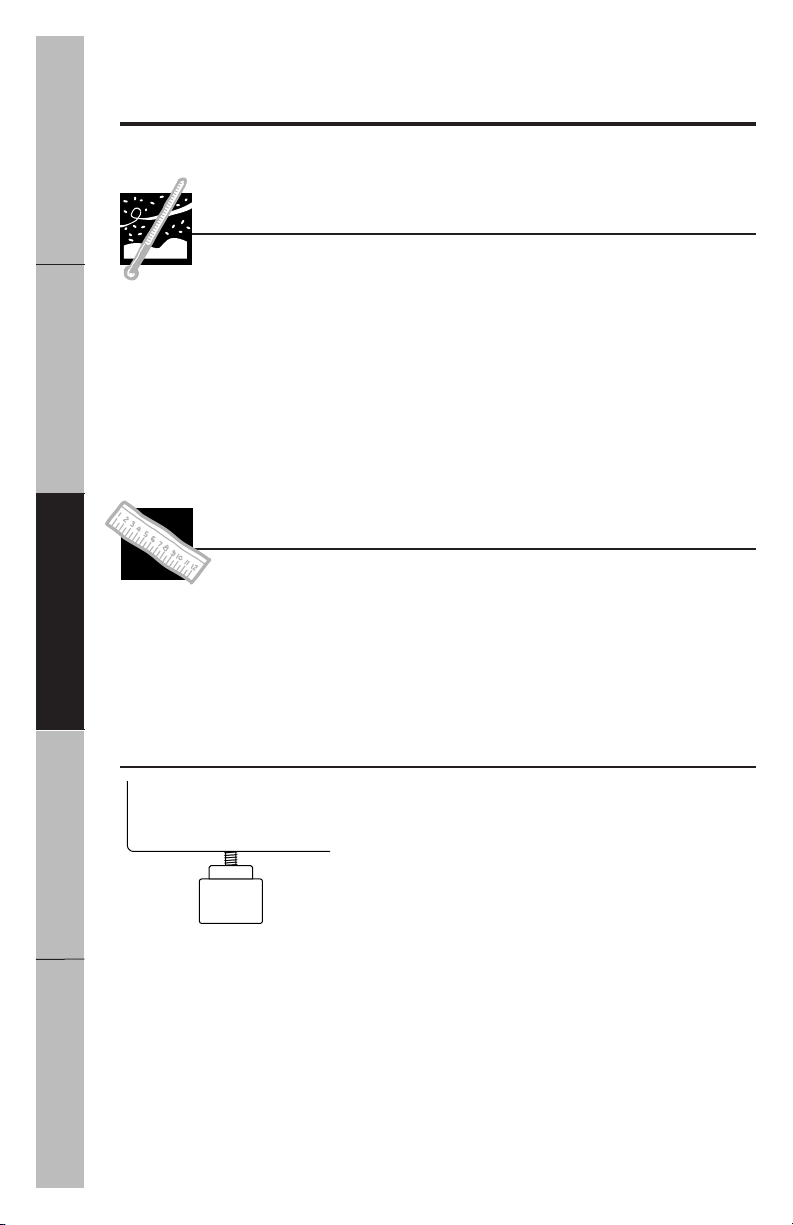
Leveling Legs
Adjustable legs at the front corners of the refrigerator
should be set so the refrigerator is firmly positioned on
the floor and the front is raised just enough that the door
closes easily when opened about halfway.
To adjust the leveling legs, turn the legs
counterclockwise to raise the refrigerator, clockwise
to lower it.
9
Safety Instructions
Operating Instructions
Troubleshooting Tips Consumer Support
Installation Instructions
ge.com
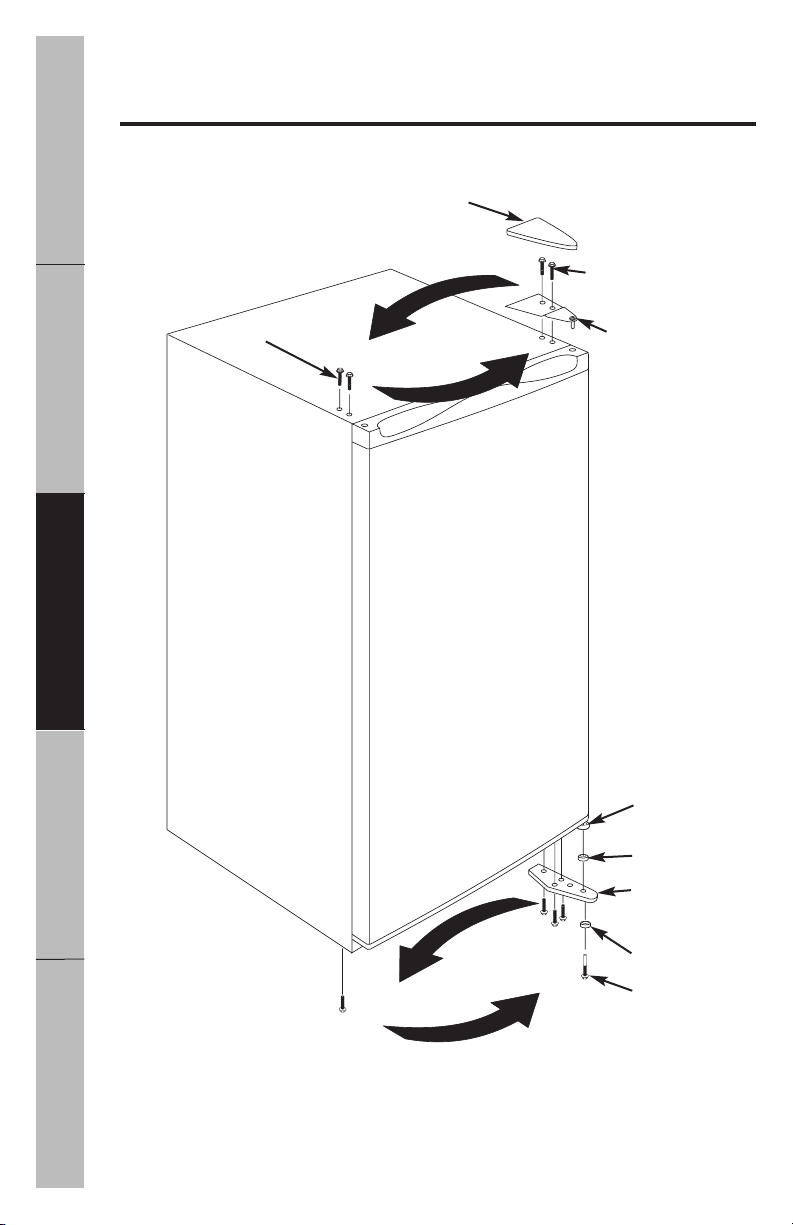
Door Reversal
1. Remove the two plug buttons on the top left of the cabinet.
2. Remove the plastic hinge cover by gently pressing forward
and lifting by the back edge.
3. Remove the two screws from the top hinge.
4. Lift the top hinge up and off of the refrigerator.
5. Lift the door up and off of the bottom hinge.
6. Remove the hinge pin grommet from the bottom of the door
on the right side and insert into the left side.
7. Tilt the refrigerator cabinet backward.
8. Remove the hinge pin. Keep the two spacers for reinstallation.
9. Remove the three screws to remove the bottom hinge
on the right side.
10. Remove the case screw from the left side.
11. Flip the bottom hinge plate to install on the left side
of the refrigerator.
12. Screw the three bottom hinge screws into place.
13. Put a spacer between the hinge pin and the bottom hinge
and screw the hinge pin into place.
14. Place the second spacer between the hinge pin and the door.
Position the door on the bottom hinge.
15. While the magnetic gasket holds the door in place, secure
the top hinge with two screws.
16. Replace the hinge cover on the top hinge.
17. Place the two plug buttons in the holes on the right side
of the refrigerator cabinet.
Preparing to install the refrigerator. (cont.)
Bottom
hinge
Spacer
Hinge cover
Plug buttons
Hinge
Spacer
Screws
10
Hinge pin
grommet
Bottom
hinge pin
Safety Instructions
Operating Instructions
Troubleshooting Tips
Consumer Support
Installation Instructions
11
Safety Instructions
Operating Instructions
Troubleshooting Tips Consumer Support
Installation Instructions
Notes. ge.com
12
Notes.
Safety Instructions
Operating Instructions
Troubleshooting Tips
Consumer Support
Installation Instructions
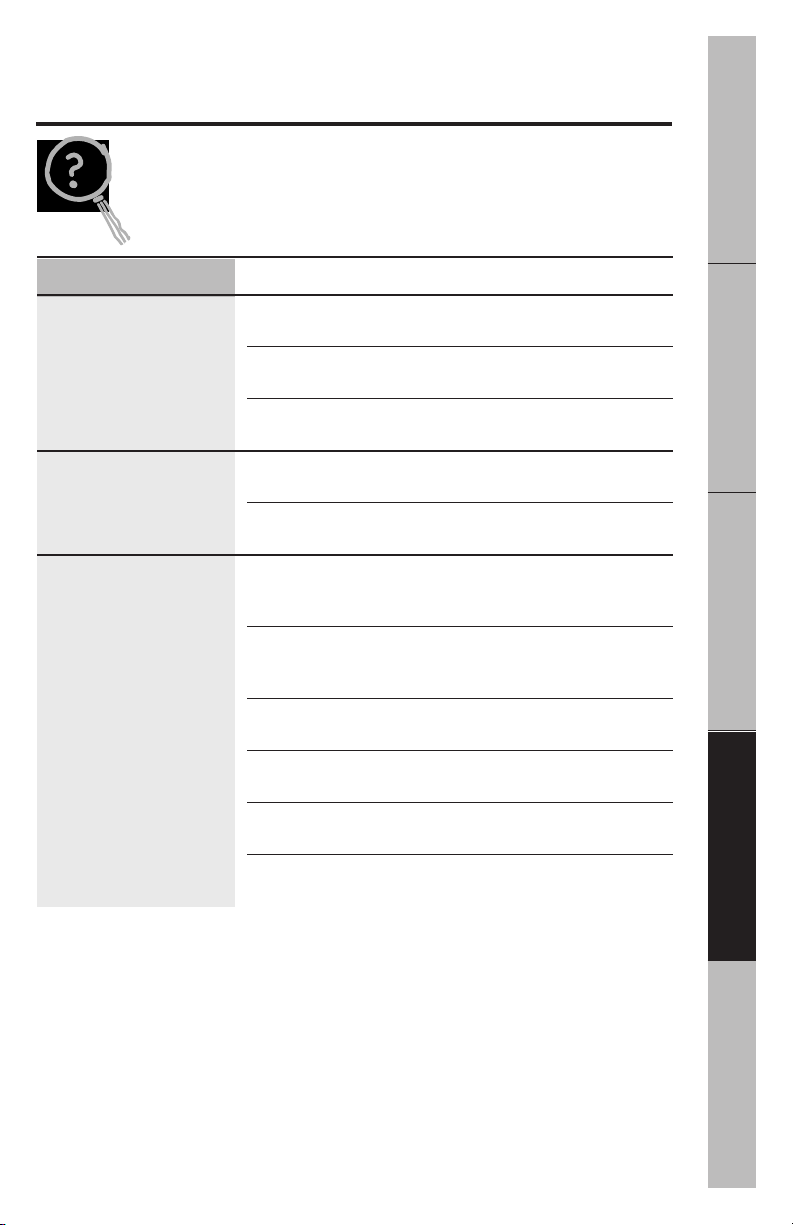
13
Save time and money!
Problem Possible Causes What To Do
Refrigerator does not Control in OFF position. • Move the control to a
operate temperature setting.
Refrigerator is • Push the plug completely
unplugged. into the outlet.
The fuse is blown/circuit • Replace fuse or reset
breaker is tripped. the breaker.
Vibration or rattling Front leveling legs • See Leveling Legs.
(slight vibration need adjusting.
is normal)
Refrigerator is on • Use shims to level
an uneven surface. the refrigerator.
Motor operates for Normal when refrigerator • Wait 24 hours for
long periods or cycles is first plugged in. the refrigerator to
completely cool down.
Often occurs when • This is normal.
large
amounts of food
are placed in refrigerator.
Door left open. • Check to see if package is
holding door open.
Hot weather or frequent • This is normal.
door openings.
Temperature control • See About the control.
set at the coldest setting.
Not enough clearance • See Clearances in Preparing
from the wall. to install the refrigerator.
Safety Instructions
Operating Instructions
Troubleshooting Tips Consumer Support
Installation Instructions
Troubleshooting tips. ge.com
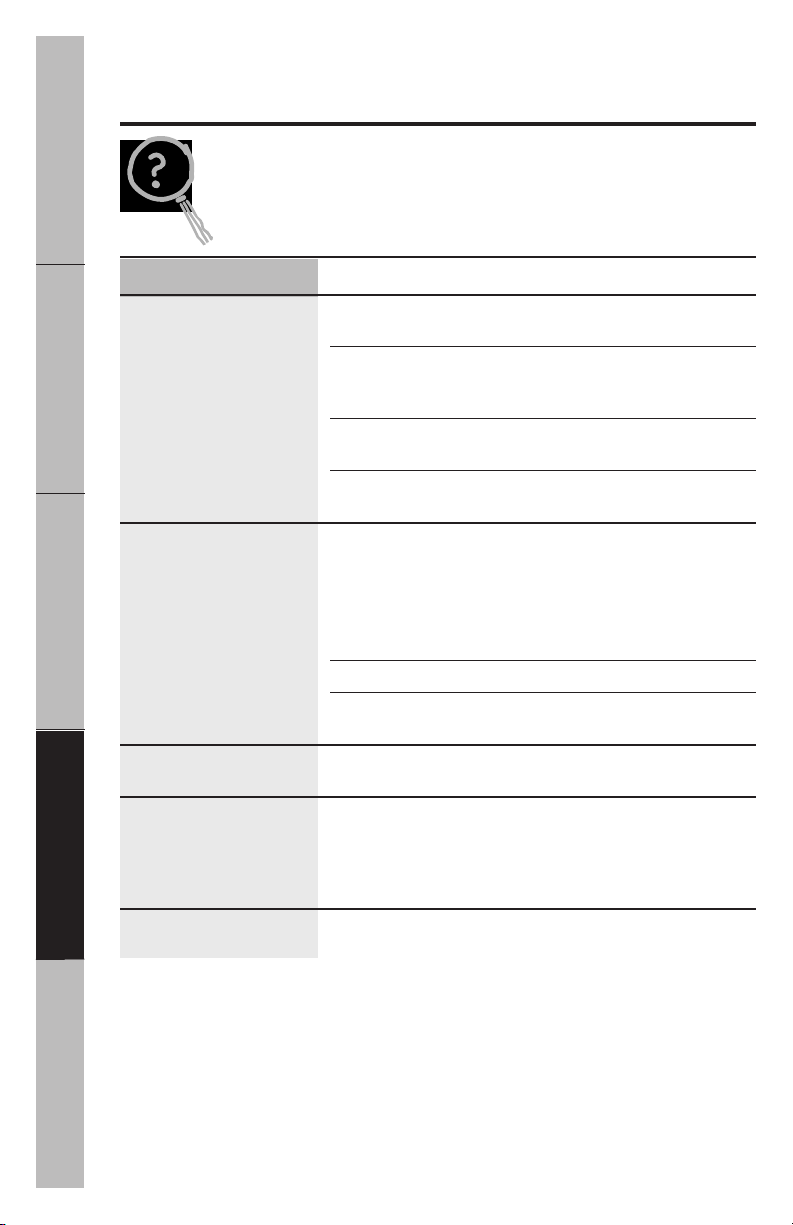
14
Save time and money!
Troubleshooting tips.
Safety Instructions
Operating Instructions
Troubleshooting Tips
Consumer Support
Installation Instructions
Problem Possible Causes What To Do
Refrigerator too warm Temperature control • See About the control.
not set cold enough.
Warm weather or • Set the temperature
frequent door openings. control one step colder.
See About the control.
Door left open. • Check to see if package
is holding door open.
Cabinet sides are warm • This is normal for a hot
wall type condenser.
Refrigerator has odor Foods transmitting odor • Foods with strong odors
to refrigerator. should be tightly wrapped.
• Keep an open box of
baking soda in the
refrigerator; replace
every three months.
Interior needs cleaning. • See Care and cleaning.
Defrost water pan needs • See Care and cleaning.
cleaning.
Moisture forms on Not unusual during • Wipe surface dry.
outside of refrigerator periods of high humidity.
Moisture collects inside Too frequent or too long
(in humid weather, door openings.
air carries moisture
into refrigerator when
door is opened)
Refrigerator too cold Temperature control • See About the control.
set too cold.
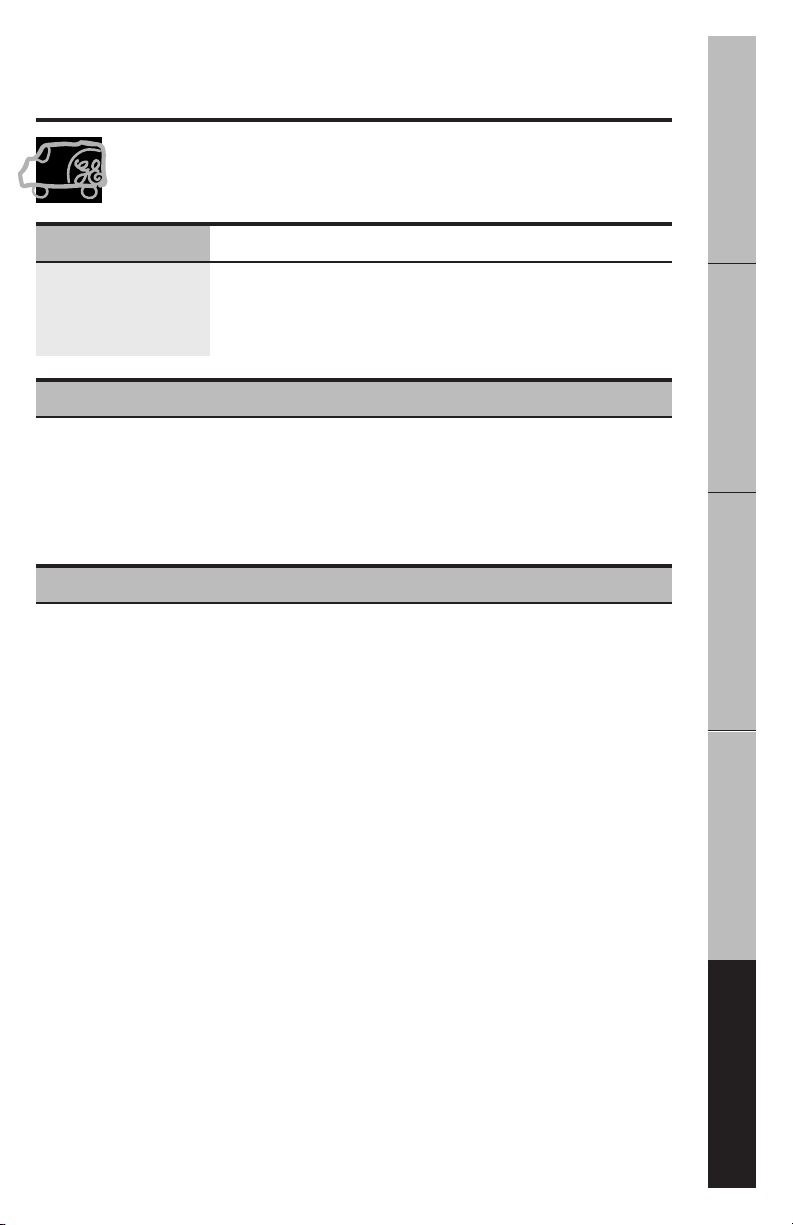
GE Refrigerator
One-Year Limited Warranty.
This warranty is extended to the original purchaser and any succeeding owner
for products purchased for home use within the USA.
Some states do not allow the exclusion or limitation of incidental or consequential
damages. This warranty gives you specific legal rights, and you may also have
other rights which vary from state to state. To know what your legal rights are,
consult your local or state consumer affairs office or your state’s Attorney General.
Exclusion of implied warranties: Except where prohibited or restricted by law,
there are no warranties, whether express, oral or statutory which extend beyond
the description on the face hereof, including specifically the implied warranties
of merchantability or fitness for a particular purpose.
Warrantor: General Electric Company. Louisville, KY 40225
For The Period Of: What GE Will Provide:
One Year Replacement unit for any product which fails due to
From the date of the a defect in materials or workmanship. The exchange
original purchase unit is warranted for the remainder of your product’s
original one-year warranty period.
■ Customer instruction. This owner’s
manual provides information
regarding operating instructions
and user controls.
■ Service trips to your home to teach
you how to use the product.
■ Improper installation, delivery
or maintenance.
■ Failure of the product if it
is abused, misused, or used for
other than the intended purpose
or used commercially.
■ Loss of food due to spoilage.
■ Replacement of house fuses
or resetting of circuit breakers.
■ Replacement of the light bulbs.
■ Damage caused after delivery.
■ Damage to the product caused by
accident, fire, floods or acts of God.
■ Incidental or consequential damage
caused by possible defects with
this appliance.
What GE Will Not Cover:
15
Staple your receipt here.
Proof of the original purchase date
is needed to make a warranty claim.
Safety Instructions
Operating Instructions
Troubleshooting Tips Consumer Support
Installation Instructions
■ Properly pack your unit.
We recommend using the original
carton and packing materials.
■ Return the product to the retail
location where it was purchased.
■ Include in the package a copy of
the sales receipt or other evidence
of date of original purchase. Also
print your name and address and
a description of the defect.
In Order to Make a Warranty Claim:
Printed in China
Consumer Support.
GE Appliances Website
ge.com
Have a question or need assistance with your appliance? Try the GE Appliances Website
24 hours a day, any day of the year! For greater convenience and faster service, you can
now download Owner’s Manuals, order parts or or even schedule service on-line.
Real Life Design Studio ge.com
GE supports the Universal Design concept–products, services and environments that can
be used by people of all ages, sizes and capabilities. We recognize the need to design for
a wide range of physical and mental abilities and impairments. For details of GE’s Universal
Design applications, including kitchen design ideas for people with disabilities, check out
our Website today. For the hearing impaired, please call 800.TDD.GEAC (800.833.4322).
Parts and Accessories ge.com
Individuals qualified to service their own appliances can have parts or accessories
sent directly to their homes (VISA, MasterCard and Discover cards are accepted).
Order on-line today, 24 hours every day or by phone at 800.626.2002 during normal
business hours.
Instructions contained in this manual cover procedures to be performed by any user.
GE does not support any servicing of the refrigerator.
Contact Us ge.com
If you are not satisfied with the service you receive on your GE product, contact us
on our Website with all the details including your phone number, or write to:
General Manager, Customer Relations
GE Appliances, Appliance Park
Louisville, KY 40225