
USER GUIDE
NZ AU GB IE
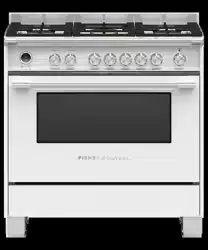
FREESTANDING COOKER
OR90SDG6 & OR90SCG6 models
Do not store or use gasoline or other flammable
vapours and liquids in the vicinity of this or any
other appliance.
NEVER use this appliance as a space heater to
heat or warm the room. Doing so may result in
carbon monoxide poisoning and overheating of
the appliance.
WHAT TO DO IF YOU SMELL GAS
y Do not try to light any appliance.
y Do not touch any electrical switch.
y Do not use any phone in your building.
y Immediately call your gas supplier from a
neighbour’s phone. Follow the gas supplier’s
instructions.
y If you cannot reach your gas supplier, call the
fire department.
Installation and service must be performed by
a qualified installer, service agency or the gas
supplier.
WARNING!
If the information in this manual is not
followed exactly, a fire or explosion may
result causing property damage, personal
injury or death.
!

1
CONTENTS
IMPORTANT!
SAVE THESE INSTRUCTIONS
The models shown in this user guide may not be available in all markets and are subject to change at
any time. For current details about model and specification availability in your country, please visit our
website listed on the back cover or contact your Fisher & Paykel dealer.
Safety and warnings 2
Introduction 9
First use 11
Cooking guide 18
Oven functions 20
Cooking charts 24
Setting the timer 30
Auto Cook 32
Using the rotisserie 36
Locking the oven controls 38
User preference settings 40
Sabbath Mode 42
Using your gas cooktop 44
Cooking guidelines and cookware 47
Using the warming drawer 49
Care and cleaning 50
Using the Self Clean function 62
Troubleshooting 65
Alert codes 70
Warranty and service 72
Energy guidelines (GB IE only) 74
2
SAFETY AND WARNINGS
!
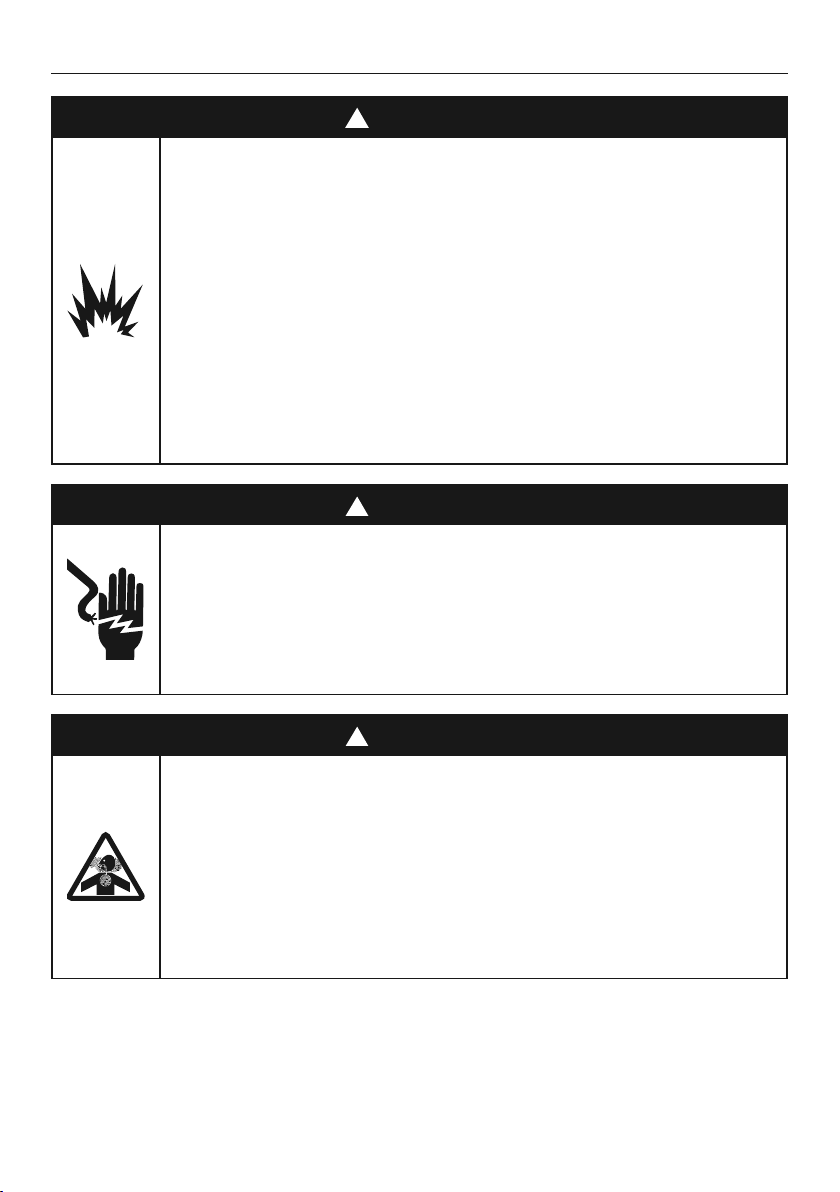
WARNING!
Explosion Hazard
Failure to follow this advice may result in
death or serious injury.
• Do not store flammable materials such as
gasoline near the cooktop.
• Do not use or store flammable materials
in the appliance drawer or near this
appliance
• Do not spray aerosols on the vicinity of
this appliance while it is in operation.
!
WARNING!
Electrical Shock Hazard
Failure to follow this advice may result in
electrical shock or death.
• Switch the cooker off at the wall before
replacing fuses or the oven lamp.
!
WARNING!
Poisoning Hazard
Failure to follow this advice may result in
poisoning or death.
• Do not use this appliance as a space
heater. Doing so may result in carbon
monoxide poisoning and overheating of
the appliance.
3
SAFETY AND WARNINGS
!
WARNING!
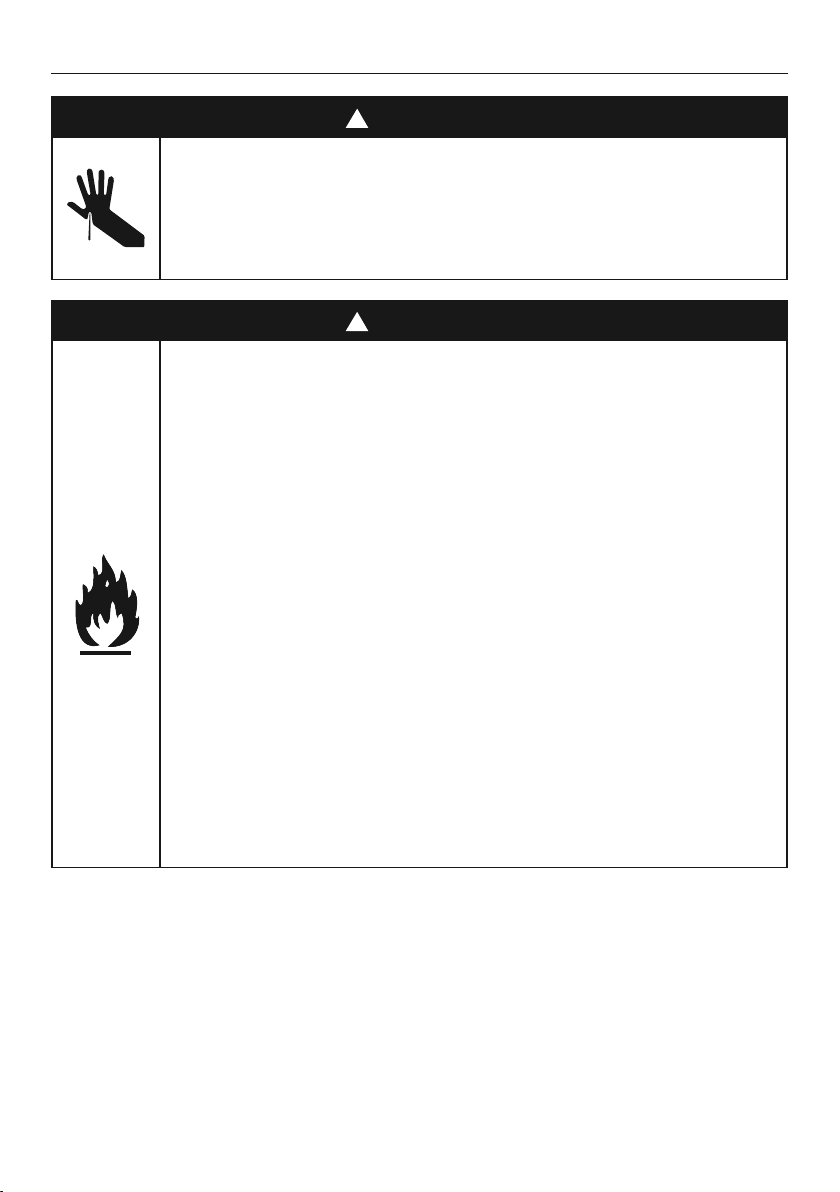
Cut Hazard
Failure to use caution could result in injury
or cuts.
• Take care - some edges are sharp.
!
WARNING!
Fire Hazard
Failure to follow this advice may result in
overheating, burning, and injury.
• Never leave the cooktop unattended when
in use. Boilover causes smoking and greasy
spillovers that may ignite.
• Do not place aluminium foil, dishes, trays,
water or ice on the oven floor during
cooking, as doing so will irreversibly
damage the enamel; lining the oven with
aluminium foil may even cause fire.
• Never use your appliance for warming
or heating the room. Persons could be
burned or injured or a fire could start.
• Storage in or on appliance: flammable
materials should not be stored in an oven
or near its surface.
4
SAFETY AND WARNINGS
!
WARNING!
Hot Surface Hazard
Failure to follow this advice could result in
burns and scalds.
• Accessible parts may become hot when
this cooker is in use.
• To avoid burns and scalds keep children
away.
• Do not touch hot surfaces inside the oven.
• Use oven mitts or other protection when
handling hot surfaces such as oven shelves
or dishes.
• Take care when opening the oven door.
• Let hot air or steam escape before
removing or replacing food.
• Do not touch the cooktop components,
burners, trivets/pan supports or the base
when hot.
• Before cleaning, turn the cooker off and
make sure it is cool.

5
SAFETY AND WARNINGS
IMPORTANT SAFETY INSTRUCTIONS!
z
Read all the instructions before using the appliance.
Use the appliance only for its intended purpose as
described in these instructions.
z
Proper installation: be sure your appliance is properly
installed and earthed by a qualified technician. A risk
of tip-over exists when the appliance is not installed
in accordance with the installation instructions.
z
Do not operate the appliance if it is damaged or
not working properly. If you received a damaged
product, contact your dealer or installer immediately.
z
Clean only the parts listed in this manual.
z
Do not modify this appliance.
z
This appliance is to be serviced only by a Fisher &
Paykel trained and supported service technician.
z
Isolating switch: make sure this cooker is connected
to a circuit which incorporates an isolating switch
providing full disconnection from the power supply.
z
Household appliances are not intended to be played
with by children.
z
Do not leave children alone – children should not
be left alone or unattended in the area where the
appliance is in use. They should never be allowed to
play with the appliance or to sit or stand on any part
of the appliance.
z
Children of less than 8 years old must be kept away
from the appliance unless continuously supervised.
This appliance can be used by children aged from 8
years and above, and persons with reduced physical,
sensory or mental capabilities or lack of experience
and knowledge, if they have been given supervision
or instruction concerning the use of the appliance in
a safe way and they understand the hazards involved.
Cleaning and user maintenance shall not be done by
children without supervision.

6
SAFETY AND WARNINGS
IMPORTANT SAFETY INSTRUCTIONS!
z
Do not store things children might want above the
oven. Children could be burned or injured while
climbing on the oven to retrieve items.
z
Safe food handling: leave food in the oven for as
short a time as possible before and after cooking.
This is to avoid contamination by organisms which
may cause food poisoning. Take particular care
during warmer weather.
z
Do not place aluminium foil, dishes, trays, water
or ice on the oven floor during cooking as this will
irreversibly damage the enamel.
z
Do not use aluminum foil to line any part of the oven,
storage drawer or cooktop. This will cause heat to be
trapped underneath it. This trapped heat can upset
the cooking performance and damage the finish of
the oven or cooktop parts.
z
Do not stand on the door, or place heavy objects on it.
z
Do not use harsh abrasive cleaners or sharp
metal scrapers to clean the oven door glass since
they scratch the surface, which may result in
shattering of the glass.
z
Do not use a steam cleaner to clean any
part of the cooker.
z
Do not use an asbestos mat or decorative covers
between the flame and the saucepan as this may
cause serious damage to your cooktop.
z
Do not store flammable items in the oven or storage
drawer or on the cooktop surface.

7
SAFETY AND WARNINGS
IMPORTANT SAFETY INSTRUCTIONS!
z
Do not place aluminium foil or plastic dishes on the
cooktop burners.
z
Do not let large saucepans or frying pans overlap the
bench as this can deflect heat onto your benchtop
and damage the surface.
z
Do not let large saucepans, frying pans or woks
push any other pans aside. This could make them
unstable or deflect heat onto your benchtop and
damage the surface.
z
Saucepan handles may be hot to touch. Ensure
saucepan handles do not overhang other gas burners
that are on. Keep handles out of reach of children.
z
If the electrical supply cord is damaged, it must only
be replaced by a qualified technician.
z
This cooker is not to be used as a space heater,
especially if it is installed in marine craft
or in a caravan.
z
The use of a gas cooking appliance results in the
production of heat and moisture in the room in which
it is installed. Ensure the kitchen is well ventilated.
Keep natural ventilation holes open or install a
mechanical ventilation device (mechanical extractor
hood). Prolonged intensive use of the appliance
may call for additional ventilation, for example
opening of a window, or more effective ventilation,
for example increasing the level of mechanical
ventilation where present.

8
SAFETY AND WARNINGS
IMPORTANT SAFETY INSTRUCTIONS!
z
Wear proper apparel. Do not wear loose fitting or
hanging garments when using the appliance. They
could ignite or melt if they touch an element or hot
surface and you could be burned.
z
Always keep oven vents unobstructed.
z
Use only dry oven mitts or potholders. Moist or damp
potholders on hot surfaces could result in burns
from steam. Do not let potholders touch hot areas or
heating elements. Do not use a towel or a bulky cloth
for a potholder. It could catch fire.
z
Caution: hot air can blow from the vent at the top of
the oven as part of the oven’s cooling system.
z
Placement of oven shelves: always position shelves in
the desired location before preheating the oven. If a
shelf must be removed while the oven is hot, do not
let the oven mitts or potholder contact hot heating
elements in the oven or the base of the oven.
9
INTRODUCTION
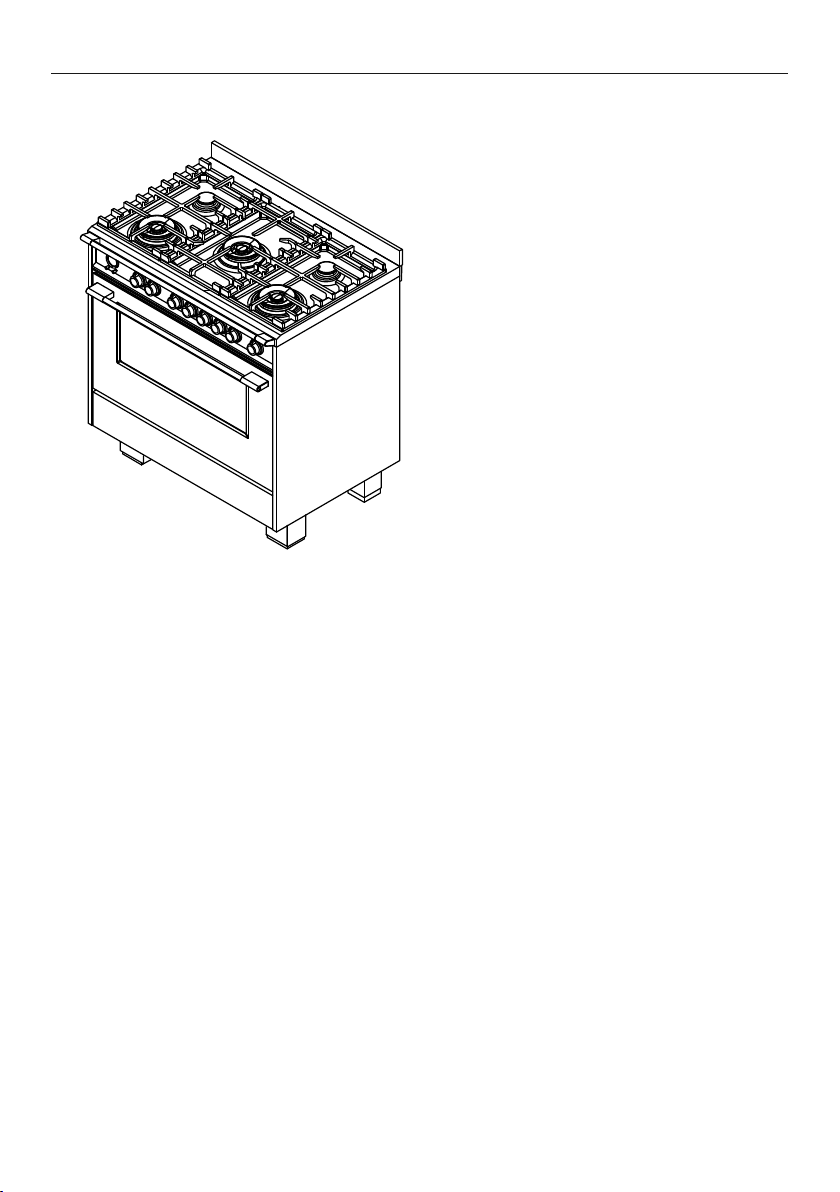
90cm models
OR90SCG6
OR90SDG6
10
INTRODUCTION
Before you start
1 Make sure that the anti-tip bracket at the right rear of the cooker has been properly
installed.
2 Make sure that the installer has completed the ‘Final checklist’ in the Installation
instructions.
3 Read this guide, taking special note of the ‘Safety and warnings’ section.
4 Remove all accessories and packaging from the oven and cooktop. Recycle items that
you can. If any adhesive residue is left on surfaces, remove this using dishwashing liquid
on a soft cloth. Do not use any harsh or abrasive cleaners.
5 Make sure you follow the instructions under ‘First use’ before using your cooker
for cooking.
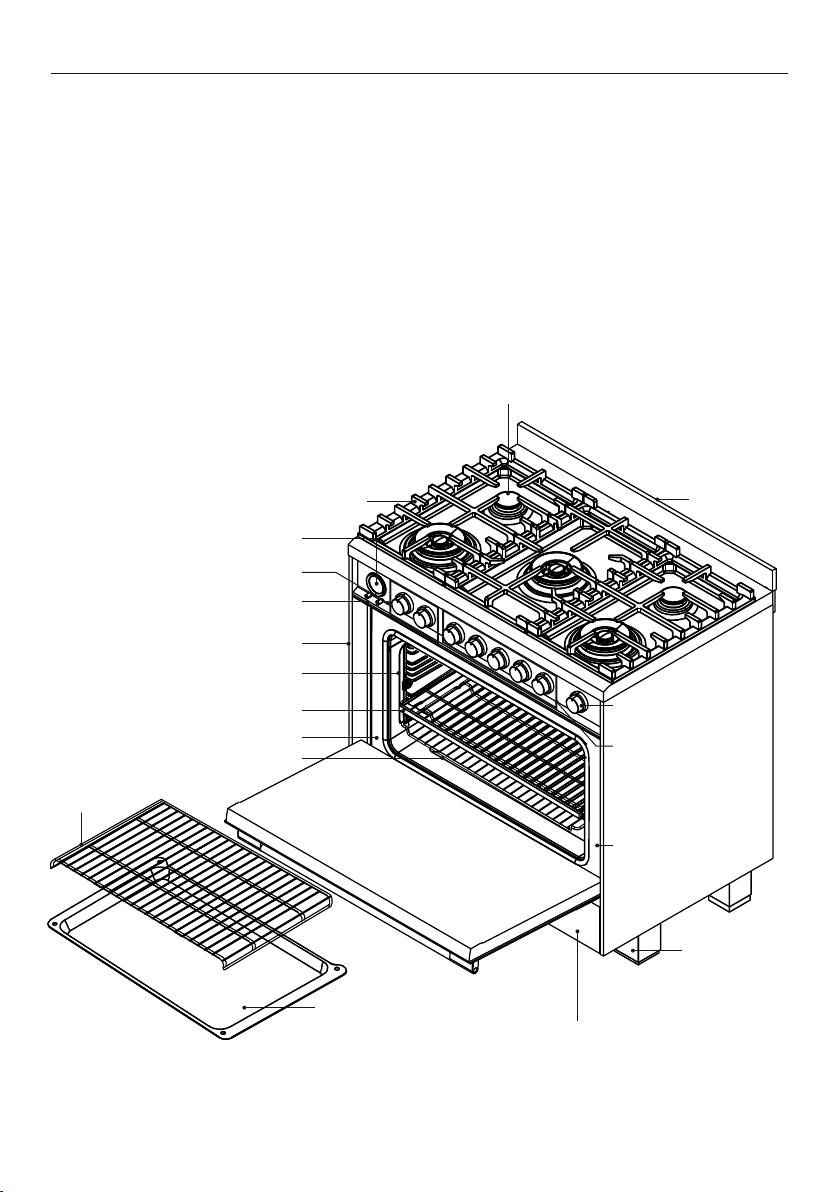
Overview
Features may vary.
Control panel
Oven frame
Oven door gasket
Step down wire shelf
Oven function and
temperature dials
Foot (cover)
Warming drawer
Grill rack
Roasting dish
Full extension sliding shelf
Label with model
and serial numbers
Warming drawer
control
Side racks
Back trim
Burner
Burner grates
Clock display and controls
Cooktop
burner dials
11
FIRST USE
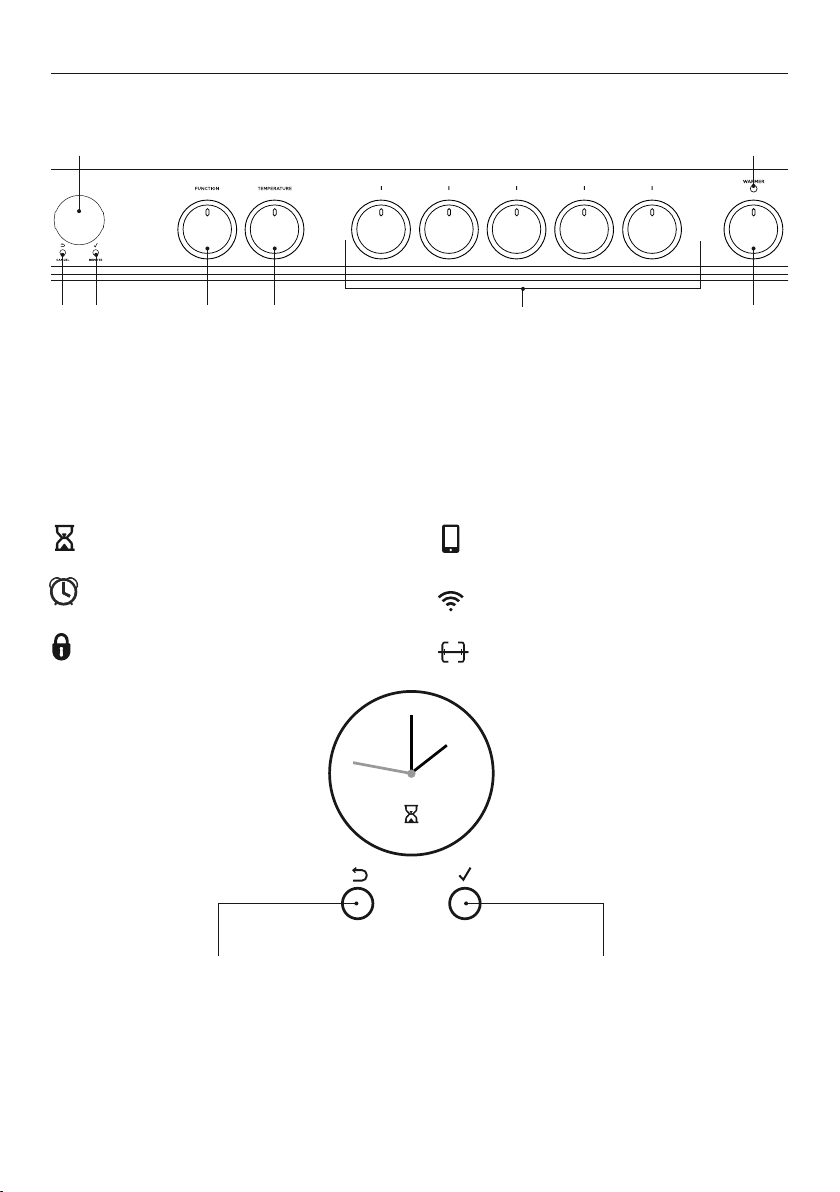
1 Oven display
2 Cancel/back button
3 Select/Scroll control
4 Function dial
5 Temperature dial
6 Cooktop control dials
7 Warming drawer dial
8 Warming drawer indicator
Control panel layout
Clock display and controls
1 8
23 4 5 6 7
Cancel/back button
z
Press to go back
z
Press and hold to cancel
Select
z
Press to accept or to enter a menu
(Remote mode is not available
on this product)
Scroll control
z
Turn clockwise or anticlockwise to
scroll through menu options
Timer (see ‘Setting the timer’)
Auto Cook
(see ‘Auto Cook’)
Lock
(see ‘Locking the oven controls’)
CANCEL REMOTE
Rotisserie (see ‘Using the rotisserie’)
Remote Mode
(not available on this product)
Wireless connection
(not available on this product)
12
FIRST USE
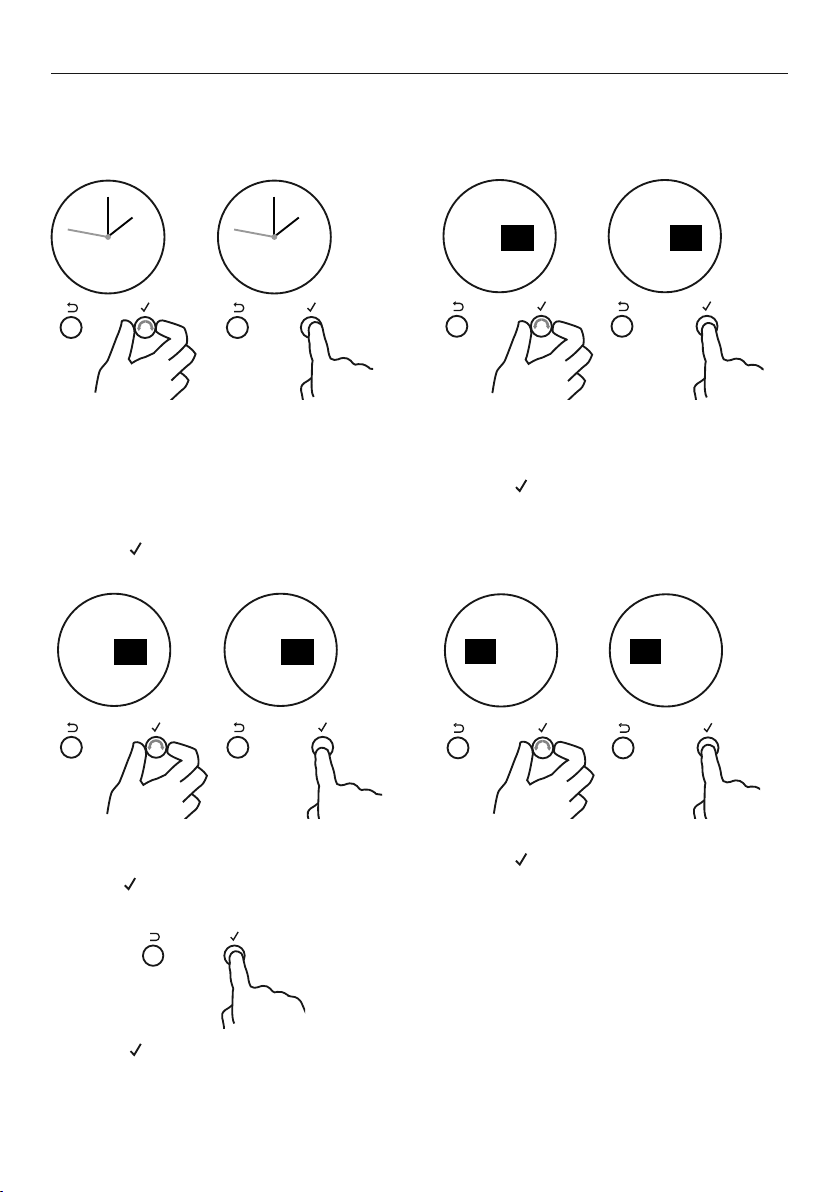
Setting the clock
When your oven is first turned on, or after a power cut, the display will flash. You will need
to set the clock in order to use the oven.
REMOTE REMOTECANCELCANCEL
REMOTE REMOTECANCEL
Set
Time of day
12:00
pm
12:00
pm
minutes
CANCEL
Set
Time of day
minutes
REMOTEREMOTECANCEL
Set
Time of day
12:00
pm
hours
Set
Time of day
12:00
pm
hours
CANCEL
REMOTECANCEL
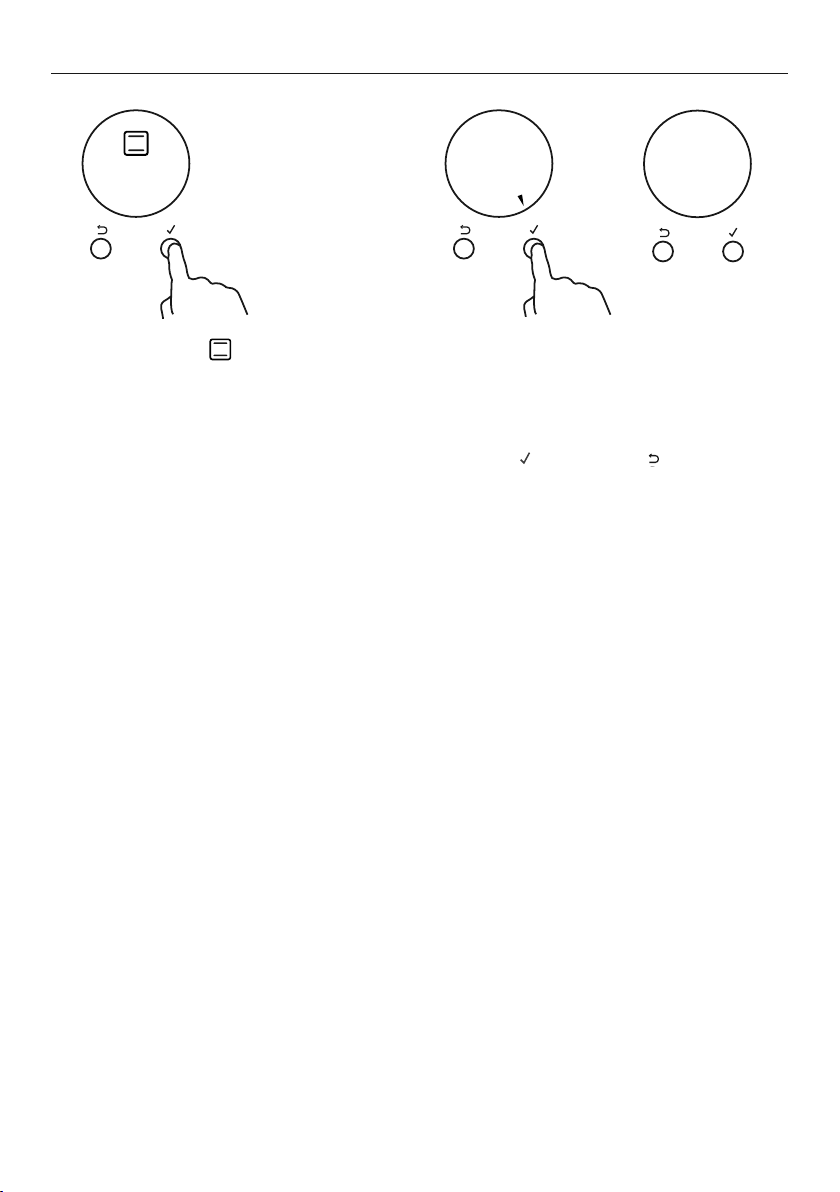
1 Scroll to choose your preferred
clock display. Select between:
z
Analog
z
24-hr digital
z
12-hr digital
z
Display off**
2 Press
to confirm.
** With this option saved, you can still use
the oven and timer, however the display will
remain unlit.
You cannot use any automatic cooking
functions when this option is selected.
To quit this option and enable the display,
press and hold CANCEL.
2 A If you have set analog or 12-hr
digital display:
z
Scroll to select am or pm.
z
Press to confirm.
3 Scroll to set the minutes.
z
Scroll to select am or pm.
z
Press to confirm.
4 Scroll to set the hours.
z
Press to confirm.
5 Press
to confirm the time is
correctly set.
z
The clock is now set and you can begin
using your oven.
CANCEL REMOTE
NOV 25
CANCEL REMOTE
NOV 25
Set
Time of day
am
pm
Set
Time of day
pm
am
pm
pm

13
FIRST USE
Positioning the shelves
z
Shelf positions are numbered from the bottom.
z
Position the shelves you will need before turning the oven on.
z
For advice on which shelf position to use, see sections ‘Oven functions’, ‘Cooking guide’,
and ‘Cooking charts’.
IMPORTANT!
Always position the oven shelves before turning the oven on. Remove any unused shelves
and baking utensils from the oven.
Oven shelves
1
2
3
4
5
6
7
Wire shelf
Safety stop
Slide
Wire shelf
Front stop
Safety stop
Front safety stop
Flat wire shelf and step-down wire shelf
(not pictured)
z
These shelves have safety stops to
keep them from sliding out of the
oven when pulled forward.
z
The front stops prevent the
shelves from hitting against the
back of the oven.
Full extension sliding shelf
z
The wire shelves and slides are built
together as one unit.
z
When positioned correctly, the slides
will prevent the wire shelves from tilting
when pulled forward.
z
Beware: these shelves are heavy.
14
FIRST USE
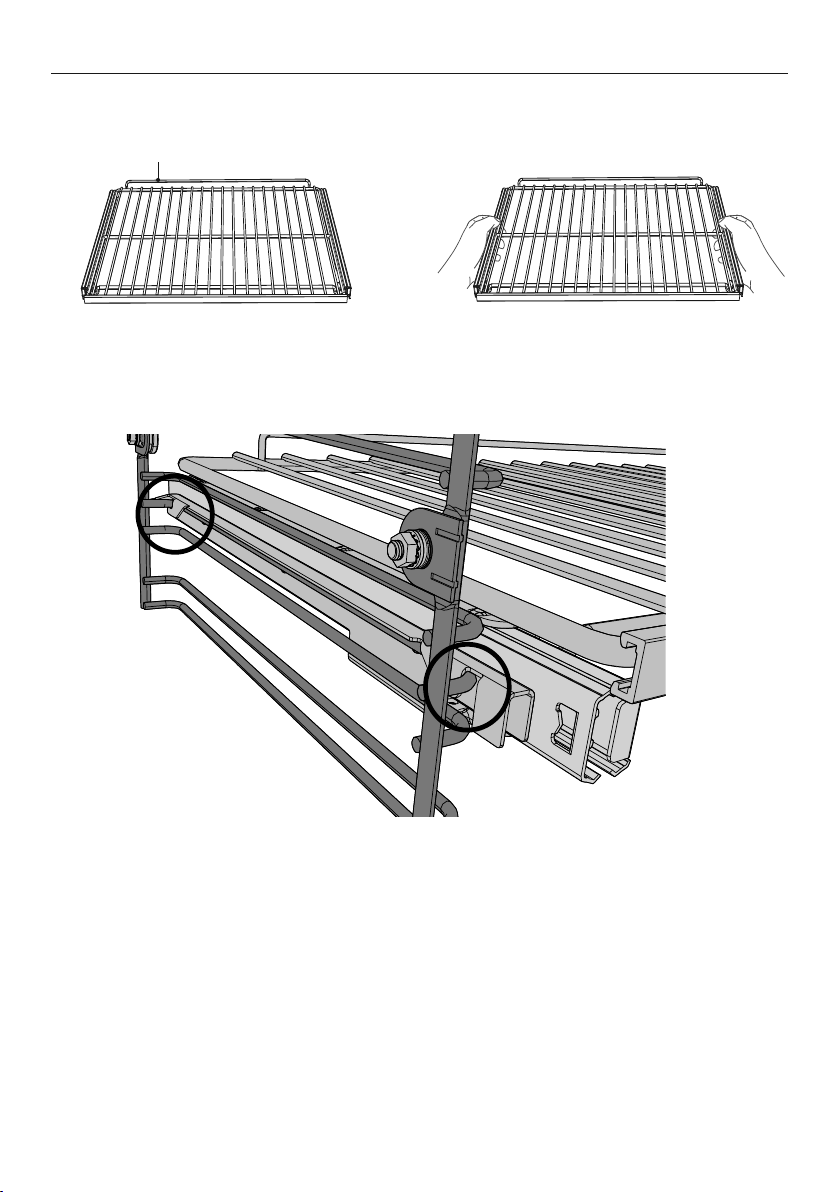
To insert the sliding shelves
1 Make sure the guard rail is at the
back, facing up and the slides are
not extended.
To remove the shelves
1 Wait for the oven to cool down completely.
2 Hold the shelf firmly with both hands, making sure you grip the wire shelf too to stop it
sliding forward.
3 Pull the shelf forward about ¾ of the way.
4 Lift the rear of the shelf slightly so that the tags clear the side rack wires, then remove.
2 Hold the shelf firmly with both hands,
making sure you grip the wire shelf too
to stop it sliding forward.
3 Hook the rear tags over the wires of
the desired shelf position on both
side racks.
4 Push the shelf all the way into the oven,
ensuring the front and rear tags either
side are securely locked behind the
side rack wires.
Guard rail
3
4
15
FIRST USE
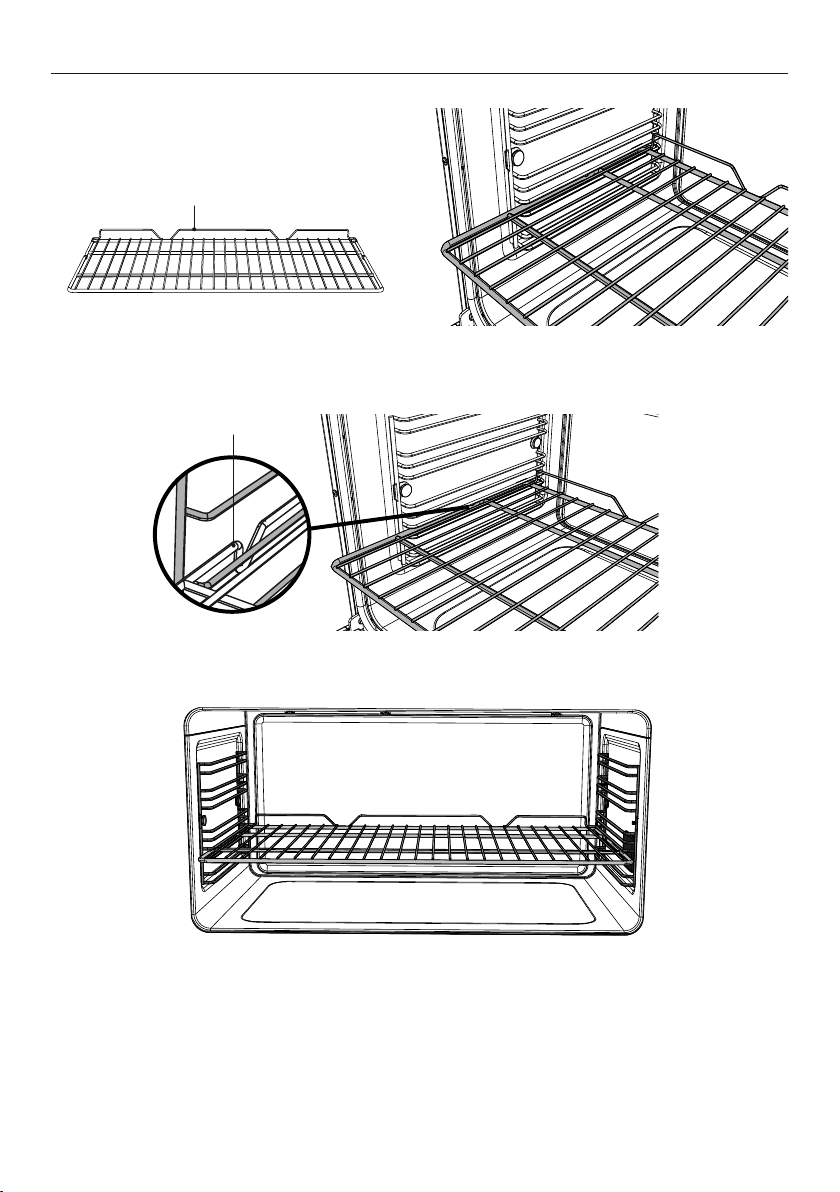
To insert the wire shelves
1 Make sure the guard rail is at the back,
facing up.
3 Tilt the front up slightly to help the safety stops clear the side rack wires.
4 Lower the shelf back onto the side rack wires and slide all the way into the oven.
To remove the shelves
1 Wait for the oven to cool down completely.
2 Pull the shelf forward about ¾ of the way.
3 Tilt the front up slightly to help the safety stops clear the side rack wires.
4 Remove the shelf.
2 Position the shelf: it should rest on
the side rack wires, as shown.
Guard rail
Safety stop
16
FIRST USE
Conditioning the oven
It is important to condition your oven before using it for cooking and baking. Conditioning
will burn off any manufacturing residues and ensure that you get the best results right
from the start.
Before you start:
z
Make sure you have removed all packaging and any cable ties used to secure the
shelving during transit.
z
Make sure all shelves are fitted in the oven.
z
Make sure all oven control dials are turned to O (OFF).
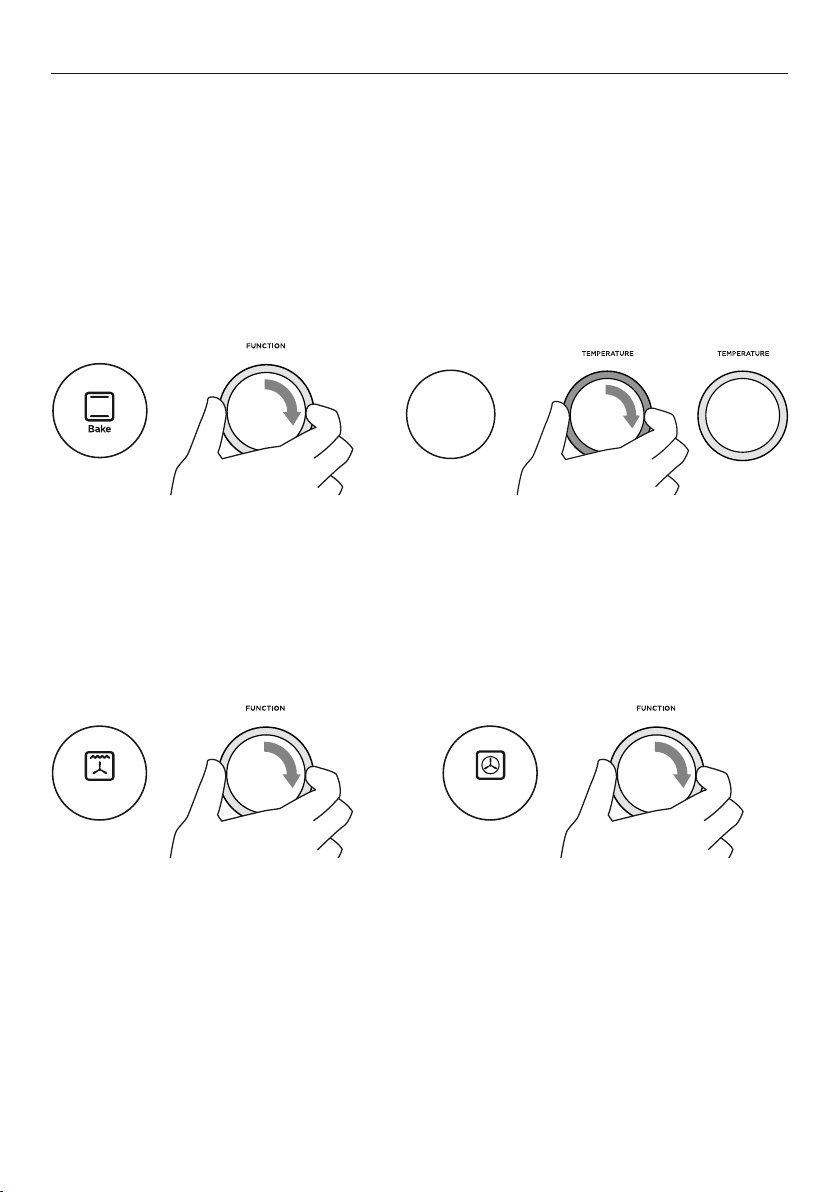
1 Select the Bake function.
z
The halo will glow white.
3 After 30 minutes, select the
Fan Grill function.
z
Heat at 200°C for 10 minutes.
4 After 10 minutes, select the
Fan Forced function.
z
Heat at 200°C for 20 minutes.
2 Set the temperature to 200°C for
30 minutes.
z
The halo will glow red while the oven
is heating up.
z
The actual temp will show on the screen.
z
When the oven has heated a tone will
sound and the halo will turn white.
Fan
Grill
Fan
Forced
200C
--->
17
FIRST USE
5 After 20 minutes turn both the function and temperature dials to O (OFF).
The halos will go out.
z
There will be a distinctive smell and a small amount of smoke during the conditioning
process as manufacturing residue is burnt off. This is normal, but make sure the kitchen
is well ventilated during the conditioning.
z
Once cooled, wipe out the oven and warmer drawer with a damp cloth and mild
detergent, and dry thoroughly.
Conditioning the warming drawer
IMPORTANT!
Make sure the drawer is empty and all packaging has been removed.
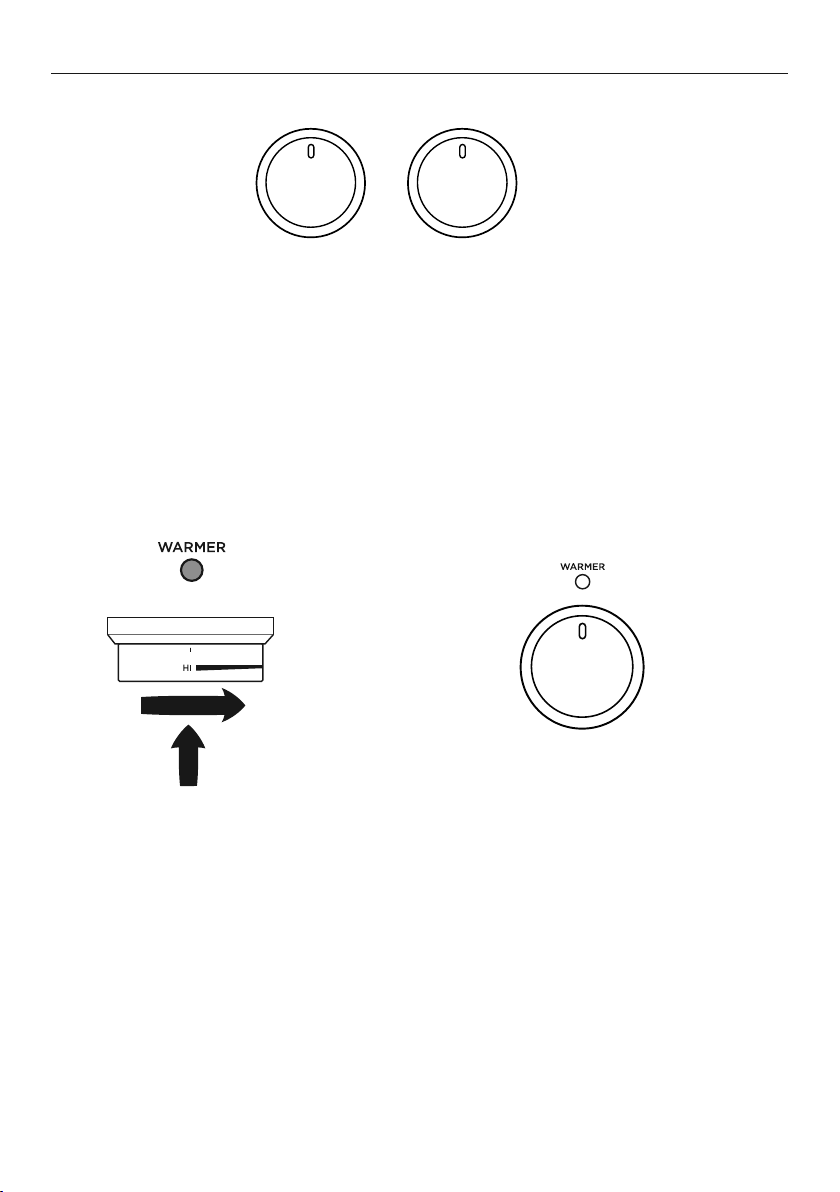
1 Push in the warmer dial and turn
clockwise to HI.
y Heat on HI for 2 hours.
2 After 2 hours turn warmer dial to
O (OFF).
y The indicator will go out.
y There will be a distinctive smell and a small amount of smoke during the conditioning
process as manufacturing residue is burnt off. This is normal, but make sure the kitchen
is well ventilated during the conditioning.
y Once cooled, wipe out the drawer with a damp cloth and mild detergent,
and dry thoroughly.
FUNCTION TEMPERATURE
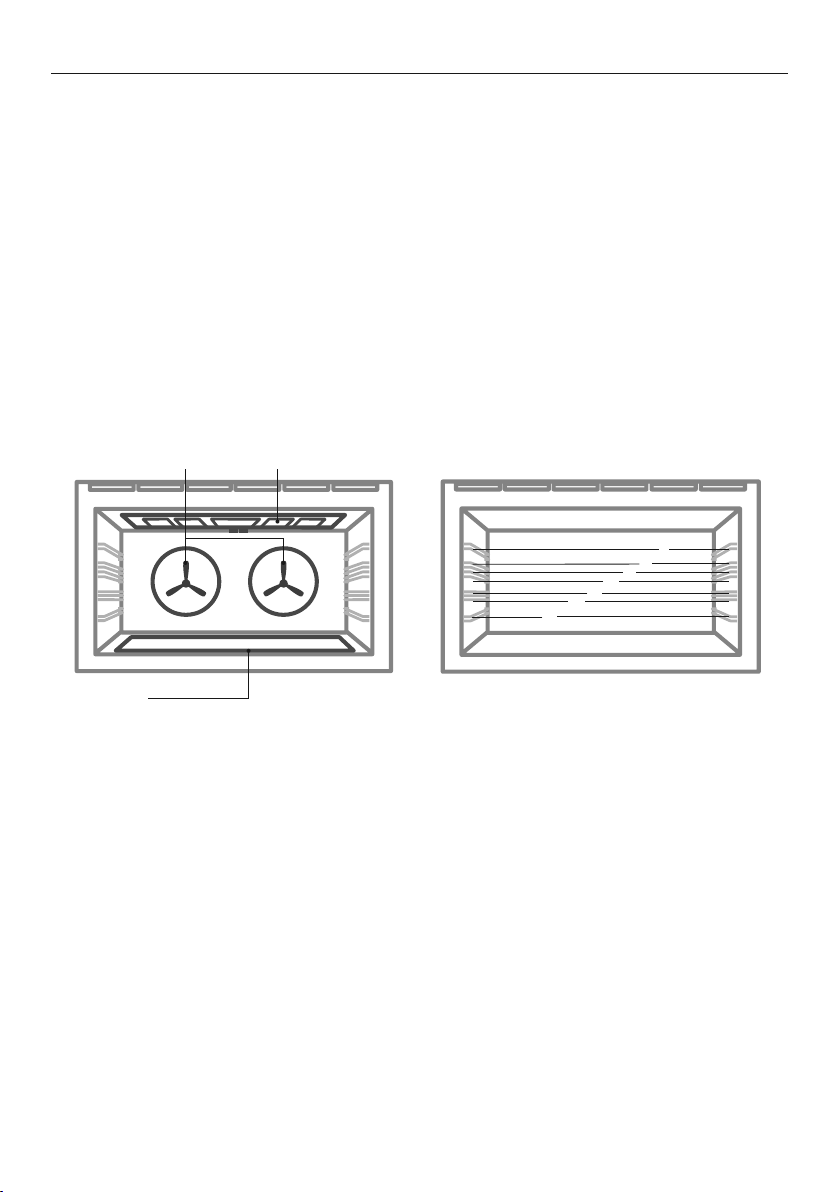
Rapid preheating stage
For some cooking functions, the oven will go through an initial rapid preheat stage. In this
stage, the fan and both bake and grill elements will turn on to quickly heat the oven to the
set temperature. Depending on the cooking function, the fan, bake and grill elements will
turn off once the oven reaches the set temperature.
18
COOKING GUIDE
Oven cooking guidelines
IMPORTANT!
z
Use all the oven modes with the oven door closed.
z
Never use aluminum foil to cover the oven shelves or to line the floor of the oven. The
trapped heat can irreversibly damage the enamel and may even cause fire.
z
Do not place water, ice, or any dish or tray directly on the oven floor, as this will
irreversibly damage the enamel.
z
Do not cover the roasting dish with aluminum foil. This will catch the grease and
could cause fire.
z
Do not use plastic wrap or wax paper in the oven.
z
For food safety reasons, do not leave food in the oven for longer than two hours before
and after cooking or defrosting. This is to avoid contamination by organisms which may
cause food poisoning. Take particular care during warmer weather.
z
In the event of power failure while cooking, return the oven dials in off position to
prevent overheating of the appliance.
Baking
z
For best results when baking, always preheat your oven. The temperature halo will
change from red to white when the set temperature is reached.
z
While the oven is heating the grill element will be on.
z
We advise you do not open the door until at least ¾ of the way through cooking.
z
Make sure cake pans do not touch each other or the sides of the oven.
z
When baking double the recipe (especially cookies) cook time may need to increase.
z
Your cookware will influence baking times. Dark pans absorb the heat more quickly than
reflective pans; glass cookware may require a lower temperature.
z
Multi-shelf baking may also require a slight increase in cooking time.
Shelf Position Guide
z
Single shelf: place your baking on a shelf that will have the top of your pan near the
center of the oven cavity.
z
Multi shelf: always leave a space between shelves to allow the air to circulate.
Lower
Element
(concealed)
Fans Upper Elements
Shelf positions
1
4
7
6
5
2
3

19
COOKING GUIDE
Oven cooking guidelines
Roasting
z
The Roast function is designed to brown the outside of the meat but still keep the inside
moist and juicy.
z
Boneless, rolled or stuffed roasts take longer than roasts containing bones.
z
Poultry should be well cooked with the juices running clear and an internal
temperature of 74°C.
z
If using a roasting bag, do not use the Roast function. The initial searing
stage is too hot for roasting bags. Use Fan Bake or Fan Forced and follow the
manufacturer’s instructions.
z
When using the Roast function, do not cover your roast, as this will stop the searing
process browning the outside of the meat. If you prefer to roast in a covered pan, use the
Fan Bake function instead and increase the temperature by 20°C.
z
Cook larger cuts of meat at a lower temperature for a longer time. The meat will
cook more evenly.
z
Always roast meat fat side up. That way, basting may not be required.
z
Always rest the meat for at least 10 minutes after roasting to allow the juices to settle.
z
Remember the meat will continue to cook for a few minutes after removing it from
the oven.
Shelf Position Guide
Place the meat on a shelf so that is is in the center of the oven or lower.
Grilling
z
This is a healthier alternative to frying.
z
Always grill with the oven door completely shut.
z
For best results allow 5 minutes of preheat before placing food in the oven.
z
If you use glass or ceramic pans, be sure they can withstand the high
temperatures of the grill.
z
To avoid piercing the meat and letting juices escape, use tongs or a spatula to turn the
meat halfway through cooking.
z
Brush meat with a little oil to help keep the meat moist during cooking. Alternatively
marinade the meat before grilling (but be aware that some marinades may burn easily).
z
Where possible grill cuts of meat of a similar thickness at the same time. This will
ensure even cooking.
z
Always keep a close watch on your food while grilling to avoid charring or burning.
Shelf Position Guide
z
For thinner cuts of meat, toasting or browning foods, use a higher shelf position.
z
Thicker cuts of meats should be grilled on lower shelves or at a lower grill setting to
ensure even cooking.
Reheating
z
Use Bake or Fan Bake to reheat food.
z
Bake and Fan Bake are particularly good for reheating pastry based items, as the base
heat will help re-crisp the pastry case.
z
Always reheat food to piping hot. This reduces the risk of contamination by harmful bacteria.
z
Once hot, set the oven temperature to WARM or use the warming drawer to keep food hot.
z
Never reheat food more than once.
20
OVEN FUNCTIONS
IMPORTANT!
z
Use all the functions with the oven door closed.
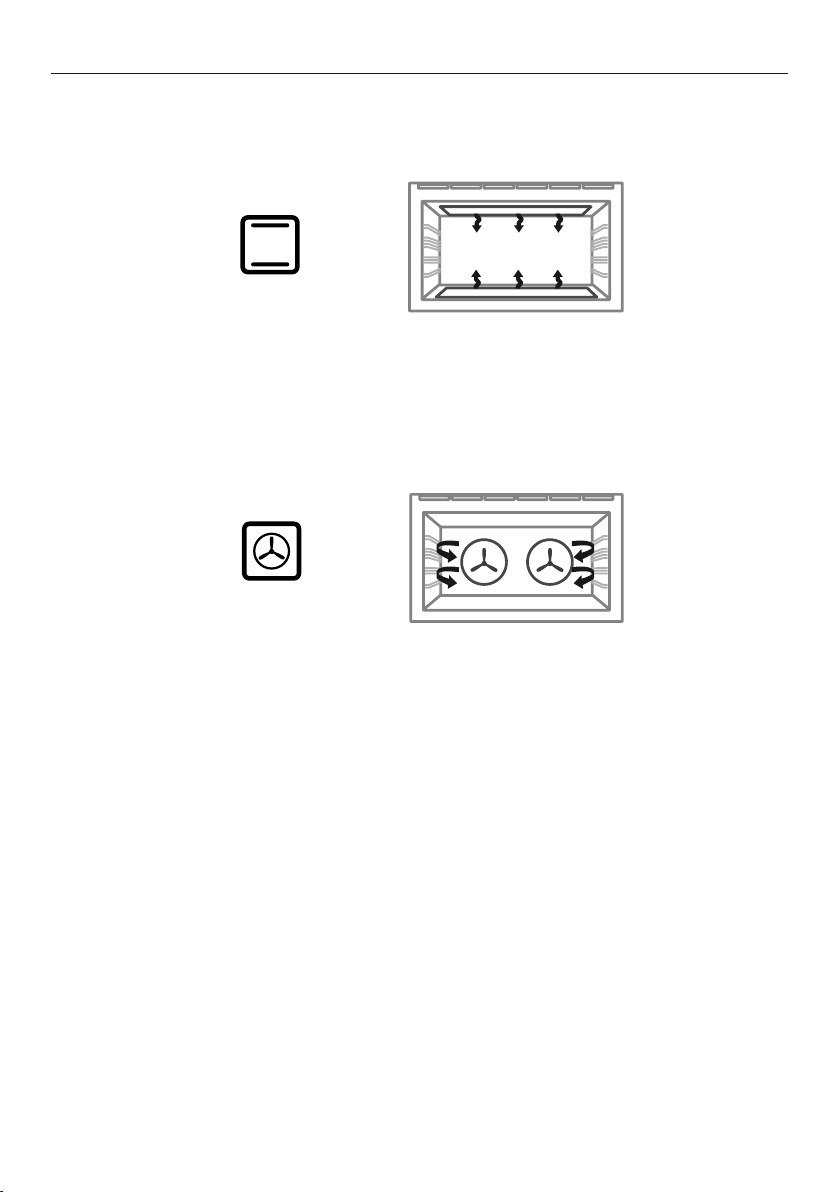
Upper outer and lower elements
z
Heat comes from both the upper and lower elements. The fan is not used in this function.
z
Ideal for cakes and foods that require baking for a long time or at low temperatures.
z
This function is not suitable for multi-shelf cooking.
Ideal for moist foods that take a longer time to cook eg rich fruit cake, or bread.
Fan and rear element
z
By using the central rear heating element and fan, hot air is blown into the cavity,
providing a consistent temperature at all levels, making it perfect for multi-shelf cooking.
z
Trays of cookies cooked on different shelves are crisp on the outside and
chewy in the middle.
z
Meat and poultry are deliciously browned and sizzling while remaining juicy and tender.
z
Casseroles are cooked to perfection and reheating is quick and efficient.
z
When multi-shelf cooking it is important to leave a gap between trays (eg use shelves 3
& 5) to allow the air to move freely. This enables the browning of foods on the lower tray.
z
If converting a recipe from Bake to Fan Forced, we recommend that you decrease the
bake time or decrease the temperature by approximately 20°C.
z
For items with longer bake times (eg over an hour) it may be necessary to decrease both
time and temperature.
Ideal for multi-shelf cooking biscuits, cookies, scones, muffins and cupcakes.
Fan Forced
Bake
21
OVEN FUNCTIONS
Fan plus upper outer and lower elements
z
The oven fan circulates hot air from the top outer and the lower elements and distributes
it around the oven cavity.
z
Food cooked tends to brown more quickly than foods cooked on the
traditional Bake function.
z
You may need to decrease the time from that recommended in traditional recipes.
Ideal for single shelf baking that takes less than an hour to cook – foods such as muffins,
biscuits and cupcakes or things like enchiladas.
Fan Bake
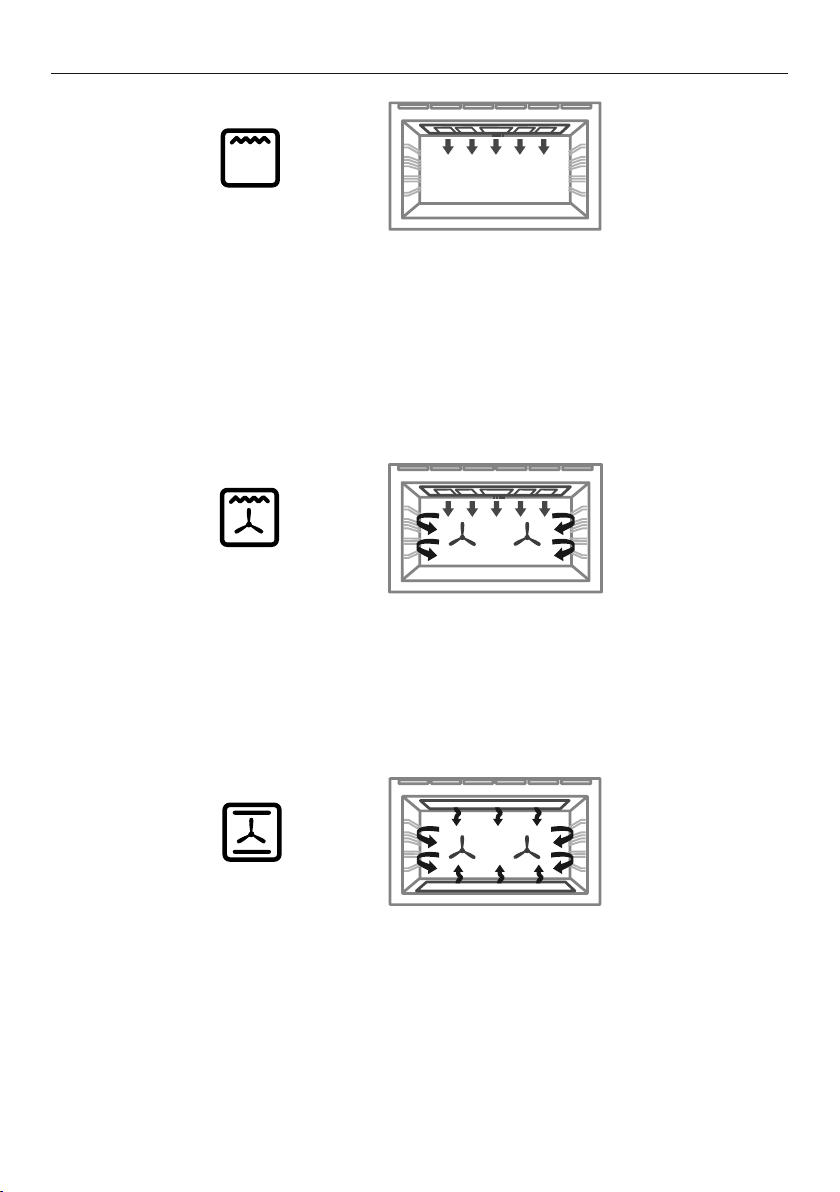
Upper inner and outer elements
z
Intense radiant heat is delivered from both top elements. You can use Grill on Low OR
High (100% power).
z
For best results allow 5 minutes of preheat before placing food in the oven.
z
The temperature halo will remain white while using the Grill function.
z
The most suitable function for ‘finishing off’ many meals, for example browning the top
of potato gratin and frittata.
z
Ensure you centre the dish under the inner grill element.
Ideal for toasting bread or for top browning to ‘finish off dishes’.
Grill
Fan plus upper inner and outer elements
z
This function uses the intense heat from the elements for top browning and the fan to
ensure even cooking of foods.
z
Meat, poultry and vegetables cook beautifully; food is crisp and brown on the outside
while the inside remains moist and tender.
Ideal for whole chicken, tenderloin of beef or grilling your favourite chicken, fish or steak.
Fan Grill
22
OVEN FUNCTIONS
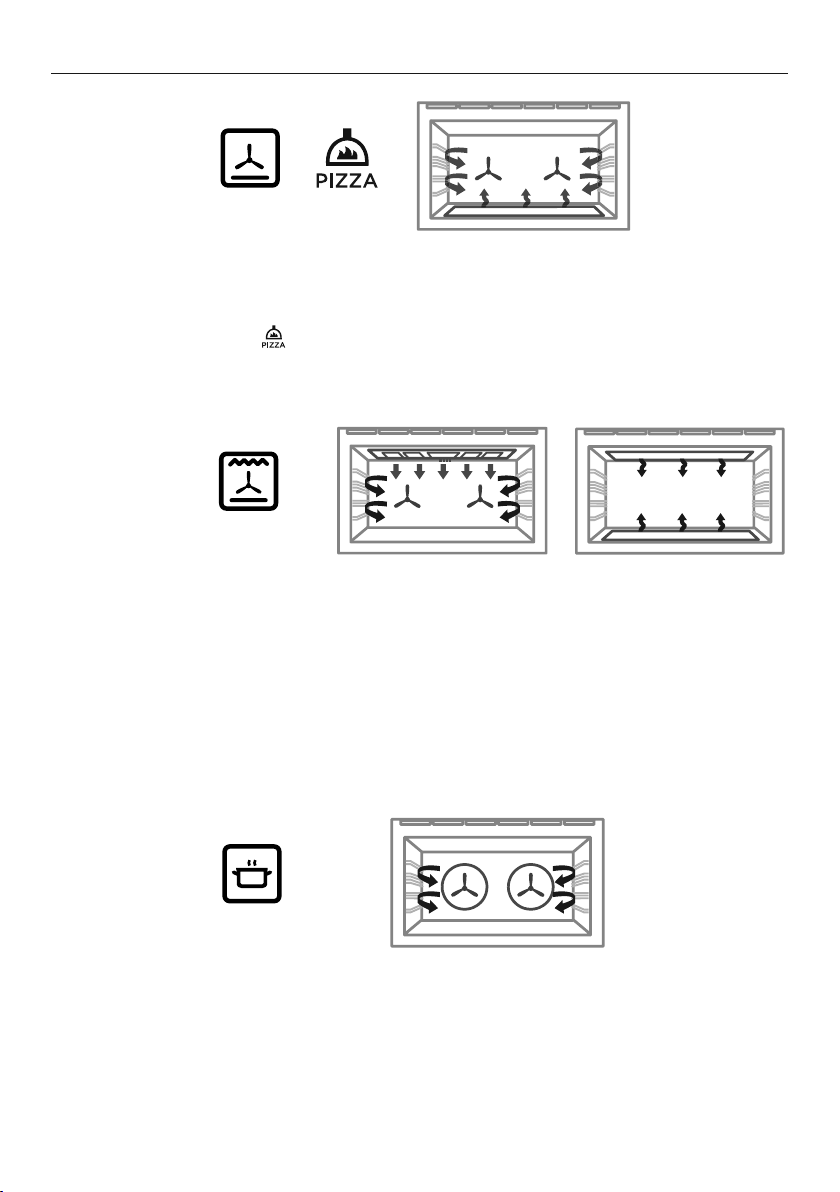
Fan plus lower element
z
The fan circulates heat from the lower element throughout the oven.
z
Excellent for cooking pizza and flatbreads as it crisps the base beautifully without
overcooking the top.
z
Set the temperature to for optimum pizza cooking temperature.
Ideal for foods such as sweet and savoury pastry foods and delicate foods that require
some top browning eg frittata, quiche.
Pastry Bake + Pizza
Fan plus upper and lower elements
z
A two-step program. An initial 20 minute searing stage crisps and browns the roast and
caramelises the outside of the meat, then the temperature drops to the level you have
preset for the remainder of the cooking period, producing a tender and juicy roast that is
full of flavor.
z
Oven does not require preheating.
z
If desired, use the roasting dish, or place vegetables under the roast to allow the
juices to drain away from your meat. This will allow the hot air to circulate under
the meat as well.
Ideal for Roasting meat, chicken and vegetables.
Roast
Fan plus rear element
z
The fan circulates heat from the rear element to gently cook food.
z
This function has low energy consumption - oven lights will remain off and vents will
remain closed for the duration of cooking to conserve energy (you may observe some
moisture generation during this time).
z
Oven does not require preheating.
Ideal for slow-cooked dishes such as casseroles, stews and braises.
Slow Cook
(some models only)
23
OVEN FUNCTIONS
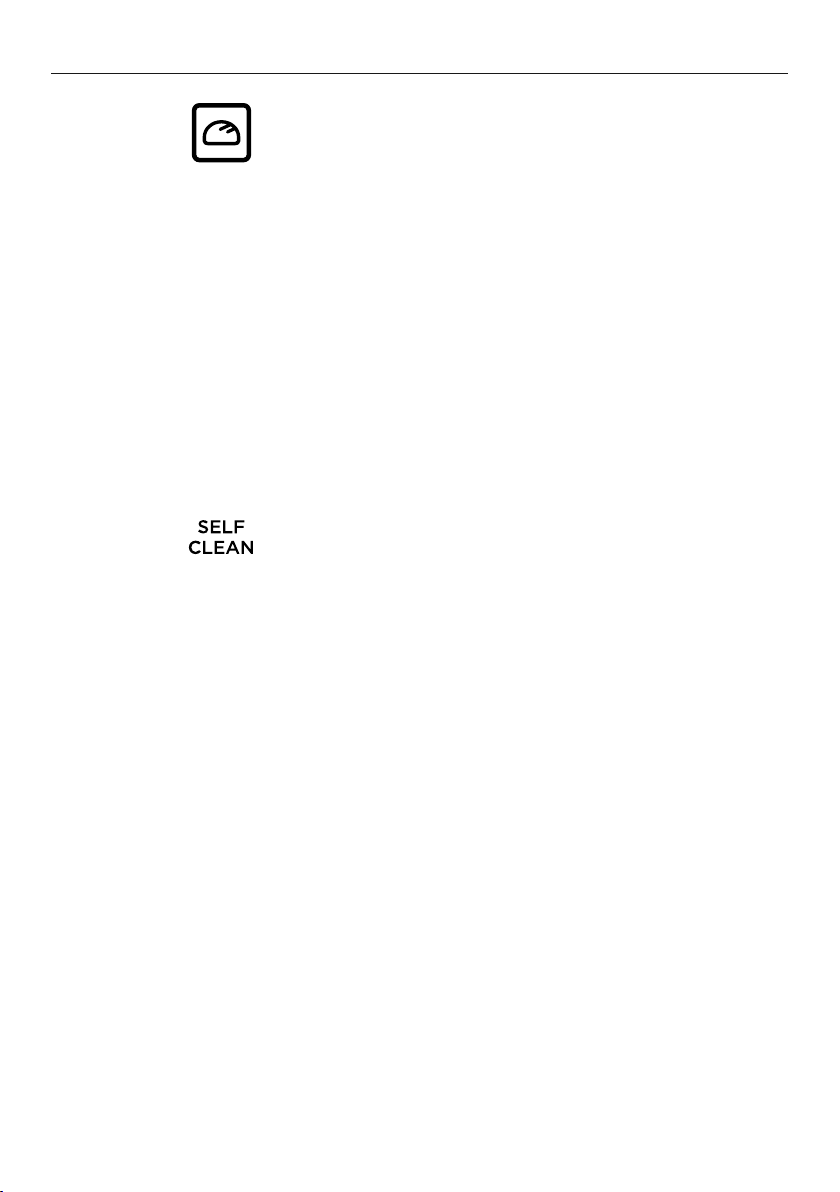
This is not a cooking function
z
Gentle heat is generated from the upper and lower elements.
z
Provides the optimum warm and draft-free environment for proving yeast dough.
z
This method provides a faster proof time than at room temperature.
z
To prevent overproofing we recommend you check the dough every 30mins.
Proving dough
1 Place dough in a lightly oiled bowl and cover with plastic wrap
and/or a clean damp cloth.
2 Position the bowl in the center of the oven.
3 Select Rapid Proof function.
This is not a cooking function
z
Self Clean takes care of the mess and grime that is traditionally associated
with oven cleaning.
z
There are two Self-Clean cycles available:
z
Standard clean (which takes a minimum of 4 hours) for normal to heavy cleaning.
z
Light clean (which takes a minimum of 3 hours) for lightly soiled ovens.
z
Always clean the inner door glass pane first.
z
See ‘Using the Self Clean function’ for details.
Rapid Proof
(some models only)
Self Clean

24
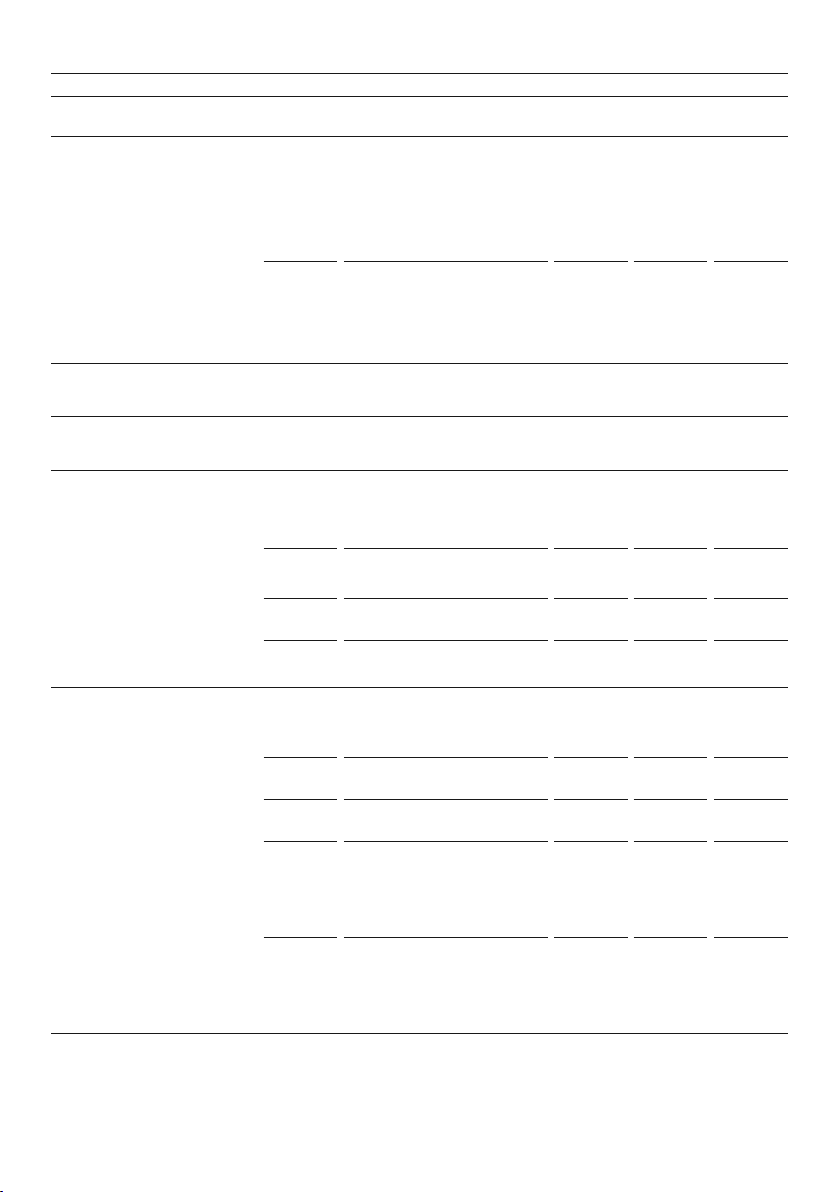
COOKING CHARTS
z
Shelf positions are counted from the base up (1 is the lowest, 7 is the highest).
Position shelves before you turn the oven on.
z
For best results preheat the oven.
z
Multi-shelf cooking may need the shelves rotating midway through cooking.
z
Oven accessories may temporarily deform slightly when they become hot.
This is normal and does not affect their function.
The information in these charts are guidelines only. Refer to your recipe or the packaging
and be prepared to adjust the cooking times and settings accordingly.
BAKING
SHELVES FUNCTION
SHELF
POSITION
TEMP
(°C)
TIME
(MIN)
BISCUITS
Plain Single Fan Bake 3 210-220 8-10
Multi Fan Forced
1 and 4
or
2 and 5
215-230 10-12
Chewy cocolate chip
Single Fan Bake 3 180-190 10-15
Multi Fan Forced
1 and 4
or
2 and 5
160-170 10-15
Oatmeal Single Fan Bake 3 160-170 12-15
CAKES
Vanilla Single Bake 3 160-165 30-35
Pound cake Single Bake 3 160 70-80
Butter/chocolate Single Bake 3 160-180 50-60
Chocolate brownie
(20x20cm)
Single Bake or Classic Bake 3 175 20-25
Rich fruit Single Bake or Classic Bake 3 135-150 3-6 hrs
Light fruit Single Bake 3 155-165 60-90
Sponge
(single large) Single Bake 3 170-180 30-40
Sponge
(20x20cm) Single Bake 3 170-180 15-25
SHORTBREAD Single Pastry Bake 3 130-140 20-25
25
COOKING CHARTS
BAKING
SHELVES FUNCTION
SHELF
POSITION
TEMP
(°C)
TIME
(MIN)
MUFFINS/CUPCAKES
Cupcakes
Single Fan Bake 3 185 15-20
Multi Fan Forced
1 and 4
or
2 and 5
170 20-25
Muffins
Single Fan Bake 3 170 25-30
Multi Fan Forced
1 and 4
or
2 and 5
170 25-30
SCONES Single Bake 3 215-230 10-15
MERINGUES Single Bake 3 120-130 60-70
BREAD / BREAD ROLLS
Sandwich loaf
(23x13cm loaf tin)
Single Bake 3 200-220 40-50
Wholewheat loaf
(23x13cm loaf tin)
Single Bake 3 200-220 35-45
Soft bread rolls Single Bake 3 190 15-18
Dough Proof Single Rapid Proof 3 PrF 30
PASTRY
Pastry case
(baked blind) Single Pastry Bake 2 or 3 175 15
Filo Single Fan Bake 3 200 15-25
Flaky/puff Single Fan Bake 3 185-200 20-30
Choux Single Fan Bake 3 200-210 30-35
Multi Fan Forced
1 and 4
or
2 and 5
200-210 30-35
Croissants Single Fan Bake 3 190-200 15-25
Multi Fan Forced
1 and 4
or
2 and 5
190-200 15-25

26
COOKING CHARTS
SAVOURY
SHELVES FUNCTION
SHELF
POSITION
TEMP
(°C)
TIME
(MIN)
MEAT PIES Single Pastry Bake or Fan Bake 3 190-195 30-40
SAUSAGE ROLLS Single Pastry Bake or Fan Bake 3 190-200 20-25
VEGETABLES Single Fan Bake 3 175-190 30-50
LASAGNE Single Fan Bake 3 175-190 35-45
CASSEROLES Single Slow Cook or Classic Bake 2 120-150 2-4 hr
PIZZA Single Pizza 1 or 2
Pizza
(280)
10-15
QUICHE
(blind bake, then add filling)
Single Pastry Bake or Fan Bake 3 180-200 30-40
POTATOES, WHOLE
(baked) Single Bake 3 200 50-60
FRITTATA
(shallow) Single Pastry Bake 3 170-180 15-20
OVEN MEALS Single Fan Forced 3 170-190 30-40
BAKING
SHELVES FUNCTION
SHELF
POSITION
TEMP
(°C)
TIME
(MIN)
PIES
Apple pie Single Pastry Bake or Fan Bake 3 190-200 25-30
Lemon meringue Single Pastry Bake or Fan Bake 3 175-180 30-40
Baked cheesecake
(in water bath)
Single Classic Bake 3 160 50-60
Custard tart
(blind bake, then add filling)
Single Classic Bake 3 175-150 15-30
DESSERTS
Crème brulee
(in water bath) Single Classic Bake 3 135 35-45
Crème caramel
(in water bath) Single Classic Bake 3 175 35-45

27
COOKING CHARTS
ROASTING
SHELVES FUNCTION
SHELF
POSITION
TEMP
(°C)
TIME
(MIN)
MEAT
PROBE
(°C)
BEEF, BONELESS (times per 450g)
Rare
Single Roast 2 or 3 160-170 18-32 54-59
Medium Single Roast 2 or 3 160-170 25-40 60-74
Well done Single Roast 2 or 3 160-170 30-55 74-79
PRIME RIB ROAST
(times per 450g)
Rare Single Roast 2 or 3 160-170 15-30 54-59
Medium Single Roast 2 or 3 160-170 20-35 60-74
Well done Single Roast 2 or 3 160-170 25-40 74-79
LAMB RACK
Medium rare Single Roast 3 200 20 50
LAMB LEG, BONE IN
(times per 450g)
Medium Single Roast 2 or 3 160-170 18-28 65-70
Well done Single Roast 2 or 3 160-170 20-33 74-79
LAMB LEG, BONLESS
(times per 450g)
Medium Single Roast 2 or 3 160-170 20-35 65-70
Well done Single Roast 2 or 3 160-170 25-45 77-79
VEAL
(times per 450g)
Medium Single Roast 2 or 3 160-170 20-40 71
Well done Single Roast 2 or 3 160-170 25-45 76
CHICKEN, WHOLE
(times per 450g, excl. butterflied)
Unstuffed
Single Fan Grill 2 or 3 175 15-20 75
Stuffed Single Bake 2 or 3 175 17-22 75
Butterflied Single Fan Grill 3 or 4 175 40-50 75
TURKEY, WHOLE
(times per 450g)
Stuffed Single Bake 1 or 2 160-170 17-22 75
Unstuffed Single Bake 1 or 2 150-165 15-20 75

28
COOKING CHARTS
ROASTING
SHELVES FUNCTION
SHELF
POSITION
TEMP
(°C)
TIME
(MIN)
MEAT
PROBE
(°C)
PORK, BONELESS (times per 450g)
Medium Single Roast 2 or 3 170-175 25-40 63-68
Well done Single Roast 2 or 3 170-175 30-45 74-79
PORK CRACKLING
Crisp
(watch closely) Single Fan Grill 4 220 5-10 n/a
VENISON
(times per 2.5cm thickness
1
)
Rare* Single Fan Grill 4 225 7 49-54
Medium* Single Fan Grill 4 225 9 55-60
1
Brown in frying pan first.

29
COOKING CHARTS
GRILLING
SHELVES FUNCTION
SHELF
POSITION
TEMP
(°C)
TIME
(MIN)
BEEF
Steak, rare Single Grill 6 or 7 HI 8-10
Steak, medium Single Grill 6 or 7 HI 10-15
Burgers Single Grill 6 or 7 HI 12-15
Meatballs Single Grill 6 or 7 HI 12-15
LAMB
Chops, medium Single Grill 6 or 7 HI 15-20
Chops, well done Single Grill 6 or 7 HI 20-25
PORK
Chops, well done Single Grill 6 or 7 HI 15-20
Ham steak Single Grill 6 or 7 HI 15-20
Bacon Single Grill 6 or 7 HI 4-7
CHICKEN
Boneless pieces Single Fan Grill 6 or 7 175 30-40
Bone in pieces Single Fan Grill 6 or 7 175 40-50
SAUSAGES Single Grill 6 or 7 HI 10-15
FISH
Fillets Single Fan Grill 6 or 7 200-220 8-12
Whole Single Fan Grill 6 or 7 200-220 15-20
VEGETABLES
Sliced Single Grill 6 or 7 HI 8-12
30
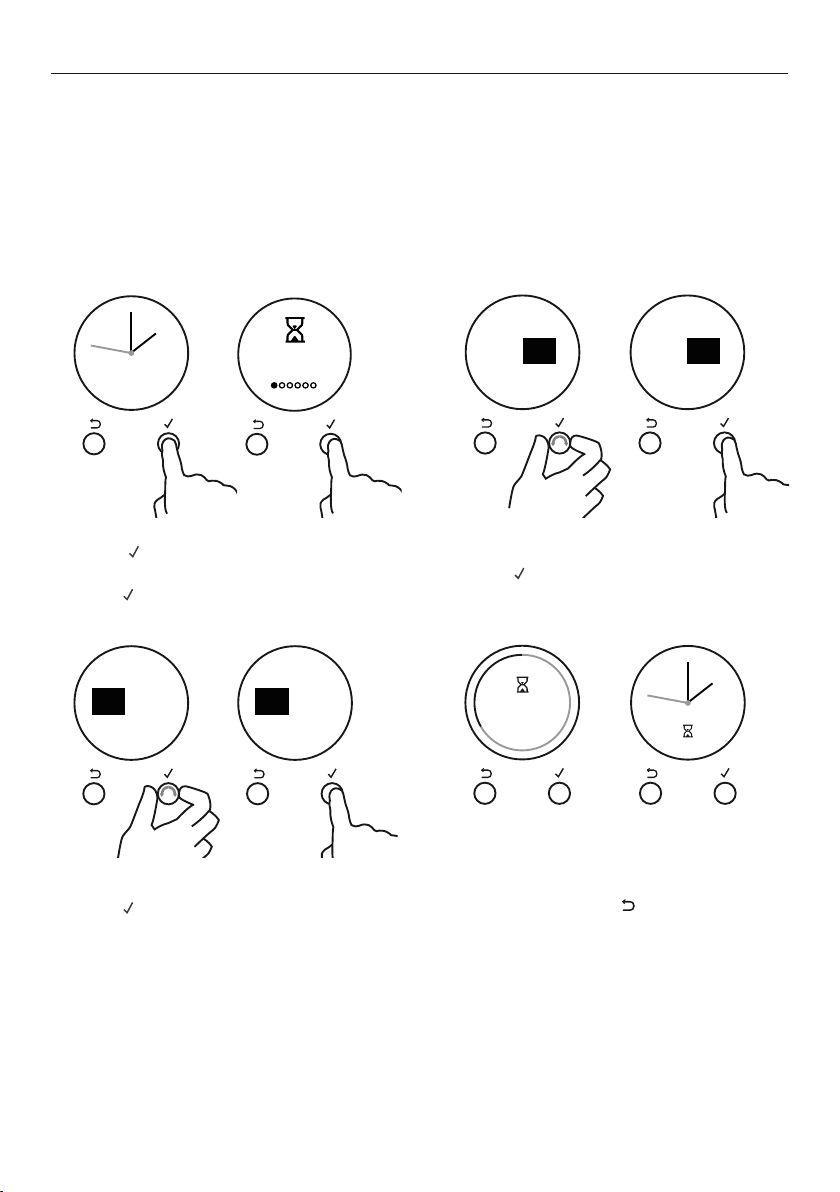
SETTING THE TIMER
z
You can use the timer at any time, even if you are not using the oven.
z
If the time is more than an hour, the display will count down in minutes (h:m).
If it is less than an hour, it will count down in seconds (m:s).
z
You can set the timer for up to 23 hours 59 minutes.
IMPORTANT!
The timer does NOT turn the oven off.
To set the timer
Timer
24.59m
CANCEL REMOTE
CANCEL REMOTE
CANCEL REMOTE
Timer
mh
alarm sounds
03 25
CANCEL REMOTE
Timer
alarm sounds
mh
03 25
Timer
NOW SET
CANCEL REMOTE CANCEL REMOTE
CANCEL REMOTE
Timer
00 25
mh
alarm sounds
00 25
mh
CANCEL REMOTE
Timer
alarm sounds
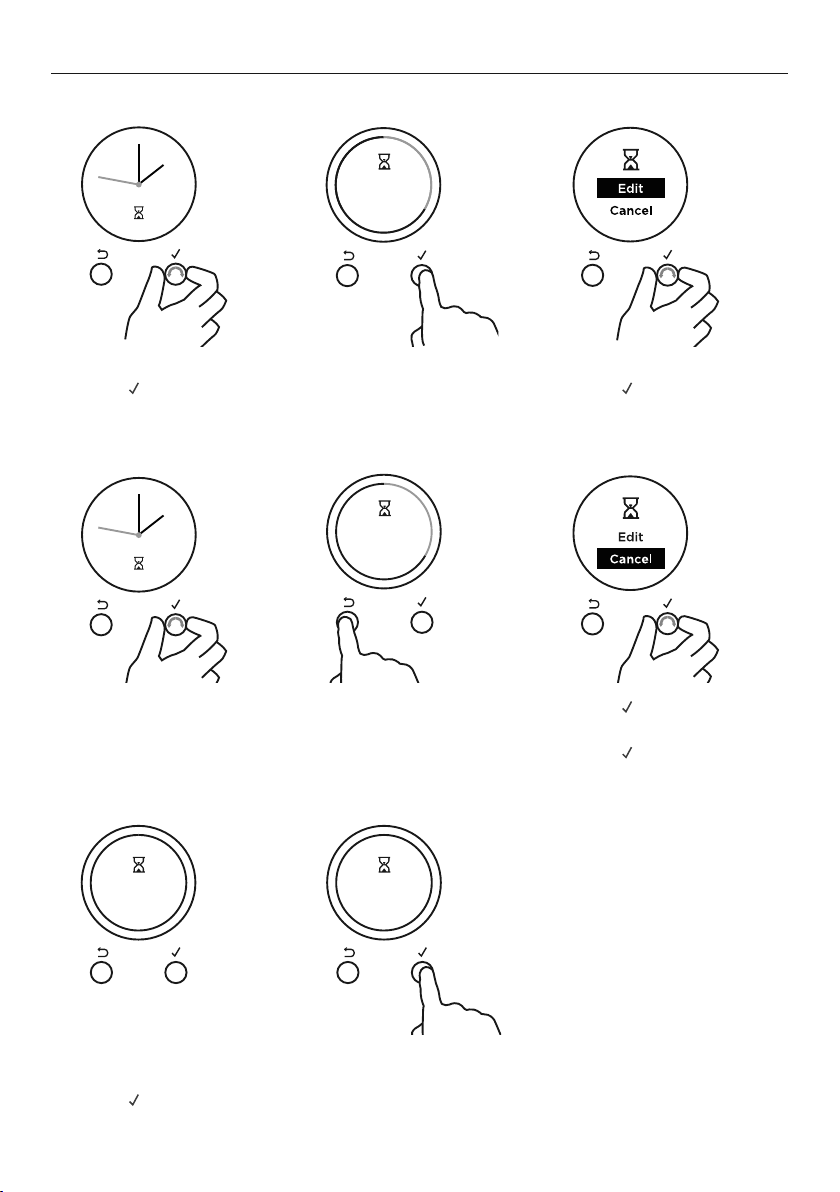
1 Press to to enter the main menu.
z
The timer will be the first option.
z
Press to enter the timer.
2 Scroll to set the minutes.
z
Press to confirm.
3 Scroll to set hours.
z
Press to confirm.
The timer is now set and will begin
counting down. Press
or scroll to return
to the time of day.
31
To edit the timer
SETTING THE TIMER
When the set time is up
CANCEL REMOTE
CANCEL REMOTE
CANCEL REMOTE
Timer
Complete
CANCEL REMOTE
Timer
Complete
CANCEL
REMOTE
CANCEL
REMOTE
CANCEL REMOTE
to go
4
m
59
s
CANCEL REMOTE
to go
4
m
59
s
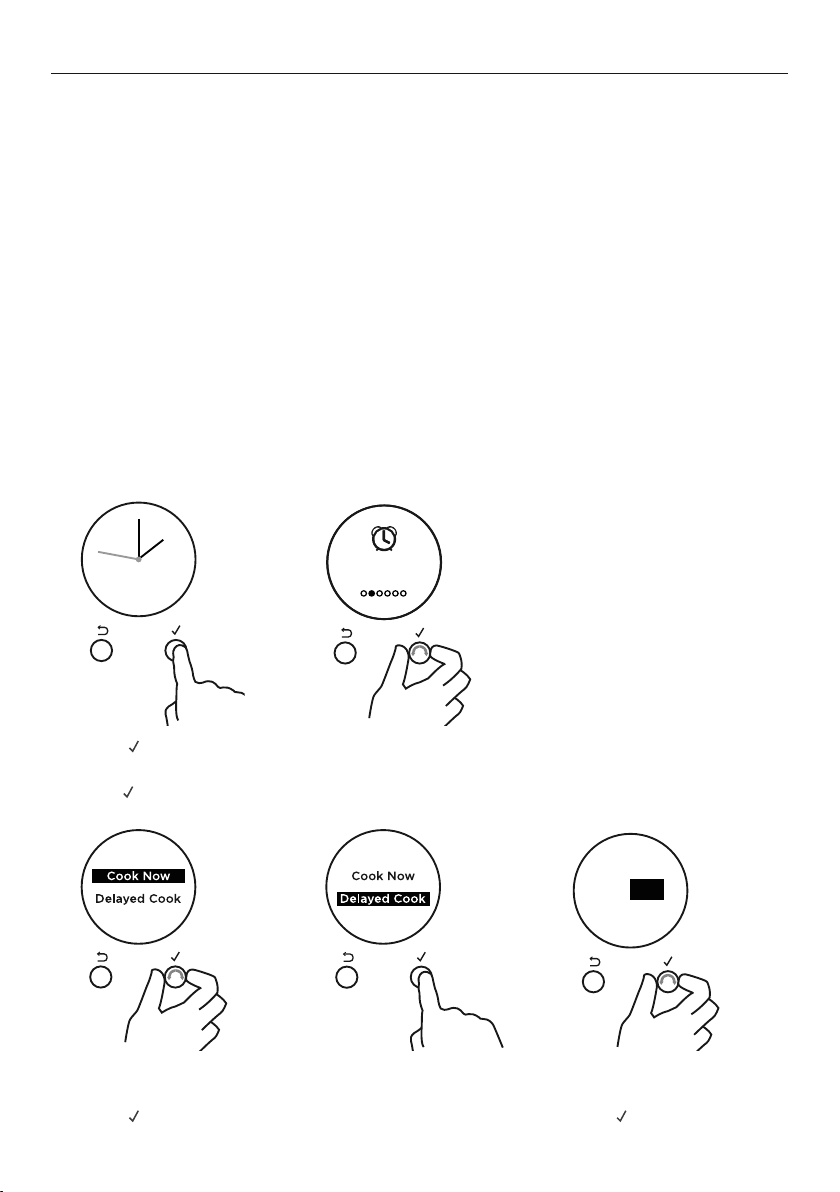
1 From the home screen, scroll to view the active timer.
2 Press
to enter the timer.
3 Scroll to select Edit.
4 Press to confirm.
5 Follow the steps previous
to adjust the timer.
2 Press
to enter the timer.
3 Scroll to select Cancel.
4 Press
to confirm and
exit the menu.
1 Timer Complete will appear and the display will flash.
A tone will sound every few seconds.
2 Press
or CANCEL to stop the tone sounding.
1 From the home screen, scroll to view the active timer.
Press and hold CANCEL to cancel the timer, or follow
the steps on the right.
To cancel the timer
32
AUTO COOK
Use Auto Cook to
z
Turn off the oven automatically after a set period of time.
z
Set the oven for food to be ready at a specific time.
Before you start
z
Make sure that your oven is displaying the correct time of day and food is in the oven.
IMPORTANT!
Safe food handling: leave food in the oven for as short as time as possible before and
after cooking or defrosting. This is to avoid contamination by organisms which may cause
food poisoning. Take particular care during warmer weather.
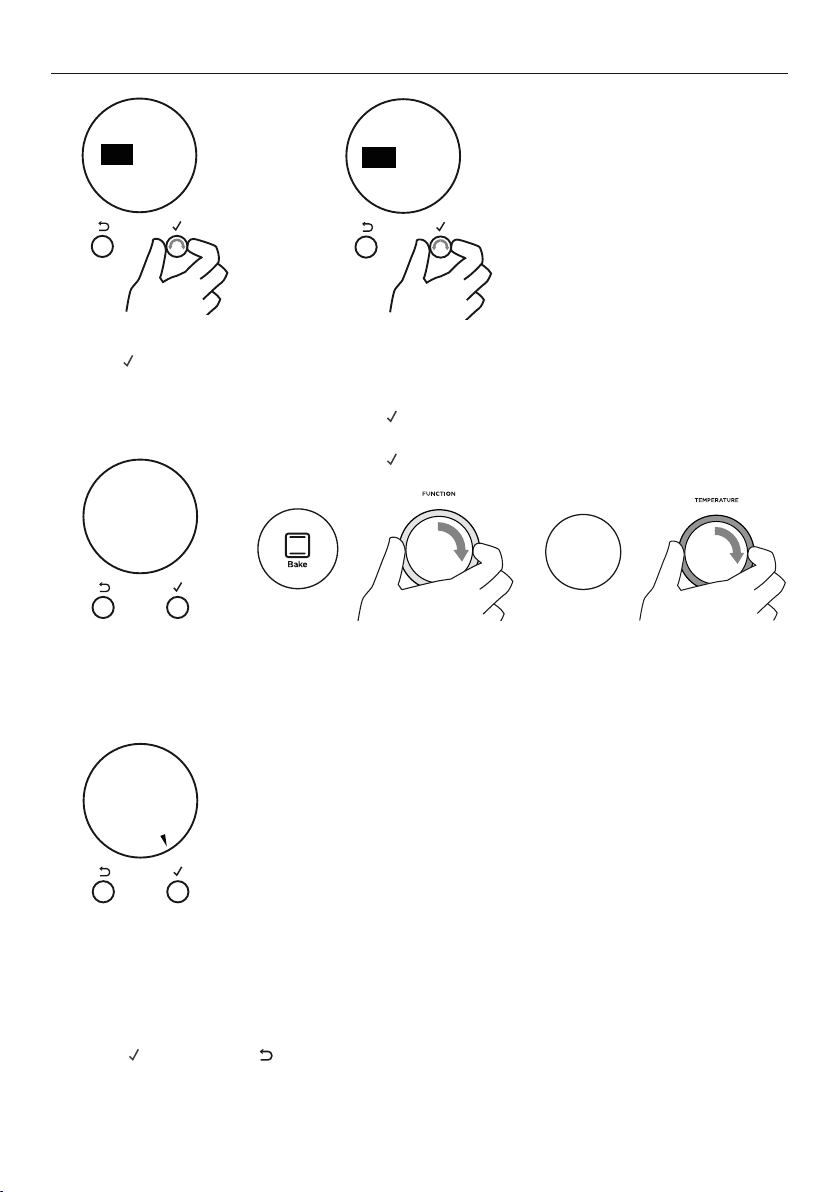
You can choose to either start cooking now or set a delayed cook.
z
Choose Start Now if you have started cooking and want to set the oven to turn off
automatically after a set period of time.
z
Choose Delayed Cook to set the oven to automatically turn on later and be
ready at a set time.
To set Auto Cook
CANCEL REMOTE
CANCEL REMOTE
Cook time
00 00
mh
CANCEL REMOTE
Auto Cook
1 Press to enter the main menu.
2 Scroll through the menu options to Auto Cook.
z
Press to enter Auto Cook.
4 Set the Cook time.
z
Scroll to set the minutes.
z
Press to accept.
CANCEL REMOTE
CANCEL REMOTE
3 Scroll to choose between Cook Now and
Delayed Cook.
y Press
to accept.
33
AUTO COOK
CANCEL REMOTE
End time
06:00
pm
Set
Function
and
Temp
CANCEL REMOTE
Start Now
Cook
20
6:30
End
CONFIRM
min
pm
CANCEL REMOTE
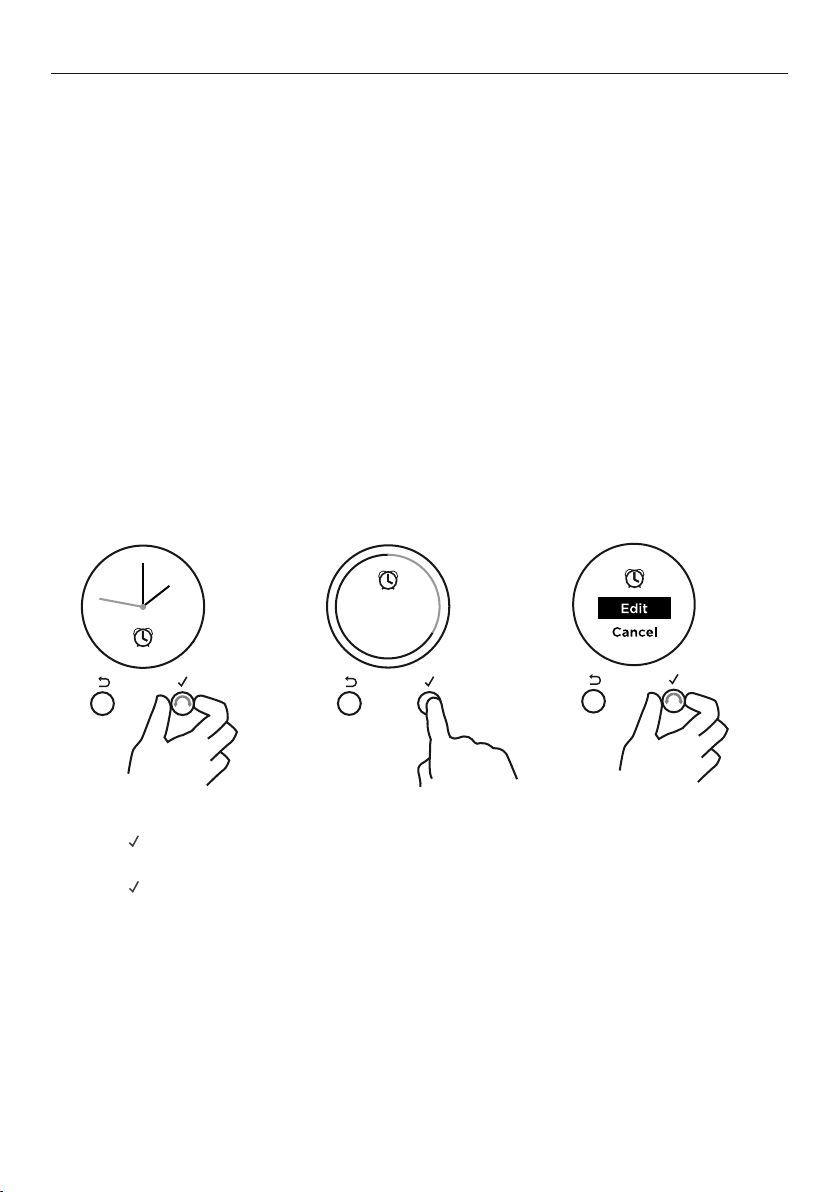
8 Set a function and temperature using the oven dials.
The display will show a summary of your settings, showing:
z
Start time
z
Cook time
z
End time
9 Press to confirm or to go back and adjust the settings.
Your oven is now set for automatic cooking.
Delayed Cook
To set Delayed Cook you will also need to set an End Time.
6 Scroll to set the minutes.
z
Press to accept.
7 Scroll to set the hours.
z
Press to accept
If you have not already set a function and temperature:
z
Set Function and Temp will appear in the display.
z
The halos on the oven dials will flash.
200C
--->
CANCEL REMOTE
Cook time
02 20
m
h
5 Scroll to set the hours.
z
Press to accept.
34
AUTO COOK
When Auto Cook is set
z
The oven and the lights will stay off, the halos will be unlit, but your oven is now set for
automatic cooking. It will automatically turn on at the required time.
z
You can modify the function and temperature while the oven is waiting to start cooking.
z
If setting Delayed Cook you will need to put the food in the oven before starting.
z
For safety reasons opening the door while the oven is waiting to start will
cancel Delayed Cook.
While the oven is heating up
IMPORTANT!
z
During Auto Cook the grill element will come on while the oven is heating up. Food
placed into a cold oven could be prone to burning as the oven heats up.
z
Large items and foods with a high fat or sugar content are especially prone to burning.
Take particular care with foods such as macaroni cheese, large poultry, and enchiladas.
z
Ideal foods for automatic cooking include stews, casseroles, braised meat and
potato top pie.
z
Position food on a lower shelf to prevent burning.
z
Where possible cook food in a pan with a lid, or cover food with foil.
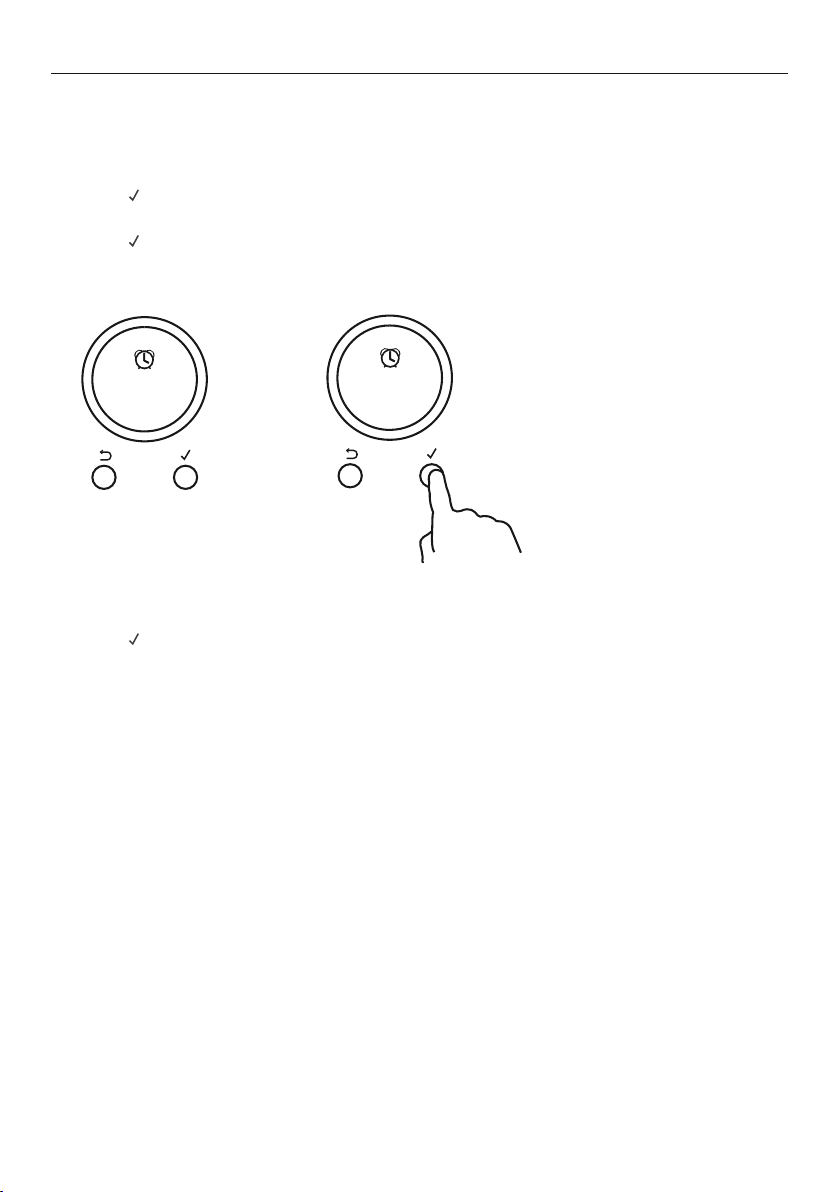
To edit Auto Cook
1 From the home screen, scroll to view Auto Cook.
2 Press
to enter Auto Cook.
3 Scroll to select Edit.
4 Press
to confirm.
5 Follow the steps previous to adjust the Cook or End time.
CANCEL REMOTE
CANCEL
REMOTE
Ends 7:00pm
4
m
59
s
CANCEL REMOTE
35
AUTO COOK
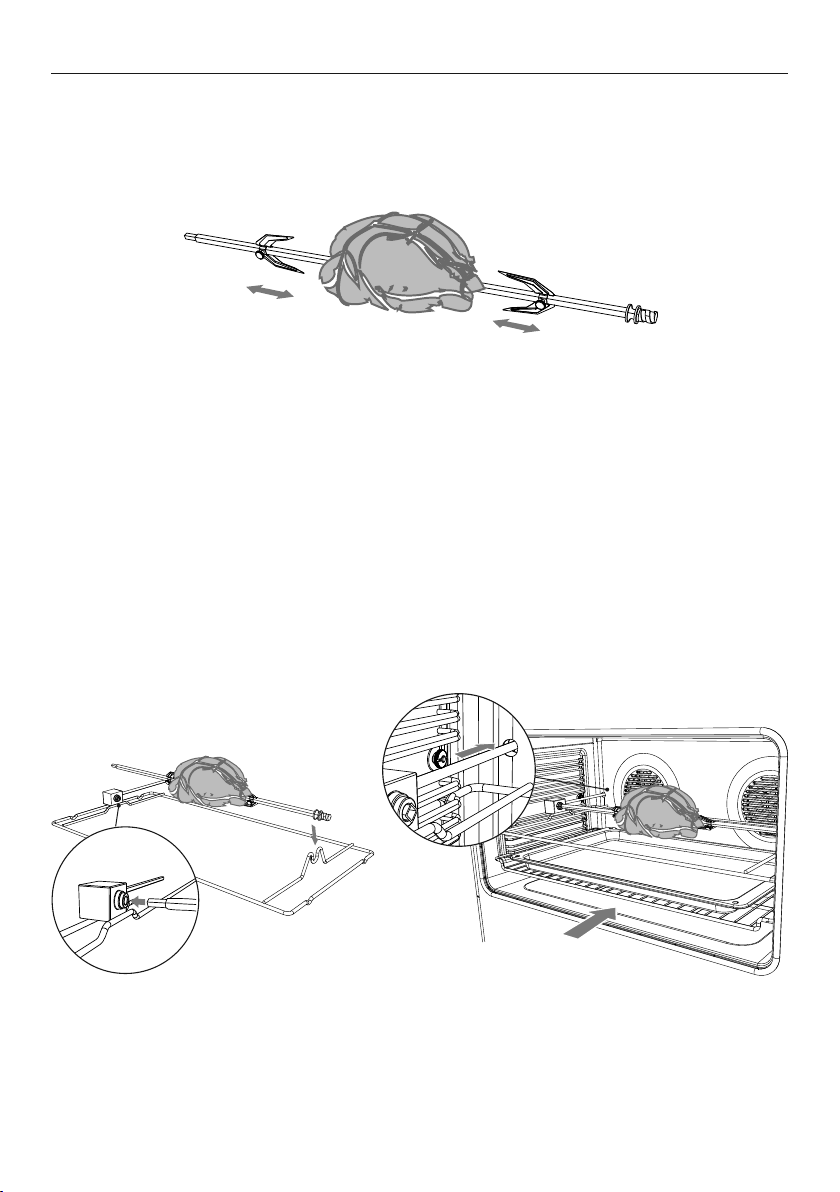
To cancel Auto Cook
1 From the home screen, scroll to view the active timer.
z
Press and hold CANCEL to cancel Auto Cook, or follow the steps below.
z
Turning both dials to O (OFF) will also cancel Auto Cook.
2 Press
to enter Auto Cook.
3 Scroll to select Cancel.
4 Press
to confirm.
When the set time is up
1 Auto Cook Complete will appear and the display will flash.
z
A tone will sound every few seconds.
2 Press
or CANCEL to stop the tone sounding.
3 Turn both the oven dials back to O (OFF).
CANCEL REMOTE
Auto Cook
Complete
CANCEL REMOTE
Auto Cook
Complete
36
USING THE ROTISSERIE
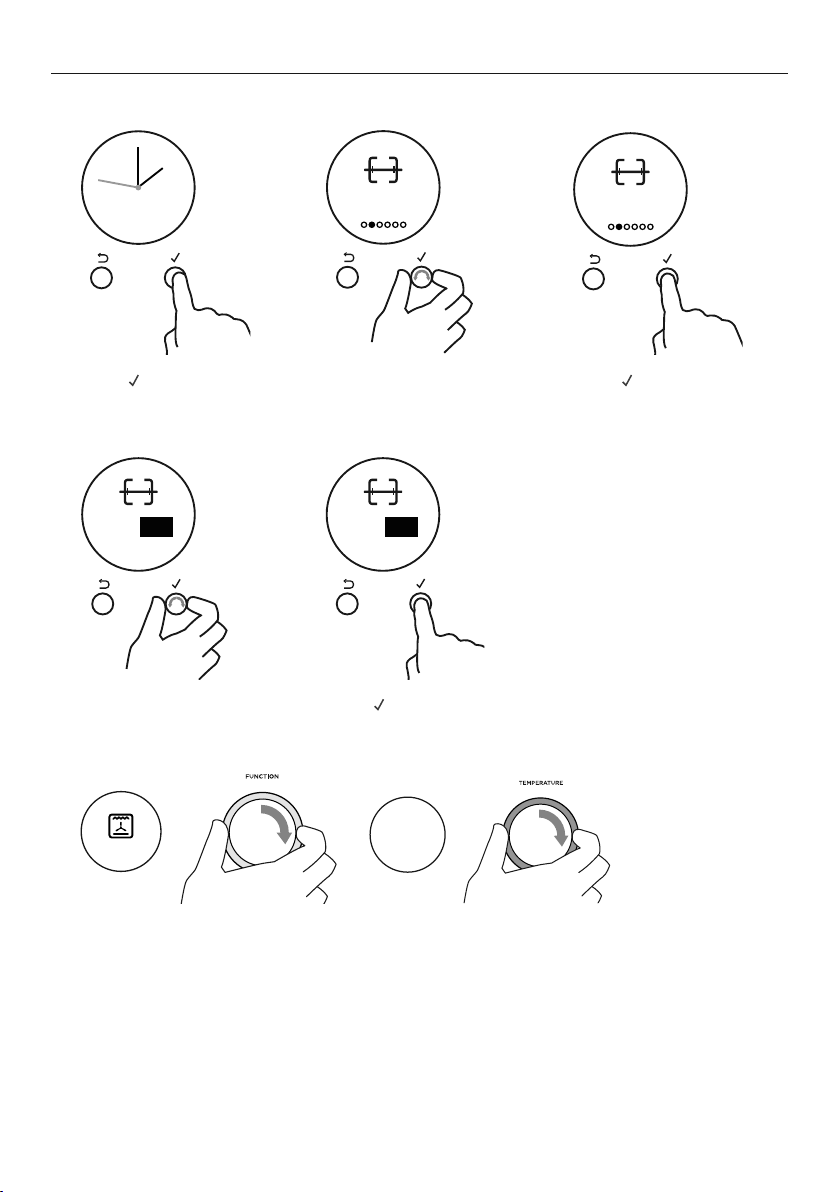
IMPORTANT!
z
If fitted, remove all shelving before using the rotisserie.
z
Slide the step-down wire rack into shelf position 1 and place the roasting dish on top of
this, to catch the drippings of the rotating meat.
3 Place the rotisserie in the oven.
z
Insert the drive rod into the rotisserie
drive hole (back wall of oven).
z
Ensure the skewer is properly located
on the supports.
2 Position the skewer on the supports.
z
Place the skewer on the supports, and
check that the meat does not touch
the roasting dish.
1 Secure the meat onto the rotisserie skewer.
IMPORTANT!
z
Take care, the forks are sharp!
z
Slide one fork on to the skewer (prongs facing inward) and tighten the fastening
screw to secure in place. Carefully slide the meat onto the skewer until it rests firmly
against the fork.
z
Fit the second fork, ensuring the meat is held firmly in place. Tighten the fastening
screw to secure.
z
When securing the meat, ensure that:
z
The skewer goes through the centre of the meat.
z
The forks hold the meat firmly in place.
z
There are no loose or projecting parts. Poultry should be trussed.
z
Note: the rotisserie can rotate up to 6 kg of meat and is long enough to cook two
chickens at the same time.
Rotisserie
drive hole
37
USING THE ROTISSERIE
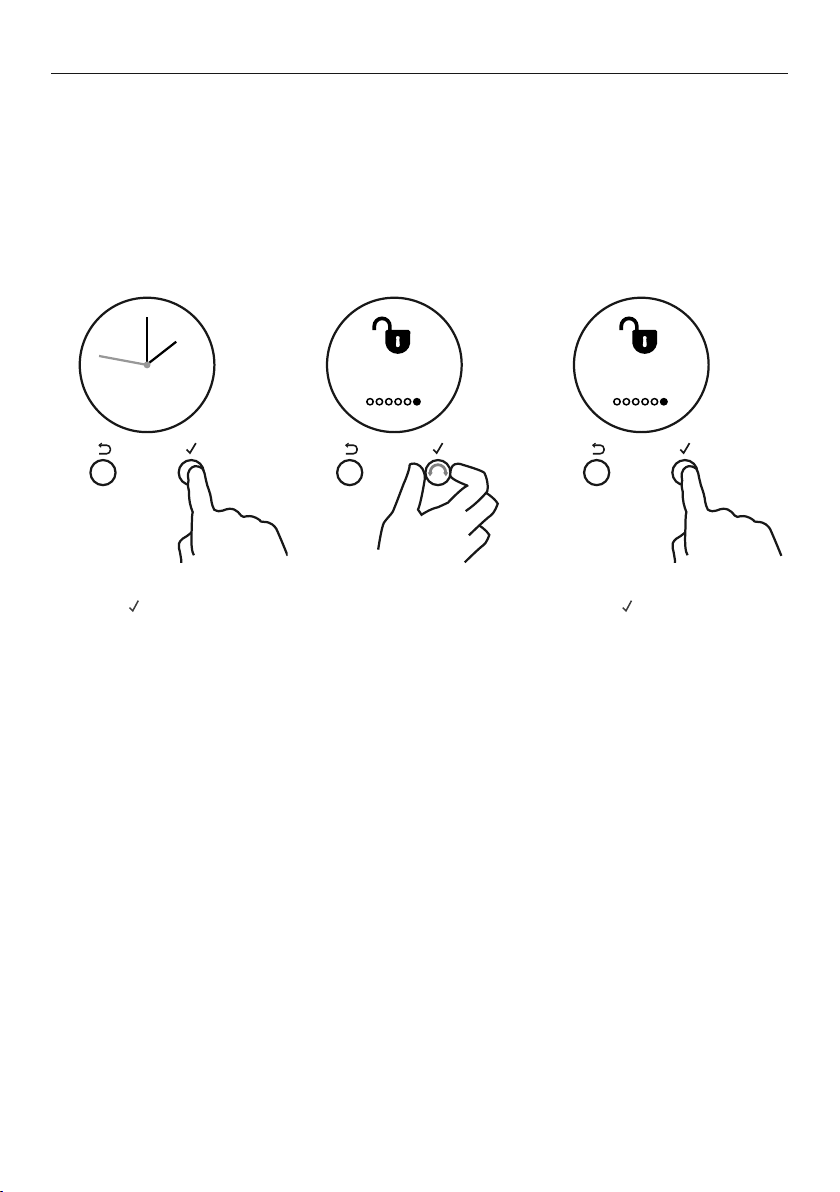
Select the Rotisserie function
CANCEL REMOTE
CANCEL
Rotisserie
OFF
REMOTE
CANCEL REMOTE
Rotisserie
OFF
CANCEL
O On
REMOTE
REMOTE
CANCEL
O On
1 Press to enter the
main menu.
2 Scroll through the
menu options to get
to Rotisserie.
4 Scroll through the
Rotisserie options
to ON.
3 Press to enter the
Rotisserie menu.
5 Press
to confirm.
6 Set the function and temperature.
z
We recommend using the Roast function for perfect results.
z
The rotisserie will start to rotate.
IMPORTANT!
z
Always turn the oven dials to O (OFF) before removing the rotisserie.
z
Always ensure that poultry is cooked thoroughly.
z
During use, the rotisserie components become hot. If you leave the oven door open
after using the rotisserie, parts of the control panel may also become hot. Use oven
mitts and take extra care, especially when removing both the meat and rotisserie parts.
200C
--->
ROAST
38
LOCKING THE OVEN CONTROLS
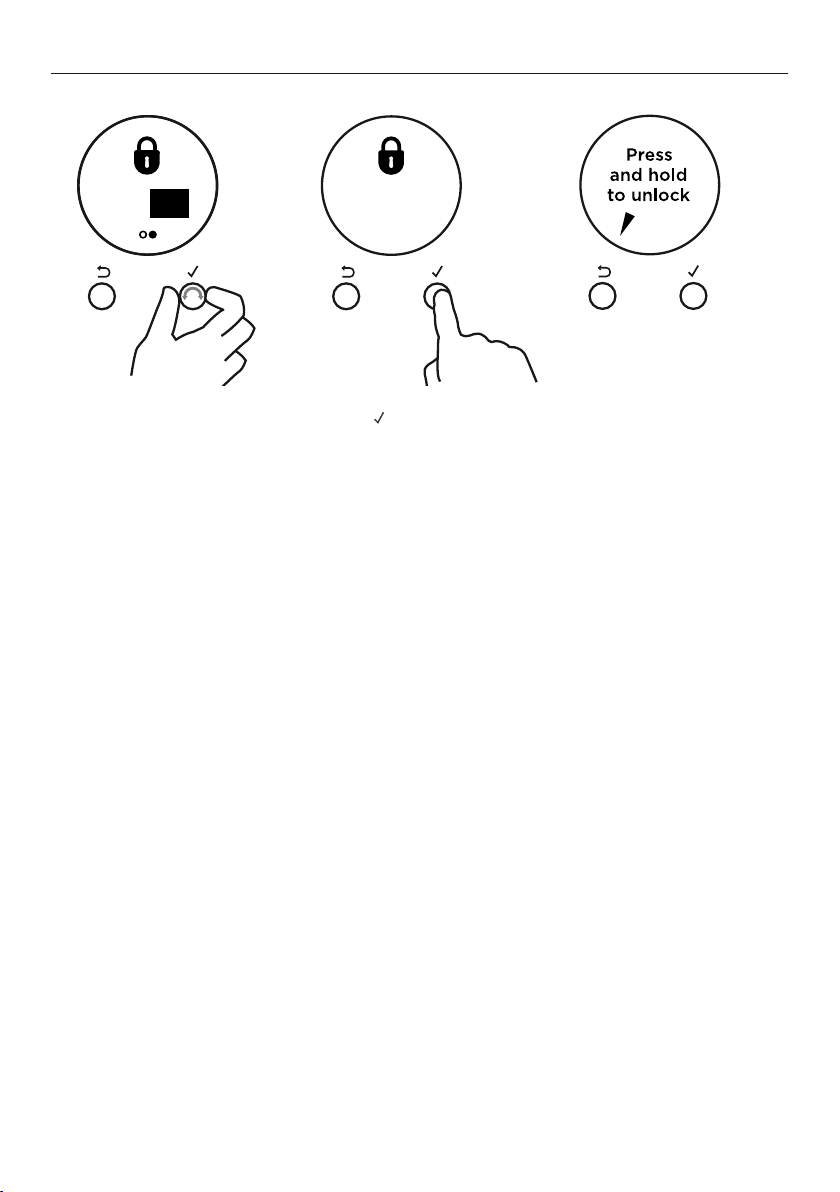
This function is to prevent accidental use of the oven (eg by children). When locked, the
controls are unresponsive and the oven will not turn on.
IMPORTANT!
z
This does not lock the cooktop controls.
z
For safety reasons it is not possible to lock the oven controls while the oven is in use
or if Auto Cook has been set.
To lock:
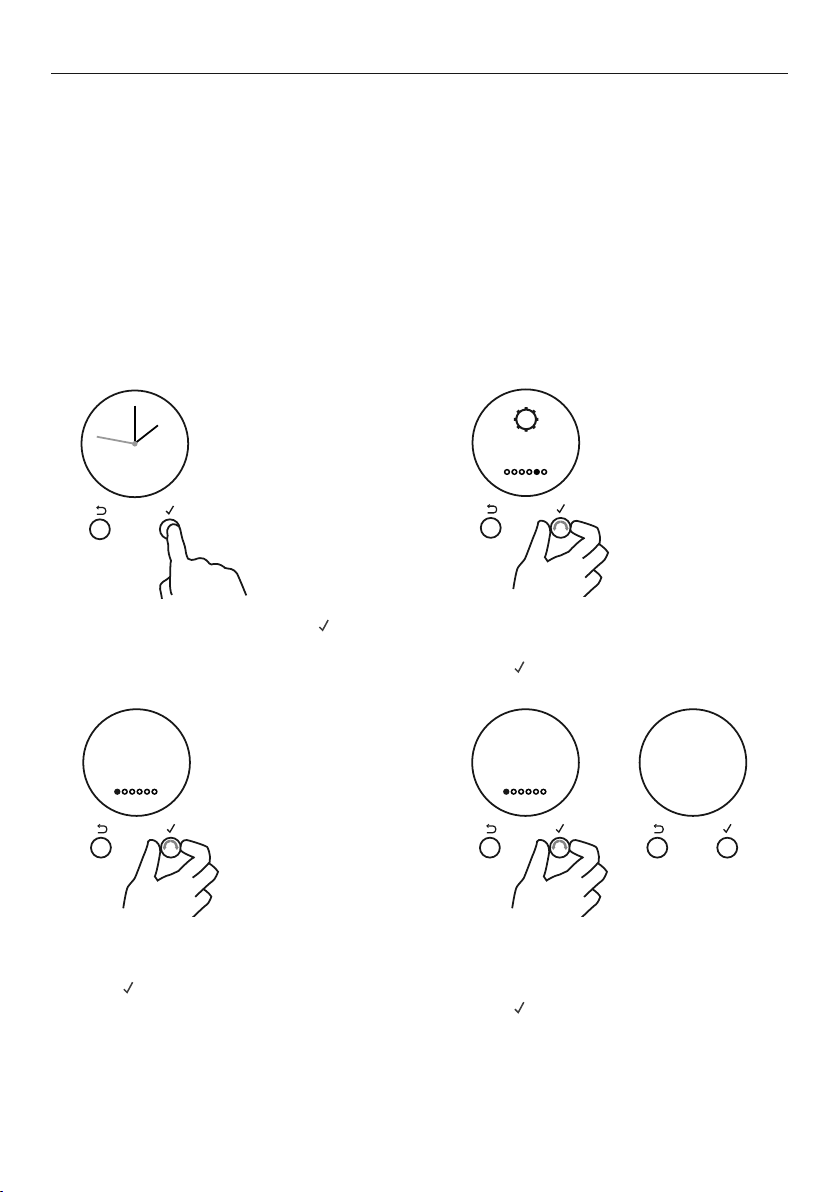
1 Press
to enter the
main menu.
3 Press to enter the
Lock menu.
2 Scroll through the menu
options to get to Lock.
CANCEL REMOTE
CANCEL REMOTE
Lock
O
CANCEL REMOTE
Lock
O
39
LOCKING THE OVEN CONTROLS
4 Scroll through the Lock
options to ON.
5 Press
to confirm.
z
The control panel is
now locked.
To unlock:
z
Press and hold
CANCEL to unlock
the oven controls.
CANCEL REMOTE
CANCEL REMOTE
OnO
CANCEL REMOTE
Oven
Locked
CANCEL
40
USER PREFERENCE SETTINGS
Adjust the user settings to suit your personal setup preferences.
You can set your oven to:
z
display the temperature in degrees Celsius or Fahrenheit
z
give audio feedback (tones and beeps) or operate quietly
z
display time as 12-hr or 24-hr
z
operate with the display off
z
have its lights on or off during cooking
z
operate in Sabbath Mode (see ‘Sabbath Mode’ following).
Note: you cannot change the user preference settings when you oven is operating or set for
automatic cooking.
How to change preference settings
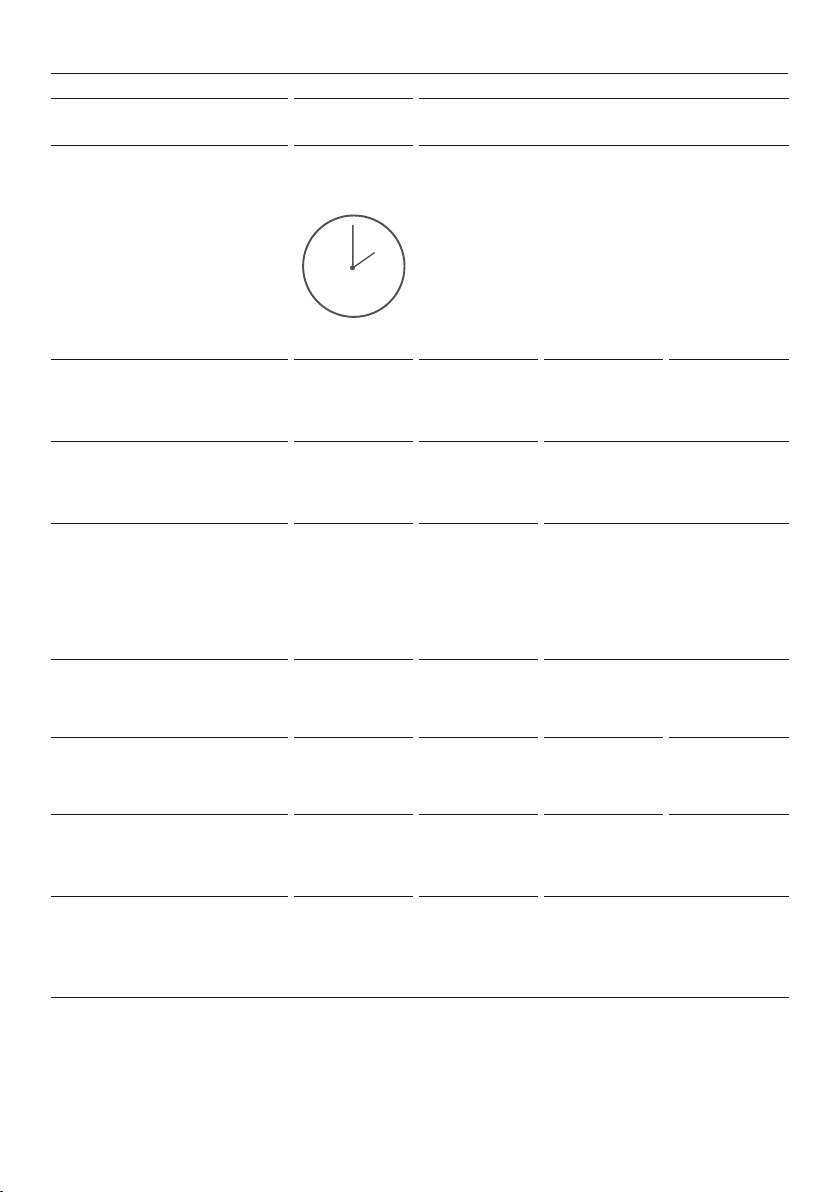
1 From the home screen, press
to enter the main menu.
3 Scroll to the setting you want
to change.
z
Press to edit the setting.
2 Scroll through the menu options
to settings.
z
Press to enter the settings menu.
4 Scroll between the options for each
setting. Refer to the table following for
which options are available.
z
Press to confirm.
5 The display will confirm that you have
changed the setting.
CANCEL REMOTE
CANCEL REMOTE
Sounds
On
CANCEL REMOTE
Sounds
O
CANCEL REMOTE
Setting
changed
CANCEL REMOTE
Settings
41
USER PREFERENCE SETTINGS
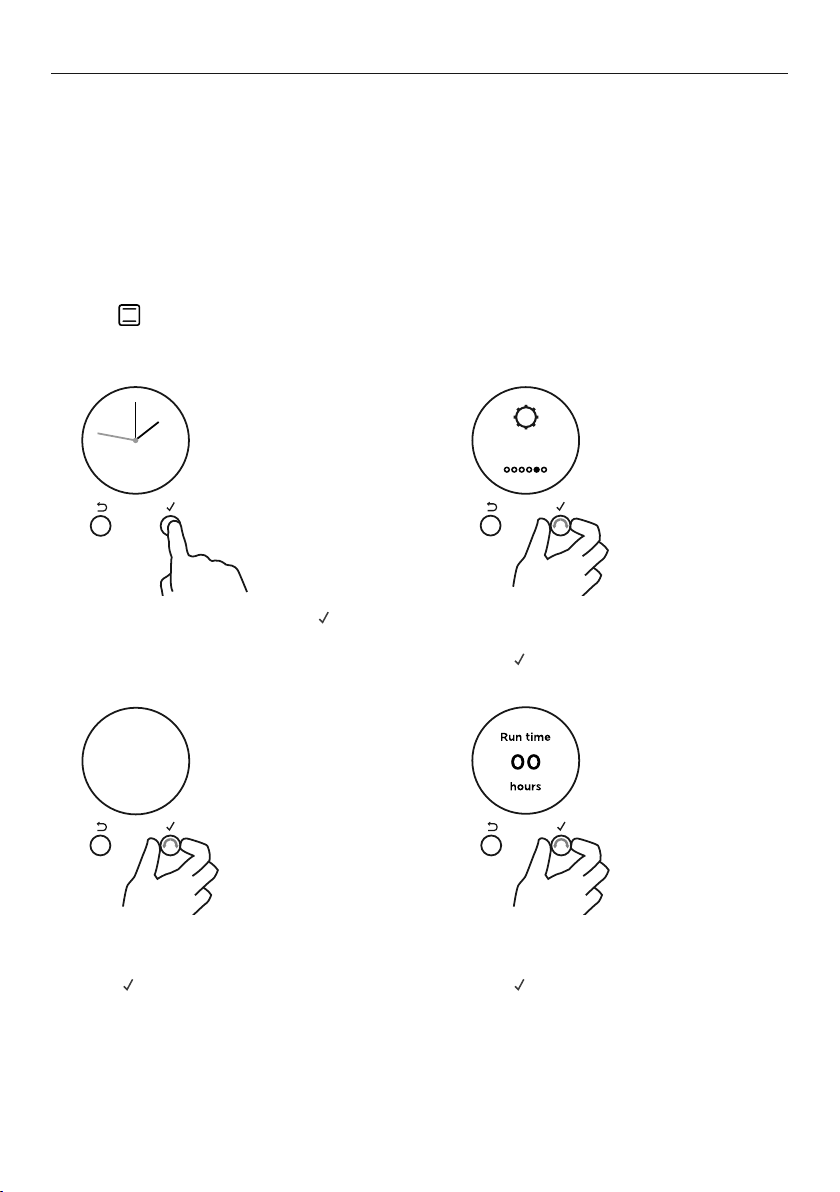
SETTING
DEFAULT
OPTION
ALTERNATIVE OPTION(S)
CLOCK DISPLAY ANALOG 24H 12H DISPLAY OFF**
Select between:
• Analog and
digital display
• 12-hr and 24-hr display
• Display off**
Turn the display off if you
only want to use the basic
functionalities of your oven.
24:00 12:00
Clock display
Off
TEMPERATURE SCALE CELSIUS FAHRENHEIT
Select between degrees
Celsius or Fahrenheit.
Degrees
Celsius
Degrees
Fahrenheit
AUDIO FEEDBACK ON* OFF*
Turn the oven beeps
and tones on or off.*
Sounds
On
Sounds
Off
OVEN LIGHTS ON OFF
Have the light off during
cooking if you want to save
power or want the food
you cook to be a surprise
for others.
Lights
On
Lights
OFF
SABBATH MODE OFF
Sabbath
Off
See ‘Sabbath Mode’ for instructions.
LANGUAGE UK ENGLISH US ENGLISH SPANISH FRENCH
Choose the language you would
like the oven to display in.
UK English US English Espanol Francaise
WIRELESS CONNECTION OFF
Not available on this product.
OFF
USER SETTINGS RESET RESET
Use this to clear all changes
to settings and reset to the
factory settings.
Reset
Select this option and accept to reset
all user settings.
*The timer tone and alert beeps will sound even if you save the SOUNDS OFF option.
**With this option saved, you can still use the oven, and timer, however the display will remain unlit.
Any automatic functions will be cancelled when this option is selected. To quit this option and
enable the display, press and hold CANCEL.
42
SABBATH MODE
This setting is designed for religious faiths that observe a ‘no work’ requirement
on the Sabbath.
While your oven is in Sabbath Mode
z
The display, dial halos and indicators will be unlit, the controls will be unresponsive.
z
No tones or beeps will sound.
z
No alert codes or temperature changes will be displayed.
z
The oven lights will stay on. If you want the oven lights to be off during Sabbath Mode,
first select the ‘Lights off’ option as described in ‘User preference settings’, and then set
Sabbath Mode afterwards.
z
Bake is the only function available in Sabbath Mode.
How to set Sabbath Mode
3 Scroll through the menu options
to Sabbath Mode.
z
Press to enter the
Sabbath Mode setting.
4 Scroll to set the time. You may set
the time up to 48 hours.
z
Press to confirm.
1 From the home screen, press
to enter the main menu.
CANCEL REMOTE
2 Scroll through the menu options
to settings.
z
Press to enter the settings menu.
CANCEL REMOTE
Settings
CANCEL REMOTE
Sabbath
Mode O
CANCEL REMOTE
43
SABBATH MODE
The display, indicators and dial halos will be unlit and unresponsive, but the oven will bake
until you quit Sabbath Mode.
To quit Sabbath Mode
Press and hold CANCEL until the time of day appears in the display, or turn either oven dial
back to O (OFF).
5 Select the Bake
function.
6 Set the desired temperature.
The display will show a summmary of your
settings, showing:
z
Start time
z
Run time
z
End time
7 Press
to confirm or to go back
and adjust the settings.
Set Bake and
Temperature
CANCEL REMOTE
Sabbath
Mode
CANCEL REMOTE
CANCEL REMOTE
Start Now
Run 22h
End 5:20
CONFIRM
44
USING YOUR GAS COOKTOP
Burner Controls
The dials control the flow of gas through the valve.
Using the single burners
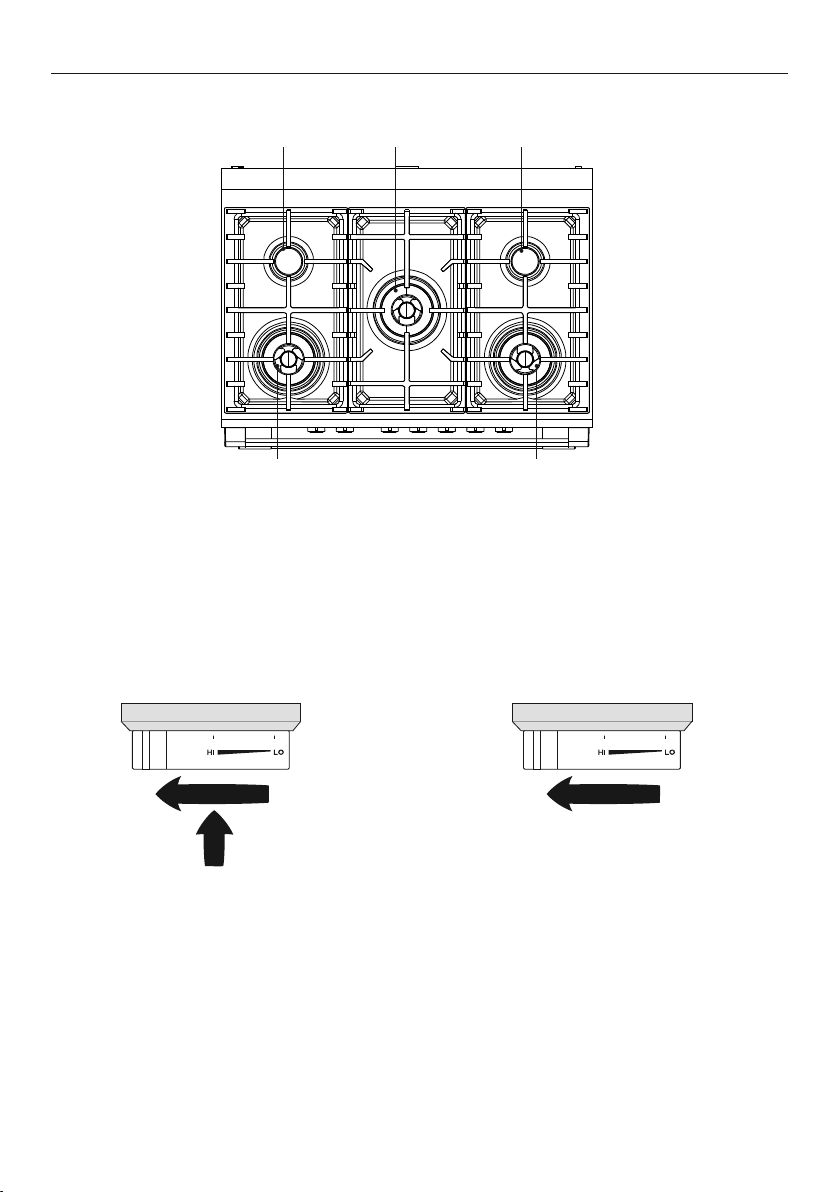
OR90 models – cooktop
33
112
1 Semi-rapid burner
2 Dual wok burner
3 Triple-ring wok burner
1 Identify the dial of the burner you
want to use.
2 Starting from the O (OFF) position,
push the dial in and turn it
anticlockwise to HI.
z
The ignitor on the burner will spark.
3 After the burner has lit keep the
dial held in for a few more seconds
before releasing.
z
Releasing the dial too soon will
extinguish the flame.
4 When the burner has lit, adjust the
flame anywhere between HI and LO.
z
Do not adjust the dial between
HI and O (OFF).
45
USING YOUR GAS COOKTOP
5 When you have finished cooking, turn the clockwise back to O (OFF).
z
If you are using LP gas, there may be a slight ‘extinction pop’ or flash at the flame
spreader a few seconds after the burner has been turned off. This is normal for LP gas.
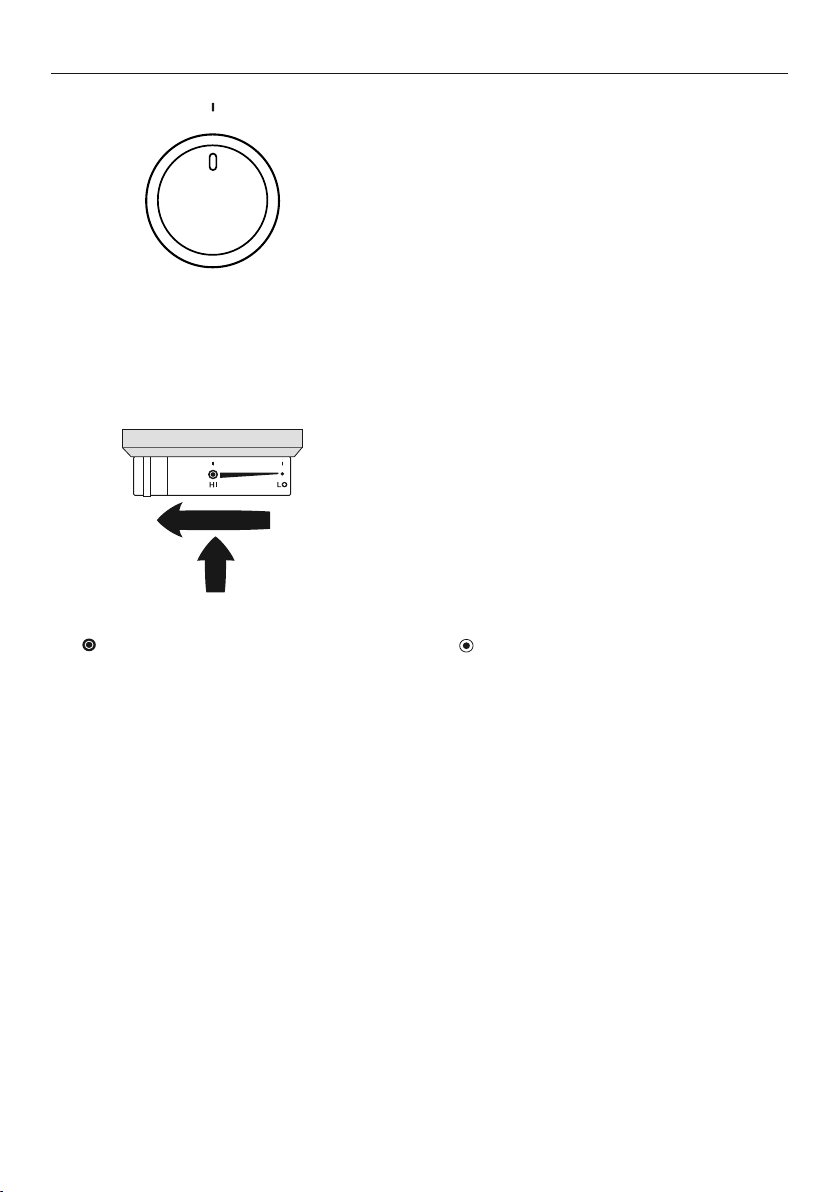
Using the dual burner
Flame failure protection
Your cooktop is equipped with flame failure protection: the gas supply will automatically be
cut off to a burner that is accidently blown out by a draught or extinguished by a spill.
6 Starting from the O (OFF) position, push the dial in and turn it anticlockwise to either HI
to light both the inner and outer rings or HI to light the inner ring only.
46
USING YOUR GAS COOKTOP
If a burner does not light
Turn the control dial to O (OFF) and wait at least one minute before trying again, to all the
gas to disperse.
If the burner still does not light, check that:
z
the cooker is plugged in and the power supply is switched on
z
there is no power failure in your home or neighborhood
z
the gas is turned on
z
the gas bottle is not empty (if you use bottled gas)
z
the flame spreaders are clean and the holes are not clogged
z
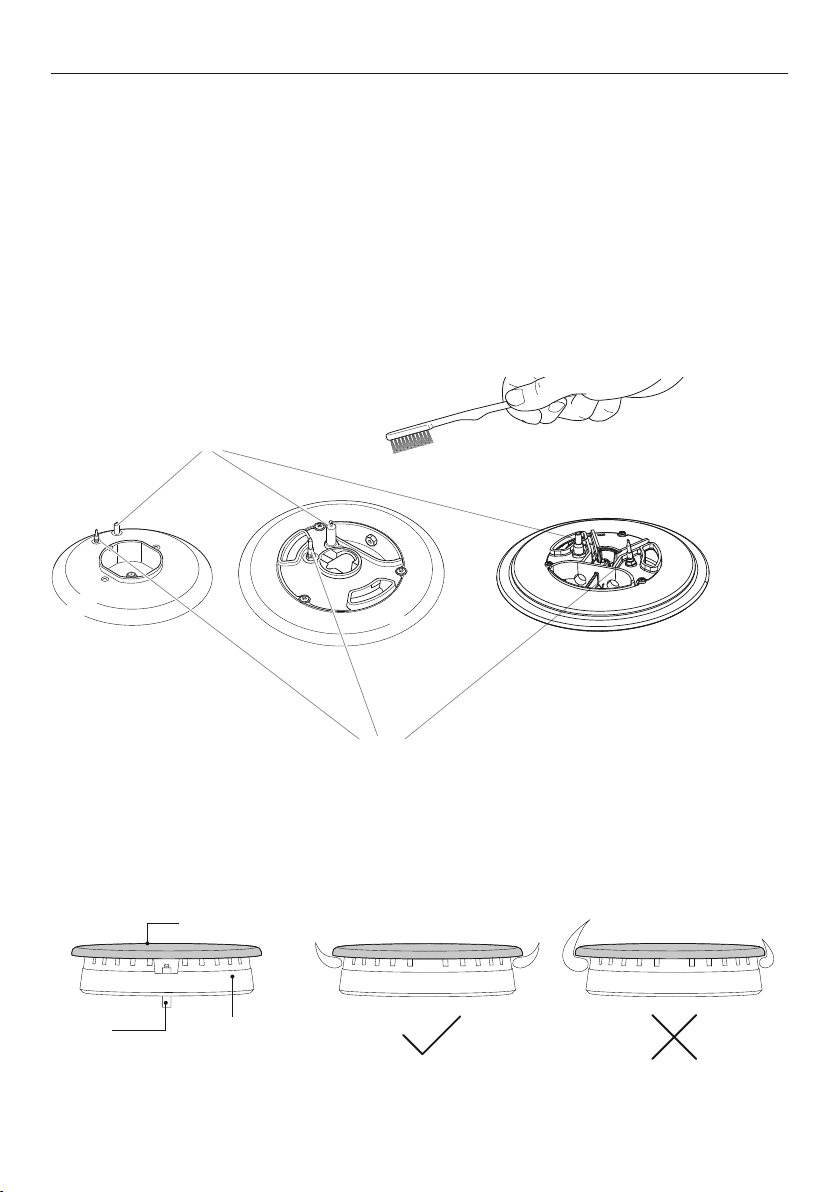
the ignitors are sparking. If they are not sparking, they may be dirty or wet. Clean them
with a toothbrush and methylated spirits, as shown below.
See ‘Care and cleaning’ for instructions on removing and replacing the burner parts.
Cleaning the ignitor & probe
If the flame is irregular, check that the burner parts
(flame spreader and burner cap) are:
z
clean and dry
z
positioned correctly, as shown below.
z
For further advice, see sections ‘Care and cleaning’ and ‘Troubleshooting’.
Ignitor Flame spreader
Burner cap
Burner parts
Correct assembly of
burner parts
Incorrect assembly of
burner parts, resulting in
irregular flames
Probe
Ignitor
47
COOKING GUIDELINES AND COOKWARE
Cooking guidelines
IMPORTANT!
z
Never leave the cooktop unattended when in use. Boilover causes smoking and greasy
spills that may ignite.
z
Take care when deep-frying: oil or fat can overheat very quickly, particularly on
a high setting.
z
Start cooking on a high setting. When food comes to the boil, reduce the setting
and maintain a steady heat to cook your food thoroughly. Doing this will reduce
the cooking time.
z
Using a lid will reduce cooking times through retaining the heat.
z
Minimise the amount of liquid or fat to reduce cooking times.
z
For simmering, the recommended burner to use is the semi-rapid burner at the rear of
the cooktop or the inner ring of the dual wok burner at the front of the cooktop. Use for
delicate cooking such as melting chocolate.
z
For maximum power, the recommended burner to use is the triple ring burner in the
centre of the cooktop or the full dual wok burner at the front of the cookop. Use for
heat-intensive cooking such as searing meat.
Cookware
z
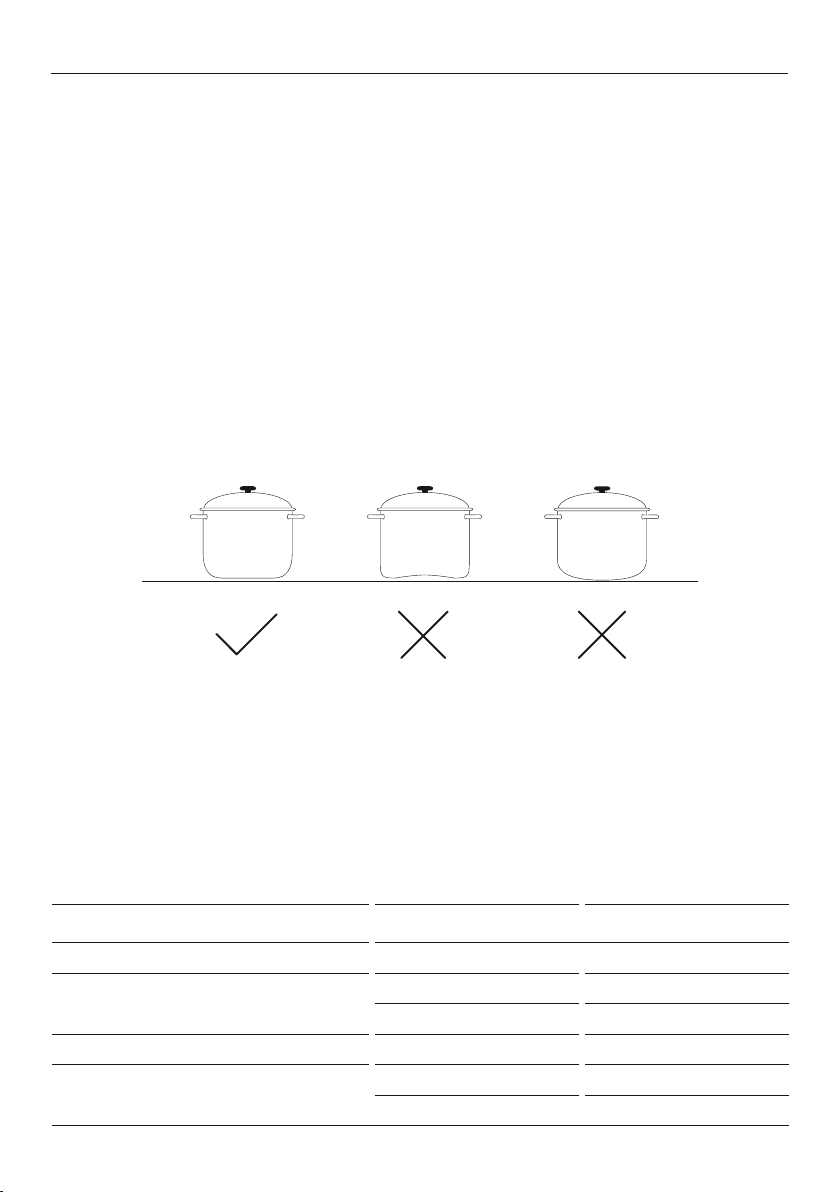
Use saucepans with thick flat bases. Food in a saucepan with an uneven base will take
longer to cook.
z
Do not let large saucepans or frying pans overlap the bench, as this can deflect heat
onto your benchtop and damage its surface.
z
Always make sure saucepans are stable. Using very heavy saucepans may bend the pan
supports or deflect the flame.
z
Make sure the size of the pan matches the size of the burner. A small pot on a large
burner is not efficient.
The following table shows the minimum and maximum saucepan base diameters that
may be used on each burner:
BURNER MINIMUM DIAMETER MAXIMUM DIAMETER
Semi-rapid 16cm 24cm
Triple-ring wok 26cm 28cm
Maximum diameter for woks 36cm
Dual (inner crown only) 12cm 14cm
Dual (inner and outer crowns) 26cm 28cm
Maximum diameter for woks 36cm
48
COOKING GUIDELINES AND COOKWARE
Wok stand
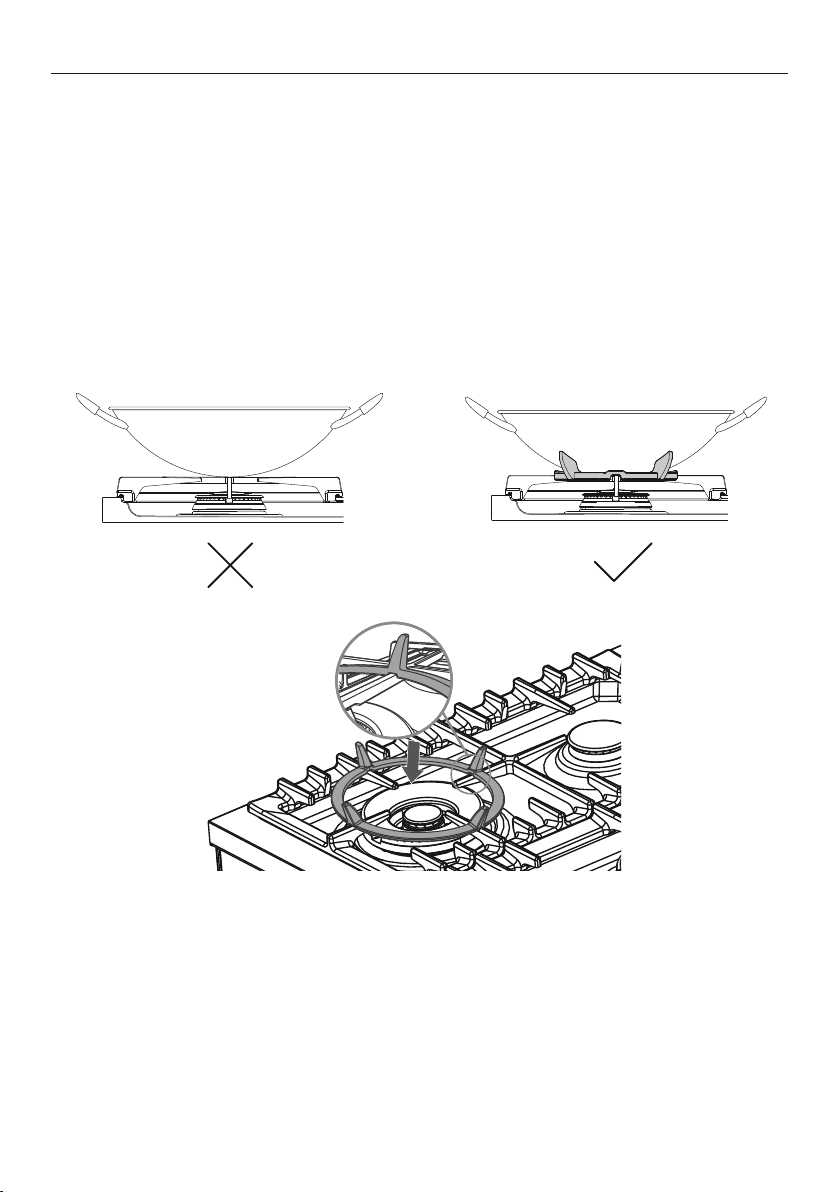
The wok stand fits over the triple-ring wok or dual burner trivet.
IMPORTANT!
z
Using a wok without the stand may cause the wok to tip or the wok or dual burner to
operate incorrectly.
z
Do not use the stand for ordinary, flat-bottomed saucepans.
z
The wok stand MUST ONLY BE PLACED over the trivet for the triple-ring wok
or dual burner.
z
The cooktop becomes very hot during operation. Keep children well out of reach.
Correct placement of wok stand
Wrong Correct
49
USING THE WARMING DRAWER
Use the warming drawer to keep food warm after you have finished cooking and
to warm plates before serving. The warming drawer will keep hot cooked foods at
serving temperature.
z
Allow time for the drawer to preheat.
z
Place hot food in a heatproof pan or serving dish.
z
Take care when opening the drawer. Position your hand at the bottom of the drawer and
open slowly to allow hot air and steam to escape.
z
Take care not to touch the inside surfaces of the drawer while it is hot.
z
When using the drawer to warm plates ensure the temperature is only set to LO. Ensure
plates are evenly spread out.
z
Do not stack dishes or plates as this may result in uneven heating.
To use the warming drawer
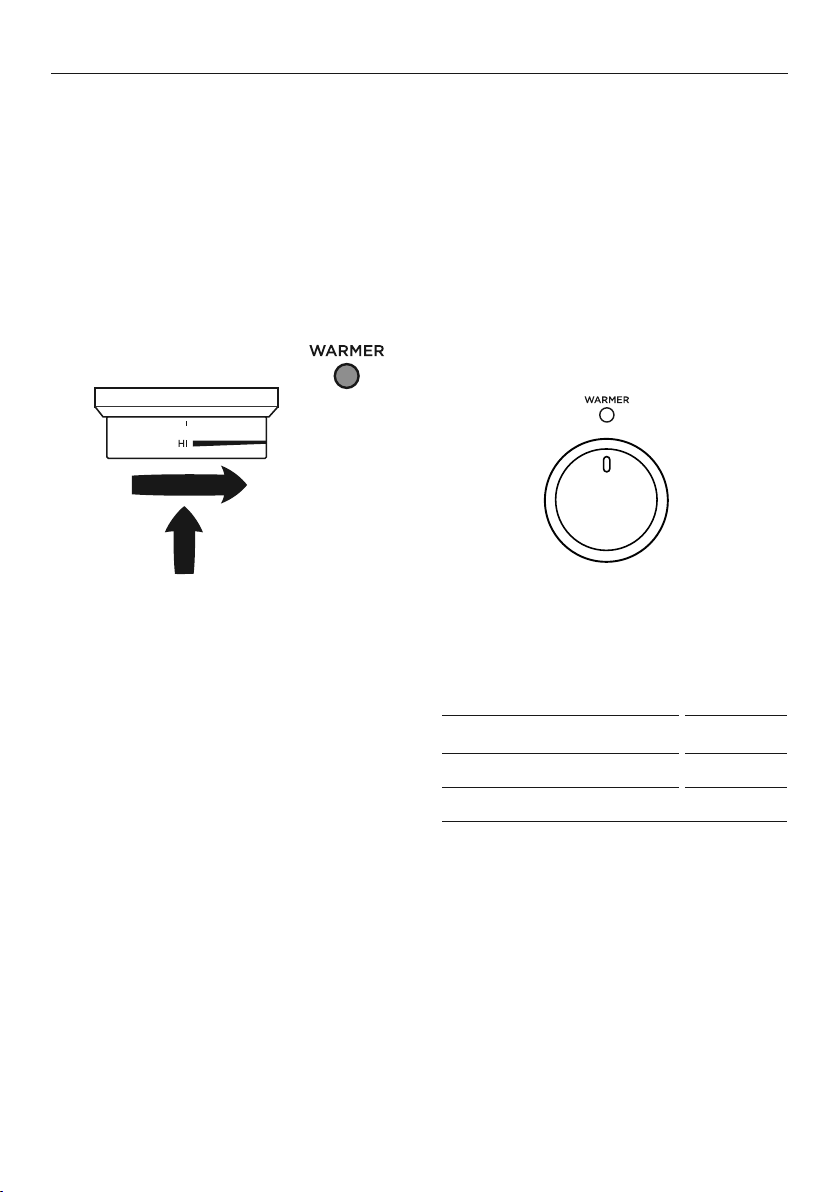
Warmer dial
z
The temperature can be set
anywhere between LO (minimum)
and HI (maximum).
z
The warming drawer is fitted with an
heating element in the top.
z
See the table on the right for the
temperature settings.
IMPORTANT!
z
Do not use the drawer to reheat food.
z
Do not place food in the drawer in unopened containers. Built up pressure could cause
the container to burst.
z
Do not use plastic containers.
z
Use dry potholders to transfer dishes to and from the drawer. Take care not to let
potholders touch the hot upper element.
z
Do not store flammable items in the drawer.
z
Do not use the warmer drawer as a storage drawer.
z
Do not use aluminum foil to line the drawer.
z
Make sure the dial is always set to O (OFF) when running a self clean cycle and any
time when the drawer is not in use.
1 Push in the warmer dial and turn
clockwise to HI.
z
While the drawer is on the
indicator will glow red.
2 When you have finished using the
drawer turn the dial back to O (OFF).
z
The indicator will go out.
DIAL POSITION °C
LO 30
HI 75

50
CARE AND CLEANING
DOS DON’TS
• Read these cleaning instructions and the ‘Safety
and warnings’ section before you start cleaning
your cooker.
• Before cleaning or removing any part, make sure
that everything on the cooker has been turned off.
• Unless suggested otherwise in the chart following,
allow any part to cool to a safe temperature before
cleaning. If you do need to handle a warm or hot
part, take extreme care. Wear long protective mitts
to avoid burns from steam or hot surfaces.
• Try using any cleaner on a small area first, to ensure
it doesn’t stain.
• See the pages following this chart for instructions
on removing and replacing different parts of the
cooker for cleaning or maintenance.
• To help you identify any parts, see illustrations in
section ‘Introduction’ and after this cleaning chart.
• Ensure the anti-tip device is re-engaged if you
move the cooker for cleaning. Failure to do this
may result in the oven tipping, and adults and
children may be killed.
• To prevent soiling from becoming ‘baked on’ and
stubborn, we recommend removing any easy-to-
reach spills, food or grease stains from the oven
cavity enamel after each use.
• Always clean the inner glass pane before starting
a Self Clean cycle. Failure to do this will mean that
residue will bake on and be impossible to remove.
• Always remove oven shelves before starting
a Self Clean cycle.
• Do not use aerosol cleaners until the cooker
has completely cooled. The propellant
substance in these cleaners could catch fire in
the presence of heat.
• Do not let soiling or grease accumulate
anywhere in or on the cooker. This will
make future cleaning more difficult and may
present a fire hazard.
• Do not use any abrasive or harsh cleaners,
cloths, scouring pads or steel wool. These
will scratch your cooker and damage
its appearance.
• Do not use a steam cleaner to clean any part
of the cooker.
• Do not perform any cleaning or maintenance
on parts not specifically named in the chart
below. If in doubt, contact Customer Care.
• Only a Fisher & Paykel trained and supported
service technician can take apart the door.
• Do not attempt to take the door apart for
cleaning. If the inner panes of glass in the
door become dirty, please contact your
Fisher & Paykel trained and supported service
technician or Customer Care.

51
CARE AND CLEANING
Manual cleaning chart
WHAT? HOW? IMPORTANT!
COOKER EXTERIOR
Door frame
exterior,
Control panel,
Cooktop base
Back trim
Warming drawer
exterior
After every use
1 Soften any stubborn stains under
a hot soapy cloth.
2 Clean with a solution of mild
detergent and hot water, then
wipe dry with a microfibre cloth..
Stainless steel models:
For extra shine, use a suitable
stainless steel cleaner and polish,
following manufacturer’s instructions.
Always rub the stainless steel in the
direction of the polish lines.
• Always read the label to make sure
your stainless steel cleaner does not
contain chlorine compounds as these
are corrosive and may damage the
appearance of your cooktop.
• Do not use and take care not to spill
any stainless steel cleaner on the
dials, oven handles, or the kickstrip
grate. These are not stainless steel
parts and their surface may be
damaged by stainless steel cleaner.
Dials
Oven handles
1 Wipe with a damp cloth
using a solution of mild
detergent and hot water.
2 Dry thoroughly with
microfiber cloth.
• Do not use stainless steel cleaner on
these parts, as doing so may damage
their coating.
Clock Take particular care when cleaning
the clock and surrounding area. Only
use a damp cloth with detergent.
• Do not use any oven cleaners, harsh
or abrasive cleaners, scouring pads,
steel wool or sharp metal scrapers
on the glass. These may scratch and
damage the surface.
Oven door glass
(exterior)
Clean using a soft cloth and a mixture
of warm water and dishwashing
liquid or glass cleaner.

52
CARE AND CLEANING
WHAT? HOW? IMPORTANT!
OVEN PARTS
Enamel oven
interior –
light soiling
1 Wipe with a damp cloth and
a solution of hot water and
mild detergent.
2 Wipe dry with a soft cloth.
Note: the oven door may be removed
to make reaching into the oven easier.
• To prevent soiling from becoming
‘baked on’ and stubborn, we
recommend removing any easy-
to-reach spills, food or greasy
stains from the enamel after
each use. Doing so will reduce
the need for using the Self Clean
function frequently.
Enamel oven
interior – stubborn,
‘baked-on’ soiling
Run the Self Clean cycle. See
‘Using the Self Clean function’
for instructions.
• Oven cleaners are caustic and
may permanently stain or damage
some surfaces.
• When using, take care not to
let it come in contact with any
surface other than the oven
interior. If it accidentally does,
remove immediately.
Side racks For light soiling:
• Clean with a solution of mild
detergent and hot water.
For heavy soiling:
• Run a Self Clean cycle.
Oven shelves Wipe with a damp cloth and mild
detergent. Do not wipe off or wash
away the white lubricating grease
(visible when the shelf is extended).
• Never leave in the oven during a
Self Clean cycle.
• Do not wash the shelf in the
dishwasher, immerse in soapy water,
or use oven cleaner on it. Doing
so will prevent the slides from
running smoothly.
Roasting dish
and grill rack
Rotisserie parts
1 Pre-soak any stubborn
soiling in a solution of mild
detergent and hot water.
2 Wash by hand or in a dishwasher.
• Never leave any of these parts in the
oven during a Self Clean cycle. They
will become discoloured or damaged.
Bake and
grill burners
Do not clean these parts.
They self-clean during normal use.
Manual cleaning chart

53
CARE AND CLEANING
WHAT? HOW? IMPORTANT!
OVEN PARTS
Oven door glass
(interior)
After every use
• Use a soft cloth and a mixture
of warm water and dishwashing
liquid to remove light soiling after
every use.
• For stubborn stains, try using
a mixture of baking soda and
warm water with a non-abrasive
scrubbing pad, then wipe dry with
a soft, lint-free cloth.
• Do not use oven cleaners or any
other harsh/abrasive cleaners, cloths,
scouring pads, steel wool or sharp
metal scrapers to clean the oven
door glass. These scratch the glass,
which in turn could result in the glass
cracking and shattering.
• Do not allow grease to build up on
the glass or become baked on as this
reduces visibility into the oven.
• Only a Fisher & Paykel trained and
supported service technician can take
apart the door.
• Do not attempt to take the door
apart for cleaning. If the inner panes
of glass in the door become dirty,
please contact your Fisher & Paykel
trained and supported service
technician or Customer Care.
Oven door gasket Avoid cleaning this part. If you need
to remove large food particles off it,
proceed as follows
1 Dampen a sponge with
clean hot water.
2 Gently wipe off the soiling,
but do not rub.
3 Press a dry towel gently on
the gasket to dry.
• Do not use any cleaning agent on
the gasket.
• The gasket is essential for a good
seal. Take care not to rub, displace, or
damage it.
Warming drawer
(interior)
1 Wipe with a damp cloth and
a solution of hot water and
mild detergent.
2 Wipe dry with a soft cloth.
Note: the drawer may be removed
to make cleaning easier.
• To prevent soiling from becoming
‘baked on’ and stubborn, we
recommend removing any easy-to-
reach spills, food or greasy stains
from the enamel after each use.
Drip tray
under door
1 Remove oven door.
2 Wipe with a damp cloth and
a solution of hot water and
mild detergent.
Manual cleaning chart

54
CARE AND CLEANING
WHAT? HOW? IMPORTANT!
COOKTOP PARTS
Aluminum and
enamelled
burner caps and
flame spreaders
1 Check that the burner is turned OFF and
allow it to cool.
2 Lift off the burner cap and brass
flame spreader.
3 Wash them in hot soapy water,
rinse, and dry.
• Use a stiff nylon brush or straight-ended
paper clip to clear the notches of the
flame spreader.
4 Replace the flame spreader and
burner cap correctly. See ‘Replacing
the burner parts’.
Brass burner parts only:
For extra shine and to remove tarnish use a
suitable brass cleaner and polish, following
manufacturer’s instructions.
• Keep the notches of the
flame spreaders clear. Soiling
may clog these and cause
ignition problems.
• Before replacing the burner
parts, check that they are dry.
Wet burner parts may result in
an irregular flame.
• Before lighting a burner you
have reassembled, check that
all of its parts are positioned
correctly. Incorrect assembly
can cause dangerous irregular
flames and ignition problems.
• Do not put any burner parts
in the dishwasher as they will
become discoloured.
Ignitors 1 Check that the burner is turned OFF.
2 Clean the ignitor with a small brush
(eg old toothbrush) or cotton swab that
has been dipped into rubbing alcohol.
• The ignitors must be kept clean
and dry to work correctly. Dirty
or wet ignitors could cause
constant clicking and sparking,
even if a flame is present.
Burner grates 1 Wait until the grates have
cooled completely.
2 Carefully lift the grates off the cooktop
and place them on a protected surface.
3 To remove stubborn stains, soak the
grates in a mixture of clothes washing
detergent and water.
4 Wash in a mixture of hot water
and dishwashing liquid, then rinse
and allow to dry.
• The grates are also dishwasher-safe.
• Take care, the grates are heavy.
• Make sure you place a dish
towel or other soft cover on the
surface before putting a grate
on it.
Wok ring 1 To remove stubborn stains, soak the
grates in a mixture of clothes washing
detergent and water.
2 Wash in a mixture of hot water
and dishwashing liquid, then rinse
and allow to dry.
• The wok ring is also dishwasher-safe.
Manual cleaning chart
55
CARE AND CLEANING
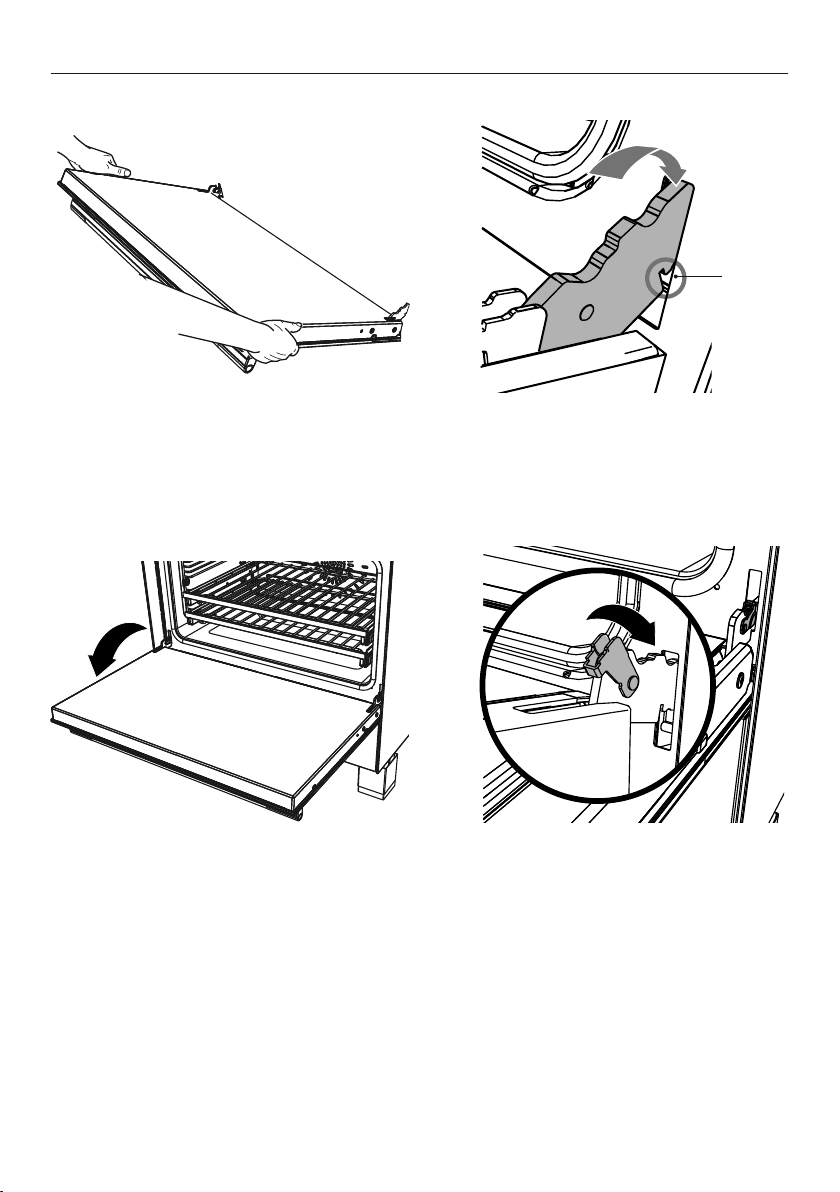
Removing and replacing the oven door
IMPORTANT!
z
Switch the oven off at the wall before removing the door.
z
Do not lift the oven door by its handle. Doing so may damage the door.
z
Make sure the oven and the door are cool before you begin to remove the door.
z
Before removing the door, make sure there is a large enough clear, protected surface in
the kitchen to rest the door on.
z
Take care, the oven door is heavy!
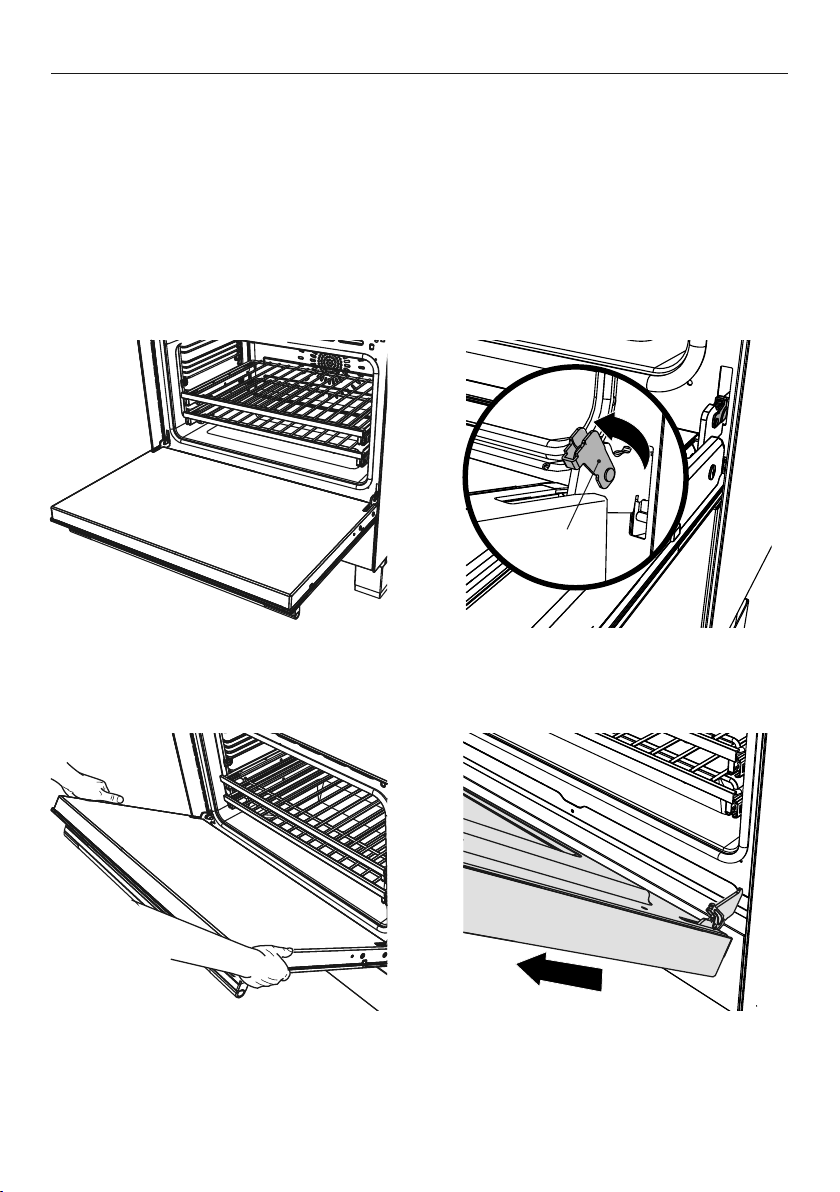
To remove the oven door
1 Open the door fully.
3 Holding the door firmly on both sides,
gently close it about halfway.
4 Disengage the hinges and remove the
door. Place on a protected surface.
2 Open the levers fully on both sides.
Lever
56
To replace the oven door
1 Hold the door firmly in an approximately
halfway open position.
3 Open the door fully. 4 Fully close the levers on the left
and right hinges, as shown, then
close the door.
2 Insert the hinge tongues into the slots,
making sure that the notches on both
sides drop into place as shown.
Notch
CARE AND CLEANING
57
CARE AND CLEANING
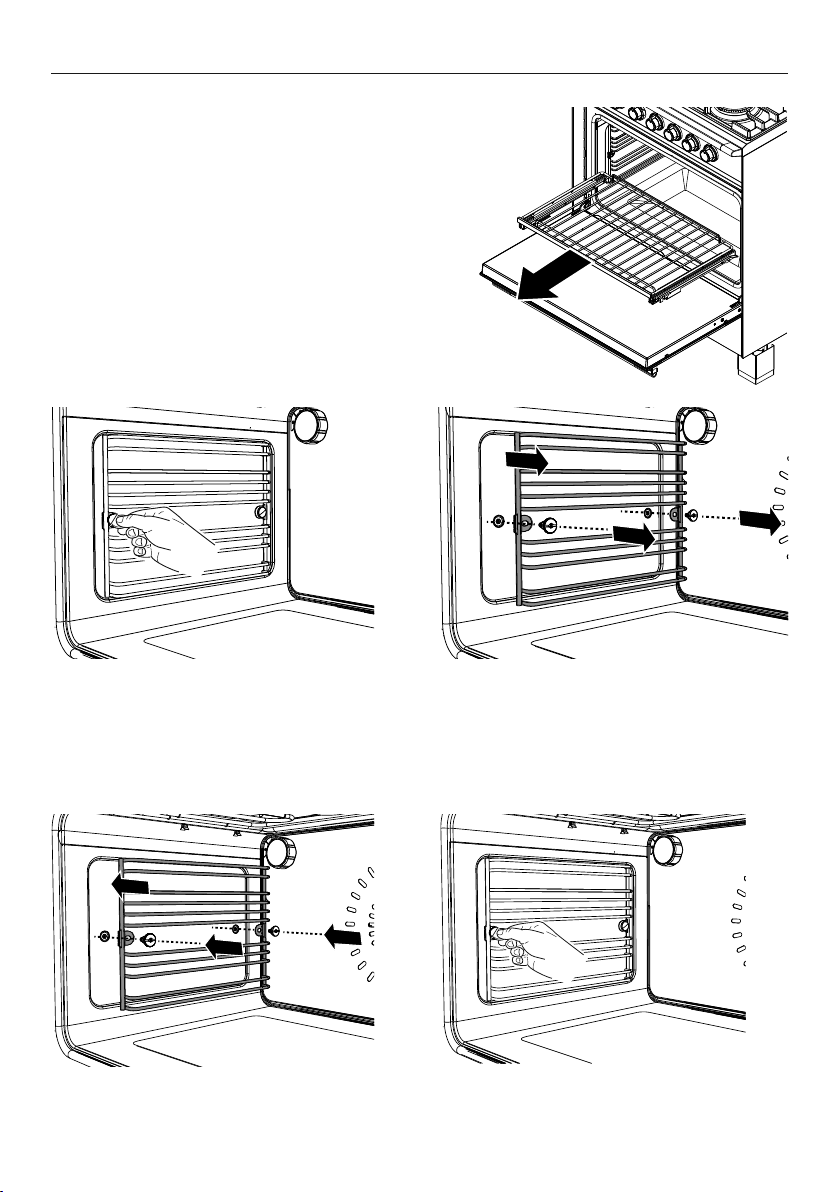
Removing and replacing the oven side racks
IMPORTANT!
Always turn off the cooker at the wall first.
Ensure the oven has cooled down
completely before starting.
Remove all shelves
1 Slide out all shelves and remove.
For easier access we recommend
removing the oven door, see
‘Removing and replacing the oven door’.
To remove the side racks
To replace the side racks
2 Refit the fixing screws and tighten.1 Make sure the side racks are the
right way up, as shown.
Remove
all shelves
2 Use a small coin or a flat-head
screwdriver to loosen and remove the
fixing screws.
3 Remove the side racks
58
CARE AND CLEANING
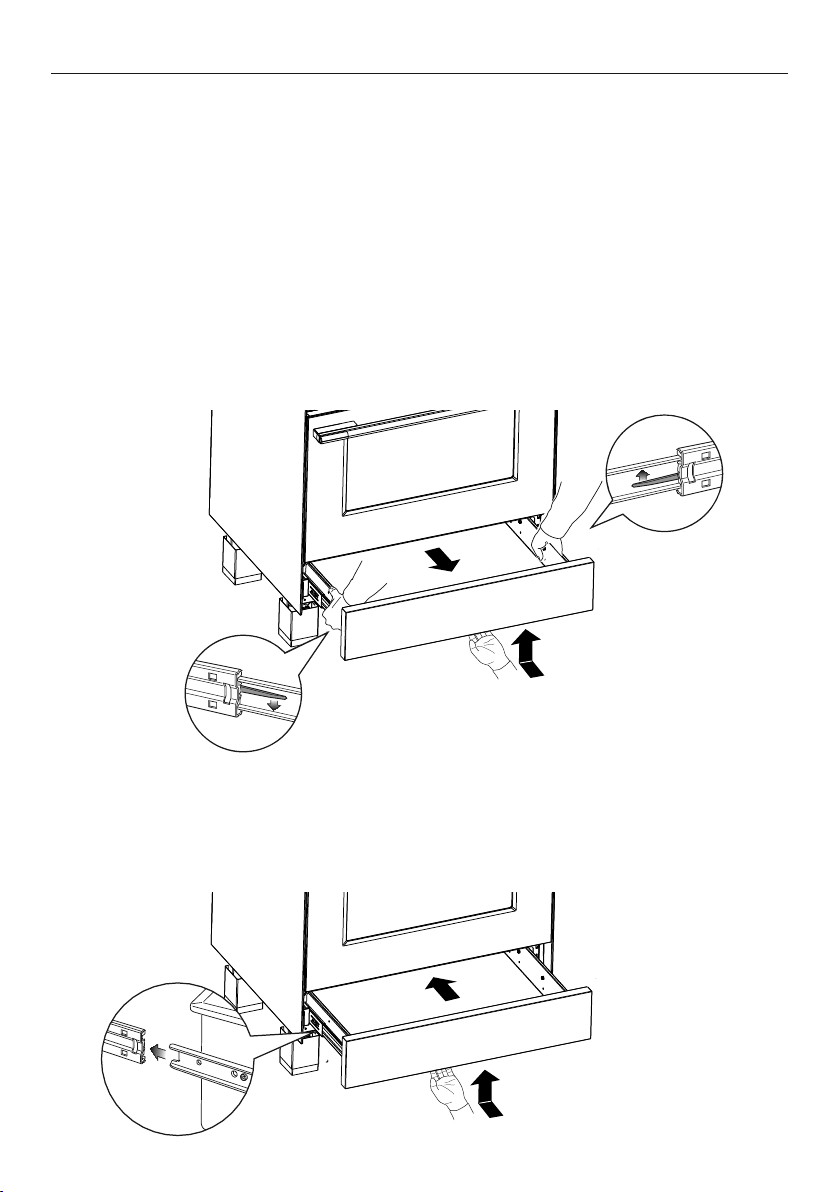
Removing and replacing the warming drawer
IMPORTANT!
z
Always turn off the cooker at the wall first.
z
Ensure the oven and warming drawer have cooled down completely before starting.
z
Ensure the drawer is completely empty before removing it.
z
Always position your hand at the bottom of the drawer to open and close it.
To remove the warming drawer
1 Open the drawer completely.
2 Open the levers fully on both sides and hold in place:
z
On the left side push the lever down
z
On the right side push the lever up
3 Remove the drawer while holding the levers in position.
Fitting the storage drawer
1 Insert the drawer guides onto the sliding runners on either side of the cooker interior.
z
Make sure they are correctly lined up on both sides of the drawer.
2 Gently close the drawer completely. The safety catches will automatically hook
into place.
59
CARE AND CLEANING
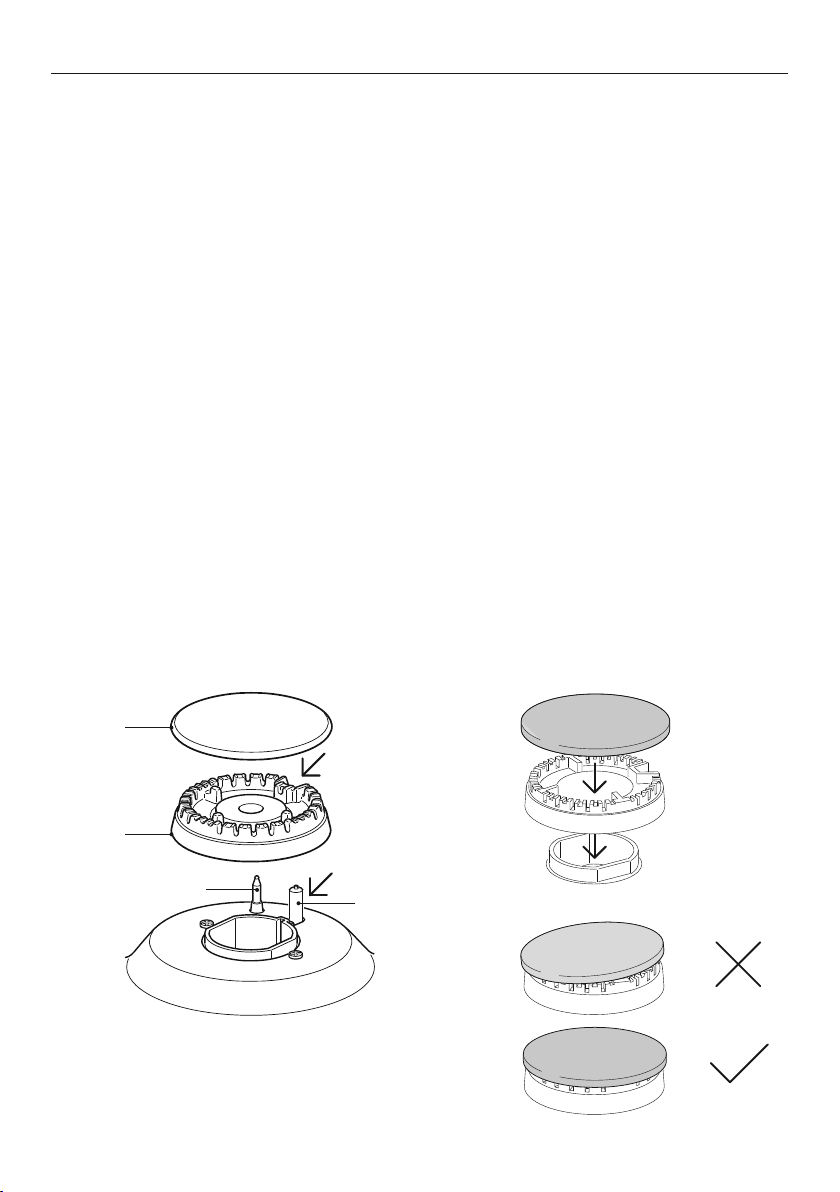
Cap
Flame failure probe
Ignitor
Flame
spreader
Replacing the semi-rapid burner capsCorrect positioning of burner parts
Burner parts
z
You can remove and clean these parts with hot soapy water or non-abrasive detergents.
Clean spills regularly before they become burnt on. Do not wash these parts
in a dishwasher.
z
After cleaning, check that the burners and their flame spreaders are dry before
replacing correctly.
z
It is very important to check that the burner flame spreader and the cap have been
correctly positioned. Failure to do so can cause serious problems.
z
Check that the ignitor is always clean to ensure trouble free sparking. It must be cleaned
very carefully using a toothbrush and methylated spirits.
z
Note: to avoid damage to the electronic ignition, do not try to light a burner without all
burner parts in place.
Replacing the burner parts
z
Carefully replace the burner parts as per the following illustrations.
z
Fit the flame spreader to the housing as shown below. Make sure the burner is not
able to rotate.
Check that:
z
The ignitor is always clean to ensure trouble-free sparking.
z
The probe is always clean to ensure correct operation of the safety valves.
z
The flame spreaders are clean and the holes are not clogged.
z
Note: both the ignitor and probe must be very carefully cleaned using a toothbrush and
methylated spirits.
Replacing the semi-rapid burners
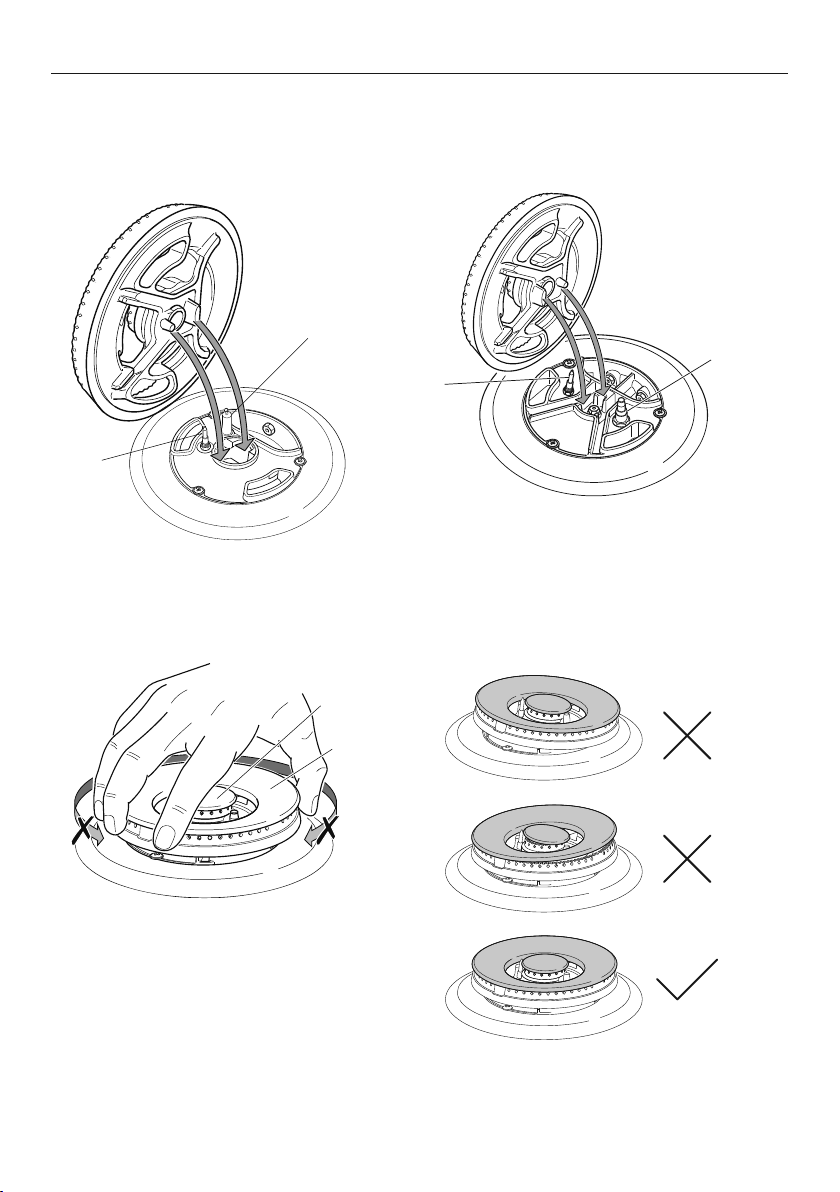
60
CARE AND CLEANING
Replacing the triple-ring wok and dual burners
Correct positioning of
flame spreader – dual burner
Incorrect and correct positioning of
cap and ring – triple-ring wok and
dual burner
Correct positioning of
flame spreader – triple-ring wok burner
Correct positioning of
cap and ring – triple-ring wok and
dual burner
S
T
Probe
Ignitor
S
T
Probe
Ignitor
A
B
Ring
Cap
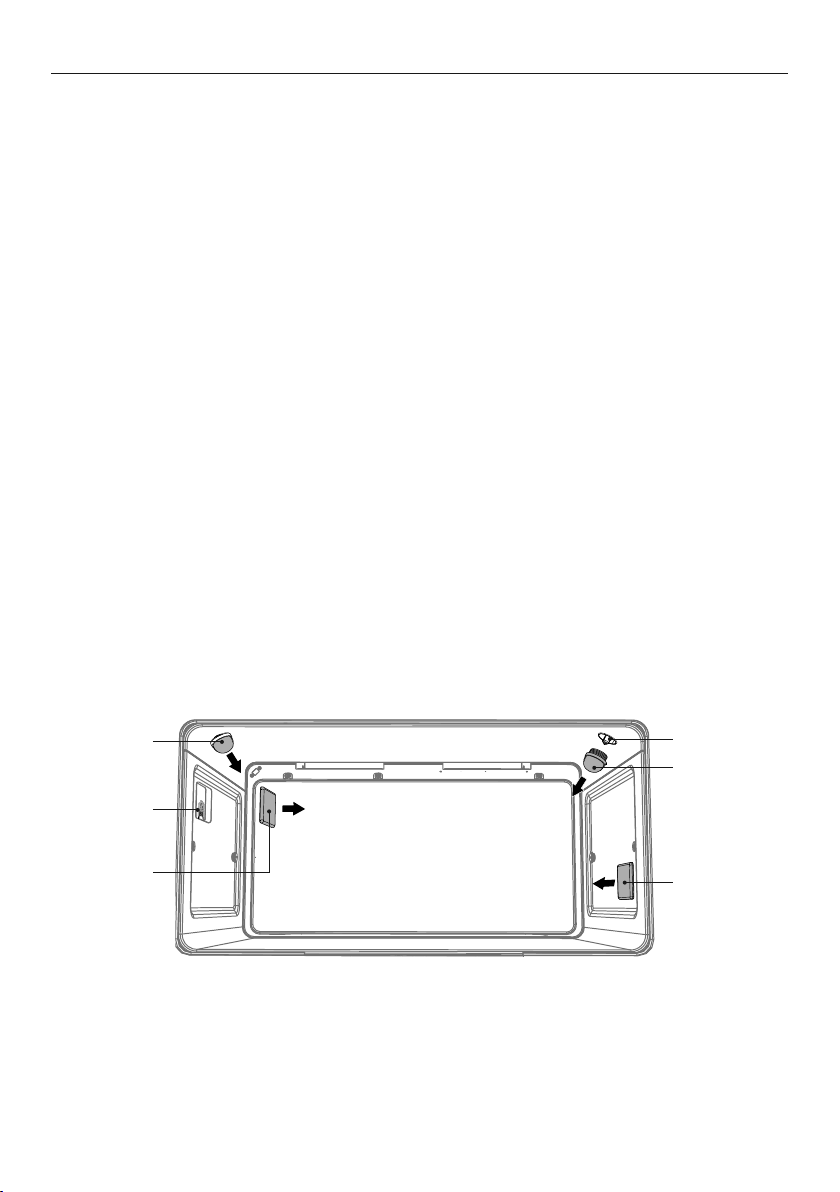
61
Replacing an oven light bulb
IMPORTANT!
Use a 25W, 220-240V 50Hz G9 halogen bulb for replacement.
Do not use a standard light bulb in any oven, the heat will break it.
1 Allow the oven (including the lamp cover and the bulb) to cool completely.
2 Remove any shelves that may get in the way.
3 Remove the door if the lamp will be hard to reach.
4 Turn the power supply to the cooker off at the main fuse or circuit breaker panel. If you
don’t know how to do this, contact an electrician.
IMPORTANT!
Failure to disconnect the cooker from the power supply may result in death or
electrical shock.
5 Remove the lamp cover.
z
Upper lights: wearing a rubber glove to improve grip turn the cover
anticlockwise to unscrew.
z
Side lights: wearing a rubber glove to improve grip, hold the cover and prise out using
finger nails on other hand. If this does not work place a thin plastic spatula between the
cover and cavity wall and gently twist to prise the cover off. Take care not to chip the
glass covers or to damage the enamel finish inside the oven.
6 Remove the faulty bulb.
7 Holding the replacement bulb in a soft cloth or tissue insert it into the socket. Do not
touch the bulb with your fingers.
8 Replace the lamp cover.
z
Upper lights: turn the cover clockwise to tighten and then back a quarter turn
9 Turn the power supply to the cooker back on at the main fuse or circuit breaker panel.
CARE AND CLEANING
Light bulb
Light bulb
Upper
lamp cover
Upper
lamp cover
Side
lamp cover
Side
lamp cover

62
USING THE SELF CLEAN FUNCTION
Using Self Clean
Self Clean uses extremely high temperatures to break down and burn off grease and grime.
All that is left is a small amount of grey ash that you can easily wipe up.
There are two self clean cycles:
z
Standard Clean: 4 hours, for normal or heavy soiling
z
Light Clean: 3 hours, for light or localised soiling
IMPORTANT!
z
You must clean the inside glass door panel BEFORE starting a self-clean cycle. Failure
to do this may result in permanent staining or marking of the door glass.
See ‘Care and cleaning’ for our recommendations on how to do this.
z
Do not use oven cleaners, any degreasing cleaners, or oven liners.
z
Remove all oven shelves, trays, bakeware and utensils from the oven before starting
a Self Clean cycle (except side racks). If left in the oven they will be permanently
damaged; items made from combustible material (eg wood, fabric, plastic) may
even catch fire.
z
Do not use your oven to clean miscellaneous parts.
z
Make sure the room is well ventilated.
z
Before starting a Self Clean cycle, make sure you move any pet birds to another,
closed and well-ventilated room. Some pet birds are extremely sensitive to the fumes
given off during a Self Clean cycle, and may die if left in the same room as the oven
during such a cycle.
z
During a Self Clean cycle, the oven reaches higher temperatures than it does for
cooking. Under such conditions, the surfaces may get hotter than usual and children
should be kept away.
z
The oven door will be locked during the Self Clean cycle.
z
If there are cracks or flaws on any of the oven door glass panes, if the oven seal is
damaged or worn, or if the door does not close properly, do not start a Self Clean
cycle. Call your Fisher & Paykel trained and supported service technician.
Before you start
1 Remove all oven shelves and any other accessories, bakeware, and utensils.
Note: you do not need to remove the side racks.
2 Wipe up any spills, and along the inner edge of the oven surface around the seal. Failure
to do so may discolour the oven surface.
IMPORTANT!
Avoid cleaning the seal itself as this may cause damage.
3 Check the inner glass pane of the oven door. If it has soiling on it (eg stains from greasy
splatter), you will need to clean it manually before starting a Self Clean cycle.
For instructions, see ‘Care and cleaning’.
IMPORTANT!
z
If soiling is left on the glass, it will become burnt on during the Self Clean cycle, making
it very difficult to remove.
4 Close the oven door firmly.
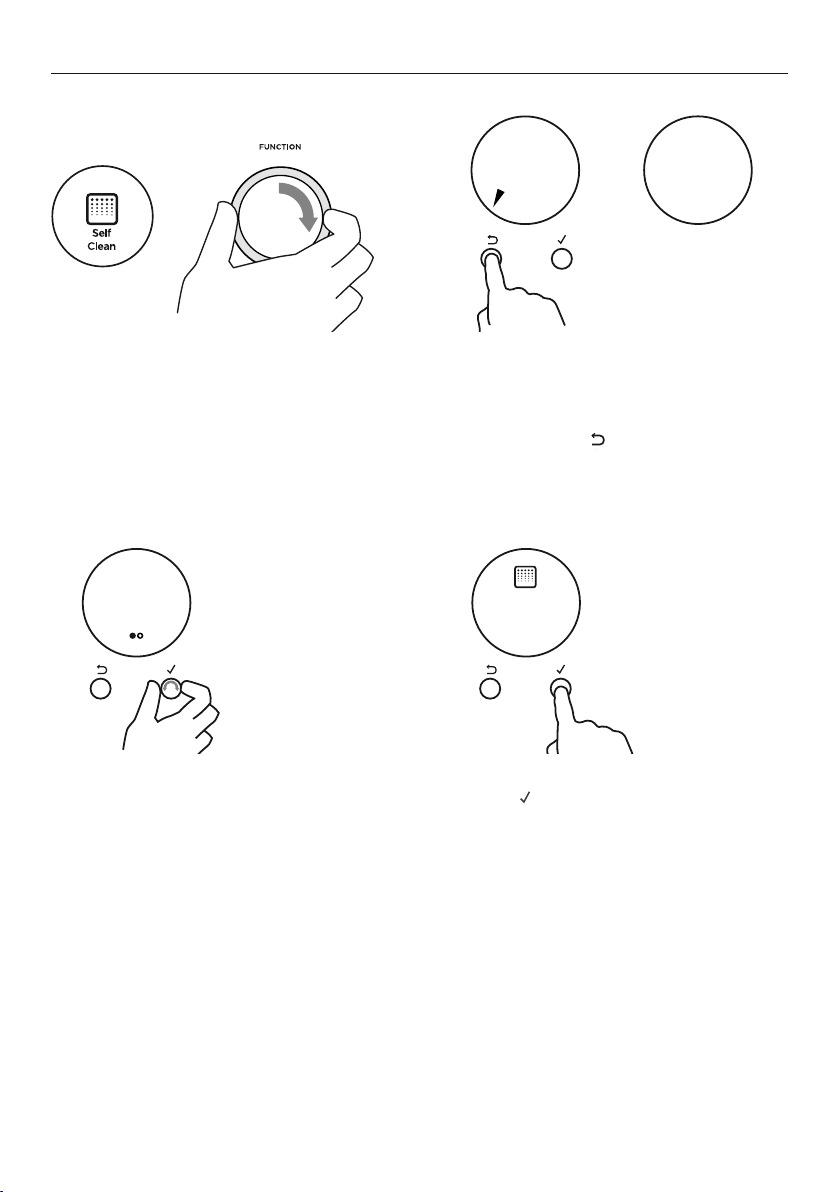
63
USING THE SELF CLEAN FUNCTION
To set Self Clean
Self Clean is now set.
z
The door will automatically lock and remain locked during the cycle.
z
The display will start counting down the time remaining.
1 Turn the function dial to Self Clean.
3 Scroll to choose between Standard
Clean and Light Clean.
4 Press
to confirm.
2 The display will prompt you to remove
the oven shelves.
z
Remove the oven shelves and any other
bakeware or accessories still in the oven.
z
Press and hold to confirm.
z
If the oven door is not closed properly,
the display will also prompt you to
close the door.
4 00
mh
CANCEL REMOTE
Standard
Clean
to go
3 59
mh
CANCEL REMOTE
CANCEL REMOTE
Remove
Shelves
Close
Door
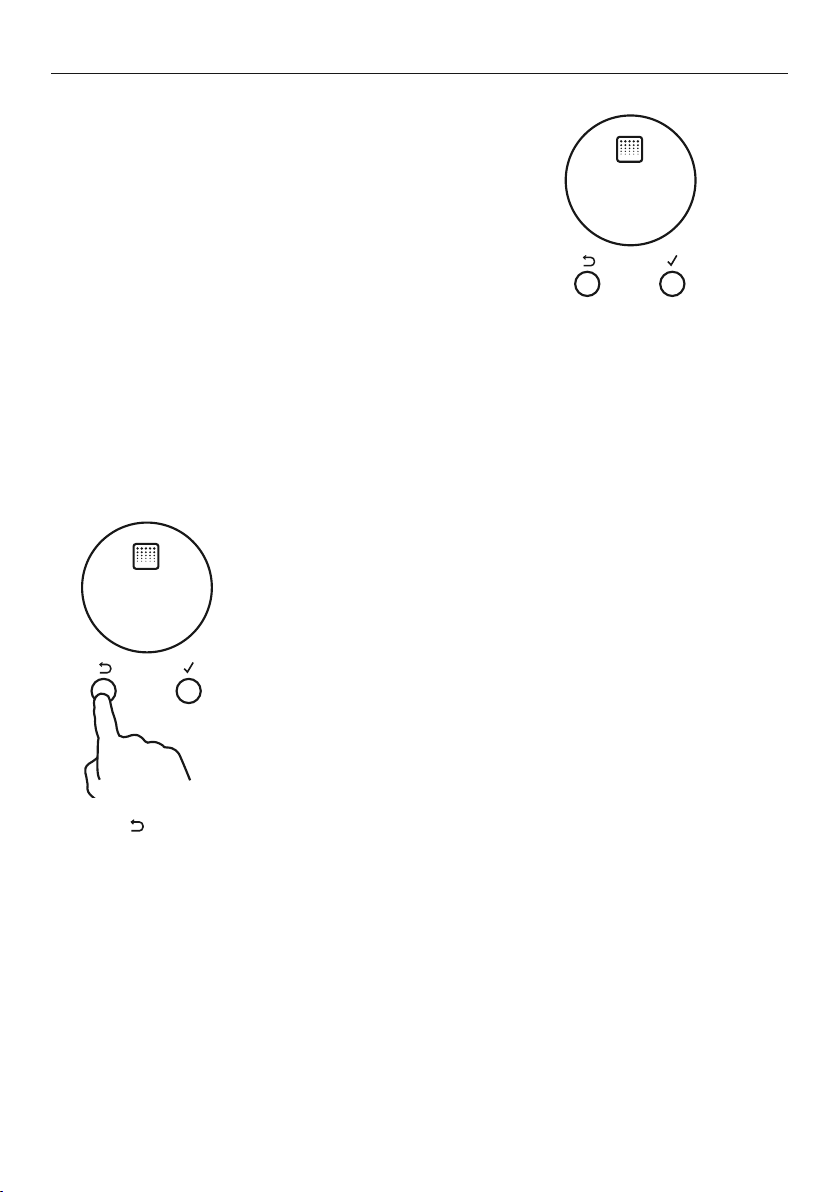
64
USING THE SELF CLEAN FUNCTION
When Self Clean is finished
z
A tone will sound.
z
Self Clean Complete will show in the display.
z
The display will flash.
z
The door will unlock.
1 Press any button to stop the display flashing.
2 Wait for the oven to cool completely.
3 Wipe up the ash in the oven with a small brush
or a damp cloth.
4 Dry with a lint-free cloth.
5 Replace the oven shelves.
To cancel Self Clean
IMPORTANT!
z
A Self Clean cycle can be cancelled at any time.
z
The door will not unlock until the oven has cooled to a safe temperature.
z
Do NOT turn off the mains power supply to the oven (wall switch). Turning off the
power while the oven is too hot may damage the oven and its surrounding cabinetry.
1 Press
to cancel Self Clean.
z
Self Clean Cancelled will show in the display.
z
The door will remain locked and the display will remain lit until the oven has cooled
down to a safe temperature.
Self Clean
Complete
CANCEL REMOTE
Self Clean
Cancelled
CANCEL REMOTE

65
TROUBLESHOOTING
If there is a problem, check the chart below to see if you can fix it. If the problem cannot
be fixed or persists, call your Fisher & Paykel trained and supported service technician
or Customer Care.
General
PROBLEM POSSIBLE CAUSES WHAT TO DO
The oven does not work. No power. Check that the mains power
supply (wall switch) is turned on,
the fuse has not tripped and there
is no power outage in your area.
The clock has not been set The oven will not work unless the
clock is set. See ‘Setting the clock’.
The oven does not work
but the display is lit.
The oven is set for
automatic cooking.
See ‘Auto Cook’ for instructions.
The oven is in Demo Mode Contact Customer Care
One or all of the lights
do not come on, but the
oven works.
The oven light bulb(s)
have blown.
Replace the light bulb(s). See
‘Care and cleaning’ for instructions.
The door is not correctly fitted. See ‘Care and cleaning’ for
instructions on fitting the
door correctly.
The oven is in Sabbath Mode
and the ‘Light off’ option has
been saved.
To quit Sabbath Mode, press
and hold CANCEL. See ‘User
preference settings’ for
instructions on changing the
‘Light off’ option.
There is a power failure –
can I still use the oven?
Power outage in your home or
neighborhood.
In the event of power failure while
cooking, return the oven dials
in off position (O) to prevent
overheating of the appliance. The
oven cannot be used until power
is restored.
The temperature indicator is
blank and the oven control
dials are unresponsive.
The control panel is locked. See ‘Locking the oven controls’
for instructions.
The oven is not heating. The door is not properly closed
or it is opened too frequently
during cooking.
The heating elements are disabled
while the door is open.
Make sure the door is properly
closed and avoid opening it
frequently during cooking.
66
TROUBLESHOOTING
PROBLEM POSSIBLE CAUSES WHAT TO DO
A glass pane in the oven
door has cracked, chipped,
or shattered.
Incorrect cleaning or the edge of
the glass hitting against something.
You must NOT use the oven.
Call your Fisher & Paykel trained
and supported service technician
or Customer Care.
I can feel hot air blowing
out of the vents after I have
turned the oven off.
This is normal. For safety reasons the cooling fans
will continue to run even when
you have turned the function dial
to ‘OFF’. The fans will switch off
automatically when the oven has
cooled.
The oven fan comes on
when I select a function
that does not use a fan
(eg bake).
This is normal.
The fan comes on while the oven
is preheating. It may turn off when
the oven has reached the set
temperature.
Wait until a long tone sounds and
the temperature dial halo turns
white: the oven will then be ready
to use.
The oven has reached the
set temperature but the
temperature dial halo is
still red (indicating that the
oven is not ready to use).
This is normal: when heating
up from cold, your oven is
designed to initially heat to a
temperature somewhat higher
than what you have set. This
is to provide optimal baking
conditions right from the start.
Wait until a long tone sounds and
the temperature dial halo turns
white: the oven will then be ready
to use.
The oven is heating but
the display is dark.
The oven is set to
‘Display off’ option.
To quit the ‘Display off’ option,
press and hold CANCEL until the
display shows the time of day.
The oven is in Sabbath Mode. To quit Sabbath Mode, press and
hold CANCEL until the display
shows the time of day.
The oven cancels automatic
cooking when I try to adjust
the clock setting.
The oven was set for automatic
cooking when you were trying to
adjust the clock setting.
You can only adjust the clock
setting while the oven is not set
for automatic cooking.
The temperature dial halo
never turns white when I
use Grill
.
This is normal: the halo stays red
to indicate that the grill element
provides instant radiant heat.
The displays work, and the
function and temperature
dials halos come on but the
oven does not heat up.
The oven is in ‘Demo’ mode. Call Customer Care.
General

67
TROUBLESHOOTING
PROBLEM POSSIBLE CAUSES WHAT TO DO
During a Self Clean cycle,
the oven is louder than
usual.
This is normal: the oven’s cooling
fans operate at their highest speed.
The Self Clean cycle has
finished but the oven door
will not open.
The oven door is locked because
the oven is still too hot to be used
for cooking.
Wait until the Self Clean cycle
has finished. If you cancelled
a Self Clean cycle which was
already underway, the oven still
needs to cool down before it
can be used. The oven door will
automatically unlock.
I have cancelled a Self
Clean cycle but cannot use
the oven:
• the oven door will
not open
• the display is still
counting down minutes
or showing Self Clean
Canceled
• the dials and controls
are unresponsive.
This is normal: if the function dial
halo is unlit, you have successfully
cancelled the Self Clean cycle.
However, the oven is still too hot to
be used for cooking and needs to
cool down.
Wait until the cool-down phase
has finished. A long tone will
sound and the oven door will
automatically unlock when the
oven is ready to use.
Note: depending on when the
Self Clean cycle was cancelled, the
cool-down phase may take up to
45 minutes.
The oven is beeping
and the display shows
D or D.
See section ‘Alert codes’
for instructions.
There is a power cut during
a Self Clean cycle.
Power cut. The door will remain locked.
Once the power is turned back
on, the door will remain locked
until the oven has cooled to a
safe temperature.
Self Clean function

68
TROUBLESHOOTING
PROBLEM POSSIBLE CAUSES WHAT TO DO
Condensation around oven
(eg on control panel or top
of oven door).
Food has high moisture content
or local climate (temperature,
humidity) is contributing
to condensation.
Condensation is normal. You can
wipe the drops off the control
panel. If there is frequent or
excessive condensation, make sure
that cabinetry around the cooker
is moisture-proofed.
Condensation building up
in the oven while cooking
on Grill.
Food in your oven releasing
moisture as it cooks.
Allow the grill element to preheat
for 5 minutes before placing food
in the oven or try cooking on Fan
grill instead.
Uneven baking. Oven not properly preheated. Wait until the halo around the
temperature dial has changed from
white to orange before putting
food in.
Unsuitable or incorrectly
arranged bakeware.
See ‘Cooking guide’ for advice.
PROBLEM POSSIBLE CAUSES WHAT TO DO
None of the burners, grill,
or griddle will light.
No power supply. Check that there is no power
outage in your area and that
the power supply to the cooker
is switched on at the circuit
breaker panel.
No gas. Check that the gas supply to the
house is working. You should hear
the gas when you turn a burner
on. If you are using bottled gas,
check that it is not empty.
The ignitor keeps clicking
(continuous spark) even
when a burner has lit.
Dirty or wet ignitor(s). Clean the ignitor(s). See ‘Care and
cleaning’ for instructions.
Some burners will not light.
Flames do not burn all
around the burner cap.
Burner parts or ignitors may be
wet, dirty, or misaligned.
Check that the burner parts
are clean, dry, and correctly
assembled. Check that the ignitors
are clean and dry. See ‘Care and
cleaning’ for instructions.
There is no clicking when
I try to light a burner.
The ignitor is dirty or there is
a power outage.
Clean the ignitor(s). See ‘Care and
cleaning’ for instructions.
Oven
Cooktop burners

69
TROUBLESHOOTING
Cooktop burners
PROBLEM POSSIBLE CAUSES WHAT TO DO
There is a power failure
– can I still use the
cooktop burners?
Power outage in your area. The cooktop burners can still be
used. To light them:
1 Holding a lighted match to
the flame spreader, push in
on the control dial and turn
anticlockwise to LITE.
2 When the flame is burning all
the way around the burner,
you may adjust the heat.
IMPORTANT!
If the flame is blown out
during a power failure, turn
the dial immediately to O
(OFF), as the burner will not
automatically relight and
gas may escape.
The flames have
suddenly gone out.
A draft or a spill has extinguished
the flame.
No action required. The burner
will detect this and automatically
relight. However,
if there has been a large spill, we
recommend turning the burners
off and cleaning the burners and
sump area. See ‘Care and cleaning’
for instrucions.
There is a slight
‘extinction pop’ or
flash after I’ve turned a
cooktop burner off.
This is normal for LP gas and
requires no action.
The burner flames are
uneven, very large, yellow
or yellow-tipped or sooty.
Technical fault: the gas is the
wrong type or hasn’t been
adjusted properly.
Do not use your cooktop burners.
Contact your Fisher & Paykel
trained and supported service
technician or Customer Care.

70
ALERT CODES
If there is a problem with the oven, the cooker will:
z
automatically suspend all oven functions
z
beep five times
z
display an alert code.
IMPORTANT!
Do not turn off the mains power supply to the cooker (wall switch) if you get an alert
code, unless the instructions in the chart following specifically instruct you to. There
are cooling fans within the cooker which are needed to cool the cooker components.
Turning off the power while the cooker is too hot may damage the cooker and its
surrounding cabinetry.
What to do if an alert code is displayed
1 If the beeping hasn’t stopped already, touch any control to stop it.
2 Make a note of the alert code displayed. You may need this information.
3 Check the chart following to see if you can fix the problem yourself and follow
the instructions.
4 If you can fix the problem and the alert code does not reappear, you can keep using
your oven.
OR
If you can’t fix the problem yourself or the alert code reappears and the problem persists:
wait until the cooling fans have stopped and the oven has completely cooled down, then
turn the power to the cooker off at the wall and call your Authorised Repairer or Customer
Care with the alert code information.
71
ALERT CODES
ALERT CODE POSSIBLE CAUSES WHAT TO DO
A1
The oven has overheated. 1 Allow the oven to cool down.
2 Once the oven has cooled
down and the door has
unlocked, the alert code will
disappear. You can now use
the oven again.
A2
Door lock error: the door cannot be
locked after you have started
a Self Clean cycle.
1 Turn the power to the oven
off at the wall and on again.
2 Wait approximately
10 seconds. This is to allow
the door lock to return to
its initial position.
3 Set the clock. See ‘Setting
the clock’ in ‘First use’
for instructions.
4 Try starting a Self Clean cycle
again, making sure that you
close the door firmly. See
‘Using the Self Clean function’.
A3
Door lock error: the door cannot
be unlocked after a Self Clean cycle
has finished.
1 Turn the power to the oven
off at the wall and on again.
2 Try touching on the oven
door to help the door
lock disengage.
3 If this doesn’t help and the
alert code reappears, call your
Fisher & Paykel trained and
supported service technician
or Customer Care.
F2
F + number
Technical fault. 1 Note down the alert code.
2 Wait until the cooling fans
have stopped and the oven
has completely cooled down.
3 Turn the power to the oven
off at the wall.
4 Call your Fisher & Paykel
trained and supported
service techncian or
Customer Care with the alert
code information.

72
WARRANTY AND SERVICE
Before you call for service or assistance
Check the things you can do yourself. Refer to the installation instructions and your user
guide and check that:
1 Your product is correctly installed.
2 You are familiar with its normal operation.
If after checking these points you still need assistance or parts, please refer to the
Service & Warranty book for warranty details, contact your nearest Fisher & Paykel
service center, Customer Care, or get in touch via our website www.fisherpaykel.com.
Complete and keep for safe reference:
Model
Serial No.
Purchase Date
Purchaser
Dealer
Suburb
Town
Country

73
WARRANTY AND SERVICE
This oven has been designed and constructed in accordance
with the following codes and specifications:
In New Zealand and Australia
z
AS/NZS 60335-1 General Requirements for Domestic electrical appliances
z
AS/NZS 60335-2-6 Particular Requirements for Domestic electrical cooking appliances
z
AS/NZS CISPR 14.1 2010 Electromagnetic Compatibility Requirements.
In Europe
z
Safety requirements of EEC Directive “Low voltage” 2006/95:
EN 60335-1 General Requirements for Domestic electrical appliances
EN 60335-2-6 Particular Requirements for Domestic electrical cooking appliances
z
Safety requirements of EEC Directive “EMC” 2014/30/EU:
EN 55014-1, EN 55014-2, EN 61000-3-2, EN 61000-3-3 Electromagnetic
Compatibility Requirements
z
Safety requirements of EEC Directive “Radio Equipment” RED 2014/53/EU
z
Safety requirements of the “Gas” Directive 2009/142/EC (until the 20/04/2018) OR
Regulation (EU) 2016/426 (starting from the 21/04/2018).
Requirements of EEC Directive 93/68.
European directive 2012/19/EC on Waste Electrical and Electronic Equipment (WEEE)
(for European Union countries only)
GB This appliance is marked according to the European directive 2012/19/EC on Waste
Electrical and Electronic Equipment (WEEE). By ensuring this product is disposed of
correctly, you will help prevent potential negative consequences for the environment
and human health, which could otherwise be caused by inappropriate waste handling
of this product.
The symbol
on the product, or on the documents accompanying the product, indicates
that this appliance may not be treated as household waste. Instead it shall be handed over
to the applicable collection point for the recycling of electrical and electronic equipment.
Disposal must be carried out in accordance with local environmental regulations for waste
disposal. For more detailed information about treatment, recovery and recycling of this
product, please contact your local city office, your household waste disposal service or the
shop where you purchased the product.
GB
IE

74
ENERGY GUIDELINES (GB IE ONLY)
SPECIFICATIONS OR90SCG6 OR90SDG6
WEIGHT (KG) 123 123
NUMBER OF OVEN CAVITIES 11
CAVITY VOLUME (LITRES) 120 120
ENERGY CONSUMPTION* (KWH/CYCLE)
Conventional 1.62 1.62
Slow Cook 0.91 0.91
ENERGY INDEX
Conventional 153.50 153.50
Slow Cook 86.34 86.34
STANDBY POWER (WATTS)
Standard < 1 < 1
Networked < 2 < 2
TIME TO STANDBY (SECONDS)
Standard 20 20
Networked 20 20
*Energy consumption for electric cooking appliances are calculated using the following Standard:
BS EN 60350 Part 1- Ranges, ovens, steam ovens and grills – Methods for measuring performance.

75
ENERGY GUIDELINES (GB IE ONLY)
Reduing the environmental impact - Electric
Reducing energy consumption will reduce the impact of cooking on the environment. The
following tips can help you to reduce your energy consumption:
z
Do not preheat the oven too early. Aim to have the oven hot at the same time as the
food is ready to be placed in it.
z
Maximise the use of your preheated oven – cook or bake in batches.
z
Minimise the number of times you open the oven door during cooking (to
reduce heat loss).
z
Cook multiple dishes at the same time.
z
Use the residual heat in the oven to finish the cooking process (turn the oven off a few
minutes before the cooking time is up).
z
Use ceramic or glass cooking dishes which may reduce the cooking time or allow you to
reduce the oven temperature.
z
Use fan functions wherever possible. These functions may allow you to reduce cooking
times and/or temperatures. Fan forced functions will allow you to bake on multiple
shelves at the same time.
z
Replace oven seals if they become damaged. A damaged seal will decrease the
efficiency of your oven.
z
Cutting food into smaller pieces will reduce cooking time.
z
Do not use the oven to defrost food.
Reducing the environmental impact - Gas
Reducing energy consumption will reduce the impact of cooking on the environment.
The following tips can help you to reduce your energy consumption:
z
Thawing frozen food in the refrigerator first
z
Using a moderate setting to conserve gas
z
Having your burners adjusted by a qualified technician if the flame is yellow
z
Ensuring burner parts are clean and dry, as clogged ports will reduce efficiency.
z
Using the correct sized pot
z
Adjusting the flame correctly - the flame should not extend beyond the edge of the pot
z
Using a pressure cooker
z
Cutting food into smaller pieces - this will reduce cooking time
z
Use a steamer or a pan with a divider to cook different vegetables at the same time
z
Using a cover when boiling water to reduct the time it takes to get to the boil
z
Simmering liquid cooked foods instead of boiling vigorously
z
Keeping pot lids on to reduce heat loss
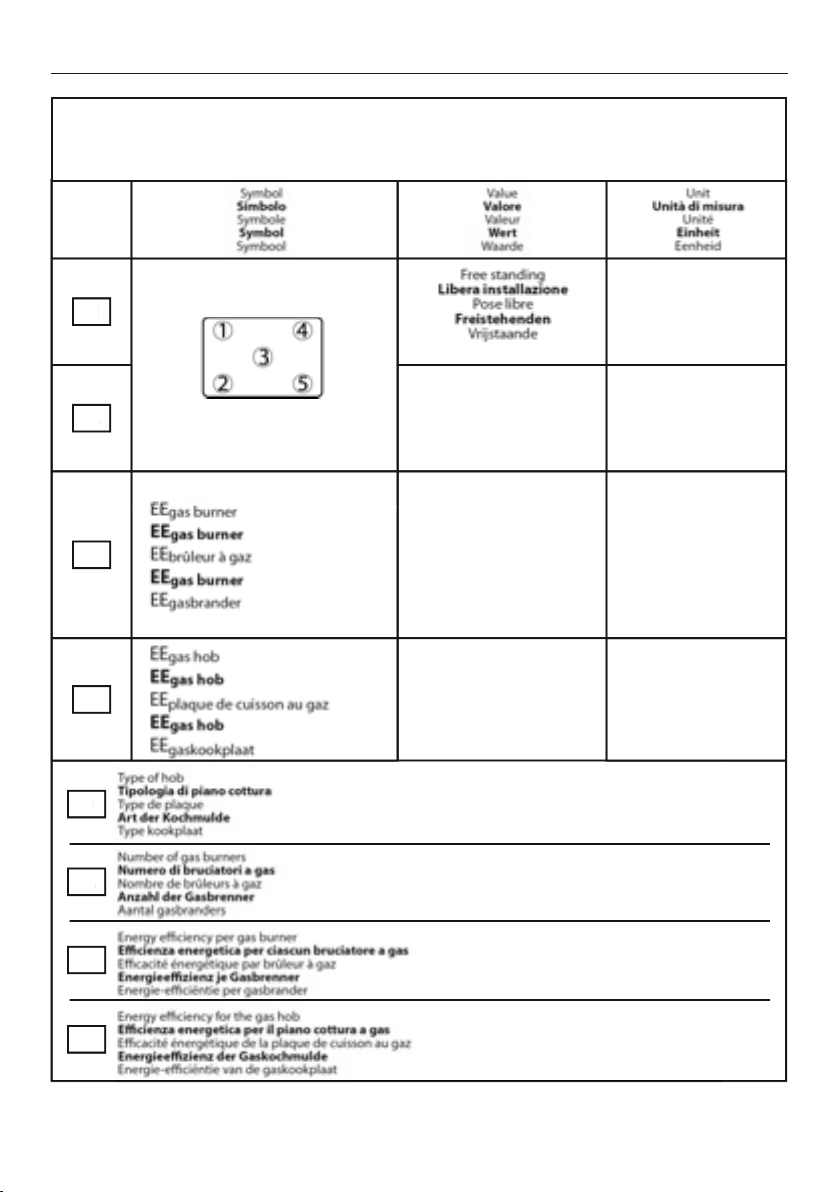
76
ENERGY GUIDELINES (GB IE ONLY)
/
/
/
/
L1
L2
L3
L4
L1
L2
L3
L4
/
/
/
/
L1
L2
L3
L
4
L1
L
2
L3
L4
5
1) 60,5 %
2) 55,8 %
3) 55,2 %
4) 60,5 %
5) 55,8 %
57,5 %
OR90SCG6B1, OR90SDG6X1
*Energy consumption for gas cooking appliances are calculated using the following Standard:
BS EN 30-2-1-Rational use if energy -Domestic cooking appliances burning gas.


NZ AU GB IE
591514E 09.19
FISHERPAYKEL.COM
© Fisher & Paykel Appliances 2019. All rights reserved.
The product specifications in this document apply to the specific
products and models described at the date of issue. Under our policy
of continuous product improvement, these specifications may change
at any time. You should therefore check with your Dealer to ensure this
document correctly describes the product currently available.