Code No. : DE68-01088A
FORNO A MICROONDE
Istruzioni d’uso
MSA 20 M
Forno.........................................................................................2
Accessori...................................................................................2
Pannello di controllo..................................................................2
Come utilizzare questo libretto d’istruzioni................................3
Precauzioni di sicurezza ...........................................................3
Installazione del forno a microonde ..........................................4
Cosa fare in caso di dubbio o se avete un problema................5
Cottura / Riscaldamento............................................................5
Livelli di potenza........................................................................5
Regolazione del tempo di cottura..............................................6
Scongelamento manuale degli alimenti....................................6
Uso della modalità Riscaldamento Istantaneo..........................6
Regolazioni per Riscaldamento Istantaneo ..............................6
Guida al vasellame per cottura .................................................7
Pulizia del vostro forno a microonde.........................................8
Specifiche tecniche ...................................................................8
MSA20M_IT_vi.fm Page 1 Friday, October 26, 2001 1:09 PM
2
IT
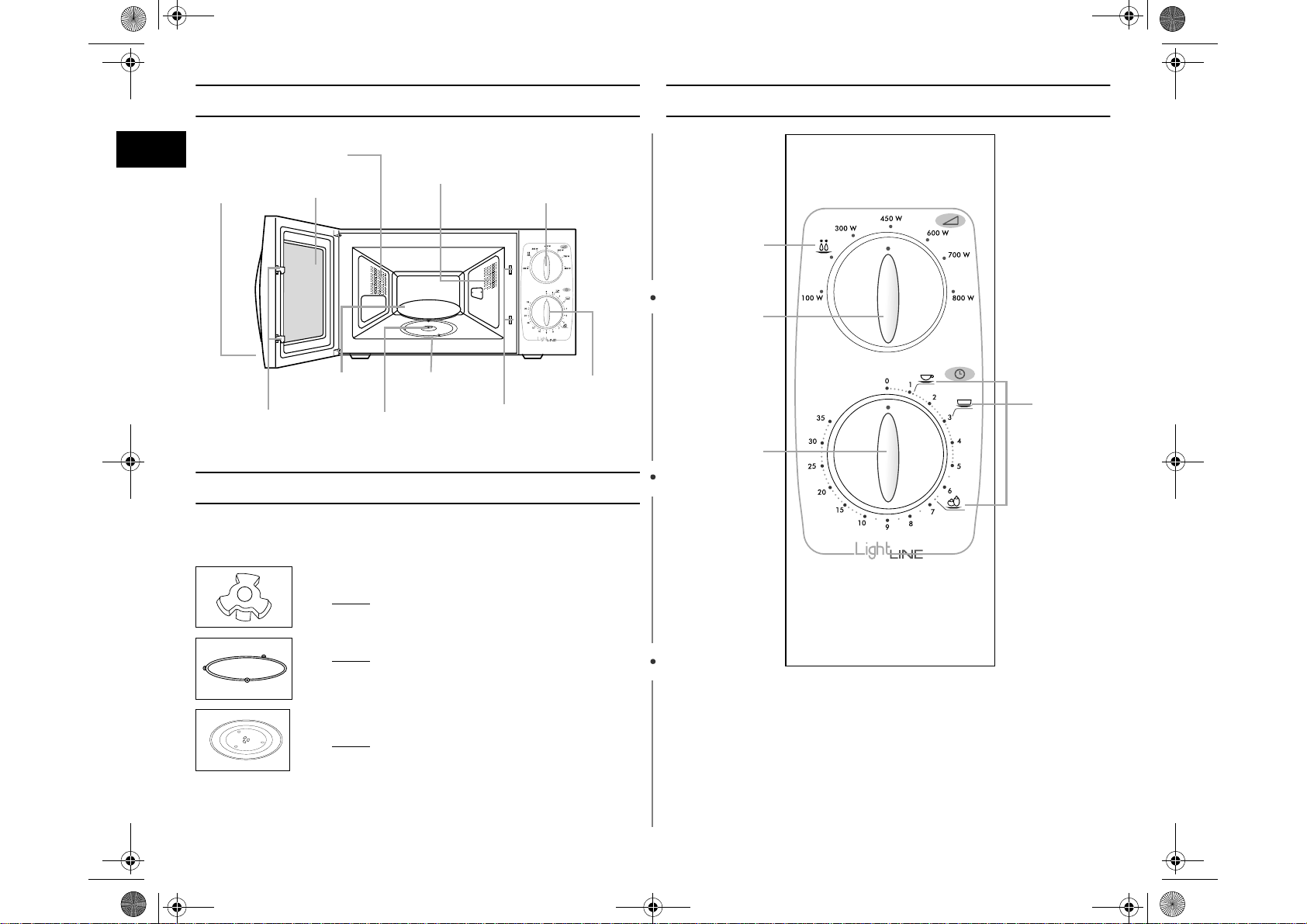
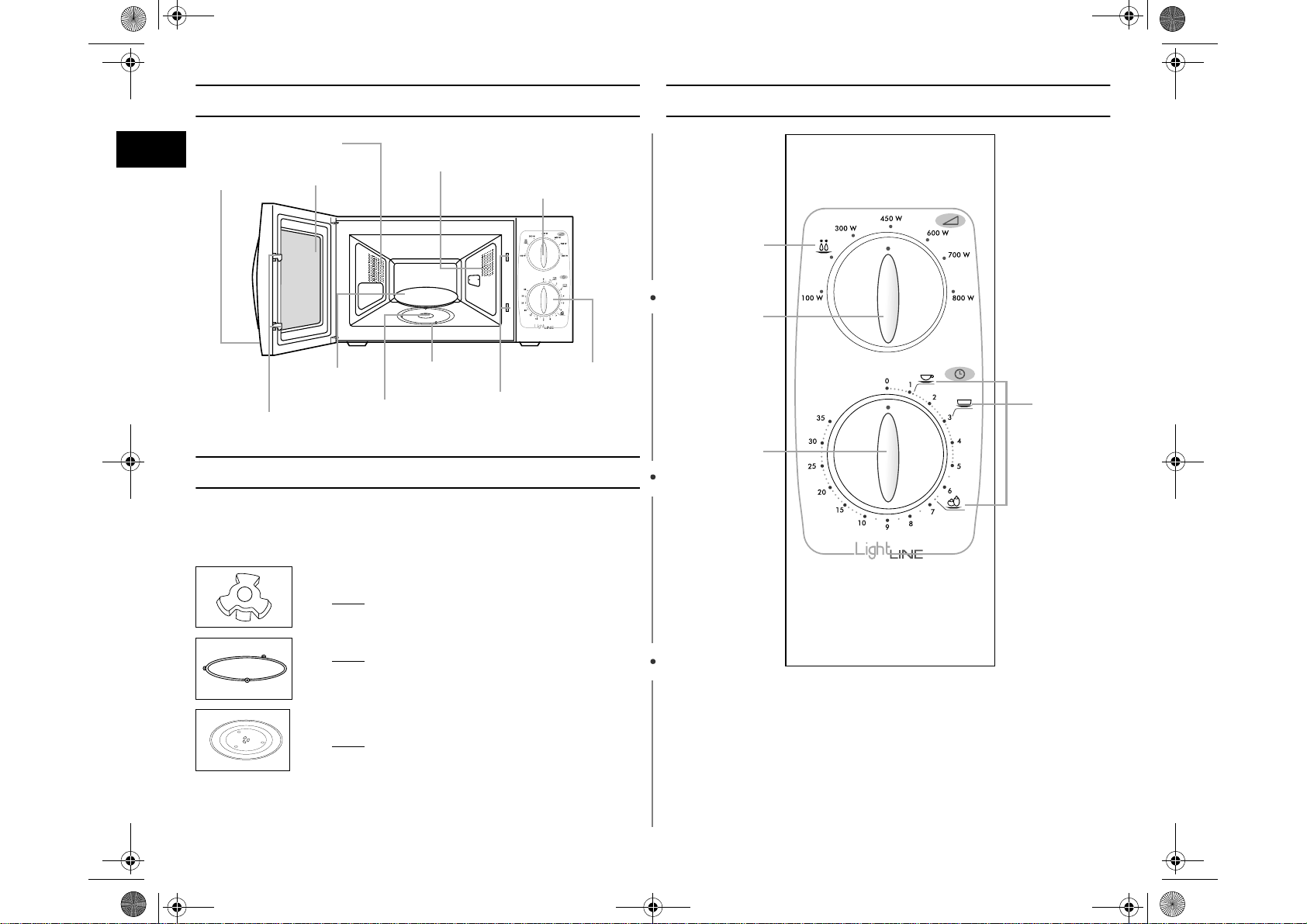
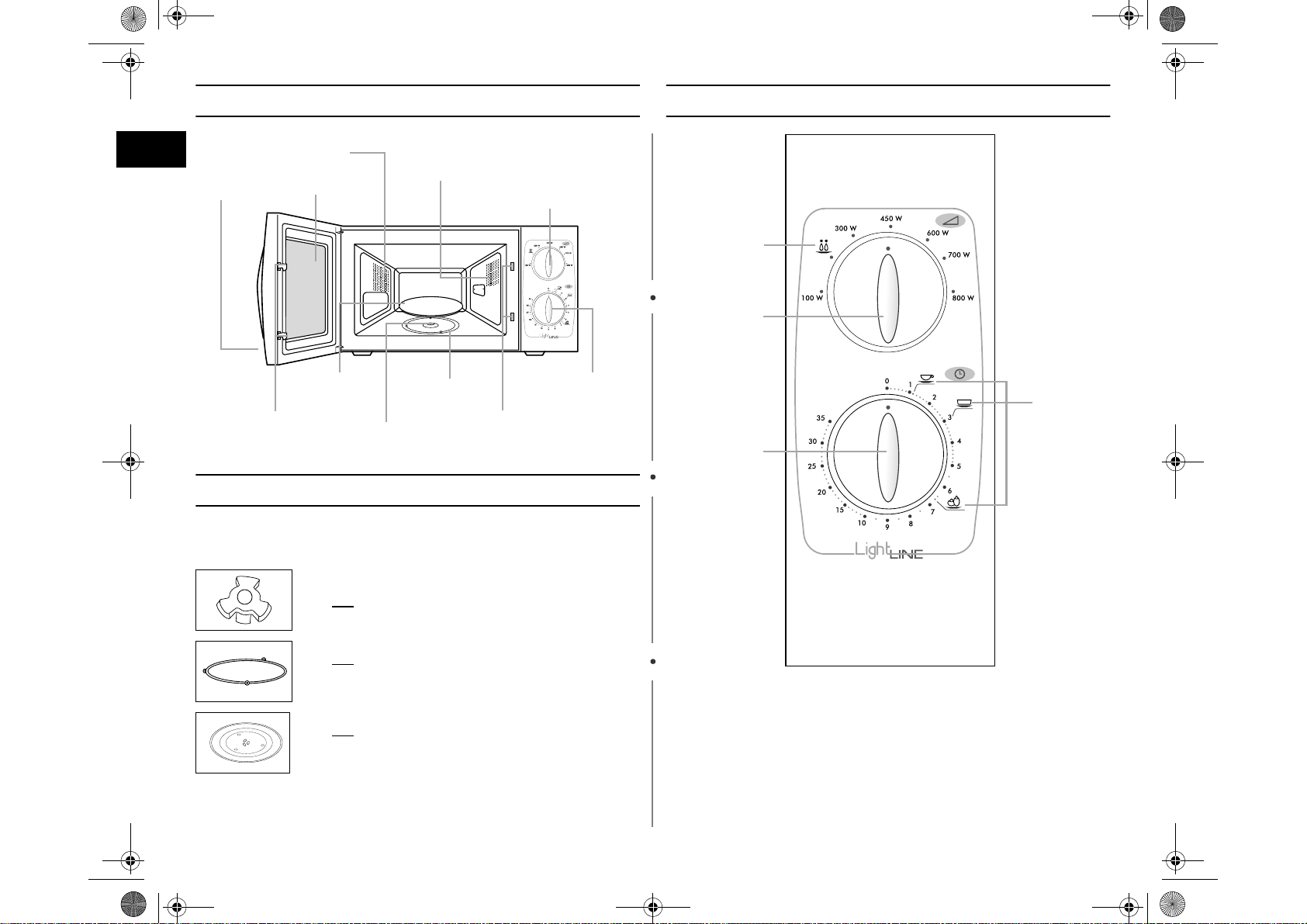
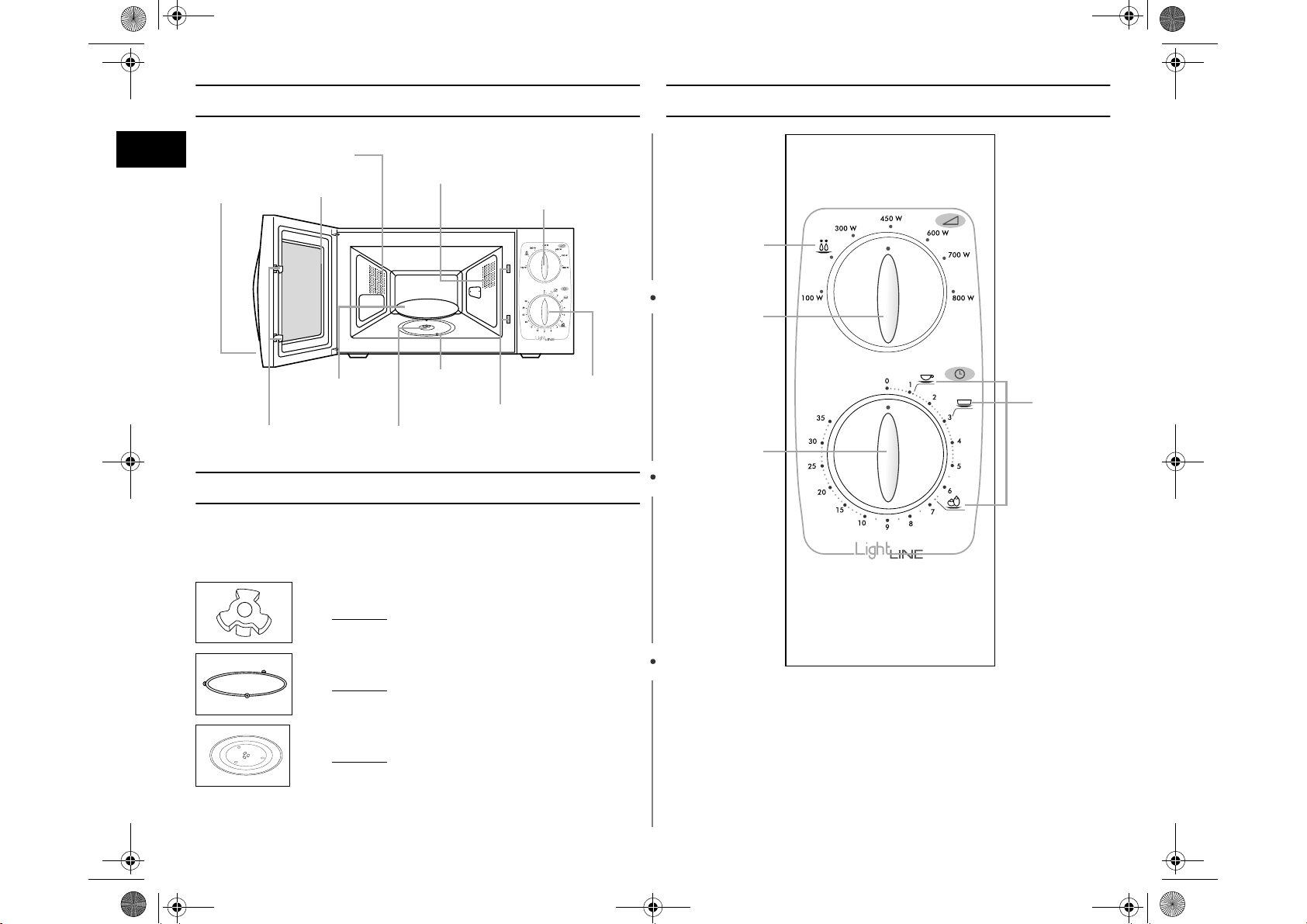
Forno
Accessori
A seconda del modello acquistato, saranno forniti vari accessori
utilizzabili in modi diversi.
☛ NON mettere in funzione il forno a microonde senza l'anello di
supporto e il piatto rotante.
Pannello di controllo
1. Accoppiatore, già posizionato sull’albero motore sulla
base del forno.
Scopo:
l’accoppiatore fa girare il piatto rotante.
2. Anello di supporto, da posizionare nel centro del forno.
Scopo:
l’anello di supporto sostiene il piatto rotante.
3. Piatto rotante, da posizionare sull’anello di supporto
con il centro inserito sull’accoppiatore.
Scopo:
il piatto rotante serve come superficie di cottura
principale; può essere rimosso facilmente per la
pulizia.
FORI DI VENTILAZIONE
CHIUSURE
DELLA PORTA
PORTA
PIATTO
ROTANTE
ACCOPPIATORE
ANELLO DI
SUPPORTO
BLOCCO DI
SICUREZZA
LUCE
CONTROLLO DELLA
POTENZA DI
COTTURA
TIMER
MANIGLIA
1. MODO SCONGELAMENTO
2. MANOPOLA DI CONTROLLO DELLA
POTENZA DI COTTURA
3. TIMER
4. RISCALDAMENTO ISTANTANEO
1
4
2
3
MSA20M_IT_vi.fm Page 2 Friday, October 26, 2001 1:09 PM
3
IT
Come utilizzarequesto libretto d’istruzioni
Avete appena acquistato un forno a microonde CANDY. Le istruzioni
d’uso contengono molte informazioni preziose sulla cottura con il
vostro forno a microonde:
• Precauzioni di sicurezza
• Accessori adatti e stoviglie per la cottura
• Consigli utili per la cottura
Sul frontespizio del libretto troverete le illustrazioni del forno e, più
importante, il pannello di controllo, in modo che possiate trovare i
pulsanti più facilmente.
Le procedure passo-passo utilizzano du diversi simboli.
PRECAUZIONI PER EVITARE EVENTUALE ESPOSIZIONE
ECCESSIVA ALL’ENERGIA DELLE MICROONDE
La mancanza nell’osservare le seguenti precauzioni di sicurezza può causare
esposizione dannosa all’energia delle microonde.
(a) In nessun caso si deve cercare di far funzionare il forno con la porta aperta o
manomettere i dispositivi di blocco di sicurezza (chiusure della porta) o
inserire qualsiasi cosa nei fori del dispositivo di blocco di sicurezza.
(b) Non mettere nessun oggetto tra la porta del forno e la parte anteriore o
lasciare accumulare cibo o residui della pulizia sulle superfici di guarnizione.
Tenere pulite la porta e le superfici di guarnizione della porta dopo l’uso
strofinando prima con un panno umido e poi con un panno asciutto morbido.
(c) Non mettere in funzione il forno danneggiato fino a che non sia stato riparato
da un tecnico qualificato dell’assistenza ai microonde addestrato dal
produttore. È particolarmente importante che la porta del forno si chiuda
correttamente e che non vi siano danni a:
(1) Porta, guarnizioni della porta e superfici di guarnizione della porta.
(2) Cardini della porta (rotti o allentati).
(3) Cavo di alimentazione.
(d) Il forno non deve essere regolato o riparato da nessuno fatta eccezione per i
tecnici qualificati dell’assistenza ai microonde addestrati dal produttore.
Precauzioni disicurezza
Importanti istruzioni sulla sicurezza.
Leggere attentamente e conservare per future consultazioni.
Prima di cucinare cibo o liquidi nel forno a microonde, seguire con
attenzione le seguenti precauzioni di sicurezza.
1. NON utilizzare stoviglie metalliche per la cottura nel forno a microonde:
• Contenitori metallici
• Stoviglie da tavola con rifiniture in oro o argento
• Spiedi, forchette, ecc.
Motivo
: possono verificarsi un arco elettrico o delle scintille che possono
danneggiare il forno.
2. NON riscaldare:
• Bottiglie a chiusura ermetica o sottovuoto, brocche, contenitor
es.) contenitori di cibo per neonati
• Cibo con la pelle o il guscio.
es.) uova, noci col guscio, pomodori
Motivo
: l’aumento della pressione può causarne l’esplosione.
Consiglio
: togliere i gusci e bucare la pelle, ecc.
3. NON mettere in funzione il microonde quando è vuoto.
Motivo
: le pareti del forno si possono danneggiare.
Consiglio
: lasciare sempre un bicchiere d’acqua nel forno.
L’acqua assorbirà le microonde in caso di accensione accidentale
del forno quando è vuoto.
4. NON coprire le feritoie di ventilazione posteriori con panni o carta.
Motivo
: i panni o la carta possono prendere fuoco poiché dal forno è
emessa aria calda.
5. Usare SEMPRE guanti da forno quando si toglie un piatto dal forno.
Motivo
: alcunipiattiassorbonolemicroondeeilcalorevienesempre
trasferito dal cibo al piatto. Di conseguenza i piatti sono caldi.
6. NON toccare gli elementi riscaldanti o le pareti interne del forno.
Motivo
: sebbene non sembri, queste pareti possono essere abbastanza
caldedascottareancheacotturaterminata.Nonfarentrarein
contatto materiali infiammabili con una qualunque zona interna del
forno. Lasciare raffreddare prima il forno.
7. Per evitare il rischio di incendio nella cavità del forno:
• Non riporre materiali infiammabili nel forno.
• Rimuovere legacci metallici da carta o borse in plastica.
• Non utilizzare il forno a microonde per asciugare i giornali.
• Se si vede del fumo, tenere chiusa la porta del forno e spegnere o
scollegare il forno dalla rete di alimentazione.
8. Fare particolare attenzione quando si riscaldano liquidi e alimenti per neonati.
• Lasciare SEMPRE un tempo di riposo di almeno 20 secondi dopo che il
forno è stato spento affinché la temperatura si possa uniformare.
• Durante il riscaldamento, se necessario, mescolare e dopo il
riscaldamento mescolare SEMPRE.
• Fare attenzione quando si maneggia il contenitore dopo il riscaldamento.
Se il contenitore è troppo caldo, ci si può scottare.
• Esiste il rischio di ebollizione ritardata.
• Per evitare l'ebollizione ritardata e un'eventuale scottatura, mettere un
cucchiaio in plastica o una sbarretta in vetro nelle bevande e mescolare
prima, durante e dopo il riscaldamento.
☛✉
Importante Nota
MSA20M_IT_vi.fm Page 3 Friday, October 26, 2001 1:09 PM
4
IT
Precauzioni di sicurezza(continua)
Motivo: durante il riscaldamento dei liquidi il punto di ebollizione può
essere ritardato; ciò significa chel'ebollizione può iniziare dopo
che il contenitore è stato rimosso dal forno. Ci si può scottare.
• In caso di scottatura, seguite queste istruzioni di PRONTO SOCCORSO:
* Immergere la zona scottata in acqua fredda per almeno 10 minuti.
* Coprire con una fasciatura pulita e asciutta.
* Non applicare creme, oli o lozioni.
• NON riempire MAI il contenitore fino al bordo e scegliere un contenitore
che sia più ampio in cima che in fondo, in modo da evitare che il liquido
trabocchi bollendo. Le bottiglie con colli stretti possono anche esplodere
se surriscaldate.
• Controllare SEMPRE latemperatura del cibo per neonati o del latte prima
di darli al bambino.
• NON scaldare MAI un biberon con la tettarella inserita, poiché potrebbe
esplodere se surriscaldato.
9. Fare attenzione a non danneggiare il cavo di alimentazione.
• Non immergere il cavo di alimentazione o la spina in acqua e tenere il
cavo di alimentazione lontano dalle superfici riscaldate.
• Non mettere in funzione questa apparecchiatura se il cavo di
alimentazione o la spina sono danneggiati.
10. Rimanere alla lunghezza di un braccio dal forno quando si apre la porta.
Motivo
: l'aria calda o il vapore rilasciati possono provocare scottature.
11. Tenere l'interno del forno pulito.
Motivo
: particelle di cibo o schizzi d'olio che aderiscono alle pareti del forno
o sul fondo possono causare il danneggiamento della vernice e
ridurre l'efficienza del forno.
12. Può essere avvertito un suono a scatto durante il funzionamento,
specialmente quando il forno funziona in modo scongelamento.
Motivo
: quando l'uscita di corrente elettrica cambia, si può sentire questo
suono. Ciò è normale.
13. Quando il forno a microonde funziona senza carico, l'alimentazione sarà
interrotta automaticamente per sicurezza. Si può mettere in funzione il forno
normalmente dopo averlo lasciato a riposo per almeno 30 minuti.
ISTRUZIONI DI SICUREZZA IMPORTANTI
Durante la cottura, di quando in quando guardare nel forno mentre si sta
riscaldando o cuocendo il cibo nei contenitori usa e getta di plastica, carta o altro
materiale infiammabile.
IMPORTANTE
Ai bambini NON dovrebbe MAI essere permesso di usare o giocare con il forno a
microonde. Non devono neanche essere lasciati senza sorveglianza vicino al
forno a microonde quando è in funzione. Oggetti di interesse per i bambini non
dovrebbero essere riposti o nascosti sopra il forno.
ATTENZIONE
Radiazioni a microonde le persone non devono essere esposte all energia a
microonde che puo’essere irradiata dal magnetron o da alto dispositivio
generatore di microonde nel caso di una utilizzazione o una connessione non
corretta. Tutte le connessioni a microonde di entrata e di uscita, le guide d’onda,
le flange e l giunti devono essere sicuri. Non fare funzionare il generatore il
generatore senza un carico previsto per assorbire l’energia a microonde. Non
guardare mai all’interno di una guide d’onda aperta o di una antenna mentre il
generatoree’in funzione.
Installazionedel forno a microonde
Collocare il forno su una superficie piatta e piana abbastanza forte da
reggere con tranquillità il peso del forno.
☛ NON bloccare MAI gli sfiati dell'aria poiché il forno potrebbe
surriscaldarsi e spegnersiautomaticamente. Rimarrà inutilizzabile
fino a raffreddamento sufficiente.
☛ Per vostra sicurezza personale, inserite il cavo in una presa
tripolare con collegamento a terra 230 Volt, 50Hz, CA. Se il cavo
di alimentazione di questa apparecchiatura è danneggiato, deve
essere sostituito con un cavo speciale (I-SHENG SP022, KDK
KKP4819D, EUROELECTRIC 3410, SAMIL SP-106B,
MOONSUNG EP-48E, HIGH PROJECT H.P3). Per la
sostituzione contattare il rivenditore locale.
☛ Non installare il forno a microonde in posti molto caldi o umidi
come nei pressi di un forno tradizionale o di un termosifone. Le
specifiche di alimentazione del forno devono essere rispettate e
qualsiasi cavo di prolunga utilizzato deve avere le stesse
caratteristiche del cavo di alimentazione fornito con il forno. Pulire
l'interno e la guarnizione della porta con un panno umido prima di
usare il forno a microonde per la prima volta.
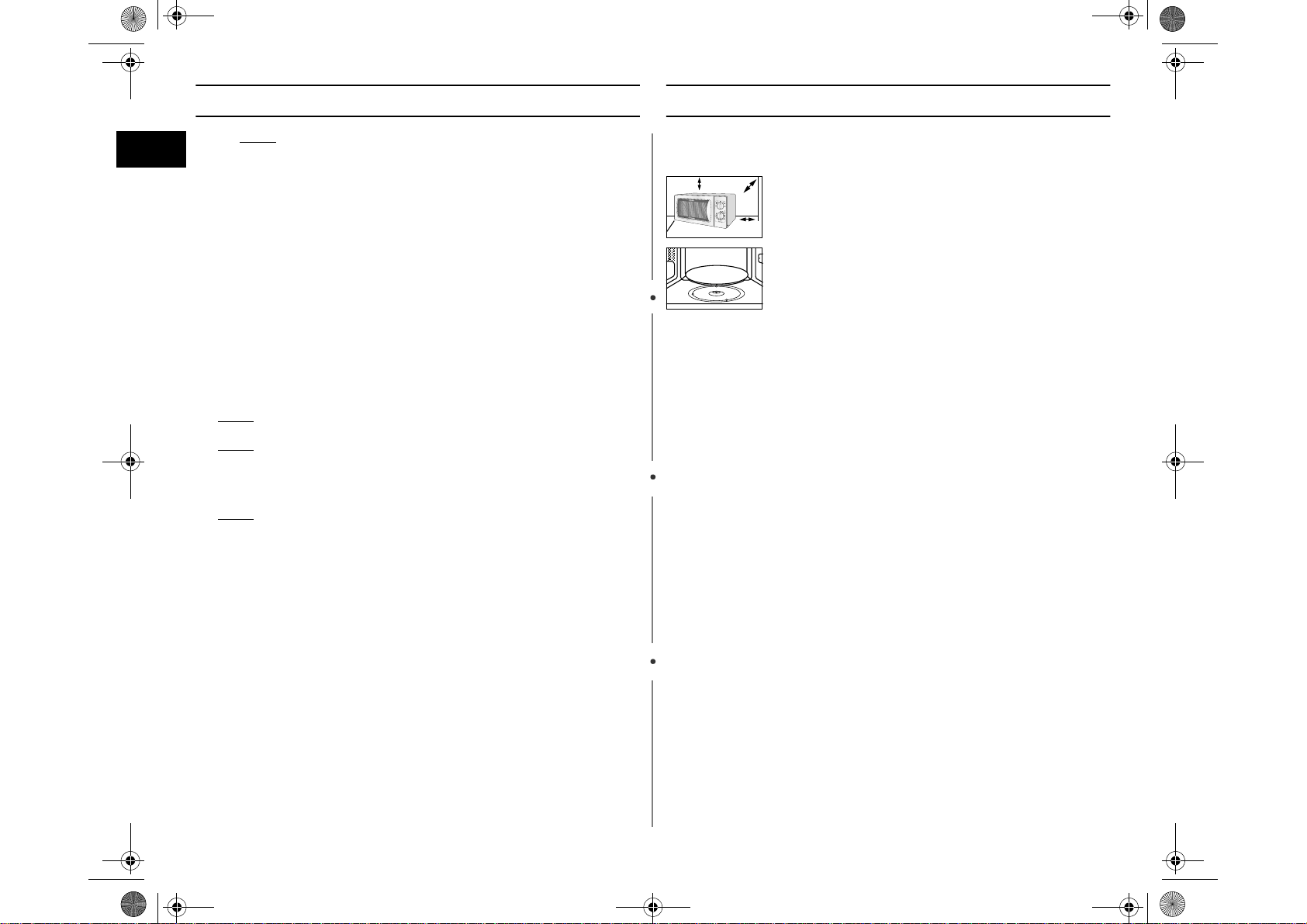
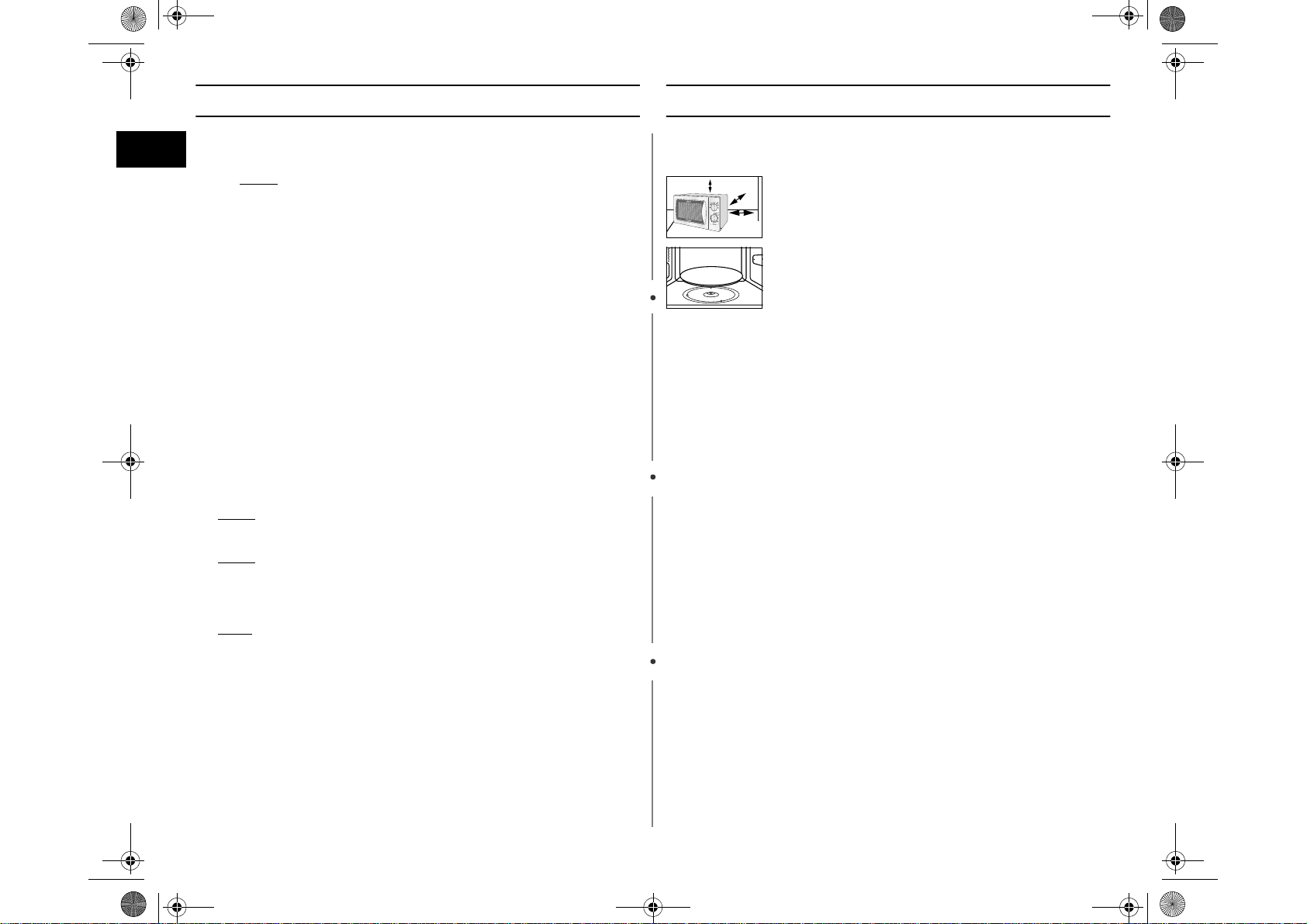
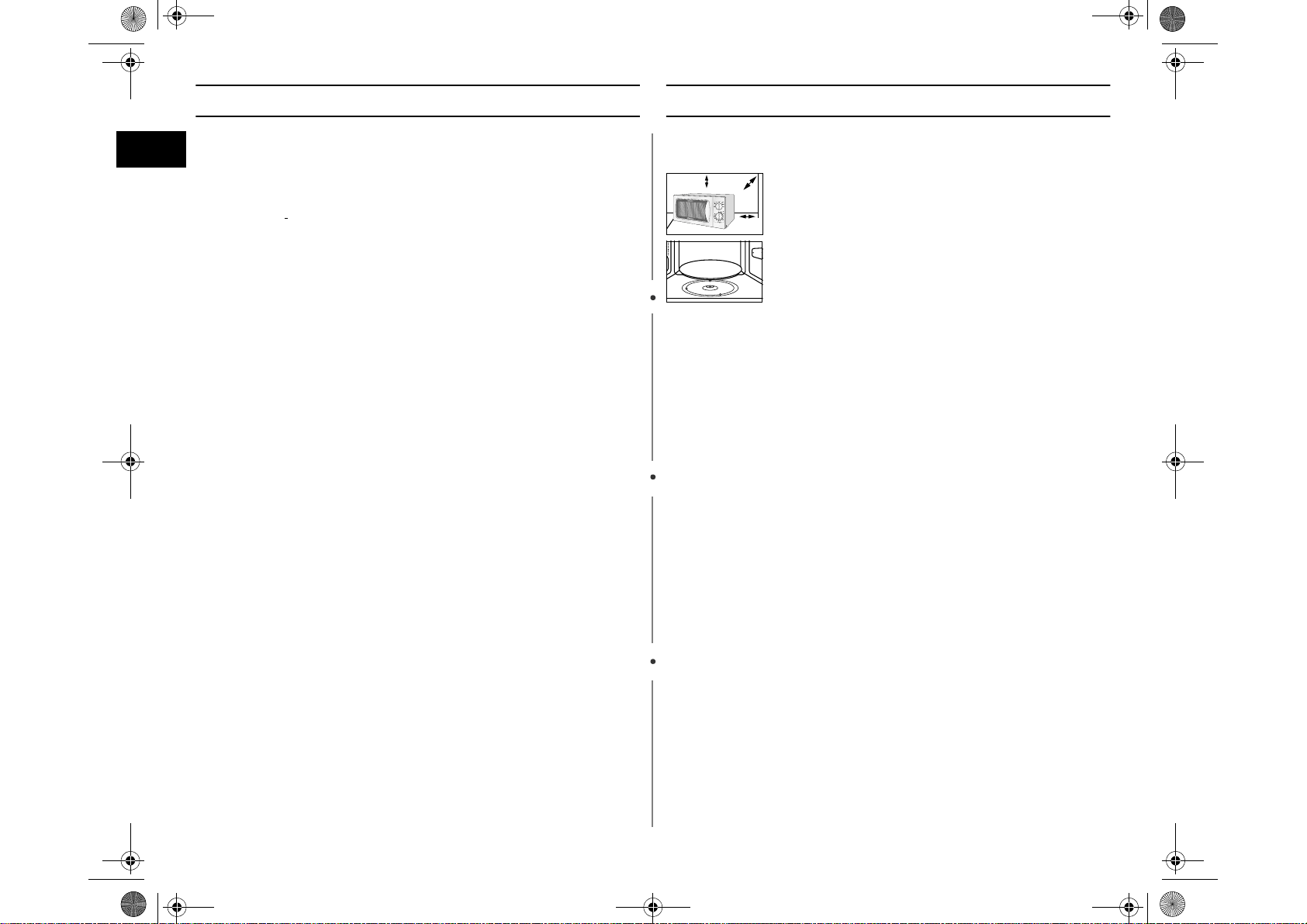
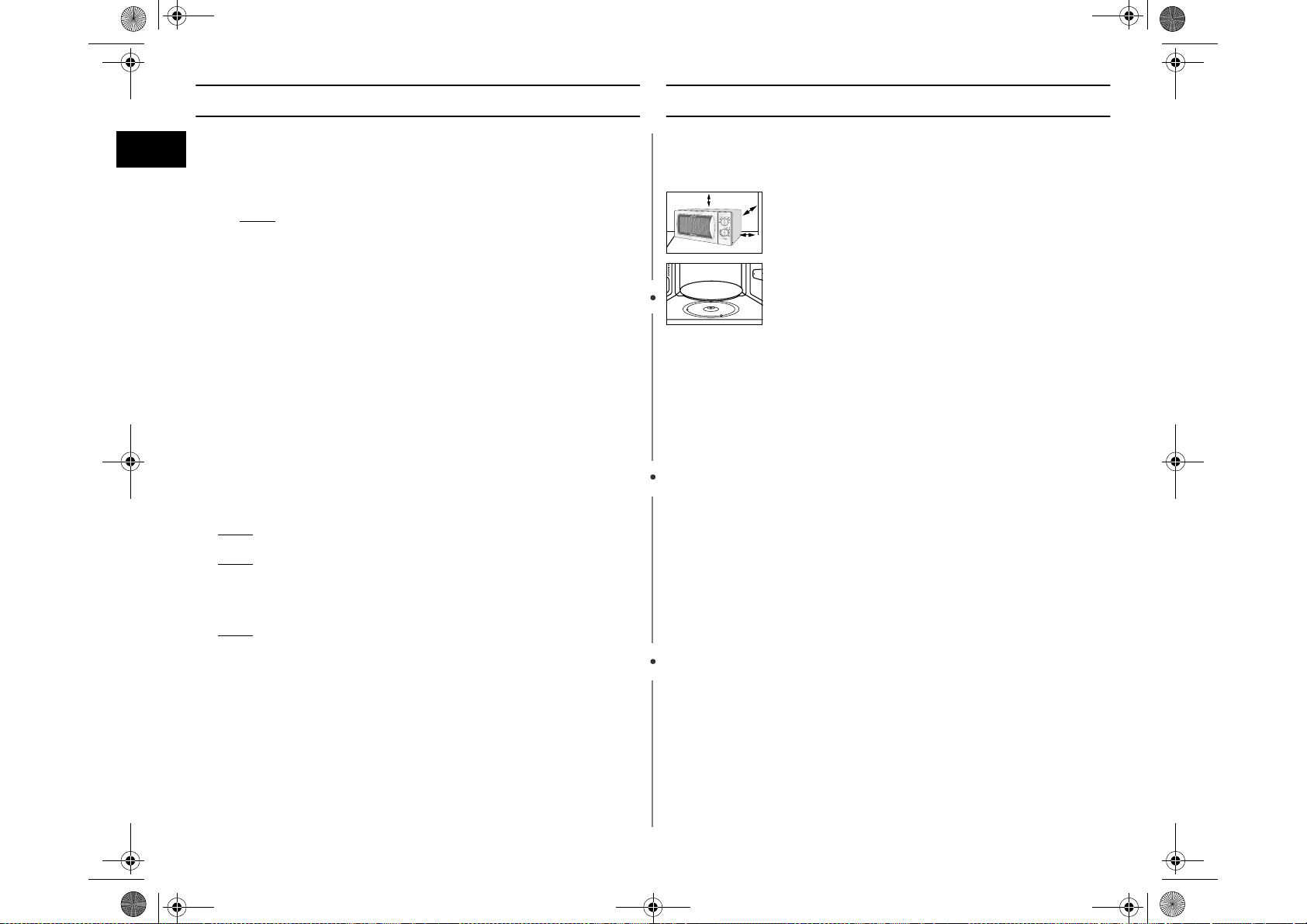
1. Quando si istalla il forno, assicurarsi che vi sia una
ventilazione adeguata per il forno stesso lasciando uno
spazio di almeno 10 cm (4 pollici) dietro e sui lati del
forno e uno spazio di 20 cm al di sopra.
2. Rimuovere tutti i materiali di imballaggio all'interno del
forno.
Installare l'anello di supporto e il piatto rotante.
Controllare che il piatto rotante giri liberamente.
3. Il forno a microonde deve essere posizionato in modo
tale che la spina sia accessibile.
20 cm
sopra
10 cm
dietro
10 cm
sul lato
MSA20M_IT_vi.fm Page 4 Friday, October 26, 2001 1:09 PM
5
IT
Cosa farein caso di dubbio o se avete un
problema
In caso si verifichi uno dei problemi elencati sotto, provare le soluzioni
fornite.
◆ Questo è normale.
• Condensazione all'interno del forno
• Flussod'ariaattornoallaportaealrivestimentoesterno
• Riflesso di luce attorno alla porta e al rivestimento esterno
• Il vapore fuoriesce dalla porta o dalle aperture di ventilazione
◆ Il forno non si avvia quando si girare il TIMER.
• La porta è completamente chiusa?
◆ Il cibo non è affatto cotto
• Il timer è stato impostato correttamente?
• La porta è chiusa?
• Avete sovraccaricato il circuito elettrico e provocato la bruciatura di un
fusibile o lo scatto di un interruttore?
◆ Ilciboèotroppo cotto o poco cotto
• È stata impostata la durata di cottura corretta per il tipo di cibo?
• È stato scelto un livello di potenza corretto?
◆ Nel forno si verificano scintille o scoppiettii (arco)
• È stato usato un piatto con rifiniture metalliche?
• È stata lasciata una forchetta o un altro utensile metallico nel forno?
• La pellicola di alluminio è troppo vicina alle pareti interne?
◆ Il forno provoca interferenze con radio o televisioni
• Si può osservare una leggera interferenza con televisioni o radio quando
il forno è in funzione. Ciò è normale. Per risolvere questo problema,
istallare il forno lontano da televisioni, radio e antenne.
✉ Se le indicazioni summenzionate non vi permettono di risolvere il
problema, contattare Il rivenditore locale o il servizio di assistenza
CANDY.
Cottura / Riscaldamento
La procedura seguente spiega come cucinare o riscaldare il cibo.
Controllare SEMPRE le impostazioni di cottura prima di lasciare il
forno incustodito.
Per prima cosa, collocare il cibonel centrodel piatto rotante. Chiudere
la porta.
☛ Non accendere mai il forno a microonde quando è vuoto.
✉ Per modificare il livello di potenza durante la cottura, girate la
manopola di
CONTROLLO DELLA POTENZA DI COTTURA.
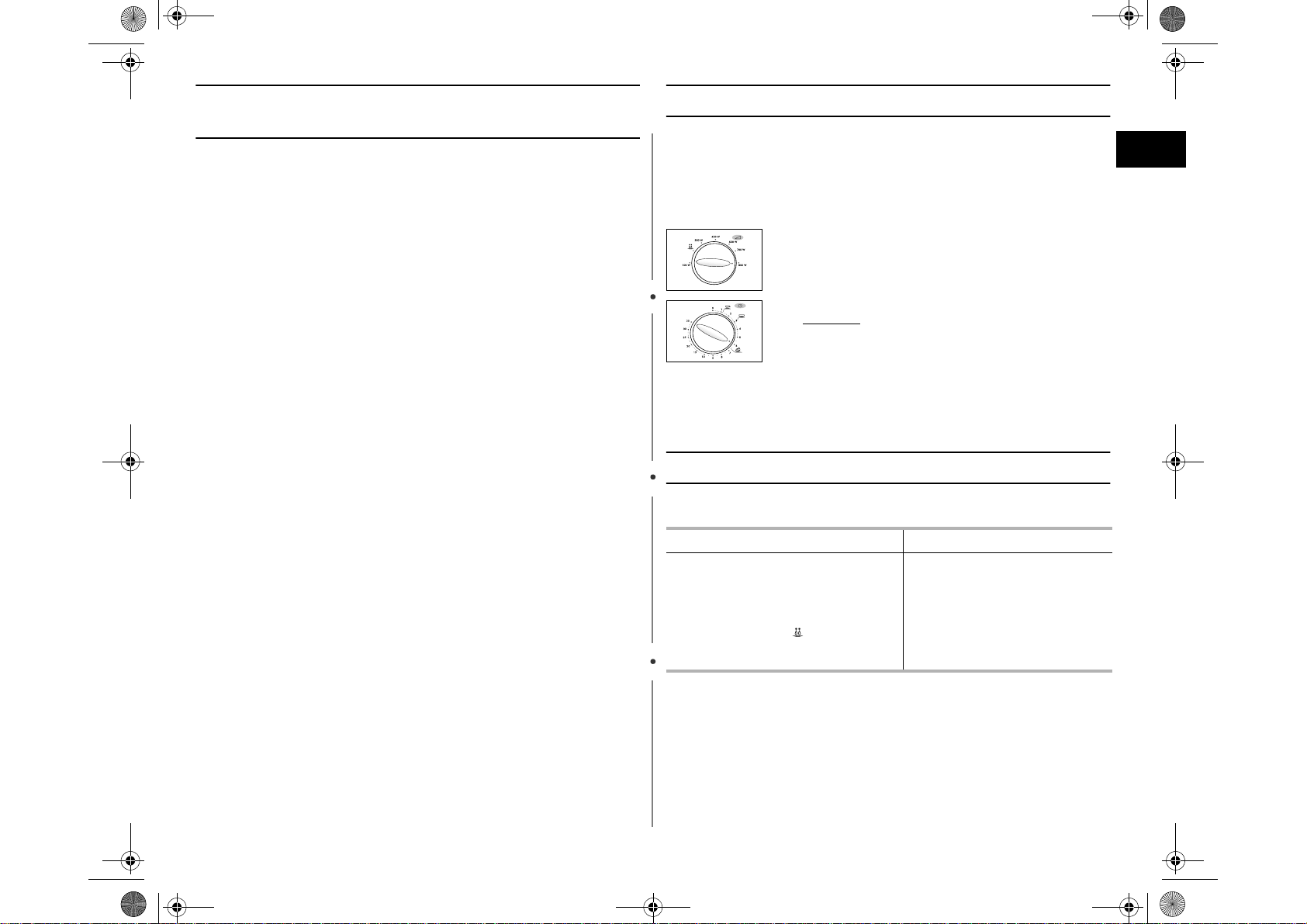
Livellidipotenza
Si può scegliere tra i livelli di potenza seguenti.
✉ Se si seleziona un livello di potenza più alto, il tempo di cottura
deve essere diminuito.
✉ Se si seleziona un livello di potenza più basso, il tempo di cottura
deve essere aumentat
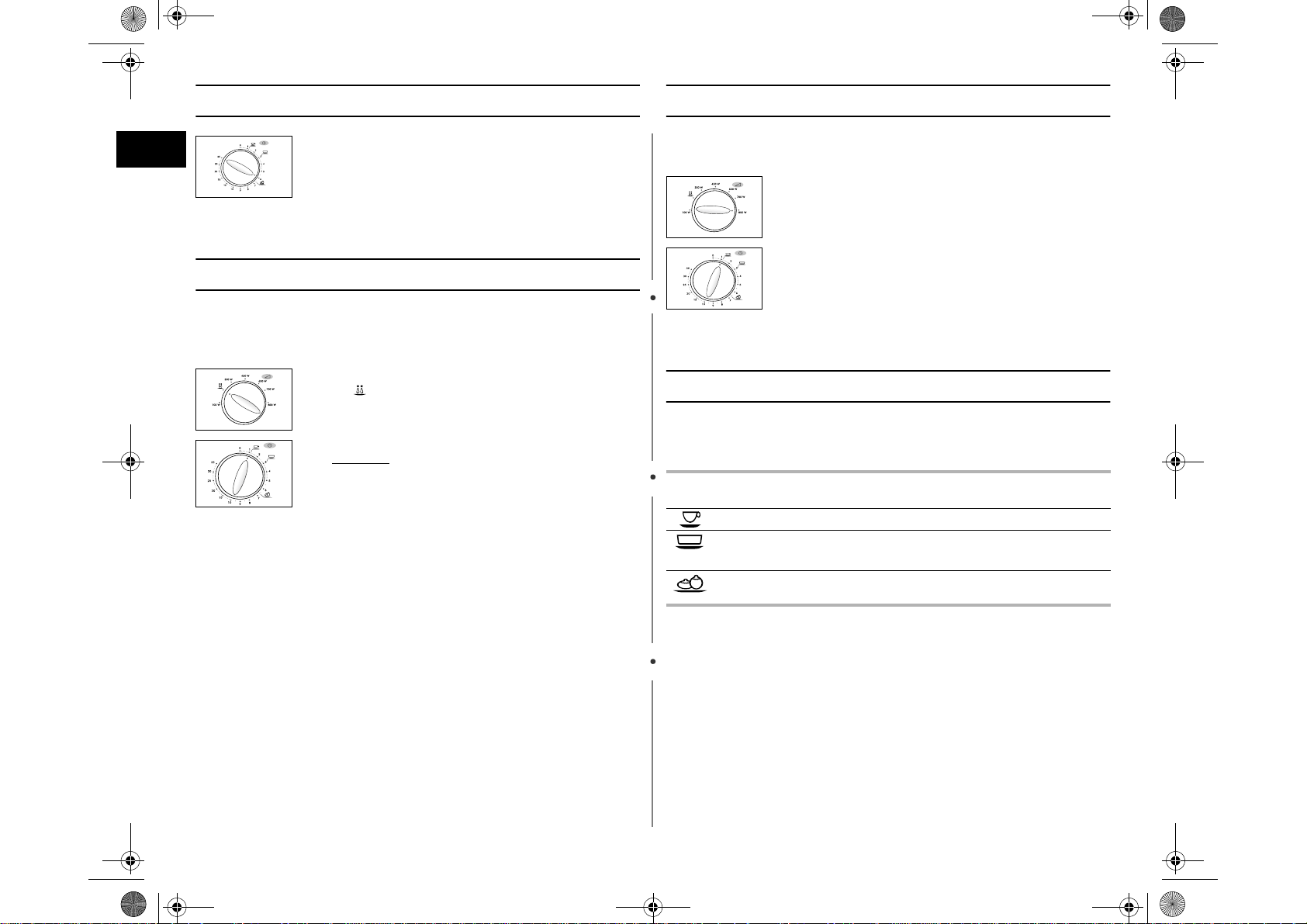
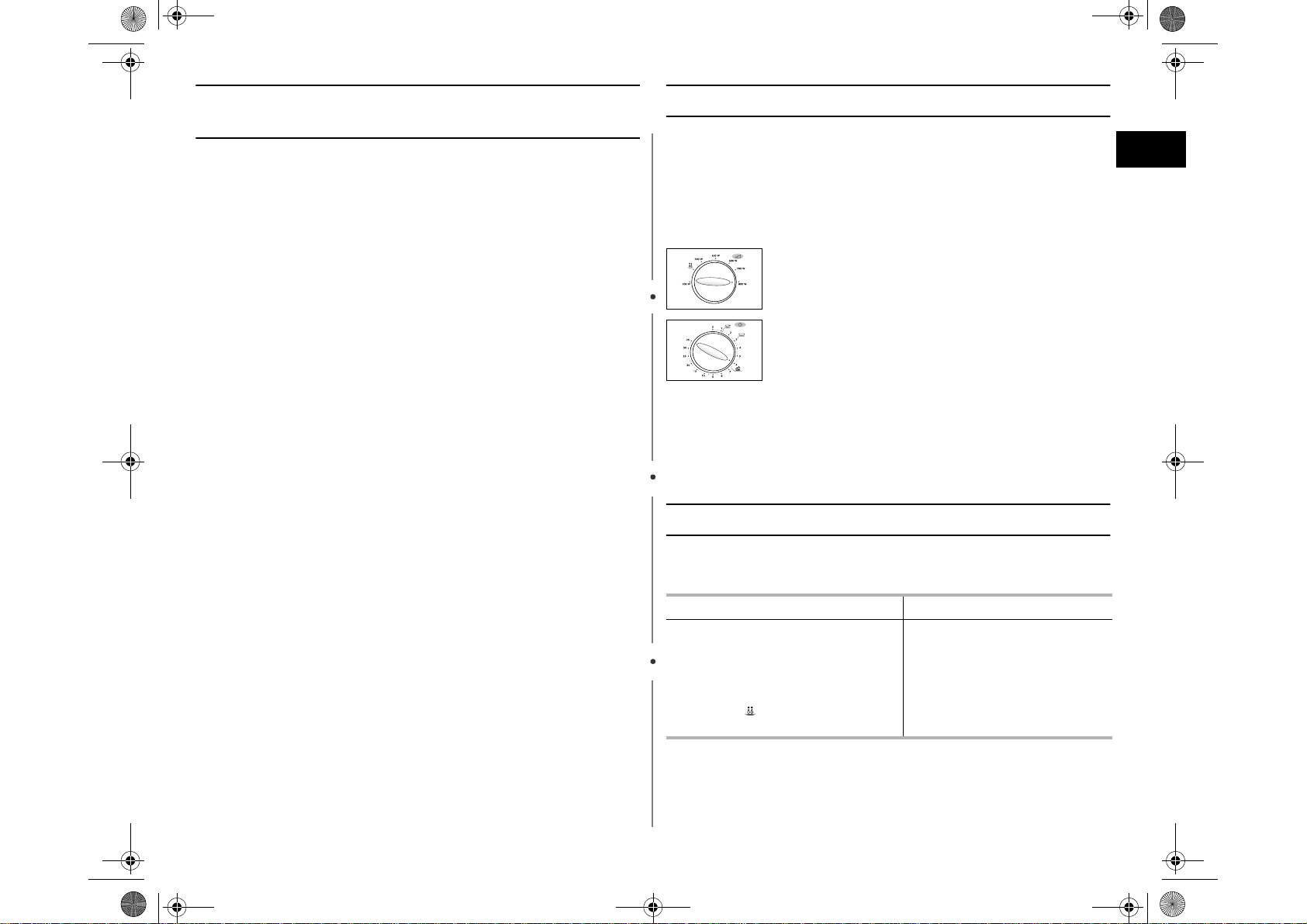
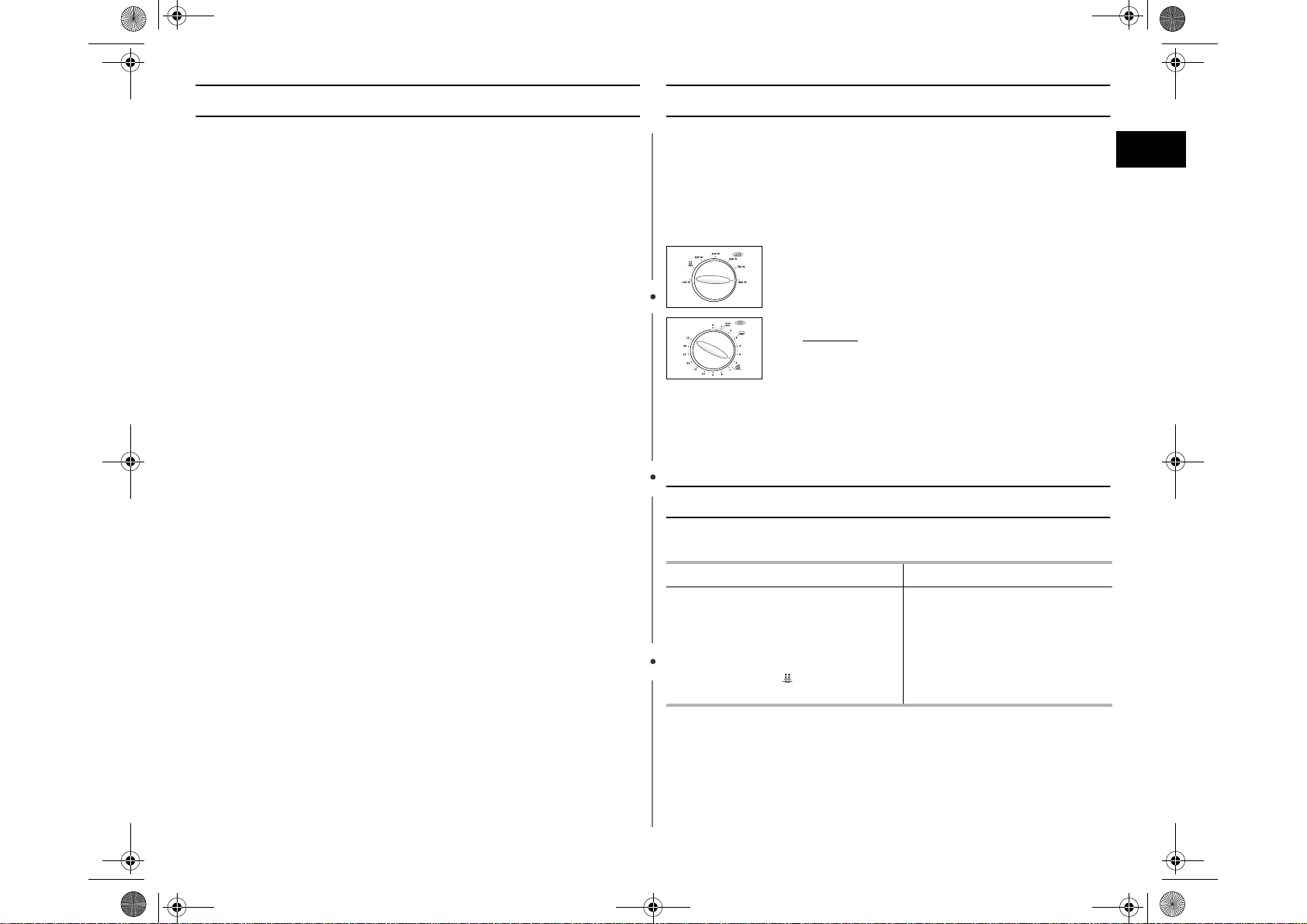
1. Girate il CONTROLLO DELLA POTENZA DI COTTURA
su su potenza massima (800 W).
2. Con il TIMER selezionate il tempo corrispondente.
Risultato :
La luce del forno si accende e il piatto rotante
inizia a girare.
Livelli di potenza
Uscita
ALTO
RISCALDAMENTO
MEDIO ALTO
MEDIO
MEDIO BASSO
SCONGELAMENTO ( )
BASSO
800 W
700 W
600 W
450 W
300 W
180 W
100 W
MSA20M_IT_vi.fm Page 5 Friday, October 26, 2001 1:09 PM
6
IT
Regolazione del tempodi cottura
Scongelamentomanualedegli alimenti
La modalità Scongelamento vi permette di scongelare carne, pollame,
pesce e Pane/Dolci. Mettete gli alimenti congelati nel centro del piatto
girevoleechiudetelaporta.
✉ Usare solo recipienti idonei per il microonde.
Uso dellamodalità Riscaldamento Istantaneo
Per prima cosa, collocare il cibo nel centro del piatto rotante e
chiudere la porta.
✉ Usare solo recipienti idonei per il microonde.
Regolazioni per RiscaldamentoIstantaneo
Ecco alcuni consigli e raccomandazioni da seguire durante il
riscaldamento di alimenti con la Modalità Riscaldamento Istantaneo.
Con il TIMER selezionate il tempo corrispondente.
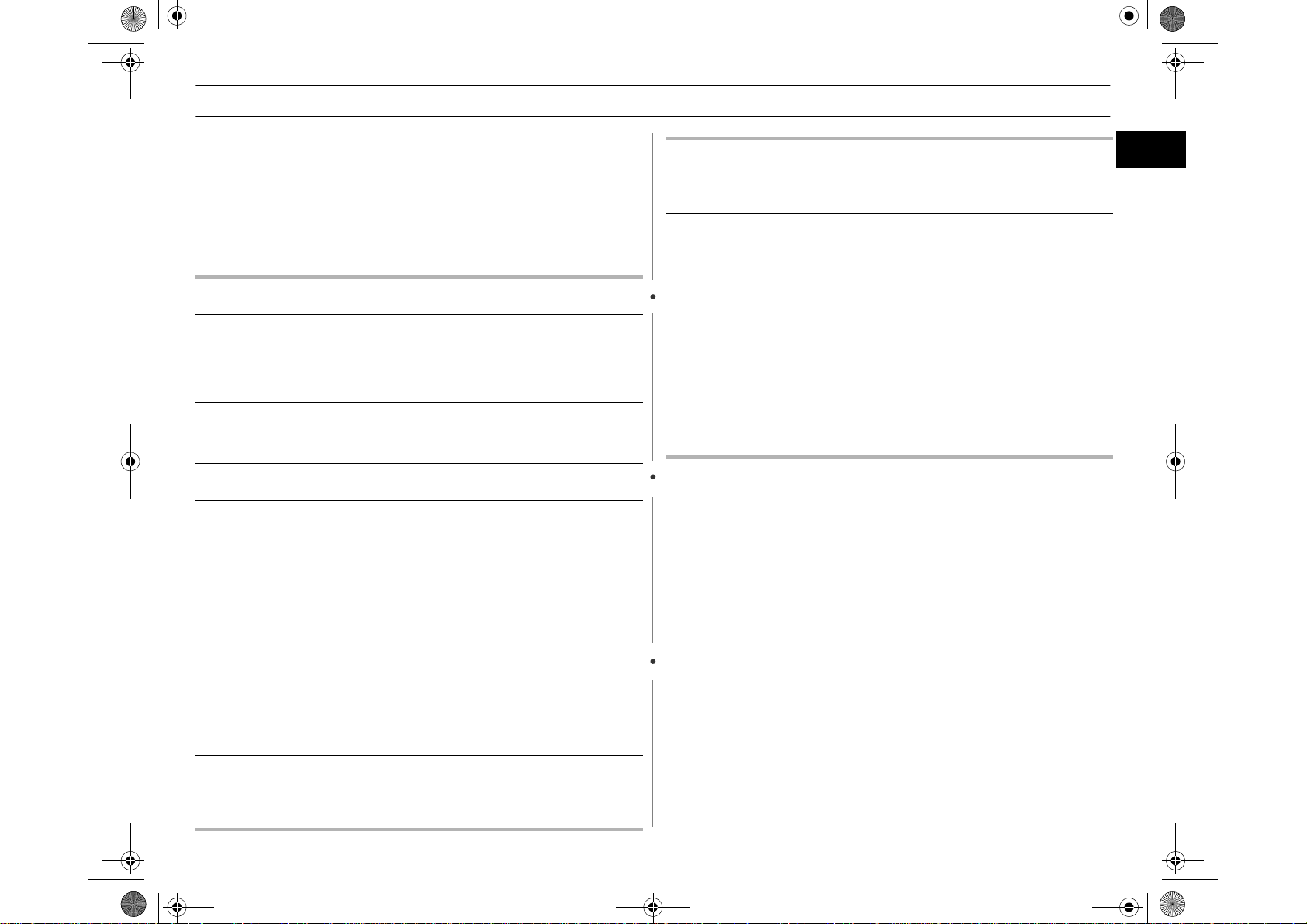
1. Girate il CONTROLLO DELLA POTENZA DI COTTURA
su (180W).
2. Con il TIMER selezionate il tempo corrispondente.
Risultato :
inizia lo Scongelamento.
1. Girate il CONTROLLO DELLA POTENZA DI COTTURA
su su potenza massima.
2. Con il TIMER selezionate Riscaldamento Istantaneo.
(bevande o minestre/sughi, verdura fresca).
Simboli Alimenti Porzioni Tempo di
Cottura
Tempo di
Riposo
Bevande 150 ml 1 min 10 sec 1-2 min.
Minestre/Sughi
(freddi)
200-250 ml 3 min 2-3 min.
Verdura fresca 300-350 g 6 min 40 sec 3 min.
MSA20M_IT_vi.fm Page 6 Wednesday, December 19, 2001 3:50 PM
7
IT
Guida al vasellameper cottura
Per la cottura in forno microonde, le microonde devono essere capaci
di penetrare i cibi, senza che siano riflesse od assorbite dal piatto
impiegato.
Per cui bisogna scegliere con cura il vasellame per la cottura. Se
questo incorpora il marchio sicuro per microonde, non vi dovete
preoccupare.
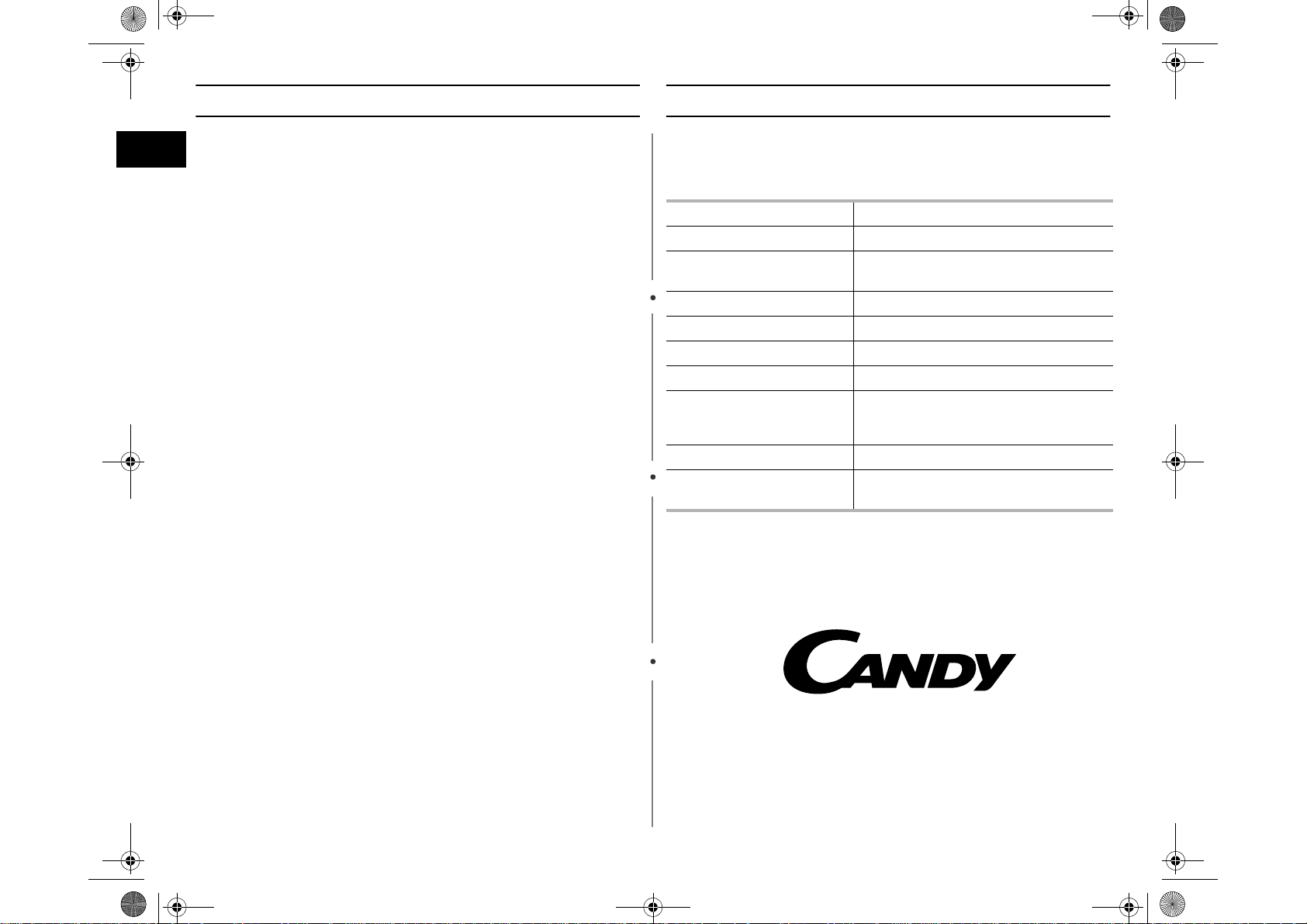
La seguente tabella elenca diversi tipi di vasellame ed indica come e
quando possono essere usati in un forno a microonde.
✓ : Raccomandato
✓✗ : Fate Attenzione
✗ :Nonsicuro
Vasellame per Cottura Sicuro per
microonde
Commenti
Fogli d’alluminio
✓ ✗ Si può impiegare in piccole quantità
per proteggere zone contro la scotta
de cibi. L’arco può capitare se il foglio
è troppo vicino alle pareti del
microonde o se si impiega troppa
quantità di fogli.
Porcellana e terracotta
✓ La porcellana, ceramica, terracotta,
gres sono di solito adeguati, a meno
che siano decorati con filettature
metalliche.
Poliestere a perdere
piatti di carta
✓ Alcuno surgelati sono impacchettati in
questi piatti.
Confezioni di fast food
• Contenitori di
tazze di polistirolo
• Sacchetti di carta
ogiornali
• Carta riciclata o
filettature
metalliche
✓
✗
✗
Si possono usareper scaldare dei cibi.
Il surriscaldamento può provocare che
il polistirolo si squagli.
Può incendiarsi.
Può provocare l’arco voltaico.
Vetreria
•StoviglieForno-
Tavola
•Vetreriafine
• Brocche di vetro
✓
✓
✓
Possono impiegarsi, a meno chesiano
decorate con filettature in metallo.
Possono usarsi per scaldare cibi o
liquidi. I vetri delicati possonorompersi
o spezzarsi se si riscaldano
subitamente.
Bisogna togliere il coperchio.
Adeguato soltanto per scaldare.
Metallo
• Piatti
• Nastriperchiusura
sacchetti surgelati
✗
✗
Possono causare arco voltaico o
fuoco.
Carta
• Piatti, tazze,
tovagliolo e carta
da cucina
• Carta riciclata
✓
✗
Per durate de cottura piccole e per
scaldare. Inoltre per assorbire
l’eccesso d’umidità.
Possono causare arco voltaico
Plastici
• Contenitori
• Pellicola per
alimenti
• Sacchetti per
surgelati
✓
✓
✓ ✗
In particolare se è un termoplastico
resistente al calore. Alcuni altri plastici
possono deformarsi oscolorirsi ad alte
temperature. Non impiegate plastici di
melamina.
Può impiegarsi per mantenere
l’umidità. Non deve toccare il cibo.
Avete cura quando togliete il film
poiché può sprigionarsi vapore molto
caldo.
Soltanto se può impiegarsi per bollire
o è sicura per il forno. Non deve
essere a tenuta d’aria. Incidere con
una forchetta se si rende necessario.
Carta incerata o a tenuta
d’olio
✓ Può impiegarsi per mantenere
l’umidità e per evitare spruzzi
MSA20M_IT_vi.fm Page 7 Friday, October 26, 2001 1:09 PM
8
IT
Pulizia delvostrofornoa microonde
Le seguenti parti del vostro forno a microonde devono essere pulite
regolarmente per evitare che il grasso e particelle degli alimenti si
accumulino:
• Superfici interne ed esterne
• Sportello e guarnizioni sportello
• Piatto girevole e anelli rullo
☛ Assicuratevi SEMPRE che le guarnizioni dello sportello siano
pulite che lo sportello si chiuda correttamente.
1. Pulite le superfici esterne con un panno morbido e caldo, acqua e sapone.
Risciacquate ed asciugate.
2. Togliete qualsiasi schizzo e macchia dalle superfici interne o dagli anelli del
rullo con un panno insaponato. Risciacquate ed asciugate.
3. Per ammorbidire le particelle degli alimenti indurite e togliere gli odori, mettete
una tazzina di succo di limone diluito sul piatto girevole e riscaldate per dieci
minuti alla massima potenza.
4. Lavate il piatto che può andare anche in lavastoviglie, quando è necessario.
✉ NON buttate acqua negli sfiati. Non usate MAI prodotti abrasivi o
solventi chimici. Fate particolare attenzione quando pulite le
guarnizioni dello sportello per assicurarvi che non si
accumulino particelle.
Specifiche tecniche
La CANDY è alla ricerca costante per migliorare i propri prodotti.
Pertanto le specifiche ed il manuale d’istruzioni sono soggetti a
cambiamenti senza preavviso.
Modello MSA 20 M
Alimentazione
230V ~ 50 Hz
Consumo
Microonde
1150 W
Potenza d’uscita
100 W / 800 W (IEC-705)
Frequenza di funzionamento
2450 MHz
Magnetron
OM75S(31)
Metodo di raffreddamento
Motore del ventilatore di raffreddamento
Dimensioni
(LxAxP)
Esterno
Interno del forno
489 x 275 x 371 mm
306 x 211 x 320 mm
Capacità 20 litri
Peso
Netto
circa 12.5 kg
MSA20M_IT_vi.fm Page 8 Friday, October 26, 2001 1:09 PM
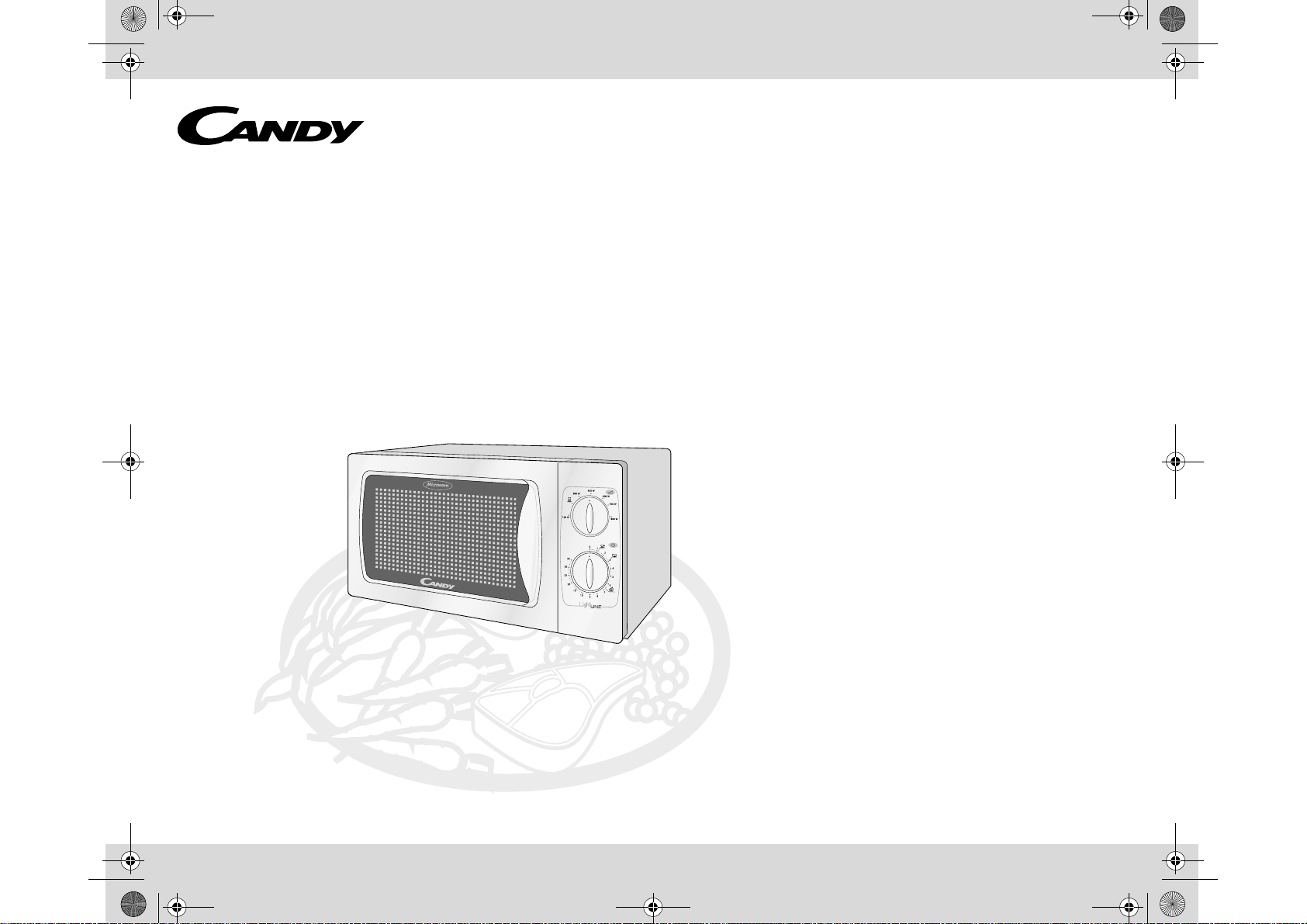
MIKROWELLENGERÄT
Bedienungsanleitung
MSA 20 M
Das Mikrowellengerät................................................................2
Zubehör.....................................................................................2
Bedienfeld ................................................................................2
Verwendung dieser Bedienungsanleitung ................................3
Sicherheitshinweise ..................................................................3
Installation Ihres Mikrowellengeräts..........................................4
Wenn Sie sich nicht sicher sind oder beim
Garen/Aufwärmen Probleme auftreten.....................................5
Aufwärmen/Garen.....................................................................5
Leistungsstufe...........................................................................5
Die Garzeit anpassen................................................................6
Manuelles Auftauen von Speisen .............................................6
Gebrauch der Funktion Instant-Aufwärmen..............................6
Einstellungen für Instant-Aufwärmen........................................6
Leitfaden für Kochgeschirr........................................................7
Reinigung Ihres Mikrowellengeräts...........................................8
Technische Daten.....................................................................8
MSA20M_D_vi.fm Page 1 Wednesday, October 24, 2001 10:37 AM
2
D
Das Mikrowellengerät
Zubehör
Je nach Modell, für das Sie sich entschieden haben, werden mehrere
Zubehörteile mitgeliefert, die auf verschiedene Weise eingesetzt
werden können:
☛ Verwenden Sie die Mikrowelle NICHT ohne den Walzenring und
den Drehteller.
Bedienfeld
1. Koppler, bereits über der Motorwelle im Boden des
Geräts angebracht.
Zwec:
Der Koppler sorgt für die Rotation des
Drehtellers.
2. Walzenring, in die Mitte des Garraums einzusetzen.
Zwec:
Der Walzenring trägt den Drehteller.
3. Drehteller: auf den Walzenring aufzusetzen, wobei das
Mittelstück auf dem Koppler aufsitzt.
Zwec:
Der Drehteller dient als Hauptgarfläche; er
kann zum Säubern problemlos
abgenommen werden.
LÜFTUNGSÖFFNUNGEN
TÜRRIEGEL
TÜR
DREHTELLER
KOPPLER
WALZENRING
SICHERHEITS-
VERRIEGELUNGSÖFFNUNGEN
BELEUCHTUNG
KONTROLLSCHALTE
R FÜR DIE
KOCHLEISTUNG
ZEITSCHALTER
GRIFF
1. AUFTAUEN
2. KONTROLLSCHALTER FÜR DIE
KOCHLEISTUNG
3. ZEITSCHALTER
4. INSTANT-AUFWÄRMEN
1
4
2
3
MSA20M_D_vi.fm Page 2 Wednesday, October 24, 2001 10:37 AM
3
D
Verwendung dieser Bedienungsanleitung
Sie haben soeben ein CANDY-Mikrowellengerät erworben. Ihre
Bedienungsanleitung enthält wertvolle Informationen über das Garen
mit Ihrer Mikrowelle:
• Sicherheitshinweise
• Geeignetes Zubehör und Kochgeschirr
• Nützliche Küchentips
Vorne in Ihrem Bedienungsheft finden Sie Abbildungen Ihres
Mikrowellengeräts und, was noch wichtiger ist, das Bedienfeld, damit
Sie die entsprechenden Tasten schneller finden.
Die Schritt-für-Schritt-Verfahren verwenden zwei verschiedene
Symbole:
SICHERHEITSHINWEISE, UM EINEN M
ÖGLICHEN KONTAKT
MIT ÜBERMÄSSIGER MIKROWELLENENERGIE ZU
VERMEIDEN
Wenn die folgenden Sicherheitshinweise nicht beachtet werden, setzt man sich
unter Umständen gesundheitsschädlicher Mikrowellenenergie aus.
(a) Auf keinen Fall sollte man versuchen, das Mikrowellengerät bei geöffneter Tür
zu betreiben, an den Sicherheitsriegeln (Türriegeln) zu hantieren oder
Gegenstände in die Sicherheits-Verriegelungsöffnungen zu stecken.
(b) Schieben Sie keinen Gegenstand zwischen die Gerätetür und die Frontseite.
Achten Sie darauf, daß sich auf den Dichtflächen keine Rückstände von
Speisen oder Reinigungsmitteln ablagern. Stellen Sie sicher, daß die Tür und
die Dichtflächen der Tür stets sauber sind, indemSie nach demGebrauch erst
mit einem feuchten Tuch darüberwischen und anschließend mit einem
weichen, trockenen Tuch nachwischen.
(c) Verwenden Sie niemals ein beschädigtes Mikrowellengerät, sondern lassen
Sie es durch einen qualifizierten Kundendiensttechniker, der vom Hersteller
geschult wurde, reparieren.
(1) Tür, Türdichtungen und Dichtflächen
(2) Türscharniere (gebrochen oder locker)
(3) Netzkabel
(d) Das Mikrowellengerät sollte nur durch einen qualifizierten
Kundendiensttechniker, der vom Hersteller geschult wurde, repariert oder
reguliert werden.
Sicherheitshinweise
Wichtige Sicherheitshinweise.
Sorgfältig lesen und für Gebrauch in Zukunft aufbewahren. Bevor
Sie Speisen oder Getränke in Ihrem Mikrowellengerät erhitzen,
achten Sie bitte darauf, daß die folgenden Sicherheitsvorkehrungen
erfüllt sind:
1. Verwenden Sie KEIN Kochgeschirr aus Metall in Ihrer Mikrowelle:
• Metallbehälter
• Geschirr mit Gold- oder Silberdekor
• Spieße, Gabeln etc.
Grund
: Es kann zu elektrischer Lichtbogen- oder Funkenbildung kommen,
die das Gerät beschädigen kann.
2. Erhitzen Sie KEINE:
• Luftdicht oder vakuum-versiegelten Flaschen, Gläser, Behälter.
Bsp.: Gläser mit Babynahrung
• Luftdichten Lebensmittel.
Bsp.: Eier, Nüsse in der Schale, Tomaten
Grund
: Der erhöhte Druck kann zur Explosion führen.
Tip:
Entfernen Sie Verschlüsse und schneiden Sie Haut, Tüten etc. ein.
3. Setzen Sie das Mikrowellengerät NICHT in Betrieb, wenn es leer ist
Grund
: Die Innenwände könnten beschädigt werden
Tip:
Lassen Sie stets ein Glas Wasser im Garraum. Das Wasser
absorbiert die Mikrowellen, wenn Sie versehentlich das Gerät
einschalten.
4. Decken Sie die hinteren Lüftungslöcher NICHT mit Stoff oder Papier ab.
Grund
: Das Stoff- oder Papiermaterialkönnte Feuer fangen,wenn Heißluft
austritt.
5. Verwenden Sie IMMER Topfhandschuhe oder -lappen, wenn Sie einen Teller
aus dem Garraum nehmen.
Grund
: Manche Teller absorbieren Mikrowellen, und das Gargut überträgt
immer Wärme auf den Teller. Die Teller sind daher heiß.
6. Berühren Sie KEINE Heizelemente oder die Innenwände des Garraums.
Grund
: Diese Wände können auch noch nach Ende des Garvorgangs
Verbrennungen hervorrufen, auch wenn sie nicht den Eindruck
erwecken. Achten Sie darauf, daß kein brennbares Material mit
Bereichen des Garraums in Kontakt kommt. Lassen Sie den
Garraum immer erst abkühlen
7. Um Brandgefahr im Garraum zu vermeiden:
• Lagern Sie kein brennbares Material im Garraum
• Entfernen Sie Drahtverschlüsse von Papier- oder Plastiktüten
• Trocknen Sie kein Zeitungspapier in der Mikrowelle
• Wenn Sie Rauch feststellen, halten Sie die Gerätetür geschlossen und
schalten Sie das Gerät aus oder ziehen Sie das Netzkabel.
8. Geben Sie vor allem Acht, wenn Sie Flüssigkeiten oder Babynahrung
erhitzen.
• Falls erforderlich, rühren Sie während des Erhitzens um, und rühren Sie
IMMER nach dem Erhitzen um.
• Geben Sie Acht, wenn Sie nach dem Erhitzen den Behälter anfassen, da
dieser sehr heiß werden kann.
• Es besteht ein Risiko von verzögertem Kochen.
☛✉
Wichtig Bemerkung
MSA20M_D_vi.fm Page 3 Wednesday, October 24, 2001 10:37 AM
4
D
Sicherheitshinweise(Fortsetzung)
• Um ein verzögertes Kochen und mögliches Verbrühen zu vermeiden,
sollten Sie einen PlastiklöffeloderGlasstabindasGetränkgebenundvor,
während und nach dem Erhitzen umrühren.
Grund
: Beim Erhitzen von Flüssigkeiten kann sich der Siedepunkt
verzögern, d.h., daß das Kochen erst einsetzen kann,
nachdem der Behälter bereits entnommen wurde. Dabei kann
es zu Verbrühungen kommen.
• Im Falle einer Verbrühung treffen Sie folgende Erste-Hilfe-Maßnahmen:
* Kühlen Sie den verbrühten Bereich mindestens 10 Minuten in kaltem
Wasser
* Legen Sie einen sauberen, trockenen Verband auf
* Tragen Sie keine Cremes, Öle oder Lotionen auf.
• Füllen Sie einen Behälter NIEMALS bis zum Rand und wählen Sie einen
Behälter, der oben weiter ist als unten, damit die Flüssigkeit nicht
überkocht. Flaschen mit engem Hals können zudem bei Überhitzung
explodieren.
•PrüfenSieIMMER die Temperatur von Babynahrung oder -milch, bevor
Sie das Baby füttern.
• Erhitzen Sie ein Babyfläschchen NIEMALS mit aufgesetztem
Gummisauger, da die Flasche bei Überhitzung explodieren kann.
9. Achten Sie darauf, das Netzkabel nicht zu beschädigen.
• Tauchen Sie das Netzkabel oder den Netzstecker nicht in Wasser und
halten Sie das Netzkabel von heißen Flächen fern.
• Verwenden Sie dieses Gerät nicht, wenn das Netzkabel oder der
Netzstecker beschädigt sind.
10. Halten Sie eine Armeslänge Abstand vom Gerät, wenn Sie die Gerätetür
öffnen.
Grund
: Ausströmende heiße Luft oder Dampf können Verbrennungen
hervorrufen.
11. Halten Sie den Garraum sauber.
Grund
: Speisereste oder Ölspritzer, die am Boden oder den Wänden des
Garraums kleben, können Lackschäden hervorrufen und die
Leistungsfähigkeit des Geräts herabsetzen.
12. Beim Betrieb des Geräts, vor allem im Auftau-Modus, können klickende
Geräusche zu hören sein.
Grund
: Dieses Geräusch ist normal. Es entsteht manchmal bei einem
Wechsel der elektrischen Leistungsabgabe.
13. Wenn das Mikrowellengerät in leerem Zustand funktioniert, schaltet das Gerät
sich, aus Sicherheitsgründen, automatisch aus. Nach 30 Minuten können Sie
das Gerät wieder in Betrieb nehmen.
WICHTIGE SICHERHEITSHINWEISE
Sehen Sie hin und wieder in den Garraum, wenn Essen in Einwegbehältern aus
Plastik, Papier oder anderen brennbaren Materialien erwärmt oder gegart wird.
WICHTIG
Kleinen Kindern sollte es NIEMALS erlaubt sein, das Mikrowellengerät zu
bedienen oder damit zu spielen. Bei Betrieb des Geräts sollten sich kleine Kinder
niemals unbeaufsichtigt in der Nähe aufhalten. Gegenstände, die für Kinder
interessant sind, sollten niemals in oder direkt über der Mikrowelle aufbewahrt
oder versteckt werden.
InstallationIhres Mikrowellengeräts
Stellen Sie das Gerät auf einerflachen, ebenen Oberflächeauf, diedas
Gewicht des Geräts sicher tragen kann.
☛ Verstopfen Sie niemals dieLüftungsöffnungen, da sich das Gerät
sonst überhitzen kann und sich automatisch ausschaltet. Es läßt
sich erst wieder in Betrieb nehmen, wenn es genügend abgekühlt
ist.
☛ Zu Ihrer persönlichen Sicherheit schließen Sie das Kabel an eine
3polige 230V, 50Hz AC geerdete Steckdose an. Wenn das Netzkabel
dieses Geräts beschädigt ist, muß es durch ein Spezialkabel ersetzt
werden
(I-SHENG SP022, KDK KKP4819D, EUROELECTRIC
3410, SAMIL SP-106B, MOONSUNG EP-48E, HIGH PROJECT
H.P 3).
Wenden Sie sich zum Austausch des Kabels an Ihren
Fachhändler.
☛ Installieren Sie das Mikrowellengerät nicht in heißer oder
feuchter Umgebung, etwa neben einem Backofen oder
Heizkörper. Die Netzanschlußdaten des Geräts müssen beachtet
werden, jedes Verlängerungskabel muß denselben Standard
aufweisen wie das mit dem Gerät gelieferte Netzkabel. Wischen
Sie Garraum und Türdichtung mit einem feuchten Tuch ab, bevor
Sie Ihr Mikrowellengerät erstmals in Betrieb nehmen.
1. Wenn Sie Ihr Mikrowellengerät installieren, überzeugen
Sie sich, daß das Gerät ausreichend Luftzufuhr hat,
indem Sie nach hinten und zu beiden Seiten mindestens
10 cm Freiraum und nach oben mindestens 20 cm
Freiraum lassen.
2. Entnehmen Sie alles Verpackungsmaterial aus dem
Gerät.
Setzen Sie den Walzenring und den Drehteller ein.
Überzeugen Sie sich, daß der Drehteller frei rotieren
kann.
3. Wenn Sie Ihr Mikrowellengerät installieren, überzeugen
Sie sich, daß der Stecker erreichbar bleibt.
20 cm
nach oben
10 cm
nach hinten
10 cm
zu beiden
Seiten
MSA20M_D_vi.fm Page 4 Wednesday, October 24, 2001 10:37 AM
5
D
Wenn Sie sich nicht sichersind oder beim Garen/
Aufwärmen Problemeauftreten
Wenn eins der unten aufgelisteten Probleme auftaucht, probieren Sie
die vorgeschlagenen Lösungen aus:
◆ Dies ist normal:
• Kondensation im Garraum
• Luftströmung um die Gerätetür und das Außengehäuse
• Lichtreflexion um die Gerätür und das Außengehäuse
• Dampf, der um die Tür oder aus den Lüftungsöffnungen austritt
◆ Das Gerät schaltet sich nicht ein, wenn Sie den ZEITSCHALTER drehen.
• Ist die Tür richtig geschlossen?
◆ Das Gargut wird überhaupt nicht erwärmt.
• Haben Sie die Garzeit richtig eingestellt mit dem ZEITSCHALTER?
• Ist die Tür geschlossen?
• Haben Sie eventuell den Stromkreis überlastet und einen Kurzschluß
verursacht?
◆ Das Gargut wird entweder zu stark oder zu schwach gegart.
• War die Garzeit an die Art der Speise angepaßt?
• War die richtige Leistungsstufe eingestellt?
◆ Im Garraum kommt es zu Funkenbildung und Knacken (Lichtbogenbildung).
• Haben Sie einen Teller mit Metalldekor verwendet?
• Haben Sie eine Gabel oder sonstiges Metallbesteck im Garraum
vergessen?
• Berührt Alufolie die Innenwände?
◆ Das Gerät verursacht Störungen bei Radio- oder Fernsehgeräten.
• Wenn das Mikrowellengerät in Betrieb ist, können geringfügige Störungen
an Radio oder Fernseher auftreten. Dies ist normal. Um das Problem zu
beheben, stellen Sie das Mikrowellengerät abseits von Fernsehern,
Radios und Antennen auf.
✉ Wenn Sie mit Hilfe der obigen Hinweise das Problem nicht lösen
können, wenden Sie sich bitte an Ihren Fachhändler oder
CANDY-Kundendienst.
Aufwärmen/Garen
Im Folgenden wird erläutert, wie Sie Speisen garen oder aufwärmen.
Überprüfen Sie IMMER die Geräteeinstellungen, bevor Sie sich von
dem eingeschalteten Gerät entfernen.
Geben Sie erst das Gargut auf den Drehteller. Schließen Sie die Tür.
☛ Schalten Sie das Mikrowellengerät NIEMALS in leerem Zustand
ein.
✉ Sie können die Leisungsstufe während des Kochens ändern, indem
Sie den
KONTROLLSCHALTER FÜR DIE KOCHLEISTUNG
nach Erfordernis drehen.
Leistungsstufe
Sie haben die Wahl zwischen den unten aufgeführten
Leistungsstufen:
✉ Wenn Sie eine höhere Leistungsstufe wählen, muß die Garzeit
verkürzt werden.
✉ Wenn Sie eine niedrigere Leistungsstufe wählen, muß die
Garzeit verlängert werden.
1. Wählen Sie mit dem KONTROLLSCHALTER FÜR DIE
KOCHLEISTUNG die maximale Leistungsstufe (800W).
2. Stellen Sie die Garzeit ein, indem Sie den
ZEITSCHALTER nach Erfordernis drehen.
Die Beleuchting schaltet sich ein und der Drehteller dreht.
Leistungsstufe
Ausgabeleistung
HOCH
AUFWÄRMEN
MITTEL bis HOCH
MITTEL
MITTEL bis NIEDRIG
AUFTAUEN ( )
NIEDRIG
800 W
700 W
600 W
450 W
300 W
180 W
100 W
MSA20M_D_vi.fm Page 5 Wednesday, October 24, 2001 10:37 AM
6
D
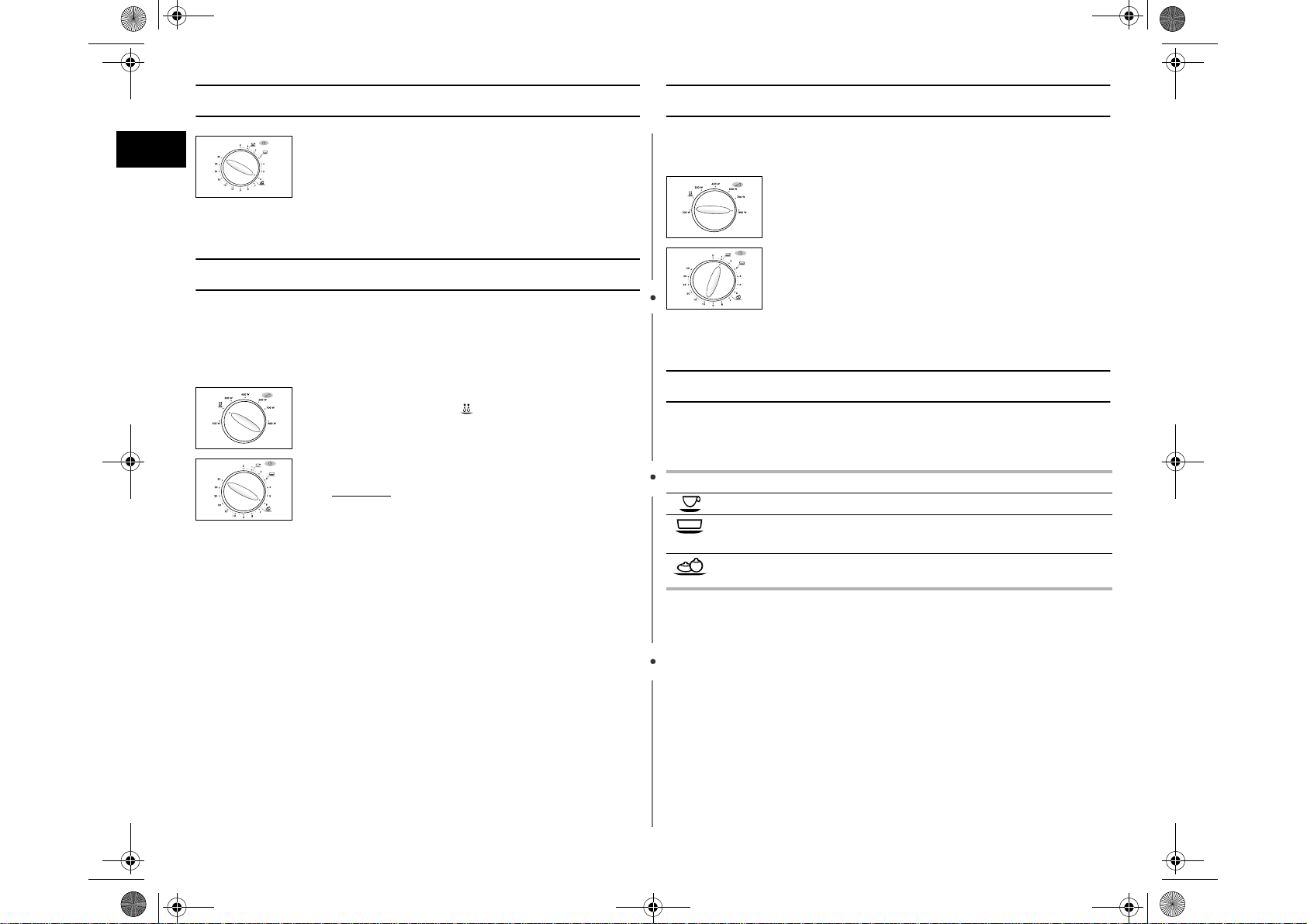
Die Garzeit anpassen
Manuelles Auftauen von Speisen
Die Einstellung Auftauen ermöglicht Ihnen, Fleisch, Geflügel und
Fisch aufzutauen.
Legen Sie zuerst die tiefgefrorene Speise in die Mitte des sich
drehenden Plattentellers und schließen Sie dann die Tür.
✉ Verwenden Sie nur Geschirr, das mikrowellengeeignet ist.
Gebrauch derFunktion Instant-Aufwärmen
Zuerst die Speise in die Mitte des sich drehenden Plattentellers legen
und die Tür schließen.
✉ Verwenden Sie nur Geschirr, das mikrowellengeeignet ist.
Einstellungen für Instant-Aufwärmen
Hier einige Tips und Ratschläge, die Sie beim Kochen oder Erhitzen
von Speisen bei der Einstellung Instant-Aufwärmen befolgen sollten.
Sie können die restliche Garzeit anpassen, indem Sie den
ZEITSCHALTER nach Erfordernis drehen.
1. Stellen Sie den KONTROLLSCHALTER FÜR DIE
KOCHLEISTUNG auf (180W).
2. Den ZEITSCHALTER auf die entsprechende Zeit
einstellen.
Ergebnis :
Beginn des Auftauens.
1. Den KONTROLLSCHALTER FÜR DIE
KOCHLEISTUNG auf Höchstleistung stellen.
2. Den ZEITSCHALTER auf Instant-Aufwärmen einstellen.
(Getränke, Suppen/Soßen, frisches Gemüse).
Symbole Serviertyp Portion Kochzeit Ruhezeit
Getränke 150 ml 1 Min 10 Sek. 1-2 Min.
Suppen/Soßen
(gekühlt)
200-250 ml 3 Min 2-3 Min.
Frisches
Gemüse
300-350 g 6 Min 40 Sek. 3 Min.
MSA20M_D_vi.fm Page 6 Wednesday, December 19, 2001 4:05 PM
7
D
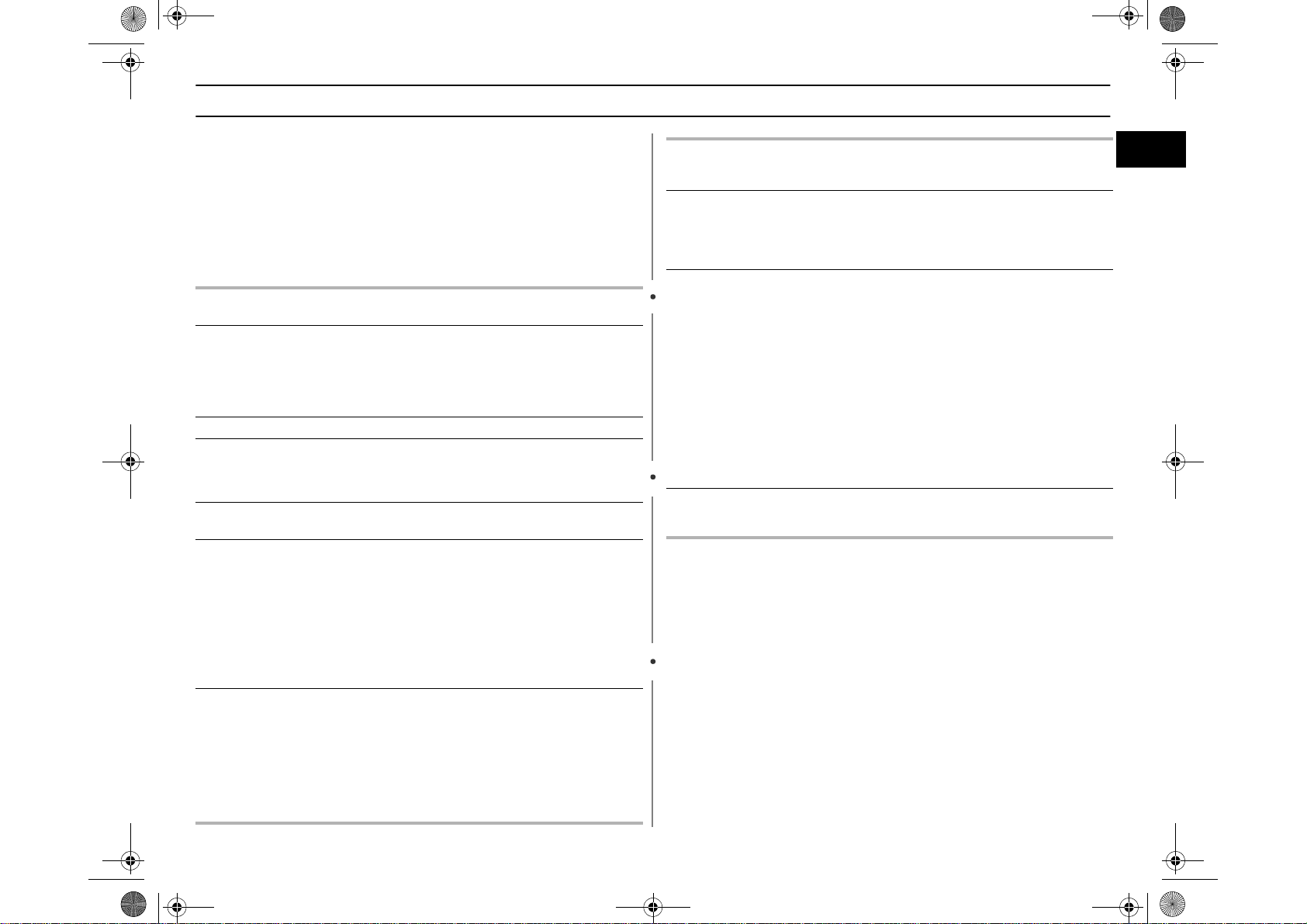
Leitfaden für Kochgeschirr
Um Lebensmittel im Mikrowellengerät garen zu können, müssen die
Mikrowellen das Lebensmittel durchdringen können, ohne vom
verwendeten Geschirr reflektiert oder absorbiert zu werden.
Aus diesem Grund muss geeignetes Geschirr ausgewählt werden. Ist
das Geschirr als mikrowellengeeignet markiert, brauchen Sie sich
keine Sorgen zu machen.
Die folgende Tabelle enthält verschiedene Geschirrtypen mit Angabe,
ob und wie es in einem Mikrowellengerät benutzt werden muss.
✓
=Empfohlen
✓ ✗
= Vorsicht
✗
= Unsicher
Geschirr Mikrowellen
geeignet
Anmerkungen
Aluminiumfolie ✓ ✗ Kann in kleinen Mengen zum Schutz
vor Bereichen gegen Überkochen
benutzt werden. Befindet sich die Folie
zu nahe den Wänden oder wird zu viel
Folie benutzt, kann Funkenbildung
eintreten.
Bräunungsplatte
✓ Höchstens acht Minuten vorwärmen.
Porzellan- und
Tongeschirr
✓ Porzellan, Keramik, glasierte
Tonwaren und feines Porzellan sind
gewöhnlich geeignet, außer sie sind
mit einem Metallrand verziert.
Polyester-Karton
Geschirr
✓ Einige tiefgefrorene Lebensmittel sind
in solchem Einweggeschirr verpackt.
Fast-Food Verpackung
• Polystyrol Tassen
und Behälter
• Papierbetel oder
Zeitungspapier
• Recycling-Papier
oder
Metallausrüstung
✓
✗
✗
Kann zum Erwärmen von
Lebensmitteln benutzt werden.
Überhitzen kann ein Schmelzen des
Polystyrols verursachen.
Kann sich entzünden.
Kann Funkenbildung verursachen.
Glasware
• Feuerfestes
Glasgeschirr
• Dünne Glasware
• Glaskrüge
✓
✓
✓
Kann benutzt werden, wenn nicht mit
einem Metallrand verziert.
Kann zum Erwärmen von warmen
Lebensmitteln oder Flüssigkeiten
benutzt werden. Dünnes Glas kannbei
plötzlicher Erwärmung zerbrechen
oder reißen.
Deckel entfernen. Nur zum Erwärmen.
Metall
• Geschirr
• Gefrierbeutel-Clips
✗
✗
Kann Funkenbildung oder Feuer
verursachen.
Papier
• Teller, Tassen,
Servietten und
Küchenpapier
• Recycling-Papier
✓
✗
Für kurze Garzeiten und Erwärmen.
AuchzumAbsorbierenüberschüssiger
Feuchtigkeit.
Kann Funkenbildung verursachen.
Kunststoff
• Behälter
•Folie
• Gefrierbeutel
✓
✓
✓ ✗
Vor allem, wenn aus wärme-
beständigen Thermoplastik. Einige
andere Kunststoffe können sich bei
hoher Temperatur verformen oder
verfärben. Keinen Melamin-Kunststoff
verwenden.
Kann zum Erhalt der Feuchtigkeit
benutzt werden. Sollte Lebensmittel
nicht berühren. Die Folie vorsichtig
entfernen, das heiber Dampf
entweicht.
Nur wenn siede- oder ofenfest. Darf
nicht luftdicht sein. Bei Bedarf mit
einer Gabel Luftlöcher einstechen.
Wachspapier
✓ Kann zum Erhalt der Feuchtigkeit und
Vermeidung von Spritzen benutzt
werden.
MSA20M_D_vi.fm Page 7 Wednesday, October 24, 2001 10:37 AM
8
D
Reinigung IhresMikrowellengeräts
Die hier angeführten Teile Ihres Mikrowellengeräts sollten
regelmäßig gereinigt werden, um die Anreicherung von Fett- und
Essensresten zu vermeiden:
• die inneren oder äußeren Oberflächen
• die Tür und die Türverschlüsse
• der sich drehende Plattenteller und die Rollringe
☛ Vergewissern Sie sich STETS, daß die Türverschlüsse sauber
sind und die Tür richtig schließt.
1. Reinigen Sie die äußeren Oberflächen mit einem weichen Lappen und
warmem Seifenwasser. Klarspülen und trocknen.
2. Etwaige Spritzer oder Flecken an den inneren Oberflächen oder an den
Rollringen mit einem seifigen Lappen entfernen. Klarspülen und trocknen.
3. Um hart gewordene Essensreste zu lösen und Gerüche zu beseitigen, eine
Tasse mit verdünntem Zitronensaft auf den sich drehende Plattenteller stellen
und zehn Minuten bei Höchstleistung erhitzen.
4. Den geschirrspülerfesten Teller immer wann nötig waschen.
✉ Achten Sie darauf, daß KEIN Wasser in die Luftlöcher kommt.
NIEMALS abreibende Reinigungsmittel oder chemische
Lösungsmittel verwenden. Gehen Sie insbesondere beim
Reinigen der Türverschlüsse gewissenhaft vor, um
sicherzustellen, daß sich keine Partikel abgesetzt haben:
• Die Anhäufung von Partikel führt dazu, daß die Tür nicht richtig
schließt.
Technische Daten
CANDY strebt ständig danach, ihre Produkte zu verbessern. Aus
diesem Grund sind die technischen Daten und diese
Bedienungsanweisungen Gegenstand von Änderungen ohne
Ankündigung.
Modell MSA 20 M
Netzspannung
230V ~ 50 Hz
Leistungsaufnahme
Microwelle
1150 W
Ausgangsleistung
100 W / 800 W (IEC-705)
Stromfrequenz
2450 MHz
Magnetron
OM75S(31)
Kühlmethode
Cooling fan motor
Abmessungen
(BxHxT)
Außenseite
Garraum
489 x 275 x 371 mm
306 x 211 x 320 mm
Volumen
20 Liter
Gewicht
Netto
Circa 123.5 kg
MSA20M_D_vi.fm Page 8 Wednesday, October 24, 2001 10:37 AM
FOUR À MICRO–ONDES
Mode d’emploi
MSA 20 M
Le four.......................................................................................2
Accessoires...............................................................................2
Tableau de commandes ...........................................................2
Utilisation du mode d’emploi.....................................................3
Précautions de sécurité.............................................................3
Installation.................................................................................4
Que faire en cas de doute ou de problème...............................5
Cuire / Réchauffer.....................................................................5
Niveaux de puissance...............................................................5
Changer le temps de cuisson...................................................6
Décongélation manuelle............................................................6
La fonction Réchauffage instantané .........................................6
Réglages de la fonction Réchauffage instantané .....................6
Guide d’ustensiles.....................................................................7
Nettoyage de votre four à micro-ondes.....................................8
Caractéristiques techniques......................................................8
MSA20M_FR_vi.fm Page 1 Friday, October 26, 2001 1:11 PM
2
F
Le four
Accessoires
Dépendant du modèle que vous avez acheté, vous avez obtenu
quelques accessoires, que vous pouvez utiliser de manières différentes.
☛ NE PAS utiliser le four sans l’anneau tournant et le plateau
tournant.
Tableaude commandes
1. Coupleur, placé déjà sur une partie du moteur au fond
du four.
But:
Le coupleur fait tourner l’anneau tournant.
2. Anneau tournant, doit être placé au centre du four.
But:
L’anneau tournant supporte le plateau tournant.
3. Plateau tournant, doit être placé sur le coupleur.
But:
le plateau tournant serve comme la surface de
cuire principal. Vous pouvez l’enlever
simplement pour le nettoyer.
OUÏES DE VENTILATION
LOQUETS DE
VERROUILLAGE
PORTE
PLATEAU
TOURNANT
COUPLEUR
ANNEAU
TOURNANT
ENCOCHES DE
VERROUILLAGE
LUMIÈRE
CONTRÔLE DE LA
PUISSANCE
VARIABLE
MINUTEUR
POIGNÉE
1. DÉCONGÉLATION
2. CONTRÔLE DE LA PUISSANCE
VARIABLE
3. MINUTEUR
4. RÉCHAUFFAGE INSTANTANE
1
4
2
3
MSA20M_FR_vi.fm Page 2 Friday, October 26, 2001 1:11 PM
3
F
Utilisation du moded’emploi
Vous avez acheté un four à micro–ondes CANDY. Votre mode
d’emploi contient beaucoup d’informations valables sur l’emploi de
votre four à micro–ondes :
• Précautions de sécurité
• Accessoires et ustensiles
• Uneguidedecuisson
Au début du livret vous trouverez des illustrations du four et, plus
important, du tableau de commandes que vous aiderez à trouver les
boutons plus facilement.
Dans les procédures pas à pas, deux symboles différents sont
employés:
PRECAUTIONS A EVITER L’EXPOSITION POSSIBLE A
l’ENERGIE MICRO
–ONDES EXCESSIVE.
Si vous n’observez pas les précautions de sécurité suivantes, vous risquez de
vous exposer à l’énergie micro-ondes nuisibles.
(a) N’essayez jamais de faire fonctionner le four avec la porte ouverte. Il est
important de ne pas enlever ni altérer les loquets de sécurité (loquets de
verrouillage) ou d’insérer quelque chose dans les encoches de verrouillage.
(b) Vous ne devez jamais placer un objet devant la porte du four. Eviter que les
restes d’aliments ou les résidus du nettoyant s’accumulent sur les surfaces.
Assurez–vous que la porte et les surfaces des fermetures restent propres en
les nettoyant d’abord avec une étoffe humide et ensuite avec une étoffe
douce et sèche.
(c) Ne faites pas fonctionner le four s’il est endommagé avant qu’il soit réparé par
un technicien de service micro–ondes formé par le fabricant.
Il est particulièrement important que la porte du four se ferme correctement et
que les éléments suivants ne soient pas endommagées:
(1) La porte, les fermetures de la porte et les surfaces des fermetures
(2) Les charnières de la porte (ni cassés, ni desserrés),
(3) Le câble secteur
(d) Cefour doitêtre exclusivementréviséouréparé par untechnicien deservice
micro–ondes formé par le fabricant.
Précautions de sécurité
Précautions de sécurité importantes. Lire attentivement et garder pour
emploi dans le futur. Avant de faire chauffer des aliments ou des
liquides dans votre four à micro-ondes, veuillez vérifier que les
précautions de sécurité suivantes ont été prises.
1. NE PAS utiliser d’ustensiles de cuisson métalliques dans le four à micro-
ondes.
• Boîtes métalliques
• Assiettes et plats ornés de dorures ou argentés
• Brochettes, fourchettes, etc.
Raison : Un arc électrique ou des projections peuvent se produire et
endommager le four.
2. NE PAS faire chauffer :
• De bouteilles, pots, conserves hermétiquement fermés ou sous-vide
Ex) Comme les petits pots pour bébé
• D’aliments hermétiques par nature
Ex) comme les oeufs, les noix dans leur coquille, les tomates
Raison : L’augmentation de la pression peut provoquer leur explosion.
Conseil : Enlever le couvercle, percer l’enveloppe, le sac, etc. de quelques
trous
3. NE PAS faire fonctionner le four à micro-ondes à vide.
Raison : Les parois du four pourraient être endommagées.
Conseil : Toujours laisser un verre d’eau à l’intérieur du four.
L’eau absorbera les micro-ondes si vous faites démarrer le four
accidentellement alors qu’il est vide
4. NE PAS obstruer les ouïes de ventilation situées à l’arrière avec du papier ou
du tissu.
Raison : Le papier ou le tissu pourrait s’enflammer car de l’air chaud est
évacué du four.
5. TOUJOURS mettre des gants pour enlever un plat du four.
Raison : Certains plats absorbent les micro-ondes et la chaleur est toujours transférée
des aliments vers le plat. Les plats sont donc chauds.
6. NE PAS toucher les éléments chauffants, ni l’intérieur du four.
Raison : Ces parois peuvent être suffisamment chaudes pour brûler, même
une fois la cuisson terminée et même si elles ne semblent pas être
chaudes. Ne pas mettre en contact de matériaux inflammables
avec l’intérieur du four. Laisser d’abord le four refroidir.
7. Afin de éviter le risque d’incendie à l’intérieur du four :
• Ne pas ranger de matériaux inflammables dans le four
• Enlever les liens métalliques torsadés des emballages en papier ou en
plastique
• Ne pas utiliser le four à micro-ondes pour faire sécher des journaux
• En cas d’émanation de fumée, laissez la porte du four fermée et éteindre
ou débrancher le four.
8. Prendre toutes les précautions nécessaires pour faire chauffer des liquides ou
des aliments pour bébé.
• TOUJOURS laisser reposer au moins 20 secondes après l’extinction du
four, afin que la température se répartisse uniformément.
• Remuer pendant la cuisson, si nécessaire, mais TOUJOURS remuer
après la cuisson.
☛✉
Important Remarque
MSA20M_FR_vi.fm Page 3 Friday, October 26, 2001 1:11 PM
4
F
Précautions de sécurité(suite)
• Prendre garde à la manipulation du plat, après cuisson. Vous pouvez
vous brûler s’il est très chaud.
• Il y a des risques de projections bouillantes, même après la cuisson
• Pour éviter ces projections bouillantes et de possible brûlures, vous
pouvez placer une cuillère en plastique ou une baguette en verre dans le
liquide et remuer avant, pendant et après la cuisson.
Raison :
Lorsque des liquides chauffent, le point d’ébullition peut être
différé ; cela signifie que des projections bouillantes peuvent
se produire après avoir retiré le récipient du four et peuvent
provoquer des brûlures.
• En cas de brûlures, suivez ces instructions de PREMIERS SECOURS :
* Immerger la zone brûlée dans l’eau froide pendant au moins 10
minutes.
* Couvrir avec un vêtement propre et sec.
* N’appliquer aucune crème, huile ou lotion.
• NE JAMAIS remplir le récipient jusqu’au bord et choisir un récipient plus
large en haut qu’en bas afin d’éviter que le liquide ne déborde au moment
de l’ébullition. Les bouteilles avec un col rétréci peuvent également
exploser en cas de surchauffe.
• TOUJOURS vérifier la température des aliments ou du lait pour bébé
avant de le lui donner.
• NE JAMAIS faire chauffer un biberon avec la tétine, le biberon pourrait
exploser en cas de surchauffe.
9. Veiller à ne pas endommager le câble secteur
• Ne pas faire tremper le câble secteur dans l’eau et le tenir éloigné des
surfaces chaudes.
• Ne pas faire fonctionner cet appareil si son câble ou sa prise secteur sont
endommagés.
10. Se tenir éloigné du four lors de l’ouverture de la porte.
Raison : L’air chaud ou la vapeur qui s’en échappe peut provoquer des
brûlures.
11. Maintenir l’intérieur du four propre.
Raison : Des particules alimentaires ou des projections d’huile sur les parois
du four peuvent endommager la surface et réduire l’efficacité du four.
12. Vous remarquerez peut-être un déclic pendant le fonctionnement du four
(particulièrement lors des opérations de décongélation).
Raison : C’est normal et dû au changement de la puissance électrique.
13. Lorsque le four à micro-ondes fonctionne à vide, le secteur est
automatiquement coupé par mesure de sécurité. Vous pourrez le faire
fonctionner à nouveau normalement après 30 min.
CONSIGNES DE SÉCURITÉ IMPORTANTES
Pendant la cuisson, regardez de temps en temps à l’intérieur du four lorsque les
aliments se trouvent dans des emballages jetables en plastique, en papier ou
autres matériaux combustibles.
IMPORTANT
Les jeunes enfants ne doivent JAMAIS utiliser ou jouer avec le four à micro-
ondes. Ni être laissés sans surveillance près du four à micro-ondes lors de son
utilisation. Les objets qui intéressent les enfants ne doivent pas être placés ni
cachés au-dessus du four.
Installation
Placer le four sur une surface plate et horizontale qui est assez forte
pour porter le poids du four.
☛ Ne jamais bloquer les ouvertures de ventilation. Ainsi le four peut
se surchauffer et se débrancher automatiquement. On ne peut
pas faire fonctionner le four jusqu’au moment où il s’est refroidi
suffisamment.
☛ Par mesure de sécurité personnelle, branchez le câble secteur à
une prise de terre à 3 broches, 230 Volt, 50Hz, CA. Si le câble
secteur est endommagé, vous devez le remplacer par un câble
spécial (I-SHENG SP022, KDK KKP4819D, EUROELECTRIC
3410, SAMIL SP-106B, HIGH PROJECT H.P 3, MOONSUNG
EP-48E). Contactez votre revendeur local pour le faire remplacer.
☛ Ne pas installer le four dans un environnement chaud et humide,
par exemple à côté d’un four traditionnel ou un radiateur. Vous
devez tenir compte des spécifications de raccordement du four et
si vous utilisez une rallonge, cette rallonge doit correspondre aux
spécifications du câble fourni avec le four. Avant d’utiliser votre
four pour la première fois, nettoyez l’intérieur fu four, la porte et
ses fermetures au moyen d’une étoffe humide.
1. Assurez-vous que la ventilation est suffisante en laissant
10 cm d’espace au minimum derrière le four et à côté du
four et 20 cm au minimum au-dessus du four.
2. Enlevez tous les matériaux d’emballage à l'intérieur du
four.
Installez l’anneau tournant et le plateau tournant.
Contrôlez si le plateau peut tourner librement.
3. On doit positionner le four tellement que la prise soit
accessible.
10 cm
derrière
10 cm
à
côté
20 cm
au-dessus
MSA20M_FR_vi.fm Page 4 Friday, October 26, 2001 1:11 PM
5
F
Que faire encas de doute ou de problème
Si vous rencontrez un des problèmes listés ci-dessous, essayez une des
solutions proposées.
◆ Ce qui est normal :
• Présence de condensation à l’intérieur du four
• Courant d’air autour de la porte et à l’extérieur
• Réflexion lumineuse autour de la porte et à l’extérieur
• Vapeur s’échappant de la porte ou des évents
◆ Le four ne démarre pas lorsque vous tournez le MINUTEUR .
• La porte est-elle complètement fermée ?
◆ Les aliments ne sont pas du tout cuits
• Avez-vous réglé correctement le minuteur?
• La porte est-elle fermée?
• Avez-vous surchargé le circuit électrique et provoquer une coupure de
courant ?
◆ Les aliments sont soient trop, soient pas assez cuits.
• La durée de cuisson était-elle appropriée à ce type d’aliment ?
• La puissance choisie était-elle appropriée ?
◆ Des éclaboussures et des craquements se produisent à l’intérieur du four
(arc)
• Avez-vous utilisé un plat avec des parties métalliques ou des dorures ?
• Avez-vous laissé une fourchette ou tout autre ustensile métallique dans le
four ?
• Le papier d’aluminium se trouve-t-il trop près des parois ?
◆ Le four provoque des interférences avec les postes de radio ou de télévision
• De faibles interférences peuvent être observées sur les postes de
télévision ou de radio lorsque le four fonctionne. C’est normal. Pour
résoudre ce problème, éloignez le four des postes de télévision ou de
radio et des antennes.
✉ Si les conseils donnés ci-dessus ne résolvent pas le problème,
contactez votre revendeur local ou le service après-vente de
CANDY.
Cuire /Réchauffer
La procédure suivante explique comment cuire ou réchauffer les
aliments. TOUJOURS vérifier les réglages de cuisson avant de laisser
le four sans surveillance.
Placez d’abord les aliments au centre du plateau tournant. Refermez
la porte.
☛ Ne jamais mettre en marche le four à micro-ondes lorsqu’il est
vide.
✉ Vous pouvez changer la puissance pendant la cuisson en
tournant le bouton pour le CONTRÔLE DE LA PUISSANCE.
Niveaux de puissance
Vous pouvez choisir un des niveaux de puissance mentionné ici.
✉ Si vous choisissez une puissance plus élevée, il faut réduire le temps
de cuisson.
✉ Si vous choisissez une puissance moindre, il faut augmenter le
temps de cuisson.
1. Réglez la puissance en tournant le bouton pour le
CONTRÔLE DE LA PUISSANCE sur le maximum
(800W).
2. Réglez le temps de cuisson en tournant le MINUTEUR.
Résultat :
Lalumièredufours’allumeetleplateause
met à tourner.
Niveau de Puissance Puissance dégagée
MAXIMUM
RÉCHAUFFAGE
MOYENNE FORTE
MOYENNE
MOYENNE BASSE
DÉCONGÉLATION( )
BASSE
800 W
700 W
600 W
450 W
300 W
180 W
100 W
MSA20M_FR_vi.fm Page 5 Friday, October 26, 2001 1:11 PM
6
F
Changer le temps de cuisson
Décongélation manuelle
Au moyen de la fonction Décongélation vous pouvez décongeler de la
viande, de la volaille ou des poissons. Placez d’abord les aliments
surgelés au centre du plateau tournant.
Refermez la porte.
✉ N’utiliser que des récipients adaptés aux fours à micro-ondes.
La fonctionRéchauffageinstantané
Placez d’abord les aliments au centre du plateau tournant. Refermez
la porte.
✉ N’utiliser que des récipients adaptés aux fours à micro-ondes.
Réglages dela fonction Réchauffage instantané
Le tableau suivant indique les programmes Réchauffage/Cuisson
instantané, les quantités, les temps de repos et des recommandations
utiles.
Vous pouvez changer le temps de cuisson qui reste en
tournant le MINUTEUR.
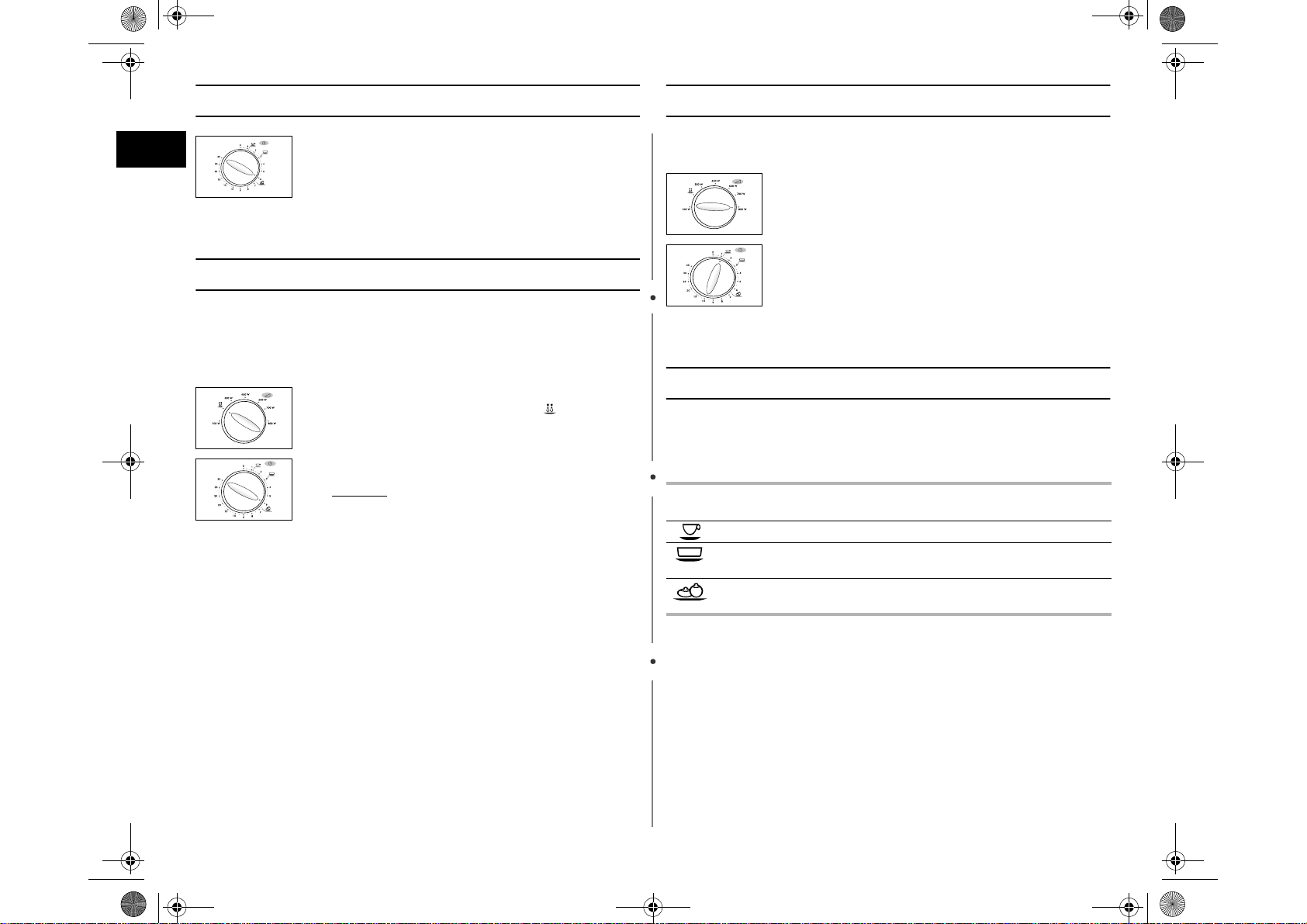
1. Réglez la puissance en tournant le bouton pour le
CONTRÔLE DE LA PUISSANCE sur (180W).
2. Sélectionnez le temps de cuisson approprié en tournant
le MINUTEUR.
Résultat :
La décongélation commence.
1. Réglez la puissance en tournant le bouton pour le
CONTRÔLE DE LA PUISSANCE sur le maximum.
2. Tournez le MINUTEUR pour sélectionner le réchauffage
instantané (boissons, soupe/sauce, légumes frais).
Symbole Aliment Portion Temps de
cuisson
Temps de
repos
Boissons 150 ml 1 min 10 sec 1-2 min.
Soupe/Sauce
(refroidies)
200-250 ml 3 min 2-3 min.
Légumes frais 300-350 g 6 min 40 sec 3 min.
MSA20M_FR_vi.fm Page 6 Wednesday, December 19, 2001 4:06 PM
7
F
Guide d’ustensiles
Pour cuisiner dans votre four à micro-ondes, il faut employer des plats
laissant passer les micro-ondes afin qu’elles puissent chauffer les
aliments sans être réfléchies ou absorbées par le plat.
Il est donc essentiel de bien choisir le type de plat employé. S’il est
indiqué sur votre plat qu’il est adapté pour la cuisine au four micro-
ondes, aucune inquiétude.
Les tableaux suivants vous présentent la liste des plats adaptés et la
méthode de cuisson au micro-ondes.
✓
= Recommandé
✓ ✗
= Faire attention
✗
= Incertain
Ustensiles de cuisine Adapté à la
cuisson au
micro-ondes
Commentaires
Papier aluminium ✓ ✗ Peut êtreemployé en petites quantités
afin d’empêcher certaines parties de
trop cuire. Des étincelles peuvent se
produire si le papier est trop près de la
paroi du four ou si vous avez utilisé
trop de papier.
Plat à brunir
✓ Ne pas préchauffer pendant plus de
huit minutes.
Porcelaine et plats en
terre cuite
✓ La porcelaine, la terre cuite, la faïence
et la porcelaine tendre peuvent
généralement être utilisées, sauf si
elles sont décorées avec du métal.
Plats en carton
✓ Certains aliments congelés sont
emballés dans ce type de plats. Ils
peuvent être employés pour réchauffer
les aliments.
Emballagedefast-food
•Tassesen
polystyrène
•Sacsenpapierou
papier journal
• Papier recyclé ou
contenant du métal
✓
✗
✗
Ne pas les laisser chauffer trop
longtemps ou le polystyrène pourrait
fondre.
Peut prendre feu.
Peut provoquer des étincelles.
Plats en verre
•Platsde
présentation
adaptés à la
cuisson en four
• Plats en verre fin
• Pots en verre
✓
✓
✓
Peut être utilisé, sauf s’il est décoré
avec du métal.
Peut être utilisé pour réchauffer des
aliments ou desliquides. Les objets en
verre fragile peuvent se briser ou se
fendre s’ils sont brutalement chauffés.
Retirer le couvercle. Pour réchauffer
uniquement.
Métal
•Plats
• Cordons de
fermeturedessacs
congélation
✗
✗
Peut provoquer des étincelles ou
prendre feu.
Papier
• Assiettes, tasses,
serviettes de table
et essuie-tout
• Papier recyclé
✓
✗
Pour les temps de cuisson et le
réchauffement très brefs. Egalement
pour absorber une trop grande
humidité.
Peut provoquer des étincelles.
Plastique
• Barquettes
• Scellofrais
• Sacs congélation
✓
✓
✓ ✗
Tout particulièrement s’il s’agit de
thermoplastique résistant à la
chaleur.D’autres plastiques peuvent
se voiler ou se décolorer à des
températures élevées. Ne pas utiliser
de plastique mélaminé.
Peut être employé afin de retenir
l’humidité. Ne doit pas entrer en
contact avec les aliments.
Uniquement s’il supporte la
température d’ébullition ou va au four.
Ne doit pas être hermétique. Percer
avec une fourchette si nécessaire.
Peut être utilisé pour retenir l’humidité
et empêcher les éclaboussures.
Papier paraffiné ou
sulfurisé
✓ Peut être utilisé pour retenir l’humidité
et empêcher les éclaboussures.
MSA20M_FR_vi.fm Page 7 Friday, October 26, 2001 1:11 PM
8
F
Nettoyage de votre four à micro-ondes
Les parties suivantes de votre four à micro-ondes doivent être
nettoyées régulièrement afin d’éviter que des particules de graisse ou
d’aliments ne s’accumulent :
• Surfaces intérieures et extérieures
• Porte et système de fermeture
• Plateau et anneau tournants
☛ TOUJOURS veiller à ce que la porte et son système de
fermeture soient propres et ferment correctement.
1. Nettoyer les surfaces extérieures avec une éponge douce imbibée d’eau
chaude savonneuse, rincer puis sécher.
2. Enlever les éclaboussures et les taches des surfaces intérieures et de
l’anneau. Rincer et sécher.
3. Pour enlever les particules d’aliments durcies et supprimer les odeurs, placer
une tasse d’eau additionnée de jus de citron sur le plateau tournant et faites
chauffer pendant dix minutes à la puissance maximum.
4. Laver le plateau-tournant (résistant au lave-vaisselle) lorsque c’est
nécessaire.
✉ NE PAS faire couler d’eau dans les évents. NE JAMAIS utiliser
de produits abrasifs ni de solvants chimiques. Faire très attention
au nettoyage du système de fermeture et veiller à ce qu’aucune
particules :
• ne s’y accumule
• empêche la porte de se fermer correctement
Caractéristiques techniques
CANDY s’efforce d’améliorer ses produits en permanence. Les
spécifications de conception et les instructions destinées à l’utilisateur
sont donc soumises à modifications sans avertissement.
Modèle MSA 20 M
Alimentation
230V ~ 50 Hz
Consommation
Micro-ondes
1150 W
Puissance de sortie
100 W / 800 W (IEC-705)
Fréquence de fonctionnement
2450 MHz
Magnétron
OM75S(31)
Système de refroidissement
Moteur à ventilateur de refroidissement
Dimensions (LXHXP)
Extérieur
Four/intérieur
489 x 275 x 371 mm
306 x 211 x 320 mm
Capacité du four 20 litres
Poids
Net
Environ 12.5 kg
MSA20M_FR_vi.fm Page 8 Friday, October 26, 2001 1:11 PM
HORNO MICROONDAS
Instrucciones de usuario
MSA 20 M
Horno.........................................................................................2
Accesorios.................................................................................2
Panel de control .......................................................................2
Uso de este folleto de instrucciones .........................................3
Precauciones de seguridad.......................................................3
IInstalación de su horno microondas .......................................4
Qué hacer si usted tiene una duda o tiene un problema..........5
Calentar / Cocinar .....................................................................5
Niveles de potencia...................................................................5
Ajuste del tiempo de cocción ....................................................6
Descongelado manual de alimentos.........................................6
Uso del modo Calentado Instantáneo.......................................6
Graduaciones de Calentado Instantáneo .................................6
Guía de utensilios de cocina.....................................................7
Limpieza de su horno microondas............................................8
Especificaciones técnicas.........................................................8
MSA20M_SP_vi.fm Page 1 Friday, October 26, 2001 1:12 PM
2
E
Horno
Accesorios
Dependiendo del modelo que usted haya comprado, se le
suministrarán varios accesorios que pueden ser usados en una
variedad de formas.
☛ NO opere el horno microondas sin el anillo rodante y el plato giratorio.
Panel decontrol
1. Acoplador, colocado ya sobre el eje del motor en la
base del horno.
Propósito:
El acoplador hace rotar el plato giratorio.
2. Anillo rodante, para ser colocado en el centro del
horno.
Propósito:
En el anillo rodante se apoya el plato
giratorio.
3. Plato giratorio, para ser colocado sobre el anillo
rodante con el centro ajustado en el acoplador.
Propósito:
Elplatogiratoriosirvecomolasuperficie
principal para cocinar; se puede sacar
fácilmente para su limpieza.
ORIFICIOS DE VENTILACIÓN
CIERRES DE LA PUERTA
PUERTA
PLATO
GIRATORIO
ACOPLADOR
ANILLO
RODANTE
ORIFICIOS DE
SEGURIDAD
LUZ
BOTÓN DE CONTROL
DE LA POTENCIA
VARIABLE DE COCCIÓN
BOTÓN DEL
CRONÓMETRO
AGARRADERA
DE LA PUERTA
1. DESCONGELAR
2. BOTÓN DEL CONTROL DE LA
POTENCIA DE COCCIÓN
3. BOTÓN DEL CRONÓMETRO
4. CALENTADO INSTANTÁNEO
1
4
2
3
MSA20M_SP_vi.fm Page 2 Friday, October 26, 2001 1:12 PM
3
E
Uso de estefolleto de instrucciones
Usted ha comprado un horno microondas CANDY. Las instrucciones
de usuario contienen mucha información valiosa sobre cómo cocinar
con su horno microondas:
• Precauciones de seguridad
• Accesorios y utensilios de cocina apropiados
• Sugerencias útiles para cocinar
En la parte del frente del folleto usted encontrará ilustraciones del
horno, y lo más importante, del panel de control, de manera que usted
pueda encontrar los botones en forma más sencilla.
Los procedimientos paso-a-paso usan dos símbolos diferentes.
PRECAUCIONES PARA EVITAR POSIBLES EXPOSICIONES A
UNA EXCESIVA ENERGÍA MICROONDAS
La falla en observar las siguientes precauciones de seguridad puede resultar en
una exposición dañina a la energía microondas.
(a) Bajo ninguna circunstancia se debería intentar operar el horno con la puerta
abierta o tapar las hendijas de seguridad (cierres de las puertas) o insertar
alguna cosa en los orificios de seguridad.
(b) No coloque ningún objeto entre la puerta del horno y la parte frontal o permita
que residuos de alimentos o de limpiadores se acumulen en las superficies de
cierre. Asegure que la puerta y las superficies de cierre de la puerta se
mantengan limpias después de usar el horno pasando primero un paño
húmedo y luego un paño seco suave.
(c) No opere el horno, si está dañado, hasta que haya sido reparado por un
técnico calificado en servicio de microondas y entrenado por el fabricante.
Es particularmente importante que la puerta del horno cierre correctamente y
que no haya daño en:
(1) Puerta, cierres de la puerta y superficies de cierre
(2) Bisagras de la puerta (rotas o sueltas)
(3) Cable de conexión
(d) El horno no debería ser ajustado o reparado por alguien que no sea un
técnico calificado adecuadamente en servicio de microondas y entrenado por
el fabricante.
Precauciones deseguridad
Importantes instrucciones de seguridad.
Lea con cuidado y conservelas para futura referencia.
Antes de cocinar alimentos o liquidos en su horno de microondas, por
favor verifique que se tomen las siguientes precauciones de seguridad.
1. NO use ningún utensilio de cocina metálico en el horno de microondas:
• Recipientes metálicos
• Vajilla con filetes dorados o plateados
• Brochetas, tenedores, etc.
Razón
: Se pueden ocasionar arcos o chispas eléctricas que pueden
dañar el horno.
2. NO caliente:
• Botellas, frascos, recipientes herméticos o cerrados al vacío
Ej: Frascos de alimento para bebés
• Alimentos con cubierta hermética.
Ej: Huevos, fruta seca con su cáscara, tomates
Razón: El aumento de la presión puede causar que ellos exploten.
Sugerencia:Saque las tapas, agujeree las cáscaras, bolsas, etc.
3. NO opere el horno microondas cuando está vacío.
Razón
: Las paredes del horno pueden dañarse.
Sugerencia
:Deje un vaso con agua en el interior del horno en todo momento.
El agua absorberá las microondas si accidentalmente usted
enciende el horno cuando está vacío.
4. NO cubra las ranuras de ventilación en la parte de atrás con paños o papel.
Razón
: Los paños o papel pueden prenderse fuego con el aire caliente
que es expulsado del horno.
5. SIEMPRE use guantes para horno cuando saque un recipiente del horno.
Razón
: Algunos recipientes absorben las microondas y el calor siempre
se transfiere desde el alimento al recipiente. Los recipientes por
lo tanto están calientes.
6. NO toque los suplementos de calentado o las paredes interiores del horno.
Razón
: Dichas paredes pueden estar lo suficientemente calientes como
para quemar aún después que la cocción ha finalizado, aunque
no parezca que así lo estén. No permita que materiales
inflamables entren en contacto con cualquier área interna del
horno. Deje que primero se enfríe el horno.
7. Para evitar el riesgo que se origine fuego en la cavidad del horno:
• No guarde materiales inflamables en el horno
• Saque ataduras de alambre de las bolsas plásticas o de papel
• No use su horno de microondas para secar papel de diario
• Si se observa humo, mantenga la puerta del horno cerrada y apague o
desconecte el horno del suministro de electricidad
8. Tome particular cuidado cuando caliente líquidos y alimentos para bebés.
• SIEMPRE permitauntiempodereposodealmenos20segundos
después que el horno ha sido apagado de manera que la temperatura
pueda igualarse.
• Revuelva durante el calentado, si es necesario, y SIEMPRE revuelva
después de calentar.
☛✉
Importante Nota
MSA20M_SP_vi.fm Page 3 Friday, October 26, 2001 1:12 PM
4
E
Precaucionesde seguridad (continuación)
• Tenga cuidado cuando manipula el recipiente después de calentar. Se
puede quemar si el recipiente está demasiado caliente.
• Existe riesgo de ebullición demorada eruptiva.
• Para evitar la ebullición demorada y escaldadura posible, se debería
poner una cuchara de plástico o varilla de vidrio en las bebidas y revolver
antes, durante y después de calentar.
Razón
: Durante el calentamiento de líquidos el punto de ebullición se
puede demorar; esto quiere decir que la ebullición eruptiva
puede comenzar después que el recipiente se ha sacado del
horno. Se puede escaldar.
• En el caso de escaldadura, siga estas instrucciones de PRIMEROS
AUXILIOS:
* Sumerja el área escaldada en agua fría por al menos 10 minutos.
* Cúbrala con un apósito limpio y seco.
* No aplique ninguna crema, aceite o loción.
• NUNCA llene el recipiente hasta el tope y elija un recipiente que sea más
anchoenlapartesuperiorqueenlaparteinferiorparaevitarqueel
líquido se derrame al hervir. Las botellas con cuellos angostos pueden
también explotar si se recalientan.
• SIEMPRE verifique la temperatura del alimento para bebés o leche antes
de dársela al bebé.
• NUNCA caliente el biberón con la tetina puesta, el biberón puede explotar
si se recalienta.
9. Tenga cuidado de no dañar el cable de conexión.
• No sumerja el cable de conexión o el enchufe en agua, y mantenga el
cable lejos de superficies calientes.
• No opere este artefacto eléctrico si tiene el cable de conexión o enchufe
dañado.
10. Manténgase a una distancia de un brazo del horno cuando abre la puerta.
Razón
: El aire o vapor caliente liberado puede causar escaldaduras.
11. Mantenga limpio el interior del horno.
Razón
: Las partículas de alimentos o aceites salpicados y pegados a las
paredes o piso del horno pueden causar daño a la pintura y
reducir la eficiencia del horno.
12. Usted puede notar un sonido de “chasquido” durante cualquier operación
(especialmente cuando el horno está en descongelar).
Razón
: Este sonido es normal cuando la salida de la corriente eléctrica
no es uniforme.
13. Cuando el horno de microondas está funcionando sin ninguna carga, la
electricidad será cortada automáticamente porseguridad. Usted puede operar
el horno normalmente después de esperar por más de 30 minutos.
INSTRUCCIONES IMPORTANTES DE SEGURIDAD
Al cocinar, usted debería mirar hacia adentro del horno cada tanto cuando se
están calentando o cocinando alimentos en recipientes desechables de plástico,
papel o de materiales combustibles.
IMPORTANTE
A los niños pequeños NUNCA se les debería permitir usar o jugar con el horno
de microondas. Tampoco deberían ser dejados sin atención cerca del horno de
microondas cuando está en uso. Los artículos de interés para los niños no
deberían guardarse o esconderse encima del horno.
IInstalaciónde su horno microondas
Coloque el horno en una superficie plana, a nivel, que sea lo
suficientemente fuerte para soportar en forma segura el peso del
horno.
☛ Nunca bloquee las ranuras de ventilación en la medida que el
horno puede recalentarse y automáticamente apagarse. Será
inoperable hasta que se haya enfriado lo suficiente.
☛ Para su seguridad personal, enchufe el cable en un tomacorriente de
3-pin, 230 Volt, 50Hz, con cable a tierra. Si el cable de conexión de
este artefacto eléctrico está dañado, debe ser reemplazado por el
fabricante o su agente de servicio o una persona de similares
calificaciones para evitar un choque eléctrico
(I-SHENG SP022,
KDK KKP4819D, EUROELECTRIC 3410, SAMIL SP-106B,
MOONSUNG EP-48E, HIGH PROJECT H.P 3).
☛ No instale el horno de microondas en alrededores húmedos o
calientes como cercano a un horno tradicional o a un radiador.
Las especificaciones de suministro de energía del horno deben
ser respetadas y cualquier extensión de cable usado debe ser del
mismo tipo que el cable de conexión suministrado con el horno.
Limpie el interior y el cierre de la puerta con un paño húmedo
antes de usar el horno de microondas por primera vez.
1. Cuando usted instale su horno, asegúrese que haya
ventilación adecuada para el horno dejando al menos 10
cm de espacio por detrás, y en los costados del horno y
20 cm de espacio por encima del horno.
2. Saque todos los materiales de envasado del interior del
horno.
Instale el anillo rodante y el plato giratorio.
Verifique que el plato giratorio rote con libertad.
3. Este horno microondas tiene que ser colocado de
manera que un tomacorriente esté accesible.
10 cm por
detrás
20 cm
por encima
10 cm
en los costados
MSA20M_SP_vi.fm Page 4 Friday, October 26, 2001 1:12 PM
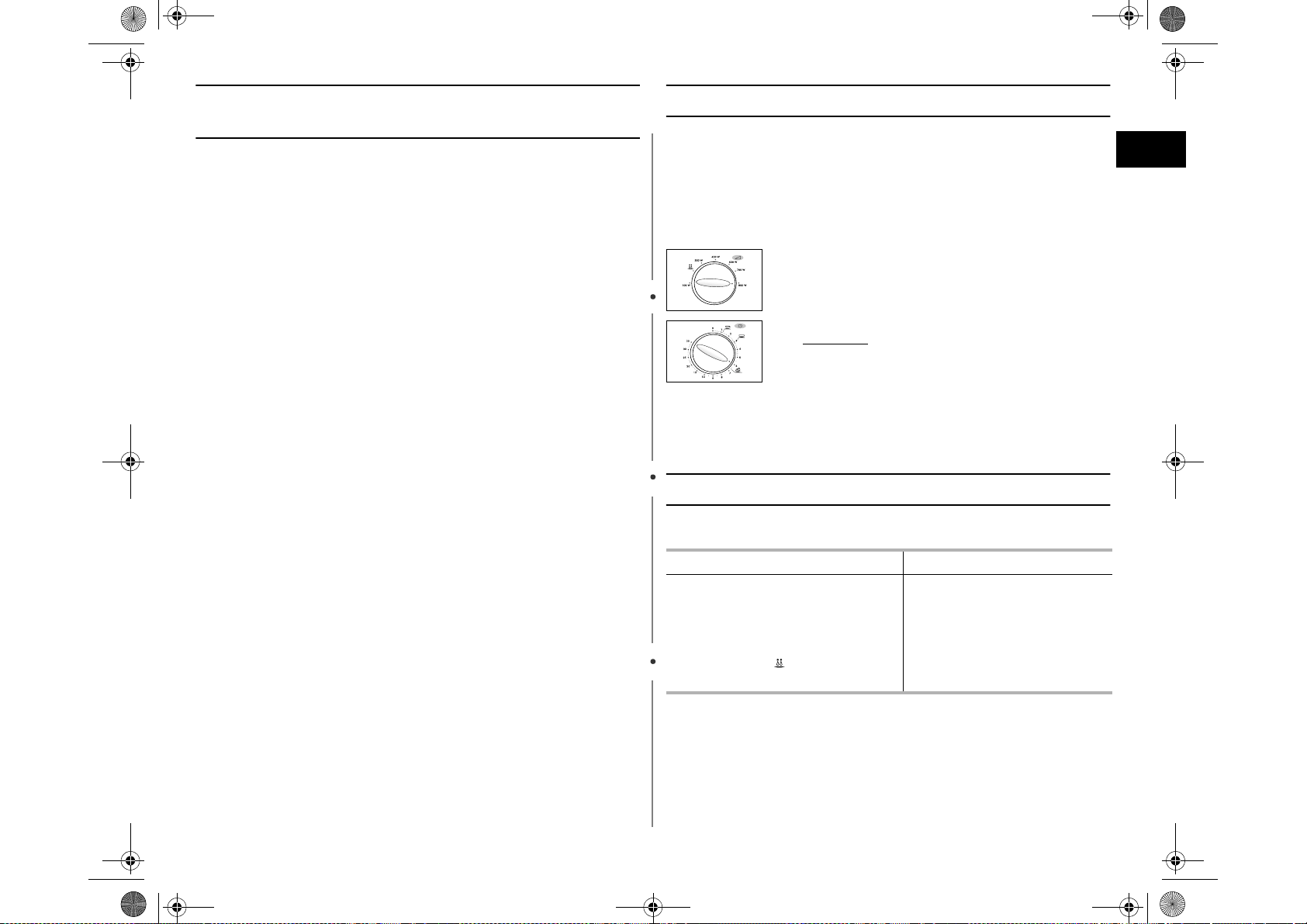
5
E
Qué hacer siusted tiene una duda o tiene un
problema
Si usted tiene cualquiera delos problemas que se listan a continuación
recurra a las soluciones ofrecidas.
◆ Esto es normal:
• Condensación en el interior del horno
• Flujo de aire alrededor de la puerta y de la carcasa exterior
• Reflexión de la luz alrededor de la puerta y de la carcasa exterior
• Vapor que se escapa desde los alrededores de la puerta o las ranuras de
ventilación
◆ El horno no se prende cuando usted gira el botón del CRONÓMETRO.
• ¿La puerta está cerrada completamente?
◆ Los alimentos no se cocina en absoluto
• ¿Ha programado correctamente el cronómetro?
• ¿La puerta está cerrada?
• ¿Ha sobrecargado el circuito eléctrico y causado que un fusible se
quemara o se disparara un interruptor de corriente?
◆ Los alimentos están sobre-cocidos o poco cocidos
• ¿Se programó la duración apropiada para el tipo de alimento?
• ¿Se eligió un nivel de potencia apropiado?
◆ Ocurren chisporroteos y crujidos en la parte interior del horno (formación del
arco)
• ¿Ha usado un plato con filete metálico?
• ¿Ha dejado un tenedor u otro utensilio de metal en el interior del horno?
• ¿El papel de aluminio está demasiado cerca de las paredes interiores?
◆ El horno causa interferencia con radios o televisores
• Una ligera interferencia se puede observar en televisores o radios cuando
el horno está funcionando. Esto es normal. Para resolver este problema,
instale el horno lejos de televisores, radios o antenas.
✉ Si las directivas de más arriba no lo habilitan a resolver el
problema, contacte a su distribuidor local o al servicio CANDY
post-venta.
Calentar/ Cocinar
El siguiente procedimiento explica cómo cocinar o calentar alimentos.
SIEMPRE verifique la graduación para cocinar antes de dejar el
horno solo.
Primero, coloque el alimento en el centro del plato giratorio. Luego,
cierre la puerta.
☛ Nunca encienda el horno microondas cuando esté vacío.
✉ Usted puede cambiar el nivel de potencia durante la cocción
girando el botón del CONTROL DE POTENCIA DE COCCIÓN.
Niveles depotencia
Usted puede elegir dentro de los niveles de potencia siguientes.
✉ Si usted selecciona el nivel de potencia más alto, el tiempo de
cocción se debe disminuir.
✉ Si usted selecciona el nivel de potencia más bajo, el tiempo de
cocción se debe aumentar.
1. Fije el nivel de potencia al máximo girando el botón del
CONTROL DE POTENCIA DE COCCIÓN. (POTENCIA
MÁXIMA: 800W).
2. Fije el tiempo girando el botón del CRONÓMETRO.
Resultado :
La luz del horno se enciende y el plato
giratorio comienza a girar.
Nivel de potencia
Corriente de salida
ALTO
CALENTAR
MEDIO ALTO
MEDIO
MEDIO BAJO
DESCONGELAR ( )
BAJO
800 W
700 W
600 W
450 W
300 W
180 W
100 W
MSA20M_SP_vi.fm Page 5 Friday, October 26, 2001 1:12 PM
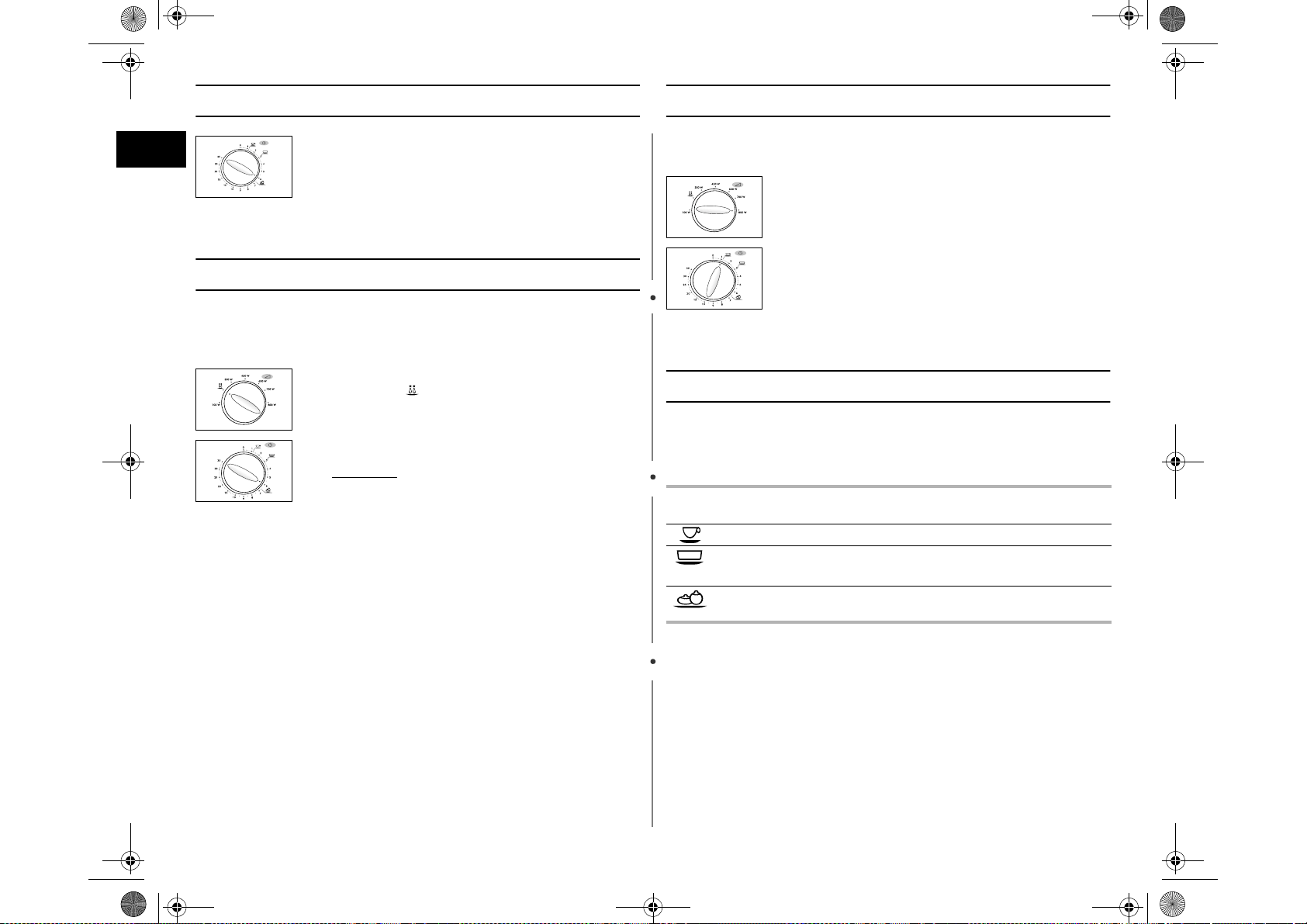
6
E
Ajuste del tiempo de cocción
Descongelado manual dealimentos
El modo de Descongelar le permite descongelar carne, aves, pescado o
Pan/Torta. Primero, coloque el alimento congelado en el centro del
plato giratorio y cierre la puerta.
✉ Use solamente recipientes que sean seguros para microondas.
UsodelmodoCalentadoInstantáneo
Primero, coloque el alimento en el centro del plato giratorio y cierre la
puerta.
✉ Use solamente recipientes que sean seguros para microondas.
Graduaciones deCalentado Instantáneo
A continuación algunas sugerencias y recomendaciones a seguir
cuando cocine o caliente alimentos con el modo Calentado
Instantáneo.
Ajuste el tiempo remanente girando el botón del
CRONÓMETRO.
1. Gire el botón del CONTROL DE LA POTENCIA DE
COCCIÓN a (180W).
2. Gire el botón del CRONÓMETRO para seleccionar el
tiempo apropiado.
Resultado :
Comienza el descongelado.
1. Gire el botón del CONTROL DE LA POTENCIA DE
COCCIÓN a Max. Potencia.
2. Gire el botón del CRONÓMETRO para seleccionar
Calentar Instantáneo (bebidas, sopa / salsa, vegetales
frescos).
Símbolos Tipo de Porción Porción Tiempo de
cocción
Tiempo de
reposo
Bebidas 150 ml 1 min 10 seg 1-2 min.
Sopa / Salsa
(heladas)
200-250 ml 3 min 2-3 min.
Vegetales
frescos
300-350 g 6 min 40 seg 3 min.
MSA20M_SP_vi.fm Page 6 Wednesday, December 19, 2001 4:06 PM
7
E
Guía deutensilios de cocina
Para cocinar alimentos en el horno de microondas, el microondas
debe ser capaz de penetrar los alimentos, sin ser reflejadas o
absorbidas por la vajilla usada.
Se debe tener entonces sumo cuidado cuando elija los utensilios a
usar. Si los utensilios están marcados como seguros para microondas,
no necesita preocuparse.
La tabla siguiente tiene una lista de varios tipos de utensilios e indica
si y cómo deberían usarse en un horno microondas.
✓
= Recomendado
✓ ✗
=Atención
✗
=Incierto
Utensilio Seguro para
microondas
Comentarios
Papel de aluminio
✓ ✗ Puede ser usado en pequeñas
cantidades para proteger algunas
áreas de la sobre-cocción. Puede
ocurrir quese forme el arco eléctrico si
el papel está demasiado cerca de la
pared del hornoo sise usa demasiado
papel.
Recipiente para
caramelo
✓ No precaliente por más de ocho
minutos.
Porcelana y cerámica
✓ Porcelana, alfarería, cerámica
esmaltada y porcelana de hueso son
habitualmente apropiadas, a menos
que estén decoradas con un filete de
metal.
Recipientesdesechables de
cartón poliester
✓ Algunos alimentos congelados son
empaquedos en estos recipientes.
Envasado de comida-rápida
• Recipientes de
poliestireno
• Bolsas de papel o
diaro
• Vasos o copas de
papel reciclado o
con filetes de
metal
✓
✗
✗
Pueden usarse para entibiar
alimentos. El sobre-calentado puede
causar que el poliestireno se derrita.
Pueden prenderse fuego.
Pueden causar que se forma el arco
eléctrico.
Vasos y copas
• Recipientes del
horno-a-la-mesa
• Cristalería fina
• Jarras de vidrio
✓
✓
✓
Pueden usarse, a menos que estén
decoradas con un filete de metal.
Pueden usarse para entibiar alimentos
o líquidos. El cristal delicado puede
romperse o astillarse si se calienta
súbitamente.
Debe sacarse la tapa. Apropiado
solamente para entibiar.
Metal
• Recipientes
• Ataduras de torcer
de bolsas para
congelador
✗
✗
Pueden causar la formacióndel arco o
fuego.
Papel
• Platos, tazas,
servilletas y toallas
de papel
• Papel reciclado
✓
✗
Para períodos cortos de cocción y
entibiado. También para absorber
exceso de humedad.
Puede causar la formación del arco.
Plástico
• Recipientes
• Película adherente
•Bolsaspara
congelador
✓
✓
✓ ✗
Particularmente si es termoplástico
resistente al calor. Algunos otros
plásticos pueden deformarse o
descolorirse a altas temperaturas. No
use plástico de melamina.
Puede usarse para retener la
humedad. No debería tocar los
alimentos. Tenga cuidado cuando
saque la película, el vapor caliente
que se escapa puede quemarlo.
Solamente si esa pruebade ebullición
o de horno. No debería estar
hermético. Pínchelo con un tenedor si
es necesario.
Papel encerado o a prueba
de grasitud
✓ Puede usarse para retener humedady
evitar el salpicado.
MSA20M_SP_vi.fm Page 7 Friday, October 26, 2001 1:12 PM
8
E
Limpieza desu horno microondas
Las siguientes partes de su horno de microondas deberían limpiarse
regularmente para prevenir que partículas de grasa y alimentos se
acumulen:
• Superficies internas y externas
• Puerta y cierres de las puertas
• Plato giratorio y anillo rodante
☛ SIEMPRE asegure que los cierres de la puerta estén limpios y la
puerta cierre apropiadamente.
1. Limpie las superficies externas con un paño suave y agua tibia, jabonosa.
Enjuague y seque.
2. Saque cualquier salpicadurao mancha sobre las superficies interiores osobre
el anillo rodante con un paño jabonoso. Enjuague y seque.
3. Para aflojar partículas de alimentos endurecidos y sacar los olores, coloque
una taza de jugo diluido de limón sobre el plato giratorio y caliente por diez
minutos a la máxima potencia.
4. Lave el plato en el lava vajillas cada vez que sea necesario.
✉ NO derrame agua en las rendijas de ventilación. NUNCA use
ningún producto abrasivo o solventes químicos. Tome particular
cuidado al limpiar los cierres de la puerta para asegurar que
ninguna partícula:
•Seacumule
• Prevenir que la puerta cierre correctamente
Especificaciones técnicas
CANDY strives to improve its products at all times. Both the design
specifications and these user instructions are thus subject to change
without notice.
Modelo MSA 20 M
Fuente de energía
230V ~ 50 Hz
Consumo de energía
Microondas
1150 W
Corriente de salida
100 W / 800 W (IEC-705)
Frecuencia de funcionamiento
2450 MHz
Magnetrón OM75S(31)
Método de enfriado
Motor de ventilador de enfriado
Dimensiones (ancho x alto x
profundidad)
Exterior
Horno
489 x 275 x 371 mm
306 x 211 x 320 mm
Volumen 20 litros
Peso
Neto
12.5 kg aprox
MSA20M_SP_vi.fm Page 8 Friday, October 26, 2001 1:12 PM
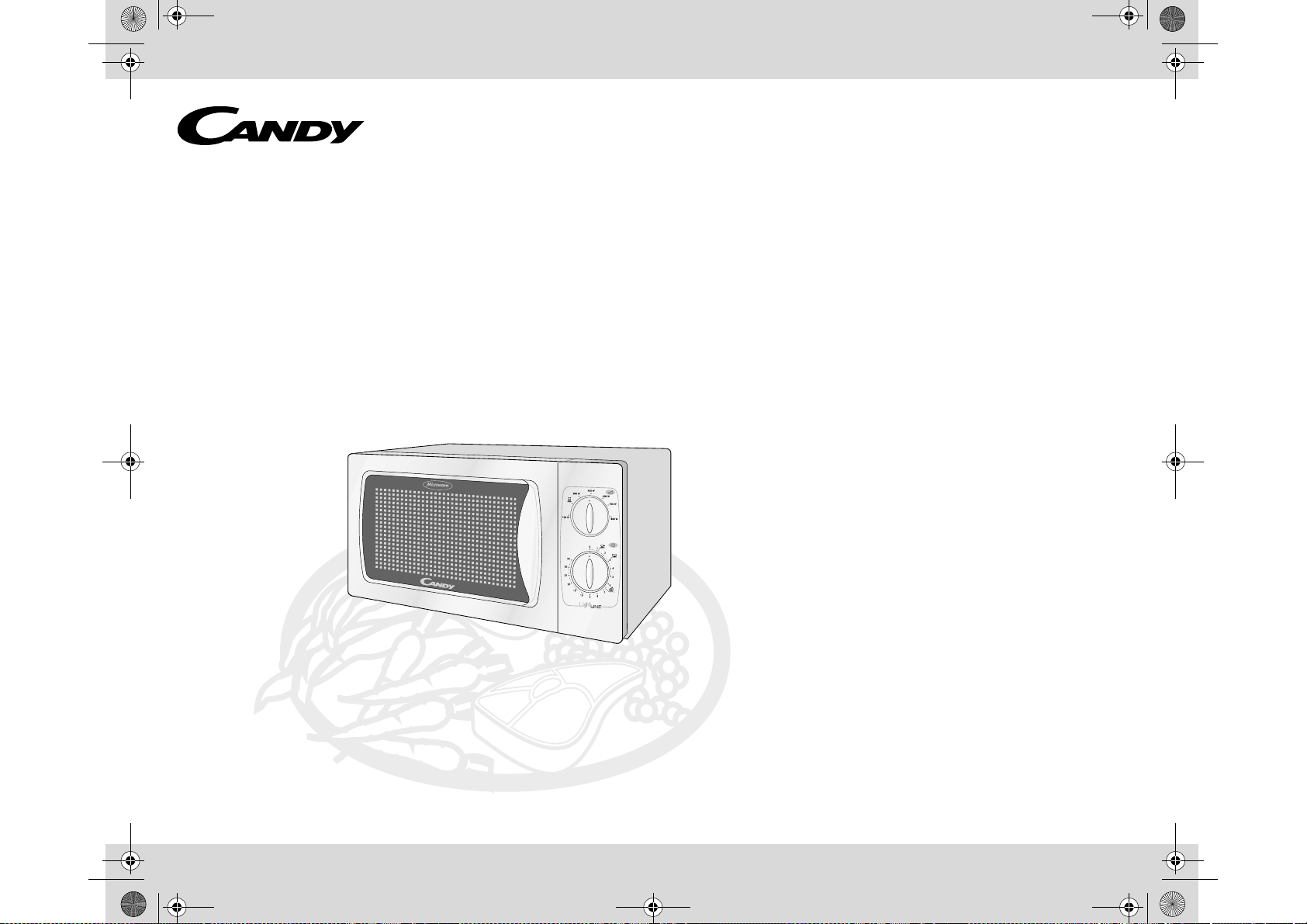
MICROWAVE OVEN
Owner’s Instructions
MSA 20 M
Oven..........................................................................................2
Accessories...............................................................................2
Control Panel ............................................................................2
Using this Instruction Booklet....................................................3
Safety Precautions....................................................................3
Installing Your Microwave oven ................................................4
What to Do if You are in Doubt or Have a Problem..................5
Cooking / Reheating..................................................................5
Power Levels.............................................................................5
Adjusting the Cooking Time......................................................6
Manual Defrosting Food............................................................6
Using the Instant Reheat Feature.............................................6
Instant Reheat Settings.............................................................6
Cookware Guide .......................................................................7
Cleaning Your Microwave Oven ...............................................8
Technical Specifications............................................................8
MSA20M_GB.fm Page 1 Friday, October 26, 2001 1:12 PM
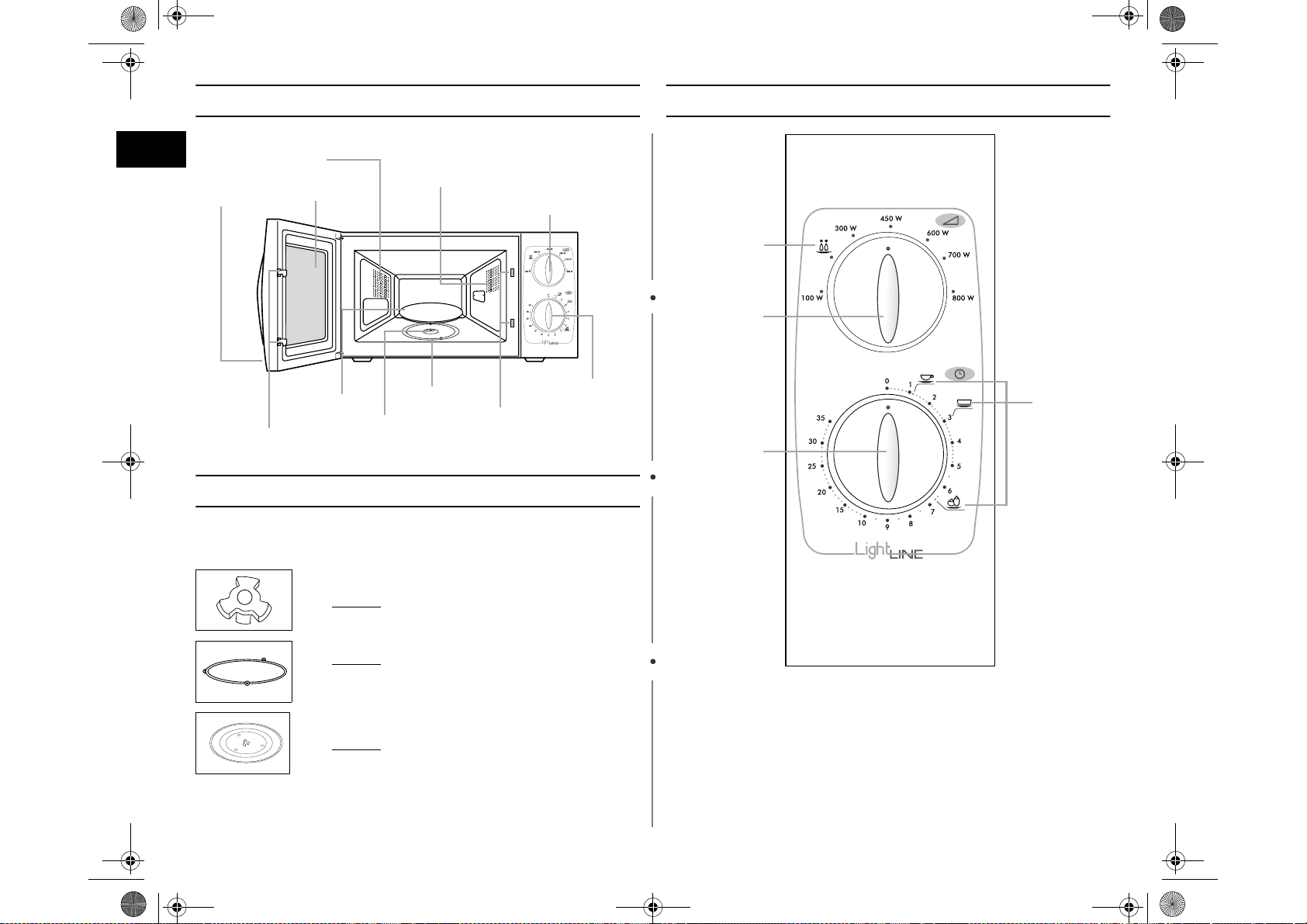
2
GB
Oven
Accessories
Depending on the model that you have purchased, you are supplied
with several accessories that can be used in a variety of ways.
☛ DO NOT operate the microwave oven without the roller ring and
turntable.
Control Panel
1. Coupler, already placed over the motor shaft in the
base of the oven.
Purpose:
The coupler rotates the turntable.
2. Roller ring,tobeplacedinthecentreoftheoven.
Purpose:
The roller ring supports the turntable.
3. Turntable, to be placed on the roller ring with the centre
fitting to the coupler.
Purpose:
The turntable serves as the main cooking
surface; it can be easily removed for
cleaning.
VENTILATION HOLES
DOOR LATCHES
DOOR
TURNTABLE
COUPLER
ROLLER RING
SAFETY INTERLOCK
HOLES
LIGHT
VARIABLE COOKING
POWER CONTROL
KNOB
TIMER KNOB
DOOR
HANDLE
1. DEFROST
2. VARIABLE COOKING POWER
CONTROL KNOB
3. TIMER KNOB
4. INSTANT REHEAT
1
4
2
3
MSA20M_GB.fm Page 2 Friday, October 26, 2001 1:12 PM
3
GB
Using thisInstruction Booklet
You have just purchased a CANDY microwave oven. Your Owner’s
Instructions contain much valuable information on cooking with your
microwave oven:
• Safety precautions
• Suitable accessories and cookware
• Useful cooking tips
At the front of the booklet you will find illustrations of the oven, and
more importantly the control panel, so that you can find the buttons
more easily.
The step-by-step procedures use two different symbols.
PRECAUTIONS TO AVOID POSSIBLE EXPOSURE TO
EXCESSIVE MICROWAVE ENERGY
Failure to observe the following safety precautions may result in harmful
exposure to microwave energy.
(a) Under no circumstances should any attempt be made to operate the oven with
the door open or to tamper with the safety interlocks (door latches) or to insert
anything into the safety interlock holes.
(b) Do not place any object between the oven door and front face or allow food or
cleaner residues to accumulate on sealing surfaces. Ensure that the door and
door sealing surfaces are kept clean by wiping after use first with a damp cloth
and then with a soft dry cloth.
(c) Do not operate the oven if it is damaged until it has been repaired by a
qualified microwave service technician trained by the manufacturer.
It is particularly important that the oven door closes properly and that there is
no damage to the:
(1) Door, door seals and sealing surfaces
(2) Door hinges (broken or loose)
(3) Power cable
(d) The oven should not be adjusted or repaired by anyone other than a properly
qualified microwave service technician trained by the manufacturer.
Safety Precautions
Important Safety Instructions.
Read Carefully and keep for future reference.
Before cooking food or liquids in your microwave oven, please check
that the following safety precautions are taken.
1. DO NOT use any metallic cookware in the microwave oven:
• Metallic containers
• Dinnerware with gold or silver trimmings
• Skewers, forks, etc.
Reason:
Electric arcing or sparking may occur and may damage the oven.
2. DO NOT heat:
• Airtight or vacuum-sealed bottles, jars, containers
Ex: Baby food jars
• Airtight food.
Ex: Eggs, nuts in shells, tomatoes
Reason:
The increase in pressure may cause them to explode.
Tip:
Remove lids and pierce skins, bags, etc.
3. DO NOT operate the microwave oven when it is empty.
Reason:
Theovenwallsmaybedamaged.
Tip:
Leave a glass of water inside the oven at all times.
The water will absorb the microwaves if you accidentally set the
oven going when it is empty.
4. DO NOT cover the rear ventilation slots with cloths or paper.
Reason:
The cloths or paper may catch fire as hot air is evacuated from the
oven.
5. ALWAYS use oven gloves when removing a dish from the oven.
Reason:
Some dishes absorb microwaves and heat is always transferred
from the food to the dish. The dishes are therefore hot.
6. DO NOT touch heating elements or interior oven walls.
Reason:
These walls may be hot enough to burn even after cooking has
finished, even though they do not appear to be so. Do not allow
inflammable materials to come into contact with any interior area of
the oven. Let the oven cool down first.
7. Toavoidtheriskoffireintheovencavity:
• Do not store flammable materials in the oven
• Remove wire twist ties from paper or plastic bags
• Do not use your microwave oven to dry newspapers
• If smoke is observed, keep the oven door closed and switch off or
disconnect the oven from the power supply
8. Take particular care when heating liquids and baby foods.
• ALWAYS allow a standing time of at least 20 seconds after the oven has
been switched off so that the temperature can equalize.
• Stir during heating, if necessary, and ALWAYS stir after heating.
• Take care when handling the container after heating. You may burn
yourself if the container is too hot.
• A risk of delayed eruptive boiling exists.
☛✉
Important Note
MSA20M_GB.fm Page 3 Friday, October 26, 2001 1:12 PM
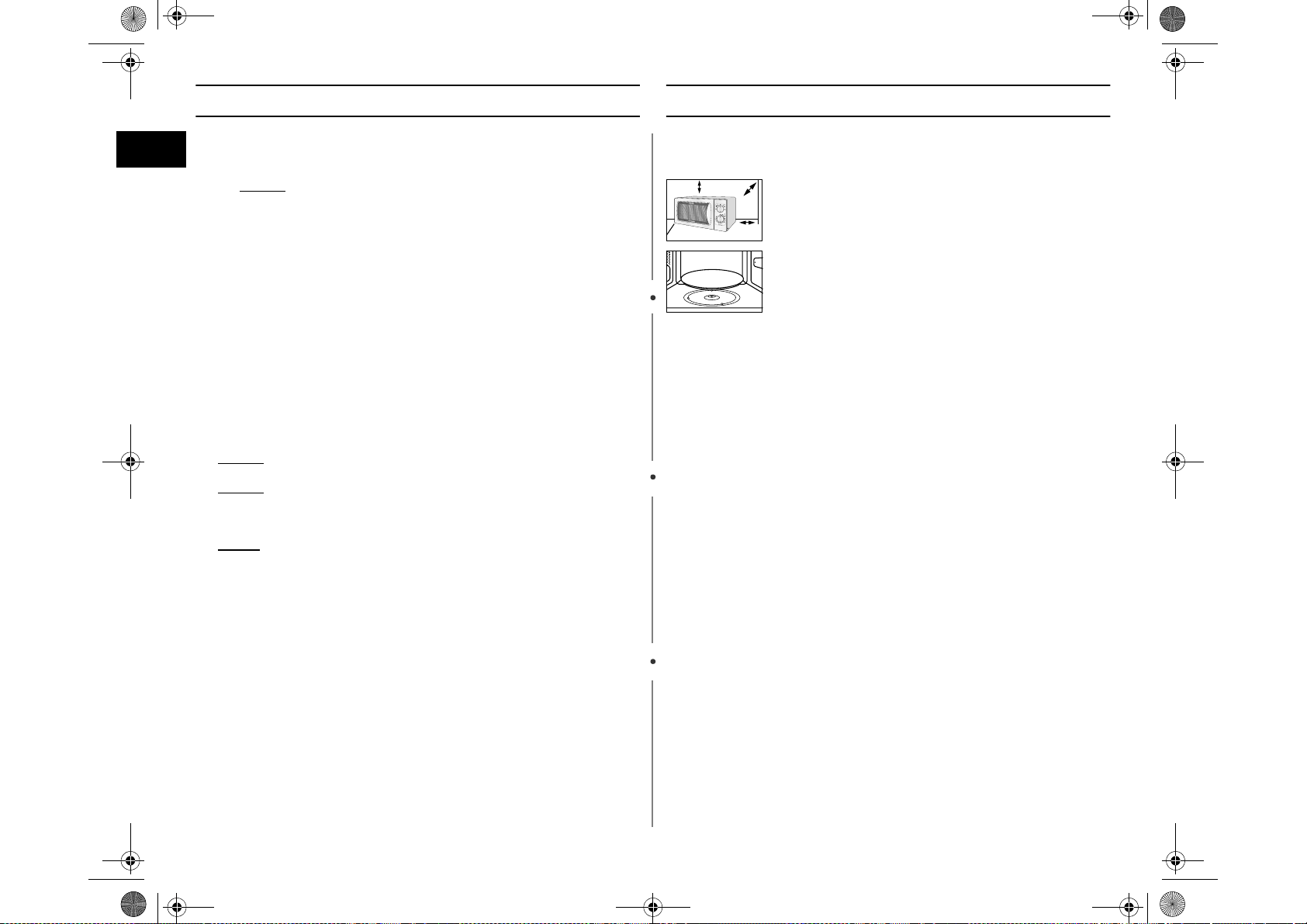
4
GB
Safety Precautions(continued)
• To prevent delayed boiling and possible scalding, you should put a plastic
spoon or glass stick into the beverages and stir before, during and after
heating.
Reason:
During the heating of liquids the boiling point can be delayed;
this means that eruptive boiling can start after the container is
removed from the oven. You may scald yourself.
• In the event of scalding, follow these FIRST AID instructions:
* Immerse the scalded area in cold water for at least 10 minutes.
* Cover with a clean, dry dressing.
* Do not apply any creams, oils or lotions.
• NEVER fill the container to the top and choose a container that is wider at
the top than at the bottom to prevent the liquid from boiling over. Bottles
with narrow necks may also explode if overheated.
• ALWAYS check the temperature of baby food or milk before giving it to
the baby.
• NEVER heat a baby’s bottle with the teat on, as the bottle may explode if
overheated.
9. Be careful not to damage the power cable.
• Do not immerse the power cable or plug in water and keep the power
cable away from heated surfaces.
• Do not operate this appliance if it has a damaged power cable or plug.
10. Stand at arm’s length from the oven when opening the door.
Reason:
The hot air or steam released may cause scalding.
11. Keep the inside of the oven clean.
Reason:
Food particles or spattered oils stuck to oven walls or floor can
cause paint damage and reduce the efficiency of the oven.
12. You may notice a “Clicking” sound during operation(especially when the oven
is in defrosting).
Reason
: This sound is normal when the electrical power output is changing.
13. When the microwave oven is operating without any load, the power will be cut
off automatically for safety. You can operate normally after letting it stand for
over 30 minutes.
IMPORTANT SAFETY INSTRUCTIONS
During cooking, you should look into the oven from time to time when food is
being heated or cooked in disposable containers of plastic, paper or other
combustible materials.
IMPORTANT
Young children should NEVER be allowed to use or play with the microwave
oven. Nor should they be left unattended near the microwave oven when it is in
use. Items of interest to children should not be stored or hidden just above the
oven.
InstallingYour Microwave oven
Place the oven on a flat, level surface that strong enough to safely bear
the weight of the oven.
☛ Never block the air vents as the oven may overheat and
automatically switch itself off. It will remain inoperable until it has
cooled sufficiently.
☛ For your personal safety, plug the cable into a 3-pin, 230 Volt,
50Hz, AC earthed socket. If the power cable of this appliance is
damaged, it must be replaced by a special cable (I-SHENG
SP022, KDK KKP4819D, EUROELECTRIC 3410, SAMIL SP-
106B, MOONSUNG EP-48E, HIGH PROJECT H.P 3). Contact
your local dealer to have it replaced.
☛ Do not install the microwave oven in hot or damp surroundings
like next to a traditional oven or radiator. The power supply
specifications of the oven must be respected and any extension
cable used must be of the same standard as the power cable
supplied with the oven. Wipe the interior and the door seal with a
damp cloth before using your microwave oven for the first time.
1. When you install your oven, Make sure there is adequate
ventilation for your oven by leaving at least 10 cm (4
inches) of space behind, on the sides of the oven and 20
cm (8 inches) of above.
2. Remove all packing materials inside the oven.
Install the roller ring and turntable.
Check that the turntable rotates freely.
3. This microwave oven has to be positioned so that plug is
accessible.
20 cm
above
10 cm
behind
10 cm
of the side
MSA20M_GB.fm Page 4 Friday, October 26, 2001 1:12 PM
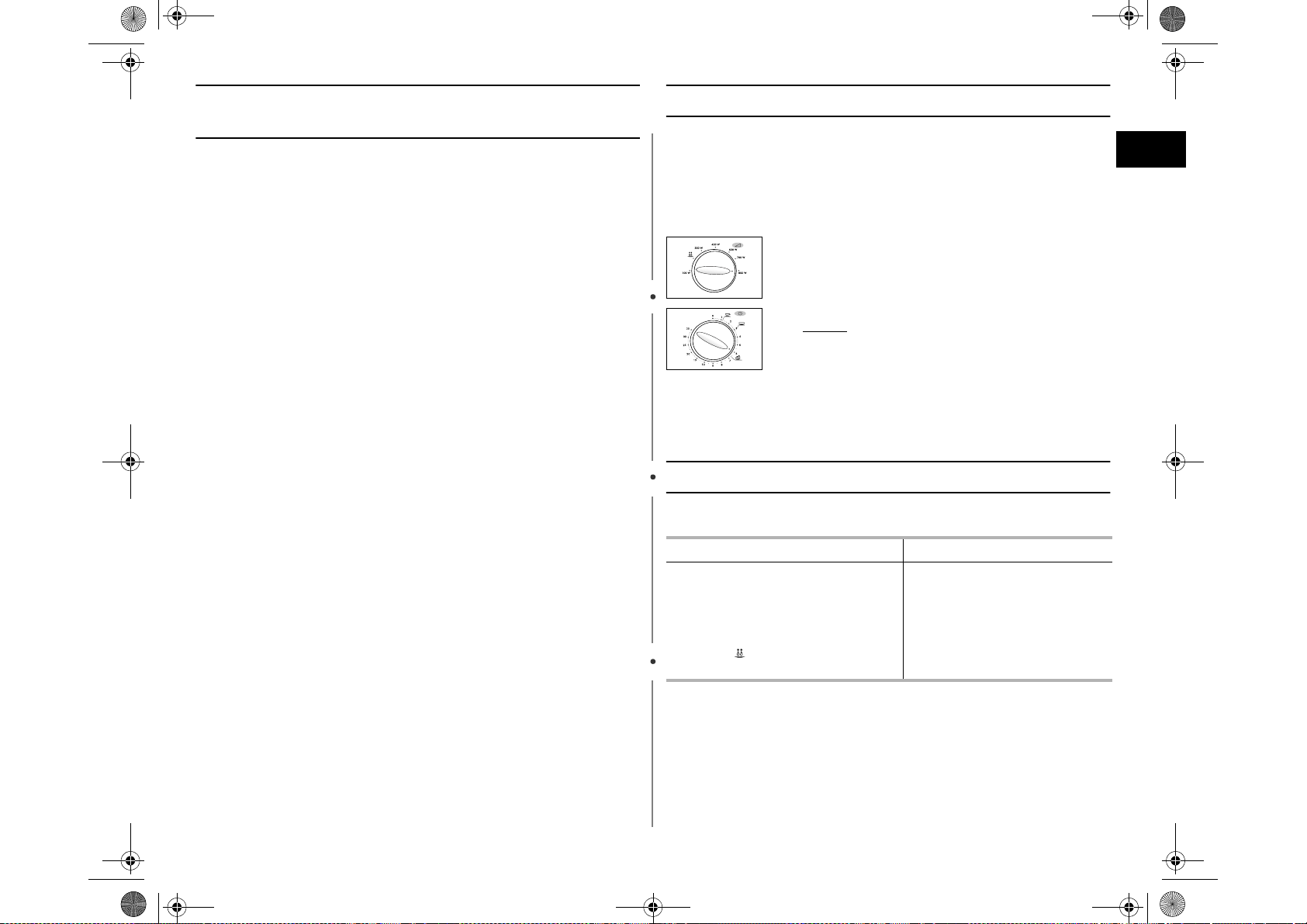
5
GB
What toDo if You are in Doubtor Have a
Problem
If you have any of the problems listed below try the solutions given.
◆ This is normal.
• Condensation inside the oven
• Air flow around the door and outer casing
• Light reflection around the door and outer casing
• Steam escaping from around the door or vents
◆ TheovendoesnotstartwhenyouturntheTIMER knob.
• Is the door completely closed?
◆ The food is not cooked at all
• Have you set the timer correctly?
• Is the door closed?
• Have you overloaded the electric circuit and caused a fuse to blow or a
breaker to be triggered?
◆ The food is either overcooked or undercooked
• Was the appropriate cooking length set for the type of food?
• Was an appropriate power level chosen?
◆ Sparking and cracking occur inside the oven (arcing)
• Have you used a dish with metal trimmings?
• Have you left a fork or other metal utensil inside the oven?
• Is aluminium foil too close to the inside walls?
◆ The oven causes interference with radios or televisions
• Slight interference may be observed on televisions or radios when the
oven is operating. This is normal.To solve this problem, install the oven
away from televisions, radios and aerials.
✉ If the above guidelines do not enable you to solve the problem,
contact your local dealer or CANDY after-sales service.
Cooking /Reheating
The following procedure explains how to cook or reheat food.
ALWAYS check your cooking settings before leaving the oven
unattended.
First, place the food in the centre of the turntable and close the door.
☛ Never switch the microwave oven on when it is empty.
✉ You can change the power level during cooking by turning the
COOKING POWER CONTROL knob.
Power Levels
You can choose among the power levels below.
✉ If you select higher power level, the cooking time must be
decreased.
✉ If you select lower power level, the cooking time must be
increased.
1. Set the power level to maximum by turning COOKING
POWER CONTROL knob. (MAXIMUM POWER: 800 W)
2. Set the time by turning TIMER knob.
Result :
Theovenlightcomesonandtheturntable
starts rotating.
Power Level
Output
HIGH
REHEAT
MEDIUM HIGH
MEDIUM
MEDIUM LOW
DEFROST( )
LOW
800 W
700 W
600 W
450 W
300 W
180 W
100 W
MSA20M_GB.fm Page 5 Friday, October 26, 2001 1:12 PM
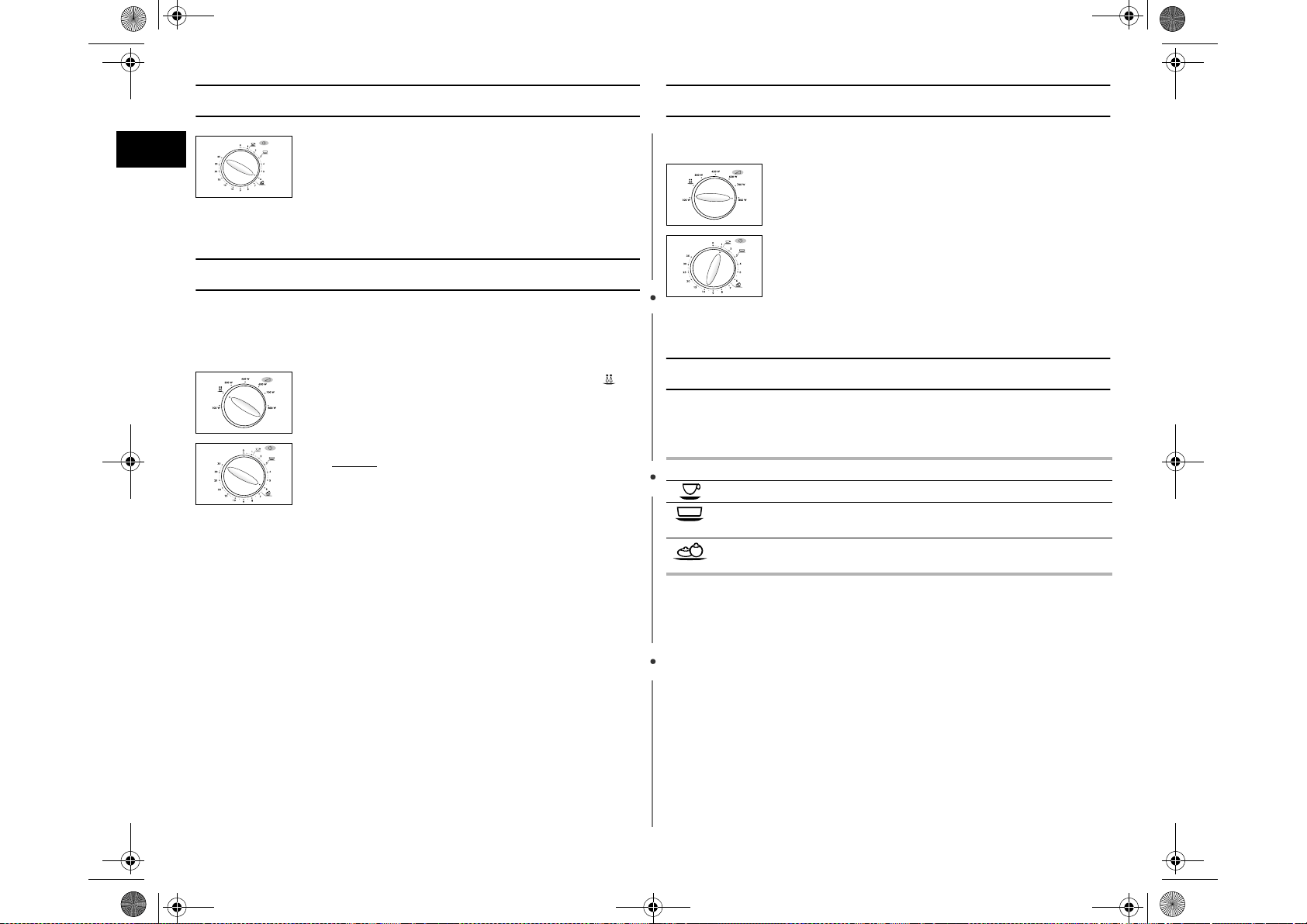
6
GB
Adjusting the CookingTime
Manual DefrostingFood
The Defrost feature enables you to defrost meat, poultry, fish.
First, place the frozen food in the centre of the turntable and close the
door.
✉ Use only recipients that are microwave-safe.
Using theInstant Reheat Feature
First, place the food in the center of the turntable and close the door.
✉ Use only recipients that are microwave-safe.
InstantReheat Settings
Here are a few tips and recommendations to be followed when cooking
or reheating food with whe Instant Reheat and Cooking Feature.
Adjust the remaining cooking time by rotating the TIMER
knob.
1. Turn the COOKING POWER CONTROL knob to
(180W).
2. Turn the TIMER knob to select the appropriate time.
Result :
Defrosting begins.
1. Turn the COOKING POWER CONTROL knob to Max
Power.
2. Turn the TIMER knob to select Instant Reheat.
(drinks or soup/sauce, fresh vegetables).
Symbols Food Serving Size Cooking Time Standing Time
Drinks 150 ml 1 min 10 sec 1 - 2 min
Soup/Sauce
(chilled)
200-250 ml 3 min 2 - 3 min
Fresh
vegetables
300-350 g 6 min 40 sec 3 min
MSA20M_GB.fm Page 6 Friday, October 26, 2001 1:12 PM
7
GB
Cookware Guide
To cook food in the microwave oven, the microwaves must be able to
penetrate the food, without being reflected or absorbed by the dish
used.
Care must therefore be taken when choosing the cookware. If the
cookware is marked microwave-safe, you do not need to worry.
The following table lists various types of cookware and indicates
whether and how they should be used in a microwave oven.
Note : I would explain the meaning of “
✗
“and“
✓
”.
Cookware Microwave-
Safe
Comments
Aluminium foil
✓ ✗ Can be used in small quantities to
protect areas against overcooking.
Arcing can occur if the foil is too close
totheovenwalloriftoomuchfoilis
used.
Browning plate
✓ Do not preheat for more than eight
minutes.
China and earthenware
✓ Porcelain, pottery,glazed earthenware
and bone china are usually suitable,
unless decorated with a metal trim.
Disposable polyester
cardboard dishes
✓ Some frozen foods are packaged in
these dishes.
Fast-food packaging
• Polystyrene cups
containers
• Paper bags or
newspaper
• Recycled paper or
metal trims
Glassware
✓
✗
✗
Can be used to warm food.
Overheating may cause the
polystyrene to melt.
May catch fire.
May cause arcing.
Glassware
• Oven-to-table
ware
• Fine glassware
• Glass jars
✓
✓
✓
Can be used, unless decorated with a
metal trim.
Can be used to warm foods or liquids.
Delicate glass may break or crack if
heated suddenly.
Must remove the lid. Suitable for
warming only.
Metal
• Dishes
• Freezer bag twist
ties
✗
✗
May cause arcing or fire.
Paper
• Plates, cups,
napkins and
Kitchen paper
• Recycled paper
✓
✗
For short cooking times and warming.
Also to absorb excess moisture.
May cause arcing.
Plastic
• Containers
• Cling film
• Freezer bags
✓
✓
✓ ✗
Particularly if heat-resistant
thermoplastic. Some other plastics
may warp or discolour at high
temperatures. Do not use Melamine
plastic.
Can be used to retain moisture.
Should not touch the food. Take care
when removing the film as hot steam
will escape.
Only if boilable or oven-proof. Should
not be airtight. Prick with a fork, if
necessary.
Wax or grease-proof paper
✓ Can be used to retain moisture and
prevent spattering.
MSA20M_GB.fm Page 7 Friday, October 26, 2001 1:12 PM
8
GB
Cleaning Your MicrowaveOven
The following parts of your microwave oven should be cleaned
regularly to prevent grease and food particles from building up:
• Inside and outside surfaces
• Door and door seals
• Turntable and Roller rings
☛ ALWAYS ensure that the door seals are clean and the door
closes properly.
1. Clean the outside surfaces with a soft cloth and warm, soapy water. Rinse and
dry.
2. Remove any splashes or stains on the inside surfaces or on the roller ring with
a soapy cloth. Rinse and dry.
3. To loosen hardened food particles and remove smells, place a cup of diluted
lemon juice on the turntable and heat for ten minutes at maximum power.
4. Wash the dishwasher-safe plate whenever necessary.
✉ DO NOT spill water in the vents. NEVER use any abrasive
products or chemical solvents. Take particular care when
cleaning the door seals to ensure that no particles:
• Accumulate
• Prevent the door from closing correctly
TechnicalSpecifications
CANDY strives to improve its products at all times. Both the design
specifications and these user instructions are thus subject to change
without notice.
Model MSA 20 M
Power source
230V ~ 50 Hz
Power consumption
Microwave
1150 W
Output power
100 W / 800 W (IEC-705)
Operating frequency
2450 MHz
Magnetron
OM75S(31)
Cooling method
Cooling fan motor
Dimensions (WxHxD)
Outside
Oven cavity
489 x 275 x 371 mm
306 x 211 x 320 mm
Volume
20 liter
Weight
Net
12.5 kg approx
MSA20M_GB.fm Page 8 Friday, October 26, 2001 1:12 PM
SERVICE
MICROWAVEOVEN
CONTENTS
MICROWAVEOVENS
1.Precaution
2.Specifications
3.OperatingInstructions
4.DisassemblyandReassembly
5-10. AlignmentandAdjustments
11-12. Troubleshooting
Manual

PRECAUTIONS TO BE OBSERVED BEFORE AND
DURING SERVICING TO AVOID POSSIBLE
EXPOSURE TO EXCESSIVE MICROWAVE ENERGY
(a) Do not operate or allow the oven to be
operated with the door open.
(b) Make the following safety checks on
all ovens to be serviced before activating
the magnetron or other microwave
source, and make repairs as necessary:
(1) Interlock operation,
(2)properdoorclosing,
(3) seal and sealing surfaces (arcing,
wear, and other damage),
(4) damage to or loosening of hinges
and latches,
(5) evidence of dropping or abuse.
(c) Before turning on microwave power
for any service test or inspection within
the microwave generating
compartments, check the magnetron,
wave guide or transmission line, and
cavity for proper alignment, integrity,
and connections.
(d) Any defective or misadjusted
components in the interlock, monitor,
door seal, and microwave generation
and transmission systems shall be
repaired, replaced, or adjusted by
procedures described in this manual
beforetheovenisreleasedtothe
owner.
(e) A Microwave leakage check to verify
compliance with the Federal
performance standard should be
performed on each oven prior to
release to the owner.
1
1.Precaution
Followthesespecialsafetyprecautions.Althoughthemicrowaveoveniscompletelysafeduringordinaryuse,
repairworkcanbeextremelyhazardousduetopossibleexposuretomicrowaveradiation,aswellaspotentially
lethalhighvoltagesandcurrents.
1-1Safetyprecautions( )
1.Allrepairsshouldbedoneinaccordance
withtheproceduresdescribedinthis
manual.Thisproductcomplieswith
FederalPerformanceStandard21CFR
SubchapterJ(DHHS).
2.Microwaveemissioncheckshouldbe
performedtopriortoservicingiftheovenis
operative.
3.Iftheovenoperateswiththedooropen:
Instructtheusernottooperatetheovenand
contactthemanufacturerandthecenterfor
devicesandradiologicalhealthimmediately.
4.NotifytheCentralServiceCenterifthe
microwaveleakageexceeds5mW/cm
2
.
5.Checkallgrounds.
6.DonotpowertheMWOfroma"2-prong"
ACcord.Besurethatallofthebuilt-in
protectivedevicesarereplaced.Restoreany
missingprotectiveshields.
7.Whenreinstallingthechassisandits
assemblies,besuretorestoreallprotective
devices,including:nonmetalliccontrol
knobsandcompartmentcovers.
8.Makesurethattherearenocabinetopenings
throughwhichpeople--particularly
children--mightinsertobjectsandcontact
dangerousvoltages.Examples:Lamphole,
ventilationslots.
9.Informthemanufacturerofanyovenfound
tohaveemissioninexcessof5mW/cm
2
,
Makerepairstobringtheunitinto
complianceatnocosttoownerandtryto
determinecause.
Instructownernottouseovenuntilithas
beenbroughtintocompliance.
CENTRALSERVICECENTER
10.Servicetechniciansshouldremovetheir
watcheswhilerepairinganMWO.
11.Toavoidanypossibleradiationhazard,
replacepartsinaccordancewiththewiring
diagram.Also,useonlytheexact
replacementsforthefollowingparts:
Primaryandsecondaryinterlockswitches,
interlockmonitorswitch.
12.IfthefuseisblownbytheInterlockMonitor
Switch:Replaceallofthefollowingatthe
sametime:Primary,doorsensingswitch
andpowerrelay,aswellastheInterlock
MonitorSwitch.Thecorrectadjustmentof
theseswitchesisdescribedelsewherein
thismanual.Makesurethatthefusehasthe
correctratingfortheparticularmodelbeing
repaired.
13.DesignAlterationWarning:
Useexactreplacementpartsonly,i.e.,
onlythosethatarespecifiedinthe
drawingsandpartslistsofthismanual.
Thisisespeciallyimportantforthe
Interlockswitches,describedabove.
Neveralteroraddtothemechanicalor
electricaldesignoftheMWO.Anydesign
changesoradditionswillvoidthe
manufacturer'swarranty.Alwaysunplug
theunit'sACpowercordfromtheAC
powersourcebeforeattemptingto
removeorreinstallanycomponentor
assembly.
14.NeverdefeatanyoftheB+voltage
interlocks.DonotapplyACpowertothe
unit(oranyofitsassemblies)unlessall
solid-stateheatsinksarecorrectlyinstalled.
15.Somesemiconductor("solidstate")devices
areeasilydamagedbystaticelectricity.
Such
componentsarecalledElectrostatically
SensitiveDevices(ESDs).Examplesinclude
integratedcircuitsandfield-effect
transistors.
Immediatelybeforehandlingany
semiconductorcomponentsorassemblies,
draintheelectrostaticchargefromyour
bodybytouchingaknownearthground.
16.Alwaysconnectatestinstrument'sground
leadtotheinstrumentchassisgroundbefore
connectingthepositivelead;alwaysremove
theinstrument'sgroundleadlast.
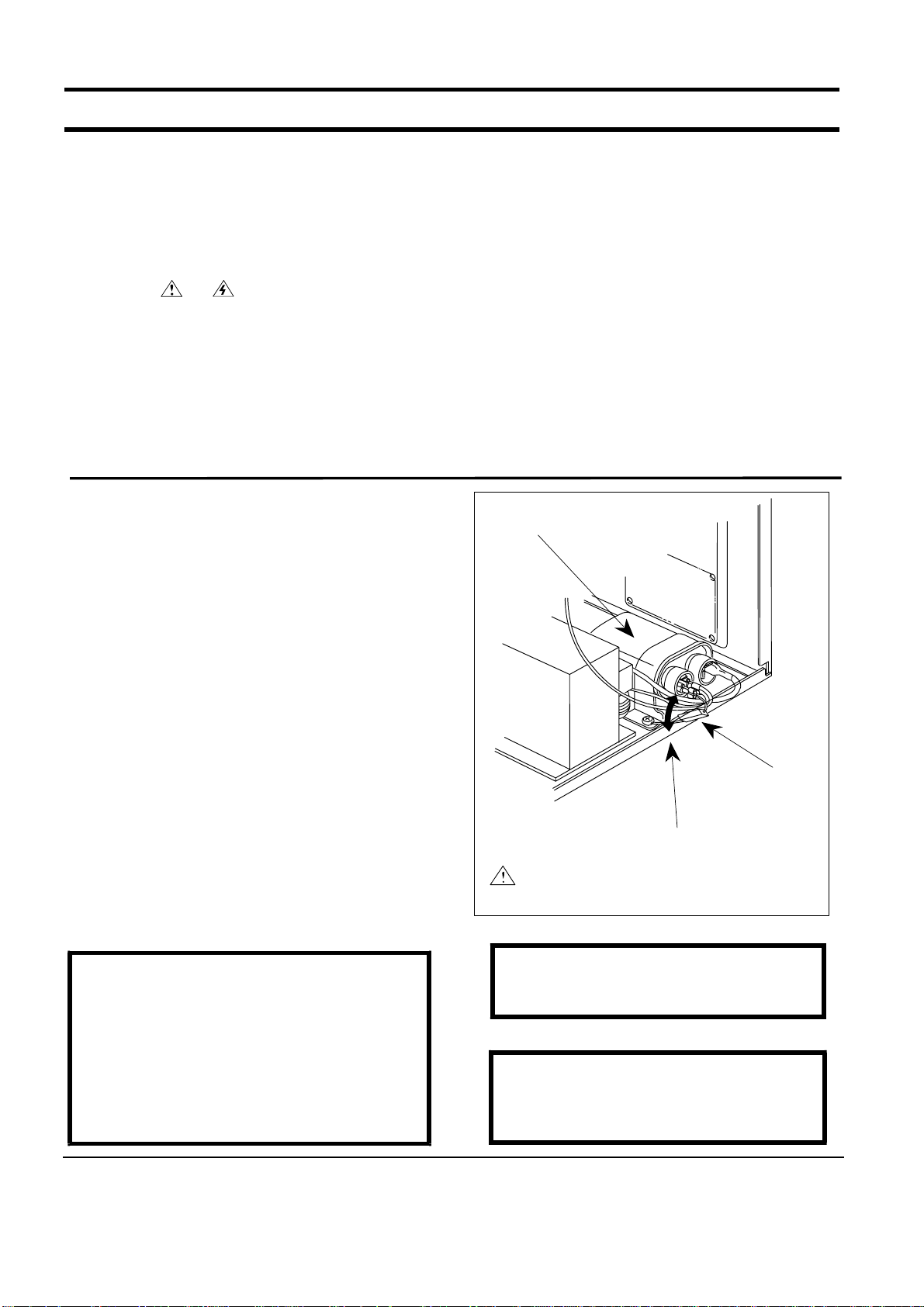
2
1-2SpecialServicingPrecautions(Continued)
17.Whencheckingthecontinuityofthewitches
ortransformer,alwaysmakesurethatthe
powerisOFF,andoneoftheleadwiresis
disconnected.
18.Componentsthatarecriticalforsafetyare
indicatedinthecircuitdiagramby
shading, or.
19.Usereplacementcomponentsthathavethe
sameratings,especiallyforflameresistance
anddielectricstrengthspecifications.A
replacementpartthatdoesnothavethe
samesafetycharacteristicsastheoriginal
mightcreateshock,fireorotherhazards.
1-3SpecialHighVoltagePrecautions
1.HighVoltageWarning
Donotattempttomeasureanyofthehigh
voltages--thisincludesthefilamentvoltage
ofthemagnetron.Highvoltageispresent
duringanycookcycle.
Beforetouchinganycomponentsorwiring,
alwaysunplugtheovenanddischargethe
highvoltagecapacitor(SeeFigure1-1)
2.Thehigh-voltagecapacitorremainscharged
about30secondsafterdisconnection.Short
thenegativeterminalofthehigh-voltage
capacitortototheovenchassis.(Usea
screwdriver.)
3.Highvoltageismaintainedwithinspecified
limitsbyclose-tolerance,safety-related
componentsandadjustments.Ifthehigh
voltageexceedsthespecifiedlimits,check
eachofthespecialcomponents.
PRECAUTION
ThereexistsHIGHVOLTAGEELECTRICITY
withhighcurrentcapabilitiesinthecircuitsofthe
HIGHVOLTAGETRANSFORMERsecondary
andfilamentterminals.Itisextremelydangerous
toworkonornearthesecircuitswiththeoven
energized.
DONOTmeasurethevoltageinthehighvoltage
circuitincludingfilamentvoltageofmagnetron.
PRECAUTION
Nevertouchanycircuitwiringwithyourhand
norwithuninsulatedtoolduringoperation.
PRECAUTION
Servicemenshouldremovetheirwatches
wheneverworkingclosetoorreplacingthe
magnetron.
H.VCapacitor
Short
H.V.Diode
Touchchassisgroundfirstthenshorttothe
highvoltagecapacitorterminalbyusing
screwdriverorjumperwire.
3
2.Specifications
2-1TableofSpecifications - MSA20M
TIMER
POWERSOURCE
POWERCONSUMPTION
OUTPUTPOWER
OPERATINGFREQUENCY
COOLINGMETHOD
MAGNETRON
OUTSIDEDIMENSIONS
OVENDIMENSIONS
SHIPPINGDIMENSIONS
SHIPPINGWEIGHTAPPROX.
35MINUTES
230V50Hz,SINGLEPHASE
1,150W
100W/800W(IEC-705)
2,450MHz
COOLINGFANMOTOR
OM75S(31)ESS
489(W)x275(H)x371(D)
306(W)x211(H)x320(D)
557(W)x329(H)x434(D)
NET 12.5kg
GROSS 14.0kg
4
2.Specifications
2-2 TableofSpecifications - MGA20M
TIMER
POWERSOURCE
POWERCONSUMPTION
OUTPUTPOWER
OPERATINGFREQUENCY
MAGNETRON
COOLINGMETHOD
OUTSIDEDIMENSIONS
OVENDIMENSIONS
SHIPPINGDIMENSIONS
SHIPPINGWEIGHTAPPROX.
60MINUTES
230V50Hz,AC
MICROWAVE:1,300W
GRILL:1100W
FROM100TO850W
(IEC-705TESTPROCEDURE)
2,450MHz
OM75PH(31)ESS
COOLINGFANMOTOR
489(W)x275(H)x393(D)
306(W)x211(H)x32 0D)
557(W)x329(H)x434(D)
NET 15.0kg
GROSS 16.5kg
5
2.Specifications
2-3 TableofSpecifications - MGB28M
TIMER
POWERSOURCE
POWERCONSUMPTION
OUTPUTPOWER
OPERATINGFREQUENCY
MAGNETRON
COOLINGMETHOD
OUTSIDEDIMENSIONS
OVENSHIPPINGDIMENSIONS
SHIPPINGWEIGHTAPPROX.
60MINUTES
230V50Hz,AC
MICROWAVE:1,500W
GRILL:1300W
FROM100TO900W
(IEC-705TESTPROCEDURE)
2,450MHz
OM75P(31)ESS
COOLINGFANMOTOR
517(W)x297(H)x445(D)
577(W)x373(H)x487(D)
NET 18.0kg
GROSS 19.5kg
6
2.Specifications
2-4 TableofSpecifications - MGB22M
TIMER
POWERSOURCE
POWERCONSUMPTION
OUTPUTPOWER
OPERATINGFREQUENCY
MAGNETRON
COOLINGMETHOD
OUTSIDEDIMENSIONS
OVENDIMENSIONS
SHIPPINGDIMENSIONS
SHIPPINGWEIGHTAPPROX.
60MINUTES
230V50Hz,AC
MICROWAVE:1,300W
GRILL:1100W
FROM100TO850W
(IEC-705TESTPROCEDURE)
2,450MHz
OM75PH(31)ESS
COOLINGFANMOTOR
489(W)x275(H)x392(D)
330(W)x211(H)x320(D)
557(W)x329(H)x466(D)
NET 15.0kg
GROSS 16.5kg
7
2.Specifications
2-5 TableofSpecifications - MSB22M
TIMER
POWERSOURCE
POWERCONSUMPTION
OUTPUTPOWER
OPERATINGFREQUENCY
MAGNETRON
COOLINGMETHOD
OUTSIDEDIMENSIONS
OVENDIMENSIONS
SHIPPINGDIMENSIONS
SHIPPINGWEIGHTAPPROX.
35MINUTES
230V50Hz,SINGLEPHASE
MICROWAVE:1,150W
100W/800W
(IEC-705TESTPROCEDURE)
2,450MHz
OM75SH(31)ESS
COOLINGFANMOTOR
489(W)x275(H)x387(D)
330(W)x211(H)x320(D)
557(W)x329(H)x466(D)
NET 13.5kg
GROSS 15.0kg
8
2.Specifications
2-6 TableofSpecifications - MGB22Y
TIMER
POWERSOURCE
POWERCONSUMPTION
OUTPUTPOWER
OPERATINGFREQUENCY
MAGNETRON
COOLINGMETHOD
OUTSIDEDIMENSIONS
OVENDIMENSIONS
SHIPPINGDIMENSIONS
SHIPPINGWEIGHTAPPROX.
60MINUTES
230V50Hz,AC
MICROWAVE:1,300W
GRILL:1100W
FROM100TO850W
(IEC-705TESTPROCEDURE)
2,450MHz
OM75P(31)ESS
COOLINGFANMOTOR
489(W)x275(H)x387(D)
330(W)x211(H)x320(D)
557(W)x329(H)x466(D)
NET 15.0kg
CROSS 16.5kg
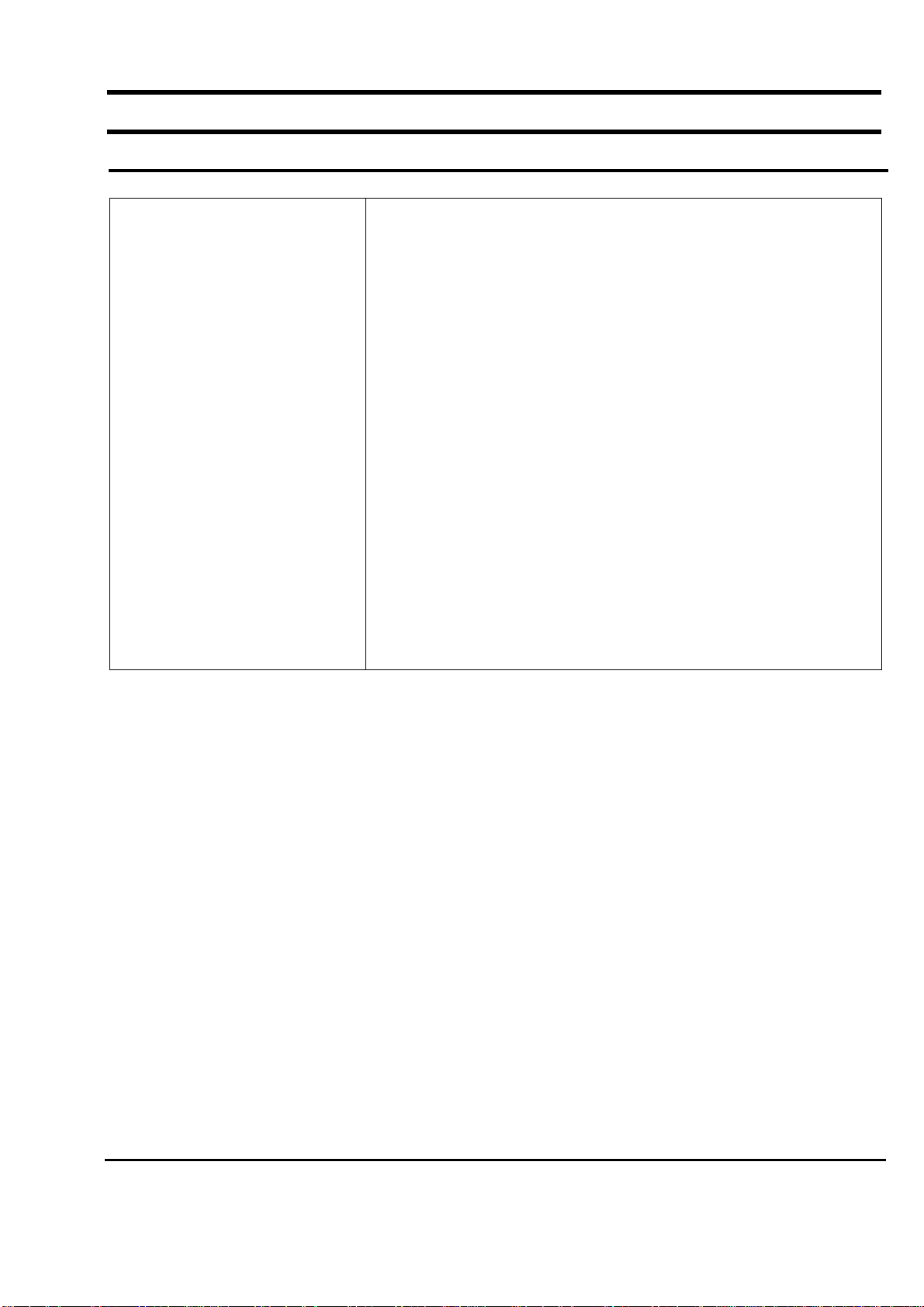
9
2.Specifications
2-7 TableofSpecifications - MCB28E
TIMER
POWERSOURCE
POWERCONSUMPTION
OUTPUTPOWER
OPERATINGFREQUENCY
MAGNETRON
COOLINGMETHOD
OUTSIDEDIMENSIONS
OVENSHIPPINGDIMENSIONS
SHIPPINGWEIGHTAPPROX.
60MINUTES
230V50Hz,AC
MICROWAVE:1,500W
GRILL:1300W
FROM100TO900W
(IEC-705TESTPROCEDURE)
2,450MHz
OM75P(31)ESS
COOLINGFANMOTOR
517(W)x297(H)x445(D)
577(W)x373(H)x487(D)
NET 18.0kg
GROSS 19.5kg
10
2.Specifications
2-8 TableofSpecifications - MFC32E
TIMER
POWERSOURCE
POWERCONSUMPTION
OUTPUTPOWER
OPERATINGFREQUENCY
MAGNETRON
COOLINGMETHOD
OUTSIDEDIMENSIONS
SHIPPINGWEIGHT
99MINUTES90SECONDS
230V50Hz,AC
MICROWAVE:1,500W
GRILL:1,450W
CONVECTION:1700W
900W
(IEC-705TESTPROCEDURE)
2,450MHz
OM75P(31)
COOLINGFANMOTOR
547(W)x339(H)x503(D)mm
26.0kg
30.0kg
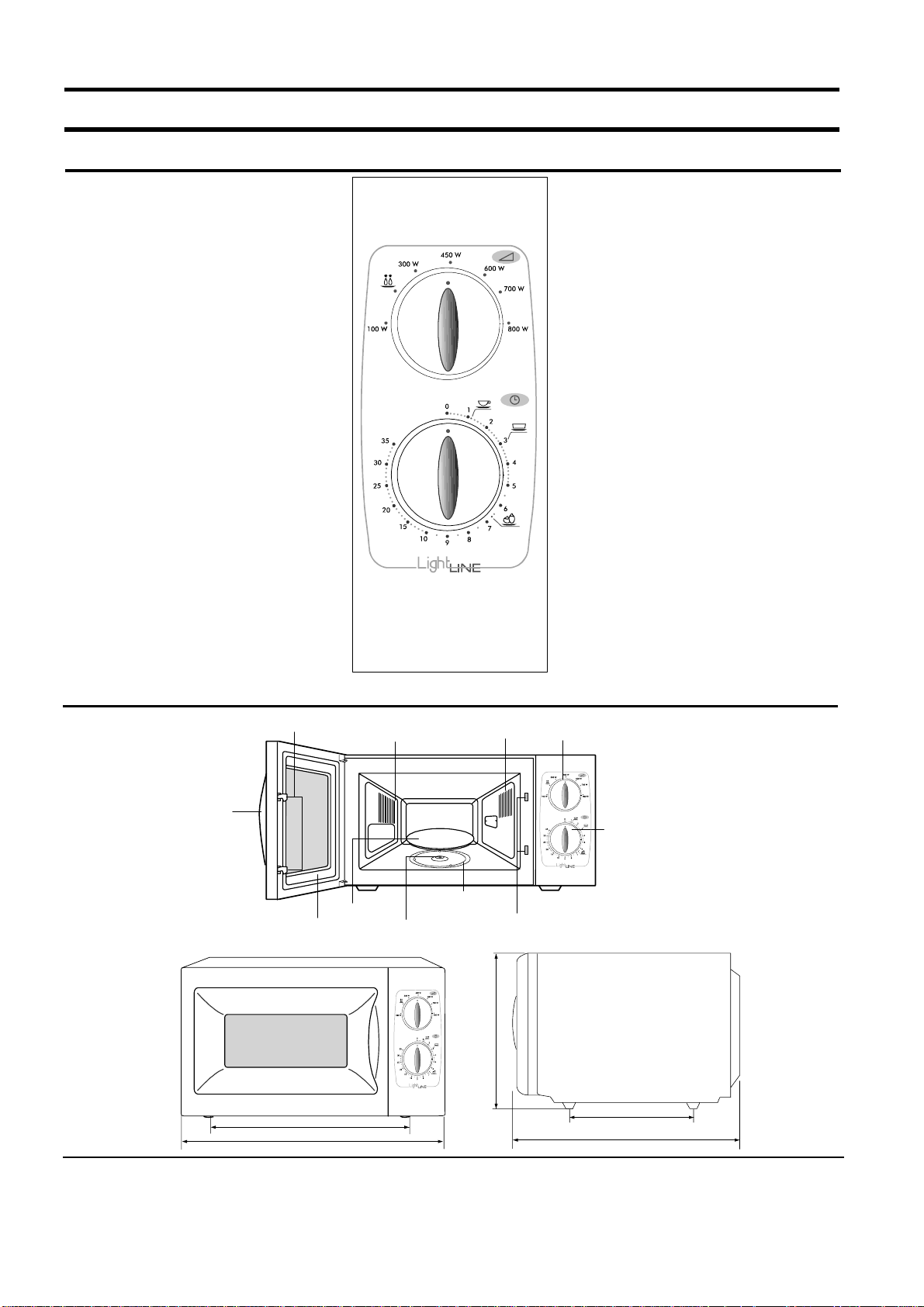
11
3.OperatingInstructions
3-1ControlPanel - MSA20M
3-2Features&ExternalViews
DOOR
TURNTATBLE
COUPLER
ROLLERRING
SAFETY
INTERLOCKHOLES
LIGHT
VARIABLECOOKING
POWERCONTROLKNOB
TIMERKNOB
VENTILATIONHOLS
DOORLATCHES
HANDLE
27
5m
m
489mm
342mm
371mm
206mm
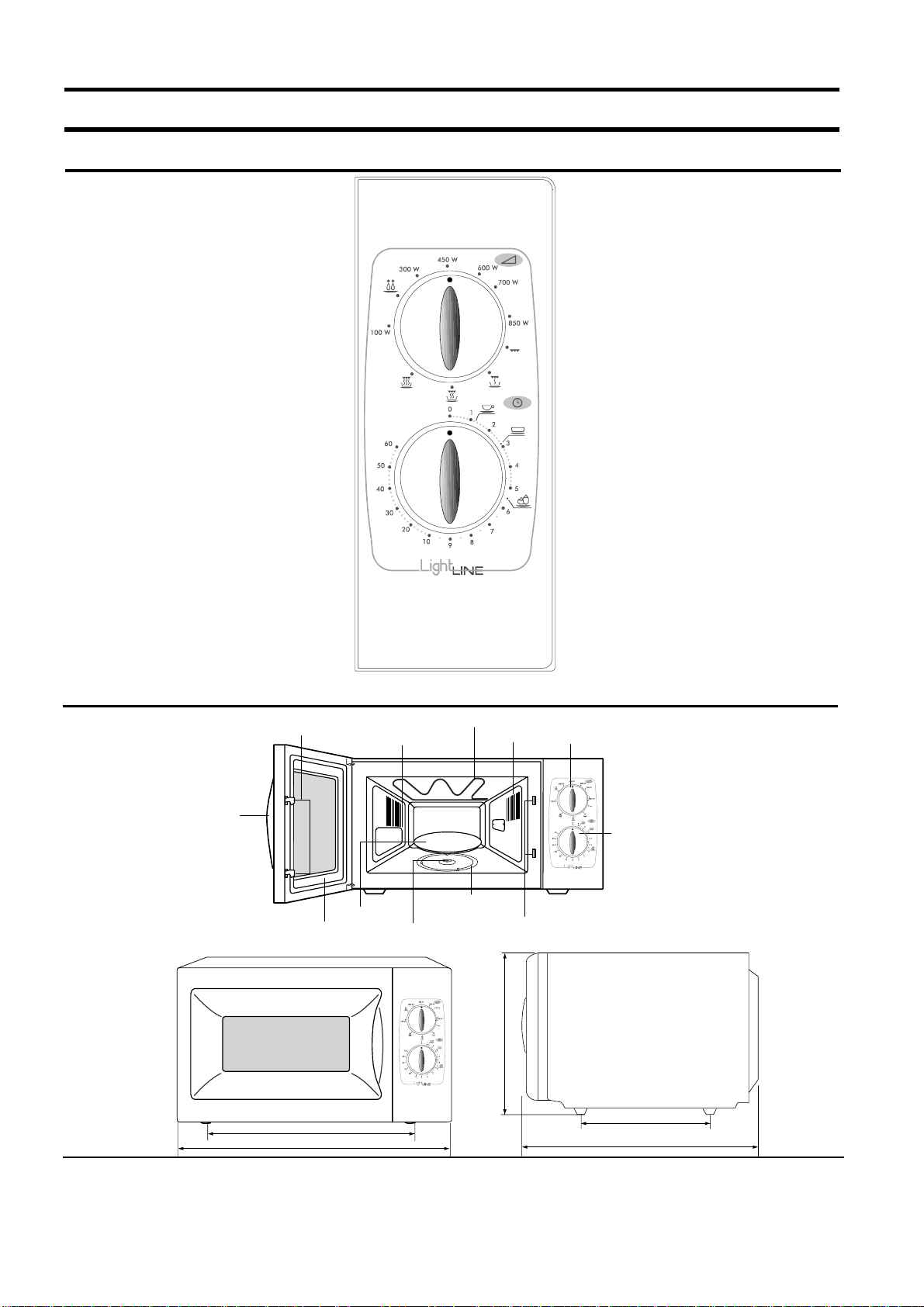
12
3.OperatingInstructions
3-3 ControlPanel - MGA20M
3-4 Features&ExternalViews
DOOR
TURNTATBLE
COUPLER
ROLLERRING
SAFETY
INTERLOCKHOLES
LIGHT
GRILL
VARIABLECOOKING
POWERCONTROLKNOB
TIMERKNOB
VENTILATIONHOLS
DOORLATCHES
HANDLE
2
75
m
m
489mm
342mm
393mm
206mm
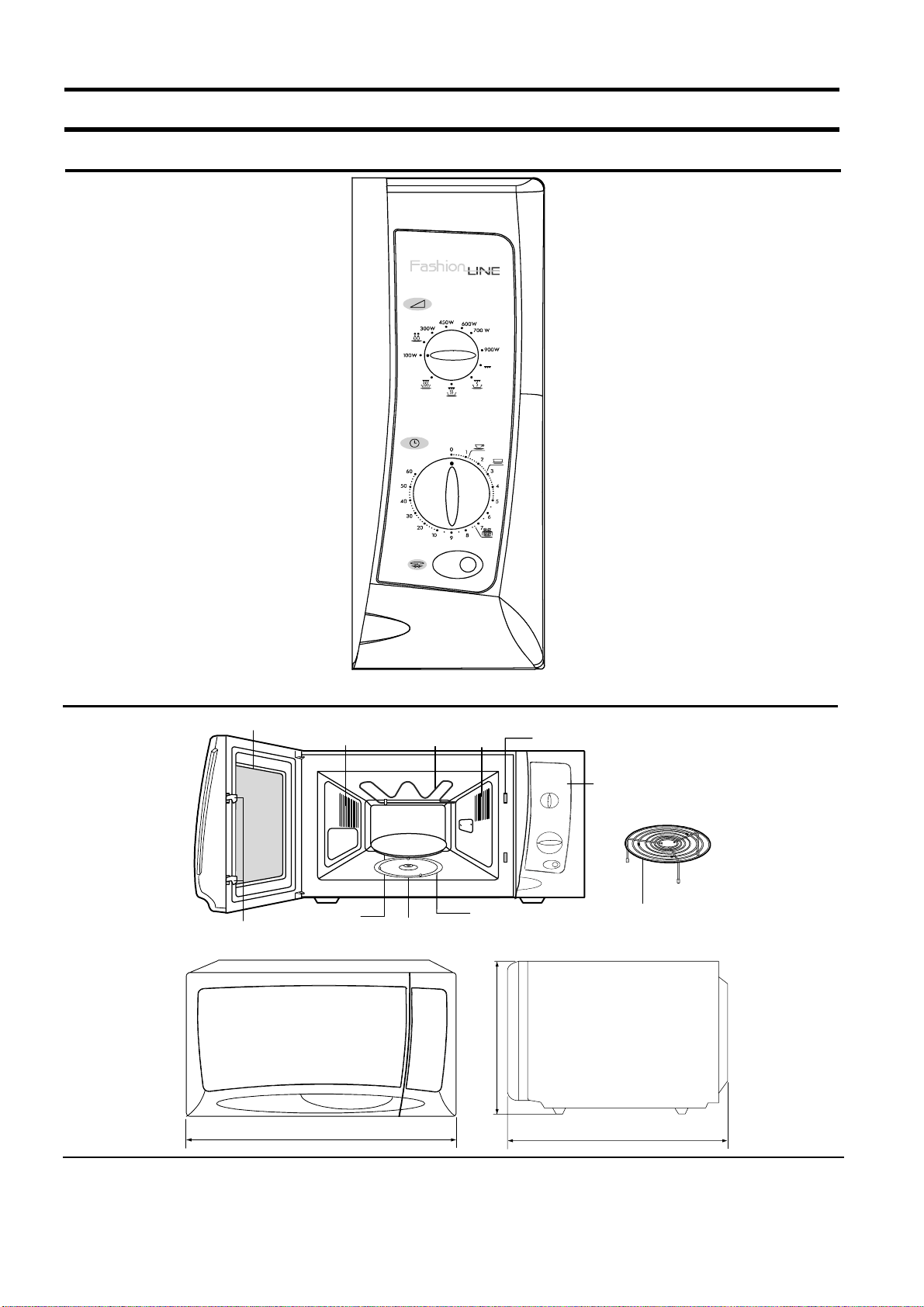
13
3.OperatingInstructions
3-5 ControlPanel - MGB28M
3-6 Features&ExternalViews
297
m
m
445mm
517mm
Door
VentilationHoles
Light
Grill
SafetyInterlockHole
ControlPanel
RollerRing MetalRack
Coupler
GlassPlate
DoorLatches
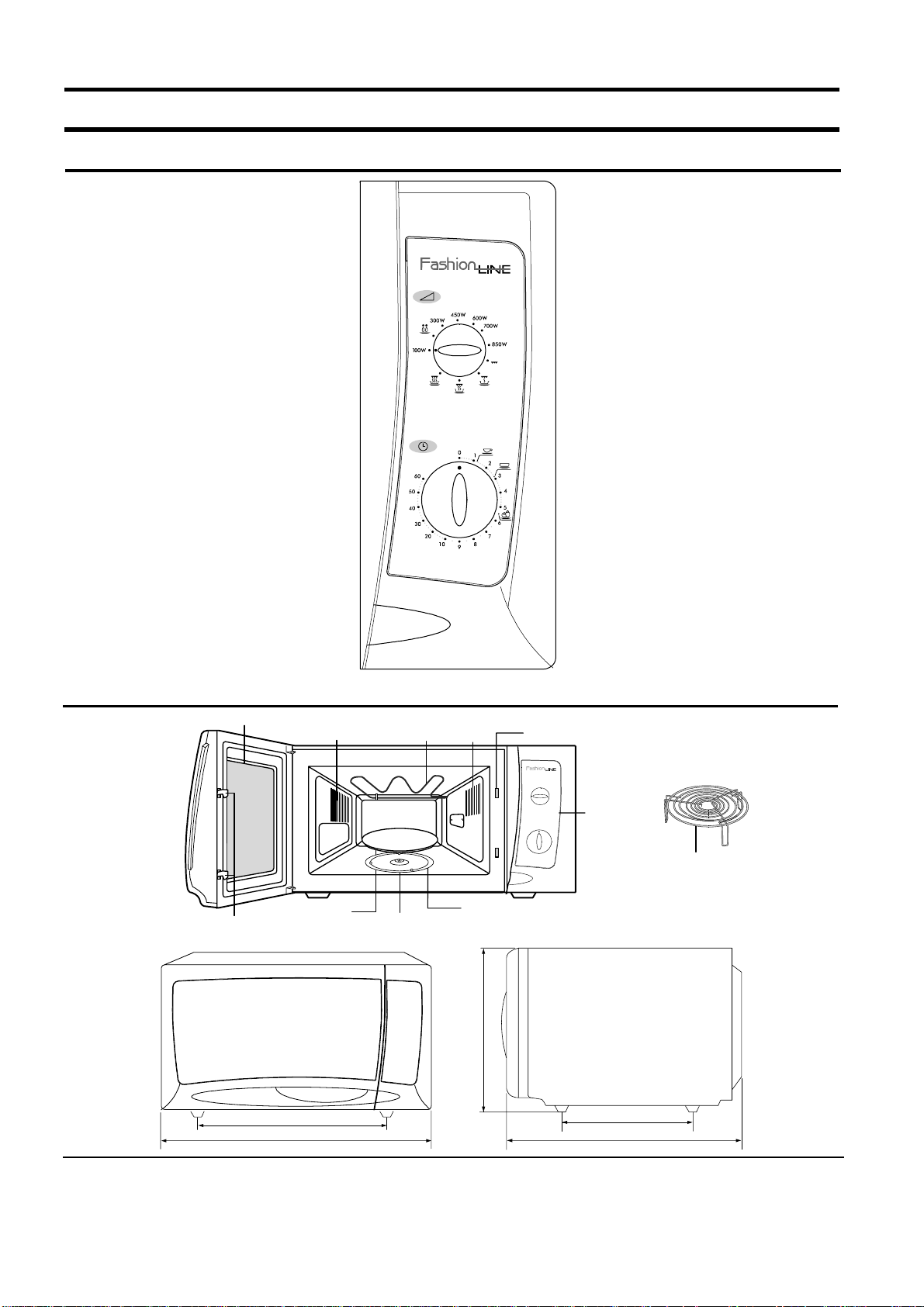
14
3.OperatingInstructions
3-7 ControlPanel - MGB22M
3-8 Features&ExternalViews
Door
VentilationHoles
Light
Grill
SafetyInterlockHole
ControlPanel
RollerRing
Coupler
GlassPlate
DoorLatches
METALRACK
489mm
342mm
27
5
m
m
392mm
206mm
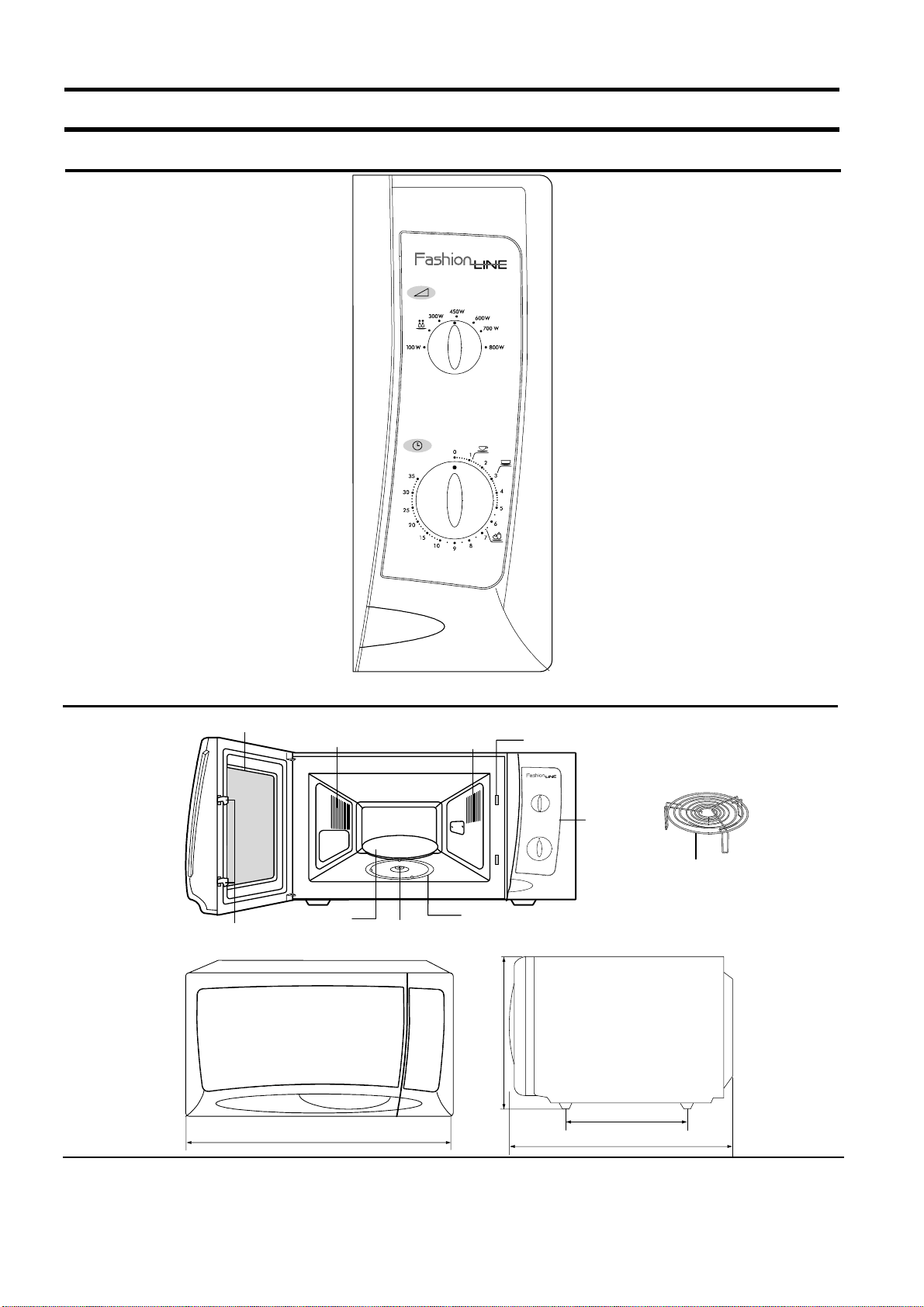
15
342mm
2
75
m
m
387mm
206mm
3.OperatingInstructions
3-9 ControlPanel - MSB22MX
3-10 Features&ExternalViews
Door
VentilationHoles
Light
SafetyInterlockHole
ControlPanel
RollerRing
Coupler
GlassPlate
DoorLatches
METALRACK
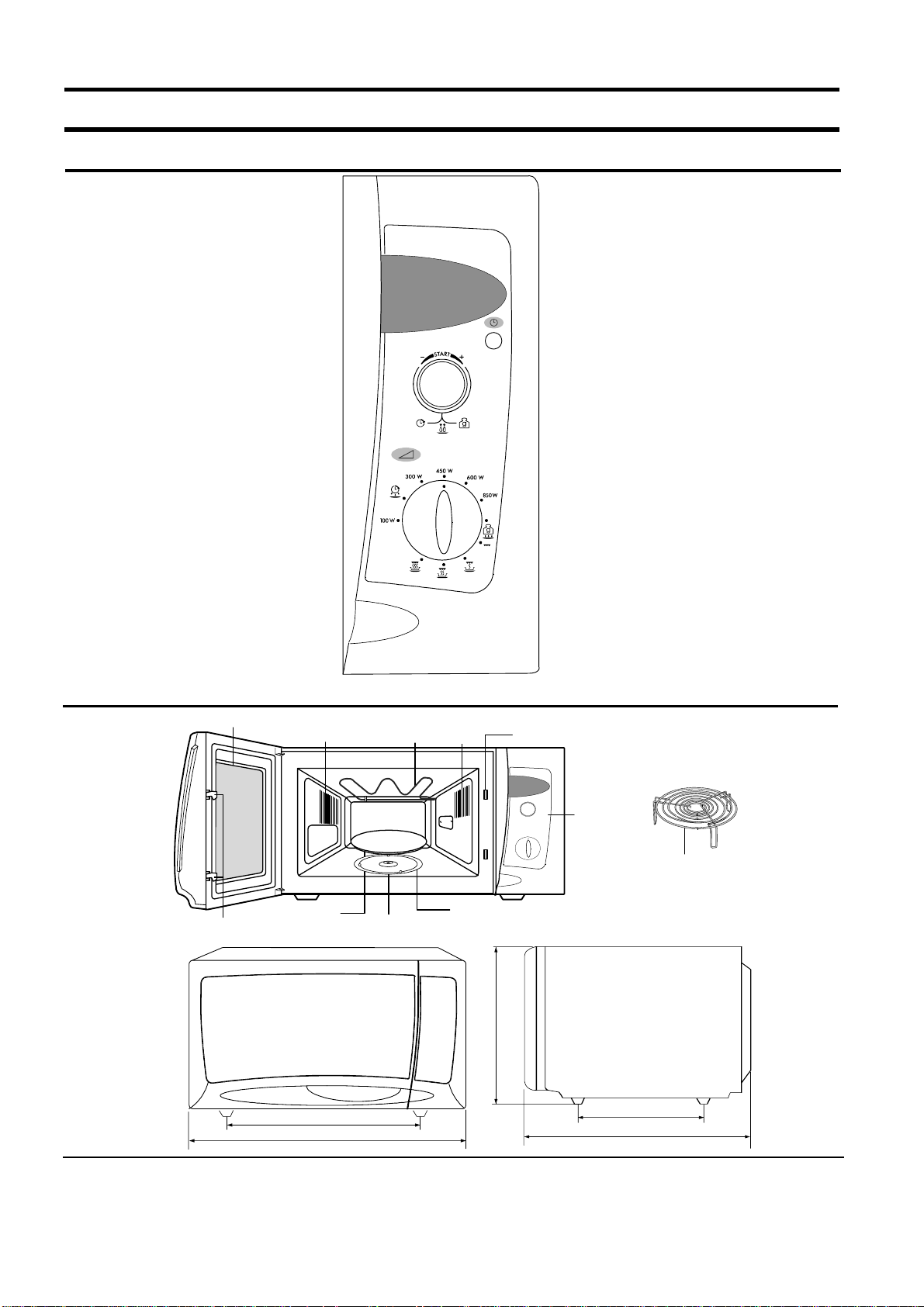
16
206mm
387mm
275
m
m
489mm
342mm
3.OperatingInstructions
3-11 Control Panel - MGB22Y
3-12Features&ExternalViews
Door
VentilationHoles
Light
Grill
SafetyInterlockHole
ControlPanel
RollerRing
Coupler
GlassPlate
DoorLatches
METALRACK
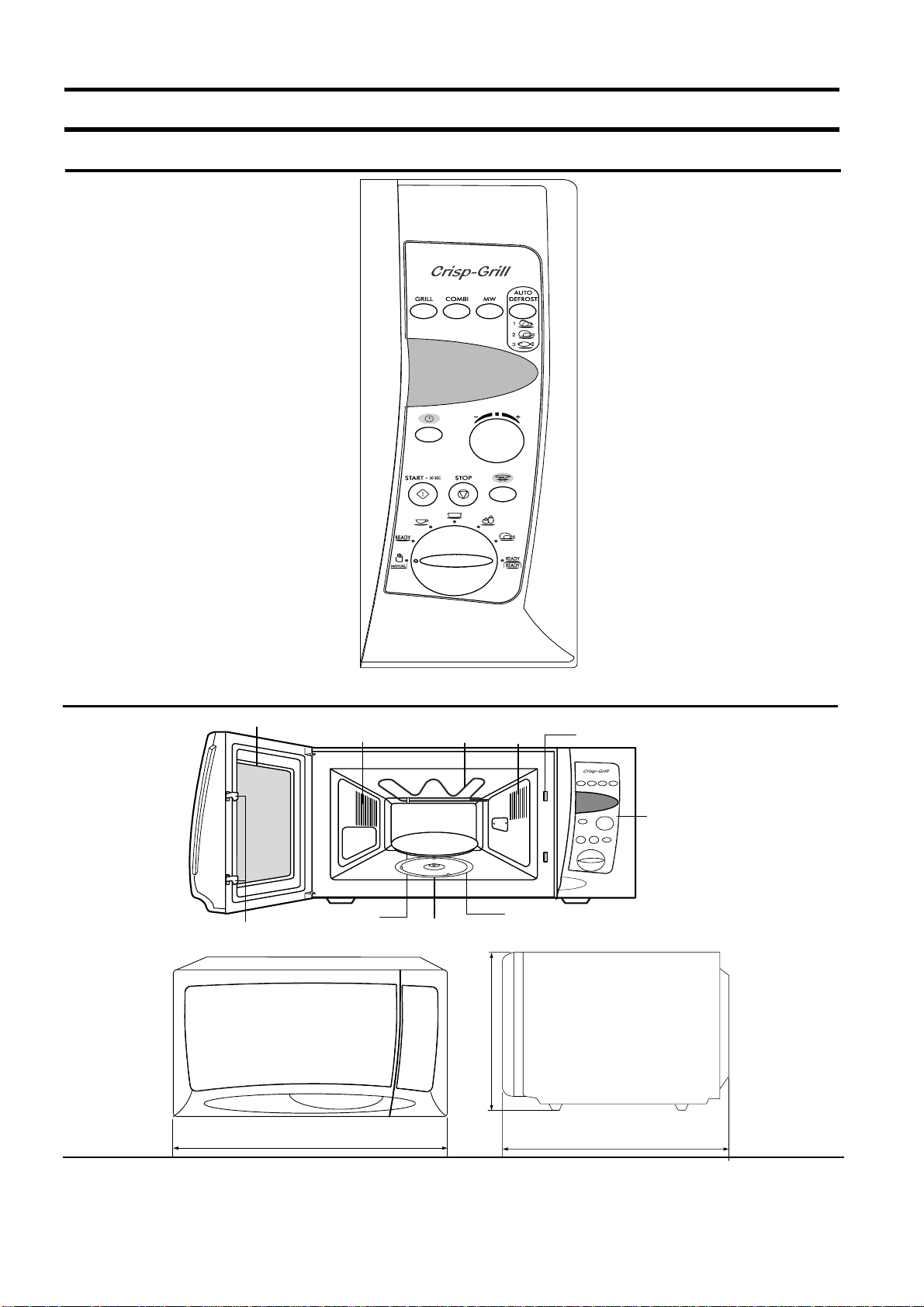
17
29
7m
m
445mm
517mm
3.OperatingInstructions
3-13 ControlPanel - MCB28E
3-14 Features&ExternalViews
Door
VentilationHoles
Light
Grill
SafetyInterlockHole
ControlPanel
RollerRing
Coupler
GlassPlate
DoorLatches
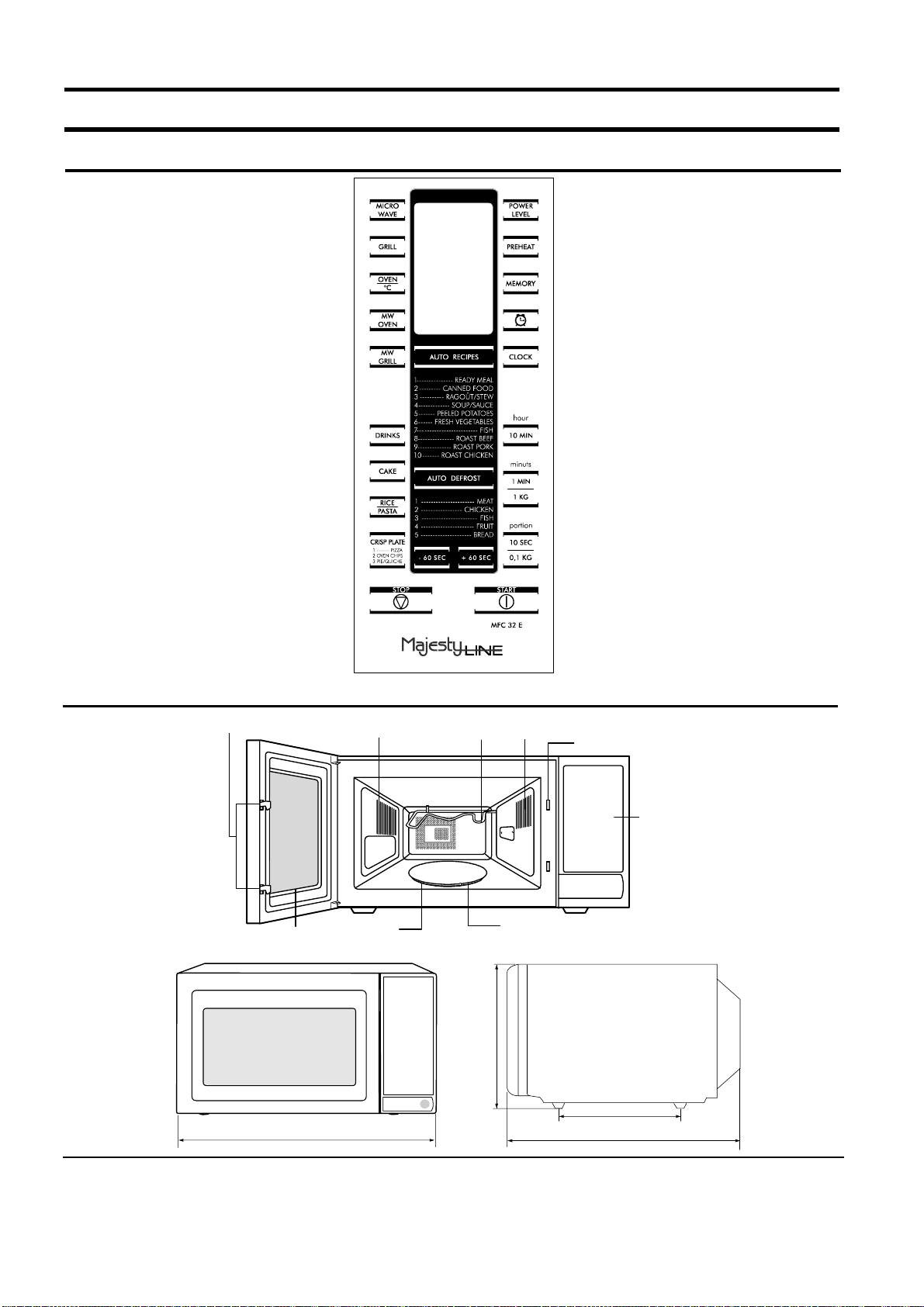
18
3.OperatingInstructions
3-15 ControlPanel - MFC32E
3-16 Features&ExternalViews
VENTILATIONHOLES
GRILL LIGHT
DOOR
DOORLATCHES
ROLLERRING
CONTROLPANEL
TURNTABLE
SAFETY
INTERLOCKHOLES
547mm
503mm
225mm
3
3
9
m
m
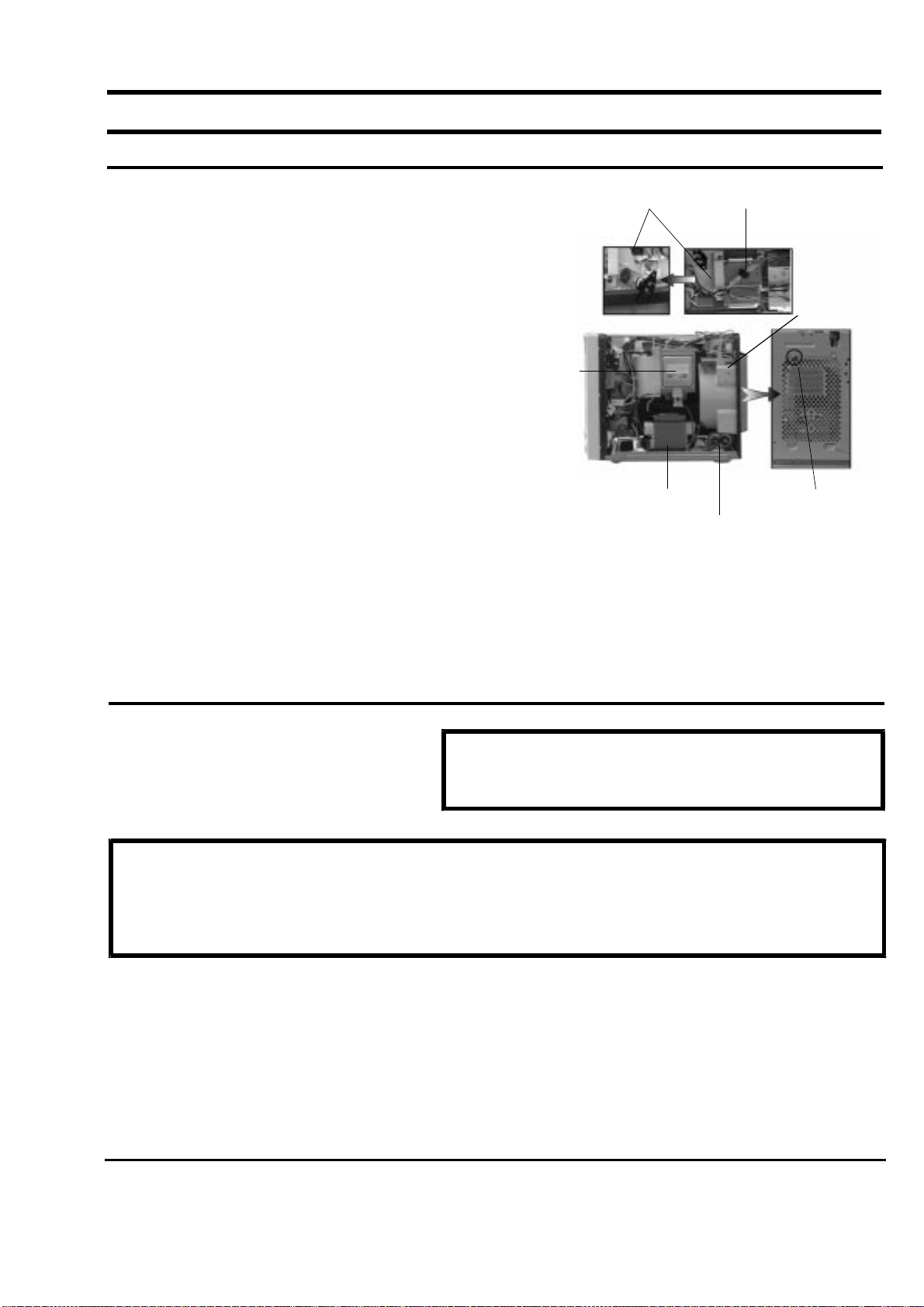
19
4.DisassemblyandReassembly
4-1ReplacementofMagnetron,MotorAssemblyandLamp
Removethemagnetronincludingtheshieldcase,
permanentmagnet,chokecoilsandcapacitors(allof
whicharecontainedinoneassembly).
1.Disconnectallleadwiresfromthemagnetron
andlamp.
2.Removeascrewsecuringaircover.
3.Removetheaircover.
4.Removescrewssecuringthemagnetrontothe
waveguide.
5.Takeoutthemagnetronverycarefully.
6.Removenutsfromthebackpanel.
7.Takeoutthefanmotor.
8.Removetheovenlampbyrotatingtopullout
fromholeofaircover.
NOTE1:Whenremovingthemagnetron,makesure
thatitsantennadoesnothitanyadjacent
parts,oritmaybedamaged.
NOTE2:Whenreplacingthemagnetron,besureto
remountthemagnetrongasketinthecorrect
positionandmakesurethegasketisingood
condition.
4-2ReplacementofHighVoltageTransformer
1.Dischargethehighvoltagecapacitor.
2.Disconnectalltheleads.
3.Removethemountingbolts.
4.Reconnecttheleadscorrectlyandfirmly.
PRECAUTION
Servicemenshouldremovetheirwatcheswhenever
workingclosetoorreplacingthemagnetron.
PRECAUTION
ThereexistsHIGHVOLTAGEELECTRICITYwithhighcurrentcapabilitiesinthecircuitsoftheHIGH
VOLTAGETRANSFORMERsecondaryandfilamentterminals.Itisextremelydangeroustoworkonornear
thesecircuitswiththeovenenergized.
DONOTmeasurethevoltageinthehighvoltagecircuitincludingfilamentvoltageofmagnetron.
CoverAi
r
ThermoS/W
H.V.Trans Screw
H.VCapacitor
FanMotor
Magnetron
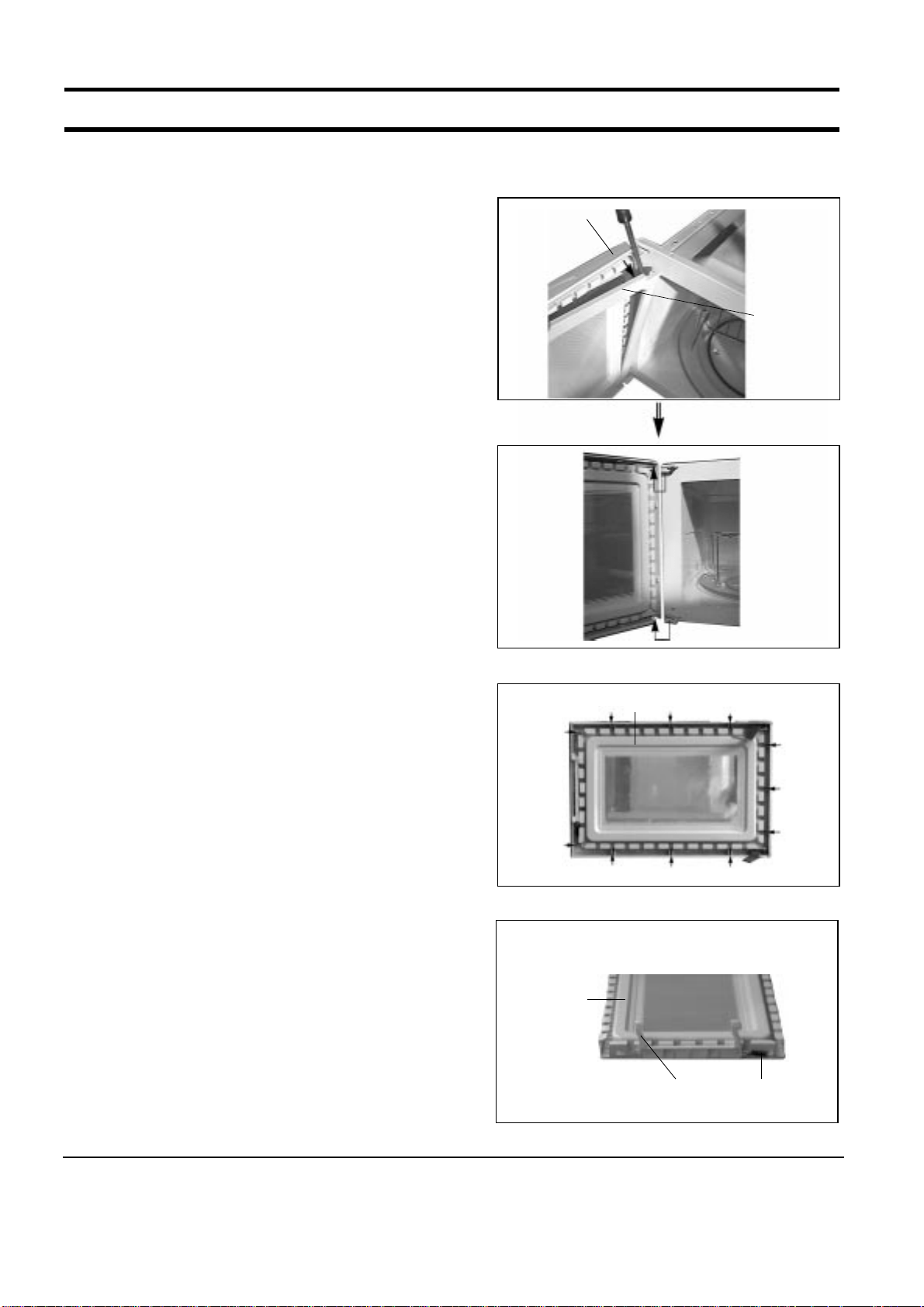
20
4-3ReplacementofDoorAssembly - MSA20M - MSB22MX - MCB28E
4-3-1RemovalofDoor"C"
InsertflatscrewdriverintothegapbetweenDoor
"A"andDoor"C"toremoveDoor"C".Becareful
whenhandlingDoor"C"becauseitisfragile.
Thenremovethedoorassembly.
4-3-2RemovalofDoor"E"
Followingtheprocedureasshowninthefigure,
insertandbendathinmetalplatebetweenDoor
"E"andDoor"A"untilyouhearthe'tick'sound.
-Insertiondepthofthethinmetalplateshouldbe
0.5mmorless.
4-3-3RemovalofKeyDoor&Spring
RemovepinhingefromDoor"E"
DetachspringfromDoor"E"andkeydoor.
Door"E"
KeyDoor
Spring
Door"E"
Door"A"
Door"C"
21
4-4 ReplacementofDoorAssembly - MGA20 - MGB28M - MGB22M - MGB22Y
4-4-1RemovalofDoorAssembly
Removehexboltssecuringtheupperhingeand
lowerhinge.Thenremovethedoorassembly.
4-4-2RemovalofDoor"C"
InsertflatscrewdriverintothegapbetweenDoor
"A"andDoor"C"toremoveDoor"C".Becareful
whenhandlingDoor"C"becauseitisfragile.
Thenremovethedoorassembly.
4-4-3RemovalofDoor"E"
Followingtheprocedureasshowninthefigure,
insertandbendathinmetalplatebetweenDoor
"E"andDoor"A"untilyouhearthe'tick'sound.
-Insertiondepthofthethinmetalplateshouldbe
0.5mmorless.
4-4-4RemovalofKeyDoor&Spring
RemovepinhingefromDoor"E"
DetachspringfromDoor"E"andkeydoor.
Door"E"
KeyDoor
Spring
Door"E"
UpperHinge
SCREWS
SCREW
LowerHinge
22
4-5 ReplacementofDoorAssembly - MFC32E
4-5-1RemovalofDoorAssembly
Removescrewssecuringtheupperhingeand
lowerhinge.Thenremovethedoorassembly.
4-5-2RemovalofDoor"C"
InsertflatscrewdriverintothegapbetweenDoor
"A"andDoor"C"toremoveDoor"C".Becareful
whenhandlingDoor"C"becauseitisfragile.
4-5-3RemovalofDoor"E"
Followingtheprocedureasshowninthefigure,
insertandbendathinmetalplatebetweenDoor
"E"andDoor"A"untilyouhearthe'tick'sound.
1.Insertiondepthofthethinmetalplateshouldbe
0.5mmorless.
4-5-4RemovalofKeyDoor&Spring
RemovepinhingefromDoor"E"
DetachspringfromDoor"E"andkeydoor.
UpperHinge
Screw
LowerHinge
Screw
Door"A"
Door"C"
Door"E"
Spring
Door"E"
KeyDoor
23
4-6 ReassemblyTest
1.Whenmountingthedoortotheoven,besuretoadjustthedoorparalleltothebottomlineoftheoven
faceplatebymovingtheupperhingeandlowerhingeinthedirectionnecessaryforproperalignment.
2.Adjustsothatthedoorhasnoplaybetweentheinnerdoorsurfaceandovenfrontsurface.Ifthedoor
assemblyisnotmountedproperly,microwaveenergymayleakfromthespacebetweenthedoorandoven.
3.Dothemicrowaveleakagetest.
4-7 ReplacementofFuse
1.Disconnecttheovenfromthepowersource.
2.When the fuseblowsoutbytheoperationofinterlockmonitorswitchfailure,replacetheprimaryinterlock
switch,doorsensingswitch,monitorswitchandpowerrelay.
3.Whentheabovethreeswitchesoperateproperly,checkifanyotherpartsuchasthecontrolcircuitboard,
blowermotororhighvoltagetransformerisdefective.
4-8 ReplacementofDriveMotor
1.Takeouttheglasstray,guiderollerandcoupler
fromcavity.
2.Turntheovenupsidedowntoreplacethedrivemotor.
3.Removeascrewsecuringthedrivemotorcover.
4.Disconnectalltheleadwiresfromthedrivemotor.
5.Removescrewssecuringthedrivemotortothecavity.
6.Removethedrivemotor.
7.Whenreplacingthedrivemotor,besureto
remountitinthecorrectposition.
8.Connectalltheleadstothedrivemotor.
9.Screwthedrivemotorcovertothebaseplate
withascrewdriver.
10.Remountthecouplerinthecorrectposition.
Afterreplacementofthedefectivecomponentpartsofthedoor,reassembleitandfollowtheinstructions
belowforproperinstallationandadjustmentsoastopreventanexcessivemicrowaveleakage.
DriveMotorCover
BasePlate
DriveMotor
24
4-9 ReplacementofControlCircuitBoard - not electronic models
4-9-1RemovalofControlBox
1.Disconnecttheconnectorsfromthecontrol
boxassembly.
2.Removescrewssecuringthecontrolbox
assembly.
3.RemovetheknobsofthecontrolboxA'ssy.
4.Removethescrewsecuringthetimer.
CONTROL-BOX
SCREWS
25
4-10 ReplacementofControlCircuitBoard - MGB22Y
4-10-1RemovalofControlBoxAssembly
1.Besuretogroundanystaticelectricchargein
yourbodyandnevertouchthecontrolcircuit.
2.Disconnecttheconnectorsfromthecontrol
circuitboard.
3.Removescrewssecuringthecontrolbox
assembly.
4.Removethescrewsecuringthegroundtailof
thekeyboard.
4-10-2RemovalofAss'yP.C.BAssembly
1.Removescrewssecuringthecontrolcircuit
board.
2.LiftupthecontrolcircuitboardfromtheAss'y
controlbox.
SCREWS
ASSYPCB
CONTROL-BOX
SCREW
26
4-11 ReplacementofControlCircuitBoard - MCB28E
4-11-1RemovalofAss'yControlBox
1.Besuretogroundanystaticelectricchargein
yourbodyandnevertouchthetouchcontrol
circuitry.
2.Disconnecttheconnectorsfromthecontrol
circuitboard.
3.Removescrewssecuringthecontrolbox
assembly.
4.Removethescrewsecuringthegroundtailof
thekeyboard.
4-11-2RemovalofAss'yP.C.B
1.Pulltheleverendoftheplasticfastenerand
removetheFlexiblePrintedCircuit(FPC)of
membranepanel.
2.Removescrewssecuringthecontrolcircuit
board.
3.LiftupthecontrolcircuitboardfromtheAss'y
controlbox.
4.WhenreconnectingtheFPCconnector,make
surethattheholesontheconnectorareproperly
engagedwiththehooksonthePlasticFastener.
screw
CONTROL-BOX
SCREWS
27
4-12 ReplacementofControlCircuitBoard - MFC32E
4-12-1RemovalofControlBox
1.Besuretogroundanystaticelectricchargein
yourbodyandnevertouchthecontrolcircuit.
2.Disconnecttheconnectorsfromthecontrol
circuitboard.
3.Removescrewssecuringthecontrolbox
assembly.
4.Removethescrewsecuringthegroundtailof
thekeyboard.
4-12-2RemovalofP.C.BAssembly
1.Pulltheleverendoftheplasticfastenerand
removetheFlexiblePrintedCircuit(FPC)of
membranepanel.
2.Removescrewssecuringthecontrolcircuit
board.
3.LiftupthecontrolcircuitboardfromtheAss'y
controlbox.
4.WhenreconnectingtheFPCconnector,make
surethattheholesontheconnectorareproperly
engagedwiththehooksonthePlasticFastener.
4-12-3RemovalofWindowDisplay&MembranePanel
1.Windowdisplayshouldnotbedisassembledas
itsmountingtabswillbebroken.Ifrepairwork
isdifficult,replacewithAss'ycontrolpanel.
2.Themembranekeyboardisattachedtothe
escutcheonbasewithdoublefacedadhesive
tape.Therefore,applyinghotairsuchasusingof
hairdryerisrecommendedforsmoother
removal.
3.Wheninstallingnewmembranekeyboard,make
surethatthesurfaceofescutcheonbaseis
cleanedsufficientlysothatanyproblems
(shortedcontactsorunevensurface)canbe
avoided.
Controlbox
Screw
FPCConnector
Screw
Window
Display
Membrane
panel
28
5.AlignmentandAdjustments - MSA20M - MSB22MX
5-1HighVoltageTransformer
1.Removeconnectorsfromthetransformerterminals
andcheckcontinuity.
2.Normalresistancereadingsareasfollows:
(Roomtemperature=20°C)
5-2Magnetron
1.Continuitycheckscanindicateonlyanopen
filamentorashortedmagnetron.Todiagnosean
openfilamentorshortedmagnetron.
2.Isolatethemagnetronfromthecircuitby
disconnectingitsleads.
3.Acontinuitycheckacrossthemagnetronfilament
terminalsshouldindicateoneohmorless.
4.Acontinuitycheckbetweeneachfilamentterminal
andmagnetroncaseshouldreadopen.
Primary
Terminals
FilamentTerminals
Secondary
Terminal
MagnetronAntenna
GasketPlate
CoolingFins
PRECAUTION
1.Highvoltageispresentatthehighvoltageterminalsduringanycookcycle.
2.Itisneithernecessarynoradvisabletoattemptmeasurementofthehighvoltage.
3.Beforetouchinganyovencomponentsorwiring,alwaysunplugtheovenfromitspowersourceand
dischargethehighvoltagecapacitor.
Secondary
Filament
Primary
Approx.139
Approx.0
Approx.1.94
29
6. AlignmentandAdjustments - MGA20M - MGB22M - MGB22Y
6-1HighVoltageTransformer
1.Removeconnectorsfromthetransformerterminals
andcheckcontinuity.
2.Normalresistancereadingsareasfollows:
(Roomtemperature=20°C)
6-2LowVoltageTransformer
1.Thelowvoltagetransformerislocatedonthe
controlcircuitboard.
2.Removethelowvoltagetransformer (if present), fromthe
PCBAss'yandcheckcontinuity.
3.Normalresistorreadingisshowninthetable.
6-3Magnetron
1.Continuitycheckscanindicateonlyanopen
filamentorashortedmagnetron.Todiagnosean
openfilamentorshortedmagnetron:
2.Isolatethemagnetronfromthecircuitby
disconnectingitsleads.
3.Acontinuitycheckacrossthemagnetronfilament
terminalsshouldindicateoneohmorless.
4.Acontinuitycheckbetweeneachfilamentterminal
andmagnetroncaseshouldreadopen.
Primary
Terminals
FilamentTerminals
Secondary
Terminal
MagnetronAntenna
GasketPlate
CoolingFins
PRECAUTION
1.Highvoltageispresentatthehighvoltageterminalsduringanycookcycle.
2.Itisneithernecessarynoradvisabletoattemptmeasurementofthehighvoltage.
3.Beforetouchinganyovencomponentsorwiring,alwaysunplugtheovenfromitspowersourceand
dischargethehighvoltagecapacitor.
Secondary
Filament
Primary
Approx.115
Approx.0
Approx.1.35
30
7. AlignmentandAdjustments - MGB28M - MCB28E
7-1HighVoltageTransformer
1.Removeconnectorsfromthetransformerterminals
andcheckcontinuity.
2.Normalresistancereadingsareasfollows:
(Roomtemperature=20°C)
7-2LowVoltageTransformer
1.Thelowvoltagetransformerislocatedonthe
controlcircuitboard.
2.Removethelowvoltagetransformer (if present), fromthe
PCBAss'yandcheckcontinuity.
3.Normalresistorreadingisshowninthetable.
7-3Magnetron
1.Continuitycheckscanindicateonlyanopen
filamentorashortedmagnetron.Todiagnosean
openfilamentorshortedmagnetron:
2.Isolatethemagnetronfromthecircuitby
disconnectingitsleads.
3.Acontinuitycheckacrossthemagnetronfilament
terminalsshouldindicateoneohmorless.
4.Acontinuitycheckbetweeneachfilamentterminal
andmagnetroncaseshouldreadopen.
Secondary
Filament
Primary
Approx.110
Ω
Approx.0
Ω
Approx.1.450
Ω
Terminals Resistance
1~2(Input)
3~4(Output2.9V)
5~6(Output13V)
1,000
Ω
3.947
Ω
2.117
Ω
Primary
Terminals
FilamentTerminals
Secondary
Terminal
MagnetronAntenna
GasketPlate
CoolingFins
PRECAUTION
1.Highvoltageispresentatthehighvoltageterminalsduringanycookcycle.
2.Itisneithernecessarynoradvisabletoattemptmeasurementofthehighvoltage.
3.Beforetouchinganyovencomponentsorwiring,alwaysunplugtheovenfromitspowersourceand
dischargethehighvoltagecapacitor.
31
8. AlignmentandAdjustments - MFC32E
8-1HighVoltageTransformer
1.Removeconnectorsfromthetransformerterminals
andcheckcontinuity.
2.Normalresistancereadingsareasfollows:
(Roomtemperature=20°C)
8-2LowVoltageTransformer
1.Thelowvoltagetransformerislocatedonthe
Assybaseplate.
2.Removethelowvoltagetransformerfromthe
Assybaseplateandcheckcontinuity.
3.Normalresistorreadingisshowninthetable.
8-3Magnetron
1.Continuitycheckscanindicateonlyanopen
filamentorashortedmagnetron.Todiagnosean
openfilamentorshortedmagnetron:
2.Isolatethemagnetronfromthecircuitby
disconnectingitsleads.
3.Acontinuitycheckacrossthemagnetronfilament
terminalsshouldindicateoneohmorless.
4.Acontinuitycheckbetweeneachfilamentterminal
andmagnetroncaseshouldreadopen.
Secondary
Filament
Primary
90.0 10%
ShowsContinuity
1.45 10%
FilamentTerminals
Primary
Terminals
PRECAUTION
1.Highvoltageispresentatthehighvoltageterminalsduringanycookcycle.
2.Itisneithernecessarynoradvisabletoattemptmeasurementofthehighvoltage.
3.Beforetouchinganyovencomponentsorwiring,alwaysunplugtheovenfromitspowersourceand
dischargethehighvoltagecapacitor.
Terminals Resistance
1~2(Input)
3~4(Output)
5~6(Output)
290
Ω
.
4.0
Ω
..
1.0
Ω
.
GasketPlate
MagnetronAntenna
CoolingFins
32
9 HighVoltageCapacitor
1.Checkcontinuityofthecapacitorwiththemetersetatthehighestresistancescale.
2.Oncethecapacitorischarged,anormalcapacitorshowscontinuityforashorttime,andthenindicates9M .
3.Ashortedcapacitorwillshowcontinuouscontinuity.
4.Anopencapacitorwillshowconstant9M .
5.Resistancebetweeneachterminalandchassisshouldreadinfinite.
9-1 HighVoltageDiode
1.Isolatethediodefromthecircuitbydisconnectingitsleads.
2.Withtheohm-metersetatthehighestresistancescale,measureacrossthediodeterminals.Reversethe
meterleadsandreadtheresistance.Ameterwith6V,9Vorhighervoltagebatteriesshouldbeusedto
checkthefront-tobackresistanceofthediode(otherwiseaninfiniteresistancemaybereadinboth
directions).TheresistanceofanormaldiodewillbeinfiniteinonedirectionandseveralhundredK inthe
otherdirection.
9-2 MainRelayandPowerControlRelay
1.TherelaysarelocatedonthePCBAss'y.Isolatethemfromthemaincircuitbydisconnectingtheleads.
2.Operatethemicrowaveovenwithawaterloadintheoven.Setthepowerlevelsettohigh.
3.Checkcontinuitybetweenterminalsoftherelaysafterthestartpadispressed.
9-3 AdjustmentofPrimarySwitch,DoorSensingSwitchandMonitorSwitch
1.WhenmountingPrimaryswitchandInterlock
MonitorswitchtoLatchBody,consultthefigure.
2.Nospecificadjustmentduringinstallationof
PrimaryswitchandMonitorswitchtothelatch
bodyisnecessary.
3.WhenmountingtheLatchBodytotheoven
assembly,adjusttheLatchBodybymovingitso
thattheovendoorwillnothaveanyplayinit.
Checkforplayinthedoorbypullingthedoor
assembly.Makesurethatthelatchkeysmove
smoothlyafteradjustmentiscompleted.
CompletelytightenthescrewsholdingtheLatch
Bodytotheovenassembly.
4.ReconnecttoMonitorswitchandcheckthe
continuityofthemonitorcircuitandalllatch
switchesagainbyfollowingthecomponentstest
procedures.
5.Confirmthatthegapbetweentheswitch
housingandtheswitchactuatorisnomorethan
0.5mmwhendoorisclosed.
6.
InterlockSwitchReplacement
-When
replacingfaultyswitches,besureswitchmounting
tabsarenotbent,brokenorotherwisedeficientin
theirabilitytosecuretheswitchesinplace.
DoorOpen DoorClosed
Primaryswitch
Monitorswitch(COM-NC)
Monitorswitch(COM-NO)
DoorSensingS/W
∞
0
∞
∞
0
∞
0
0
PrimaryInterlockSwitch
Interlock
Monitor
Switch
BodyLatch
LeverDoor(B)
DoorSensing
Switch
Precaution
Forcontinuedprotectionagainstradiationhazard,replacepartsinaccordancewiththewiringdiagramandbesureto
usethecorrectpartnumberforthefollowingswitches:Primaryandsecondaryinterlockswitches,andtheinterlock
monitorswitch(replacealltogether).Thenfollowtheadjustmentproceduresbelow.Afterrepairandadjustment,be
suretocheckthecontinuityofallinterlockswitchesandtheinterlockmonitorswitch.
LeverDoor(B)
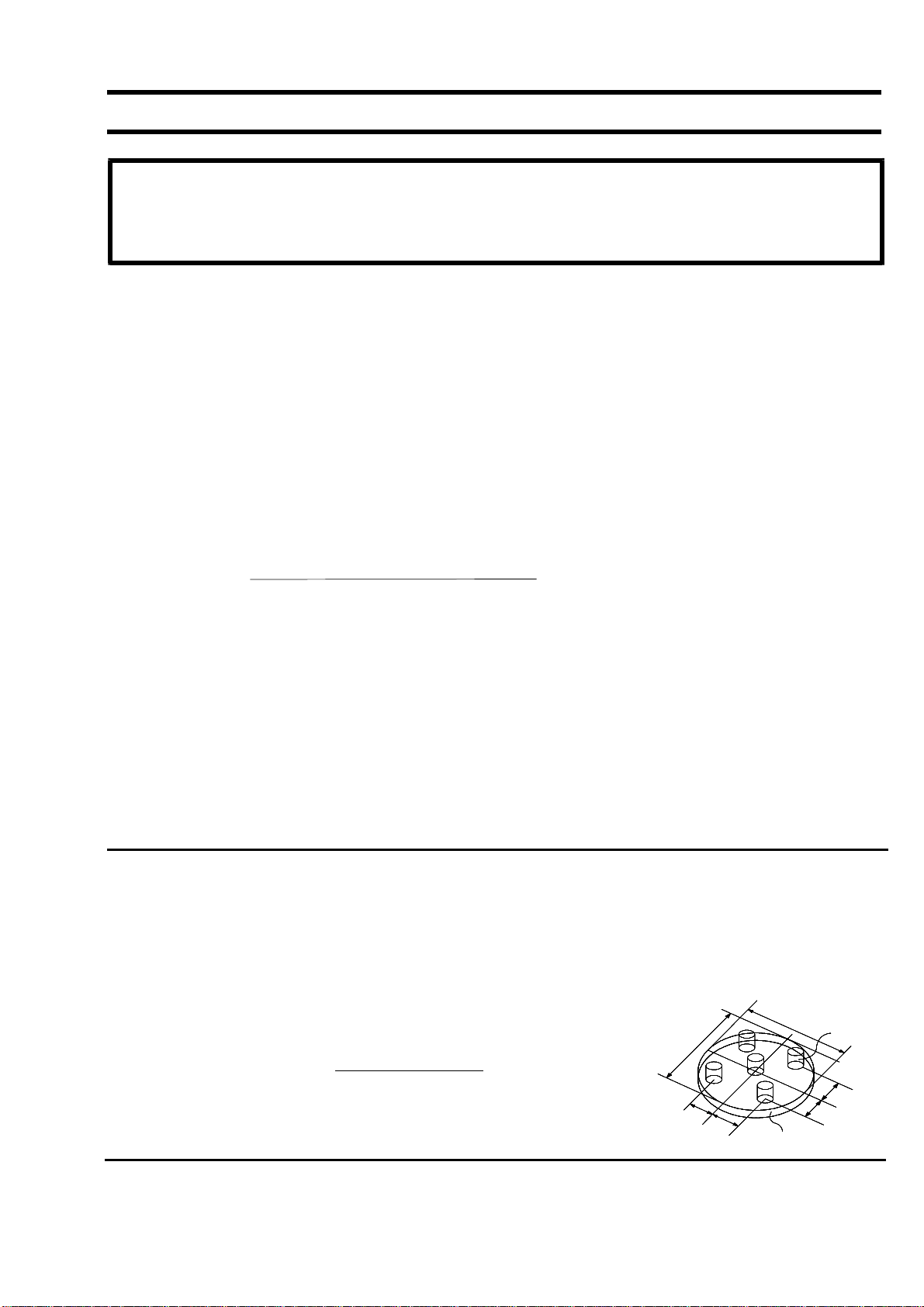
33
9-4 OutputPowerofMagnetron
Theoutputpowerofthemagnetroncanbemeasuredbyperformingawatertemperaturerisetest.
Equipmentneeded:
*Two1-litercylindricalborosilicateglassvessel(Outsidediameter190mm)
*Oneglassthermometerwithmercurycolumn
NOTE:Checklinevoltageunderload.Lowvoltagewilllowerthemagnetronoutput.Makealltemperature
andtimetestswithaccurateequipment.
1.Filltheoneliterglassvesselwithwater.
2.Stirwateringlassvesselwiththermometer,andrecordglassvessel'stemperature("T1",10±1°C).
3.Aftermovingthewaterintoanotherglassvessel,placeitinthecenterofthecookingtray.Settheovento
highpowerandoperatefor49secondsexactly.(3secondsincludedasaholdingtimeofmagnetron
oscillation:)
4.Whenheatingisfinished,stirthewateragainwiththethermometerandmeasurethetemperature("T2").
5.SubtractT1fromT2.Thiswillgiveyouthewatertemperaturerise.(T)
6.Theoutputpowerisobtainedbythefollowingformula;
OutputPower= 4.187x1000x T+0.55xMcx(T
2
-T
0
) 49:HeatingTime(sec)
46 46:CountingTime(sec)
4.187:CoefficientforWater
1000:Water(cc)
T:TemperatureRise(T1-T2)
To:RoomTemperature
Mc:Cylindricalborosilicateglassweight
7.Normaltemperatureriseforthismodelis9°Cto11°Cat'HIGH'.
NOTE1:Variationsorerrorsinthetestprocedurewillcauseavarianceinthetemperaturerise.
Additionalpowertestshouldbemadeiftemperatureriseismarginal.
NOTE2:Outputpowerinwattsiscomputedbymultiplyingthetemperaturerise(step5)byafactorof91
timestheofcentigradetemperature.
9-5 MicrowaveHeatDistribution-HeatEvenness
Themicrowaveheatdistributioncanbecheckedindirectlybymeasuringthewatertemperatureriseat
certainpositionsintheoven:
1.Preparefivebeakersmadeof'Pyrex',having100milliliterscapacityeach.
2.Measureexactly100millilitersoffwaterloadwithameasuringcylinder,andpourintoeachbeaker.
3.Measurethetemperatureofeachwaterload.(Readingsshallbetakentothefirstplaceofdecimals.)
4.Puteachbeakerinplaceonthecookingtrayasillustratedinfigurebelow.Startheating.
5.Afterheatingfor2minutes,measurethewatertemperatureineachbeaker.
6.Microwaveheatdistributionratecanbecalculatedasfollows:
Minimum
HeatDistribution= TemperatureRise X100(%)
Maximum
TemperatureRise
Theresultshouldexceed65%.
CAUTION
MICROWAVERADIATION
PERSONNELSHOULDNOTALLOWEXPOSURETOMICROWAVERADIATIONFROMMICROWAVE
GENERATOROROTHERPARTSCONDUCTINGMICROWAVEENERGY.
D
D
D/4
D/4
D/4
D/4
CookingTray
Beak
e
D
D
D/4
D/4
D/4
D/4
CookingTray
Beak
e
D
D
D/4
D/4
D/4
D/4
CookingTray
Beak
e
D
D
D/4
D/4
D/4
D/4
CookingTray
Beak
e
D
D
D/4
D/4
D/4
D/4
CookingTray
Beak
e
D
D
D/4
D/4
D/4
D/4
CookingTray
Beak
e
D
D
D/4
D/4
D/4
D/4
CookingTray
Beak
e
D
D
D/4
D/4
D/4
D/4
CookingTray
Beak
e
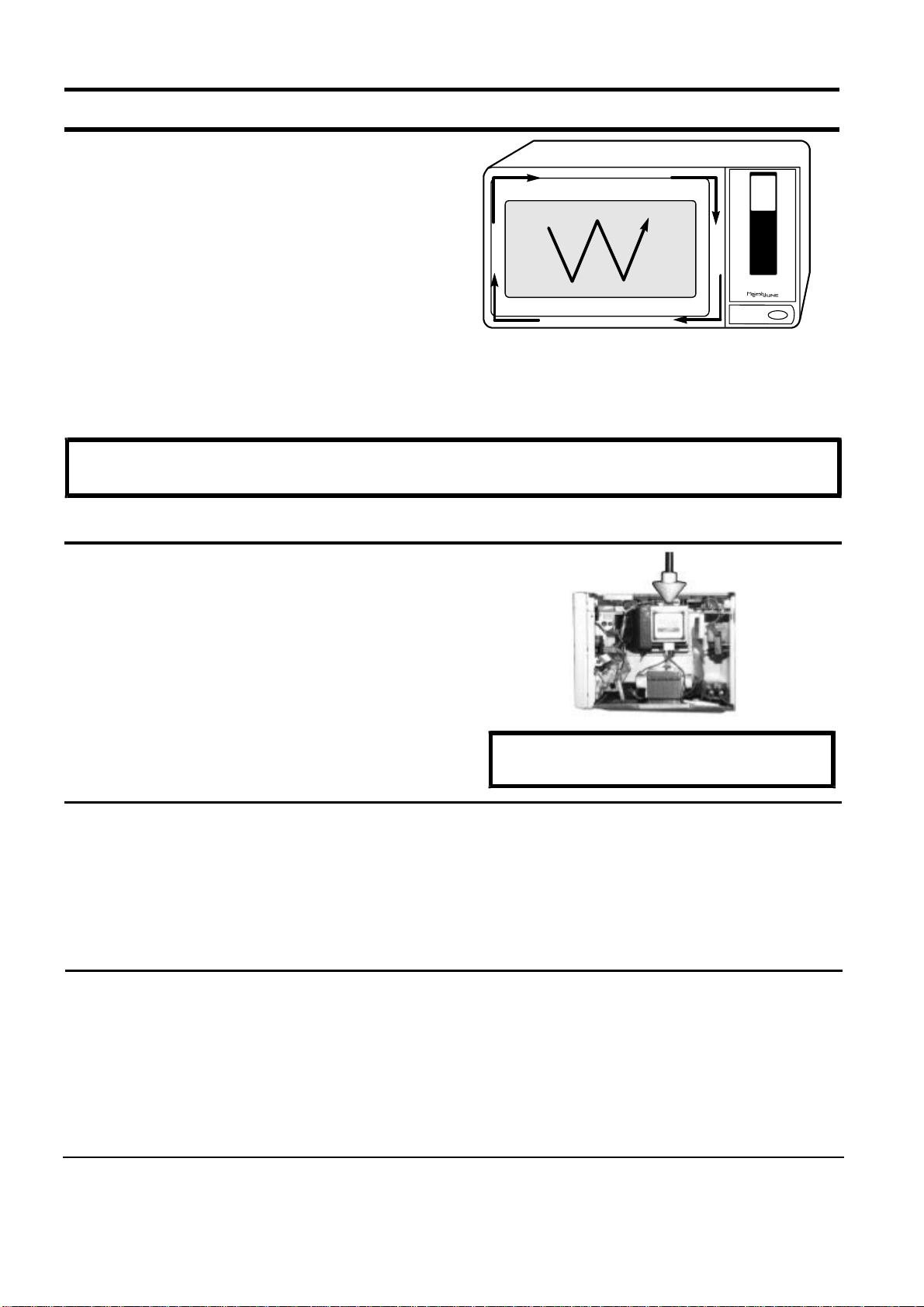
34
10. ProcedureforMeasurementofMicrowaveEnergyLeakage
1)Pour275±15ccof20±5°C(68±9°F)waterinabeaker
whichisgraduatedto600cc,andplacethebeakerin
thecenteroftheoven.
2)Starttooperatetheovenandmeasuretheleakageby
usingamicrowaveenergysurveymeter.
3)Setsurveymeterwithdualrangesto2,450MHz.
4)Whenmeasuringtheleakage,alwaysusethe2inch
spacerconewiththeprobe.Holdtheprobe
perpendiculartothecabinetdoor.Placethespacer
coneoftheprobeonthedoorand/orcabinetdoor
seamandmovealongtheseam,thedoorviewing
windowandtheexhaustopeningsmovingthe
probeinaclockwisedirectionatarateof1inch/sec.Iftheleakagetestingofthecabinetdoorseamis
takennearacornerofthedoor,keeptheprobeperpendiculartotheareasmakingsurethattheprobeend
atthebaseoftheconedoesnotgetcloserthan5cmtoanymetal.Ifitgetscloserthan5cm,erroneous
readingsmayresult.
5)Measuredleakagemustbelessthan4mW/cm
2,
afterrepairoradjustment.
10-1 CheckforMicrowaveLeakage
1.Removetheouterpanel.
2.Pour275±15ccof20±5°C(68±9°F)waterinabeaker
whichisgraduatedto600cc,andplacethebeakerin
thecenteroftheoven.
3.Starttheovenatthehighestpowerlevel.
4.Setsurveymeterdualrangesto2,450MHz.
5.Usingthesurveymeterandspacerconeasdescribed
above,measureneartheopeningofmagnetron,the
surfaceoftheairguideandthesurfaceofthewave
guideasshowninthefollowingphoto.(butavoidthe
highvoltagecomponents.)Thereadingshouldbe
lessthan4mW/cm
2
.
10-2 NoteonMeasurement
1)Donotexceedthelimitedscale.
2)Thetestprobemustbeheldonthegripofthehandle,otherwiseafalsereadingmayresultwhenthe
operator'shandisbetweenthehandleandtheprobe.
3)Whenhighleakageissuspected,donotmovetheprobehorizontallyalongtheovensurface;thismay
causedamagetotheprobe.
4)Followtherecommendationofthemanufacturerofthemicrowaveenergysurveymeter.
10-3 LeakageMeasuringProcedure
5-13-1Recordkeepingandnotificationaftermeasurement
1)Afteradjustmentandrepairofaradiationpreventingdevice,makearepairrecordforthemeasured
values,andkeepthedata.
2)Iftheradiationleakageismorethan4mW/cm
2
afterdeterminingthatallpartsareingoodcondition,
functioningproperlyandtheidenticalpartsarereplacedaslistedinthismanualnotifythatfactto;
CENTRAL SERVICE CENTER
At least once a year have the microwave energy survey meter checked for accuracy by its manufacturer.
Maximumallowableleakageis5mW/cm
2
.
4mW/cm
2
isusedtoallowformeasurementandmeteraccuracy
WARNING
AVOIDTHEHIGHVOLTAGECOMPONENTS
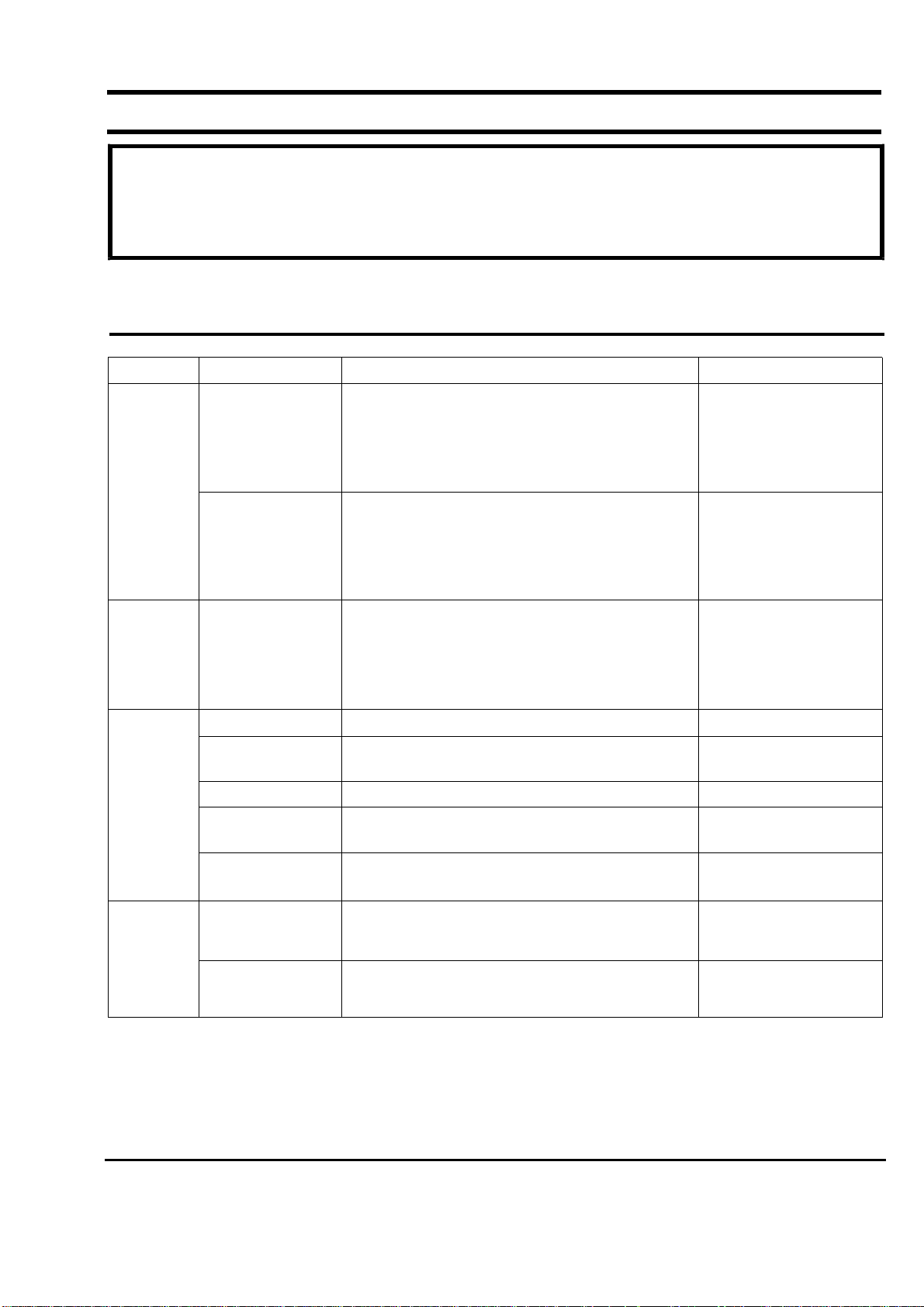
35
11. Troubleshooting (not electronic models)
11-1ElectricalMalfunction
NOTE
:
Interlockmonitorswitchmustbereplacedwhenthefuseisblownout.
Parts Cause Diagnosis Remedy
Fuseblows
outwhen
dooris
opened.
Defectiveprimary
interlockswitch
arywinding.
Checkcontinuityoftheprimaryswitchterminals
withwireremovedusingamultimeter.Ifthereis
continuityinterbetweenswitchterminalswhendoor
isopened,theswitchisdefective.
Replacetheprimary
interlockswitch
Defectiveinterlock
monitorswitch
Checkcontinuityofthemonitorswitchterminals
withwireremovedbyusingamultimeter.
Ifthereiscontinuitybetweenswitchterminalsthe
doorisclosed,theswitchisdefective.
Replacetheinterlock
monitorswitch
Fuseis
Open
Layershortofthe
secondarycoilof
H.V.Transformer
Thefusewillnotblowrightaway,butifitblowsin
afewseconds,thenthereisalayershortIfthe
fuseblowswithH.V.Transsecondaryopen,the
transformermaybefaulty.
ReplaceH.V.Transformer
Ovenlamp
doesnot
light.
1)Fuseblownout Checkfuse. Replacethefuse.
2)Poorcontactof
powercord.
Checkcontinuityofpowersupplycord.Also
checkwhetherthepowercordissecurelywired.
Adjustorreplace
thepowersupplycord
3)Defectivelamp Thefanmotorrotates,butlampdoesnotlight. Replacethelamp.
4)Defectivetimer
contacts
Checktheterminalsoftimerforcontinuity,turning
thetimerknobONandOFFrepeatedly.
Replacethetimer.
5)Thermalcutout
S/Wopen
Inthiscasetheovenlampandfandonotturnon
Replacethethermal
cutoutS/W
Fandoes
notoperate.
1)Defectivefan
motor.
If230Visfoundatmotorterminals,themotor
shouldbereplaced.
Replacethemotor.
2)Defectivecon-
tactsoftimer
Theovenlampdoesnotlightandfanmotordoes
notoperate.
Replacethetimer.
WARNINGFORHIGHVOLTAGE
4000VOLTSEXISTATTHEHIGHVOLTAGEAREA.DONOTOPERATETHEOVENWITH
CABINETPARTSREMOVED.DONOTREMOVETHECABINETPARTSIFTHEPOWERSUPPLY
CORDISPLUGGEDINTHEWALLOUTLET.UNPLUGTHEPOW ERCORDBEFORESERVICING.
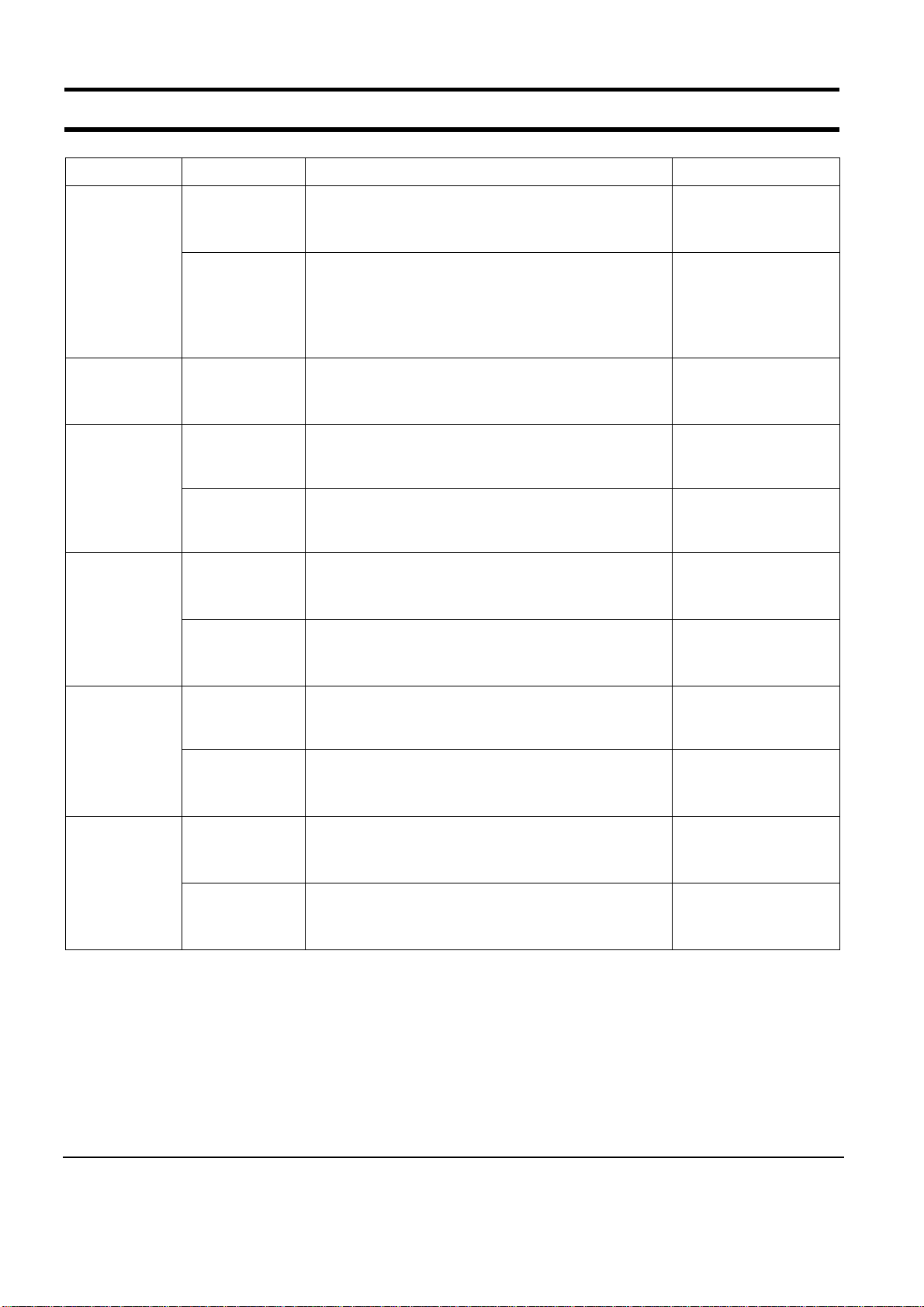
36
11-1 ElectricalMalfunction(continved)
part Cause Diagnosis Remedy
Microwave
turnsoffduring
cook-ingcycle.
1)Toosmall
aload
Ifasmallamountoffoodisheatedforalongtime,
periodofmicrowavemayturnoffduringoperation.
Toincreasetheoven
waterintowaterinto
theoven.
2)Defective
magnetron
thermal
cutoutS/W
Checktoseeifthemagnetronthermalcutoutswitch
isactivatedatatemperaturehigherthan150 .
Replacethermalcutout
switch.
properly
shockis
felt.
Incomplete
grounding
Makesurethatqroundingofthepowersupplycord
hasbeendoneproperly.
Rewire.
Doordoenot
operate
properly
1)Brokendoor
hinges
Removethecabinetforinspection.Checkthedoor
hinge.
Replacedoorhinges.
2)Missingor
loosescrew
Checkifthescrewsaresecuredwelltothedoor
hinge.
Fastenortighten.
Timerdoes
notoperate.
1)Defective
timermotor
Ifthetimerdoesnotoperatewith21Vappliedto
theterminals,thetimermotoramybefaulty.
Replacetimer.
2)Defective
contactsof
timerS/W
Thelampdoesnotlight. Replacetimer
Cookingtray
doesnot
rotate.
1)Defective
drivemotor
Checktoseeif21Vexistsatthemotorterminals.If
so,motorwillbedefective.
Replacedrivemotor.
1)Blockingof
theventilatior
Checkiftheairinletoroutletventilationisblocked
bythewallorotherobjects.
Keepadistanceof
100mmfromthewallor
theobjects.
Magnetron
thermal
cutout
switch
OFF
2)Defectivefan
motor
Ifthefanmotordoesnotoperatewith230Vapplied
totheterminal,themotormaybefaulty.
Replacefanmotor.
3)Toosmalla
loadorno
load
Ifasmallamountoffoodisheatedrepeatedlyover
alongperiodoftime,microwaveturnsoffduring
operation.
Toincreasetheoven
load,placeaglassof
waterintotheoven.
37
11-2 UnsatisfactoryCooking
11-3 PartCheckList
Parts Cause Diagnosis Remedy
Foodis
notheated.
1)Opencathodeof
magnetron
Checktheterminalswithamultimetertosee
iftheheatercircuitisopen.
Replacemagnetron.
2)Defective
H.V.Diode
ChecktheH.V.Diodeforcontinuityinthereverseand
normaldirectionsusingmeter.Ifthereiscontinuity
inthereversedirection,theH.V.Diodemaybefaulty.
(InthiseventH.V.Capacitorwillbehot)
ReplaceH.V.Diode.
3)Shorted
magnetron
Connectmeggerleadstoquick-connectterminal&
bodyofthemagnetronifthereiscontinuity,the
magnetronmaybefusewillbeblown)faulty.(Inthis
casethemainfusewillbeblown)
Replacemagnetron.
4)Defective
magnetron
Ifthereisacrackinthemagnetronantenna(dome),
themagnetronisdefective.
Replacemagnetron.
5)Poorcontactof
primaryinterlock
switch
Checkifthescrewsaresecuredwelltothedoorhinge.
andpressingitONandOFFrepeatedly.
Replaceoradjust.
6)Opencoilof
H.V.Trans-
former
Checkthecontinuityofprimarycoilandsecondary
coil.Ifthereisnocontinuity,H.V.Transformeris
defective.
Replacethe
H.V.Transformer.
7)ShortedH.V.
capacitor
Checkthecontinuityofcapacitor.
Ifthecapacitorshorts,thefuseblows
Replacethe
H.V.Capacitor.
8)Monitorfuse
blownout
Checkthemonitorfuse(onthenoisefilter)
Replacethe
Monitorfuse
Symptom RelatedParts CheckPoints Remedy
Microwave
cookingdoes
notwork.
H.V.Transformer
1)Checkiftheprimaryandsecondarycoilisopenorshorted.
*Resistanceofprimarycoil:.1.94 Approx
Resistanceofsecondarycoil:Approx.139
2)CheckiftheMGTHeaterVoltageisapprox.3.3VAC.
Caution:Highvoltage!
Replace.
H.V.Capacitor
Checkcontinuityofcapacitorbetweentwo
terminalswithH.V.wireleadremoved.
Theresistanceshouldbeapprox.10M
Ω
,it'sfailure..
Replace.
H.V.Diode
1)Ifthereisnocontinuityinforward,directiontheH.V.Diodeisopen.
2)Ifthereiscontinuityinreversedirection,it'sshorted.
Replace.
Fanmotor
doesnot
rotate.
Fanmotor Checkifthemotorcoilisopen. Replace.
38
12. Troubleshooting (electronic models)
12-1 ElectricalMalfunction
PRECAUTION
1.CHECKGROUNDINGBEFORECHECKINGFORTROUBLE.
2.BECAREFULOFTHEHIGHVOLTAGECIRCUIT.
3.DISCHARGETHEHIGHVOLTAGECA PACITOR.
4.WHENCHECKINGTHECONTINUITYOFTHESWITCHESORTRA NSFORMER,DISCONNECT
ONELEADWIREFROMTHESEPARTSANDTHENCHECKCONTINUITYWITHOUTTHE
POWERSOURCEON.TODOOTHERWISEMAYRE SULTINAFALSEREADINGORDAMAGE
TOYOURMETER.
5.DONOTTOUCHANYPARTOFTHECIRCUITORTHECONTROLCIRCUITBOARD,SINCE
STATICDISCHARGEMAYDAMAGEIT.
ALWAYSTOUCHGROUNDWHILEWORK INGONITTODISCHARGEANYSTATICCHA RGE
BUILTUP.
SYMPTOM CAUSE CORRECTIONS
Ovenisdead.
FuseisOK.
Nodisplayandnooperationatall.
1.Openorlooseleadwireharness
2.Openthermalcutout(Magnetron)
3.Openlowvoltagetransformer
4.DefectiveAss'yPCB
Checkfanmotorwhenthermal
cutoutisdefective.
CheckAss'yPCBwhenL.V.T
isdefective.
Nodisplayandnooperationatall.
Fuseisblown.
1.Shortedleadwireharness
2.Defectiveprimarylatchswitch
(NOTE1)
3.Defectivemonitorswitch(NOTE1)
4.ShortedH.V.Capacitor
5.ShortedH.V.Transformer(NOTE2)
Checkadjustmentofprimary,
interlockmonitor,
powerrelay,doorsensing
switch.
NOTE1:Alloftheseswitchesmustbereplacedatthesametime.
(refertoadjustmentinstructions)
Checkcontinuityofpowerrelaycontactsandifithas
continuity,replacepowerrelayalso.
NOTE2:WhenH.V.Transformerisreplaced,checkdiodeand
magnetronalso.
Ovendoesnotaccept
keyinput(Program)
1.Keyinputisnotin-Sequence
2.Openorlooseconnectionof
membranekeypadtoAss'yPCB
3.Shortedoropenmembranepanel
4.DefectiveAss'yPCB
Refertooperationprocedure.
ReplacePCBmain.
Timerstartscountdownbutno
microwaveoscillation.
(Noheatwhileovenlampandfan
motorturnon.)
1.Off-alignmentoflatchswitches
2.Openorlooseconnectionofhigh
voltagecircuitespecially
magnetronfilamentcircuit
NOTE:Largecontactresistancewill
bringlowermagnetron
filamentvoltageandcause
magnetrontoloweroutput
and/orintermittentoscillation.
3.Defectivehighvoltage
componentsH.V.Transformer
H.V.Capacitor
H.V.Diode,H.V.Fuse
Magnetron
4.Openorloosewiringofpowerrelay
5.Defectiveprimarylatchswitch
6.DefectivepowerrelayorAss'yPCB
Adjustdoorandlatchswitches.
Checkhighvoltagecomponent
accordingto
componenttestprocedureand
replaceifitis
defective.
ReplacePCBmain.
39
12-1 ElectricalMaltunction(continved)
SYMPTOM CAUSE CORRECTIONS
Ovenlampandfanmotorturnon 1.Misadjustmentorloosewiring
ofprimarylatchswitch
2.Defectiveprimarylatchswitch
Adjustdoorandlatchswitches.
Ovencanprogrambuttimer
doesnotstart.
1.Openorloosewiringof
secondaryinterlockswitch
2.Off-alignmentofprimary
interlock
3.
DefectivesecondaryinterlockS/W
Adjustdoorandinterlockswitches.
Microwaveoutputislow;.
Oventakeslongertimeto
cookfood.
1.Decreaseinpowersource
voltage.
2.Openorloosewiringof
magnetronfilamentcircuit.
(Intermittentoscillation))
3.Agingofmagnetron
Consultelectrician.
Fanmotorturnsonwhenpluggedin Loosewiringofdoorsensingswitch Checkwireofdoorsensingswitch.
Ovendoesnotoperateandreturnto
thepluggedinmode.
DefectiveAss'yPCB ReplacePCBmain.
Loudbuzzingnoisecanbeheard. 1.Loosefanandfanmotor
2.Loosescrewson
H.V.Transformer
3.ShortedH.V.Diode
Tightenscrewsoffanmotor.
TightenscrewsofH.V.Transformer.
ReplaceH.V.Diode.
Turntablemotordoesnotrotate. 1.Openorloosewiringof
turntablemotor.
2.Defectiveturntablemotor.
Replaceturntablemotor.
Ovenstopsoperationduring
cooking
1.Openorloosewiringofprimary
interlockswitch
2.Operationofthermal
cutout(Magnetron)
Adjustdoorandlatchswitches.
Sparks 1.Metallicwareorcookingdishes
touchingontheovenwall.
2.Ceramicwaretrimm edwith
goldorsilverpowderalso
causessparks.
Informthecustomer.
Donotuseanytypeofcookware
with
metallictrimming.
Unevencooking
Unevenintensityofmicrowavedue
toitscharacteristics.
Wrapthinnerpartsofthefoodwith
aluminumfoil.
Useplasticwraporcoverwithalid.
Stironceortwicewhilecooking
foodssuchassoup,cocoa,ormilk.
Noisefromtheturntablemotor
whenitstartstooperate.
Noisemayresultfromthemotor. Replaceturntablemotor.

December 2001