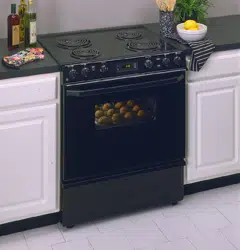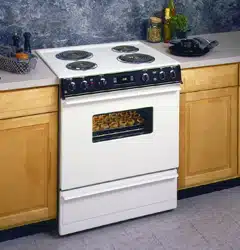

GE Appliances
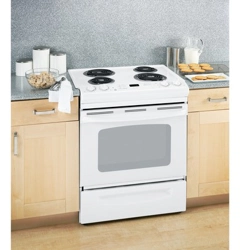
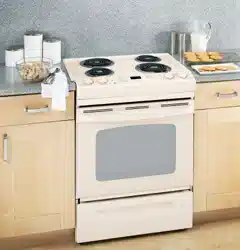
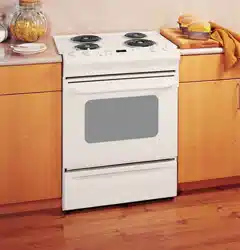
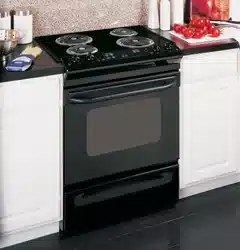
JSS16
JSS26
Owner’s Manual
Ranges
Electric Slide-In
164D3333P217 49-8996 12-99 JR
www.geappliances.com
Safety Information
Anti-Tip Device . . . . . . . . . . . . . . 3
Safety Precautions . . . . . . . . . 3, 4
Oven . . . . . . . . . . . . . . . . . . . . . . . 4
Surface Cooking Units . . . . . . . . 5
Operating Instructions
Surface Units . . . . . . . . . . . . . . . . 6
Clock and Timer . . . . . . . . . . . . .7
Using the Oven . . . . . . . . . . . . . .8
Broiling Guide . . . . . . . . . . . . . . .9
Adjusting the
Oven Thermostat . . . . . . . . . . .10
Care and Cleaning
Anti-Tip Device . . . . . . . . . . 11, 14
Lift-Off Oven Door . . . . . . . . . . 12
Oven Light . . . . . . . . . . . . . . . . . 12
Broiler Pan & Grid . . . . . . . . . . 13
Oven Interior . . . . . . . . . . . . . . .13
Surface Units . . . . . . . . . . . . . . . 15
Lift-Up Cooktop . . . . . . . . . . . . 15
Troubleshooting Tips
Before You Call
For Service . . . . . . . . . . . . . . . . . 16
Customer Service
Product Registration . . . . . . . . 17
Warranty . . . . . . . . . . . . . . . . . . 19
Service Telephone
Numbers . . . . . . . . . . . Back Cover

Inside you will find many helpful hints on how to use and maintain your range properly.
Just a little preventive care on your part can save you a great deal of time and money over
the life of your range.
READ THIS MANUAL
GE & You, A Service Partnership.
FOR YOUR RECORDS
Write the model and serial numbers here:
#
#
You can find them on a label on the front of the range behind the storage drawer.
Staple sales slip or cancelled check here.
Proof of the original purchase date is needed to obtain service under the warranty.
IMPORTANT!
Fill out the Consumer Product Registration Card.
Two easy ways to register your appliance!
■ Through the internet at www.geappliances.com
■ Complete and mail the enclosed Product Registration Card
You’ll find many answers to common problems in the
Before You Call For Service
section.
If you review our chart of
Troubleshooting Tips
first, you may not need to call for service at all.
If you do need service, you can relax knowing help is only a phone call away. A list of toll-free
customer service numbers is included in the back section of this manual. Or you can always call
the GE Answer Center® at 800.626.2000, 24 hours a day, 7 days a week.
IF YOU NEED SERVICE
Safety InstructionsOperating InstructionsCare and CleaningTroubleshooting TipsCustomer Service
2

Safety Instructions Operating Instructions Care and Cleaning Troubleshooting Tips Customer Service
IMPORTANT SAFETY INFORMATION.
READ ALL INSTRUCTIONS BEFORE USING.
WARNING!
For your safety, the information in this manual must be followed to minimize the risk of fire, electric
shock, or to prevent property damage, personal injury, or loss of life.
All ranges can tip and injury could result.
To prevent accidental tipping of the range, attach it to the wall and floor by installing the Anti-Tip
device supplied.
Check if the device is installed and engaged properly. Make sure the chain fits securely into the slot
in the bracket.
If you pull the range out from the wall for any reason, make sure the device is properly
engaged when you push the range back against the wall. If it is not, there is a possible risk of
the range tipping over and causing injury if you or a child stand, sit or lean on an open door.
Please refer to the Anti-Tip device information in this manual. Failure to take this precaution
could result in tipping of the range and injury.
WARNING
ANTI-TIP DEVICE
When using electrical appliances, basic safety precautions should be followed, including the following:
■Use this appliance only for its intended
purpose as described in this Owner’s Manual.
■Be sure your appliance is properly installed
and grounded by a qualified installer in
accordance with the provided installation
instructions.
■ Have the installer show you the location of
the circuit breaker or fuse. Mark it for easy
reference.
■ Do not attempt to repair or replace any
part of your range unless it is specifically
recommended in this manual. All other
servicing should be referred to a qualified
technician.
■ Before performing any service, disconnect
the range power supply at the household
distribution panel by removing the fuse or
switching off the circuit breaker.
■ Do not leave children alone—children
should not be left alone or unattended in
an area where an appliance is in use. They
should never be allowed to sit or stand on
any part of the appliance.
■ Do not allow anyone to climb, stand or hang
on the door, storage drawer or cooktop.
They could damage the range and even tip
it over, causing severe personal injury.
■
CAUTION:
Items of interest to children
should not be stored in cabinets above a
range or on the backsplash (on some models)
of a range—children climbing on the range
to reach items could be seriously injured.
■ Do not touch the surface units, the heating
elements or the interior surface of the
oven. These surfaces may be hot enough to
burn even though they are dark in color.
During and after use, do not touch, or let
clothing or other flammable materials
contact, the surface units, areas nearby the
surface units or any interior area of the
oven; allow sufficient time for cooling first.
■Potentially hot surfaces include the
cooktop, areas facing the cooktop, oven
vent opening, surfaces near the opening,
crevices around the oven door and metal
trim parts above the door.
■
REMEMBER:
The inside surface of the oven
may be hot when the door is opened.
■ Do not store or use combustible materials,
gasoline or other flammable vapors and
liquids in the vicinity of this or any other
appliance.
SAFETY PRECAUTIONS
3

4
Safety InstructionsOperating InstructionsCare and CleaningTroubleshooting TipsCustomer Service
IMPORTANT SAFETY INFORMATION.
READ ALL INSTRUCTIONS BEFORE USING.
■ Do not use water on grease fires. Never
pick up a flaming pan. Turn the controls
off. Smother a flaming pan on a surface
unit by covering the pan completely with a
well-fitting lid, cookie sheet or flat tray. Use
a multi-purpose dry chemical or foam-type
fire extinguisher.
■Flaming grease outside a pan can be put
out by covering it with baking soda or, if
available, by using a multi-purpose dry
chemical or foam-type fire extinguisher.
■Flame in the oven can be smothered
completely by closing the oven door and
turning the oven off or by using a multi-
purpose dry chemical or foam-type fire
extinguisher.
■ Never leave jars or cans of fat dripping in or
near your range.
■ Do not let cooking grease or other flammable
materials accumulate in or near the range.
■ Keep the hood and grease filters clean
to maintain good venting and to avoid
grease fires.
■ Do not store flammable materials in an
oven or near the cooktop.
■ Never wear loose-fitting or hanging
garments while using the appliance. Be
careful when reaching for items stored over
the range. Flammable material could be
ignited if brought in contact with hot
surface units or heating elements and may
cause severe burns.
■ Use only dry pot holders—moist or damp
pot holders on hot surfaces may result in
burns from steam. Do not let pot holders
touch hot surface units or heating elements.
Do not use a towel or other bulky cloth in
place of potholders.
■ For your safety, never use your appliance
for warming or heating the room.
■ Teach children not to play with the
controls or any other part of the range.
■ Always keep dish towels, dish cloths, pot
holders and other linens a safe distance
from your range.
■ Always keep wooden and plastic utensils
and canned food a safe distance from
your range.
■ Always keep combustible wall coverings,
curtains or drapes a safe distance from
your range.
WARNING!
SAFETY PRECAUTIONS
■ Stand away from the range when opening
the oven door. Hot air or steam which
escapes can cause burns to hands, face
and/or eyes.
■ Do not heat unopened food containers.
Pressure could build up and the container
could burst, causing an injury.
■ Keep the oven vent unobstructed.
■ Keep the oven free from grease buildup.
■ Place the oven shelf in the desired position
while the oven is cool. If shelves must be
handled when hot, do not let pot holder
contact the heating elements.
■ Pulling out the shelf to the stop-lock is a
convenience in lifting heavy foods. It is also
a precaution against burns from touching
hot surfaces of the door or oven walls.
■ When using cooking or roasting bags in
the oven, follow the manufacturer’s
directions.
■ Do not use the oven to dry newspapers.
If overheated, they can catch on fire.
■ Do not use the oven for a storage area.
Items stored in an oven can ignite.
■ Do not leave paper products, cooking
utensils or food in the oven when not in use.
■ After broiling, always take the broiler pan
out of the range and clean it. Leftover
grease in the broiler pan can catch on fire
the next time you use the pan.
■ Do not use aluminum foil to line oven
bottoms, except as suggested in this manual.
Improper installation of aluminum foil
may result in a risk of electric shock or fire.
OVEN

5
Safety Instructions Operating Instructions Care and Cleaning Troubleshooting Tips Customer Service
Cook meat and poultry thoroughly—meat to at least an INTERNAL temperature of 160°F. and poultry
to at least an INTERNAL temperature of 180°F. Cooking to these temperatures usually protects against
foodborne illness.
COOK MEAT AND POULTRY THOROUGHLY…
Use proper pan size—select cookware having flat bottoms large enough to cover the surface unit
heating element. The use of undersized cookware will expose a portion of the surface unit to direct
contact and may result in ignition of clothing. Proper relationship of cookware to surface unit will
also improve efficiency.
■Never leave the surface units unattended at
high heat settings. Boilovers cause smoking
and greasy spillovers that may catch on fire.
■Do not use aluminum foil to line the drip
pans or anywhere in the oven except as
described in this manual. Misuse could
result in a shock, fire hazard or damage
to the range.
■Be sure the drip pans and the vent duct are
not covered and are in place. Their
absence during cooking could damage
range parts and wiring.
■Only certain types of glass, glass ⁄ceramic,
earthenware or other glazed containers are
suitable for cooktop service; others may
break because of the sudden change in
temperature.
■To minimize the possibility of burns,
ignition of flammable materials and
spillage, the handle of a container should
be turned toward the center of the range
without extending over nearby surface
units.
■Always turn the surface units off before
removing cookware.
■Do not immerse or soak the removable
surface units. Do not put them in a
dishwasher.
■When flaming foods under the hood, turn
the fan on.
■To avoid the possibility of a burn or electric
shock, always be certain that the controls
for all surface units are at the
OFF
position
and all coils are cool before attempting to
lift or remove a unit.
■Clean the cooktop with caution. If a wet
sponge is used to wipe spills on a hot
cooktop, be careful to avoid steam burns.
■Keep an eye on foods being fried at high or
medium high heat settings.
■Foods for frying should be as dry as
possible. Frost on frozen foods or moisture
on fresh foods can cause hot fat to bubble
up and over the sides of the pan.
■Use little fat for effective shallow or deep
fat frying. Filling the pan too full of fat can
cause spillovers when food is added.
■If a combination of oils or fats will be used
in frying, stir together before heating, or as
fats melt slowly.
■Always heat fat slowly, and watch as it heats.
■Use a deep fat thermometer whenever
possible to prevent overheating fat beyond
the smoking point.
SURFACE COOKING UNITS
Read and follow this Safety Information carefully.
SAVE THESE INSTRUCTIONS

6
Safety InstructionsOperating InstructionsCare and CleaningTroubleshooting TipsCustomer Service
Using the surface units.
Throughout this manual, features and appearance may vary from your model.
How to Set
Push the knob in and turn in either
direction to the setting you want.
At both
OFF
and
HI
the control
clicks
into position. You may hear slight
clicking
sounds during cooking,
indicating the control is keeping the
power level you set.
A surface unit
ON
indicator light will glow
when
any
surface unit is on.
Be sure you turn the control knob
to OFF when you finish cooking.
Surface Cookware Tips
Use medium- or heavy-weight cookware.
Aluminum cookware conducts heat faster
than other metals. Cast-iron and coated
cast-iron cookware are slow to absorb
heat, but generally cook evenly at low to
medium heat settings. Steel pans may
cook unevenly if not combined with
other metals.
For best cooking results, pans should be
flat on the bottom. Match the size of the
saucepan to the size of the surface unit.
The pan should not extend over the edge
of the surface unit more than 1 inch.
Not over 1 inch.
Wok Cooking
We recommend that you use only a flat-bottomed
wok. They are available at your local retail store.
Do not use woks that have support rings.
Use of these types of woks, with or
without the ring in place, can be
dangerous.
Placing the ring over the surface unit will
cause a build-up of heat that will damage
the porcelain cooktop. Do not try to use
such woks without the ring. You could be
seriously burned if the wok tipped over.
Use only flat-bottomed woks.
Deep Fat Frying
Do not overfill cookware with fat that may
spill over when adding food. Frosty foods
bubble vigorously.
Watch food frying at high temperatures.
Keep range and hood clean from grease.
7
Safety Instructions Operating Instructions Care and Cleaning Troubleshooting Tips Customer Service
Using the clock and timer.
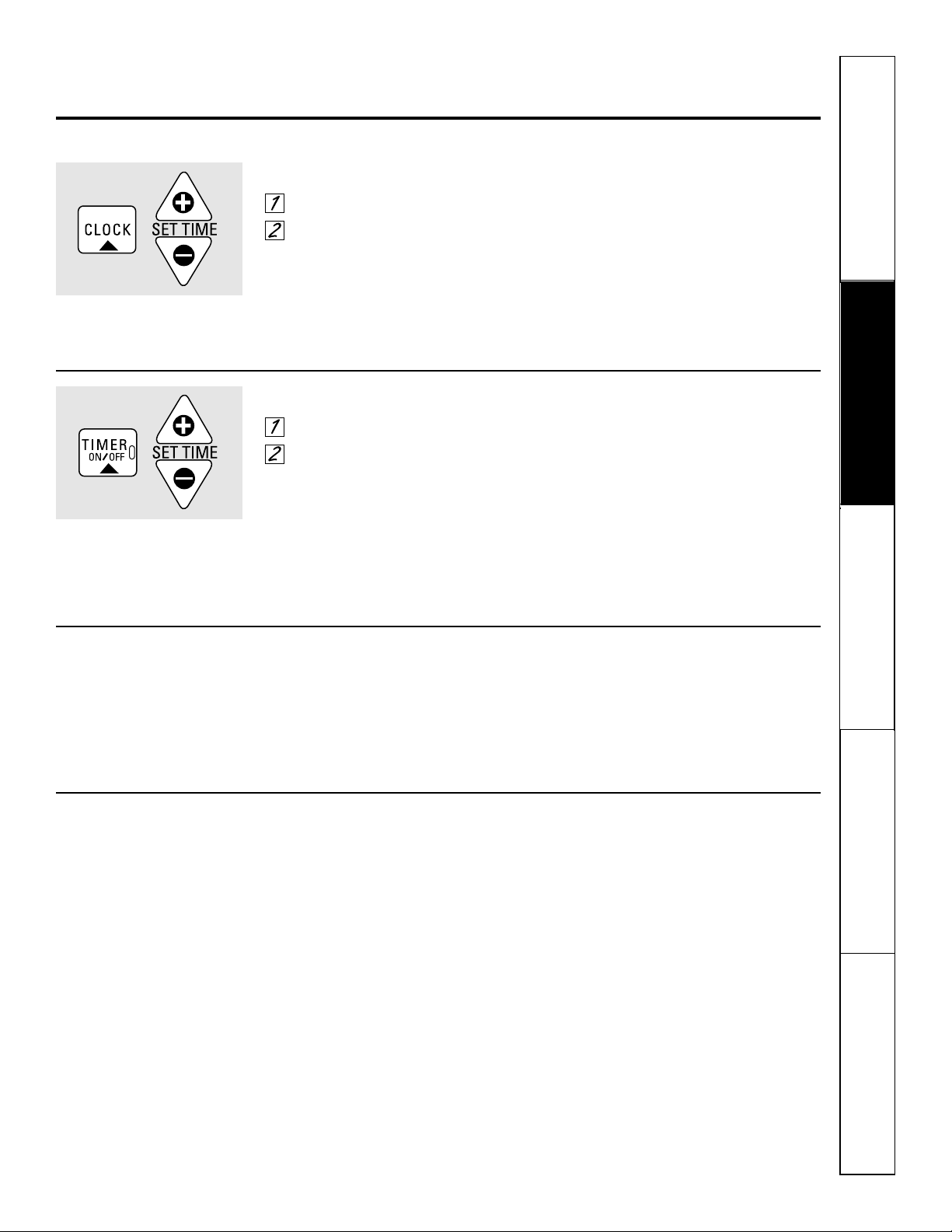
To Set the Clock:
Press the
CLOCK
pad.
Press the
SET TIME +/-
pads.
Make sure the clock is set to the
correct time of day.
To Set the Timer:
Press the
TIMER ON/OFF
pad.
Press the
SET TIME +/-
pads until
the amount of time you want shows
in the display. The timer will start
automatically within a few seconds
of releasing the pad.
The end of cycle tone will sound when the
timer countdown is complete. To stop the
tone, press the
TIMER ON/OFF
pad or
CLOCK
pad.
The timer is a minute timer only.
The timer does not control oven
operations. You can set the timer
for up to 9 hours and 50 minutes.
To Reset the Timer:
If the display is still showing the time
remaining, you may change it by pressing
the
SET TIME +/-
pads until the time you
want appears in the display.
If the remaining time is not in the display,
recall the remaining time by pressing the
TIMER ON/OFF
pad and then pressing the
SET TIME +/-
pads until the new time you
want shows in the display.
To Cancel the Timer:
If the display is still showing the time
remaining, press the
TIMER ON/OFF
pad.
The display will return to the time of day.
If the remaining time is not in the display,
recall the remaining time by pressing the
TIMER ON/OFF
pad. Press the
TIMER
ON/OFF
pad again; the display will return
to the time of day.

8
Safety InstructionsOperating InstructionsCare and CleaningTroubleshooting TipsCustomer Service
Using the oven.
To avoid possible burns, place the shelves in the desired position before you turn the oven on.
Oven Control Knobs
Your range has two oven control knobs.
The
OVEN SET
knob has settings for
BAKE, BROIL
and
OFF.
The
OVEN TEMP
knob maintains the
temperature you set, from
WM (150°F.)
to
BROIL (550°F.).
■The oven cycling light glows until the
oven reaches your selected temperature,
then goes off and on with the oven
element(s) during cooking.
How to Set the Oven for Baking or Roasting
Turn the
OVEN SET
knob to
BAKE
and the
OVEN TEMP
knob to the
temperature you desire.
Check food for doneness at
minimum time on recipe. Cook
longer if necessary.
Turn the
OVEN SET
knob to
OFF
when cooking is complete.
Type of Food Shelf Position
Frozen pies (on cookie sheet) B or C
Angel food cake, A
bundt or pound cakes
Biscuits, muffins, brownies, B or C
cookies, cupcakes,
layer cakes, pies
Casseroles B or C
Preheating and Pan Placement
Preheat the oven if the recipe calls for it.
Preheating is necessary for good results
when baking cakes, cookies, pastry and
breads.
To preheat, set the oven at the correct temperature.
The control will beep when the oven is preheated
and the display will show your set temperature.
This will take approximately 10–15 minutes.
Baking results will be better if baking pans
are centered in the oven as much as
possible. Pans should not touch each
other or the walls of the oven. If you need
to use two shelves, stagger the pans so one
is not directly above the other, and leave
approximately 1
1
⁄
2
″between pans, from
the front, back and sides of the wall.
Before you begin…
The shelves have stop-locks, so that when
placed correctly on the supports, they will
stop before coming completely out, and
will not tilt.
When placing and removing cookware,
pull the shelf out until it stops.
To remove a shelf,
pull it toward you, tilt
the front end up and pull it out.
To replace,
place the end of the shelf
(stop-locks) on the support, tilt up the
front and push the shelf in.
The oven has 4 shelf positions.
Aluminum Foil
You can use aluminum foil to line the
broiler pan and broiler grid. However,
you must mold the foil tightly to the grid
and cut slits in it just like the grid.
Without the slits, the foil will prevent fat
and meat juices from draining into the
broiler pan. The juices could become
hot enough to catch on fire. If you
do not cut the slits, you are essentially
frying, not broiling.
Do not use aluminum foil on the bottom of
the oven.
Never entirely cover a shelf with
aluminum foil. This will disturb the heat
circulation and result in poor baking.
A smaller sheet of foil may be used to
catch a spillover by placing it on a lower
shelf several inches below the food.
Cut slits in the foil just like the grid.

9
Safety Instructions Operating Instructions Care and Cleaning Troubleshooting Tips Customer Service
How to Set the Oven for Broiling
Place the meat or fish on the broiler
grid in the broiler pan.
Follow suggested shelf positions in
the
Broiling Guide.
If your oven is connected to 208 volts, rare steaks
may be broiled by preheating the broiler and
positioning the oven shelf one position higher.
Turn both the
OVEN SET
and
OVEN
TEMP
knobs to
BROIL.
When broiling is finished, turn the
OVEN SET
knob to
OFF.
Leave the door open to the broil
stop position. The door stays open
by itself, yet the proper temperature
is maintained in the oven.
Broiling Guide
Quantity and/ Shelf First Side Second Side
Food or Thickness Position Time (min.) Time (min.) Comments
Bacon 1/2 lb. C 4
1
⁄
2
4
1
⁄
2
Arrange in single layer.
(about 8 thin slices)
Ground Beef 1 lb. (4 patties) C 10 7 Space evenly. Up to 8
Well Done 1/2 to 3/4″ thick patties take about the
same time.
Beef Steaks
Rare† 1″ thick C 6 5 Steaks less than 1″
Medium 1 to 1
1
⁄
2
lbs. C 8 6 thick cook through
Well Done C 12 11 before browning. Pan
frying is recommended.
Slash fat.
Rare† 1
1
⁄
2
″ thick C 10 7–8
Medium 2 to 2
1
⁄
2
lbs. C 15 14–16
Well Done C 25 20–25
Chicken 1 whole A 35 10–15 Reduce time about 5
2 to 2
1
⁄
2
lbs., to 10 minutes per side
split lengthwise for cut-up chicken.
Brush each side with
melted butter. Broil
skin-side-down first.
Lobster Tails 2–4 B 13–16 Do not Cut through back of
6 to 8 oz. each turn shell. Spread open.
over. Brush with melted
butter before broiling
and after half of
broiling time.
Fish Fillets 1/4 to 1/2″ thick C 5 5 Handle and turn very
carefully. Brush with
lemon butter before
and during cooking, if
desired. Preheat
broiler to increase
browning.
Ham Slices 1″ thick B 8 8 Increase time 5 to 10
(precooked) minutes per side for
1
1
⁄
2
″ thick or home-
cured ham.
Pork Chops 2 (1/2″ thick) C 10 10 Slash fat.
Well Done 2 (1″ thick) about 1 lb. B 13 13
Lamb Chops
Medium 2 (1″ thick) about 10 C 10 9 Slash fat.
Well Done to 12 oz. C 12 10
Medium 2 (1
1
⁄
2
″ thick) about 1 lb. C 14 12
Well Done B 17 12–14
The size, weight, thickness,
starting temperature,
and your preference
of doneness will affect
broiling times. This guide
is based on meats at
refrigerator temperature.
† The U.S. Department of
Agriculture says “Rare beef is
popular, but you should know that
cooking it to only 140°F. means
some food poisoning organisms may
survive.” (Source: Safe Food Book.
Your Kitchen Guide. USDA Rev.
June 1985.)

10
Safety InstructionsOperating InstructionsCare and CleaningTroubleshooting TipsCustomer Service
Adjust the oven thermostat—Do it yourself!
You may find that your new oven cooks differently than the one it replaced. Use your new oven for a few
weeks to become more familiar with it. If you still think your new oven is too hot or too cold, you can adjust the
thermostat yourself.
Do not use thermometers, such as those found in grocery stores, to check the temperature setting of your oven.
These thermometers may vary 20–40 degrees.
To Adjust the Thermostat
Pull the
OVEN TEMP
knob off the shaft,
look at the back of the knob and note the
current setting before making any
adjustment. The knob is factory set with
the top screw directly under the pointer.
Pull off the
OVEN TEMP
knob.
Loosen both screws on back of
the knob.
Hold both parts of the knob as
shown in the illustration of the back
of the
OVEN TEMP
knob and turn so
the lower screw moves in the desired
direction. You will hear and feel the
notches as you turn the knob. Each
notch changes temperature about
10° Fahrenheit.
Tighten the screws.
Return the
OVEN TEMP
knob to
the oven.
Re-check oven performance before making any
additional adjustments.
Back of the OVEN TEMP knob.
Lower screw moves toward hotter
or cooler.
The lower screw moves toward
HOTTER to increase the temperature.
The lower screw moves toward
COOLER to decrease the temperature.
The type of margarine will affect baking performance!
Most recipes for baking have been developed using high fat products such as butter or margarine (80% fat). If you
decrease the fat, the recipe may not give the same results as with a higher fat product.
Recipe failure can result if cakes, pies, pastries, cookies or candies are made with low fat spreads. The lower the fat
content of a spread product, the more noticeable these differences become.
Federal standards require products labeled “margarine” to contain at least 80% fat by weight. Low fat spreads, on the
other hand, contain less fat and more water. The high moisture content of these spreads affects the texture and flavor of
baked goods. For best results with your old favorite recipes, use margarine, butter or stick spreads containing at least
70% vegetable oil.

Safety Instructions Operating Instructions Care and Cleaning Troubleshooting Tips Customer Service
Care and cleaning of the range.
Be sure electrical power is off and all surfaces are cool before cleaning any part of the range.
If your range is removed for cleaning, servicing or any reason, be sure the anti-tip
device is re-engaged properly when the range is replaced. Failure to take this
precaution could result in tipping of the range and cause injury.
How to Remove Packaging Tape
To assure no damage is done to the finish
of the product, the safest way to remove
the adhesive left from packaging tape on
new appliances is an application of a
household liquid dishwashing detergent,
mineral oil or cooking oil.
Apply with a soft cloth and allow to soak.
Wipe dry and then apply an appliance
polish to thoroughly clean and protect
the surface.
NOTE: The plastic tape must be removed from all
chrome trim. It cannot be removed if it is baked on.
Control Knobs
The control knobs may be removed for easier
cleaning.
Before removing the knobs for cleaning,
please note that the knobs are in the
OFF
position. When replacing the knobs,
check the
OFF
position to insure proper
placement.
The knob stem has a groove in each side.
The groove on one side has a spring clip.
The other groove is clear (see illustration).
Check the inside of the knob and find the
molded rib.
Wash the knobs in soap and water or a vinegar
and hot water solution but do not soak.
Replace the knob by fitting the molded
rib inside the knob into the clear groove
on the stem.
Spring clip
Clear groove
in stem
Molded rib
Control Panel
It’s a good idea to wipe the control panel
after each use. Clean with mild soap and
water or vinegar and water, rinse with
clean water and polish dry with a soft cloth.
Do not use abrasive cleansers, strong
liquid cleansers, plastic scouring pads or
oven cleaners on the control panel—they
will damage the finish. A 50/50 solution
of vinegar and hot water works well.
Brushed Chrome Cooktop
(on some models)
Clean the brushed chrome top with
warm, soapy water or Bon Ami® brand
cleanser. Rinse and immediately dry it
with a clean, soft cloth. Take care to dry
the surface following the “grain.”
To help prevent finger marks after
cleaning, spread a thin film of baby oil
on the surface or a chrome protectant
may be used to help reduce spotting or
fingerprinting. Wipe away excess oil with
a clean, soft cloth.
Porcelain Enamel Cooktop
(on some models)
The porcelain enamel finish is sturdy but
breakable if misused. This finish is acid-
resistant. However, any acidic foods
spilled (such as fruit juices, tomato or
vinegar) should not be permitted to
remain on the finish. If acids spill on the
cooktop while it is hot, use a dry paper
towel or cloth to wipe it up right away.
When the surface has cooled, wash with
soap and water. Rinse well.
For other spills such as fat spatterings, wash
with soap and water or cleansing powders after
the surface has cooled. Rinse well. Polish with a
dry cloth.
11

12
Safety InstructionsOperating InstructionsCare and CleaningTroubleshooting TipsCustomer Service
Care and cleaning of the range.
Oven Shelves
Clean the oven shelves with an abrasive
cleanser or steel wool.
After cleaning, rinse the shelves with
clean water and dry with a clean cloth.
Lift-Off Oven Door
The oven door is removable for easier
access to the light bulb.
Do not lift the door by the handle.
To remove the door,
open it to the broil
stop position. Grasp firmly on each side
and lift the door straight up and off the
hinges.
Do not place hands between the hinge and the
oven door frame.
To replace the door,
make sure the hinges
are in the broil stop position. Position the
slots in the bottom of the door squarely
over the hinges and slowly lower it over
both hinges.
To clean the inside of the door:
■ Soap and water will normally do the
job. Heavy spattering or spillovers may
require cleaning with a mild abrasive
cleaner. Soapy, wet metal pads may
also be used.
Do not allow food spills with a high sugar or acid
content (such as tomatoes, sauerkraut, fruit juices
or pie filling) to remain on the surface. They may
cause a dull spot even after cleaning.
■ If necessary, you may use an oven
cleaner. Follow the package directions.
■ Clean the inside of the oven window
with a mild non-scratching cleaner and
a damp cloth.
To clean the outside of the door:
■ Use soap and water to thoroughly clean
the top, sides and front of the oven
door. Rinse well. You may also use a
glass cleaner to clean the glass on the
outside of the door. Do not let water
drip into the vent openings.
■ Spillage of marinades, fruit juices,
tomato sauces and basting materials
containing acids may cause
discoloration and should be wiped up
immediately. When surface is cool,
clean and rinse.
■ Do not use oven cleaners, cleaning
powders or harsh abrasives on the
outside of the door.
Lift the door straight up and off the
hinges.
Painted Surfaces
Painted surfaces include the sides and the
drawer front.
Clean these with soap and water or a
vinegar and water solution.
Do not use commercial oven cleaners,
cleaning powders, steel wool or harsh
abrasives on any painted surface.
Oven Light
Before replacing the bulb, disconnect
electrical power to the range at the main
fuse or circuit breaker panel.
Let the bulb cool completely before
removing it. Replace the bulb with a 40-
watt appliance bulb only. Do not touch a
hot bulb with a damp cloth because the
bulb will break.

13
Safety Instructions Operating Instructions Care and Cleaning Troubleshooting Tips Customer Service
Oven Vent
The oven is vented through an opening
under the right rear surface unit.
Never cover the opening with aluminum foil or
any other material.
Oven Heating Elements
Do not clean the bake element or the broil
element. Any soil will burn off when the elements
are heated.
To clean the oven floor, gently lift the
bake element. Clean with warm soapy
water.
Broiler Pan & Grid
After broiling, remove the broiler pan
from the oven. Remove the grid from the
pan. Carefully pour out the grease from
the pan into a proper container.
Wash and rinse the broiler pan and grid
in hot water with a soap-filled or plastic
scouring pad.
Do not store a soiled broiler pan and grid
anywhere in the range.
If food has burned on, sprinkle the grid
with detergent while hot and cover with
wet paper towels or a dishcloth. Soaking
the pan will remove burned-on foods.
Both the broiler pan and grid may be
cleaned with a commercial oven cleaner.
Both the broiler pan and grid can also be
cleaned in a dishwasher.
After broiling, remove the broiler
pan from the oven.
Porcelain Oven Interior
With proper care, the porcelain enamel
finish on the inside of the oven—top,
bottom, sides, back and inside of the
door—will stay new-looking for years.
Let the range cool before cleaning. We
recommend that you wear rubber gloves
when cleaning the range.
Soap and water will normally do the job.
Heavy spattering or spillovers may require
cleaning with a mild abrasive cleaner.
Soapy, wet metal pads may also be used.
Do not allow food spills with a high sugar or acid
content (such as tomatoes, sauerkraut, fruit juices
or pie filling) to remain on the surface. They may
cause a dull spot even after cleaning.
Household ammonia may make the
cleaning job easier. Place 1/2 cup in a
shallow glass or pottery container in a
cold oven overnight. The ammonia
fumes will help loosen the burned-on
grease and food.
If necessary, you may use an oven cleaner.
Follow the package directions.
■
Do not spray oven cleaner on the electrical
controls and switches because it could cause a
short circuit and result in sparking or fire.
■
Do not allow a film from the cleaner to build up
on the temperature sensor—it could cause the
oven to heat improperly. (The sensor is located
at the top of the oven.) Carefully wipe the
sensor clean after each oven cleaning, being
careful not to move the sensor as a change in
its position could affect how the oven bakes.
■
Do not spray any oven cleaner on the oven
door, handles or any exterior surface of the
oven, cabinets or painted surfaces. The cleaner
can damage these surfaces.
14
Safety InstructionsOperating InstructionsCare and CleaningTroubleshooting TipsCustomer Service
Care and cleaning of the range.
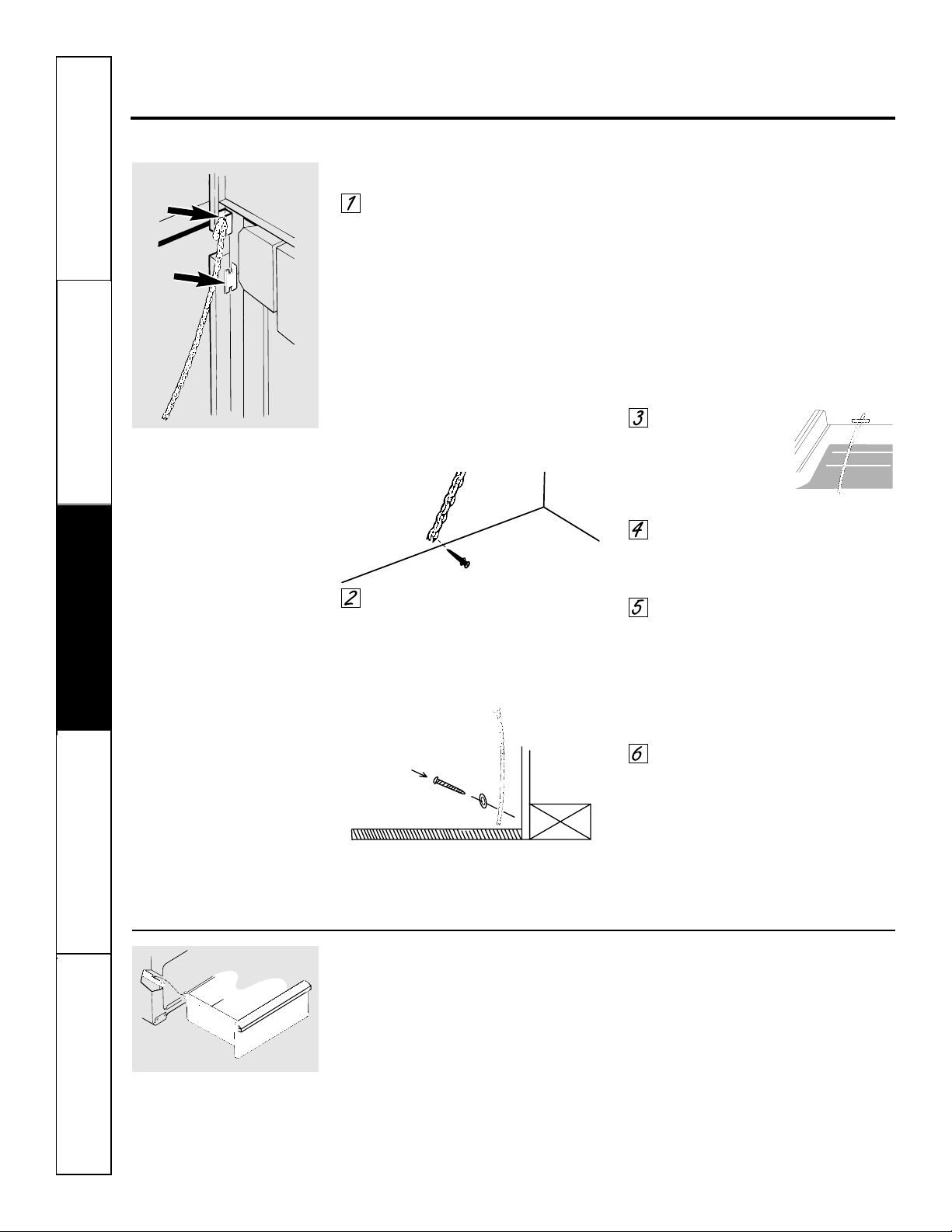
If the range is removed for cleaning or any reason, make sure the chain is reattached.
Anti-Tip Device
Before placing range in the counter,
notice the location of the stability
bracket which is already attached to
the back of the range. This location
should work for most installations.
However, it may be more convenient
to hook the stability chain to the unit
when the stability bracket is attached
to the upper set of holes in the back
of range.
The upper level set of holes is intended for use
with a backsplash kit. If the backsplash is not
being used, make sure that there are no
structural supports for the countertop which will
interfere with the stability bracket when located
in the upper set of holes.
Fasten one end of the stability chain
to the floor or wall with the long
screw and washer supplied.
NOTE: If attaching to masonry, you can buy
suitable screws and anchors at hardware stores.
Use a masonry drill to drill the required holes.
Make certain the screw is going into the wall
plate at the base of the wall or one of the studs
in the base of the wall.
Whether you attach the chain to the wall
or floor, be certain that the screw is in at
least 3/4 inch thickness of wood other
than baseboard and that there are no
electrical wires or plumbing in the area
which the screw could penetrate. Attach
the stability chain in a location which will
allow the chain to be in line with the
bracket side to aid as much as possible
when attached to the unit. Test to see if
the chain is securely fastened by tugging
on the chain.
Temporarily attach
the loose end of the
chain to the rear of
the countertop with
the tape from the
packaging.
Place the range in the counter cutout
leaving just enough room between
the back of the range and the wall to
reach the stability bracket.
Hook the loose end of the chain
onto the bracket by slipping the
nearest link of the chain into the slot
in the bracket. Make sure the chain is
pulled as tight as possible and that
there is no excess slack in the chain
after the chain is attached to the
bracket.
Slide the range all the way back into
the counter. Once the range is
pushed back in place, there will be a
small amount of slack in the chain.
This is normal.
CAUTION: Excessive slack in the chain could
allow the range to tip over.
Backsplash
(on some models)
Back of
range
Wall
Chain
Tape
Floor
Chain
Washer
Wall plate
Long screw
Washer and long screw
Chain
Optional
bracket location
Factory bracket
location
Removable Storage Drawer
The storage drawer is a good place to store
cookware and bakeware. Do not store plastics
and flammable material in the drawer.
Do not overload the storage drawer. If the
drawer is too heavy, it may slip off the
track when opened.
To open the drawer, grasp the center of
the handle and pull straight out.
To remove:
Pull the drawer straight out and lift over
the guide stops.
To replace:
Lift over the guide stops and slide the
drawer into place.
To clean both the inside and the outside:
Wipe with soap and water. Rinse well.
Do not use cleansing powders or harsh
abrasives which may scratch the surface.
The storage drawer may be
removed for cleaning under the
range.

15
Safety Instructions Operating Instructions Care and Cleaning Troubleshooting Tips Customer Service
Be sure the controls are turned to OFF and the surface units are cool before attempting to remove them.
Surface Units
To clean the surface units, turn the
control to the highest setting for a
minute. The coils will burn off any soil.
To remove a surface unit:
To remove the drip pans for cleaning, the
surface units must be removed first.
Lift the surface unit about 1 inch above
the drip pan and pull it out.
Do not lift the surface unit more than 1 inch. If
you do, it may not lie flat on the drip pan when
you plug it back in.
Repeated lifting of the surface unit more
than 1 inch above the drip pan can
permanently damage the receptacle.
To replace a surface unit:
Replace the drip pan into the recess in
the cooktop. Make sure the opening in
the pan lines up with the receptacle.
Insert the terminals of the surface unit
through the opening in the drip pan and
into the receptacle.
Guide the surface unit into place so it
rests evenly.
Do not immerse the surface units in liquids of
any kind.
Do not clean the surface units in a dishwasher.
Do not bend the surface unit plug terminals.
Do not attempt to clean, adjust or in any way
repair the plug-in receptacle.
Drip Pans
Remove the surface units. Then lift out
the drip pans.
For best results, clean the drip pans by
hand. Place them in a covered container
(or a plastic bag) with 1/4 cup ammonia
to loosen the soil. Then scrub with a soap-
filled scouring pad if necessary. Rinse
with clean water and polish with a clean
soft cloth.
The drip pans may also be cleaned in a
dishwasher.
Clean the area under the drip pans
often. Built-up soil, especially grease,
may catch fire.
Do not cover the drip pans with foil. Using foil so
close to the receptacle could cause shock, fire or
damage to the range.
Lift-Up Cooktop
Clean the area under the cooktop often. Built-up
soil, especially grease, may catch fire.
To make cleaning easier, the entire
cooktop may be lifted up and supported
in the up position.
Be sure all the surface units are turned off
before raising the cooktop. The surface
units and drip pans do not need to be
removed; however, you may remove one
to make raising the cooktop easier. A
support rod will hold the cooktop up
while you clean underneath it.
After cleaning under the cooktop with
hot, soapy water and a clean cloth, lower
the cooktop. Be careful not to pinch your
fingers.
Be sure all surface units are turned
off before raising the cooktop.
Surface unit
Drip pan
Receptacle
Support rod

Safety InstructionsOperating InstructionsCare and CleaningTroubleshooting TipsCustomer Service
Before You Call For Service…
Troubleshooting Tips
Save time and money! Review the chart on this page first
and you may not need to call for service.
Problem Possible Causes What To Do
Surface units not
The surface units are not • With the controls off, check to make sure the surface
functioning properly
plugged in solidly. unit is plugged completely into the receptacle.
The surface unit controls • Check to see the correct control is set for the surface
improperly set. unit you are using.
The drip pans are not set • With the controls off, check to make sure the drip
securely in the cooktop. pan is in the recess in the cooktop and that the
opening in the pan lines up with the receptacle.
Clock and timer do
A fuse in your home may • Replace fuse or reset circuit breaker.
not work
be blown or the circuit
breaker tripped.
Oven light does
Light bulb is loose or defective. • Tighten or replace the bulb.
not work
Switch operating light • Call for service.
is broken.
Oven will not work
Plug on range is not completely • Make sure electrical plug is plugged into a live, properly
inserted in the electrical outlet. grounded outlet.
A fuse in your home may be • Replace fuse or reset circuit breaker.
blown or the circuit breaker
tripped.
Oven controls improperly set. • See the
Using the oven
section.
Food does not bake
Oven controls improperly set. • See the
Using the oven
section.
or roast properly
Shelf position is incorrect • See the
Using the oven
section.
or the shelf is not level.
Incorrect cookware or cookware • See the
Using the oven
section.
of improper size being used.
Oven thermostat needs • See the
Adjust the oven thermostat—Do it yourself!
adjustment. section.
Food does not
Oven controls improperly set. • See the
Using the oven
section.
broil properly
Door not open to the broil stop • See the
Using the oven
section.
position as recommended.
Improper shelf position. • See the
Broiling Guide.
Food being cooked • Use the broiling pan and grid that came with your range.
in a hot pan. Make sure it is cool.
Cookware not suited for broiling. • Use the broiling pan and grid that came with your range.
Aluminum foil used on the • See the
Using the oven
section.
broiling pan and grid has not
been fitted properly and slit as
recommended.
In some areas the power • Preheat the broil element for 10 minutes. Broil for
(voltage) may be low. the longest period of time recommended in the
Broiling Guide.
Oven temperature too
Oven thermostat • See the
Adjust the oven thermostat—Do it yourself!
hot or too cold
needs adjustment. section.
16

17
General Electric Company
Warranty Registration Department
P.O. Box 32150
Louisville, KY 40232-2150
GE Service Protection Plus
™
GE, a name recognized worldwide for quality and dependability, offers you
Service Protection Plus
™
—comprehensive protection on all your appliances—
No Matter What Brand!
Benefits Include:
• Backed by GE
• All brands covered
• Unlimited service calls
• All parts and labor costs included
• No out-of-pocket expenses
• No hidden deductibles
• One 800 number to call
You will be completely satisfied with our service protection or you may request your money back
on the remaining value of your contract. No questions asked. It’s that simple.
Protect your refrigerator, dishwasher, washer and dryer, range, TV, VCR and much more—any brand!
Plus there’s no extra charge for emergency service and low monthly financing is available. Even icemaker
coverage and food spoilage protection is offered. You can rest easy, knowing that all your valuable
household products are protected against expensive repairs.
Place your confidence in GE and call us in the U.S. toll-free at 800-626-2224
for more information.
*All brands covered, up to 20 years old, in the continental U.S.
We’ll Cover Any Appliance.
Anywhere. Anytime.*
Please place in envelope and mail to:
✁
Cut here

18
Consumer Product Ownership Registration
Important
Mail
Today!
First
Name
Mr. ■■ Ms. ■■ Mrs. ■■ Miss ■■
Street
Address
City
State
Date Placed
In Use
Month
Day
Year
Zip
Code
Apt. #
Last
Name
Phone
Number
_
_
Consumer Product Ownership Registration
Dear Customer:
Thank you for purchasing our product and thank you for placing your confidence in us.
We are proud to have you as a customer!
Follow these three steps to protect your new appliance investment:
Important: If you did not get a registration card with your
product, detach and return the form below to
ensure that your product is registered, or register
online at www.geappliances.com.
1
23
Model Number Serial Number
✁
Cut here
Complete and mail
your Consumer
Product Ownership
Registration today.
Have the peace of
mind of knowing we
can contact you in
the
unlikely event of
a
safety modification.
After mailing the
registration below,
store this document
in a safe place. It
contains information
you will need should
you require service.
Our service number is
800 GE CARES
(800-432-2737).
Read your Owner’s
Manual carefully.
It will help you
operate your new
appliance properly.
If you have questions,
or need more
information, call the
GE Answer Center
®
800.626.2000.
Model Number Serial Number
E-mail Address
Occasionally, we may allow selected companies to send you information.
■■ Check here if you do not want this information.

19
Safety Instructions Operating Instructions Care and Cleaning Troubleshooting Tips Customer Service
GE Electric Range Warranty
All warranty service provided by our Factory Service Centers
or an authorized Customer Care
®
technician. For service,
call 800-GE-CARES.
For The Period Of: GE Will Replace, At No Charge To You:
One Year Any part
of the range which fails due to a defect in materials or workmanship.
From the date of the
During this
full one-year warranty,
GE will also provide,
free of charge,
all labor
original purchase
and in-home service to replace the defective part.
■Service trips to your home to teach you how to use
the product.
■Improper installation.
■Failure of the product if it is abused, misused, or used
for other than the intended purpose or used
commercially.
■Replacement of house fuses or resetting of circuit
breakers.
■Damage to the product caused by accident, fire, floods
or acts of God.
■Incidental or consequential damage to personal
property caused by possible defects with this appliance.
What GE Will Not Cover:
This warranty is extended to the original purchaser and any succeeding owner for products purchased for
home use within the USA. In Alaska, the warranty excludes the cost of shipping or service calls to your home.
Some states do not allow the exclusion or limitation of incidental or consequential damages. This warranty
gives you specific legal rights, and you may also have other rights which vary from state to state. To know
what your legal rights are, consult your local or state consumer affairs office or your state’s Attorney General.
Warrantor: General Electric Company. Louisville, KY 40225

20
Safety InstructionsOperating InstructionsCare and CleaningTroubleshooting TipsCustomer Service
Service Telephone Numbers.
GE Answer Center
®
800.626.2000
The GE Answer Center® is open 24 hours a day, 7 days a week.
In-Home Repair Service
800-GE-CARES (800-432-2737)
Expert GE repair service is only a phone call away.
Special Needs Service
800.626.2000
800-TDD-GEAC (800-833-4322)
GE offers, free of charge, a brochure to assist in planning a barrier-free kitchen for persons
with limited mobility.
Service Contracts
800-626-2224
Purchase a GE service contract while your warranty is still in effect and you’ll receive a
substantial discount. GE Consumer Service will still be there after your warranty expires.
Parts and Accessories
800-626-2002
Individuals qualified to service their own appliances can have parts or accessories sent directly
to their homes (VISA, MasterCard and Discover cards are accepted).
Instructions contained in this manual cover procedures to be performed by any user. Other servicing
generally should be referred to qualified service personnel. Caution must be exercised, since
improper servicing may cause unsafe operation.
Service Satisfaction
If you are not satisfied with the service you receive from GE:
First,
contact the people who serviced your appliance.
Next,
if you are still not pleased, write all the details—including your phone number—to:
Manager, Customer Relations
GE Appliances
Appliance Park
Louisville, KY 40225
Printed in LaFayette, GA