©2007 Sony Corporation
3-100-770-12(1)
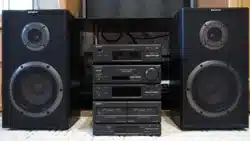
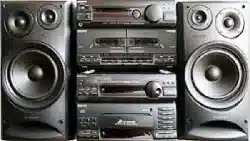
Mini Hi-Fi
Component
System
Operating Instructions
FST-ZUX9

2
GB
To reduce the risk of fire or
electric shock, do not expose
this apparatus to rain or
moisture.
To prevent fire, do not cover the ventilation
of the apparatus with newspapers, table-
cloths, curtains, etc. And don’t place lighted
candles on the apparatus.
To prevent fire or shock hazard, do not place
objects filled with liquids, such as vases, on
the apparatus.
To avoid electrical shock, do not open the
cabinet. Refer servicing to qualified
personnel only.
Batteries or batteries installed apparatus
shall not be exposed to excessive heat such
as sunshine, fire or the like.
Do not install the appliance in a confined
space, such as a bookcase or built-in cabinet.
Install this system so that the power cord can
be unplugged from the wall socket
immediately in the event of trouble.
This appliance is classified as a CLASS 1
LASER product. This label is located on the
rear exterior.
Don’t throw away the
battery with general
house waste, dispose of it
correctly as chemical
waste.
About this manual
The FST-ZUX9 consists of:
– Unit HCD-ZUX9
– Speaker System
• Front speakers SS-ZUX9
• Surround speakers SS-ZUX9
“WALKMAN” and “WALKMAN” logo are
registered trademarks of Sony Corporation.
MICROVAULT is a trademark of Sony
Corporation.
MPEG Layer-3 audio coding technology and
patents licensed from Fraunhofer IIS and
Thomson.
WARNING

3
GB
Table of Contents
About this manual ........................2
Playable discs...............................4
Playable/Recordable USB
devices.....................................5
Guide to parts and controls ..........6
Hooking up the system...............14
Positioning the speakers.............16
Setting the clock.........................17
Playing an AUDIO CD/MP3
disc ........................................18
Using play mode ........................20
Recording from a disc onto a
USB device ...........................23
Listening to music of a USB
device ....................................25
Using play mode ........................27
Listening to the radio .................29
Playing a tape .............................31
Recording onto a tape ................32
Adjusting the sound .................. 34
Creating a party atmosphere ..... 35
— X-TRANCE PRO
Singing along ............................ 40
Using the timer.......................... 41
Changing the display................. 42
Viewing information in the
display during CD and
USB function........................ 44
Hooking up the optional
components .......................... 45
Troubleshooting ........................ 47
Precautions ................................ 55
Specifications ............................ 56
Index.......................................... 59
Getting Started
Disc
USB Device
Tuner
Tape
Sound Adjustment
Other Operations
Additional Information
4
GB
Playable discs
1)
MP3 (MPEG 1 Audio Layer 3) is a standard
format defined by ISO/MPEG which
compresses audio data. MP3 audio tracks
must be in MPEG 1 Audio Layer 3 format.
2)
A logical format of files and folders on CD-
ROMs, defined by ISO (International
Organization for Standardization).
3)
This is a recording method that enables
adding of data using the Track-At-Once
method. Conventional discs begin at a disc
control area called the Lead-in and end at an
area called Lead-out. A Multi Session disc is
a disc having multiple sessions, with each
segment from Lead-in to Lead-out regarded as
a single session.
• Data part of CD-Extras
1)
• Data part of Mixed CDs
2)
• CD-R/-RW discs that have not been
correctly finalized (processing to allow
play back by a normal CD player).
• CD-R/-RW discs recorded in Multi
Session that have not ended by “closing
the session”.
• A disc recorded in packet write format.
• Audio side of a DualDisc.
• A disc that has a non-standard shape
(e.g., heart, square, star).
• A disc that has the adhesive cellophane
tape or a sticker still left on it.
1)
CD-Extra: This format records audio
(AUDIO CD data) on the tracks in session 1
and data on the tracks in session 2.
2)
Mixed CD: This format records data on the
first track and audio (AUDIO CD data) on the
second and subsequent tracks of a session.
A DualDisc is a two sided disc product
which mates DVD recorded material on
one side with digital audio material on the
other side. However, since the audio
material side does not conform to the
Compact Disc (CD) standard, playback
on this product is not guaranteed.
In some cases, CD-Rs/-RWs cannot be
played back on this system due to the
recording quality or physical condition of
the disc, or the characteristics of the
recording device and authoring software.
The disc will not be played back if it has
not been correctly finalized. For more
information, see the operating
instructions of the recording device.
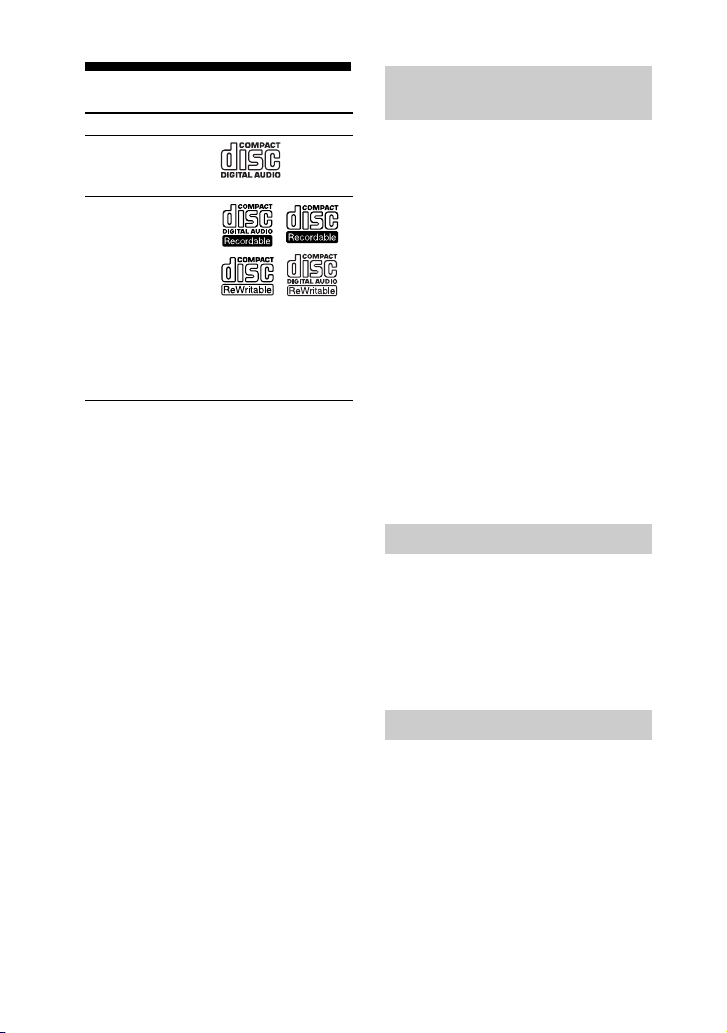
Format of discs Logo
• AUDIO CD
• CD-R/-RW in
AUDIO CD format
• CD-R/-RW in
DATA CD format,
containing MP3
audio tracks
1)
that
conforms to
ISO 9660
2)
Level 1/
Level 2, Joliet (in
expansion format),
or Multi Session
3)
Discs that cannot be played
back
Note on DualDiscs
Note on CD-R/-RW

5
GB
This product is designed to play back
discs that conform to the Compact Disc
(CD) standard. Recently, various music
discs encoded with copyright protection
technologies are marketed by some record
companies. Please be aware that among
those discs, there are some that do not
conform to the CD standard and may not
be playable by this product.
When you play back Multi Session discs
with different formats for each session,
the format of the first session is
recognized as the disc type. Tracks in the
second and subsequent sessions are
played back if they are the same formats
as the first session.
Playable/Recordable
USB devices
You can use the following Sony USB
devices on this system.
Verified Sony digital music player
(as of April 2007)
Verified Sony IC Recorder
(as of April 2007)
Verified Sony USB storage media
(as of April 2007)
Notes
• Do not use USB devices other than these USB
devices. Operation of models not listed here is
not guaranteed.
• Operation may not always be ensured even
when using these USB devices.
• Some of these USB devices may not be
available for purchase in certain areas.
• See the operating instructions supplied with
the USB device for details on the operation
method.
• If you want to format the above USB devices,
be sure to use the models or formatter
software supplied with the USB device.
However, if the formatting process is
performed using other method, the recording
may not be properly done.
Music discs encoded with
copyright protection
technologies
Note on Multi Session disc
Product name Model name
Walkman
®
NWD-B103/B105/
B103F/B105F
Product name Model name
IC Recorder ICD-U50/U60/U70
Product name Model name
MICROVAULT USM256J/512J/1GJ/2GJ/
4GJ
USM512JX/1GJX/2GJX/
4GJX
USM256H/512H/1GH/
2GH/4GH

6
GB
Guide to parts and controls
This manual mainly explains operations using the buttons on the unit, but the same
operations can also be performed using the buttons on the remote having the same or
similar names.
Unit
– Front view
– Top view
12 34 657
wh
wf
ws
wg
ql
qk
qh
wa
wd
w;
qg
qf
qd
qs
qa
q;
9
8
qj
wj
wl
ef
wk
ed
es
ea
e;

7
GB
1 "/1 (on/standby) (pages 15, 16,
17, 24, 30, 42, 47, 53)
Press to turn the system on or off.
B Function buttons:
CD (pages 16, 18, 20, 23, 30, 32,
43)
TUNER/BAND (pages 29, 43)
TAPE A/B (pages 31, 43)
Press to select a function.
C MASTER VOLUME (pages 18,
25, 42, 47)
Turn to adjust the volume.
D OPERATION DIAL (pages 18,
26, 34, 38, 42)
Turn to select a track or folder.
Turn to select a setting.
E Display (pages 10, 42, 44, 54)
F IR Receptor (page 48)
G Function buttons:
AUDIO (pages 36, 43, 46)
VIDEO (pages 36, 43, 46)
(pages 24, 25, 36, 43)
Press to select a function.
H DISPLAY (pages 43, 44)
Press to change the information on
the display.
I GROOVE (page 34)
Press to reinforce the bass.
J FLAT (page 34)
SAMBA (page 34)
REGGAE (page 34)
HIP HOP (page 34)
TECHNO (page 34)
Press to select a preset effect.
K SPEAKERS (page 40)
Press to select the speaker system.
L FRONT BEAM (Right) (page 43)
M CHORUS (pages 36, 48, 53)
AQUA (pages 36, 48, 53)
Press to select an effector mode.
N Power illuminator (page 42)
O MIC (jack) (pages 40, 47, 57)
Connect an optional microphone.
MIC LEVEL (pages 33, 40, 47)
Turn to adjust the microphone
volume.
P BOTTOM BEAM (Right)
(page 43)
Q Disc tray (pages 16, 18, 49)
R BOTTOM BEAM (Left) (page 43)
S (USB) port (pages 23, 24,
25, 51, 57)
Connect an optional USB device
(Digital music player or USB storage
media).
REC/ERASE (indicator)
(pages 24, 26)
Lights up when recording from a disc
onto the connected optional USB
device (Digital music player or USB
storage media).
Lights up when erasing MP3 audio
tracks from the connected optional
USB device (Digital music player or
USB storage media).
USB
Continued
l

8
GB
T PHONES (jack) (pages 37, 40,
47, 57)
Connect the headphones.
U FLANGER (pages 35, 48, 53)
DELAY (pages 35, 48, 53)
Press to select an effector mode.
V FRONT BEAM (Left) (page 43)
W EQ BAND/MEMORY (page 34)
Press to select a frequency band
when adjusting the graphic
equalizer.
X ROCK (page 34)
POP (page 34)
JAZZ (page 34)
DANCE (page 34)
Press to select a preset effect.
USER EQ (page 34)
Press to select a user equalizer
setting.
Y AMP MENU (page 42)
Press to change the spectrum
analyser display, adjust the
brightness of the display and built-in
beam or change the power
illuminator pattern.
Z BEAM MODE (page 43)
Press to change the lighting effect of
a beam.
wj B PUSH Z OPEN/CLOSE
(Deck B) (page 31)
Press to insert or eject a tape.
Deck B (pages 32, 42, 53)
wk A Z PUSH OPEN/CLOSE
(Deck A) (page 31)
Press to insert or eject a tape.
Deck A (pages 31, 53)
wl ENTER (pages 17, 18, 21, 24,
26, 29, 35, 42, 43, 53)
Press to enter the selection.
ERASE (page 24)
Press to erase MP3 audio tracks or
folders on the connected optional
USB device (Digital music player or
USB storage media).
RETURN (pages 18, 26)
Press to return to the parent folder.
e; X-ROUND ON/OFF (pages 36,
37)
Press to turn on or off the X-ROUND
function.
X-ROUND MODE (pages 36, 37)
Press to select an X-ROUND mode.
MAX/JUMP MODE (page 37)
Press to select the way of creating
“MAX” and “JUMP” effect.
X-ROUND JOG (page 37)
Turn to change the sound movement
or the speed of the sound movement.
JUMP PAD (page 37)
Press to switch the sound position to
the opposite direction instantly.
MAX PAD (page 37)
Press to enhance the sound.
ez DISC SKIP/EX-CHANGE
(pages 16, 18, 19, 21)
Press to select the next disc.
Press to exchange other discs during
playback.
Z OPEN/CLOSE (pages 16, 18,
49)
Press to load or eject a disc.
DISC 1 ~ 3 (pages 19, 21)
Press to select a disc.
Press to switch to the CD function
from the other functions.

9
GB
es CD- SYNC/REC 1 (page 23)
Press to record from a disc onto the
connected optional USB device
(Digital music player or USB storage
media).
Press to record a track from a disc
onto the connected optional USB
device (Digital music player or USB
storage media).
TAPE REC PAUSE/START
(page 32)
Press to record onto a tape.
CD-TAPE SYNC (page 32)
Press to record a disc onto a tape.
ed NX (play/pause) (pages 18, 20,
23, 25, 31, 49, 52)
Press to start or pause playback.
x (stop) (pages 18, 24, 26, 29,
31, 33, 49, 53)
Press to stop playback or recording.
./> (go forward/go
backward) (pages 17, 18, 21, 24,
26, 32, 41, 53)
Press to select a track.
TUNING +/– (pages 29, 30)
Press to tune in a radio station.
+/– (pages 18, 21, 24, 26, 32)
Press to select a folder.
m/M (rewind/fast forward)
(pages 18, 26, 31)
Press to find a point in a track or tape.
ef BEAT ON/OFF (page 39)
Press to turn on or off the rhythms of
the beat.
BEAT LEVEL (page 38)
Press to adjust the beat level.
BEAT SPEED (page 39)
Press to change the beat speed.
BEAT PATTERN (pages 39)
Press to select the rhythms of the
beat.
BPM CONTROL (page 39)
Press to input the tempo of the audio
source.
PAD A/PAD B (page 38)
Press to add percussion sound.
USB
Continued
l

10
GB
– Display
A Indicators for the disc tray (page 18).
“ ” lights up when the disc is
selected. “ ” lights up when there is
a disc on the disc tray.
B “MP3” lights up when an MP3 audio
track is recognized. “CD” lights up
when a disc is recognized.
C Lights up when the USB function is
selected (page 25).
D Lights up when an optional USB
device (Digital music player or USB
storage media) is recognized.
E Indicators for the tuner band
(page 29).
F Lights up when the MP3 audio track
contains ID3 tag information.
G Indicators for the TUNER function
(page 29).
H Indicators for the BEAT BLEND
function (page 38).
I Indicators for the X-ROUND mode
(page 36).
J Indicators for the X-ROUND
function (page 36).
K Indicators for the TAPE function
(page 31).
“ ” lights up when there is a tape in
the deck.
L Indicators for the recording type
(page 32).
M Displays the current status and
information (page 44).
N Indicators for the information type of
an MP3 audio track that displayed on
qd (page 44).
“ ” lights up when a track name is
displayed. “ ” lights up when an
artist name is displayed. “ ” lights
up when a folder name is displayed.
O Lights up when the Sleep Timer is
activated (page 41).
P Lights up when the Play Timer or
Recording Timer is set (page 41).
Q Indicators for the speaker system
(page 40).
R Indicators for the selected play mode
(page 20).
S Indicators for the activated sound
effect (pages 34, 35).
qd
qs
qf
q
a
q
;
qg
qj
qk
ql
2
3
546
789
1
qh

11
GB
Remote
1 "/1 (on/standby) (pages 15, 17,
47)
Press to turn the system on or off.
B CLOCK/TIMER SELECT
(page 42)
CLOCK/TIMER SET (pages 17,
41)
Press to set the clock and the timers.
C REPEAT/FM MODE (pages 22,
30, 52)
Press to change the Repeat Play
setting.
Press to select the FM monaural or
stereo reception.
D USB (page 25)
Press to select the USB function.
CD (page 18)
Press to select the CD function.
TUNER/BAND (page 29)
Press to select the TUNER function.
Press to select FM or AM band.
FUNCTION (pages 18, 29, 43,
46)
Press to select a function.
E ./> (go backward/go
forward) (pages 18, 21, 24, 26,
32, 41, 53)
Press to select a track.
Press to adjust the time when setting
the clock or timer.
+/– (tuning) (pages 29, 30)
Press to tune in a radio station.
m/M (rewind/fast forward)
(pages 18, 26, 31)
Press to find a point in a track or tape.
(play) (pages 18, 23, 31, 49,
52)
X (pause) (pages 18, 31)
Press to start or pause playback.
x (stop) (pages 18, 29, 31)
Press to stop playback or recording.
F ENTER (pages 17, 24, 26, 29,
35, 41)
Press to enter the selection.
q;
qa
qs
qd
1
3
6
qf
qg
7
8
9
2
4
5
Continued
l

12
GB
G DISC SKIP (pages 16, 18, 19, 21)
Press to select the next disc.
H +/– (pages 18, 21, 24, 26, 32)
Press to select a folder.
I VOLUME +/–* (pages 18, 25, 42,
47)
Press to adjust the volume.
* The VOLUME + button has a tactile dot.
Use the tactile dot as a reference when
operating the system.
J EQ (page 34)
Press to select a preset effect.
K CLEAR (page 22)
Press to delete a programmed step.
L PLAY MODE/TUNING MODE
(pages 20, 29, 30)
Press to select the play mode of CD
or USB function.
Press to select the tuning mode.
qd TUNER MEMORY (page 29)
Press to preset a radio station.
qf DISPLAY (pages 43, 44)
Press to change the information on
the display.
qg SLEEP (page 41)
Press to activate the Sleep Timer.
X-TRANCE PRO Remote
1 "/1 (on/standby) (pages 15, 17,
47)
Press to turn the system on or off.
B X-ROUND ON/OFF (pages 36,
37)
Press to turn on or off the X-ROUND
function.
MAX PAD (page 37)
Press to enhance the sound.
JUMP PAD (page 37)
Press to switch the sound position to
the opposite direction instantly.
X-ROUND MODE (pages 36, 37)
Press to select an X-ROUND mode.
X-ROUND +/– (page 37)
Press to change the sound movement
or the speed of the sound movement.
q;
1
4
6
qa
7
8
9
2
3
5

13
GB
C PAD A (page 38)
PAD B (page 38)
Press to add percussion sound.
D FRONT BUILT-IN BEAM
(page 43)
BOTTOM BUILT-IN BEAM
(page 43)
Press to change the lighting effect of
the beam.
E ./> (go backward/go
forward) (pages 18, 53)
Press to select a track.
+/– (tuning) (page 29)
Press to tune in a radio station.
(play) (page 18)
X (pause) (pages 18, 31)
Press to start or pause playback.
x (stop) (pages 18, 29, 31)
Press to stop playback or recording.
F BEAT LEVEL (page 38)
Press to adjust the beat level.
BEAT PATTERN + (pages 39)
BEAT PATTERN – (pages 39)
Press to select the rhythms of the
beat.
G VOLUME +/–* (pages 18, 25, 42,
47)
Press to adjust the volume.
*
The VOLUME + button has a tactile
dot. Use the tactile dot as a reference
when operating the system.
H BEAT ON/OFF (page 39)
Press to turn on or off the rhythms of
the beat.
BEAT SPEED + (page 39)
BEAT SPEED – (page 39)
Press to change the beat speed.
I GROOVE (page 34)
Press to reinforce the bass.
J SOUND EFFECT (page 36)
Press to select an effector mode.
K FUNCTION (pages 18, 29, 43,
46)
Press to select a function.

14
GB
Hooking up the system
A Antennas
Set up the AM loop antenna, then connect
it.
Note
Keep the antennas away from the speaker cords,
the power cord and the USB cable to avoid
picking up noise.
B Speakers
The speaker connectors are color-coded
with their respective speaker terminals on
the unit.
Front speakers
Getting Started
1
2
A
B
C
4
3
5
6
D
1 To AM loop antenna
2 To FM lead antenna
3 To front speaker (right)
4 To front speaker (left)
5 To surround speaker (right)
6 To surround speaker (left)
Extend the FM lead
antenna horizontally
AM loop antenna
R
L
FRONT
SPEAKER
ONL
Y FOR SS-ZUX9
White

15
GB
Getting Started
Surround speakers
Tip
Connect the speaker cords to the terminals on
the front and surround speakers.
1)
Front speakers only
2)
Surround speakers only
Notes
• Be sure to use only the supplied speakers.
• Be sure to connect the speakers securely and
correctly. When connecting speaker cords,
insert the connector straight into the
terminals.
C VOLTAGE SELECTOR
For models equipped with a voltage
selector, set VOLTAGE SELECTOR to
the position of your local power line
voltage.
Depending on the model, the VOLTAGE
SELECTOR may differ.
D Power
Connect the power cord to a wall outlet.
The demonstration appears in the display.
When you press "/1, the system turns on
and the demonstration automatically
ends.
If the supplied adaptor on the plug does
not fit your wall outlet, detach it from the
plug (only for models equipped with an
adaptor).
Note
If you do not use the remote for a long period of
time, remove the batteries to avoid possible
damage from battery leakage and corrosion.
Tip
With normal use, the batteries should last for
about six months. When the remote no longer
operates the system, replace both batteries with
new ones.
R
L
SURROUND
SPEAKER
ONL
Y FOR SS-ZUX9
Grey
Black (#)
Black (#)
Red (3)
Red
1)
/Grey
2)
(3
)
220V
127V
220V
VOLTAGE SELECTOR
230-240V
220V
120V
VOLTAGE SELECTOR
Brazil model only Other models
Inserting two R6 (size AA)
batteries into the remote
E
e
E
e

16
GB
Attach the supplied speaker pads at each
corner on the bottom of the speakers to
stabilize the speakers and to prevent them
from slipping.
Example
Front speakers
Positioning the
speakers
There are 2 ways to place front speakers
and the surround speakers.
To create a party environment, we
recommend that you place your speakers
as shown in example 1.
A Front speaker (left)
B Front speaker (right)
C Surround speaker (left)
D Surround speaker (right)
EUnit
Example 1:
Place the speakers at an equal distance
from your listening position as shown
below.
Example 2:
Place the surround speakers on the top of
the front speakers as shown below.
Attaching the speaker pads
When carrying the unit
Do the following procedure to protect
the disc mechanism.
Use the buttons on the unit for the
operation.
1 Press "/1 to turn on the system.
2 Press CD.
3 Press Z OPEN/CLOSE to open
the disc tray and remove the
disc. If there are more than one
disc in the disc tray, press
DISC SKIP/EX-CHANGE to
remove the discs.
4 Press Z OPEN/CLOSE again to
close the disc tray.
5 Hold down CD and then press
"/1 until “STANDBY” appears
in the display. Then, “MECHA
LOCK” appears in the display.
6 Release "/1 before you release
CD.
7 Unplug the AC power cord.
C
D
E
AB
Listener
45
C
AB
E
D
Listener

17
GB
Getting Started
Setting the clock
Use buttons on the remote for the
operation.
1 Press "/1 to turn on the system.
2 Press CLOCK/TIMER SET.
The hour indication flashes in the
display.
If “PLAY SET?” flashes in the
display, press . or > repeatedly
to select “CLOCK SET?”, then press
ENTER.
3 Press . or > repeatedly to
set the hour.
4 Press ENTER.
The minute indication flashes in the
display.
5 Press . or > repeatedly to
set the minute.
6 Press ENTER.
The clock starts functioning.
Note
The clock settings are canceled when you
disconnect the power cord or if a power failure
occurs.

18
GB
Playing an AUDIO CD/
MP3 disc
Example: When playing an AUDIO CD
1 Press CD.
2 Press Z OPEN/CLOSE.
3 Load a disc with the label side
facing up on the disc tray.
To load additional discs, press
DISC SKIP/EX-CHANGE to rotate
the disc tray.
4 Press Z OPEN/CLOSE to close
the disc tray.
Do not forcibly push the disc tray to
close it as this may cause a
malfunction.
5 Press NX (or N on the
remote).
6 Turn MASTER VOLUME
(or press VOLUME +/– on the
remote) to adjust the volume.
Other operations
Disc
Elapsed playing time
Disc playing indicator
When you play
back an 8 cm
disc such as a
CD single, place
it on the inner
circle of the tray
To Do this
Stop playback Press x.
Pause playback Press NX (or X on the
remote). To resume
playback, press NX (or
X on the remote) again.
Select the next or
previous track
Press . or >.
Select the next or
previous folder on
an MP3 disc
Press +/–.
Search for a track
on an MP3 disc by
its folder name and
track name and
start playback the
track (TRACK
SEARCH)
1 Turn OPERATION
DIAL to select the
folder you want, then
press ENTER.
2 Turn OPERATION
DIAL to select the
track you want, then
press ENTER.
To return to the parent
folder, press RETURN.
Search for a
track on an
AUDIO CD by
its track number
and start playback
the track (TRACK
SEARCH)
Turn OPERATION
DIAL to select the track
you want, then press
ENTER.
Find a point in a
track*
Hold down m or M
on the remote during
playback, then release it
at the point you want.

19
GB
Disc
* The elapsed playing time may not be
displayed correctly depending on the MP3
audio tracks.
Notes
• The following discs/situations can increase
the time it takes to start playback:
– a disc recorded with a complicated tree
structure.
– a disc recorded in Multi Session.
– a disc to which data can be added
(non-finalized disc).
– when the tracks in another folder have just
been played back.
• When the disc is loaded, the system reads all
the tracks on that disc. If there are many
folders or non-MP3 audio tracks on the disc, it
may take a longer time for playback to begin
or for the next MP3 audio track to start
playback.
• You are recommended not to save other types
of tracks or unnecessary folders on a disc that
has MP3 audio tracks.
• The system can only play back MP3 audio
tracks with the extension “.MP3”.
• Attempting to play back non-MP3 format files
that have the extension “.MP3” may result in
noise or malfunction.
• A folder that does not include an MP3 audio
track is skipped.
• The system can recognize up to
– 256 folders (including the root folder).
– 511 MP3 audio tracks.
– 512 MP3 audio tracks and folders on a
single disc.
– 8 folder levels.
• Depending on the encoding/writing software,
recording device, or the recording media used
to record an MP3 audio track, you may
encounter problems such as cannot play back,
sound interruptions and noise.
Tip
When you press CD or one of the DISC 1 ~ 3
buttons to switch to CD function from TUNER
function, you may require a longer time to
access the disc. In the case, set the CD/USB
power manage function to “CD/USB POWER
ON” (page 30).
To Do this
Select a disc
when playback
is stopped
Press one of the
DISC 1 ~ 3 buttons or
DISC SKIP/
EX-CHANGE
(or DISC SKIP on the
remote).
Switch to CD
function from
another source and
start playback
automatically
Press one of the
DISC 1 ~ 3 buttons
(Automatic Source
Selection).
Exchange other
discs while
playing
Press DISC SKIP/
EX-CHANGE.

20
GB
Using play mode
You can play back the tracks on a disc in
original order or random order.
1 Press CD.
2 When playback is stopped,
press PLAY MODE on the
remote repeatedly until the
indication of the play mode you
want lights up in the display.
3 Press NX (or N on the
remote).
Notes
• You cannot change the play mode during
playback.
• Each time you perform Shuffle Play, the
playing order may differs.
Normal Play/Shuffle Play
Select To play back
ALL DISCS
(Normal Play)
The tracks on all discs in
original order.
1 DISC
(Normal Play)
The tracks on the disc
you have selected in
original order.
(Normal Play)
The MP3 audio tracks in
the folder on the disc
you have selected in
original order.
For AUDIO CDs, this
play mode performs the
same operation as
“1 DISC” play mode.
ALL DISCS
SHUF
(Shuffle Play)
The tracks on all discs in
random order.
1 DISC SHUF
(Shuffle Play)
The tracks on the disc
you have selected in
random order.
Select
To play back
SHUF
(Shuffle Play)
The MP3 audio tracks in
the folder on the disc
you have selected in
random order.
For AUDIO CDs, this
play mode performs the
same operation as
“1 DISC SHUF” play
mode.

21
GB
Disc
— Program Play
You can make a program of up to 25 steps
from all the discs in the order you want
them to be played back.
You can program all the tracks from a
disc, all the MP3 audio tracks from a
folder or a track as a step in the program
list.
You can synchro record the programmed
tracks onto a tape (page 32) or a USB
device (page 23).
1 Press CD.
2 When playback is stopped,
press PLAY MODE on the
remote repeatedly until
“PROGRAM” lights up in the
display.
3 Press one of the DISC 1 ~ 3
buttons or DISC SKIP/
EX-CHANGE (or DISC SKIP on
the remote) to select a disc.
To program all the tracks on a disc
at once:
Proceed to step 5 while “ALL” appears
in the display.
To program all the MP3 audio
tracks on a folder at once:
Press +/– repeatedly until the
folder you want appears in the display,
then proceed to step 5.
4 Press . or > repeatedly
until the track number you want
appears in the display.
The total playing time flashes in the
display.
To program an MP3 audio track:
Press +/– repeatedly until the
folder you want appears in the display,
then press . or > repeatedly
until the track number you want
appears in the display.
5 Press ENTER.
The track(s) is(are) programmed.
The programmed step number appears
in the display.
6 To program additional discs or
tracks.
7 Press NX (or N on the
remote).
Program Play starts.
Creating your own program
To program Repeat steps
Other discs 3 and 5
Other tracks on
the same disc
4 and 5
Other tracks on
other discs
3 to 5
Track
number
Total playing time
(including selected
track)
Continued
l

22
GB
Other operations
Tips
• The program you made remains in the
system’s memory even after it has been
played back. Press NX
(or N on the
remote) to play back the same program again.
• If “--.--” appears instead of the total playing
time during programming, this means:
– you have programmed a track in an AUDIO
CD with track number exceeds 20.
– the total playing time has exceeded 100
minutes.
– you have programmed an MP3 audio track.
— Repeat Play
You can play back all the tracks or a
single track on a disc repeatedly.
Press
REPEAT on the remote
repeatedly during playback until
“
REP” or “REP 1” lights up in the
display.
• REP: All the tracks on the disc(s), or all
the tracks in the folder* are played back
repeatedly up to five times.
• REP 1: A single track is played back
repeatedly until “REP 1” is canceled.
* When “ ” or “ SHUF” is selected for
MP3 audio tracks.
To cancel Repeat Play
Press REPEAT on the remote repeatedly
until both “REP” and “REP 1” light off
from the display.
Note
You cannot select “REP” and “ALL DISCS
SHUF” at the same time.
To Do this
Cancel Program
Play
When playback is
stopped, press PLAY
MODE on the remote
repeatedly until
“PROGRAM” lights off
from the display.
Delete the last step
from the program
list
Press CLEAR on the
remote when playback is
stopped.
Playing repeatedly

23
GB
USB Device
Recording from a disc
onto a USB device
You can record music from a disc to an
optional USB device (Digital music
player or USB storage media) by
connecting it to the (USB) port on
the unit.
You can record from an AUDIO CD or
MP3 disc. The audio format recorded by
this system is MP3. The approximate size
of the recording from an AUDIO CD is
about 1 MB per minute of recording time.
See “Playable/Recordable USB devices”
(page 5) for a list of USB devices that
can be connected to this system.
Note
The tracks those are recorded onto the USB
device is for personal use only.
There are two ways to record a disc onto a
USB device.
CD-USB Synchro Recording:
You can easily record an entire disc onto
a USB device.
REC1 Recording:
You can easily record a track that is
currently being played back onto a USB
device.
1 Connect a recordable USB
device to the (USB) port on
the unit.
2 Prepare the recording source.
For CD-USB Synchro Recording:
Press CD, then load the discs you want
to record on the disc tray.
Select the play mode of CD player as
below.
However, the play mode automatically
changes to Normal Play, if you start
recording in Program Play with no
tracks are programmed, Shuffle Play
or Repeat Play.
For REC1 Recording:
Press CD, then load the disc you want
to record on the disc tray. Select the
track you want to record, then press
NX (or N on the remote).
3 Set the USB device stand by for
recording and the disc pauses
for playback.
For CD-USB Synchro Recording:
Press CD- SYNC/REC 1.
“USB” and “SYNC” light up and
“REC” flashes in the display. The
display cycles through “CD-USB
SYNCHRO”, “Push ENTER” and
“xxxxxxByte Free Space” (remaining
space on the USB device).
USB Device
USB device
(Digital music player or
USB storage media)
To record
the track
from
Press PLAY MODE on
the remote repeatedly
to select
all discs ALL DISCS.
a disc 1 DISC.
an MP3 audio
track folder
. Then, press +/–
repeatedly to select the
folder you want.
all discs in the
order you
want using
Program Play
PROGRAM. Then,
perform steps 3 to 6 of
“Creating your own
program” (page 21).
USB
Continued
l

24
GB
For REC1 Recording:
Press CD- SYNC/REC 1.
“USB” lights up and “REC”
flashes in the display. The display
cycles through “CD-USB REC1”,
“Push ENTER” and “xxxxxxByte Free
Space” (remaining space on the USB
device).
4 Press ENTER.
For CD-USB Synchro Recording:
Recording starts.
When the recording is completed,
the disc and the USB device stop
automatically.
For REC1 Recording:
Recording starts.
When the recording is completed,
the disc continues to play back.
To stop recording, press x.
To remove the USB device
1 Check that the REC/ERASE
indicator on the unit is light off.
2 Press "/1 to turn off the system.
3 Remove the USB device.
To erase an MP3 audio track or an
MP3 audio track folder from the USB
device
You can erase an MP3 audio track or an
MP3 audio track folder from the USB
device.
1 Connect a recordable USB device
to the (USB) port on the unit.
2 Press (or USB on the
remote).
3 Press +/– repeatedly to select
the folder you want. To erase the
folder, proceed to step 4.
To erase an MP3 audio track, press
. or > repeatedly to select the
MP3 audio track you want, then
proceed to step 4.
4 Press ERASE.
“Track Erase ?” or “Folder Erase ?”,
and “Push ENTER” appear
alternatively in the display.
To cancel the erase operation, press x.
5 Press ENTER.
The selected MP3 audio track or MP3
audio track folder is erased.
The folder would only be deleted if the
folder only contained MP3 audio tracks
and there is no sub folder.
Notes
• The program list is cleared when you perform
the erase operation.
• You cannot erase MP3 audio tracks and
folders in Shuffle Play mode or Program Play
mode.
Folder and track generation rules
When recording to a USB device for the
first time, a “MUSIC” folder is created
directly below the “ROOT” folder.
Folders and MP3 audio tracks are
generated within this “MUSIC” folder as
follows according to the recording
method.
CD-USB Synchro Recording
1)
REC1 Recording
1)
In Program Play mode, the folder name is
“FLDRxxx”, and the track name depends on
the recording source (AUDIO CD or MP3
disc).
2)
Up to 32 characters of the name are assigned.
USB
USB
Recording
source
Folder name Track name
MP3 disc Same as the recording source
2)
AUDIO
CD
FLDRXXX
3)
TRACKXXX
4)
Recording
source
Folder name Track name
MP3 disc
REC1
5)
Same as the
recording
source
2)
AUDIO CD TRACKXXX
4)

25
GB
USB Device
3)
XXX is the folder number from 001 to 997.
4)
XXX is the track number from 001 to 999.
5)
A new track is recorded in the “REC1” folder
each time REC1 recording is performed.
Notes
• Do not connect the system and the USB
device through a USB hub.
• You cannot eject the disc during CD-USB
Synchro Recording or REC1 Recording.
• When recording from an AUDIO CD, the
tracks are recorded as 128 kbps MP3 audio
tracks.
When recording from an MP3 disc, MP3
audio tracks are recorded with the same bit
rate as the original MP3 audio tracks.
• While recording from an MP3 disc, no sound
is output and “High Speed Recording”
appears in the display.
• If you cancel the recording halfway, an MP3
audio track is created up to the point when the
recording was stopped.
• Recording stops automatically if:
– the USB device runs out of space during
recording.
– the number of MP3 audio tracks on the USB
device reaches the limit for the number that
the system can recognize.
• The maximum number of MP3 audio track
folders that can be recorded on a single USB
device by this system is 997.
The maximum number of MP3 audio tracks
that can be recorded on a single USB device
by this system is 999.
The maximum number of MP3 audio tracks
and folders may vary depending on the MP3
audio track and folder structure.
• For MP3 disc, if a folder or track that you are
trying to record already exists on the USB
device with the same name, a sequential
number is added after the name without
overwriting the original folder or track.
• If you perform recording after the erase
operation, the new recorded tracks or folders
may have the name that same as the erased
tracks or folders. Therefore, the playback
sequence may different from the recording
sequence.
• When you perform CD-USB Synchro
Recording or REC1 Recording, the following
would not be recorded:
– sound from microphone.
– beat sound from drum pads or beat pattern.
– effector mode sound.
Listening to music of a
USB device
You can listen to music stored in an
optional USB device (Digital music
player or USB storage media) by
connecting it to the (USB) port on
the unit.
This system can only play back MP3*
audio track of the USB device.
See “Playable/Recordable USB devices”
(page 5) for a list of USB devices that
can be connected to this system.
* Files with copyright protection (Digital
Rights Management) cannot be played back
by this system.
1 Press (or USB on the
remote).
2 Connect an optional USB device
to the (USB) port on the
unit.
When the USB device is connected,
the display changes as follows:
Reading t volume label*
* “Storage Drive” appears when there is no
volume label assigned to the USB device.
Note
Depending on the type of USB device, it
may take a few seconds before “Reading”
appears in the display.
3 Press NX (or N on the
remote).
4 Turn MASTER VOLUME (or
press VOLUME +/– on the
remote) to adjust the volume.
USB
Continued
l

26
GB
To resume playback from the point
you stop the track – Resume Play
This system memorizes the point where
you stopped the playback. So you can
resume playback from that point.
1 While playing a track, press x to
stop playback.
“Resume” appears in the display.
2 Press NX (or N on the remote).
The system starts playback from the
point you stopped in step 1.
Resume Play is not cancelled even if you
change the funtion except
– you change to TUNER function when
CD/USB power manage is set to OFF.
To remove the USB device
1 Press x to stop playback.
2 Check that the REC/ERASE
indicator on the unit is light off.
3 Press "/1 to turn off the system.
4 Remove the USB device.
Other operations
Notes
• The following situations can increase the time
it takes to start playback:
– the folder structure is complex.
– the memory capacity is excessive.
• When the USB device is connected, the
system reads all the tracks on the USB device.
If there are many folders or tracks on the USB
device, it may take a long time to finish
reading the USB device.
• Do not connect the system and the USB
device through a USB hub.
• Depending on the previous operation you
have performed with the USB device, the
operation time for the USB device may vary.
• If the system is turned off or a power failure
occurs during “RESUME”, then you turn on
the system and start playback, the system will
start playback from the beginning of the track
where you stopped playback.
• This system does not necessarily support all
the functions provided in a connected USB
device.
• The playback order for the system may differ
from the playback order of the connected
digital music player.
• Be sure to turn off the system before removing
the USB device. Removing the USB device
while the system is turned on may corrupt the
data on the USB device.
• You are recommended not to save other types
of tracks or unnecessary folders on a USB
device that has MP3 audio tracks.
To Do this
Stop playback Press x.
To cancel resume
playback, press x
twice. “RESUME”
disappears from the
display.
Pause playback Press NX (or X on the
remote).
To resume playback,
press NX (or X on the
remote) again.
Select the next or
previous folder
Press +/–.
Select the next or
previous track
Press . or >.
To Do this
Search for a track
on an USB device
by its folder name
and track name and
start playback the
track. (TRACK
SEARCH)
1 Turn OPERATION
DIAL to select the
folder you want, then
press ENTER.
2 Turn OPERATION
DIAL to select the
track you want, then
press ENTER.
To return to the parent
folder, press RETURN.
Find a point in a
track
Hold down m or M
on the remote during
playback, then release it
at the point you want.

27
GB
USB Device
• A folder that does not include an MP3 audio
track is skipped.
• Tracks recorded by this system are played
back in the order of folder creation. Tracks
recorded by a device other than this system
such as a computer may not be played back in
the order in which they were recorded.
• The system can only play back MP3 audio
tracks with the extension “.MP3”.
• Attempting to play back non-MP3 format files
that have the extension “.MP3” may result in
noise or malfunction.
• The system can recognize up to
– 999 folders.
– 999 MP3 audio tracks.
The maximum number of MP3 audio tracks
and folders may vary depending on the MP3
audio track and folder structure.
• Compatibility with all MP3 encoding/writing
softwares, recording devices, and recording
media cannot be guaranteed. Incompatible
USB device may produce noise or interrupted
audio or may not play back at all.
• If you set the CD/USB power manage
function to “CD/USB POWER OFF”, you
cannot resume playback from the point you
stopped playback after you switch to TUNER
function.
Using play mode
You can play back the tracks on an USB
device in original order or random order.
1 Press (or USB on the
remote).
2 When playback is stopped,
press PLAY MODE on the
remote repeatedly until the
indicator of the play mode you
want lights up in the display.
3 Press NX (or N on the
remote).
Notes
• You cannot change the play mode during
playback.
• Each time you perform Shuffle Play, the
playback order may differs.
Normal Play/Shuffle Play
Select To play back
When “ ”,
“SHUF”,
“ SHUF”
and
“PROGRAM”
do not light up
in display
(Normal Play)
All the tracks in original
order.
(Normal Play)
All the tracks in the
selected folder in
original order.
SHUF
(Shuffle Play)
All the tracks in random
order.
SHUF
(Shuffle Play)
All the tracks in the
selected folder in
random order.
USB

28
GB
— Program Play
You can make a program of up to 25 steps
in the order you want them to be played
back.
1 Press (or USB on the
remote).
2 When playback is stopped,
press PLAY MODE on the
remote repeatedly until
“PROGRAM” lights up in the
display.
3 Press +/– repeatedly until the
folder you want appears in the
display.
4 Press . or > repeatedly
until the track number you want
appears in the display.
5 Press ENTER.
The track is programmed.
The programmed step number appears
in the display.
6 To program additional tracks.
7 Press NX (or N on the
remote).
Program Play starts.
Other operations
Note
The program list is cleared when you perform
the erase operation.
Tip
The program you made remains in the system’s
memory even after it has been played back.
Press NX
(or N on the remote) to play back
the same program again.
— Repeat Play
You can play back all the tracks or a
single track on an USB device repeatedly.
Press REPEAT on the remote
repeatedly during playback until
“REP” or “REP 1” lights up in the
display.
• REP: All the tracks are played back
repeatedly.
• REP 1: A single track is played back
repeatedly until “REP 1” is canceled.
To cancel Repeat Play
Press REPEAT on the remote repeatedly
until both “REP” and “REP 1” light off
from the display.
Creating your own program
To program Repeat steps
Other tracks on
the same folder
4 and 5
Other tracks on
other folders
3 to 5
USB
Track name
To Do this
Cancel Program
Play
When playback is
stopped, press PLAY
MODE on the remote
repeatedly until
“PROGRAM” light off
from the display.
Delete the last step
from the program
list
Press CLEAR on the
remote when playback is
stopped.
Playing repeatedly

29
GB
Tuner
Listening to the radio
You can listen to a radio station either by
selecting a preset station, or by manually
tuning in the station.
Use buttons on the remote for the
operation.
1 Press TUNER/BAND repeatedly
until “FM” or “AM” lights up in
the display.
2 Press TUNING MODE repeatedly
until “AUTO” lights up in the
display.
3 Press +/–.
You can also use TUNING +/– on the
unit.
The frequency changes as the system
scans for a station.
Scanning stops automatically when a
station is tuned in and “TUNED” lights
up in the display. When a FM stereo
program is tuned in, “STEREO” lights
up in the display.
4 Press TUNER MEMORY.
A preset number flashes in the display.
The stations are stored from preset
number 1.
5 Press +/– repeatedly to select
the preset number you want.
You can also use TUNING +/– on the
unit.
6 Press ENTER.
“Complete!” appears in the display.
The station is stored.
7 Repeat steps 1 to 6 to store other
stations.
You can preset up to 20 FM stations
and 10 AM stations.
The preset stations are retained for half
a day even if you unplug the power
cord or if a power failure occurs.
8 To listen to a preset station,
press TUNING MODE repeatedly
until “PRESET” lights up in the
display. Then, press +/–
repeatedly to select the preset
station you want.
To stop automatic scanning
Press x.
To cancel presetting
Press TUNER MEMORY.
Tuner
Listening to a preset radio
station
Preset number

30
GB
You can use manual tuning to tune in a
station with a weak signal if you know the
frequency of the station.
Use buttons on the remote for the
operation.
1 Press TUNER/BAND repeatedly
until “FM” or “AM” lights up in
the display.
2 Press TUNING MODE repeatedly
until “MANUAL” lights up in the
display.
3 Press +/– repeatedly to tune in
the station you want.
You can also use TUNING +/– on the
unit.
To improve tuner reception
When tuner reception is poor, set the CD/
USB power manage function to “CD/USB
POWER OFF”. The default setting is
“CD/USB POWER ON”.
Use buttons on the unit for the operation.
1 Press CD.
2 Press "/1 to turn off the system.
3 Press "/1 while holding down x.
The system turns on automatically.
“CD/USB POWER OFF” appears in
the display.
To set to “CD/USB POWER ON”
Repeat the procedure above and “CD/
USB POWER ON” appears in the display.
Notes
• When “CD/USB POWER OFF” is selected,
disc and USB device access time is increased.
• There is no power supply to USB device
during TUNER function with the CD/USB
power manage function is set to “CD/USB
POWER OFF”. Therefore, when a USB
device is connected, it cannot be recognized.
To change the AM tuning interval
The factory setting for AM tuning interval
is 9 kHz (or 10 kHz for some areas).
Use the buttons on the unit for the
operation.
1 Press TUNER/BAND repeatedly
until “AM” lights up in the display.
2 Press "/1 to turn off the system.
3 Press "/1 while holding down
ENTER.
The system turn on automatically.
“AM 9K STEP” or “AM 10K STEP”
appears in the display.
When you change the interval, all the AM
preset stations are erased.
Tips
• To improve broadcast reception, adjust the
supplied antennas, or connect an external
antenna.
• When an FM stereo program has static noise,
press FM MODE on the remote repeatedly
until “MONO” lights up in the display. There
will be no stereo effect, but the reception will
improve.
Listening to a non-preset radio
station

31
GB
Tape
Playing a tape
You can use TYPE I (normal) tape.
1 Select a tape deck.
Press TAPE A/B (or FUNCTION on
the remote) repeatedly to select
“TAPE A” or “TAPE B”.
2 Load a tape.
Press A Z PUSH OPEN/CLOSE or
B PUSH Z OPEN/CLOSE on the unit
to open Deck A or Deck B.
Push A Z PUSH OPEN/CLOSE or
B PUSH Z OPEN/CLOSE again to
close the selected deck.
3 Press NX (or N on the
remote).
The tape starts playing.
4 Turn MASTER VOLUME
(or press VOLUME +/– on the
remote) to adjust the volume.
Other operations
Note
During playback, rewind or fast forward
operation, you cannot open the tape deck.
Tip
If you press NX (or N on the remote) when
the TAPE A function is selected and there is no
tape in Deck A, the system automatically
switches to the TAPE B function when there is
a tape in Deck B and vice versa. Then, playback
will start.
Tape
Load a tape
into the deck
with the side
you want to
play back or
record facing
upward.
To Do this
Stop playback Press x.
Pause playback Press NX (or X on the
remote). Press NX (or
X on the remote) again.
Fast forward or
rewind
Press m or M. To
return to normal playback,
press NX (or N on the
remote).
Remove a tape Push A Z PUSH OPEN/
CLOSE or B PUSH Z
OPEN/CLOSE on the unit
when playback is stopped.

32
GB
Recording onto a tape
There are three ways to record on a
TYPE I (normal) tape.
CD-TAPE Synchro Recording:
You can record tracks from AUDIO CDs
and MP3 discs onto a tape. The recording
level is adjusted automatically.
Manual Recording:
You can record just the portion you want
from an audio source, including
connected audio components.
Sound Mixing:
You can “mix” sound from any one of the
audio sources and singing or speaking
into a microphone (not supplied). The
mixed sound can be recorded onto a tape.
1 Load a recordable tape into
Deck B.
Be sure to load the tape with the side
you want to record facing upward.
2 Prepare the recording source.
For CD-TAPE Synchro Recording:
Press CD and load the disc you want to
record.
Note
You can record tracks on all the discs
in the order you want using Program
Play. Perform steps 2 to 6 of “Creating
your own program” (page 21). When
programming, make sure the playing
times do not exceed the length of one
side of the tape.
For Manual Recording and Sound
Mixing:
Press the function button to select the
source you want to record.
For Sound Mixing, if you want to
record your voice through the
microphone only, you can do so by
selecting the TAPE A function and not
playing any tape.
• When recording from a disc, press
. or > repeatedly to select a
track during recording pauses.
• To record a folder of MP3 audio
tracks, press PLAY MODE on the
remote repeatedly until “ ”
lights
up in the display. Then, press +/–
repeatedly to select the folder you want.
3 Set Deck B to stand by for
recording.
For CD-TAPE Synchro Recording:
Press CD-TAPE SYNC. “SYNC” and
“TAPE” lights up in the display and
“REC” flashes in the display.
For Manual Recording and Sound
Mixing:
Press TAPE REC PAUSE/START.
“REC” flashes in the display and
“TAPE” lights up in the display.
4 Press TAPE REC PAUSE/
START.
“REC” lights up in the display.
Recording starts. You cannot listen to
other sources while recording.
To record the
track from
Press PLAY MODE
on the remote
repeatedly to select
the selected disc 1 DISC.
an MP3 audio
track folder
. Then, press
+/– repeatedly to
select the folder you
want.

33
GB
Tape
5 For Manual Recording and
Sound Mixing, start playing the
source to be recorded.
Tip
If noise is heard while recording from the
radio, move the respective antenna to reduce
the noise.
6 For Sound Mixing, start singing
along with the music and adjust
the microphone volume by
turning MIC LEVEL.
After you have finished, turn MIC
LEVEL to MIN.
To stop recording
Press x.
Notes
• You cannot eject the disc during CD-TAPE
Synchro Recording.
• If you connect or disconnect a microphone or
headphone during recording, the sound may
cut off for a moment.
• If the effector mode is activated while
recording, the effect will be recorded onto a
tape.
• If the beat pattern is turned on or the drum
sound is activated during recording, the beat
sound would be recorded onto a tape.
Tip
When high level sound signals are input, the
system automatically adjusts the recording level
to prevent distortion of the recorded sound
signals (Auto Level Control Function).

34
GB
Adjusting the sound
You can reinforce the bass and create a
more powerful sound.
Press GROOVE repeatedly.
GROOVE ON* t Z-GROOVE ON* t
GROOVE OFF t GROOVE ON t …
* The volume switches to power mode and the
equalizer curve changes.
Tip
The default setting is “GROOVE ON”.
Press one of the preset effect
buttons to select the preset effect
you want.
Press USER EQ repeatedly to
select one of the user equalizer
setting.
You can also press EQ on the
remote repeatedly.
Preset effect options
“SUR” lights up in the display if you
select an effect with surround effects.
Adjusting the graphic equalizer or
selecting the surround effect and
storing the user equalizer setting
You can adjust the sound by raising or
lowering the level of specific frequency
band or selecting the surround effect, then
store up to three user equalizer settings in
the memory.
1 Press EQ BAND/MEMORY
repeatedly to select a frequency
band or surround effect setting.
2 Turn OPERATION DIAL to adjust
the level or select the surround
effect you want.
Sound Adjustment
Reinforcing the sound
Selecting the preset effect
Effect Category
ROCK, POP,
JAZZ, DANCE,
SAMBA,
REGGAE,
HIP HOP,
TECHNO
Standard audio sources
FLAT Original audio source
(cancel the preset effect)
USER EQ 1,
USER EQ 2,
USER EQ 3
User equalizer setting
(see “Adjusting the
graphic equalizer or
selecting the surround
effect and storing the
user equalizer setting”
below)
Frequency band
Equalizer level

35
GB
Sound Adjustment
3 Repeat steps 1 and 2 to adjust the
level of other frequency bands and
surround effect.
4 Press ENTER.
A user equalizer number flashes in the
display.
5 Turn OPERATION DIAL to select a
user equalizer number (1~3) you
want to store the equalizer setting.
Select “EXIT?” to cancel storing.
6 Press ENTER.
This setting is automatically stored as
the user equalizer setting you selected
in step 5.
The previous setting stored at this
memory location is erased and replaced
by the new setting.
This system is equipped with MP3
BOOSTER function.
When an MP3 audio track is played back,
the MP3 BOOSTER function is
automatically activated to enhance the
sound quality.
Creating a party
atmosphere
— X-TRANCE PRO
You can create a party atmosphere by
using X-TRANCE PRO.
— EFFECTOR
Creating flanging effect – FLANGER
Press FLANGER repeatedly.
Creating delay effect – DELAY
Press DELAY repeatedly.
Enhancing the sound quality
Selecting the effector mode
Select To
FLANGER 1 create a deep flanging
effect that is similar to
the roar of a jet plane.
FLANGER 2 create a standard
flanging tone.
FLANGER OFF cancel the FLANGER
sound effect.
Select To
DELAY 1 create a “live” sound
with full characteristic
reverb effect.
DELAY 2 create a short delay to
simulate the atmosphere
of a live performance.
DELAY OFF cancel the DELAY
sound effect.
Continued
l

36
GB
Adding chorus – CHORUS
Press CHORUS repeatedly.
Creating bubbling effect – AQUA
Press AQUA repeatedly.
Notes
• You can only select the effector mode in CD,
USB, AUDIO and VIDEO function.
• The
current effector mode is automatically
turns off when you:
– turn off the system.
– change the function.
– select another effector mode.
• If you activate
the effector mode during
recording onto a tape, the effector mode will
be recorded onto the tape.
• The indicator for the selected effector mode
lights up when the selected effector mode is
activated.
Tip
You can select the effector mode you want by
pressing SOUND EFFECT on the
X-TRANCE PRO remote repeatedly.
— X-ROUND
To enjoy the X-ROUND effect, place
your front and surround speakers at an
equal distance from your listening
position (see “Positioning the speakers
(Example 1)” on page 16).
1 Press X-ROUND ON/OFF
repeatedly until “X-ROUND”
lights up in the display.
The last selected X-ROUND mode
appears in the display.
2 Press X-ROUND MODE
repeatedly to select the
X-ROUND mode you want.
The display changes cyclically as
follows:
MANUAL WAVE t MANUAL
FADER t MANUAL BALANCE
t AUTO WAVE t AUTO FADER
t AUTO BALANCE t RANDOM
POSITION t TWISTER t
RANDOM
Select To
CHORUS 1 create a slow and deep
chorus effect.
CHORUS 2 create a tremolo chorus
with high speed setting.
CHORUS OFF cancel the CHORUS
sound effect.
Select To
AQUA 1 create a bubbling effect.
AQUA 2 create a deep bubbling
effect.
AQUA OFF cancel the AQUA sound
effect.
Creating moving sound effect
Select To output sound
MANUAL
WAVE,
AUTO WAVE
In circular motion
around the room
MANUAL
FADER,
AUTO FADER
Back and forth between
the front speakers and
surround speakers
MANUAL
BALANCE,
AUTO
BALANCE
Back and forth between
the left speakers and
right speakers
RANDOM
POSITION
In random position
TWISTER In circular motion like
“twister”

37
GB
Sound Adjustment
To change the sound movement
Turn the X-ROUND JOG or press
X-ROUND +/–
on the X-TRANCE PRO
remote repeatedly to change the sound
movement from one speaker to another
speaker during MANUAL WAVE,
MANUAL FADER and MANUAL
BALANCE
.
To change the speed of sound
movement
Turn the X-ROUND JOG or press
X-ROUND +/– on the
X-TRANCE PRO
remote repeatedly to change the speed of
the sound movement during AUTO
WAVE, AUTO FADER and AUTO
BALANCE.
To cancel the X-ROUND effect
Press X-ROUND ON/OFF repeatedly
until “X-ROUND OFF” appears in the
display. The “X-ROUND” lights off from
the display.
Notes
• If you cannot get the sound effect you want,
check the speaker connections.
• When the headphones are connected to the
PHONES jack, X-ROUND mode is
automatically changed to “X-ROUND OFF”
and you cannot change this setting.
• When you select “SPEAKERS A”, the
X-ROUND mode is automatically changed to
“X-ROUND OFF” and you cannot change
this setting.
— MAX/JUMP MODE
You can use “MAX” to enhance the sound
and “JUMP” to switch the sound position
to the opposite direction instantly.
Creating the “MAX” and “JUMP”
effect following the tempo of the
music
1 Press X-ROUND ON/OFF
repeatedly until “X-ROUND”
lights up in the display.
The last selected X-ROUND mode
appears in the display.
2 Press X-ROUND MODE
repeatedly to select the
X-ROUND mode you want.
3 Press MAX/JUMP MODE
repeatedly until “TEMPO”
appears in the display.
“Hit MAX/JUMP PAD” flashes on the
display.
4 Press MAX PAD or JUMP PAD
once to start the tempo input.
The following display appears in the
display.
RANDOM In the random basic
between AUTO WAVE,
AUTO FADER or
AUTO BALANCE and
to apply MAX or JUMP
effect randomly
Select To output sound
Creating “MAX” or “JUMP”
effect
Continued
l

38
GB
5 By following the tempo of the
music, press MAX PAD or JUMP
PAD 4 times to input the tempo.
Each time you press MAX PAD (or
JUMP PAD), the flashing box will be
replaced with an “M” (or “J”).
The “MAX” and “JUMP” effect would
be activated following the tempo of the
music. These effects are activated
following the input sequence
repeatedly.
Creating the “MAX” and “JUMP”
effect manually
1 Press X-ROUND ON/OFF
repeatedly until “X-ROUND”
lights up in the display.
The last selected X-ROUND mode
appears in the display.
2 Press X-ROUND MODE
repeatedly to select the
X-ROUND mode you want.
3 Press MAX/JUMP MODE
repeatedly until “MANUAL”
appears in the display.
4 Press MAX PAD or JUMP PAD to
activate the “MAX” or “JUMP”
effect anytime you like.
Notes
• You cannot activate “MAX” or “JUMP”
effect when RANDOM, RANDOM
POSITION or TWISTER is selected.
• When you press any buttons other than
MAX PAD and JUMP PAD during tempo
input, the MAX/JUMP MODE would
automatically changed to “MANUAL” during
“TEMPO” mode.
• If “Hit Faster” appears in the display, the input
tempo is below the lower limit of the tempo.
Hit again in faster tempo.
• If “Hit Slower” appears in the display, the
input tempo is beyond the upper limit of the
tempo. Hit again in slower tempo.
— BEAT BLEND
With the drum pads, you can add
percussion during playback. This effect
can be used with any source.
To add the drum sound
Tap PAD A or PAD B to produce the
respective sound.
To change the drum sound
Hold down PAD A or PAD B and turn
OPERATION DIAL to select the sound
you want. You can select from a variety of
different drum sounds.
The name of the drum sound appears in
the display.
The sound you select will be stored in
PAD A or PAD B.
To create a drum roll
1 Hold down PAD A and PAD B at the
same time.
“CHAIN” appears in the display.
2 Turn OPERATION DIAL clockwise
to output the PAD B sound and
counterclockwise to output the
PAD A sound.
To adjust the volume of the drum
Press BEAT LEVEL repeatedly.
The display changes cyclically as follow:
LEVEL 1 t LEVEL 2 t LEVEL 3 t
LEVEL MAX t LEVEL 1...
Using the drum pads

39
GB
Sound Adjustment
With the beat functions, you can enjoy a
variety of rhythms. They can be used with
any source.
1 Press BEAT ON/OFF repeatedly
to turn off the beat pattern.
2 Hold down BEAT PATTERN and
turn OPERATION DIAL (or press
BEAT PATTERN + or BEAT
PATTERN – on the X-TRANCE
PRO remote repeatedly) to
select the beat pattern you want.
3 Press BPM CONTROL once to
start the tempo input.
The following display appears in the
display.
4 By following the tempo of the
music, press BPM CONTROL 4
times to input the tempo.
The BPM (Beat per Minute) value
appears in the display. Each time you
press BPM CONTROL, the flashing
box will be replaced with “B”.
To change the beat pattern
Hold down BEAT PATTERN and turn
OPERATION DIAL (or press BEAT
PATTERN + or BEAT PATTERN – on
the X-TRANCE PRO remote repeatedly)
to select the beat pattern you want. The
name of the beat pattern appears in the
display.
To change the beat speed
Hold down BEAT SPEED and turn
OPERATION DIAL (or press BEAT
SPEED + or BEAT SPEED – on the
X-TRANCE PRO remote repeatedly) to
select the speed you want (BPM 40 –
200).
To return the beat speed to default
setting (BPM 120)
Hold down ENTER and then press
BEAT SPEED.
Notes
• The tempo input is cancelled if you press any
button other than BPM CONTROL during
tempo input.
• If you input the tempo less than BPM 40,
“Hit Faster” appears in the display. Hit again
in faster tempo.
• If you input the tempo more than BPM 200,
“Hit Slower” appears in the display. Hit again
with slower tempo.
• If the tempo of the beat pattern cannot match
the tempo of the music, change the speed
manually after you input the tempo.
Tips
• You can use the drum pads and the beat
function together.
• You can record the sound of the drum pad or
beat pattern onto the tape.
Using the beat functions

40
GB
You can select the speakers which you
want the sound to be output.
1 Press SPEAKERS.
Each time you press the button, the
display changes cyclically as follow:
SPEAKERS A t SPEAKERS B t
SPEAKERS A+B
Notes
• When X-ROUND mode is selected, the
speaker system setting automatically changes
to SPEAKERS A+B.
• When the headphones are connected to the
PHONES jack, you cannot change the speaker
system setting.
Singing along
You can sing along with any audio source
that play back on this system.
1 Turn MIC LEVEL to MIN to
reduce the microphone volume.
2 Connect an optional microphone
to MIC jack.
3 Start playing the music and
adjust the volume.
4 Turn MIC LEVEL to adjust the
microphone volume.
If acoustic feedback (howling) occurs,
reduce the volume, move the
microphone away from the speakers,
or change the direction of the
microphone.
After you have finished, turn the MIC
LEVEL to MIN and disconnect the
microphone from the MIC jack.
Selecting the speaker system
To select Display
The front
speakers
SPEAKERS A
The surround
speakers
SPEAKERS B
Both the front
and surround
speakers
SPEAKERS A+B

41
GB
Other Operations
Using the timer
— Sleep Timer
You can set the system to turn off after a
certain time, so that you can fall asleep to
music.
Press SLEEP on the remote
repeatedly.
The minute display (turn-off time)
changes.
If you select “AUTO”, the system
automatically turns off after the playback
of the disc, tape or USB stops or in 100
minutes.
Do not select “AUTO” during CD-TAPE
or CD-USB Synchro Recording.
To cancel the Sleep Timer, press SLEEP
repeatedly until “SLEEP OFF” appears in
the display.
Tip
To check the remaining time, press SLEEP on
the remote once. However, you cannot check
the remaining time if you select “AUTO”.
— Play Timer/Recording Timer
You cannot activate both the Play Timer
and the Recording Timer at the same
time. Make sure you have set the clock.
Use the buttons on the remote for the
operation.
Play Timer:
You can wake up to music from disc, tape,
tuner or optional USB device at a preset
time.
Recording Timer:
You can record from a preset radio station
at a specified time.
1 Prepare the audio source.
For Play Timer:
Prepare the audio source and then
press VOLUME +/– to adjust the
volume.
To start from a specific track, create
your own program (page 21).
To wake up to a tape, load a tape into
Deck A.
For Recording Timer:
Tune in the preset radio station you
want (page 29).
2 Press CLOCK/TIMER SET.
3 Press . or > repeatedly to
select “PLAY SET?” or “REC
SET?”, then press ENTER.
“ON” appears and the hour indication
flashes in the display.
4 Set the time to start playback or
recording.
Press . or > repeatedly to set
the hour, then press ENTER.
The minute indication flashes in the
display. Use the procedure above to set
the minute. “OFF” appears and the
hour indication flashes in the display.
5 Set the time to stop playback or
recording using the same
procedure as step 4.
6 Select the audio source or
prepare the recordable tape.
Other Operations
Falling asleep to music
Setting the timer
Continued
l

42
GB
For Play Timer:
Press . or > repeatedly until the
audio source you want appears in the
display, then press ENTER. The
display will show the timer settings.
For Recording Timer:
The display will show the timer
settings. Load a recordable tape into
Deck B.
7 Press "/1 to turn off the system.
The system turns on 15 seconds before
the preset time.
Other operations
Notes
• If you use the Play Timer or Recording Timer
and the Sleep Timer at the same time, the
Sleep Timer has priority.
• The Play Timer and Recording Timer will not
be activated if the system is turned on or if
“STANDBY” flashes in the display.
• The volume is reduced to minimum during
Recording Timer.
Changing the display
1
Press AMP MENU repeatedly to
select the item you want.
The last selected setting for the item
appears in the display.
SPECTRUM
Turn on or off the spectrum analyzer
display.
SYSTEM DIMMER
Adjust the brightness of the display.
BEAM DIMMER
Adjust the brightness of the built-in
beam.
ILLUMINATION
Select the pattern of the power
illuminator when the X-ROUND mode
is not selected.
X-ROUND ILLUM
Turn on or off the power illuminator
when the X-ROUND mode is selected.
2 Turn OPERATION DIAL to select
the setting you want.
3 Press ENTER.
Notes
• When you turn MASTER VOLUME (or press
VOLUME +/– on the remote), the power
illuminator shows the current volume level.
• During the demonstration display, you can
turn on or off the power illuminator by
pressing BEAM MODE.
To Do this
Check the setting 1 Press CLOCK/TIMER
SELECT.
“SELECT” appears in
the display.
2 Press . or >
repeatedly to select
“PLAY SELECT?” or
“REC SELECT?”, then
press ENTER.
Change the
setting
Start from step 1.
Cancel the Play
Timer or
Recording Timer
1 Press CLOCK/TIMER
SELECT.
“SELECT” appears in
the display.
2 Press . or >
repeatedly to select
“TIMER OFF?”, then
press ENTER.

43
GB
Other Operations
— Power Saving Mode
The demonstration display and the clock
display can be turned off to minimize the
amount of power consumed during
standby mode (Power Saving Mode).
Press DISPLAY repeatedly while
the system is turned off.
Demonstration
1)
t No display
(Power Saving Mode) t Clock
2)
t
Demonstration t …
1)
The display changes and the indicators flash
even when the system is turned off.
2)
The clock display automatically turns to
Power Saving Mode after 8 seconds.
Note
You cannot perform the following operations
during Power Saving Mode:
– Setting the clock (page 17).
– Changing the AM tuning interval (page 30).
– Turning on the system by pressing the
function buttons (CD, TUNER/BAND,
TAPE A/B, AUDIO, VIDEO or ).
– Changing the CD/USB power manage
setting (page 30).
— BUILT-IN BEAM
1 Press BEAM MODE repeatedly
to select the FRONT BEAM and
BOTTOM BEAM.
FRONT BEAM is located at the front
side of the unit and reacts according to
the high frequency (treble) of the
music.
BOTTOM BEAM is located at the
bottom side of the unit and reacts
according to the low frequency (bass)
of the music.
2 Turn OPERATION DIAL to select
the setting you want.
3 Press ENTER.
To adjust the brightness of the beam
Refer to “BEAM DIMMER” setting in
“Changing the display” (page 42).
Tip
You can change the lighting effect of the beam
by pressing FRONT and BOTTOM BUILT-IN
BEAM on the X-TRANCE PRO remote
repeatedly.
Turning off the display
USB
Changing the lighting effect of
the beam
Setting Effect
F.BEAM ON,
B.BEAM ON
The front and bottom
beam lights up.
F.BEAM 1,
B.BEAM 1
The front and bottom
beam flashes according
to the audio source.
F.BEAM 2,
B.BEAM 2
The front and bottom
beam flashes according
to the audio source.
The flashing speed
depends on the audio
source.
F.BEAM OFF,
B.BEAM OFF
The front and bottom
beam lights off.

44
GB
Viewing information in
the display during CD
and USB function
Checking the elapsed playing time,
remaining time and titles
Press DISPLAY repeatedly during
playback.
Each time you press DISPLAY, the
display changes from 1 t 2 t … t
1 t …
When playing an AUDIO CD:
1Elapsed playing time of the current
track
2Remaining time of the current track
3Remaining time of the current
disc (only when “1 DISC” or “ ”
play mode is selected)
4Clock display (for 8 seconds)
5Effect name (for 8 seconds)
When playing MP3 audio tracks in CD
or USB function:
1 Elapsed playing time of the current
track
2 For MP3 audio tracks with ID3 tag:
Elapsed playing time of current track
and track name from the ID3 tag
For MP3 audio tracks without ID3 tag:
Elapsed playing time of current track
and file name
3 For MP3 audio tracks with ID3 tag:
Track name and artist name from ID3
tag
For MP3 audio tracks without ID3 tag:
File name and “NO ARTIST”
4 For MP3 audio tracks with ID3 tag:
Track name and album name from ID3
tag
For MP3 audio tracks without ID3 tag:
File name and folder name
5 Clock display (for 8 seconds)
6 Effect name (for 8 seconds)
Checking the total playing time and
titles
Press DISPLAY repeatedly when
playback is stopped.
Each time you press DISPLAY, the
display changes from 1 t 2 t … t
1 t …
AUDIO CD or MP3 audio tracks with
“PROGRAM” play mode is selected:
1 The last programmed item information
2 Total number of programmed step
1)2)
(for 8 seconds)
3 Memory free space of connected USB
device
3)
4 Clock display (for 8 seconds)
5 Effect name (for 8 seconds)
AUDIO CD with play mode other than
“PROGRAM”:
1 Total number of tracks and total
playing time
2 Clock display (for 8 seconds)
3 Effect name (for 8 seconds)

45
GB
Other Operations
MP3 audio tracks with play mode
other than “PROGRAM”:
• When “ ” or “ SHUF” play mode
is selected
1 Total number of tracks of the current
folder and folder name
2 Memory free space of connected
USB device
3)
3 Clock display (for 8 seconds)
4 Effect name (for 8 seconds)
• When play mode other than “ ”,
“ SHUF” or “PROGRAM” is
selected
1 Total number of folders
2)
and
volume label of the disc
2)
/USB
device
3)
2 Memory free space of connected
USB device
3)
3 Clock display (for 8 seconds)
4 Effect name (for 8 seconds)
1)
“NO STEP” appears in the display if you have
not program any track.
2)
Appears during CD function only.
3)
Appears during USB function only.
Notes
• Some text characters may not be displayed.
• If the title of MP3 audio track contains
characters which cannot be displayed, these
characters will be displayed as “_”.
• The elapsed playing time of MP3 audio tracks
may not be displayed correctly.
• ID3 tag information for MP3 audio tracks is
displayed when the tracks have ID3 version 1
or ID3 version 2. If there are ID3 version 1
and version 2 tags, ID3 version 2 tag
information has priority.
Hooking up the
optional components
To enhance your system, you can connect
optional components. Refer to the
operating instructions supplied with each
component.
Rear panel
A D-LIGHT SYNC OUT jack
(Except for Oceanian models)
Connect the D-LIGHT SYNC
controller. You need to connect the
D-LIGHT SYNC controller to a
lighting device* (not supplied). The
lighting device will react according to
the control signals transmitted by the
D-LIGHT SYNC controller upon
receiving audio source from the
system. For details on the use of the
D-LIGHT SYNC controller and
lighting device, refer to the operating
instructions supplied with the
respective device.
* Refer to the operating instructions
supplied with the D-LIGHT SYNC
controller for the recommended lighting
device.
1
3
4
2
D-LIGHT SYNC
controller cord
Continued
l

46
GB
Note
The lighting effect may be different
depending on the connected lighting device
or the type of music being played back.
B AUDIO OUT jacks
Use an audio cord to connect to the
audio input jacks of an optional
component (such as a VCR).
Notes
• There is no audio output from the
AUDIO OUT jacks when you select the
VIDEO or AUDIO function.
• If the effector mode is activated, the
effect will be output through the
AUDIO OUT jacks.
• If the beat pattern is turned on or drum
sound is activated, the beat sound would
be output through AUDIO OUT jacks.
C AUDIO (AUDIO IN) L/R jacks
Use an audio cord to connect to the
audio output jacks of an optional
component (such as an
MD deck).
D VIDEO (AUDIO IN) L/R jacks
Use an audio cord to connect to the
audio output jacks of an optional
component (such as a TV or VCR).
Listening to a connected TV or VCR
Press VIDEO (or press FUNCTION
repeatedly on the remote to select
“VIDEO”).
Listening to a connected MD deck
Press AUDIO (or press FUNCTION
repeatedly on the remote to select
“AUDIO”).
Note
If the sound is distorted or too loud when
you connect to the VIDEO (AUDIO IN)
L/R jacks, change to AUDIO (AUDIO
IN) L/R jacks and select AUDIO function.

47
GB
Additional Information
Troubleshooting
Should you encounter a problem with
your system, do the following:
1 Make sure the power cord and
speaker cords are connected
correctly and firmly.
2 Find your problem in the
troubleshooting checklist below and
take the indicated corrective action.
If the problem persists after doing all of
the above, consult your nearest Sony
dealer.
Note that if service personnel changes
some parts during repair, these parts may
be retained.
General
The display starts flashing as soon as
you plug in the power cord even
though you have not turned on the
system.
• The demonstration mode started. Press
"/1 (page 15).
The clock or timer setting is canceled.
• The power cord is disconnected or a
power failure occurred. Redo “Setting
the clock” (page 17). If you have set the
timer, redo “Setting the timer”
(page 41).
“– –:– –” appears in the display.
• The clock is not set. Set the clock
(page 17).
• A power failure has occurred. Set the
clock (page 17) and timer settings
(page 41) again.
There is no sound.
• Turn MASTER VOLUME clockwise
(or press VOLUME + repeatedly on the
remote).
• The headphones are connected to the
PHONES jack.
• Check the speaker connections
(page 14).
• There is no audio output during
Recording Timer.
There is no microphone sound.
• Turn MASTER VOLUME clockwise
(or press VOLUME + repeatedly on the
remote) or turn MIC LEVEL clockwise
to adjust the microphone volume.
• Make sure the microphone is connected
to the MIC jack correctly.
Additional Information
When the "/1 indicator flashes
Immediately unplug the power cord
and check the following items.
• If your unit have a voltage selector,
is the voltage selector set to the
correct voltage?
Check the voltage for your region,
then make sure the voltage selector
is set correctly.
• Are the + and – terminals of the
speaker cords short-circuited?
• Are you using the supplied
speakers?
• Is anything blocking the ventilation
holes on the rear of the unit?
After checking the above items and
fixing any problems, plug in the power
cord again and turn on the system. If
the "/1 indicator still flashes, or if the
cause of the problem cannot be found
even after checking all the above
items, consult your nearest Sony
dealer.
Continued
l

48
GB
There is severe hum or noise.
• A TV or VCR is placed too close to the
unit. Move the unit away from the TV or
VCR.
• Move the unit away from the source of
noise.
• Connect the unit to a different wall
outlet.
• Install a noise filter (commercially
available) to the power cord.
The timer does not function.
• Check the timer setting and set the
correct time (page 41).
• Cancel the Sleep Timer function
(page 41).
• You cannot select the Play Timer and
the Recording Timer at the same time.
The remote does not function.
• Remove the obstacles between the
remote and the unit.
• Move the remote closer to the unit.
• Point the remote at the unit’s sensor.
• Replace the batteries (R6/size AA).
• Move the unit away from the
fluorescent light.
There is acoustic feedback.
• Reduce the volume.
• Move the microphone away from the
speakers or change the direction of the
microphone.
The sound from the audio source has
echo effects.
• Press FLANGER, DELAY, CHORUS
and AQUA repeatedly to turn off the
effector mode.
There is beat sound even though you
have not played back any source.
• Press BEAT ON/OFF to turn off beat
pattern.
The light illuminated from the FRONT
BEAM is too glaring.
• Select “F.BEAM OFF” (page 43).
• Select “DIMMER 2” in BEAM
DIMMER (page 42).
• Do not stare at the FRONT BEAM
directly.
Speakers
Sound comes from one channel or
unbalanced left and right volume.
• Place the speakers as symmetrically as
possible.
• Check that the speaker are connected
securely and correctly.
• The source being played back is
monaural.
• Turn off the X-ROUND mode
(page 37).
There is no sound from the front
speakers.
• Check that the front speakers are
connected securely and correctly.
• Press SPEAKERS repeatedly until
“SPEAKERS A+B” or “SPEAKERS
A” appears in the display.
There is no sound from the surround
speakers.
• Check that the surround speakers are
connected securely and correctly.
• Press SPEAKERS repeatedly until
“SPEAKERS A+B” or “SPEAKERS
B” appears in the display.
Sound lacks bass.
• Check that the speaker’s + and –
terminals are connected correctly.

49
GB
Additional Information
Disc player
The disc tray does not open and
“LOCKED” appears in the display.
• Consult your nearest Sony dealer or
local authorized Sony service facility.
The disc tray does not close.
• Load the disc correctly.
• Always close the disc tray by pressing
Z OPEN/CLOSE. Do not forcibly push
the disc tray to close it as this may cause
a malfunction.
The disc does not eject.
• You cannot eject the disc during
CD-USB Synchro Recording, CD-
TAPE Synchro Recording or REC1
Recording. Press x to cancel the
recording, then press Z OPEN/CLOSE
to eject the disc.
• Consult your nearest Sony dealer.
Playback does not start.
• Open the disc tray and check whether a
disc is loaded.
• Wipe the disc clean (page 55).
• Reload the disc.
• Load the disc that this system can play
back (page 4).
• Load the disc on the disc tray with the
label side facing up.
• Remove the disc and wipe away the
moisture on the disc, then leave the
system turned on for a few hours until
the moisture evaporates.
• Press NX (or N on the remote) to
start playback.
Disc access take a longer time.
• Set the CD/USB power manage
function to “CD/USB POWER ON”
(page 30).
The sound skips.
• Wipe the disc clean (page 55).
• Reload the disc.
• Move the unit to a place without
vibration (e.g., on top of a stable stand).
• Move the speakers away from the unit,
or place them on separate stands. When
you listen to a track with bass sounds at
high volume, the speaker vibration may
cause the sound to skip.
Playback does not start from the first
track.
• The system is in Program Play or
Shuffle Play mode. Press PLAY MODE
on the remote repeatedly until
“ALL DISCS”, “1 DISC” or “ ”
lights up in the display.
The MP3 audio tracks cannot be
played back.
• The DATA CD is not recorded in a
format that conforms to ISO 9660 Level
1/Level 2, or Joliet (expansion format).
• The MP3 audio track does not have the
extension “.MP3”.
• The MP3 audio tracks in format other
than MPEG 1 Audio Layer 3 cannot be
played back.
• The system can play back to a depth of
8 folders only.
• The system can recognized up to 256
folders and 511 MP3 audio tracks on a
disc.
• MP3 audio tracks in MP3 PRO format
cannot be played back.
The MP3 audio tracks take a longer
time to play back than others.
• After the system reads all the tracks on
the disc, playback may take more time
than usual if:
– the number of folders or tracks on the
disc is very large.
– the folder and track organization
structure is very complex.
Continued
l

50
GB
The folder, track, artist name or
volume label do not appear properly.
• Use a DATA CD that conforms to ISO
9660 Level 1/Level 2, or Joliet
(expansion format).
• The ID3 tag is not version 1 or version 2.
• The character code that can be displayed
by this system are as follows:
– Upper cases (A to Z)
– Lower cases (a to z)
– Numbers (0 to 9)
– Symbols (< > * +, ? / [ ] \ _)
Other characters may not be displayed
correctly or displayed as “_”.
USB device
You cannot start recording onto a
USB device.
• The following problems may have
occurred.
– The USB device is full.
– The number of MP3 audio tracks and
folders on the USB device has reached
the upper limit.
–The USB
device is write-protected.
Recording is stopped before it is
finished.
• You are using an unsupported USB
device. See “Playable/Recordable USB
device” (page 5) for the supported
device types.
• The USB device is not formatted
correctly. Refer to the USB device
operating manual for how to format.
• Turn off the system and remove the
USB device. Then, turn on the system.
If the USB device has a power switch,
turn the USB device off and then on
again after removing it from the system.
Then perform recording again.
• If the recording and erasing operations
are repeated multiple times, the file
structure within the USB device
becomes complex. Refer to operating
instructions of the USB device on how
to remedy this problem.
Recording to a USB device results in
an error.
• You are using an unsupported USB
device. See “Playable/Recordable USB
devices” (page 5) for the supported
device types.
• The USB device was disconnected or
the system was turned off during
recording. Delete the partially-recorded
track and record again. If this does not
fix the problem, the USB device may be
broken. Refer to operating instructions
of the USB device on how to remedy
this problem.
• Turn off the system and remove the
USB device. If the USB device has a
power switch, turn the USB device off
and then on again after removing it from
the system. Then perform recording
again.
Playback sequence is not follow the
recording sequence.
• If you perform recording after the erase
operation, the new recorded tracks or
folders may have the name that same as
the erased tracks or folders. Therefore,
the playback sequence may different
from the recording sequence.
MP3 audio tracks or folders on the
USB device cannot be erased.
• Check if the USB device is write-
protected.
• The USB device was disconnected or
the power was turned off during the
erase operation. Delete the partially-
erased track. If this does not fix the
problem, the USB device may be
broken. Refer to operating instructions
of the USB device on how to remedy
this problem.

51
GB
Additional Information
Are you using a supported USB
device?
• If you connect an unsupported USB
device, the following problems may
occur. See “Playable/Recordable USB
devices” (page 5) for the supported
device types.
–The USB
device is not recognized.
– Track or folder names are not
displayed on this system.
– Playback is not possible.
– The sound skips.
– There is noise.
– A distorted sound is output.
– Recording stops before it is finished.
“Over Current” appear in the display.
• A problem has been detected with the
level of electrical current from the
(USB) port. Turn off the system and
remove the USB device from the
(USB) port. Make sure there is no
problem with the USB device. If this
problem still persists, contact your
nearest Sony dealer.
There is no sound.
• The USB device is not connected
correctly. Turn off the system, then
connect the USB device again and
check that “USB MEMORY” appears in
the display.
There is noise, skipping sound or
distorted sound.
• Turn off the system, then connect the
USB device again.
• The original music source already
consists the noise or distorted sound.
Besides, the noise might be added to the
original music source during recording.
The USB device cannot be connected
into the (USB) port.
• The USB device is being connected
backwards. Connect the USB device in
the correct orientation.
“Reading” is displayed for a long
time.
• The reading process can take a long time
in the following cases.
– There are many folders or tracks on
the USB device.
– The file structure is extremely
complex.
– The memory capacity is excessive.
– The internal memory is fragmented.
The following guidelines are
recommended:
– Total folders on USB device: 100 or
less
– Total tracks per folder: 100 or less
The folder, track, artist name or
volume label do not appear properly.
• The ID3 tag is not version 1 or version 2.
• The character code that can be displayed
by this system are as follows:
–Upper cases (A to Z)
– Lower cases (a to z)
– Numbers (0 to 9)
– Symbols (< > * +, ? / [ ] \ _)
Other characters may not be displayed
correctly or displayed as “_”.
• The tracks stored in the USB device
may have been corrupted. Delete the
corrupted tracks and perform recording
again.
The USB device is not recognized.
• Turn off the system, then reconnect the
USB device.
• Connect the supported USB device
(page 5).
• The USB device does not work
properly. Refer to the USB device
operating manual for how to deal with
this problem. If the problem persists,
contact your nearest Sony dealer.
Continued
l

52
GB
Playback does not start.
• Turn off the system, then connect the
USB device again.
• Connect the supported USB device
(page 5).
•Press NX (or N on the remote) to
start playback.
Playback does not start from the first
track.
• The system is in Program Play or
Shuffle Play. Press PLAY MODE on
the remote repeatedly until “SHUF” or
“PROGRAM” lights off from the
display.
Tracks cannot be played back.
• USB storage media formatted with file
systems other than FAT16 or FAT32 are
unsupported.*
• If the USB storage media has been
partitioned, only the MP3 audio tracks
in the first partition would be played
back.
• Files that are encrypted or protected by
passwords, etc. cannot be played back.
• The system can recognized up to
– 997 folders on the USB device
– 999 tracks on the USB device
• The system can play back to a depth of
8 folders.
• The MP3 audio track does not have the
extension “.MP3”.
• The MP3 audio tracks in format other
than MPEG 1 Audio Layer 3 cannot be
played back.
• MP3 audio tracks in MP3 PRO format
cannot be played back.
• The data is not in MP3 format.
* This system supports FAT16 and FAT32, but
some USB storage media may not support all
of these FAT. For details, see the operating
instructions of each USB storage media or
contact the manufacturer.
Tuner
The radio presetting is canceled.
• The power cord is disconnected or a
power failure occurred for longer than
half a day. Redo “Listening to a preset
radio station” (page 29).
There is severe hum or noise.
(“TUNED” or “STEREO” flashes in the
display)
• Set the proper band and frequency
(page 29).
• Connect the antenna properly (page 14).
• Find a place and an orientation that
provide good reception, then set up the
antenna again. If you cannot obtain
good reception, we recommend that you
connect a commercially available
external antenna.
• The supplied FM lead antenna receives
signals along its entire length, so make
sure you extend it fully.
• Locate the antennas as far away from
the speaker cords as possible.
• Try turning off the surrounding
electrical equipment.
• Set the CD/USB power manage
function to “CD/USB POWER OFF”
(page 30).
A stereo FM program cannot be
received in stereo.
• Press FM MODE on the remote
repeatedly until “MONO” lights off
from the display.
Tape deck
The tape does not record or playback,
or there is a decrease in sound level.
• The tape heads are dirty (see “Cleaning
the tape heads” on page 56).
• The record/playback heads are
magnetized (see “Demagnetizing the
tape heads” on page 56).

53
GB
Additional Information
The tape does not erase completely.
• The record/playback heads are
magnetized (see “Demagnetizing the
tape heads” on page 56).
There is excessive wow or flutter, or
the sound drops out.
• The capstans or pinch rollers are dirty
(see “Cleaning the tape heads” on
page 56).
Noise increases or the high
frequencies are erased.
• The record/playback heads are
magnetized (see “Demagnetizing the
tape heads” on page 56).
The tape does not record.
• No tape is loaded. Load a tape.
• The tab has been removed from the tape.
Cover the broken tab with adhesive tape
(page 56).
• The tape has reeled to the end.
The system cannot play back the
reverse side of the tape in Deck A or
Deck B.
• The system only can play back front
side of the tape in Deck A and Deck B.
This is not a malfunction.
The system cannot record the reverse
side of the tape in Deck B.
• The system only can record front side of
the tape in Deck B. This is not a
malfunction.
When you press . or >, “Not in
Use” flashes in the display.
• The system does not have AMS
(Automatic Music Sensor) function.
This is not a malfunction.
The recorded sound has echo effect.
• Before you start recording, press
FLANGER, DELAY, CHORUS and
AQUA repeatedly to turn off the
effector mode.
Optional components
There is no sound.
• Refer to General item “There is no
sound.” (page 47) and check the
condition of the system.
• Connect the component properly
(page 45) while checking:
– if the cords are connected properly.
– if the cord plugs are firmly inserted all
the way.
• Turn on the connected component.
• Refer to the operating instructions
supplied with the connected component
and start playing.
If the system still does not operate
properly after performing the above
measures or other troubles not
described above occur, reset the
system as follows:
Use the buttons on the unit for the
operation.
1 Unplug the power cord.
2 Plug in the power cord again.
3 Press "/1 to turn on the system.
4 Press x, ENTER and "/1 at the
same time.
“COLD RESET” appears in the
display.
The system is reset to the factory settings.
You should set the settings you made,
such as the preset stations, clock and
timer.

54
GB
One of the following messages may
appear or flash in the display during
operation.
Disc/ Tape/ Timer
No Disc
There is no disc on the disc tray.
No Tab
You cannot record onto the tape because
the tab has been removed from the tape.
No Tape
There is no tape in the tape deck.
Not in Use
You have pressed a button those operation
is not allowed or invalid at that time.
OFF TIME NG!
The on time and off time of Play Timer or
Recording Timer is the same.
PUSH SELECT!
You tried to set the clock or timer during
timer operation.
Push STOP!
You have pressed PLAY MODE on the
remote during playback.
Reading
The system is reading information of the
disc. Some buttons are not available.
NO STEP
You have cleared all the steps you
programmed.
OVER
You have reached the end of the disc
while pressing M during playback or
pause.
Step Full!
You tried to program more than 25 steps.
SET CLOCK!
You pressed CLOCK/TIMER SELECT
on the remote before the clock is set.
SET TIMER!
You pressed CLOCK/TIMER SELECT
on the remote before Play Timer or
Recording Timer is set.
USB device
Reading/USB Reading
The system is reading information of the
USB device. Some buttons are not
available.
Data Error
You tried to play back an MP3 audio track
that is not playable (page 49).
Device Error
The USB device could not be recognized
or an unknown device is connected.
Fatal Error!
The USB device was removed during
recording or erasing operation, and may
have been damaged.
NO STEP
All of the programmed tracks have been
erased.
Not Supported
An unsupported USB device is connected
or the USB device is connected through
an USB
hub.
No Track
No playable MP3 audio track is loaded in
the system.
Not in Use
You tried to perform a specific operation
under conditions where that operation is
prohibited.
Over Current
An over current was detected.
Messages

55
GB
Additional Information
Protected!
The USB device is write-protected.
Push STOP!
You tried to perform an operation that can
be performed only when the playback is
stopped.
REC Error!
Recording did not start, stop halfway or
otherwise could not be performed
(page 50).
Removed
The USB device has been removed.
Step Full!
You tried to program more than 25 tracks
(steps).
Track Full!
You cannot record onto the USB device
because the number of track has reached
its maximum.
Folder Full!
You cannot record onto the USB device
because the number of folder has reached
its maximum.
Device Full!
The memory of the USB device is full.
Precautions
Discs that this system CANNOT play
back
• Discs of non-standard shape (for example,
heart, square, star).
• Discs that have adhesive tape, paper, or
sticker attached to them.
• Rental or used discs with attached seals where
the glue extends beyond the seal.
• Discs that have labels printed using ink that
feels tacky when touched.
Notes on discs
• Before playing, wipe the disc with a cleaning
cloth from the center out to the edge.
• Do not clean discs with solvents, such as
benzine, thinner, or commercially available
cleaners or anti-static spray intended for vinyl
LPs.
• Do not expose discs to direct sunlight or heat
sources such as hot air ducts, nor leave it in a
car parked in direct sunlight.
On safety
• The system is not disconnected from the AC
power source (mains) as long as it is
connected to the wall socket, even if the
system has been turned off.
• Completely disconnect the power cord (mains
lead) from the wall socket (mains) if it is not
going to be used for an extended period of
time. When unplugging the unit, always grip
the plug. Never pull the cord itself.
• Should any solid object or liquid get into the
system, unplug the system, and have it
checked by qualified personnel before
operating it again.
• The AC power cord can be changed only by a
qualified service facility.
Continued
l

56
GB
On placement
• Do not place the system in an inclined
position or in locations that are extremely hot,
cold, dusty, dirty, or humid or lacking
adequate ventilation, or subject to vibration,
direct sunlight or a bright light.
• Be careful when placing the unit or speakers
on surfaces that have been specially treated
(for example, with wax, oil, polish) as staining
or discoloration of the surface may result.
• If the system is brought directly from a cold to
a warm location or is placed in a very damp
room, moisture may condense on the lens
inside the system, and cause the system to
malfunction. In this situation, remove the
disc, and leave the system turned on for about
an hour until the moisture evaporates.
• Do not place anything on top of the tape deck
as this may cause a malfunction.
On heat buildup
• Heat buildup on the unit during operation is
normal and is not a cause for alarm.
• Do not touch the cabinet if it has been used
continuously at a high volume because the
cabinet may have become hot.
• Do not obstruct the ventilation holes.
Cleaning the cabinet
Clean this system with a soft cloth slightly
moistened with a mild detergent solution.
Do not use any type of abrasive pad, scouring
powder, or solvent, such as thinner, benzine,
or alcohol.
To prevent a tape from being
accidentally recorded over
Break off the tape’s overwrite protection tab
from side A or B as illustrated.
To reuse the tape for recording at a later time,
cover the broken tab with adhesive tape.
About a tape longer than 90 minutes
The use of the tape with more than 90 minutes
of play time is not recommended except for
long, continuous recording or playback.
Cleaning the tape heads
Use a dry-type or wet-type cleaning tape
(available separately) after every 10 hours of
use, before you start an important recording, or
after playing an old tape. Failure to clean the
tape heads can cause degraded sound quality or
an inability of the system to record or play back
tapes. For details, refer to the instructions of the
cleaning tape.
Demagnetizing the tape heads
Use a demagnetizing tape (available separately)
after every 20 to 30 hours of use. Failure to
demagnetize the tape heads can cause an
increase in noise and a loss of high frequency
sound and an inability to completely erase tapes.
For details, refer to the instructions of the
demagnetizing tape.
Break off the
tape tab

57
GB
Additional Information
Specifications
Amplifier section
Brazil model only
The following are measured at
AC 127 V or 220 V, 50/60 Hz
Front/Surround speaker
RMS output power:
220 W + 220 W (at 6 Ω, 1 kHz,
10% THD)
Other models
The following are measured at
Mexican model:
AC 127 V, 60 Hz
Other models:
AC 120, 220, 240 V, 50/60 Hz
Front/Surround speaker
Power Output (rated):
160 W + 160 W (at 6 Ω, 1 kHz,
1% THD)
RMS output power (reference):
250 W + 250 W (per channel at 6 Ω,
1 kHz, 10% THD)
Inputs
VIDEO (AUDIO IN) L/R :
Voltage 250 mV, impedance
47 kilohms
AUDIO (AUDIO IN) L/R:
Voltage 450 mV, impedance
47 kilohms
MIC:
Sensitivity 1 mV, impedance
10 kilohms
(USB) port:
Type A
Outputs
PHONES:
accepts headphones of 8 ohms or more
Disc player section
System
Compact disc and digital audio system
Laser
Semiconductor laser
(λ = 770 – 810 nm)
Emission duration: continuous
Laser Output
Max. 44.6 µW*
* This output is the value measured at
a distance of 200 mm from the
objective lens surface on the Optical
Pick-up Block with 7 mm aperture.
Frequency response
2 Hz – 20 kHz
Wave length
770 – 810 nm
Signal-to-noise ratio
More than 90 dB
Dynamic range
More than 88 dB
Tape deck section
Recording system
4-track 2-channel stereo
Frequency response
50 – 13,000 Hz (±3 dB),
using Sony TYPE I tape
Wow and flutter
±0.35% W.Peak (IEC)
0.3% W.RMS (NAB)
±0.4% W.Peak (DIN)
Continued
l

58
GB
Tuner section
FM stereo, FM/AM superheterodyne tuner
FM tuner section
Tuning range
Brazil model:
87.5 – 108.0 MHz (100 kHz step)
Other models:
87.5 – 108.0 MHz (50 kHz step)
Antenna
FM lead antenna
Antenna terminals
75 ohms unbalanced
Intermediate frequency
10.7 MHz
AM tuner section
Tuning range
Latin American and Oceanian models:
530 – 1,710 kHz (with the interval set
at 10 kHz)
531 – 1,710 kHz (with the interval set
at 9 kHz)
Other models:
531 – 1,602 kHz (with the interval set
at 9 kHz)
530 – 1,610 kHz (with the interval set
at 10 kHz)
Antenna
AM loop antenna
Antenna terminals
External antenna terminal
Intermediate frequency
450 kHz
USB section
Supported bit rate
MP3 (MPEG 1 Audio Layer 3):
32 – 320 kbps, VBR
Sampling frequencies
MP3 (MPEG 1 Audio Layer 3):
32/44.1/48 kHz
Transfer speed
Full-Speed
Supported USB device
Mass Storage Class
Maximum current
500 mA
Speaker
Front/Surround speakers
(SS-ZUX9)
Speaker system
2-way, 2-drivers speaker system,
Bass-reflex
Speaker units
Woofer: 20 cm, cone type
Tweeter: 2.5 cm, horn type
Rated impedance
6 ohms
Dimensions (Approx.)
300 × 450 × 479 mm (w/h/d)
Mass (Approx.)
11 kg per speaker
General
Power requirements
Mexican model: 127 V AC, 60 Hz
Brazil model: 127 V or 220 V AC,
50/60 Hz, adjustable with voltage
selector
Oceanian model: 230 – 240 V AC,
50/60 Hz
Other models: 120 V, 220 V or
230 – 240 V AC, 50/60 Hz, adjustable
with voltage selector
Power consumption
420 W
Dimensions (Approx.)
491 × 297.5 × 460 mm (w/h/d)
Mass (Approx.)
20 kg
Supplied accessories:
Remote Commander (2)
R6 (size AA) batteries (4)
AM loop antenna (1)
FM lead antenna (1)
Front speaker pads (8)
Surround speaker pads (8)
Speaker cords (4)
Design and specifications are subject to
change without notice.

59
GB
Index
A
AQUA 36
AUDIO CD 4
B
Batteries 15
BEAM MODE 43
BEAT BLEND 38
BUILT-IN BEAM 43
Beat per Minute (BPM) 39
C
CD-TAPE Synchro Recording
32
CD-USB Synchro Recording
23
CHORUS 36
COLD RESET 53
D
DATA CD 4
DELAY 35
Demonstration 15, 43
Display 10
E
EFFECTOR 35
F
FLANGER 35
FM MODE 30
G
GROOVE 34
H
Handling discs 55
Hooking up
the optional components 45
system 14
J
JUMP PAD 37
M
Manual Recording 32
MAX PAD 37
Multi Session 5
N
Non-playable disc 4
Normal Play 20, 27
P
Playable disc 4
Playable/Recordable
USB devices 5
Power Saving Mode 43
Preset effect 34
Program Play 21, 28
R
Radio station 29
REC1 Recording 23
Remote 11
Repeat Play 22, 28
Resume Play 26
S
Shuffle Play 20, 27
Sound Mixing 32
T
Timer
Play Timer 41
Recording Timer 41
Sleep Timer 41
TRACK SEARCH 18
U
User equalizer 34
X
X-ROUND 36
X-TRANCE PRO 35
X-TRANCE PRO remote 12

Sony Corporation Printed in Malaysia
(1)