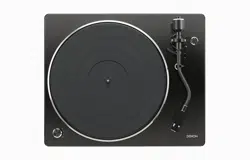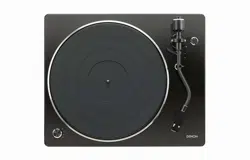
Accessories
4
Features
5
Part names and functions
6
Front panel
6
Rear panel
8
Preparations
Assembly
10
Mounting the turntable
11
Mounting the counterweight
12
Mounting the head shell with cartridge
12
Attaching the dust cover
13
Using the dust cover as a record stand
13
Adjustments
15
Adjusting the stylus pressure
15
Adjusting anti-skating
17
Connections
Connecting devices that do not have a phono input
19
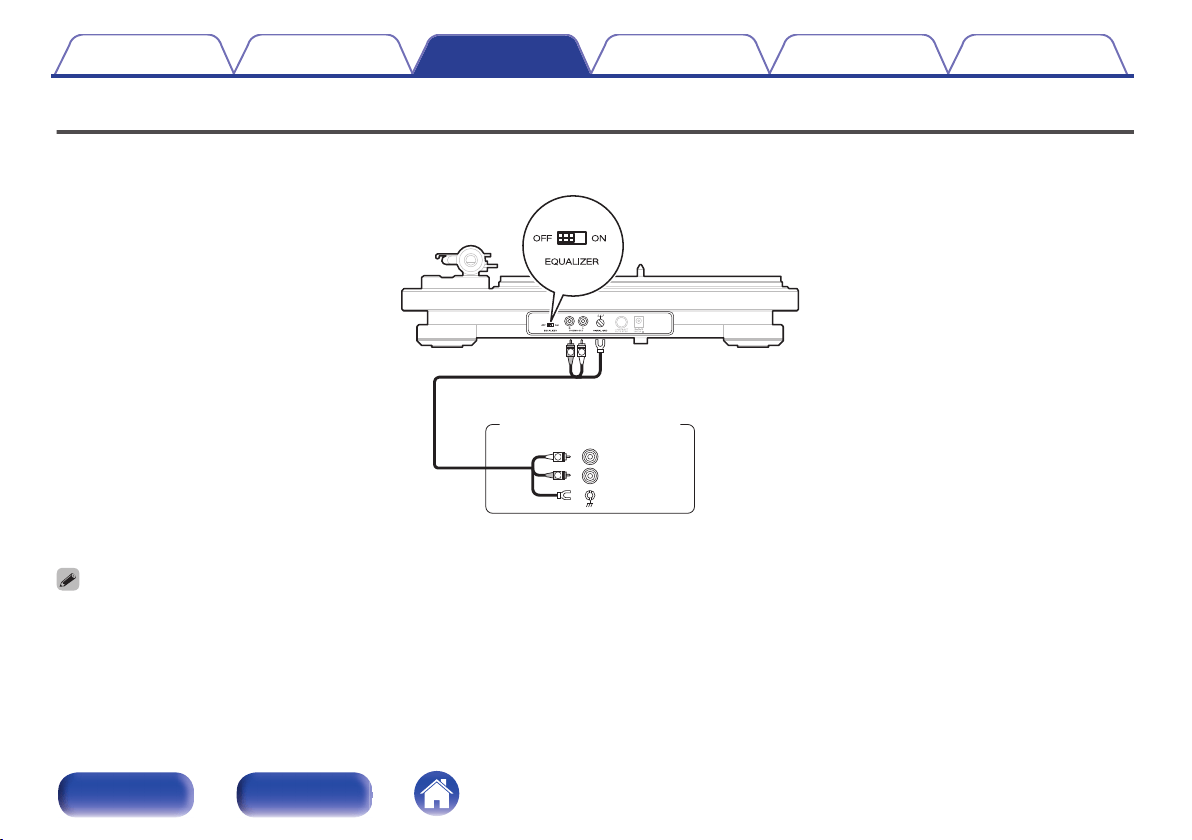
Connecting devices that have a phono input
20
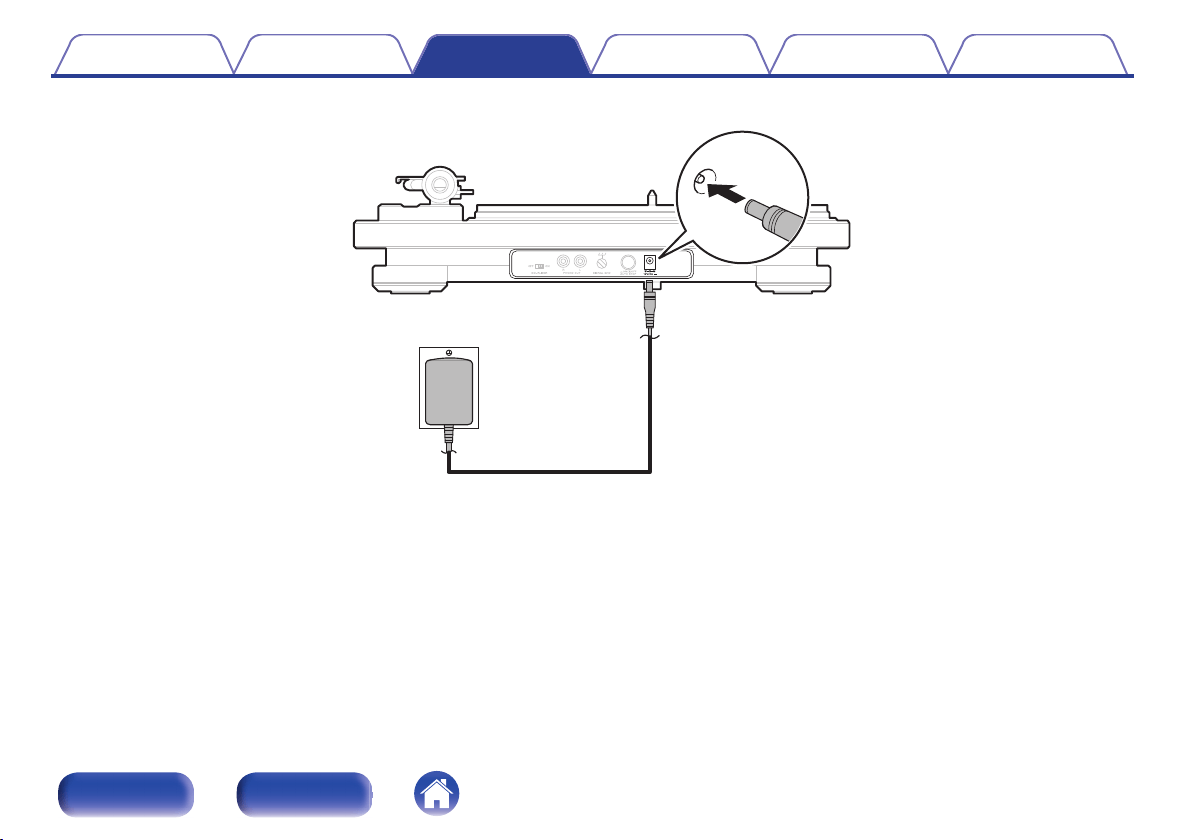
Connecting the AC adapter
21
Playback and recording
Record playback
24
Record playback
24
Stopping playback
26
Using the automatic stop function
27
Contents Preparations Connections
Playback and recording
Tips Appendix
2
Front panel Rear panel
Tips
Contents
28
Troubleshooting
29
Power does not turn on/Power is turned off
30
The turntable does not spin
30
No sound comes out
31
Audio skips, scratches or is distorted
31
Howling is produced
32
The tone arm stops moving halfway
32
Appendix
Replacing the stylus
33
Specifications
34
Contents Preparations Connections
Playback and recording
Tips Appendix
3
Front panel Rear panel
Thank you for purchasing this Denon product. To ensure proper operation, please read this owner’s manual carefully before using the product.
After reading this manual, be sure to keep it for future reference.
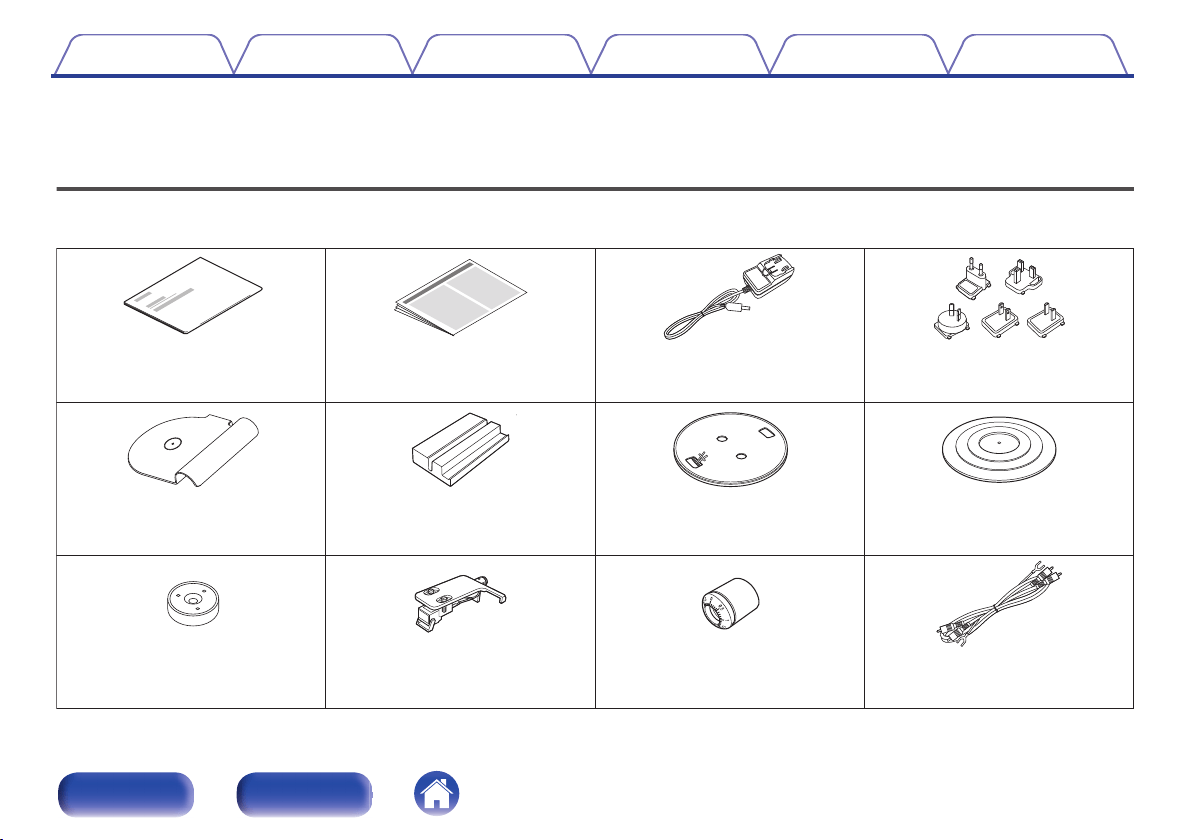
Accessories
Check that the following parts are supplied with the product.
.
P
US
H
Quick Start Guide
Safety Instructions AC adapter
AC adapter plugs
(5 pieces)
Dust cover
Dust cover stand
Turntable Turntable sheet
45 rpm adaptor
Head shell with cartridge Counterweight Audio cable
Contents Preparations Connections
Playback and recording
Tips Appendix
4
Front panel Rear panel
Features
0
Modern design
Much like the PMA-60, DRA-100 and other devices in our Denon
Design Series, all unnecessary decoration has been eliminated for an
updated minimalistic design.
0
The automatic arm lifter function automatically raises the tone
arm at the end of record playback
0
Stabilizing rotation control improves rotation precision
A sensor has been installed that measures the RPM to maintain a
precise rotation speed.
0
An MM cartridge is pre-attached to the headshell to enable
immediate use without assembly
0
Equipped with an equalizer switch to turn the built-in phono
equalizer on and off
The phono equalizer is built in to enable direct connection, even if the
amplifier or mini component system does not have phono input. Use the
switch to turn the equalizer off to enable connection to amplifiers with a
phono input.
0
Equipped with a function to switch RPM between 33 1/3, 45 and
78
Change record playback speed between 33 1/3, 45 and 78 RPM as
needed. This means that both 7 inch and 12 inch record playback in all
RPM formats is supported.
0
Equipped with a dust cover that can be used as a record stand
The included dust cover can also be set up for use as a record stand.
Use it to display the sleeves of your records.
Contents Preparations Connections
Playback and recording
Tips Appendix
5
Front panel Rear panel
.
0
3.5
3
0.5
1
qe rwytu
o
i
Q0
A
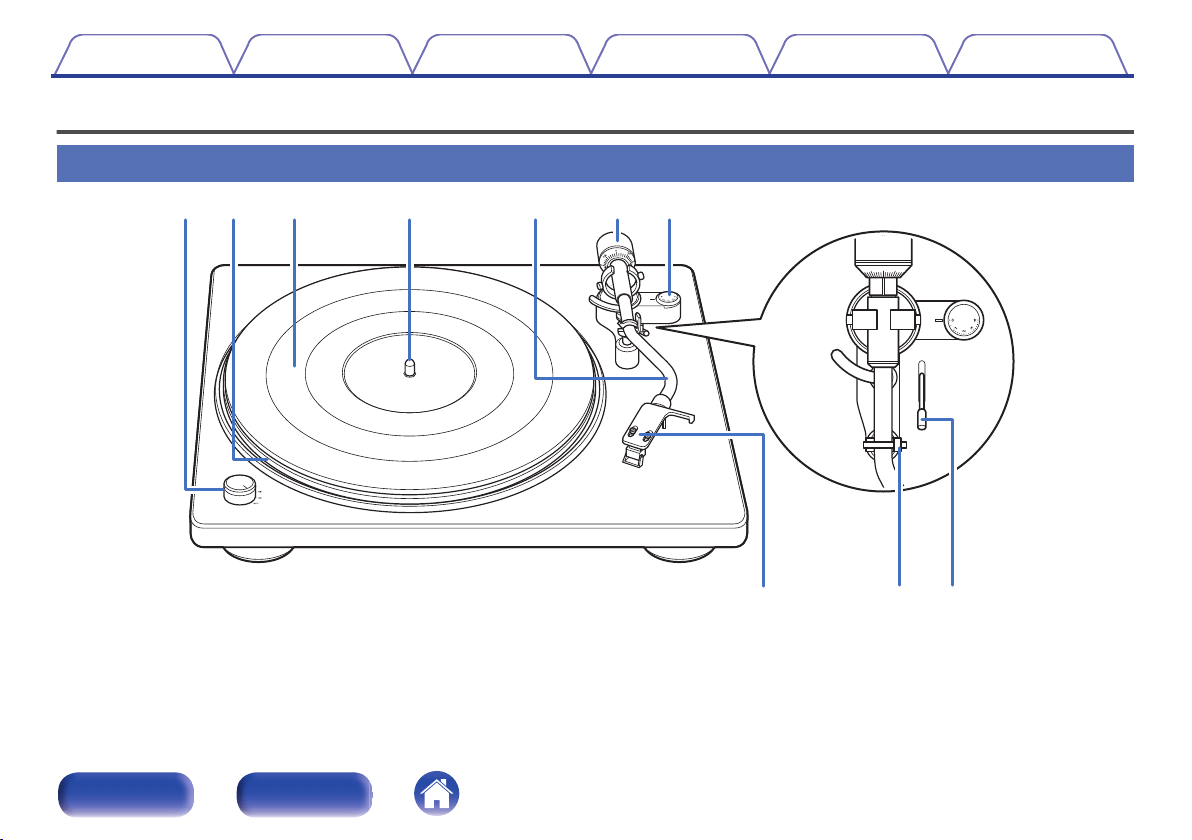
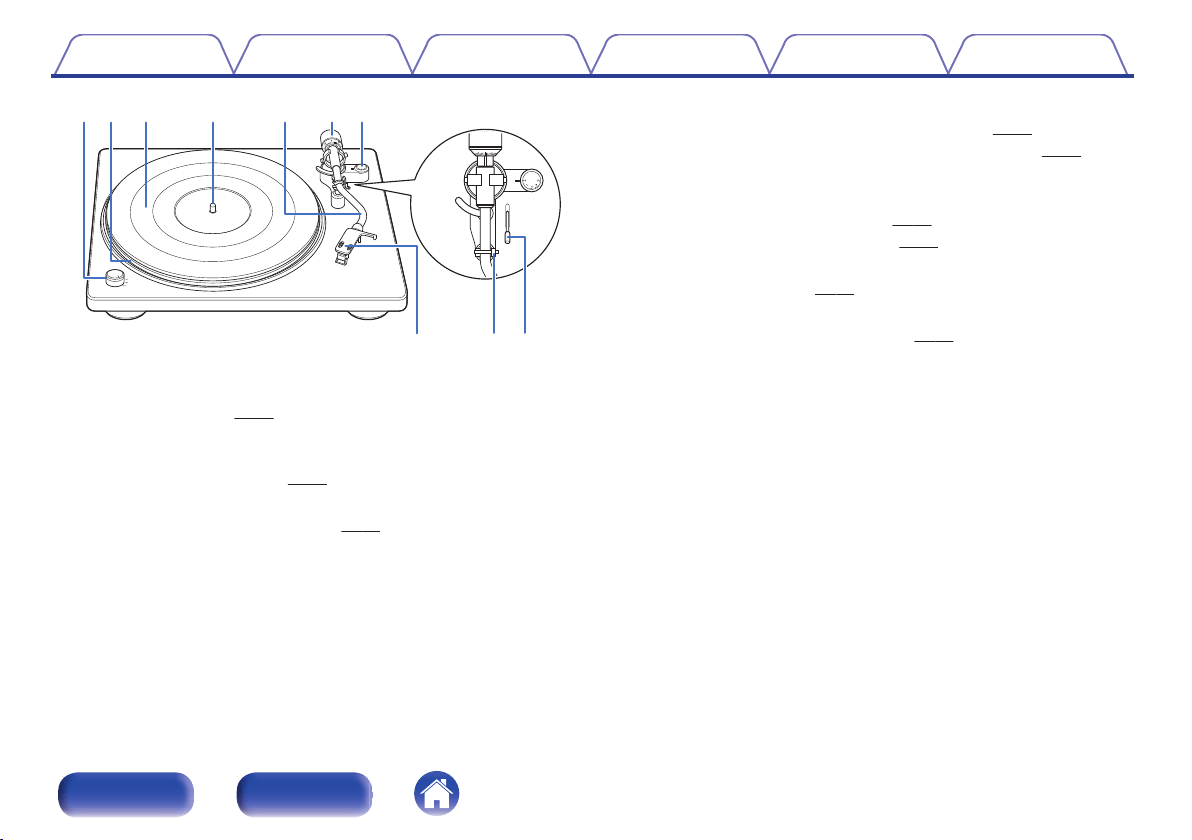
Power/rpm switch knob
Turn the power on and off and change the RPM as needed during
record playback. (v p. 24)
B
Turntable
Attached by mounting on the center spindle on the main unit. The belt
is equipped underneath. (v p. 11)
C
Turntable sheet
Mounted on top of the turntable. (v p. 11)
D
Center spindle
Place the turntable and records so that it comes out through the center.
E
Tone arm
0
The counterweight is mounted on the back. (v
p. 12)
0
The head shell with cartridge is attached to the tip. (v p. 12)
F
Counterweight
Attached to the back of the tone arm to adjust stylus pressure.
0
“Mounting the counterweight” (v p. 12)
0
“Adjusting the stylus pressure” (v p. 15)
G
Anti-skating dial
Adjusts anti-skating. (v p. 17)
H
Head shell with cartridge
Attached to the tip of the tone arm. (v
p. 12)
I
Armrest
Rest the tone arm here when it is not in use for record playback.
J
Lifter lever
Raises and lowers the tone arm. Lowering the lever slowly lowers the
tone arm to place the stylus without damaging it or the record to be
played.
Contents
Preparations Connections
Playback and recording
Tips Appendix
7
Front panel Rear panel
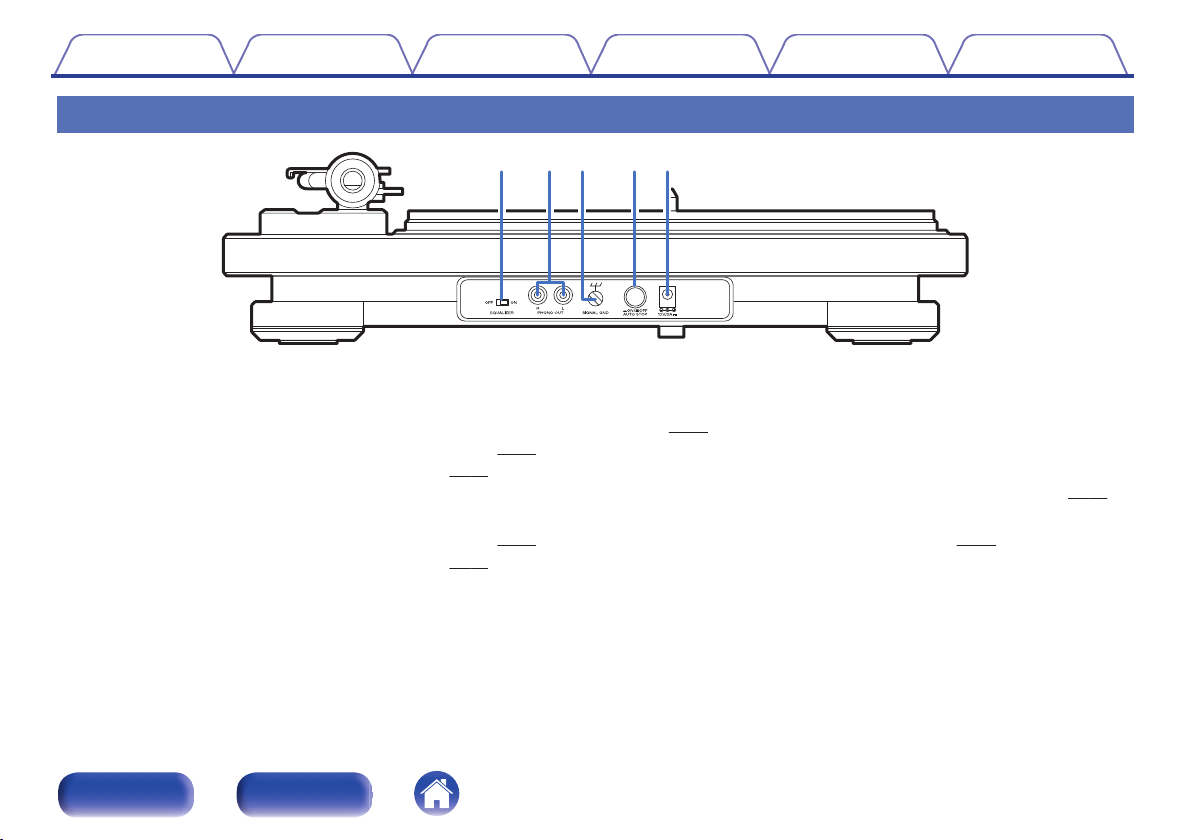
Rear panel
.
qewtr
A
EQUALIZER ON/OFF switch
This switches the built-in equalizer on and off. Switch as needed
depending on whether the connected amplifier or mini component
system are equipped with phono input or not.
0
“Connecting devices that do not have a phono input” (v
p. 19)
0
“Connecting devices that have a phono input” (v p. 20)
B
PHONO OUT connectors
For connecting devices with external audio or phono inputs.
0
“Connecting devices that do not have a phono input” (v p. 19)
0
“Connecting devices that have a phono input” (v
p. 20)
C
SIGNAL GND terminal
Use the grounding wire on the supplied audio cable, even when
connecting this device to amplifiers with grounded connections.
(v p. 20)
D
AUTO STOP ON/OFF button
Automatically raises the tone arm and stops the turntable at the end of
a record when this function is on during record playback. (v p. 27)
E
AC adapter input connector
For connecting the included AC adapter. (v p. 21)
Contents Preparations Connections
Playback and recording
Tips Appendix
8
Front panel Rear panel
o
Contents
Assembly
Mounting the turntable 11
Mounting the counterweight 12
Mounting the head shell with cartridge 12
Attaching the dust cover 13
Using the dust cover as a record stand 13
Adjustments
Adjusting the stylus pressure 15
Adjusting anti-skating 17
Contents Preparations Connections
Playback and recording
Tips Appendix
9
Front panel Rear panel
Assembly
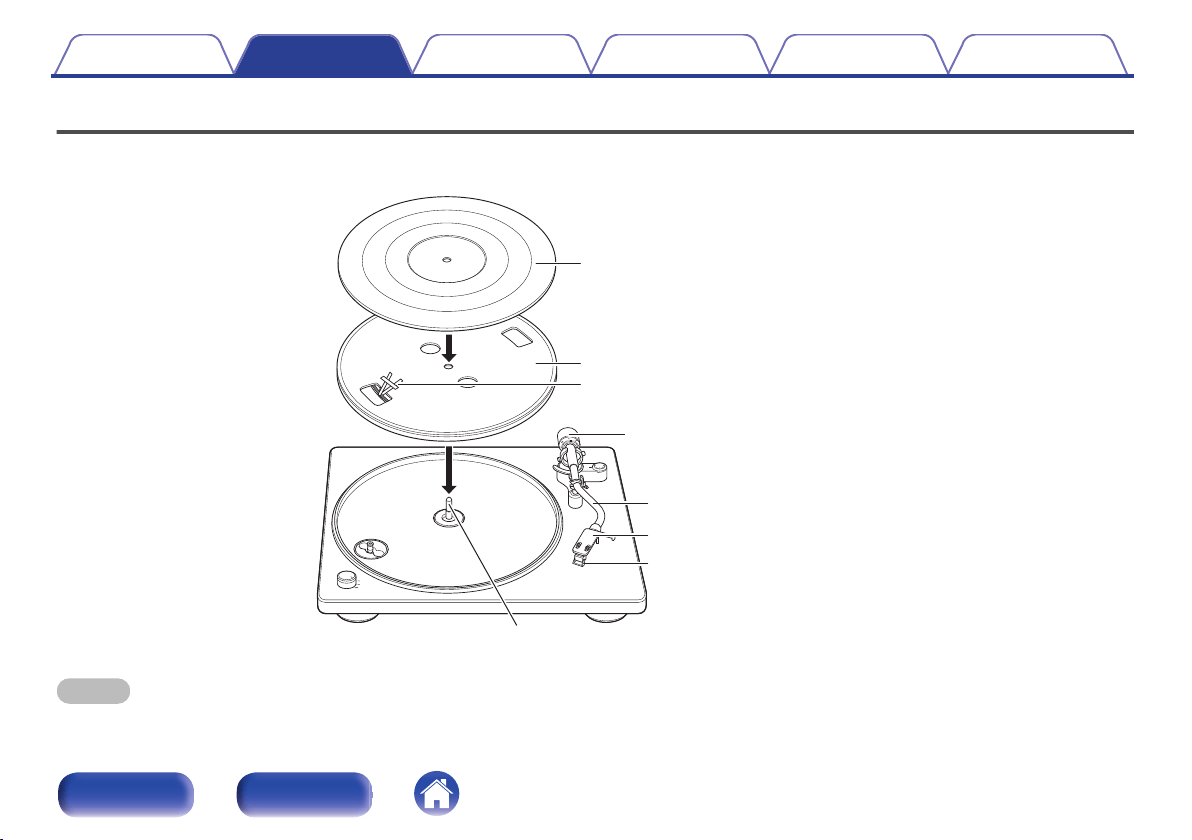
Mount these included parts on the main unit before use.
Make sure to perform setup on a stable, even surface to prevent the influence of vibration or slanted angles on record playback.
.
Turntable sheet
Turntable
Ribbon tape
Center spindle
Stylus cover
Head shell with cartridge
Tone arm
Counterweight
NOTE
0
Make sure the AC adapter is not connected from this unit to a wall socket during assembly.
Contents Preparations Connections
Playback and recording
Tips Appendix
10
Front panel Rear panel
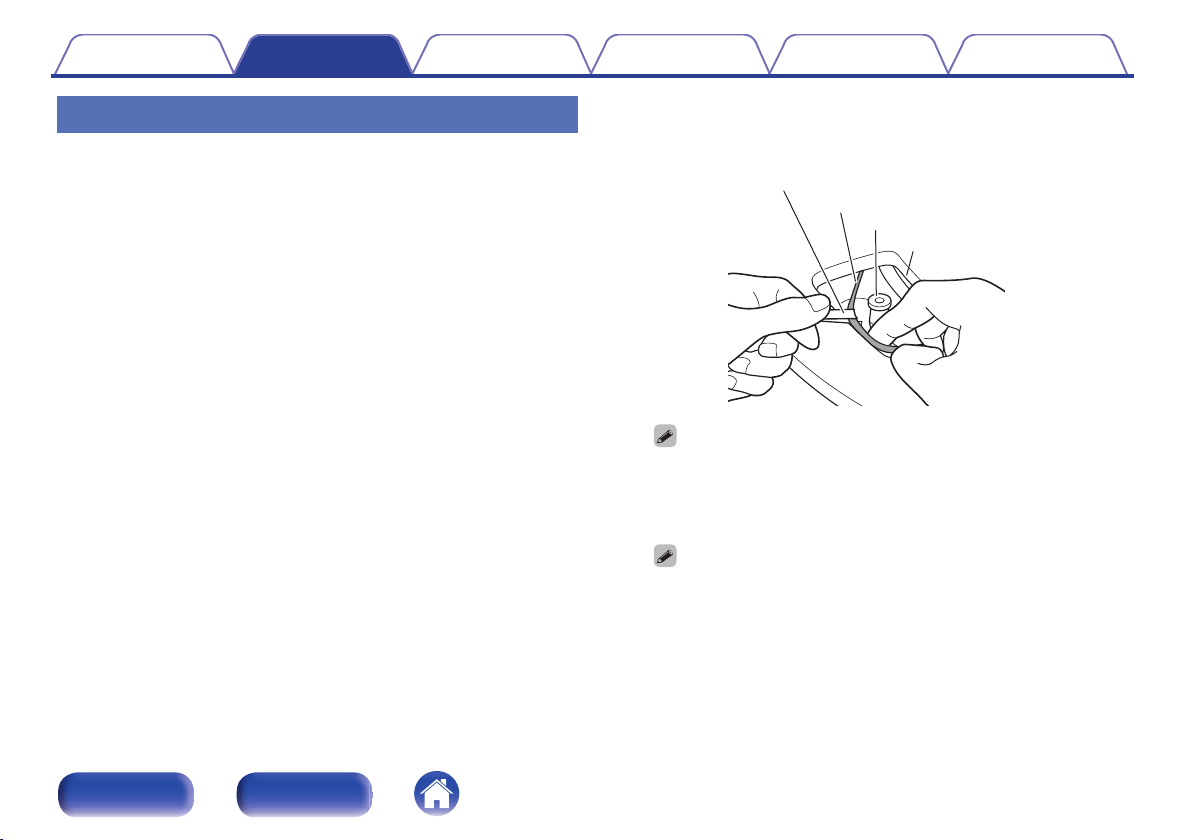
Mounting the turntable
1
Mount the hole in the center of the turntable on the
center spindle.
2
Turn the turntable until the roller of the main unit is
visible from the square hole on the side with the ribbon
tape.
3
Pull out the ribbon tape, and hang the belt on the roller.
0
Remove the ribbon tape after hanging the belt.
.
Ribbon tape
Belt
Roller
Square hole
0
Take care not to twist the belt when hanging it.
0
Store the ribbon tape after use, as it is required when replacing the belt.
4
Mount the turntable sheet on the turntable.
0
Mount the sheet with the side featuring the DENON logo facing down.
Contents Preparations Connections
Playback and recording
Tips Appendix
11
Front panel Rear panel
Mounting the counterweight
1
Insert the counterweight into the shaft on the back of
the tone arm, and turn it in the direction of the arrow
while gently pushing it.
.
0
3.5
3
0.5
1
0
3.5
3
0.5
1
Stylus pressure adjustment ring
0
Mount the counterweight so that its stylus pressure adjustment ring is facing
the front.
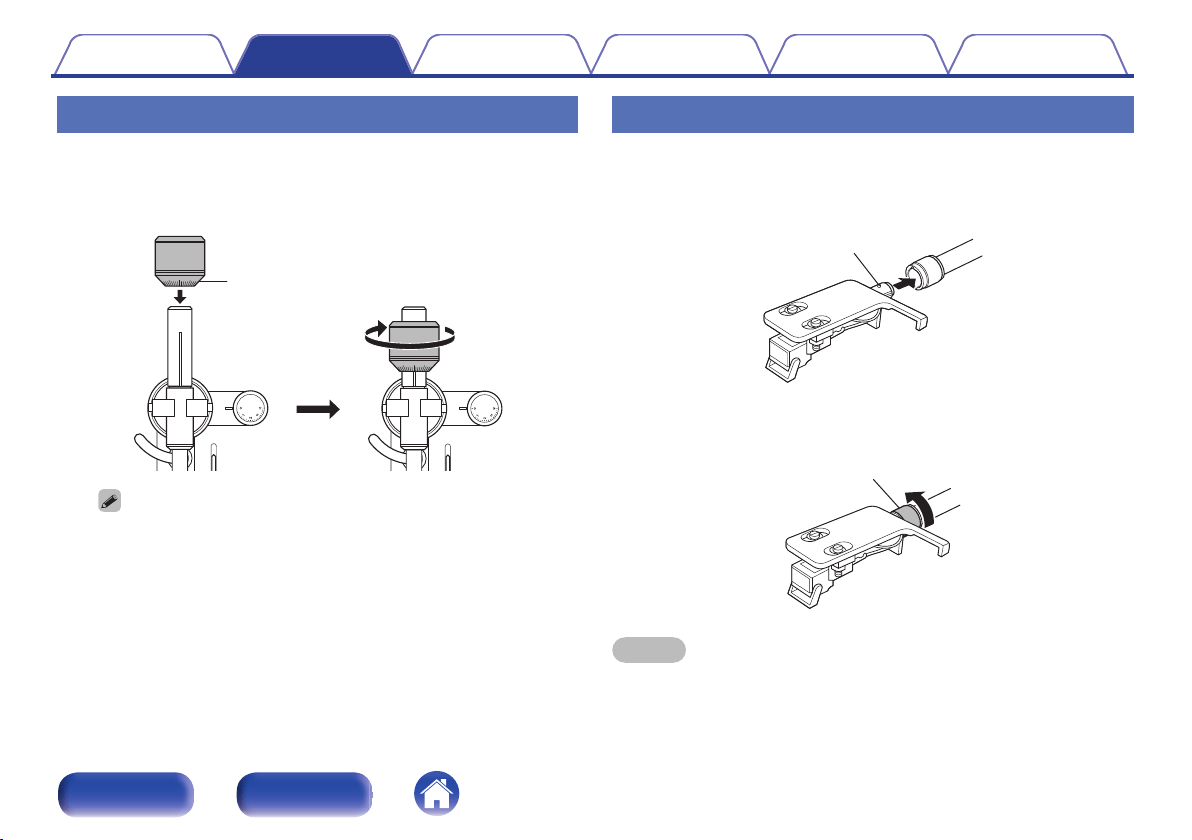
Mounting the head shell with cartridge
1
Insert the head shell into the tip of the tone arm.
0
Insert the head shell with its guide pin facing up and aligned with
the hole on the top of the tone arm.
.
Guide pin
2
Turn the lock nut in the direction of the arrow to secure
the head shell.
.
Lock nut
NOTE
0
Perform this operation with the stylus cover of the cartridge lowered to protect the
stylus tip.
Contents Preparations Connections
Playback and recording
Tips Appendix
12
Front panel Rear panel
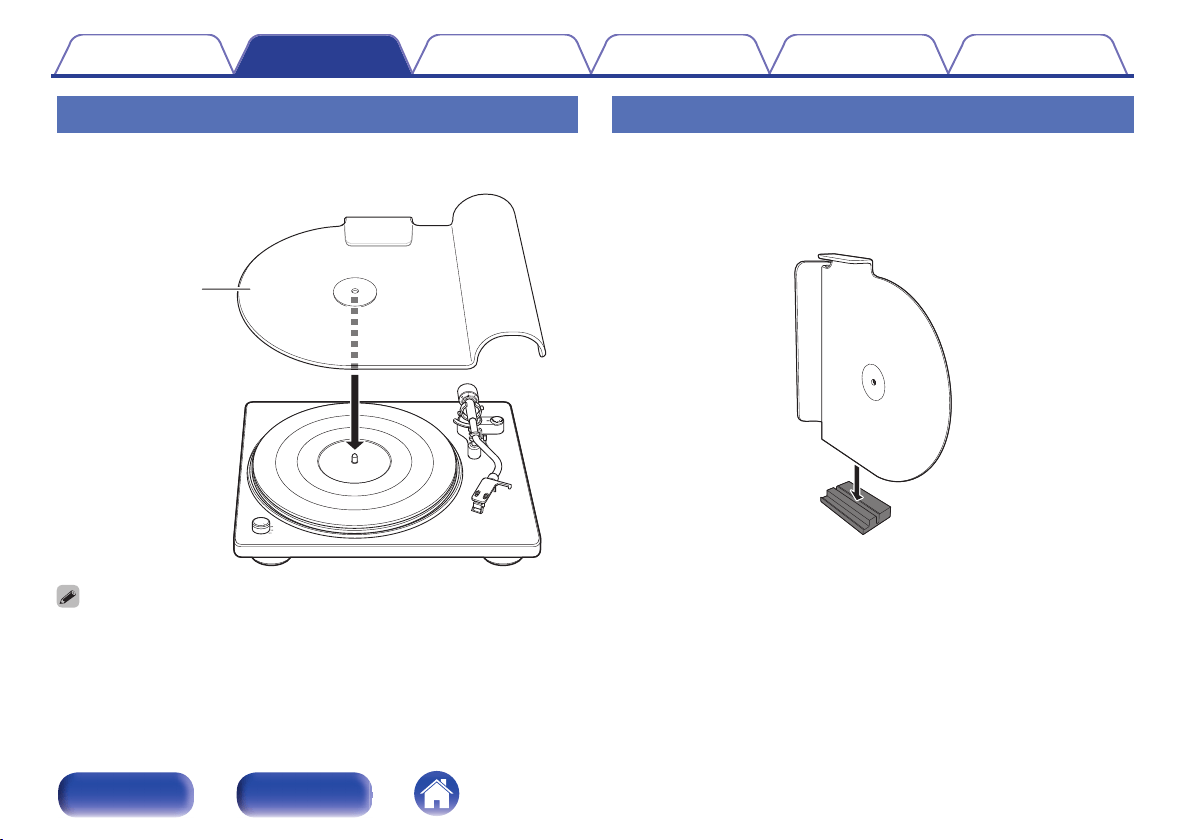
Attaching the dust cover
1
Mount the hole on the dust cover on the center spindle.
.
Dust cover
0
Remove the dust cover before record playback.
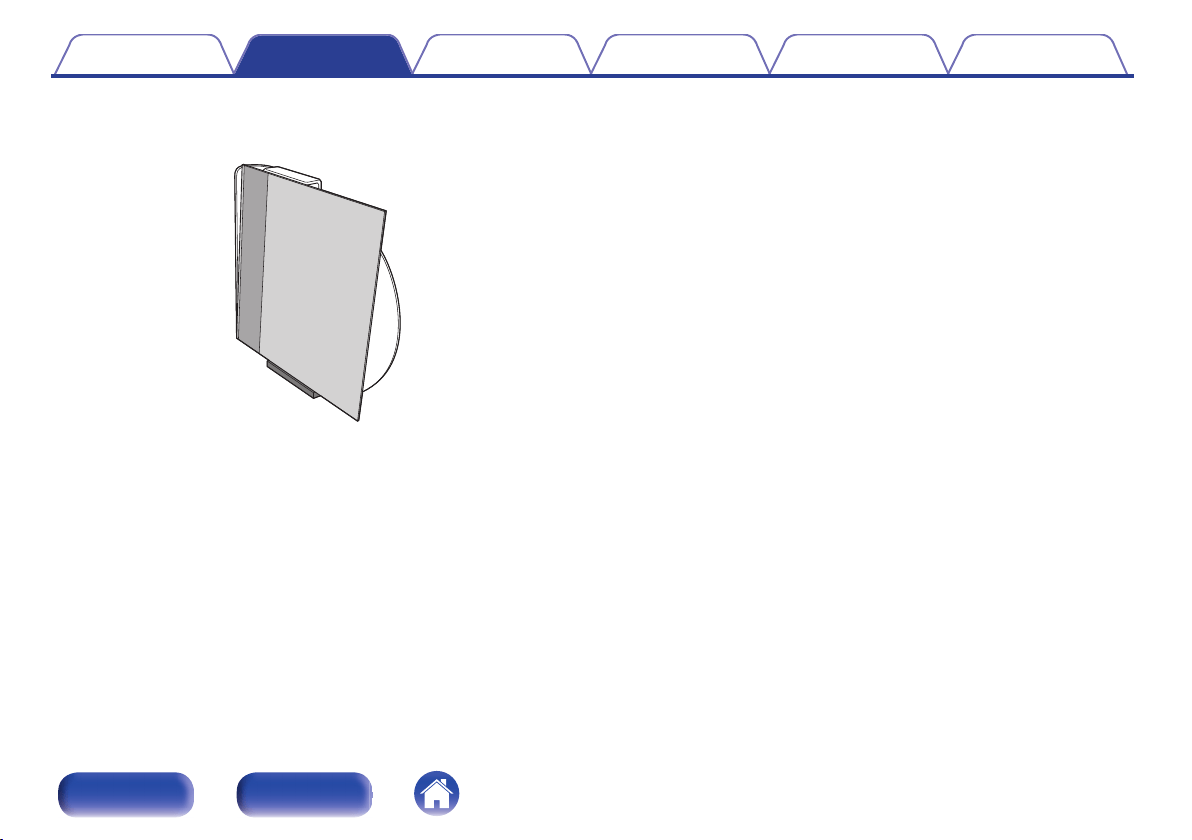
Using the dust cover as a record stand
Attach the dust cover to the included dust cover stand to use it as a record
stand. Use it in this way when it is not attached to the main unit.
1
Face the dust cover as shown in the picture below to
insert it into the groove in the dust cover stand.
.
Contents
Preparations Connections
Playback and recording
Tips Appendix
13
Front panel Rear panel
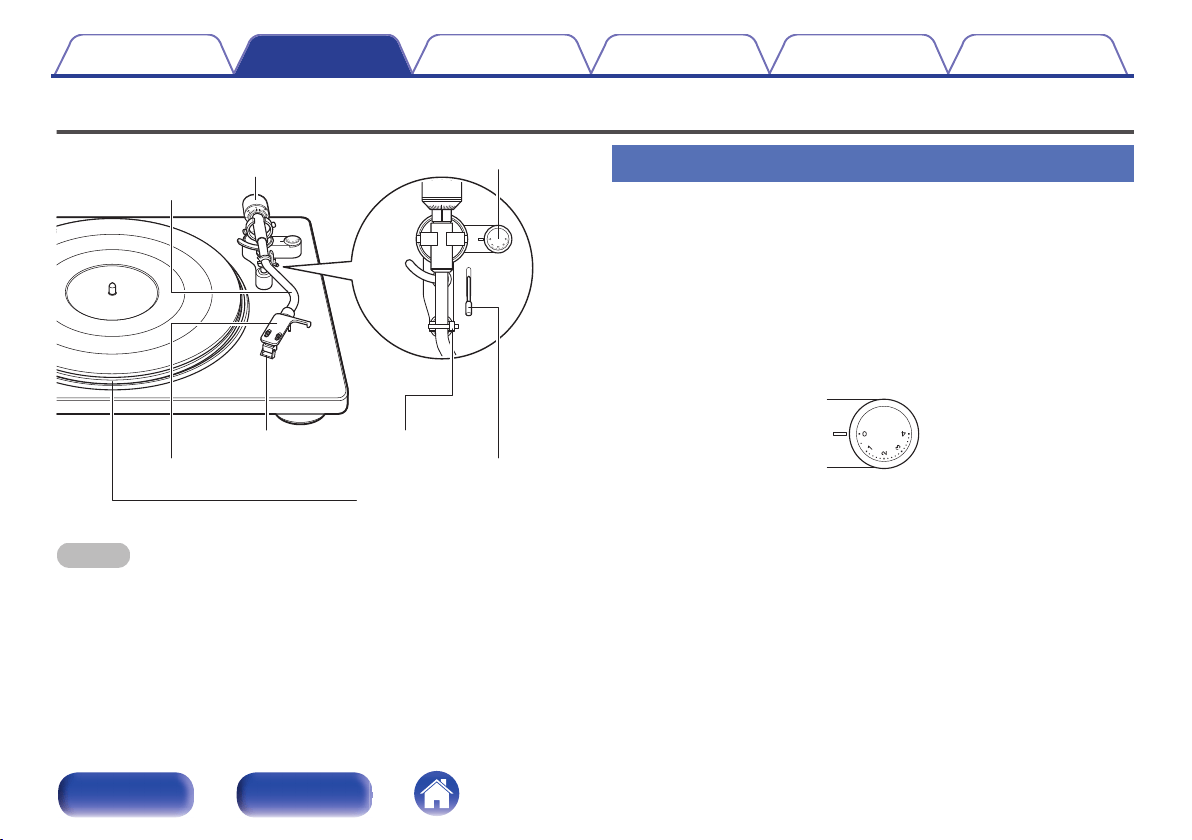
Adjustments
.
0
3.5
3
0.5
1
Counterweight
Tone arm
Anti-skating dial
Armrest
Lifter lever
Turntable
Stylus cover
Head shell
NOTE
0
Make sure the AC adapter is not connected from this unit to a wall socket when
performing adjustments.
Adjusting the stylus pressure
To enable the record stylus to follow the grooves of the record and pick up
sound (vibrations), it is necessary to apply a constant pressure (stylus
pressure) to the record from the stylus tip. A suitable stylus pressure value
is specified for each cartridge. If the stylus pressure is higher or lower than
the specified value, not only will the record playback sound be distorted
and the stylus jump, but the record stylus may wear out faster and the
record may become damaged. Therefore, make sure to adjust the stylus
pressure to the suitable value.
1
Set the anti-skating dial to “0”.
.
2
Lower the lifter lever.
Contents Preparations Connections
Playback and recording
Tips Appendix
15
Front panel Rear panel
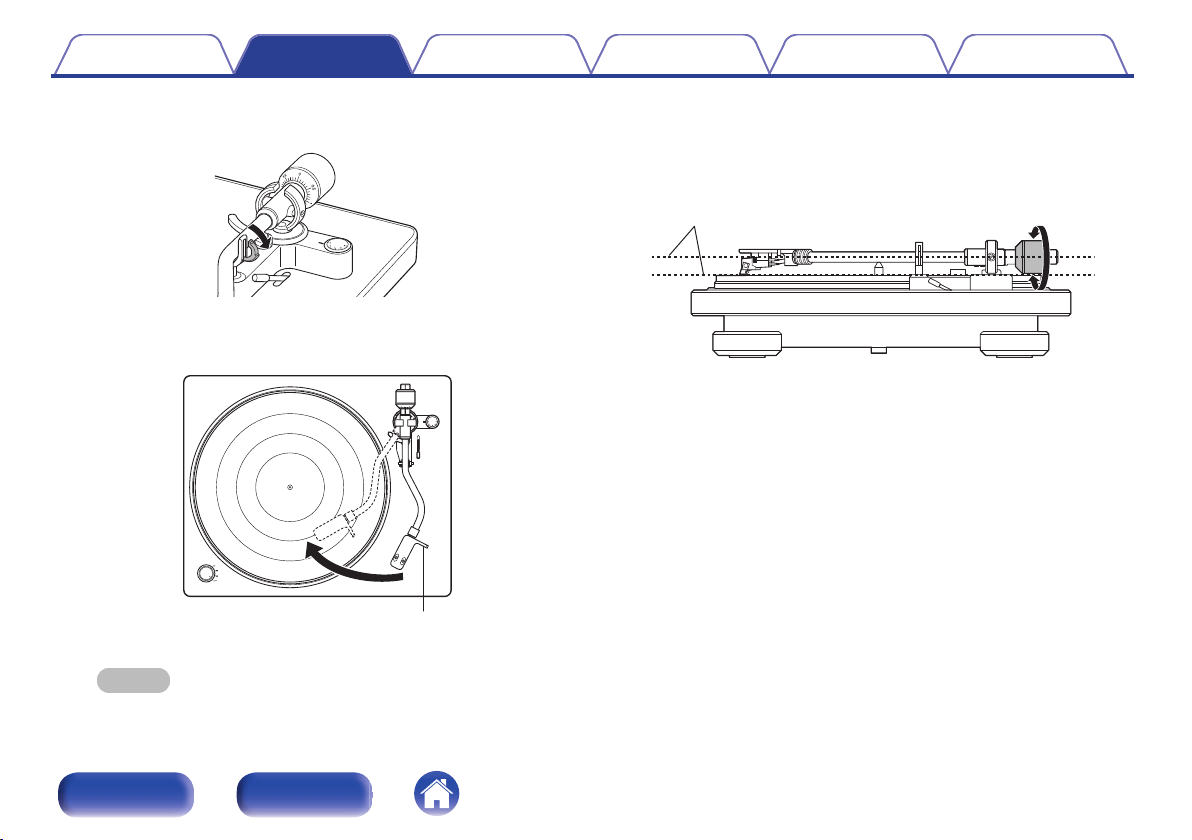
3
Release the armrest lock.
.
4
Holding the finger lift of the headshell, move the tone
arm over the turntable.
.
2.5
1
.
3
1
3
.
5
0
.
5
0
Finger lift
NOTE
0
Perform this operation with the stylus cover of the cartridge lowered to
protect the stylus tip.
5
Turn twist the counterweight so that the tone arm is
floating parallel to the turntable.
0
Perform adjustment by turning the counterweight gradually while
periodically removing your hand to check the position.
.
Keep it parallel
6
Return the tone arm to the armrest.
Contents Preparations Connections
Playback and recording
Tips Appendix
16
Front panel Rear panel
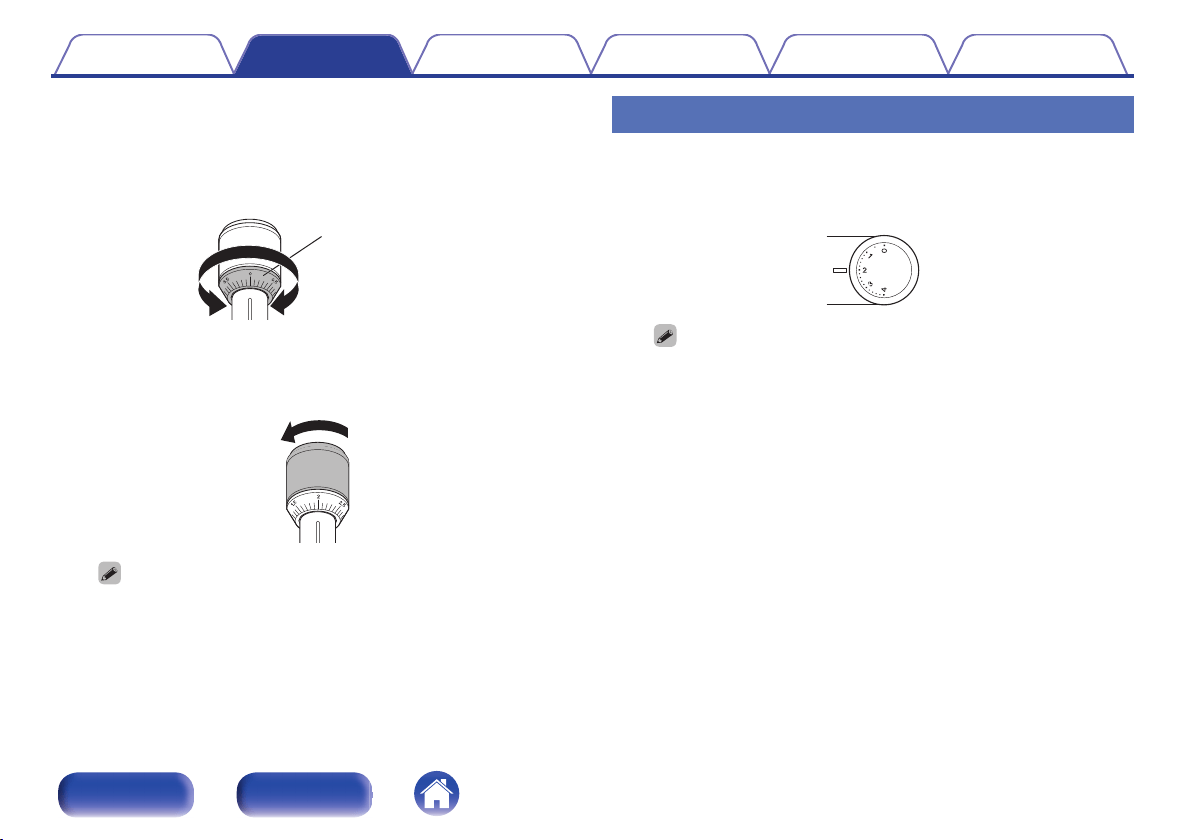
7
Holding the counterweight with a finger so that it does
not move, turn the stylus pressure adjustment ring so
that its “0” mark is lined up with the line on the tone
arm.
.
Stylus pressure
adjustment ring
8
Turn the counterweight in the direction of the arrow so
that the “2” mark of the stylus pressure adjustment
ring is lined up with the line on the tone arm.
.
0
The appropriate stylus pressure for the cartridge included with this unit is
2.0 g (19.6 mN).
Adjusting anti-skating
Anti-skating adjustment is performed to counter the force which pulls the
stylus tip inside due to the record rotation.
1
Turn the anti-skating dial so that it is lined up with “2”.
.
0
Make sure that the anti-skating value is the same as the stylus pressure
value.
Contents Preparations Connections
Playback and recording
Tips Appendix
17
Front panel Rear panel

o
Contents
Connecting devices that do not have a phono input 19
Connecting devices that have a phono input 20
Connecting the AC adapter 21
NOTE
0
Do not plug in the AC adapter until all connections have been completed.
0
Do not bundle AC adapter together with connection cables. Doing so can result in
humming or noise.
Contents
Preparations Connections
Playback and recording
Tips Appendix
18
Front panel Rear panel
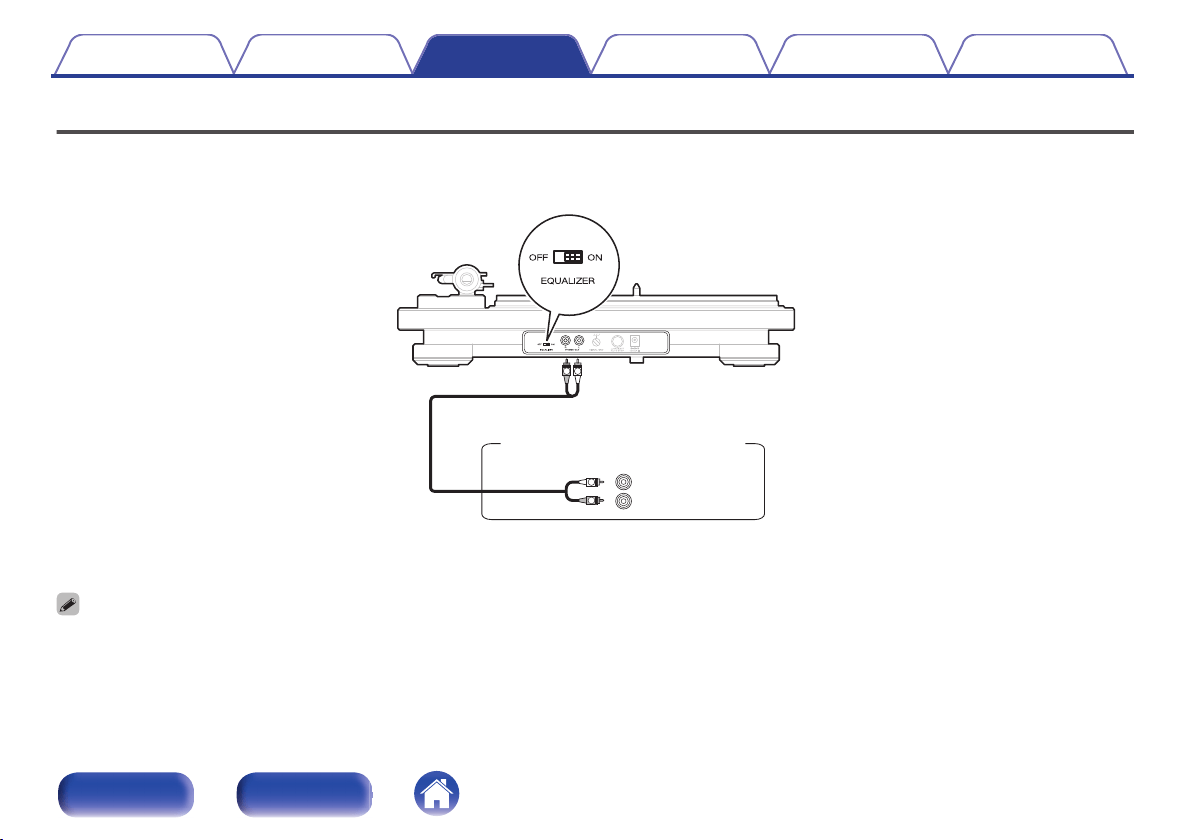
Connecting devices that do not have a phono input
This unit has a built-in phono equalizer that enables record playback when connected to devices with external audio input without a built-in phono
equalizer or with mini component system. Use the EQUALIZER ON/OFF switch to turn the phono equalizer on this unit “ON” when connected to a device
without a built-in phono equalizer.
.
R
L
AUXIN
R
L
R
L
Audio cable
(supplied)
Amplifier/mini stereo system
without a PHONO input terminal
0
It is recommended that the earth wire of the included audio cable is kept out of the way by securing it with a tie such as the twist tie of the audio cable.
0
If the EQUALIZER ON/OFF switch is not set correctly, audio will be extremely low or distorted.
Contents Preparations Connections
Playback and recording
Tips Appendix
19
Front panel Rear panel
Connecting devices that have a phono input
When connected to a device with a built-in phono equalizer, use that device’s phono equalizer during record playback. Use the EQUALIZER ON/OFF
switch to turn the phono equalizer on this unit “OFF” when connected to a device with a built-in phono equalizer.
.
R
SIGNAL
GND
L
PHONOIN
R
L
R
L
Audio cable
(supplied)
Amplifiers with a
phono input
0
If a device connected to this unit has an earth terminal, connect the earth wire of the audio cable (supplied) to the earth terminal of this unit (SIGNAL GND). This may reduce
noise during playback.
0
If the EQUALIZER ON/OFF switch is not set correctly, audio will be extremely low or distorted.
Contents
Preparations Connections
Playback and recording
Tips Appendix
20
Front panel Rear panel
Connecting the AC adapter
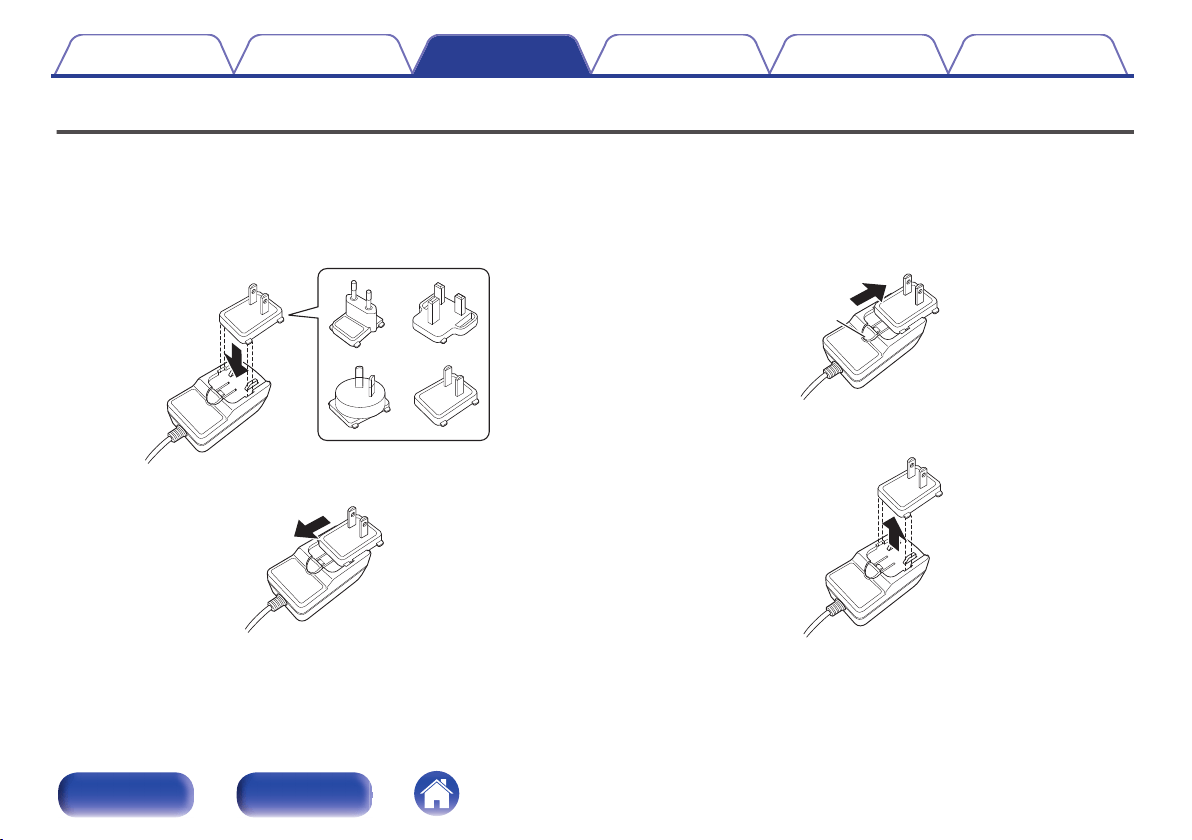
Wait until all connections have been completed before connecting the AC adapter.
Attach the plug needed for your wall outlet as shown in the figure below.
【Attaching the AC adapter plug】
1. Insert the nubs on the bottom of the AC adapter plug into the grooves
on the AC adapter as shown in the picture below.
.
PU
SH
2. Push in the direction of the arrow until it locks in with an audible click.
.
P
US
H
【Removing the AC adapter plug】
1. Slide the AC adapter plug out in the direction of the arrow as far as it
can go while holding the A button.
.
PUSH
A
2. Once the AC adapter plug has been slid out as far as possible, lift it up
in the direction of the arrow to remove.
.
PUSH
Contents
Preparations Connections
Playback and recording
Tips Appendix
21
Front panel Rear panel

Record playback
.
2
1.5
1
2.5
3
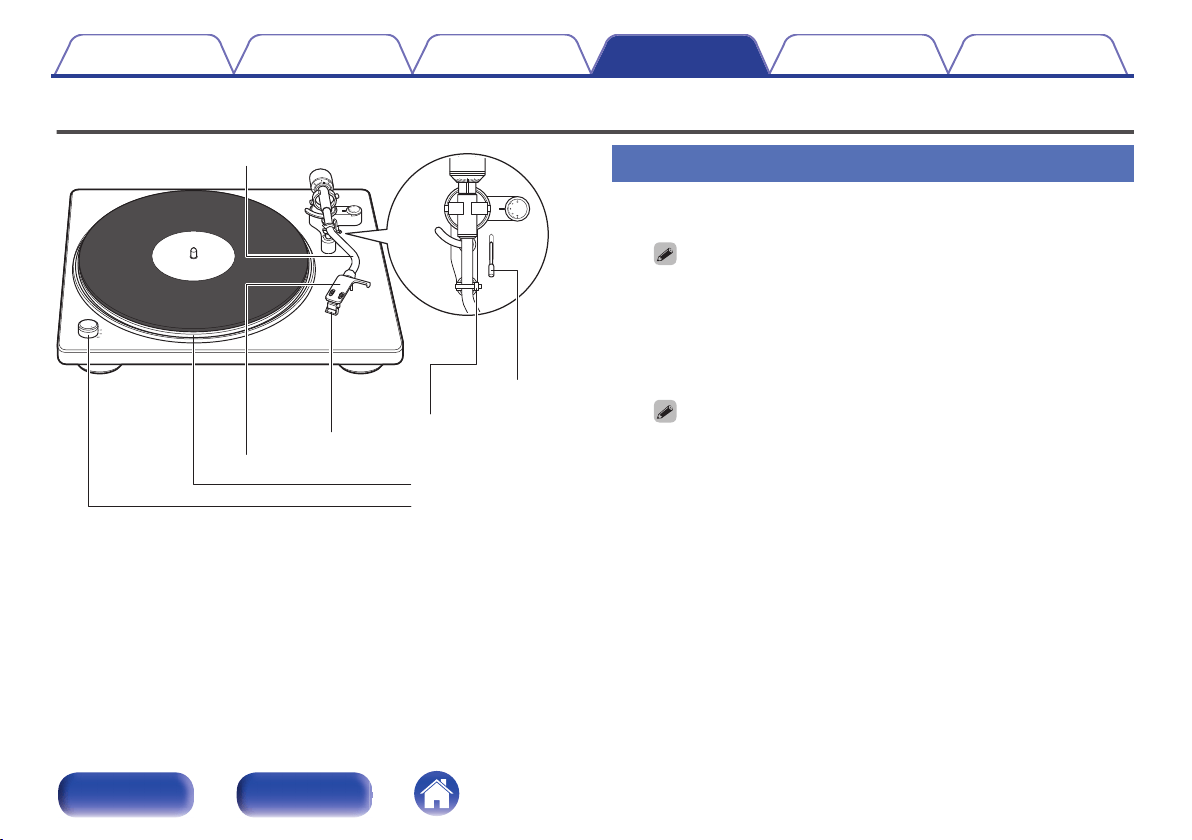
Tone arm
Power/rpm switch knob
Turntable
Head shell with cartridge
Armrest
Lifter lever
Stylus cover
Record playback
1
Place a record on the turntable.
0
For EP (“doughnut”) records, insert the included 45 rpm adapter onto the
center spindle.
2
Turn the power/rpm switch knob to match the turntable
rpm with the rpm of the record.
The turntable will start turning.
0
You can select 33 1/3, 45, 78 rpm as the turntable speed per minute.
0
The record rpm is normally indicated on the jacket or label of the record.
Contents Preparations Connections
Playback and recording
Tips Appendix
24
Front panel Rear panel
3
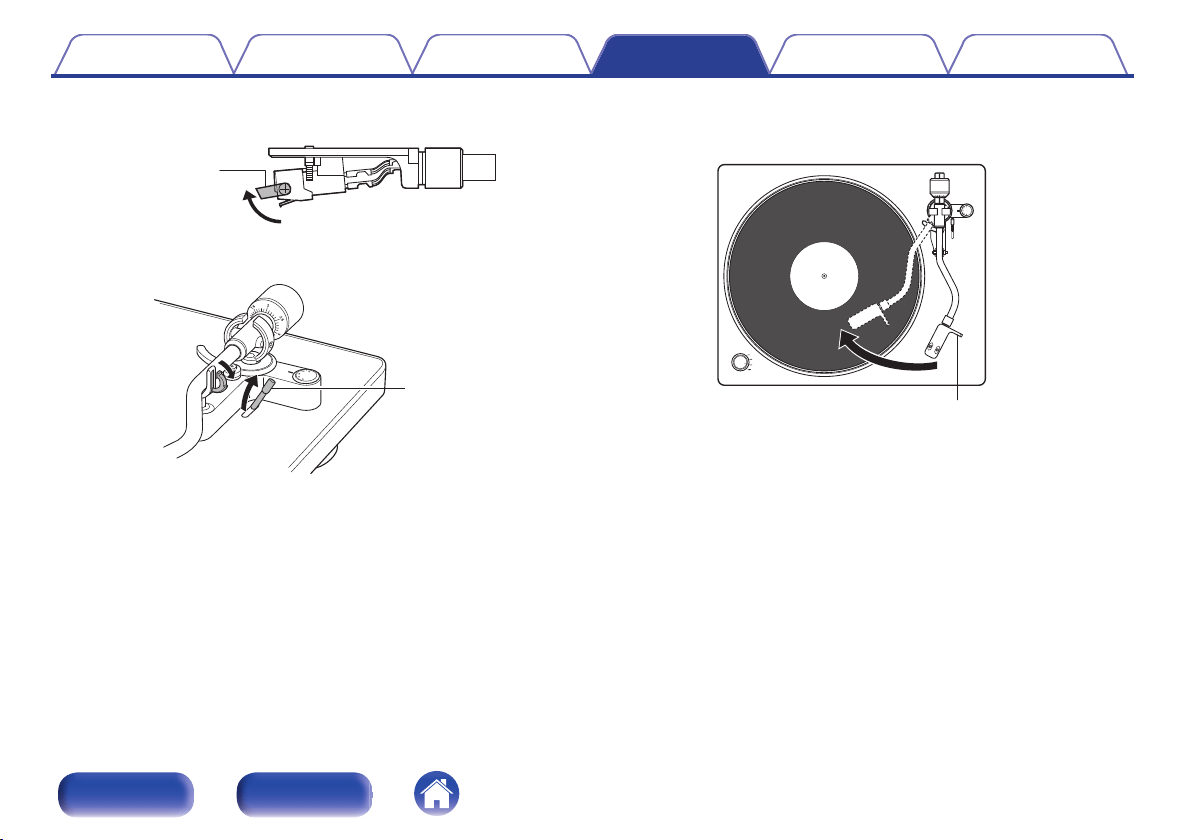
Raise the stylus cover of the cartridge.
.
Stylus cover
4
Release the arm rest lock and raise the lifter lever.
.
Lifter lever
5
Grip the finger lift, and move the stylus tip directly
above the start position of the track to play.
.
2
.
5
1
.
5
2
.
5
1
2
Finger lift
Contents
Preparations Connections
Playback and recording
Tips Appendix
25
Front panel Rear panel
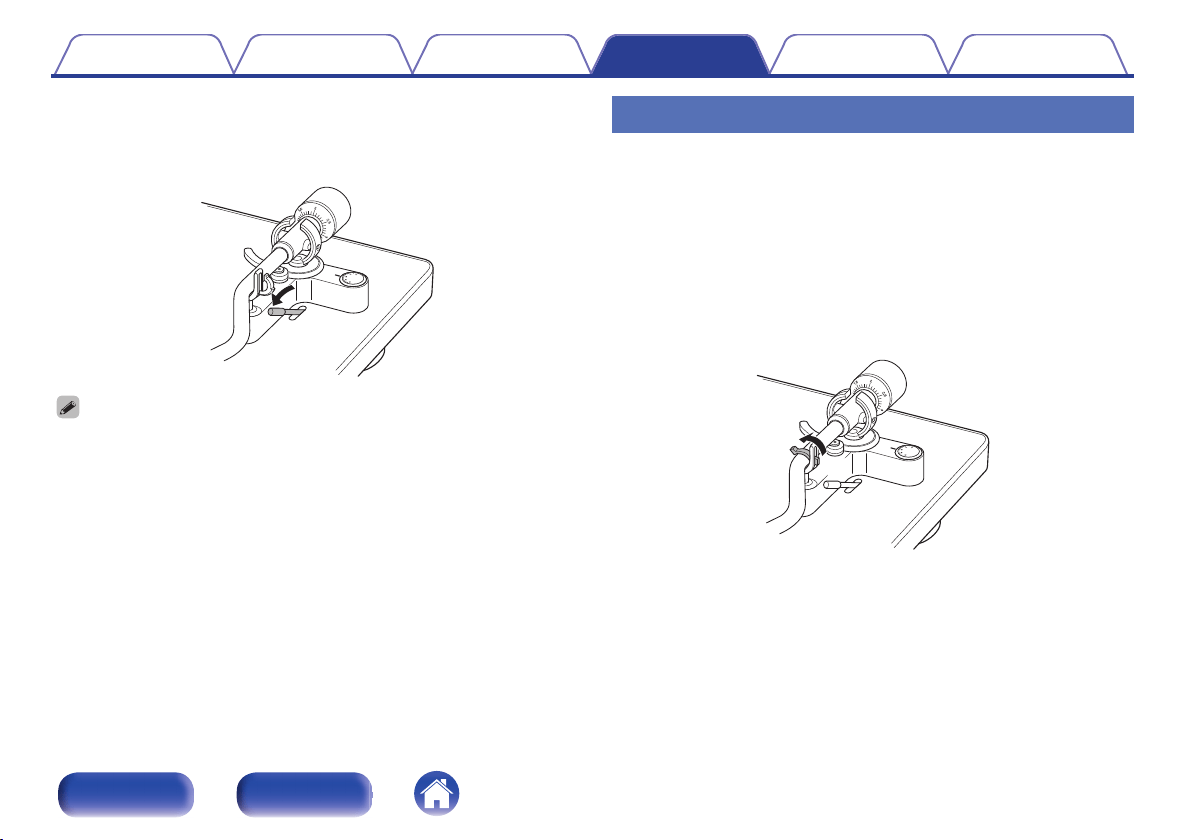
6
Lower the lifter lever.
The tone arm slowly lowers, and playback starts when the stylus tip
reaches the record.
.
0
Be careful not to scratch records.
0
Observe the following during playback.
0
Do not touch the tone arm or turntable.
0
Do not disconnect the power.
0
Make sure the device is not subjected to vibration or impact.
0
Do not change the record until the turntable has completely stopped.
0
Do not apply pressure with your hand to stop the turntable while it is turning. Doing
so creates internal heat which can lead to equipment failure or fire.
Stopping playback
1
Raise the lifter lever.
Raise the tone arm to remove the stylus from the record.
2
Holding the finger lift of the headshell, return the tone
arm to the armrest.
3
Lower the lifter lever.
4
Lock the tone arm into the armrest.
.
Contents
Preparations Connections
Playback and recording
Tips Appendix
26
Front panel Rear panel
5
Turn the power/rpm switch knob to OFF.
The turntable stops.
NOTE
0
Flip down the stylus cover to protect the stylus in the cartridge when this unit is not
in use.
Using the automatic stop function
When automatic stop is on, the tone arm automatically raises after
playback and then the turntable stops. This keeps the turntable from
continuing to turn and cause stylus wear should you accidentally fall
asleep while listening to a record, etc.
0
The default setting is on.
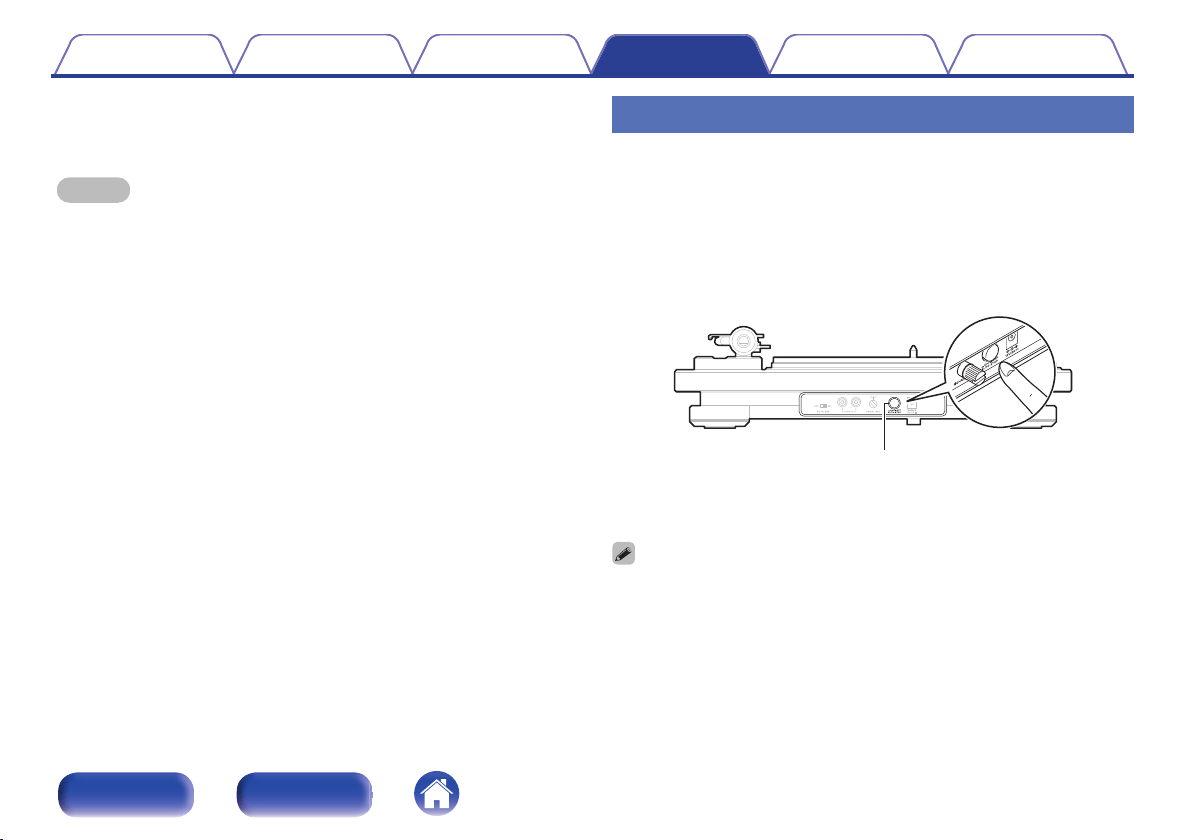
1
Press AUTO STOP ON/OFF on the rear panel to turn the
automatic stop function on.
.
AUTO STOP ON/OFF
0
Make sure that AUTO STOP ON/OFF is pressed all the way in to make
ensure that automatic stop is on.
0
The power will turn off approximately 20 minutes after the turntable stops. Use the
power/rpm switch knob to restart playback.
Contents Preparations Connections
Playback and recording
Tips Appendix
27
Front panel Rear panel
Contents
o
Troubleshooting
Power does not turn on/Power is turned off 30
The turntable does not spin 30
No sound comes out 31
Audio skips, scratches or is distorted 31
Howling is produced 32
The tone arm stops moving halfway 32
Contents Preparations Connections
Playback and recording
Tips Appendix
28
Front panel Rear panel
Troubleshooting
If a problem should arise, first check the following:
1. Are the connections correct?
2. Is the set being operated as described in the owner’s manual?
3. Are the other devices operating properly?
If this unit does not operate properly, check the corresponding symptoms in this section.
If the symptoms do not match any of those described here, consult your dealer as it could be due to a fault in this unit. In this case, disconnect the power
immediately and contact the store where you purchased this unit.
Contents Preparations Connections
Playback and recording
Tips Appendix
29
Front panel Rear panel
Power does not turn on/Power is turned off
Power is not turned on.
0
Check whether the power plug is correctly inserted into the power outlet. (v
p. 22)
0
The power is off. Turn the power/rpm switch knob to the appropriate setting for the record you want to play. (v p. 24)
Power automatically turns off.
0
Automatic stop is on. Press the AUTO STOP ON/OFF button on the rear panel to turn the automatic stop function off. (v p. 27)
The turntable does not spin
The turntable does not spin.
0
Check whether the power plug is correctly inserted into the power outlet. (v
p. 22)
0
Make sure that the belt is hooked on both the turntable and roller correctly. Follow the following steps if the belt has come off.
1. Take the turntable off the main unit and turn it over.
2. Hook the belt around the outside edge of the circular part on the bottom of the turntable.
3. Turn the turntable right-side up and pass the ribbon from the square hole between the turntable and the belt.
4.
Set up the turntable as shown in “Mounting the turntable” (v p. 11).
Contents Preparations Connections
Playback and recording
Tips Appendix
30
Front panel Rear panel
No sound comes out
No sound is produced. Or sound is distorted.
0
Check the connections for all devices. (v
p. 18)
0
Insert connection cables all the way in.
0
Check that input connectors and output connectors are not reversely connected.
0
Check cables for damage.
0
Check the amplifier’s functions and controls and adjust as necessary.
0
Make sure the stylus is correctly attached. (v
p. 33)
0
If connecting an amplifier, mini component system, etc. with no built-in phono equalizer to this unit, set the EQUALIZER ON/OFF switch of this unit to
“ON”. (v p. 19)
Audio skips, scratches or is distorted
Audio skips, scratches or is distorted.
0
The correct stylus pressure is not applied. Adjust to the correct pressure. (v
p. 15)
0
Make sure there are no scratches on the record.
0
Make sure the record is not warped.
0
Make sure there is no dirt or dust on the stylus or the record.
0
Make sure the stylus has not been worn down. Replace the stylus if necessary. (v
p. 33)
Contents
Preparations Connections
Playback and recording
Tips Appendix
31
Front panel Rear panel
Howling is produced
Howling is produced.
0
This unit and speaker are too close together. Move the speaker away from this unit.
0
This unit is in an unstable position. Install in a stable, level location.
0
Playback volume is too loud. Adjust the volume of the connected amplifier to the appropriate level.
The tone arm stops moving halfway
The tone arm not tracking during playback.
0
Make sure there are no scratches on the record.
0
Make sure nothing is obstructing the tone arm.
Contents Preparations Connections
Playback and recording
Tips Appendix
32
Front panel Rear panel
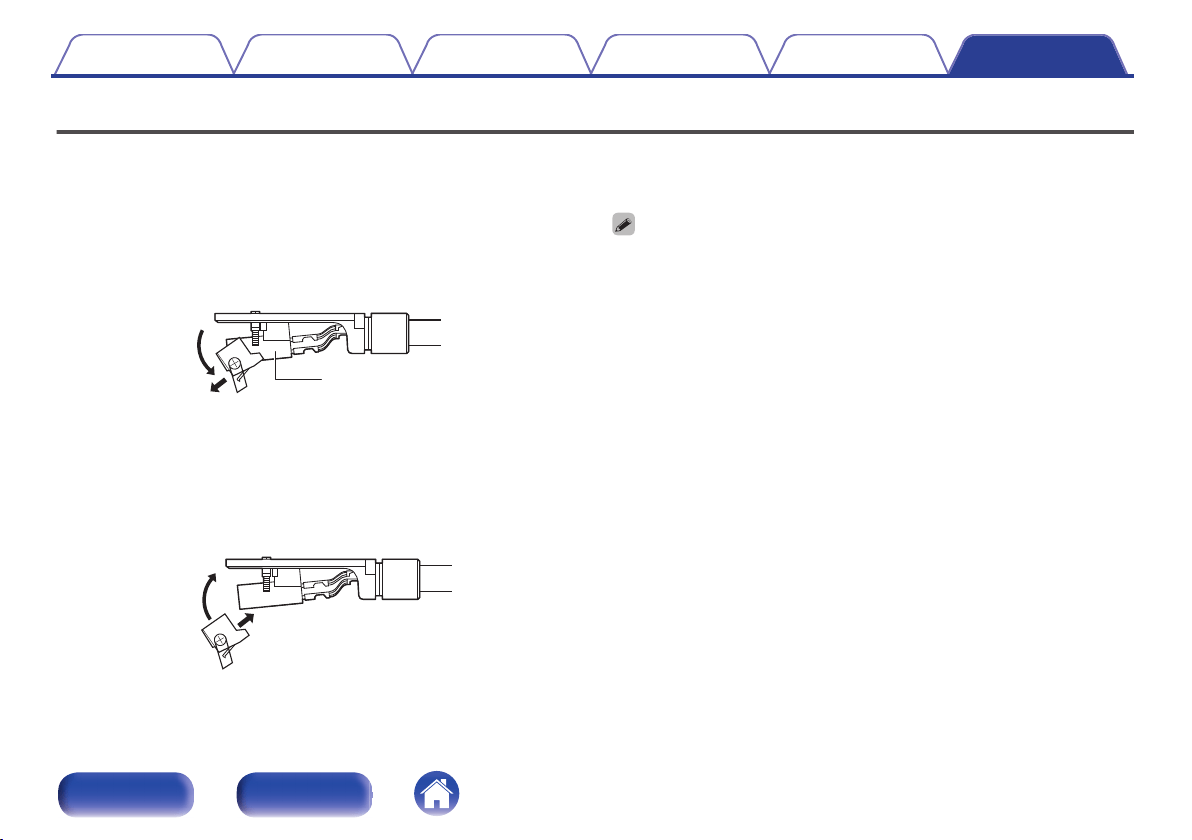
Replacing the stylus
The supplied stylus is good for approximately 400 hours of playback. Replace the stylus in a timely fashion to prevent damage to your record collection.
When replacing the stylus, make sure to request the DSN-85 for dedicated use with this unit at either the location where you purchased this unit or a local
repair shop.
o
Removing the stylus
Holding the cartridge in one hand, use your other hand to hold the
stylus and pull it down in the direction of arrow ①, then pull the stylus
in the direction of arrow ② to remove it.
.
q
w
Cartridge
o
Attaching a stylus
Holding the cartridge in one hand, use your other hand to hold the
stylus and insert the hooked part of the stylus into the long hole in the
cartridge in the direction of arrow ①, then push it up in the direction of
arrow ② until it clicks in place.
.
q
w
0
Make sure this unit and any connected amplifiers are off before replacing the
stylus.
0
Be very careful when handling the delicate stylus tip. Remove dirt or dust from the
stylus tip with a soft brush, etc.
0
Replacing the stylus is easier when the headshell is removed from the tone arm.
Contents Preparations Connections
Playback and recording
Tips Appendix
33
Front panel Rear panel
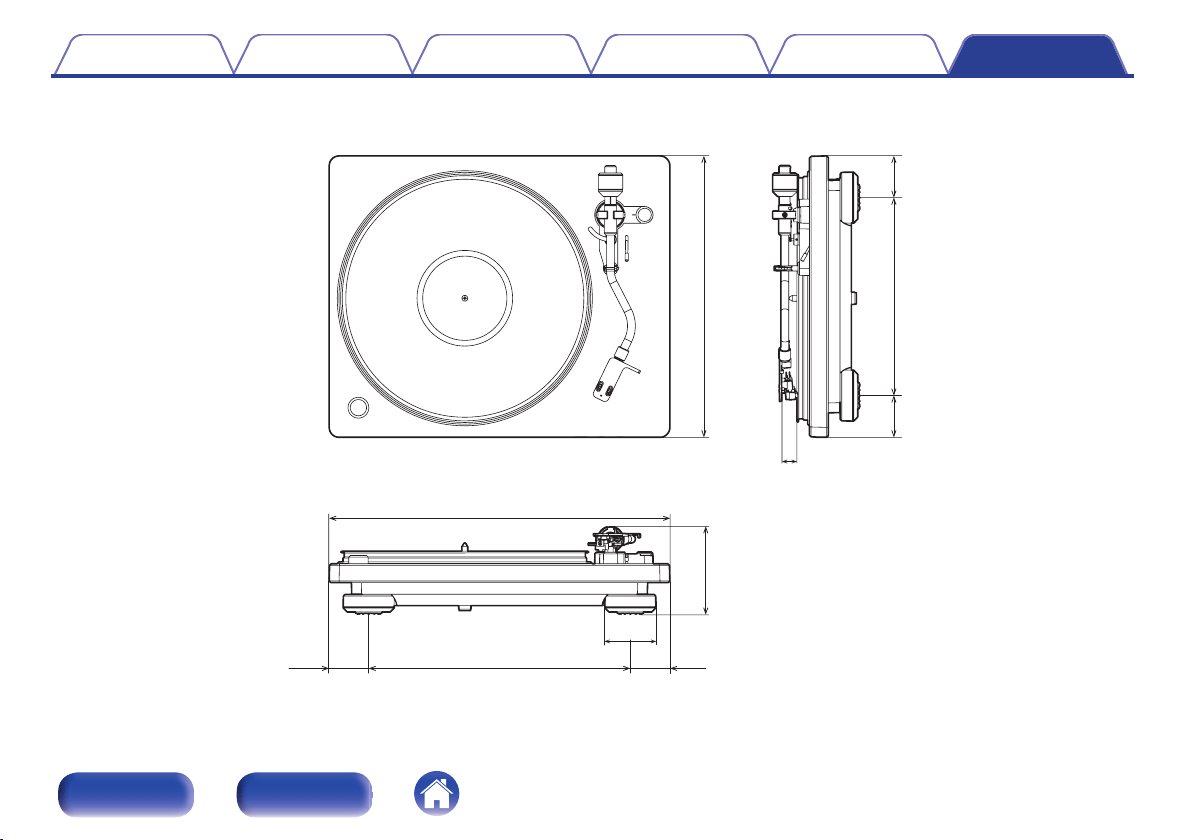
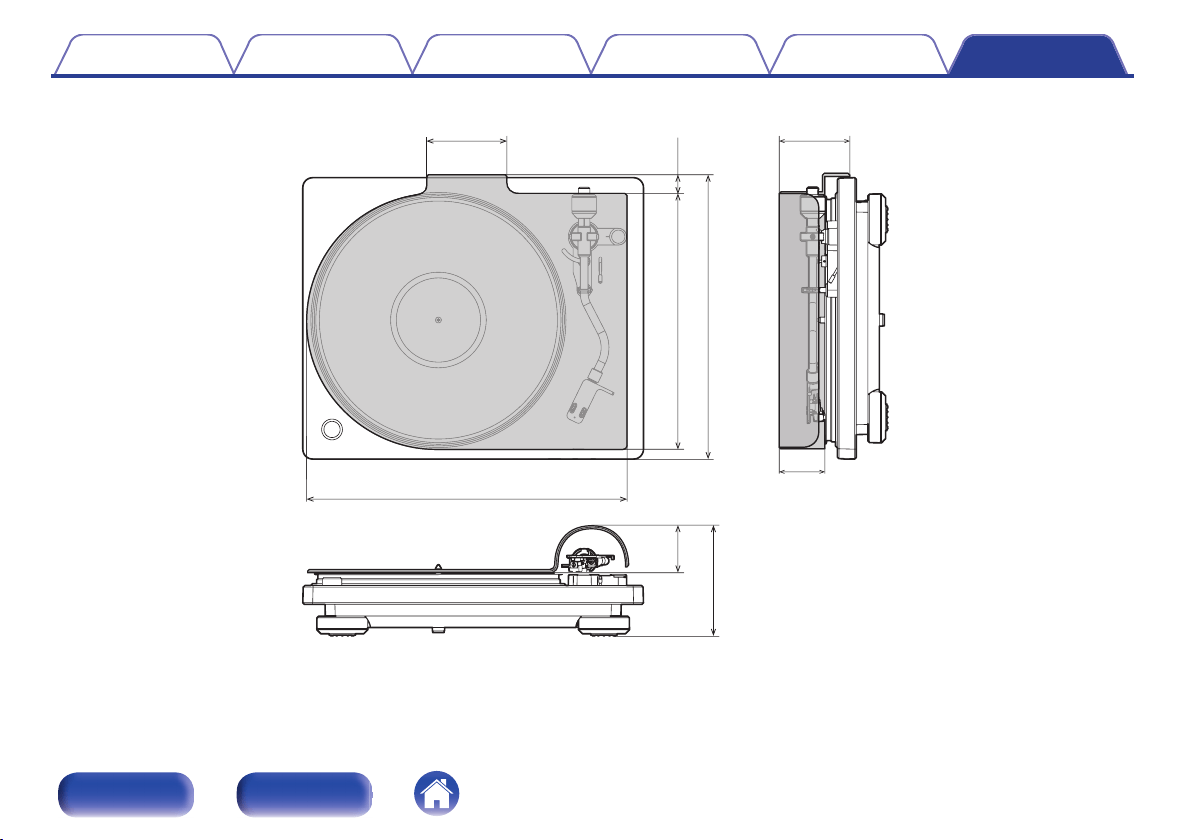
Specifications
o
Turntable section
Drive type: Belt drive
Motor: DC servo motor
RPM speeds: 33 1/3, 45, 78 RPM
Wow & flutter: 0.1% WRMS
S/N ratio: 62 dB
o
Tone arm section
Tone arm: Static balanced type
Tone arm effective length: 220 mm
Overhang: 16 mm
Stylus pressure range: 0 – 4.0 g (0 – 39.2 mN)
1 gradation is 0.1 g (0.98 mN)
Compatible cartridge weight: 5.0 – 13.0 g (59.2 mN – 127.5 mN)
Contents Preparations Connections
Playback and recording
Tips Appendix
34
Front panel Rear panel
o
Cartridge section
Cartridge: MM type
Output voltage: Equalizer off: 2.5 mV
Equalizer on: 150 mV
Optimum stylus pressure: 2.0 g (19.6 mN)
Replacement stylus product number: DSN-85
o
General
Power supply: AC 100 – 230 V, 50/60 Hz
Power consumption: 10 W
Power consumption in standby mode:
0.5 W or less
z
z
When automatic stop function is enabled
For the purpose of improvement, the specifications and design are subject to change without notice.
Contents
Preparations Connections
Playback and recording
Tips Appendix
35
Front panel Rear panel

.
www.denon.com
3520 10640 00ADA
Copyright ©2018 D&M Holdings Inc.All Rights Reserved.
38