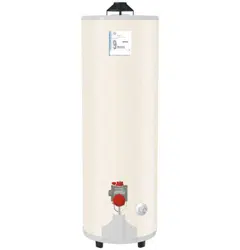
Before operating this water heater, be sure to read and follow the instructions on the label pictured below and all other labels on the water heater, as well as the warnings printed in this manual. Failure to do so can result in unsafe operation of the water heater resulting in property damage, personal injury, or death. Should you have any problems reading or following the instructions in this manual, STOP, and get help from a qualified person.
OPERATING INSTRUCTIONS
1. STOP! READ THE SAFETY INFORMATION ABOVE ON THIS LABEL.
2. TURN GAS COCK KNOB CLOCKWISE TO “OFF" POSITION.
3. TURN TEMPERATURE DIAL COUNTERCLOCKWISE TO LOWEST SETTING.
4. WAIT FIVE (5) MINUTES TO CLEAR OUT ANY GAS. IF YOU SMELL GAS, STOP! FOLLOW "B" IN THE SAFETY INFORMATION ABOVE ON THIS LABEL. IF YOU DO NOT SMELL
5. REMOVE THE OUTER DOOR FROM THE WATER HEATER. DO NOT ATTEMPT TO REMOVE INNER DOOR.
6. LOCATE PIEZO IGNITOR STRIKER.IT IS DIRECTLY TO THE RIGHT OF GAS CONTROL
7. TURN THE GAS COCK KNOB COUNTERCLOCKWISE TO "PILOT" POSITION.
8. PUSH DOWN ON THE "RED BUTTON" UNTIL IT COMES TO REST ON THE TOP OF CONTROL. IT MUST CLEAR THE NOTCH PROVIDED IN THE "GAS COCK KNOB." HOLD "RED BUTTON" DOWN AND PRESS PIEZO IGNITOR SEVERAL TIMES UNTIL PILOT IS LIT. (THE PILOT FLAME CAN ONLY BE SEEN THRU THE SIGHT GLASS LOCATED ON THE INNER DOOR). CONTINUE TO HOLD THE ’RED BUTTON" IN FOR ABOUT ONE (1) MINUTE AFTER THE PILOT IS LIT. RELEASE BUTTON AND IT WILL POP BACK UP. PILOT SHOULD REMAIN LIT. IF IT GOES OUT, REPEAT STEPS 2 THROUGH 8.
IF BUTTON DOES NOT POP UP WHEN RELEASED, STOP AND IMMEDIATELY CALL YOUR SERVICE TECHNICIAN OR GAS SUPPLIER.
IF THE PILOT WILL NOT STAY LIT AFTER SEVERAL TRIES, TURN THE "GAS COCK KNOB" TO "OFF' AND CALL YOUR SERVICE TECHNICIAN OR GAS SUPPLIER.
9. REPLACE OUTER DOOR.
10. TURN "GAS COCK KNOB" COUNTERCLOCKWISE TO "ON”.
11. TURN THE TEMPERATURE DIAL TO THE DESIRED SETTING.
TO TURN OFF GAS TO APPLIANCE
1. TURN DIAL TEMPERATURE COUNTERCLOCKWISE TO LOWEST SETTING.
2. TURN GAS COCK KNOB CLOCKWISE TO “OFF” POSITION.
Lighting the water heater. (With SmartWater™ Ignition System)
Before operating this water heater, be sure to read and follow the instructions on the label pictured below and all other labels on the water heater, as well as the warnings printed in this manual. Failure to do so can result in unsafe operation of the water heater resulting in property damage, personal injury, or death. Should you have any problems reading or following the instructions in this manual, STOP, and get help from a qualified person.
LIGHTING INSTRUCTIONS
1. STOP! READ THE SAFETY INFORMATION ABOVE ON THIS LABEL.
2. TURN GAS COCK KNOB CLOCKWISE TO “OFF" POSITION.
3. TURN TEMPERATURE DIAL COUNTERCLOCKWISE TO LOWEST SETTING.
4. WAIT FIVE (5) MINUTES TO CLEAR OUT ANY GAS. IF YOU SMELL GAS, STOP! FOLLOW "B" IN THE SAFETY INFORMATION ABOVE ON THIS LABEL. IF YOU DO NOT SMELL
5. REMOVE THE OUTER DOOR FROM THE WATER HEATER. DO NOT ATTEMPT TO REMOVE INNER DOOR.
6. LOCATE PIEZO IGNITOR STRIKER.IT IS DIRECTLY TO THE RIGHT OF GAS CONTROL
7. TURN THE GAS COCK KNOB COUNTERCLOCKWISE TO "PILOT" POSITION.
8. PUSH DOWN ON THE "RED BUTTON" UNTIL IT COMES TO REST ON THE TOP OF CONTROL. IT MUST CLEAR THE NOTCH PROVIDED IN THE "GAS COCK KNOB." HOLD "RED BUTTON" DOWN AND PRESS PIEZO IGNITOR SEVERAL TIMES UNTIL PILOT IS LIT. (THE PILOT FLAME CAN ONLY BE SEEN THRU THE SIGHT GLASS LOCATED ON THE INNER DOOR). CONTINUE TO HOLD THE ’RED BUTTON" IN FOR ABOUT ONE (1) MINUTE AFTER THE PILOT IS LIT. RELEASE BUTTON AND IT WILL POP BACK UP. PILOT SHOULD REMAIN LIT. IF IT GOES OUT, REPEAT STEPS 2 THROUGH 8.
IF BUTTON DOES NOT POP UP WHEN RELEASED, STOP AND IMMEDIATELY CALL YOUR SERVICE TECHNICIAN OR GAS SUPPLIER.
IF THE PILOT WILL NOT STAY LIT AFTER SEVERAL TRIES, TURN THE "GAS COCK KNOB" TO "OFF' AND CALL YOUR SERVICE TECHNICIAN OR GAS SUPPLIER.
9. REPLACE OUTER DOOR.
10. TURN "GAS COCK KNOB" COUNTERCLOCKWISE TO "ON”.
11. TURN THE TEMPERATURE DIAL TO THE DESIRED SETTING.
TO TURN OFF GAS TO APPLIANCE
1. TURN DIAL TEMPERATURE COUNTERCLOCKWISE TO LOWEST SETTING.
2. TURN GAS COCK KNOB CLOCKWISE TO “OFF” POSITION.
Operating the water heater.
CAUTION: Hydrogen gas can be produced in a hot water system served by this water heater that has not been used for a long period of time (generally two weeks or more). HYDROGEN GAS IS EXTREMELY FLAMMABLE!! To dissipate such gas and to reduce risk of injury, it is recommended that the hot water faucet be opened for several minutes at the kitchen sink before using any electrical appliance connected to the hot water system. If hydrogen is present, there will be an unusual sound such as air escaping through the pipe as the water begins to flow. Do not smoke or use an open flame near the faucet at the time it is open.
Safety Precautions
A. Do turn off manual gas shut-off valve if water heater has been subjected to over heating, fire, flood, physical damage or if the gas supply fails to shut off.
B. Do Not turn on water heater unless it is completely filled with water.
C. Do Not turn on water heater if cold water supply shut-off valve is closed.
D. Do Not allow combustible materials such as newspaper, rags or mops to accumulate near water heater.
E. Do Not store or use gasoline or other flammable vapors and liquids, such as adhesives or paint thinner, in vicinity of this or any other appliance. If such flammables must be used, open doors and windows for ventilation, and all gas burning appliances in the vicinity should be shut off including their pilot burners, to avoid vapors lighting.
NOTICE: Flammable vapors can be drawn by air currents from surrounding areas to the water heater.
F. If there is any difficulty in understanding or following the Operating Instructions or the Care and Cleaning section, it is recommended that a qualified person or serviceman perform the work.
Water Temperature Setting
DANGER: Hotter water increases the Potential for Hot Water SCALDS. Households with small children, disabled, or elderly persons may require a 120°F or lower gas control (thermostat) setting to prevent contact with HOT water.
The temperature of the water in the water heater can be regulated by setting the temperature dial on the front of the gas control (thermostat).
Safety and energy conservation are factors to be considered when selecting the water temperature setting of the water heater’s gas control (thermostat(s)). The lower the temperature setting, the greater the savings in energy and operating costs.
To comply with safety regulations the gas control (thermostat) was set at its lowest setting before the water heater was shipped from the factory. The recommended starting point temperature is 120°F.
Water temperatures above 125°F can cause severe burns or death from scalding. Be sure to read and follow the warnings outlined in this manual and on the label located on the water heater near the gas control (thermostat).
Mixing valves are available for reducing point of use water temperature by mixing hot and cold water in branch water lines. Contact a licensed plumber or the local plumbing authority for further information. (See page 4 for more details).
The chart below may be used as a guide in determining the proper water temperature for your home.
Time/Temperature Relationship in Scalds
Table courtesy of Shriners Burn Institute
If adjustment is necessary…
Maximum water temperatures occur just after the burner has shut off. To determine the water temperature, turn on a hot water faucet and place a thermometer in the water stream.
The wide reference mark near WARM on the rim of the temperature dial, represents an approximate water temperature of 120°F.
The long wide reference mark, to the left, represents an approximate water temperature of 130°F.
Each reference mark above or below these points indicates an approximate change of 10°F.
To adjust the temperature, turn the temperature dial to an initial setting of 120°F. A condition known as “stacking” or “layering” can occur when a series of short and frequent hot water draws are taken.
The hottest temperature water will be at the top of the tank, closest to the outlet pipe delivering hot water to the home.
Stacking can cause this top layer of water to be hotter than the water toward the bottom of the tank near the gas control (thermostat).
Therefore, always remember to test the water temperature with your hand before use and remember that hotter water increases the risk of scald injury.
Also, always supervise young children or others who are incapacitated.
The gas control (thermostat) is constructed with a built in safety shut-off device designed to shut off the gas supply to the burner if the pilot flame is extinguished for any reason.
The gas control (thermostat) is also equipped with a single use gas shut off device that will shut off the gas supply to the burner if the water heater exceeds normal operating temperatures. Refer to the BEFORE YOU CALL FOR SERVICE section of this manual, or contact your dealer.
WARNING: Should overheating occur or the gas supply fail to shut off, turn off the manual gas control valve to the appliance.
If the water heater has been subjected to fire, flood or physical damage, turn off the manual gas control (shut-off) valve, and do not operate the water heater again until it has been checked by qualified personnel.
NOTE: Replace any part of the gas control system which has been under water.
Care and cleaning of the water heater
Draining the Water Heater
CAUTION: Shut off gas to the water heater at the gas control (thermostat) gas cock or manual shut-off valve before draining water.
DANGER: Before manually operating the temperature and pressure relief valve, make certain no one will be exposed to the hot water released by the valve. The water drained from the tank may be hot enough to present a scald hazard and should be directed to a suitable drain to prevent injury or damage.
In order to drain the water heater, turn off the cold water supply. Open a hot water faucet or lift the handle on the relief valve to admit air to the tank.
Attach a garden hose to the drain valve on the water heater and direct the stream of water to a drain. Open the valve.
Routine Preventative Maintenance
DANGER: Before manually operating the relief valve, make certain no one will be exposed to the danger of the hot water released by the valve. The water may be hot enough to create a scald hazard. The water should be released into a suitable drain to prevent injury or property damage.
Properly maintained, your water heater will provide years of dependable trouble-free service.
It is recommended that a periodic inspection of the gas control (thermostat), burner, relief valve, internal flue-way and venting system should be made by service personnel qualified in gas appliance repair. It is suggested that a routine preventative maintenance program be established and followed by the user.
At least once a year, lift and release the lever handle on the temperature pressure relief valve, located near the top of the water heater, to make certain the valve operates freely. Allow several gallons to flush through the discharge line to an open drain.
NOTE: If the temperature and pressure relief valve on the hot water heater discharges periodically, this may be due to thermal expansion in a closed water system. Contact the water supplier or your plumbing contractor on how to correct this. DO NOT plug the relief valve outlet.
A water heater’s tank can act as a setting basin for solids suspended in the water. It is therefore not uncommon for hard water deposits to accumulate in the bottom of the tank. It is suggested that a few quarts of water be drained from the water heater’s tank every month to clean the tank of these deposits.
Rapid closing of faucets or solenoid valves in automatic water using appliances can cause a banging noise heard in a water pipe. Strategically located risers in the water pipe system or water hammer arresting devices can be used to minimize the problem.
The anode rod should be removed from the water heater’s tank annually for inspection and replaced when more than 6″ of core wire is exposed at either end of the rod.
Make sure the cold water supply is turned off before removing anode rod.
Housekeeping
Vacuum around the base of the water heater for dust, dirt and lint on a regular basis
To ensure sufficient ventilation and combustion air supply, proper clearances must be maintained.
DANGER: Combustible materials, such as clothing, cleaning materials, or flammable liquids, etc., must not be placed against or next to the water heater.
Venting System Inspection
The water heater’s internal flue must be inspected annually to be certain it is clean by removing the draft hood and flue baffle.
When reinstalling the flue baffle make certain it is hung securely by its hanger at the top of the flue way.
Remove any scale that may have fallen on the burner or floor shield and reinstall the draft hood.
Inspect the gas venting system and the chimney.
Make certain the vent connector from the draft hood to the chimney is properly positioned and securely attached.
If after inspection of the vent system you found sooting or deterioration call the local gas utility to correct the problem and clean or replace the flue and venting before resuming operation of the water heater..
Burner Inspection
Visually inspect the burners annually.
Inspect the main burner while firing and pilot burner flame with the main burner off.
If any unusual burner operation is noted, the water heater should be shut off until qualified service assistance can be obtained.
For cleaning, remove the burner from the water heater. A vacuum cleaner can be used on the burner and floor shield inside the water heater. The burner can also be cleaned by scrubbing with mild detergent.
CAUTION: For your safety, cleaning of the main burner should be performed only by qualified service personnel.
Vacation and Extended Shut-Down
NOTE: Refer to the Hydrogen Gas Caution in the Operating Instructions.
If the water heater is to remain idle for an extended period of time, the power and water to the appliance should be turned off to conserve energy and prevent a buildup of dangerous hydrogen gas.
The water heater and piping should be drained if they might be subjected to freezing temperatures.
After a long shut-down period, the water heater’s operation and controls should be checked by qualified service personnel. Make certain the water heater is completely filled again before placing it in operation.
Anode Rod
NOTE: Do not remove the anode rod from the water heater’s tank, except for inspection and/or replacement, as permanent removal will shorten the life of the glass lined tank and affect the water heater warranty
This water heater is equipped with an anode rod designed to prolong the life of the glass lined tank. The anode rod is slowly consumed, thereby eliminating or minimizing corrosion of the glass lined tank.
Water sometimes contains a high sulfate and/or mineral content and together with cathodic protection process can produce a hydrogen sulfide, or rotten egg odor in the heated water. Chlorination of the water supply should minimize the problem.
Troubleshooting Tips
Before You Call For Service…
Save time and money! Review the charts on the following pages first and you may not need to call for service.
Problem
Possible Causes
What To Do
Condensation
This usually happens when a new water heater is filled for the first time.
This is normal. After the water in the tank warms up the condensation will disappear. If, however, the condition persists, examine the piping and fittings for possible leaks.
Moisture from the products of combustion condensing on the tank surface.
This is normal and will disappear in time. Excessive condensation can cause pilot outage.
An undersized water heater will cause condensation.
Use a water heater size that meets the requirements of your needs.
Yellow flame or soot
Scale on top of the burner.
Shut off the water heater and remove scale
Combustion air inlet openings are restricted.
Remove lint or debris and inspect air inlet opening for restriction
Not enough combustion or ventilation air supplied to the water heater location.
Proper operation of the water heater requires air for combustion and ventilation. See the Combustion and Ventilation Air information in the Locating the water heater section of this manual.
Unable to light the pilot
Temperature dial not correctly positioned.
See the Lighting the water heater section of this manual.
Pilot orifice clogged.
The pilot should be cleaned or replaced by a qualified service technician.
Pilot tube pinched or clogged.
The pilot should be cleaned, repaired or replaced by a qualified service technician.
Air in gas line.
Contact a qualified service technician to purge the air from the gas line.
Pilot does not stay lit when the RED button is released
Loose thermocouple.
The connection at the thermostat should be tightened by a qualified service technician.
Thermocouple breakdown.
The thermocouple should be replaced by a qualified service technician.
Safety magnet breakdown.
The thermostat should be replaced by a qualified service technician.
Thermostats single use gas shut-off device has opened.
The thermostat should be replaced by a qualified service technician.
CAUTION: For your safety DO NOT attempt repair of gas piping, thermostat, burners, vent connectors or other safety devices. Refer repairs to qualified service personnel.
Rumbling noise
Scale and sediment in tank.
Clean tank.
Relief valve producing popping noise or draining
Pressure build up caused by thermal expansion to a closed system.
This is an unacceptable condition and must be corrected. Contact the water supplier or plumbing contractor on how to correct this. Do not plug the relief valve outlet.
Rattling noise during periods of water usage
Internal heat trap fittings in operation.
This is normal for heat trap fittings when in operation and does not indicate a need for service.
Not enough or no hot water
Water usage may have exceeded the capacity of the water heater.
Wait for the water heater to recover after an abnormal demand.
Low gas pressure.
Check gas supply pressure and manifold pressure.
The pilot may be out.
Check the pilot. If necessary, relight using the
instructions in the Lighting the water heater section of this manual.
The thermostat may be set too low.
See the Temperature regulation of the water heater section of this manual.
Leaking or open hot water faucets.
Make sure all faucets are closed.
Cold water inlet temperature may be colder during the winter months.
This is normal. The colder inlet water takes longer to heat.
Water is too hot
The thermostat is set too high.
See the Temperature regulation of the water heater section of this manual.
CAUTION: For your safety DO NOT attempt repair of gas piping, thermostat, burners, vent connectors or other safety devices. Refer repairs to qualified service personnel.
Replacement Parts.
For 30, 40 and 50 gallon models using natural or LP gas.
Instructions For Placing a Parts Order
To place orders using a Visa/MasterCard call 800-431-1549.
All parts orders should include:
The model and serial number of the water heater from the rating plate.
Specify type of gas (natural or LP) as marked on the rating plate.
Part description (as noted below) and number of parts desired.
CAUTION: For your safety DO NOT attempt repair of gas piping, thermostat, burners, vent connectors or other safety devices. Refer repairs to qualified service personnel
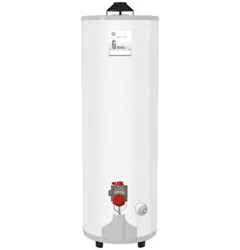
 “OFF" POSITION.