5KES2102A
W10699685A_ENv3.indd 1 6/30/14 4:07 PM

2
ESPRESSO MACHINE INSTRUCTIONS ESPRESSO MACHINE SAFETY
TABLE OF CONTENTS
ESPRESSO MACHINE SAFETY
Important safeguards �������������������������������������������������������������������������������������������3
Electrical requirements ��������������������������������������������������������������������������������������� 4
GETTING TO KNOW YOUR ESPRESSO MACHINE
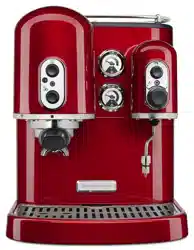
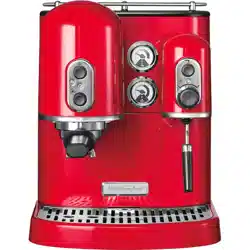
Parts and accessories �������������������������������������������������������������������������������������������5
ASSEMBLING THE ESPRESSO MACHINE
Preparing the Espresso Machine for use �������������������������������������������������������������6
Washing the water reservoir �������������������������������������������������������������������������������6
Connecting the Espresso Machine ���������������������������������������������������������������������� 7
OPERATING THE ESPRESSO MACHINE
Rinsing and lling the boilers �������������������������������������������������������������������������������� 7
Warming the boilers ��������������������������������������������������������������������������������������������8
Brewing espresso ������������������������������������������������������������������������������������������������ 9
Frothing and steaming milk ��������������������������������������������������������������������������������13
Dispensing hot water����������������������������������������������������������������������������������������� 15
TIPS FOR GREAT RESULTS
What is espresso? ���������������������������������������������������������������������������������������������� 16
Overextraction and underextraction����������������������������������������������������������������� 16
Before brewing: the elements of great espresso ����������������������������������������������� 16
Espresso brewing technique ������������������������������������������������������������������������������ 17
Proper tamping technique ��������������������������������������������������������������������������������� 18
Espresso extraction technique �������������������������������������������������������������������������� 20
Barista tips ��������������������������������������������������������������������������������������������������������� 21
Preparing Cappuccino ��������������������������������������������������������������������������������������� 21
Preparing Café Latte ������������������������������������������������������������������������������������������21
Glossary of espresso drinks ������������������������������������������������������������������������������� 22
Glossary of Espresso Machine parts ������������������������������������������������������������������ 23
CARE AND CLEANING
Cleaning the Espresso Machine ������������������������������������������������������������������������� 24
Cleaning the frothing arm and nozzle ���������������������������������������������������������������� 24
Cleaning the housing, lters, drip tray, drip plate, reservoir, and pitcher ����������25
Cleaning the shower screen ������������������������������������������������������������������������������ 26
Priming after long periods of non-use ��������������������������������������������������������������� 27
Descaling �����������������������������������������������������������������������������������������������������������27
TROUBLESHOOTING ������������������������������������������������������������������������������������������ 29
For more information on this and other products, join us in the kitchen at www.kitchenaid.com.au.
W10699685A_ENv3.indd 2 6/30/14 4:07 PM

3
English
ESPRESSO MACHINE INSTRUCTIONS ESPRESSO MACHINE SAFETY
IMPORTANT SAFEGUARDS
When using electrical appliances, basic safety precautions
should always be followed, including the following:
1. Read all instructions�
2. To protect against risk of electrical shock, do not put
Espresso Machine in water or other liquid�
3. Close supervision is necessary when any appliance is used by
or near children� Children shall not play with the appliance�
Cleaning and user maintenance shall not be made by
children without supervision�
4. This appliance is not intended for use by persons with
reduced physical, sensory or mental capabilities, or lack of
experience and knowledge, unless they have been given
supervision or instruction concerning use of the appliance in
a safe way and understand the hazards involved by a person
responsible for their safety.
5. Unplug from the outlet when not in use, before putting on
or taking off parts, and before cleaning. Allow to cool before
putting on or taking off parts, and before cleaning.
6. Avoid contacting moving parts.
7. Do not use outdoors�
8. Do not let cord hang over edge of table or counter.
9. Do not place on or near a hot gas or electric burner, or in a
heated oven�
W10699685A_ENv3.indd 3 6/30/14 4:08 PM
4
GETTING TO KNOW YOUR ESPRESSO MACHINEESPRESSO MACHINE SAFETY
Electrical requirements
SAVE THESE INSTRUCTIONS
Voltage: 220-240 Volts A.C. only
Frequency: 50/60 Hz
Wattage: Max. 1300 W
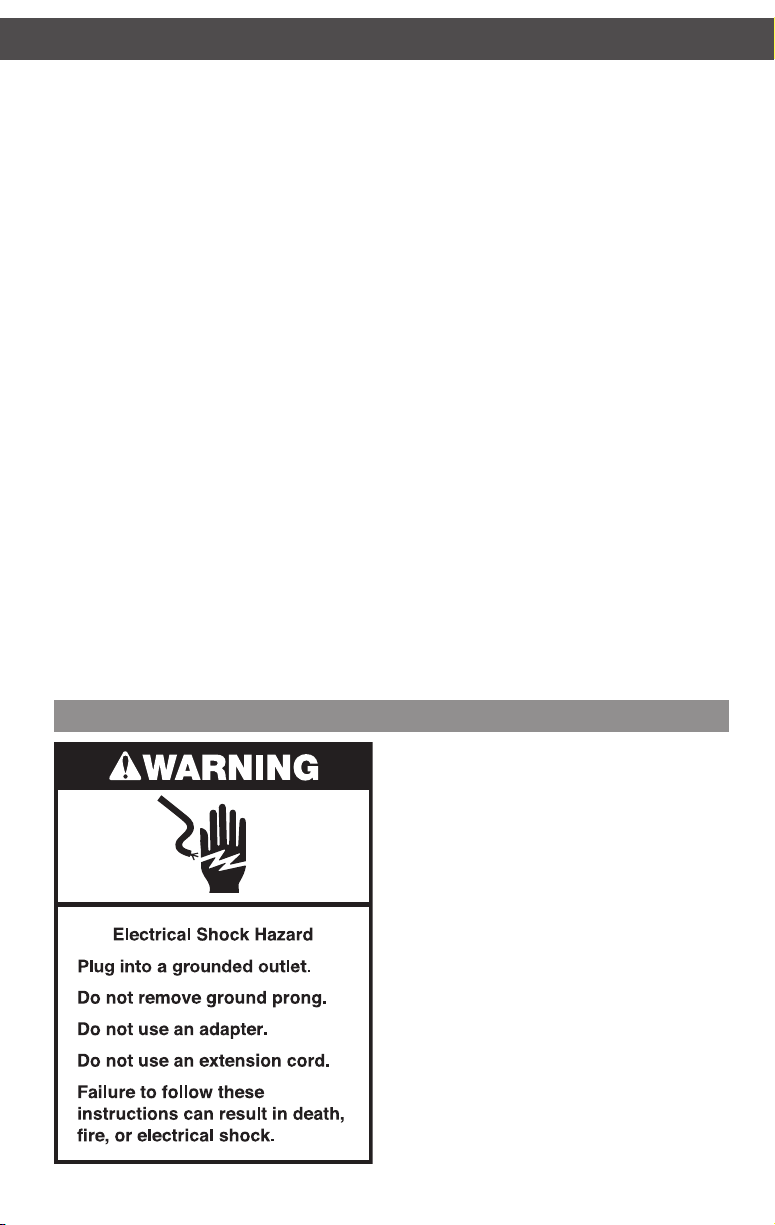
NOTE: If the plug does not fit in the
outlet, contact a qualified electrician�
Do not modify the plug in any way�
Do not use an adapter�
Do not use an extension cord� If the power
supply cord is too short, have a qualified
electrician or serviceman install an outlet
near the appliance�
10. The use of accessory attachments not recommended by the
appliance manufacturer may result in re, electric shock, or
personal injury�
11. Do not operate any appliance with a damaged cord or
plug, or after the appliance malfunctions, or is dropped or
damaged in any manner� Return appliance to the nearest
Authorized Service Facility for examination, repair, or
electrical or mechanical adjustment�
12. Always turn the appliance off, then plug cord into the wall
outlet� To disconnect, turn the appliance off, then remove
plug from wall outlet�
13. This appliance is intended to be used in household and similar
applications such as:
- staff kitchen areas in shops, ofces and other working
environments
- farm houses;
- by clients in hotels, motels and other residential type
environments;
- bed and breakfast type environments
14. Use extreme caution when using hot steam�
W10699685A_ENv3.indd 4 6/30/14 4:08 PM
5
English
GETTING TO KNOW YOUR ESPRESSO MACHINEESPRESSO MACHINE SAFETY
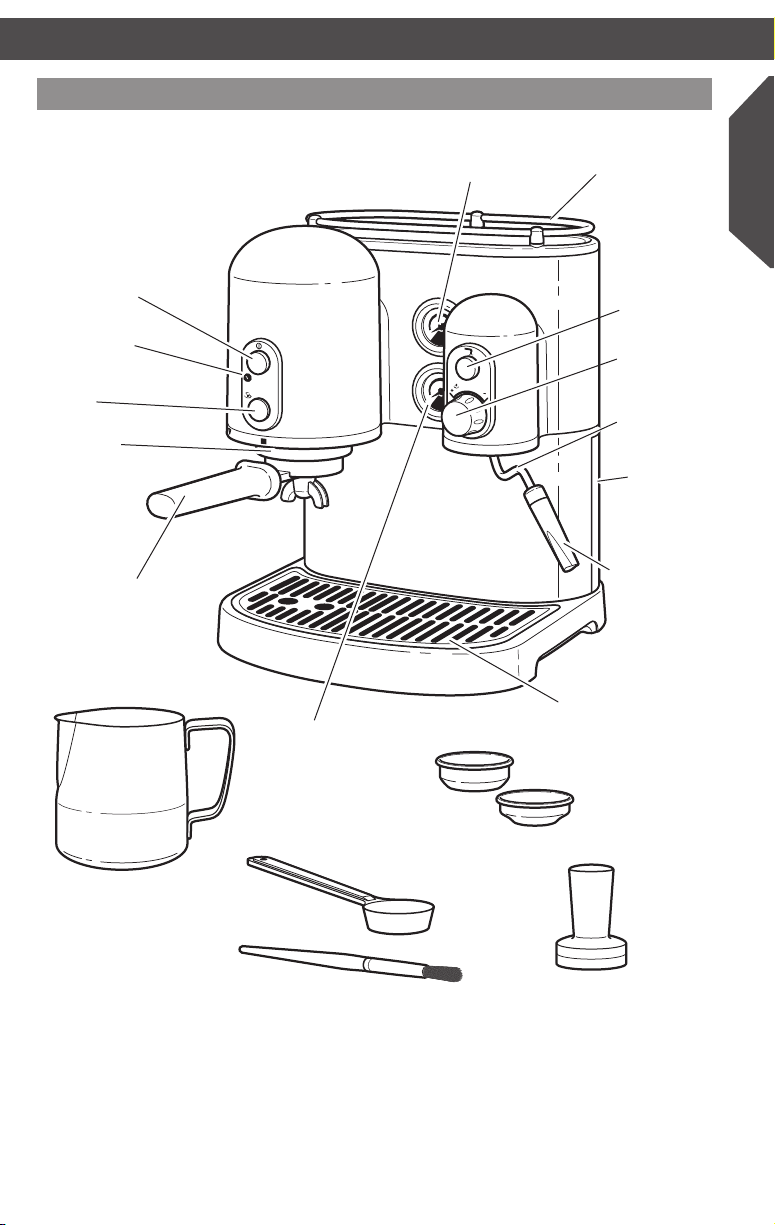
Parts and accessories*
Frothing pitcher
Coffee scoop and
Shower-screen brush
Filter baskets
Tamper
Hot water
button
Steam dial
Frothing arm
Frothing
nozzle
On/Off Power
button
Espresso
button
Brew head
Portalter
On indicator
light
Cup rail
Drip plate
(sits inside Drip tray)
Espresso
temperature
gauge
Frother
temperature
gauge
* For a glossary describing the parts of the Espresso Machine, see the “Tips for great
results” section�
Water tank
W10699685A_ENv3.indd 5 6/30/14 4:08 PM
6
ASSEMBLING THE ESPRESSO MACHINEASSEMBLING THE ESPRESSO MACHINE
Preparing the Espresso Machine for use
Washing the water reservoir
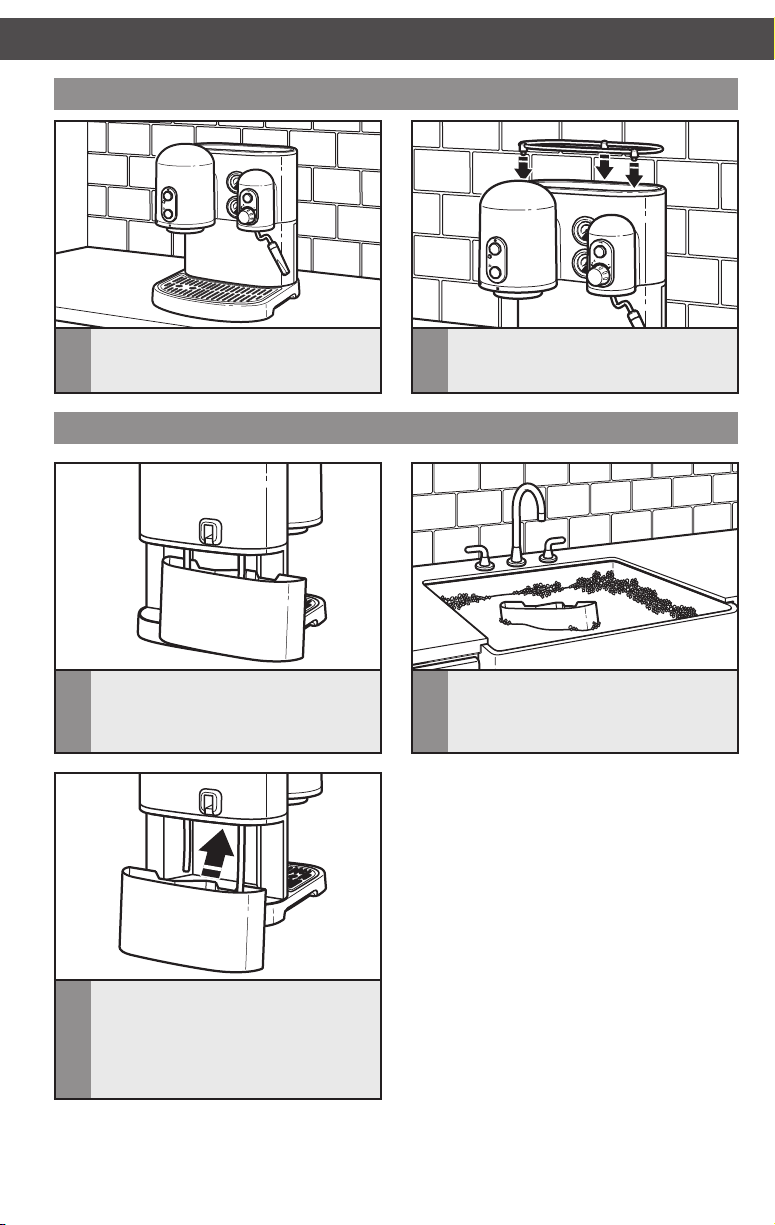
1
Place the Espresso Machine on a clean,
dry, level surface�
1
Lift the reservoir slightly, then remove
by pulling the bottom of the reservoir
from the Espresso Machine�
2
Wash the reservoir in hot, soapy
water and rinse with clean water� The
reservoir can also be washed in the top
rack of the dishwasher�
3
Place the reservoir back into the
Espresso Machine, making sure the
water tubes are placed inside the
reservoir. The ribs on the bottom
of the reservoir fit into the grooves
on the base of the machine.
2
Align the three rail posts with the holes
on top of the Espresso Machine� Then
press the rail posts firmly into the holes�
OPERATING THE ESPRESSO MACHINE
W10699685A_ENv3.indd 6 6/30/14 4:08 PM
7
English
ASSEMBLING THE ESPRESSO MACHINEASSEMBLING THE ESPRESSO MACHINE
OPERATING THE ESPRESSO MACHINE
IMPORTANT: Distilled water or mineral water can damage the Espresso Machine� Do
not use either to brew espresso.
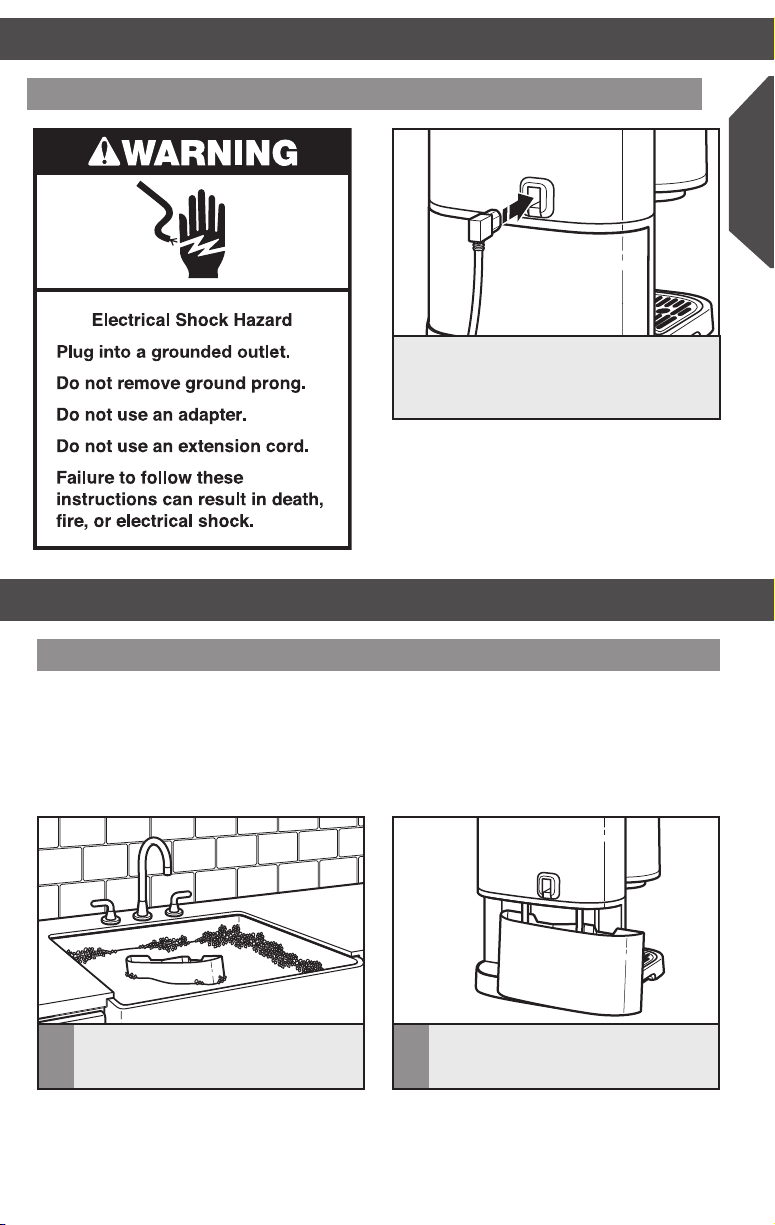
2
Slide the water reservoir left or right to
expose the top, and fill with fresh cold
water to the “max fill” line.
Insert the end of the electrical cord without
prongs into the cord receptacle in the back of
the Espresso Machine� Plug the other end of
the cord into a grounded outlet�
Rinsing and lling the boilers
Connecting the Espresso Machine
1
Remove the reservoir and rinse with
fresh cold water, empty, and place back
onto the Espresso Machine�
The boilers need to be filled and rinsed before the Espresso Machine is used for the first time.
The boilers will also need to be filled when:
- the Espresso Machine is not used for a prolonged period
- the water reservoir runs dry during use (this can damage the Espresso Machine)
- multiple beverages are steamed without brewing espresso or dispensing hot water
W10699685A_ENv3.indd 7 6/30/14 4:08 PM
8
OPERATING THE ESPRESSO MACHINEOPERATING THE ESPRESSO MACHINE
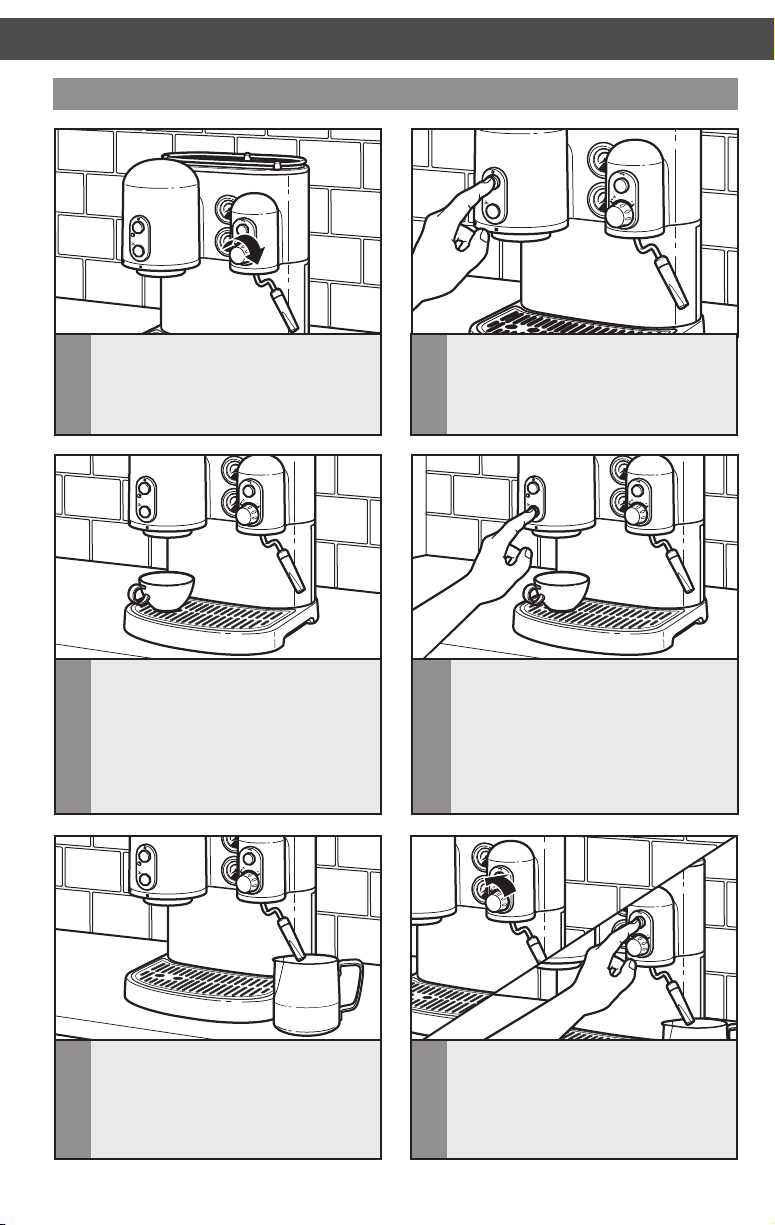
1
Make certain the steam dial is closed by
rotating it clockwise as far as possible.
2
Press and hold the On/Off power
button until the ON indicator lights up.
The dual boilers will begin heating, and
the Espresso and Hot Water functions
will begin to operate.
3
Place a coffee cup underneath the brew
head� Do not attach the portafilter to
the brew head.
4
Press the Espresso button to activate
the water pump and fill the brewing
boiler with water. After a few seconds,
water will flow from the brew head.
When the cup is full, press the
Espresso button again to stop the
water pump. The brewing boiler is
now ready for use�
5
Place the frothing pitcher under the
nozzle of the frothing arm�
6
Slowly open the Steam dial by turning it
counter-clockwise; press and hold the
Hot Water button to activate the water
pump and fill the frothing boiler. After
a few seconds, water will start flowing
from the nozzle�
Warming the boilers
W10699685A_ENv3.indd 8 6/30/14 4:08 PM
9
English
OPERATING THE ESPRESSO MACHINEOPERATING THE ESPRESSO MACHINE
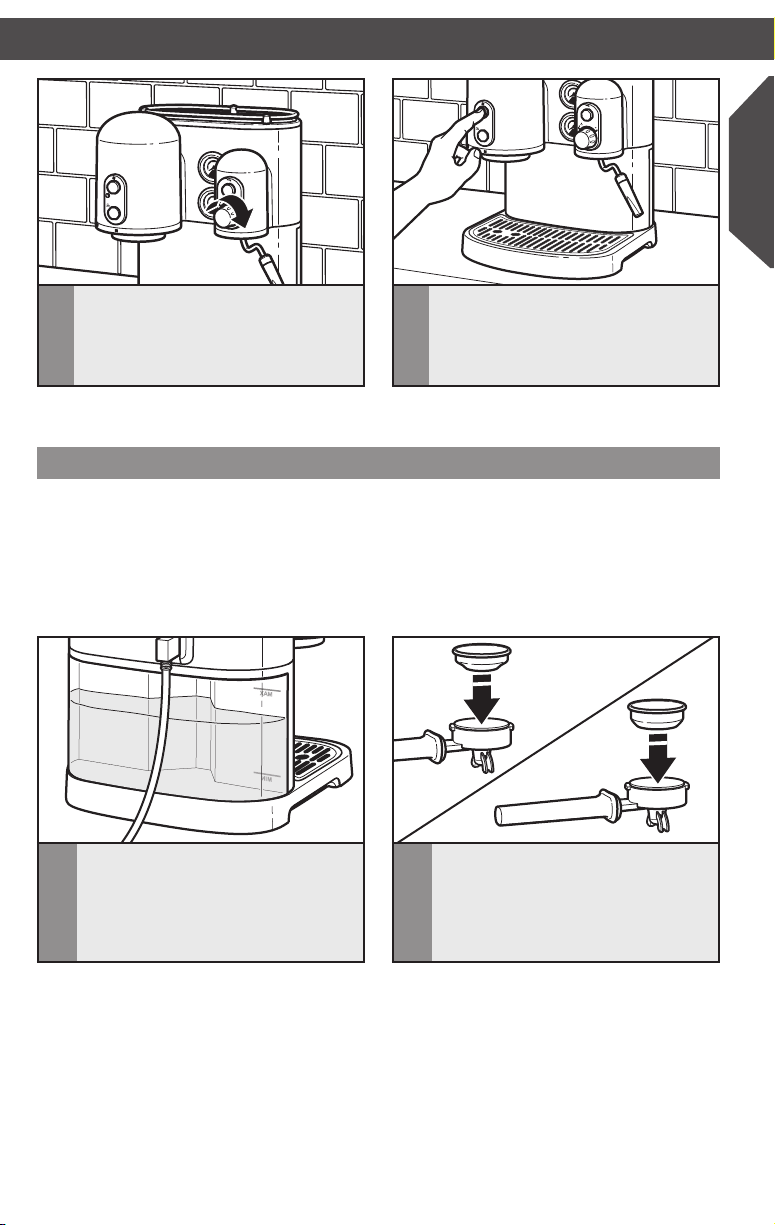
7
When the pitcher is about half full,
release the Hot Water button and close
the Steam dial by rotating it clockwise
until it stops. The frothing boiler is now
ready for use�
8
If no espresso is desired at this time,
press the On/Off Power button to turn
the Espresso Machine off�
NOTE: Do not press the Espresso or Hot Water buttons without water in the reservoir.
Damage to the water pump may occur�
Brewing espresso
1
Make certain the water reservoir has
an adequate supply of water (the water
level should be between the “max” and
“min” fill lines).
2
Select the small or large capacity filter
basket. Use the small capacity basket for
a single shot of espresso (23�35 g), and
the large capacity basket for a double
shot (56.7 g). The small capacity basket
can be used with paper coffee pods*.
Brewing perfect espresso is a skill that takes time to learn on any manual Espresso Machine�
Your first attempts may need perfecting in order to produce the perfect consistency,
smooth flavor and golden crema you expect� Practice consistently for a couple of weeks
with this Espresso Machine, and you will soon produce a perfect cup every time. For better
results when brewing espresso, see the “Tips for great results” section to fine tune your
brewing technique.
*Paper coffee pods are available for purchase at specialty coffee shops, or online.
W10699685A_ENv3.indd 9 6/30/14 4:08 PM
10
OPERATING THE ESPRESO MACHINEOPERATING THE ESPRESSO MACHINE
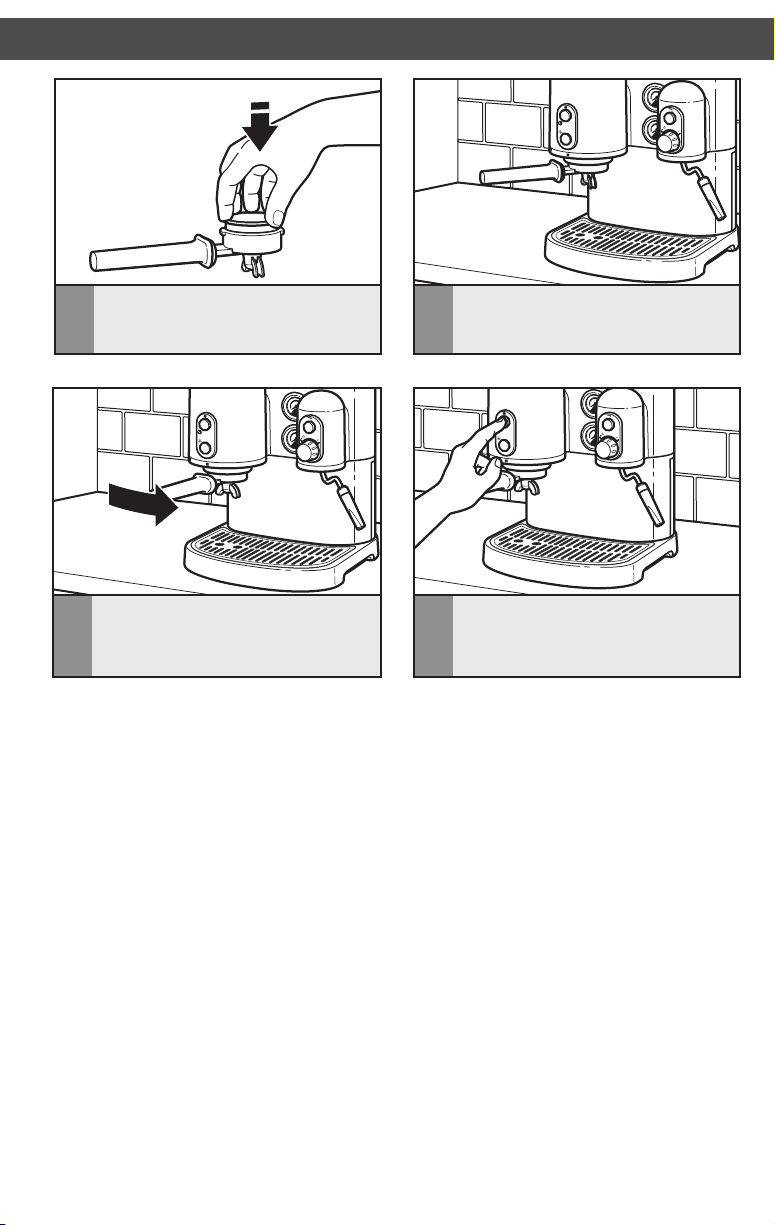
3
Press the filter basket into the
portafilter until it snaps into place�
Do not fill with coffee at this time�
5
Raise the portafilter into the brew head
and tighten it with a firm twist to the
right� When in place, the handle will
point forward or slightly to the right�
4
Position the portafilter underneath the
brew head and align the handle with
the arrow on the left side�
6
Press and hold the On/Off power
button until the ON indicator lights up.
W10699685A_ENv3.indd 10 6/30/14 4:08 PM
11
English
OPERATING THE ESPRESO MACHINEOPERATING THE ESPRESSO MACHINE
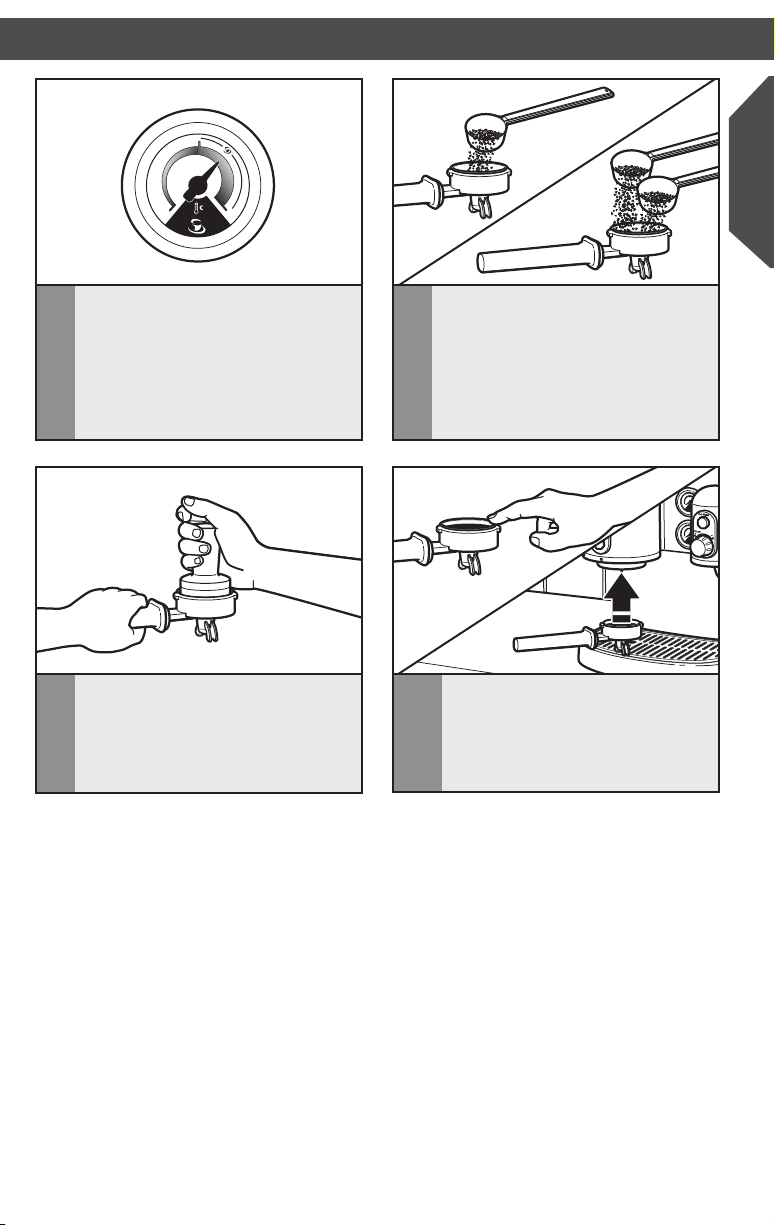
9
Using the tamper, tamp the coffee
down firmly with a twisting motion�
Make sure the surface of the coffee is
as level as possible. See “Leveling” and
“Tamping” chapters in the “Tips for
great results” section for details�
10
Sweep any excess grinds from the rim
of the portafilter, and insert into the
brew head.
7
Wait until the Espresso Machine has
reached operating temperature; this will
take approximately 6 minutes� When
the boiler temperature gauge needle
climbs into the “ready” zone, the
Espresso Machine is ready to brew.
8
Remove the portafilter from the brew
head by moving the handle to the left.
Place one level measure of ground
coffee (or a paper coffee pod) in the
small filter basket, or two measures of
ground coffee in the large filter basket.
Be sure to use a fine espresso-style
grind for your coffee�
W10699685A_ENv3.indd 11 6/30/14 4:08 PM

12
OPERATING THE ESPRESSO MACHINEOPERATING THE ESPRESSO MACHINE
11
Place one or two espresso cups
on the drip plate under the spouts
of the portafilter� Press the Espresso
button, and espresso will start to flow
into the cups�
13
The Espresso Machine is equipped
with a 3-way solenoid valve that
instantly releases pressure in the
brew group when the water pump is
switched off, so the portafilter can be
removed immediately after brewing.
Remove the portafilter by moving the
handle to the left� Knock the used
coffee grounds out of the filter basket
into a waste container�
14
After removing the portafilter, place
a cup under the brew head and press
the Espresso button for a second or
two� This cleans the shower screen
and flushes out any coffee oils and
grounds that have migrated into the
brew head.
12
When the desired amount of espresso
has been brewed (30 ml using the
small filter basket or 59 ml using the
large filter basket), press the Espresso
button to stop brewing.
NOTE: Do not remove the portafilter when brewing.
NOTE: When knocking coffee grounds
from the filter basket, avoid striking the
portafilter handle�
W10699685A_ENv3.indd 12 6/30/14 4:08 PM
13
English
OPERATING THE ESPRESSO MACHINEOPERATING THE ESPRESSO MACHINE
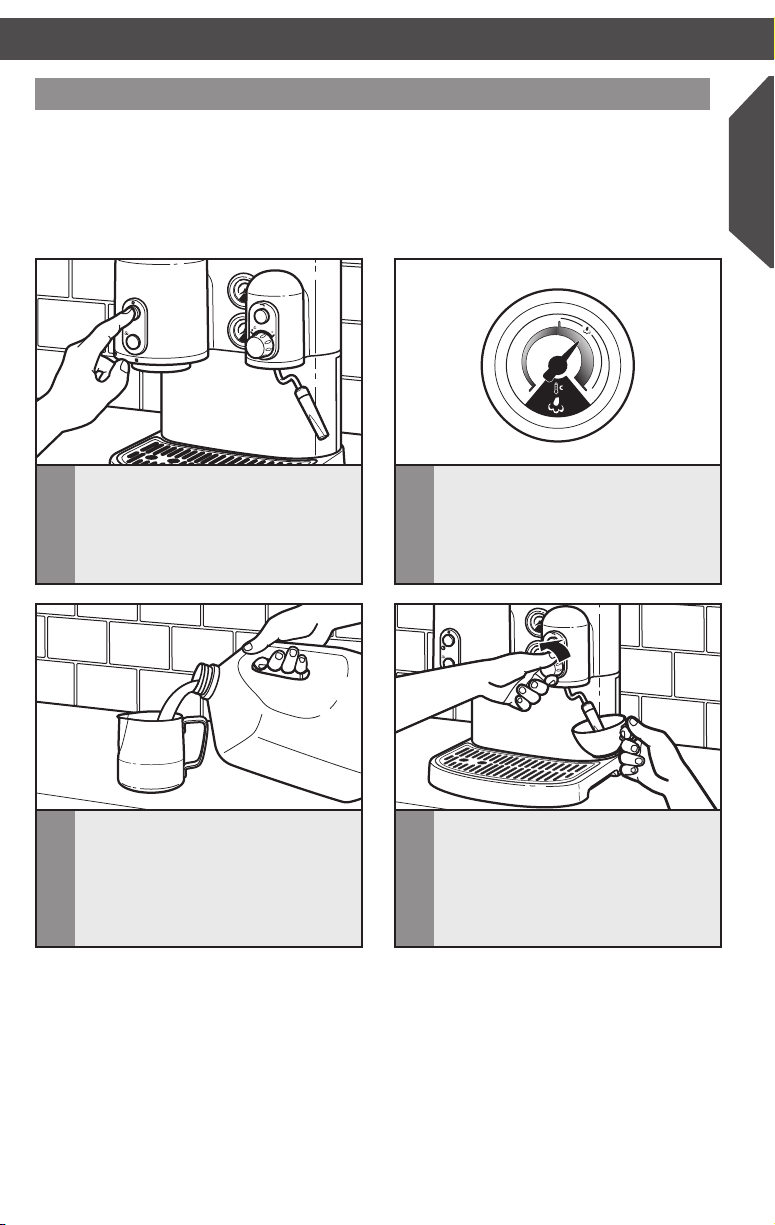
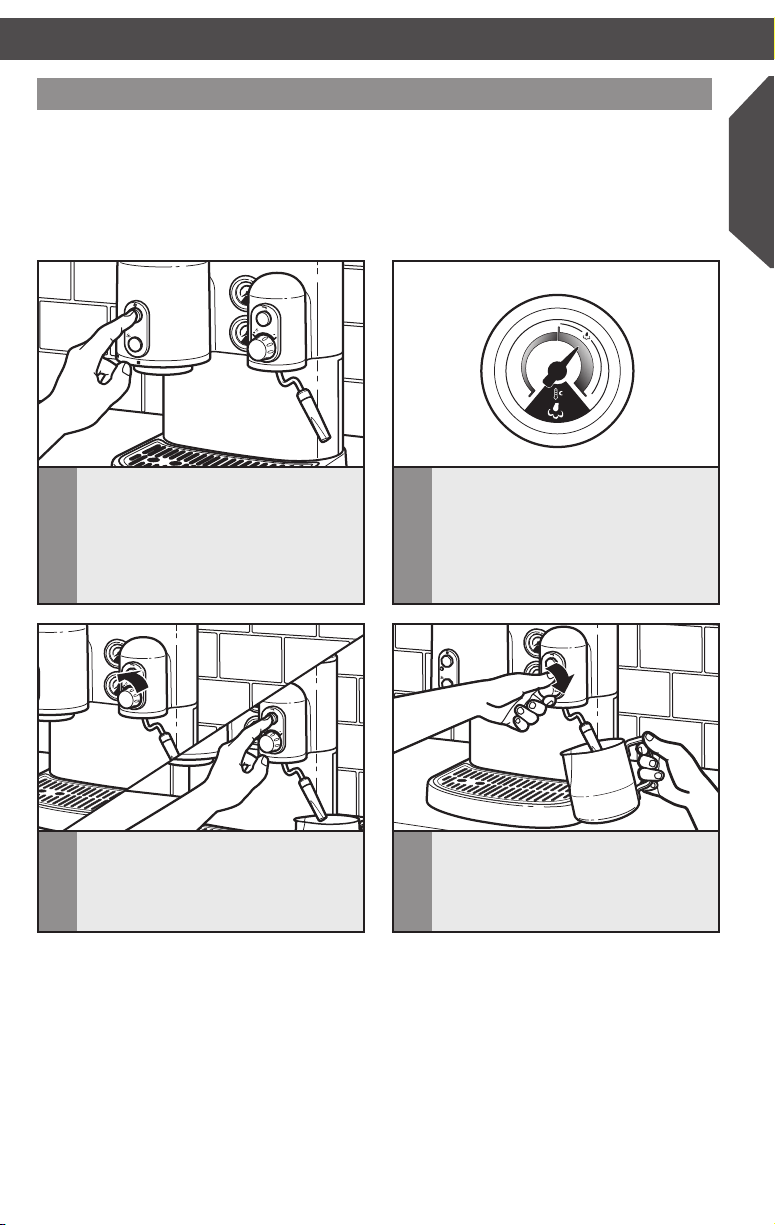
1
Press and hold the On/Off power
button until the ON indicator lights up.
2
Wait until the Espresso Machine has
reached operating temperature; it may
take approximately 6 minutes� When
the frothing boiler temperature gauge
needle climbs into the “ready” zone,
the Espresso Machine is ready to froth�
Frothing and steaming milk
Frothing and steaming milk requires a bit of practice, but you’ll be surprised how quickly
your skills will develop. The Espresso Machine gives you all the tools you need: a 325 ml
stainless steel pitcher shaped especially for frothing (with a spout perfectly designed for
latte art), a frothing arm that adjusts horizontally and vertically for a comfortable working
position, a frothing nozzle designed to enhance frothing, and a Steam Dial that lets you
precisely control the volume of frothing steam�
3
Fill the frothing pitcher 1/3 full with
cold milk�
4
With the frothing arm pointed into an
empty cup, open the Steam dial for a
moment to purge excess water from
the line. To open the Steam dial, turn
it slowly counter-clockwise� To close
the Steam dial, rotate it clockwise until
it stops�
W10699685A_ENv3.indd 13 6/30/14 4:08 PM
14
OPERATING THE ESPRESSO MACHINE OPERATING THE ESPRESSO MACHINE
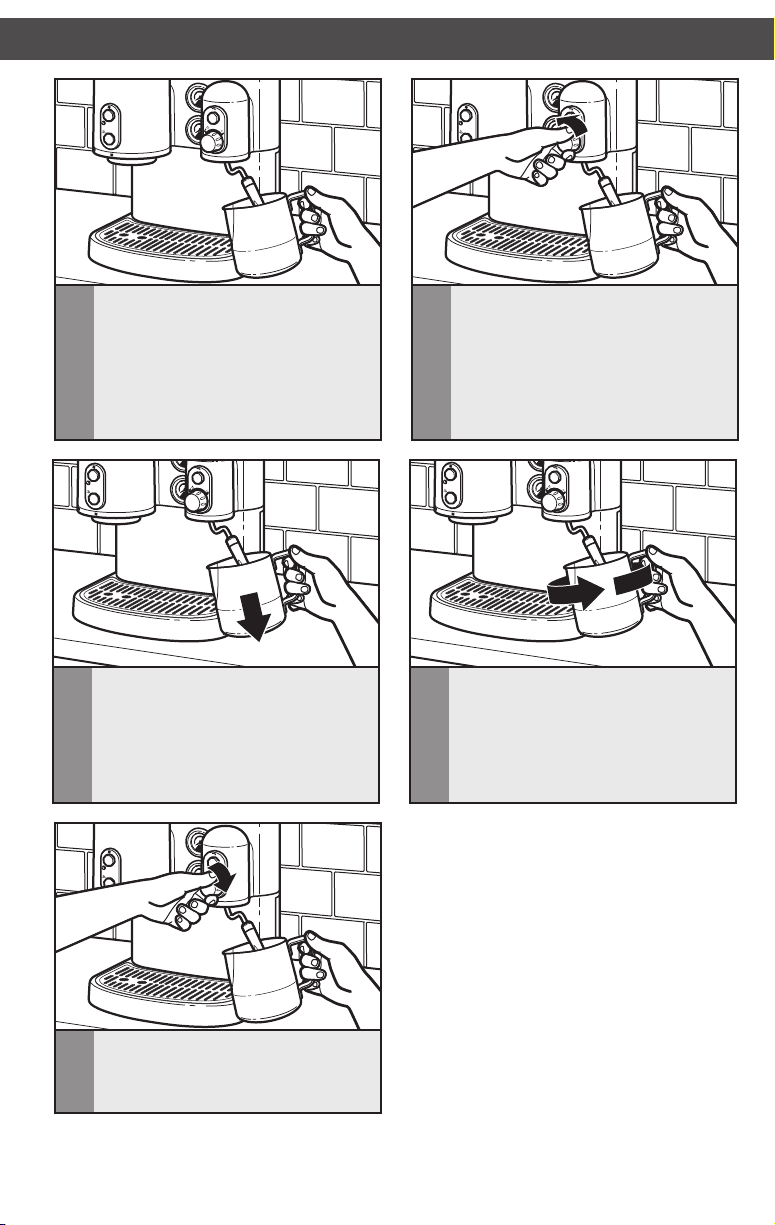
5
With the Steam dial closed,
adjust the frothing arm so it’s in
a comfortable working position,
and submerge the tip of the frothing
nozzle just below the surface of
the milk in the frothing pitcher�
7
As the froth expands, it is necessary
to lower the pitcher� This is called the
stretching phase of frothing� When the
frothed milk has expanded to about 3/4
the volume of the pitcher, lower the
frothing nozzle into the pitcher to finish
steaming (heating) the milk�
6
Slowly open the Steam dial by turning
it counter-clockwise� The further
the Steam dial is rotated, the greater
volume of steam will be released. Tilt
the pitcher to one side to create a
whirling motion in the milk, keeping the
tip of the frothing nozzle about 6.4 mm
below the milk’s surface.
8
Keep the pitcher tilted to maintain a
whirling motion in the milk. Steam the
milk until it’s between 60 and 73.9°C.
(At these temperatures, the pitcher
will be very warm to the touch.)
Avoid scalding the milk, which occurs
at 79.4°C.
9
To avoid splattering, close the Steam
dial by turning it clockwise until it stops
before removing the frothing arm from
the milk�
NOTE: KitchenAid recommends
using a standard kitchen thermometer
to determine when the milk reaches
60°C -73.9°C when learning to steam
milk� Typically the pitcher is almost
too hot to touch when this temperature
is reached�
W10699685A_ENv3.indd 14 6/30/14 4:08 PM
15
English
OPERATING THE ESPRESSO MACHINE OPERATING THE ESPRESSO MACHINE
Dispensing hot water
Hot water can also be dispensed from the frothing arm. This provides a convenient way to
make Americanos, tea, or hot chocolate. Filling a demitasse with hot water is also a great
way to warm it before brewing espresso.
NOTE: Always dispense hot water into an empty container – dispensing into a cup or
pitcher containing other ingredients may cause splattering�
1
Press and hold the On/Off power
button until the ON indicator lights up.
3
With the frothing arm pointed into an
empty cup, open the Steam Dial by
turning it slowly counter-clockwise�
Then press and hold the Hot Water
button to dispense water.
2
Wait until the Espresso Machine has
reached operating temperature; this
will take approximately 6 minutes�
When the frothing boiler temperature
gauge needle climbs into the “ready”
zone, the Espresso Machine is ready
to dispense hot water�
4
When the desired amount of water has
been dispensed, release the Hot Water
button and close the Steam dial by
turning it clockwise until it stops�
NOTE: Residual frothing steam may exit the nozzle before water dispenses. It may take
several seconds for water to begin flowing from the nozzle.
W10699685A_ENv3.indd 15 6/30/14 4:08 PM

16
TIPS FOR GREAT RESULTSTIPS FOR GREAT RESULTS
What is espresso?
Overextraction and underextraction
Before brewing: the elements of great espresso
Espresso began as an attempt in the 1800s
to quickly brew coffee on demand, by the
cup� The goal was to serve the freshest,
most flavorful coffee possible and avoid the
burned, stale taste of coffee kept warm on
a stovetop. To speed the brewing process,
coffee pioneers struck upon the idea of
forcing water through the grounds under
pressure. Steam was initially used to supply
the pressure, followed by compressed
air, lever operated pistons, and finally, the
electric water pump�
Through the decades, the elements of
espresso brewing were tested and refined
Brewing great espresso takes an understanding
of what actually winds up in the cup when
coffee is exposed to water� Roughly 30%
of a roasted coffee bean is made of water
soluble compounds. 20% of those compounds
dissolve fairly easily, while the remaining 10%
take a little more work – which is a good
thing, because that less-soluble 10% is acidic,
bitter, and generally unpleasant. The goal of all
coffee making is to extract the easily dissolved
oils and compounds while leaving the rest in
the grounds�
If ground coffee steeps in water too long,
all the soluble compounds will be extracted,
which makes for a very bitter brew. This
Before the espresso machine is even plugged
in, you’ll need several elements to produce
great coffee�
Fresh Coffee Beans
Great coffee can only come from fresh
coffee beans, properly roasted. Many
baristas recommend buying beans roasted
no darker than a medium roast, the color of
which appears as an even chocolate brown.
This roast preserves the natural sugars and
avor of the bean, which sets the stage for
excellent espresso. A medium roast is the
darkest a bean can be roasted without oils
developing on the surface�
Darkly roasted beans – which appear dark
to produce the standards we have today:
28�35 grams of true espresso comes from
exposing 7 grams of finely ground and
packed coffee to 90�6-96�1º C water under
9 bars of pressure. In a brief 25 seconds,
most of the highly flavorful coffee aromas
and oils are extracted, while the more bitter
compounds and off-tastes are left behind.
When the ground coffee is fresh and the
brewing is done well, the pressurized brew
water emulsifies the coffee oils into the
golden foam called crema, which crowns the
espresso shot with ultimate flavor and aroma�
is called overextraction� The opposite of
overextraction is underextraction, which
occurs when coffee is not exposed to
the brew water long enough, leaving the
essential flavors and aromas locked in the
grounds� Underextraction results in coffee
that is weak in taste�
Whether brewed coffee is overextracted,
underextracted, or just right depends on
several factors, including the ratio of coffee
to brew water, the fineness of the grind, the
brewing temperature, and the length of time
the water is in contact with the coffee. All
these factors are either directly or indirectly
affected by the barista’s technique.
brown or nearly black – look great, but the
extra roasting overwhelms the more delicate
coffee avors and caramelizes any sugars. A
heavy “roasted” coffee avor, often bitter
and sharp, will predominate with a dark
roast�
To preserve the freshness of
coffee beans:
Keep beans in an opaque, air-tight
container and store them in a cool, dry
place� Refrigeration is not recommended,
as condensation tends to form on the
beans whenever the container is opened.
Freezing can help preserve beans stored for
an extended period, but it will also impair
avor.
W10699685A_ENv3.indd 16 6/30/14 4:08 PM

17
English
TIPS FOR GREAT RESULTSTIPS FOR GREAT RESULTS
Espresso brewing technique
Great Tasting Water
An often overlooked element of great
espresso is the brew water. If you don’t
enjoy the avor of your tap water, don’t use
it to brew espresso – use bottled, puried
water instead. Since it doesn’t take long for
fresh water to acquire a “at” quality and
taste, it’s also a good idea to change the
water in the reservoir often and rell the
boilers after a long period of non-use.
Do not use mineral water or distilled water –
they can damage the Espresso Machine�
Brewing Temperature
Water temperature and temperature
consistency have a direct impact on the
avor of espresso. Great espresso comes
from brewing at an optimum temperature,
ideally between 90.6 and 93.3°C. Modern
boilers and thermostats excel at producing
and maintaining the right temperature, but
there is a complicating factor that is a major
concern for baristas: maintaining heat in the
brew group.
If water is pumped from the boiler at a near
perfect 93° C, but ows into a portalter
that’s at room temperature, the water will
cool dramatically – and the actual brewing
temperature will be far less than what
the best espresso requires. If the water
temperature drops below 90.6º C, the
espresso might still exhibit good crema, but
it will acquire a distinctly bitter or sour note.
Proper Brewing Temperature:
• Always attach the portalter (with lter
basket) to the brew head when the
espresso machine is heating� This warms
the lter.
• Always wait until the boilers are fully
heated before brewing – approximately
6 minutes�
• Dose and tamp your coffee quickly, and
brew immediately. This prevents the
portalter from cooling signicantly.
• Never rinse the portalter with cool
water if you are brewing additional shots.
After knocking the old grounds from the
lter, wipe leftover grounds from the
basket with a clean towel. Make sure the
lter basket is dry before adding more
coffee�
The Right Grind – and Grinder
Espresso demands a very ne, very
consistent grind� Blade grinders and
inexpensive burr grinders usually fall short
when it comes to producing the grinds
needed for outstanding espresso. The best
espresso requires a quality burr grinder
which will maximize the avor and aroma
of espresso by producing an extremely
consistent grind with very little frictional
heating�
• Keep the empty portalter attached to
the brew head when you’re engaged in
other tasks, like grinding or frothing�
• Warm a cup or demitasse by placing
it on top of the Espresso Machine
before brewing. Cups can also be
heated instantly with a shot of steam
from the frothing arm�
The Espresso Machine is designed to
provide an optimum brewing temperature.
Dedicated dual boilers eliminate the
temperature uctuations common with
single boiler designs when alternating
between brewing and frothing. The nickel-
plated brass brew group heats quickly, and
is commercial-size for a very good reason:
commercial-size groups retain heat better
than smaller groups� The Espresso Machine
does its part to provide the right brewing
temperature. The rest is up to the barista!
Grinding
Great espresso demands the freshest
coffee, and the freshest coffee is always
ground immediately before brewing.
The most delicate aromatic compounds
in coffee go stale within a few minutes
of grinding, so grind only as much as you
intend to brew immediately.
Dosing
Dosing is the process of measuring ground
coffee into the lter basket. A single shot
of espresso requires 7 grams of coffee – a
double shot, twice that. If lled level with
nely ground coffee, the scoop included
with the Espresso Machine is a near perfect
measure for one shot of espresso�
Accomplished baristas usually don’t bother
making precise measurements when dosing:
they simply ll the basket nearly to the brim
W10699685A_ENv3.indd 17 6/30/14 4:08 PM
18
TIPS FOR GREAT RESULTSTIPS FOR GREAT RESULTS
and sweep any excess coffee from the lter
with their ngers, leaving exactly what they
need. After you’ve had some experience
dosing, leveling, and tamping your coffee,
you’ll be able to consistently dose your
coffee by sight, just like the pros.
If you’re dosing coffee without the aid of
a measuring scoop, it is important not to
overll the lter basket. Coffee needs room
to expand when brewing. If the coffee is
crushed against the shower screen, it will
prevent an even dispersion of water across
the lter, leading to uneven extraction and
poor espresso�
Here’s how to tell if you’re overfilling
the filter basket:
• Fill the basket, level the coffee, and apply a
good tamp (see the next section, “Proper
tamping technique”)�
• Attach the portalter to the brew head,
then remove it immediately�
• If the coffee in the portalter has an
imprint of the shower screen or the
shower screen screw, there is too much
coffee in the lter basket!
Leveling
Leveling the coffee after it has been dosed
into the lter is a critical technique for
great espresso. If the coffee isn’t evenly
distributed in the lter, tamping the coffee
will create areas of high and low density�
The high pressure brew water will inevitably
follow the path of least resistance, owing
heavily through the low density coffee –
overextracting the bitter coffee compounds
– and owing lightly through the higher
density coffee, underextracting the avorful
essences� This uneven extraction results in
thin, weak, bitter espresso.
To Level Coffee In the Filter Basket:
• Make sure the lter basket is dry before
adding coffee; moisture in the basket will
create a path of least resistance for the
brew water.
• After dosing the lter with coffee, level
the coffee by sweeping a nger back and
forth over the lter. Do not sweep in one
direction only – this will cause the coffee
to pile up on one side of the basket and
produce uneven extraction� Try to impart
a slight bowl shape to the coffee, with the
center lower than the sides�
• Make certain there are no gaps between
the coffee and the sides of the lter.
Tamping
Tamping compresses the coffee into a
level disc (also called a puck) that provides
uniform resistance to the high-pressure
brew water. Properly leveled and tamped
coffee will produce an even extraction of
coffee compounds – and great espresso.
Coffee that is tamped too softly will be
deformed by the brew water, resulting in
uneven extraction, a fast brewing time, and
mediocre espresso� Coffee tamped too
rmly will slow the brewing time, making for
a bitter, overextracted beverage.
Proper tamping technique
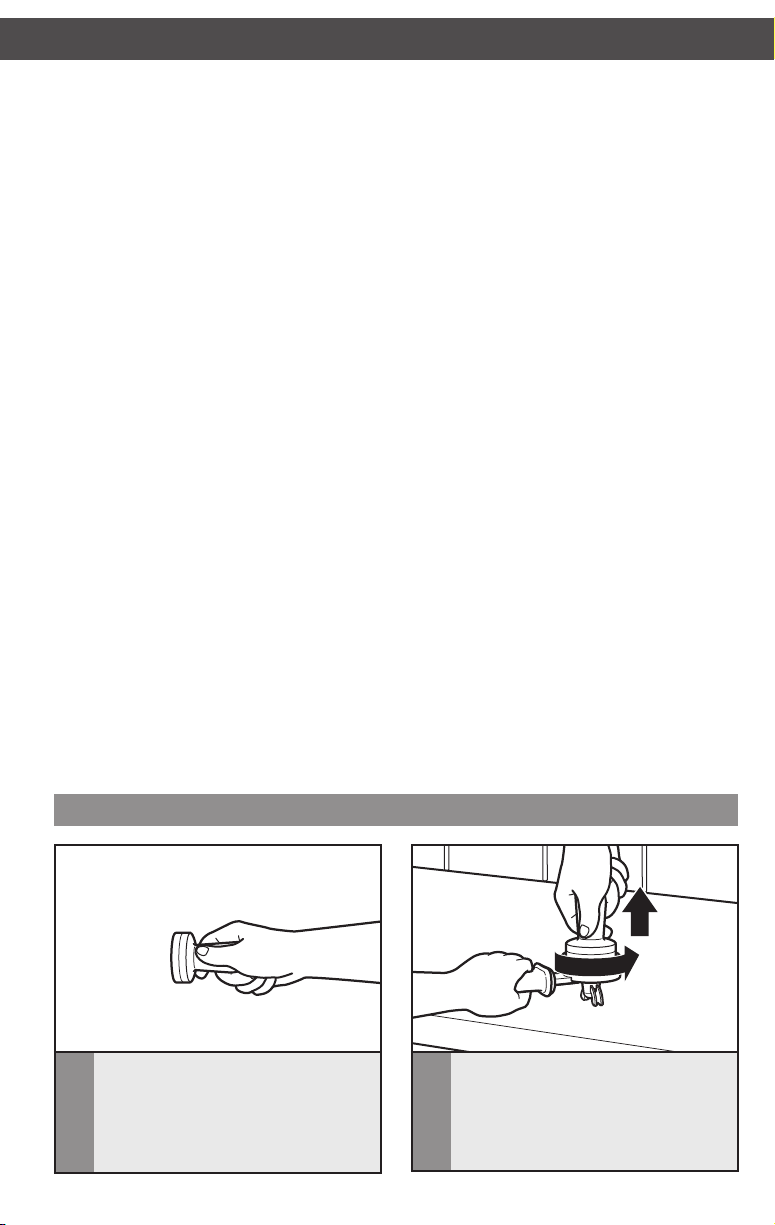
1
The tamper handle should be grasped
like a doorknob, with the base of the
handle firmly against the palm� When
tamping, try to keep the tamper, wrist,
and elbow in a straight line.
2
With the bottom of the portafilter
resting on a solid surface, gently press
the tamper into the coffee with the goal
of creating a level surface� Remove the
tamper from the filter basket with a
slight twisting motion�
W10699685A_ENv3.indd 18 6/30/14 4:08 PM
19
English
TIPS FOR GREAT RESULTSTIPS FOR GREAT RESULTS
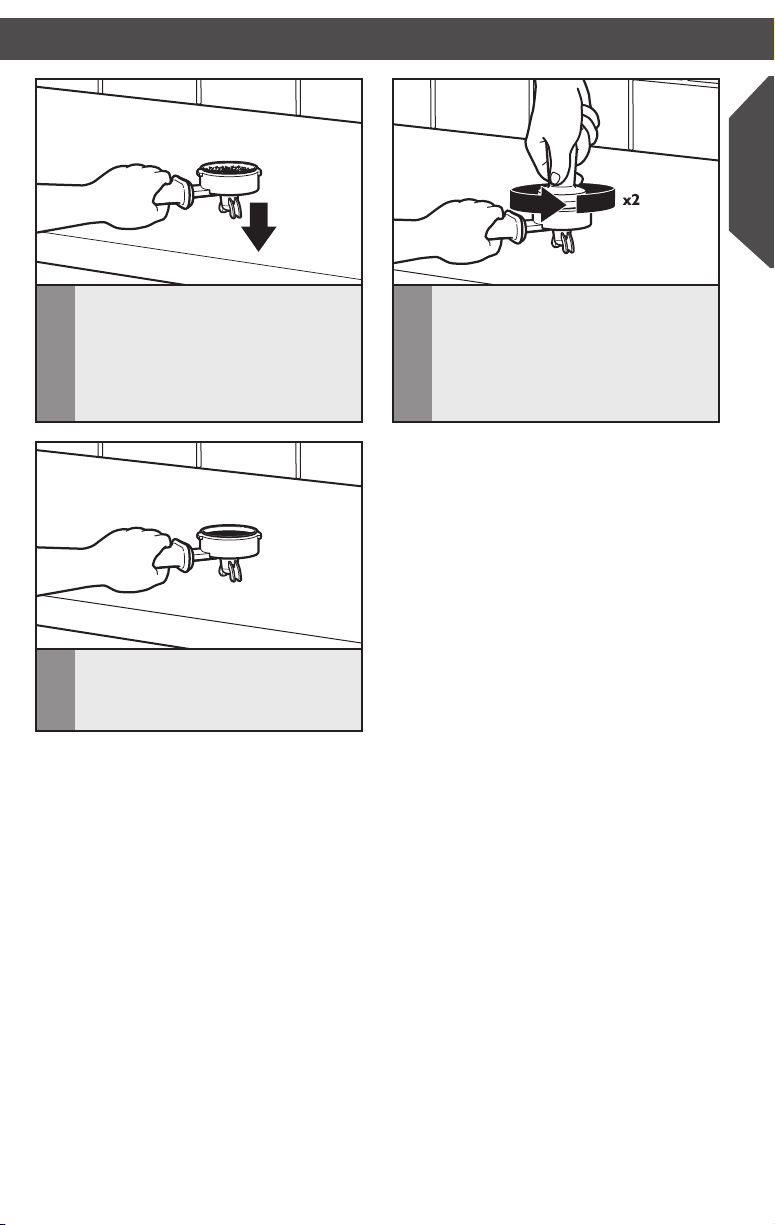
3
After removing the tamper, some grinds
may stick to the side of the filter basket.
Tap the portafilter gently on the table
to jostle loose grinds onto the tamped
coffee disc� Do not tap too hard, or the
tamped coffee will dislodge or fracture�
5
Inspect your tamp� The coffee disc
should be smooth and level with no
gaps between the side of the filter
basket and the coffee.
4
Apply a second, finishing tamp (also
called a polishing tamp)� Press straight
down on the coffee with about 2.4 bars
of pressure, then relax the force slightly
(to about 1.4 bars) and polish the coffee
by turning the tamper completely
around twice�
Measuring Tamping Pressure
1.4 bars, 2.0 bars – how do you know how
much tamping force you are actually using? Do
what the baristas do: use a bathroom scale!
Place a scale on a table or countertop, and
tamp your coffee on top of it� Pretty soon, you
will develop a feel for how much 1�4 or 2�0
bars of force is.
W10699685A_ENv3.indd 19 6/30/14 4:08 PM

20
TIPS FOR GREAT RESULTSTIPS FOR GREAT RESULTS
Shot Volume
The brew group and boilers are heated. The
fresh coffee has been ground, dosed into the
portalter, expertly leveled, and precisely
tamped. Now comes the moment of truth:
brewing!
For the best espresso, never extract more
than a single shot (30 ml) using the small
lter basket or a double shot (59 ml) using
the large one� Brewing more will overextract
the coffee and result in thin, bitter espresso.
As it pours, perfect espresso is a deep
reddish brown with a thick texture like
honey running off a spoon� It often forms
what are called mouse-tails, or thin syrupy
streams. As increasingly bitter and acidic
compounds are extracted, the espresso pour
will begin to lighten; in some cases, the pour
will become almost white. Expert baristas
will watch the pour carefully and quickly stop
brewing if it starts to lighten.
Espresso Ristretto is espresso brewed with
less than normal shot volume� Prepare the
espresso machine to brew a double shot, but
stop brewing when only 44 ml have been
extracted. What you’ve done is restrict the
pour to include only the most avorful and
least bitter coffee oils and essences.
Extraction Rate
Decades of experience have shown that the
best espresso – whether a single or a double
shot – takes about 20–25 seconds to brew.
If your espresso is brewing much faster or
slower than 20–25 seconds, and your tamping
technique is good, adjust the grind! Grind
ner for a slower extraction rate, and coarser
for a faster one� Keep the dose and tamp the
same�
Coffee is sensitive to the ambient humidity
and will absorb moisture readily. This
will affect the extraction rate� In a humid
environment, the extraction rate will slow
down; in dry conditions, the extraction rate
will speed up. You may nd yourself adjusting
the grind according to the season – or the
day’s weather.
Some grinders do not allow the ne
adjustments necessary to correct the
extraction rate. The best solution is to invest
in a quality burr grinder. If this isn’t possible,
experiment with the tamping pressure� Tamp
with less force for a faster pour, and more
force for a slower one�
The Golden Crema
A mark of ne espresso is crema, the dense
golden foam of emulsied coffee oils that
captures the essence of coffee avor. Good
crema should be thick and cling to the side of
the cup when it’s tilted; the best crema should
be able to support a sprinkling of sugar for
nearly 30 seconds�
Troubleshooting Espresso As It Brews
As it pours, if your espresso…
… has more of a cinnamon color, instead of
being deep brown:
• make sure your brew group and boilers
are fully heated
• use a less acidic blend of coffee
…is whitish with thin brown streaks:
• review your tamping technique – the
tamped coffee has fractured, or a gap has
developed between the coffee and the side
of the lter basket
…is thin and fast-owing:
• review your tamping technique – the tamp
may not be rm enough to provide an
even resistance to the brew water
• use a ner grind
• check coffee freshness
…barely dribbles out the portalter:
• review your tamping technique – the tamp
could be too rm
• use a coarser grind
Espresso extraction technique
W10699685A_ENv3.indd 20 6/30/14 4:08 PM

21
English
TIPS FOR GREAT RESULTSTIPS FOR GREAT RESULTS
Preparing Cappuccino
Preparing Café Latte
• The Italian word Cappuccino is derived
from Capuchin, an order of monks who
wear garments the color of this most
popular espresso drink. A standard
Cappuccino is a combination of steamed
milk and espresso that’s capped with a
layer of frothed milk; it’s usually served in a
bowl-shaped cup of 177 to 207 ml volume.
• A basic Café Latte is a single shot (30 ml)
of espresso topped with 237 to 296 ml of
steamed milk and about 6 mm of foamed
milk. Lattes are often avored with 30 to
59 ml of syrup, the most popular being
almond and hazelnut� If you use chocolate
syrup and garnish the drink with whipped
cream and chocolate shavings, you’ll have
that chocolate and coffee lover’s dream,
the Café Mocha�
• To prepare a Café Latte, you will need a
pitcher larger than the one supplied with
the Espresso Machine. A 473 ml capacity
pitcher is perfect. Fill the pitcher 1/2 full
• To prepare Cappuccino, froth and steam
the milk before brewing the espresso.
This allows the froth to gel slightly and
fully separate from the milk� Once the
milk is prepared, brew a single shot
(30 ml) of espresso into a Cappuccino
cup, then pour the frothed and steamed
milk into the cup with a gentle shaking
motion. For a show-stopping ourish, top
your Cappuccino with nutmeg, cinnamon,
chocolate powder, or chocolate shavings�
with cold milk� The steaming technique
for Lattes is almost the same as
Cappuccino, except the goal is to
impart a velvety texture to the milk
while minimizing froth� Keep the frothing
nozzle deeper in the milk so the milk
volume expands more slowly. No large
bubbles or froth should form.
• Once the milk is prepared, brew the
espresso into a Latte mug, add the syrup
if any, and gently ll with steamed milk.
Barista tips
When brewing multiple shots:
• Use a towel to clean and dry the lter
basket before lling with coffee. This will
help to achieve even coffee extraction�
To maintain the proper brewing
temperature, it is important to keep the
brew group warm, so:
• Do not rinse the portalter with tap water
– doing so will cool the lter. It’s best to
wipe leftover grounds from the lter
with a towel�
• When you’re busy with other tasks, like
grinding coffee or frothing milk, keep the
empty portalter warm by attaching it to
the brew head.
• Clean the frothing arm and nozzle
immediately after use. See “Care and
Cleaning” section�
• Lower fat milks are generally easier to
froth. Skim milk can be tricky because it
froths very easily, with a tendency to form
large bubbles and dry peaks that mar its
texture� Ultimately, the choice of milk is
a matter of experimentation and taste�
The most important factors in producing
a superior froth are experience and good
refrigeration: the colder the milk you use,
the better.
W10699685A_ENv3.indd 21 6/30/14 4:08 PM

22
TIPS FOR GREAT RESULTSTIPS FOR GREAT RESULTS
Glossary of espresso drinks
Americano
177 to 237 ml of hot water added to a single
shot of espresso. This makes a superb cup
of coffee�
Café Latte
237 to 296 ml of steamed milk added to
a single shot of espresso� Lattes are often
avored with 30 to 59 ml of syrup.
Café Mocha
A Café Latte with 59 to 100 ml of chocolate
syrup added, and usually topped with
whipped cream and chocolate akes. It
can also be prepared without syrup using
steamed chocolate milk�
Cappuccino
A standard Cappuccino is a combination
of steamed milk and espresso that’s
capped with a layer of frothed milk; it’s
usually served in a bowl-shaped cup of
177 to 237 ml volume� Powdered cocoa or
cinnamon may be sprinkled on top
as a garnish�
Classic Cappuccino
Classic Cappuccino is common in Italy, and is
simply espresso topped with frothed milk�
Doppio
A double shot of espresso.
Espresso Breve
Espresso with steamed half & half poured
on top�
Espresso Con Panna
Espresso topped with a dollop of
whipped cream�
Espresso Lungo
Espresso “pulled long” – that is, brewed
with a greater than normal shot volume�
This technique produces caffeine-heavy
espresso which is thinner, lighter-colored,
and less full-bodied than normal. To make
Espresso Lungo, brew 44 ml using the small
lter basket, or 89 ml using the large lter
basket. Use a slightly coarser grind to keep
the brewing time between 20–25 seconds;
extending the brewing time beyond 30
seconds will make the Espresso Lungo
excessively bitter.
Espresso Lungo is often used to make
stronger-tasting Americanos or Lattes.
Espresso Macchiato
Espresso with a dab of steamed milk
added to the top�
Espresso Ristretto
An espresso “pulled short” – that is,
brewed with less than normal shot
volume to maximize avor and minimize
bitterness. For ristretto, simply brew
about 22 ml using the small lter basket or
44 ml using the large basket.
W10699685A_ENv3.indd 22 6/30/14 4:08 PM

23
English
TIPS FOR GREAT RESULTSTIPS FOR GREAT RESULTS
Glossary of Espresso Machine parts
Brew group
The part of the Espresso Machine that holds
all the working parts that allow you to brew
your drink. There are two brew groups on
your Espresso Machine. The rst holds the
On/Off Power button, the On indicator light,
the Espresso button, the brew head, and the
shower-screen. The portalter attaches to
this brew group. The second brew group
holds the Hot Water button, the steam dial,
and the frothing arm/nozzle.
Brew head
The round area that allows you to attach
the portalter when brewing espresso.
Shower-screen and Shower-screen
brush
Water comes through the shower-screen at
a precise speed in order to extact a perfect
shot of espresso from the lter basket. The
shower-screen brush allows you to gently
clean the shower-screen between uses so
that the water ow is not blocked.
Portafilter
The portalter holds the lter basket lled
with espresso grounds in place on the brew
head, and has a long handle for ease of use�
Filter baskets
The small lter basket brews one (30 ml)
shot of espresso. The large lter basket
brews 59 ml of espresso.
Tamper
This tool is used to compress or “polish”
your espresso grounds in the lter basket.
Frothing arm and Frothing nozzle
The frothing arm and nozzle allow you to
make steamed milk for espresso drinks�
The arm adjusts horizontally and vertically,
allowing you to position the nozzle in a
comfortable working position. The nozzle
is designed to enhance frothing�
Steam dial
Precisely controls the pressure and volume
of steam coming through the frothing nozzle�
Frothing pitcher
The 325 ml stainless steel pitcher is shaped
especially for frothing milk, and
has a spout designed for latte art�
Espresso temperature gauge
This gauge reads the temperature of your
espresso brewing boiler, which must be
heated to the right temperature to extract
a shot of espresso�
Frother temperature gauge
This gauge reads the temperature of your
steam boiler, which must be heated to the
right temperature to produce steam for
frothing milk�
Drip plate and Drip tray
The drip plate sits inside the drip tray
and catches any spilled espresso while
the machine is in use�
Cup rail
The top of the Espresso Machine is a good
place to warm your espresso cups before
making espresso� The cup rail will keep cups
from falling off the top while warming�
W10699685A_ENv3.indd 23 6/30/14 4:08 PM
24
CARE AND CLEANINGCARE AND CLEANING
Cleaning the Espresso Machine
Cleaning the frothing arm and nozzle
Keeping the Espresso Machine clean is vital to brewing the best espresso possible. You
might notice that your machine is taking longer to brew, or the brew head is spewing or
sputtering. These can be signs that it’s time to clean your Espresso Machine. Stale coffee
oils on the portafilter, filter baskets, and shower screen will ruin the flavor of the most
expertly prepared coffee, and any milk left on the frothing arm should be removed for
best performance and taste.
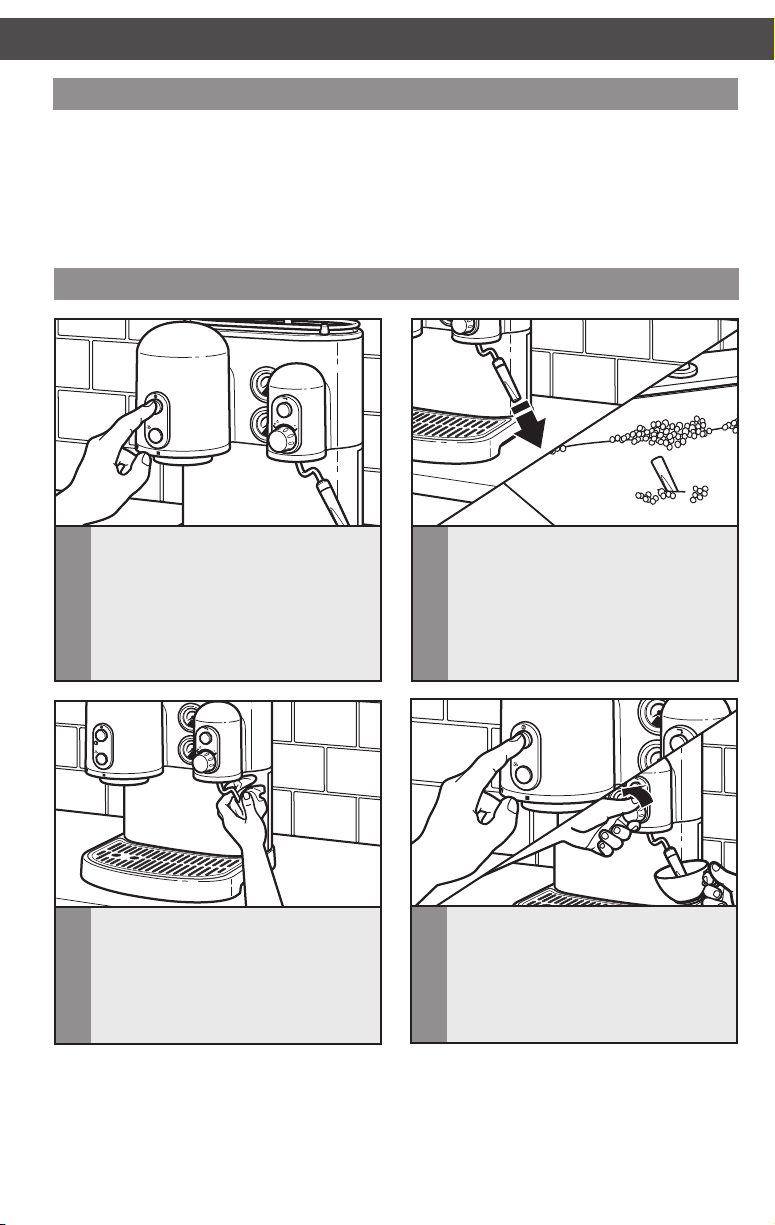
1
Turn off the Espresso Machine� Unplug
the Espresso Machine from the wall
outlet, or disconnect power� Let the
Espresso Machine, and any attached
parts or accessories, cool�
2
The frothing arm and nozzle should
always be cleaned after milk is frothed.
Remove the frothing sleeve from the
frothing nozzle by pulling it downward.
The frothing sleeve can be washed
in warm, soapy water� Make sure
any openings in the sleeve are free
of residue�
3
Wipe the frothing arm and nozzle with
a clean damp cloth� Do not use an
abrasive scouring pad.
4
Plug into a grounded outlet and turn on
the Espresso Machine; let the boilers
reach operating temperature� Point the
frothing arm into an empty cup and
momentarily open the steam dial to run
steam through the frothing nozzle� This
will clean the nozzle tip�
W10699685A_ENv3.indd 24 6/30/14 4:08 PM

25
English
CARE AND CLEANINGCARE AND CLEANING
1
Wipe the Espresso Machine housing
with a clean damp cloth and dry with
a soft cloth. Do not use abrasive
cleansers or scouring pads when
cleaning the Espresso Machine, or
any part or accessory�
2
Wash the portafilter in warm, soapy
water and rinse with clean water� Dry
with a soft cloth� Do not wash the
portafilter in a dishwasher�
Cleaning the housing, lters, drip tray, drip plate,
reservoir, and pitcher
3
Wash the filter baskets, drip tray, drip
plate, water reservoir, and frothing
pitcher in the top rack of a dishwasher,
or by hand in warm, soapy water. If
washing by hand, be sure to rinse with
clean water and dry with a soft cloth�
4
Use the shower screen brush or a damp
cloth to brush or wipe coffee grounds
from the brew head gasket and
shower screen�
W10699685A_ENv3.indd 25 6/30/14 4:08 PM
26
CARE AND CLEANINGCARE AND CLEANING
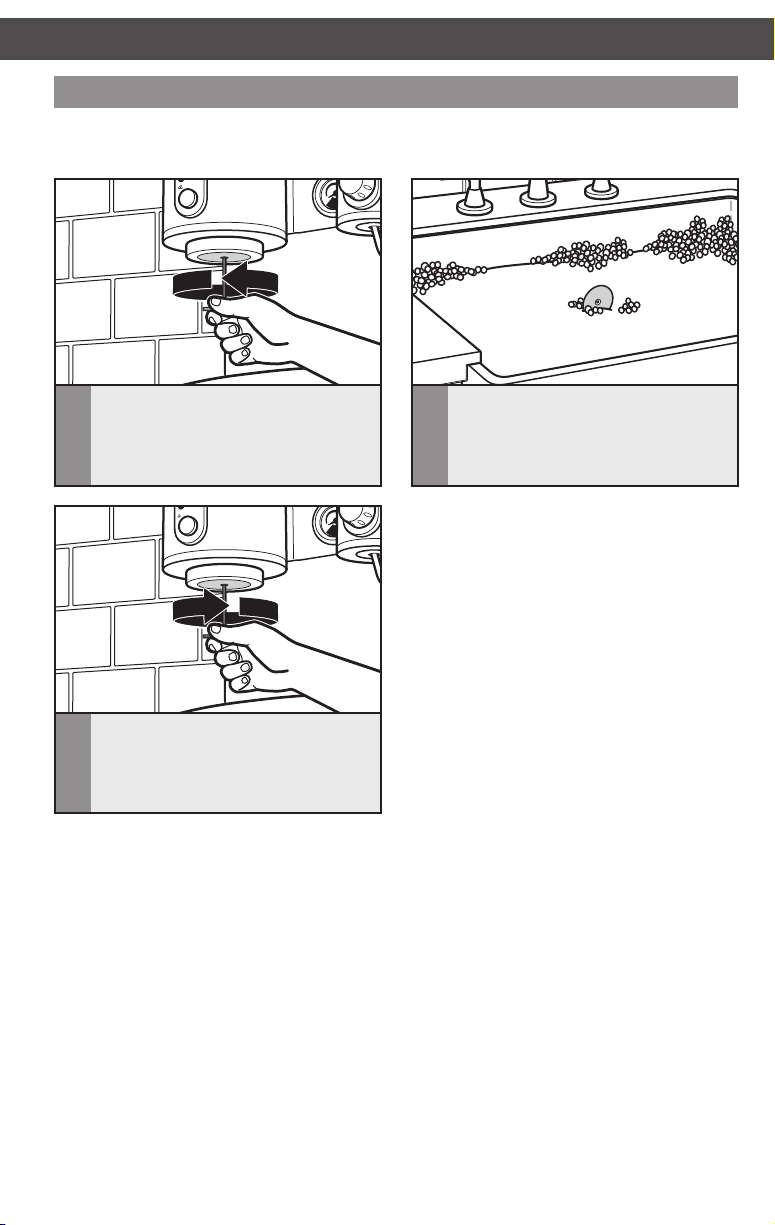
1
Using an allen wrench, remove the
screw at the center of the shower
screen by turning it counter-clockwise.
Once the screw is free, the shower
screen should drop from the brew head.
3
Place the shower screen into the
brew head with the smooth side
facing down, and attach with the
shower screen screw� Turn the
screw clockwise until snug�
2
Wash the shower screen in warm,
soapy water, and rinse with clean
water� Do not wash the shower screen
in a dishwasher�
Cleaning the shower screen
Once every 75 to 100 shots of espresso, the shower screen should be removed from the
brew head to clean thoroughly.
NOTE: When the shower screen is
attached, the center screw should be
flush with the surface of the screen� If
it is not, remove the screen, turn it over,
and re-attach�
W10699685A_ENv3.indd 26 6/30/14 4:08 PM
27
English
CARE AND CLEANINGCARE AND CLEANING
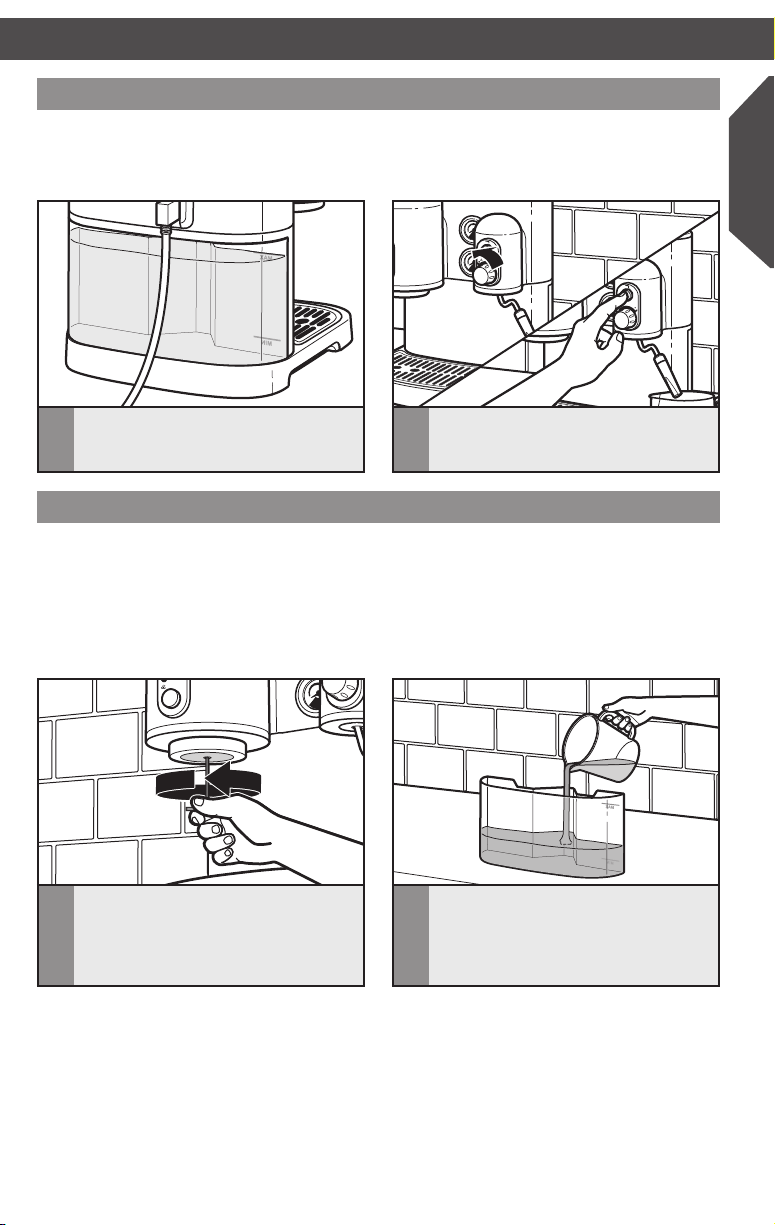
1
Remove the reservoir, empty any stale
water, replace, and fill the reservoir
with fresh water to the max fill line�
2
Fill the boilers with the fresh water. For
instructions, see “Rinsing and filling the
boilers” section.
Priming after long periods of non-use
Descaling
For the best tasting espresso, prime the Espresso Machine with fresh water after a long
period of non-use. Priming will also ensure that the boilers are filled and the Espresso
Machine is ready to operate�
Calcium deposits (“scale”) from water will build up in the Espresso Machine over time
and may impair espresso quality. Scale should be removed every four months; local
hard-water conditions may require more frequent descalings� Use a packaged descaling
agent or appropriate decalcification tablets to remove scale. These can be found online,
or at coffee specialty shops. KitchenAid does not recommend using vinegar and water
solutions or home remedies in place of a commercial descaler for the Espresso Machine�
1
Remove the shower screen from the
brew head. See “Cleaning the shower
screen” section for instructions�
2
Make certain the water reservoir
is empty� Following the directions
on the descaling agent packet, mix
the descaling solution and add it
to the reservoir�
W10699685A_ENv3.indd 27 6/30/14 4:08 PM
28
CARE AND CLEANINGCARE AND CLEANING
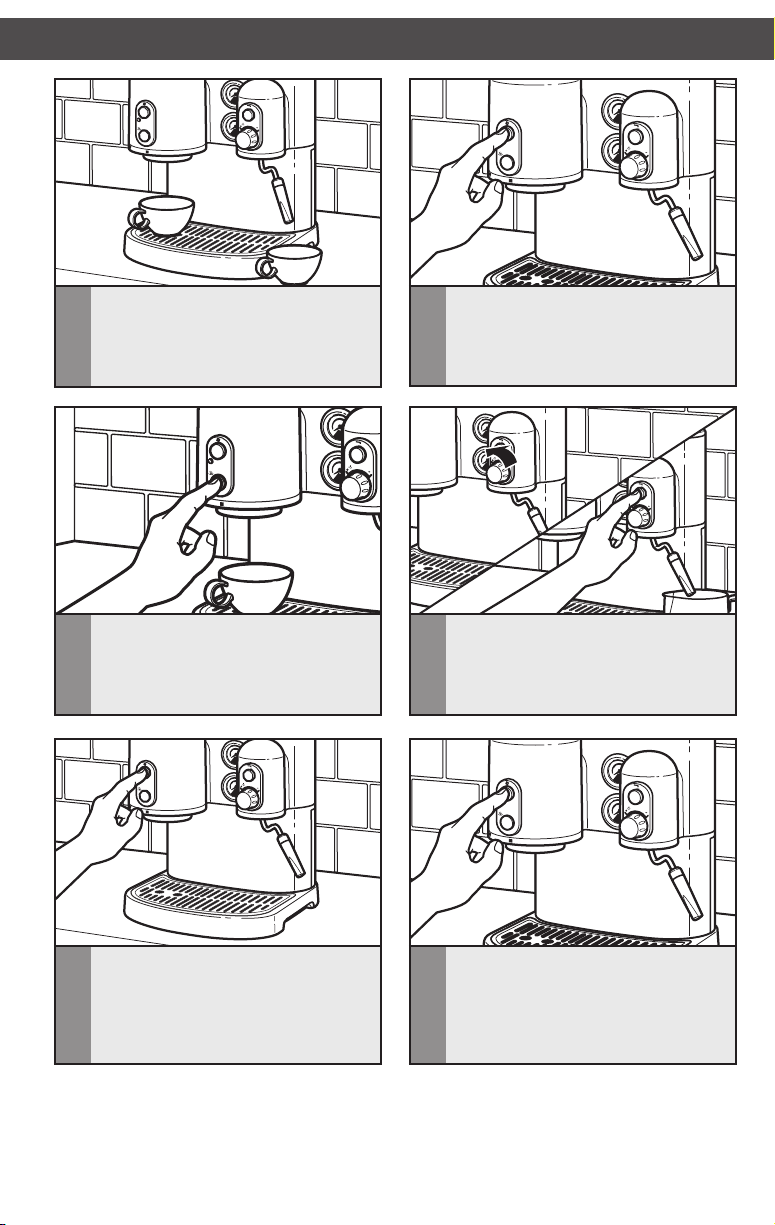
3
To catch the cleaning solution, place
a large cup under the brew head (do
not attach the portafilter), and another
under the frothing nozzle�
5
Press the ESPRESSO button and
dispense cleaning agent through
brew head for 15 seconds; press the
ESPRESSO button again to shut off.
7
Press the ON/OFF power button to
turn the Espresso Machine off�
4
Press and hold the ON/OFF power
button until the ON indicator lights
up. It is not necessary for the boilers
to heat before proceeding to the
next step�
6
Open the Steam dial by turning it
counter-clockwise, then press and
hold the HOT WATER button for
15 seconds to dispense cleaning agent
through the frothing arm and nozzle�
8
Wait 20 minutes, then repeat steps
4–7. Every 20 minutes, keep repeating
steps 4–7 until nearly all the solution in
the reservoir has been run through the
Espresso Machine� Do not allow the
reservoir to run completely dry�
NOTE: After each repetition, be sure to
check that there is enough water in the
reservoir by easily pulling the reservoir out
to the side, before starting another cycle.
TROUBLESHOOTING
W10699685A_ENv3.indd 28 6/30/14 4:08 PM
29
English
CARE AND CLEANINGCARE AND CLEANING
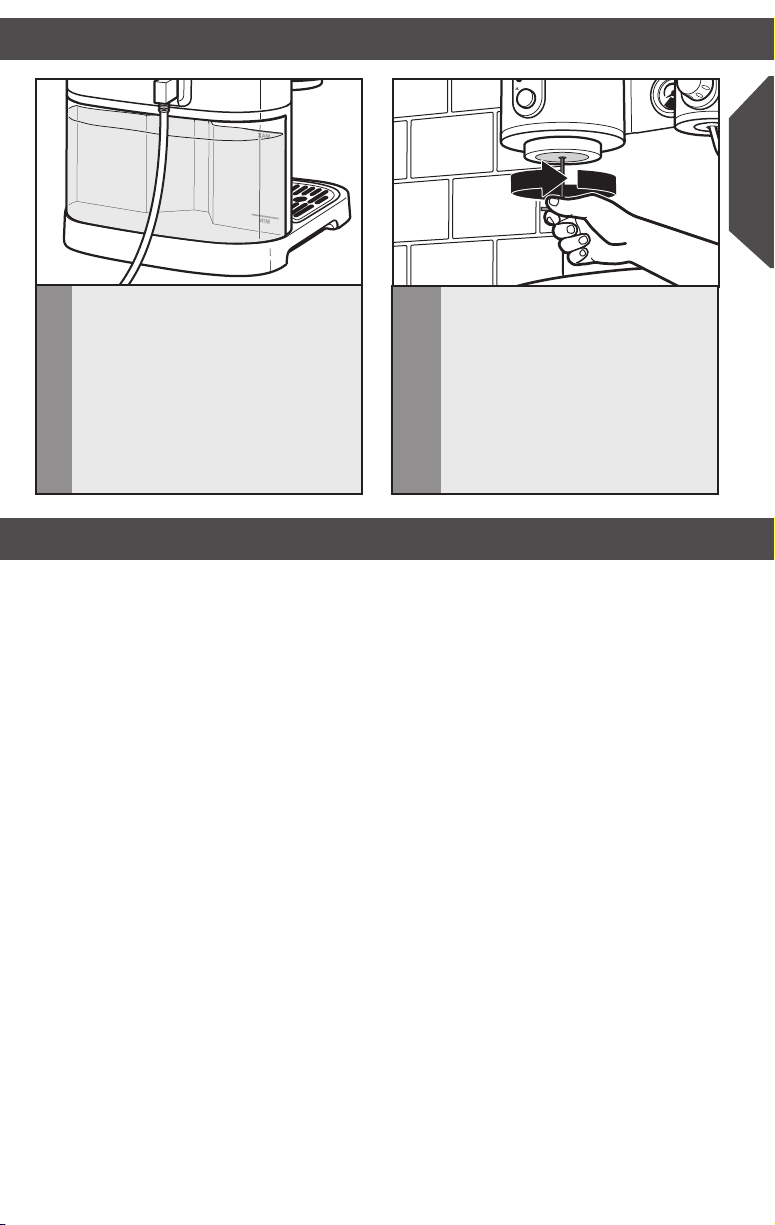
9
Remove the water reservoir and rinse
with fresh water, then replace and fill
with fresh water to the max fill line�
Press and hold the ON/OFF power
button until the ON indicator lights
up, and flush the Espresso Machine
by quickly dispensing the contents
of the reservoir, alternating between
the brew head and frothing arm. Do
not allow the water reservoir to run
completely dry�
10
Attach the shower screen to the
brew head. See “Cleaning the shower
screen” section for instructions� Be
sure to add additional fresh water
to the reservoir for brewing.
TROUBLESHOOTING
1. If the power light remains off and the
boilers fail to heat when the On/Off
power button is pressed:
• Check to see if the Espresso Machine is
plugged in; if it is, unplug the Espresso
Machine, plug it back in, and press the
ON/OFF power button again. If the
Espresso Machine still does not operate,
check the fuse or circuit breaker on the
electrical circuit the Espresso Machine
is connected to and make certain the
circuit is closed�
2. If coffee does not ow from the
portalter, the…
• water reservoir may be empty, or the
brewing boiler may not be lled
• reservoir siphon hose may be kinked or
improperly placed
• shower screen may require cleaning
• Espresso Machine may need to be
descaled
• coffee may be too nely ground
• coffee may be too rmly tamped
3. If the water pump is noisy, the…
• water reservoir may be empty
• reservoir siphon hoses may be kinked
or improperly placed
• boilers may not be lled
4. If water leaks from the portalter…
• the portalter may not be properly
attached to the brew head
• coffee grinds may be clinging to rim of
portalter or brew head gasket
• the brew head gasket may be dirty
or worn
5. If little steam or froth is being
produced, the…
• frothing boiler may not be at operating
temperature
• steam dial may not completely open
• frothing nozzle may be need to be cleaned
• water reservoir may be empty, or the
frothing boiler may not be lled
W10699685A_ENv3.indd 29 6/30/14 4:08 PM

W10699685A_ENv3.indd 30 6/30/14 4:08 PM

W10699685A_ENv3.indd 31 6/30/14 4:08 PM

32
W10699685A 07/14
© 2014. All rights reserved. Specications subject to change without notice.
W10699685A_ENv3.indd 32 6/30/14 4:08 PM