Do not store or use gasoline or other flammable vapors and liquids in the
vicinity of this or any other appliance.
WHAT TO DO IF YOU SMELL GAS
• Do not try to light any appliance.
• Do not touch any electrical switch; do not use any phone in your
building.
• Immediately call your gas supplier from a neighbor’s phone. Follow
the gas supplier’s instructions.
• If you cannot reach your gas supplier, call the fire department.
Installation and service must be performed by a qualified installer, service
technician or the gas supplier.
If the information in this manual is not followed exactly, a fire or
explosion may result, causing property damage, personal injury or
loss of life.
CGa, CGi, CGs, EG,
EGH, LGB, PEG, PFG
Gas-Fired Boilers
User’s
Information
Manual
Part Number 550-110-592/0408
CGa, CGi, CGs, EG, EGH, LGB, PEG, PFG Boilers
2
Part Number 550-110-592/0408
Please read this page first
How to use this
manual . . .
The Boiler manual is for use only by a qualified heating installer/service
technician. Refer only to this User’s Information Manual for your reference.
Improper installation, adjustment, alteration, service or maintenance can
cause property damage, personal injury (exposure to hazardous materials)
or loss of life. Installation and service must be performed by a qualified
installer, service agency or the gas supplier (who must read and follow the
supplied instructions before installing, servicing, or removing this boiler.
This boiler contains materials that have been identified as carcinogenic, or
possibly carcinogenic, to humans).
Boiler service and
maintenance
The following defined terms are used throughout this manual to bring attention to the presence
of hazards of various risk levels or to important information concerning the life of the product.
Hazard definitions
Indicates presence of hazards that will cause severe personal injury, death
or substantial property damage.
Indicates presence of hazards that can cause severe personal injury, death
or substantial property damage.
Indicates presence of hazards that will or can cause minor personal injury
or property damage.
Indicates special instructions on installation, operation or maintenance that
are important but not related to personal injury or property damage.
To . . . Read/use . . . Pages . . .
Learn
precautions
Warnings and definitions
1, 2, and 3
Prevent air
contamination
Read list of air contaminants you must avoid. If
found, either remove products permanently
or isolate boiler and provide outside com-
bustion air.
3
Identify boiler
components
The illustration on page 4 or 5, will show you the
location of the main components.
4-5
Maintain
boiler
Set up a plan for maintaining the boiler using
the schedule included in this manual.
Schedule an annual start-up by a qualified ser-
vice technician before every heating season.
6-12
Start — or —
Shutdown
boiler
Use the Lighting/Operating instruction sheet
for the gas valve installed on your boiler. Ask
your service technician if you are unsure which
one.
12-22
Troubleshoot
common
problems
Use the common problems/solutions table to
resolve typical heating system/boiler problems.
23
User’s Information Manual
3
Part Number 550-110-592/0408
Failure to adhere to the guidelines on this page can result in severe personal injury, death or substantial
property damage.
STOP!! — Read before proceeding
Products to avoid
Spray cans containing chloro/fluorocar-
bons
Permanent wave solutions
Chlorinated waxes/cleaners
Chlorine-based swimming pool chemicals
Calcium chloride used for thawing
Sodium chloride used for water softening
Refrigerant leaks
Paint or varnish removers
Hydrochloric acid/muriatic acid
Cements and glues
Antistatic fabric softeners used in clothes
dryers
Chlorine-type bleaches, detergents, and
cleaning solvents found in household
laundry rooms
Adhesives used to fasten building products
and other similar products
Areas likely to have
contaminants
Dry cleaning/laundry areas and establish-
ments
Swimming pools
Metal fabrication plants
Beauty shops
Refrigeration repair shops
Photo processing plants
Auto body shops
Plastic manufacturing plants
Furniture refinishing areas and establish-
ments
New building construction
Remodeling areas
Garages with workshops
Boiler water
• DO NOT use petroleum-based cleaning or sealing compounds in boiler system.
Water seal deterioration will occur, causing leakage between sections and damage
to heating system components. This can result in substantial property damage.
•
DO NOT use “homemade cures” or “boiler patent medicines”. Serious damage
to boiler, personnel and/or property may result.
• Continual fresh
makeup water will reduce boiler life. Mineral buildup in
sections reduces heat transfer, overheats cast iron, and causes section failure.
Addition of oxygen and other gases can cause internal corrosion. Leaks in boiler
or piping must be repaired at once to prevent makeup water.
•
Do not add cold water to hot boiler. Thermal shock can cause sections to
crack.
Boiler operation
• Do not block flow of combustion or ventilation air to boiler. This boiler is
equipped with a control which will automatically shut down the boiler should
air or vent be blocked. If vent or air blockage is easily accessible and removable,
remove it. The boiler should attempt to restart within an hour. If blockage is
not obvious or cannot be removed, have the boiler and system checked by a
qualified service technician.
• Should
overheating occur or gas supply fail to shut off, do not turn off or
disconnect electrical supply to pump. Instead,
shut off the gas supply at a
location
external to the appliance.
• Do not use this boiler if any part has been under water. Immediately call a
qualified service technician to inspect the boiler and to replace any part of the
control system and any gas control, which has been under water.
•
Have the building monitored when it is vacant for an extended period. Safety
controls can shut down the boiler at any time. The loss of heat can result in
significant damage due to freezing.
Service and maintenance
• To avoid electric shock, disconnect electrical supply before performing
maintenance.
• T
o avoid severe burns, allow boiler to cool before performing maintenance.
• You must maintain the boiler as outlined in the manual and have the boiler
started up and serviced at least annually by a qualified service technician
to ensure boiler/system reliability.
Air contamination
• To prevent potential of severe personal injury or death, check for products or
areas listed in table at right before installing boiler. If any of these contaminants
are found:
• remove contaminants permanently. — OR —
• isolat
e boiler and provide outside combustion air. See national, provincial or
local codes for further information. — OR —
• f
or CGs boilers only — combustion air may be ducted from outside to the boiler
air intake.
CGa, CGi, CGs, EG, EGH, LGB, PEG, PFG Boilers
4
Part Number 550-110-592/0408
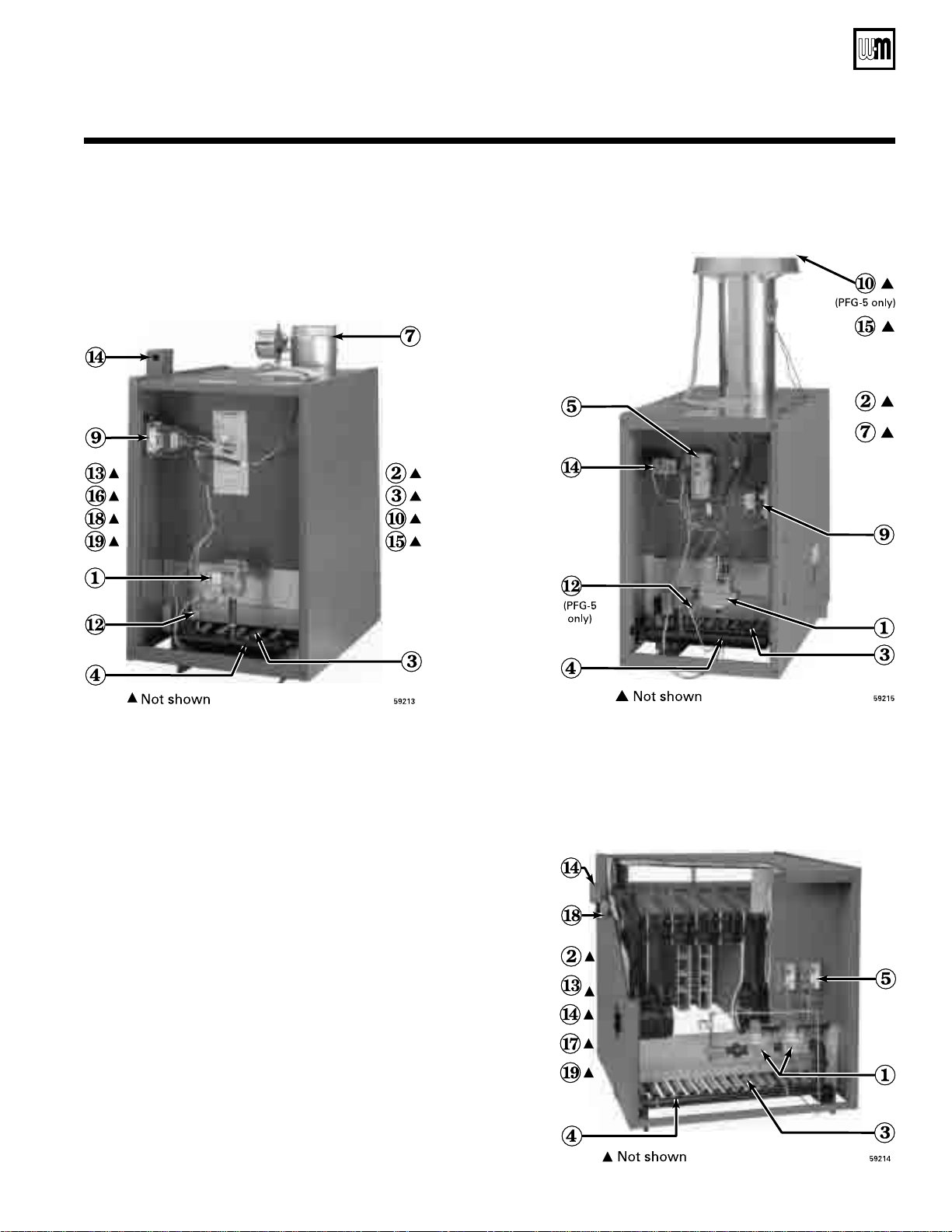
Boiler components
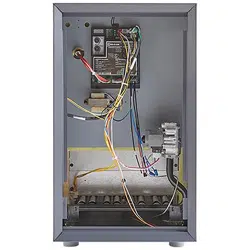
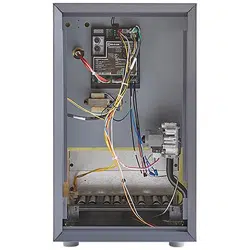
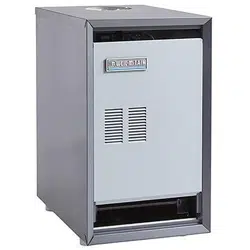
1 Gas valve
2 Pilot burner
3 Main burner
4 Gas manifold/orifices
5 Control module
6 Inducer (CGi and CGs only)
7 Vent damper (CGa only)
8 Water temperature limit switch
9 Transformer
10 Spill switch (CGa only)
11 Air pressure switch (CGi and CGs only)
12 Rollout thermal fuse element
15 Draft hood (CGa only)
16 Circulator
17 Relief valve
18 Gauge (pressure or pressure/temperature)
CGs
CGa CGi
User’s Information Manual
5
Part Number 550-110-592/0408
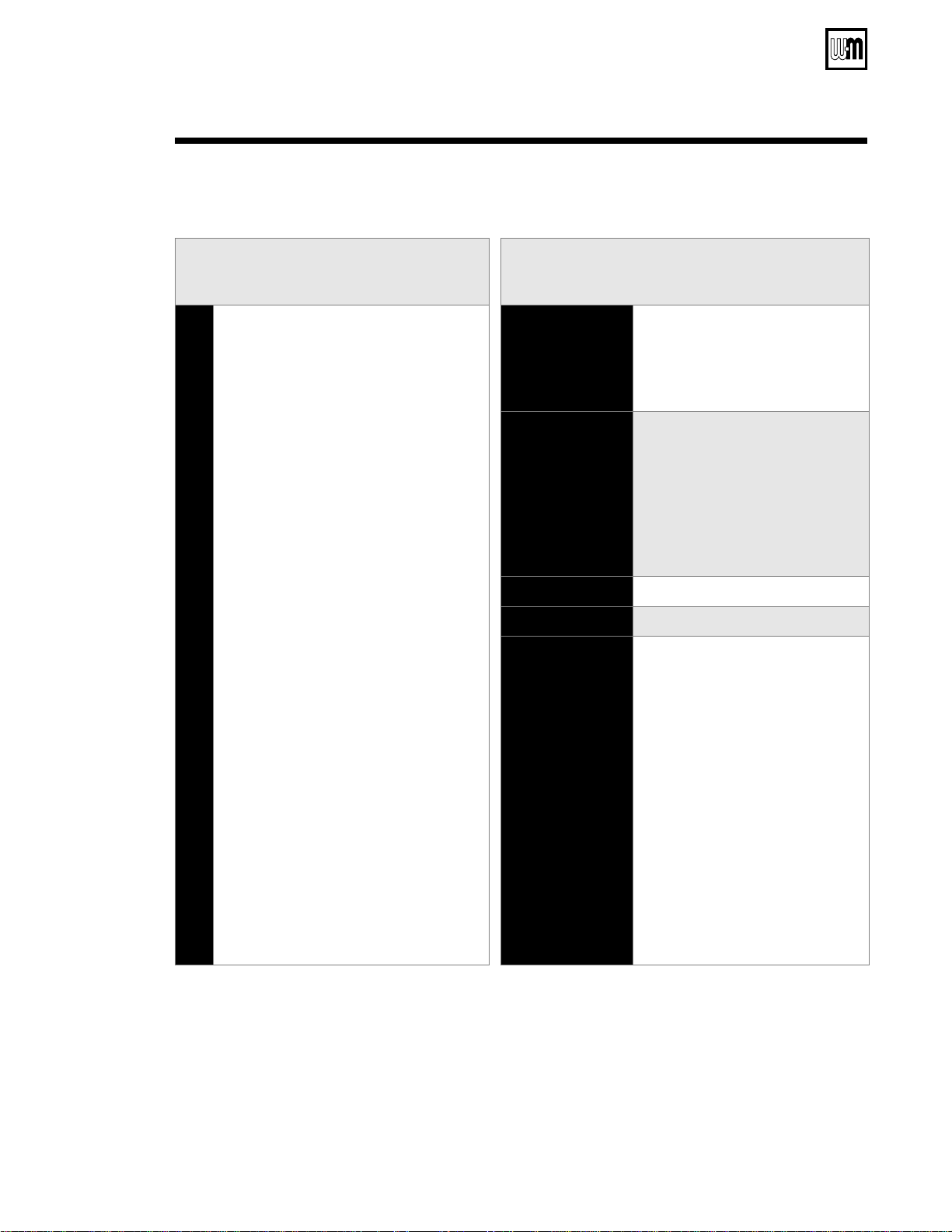
EG/EGH PFG
LGB
1 Gas valve
2 Pilot burner
3 Main burner
4 Gas manifold/orifices
5 Control module
7 Vent damper
9 Transformer
10 Spill switch
12 Rollout thermal fuse element
13 Low water cutoff (steam boilers)
14 Limit control(s)
15 Draft hood
16 Circulator
18 Gauge (pressure or pressure/temperature)
19 Gauge glass (steam only)
CGa, CGi, CGs, EG, EGH, LGB, PEG, PFG Boilers
6
Part Number 550-110-592/0408
Maintain boiler using schedule below
Tankless water heater (EG and EGH only)
If boiler is used to supply domestic hot water, limit
control should be set to supply adequate hot water.
Weil-McLain tankless heaters are rated at 200 °F boiler
water temperature. To get rated output, set low limit at
200 °F. Limit can be adjusted to meet system hot water
requirements. Differential can be set to 15 ° and adjusted
to control level. Lowering the differential will cause a
slight variation in water temperature but will decrease
burner on-off cycling. High limit should be set at least
20 ° above low limit.
Service technician
(covered in Boiler Manual — for use only by a
qualified service technician)
Owner maintenance
(see following pages for instructions)
ANNNUAL START-UP
Inspect:
• Reported problems
• Boiler area
• Air openings
• Flue gas vent system
• Pilot and main burner flames
• Water piping
• Boiler heating surfaces
• Burners, base and inlet air box
Service:
• Oiled-bearing circulators
Start-up:
• Perform start-up per manual
Check/test:
• Gas piping
• Cold fill and operating pressures
• Air vents and air elimination
• Limit controls and cutoffs
• Expansion tank
• Boiler relief valve
Review:
• Review with owner
Daily
• Check boiler area
• Check air openings
• Check boiler pressure/
temperature gauge
Monthly
• Check boiler interior piping
• Check venting system
• Check air vents
• Check boiler relief valve
• Check automatic air vents (if
used)
Periodically • Test low water cutoff (if used)
Every 6 months • Operate relief valve
End of season • Shut down procedure
User’s Information Manual
7
Part Number 550-110-592/0408
User maintenance procedures
Do not attempt to place boiler in operation if spill switch
cuts off gas flow. Immediately call a service technician.
Failure to do so can cause severe personal injury, death
or substantial property damage.
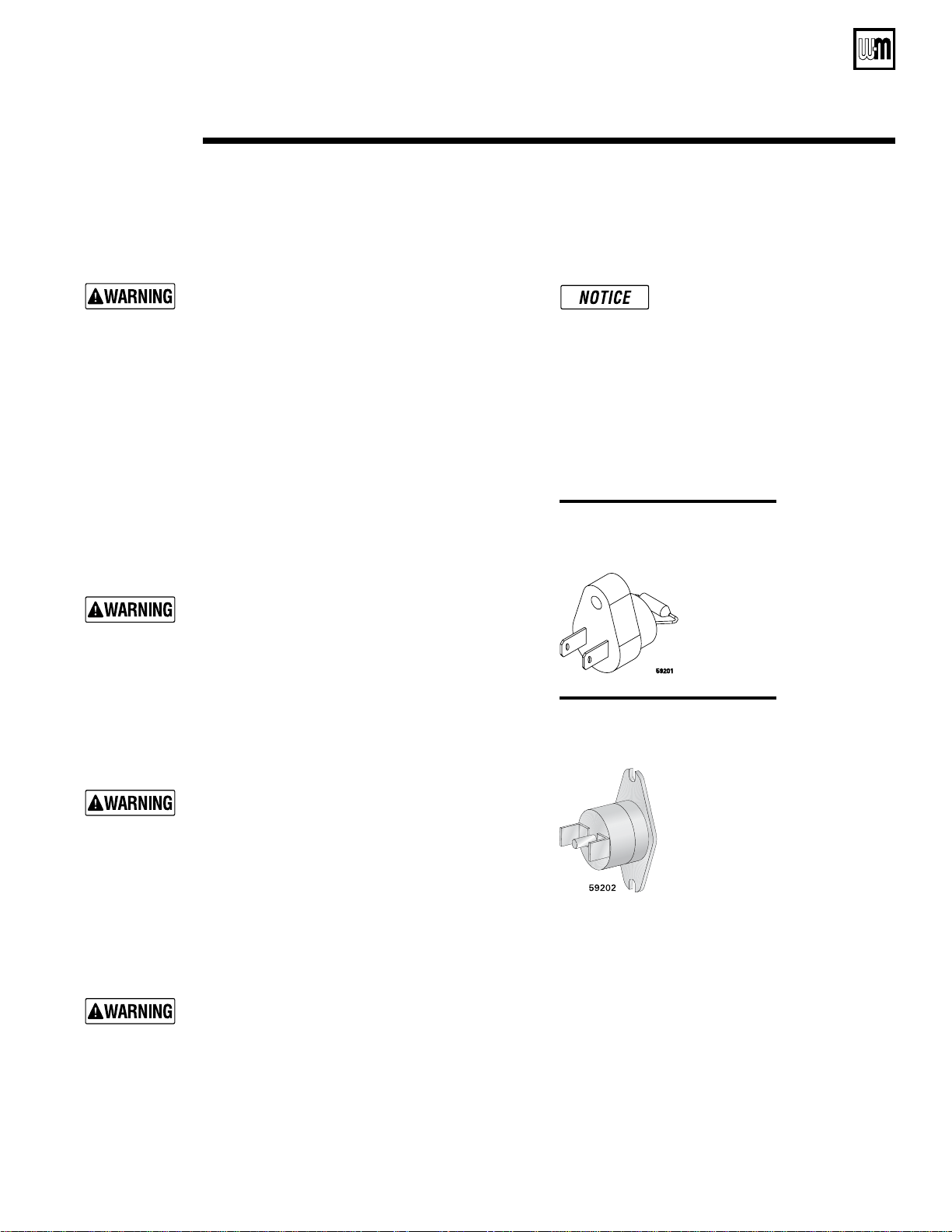
Rollout thermal fuse element
CGa, CGi, CGs, EG, EGH, PEG & PFG-5 only
Cuts off gas flow should flame rollout occur. See
Figure 1.
Do not attempt to place boiler in operation if rollout
thermal fuse element cuts off gas flow. Immediately call
a service technician. Failure to do so can cause severe
personal injury, death or substantial property damage.
Spill switch
CGa, EG, EGH, PEG & PFG-5 only
Cuts off gas flow should vent system become blocked.
See Figure 2.
Figure 1
Rollout thermal fuse element
Figure 2
Spill switch
Component information
Boiler area
To prevent potential of severe personal injury, death
or substantial property damage, eliminate all materials
discussed below from the boiler vicinity. If found:
• Remove products immediately from the area. If
they have been there for an extended period, call
a qualified service technician to inspect the boiler
and vent system for possible damage from acid
corrosion.
• I
f products cannot be removed, immediately call
a qualified service technician to install an outside
combustion air source for the boiler (if not already
installed).
1.
Combustible/flammable materials — Do not
store combustible materials, gasoline or any
other flammable vapors or liquids near the boiler.
Remove immediately if found.
2. Air contaminants — See listing of contaminants on
page 3.
❏ Check daily . . . . . . . . . . . . . . . . .
The boiler should be inspected and started annually, at
the beginning of the heating season, only by a qualified
service technician. In addition, the maintenance and
care of the boiler designated on page 6 and explained
on the following pages must be performed to assure
maximum boiler efficiency and reliability. Failure to
service and maintain the boiler and system could result
in equipment failure, causing possible severe personal
injury, death or substantial property damage.
Boiler must be serviced & maintained
The following information provides
detailed instructions for completing
the maintenance items listed in
the maintenance schedule, page 6.
In addition to this maintenance,
the boiler must be serviced and
started up at the beginning of each
heating season by a qualified service
technician.
CGa, CGi, CGs, EG, EGH, LGB, PEG, PFG Boilers
8
Part Number 550-110-592/0408
❏ Check daily . . . . . . . . . . . . . . . . .
Air openings
1. Verify that combustion and ventilation air openings
to the boiler room and/or building are open and
unobstructed.
2. CGs boilers — Verify that boiler vent discharge
and air intake are clean and free of obstructions.
Remove any debris on the air intake or flue exhaust
openings.
Pressure/temperature gauge
or pressure gauge (steam)
1. Water boilers — Make sure the pressure reading
on the boiler pressure/temperature gauge does
not exceed 24 psig. Higher pressure may indicate a
problem with the expansion tank or gauge.
2. Steam boilers — Make sure the pressure reading on
the boiler pressure gauge does not exceed 15 psig.
Higher pressure indicates a problem with the gauge
or limit control.
3. Contact a qualified service technician if problem
persists.
Venting system
Failure to inspect the vent system as noted above and
have them repaired by a qualified service technician can
result in vent system failure, causing severe personal
injury or death.
Boiler piping
Have leaks fixed at once by a qualified service technician.
Continual fresh makeup water will reduce boiler life.
Minerals can build up in sections, reducing heat transfer,
overheating cast iron, and causing section failure.
1. Visually inspect for leaks around piping, circulators,
relief valve and other fittings. Immediately call a
qualified service technician to repair any leaks.
1. Visually inspect all parts or the flue gas venting
system for any signs of blockage, leakage or joints
or deterioration of the piping.
2. CGa and EG boilers:
a. With boiler firing, hold a candle or match below
lower edge of draft hood “skirt.” If flame does
not blow out, but burns undisturbed, the vent
system is working properly.
Do not use petroleum-based cleaning or sealing
compounds
in boiler system. Severe damage to boiler
and system components can occur, resulting in possible
severe personal injury, death or substantial property
damage.
❏ Check monthly . . . . . . . . . . . . . . . .
If flame blows out or flickers severely, the vent
system must be checked for obstructions or
other causes of improper venting.
b. Verify the vent damper (CGa and EG boilers)
opens before burners ignite.
3. Notify your qualified service technician at once if
you find any problem.
Boiler relief valve . . . . . . . . .
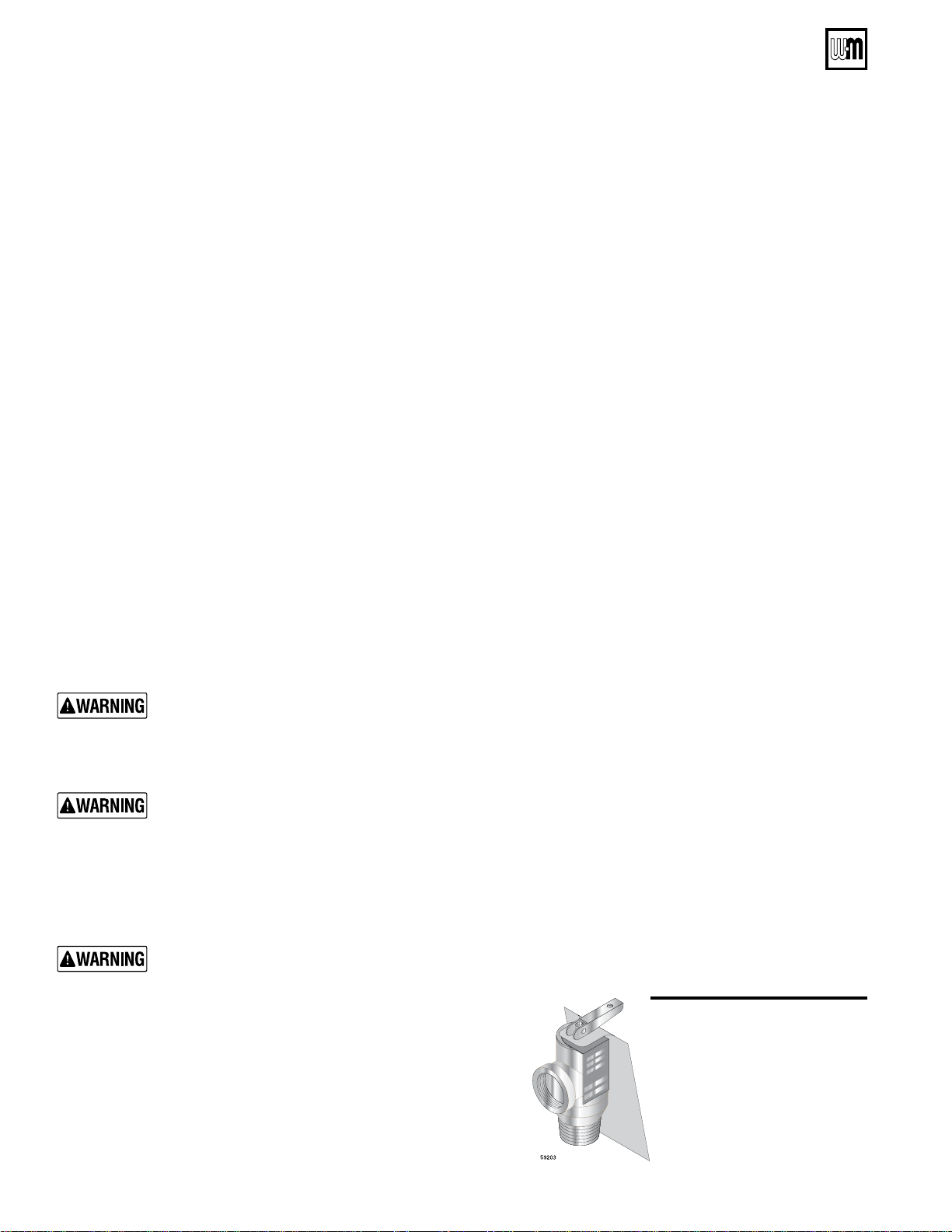
1. Inspect the boiler relief valve (see Figure 3) and the
relief valve discharge pipe for signs of weeping or
leakage.
2. If the relief valve often weeps:
• water boilers — the expansion tank may not
be working properly.
• steam boilers — limit control may be set too
high or there may be system problems.
• Immediately contact your qualified service
technician to inspect the boiler and system.
Figure 3 Relief valve
User’s Information Manual
9
Part Number 550-110-592/0408
Figure 4
Automatic air
vent
Automatic air vents (if used)
1. See Figure 4.
2. Remove the cap from any
automatic air vent in the
system and check operation by
depressing valve B slightly with
the tip of a screwdriver.
3. If the air vent valve appears to be
working freely and not leaking,
replace cap
A, twisting all the
way on.
4. Loosen cap A one turn to allow
vent to operate.
5. Have vent replaced if it does not
operate correctly.
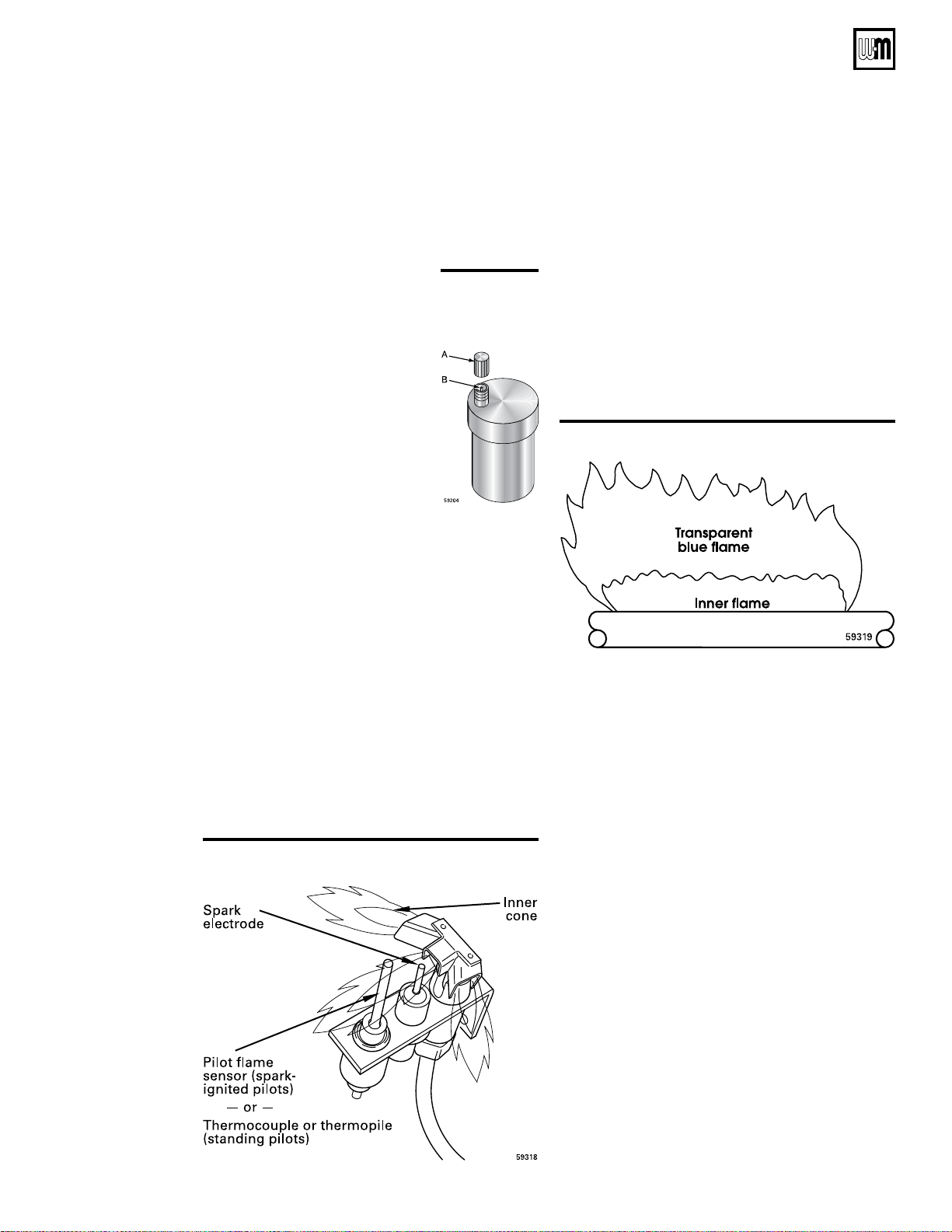
Pilot burner flame
Proper pilot flame (see Figure 5):
1. Blue flame.
2. Inner cone engulfing thermocouple or thermopile
(standing pilot) or pilot flame sensor (spark-ignited
pilot).
3. Thermocouple or thermopile, or pilot flame sensor
glowing cherry red.
Improper pilot flame:
1. Overfired — Large flame lifting or blowing past pilot
flame sensor.
2. Underfired — Small flame. Inner cone not engulfing
pilot flame sensor.
3. Lack of primary air — Yellow flame tip.
4. Incorrectly heated pilot flame sensor.
Main burner flame
Proper main burner flame (see Figure 6):
1. Yellow-orange streaks may appear (caused by dust).
Improper main burner flame:
1. Overfired — Large flames.
2. Underfired — Small flames.
3. Lack of primary air — Yellow tipping on flames
(sooting will occur).
Figure 5 Pilot burner and flame, typical
Figure 6 Main burner flame, typical
❏ Check monthly . . . . . . . . . . . . . . . .
Clean vent termination & air
intake screens — CGs boilers only
1. Remove all lint and debris from both the boiler air
intake screen and the flue discharge screen.
The boiler control module will sense blockage of
the air intake or flue and lockout if the blockage
is excessive. It will signal the failure by flashing the
appropriate indicator lights on the control board.
2. If removing the debris does not allow the boiler to
operate correctly afterwards, contact your qualified
service technician to inspect the boiler and vent/air
systems.
Check condensate drain
system
1. Inspect condensate drain fittings and tubing. Verify
that condensate can flow freely to drain.
CGa, CGi, CGs, EG, EGH, LGB, PEG, PFG Boilers
10
Part Number 550-110-592/0408
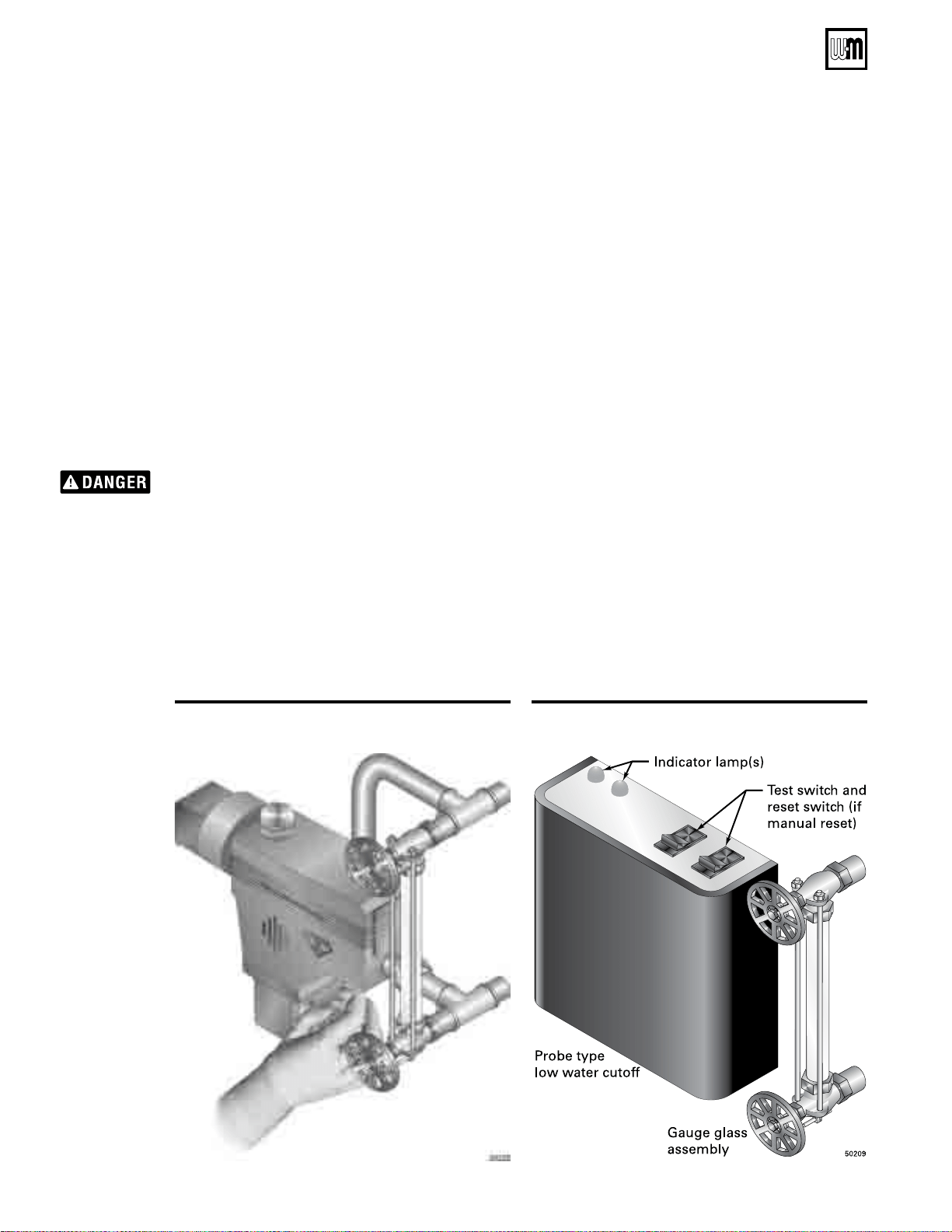
Probe type— See Figure 8
1. Clean probe type low water cutoff for proper
operation.
a. Turn off power to boiler and wait 5 minutes.
b. Drain water to bottom of gauge glass.
c. Turn on power.
d. Set thermostat to call for heat. Red neon lamp
on lower water cutoff should light.
e. Wait 5 minutes. Boiler should not fire.
f. Refill boiler to correct water line. Red lamp
should go off.
g. Wait 5 minutes. Boiler should fire.
h. Return thermostat to normal setting.
Test low water cutoff (all steam boilers)
(water boilers, if installed)
If the system is equipped with a low water cutoff, test the low water cutoff periodically during the heating season.
Figure 7 Float type low water cutoff Figure 8 Probe type low water cutoff
❏ Service periodically . . . . . . . . . . . .
2. Check float type low water cutoff for proper
operation.
a. Turn operating control to call for heat.
b. Before water gets hot, drain to bottom of gauge
glass. Boiler should shut off after water level
lowers a few inches.
c. Refill boiler to correct waterline. Boiler should
come back on.
. Boiler pressure and temperature must be low to avoid
the potential of severe burns from steam or hot water.
Float type — See Figure 7
1. Clean float type low water cutoff to clear float
chamber of sediment.
a. Open blowdown valve at bottom control.
b. Drain water into a bucket.
User’s Information Manual
11
Part Number 550-110-592/0408
Operate boiler relief valve
❏ Service every 6 months . . . . . . . . .
To avoid water damage or scalding
due to valve operation, a metal
discharge line must be connected
to relief valve outlet and run to a
safe place of disposal. This discharge
line must be installed by a qualified
heating installer or service technician
in accordance with the instructions
in the Boiler Manual.
Th e di sch arge li ne must be
terminated so as to eliminate
possibility of severe burns should
the valve discharge.
1. Before proceeding, verify that the relief valve outlet
has been piped to a safe place of discharge, avoiding
any possibility of scalding from hot water.
2. Read the boiler pressure/temperature gauge to make
sure the system is pressurized.
3. Lift the relief valve top lever slightly, allowing water
to relieve through the valve and discharge piping.
4. If water flows freely, release the lever and allow
the valve to seat. Watch the end of the relief valve
discharge pipe to ensure that the valve does not
weep after the line has had time to drain. If the valve
weeps, lift the seat again to attempt to clean the
valve seat. If the valve continues to weep afterwards,
contact your qualified service technician to inspect
the valve and system.
5. If water does not flow from the valve when you
lift the lever completely, the valve or discharge line
may be blocked. Immediately shutdown the boiler,
following the instructions on the inside jacket top
Lighting Instructions. Call your qualified service
technician to inspect the boiler and system.
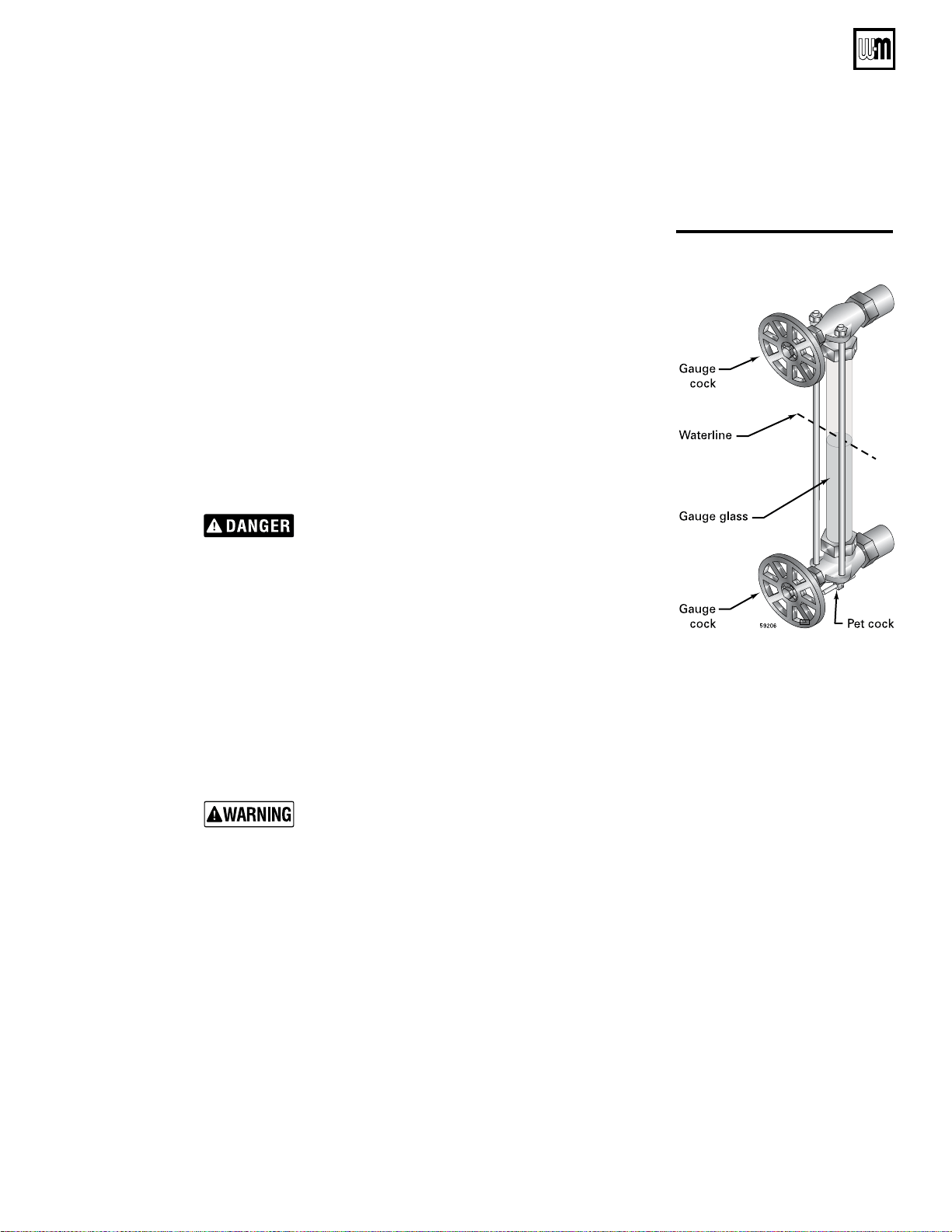
Figure 9 Gauge glass
Clean gauge glass
❏ Service periodically continued . . . . . . .
Boiler pressure must be low to eliminate potential of
severe burns.
Normal waterline on a steam boiler is halfway up gauge
glass. See Figure 9. Clean when needed.
1. Close lower gauge cock.
2. Open pet cock.
3. Open lower gauge cock and allow a small amount
of water to flush out through open pet cock.
4. Close pet cock.
5. Open lower gauge cock.
6. If gauge glass breaks, close both gauge cocks and call
a qualified service technician to replace gauge glass.
Do not replace with thin glass tubing.
CGa, CGi, CGs, EG, EGH, LGB, PEG, PFG Boilers
12
Part Number 550-110-592/0408
Follow boiler shutdown procedure
❏ End-of-season shutdown . . . . . . . .
1. Follow “TO TURN OFF GAS TO APPLIANCE” on the
Lighting/Operating instructions
on the inside of
the jacket panel. You will also find these instructions
on pages 13 through 22 of this manual.
Use the Lighting/Operating instruction for the gas
valve model installed on the boiler.
2. Do not drain system unless exposure to freezing
temperatures will occur.
3. Do not drain the system if it is filled with an
antifreeze solution.
4. Do not shut down boilers used for domestic water
heating. They must operate year-round.
Propane boilers only — Your propane supplier mixes an odorant with the propane to make its presence detect-
able. In some instances, the odorant can fade and the gas may no longer have an odor.
• Propane gas can accumulate at floor level. Smell near the floor for the gas odorant or any unusual odor.
If you suspect a leak, do not attempt to light the pilot.
• Use caution when attempting to light the propane pilot. This should be done by a qualified service
technician, particularly if pilot outages are common.
• Periodically check the odorant level of your gas.
• Inspect boiler and system at least yearly to make sure all gas piping is leak-tight.
• Consult your propane supplier regarding installation of a gas leak detector. There are some products on
the market intended for this purpose. Your supplier may be able to suggest an appropriate device.
Propane gas odorant
Table 2
Lighting
/Operating
instruction
guide
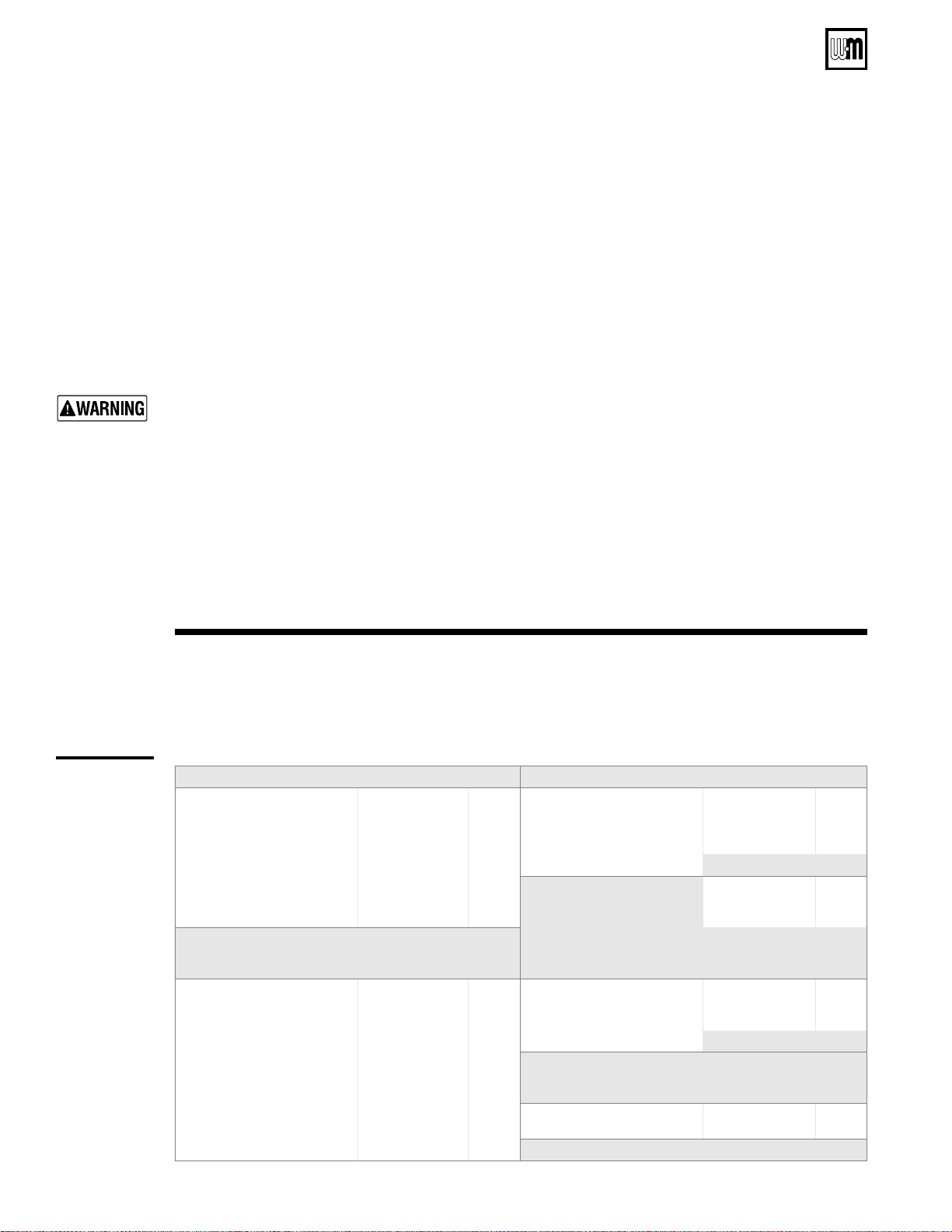
Standing pilot Models Page Spark-ignited pilot Models Page
Honeywell VR8200/VR8300
CGa-25 – CGa-8
EG-30 – EG-65
PEG-30 – PEG-55
13
Honeywell VR8204/VR8304
CGa-25 – CGa-8
EG-30 – EG-75
PEG-30 – PEG-55
PFG-5
16
CGi, CGs
21
White-Rodgers 36E
CGa-25 – CGa-6
EG-30 – EG-50
PEG-30 – PEG-50
17
Robertshaw 7200
CGa-25 – CGa-6
EG-30 – EG-50
PEG-30 – PEG-50
14
CGi
CGs
21
Robertshaw 7000ERHC
EG-75
EGH-85, EGH-95
PFG-6, PFG-7
15
White-Rodgers 36C
CGa-7, CGa-8
EG-55 – EG-75
PEG-55, PFG-5
18
CGi, CGs
21
Robertshaw 7200
CGa-25 – CGa-6
EG-30 – EG-50
PEG-30 – PEG-50
19
Robertshaw 7000 DERHC
EGH-85 – EGH-125
PFG-6 – PFG-8
20
--
LGB
22
Lighting instructions
Use Table 2 below to locate the correct Lighting/Operating instruction for the gas valve model installed on your
boiler.
User’s Information Manual
13
Part Number 550-110-592/0408
Lighting instructions
• Do not try to light any appliance.
• Do not touch any electric switch; do not use any phone in
your building.
• Immediately call your gas supplier from a neighbor’s phone.
Follow the gas supplier’s instructions.
• If you cannot reach your gas supplier, call the fire
department.
A. This appliance has a pilot, which must be lighted
by hand. When lighting the pilot, follow these
instructions exactly.
B. BEFORE LIGHTING, smell all around the
appliance area for gas. Be sure to smell next to the
floor because some gas is heavier than air and will
settle on the floor. See below.
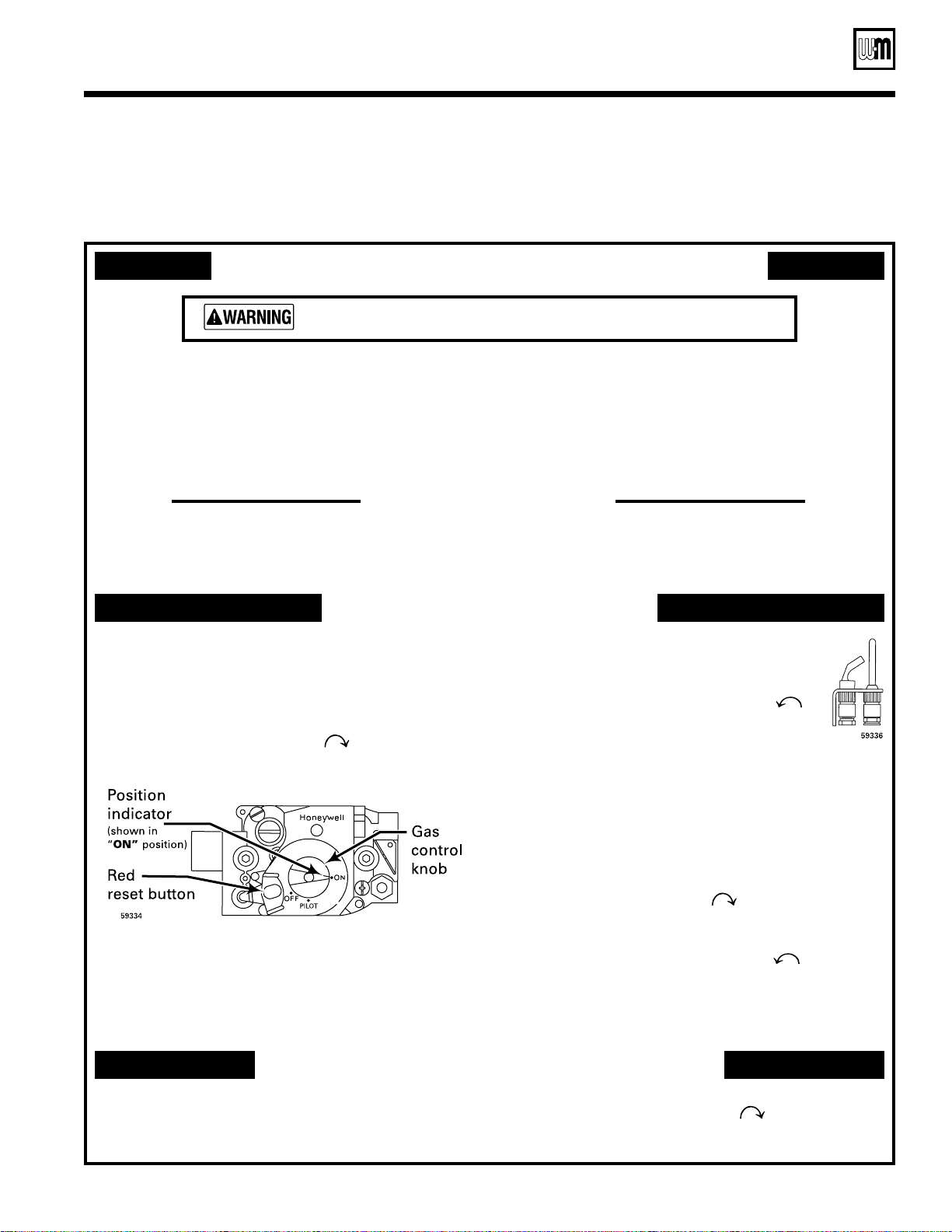
C. Use only your hand to push down the reset button or turn the gas
control knob. Never use tools. If the knob or reset button will not
operate by hand, don’t try to repair it, call a qualified service techni-
cian. Force or attempted repair may result in a fire or explosion.
D. Do not use this appliance if any part has been under water.
Immediately call a qualified service technician to inspect the appliance
and to replace any part of the control system and any gas control,
which has been under water.
1. STOP! Read the safety information above on this label.
2. Set the thermostat to lowest setting.
3. Turn off all electrical power to the appliance.
4. Remove front panel.
5. Turn gas control knob clockwise to “OFF”.
1. Set the thermostat to lowest setting.
2. Turn off all electric power to the appliance if service is to
be performed.
3. Remove front panel.
4. Turn gas control knob clockwise
to “OFF”.
5. Replace front panel.
6. Wait five (5) minutes to clear out any gas. Then smell for
gas, including near the floor. If you smell gas, STOP! Follow
“B” in the safety information above. If you don’t smell gas,
go to the next step.
7. Remove access panel located above burners.
8. Find pilot - follow metal tube from gas control.
The pilot is between two burners behind the access
panel.
9.
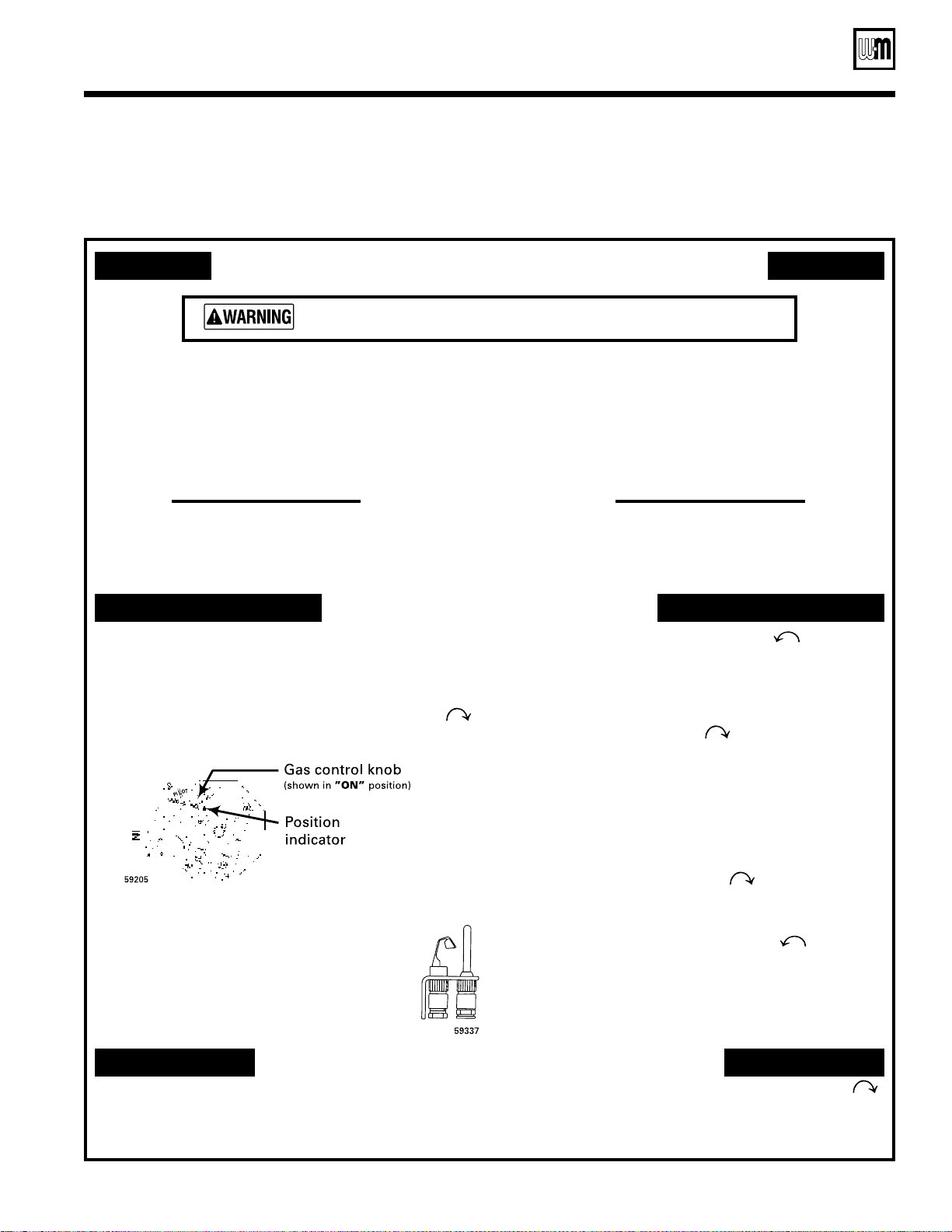
Turn gas control knob counterclockwise
to
“PILOT”.
10. Push in red reset button and hold. Immediately
• Standing pilot
• Gas valve — Honeywell VR8200/VR8300
light the pilot with a match. Continue to hold reset button
in for about one (1) minute after the pilot is lit.
11. Release reset button. Pilot should remain lit. If pilot goes
out, repeat steps 6 through 13.
• If reset button stays depressed after release, stop
and immediately call your service technician or gas
supplier.
• I
f the pilot will not stay lit after several tries, turn the
gas control knob clockwise
to “OFF” and call your
service technician or gas supplier.
12. Replace access panel.
13. Turn gas control knob counterclockwise
to “ON”.
14. Turn on all electric power to the appliance.
15. Set thermostat to desired setting.
16. Replace front panel.
CGa, EG-30 to EG-65,
PEG-30 to PEG-55
550-223-038(0906)
FOR YOUR SAFETY READ BEFORE LIGHTING
LIGHTING INSTRUCTIONS
If you do not follow these instructions exactly, a fire or explosion may result
causing property damage, personal injury or loss of life.
WHAT TO DO IF YOU SMELL GAS
TO TURN OFF GAS TO THE APPLIANCE
CGa, CGi, CGs, EG, EGH, LGB, PEG, PFG Boilers
14
Part Number 550-110-592/0408
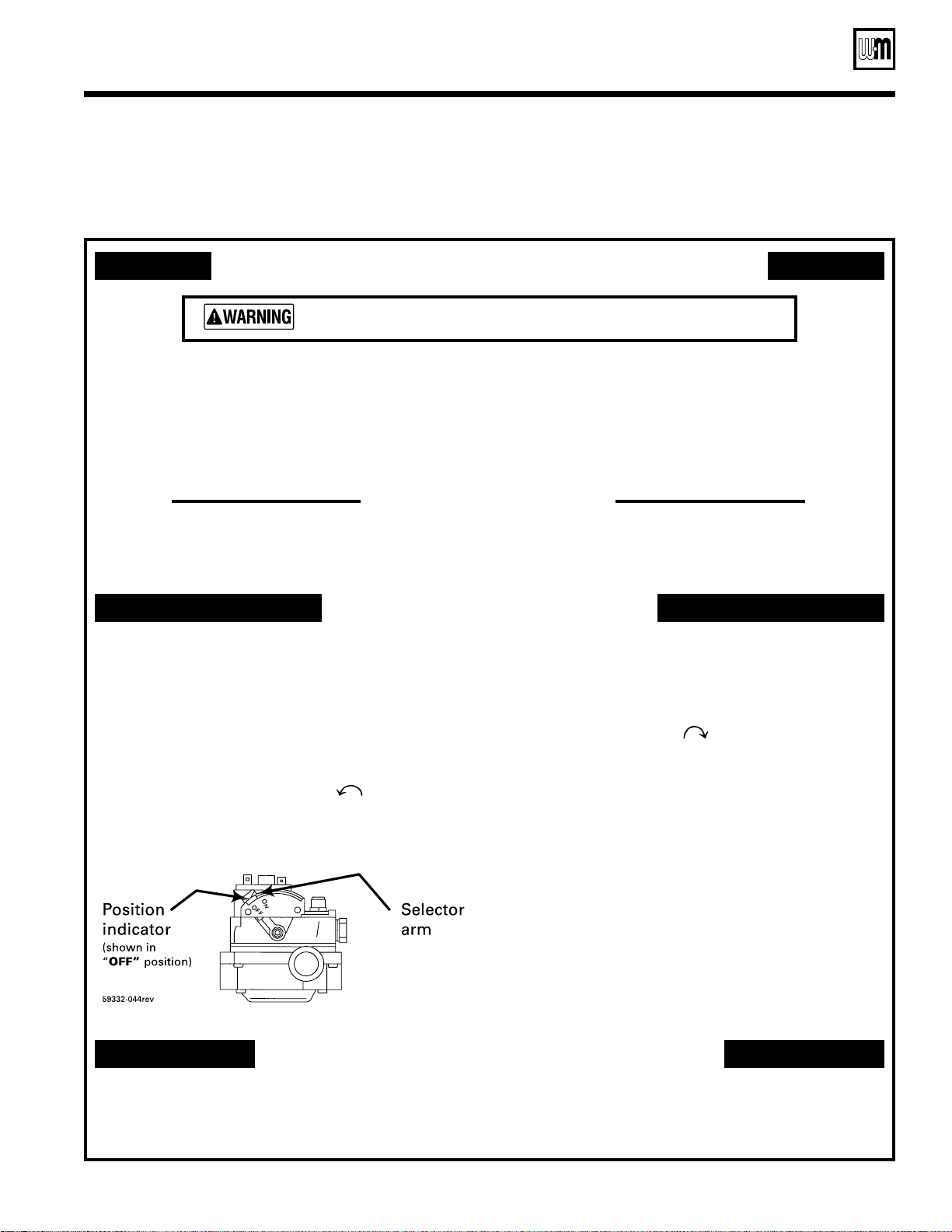
• Gas valve — Robertshaw 7200
• Do not try to light any appliance.
• Do not touch any electric switch; do not use any phone in
your building.
• Immediately call your gas supplier from a neighbor’s phone.
Follow the gas supplier’s instructions.
• If you cannot reach your gas supplier, call the fire
department.
A. This appliance has a pilot, which must be lighted
by hand. When lighting the pilot, follow these
instructions exactly.
B. BEFORE LIGHTING, smell all around the
appliance area for gas. Be sure to smell next to the
floor because some gas is heavier than air and will
settle on the floor. See below.
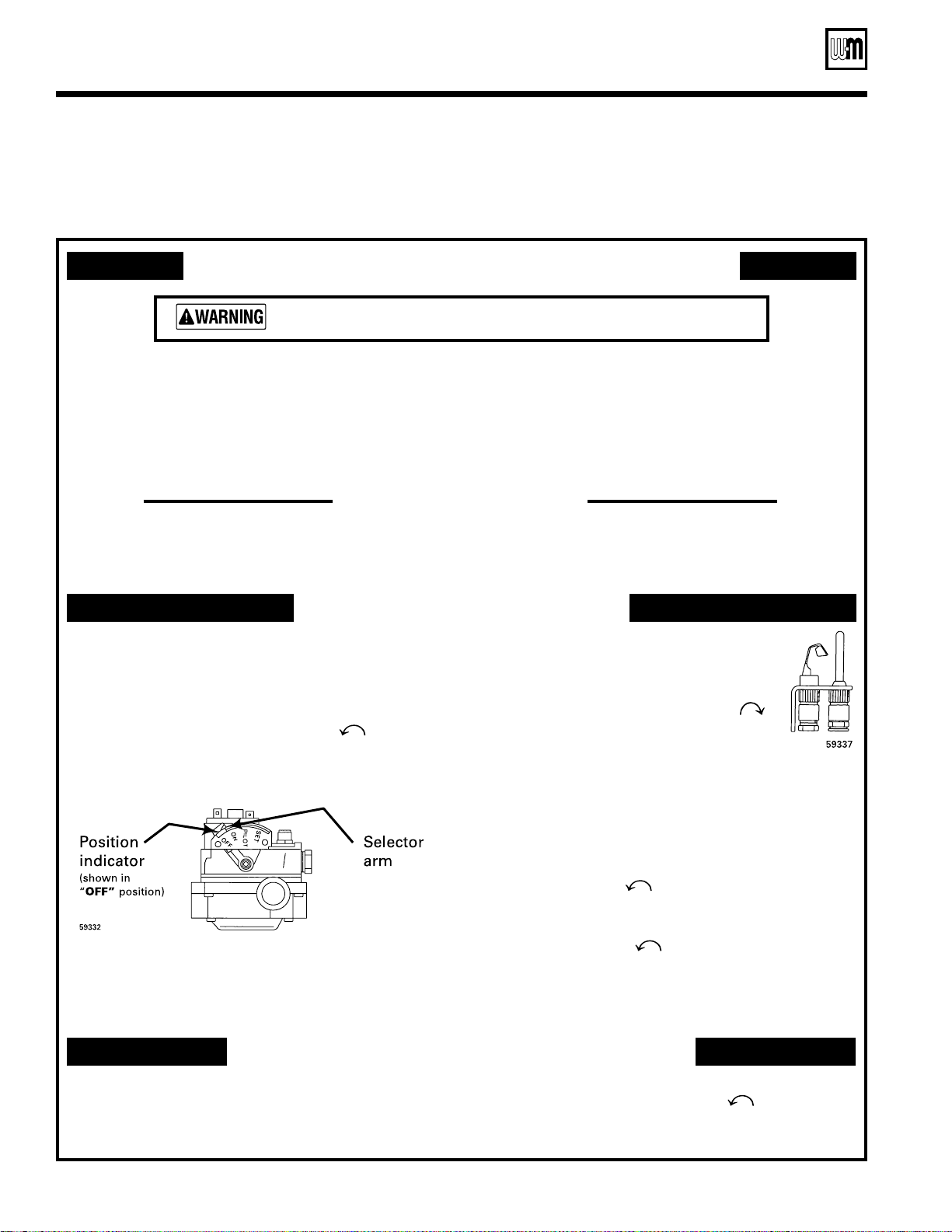
C. Use only your hand to depress the selector arm. Never use tools. If
the selector arm will not move by hand, don’t try to repair it, call a
qualified service technician. Force or attempted repair may result in
a fire or explosion.
D. Do not use this appliance if any part has been under water.
Immediately call a qualified service technician to inspect the appliance
and to replace any part of the control system and any gas control,
which has been under water.
1.
STOP! Read the safety information above on this label.
2. Set the thermostat to lowest setting.
3. Turn off all electrical power to the appliance.
4. Remove front panel.
5. Depress and move selector arm left
to “OFF”.
Note: S
elector arm cannot be moved to “OFF” unless
selector arm is depressed slightly. Do not force.
1. Set the thermostat to lowest setting.
2. Turn off all electric power to the appliance if service is to
be performed.
3. Remove front panel.
4. Depress and move selector arm left
to “OFF”.
Do not force.
5. Replace front panel.
6. Wait five (5) minutes to clear out any gas. Then smell for
gas, including near the floor. If you smell gas,
STOP! Follow
“B” in the safety information above. If you don’t smell gas,
go to the next step.
7. Remove access panel located above burners.
8. Find pilot - follow metal tube from gas con
-
t
r
ol. The pilot is between two burners behind
the access panel.
9. Move selector arm on gas control right
to “SET” position.
Lighting instructions
• Standing pilot
CGa-25 to CGa-6,
EG-30 to EG-50,
PEG-30 to PEG-50
10. Hold selector arm in “SET” position and immediately
light the pilot with a match. Continue to hold selector arm
to “SET” for about one-half (
1
/
2
) minute after the pilot is
lit.
11. Release selector arm. If pilot does not remain lit, repeat
steps 6 through 13.
• If the pilot will not stay lit after several tries, move
selector arm left
to “OFF” and call your service
technician or gas supplier.
12. Replace access panel.
13. Turn selector arm left
to “ON”.
14. Turn on all electric power to the appliance.
15. Set thermostat to desired setting.
16. Replace front panel.
550-223-039(0906)
FOR YOUR SAFETY READ BEFORE LIGHTING
LIGHTING INSTRUCTIONS
If you do not follow these instructions exactly, a fire or explosion may result
causing property damage, personal injury or loss of life.
WHAT TO DO IF YOU SMELL GAS
TO TURN OFF GAS TO THE APPLIANCE
User’s Information Manual
15
Part Number 550-110-592/0408
• Do not try to light any appliance.
• Do not touch any electric switch; do not use any phone in
your building.
• Immediately call your gas supplier from a neighbor’s phone.
Follow the gas supplier’s instructions.
• If you cannot reach your gas supplier, call the fire
department.
1. STOP! Read the safety information above on this label.
2. Set the thermostat to lowest setting.
3. Turn off all electrical power to the appliance.
4. Remove front panel.
5. Depress gas control knob slightly and turn clockwise
to “OFF”. Note: Gas control knob cannot be turned to
“OFF” unless knob is depressed slightly. Do not force.
1. Set the thermostat to lowest setting.
2. Turn off all electric power to the appliance if service is to
be performed.
3. Remove front panel.
4. Depress gas control knob slightly and turn clockwise
to “OFF”.
5. Replace front panel.
6. Wait five (5) minutes to clear out any gas. Then smell for
gas, including near the floor. If you smell gas,
STOP!
Follow “B” in the safety information above.
If you don’t smell gas, go to the next step.
7. Remove access panel located above burners.
8. Find pilot — follow metal tube from gas con
-
t
r
ol. The pilot is between two burners behind
the access panel.
Lighting instructions
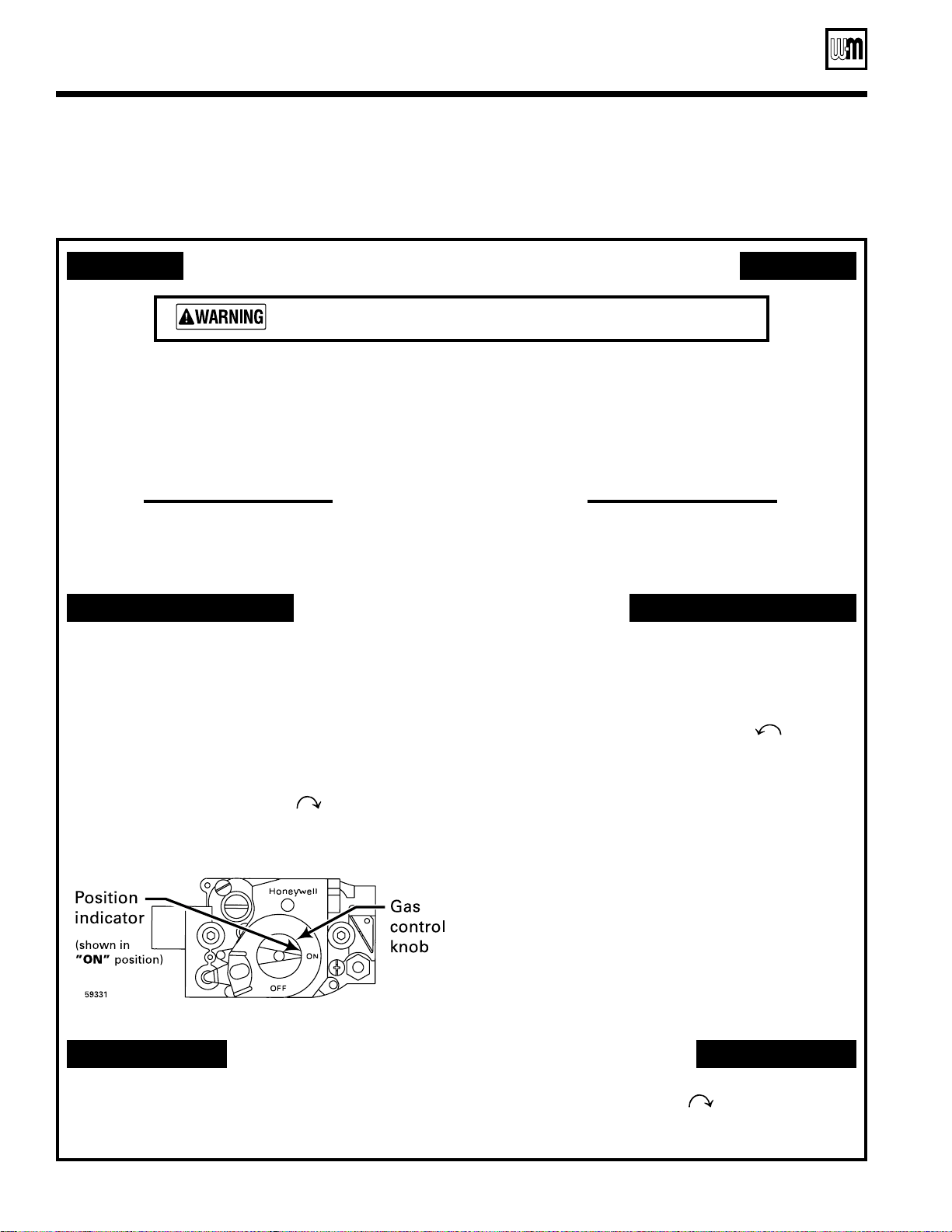
• Standing pilot
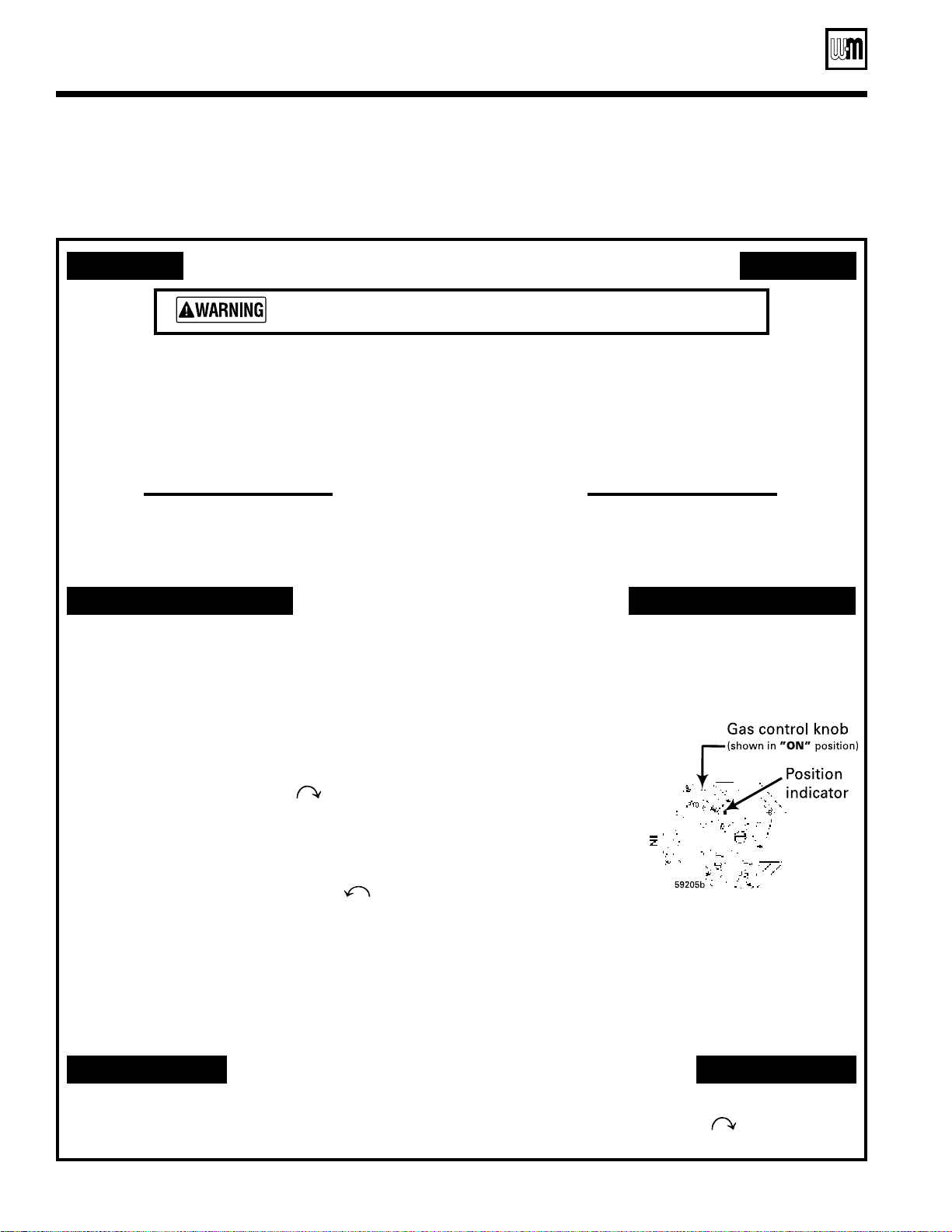
• Gas valve — Robertshaw 7000ERHC
A. This appliance has a pilot, which must be lighted
by hand. When lighting the pilot, follow these
instructions exactly.
B. BEFORE LIGHTING, smell all around the
appliance area for gas. Be sure to smell next to the
floor because some gas is heavier than air and will
settle on the floor. See below.
C. Use only your hand to depress or turn the gas control knob. Never
use tools. If the selector arm will not depress or move by hand, don’t
try to repair it, call a qualified service technician. Force or attempted
repair may result in a fire or explosion.
D. Do not use this appliance if any part has been under water.
Immediately call a qualified service technician to inspect the appliance
and to replace any part of the control system and any gas control,
which has been under water.
EG-75, EGH-85, EGH-95,
PFG-6, PFG-7
9. Turn gas control knob counterclockwise to “PILOT”.
10. Depress gas control knob and hold. Immediately light the
pilot with a match. Continue to hold gas control knob in
for about one (1) minute after the pilot is lit.
• If pilot can be lit without depressing gas control knob,
turn gas knob clockwise to “OFF” and call your
service technician or gas supplier.
11. Release gas control knob. Pilot should remain lit. If pilot
goes out, repeat steps 5 through 11.
• If gas control knob stays depressed after release, stop
and immediately call your service technician or gas
supplier.
• If the pilot will not stay lit after several tries, turn the
gas control knob clockwise to “OFF” and call
your service technician or gas supplier.
12. Replace access panel.
13. Turn gas control knob counterclockwise to “ON”.
14. Turn on all electric power to the appliance.
15. Set thermostat to desired setting.
16. Replace front panel.
550-223-081(0706)
FOR YOUR SAFETY READ BEFORE LIGHTING
LIGHTING INSTRUCTIONS
If you do not follow these instructions exactly, a fire or explosion may result
causing property damage, personal injury or loss of life.
WHAT TO DO IF YOU SMELL GAS
TO TURN OFF GAS TO THE APPLIANCE
CGa, CGi, CGs, EG, EGH, LGB, PEG, PFG Boilers
16
Part Number 550-110-592/0408
• Do not try to light any appliance.
• Do not touch any electric switch; do not use any phone in
your building.
• Immediately call your gas supplier from a neighbor’s phone.
Follow the gas supplier’s instructions.
• If you cannot reach your gas supplier, call the fire
department.
A. This appliance is equipped with an ignition device
which automatically lights the pilot. Do not try
to light the pilot by hand.
B.
BEFORE OPERATING, smell all around the
appliance area for gas. Be sure to smell next to the
floor because some gas is heavier than air and will
settle on the floor. See below.
C. Use only your hand to turn the gas control knob. Never use tools. If
the knob will not turn by hand, don’t try to repair it, call a qualified
service technician. Force or attempted repair may result in a fire or
explosion.
D.
Do not use this appliance if any part has been under water.
Immediately call a qualified service technician to inspect the appliance
and to replace any part of the control system and any gas control,
which has been under water.
1.
STOP! Read the safety information above on this label.
2. Set the thermostat to lowest setting.
3. Turn off all electrical power to the appliance.
4. Remove from panel.
5. This appliance is equipped with an ignition device which
automatically lights the pilot.
Do not try to light the pilot
by hand.
6. Turn gas control knob clockwise
to “OFF”.
1. Set the thermostat to lowest setting.
2. Turn off all electric power to the appliance if service is to
be performed.
3. Remove front panel.
4. Turn gas control knob clockwise
to “OFF”. Do not force.
5. Replace front panel.
7. Wait five (5) minutes to clear out any gas. Then smell for
gas, including near the floor. If you smell gas,
STOP! Follow
“B” in the safety information above. If you don’t smell gas,
go to the next step.
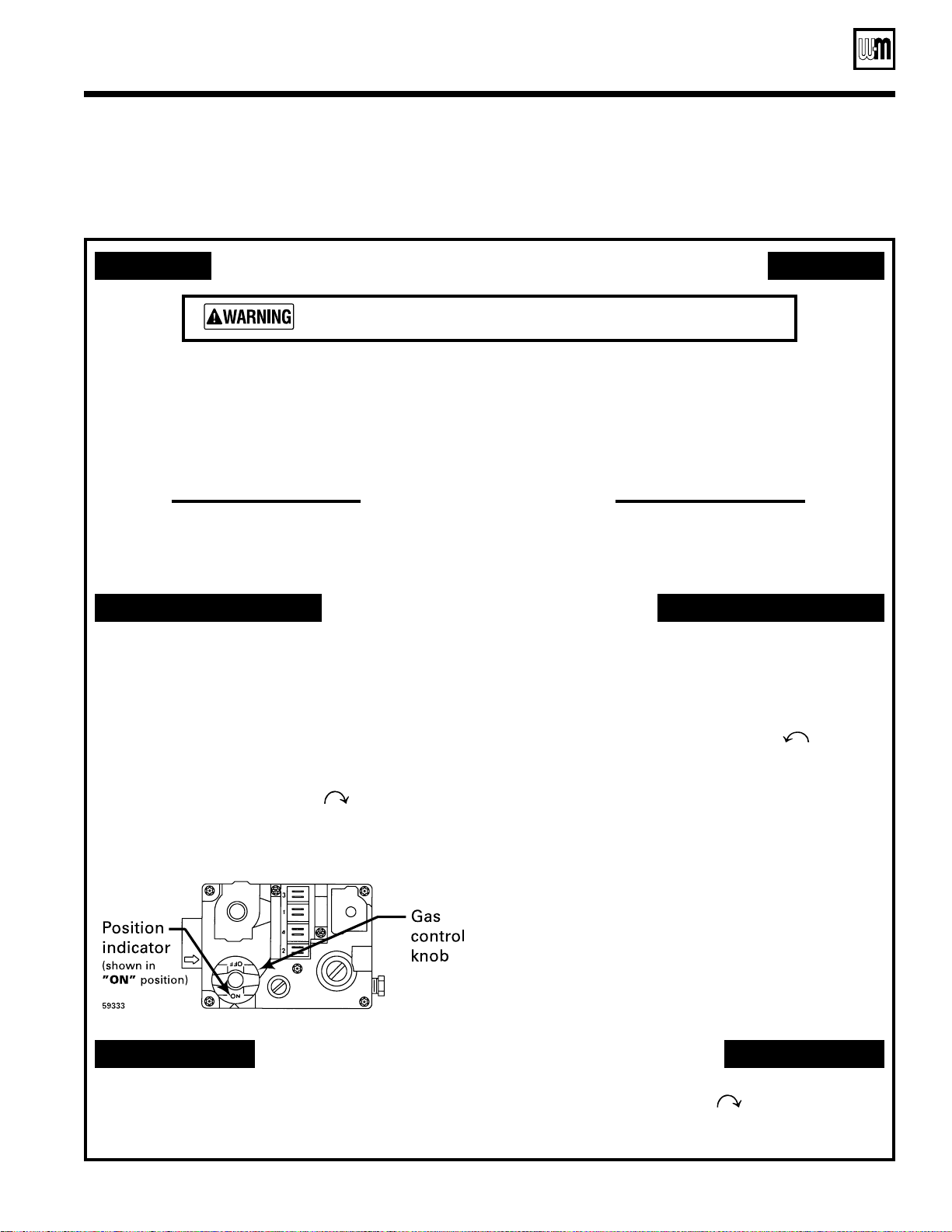
8. Turn gas control knob counterclockwise to “ON”.
9. Turn on all electric power to the appliance.
10. Set thermostat to desired setting.
11. If the appliance will not operate, follow the instructions
To Turn Off Gas To The Appliance and call your service
technician or gas supplier.
12. Replace front panel.
Operating instructions
• Spark-ignited pilot
• Gas valve
— Honeywell VR8204/VR8304
CGa, EG-30 to EG-75,
PEG-30 to PEG-55,
PFG-5
550-223-041(0906)
FOR YOUR SAFETY READ BEFORE OPERATING
OPERATING INSTRUCTIONS
If you do not follow these instructions exactly, a fire or explosion may result
causing property damage, personal injury or loss of life.
WHAT TO DO IF YOU SMELL GAS
TO TURN OFF GAS TO THE APPLIANCE
User’s Information Manual
17
Part Number 550-110-592/0408
• Do not try to light any appliance.
• Do not touch any electric switch; do not use any phone in
your building.
• Immediately call your gas supplier from a neighbor’s phone.
Follow the gas supplier’s instructions.
• If you cannot reach your gas supplier, call the fire
department.
A. This appliance is equipped with an ignition device
which automatically lights the pilot. Do not try
to light the pilot by hand.
B. BEFORE OPERATING, smell all around the
appliance area for gas. Be sure to smell next to the
floor because some gas is heavier than air and will
settle on the floor. See below.
C. Use only your hand to turn the gas control knob. Never use tools. If
the knob will not turn by hand, don’t try to repair it, call a qualified
service technician. Force or attempted repair may result in a fire or
explosion.
D. Do not use this appliance if any part has been under water.
Immediately call a qualified service technician to inspect the appliance
and to replace any part of the control system and any gas control,
which has been under water.
1.
STOP! Read the safety information above on this label.
2. Set the thermostat to lowest setting.
3. Turn off all electrical power to the appliance.
4. Remove front panel.
5. This appliance is equipped with an ignition device which
automatically lights the pilot.
Do not try to light the pilot
by hand.
6. Turn gas control knob clockwise
to “OFF”.
1. Set the thermostat to lowest setting.
2. Turn off all electric power to the appliance if service is to
be performed.
3. Remove front panel.
4. Turn gas control knob clockwise to “OFF”. Do not force.
5. Replace front panel.
7. Wait five (5) minutes to clear out any gas. Then smell for
gas, including near the floor. If you smell gas, STOP! Follow
“B” in the safety information above. If you don’t smell gas,
go to the next step.
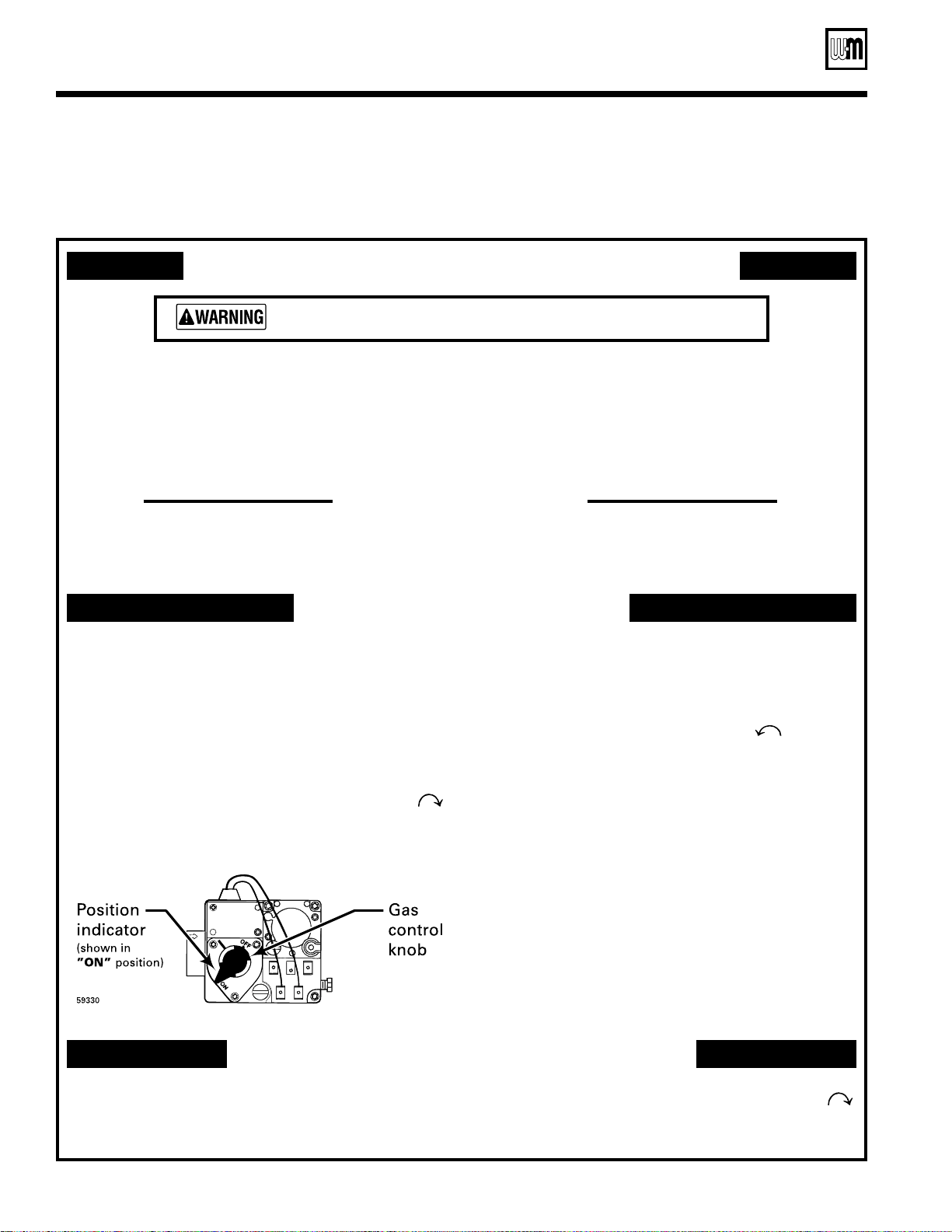
8. Turn gas control knob counterclockwise to “ON”.
9. Turn on all electric power to the appliance.
10. Set thermostat to desired setting.
11. If the appliance will not operate, follow the instructions
To Turn Off Gas To The Appliance and call your service
technician or gas supplier.
12. Replace front panel.
Operating instructions
• Spark-ignited pilot
• Gas valve — White-Rodgers 36E
CGa-25 to CGa-6,
EG-30 to EG-50,
PEG-30 to PEG-50
550-223-042(0906)
FOR YOUR SAFETY READ BEFORE OPERATING
OPERATING INSTRUCTIONS
If you do not follow these instructions exactly, a fire or explosion may result
causing property damage, personal injury or loss of life.
WHAT TO DO IF YOU SMELL GAS
TO TURN OFF GAS TO THE APPLIANCE
CGa, CGi, CGs, EG, EGH, LGB, PEG, PFG Boilers
18
Part Number 550-110-592/0408
• Do not try to light any appliance.
• Do not touch any electric switch; do not use any phone in
your building.
• Immediately call your gas supplier from a neighbor’s phone.
Follow the gas supplier’s instructions.
• If you cannot reach your gas supplier, call the fire
department.
A. This appliance is equipped with an ignition device
which automatically lights the pilot. Do not try
to light the pilot by hand.
B. BEFORE OPERATING, smell all around the
appliance area for gas. Be sure to smell next to the
floor because some gas is heavier than air and will
settle on the floor. See below.
C. Use only your hand to depress or turn the gas control knob. Never
use tools. If the knob will not depress or turn by hand, don’t try to
repair it, call a qualified service technician. Force or attempted repair
may result in a fire or explosion.
D. Do not use this appliance if any part has been under water.
Immediately call a qualified service technician to inspect the appliance
and to replace any part of the control system and any gas control,
which has been under water.
1.
STOP! Read the safety information above on this label.
2. Set the thermostat to lowest setting.
3. Turn off all electrical power to the appliance.
4. Remove front panel.
5. This appliance is equipped with an ignition device which
automatically lights the pilot. Do not try to light the pilot
by hand.
6. Depress gas control knob slightly and turn clockwise
to “OFF”. Note: Knob cannot be turned to “OFF” unless
knob is depressed slightly. Do not force.
1. Set the thermostat to lowest setting.
2. Turn off all electric power to the appliance if service is to
be performed.
3. Remove front panel.
4. Depress gas control knob slightly and turn clockwise
to “OFF”. Do not force.
5. Replace front panel.
7. Wait five (5) minutes to clear out any gas. Then smell for
gas, including near the floor. If you smell gas,
STOP! Follow
“B” in the safety information above. If you don’t smell gas,
go to the next step.
8. Turn gas control knob counterclockwise to “ON”.
9. Turn on all electric power to the appliance.
10. Set thermostat to desired setting.
11. If the appliance will not operate, follow the instructions
To Turn Off Gas To The Appliance and call your service
technician or gas supplier.
12. Replace front panel.
Operating instructions
• Spark-ignited pilot
• Gas valve — White-Rodgers 36C
CGa-7, CGa-8,
EG-55 to EG-75,
PEG-55, PFG-5
FOR YOUR SAFETY READ BEFORE OPERATING
OPERATING INSTRUCTIONS
If you do not follow these instructions exactly, a fire or explosion may result
causing property damage, personal injury or loss of life.
WHAT TO DO IF YOU SMELL GAS
TO TURN OFF GAS TO THE APPLIANCE
550-223-043(0906)
User’s Information Manual
19
Part Number 550-110-592/0408
• Do not try to light any appliance.
• Do not touch any electric switch; do not use any phone in
your building.
• Immediately call your gas supplier from a neighbor’s phone.
Follow the gas supplier’s instructions.
• If you cannot reach your gas supplier, call the fire
department.
A. This appliance is equipped with an ignition device
which automatically lights the pilot. Do not try
to light the pilot by hand.
B. BEFORE OPERATING, smell all around the
appliance area for gas. Be sure to smell next to the
floor because some gas is heavier than air and will
settle on the floor. See below.
C. Use only your hand to depress or move the selector arm. Never use
tools. If the selector arm will not depress or move by hand, don’t try to
repair it, call a qualified service technician. Force or attempted repair
may result in a fire or explosion.
D. Do not use this appliance if any part has been under water.
Immediately call a qualified service technician to inspect the appliance
and to replace any part of the control system and any gas control,
which has been under water.
1.
STOP! Read the safety information above on this label.
2. Set the thermostat to lowest setting.
3. Turn off all electrical power to the appliance.
4. Remove front panel.
5. This appliance is equipped with an ignition device which
automatically lights the pilot. Do not try to light the pilot
by hand.
6. Depress and move selector arm left to “OFF”. Note:
Selector arm cannot be moved to “OFF” unless selector
arm is depressed slightly. Do not force.
1. Set the thermostat to lowest setting.
2. Turn off all electric power to the appliance if service is to
be performed.
3. Remove front panel.
4. Depress and move selector arm to “OFF”. Do not force.
5. Replace front panel.
7. Wait five (5) minutes to clear out any gas. Then smell for
gas, including near the floor. If you smell gas, STOP! Follow
“B” in the safety information above. If you don’t smell gas,
go to the next step.
8. Move selector arm right to “ON”.
19. Turn on all electric power to the appliance.
10. Set thermostat to desired setting.
11. If the appliance will not operate, follow the instructions
“To Turn Off Gas To The Appliance” and call your service
technician or gas supplier.
12. Replace front panel.
Operating instructions
• Spark-ignited pilot
• Gas valve — Robertshaw 7200
CGa-25 to CGa-6,
EG-30 to EG-50,
PEG-30 to PEG-50
FOR YOUR SAFETY READ BEFORE OPERATING
OPERATING INSTRUCTIONS
If you do not follow these instructions exactly, a fire or explosion may result
causing property damage, personal injury or loss of life.
WHAT TO DO IF YOU SMELL GAS
TO TURN OFF GAS TO THE APPLIANCE
550-223-044(0906)
CGa, CGi, CGs, EG, EGH, LGB, PEG, PFG Boilers
20
Part Number 550-110-592/0408
• Do not try to light any appliance.
• Do not touch any electric switch; do not use any phone in
your building.
• Immediately call your gas supplier from a neighbor’s phone.
Follow the gas supplier’s instructions.
• If you cannot reach your gas supplier, call the fire
department.
1. STOP! Read the safety information above on this label.
2. Set the thermostat to lowest setting.
3. When equipped with Effikal vent damp
er Model RVGP, place service switch in Hold
Damper Open position.
4. Turn off all electrical power to the appliance.
5. Remove front panel.
6. When equipped with Johnson Controls ve
nt damper Model M35, manually rotate
damper blade indirection of arrow to “OPEN” position indicated on damper assembly.
7. Turn gas control knob clockwise to “OFF”.
8. When equipped with vent damper, verify damper blade is in full open position.
9. Wait five (5) minutes to clear out any gas. Then smell for gas, including near the floor.
If you smell gas,
STOP! Follow “B” in the safety information above. If you don’t smell
gas, go to the next step.
10. Turn gas control knob counterclockwise
to “ON”.
11. Turn on all electric power to the appliance.
12. When equipped with Effikal vent damper, place service switch in Automatic Operation
position.
13. Set thermostat to desired setting.
14. If the appliance will not operate, follow the instructions
“TO TURN OFF GAS TO
APPLIANCE
” below and call your service technician or gas supplier.
15. Replace front panel.
1. Set the thermostat to lowest setting.
2. Turn off all electric power to the appliance if service is to
be performed.
3. Remove front panel.
4. Turn gas control knob clockwise
to “OFF”.
5. Replace front panel.
Operating instructions
• Spark-ignited pilot
• Gas valve — Robertshaw 7000DERHC
A. This appliance is equipped with an ignition device
which automatically lights the pilot. Do not try
to light the pilot by hand.
B. BEFORE OPERATING, smell all around the
appliance area for gas. Be sure to smell next to the
floor because some gas is heavier than air and will
settle on the floor. See below.
C. Use only your hand to turn the gas control knob. Never use tools. If
the selector arm will not depress or move by hand, don’t try to repair
it, call a qualified service technician. Force or attempted repair may
result in a fire or explosion.
D. Do not use this appliance if any part has been under water.
Immediately call a qualified service technician to inspect the appliance
and to replace any part of the control system and any gas control,
which has been under water.
EGH-85 to EGH-125,
PFG-6 to PFG-8
FOR YOUR SAFETY READ BEFORE OPERATING
OPERATING INSTRUCTIONS
If you do not follow these instructions exactly, a fire or explosion may result
causing property damage, personal injury or loss of life.
WHAT TO DO IF YOU SMELL GAS
TO TURN OFF GAS TO THE APPLIANCE
550-223-045(1101)
User’s Information Manual
21
Part Number 550-110-592/0408
• Do not try to light any appliance.
• Do not touch any electric switch; do not use any
phone in your building.
• Immediately call your gas supplier from a neighbor’s phone.
Follow the gas supplier’s instructions.
• If you cannot reach your gas supplier, call the fire
department.
A. This appliance does not have a pilot. It is equipped
with an ignition device which automatically lights
the burner. Do not try to light the burner by
hand.
B. BEFORE OPERATING, smell all around the
appliance area for gas. Be sure to smell next to the
floor because some gas is heavier than air and will
settle on the floor. See below.
C. Use only your hand to turn the gas control knob. Never use
tools. If the knob will not turn by hand, don’t try to repair it,
call a qualified service technician. Force or attempted repair
may result in a fire or explosion.
D. Do not use this appliance if any part has been under water.
Immediately call a qualified service technician to inspect the
appliance and to replace any part of the control system and any
gas control, which has been under water.
1. STOP ! Read the safety information above on this label.
2. Set the thermostat to lowest setting.
3. Turn off all electrical power to the appliance.
4. Remove jacket front panel.
5. This appliance is equipped with an ignition device which automatically lights the burner.
Do not try to light the burner by hand.
6. Turn
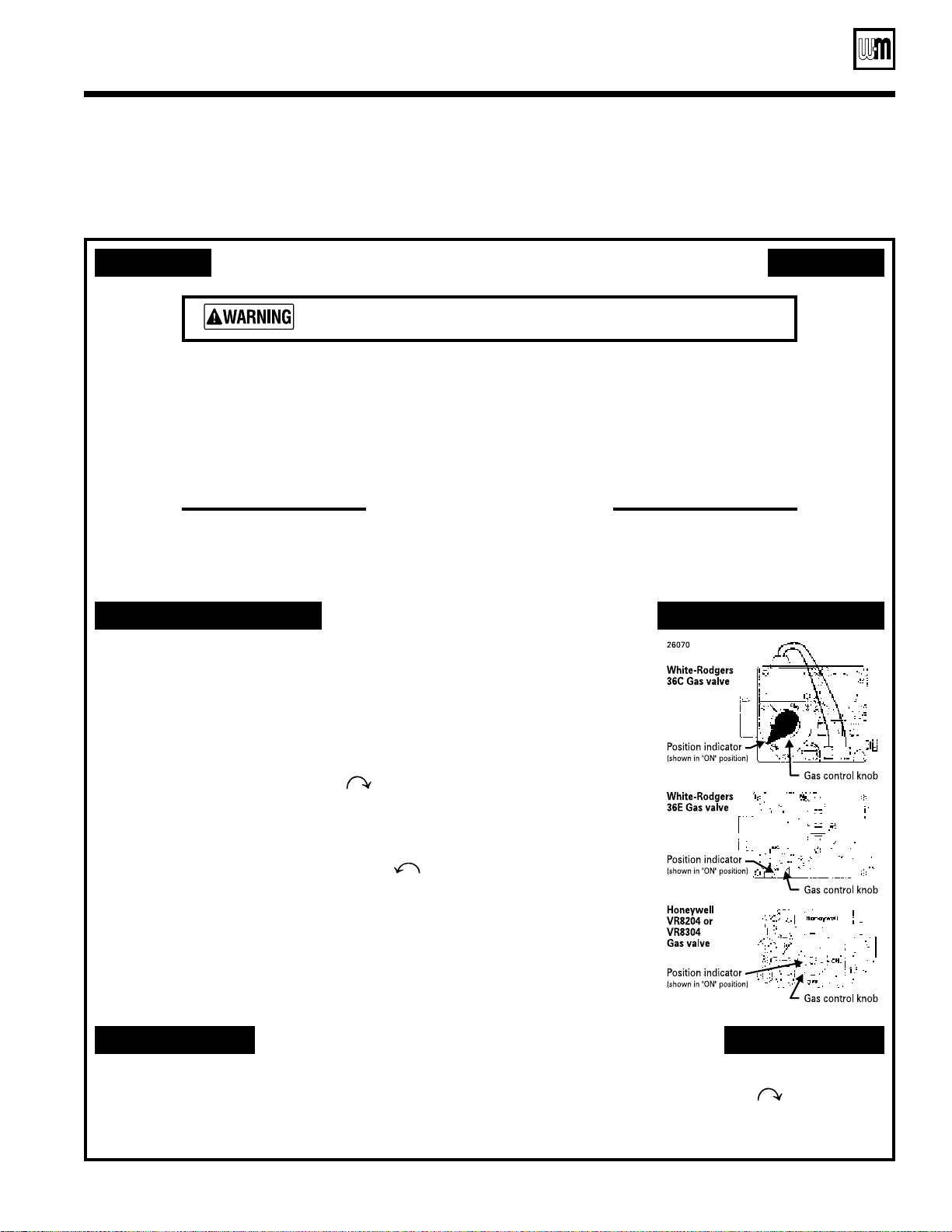
Gas control knob clockwise to “OFF”.
7. Wait five (5) minutes to clear out any gas. Then smell for gas, including near the floor.
If you smell gas,
STOP ! Follow “B” in the safety information above. If you don’t smell
gas, go to the next step.
8. Turn Gas control knob counterclockwise to “ON”.
9. Turn on all electric power to the appliance.
10. Set thermostat to desired setting.
11. If the appliance will not operate, follow the instructions “TO TURN OFF GAS TO
APPLIANCE
” below and call your service technician or gas supplier.
12. Replace jacket front panel.
1. Set the thermostat to lowest setting.
2. Turn off all electric power to the appliance if service is to
be performed.
Operating instructions
• Spark-ignited pilot
CGi, CGs
• Gas valve — Honeywell VR8204/VR8304, White-Rodgers 36C and 36E
3. Remove jacket front panel.
4. Turn Gas control knob clockwise to “OFF”.
Do not force.
5. Replace jacket front panel.
FOR YOUR SAFETY READ BEFORE OPERATING
OPERATING INSTRUCTIONS
If you do not follow these instructions exactly, a fire or explosion may result
causing property damage, personal injury or loss of life.
WHAT TO DO IF YOU SMELL GAS
TO TURN OFF GAS TO THE APPLIANCE
CGa, CGi, CGs, EG, EGH, LGB, PEG, PFG Boilers
22
Part Number 550-110-592/0408
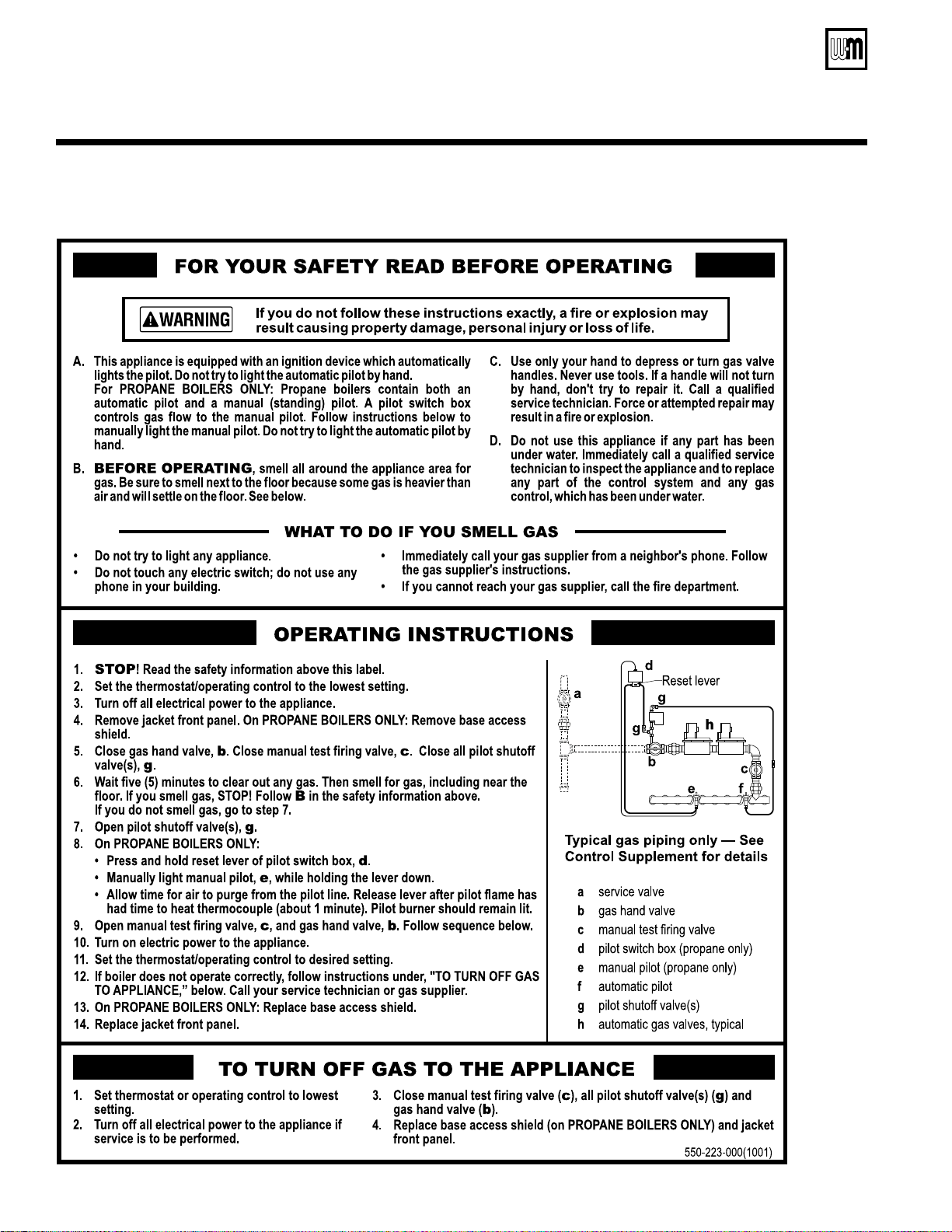
Operating instructions
• Spark-ignited pilot
LGB
User’s Information Manual
23
Part Number 550-110-592/0408
Common problems and solutions
Symptom Common Causes Possible Corrections
Rapid cycling —
boiler turns on and
off frequently
Thermostat installed where drafts
or heat affect reading
Locate thermostat on inner wall away from heat sources or cool
drafts.
Heat anticipator in thermostat
adjusted incorrectly
Adjust thermostat per manufacturer's instructions.
Incorrect limit setting Set limit according to system needs. Maximum setting is 220˚F.
Increase limit setting to decrease cycling.
Insufficient water flow through
boiler
Check all valves to and from boiler. Return to proper setting.
Confirm circulator size.
Frequent release of
water through relief
valve
Expansion tank sized too small Call qualified service technician to check expansion tank
operation and size.
Flooded expansion tank Call qualified service technician to check expansion tank
operation.
Inoperative limit control Call qualified service technician to replace limit control.
Need to frequently
add makeup water
Leaks in boiler or piping Have qualified service technician repair leaks at once to avoid
constant use of makeup water. Makeup water can cause
mineral deposits which, in turn, can cause boiler section failure.
Do not use petroleum-base stop-leak compounds.
Black water
condition
Oxygen corrosion due to leaks in
boiler and piping
Have qualified service technician repair at once. Keep pH of
water between 7.0 to 8.5.
Popping or
percolating noise
heard in boiler
Mineral deposits in sections due
to constant use of makeup water
Call qualified service technician to de-lime boiler, if necessary.
In some cases, deposits will be too heavy to remove with de-
liming procedures.
Have qualified service technician repair leaks to eliminate need
for constant makeup water.
Incorrect pH of boiler water Call qualified service technician to check pH level and correct.
pH should be maintained between 7.0 to 8.5.
Insufficient water flow through
boiler
Check all valves to and from boiler. Return to proper setting.
Confirm circulator size.
Metal flakes found in
vent outlet or vent —
flueway corrosion
Contaminated combustion air
supply — See page 3 in this
manual.
Remove any contaminating products. See page 3 in this
manual.
Provide outside air for combustion. Kit available through Weil-
McLain distributor. Have qualified service technician pipe-up kit.
Condensation of combustion
gases in boiler sections
Have qualified service technician inspect system piping and
controls to verify proper regulation of return water temperature.
Some radiators or
baseboard units do
not heat or are noisy
Air in system Bleed air from system through air vents in radiators or
baseboard units.
Low system pressure Fill to correct pressure.
Check for leaks in boiler or piping. Have qualified service
technician repair at once.
High limit set too low Adjust high limit to higher setting.

24
Part No. 550-110-592/0408
Weil-McLain
500 Blaine Street
Michigan City, IN 46360-2388
http://www.weil-mclain.com
Residential & Commercial Cast Iron Boilers
Residential Water Warranty — Limited Lifetime
Residential Steam Warranty — Limited 10 Year
Commercial Warranty— Limited 10 Year
First Year — (All Residential & Commercial Cast Iron Boilers) Weil-McLain
warrants that its cast iron boilers are free from defects inmaterial and workman-
ship for one year from date of installation. If any parts are found to be defective
from such defects,Weil-McLain will provide replacement of such defectiveparts.
SecondThroughTenthYear — (Residential & Commercial Water/Steam)
Weil-McLain warrants that the cast iron sections
of its water and steam boilers are
free from defects in material and workmanship from the date of installation for the
second through the tenth year. If, during such time, any section is found to be
defective, Weil-McLain will provide replacement of such defective section(s).
Eleventh Year and Beyond — (Residential Water Only) Weil-McLain warrants
that the cast iron sections
of its residential water boilers are free from defects in
material and workmanship for the eleventh year and beyond from the date of
installation. If, during such time period, any section(s) is found to be defective,
Weil-McLain will provide replacement of such defective section(s) upon the
payment of a proportionate charge based on the time the boiler has been in
service. The proportionate charge will be equal to the appropriate percentage of
the list price of such section(s) at the time the warranty claim is made, and will be
determined as follows: 11th year-5%; 12th year-10%; 13th year-15%; 14th year-
20%; 15th year-25%; 16th year-30%; 17th year-35%; 18th year-40%; 19th year-
45%; 20th year-50%; 21st year-55%; 22nd year-60%; 23rd year-65%; 24th year-
70%; 25th year & beyond -75%.
These warranties do not cover boilers operated with combustion air contam-
inated externally by chemical vapors or with improper fuel additives, or with water
conditions whichmay have caused unusual deposits in the cast iron sections.
See section“For all Weil-McLain Products” for additional warranty information.
Weil-McLain Limited Warranties
NOTE: Residential warranties do not cover any residential products installed in build-
ings other than one or two family dwelling units, unless they are buildings with indi-
vidual residential products for each dwelling unit.
THE WARRANTIES DESCRIBED HEREIN ARE IN LIEU OF ALL OTHER WAR-
RANTIES, EXPRESS OR IMPLIED, INCLUDING BUT NOT LIMITED TO ANY IM-
PLIED WARRANTIES OF FITNESS FOR A PARTICULAR PURPOSE AND MER-
CHANTABILITY. WEIL-McLAIN EXPRESSLY DISCLAIMS AND EXCLUDES ANY
LIABILITY FOR CONSEQUENTIAL, INCIDENTAL, INDIRECT OR PUNITIVE DAM-
AGES FOR BREACH OF ANY EXPRESS WARRANTY. For prompt product war-
ranty claims, notify the installer who, in turn, will notify the Weil-McLain distributor
from whom he purchased the boiler. If this action does not result in warranty resolu-
tion, contact Weil-McLain Consumer Relations Department, 500 Blaine Street, Michi-
gan City, Indiana 46360, with details in support of the warranty claim. Alleged defec-
tive part or parts must be returned through the same trade channel in accordance
with the Weil-McLain procedure currently in force for handling returned goods for the
purpose of inspection to determine cause of failure. Weil-McLain will furnish new
part(s) to an authorized Weil-McLain distributor who, in turn will furnish the new part
(s) to the heating contractor who installed the boiler. If youhave any questions about
the coverage of this warranty, contactWeil-McLain at the address above.
Indirect-Fired Water Heaters
Residential Water Heater Warranty — Limited Lifetime
Commercial Water Heater Warranty— Limited 15 Year
First Year— (Residential and Commercial Water Heaters) Weil-McLain warrants
that its indirect-fired water heaters arefree from defects in material and workmanship
for one year from the date of installation. If any parts are found to be defective from
such defects,Weil-McLain will provide replacement of such defective parts.
SecondYear and Beyond — (Residential Only)
Second Through Fifth Years — (Commercial Only)
Weil-McLain warrants that the tank assembly components
of its indirect-fired water
heaters are free from defects in material and workmanship for the second through
the fifth year from the date of installation (commercial only), or for the second year
from the date of installation and beyond (for residential only). If, during such time
periods, a leak in the tank assembly should occur, Weil-McLain will provide replace-
ment for theoriginal tank assembly.
Sixth Year through Fifteenth Year — (Commercial Only) Weil-McLain warrants
that the tank assembly components
of its commercial indirect-fired water heaters are
free from defects inmaterial and workmanship for the sixth year through the fifteenth
year following the date of installation. If, during such time period, a leak in the tank
assembly should occur,Weil-McLain will provide replacement for such defective tank
assembly. Such replacement will be furnished with the nearest comparable model
available from Weil-McLain at the time of such replacement and upon payment of a
proportionate charge. Proportionate charges will be equal to the appropriate percent-
age of the current list price of such commercial indirect-fired water heater at the time
warranty claim is made and will be determined as follows: 6th & 7th year-55%; 8th &
9thyear-60%; 10th & 11th year-65%; 12th & 13th year-70%; 14th & 15th year-75%.
These warranties do not cover:
1. Any water heater not initially installed with a new temperature-pressure relief valve
bearing the listing of the American Society of Mechanical Engineers (A.S.M.E.) at the
time of the water heater installation.
2. Any water heater that has a failure or malfunction resulting from a.) failure to keep the
tank full of potable water; b.) failure to assure that water in the tank is free to circulate
at all times; or c.) failure to keep the tank free of water sediment or scale deposits.
3. Any water heater that has potable water in the unit with a chloride or chlorine content
higher than 80 mg/liter.
4. Any water heater installed in a residence containing any type of water softener system
that is not installed and maintained in accordance with manufacturer’s specifications.
5. Any water heater installation where non-metallic piping products without an oxygen
barrier are used.
6. Any water heater used for non-potable application such aspool or process heating.
See section“For all Weil-McLain Products” for additional warranty information.
Weil-McLain
Ultra
Cast Aluminum Boilers
Residential Warranty — Limited 15 Year
(includes 5-Year Ultra Protection Plan)
Commercial Warranty— Limited 15 Year
(does NOT include Ultra HPP)
First Through Fifth Year — Weil-McLain warrants that its cast aluminum boilers
are free from defects in material and workmanship for one year from the date of
installation and the heat exchanger is free from defects in material and
workmanship for five years from the date of installation. If any parts in the first
year, or the heat exchanger in the first five years are found to be defective from
such defects,Weil-McLain will provide replacement of such defective parts or heat
exchanger.
In addition to the product warranty, Weil-McLain will provide a 5-Year “
Ultra”
Homeowner Protection Plan (“UHPP”) for residential applications only to cover parts and labor
for five years from the date of installation provided only if the Ultra boiler is properly registered
with the UHPP Administrator within one month of the date of installation. UHPP claims must be
processeddirectly through thePlan Administrator and not throughWeil-McLain.
Sixth Through Tenth Year — Weil-McLain warrants that the heat exchangers
of
its cast aluminum boilers are free from defects in material and workmanship for
the sixth through the tenth year from the date of installation. If, during such time,
the heat exchanger is found to be defective, Weil-McLain will provide replacement
of such defective heat exchanger.
Eleventh Through Fifteenth Year — Weil-McLain warrants that the heat
exchangers of its cast aluminum boilers are free from defects in material and
workmanship for the eleventh through fifteenth year from the date of installation.
If, during such time period, the heat exchanger is found to be defective, Weil-
McLain will provide replacement for such defective heat exchanger upon the
payment of a proportionate charge based on the time the boiler has been in
service. The proportionate charge will be equal to the appropriate percentage of
the list price of such heat exchanger at the time the warranty claim is made, and
will be determined as follows: 11th year - 10%; 12th year - 20%; 13th year -
40%; 14th year - 60%; 15th year - 80%; 16th year & beyond - 100%.
This warranty does not cover boilers operated with combustion air contaminated
externally by chemical vapors or with improper fuel additives, or with water/
system conditions whichmay have caused heat exchanger failure.
See section“For all Weil-McLain Products” for additional warranty information.
Radiant Heating Products
Radiant Heating Products Warranty — Limited 30 Year
IPP& IPC Products Warranty— Limited 3 Year
Weil-McLain warrants that its AlumiPex and Qual-Pex radiant heating products are
free from defects in material and workmanship for thirty years (three years for IPP
and IPC products) from the date of installation. If any parts are found to be defective
from such defects during such time period, Weil-McLain will provide replacement of
such defective parts. It is expressly understood that failure as a result of freezing of
water within the pipes (tubing) does not constitute a defect in material or
workmanship and shall not be covered by this warranty.
See section“For all Weil-McLain Products” for additional warranty information.
Parts and Accessories
Parts and Accessories Warranty — Limited 1 Year
Weil-McLain warrants that parts and accessories that were purchased through Weil-
McLain are free from defects in material and workmanship for one year from the date
of installation. If any parts and/or accessories are found to be defective from such
defects during such time period, Weil-McLain will provide replacement of such
defective parts. Parts and accessories covered under this warranty include only
those items that are not
covered under other Weil-McLain product warranties.
See section“For all Weil-McLain Products” for additional warranty information.
For All Weil-McLain Products: These warranties are subject to the condition
that the Weil-McLain Product(s) must have been installed in accordance with
manufacturers’ instructions by a heating contractor whose principal occupation is
the sale and installation of plumbing, heating and/or air conditioning equipment.
These warranties extend only to the first retail purchaser of the products and only
to a product that has not been moved from its original installation site.
In addition to each product warranty listed, Weil-McLain warranties do not cover
:
1. Components that are part of theheating system (products) but were not fur-
nished by Weil-McLain as a part of the heating system (products).
2. The workmanship of any installer of Weil-McLain’s product(s). In addition, this
warranty does not assume any liability of any nature for unsatisfactory perform-
ance causedby improper installation.
3. Any costs for labor for removal and reinstallation of the alleged defective part,
transportation to Weil-McLain, if necessary, and any other materials necessary
to perform the exchange.
4. Any products that have a failure or malfunction resulting from improper or
negligent operation, accident, abuse, freezing, misuse, unauthorized alteration
or improper repair or maintenance.
5. Improper adjustments (including boiler/burner), control settings, care or mainte-
nance. Information is in the installation, start-up, operations, owner/user’s
manuals, service/maintenance instructions, and other printed/technical informa-
tion provided with the product or direct from Weil-McLain or weil-mclain.com
.