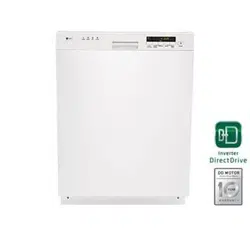
Dishwasher
MODEL : LDS5811WW / LDS5811BB / LDS5811ST
☎☎
1-800-243-0000
24 HOURS A DAY, 7 DAYS A WEEK FOR LG CUSTOMER SERVICE
2
DISHWASHER FEATURES
DD
IISSHHWWAASSHHEERR FFEEAATTUURREESS
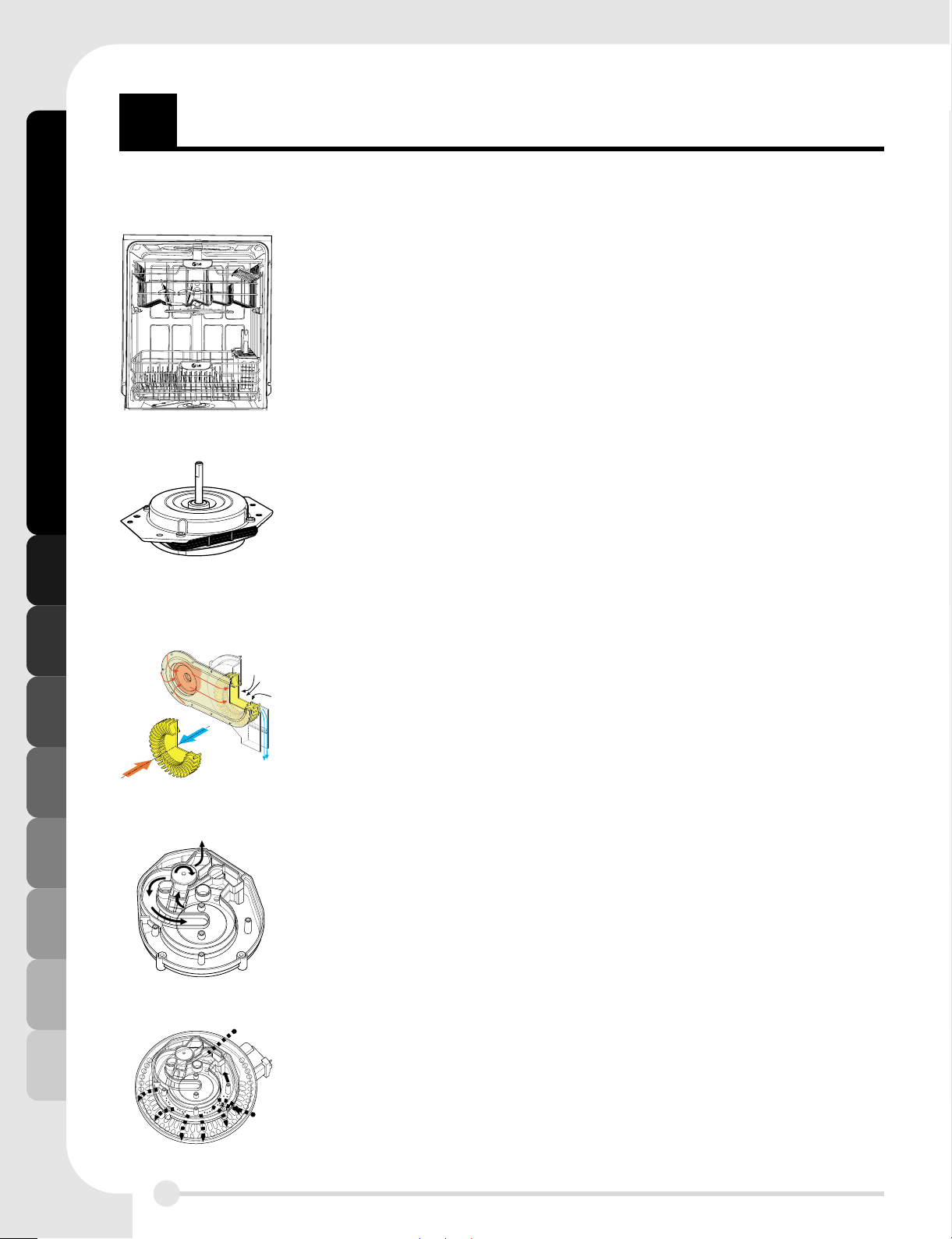
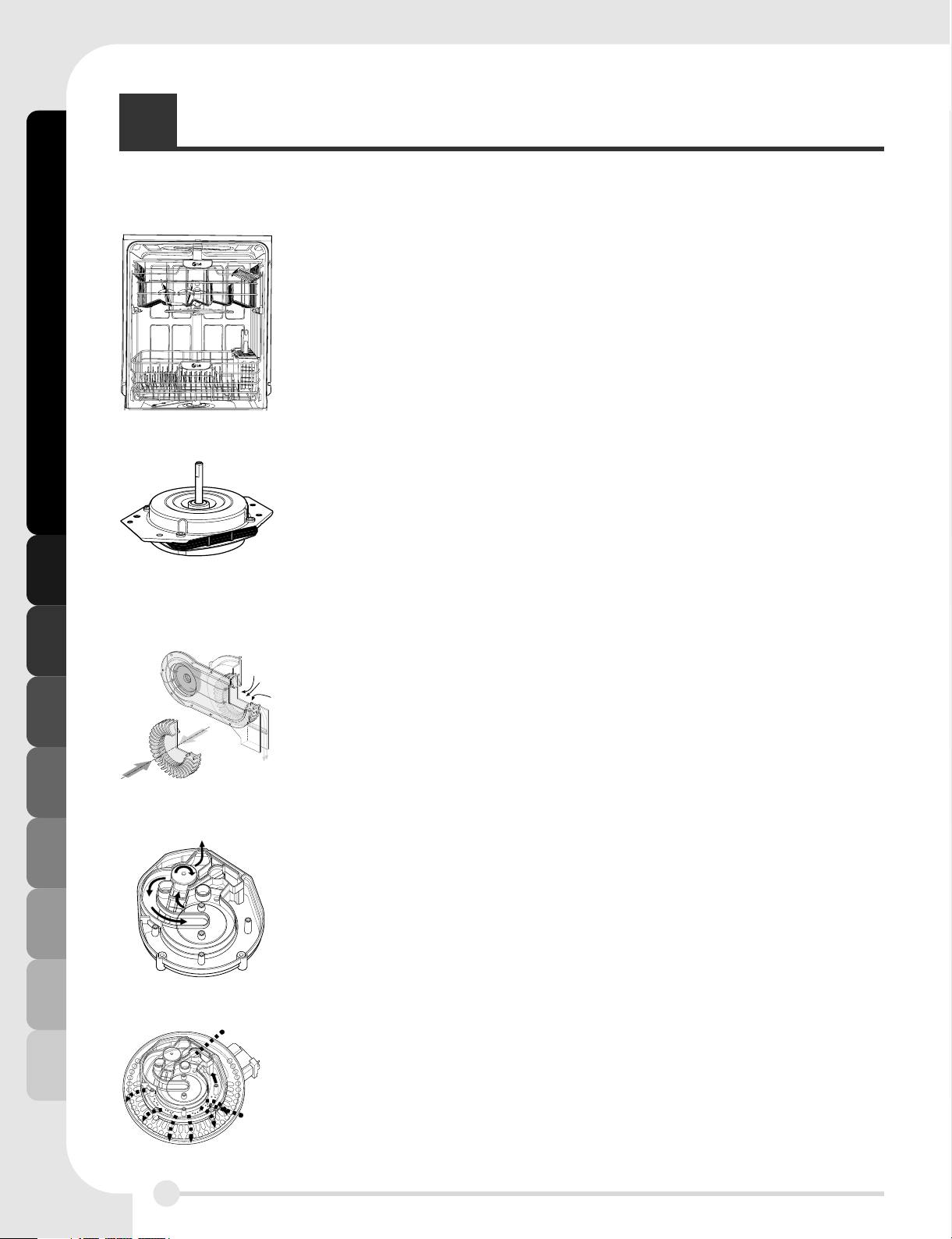
If you raise the Upper Rack, you can load large dishes in the Lower Rack.
(Max. 14 in.)
The tall tub provides large dishes loading as well as large capacity.
LG dishwashers let you load oversized items in the Lower and Upper Rack.
Newly introduced Slim Direct Inverter motor is inverter-controlled. Speed is
controlled based on program selection. It also offers high energy efficiency to
minimize energy loss.
This is one of the best performance solutions for drying dishes because it
minimizes venting humid air to the outside of the dishwasher. In addition, this
system ensures better drying results compared to the condensing drying
system.
Because of alternating water spray between the Upper and Lower
Rack, the water pressure allows superior performance and reduced
consumption of water and electricity.
For best wash results, the self-cleaning filter system continuously cleans the
water as it circulates. Your LG dishwasher has a self-cleaning filter that grinds
food into small particles before it goes down the drain.
■■
Ultra Big Capacity
■■
Slim Direct Inverter Motor
■■
Hybrid Drying System
■■
Vario Spray System
■■
Self Cleaning Filter
Moist
Air
Dry
Air
Mixed
Air
to
Upper
Arm
to
Lower
Arm
Soil Sensor
Fine Mesh
to Drain
3
CC
OONNTTEENNTTSS
PART 1. IMPORTANT SAFETY INSTRUCTIONS ................................................... 4~8
PART 2. PARTS OF YOUR DISHWASHER ................................................................. 9
OPERATING INSTRUCTIONS
PART 3. FUNCTIONS OF CONTROL PANEL ..................................................... 10~11
PART 4. USING YOUR DISHWASHER ................................................................12~16
PART 5. CARE & MAINTENANCE............................................................................. 17
PART 6. OPERATING SEQUENCE ........................................................................... 18
PART 7. PROGRAM ................................................................................................... 19
PART 8. TROUBLESHOOTING ................................................................................. 20
CONTENTS
4
II
MMPPOORRTTAANNTT SSAAFFEETTYY IINNSSTTRRUUCCTTIIOONNSS
RREEAADD AALLLL IINNSSTTRRUUCCTTIIOONNSS BBEEFFOORREE UUSSEE
Do not put excessive downward force on the open door prior to installation as this could cause damage to
the unit or cause it to tip over. The dishwasher should not be used before installation has been completed
in accordance with the instructions in the installation manual.
DANGER
WARNING
Your safety and the safety of others is very important.
We have provided many important safety messages in this manual and on
your appliance. Always read and obey all safety messages.
This is the safety alert symbol.
This symbol alerts you to potential hazards that can kill or hurt you and others.
All safety messages will follow the safety alert symbol and either the word DANGER or WARNING.
These words mean:
You can be killed or seriously injured if you don’t immediately follow
instructions.
You can be killed or seriously injured if you don’t follow instructions.
All safety messages will tell you what the potential hazard is, tell you how the reduce the chance of injury, and
tell you what can happen if the instructions are not followed.
IMPORTANT SAFETY INSTRUCTIONS
WWAARRNNIINNGG
For your safety, the information in this manual must be followed to minimize the risk of
fire or explosion, electric shock, or to prevent property damage, personal injury, or loss
of life.
WWAARRNNIINNGG
Tip Over Hazard
Not following these instructions can result in death, fire, or electrical shock.
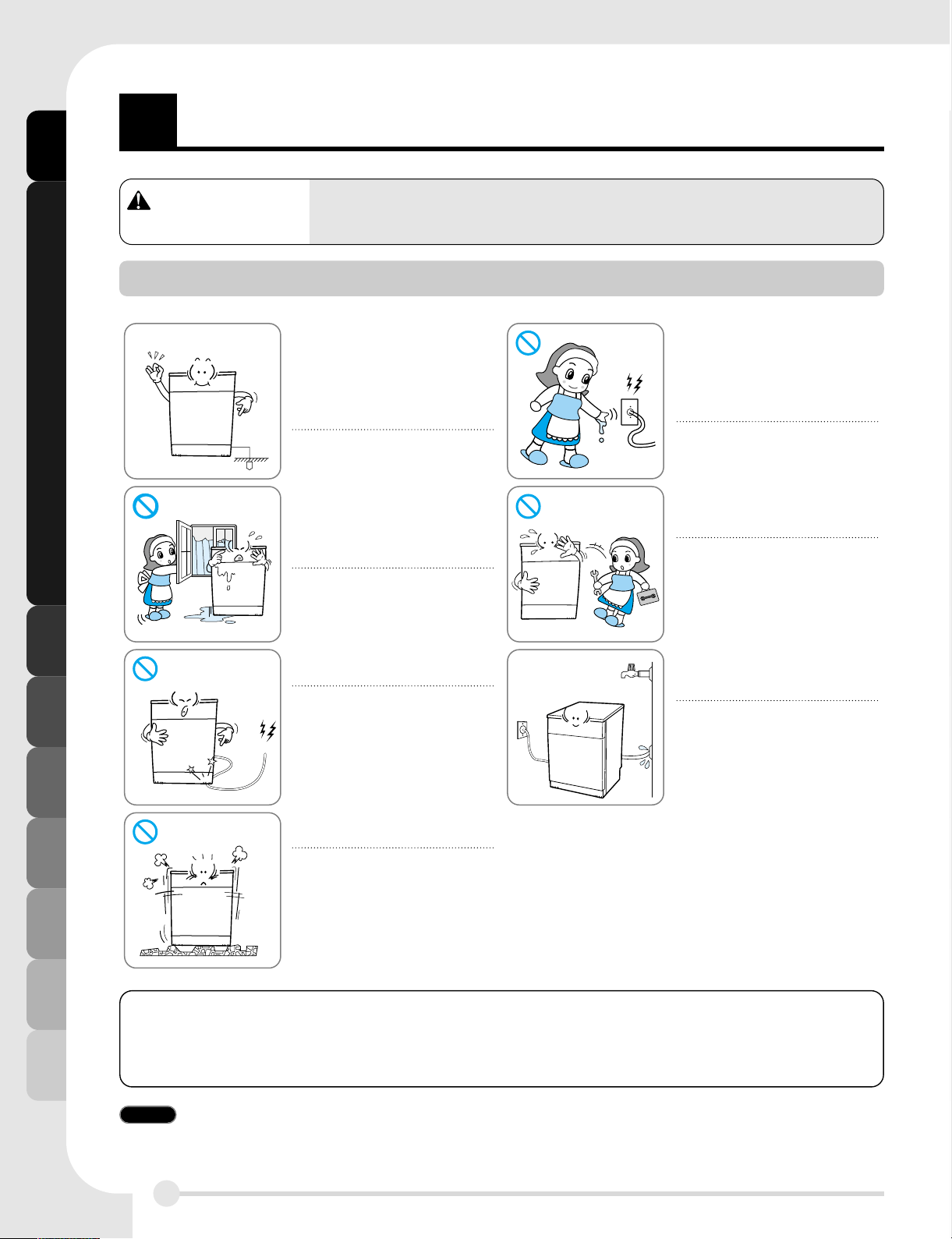
The dishwasher MUST be grounded.
Connect the ground wire to green ground connector in terminal box.
Do not use an extension cord.
WWAARRNNIINNGG
Electrical Shock Hazard
5
II
MMPPOORRTTAANNTT SSAAFFEETTYY IINNSSTTRRUUCCTTIIOONNSS
Basic Safety Instructions
RREEAADD AALLLL IINNSSTTRRUUCCTTIIOONNSS BBEEFFOORREE UUSSEE
IMPORTANT SAFETY INSTRUCTIONS
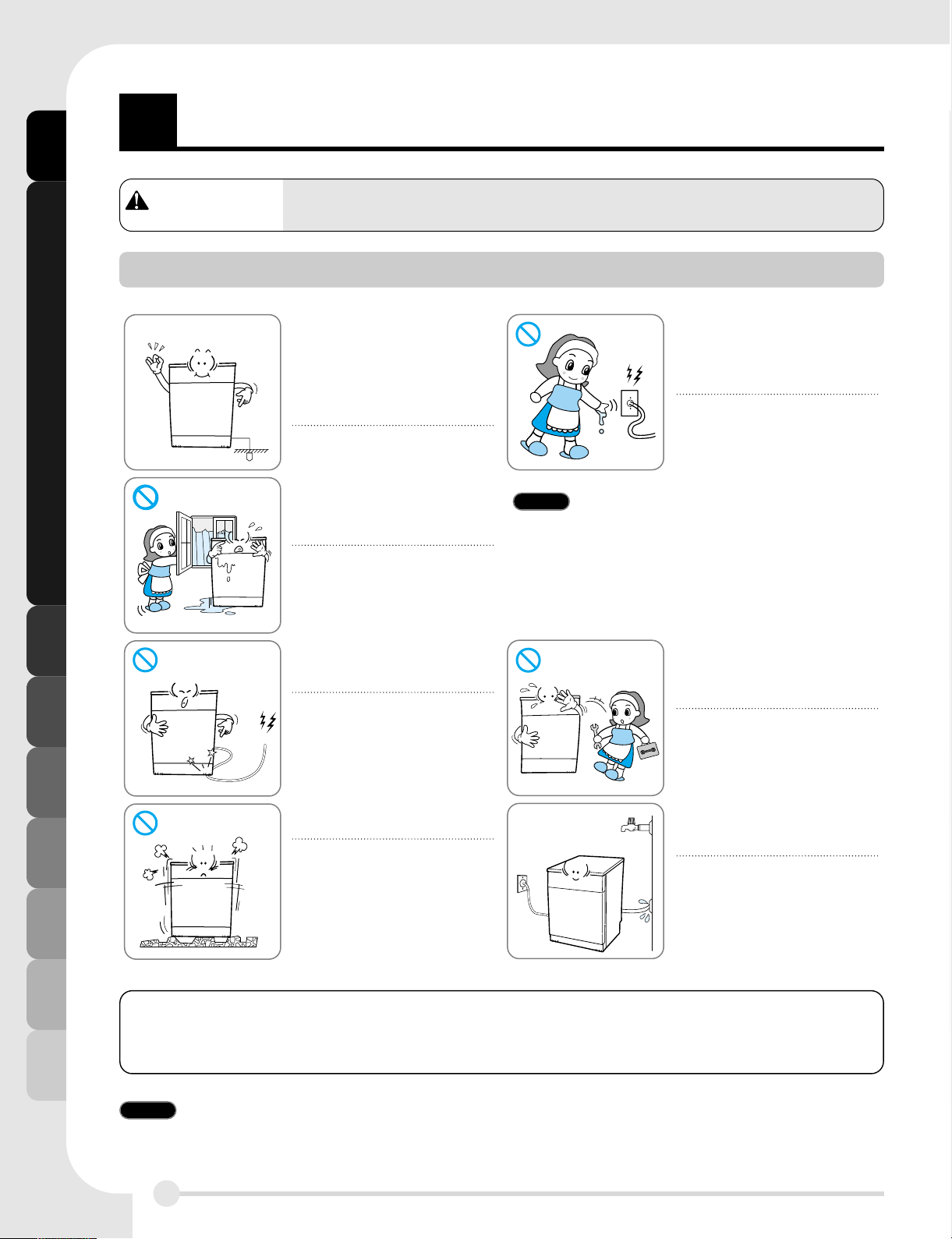
WARNING - When using your dishwasher, follow basic precautions, including the following:
a) Read all instructions before using the dishwasher.
b) Use the dishwasher only for its intended function.
c) Use only detergents or wetting agents recommended for use in a dishwasher and keep them out
of the reach of children.
d) When loading items to be washed:
1) locate sharp items so that they are not likely to damage the door seal; and
2) load sharp knives with the handles up to reduce the risk of cut-type injuries.
e) Do not wash plastic items unless they are marked “dishwasher safe” or the equivalent. For plastic
items not so marked, check the manufacturer’s recommendations.
Note : This statement may be omitted for an appliance that employs a heating element that is
located or guarded such that melted plastic items are not likely to contact it.
f) Do not touch the heating element during or immediately after use.
g) Do not operate your dishwasher unless all enclosure panels are properly in place.
h) Do not tamper with the controls.
i) Do not abuse, sit on, or stand on the door or dish rack of the dishwasher.
j) To reduce the risk of injury, do not allow children to play in or on the dishwasher.
k) Under certain conditions, hydrogen gas may be produced in a hot-water system that has not been
used for two weeks or more. HYDROGEN GAS IS EXPLOSIVE. If the hot-water system has not
been used for such a period, before using the dishwasher turn on all hot-water faucets and let the
water flow from each for several minutes. This will release any accumulated hydrogen gas. As the
gas is flammable, do not smoke or use an open flame during this time.
l) Remove the door to the washing compartment when removing an old dishwasher from service or
discarding it.
WWAARRNNIINNGG
For your safety, the information in this manual must be followed to minimize the risk of
fi re or explosion, electric shock, or to prevent property damage, personal injury, or
loss of life.
WWAARRNNIINNGG
To reduce the risk of fire, electric shock, or injury to persons when using this
appliance, follow basic precautions, including the following.
6
II
MMPPOORRTTAANNTT SSAAFFEETTYY IINNSSTTRRUUCCTTIIOONNSS
IMPORTANT SAFETY INSTRUCTIONS
NOTE Detailed installation instructions are contained in the installation instruction manual included with your
dishwasher. Be sure to read and observe all instructions in the installation manual.
NOTE Most installations are hard-wired. This will
imply it is acceptable for the customer to set up
the dishwasher as a portable appliance. This
would apply only in cases where the dishwasher
is plugged in to an outlet under the sink.
Installation Instructions
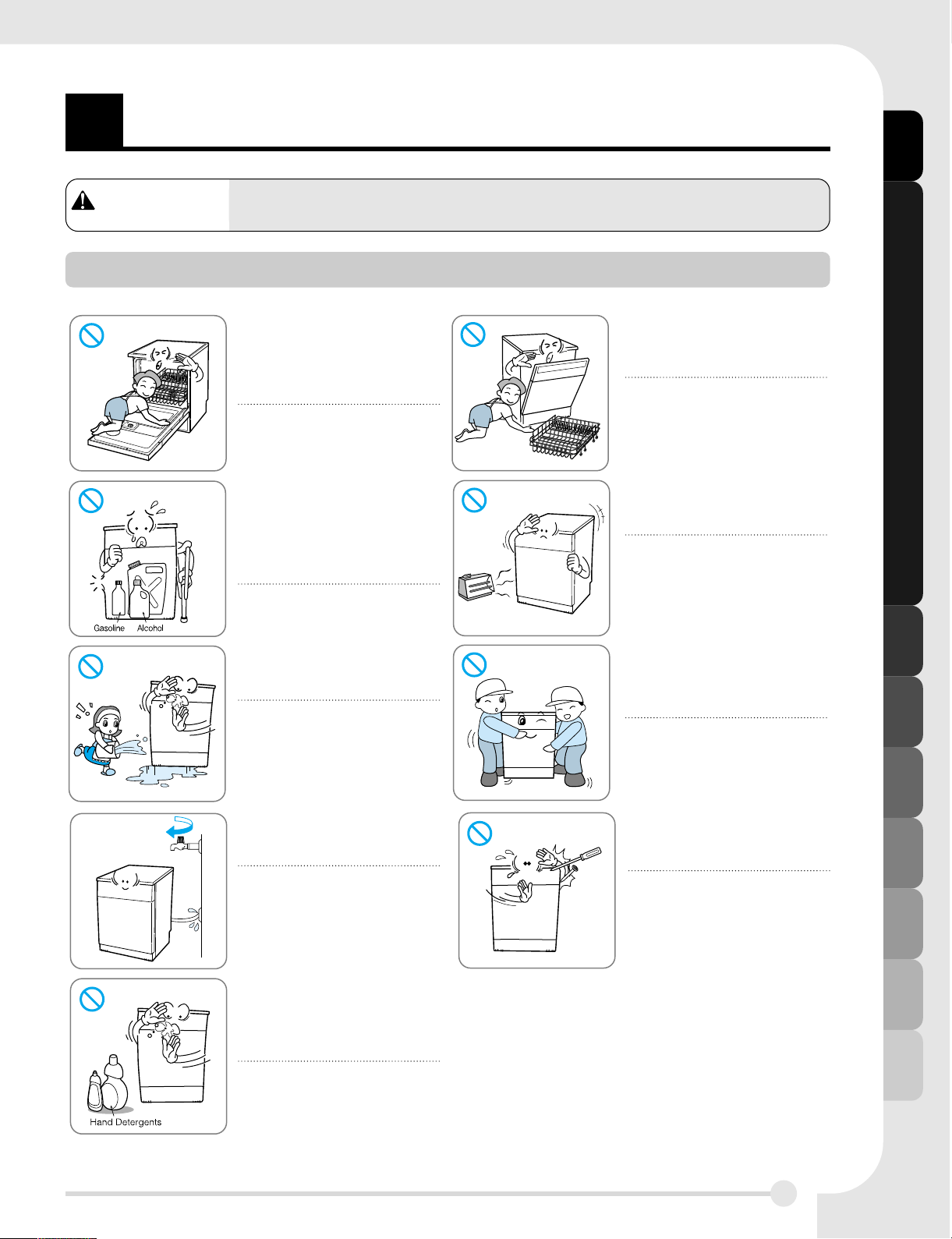
The dishwasher is designed
for standard household
current (120 Volts AC, 60
Hz.) Before connecting the
dishwasher, ensure the
outlet or cable is properly
fused and grounded.
Not being grounded may
cause breakdowns or electric
shocks.
Do not damage the power
cord itself or place heavy
objects on the cord.
Power cord damage may
cause fire and electric shock.
Do not grasp the power
cord or switch with wet
hands. Do not use a
damaged power cord, plug
or socket.
It may cause electric
shock.
Disassembly or repair
should be conducted by
experienced service
persons.
Improper disassembly or repair
could lead to product failure or
electrical shock.
Do not install or store the
dishwasher where it will be
exposed to the weather.
It may cause an electric
shock, fire, malfunction and
damage.
After installation, recheck
the water supply
connections.
Loose connections could leak
resulting in property damage.
WWAARRNNIINNGG
To reduce the risk of fire, electric shock, or injury to persons when using this
appliance, follow basic precautions, including the following.
Place the dishwasher on
even and solid floor.
Uneven surface may cause
abnormal noise.
For a permanently connected dishwasher:
This appliance must be connected to a grounded metal, permanent wiring system or an equipment-grounding conductor must
be run with the circuit conductors and connected to the equipment-grounding terminal or lead on the appliance.
7
IMPORTANT SAFETY INSTRUCTIONS
II
MMPPOORRTTAANNTT SSAAFFEETTYY IINNSSTTRRUUCCTTIIOONNSS
User-Maintenance Instructions
WWAARRNNIINNGG
To reduce the risk of fire, electric shock, or injury to persons when using this
appliance, follow basic precautions, including the following.
Do not allow children or pets
to play on the door or inside
the dishwasher as this could
cause injury to the child or
pet, or damage the
dishwasher.
Children could fall and be
injured. Children or pets
could be injured by interior
parts or suffocate inside
dishwasher.
Don't leave racks out of
dishwasher, except when
removed for washing large
items.
Children could play inside the
dishwasher or fall on the rack
and be injured.
Keep the dishwasher away
from heat sources
Excessive heat could cause
melting of plastic parts or fire.
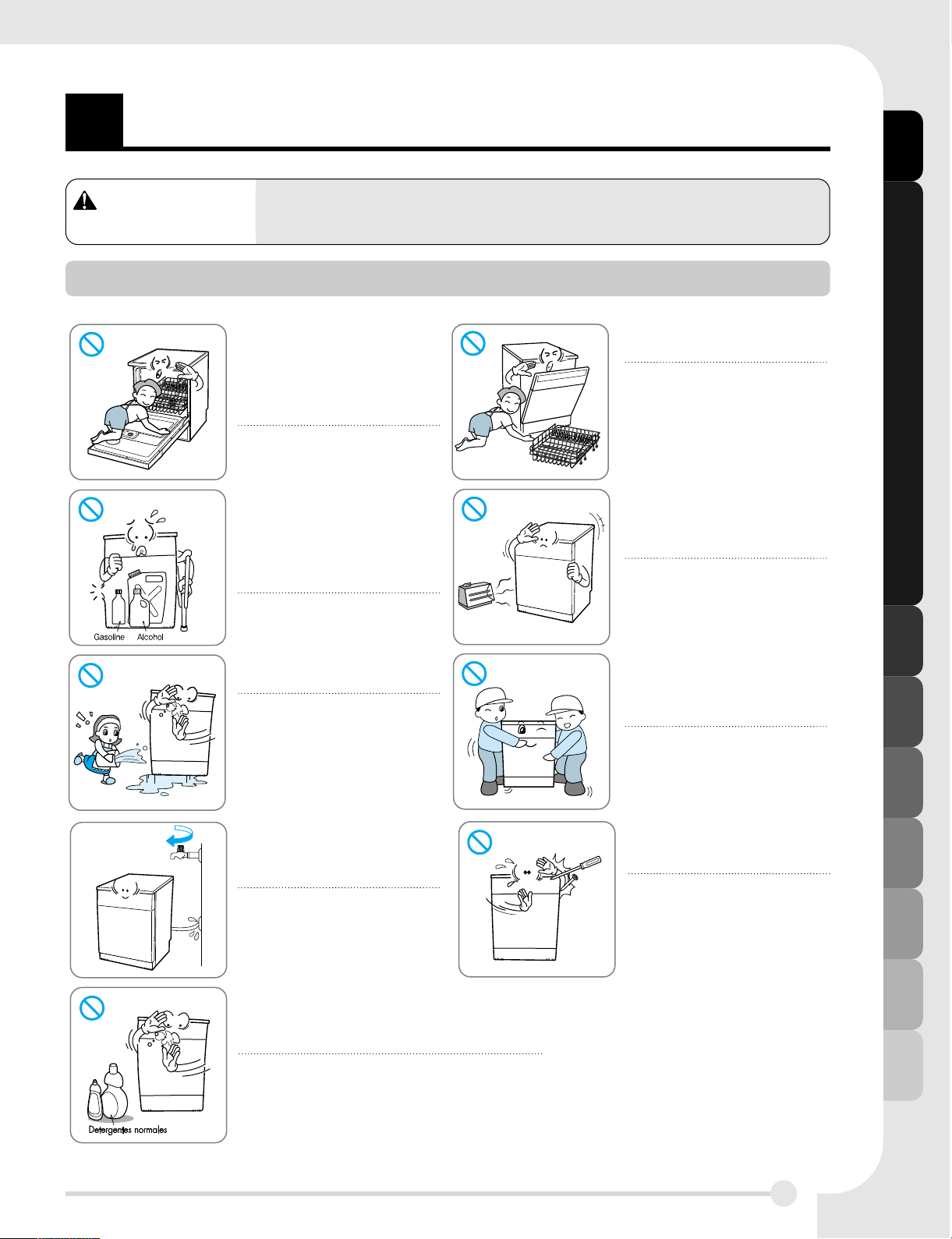
Do not store or use
combustible materials,
gasoline or other flammable
vapors and liquids in or
around dishwasher.
This could cause a fire.
Do not splash water on the
controls or on the exterior
of the dishwasher.
This could cause fire or
electric shock.
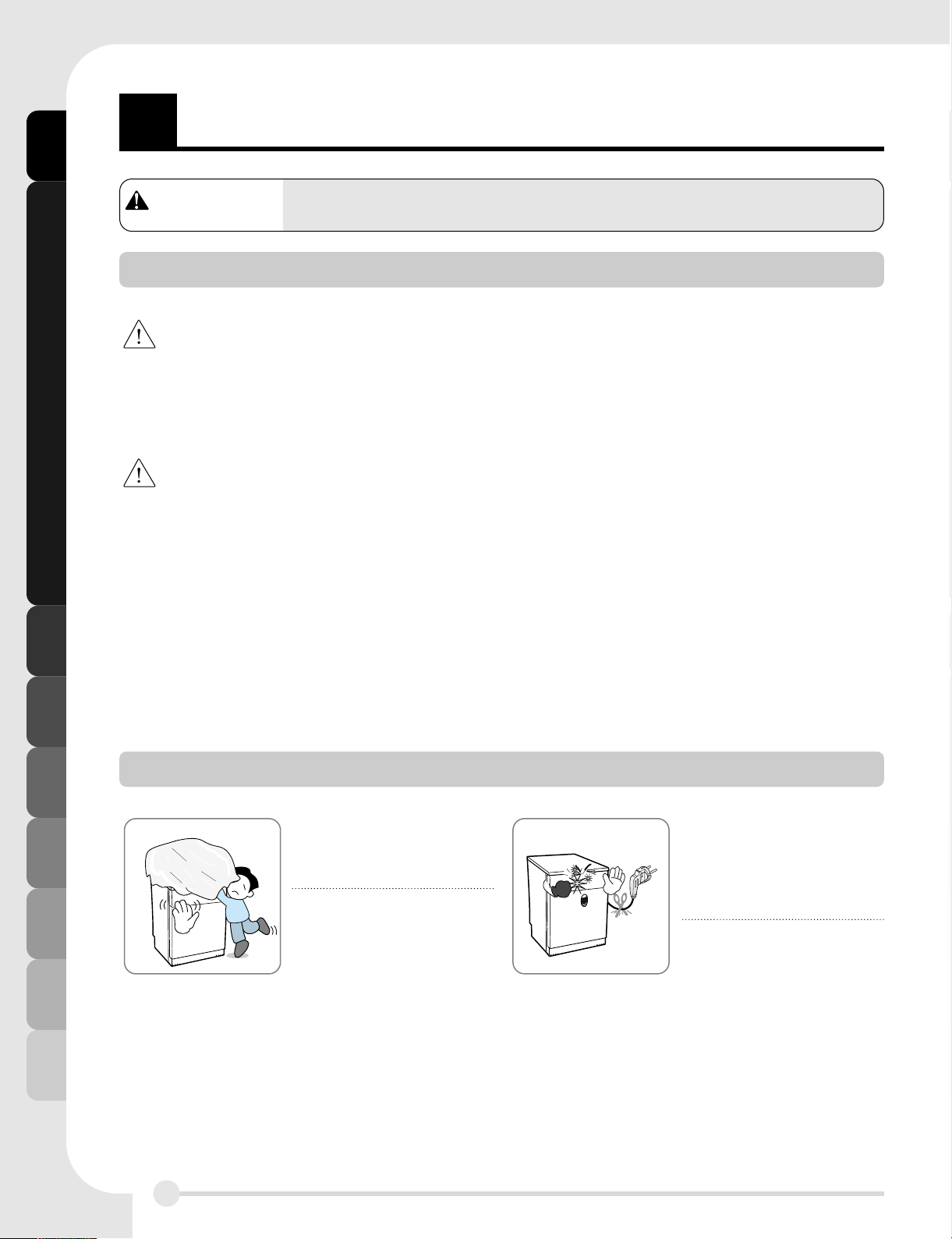
Dishwasher should be
unpacked and moved by 2
or more persons due to its
of heavy weight.
Dropping the product may
cause injury to people or
damage to the dishwasher.
Do not press the buttons
with hard or sharp objects.
Use only your finger tips.
Damage or electric shock
could result.
When dishwasher is not in
use for a long time, shut off
the water supply.
Property damage could result
if a connection fails.
Use only detergents or
wetting agents
recommended for use in a
dishwasher and keep them
out of the reach of children.
Improper detergents may
cause malfunctions, electric
shock, or fire due to
excessive suds.
8
II
MMPPOORRTTAANNTT SSAAFFEETTYY IINNSSTTRRUUCCTTIIOONNSS
IMPORTANT SAFETY INSTRUCTIONS
User-Maintenance Instructions
Disposal Instructions
WWAARRNNIINNGG
To reduce the risk of fire, electric shock, or injury to persons when using this
appliance, follow basic precautions, including the following.
WWAARRNNIINNGG
WWAARRNNIINNGG
Child Safety
Concerning the Power Cord
Most appliances should be connected to a dedicated circuit; that is, a single outlet circuit which powers
only that appliance and has no additional outlets or branch circuits. Check the specification page of this
owner's manual to be certain. Do not overload wall outlets. Overloaded wall outlets, loose or damaged wall
outlets, extension cords, frayed power cords, or damaged or cracked wire insulation are dangerous.
Periodically examine the cord of your appliance, and if its appearance indicates damage or deterioration,
unplug it, discontinue use of the appliance, and have the cord replaced with an exact replacement part by
an authorized service person. Protect the power cord from physical or mechanical abuse, such as being
twisted, kinked, pinched, closed in a door, or walked upon. Pay particular attention to plugs, wall outlets,
and the point where the cord exits the appliance. Any of these conditions could result in electric shock or
fire.
�Controls may be locked using CHILD LOCK mode to prevent settings from being changed by children.
�Keep children away from detergents and rinse-aids. Store chemicals properly and safely.
�Do not allow children to operate the dishwasher.
�Young children should be supervised to ensure that they do not play with the appliance.
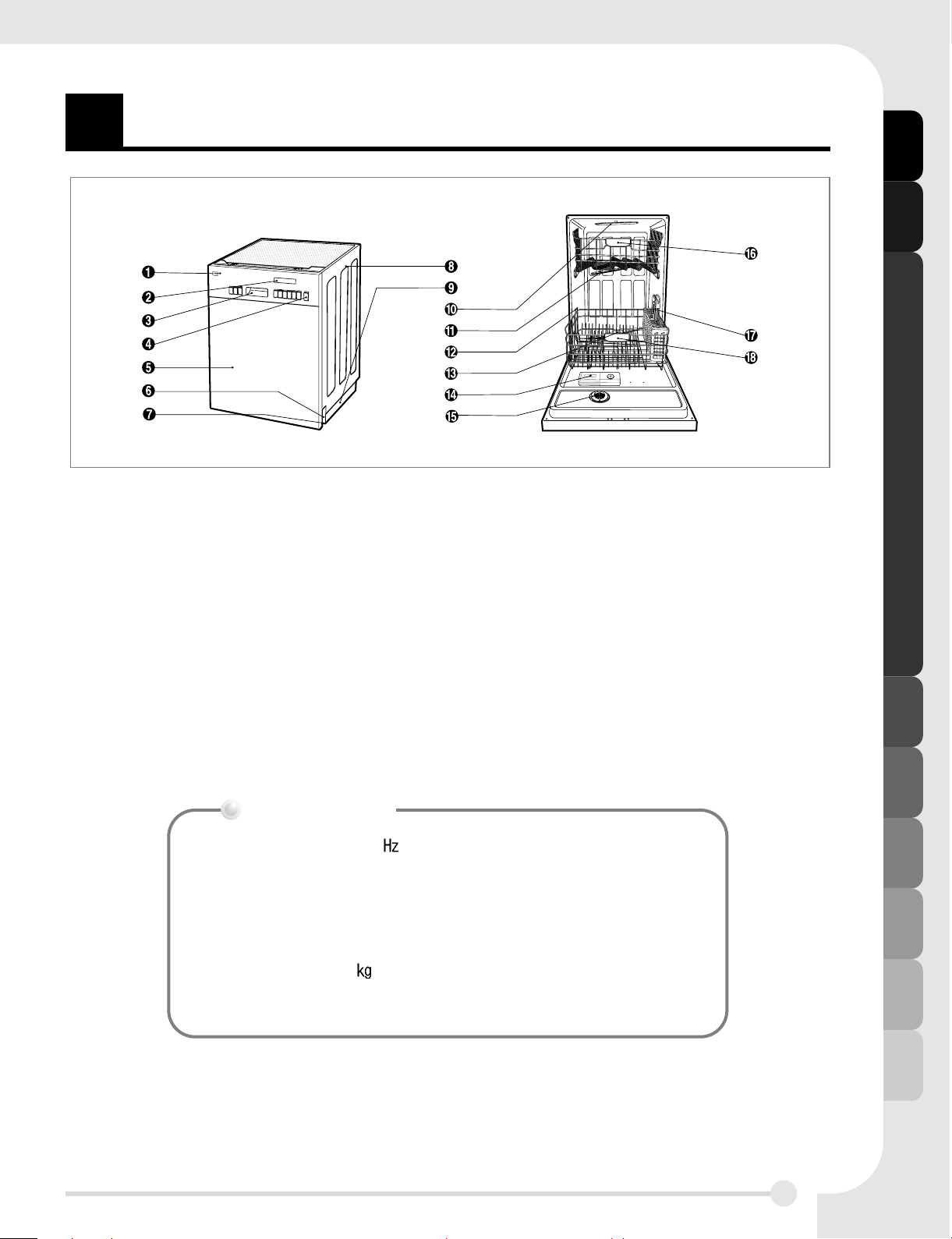
When the product has
reached the end of its
useful life and is to be
discarded, remove the door,
cut the power cord and
disable the control panel.
Children could climb into the
tub and become trapped and
suffocate. Attempts to reuse
the product could cause injury
or property damage.
Properly dispose of the
box, packaging, plastic
bags, and extruded
polystyrene.
Children playing with packing
material and plastic bags
could be injured or suffocate.
SSAAVVEE TTHHEESSEE IINNSSTTRRUUCCTTIIOONNSS
9
PARTS OF YOUR DISHWASHER
PP
AARRTTSS OOFF YYOOUURR DDIISSHHWWAASSHHEERR
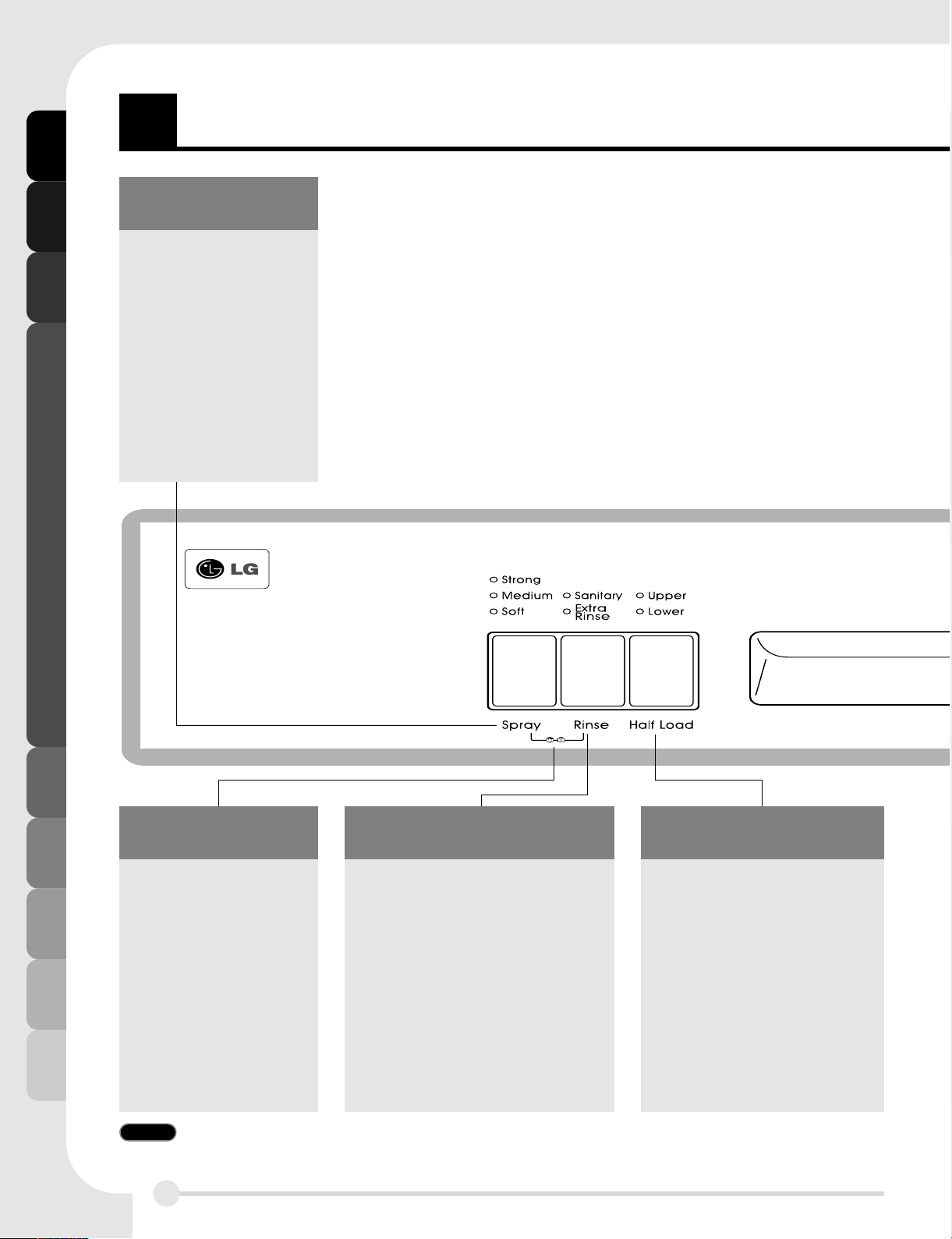
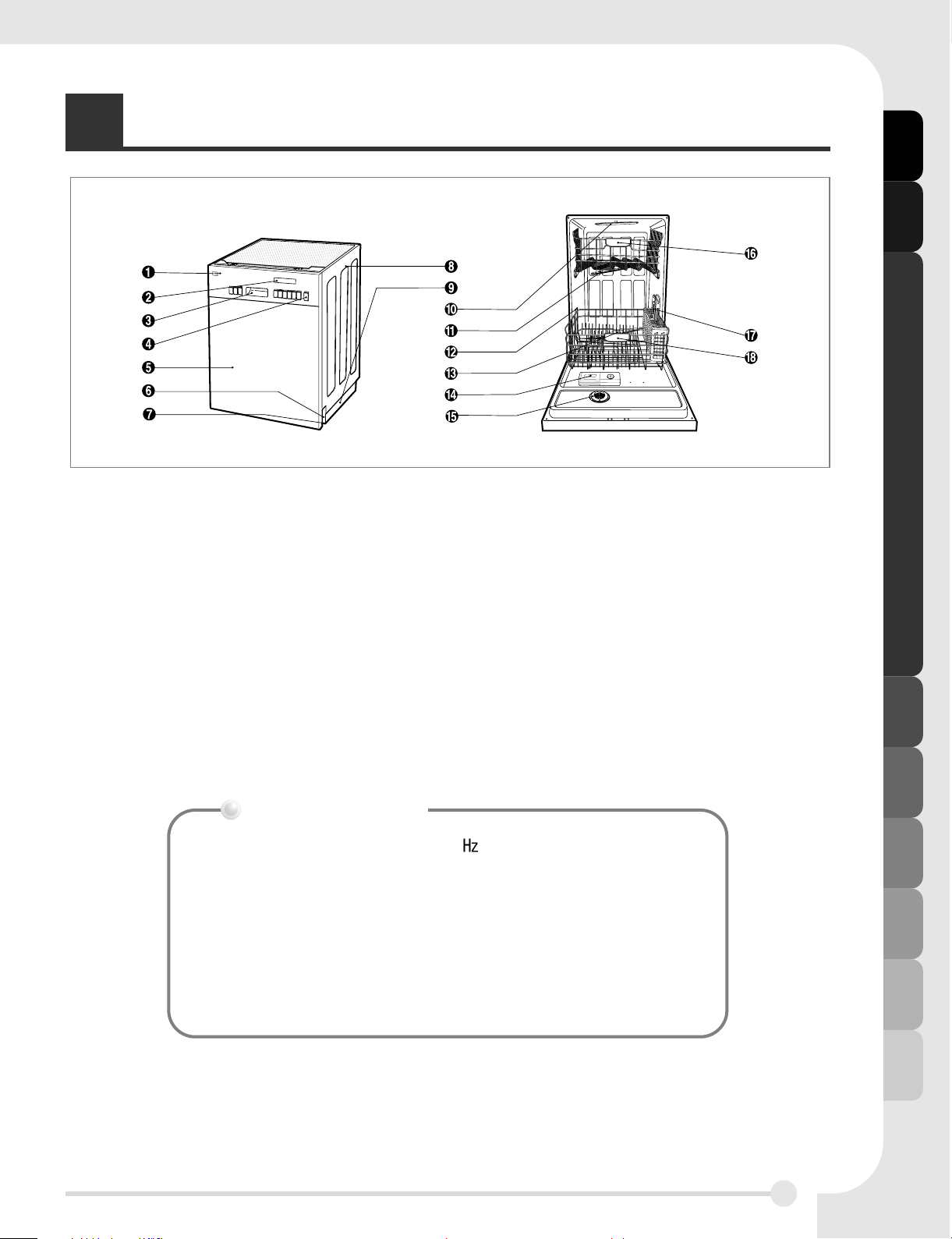
Control Panel
Front Display
Door Handle
Power Button
Front Cover
Lower Cover
Leveling Foot
Side Cabinet
Base
Top Spray Arm
Upper Spray Arm
Removable Tines
Lower Spray Arm
Detergent & Rinse Aid Dispenser
Vapor Vent Cover
Upper Rack
Cutlery Basket
Lower Rack
Specifications
�Power supply: 120V, 60 AC only, minimum 15A circuit breaker.
�Water Pressure: 20 - 120 psi (140 - 830 kPa)
�Size (W
X
D
X
H): 23 7/8
″″
X
25
″″
X
33 7/8
″″
(606mm
X 635mm X 860mm)
�Inlet Water Temperature: 120(49)
�Weight: 110 Ibs. (50 )
The appearance and specifications are subject to change without
manufacturer’s notice.
10
F UNCTIONS OF CONTROL PANEL
FF
UUNNCCTTIIOONNSS OOFF CCOONNTTRROOLL PPAANNEELL
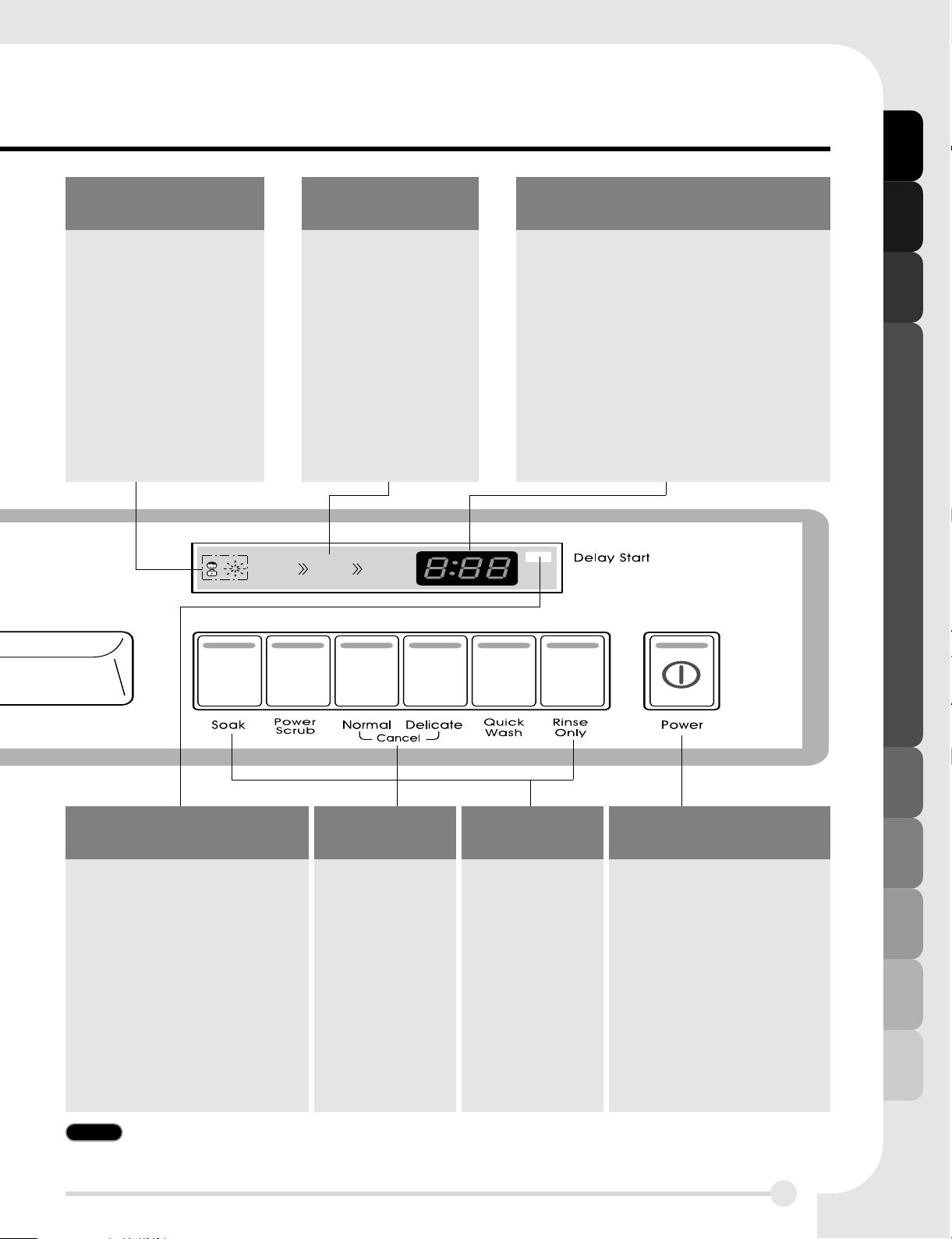
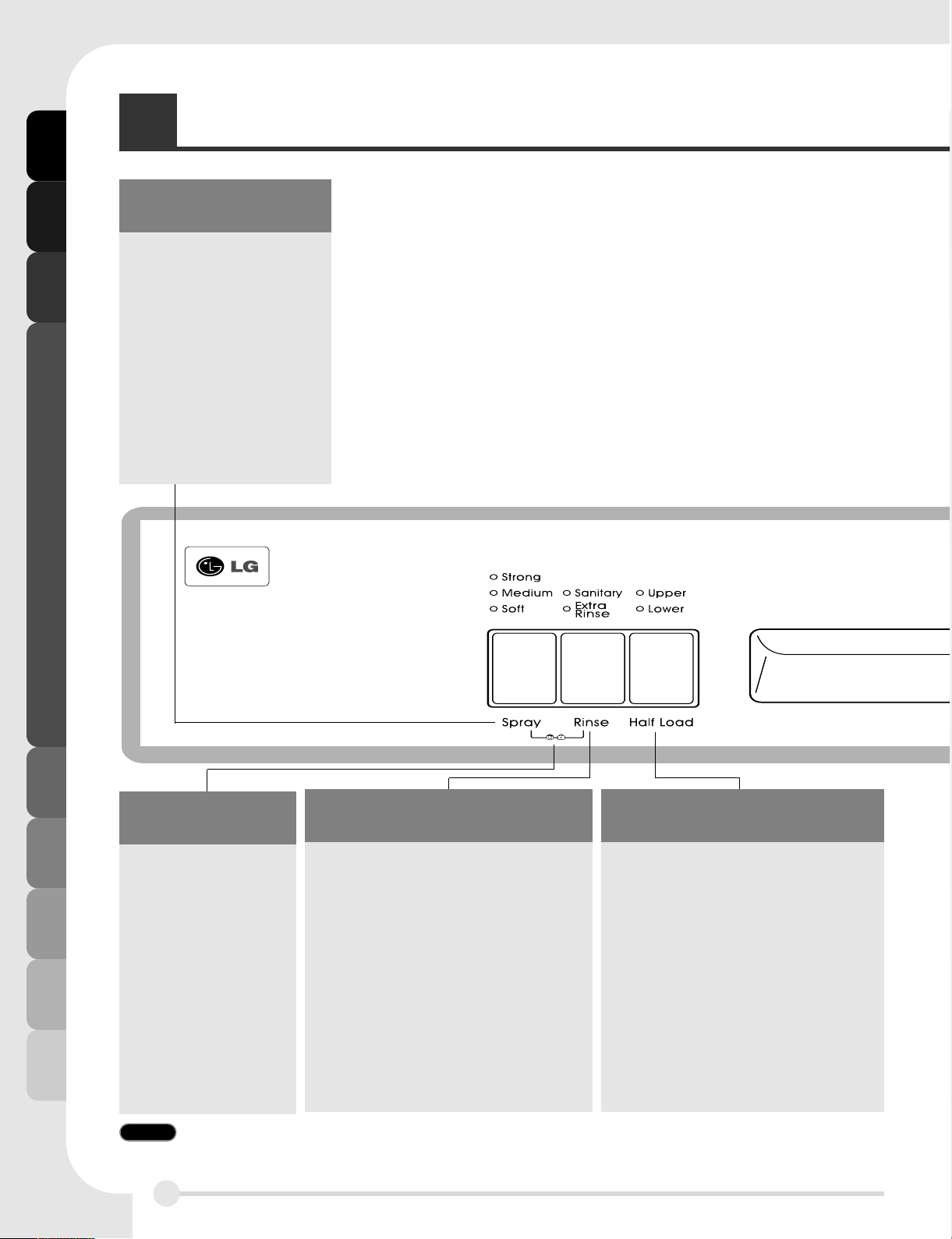
SPRAY
(INTENSITY)
• Repeated pressing of the
Spray button will select
Strong, Medium or
Soft.
CHILD LOCK
• Lock the control buttons
to prevent the settings
from being changed.
• To lock/unlock, press
Spray and Rinse buttons
simultaneously for 3
seconds.
SANITARY/
EXTRA RINSE
• Repeated pressing of the Rinse
button will select Sanitary, Extra
Rinse or both.
• If you select the Sanitary Function,
Sanitary Light blinks when the
water temperature meet sanitary
Temp. and illuminates at the end of
cycle when Conditions have been
met to achieve sanitization.
• When you select Extra Rinse, an
additional rinse cycle is added.
HALF LOAD
• In case of a small load, use the
upper or lower rack only to save
energy.
• Each press of the Half Load
button cycles between upper
rack only and lower rack only.
• If you don't press Half Load,
the dishwasher runs normally,
i.e, operation of upper and
lower spray arm alternating
periodically.
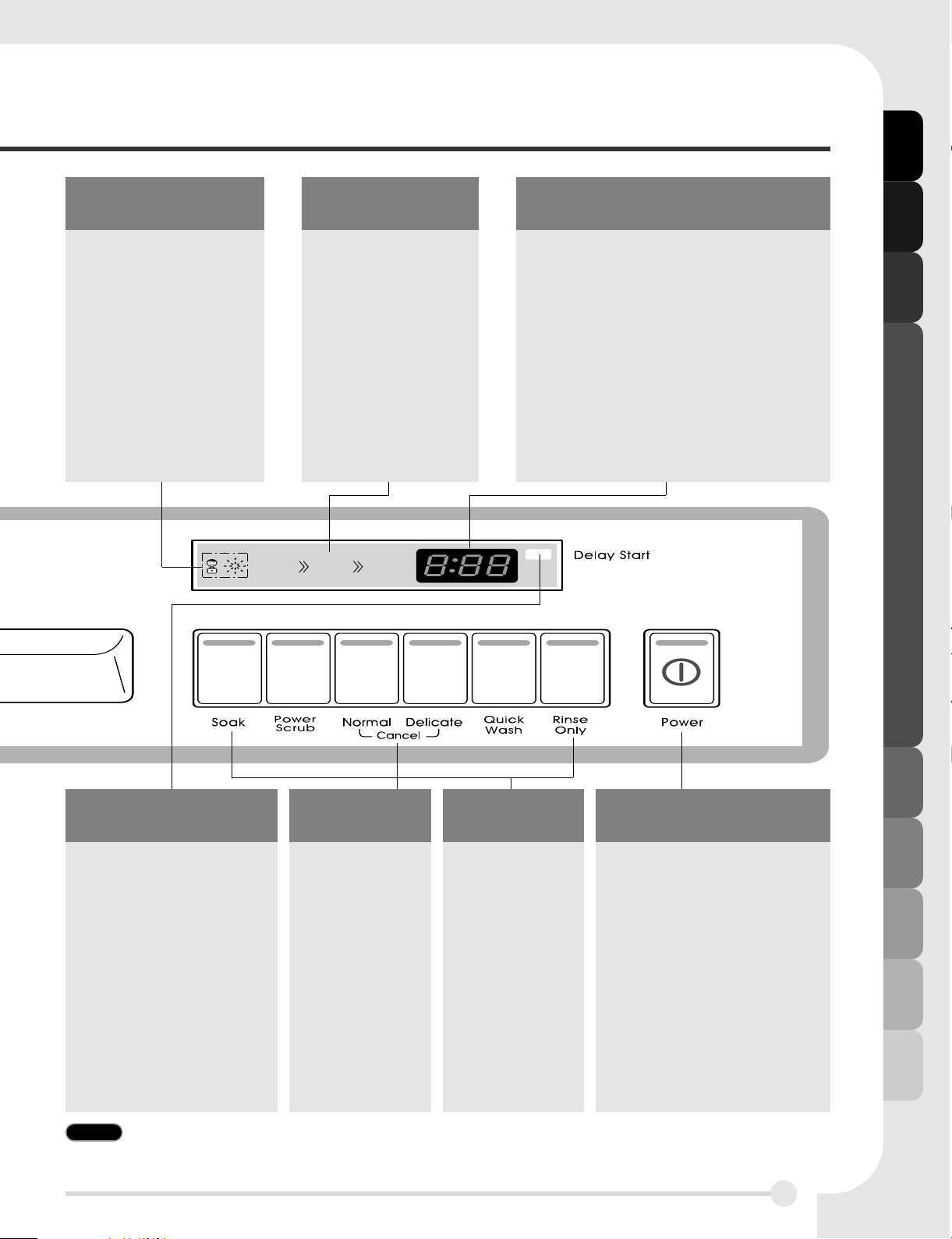
This program is for very heavily soiled loads including pots,
pans and casserole dishes which may have dry food residue.
This program is for very heavily soiled loads
This program is for normally soiled everyday loads.
This program is for washing delicate items like glasses.
This program is for that quick wash of lightly soiled recently
used dishes and cutlery.
This program is for very lightly soiled loads.
Soak
Normal
Quick Wash
Rinse Only
Delicate
Power Scrub
NOTE These high temperature rinse sanitizes dishware and glassware in accordance with NSF/ANSI Standard 184 for
Residential Dishwashers. Certified residential dishwashers are not intended for licensed food establishments.
F UNCTIONS OF CONTROL PANEL
11
Wash Rinse Dry
INDICATOR
• Child lock: Lamp will turn
on when Child Lock
setting is on.
• Rinse Aid: Refill with
Rinse aid when Lamp turns
on.
PROCESSING
INDICATOR
• Current program
phase is indicated.
TIME LEFT
• Before starting, the display window shows
the running time of the selected program.
• After starting, the display window shows
the remaining time.
• If the dishwasher has a trouble, the trouble
type is displayed.
PROGRAM
• Press the
program that
corresponds to
your desired
wash cycle.
CANCEL
• To cancel a
running program,
press and hold
the Normal and
Delicate buttons
for 3 seconds.
DELAY START
• If you want to delay the start of
a selected program, press the
Delay Start button.
• Each press of Delay Start will
delay the start of the cycle by
one hour.
• The delay start time can be
adjusted from 1 to 12 hours in
one-hour increment.
POWER
• For operating, press this
button first for power on.
• After operating, the power
automatically switches off
for safety and economy.
• In case of an unusual Power
surge or disturbance, the
power may be automatically
turned off for safety.
NOTE Only sanitary cycle have been designed to meet the requirements of performance for soil removal and sanitization
efficacy. There is no intention, either directly or indirectly, that all cycle on a certified machine have passed the
sanitization performance test.
12
USING YOUR DISHWASHER
UU
SSIINNGG YYOOUURR DDIISSHHWWAASSHHEERR
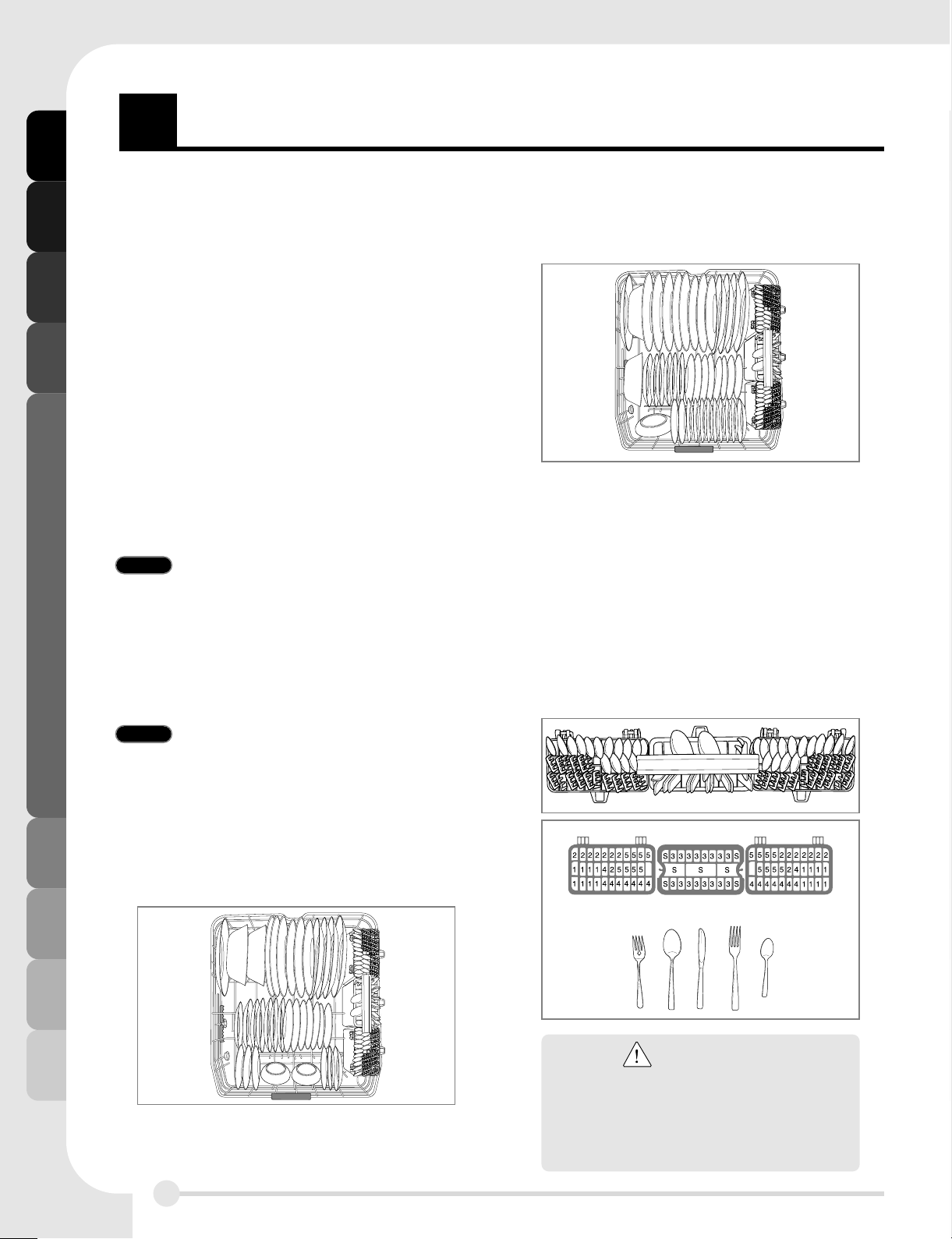
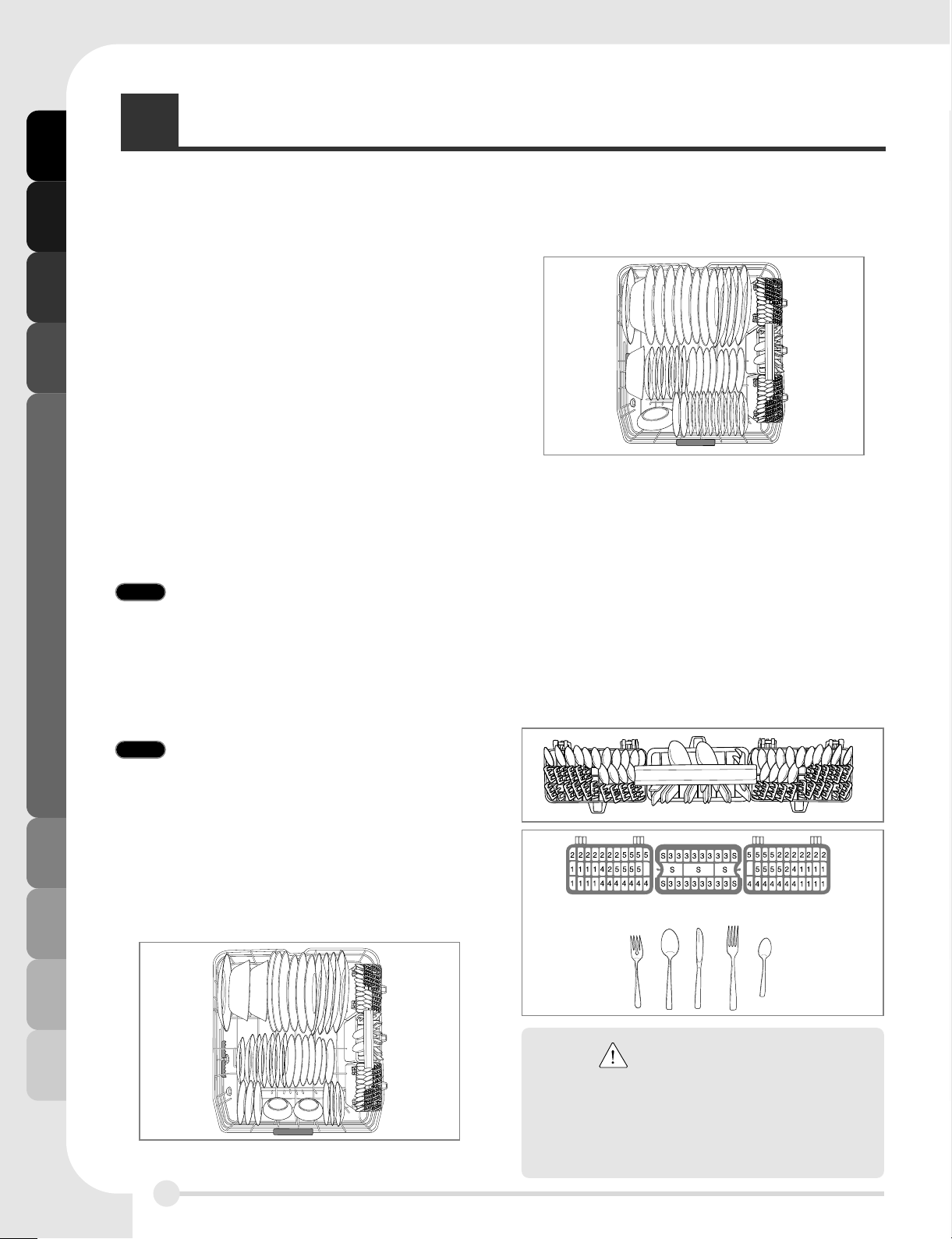
Cutlery Basket
Racks are designed to hold even the most
delicate items securely in place as well as tall
items. In addition, our extra cutlery and knife rack
has separators to avoid scratching and tarnishing
of your delicate cutlery. Basket can be divided
into three separate baskets which can be used on
both the upper and lower levels. If you only have
a small load of cutlery, the baskets can be
removed leaving extra space for other plates.
10 place setting, lower rack
12 place setting, lower rack
Before using the dishwasher, please
read Important Safety Instructions.
Basically, the lower rack is not meant to load
small items like cups, wine glasses or small
plates. These items should be loaded on the
upper rack for proper distribution.
Water supply temperature should be 120 (49)
for better washing and reasonable cycle time.
For this reason, use hot water faucet only.
It is also important that the dishwasher is loaded
according to instructions for the effective cleaning.
When loading your dishwasher, make sure that
insoluble items such as bones, toothpicks and
pieces of paper have been removed.
When loading the dishwasher, observe the
following general guidelines;
1. Deep based items should be placed at an
angle to help water run off and dry properly.
2. Remove solid, burnt-on scraps from dishes
prior to loading in the dishwasher.
3.Load only items which are dishwasher safe.
NOTE Please avoid utensils that are non-heat
resistant, metal decorated, etc.
Loading the Lower Rack
This lower rack allows max. 14 in. plates, pans or
any utensils which mean the size of rack is bigger
and is higher than industry standard thanks to
super big tub capacity.
NOTE Do not obstruct the rotation of the spray
arms. Make sure large items do not prevent
the detergent dispenser from opening.
The lower rack is best loaded with dinner plates,
soup bowls, dishes, pots, pans, lids and even a
grill tray. Plates should be positioned upright and
facing the center of the rack. Pots, pans and
large dishes must be turned upside down.
WARNING
Be careful when loading and unloading
sharp-edged items. Load sharp knives
with the handles up in order to reduce the
risk of injury.
13
USING YOUR DISHWASHER
UU
SSIINNGG YYOOUURR DDIISSHHWWAASSHHEERR
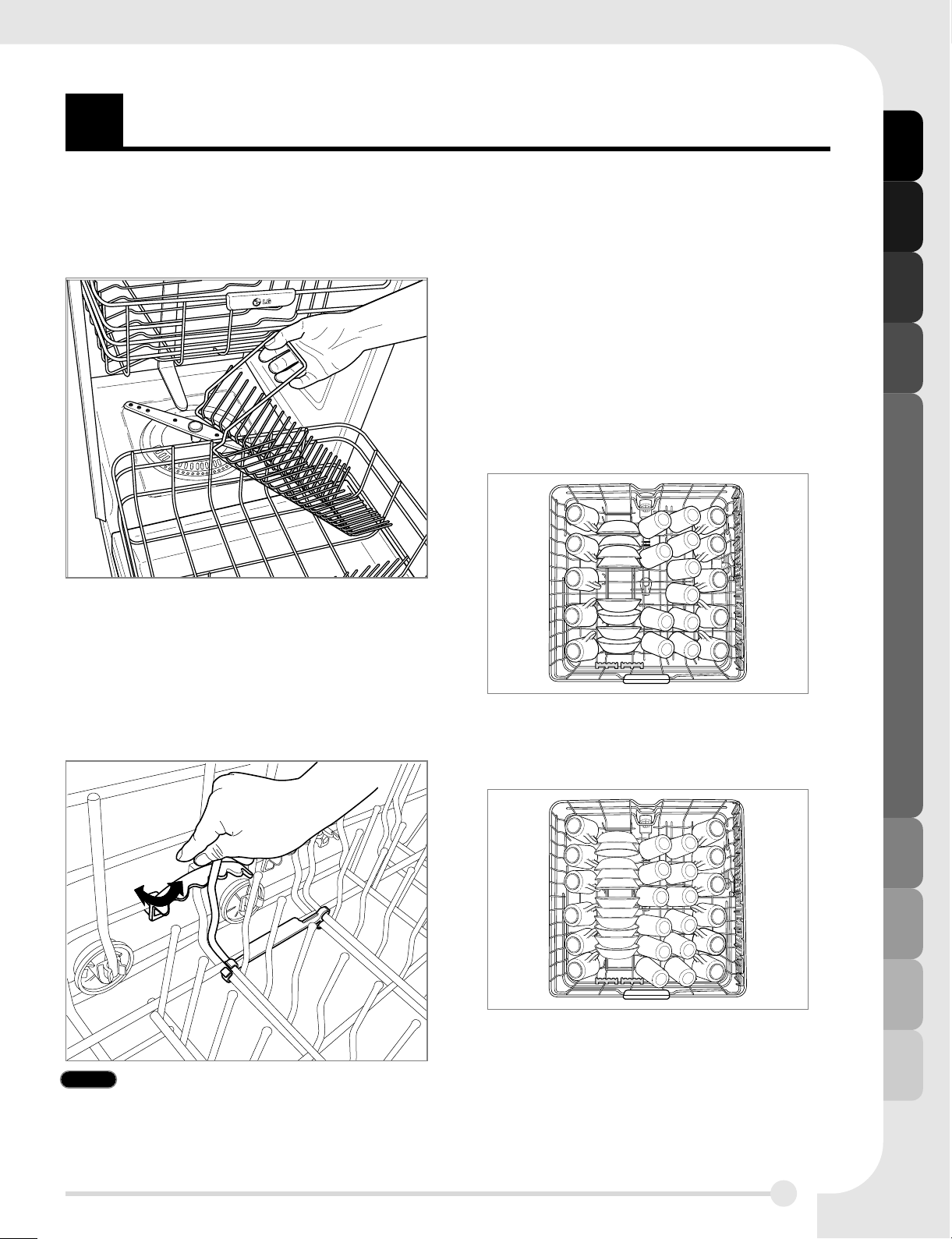
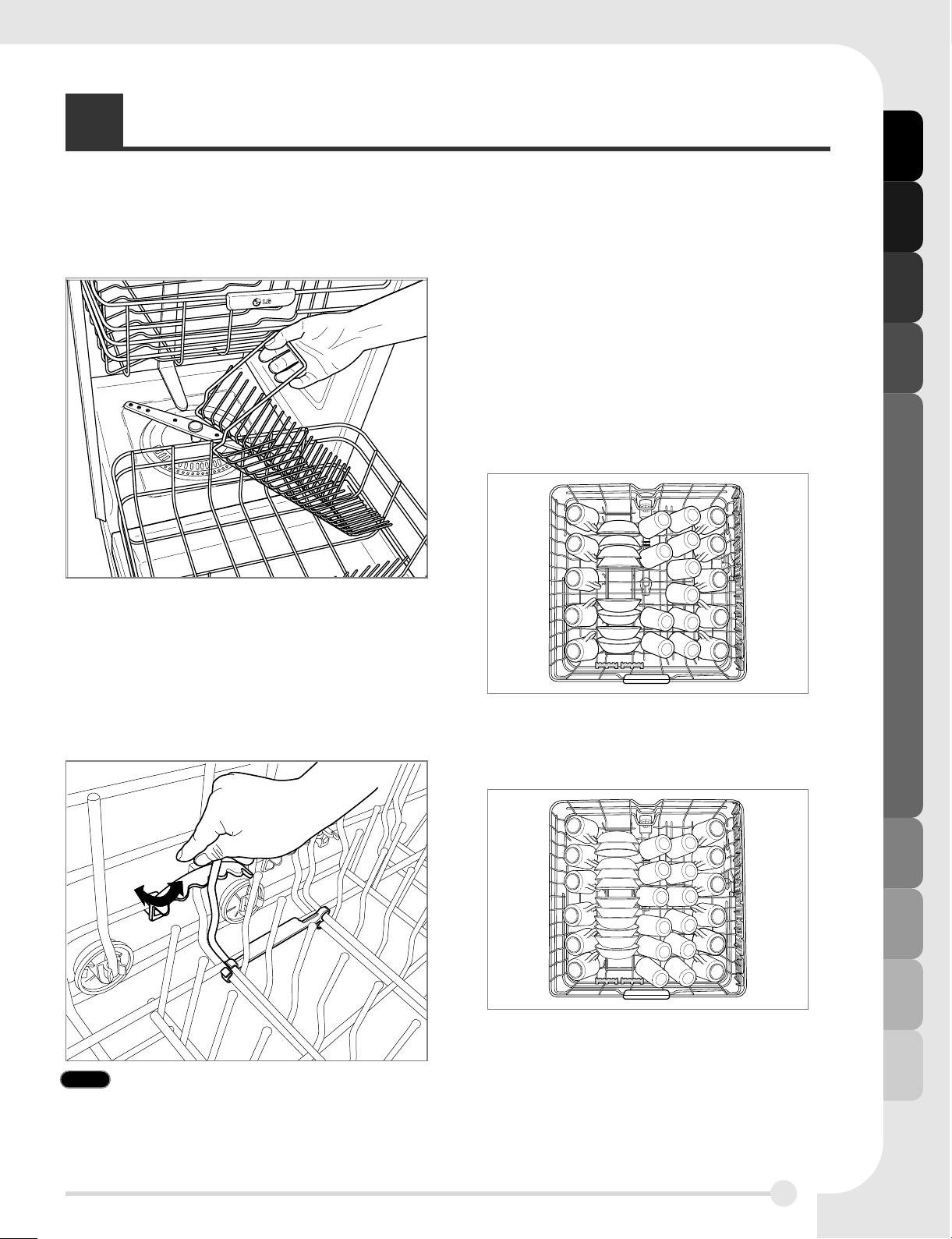
12 place setting, upper rack
10 place setting, upper rack
Removable Tines
If you need to wash large items, you can remove
these tines from the main rack.
Adjustable angular tines
The plate supports in the lower and upper racks
can be folded down. Based on the size and
shape of the dishes, you can adjust the angle of
the tines to five different levels.
Loading the Upper Rack
The upper rack is best loaded with more delicate
items, small plates, cutlery basket, cups, glasses
and dishwasher safe plastic items. Plates should
be positioned upwards with the plate bottom
facing the front of the rack. Cups, glasses and
bowls must be positioned upside down. Extra
cups or cooking utensils can be laid on the fold
down cup racks which may also provide support
for long stem glasses. Take care not to obstruct
the rotation of the spray arm under the upper
rack.
NOTE
Be careful when adjusting angular tines and apply
gentle force.
14
USING YOUR DISHWASHER
CAUTION
Non Dishwasher Safe Items
The combination of high water temperature
and dishwasher detergents may damage
particular items, therefore we do not recommend
using the dishwasher to wash the following items:
�Hand painted silver or gold leaf crockery
�Wood or bone handled utensils
�Iron or non-rustproof utensils
�Plastic items which are not dishwasher safe.
UU
SSIINNGG YYOOUURR DDIISSHHWWAASSHHEERR
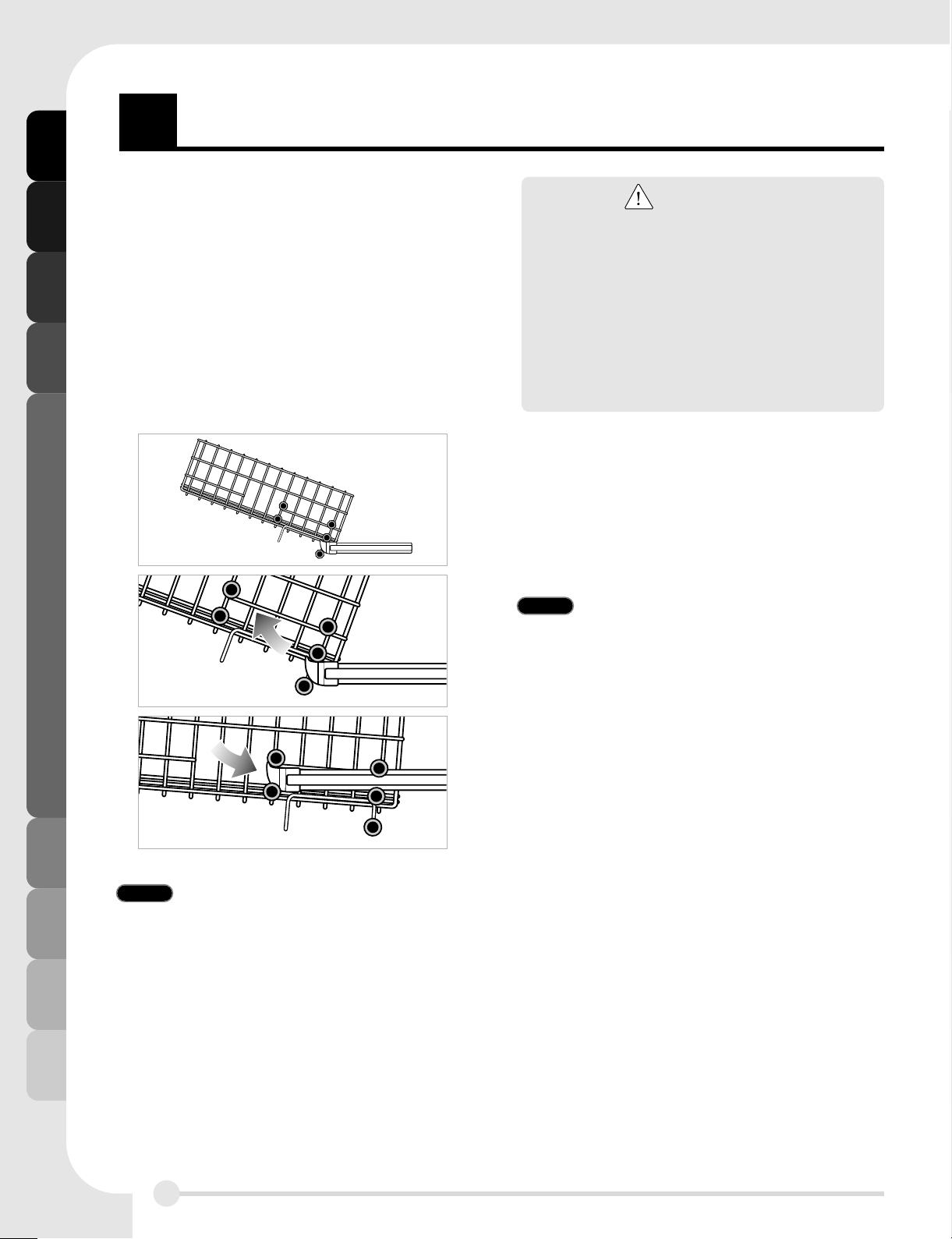
Height Adjustable Upper Rack for 14 in.
loading (on some models)
LG dishwasher proudly introduces the ability to
load 14 in. dishes. An upper rack that moves up
and down lets you put tall and oversized items on
it. LG dishwashers adjust enough to allow 14 in.
dinner plates on the lower and 12 in. plates on the
upper rack.
To adjust the rack
1. Pull the upper rack out.
2. Reinsert the upper rack in the chosen position.
Half Loading Option
In case you do not have enough dishes for a full load
you can simply load dishes in the upper rack or in
the lower rack only. You can then wash either rack
separately by selecting half load option.
This will bring about a savings in hot water, electricity
and time.
NOTE
After adjusting, check that the spray arm is free to rotate
without being stopped by dishes loaded on the upper
rack. Do not adjust racks when dishes are loaded.
NOTE
Always remove dishes from the upper rack before
removing the rack.
15
USING YOUR DISHWASHER
CAUTION
Detergent Information
Use only the detergent intended for household
dishwashers or the dishwasher may fill with suds
during operation. Suds may reduce washing
performance and could cause the unit to leak.
(Hand- Wash detergent is not allowed for this
dishwasher.)
UU
SSIINNGG YYOOUURR DDIISSHHWWAASSHHEERR
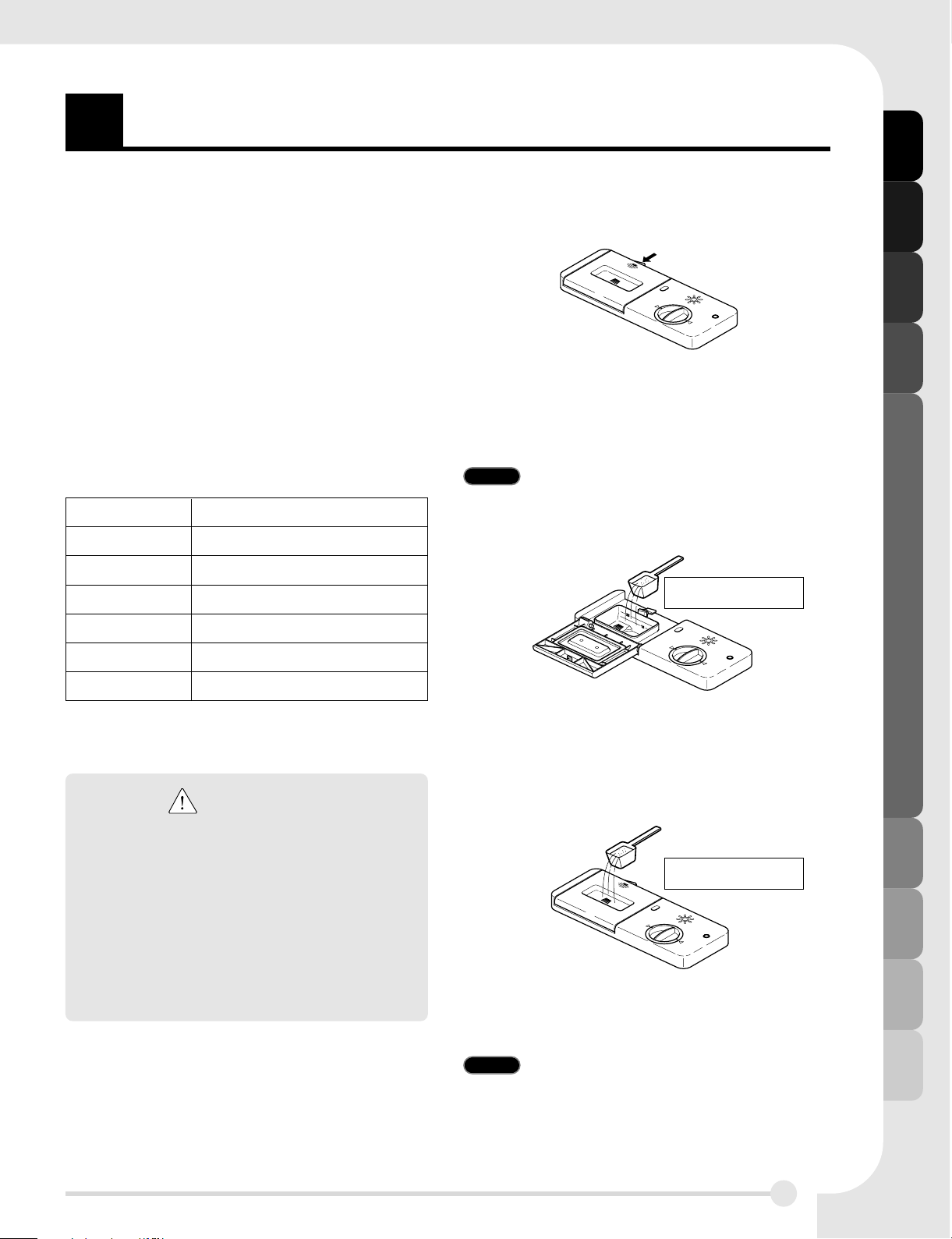
Adding detergent to dispenser
�Detergent must be put into the detergent chamber
before starting every program except the Pre-
Wash.
�Please follow the manufacturer's instructions
printed in the manual when determining the
correct amount of detergent.
�If your dishes are only moderately dirty, you may
be able to use less detergent than recommended.
�The detergent chamber holds 1.4 oz (40g) max.
�The amount of detergent depends on the program
and dish loads. Refer to the guide table.
Filling the dispenser
1. Push latch to open.
3. If needed, add detergent to pre-wash
compartment.
For main wash
PROGRAM AMOUNT OF DETERGENT
Soak 0.9oz (25g)
Power Scrub 0.9oz (25g)
Normal 0.7oz (20g)
Delicate 0.7oz (20g)
Quick Wash 0.7oz (20g)
Rinse Only No detergent
For pre-wash
2. Add detergent to the main wash compartment.
(See the table for the amount of detergent.)
NOTE
Do not add detergent for a rinse cycle.
4. Close the cover. (You can hear cover latch click.)
NOTE
Too much detergent can leave a film on dishes.
USING YOUR DISHWASHER
16
NOTE
In hard water areas where it is not economical or
practical to install a water softener, use GLASS MAGIC
with each load to increase the effectiveness of the
detergent.
Pour 1/4 cup (4 tbsp) of GLASS MAGIC into the bottom
of your dishwasher each time the dishwasher is used
except Rinse Only.
To remove film on dishwasher recommend that use
White Vinegar and operate product at about 20ml(4 tbsp)
or use the Tub clean detergent.
UU
SSIINNGG YYOOUURR DDIISSHHWWAASSHHEERR
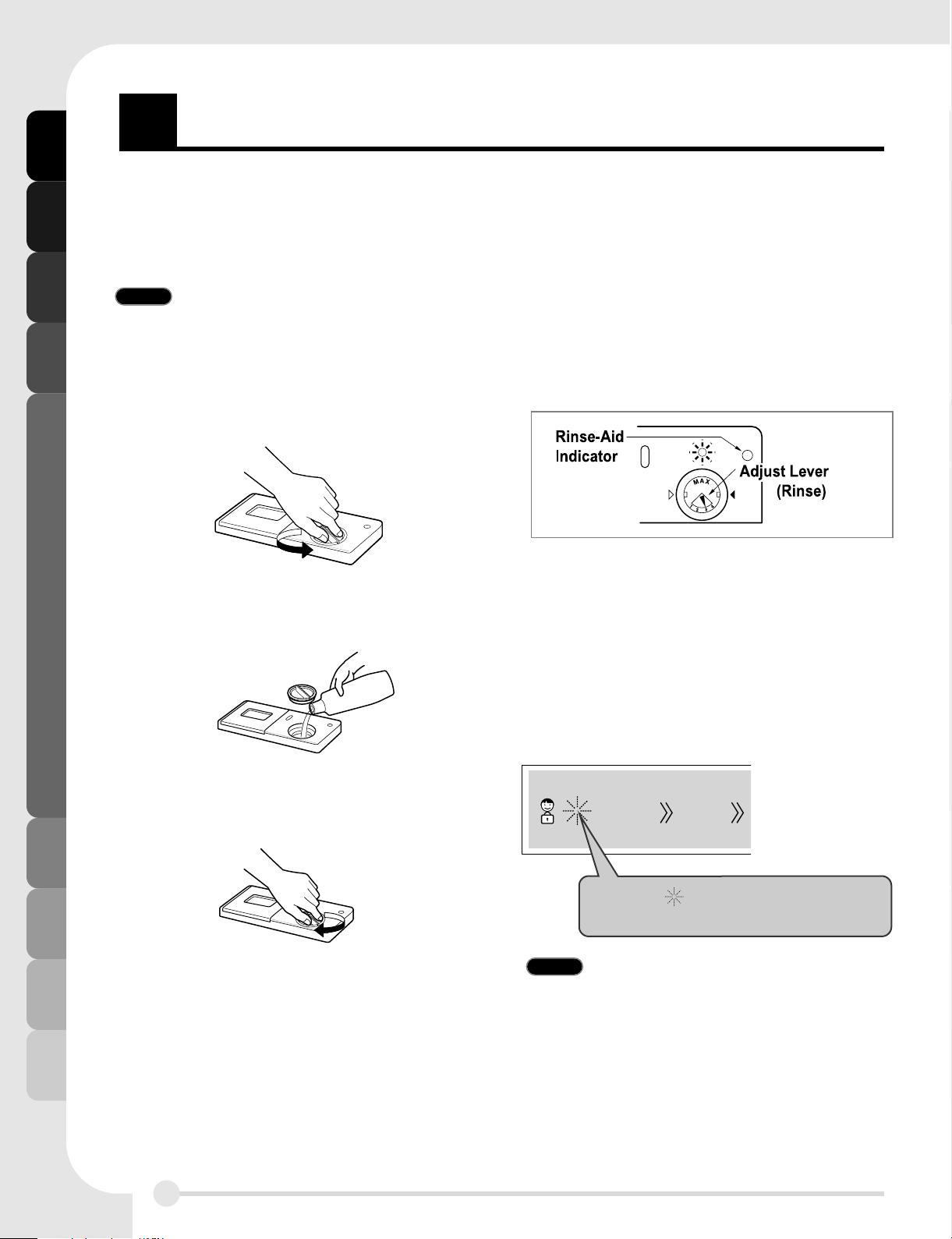
2. Add a liquid rinse aid to the maximum level.
(Max. 4.8 oz (145ml))
3. Replace and lock the cap.
4. Rinse aid will be automatically dispensed during
the final rinse cycle.
�Rinse Aid Amount Setting
The factory setting is at level 3 which is where you
can expect the best performance under a normal
condition. After a cycle is done, if you notice some
spots, streaks or water marks on the dishes, adjust
to a higher setting. If you notice foam present on the
bottom of the glasses or tub bottom, change to a
lower setting.
1. Remove the cap.
2. Rotate adjuster to the desired setting.
��
Refilling Rinse Aid
4.8 oz (145ml) is the capacity of the rinse aid
dispenser. The refilling period totally depends on
your washing habits such as the number of washes
per month and which rinse aid setting you adjust to
your washing conditions. The indicator light will
inform you when there is insufficient rinse aid in the
dispenser. The indicator light will stay on when you
close the door to start a cycle.
Adding Rinse Aid to dispenser
The purpose of rinse aids is to prevent possible
spots on dishes formed from droplets during drying
operation. By removing them, drying performance
will be increased.
NOTE
Only liquid rinse aids can be used for this dishwasher.
�Filling Rinse Aid
1. Rotate the round cap counterclockwise and
remove it.
Wash Rinse
When the lamp is on, it indicates the
rinse-aid reservoir is almost empty.
17
CARE & MAINTENANCE
CC
AARREE && MMAAIINNTTEENNAANNCCEE
For best results, it is important to periodically check and care for the filters and spray arms.
WARNING : To prevent any possible injury during care and maintenance / cleaning, be sure to wear
globes or protective clothing.
Cleaning metallic parts
Clean the dishwasher with a cloth or sponge.
If your dishwasher has a stainless steel door panel, we
recommend the use of a quality stainless steel cleaner.
The stainless steel tub has a tendency to build up
cloudy film on its surface, especially when using hard
water.
To remove filming on the interior surfaces, add 1/4 to
1/2 cup of white vinegar to the tub and run a normal
cycle. If stronger cleaning is needed, use Glisten or
similar cleaning agent which can usually be found
wherever detergents are sold.
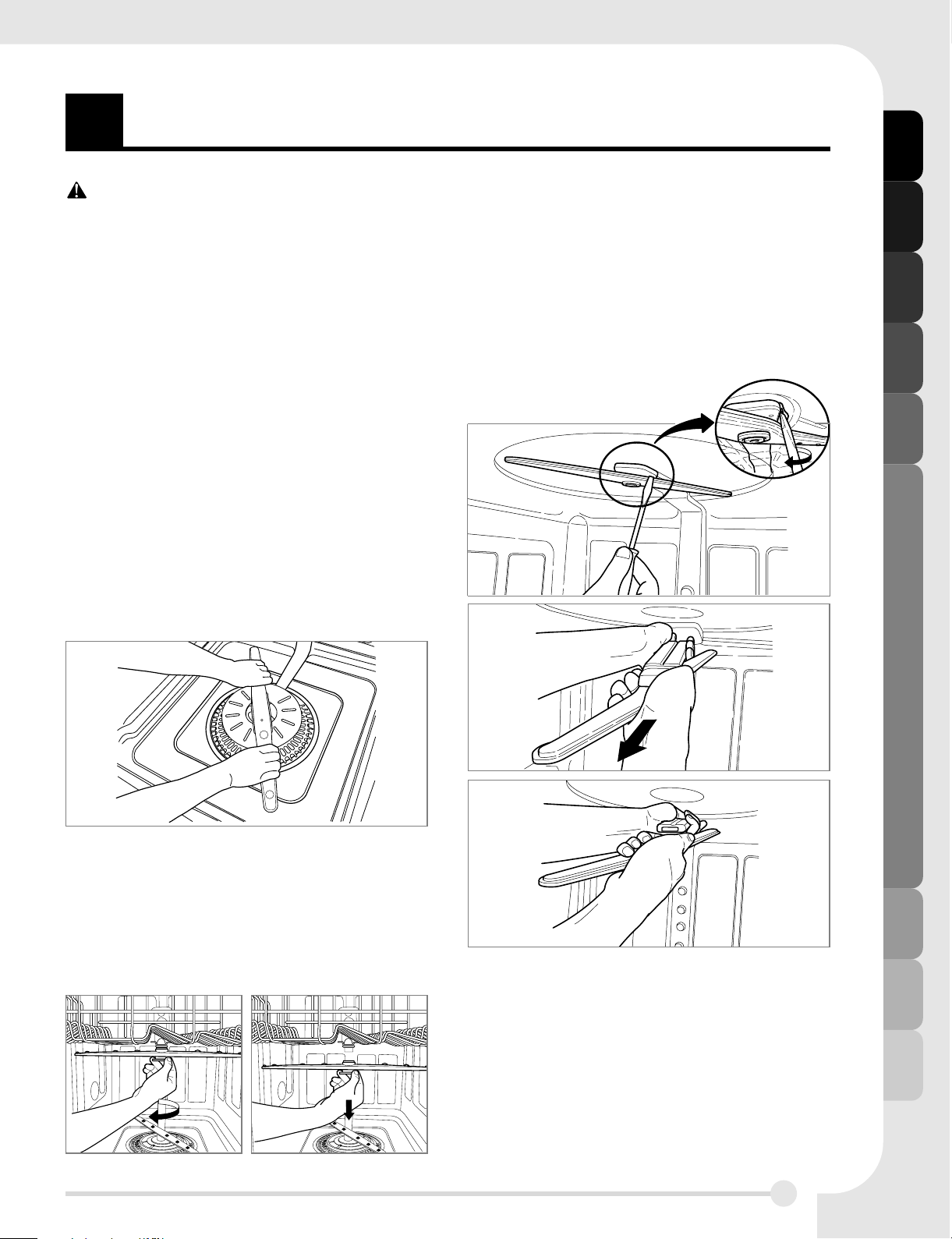
Cleaning Spray Arms
- Lower Spray Arm
�Check that the water jet holes are not blocked by
food particles.
�When cleaning is necessary, remove the Spray arm
by pulling up.
�Clean the spray arm and replace it pushing down.
Seasonal Maintenance and Storage
- During the summer season, if you will be absent for
extended periods of time, it is recommended that you
close the water valve and unplug power cord or shut
off the circuit breaker.
- During the winter season, if there is a possibility of
freezing temperatures, it is recommended that you
winterize the water supply lines and the product
itself.
- Upper Spray Arm
�Pull the upper rack forward. Make sure the water
jet holes are not blocked by food particles.
�When cleaning is necessary, remove the arm by
unscrewing the nut.
�Clean the spray arm and replace it in the reverse
order. Make sure the nut is tight!
- Top Spray Arm
�Make sure the water jet holes are not blocked by
food particles.
�When cleaning is necessary, remove the arm by
disassembling the hook from the bracket which
holds the Top Spray Arm assembly to the tub.
�Clean the spray arm and replace it.
18
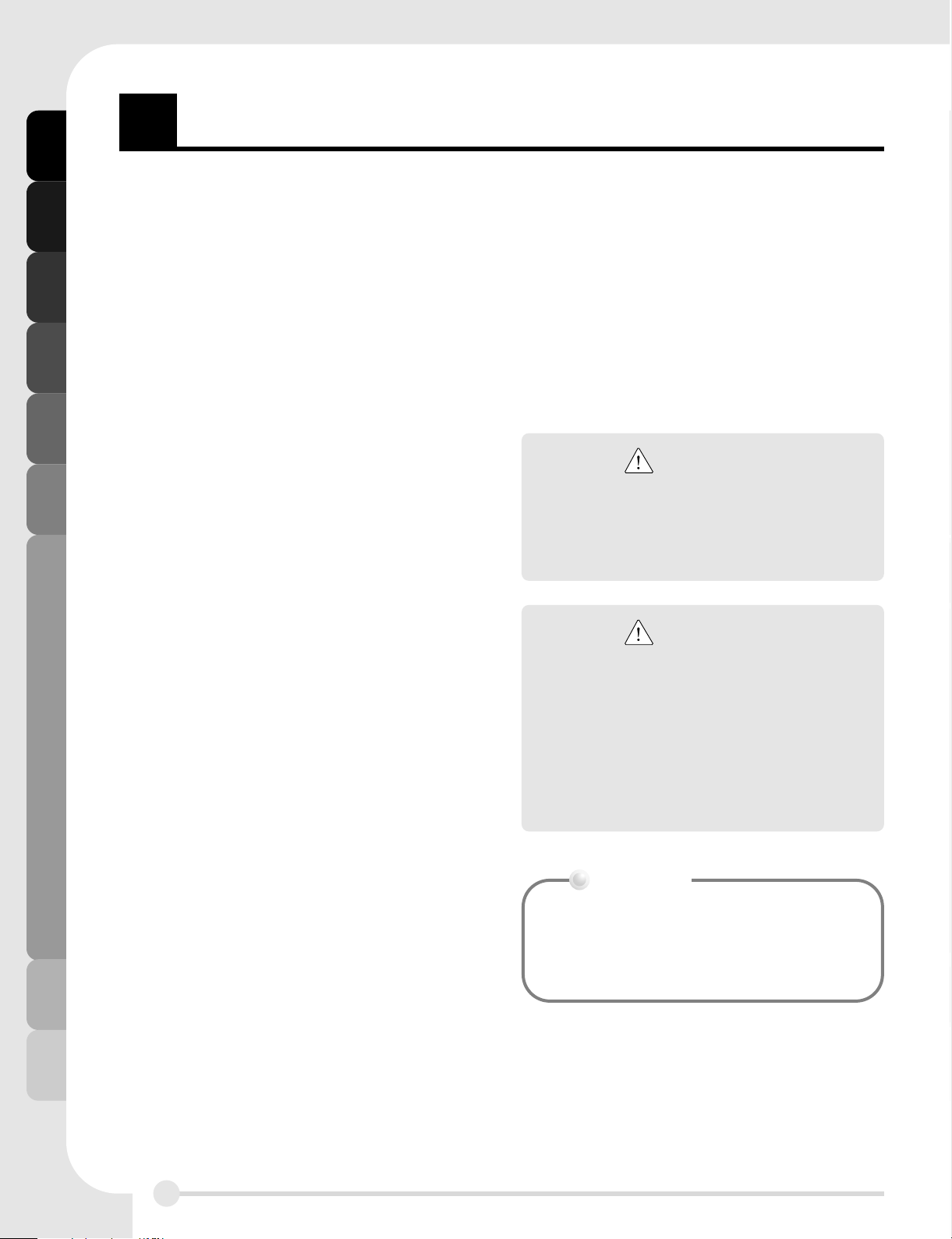
WARNING
In general, it is not advisable to open the door
while the dishwasher is running. If the door is
opened, a safety device stops the machine.
Care should be taken when opening the door
immediately following the cycle, as steam may
escape.
OPERATING SEQUENCE
OO
PPEERRAATTIINNGG SSEEQQUUEENNCCEE
1. Press the power button.
Press the power button to see the default
setting.
2. Check rinse-aid level and
open the door.
The indicator lights will illuminate if refilling
is necessary.
3. Load the dishes after first
removing any scraps of food.
Remove any scraps of food in advance.
Pull the lower rack out and load the dishes
and cutlery in and push it all the way back.
Pull the upper rack out and load the cups,
glasses, etc.
4. Ensure that the spray arms
can rotate freely.
5. Measure detergent.
Add the required amount of detergent into
the dispenser. Close the detergent
dispenser lid.
6. Setting the program.
Select desired program and options. Before
starting, the display window will show the
estimated running time of the selected
program. If the number of dishes only fill
one rack, you can use the Half Load option.
For example, if you load dishes only on the
upper rack, you adjust the half load button
to the upper rack.
Remember to load all dishes into the
selected rack.
The estimated remaining time will be
displayed. If the door is opened during
operation, the dishwasher stops. Once the
door is closed, the program will restart from
the point where it's stopped.
7.
Close the door. The dishwasher
will start automatically.
8. At the end of the Program.
End is displayed on the digital display for a
few seconds and a tone will sound
signaling the program completion. The
dishwasher automatically switches off for
safety and energy savings.
CAUTION
Empty the lower rack first and then the upper
one, this will avoid water dripping from the
upper rack onto the dishes in the lower one.
Auto-Off
When the power is turned on, if you don’t
select a program or if you don’t close the door
after selecting a program, your dishwasher will
automatically turn off in 10 minutes.
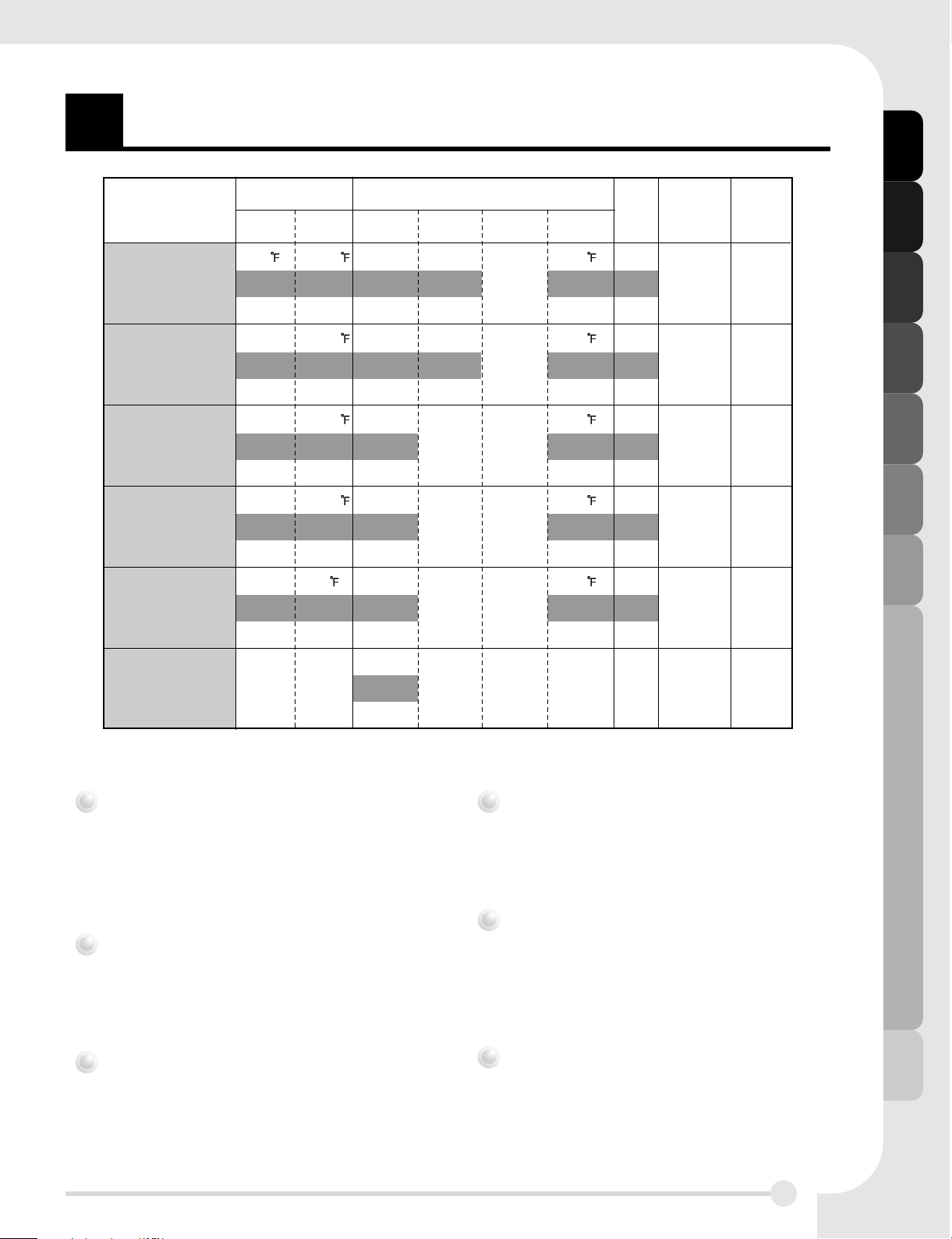
PROGRAM
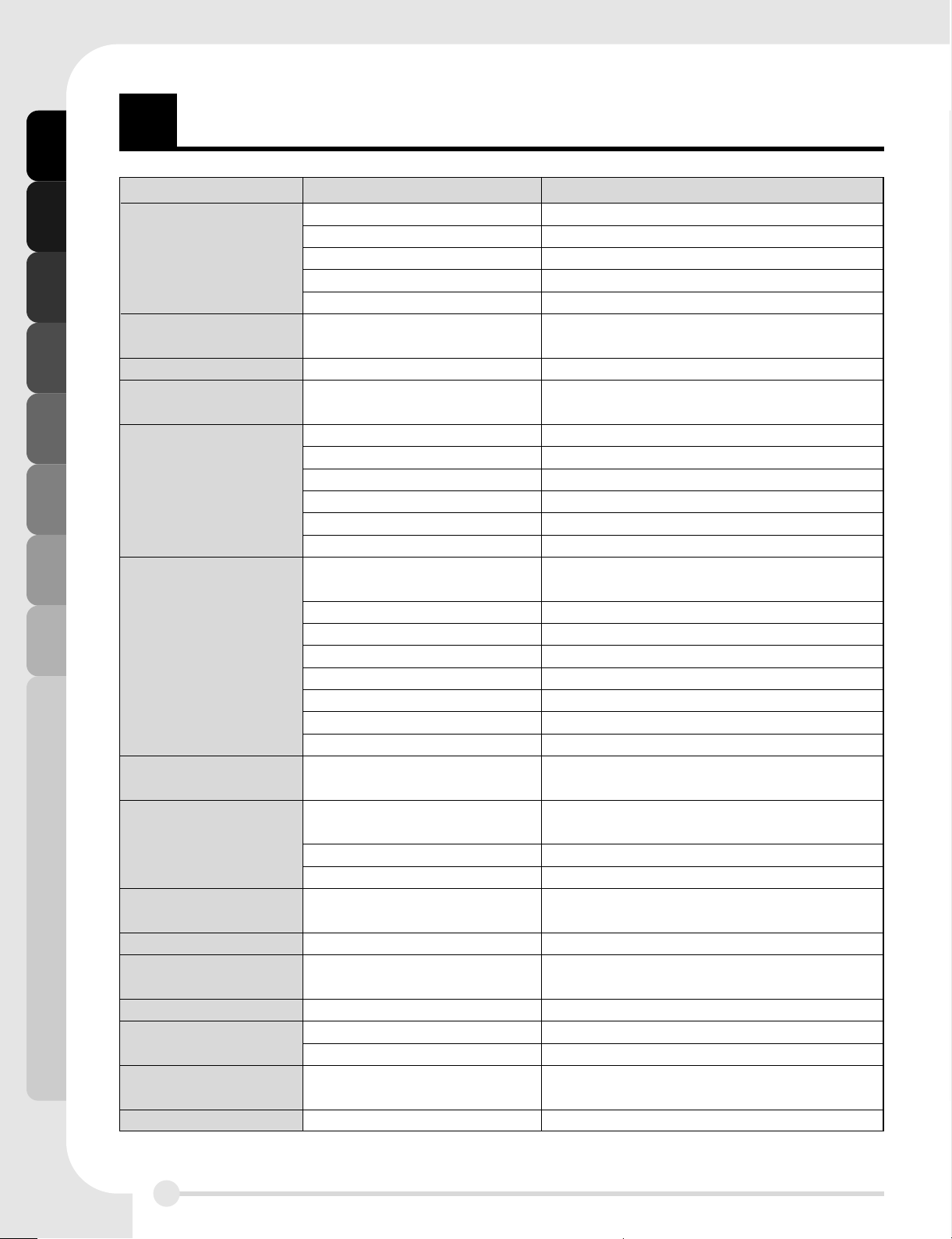
19
PP
RROOGGRRAAMM
SSooaakk
This program is for very heavily soiled
loads including pots, pans and casserole
dishes which may have dry food residue.
PPoowweerr SSccrruubb
This program is for very heavily soiled
loads.
NNoorrmmaall
This program is for normally soiled
everyday loads.
DDeelliiccaattee
This program is for washing delicate
items like glasses.
QQuuiicckk WWaasshh
This program is to wash lightly soiled
dishes and cutlery and wash them
immediately after use.
RRiinnssee OOnnllyy
This program is for very lightly soiled
loads.
Program
Soak
Power
Scrub
Normal
Delicate
Quick Wash
Rinse
Only
120 140~149 162
49
60~65
72
WASH
Pre-Wash
Time
(min)
55~63
68
113~140
149
45~60
65
113~120 154
45~50
68
115 140
46
60
RINSE
DRY
Water
(gal/L)
Main
Wash
Rinse 1 Rinse 2 Rinse 3
Heating
Rinse
5.5~9.2/
21~35
5.5~9.2/
21~35
2.6~6.9/
10~26
5.5~6.9/
21~26
5.5 / 21
1.3 / 5
143~191
123~171
101~135
103~120
74
14
154
131~145
20
TT
RROOUUBBLLEESSHHOOOOTTIINNGG
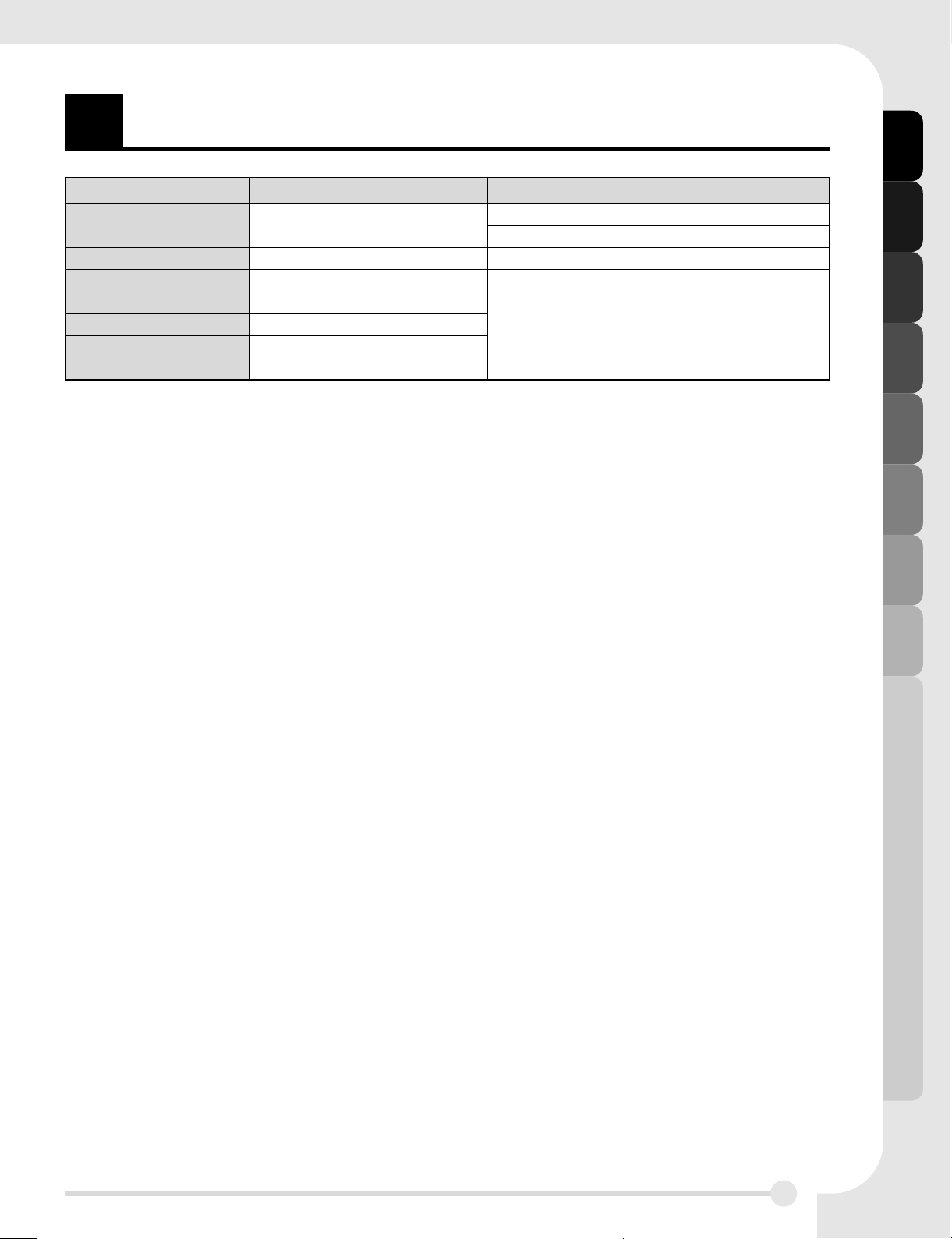
Causes Recommended ActionsProblem
Door is not completely closed.
Cycle is not selected.
Power supply is not connected.
Water is not supplied.
Fuse is blown out.
Cold water is supplied.
Remaining water inside from the last cycle
Drain hose is bent or clogged.
Improper cycle selection
Water temperature is low.
Dishwashing detergent was not used.
Low inlet water pressure
Water jet holes of spray arms blocked.
Improper dish loading
Low water temperature
Too much detergent used
Overloading
Improper loading
Insufficient water pressure
Insufficient detergent
Rinse aid dispenser empty.
Extremly hard water
Extremely hard water
This is normal.
Your Dishwasher isn’t horizontal.
Nozzle arm knocks against the dishes.
Combination of excessive detergent and soft
water.
Aluminum items rub dishes during cycle.
Coffee or tea soils
Rinse agent dispenser empty.
Power is not connected.
Fuse is blown out or circuit breaker is tripped.
The holes of spray arms is blocked by food
particles.
Rack is poorly adjusted.
Dishwasher does not operate
Too long operation
Odor
Water remains after a cycle
finishes
Food Soil remains on dishes
Spots and filming on dishes
Spots and filming on door and tank
Noise
Cloudiness on glassware
Black or gray marks on dishes
Yellow or brown film on inside
surfaces
Dishes don’t dry
The lamps don’t illuminate
Spray arms don’t rotate smoothly
Upper rack crooked after loading
Check the door is completely closed and latched.
Select the desired cycle.
Connect power supply properly.
Check water faucet.
Replace fuse or reset circuit breaker.
Check hot water faucet is connected
(Heating water takes it longer).
Operate Quick Wash cycle with detergents without loading dishes.
Straight hose.
Select right cycle based on dish types and soil toughness.
Use hot water faucet.
Use recommended detergents.
Water pressure should range between 20 ~ 120psi.
Clean the arm.
Dishes shouldn’ t interrupt arm rotation and detergent dispensing.
Supplied water temperature should be minimum 120℉ for
the best washing performance.
Reduce detergent amount. See page 15.
Load the proper amount of dishes.
Rearrange dishes referring to photos on pages 12 and 13.
Check water pressure is above 20 PSI.
Increase the detergent amount. See page 15.
Refill the rinse aid dispenser.
Install home water softener or use Glass Magic (page 16).
Follow instructions of pages 16 and 17 for detergent use and
tub cleaning.
Detergent cover opening.
Drainage Sound at the early stage.
Reposition your dishwasher.
Reposition your dishes.
Underload the dishwasher and use a rinse aid to minimize this
process.
Remove aluminum markings with a mild cleaner.
Eliminate the soil by using a stain removal product.
Check and refill the rinse agent if empty.
Connect power supply.
Replace fuse and repair circuit breaker.
Clean the holes of the spray arms.
Adjust the upper rack properly referring to page 12.
TROUBLESHOOTING
TROUBLESHOOTING
21
TT
RROOUUBBLLEESSHHOOOOTTIINNGG
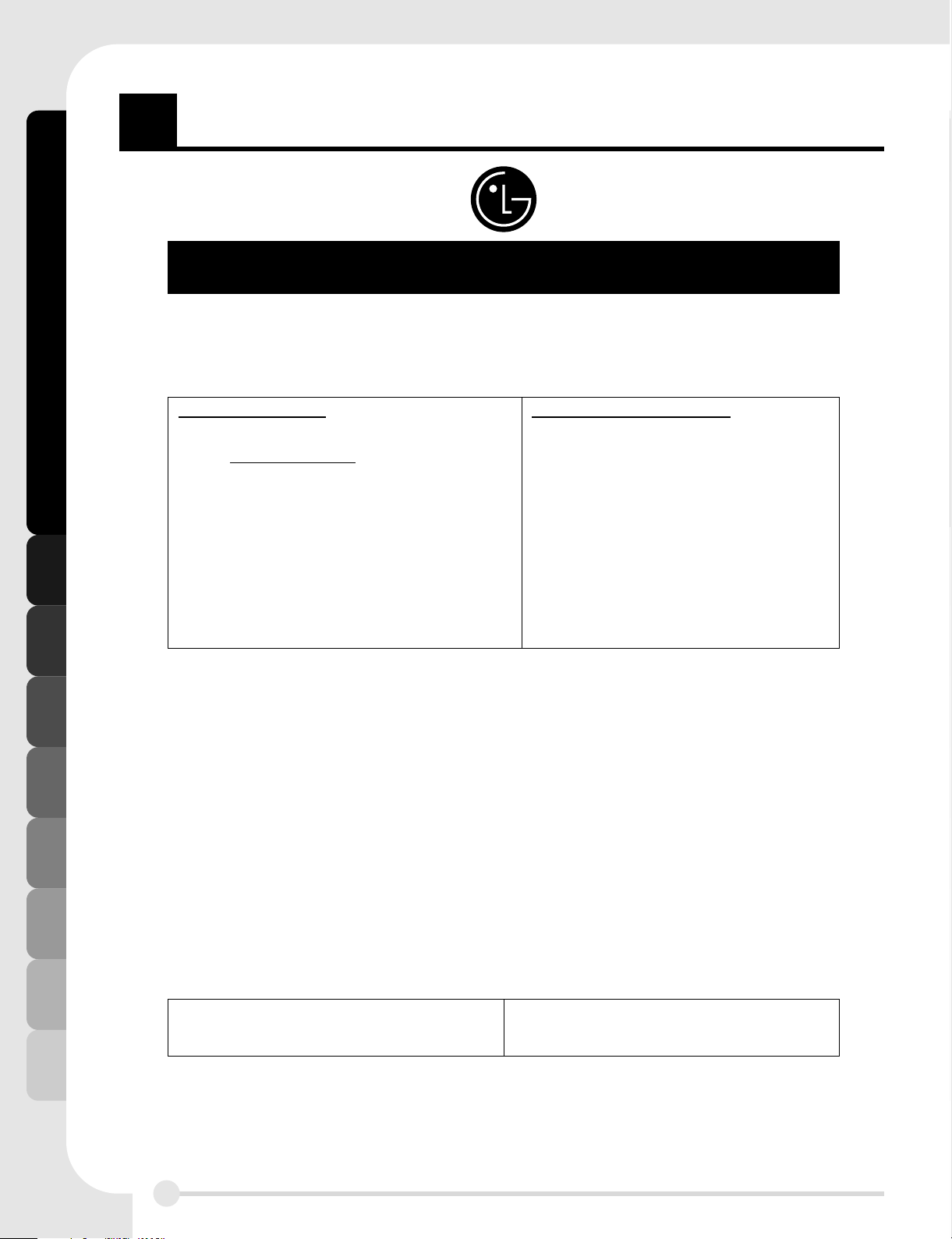
If you can’t fix problems with the above actions or you have different problems which are not mentioned in the manual,
please call LGE Customer Service at 1-800-243-0000.
Causes Recommended ActionsProblem
Water inlet trouble
Drainage trouble
Excessive water supplied
Water leakage trouble
Heater Circuit Failure
Thermistor trouble or very high inlet water
temperature. (over 194)
IE Error
OE Error
FE Error
E1 Error
HE Error
TE Error
Check clogging of water inlet hose (or hose twist or freezing).
Check water supply.
Check clogging of water drain hose (or twist or freezing).
Please call your Authorized Service Center or
LGE Customer Service at 1-800-243-0000.
22
WARRANTY
WW
AARRRRAANNTTYY
Your LG Dishwasher will be repaired or replaced, at LG’s option, if it proves to be defective in material or
workmanship under normal use, during the warranty period (“Warranty Period”) set forth below, effective from the
date (“Date of Purchase”) of original consumer purchase of the product. This warranty is good only to the original
purchaser of the product and effective only when used in the United States, including Alaska, Hawaii and U.S.
Territories.
THIS WARRANTY IS IN LIEU OF ANY OTHER WARRANTY, EXPRESS OR IMPLIED, INCLUDING WITHOUT
LIMITATION, ANY WARRANTY OF MERCHANTABILITY OR FITNESS FOR A PARTICULAR PURPOSE. TO
THE EXTENT ANY IMPLIED WARRANTY IS REQUIRED BY LAW, IT IS LIMITED IN DURATION TO THE
EXPRESS WARRANTY PERIOD ABOVE. NEITHER THE MANUFACTURER NOR ITS U.S. DISTRIBUTOR
SHALL BE LIABLE FOR ANY INCIDENTAL, CONSEQUENTIAL, INDIRECT, SPECIAL, OR PUNITIVE
DAMAGES OF ANY NATURE, INCLUDING WITHOUT LIMITATION, LOST REVENUES OR PROFITS, OR
ANY OTHER DAMAGE WHETHER BASED IN CONTRACT, TORT, OR OTHERWISE. Some states do not allow
the exclusion or limitation of incidental or consequential damages or limitations on how long an implied warranty
lasts, so the above exclusion or limitation may not apply to you. This warranty gives you specific legal rights and
you may also have other rights that vary from state to state.
THIS LIMITED WARRANTY DOES NOT APPLY TO:
�Service trips to your home to deliver, pick up, and/or install the product, instruct, or replace house fuses or
correct wiring, or correction of unauthorized repairs.
�Damages or operating problems that result from misuse, abuse, operation outside environmental specifications
or contrary to the requirements of precautions in the Operating Guide, accident, vermin, fire, flood, improper
installation, acts of God, unauthorized modification or alteration, incorrect electrical current or voltage, or
commercial use, or use for other than intended purpose.
The cost of repair or replacement under these excluded circumstances shall be borne by the consumer.
CUSTOMER INTERACTIVE CENTER NUMBERS
TO CONTACT LG ELECTRONICS BY MAIL:
�LG Customer Interactive Center
�P.O. Box 240007
�201 james Record Road
�Huntsville, Alabama 35824
�ATTN: CIC
LG ELECTRONICS, INC.
LG Dishwasher Limited Warranty - USA
WARRANTY PERIOD:
LABOR: One Year from the Date of Purchase.
PARTS (except as listed below
): 2 Years from the Date of
Purchase.
Electronic Control Board: 5 Years from the Date of
Purchase.
Dishwasher Rack: 5 Years from the Date of Purchase.
Stainless Steel Door Liner and Tub: Lifetime (as long
as owned by the original purchaser)
Replacement Units and Repair Parts may be new or
factory remanufactured.
Replacement Units and Repair Parts are warranted for the
remaining portion of the original unit’s warranty period.
HOW SERVICE IS HANDLED:
In-Home Service: Please retain dealer’s dated bill
of sale or delivery ticket as evidence of the Date of
Purchase for proof of warranty, and submit a copy
of the bill of sale to the service person at the time
warranty service is provided.
Please call 1-800-243-0000 and choose the
appropriate option to locate your nearest LG
Authorized Service Center.
Or visit our website at : http://www.lgservice.com.
To obtain Customer Assistance, Product
Information. Or Dealer or Authorized Service
Center location.
Call 1-800-243-0000 (24 hours a day, 365 days per
year) and select the appropriate option from the menu.
Or visit our website at : http://www.lgservice.com
23
MEMO
MM
EEMMOO

P/No.: 3828DD3002Q
Le rogamos que lea con mucha atención el presente manual.
Contiene instrucciones para instalarlo y realizar su mantenimiento
de forma segura. Consérvelo para futuras consultas. Guarde el
modelo y números de serie de su aparato e indique esta
información a su vendedor si tuviera que repararlo.
Para conocer el centro de reparaciones o distribuidor más cercano
a su domicilio, o para obtener ayuda con respecto al producto,
clientes o funcionamiento, llame al 1-800-243-0000 (24 horas al día,
7 días a la semana) y elija la opción correspondiente del menú.
Tenga a mano el tipo de producto, número de modelo, número de
serie y código postal o visite nuestro sitio web en
http://lgservice.com o http://us.lgservice.com
MODELO : LDS5811WW / LDS5811BB / LDS5811ST
☎☎
1-800-243-0000
para el Servicio LG (Atención al Cliente) 24 horas al día, 7 días a la semana
CARACTERÍSTICAS DE SU LAVAVAJILLAS
2
CC
AARRAACCTTEERRÍÍSSTTIICCAASS DDEE SSUU LLAAVVAAVVAAJJIILLLLAASS
Si levanta la bandeja superior, podrá lavar platos grandes en la bandeja
inferior (máx. 14 in.). Esta cubeta alta permite lavar platos grandes, así como
gran cantidad de vajilla. Los lavavajillas de LG le permiten lavar vajilla de gran
tamaño tanto en la bandeja inferior como en la superior.
Nuestro motor de propulsión directa de pequeño tamaño (DD) de reciente
introducción, está controlado mediante propulsores inversos. Las revoluciones
se pueden controlar según los programas. También posee una gran eficacia
energética para minimizar las pérdidas de energía.
Es una de las soluciones de mayor rendimiento para secar los platos porque
minimiza la salida de aire húmedo fuera del lavavajillas. Además, este
sistema garantiza mejores resultados en el secado en comparación con el
sistema de secado mediante condensación.
Gracias a la alternancia de agua pulverizada entre la Bandeja Superior y la
Inferior, la alta presión del agua permite un mayor rendimiento y aprovecha la
reducción del consumo de electricidad y agua del lavado a gran velocidad.
Para que el lavado sea aún mejor, el sistema de filtro auto-limpiable limpia
progresivamente el agua a medida que circula. El lavavajillas de LG limpia
con filtro auto-limpiable y posee un mecanismo de rejillas que pulveriza los
alimentos antes de que entren en el sistema de desagüe.
■■
Gran capacidad
■■
Motor de propulsión directa de pequeño tamaño (DD)
■■
Sistema de secado híbrido
■■
Sistema vario-spray
■■
Filtro auto-limpiable
Aire
húmedo
Aire
seco
Aire
mezclado
Al
brazo
superior
Al
brazo
inferior
Sensor de suciedad
Malla fina
Para drenar
3
íNDICE
íí
NNDDIICCEE
PARTE1. INSTRUCCIONES IMPORTANTES DE SEGURIDAD ............................ 4~8
PARTE2. PARTES DEL LAVAVAJILLAS .................................................................... 9
PARTE3. FUNCIONES DEL PANEL DE CONTROL ........................................... 10~11
PARTE4. USO DEL LAVAVAJILLAS ....................................................................12~16
PARTE5. MANTENIMIENTO Y CUIDADOS............................................................... 17
PARTE6. SECUENCIA DE FUNCIONAMIENTO ....................................................... 18
PARTE7. PROGRAMA ................................................................................................19
PARTE8. GUÍA DE RESOLUCIÓN DE PROBLEMAS............................................... 20
INSTRUCCIONES IMPORTANTES DE SEGURIDAD
4
II
NNSSTTRRUUCCCCIIOONNEESS IIMMPPOORRTTAANNTTEESS DDEE SSEEGGUURRIIDDAADD
LLEEAA TTOODDAASS LLAA IINNSSTTRRUUCCCCIIOONNEESS AANNTTEESS DDEE UUSSAARR
PELIGRO
ADVERTENCIA
SU SEGURIDAD Y LA DE LOS DEMÁS SON DE SUMA IMPORTANCIA.
En este manual y en su electrodoméstico figuran muchos mensajes
importantes de seguridad. Lea y cumpla siempre con todos los mensajes de
seguridad.
Éste es el símbolo de alerta de seguridad.
El mismo alerta sobre potenciales riesgos de muerte o heridas tanto para usted como para otras
personas.
Todos los mensajes de seguridad estarán a continuación del símbolo de alerta de seguridad y con
la palabra PELIGRO o ADVERTENCIA.
Estas palabras significan:
Corre riesgo de muerte o de sufrir heridas serias si no sigue las
instrucciones inmediatamente.
Corre riesgo de muerte o de sufrir heridas serias si no sigue las
instrucciones
Todos los mensajes de seguridad le indicarán cuál es el riesgo potencial, le dirán cómo reducir las
posibilidades de sufrir heridas y qué puede suceder si no se siguen las instrucciones.
AADDVVEERRTTEENNCCIIAA
Por su seguridad, debe seguir la información indicada en este manual para
minimizar el riesgo de incendio o explosión, descarga eléctrica, o para prevenir
daños a la propiedad, lesiones personales o muerte.
AADDVVEERRTTEENNCCIIAA
Trucos para evitar peligros
No fuerce demasiado hacia abajo la puerta cuando esté abierta : podría dañarla o romperla. Utilice el lavavajillas sólo cuando
lo haya instalado por completo.
AADDVVEERRTTEENNCCIIAA
Peligro de choque eléctrico
Si no sigue estas instrucciones, podría sufrir daños, incendios o un choque eléctrico.
Lavavajillas con toma de tierra eléctrica.
Conecte el cable de toma de tierra al conector de tierra de color verde de la caja de terminales.
No utilice extensiones eléctricas.
INSTRUCCIONES IMPORTANTES DE SEGURIDAD
5
II
NNSSTTRRUUCCCCIIOONNEESS IIMMPPOORRTTAANNTTEESS DDEE SSEEGGUURRIIDDAADD
Instrucciones Básicas de Seguridad
LLEEAA TTOODDAASS LLAA IINNSSTTRRUUCCCCIIOONNEESS AANNTTEESS DDEE UUSSAARR
ADVERTENCIA - Al utilizar el lavaplatos siga estas instrucciones de seguridad básicas:
a) Lea todas las instrucciones antes de utilizar el lavaplatos.
b) Utilice el lavaplatos sólo para el uso para el que está diseñado.
c) Utilice sólo detergentes o similares recomendados para lavaplatos y manténgalos fuera del
alcance de los niños.
d) Al cargar el lavaplatos:
1) coloque los objetos puntiagudos de forma que no dañen el sellado de la puerta; y
2) coloque los cuchillos con el mango hacia arriba para reducir el riesgo de cortarse.
e) No lave plástico a no ser que tengan la marca de “lavable en lavaplatos” o similar. En el caso de
plásticos sin esta marca, siga las recomendaciones del fabricante.
Nota: El anterior punto puede omitirse en el caso de que el aparato contenga una pieza
calentadora colocada de forma que el plástico no pueda llegar a ella.
f) No toque la pieza calentadora durante o después del uso.
g) No utilice el lavaplatos si los paneles de cierre no están todos en su sitio.
h) No manipule los controles.
i) No se siente encima, no se apoye en la puerta ni en la bandeja de platos del lavaplatos, haga un
mal uso del lavavajillas.
j) Para reducir el riesgo de daños personales, no permita que los niños jueguen dentro o encima del
lavaplatos.
k) Bajo ciertas condiciones, podría aparecer gas de hidrógeno en un sistema de agua caliente que
no se ha utilizado en un par de semanas o más. EL GAS DE HIDRÓGENO ES EXPLOSIVO. Si
el sistema de agua caliente no se ha utilizado en este periodo de tiempo, antes de utilizar el
lavaplatos, abra todos los grifos de agua caliente y deje que salga agua durante unos minutos.
Así se liberará un posible gas de hidrógeno acumulado. Ya que el gas es inflamable, no fume o
deje una hornilla abierta durante este tiempo.
l) Saque la puerta del compartimiento de lavado mientras se haga un servicio o se deseche el
producto.
AADDVVEERRTTEENNCCIIAA
Por su seguridad, debe seguir la información indicada en este manual para
minimizar el riesgo de incendio o explosión, descarga eléctrica, o para prevenir
daños a la propiedad, lesiones personales o muerte.
AADDVVEERRTTEENNCCIIAA
Para minimizar el riesgo de incendio o explosión, descarga eléctrica,
o para prevenir lesiones personales cuando use electrodomésticos, se deben
seguir precauciones básicas de seguridad, incluyendo las siguientes.
INSTRUCCIONES IMPORTANTES DE SEGURIDAD
6
II
NNSSTTRRUUCCCCIIOONNEESS IIMMPPOORRTTAANNTTEESS DDEE SSEEGGUURRIIDDAADD
Instalación Instrucciones
El lavavajillas funciona
únicamente a 120 V.
Antes de conectar el cable
de alimentación,
compruebe que está
conectado a tierra y a un
cortocircuito.
La ausencia de conexiones a
tierra pueden ocasionar
averías o choques eléctricos.
No dañe el cable ni coloque
encima objetos pesados.
Si se daña el cable, pueden
producirse incendios o
choque eléctrico.
No agarre el cable ni el
enchufe con las manos
mojadas, y no utilice
cables, enchufes ni tomas
que se encuentren
dañados.
Puede sufrir choque eléctrico.
El desmontaje y las
revisiones deben ser
realizados por expertos.
Si desmonta o repara de
manera incorrecta el aparato,
podrían producirse fallos o
descargas eléctricas.
No instale o almacene el
lavavajillas en lugares
expuestos a las
condiciones climáticas.
Puede causar choque
eléctrico, incendio, mal
funcionamiento o
deformación.
Luego de la instalación,
revise las conexiones de
todos los manguitos.
Si la conexión está suelta, el
agua se escaparía,
ocasionando graves daños.
Coloque el lavavajillas en
una superficie lisa y sólida.
Evitará que se produzcan
ruidos y vibraciones
anormales.
En el caso de lavavajillas que vayan a estar conectados permanentemente :
Este electrodoméstico debe estar conectado a un sistema de cableado o equipo permanentes. El conductor
de toma de tierra debe funcionar con los conductos de circuito y conectarse a la terminal o carga de toma de
tierra del aparato.
AADDVVEERRTTEENNCCIIAA
Para minimizar el riesgo de incendio o explosión, descarga eléctrica,
o para prevenir lesiones personales cuando use electrodomésticos, se deben
seguir precauciones básicas de seguridad, incluyendo las siguientes.
NOTA Encontrará instrucciones detalladas de instalación en el manual de instrucciones incluido con su electrodoméstico.
Asegúrese de leer atentamente todas las instrucciones del manual de instalación.
INSTRUCCIONES IMPORTANTES DE SEGURIDAD
7
II
NNSSTTRRUUCCCCIIOONNEESS IIMMPPOORRTTAANNTTEESS DDEE SSEEGGUURRIIDDAADD
No deje que los niños, o los
animales domésticos, jueguen
encima de la puerta o dentro
del lavavajillas.
No deje que los niños se
cuelguen del asa, porque la
puerta podría ceder, abrirse y
golpearles.
Los niños pueden caerse.
Los animales domésticos o los
niños pueden resultar heridos por
las partes giratorias, o asfixiarse
dentro del tambor.
No saque las bandejas del
lavavajillas.
Los niños podrían ponerse a
jugar dentro del lavavajillas.
Los niños pueden resultar
lesionados jugando con los
estantes.
Mantenga el lavavajillas
alejado de estufas
eléctricas, velas o cualquier
elemento inflamable.
Algunas de las piezas se
podrían fundir, o prender fuego.
No almacene ni utilice
materiales combustibles,
gasolina u otros vapores y
líquidos inflamables junto
al electrodoméstico.
Podría causar un incendio.
No salpique agua al
lavavajillas.
Puede producir un incendio o
un choque eléctrico.
Debido a su elevado peso,
el lavavajillas debería ser
desembalado y movido por
más de dos personas.
Dejar caer o tirar al piso el
producto puede causar
lesiones a personas o romper
el lavaplatos.
No apriete los botones con
objetos puntiagudos, como
destornilladores o agujas.
Puede producirse un choque
eléctrico o mal
funcionamiento.
Si no va a utilizar el
lavavajillas durante un
largo periodo de tiempo,
cierre la válvula del agua.
Si cierra la válvula, evitará
desperdicio de agua.
Utilice solamente detergentes o agentes
humectantes recomendados para uso en
lavavajillas y manténgalos alejados del
alcance de los niños.
Los detergentes normales pueden hacer que
el electrodoméstico funcione mal, ocasionar
un choque
eléctrico o incendio debido al exceso de
espuma.
Instrucciones de uso y mantenimiento
AADDVVEERRTTEENNCCIIAA
Para minimizar el riesgo de incendio o explosión, descarga eléctrica,
o para prevenir lesiones personales cuando use electrodomésticos, se deben
seguir precauciones básicas de seguridad, incluyendo las siguientes.

INSTRUCCIONES IMPORTANTES DE SEGURIDAD
8
II
NNSSTTRRUUCCCCIIOONNEESS IIMMPPOORRTTAANNTTEESS DDEE SSEEGGUURRIIDDAADD
INSTRUCCIONES PARA DESECHAR EL PRODUCTO
AADDVVEERRTTEENNCCIIAA
Seguridad para niños
AADDVVEERRTTEENNCCIIAA
con respecto al cable de alimentación
La mayoría de los aparatos recomiendan que se les coloque en un circuito dedicado, es decir:
un circuito con una sola salida que alimente únicamente a ese aparato y no tenga otras salidas o
derivaciones. Compruebe la página de especificaciones de este manual de instrucciones para
asegurarse. No cargue demasiado los enchufes de las paredes. Los enchufes sobrecargados, sueltos o
dañados, el uso de extensiones eléctricas, cables deshilachados, rotos o dañados son peligrosos. Si
sucediera cualquiera de estas situaciones, se podría producir un choque eléctrico o un incendio.
Examine periódicamente el cable del aparato, y si por su aspecto piensa que podría estar dañado o
deteriorado, desenchúfelo, deje de usar el aparato y haga que un técnico autorizado cambie el cable por
otro exactamente igual. Proteja el cable del abuso físico o mecánico, para que no se enrolle, se
pellizque, se quede trabado con una puerta o sea pisoteado. Preste una especial atención a enchufes,
tomas de corriente y el punto por donde sale el cable del electrodoméstico.
• Se pueden bloquear los mandos utilizando la modalidad Child Lock (Bloqueo para niños) con el fin de
evitar que los niños cambien los parámetros del lavavajillas.
• Mantenga los detergentes fuera del alcance de los niños.
• No permita que los niños manejen el lavavajillas.
• Se debe controlar a los niños pequeños para asegurarse de que no juegan con el electrodoméstico
Corte el cable del enchufe y
separe las partes de los
botones.
Así se evita la reutilización de
estas partes.
Deseche el embalaje del
producto, como el vinilo o
poliestireno para evitar
peligros.
Con esto se previene la
muerte por asfixia por el vinilo
o el poliestireno.
GGUUAARRDDEE EESSTTAASS IINNSSTTRRUUCCCCIIOONNEESS
Instrucciones de uso y mantenimiento
AADDVVEERRTTEENNCCIIAA
Para minimizar el riesgo de incendio o explosión, descarga eléctrica,
o para prevenir lesiones personales cuando use electrodomésticos, se deben
seguir precauciones básicas de seguridad, incluyendo las siguientes.
PA R T E S D E L LAVAVA J I L L A S
9
PP
AARRTTEESS DDEELL LLAAVVAAVVAAJJIILLLLAASS
Panel de control
Vista frontal
Asa de la puerta
Botón de encendido
Tapa delantera
Tapa inferior
Pata ajustable
Armario lateral
Base
Brazo pulverizador supremo
Brazo pulverizador superior
Separadores desmontables
Brazo pulverizador inferior
Distribuidor auxiliar de detergente y
aclarado
Tapa de ventilación de vapor
Bandeja superior
Cesta para cubiertos
Bandeja inferior
Especificaciones
�Alimentación: solamente 120V, 60 AC
�Presión del agua: 20 - 120 psi (140 - 830 kPa)
�Tamaño (W
X
D
X
H): 23 7/8
″″
X
25
″″
X
33 7/8
″″
(606mm
X 635mm X 860mm)
�Temperatura del agua de entrada: 120(49)
�Peso: 110 lbs. (50 kgs)
El aspecto y las especificaciones están sujetos a cambios sin
necesidad de que el fabricante lo autorice.
FUNCIONES DEL PANEL DE CONTROL
10
FF
UUNNCCIIOONNEESS DDEELL PPAANNEELL DDEE CCOONNTTRROOLL
INTENSIDAD DE
PULVERIZACIÓN
• Pulse Strong (fuerte),
Medium (medio) o Soft
(suave) para seleccionar el
grado de pulverización.
BLOQUEO
PARA NIÑOS
• Bloquea los botones
de control para evitar
que se cambien los
parámetros.
• Para bloquear /
desbloquear, pulse
Spay y Rinse al
mismo tiempo durante
3 segundos.
HIGIÉNICO/
EXTRA ACLARADO
• Cada vez que pulse el botón Rinse
(aclarado) podrá elegir entre Sanitary
(higiénico), Extra Rinse (Extra
aclarado) o ambos.
• Si usted selecciona Función Sanitario,
la luz parpadea cuando la temperatura
de agua alcanza a la temperatura de
Sanitario y ilumina en el final del ciclo
cuando termina Función de Sanitario.
• Si selecciona Extra Rinse (Aclarado
extra) se añadirá un ciclo de aclarado
más.
MEDIA CARGA
• En caso de cargas pequeñas, utilice
solamente la bandeja superior o la
inferior, para ahorrar energía.
• Cada vez que pulse el botón Half
Load (Media carga), elegirá
solamente la bandeja superior o
solamente la inferior.
• Si no pulsa Half Load, el lavavajillas
funcionará normalmente, es decir, que
se alternará periódicamente el
funcionamiento de los brazos
pulverizadores superior e inferior.
Este programa es para cargas muy sucias, como ollas, sartenes
y cacerolas, que pueden tener residuos secos de comida.
Este programa es para la vajilla muy sucia.
Este programa es para la vajilla diaria con suciedad normal.
Este programa es para lavar elementos delicados, como vasos.
Este programa permite lavar rápidamente platos y cubiertos
poco sucios y recién utilizados.
Este programa es para vajillas muy poco sucias.
Soak
(Prelavado)
Power scrub
(Intensivo)
Normal
Delicate
(Delicado)
Quick Wash
(Rápido)
Rinse only
(Sólo aclarado)
NOTA La alta temperatura enjuaga, desinfecta plato y cristalería de acuerdo con la norma NSF/ANSI STANDARD 184
para Lavavajillas Residenciales. La lavavajillas Residenciales Certificados are not intended for licensed food
establishments.
FUNCIONES DEL PANEL DE CONTROL
11
Wash Rinse Dry
IINNDDIICCAATTOORR
• Child lock : Lamp will turn
on when “Child Lock”
setting is on.
• Rinse Aid : Refill with
Rinse aid when Lamp turns
on.
PPRROOCCEESSSSIINNGG
IINNDDIICCAATTOORR
• Current program
phase is indicated.
TTIIMMEE LLEEFFTT
• Before starting, the display window
shows the running time of the selected
program.
• After starting, the display window
shows the remaining time.
• If the dishwasher has a trouble, the
trouble type is displayed.
PROGRAMA
• Pulse el
programa que
corresponda al
ciclo de lavado
que desee.
CANCELAR
• Cuando desee
detener el
lavavajillas,
pulse los botones
Normal y
Delicate al
mismo tiempo
durante 3
segundos.
ENCENDIDO
• Para que el electrodoméstico
se ponga el marcha, pulse
primero este botón.
• Terminado el programa, el
electrodoméstico se
desconecta automáticamente,
por seguridad y economía.
• En caso de subida repentina de
la tensión, u otro tipo de
problema, el electrodoméstico
se puede desconectar
automáticamente por motivos
de seguridad.
RETRASAR INICIO
• Si desea retrasar el inicio
del programa seleccionado,
pulse Delay Start para que
se retrase el inicio del ciclo.
• Cada vez que pulse Delay
Start, se retrasará el inicio
del ciclo.
• El tiempo de retraso del
ciclo se puede ajustar desde
1 a 12 horas, en
incrementos de 1 hora.
NOTA Solo el Ciclo de Sanitario esta diseñada para satisfacer eliminación de tierra y eficacia en sanitarizacion. No tiene
intención directa o indirecta de que todos los ciclos de la máquina certificada ha pasado prueba de ejecición.
12
USO DEL LAVAVAJILLAS
UU
SSOO DDEELL LLAAVVAAVVAAJJIILLLLAASS
10 servicios colocados en la bandeja inferior.
12 servicios colocados en la bandeja inferior
Rogamos lea atentamente las
Instrucciones de Seguridad Importantes
antes de utilizar su lavavajillas.
Para lograr óptimos resultados en el lavado de la vajilla,
el agua deberá tener una temperatura de 120 (
Por este motivo,
recomendamos utilice solamente el grifo del agua
caliente. También es importante que llene el lavavajillas
según las instrucciones para una limpieza eficaz.
Antes de llenar el lavavajillas, compruebe que los platos,
cuencos etc., no tienen elementos indisolubles,
como huesos, cáscaras, palillos, etc.
Cuando cargue el lavavajillas, observe las pautas
generales:
1. Los objetos hondos deberían colocarse en ángulo,
para que el agua pueda salir y se sequen
adecuadamente.
2. Retire los restos sólidos o quemados de los objetos
antes de meterlos en el lavavajillas.
3. Meta en el lavavajillas únicamente objetos aptos para
lavavajillas.
NOTA Evite introducir utensilios no resistentes al calor, que
lleven decoraciones de metal, etc.
Carga de la bandeja inferior
La bandeja inferior admite como platos, sartenes u otros
utensilios de 14 in. como máximo, lo que significa que su
tamaño y altura es mayor de lo normal gracias a su
cubeta súper grande.
NOTA No obstruya la rotación de los brazos pulverizadores.
Compruebe que no hay objetos largos que impidan
la apertura del dispensador de detergente.
Los objetos que se deben colocar en la cesta inferior son
los platos llanos, cuencos para sopa, platos hondos,
cazuelas, sartenes, tapas e incluso la rejilla del horno.
Los platos deben colocarse en posición vertical y
mirando hacia el centro de la bandeja. Las cazuelas,
sartenes y platos grandes deben colocarse en posición
invertida.
Básicamente, la bandeja inferior no está destinada a la
carga de objetos pequeños, como tazas, vasos de vino o
platitos, que estarán mejor colocados en la bandeja
superior.
La cesta para cubiertos
Las bandejas están diseñadas para sujetar incluso los
elementos más delicados de forma segura en su sitio, así
como platos altos, cuencos, tazas, etc. Además, nuestra
bandeja para cubiertos y cuchillos dispone de
separadores que impiden que la cubertería delicada se
ralle o deslustre. La cesta se puede dividir en tres cestas
independientes, que se pueden utilizar tanto en la
bandeja superior como en la inferior, y si solamente tiene
que lavar unos pocos cubiertos, las cestas se pueden
sacar para dejar espacio libre para más platos.
ADVERTENCIA
Tenga cuidado cuando meta y saque objetos
afilados. Los cuchillos afilados deben colocarse
con el mango hacia arriba, para reducir el
riesgo de cortarse.
13
USO DEL LAVAVAJILLAS
UU
SSOO DDEELL LLAAVVAAVVAAJJIILLLLAASS
12 servicios colocados en la bandeja superior
10 servicios colocados en la bandeja superior
Separadores desmontables
Si desea lavar muchos platos grandes, podrá hacerlo
sacando los separadores de la bandeja principal.
Separadores angulares ajustables
Los soportes para platos de las bandejas superior e
inferior se pueden plegar. Según el tamaño y las
formas de los platos, podrá ajustar el ángulo de 5
posiciones de los separadores.
Carga de la bandeja superior
Es mejor cargar la bandeja superior con los objetos más
delicados, platos pequeños, cubiertos de gran tamaño,
tazas, vasos y objetos de plástico aptos para lavavajillas.
Los platos deben ser colocados en posición vertical con
la parte inferior de los mismos mirando hacia el frente de
la bandeja. Las tazas, vasos y cuencos deben colocarse
boca abajo. Las tazas y los utensilios de cocina extra se
pueden poner en los soportes plegables para tazas, que
también pueden servir de apoyo para los vasos altos.
Tenga cuidado de no obstruir la rotación del brazo
rociador que se encuentra debajo de la bandeja superior.
NOTA
Tenga cuidado cuando ajuste los separadores angulares; no
los fuerce demasiado.
14
USO DEL LAVAVAJILLAS
UU
SSOO DDEELL LLAAVVAAVVAAJJIILLLLAASS
Opción de media carga
Si no tiene suficientes platos para poner una
lavavajillas completo, cargue los platos sólo en una
de las bandejas, y lávelos seleccionado la opción de
media carga.
Los lavavajillas de LG proporcionan la opción de
media carga, que pulveriza agua solamente en la
bandeja superior o sólo en la inferior. Resulta muy
ventajoso para ahorrar agua, electricidad y tiempo.
ATENCIÓN
Objetos que no se pueden introducir en el
lavavajillas
La combinación de altas temperaturas y
detergente para lavavajillas podría dañar
determinados objetos, por lo que recomendamos
no introducir en el lavavajillas lo siguiente :
�Vajillas pintadas a mano con láminas de oro o
plata
�Utensilios de madera o hueso
�Utensilios de hierro o de un material fácilmente
oxidable
�Objetos de plástico no aptos para el
lavavajillas.
NOTA
Después de ajustar la bandeja, compruebe que el brazo
pulverizador puede girar libremente, sin que lo paren los
platos colocados en la bandeja superior. No ajuste las
bandejas cuando tengan platos dentro.
NOTA
No retire la bandeja superior si tiene platos dentro. Su
peso elevado puede hacer que se le
caiga la bandeja, así que vacíela antes de retirarla.
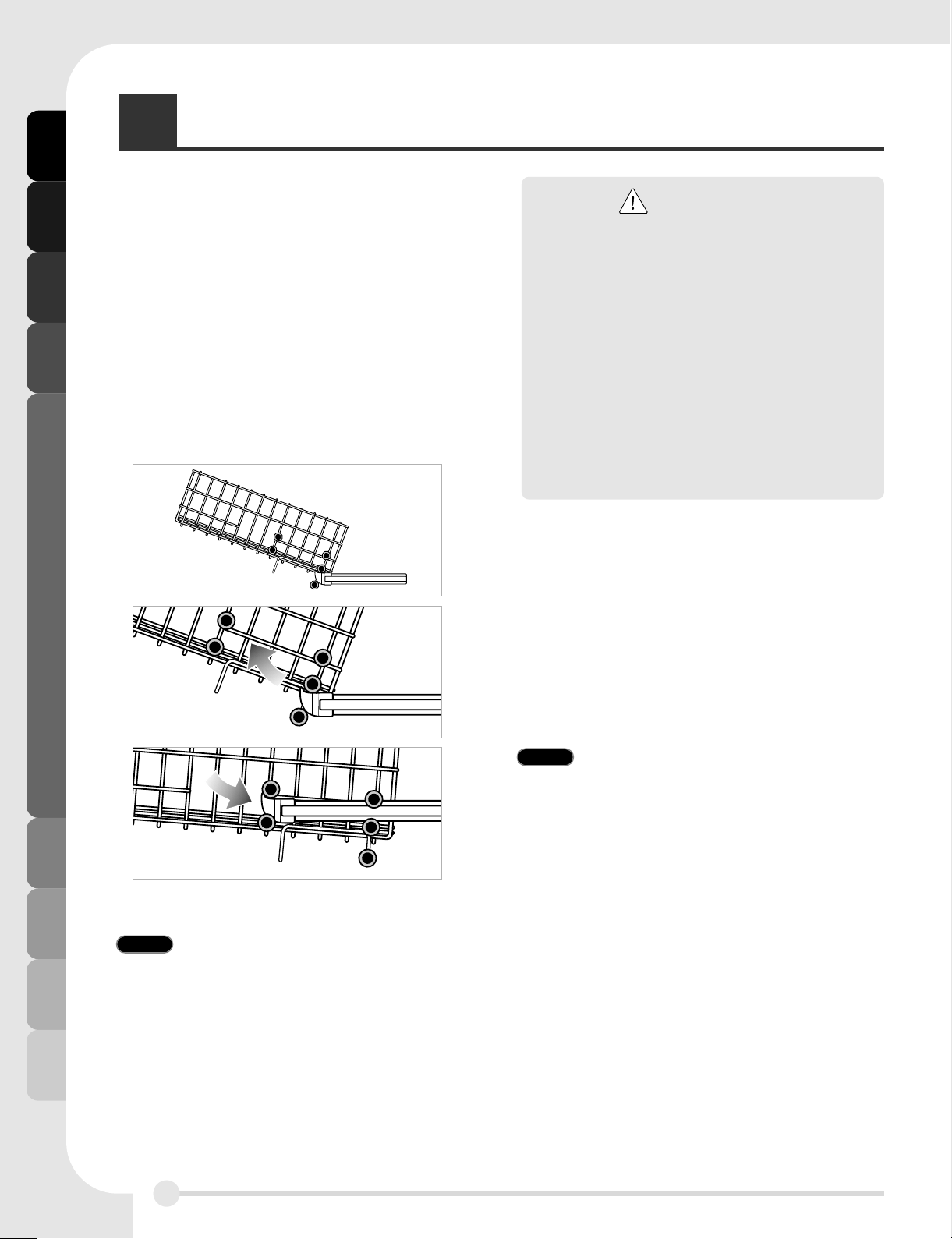
Bandeja superior de altura ajustable para
platos de 14 in. (en algunos modelos).
El lavavajillas LG tiene el orgullo de indicarle cómo meter
platos de
14 in
. La bandeja superior se mueve arriba y
abajo para poder colocar objetos altos y de tamaño
considerable. Los lavavajillas LG se ajustan lo suficiente
para que quepan platos de
14 in.
en la bandeja inferior,
y de
12 in.
en la bandeja superior.
Para ajustar la cesta
1. Empuje la bandeja hacia fuera.
2. Vuelva a encajar la bandeja superior en la
posición que desee.
15
USO DEL LAVAVAJILLAS
UU
SSOO DDEELL LLAAVVAAVVAAJJIILLLLAASS
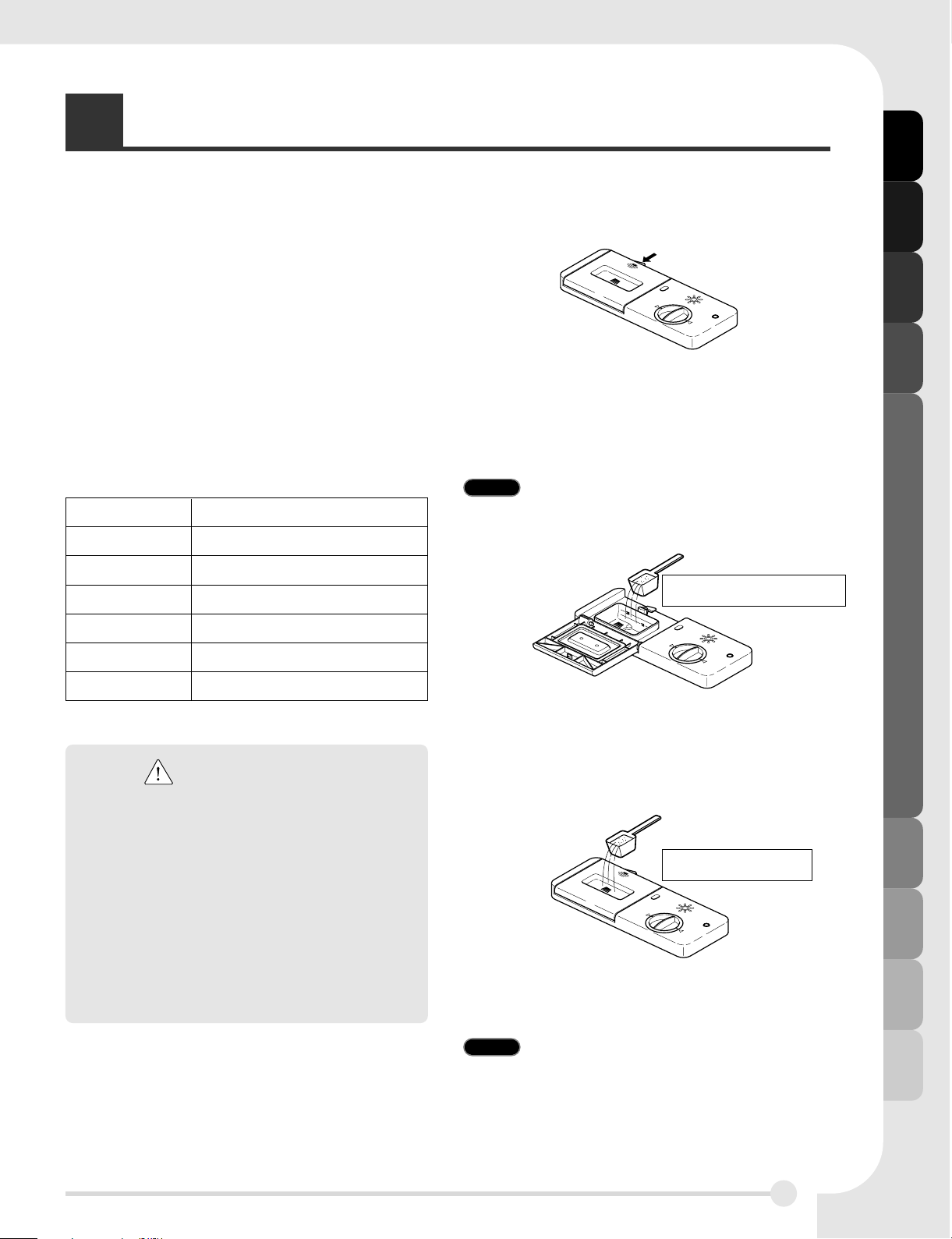
Adición de detergente en el dosificador
�Se debe poner el detergente en su compartimento antes
de iniciar cualquier programa, excepto con el Prelavado.
�Para determinar la cantidad adecuada de detergente,
rogamos siga as instrucciones del fabricante, que
aparecen en el manual.
�Si los platos no están excesivamente sucios, podrá utilizar
menos detergente del recomendado.
�El compartimento del detergente admite como máximo 1.4
oz (40g).
�La cantidad de detergente depende del programa y del
número de platos. Consulte la tabla guía.
Cómo llenar el dosificador
1. Tire del pasador para abrir el compartimento.
3. Si es necesario, añada detergente en el
compartimento de prelavado.
Para el lavado principal
PROGRAMA CANTIDAD DE DETERGENTE
Soak 0.9oz (25g)
Power Scrub 0.9oz (25g)
Normal 0.7oz (20g)
Delicate 0.7oz (20g)
Quick Wash 0.7oz (20g)
Rinse Only Sin detergente
Para el prelavado
ADVERTENCIA
Información sobre el detergente
Utilice solamente el detergente indicado para lavavajillas
domésticos, de lo contrario, el lavavajillas puede llenarse
de espuma durante el funcionamiento. La espuma puede
reducir el rendimiento de lavado y, si hubiera mucha
espuma dentro del lavavajillas, ésta se derramará y
mojará el suelo. (No se debe utilizar un detergente
corriente para las manos.)
2. Eche el detergente adecuado en el
compartimento principal. (consulte la tabla
para conocer la cantidad de detergente.)
NOTA
No añada detergente en el ciclo de aclarado.
4. Cierre la tapa.(escuchará un clic)
NOTA
Si pone demasiado detergente, el cristal no se limpiará
del todo.
USO DEL LAVAVAJILLAS
16
UU
SSOO DDEELL LLAAVVAAVVAAJJIILLLLAASS
Nivel de ajuste
(abrillantador)
Indicador de
abrillantador
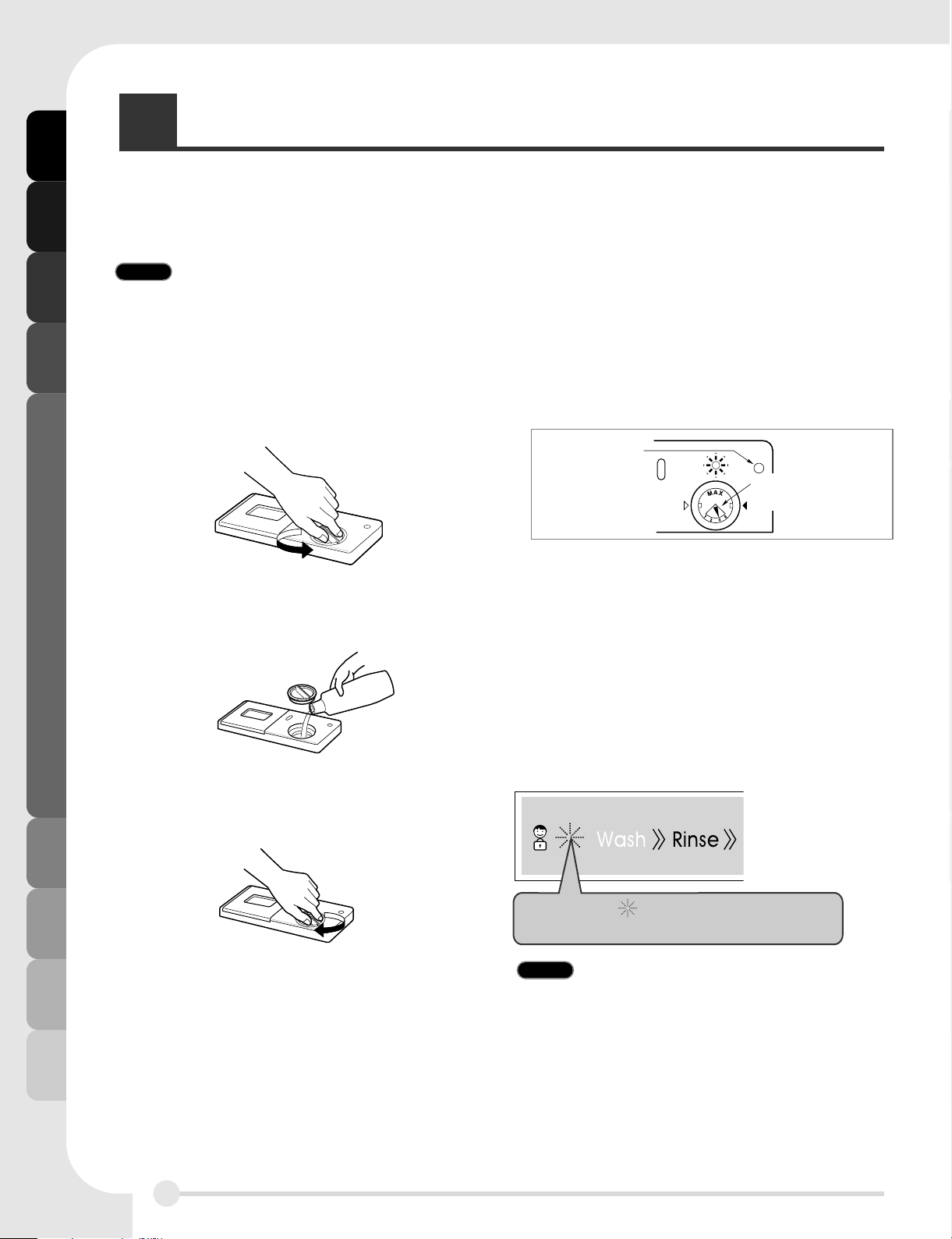
2. Llene el compartimento hasta el nivel máximo con
un abrillantador (máximo 4.8 oz (145ml)).
3. Vuelva a colocar la tapa y ciérrela.
4. El abrillantador se dispensa automáticamente
durante el ciclo de aclarado final.
�Ajuste de la cantidad de abrillantador
El ajuste de la dosis viene fijado de fábrica en 3
niveles que ofrecen el mayor rendimiento en
condiciones normales.
Si, tras el lavado, observa unas manchas borrosas,
rayas o marcas de agua en su cristalería, podría ser
necesario aumentar el ajuste. Si detecta la
presencia de espuma en la parte inferior del vaso o
en la base de la máquina, seleccione un ajuste
inferior.
1. Retire la tapa.
2.
Gire la flecha del indicador a la posición que desee.
��
Para rellenar de abrillantador
El dosificador de abrillantador tiene una capacidad de
4.8 oz (145ml). La configuración de fábrica es de 3
para esos 4.8 oz (145ml). La frecuencia de rellenado
dependerá de sus hábitos de lavado, como el
número de lavados al mes o el ajuste que haya
seleccionado.
Pero no tiene que preocuparse gracias al indicador
de rellenado, que le informa de cuándo tiene que
hacerlo. Si hay poco abrillantador, la luz del indicador
se encenderá cuando cierra la puerta del lavavajillas.
Adición de abrillantador en el dosificador
El abrillantador ayuda a conseguir platos sin las
manchas que surgen al secarse las gotas de agua.
Si éstas se eliminan, mejorará la calidad del secado.
NOTA
Este lavavajillas admite únicamente abrillantador líquido.
�Para llenar de abrillantador
1. Gire la tapa redonda en el sentido contrario a las
agujas del reloj y retírela.
NOTA
En áreas con agua dura donde no resulta económico ni
practico para instalar ablandadores de agua, añada
GLASS MAGIC a cada carga para aumentar la eficacia
limpiadora de su lavavajillas. Añada 1/4 de taza (4
cucharadas) de GLASS MAGIC en el interior del
lavavajillas cada vez que lo utilice, excepto con la
función “Sólo enjuagar.” Para eliminar restos de
detergente de la vajilla recomendamos el uso de vinagre
blanco; añada aproximadamente 20 ml (4 cucharadas)
o utilice su lavavajillas habitual .
Cuando la luz está encendida, indica que el
depósito de abrillantador está casi vacío.
17
MANTENIMIENTO Y CUIDADOS
MM
AANNTTEENNIIMMIIEENNTTOO YY CCUUIIDDAADDOOSS
Para obtener los mejores resultados, es importante comprobar y ocuparse periódicamente de los filtros y
brazos pulverizadores
Limpieza de las piezas
metálicasAlgunas piezas exteriores o interiores se pueden
limpiar con un trapo o una esponja. Si su lavaplatos cuenta con
un panel en la puerta de acero inoxidable, recomendamos usar
un limpiador de buena calidad especializado en este material.
La tina de acero inoxidable tiene tendencia a acumular empaño
en la superficie, especialmente con una presión fuerte del agua.
Para eliminar restos de detergente de las superficies interiores,
añada de 1/4 a 1/2 taza de vinagre blanco en el interior y
ejecute un ciclo normal. Si requiere una limpieza más abrasiva,
utilice Glisten o un producto similar, que normalmente puede
encontrarse en cualquier tienda de venta de productos
detergentes.
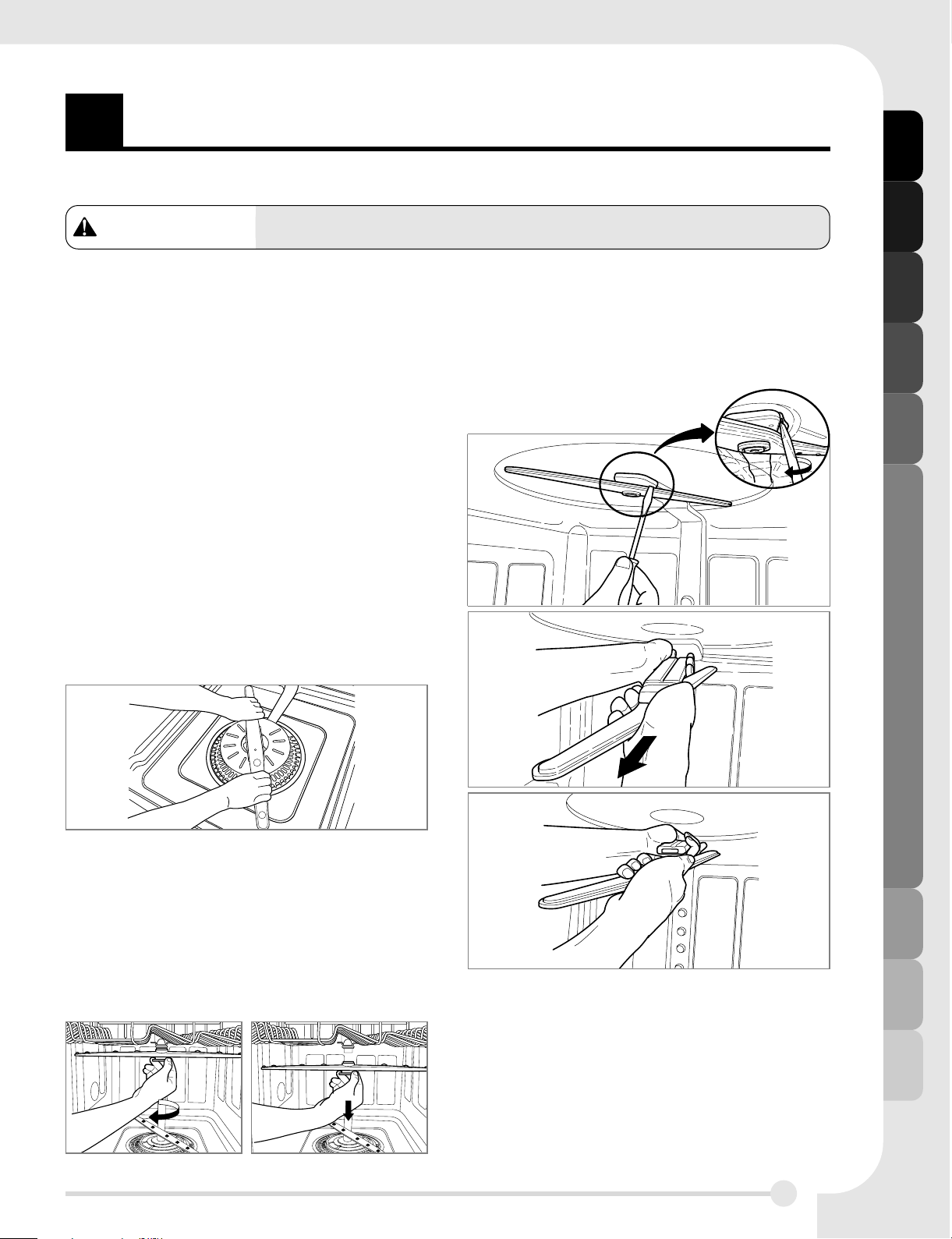
Limpieza de los brazos pulverizadores
- Brazo pulverizador inferior
�Compruebe que los agujeros de propulsión de agua no han
sido bloqueados con trozos de comida.
�Si tuviera que limpiarlo, saque el brazo pulverizador tirando
de él hacia arriba.
�Limpie el brazo pulverizador y vuelva a colocarlo, empujando
hacia abajo.
- Brazo pulverizador supremo
�Compruebe que los agujeros de propulsión de agua no
han sido bloqueados con trozos de comida.
�Si tuviera que limpiarlo, saque el brazo pulverizador
desmontando el gancho del soporte que fija el conjunto del
brazo pulverizador supremo a la cubeta.
�Limpie el brazo pulverizador y vuelva a
colocarlo.
Mantenimiento de temporada
- Durante el verano, si no va a estar en casa durante un
largo periodo de tiempo, recomendamos que cierre la
válvula del agua, y que desenchufe el aparato.
- Durante el invierno, si la temperatura ambiente del lugar
donde se encuentra el lavavajillas llega casi al grado de
congelación, recomendamos que acondicione para el
invierno las vías de suministro de agua y proteja su
electrodoméstico.
- Brazo pulverizador superior
�Empuje la bandeja superior hacia delante. Compruebe que
los agujeros de propulsión de agua no han sido
bloqueados con trozos de comida.
�Si tuviera que limpiarlo, saque el brazo pulverizador
desenroscando la tuerca.
�Limpie el brazo pulverizador y vuelva a colocarlo en
sentido inverso.
�Compruebe que ha apretado la tuerca firmemente!
AADDVVEERRTTEENNCCIIAA
Para prevenir cualquier daño o accidente al momento de realizar la limpieza o
mantenimiento del lavavajillas, asegúrese de usar guantes.
18
SECUENCIA DE FUNCIONAMIENTO
SS
EECCUUEENNCCIIAA DDEE FFUUNNCCIIOONNAAMMIIEENNTTOO
1. Pulse el botón de “encendido.”
Pulse el botón “encendido” para ver el programa
seleccionado por defecto.
2.
Compruebe si tiene abrillantador y
abra la puerta.
Las luces del indicador correspondiente se
iluminarán si fuera necesario rellenar el depósito.
3. Meta los platos y retire los restos
de comida.
Primero, quite los restos de comida. Saque la
bandeja inferior y coloque los platos y la vajilla en
la bandeja, empujándola hacia atrás. Saque la
bandeja superior y ordene las tazas, vasos, etc. en
la misma.
4. Asegúrese de que los brazos
pulverizadores pueden girar sin
obstrucciones.
5. Medida del detergente.
Añada la cantidad necesaria de detergente en el
dosificador. Cierre la tapa del dosificador de
detergente.
6. Selección del programa.
Seleccione el programa y las opciones que desee.
Antes de la puesta en marcha, la ventana de la
pantalla muestra el tiempo de funcionamiento
previsto del programa seleccionado. Si la cantidad
de vajilla cabe solamente en una bandeja, puede
seleccionar la opción de Media Carga. Por
ejemplo, si carga platos solamente en la bandeja
superior, ajuste el botón de media carga a la
bandeja superior.
No se olvide de meter todos los objetos en
la bandeja seleccionada.
El tiempo que aparece en la ventana de la pantalla
empezará a disminuir de minuto en minuto. Si se
abriera la puerta durante la ejecución del
programa, el lavavajillas se detendrá. Una vez que
se haya cerrado la puerta, se reanudará el
programa en el punto en que se interrumpió.
7. Cierre la puerta. El lavavajillas se
pondrá en marcha
automáticamente.
8. Al finalizar el programa.
Tras acabar el programa, aparecerá End (fin) en la
pantalla digital durante unos segundos y un
zumbido le comunicará que el programa ha
finalizado. El lavavajillas se apagará
automáticamente por motivos de seguridad y para
ahorrar energía.
PRECAUCIÓN
Vacíe la bandeja inferior en primer lugar y, a
continuación, la bandeja superior. Con esto,
evitará el goteo de agua desde la bandeja
superior sobre los platos situados en la inferior.
ADVERTENCIA
En términos generales, no es aconsejable abrir
la puerta mientras el aparato se encuentre en
funcionamiento; no obstante, si se abre la
puerta, un dispositivo de seguridad hace que el
aparato se detenga. Hay que tener mucho
cuidado si se abre la puerta durante la fase de
calor o inmediatamente después de terminar
un programa, puesto que se podría liberar
vapor.
Si el lavavajillas está encendido, pero no se
selecciona ningún programa o no se cierra la
puerta tras seleccionar un programa
transcurridos 10 minutos, se apagará
automáticamente.
Apagado automático
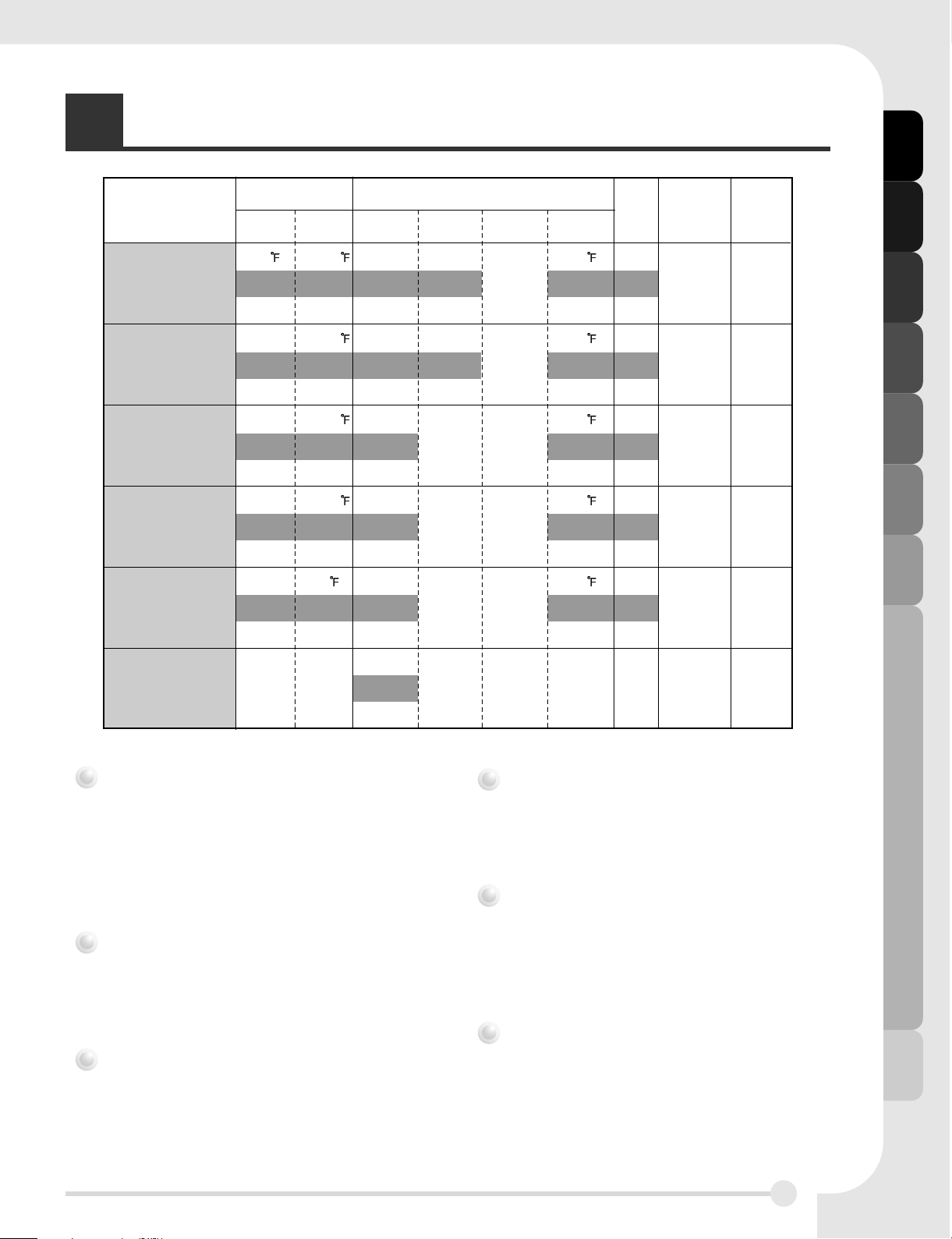
PROGRAMA
19
PP
RROOGGRRAAMMAA
SSooaakk
(Prelavado)
Este programa es para cargas muy
sucias, como ollas, sartenes y cacerolas,
que pueden tener residuos secos de
comida.
PPoowweerr SSccrruubb
(Intensivo)
Este programa es para la vajilla muy
sucia.
NNoorrmmaall
Este programa es para la vajilla diaria con
suciedad normal.
DDeelliiccaattee
(Delicado)
Este programa es para lavar elementos
delicados, como vasos.
QQuuiicckk WWaasshh
((RRááppiiddoo))
Este programa permite lavar rápidamente
platos y cubiertos poco sucios y recién
utilizados.
RRiinnssee OOnnllyy
(Sólo Aclarado)
Este programa es para vajillas muy
poco sucias.
Programa
Soak
(Prelavado)
Power
Scrub
(Intensivo)
Normal
Delicate
(Delicado)
Quick Wash
(Rápido)
Rinse Only
(Sólo Aclarado)
120 140~149 162
49
60~65
72
LAVADO
Prelavad
o
Tiempo
(min)
55~63
68
113~140
149
45~60
65
113~120 154
45~50
68
115 140
46
60
ACLARADO
SECA
DO
Agua
(l)
Lavado
principal
Aclarado 1
Aclarado 2
Aclarado 3
Aclarado
en caliente
5.5~9.2/
21~35
5.5~9.2/
21~35
2.6~6.9/
10~26
5.5~6.9/
21~26
5.5 / 21
1.3 / 5
143~191
123~171
101~135
103~120
74
14
154
131~145
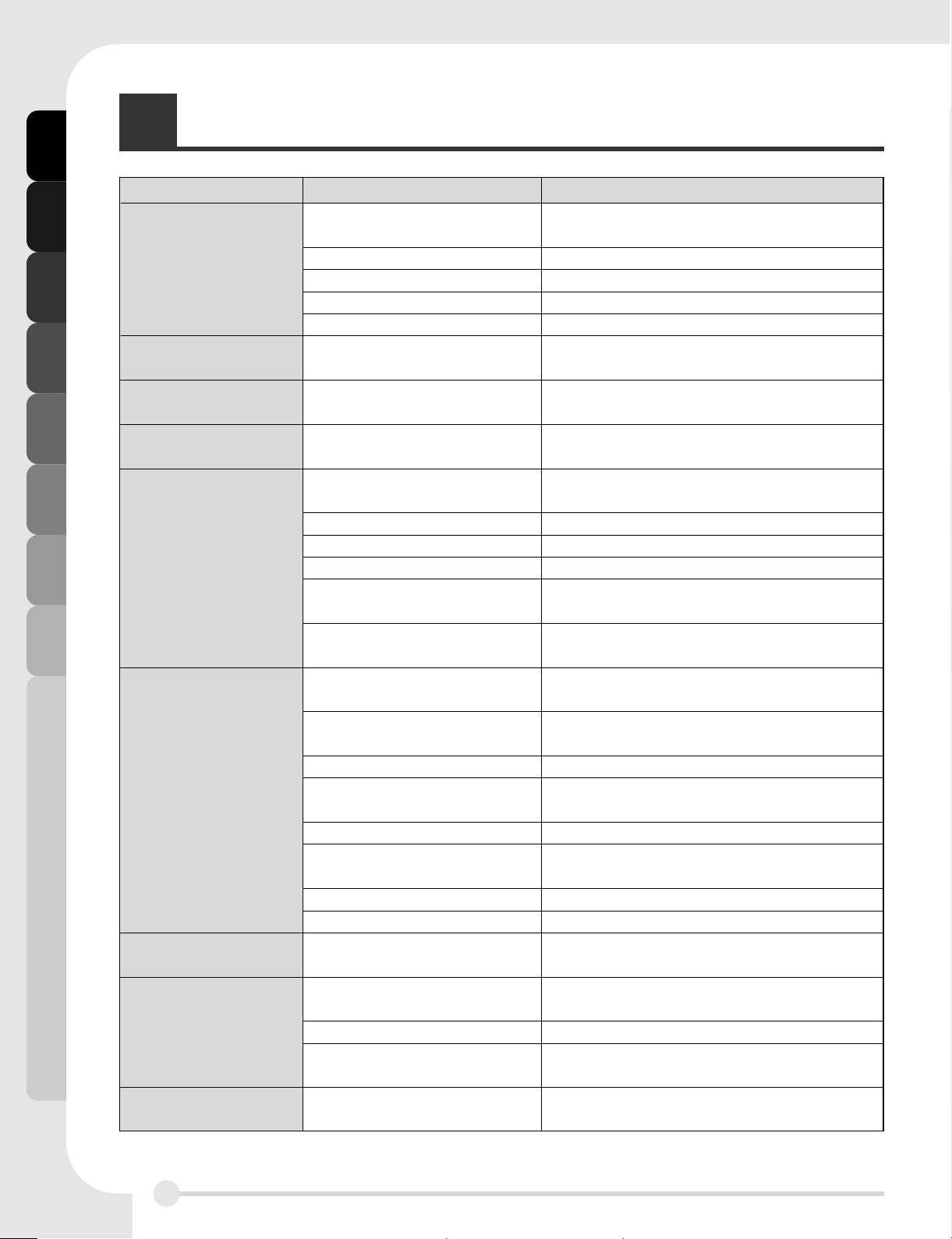
20
GUÍA DE RESOLUCIÓN DE PROBLEMAS
Causas Acción recomendadaProblema
La puerta no está cerrada del todo.
No se ha seleccionado un ciclo.
No se ha conectado la alimentación eléctrica.
No hay agua.
El fusible ha saltado.
Está funcionando con agua fría.
Queda agua dentro, de la última vez.
La manguera de desagüe está
doblada o atascada.
Elección inadecuada del programa.
La temperatura del agua es baja.
No se ha utilizado detergente lavavajillas.
Baja presión del agua de entrada.
Los agujeros de propulsión del agua de los
brazos pulverizadores están bloqueados.
Los platos se han colocado de forma
incorrecta.
Baja temperatura del agua.
Se ha utilizado demasiado detergente.
Sobrecarga.
Carga mal repartida.
Presión del agua insuficiente.
Detergente insuficiente.
El dosificador de abrillantador está vacío.
Agua demasiado dura.
Agua demasiado dura.
Es normal.
El lavavajillas no está en posición horizontal.
El brazo de la boquilla golpea contra los
platos.
Combinación de exceso de detergente y
agua blanda.
El lavavajillas no arranca.
El lavavajillas tarda demasiado.
El lavavajillas huele mal.
Sigue quedando agua tras acabar
el programa.
Siguen quedando restos de
alimentos en los platos.
Quedan manchas y una
película de suciedad en los
platos.
Manchas y restos en la puerta y el
depósito.
Ruido
La cristalería está empañada
Compruebe que la puerta está completamente cerrada y con el
pestillo.
Seleccione el ciclo que desee.
Conecte correctamente la corriente.
Compruebe el grifo del agua.
Cambie el fusible o reajuste el cortocircuito.
Compruebe que el grifo del agua
está conectado (calentar agua lleva más tiempo).
Utilice el programa de sólo aclarado hasta que haya metido todos
los platos.
Ponga derecha la manguera.
Seleccione el programa correcto, dependiendo del tipo de vajilla
y de lo agarrada que esté la suciedad.
Utilice el grifo de agua caliente.
Utilice los detergentes recomendados.
La presión del agua debería oscilar entre 20-120 psi.
Limpie el brazo.
Los platos no deberían interrumpir la rotación del brazo, ni la
apertura del dosificador de detergente.
La temperatura del agua debería ser de 120℉ (49℃)
para obtener los mejores resultados.
Reduzca la cantidad de detergente empleado.
Consulte la página 15.
Meta la cantidad de platos adecuada.
Reorganice los platos consultando el dibujo de las
páginas 12 y 13.
Ajuste la presión del agua entre 20 y 120 psi.
Aumente la cantidad de detergente empleado.
Consulte la página 15.
Rellene el dosificador de abrillantador.
Instale un ablandador de agua o utilice Glass Magic (página 16).
Siga las instrucciones de las páginas 17 y 19 para el uso del
detergente y la limpieza del interior.
Apertura de la tapa del detergente.
Sonido del desagüe en su primera fase.
Coloque de nuevo el lavavajillas.
Coloque de nuevo los platos.
Vacíe el lavaplatos y utilice un abrillantador para minimizar este
proceso.
GG
UUÍÍAA DDEE RREESSOOLLUUCCIIÓÓNN DDEE PPRROOBBLLEEMMAASS
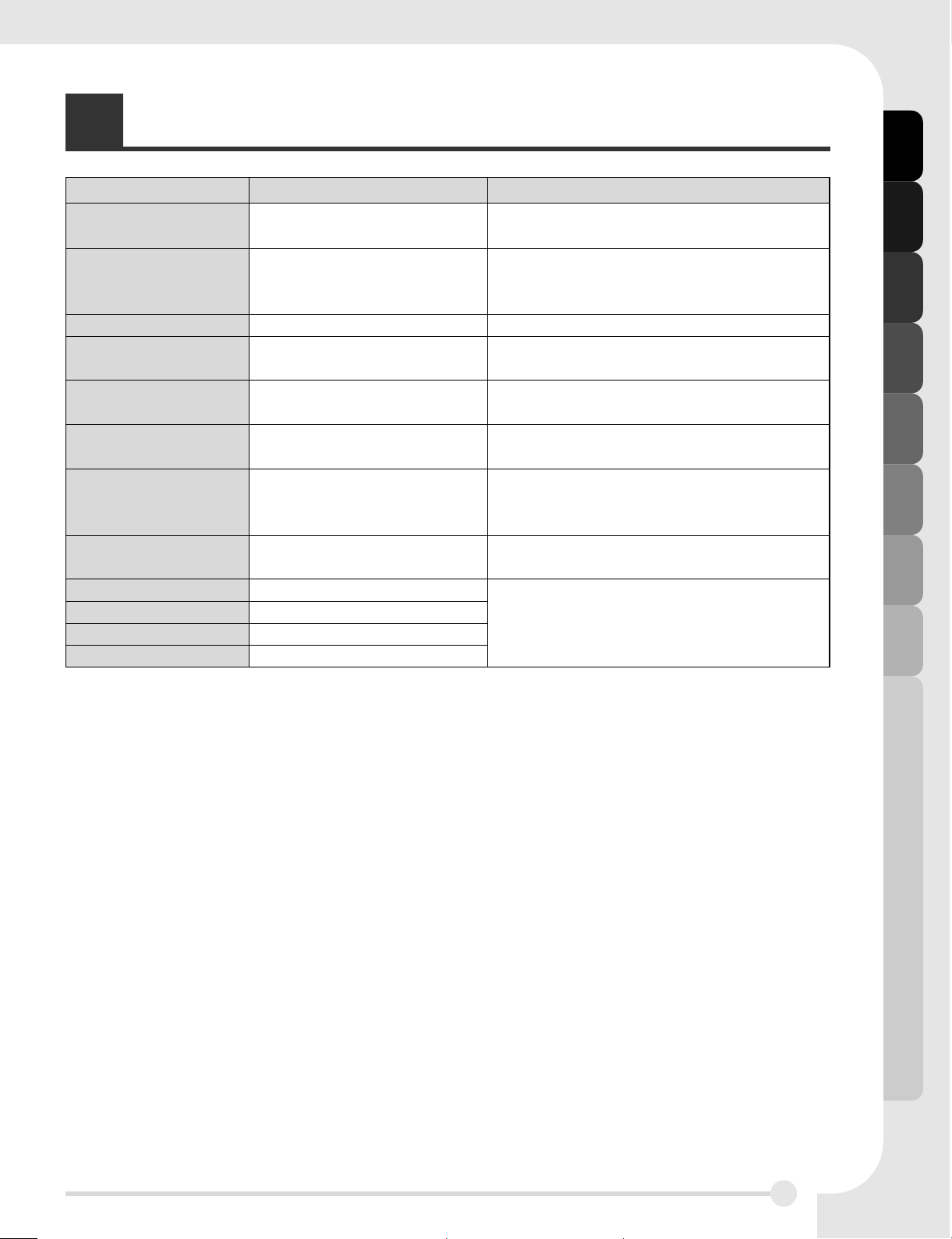
GUÍA DE RESOLUCIÓN DE PROBLEMAS
21
Si no puede solucionar el problema mediante estos consejos, o si tiene problemas diferentes a los mencionados en este
manual, llame al servicio técnico.(1-800-243-0000)
Causas Acción recomendadaProblema
Problemas con la entrada de agua.
Problemas de drenaje.
Se suministra demasiada agua.
Problemas con fugas de agua.
Fallo del Circuito del Calentador.
Problemas con el termostato.
Error IE.
Error OE.
Error FE.
Error E1.
Error HE.
Error TE.
Compruebe que no se ha taponado la manguera de entrada de
agua (o está retorcida, o congelada). Compruebe si no se debe a
un corte del suministro de agua.
Compruebe que no se ha taponado la manguera de salida de agua
(o está retorcida, o congelada).
Llame al servicio técnico. (1-800-243-0000)
La corriente no está conectada. El fusible ha
saltado o se ha activado el cortocircuito.
El montaje del brazo pulverizador está
bloqueado por partículas de comida.
La bandeja está mal ajustada.
Las luces no se encienden.
Los brazos pulverizadores no giran
de forma uniforme.
La bandeja superior se ha torcido
después de cargarla
Conecte la corriente. Sustituya el fusible y repare el cortocircuito.
Limpie los agujeros de los brazos pulverizadores.
Ajuste la bandeja superior correctamente, consultando la página
12.
GG
UUÍÍAA DDEE RREESSOOLLUUCCIIÓÓNN DDEE PPRROOBBLLEEMMAASS
Los objetos de aluminio han rallado los platos
durante el programa.
Manchas de café o té.
El depósito de abrillantador está vacío.
Señales negras o grises en los
platos.
Hay una película amarilla o
marrón en las superficies
interiores.
Los platos no se secan
Elimine las marcas de aluminio con un limpiador suave.
Elimine la mancha con un producto quitamanchas.
Compruebe y rellene el depósito de abrillantador si está vacío.
22
GARANTÍA
GG
AARRAANNTTÍÍAA
CÓMO SE MANEJA EL SERVICIO :
Servicio a domicilio: Por favor conserve el
recibo del lugar donde relizó su compra como
evidencia de la fecha en que el producto fue
adquirido para validar el periodo de garantía, y
tenga una copia del recibo para la persona de
servicio que la atienda en el momento en que
necesite aplicar su garantìa.
Por favor ilame al 1-800-243-0000 y escoja la
opción apropiada para localizar el Centro de
Servicio Autorizado LG más cercano a usted
O visite nuestra página de internet en
http://www.lgservice.com.
Su Lavajillas LG será reparada o reemplazada, a consideración de LG, si prueba ser defectuosa en material o en
ejedución dentro de un uso normal, dentro del periodo de garantía (“periodo de garantía”) descrito en la parte
inferior, efectivo desde la fecha (“fecha de compra”) de la compra del producto por el consumidor. Esta garantía
limitada es efectiva únicamente para el comprador original del producto, y efectivo únicamente si ha sido usado
en los Estados Unidos, incluyendo Alaska, Hawai y territorio norteamericano.
ESTA GARANTÍA REEMPLAZA CUALQUIER OTRA GARANTÍA, EXPRESA O IMPLÍCITA, INCLUYENDO SIN
LIMITACIÓN CUALQUIER GARANTÍA DE VENTA DE MERCANCÍA O CONVENIENCIA PARA PROPÓSITOS
PARTICULARES. EN EL EXTENDIDO CUALQUIER GARANTÍA IMPLÍCITA ES REQUERIDA POR LEY, ES
LIMITADA EN DURACIÓN AL PERÍODO DE GARANTÍA EXPRESA EN LA PARTE INFERIOR. NI EL
FABRICANTE NI SUS DISTRUBUIDORES EN LOS EUA PUEDEN SER RESPONSABLES DE NINGUN DAÑO
INCIDENTAL. CONSECUENCIAL, INDIRECTO, ESPECIAL O PUNITIVO DE NINGUNA NATURALEZA,
INCLUYENDO SIN LIMITACIÓN, PÈRDIDAS DE GANANCIAS O CUALQUIER OTRO DAÑO AUNQUE ESTE
BASADO EN CONTRATO O AGRAVIO. Algunos estados no permiten la exclusión o limitación de daños
incidentales o consecuenciales en el tiempo válido de la garantía así que la exclusión mencionada en la parte de
arriba puede que no aplique para usted. Esta garantía le da derechos legales específicos y puede que usted
tenga otros derechos además de los mencionados que varían de estado en estado.
ESTA GARANTÍA LIMITADA NO APLICA A:
�Viajes de Servicio a su casa para ilevar, recoger y/o instalar el producto, instruir o reponer fusibles o conectar
correctamente cables, o la corrección de piezas desautorizadas; y
�Daños o problemas operacionales como resultado de un mal uso, abuso, operación dentro de un ambiente no
especificado o contrario a los requerimientos o precauciones en la Guia Operacional accidente, plagas,
incendios, inundaciones, instalación inapropiada, actos de Dios, alteraciones o modificaciones desautorizadas,
voltaje incorrecto, uso comercial, o para el uso de otros fines que no sean los propósitos intencionados.
El costo de reparaciones o reemplazos que son excluidos de estas circunstancias, deben ser asumidos por el
consumidor.
NÚMEROS CENTRALES INTERATIVOS PARA EL CLIENTE
PARA CONTACTAR A LG Electronics POR MAIL:
�LG Customer Interactive Center
�P.O. Box 240007
�201 james Record Road
�Huntsville, Alabama 35824
�ATTN: CIC
LG ELECTRONICS, INC.
Grantía Limitada En Los En Los Estados Unidos De Lavarajillas LG
PERÍODO DE GARANTÍA:
Vigencia: 1 año desde la fecha de compra.
PARTES (esceptuando la siguiente lista
): 2 año desde
la fecha de compra.
Piezas para el panel de control electrónico: 5 año
desde la fecha de compra.
Piezas para el bastidor del lavavajillas: 5 año desde
la fecha de compra.
Piezas para el revestimiento de la puerta de acero
inoxidable o la Cubeta: La vida.
Las unidades reemplazadas y reparadas pueden ser
nuevas o refabricadas por la fábrica.
Las unidades reemplazadas y reparadas tienen la
misma porción de garantía que la compra del producto
durante el mismo periodo.
Para obtener Asistencia al Consumidor Información
de Producto, O centros de Servicio Autorizados.
Llame al 1-800-243-0000 (24 horas por día, 365 días
por año) y seleccione la opción apropiada del menú.
O visite nuestra página de internet en
http://www.lgservice.com
23
MEMO
MM
EEMMOO

N。de Ref.: 3828DD3002Q