461308300_000 12/2013
A GUIDE TO USE,
INSTALLATION AND REGULATION
OF YOUR COOKERS
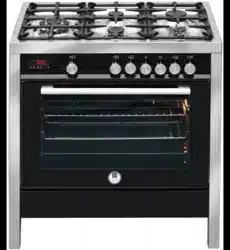
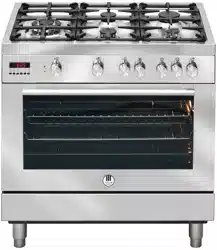
MODEL: AFG1206X
AUS
2
The appliance was designed and made in accordance with the European standards listed below:
=> EN 30-1-1, EN 30-2-1 and EN 437 plus subsequent amendments (gas)
=> EN 60 335-1 and EN 60 335-2-6 (electrical) plus relative amendments
The appliance complies with the prescriptions of the European Directives as below:
=> 2006/95 EC concerning electrical safety (BT).
=> 2004/108 EC concerning electromagnetic compatibility (EMC)
=> 2009/142 EC concerning gas safety.
THIS APPLIANCE IS ALSO DESIGNED TO COMPLY WITH AUSTRALIAN STANDARDS.
Oven accessories that could come into contact with foodstuffs are made with materials that comply with
the provisions of the 89/109 EC directive dated 21/12/88.
This product complies with EU Directive 2002/96/EC.
The crossed-out dustbin symbol reported on the appliance indicates that the
appliance must be disposed of separately from other domestic refuse at the
end of its useful life. It must therefore be delivered to a waste recycling
centre specically for electric and electronic equipment or returned to the
retailer at the moment of purchase of a new equivalent appliance.
The user is responsible for delivering the appliance to the appropriate collection centre at the end of its
useful life, Failure to do so may result in a ne, as provided for by laws governing waste disposal.
Differential collection of waste products for eventual recycling, treatment and environmentally friendly
disposal helps reduce possible negative effects on the environment and health, and also enables the
materials making up the product to be recycled.
For more detailed information on the available refuse collection systems, refer to the local Municipal
Solid Waste disposal centre or the shop where the product was purchased.
Producers and importers are responsible for fullling their obligations as regards recycling, treatment
and environmentally friendly disposal by directly or indirectly participating in the collection system.

3
461308300_000 12/2013
CONTENTS
ASSISTANCE AND SPARE PARTS 3
IMPORTANT NOTES AND PRECAUTIONS FOR USE 4-6
DESCRIPTION OF THE APPLIANCE 7-10
INSTRUCTIONS FOR THE USER 10-18
INSTRUCTIONS FOR THE INSTALLER 19-27
TROUBLESHOOTING 28
TECHNICAL FEATURES 28-29
Before this appliance left the factory it was tested and ne-tuned by specialised expert personnel in order to
guarantee its best functioning results.
Any subsequent repairs or adjustments that may be necessary must be done with the maximum of care
and attention by qualied personnel.
For this reason we recommend you always contact our Service Centre specifying the brand, the model, its serial
number and type of problem you are facing with it. All data related to your appliance are printed on the data label
afxed on the appliance as well as on its original packaging.
A duplicate data label is contained in this booklet also. Please attach this label on the handbook or to an
accessible surface near by the appliance for easy reference.
This information enables the technical assistant to come and visit you with the correct spares and guarantee a
prompt and suitable service.
You will only nd original spare parts at our Service Centre and authorised dealers.
ASSISTANCE AND SPARE PARTS
4
IMPORTANT NOTES AND PRECAUTIONS FOR USE
You have purchased one of our
products for which we thank you. We
are condent that this new appliance,
modern, functional and practical, made
with top quality materials, will meet all
your demands. This new appliance
is easy to use but before installing
and using it, it is important to read
this handbook through carefully.
It provides information for a safe
installation, use and maintenance. Keep
this handbook in a safe place for future
reference.
The manufacturer reserves the right
to make all the modications to its
products that it deems necessary
or useful, also in your interests,
without prejudicing its essential
functional and safety characteristics.
The manufacturer cannot be held
responsible for any inaccuracies due to
printing or transcription errors that may
be found in this handbook.
N.B.: the pictures shown in the gures in
this handbook are purely indicative.
• The installation, adjustments,
conversions and maintenance
operations listed in section
«INSTRUCTIONS FOR THE
INSTALLER» must only be carried out
by authorised personnel .
• The installation of all-gas and combi
appliances must comply with the
standards in force.
• The appliance must only be used for
its original purpose, that is, cooking
for domestic use. Any other use is
considered improper and, as such,
dangerous.
• The manufacturer cannot be held
responsible for any damage to persons
or property resulting from an incorrect
installation, maintenance or use of the
appliance.
• Once the packaging has been
removed from the outer surfaces and
the various inner parts, thoroughly
check that the appliance is in perfect
condition. If you have any doubts do
not use the appliance and call in an
authorised person.
• The packaging materials used
(cardboard, plastic bags, polystyrene
foam, nails, etc.) must not be
left within easy reach of children
because they are a potential hazard
source. All packaging materials used
are environmentally-friendly and
recyclable.
• The electrical safety of this appliance
is only guaranteed if it is correctly
connected to a suitable earth system,
as prescribed by the electrical safety
standards. The manufacturer disclaims
all responsibility if these instructions
are not followed. Should you have
any doubts, seek the assistance of an
authorised person.
• Before connecting the appliance
ensure that the rating plate data
corresponds to that of the gas
and electricity supply (see section
«TECHNICAL FEATURES»).
• NOT FOR USE IN MARINE CRAFT,
CARAVANS OR MOBILE HOMES
UNLESS EACH BURNER IS FITTED
WITH A FLAME SAFEGUARD.
• DO NOT MODIFY THIS APPLIANCE
• DOMESTIC USE ONLY
WARNING - The appliance and its
accessible parts become hot during
use. Care should be taken to avoid
touching heating element. Children
less than 8 years of age shall be kept
away unless continuosly supervised.

5
461308300_000 12/2013
IMPORTANT NOTES AND PRECAUTIONS FOR USE
• The oven door glass and the
accessible parts will become hot
when in use. To avoid burns and
scalds young children should be
kept away.
• Do not use this appliance as a space
heater.
• Do not touch any electrical appliance
if hands or feet are wet or damp.
• Do not use the appliance bare
footed.
• Do not pull the power lead to take the
plug out of the socket.
• Do not leave the appliance outside
under the sun, rain, etc.
• Young children should be supervised
to ensure that they not play with the
appliance.
• This appliance is not intended for
use by persons (including children)
with reduced physical, sensory
or mental capabilities, or lack of
experience and knowledge, unless
they have been given supervision
or instruction concerning use of the
appliance by a person responsible
for their safety.Children shall not
play with the appliance. Cleaning
and user maintenance shall not
be made by children with out
supervision.
• WARNING - In order to prevent the
accidental tipping of the appliance,
for example by a child climbing on the
open oven door, or where users put
extreme weight on the door when in
open position, the stabilising means
must be installed by the installer.
Failure to t the stabilising brackets
properly may cause personal burn
injuries and damage to the gas pipe.
• Before cooking for the rst time,
ensure the oven is empty and its door
closed, heat the oven at maximum
temperature for two hours. This
will allow the protective coating on
the interior of the oven to be burnt
off and dissipate the associated
smells. Ensure adequate ventilation
in the kitchen whilst burning off and
don’t be alarmed by a little bit of
smoke during this process.
• When you insert the oven shelf,
be sure that the rear stopper of
the oven rack must be positioned
upwards.
• Unattended cooking on a hob with
fat or oil can be dangerous and may
result in re.
• Never try to extinguish a re with
water, but switch of the appliance
and then cover ame e.g. with a
lide or a re blanket .
• Danger of re: Do not store items
on the cooking surfaces
• Do not use harsh abrasive cleaners
or sharp metal scrapers to clean
the oven glass door since they can
scratch the surface, which may
result in shattering of the glass.
• NEVER use sponges or abrasive
products, and solvents to remove
stains or adhesives on the painted
or stainless steel surfaces.
• Switch off the oven before removing
the fan guard for cleaning. Replace
the guard after cleaning in
accordance with the instructions.
• The oven can be equipped with
temperature probe. Only use the
temperature probe recommended
for this oven by our Service
Centre.
• Remove any spillage from the lid
before opening.
Warning: If the surface is cracked,
switch off the appliance to avoid the
possibility of electric shock, for hob
surfaces of glass-ceramic or similar
material which protect live parts)

6
IMPORTANT NOTES AND PRECAUTIONS FOR USE
• The appliance is not intended to be
operated by means of an external
timer or separate remote-control
system
• Ensure that the appliance is
switched off before replacing the
lamp to avoid the possibility of
electric shock..
• The cookers can be equipped with
a small compartment under the
oven that can be used for storing
things Remember that the surfaces
become hot, it is strictly forbidden to
place inammable materials inside.
• Do not use a steam cleaner to clean
a hob, oven or range.
• The appliance is to be placed directly
on the oor and shall not be mounted
on a base.
• If the appliance is tted with a glass
lid, this can shatter when heated.
Turn off all the burners or disconnect
all the plates, and allow them to cool
before closing the lid
• Not suitable for installation or
operation with aftermarket lids or
covers
• Avoid using the oven as a larder or as
a saucepan cupboard when you are
not using it for cooking: if the oven is
turned on accidentally it could cause
damage and accidents.
• If you are using an electrical socket
near the appliance, make sure that
the cables are not touching the cooker
and are far enough away from all hot
parts.
• When you have nished using the
appliance check that all the controls are
in the off or closed position, checking
that the “0” of the knob corresponds to
the “
•” symbol serigraphed on the front
panel.
• Switch off the electrical supply before
you start cleaning or servicing the
appliance.
• In the case of a failure or malfunction,
turn the appliance off and switch off
the electrical supply and do not tamper
with it. All repairs or adjustments must
be carried out with maximum care and
the proper attention of an authorised
person.
• For this reason we recommend you
call our Service Centre.
7
461308300_000 12/2013
2
2
GENERAL
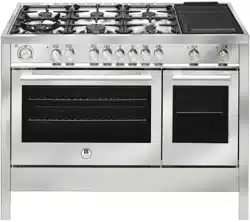
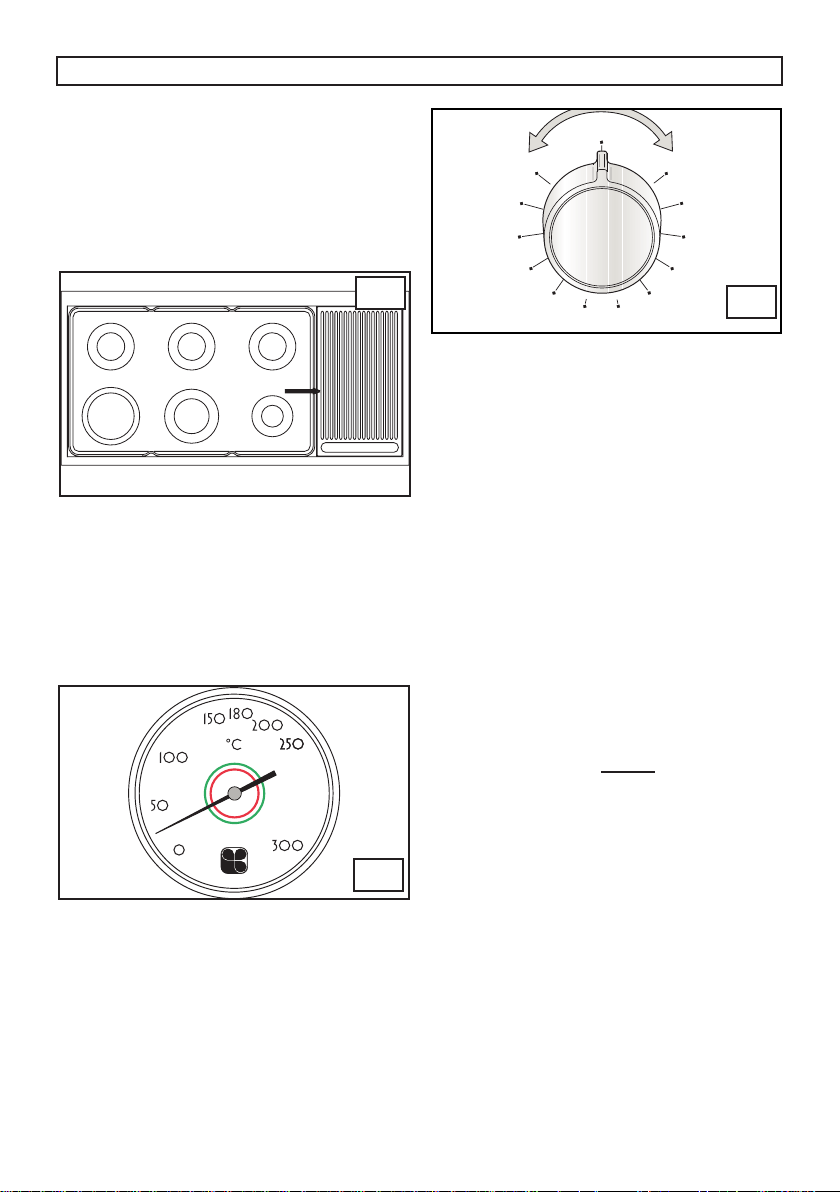
The cooker is tted with a gas hob with the electric
griddle .
Each knob on the front panel has a diagram printed
above it showing to which burner it refers.
The combination of the different sized burners offers
the possibility of various types of cooking.
Our cookers have two ovens with different volumes.
The left oven cavity, which is the biggest, features of
oven natural or forced convection and makes all types
of cooking possible. The right oven cavity, which is
the smallest, features of oven natural convection with
electric grill.
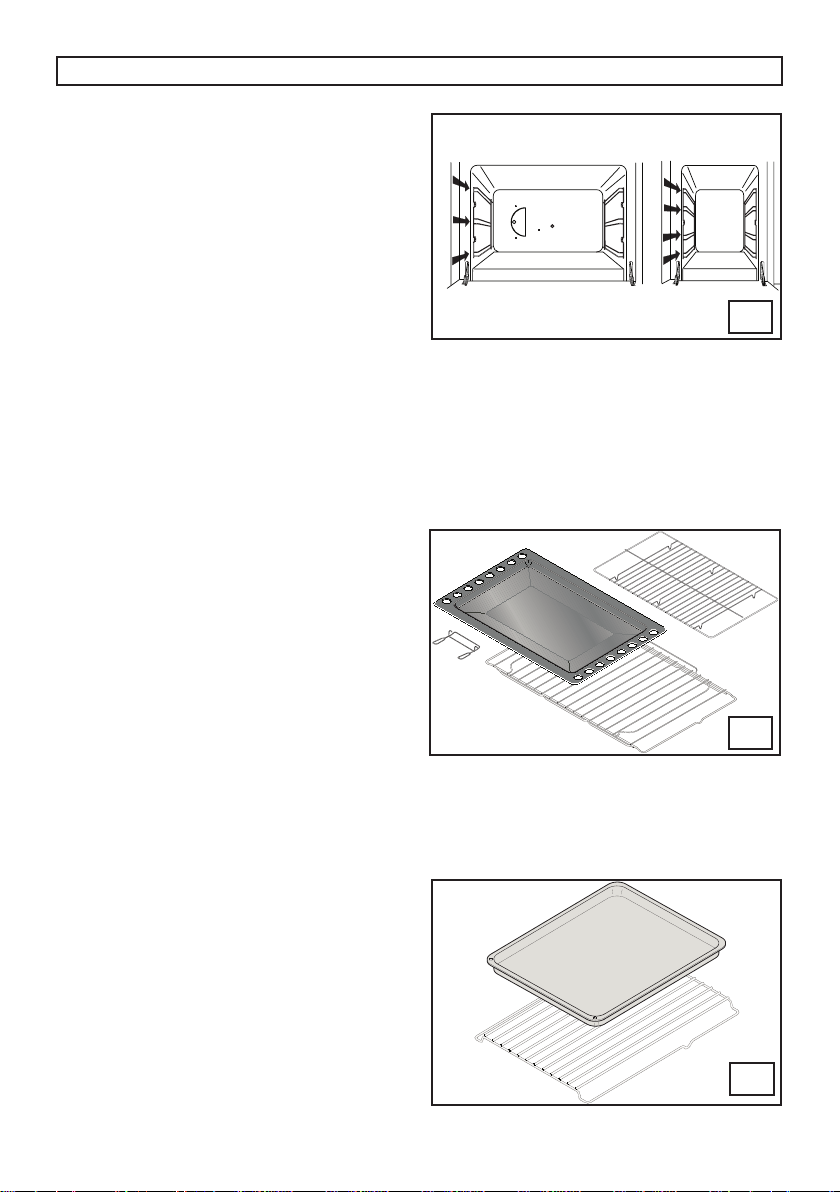
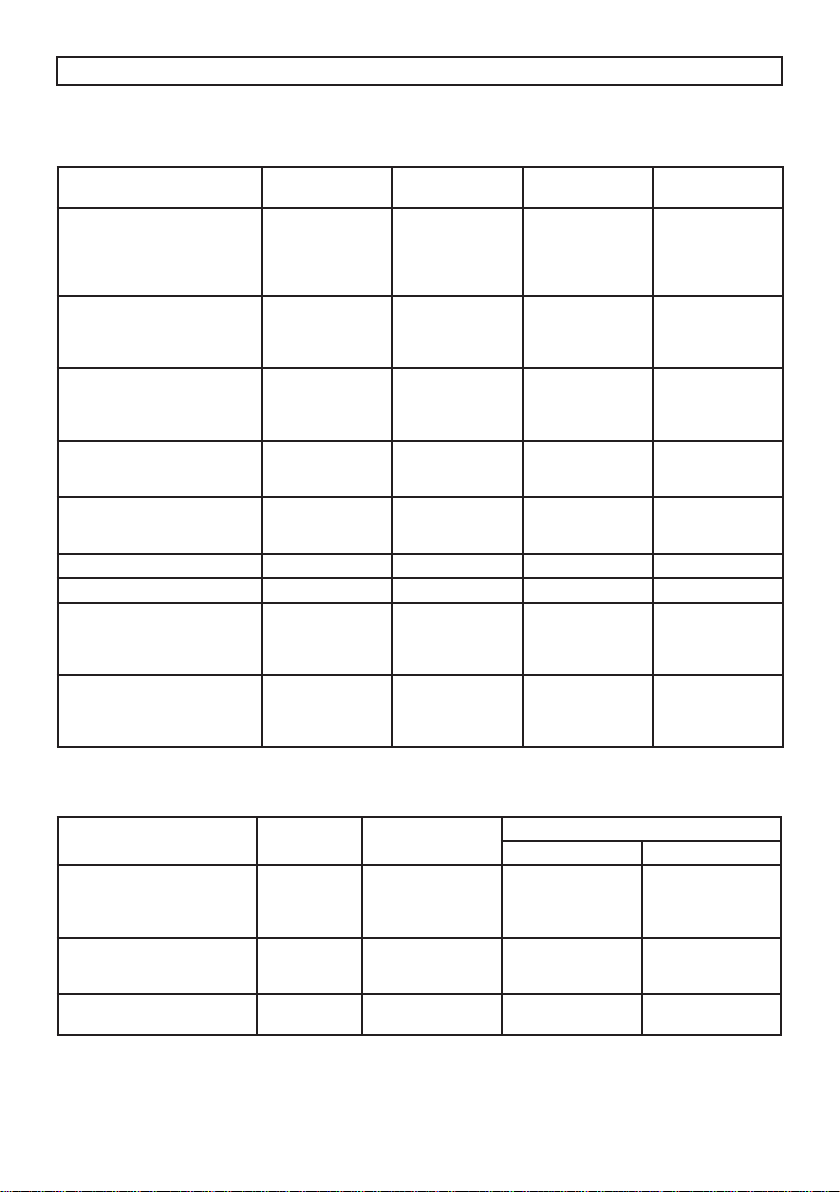
The oven walls of the two cavity, are tted with various
guide bars (g. 1) on which the following accessories can
be placed (g. 2):
• Oven shelf
Ensure shelf is located with dish and
tray stop pointing upwards and at rear of oven.
• Drip tray and Drip tray grid
• handle
DESCRIPTION OF THE APPLIANCE
1
8
DESCRIPTION OF THE APPLIANCE
DESCRIPTION OF THE CONTROLS
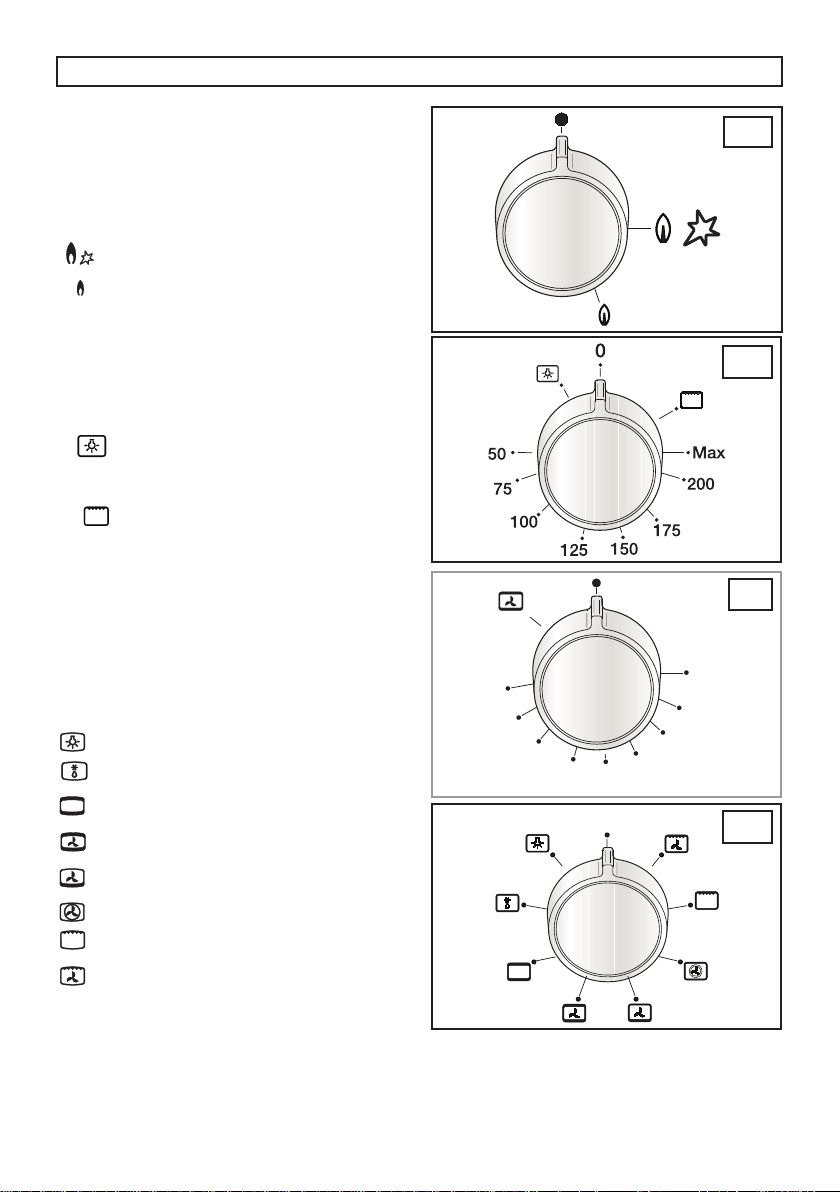
HOB GAS BURNER KNOB (A)
By turning the knob counterclockwise, the following
symbols appear:
•
= Closed position
= “Full on” position
= “Reduced rate” position
ELECTRIC STATIC OVEN COMMUTATOR/
THERMOSTAT KNOB (B) RIGHT CAVITY
By turning the knob clockwise we will nd the following
symbols:
0 = Oven off
= Oven light on, which stays on for all functions
da 50°C a Max
= The different oven temperature values
= Grill heating element on
A
B
C
D
OVEN THERMOSTAT KNOB (C) LEFT CAVITY
By turning the oven knob clockwise you will nd the
different oven temperature values (from 50°C to Maxi).
OVEN MULTIFUNCTION SELECTOR KNOB (D)
LEFT CAVITY
By turning the knob to the right or to the left you will
nd the following symbols:
0 = Oven off
= Oven light on, which stays on for all functions
= Fan on
= Top and bottom heating elements on
= Top and bottom heating elements and fan on
= Bottom heating element and fan on
= Rear heating element and fan on
= Grill + spit heating element on
= Grill heating element and fan on
9
461308300_000 12/2013
DESCRIPTION OF THE APPLIANCE
E
F
ENERGY REGULATOR KNOB for griddle (e)
By turning the knob to the right we nd the following
symbols:
0
= heating elements off
from 1 to 12
= minimum and maximum power for the
electric griddle
SWITCHING THE HEATING ELEMENTS
The electric griddle C (g.F), are controlled by
energy regulators with 12 positions (E) that permit to
obtain a big range of different temperatures.
RED WARNING LIGHT
If present, when lit it indicates that one or more of the
hob electric plates is on if the hob is mixed or electric,
or one of the oven electric components.
YELLOW WARNING LIGHT
(indicates the operation of right oven)
When lit it indicates that either the electric oven or electric
grill is working. While the oven is being used the light will
switch off when the set temperature is reached. During
baking it is normal for the yellow light to switch on and
off several times as the oven temperature is controlled.
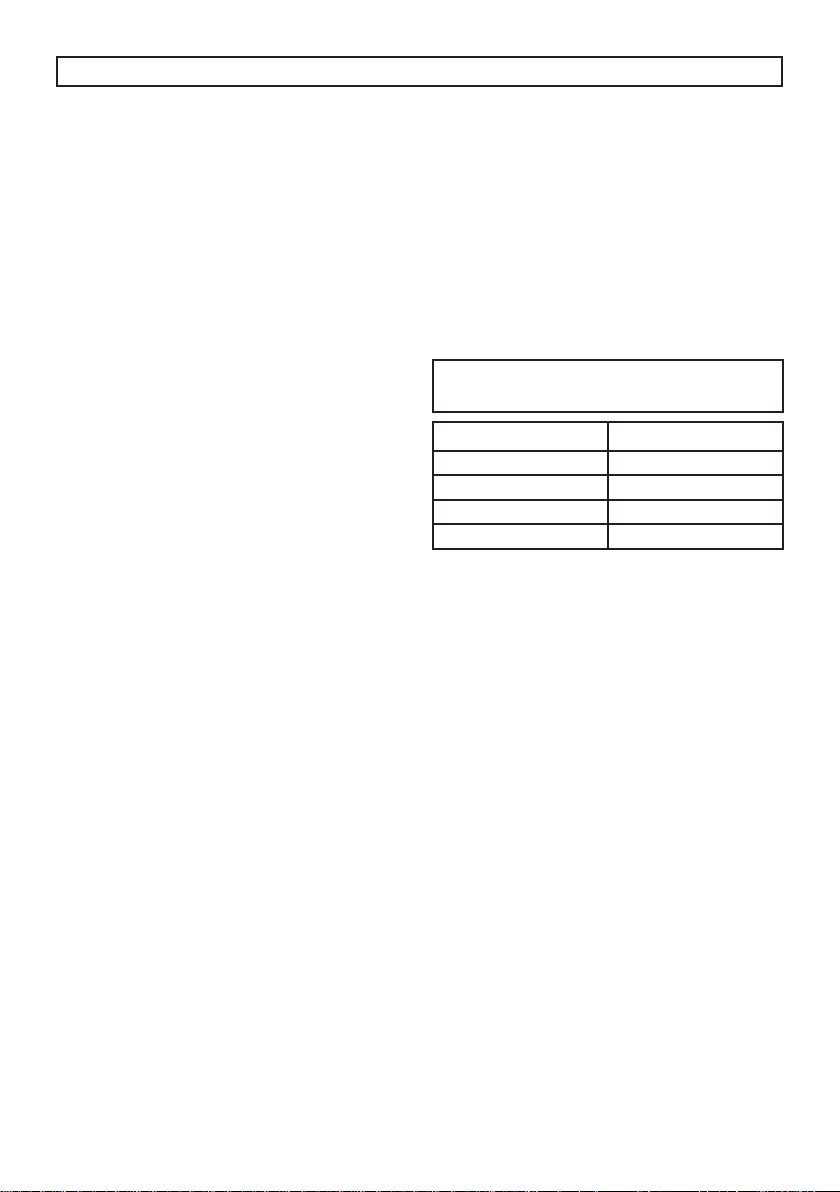
ANALOG THERMOMETER (G)
This is not an electrical device, so it works even if the
cooker is not connected to the mains.
This thermometer shows roughly the inner tempera-
ture of the oven when is working and it can have a
deviation according to the type of cooking and the type
of oven function.
It isn’t a control of inner temperature.
The control of the temperature is always done by ther-
mostat activated by knob.
G
10
HOB: GENERAL NOTES ON SAFETY
• When using the burners, do not leave the appliance
unsupervised. Ensure that children and the inrm
do not play with the appliance. In particular, make
sure that pan handles are positioned correctly and
supervise the cooking of foods which use oils and
fats, as these are highly inammable.
• DO NOT SPRAY AEROSOLS IN THE VICINTY OF
THIS APPLIANCE WHILE IT IS IN OPERATION.
• Even after use, the burners remain hot for a long
period; to avoid burning, do not place hands or
other objects on them.
• After using the appliance, ensure that all the
controls are in the closed or off position.
AUTOMATIC ELECTRIC IGNITION OF
COOKTOP BURNERS
Push lightly the knob (A) which corresponds to burner
to be ignited and turn anti clockwise to the “Full On”
position, then depress the control knob.
Automatically the ignition spark shoots. If there is no
electric power the burner may be lit with matches.
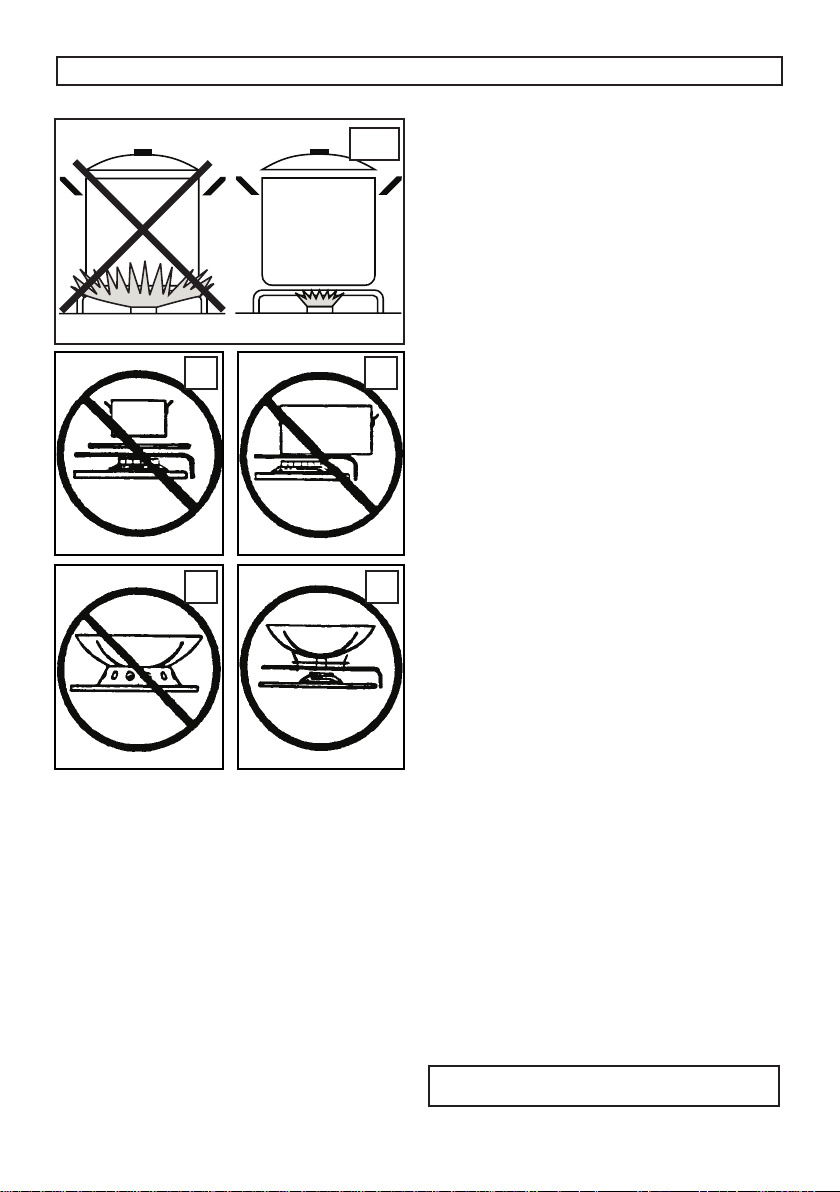
OPTIMUM USE OF COOKTOP BURNERS
In order to achieve maximum efciency with minimum
gas consumption it is useful to remember:
• Do not use large burners with pans of small
diameter in order to avoid ames spreading wider
than pans (consult the following table) and always
use pans with lids (g. 3).
• When the boiling point is reached, it is best to turn
the knob to the “Low position”.
• Avoid using over sized pans that may radiate
excessive heat and cause damage to surrounding
surfaces such as bench tops and glass lid.
• Do not place anything, e.g. ame tamer, asbestos
mat, between pan and pan support, as serious
damage to the appliance may result (g. 4).
• Locate pan centrally over the burner so that is
stable and does not overhang the appliance (g. 5).
• If gas burns with a yellow ame, do not continue to
use burner and arrange for service.
• Do not use burners without the proper pan support or
wok stand, as this will concentrate and deect the heat
onto the hotplate (g. 6) and surrounding surfaces.
• Use only a wok support supplied or recommended
by the manufacturer of the appliance (g. 7).
ABNORMAL OPERATION
Any of the following are considered to be abnormal
operation and may require servicing:
• Yellow tipping of the hob burner ame.
• Sooting up of cooking utensils.
• Burners not igniting properly.
• Burners failing to remain alight.
• Burners extinguished by the oven door.
• Gas valves, which are difcult to turn.
In case the appliance fails to operate correctly, contact
our Service Centre.
Warning: Servicing should be carried out only
by authorised personnel.
Burners Ø pan cm
Wok 22 - 24
Medium 18 - 20
Small 16 - 18
Auxiliary 12 - 14
INSTRUCTIONS FOR THE USER
11
461308300_000 12/2013
INSTRUCTIONS FOR THE USER
OVEN: GENERAL SAFETY INSTRUCTIONS
• Do not leave the oven unsupervised during use.
Ensure that children and the inrm do not play with
the appliance.
• DO NOT SPRAY AEROSOLS IN THE VICINTY OF
THIS APPLIANCE WHILE IT IS IN OPERATION.
• WHERE THIS APPLIANCE IS INSTALLED IN
MARINE CRAFT OR IN CARAVANS, IT SHALL
NOT BE USED AS A SPACE HEATER.
• Always grip the centre of the oven door when
opening. Do not practice excessive pressures on
the door when it is open.
• DO NOT USE OR STORE FLAMMABLE
MATERIALS IN THE APPLIANCE STORAGE
DRAWER OR NEAR THIS APPLIANCE.
• Do not worry if condensation forms on the door and
on the internal walls of the oven during cooking.
This does not compromise its efciency.
• When opening the oven door, be very careful of
scalding vapours.
• During use the appliance becomes hot. Care
should be taken to avoid touching heating elements
inside the oven. Wear oven gloves when placing or
removing pans from the oven or use the handle (D)
(g. 2) provided. Hook the handle to the edge of the
tray and pull it out, slightly lifting it as you do so.
• WARNING: Accessible parts may become hot during
use. To avoid burns young children should be kept
away.
• When inserting or removing food from the oven,
check that excess juices do not overow onto the
oven base (oils and fats are highly inammable
when overheated).
• Use containers that will resist the temperatures
indicated on the thermostat knob.
• Never cover the base of the oven or the oven
shelf with aluminium foil or other materials, as this
creates a re hazard.
• WARNING: Accessible parts may become hot when
the grill is in use. Children should be kept away.
• When grilling always put a little water in the grill pan.
The water prevents the grease from burning and
from giving off bad smells and smoke. Add more
water during grilling to compensate for evaporation.
• After using the appliance ensure that all the controls
are in the off position.
Prior to any cleaning, disconnect the appliance
from the electricity mains.
3
5
4
6 7
12
8
INSTRUCTIONS FOR THE USER
HOW TO USE THE CONVENTIONAL OVEN
(g.B)
RIGHT OVEN CAVITY
TRADITIONAL COOKING
Turn the commutator/thermostat knob on the
temperature required. If pre-heating is recommended
wait till the thermostat yellow warning light turns off
before placing foods inside the oven. Both the bottom
and top heating elements are turned on, distributing
heat to the food from the top and bottom. This type of
baking is ideal for all types of food (meat, sh, bread,
pizza, cakes..).
GRILL COOKING
Turn the commutator/thermostat knob on the symbol.
The top heating element is turned on and it distributes
heat directly onto the food. Besides grilling, it can be
used to obtain a golden nish onto cooked foods or to
toast your bread slices.
The grill function automatically activates the eventual
spit (if present). When you use the grill, do not forget
to place the drip pan beneath the spit to collect any
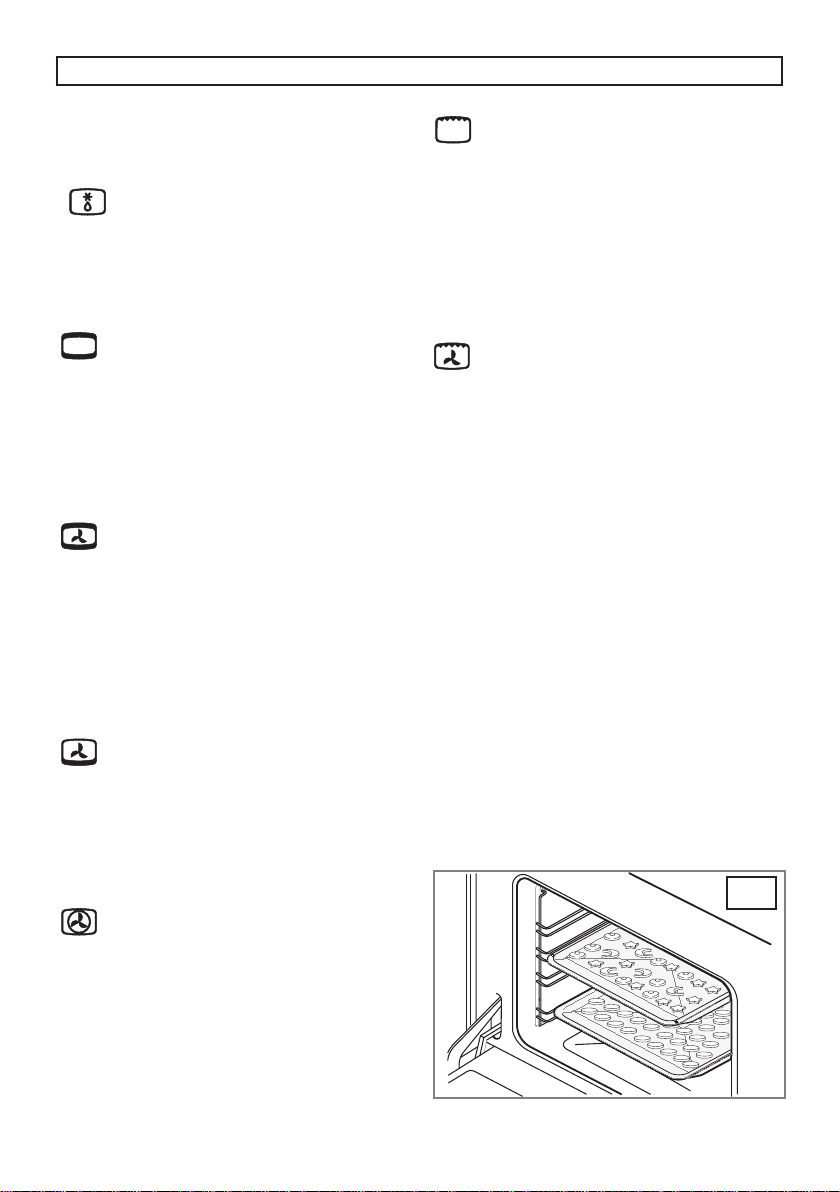
sauce dripping (g.8), as suggested in the “COOKING
TIPS “ section.
13
461308300_000 12/2013
8A
INSTRUCTIONS FOR THE USER
HOW TO USE THE MULTIFUNCTION OVEN
(g.C-D)
LEFT OVEN CAVITY
DEFROSTING AT ROOM TEMPERATURE
Turn the selector knob to the symbol and place the
food you want to defrost inside the oven. The length of
time required depends on the quantity and type of food.
Selecting this function will only activate the fan. Mild air
circulation around frozen food will slowly defrost it. It is
particularly suitable for fruit and cakes.
TRADITIONAL COOKING
Turn the selector knob to the symbol and adjust the
thermostat knob to suit the desired temperature.
If pre-heating is recommended wait till the thermostat
yellow led turns off before placing foods inside the oven.
This option turns on both bottom and top heating units,
evenly distributing heat on your foods.
This type of cooking is ideal for all kind of foods (meats,
sh, bread, pizzas, cakes..).
COMBINED TRADITIONAL + FAN COOKING
Turn the selector knob to the symbol and adjust the
thermostat knob to suit the desired temperature.
If pre-heating is recommended wait till the thermostat
yellow led turns off before placing foods inside the oven.
This option turns on both bottom and top heating units,
and heat is distributed by fan ventilation.
This combination is suitable for rapid cooking and allows
for the use of more plates positioned on the different
levels of the oven.
DEFROSTING + WARM UP BY HOT AIR
Turn the selector knob to the symbol and set the
temperature on the thermostat knob, now place the food
inside the oven. Selecting this function will activate the
bottom heating unit and its heat is distributed by the fan.
This function is particularly recommended to defrost and
warm up ready-made meals.
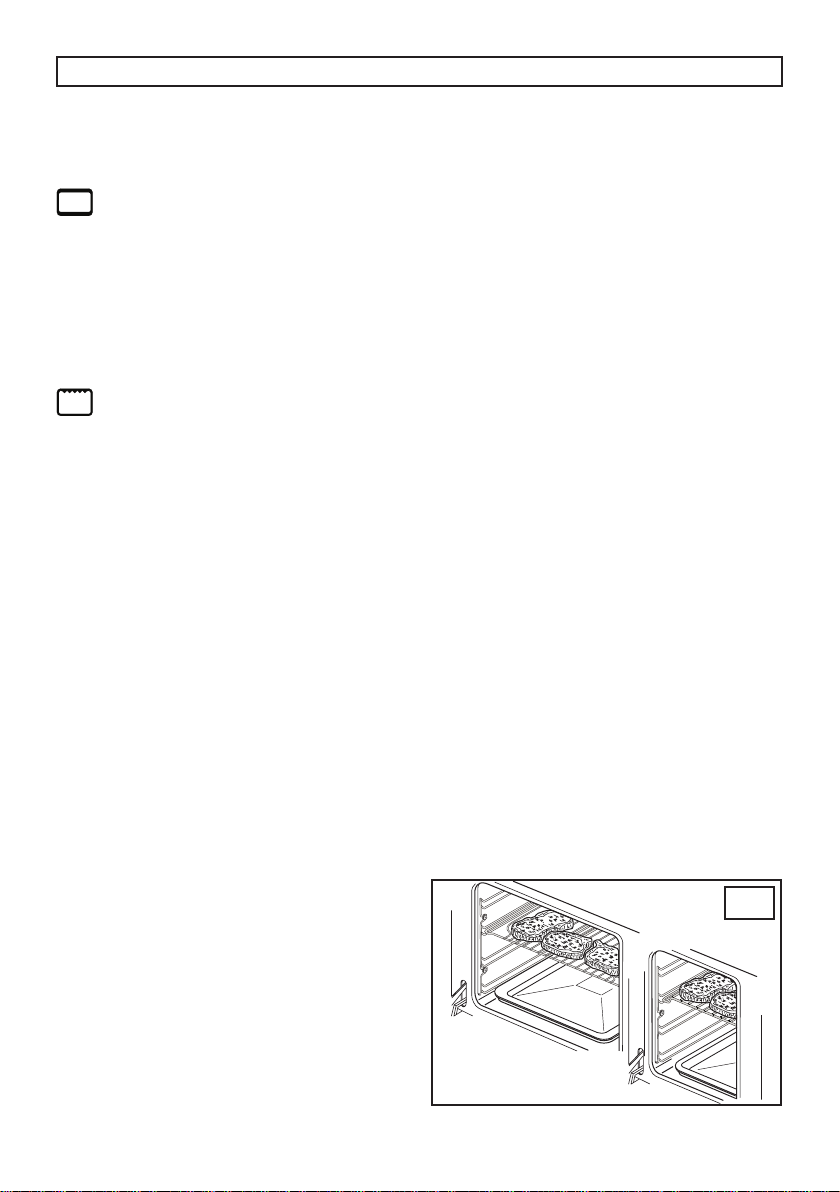
FAN + REAR HEATING COMBINED
COOKING
Turn the selector knob to the symbol and set the
thermostat to the desired temperature, then place your
food the oven. If oven needs pre-heating wait till the
thermostat yellow led turns off before placing foods
inside it. This function activates the rear heating unit and
the fan distributes the heat produced. This combination
allows for a fast and even cooking of several different
foods placed on the diverse levels of the oven (g.8A).
CONVETIONAL GRILL COOKING
Turn the selector knob to the symbol and set the
thermostat to the desired temperature. Selecting this
function the top central heating element turns on and
heat is distributed directly on food surface.
Apart from grilling, this function is ideal to add a golden
roast to your recipes or to toast bread slices.
The grill function automatically activates the eventual
spit. When you use the grill, do not forget to place the
drip pan beneath it to collect any sauce dripping, as
suggested in the “USEFUL COOKING TIPS “ section.
FAN GRILL COOKING
Turn the selector knob to the symbol and set the
thermostat to the desired temperature (MAX 200°C).
Selecting this function the top central heating element
turns on and heat is distributed by the fan. This
procedure mitigates the direct heat on food surface and
uses milder temperatures. It is therefore recommended
for an even golden and crispy nish touch, ideal for
whole sh and poultry. The grill function automatically
activates the eventual spit. When you use the grill, do
not forget to place the drip pan beneath it to collect
any sauce dripping, as suggested in the “USEFUL
COOKING TIPS “ section.

14
USEFUL COOKING TIPS
Cakes and bread:
• Heat the oven for at least 15 minutes before you
start cooking bread or cakes.
• Do not open the door during baking because the
cold air would stop the yeast from rising.
• When the cake is cooked turn the oven off and
leave it in for about 10 minutes.
• Do not use the enamelled oven tray or drip pan,
supplied with the oven, to cook cakes in.
• How do you know when the cake is cooked? About
5 minutes before the end of cooking time, put a cake
tester or skewer in the highest part of the cake. If it
comes out clean the cake is cooked.
• And if the cake sinks? The next time use less liquids
or lower the temperature 10°C.
• If the cake is too dry: Make some tiny holes with a
toothpick and pour some drops of fruit juice or spirits
on it. The next time, increase the temperature 10°C
and set a shorter cooking time.
• If the cake is too dark on top: the next time put the
cake on a lower shelf, cook it at a lower temperature
and longer.
• If the top of the cake is burnt: cut off the burnt layer
and cover with sugar or decorate it with cream, jam,
confectioner’s cream, etc..
• If the cake is too dark underneath: the next time
place it on a higher shelf and cook it at a lower
temperature.
• If the cake or bread is cooked nicely outside but is
still uncooked inside: the next time use less liquids,
cook at a lower temperature and longer.
• If the cake will not come out of the tin: slide a knife
around the edges, place a damp cloth over the
cake and turn the tin upside down. The next time
grease the tin well and sprinkle it with our or bread
crumbs.
• If the biscuits will not come away from the baking
tray: put the tray back in the oven for a while and
lift the biscuits up before they cool. The next time
use a sheet of baking parchment to prevent this
happening again.
Meat:
• If, when cooking meat, the time needed is more
than 40 minutes, turn the oven off 10 minutes before
the end of cooking time to exploit the residual heat
(energy saving).
• Your roast will be juicier if cooked in a closed pan; it
will be crispier if cooked without a lid.
• Normally white meat, poultry and sh need medium
temperatures (less than 200°C).
• To cook “rare” red meats, high temperatures (over
200°C) and short cooking times are needed.
• For a tasty roast, lard and spice the meat.
• If your roast is tough: the next time leave the meat
to ripen longer.
• If your roast is too dark on top or underneath: the
next time put it on a higher or lower shelf, lower the
temperature and cook longer.
• Your roast is underdone? Cut it in slices, arrange
the slices on a baking tray with the gravy and nish
cooking it.
Grilling:
• Sparingly grease and avour the food before grilling it.
• Always use the drip pan to catch any dripping
from the meat during grilling (g. 8). Always pour
a little water in the drip pan. It will prevent grease
and sauces from burning avoiding burnt smells
and smoke. Add more water during cooking to
compensate for evaporation.
• Turn the food half way through cooking.
The aluminium can be easily corroded if it comes
into contact with organic acids present in the
foods or added during baking (vinegar, lemon
juice). Therefore it is advised not to put directly
the foods on aluminium or enamelled trays, but
ALWAYS use the proper oven paper.
INSTRUCTIONS FOR THE USER
15
461308300_000 12/2013
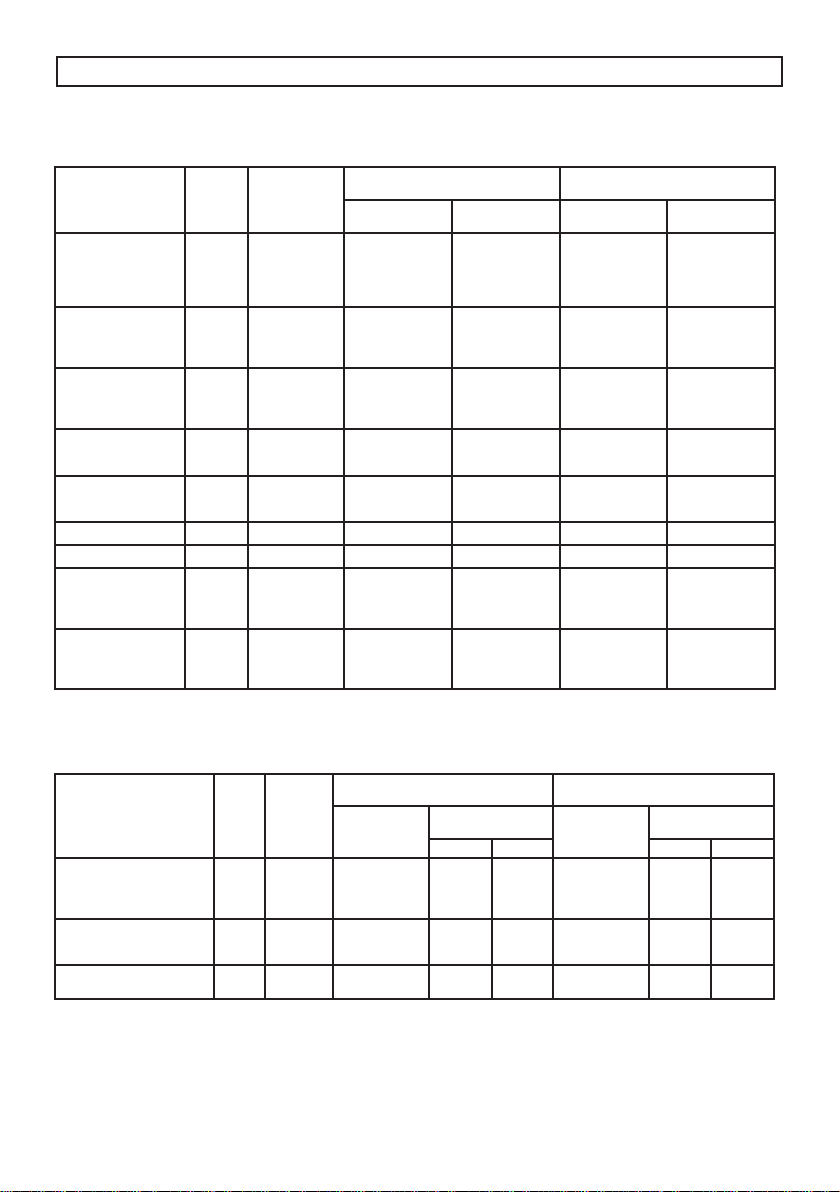
NATURAL CONVECTION - RIGHT OVEN CAVITY
COOKING / BAKING TIMETABLE
FOODS
Weight
kg
Position of the oven
shelf from the bottom
Temperature
in °C
Cooking/Baking
Time (in min.)
MEAT LOAFS
Roasted Veal
Roastbeef
Roasted Pork
Roasted Lamb
1
1
1
1
1
1
1
1
220
200-225
220
200-225
80
40-50
80
100-120
GAME
Roast hare
Roast pheasant
Roast partridge
1
1
1
1-2
1-2
1-2
225-Max
225-Max
225-Max
50-60
60-70
50-60
POULTRY
Roasted Chicken
Roasted Turkey
Roasted Duckling
1
1
1
1-2
1-2
1-2
200-225
200-225
200-225
80-90
100-120
90-110
FISH
Roasted whole sh
Sea bass
1
1
1-2
1-2
200
175
30-35
20-25
BAKED PASTE
Lasagne
Cannelloni
2.5
2.5
1-2
1-2
210-225
210-225
60-75
60-75
PIZZA 1 2 Max 20-22
BREAD 1 2 Max 20-25
PATISSERY
Biscuits in general
Shortcrust pastry
Victoria sponge
2
2
2
190
200
200
20
20
40-45
CAKES/FLANS
Angel Cake/Sponge
Fruit Cake
Chocolate Cake
0.8
0.8
0.8
1
1-2
1-2
190
200
200
50
65
45
Values indicated in the tables (temperatures and cooking times) are approximate and may vary according to each person’s cooking habits.
GRILLING TIMETABLE
FOODS
Weight
kg
Position of the oven
shelf from the bottom
Cooking/Baking Time (in minutes)
1
st
side 2
nd
side
MEAT
T-bone steak
Steak
Chicken (cut in half )
0,50
0,15
1
3
3
2-3
12
5
25
12
5
25
FISH
Trout
Sole
0,42
0,20
3
3
10
10
10
10
BREAD
Toast 3 3 3
Values indicated in the tables (temperatures and cooking times) are approximate and may vary according to each person’s cooking habits. More
specically, when grilling meat cuts the values are subject to the thickness of the slice or loaf and to personal taste as well.
INSTRUCTIONS FOR THE USER
16
INSTRUCTIONS FOR THE USER
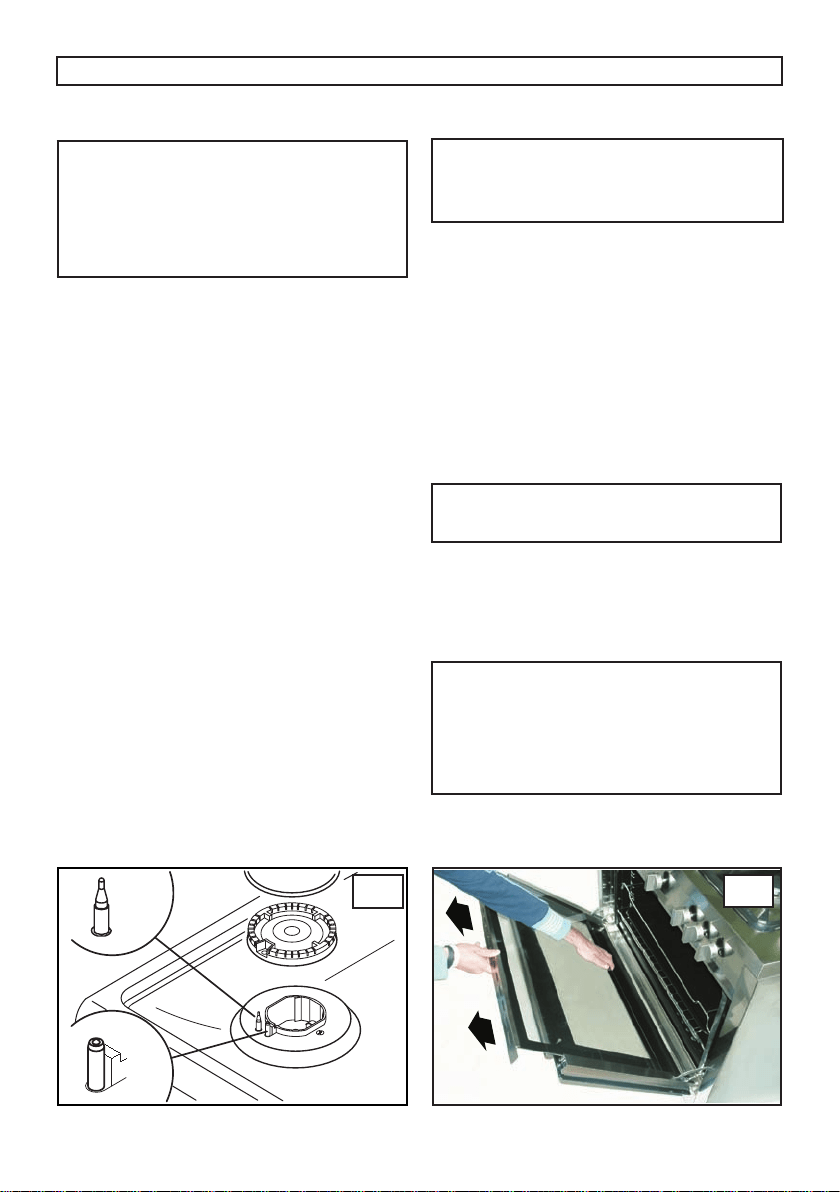
NATURAL CONVECTION AND FORCED CONVECTION - LEFT OVEN CAVITY
COOKING / BAKING TIMETABLE
FOODS
Weight
kg
Position of the
oven shelf from
the bottom
COOKING BY NATURAL
CONVECTION
COOKING BY FORCED
CONVECTION (with fan)
Temperatures
in °C
Cooking time
in min
Temperatures
in °C
Cooking time
in min
MEAT
Roast veal
Roast beef
Roast pork
Roast lamb
1
1
1
1
2
1
2
1
200-225
200-225
200-225
200-225
100-120
40-50
100-120
100-120
190
190
190
190
100-120
40-50
100-120
100-120
GAME
Roast hare
Roast pheasant
Roast partridge
1
1
1
2
2
2
200-Max
200-Max
200-Max
50-60
60-70
50-60
200-Max
200-Max
200-Max
50
60
50
POULTRY
Roast chicken
Roast turkey
Roast duck
1
1
1
2
2
2
200-225
200-225
200-225
80-90
100-120
90-110
190
190
190
70-80
90-110
80-100
FISH
Roast sh
Casseroled sh
1
1
2
2
200
175
30-35
20-25
170-190
160-170
25-30
15-20
BAKED PASTA
Lasagne
Cannelloni
2,5
2,5
1
1
210-225
210-225
60-75
60-75
225-Max
225-Max
30-40
30-40
PIZZA
1
2
225-Max 25-30 225-Max 20-25
BREAD
1
2
225-Max 20-25 220
20
PASTRIES
Biscuits in general
Shortcrust pastry
Victoria sponge 0,8
2
2
2
190
200
200
15
20
40-45
170-190
190-200
190-200
15
20
40-45
CAKES
Angel cake
Fruit cake
Chocolate cake
0,8
0,8
0,8
2
2
2
190
200
200
52
65
45
170-190
190-200
190-200
45
65
45
The values given in the tables (temperatures and cooking times) are approximate and may vary according to each person’s cooking habits. This
table gives cooking times on only one shelf. If you are cooking with a fan oven and you are using more than one shelf (placing the shelves on
the 1st and 3rd position) cooking time will be about 5 to 10 minutes longer.
GRILLING TABLE
FOODS
Weight
kg
Position
of the
oven shelf
from the
bottom
COOKING BY NATURAL CONVECTION
COOKING BY FORCED CONVECTION
(with fan)
Temperatures
in °C
Cooking time
in min
Temperatures
in °C
Cooking time
in min
1st side 2nd side 1st side 2nd side
MEAT
Chop
Beefsteaks
Half chicken (each half 0.5 kg)
0,50
0,15
1
3
3
2
225-Max
200-225
225
12-15
5
20
12-15
5
20
200
=
=
15
=
=
10
=
=
FISH
Trout
Sole
0,42
0.20
3
3
225-Max
225-Max
=
=
=
=
200
200
10
7
10
7
BREAD
Toast
3
225-Max 2-3 2-3 200 2-3 2-3
The values given in the tables (temperatures and cooking times) are approximate and may vary according to each person’s cooking habits. In
particular, temperatures and times for grilling meat will greatly depend on the thickness of the meat and on personal tastes.
17
461308300_000 12/2013
9
OVEN CAVITY
Do not spray or wash the thermostat bulb with acid
based products (check the product label before use).
The manufacturer cannot be held liable for any damage
caused by incorrect cleaning
The oven cavity should be cleaned after each use
to remove cooking residuals and or grease or sugar
which, if burnt on when the oven is used again, will
form deposits or unremovable stains as well as
unpleasant smells.
To maintain the shine of the enamelled parts, clean
them with warm soapy water, rinse and dry them
thoroughly. ALWAYS wash the accessories used.
OVEN SEAL
The oven seal guarantees the correct functioning of
the oven. We recommend you:
• clean it, avoiding abrasive tools or products.
• check its state now and then.
If the oven door seal has become hard or is
damaged, contact our Service Centre and avoid
using the oven until it has been repaired.
HOW TO CLEAN THE INNER OVEN DOOR GLASS
One of the features of our cookers is that the inner oven
door glass can be easily removed for cleaning without the
aid of specialized personnel. Just open the oven door and
remove the support securing the glass (g. 10).
ATTENTION!!
This operation can be done also with the door
tted on appliance, but in this way, pay attention
that when the glass is pull upwards, the force of
the hinges can close the door roughly.
LOCK AT LEAST ONE HINGE (g.12)
CLEANING AND MAINTENANCE
• Prior to any maintenance work or cleaning,
disconnect the appliance from the electricity
mains.
• Do not wash the parts if they are still hot.
• Do not leave vinegar, coffee, milk, salty water
or the juice of lemon or tomato on enamelled
surfaces for any length of time.
To keep the surface of the hob and the various
components in pristine condition (grill, enamelled
covers, burner heads and ame diffusers, it is very
important to wash them in warm soapy water, rinse and
dry them well after each use.
WARNINGS
• Check that the heads burners and the relative burner
caps, are correctly positioned in their housings (g. 9).
• Take care not to disturb the ignition spark plugs or
ame failure devices.
• If you nd a tap is difcult to open or close do not force
it but call for technical assistance urgently.
STRUCTURE
All the cooker parts (in enamelled or painted metal, steel, or
glass) should be cleaned frequently with warm soapy water
and then rinsed and dried with a soft cloth. DO NOT wash
the parts if they are still hot.
INSTRUCTIONS FOR THE USER
10
18
INSTRUCTIONS FOR THE USER
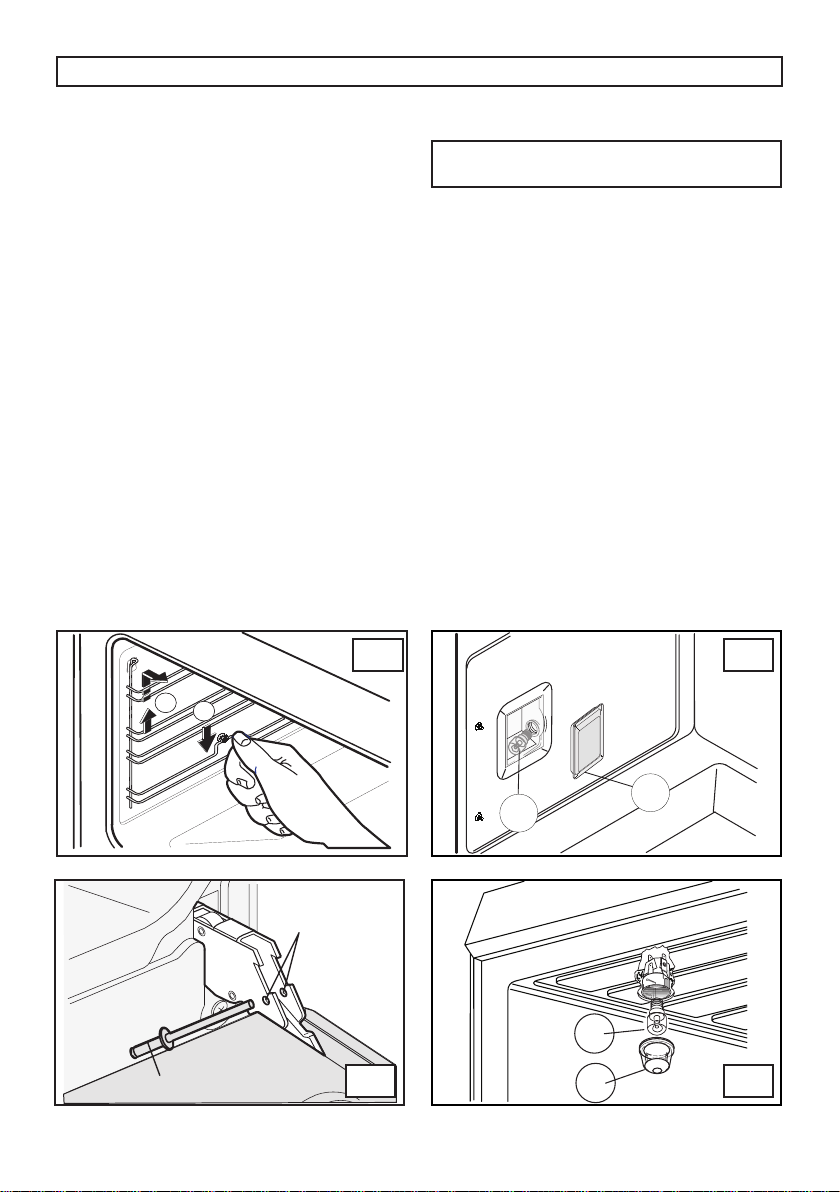
OVEN SIDEWALL GRIDS (g. 11)
To allow for a better cleaning of the side grids, you can
extract them this way:
1. Push with a nger on the last of the slots to release
the grid from its hold.
2. Lift it towards the top and extract the grid.
To put them back into place, reverse the order of this
operation.
OVEN DOOR REMOVAL
(g. 12)
The oven door can be removed to give easier access
to the oven when cleaning.
To remove, proceed as follows:
• Open the oven door and insert rivet or nail (R) in
the hole (F) of the hinge.•
Partially close the door, forcing it upwards at the
same time to free stop tooth and hinge sector.
• Once the hinge is free, pull the door forwards tilting
it slightly upwards to free sector.
• To reassemble proceed in the reverse order, paying
attention to the correct position of sectors.
REPLACING THE OVEN LAMP
Ensure the appliance is switched off before replacing
the lamp to avoid the possibility of electric shock..
In the event one or both oven lamps need replacing, the
new lamps must comply with the following requisites:
15 W - 230 V~ - 50 Hz - E 14 - and must be resistant to
high temperature (300°C).
The appliance can have two different types of lamp
holder:
• Lamp holder type 1 (g. 13): Draw out the side guide
rails as described above.Then, remove the glass
protection cap (V) from the bulb socket, lifting it with
a screwdriver placed between the cap and the oven
wall and replace the lamp (L). Fit the accessories
back in reverse order.
• Lamp holder type 2 (g. 14): Turn glass protection
cap (C) counterclockwise and change the lamp. Re-
t the cap, screwing it back in a clockwise direction.
12
13
14
11
19
461308300_000 12/2013
Maintenance Schedule
The appliance should be checked by an
authorised person every year to ensure the
safe operation of the appliance. As part
of the inspection, the authorised person
should also check that the wall brackets
are engaged and securely mounted to the
wall. This maintenance is not covered by
warranty.
TECHNICAL INFORMATION
• The installation, adjustments, conversions and
maintenance operations listed in this part must
only be carried out by qualied personnel. The
manufacturer cannot be held responsible for any
damage to persons or property resulting from an
incorrect installation of the appliance.
• The safety and automatic adjustment devices of the
appliances may, during its life, only be modied by
the manufacturer or duly authorised supplier.
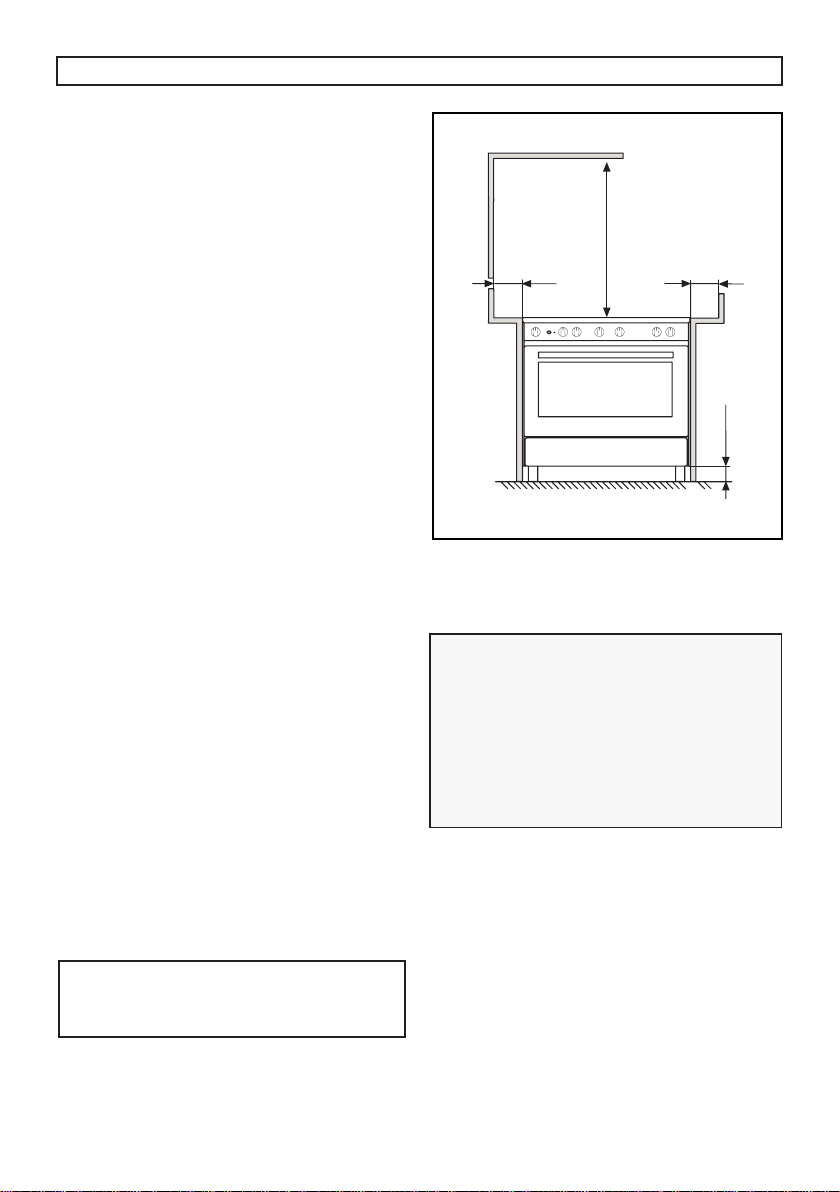
• In accordance with the gas standard, the all-gas
and combi appliances are “class 1” (free standing)
or “class 2 subclass 1” (recessed) and, as such,
must comply with the clearances specied in gure
below,consequently any side walls must be no
higher than the work top.
The appliance is to be placed directly on the oor and
should not be mounted on a base.
• The walls adjacent to and surrounding the appliances
must be able to withstand an temperature of 95 °C.
• The installation of all-gas and combi appliances
must comply with the standards in force.
• This appliance is not connected to a ue for
discharge of the combustion products; therefore, it
must be connected in compliance with the above
mentioned installation rules. Particular attention
must be paid to the instructions given below for
ventilation and aeration.
INSTALLATION
UNPACKING YOUR COOKER
• Once the wrapping has been removed from the outer
surfaces and the various inner parts, thoroughly
check that the appliance is in perfect condition. If
you have any doubts do not use the appliance and
call in a qualied person.
• Some parts mounted on the appliance are protected
by a plastic lm. This protection must be removed
before using the appliance. We recommend slitting
the plastic lm along the edges with a sharp knife or
pin.
• Do not move the appliance by the handle.
The packaging materials used (cardboard, bags,
polystyrene foam, nails etc.) must not be left
anywhere within easy reach of children as they
are a potential hazard source.
INSTRUCTIONS FOR THE INSTALLER
20
18
19
POSITIONING THE COOKER
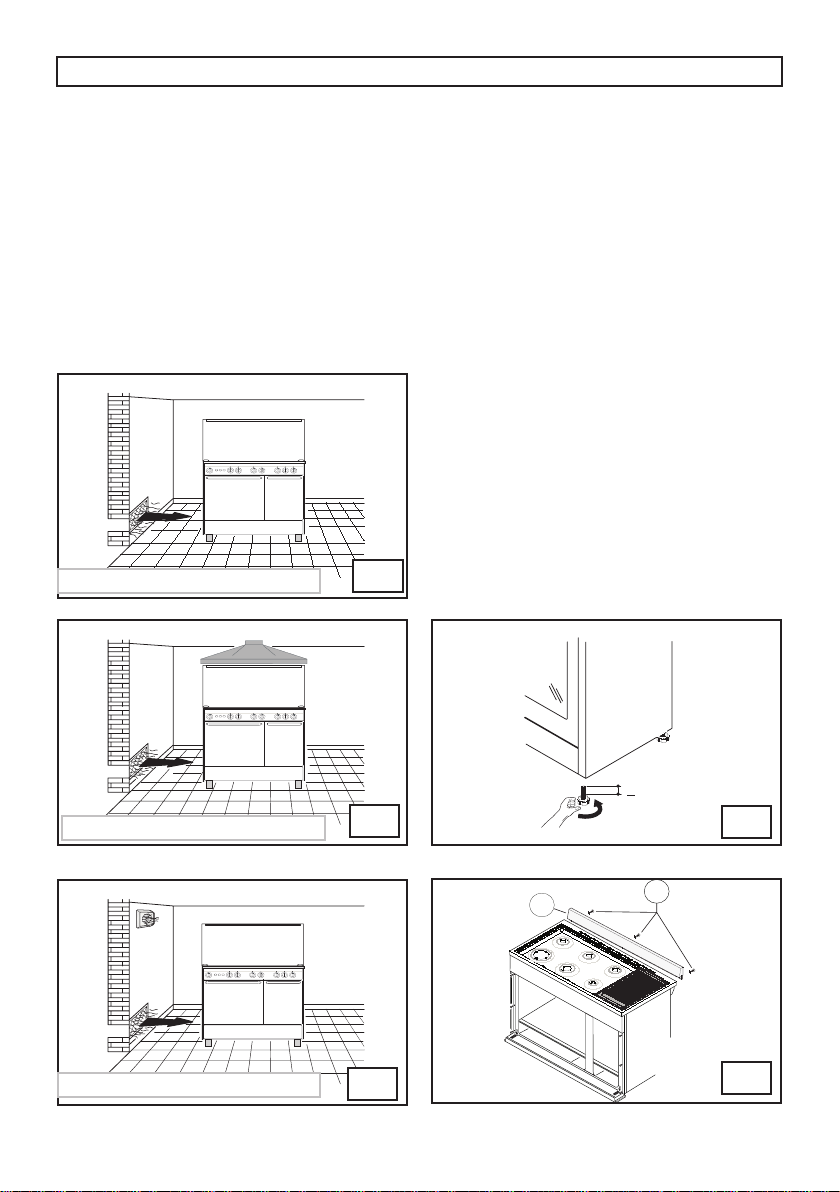
The appliances are tted with the following parts to
enable them to be correctly positioned:
• Adjustable feet (g. 18), to be tted to the
appliance, which allow the height of the cooker
to be aligned with other kitchen furniture.
• Backguard (A). In order to install the backguard,
it is necessary to loosen the screws (V)
positioned on the back of the hob and then
to x the backgaurd as indicated in gure 19
16
17
INSTRUCTIONS FOR THE INSTALLER
VENTILATION
The room where the appliance is installed should be
no less than 20 m³.
The quantity of air necessary is that required for a
regular combustion of the gas and for the ventilation of
the room. The natural ow of air must be direct through
permanent apertures in the walls of the room that open
directly to the outside with a minimum cross section of
100 cm
2
(g. 15). These apertures must be positioned
in such a way as not to be obstructed.
Indirect ventilation is also allowed by taking air from
adjacent rooms to the one to be ventilated, and must
comply with all current standards.
AIR INLET MIN. SECT. 100 cm
2
AIR INLET MIN. SECT. 100 cm
2
AIR INLET MIN. SECT. 100 cm
2
LOCATION AND AERATION
Gas cookers must always discharge combustion
products and moisture through hoods connected to
ues or directly to the outside (g. 16).
If it is impossible to use a hood, a fan should be
installed in a window or on an external wall. The fan
should be switched on each time the appliance is used
(g. 17) and must comply with all relevant standards
regarding ventilation
15
21
461308300_000 12/2013
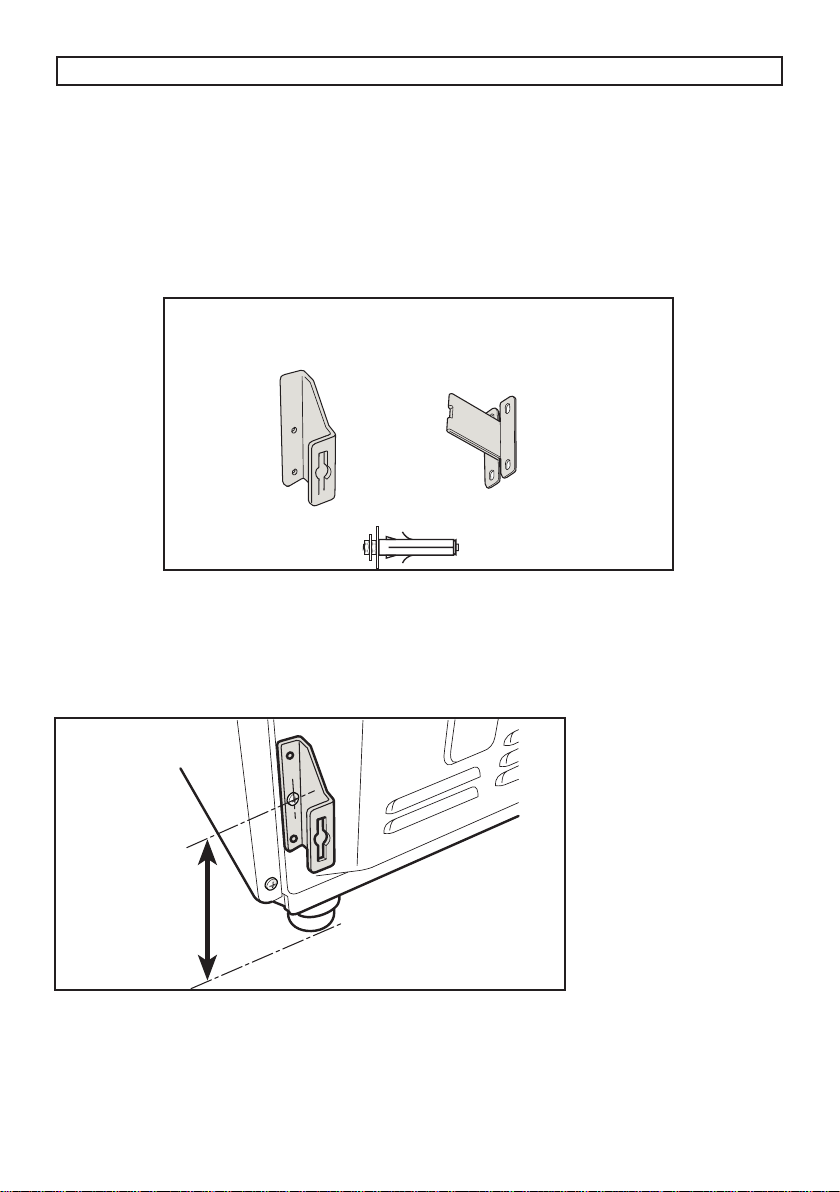
INSTRUCTION FOR STABILIZING THE COOKER
Fix the bracket on the cooker.
One for each side.
Align the cooker with the surrounding cupboard.
Measure the distance from the oor and from the xing point of the bracket.(X)
WARNING: In order to prevent the cooker tipping forwards in the event of children standing
on the oven door or where users put extreme weight on the door when in open position, the
stabilising means must be installed by the installer. Failure to t the stabilising brackets properly
may cause personal burn injuries and damage to the gas pipe.
INSTRUCTIONS FOR THE INSTALLER
The installation of the brackets provided is for safety reasons and
must be installed as indicated below.
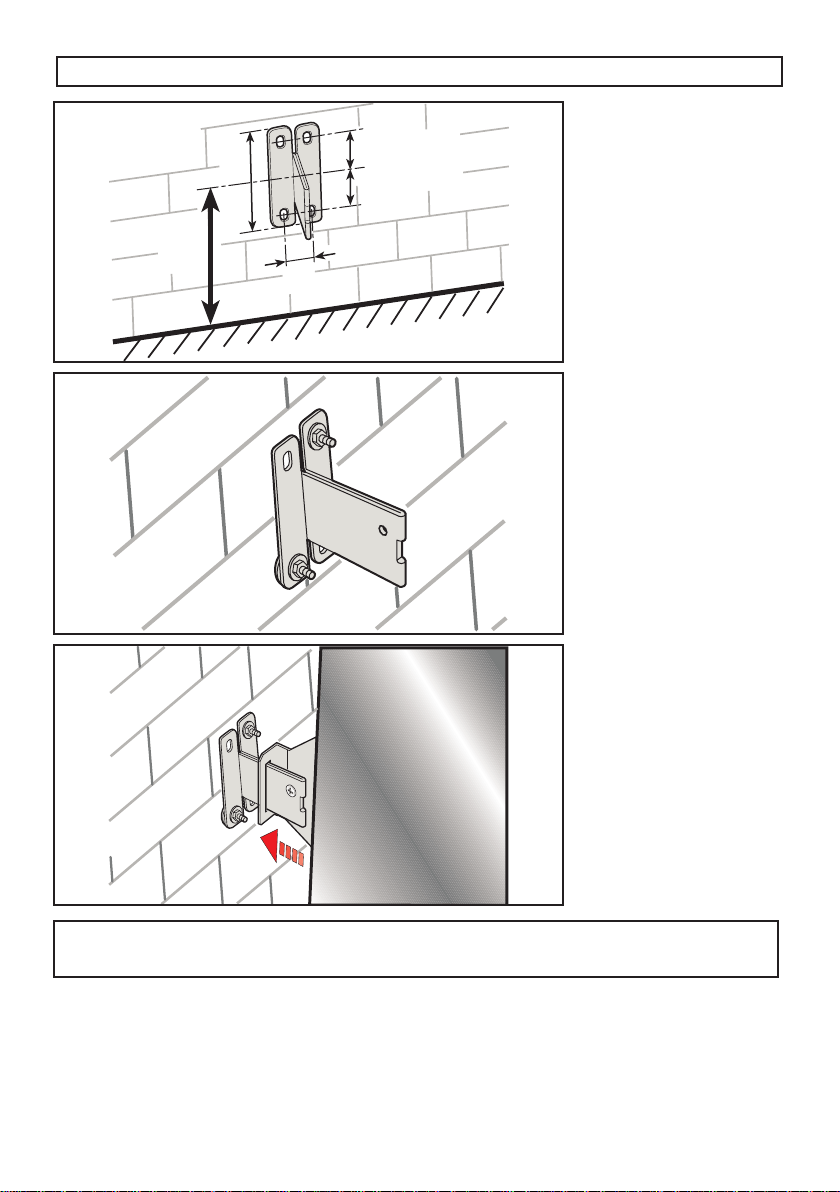
22
Drill two holes in the wall for
each bracket according to
the g. 2 and x the bracket.
Hose Restraint Chain
The installer must t a chain, no more than 80% of the hose length to en-
sure that there is no strain on the hose when the cooker is pulled forward.
Attach one end of the chain as close as possible to the gas inlet on the
cooker and the other end as close as possible to the gas outlet on the
wall. Suitable chain and ttings are to be supplied by the installer.
Mark it the same distance,
(X) on back wall.
INSTRUCTIONS FOR THE INSTALLER
IMPORTANT: After tting the stablising brackets and pushing the cooker into
position, check that the cooker does not tilt forward or sideways
Push back the cooker
against the wall.
23
461308300_000 12/2013
20
ELECTRICAL CONNECTION
The electrical connection must be carried out in
accordance with the current standards and laws in
force.
WARNING:
IF THE SUPPLY CORD IS DAMAGED, IT MUST
BE REPLACED BY THE MANUFACTURER, ITS
SERVICE AGENT OR SIMILARLY QUALIFIED
PERSONS IN ORDER TO AVOID A HAZARD.
Before connecting check that:
• The system and electrical sockets amperage is
adequate for the appliance maximum power (see
data label afxed on the back of the cooker).
• The socket or system has an effective earth
connection in accordance with current standards
and prescriptions of the law. All responsibility is
disclaimed if this is not complied with.
• The plug and socket or the multipolar switch must
be accessible after installation of the appliance.
• If the appliance has no power cable, connect one
with a suitable cross section to the terminal board
(see paragraph «CONNECTING THE POWER
CABLE»).
When connecting to the mains with a socket:
• Fit to the power cable (if without) a standardized
plug, suitable for the load which is indicated on the
data label. Connect the wires making sure they
correspond as shown below, and remember that
the earth wire must be longer than the phase
wires:
letter L (phase) = brown wire
letter N (neutral) = blue wire
symbol
(earth) = green/yellow wire
• The power cable must be laid so that no parts of it
ever reach a temperature of 75 °C.
• For connecting do not use, adapters or shunts
as they could cause false contacts resulting in
INSTRUCTIONS FOR THE INSTALLER
hazardous overheating.
When connecting directly to the mains:
• If the appliance is not tted with a supply cord
and a plug, or with other means for disconnection
from the supply mains having a contact separation
in all poles that provide full disconnection under
overvoltage category III conditions, then a means
for disconnection must be incorporated in the xed
wiring in accordance with the wiring rules.
• Install a multipolar switch that can withstand the
appliance load, with a minimum opening between
the contacts of 3 mm.
• Remember that the earth wire must not be cut out
by the switch.
CONNECTING THE POWER CABLE
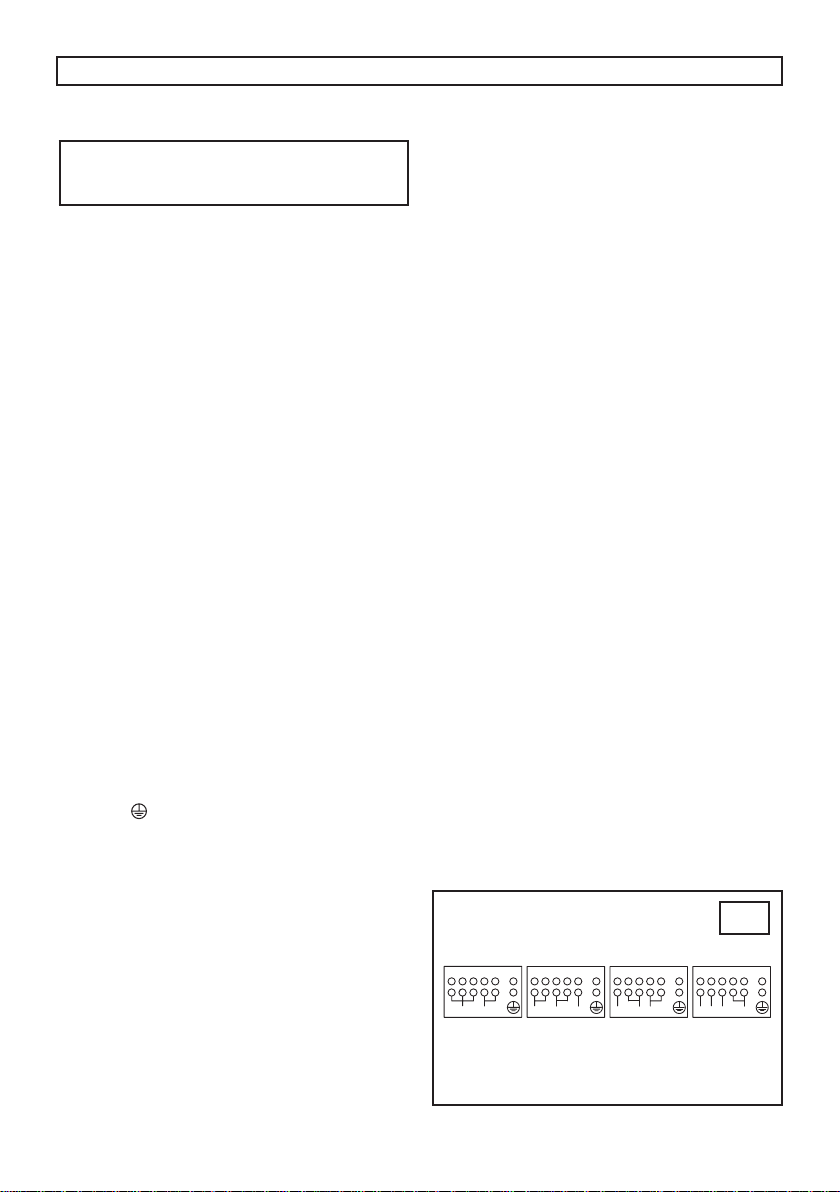
The combi cookers leave the factory ready for single-
phase power, but they can, with due modications, be
powered by three phase systems by following these
instructions:
• Remove the rear panel from the cooker.
• Move the connecting plates in the terminal board
according to the type of connection you want,
following the diagram in g. 20. You will also nd
this diagram afxed to the back of the cooker.
• Connect the power cable, whose cross section must be
suitable (see table on <TECHNICAL FEATURES>
paragraph) keeping the earth wire longer than the phase
wires.
• Secure the cable in the clamp and - t the rear panel in
place.
24
INSTRUCTIONS FOR THE INSTALLER
21
Installation using exible connection
As an option, the cooker may be installed with a
exible connection hose, which complies with AS/
NZS 1869 (AGA Approved), 10 mm ID, class B or
D, Minimum 1000 mm - Maximum 1200 mm, as an
alternative connection.
• All cookers offer left or right hand connection. The
manifold has a at air over which is inserted a
screw nut male ½” gas (g 21A).
• An isolating tap and pressure regulator must be
xed to the rear wall and the exible pipe attached
by means of a union connector.
• The gas connection and isolating tap must be
accessible to a service person or inspector.
• The hose assembly must be installed in accordance
with AS5601 for a high level connection. The hose
should not be subjected to abrasion, kinking or
permanent deformation and should be able to be
inspected along its entire length. Unions compatible
with the hose ttings must be used and connections
tested for gas leaks. The xed consumer piping
outlet should be at approximately the same
height as the cooker connection point, pointing
downwards.
• The hose should be clear of the oor when the
cooker is in the installed position. The hose restraint
chain supplied should be anchored to the lower
hook xed to the wall so that the chain prevents
strain on the hose connections when the cooker is
pulled forward.
• Before Leaving - Check all connections for gas leaks
with soap and water. DO NOT use a naked ame for
detecting leaks. Ignite all burners both individually
and concurrently to ensure correct operation of gas
valves, burners and ignition. Turn gas taps to low
ame position and observe stability of the ame for
each burner individually and concurrently. When
satised, please instruct the user on the correct
method of operation. In case the appliance fails to
operate correctly after all checks have been carried
out, refer to the authorised service provider in your
area.
GAS CONNECTION
This appliance shall be installed only by authorised
personnel and in accordance with the manufacturer’s
installation instructions, local gas tting regulations,
municipal building codes, water supply regulations,
electrical wiring regulations, AS 5601 - Gas Installations
and any other statutory regulations.
The appliance is adjusted to work at gas indicated on the
label which is applied on the glass-window of the oven
door and on the cooker packing.
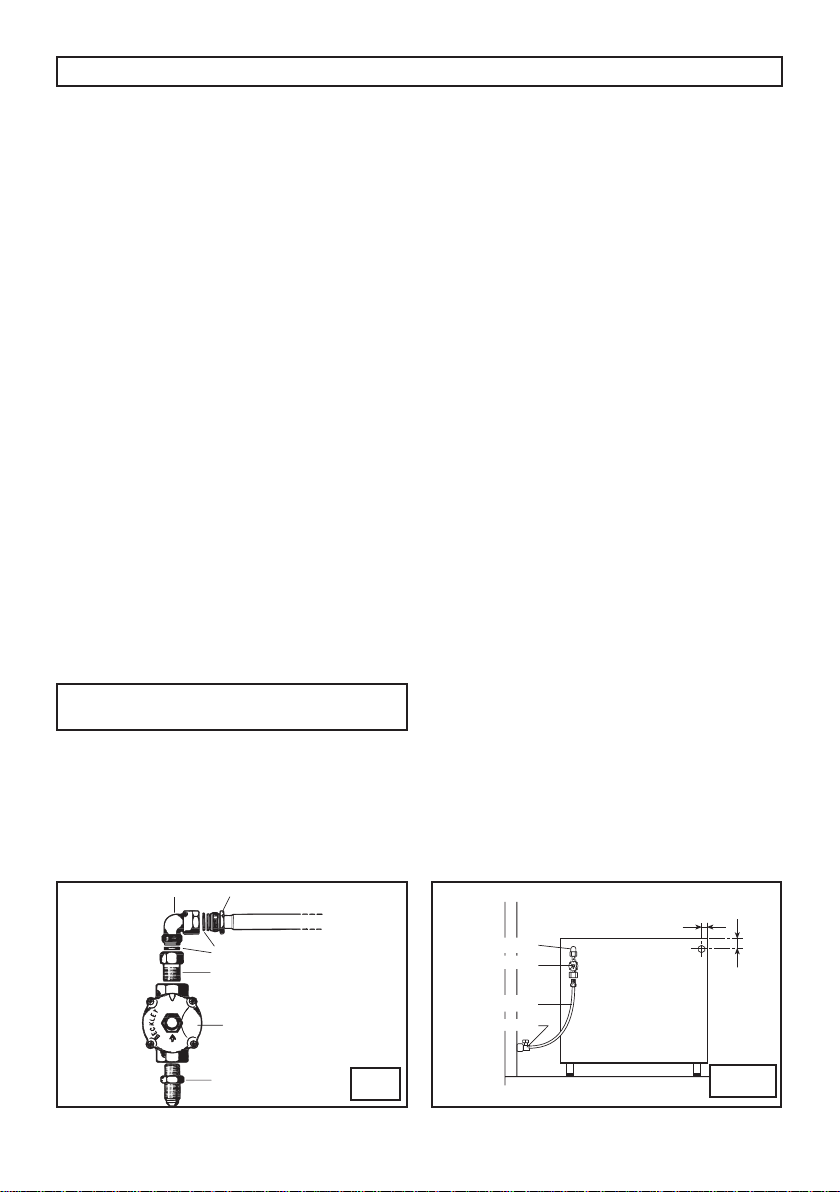
Installation for Natural gas
Connected regulator (B) to tting (A) which is then tted to
elbow (F). Ensure arrow on regulator point in the direction
shown. Fitting (D) to be supplied by installer (g. 21).
Adjust regulator to give test-point pressure given on data
label (see on TECHNICAL FEATURES paragraph),
with one large or one medium burner alight at maximum.
Position of Regulator (g. 21)
The stove must be installed on legs, a gas pipe between
tting (A) and (B) will allow location of the regulator (B)
underneath the stove for adjustment and maintenance
Installation for Propane Gas
Connect by using a copper pipe starting, from the threaded
tting of elbow (F) .
Note: When the regulator is tted at the rear of
the cooker at least 60 mm clearance is required.
21A
25
461308300_000 12/2013
22
ADJUSTMENTS
• Always disconnect the appliance from
the electricity supply before making any
adjustment.
• All seal must be replaced by the technician
following any adjustment or regulation.
• The adjustment of the reduce rate (simmer)
must be undertaken only with burners
functioning on natural gas while in the case of
burners functioning on L.P.G, the screw must
be locked down fully (in clockwise direction).
• “Primary air adjustment” on hob gas burners
is unnecessary.
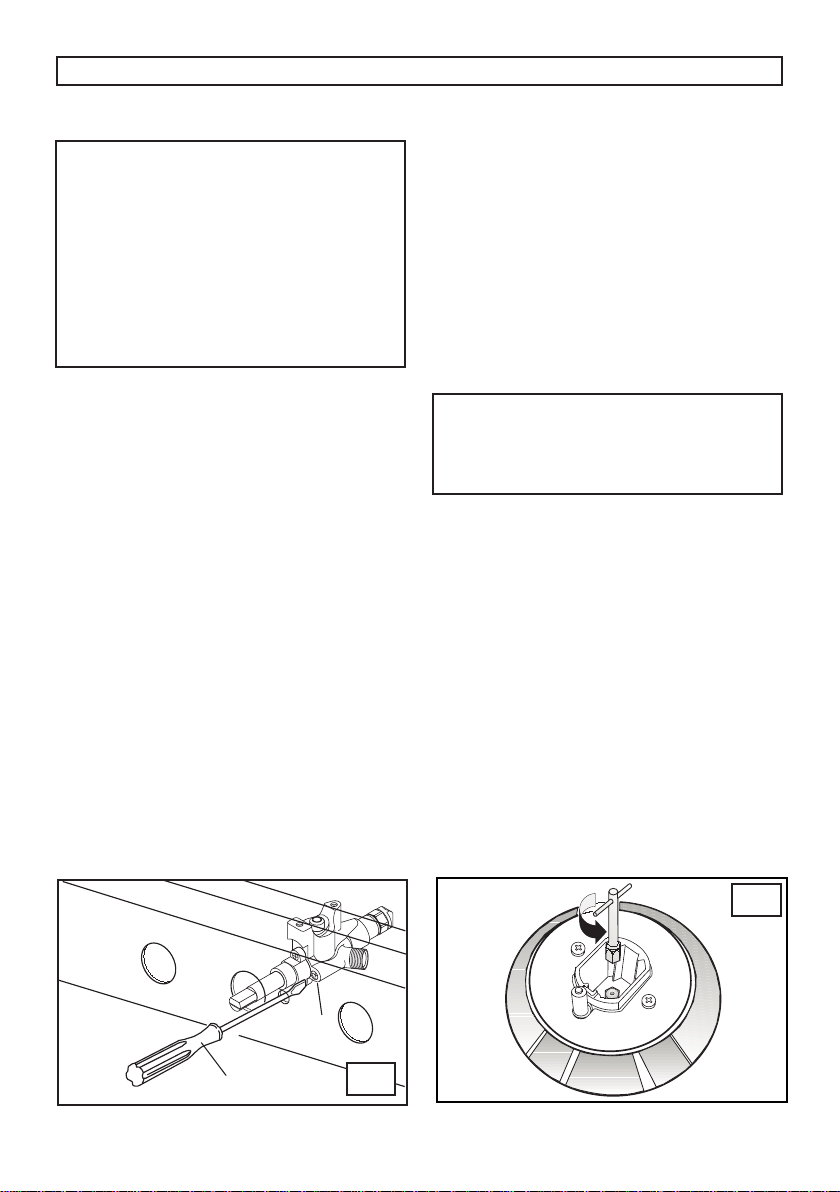
TAPS
All gas taps are male cone type with only one way of
passage. Adjustment of the “Reduced rate” position
as follows:
• Turn the burner on and place the knob on the
“Reduced rate” position (small ame).
• Remove the knob (A) of the tap which is attached by
simply applying pressure to the rod.
•• In the case of taps with ame failure device, the
adjustment screw (V) is over or on the side of the
stem (g. 22).
• Check that the ame does not go out when the knob
is sharply switched from the “Full on” to “Reduced
rate” positions.
INSTRUCTIONS FOR THE INSTALLER
CONVERSIONS
REPLACING THE INJECTORS
Our burners can be adapted to different types of
gas by simply installing the injectors suitable for
the gas you want to use. To help the installer, in the
table <TECHNICAL FEATURES> paragraph,gives
the burner nominal heat input, injector diameter and
operating pressure of the different gas types.
Comply with the following instructions:
Injector replacement - Hob burners.
To change the injectors on the hob, remove the burner
cup and head and with a 7 mm Ø socket spanner
replace them (g.23)..
After having replaced the injectors, it will be
necessary to proceed with burner adjustment
as explained in the previous paragraphs. The
technician must replace any seals after the
adjustments have been made.
23
26
MAINTENANCE
Prior to any maintenance work or changing
parts, disconnect the appliance from the gas and
electricity power sources.
Warning: Servicing should be carried out only
by authorised personnel.
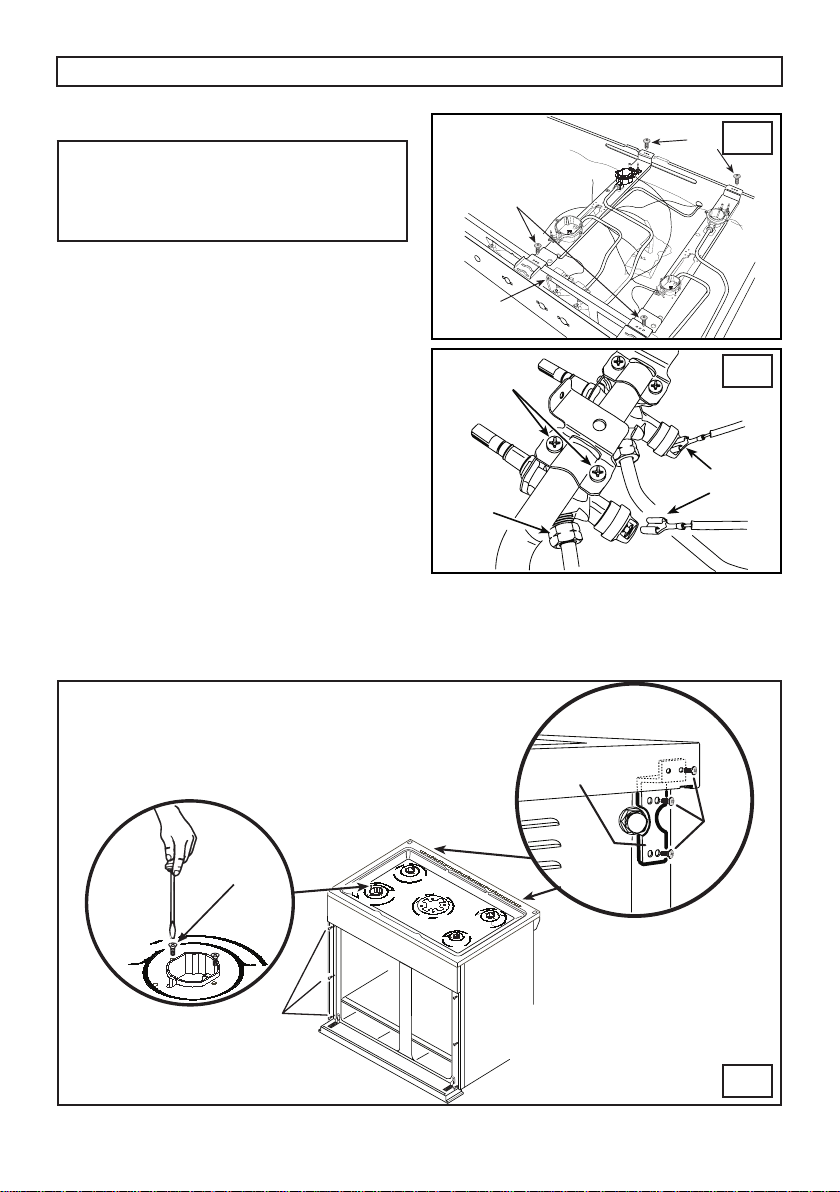
REPLACING THE TAPS
Proceed in the following way when replacing a tap:
• Remove pan supports, burner heads.
• Unscrew the burner xing screws (Vc) (g. 24).(four
for ultrarapid burner and two for the other burners)
• Pull out the knobs.
• Unscrew the six xing screws (Vp) (g.24) which
lock the side proles and remove it.
• Remove the hob, unscrewing rear xing screws
(Vs) (g. 24) which lock the hob at the supports (S).
• Unscrew the nuts (D) of the gas aluminium pipes
and pull out the thermocouple quick connectors (F)
(g.26).
• Unscrew the screws (Vt) (g. 25) which lock the
crosspieces.l
• Unscrew the screws (Vb) (g. 25) which unite the
the bridles of the taps to the front frame.
• Make to slip the ramp toward the back part and
unscrew the screws (Vb) (g. 26) in order to free the
taps.
• Change seal each time a tap or a thermostat is
replaced. This will ensure perfect retention between
the tap or a thermostat and part.
.
INSTRUCTIONS FOR THE INSTALLER
24
25
26
• Reassemble all the parts following the same
procedure but in the reverse order
27
461308300_000 12/2013
REPLACING THE ELECTRICAL COMPONENTS
• The rear protection will have to be removed in order
to change the electrical heating elements, lamp
holder, terminal board and power cable.
• If you have to change the power cable, always
keep the earth wire longer than the phase wires
and, in addition, follow all the instructions given
in the “ELECTRICAL CONNECTION” paragraph.
• To replace the oven lamp please refer to instructions
on REPLACING THE OVEN LAMP paragraph.
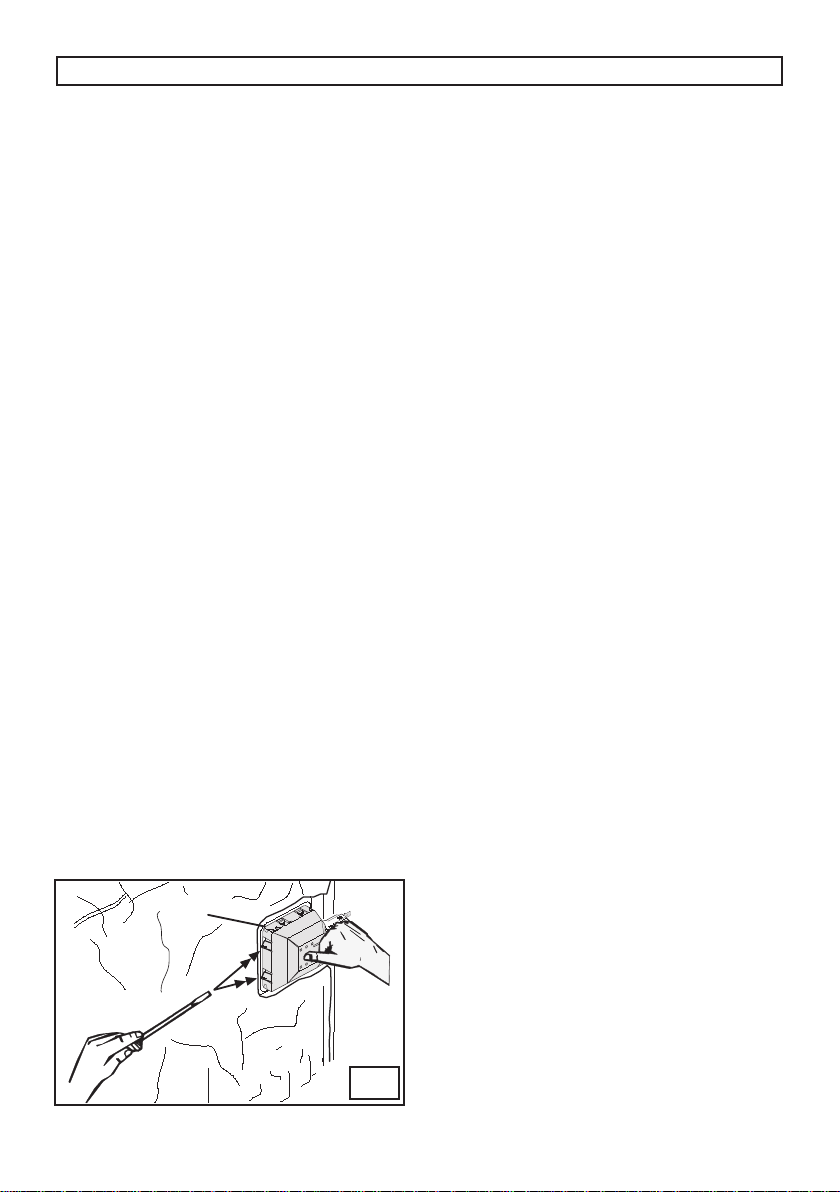
• To change the lamp-holder (P), type 1, force the
tabs of blockage (M) and take the lamp-holder
toward the outside of the oven (g.27).
• To replace the ignition generator, remove the left
side panel of the appliance.
• To change the thermostat, commutators or hob
heating elements, the work top has to be removed.
27
CHANGING THE FLEXIBLE GAS HOSE
In order to guarantee that the gas hose is always in
excellent condition we strongly recommend changing
it on the date you will nd printed on it.
INSTRUCTIONS FOR THE INSTALLER
28
Some of the problems occur because of simple maintenance oversights or operation mistakes and can easily be
resolved without having to call for technical assistance.
PROBLEM REMEDY
The appliance is not working
• Make sure the gas cock is open
• Check the plug is in
• Check that the knobs are set correctly for cooking and then repeat the
operations given in the handbook
• Check the electrical system safety switches (RCD). If there is failure in
the system call an electrician in.
The left electric oven is not working
• Check that the programmer accessory is on the manual position and
then repeat the operations described in the manual
The thermostats are not working
• Call our Service Centre
The electric thermostat warning
lights do not switch on during use
• Turn the thermostat round to a hotter temperature
• Turn the selector round to a different function
The oven lights does not switch on • Make sure the lamp is rmly screwed in place
• Buy a lamp for high temperatures at one of our Service Centre and t
it following the REPLACING THE OVEN LAMP paragraph.
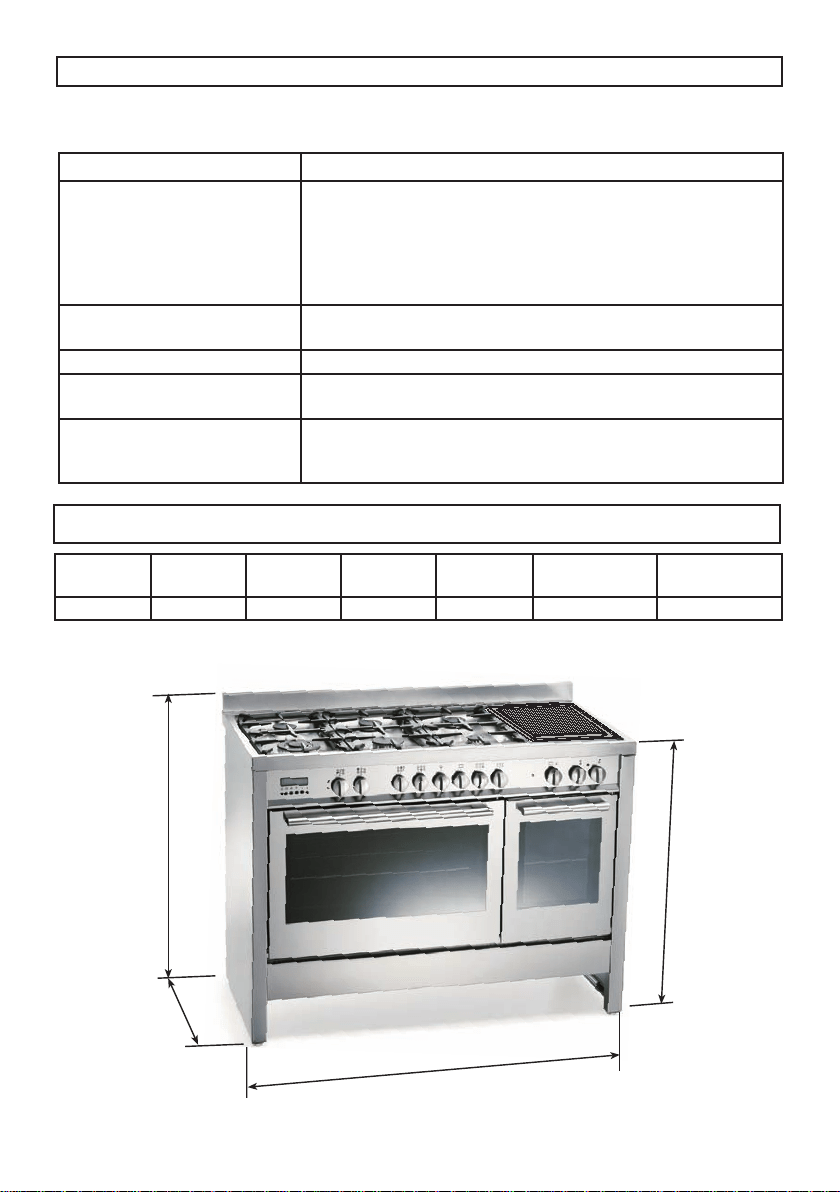
TECHNICAL FEATURES
TYPE
Height h
mm
Height H
mm
Width L
mm
Depth P
mm
Volume of the left
oven cavity dm
3
Volume of the right
oven cavity dm
3
120x60 910- 920 970-980 1200 600 85 35
OUTSIDE COOKER DIMENSIONS
TROUBLESHOOTING

29
461308300_000 12/2013
TECHNICAL FEATURES
Description Electric components Nominal data
C - electric griddle
heating element
1600 W
Right oven cavity
Lower heating element
Top heating element of the oven/grill
Grill heating element
950 W
475+1150 W
1150 W
Left oven cavity
Lower heating element
Top heating element of the oven/grill
Grill heating element
Rear circular heating element
2100 W
2000 - 2200 W
2000 W
3000 W
Oven lamp
Cooling fan
Rear Fan motor
Cable type
15 W - E 14 - T 300
12 W
25..29 W
H05 RR-F 3 x 1.5
N. BURNER DENOMINATION GAS
Operating
Pressure kPa
Diameter
Injectors SABAF
1/100 mm
Rating
MJ/h
2 Large
U-LPG
Natural
2.75
1.00
88
142
10.0
10.0
3 Medium
U-LPG
Natural
2.75
1.00
73
120
7.2
7.2
4 Small
U-LPG
Natural
2.75
1.00
54
90
3.8
4.0
6 Wok
U-LPG
Natural
2.75
1.00
102
165
13,30
13,30
BURNER DISPOSITION AND HOB BURNER TECHNICAL DATA TABLE

30

31
461308300_000 12/2013

SPACE FOR DATA LABEL
461308300_000 12/2013