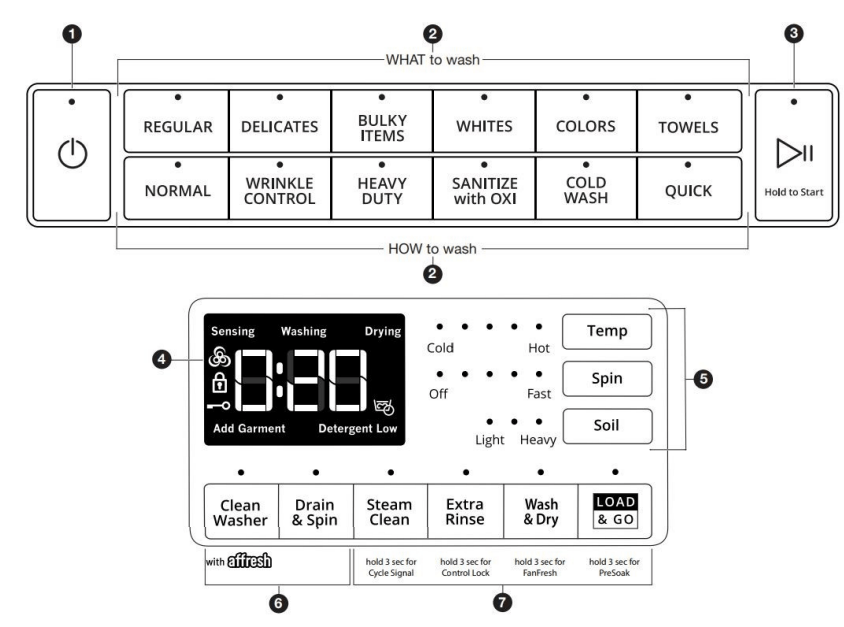
Select to turn the washer on and off. Select to stop/cancel a cycle at any time.
2. WHAT TO WASH/HOW TO WASH
First determine what items are in the load that you are trying to wash. Use that to guide your “What to Wash” selection. Then determine how you want the washer to wash them and make the appropriate “How to Wash” selection. See online “Cycle Guide” for cycle details. If you do not make a “How to Wash” selection, the washer will automatically select the recommended or last-used “How to Wash” cycle.
3. START/PAUSE
Touch and hold for 3 seconds until the light above Start/Pause comes on to start a cycle, or touch once while a cycle is in process to pause it.
4. CYCLE STATUS
The Cycle Status display shows the progress of a cycle. At each stage of the process, you may notice sounds or pauses that are different from traditional washers.
Estimated Time Remaining The Estimated Time Remaining shows the time required for the cycle to complete. Factors such as load size, modifiers, options selected, and water pressure may affect the time shown in the display. Tightly packed loads, unbalanced loads, or excessive suds may cause the washer to lengthen the cycle time as well. Designed to use only HE High Efficiency detergents.
Sensing When Start/Pause is touched, the washer will chime, indicating it is starting. The drum will make a partial turn. The door will click when it locks. Once the door has locked, the washer will begin spinning to sense the load size. This sensing process will continue throughout the cycle. After the load size is sensed, the estimated time based on load size will be displayed and water will be added. You may hear water flowing through the dispenser, adding detergent to the load. The actual cycle time may be lengthened; however, the display will continue to show the estimated time.
Washing During the wash cycle, this will display to let you know the cycle is in progress.
Drying (on some models) During a drying cycle, this will display to let you know the drying cycle is in progress.
PreSoak This symbol will be displayed to let you know a presoak is in progress.
Detergent Low (on some models) When detergent in the bulk dispenser is running low, the display will show the detergent level (Low).
Add Garment When “Add Garment” is displayed, you may pause the washer, open the door, and add items. Touch and hold Start/Pause to start the washer again.
Door Locked The Door Locked symbol will display to indicate that the door is locked and cannot be opened without first pausing or canceling the cycle.
Control Lock When the Control Lock symbol is displayed, the buttons are disabled. Touch and hold Extra Rinse for 3 seconds to enable the buttons.
FanFresh® (on some models) This symbol will be displayed when the FanFresh® option is activated. The fan will turn on and the load will tumble periodically for up to 12 hours.
End Once the cycle is complete, “End” will display. Remove the load promptly for best results.
5. CYCLE MODIFIERS
When you select a cycle, its default settings will light up. Touch to adjust cycle modifiers on the washer before touching Start/Pause. Additional wash modifiers or options selected after touching Start/Pause may not activate.
Once a wash setting is selected, it is saved for the cycle selected. To return to factory default cycle settings, unplug washer for 30 seconds; then plug back in. See online “Cycle Guide” for default cycle settings. NOTE: Some modifiers may increase or decrease the estimated time remaining.
Temp The recommended wash temperature is preset for each cycle. Some preset temperatures can be changed. You may select a different wash temperature based on the level of soil and type of fabric being washed. For best results, use the warmest wash water safe for your fabric, following the garment label instructions. All wash temperatures feature a cold rinse.
Spin The recommended spin speed is preset for each cycle. Some preset speeds can be changed.
Faster spin speeds mean shorter dry times, but may increase wrinkling in your load.
Slower spin speeds reduce wrinkling, but will leave your load more damp.
Soil The recommended soil level is preset for each cycle. Some preset soil levels can be changed. For heavily soiled and sturdy fabrics, select the Heavy Soil setting. For lightly soiled and delicate fabrics, select the Light Soil setting. Lower soil level settings will help reduce tangling and wrinkling.
6. UTILITY CYCLES
Clean Washer with affresh® Use this every 30 washes to keep the inside of your washer fresh and clean. This cycle uses a higher water level. Use with affresh® Washer Cleaner tablets or liquid chlorine bleach to thoroughly clean the inside of your washer. When using this cycle, the drum should be empty. This cycle should not be interrupted. See “Washer Care” in the “Washer Maintenance and Care” section of your Owner’s Manual.
Drain & Spin This cycle removes excess water from the load or special-care items washed by hand. Use this cycle after a power failure. For some fabrics, you may choose to set a slower spin speed.
7. CYCLE OPTIONS
You may add or remove options for each cycle. Not all options can be used with all cycles, and some are preset to work with certain cycles. Options vary by model.
Steam Clean (on some models) The Steam Clean option adds additional soak and wash time to many cycles to help remove tough stains, as well as a steam boost for added cleaning power. An integrated heater helps to maintain optimal wash temperatures. See online “Cycle Guide” for cycles that allow the Steam Clean option. You can also touch and hold Steam Clean for 3 seconds to turn cycle signals on or off.
Extra Rinse Activate this option to add an extra rinse to most cycles. You can also touch and hold Extra Rinse for 3 seconds to disable/enable the Control Lock.
Wash & Dry (on some models) Touch to add a drying cycle to your load after the wash cycle has finished. The Wash & Dry option is designed to wash and dry small loads overnight. This option is designed for 2–4 lightly soiled synthetic garments, athletic uniforms, or workout wear. This option has an extrahigh-speed spin followed by intermittent tumbling and fan activation to circulate air through the clothes. You can also touch and hold Wash & Dry for 3 seconds to activate/ deactivate the FanFresh® option. Use the FanFresh® option if you will be unable to remove the load promptly. The washer will automatically activate the fan after the cycle ends and tumble the load periodically for up to 12 hours.
IMPORTANT:
Do not use dryer sheets.
Do not dry comforters, towels, or large blankets
Load & Go™ (on some models) Touch to select this option If you want to automatically add HE detergent to the wash load at the proper time. IMPORTANT: When using the dispenser cartridge with concentrated liquid detergent, be sure to change the detergent concentration settings in the control if the detergent used is different than factory preset of 2x concentration. Change the detergent concentration setting by touching and holding Temp and Soil for 3 seconds. You can also touch and hold Load & Go™ for 3 seconds to set a presoak.
PreSoak (on some models) Touch to add a presoak time of your choice to a wash cycle.
CHOOSING THE RIGHT DETERGENT
Use only High Efficiency detergents. The package will be marked
HE” or “High Efficiency.” Low-water washing creates excessive sudsing with a non-HE detergent. Using non-HE detergent will likely result in longer cycle times and reduced rinsing performance. It may also result in component failure and, over time, buildup of mold or mildew. HE detergents should be lowsudsing and quick-dispersing to produce the right amount of suds for the best performance. They should hold soil in suspension so it is not redeposited onto clean clothes. Not all detergents labeled as High Efficiency are identical in formulation and their ability to reduce suds. For example, natural, organic, or homemade HE detergents may generate a high level of suds. If you use one of these and see an “Sd” or “Sud” error code appear in the display, consider using a different HE detergent. Always follow the detergent manufacturer’s instructions to determine the amount of detergent to use. Do not go over the Max line on the dispenser.
Adding Laundry Products
Adding HE detergent to basket:
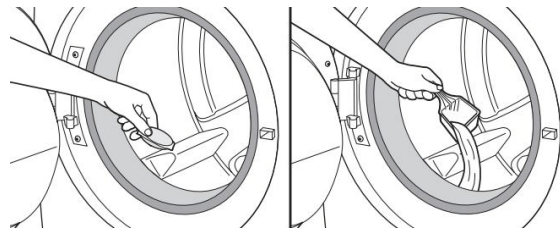
Single-dose laundry packets, Oxitype boosters, color-safe bleach, or scented crystals can be added to the drum prior to adding laundry.
When using single-dose laundry packets, make sure that the bulk dispenser is disabled (on some models) or off.
NOTE: Follow the manufacturer’s instructions to determine the amount of laundry products to use.
Adding liquid chlorine bleach to single-load dispenser:
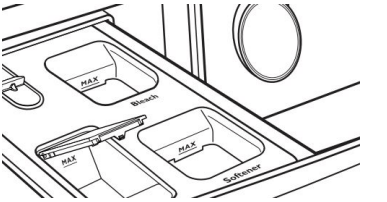
Add liquid chlorine bleach to the bleach compartment. Do not overfill, dilute, or use more than 2⁄3 cup (165 mL). Do not use color-safe bleach or Oxi in the same cycle with liquid chlorine bleach.
IMPORTANT:
Always measure liquid chlorine bleach. Use a measuring cup with a pour spout; do not guess.
Do not fill beyond the “MAX” line. Overfilling could cause garment damage.
Do not use thickened, easy-pour, or no-splash bleach when running the Clean Washer with affresh® cycle, as excess suds may occur.
On some models: Do not add liquid chlorine bleach to the bulk dispenser.
Slowly close dispenser drawers. Make sure the drawers are closed completely (on some models).
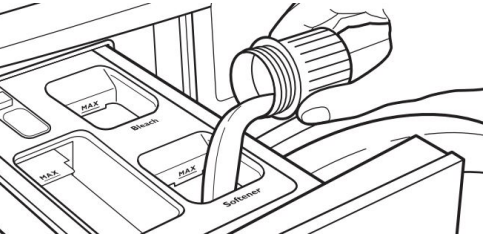
Adding liquid fabric softener to single-load dispenser:
Pour a measured amount of liquid fabric softener into liquid fabric softener compartment. Always follow manufacturer’s directions for correct amount of fabric softener, based on your load size. Disable the 1-Liter Load & Go™ dispenser if not used to dispense detergent (on some models).
Fabric softener is always dispensed in the last rinse, even if Extra Rinse is selected.
IMPORTANT: Do not overfill, dilute, or use more than the manufacturer-recommended quantity of fabric softener. Do not fill past the “MAX” line. Overfilling dispenser will cause fabric softener to immediately dispense into washer.
Do not spill or drip any fabric softener onto the clothes.
Do not use liquid fabric softener dispenser balls in this washer.
They will not dispense correctly.
Do not use fabric softener sheets, as they can stain the load.
Adding HE detergent to Optimal Dispense Drawer (on some models):
This compartment holds up to 14.3 oz. (424 ml) of liquid HE detergent allowing you to avoid having to refill detergent for each load. Also, this will use just the right amount of detergent required for a particular load/cycle.
NOTE: Do not add single-dose laundry packets, Oxi-type boosters, color-safe bleach, or fabric softener crystals to dispensers. They will not dispense correctly.
Adding HE detergent to Load & Go™ dispenser (on some models):
Use only High Efficiency (HE) liquid detergents. The bulk dispensers will hold about 67.6 oz. (2 L) or 33.8 oz. (1 L) of liquid HE detergent, depending on dispenser, or enough for many loads of laundry.
To fill bulk dispensers (on some models):
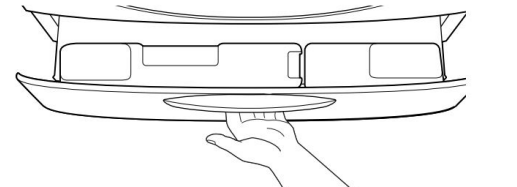
Open the dispenser drawer by pulling on the handle at the base of the washer. If desired, the drawer can be completely removed from the washer.
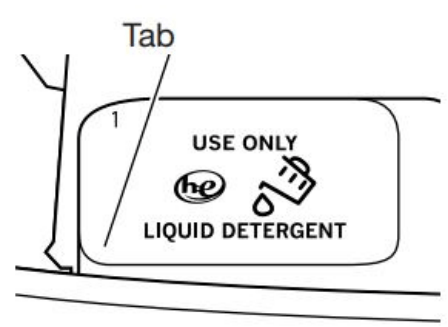
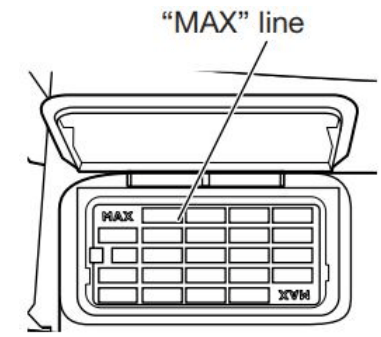
Locate the Load & Go™ bulk dispenser. Gently pull up on the tab located on the bulk dispenser lid to lift the fill door.
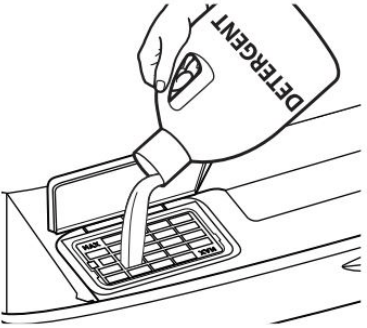
Fill to the “MAX” line (see illustrations at right) with HE liquid detergent or liquid fabric softener liter dispenser only). Close fill door. It will click into place. Make sure the concentration setting is correct (see the online “Cycle Guide”).
It is recommended that you rinse out the Load & Go™ containers when refilling, when changing detergent types or concentrations, or when the washer will not be used for an extended period.
For instructions on cleaning the dispenser cartridge, see “Washer Care” in the “Washer Maintenance and Care” section of your Owner’s Manual.
Adding HE detergent to single-load dispenser:
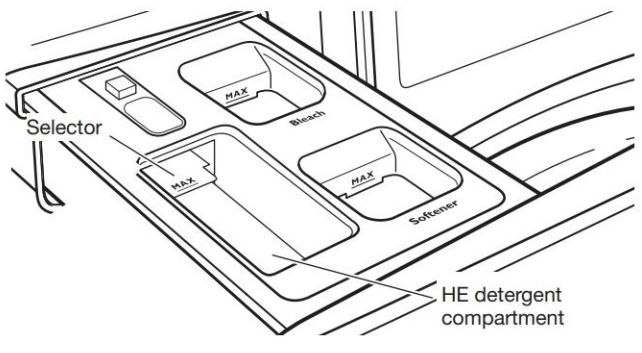
Pour a measured amount of HE detergent into detergent compartment. For powdered detergent, lift the selector to the high position. For liquid detergent, push down the selector to the low position.
Do not overfill; adding too much detergent may cause detergent to be dispensed into the washer too early.
IMPORTANT:
Disable the Load & Go™ option before starting a single load on some models).
Do not add single-dose laundry packet to dispenser drawer.
WASHER MAINTENANCE AND CARE
Cleaning the Washer Location
Keep washer area clear and free from items that would block airflow. This includes clearing piles of laundry in front of the washer.
Water Inlet Hoses
Replace inlet hoses after 5 years of use to reduce the risk of hose failure. Periodically inspect and replace inlet hoses if bulges, kinks, cuts, wear, or leaks are found.
When replacing your inlet hoses:
Mark the date of replacement on the label with a permanent marker.
Check that the old washers are not stuck on the washer inlet valves.
Use new washers in the new inlet hoses to ensure a proper seal.
Washer Care
Recommendations to Help Keep Your Washer Clean and Performing at Its Best
Always use High Efficiency (HE) detergents and follow the HE detergent manufacturer’s instructions regarding the amount of HE detergent to use. Never use more than the recommended amount because that may increase the rate at which detergent and soil residue accumulate inside your washer, which, in turn, may result in undesirable odor.
Use warm or hot water washes sometimes (not exclusively cold water washes), because they do a better job of controlling the rate at which soils and detergent accumulate.
Always leave the washer lid open between uses to help dry out the washer and prevent the buildup of odor-causing residue.
Periodically clean residue from all interior surfaces of the window. For better care, wipe the entire inside of the door with a damp cloth.
Cleaning Your Front-Loading Washer
Read these instructions completely before beginning the routine cleaning processes recommended below. This Washer Maintenance Procedure should be performed, at a minimum, once per month or every 30 wash cycles, whichever occurs sooner, to control the rate at which soils and detergent may otherwise accumulate in your washer.
Cleaning the Door Seal
Open the washer door and remove any clothing or items from the washer.
Inspect the gray-colored seal between the door opening and the drum for stained areas, soil buildup, or lint. Pull back the seal to inspect all areas under the seal and to check for foreign objects or lint.
If stained areas, soil buildup, or lint are found, wipe down these areas of the seal using either of the following two procedures:
affresh® Machine Cleaning Wipes Procedure:
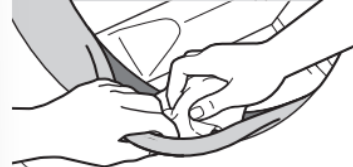
When the cycle is complete, gently pull back the rubber door seal and clean the entire surface with the textured side of an affresh® Machine Cleaning Wipe.
Dilute Liquid Chlorine Bleach Procedure:
Mix a dilute bleach solution, using 3/4 cup (177 mL) of liquid chlorine bleach and 1 gallon (3.8 L) of warm tap water.
Wipe the seal area with the dilute solution, using a damp cloth.
Let stand 5 minutes. iv. Wipe down area thoroughly with a dry cloth and let washer interior air dry with door open.
IMPORTANT:
Wear rubber gloves when cleaning with bleach.
Refer to the bleach manufacturer’s instructions for proper use.
Cleaning the Inside of the Washer
This washer has a special cycle that uses higher water volumes in combination with affresh® Washer Cleaner or regular liquid chlorine bleach to thoroughly clean the inside of the washer.
Steam washer models also utilize steam to enhance cleaning in this special cycle.
IMPORTANT: Do not use thickened, easy-pour, or no-splash bleach when running the Clean Washer with affresh® cycle as excess suds may occur.
NOTE: Read these instructions completely before beginning the cleaning process.
Begin Procedure
Clean Washer with affresh® Cycle Procedure
Recommended for best performance):
a. Open the washer door and remove any clothing or items.
b. Use an affresh® Machine Cleaning Wipe or a soft, damp cloth or sponge to clean the inside door window.
c. Add an affresh® Washer Cleaner tablet to the washer drum.
d. Do not add the affresh® Washer Cleaner tablet to the dispenser drawer.
e. Do not add any detergent or other chemical to the washer when following this procedure.
f. Close the washer door.
g. Select the Clean Washer with affresh® cycle.
h. On some models: Select the FanFresh®/Fresh Hold®/Fresh Spin™ option to help dry the washer interior after the cycle is complete.
NOTE: The washer remembers your last option selection and will use it for future wash cycles until you deselect that option.
i. Touch and hold Start/Pause to begin the cycle. See the Description of Clean Washer with affresh® Cycle Operation” section.
2. Chlorine Bleach Procedure:
a. Open the washer door and remove any clothing or items.
b. Open the dispenser drawer and add liquid chlorine bleach to the Max level in both the bleach compartment and the fabric softener compartment. Either traditional or HE chlorine bleach can be used.
IMPORTANT: Do not use thickened, easy-pour, or no-splash bleach as excess suds may occur.
NOTE: Use of more liquid chlorine bleach than is recommended above could cause washer damage over time.
c. Close the washer door and the dispenser drawer.
d. Do not add any detergent or other chemicals to the washer when following this procedure.
e. Select the Clean Washer with affresh® cycle.
f. On some models: Select the FanFresh®/Fresh Hold®/Fresh Spin™ option to help dry the washer interior after the cycle is complete.
NOTE: The washer remembers your last option selection and will use it for future wash cycles until you deselect that option.
g. Touch and hold Start/Pause to begin the cycle. See the Description of Clean Washer with affresh® Cycle Operation” section.
NOTE: For best results, do not interrupt cycle.
Description of Clean Washer with affresh® Cycle Operation
The Clean Washer with affresh® cycle will determine whether clothing or other items are in the washer.
If no items are detected in the washer, it will proceed with the cycle.
If any items are detected in the washer, “rL” (remove load) will be displayed. The door will unlock. Open washer and remove any garments from the washer drum.
Touch Power to clear the “rL” code. c. Touch and hold Start/Pause to restart the cycle.
Steam models only: During the first 20 minutes of the cycle, it will activate the steamer but the drum will not spin or fill with water. You may see condensation on the door window during this initial phase. If you are using an affresh® Washer Cleaner tablet, it will not dissolve completely during the steam phase. This is normal.
After the cycle is complete, leave the door open slightly to allow for better ventilation and drying of the washer interior.
Cleaning the Dispensers
After a period of using your washer, you may find some residue buildup in the washer’s dispensers.
For the Single-Load or Optimal dispenser: Remove the drawer and wipe the surfaces with an affresh® Machine Cleaning Wipe or a damp cloth, and towel dry either before or after you run the Clean Washer with affresh® cycle. Use an all-purpose surface cleaner, if needed.
For the Load & Go™ dispenser: Lift the handle on the dispenser housing and pull to remove it from the washer cabinet; then rinse the dispenser thoroughly with running water. Wipe the outside dispenser surface with an affresh® Machine Cleaning Wipe or a damp cloth, and towel dry. Use an all-purpose surface cleaner, if needed.
Replace the dispenser in the washer cabinet and make sure that it is correctly seated.
IMPORTANT: Dispensers are not dishwasher-safe.
Cleaning the Outside of the Washer
IMPORTANT: To avoid damaging the washer’s finish, do not use abrasive products.
Use an affresh® Machine Cleaning Wipe or a soft, damp cloth or sponge to wipe up any spills. Occasionally wipe the outside of your washer to help keep it looking new. Use an affresh® Machine Cleaning Wipe or mild soap and water.
Clean Washer Cycle Reminder
NOTE: Not all models have the Clean Washer with affresh® cycle reminder light.
The Clean Washer with affresh® message will flash at the end of a wash cycle when the washer has run 30 wash cycles. This is a reminder to run the Clean Washer with affresh® cycle.
If the Clean Washer with affresh® cycle is not run, the message will stop flashing at the end of a wash cycle after running three more regular wash cycles. After 30 more wash cycles are completed, the Clean Washer with affresh® message will again flash at the end of a wash cycle as a reminder.
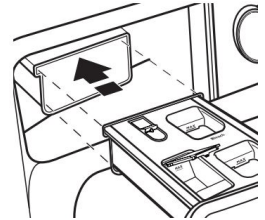
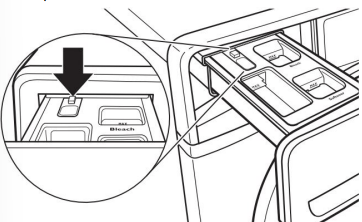
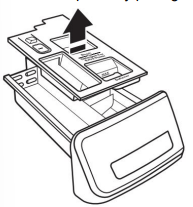
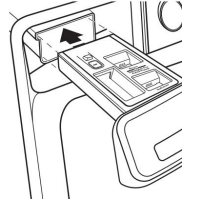
Removing the Dispenser
Optimal Dispenser Drawer (on some models)
To remove:
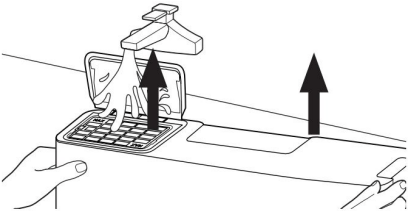
Pull dispenser drawer out until it stops.
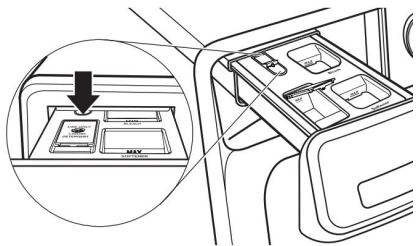
Press down on the release tab and pull straight out to remove the dispenser.
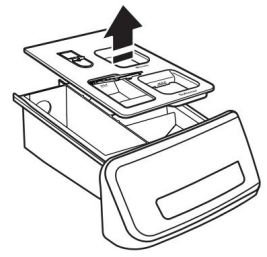
3. Lift off cover panel by pulling straight up.
To replace:
Slide cover panel back onto posts on dispenser.
Align edges of dispenser with guides in washer; then slide dispenser back into slot.
Single-Load Dispenser Drawer (on some models)
To remove:
Pull dispenser drawer out until it stops.
Press down on the release tab and pull straight out to remove the dispenser.
3. Lift off cover panel by pulling straight up.
To replace:
Position cover panel back onto posts on dispenser. Apply slight pressure on cover panel to seat it.
Align edges of dispenser with guides in washer; then slide dispenser back into slot.
Cleaning Load & Go™ Containers on some models)
IMPORTANT: Containers are not dishwasher-safe.
It is recommended that you rinse out the Load & Go™ containers when refilling, when changing detergent types or concentrations, or when the washer will not be used for an extended period.
Pull the dispenser drawer out until it stops.
Lift out the Load & Go™ containers.
Lift the fill lid and flush interior thoroughly with warm water.
4. Allow to air dry.
Nonuse and Vacation Care
Operate your washer only when you are home. If moving, or not using your washer for a period of time, follow these steps:
Unplug or disconnect power to washer.
Turn off water supply to washer to avoid flooding due to water pressure surges.
HELPFUL TIP: Attach a reminder note to the washer to turn the water back on before washer's next use.
Clean the dispensers. See “Cleaning the Dispensers.”
Winter Storage Care
IMPORTANT: To avoid damage, install and store washer where it will not freeze. Because some water may stay in hoses, freezing can damage washer. If storing or moving during freezing weather, winterize your washer.
To winterize washer:
Shut off both water faucets; disconnect and drain water inlet hoses.
HELPFUL TIP: Attach a reminder note to the washer to turn the water back on before washer’s next use.
Remove drain pump filter.
Put 1 qt. (1 L) of R.V.-type antifreeze in drum and run washer on Normal cycle for about 2 minutes to mix antifreeze and remaining water.
Unplug washer or disconnect power.
Transporting Your Washer
Shut off both water faucets. Disconnect and drain water inlet hoses.
If washer will be moved during freezing weather, follow "Winter Storage Care” directions before moving.
Disconnect drain hose from drain system and from back of washer.
Unplug power cord.
Place inlet hoses and drain hose inside drum.
Bundle power cord with a rubber band or cable tie to keep it from hanging to the ground.
IMPORTANT: Call for service to install new transport bolts. Do not reuse transport bolts. Washer must be transported in the upright position. To avoid structural damage to your washer, it must be properly set up for relocation by a certified technician.
Reinstalling/Using Washer Again
WARNING - Electrical Shock Hazard
Plug into a grounded 3 prong outlet.
Do not remove ground prong.
Do not use an adapter.
Do not use an extension cord.
Failure to follow these instructions can result in death, fire, or electrical shock.
To reinstall washer after nonuse, vacation, winter storage, or moving:
Refer to Installation Instructions to locate, level, and connect washer.
Before using again, run washer through the following recommended procedure:
To use washer again:
Flush water pipes and hoses.
Reconnect water-inlet hoses.
Turn on both water faucets.
Plug into a grounded 3-prong outlet or reconnect power.
Run washer through Heavy Duty/Power Wash cycle to clean washer and remove antifreeze, if used. Use only HE detergent. Use half the manufacturer’s recommended amount for a medium-size load.
Cleaning the Drain Pump/Draining
Residual Water (on some models)
IMPORTANT: Make sure the washer is off before cleaning the drain pump filter.
NOTE: Perform the following procedure occasionally.
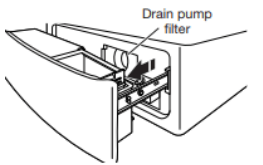
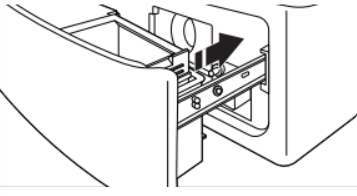
Open the dispenser drawer by pulling on the handle at the base of the washer. This will reveal the drain pump filter. Remove the drawer by releasing the tab on each side.
With your finger, push down on tab on right side of drawer, and up on tab on left side of drawer.
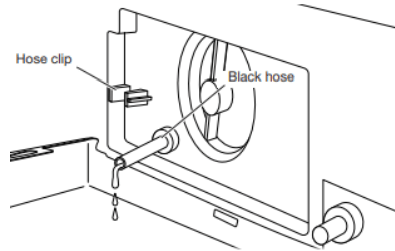
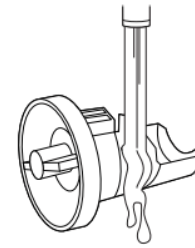
2. Place a broad, flat container beneath the drain pump filter to collect the drain water. Release the black hose from the hose clip, remove the plug, and drain the hose into the container.
Empty the container. Repeat this procedure if necessary until all the water has drained. Make sure that the black hose is completely dry, replace the plug, and secure the hose in the clip.
NOTE: If water does not drain well, push in hose slightly to remove any possible kinks.
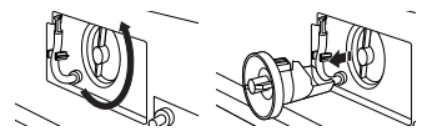
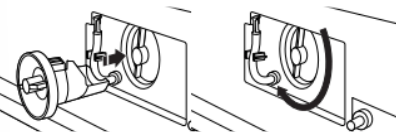
3. Lay a cotton cloth beneath the drain pump filter to absorb any water still in it. Then remove the drain pump filter by turning it counterclockwise.
4. Remove large clumps of lint by hand from the filter and place lint in a suitable waste container. Remove remaining residue from the filter by rinsing with water.
5. Reinsert the drain pump filter by turning it clockwise. Make sure to turn it in as far as it will go, with the filter handle remaining as close as possible to the vertical position.
6. Replace and close the dispenser drawer. Make sure to insert both rails simultaneously when replacing the drawer. You will hear a clicking sound that indicates the rails have engaged. To ensure proper placement of the drawer, pull out fully. The drawer should be fully engaged and the rails locked in place.
Make sure the drain hose is secured in the hose clip and tucked underneath the cutout.
Additional Cleaning
Gently pull back the rubber door seal and clean any stained areas, soil buildup, or lint with the textured side of an affresh® Machine Cleaning Wipe.
#1 Does the matching electricdryer have a 4-prong power cord plug?
The available Dryer cord will depend on your local code. Hopefully, this information is beneficial to you. Thank you for your inquiry regarding our Whirlpool appliances!