ENGLISH
MODEL NUMBER SERIES:
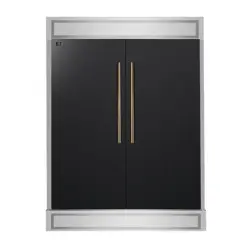
FFFFD1722-60SG | FFFFD1722-60MG-WHT | FFFFD1722-60SG-WHT
FFFFD1722-60S
| FFFFD1722-60MG-BLK | FFFFD1722-60SG-BLK
INSTRUCTION MANUAL
Read these instructions carefully before using your appliance, and keep them carefully
.
If you follow the instructions, your appliance will provide you with many years of good service.
10/2023
7KDQN\RXIRUSXUFKDVLQJD�����SURGXFW3OHDVHUHDGWKHHQWLUHLQVWUXFWLRQPDQXDOEHIRUHRSHUDWLQJ
\RXUQHZDSSOLDQFHIRUWKHILUVWWLPH:KHWKHU\RXDUHDQRFFDVLRQDOXVHURUDQH[SHUWLWZLOOEHEHQHILFLDO
WRIDPLOLDUL]H\RXUVHOIZLWKWKHVDIHW\SUDFWLFHVIHDWXUHVRSHUDWLRQDQGFDUHUHFRPPHQGDWLRQVRI\RXU
DSSOLDQFH
%RWKWKHPRGHODQGVHULDOQXPEHUDUHOLVWHGLQVLGHWKHSURGXFW)RUZDUUDQW\SXUSRVHV\RXZLOODOVRQHHG
WKHVHULDOQXPEHUWKHGDWHRISXUFKDVHDFRS\RI\RXUSURRIRISXUFKDVH
5HFRUGWKLVLQIRUPDWLRQEHORZIRUIXWXUHUHIHUHQFH
8VHWKHVHQXPEHULQDQ\FRUUHVSRQGDQFHRU
VHUYLFHFDOOVFRQFHUQLQJ\RXUSURGXFW
,I \RX UHFHLYHG D GDPDJHG SURGXFW
LPPHGLDWHO\FRQWDFW�������
6DYH WLPH DQG PRQH\ %HIRUH \RX FDOO IRU
VHUYLFHFKHFNWKH7URXEOHVKRRWLQJ*XLGH,W
OLVWVWKHFDXVHVRIPLQRURSHUDWLQJSUREOHPV
WKDW\RXFDQFRUUHFW\RXUVHOI
4&37*$&*/$"/"%"6/*5&%45"5&4
.HHSWKHLQVWUXFWLRQPDQXDOKDQG\WRDQVZHU\RXUTXHVWLRQV<RXFDQDOVRILQGDOOWKHLQIRUPDWLRQ
\RXQHHGRQOLQHDWZZZIRUQRFD
,I \RX GRQW XQGHUVWDQG VRPHWKLQJ RU QHHG PRUH DVVLVWDQFH SOHDVH YLVLW RXU ZHEVLWH RU
HPDLO
LQIR#IRUQRFD
,IWKHUHLVDSUREOHPSOHDVHFRQWDFW)2512FXVWRPHUVHUYLFH3OHDVHQRWHWKDWWURXEOHVKRRWLQJ
ZLWK D FXVWRPHU VHUYLFH UHSUHVHQWDWLYH ZLOO EH QHHGHG EHIRUH EHLQJ DEOH WR VHQG D VHUYLFH
SURYLGHU $OO ZDUUDQW\ ZRUN QHHGV WR EH DXWKRUL]HG E\ )2512 FXVWRPHU VHUYLFH $OO RXU
DXWKRUL]HGVHUYLFHSURYLGHUVDUHFDUHIXOO\VHOHFWHGDQGULJRURXVO\WUDLQHGE\XV
2

8IBUUIJTMJNJUFEXBSSBOUZDPWFST
7KH:DUUDQW\FRYHUDJHSURYLGHGE\)RUQR$SSOLDQFHVLQWKLVVWDWHPHQWDSSOLHVH[FOXVLYHO\WRWKHRULJLQDO)RUQR
DSSOLDQFH ³3URGXFW´ VROG WR WKH FRQVXPHU ³3XUFKDVHU´ E\ DQ DXWKRUL]HG )RUQR GHDOHUGLVWULEXWRUUHWDLOHU
SXUFKDVHGDQGLQVWDOOHGLQWKH8QLWHG6WDWHVRU&DQDGD DQG ZKLFK KDV DOZD\V UHPDLQHG ZLWKLQ WKH RULJLQDO
FRXQWU\RISXUFKDVHWKH8QLWHG6WDWHVRU&DQDGD:DUUDQW\FRYHUDJHLVDFWLYDWHGRQWKHGDWHRIWKH3URGXFWV
RULJLQDOUHWDLOSXUFKDVHDQGKDVDGXUDWLRQRIWZR\HDUV
:DUUDQW\ FRYHUDJH LV QRQWUDQVIHUDEOH ,Q WKH HYHQW RI UHSODFHPHQW RI SDUWV RU RI WKH HQWLUH SURGXFW WKH
UHSODFHPHQW3URGXFWRUSDUWVVKDOODVVXPHWKHUHPDLQLQJRULJLQDO:DUUDQW\DFWLYDWHGZLWKWKHRULJLQDOUHWDLO
SXUFKDVHGRFXPHQW7KLV:DUUDQW\VKDOOQRWEHH[WHQGHGZLWKUHVSHFWWRVXFKUHSODFHPHQW)RUQR$SSOLDQFHV
ZLOOUHSDLURUUHSODFHDQ\FRPSRQHQWSDUWZKLFKIDLOVRUSURYHVGHIHFWLYHGXHWRPDWHULDOVDQGRUZRUNPDQVKLS
ZLWKLQ \HDUV RI WKH GDWH RI WKH RULJLQDO UHWDLO SXUFKDVH DQG XQGHU FRQGLWLRQV RI RUGLQDU\ UHVLGHQWLDO
QRQFRPPHUFLDOXVH5HSDLURUUHSODFHPHQWZLOOEHIUHHRIFKDUJHLQFOXGLQJODERUDWVWDQGDUGUDWHVDQGVKLSSLQJ
H[SHQVHV3XUFKDVHULVUHVSRQVLEOHIRUPDNLQJWKH3URGXFWUHDVRQDEO\DFFHVVLEOHIRUVHUYLFH5HSDLUVHUYLFH
PXVWEHSHUIRUPHGE\D)RUQR$XWKRUL]HG6HUYLFHFRPSDQ\GXULQJQRUPDOZRUNLQJKRXUV
*.1035"/5
5HWDLQSURRIRIRULJLQDOSXUFKDVHWRHVWDEOLVKZDUUDQW\SHULRG)RUQR¶VOLDELOLW\RQDQ\FODLPRIDQ\NLQGZLWK
UHVSHFWWRWKHJRRGVDQGRUVHUYLFHVSURYLGHGVKDOOLQQRHYHQWH[FHHGWKHYDOXHRIWKHJRRGVRUVHUYLFHRUSDUW
WKHUHRIZKLFKKDVJLYHQULVHWRWKHFODLP
%BZ$PTNFUJD8BSSBOUZ
7KH3XUFKDVHUPXVWLQVSHFWWKHSURGXFWDWWKHWLPHRIGHOLYHU\)RUQRZDUUDQWVWKDWWKH3URGXFWLVIUHHIURP
PDQXIDFWXULQJGHIHFWVLQPDWHULDOVDQGZRUNPDQVKLSIRUDSHULRGRIWKLUW\GD\VIURPGDWHRIWKHRULJLQDOUHWDLO
SXUFKDVHRIWKH3URGXFW
5IJTDPWFSBHFJODMVEFT
3DLQWEOHPLVKHV
&KLSV
0DFURVFRSLFILQLVKGHIHFWV
$PTNFUJDXBSSBOUZEPFT/05DPWFS
! LVVXHVUHVXOWLQJIURPLQFRUUHFWWUDQVSRUWKDQGOLQJDQGRULQVWDOODWLRQHJGHQWVEURNHQZDUSHGRUGHIRUPHG
VWUXFWXUHVRUFRPSRQHQWVFUDFNHGRURWKHUZLVHGDPDJHGJODVVFRPSRQHQWV
! VOLJKWFRORUYDULDWLRQVRQSDLQWHGHQDPHOHGFRPSRQHQWV
! GLIIHUHQFHVFDXVHGE\QDWXUDORUDUWLILFLDOOLJKWLQJORFDWLRQRURWKHUDQDORJRXVIDFWRUV
! VWDLQVFRUURVLRQGLVFRORUDWLRQFDXVHGE\H[WHUQDOVXEVWDQFHVDQGRUHQYLURQPHQWDOIDFWRUV
! ODERUFRVWVGLVSOD\IORRU%VWRFNRXWRIER[³DVLV´DSSOLDQFHVDQGGHPRXQLWV
)PXUPSFDFJWFTFSWJDF
7RUHFHLYHZDUUDQW\VHUYLFHVWKH3XUFKDVHUPXVWFRQWDFWWKH)RUQR6XSSRUWGHSDUWPHQWLQRUGHUWRGHWHUPLQH
WKHSUREOHPDQGWKHUHTXLUHGVHUYLFHSURFHGXUHV7URXEOHVKRRWLQJZLWKDFXVWRPHUVHUYLFHUHSUHVHQWDWLYHZLOOEH
QHFHVVDU\ EHIRUH PRYLQJ IRUZDUG ZLWK WKH VHUYLFH 0RGHO QXPEHU VHULDO QXPEHU DQG GDWH RI RULJLQDO UHWDLO
SXUFKDVHZLOOEHUHTXHVWHG
8BSSBOUZ

7+(5($5(12(;35(66
:$55$17,(627+(57+$17+26(/,67('$1''(6&5,%('$%29($1'12
:$55$17,(6 (,7+(5 (;35(66 25 ,03/,(' ,1&/8',1* %87 127 /,0,7(' 72 $1< ,03/,('
:$55$17,(62)0(5&+$17$%,/,7<25),71(66)25$3$57,&8/$5385326(7+$76+$//$33/<
$)7(57+((;35(66:$55$17<3(5,2'667$7('$%29($1'1227+(5(;35(66:$55$17<25
*8$5$17(( *,9(1 %< $1< 3(5621 ),50 25 &25325$7,21 :,7+ 5(63(&7 72 7+,6 352'8&7
6+$//%(%,1',1*21)2512)25126+$//127%(/,$%/()25/2662)5(9(18(25352),76
)$,/85(725($/,=(6$9,1*62527+(5%(1(),767,0($:$<)520:25.0($/6/2662))22'
25%(9(5$*(675$9(/,1*25+27(/(;3(16(6(;3(16(6725(1725385&+$6($33/,$1&(6
5(02'(/,1*&216758&7,21(;3(16(6,1(;&(662)',5(&7'$0$*(6:+,&+$5(81'(1,$%/<
&$86(' (;&/86,9(/< %< )2512 25 $1< 27+(5 63(&,$/ ,1&,'(17$/ 25 &216(48(17,$/
'$0$*(6&$86('%<7+(86(0,686(25,1$%,/,7<7286(7+,6352'8&75(*$5'/(662)7+(
/(*$/7+(25<21:+,&+7+( &/$,0 ,6 %$6(' $1'(9(1,))2512+$6 %((1 $'9,6(' 2) 7+(
3266,%,/,7<2)68&+'$0$*(61256+$//5(&29(5<2)$1<.,1'$*$,167)2512%(*5($7(5
,1 $02817 7+$1 7+( 385&+$6( 35,&( 2) 7+( 352'8&7 62/' %< )2512 $1' &$86,1* 7+(
$//(*(''$0$*(:,7+28735(-8',&(727+()25(*2,1*385&+$6(5$6680(6$//5,6.$1'
/,$%,/,7< )25 /266 '$0$*( 25 ,1-85< 72 385&+$6(5 $1' 385&+$6(5¶6 3523(57< $1' 72
27+(56$1'7+(,5
3523(57<$5,6,1*)5207+(86(0,686(25,1$%,/,7<7286(7+,6352'8&7
62/' %< )2512 7+$7 ,6 127 $
',5(&7 5(68/7 2) 1(*/,*(1&( 21 7+( 3$57 2) )2512 7+,6
/,0,7(' :$55$17< 6+$// 127 (;7(1' 72$1<21( 27+(5 7+$1 7+( 25,*,1$/ 385&+$6(5 2)
7+,6352'8&7,612175$16)(5$%/($1'67$7(6<285(;&/86,9(5(0('<
! 8VH RI WKH 3URGXFW LQ DQ\ QRQUHVLGHQWLDO
FRPPHUFLDODSSOLFDWLRQ
! 8VH RI WKH 3URGXFW IRU DQ\WKLQJ RWKHU WKDQ LWV
LQWHQGHGSXUSRVH
! 5HSDLU VHUYLFHV SURYLGHG E\ DQ\RQH RWKHU WKDQ D
)RUQR$XWKRUL]HG6HUYLFH
DJHQF\
! 'DPDJHV RU UHSDLU VHUYLFHV WR FRUUHFW VHUYLFHV
SURYLGHG E\ XQDXWKRUL]HG SDUWLHV RU WKH XVH RI
XQDXWKRUL]HGSDUWV
! ,QVWDOODWLRQ QRW LQ DFFRUGDQFH ZLWK
ORFDOVWDWHFLW\FRXQW\ILUHFRGHVHOHFWULFDOFRGHVJDV
FRGHV SOXPELQJ FRGHV EXLOGLQJ FRGHV ODZV RU
UHJXODWLRQV
! 'HIHFWVRUGDPDJHGXHWRLPSURSHUVWRUDJHRIWKH
3URGXFW
! 'HIHFWVGDPDJHRUPLVVLQJSDUWVRQSURGXFWVVROG
RXWRIWKHRULJLQDOIDFWRU\SDFNDJLQJRUIURPGLVSOD\V
! 6HUYLFH FDOOV RU UHSDLUV
WR FRUUHFW DQ LQFRUUHFW
LQVWDOODWLRQRIWKH3URGXFWDQGRUUHODWHGDFFHVVRULHV
! 5HSODFHPHQW RI SDUWVVHUYLFH FDOOV WR FRQQHFW
FRQYHUWRURWKHUZLVHUHSDLUWKHHOHFWULFDOZLULQJDQGRU
JDVOLQHLQRUGHUWRSURSHUO\XVHWKHSURGXFW
! 5HSODFHPHQW RI SDUWVVHUYLFH FDOOV WR SURYLGH
LQVWUXFWLRQVDQGLQIRUPDWLRQ
RQWKHXVHRIWKH3URGXFW
! 5HSODFHPHQWRISDUWVVHUYLFHFDOOVWRFRUUHFWLVVXHV
DULVLQJIURPWKHSURGXFWEHLQJXVHGLQDPDQQHURWKHU
WKDQZKDWLVQRUPDODQGFXVWRPDU\IRUUHVLGHQWLDOXVH
! 5HSODFHPHQWRISDUWVVHUYLFHFDOOVGXHWRZHDUDQG
WHDU RI FRPSRQHQWV VXFK DV VHDOV NQREV SDQ
VXSSRUWV VKHOYLQJ FXWOHU\ EDVNHWV EXWWRQV WRXFK
GLVSOD\VVFUDWFKHGRUEURNHQFHUDPLFJODVVWRSV
! 5HSODFHPHQW RI SDUWVVHUYLFH FDOOV IRU ODFN
RILPSURSHUPDLQWHQDQFHLQFOXGLQJEXWQRWOLPLWHGWR
EXLOGXSRIUHVLGXHVVWDLQV
VFUDWFKHVGLVFRORUDWLRQ
FRUURVLRQ
! 'HIHFWV DQG GDPDJHV DULVLQJ IURP DFFLGHQWV
DOWHUDWLRQPLVXVHDEXVHRULPSURSHULQVWDOODWLRQ
! 'HIHFWV DQG GDPDJHV DULVLQJ IURP 3URGXFW
WUDQVSRUW ORJLVWLFV DQG KDQGOLQJ
,QVSHFWLRQ RI WKH
SURGXFWPXVWEHPDGH DW WLPH RIGHOLYHU\)ROORZLQJ
UHFHLSW DQG LQVSHFWLRQ WKH VHOOLQJ GHDOHUGHOLYHU\
FRPSDQ\PXVWEHQRWLILHGRIDQ\LVVXHVDULVLQJIURP
KDQGOLQJWUDQVSRUWDQGORJLVWLFV
! 'HIHFWVDQGGDPDJHVDULVLQJIURPH[WHUQDOIRUFHV
EH\RQGWKHFRQWURORI)RUQR$SSOLDQFHVLQFOXGLQJEXW
QRWOLPLWHGWRZLQGUDLQVDQGILUHV
IORRGV
PXGVOLGHV
IUHH]LQJ WHPSHUDWXUHV H[FHVVLYH PRLVWXUH RU
H[WHQGHG H[SRVXUH WR KXPLGLW\ SRZHU VXUJHV
OLJKWQLQJVWUXFWXUDOIDLOXUHVVXUURXQGLQJWKHDSSOLDQFH
DQGRWKHUDFWVRI*RG
! 3URGXFWV ZKRVH VHULDO QXPEHU KDV EHHQ
DOWHUHGGDPDJHGWDPSHUHG ZLWK ,Q QR FDVH VKDOO
)RUQR EH KHOG OLDEOH RU UHVSRQVLEOH IRU GDPDJH WR
VXUURXQGLQJ SURSHUW\ LQFOXGLQJ IXUQLWXUH FDELQHWU\
IORRULQJSDQHOVDQGRWKHUVWUXFWXUHVVXUURXQGLQJWKH
3URGXFW)RUQRLVQHLWKHUOLDEOHQRUUHVSRQVLEOHIRUWKH
3URGXFW LI LW LV ORFDWHG LQ D UHPRWH DUHD RU DQ DUHD
ZKHUHFHUWLILHGWUDLQHGWHFKQLFLDQVDUHQRWUHDVRQDEO\
DYDLODEOH3XUFKDVHUPXVWEHDUDQ\WUDQVSRUWDWLRQDQG
GHOLYHU\FRVWVRIWKH3URGXFWWRWKHQHDUHVW$XWKRUL]HG
6HUYLFH&HQWHURUWKHDGGLWLRQDOWUDYHOH[SHQVHVRID
FHUWLILHGWUDLQHGWHFKQLFLDQ
8BSSBOUZ&YDMVTJPOT8IBU*T/PU$PWFSFE
Contents
Safety and warning LQformation………….
Installing your new appliance………
Description of the appliance……………1
'LVSOD\FRQWUROV………………………1
Using your appliance……………………1
Cleaning and care………………………1
Helpful hints and tips……………………
Troubleshooting………………………….
Disposal of the appliance………………
Safety and warning information
For your safety and correct usage, before installing and first using the appliance,
read this user manual carefully, including its hints and warnings. To avoid
unnecessary mistakes and accidents, it is important to make sure that all people
using the appliance are thoroughly familiar with its operation and safety features.
Save these instructions and be sure that they remain with the appliance if it is
moved or sold, so that anyone using it throughout its life, will be properly
informed on its usage and safety notices.
For the safety of life and property, keep the precautions of these user's
instructions as the manufacturer is not responsible for damages caused by
omission.
Safety for children and others who are vulnerable people
Ɣ
According to EN standard
This appliance can be used by children aged from 8 years and above and
persons with reduced physical, sensory or mental capabilities or lack of
experience and knowledge if they have been given supervision or instruction
concerning use of the appliance in a safe way and understand the hazards
involved. Children shall not play with the appliance. Cleaning and user
maintenance shall not be made by children without supervision.
Ɣ
According to IEC standard
This appliance is not intended for use by persons (including children) with
reduced physical, sensory or mental capabilities, or lack of experience and
knowledge, unless they have been given supervision or instruction concerning
use of the appliance by a person being responsible for their safety.
z Keep all packaging away from children as there is risk of suffocation.
z If you are discarding the appliance, pull the plug out of the socket, cut the
connection cable (as close to the appliance as you can) and remove the
door to prevent children playing from suffering an electric shock or from
closing themselves inside it.
z If this appliance, featuring a magnetic door seals, is to replace an older
appliance having a spring lock (latch) on the door or lid, be sure to make
the spring lock unusable before you discard the old appliance. This will
prevent it from becoming a death trap for a child.
General safety
7ULP .LW ,QVWDOODWLRQ………………
z WARNING - This appliance is intended to be used in household
and similar applications such as
-staff kitchen areas in shops, offices and other working environments;
-farm houses and hotels, motels and other residential type environments;
-bed and breakfast type environments;
-catering and similar non-retail applications.
z WARNING - Do not store explosive substances such as aerosol cans with
a flammable propellant in this appliance.
z WARNING - If the supply cord is damaged, it must be replaced by the
manufacturer, its service agent or similarly qualified persons in order to
avoid a hazard.
z WARNING - Keep ventilation openings, in the appliance enclosure or in
the built-in structure, clear of obstruction.
z WARNING - Do not use mechanical devices or other means to accelerate
the defrosting process, other than those recommended by the
manufacturer.
z WARNING - Do not damage the refrigerant circuit.
z WARNING - Do not use electrical appliances inside the food storage
compartments of the appliance, unless they are of the type recommended
by the manufacturer.
z WARNING - The refrigerant and insulation blowing gas are flammable.
When disposing of the appliance, do so only at an authorized waste
disposal center. Do not expose to flame.
z WARNING -When positioning the appliance, ensure the supply cord is not
trapped or damaged.
z WARNING -Do not locate multiple portable socket-outlets or portable
power supplies at the rear of the appliance.
Replacing the illuminating lamps
z
WARNING-The illuminating lamps must not be replaced by the user! If
the illuminating lamps is damaged, contact the customer helpline for
assistance. This warning is only for refrigerators that contain illuminating
lamps.
Refrigerant
The refrigerant isobutene (R600a) is contained within the refrigerant circuit of
the appliance, a natural gas with a high level of environmental compatibility,
which is nevertheless flammable. During transportation and installation of the
appliance, ensure that none of the components of the refrigerant circuit
becomes damaged.
The refrigerant (R600a) is flammable.
WARNING — Refrigerators contain refrigerant and gases in the insulation.
Refrigerant and gases must be disposed of professionally as they may cause
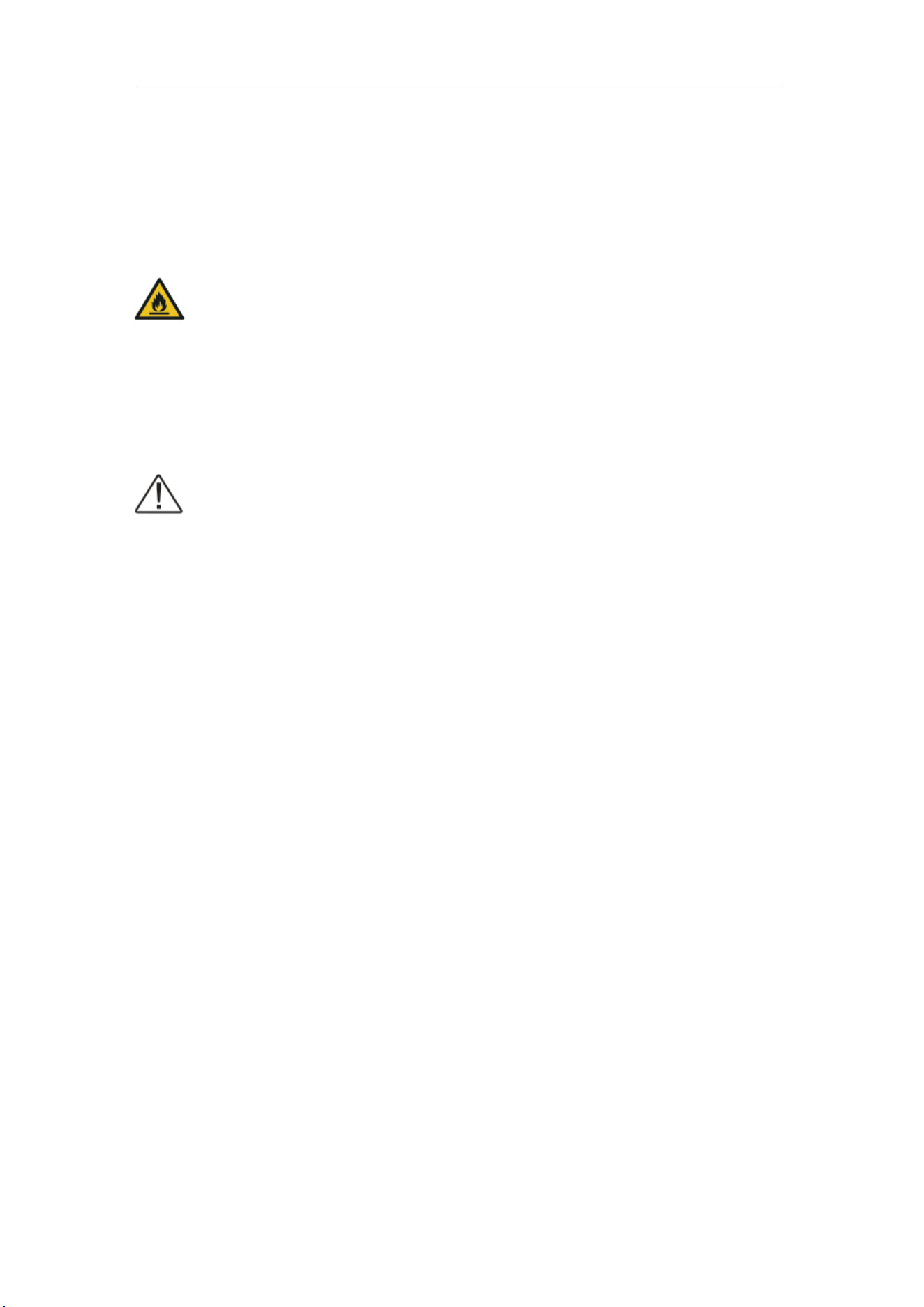
eye injuries or ignition. Ensure that tubing of the refrigerant circuit is not
damage prior to proper disposal.
It is hazardous for anyone other than an Authorized Service Person to service
this appliance. In Queensland the Authorized Service Person Must hold a Gas
Work Authorized for hydrocarbon refrigerants to carry out servicing or repairs
which involve removal of covers.
WARNING: Risk of fire / flammable materials
If the refrigerant circuit should be damaged:
-Avoid opening flames and sources of ignition.
-Thoroughly ventilate the room in which the appliance is situated.
It is dangerous to alter the specifications or modify this product in any way.
Any damage to the cord may cause a short circuit, fire, and/or electric shock.
Electrical safety
1.The power cord must not be lengthened.
2. Make sure that the power plug is not crushed or damaged. A crushed or
damaged power plug may overheat and cause a fire.
3. Make sure that you can access the main plug of the appliance.
4. Do not pull the main cable.
5. If the power plug socket is loose, do not insert the power plug. There is a
risk of electric shock or fire.
6.You must not operate the appliance without the interior lighting lamp cover.
7.The fridge is only applied with power supply of single phase alternating
current of 115V/60Hz. If fluctuation of voltage in the district of user is so large
that the voltage exceeds the above scope, for safety sake, be sure to apply
A.C. Automatic voltage regulator of more than 350W to the fridge. The fridge
must employ a special power socket instead of common one with other
electric appliances. Its plug must match the socket with ground wire.
Daily use
z Do not store flammable gas or liquids in the appliance, there is a risk of an
explosion.
z Do not operate any electrical appliances in the appliance (e.g. electric ice
cream makers, mixers etc.).
z When unplugging always pull the plug from the mains socket, do not pull
on the cable.
z Do not place hot items near the plastic components of this appliance.
z Do not place food products directly against the air outlet on the rear wall.
z Store pre-packed frozen food in accordance with the frozen food
manufacturer’s instructions.
z The appliances manufactures storage recommendations should be strictly

adhered to. Refer to relevant instructions for storage.
z Do not place carbonated or fizzy drinks in the freezer compartment as it
creates pressure on the container, which may cause it to explode,
resulting in damage to the appliance.
z Frozen food can cause frost burns if consumed straight from the freezer
compartment.
z Do not place the appliance in direct sunlight.
z Keep burning candles, lamps and other items with naked flames away
from the appliance so that do not set the appliance on fire.
z The appliance is intended for keeping food stuff and/or beverages in
normal household as explained in this instruction booklet . You should
take care when move it as the appliance is heavy.
z Do not remove nor touch items from the freezer compartment if your
hands are damp/wet, as this could cause skin abrasions or frost/freezer
burns.
z Never use the base, drawers, doors etc. to stand on or as supports.
z Frozen food must not be refrozen once it has been thawed out.
z Do not consume ice popsicles or ice cubes straight from the freezer as
this can cause freezer burn to the mouth and lips.
z To avoid items falling and causing injury or damage to the appliance,
do
not overload the door racks or put too much food in the crisper drawers.
z
Note:
When the door is open, the LED lights is on. When the door is open at
the same angle for 10 seconds, the LED lights is off.
CAUTION!
Care and cleaning
z Before maintenance, switch off the appliance and disconnect the mains
plug from the mains socket.
z Do not clean the appliance with metal objects, steam cleaner, ethereal
oils, organic solvents or abrasive cleansers.
z Do use a plastic scraper instead of a sharp object to remove frost from the
appliance.
z
Installation Important!
z For electrical connection carefully, follow the instructions given in this
manual. Unpack the appliance and check if there are damages on it.
z Do not connect the appliance if it is damaged. Report possible damages
immediately to Forno customer support. In this case retain packing.
z It is advisable to wait at least four hours before connecting the appliance
to allow the oil to flow back in the compressor.
z Adequate air circulation should be around the appliance, lacking this leads
to overheating. To achieve sufficient ventilation, follow the instructions
relevant to installation.
z Wherever possible the back of the product should not be too close to a
wall to avoid touching or catching warm parts (compressor) to prevent the
risk of a fire, follow the instructions relevant to installation.
z The appliance must not be locating close to radiators or cookers.
z Make sure that the mains plug is accessible after the installation of the
appliance.
Service
z Any electrical work required to do the servicing of the appliance should be
carried out by qualified electrician or competent person.
z This product must be serviced by an authorized Service Provider, and only
genuine spare parts must be used.
1)If the appliance is Frost Free.
2)If the appliance contains freezer compartment.
:$51,1*7KLVSURGXFWFDQH[SRVH\RXWRFKHPLFDOVLQFOXGLQJ>/HDG
/HDG&RPSRXQGV@ZKLFKLV>DUH@NQRZQWRWKH6WDWHRI&DOLIRUQLDWRFDXVH
FDQFHUELUWKGHIHFWVDQGRUUHSURGXFWLYHKDUP7RPLQLPL]HH[SRVXUHWR
WKHVHVXEVWDQFHV$OZD\VRSHUDWHWKLVXQLWDFFRUGLQJWKH2ZQHU¶V0DQXDO
DQGHQVXUHWKDW\RXSURYLGHSURSHUYHQWLODWLRQ)RUPRUHLQIRUPDWLRQJRWR
ZZZ3:DUQLQJVFDJRY
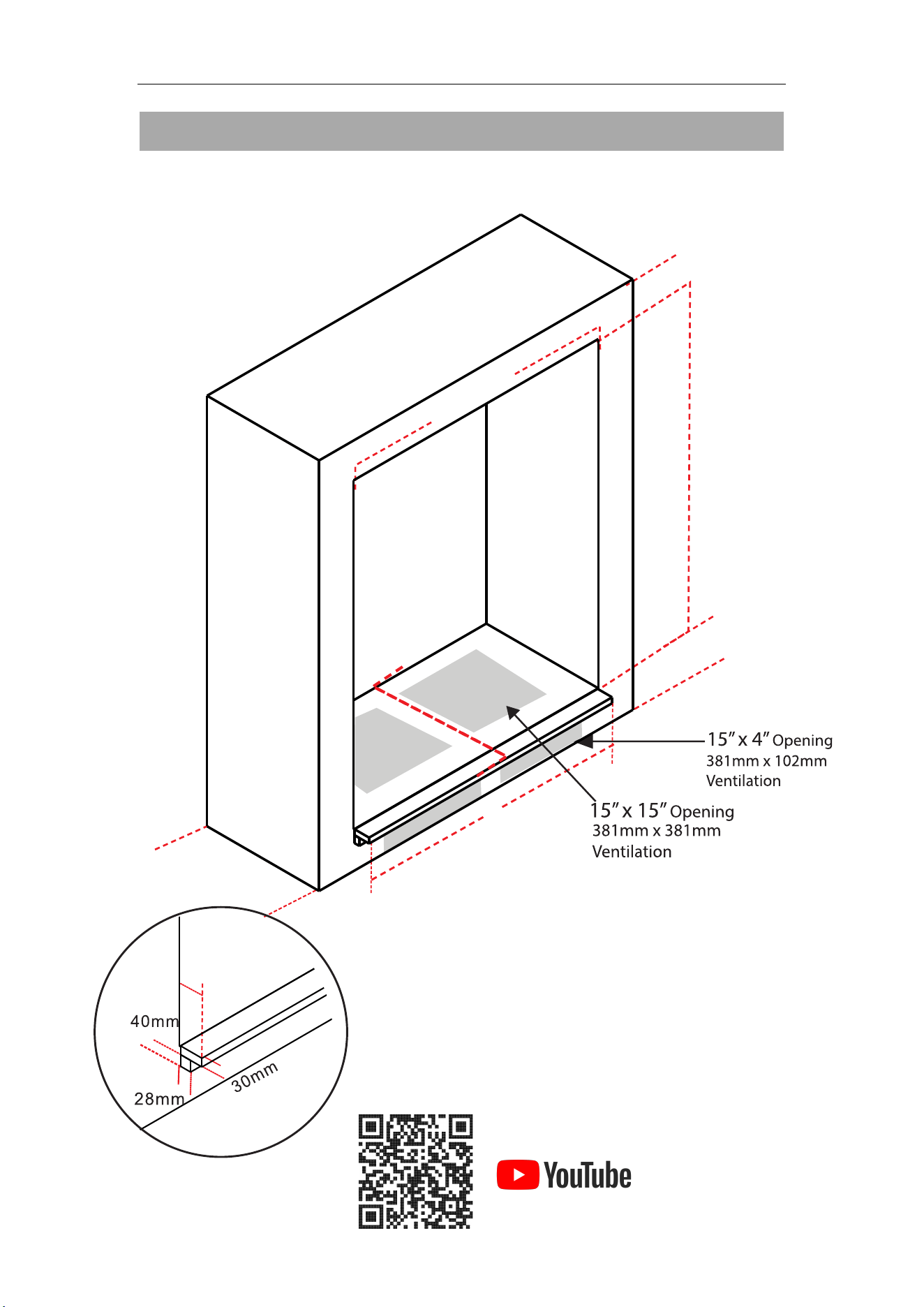
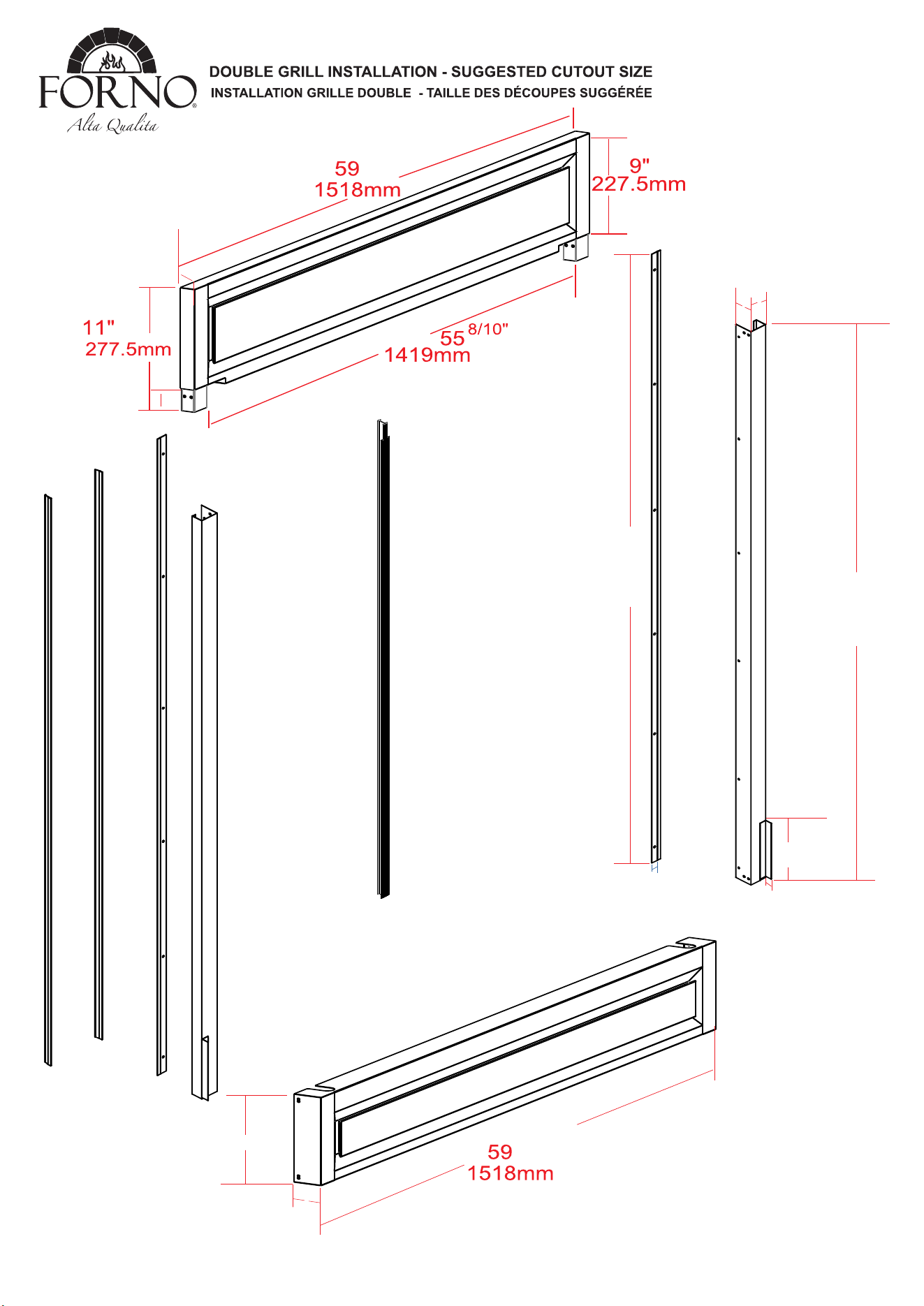
Before using this appliance for the first time, it's important to IROORZWKH
VSHFLILFDWLRQVRIWKHFXWRXWWREHDEOHWRLQVWDOOWKHWULPNLWDURXQGWKHXQLW
Installing your new appliance
PP
PP
PP
PP
PP
PP
7KHXQLWVZLOOQHHGWRVWLFNRXWRIWKHFDELQHWRSHQLQJE\VWDQGLQJRQD
SODWIRUPSOHDVHUHIHUWRWKHPHDVXUHPHQWVWRWKHOHIW:LWKRXWWKH
SODWIRUPFRPLQJRXWRIWKHRSHQLQJ\RXZLOOQRWEHDEOHWRLQVWDOOWKH
ORZHUWULPJULOODQGWRRSHQWKHGRRUV
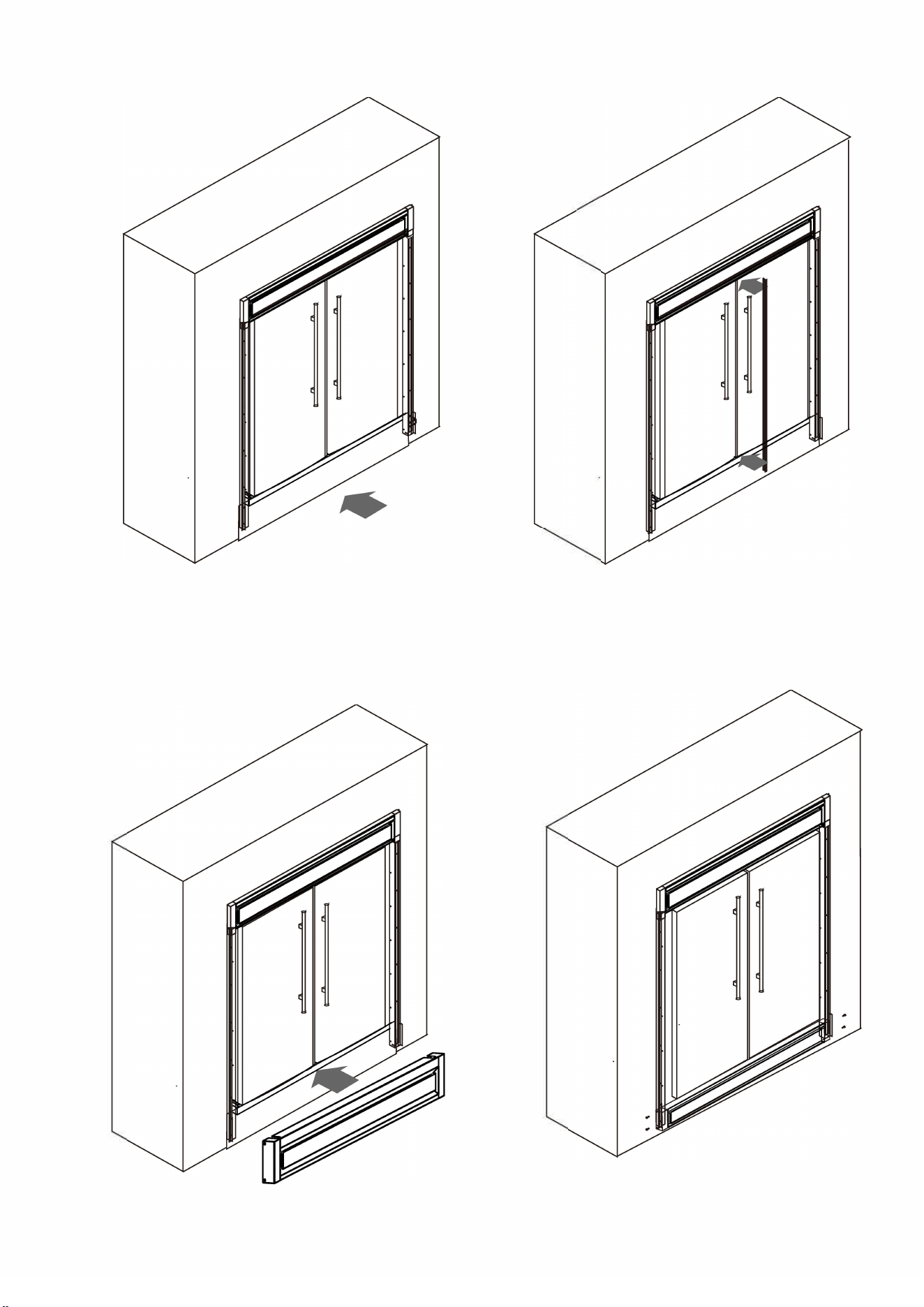
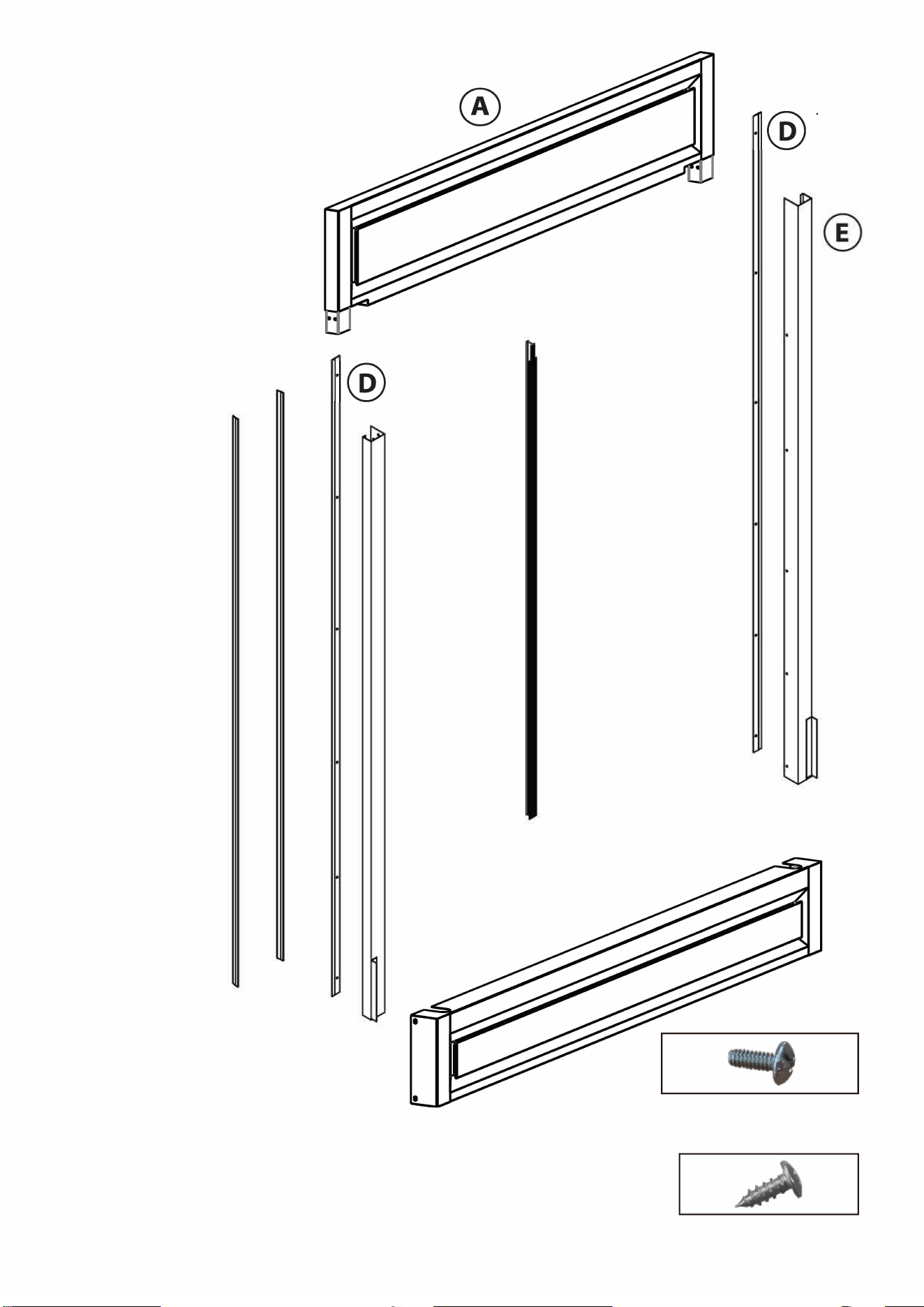
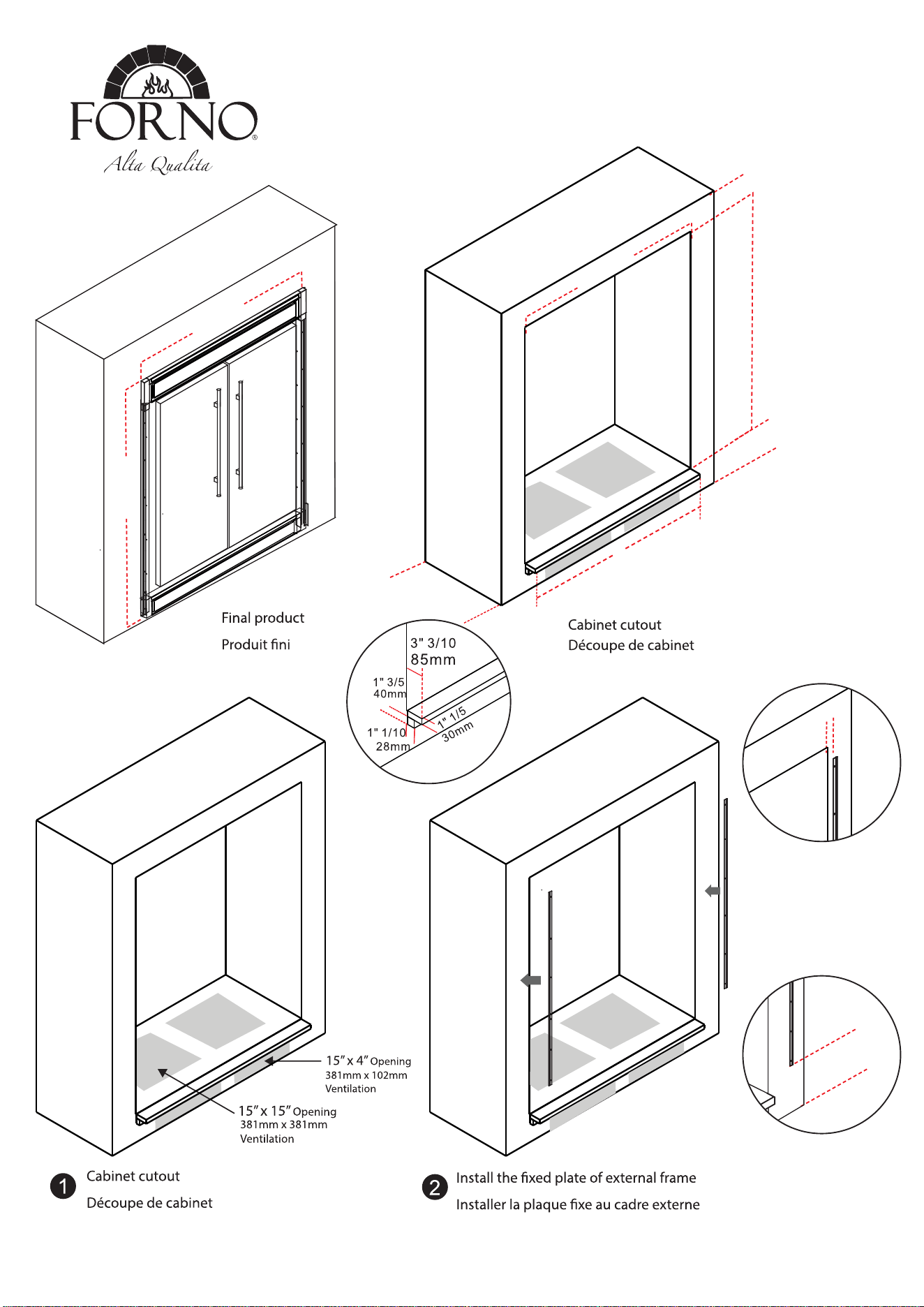
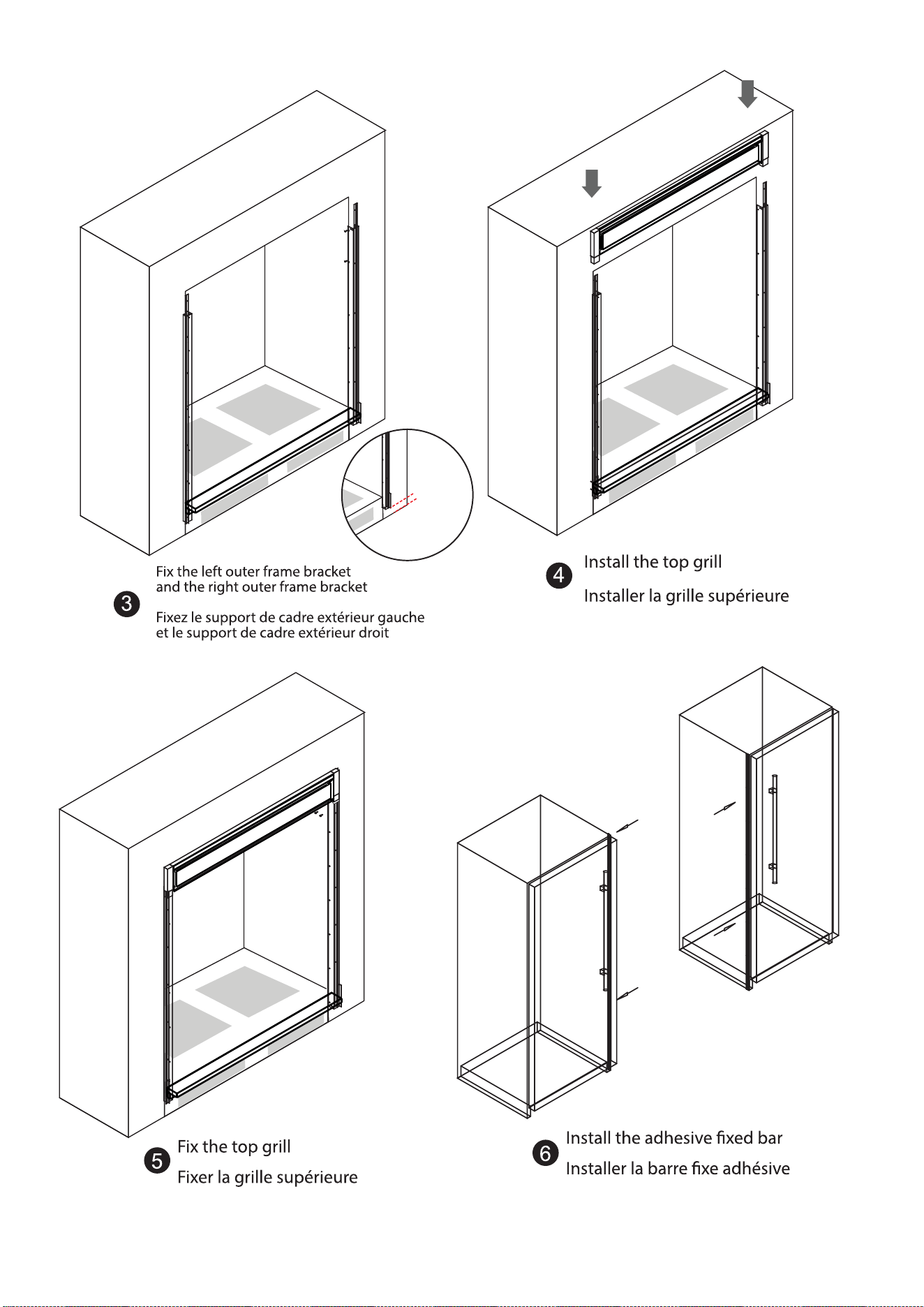
6FQDQWKHIROORZLQJ45FRGHWRVHHWKHVWHSE\VWHSLQVWUXFWLRQYLGHR
IURPRXU<RX7XEHFKDQQHO\RXFDQDOVRILQGWKHZULWWHQLQVWUXFWLRQRQ
WKHODVWSDJHVRIWKLVGRFXPHQW
PP
PP
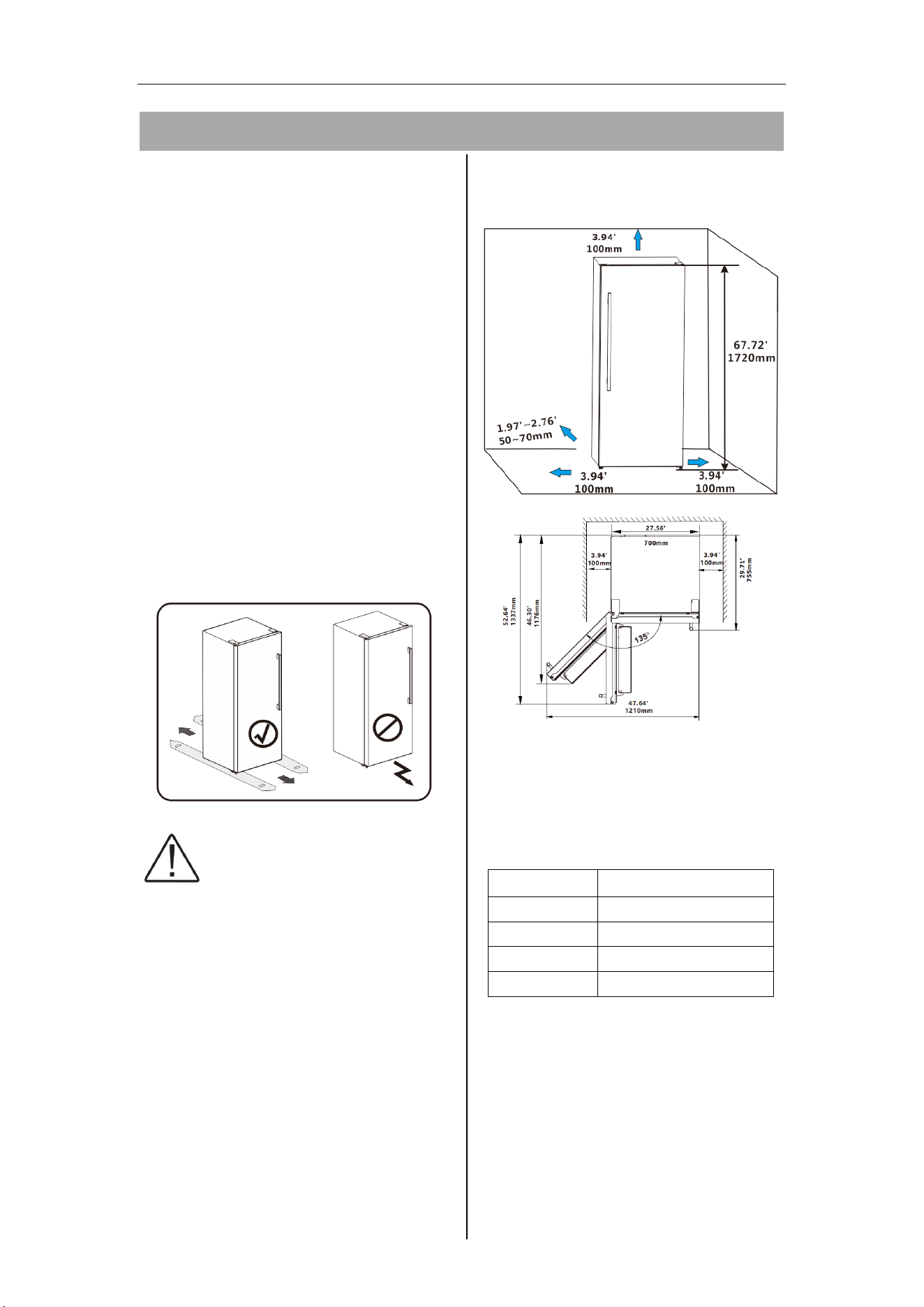
Before using this appliance for the first
time, it's important to be aware of the
following tips.
Warning!
Please note that for proper installation, the
refrigerator must be placed on a level
surface of hard material that is the same
height as the surrounding flooring. This
surface must be strong enough to support
the weight of a fully loaded refrigerator.
The rollers on the bottom of the refrigerator
are designed for forward or backward
movement only. Moving the refrigerator
sideways may cause damage to both the
floor and the rollers. Therefore, please
avoid any lateral movement of the
refrigerator to ensure its longevity and
proper functioning.
Ventilation of appliance
To enhance the efficiency of
the cooling system and save
energy energy, it is crucial to maintain
adequate ventilation around the
refrigerator to dissipate heat. Therefore,
there should be a sufficient clear space
around the appliance.
For optimal performance, we
recommend a minimum of 1.96" (50mm)
of space between the back of the
refrigerator and the wall, at least 3.94"
(100mm) of space from the top of the
refrigerator, and at least 3.94" (100mm)
from the side of the refrigerator to the wall.
Additionally, there should be enough clear
space in front of the refrigerator to allow
the doors to open 125°
.
Note:
y
This appliance performs well within the
climate class from SN to T showed in the
table below. It may not work properly if
being left at a temperature above or below
the indicated range for a long period.
Climate class Ambient temperature
SN +10°C to +32°C
N +16°C to +32°C
ST +16°C to +38°C
T +16°C to +43°C
y
Stand your appliance in a dry place to
avoid high moisture.
y
Keep the appliance out of direct sunlight,
rain or frost. Stand the appliance away
from heat sources such as stoves, fires or
heaters.
Leveling of appliance
y
For sufficient leveling and air circulating in
the lower rear section of the appliance, the
bottom feet may need to be adjusted. You
Installing your new appliance
Please refer to the following diagrams for a
visual representation of the recommended
clearances.
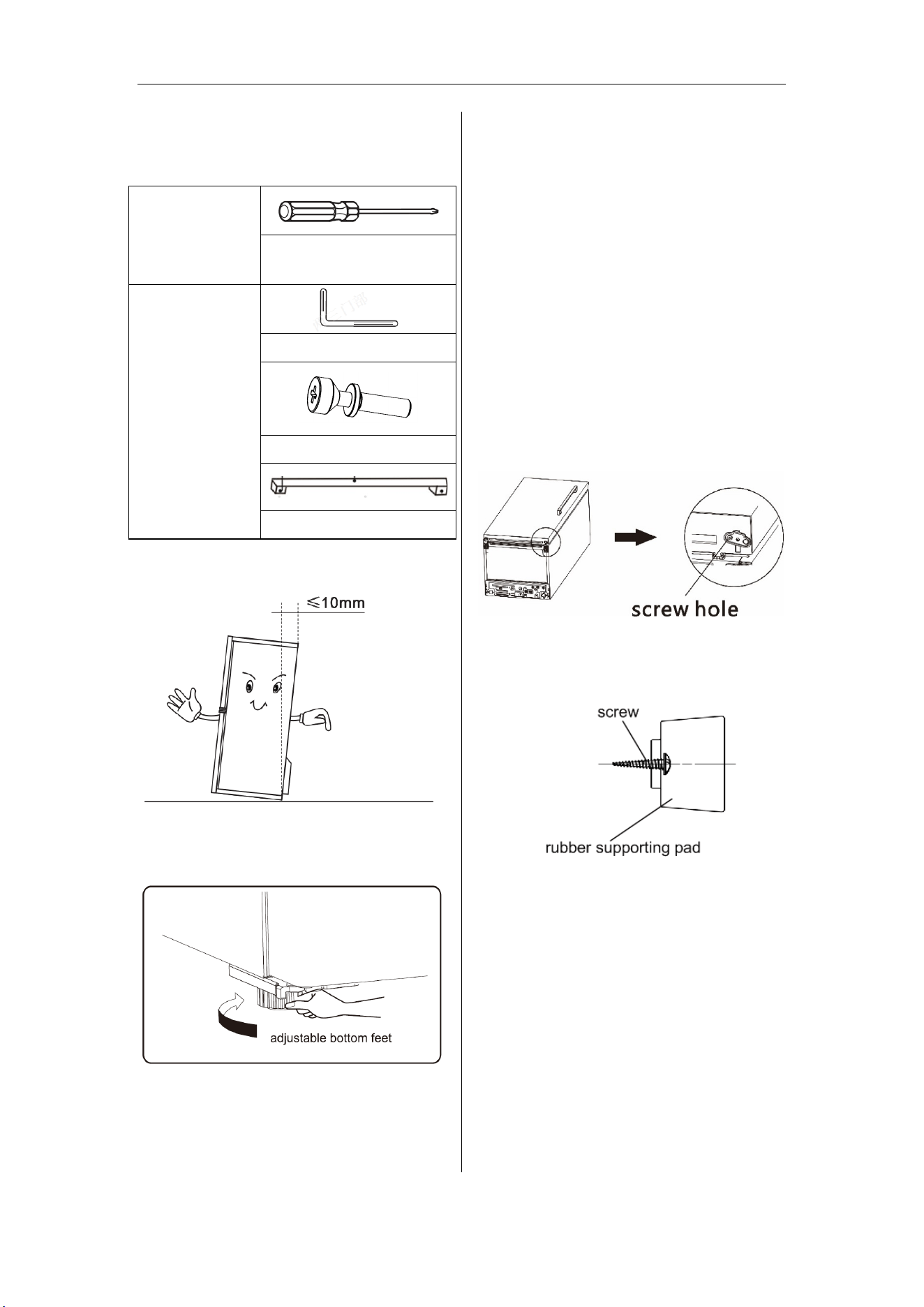
can adjust them manually by hand or by
using a suitable spanner.
Tools you will need:
Not provided
Philips Screwdriver &
Slotted Screwdriver
Provided
Allen wrench
Handle supports
Handle
y
To allow the doors to self-close, tilt the top
backwards by 10-15mm.
y
You can adjust them manually by hand
or using a suitable spanner.
Note:
y
If required you may lay the refrigerator
on its back in order to gain access to the
base, you should rest it on soft foam
packaging or similar material to avoid
damaging the backboard of the
refrigerator.
y
There is no need to install these
accessories under normal usage.
Only under extreme circumstances, this
refrigerator may be at risk of tipping
when the door is opened to a 90-degree
angle. To prevent tipping, it is
recommended to fasten rubber
supporting pads to the lower base cover
to stabilize the appliance
1. Tilt
appliance to find screw hole on the
left of lower base cover.
2. Put screw into the hole of rubber
supporting pad.
3. Make screw in alignment with the hole
on lower base cover. Fasten rubber
supporting pad to the base cover firmly by
a cross screwdriver (self-provided).
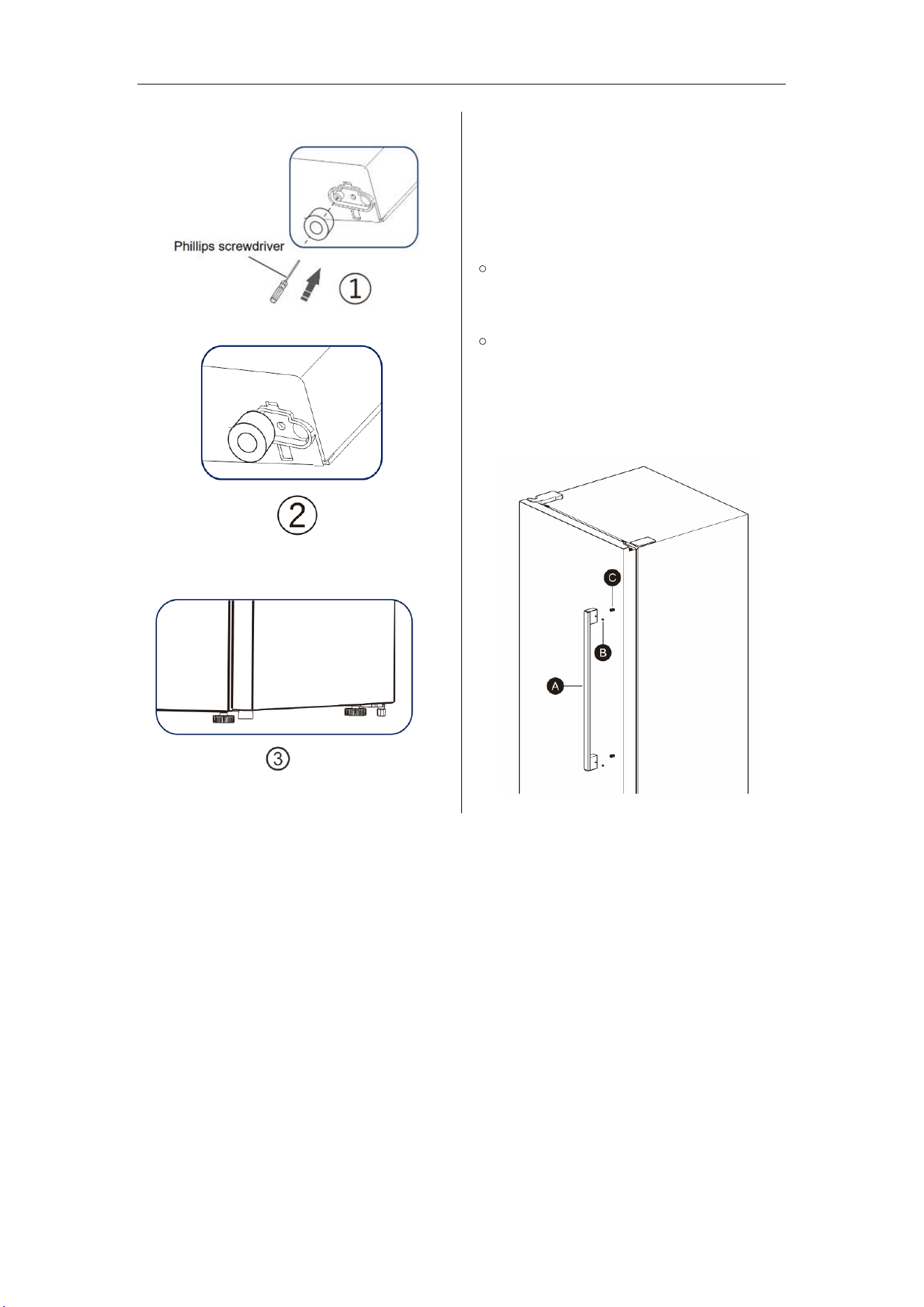
Installing the handles
Before you use the appliance, you have to
install the handles provided in the fridge
compartment.
Please follow steps below to install and
reverse the handle.
y
Fasten the handle supports (C) to the
door by using a Phillips screwdriver.
(not-provided).
y
Place the handle (A) on the door by fitting
the handle footprints over the handle
supports (C), then fasten the screws (B)
with Allen screwdriver (provided).
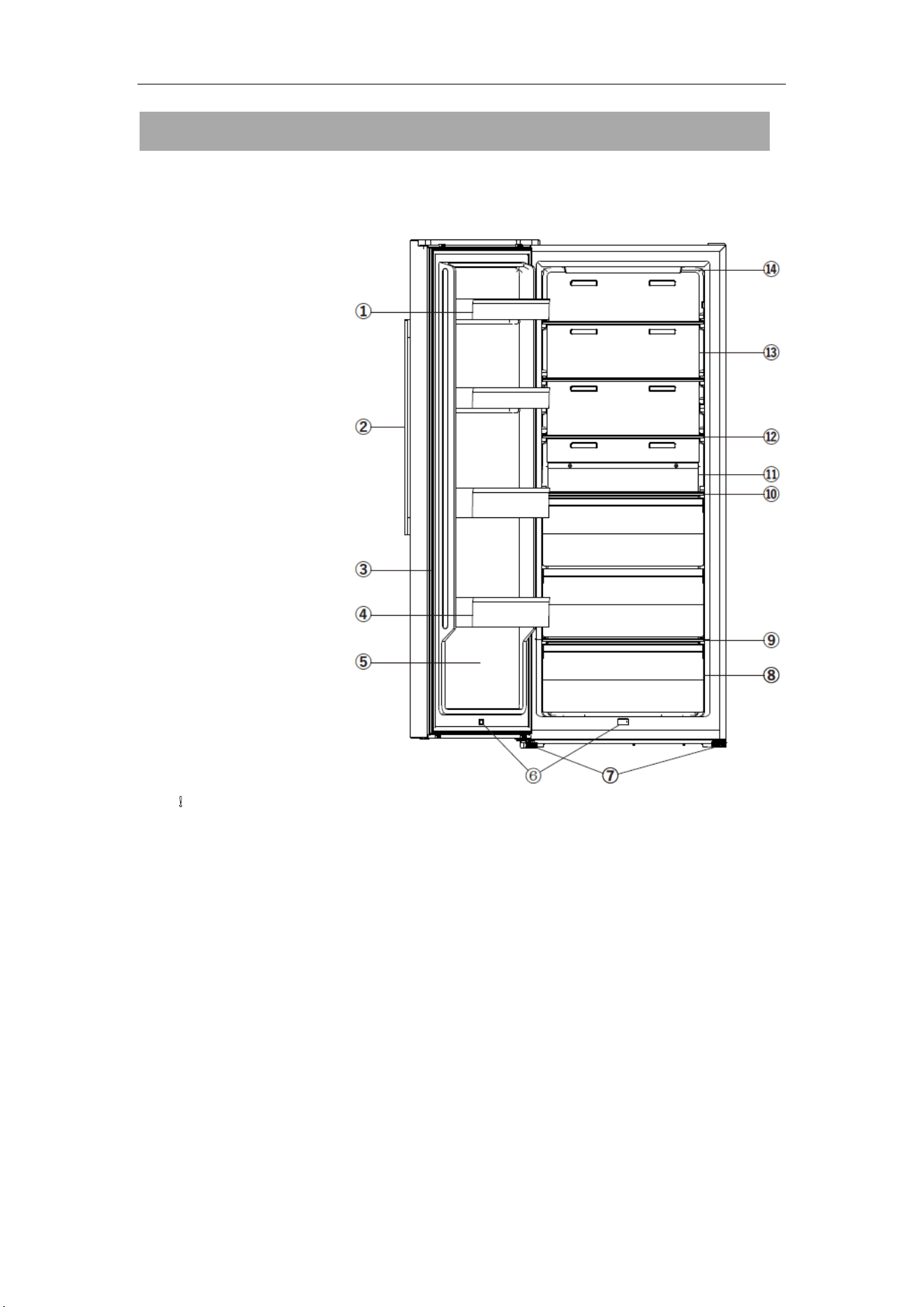
Description of the appliance
View of the appliance
1. Door shelf (Small)
2. Handle
3. Door gasket
4. Door shelf (Big)
5. Door
6. Door switch
7. Adjustable bottom fee
8. Drawer
11. Lower air duct
13. Upper air duct
14. Display panel
Note
ʽ
y
Due to unceasing modification of our products, your refrigerator may be slightly different
from this instruction manual, but its functions and using methods remain the same.
y
To get the best energy efficiency of this product, please place all shelves, drawers and
baskets on their original position as the illustration above.
9. Glass shelf (Lower)
10. Glass shelf (Middle)
12. Glass shelf (Upper)
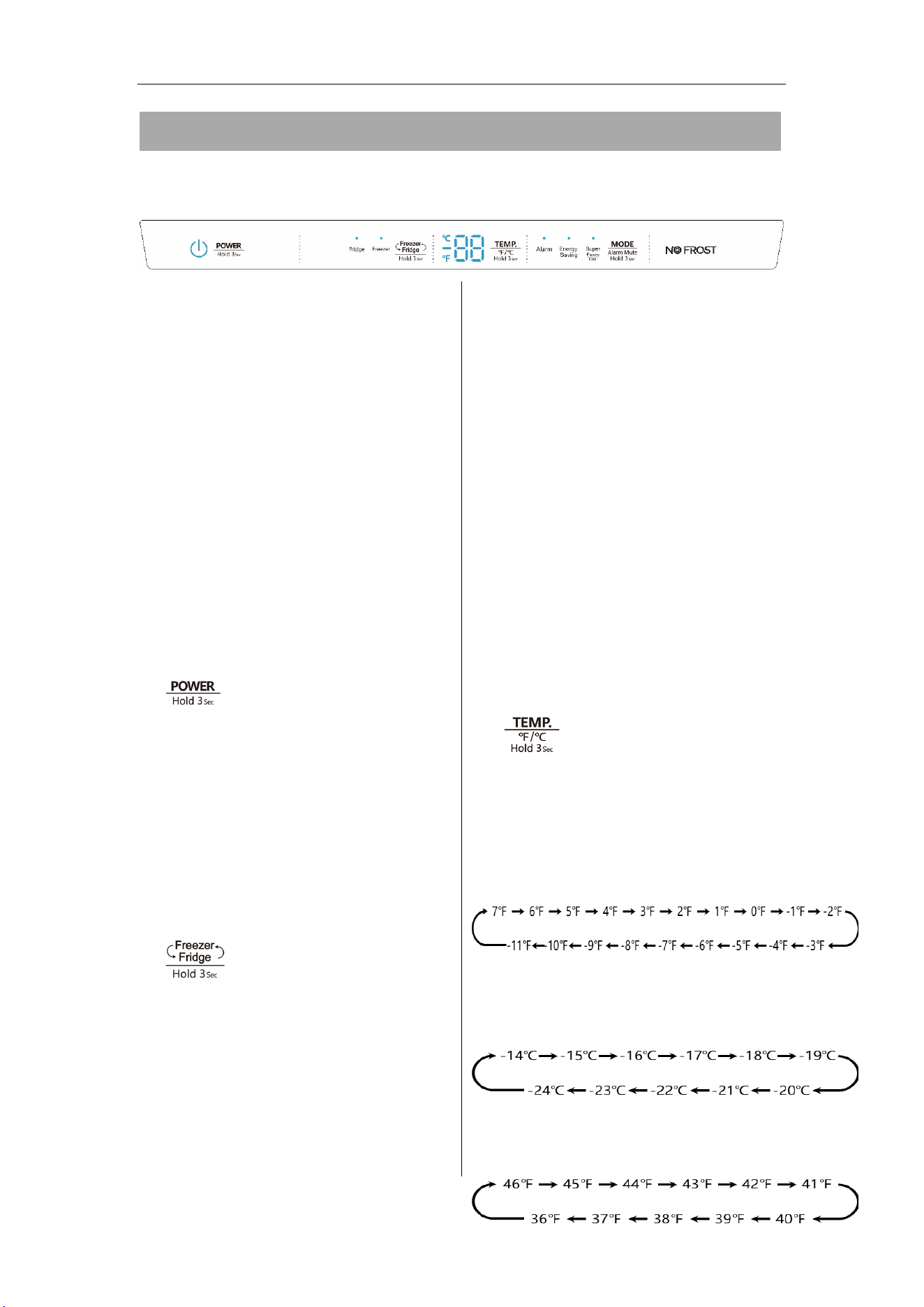
Display controls
Use your appliance according to the following control regulations, your appliance has the
corresponding functions as the control panels showed in the pictures below.
Controlling the temperature
Use your appliance according to the
following control regulations, your
appliance has the corresponding functions
as the control panels showed in the
pictures below.
Caution!
When you set a temperature, you set an
average temperature for the whole
refrigerator compartment. Temperatures
inside each compartment may vary from
the temperatures displayed on the panel,
depending on how much food you store
and where you place it. High or low room
temperature may also affect the actual
temperature inside the appliance.
1. POWER
Press and
hold the
POWER
button at least
3 seconds to enter/exit standby mode.
After entering the standby mode, the
POWER icon will light up, the temperature
area will display "OFF", other icons will turn
off, and other key functions will be invalid,
until the original control is restored after
pressing the button again to exit the
standby mode.
2. Freezer/Fridge conversion
Press and
hold Freezer/Fridge
conversion button for 3 seconds to
convert between freezer mode and fridge
mode.
Afterwards, the light will go out, and then
turn on or flash once. This is a normal
phenomenon indicating that the
conversion started and that the
functionality of the unit was switched from
one setting to another (Freezer/Fridge).
Cautio
z Before changing the compartment
setting, make sure that the stored food
is suitable for new setting mode. If
not, please empty it first.
z
When the freezer mode is changed to
fridge mode, please open the door for 5
minutes before putting in the food that
needs to be refrigerated.
z
When the fridge mode is changed to
freezer mode, please close the door and
let
the
unit run for
at
least 200 minutes
before putting in the food that needs to be
frozen.
z
When the fridge mode is changed to
freezer mode,
ensure there are
no
bottled or canned drinks
(especially
carbonated drinks) in the freezer
compartment. Bottles and cans may
explode.
3. T E M P.
Press the T E MP. button to adjust the
temperature to the desired setting.
If you have set the Freezer
compartment type to Fahrenheit,
the
temperature will be set in the following
sequence.
If you have set the Freezer
compartment type to Celsius,
the
temperature will be set in the following
sequence.
If you have set the Fridge compartment
type to Fahrenheit,
the temperature will
be set in the following sequence.
n!
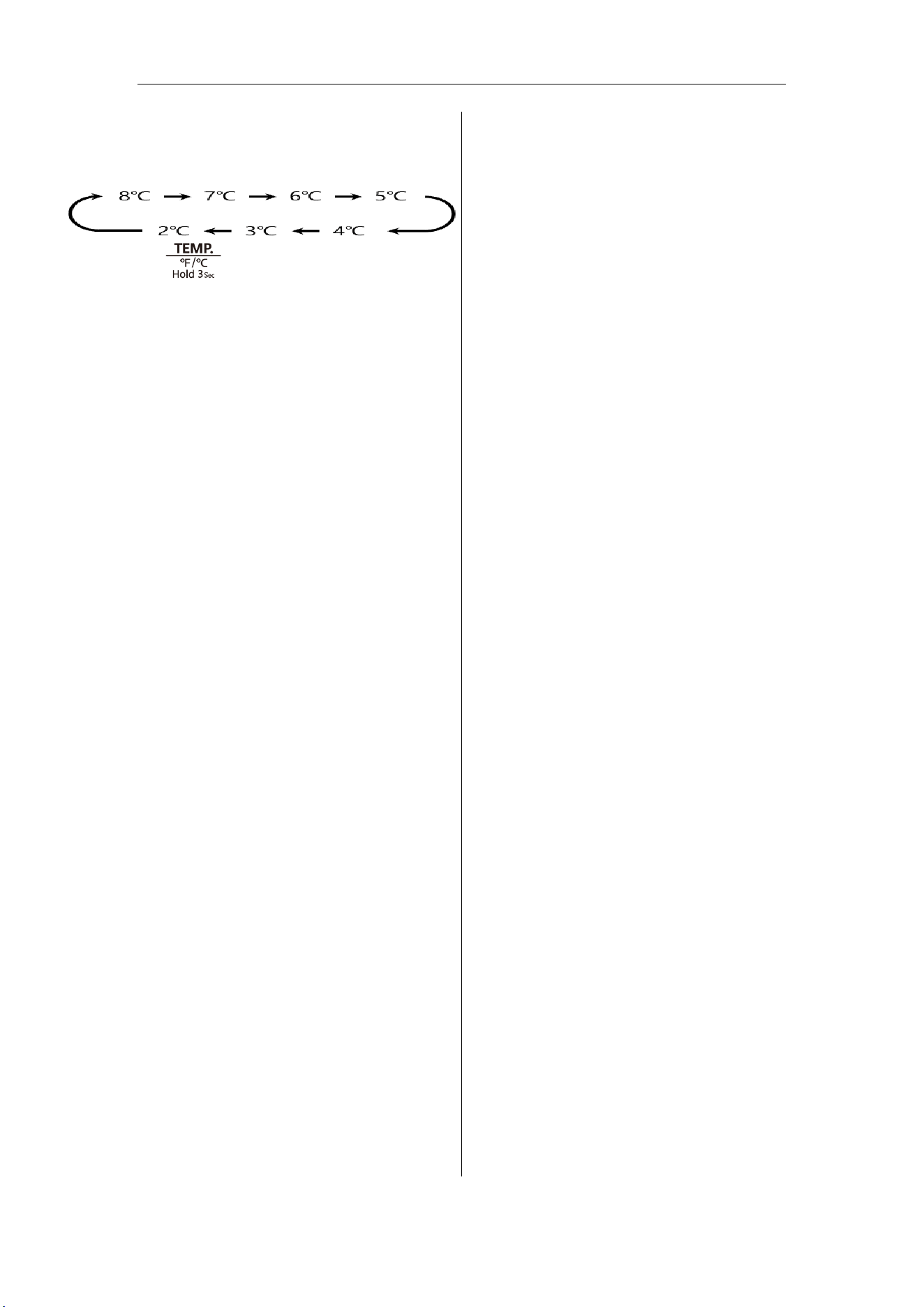
If you have set the Fridge compartment
type to Celsius,
the temperature will be
set in the following sequence.
4.
°F /°C
Press and hold the TE M P. button for 3
seconds to toggle between Celsius and
Fahrenheit on the display.
5. Door Alarm
When the door has been opened for over
2 minutes, the door alarm will come on.
In case of door alarm, the door alarm
indicator will light up and blink, and "dr" is
displayed in the temperature display area,
meanwhile, the buzzer will sound 3 times
every 1 minute and will stop alarming
automatically after 8 minutes. The door
alarm can be cleared by closing the door.
z
If the door alarm goes on, you can
press and hold the MODE button for at
least 3 seconds to clear the door alarm
sound, and then the control panel will
show “dr” and the “Alarm” icon will
light.
z To save energy, please avoid keeping
the door open for a long time when
using the appliance.
6.
Energy Saving
This function makes the refrigerator
work in a power saving mode which is
useful for reducing energy consumption
when you are away.
Press the MODE button to turn on the
Energy saving function. The Energy
Saving icon will be illuminated.
z
When the Energy Saving function is
on, in the fridge state, thetemperature is
set to 6°C (43°F); in the freezer state,
the temperature is set to -17°C (1°F).
z
When Energy Saving function is on,
you can turn it off by pressing the
MODE or TEMP. button and the
refrigerator temperature setting will
revert back to the previous setting.
7. Super Freeze
The Super Freeze feature helps to keep
the food stored in the freezer at the set
temperature during periods of high
usage, large grocery loads, or
temporarily warm room temperatures.
When on freezer mode, press the
MODE button to turn on the Super
Freeze function. The Super
Freeze/Super Cool icon will be
illuminated.
z When the Super Freeze function is
on, in the freezer mode, the temperature
is automatically set to -24°C (-11°F).
z
When Super Freeze function is on,
you can turn it off by pressing the MODE
or TEMP. button and the refrigerator
temperature setting will revert back to
the previous setting.
z
Super Freeze will automatically turn
off after 52 hours.
NOTE:
Do not leave glass bottles or
canned drinks (especially carbonated
drinks) in the freezer
compartment.
Bottles and cans may explode.
in the fridge state, the temperature is
set to 2°C (36°F).
z I f the door alarm goes on, you can
turn it off by closing the door.
z
When the Super Cool function is on,
8
. Super Cool
The Super Cool feature helps to keep
f
ood stored in the refrigerator at the set
temperature during periods of high
us
age, large grocery loads, or
temporarily warm room temperatures.
When on
the fridge
mode
, press the
MODE button to turn on the Super Cool
f
unction.The Super Freeze/Super
Cool icon
will be illuminated.
z
zSuper Cool will automatically turn off
after 6 hours.
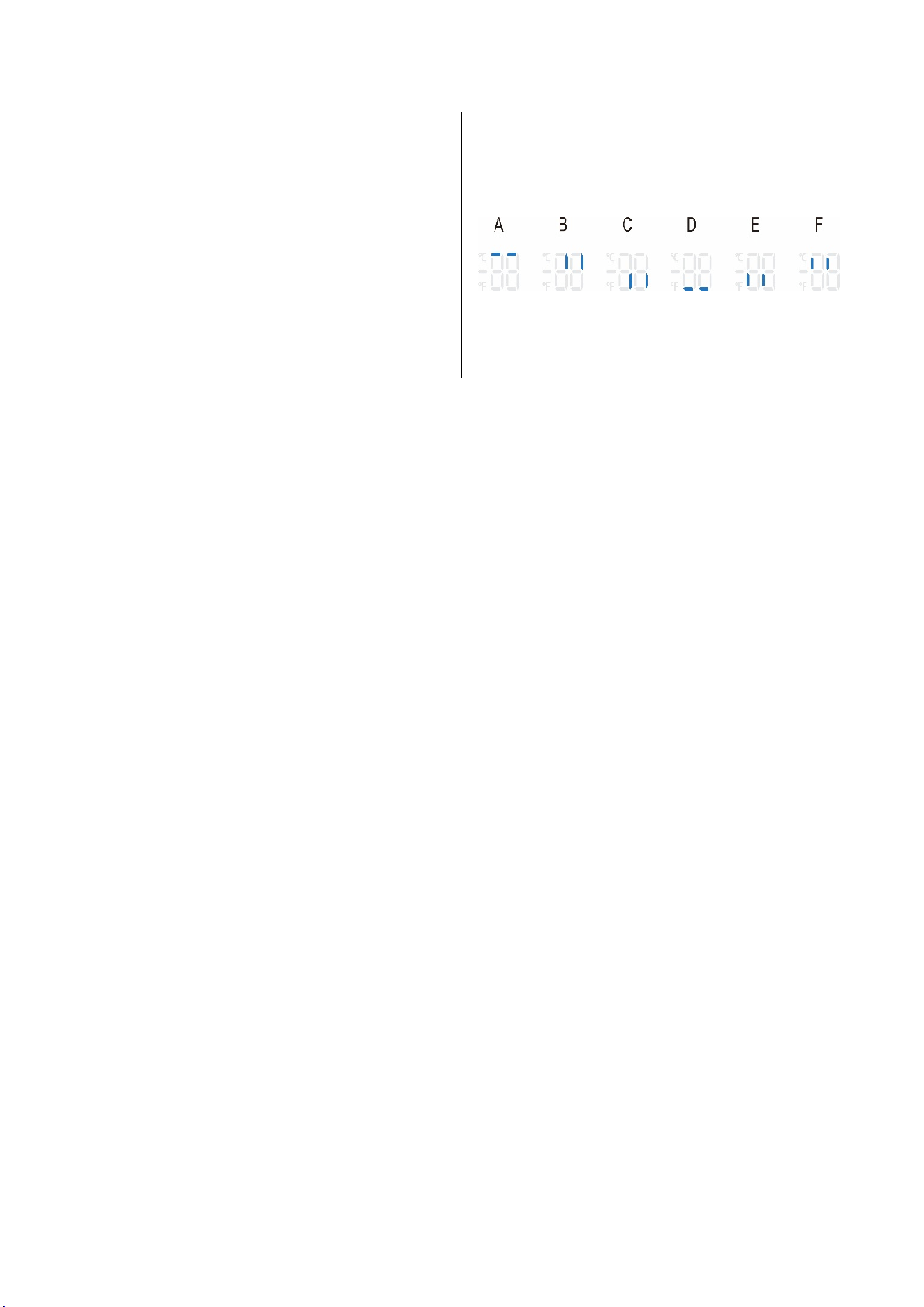
8. Demo mode
Demo mode is for store display and it
prevents the refrigerator from
Press and hold the POWER and MODE
buttons at the same time for 3 seconds to turn
off the demo mode and the buzzer gave a long
sound.
generating cool air. In this of Cooling off Mode,
the refrigerator may seem like it is working but it
will not make cool air. The display panel will
show special segments as follow.
When Super Cool function is on, you
can turn it off by pressing the “MODE”
or TEMP. button and the refrigerator
temperature setting will revert back to
the previous setting.
Using your appliance
Ɣ
Ɣ
As indicated in the "Description of the Appliance," your appliance comes with various
accessories. To ensure you use them correctly, please refer to this section of the
instruction manual. We highly recommend reading through these instructions
thoroughly before operating the appliance
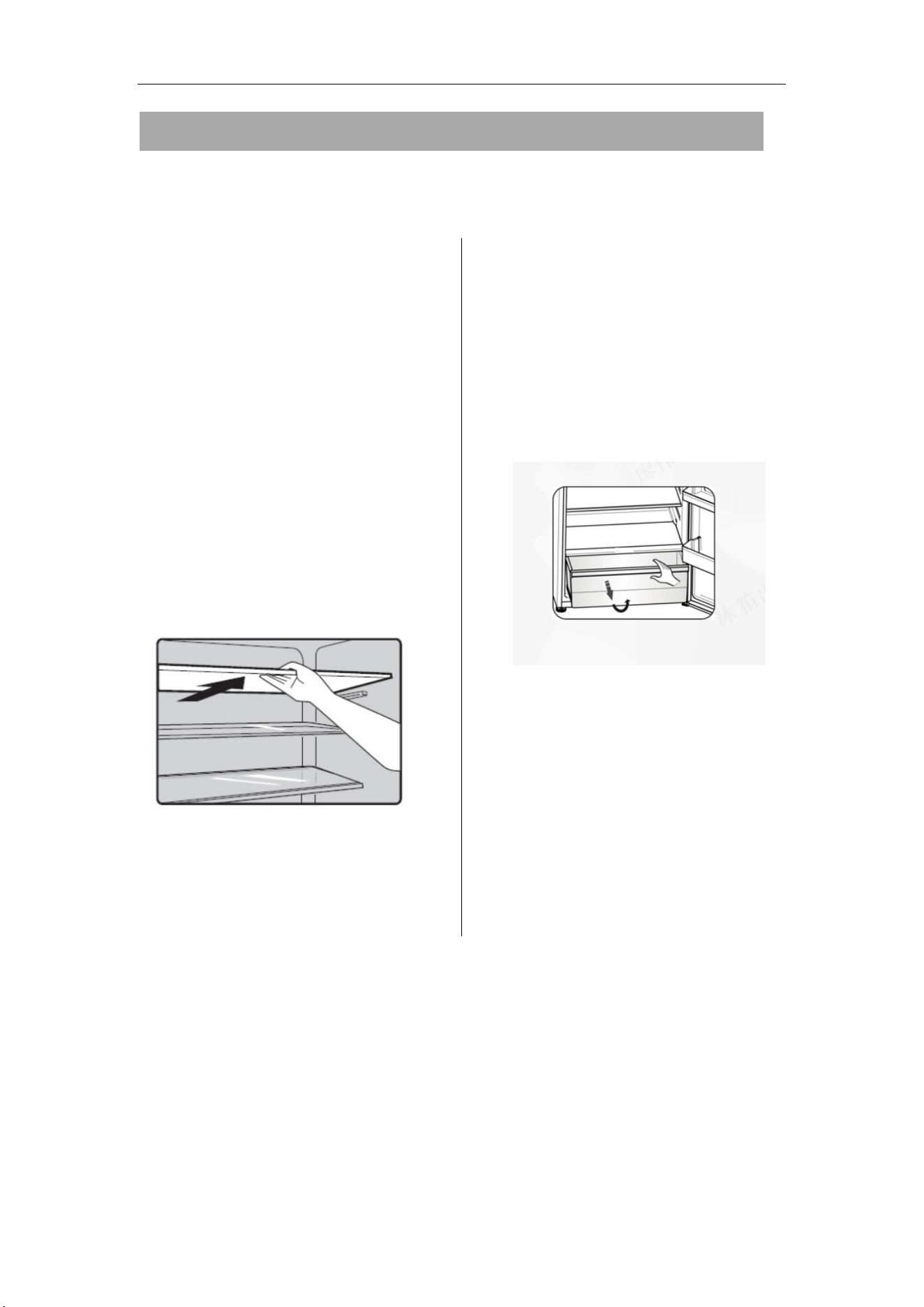
Door shelf
These door shelves are ideal for storing
eggs, canned liquids, bottled drinks,
packed food, and other lightweight items.
It's important to avoid placing too much
weight on them to prevent damage or
bending.
The small shelves on the lower part of
the door can be adjusted to different
heights to accommodate your storage
needs. We recommend removing the
items from the shelf before adjusting its
height to prevent spills or accidents
Glass shelves
The refrigerator compartment features
removable shelves for easy cleaning and
maintenance.
Crisper drawer
The crisper drawer is specifically
designed to keep your vegetables and
fruits fresh and crisp for longer periods
of time. It provides an ideal storage
environment that helps to maintain the
natural moisture and flavor of your
produce, while also protecting them from
external elements that can cause
spoilage
Freezer compartment
The freezer compartment is designed to
safely store frozen foods, including meat,
ice, and other items that need to be kept at
sub-zero temperatures.
Additionally, please avoid leaving drink
bottles in the freezer for extended periods
of time, as freezing liquids can cause
bottles to crack or break. Be sure to remove
them promptly after freezing, and handle
them with care.

Cleaning and care
1. Remove all existing food and
accessories baskets from the
freezer compartment. Unplug the
appliance from the main power
source and leave the doors open. To
speed up the process, you can also
ventilate the room thoroughly.
2.Wait for the frost to thaw completely,
which may take several hours. Once
the ice has melted, wipe down the
interior of the freezer with a dry cloth or
sponge to remove any excess
moisture.
3. Thoroughly clean all of the removable
parts and accessories with a mild
detergent and warm water. Rinse and
dry them completely before placing
them back into the freezer.
4. Once everything is dry, plug the
appliance back in and wait for it to cool
down to its desired temperature before
returning the food and accessories to
the freezer.
Although this appliance features an
automatic defrost function, frequent
opening or leaving the freezer door open
for too long may result in the formation of
a layer of frost on the interior walls of the
freezer compartment. If the frost is too
thick, it's recommended that you defrost
the freezer manually by following these
steps:
To ensure that your appliance stays
hygienic and functioning properly, it's
recommended that you clean it (including
both the exterior and interior accessories)
at least every two months.
Warning!
Before beginning the cleaning process,
make sure to turn off the appliance and
unplug it from the main socket to prevent
electrical shock
Exterior cleaning
A
void using ethereal oils, abrasive
cleansers, or organic solvents such as
benzene, as these can damage the
surface of the appliance and may even
cause fire hazards. Instead, use a damp
cloth or sponge with a mild detergent to
wipe down the exterior regularly.
Interior cleaning
For the interior, it's best to clean it
regularly, especially when food stocks
are low to make the process easier. Use a
weak solution of baking soda and
water to wipe down the inside of the
fridge and freezer, and then rinse with
warm water using a wrung-out sponge or
cloth. Be sure to wipe everything dry
before replacing the shelves and
baskets, and thoroughly dry all surfaces
and removable parts before putting them
back into place.

y
Clean
the
doors, handles and cabinet
surfaces with a mild detergent and then
wipe dry with a soft cloth.
Caution!
y
Don’t use sharp objects to clean with, as
they are likely to scratch the surface.
Cleaning and care
y
Don’t
use
Thinner,
Car
detergent,
bleach,
your
freezer
as
described
above.
Warning!
Do not use sharp objects to remove
frost from the freezer compartment. Only
after the interior is completely dry
should the appliance be switched back
on and plugged back into the main socket.
Door seals cleaning
Take care to keep door seals clean. Sticky
food and drinks can cause seals to stick
to the cabinet and tear when you open the
door. Wash the seal with a mild detergent
and warm
water.
Rinse
and
dry
it
thoroughly after cleaning.
Caution!
Only
after
the
door seals are
completely
dry
should
the
appliance
be
powered on
Replacing the LED light
Warning: The LED light must be replaced
by a competent person. If the LED light is
damaged, follow the steps below:
1. Unplug your appliance.
2.
Remove
light
cover
by rising up and
pulling out the LED light.
3.
Hold
the
LED
light
with one hand and
pull
it
with
the
other
hand
while
pressing
the connector latch.
4. Replace LED light and snap it correctly
in place and recover the light cover.
y
Spray water onto a cleaning cloth
instead
of
spraying
directly
on
the
surface
of
the
appliance.
This
helps
ensure an even distribution of moisture to
the surface.
Helpful hints and tips
Energy saving tips
We recommend that you follow the tips
below to save energy.
y
Try to avoid keeping the door open for
long periods in order to conserve energy.
Ensure the appliance is away from any
sources of heat (Direct sunlight, electric
oven or cooker etc.)
y
Don‘t set the temperature colder than
necessary.
y
Don’t store warm food or evaporating
liquid in the appliance.
y
Place the appliance in a well ventilated,
humidity free, room. Please refer to
Installing your new appliance chapter.
y
If the diagram shows the correct
combination for the drawers, crisper and
shelves, do not adjust the combination as
this is designed to be the most energy
efficient configuration.
Hints for fresh food refrigeration
y
Do not place hot food directly into the
refrigerator or freezer, by doing so
the internal temperature increase,
resulting in the compressor having to
work harder to decrease the temperature,
therefore will consume more energy.
y
Cover or wrap the food
ˈ
particularly if
it
has a strong flavor.
y
Place the food properly so that air
can
circulate freely around it.
Hints for refrigeration
y
Meat (All Types)
should be wrapped in
polythene food wrap and placed on the
glass shelf above the vegetable drawer.
y
Cooked food or other cold dishes
should
be stored in a container and can be
placed on any shelf.
y
Fruit and vegetables
should be stored in
the crisper drawer for optimal freshness.
y
Butter and cheese s
hould be wrapped in
airtight foil or plastic film wrap.
y
Milk bottles s
hould have a lid and be
stored in
one of the door shelves
.
Hints for freezing
y
When first starting-up or after a period
out
of use, let the appliance run at least 2 hours
on the coldest settings before
putting food in the compartment.
y
Prepare food in small portions to enable
it to be rapidly and completely frozen and to
make it possible to subsequently thaw only
the quantity required.
y
Wrap up the food in aluminum foil or
polyethylene food wraps which are airtight.yTo
prevent a rise in temperature of
already frozen food, do not allow fresh or
unfrozen food to come into contact with it.
Keep them separated in the freezer.
yIced products that are consumed
immediately after being removed from the
freezer may cause frost burns to the skin. It
is best to let them thaw for a few
minutes before consuming.
yTo keep track of storage time, it is
recommended to label and date each
frozen package. This helps to ensure that
food is used before it reaches its
expiration date and helps to prevent food
waste.
Hints for the storage of frozen food
yTo ensure the safety and quality of frozen
food, it is important to make sure that it has
been stored correctly by the food retailer.
yOnce food has been defrosted, it will
deteriorate rapidly and should not be
re-frozen. Additionally, it is important not to
exceed the storage period indicated by the
food manufacturer.
Switching off your appliance
If you need to switch off your appliance for an
extended period of time, it is important to take the
following steps to prevent mould from developing
on the appliance:
1. Remove all food.
2. Remove the power plug from the mains socket.
3. Clean and dry the interior thoroughly.
4. Ensure that all the doors are wedged open
slightly to allow air to circulate.
Troubleshooting
If you experience a problem with your appliance or are concerned that the appliance is not
functioning correctly, you can carry out some easy checks before calling for service, please
see below.
Warning!
Don’t try to repair the appliance yourself. If the problem persists after you have
made the checks mentioned below, contact a qualified electrician, authorized service
engineer or the shop where you purchased the product.
Problem Possible cause & Solution
Appliance is not working
correctly
Check whether the power cord is plugged into the power outlet
properly.
Check the fuse or circuit of your power supply, replace if
necessary.
It is normal that the freezer is not operating during the defrost
cycle, or for a short time after the appliance is switched
on to
protect the compressor.
Odours from the
compartments
The interior may need to be cleaned.
Some food, containers or wrapping cause odours.
Noise from the
appliance
The sounds below are quite normal:
y
Compressor running noises.
y
Air movement noise from the small fan motor in the freezer
compartment or other compartments.
y
Gurgling sound similar to water boiling.
y
Popping noise during automatic defrosting.
y
Clicking noise before the compressor starts.
Other unusual noises are due to the reasons
below and may
need you to check and take action:
y
The cabinet is not level.
y
The back of appliance touches the wall.
y
Bottles or containers fallen or rolling.
The motor runs
continuously
It is normal to frequently hear the sound of the motor, it will
need to run more when in following circumstances:
y
Temperature setting is set colder than necessary.
y
Large quantity of warm food has recently been stored within
the appliance.
y
The temperature outside the appliance is too high.
y
Doors are kept open too long or too often.
y
After you installing the appliance or it has been switched off
for a long time.
A layer of frost occurs in
the compartment
Check that the air outlets are not blocked by food and ensure
food is placed within the appliance to allow sufficient
ventilation. Ensure that door is fully closed. To remove the
frost, please refer to the“Cleaning and care” chapter.
Temperature inside is
too warm
You may have left the doors open too long or too frequently; or
the doors are kept open by some obstacle; or the appliance is
located with insufficient clearance at the sides, back and top
Temperature inside is
too cold
Increase the temperature by following the “controls panel”
chapter.
Doors can’t be closed
easily
Check whether the top of the refrigerator is tilted back by 10
-
15mm to allow the doors to self close, or if something inside is
preventing the doors from closing.
1.
2.
Disposal of the appliance
Pull out the mains plug from the mains socket.
Cut off the power cord and discard with the mains plug
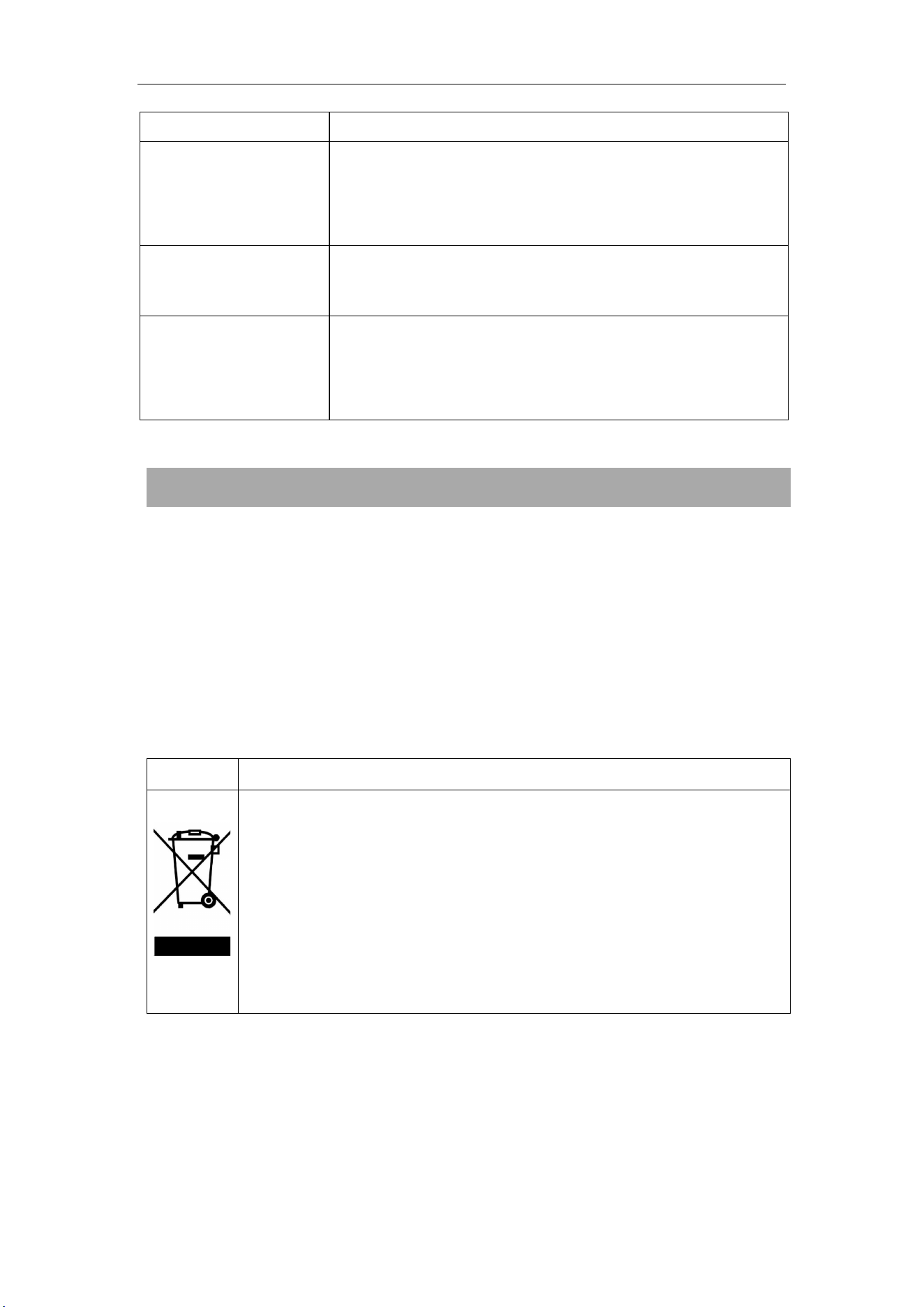
It is prohibited to dispose of this appliance as household waste.
Packaging materials
Packaging materials with the recycle symbol are recyclable. Dispose of the packaging into
a suitable waste collection container to recycle it.
Before disposal of the appliance
Warning!
Refrigerators contain
refrigerant and gases in the insulation. Refrigerant and
gases must be disposed of professionally as they may cause eye injuries or ignition.
Ensure that tubing of the refrigerant circuit is not damage prior to proper disposal.
Correct Disposal of this product
This symbol on the product or in its packing indicates that this product may
not be treated as household waste. Instead, it should be taken to the
appropriate waste collection point for the recycling of electrical and
electronic equipment. By ensuring this product is disposed of correctly, you
will help prevent potential negative consequences for the environment and
human health, which could otherwise be caused by the inappropriate waste
handling of this product. For more detailed information about the recycling
of this product, please contact your local council your household waste
disposal service, or the shop where you purchased the product.
PP
f
f
PP
f
f
PP
PP
PP
PP
PP
PP
PP
PP
PP
@;L%=+12L=+11LAF;=+F=L
7BB73L%=+11L=+21L+6!=+F=
7=B+IL;=B+B+76L17+A76L7=B+IL
JB=61L!=3L=LJB=6
,&(CL8GC>L">4L>/C
H<<9?DLL?LKD?-H?L?9.DL
)A+IL$JL=L
==L$JL)A+IL
#EL:FE =L#=5 L=0 E
H<<9?DLL?LKD?.H?L'H*L
PP
PP
P
PP
PP
PP
PP
PP
P
P
P
PP
PP