+
A GG.2405-0953 蔡红凌
2024.05.16
B ECN100009892 林菲菲
2025.01.12
C ECN100013655 梁冰冰
2025.03.14
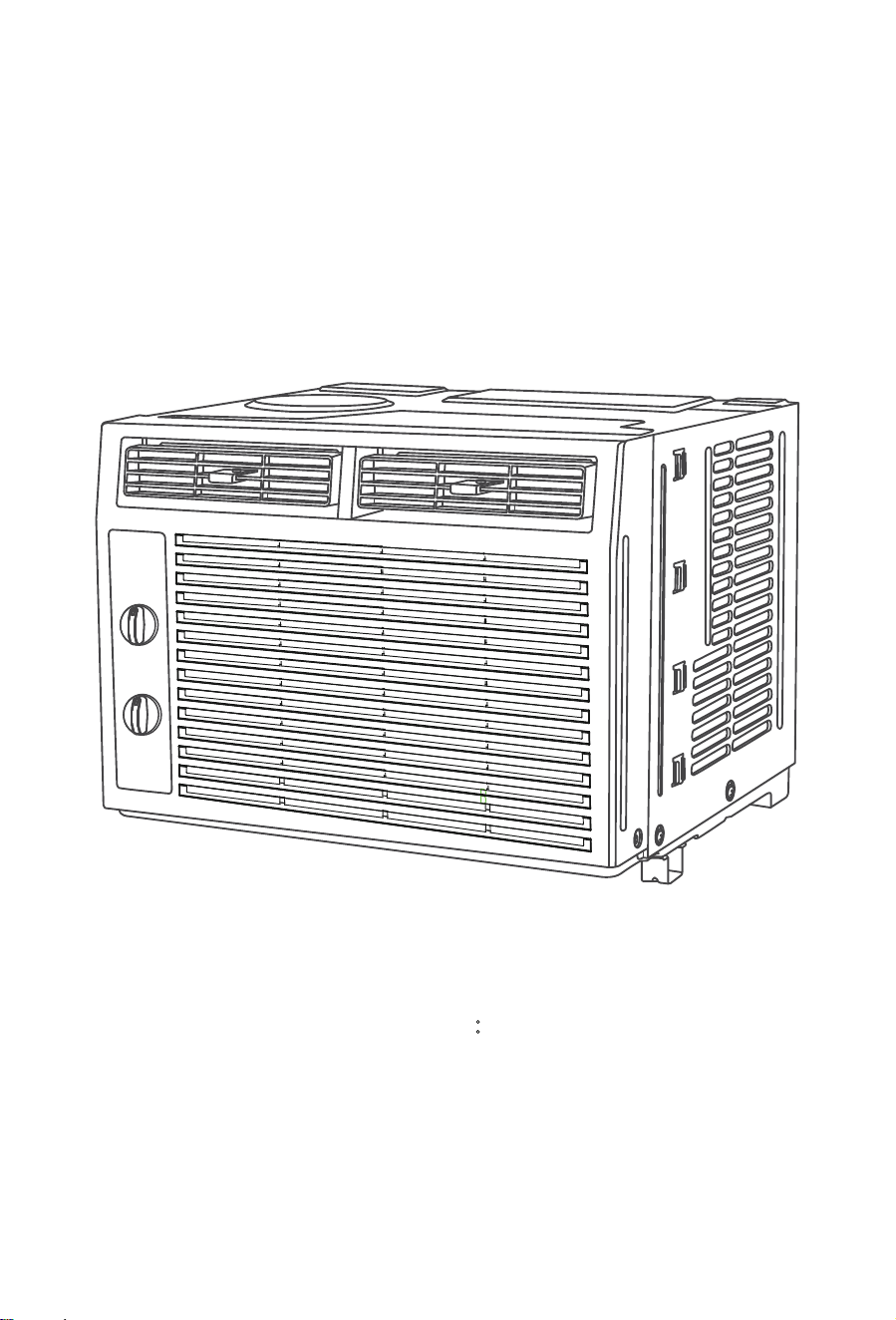
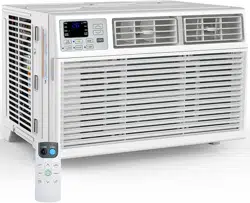
WINDOW AIR CONDITIONER
Thank you for purchasing this product!
If you have questions about the product such as missing parts,damaged products,
product assembling and operation etc., please contact us via
customer service phone:818-468-3970.
A8501W-5K
MODEL NO. :

01
03
05
06
14
15
16
CONTENTS
Important Safety Instructions
Electrical Requirements
Packing List
Installation & Assembly Instructions
Using Your Air Conditioner
Care and Cleaning
Troubleshooting
Important Safety Instructions
Before installing and using your air conditioner, please read this owner's manual carefully.
Store this manual in a safe place for future reference. Your safety and the safety of
others is very important to us. Please pay attention to all safety messages outlined in
this user manual.
To reduce the risk of fire, electrical shock or injury when using your air conditioner, follow
the basic precautions below:
This is a safety alert symbol. This symbol alerts you to potential hazards that
can harm you or others or even cause death. All safety messages will directly
follow the safety alert symbol and/or the words "DANGER" or "WARNING".
Warning
Failure to immediately follow these instructions may cause serious injury or even death.
Danger
All Safety messages alert you of potential hazards, how to reduce the chance of injury,
and what can happen if instructions are not followed correctly.
Warning
Plug into a grounded 3 prong outlet.
Do not remove the ground prong.
Do not use a plug adapter.
Do not use an extension cord.
Unplug the air conditioner before servicing.
Use two or more people to move and install the air conditioner.
01
Warning
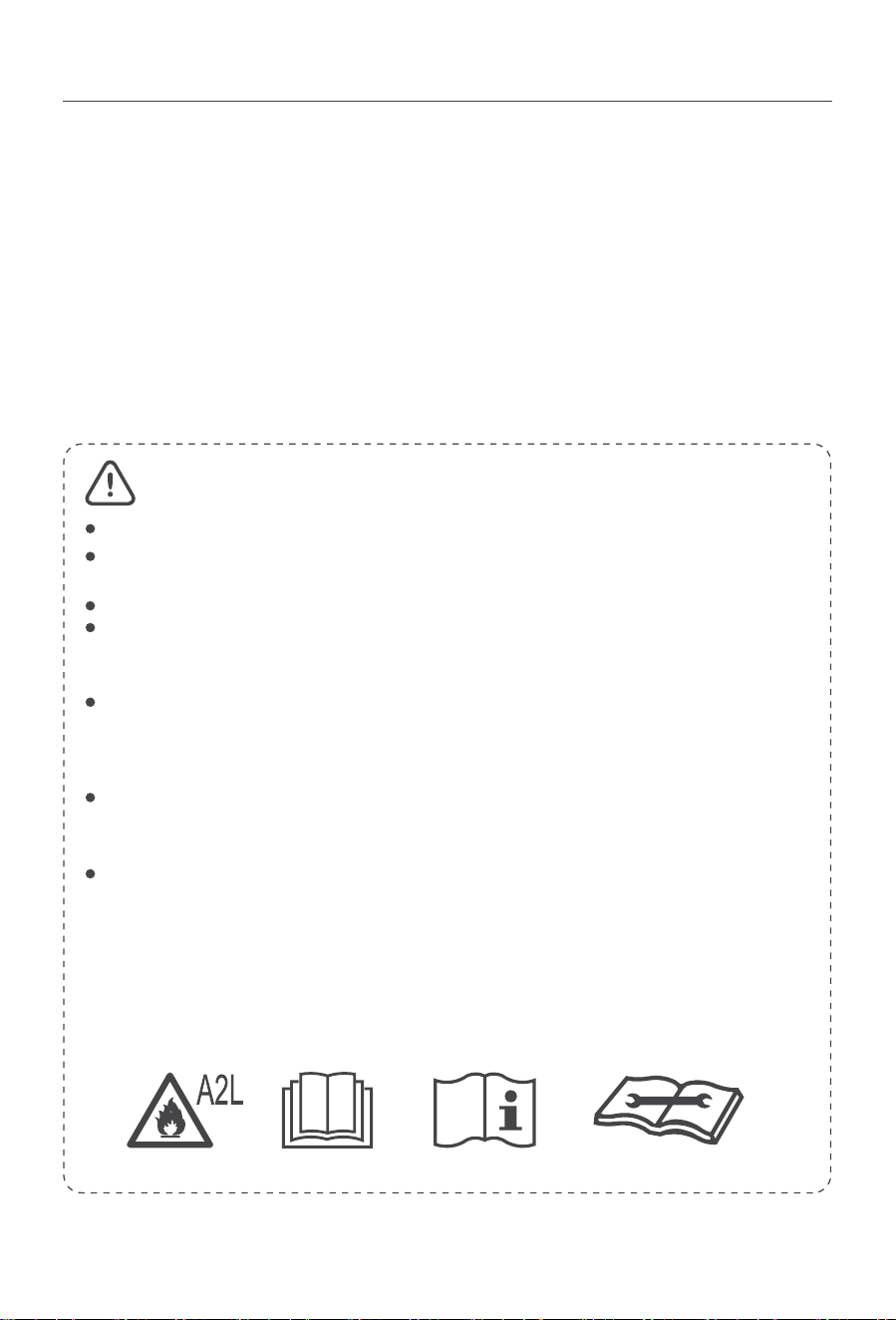
Please read the manual before installation, using, maintenance.
Do not use means to accelerate the defrosting process or to clean, other than
those recommended by the manufacturer.
Do not pierce or burn the appliance.
The appliance shall be stored in a room without continuously operating sources
(for example: open flames, an operating ignition gas appliance or an operating
electric heater.)
Please contact the nearest after-sale service center when maintenance is necessary.
At the time of maintenance, the maintenance personnel must strictly comply with
the Operation Manual provided by the corresponding manufacturer and any non-
professional is prohibited to maintain the air conditioner.
The handling, installation, storage, servicing and disposal must comply with the
provisions of gas-related national laws and regulations, and also national wiring
regulation.
It is necessary to clear away the refrigerant in the system when maintaining or
scrapping an air conditioner. Be aware that refrigerants may not contain an odour.
This appliance is not intended for use by persons (including children) with reduced
physical, sensory or mental capabilities, or supervision or instruction concerning use
of the appliance by a person responsible for their safety.
Children should be supervised to ensure that they do not play with the appliance.
Unit operation limits: Outdoor side 61~110°F, 80%RH, indoor side 61~90°F, 80%RH.
02
Introduction to Refrigerants R32
The refrigerants used for air conditioners are environmentally friendly hydrocarbons
R32. This kind of refrigerant is combustible and odorless. Moreover, it can burn and
explode under certain condition. However, there will be no risk of burning and
explosion if you comply with the following table to install your air conditioner in a room
with an appropriate area and use it correctly.
Compared with ordinary refrigerants, Refrigerant R32 is environmentally friendly and do
not destroy the ozone sphere and that its value of greenhouse effect is also very low.
Electrical Requirements
Electrical Shock
Hazard Plug into a grounded 3-prong outlet.
Do not remove the ground prong.
Do not use an adapter.
Do not use an extension cord.
Failure to follow these instructions can result in death, fire, or
electrical shock.
To contact a qualified electrician.
To assure that the electrical installation is adequate and in conformance with the
National Electrical Code, ANSI/NFPA 70-latest edition, and all local codes and ordinances.
Warning
The electrical ratings for your air conditioner are listed on the model and serial number
label located on the front left side of the unit (when facing the front).
Specific electrical requirements are listed in the chart below. Follow the requirements
below for the type of plug on the power supply cord.
Recommended Ground Method
For your personal safety, this air conditioner must be grounded. This air conditioner is
equipped with a 3 prong power supply cord with a grounded plug. To minimize the poss-
ibility of electrical shock, the cord must be plugged into a -prong outlet and grounded
in accordance with all local codes and ordinances. If a 3-prong outlet is not available, it
is the customer's responsibility to have a properly grounded 3-prong outlet installed by
a qualified electrician.
It is the customer's responsibility:
115 volt (103min. —127max)
0-8 amps
10-amp time-delay fuse or circuit breaker
Use on single outlet circuit only
Wiring Requirements Power Supply Cord
03
04
LCDI Power Cord and Plug
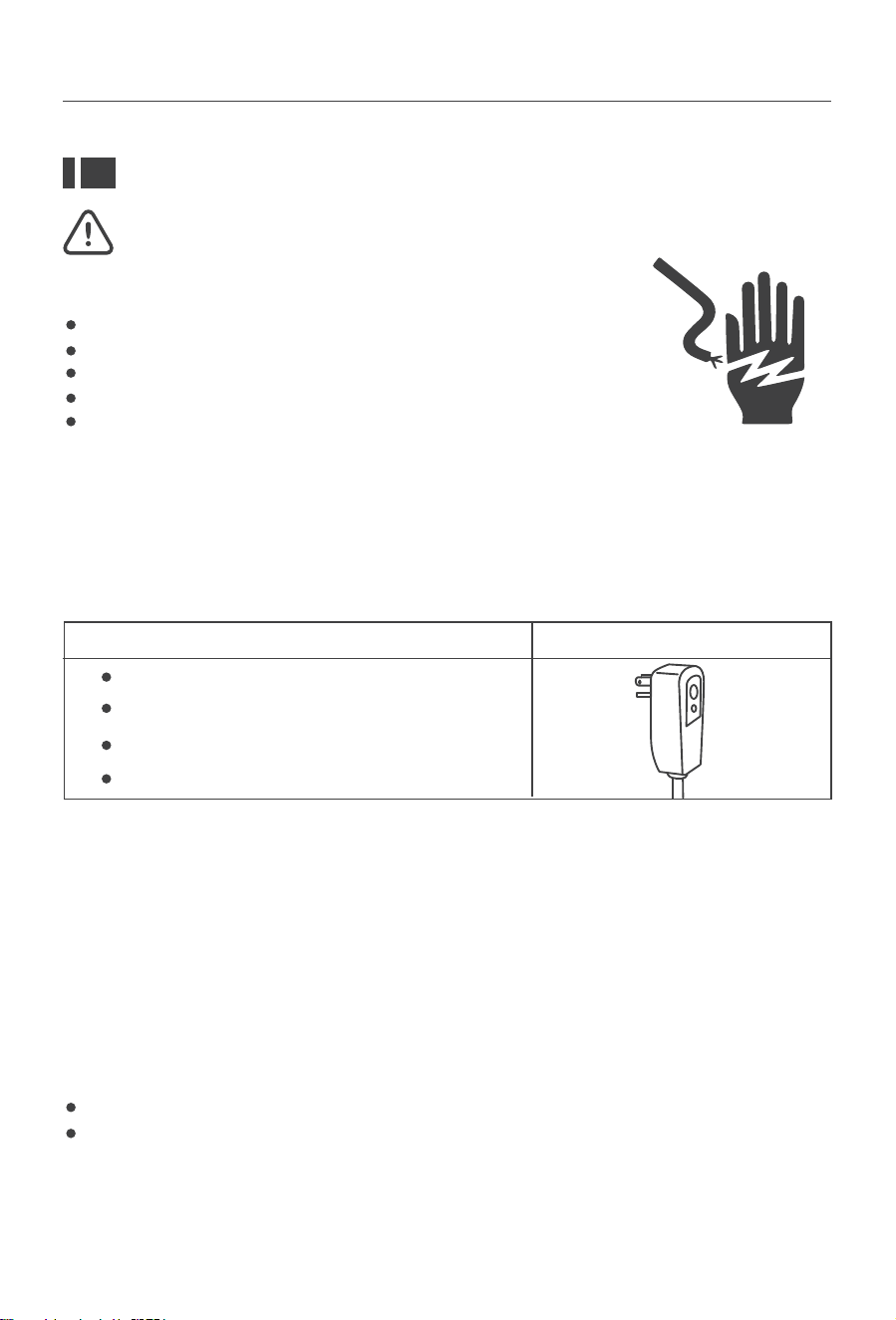
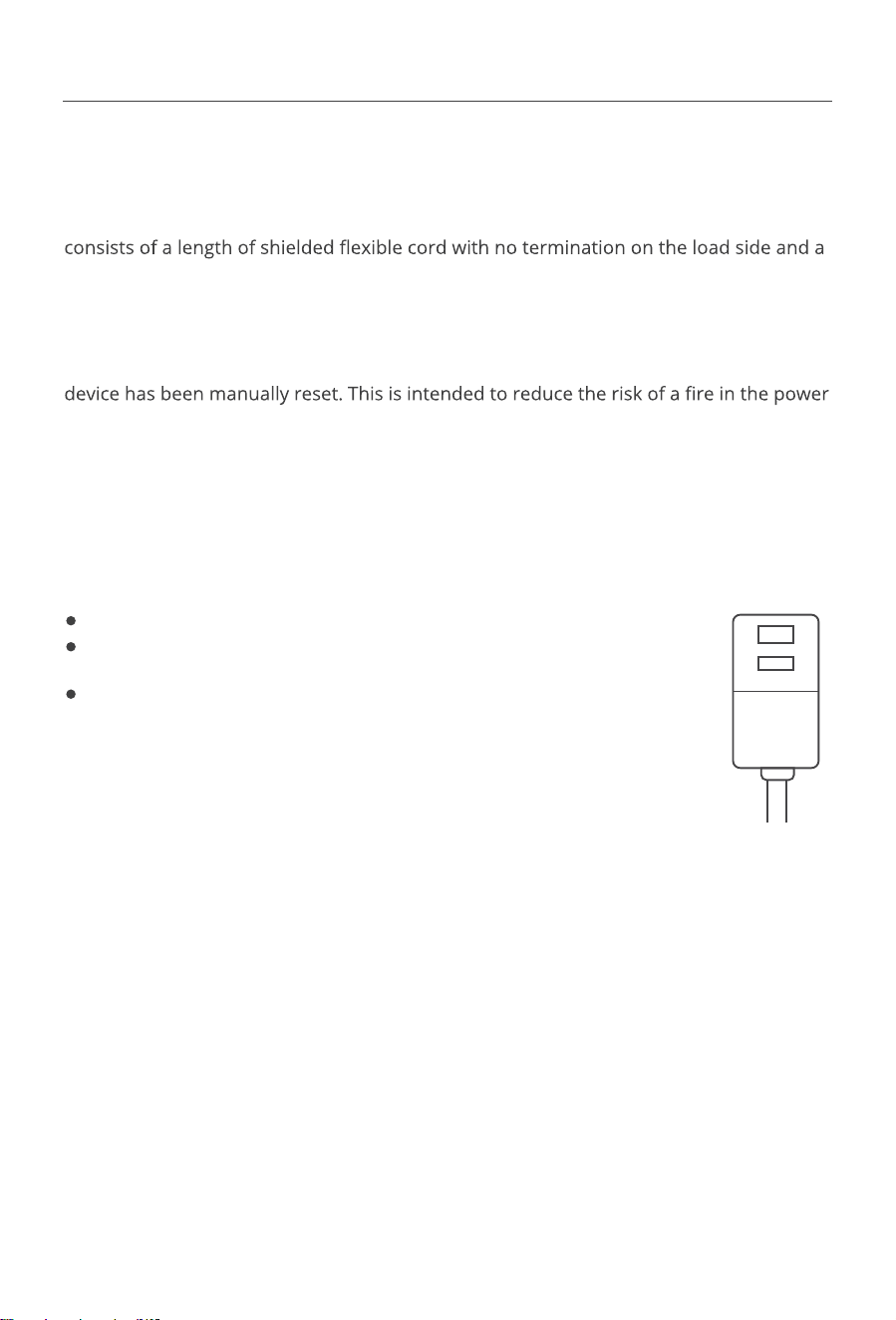
This air conditioner is equipped with an LCDI (Leakage Current Detection and Interrup-
tion) power cord and plug as required by US National Electric Code 440.65. This cord
LCDI attachment plug on the line side.
The LCDI power cord and plug will remove the supply source via electrical disconnect
(circuit trip) if the nominal current leakage between the cord shield and either load
conductor exceeds a predetermined value. The cord will remain deenergized until the
cord or combustible materials nearby. The cord shields are not grounded and they must
be considered a shock hazards if exposed. The cord shield must not be connected to
ground or to any exposed metal.
The test and reset buttons on the LCDI Plug are used to check if the plug is functioning
properly.
If a test is performed and the indicator light remains ON, the current
leakage has been detected. Do not use the air conditioner or attempt to
reset the LCDI Plug. Contact Customer Service for troubleshooting reco-
mmendations.
TEST
RESET
Plug power cord into a wall outlet.
Press the TEST Button, the circuit should trip and cut all power to the
air conditioner (on some units a green light may turn off).
Press the RESET button for use (on some units a green light will turn on).
To test the plug:
Packing List
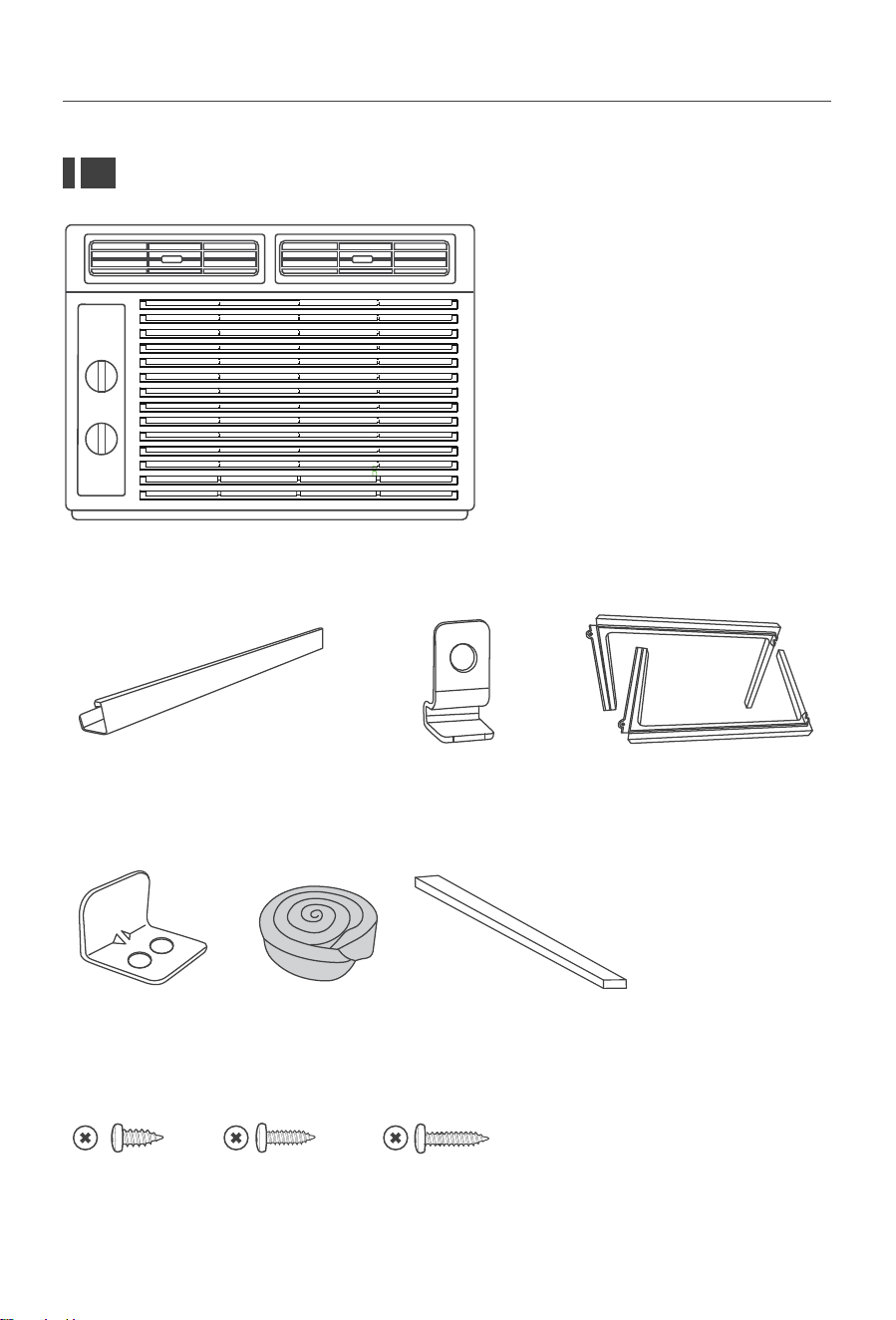
Window Air Conditioner *1
Top Rail (With sponge) *1
Sash Lock
(Two holes) *1
3/8"Screws *4 1/2"Screws *3
Window Sash Seal
(Sponge) *1
Foam Top Window
Gasket *1
Lock Frame *2
Filler Panels *2
(With "Left"&"Right"remark on the
front face)
05
3/4"Screws *4
(Thin sponge for back-up using)
Installation & Assembly Instructions
Some assembly is required for your new air conditioner. Please read and follow these
instructions carefully.
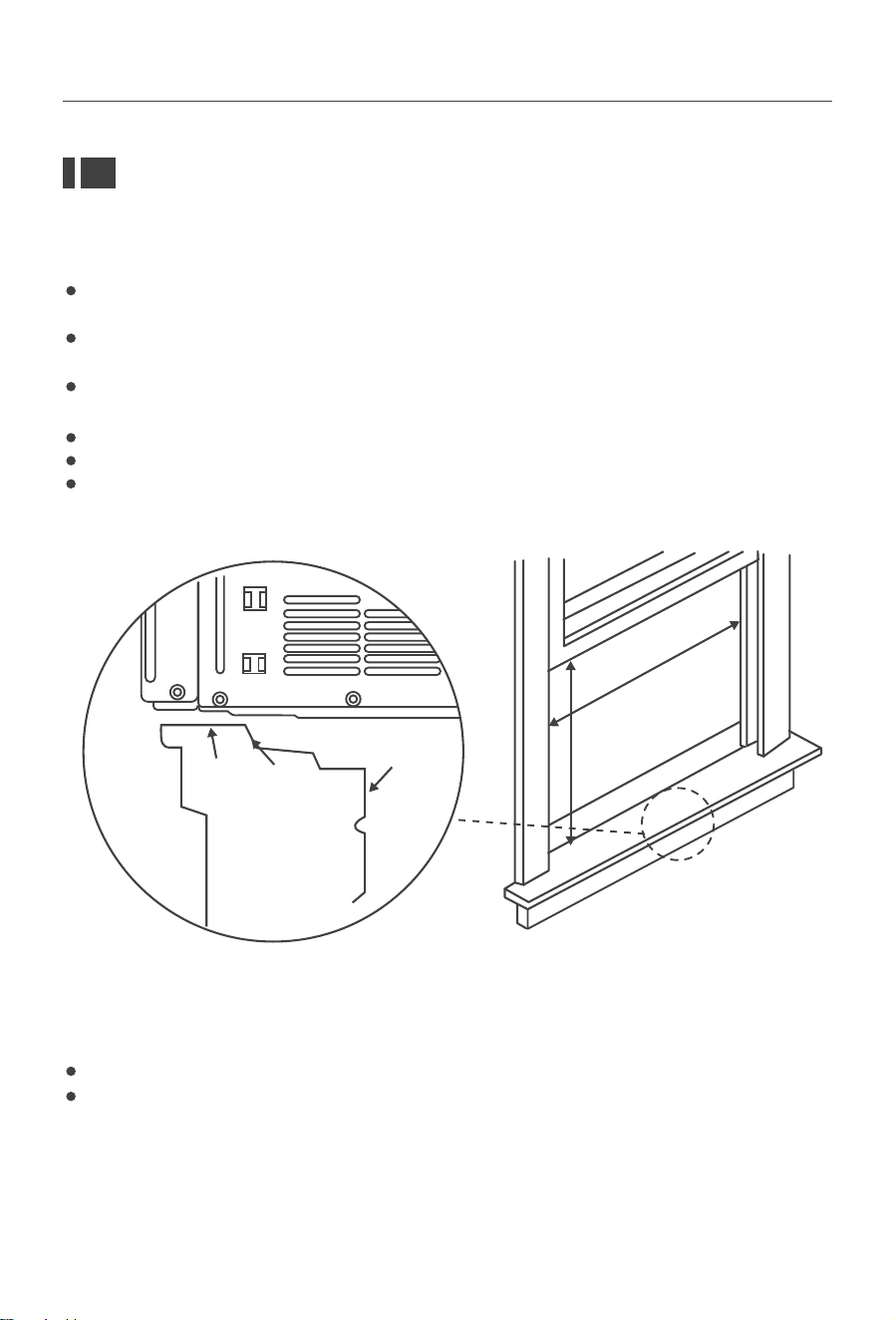
This air conditioner is designed to be installed in a standard double-hung window with
a window width between 23" and 34" (584mm-863 mm).
The air conditioner can be installed without the accordion panels to fit in a narrow
window opening. See the window dimensions.
The Lower Sash (the lower part of the window that moves up and down) must allow
for 14.5" of vertical
clearance when open. (See Fig.1).
All supporting parts must be secured to firm wood, masonry, or metal.
The electrical outlet must be within reach of the power cord.
The air conditioner should be tilted about 3° for better drainage of condensate and
rainwater.
14.5inch
368mm
23-34inch
584-863mm
Interior Wall
Stool
Sill
Offset
Exterior
Wall
Fig.1
Save the product packaging and installation instructions for future reference.
Store the air conditioner in the product box when not in use for an extended period
of time.
NOTE:
06
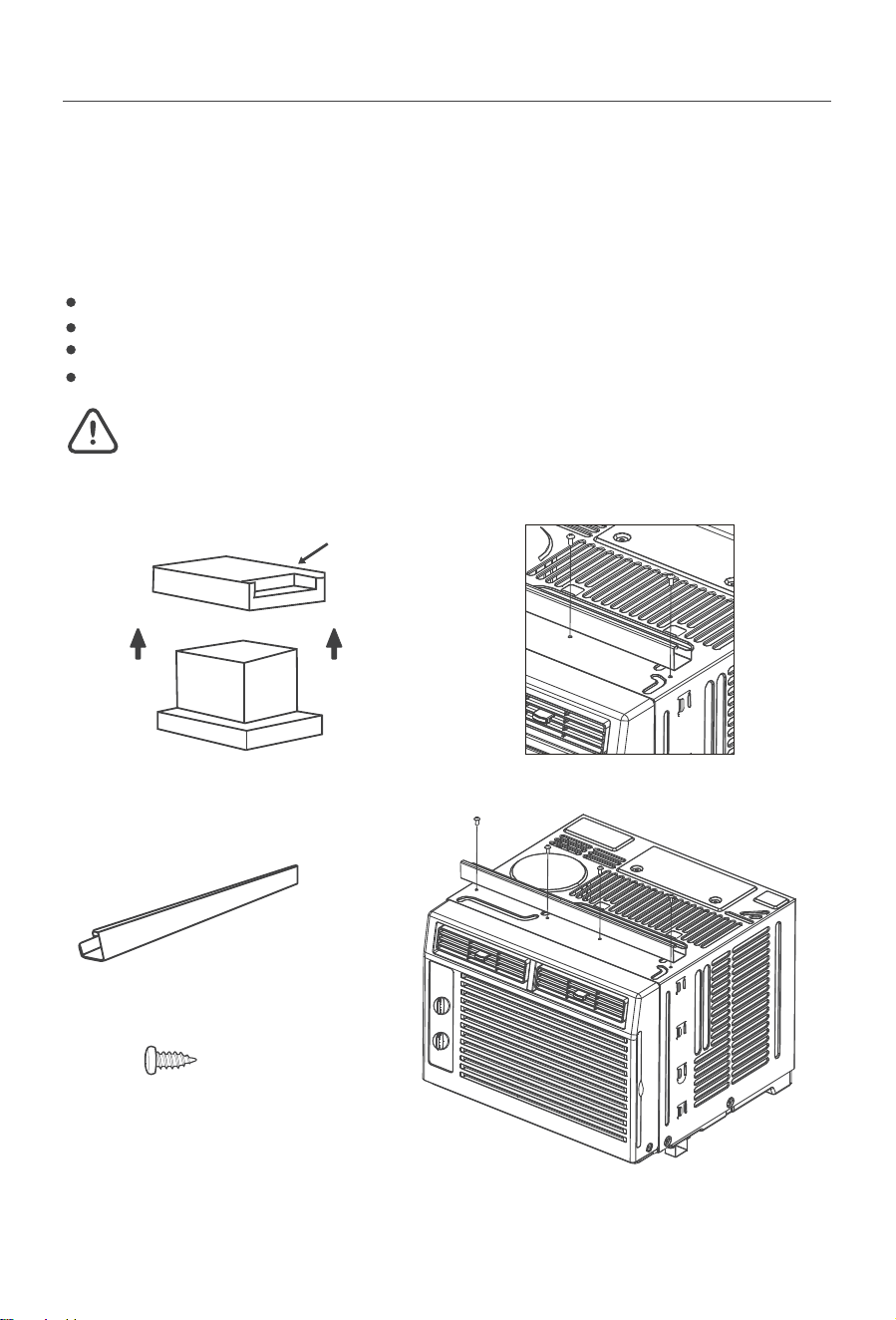
Fig.C
Fig.BFig.A
BOX
Top Rail
Top Rail Assembly
Attaching the Top Rail to the Air Conditioner
The top rail must be assembled prior to installing the air conditioner in the window.
Tools Needed: Phillips Head Screw Driver
When handling the unit, be careful to avoid cuts from the sharp metal edges and aluminum
fins on the front and rear coils.
3/8"Screws *4
NOTE: For safety reasons, all 4 screws
must be used to attach the top rail.
Remove the air conditioner from the box and place on a hard and flat surface.
Remove top rail from the top of the packaging material as shown in Fig.A.
Align the hole in the top rail with those in the top of the unit as shown in Fig.B.
Secure the top rail to the unit with the 3/8" screws as shown in Fig.C.
Top Rail (With sponge) *1
Caution
07
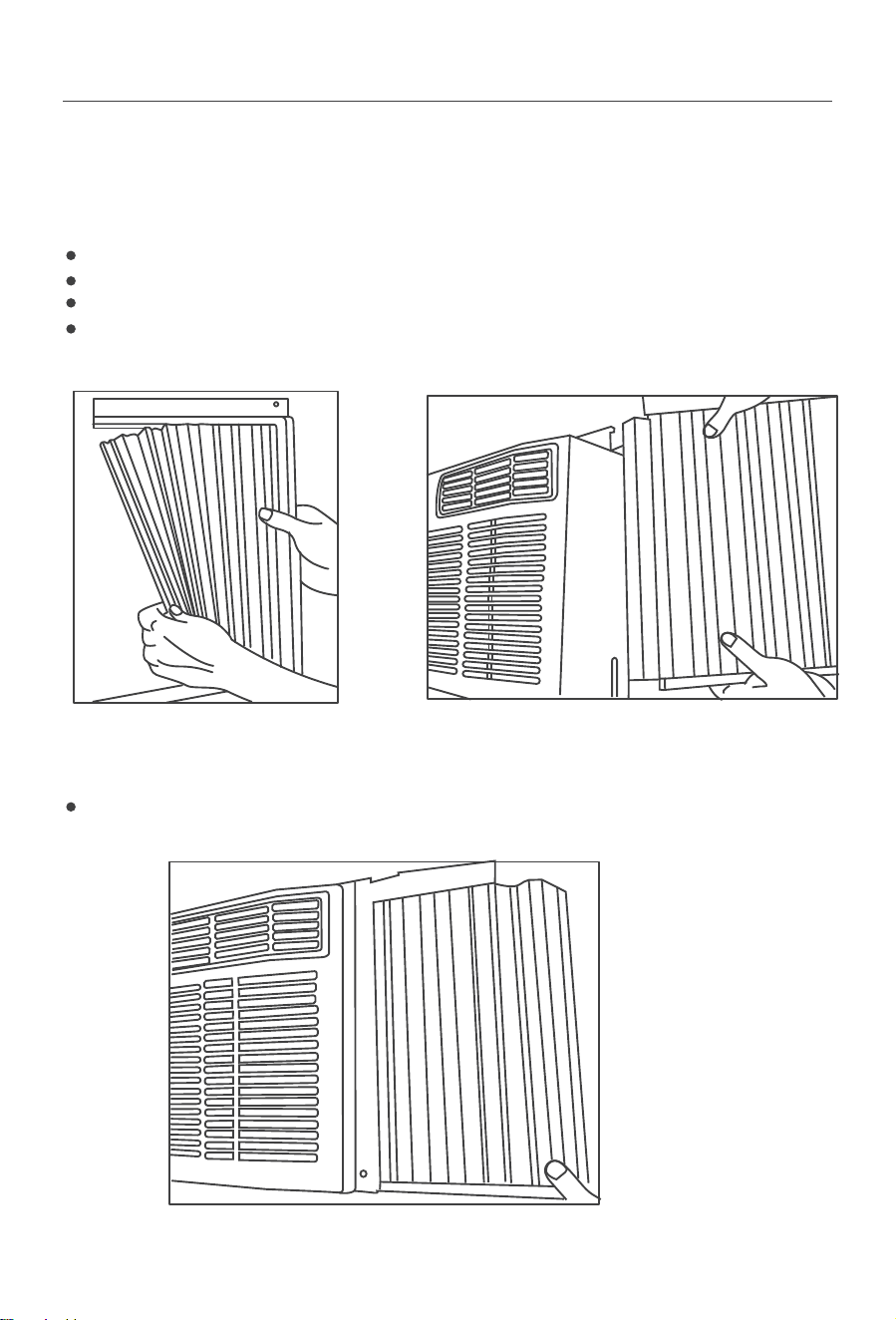
Fig.2 Fig.3
Fig.4
Accordion Panel Installation
Now that you have installed the top rail, you can now install the accordion panels on
each side.
Place the air conditioner on a hard flat surface.
Locate the accordion panels in the box.
Gently pull the free end of the accordion panel (See Fig.2). Do this for both panels.
Slide the free end of the accordion panel into the side panel of the air conditioner (See
Fig.3). Do this for each side.
Once the accordion panels are slid into place adjust the top and bottom rails of the
accordion panels in
to the top and bottom rails of the air conditioner (See Fig.4).
08
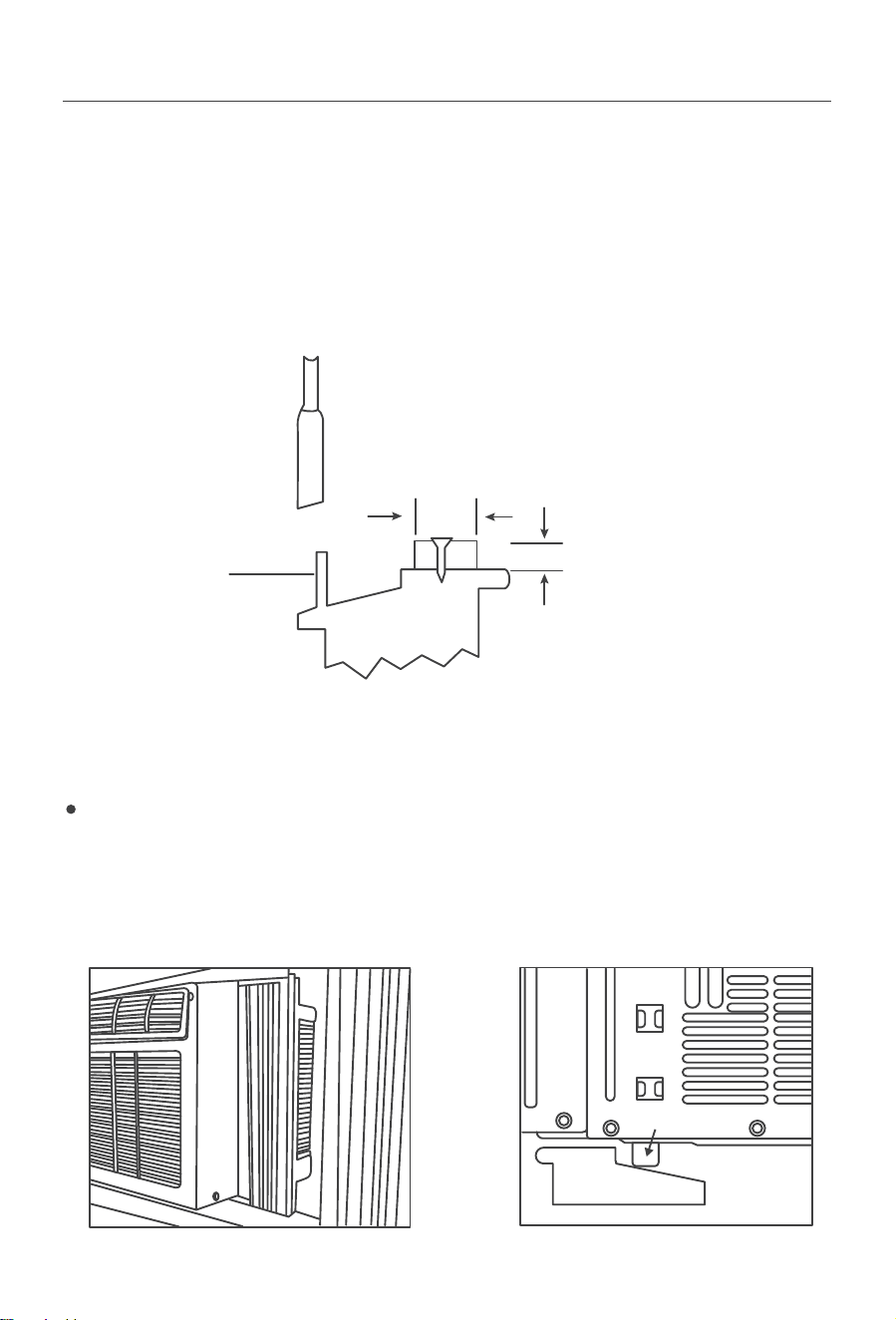
Storm Window Requirements
Placing the Unit Inside a Window
A storm window frame will not allow the air conditioner to tilt properly which in turn will
keep it from draining properly.
To adjust for this, attach a board or piece of wood to the sill
. The board or wood piece
should have a depth of at least 1-1/2". Make sure the board or piece of wood is approxi-
mately 1/2" higher than the storm window frame. This will allow the air conditioner to
tilt enough for proper drainage. (See Fig.5).
Board or wood piece must be
approximately 1/2"higher than
the storm window frame for
proper drainage
Storm window
frame
OUTSIDE
1-1/2 min
(38 mm)
INSIDE
SASH
Fig.5
Fig.7Fig.6
Place the air conditioner on the sill with the bottom mounting rail against its back edge.
Center the air conditioner and close the window securely behind the top mounting rail.
The air conditioner should be 3° slightly tilted to the outside area. Use a level, about
a 1/3 bubble will be the correct case slant to the outside. (See FIG.6 & FIG.7) (It is suggested
to keep a downward angle to let accumulated rain water drain out from the back side
of the unit bottom.)
Window Sill
Outside
Bottom Rail
09
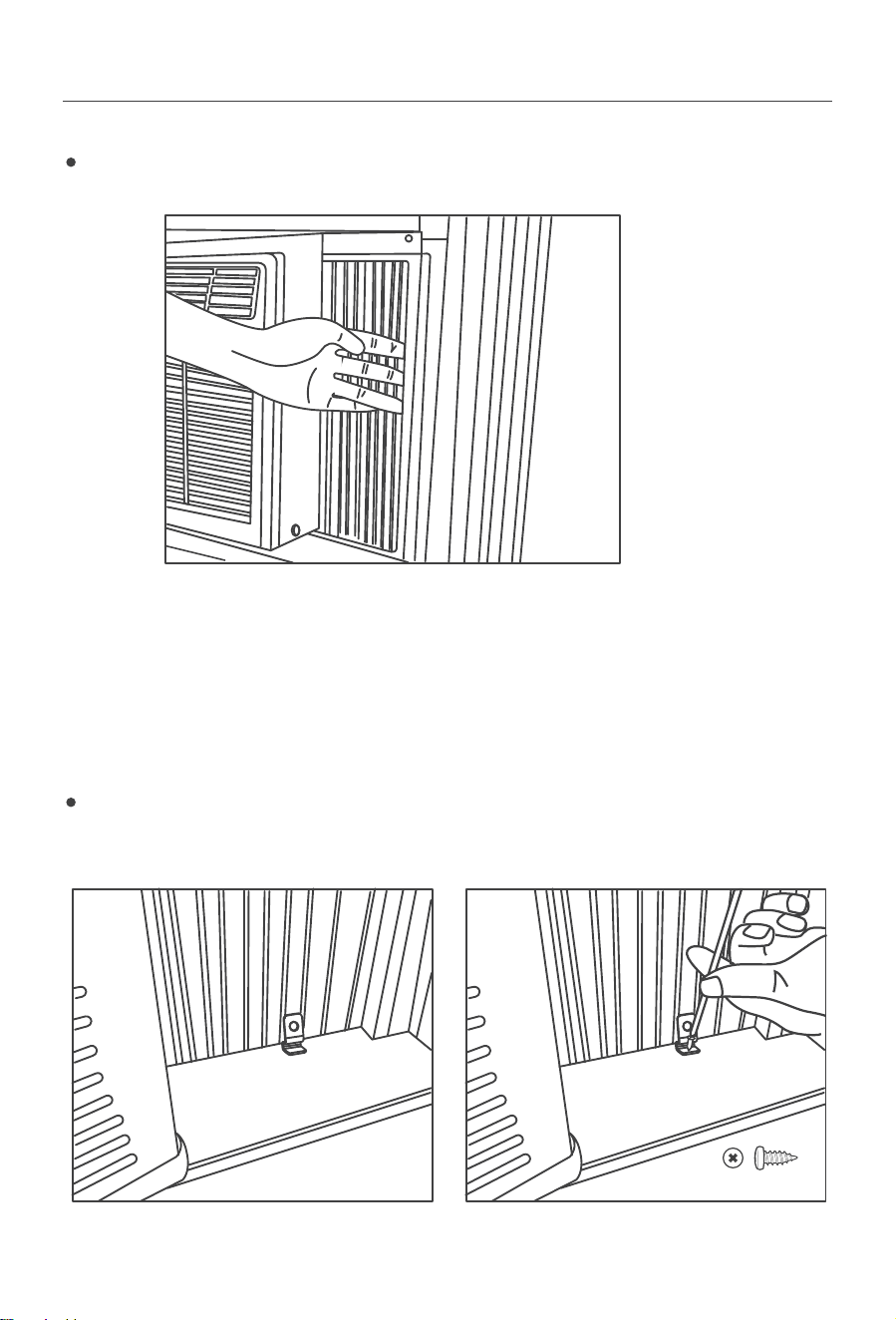
Fig.8
Fig.9 Fig.10
Once the air conditioner is placed, extend both the left and right accordion panels to
the width of the window.
Frame Lock, Sash Lock, and Foam Seal Installation
Mounting Hardware
Place the frame lock between the extended accordionpanels and the window sill as
show in
Fig.9. Screw a 3/4" (19mm) locking screw through the frame lock anc into the
window sill. (Fig.10)
Tools Needed:
Phillips Head Screw Driver
Drill (if plot holes are needed)
3/8"Screws *4
10
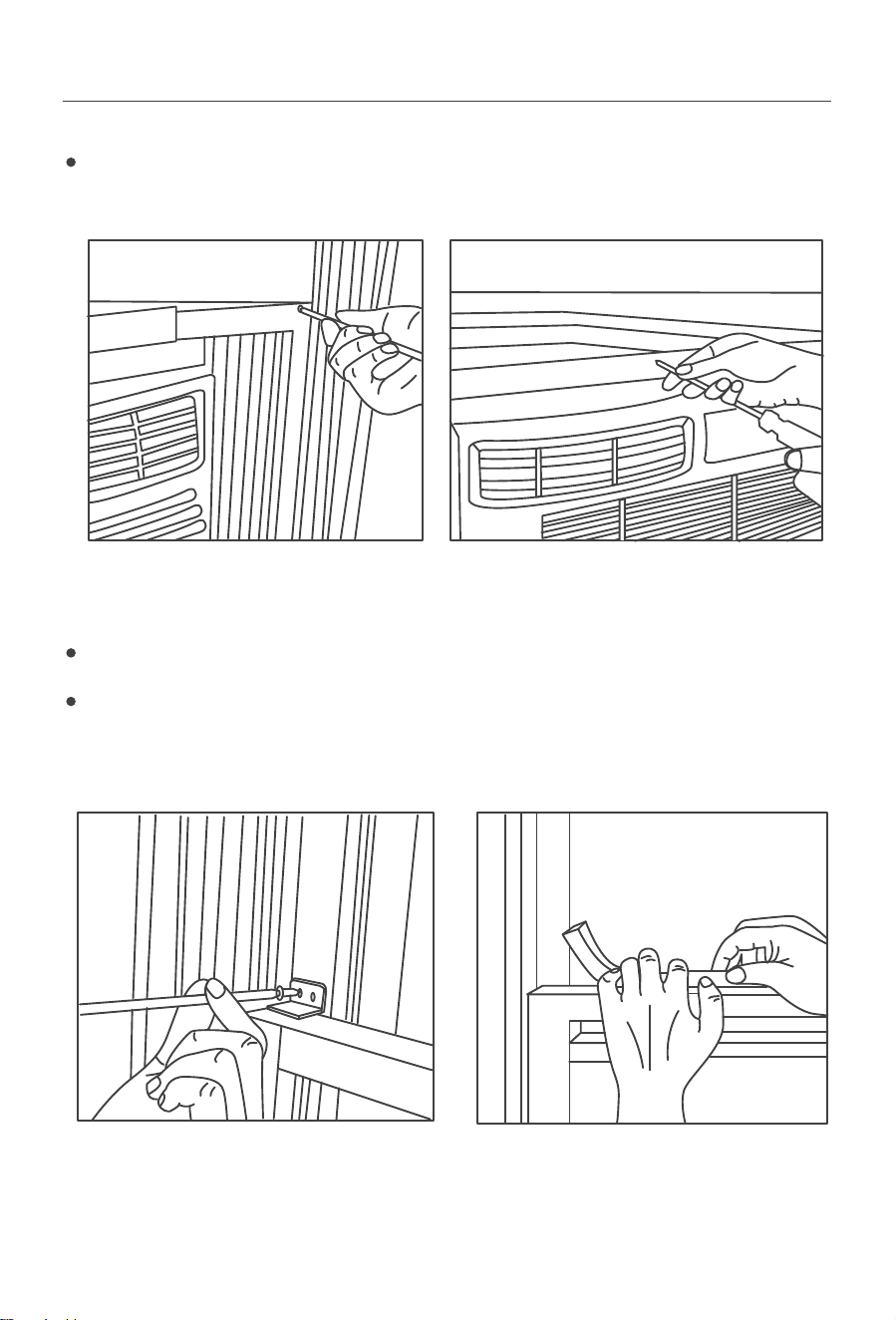
Fig.11 Fig.12
Fig.13 Fig.14
Drive 1/2" screws into the top of the accordion panel frame and the top rail to securely
attach the window air conditioner to the lower sash. (See Fig.11 Fig.12)
To secure the lower sash into place, use the sash lock and a 3/4" screw as shown
below. (Se
e Fig.13)
For added insulation, cut the supplied insulation foam to the width of the window.
Insert the foam between the window sashes to prevent air and objects from getting
into the room. (See Fig.14)
11
Removing the Air Conditioner from the Window
Introduction to Refrigerants R32
1. Site Safety
2. Operation Safety
Turn the air conditioner off and unplug the power cord.
Remove the sash seal from between windows, and u
nscrew sash lock.
Remove the screws installed through the frame and frame lock.
Close (slide) the side panels into frame.
Keeping a firm grip on air conditioner, raise the sash and carefully "rock" air conditioner
backward to drain any condensate water in base of unit. Be careful not to spill any
remaining water while lifting unit from window.
Store parts with the air conditioner in the box.
Before installing the appliance, you must read the manual carefully to get the safety
information and notes.
When filling the combustible refrigerant, any of your rude opera
tions may cause serious
injury or injuries to human body or bodies and object or objects.
Requirements for the total weight of filled refrigerant and the area of a room to be
equipped with an air conditioner.
A leak test must be done after the in
stallation is completed.
It is a must to do the safety inspection before maintaining or repairing
an air conditioner using combustible refrigerant in order to ensure that
the fire risk is reduced to minimum.
It is necessary to operate the machine under a controlled procedure in
order to ensure that any risk arising from the combustible gas or vapor
during the operation is reduced to minimum.
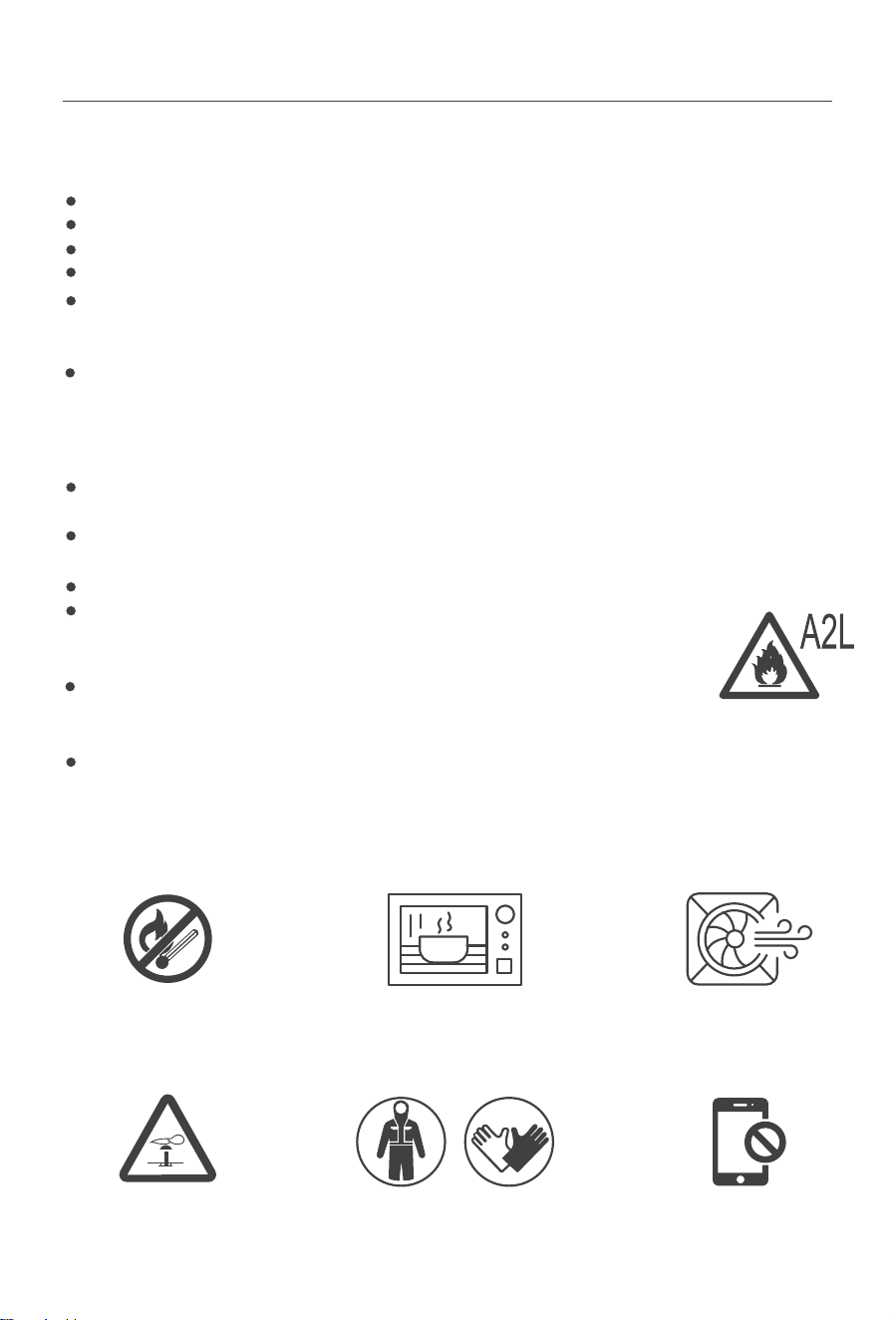
Open Flames Prohibited
Open Flames Prohibited
Mind Static Electricity Don't use mobile phoneMust Wear Protective Clothing
and anti-static gloves
Ventilation Necessary
12
3. Installation Safety
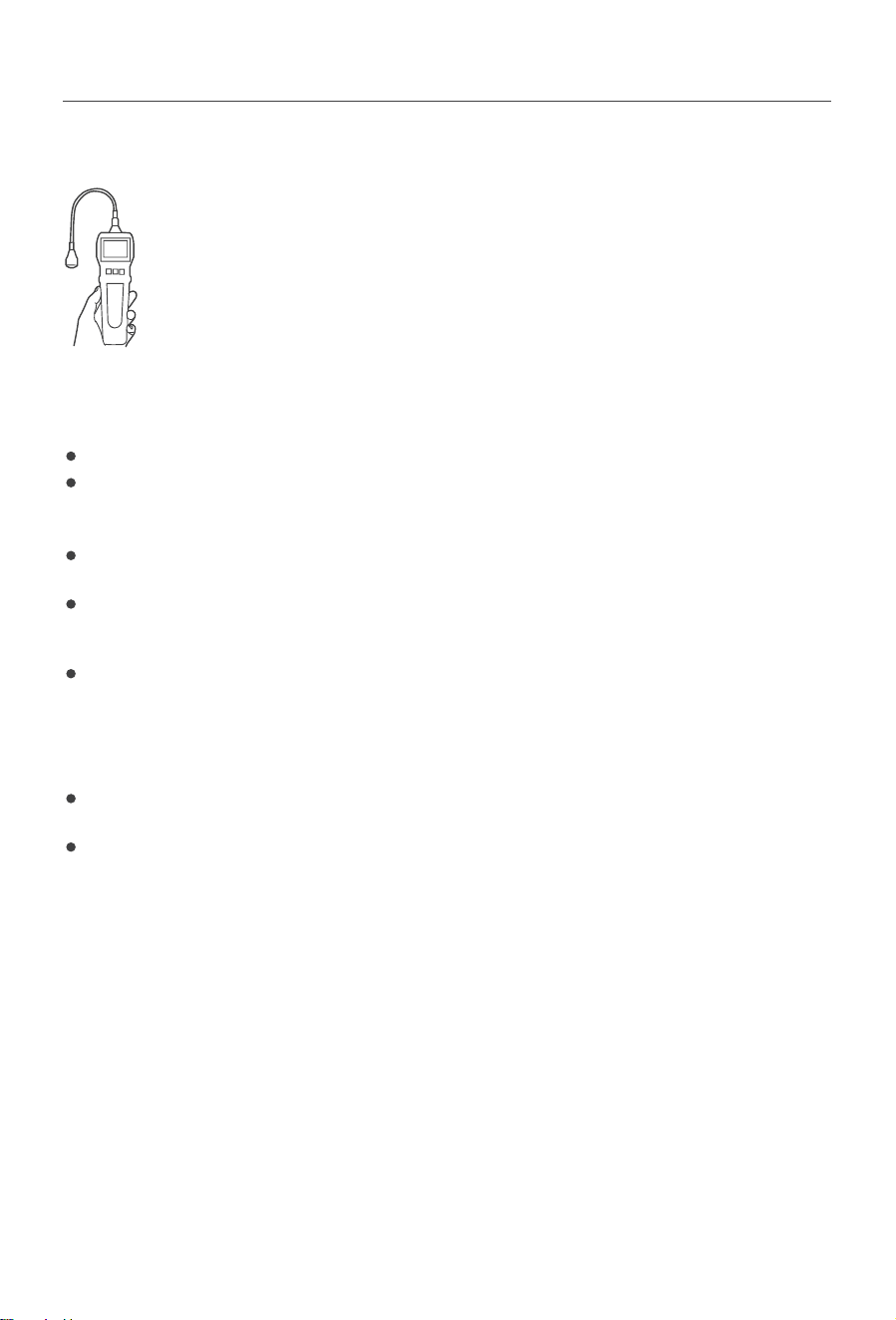
1) Refrigerant Leak Detector
2) Appropriate Installation Location
3) The left picture is the schematic diagram of a refrigerant leak
detector
Please note that:
The installation site should be in a well-ventilated condition.
The sites for installing and maintaining an air conditioner using Refrigerant R32 should
be free from open fire or welding, smoking, drying oven or any other heat source
higher than 548°C which easily produces open fire.
When installing an air conditioner, it is necessary to take appropriate anti-static meas-
ures such as wearing anti-static clothing and/or gloves.
It is necessary to choose the site convenient for installation or maintenance wherein
the air inlets and outlets of the indoor and outdoor units should be not surrounded
by obstacles or close to any heat source or combustible and/or explosive environment.
If the indoor unit suffers refrigerant leak during the installation, all the personnel
should go out till the refrigerant leaks completely for 15 minutes. If the product is
damaged, it is a must to carry such damaged product back to the maintenance station
and it is prohibited to weld the refrigerant pipe or conduct other operations on the
user's site.
It is necessary to choose the place where the inlet and outlet air of the indoor unit is
even.
It is necessary to avoid the places where there are other electrical products, power
switch plugs and sockets, kitchen cabinet, bed, sofa and other valuables right under
the lines on two sides of the indoor unit, and also prevent mechanical damage from
occurring.
13
You may hear a pinging noise caused by water hitting the condenser, on rainy days, or
when the humidity is high. This design feature helps remove moisture and improve
efficiency.
You may hear the thermostat click when the compressor cycles on and off.
Water will collect in the base pan during rain or days of high humidity. The water may
overflow and drip from the outside part of the unit.
The fan may run even when the compressor is not on.
Using Your Air Conditioner
Normal Operating Sounds
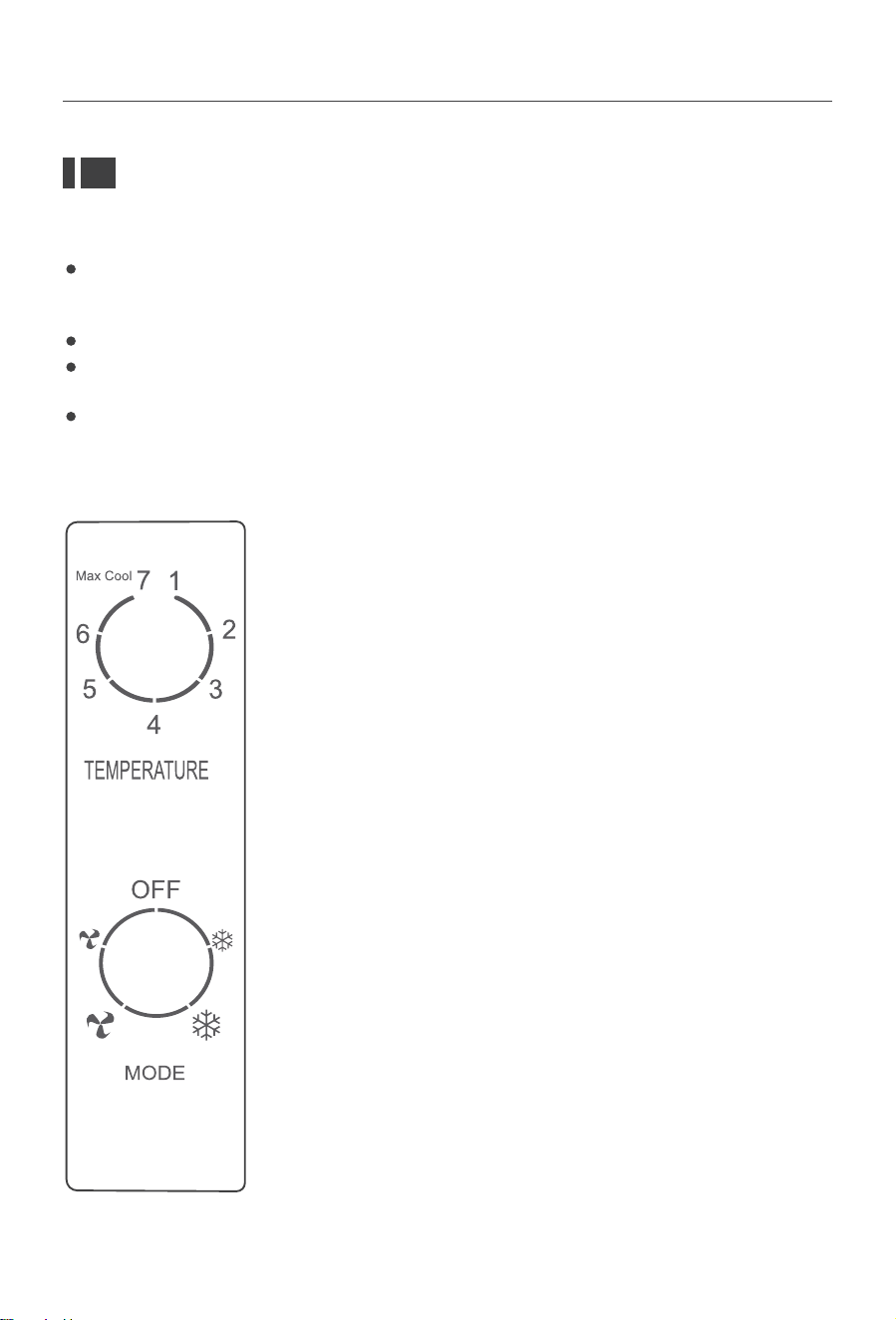
Manual Control Panel
1. Power:
2. Cooling Mode:
Set to high cooling or low cooling mode. In high cooling mode, the
fan will operate at high speed. In low cooling mode, the fan will
14
Turn the air conditioner on and off.
operate at low speed.
3. Fan Mode:
Set to high fan or low fan mode. In high fan mode, the fan will
operate at high speed. In low fan mode, the fan will operate
at low speed.
4. Thermostat:
Turn the TEMP to the desired room temperature, by set the
knob to certain digital direction. For maximum cooling turn
the TEMP dial to 7 (Max Cool) direction.
Normal Operating Sounds:
You may hear a pinging noise caused by water hitting the condenser.
You may hear the thermostat click when compressor on and off.
The fan may operate even when the compressor is off.
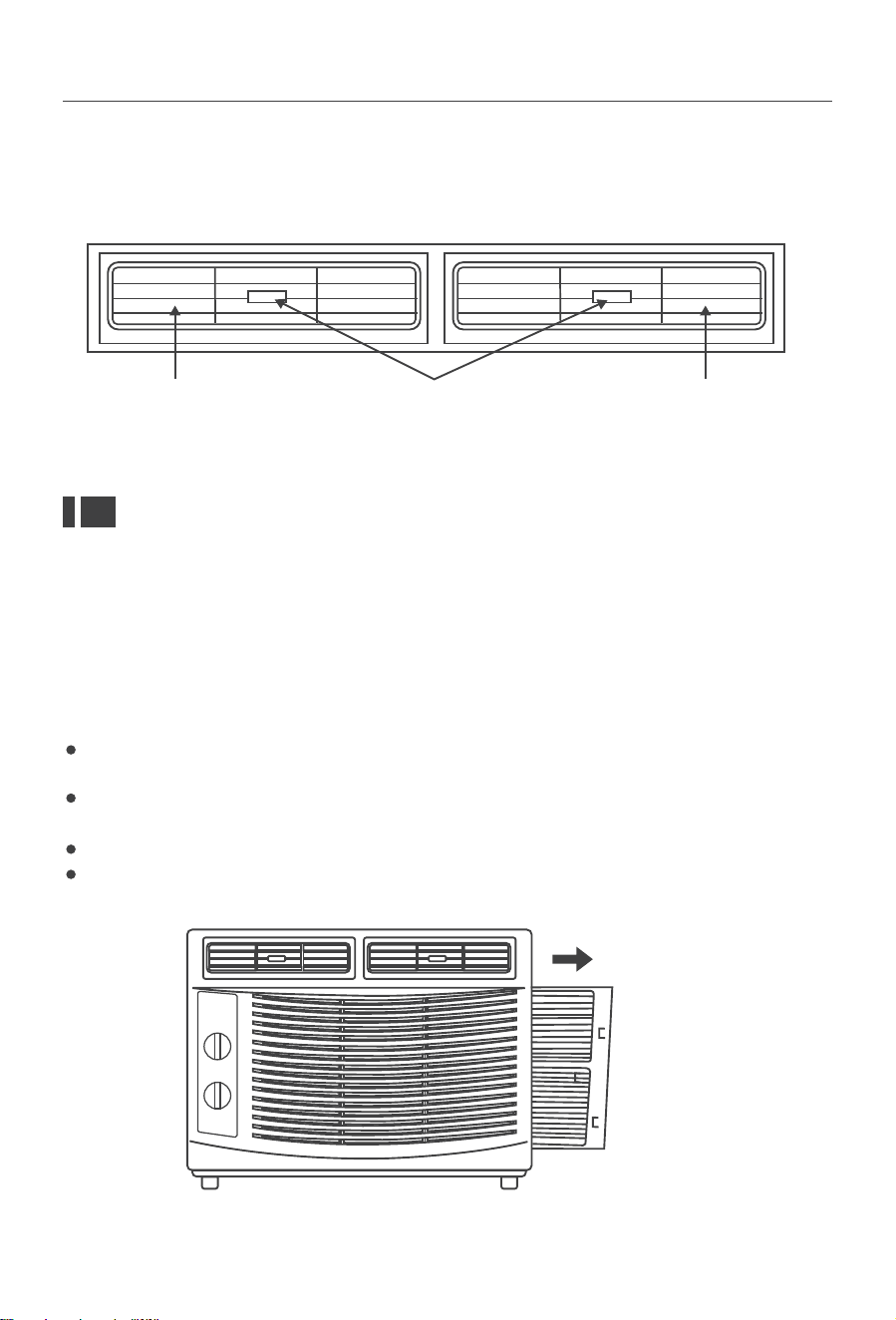
5. Directional Louvers:
Use the horizontal wheels to control horizontal airflow and the air deflectors to control
vertical airflow.
Air Deflector Air DeflectorHorizontal Wheel
15
Care and Cleaning
Air Filter Cleaning
The air filter should be checked at least once every month to see if it needs
clea
ning. Trapped particles and dust can build up in the filter and may decrease airflow
as well as cause the cooling coils to accumulate frost.
To clean the air filter:
Take off the power plug, then remove the filter by sliding it out from the front right
side of the air conditioner. (See Fig .15)
Wash the filter using liquid dish soap and warm water. Rinse the filter thoroughly.
Gently shake the filter to remove excess water.
Let the filter dry completely before placing it into the air conditioner.
If you do not wish to wash the filter, you may vacuum the filter to remove the dust and
other particles.
Fig.15
To clean the air conditioner cabinet:
To store the air conditioner when it is not in use for an extended period of time, remove
it carefully from the window according to the installation instructions and cover it with
plastic or place it in the original box.
Cabinet Cleaning
Winter Storage
Unplug the air conditioner to prevent shock or a fire hazard. The cabinet and front
panel of the air conditioner may be dusted with an oilfree cloth or washed with a cloth
dampened in a solution of warm water and mild liquid soap. Rinse thoroughly with a
damp cloth and wipe dry.
Never use harsh cleaners, wax or polish on the cabinet front.
Be sure to wring excess water from the cloth before wiping around the controls.
Excess water in or around the controls may cause damage to the air conditioner.
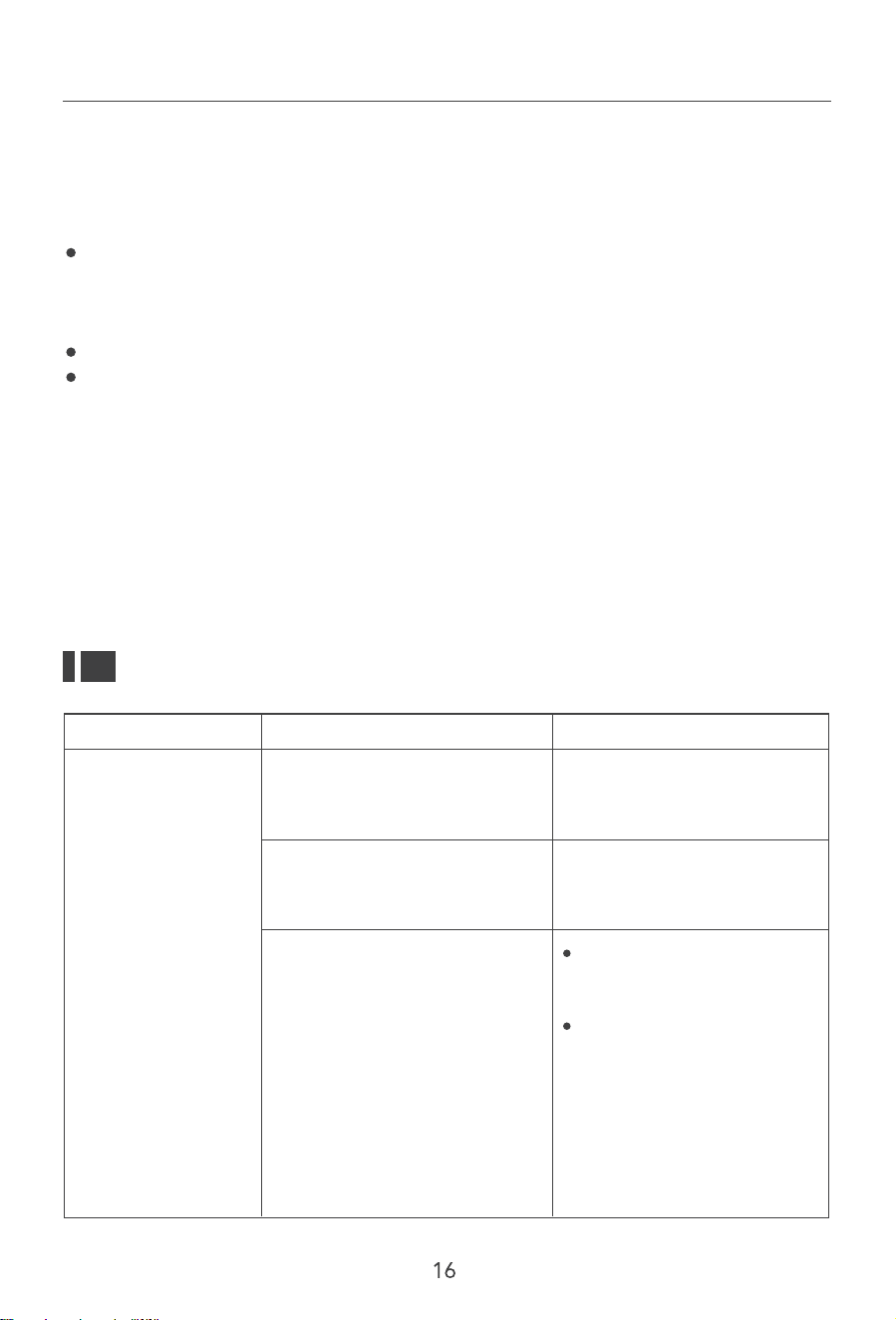
Troubleshooting
Problem Possible Causes Solutions
The air conditioner is unplugged
The fuse is blown/circuit breaker
is tripped
Power failure
Make sure the air condition-
er plug is pushed completely
into the outlet.
Check the house fuse/circuit
breaker box and replace the
fuse or reset the breaker.
The unit will automatically
re-start when power is
restored.
There is a protective time
delay (approx.3 minutes) to
prevent tripping of the
compressor overload. For
this reason, the unit may
not start normal cooling for
3 minutes after it is turned
back on.
The Air Conditioner
will not start
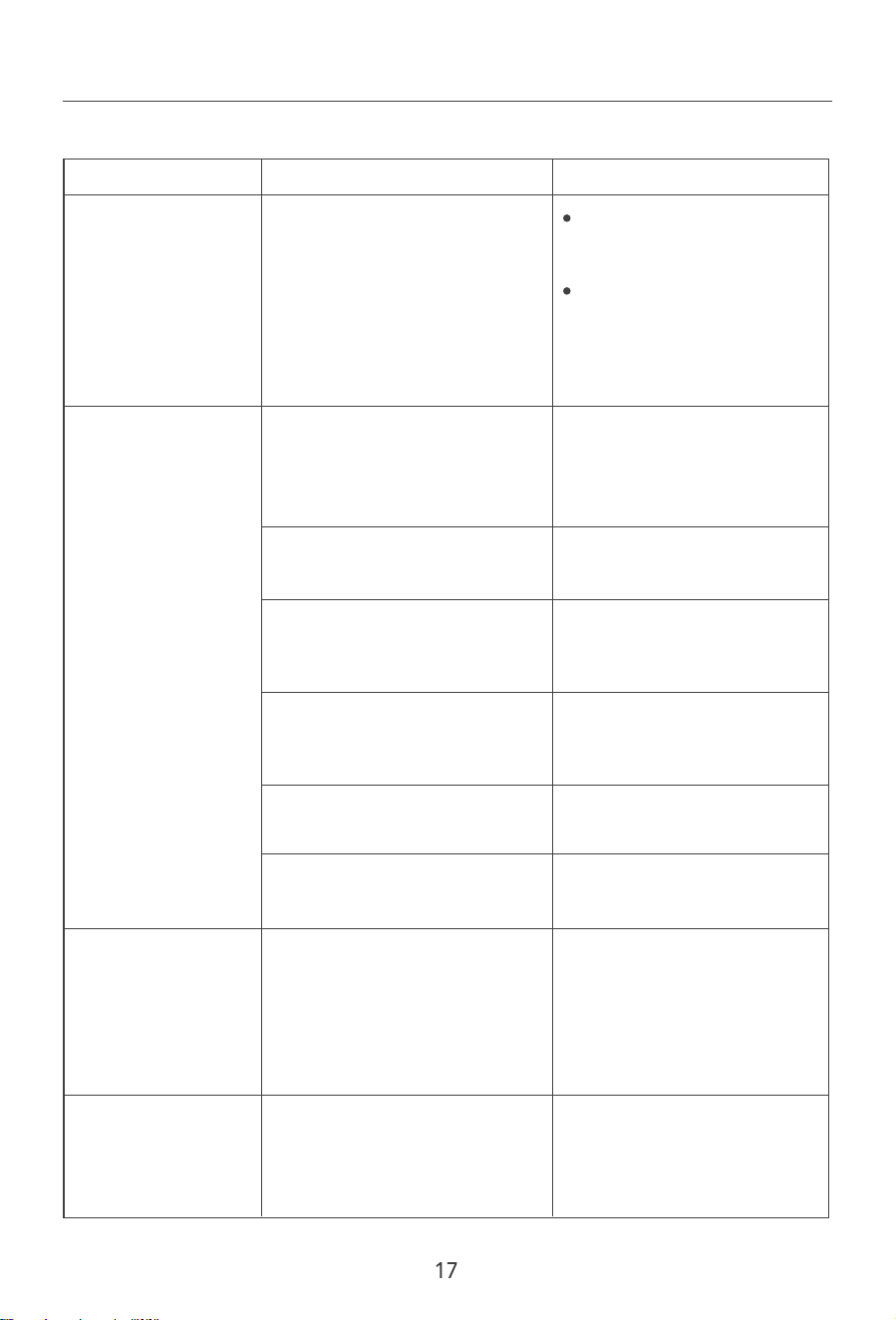
Problem Possible Causes Solutions
The Air Conditioner
will not start
The Air Co
nditioner
does not cool as it
should
The Air Conditioner
is freezing up
Water is dripping
outside
The current interrupter device
is tripped
Airflow is restricted
The air filter is dirty
The room may be too warm
Cold air is escaping
The cooling coils are frozen
Hot and humid weather
The temperature control may
not be set correctly
Ice blocks the air flow and
stops the air conditioner from
cooling the room
Make sure there are no
curtains, blinds, or furniture
blocking the front of the air
conditioner.
Lower the set thermostat
temperature.
Clean the filter. See the
Cleaning and Care Section of
the manual.
Please allow time for the room
to cool down after turning on
the air conditioner.
Check for open furnace
registers and cold air returns.
See "Air Conditioner Freezing
Up" below.
This is normal.
Set the MODE dial to HIGH
FAN or HIGH COOL and set
the thermostat to a higher
temperature.
Press the RESET button
located on the power cord
plug.
If the RESET button will not
stay engaged,discontinue
use of the air conditioner
and contact a qualified
service technician.
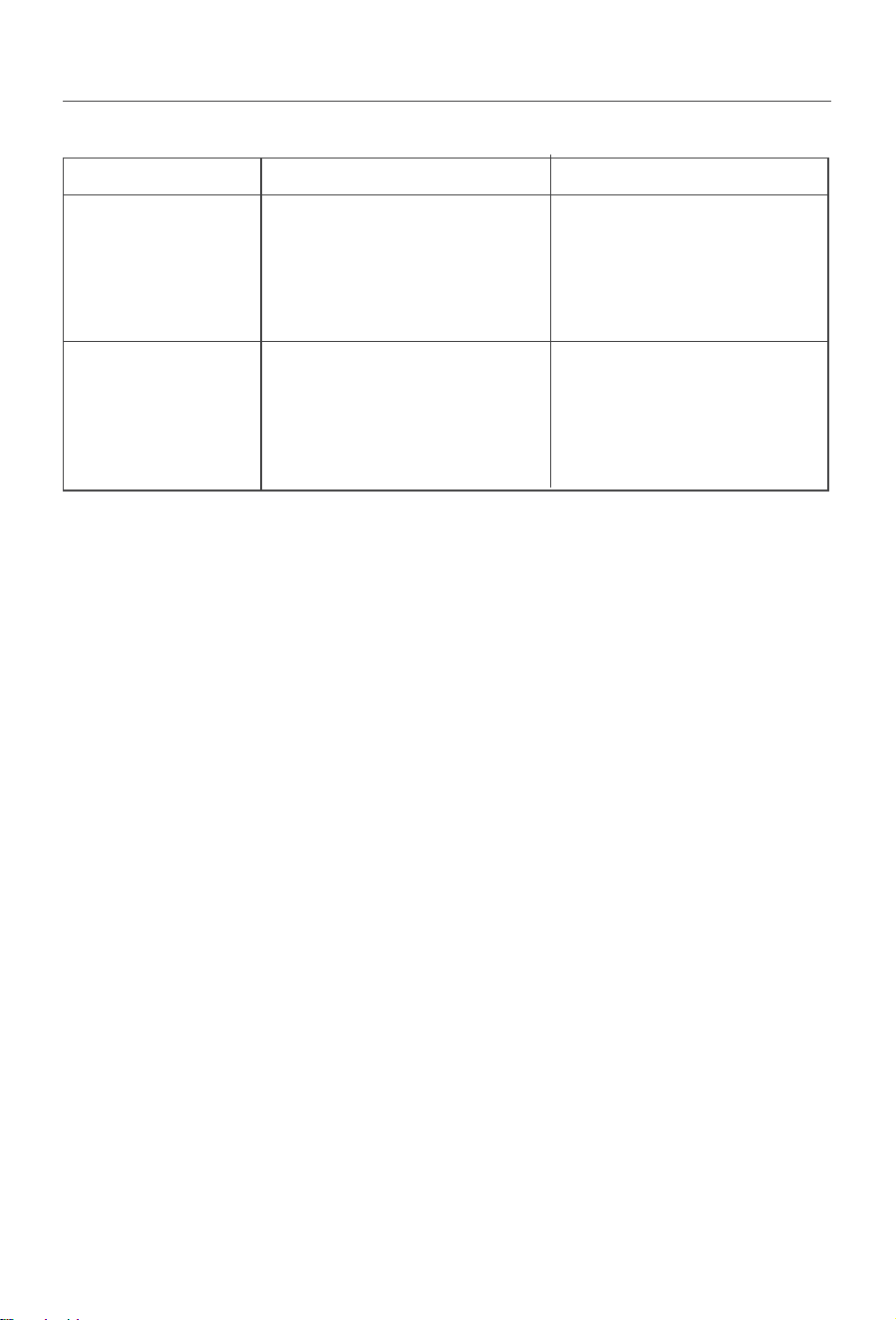
Problem Possible Causes Solutions
Water is dripping
inside the room
The air conditioner is not
correctly tilted outside
For proper water drainage,
make sure the air conditioner
is slightly tilted downward
from the front of the unit to
the rear.
Water collects in
the base pan
Moisture removed from the air
is draining into the base pan
This is normal for a short
period inareas with low
humidity and normal for a
longer period in areas with
high humidity.
18


Thank you for purchasing this product! If you have any questions
about the product, such as missing parts, damaged products, product
assembling, and operation, please contact us via customer service
number: 818-468-3970.
IMPORTANT
Please call our customer service department for any consulting:
(8:30am - 5:30pm P.S.T.)
DATED PROOF OF PURCHASE IS REQUIRED FOR WARRANTY
SERVICE.
AVIS
Veuillez appeler le service à la clientèle pour toutes questions au:
(8:30am - 5:30pm P.S.T.)
PREUVE D’ACHAT ORIGINALE REQUISE POUR SERVICE DE
GARANTIE.
IMPORTANTE
Sólo hay que llamar nuestro departamento de servicio
al cliente en caso de tener preguntas o inquietudes:
(8:30am - 5:30pm P.S.T.)
SE REQUIERE PRUEBA DE COMPRA CON FECHA PARA
SERVICIO BAJO GARANTÍA.
818-468-3970
818-468-3970
818-468-3970
ROWAN ELECTRIC APPLIANCE LLC
818-468-3970
V2