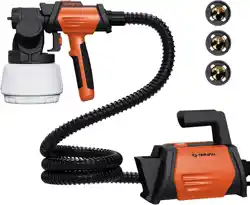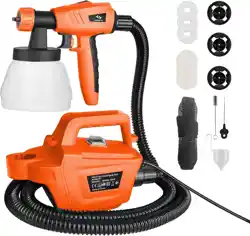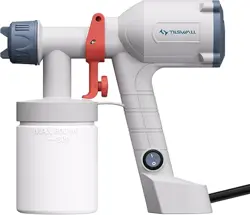
TILSWALL Dreamer 400
PAINT SPRAYER

01
a) Keep work area clean and well lit. Cluttered or dark areas invite accidents.
b) Do not operate power tools in explosive atmospheres, such as in the presence of flammable liquids,
gases, or dust. Power tools create sparks which may ignite the dust or fumes.
c) Keep children and bystanders away while operating a power tool. Distractions can cause you to
lose control.
WARNING!
Read all safety warnings and all instructions.
Failure to follow the warnings and instructions may result in electric shock, fire and/or serious injury.
Save all warnings and instructions for future reference.
The term "power tool" in the warnings refers to your mains-operated (corded) power tool or battery-
operated (cordless) power tool.
General Power Tool Safety Warnings
1) Work Area Safety
a) Power tool plugs must match the outlet. Never modify the plug in any way. Do not use any adapter
plugs with earthed (grounded) power tools. Unmodified plugs and matching outlets will reduce risk
of electric shock.
b) Avoid body contact with earthed grounded surfaces, such as pipes, radiators, ranges and
refrigerators. There is an increased risk of electric shock if your body is earthed or grounded.
c) Do not expose power tools to rain or wet conditions. Water entering a power tool will increase the
risk of electric shock.
d) Do not abuse the cord. Never use the cord for carrying, pulling or unplugging the power tool.
Keep cord away from heat, oil, sharp edges or moving parts. Damaged or entangled cords increase
the risk of electric shock.
e) When operating a power tool outdoors, use an outdoor extension cord suitable for outdoor use.
Use of a cord suitable for outdoor use reduces the risk of electric shock.
f) If operating a power tools in a damp location is unavoidable, use a residual current device (RCD)
protected supply. Use of an RCD reduces the risk of electric shock.
2) Electrical Safety
a) Stay alert, watch what you are doing and use common sense when operating a power tool. Do not
use a power tool while you are tired or under the influence of drugs, alcohol, or medication. A moment
of inattention while operating power tools may result in serious personal injury.
b) Use personal protective equipment. Always wear eye protection. Protective equipment such as
dust mask, non-skid safety shoes, hard hat, or hearing protection used for appropriate conditions
will reduce personal injuries.
c) Prevent unintentional starting. Ensure the switch is in the off-position before connecting to power
source and/or battery pack, picking up or carrying the tool. Carrying power tools with your finger
on the switch or energising power tools that have the switch on invites accidents.
d) Remove any adjusting key or wrench before turning the power tool on. A wrench or a key left
attached to a rotating part of the power tool may result in personal injury.
e) Do not overreach. Keep proper footing and balance at all times. This enables better control of the
power tool in unexpected situations.
3) Personal Safety

Special safety warnings for Electric Spray Gun
a) Do not force the power tool. Use the correct power tool for your application. The correct power
tool will do the job better and safer at the rate for which it was designed.
b) Do not use the power tool if the switch does not turn it on and off. Any power tool that cannot be
controlled with the switch is dangerous and must be repaired.
c) Disconnect the plug from the power source and/or the battery pack from the power tool before
making any adjustments, changing accessories, or storing power tools. Such preventive safety
measures reduce the risk of starting the power tool accidentally.
d) Store idle power tools out of the reach of children and do not allow persons unfamiliar with the
power tool or these instructions to operate the power tool. Power tools are dangerous in the hands
of untrained users.
e) Maintain power tools. Check for misalignment or binding of moving parts, breakage of parts and
any other condition that may affect the power tool’s operation. If damaged, have the power tool
repaired before use. Many accidents are caused by poorly maintained power tools.
f) Keep cutting tools sharp and clean. Properly maintained cutting tools with sharp cutting edges
are less likely to bind and are easier to control.
g) Use the power tool, accessories and tool bits etc. in accordance with these instructions, taking
into account the working conditions and the work to be performed. Use of the power tool for
operations different from those intended could result in a hazardous situation.
h) Keep handles and grasping surfaces dry, clean and free from oil and grease. Slippery handles
and grasping surfaces do not allow for safe handling and control of the tool in unexpected situations.
4) Power Tool Use and Care
a) Have your power tool serviced by a qualified repair person using only identical replacement parts.
This will ensure that the safety of the power tools is maintained.
5) Service
• NEVER SPRAY AT PERSONS - Never aim the nozzle at another person or animal. Never allow the
spray to come into direct contact with the skin.
• FLASH POINT - This spray gun must not be used for spraying flammable paints and solvents with
a flash point of less than 55 °C
• VENTILATION - Always make sure that there is adequate ventilation in the work area when spraying.
• BASKET NOZZLE -Always keep the spray basket nozzle in place during use.
• CONSIDER WORK AREA ENVIRONMENT -Do not use spray guns where there is a risk of fire or explosion.
• BEWARE OF ANY HAZARD –Beware of any hazards presented by the material being sprayed and
consult the markings on the container or the information supplied by the manufacturer of the material
to be sprayed.
02
f) Dress properly. Do not wear loose clothing or jewellery. Keep your hair, clothing and gloves away
from moving parts. Loose clothes, jewellery or long hair can be caught in moving parts.
g) If devices are provided for the connection of dust extraction and collection facilities, ensure these
are connected and properly used. Use of dust collection can reduce dust-related hazards.
h) Do not let familiarity gained from frequent use of tools allow you to become complacent and
ignore tool safety principles. A careless action can cause severe injury within a fraction of a second.

I. Intend Use
Coating Materials Suitable for Use
Water- and solvent-based paints, finishes, primers, 2-component paints, clear finishes, automotive
finishes, staining sealers and wood sealer-preservatives.
Coating Materials Not Suitable for Use
Alkali and acidic paints. Coating materials with a flash point below 55°C.
03
• DO NOT SPRAY - Do not spray any material where the hazard is not known.
• USE EYE PROTECTION - Always use appropriate eye protection to keep hazardous vapors or fumes
out of the eyes.
• WEAR A MASK - Never operate a spray gun without wearing a face mask.
• PROTECT YOUR EARS -Wear ear protectors if the sound pressure exceeds 85 dB(A).
• MAINTAIN YOUR TOOLS - Keep your spray gun, paint container and nozzles clean. Do not clean
with flammable liquids with a flash point less than 55 °C.
• NAKED FLAMES -Never spray near a naked flame or appliance pilot flame.
• SMOKING -Never smoke whilst spraying.
• THINNING - Always read the paint manufacturers thinning recommendations or instructions before
using paint or other materials.
• DISCONNECT FROM THE MAINS SUPPLY - Always disconnect from the mains supply when filling the
paint container or cleaning the spray gun.
• SWITCH OFF WHEN NOT SPRAYING -Avoid running the unit with the flow rate knob fully closed for
any length of time.
• If the replacement of the supply cord is necessary, this has to be done by the manufacturer or his
agent in order to avoid a safety hazard.
WARNING! This power tool produces an electromagnetic field during operation. This field may under
some circumstances interfere with active or passive medical implants. To reduce the risk of serious
or fatal injury, we recommend persons with medical implants to consult their physician and the
medical implant manufacturer before operating this machine.
500W
120 DIN-S
450 mL/min
1.5mm,2.0mmNozzle size
Double insulation
Maximum spraying volume
Maximum viscosity
Rated power input
Rated voltage 100-120V~50/60Hz
Technical Data
II. Use
1) If the paint still cannot be sprayed out normally after dilution, you can continue to add a small
amount of thinner gradually until the paint is sprayed out normally, but do not over-dilute it, otherwise
it will affect the effect after spraying.
2) The diluted paint must be filtered with filter paper before pouring it into the container for spraying
to avoid clumping of paint to block the spray gun.
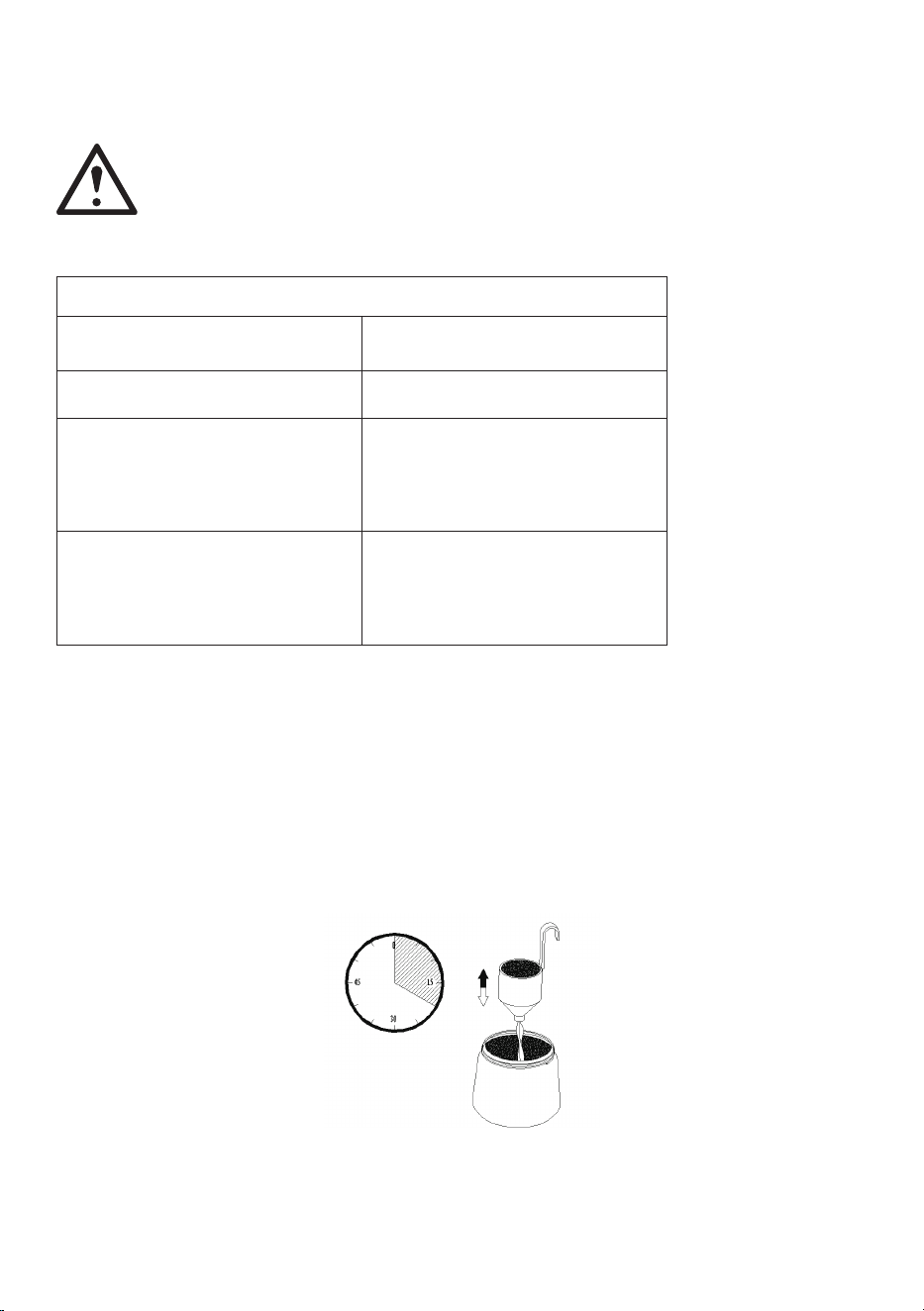
3) If you have a standard viscosity funnel to measure the viscosity of the paint, you can also follow
the following requirements to judge whether the dilution is in place: fill the viscosity funnel with the
diluted paint and measure the time taken for the paint to flow out completely, when the time is within
120 seconds, the dilution is complete, otherwise please continue to dilute.
1.Preparation of coating materials
Paint usually needs to be diluted before use, please dilute the paint according to the table
and mix it well before use, please consult the paint manufacturer for the type of thinner
used for dilution. Failure to dilute the paint as required may result in problems such as failure
to spray the paint, poor spraying results or even damage to the machine due to overloading.
04
Thinning recommendation
Sprayed material
Glazes
Wood preservatives, mordants,
oils, disinfection agents, plant
protective agents
Paints containing solvents and
water-soluble paints, primers,
vehicle coating paints, hick-flm
glazes
Dilute advice
Undiluted
Undiluted
Dilute by 5 - 10%

1) Before connecting the power supply, make sure that the supply voltage is the same as the value on
the nameplate.
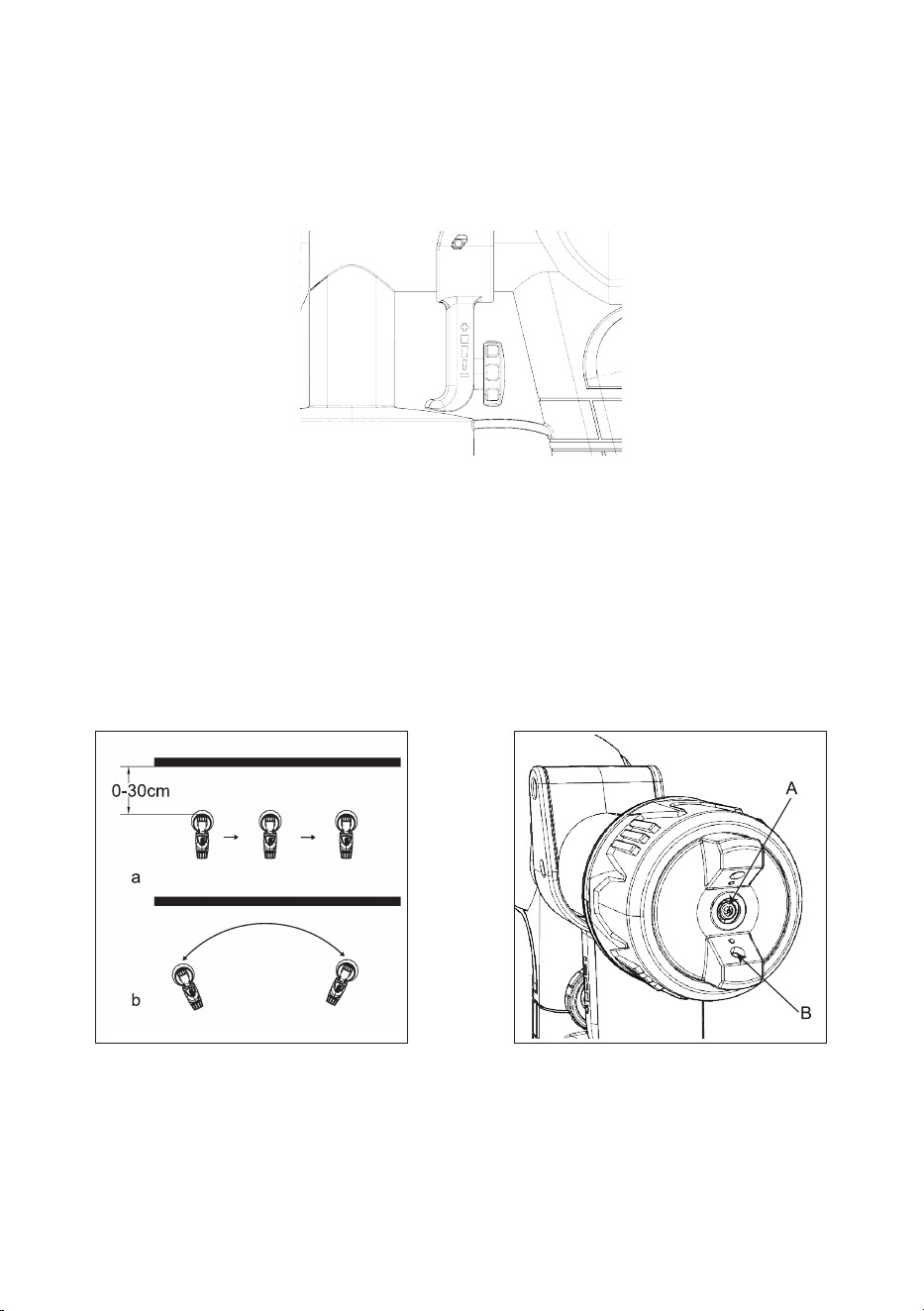
2) Rotate the air cap to adjust the spray pattern. There are three different spraying modes, please
select according to the working conditions.
3.Spray settings and adjustments
1) The spraying effect depends to a large extent on the flatness and cleanliness of the sprayed surface.
Therefore, the surface of the object to be sprayed should be flat and dust-free before spraying.
2) Always sand off old coatings, if present.
3) Cover all surfaces of the object not to be sprayed so that paint is not spilled on other objects.
4) Cover threads or similar parts of the target object.
5) It is recommended to test on cardboard or similar surfaces first to find the correct spray setting.
2.Treatment of painted surfaces
05
Setting
Spraying Shape
III. Maintenance and cleaning
3) Pour the diluted and filtered paint into a container suitable for the sprayer.
4) Screw the container onto the sprayer.
5) After connecting the power supply, pull the trigger to start spraying.
6) Adjust the amount of paint. Reducing the amount of material helps to obtain more precise spraying
results. Turn the adjuster on the gun trigger to set the amount of material.
- Turn down to decrease material amount
+ Select up to increase material amount
Incorrect
Correct
IMPORTANT: Start spraying outside the target area to avoid interruptions in the target area.
Correct: Ensure that the spray gun is kept at a distance of approx. 10 - 30 cm from the target object,
that the nozzle is always perpendicular to the surface of the object when spraying, and that the speed
of movement is uniform to ensure a consistent coating thickness.
Incorrect: Severe paint build-up and uneven coating thickness can result.
When paint builds up on the nozzle (A) and air cap (B) , clean them off with solvent or water.
Proper cleaning is a prerequisite for trouble-free operation of the paint sprayer. Incomplete cleaning
may clog the sprayer causing it not to work properly when it is used again.
4.Spraying
06
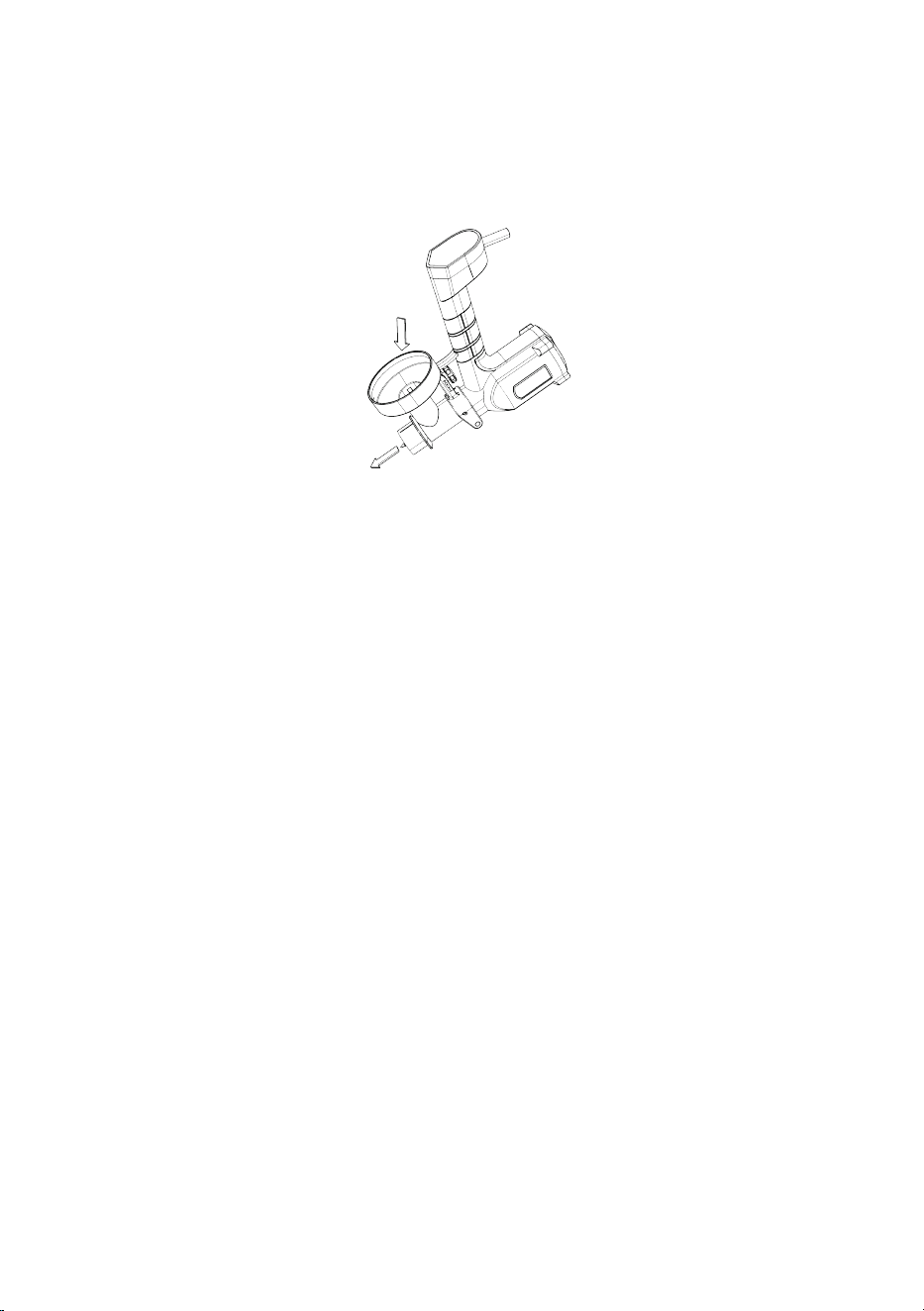
1. Turn machine off and unplug from power source. Trigger gun to allow paint to flow back into container.
2. Unscrew container. Pour remaining paint back into paint can.
3. Clean the container and suction hose with a brush.
4. Unscrew air cap and nozzle and clean with a brush.
5. Turn gun upside down and rinse. Flush gun with water flow in the direction of the arrows. Trigger
the gun with one hand to allow water to flow out; always make sure the back of the gun is above the
level when cleaning or water may flow into the motor position and damage the sprayer.
6. Reassemble sprayer.
7. Pour solvent or water into container and tighten container. Use only solvents with flash points
above 55°C. Solvent may have an irritating odor, use outdoors and wear protective equipment such
as respiratory protection and goggles.
8. Turn machine back on and trigger spray until no color remains in the spray.
9. Turn off the machine and unplug the power cord.
10. Empty container of residual fluid and clean outside of gun with a cloth dampened with solvent
or water.
11. Wipe sprayer dry and store in a dust-free, room temperature, dry environment.
07
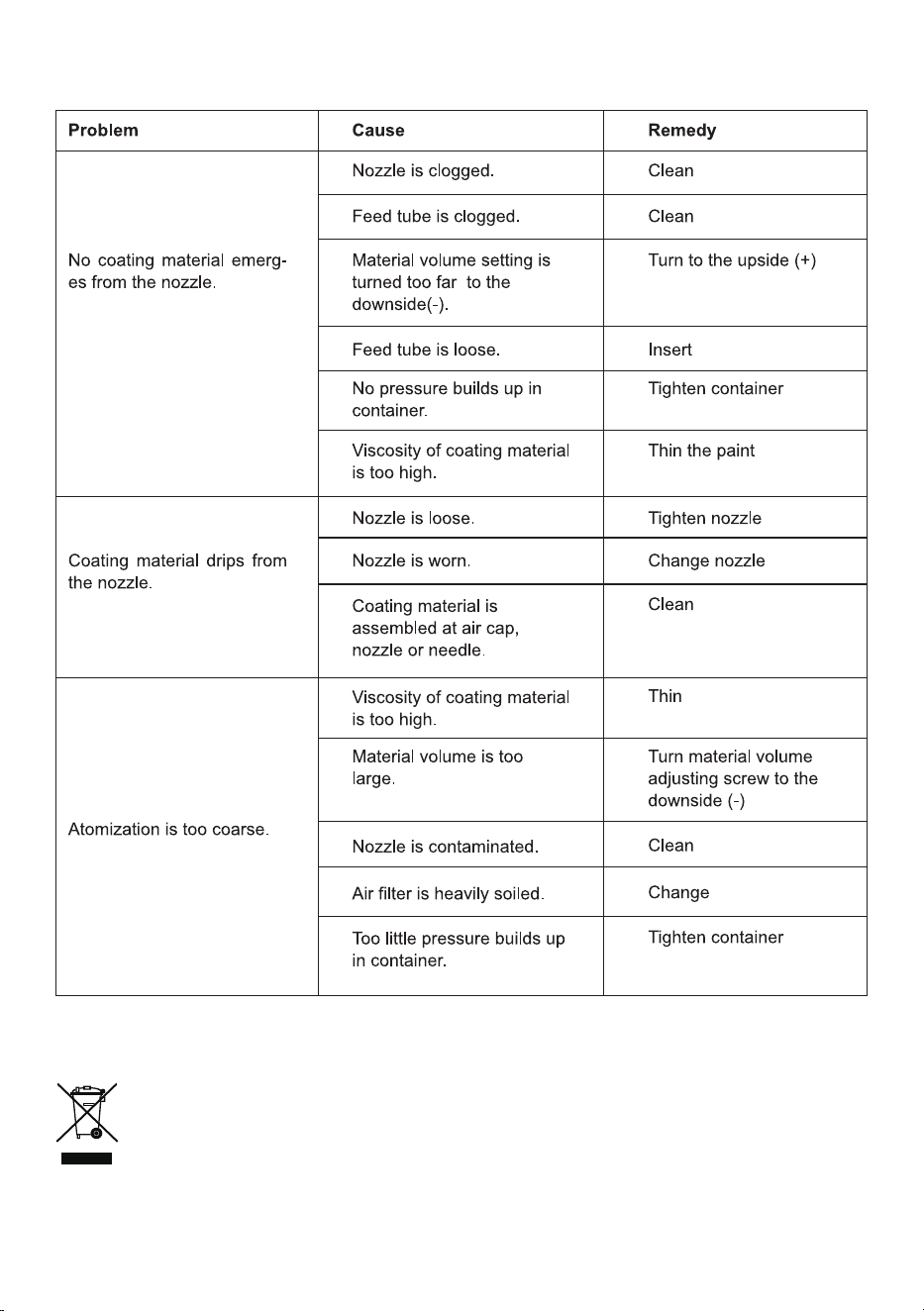
IV. Correction of malfunctions
V. Environmental protection
The appliance and accessories should be recycled in an environmentally friendly way. Do
not dispose of the appliance with household waste. Support environmental protection by
taking the appliance to a local collection point or obtain information from a specialist retailer.
08