
2026
PILOT
Owner’s Manual
Quebec Regulatory Notice
Availability of spare parts, repair service and information for
maintenance or repair:
Pursuant to applicable Quebec regulation, Honda does not
guarantee the availability of replacement parts, repair services, or
information required for the maintenance or repair of this product
or its components.
For more information visit:
www.honda.ca/en/quebecregulatorynotice (English)
www.honda.ca/fr/avisreglementaireduquebec (French)
Event Data Recorders
This vehicle is equipped with an event data recorder (EDR).
The main purpose of an EDR is to record, in certain crash or near
crash-like situations, such as an air bag deployment or hitting a
road obstacle, data that will assist in understanding how a vehicle’s
systems performed. The EDR is designed to record data related
to vehicle dynamics and safety systems for a short period of
time, typically 30 seconds or less. The EDR in this vehicle is
designed to record such data as:
• How various systems in your vehicle were operating;
• Whether or not the driver and passenger safety belts were
buckled/fastened;
• How far (if at all) the driver was depressing the accelerator
and/or brake pedal; and,
• How fast the vehicle was traveling.
26 PILOT-31T906300.book 0 ページ 2025年10月8日 水曜日 午前11時43分

These data can help provide a better understanding of the
circumstances in which crashes and injuries occur. NOTE: EDR data
are recorded by your vehicle only if a non-trivial crash situation
occurs; no data are recorded by the EDR under normal driving
conditions and no personal data (e.g., name, gender, age, and
crash location) are recorded. However, other parties, such as law
enforcement, could combine the EDR data with the type of
personally identifying data routinely acquired during a crash
investigation.
To read data recorded by an EDR, special equipment is required,
and access to the vehicle or the EDR is needed. In addition to the
vehicle manufacturer, other parties, such as law enforcement, that
have the special equipment, can read the information if they have
access to the vehicle or the EDR.
The data belongs to the vehicle owner and may not be accessed by
anyone else except as legally required or with the permission of the
vehicle owner.
Service Diagnostic Recorders
This vehicle is equipped with service-related devices that record
information about powertrain performance. The data can be used
to verify emissions law requirements and/or help technicians
diagnose and solve service problems. It may also be combined with
data from other sources for research purposes, but it remains
confidential. Some diagnostic and maintenance information is
uploaded to Honda upon vehicle start up.
26 PILOT-31T906300.book 1 ページ 2025年10月8日 水曜日 午前11時43分

Vehicle Data Recordings
This vehicle records the following information as data when the
Collision Mitigation Braking System
TM
(CMBS
TM
) is operated.
●
Images of objects in front of the vehicle when the CMBS
TM
is
activated
●
Operational status of each function of the CMBS
TM
●
Accelerator / brake pedal operation
●
Vehicle speed
●
Information such as distance and relative speed of the target
identified by the CMBS
TM
activated
Honda may obtain and use the recorded data for the purpose of
technical diagnosis and research and development of Honda
vehicles.
The CMBS
TM
does not record images or audio inside the vehicle.
Special tools are required to review or remove data (including
images) recorded by CMBS
TM
.
The CMBS
TM
image recording function can be turned off so that no
images are recorded when CMBS
TM
is activated.
Disclosure of data
Honda will not disclose or provide the acquired data to third parties
with data recorded by CMBS
TM
except in the following cases:
●
When the owner of the vehicle consents
●
When required by law, court order, or similar legally enforceable
request
●
When the data has been processed to de-identify/anonymise the
vehicles/users, such as when aggregate data is provided to
research institutions
Canadian models
California Perchlorate Contamination Prevention Act
The airbags, seat belt tensioners, and CR type batteries in this
vehicle may contain perchlorate materials - special handling may
apply. See www.dtsc.ca.gov/hazardouswaste/perchlorate
As you read this manual, you will find information that is preceded
by a symbol. This information is intended to help you avoid
damage to your vehicle, other property, or the environment.
NOTICE
26 PILOT-31T906300.book 2 ページ 2025年10月8日 水曜日 午前11時43分

System Updates Terms & Conditions
General
Your vehicle has an application that allows your System Updates to
automatically search for Honda software updates that are specific
to your System Updates and its connected devices (when you set
the power mode to ON, via Wi-Fi or every four (4) weeks via
Telematics Control Unit (TCU)
*
, queries may occur more or less
frequently due to internet outages, retries, direct user action, WAP
push from the server, or a change in query policy on the Honda
servers). This application periodically transmits to our servers a
limited amount of vehicle and device information (Vehicle
Identification Number (VIN), the Model Type (MT) Identification
Number, Hardware and Software Part Number, Serial Number,
Software Version, preferred language, Internet Protocol (IP)
address, Transaction Log (alert or update viewing, update
download and installation, software status), etc.). When the
application finds an update from the server, the application initially
asks permission to download and install the update. Where
available, in your settings menu you may elect to automatically
download and install these updates or you may elect to manually
update the system.
When your System Updates searches our servers for updates or
alerts, we will automatically provide you with the opportunity to
update your devices or transmit the update or alert directly to your
System Updates. We will also maintain on our servers a log of the
updates or alerts that are installed.
Your Personal Data
Should the aforementioned information transmitted to Honda
constitute personal information in your region, please note that this
information will be treated in strict accordance with the rules and
regulations outlined in this notice as well as applicable data
protection law.
The terms of our privacy notice are incorporated into these terms by
reference and your use of system updates will be subject to the
privacy notice. Our privacy notice sets out information about how we
and any named third-parties will process any personal data we
collect from you or that you provide to us via the application.
For further details, see Honda’s vehicle data privacy notice at:
Honda collects, uses, and stores your personal data for the reasons
set out below:
●
to deliver system updates and related services
●
to allow us to improve and optimize system updates products
and services
●
to respond to user questions and complaints
●
for internal record keeping
●
where necessary for Honda’s legitimate interests, as listed below, and
where our interests are not overridden by your data protection rights
●
as otherwise described in Honda’s Privacy Notice and Vehicle
Data Privacy Notice
Protecting our legitimate business interests and legal rights
includes, but is not limited to, use in connection with compliance,
regulatory, auditing, legal claims (including disclosure of such
information in connection with legal process or litigation), and
other ethics and compliance reporting requirements.
Honda will also convert personal data into anonymous data and
use it (normally on an aggregated statistical basis) for uses such as
market research and analysis, to improve the system updates, to
analyze trends, and to assess the success of software update
releases. Aggregated personal information does not personally
identify you or any other use of system updates.
Honda may share this data with Honda’s worldwide support
organization or affiliated Honda companies or other third-parties
engaged by Honda for the purposes of rendering support services
in connection with system support.
U.S.: https://www.honda.com/privacy/connected-product-
privacy-notice
Canada: https://www.honda.ca/privacy/vehicledata (English)
https://www.honda.ca/fr/confidentialite/
politiquedeconfidentialité (French)
* Not available on all models
26 PILOT-31T906300.book 3 ページ 2025年10月8日 水曜日 午前11時43分

Software End User License Agreement
Your vehicle comes equipped with software, which is governed by
the End User License Agreement in Owner’s Manual, and which
contains a binding arbitration clause. Please refer to the End User
License Agreement for the terms and conditions governing your
use of the installed software, as well as the applications, services,
functions, and content provided through the software. Your use of
the installed software will serve as your consent to the terms and
conditions of the End User License Agreement.
You may opt out within 30 days of your initial use of the Software
by sending a signed, written notice to HONDA at American Honda
Motor Co., Inc., Honda Automobile Customer Service, Mail Stop
CHI-5, 1919 Torrance Blvd., Torrance, CA 90501-2746.
Privacy Notice
This vehicle may share location and usage information. To manage
this setting, visit:
To learn more about how we collect and use Personal
Information, including precise geolocation data,
please read our Privacy Notice and Vehicle Data
Privacy Notice, accessible at:
U.S.: https://www.honda.com/privacy/connected-product-
privacy-notice
Canada: https://www.honda.ca/privacy/vehicledata (English)
https://www.honda.ca/fr/confidentialite/
politiquedeconfidentialité (French)
U.S.: https://www.honda.com/privacy/connected-
product-privacy-notice
Canada: https://www.honda.ca/privacy/vehicledata (English)
https://www.honda.ca/fr/confidentialite/
politiquedeconfidentialité (French)
26 PILOT-31T906300.book 4 ページ 2025年10月8日 水曜日 午前11時43分

A Few Words About Safety
Your safety, and the safety of others, is very important. And
operating this vehicle safely is an important responsibility.
To help you make informed decisions about safety, we have
provided operating procedures and other information on labels and
in this manual. This information alerts you to potential hazards that
could hurt you or others.
Of course, it is not practical or possible to warn you about all the
hazards associated with operating or maintaining your vehicle. You
must use your own good judgment.
You will find this important safety information in a variety of forms,
including:
●
Safety Labels - on the vehicle.
●
Safety Messages - preceded by a safety alert symbol 3 and
one of three signal words: DANGER, WARNING, or CAUTION.
These signal words mean:
●
Safety Headings - such as Important Safety Precautions.
●
Safety Section - such as Safe Driving.
●
Instructions - how to use this vehicle correctly and safely.
This entire book is filled with important safety information - please
read it carefully.
3DANGER
You WILL be KILLED or SERIOUSLY HURT if
you don't follow instructions.
3WARNING
You CAN be KILLED or SERIOUSLY HURT if
you don't follow instructions.
3CAUTION
You CAN be HURT if you don't follow
instructions.
26 PILOT-31T906300.book 5 ページ 2025年10月8日 水曜日 午前11時43分

Contents
This owner’s manual should be considered a permanent part of the
vehicle and should remain with the vehicle when it is sold.
This owner’s manual covers all models of your vehicle. You may find
descriptions of equipment and features that are not on your
particular model.
The images throughout this owner’s manual (including the front
cover) that depict features, equipment, Audio/Information screen
details, and Meter screens are only examples and may not be
representative of your particular model.
This owner’s manual is for vehicles sold in the United States and
Canada.
The information and specifications included in this publication were
in effect at the time of approval for printing. Honda Motor Co., Ltd.
reserves the right, however, to discontinue or change specifications
or design at any time without notice and without incurring any
obligation.
2 Safe Driving P. 35
For Safe Driving P. 36 Seat Belts P. 41 Airbags P. 55
2 Instrument Panel P. 95
Indicators P. 96 Gauges and Displays P. 118
2 Controls P. 149
Clock P. 150 Locking and Unlocking the Doors P. 152
Panoramic Roof
*
P. 186
Seats P. 211 Interior Convenience Items P. 231
2 Features P. 263
Audio System P. 264 Audio System Basic Operation P. 270
Customized Features P. 346 Bluetooth® HandsFreeLink® P. 369
2 Driving P. 387
Before Driving P. 388 Towing a Trailer P. 394
Parking Your Vehicle P. 542
Rear View Camera
*
P. 552
2 Maintenance P. 569
Before Performing Maintenance P. 570 Maintenance Minder
TM
P. 573
Checking and Maintaining Wiper Blades P. 599
Climate Control System Maintenance P. 616 Cleaning P. 618
2 Handling the Unexpected P. 625
Tools P. 626 If a Tire Goes Flat P. 627
Overheating P. 645 Indicator Coming On/Blinking P. 647
If You Cannot Unlock the Fuel Fill Door P. 662
2 Information P. 669
Specifications P. 670 Identification Numbers P. 672
Emissions Testing P. 676 Warranty Coverages P. 678
26 PILOT-31T906300.book 6 ページ 2025年10月8日 水曜日 午前11時43分
Contents
Post-Collision Braking System P. 73 Child Safety P. 74 Exhaust Gas Hazard P. 92 Safety Labels P. 93
Tailgate P. 170 Security System P. 180 Windows P. 183
Operating the Switches Around the Steering Wheel P. 190 Mirrors P. 208
Climate Control System P. 256
Audio Error Messages P. 324 General Information on the Audio System P. 325
CabinTalk® P. 385
Off-Highway Driving Guidelines P. 405 When Driving P. 410 Honda Sensing® P. 453 Braking P. 533
Multi View Camera System
*
P. 554 Refueling P. 565 Fuel Economy and CO
2
Emissions P. 568
Maintenance Under the Hood P. 581 Replacing Light Bulbs P. 594
Checking and Maintaining Tires P. 604 Battery P. 613 Remote Transmitter Care P. 615
Accessories and Modifications P. 623
Engine Does Not Start P. 638 If the Battery Is Dead P. 643
Fuses P. 654 Emergency Towing P. 661
If You Cannot Open the Tailgate P. 663 Refueling P. 664 Emergency Call (eCall) P. 665
Devices that Emit Radio Waves P. 673 Reporting Safety Defects P. 675
Authorized Manuals P. 681 Customer Service Information P. 682 Open Source License P. 683
Quick Reference Guide
P. 8
Safe Driving
P. 35
Instrument Panel
P. 95
Controls
P. 149
Features
P. 263
Driving
P. 387
Maintenance
P. 569
Handling the Unexpected
P. 625
Information
P. 669
Index
P. 685
26 PILOT-31T906300.book 7 ページ 2025年10月8日 水曜日 午前11時43分
8
Quick Reference Guide
Quick Reference Guide
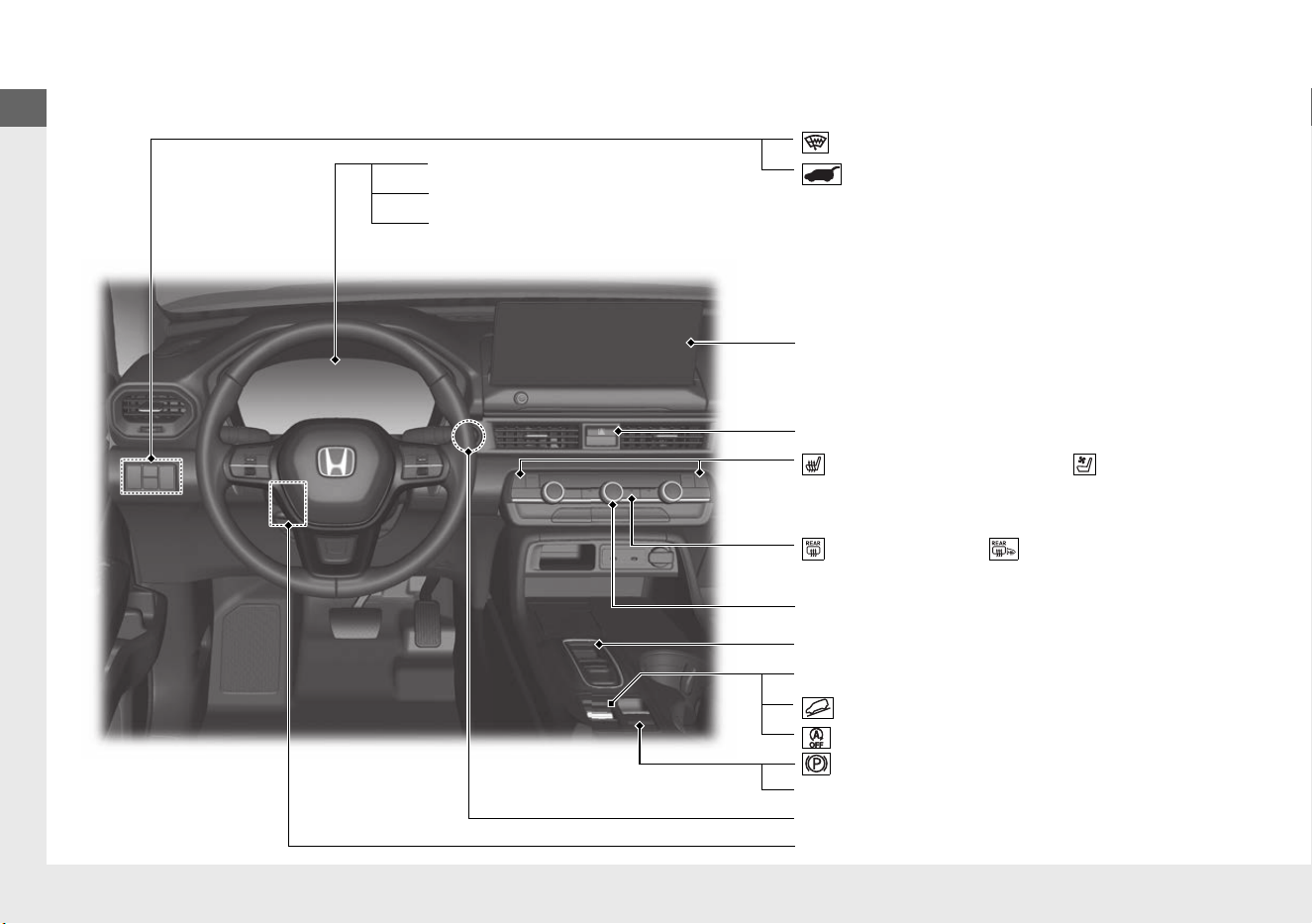
Visual Index
❚
Gauges (P118)
❚
Driver Information
Interface
(P122, 126)
❚
System Indicators (P96)
❚
Hazard Warning Button
❚
Rear Defogger/ Heated Door
Mirror
*
Button (P204)
❚
Climate Control System (P256)
❚
Shift Button (P419)
❚
Auto Idle Stop OFF Button (P428)
❚
Hill Descent Control Button (P440)
❚
Drive Mode Switch (P433)
❚
ENGINE START/STOP Button (P190)
❚
Steering Wheel Adjustments (P207)
❚
Electric Parking Brake Switch (P533)
❚
Automatic Brake Hold Button (P537)
❚
Front Seat Heaters and Seat
Ventilator
*
Buttons (P251)
❚
Heated Windshield Button
*
(P204)
❚
Power Tailgate Button (P176)
❚
Audio System (P264)
26 PILOT-31T906300.book 8 ページ 2025年10月8日 水曜日 午前11時43分
9
Quick Reference Guide
❚
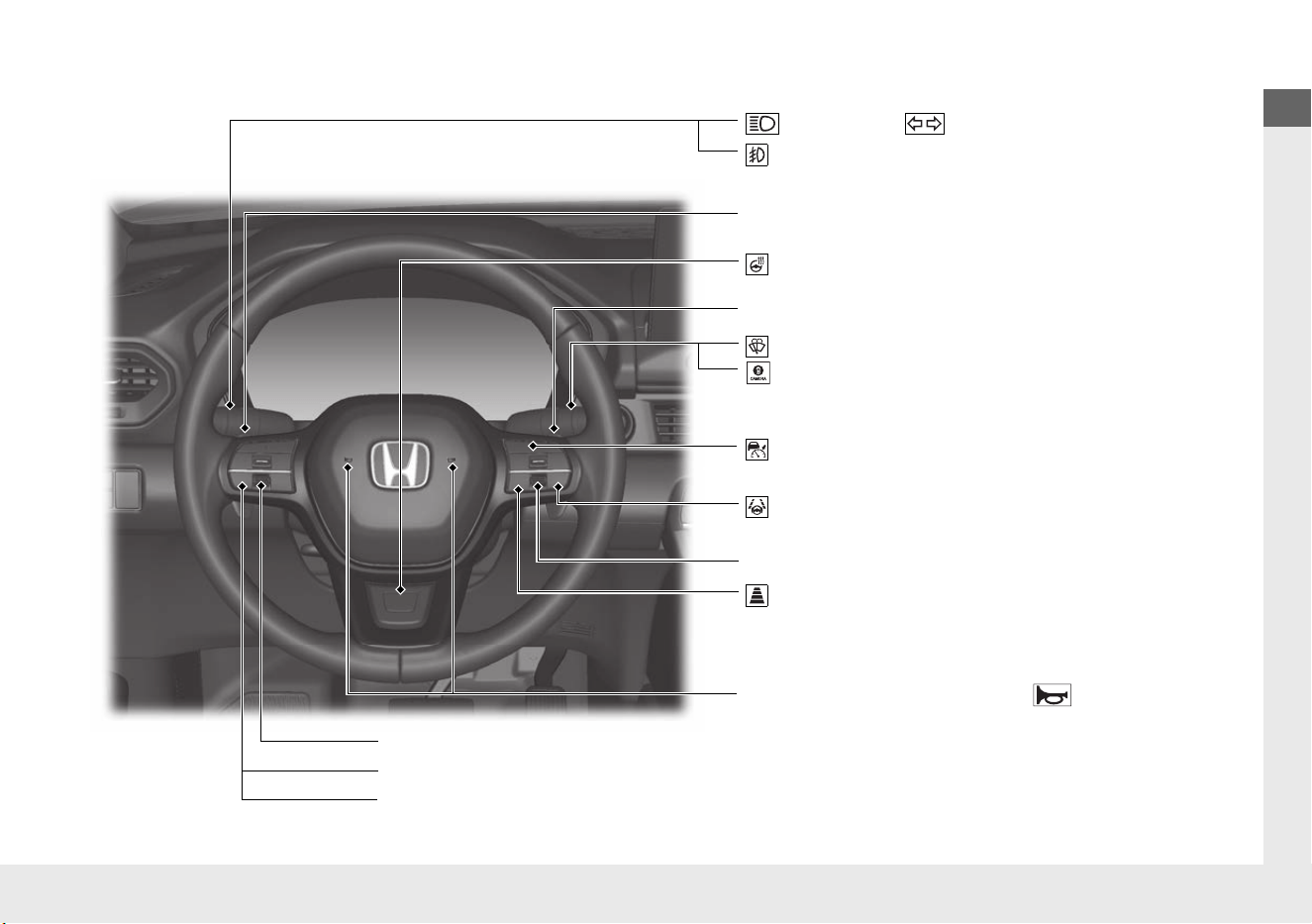
Headlights/ Turn Signals (P193, 195)
❚
Fog Lights (P197)
❚
(- Paddle Shifter (Shift down) (P426)
❚
(+ Paddle Shifter (Shift up) (P426)
❚
Lane Keeping Assist System (LKAS)
Button
(P507)
❚
Horn (Press an area around .)
❚
Left Selector Wheel (P124)
❚
Adaptive Cruise Control (ACC) with Low
Speed Follow Buttons
(P483)
❚
Right Selector Wheel (P127)
❚
Wipers/Washers (P201)
❚
Camera Button
*
(P555)
❚
Heated Steering Wheel Button
*
(P250)
❚
Interval Button (P495)
❚
Audio Remote Controls (P264)
❚
Bluetooth® HandsFreeLink® Buttons (P369)
* Not available on all models
26 PILOT-31T906300.book 9 ページ 2025年10月8日 水曜日 午前11時43分
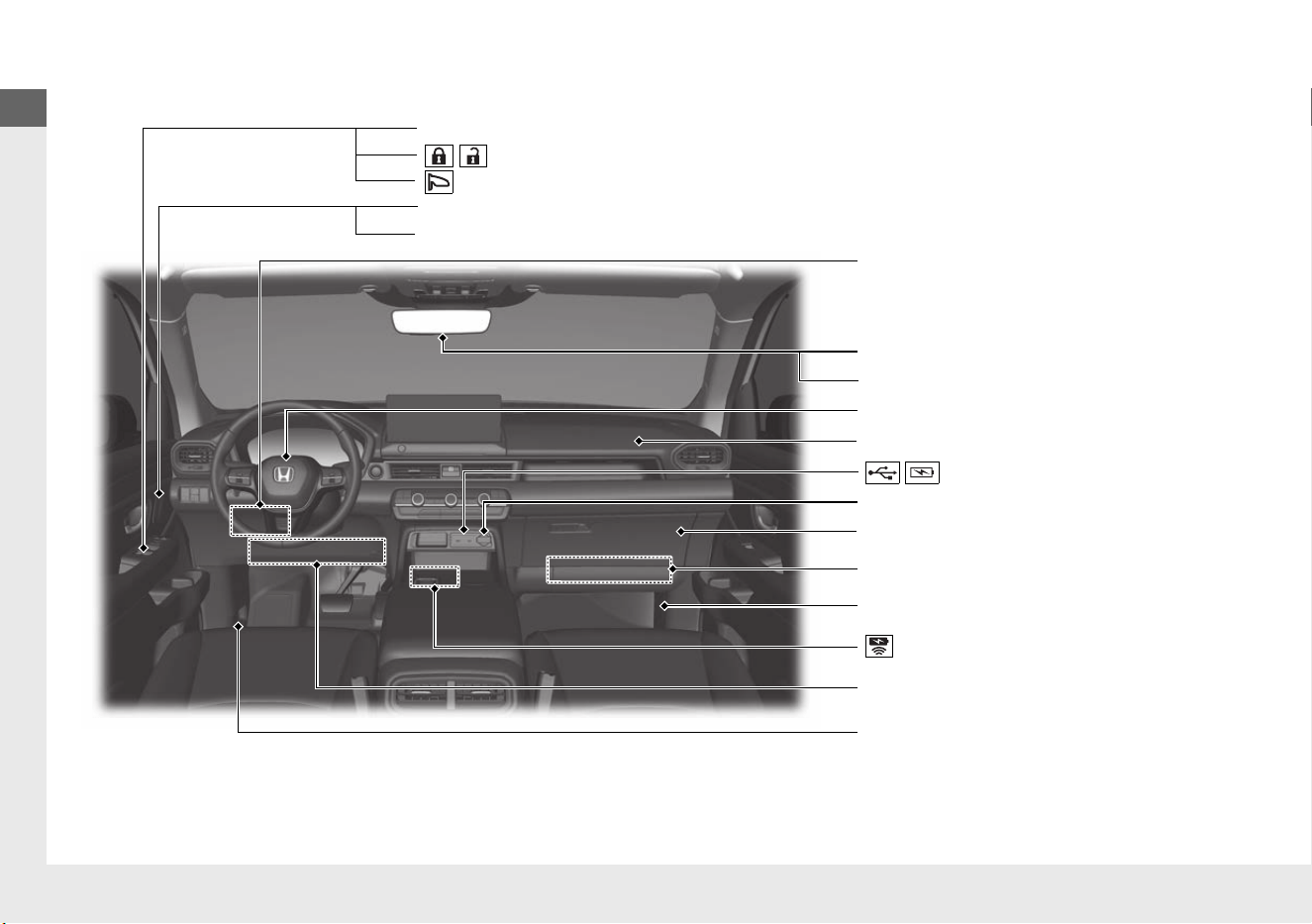
Visual Index
10
Quick Reference Guide
❚
Power Window Switches (P183)
❚
Memory Buttons
*
(P206)
❚
SET Button
*
(P206)
❚
Driver’s Front Airbag (P58)
❚
Hood Release Handle (P582)
❚
Glove Box (P234)
❚
Driver’s Knee Airbag (P63)
❚
Accessory Power Socket
(P244)
❚
Rearview Mirror (P208)
❚
HomeLink® Buttons
*
(P253)
❚
Passenger’s Front Airbag (P58)
❚
Door Mirror Controls (P209)
❚
Master Door Lock Switch (P168)
❚
USB Ports
(P265)
❚
Passenger’s Knee Airbag (P63)
❚
Wireless Charger
*
(P246)
❚
Interior Fuse Box (P658)
❚
Interior Fuse Box (P656)
26 PILOT-31T906300.book 10 ページ 2025年10月8日 水曜日 午前11時43分
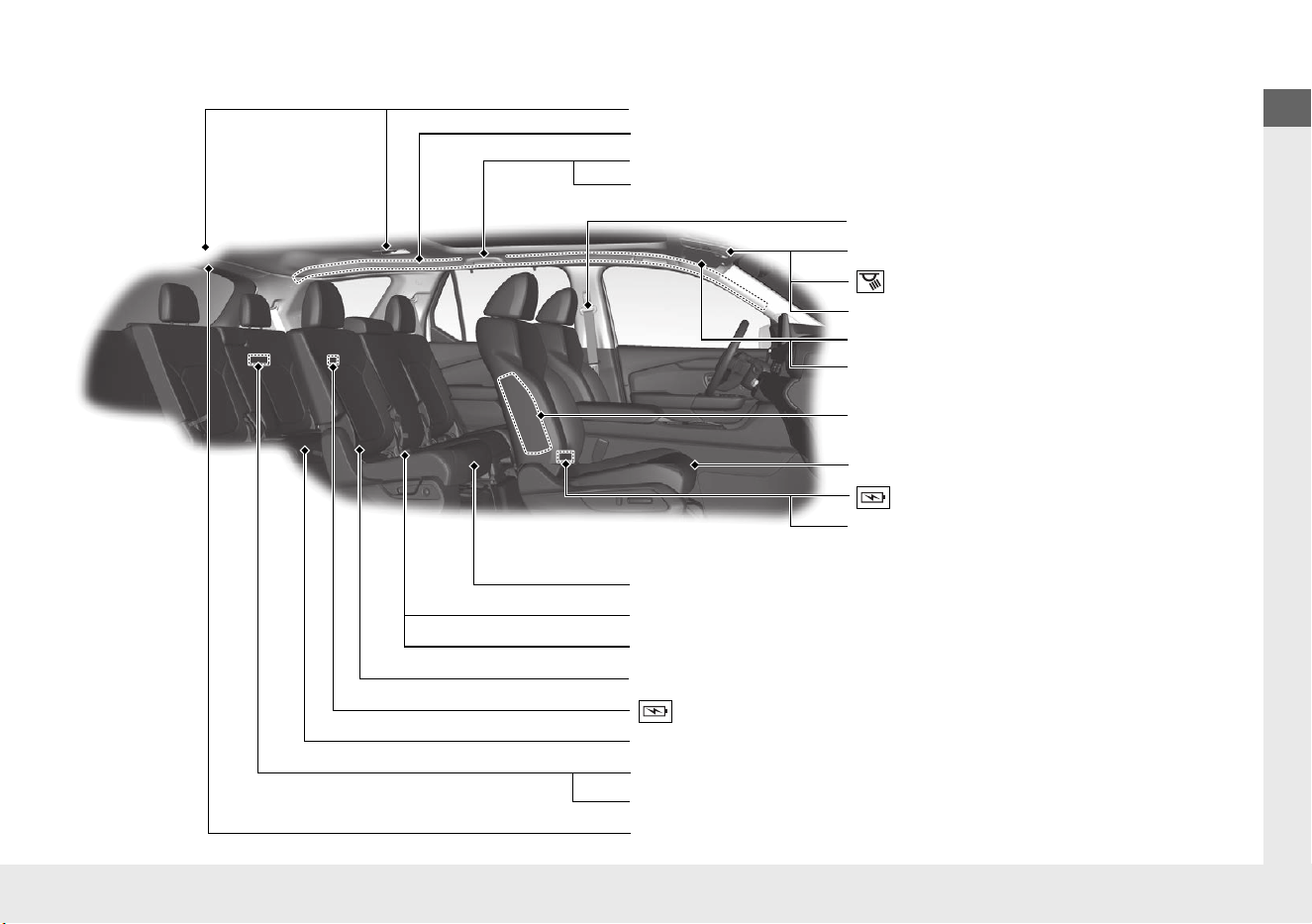
11
Quick Reference Guide
❚
Accessory Power Socket
*
(P244)
❚
LATCH to Secure a Child Seat (P79)
❚
Seat Belt (Installing a Child Seat) (P84)
❚
Third Row Seat (P220)
❚
Second Row Seat (P214)
❚
Seat Belt to Secure a Child Seat (P86)
❚
Side Curtain Airbags (P68)
❚
Seat Belts (P41)
❚
Grab Handle
❚
Coat Hook (P237)
❚
Walk Away Close Button
*
(P174)
❚
Panoramic Roof Switch
*
(P186)
❚
Map Lights (P232)
❚
Sunglasses Holder (P238)
❚
Sun Visors (P243)
❚
Vanity Mirrors
❚
Front Seat (P211)
❚
Side Airbags (P66)
❚
USB Ports (P265)
❚
Second Row Outer Seat Heater
Buttons
*
(P252)
❚
USB Ports
*
(P265)
❚
Cargo Area Light (P233)
❚
Seat Belt with Detachable Anchor (P50)
* Not available on all models
26 PILOT-31T906300.book 11 ページ 2025年10月8日 水曜日 午前11時43分
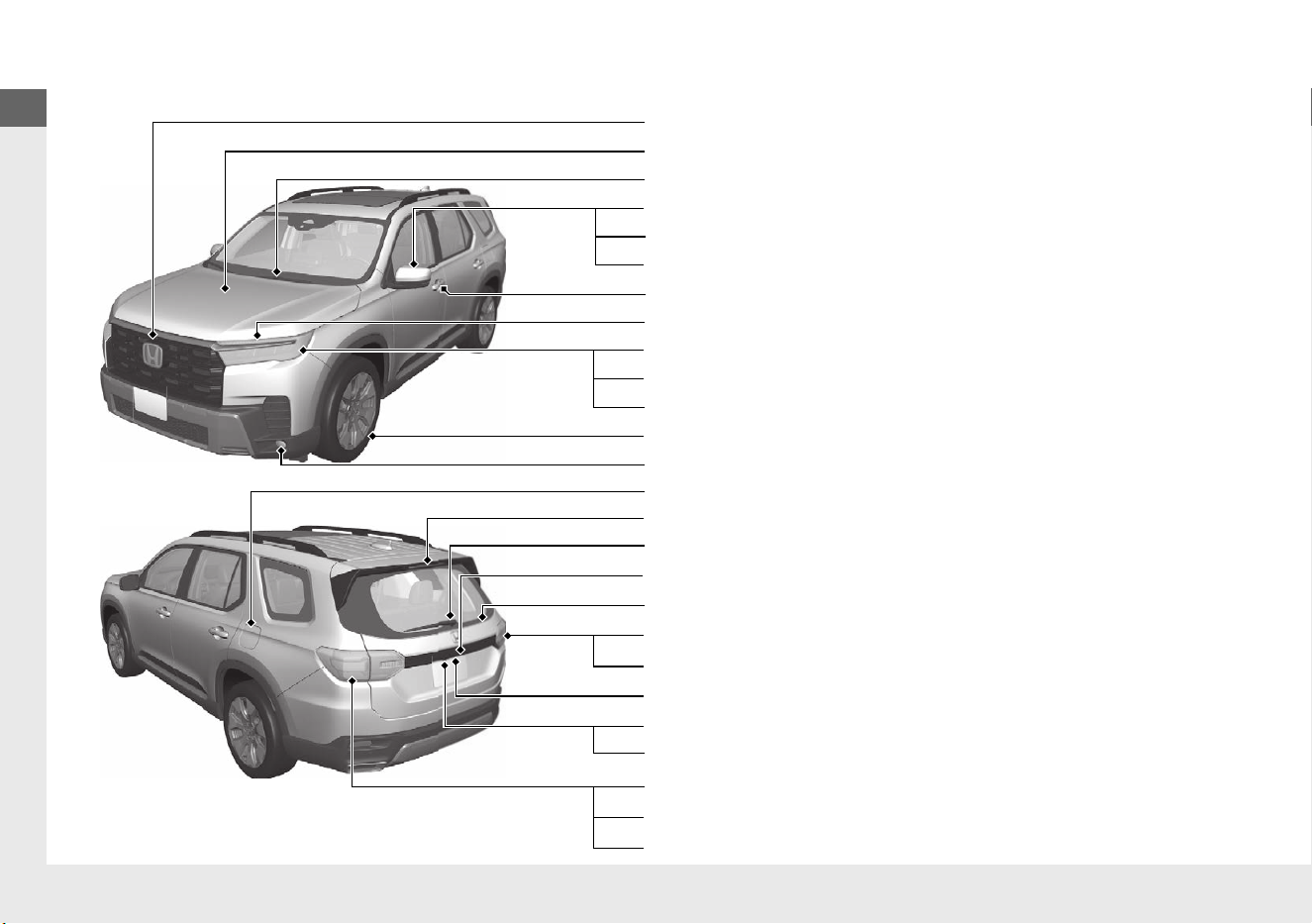
Visual Index
12
Quick Reference Guide
❚
Maintenance Under the Hood (P581)
❚
Windshield Wipers (P201, 599)
❚
Tires (P604, 627)
❚
Power Door Mirrors (P209)
❚
How to Refuel (P566)
❚
High-Mount Brake Light (P598)
❚
Rear Wiper (P203, 602)
❚
Rear License Plate Light (P597)
❚
Tailgate Outer Handle (P176)
❚
Rear View Camera
*
(P552)
❚
Multi View Camera
*
(P554)
❚
Fog Lights (P197, 594)
❚
Opening/Closing the Tailgate (P170)
❚
Taillights
*
(P597)
❚
Back-Up Lights (P597)
❚
Rear Side Marker Lights (P595)
❚
Rear Turn Signal Lights (P595)
❚
Brake/Taillights (P595)
❚
Front Turn Signal Lights (P195, 594)
❚
Headlights (P193, 594)
❚
Front Side Marker Lights (P193, 594)
❚
Daytime Running Lights/Parking Lights (P193, 197, 594)
❚
Multi View Camera
*
(P554)
❚
Multi View Camera
*
(P554)
❚
Side Turn Signal Lights
*
(P195, 594)
❚
Door Lock/Unlock Control (P155)
26 PILOT-31T906300.book 12 ページ 2025年10月8日 水曜日 午前11時43分
13
Quick Reference Guide
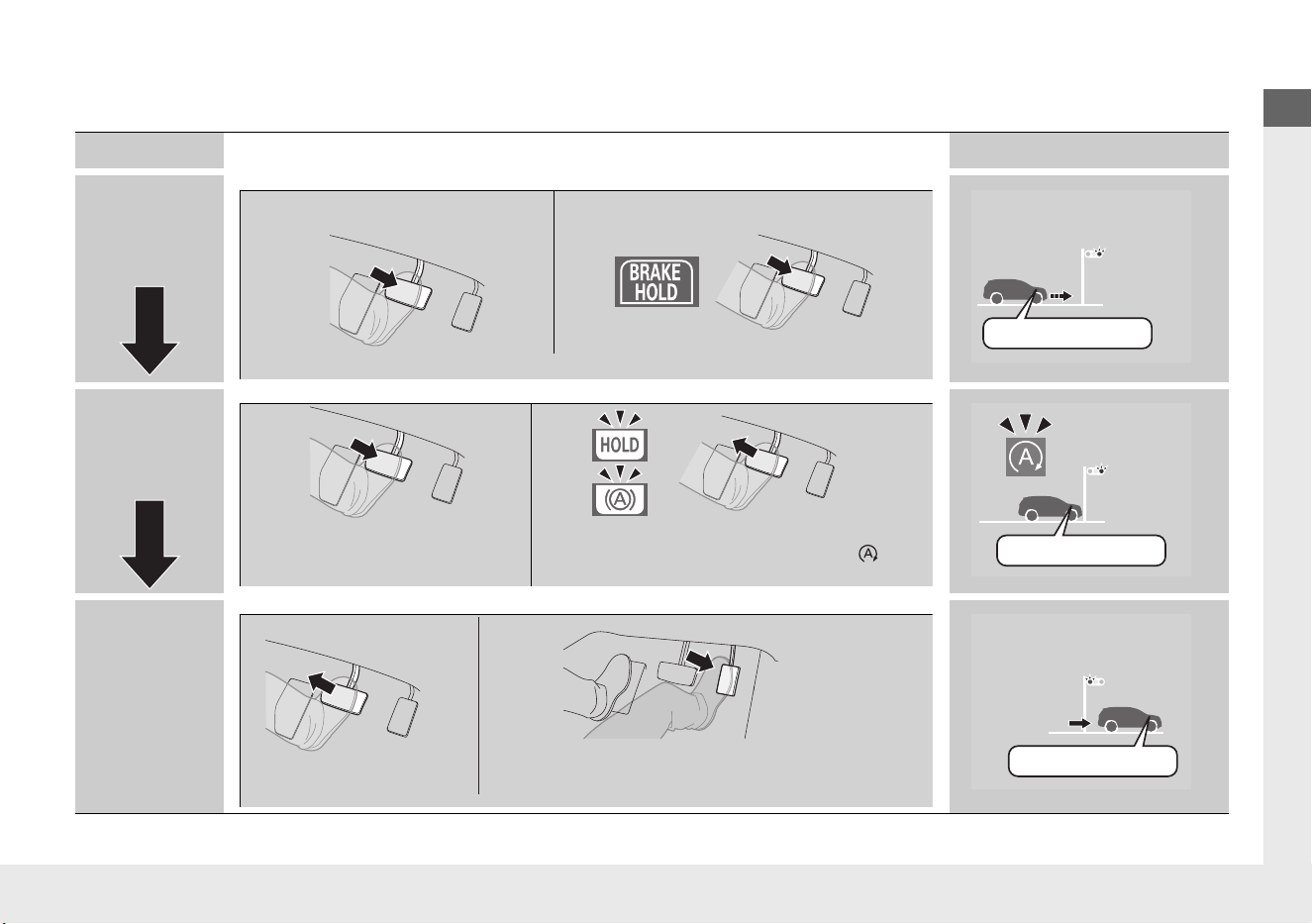
Auto Idle Stop Function
To improve fuel economy, the engine stops and then restarts as detailed below. When Auto Idle Stop is on, the Auto Idle Stop indicator (green) comes on.
(P427)
*1:U.S. models
*2:Canadian models
At Automatic transmission Engine status
Deceleration
Stop
Start-up
Automatic Brake Hold Off (P537) Automatic Brake Hold On (P537)
Depress the brake pedal.
On
Keep the brake pedal depressed.
With the automatic brake hold system activated,
you can release the brake pedal when the
(Green) indicator comes on.
*1
*2
Off
Release the brake pedal. With the automatic brake hold system activated,
depress the accelerator pedal.
Restarting
* Not available on all models
26 PILOT-31T906300.book 13 ページ 2025年10月8日 水曜日 午前11時43分
14
Quick Reference Guide
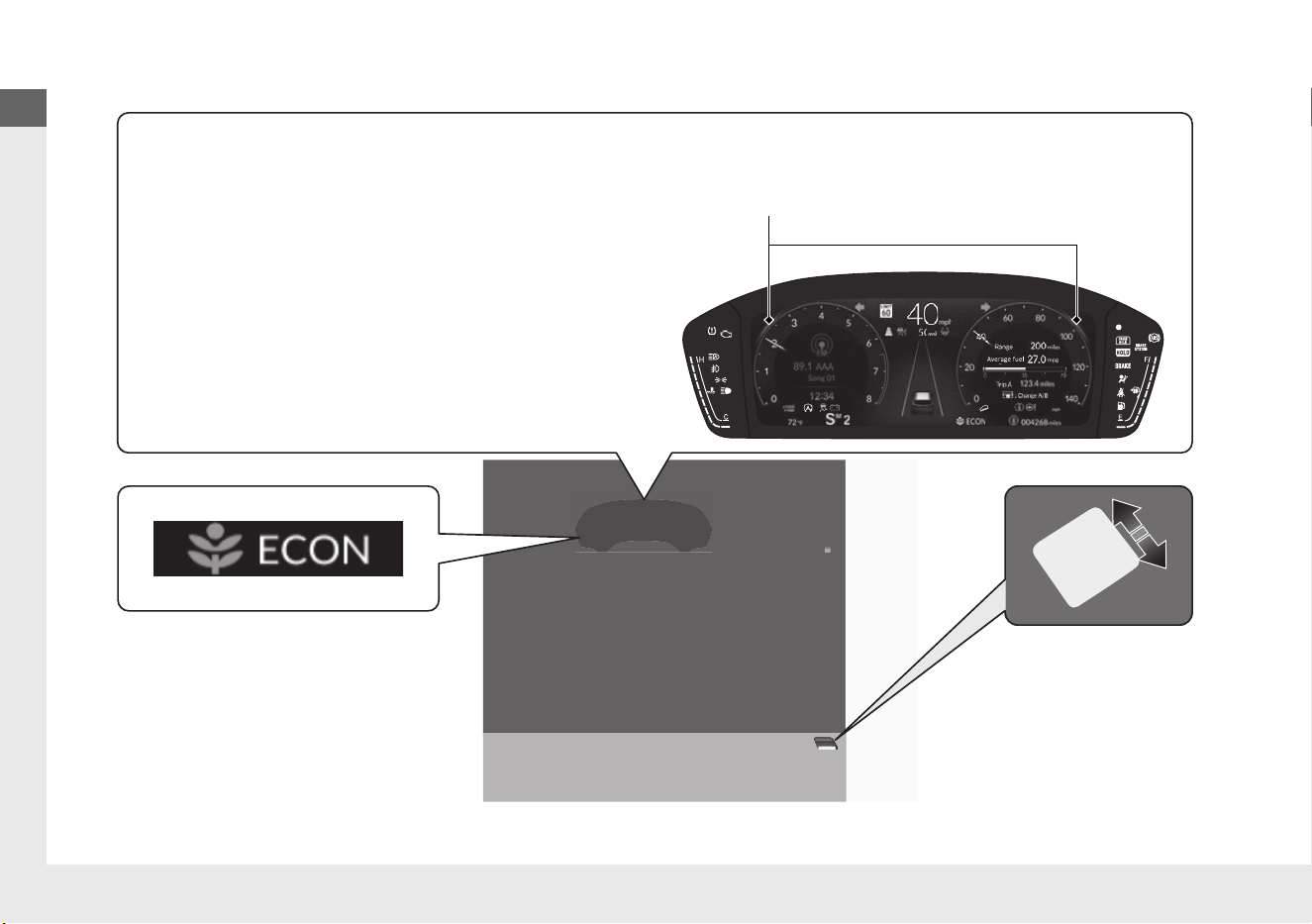
Eco Assist® System (P433)
Ambient Meter
●
With SPORT mode off, the color of the ambient meter
changes to green to indicate that the vehicle is being
driven in a fuel-efficient manner.
DRIVE MODE Switch
(P433)
Select the ECON mode to
help maximize fuel
economy.
ECON Mode Indicator (P108)
Comes on when the ECON mode is
selected.
Ambient Meter
26 PILOT-31T906300.book 14 ページ 2025年10月8日 水曜日 午前11時43分
15
Quick Reference Guide
Safe Driving (P35)
Airbags (P55)
●
Your vehicle is fitted with airbags to help protect you and
your passengers during a moderate-to-severe collision.
Child Safety (P74)
●
All children 12 and younger should be seated in the rear seat.
●
Smaller children should be properly restrained in a forward-facing child seat.
●
Infants must be properly restrained in a rear-facing child seat.
Exhaust Gas Hazard (P92)
●
Your vehicle emits dangerous exhaust gases that contain
carbon monoxide. Do not run the engine in confined spaces
where carbon monoxide gas can accumulate.
Before Driving Checklist (P40)
●
Before driving, check that the front seats, head restraints,
steering wheel, and mirrors have been properly adjusted.
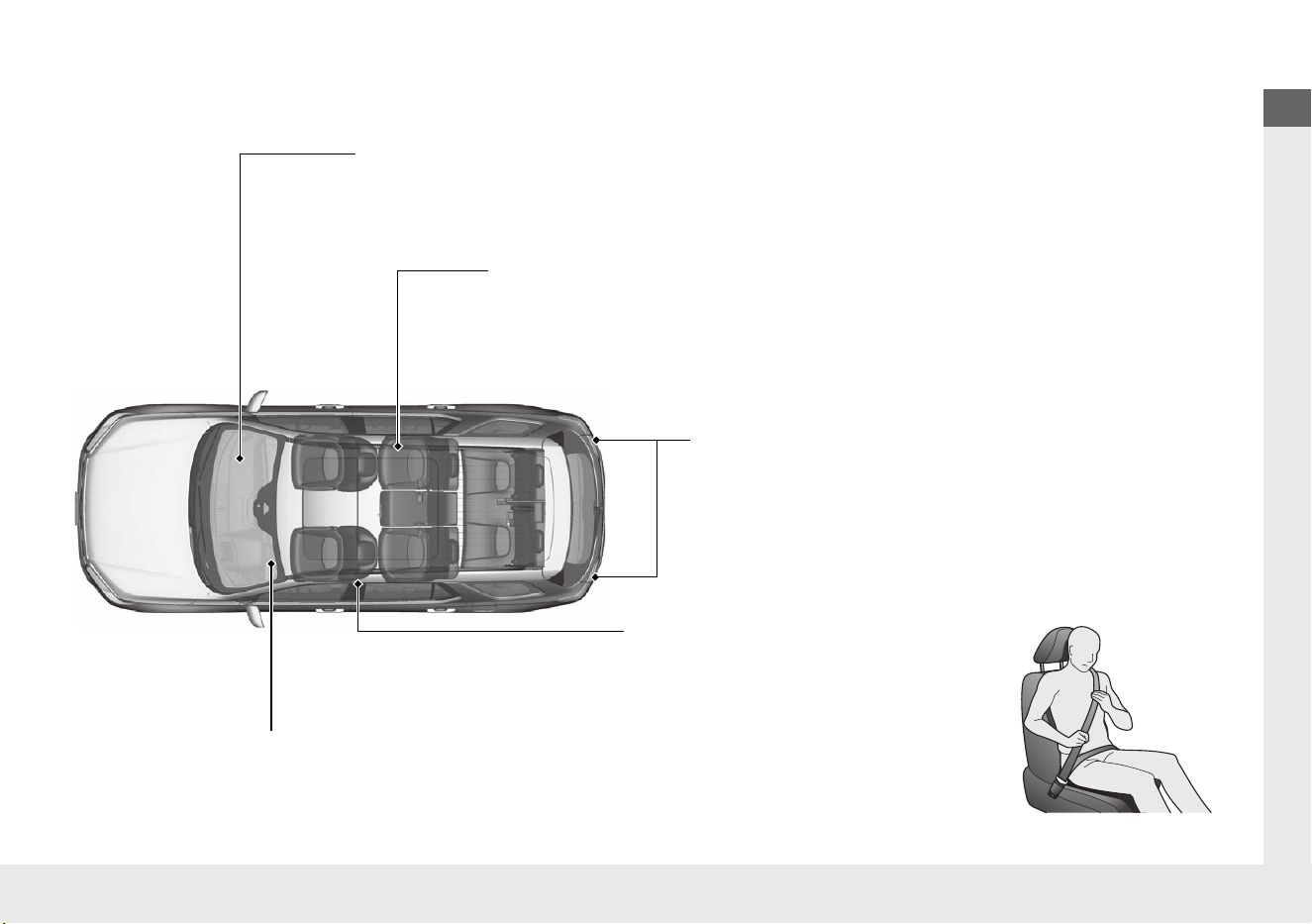
Seat Belts (P41)
●
Fasten your seat belt and sit upright well
back in the seat.
●
Check that your passengers are wearing
their seat belts correctly.
Fasten your lap belt as
low as possible.
26 PILOT-31T906300.book 15 ページ 2025年10月8日 水曜日 午前11時43分
16
Quick Reference Guide
Instrument Panel (P95)
●
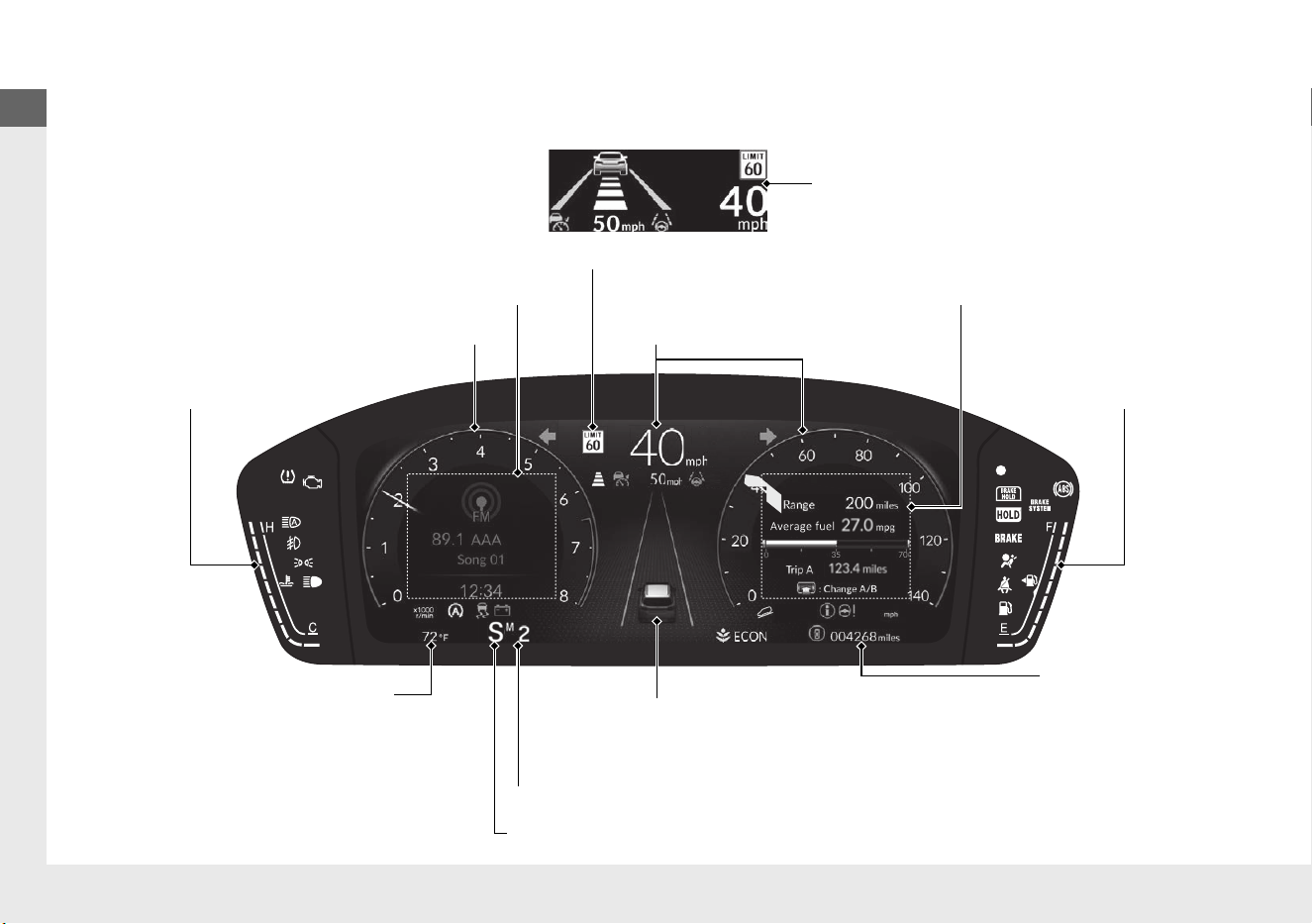
You can change the gauge design.
Change gauge design (P142)
Gear Position Indicator/Transmission System Indicator (P102, 103)
M (sequential mode) Indicator/Gear Selection Indicator (P102)
Fuel Gauge (P119)
Driver Information Interface (Right Side Area) (P126)
Tachometer (P119) Speedometer (P118)
Traffic Sign Recognition System (P120)
Odometer (P119)
Temperature Gauge (P119)
Driver Information Interface (Left Side Area) (P122)
Outside Temperature (P120)
Head-Up Display
*
(P143)
Indicators (P96)/Gauges (P118)/Driver Information Interface (P122, 126)/
Head-Up Display
*
(P143)
Current Mode for ACC with Low Speed Follow, the LKAS, and Traffic Jam Assist
(P121)
Parking Sensor System
*
(P121)
26 PILOT-31T906300.book 16 ページ 2025年10月8日 水曜日 午前11時43分
17
Quick Reference Guide
Controls (P149)
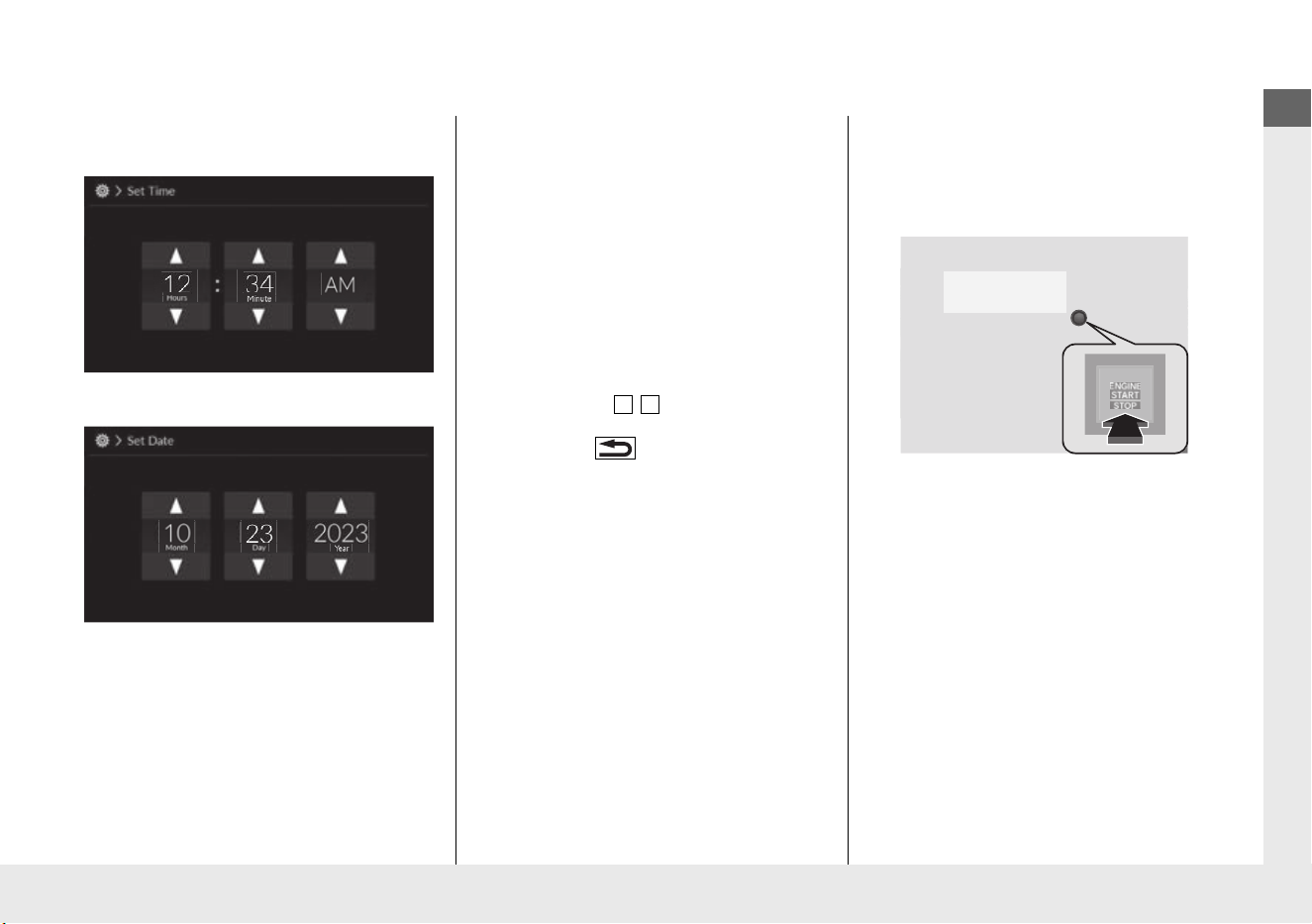
Clock (P150)
To adjust time
To adjust date
a Select the Home icon, then select
General Settings.
b Select System, then Date & Time.
c Select Set Date & Time.
d Select Automatic Date & Time, then
select Off.
e Select Set Date or Set Time.
f Adjust the dates, hours, and minutes
by selecting / .
g Select the (back) icon to set the
date or time.
The clock is automatically updated through
the audio system.
3
4
ENGINE START/STOP
Button
(P190)
Press the button to change the vehicle’s
power mode.
* Not available on all models
26 PILOT-31T906300.book 17 ページ 2025年10月8日 水曜日 午前11時43分
18
Quick Reference Guide
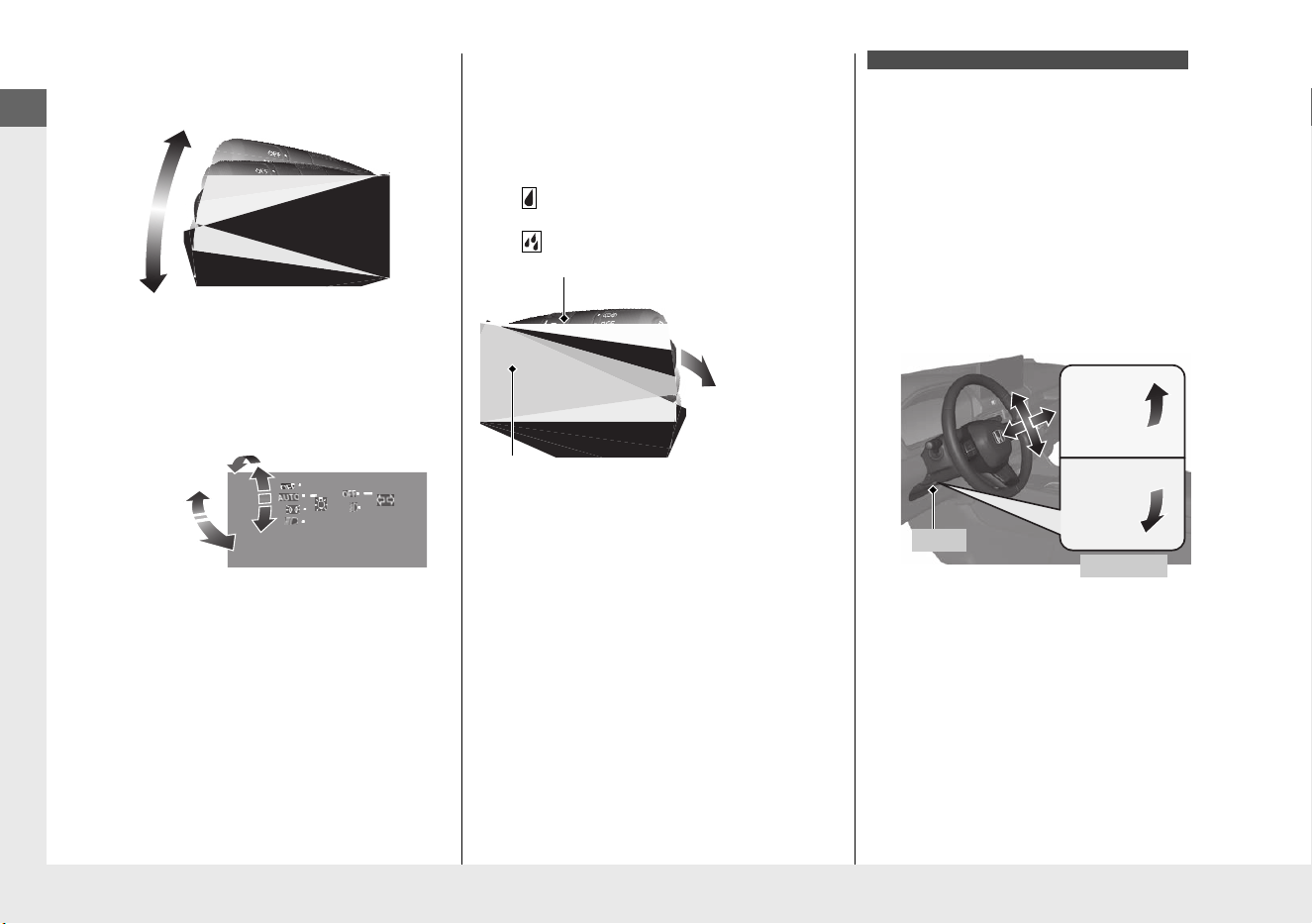
Turn Signals (P195)
Lights (P193)
Turn Signal Control Lever
Light Control Switches
Low Beam
High Beam
Flashing the high beams
Wipers and Washers
(P201)
*1:Models with manual intermittent
operation
*2:Models with automatic intermittent
operation
Wiper/Washer Control Lever
Adjustment Ring
: Lower speed, fewer sweeps
*1
(-: Low Sensitivity
*2
: Higher speed, more sweeps
*1
(+: High Sensitivity
*2
MIST
OFF
INT
*1
: Low speed with intermittent
AUTO
*2
: Wiper speed varies automatically
LO: Low speed wipe
HI: High speed wipe
Pull toward
you to spray
washer fluid.
AUTO should always be turned OFF before
the following situations in order to prevent
severe damage to the wiper system:
●
Cleaning the windshield
●
Driving through a car wash
●
No rain present
Steering Wheel (P207)
●
To adjust, push the adjustment lever
down, adjust to the desired position, then
lock the lever back in place.
Models with automatic intermittent wipers
To adjust
To lock
Lever
26 PILOT-31T906300.book 18 ページ 2025年10月8日 水曜日 午前11時43分
19
Quick Reference Guide
Unlocking the Front
Doors from the Inside
(P167)
●
Pull either front door inner handle to
unlock and open it at the same time.
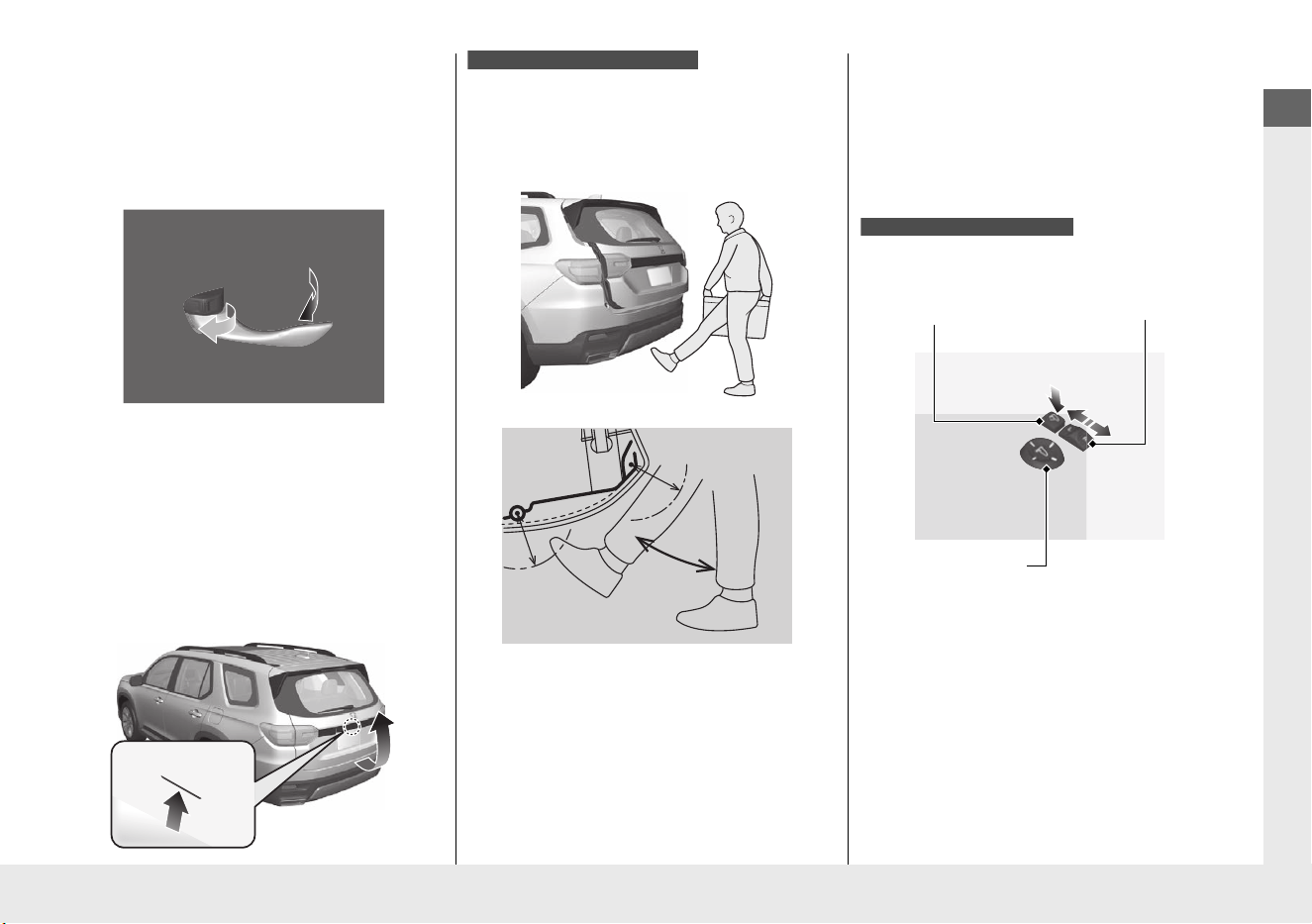
Tailgate (P 170)
●
Press the tailgate outer handle to unlock
and open the tailgate when you have the
keyless remote on you.
●
Press and hold the power tailgate button
on the driver’s side control panel or the
remote transmitter to open and close the
power tailgate.
With the remote on you, raise and lower
your foot (in a kicking motion) under the
center of the rear bumper to open or close
the tailgate.
Models with hands free access
1 sec.
Power Door Mirrors
(P 209)
●
With the power mode in ON, move the
selector switch to L or R.
●
Push the appropriate edge of the
adjustment switch to adjust the mirror.
●
Press the folding button to fold in and
out the door mirrors.
Models with folding button
Selector Switch
Adjustment Switch
Folding Button
*
* Not available on all models
26 PILOT-31T906300.book 19 ページ 2025年10月8日 水曜日 午前11時43分
20
Quick Reference Guide
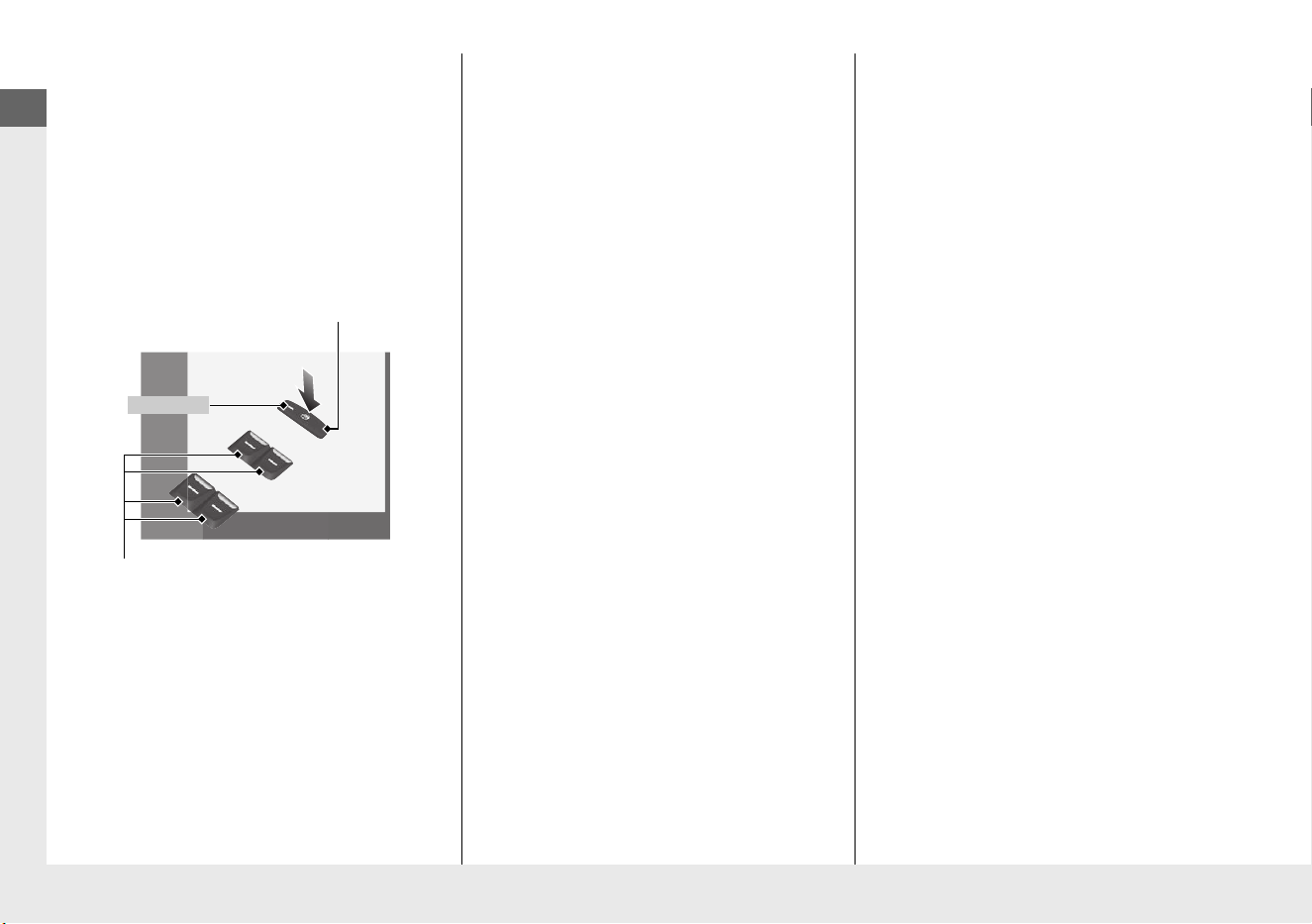
Power Windows (P 183)
●
With the power mode in ON, open and
close the power windows.
●
If the power window lock button is in the
off position, each passenger’s window
can be opened and closed with its own
switch.
●
If the power window lock button is in the
on position (indicator is on), each
passenger’s window switch is disabled.
Power Window Lock Button
Window Switches
Indicator
26 PILOT-31T906300.book 20 ページ 2025年10月8日 水曜日 午前11時43分
21
Quick Reference Guide
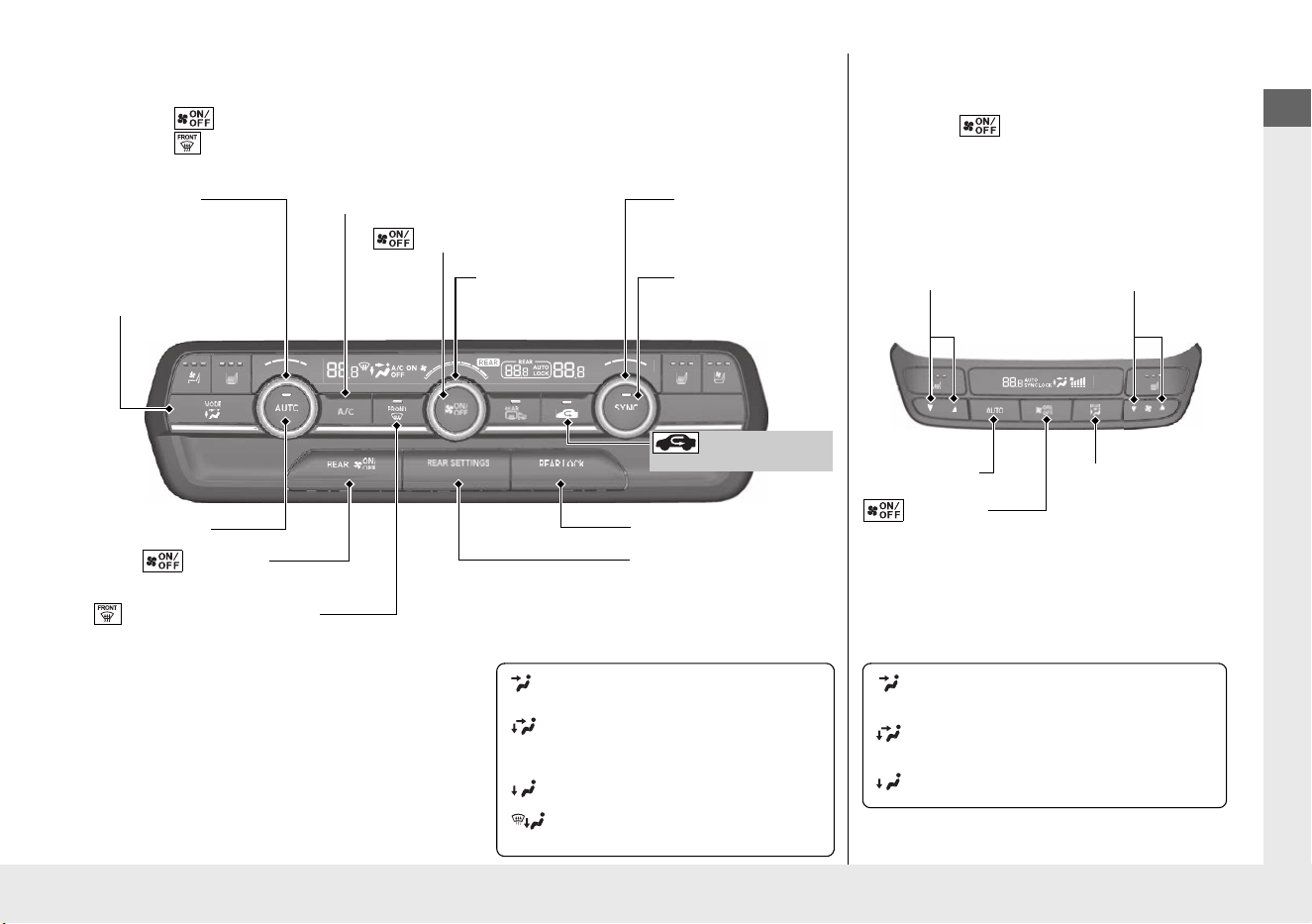
Climate Control System (P256)
●
Press the AUTO button to activate the climate control system.
●
Press the button to turn the system on or off.
●
Press the button to defrost the windshield.
Floor and windshield defroster
vents
Floor vents
Dashboard and floor vents’, and
back of the console
compartment
Dashboard vents’ and back of
the console compartment
AUTO Button
Passenger’s Side
Temperature
Control Dial
(ON/OFF) Button
(Windshield Defroster)
Button
SYNC
(Synchronization)
Button
Fan Control Dial
Driver’s Side
Temperature
Control Dial
MODE Control Button
A/C (Air Conditioning) Button
(Recirculation)
Button
REAR LOCK Button
*
REAR SETTINGS ButtonREAR (ON/OFF)
Button
Rear Climate Control (P260)
●
Press the rear AUTO button to activate
the rear climate control system.
●
Press the button to turn the system
on or off.
Rear Temperature
Control Buttons
Rear Fan
Control Buttons
AUTO Button
(ON/OFF)
Button
MODE Control
Button
Rear floor vents
Back of console, rear floor, and
3rd row vents’
Back of console and 3rd row vents’
* Not available on all models
26 PILOT-31T906300.book 21 ページ 2025年10月8日 水曜日 午前11時43分
22
Quick Reference Guide
Features (P263)
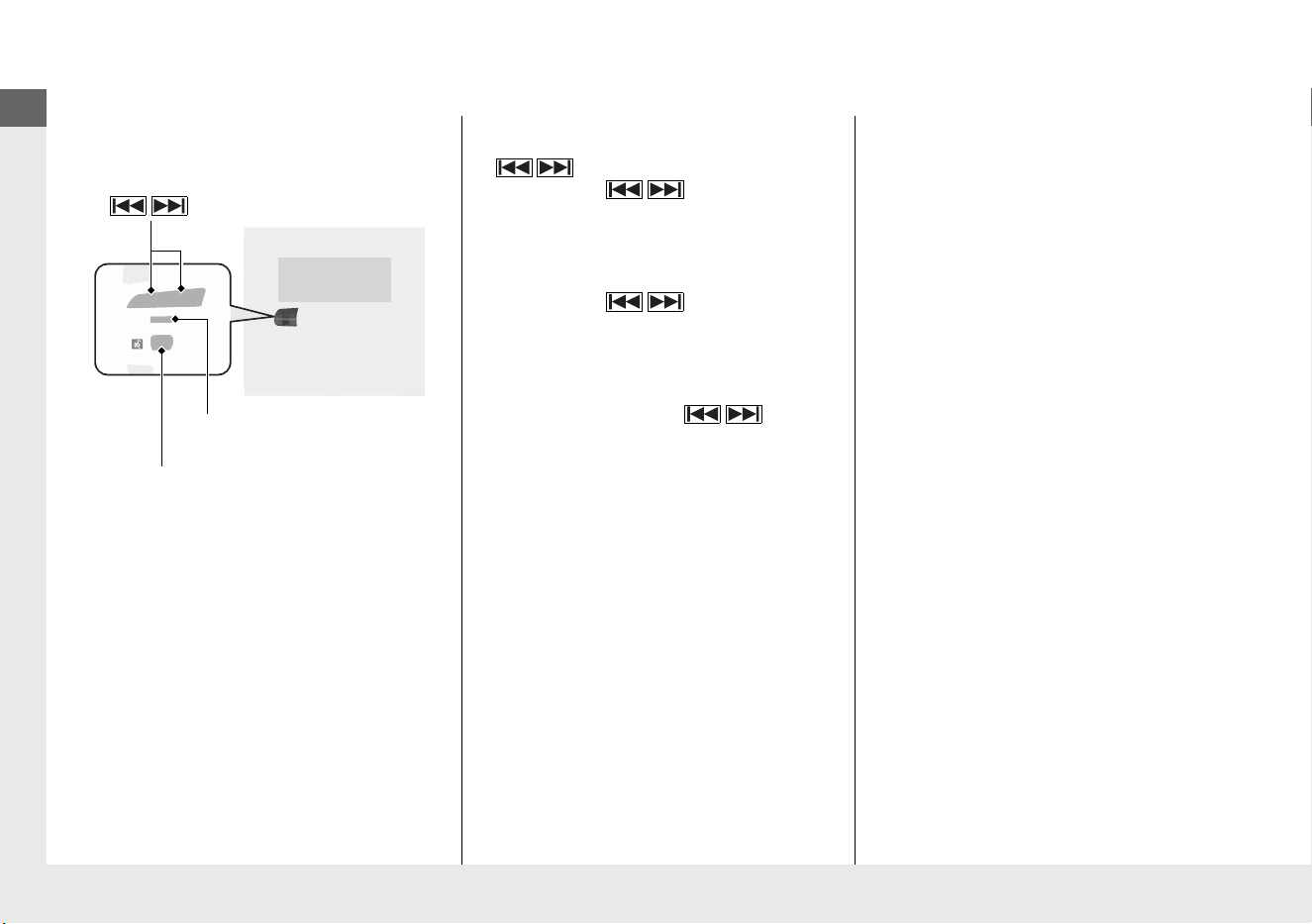
Audio Remote Controls
(P 268)
/ (Seek/Skip) Buttons
Left Selector Wheel
VOL
(+/VOL(- (Volume)
Switch
●
VOL(+/VOL(- (Volume) Switch
Press to adjust the volume up/down.
●
/ (Seek/Skip) Buttons
●
Left Selector Wheel
Roll up or down:
To cycle through the audio modes, roll up
or down and then press the left selector
wheel.
Radio: Press / to change the
preset station.
A wired connection, USB device,
Bluetooth® Audio or Smartphone
Connection:
Press / to skip to the
beginning of the next song or
return to the beginning of the
current song.
USB device:
Press and hold / to
change a folder.
26 PILOT-31T906300.book 22 ページ 2025年10月8日 水曜日 午前11時43分

24
Quick Reference Guide
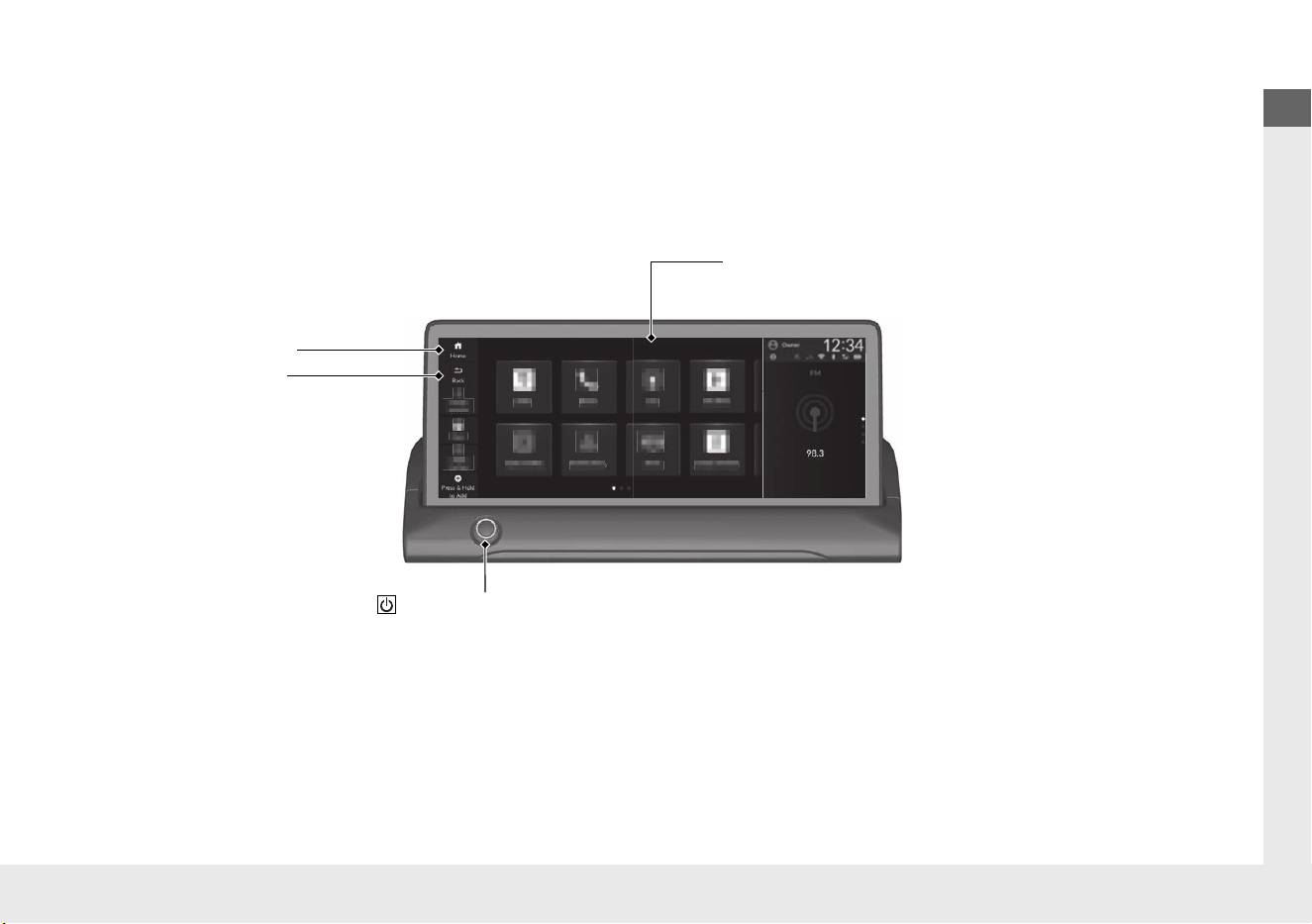
About System Updates
When a software update is available for your vehicle, a notification will be displayed on the Meter or the audio/information screen.
Instructions for performing updates via the audio information screen are included in this manual.
For details on other methods of performing an update, please refer to the HondaLink manual, or ask a dealer.
System updates that change specifications may result in some discrepancies with the information in this owner’s manual.
■
Instructions
2 System Updates (P282)
26 PILOT-31T906300.book 24 ページ 2025年10月8日 水曜日 午前11時43分
25
Quick Reference Guide
Driving (P387)
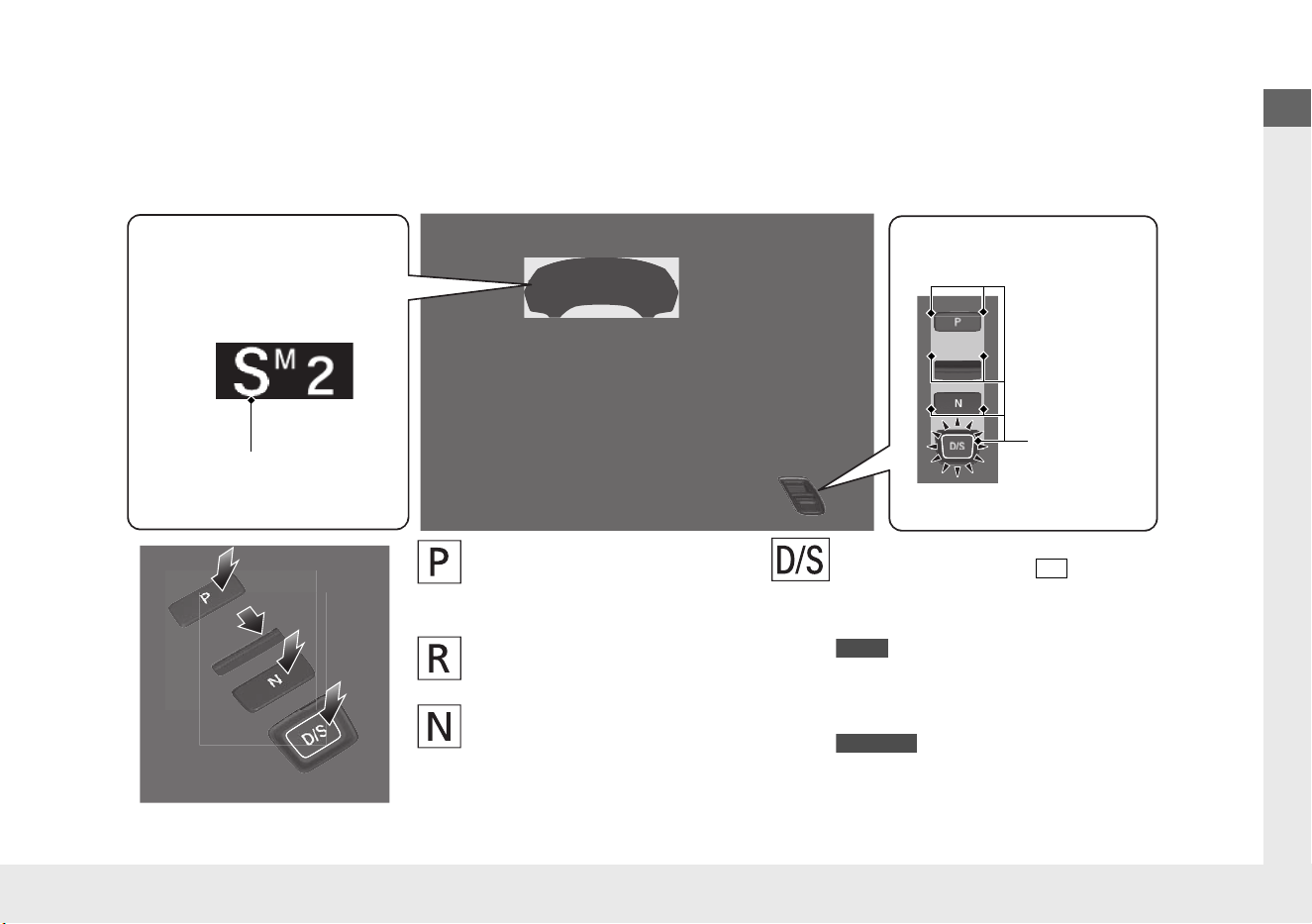
Automatic Transmission (P419)
●
Select (P and depress the brake pedal when starting the engine.
Park
Press the
(P button.
Used when parking or before
turning off or starting the engine.
Reverse
Press the
(R button.
Used when reversing.
Neutral
Press the
(N button.
Transmission is not locked.
Gear Position Indicator
The gear position indicator
and the shift button indicator
indicate the current gear
selection.
Gear Position Indicator
Shift Button
Indicator
Shifting
Drive/S Position
Each time you press the button, the mode
switches between Drive and S position mode.
Used for:
●
Normal driving (gears change between 1st
and 10th automatically)
●
Temporarily driving in the sequential mode
●
Automatically changing gears between 1st
and 8th (8th gear is used only at high speed)
●
Driving in the sequential mode
D/S
Drive
S Position
26 PILOT-31T906300.book 25 ページ 2025年10月8日 水曜日 午前11時43分
26
Quick Reference Guide
Sequential Mode (P426)
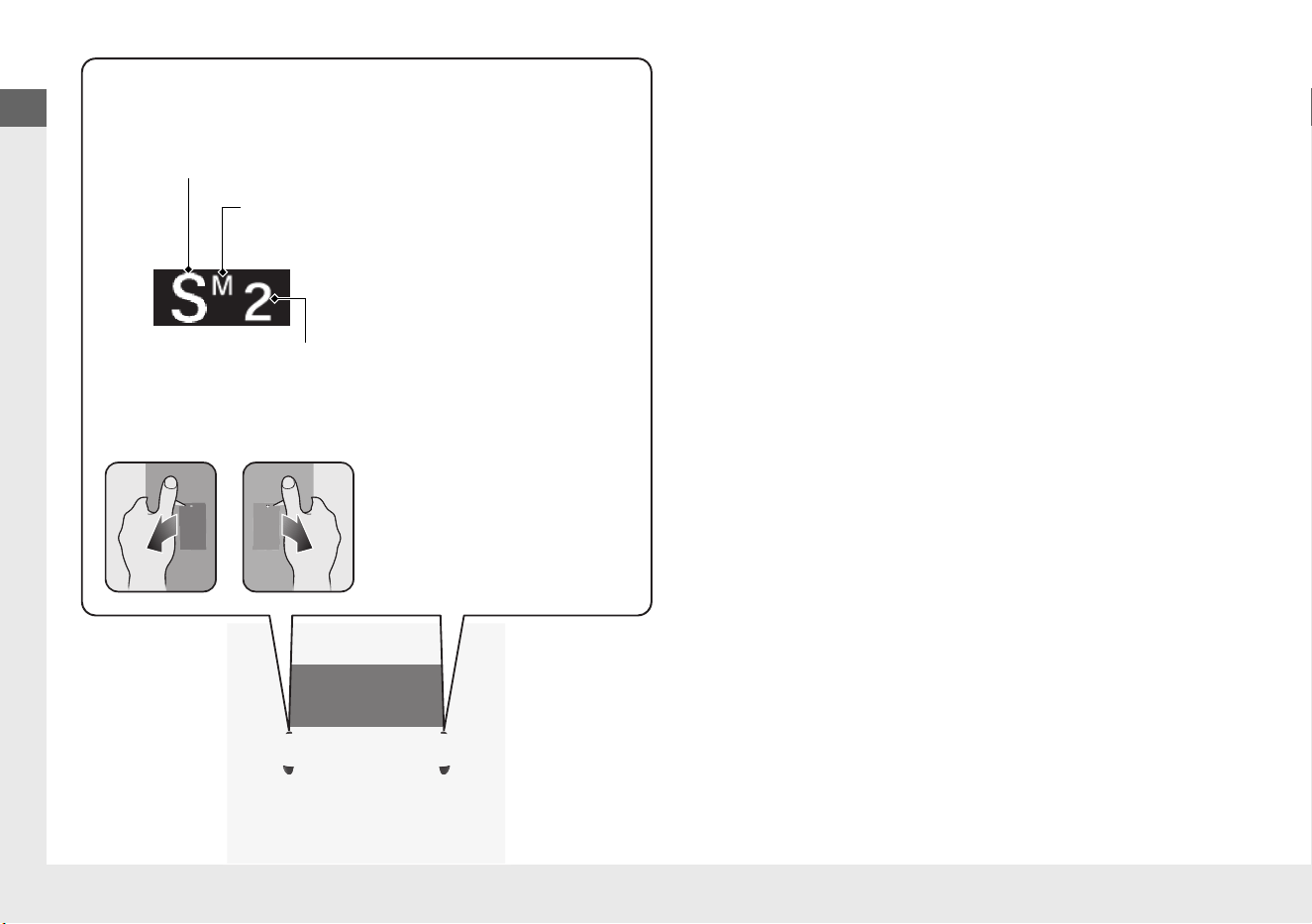
●
Paddle shifters allow you to shift gears much like a manual
transmission (1st through 10th). This is useful for engine braking.
●
Pulling a paddle shifter
temporarily changes the
mode from automatic mode
to sequential mode.
The selected gear number is
displayed in the instrument
panel.
Gear Position Indicator
Shift Down
(-
Paddle Shifter
Shift Up (+
Paddle Shifter
Sequential Mode Gear
Selection Indicator
M (sequential
mode)
Indicator
When the transmission is in
(D
●
Pulling a paddle shifter
changes the mode from
automatic mode to sequential
mode.
●
The M (sequential mode)
indicator and the selected
gear number is displayed in
the instrument panel.
When the transmission is in
(S
26 PILOT-31T906300.book 26 ページ 2025年10月8日 水曜日 午前11時43分
27
Quick Reference Guide
CMBS
TM
On and Off
(P460)
●
When a possible frontal collision is likely
unavoidable, the CMBS
TM
can reduce the
vehicle speed and the severity of the
collision.
●
The CMBS
TM
is turned on every time you
start the engine.
●
To turn the CMBS
TM
on or off, use the
safety support of the driver information
interface.
VSA® On and Off (P442)
●
The Vehicle Stability Assist
TM
(VSA®)
system helps stabilize the vehicle during
cornering and helps maintain traction
while accelerating on loose or slippery
road surfaces.
●
VSA® comes on automatically every time
you start the engine.
●
The VSA® function can be partially
disabled or fully restored in VSA® settings
using the driver information interface.
2 Vehicle Stability Assist Mode
(P139)
Tire Pressure Monitoring System (TPMS) with Tire
Fill Assist
(P445, 652)
●
The TPMS monitors tire pressure.
●
TPMS is turned on automatically every time you start the engine.
●
TPMS fill assist provides audible and visual guidance during tire pressure adjustment.
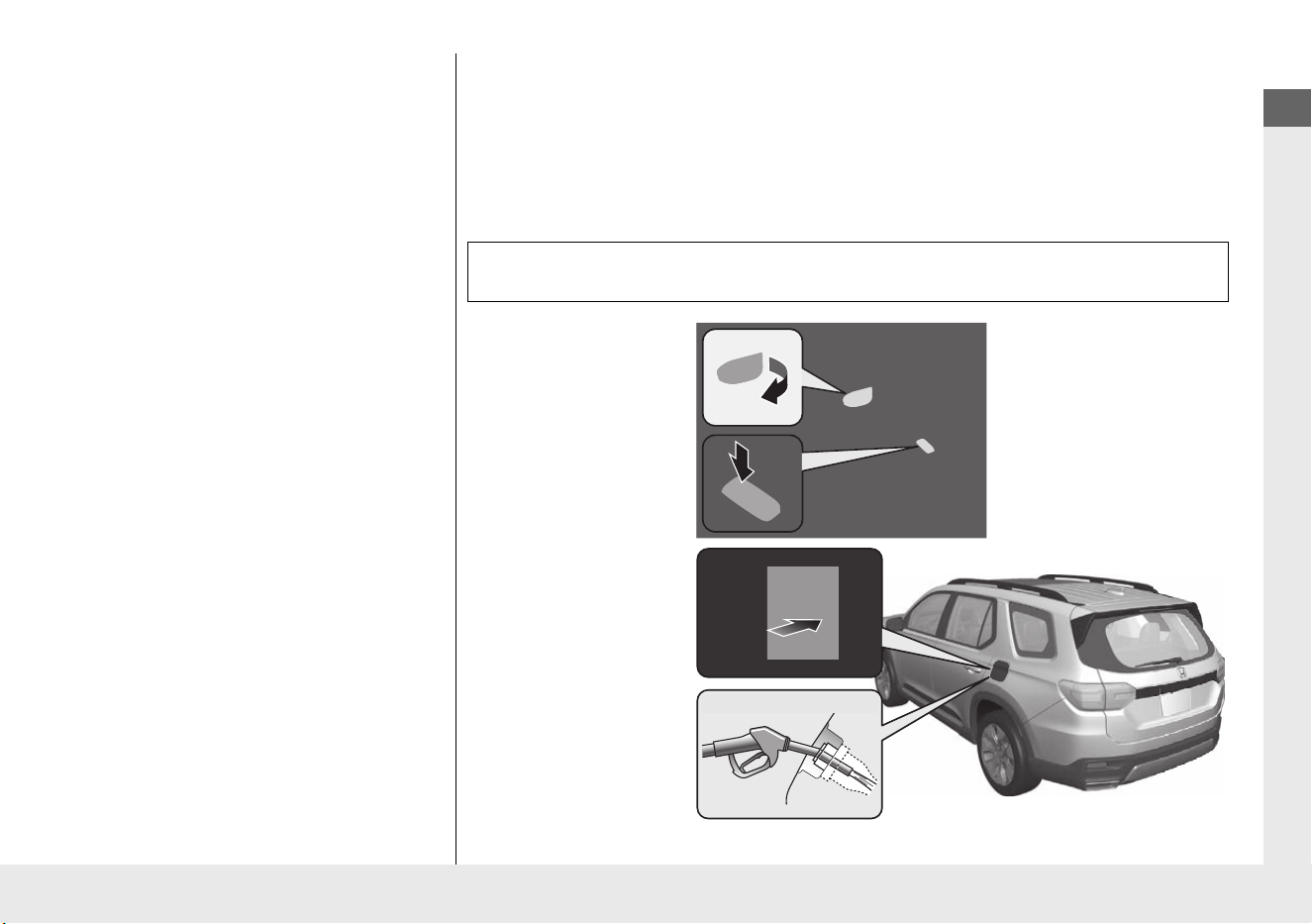
Refueling (P565)
a Unlock the driver’s
door. (P166)
b Press and release
the rear edge of the
fuel fill door to
make it open
slightly.
c After refueling,
wait for about five
seconds before
removing the filler
nozzle.
Fuel recommendation: Unleaded gasoline, pump octane number 87 or higher
Fuel tank capacity: 18.5 US gal (70 L)
Wait for five seconds
26 PILOT-31T906300.book 27 ページ 2025年10月8日 水曜日 午前11時43分

28
Quick Reference Guide
Honda Sensing®(P453)
Assists with functions such as acceleration,
braking, and steering in order to reduce the
burden on the driver, as well as help avoid
or reduce the severity of collisions.
Honda Sensing® has the following functions:
Collision Mitigation
Braking System
TM
(CMBS
TM
) (P456)
The system can assist you when it
determines there is a possibility of your
vehicle colliding with a vehicle (including
motorcycles) ahead from behind, an
oncoming vehicle in front, a pedestrian, or
someone riding a bicycle (moving bicycle).
The CMBS
TM
is designed to alert you when
the potential for a collision is determined, as
well as assist in reducing speed, avoiding
collisions, and reducing collision severity.
Low Speed Braking
Control
*
(P468)
Using sonar sensors located on the front and
rear bumpers, this system can detect if there
is danger of a potential collision with a wall
or other obstacle during normal driving or
when the accelerator pedal is depressed
with too much force. The system then assists
in avoiding collisions and reducing damage
from impact through assistive braking and/
or assistive driving power suppression.
Road Departure
Mitigation System
(P474)
Alerts and helps assist you when the system
detects a possibility of your vehicle crossing
over detected lane markings, or
approaching the outer edge of the
pavement (into grass or gravel road
shoulder) or a detected oncoming vehicle.
Adaptive Cruise Control
(ACC) with Low Speed
Follow
(P482)
Helps maintain a constant vehicle speed and
a set following-interval behind a vehicle
detected ahead of yours and, if the detected
vehicle comes to a stop, can decelerate and
stop your vehicle, without you having to
keep your foot on the brake or the
accelerator.
Lane Keeping Assist
System (LKAS)
(P503)
Provides steering input to help keep the
vehicle in the middle of a detected lane and
provides tactile and visual alerts if the
vehicle is detected drifting out of its lane.
26 PILOT-31T906300.book 28 ページ 2025年10月8日 水曜日 午前11時43分

29
Quick Reference Guide
Traffic Jam Assist (P514)
The Traffic Jam Assist system uses a camera
mounted to the upper portion of the
windshield to detect and monitor left and
right white (or yellow) traffic lane lines.
Based on inputs from the camera, the
system can apply steering torque to keep
your vehicle in the center of the detected
lane.
Traffic Sign Recognition
System
(P523)
Reminds you of road sign information, such
as the current speed limit your vehicle has
just passed through, showing it on the
gauge and the head-up display
*
.
Auto High-Beam (P198)
The front sensor camera detects the light
sources ahead of the vehicle such as the
lights of a preceding or oncoming vehicle, or
street lights. When you are driving at night,
the system automatically switches the
headlights between low beam and high
beam depending on the situation.
Blind Spot Information
System
(P449)
When the system detects vehicles
approaching from behind in adjacent lanes,
the appropriate indicator comes on,
providing assistance when you change lanes.
Cross Traffic Monitor
(P548)
Monitors the rear corner areas using the
radar sensors when reversing, and alerts you
if a vehicle approaching from a rear corner
is detected.
The system is convenient when you are
backing out of a parking space.
Parking Sensor System
*
(P544)
The corner and center sensors monitor
obstacles around your vehicle, and the
beeper, gauge and audio/information screen
let you know the approximate distance
between your vehicle and the obstacle.
Driver Attention Monitor
(P132)
The Driver Attention Monitor analyzes
steering inputs to determine if the vehicle is
being driven in a manner consistent with
drowsy or inattentive driving. If it
determines that the vehicle is being driven
in such a manner, it will display the degree
of the driver’s attention on the driver
information interface.
* Not available on all models
26 PILOT-31T906300.book 29 ページ 2025年10月8日 水曜日 午前11時43分
30
Quick Reference Guide
Maintenance (P569)
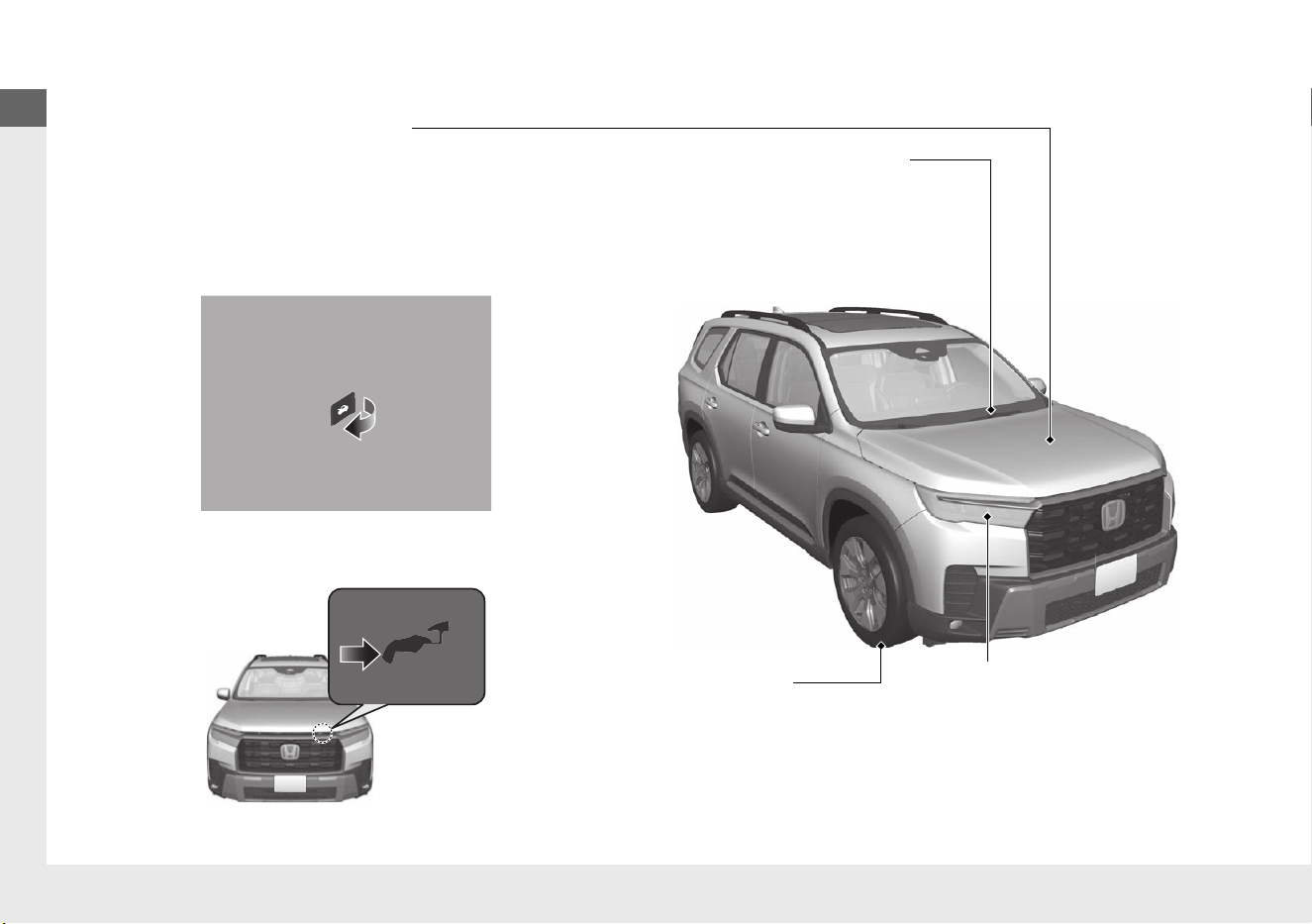
Under the Hood (P581)
●
Check engine oil, engine coolant, and windshield washer
fluid. Add when necessary.
●
Check brake fluid.
●
Check the battery condition monthly.
a Pull the hood release handle under the corner of the
dashboard.
b Locate the hood latch lever, push it to the side, and then
raise the hood. Once you have raised the hood slightly, you
can release the lever.
c When finished, close the hood and make sure it is firmly
locked in place.
Lights (P594)
●
Inspect all lights regularly.
Wiper Blades (P599)
●
When lifting the front wiper arms, move
them into the maintenance position
before lifting them.
●
Replace blades if they leave streaks
across the windshield or become noisy.
Tires (P604)
●
Inspect tires and wheels regularly.
●
Check tire pressures regularly.
●
Install snow tires for winter
driving.
26 PILOT-31T906300.book 30 ページ 2025年10月8日 水曜日 午前11時43分
Quick Reference Guide
31
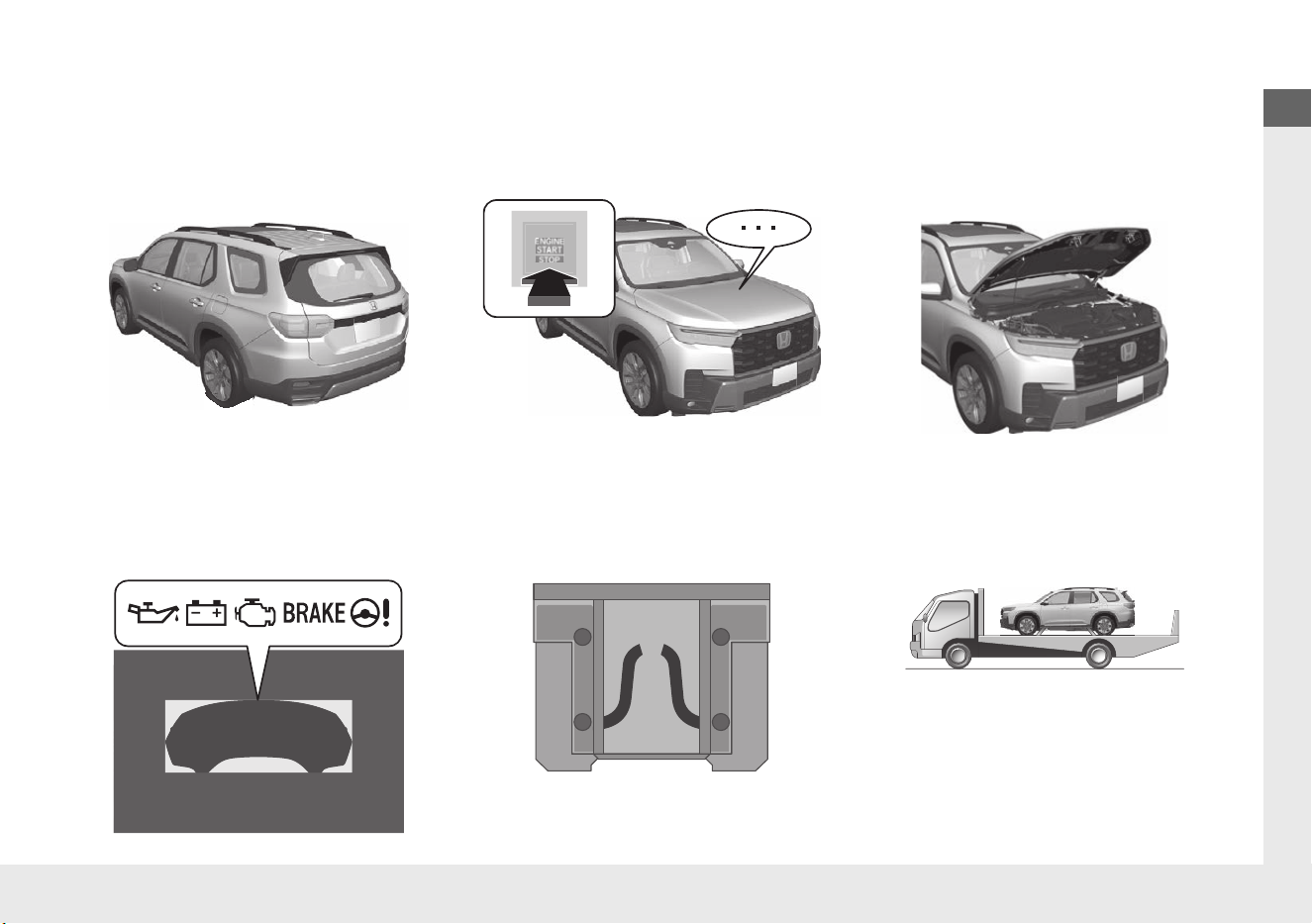
Handling the Unexpected (P625)
Flat Tire (P627)
●
Park in a safe location and replace the
flat tire with the spare tire located under
the cargo area.
Indicators Come On (P647)
●
Identify the indicator and consult the
owner’s manual.
Engine Won’t Start (P638)
●
If the battery is dead, jump start using a
booster battery.
Blown Fuse (P654)
●
Check for a blown fuse if an electrical
device does not operate.
Overheating (P645)
●
Park in a safe location. If you do not see
steam under the hood, open the hood,
and let the engine cool down.
Emergency Towing (P661)
●
Call a professional towing service if you
need to tow your vehicle.
26 PILOT-31T906300.book 31 ページ 2025年10月8日 水曜日 午前11時43分
32
Quick Reference Guide
What to Do If
Why does the brake pedal
pulsate slightly when
applying the brakes?
This can occur when the ABS activates and does not indicate a
problem. Apply firm, steady pressure on the brake pedal. Never
pump the brake pedal.
2 Anti-lock Brake System (ABS) (P540)
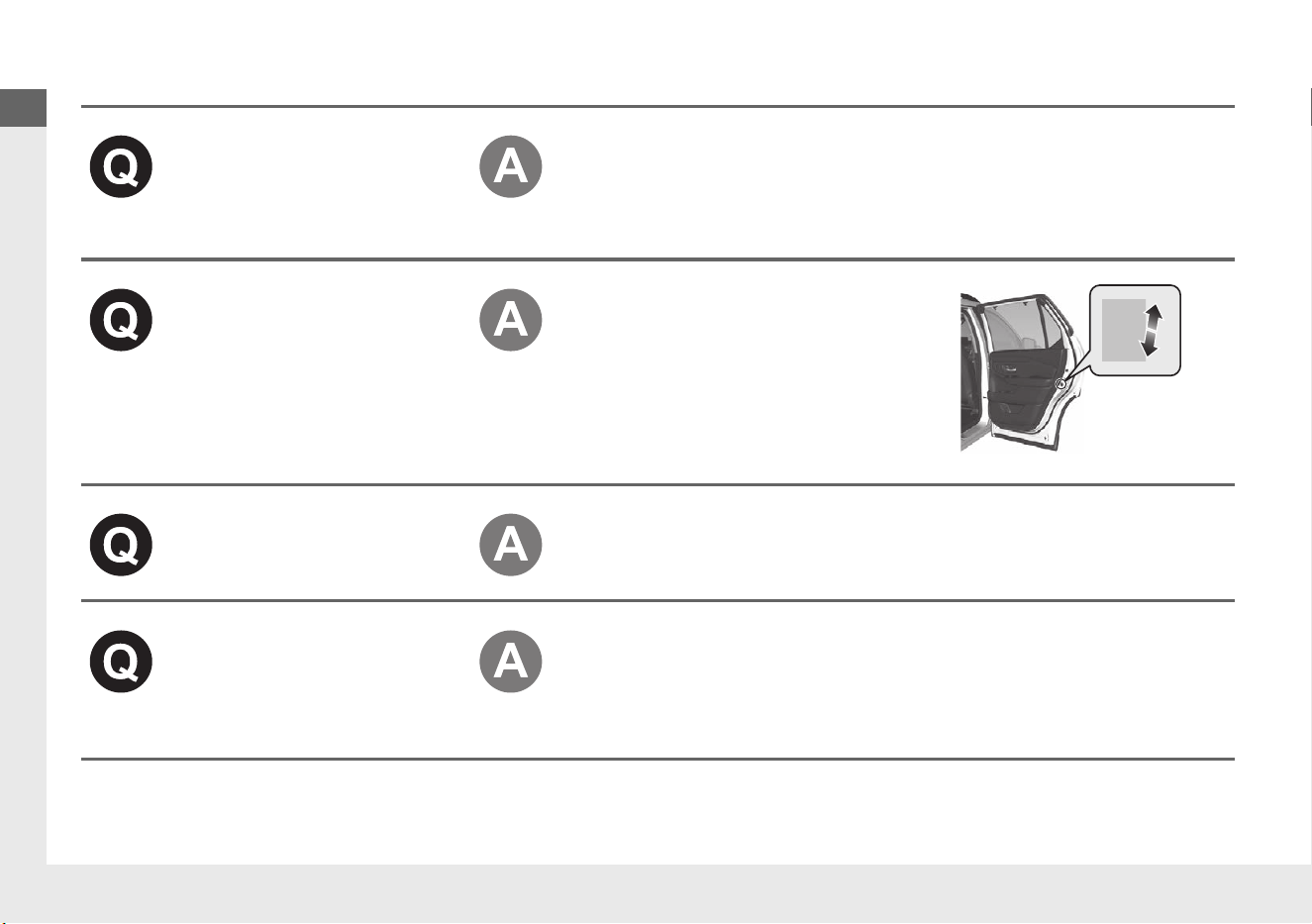
The rear door cannot be
opened from inside the
vehicle. Why?
Check if the childproof lock is in the
lock position. If so, open the rear
door with the outside door handle.
To cancel this function, slide the
lever up to the unlock position.
Why do the doors lock
after I unlocked the doors?
If you do not open the doors within 30 seconds, the doors are
relocked automatically for security.
Why does the beeper
sound when I open the
driver’s door?
The beeper sounds when:
●
The power mode is in ACCESSORY.
●
The exterior lights are left on.
●
Auto Idle Stop is in operation.
26 PILOT-31T906300.book 32 ページ 2025年10月8日 水曜日 午前11時43分
33
Quick Reference Guide
Why does a beeper sound
when I walk away from the
vehicle after I close the
door?
The beeper sounds if you move outside the walk away auto lock
operating range before the door completely closes.
2 Locking the doors and tailgate (Walk away auto lock® ) (P158)
Why does the beeper
sound when I start driving?
The beeper sounds when the driver and/or front passenger are
not wearing their seat belts.
Pressing the electric
parking brake switch does
not release the parking
brake. Why?
Press the electric parking brake switch with the brake pedal
depressed.
I’m seeing an amber
indicator of a tire with an
exclamation point. What is
that?
The Tire Pressure Monitoring System (TPMS) needs attention.
Check tire pressure.
2 If the Low Tire Pressure/TPMS Indicator Comes On or Blinks (P652)
Depressing the accelerator
pedal does not release the
parking brake
automatically. Why?
●
Fasten the driver’s seat belt.
●
Check if the transmission is in (P or (N. If so, select any other
position.
26 PILOT-31T906300.book 33 ページ 2025年10月8日 水曜日 午前11時43分
34
Quick Reference Guide
Why does the gear position
automatically change to
(P
when I open the driver’s
door to check for parking
space lines when
reversing?
●
Fasten the driver’s seat belt.
●
Close the driver’s door and manually change the gear
position.
2 When opening the driver’s door (P422)
Why do I hear a screeching
sound when I apply the
brake pedal?
The brake pads may need to be replaced. Have your vehicle
inspected by a dealer.
26 PILOT-31T906300.book 34 ページ 2025年10月8日 水曜日 午前11時43分

35
Safe Driving
You can find many safety recommendations throughout this chapter, and throughout this manual.
For Safe Driving
Important Safety Precautions.............. 36
Important Handling Information......... 38
Your Vehicle’s Safety Features............ 39
Safety Checklist ................................. 40
Seat Belts
About Your Seat Belts........................ 41
Fastening a Seat Belt.......................... 48
Seat Belt Inspection............................ 54
Airbags
Airbag System Components............... 55
Types of Airbags ................................ 58
Front Airbags (SRS) ............................ 58
Knee Airbags ..................................... 63
Side Airbags....................................... 66
Side Curtain Airbags .......................... 68
Airbag System Indicators.................... 69
Airbag Care ....................................... 72
Post-Collision Braking System
About the Post-Collision Braking System ... 73
Child Safety
Protecting Child Passengers ............... 74
Safety of Infants and Small Children .. 76
Safety of Larger Children ................... 90
Exhaust Gas Hazard
Carbon Monoxide Gas....................... 92
Safety Labels
Label Locations .................................. 93
26 PILOT-31T906300.book 35 ページ 2025年10月8日 水曜日 午前11時43分
36
Safe Driving
For Safe Driving
The following pages explain your vehicle’s safety features and how to use them
properly. The safety precautions below are ones that we consider to be among the
most important.
Important Safety Precautions
■
Always wear your seat belt
A seat belt is your best protection in all types of collisions. Airbags are designed to
supplement seat belts, not replace them. So even though your vehicle is equipped
with airbags, make sure you and your passengers always wear your seat belts, and
wear them properly.
■
Restrain all children
Children ages 12 and under should ride properly restrained in a back seat, not the
front seat. Infants and small children should be restrained in a child seat. Larger
children should use a booster seat and a lap/shoulder seat belt until they can use the
belt properly without a booster seat.
■
Be aware of airbag hazards
While airbags can save lives, they can cause serious or fatal injuries to occupants
who sit too close to them, or are not properly restrained. Infants, young children,
and short adults are at the greatest risk. Be sure to follow all instructions and
warnings in this manual.
■
Don’t drink and drive
Alcohol and driving don’t mix. Even one drink can reduce your ability to respond to
changing conditions, and your reaction time gets worse with every additional drink.
So don’t drink and drive, and don’t let your friends drink and drive, either.
1Important Safety Precautions
Some states, provinces, and territories prohibit the
use of cell phones other than hands-free devices by
the driver while driving.
26 PILOT-31T906300.book 36 ページ 2025年10月8日 水曜日 午前11時43分

37
uuFor Safe DrivinguImportant Safety Precautions
Safe Driving
■
Pay appropriate attention to the task of driving safely
Engaging in cell phone conversation or other activities that keep you from paying
close attention to the road, other vehicles, and pedestrians could lead to a crash.
Remember, situations can change quickly, and only you can decide when it is safe to
divert some attention away from driving.
■
Control your speed
Excessive speed is a major factor in crash injuries and deaths. Generally, the higher
the speed, the greater the risk, but serious injuries can also occur at lower speeds.
Never drive faster than is safe for current conditions, regardless of the maximum
speed posted.
■
Keep your vehicle in safe condition
Having a tire blowout or a mechanical failure can be extremely hazardous.
To reduce the possibility of such problems, check your tire pressures and condition
frequently, and perform all regularly scheduled maintenance.
■
Do not leave children unattended in the vehicle
Children, pets, and people needing assistance left unattended in the vehicle may be
injured if they activate one or more of the vehicle controls. They may also cause the
vehicle to move, resulting in a crash in which they and/or another person(s) can be
injured or killed. Also, depending on the ambient temperature, the temperature of
the interior may reach extreme levels, which can result in harm or death. Even if the
climate control system is on, never leave them in the vehicle unattended as the
climate control system can shut off at any time.
26 PILOT-31T906300.book 37 ページ 2025年10月8日 水曜日 午前11時43分
38
uuFor Safe DrivinguImportant Handling Information
Safe Driving
Important Handling Information
Your vehicle has higher ground clearance than a passenger vehicle designed for use
only on pavement. Higher ground clearance has many advantages for off-highway
driving. It allows you to travel over bumps, obstacles, and rough terrain. It also
provides good visibility so you can anticipate problems earlier.
These advantages come at some cost. Because your vehicle is taller and rides higher
off the ground, it has a higher center gravity making it more susceptible to tipping
or rollover if you make abrupt turns. Utility vehicles have a significantly higher
rollover rate than other types of vehicles. In a rollover crash, an unbelted person is
significantly more likely to die than a person wearing a seat belt. As a reminder,
make sure you and your passengers always wear seat belts.
1Important Handling Information
For information on how to reduce the risk of rollover,
read:
2 Driving Guidelines for Your Utility Vehicle
P. 417
2 Off-Highway Driving Guidelines P. 405
Failure to operate your vehicle correctly might result
in a crash or a rollover.
26 PILOT-31T906300.book 38 ページ 2025年10月8日 水曜日 午前11時43分
39
uuFor Safe DrivinguYour Vehicle’s Safety Features
Safe Driving
Your Vehicle’s Safety Features
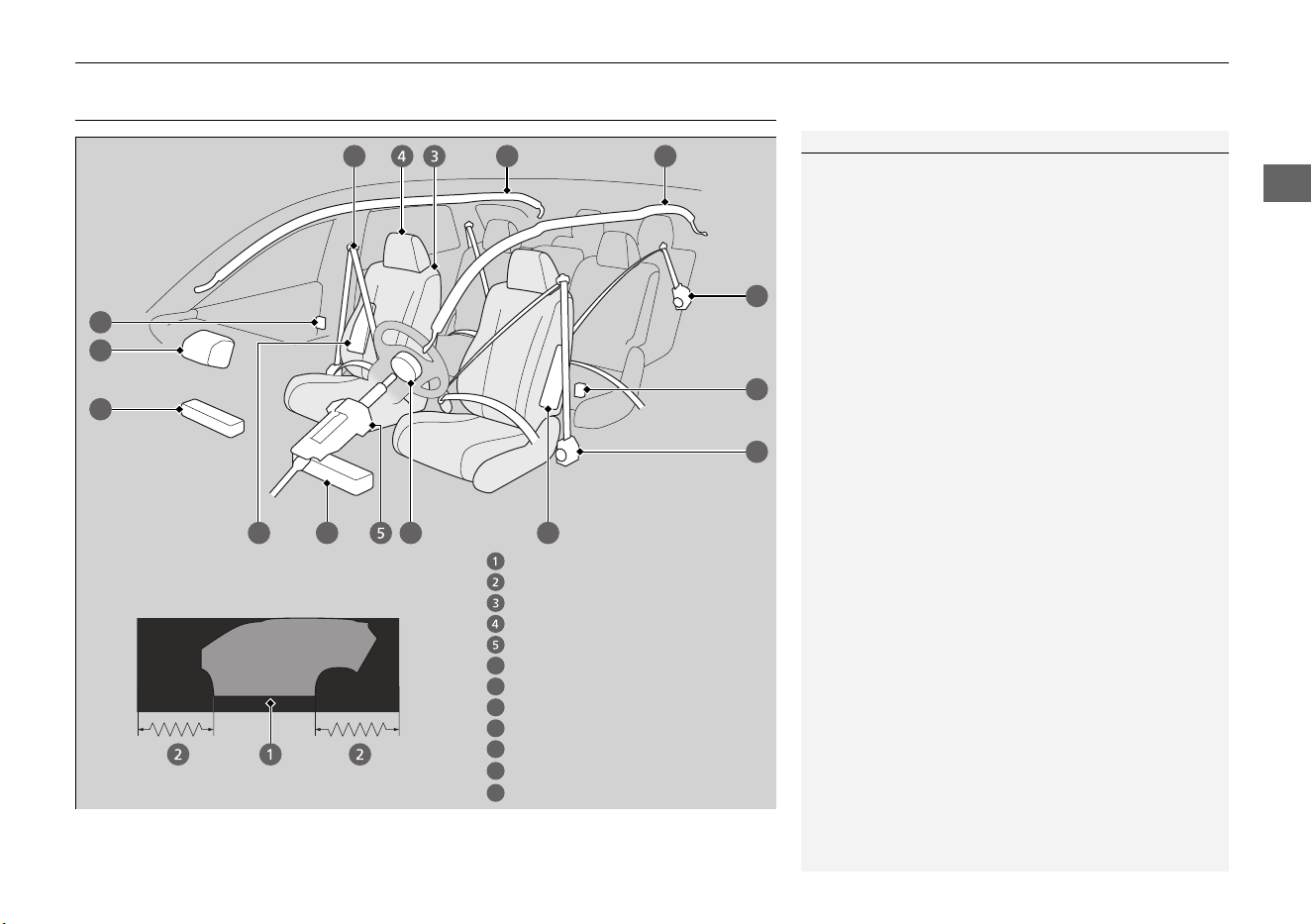
The following checklist will help you take an active role in protecting yourself and
your passengers.
1Your Vehicle’s Safety Features
Your vehicle is equipped with many features that
work together to help protect you and your
passengers during a crash.
Some features do not require any action on your part.
These include a strong steel framework that forms a
safety cage around the passenger compartment,
front and rear crush zones, a collapsible steering
column, and tensioners that tighten the front and
second row outer seat belts in a sufficient crash.
However, you and your passengers cannot take full
advantage of these features unless you remain seated
in the correct position and always wear your seat
belts. In fact, some safety features can contribute to
injuries if they are not used properly.
6
7
8
9
10
Safety Cage
Crush Zones
Seats and Seat-Backs
Head Restraints
Collapsible Steering Column
Seat Belts
Front Airbags
Side Curtain Airbags
Door Locks
Side Airbags
11
Knee Airbags
Seat Belt Tensioners
12
10
10
6
11
7
8
12
11
12
9789
26 PILOT-31T906300.book 39 ページ 2025年10月8日 水曜日 午前11時43分
40
uuFor Safe DrivinguSafety Checklist
Safe Driving
Safety Checklist
For the safety of you and your passengers, make a habit of checking these items
each time before you drive.
• After everyone has entered the vehicle, be sure all doors and the tailgate are
closed and locked. Locking the doors and the tailgate helps prevent an occupant
from being ejected and an outsider from unexpectedly opening a door or the
tailgate.
2 Locking/Unlocking the Doors from the Inside P. 166
• Adjust your seat to a position suitable for driving. Be sure the front seats are
adjusted as far to the rear as possible while allowing the driver to control the
vehicle. Sitting too close to a front airbag can result in serious or fatal injury in a
crash.
2 Seats P. 211
• Adjust head restraints to the proper position. Head restraints are most effective
when the center of the head restraint aligns with the center of your head. Taller
persons should adjust their head restraint to the highest position.
2 Adjusting the Front and Second Row Outer Seat Head Restraint Positions
P. 224
• Always wear your seat belt, and make sure you wear it properly. Confirm that any
passengers are properly belted as well.
2 Fastening a Seat Belt P. 48
• Protect children by using seat belts or child seats according to a child’s age,
height, and weight.
2 Child Safety P. 74
1Safety Checklist
If the door and/or tailgate open message appears on
the driver information interface, a door and/or the
tailgate is not completely closed. Close all doors and
the tailgate tightly until the message disappears.
26 PILOT-31T906300.book 40 ページ 2025年10月8日 水曜日 午前11時43分
41
Continued
Safe Driving
Seat Belts
About Your Seat Belts
Seat belts are the single most effective safety device because they keep you
connected to the vehicle so that you can take advantage of many built-in safety
features. They also help keep you from being thrown against the inside of the
vehicle, against any passengers, or out of the vehicle. When worn properly, seat
belts also keep your body properly positioned in a crash so that you can take full
advantage of the additional protection provided by the airbags.
In addition, seat belts help protect you in almost every type of crash, including:
- frontal impacts
- side impacts
- rear impacts
- rollovers
■
Lap/shoulder seat belts
All seven or eight seating positions are equipped with lap/shoulder seat belts with
emergency locking retractors. In normal driving, the retractor lets you move freely
while keeping some tension on the belt. During a collision or sudden stop, the
retractor locks to restrain your body.
The front passenger’s, second row, and third row seat belts also have a lockable
retractor for use with child seats.
2 Installing a Child Seat with a Lap/Shoulder Seat Belt P. 84
1About Your Seat Belts
If a rear seat passenger moves around and extends
the seat belt, the lockable retractor may activate. If
this happens, release the retractor by unfastening the
seat belt and allow the belt to retract completely.
Then, refasten the belt.
If you extend the seat belt too quickly, it will lock in
place. If this happens, slightly retract the seat belt,
then extend it slowly.
Seat belts cannot completely protect you in every
crash. But in most cases, seat belts can reduce your
risk of serious injury.
Most states and all Canadian provinces and territories
require you to wear seat belts.
3
WARNING
Not wearing a seat belt properly increases
the chance of serious injury or death in a
crash, even though your vehicle has
airbags.
Be sure you and your passengers always
wear seat belts and wear them properly.
26 PILOT-31T906300.book 41 ページ 2025年10月8日 水曜日 午前11時43分

42
uuSeat BeltsuAbout Your Seat Belts
Safe Driving
■
Proper use of seat belts
Follow these guidelines for proper use:
• All occupants should sit upright, well back in the seat, and remain in that position
for the duration of the trip. Slouching and leaning reduce the effectiveness of the
belt and can increase the chance of serious injury in a crash.
• Never place the shoulder part of a lap/shoulder seat belt under your arm or
behind your back. This could cause very serious injuries in a crash.
• Two people should never use the same seat belt. If they do, they could be very
seriously injured in a crash.
• Do not put any accessories on the seat belts. Devices intended to improve comfort
or reposition the shoulder part of a seat belt can reduce the protective capability
and increase the chance of serious injury in a crash.
26 PILOT-31T906300.book 42 ページ 2025年10月8日 水曜日 午前11時43分
Continued
43
uuSeat BeltsuAbout Your Seat Belts
Safe Driving
■
Front seats
The seat belt system includes an indicator on
the instrument panel to remind the driver or a
front passenger or both to fasten their seat
belts.
If you set the power mode to ON and a seat
belt is not fastened, a beeper will sound, and
the indicator will blink. After a few seconds,
the beeper will stop and the indicator will
come on and remain illuminated until the seat
belt is fastened.
The beeper will periodically sound and the
indicator will blink while the vehicle is moving
until the seat belt is fastened.
■
Seat Belt Reminder
1Seat Belt Reminder
The indicator will also come on if a front passenger
does not fasten their seat belt within six seconds after
the power mode is set to ON.
When no one is sitting in the front passenger’s seat,
the indicator will not come on and the beeper will not
sound.
The indicator also may not come on and the beeper
may not sound when the occupant is not heavy
enough to trigger the weight sensor. Such occupants
(e.g., infants and smaller children) should be moved
to the rear seat as a deploying front airbag likely will
injure or kill them.
2 Protecting Child Passengers P. 74
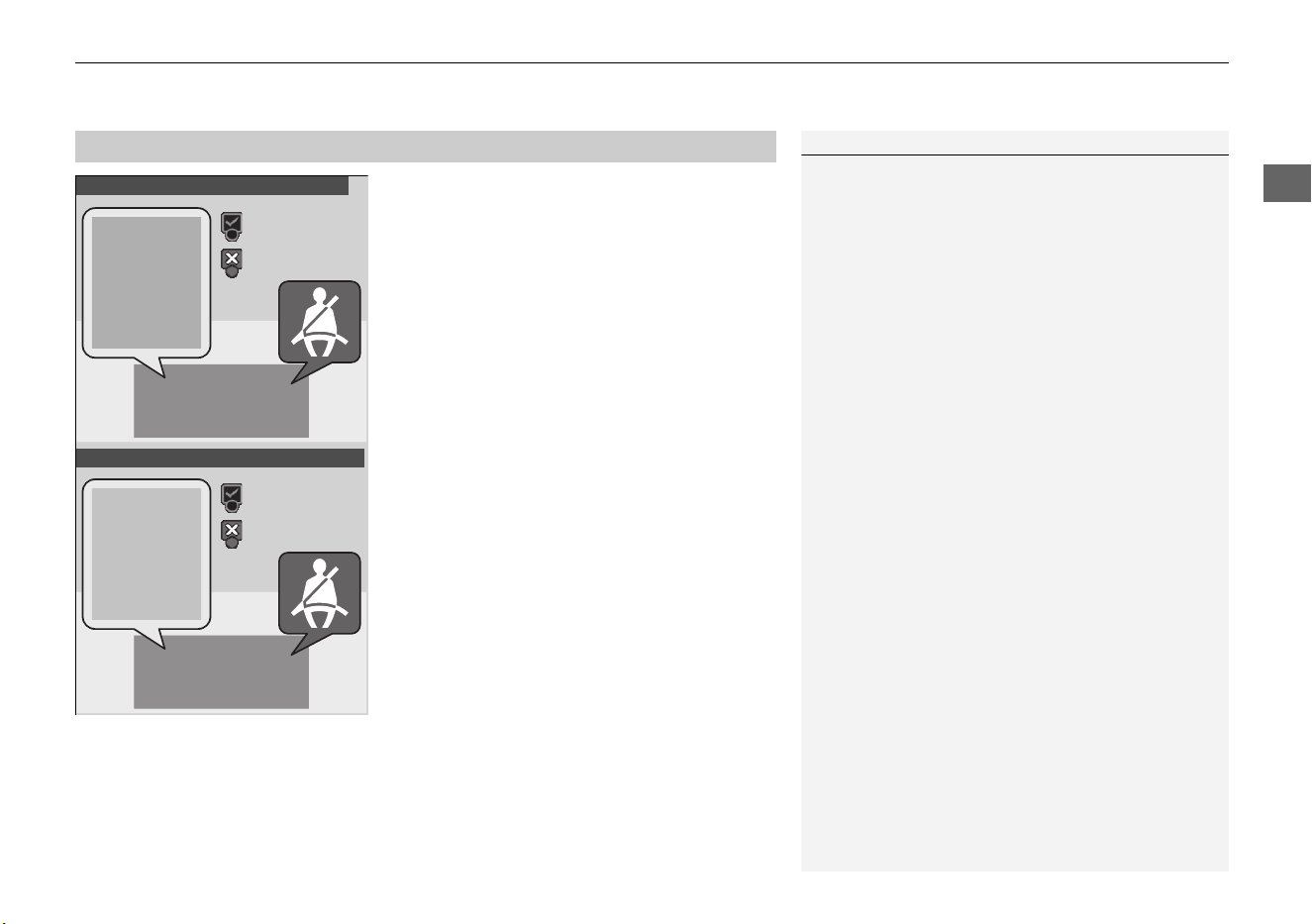
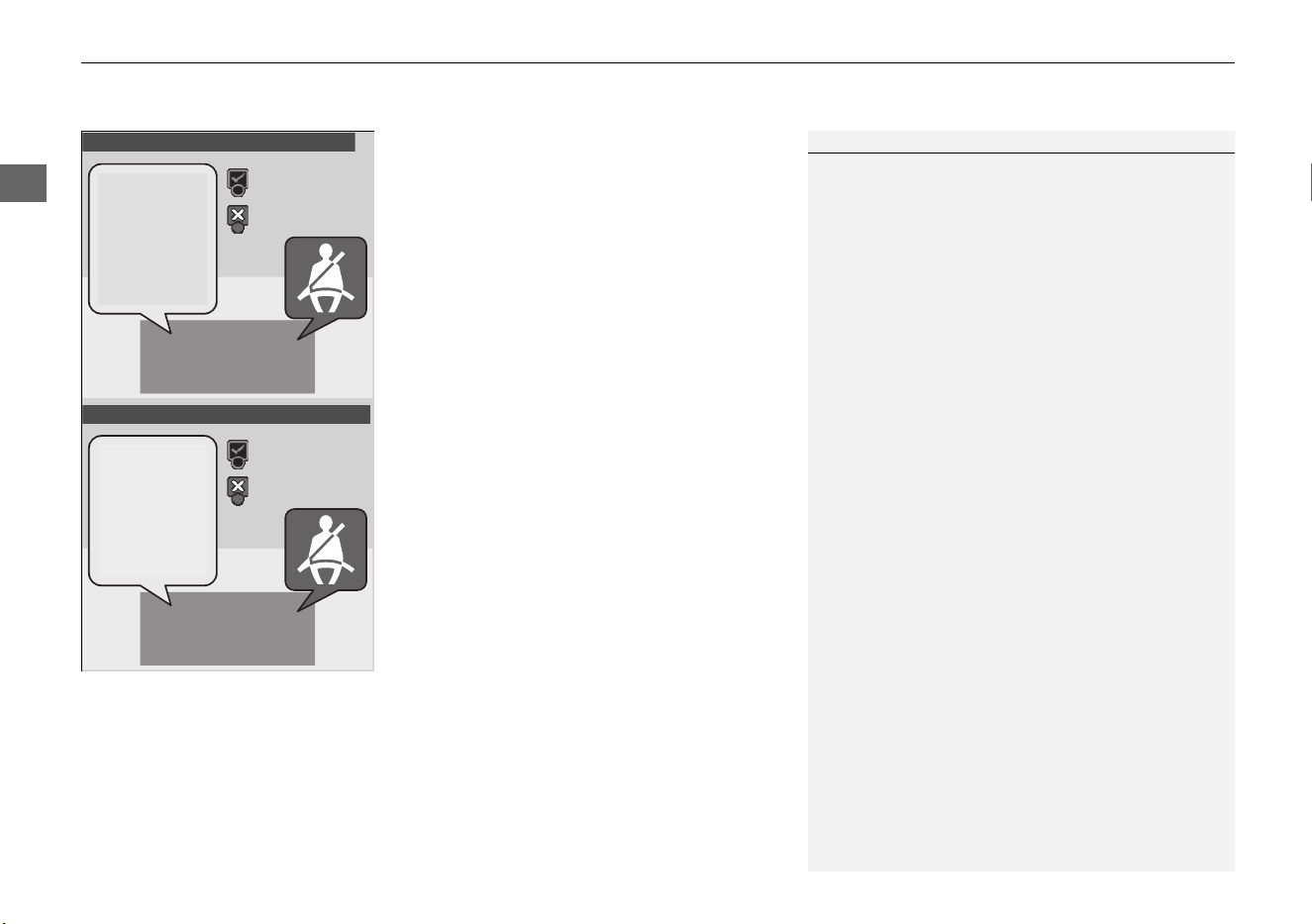
The driver information interface uses colors to aid the
driver in checking the status of the passengers.
For the front seating positions:
• Green indicates the seat belt is fastened.
• An unfastened gray graphic indicates the seat belt
is not fastened and an occupant has not been
detected.
• An unfastened red graphic indicates the seat belt is
unfastened and an occupant has been detected.
Models with second row center seat
Models without second row center seat
: Fastened
: Unfastened
: Fastened
: Unfastened
26 PILOT-31T906300.book 43 ページ 2025年10月8日 水曜日 午前11時43分
uuSeat BeltsuAbout Your Seat Belts
44
Safe Driving
■
Rear seats
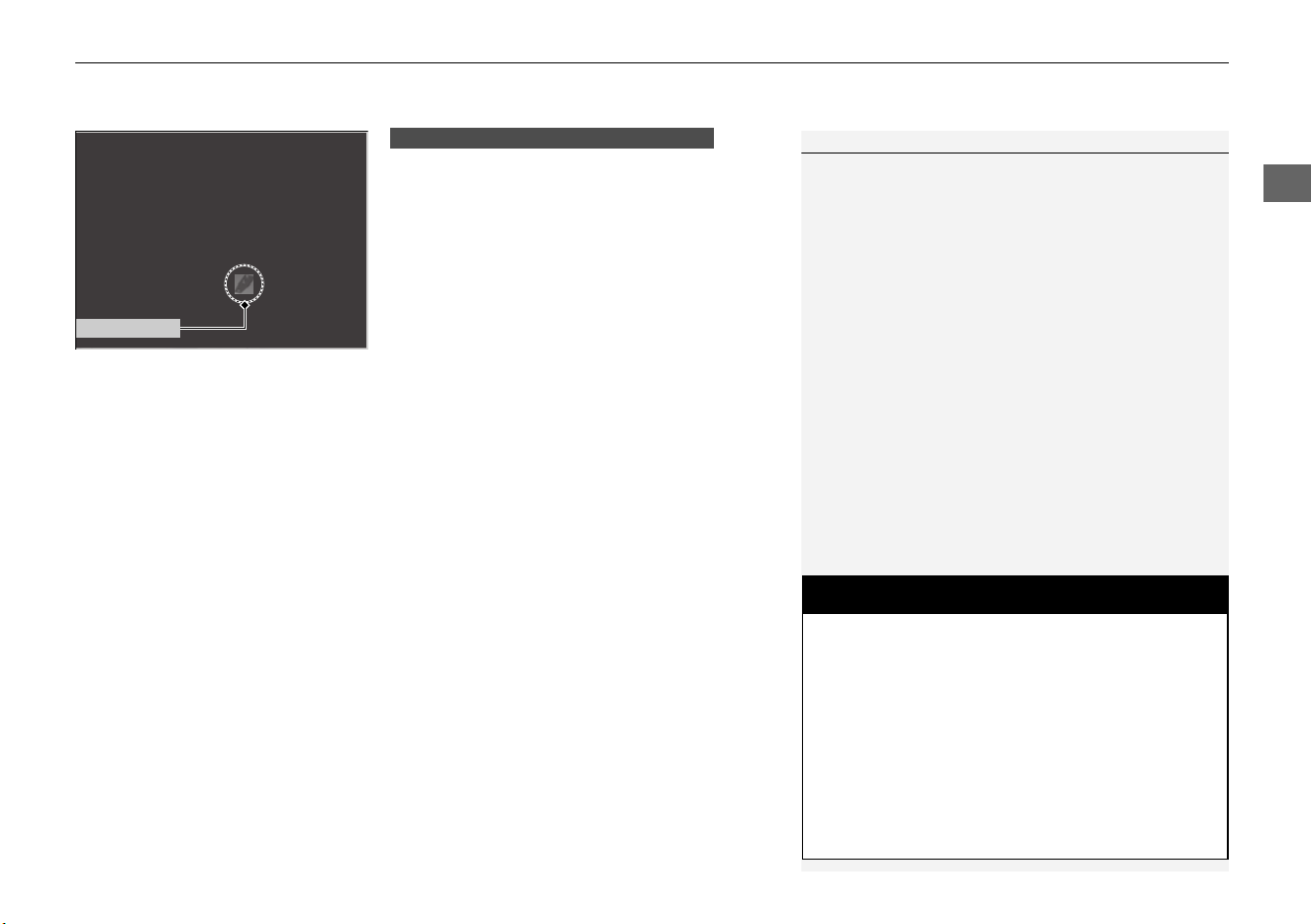
Your vehicle monitors rear seat belt use. The
driver information interface notifies you about
the status of the rear seat belts use.
In order to encourage the driver to evaluate
rear seat belt usage, the display appears
when:
• Any of the rear passenger seat belts are
unfastened when the power mode is set to
ON.
• Any of the rear passengers unfasten their
seat belt.
The seat belt reminder indicator blinks and the
beeper sounds if any rear passenger seat belts
have been unfastened while driving.
Models with second row center seat
Models without second row center seat
: Fastened
: Unfastened
: Fastened
: Unfastened
1Seat Belt Reminder
The system will not detect a passenger in the rear
seats who has not fastened the seat belt.
The driver should check the status of the rear
passengers’ seat belts at the start of each trip and
each time a passenger is seated in the rear seats,
using the driver information interface as an aid.
An alert will sound if a passenger in the rear seats
unfastens the seat belt while the vehicle is in motion
or if motion resumes while the graphic is red.
The driver information interface uses colors to aid the
driver in checking the status of the passengers.
For the rear seating positions:
• Green indicates the seat belt is fastened.
• An unfastened gray graphic indicates the seat belt
has not been fastened recently.
• An unfastened red graphic indicates the seat belt
was unfastened recently.
The system does not monitor harnesses that are part
of a child seat, the anchors of the LATCH system, the
installation of a removable seat, or the anchor
buckles of the second and third row center seat belts.
While the system can inform you that a seat belt
buckle is fastened, it cannot determine whether the
seat is properly installed, the center seat belt anchors
are in use, or if a child seat is properly installed or
used.
2 Protecting Child Passengers P. 74
26 PILOT-31T906300.book 44 ページ 2025年10月8日 水曜日 午前11時43分
Continued
45
uuSeat BeltsuAbout Your Seat Belts
Safe Driving
A transceiver is installed in the removable seat
to wirelessly communicate the seat belt
fastening information to the vehicle. It will
automatically connect to the vehicle whenever
the seat is in or near its installation position.
Radio waves are transmitted to and from a
transceiver in the removable seat in order to
obtain the seat belt status.
In the following cases, the seat belt may be
displayed as unfastened even if it is fastened:
• Strong radio waves are being transmitted
by nearby equipment, such as a wireless
phone charger.
• Telecommunications equipment, a laptop
computer, cell phone, wireless device, or
another high-powered electronic device is
placed in, under, or close to the removable
seat.
• A metallic object is covering all or part of
the seat, or a large metallic object is placed
in the cabin in a way that is blocking the
vehicle’s antennas from communicating
with the transmitter in the seat.
• The battery in the transceiver dies.
1Seat Belt Reminder
Electronic devices can create radio frequencies which
interfere with the wireless seat belt reminder
communication. If the system does not function as
expected, please check that such items are not in,
under or adjacent to the removable seat. Then turn
the ignition off and then on again. If the malfunction
continues, please see your dealer.
The transceiver has a specially designed coin-cell
battery that needs to be replaced periodically. Battery
life is about five years, but this varies depending on
regularity of use.
The battery can be consumed whenever the seat
transceiver is receiving strong radio waves. Avoid
placing high powered electrical devices in or near the
removable seat, such as gaming consoles or wireless
chargers.
If the battery is low or the seat belt reminder is no
longer working, please see your dealer to have the
battery replaced.
3
WARNING
CHEMICAL BURN HAZARD
The battery that powers the seat belt
transceiver can cause severe internal burns
and can even lead to death if swallowed.
Keep new and used batteries away from
children.
If you suspect that a child has swallowed
the battery, seek medical attention
immediately.
Transceiver
Models equipped with a removable seat
26 PILOT-31T906300.book 45 ページ 2025年10月8日 水曜日 午前11時43分
46
uuSeat BeltsuAbout Your Seat Belts
Safe Driving
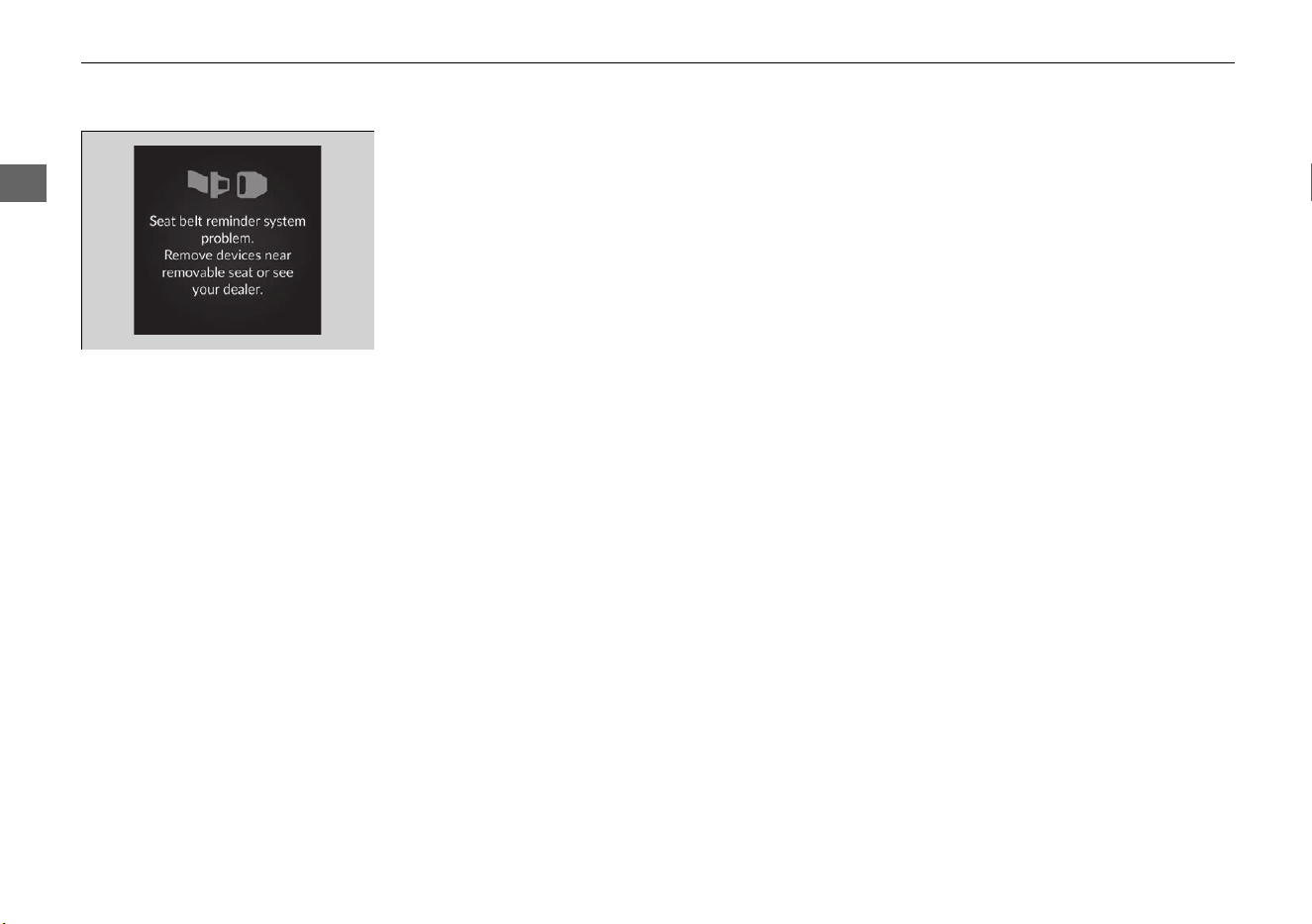
If the vehicle loses connection with the
transceiver while the seat belt is fastened, the
information for that seat will change to
unfastened, and a “Seat belt reminder system
problem” warning will be displayed.
26 PILOT-31T906300.book 46 ページ 2025年10月8日 水曜日 午前11時43分
47
uuSeat BeltsuAbout Your Seat Belts
Safe Driving
The front seats and the second row outer
seats are equipped with automatic seat belt
tensioners to enhance safety.
The tensioners automatically tighten the front
seat belts and the second row outer seats
during a moderate-to-severe frontal collision,
sometimes even if the collision is not severe
enough to inflate the front airbags or the
driver’s and passenger’s knee airbags.
■
Automatic Seat Belt Tensioners
1Automatic Seat Belt Tensioners
The seat belt tensioners can only operate once.
If a tensioner is activated, the SRS indicator will come
on. Have a dealer replace the tensioner and
thoroughly inspect the seat belt system as it may not
offer protection in a subsequent crash.
During a moderate-to-severe side impact, the
tensioners on both sides of the vehicle also activate.
26 PILOT-31T906300.book 47 ページ 2025年10月8日 水曜日 午前11時43分
48
uuSeat BeltsuFastening a Seat Belt
Safe Driving
Fastening a Seat Belt
After adjusting a front seat to the proper position, and while sitting upright and well
back in the seat:
2 Seats P. 211
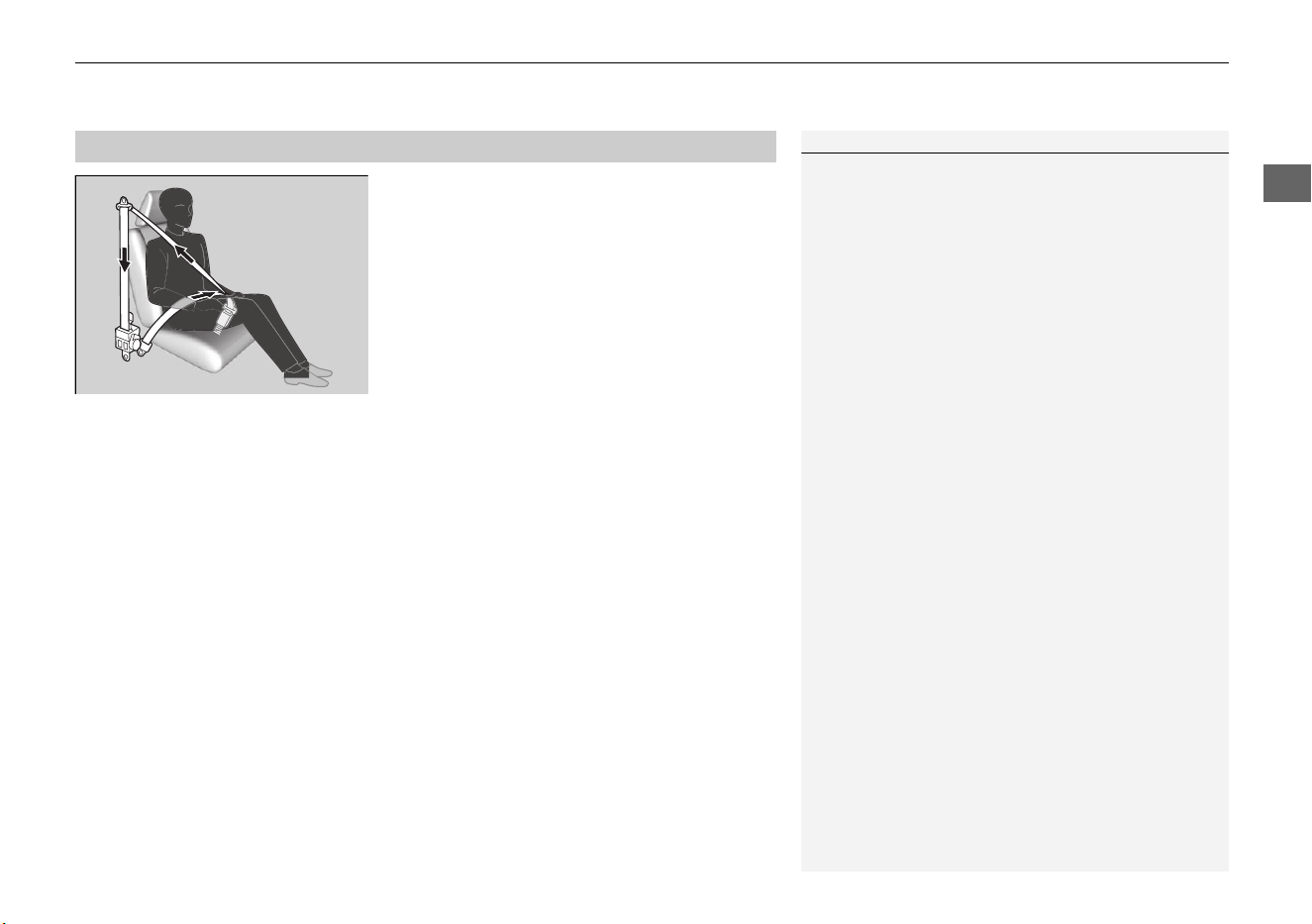
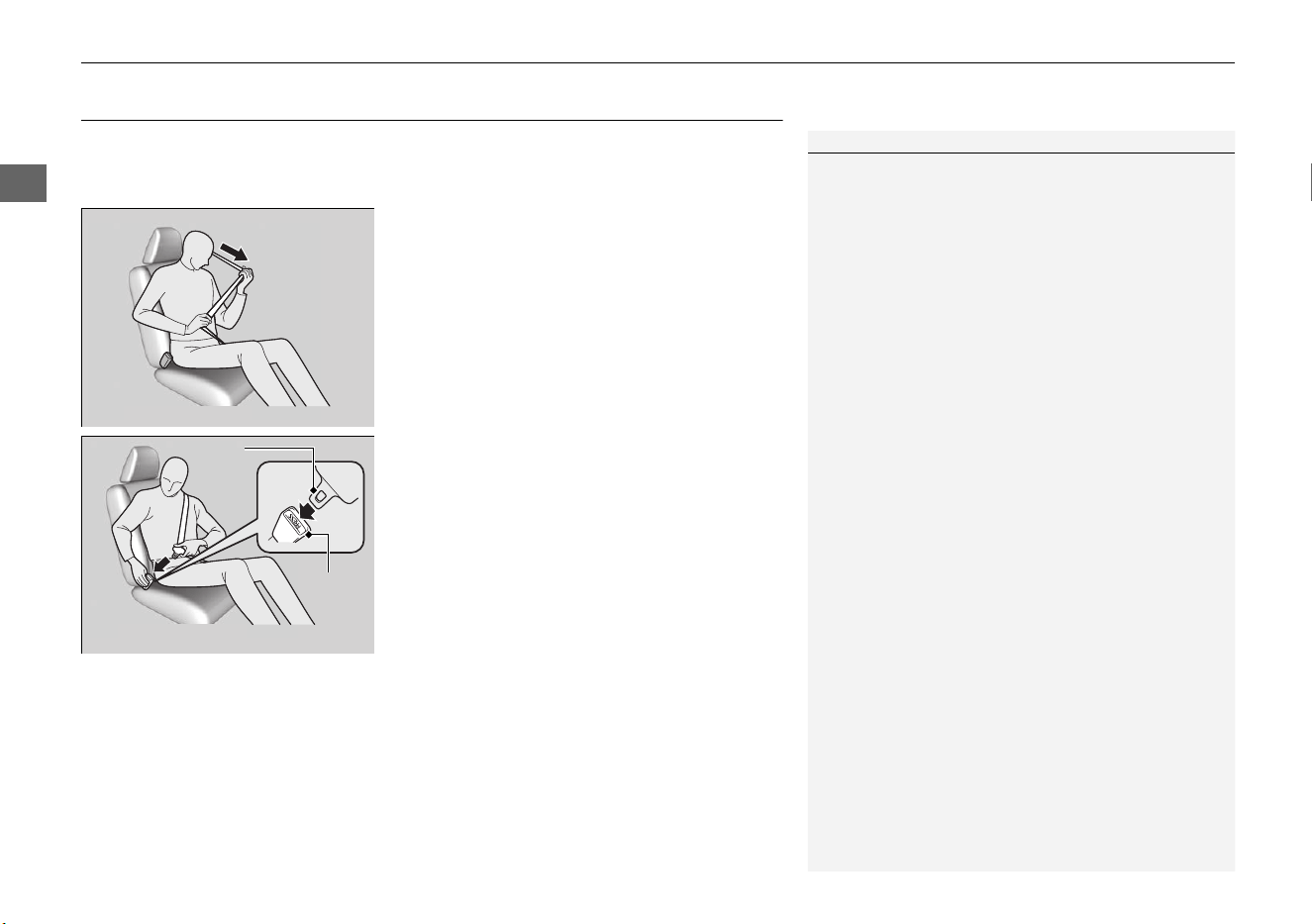
1. Pull the seat belt out slowly.
2. Insert the latch plate into the buckle, then
tug on the belt to make sure the buckle is
secure.
u Make sure that the belt is not twisted or
caught on anything.
1Fastening a Seat Belt
No one should sit in a seat with an inoperative seat
belt or one that does not appear to be working
correctly. Using a seat belt that is not working
properly may not protect the occupant in a crash.
Have a dealer check the belt as soon as possible.
Never insert any foreign objects into the buckle or
retractor mechanism.
If the seat belt appears to be locked in a fully
retracted position, firmly pull out on the shoulder belt
once, then push it back in.
Then, smoothly pull it out of the retractor and fasten.
If you are unable to release the seat belt from a fully
retracted position, do not allow anyone to sit in the
seat, and take your vehicle to a dealer for repair.
2 About Your Seat Belts P. 41
2 Seat Belt Inspection P. 54
Pull out slowly.
Correct
Seated
Posture.
Latch
Plate
Buckle
26 PILOT-31T906300.book 48 ページ 2025年10月8日 水曜日 午前11時43分
Continued
49
uuSeat BeltsuFastening a Seat Belt
Safe Driving
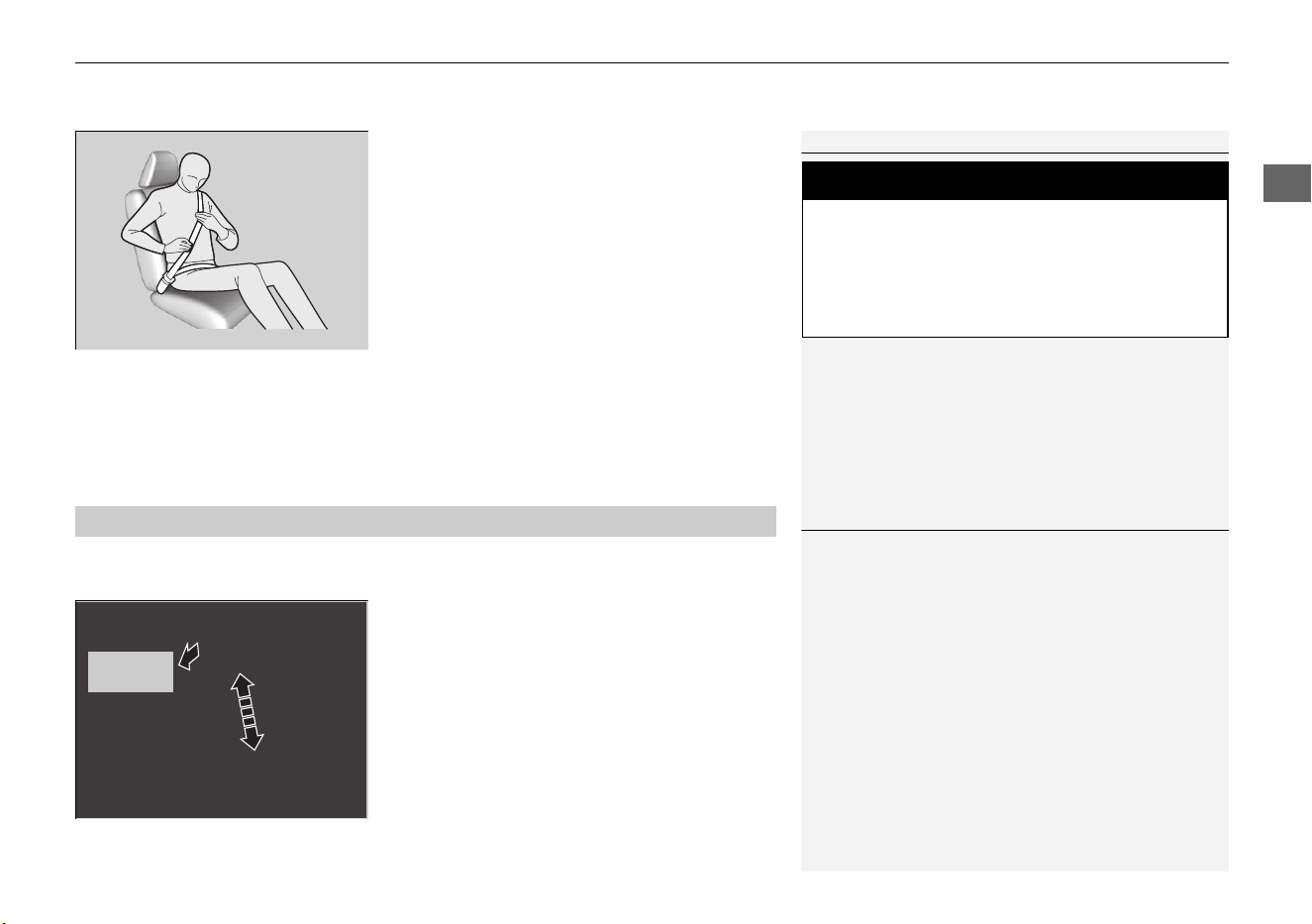
3. Position the lap part of the belt as low as
possible across your hips, then pull up on
the shoulder part of the belt so the lap part
fits snugly. This lets your strong pelvic
bones take the force of a crash and reduces
the chance of internal injuries.
4. If necessary, pull up on the belt again to
remove any slack, then check that the belt
rests across the center of your chest and
over your shoulder. This spreads the forces
of a crash over the strongest bones in your
upper body.
The front seats have adjustable shoulder anchors to accommodate taller and shorter
occupants.
1. Move the anchor up and down while
pulling the shoulder anchor outward.
2. Position the anchor so that the belt rests
across the center of your chest and over
your shoulder.
1Fastening a Seat Belt
To release the belt, push the red PRESS button and
then guide the belt by hand until it has retracted
completely.
When exiting the vehicle, be sure the belt is properly
stowed so that it will not get caught in the closing
door.
3
WARNING
Improperly positioning the seat belts can
cause serious injury or death in a crash.
Make sure all seat belts are properly
positioned before driving.
Lap belt
as low as
possible
■
Adjusting the Shoulder Anchor
1Adjusting the Shoulder Anchor
After an adjustment, make sure that the shoulder
anchor position is secure.
The shoulder anchor height can be adjusted to four
levels. If the belt contacts your neck, lower the height
one level at a time.
Pull
outward
26 PILOT-31T906300.book 49 ページ 2025年10月8日 水曜日 午前11時43分
uuSeat BeltsuFastening a Seat Belt
50
Safe Driving
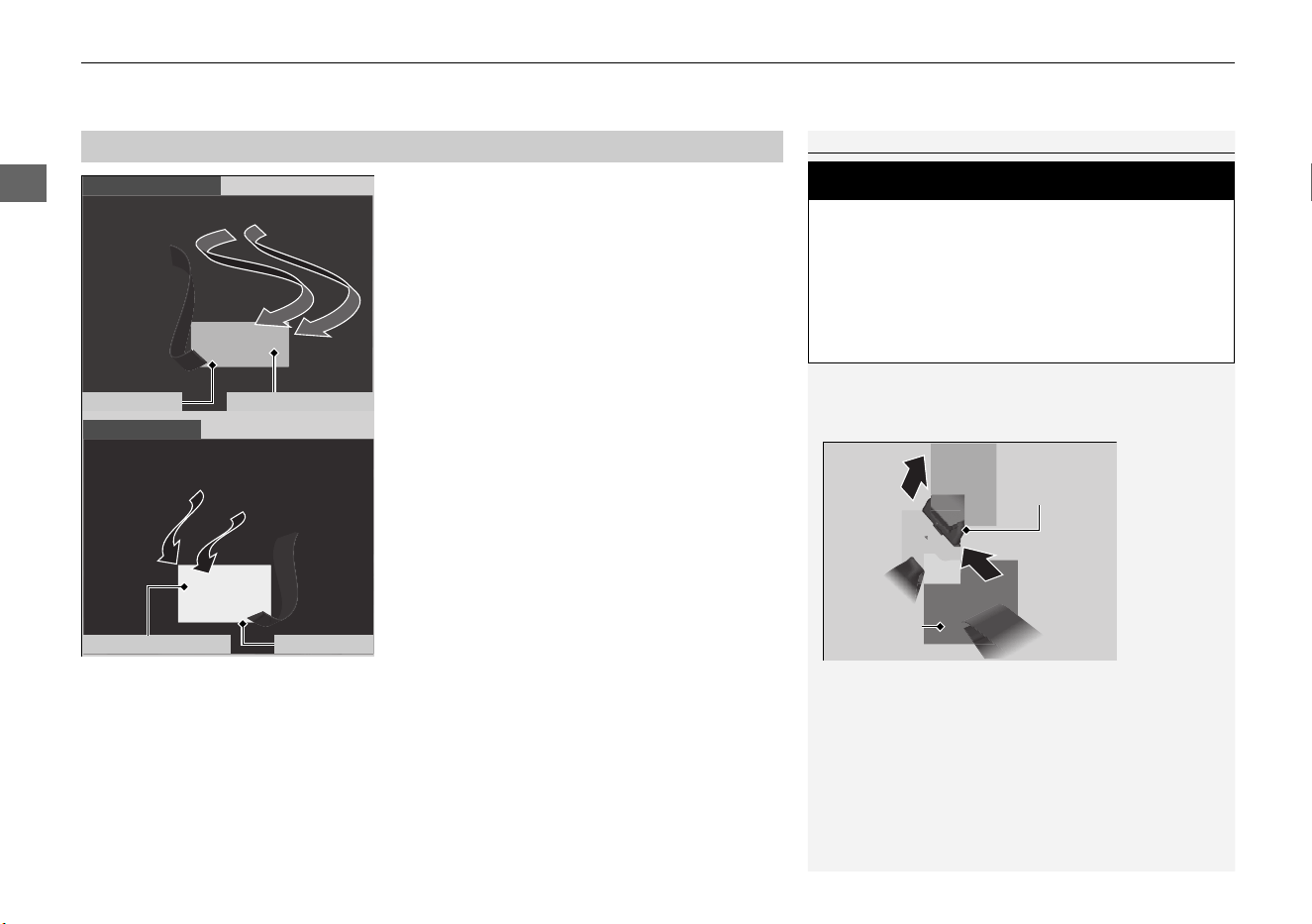
1. Pull out the seat belt’s small latch plate and
the latch plate from each holding slot in the
ceiling.
■
Seat Belt with Detachable Anchor
1Seat Belt with Detachable Anchor
To unlatch the detachable anchor, insert the latch
plate into the slot on the side of the anchor buckle.
3
WARNING
Using the seat belt with the detachable
anchor unfastened increases the chance of
serious injury or death in a crash.
Before using the seat belt, make sure the
detachable anchor is correctly latched.
Small
Latch
Plate
Latch Plate
Small Latch PlateLatch Plate
Second row seat
*
Small Latch Plate Latch Plate
Third row seat
* Not available on all models
26 PILOT-31T906300.book 50 ページ 2025年10月8日 水曜日 午前11時43分
51
uuSeat BeltsuFastening a Seat Belt
Continued
Safe Driving
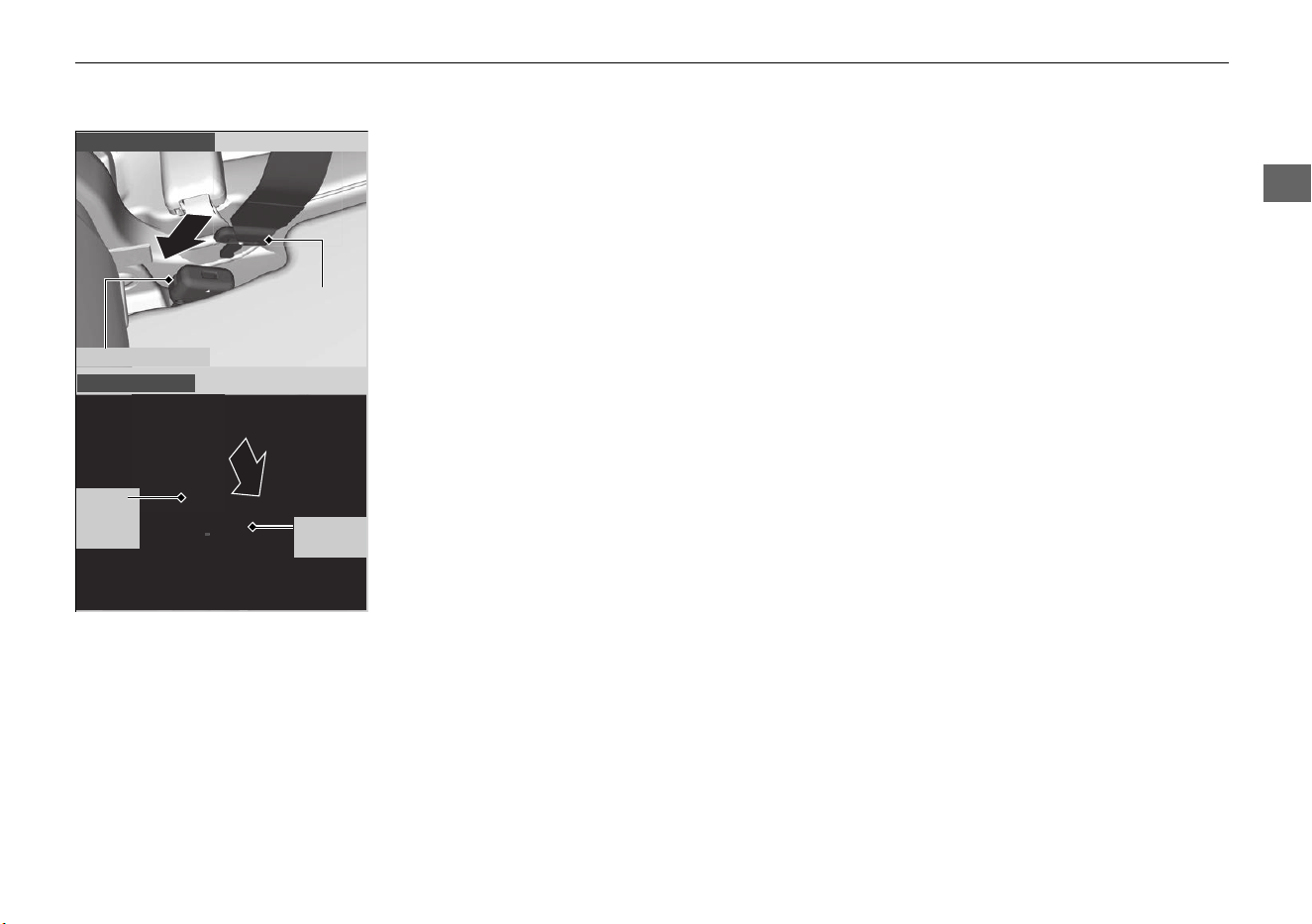
2. Line up the triangle marks on the small
latch plate and anchor buckle. Make sure
the seat belt is not twisted. Attach the belt
to the anchor buckle.
Small
Latch
Plate
Anchor Buckle
Second row seat
*
Third row seat
Small
Latch
Plate
Anchor
Buckle
* Not available on all models
26 PILOT-31T906300.book 51 ページ 2025年10月8日 水曜日 午前11時43分
52
uuSeat BeltsuFastening a Seat Belt
Safe Driving
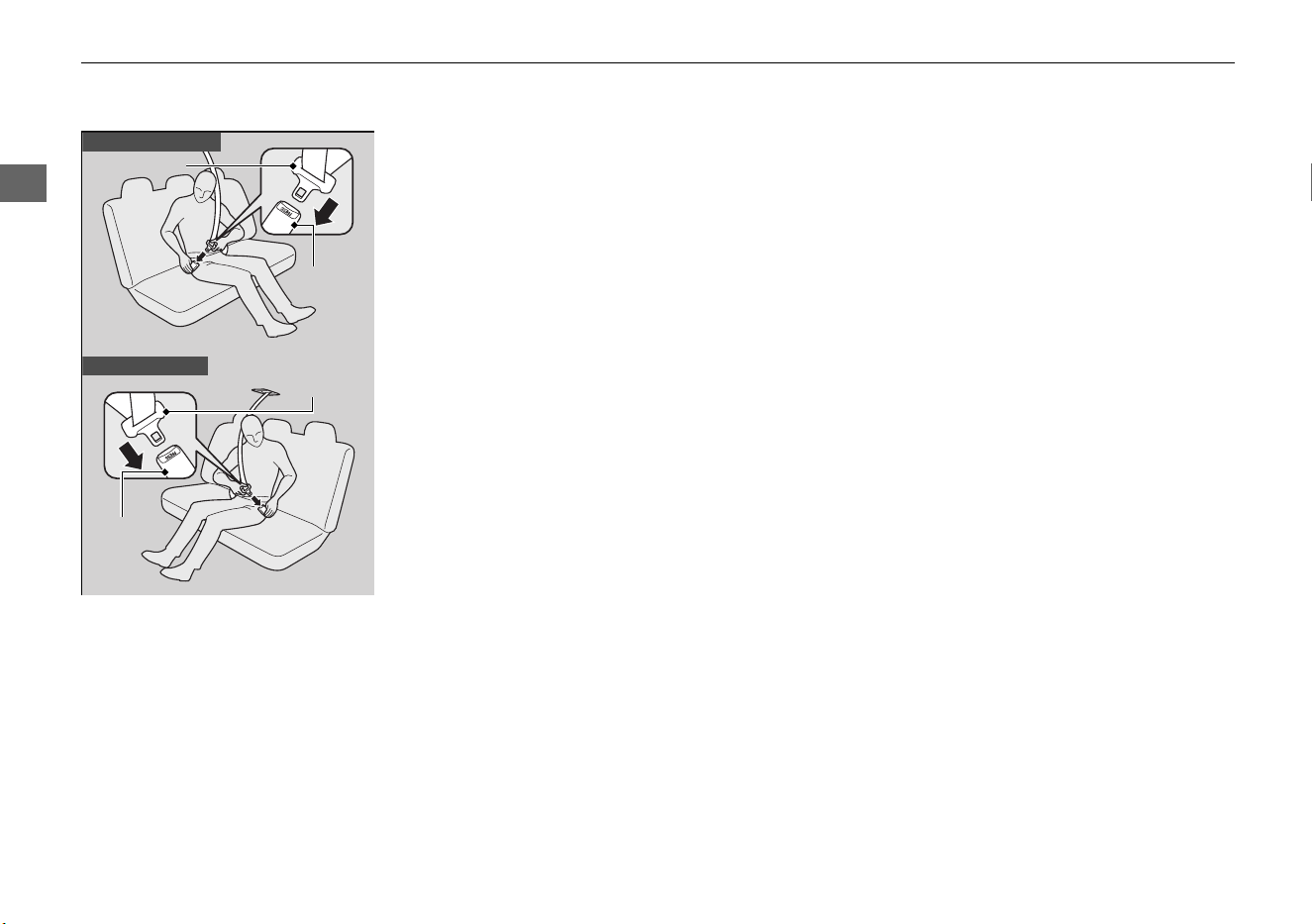
3. Insert the latch plate into the buckle.
Properly fasten the seat belt the same way
you fasten the lap/shoulder seat belt.
Latch Plate
Buckle
Second row seat
*
Third row seat
Latch Plate
Buckle
* Not available on all models
26 PILOT-31T906300.book 52 ページ 2025年10月8日 水曜日 午前11時43分
53
uuSeat BeltsuFastening a Seat Belt
Safe Driving
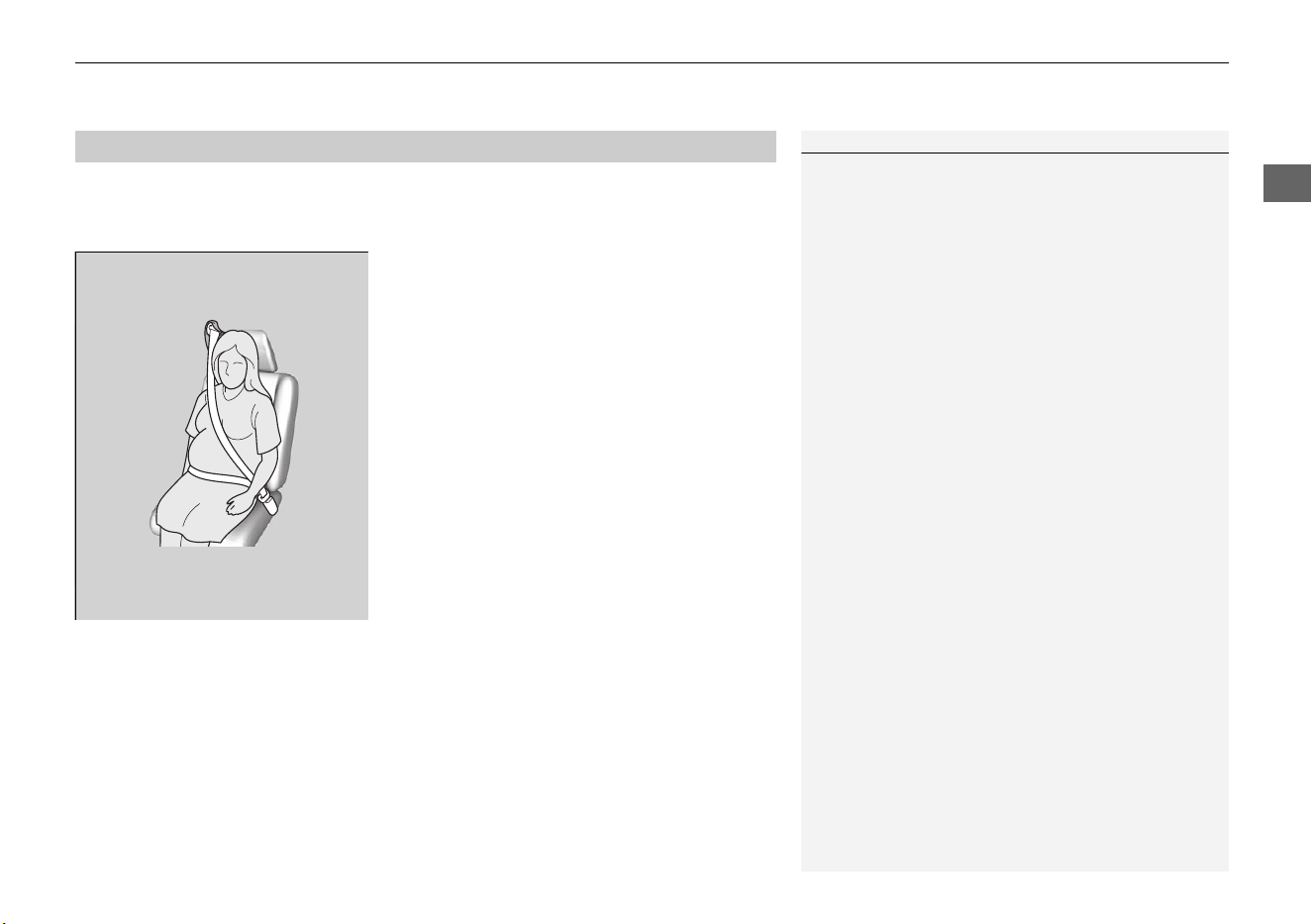
If you are pregnant, the best way to protect yourself and your unborn child when
driving or riding in a vehicle is to always wear a seat belt and keep the lap part of the
belt as low as possible across the hips.
■
Advice for Pregnant Women
1Advice for Pregnant Women
Each time you have a checkup, ask your doctor if it is
okay for you to drive.
To reduce the risk of injuries to both you and your
unborn child that can be caused by an inflating front
airbag:
• When driving, sit upright and adjust the seat as far
back as possible while allowing full control of the
vehicle.
• When sitting in the front passenger’s seat, adjust
the seat as far back as possible.
Wear the shoulder belt
across the chest avoiding
the abdomen.
Wear the lap part of the
belt as low as possible
across the hips.
26 PILOT-31T906300.book 53 ページ 2025年10月8日 水曜日 午前11時43分
54
uuSeat BeltsuSeat Belt Inspection
Safe Driving
Seat Belt Inspection
Regularly check the condition of your seat belts as follows:
• Pull each belt out fully, and look for frays, cuts, burns, and wear.
• Check that the latch plates and buckles work smoothly, and the belts retract
easily.
u If a belt does not retract easily, cleaning the belt may correct the problem. Only
use a mild soap and warm water. Do not use bleach or cleaning solvents. Make
sure the belt is completely dry before allowing it to retract.
Any belt that is not in good condition or working properly will not provide proper
protection and should be replaced as soon as possible.
A belt that has been worn during a crash may not provide the same level of
protection in a subsequent crash. Have your seat belts inspected by a dealer after
any collision.
1Seat Belt Inspection
3
WARNING
Not checking or maintaining seat belts can
result in serious injury or death if the seat
belts do not work properly when needed.
Check your seat belts regularly and have
any problem corrected as soon as possible.
26 PILOT-31T906300.book 54 ページ 2025年10月8日 水曜日 午前11時43分
55
Continued
Safe Driving
Airbags
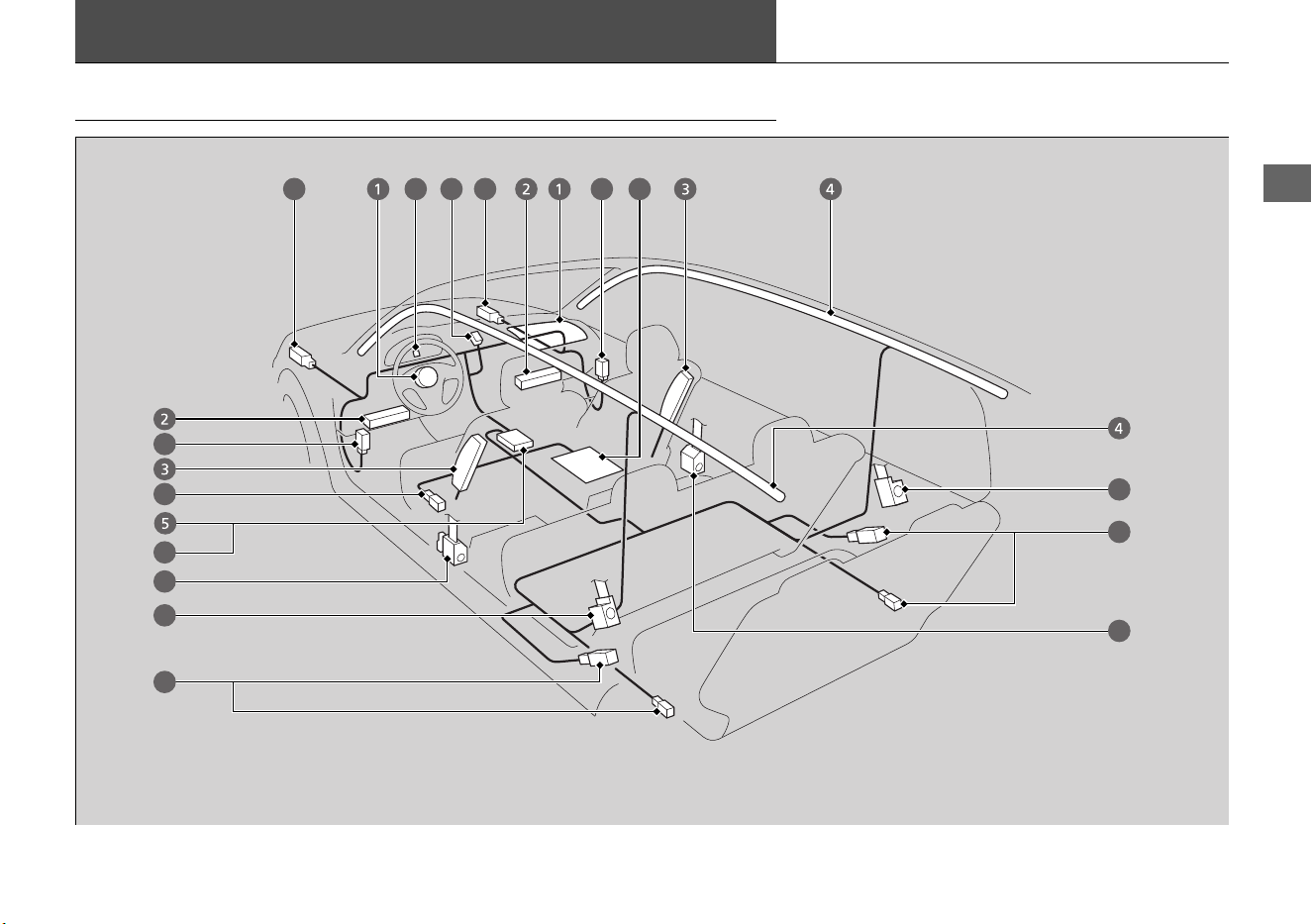
Airbag System Components
8
13
9
10
9
6
6
7
6
6
13
11
12
9
9
26 PILOT-31T906300.book 55 ページ 2025年10月8日 水曜日 午前11時43分

56
uuAirbagsuAirbag System Components
Safe Driving
The front, driver’s knee, front passenger’s
knee, side, and side curtain airbags are
deployed according to the direction and
severity of impact. Both side curtain airbags
are deployed in a rollover. The airbag
system includes:
a Two SRS (Supplemental Restraint System)
front airbags. The driver’s airbag is stored
in the center of the steering wheel; the
front passenger’s airbag is stored in the
dashboard. Both are marked SRS
AIRBAG.
b Two knee airbags. The driver’s knee
airbag is stored under the steering
column; the front passenger’s knee
airbag is stored under the glove box.
Both are marked SRS AIRBAG.
c Two side airbags. One for the driver and
one for the front passenger. The airbags
are stored in the outer edges of the seat-
backs. Both are marked SIDE AIRBAG.
d Two side curtain airbags, one for each
side of the vehicle. The airbags are stored
in the ceiling, above the side windows.
The front and rear pillars are marked
SIDE CURTAIN AIRBAG.
e An electronic control unit that, when the
power mode is in ON, continually
monitors information about the various
impact sensors, seat and buckle sensors,
rollover sensor, airbag activators, seat
belt tensioners, and other vehicle
information. During a crash event, the
unit can record such information.
f Seat belt tensioners for the front seats
and the second row outer seats. In
addition, the driver’s and front
passenger’s seat belt buckles incorporate
sensors that detect whether or not the
belts are fastened.
g Driver’s seat position sensor. This sensor
detects the driver’s seat slide position to
help determine the optimal deployment
of the driver’s airbag.
h Weight sensors in the front passenger’s
seat. The sensors are used for occupant
classification to activate or deactivate the
front passenger’s airbag.
i Impact sensors that can detect a
moderate-to-severe front or side impact.
j An indicator on the dashboard that alerts
you that the passenger’s airbag has been
turned off.
k An indicator on the instrument panel that
alerts you to a possible problem with your
airbag system or seat belt tensioners.
l A rollover sensor that can detect if your
vehicle is about to roll over and signal the
control unit to deploy both side curtain
airbags.
m Pressure sensors that can detect a
moderate-to-severe side impact.
26 PILOT-31T906300.book 56 ページ 2025年10月8日 水曜日 午前11時43分
57
uuAirbagsuAirbag System Components
Safe Driving
Airbags can pose serious hazards. To do their job, airbags must inflate with
tremendous force. So, while airbags help save lives, they can cause burns, bruises,
and other minor injuries, sometimes even fatal ones if occupants are not wearing
their seat belts properly and sitting correctly.
What you should do: Always wear your seat belt properly and sit upright and as
far back from the steering wheel as possible while allowing full control of the
vehicle. A front passenger should move their seat as far back from the dashboard as
possible.
Remember, however, that no safety system can prevent all injuries or deaths that
can occur in a severe crash, even when seat belts are properly worn and the airbags
deploy.
Do not place hard or sharp objects between yourself and a front airbag.
Carrying hard or sharp objects on your lap, or driving with a pipe or other sharp
object in your mouth, can result in injuries if your front airbag inflates.
Do not attach or place objects on the front, driver’s knee, and front
passenger’s knee airbag covers. Objects on the covers marked SRS AIRBAG
could interfere with the proper operation of the airbags or be propelled inside the
vehicle and hurt someone if the airbags inflate.
■
Important Facts About Your Airbags
1Important Facts About Your Airbags
Do not attempt to deactivate your airbags. Together,
airbags and seat belts provide the best protection.
When driving, keep hands and arms out of the
deployment path of the front airbag by holding each
side of the steering wheel. Do not cross an arm over
the airbag cover.
26 PILOT-31T906300.book 57 ページ 2025年10月8日 水曜日 午前11時43分
58
uuAirbagsuTypes of Airbags
Safe Driving
Types of Airbags
Your vehicle is equipped with four types of airbags:
• Front airbags: Airbags in front of the driver’s and front passenger’s seats.
• Knee airbags: Airbags under the steering column and under the glove box.
• Side airbags: Airbags in the driver’s and front passenger’s seat-backs.
• Side curtain airbags: Airbags above the side windows.
Each is discussed in the following pages.
Front Airbags (SRS)
The front SRS airbags inflate in a moderate-to-severe frontal collision to help protect
the head and chest of the driver and/or front passenger.
SRS (Supplemental Restraint System) indicates that the airbags are designed to
supplement seat belts, not replace them. Seat belts are the occupant’s primary
restraint system.
The front airbags are housed in the center of the steering wheel for the driver, and
in the dashboard for the front passenger. Both airbags are marked SRS AIRBAG.
■
Housing Locations
1Types of Airbags
The airbags can inflate whenever the power mode is
in ON.
After an airbag inflates in a crash, you may see a
small amount of smoke. This is from the combustion
process of the inflator material and is not harmful.
People with respiratory problems may experience
some temporary discomfort. If this occurs, get out of
the vehicle as soon as it is safe to do so.
1Front Airbags (SRS)
During a frontal crash severe enough to cause one or
both front airbags to deploy, the airbags can inflate
at different rates, depending on the severity of the
crash, whether or not the seat belts are latched, and/
or other factors. Frontal airbags are designed to
supplement the seat belts to help reduce the
likelihood of head and chest injuries in frontal
crashes.
26 PILOT-31T906300.book 58 ページ 2025年10月8日 水曜日 午前11時43分
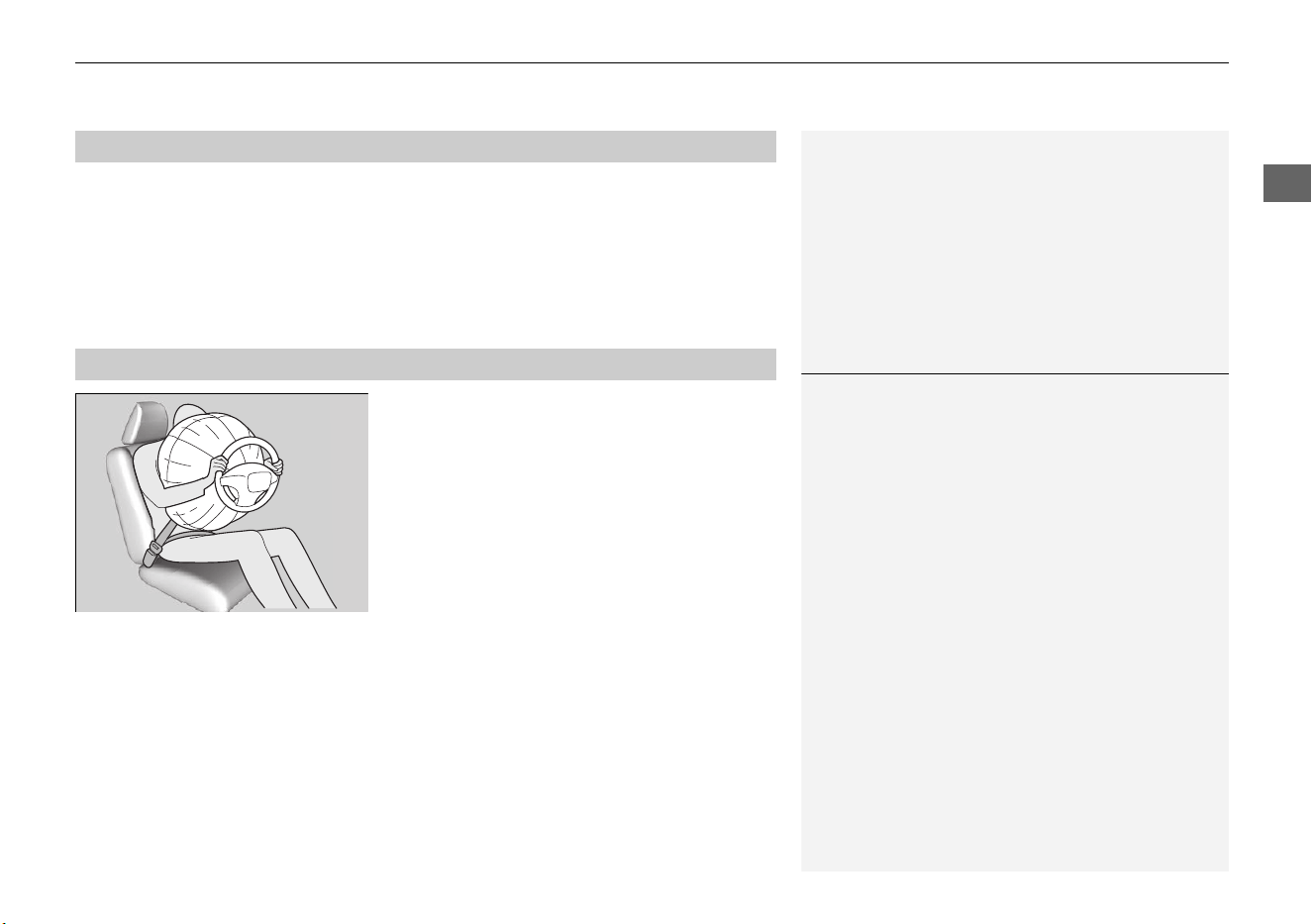
Continued
59
uuAirbagsuFront Airbags (SRS)
Safe Driving
Front airbags are designed to inflate during moderate-to-severe frontal collisions.
When the vehicle decelerates suddenly, the sensors send information to the control
unit which signals one or both front airbags to inflate.
A frontal collision can be either head-on or angled between two vehicles, or when a
vehicle crashes into a stationary object, such as a concrete wall.
While your seat belt restrains your torso, the
front airbag provides supplemental protection
for your head and chest.
The front airbags deflate immediately so that
they won’t interfere with the driver’s visibility
or the ability to steer or operate other
controls.
The total time for inflation and deflation is so fast that most occupants are not
aware that the airbags deployed until they see them lying in front of them.
■
Operation
■
How the Front Airbags Work
1How the Front Airbags Work
Although the driver’s and front passenger’s airbags
normally inflate within a split second of each other, it
is possible for only one airbag to deploy. This can
happen if the severity of a collision is at the margin,
or threshold that determines whether or not the
airbags will deploy. In such cases, the seat belt will
provide sufficient protection, and the supplemental
protection offered by the airbag would be minimal.
26 PILOT-31T906300.book 59 ページ 2025年10月8日 水曜日 午前11時43分

60
uuAirbagsuFront Airbags (SRS)
Safe Driving
■
When front airbags should not deploy
Minor frontal crashes: Front airbags were designed to supplement seat belts and
help save lives, not to prevent minor scrapes, or even broken bones that might occur
during a less than moderate-to-severe frontal crash.
Side impacts: Front airbags can provide protection when a sudden deceleration
causes a driver or front passenger to move toward the front of the vehicle. Side
airbags and side curtain airbags have been specifically designed to help reduce the
severity of injuries that can occur during a moderate-to-severe side impact which
can cause the driver or passenger to move toward the side of the vehicle.
Rear impacts: Head restraints and seat belts are your best protection during a rear
impact. Front airbags cannot provide any significant protection and are not designed
to deploy in such collisions.
Rollovers: In a rollover, your best form of protection is a seat belt or, if your vehicle
is equipped with a rollover sensor, both a seat belt and a side curtain airbag. Front
airbags, however, are not designed to deploy in a rollover as they would provide
little, if any, protection.
■
When front airbags deploy with little or no visible damage
Because the airbag system senses sudden deceleration, a strong impact to the
vehicle framework or suspension might cause one or more of the airbags to deploy.
Examples include running into a curb, the edge of a hole, or other low fixed object
that causes a sudden deceleration in the vehicle chassis. Since the impact is
underneath the vehicle, damage may not be readily apparent.
■
When front airbags may not deploy, even though exterior damage
appears severe
Since crushable body parts absorb crash energy during an impact, the amount of
visible damage does not always indicate proper airbag operation. In fact, some
collisions can result in severe damage but no airbag deployment because the airbags
would not have been needed or would not have provided protection even if they
had deployed.
26 PILOT-31T906300.book 60 ページ 2025年10月8日 水曜日 午前11時43分
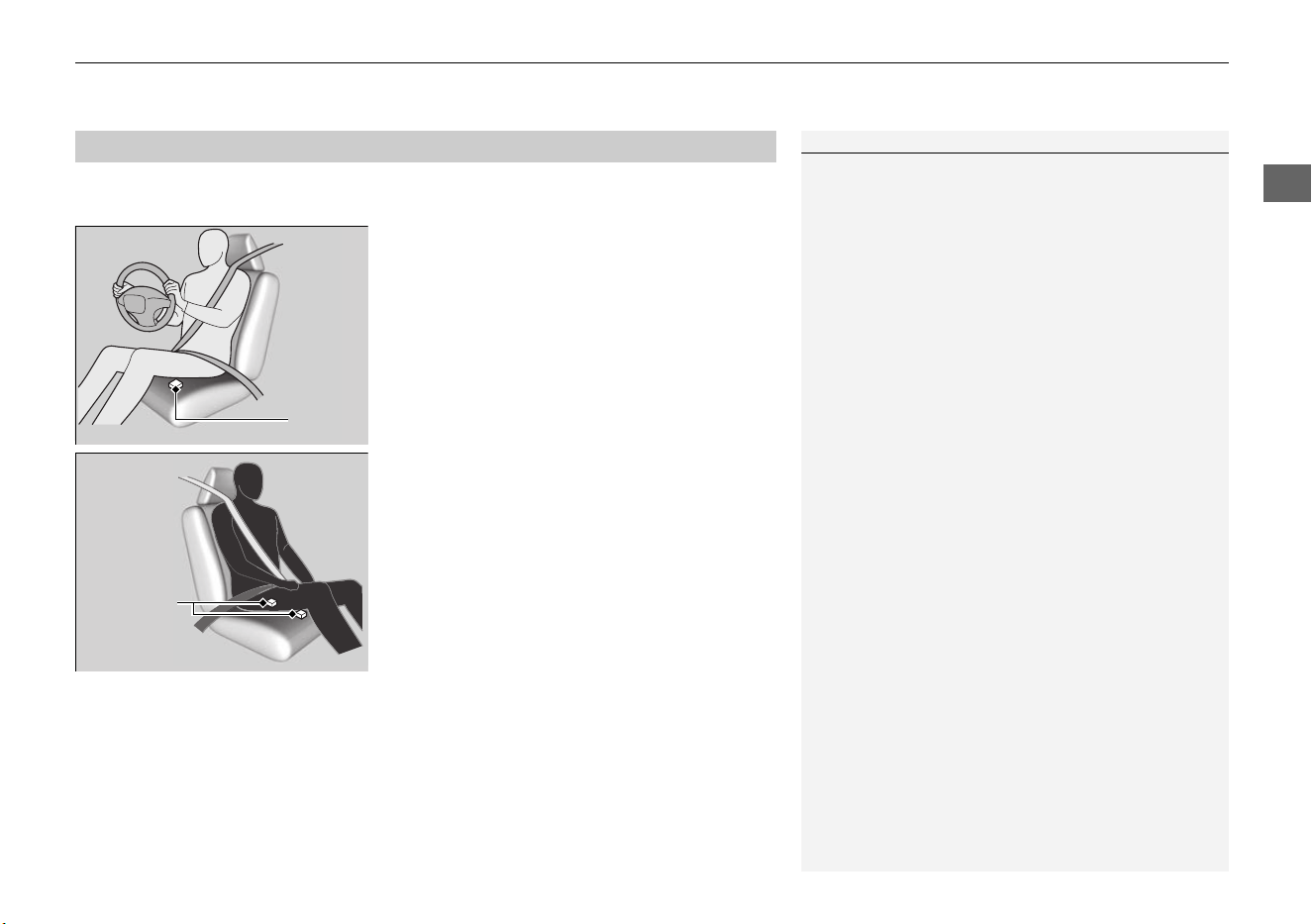
Continued
61
uuAirbagsuFront Airbags (SRS)
Safe Driving
The airbags have advanced features to help reduce the likelihood of airbag related
injuries to smaller occupants.
The driver’s advanced airbag system includes a
seat position sensor.
Based on information from this sensor and the
severity of the impact, the advanced airbag
system determines the optimal deployment of
the driver’s airbag.
The front passenger’s advanced airbag system
has weight sensors. The sensors are used for
occupant classification to activate or
deactivate the front passenger’s airbag.
For adult size occupants, the system will
automatically activate the front passenger’s
airbag. If a small adult sits in the front
passenger seat and the system does not
recognize him/her as an adult, see
2 Passenger Airbag Off Indicator P. 70
■
Advanced Airbags
1Advanced Airbags
If there is a problem with the driver’s seat position
sensor or the passenger’s seat weight sensors, the
SRS indicator will come on, and in the event of a
crash, the airbag will deploy (regardless of the driver’s
seating position or passenger’s occupant
classification) with a force corresponding to the
severity of the impact.
2 Supplemental Restraint System (SRS)
Indicator P. 69
For the advanced front airbags to work properly,
confirm that:
• The occupant is sitting in an upright position
wearing the seat belt properly and the seat-back is
not excessively reclined.
• The occupant is not leaning against the door or
center console.
• The occupant’s feet are placed on the floor in front
of them.
• There are no objects hanging from the front
passenger’s seat.
• Only small, lightweight objects are in the seat-back
pocket.
• The steering wheel and passenger’s side dashboard
are not obstructed by any object.
• No liquid has been spilled on or under the seat.
• There is no child seat or other object pressing
against the rear of the seat or seat-back.
• There is no rear passenger pushing or pulling on
the back of the front passenger’s seat.
Driver’s
Seat
Position
Sensor
Passenger’s
Seat Weight
Sensors
26 PILOT-31T906300.book 61 ページ 2025年10月8日 水曜日 午前11時43分
uuAirbagsuFront Airbags (SRS)
62
Safe Driving
We advise against allowing a child age 12 or under to ride in the front passenger’s
seat. However, if you do allow a small child or infant to ride in the front passenger’s
seat, the system is designed to automatically deactivate the front passenger’s airbag.
Do not let a small child or infant ride in the front passenger’s seat if the airbag does
not automatically deactivate.
1Advanced Airbags
• There are no objects placed under or beside the
front passenger’s seat. Improperly positioned
objects can interfere with the advanced airbag
sensors.
• The head restraint is not contacting the roof.
2 Passenger Airbag Off Indicator P. 70
• The floor mat behind the front passenger’s seat is
hooked to the floor mat anchor. An improperly
placed mat can interfere with the advanced airbag
sensors.
2 Floor Mats P. 619
26 PILOT-31T906300.book 62 ページ 2025年10月8日 水曜日 午前11時43分
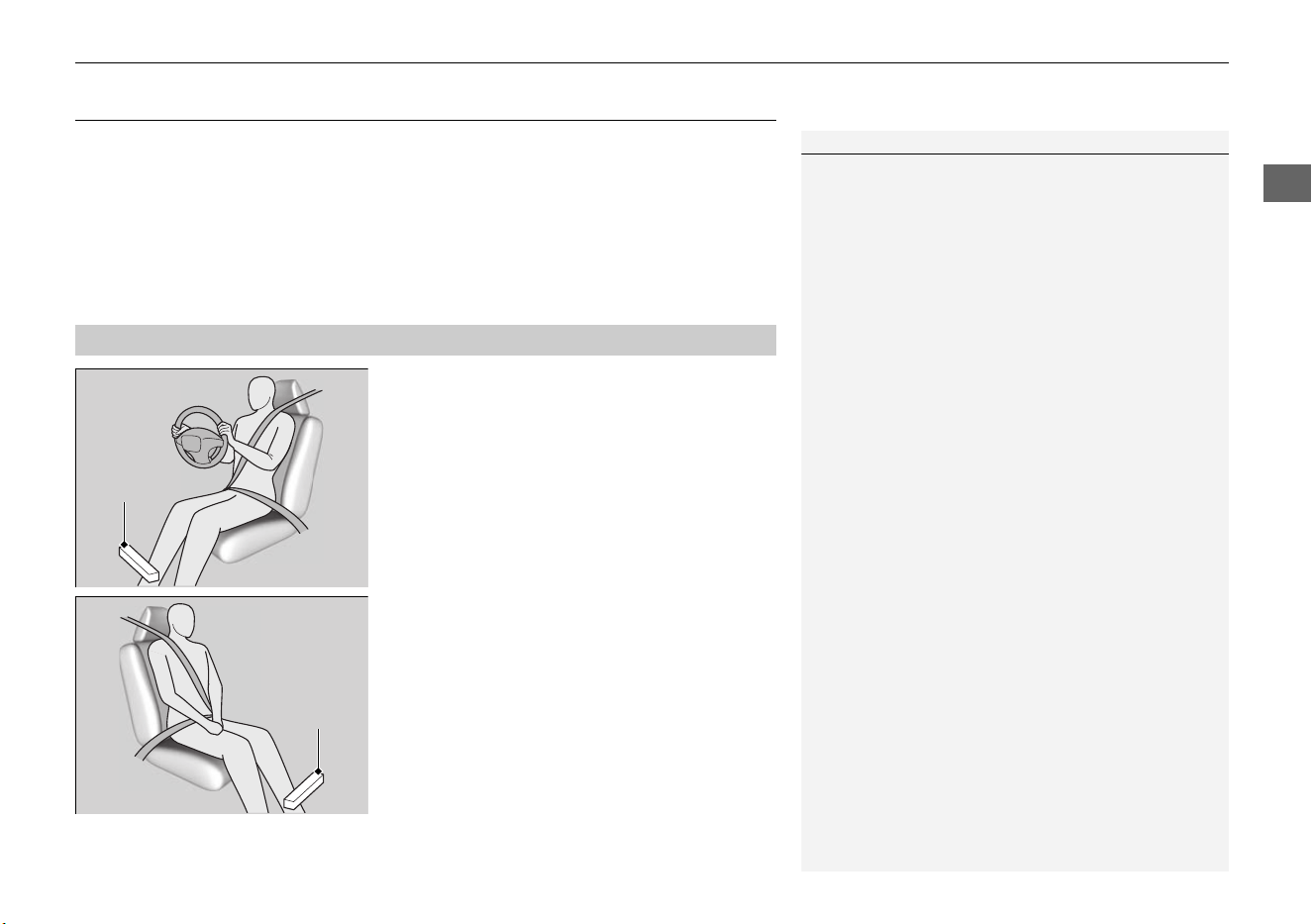
63
uuAirbagsuKnee Airbags
Continued
Safe Driving
Knee Airbags
The knee SRS airbags inflate in a moderate-to-severe frontal collision to help keep
the driver and/or front passenger in the proper position and to help maximize the
benefit provided by the vehicle’s other safety features.
SRS (Supplemental Restraint System) indicates that the airbags are designed to
supplement seat belts, not replace them. Seat belts are the occupant’s primary
restraint system.
The knee airbag for the driver and the one for
the front passenger are housed under the
steering column and the glove box
respectively.
Both are marked SRS AIRBAG.
■
Housing Locations
1Knee Airbags
Do not attach accessories on or near the knee airbags
as they can interfere with the proper operation of the
airbags, or even hurt someone if the airbags inflate.
The driver and front passenger should not store any
items under the seat or behind their feet. The items
can interfere with proper airbag deployment in the
event of a moderate to severe frontal collision and
may result in inadequate protection.
Housing
Location
Housing
Location
26 PILOT-31T906300.book 63 ページ 2025年10月8日 水曜日 午前11時43分
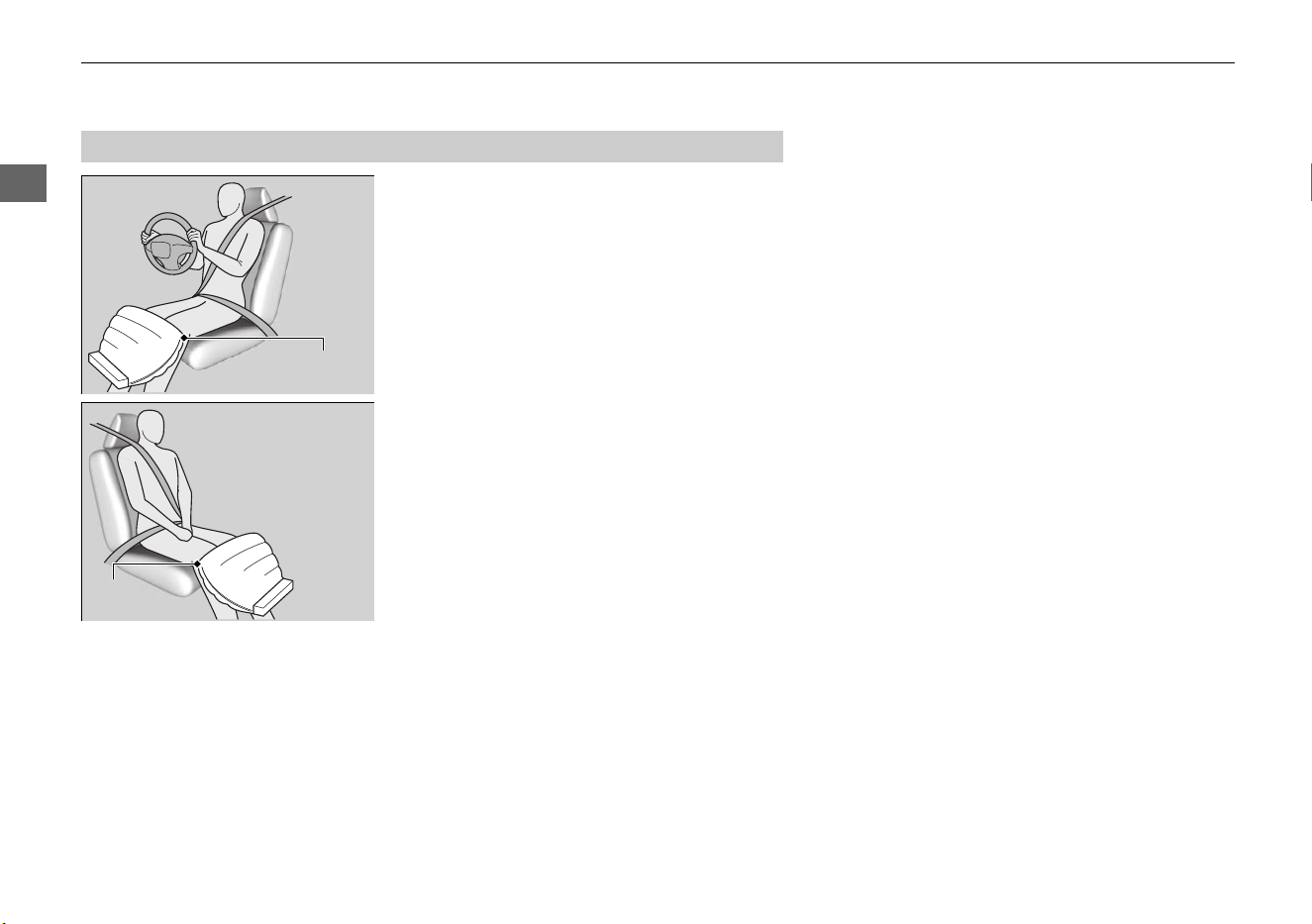
64
uuAirbagsuKnee Airbags
Safe Driving
The driver’s and front passenger’s knee airbag
deploy at the same time as the driver’s and
front passenger’s airbag respectively.
Even if the collision is not severe enough to
deploy the front airbags, the knee airbags may
inflate alone.
■
Operation
When
inflated
Knee
Airbag
When
inflated
Knee
Airbag
26 PILOT-31T906300.book 64 ページ 2025年10月8日 水曜日 午前11時43分

65
uuAirbagsuKnee Airbags
Safe Driving
■
When knee airbags deploy with little or no visible damage
Because the airbag system senses sudden deceleration, a strong impact to the
vehicle framework or suspension might cause one or more of the airbags to deploy.
Examples include running into a curb, the edge of a hole, or other low fixed objects
that cause a sudden deceleration in the vehicle chassis. Since the impact is
underneath the vehicle, damage may not be readily apparent.
■
When knee airbags may not deploy, even though exterior damage
appears severe
Since crushable body parts absorb crash energy during an impact, the amount of
visible damage does not always indicate proper airbag operation. In fact, some
collisions can result in severe damage but no airbag deployment because the airbags
would not have been needed or would not have provided protection even if they
had deployed.
26 PILOT-31T906300.book 65 ページ 2025年10月8日 水曜日 午前11時43分
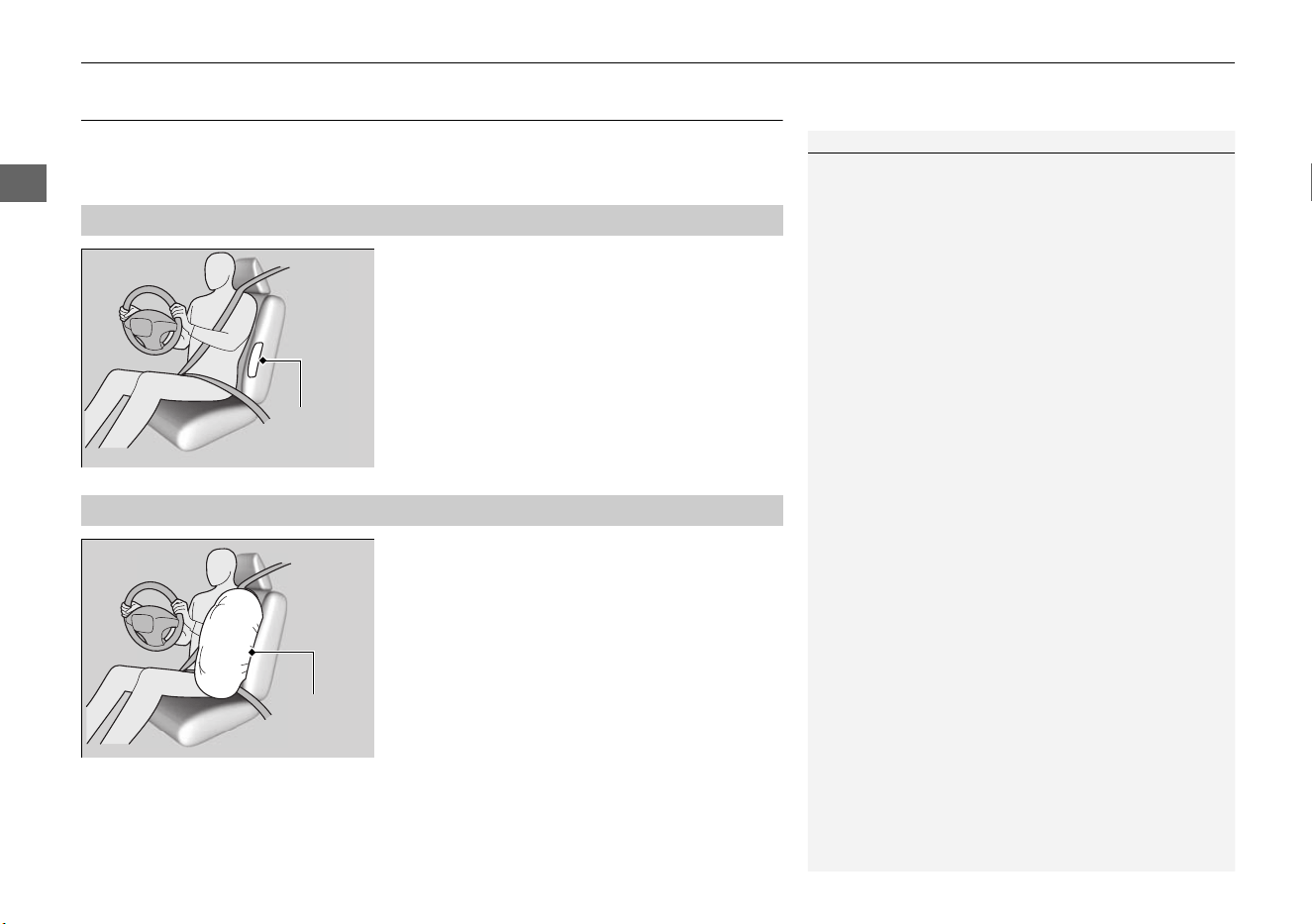
66
uuAirbagsuSide Airbags
Safe Driving
Side Airbags
The side airbags help protect the torso and pelvis of the driver or a front passenger
during a moderate-to-severe side impact.
The side airbags are housed in the outside
edge of the driver’s and passenger’s seat-
backs.
Both are marked SIDE AIRBAG.
When the sensors detect a moderate-to-
severe side impact, the control unit signals the
side airbag on the impact side to immediately
inflate.
■
Housing Locations
1Side Airbags
Make sure you and your front seat passenger always
sit upright. Leaning into the path of a side airbag can
prevent the airbag from deploying properly and
increases your risk of serious injury.
Do not attach accessories on or near the side airbags.
They can interfere with the proper operation of the
airbags, or hurt someone if an airbag inflates.
Do not cover or replace the front seat-back covers
without consulting a dealer.
Improperly replacing or covering front seat-back
covers can prevent your side airbags from properly
deploying during a side impact.
Side airbag deployment is controlled by a pressure
sensor inside each front door. Damage or changes to
the inside or outside of the doors may negatively
affect side airbag deployment. Contact an authorized
dealer before changing or repairing a front door.
Housing
Location
■
Operation
When
inflated
Side
Airbag
26 PILOT-31T906300.book 66 ページ 2025年10月8日 水曜日 午前11時43分

67
uuAirbagsuSide Airbags
Safe Driving
■
When a side airbag deploys with little or no visible damage
Because the airbag system senses sudden acceleration, a strong impact to the side
of the vehicle’s framework can cause a side airbag to deploy. In such cases, there
may be little or no damage, but the side impact sensors detected a severe enough
impact to deploy the airbag.
■
When a side airbag may not deploy, even though visible damage appears
severe
It is possible for a side airbag not to deploy during an impact that results in
apparently severe damage. This can occur when the point of impact was toward the
far front or rear of the vehicle, or when the vehicle’s crushable body parts absorbed
most of the crash energy. In either case, the side airbag would not have been
needed nor provided protection even if it had deployed.
26 PILOT-31T906300.book 67 ページ 2025年10月8日 水曜日 午前11時43分
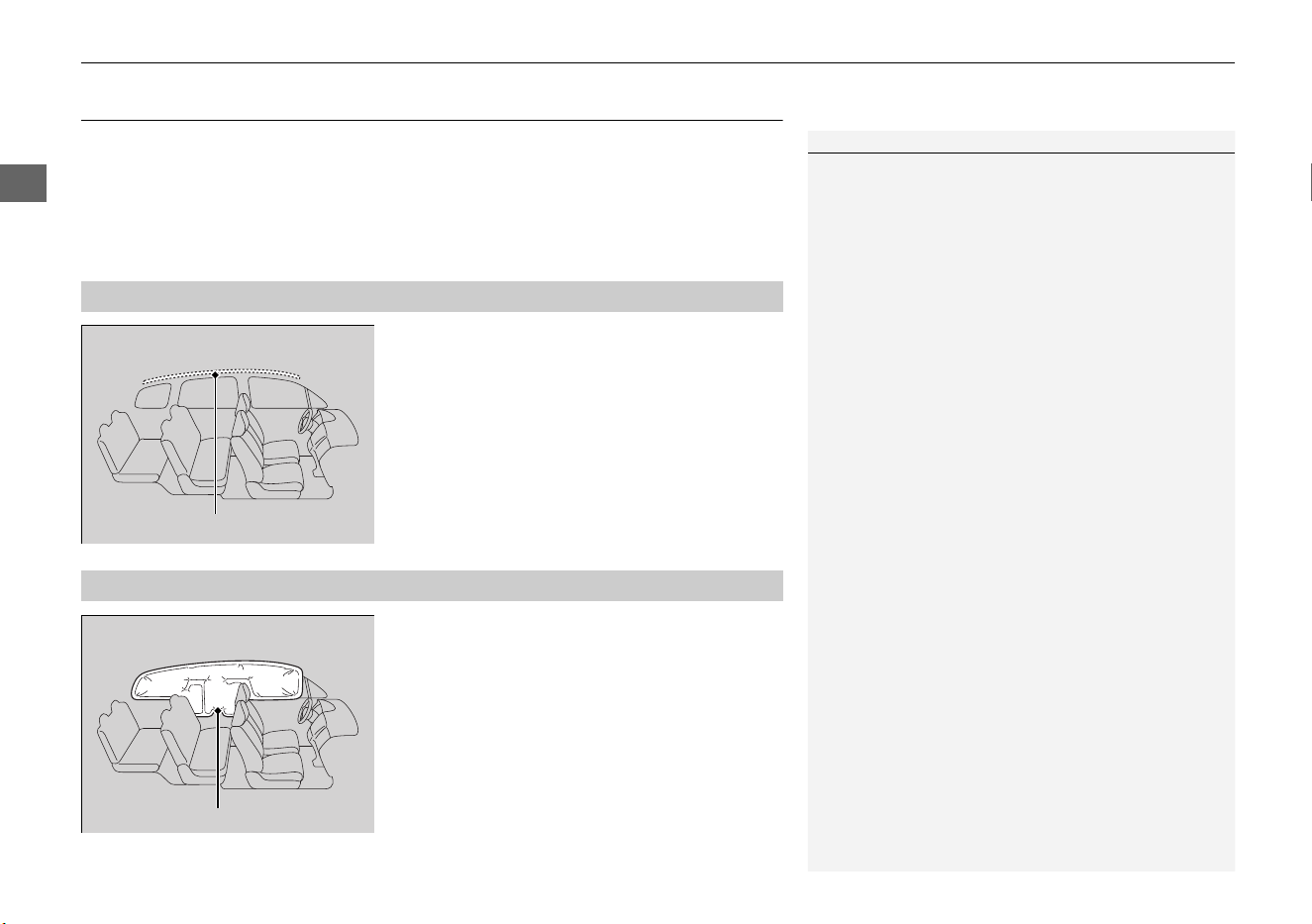
68
uuAirbagsuSide Curtain Airbags
Safe Driving
Side Curtain Airbags
The side curtain airbags help protect the heads of the driver and passengers in the
outer seating positions during a moderate-to-severe side impact. The side curtain
airbags equipped in this vehicle are also designed to help reduce the likelihood of
partial and complete ejection of vehicle occupants through side windows in crashes,
particularly rollover crashes.
The side curtain airbags are located in the
ceiling above the side windows on both sides
of the vehicle.
The side curtain airbag is designed to deploy
in a rollover or a moderate-to-severe side
impact.
■
Housing Locations
1Side Curtain Airbags
To get the best protection from the side curtain
airbags, occupants should wear their seat belts
properly and sit upright and well back in their seats.
Do not attach any objects to the side windows or roof
pillars as they can interfere with the proper operation
of the side curtain airbags.
If the impact is on the passenger’s side, the
passenger’s side curtain airbag deploys even if there
are no occupants on that side of the vehicle.
If the SRS control unit senses that your vehicle is
about to rollover, it immediately deploys both side
curtain airbags and activates the seat belt tensioners
for the front seats and the second row outer seats.
Side Curtain Airbag Storage
■
Operation
Deployed Side Curtain Airbag
26 PILOT-31T906300.book 68 ページ 2025年10月8日 水曜日 午前11時43分
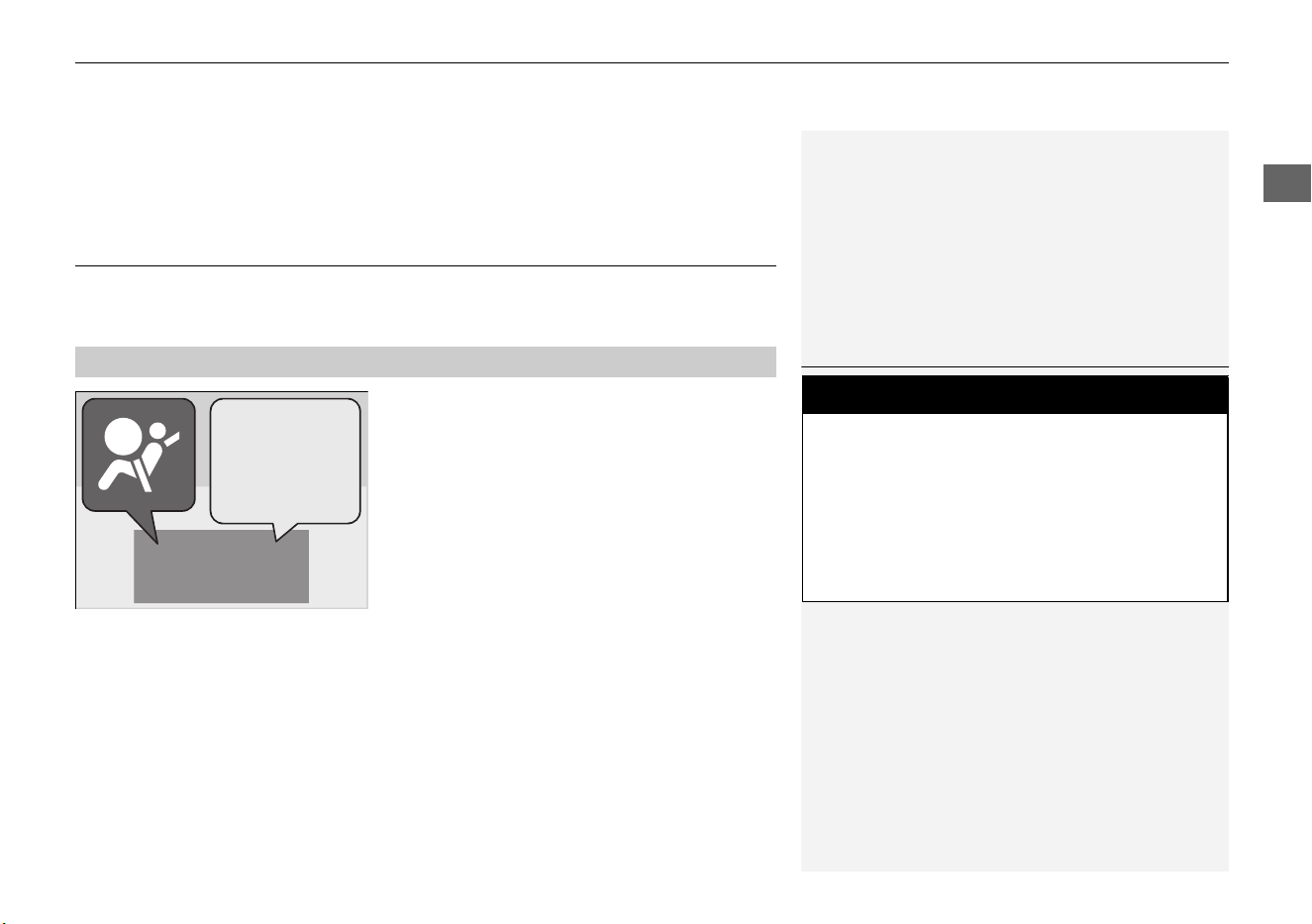
Continued
69
uuAirbagsuAirbag System Indicators
Safe Driving
■
When side curtain airbags deploy in a frontal collision
One or both side curtain airbags may also inflate in a moderate-to-severe angled
frontal collision.
Airbag System Indicators
If a problem occurs in the airbag system, the SRS indicator will come on and a
message appears on the driver information interface.
■
When the power mode is set to ON
The indicator comes on for a few seconds,
then goes off. This tells you the system is
working properly.
If the indicator comes on at any other time, or
does not come on at all, have the system
checked by a dealer as soon as possible. If you
don’t, your airbags and seat belt tensioners
may not work properly when they are needed.
■
Supplemental Restraint System (SRS) Indicator
1Supplemental Restraint System (SRS) Indicator
3
WARNING
Ignoring the SRS indicator can result in
serious injury or death if the airbag systems
or tensioners do not work properly.
Have your vehicle checked by a dealer as
soon as possible if the SRS indicator alerts
you to a possible problem.
26 PILOT-31T906300.book 69 ページ 2025年10月8日 水曜日 午前11時43分
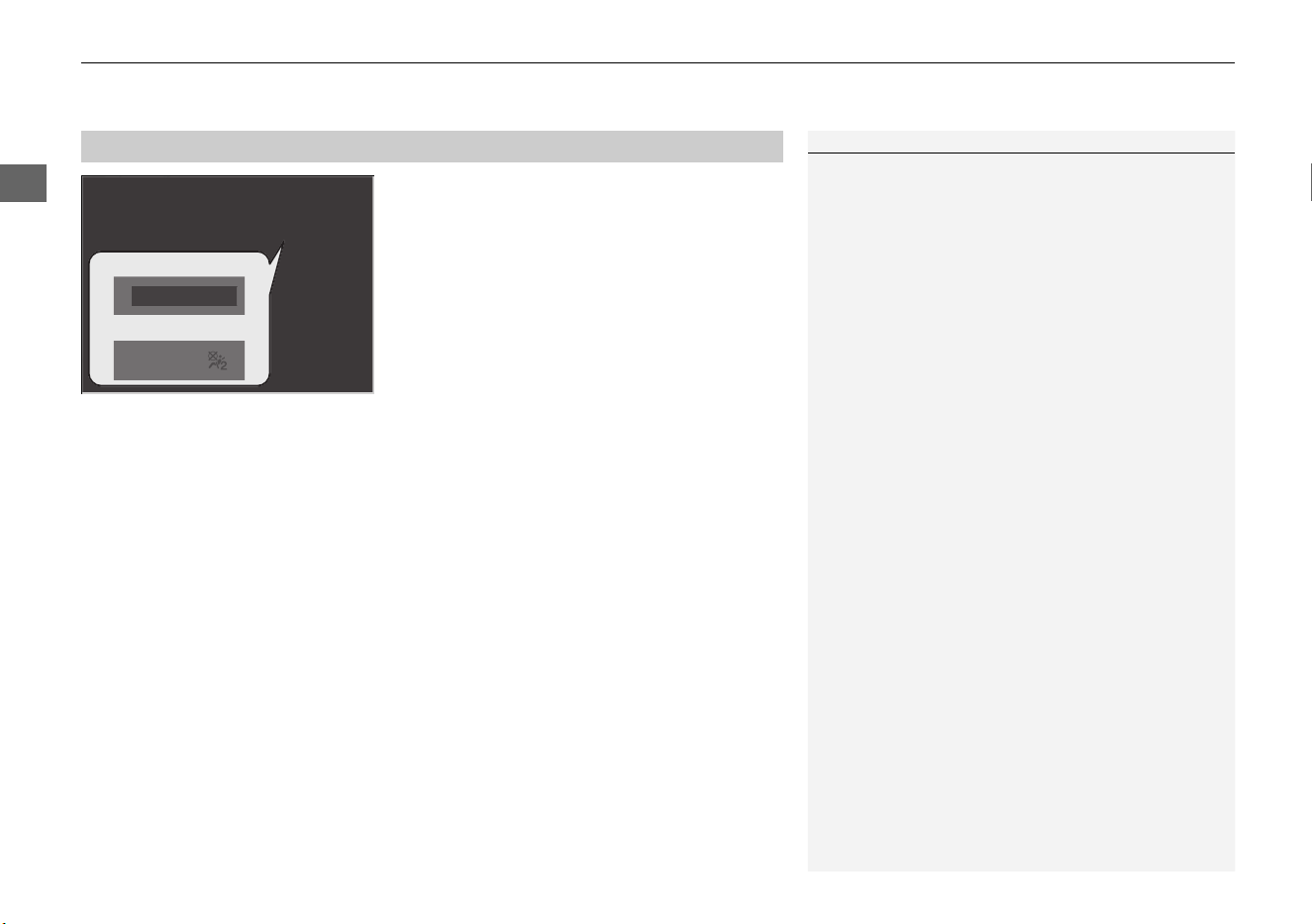
uuAirbagsuAirbag System Indicators
70
Safe Driving
■
When the passenger airbag off
indicator comes on
The indicator comes on to alert you that the
passenger’s airbag has been turned off.
This occurs if the seat is empty or when the
weight sensors determine that a small child or
infant is on the passenger seat.
Children age 12 or under should always ride properly restrained in a back seat.
2 Child Safety P. 74
If the indicator is on, in the event of a crash the passenger’s airbag will not deploy.
The passenger’s knee airbag will not deploy, either.
When you set the power mode to ON, the indicator comes on and goes off a few
seconds later to indicate that system checks are being performed. After that, the
indicator comes on or off depending on the passenger’s occupant classification.
■
Passenger Airbag Off Indicator
1Passenger Airbag Off Indicator
To ensure the passenger is detected properly, confirm
that:
• The occupant is sitting in an upright position
wearing the seat belt properly and the seat-back is
not excessively reclined.
• The occupant is not leaning against the door or
center console.
• The occupant’s feet are placed on the floor in front
of them.
• There are no objects hanging from the front
passenger’s seat.
• Only small, lightweight objects are in the seat-back
pocket.
• No liquid has been spilled on or under the seat.
• There is no child seat or other object pressing
against the rear of the seat or seat-back.
• There is no rear passenger pushing or pulling on
the back of the front passenger’s seat.
• There are no objects placed under or beside the
front passenger’s seat. Improperly positioned
objects can interfere with the advanced airbag
sensors.
• The floor mat behind the front passenger’s seat is
hooked to the floor mat anchor. An improperly
placed mat can interfere with the advanced airbag
sensors.
• The head restraint is not contacting the roof.
U.S.
Canada
26 PILOT-31T906300.book 70 ページ 2025年10月8日 水曜日 午前11時43分
71
uuAirbagsuAirbag System Indicators
Safe Driving
1Passenger Airbag Off Indicator
The passenger airbag off indicator may come on and
go off periodically if the total weight on the seat is
near the airbag cutoff threshold. For a small adult,
depending on physique and posture, the system may
not recognize him/her as an adult and thus deactivate
the passenger’s airbag.
If this occurs, please confirm that the conditions set
forth in the above bullet points on the previous page
are met.
If the above conditions are met and the indicator is
still on, then with the transmission in
(P, set the
power mode to OFF and back to ON.
Have your vehicle checked by a dealer as soon as
possible if:
• All of the above conditions are met, and the
indicator comes on with an adult seated in the
front passenger seat.
• The seat is empty and the indicator is off.
• The indicator does not come on and go off after
setting the power mode to ON as described.
Do not allow an adult passenger to ride in the front
seat when the indicator is on.
26 PILOT-31T906300.book 71 ページ 2025年10月8日 水曜日 午前11時43分
72
uuAirbagsuAirbag Care
Safe Driving
Airbag Care
You do not need to, and should not, perform any maintenance on or replace any
airbag system components yourself. However, you should have your vehicle
inspected by a dealer in the following situations:
■
When the airbags have deployed
If an airbag has inflated, the control unit and other related parts must be replaced.
Similarly, once an automatic seat belt tensioner has been activated, it must be
replaced.
■
When the vehicle has been in a moderate-to-severe collision
Even if the airbags did not inflate, have your dealer inspect the following: the driver’s
seat position sensor, weight sensors in the passenger’s seat, seat belt tensioners for
the front seats and second row outer seats, and each seat belt that was worn during
the crash.
■
Do not remove or modify a front seat without consulting a dealer
This would likely disable or affect the proper operation of the driver’s seat position
sensor or the weight sensors in the passenger’s seat. If it is necessary to remove or
modify a front seat to accommodate a person with disabilities, contact a Honda
dealer. For U.S. vehicles, contact American Honda Automobile Customer Service at
1-800-999-1009. For Canadian vehicles, contact Honda Canada Customer Relations
at 1-888-9-HONDA-9.
1Airbag Care
We recommend against the use of salvaged airbag
system components, including the airbag, tensioners,
sensors, and control unit.
26 PILOT-31T906300.book 72 ページ 2025年10月8日 水曜日 午前11時43分
73
Safe Driving
Post-Collision Braking System
About the Post-Collision Braking System
When the airbag system is activated after a collision is detected, this system
simultaneously applies the brakes and limits propulsion to reduce damage from a
secondary collision.
The Post-Collision Braking System activates when the airbag system or automatic
seat belt tensioners activate due to a frontal collision or side impact.
However, it will not activate if components of the system are damaged.
After the Post-Collision Braking System is activated, the system will be canceled if
either of the following conditions is met.
• The vehicle is stopped.
• You depress the accelerator pedal after releasing it.
■
Conditions for activation
■
Conditions for cancellation
1About the Post-Collision Braking System
This system may not be able to reduce damage from
secondary collisions in all situations.
Its effectiveness depends on the circumstances of the
collision.
When a collision occurs, check your surroundings and
carefully operate your vehicle as needed to park in a
safe place.
26 PILOT-31T906300.book 73 ページ 2025年10月8日 水曜日 午前11時43分
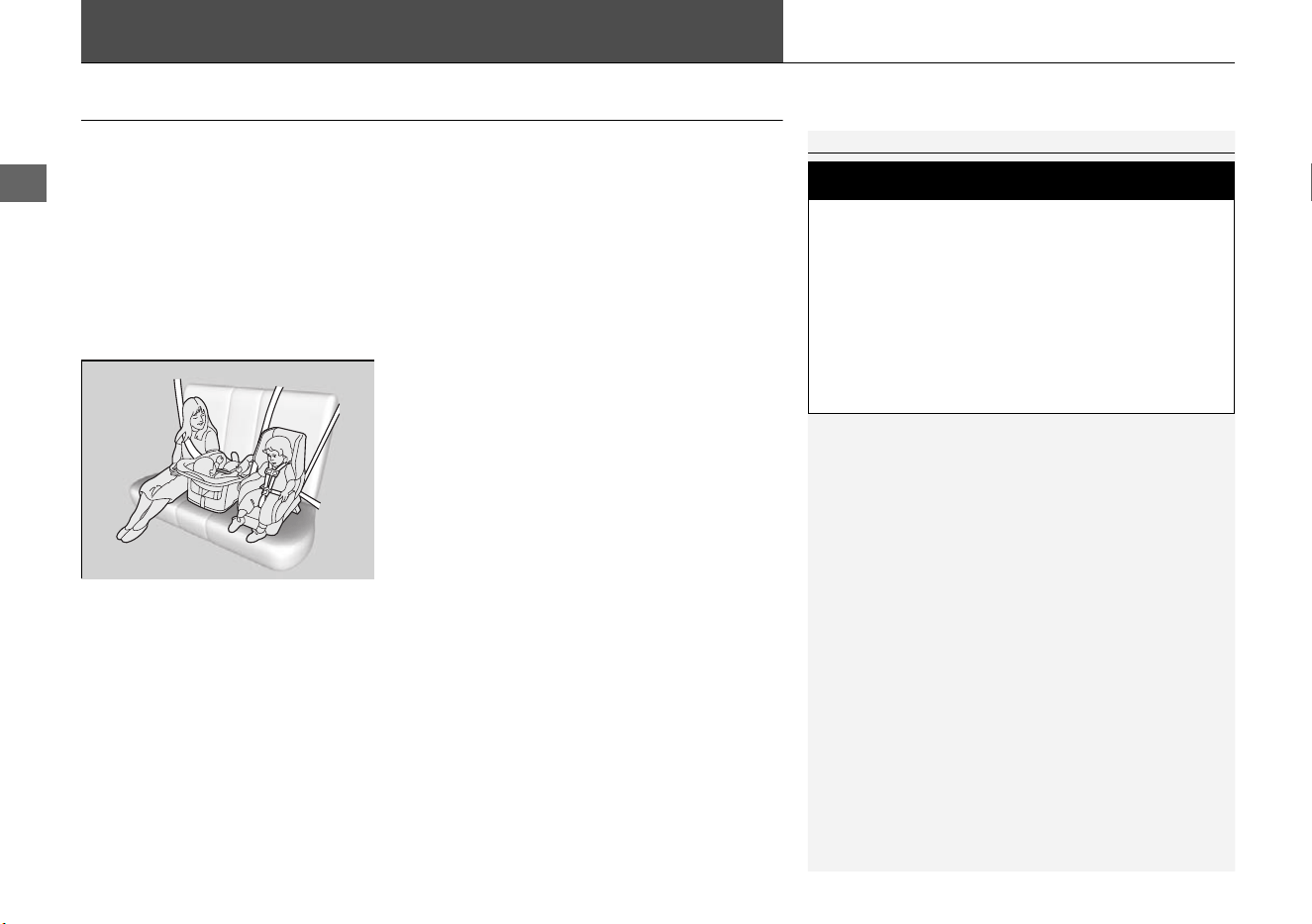
74
Safe Driving
Child Safety
Protecting Child Passengers
Each year, many children are injured or killed in vehicle crashes because they are
either unrestrained or not properly restrained. In fact, vehicle crashes are the
number one cause of death of children ages 12 and under.
To reduce the number of child deaths and injuries, every state and Canadian
province and territory requires that infants and children be properly restrained when
they ride in a vehicle.
Children should sit properly restrained in a rear seat. This is because:
• An inflating front airbag can injure or kill a
child sitting in the front seat.
• A child in the front seat is more likely to
interfere with the driver’s ability to safely
control the vehicle.
• Statistics show that children of all sizes and
ages are safer when they are properly
restrained in a rear seat.
1Protecting Child Passengers
The National Highway Traffic Safety Administration
and Transport Canada recommend that all children
ages 12 and under be properly restrained in a rear
seat. Some states or provinces/territories have laws
restricting where children may ride.
3
WARNING
Children who are unrestrained or
improperly restrained can be seriously
injured or killed in a crash.
Any child too small for a seat belt should be
properly restrained in a child seat. A larger
child should be properly restrained with a
seat belt, using a booster seat if necessary.
26 PILOT-31T906300.book 74 ページ 2025年10月8日 水曜日 午前11時43分
75
uuChild SafetyuProtecting Child Passengers
Safe Driving
• Never hold a child on your lap because it is impossible to protect them in the
event of a collision.
• Never put a seat belt over yourself and a child. During a crash, the belt would
likely press deep into the child and cause serious or fatal injuries.
• Never let two children use the same seat belt. Both children could be very
seriously injured in a crash.
• Any child who is too small to wear a seat belt correctly must be restrained in an
approved child seat that is properly secured to the vehicle using either the seat
belt or the lower anchors of the LATCH system.
• Do not allow children to operate the doors, windows, or seat adjustments.
• Do not leave children in the vehicle unattended, especially in hot weather when
the inside of the vehicle can get hot enough to kill them. They could also activate
vehicle controls, causing it to move unexpectedly.
1Protecting Child Passengers
To deactivate a lockable retractor, release the buckle
and allow the seat belt to wind up all the way.
To remind you of the passenger’s front airbag
hazards and child safety, your vehicle has warning
labels on the dashboard (U.S. models) and on the
front visors. Please read and follow the instructions
on these labels.
2 Safety Labels P. 93
3
WARNING
Allowing a child to play with a seat belt or
wrap one around their neck can result in
serious injury or death.
Instruct children not to play with any seat
belt and make sure any unused seat belt a
child can reach is buckled, fully retracted,
and locked.
26 PILOT-31T906300.book 75 ページ 2025年10月8日 水曜日 午前11時43分
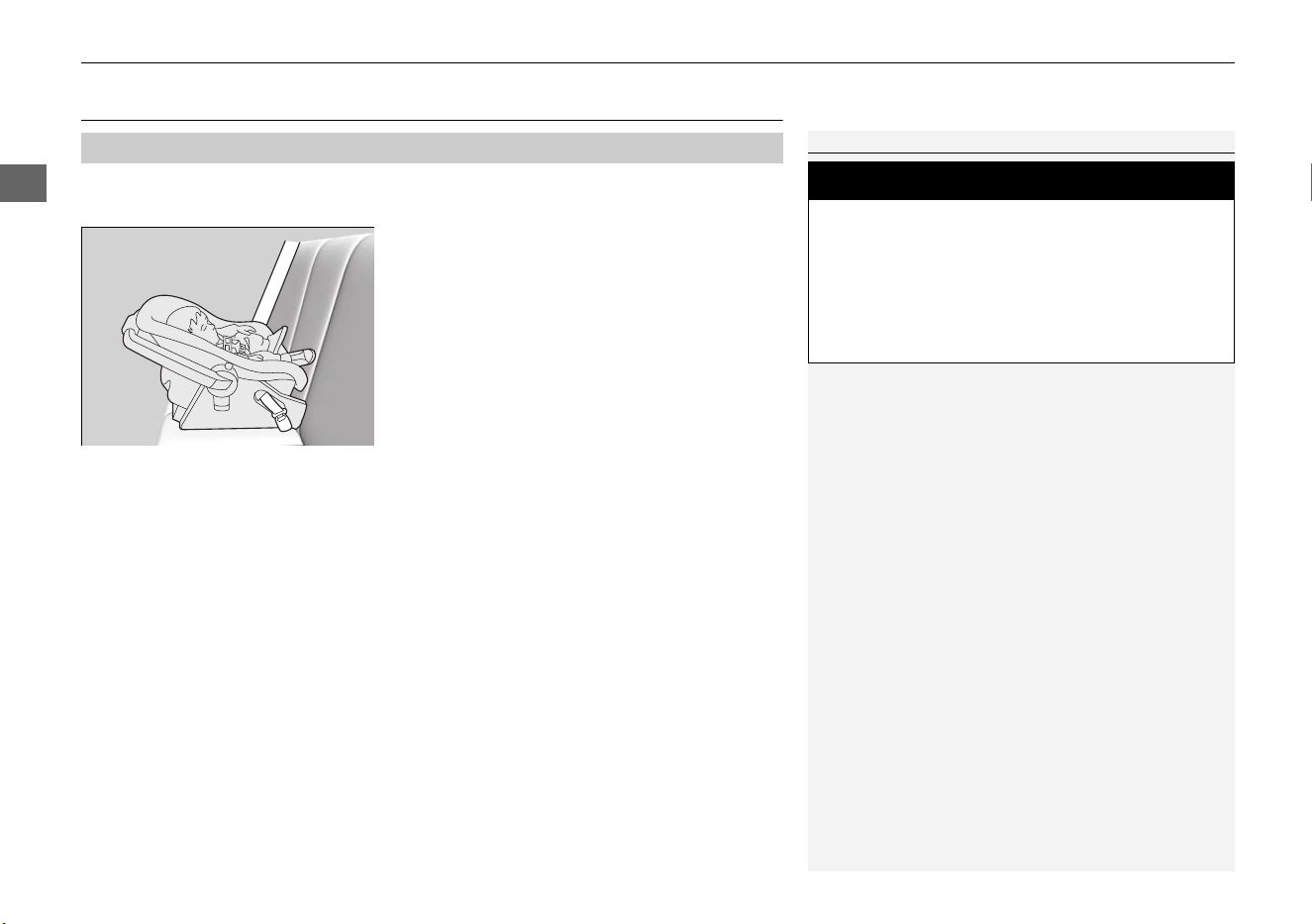
76
uuChild SafetyuSafety of Infants and Small Children
Safe Driving
Safety of Infants and Small Children
An infant must be properly restrained in a rear-facing child seat until the infant
reaches the seat manufacturer’s weight or height limit for the seat.
■
Positioning a rear-facing child seat
Child seats must be placed and secured in a
rear seating position.
When properly installed, a rear-facing child seat may prevent the driver or a front
passenger from moving their seat all the way back, or from locking their seat-back
in the desired position. Make sure that there is no contact between the child seat
and the seat in front of it.
It can also interfere with proper operation of the passenger’s advanced front airbag
system.
2 Airbags P. 55
If this occurs, we recommend that you install the child seat directly behind the front
passenger’s seat, move the seat as far forward as needed, and leave it unoccupied.
Or, you may wish to get a smaller rear-facing child seat.
■
Protecting Infants
1Protecting Infants
Experts recommend use of a rear-facing seat for a
child so long as the child’s height and weight are
appropriate for a rear-facing seat.
Infants should never be seated in a forward-facing
position.
Always refer to the child seat manufacturer’s
instructions before installation.
Do not allow a front seat to rest against a child seat
installed in a rear seating position.
The weight sensor in the front seat may not correctly
detect the actual weight of the occupant.
3
WARNING
Placing a rear-facing child seat in the front
seat can result in serious injury or death
during a crash.
Always place a rear-facing child seat in the
rear seat, not the front.
26 PILOT-31T906300.book 76 ページ 2025年10月8日 水曜日 午前11時43分
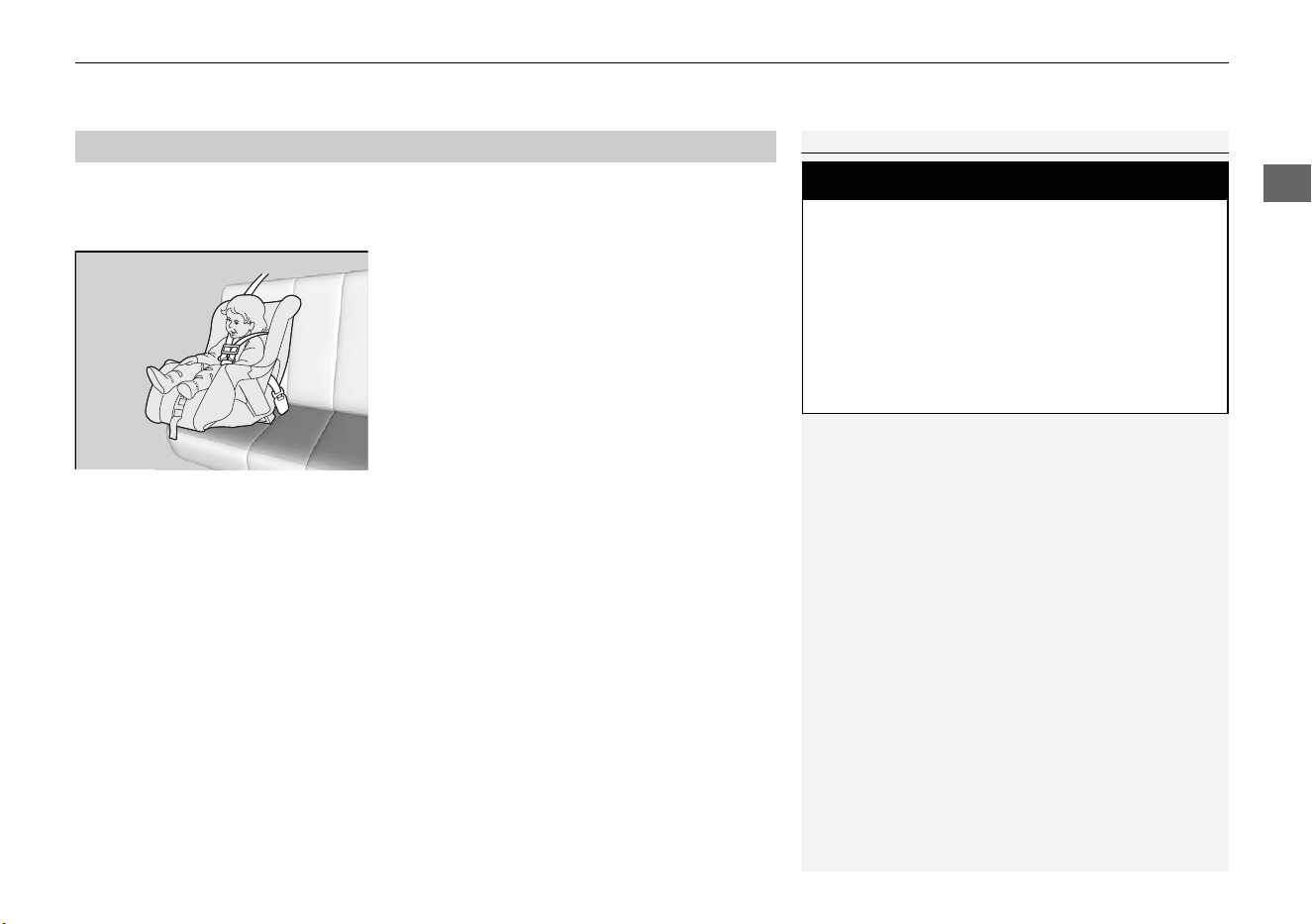
Continued
77
uuChild SafetyuSafety of Infants and Small Children
Safe Driving
If a child has exceeded the weight and height limitations of a rear-facing child seat,
the child should be properly restrained in a firmly secured forward-facing child seat
until they exceed the weight and height limitations for the forward-facing child seat.
■
Forward-facing child seat placement
We strongly recommend placing a forward-
facing child seat in a rear seating position.
Placing a forward-facing child seat in the front seat can be hazardous, even with
advanced front airbags that automatically turn the passenger’s front airbag off. A
rear seat is the safest place for a child.
■
Protecting Smaller Children
1Protecting Smaller Children
Educate yourself about the laws and regulations
regarding child seat use where you are driving, and
follow the child seat manufacturer’s instructions.
3
WARNING
Placing a forward-facing child seat in the
front seat can result in serious injury or
death if the front airbag inflates.
If you must place a forward-facing child
seat in front, move the vehicle seat as far
back as possible, and properly restrain the
child.
26 PILOT-31T906300.book 77 ページ 2025年10月8日 水曜日 午前11時43分
uuChild SafetyuSafety of Infants and Small Children
78
Safe Driving
Most child seats are LATCH-compatible (Lower Anchors and Tethers for Children).
Some have a rigid-type connector while others have a flexible-type connector. Both
are equally easy to use. Some existing and previously owned child seats can only be
installed using the seat belt. Whichever type you choose, follow the child seat
manufacturer’s use and care instructions including recommended expiration dates
as well as the instructions in this manual. Proper installation is key to maximizing
your child’s safety.
In seating positions and vehicles not equipped with LATCH, a LATCH-compatible
child seat can be installed using the seat belt and a top tether for added security.
This is because all child seats are required to be designed so that they can be secured
with a lap belt or the lap part of a lap/shoulder belt. In addition, the child seat
manufacturer may advise that a seat belt be used to attach a LATCH-compatible seat
once a child reaches a specified weight. Please read the child seat owner’s manual
for proper installation instructions.
■
Important consideration when selecting a child seat
Make sure the child seat meets the following three requirements:
• The child seat is the correct type and size for the child.
• The child seat is the correct type for the seating position.
• The child seat is compliant with Federal Motor Vehicle Safety Standard 213 or
Canadian Motor Vehicle Safety Standard 213.
■
Selecting a Child Seat
1Selecting a Child Seat
Installation of a LATCH-compatible child seat is
simple.
LATCH-compatible child seats have been developed
to simplify the installation process and reduce the
likelihood of injuries caused by incorrect installation.
26 PILOT-31T906300.book 78 ページ 2025年10月8日 水曜日 午前11時43分
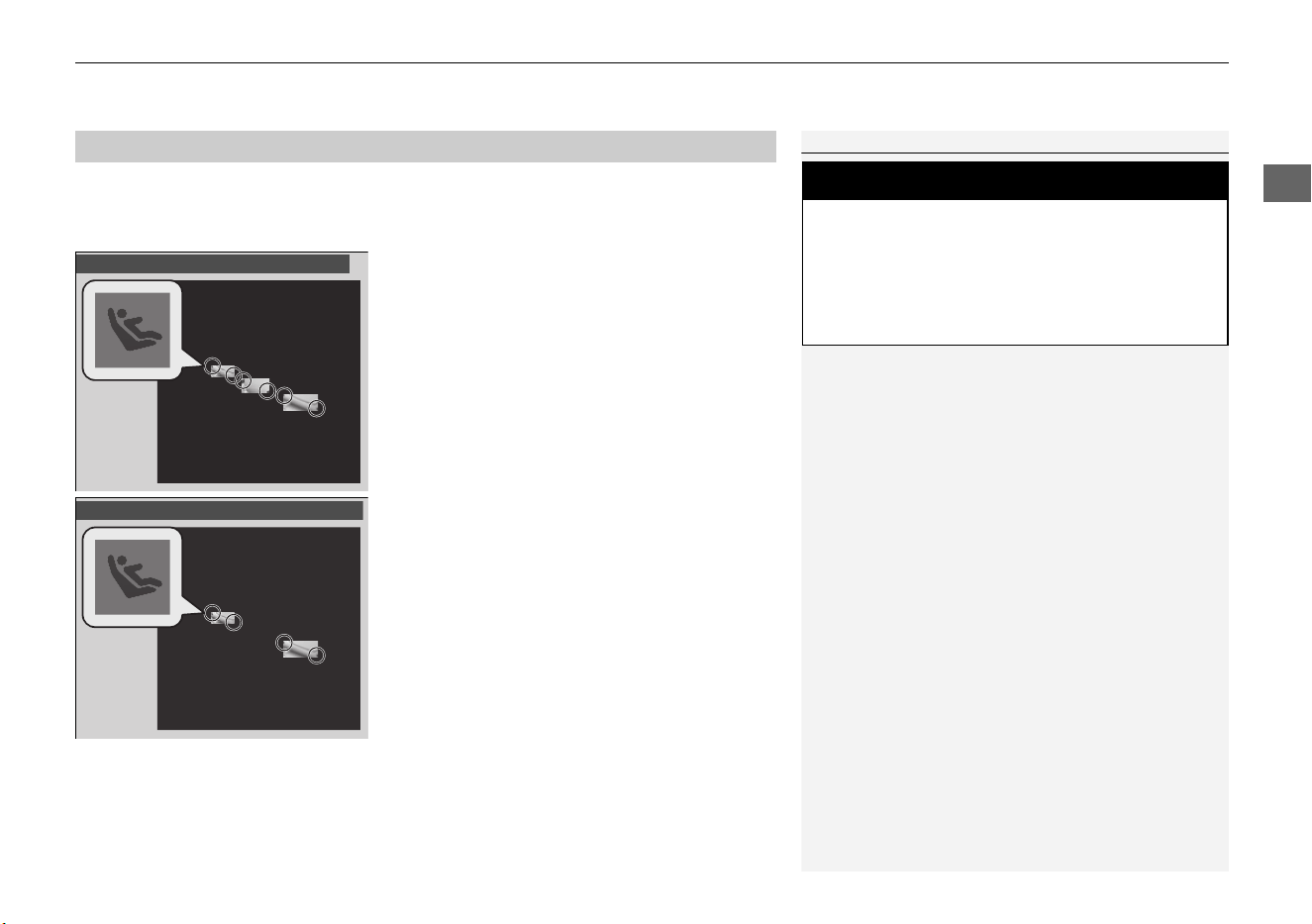
Continued
79
uuChild SafetyuSafety of Infants and Small Children
Safe Driving
A LATCH-compatible child seat can be installed in the marked second and third row
seats. A child seat is attached to the lower anchors with either the rigid or flexible
type of connectors.
1. Locate the lower anchors under the marks.
■
Installing a LATCH-Compatible Child Seat
1Installing a LATCH-Compatible Child Seat
For your child’s safety, when using a child seat
installed using the LATCH system, make sure that the
child seat is properly secured to the vehicle. A child
seat that is not properly secured will not adequately
protect a child in a crash and may cause injury to the
child or other vehicle occupants.
3
WARNING
Never attach two child seats to the same
anchor. In a collision, one anchor may not
be strong enough to hold two child seat
attachments and may break, causing
serious injury or death.
Marks
Models with second row center seat
Marks
Models without second row center seat
26 PILOT-31T906300.book 79 ページ 2025年10月8日 水曜日 午前11時43分
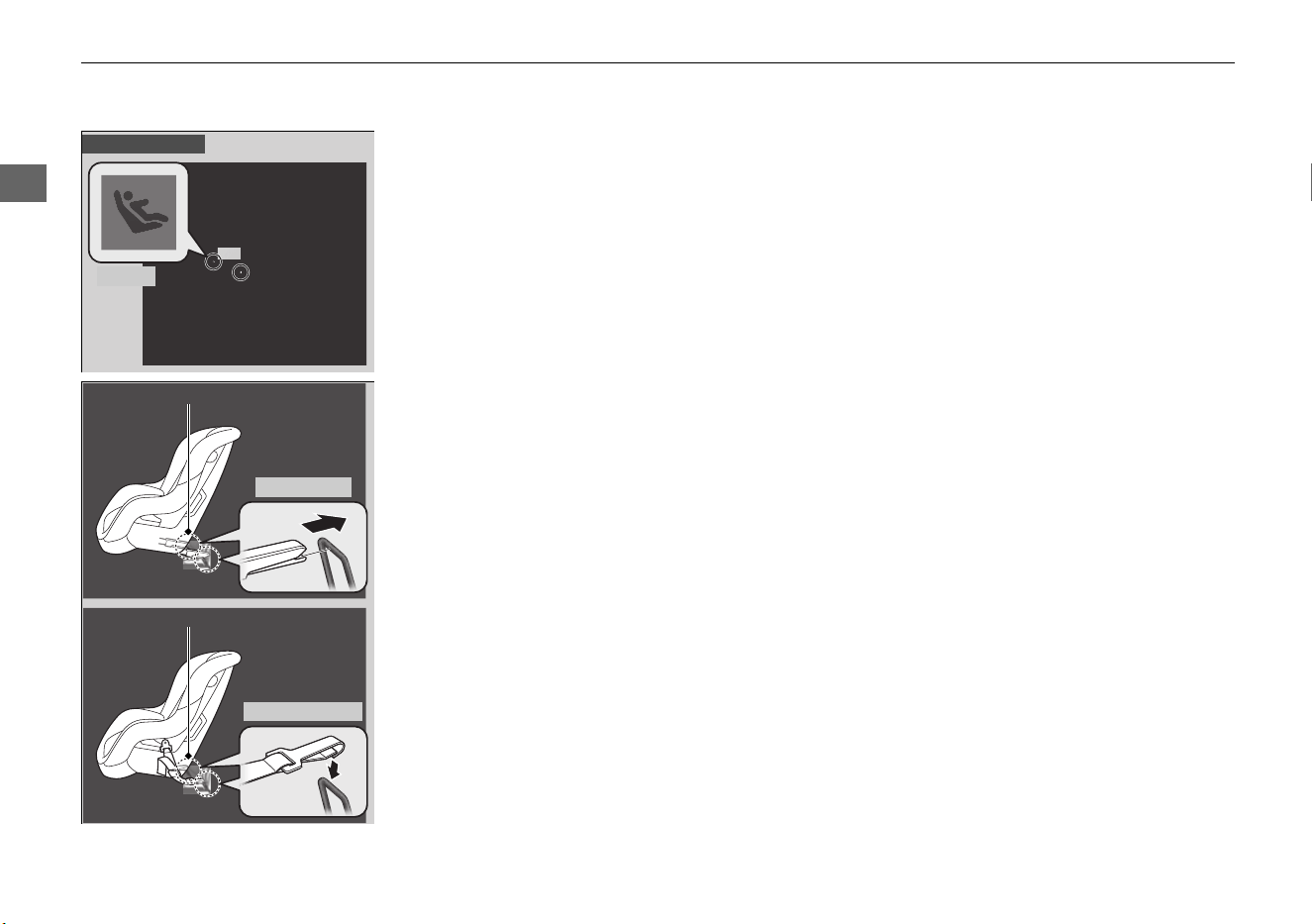
80
uuChild SafetyuSafety of Infants and Small Children
Safe Driving
2. Place the child seat on the vehicle seat, then
attach the child seat to the lower anchors
according to the instructions that came
with the child seat.
u When installing the child seat, make sure
that the lower anchors are not obstructed
by the seat belt or any other object.
u Install the child seat so that the gap
between it and the seat back is as small
as possible.
Marks
Third row seat
Rigid Type
Lower Anchors
Flexible Type
Lower Anchors
26 PILOT-31T906300.book 80 ページ 2025年10月8日 水曜日 午前11時43分
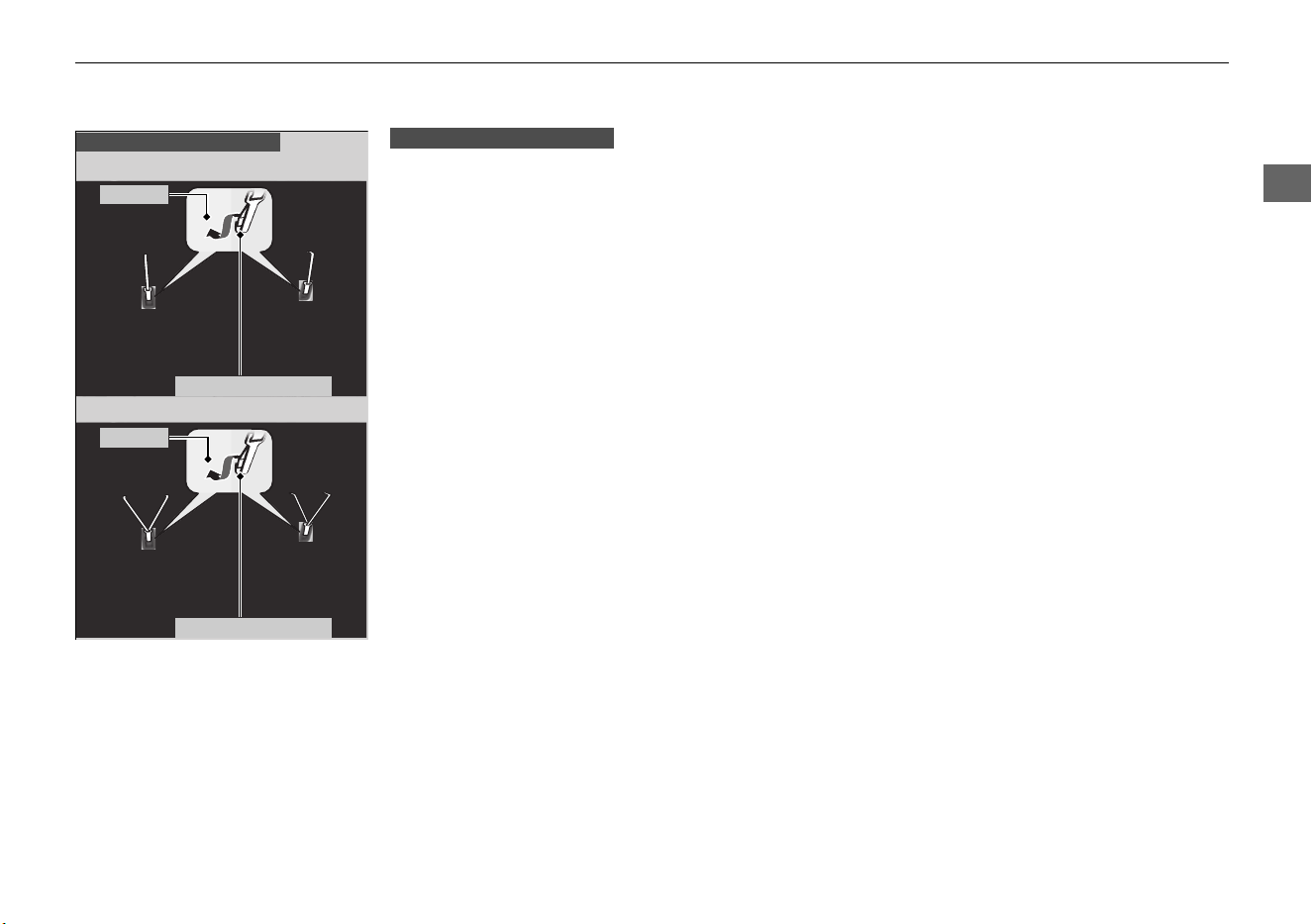
81
uuChild SafetyuSafety of Infants and Small Children
Continued
Safe Driving
3. Raise the outer head restraint to its highest
position, then route the tether strap as
shown in the image, and secure the tether
strap hook to the anchor. Make sure the
strap is not twisted.
4. Once the tether strap has been routed,
secured to the anchor, and tightened, the
head restraint may be lowered to any
position to allow proper child seat fit.
Second row outer position
Straight Top Tether Type
Other Top Tether Type
Anchor
Tether Strap Hook
Anchor
Tether Strap Hook
Second row outer positions
26 PILOT-31T906300.book 81 ページ 2025年10月8日 水曜日 午前11時43分
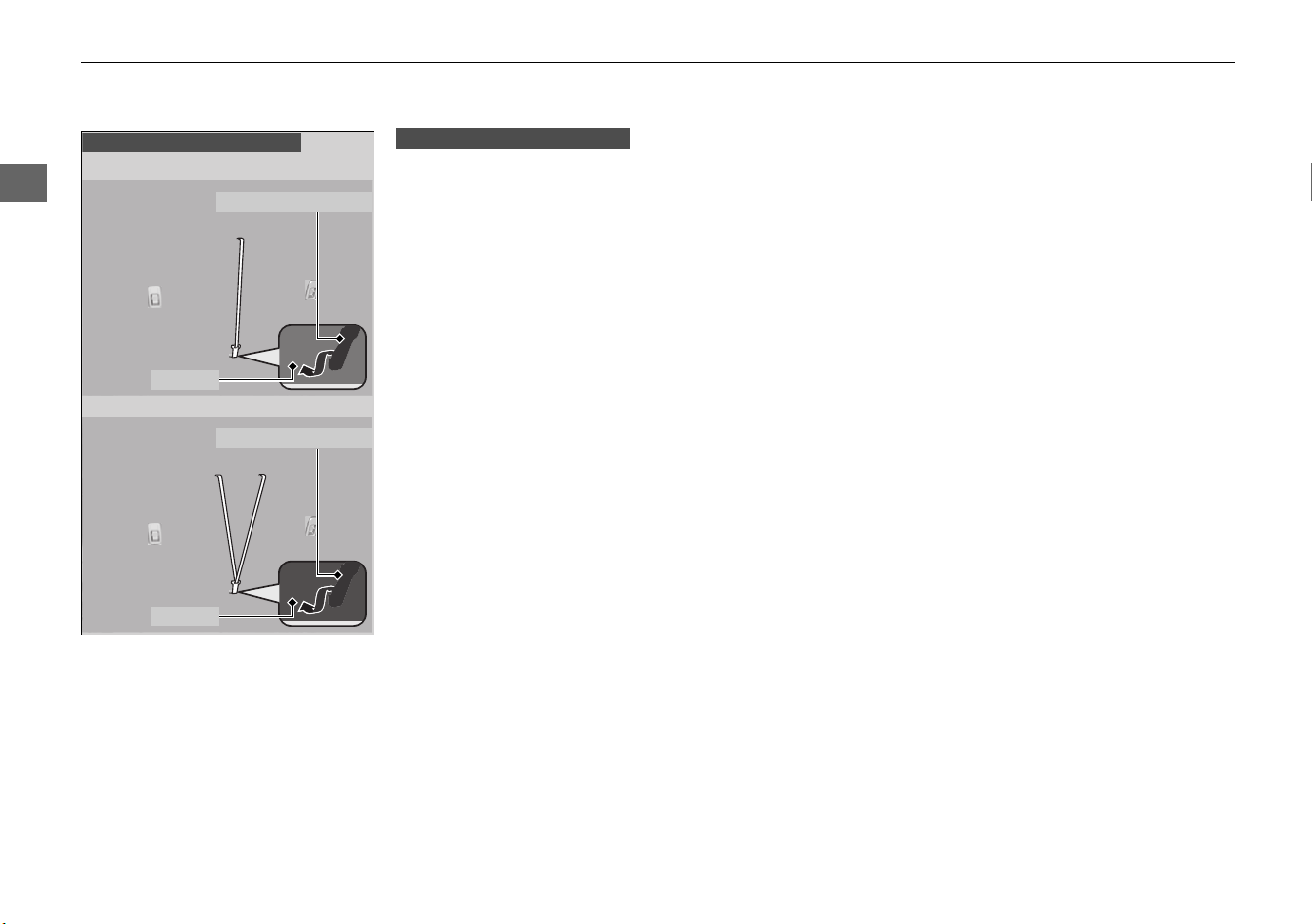
82
uuChild SafetyuSafety of Infants and Small Children
Safe Driving
3. Lower the center head restraint to its lowest
position, then route the tether strap over
the top of the head restraint and secure the
tether strap hook to the anchor. Make sure
the strap is not twisted.
Second row center position
*
Straight Top Tether Type
Other Top Tether Type
Anchor
Tether Strap Hook
Anchor
Tether Strap Hook
Second row center position
*
* Not available on all models
26 PILOT-31T906300.book 82 ページ 2025年10月8日 水曜日 午前11時43分
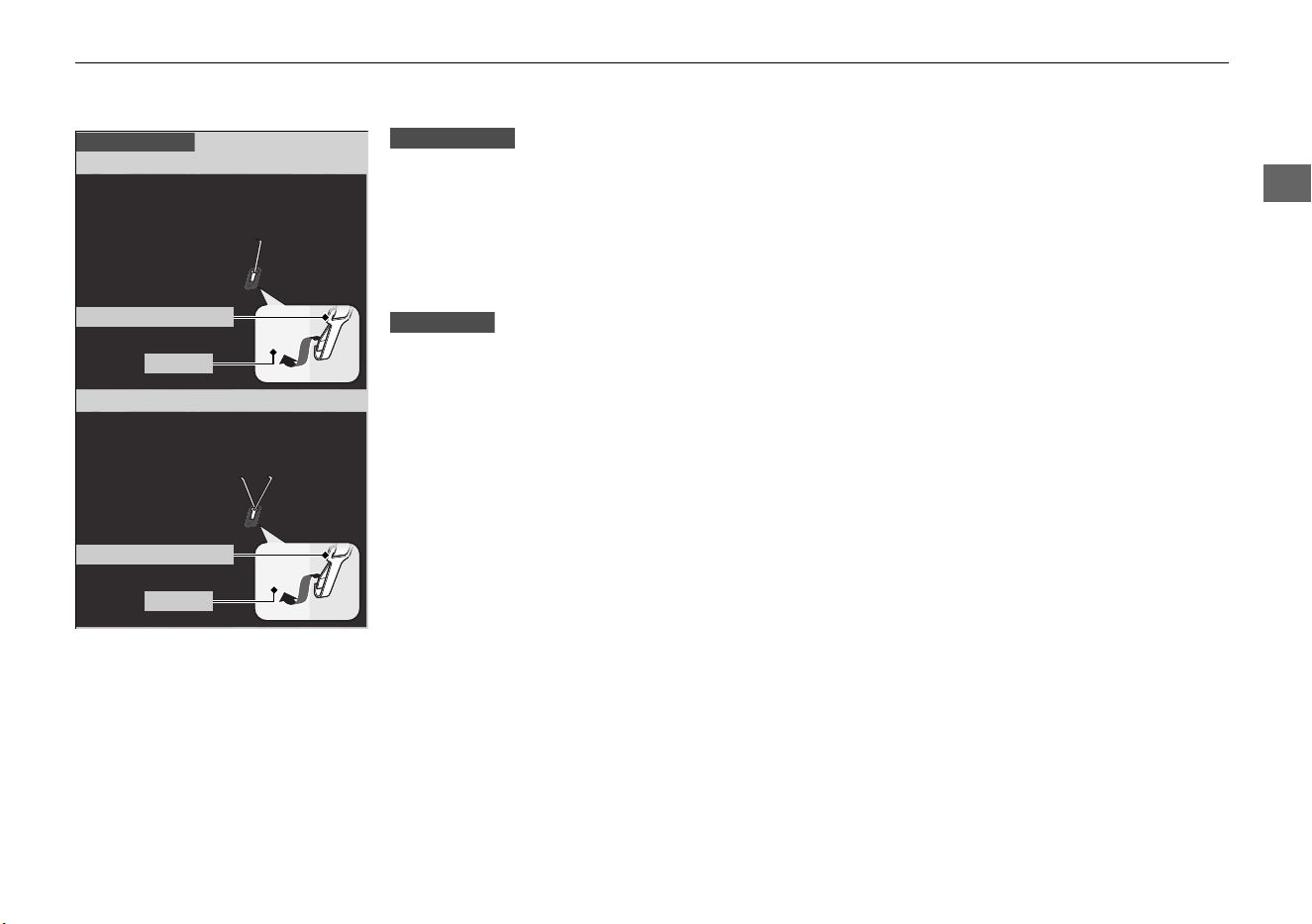
83
uuChild SafetyuSafety of Infants and Small Children
Continued
Safe Driving
3. Pull up the head restraint and push
rearwards until it latches, then route the
tether strap hook between/outside the
head restraint legs, and secure the tether
strap hook onto the anchor.
Make sure the strap is not twisted.
4. Tighten the tether strap as instructed by the
child seat manufacturer.
5. Make sure the child seat is firmly secured by
rocking it forward and back and side to
side; little movement should be felt.
6. Make sure any unused seat belt that a child
can reach is buckled, the lockable retractor
is activated, and the belt is fully retracted
and locked.
2 Protecting Child Passengers P. 74
Third row seat
Straight Top Tether Type
Anchor
Other Top Tether Type
Anchor
Tether Strap Hook
Tether Strap Hook
Third row seat
All positions
26 PILOT-31T906300.book 83 ページ 2025年10月8日 水曜日 午前11時43分
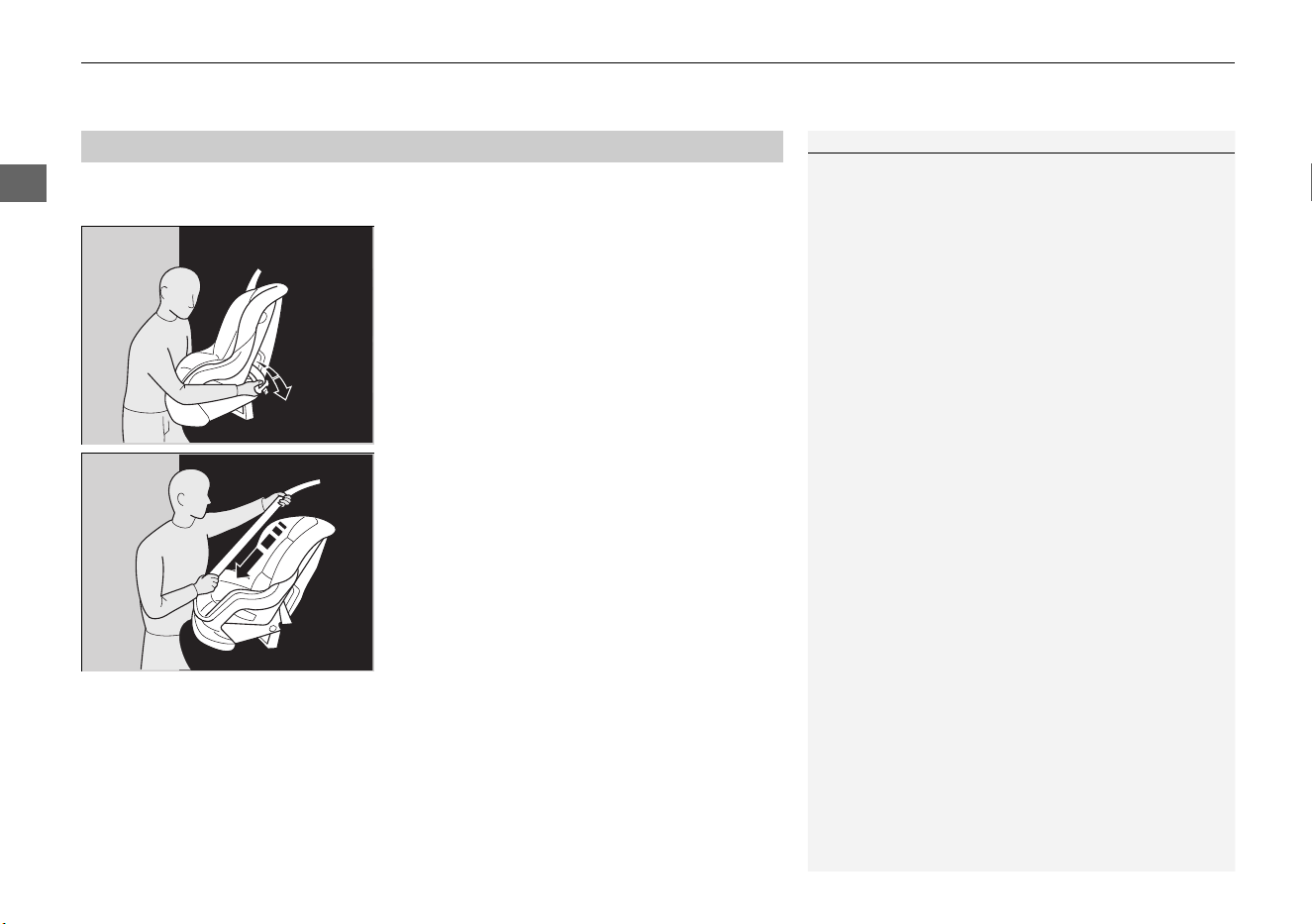
uuChild SafetyuSafety of Infants and Small Children
84
Safe Driving
A child seat can be installed with a lap/shoulder belt in any rear seat or, if absolutely
necessary, the front passenger seat.
1. Place the child seat on the vehicle seat.
2. Route the seat belt through the child seat
according to the seat manufacturer’s
instructions, and insert the latch plate into
the buckle.
u Insert the latch plate fully until it clicks.
3. Slowly pull the shoulder part of the belt all
the way out until it stops. This activates the
lockable retractor.
4. Let the seat belt retract a few inches and
check that the retractor has switched
modes by pulling on the webbing. It should
not pull out again until it is reset by
removing the latch plate from the buckle.
u If you are able to pull the shoulder belt
out, the lockable retractor is not
activated. Slowly pull the seat belt all the
way out, and repeat steps 3 – 4.
■
Installing a Child Seat with a Lap/Shoulder Seat Belt
1Installing a Child Seat with a Lap/Shoulder Seat Belt
A child seat that is not properly secured will not
adequately protect a child in a crash and may cause
injury to the child or other vehicle occupants.
26 PILOT-31T906300.book 84 ページ 2025年10月8日 水曜日 午前11時43分
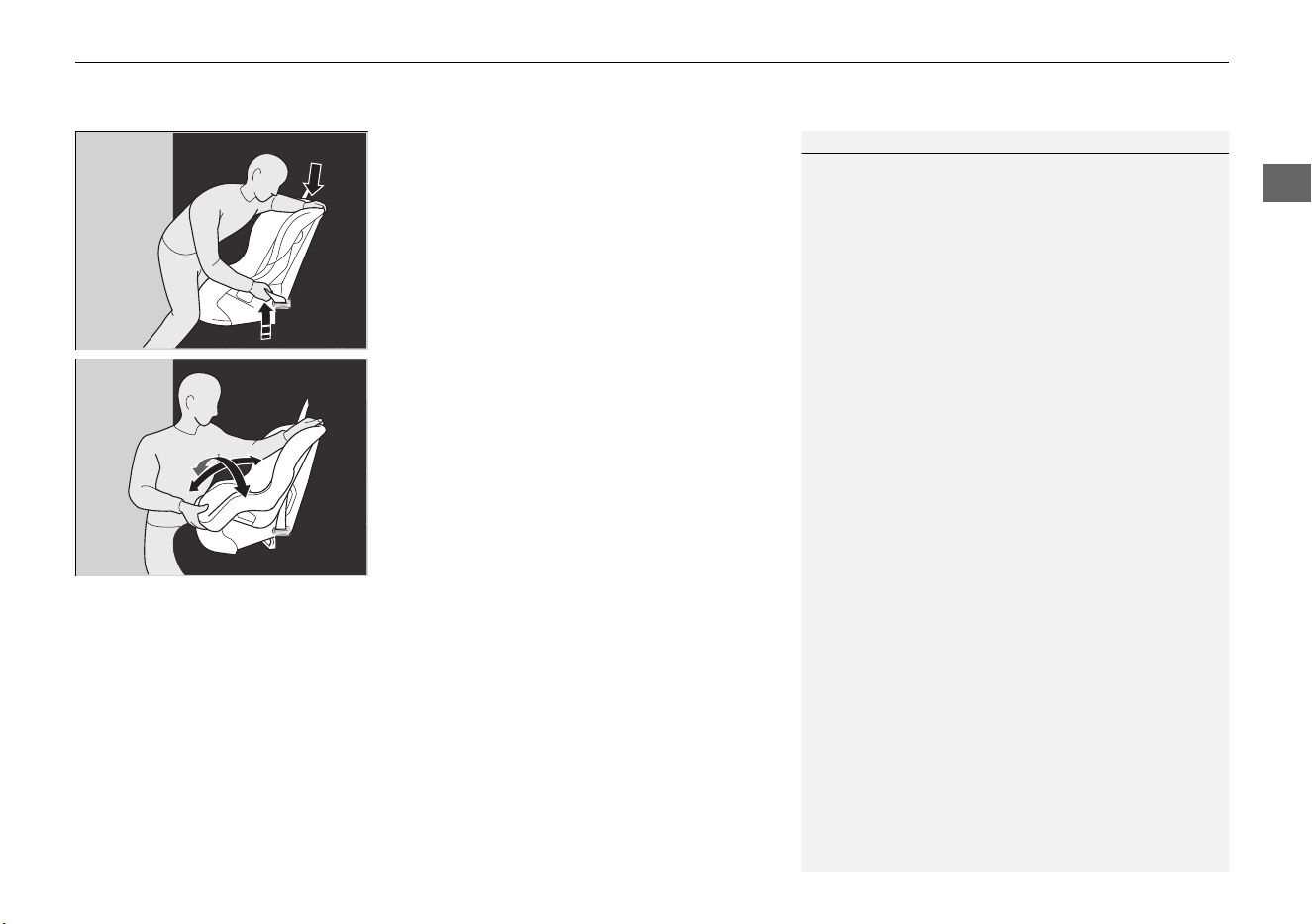
Continued
85
uuChild SafetyuSafety of Infants and Small Children
Safe Driving
5. Grab the shoulder part of the seat belt near
the buckle, and pull up to remove any slack
from the belt.
u Push the child seat firmly into the vehicle
seat while tightening the vehicle seat belt
to remove excess slack.
6. Make sure the child seat is firmly secured by
rocking it forward and back and side to
side; less than one inch of movement
should occur near the seat belt.
7. Make sure any unused seat belt that a child
can reach is buckled, the lockable retractor
is activated, and the belt is fully retracted
and locked.
1Installing a Child Seat with a Lap/Shoulder Seat Belt
To deactivate a lockable retractor, release the buckle
and allow the seat belt to wind up all the way.
26 PILOT-31T906300.book 85 ページ 2025年10月8日 水曜日 午前11時43分
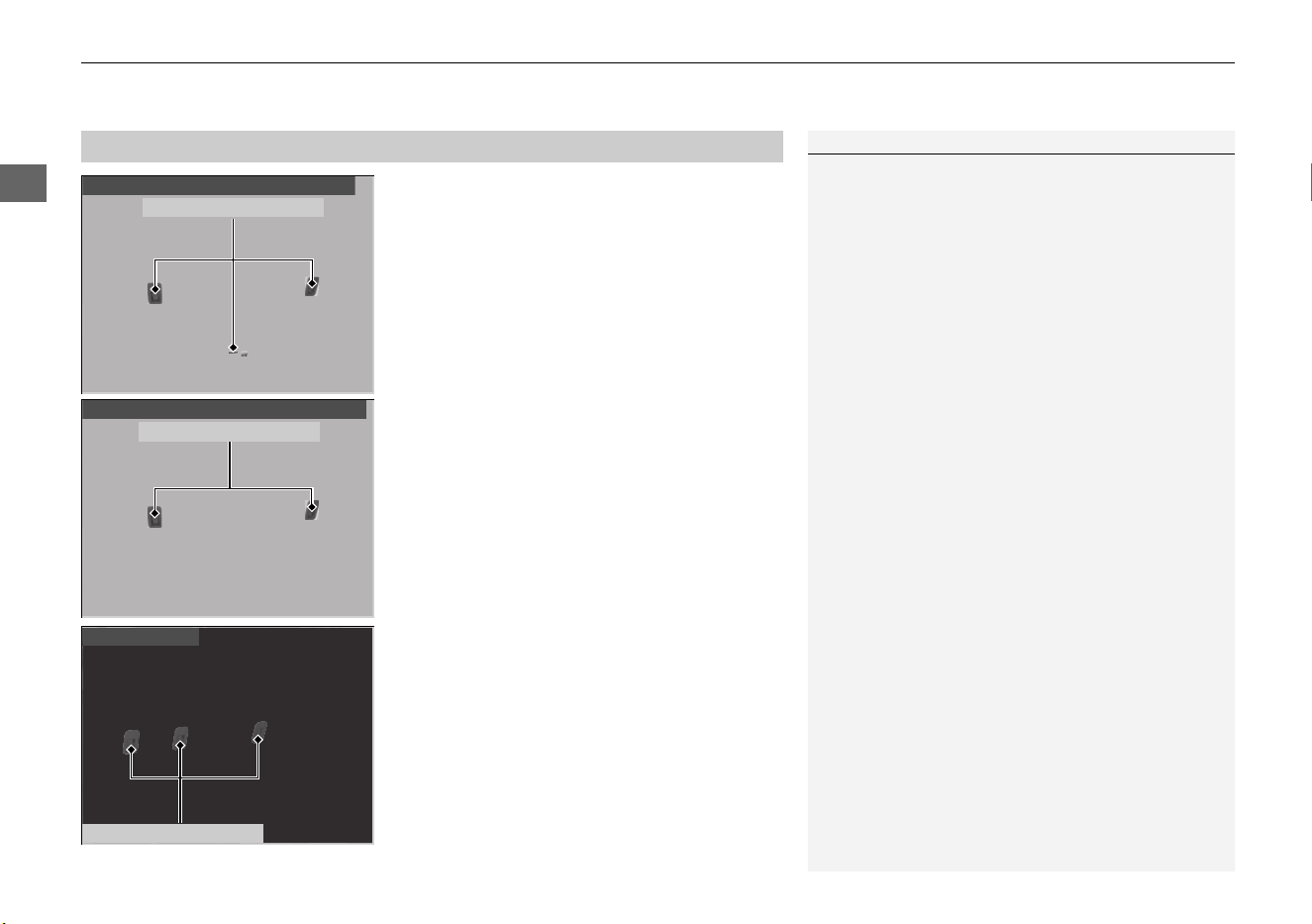
uuChild SafetyuSafety of Infants and Small Children
86
Safe Driving
A tether anchor point is provided behind each
second and third row seating position.
If you have a child seat that comes with a
tether but can be installed with a seat belt, the
tether may be used for additional security.
■
Adding Security with a Tether
Tether Anchor Points
Models with second row center seat
1Adding Security with a Tether
Always use a tether for forward-facing child seats
whether using the seat belt or lower anchors.
Models without second row center seat
Tether Anchor Points
Tether Anchor Points
Third row seat
26 PILOT-31T906300.book 86 ページ 2025年10月8日 水曜日 午前11時43分
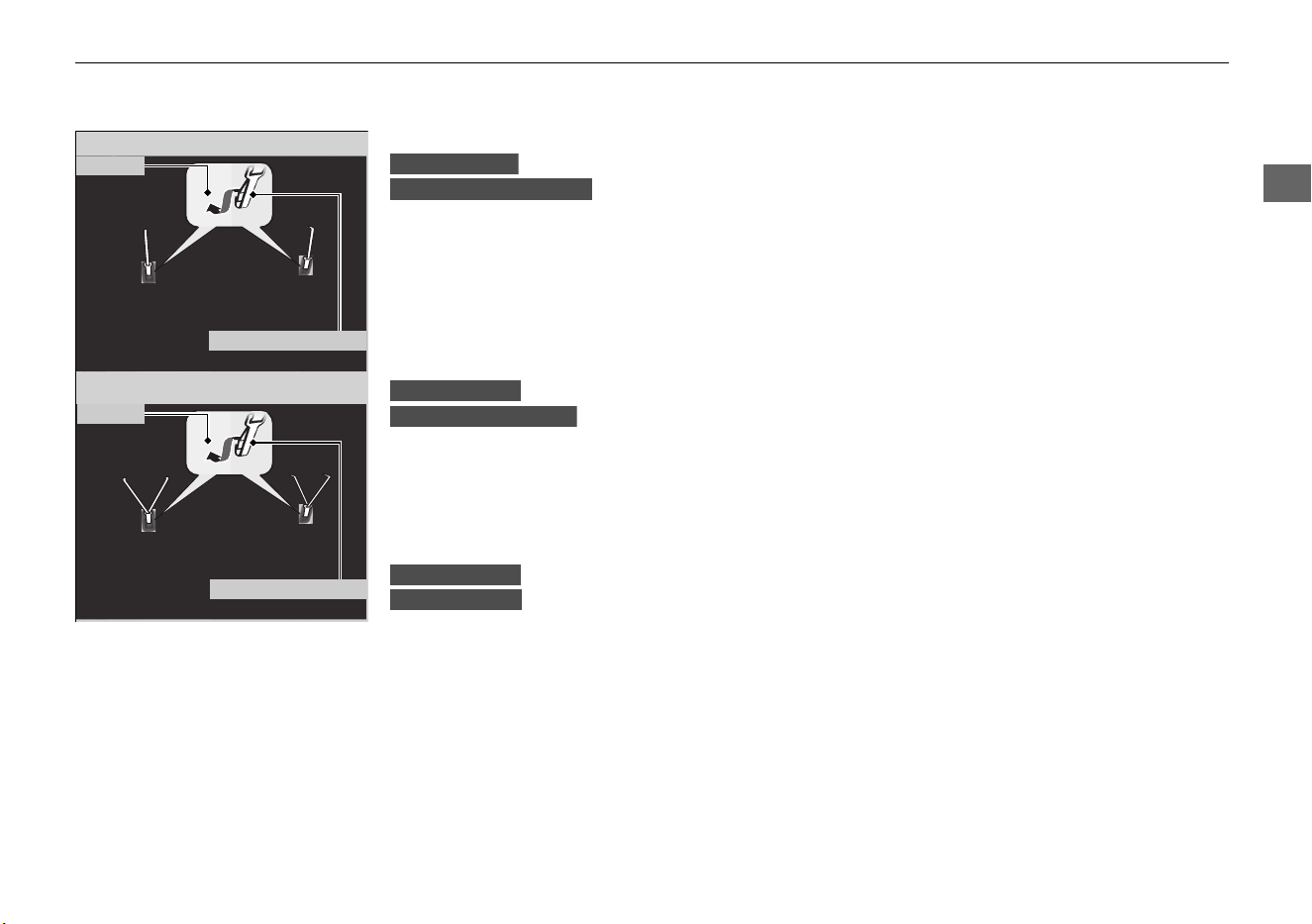
87
uuChild SafetyuSafety of Infants and Small Children
Continued
Safe Driving
■
Using a second row anchor
1. Raise the outer head restraint to its highest
position, then route the tether strap
between the head restraint legs, and secure
the tether strap hook to the anchor. Make
sure the strap is not twisted.
1. Raise the outer head restraint to its highest
position, then route the tether strap outside
the head restraint legs, and secure the
tether strap hook to the anchor. Make sure
the strap is not twisted.
2. Once the tether strap has been routed,
secured to the anchor, and tightened, the
head restraint may be lowered to any
position to allow proper child seat fit.
Tether Strap Hook
Anchor
Straight Top Tether Type
Tether Strap Hook
Anchor
Other Top Tether Type
Outer positions
Straight Top Tether Type
Outer positions
Other Top Tether Type
Outer positions
All Tether Type
26 PILOT-31T906300.book 87 ページ 2025年10月8日 水曜日 午前11時43分
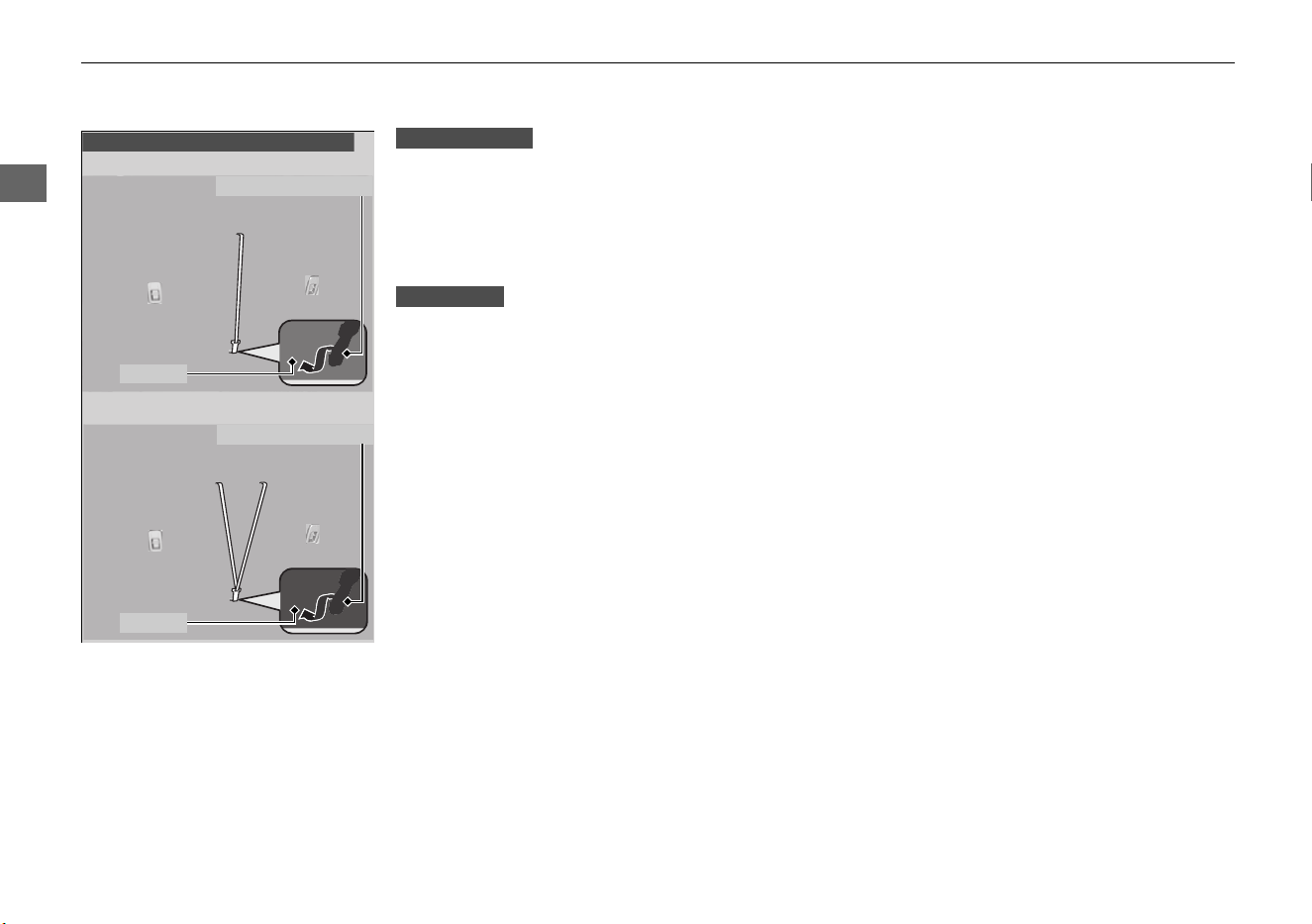
88
uuChild SafetyuSafety of Infants and Small Children
Safe Driving
1. Lower the center head restraint to its lowest
position, then route the tether strap over
the top of the head restraint and secure the
tether strap hook to the anchor. Make sure
the strap is not twisted.
2. Tighten the tether strap as instructed by the
child seat manufacturer.
3. Make sure the child seat is firmly secured by
rocking it forward and back and side to
side; little movement should be felt.
4. Make sure any unused seat belt that a child
can reach is buckled, the lockable retractor
is activated, and the belt is fully retracted
and locked.
2 Protecting Child Passengers P. 74
Straight Top Tether Type
Tether Strap Hook
Anchor
Other Top Tether Type
Tether Strap Hook
Models with second row center seat
Anchor
Center position
*
All positions
* Not available on all models
26 PILOT-31T906300.book 88 ページ 2025年10月8日 水曜日 午前11時43分
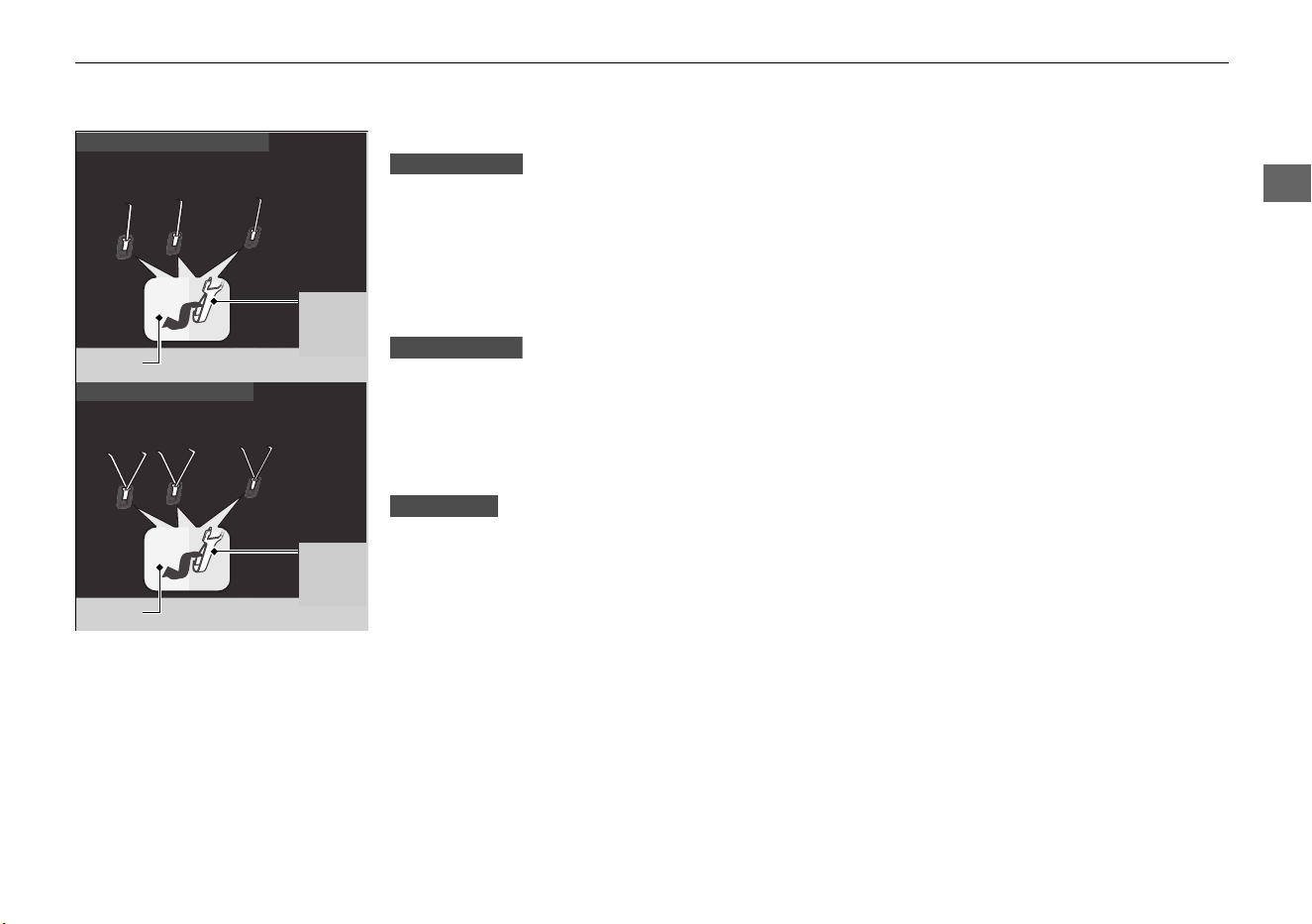
89
uuChild SafetyuSafety of Infants and Small Children
Safe Driving
■
Using a third row anchor
1. Pull up the head restraint and push
rearwards until it latches, then route the
tether strap hook between/outside the
head restraint legs, and secure the tether
strap hook onto the anchor.
Make sure the strap is not twisted.
1. Lower the center head restraint to its lowest
position, then route the tether strap over
the top of the head restraint and secure the
tether strap hook to the anchor.
Make sure the strap is not twisted.
2. Tighten the tether strap as instructed by the
child seat manufacturer.
Tether
Strap
Hook
Anchor
Straight Top Tether Type
Tether
Strap
Hook
Anchor
Other Top Tether Type
Outer positions
Center position
All positions
26 PILOT-31T906300.book 89 ページ 2025年10月8日 水曜日 午前11時43分
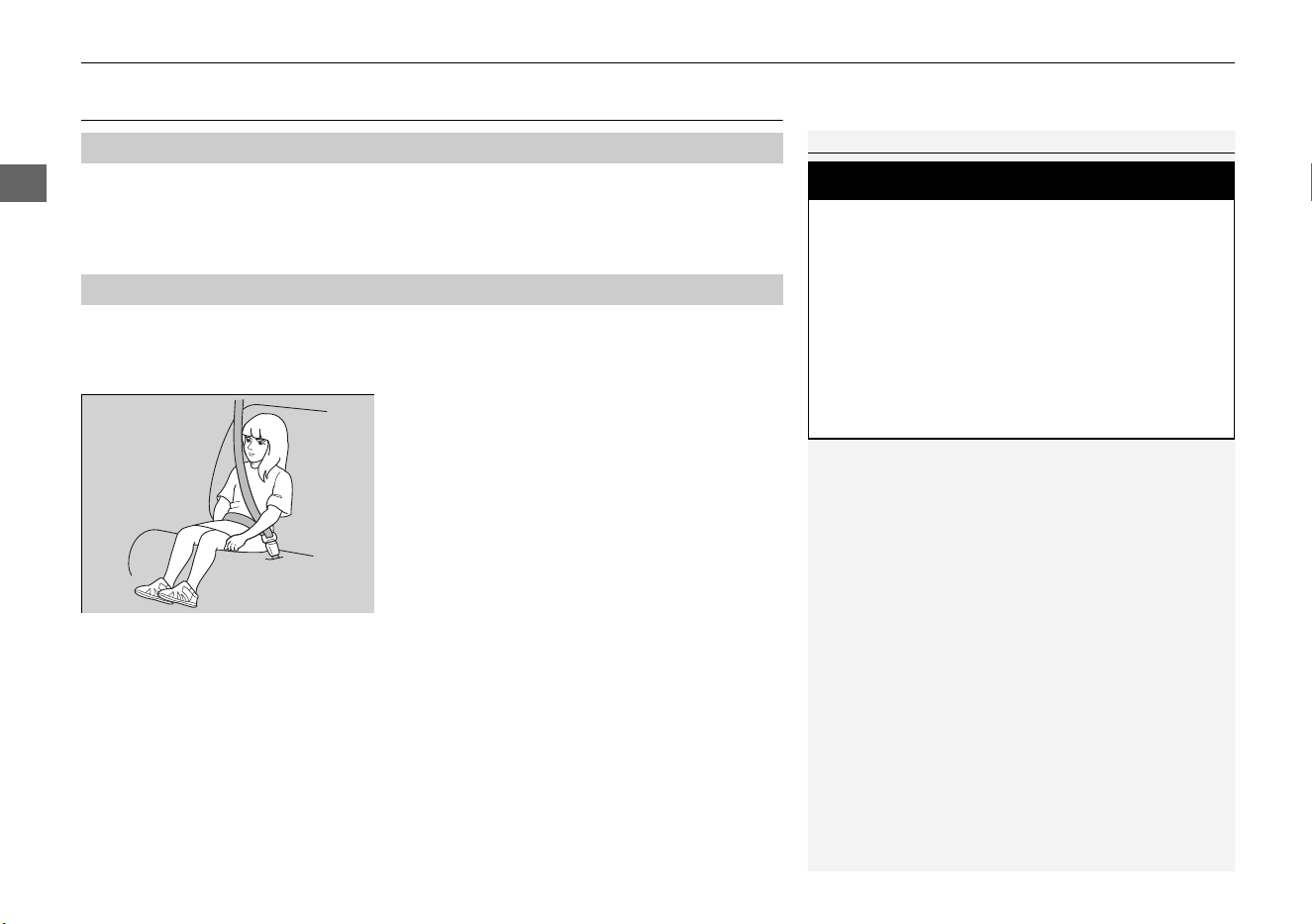
90
uuChild SafetyuSafety of Larger Children
Safe Driving
Safety of Larger Children
The following pages give instructions on how to check proper seat belt fit, what kind
of booster seat to use if one is needed, and important precautions for a child who
must sit in front.
When a child is too big for a child seat, secure the child in a rear seat using the lap/
shoulder seat belt. Have the child sit upright and all the way back, then answer the
following questions.
■
Checklist
• Do the child’s knees bend comfortably over
the edge of the seat?
• Does the shoulder belt cross between the
child’s neck and arm?
• Is the lap part of the seat belt as low as
possible, touching the child’s thighs?
• Will the child be able to stay seated like this
for the whole trip?
If you answer yes to all these questions, the child is ready to wear the lap/shoulder
seat belt correctly. If you answer no to any question, the child needs to ride on a
booster seat until the seat belt fits properly without a booster seat.
■
Protecting Larger Children
■
Checking Seat Belt Fit
1Safety of Larger Children
3
WARNING
Allowing a child age 12 or under to sit in
front can result in injury or death if the
passenger’s front airbag inflates.
If a larger child must ride in front, move the
vehicle seat as far to the rear as possible,
have the child sit up properly and wear the
seat belt properly, and use a booster seat if
needed.
26 PILOT-31T906300.book 90 ページ 2025年10月8日 水曜日 午前11時43分
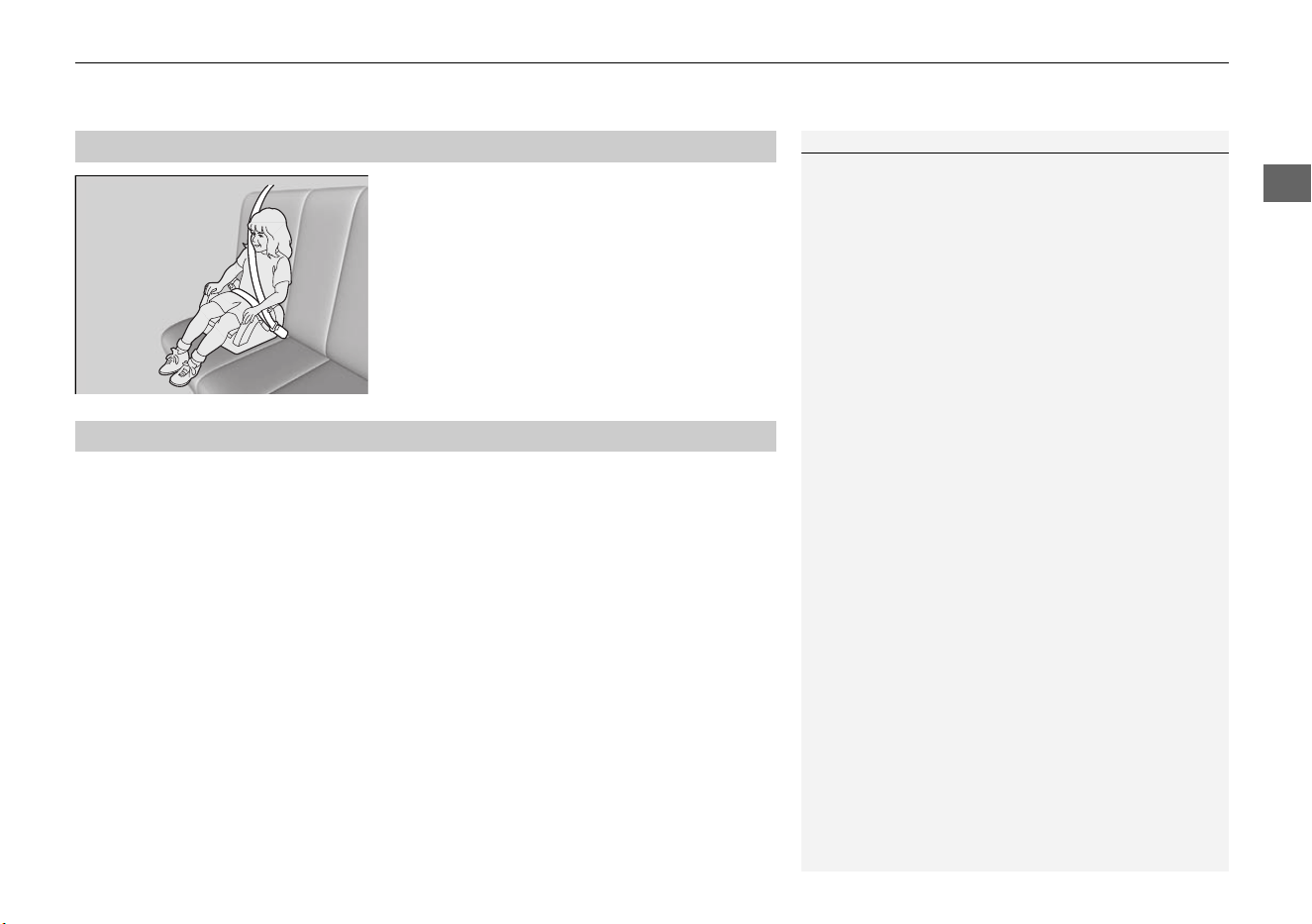
91
uuChild SafetyuSafety of Larger Children
Safe Driving
If a lap/shoulder seat belt cannot be used
properly, position the child in a booster seat in
the rear seat. For the child’s safety, check that
the child meets the booster seat
manufacturer’s recommendations.
Your vehicle has a rear seat where children can be properly restrained. If you ever
have to carry a group of children, and a child must ride in front:
• Make sure you read and fully understand the instructions and safety information
in this manual.
• Move the front passenger seat as far back as possible.
• Have the child sit upright and well back in the seat.
• Check that the seat belt is properly positioned so that the child is secure in the
seat.
■
Monitoring child passengers
We strongly recommend that you keep an eye on child passengers. Even older, more
mature children sometimes need to be reminded to fasten their seat belts and sit up
properly.
■
Booster Seats
1Booster Seats
When installing a booster seat, make sure to read the
instructions that came with it, and install the seat
accordingly.
There are high- and low-type booster seats. Choose a
booster seat that allows the child to wear the seat
belt correctly.
Some U.S. states and Canadian provinces and
territories require children to use a booster seat until
they reach a given age or weight (e.g., 6 years or 60
lbs). Be sure to check current laws in the state,
province, or territory where you intend to drive.
■
Protecting Larger Children - Final Checks
26 PILOT-31T906300.book 91 ページ 2025年10月8日 水曜日 午前11時43分
92
Safe Driving
Exhaust Gas Hazard
Carbon Monoxide Gas
The engine exhaust from this vehicle contains carbon monoxide, a colorless,
odorless, and highly toxic gas. As long as you properly maintain your vehicle, carbon
monoxide gas will not get into the interior.
■
Have the exhaust system inspected for leaks whenever
• The exhaust system is making an unusual noise.
• The exhaust system may have been damaged.
• The vehicle is raised for an oil change.
When you operate a vehicle with the tailgate open, airflow can pull exhaust gas into
the interior and create a hazardous condition. If you must drive with the tailgate
open, open all the windows and set the climate control system as shown below.
1. Select the fresh air mode.
2. Select the mode.
3. Set the fan speed to high.
4. Set the temperature control to a comfortable setting.
Adjust the climate control system in the same manner if you sit in your parked
vehicle with the engine running.
1Carbon Monoxide Gas
An enclosed area such as a garage can quickly fill up
with carbon monoxide gas.
Do not run the engine with the garage door closed.
Even when the garage door is open, drive out of the
garage immediately after starting the engine.
3
WARNING
Carbon monoxide gas is toxic.
Breathing it can cause unconsciousness and
even kill you.
Avoid any enclosed areas or activities that
expose you to carbon monoxide.
26 PILOT-31T906300.book 92 ページ 2025年10月8日 水曜日 午前11時43分
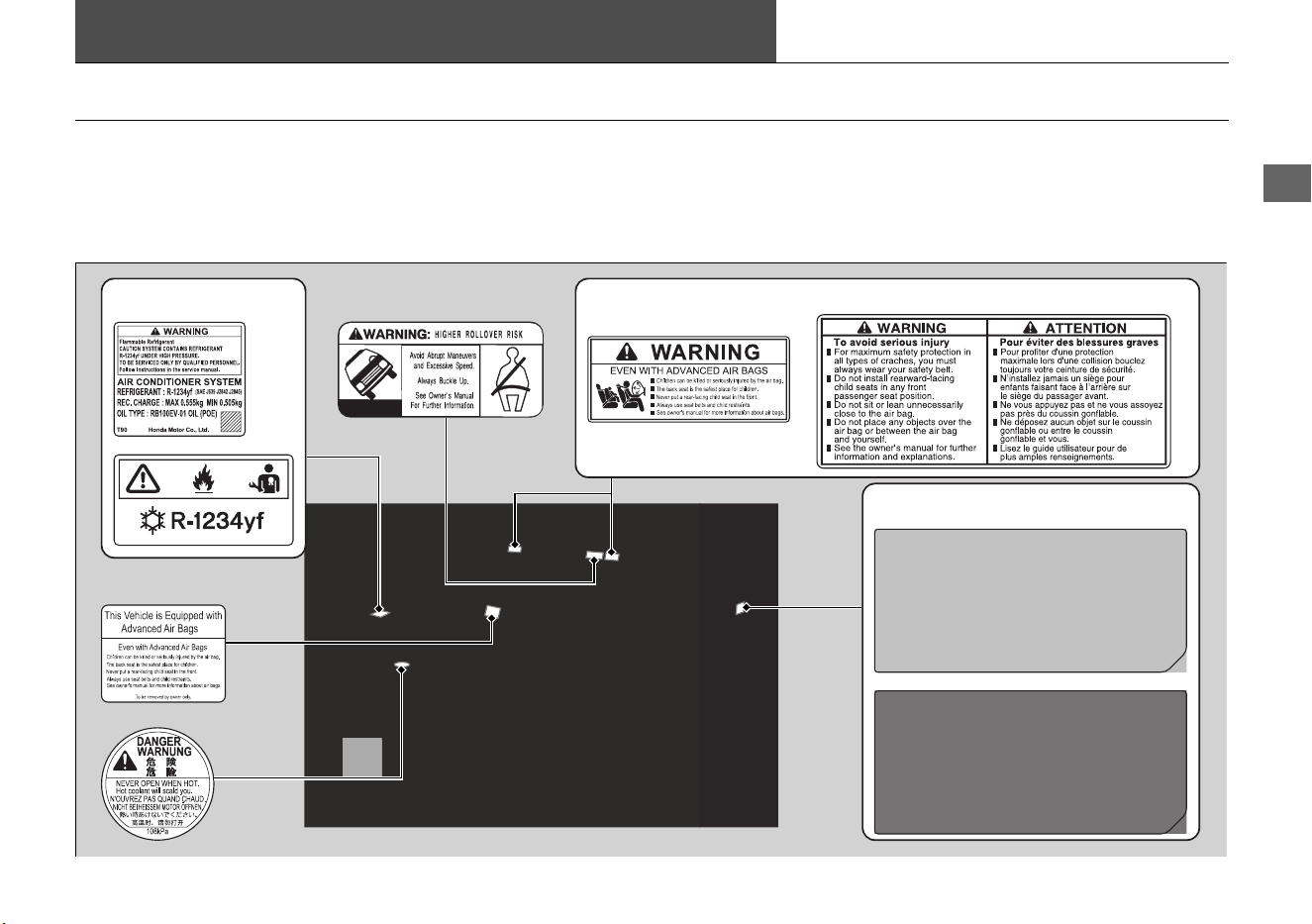
93
Safe Driving
Safety Labels
Label Locations
These labels are in the locations shown. They warn you of potential hazards that can cause serious injury or death. Read these labels
carefully.
If a label comes off or becomes hard to read (except for the U.S. dashboard label, which may be removed by the owner), contact a dealer
for a replacement.
Radiator Cap
U.S. models
U.S. models only
Dashboard
Canadian models
Air Conditioner System
Sun Visor
U.S. models
Canadian models
U.S. models only
Sun Visor
U.S. models
Center Seat Storage
*
Canadian models
* Not available on all models
26 PILOT-31T906300.book 93 ページ 2025年10月8日 水曜日 午前11時43分

94
26 PILOT-31T906300.book 94 ページ 2025年10月8日 水曜日 午前11時43分
This page intentionally left blank.

95
Instrument Panel
This chapter describes the buttons, indicators, and gauges that are used while driving.
Indicators ............................................ 96
Gauges and Displays
Gauges............................................ 118
Driver Information Interface (Left Side
Area) ............................................. 122
Driver Information Interface (Right Side
Area) ............................................. 126
Head-Up Display
*
............................ 143
* Not available on all models
26 PILOT-31T906300.book 95 ページ 2025年10月8日 水曜日 午前11時43分
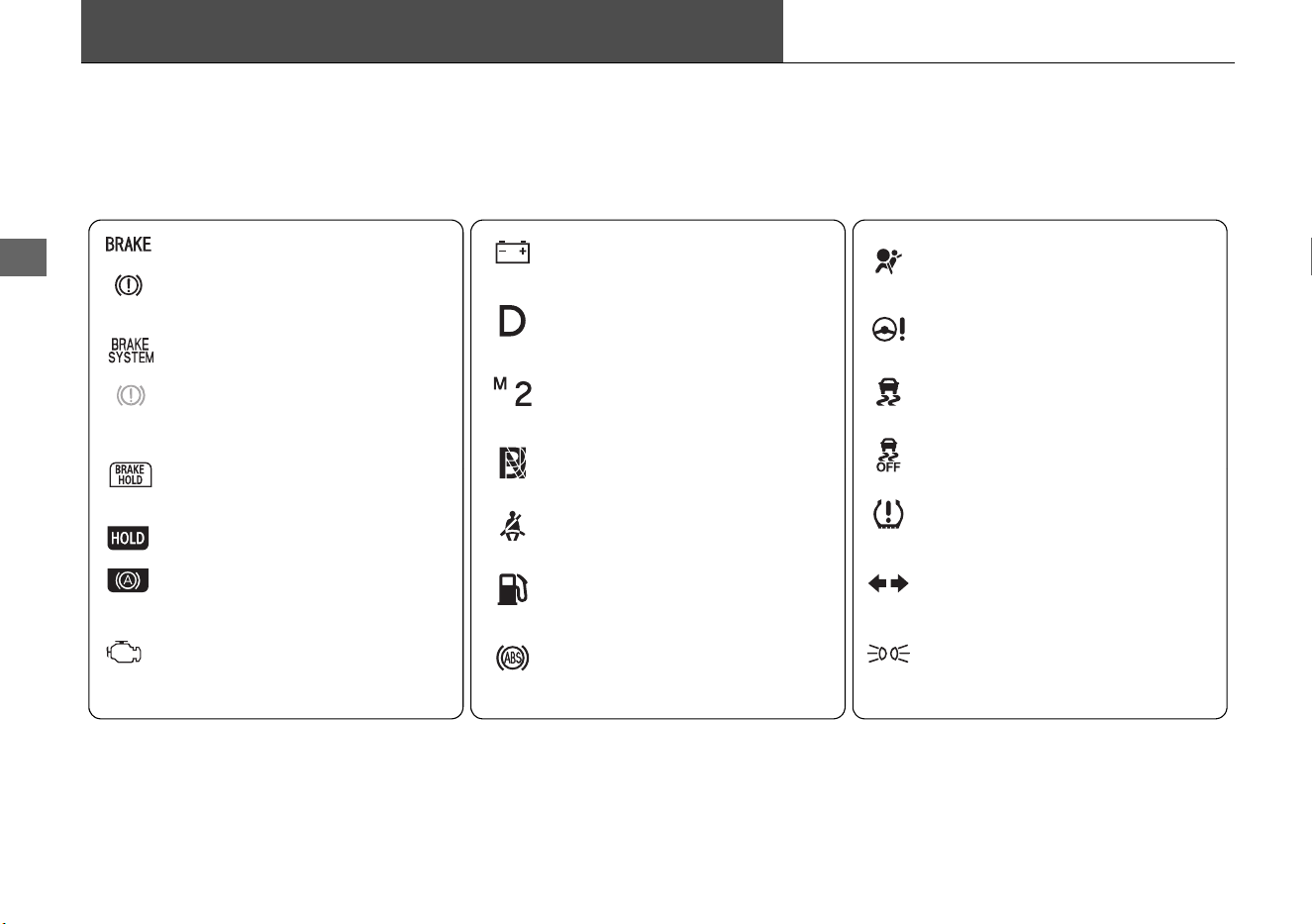
96
Instrument Panel
Indicators
Indicators come on/blink depending on the condition of the vehicle. Messages may
display on the driver information interface at the same time. Please take the
appropriate action outlined in the message, such as contacting a dealer.
Parking Brake and
Brake System
Indicator (Red)
U.S.
Canada
P. 98
*1
M (sequential mode)
Indicator/Sequential
Mode Gear Selection
Indicator
P. 102
Parking Brake and
Brake System
Indicator (Amber)
U.S.
Canada
Automatic Brake
Hold System
Indicator
Automatic Brake
Hold Indicator
U.S.
Canada
*1: When you set the power mode to ON, these indicators come on to indicate that system checks are being performed. They go off a few seconds later or after the engine
has started. If an indicator does not come on or turn off, there may be a malfunction in the corresponding system. To resolve the issue, follow the instructions in the
owner’s manual.
Malfunction
Indicator Lamp
Charging System
Indicator
Seat Belt Reminder
Indicator
Low Fuel Indicator
P. 100
P. 101
P. 101
P. 101
P. 102
*1
*1
*1
Gear Position
Indicator
P. 102
Transmission System
Indicator
P. 103
P. 104
P. 104
*1
*1
Anti-lock Brake System
(ABS) Indicator
Vehicle Stability Assist
TM
(VSA®) System Indicator
Vehicle Stability Assist
TM
(VSA®) OFF Indicator
Supplemental
Restraint System
Indicator
Electric Power Steering
(EPS) System Indicator
*1
P. 105
P. 105
P. 106
*1
*1
P. 106
*1
P. 105
*1
*1
*1
Low Tire Pressure/
TPMS Indicator
Turn Signal and
Hazard Warning
Indicators
Lights On
Indicator
P. 107
*1
P. 107
P. 107
26 PILOT-31T906300.book 96 ページ 2025年10月8日 水曜日 午前11時43分
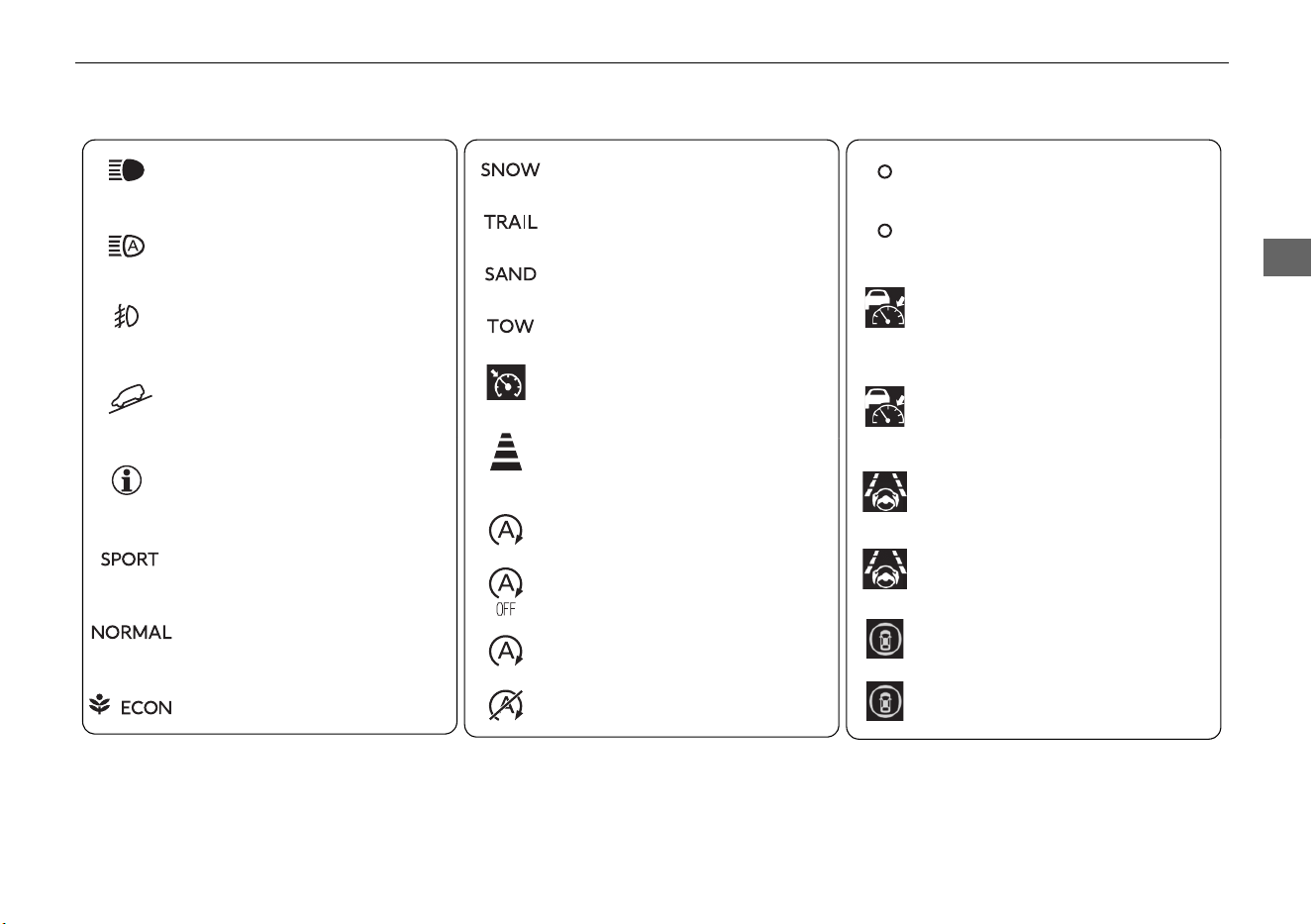
97
uuIndicatorsu
Continued
Instrument Panel
*1: When you set the power mode to ON, these indicators come on to indicate that system checks are being performed. They go off a few seconds later or after the engine
has started. If an indicator does not come on or turn off, there may be a malfunction in the corresponding system. To resolve the issue, follow the instructions in the
owner’s manual.
Auto High-Beam
Indicator
High Beam
Indicator
Fog Light
Indicator
System Message
Indicator
Adaptive Cruise Control
(ACC) with Low Speed
Follow Indicator
(Amber)
Lane Keeping Assist
System (LKAS) Indicator
(Amber)
Safety Support
Indicator (Green/Gray)
Auto Idle Stop System
Indicator (Amber)
P. 110
P. 107
P. 107
P. 112
P. 107
Immobilizer System
Indicator
P. 109
Security System Alarm
Indicator
P. 109
P. 108
P. 113
P. 117
*1
Adaptive Cruise Control
(ACC) with Low Speed
Follow Indicator
(White/Green)
P. 112
*1
Lane Keeping Assist
System (LKAS) Indicator
(White/Green)
P. 113
*1
*1
Safety Support
Indicator (Amber)
P. 114
*1
SNOW Mode
Indicator
P. 108
Auto Idle Stop OFF
Indicator
P. 110
Auto Idle Stop
Suspend Indicator
P. 111
ECON Mode
Indicator
P. 108
Cruise Mode Indicator
(White/Green)
P. 113
Adaptive Cruise
Control (ACC) with
Low Speed Follow
Interval Indicator
P. 113
Auto Idle Stop
Indicator (Green)
P. 110
Hill Descent Control
System Indicator
(White/Green)
P. 108
*1
NORMAL Mode
Indicator
P. 108
SPORT Mode
Indicator
P. 108
SAND Mode
Indicator
*
P. 109
TOW Mode
Indicator
P. 109
TRAIL Mode
Indicator
*
P. 109
* Not available on all models
26 PILOT-31T906300.book 97 ページ 2025年10月8日 水曜日 午前11時43分
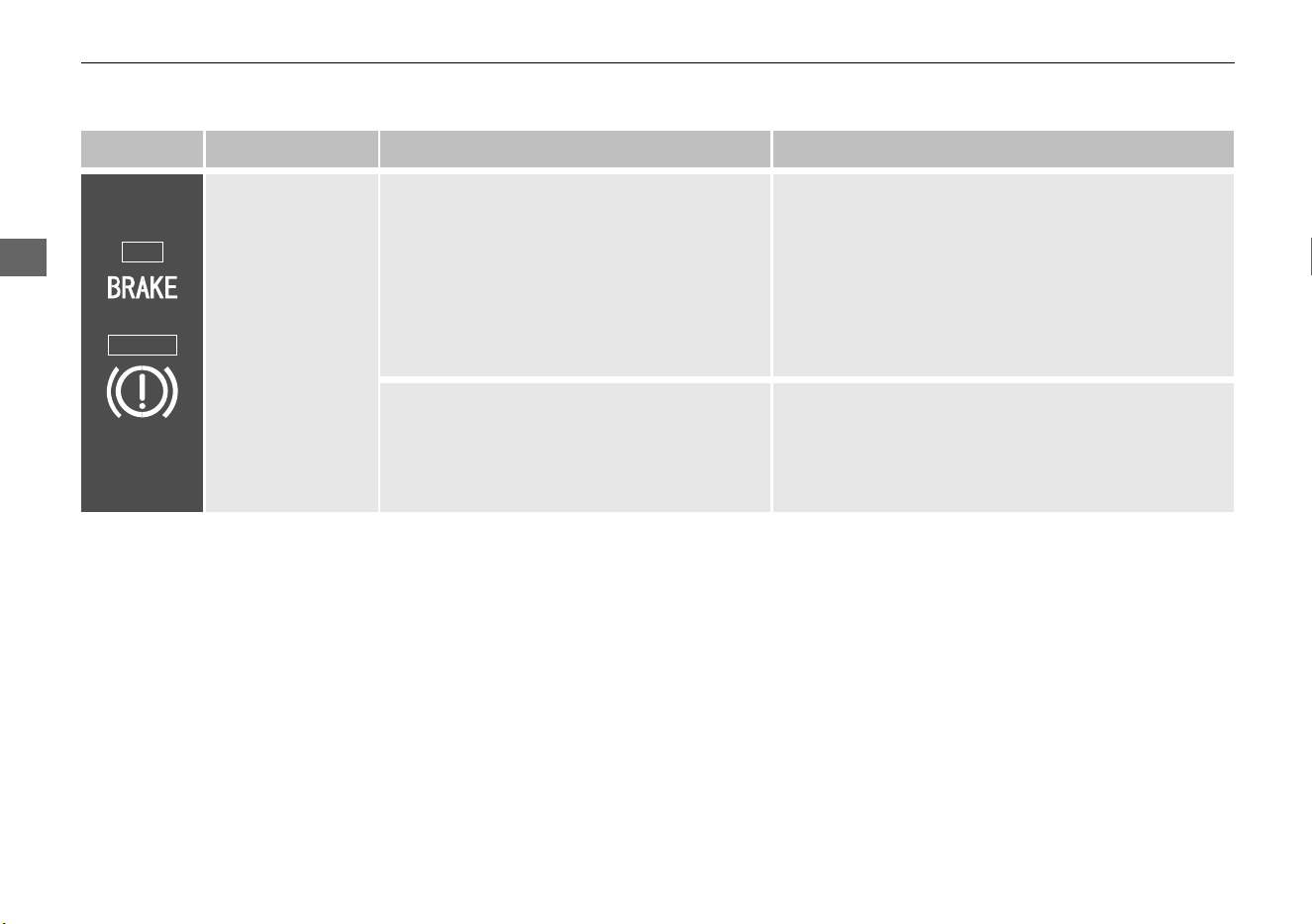
98
uuIndicatorsu
Instrument Panel
Indicator Name On/Blinking Explanation
Parking Brake and
Brake System
Indicator (Red)
●
Comes on when the parking brake is
applied, and goes off when it is released.
●
The beeper sounds and the indicator comes on if
you drive with the parking brake applied.
●
Comes on for about 30 seconds when you apply
the electric parking brake while the power mode is
in ACCESSORY or VEHICLE OFF, then goes off.
●
Stays on for about 30 seconds when you set the
power mode to VEHICLE OFF while the electric
parking brake is applied, then goes off.
• Comes on when the brake fluid level is
low.
• Comes on while driving - Make sure the parking
brake is released. Stop in a safe place and check
the brake fluid level.
2 What to do when the indicator comes on
while driving P. 649
U.S.
Canada
(Red)
26 PILOT-31T906300.book 98 ページ 2025年10月8日 水曜日 午前11時43分
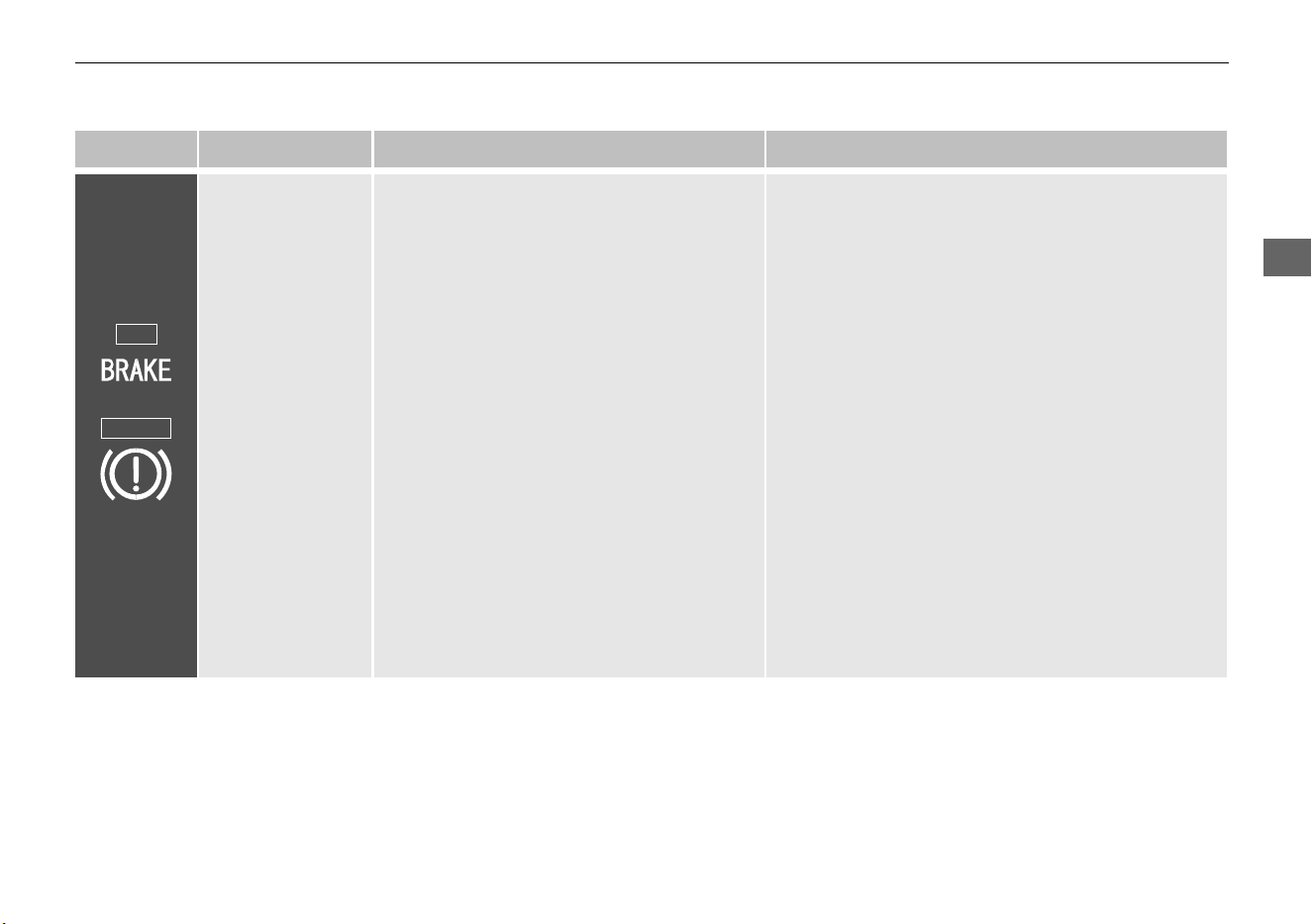
99
uuIndicatorsu
Continued
Instrument Panel
Indicator Name On/Blinking Explanation
Parking Brake and
Brake System
Indicator (Red)
●
Comes on if there is a problem with the
brake system.
●
Comes on along with the Parking Brake and
Brake System Indicator (amber) - Immediately
stop in a safe place. Contact a dealer for repair. The
brake pedal becomes harder to operate. Depress
the pedal further than you normally do.
2 If the Brake System Indicator (Red) Comes On
or Blinks at the Same Time When the Brake
System Indicator (Amber) Comes On P. 651
●
Comes on along with the ABS indicator - Have
your vehicle checked by a dealer.
2 If the Brake System Indicator (Red) Comes On
or Blinks P. 649
●
Blinks and the Parking Brake and Brake System
Indicator (amber) comes on at the same time -
There is a problem with the electric parking brake
system. The parking brake may not be set.
Avoid using the parking brake and have your
vehicle checked by a dealer immediately.
2 If the Brake System Indicator (Red) Comes On
or Blinks at the Same Time When the Brake
System Indicator (Amber) Comes On P. 651
U.S.
Canada
(Red)
26 PILOT-31T906300.book 99 ページ 2025年10月8日 水曜日 午前11時43分
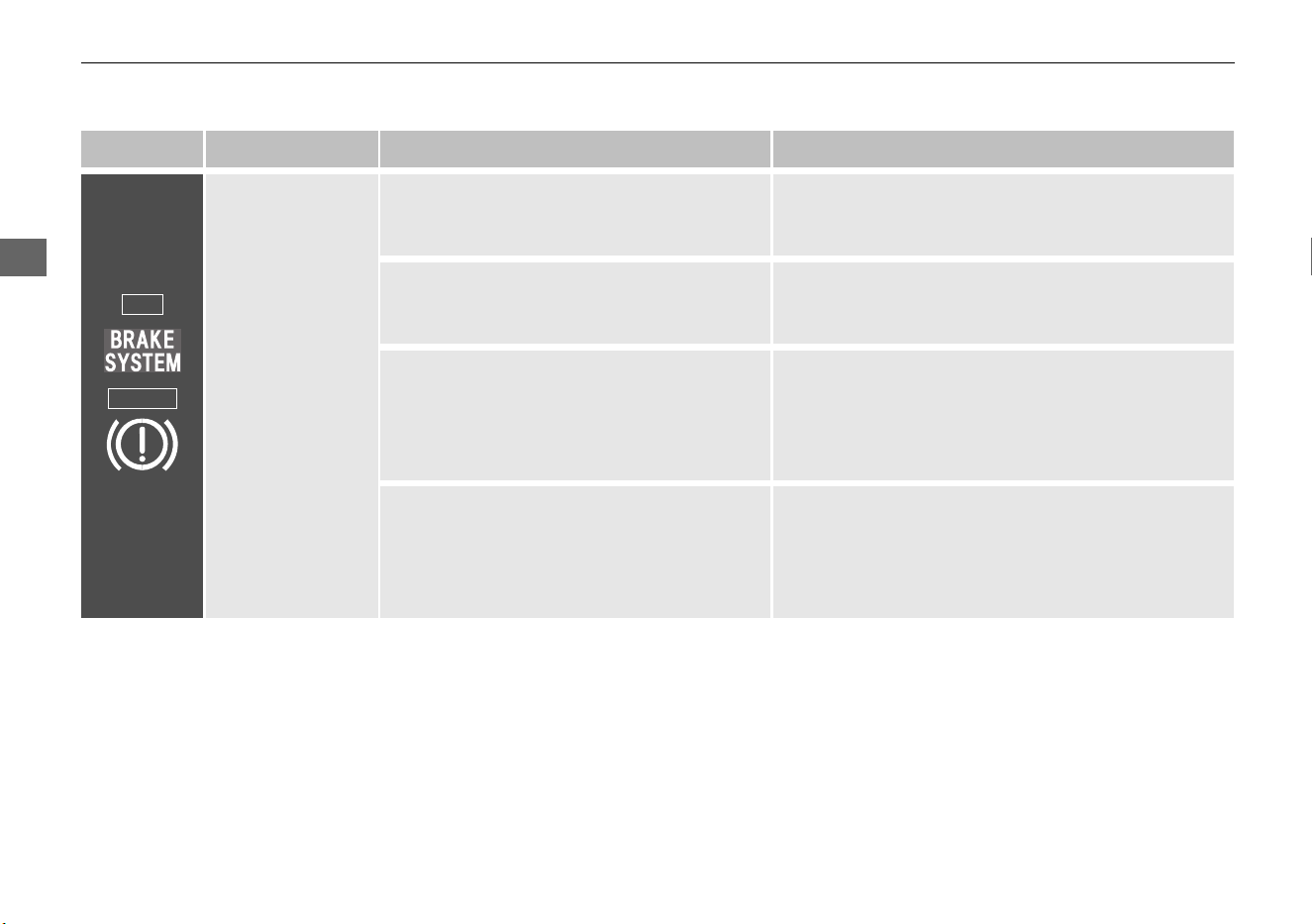
100
uuIndicatorsu
Instrument Panel
Indicator Name On/Blinking Explanation
Parking Brake and
Brake System
Indicator (Amber)
●
Comes on if there is a problem with a
system related to braking other than the
conventional brake system.
●
Comes on while driving - Avoid high speeds and
sudden braking. Take the vehicle to a dealer
immediately.
●
Comes on if there is a problem with the
electric parking brake system and/or the
automatic brake hold system.
●
Stays on constantly - Avoid using the parking
brake and have your vehicle checked by a dealer
immediately.
●
Comes on if the brake system is
deactivated temporarily after the battery
has been disconnected, then reconnected.
●
With the engine running, turn the steering wheel to
the left until it stops then to the right until it stops,
then drive a short distance at more than 12 mph
(20 km/h). The indicator should go off. If it does
not, have your vehicle checked by a dealer.
●
Comes on if there is a problem with the
radar sensor.
●
Indicator may come on temporarily when
the Maximum Load Limit is exceeded.
●
Make sure the total load is within the Maximum
Load Limit.
2 Maximum Load Limit P. 391
●
Stays on constantly - Have your vehicle checked
by a dealer.
U.S.
Canada
(Amber)
26 PILOT-31T906300.book 100 ページ 2025年10月8日 水曜日 午前11時43分
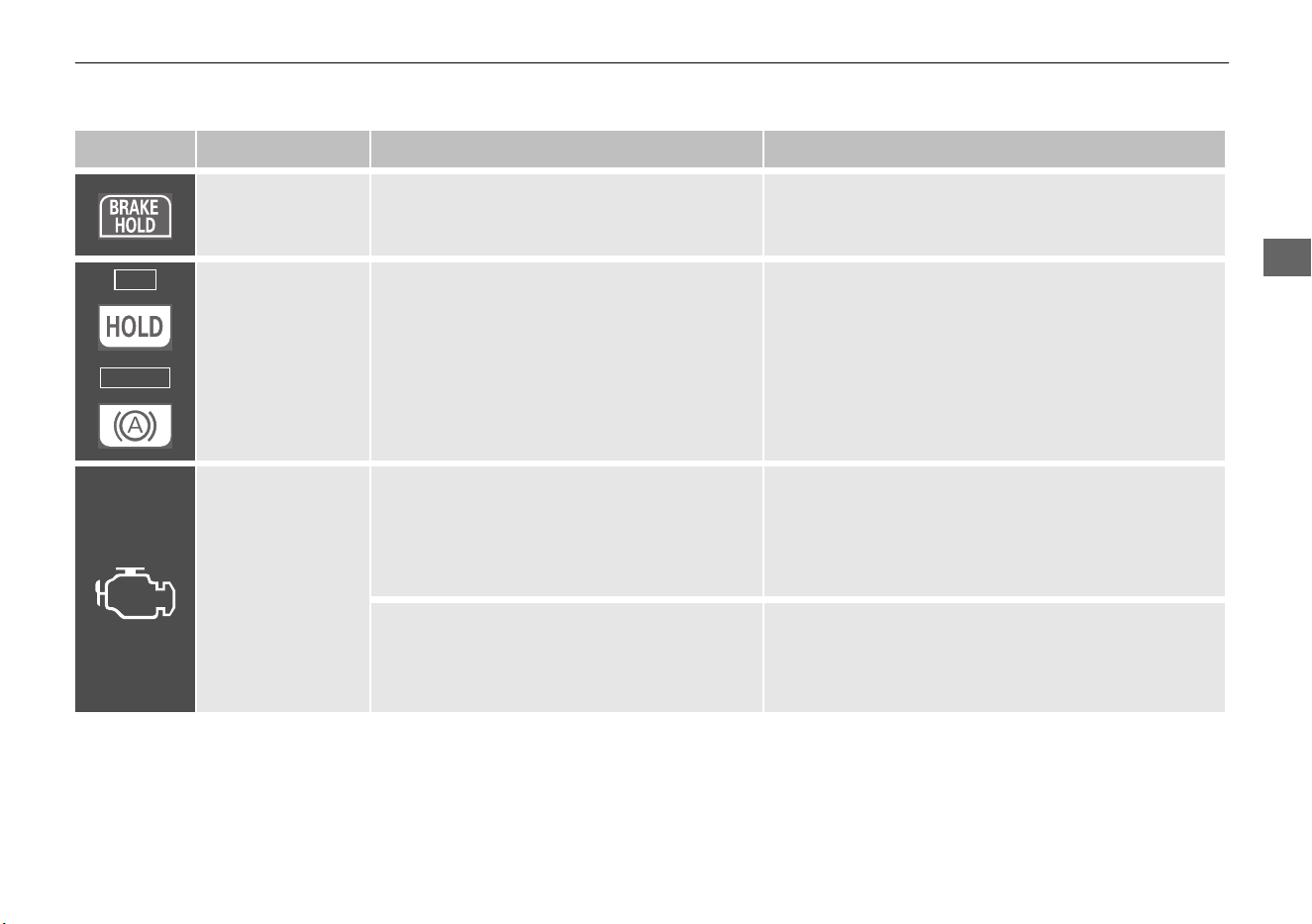
101
uuIndicatorsu
Continued
Instrument Panel
Indicator Name On/Blinking Explanation
Automatic Brake
Hold System
Indicator
●
Comes on when the automatic brake hold
system is on.
2 Automatic Brake Hold P. 537
Automatic Brake
Hold Indicator
●
Comes on when the automatic brake hold
is activated.
2 Automatic Brake Hold P. 537
Malfunction
Indicator Lamp
●
After you have set the power mode to ON,
the vehicle performs system checks.
However, if the readiness codes have not
been set by that time, this indicator will
blink five times and then go off.
●
Readiness codes are part of the on-board
diagnostics for the emissions control systems.
2 Testing of Readiness Codes P. 676
●
Comes on if there is a problem with the
emissions control systems.
●
Blinks when a misfire in the engine’s
cylinders is detected.
2 If the Malfunction Indicator Lamp Comes On
or Blinks P. 648
U.S.
Canada
26 PILOT-31T906300.book 101 ページ 2025年10月8日 水曜日 午前11時43分
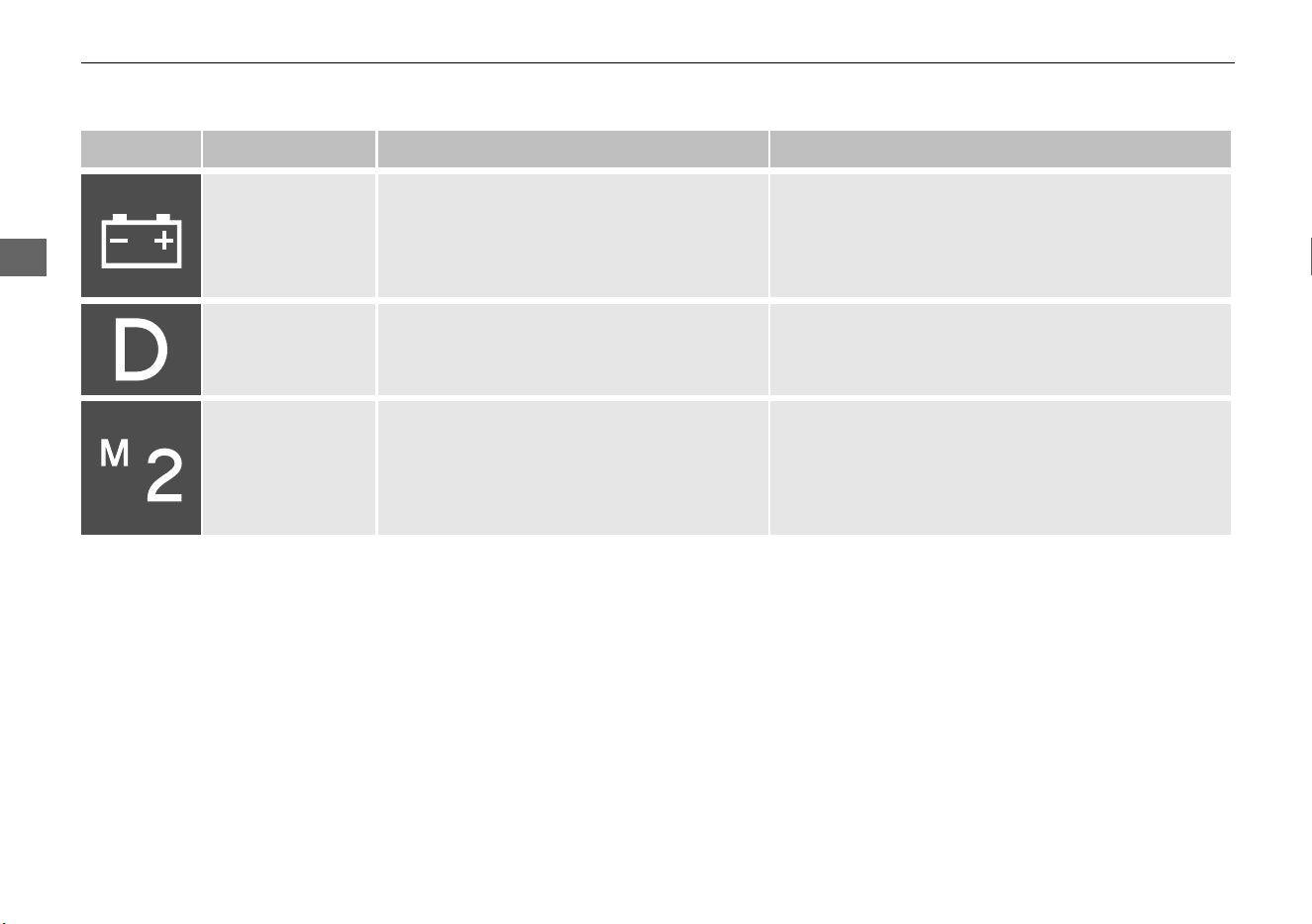
102
uuIndicatorsu
Instrument Panel
Indicator Name On/Blinking Explanation
Charging System
Indicator
●
Comes on when there is a problem with
the charging system.
●
Stop in a safe place and contact a dealer
immediately.
2 Checking the Battery P. 613
2 If the Charging System Indicator Comes On
P. 648
Gear Position
Indicator
●
Indicates the current gear selection.
2 Shifting P. 419
M (sequential
mode) Indicator/
Sequential Mode
Gear Selection
Indicator
●
Comes on when the sequential mode is
applied.
2 Sequential Mode P. 425
26 PILOT-31T906300.book 102 ページ 2025年10月8日 水曜日 午前11時43分
103
uuIndicatorsu
Continued
Instrument Panel
Indicator Name On/Blinking Explanation
Transmission
System Indicator
• The current gear selection blinks if the
transmission system has a problem.
• Blinks while driving - Performance may be
reduced. Avoid sudden starts and acceleration and
have your vehicle checked by a dealer immediately.
• The indicated current gear selection blinks if
you cannot put the transmission into (R due
to a transmission system failure.
• The indicated current gear selection blinks if
the transmission system has a problem and
the performance of the vehicle is reduced.
• Avoid sudden starts, sudden acceleration and high
speed, and have your vehicle checked by a dealer
immediately.
• The indicated current gear selection blinks if
the transmission system has a problem and
the paddle shifters cannot be used.
• Have your vehicle checked by a dealer immediately.
• The current gear position or all the gear
positions blink if there is a problem with the
transmission and the vehicle is no longer
able to run.
• Immediately park your vehicle in a safe place.
2 Emergency Towing P. 661
• Have your vehicle checked by a dealer.
• The current gear position or all the gear
positions blink if there is a problem with the
transmission and it is not possible to select
(P.
• Depending on the circumstances, you can set the
power mode to ON as an emergency measure.
2 If the Transmission System Indicator Blinks
along with the Warning Message P. 653
• While the vehicle is stopped, apply the parking
brake.
• Have your vehicle checked by a dealer immediately.
26 PILOT-31T906300.book 103 ページ 2025年10月8日 水曜日 午前11時43分
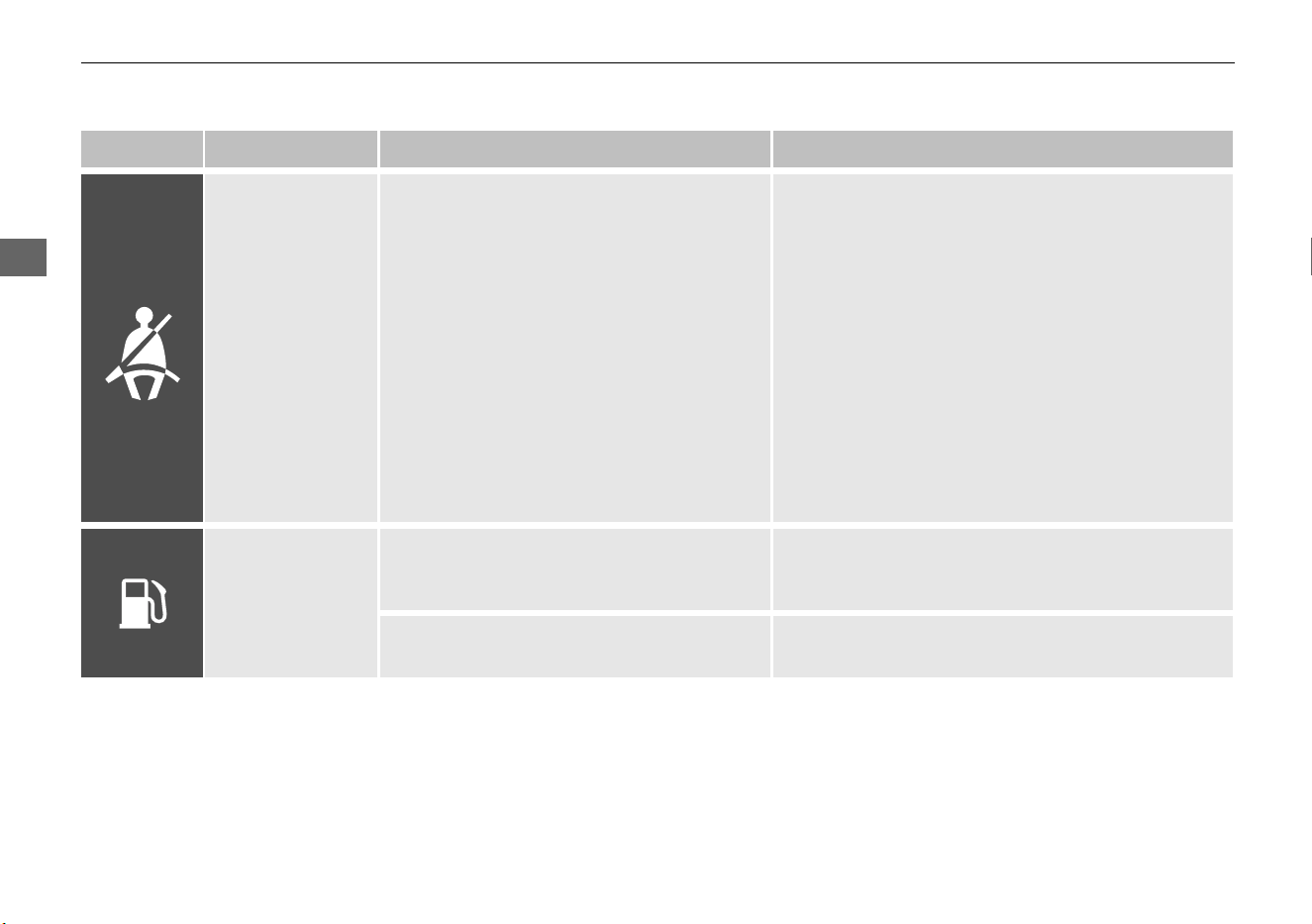
104
uuIndicatorsu
Instrument Panel
Indicator Name On/Blinking Explanation
Seat Belt Reminder
Indicator
●
Blinks and the beeper sounds for a few
seconds if you are not wearing a seat belt
when you set the power mode to ON, then
the indicator comes on.
●
If the front passenger is not wearing a seat
belt, the indicator comes on a few seconds
later.
●
Comes on for a while if any rear passenger
unfastens their seat belt while the power
mode is ON.
●
Blinks and beeper sounds while driving
when you or the front passenger are
unfastened or any rear passenger
unfastens their seat belt.
●
The beeper stops and the indicator goes off when
you and the passengers fasten their seat belts.
●
Stays on after you and/or the passengers have
fastened the seat belt(s) - A detection error may
have occurred in the sensor. Have your vehicle
checked by a dealer.
2 Seat Belt Reminder P. 43
Low Fuel Indicator
●
Comes on when the fuel reserve is running
low (approximately 2.77 U.S. gal/10.5 Liter
left).
●
Refuel your vehicle as soon as possible.
●
Blinks if there is a problem with the fuel
gauge.
●
Have your vehicle checked by a dealer.
26 PILOT-31T906300.book 104 ページ 2025年10月8日 水曜日 午前11時43分
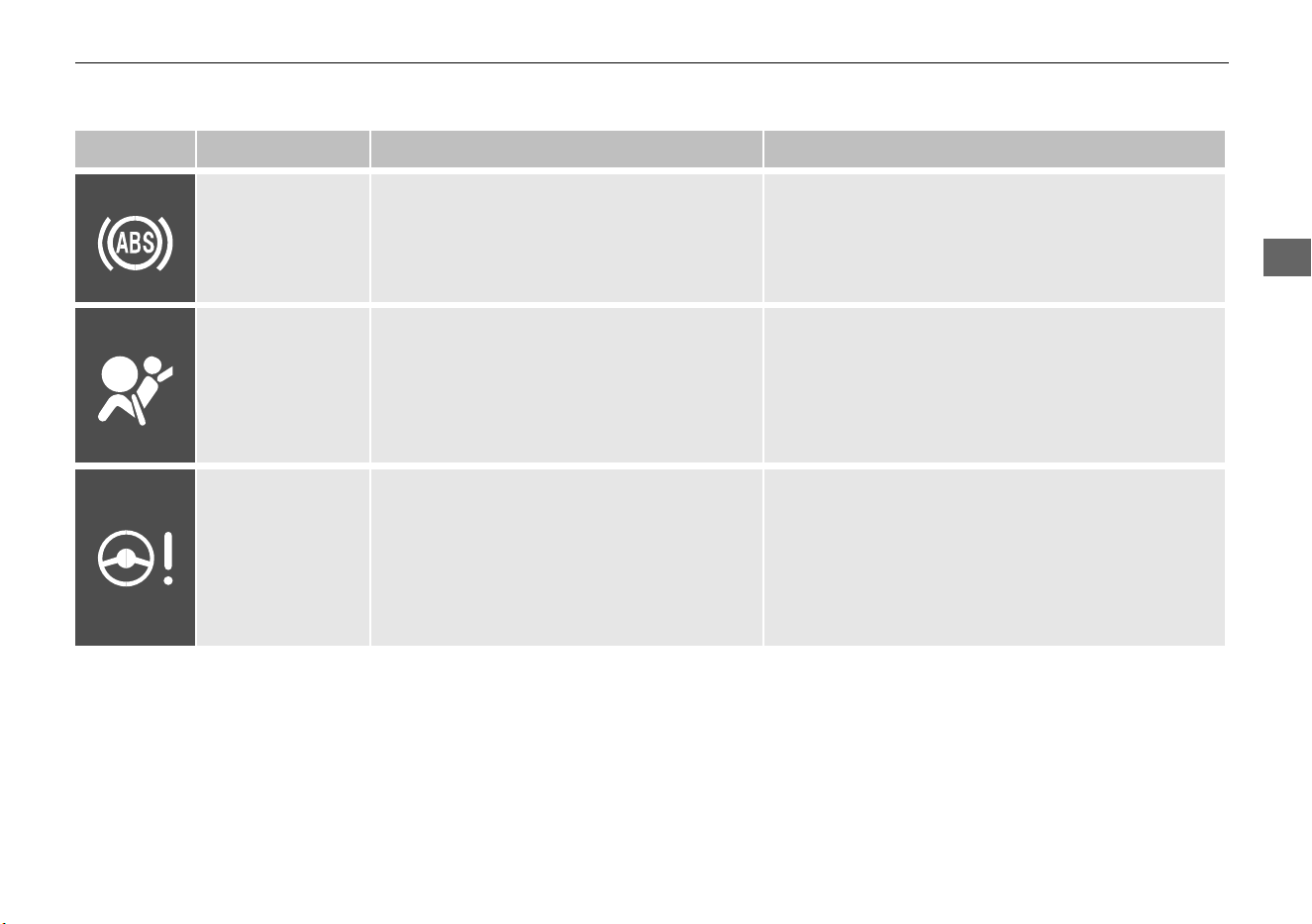
105
uuIndicatorsu
Continued
Instrument Panel
Indicator Name On/Blinking Explanation
Anti-lock Brake
System (ABS)
Indicator
●
Comes on if there is a problem with the
ABS.
●
Stays on constantly - Have your vehicle checked
by a dealer. With this indicator on, your vehicle still
has normal braking ability but no anti-lock
function.
2 Anti-lock Brake System (ABS) P. 540
Supplemental
Restraint System
Indicator
●
Comes on if a problem with any of the
following is detected:
- Supplemental Restraint System
- Side airbag system
- Side curtain airbag system
- Seat belt tensioner
●
Stays on constantly - Have your vehicle checked
by a dealer.
Electric Power
Steering (EPS)
System Indicator
• Comes on if there is a problem with the
EPS system.
• Stays on constantly - Have your vehicle checked
by a dealer.
• Do not drive displays on the driver
information interface - Immediately stop in a
safe place and contact a dealer.
2 If the Electric Power Steering (EPS) System
Indicator Comes On P. 650
26 PILOT-31T906300.book 105 ページ 2025年10月8日 水曜日 午前11時43分
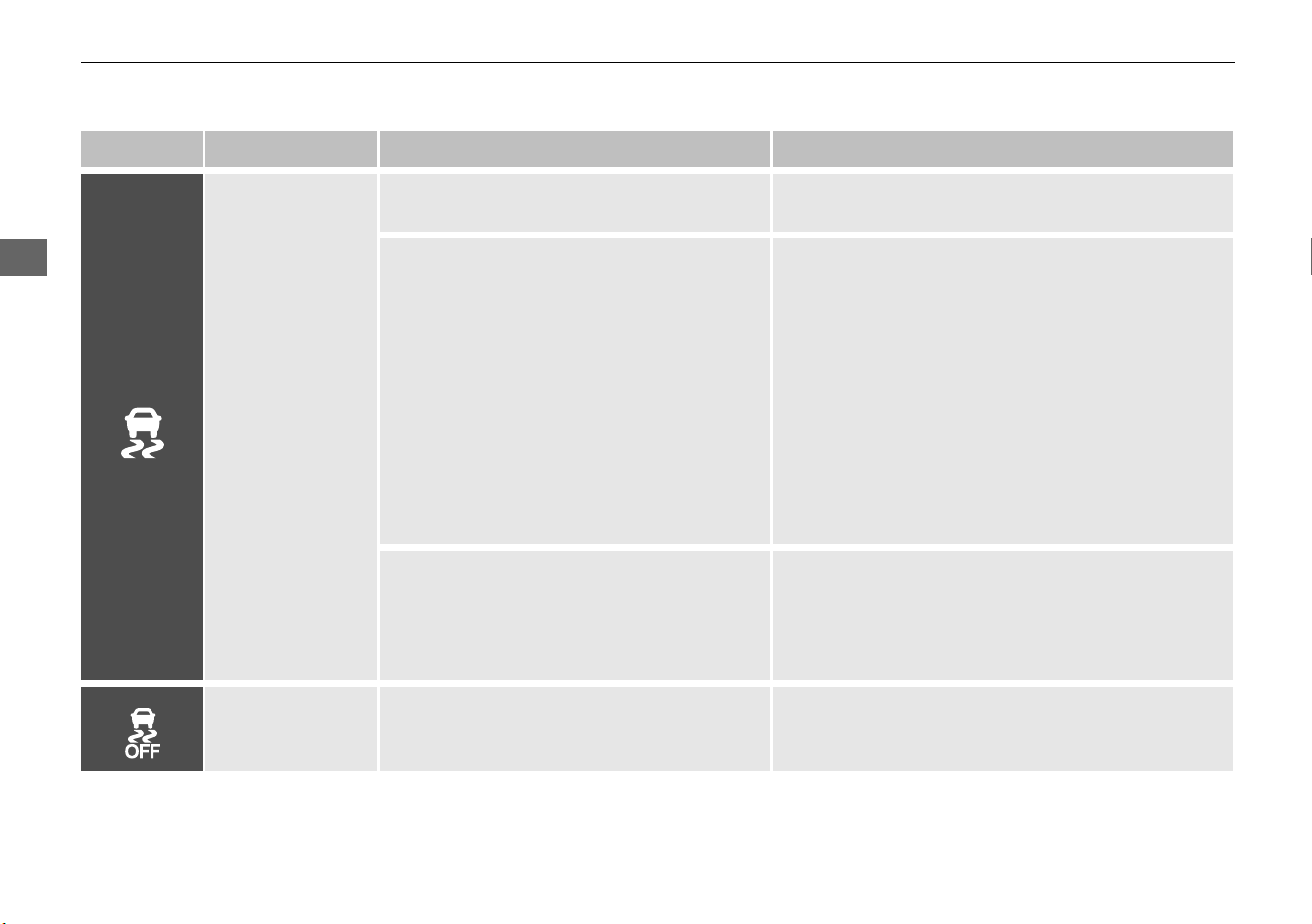
106
uuIndicatorsu
Instrument Panel
Indicator Name On/Blinking Explanation
Vehicle Stability
Assist
TM
(VSA®)
System Indicator
●
Blinks when VSA® or trailer stability assist is
active.
—
●
Comes on if there is a problem with the
VSA® system, brake assist system, hill start
assist system, starting assist brake function,
agile handling assist, or trailer stability
assist.
●
Stays on constantly - Have your vehicle checked
by a dealer.
2 Vehicle Stability Assist
TM
(VSA®), aka
Electronic Stability Control (ESC), System
P. 441
2 Trailer Stability Assist P. 401
2 Hill start assist system P. 416
2 Brake Assist System P. 541
2 Starting Assist Brake Function P. 432
2 Agile Handling Assist P. 443
●
When Trailer stability assist system problem is
displayed on the driver information interface, the
VSA® does not activate.
●
Comes on if the VSA® system is deactivated
temporarily after the battery has been
disconnected, then reconnected.
●
With the engine running, turn the steering wheel to
the left until it stops then to the right until it stops,
then drive a short distance at more than 12 mph
(20 km/h). The indicator should go off. If it does
not, have your vehicle checked by a dealer.
Vehicle Stability
Assist
TM
(VSA®)
OFF Indicator
●
Comes on when you partially disable VSA®.
●
Comes on in TRAIL
*
and SAND
*
drive
modes.
2 VSA® On and Off P. 442
2 Drive Mode System P. 433
* Not available on all models
26 PILOT-31T906300.book 106 ページ 2025年10月8日 水曜日 午前11時43分
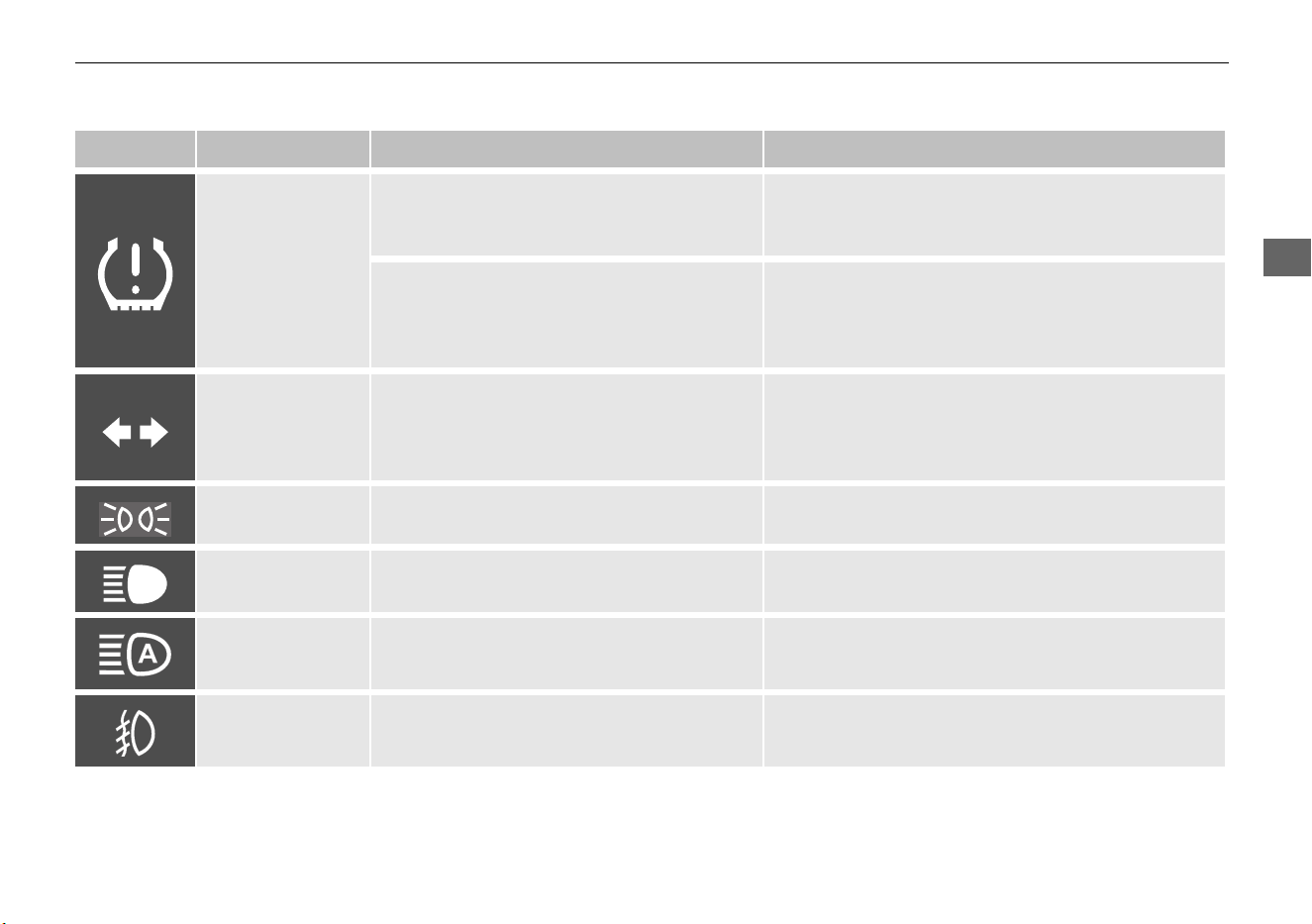
107
uuIndicatorsu
Continued
Instrument Panel
Indicator Name On/Blinking Explanation
Low Tire Pressure/
TPMS Indicator
●
Comes on if the tire pressure of any of the
tires becomes low.
●
Comes on while driving - Stop in a safe place,
check tire pressures, and inflate the tire(s) if
necessary.
●
Blinks for about one minute, and then stays
on if there is a problem with the TPMS with
Tire Fill Assist, or when a spare tire is
temporarily installed.
●
Blinks and remains on - Have your vehicle
checked by a dealer. If the vehicle is fitted with a
spare tire, get your regular tire repaired or replaced
and put back on your vehicle as soon as you can.
Turn Signal and
Hazard Warning
Indicators
• Blinks when you operate the turn signal
lever.
• Blinks along with all turn signals when you
press the hazard warning button.
• Does not blink or blinks rapidly
2 Replacing Light Bulbs P. 594, 595
Lights On Indicator
• Comes on when the parking, tail, and
other external lights are on.
2 Lights P. 193
High Beam
Indicator
• Comes on when the high beam headlights
are on.
—
Auto High-Beam
Indicator
• Comes on when all the operating
conditions of the auto high-beam are met.
2 Auto High-Beam P. 198
Fog Light Indicator
• Comes on when the fog lights are on.
2 Fog Lights P. 197
26 PILOT-31T906300.book 107 ページ 2025年10月8日 水曜日 午前11時43分
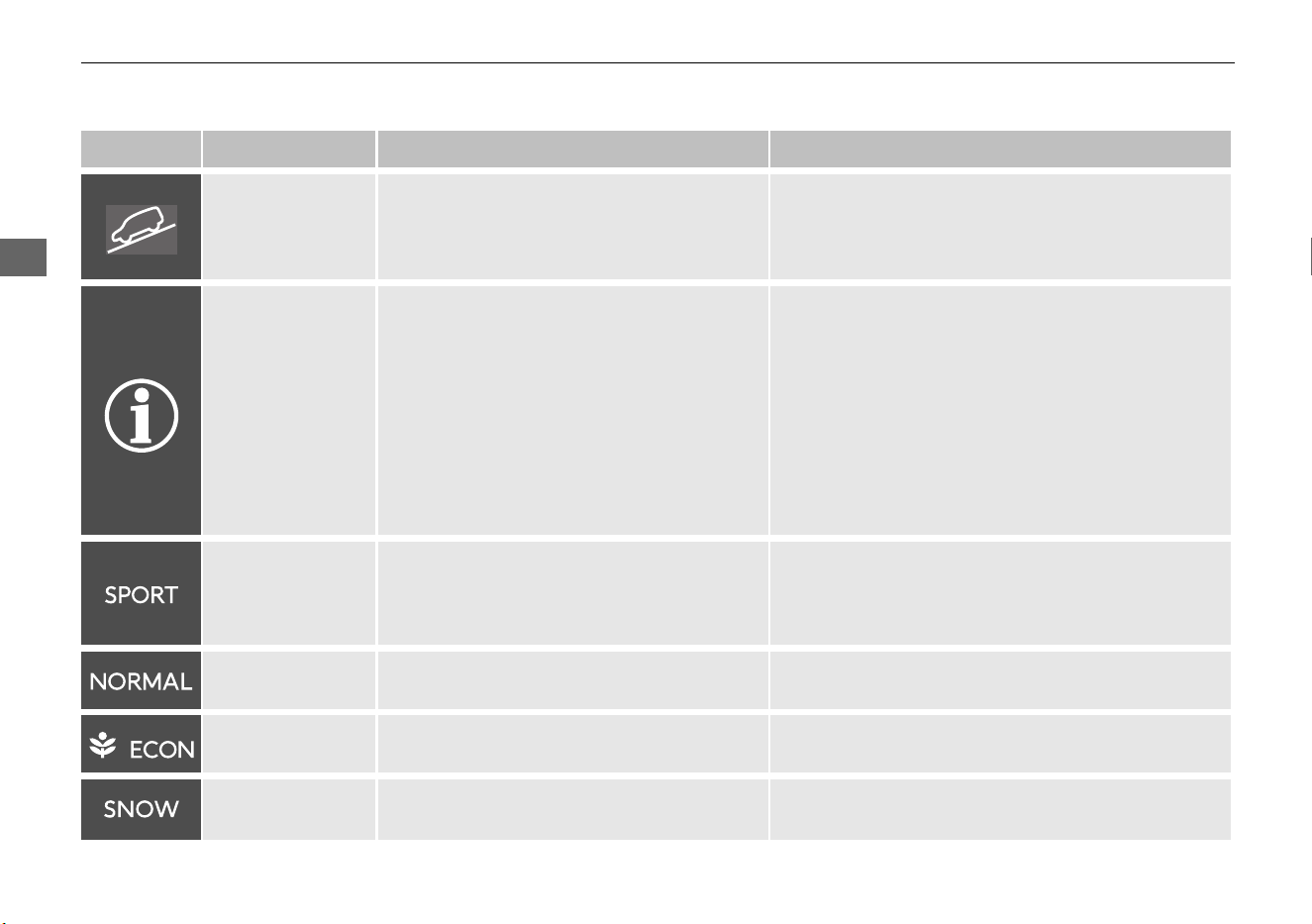
108
uuIndicatorsu
Instrument Panel
Indicator Name On/Blinking Explanation
Hill Descent
Control System
Indicator (White/
Green)
• Lights up in white when the Hill Descent
Control System is on and ready to use.
• Lights up in green when the Hill Descent
Control System is in operation.
2 Hill Descent Control System P. 439
System Message
Indicator
• Comes on along with a beep when a
problem is detected. A system message on
the driver information interface appears at
the same time.
●
While the indicator is on, roll the right selector
wheel to see the message again.
2 Switching the Display P. 126
●
Refer to the Indicators information in this chapter
when a system message appears on the driver
information interface. Take the appropriate action
for the message.
●
The driver information interface will not return to
the normal screen unless the warning is canceled,
or the right selector wheel is rolled.
SPORT Mode
Indicator
●
Comes on when you set the drive mode to
SPORT.
●
The ambient meter goes off and gauges in the
instrument panel light up in red as long as SPORT
mode is selected.
2 Drive Mode System P. 433
NORMAL Mode
Indicator
●
Comes on when you set the drive mode to
NORMAL.
2 Drive Mode System P. 433
ECON Mode
Indicator
●
Comes on when you set the drive mode to
ECON.
2 Drive Mode System P. 433
SNOW Mode
Indicator
●
Comes on when you set the drive mode to
SNOW.
2 Drive Mode System P. 433
26 PILOT-31T906300.book 108 ページ 2025年10月8日 水曜日 午前11時43分
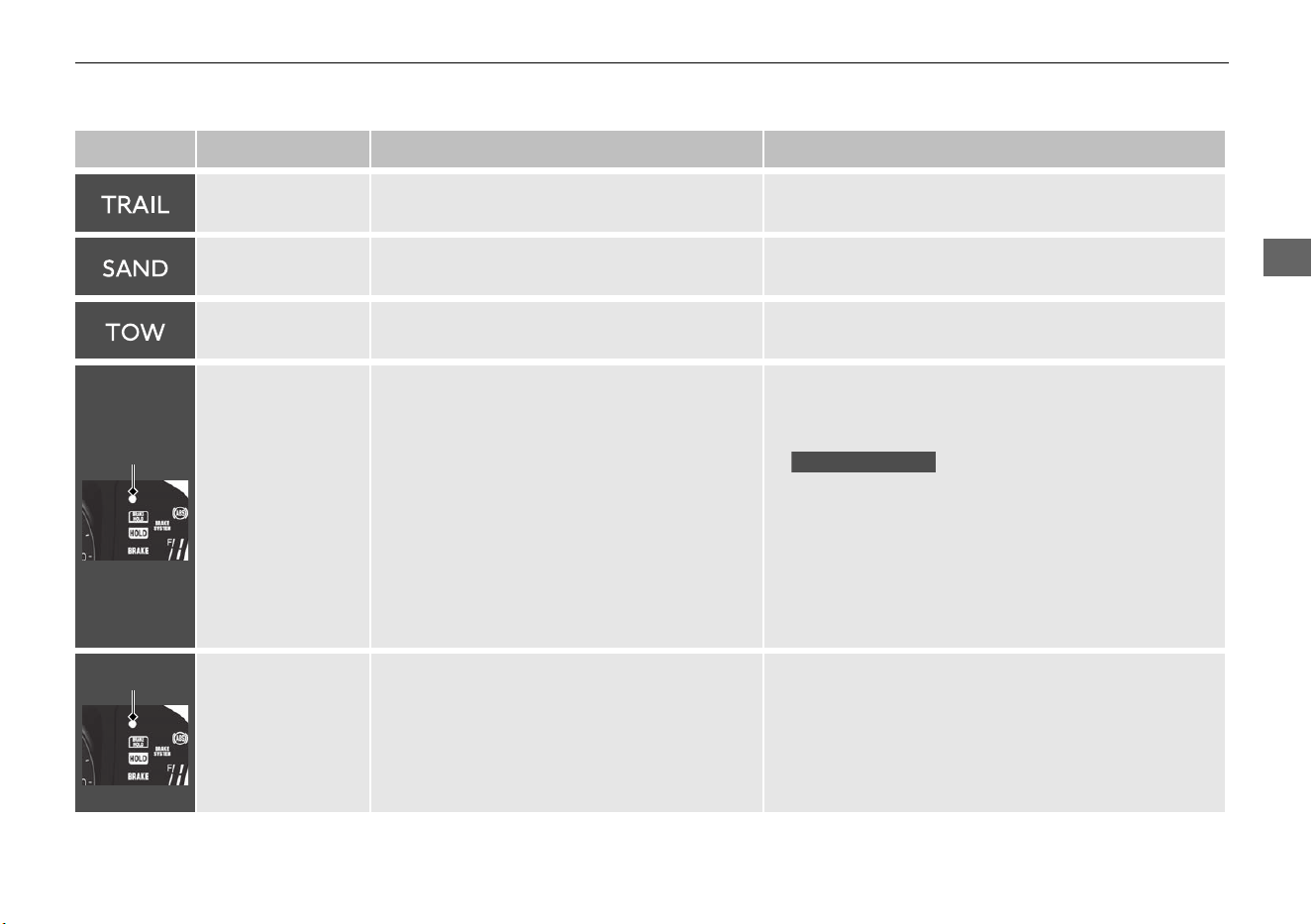
109
uuIndicatorsu
Continued
Instrument Panel
Indicator Name On/Blinking Explanation
TRAIL Mode
Indicator
*
●
Comes on when you set the drive mode to
TRAIL.
2 Drive Mode System P. 433
SAND Mode
Indicator
*
●
Comes on when you set the drive mode to
SAND.
2 Drive Mode System P. 433
TOW Mode
Indicator
●
Comes on when you set the drive mode to
TOW.
2 Drive Mode System P. 433
Immobilizer System
Indicator
• Blinks if the immobilizer system cannot
recognize the key information.
• Blinks - You cannot start the engine. Set the
power mode to VEHICLE OFF, then select the ON
mode again.
Depress and hold the brake pedal before setting
the power mode to ON.
• Repeatedly blinks - The system may be
malfunctioning. Have your vehicle checked by a
dealer.
• Do not attempt to alter this system or add other
devices to it. Electrical problems can occur.
Security System
Alarm Indicator
• Blinks when the security system alarm has
been set.
2 Security System Alarm P. 180
Indicator
Canadian models
Indicator
* Not available on all models
26 PILOT-31T906300.book 109 ページ 2025年10月8日 水曜日 午前11時43分
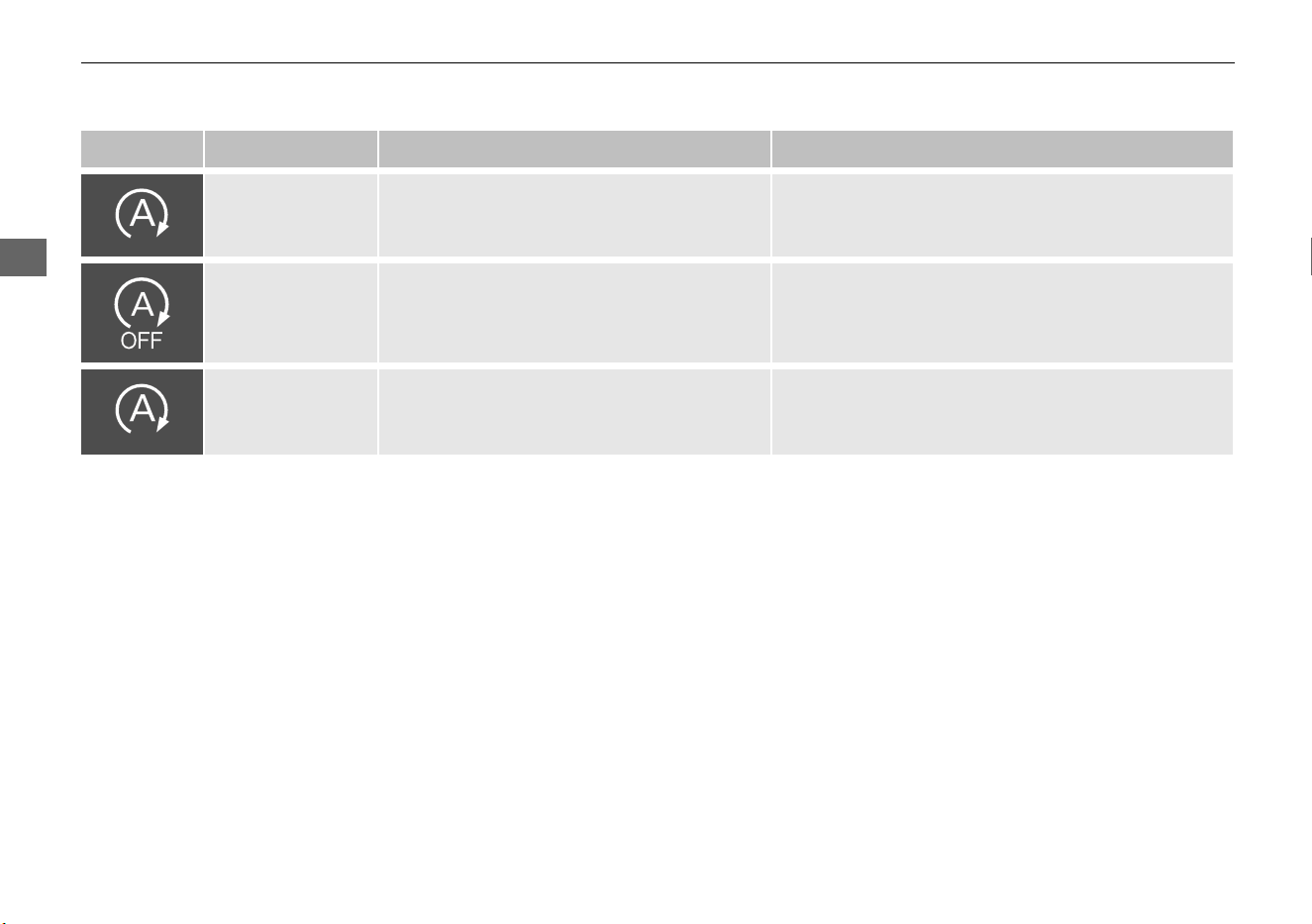
110
uuIndicatorsu
Instrument Panel
Indicator Name On/Blinking Explanation
Auto Idle Stop
Indicator (Green)
●
Comes on when Auto Idle Stop is in
operation. The engine automatically shuts
off.
2 Auto Idle Stop P. 427
Auto Idle Stop OFF
Indicator
●
Comes on when the Auto Idle Stop system
has been turned off by the Auto Idle Stop
system OFF button.
2 Auto Idle Stop System ON/OFF P. 428
Auto Idle Stop
System Indicator
(Amber)
●
Blinks if there is a problem with the Auto
Idle Stop system.
●
Have your vehicle checked by a dealer.
26 PILOT-31T906300.book 110 ページ 2025年10月8日 水曜日 午前11時43分
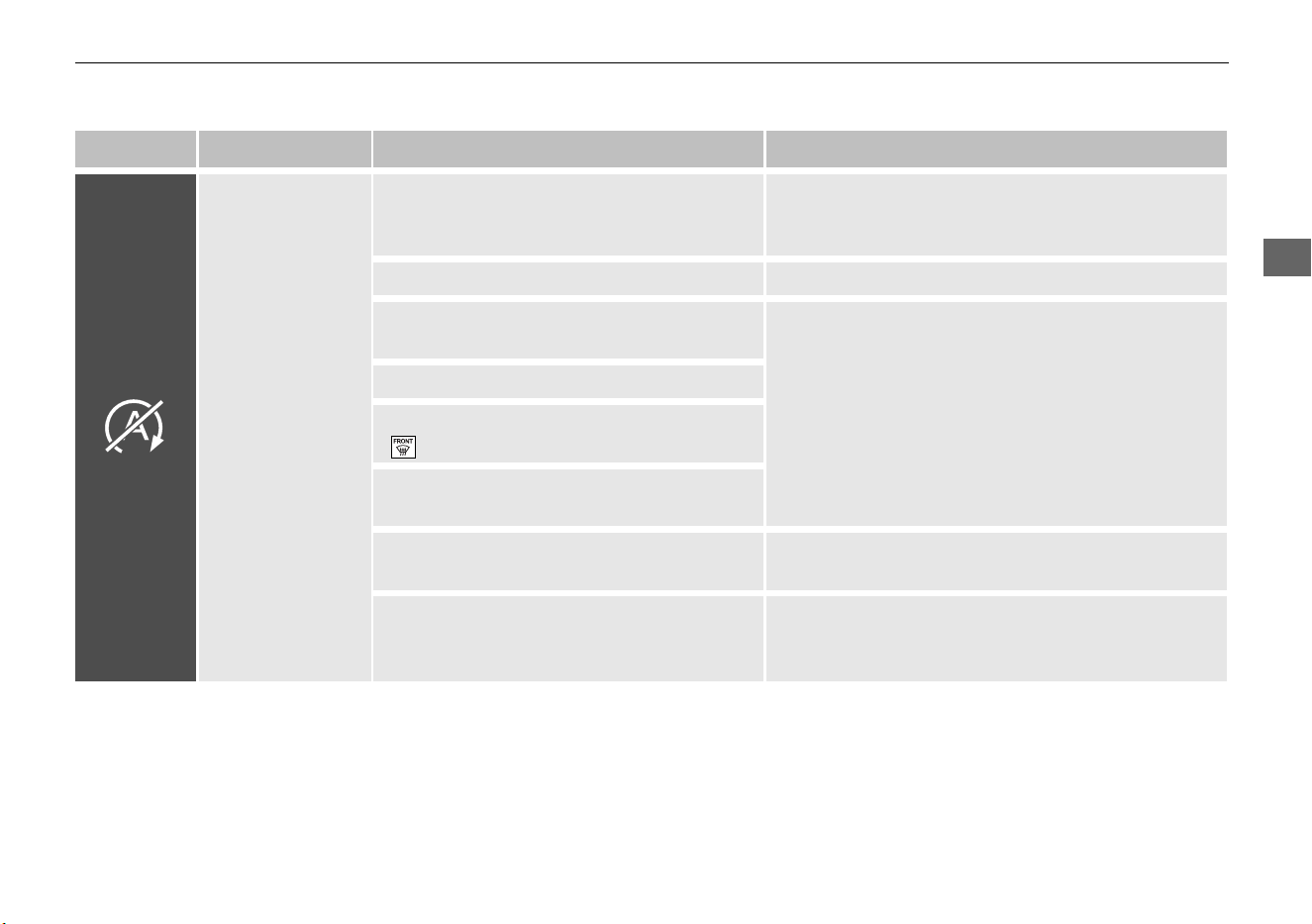
111
uuIndicatorsu
Continued
Instrument Panel
Indicator Name On/Blinking Explanation
Auto Idle Stop
Suspend Indicator
●
Comes on while Auto Idle Stop is
temporarily suspended in the following
situations.
—
- Brake pedal is not fully pressed
●
Depress the brake pedal firmly.
- The transmission is in a position other than
(D
2 Auto Idle Stop P. 427
- System charging is prioritized
- Climate control system is prioritized
- is ON (indicator on).
- Engine coolant temperature is not in
operating range
- SNOW, TOW, SPORT, TRAIL
*
, or SAND
*
mode is selected.
2 Auto Idle Stop P. 427
2 Drive Mode System P. 433
- The battery temperature is too low.
- Auto Idle Stop does not activate for some
reason.
2 Auto Idle Stop P. 427
* Not available on all models
26 PILOT-31T906300.book 111 ページ 2025年10月8日 水曜日 午前11時43分
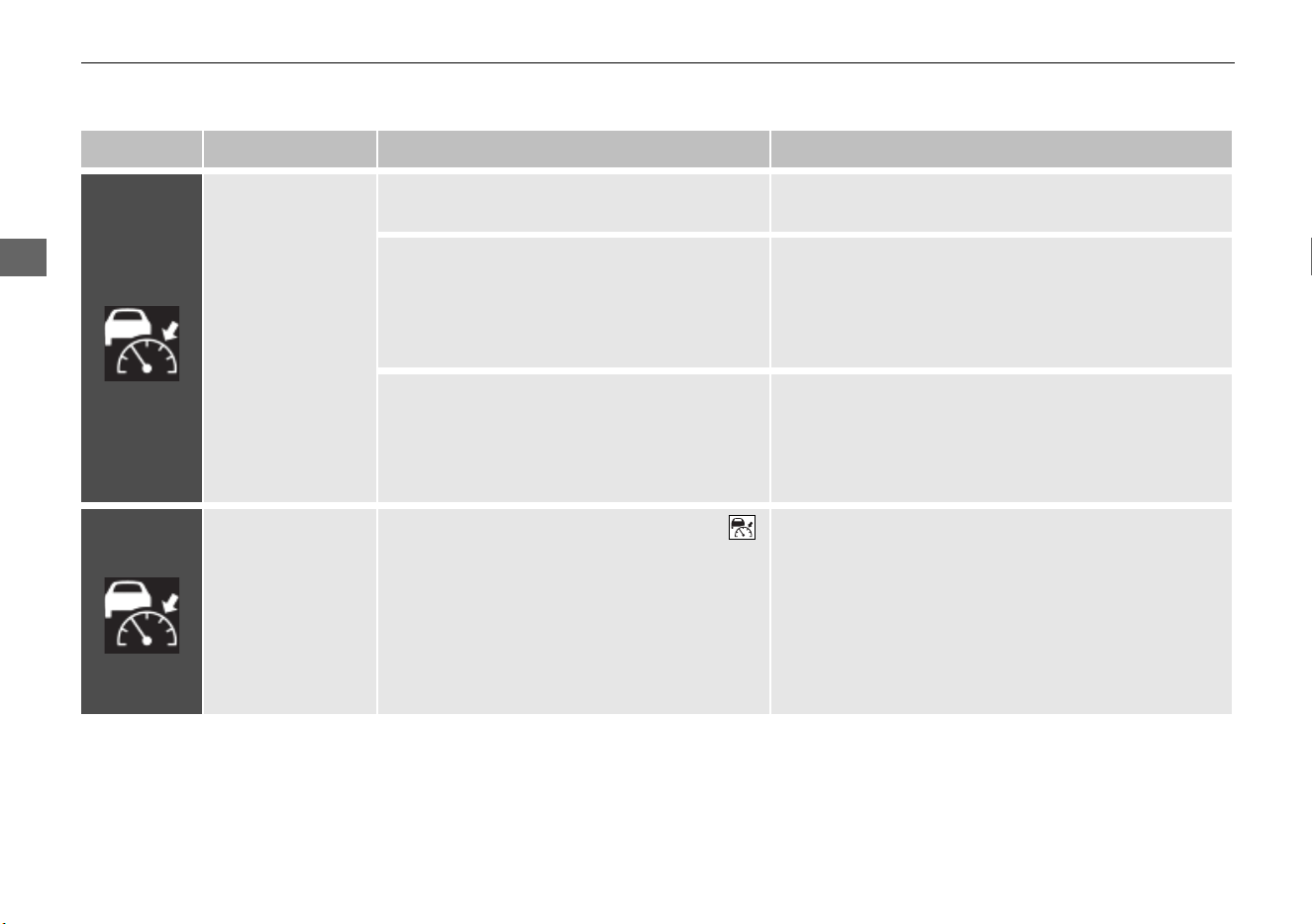
112
uuIndicatorsu
Instrument Panel
Indicator Name On/Blinking Explanation
Adaptive Cruise
Control (ACC) with
Low Speed Follow
Indicator (Amber)
●
Comes on if there is a problem with ACC
with Low Speed Follow.
●
Comes on while driving - Have your vehicle
checked by a dealer.
●
Comes on if the ACC with Low Speed
Follow is deactivated temporarily after the
battery has been disconnected, then
reconnected.
●
With the engine running, turn the steering wheel to
the left until it stops then to the right until it stops,
then drive a short distance at more than 12 mph
(20 km/h). The indicator should go off. If it does
not, have your vehicle checked by a dealer.
●
Indicator may come on temporarily when
the Maximum Load Limit is exceeded.
●
ACC with Low Speed Follow has been
automatically canceled.
●
Make sure the total load is within the Maximum
Load Limit.
2 Maximum Load Limit P. 391
●
Stays on constantly - Have your vehicle checked
by a dealer.
Adaptive Cruise
Control (ACC) with
Low Speed Follow
Indicator
(White/Green)
●
Lights up in white when you press the
button.
●
Lights up in white and green if no vehicle is
detected ahead of you while ACC with Low
Speed Follow is in operation.
●
Lights up in green if a vehicle is detected
ahead of you while ACC with Low Speed
Follow is in operation.
2 Adaptive Cruise Control (ACC) with Low
Speed Follow P. 482
26 PILOT-31T906300.book 112 ページ 2025年10月8日 水曜日 午前11時43分
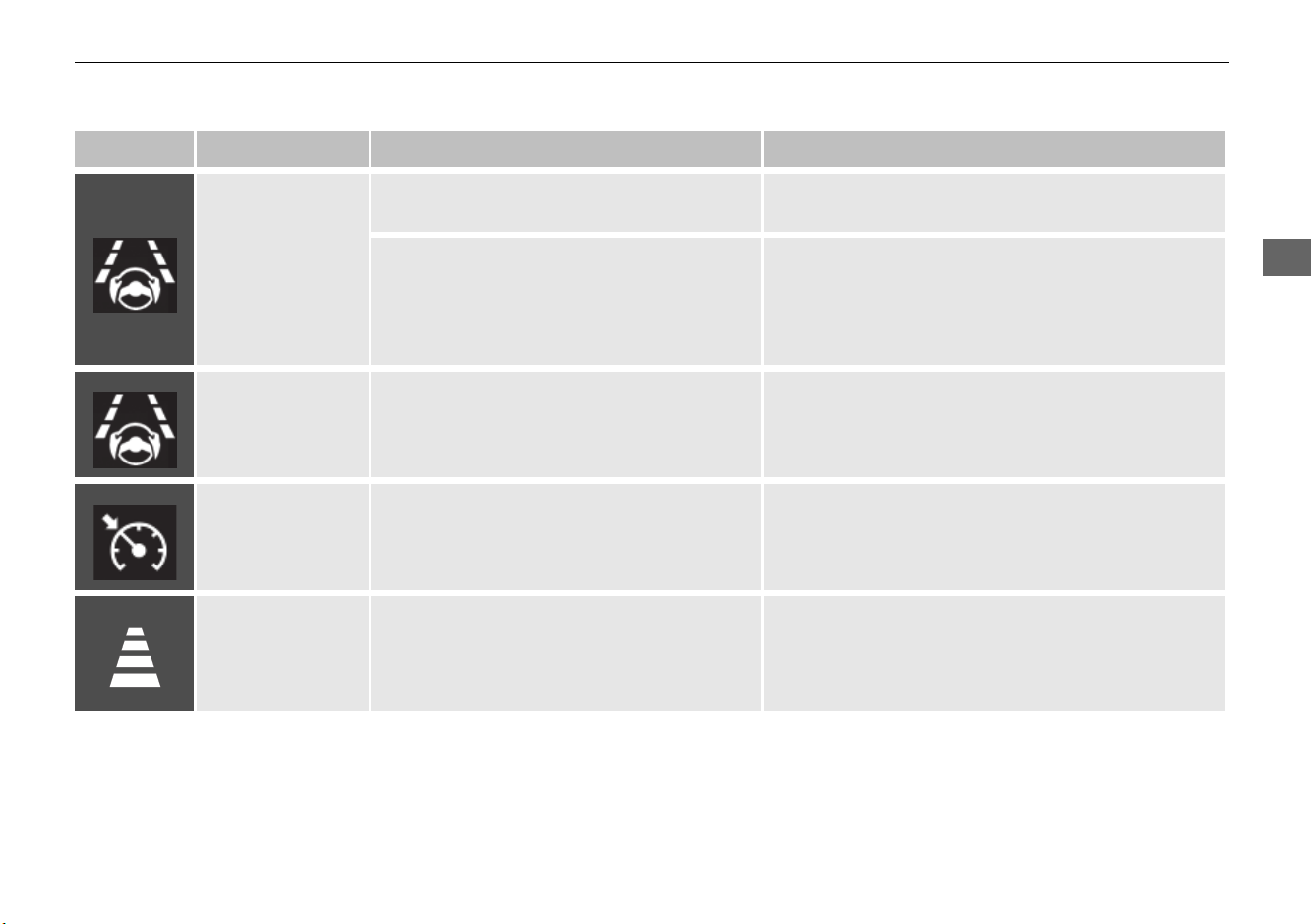
113
uuIndicatorsu
Continued
Instrument Panel
Indicator Name On/Blinking Explanation
Lane Keeping
Assist System
(LKAS) Indicator
(Amber)
●
Comes on if there is a problem with the
LKAS.
●
Stays on constantly - Have your vehicle checked
by a dealer.
●
Indicator may come on temporarily when
the Maximum Load Limit is exceeded.
●
Make sure the total load is within the Maximum
Load Limit.
2 Maximum Load Limit P. 391
●
Stays on constantly - Have your vehicle checked
by a dealer.
Lane Keeping
Assist System
(LKAS) Indicator
(White/Green)
●
Lights up in white when you press the LKAS
button.
●
Lights up in green when the LKAS is in
operation.
2 Lane Keeping Assist System (LKAS) P. 503
2 Traffic Jam Assist P. 514
Cruise Mode
Indicator
(White/Green)
●
Lights up in white when you change to
cruise mode.
●
Lights up in green when you have set a
speed for cruise control.
2 To Switch ACC with Low Speed Follow to
Cruise Control P. 500
Adaptive Cruise
Control (ACC) with
Low Speed Follow
Interval Indicator
●
Comes on when Adaptive Cruise Control
(ACC) with Low Speed Follow indicator
comes on.
2 To Set or Change Following-interval P. 495
26 PILOT-31T906300.book 113 ページ 2025年10月8日 水曜日 午前11時43分
114
uuIndicatorsu
Instrument Panel
Indicator Name On/Blinking Explanation
Safety Support
Indicator (Amber)
●
Comes on if there is a problem with the
Road Departure Mitigation system,
CMBS
TM
, Low Speed Braking Control
*
, or
blind spot information system.
●
Stays on constantly - Have your vehicle checked
by a dealer.
●
Comes on if there is a problem with the
parking sensor.
●
Check if the area around the sensor(s) is covered
with mud, ice, snow, etc. If the indicator stays on
even after you clean the area, have the system
checked by a dealer.
●
Indicator may come on temporarily when
the Maximum Load Limit is exceeded.
●
Make sure the total load is within the Maximum
Load Limit.
2 Maximum Load Limit P. 391
●
Stays on constantly - Have your vehicle checked
by a dealer.
●
Comes on if the Road Departure Mitigation
system, CMBS
TM
and Low Speed Braking
Control
*
are deactivated temporarily after
the battery has been disconnected and
then reconnected.
●
With the engine running, turn the steering wheel to
the left until it stops then to the right until it stops,
then drive a short distance at more than 12 mph
(20 km/h). The indicator should go off. If it does
not, have your vehicle checked by a dealer.
Models with parking sensor system
* Not available on all models
26 PILOT-31T906300.book 114 ページ 2025年10月8日 水曜日 午前11時43分
115
uuIndicatorsu
Continued
Instrument Panel
Indicator Name On/Blinking Explanation
Safety Support
Indicator (Amber)
●
Comes on when the Road Departure
Mitigation system and/or CMBS
TM
shuts
itself off.
●
Indicator may come on temporarily if the radar
sensor cannot detect any objects when passing
through an enclosed space such as a tunnel, or
driving on an open road without any structures
nearby.
●
The area around the radar sensor is blocked by dirt,
mud, etc. Stop your vehicle in a safe place and wipe
the debris off with a soft cloth. Indicator may take
some time to go off after the radar sensor is
cleaned.
●
Have your vehicle checked by a dealer if the
indicator does not go off even after you have
cleaned the radar sensor.
2 Radar Sensor P. 531
●
Stays on - The temperature inside the camera is
too high.
Use the climate control system to cool down the
camera.
The system activates when the temperature inside
the camera cools down.
2 Front Sensor Camera P. 529
26 PILOT-31T906300.book 115 ページ 2025年10月8日 水曜日 午前11時43分
116
uuIndicatorsu
Instrument Panel
Indicator Name On/Blinking Explanation
Safety Support
Indicator (Amber)
●
Comes on when the Road Departure
Mitigation system and/or CMBS
TM
shuts
itself off.
●
Stays on - The area around the camera is blocked
by dirt, mud, etc. Stop your vehicle in a safe place
and wipe the debris off with a soft cloth.
●
Have your vehicle checked by a dealer if the
indicator and message are still displayed even after
you have cleaned the area around the camera.
2 Front Sensor Camera P. 529
●
It may come on when the ambient conditions are
dark, such as when driving in a tunnel, or at night,
dawn, or dusk.
●
Comes on when mud, snow, or ice
accumulates in the vicinity of the sonar
sensor.
●
Remove the obstacle in the vicinity of the sonar
sensor.
2 Low Speed Braking Control
*
P. 468
2 Sonar Sensors
*
P. 532
●
Comes on when mud, snow, or ice
accumulates in the vicinity of the blind spot
information system sensor.
●
Comes on when the temperature of the
blind spot information system sensor is
high.
●
Comes on while driving - Something may be
interfering with the blind spot information system
sensor. Check the vicinity of the blind spot
information system sensor and remove any
obstacles.
●
The system will return to normal when the
temperature cools down.
2 Blind Spot Information System P. 449
Models with Low Speed Braking Control
* Not available on all models
26 PILOT-31T906300.book 116 ページ 2025年10月8日 水曜日 午前11時43分
117
uuIndicatorsu
Instrument Panel
Indicator Name On/Blinking Explanation
Safety Support
Indicator (Green/
Gray)
●
Lights up in green when Road Departure
Mitigation system, CMBS
TM
, Low Speed
Braking Control
*
, blind spot information
system, and parking sensor system
*
are on.
●
Lights up in green and gray when one or
more of the systems above are off.
●
Lights up in gray when all systems above
are off.
2 Road Departure Mitigation System P. 474
2 Blind Spot Information System P. 449
2 Low Speed Braking Control
*
P. 468
2 Collision Mitigation Braking System
TM
(CMBS
TM
) P. 456
2 Parking Sensor System
*
P. 544
* Not available on all models
26 PILOT-31T906300.book 117 ページ 2025年10月8日 水曜日 午前11時43分
118
Instrument Panel
Gauges and Displays
Gauges
Gauges include the speedometer, fuel gauge, and other related indicators.
They are displayed when the power mode is in ON.
Displays your driving speed in mph or km/h.
■
Speedometer
1Speedometer
You can change the Speed/Distance units.
2 Speed/distance units P. 140
2 Customized Features P. 346
If you change the unit from miles and mph to km and
km/h, the current vehicle speed in mph appears next
to the digital speedometer.
U.S. models
Vehicle Speed in mph
26 PILOT-31T906300.book 118 ページ 2025年10月8日 水曜日 午前11時43分
Continued
119
uuGauges and DisplaysuGauges
Instrument Panel
Shows the number of engine revolutions per minute.
Displays the amount of fuel left in the fuel tank.
Displays the temperature of the engine coolant.
Shows the total number of miles or kilometers that your vehicle has accumulated.
■
Tachometer
■
Fuel Gauge
■
Temperature Gauge
■
Odometer
1Fuel Gauge
NOTICE
You should refuel when the reading approaches .
Running out of fuel can cause the engine to misfire,
damaging the catalytic converter.
After lightly refueling, or depending on your vehicle’s
condition, the actual amount of remaining fuel may
differ from the fuel gauge reading.
E
1Temperature Gauge
NOTICE
Driving with the temperature gauge reading in the
upper zone can cause serious engine damage. Pull
safely to the side of the road and allow engine
temperature to return to normal.
2 Overheating P. 645
26 PILOT-31T906300.book 119 ページ 2025年10月8日 水曜日 午前11時43分
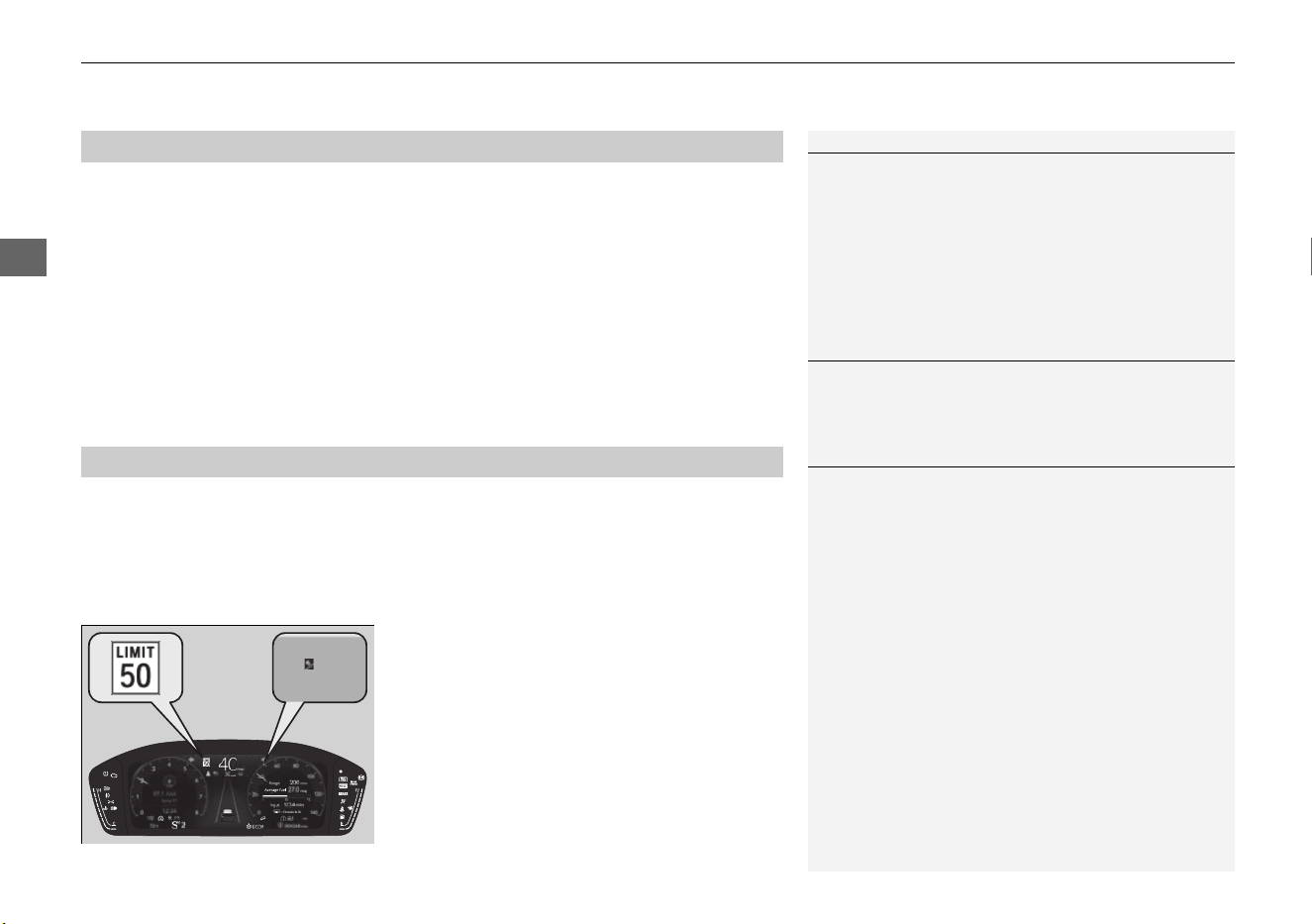
uuGauges and DisplaysuGauges
120
Instrument Panel
Shows the outside temperature in Fahrenheit (U.S.) or Celsius (Canada).
■
Adjusting the outside temperature display
Adjust the temperature reading by up to ±5°F or ±3°C if the temperature reading
seems incorrect.
Shows certain detected traffic signs while driving.
If speed limit warning is activated, the sign icon blinks when the maximum speed of
the traffic sign detected is exceeded by a threshold, when compared with the vehicle
speed.
2 Traffic Sign Recognition System P. 523
■
Outside Temperature
■
Traffic Sign Recognition System
1Outside Temperature
The temperature sensor is in the front bumper.
Road heat and exhaust from another vehicle can
affect the temperature reading when your vehicle
speed is less than 19 mph (30 km/h).
It may take several minutes for the display to be
updated after the temperature reading has stabilized.
1Adjusting the outside temperature display
You can adjust the threshold for speed limit warning.
2 Customized Features P. 346
1Traffic Sign Recognition System
The default speed limit warning threshold is the
maximum speed of the traffic sign detected.
You can adjust the threshold for speed limit warning.
2 Customized Features P. 346
26 PILOT-31T906300.book 120 ページ 2025年10月8日 水曜日 午前11時43分
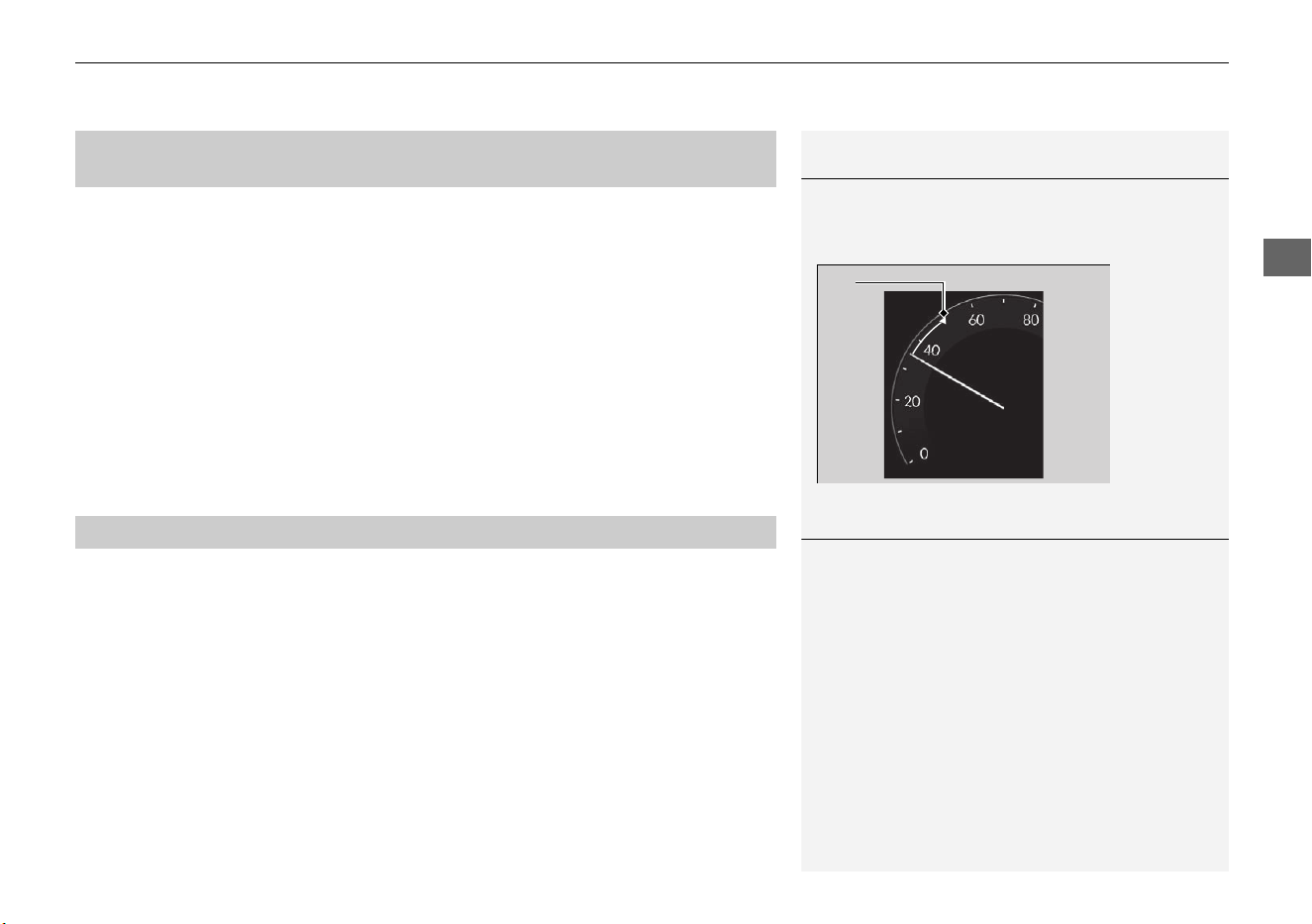
121
uuGauges and DisplaysuGauges
Instrument Panel
Shows the current mode for ACC with Low Speed Follow, LKAS, and Traffic Jam
Assist.
2 Adaptive Cruise Control (ACC) with Low Speed Follow P. 482
2 Lane Keeping Assist System (LKAS) P. 503
2 Traffic Jam Assist P. 514
Shows information about the parking sensor system.
2 Parking Sensor System
*
P. 544
■
Current Mode for ACC with Low Speed Follow, the LKAS,
and Traffic Jam Assist
■
Parking Sensor System
*
1Current Mode for ACC with Low Speed Follow, the LKAS, and
Traffic Jam Assist
When you set speed for ACC with Low Speed Follow
or cruise control, a set speed mark will be displayed
on the speedometer.
Set
Speed
1Parking Sensor System
*
This display will automatically be shown when the
TRAIL mode
*
is selected.
2 Drive Mode System P. 433
* Not available on all models
26 PILOT-31T906300.book 121 ページ 2025年10月8日 水曜日 午前11時43分
122
uuGauges and DisplaysuDriver Information Interface (Left Side Area)
Instrument Panel
Driver Information Interface (Left Side Area)
Shows the current mode for audio and phone information, etc.
2 Audio Remote Controls P. 268
2 Bluetooth® HandsFreeLink® P. 369
Shows the clock.
■
Clock
1Clock
You can adjust the time manually and change the
clock display to show the 12 hour clock or 24 hour
clock.
2 Clock P. 150
You can choose whether the clock is displayed on the
driver information interface.
2 Customize Display P. 124
26 PILOT-31T906300.book 122 ページ 2025年10月8日 水曜日 午前11時43分
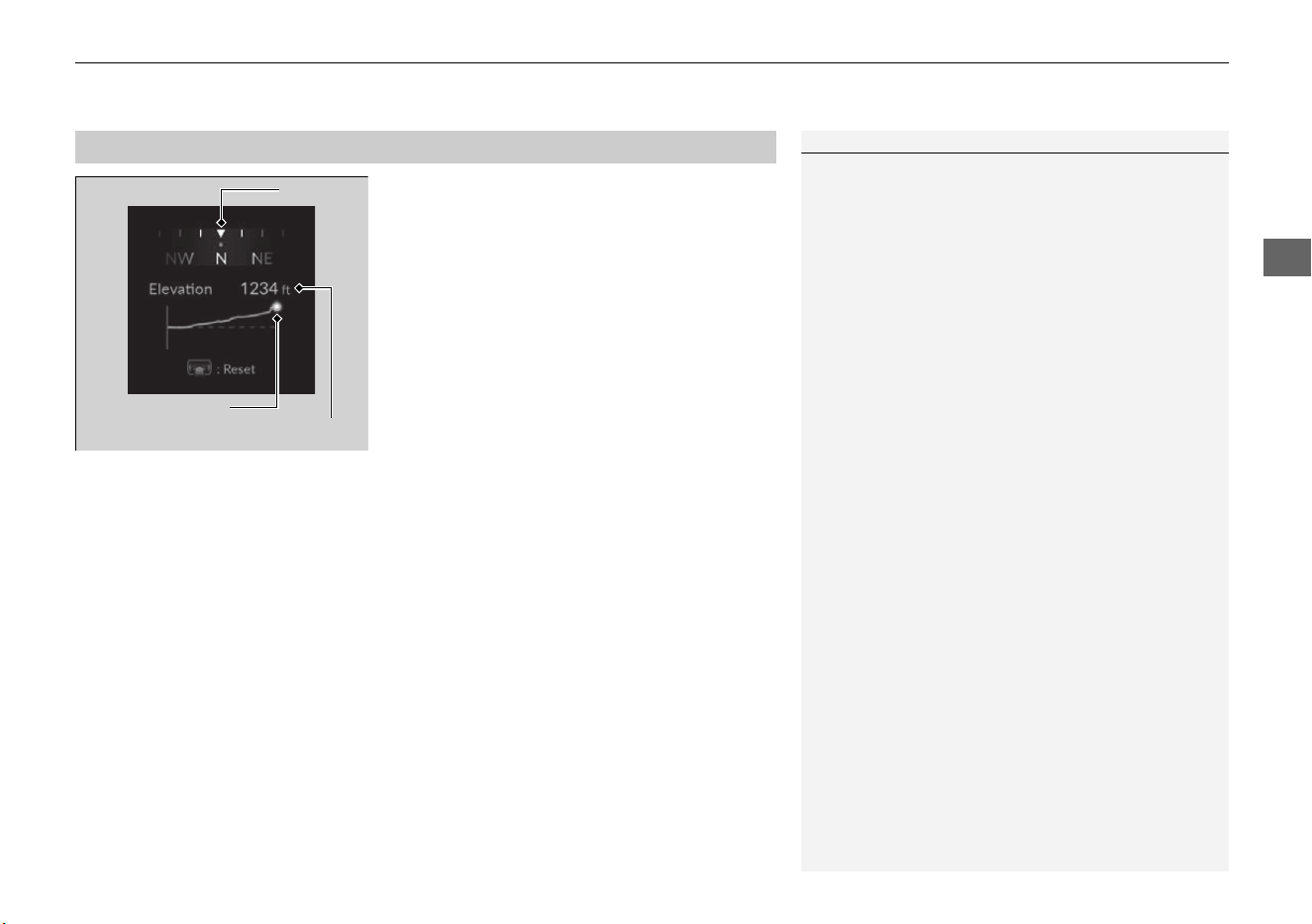
Continued
123
uuGauges and DisplaysuDriver Information Interface (Left Side Area)
Instrument Panel
Select Elevation and compass on the
customize display to show elevation and the
compass.
2 Customize Display P. 124
■
Reset Elevation History
Press the left selector wheel, and then select Reset.
■
Elevation and Compass
*
1Elevation and Compass
*
This display will automatically be shown when the
TRAIL mode is selected. It is also user selectable
when in any drive mode.
2 Drive Mode System P. 433
This feature uses information from GPS satellite
signals, so it requires open skies for the best accuracy.
If used when in cities or around large/tall objects, the
signal may not be sufficient to display an accurate
Elevation. In these situations, the display will not
show an elevation value and will instead show -----.
Elevation History will also not be displayed.
Elevation history is shown for the previous 10 miles
(16 km) of driving (X-axis). Once you drive further
than 10 miles (16 km), the display shows a scrolling
history of the past 10 miles (16 km). The Y-axis
represents the elevation. This starts with a scale of
+/-200 feet (61 meters) from your current elevation.
As you go beyond that, the elevation scale will adjust
to continue to show all your data.
Compass
Elevation
Elevation History
* Not available on all models
26 PILOT-31T906300.book 123 ページ 2025年10月8日 水曜日 午前11時43分
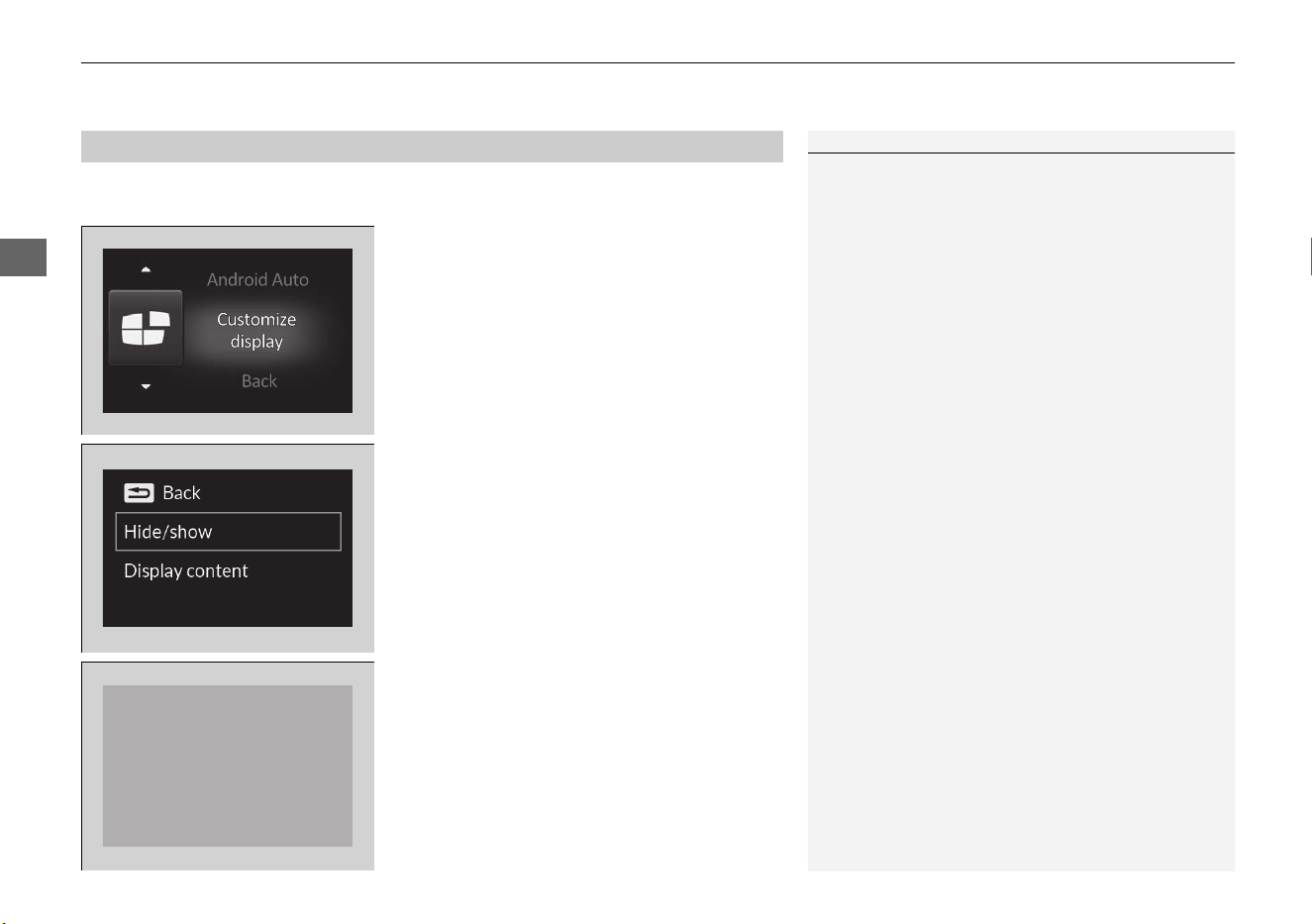
uuGauges and DisplaysuDriver Information Interface (Left Side Area)
124
Instrument Panel
■
Arrange audio source on the left side area
You can choose which sources to display on the audio source screen.
1. Roll the left selector wheel until Customize
display is selected, then press the left
selector wheel.
2. Roll the left selector wheel to scroll to select
Hide/show, then press the left selector
wheel.
3. Roll the left selector wheel to scroll
between audio sources, then press the left
selector wheel to check or uncheck them.
■
Customize Display
1Customize Display
When you customize settings, shift to
(P.
26 PILOT-31T906300.book 124 ページ 2025年10月8日 水曜日 午前11時43分
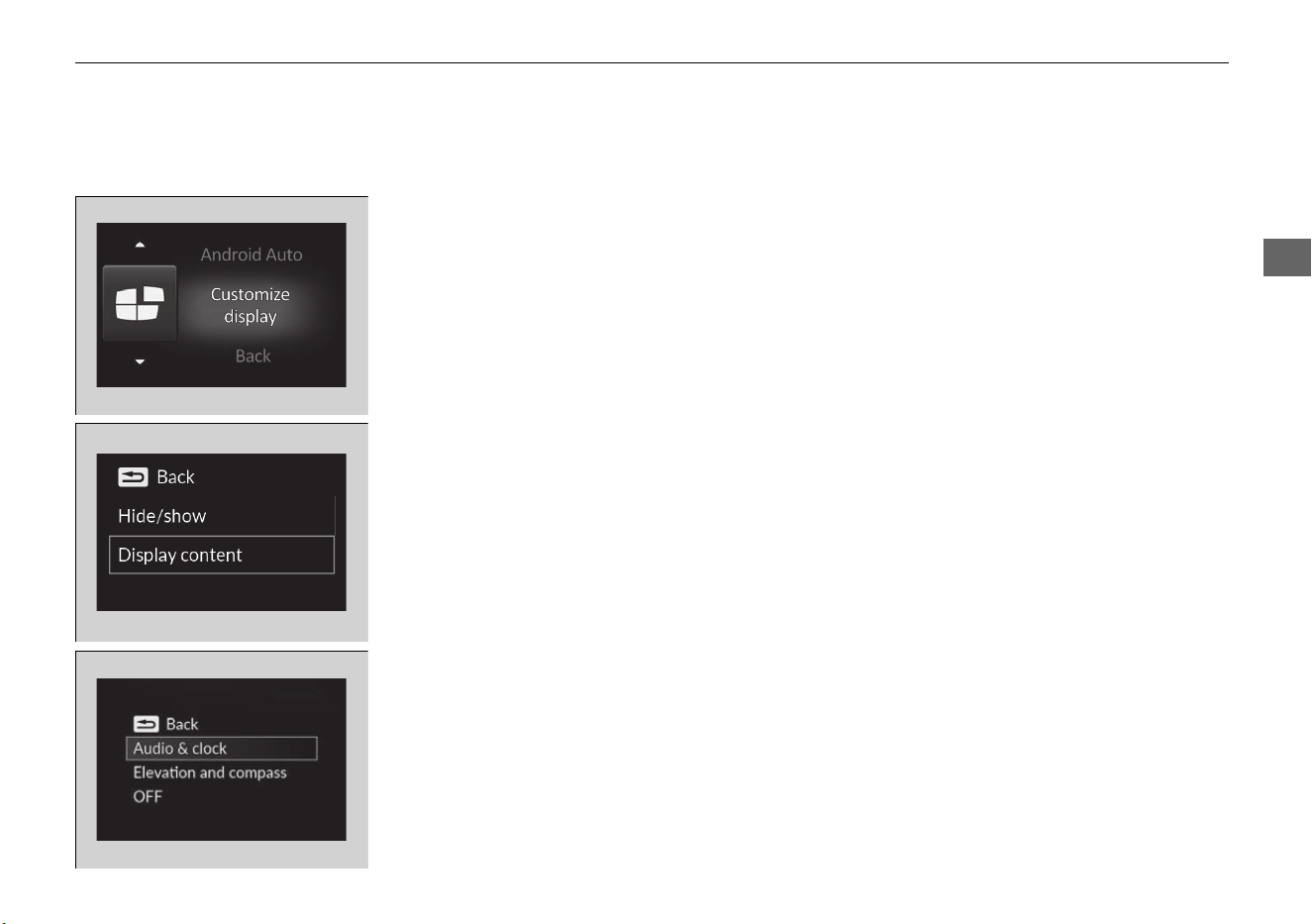
125
uuGauges and DisplaysuDriver Information Interface (Left Side Area)
Instrument Panel
■
Select the display content on the left side area
You can change the display content on the left side area. Select Audio & clock,
Elevation and compass
*
, or OFF.
1. Roll the left selector wheel until Customize
display is selected, then press the left
selector wheel.
2. Roll the left selector wheel to scroll to select
Display content, then press the left
selector wheel.
3. Roll the left selector wheel to scroll to select
your desired content, then press the left
selector wheel.
* Not available on all models
26 PILOT-31T906300.book 125 ページ 2025年10月8日 水曜日 午前11時43分
126
uuGauges and DisplaysuDriver Information Interface (Right Side Area)
Instrument Panel
Driver Information Interface (Right Side Area)
The driver information interface shows information such as the estimated travelable
distance and fuel economy of the vehicle. It also displays messages such as warnings
and other helpful information.
When a warning message displays, please check the message and contact a dealer
to have the vehicle inspected if necessary. Please refer to the pages below if the
Engine oil pressure low or Engine temperature too hot message is displayed.
2 If the Engine oil pressure low Warning Appears P. 647
2 Overheating P. 645
Roll the right selector wheel to view different types of content.
■
Switching the Display
1Switching the Display
You can add or delete the meter contents.
2 Gauge Display Settings P. 140
26 PILOT-31T906300.book 126 ページ 2025年10月8日 水曜日 午前11時43分
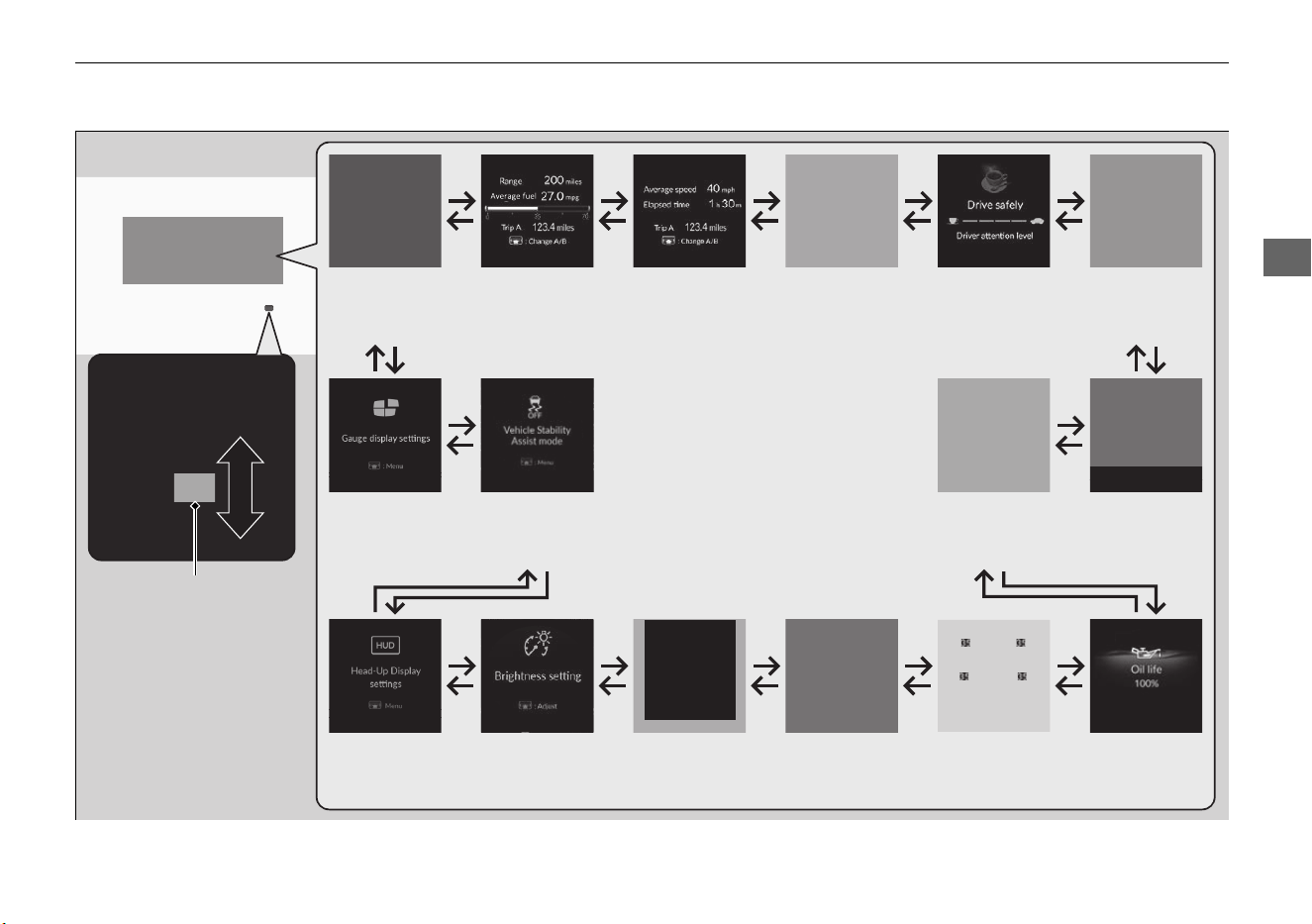
127
uuGauges and DisplaysuDriver Information Interface (Right Side Area)
Continued
Instrument Panel
Right Selector
Wheel
Warning
Messages
P. 142
Range/Fuel/
Trip Meter
P. 128
No Content
Driver Attention
Monitor
P. 132
Navigation
P. 131
Speed/Time/
Trip Meter
P. 130
Gauge Display
Settings
P. 140
Maintenance
P. 136
Safety Support
P. 137
Seat Belts
P. 136
Head-Up Display
Settings
P. 144
Brightness
Setting
P. 139
Tire Pressure
P. 136
AWD torque
Distribution
*
P. 135
Vehicle Stability
Assist Mode
P. 139
Pitch and Roll
*
P. 135
* Not available on all models
26 PILOT-31T906300.book 127 ページ 2025年10月8日 水曜日 午前11時43分
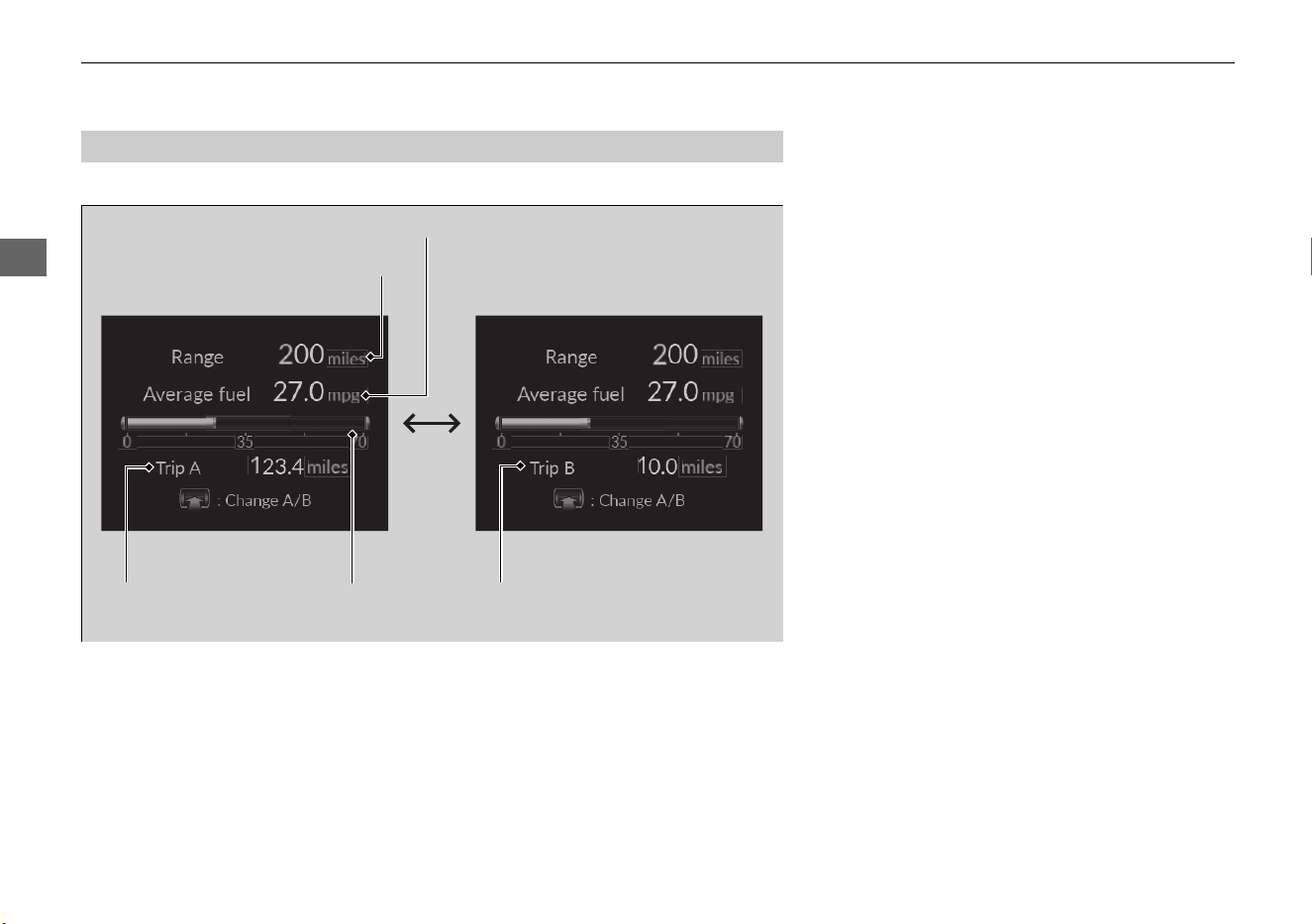
128
uuGauges and DisplaysuDriver Information Interface (Right Side Area)
Instrument Panel
Press the right selector wheel to switch between trip meter A and trip meter B.
■
Trip meter
Shows the total number of miles or kilometers driven since the last reset. Meters A
and B can be used to measure two separate trips.
Resetting a trip meter
To reset the trip meter, display it, press and hold the right selector wheel, and then
select Reset.
u The trip meter is reset to 0.0.
■
Range/Fuel/Trip Meter
Trip Meter A
Range
Average Fuel Economy
Instant Fuel
Economy
Trip Meter B
26 PILOT-31T906300.book 128 ページ 2025年10月8日 水曜日 午前11時43分
Continued
129
uuGauges and DisplaysuDriver Information Interface (Right Side Area)
Instrument Panel
■
Average fuel economy
Shows the estimated average fuel economy of each trip meter in mpg or l/100 km.
The display is updated at set intervals. When a trip meter is reset, the average fuel
economy is also reset.
■
Instant fuel economy
Shows the instant fuel economy as a bar graph in mpg or l/100 km.
■
Range
Shows the estimated distance you can travel on the remaining fuel. This estimated
distance is based on the vehicle’s current fuel economy.
1Average fuel economy
You can change when to reset the average fuel
economy.
2 Customized Features P. 346
1Range
The driving range displayed is only an estimate and
may differ from the actual distance the vehicle can
travel.
26 PILOT-31T906300.book 129 ページ 2025年10月8日 水曜日 午前11時43分
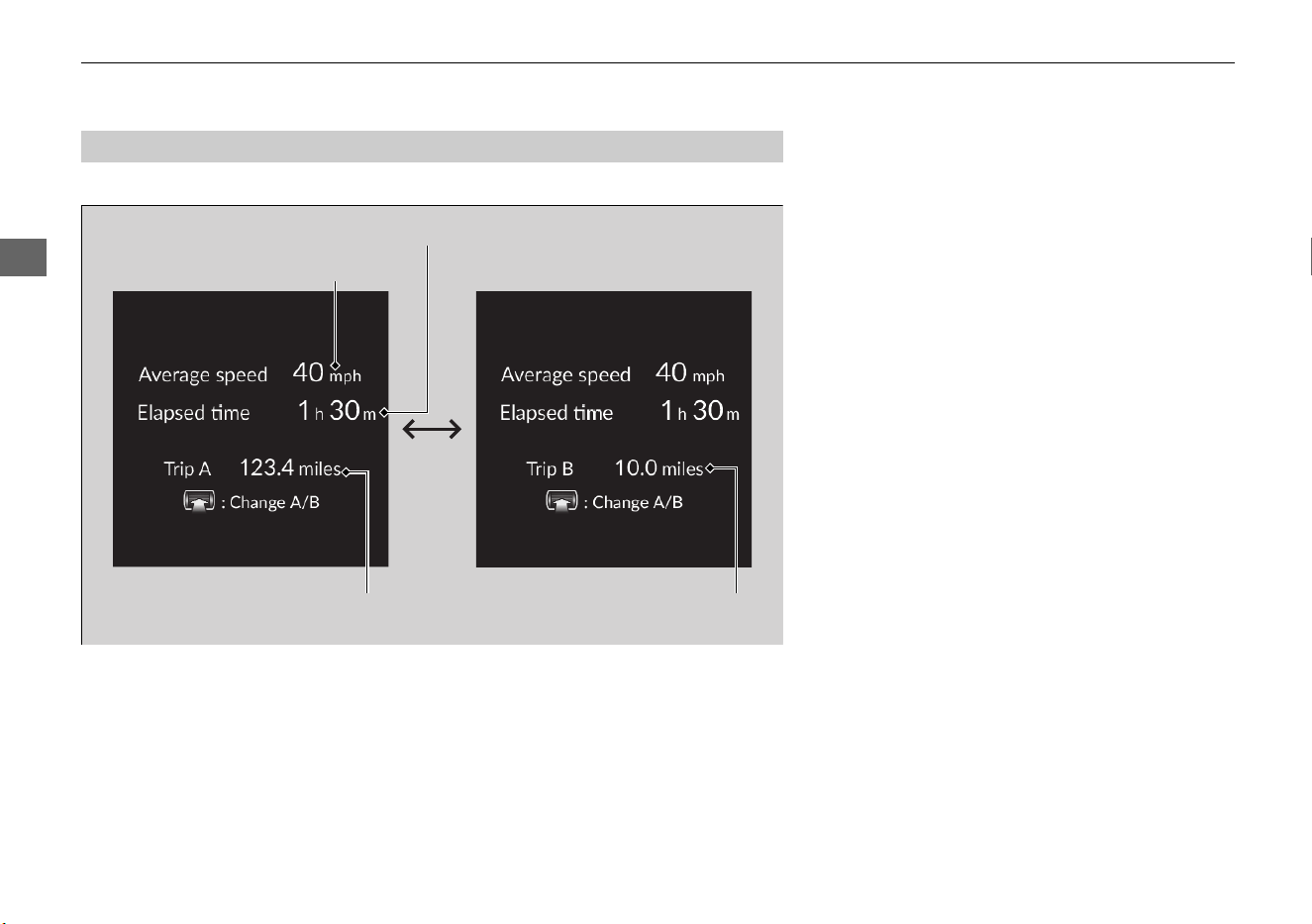
130
uuGauges and DisplaysuDriver Information Interface (Right Side Area)
Instrument Panel
Press the right selector wheel to switch between trip meter A and trip meter B.
■
Speed/Time/Trip Meter
Trip Meter A
Elapsed Time
Trip Meter B
Average Speed
26 PILOT-31T906300.book 130 ページ 2025年10月8日 水曜日 午前11時43分
Continued
131
uuGauges and DisplaysuDriver Information Interface (Right Side Area)
Instrument Panel
■
Trip meter
2 Trip meter P. 128
■
Elapsed time
Shows the time elapsed since Trip A or Trip B was reset.
■
Average speed
Shows the average speed in mph or km/h since Trip A or Trip B was reset.
The map, compass screen, and turn-by-turn directions appear based on the driving
guidance provided by Google Maps, Apple CarPlay, or Android Auto.
2 Google built-in P. 317
2 Apple CarPlay P. 309
2 Android Auto
TM
P. 313
■
Navigation
1Elapsed time
You can change when to reset the elapsed time.
2 Customized Features P. 346
1Average speed
You can change when to reset the average speed.
2 Customized Features P. 346
1Navigation
You can select whether to have the turn-by-turn
display come on or not during the route guidance.
2 Customized Features P. 346
Navigation features may not be available for all
devices or apps.
26 PILOT-31T906300.book 131 ページ 2025年10月8日 水曜日 午前11時43分
uuGauges and DisplaysuDriver Information Interface (Right Side Area)
132
Instrument Panel
The Driver Attention Monitor analyzes steering inputs to determine if the vehicle is
being driven in a manner consistent with drowsy or inattentive driving. If it
determines that the vehicle is being driven in such a manner, it will display the
degree of the driver’s attention on the driver information interface.
When you select Driver Attention Monitor on
the driver information interface, bars on it
light up in white to indicate the degree of the
driver’s attention.
2 Switching the Display P. 126
■
Driver Attention Monitor
1Driver Attention Monitor
The Driver Attention Monitor cannot always detect if
the driver is tired or inattentive.
Regardless of the system’s feedback, if you are
feeling tired, stop in a safe location and rest for as
long as needed.
Driver Information Interface
Right Selector
Wheel
Level
26 PILOT-31T906300.book 132 ページ 2025年10月8日 水曜日 午前11時43分

133
uuGauges and DisplaysuDriver Information Interface (Right Side Area)
Continued
Instrument Panel
If two bars light up, the Driver attention
level low message will appear.
If one bar lights up, the Driver attention
level low. Time for a break. message will
appear, a beep will sound, and the steering
wheel will vibrate.
If this message appears, stop in a safe location
and rest for as long as needed.
The message will disappear when the right
selector wheel is rolled or when the system
has determined that the driver is driving
normally.
If the driver does not take a break and the
monitor continues to detect that the driver is
very tired, the message will appear again after
approximately 15 minutes, accompanied by a
beep and steering wheel vibrations.
The message does not appear when the
traveling time is 30 minutes or less.
26 PILOT-31T906300.book 133 ページ 2025年10月8日 水曜日 午前11時43分
uuGauges and DisplaysuDriver Information Interface (Right Side Area)
134
Instrument Panel
■
The Driver Attention Monitor resets when:
• The engine is turned off.
• The driver unfastens the seat belt and opens the door while the vehicle is stopped.
■
For the Driver Attention Monitor to function:
• The vehicle must be traveling above 25 mph (40 km/h).
• The electric power steering (EPS) system indicator must be off.
■
Depending on driving conditions or other factors, the Driver Attention
Monitor may not function in the following circumstances:
• The steering assist function of the Lane Keeping Assist System (LKAS) is active.
2 Lane Keeping Assist System (LKAS) P. 503
• The condition of the road is poor; e.g., the surface is unpaved or bumpy.
• It is windy.
• The driver is frequently operating the vehicle in an assertive manner, such as
changing lanes or accelerating.
■
Customizing
You can change the Driver Attention Monitor settings. Select Tactile And Audible
Alert, Tactile Alert, or OFF.
2 Customized Features P. 346
1For the Driver Attention Monitor to function:
The bars on the driver information interface remain
grayed-out unless the Driver Attention Monitor is
functioning.
26 PILOT-31T906300.book 134 ページ 2025年10月8日 水曜日 午前11時43分
Continued
135
uuGauges and DisplaysuDriver Information Interface (Right Side Area)
Instrument Panel
The indicators on the display show the amount of torque being transferred to the
right front, left front, right rear, and left rear wheels.
2 Intelligent Variable Torque Management (i-VTM4
TM
) AWD System
*
P. 444
Shows the pitch and roll status.
■
AWD Torque Distribution Monitor
*
■
Pitch and Roll
*
1Pitch and Roll
*
This Pitch/Roll gauge is intended for reference when
the vehicle is not moving. If the vehicle is moving, G
inputs will affect the accuracy of the displayed angle.
This display will automatically be shown when the
TRAIL mode is selected. It is also user selectable
when in any drive mode.
2 Drive Mode System P. 433
* Not available on all models
26 PILOT-31T906300.book 135 ページ 2025年10月8日 水曜日 午前11時43分

136
uuGauges and DisplaysuDriver Information Interface (Right Side Area)
Instrument Panel
Occurs, under specified conditions, when seat belts are latched or unlatched.
2 Seat Belt Reminder P. 43
Shows the remaining oil life and Maintenance Minder
TM
.
2 Maintenance Minder
TM
P. 573
Shows each tire’s pressure.
2 Tire Pressure Monitoring System (TPMS) with Tire Fill Assist P. 445
■
Seat Belts
■
Maintenance
■
Tire Pressure Monitor
26 PILOT-31T906300.book 136 ページ 2025年10月8日 水曜日 午前11時43分
Continued
137
uuGauges and DisplaysuDriver Information Interface (Right Side Area)
Instrument Panel
Indicates the status of the Road Departure Mitigation system, CMBS
TM
, Low Speed
Braking Control
*
, blind spot information system, and parking sensor system
*
, such
as On, Off, or Failure, by color and letters.
The following colors indicate the status of any of the above-mentioned systems:
• Green: The system is on.
• Gray: The system is off.
• Amber: There is a problem with the system.
■
Safety Support
1Safety Support
If a system is indicated by the color amber, have your
vehicle checked by a dealer immediately.
To turn each system on or off, first press the right
selector wheel to switch displays. From the next
display, you can select which system to turn on or off.
2 Road Departure Mitigation System P. 474
2 Blind Spot Information System P. 449
2 Collision Mitigation Braking System
TM
(CMBS
TM
) P. 456
2 Low Speed Braking Control
*
P. 468
2 Parking Sensor System
*
P. 544
You can also confirm the status of each function by
the color of the safety support indicator.
2 Safety Support Indicator (Amber) P. 114
2 Safety Support Indicator (Green/Gray)
P. 117
* Not available on all models
26 PILOT-31T906300.book 137 ページ 2025年10月8日 水曜日 午前11時43分
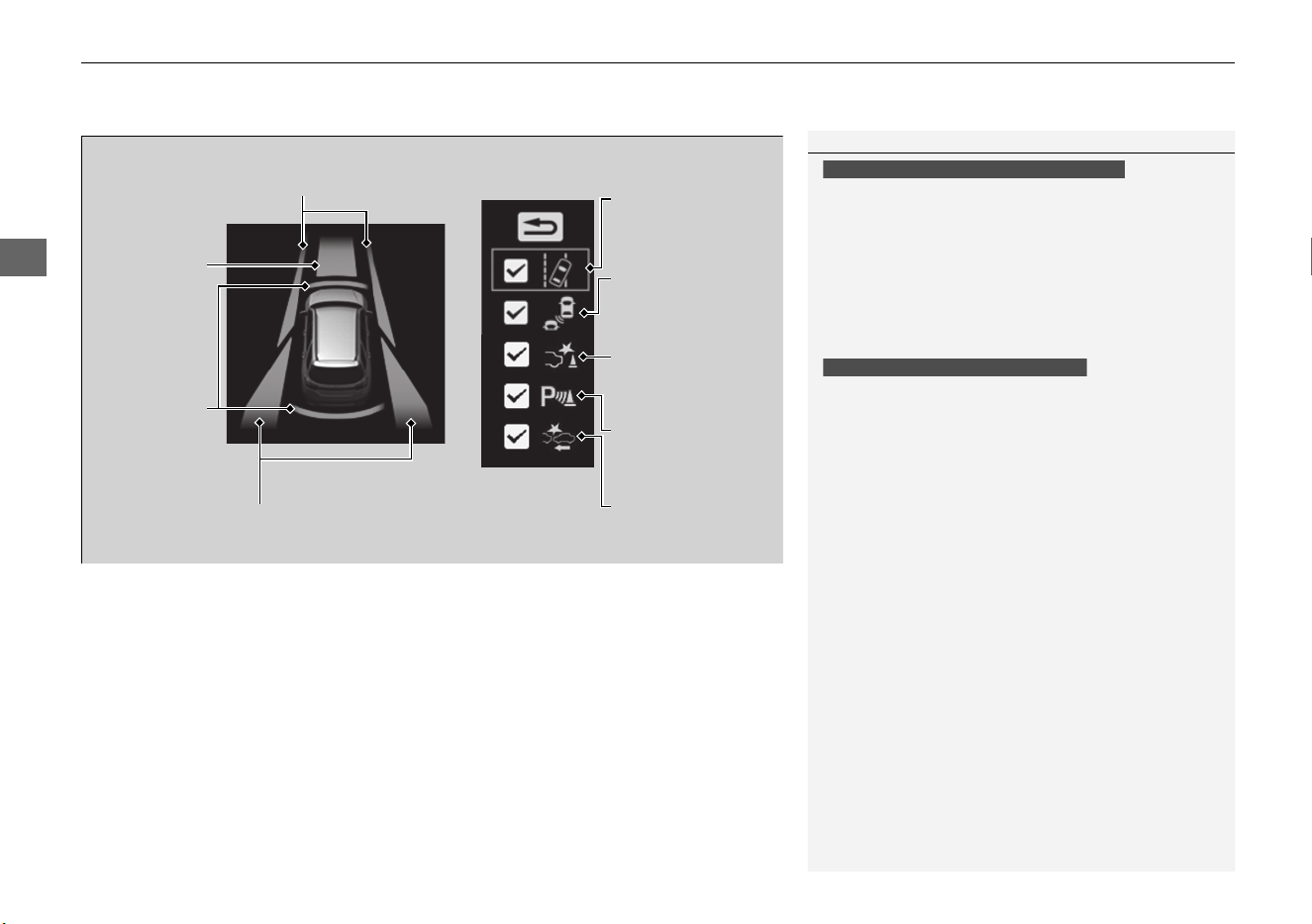
uuGauges and DisplaysuDriver Information Interface (Right Side Area)
138
Instrument Panel
1Safety Support
Even when the Low Speed Braking Control icon is
green, if the Rear Sensor Setting is turned off or
when Drive Mode is changed to TOW mode, Low
Speed Braking Control will not operate when
reversing.
2 Customized Features P. 346
2 Drive Mode System P. 433
Even when the parking sensor system icon is green, if
the Rear Sensor Setting is turned off or when Drive
Mode is changed to TOW mode, the rear parking
sensor will not operate when reversing.
2 Customized Features P. 346
2 Drive Mode System P. 433
Models with Low Speed Braking Control
Models with parking sensor system
Area Info for Road Departure
Mitigation System
Area Info for Blind Spot
Information System
Blind Spot
Information System
Icon and Status Info
Road Departure
Mitigation System
Icon and Status Info
Area Info for
the Low Speed
Braking
Control
*
and
Parking Sensor
System
*
Low Speed Braking
Control Icon and
Status Info
*
CMBS
TM
Icon and
Status Info
Area Info for
CMBS
TM
Parking Sensor
System Icon and
Status Info
*
* Not available on all models
26 PILOT-31T906300.book 138 ページ 2025年10月8日 水曜日 午前11時43分
Continued
139
uuGauges and DisplaysuDriver Information Interface (Right Side Area)
Instrument Panel
Press the right selector wheel when the Brightness setting screen is displayed.
When the power mode is in ON, you can use the right selector wheel to adjust
instrument panel brightness.
Brighten: Roll the right selector wheel up.
Dim: Roll the right selector wheel down.
Press the right selector wheel to exit.
You can turn the VSA® on or off.
Roll the right selector wheel to scroll to select
Reduce traction control, then press the right
selector wheel to check or uncheck it.
2 Vehicle Stability Assist
TM
(VSA®), aka
Electronic Stability Control (ESC), System
P. 441
■
Brightness Setting
■
Vehicle Stability Assist Mode
1Brightness Setting
The brightness of the gauge is automatically adjusted
depending on the ambient brightness.
• The brightness decreases when the ambient light is
dark.
• The brightness increases when the ambient light is
bright.
When cabin ambient lighting is either very bright or
very dark, individual changes to the setting are
limited by the system and will only result in negligible
changes to screen brightness. Once cabin ambient
lighting is no longer very bright or very dark, the
brightness will automatically adjust to the selected
level.
26 PILOT-31T906300.book 139 ページ 2025年10月8日 水曜日 午前11時43分
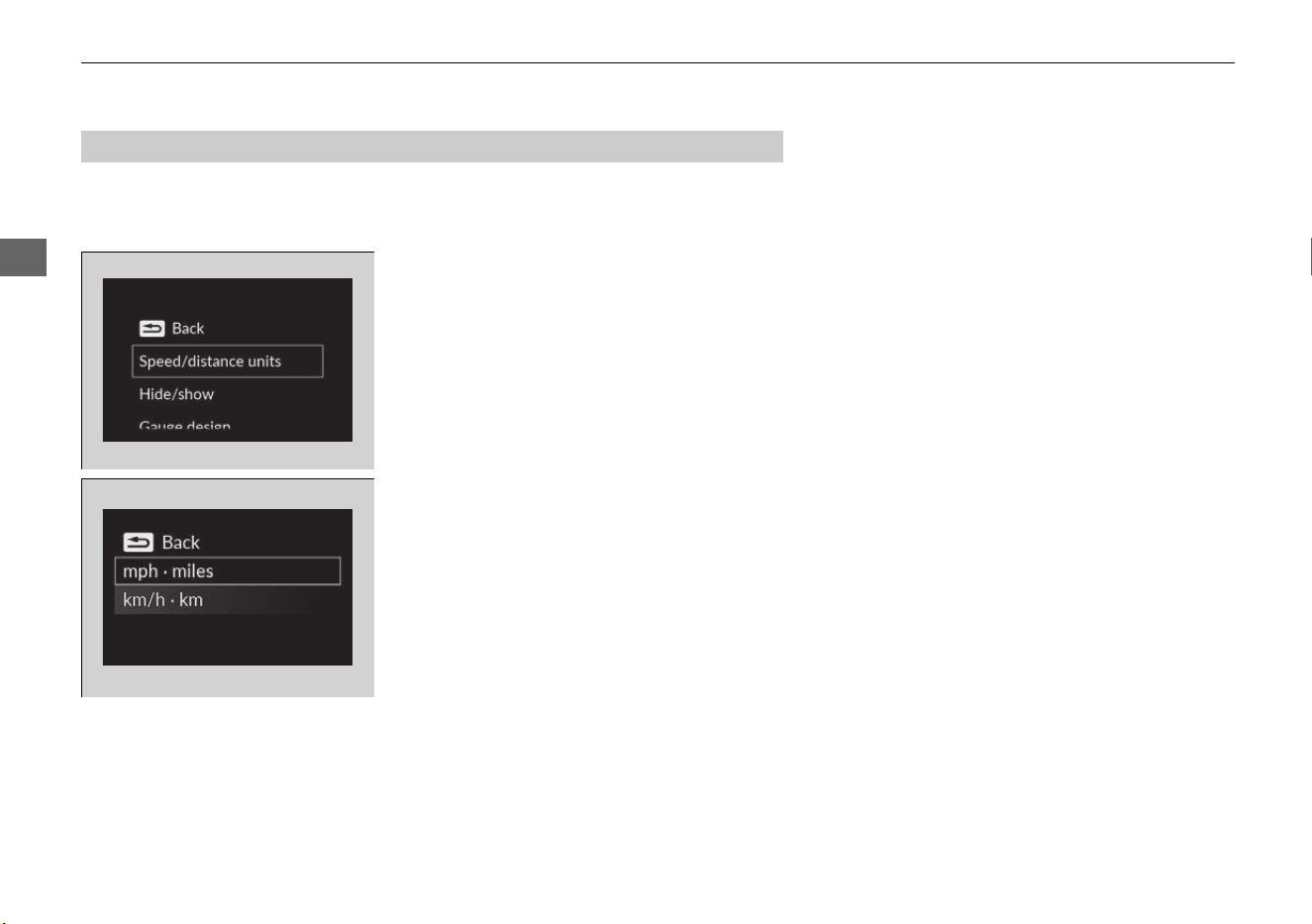
140
uuGauges and DisplaysuDriver Information Interface (Right Side Area)
Instrument Panel
■
Speed/distance units
Enables you to set the displayed measurements to read in either miles and mph or
km and km/h.
1. Press the right selector wheel when you
select the Gauge display settings on the
driver information interface.
2. Roll the right selector wheel to scroll to
select Speed/distance units, then press
the right selector wheel.
3. Roll the right selector wheel to scroll to
select your desired settings, then press the
right selector wheel.
■
Gauge Display Settings
26 PILOT-31T906300.book 140 ページ 2025年10月8日 水曜日 午前11時43分
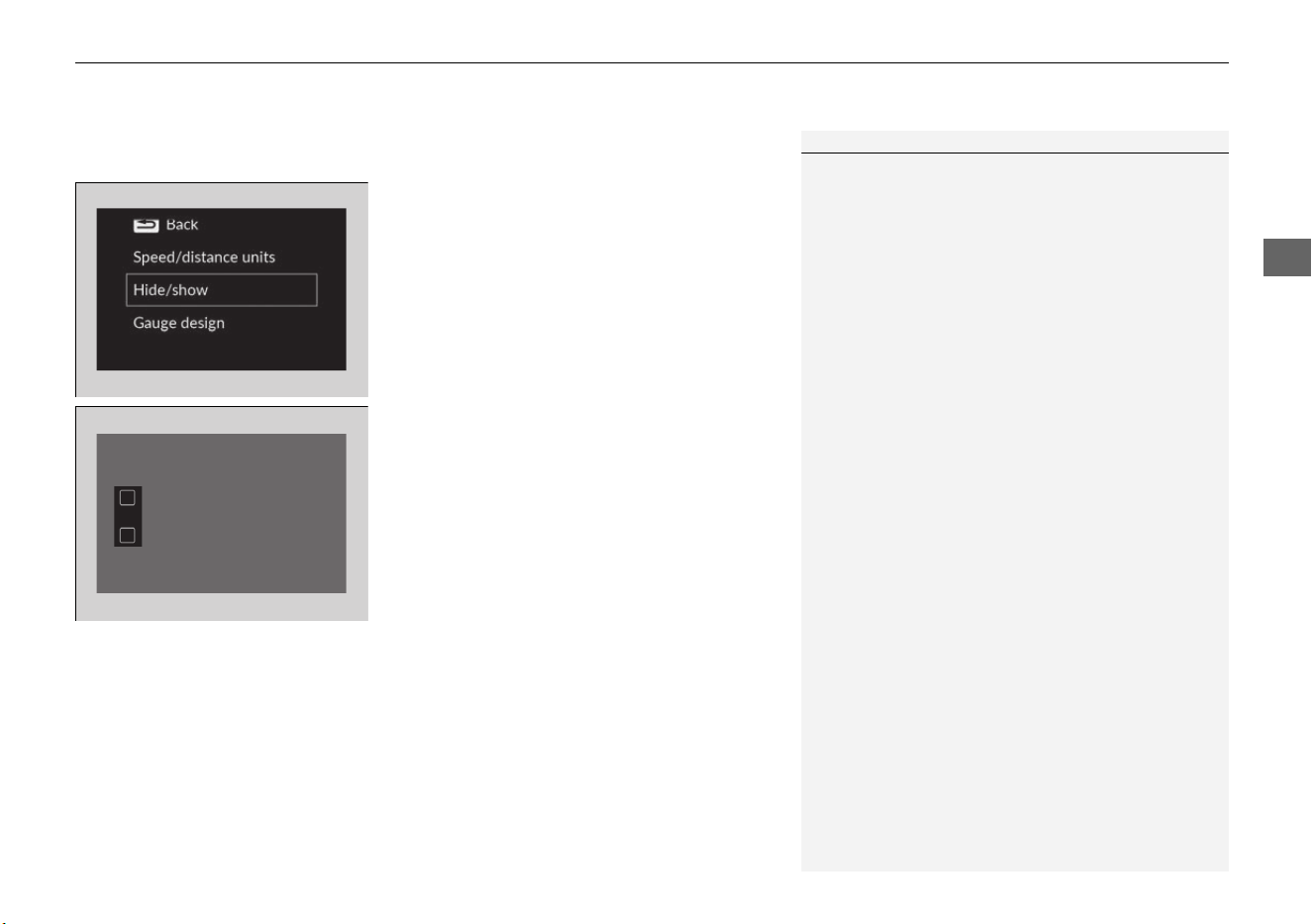
Continued
141
uuGauges and DisplaysuDriver Information Interface (Right Side Area)
Instrument Panel
■
Arrange content on the right side area
You can choose which contents to display on the right side area.
1. Press the right selector wheel when you
select the Gauge display settings on the
driver information interface.
2. Roll the right selector wheel to scroll to
select Hide/show, then press the right
selector wheel.
3. Roll the right selector wheel to scroll
between contents, then press the right
selector wheel to check or uncheck them.
1Arrange content on the right side area
Contents that are gray cannot be removed from the
right side area.
When you customize settings, shift to
(P.
26 PILOT-31T906300.book 141 ページ 2025年10月8日 水曜日 午前11時43分
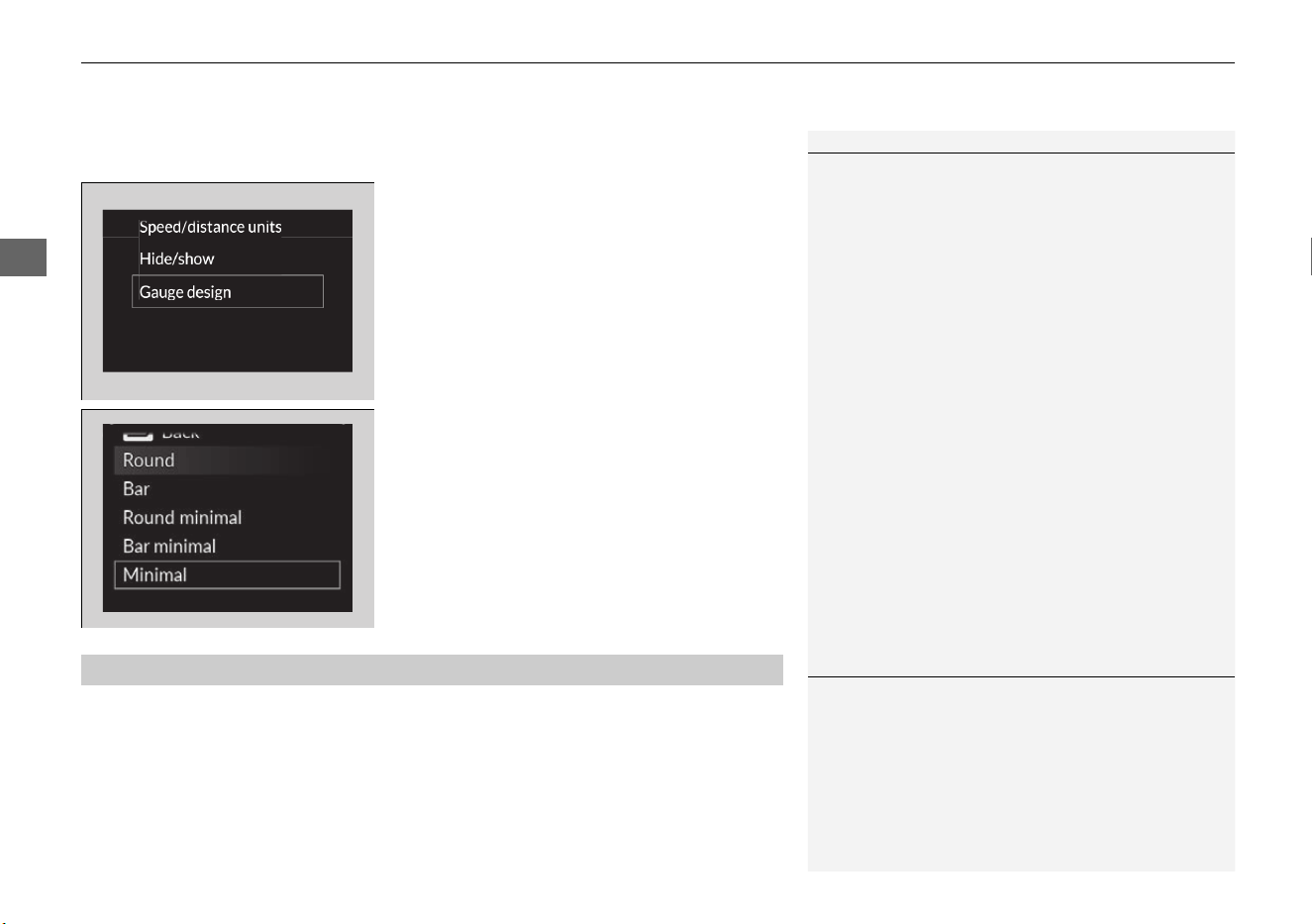
uuGauges and DisplaysuDriver Information Interface (Right Side Area)
142
Instrument Panel
■
Change gauge design
You can change the gauge design.
1. Press the right selector wheel when you
select the Gauge display settings on the
driver information interface.
2. Roll the right selector wheel to scroll to
select Gauge design, then press the right
selector wheel.
3. Roll the right selector wheel to scroll to
select your desired settings, then press the
right selector wheel.
You can check if there are any active warning messages.
1Change gauge design
When using the Round minimal or Bar minimal
gauge design, a simplified display is used when ACC
with Low Speed Follow is in operation.
■
Warnings
1Warnings
If there are multiple warnings, you can roll the right
selector wheel to see other warnings.
26 PILOT-31T906300.book 142 ページ 2025年10月8日 水曜日 午前11時43分
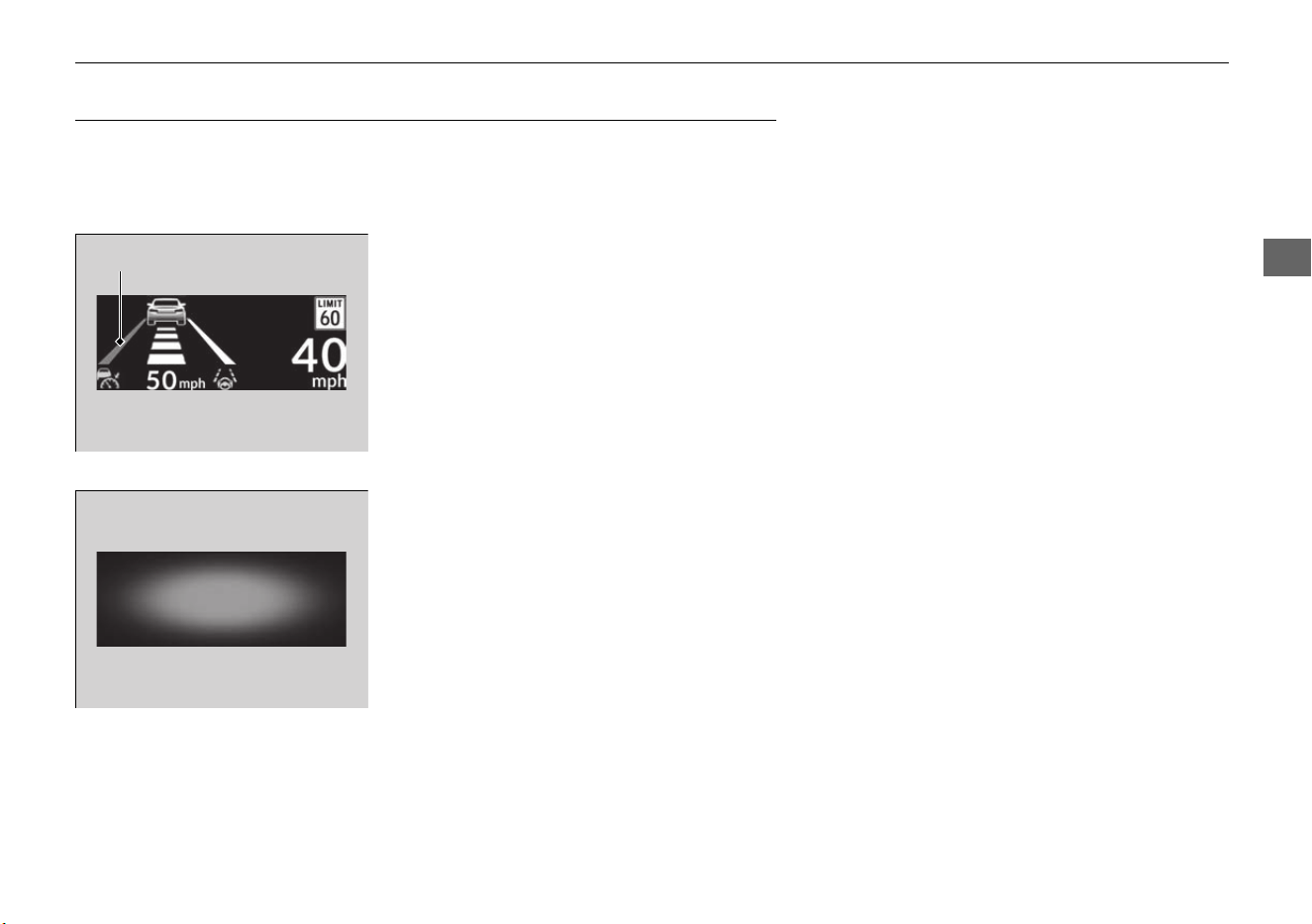
143
uuGauges and DisplaysuHead-Up Display
*
Continued
Instrument Panel
Head-Up Display
*
Shows the current mode for ACC with Low Speed Follow, LKAS, and Traffic Jam
Assist; compass or turn-by-turn directions; and vehicle speed. You can choose which
item to be displayed using the driver information interface. They are displayed when
the power mode is in ON.
The display also shows the following
messages.
• Lane Departure Warning: When your
vehicle is too close to the traffic lane lines,
the lane departure warning appears.
2 Road Departure Mitigation System
P. 474
2 Lane Keeping Assist System (LKAS)
P. 503
2 Traffic Jam Assist P. 514
• Head-up Warning Lights:
Flash when the BRAKE message appears
on the driver information interface.
2 Collision Mitigation Braking System
TM
(CMBS
TM
) P. 456
2 Low Speed Braking Control
*
P. 468
2 Adaptive Cruise Control (ACC) with
Low Speed Follow P. 482
Lane Departure Warning
* Not available on all models
26 PILOT-31T906300.book 143 ページ 2025年10月8日 水曜日 午前11時43分
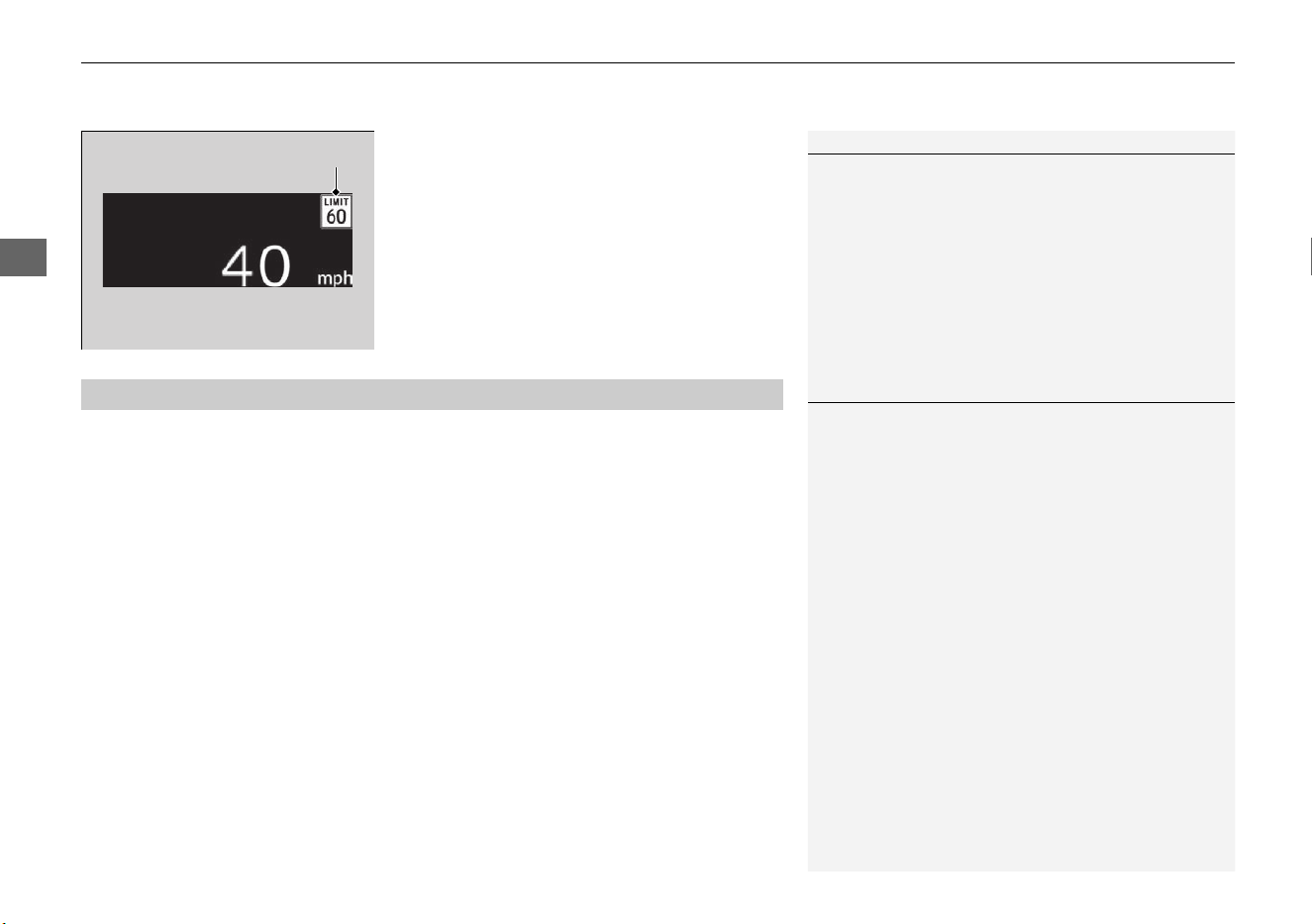
uuGauges and DisplaysuHead-Up Display
*
144
Instrument Panel
• Traffic Sign Recognition System: Shows
certain detected traffic signs while driving.
If speed limit warning is activated, the sign
icon blinks when the maximum speed of
the traffic sign detected is exceeded by a
threshold, when compared with the vehicle
speed.
2 Traffic Sign Recognition System P. 523
Shows the display for changing the head-up display settings on the driver
information interface.
Roll the right selector wheel to scroll to select Head-Up Display settings, then
press the right selector wheel.
2 Switching the Display P. 126
Traffic Sign Recognition System
■
Head-Up Display Settings
1Head-Up Display
*
The default speed limit warning threshold is the
maximum speed of the traffic sign detected.
You can adjust the threshold for speed limit warning.
2 Customized Features P. 346
1Head-Up Display Settings
HUD content
2 To change head-up display content P. 145
HUD brightness
2 Adjusting the head-up display brightness
P. 146
HUD height
2 Adjusting the head-up display height
P. 146
HUD rotation
2 Adjusting the head-up display angle P. 146
* Not available on all models
26 PILOT-31T906300.book 144 ページ 2025年10月8日 水曜日 午前11時43分
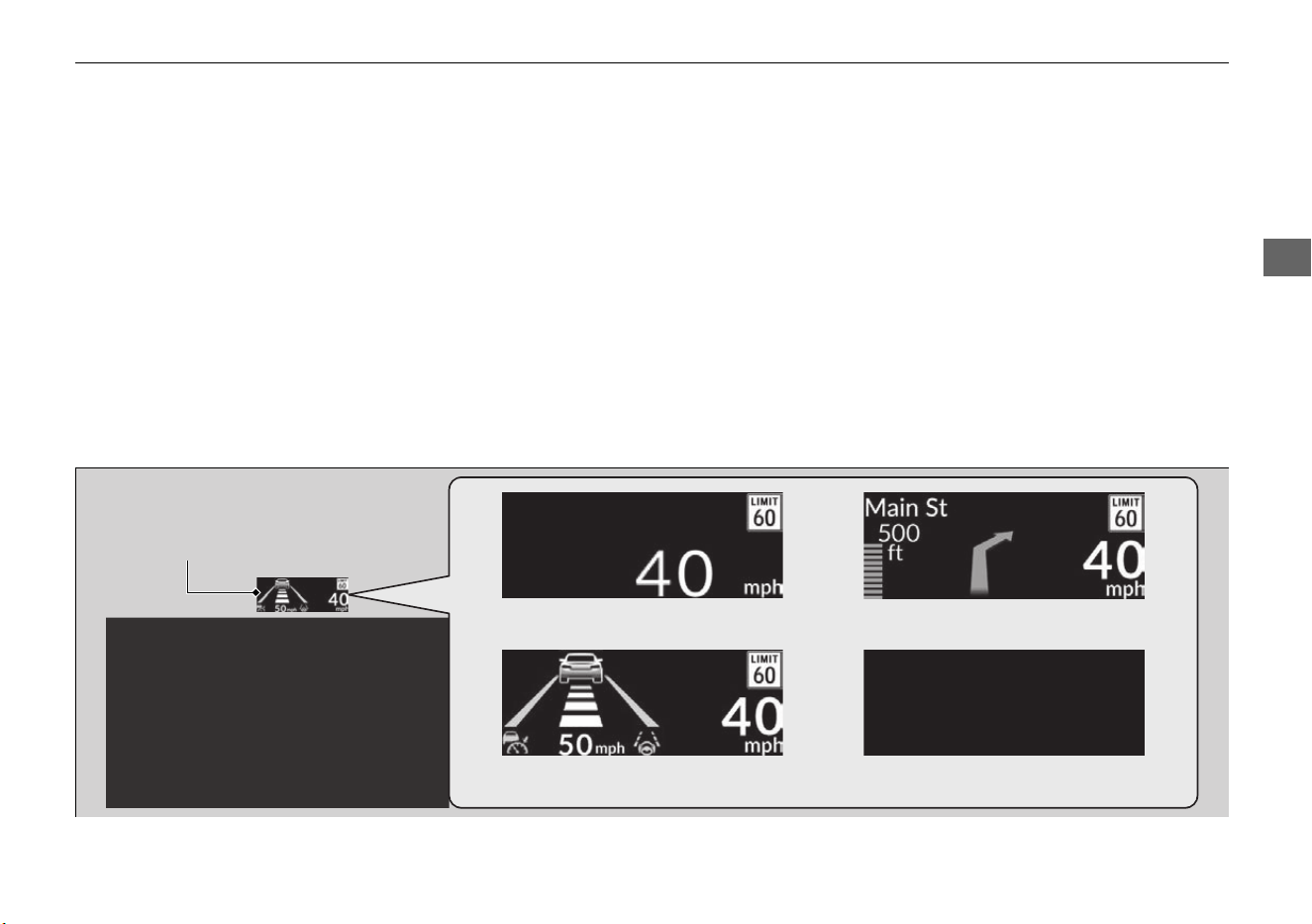
145
uuGauges and DisplaysuHead-Up Display
*
Continued
Instrument Panel
■
To change head-up display content
1. Roll the right selector wheel to scroll to select HUD content, then press the right
selector wheel.
2. Roll the right selector wheel to scroll to select desired item, then press the right
selector wheel.
• Speedometer
2 Speedometer P. 147
• Navigation
2 Navigation P. 147
• Driver assist
2 Current Mode for ACC with Low Speed Follow, LKAS, and Traffic Jam Assist
P. 147
• OFF
Head-Up Display
Speedometer
Driver assist
Navigation
OFF
26 PILOT-31T906300.book 145 ページ 2025年10月8日 水曜日 午前11時43分
uuGauges and DisplaysuHead-Up Display
*
146
Instrument Panel
■
Adjusting the head-up display brightness
Roll the right selector wheel to scroll to select HUD brightness, then press the right
selector wheel.
Brighten: Roll the right selector wheel up.
Dim: Roll the right selector wheel down.
Press the right selector wheel to exit.
■
Adjusting the head-up display height
Roll the right selector wheel to scroll to select HUD height, then press the right
selector wheel.
Raise the head-up display: Roll the right selector wheel up.
Lower the head-up display: Roll the right selector wheel down.
Press the right selector wheel to exit.
■
Adjusting the head-up display angle
Roll the right selector wheel to scroll to select HUD rotation, then press the right
selector wheel.
Rotate the head-up display clockwise: Roll the right selector wheel down.
Rotate the head-up display counterclockwise: Roll the right selector wheel up.
Press the right selector wheel to exit.
1Adjusting the head-up display height
When you unlock and open the driver’s door with a
remote transmitter or keyless access system, the
head-up display adjusts automatically to one of the
two preset positions.
26 PILOT-31T906300.book 146 ページ 2025年10月8日 水曜日 午前11時43分
147
uuGauges and DisplaysuHead-Up Display
*
Instrument Panel
Shows your driving speed in mph or km/h.
Shows the current mode for ACC with Low Speed Follow, LKAS, and Traffic Jam
Assist.
2 Adaptive Cruise Control (ACC) with Low Speed Follow P. 482
2 Lane Keeping Assist System (LKAS) P. 503
2 Traffic Jam Assist P. 514
The compass screen and turn-by-turn directions appear based on the driving
guidance provided by Google Maps, Apple CarPlay, or Android Auto.
2 Google built-in P. 317
2 Apple CarPlay P. 309
2 Android Auto
TM
P. 313
■
Speedometer
■
Current Mode for ACC with Low Speed Follow, LKAS, and
Traffic Jam Assist
■
Navigation
1Speedometer
Switch between mph and km/h by using the driver
information interface or the customized features on
the audio/information screen.
2 Speed/distance units P. 140
2 Customized Features P. 346
1Navigation
You can select whether the turn-by-turn display
comes on during the route guidance.
2 Customized Features P. 346
Navigation features may not be available for all
devices or apps.
26 PILOT-31T906300.book 147 ページ 2025年10月8日 水曜日 午前11時43分

148
26 PILOT-31T906300.book 148 ページ 2025年10月8日 水曜日 午前11時43分
This page intentionally left blank.
149
Controls
This chapter explains how to operate the various controls necessary for driving.
Clock .................................................. 150
Locking and Unlocking the Doors
Key .................................................. 152
Low Keyless Remote Signal Strength......... 154
Locking/Unlocking the Doors from the
Outside .......................................... 155
Locking/Unlocking the Doors from the
Inside ............................................. 166
Childproof Door Locks ..................... 168
Auto Door Locking/Unlocking .......... 169
Tailgate.............................................. 170
Security System ................................ 180
Windows................................................ 183
Panoramic Roof
*
............................... 186
Operating the Switches Around the
Steering Wheel
ENGINE START/STOP Button............. 190
Lights............................................... 193
Auto High-Beam .............................. 198
Wipers and Washers ........................ 201
Rear Defogger/Heated Door Mirror
*
Button........................................ 204
Heated Windshield Button
*
............. 204
Driving Position Memory System
*
.... 205
Adjusting the Steering Wheel........... 207
Mirrors............................................... 208
Seats
Front Seats ...................................... 211
Second Row Seats ........................... 214
Third Row Seats............................... 220
Rear Seat Reminder ......................... 222
Maintain a Proper Sitting Position .... 223
Head Restraints................................ 224
Armrest ........................................... 229
Interior Convenience Items.............. 231
Climate Control System ................... 256
* Not available on all models
26 PILOT-31T906300.book 149 ページ 2025年10月8日 水曜日 午前11時43分
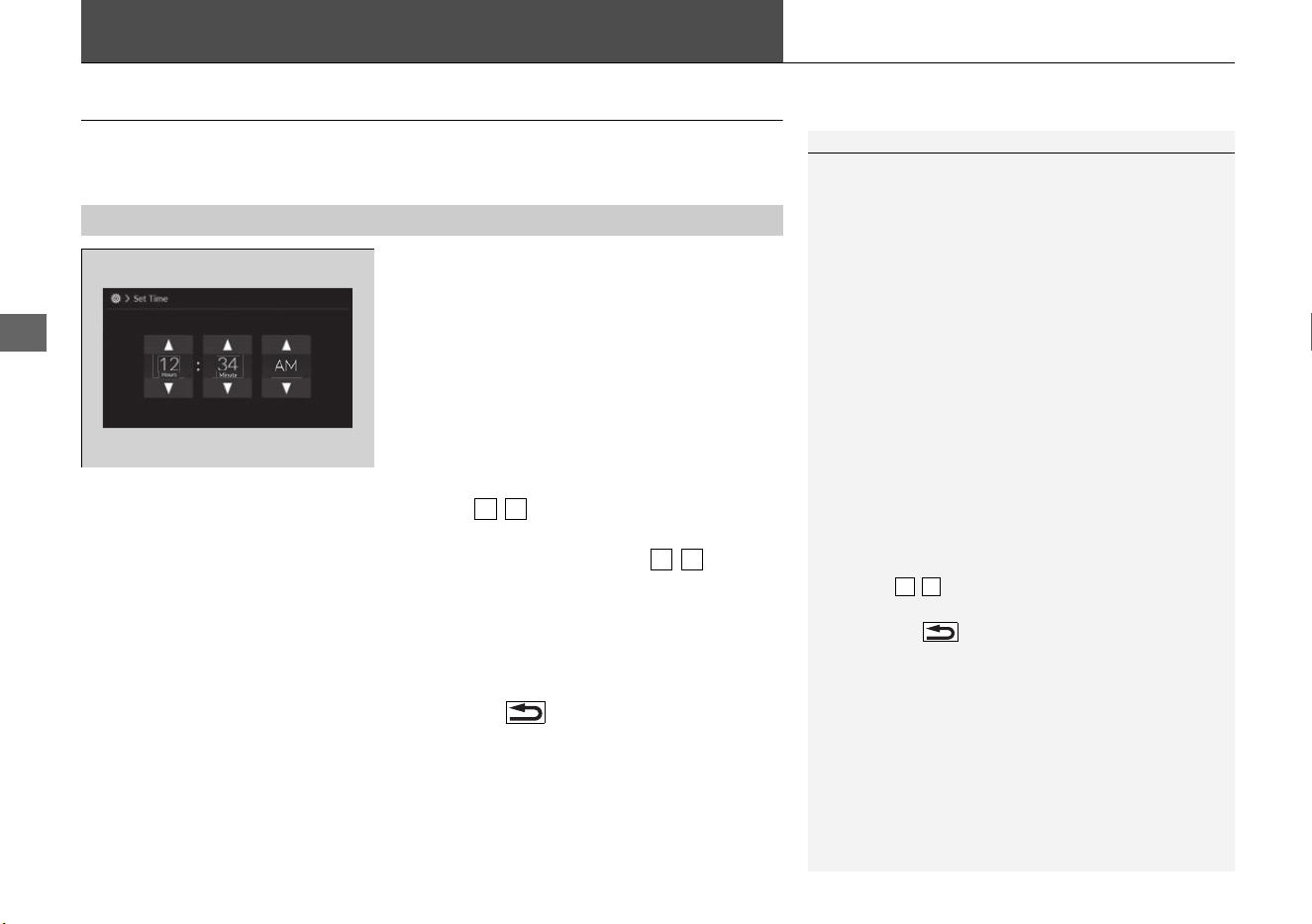
150
Controls
Clock
Adjusting the Clock
You can adjust the time manually in the audio/information screen when the power
mode is in ON.
1. Select the Home icon, then select General
Settings.
2. Select System.
3. Select Date & Time.
4. Select Set Date & Time.
5. Select Automatic Date & Time, then
select Off.
To adjust time:
6. Select Set Time.
7. Select / .
u AM/PM icon can be switched to each
other either by selecting / .
u When you customize the clock display to
24 hour clock, AM/PM icon is not
displayed.
2 How to Customize the General
Settings P. 346
8. Select the (back) icon to set the time.
■
Adjusting the Time
1Clock
The clock is automatically updated through the audio
system.
You can customize the clock display to show the 12
hour clock or 24 hour clock.
2 How to Customize the General Settings
P. 346
You can customize the date display.
2 How to Customize the General Settings
P. 346
You can also adjust the clock by selecting the clock
image or time displayed on the B-zone.
1. Select Date & Time on the A-zone.
2. Select Set Date & Time.
3. Select Automatic Date & Time.
4. Select Off.
5. Select Set Date or Set Time.
6. Select / to adjust the dates, hours, and
minutes.
7. Select the (back) icon to set the date or time.
3
4
3
4
3
4
26 PILOT-31T906300.book 150 ページ 2025年10月8日 水曜日 午前11時43分
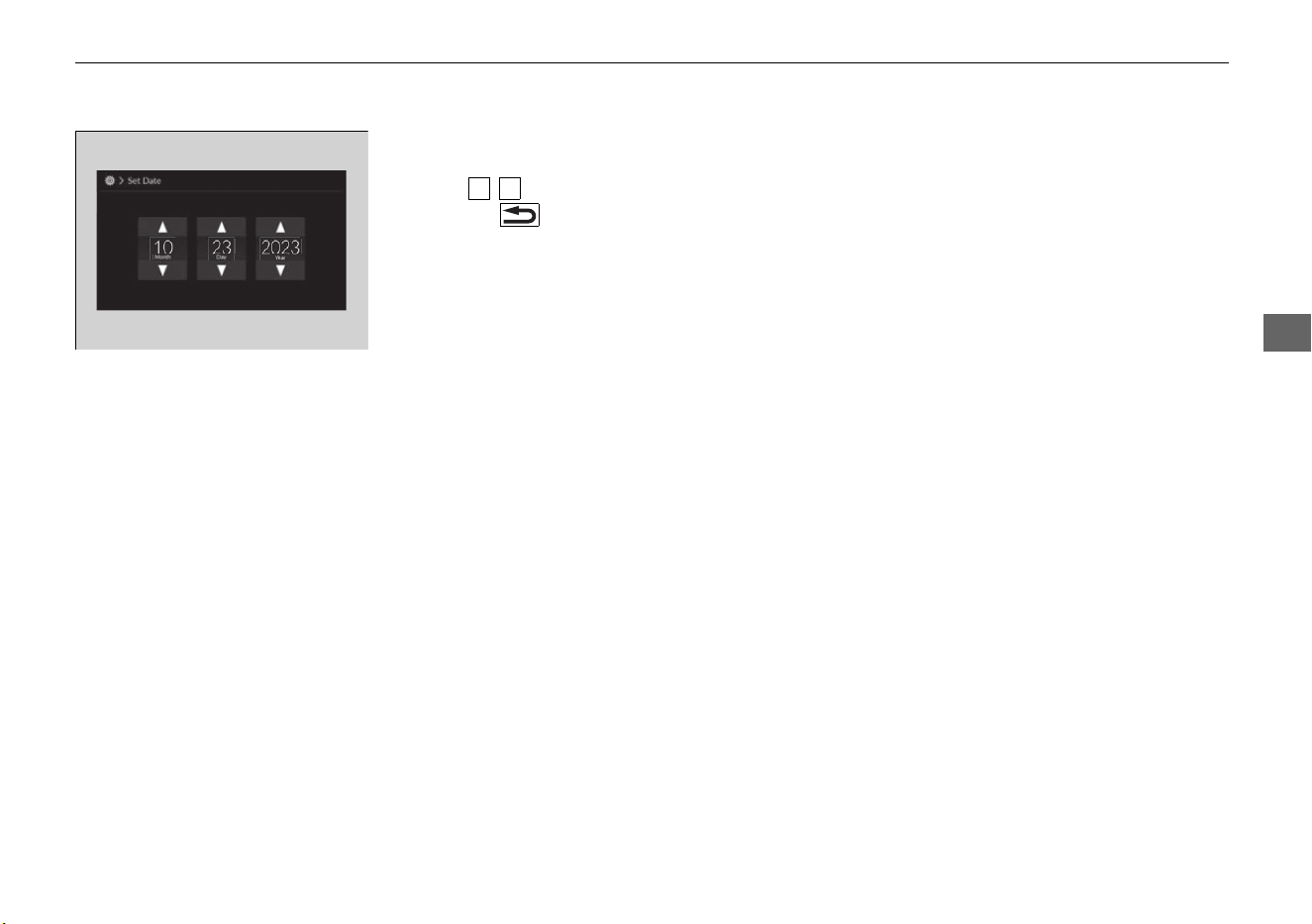
151
uuClockuAdjusting the Clock
Controls
To adjust date:
6. Select Set Date.
7. Select / .
8. Select the (back) icon to set the date.
3
4
26 PILOT-31T906300.book 151 ページ 2025年10月8日 水曜日 午前11時43分
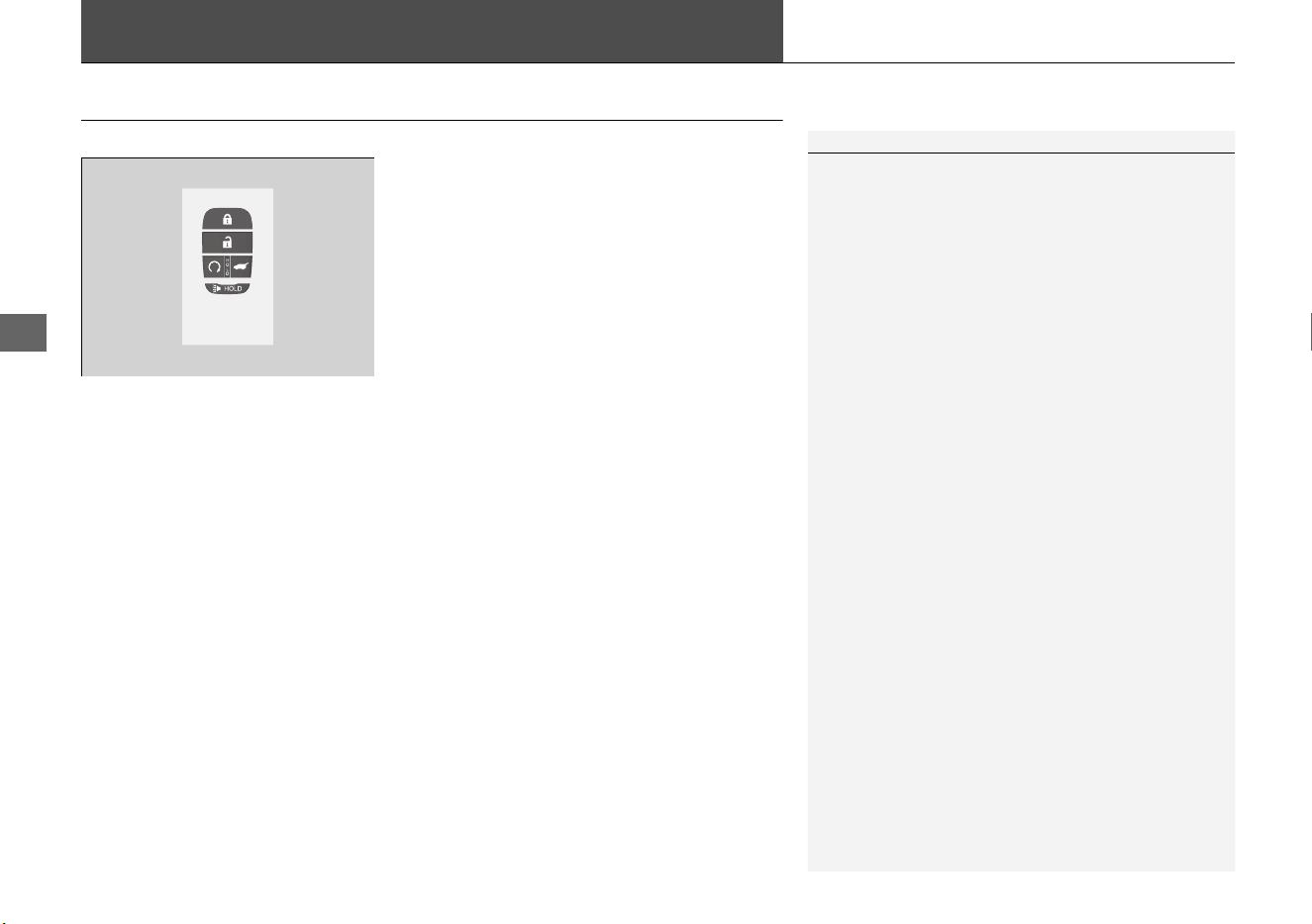
152
Controls
Locking and Unlocking the Doors
Key
This vehicle comes with the following keys:
Use the keys to start and stop the engine, and
lock and unlock all the doors, tailgate, and
fuel fill door.
1Key
All the keys have an immobilizer system. The
immobilizer system helps protect against vehicle
theft.
2 Immobilizer System P. 180
Follow the advice below to prevent damage to the
keys:
• Do not leave the keys in direct sunlight, or in
locations with high temperature or high humidity.
• Do not drop the keys or set heavy objects on them.
• Keep the keys away from liquids, dust, and sand.
• Do not take the keys apart except to replace the
battery.
If the circuits in the keys are damaged, the engine
may not start, and the remote transmitter may not
work.
If the keys do not work properly, have them
inspected by a dealer.
You can remotely start the engine using the remote
engine start.
2 Remote Engine Start P. 412
26 PILOT-31T906300.book 152 ページ 2025年10月8日 水曜日 午前11時43分
153
uuLocking and Unlocking the DoorsuKey
Controls
The built-in key can be used to unlock the
doors when the keyless remote battery
becomes weak and the power door unlock
operation is disabled.
To remove the built-in key, push the release
button and then pull out the key. To reinstall
the built-in key, push the built-in key into the
keyless remote until it clicks.
Contains a number that you will need if you
purchase a replacement key.
■
Built-in Key
Release Button
Built-in Key
■
Key Number Tag
1Key Number Tag
Keep the key number tag separate from the key in a
safe place outside of your vehicle.
If you wish to purchase an additional key, contact a
dealer.
If you lose your key and you cannot start the engine,
contact a dealer.
26 PILOT-31T906300.book 153 ページ 2025年10月8日 水曜日 午前11時43分
154
uuLocking and Unlocking the DoorsuLow Keyless Remote Signal Strength
Controls
Low Keyless Remote Signal Strength
The vehicle transmits radio waves to locate the keyless remote to start the engine;
lock and unlock all the doors and the fuel fill door; and open the power tailgate.
In the following cases, starting the engine, locking/unlocking the doors/fuel fill door,
or opening the power tailgate may be inhibited, or operation may be unstable:
• Strong radio waves are being transmitted by nearby equipment.
• You are carrying the keyless remote together with telecommunications
equipment, laptop computers, cell phones, or wireless devices.
• A metallic object is touching or covering the keyless remote.
1Low Keyless Remote Signal Strength
Communication between the keyless remote and the
vehicle consumes the keyless remote’s battery.
Battery life is about two years, but this varies
depending on regularity of use.
The battery is consumed whenever the keyless
remote is receiving strong radio waves. Avoid placing
it near electrical appliances such as televisions and
personal computers.
26 PILOT-31T906300.book 154 ページ 2025年10月8日 水曜日 午前11時43分
155
uuLocking and Unlocking the DoorsuLocking/Unlocking the Doors from the Outside
Continued
Controls
Locking/Unlocking the Doors from the Outside
When you carry the keyless remote, you can
lock/unlock the doors and fuel fill door, and
open the tailgate.
You can lock/unlock the doors, fuel fill door,
and tailgate within a radius of about 32 inches
(80 cm) from the outside door handle or
tailgate outer handle.
■
Using the Keyless Access System
1Locking/Unlocking the Doors from the Outside
If the interior light switch is in the door activated
position, the interior light comes on when you unlock
the doors and tailgate.
No doors opened: The light fades out after 30
seconds.
Doors and tailgate relocked: The light goes off
immediately.
2 Interior Lights P. 231
1Using the Keyless Access System
If you do not open a door or the tailgate within 30
seconds of unlocking the vehicle with the keyless
access system, the doors and tailgate will
automatically relock.
You can lock or unlock doors using the keyless access
system only when the power mode is in VEHICLE OFF.
26 PILOT-31T906300.book 155 ページ 2025年10月8日 水曜日 午前11時43分
uuLocking and Unlocking the DoorsuLocking/Unlocking the Doors from the Outside
156
Controls
■
Locking the doors and tailgate
Touch the door lock sensor on the front or
rear
*
doors, or press the lock button on the
tailgate.
u All the doors, fuel fill door, and tailgate
lock, and the security system sets.
u Some exterior lights flash once and the
beeper sounds once.
1Using the Keyless Access System
• Do not leave the keyless remote in the vehicle
when you get out. Carry it with you.
• Even if you are not carrying the keyless remote, you
can lock/unlock the doors and tailgate while
someone else with the remote is within range.
• The door may be unlocked if the door handle is
covered with water in heavy rain or in a car wash if
the keyless remote is within range.
• If you grip a door handle or touch a door lock
sensor wearing gloves, the door sensor may be
slow to respond or may not respond by unlocking
or locking the doors.
• After locking the door, you have up to two seconds
during which you can pull the door handle to
confirm whether the door is locked. If you need to
unlock the door immediately after locking it, wait
at least two seconds before gripping the handle,
otherwise the door will not unlock.
• The door might not open if you pull it immediately
after gripping the door handle. Grip the handle
again and confirm that the door is unlocked before
pulling the handle.
• Even within the 32 inches (80 cm) radius, you may
not be able to lock/unlock the doors with the
keyless remote if it is above or below the outside
handle.
• The keyless remote may not operate if it is too close
to the door, door glass, and tailgate.
Door Lock
Sensor
Lock Button
* Not available on all models
26 PILOT-31T906300.book 156 ページ 2025年10月8日 水曜日 午前11時43分
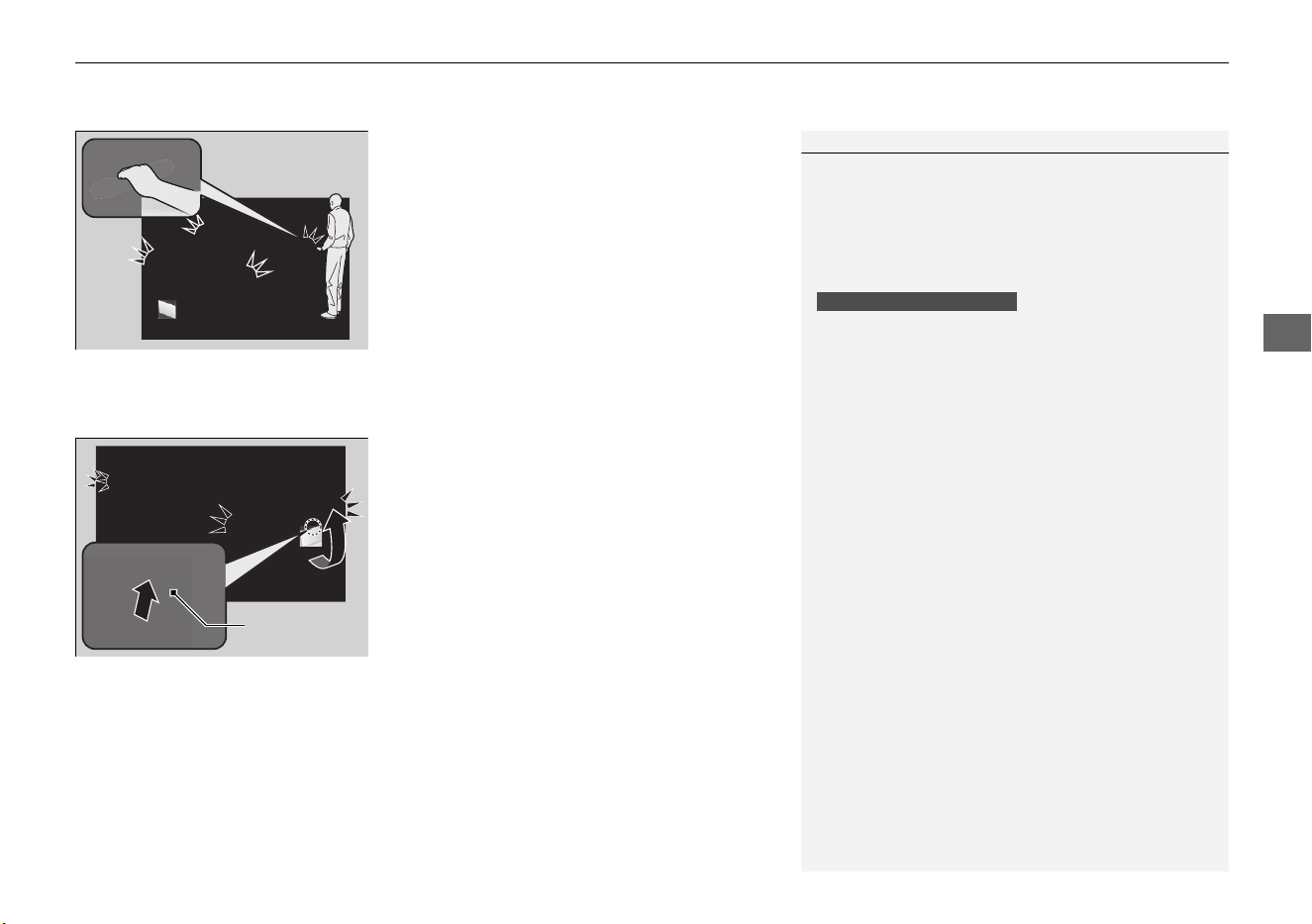
Continued
157
uuLocking and Unlocking the DoorsuLocking/Unlocking the Doors from the Outside
Controls
■
Unlocking the doors and tailgate
Grab the driver’s door handle:
u The driver’s door and fuel fill door
unlock.
u Some exterior lights flash twice and the
beeper sounds twice.
Grab the front passenger’s door or rear
*
door
handle:
u All doors, tailgate, and fuel fill door
unlock.
u Some exterior lights flash twice and the
beeper sounds twice.
Press the tailgate outer handle:
u The tailgate unlocks.
u Some exterior lights flash twice and the
beeper sounds twice.
1Using the Keyless Access System
The light flash, beep and door unlock mode settings
can be customized using the audio/information
screen.
2 How to Customize the Vehicle Settings
P. 358
When you go into the keyless access system working
range with all the doors locked, the puddle lights
come on for 30 seconds.
The lights do not come on if you have previously
stayed within the range for more than two minutes,
or the doors have been locked for a few days.
The feature activates again after you drive the
vehicle, then lock the doors.
You can also unlock and open the power tailgate.
2 Opening/Closing the Power Tailgate P. 172
Please wipe off any residue such as car shampoo,
groundwater, or anti-freeze in the vicinity of the
outside door handle, as there is a risk that the keyless
access system may not work properly.
Models with puddle lights
Outer Handle
* Not available on all models
26 PILOT-31T906300.book 157 ページ 2025年10月8日 水曜日 午前11時43分
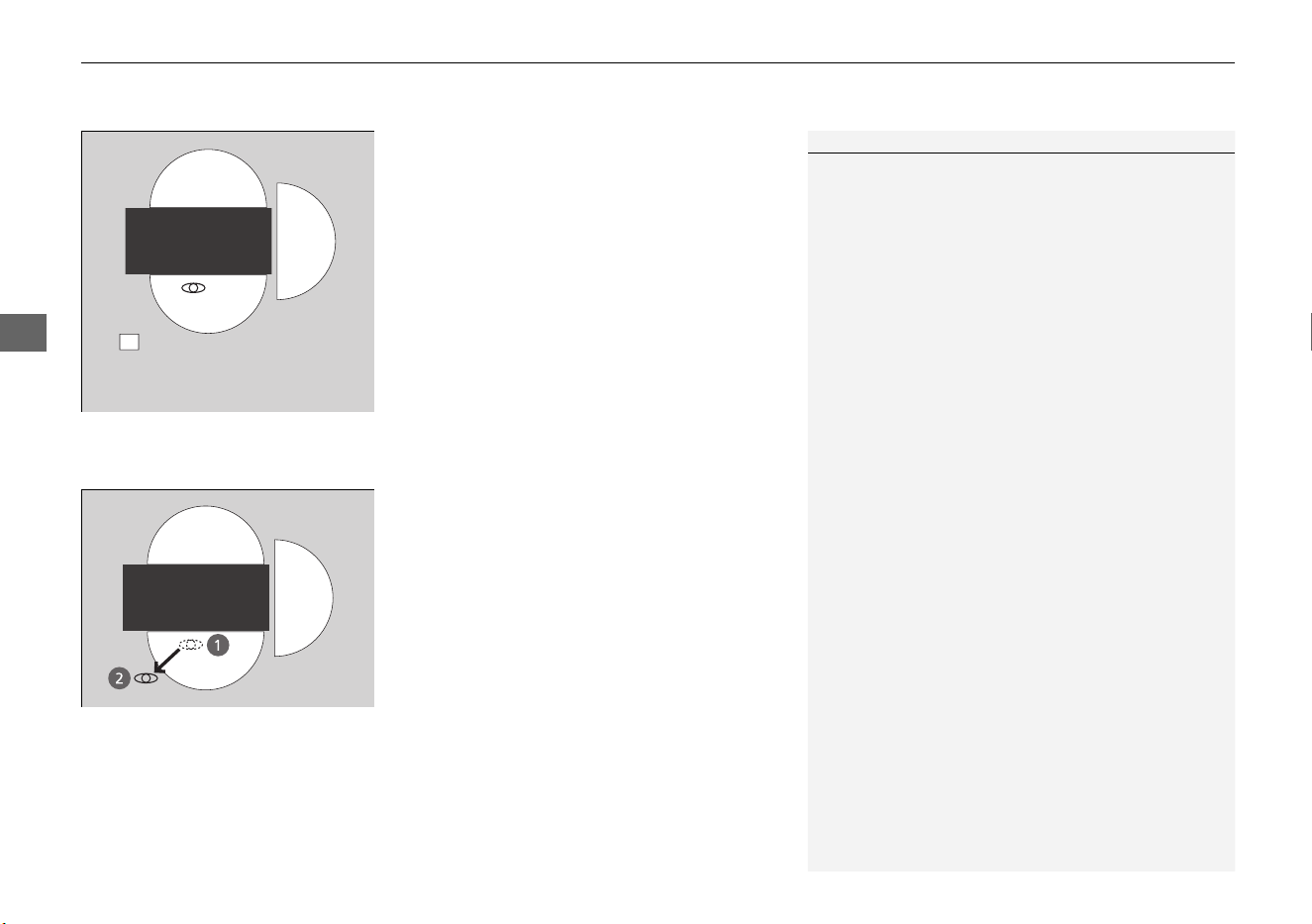
uuLocking and Unlocking the DoorsuLocking/Unlocking the Doors from the Outside
158
Controls
■
Locking the doors and tailgate (Walk
away auto lock®)
When you walk away from the vehicle with all
doors and tailgate closed while carrying the
keyless remote, the doors and tailgate will
automatically lock.
The auto lock function activates when all
doors and tailgate are closed or all doors are
closed and tailgate begins power close
operation
*
, and the keyless remote is within
about 5 feet (1.5 m) radius of the outside door
handle or tailgate outer handle.
Exit the vehicle while carrying keyless remote
and close door(s) and tailgate.
1. While within about 5 feet (1.5 m) radius of
the vehicle.
u The beeper sounds; the auto lock
function will be activated.
2. Carry the keyless remote beyond about 5
feet (1.5 m) from the vehicle and remain
outside this range for 2 or more seconds.
u Some exterior lights flash; the beeper
sounds; all doors and tailgate will then
lock.
1Locking the doors and tailgate (Walk away auto lock®)
The auto lock function is set to OFF as the factory
default setting. The auto lock function can be set to
ON using the audio/information screen.
If you set the auto lock function to ON using the
audio/information screen, only the remote
transmitter that was used to unlock the driver’s door
prior to the setting change can activate auto lock.
2 How to Customize the Vehicle Settings
P. 358
After the auto lock function has been activated,
when you stay within the locking/unlocking
operation range, the indicator on the keyless remote
will continue to flash until the doors and tailgate are
locked.
When you stay beside the vehicle within the
operation range, the doors and tailgate will
automatically lock approximately 30 seconds after
the auto lock function activating beeper sounds.
When you open a door or tailgate after the auto lock
function activating beeper sounds, the auto lock
function will be canceled.
The activation range of
the auto lock function is
about 5 feet (1.5 m)
* Not available on all models
26 PILOT-31T906300.book 158 ページ 2025年10月8日 水曜日 午前11時43分
Continued
159
uuLocking and Unlocking the DoorsuLocking/Unlocking the Doors from the Outside
Controls
To temporarily deactivate the function:
1. Set the power mode to OFF.
2. Open the driver’s door.
3. Using the master door lock switch, operate
the lock as follows:
Lock Unlock Lock Unlock.
u The beeper sounds and the function is
deactivated.
To restore the function:
• Set the power mode to ON.
• Lock the vehicle without using the auto lock
function.
• With the keyless remote on you, move out
of the auto lock function operation range.
• Open any door.
1Locking the doors and tailgate (Walk away auto lock®)
Under the following circumstances, the auto lock
function will not activate:
• The remote is inside the vehicle.
• The remote is taken out of its operational range
before all the doors and tailgate are closed.
If you use the power tailgate walk away close
function when all the doors are closed, the auto lock
function will also be activated.
uWhen you walk away from the vehicle while the
power tailgate is automatically closing, it will
continue to lock automatically.
2 Power Tailgate Walk Away Close
*
P. 174
The auto lock function does not operate when any of
the following conditions are met.
• The keyless remote is inside the vehicle.
• A door, tailgate, or the hood is not closed.
• The power mode is set to any mode other than
OFF.
• The keyless remote is not located within a radius of
about 5 feet (1.5 m) from the vehicle when you get
out of the vehicle and close the doors and tailgate.
uThe beeper will not sound.
uThe beeper will sound.
Models with power tailgate walk away close
All models
* Not available on all models
26 PILOT-31T906300.book 159 ページ 2025年10月8日 水曜日 午前11時43分
uuLocking and Unlocking the DoorsuLocking/Unlocking the Doors from the Outside
160
Controls
1Locking the doors and tailgate (Walk away auto lock®)
Auto lock function operation stop beeper
After the auto lock function has been activated, the
auto lock operation stop beeper sounds for
approximately two seconds in the following cases.
• The keyless remote is put inside the vehicle through
a window.
• You are located too close to the vehicle.
• The keyless remote is put inside the tailgate.
If the warning beeper sounds, check that you are
carrying the keyless remote. Then, open/close a door
and confirm the auto lock activation beeper sounds
once.
26 PILOT-31T906300.book 160 ページ 2025年10月8日 水曜日 午前11時43分
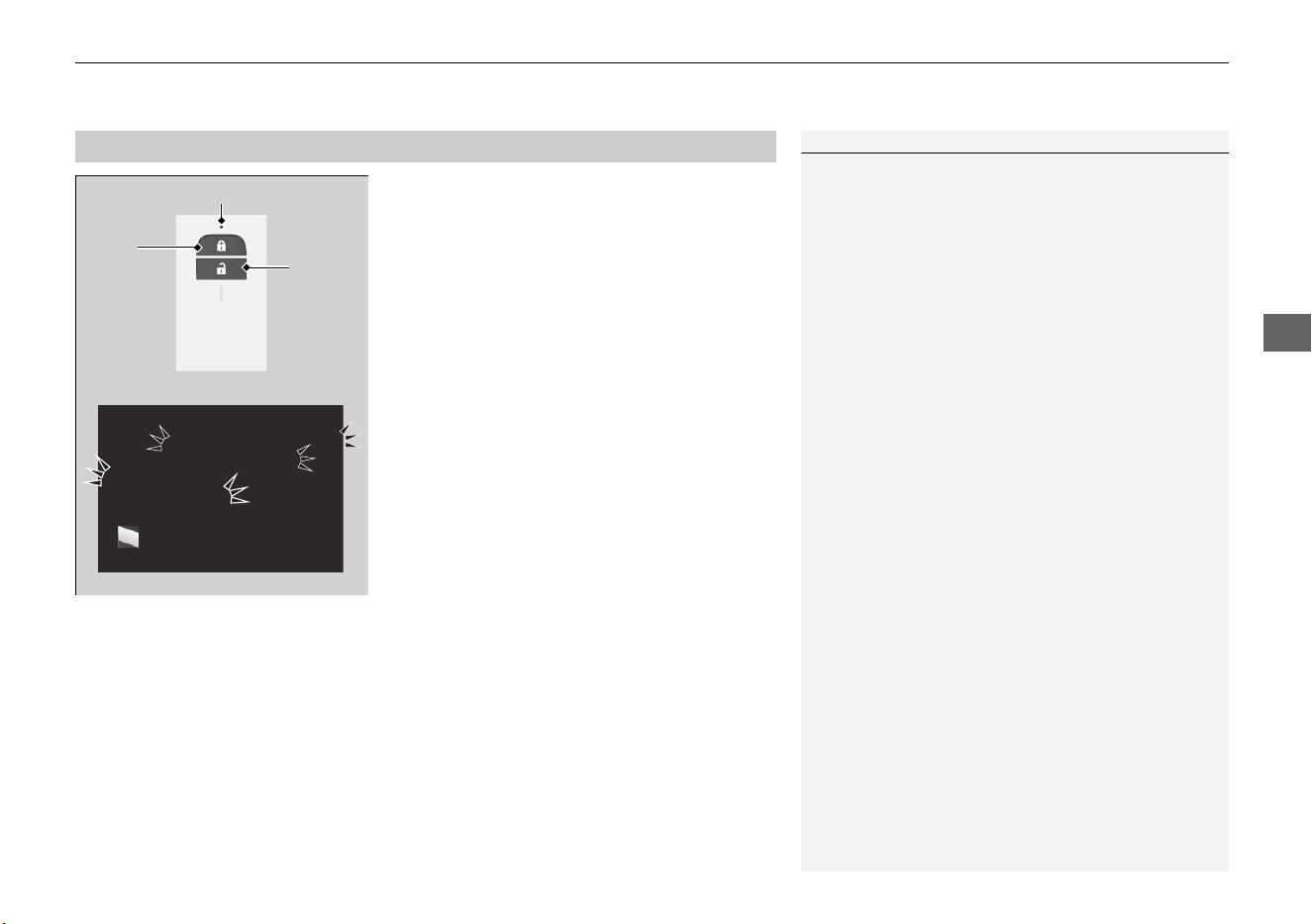
Continued
161
uuLocking and Unlocking the DoorsuLocking/Unlocking the Doors from the Outside
Controls
■
Locking the doors and tailgate
Press the lock button.
Once:
u Some exterior lights flash, all the doors,
fuel fill door, and tailgate lock, and the
security system sets.
Twice (within five seconds after the first
push):
u The beeper sounds and verifies the
security system is set.
■
Unlocking the doors and tailgate
Press the unlock button.
Once:
u Some exterior lights flash twice, and the
driver’s door and fuel fill door unlock.
Twice:
u The remaining doors and tailgate unlock.
■
Using the Remote Transmitter
1Using the Remote Transmitter
If you do not open a door within 30 seconds of
unlocking the vehicle with the remote transmitter,
the doors will automatically relock.
You can lock or unlock doors using the remote
transmitter only when the power mode is in VEHICLE
OFF.
The remote transmitter uses low-power signals, so
the operating range may vary depending on the
surroundings.
If the distance at which the remote transmitter works
varies, the battery is probably low.
If the LED does not come on when you press a
button, the battery is dead.
2 Replacing the Remote Battery P. 615
You can customize the door unlock mode setting.
2 How to Customize the Vehicle Settings
P. 358
LED
Unlock
Button
Lock
Button
26 PILOT-31T906300.book 161 ページ 2025年10月8日 水曜日 午前11時43分
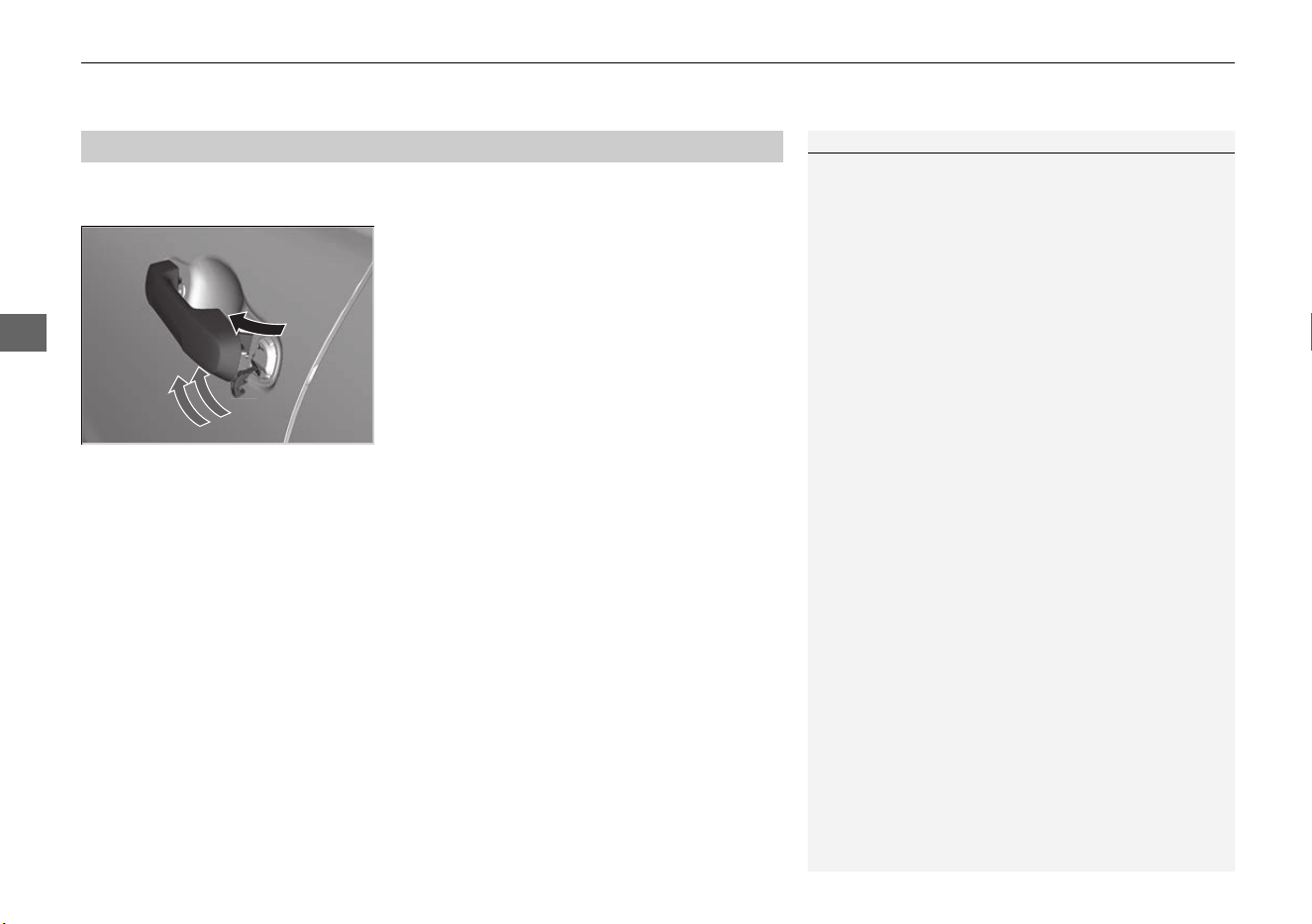
uuLocking and Unlocking the DoorsuLocking/Unlocking the Doors from the Outside
162
Controls
If the unlock button of the keyless remote does not work, use the built-in key
instead. The keyhole is behind the door handle.
Pull and hold the outer handle.
Insert the built-in key into the key cylinder
from below the handle and then turn it.
■
Unlocking the Doors Using a Key
1Unlocking the Doors Using a Key
When unlocking, the driver’s door unlocks first.
Turning the key a second time within a few seconds
does not unlock the remaining doors and the
tailgate.
If you unlock a door with the built-in key while the
security system is activated, the alarm will sound.
If the lock button of the keyless remote does not
work, refer to the following.
2 Locking a Door Without Using a Key P. 163
26 PILOT-31T906300.book 162 ページ 2025年10月8日 水曜日 午前11時43分
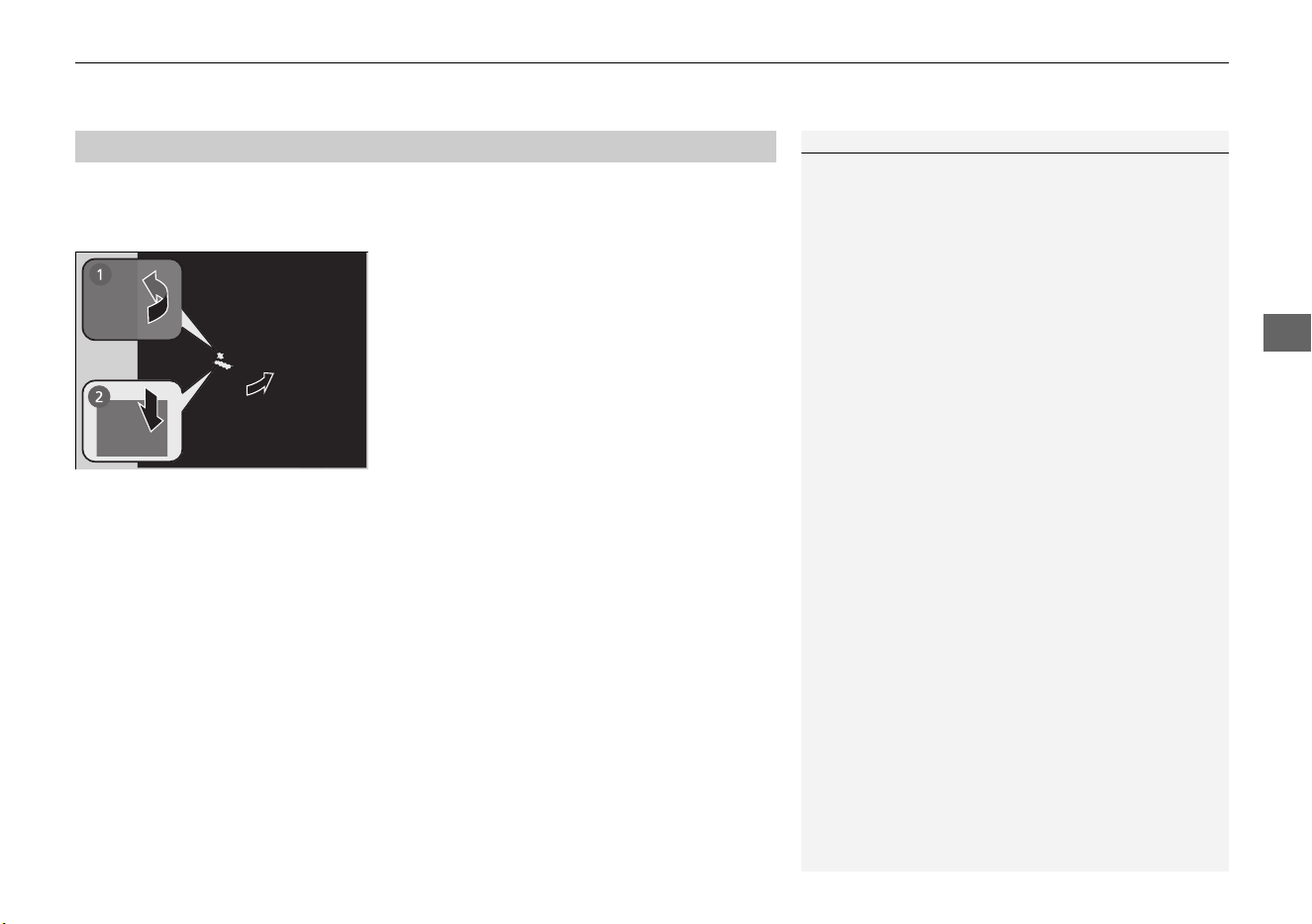
Continued
163
uuLocking and Unlocking the DoorsuLocking/Unlocking the Doors from the Outside
Controls
If you do not have the key on you, or if for some reason you cannot lock a door using
the key, you can lock the door without it.
■
Locking the front doors
Push the lock tab forward a or push the
master door lock switch in the lock direction
b, and close the door.
■
Locking the rear doors
Push the lock tab forward and close the door.
■
Locking a Door Without Using a Key
1Locking a Door Without Using a Key
When you lock the driver’s door, all the other doors
and tailgate lock at the same time.
Before locking a door, make sure that the key is not
inside the vehicle.
26 PILOT-31T906300.book 163 ページ 2025年10月8日 水曜日 午前11時43分
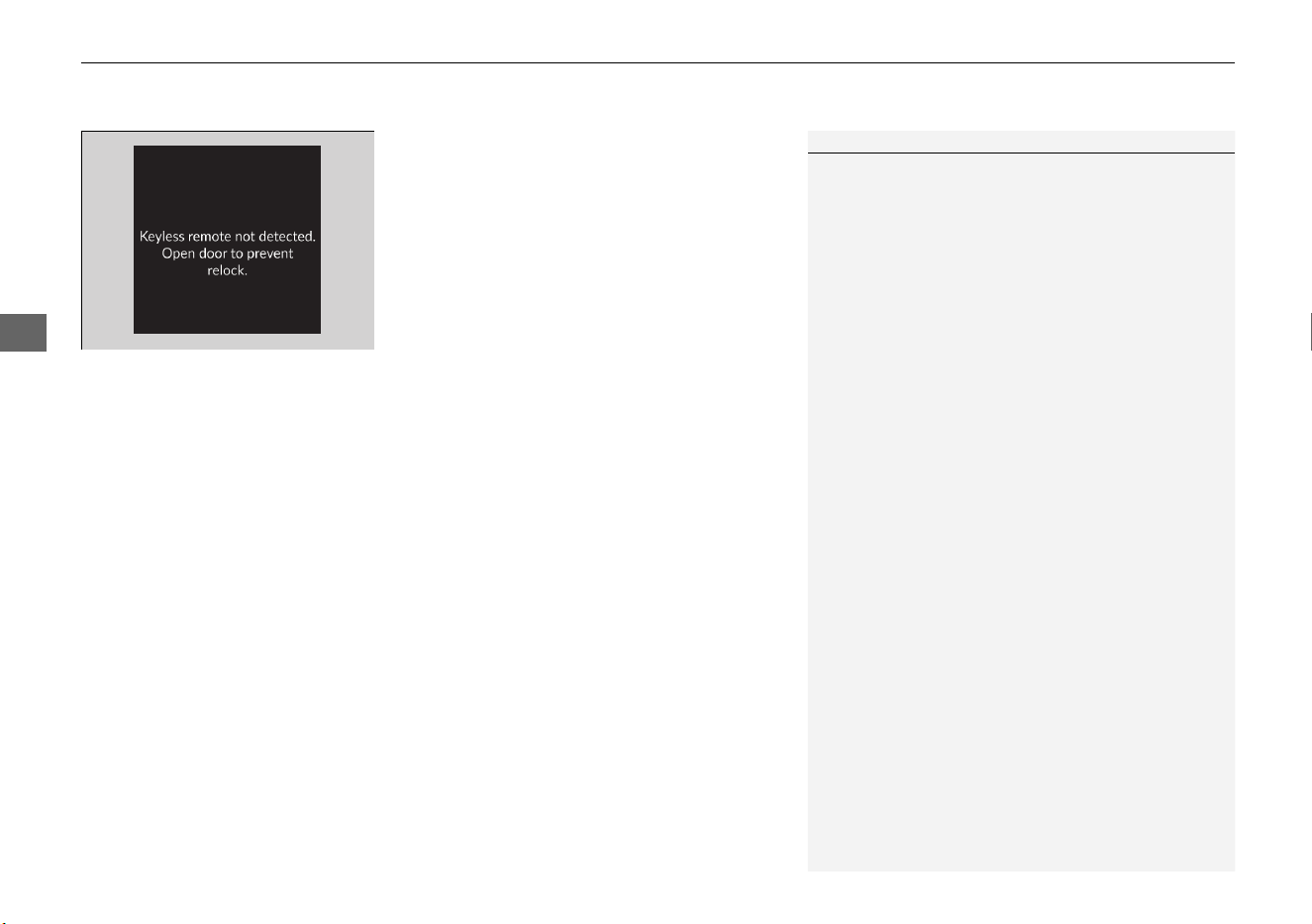
uuLocking and Unlocking the DoorsuLocking/Unlocking the Doors from the Outside
164
Controls
■
Lockout protection function
If the vehicle cannot detect the keyless
remote, lockout protection activates.
u A beeper sounds, some exterior lights
flash, the doors unlock, and a message
appears on the driver information
interface.
u This allows you to open a door in case
the keyless remote is still inside the
vehicle.
If you do not open a door, all doors relock
after 15 seconds.
To avoid non-detection, make sure to keep
the keyless remote away from cell phones and
other devices that may cause signal
interference.
1Locking a Door Without Using a Key
You can change the lockout protection operation
setting.
2 How to Customize the Vehicle Settings
P. 358
26 PILOT-31T906300.book 164 ページ 2025年10月8日 水曜日 午前11時43分
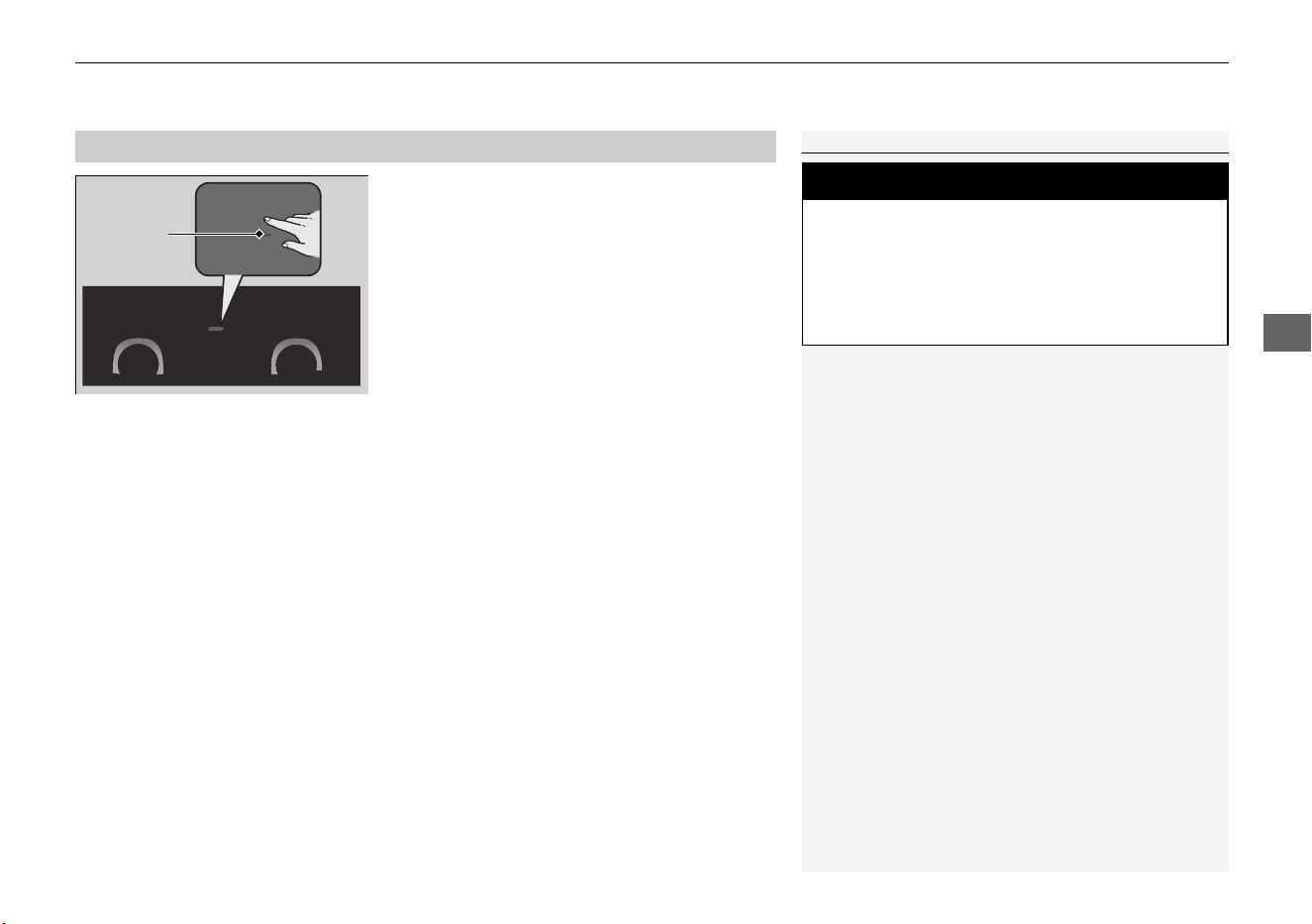
165
uuLocking and Unlocking the DoorsuLocking/Unlocking the Doors from the Outside
Controls
The vehicle will automatically lock after you
lock the doors in advance then close the doors
and tailgate.
Activate lock presetting after closing the
driver’s door.
1. Touch the door lock sensor on the front
door or press the lock button on the remote
transmitter.
u Alert sounds and lock presetting is
activated.
2. Close all doors and the tailgate.
u Some exterior lights flash and a beeper
sounds when vehicle locks.
Make sure the doors and tailgate are locked
before moving away from the vehicle.
■
Lock Presetting
1Lock Presetting
Lock presetting will be reset if a door or the tailgate is
opened before the vehicle has locked completely.
Before locking a door, make sure that the key is not
inside the vehicle.
You can turn this function on and off.
2 How to Customize the Vehicle Settings
P. 358
3
WARNING
Opening or closing the power tailgate on
someone’s hands or fingers can cause
serious injury. Make sure all hands and
fingers, especially children’s, are clear of
the power tailgate.
Door Lock
Sensor
26 PILOT-31T906300.book 165 ページ 2025年10月8日 水曜日 午前11時43分
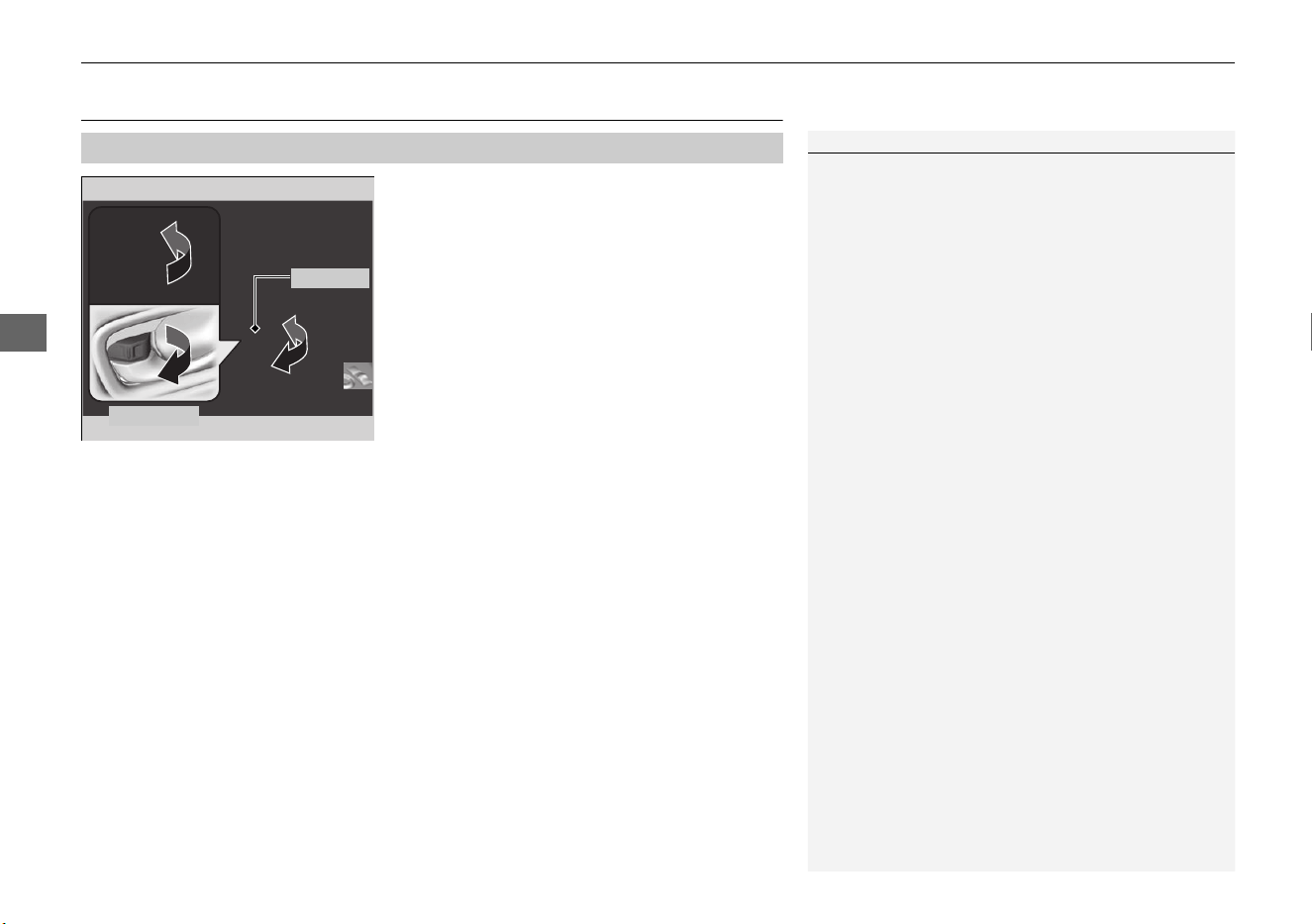
166
uuLocking and Unlocking the DoorsuLocking/Unlocking the Doors from the Inside
Controls
Locking/Unlocking the Doors from the Inside
■
Locking a door
Push the lock tab forward.
■
Unlocking a door
Pull the lock tab rearward.
■
Using the Lock Tab
1Using the Lock Tab
When you lock the door using the lock tab on the
driver’s door, all of the other doors and the tailgate
lock at the same time.
When you unlock the door using the lock tab on the
driver’s door, only the driver’s door will unlock.
To unlock
Lock Tab
To lock
26 PILOT-31T906300.book 166 ページ 2025年10月8日 水曜日 午前11時43分
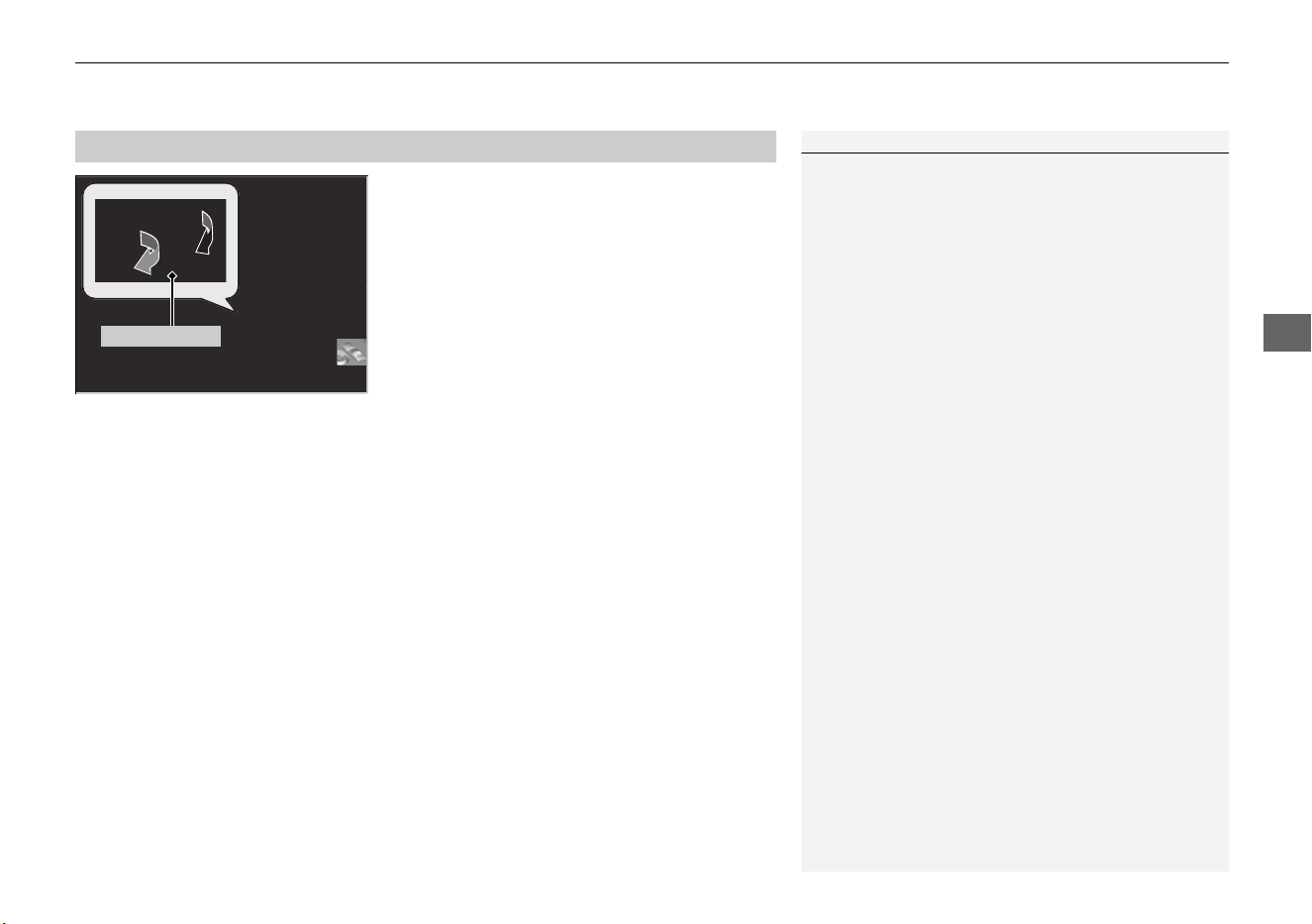
Continued
167
uuLocking and Unlocking the DoorsuLocking/Unlocking the Doors from the Inside
Controls
Pull the front door inner handle.
u The door unlocks and opens in one
motion.
Unlocking and opening the driver’s door from the inner handle unlocks all the other
doors.
To avoid all the doors unlocking use the lock tab on the driver’s door to unlock, then
lock again before opening the door.
u This setting works for one time only.
If you do not want all the doors to unlock all the time, customize the Auto Door
Unlock setting to Off using the audio/information screen.
2 How to Customize the Vehicle Settings P. 358
■
Unlocking Using the Front Door Inner Handle
1Unlocking Using the Front Door Inner Handle
The front door inner handles are designed to allow
front seat occupants to open the door in one motion.
However, this feature requires that front seat
occupants never pull a front door inner handle while
the vehicle is in motion.
Children should always ride in a rear seat where
childproof door locks are provided.
2 Childproof Door Locks P. 168
Inner Handle
26 PILOT-31T906300.book 167 ページ 2025年10月8日 水曜日 午前11時43分
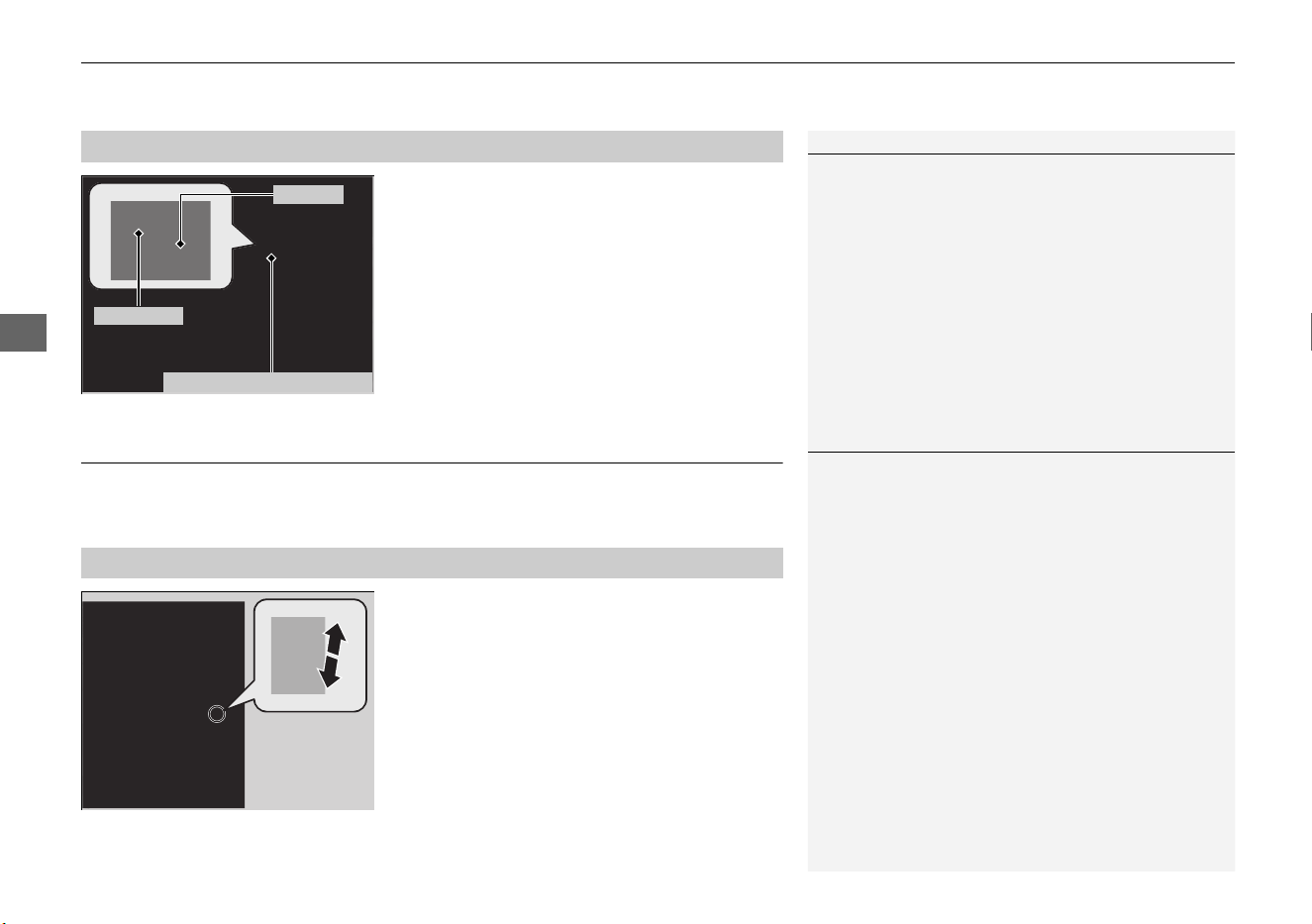
uuLocking and Unlocking the DoorsuChildproof Door Locks
168
Controls
Press the master door lock switch in as shown
to lock or unlock all doors, fuel fill door, and
the tailgate.
Childproof Door Locks
The childproof door locks prevent the rear doors from being opened from the inside
regardless of the position of the lock tab.
Slide the lever in the rear door to the lock
position, and close the door.
■
When opening the door
Open the door using the outside door handle.
■
Using the Master Door Lock Switch
1Using the Master Door Lock Switch
When you lock/unlock either of the front doors using
the master door lock switch, all the other doors and
the tailgate lock/unlock at the same time.
To unlock
Master Door Lock Switch
To lock
■
Setting the Childproof Door Locks
1Childproof Door Locks
To open the door from the inside when the
childproof door lock is on, put the lock tab in the
unlock position, lower the rear window, put your
hand out of the window, and pull the outside door
handle.
Lock
Unlock
26 PILOT-31T906300.book 168 ページ 2025年10月8日 水曜日 午前11時43分
169
uuLocking and Unlocking the DoorsuAuto Door Locking/Unlocking
Controls
Auto Door Locking/Unlocking
Your vehicle locks or unlocks all doors automatically when a certain condition is met.
■
Drive lock mode
All doors and tailgate lock when the vehicle’s speed reaches about 10 mph (15
km/h).
■
Driver’s door open mode
All doors and tailgate unlock when the driver’s door is opened.
■
Auto Door Locking
■
Auto Door Unlocking
1Auto Door Locking/Unlocking
You can turn off or change to another auto door
locking/unlocking setting using the audio/
information screen.
2 How to Customize the Vehicle Settings
P. 358
26 PILOT-31T906300.book 169 ページ 2025年10月8日 水曜日 午前11時43分
170
Controls
Tailgate
Precautions for Opening/Closing the Tailgate
Always make sure individuals and objects are clear of the tailgate before opening or
closing it.
• Open the tailgate all the way.
u If it is not fully opened, the tailgate may begin to close under its own weight.
• Be careful when it is windy. The wind may cause the tailgate to close.
Keep the tailgate closed while driving to:
u Avoid possible damage.
u Prevent exhaust gas from leaking into the vehicle.
2 Carbon Monoxide Gas P. 92
1Precautions for Opening/Closing the Tailgate
Be careful not to hit your head on the tailgate or to
put your hands between the tailgate and the cargo
area when closing the tailgate.
When you are storing or picking up cargo from the
cargo area, or by using a forward and back kicking
motion under the center of the rear bumper for
hands free access
*
, while the engine is idling, do not
stand in front of the exhaust pipe. You may get
burned.
Do not allow any passenger in the cargo space. They
may get hurt during hard braking, a sudden
acceleration, or a crash.
3
WARNING
Anyone caught in the path of a tailgate
that is being opened or closed can be
seriously injured.
Make sure that all people are clear of the
tailgate before opening or closing it.
* Not available on all models
26 PILOT-31T906300.book 170 ページ 2025年10月8日 水曜日 午前11時43分
172
uuTailgateuOpening/Closing the Power Tailgate
Controls
Opening/Closing the Power Tailgate
The power tailgate can be operated by pressing the power tailgate button on the
remote transmitter, pressing the power tailgate button in the driver’s side control
panel, pressing the outer handle on the tailgate, or by using a forward and back
kicking motion under the center of the rear bumper for hands free access
*
.
The power tailgate can be opened/closed when the transmission is in
(P.
1Opening/Closing the Power Tailgate
NOTICE
Do not push or pull on the power tailgate when it is
being automatically opened or closed.
Forcibly opening or closing the power tailgate while
in operation can deform the tailgate frame.
When operating the power tailgate, make sure there
is enough space around your vehicle. People near the
tailgate may be seriously hurt if the tailgate hits or
closes on their heads. Be especially cautious if
children are around.
The power tailgate may not open or close under the
following conditions:
• You start the engine while the tailgate is
automatically opening or closing.
• The vehicle is parked on a steep hill.
• The vehicle is swaying in a strong wind.
• The tailgate or the roof is covered with snow or ice.
3
WARNING
Opening or closing a power tailgate while
any part of a passenger is in the tailgate’s
operating path can cause serious injury.
Make sure all passengers or objects are
clear of the tailgate operating range
before opening or closing the tailgate.
* Not available on all models
26 PILOT-31T906300.book 172 ページ 2025年10月8日 水曜日 午前11時43分
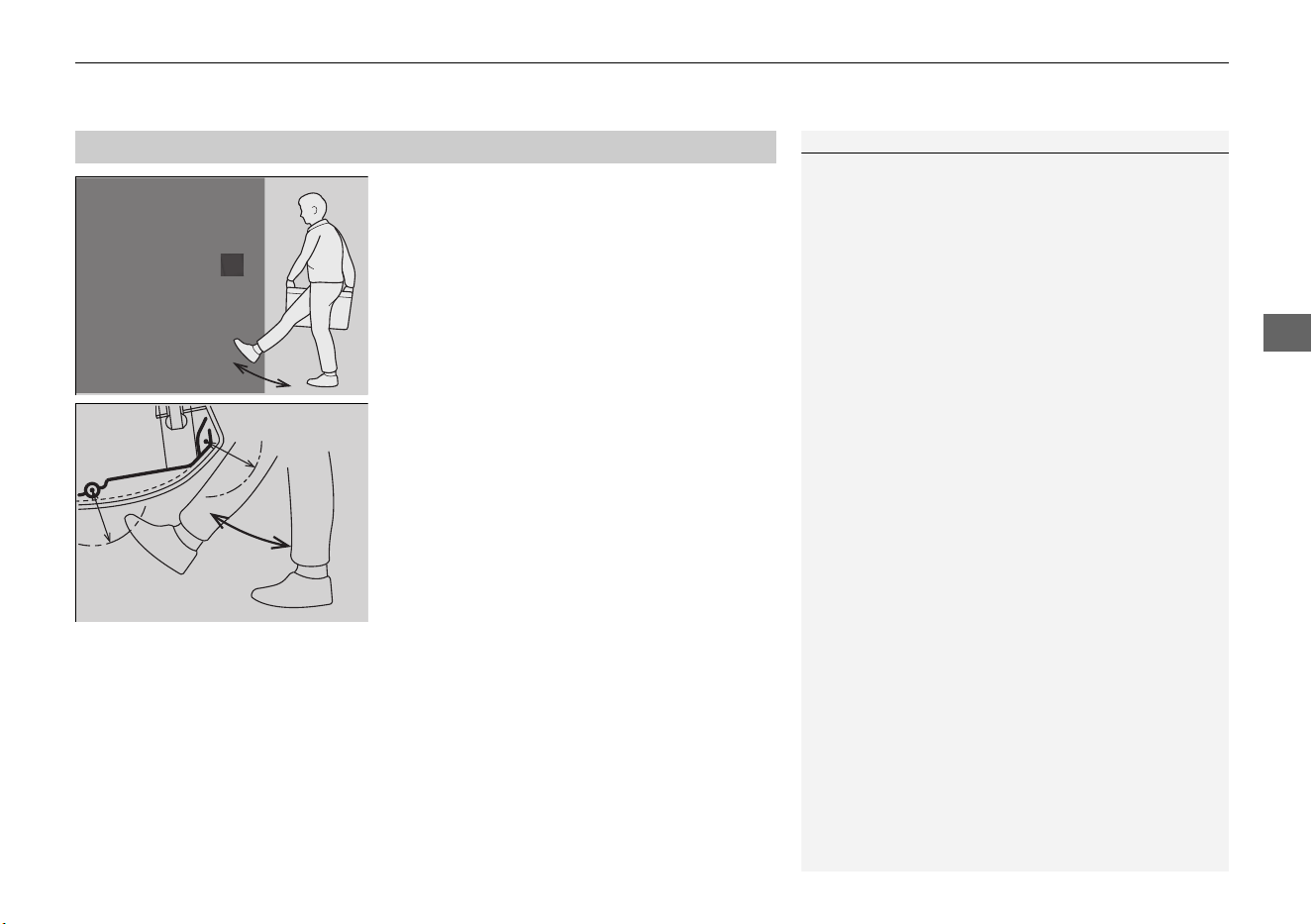
Continued
173
uuTailgateuOpening/Closing the Power Tailgate
Controls
Use a forward and back kicking motion for
about 1 second under the center of the rear
bumper to open or close the power tailgate
while carrying the keyless remote.
u Some exterior lights will flash and a
beeper will sound, then the tailgate will
begin to move.
■
Using the Hands Free Access
*
1Using the Hands Free Access
*
During rain or in other instances when the vehicle
becomes wet, the sensor may not properly detect
your foot motion.
When performing work on or around the rear section
of the vehicle, you may inadvertently open or close
the tailgate.
To prevent this from happening, select Customized
Features on the audio/information screen and then
select OFF for the feature.
2 How to Customize the Vehicle Settings
P. 358
If you hold your foot under the bumper for too long
or sweep your foot from side to side, the power
tailgate does not open or close.
This function will not operate if you don’t have the
keyless remote on you. Please make sure you have
the keyless remote on you.
1 sec.
* Not available on all models
26 PILOT-31T906300.book 173 ページ 2025年10月8日 水曜日 午前11時43分
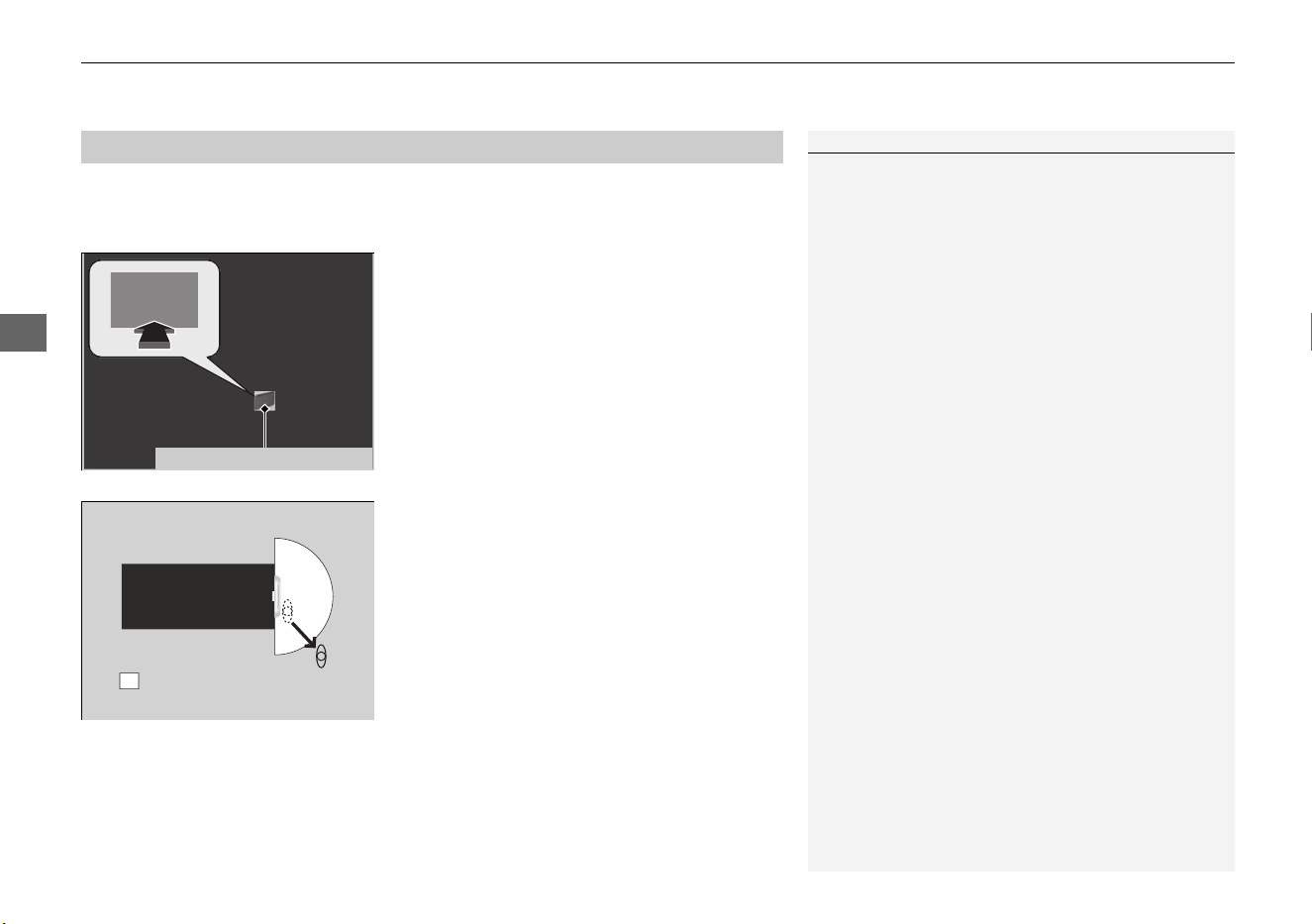
uuTailgateuOpening/Closing the Power Tailgate
174
Controls
When you walk away from the vehicle while carrying the keyless remote, the power
tailgate will automatically close.
1. Carry the keyless remote and press the walk
away close button.
u The indicator on the walk away close
button will turn green when the walk
away close is activated.
2. Walk at least 3 feet (1.0 m) away from the
vehicle within 30 seconds of pressing the
walk away close button.
u Some exterior lights flash and a beeper
sounds, then the power tailgate begins
to close.
■
Power Tailgate Walk Away Close
*
1Power Tailgate Walk Away Close
*
When auto lock function is set to ON, the vehicle will
automatically lock when all doors and the tailgate
have closed.
2 Locking the doors and tailgate (Walk away
auto lock®) P. 158
Walk Away Close Button
Walk at least 3 feet
(1.0 m) away
* Not available on all models
26 PILOT-31T906300.book 174 ページ 2025年10月8日 水曜日 午前11時43分
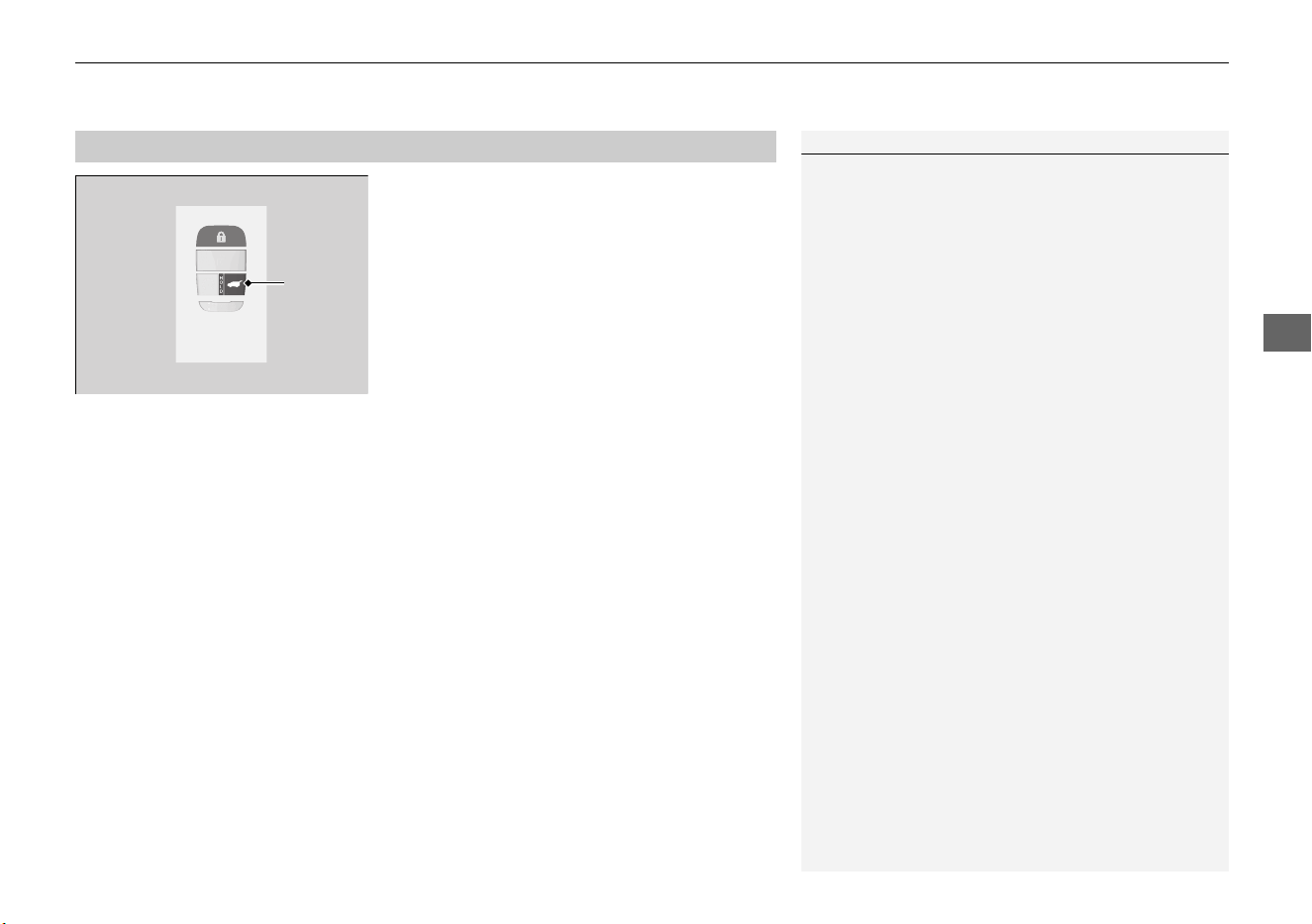
Continued
175
uuTailgateuOpening/Closing the Power Tailgate
Controls
Press the power tailgate button for more than
one second to operate when the power mode
is in VEHICLE OFF.
u Some exterior lights flash and the beeper
sounds.
If you press the button again while the power
tailgate is moving, it will stop. Press the button
for more than one second, and the power
tailgate will reverse direction.
■
Customizing when to open the tailgate
Anytime: The power tailgate unlocks and opens at the same time. This is the
default setting.
When Unlocked: The tailgate opens when all doors are unlocked.
2 How to Customize the Vehicle Settings P. 358
■
Using the Remote Transmitter
1Opening/Closing the Power Tailgate
If you close the power tailgate when all the doors are
locked, the power tailgate locks automatically.
If you replace the battery or the power tailgate fuse
while the tailgate is open, the power tailgate may be
disabled. The power tailgate resumes once you
manually close the tailgate.
Installing aftermarket components other than Honda
Genuine Accessories on the power tailgate may
prevent it from fully opening or closing.
Make sure the power tailgate is fully open before you
transport your cargo in and out.
The beeper sounds when you start driving while the
power tailgate is still open, or closing.
Do not touch the sensors located on both sides of the
tailgate. The power tailgate does not close if you
touch either sensor when you are trying to close the
tailgate.
Be careful not to scratch the sensors with a sharp
object. If scratched, they can be damaged, and the
power tailgate closing feature malfunctions.
If the power tailgate meets resistance while opening
or closing, the auto reverse feature reverses the
direction. The beeper sounds three times.
Power
Tailgate
Button
26 PILOT-31T906300.book 175 ページ 2025年10月8日 水曜日 午前11時43分
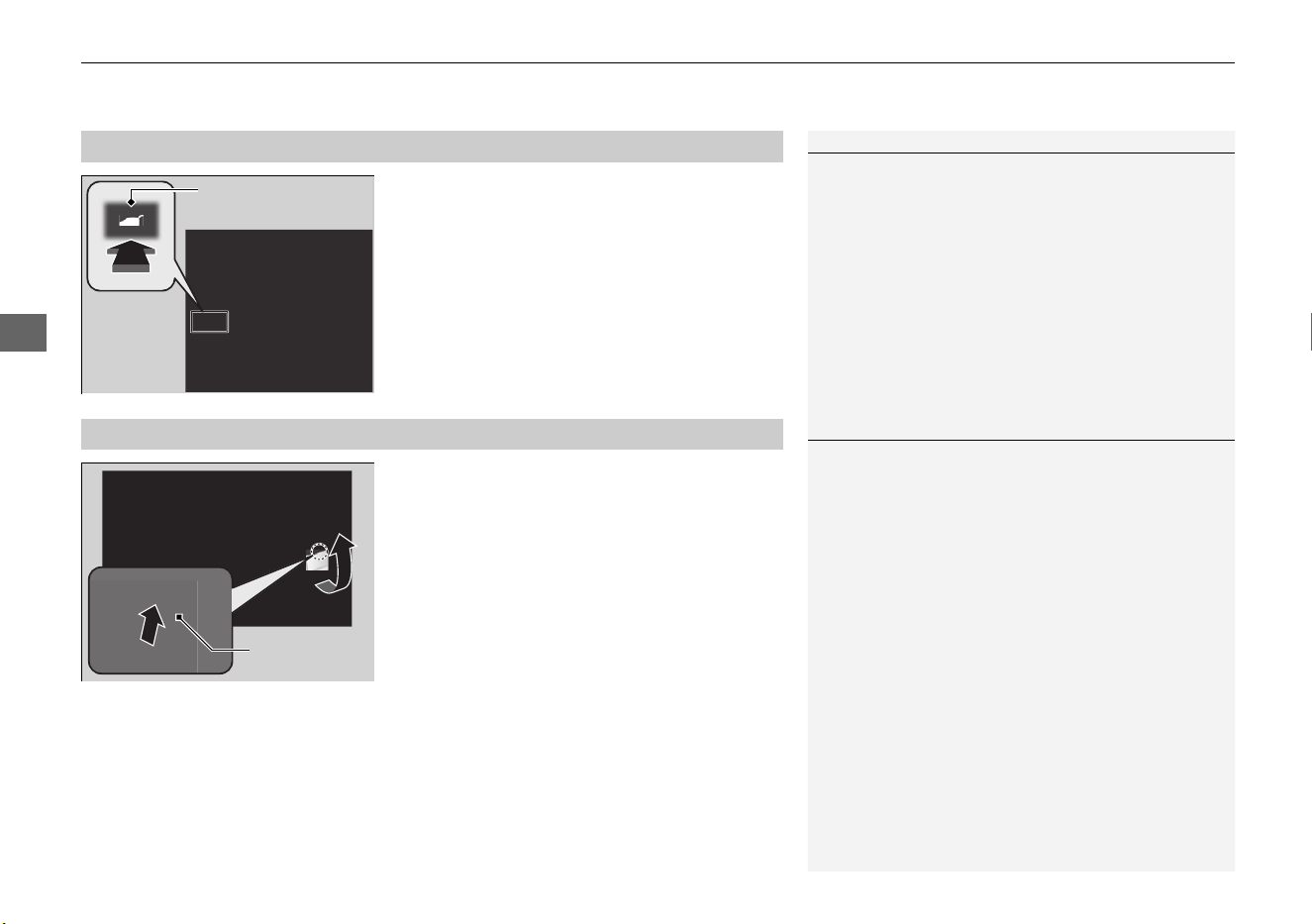
uuTailgateuOpening/Closing the Power Tailgate
176
Controls
To open or close the power tailgate, press the
power tailgate button for about one second.
u Some exterior lights will flash and the
beeper sounds.
If you press the button again while the power
tailgate is moving, it will stop. Press the button
for about one second, and the power tailgate
will reverse direction.
If you press the outer handle of the tailgate for
no longer than one second, the tailgate opens
automatically.
u The beeper sounds.
u If you want to open the tailgate
manually, press the outer handle for
more than one second.
If you are carrying the keyless remote, you do
not have to unlock the tailgate before
opening it.
If you press the outer handle again while the
power tailgate is moving, it will stop. Press the
outer handle, and the power tailgate will
reverse direction.
■
Using the Power Tailgate Button
1Opening/Closing the Power Tailgate
The auto reverse function stops sensing when the
tailgate is almost closed to make sure that it fully
closes.
Power Tailgate
Button
■
Using the Tailgate Outer Handle
1Using the Tailgate Outer Handle
• Do not leave the keyless remote in the vehicle
when you get out. Carry it with you.
• Even if you are not carrying the keyless remote, you
can unlock the tailgate while someone else with
the remote is within range.
• Do not leave the keyless remote inside the cargo
area and close the tailgate. The beeper sounds and
the tailgate cannot be closed.
You can change the power tailgate operation setting
on and off.
2 How to Customize the Vehicle Settings
P. 358
Outer Handle
26 PILOT-31T906300.book 176 ページ 2025年10月8日 水曜日 午前11時43分
177
uuTailgateuOpening/Closing the Power Tailgate
Continued
Controls
Press the tailgate inner button on the tailgate
to close the power tailgate.
u The beeper sounds.
If you press the tailgate inner button again
while the power tailgate is moving, it will stop.
Press and release the tailgate inner button
again, and the power tailgate will reverse
direction.
■
Using the Tailgate Inner Button
Tailgate Inner Button
26 PILOT-31T906300.book 177 ページ 2025年10月8日 水曜日 午前11時43分
uuTailgateuOpening/Closing the Power Tailgate
178
Controls
The extent to which the power tailgate
automatically opens can be programmed.
To program:
1. Open the tailgate to the desired position.
2. Press and hold the tailgate inner button.
You will hear one long beep, followed by
two short beeps.
■
Programming Tailgate Position
1Programming Tailgate Position
If the tailgate is only slightly opened, the position
cannot be programmed, even if you push the tailgate
inner button.
If you want to reprogram the power tailgate to open
all the way, manually raise the tailgate to its upper
most position and follow the directions in step 2.
Tailgate Inner Button
26 PILOT-31T906300.book 178 ページ 2025年10月8日 水曜日 午前11時43分
179
uuTailgateuOpening/Closing the Power Tailgate
Controls
If you manually close the power tailgate, it latches automatically.
Automatically lowers the power tailgate when there is a possibility that the fully
opened power tailgate can fall down by its own weight (for example, with snow on
the tailgate). The beeper sounds while the power tailgate lowers.
■
Auto-Closer
■
Power Tailgate Fall Detection
1Auto-Closer
Keep your hands away from the tailgate when you
manually close the tailgate and let it latch
automatically. It is dangerous to put your hands
around the tailgate as it starts to latch itself.
The auto-closer feature does not activate if you press
and hold the tailgate outer handle while the power
tailgate is closing.
NOTICE
Do not put any force on the tailgate while the power
tailgate is latching.
1Power Tailgate Fall Detection
If you try to manually close the power tailgate
immediately after it fully opens, the power tailgate
fall detection may activate.
Once the power tailgate fall detection activates, wait
until the power tailgate fully closes. Keep away from
the power tailgate when it is in motion.
If the power tailgate fall detection constantly
activates, consult a dealer.
26 PILOT-31T906300.book 179 ページ 2025年10月8日 水曜日 午前11時43分
180
Controls
Security System
Immobilizer System
This system prevents a key that has not been pre-registered from starting the
engine.
Pay attention to the following when pressing the ENGINE START/STOP button:
• Do not allow objects that emit strong radio waves near the ENGINE START/
STOP button.
• Make sure the key is not covered by or touching a metal object.
• Do not bring a key from another vehicle’s immobilizer system near the ENGINE
START/STOP button.
• Do not put the key near magnetic items. Electronic devices, such as televisions
and audio systems, emit strong magnetic fields. Note that even a key chain can
become magnetic.
Security System Alarm
The security system alarm activates when the tailgate, hood, or doors are forcibly
opened. The alarm does not activate if the tailgate or doors are opened with the
remote transmitter or keyless access system.
1Immobilizer System
NOTICE
Leaving the key in the vehicle can result in theft or
accidental movement of the vehicle.
Always take the key with you whenever you leave the
vehicle unattended.
Do not alter the system or add other devices to it.
Doing so may damage the system and make your
vehicle inoperable.
Apply and hold the brake pedal before turning the
vehicle on the first time after the battery has been
disconnected.
Canadian models
1Security System Alarm
Do not alter the system or add other devices to it.
Doing so may damage the system and make your
vehicle inoperable.
The security alarm continues for a maximum of two
minutes until the security system alarm deactivates.
26 PILOT-31T906300.book 180 ページ 2025年10月8日 水曜日 午前11時43分
Continued
181
uuSecurity SystemuSecurity System Alarm
Controls
■
When the security system alarm activates
The horn sounds intermittently, and some exterior lights flash.
■
To deactivate the security system alarm
Unlock the vehicle using the remote transmitter or keyless access system. The
system, along with the horn and flashing lights, is deactivated.
■
Setting the security system alarm
The security system alarm automatically sets when the following conditions have
been met:
• The power mode is set to VEHICLE OFF.
• The hood is closed.
• All doors and the tailgate are locked from outside with the remote transmitter or
keyless access system.
■
When the security system alarm sets
The security system alarm indicator in the instrument panel blinks and the blinking
interval changes after about 15 seconds.
■
To cancel the security system alarm
The security system alarm is canceled when the vehicle is unlocked using the remote
transmitter or keyless access system, or when the power mode is set to ON. The
security system alarm indicator goes off at the same time.
1Security System Alarm
Do not set the security system alarm when someone
is in the vehicle or a window is open. The system can
accidentally activate when:
• Unlocking the door with the lock tab.
• Opening the hood with the hood release.
• Opening the tailgate with the power tailgate
button on the dashboard.
If the battery goes dead after you have set the
security system alarm, the security alarm may sound
once the battery is recharged or replaced.
If this occurs, deactivate the security system alarm by
unlocking a door using the remote transmitter or
keyless access system.
If you unlock a door with the built-in key while the
security system is activated, the alarm will sound.
26 PILOT-31T906300.book 181 ページ 2025年10月8日 水曜日 午前11時43分
182
uuSecurity SystemuSecurity System Alarm
Controls
■
The panic button on the remote
transmitter
If you press the panic button for
approximately one second, the following will
occur for about 30 seconds:
• The horn sounds.
• Some exterior lights flash.
■
Canceling panic mode
Press any button on the remote transmitter, or
set the power mode to ON.
■
Panic Mode
Panic Button
26 PILOT-31T906300.book 182 ページ 2025年10月8日 水曜日 午前11時43分
183
Continued
Controls
Windows
Opening/Closing the Power Windows
The power windows can be opened and closed when the power mode is in ON,
using the switches on the doors.
The driver’s side switches can be used to open and close all the windows. The power
window lock button on the driver’s side must be switched off to open and close the
windows from anywhere other than the driver’s seat.
When the power window lock button is pushed in, the indicator comes on and you
can only operate the driver’s window. Turn the power window lock button on if a
child is in the vehicle.
1Opening/Closing the Power Windows
The power windows can be operated for up to 10
minutes after you set the power mode to VEHICLE
OFF.
Opening either front door cancels this function.
Auto Reverse
If a power window senses resistance when closing
automatically, it will stop closing and reverse
direction.
The driver’s window auto reverse function is disabled
when you continuously pull up the switch.
The auto reverse function stops sensing when the
window is almost closed to ensure that it fully closes.
3
WARNING
Closing a power window on someone’s
hands or fingers can cause serious injury.
Make sure your passengers are away from
the windows before closing them.
26 PILOT-31T906300.book 183 ページ 2025年10月8日 水曜日 午前11時43分
uuWindowsuOpening/Closing the Power Windows
184
Controls
■
Manual operation
To open: Push the switch down lightly, and
hold it until the desired position is reached.
To close: Pull the switch up lightly, and hold it
until the desired position is reached.
■
Automatic operation
To open: Push the switch down firmly.
To close: Pull the switch up firmly.
The window opens or closes completely. To
stop the window at any time, push or pull the
switch briefly.
■
Opening/Closing the Windows with Auto-Open/Close
Function
1Opening/Closing the Power Windows
While driving with any of the windows open, you
may hear a booming, throbbing, or helicopter-type
noise or pressure. This is called wind buffeting. This is
a normal occurrence that can be minimized.
If you hear a wind buffeting noise with any of the
windows open, lower all of the other windows
slightly or open the panoramic roof
*
to the comfort
position.
Power Window Lock Button
Front
Passenger’s
Window
Switch
Driver’s
Window
Switch
Indicator
Rear Passenger’s
Window Switch
* Not available on all models
26 PILOT-31T906300.book 184 ページ 2025年10月8日 水曜日 午前11時43分
185
uuWindowsuOpening/Closing the Power Windows
Controls
To open: Press the unlock button, and then
within 10 seconds, press it again and hold it.
If the windows stop midway, repeat the
procedure.
■
Opening the Windows with the Remote
1Opening the Windows with the Remote
If you open the windows with the remote
transmitter, the panoramic roof will open
automatically along with them.
You can turn off or on the feature to open the
windows with the keyless remote setting using the
audio/information screen.
2 How to Customize the Vehicle Settings
P. 358
Models with panoramic roof
All models
Unlock Button
26 PILOT-31T906300.book 185 ページ 2025年10月8日 水曜日 午前11時43分
186
Controls
Panoramic Roof
*
Opening/Closing the Panoramic Roof
You can operate the panoramic roof and sunshade when the power mode is in ON.
Use the switch in the front of the ceiling to open and close the panoramic roof and
sunshade.
1Panoramic Roof
*
NOTICE
Opening the panoramic roof in below freezing
temperature or when it is covered with snow or ice
can damage the panoramic roof panel or motor.
The panoramic roof and sunshade can be operated
for up to 10 minutes after you set the power mode to
VEHICLE OFF.
Opening either front door cancels this function.
When resistance is detected, the auto reverse
function causes the panoramic roof and sunshade to
change directions, then stop. Auto reverse stops
sensing when the panoramic roof and sunshade are
almost closed to ensure that it fully closes.
Make sure that all objects, including fingers, are clear
of the panoramic roof.
3
WARNING
Opening or closing the panoramic roof and
sunshade on someone’s hands or fingers
can cause serious injury.
Make sure all hands and fingers are clear of
the panoramic roof and sunshade before
opening or closing it.
* Not available on all models
26 PILOT-31T906300.book 186 ページ 2025年10月8日 水曜日 午前11時43分
Continued
187
uuPanoramic Roof
*
uOpening/Closing the Panoramic Roof
Controls
■
Automatic operation
To open: Pull the switch back firmly.
To close: Push the switch forward firmly.
The sunshade will automatically open or close
all the way. To stop the sunshade midway,
push the switch briefly.
■
Manual operation
To open: Pull the switch back lightly, and
hold it until the desired position is reached.
To close: Push the switch forward lightly, and
hold it until the desired position is reached.
■
Using the Sunshade Switch
1Panoramic Roof
*
You can use the remote transmitter to operate the
panoramic roof.
2 Opening the Windows with the Remote
P. 185
Open
Close
1Using the Sunshade Switch
The sunshade can be opened or closed to adjust the
amount of light that enters the cabin.
When you use the sunshade switch to open the
sunshade, the panoramic roof does not move.
The sunshade cannot be fully closed if the panoramic
roof is open. When you close the sunshade with the
panoramic roof open, the sunshade stops slightly
before the panoramic roof. When you push the
switch forward again, the sunshade and the
panoramic roof close together.
* Not available on all models
26 PILOT-31T906300.book 187 ページ 2025年10月8日 水曜日 午前11時43分
uuPanoramic Roof
*
uOpening/Closing the Panoramic Roof
188
Controls
■
Automatic operation
To open: Pull the switch back firmly.
To close: Push the switch forward firmly.
The panoramic roof will automatically open or
close all the way. To stop the panoramic roof
midway, pull or push the switch briefly.
■
Manual operation
To open: Pull the switch back lightly, and
hold it until the desired position is reached.
To close: Push the switch forward lightly, and
hold it until the desired position is reached.
■
Tilting the panoramic roof up
To tilt: Push on the center of the panoramic
roof switch.
u The sunshade will open automatically
and the panoramic roof will start to tilt
up.
To close: Push the switch forward firmly, then
release.
■
Using the Panoramic Roof Switch
1Using the Panoramic Roof Switch
The panoramic roof cannot be fully opened in a
single operation. The panoramic roof has a
“comfort” position or wind noise reduction position
at which the roof first stops. To open fully, pull the
switch back again after the roof has stopped at this
position.
Whenever the panoramic roof is opening, the
sunshade moves along with it. However, when the
panoramic roof is closing, the sunshade does not
move.
When you tilt open the panoramic roof, the sunshade
opens slightly to let in fresh air. When you close the
panoramic roof from this position, the sunshade
returns to its closed position.
Comfort Position
Full Open Position
Open
Close
Tilt
26 PILOT-31T906300.book 188 ページ 2025年10月8日 水曜日 午前11時43分
189
uuPanoramic Roof
*
uOpening/Closing the Panoramic Roof
Controls
1Using the Panoramic Roof Switch
When you tilt open or slide open the panoramic roof,
if the climate control is set to AUTO it will
automatically switch to fresh air mode to reduce
wind noise. When you close the panoramic roof,
depending on the situation it will change to
recirculation or fresh air mode.
26 PILOT-31T906300.book 189 ページ 2025年10月8日 水曜日 午前11時43分
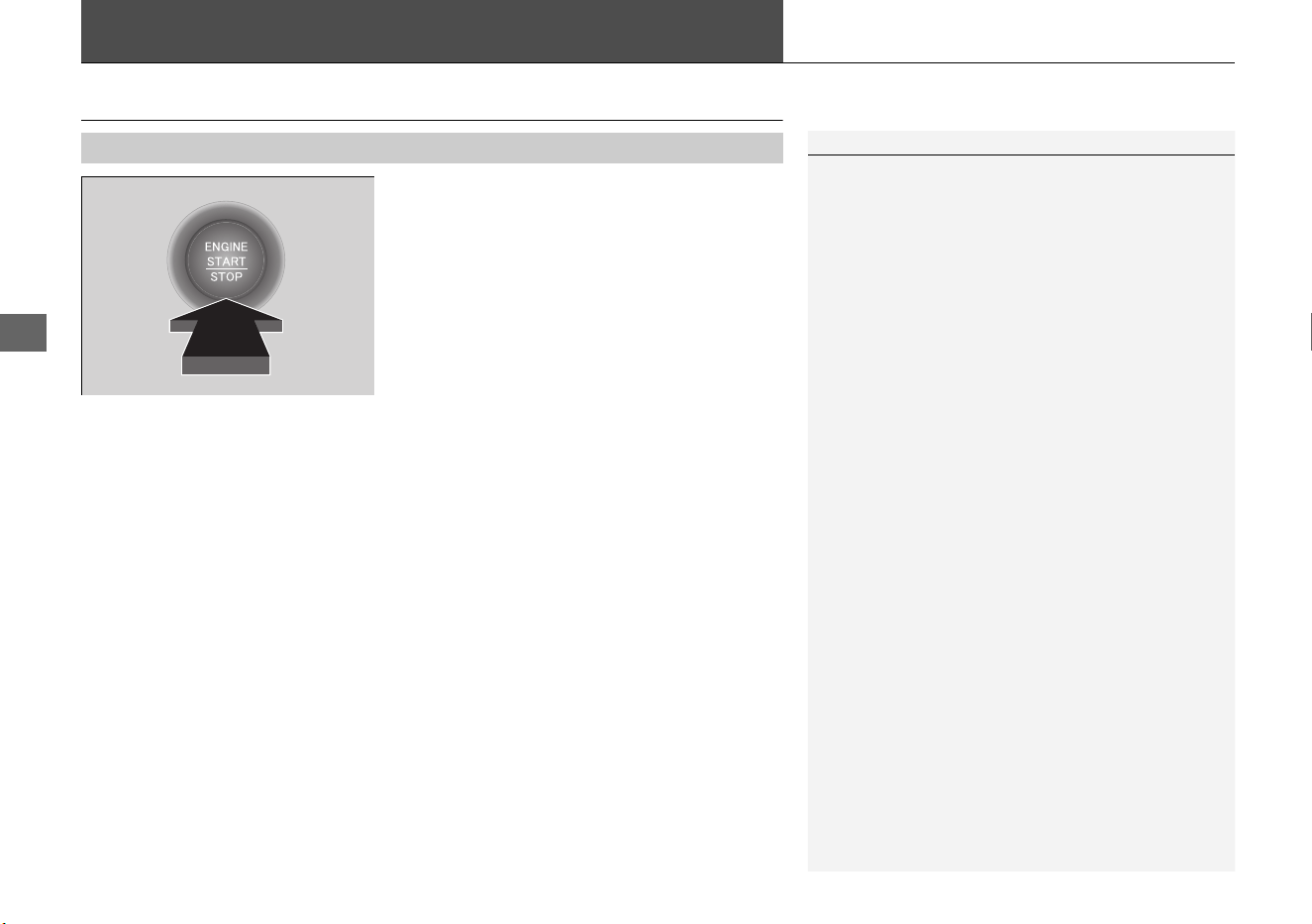
190
Controls
Operating the Switches Around the Steering Wheel
ENGINE START/STOP Button
If you carry the keyless remote and press
ENGINE START/STOP button without
depressing the brake pedal, the power mode
will change in this order: VEHICLE
OFFACCESSORYON
VEHICLE OFF.
VEHICLE OFF:
Vehicle power is turned OFF.
ACCESSORY:
The audio system and some accessories can be
used.
ON:
All accessories can be used.
■
Changing the Power Mode
1ENGINE START/STOP Button
If the keyless remote is set in a storage box or another
place where its signal can be interrupted, the power
mode may not change.
26 PILOT-31T906300.book 190 ページ 2025年10月8日 水曜日 午前11時43分

191
uuOperating the Switches Around the Steering WheeluENGINE START/STOP Button
Continued
Controls
If you leave the vehicle for 30 to 60 minutes with the transmission in (P and the
power mode in ACCESSORY, the vehicle automatically goes into the mode similar to
VEHICLE OFF (LOCK) to avoid draining the battery.
If you open the driver’s door when the power mode is set to ACCESSORY, a warning
beep sounds.
■
Automatic Power Off
■
Power Mode Reminder
26 PILOT-31T906300.book 191 ページ 2025年10月8日 水曜日 午前11時43分
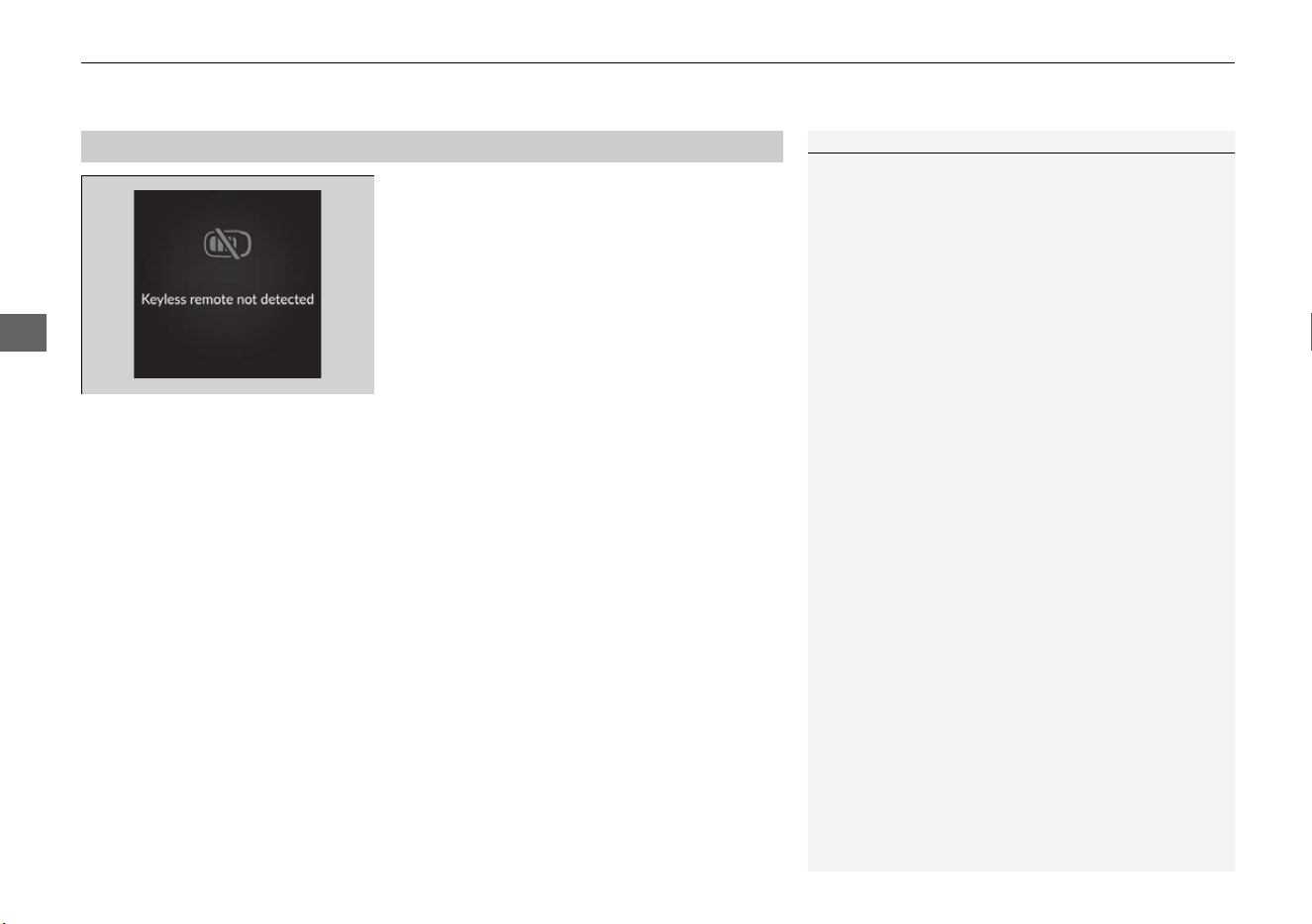
uuOperating the Switches Around the Steering WheeluENGINE START/STOP Button
192
Controls
When the power mode is set to any mode
other than OFF and you remove the keyless
remote from the vehicle and shut the door, an
alarm will sound. If the alarm continues to
sound, place the keyless remote in another
location.
■
When the power mode is in
ACCESSORY
The alarm will sound from outside the vehicle.
■
When the power mode is in ON
An alarm will sound both inside and outside
the vehicle. In addition, a warning indicator
will appear on the instrument panel.
■
Keyless Remote Reminder
1Keyless Remote Reminder
When the keyless remote is within the system’s
operational range, and all the doors are closed, the
warning function cancels.
If the keyless remote is taken out of the vehicle after
the engine has been turned on, you can no longer
change the ENGINE START/STOP button mode or
restart the engine. Always make sure that the keyless
remote is in your vehicle when you operate the
ENGINE START/STOP button.
Removing the keyless remote from the vehicle
through a window does not activate the warning
buzzer.
Do not put the keyless remote on the dashboard or in
the glove box. It may cause the warning buzzer to
sound. Under some other conditions that can prevent
the vehicle from locating the keyless remote, the
warning buzzer may also sound even if the keyless
remote is within the system’s operational range.
26 PILOT-31T906300.book 192 ページ 2025年10月8日 水曜日 午前11時43分
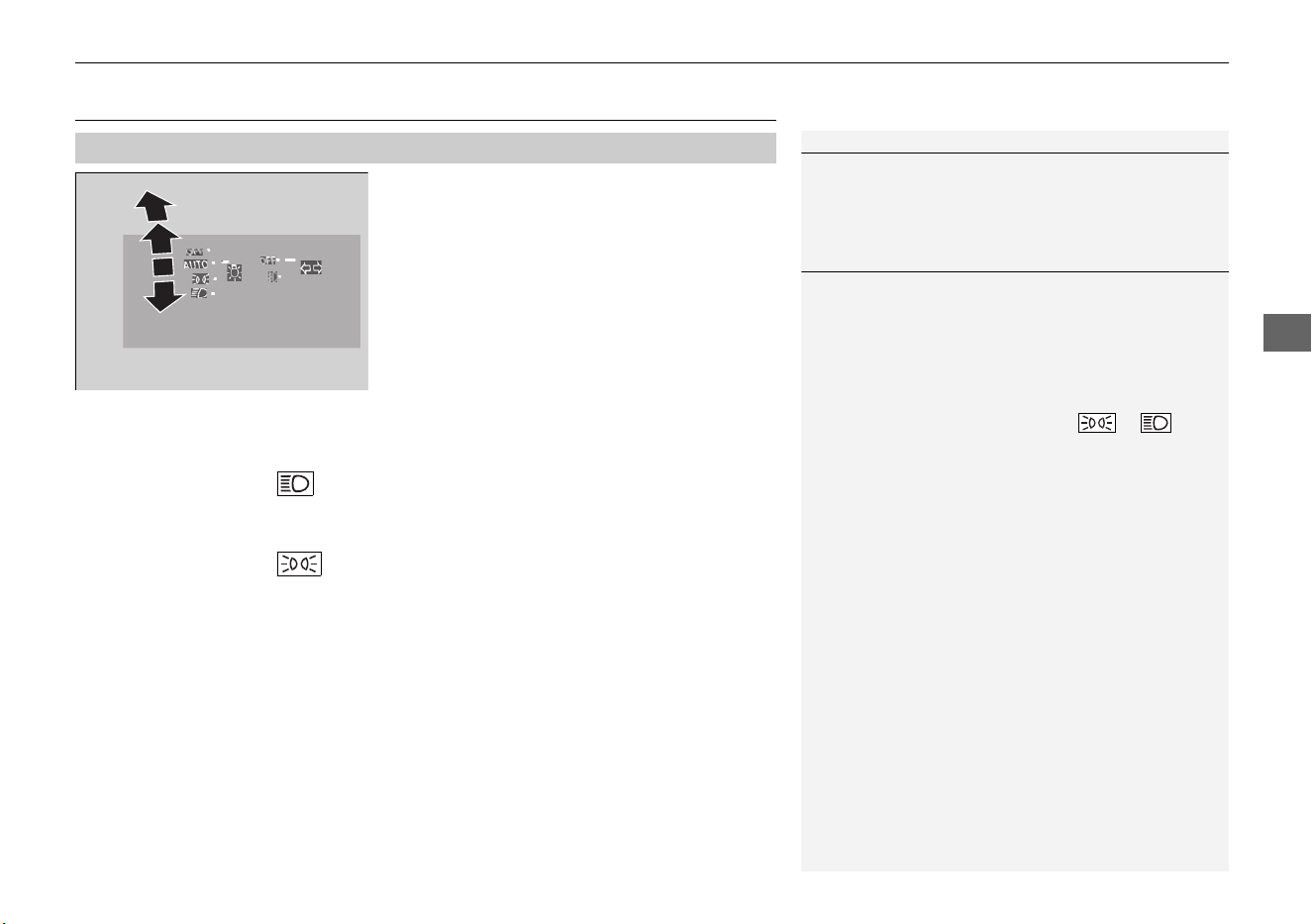
193
uuOperating the Switches Around the Steering WheeluLights
Continued
Controls
Lights
The lights will turn on automatically
depending on the ambient brightness. They
can also be switched on and off manually.
The exterior lights will switch on automatically
when the light switch is set to AUTO while
the power mode is in ON.
■
Manual operation
Headlights/parking lights:
Turn the light switch to .
Parking lights:
Turn the light switch to .
Headlight/parking lights off:
Turn the light switch to OFF and release it while the transmission is in
(P and the
parking brake is applied.
u The lights will come back on automatically when:
• The light switch is turned to OFF again and released.
• The transmission is changed out of
(P and the parking brake is released.
■
Headlights/Parking Lights
1Lights
When the lights are on, the lights on indicator in the
instrument panel will be on.
2 Lights On Indicator P. 107
1Headlights/Parking Lights
When the parking lights are on, the side marker, tail,
and rear license plate lights will also switch on.
Do not leave the lights on when the engine is off
because it will cause the battery to discharge.
When the light switch is turned to or and
the power is turned to OFF, a beeper sounds when
the driver’s door is opened.
When the light switch is turned to AUTO and the
ambient light levels are low, the headlights and
parking lights will switch on if you unlock a door.
They will switch off when the door is locked.
If you suspect that the headlights are not positioned
properly, have the vehicle inspected by a dealer.
26 PILOT-31T906300.book 193 ページ 2025年10月8日 水曜日 午前11時43分
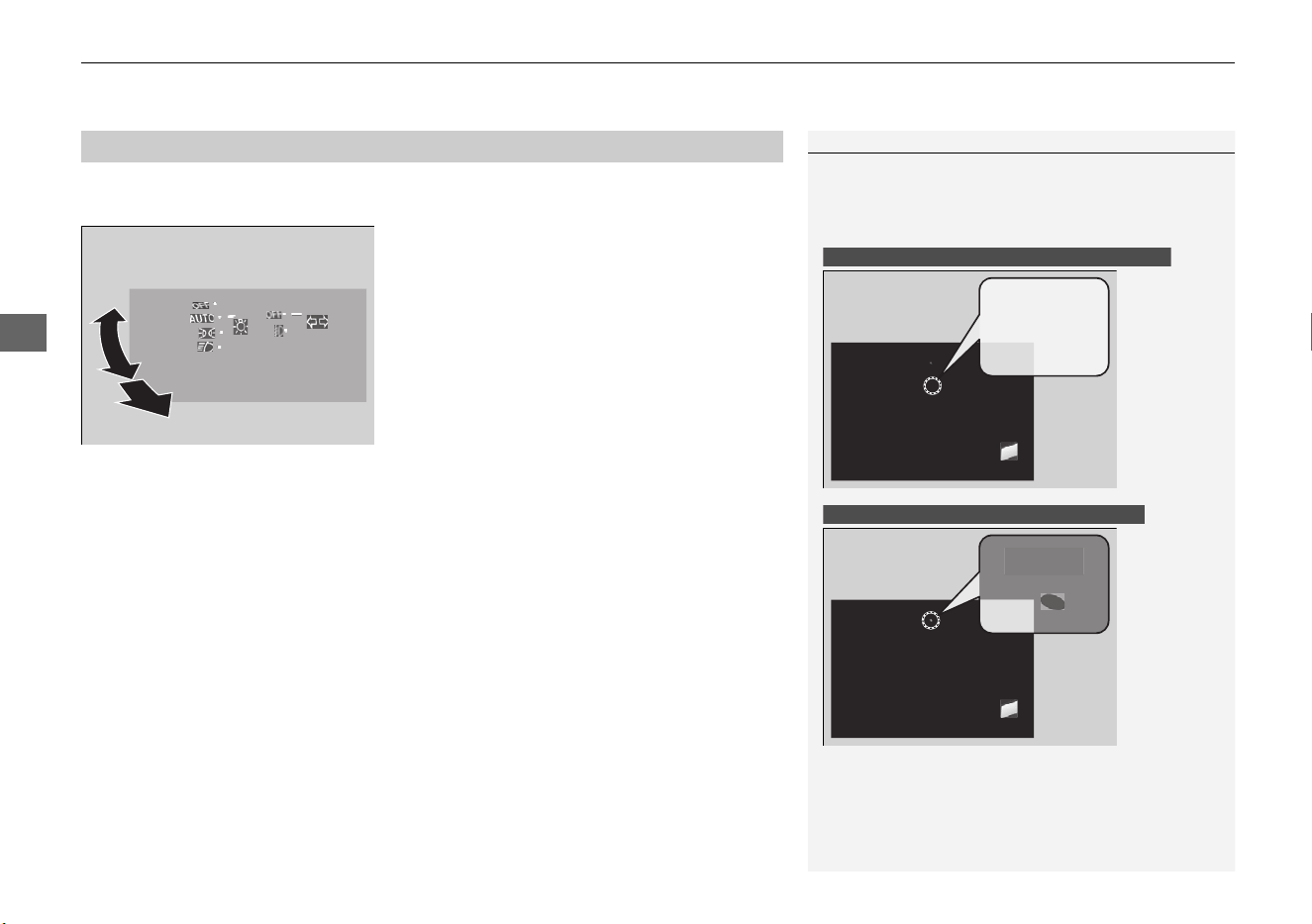
uuOperating the Switches Around the Steering WheeluLights
194
Controls
When the headlights are on, push the lever forward. Pull the lever back to return to
low beams.
■
Flashing the high beams
Pull the lever back to switch on the high
beams.
u Release the lever to return to low beams.
■
High Beams
1Headlights/Parking Lights
The light sensor is in the location shown below. Do
not cover this light sensor with anything; otherwise,
the automatic lighting system may not work properly.
Models without automatic intermittent wipers
Models with automatic intermittent wipers
26 PILOT-31T906300.book 194 ページ 2025年10月8日 水曜日 午前11時43分
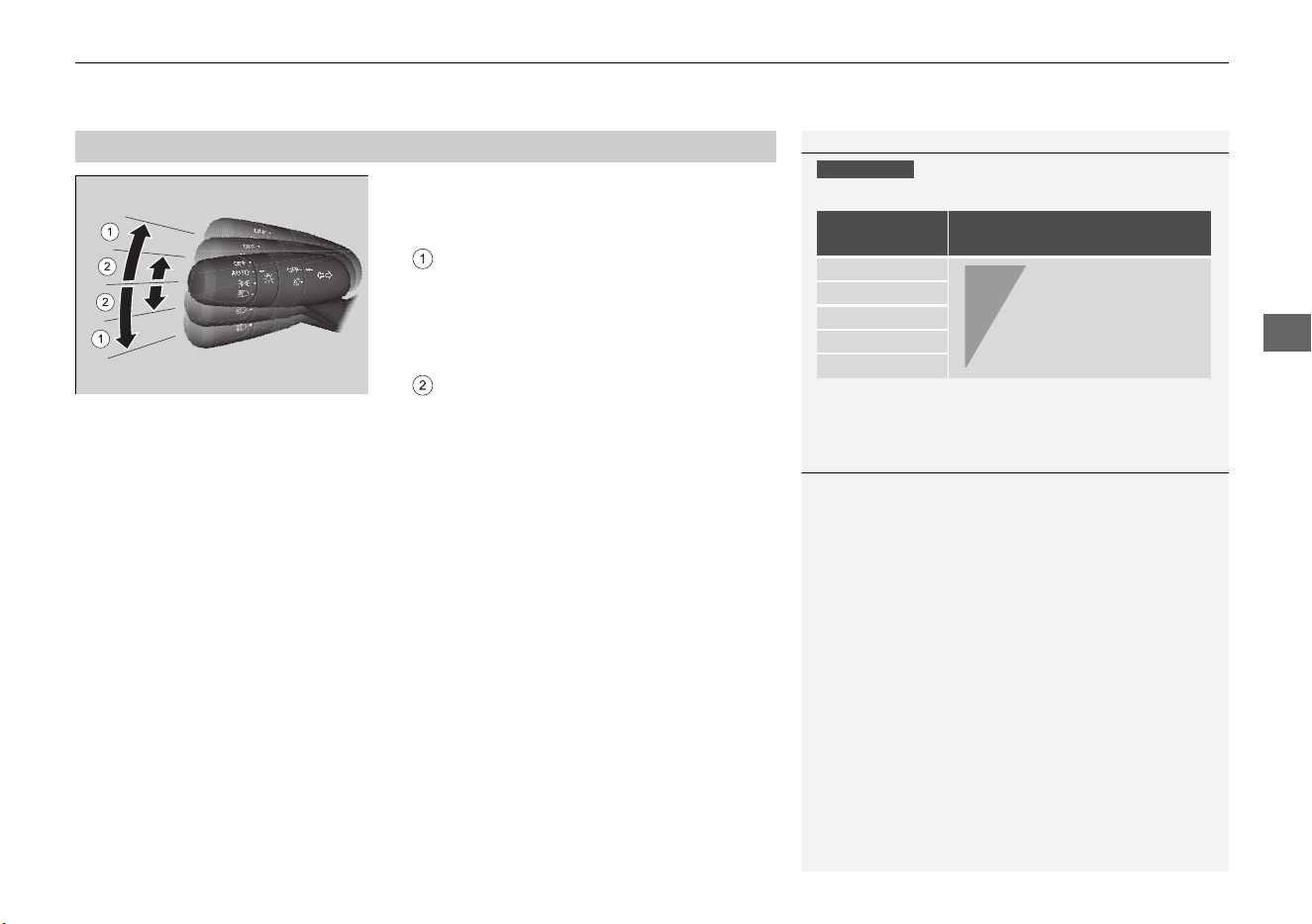
Continued
195
uuOperating the Switches Around the Steering WheeluLights
Controls
The turn signals can be used when the power
mode is in ON.
■
: Turn signal
Push the lever up or down based on the
direction you want to turn, and the turn signal
will blink.
■
: One-touch turn signal
When you lightly push the lever up or down
and release it, the turn signal will blink 3
times.
u If you lightly push the lever in the
opposite direction while it is blinking, the
blinking will stop.
■
Turn Signals
1Headlights/Parking Lights
You can adjust the auto light sensitivity as follows:
2 How to Customize the Vehicle Settings
P. 358
Setting
The exterior lights come on
when the ambient light is
Max
High
Mid
Low
Min
U.S. models
Bright
Dark
1Turn Signals
The turn signal indicator on the instrument panel will
blink when the external turn signal blinks.
2 Indicators P. 96
26 PILOT-31T906300.book 195 ページ 2025年10月8日 水曜日 午前11時43分
uuOperating the Switches Around the Steering WheeluLights
196
Controls
The headlights automatically come on when the wipers are used several times within
a certain number of intervals with the headlight switch in AUTO.
The headlights automatically go off a few minutes later if the wipers are stopped.
The headlights, all other exterior lights, and the instrument panel lights turn off 15
seconds after you set the power mode to VEHICLE OFF, take the remote with you,
and close the driver’s door.
If you set the power mode to VEHICLE OFF with the headlight switch on, but do not
open the door, the lights turn off after 10 minutes (3 minutes, if the switch is in the
AUTO position).
The lights turn on again when you unlock or open the driver’s door. If you unlock
the door, but do not open it within 15 seconds, the lights go off. If you open the
driver’s door, you will hear a reminder chime alerting you that the lights are on.
■
Headlight Integration with Wipers
■
Automatic Lighting Off Feature
1Headlight Integration with Wipers
This feature activates while the headlights are off in
AUTO.
The instrument panel brightness does not change
when the headlights come on.
At dark ambient light levels, the automatic lighting
control feature turns on the headlights, regardless of
the number of wiper sweeps.
You can turn the headlight integration with wipers
function on and off.
2 How to Customize the Vehicle Settings
P. 358
1Automatic Lighting Off Feature
You can change the headlight auto off timer setting.
2 How to Customize the Vehicle Settings
P. 358
26 PILOT-31T906300.book 196 ページ 2025年10月8日 水曜日 午前11時43分
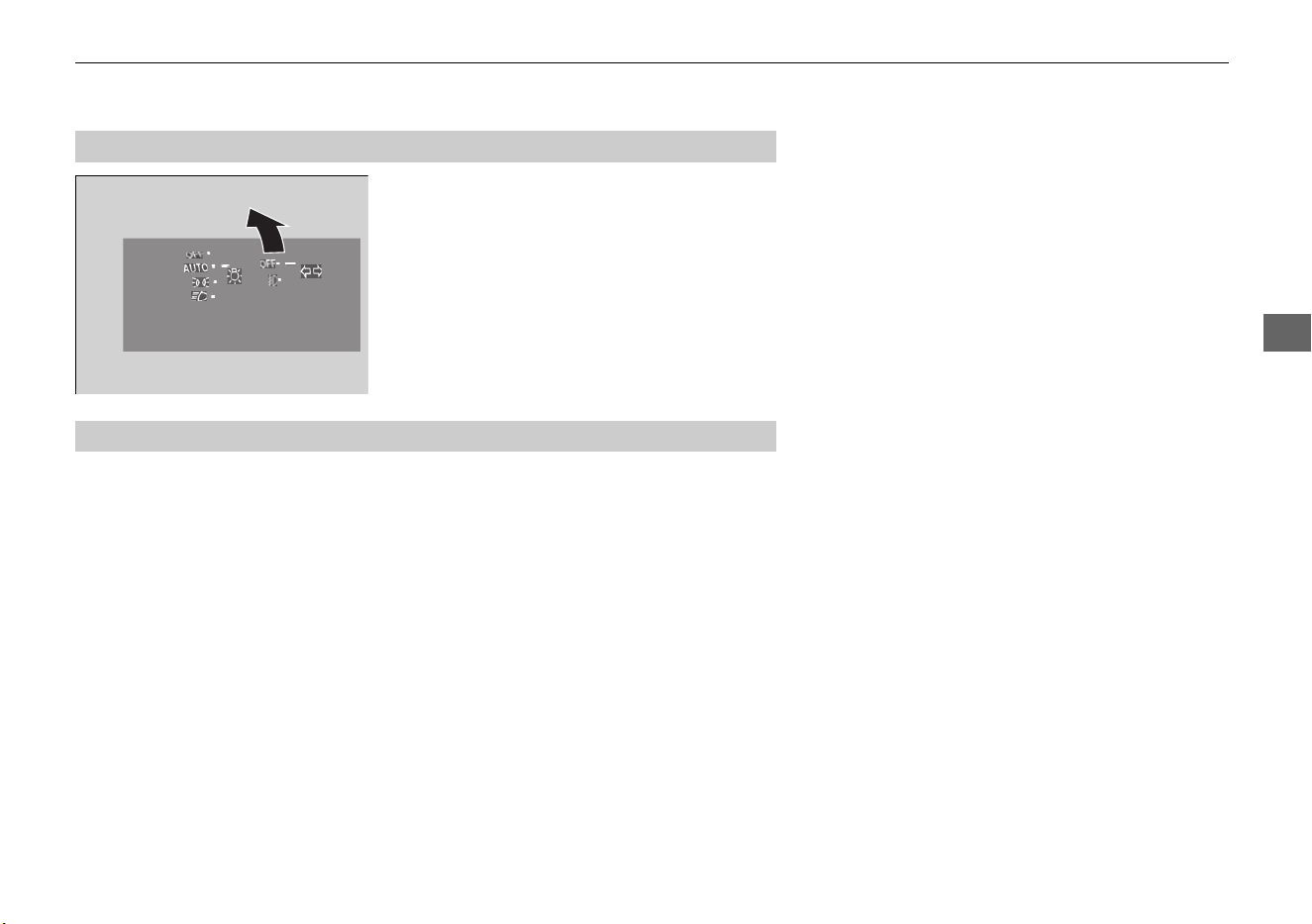
197
uuOperating the Switches Around the Steering WheeluLights
Controls
When the low beam headlights are on, turn
the fog light switch on to use the fog lights.
The parking/daytime running lights come on when the following conditions have
been met:
• The power mode is in ON.
• The headlight switch is in AUTO.
Rotating the light switch to OFF will turn off the daytime running lights.
The daytime running lights turn off once the headlight switch is turned on, or when
the head light switch is in AUTO and it is getting darker outside.
■
Fog Lights
■
Daytime Running Lights
26 PILOT-31T906300.book 197 ページ 2025年10月8日 水曜日 午前11時43分
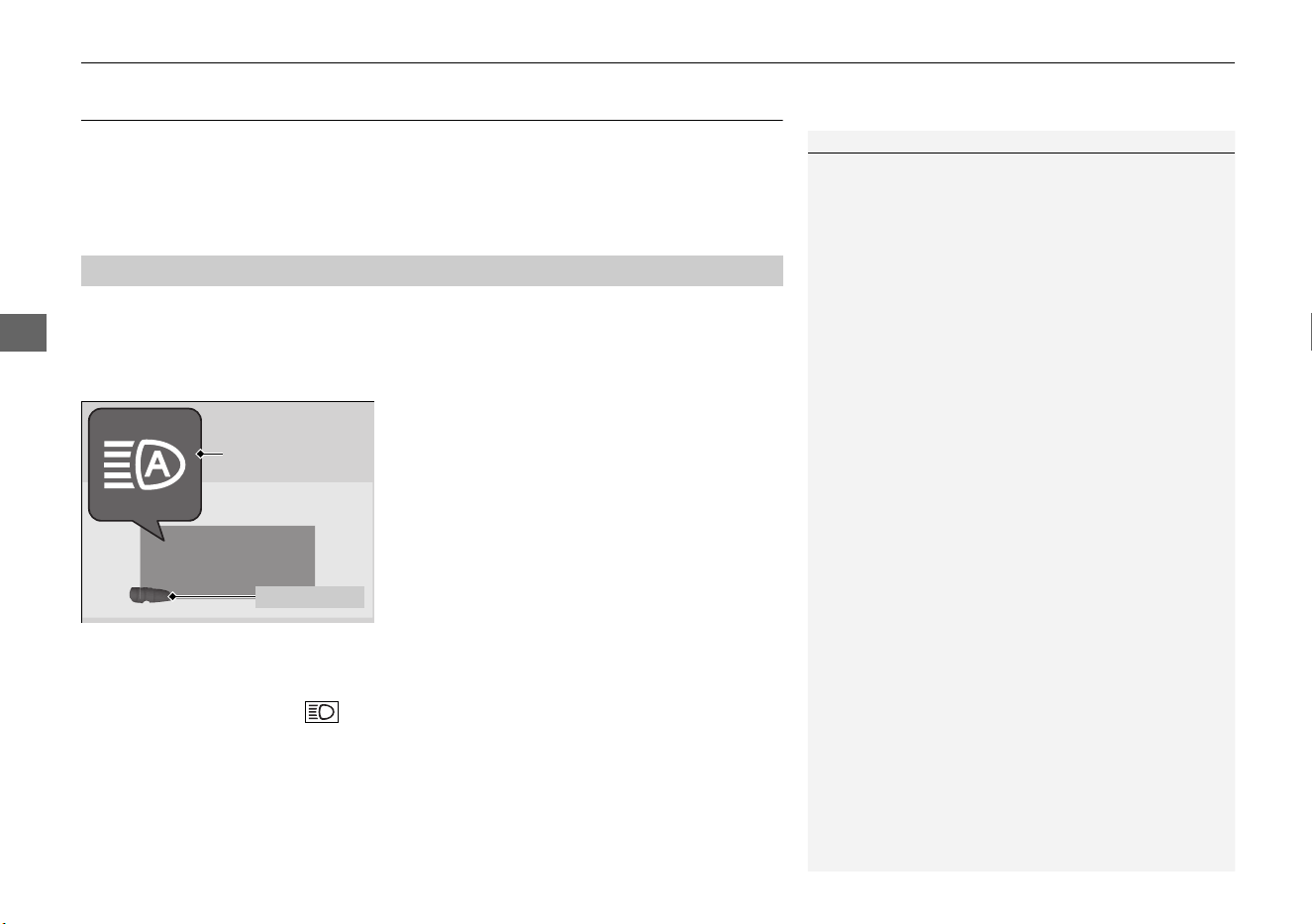
198
uuOperating the Switches Around the Steering WheeluAuto High-Beam
Controls
Auto High-Beam
The front sensor camera detects the light sources ahead of the vehicle such as the
lights of a preceding or oncoming vehicle, or street lights. When you are driving at
night, the system automatically switches the headlights between low beam and high
beam depending on the situation.
■
Activating the system
When all of the following conditions have been met, the auto high-beam indicator
comes on and automatically switches between the high beam and low beam,
depending on the situation.
• The power mode is in ON.
• The light switch is in AUTO.
• The lever is in the low beam position.
• The headlights have been automatically
activated.
• It is dark outside the vehicle.
If the auto high-beam indicator does not come on even when all the conditions have
been met, carry out either of the procedures below and the indicator will come on.
• Pull the lever toward you and release it.
• Turn the light switch to then turn the light switch to AUTO.
■
How to Use the Auto High-Beam
1Auto High-Beam
The auto high-beam system does not always operate
in every situation. This system is just for assisting the
driver. Always observe your surroundings and
manually switch the headlights between high beam
and low beam if necessary.
If you find the timing of beam changes inconvenient
for driving, change the headlight beams manually.
The range and the distance at which the camera can
recognize light sources varies depending on
conditions surrounding your vehicle.
Regarding the handling of the camera mounted to
the inside of the windshield, refer to the following.
2 Front Sensor Camera P. 529
For the auto high-beam to work properly:
• Do not place an object that reflects light on the
dashboard.
• Keep the windshield around the camera clean.
• When cleaning the windshield, be careful not to
apply the windshield cleanser to the camera lens.
• Do not attach an object, sticker, or film to the area
around the camera.
• Do not touch the camera lens.
If the camera receives a strong impact, or repairing of
the area near the camera is required, consult a dealer.
Light Switch
Auto High-Beam
Indicator
26 PILOT-31T906300.book 198 ページ 2025年10月8日 水曜日 午前11時43分
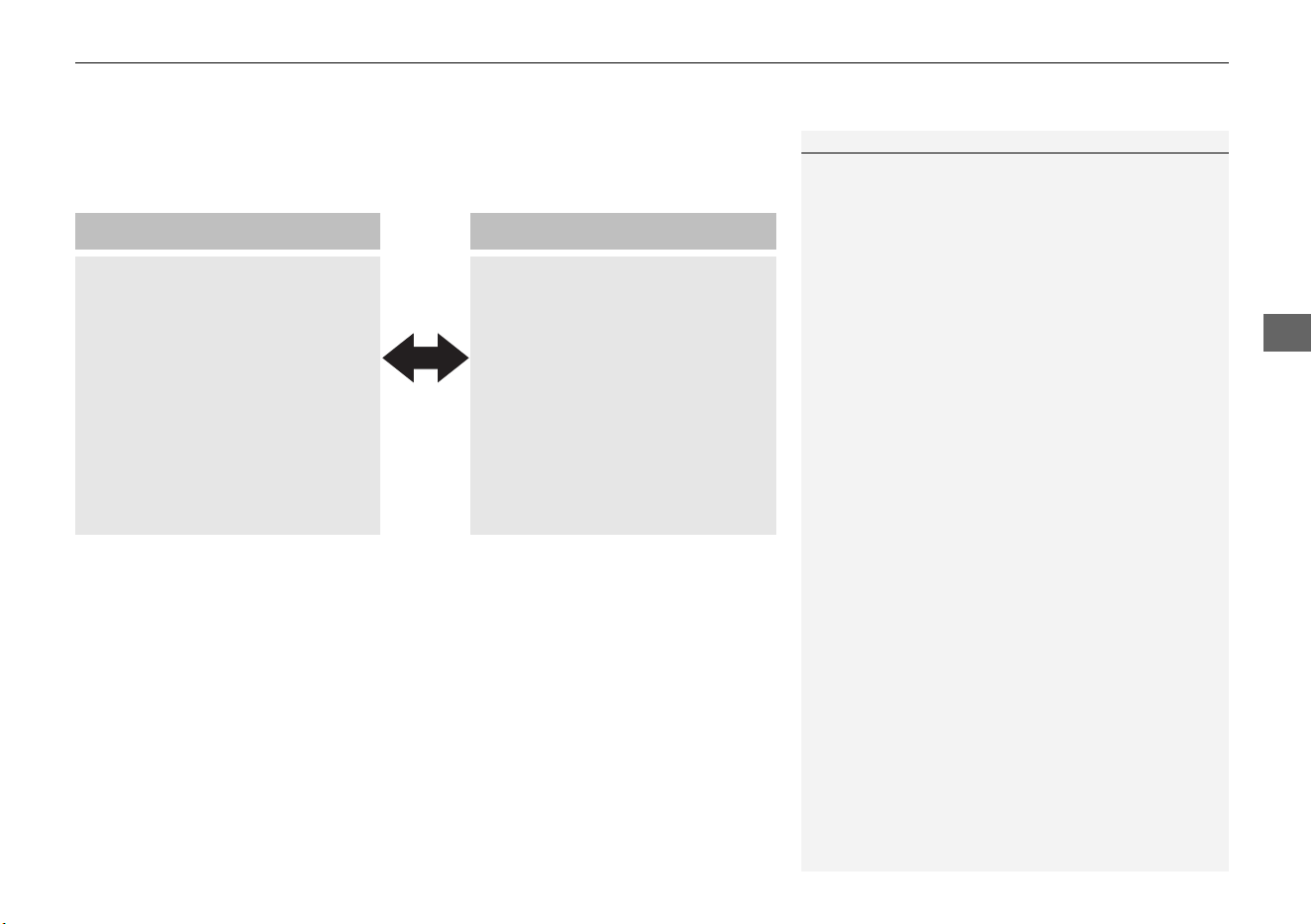
Continued
199
uuOperating the Switches Around the Steering WheeluAuto High-Beam
Controls
■
Automatic switching between high-beam and low-beam
When the auto high-beam indicator comes on, the headlights switch between high
beam and low beam based on the following conditions.
1How to Use the Auto High-Beam
In the following cases, the auto high-beam system
may not switch the headlights properly or the
switching timing may be changed. If the automatic
switching operation does not fit your driving habits,
please switch the headlights manually.
• The brightness of the lights from the preceding or
oncoming vehicle is intense or poor.
• Visibility is poor due to the weather (rain, snow,
fog, windshield frost, etc.).
• Surrounding light sources like street lights, electric
billboards, and traffic lights are illuminating the
road ahead.
• The brightness level of the road ahead constantly
changes.
• The road is bumpy or has many curves.
• A vehicle suddenly appears in front of you, or a
vehicle in front of you is not in the preceding or
oncoming direction.
• Your vehicle is tilted with a heavy load in the rear.
• A traffic sign, mirror, or other reflective object
ahead is reflecting strong light toward the vehicle.
• The oncoming vehicle frequently disappears under
roadside trees or behind median barriers.
• The preceding or oncoming vehicle is a motorcycle,
bicycle, mobility scooter, or other small vehicle.
The auto high-beam system keeps the headlight low
beam on when:
• Windshield wipers are operating at a high speed.
• The camera has detected a dense fog.
High beam
All of the following conditions
must be met before the high
beams turn on.
• Your vehicle speed is 23 mph
(37 km/h) or more.
• There are no preceding or
oncoming vehicles with
headlights or taillights turned
on.
• There are few street lights on
the road ahead.
Low beam
One of the following conditions
must be met before the low beams
turn on.
• Your vehicle speed is 15 mph
(24 km/h) or less.
• There is a preceding or
oncoming vehicle with
headlights or taillights turned
on.
• There are many street lights on
the road ahead.
26 PILOT-31T906300.book 199 ページ 2025年10月8日 水曜日 午前11時43分
uuOperating the Switches Around the Steering WheeluAuto High-Beam
200
Controls
■
Manual switching between high-beam and low-beam
If you want to manually switch the headlights between high beam and low beam,
follow either of the procedures below. Note that when you do this, the auto high-
beam indicator will turn off and the auto high-beam will be deactivated.
Using the lever:
Pull the lever toward you for flashing the high beams and then release it.
u To reactivate the auto high-beam, follow either of the procedures below and
the auto high-beam indicator will come on.
• Pull the lever toward you and release it.
• Turn the light switch to and then to AUTO when the lever is in the low beam
position.
Using the light switch:
Turn the light switch to .
u To reactivate the auto high-beam, turn the light switch to AUTO when the
lever is in the low beam position and the auto high-beam indicator will come
on.
1How to Use the Auto High-Beam
How to turn off the Auto High-Beam System
You can turn the auto high-beam system on and off.
2 How to Customize the Vehicle Settings
P. 358
If the Some driver assist systems cannot operate:
Camera temperature too high message appears:
• Use the climate control system to cool down the
interior and, if necessary, also use defroster mode
with the airflow directed toward the camera.
• Start driving the vehicle to lower the windshield
temperature, which cools down the area around
the camera.
If the Some driver assist systems cannot operate:
Clean front windshield or poor viewing
condition. message appears:
• Park your vehicle in a safe place, and make sure the
windshield is clean. Clean the windshield if it is
dirty. If the message does not disappear after
driven for a while, have your vehicle checked by a
dealer.
26 PILOT-31T906300.book 200 ページ 2025年10月8日 水曜日 午前11時43分
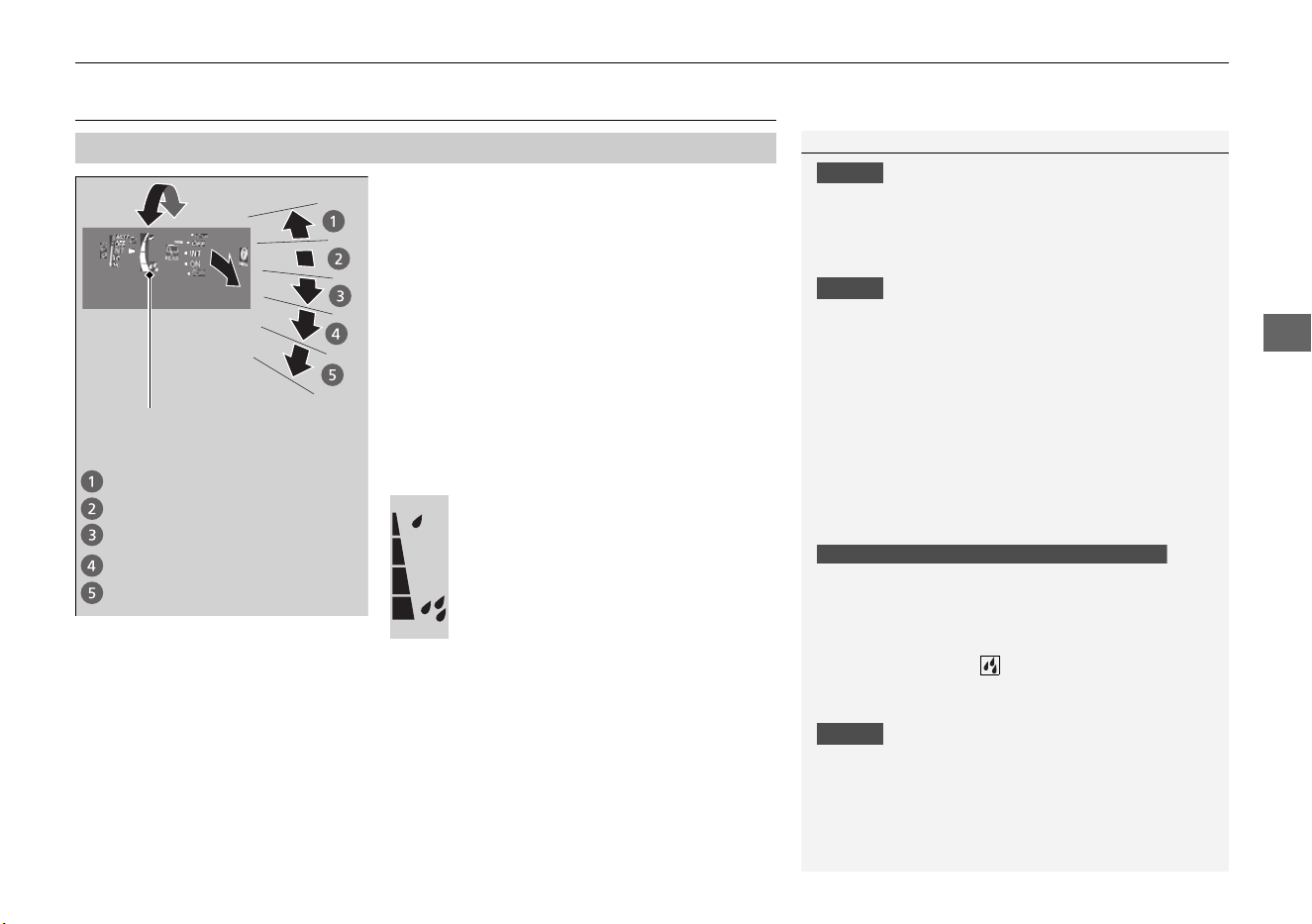
201
uuOperating the Switches Around the Steering WheeluWipers and Washers
Continued
Controls
Wipers and Washers
The windshield wipers and washers can be
used when the power mode is in ON.
■
MIST
The wipers run at high speed until you release
the lever.
■
Wiper switch (OFF, INT
*1
/AUTO
*2
, LO,
HI)
Move the lever up or down to change the
wiper settings.
■
Adjusting wiper operation
*
Turn the adjustment ring to adjust the wiper
operation.
■
Washer
Sprays on the windshield and front-view
camera
*
while you pull the lever toward you.
When you release the lever for more than one
second, the spray stops, the wipers sweep two
or three more times to clear the windshield,
and then stop.
*1: Models with manual intermittent operation
*2: Models with automatic intermittent operation
■
Windshield Wipers/Washers
1Wipers and Washers
NOTICE
When lifting the front wiper arms, move them into
the maintenance position before lifting them.
2 Lifting the Front Wiper Arms P. 599
NOTICE
Do not use the wipers when the windshield is dry.
The windshield will get scratched, or the rubber
blades will get damaged.
Turn the washers off if no washer fluid comes out.
The pump may get damaged.
The wiper motor may stop motor operation
temporarily to prevent an overload. Wiper operation
will return to normal within a few minutes.
If the vehicle speeds up while the wipers are
operating intermittently, the length of the wipe
interval shortens.
When the vehicle speeds up, the wiper operation’s
shortest delay setting and the LO setting become
the same.
NOTICE
In cold weather, the blades may freeze to the
windshield.
Operating the wipers in this condition may damage
the wipers. Use the defogger or heated windshield
*
to warm the windshield, then turn the wipers on.
Models with intermittent time adjustment ring
Intermittent Time
Adjustment Ring
*
MIST
INT
*1
/AUTO
*2
OFF
LO
: Low speed wipe
HI: High speed wipe
Pull to
use
washer.
Lower speed, fewer sweeps
Higher speed, more sweeps
* Not available on all models
26 PILOT-31T906300.book 201 ページ 2025年10月8日 水曜日 午前11時43分
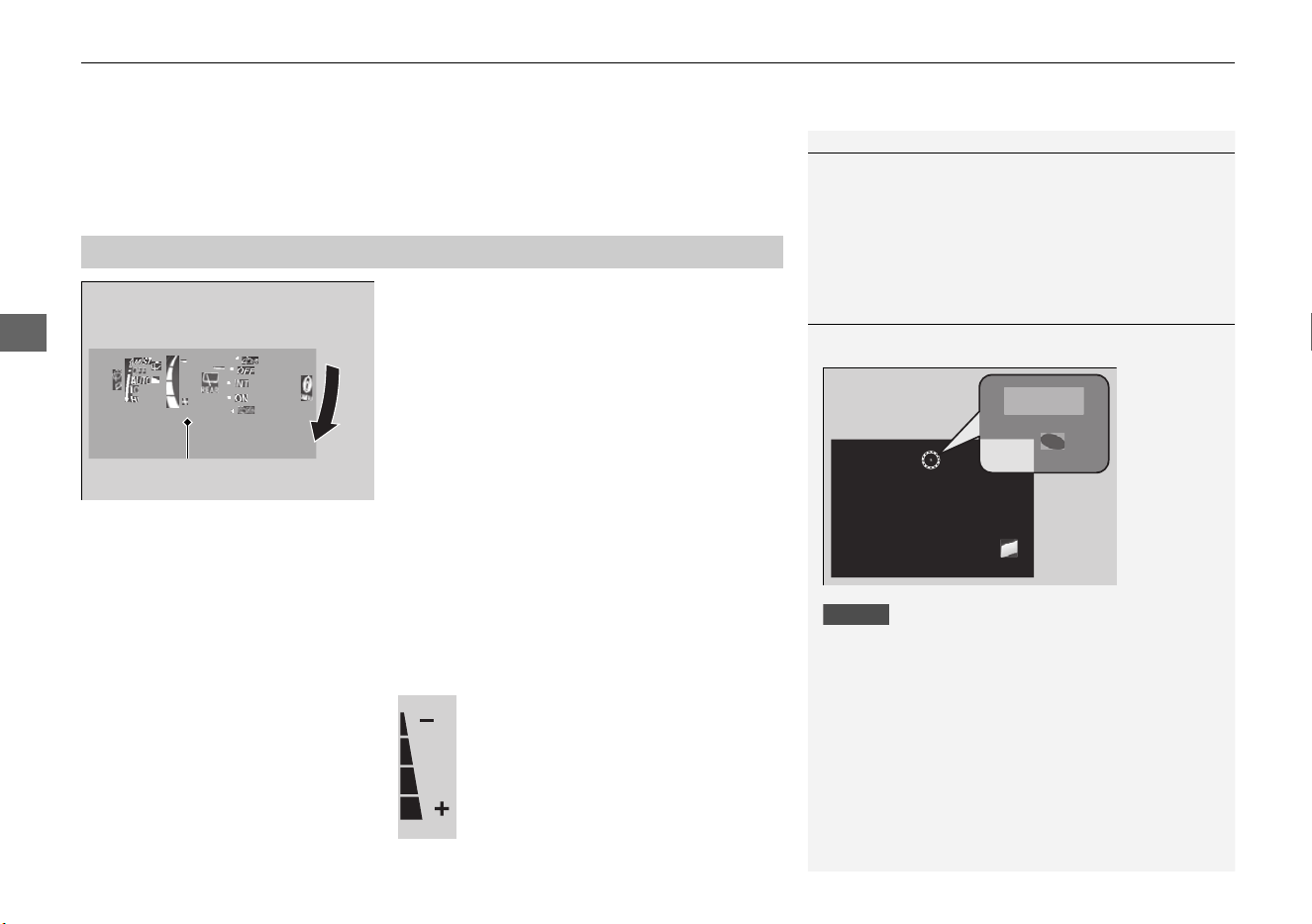
uuOperating the Switches Around the Steering WheeluWipers and Washers
202
Controls
When you push the lever down to AUTO, the
windshield wipers sweep once, and go into
the automatic mode.
The wipers operate intermittently, at low
speed, or at high speed and stop in
accordance with the amount of rainfall the
rainfall sensor detects.
■
Auto sensitivity adjustment
When the wiper function is set to AUTO, you
can adjust the sensitivity of the rainfall sensor
(using the adjustment ring) so that wipers will
operate in accordance with your preference.
Sensor sensitivity
■
Automatic Intermittent Wipers
*
1Wipers and Washers
If the wipers stop operating due to an obstacle such
as the buildup of snow, park the vehicle in a safe
place.
Rotate the wiper switch to OFF, set the power mode
to ACCESSORY or VEHICLE OFF, then remove the
obstacle.
1Automatic Intermittent Wipers
*
The rainfall sensor is in the location shown below.
NOTICE
AUTO should always be turned OFF before the
following situations in order to prevent severe
damage to the wiper system:
• Cleaning the windshield
• Driving through a car wash
• No rain present
Adjustment Ring
Low sensitivity
High sensitivity
* Not available on all models
26 PILOT-31T906300.book 202 ページ 2025年10月8日 水曜日 午前11時43分
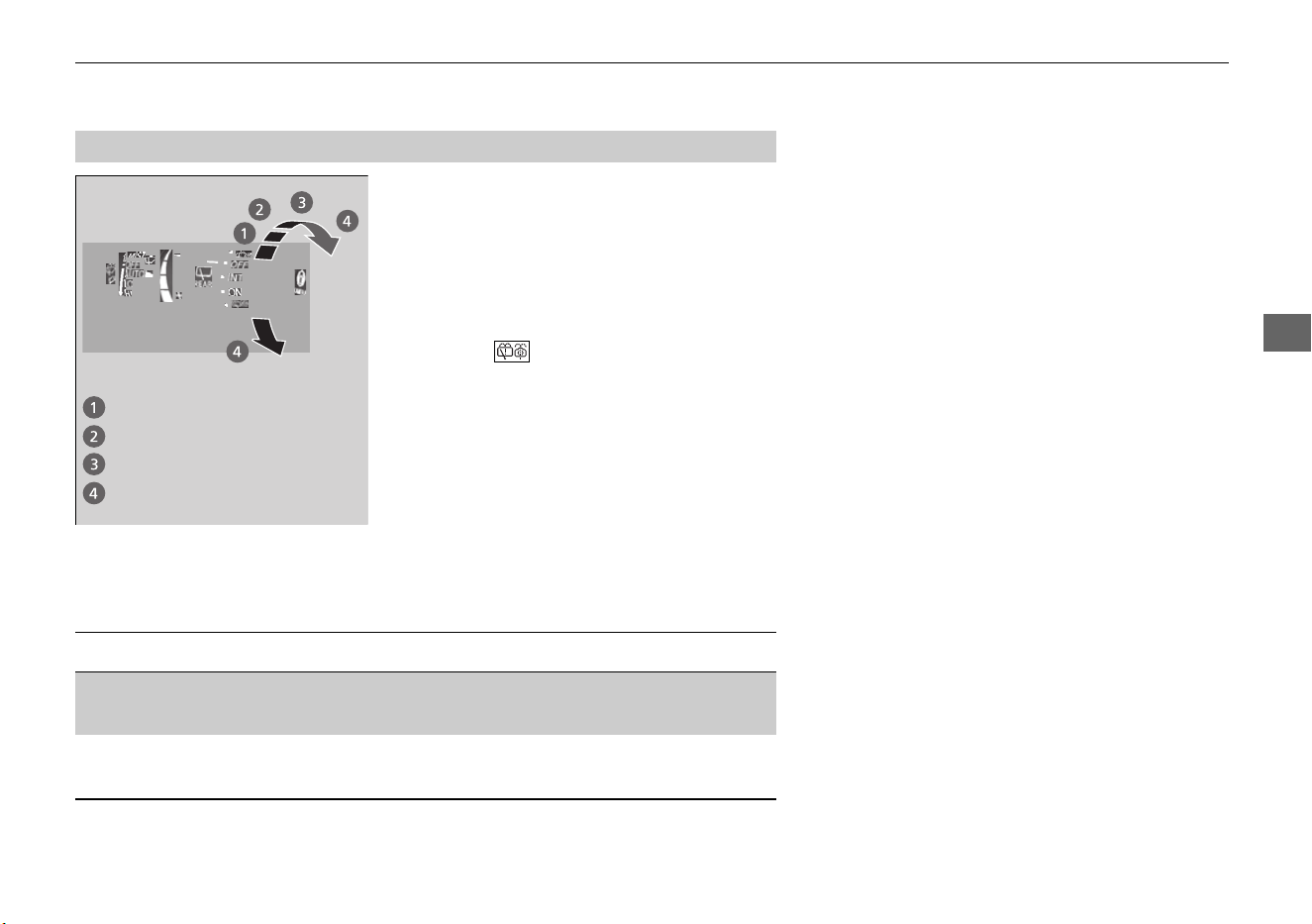
203
uuOperating the Switches Around the Steering WheeluWipers and Washers
Controls
The rear wiper and washer can be used when
the power mode is in ON.
■
Wiper switch (OFF, INT, ON)
Change the wiper switch setting according to
the amount of rain.
■
Washer ( )
Sprays on the rear window and rearview
camera while you rotate the switch to this
position. Hold it to activate the rear wiper and
to spray the washers. Once released, the
washer spray will stop and the rear wiper will
return to its selected switch setting after a few
sweeps.
■
Operating in reverse
When you change the transmission to
(R with the windshield wiper activated, the
rear wiper operates automatically as follows even if its switch is off.
*1: Models with manual intermittent operation
*2: Models with automatic intermittent operation
■
Rear Wiper/Washer
OFF
ON
INT: Intermittent
Washer
Front Wiper Operation Rear Wiper Operation
INT
*1
(Intermittent)
AUTO
*2
(Intermittent)
Intermittent
LO (Low-speed wipe)
HI (High-speed wipe)
Continuous
26 PILOT-31T906300.book 203 ページ 2025年10月8日 水曜日 午前11時43分
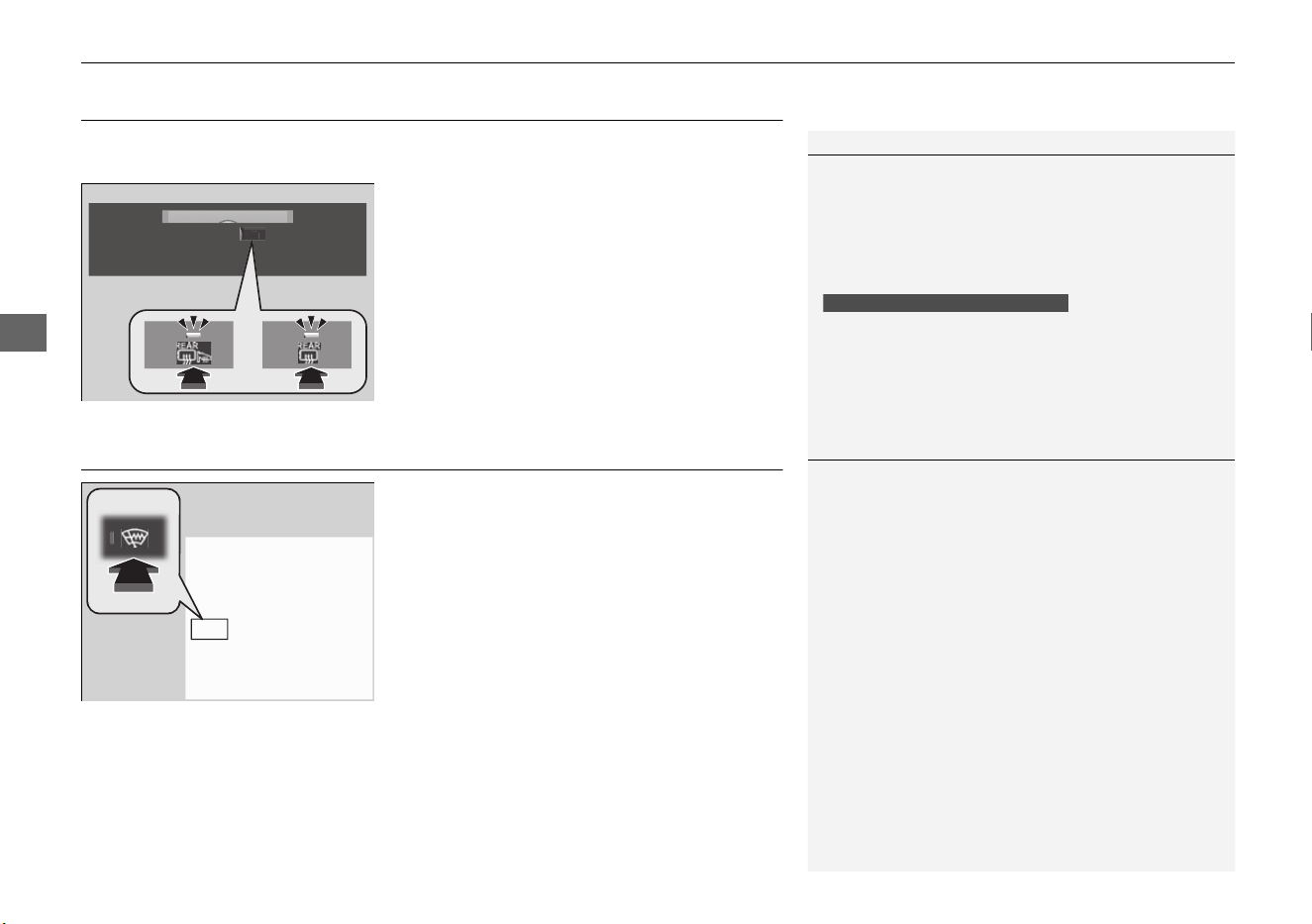
204
uuOperating the Switches Around the Steering WheeluRear Defogger/Heated Door Mirror
*
Button
Controls
Rear Defogger/Heated Door Mirror
*
Button
Press the rear defogger and heated door mirror
*
button to defog the rear window
and mirrors
*
when the power mode is in ON.
The rear defogger and heated door mirrors
*
automatically switch off after 10-30 minutes
depending on the outside temperature.
Heated Windshield Button
*
Press the heated windshield button to deice
the windshield at the wiper park area of the
windshield when the power mode is in ON.
The heated windshield will automatically
switch off after 15 minutes.
1Rear Defogger/Heated Door Mirror
*
Button
This system consumes a lot of power, so turn it off
when the window has been defogged. Also, do not
use the system for a long time while the engine is
idling. This may weaken the battery, making it
difficult to start the engine.
When the power mode is set to ON and the outside
temperature is below 41°F (5°C), the heated door
mirror may automatically activate for 10 minutes.
Models with heated door mirror
1Heated Windshield Button
*
This system consumes a lot of power, so turn it off
when the window has been deiced. Also, do not use
the system for a long period when the engine is
idling. This may weaken the battery, making it
difficult to start the engine.
When the power mode is set to ON and the outside
temperature is below 39°F (4°C), the heated
windshield may automatically activate for up to 15
minutes.
* Not available on all models
26 PILOT-31T906300.book 204 ページ 2025年10月8日 水曜日 午前11時43分
205
uuOperating the Switches Around the Steering WheeluDriving Position Memory System
*
Continued
Controls
Driving Position Memory System
*
You can store two driver’s seat positions (except for power lumbar) and outside
mirrors position with the driving position memory system.
When you unlock and open the driver’s door with a keyless remote, the seat and
outside mirrors automatically adjust to retracted positions of one of the two preset
positions.
The DRIVER 1 and DRIVER 2 transmitters move the driver’s seat to the preset seat
position that was last used via that respective transmitter.
The driver’s seat moves rearward depending
on the set seating position once you
• Stop the vehicle.
• Put the transmission in
(P.
• Turn the engine off.
• Open the driver’s door.
Once the power mode is in the ACCESSORY
position, the driver’s seat moves forward to
the DRIVER 1 or 2 preset position.
1Driving Position Memory System
*
Using the audio/information screen, you can disable
the automatic seat and door mirrors adjustment
function.
2 How to Customize the Vehicle Settings
P. 358
The driver’s seat easy exit feature can be turned ON/
OFF.
2 How to Customize the Vehicle Settings
P. 358
System Operation
The system will not operate if:
• Either memory button is pressed while the seat or
mirrors are in motion.
• The seat or mirrors position is adjusted while in
operation.
• Either of the memorized positions is set fully to the
rear.
Multiple separate accounts can be created for each
owner of a transmitter. See the following page for
details.
2 Registering a User P. 321
The transmitter settings may not be switched when
you change owner accounts. If this happens, change
to a different account and then try switching to the
desired account again. For details, please refer to the
following page.
2 Switching Users P. 322
* Not available on all models
26 PILOT-31T906300.book 205 ページ 2025年10月8日 水曜日 午前11時43分
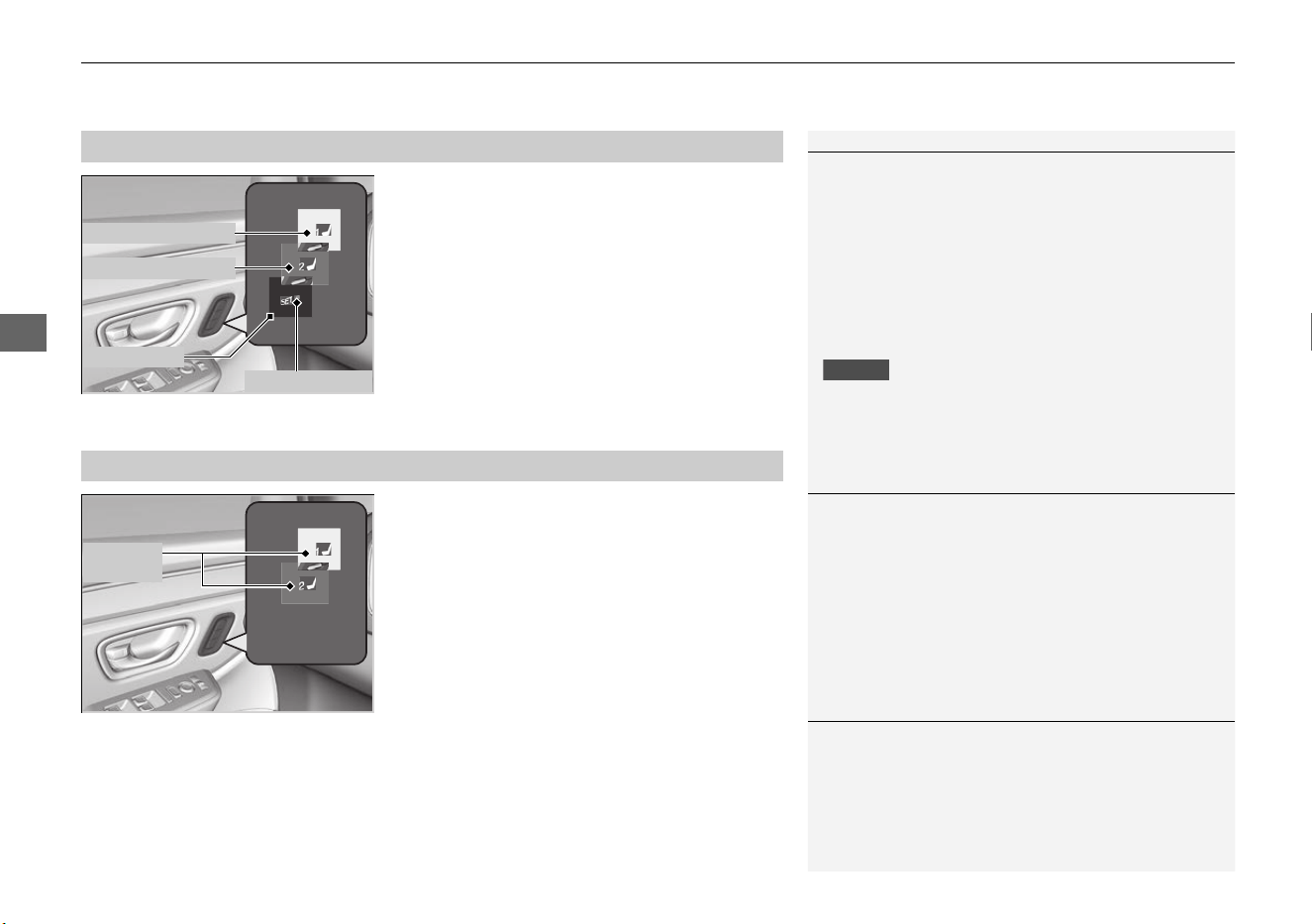
uuOperating the Switches Around the Steering WheeluDriving Position Memory System
*
206
Controls
1. Set the power mode to ON. Adjust the
driver’s seat and door mirror to the desired
position.
2. Press the SET button.
u The SET button indicator lights will come
on.
3. Press the memory button
(1 or (2 within
five seconds of pressing the SET button.
u You will hear the beeper, and the SET
button indicator light goes off.
1. Put the transmission into
(P.
2. Apply the parking brake.
3. Press a memory button (
(1 or (2).
The seat and the door mirrors will
automatically move to the memorized
position.
■
Storing a Position in Memory
1Driving Position Memory System
*
The system may not recognize a key if:
• The key is in close proximity to a cell phone or other
wireless device.
• Both keys are in the vehicle at the same time.
• The Driving Position Memory System is disabled in
customized features.
• Opening driver’s door without fully grabbing door
handle.
NOTICE
When the door is opened, the driver‘s seat moves to
the seat position of the account that last used the
transmitter.
Memory Button 1
Memory Button 2
SET Button
Indicator light
■
Recalling the Stored Position
1Storing a Position in Memory
After you press the SET button, the storing operation
will be canceled when:
• You do not press the memory button within five
seconds.
• You readjust the seat position and door mirror
before the double-beep.
• You set the power mode to any position except
ON.
1Recalling the Stored Position
The seat and the door mirrors will stop moving if you:
• Press the SET button or memory button (1 or (2.
• Adjust the seat position or door mirrors.
• Put the transmission into a position other than (P.
Memory
Buttons
* Not available on all models
26 PILOT-31T906300.book 206 ページ 2025年10月8日 水曜日 午前11時43分
207
uuOperating the Switches Around the Steering WheeluAdjusting the Steering Wheel
Controls
Adjusting the Steering Wheel
The steering wheel height and distance from your body can be adjusted so that you
can comfortably grip the steering wheel in an appropriate driving posture.
1. While the vehicle is stopped, push the
steering wheel adjustment lever down.
u The steering wheel adjustment lever is
under the steering column.
2. Move the steering wheel up or down, and
in or out.
u Make sure you can see the instrument
panel gauges and indicators.
3. Pull the steering wheel adjustment lever up
to lock the steering wheel in position.
u After adjusting the position, make sure
you have securely locked the steering
wheel in place by trying to move it up,
down, in, and out.
1Adjusting the Steering Wheel
3
WARNING
Adjusting the steering wheel position while
driving may cause you to lose control of the
vehicle and be seriously injured in a crash.
Adjust the steering wheel only when the
vehicle is stopped.
To adjust
To lock
Lever
26 PILOT-31T906300.book 207 ページ 2025年10月8日 水曜日 午前11時43分
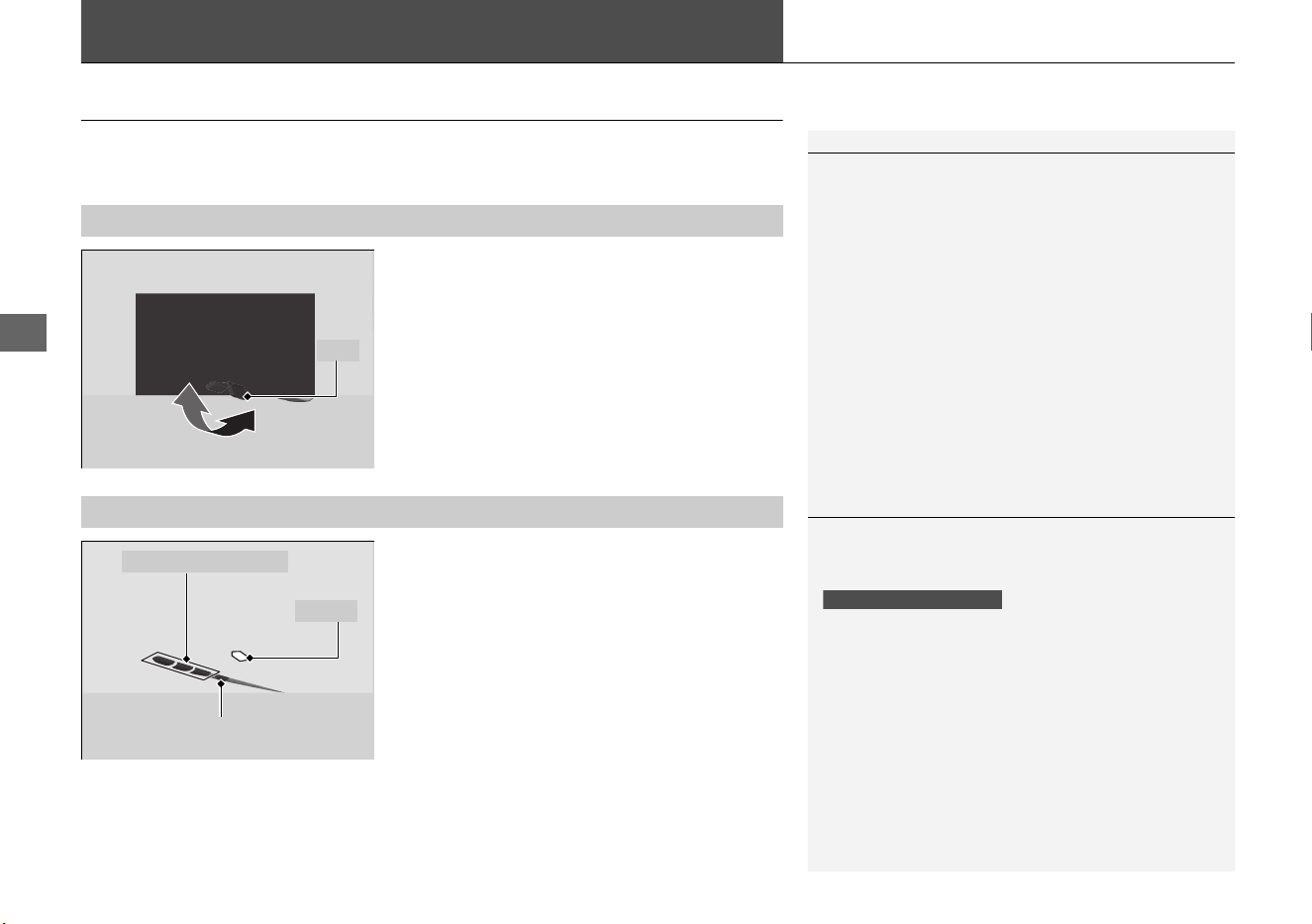
208
Controls
Mirrors
Interior Rearview Mirror
Adjust the angle of the rearview mirror when you are sitting in the correct driving
position.
Flip the tab to switch the position.
The night position will help reduce the glare
from headlights behind you when driving
after dark.
When you are driving after dark, the
automatic dimming rearview mirror and
power door mirror
*
reduces the glare from
headlights behind you. Press the AUTO button
to turn this function on and off. When
activated, the AUTO indicator comes on.
■
Rearview Mirror with Day and Night Positions
*
1Mirrors
Keep the inside and outside mirrors clean and
adjusted for best visibility.
Adjust the mirrors before you start driving.
2 Front Seats P. 211
Tab
Daytime
Position
Night
Position
■
Automatic Dimming Rearview Mirror
*
and Power Door Mirrors
*
1Automatic Dimming Rearview Mirror
*
and Power Door Mirrors
*
The auto dimming function cancels when the
transmission is in
(R.
For information about HomeLink function, refer to
following link.
2 HomeLink® Universal Transceiver
*
P. 253
Models with HomeLink
Sensor
Auto Button
HomeLink Buttons
*
* Not available on all models
26 PILOT-31T906300.book 208 ページ 2025年10月8日 水曜日 午前11時43分
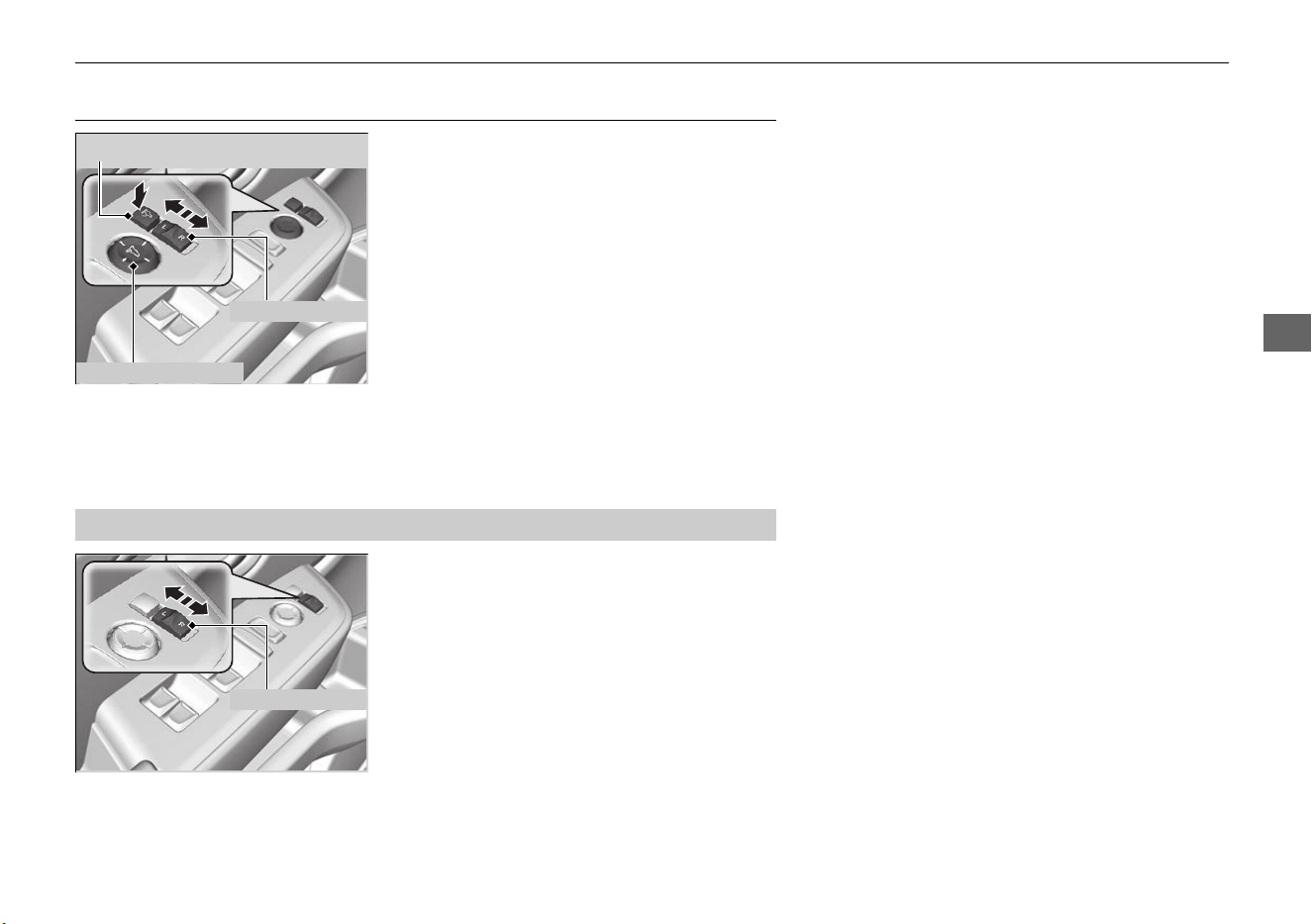
209
uuMirrorsuPower Door Mirrors
Continued
Controls
Power Door Mirrors
You can adjust the door mirrors when the
power mode is in ON.
■
Mirror position adjustment
L/R selector switch: Select the left or right
mirror. After adjusting the mirror, return the
switch to the center position.
Mirror position adjustment switch: Press
the switch left, right, up, or down to move the
mirror.
■
Folding door mirrors
*
Press the folding button to fold in and out the
door mirrors.
If activated, either side door mirror
automatically tilts downward when you put
the transmission into (R; this improves close-
in visibility on the selected side of the vehicle
when backing up. The mirror automatically
returns to its original position when you take
the transmission out of
(R.
To activate this feature, set the power mode
to ON, and slide the selector switch to the left
or right side.
Selector Switch
Adjustment Switch
Folding Button
*
■
Reverse Tilt Door Mirror
*
Selector Switch
* Not available on all models
26 PILOT-31T906300.book 209 ページ 2025年10月8日 水曜日 午前11時43分
uuMirrorsuPower Door Mirrors
210
Controls
■
Folding in the door mirrors
Press the lock button on the remote transmitter, or touch the door lock sensor on
any door.
u The mirrors start folding in automatically.
■
Folding out the door mirrors
Unlock the driver’s door using the remote transmitter or keyless access system.
u The mirrors start folding out automatically.
■
Automatic Folding Door Mirror Function
*
1Automatic Folding Door Mirror Function
*
If you use the fold button to fold the door mirrors,
the auto folding door mirror function will not work.
You can turn the automatic folding door mirror
function on and off.
2 How to Customize the Vehicle Settings
P. 358
Door mirrors will not fold automatically when locking
from inside the vehicle using the lock tab or master
door lock switch.
* Not available on all models
26 PILOT-31T906300.book 210 ページ 2025年10月8日 水曜日 午前11時43分
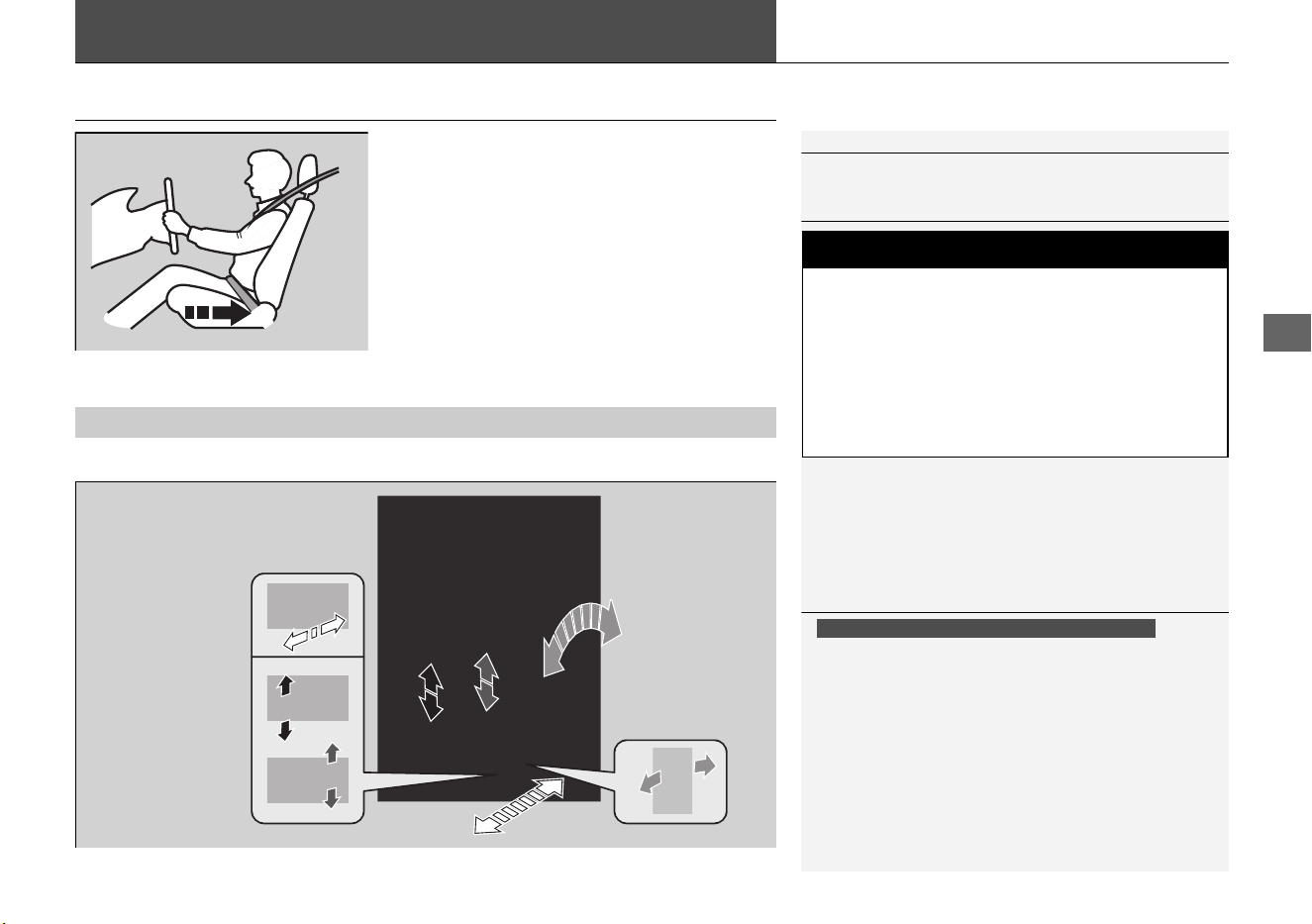
211
Continued
Controls
Seats
Front Seats
Adjust the driver’s seat as far back as possible
while allowing you to maintain full control of
the vehicle. You should be able to sit upright,
well back in the seat and be able to
adequately press the pedals without leaning
forward, and grip the steering wheel
comfortably. The passenger’s seat should be
adjusted in a similar manner so that it is as far
back from the front airbag in the dashboard
as possible.
■
Adjusting the front power seats
1Seats
Always make seat adjustments before driving.
Move back.
Allow sufficient
space.
■
Adjusting the Seat Positions
1Front Seats
The National Highway Traffic Safety Administration
and Transport Canada recommend that drivers allow
at least 10 inches (25 cm) between the center of the
steering wheel and the chest.
3
WARNING
Sitting too close to a front airbag can result
in serious injury or death if the front
airbags inflate.
Always sit as far back from the front
airbags as possible while maintaining
control of the vehicle.
1Adjusting the Seat Positions
You can recall a previously saved driving position in
profile settings using the audio/information screen.
2 Profile Settings P. 323
Models with Driving Position Memory System
Horizontal
Position
Adjustment
Height
Adjustment
(Driver’s seat only)
Seat-back
Angle
Adjustment
26 PILOT-31T906300.book 211 ページ 2025年10月8日 水曜日 午前11時43分
212
uuSeatsuFront Seats
Controls
■
Lumbar Support Adjustment Switch
(Driver’s seat only)
Press the front: To increase the entire
lumbar support.
Press the rear: To decrease the entire lumbar
support.
Lumbar Support
Adjustment Switch
26 PILOT-31T906300.book 212 ページ 2025年10月8日 水曜日 午前11時43分
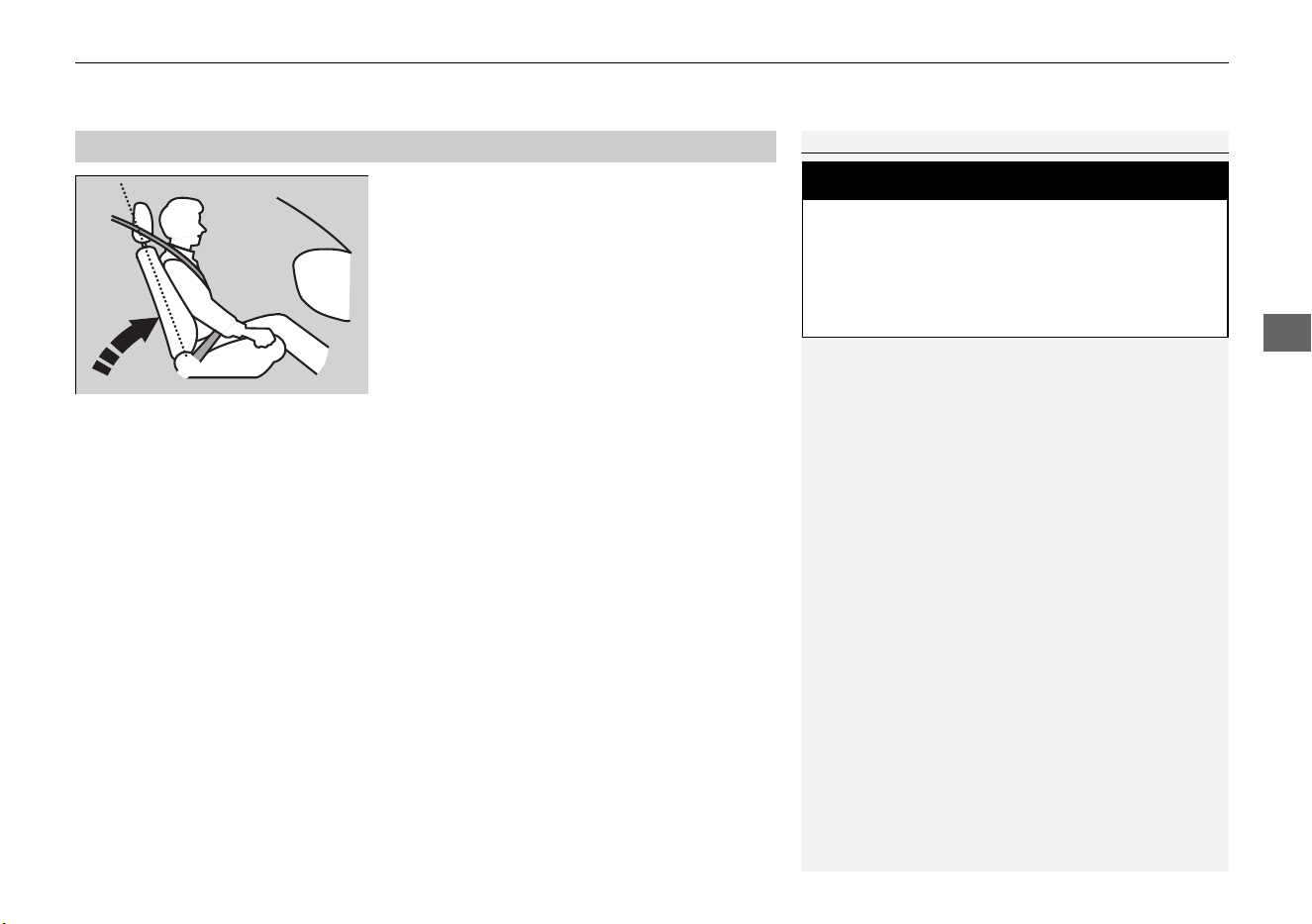
213
uuSeatsuFront Seats
Controls
Adjust the driver’s seat-back to a comfortable,
upright position, leaving ample space
between your chest and the airbag cover in
the center of the steering wheel.
The front seat passenger should also adjust
their seat-back to a comfortable, upright
position.
Reclining a seat-back so that the shoulder part of the belt no longer rests against the
occupant’s chest reduces the protective capability of the belt. It also increases the
chance of sliding under the belt in a crash and being seriously injured. The farther a
seat-back is reclined, the greater the risk of injury.
■
Adjusting the Seat-Backs
1Adjusting the Seat-Backs
Do not put a cushion, or other object, between the
seat-back and your back.
Doing so may interfere with proper seat belt or airbag
operation.
If you cannot get far enough away from the steering
wheel and still reach the controls, we recommend
that you investigate whether some type of adaptive
equipment may help.
3
WARNING
Reclining the seat-back too far can result in
serious injury or death in a crash.
Adjust the seat-back to an upright position,
and sit well back in the seat.
26 PILOT-31T906300.book 213 ページ 2025年10月8日 水曜日 午前11時43分
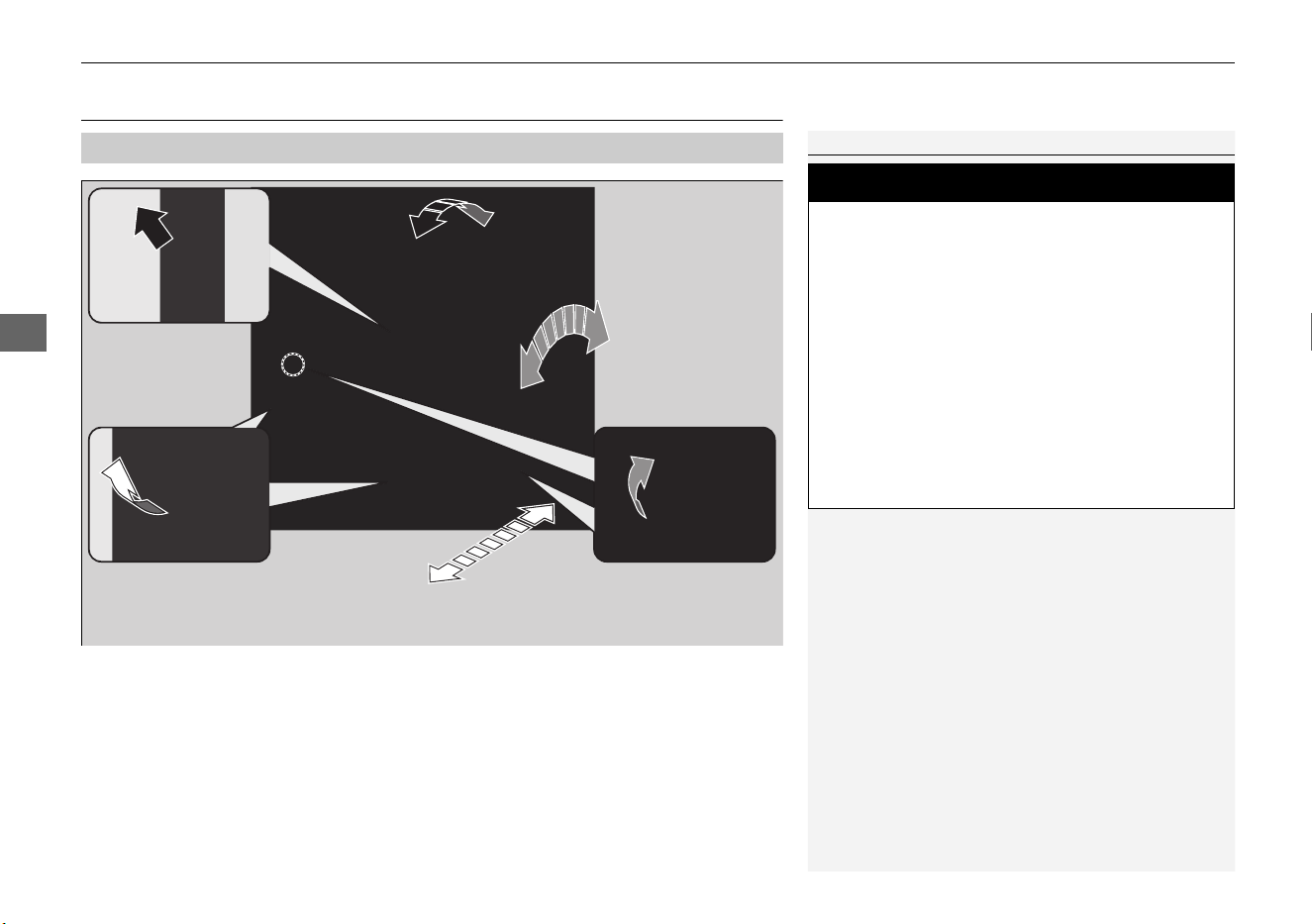
214
uuSeatsuSecond Row Seats
Controls
Second Row Seats
■
Adjusting the Seat Positions
1Second Row Seats
Once a seat is adjusted correctly, rock it back and
forth to make sure it is locked in position.
3
WARNING
An unsecured seat or seat-back can move
out of position or collapse without warning
if there is sudden acceleration or stop or in
a crash.
A seat or seat-back that suddenly moves or
collapses can result in severe injury or
death.
Always make sure all seats and seat-backs
are securely locked into position before
driving.
Seat-back Angle
Adjustment
*
Pull up the strap to
change the angle.
Horizontal Position Adjustment
Pull up the bar to move the seat, then
release the bar.
Seat-back Angle
Adjustment
Pull up the lever to
change the angle.
* Not available on all models
26 PILOT-31T906300.book 214 ページ 2025年10月8日 水曜日 午前11時43分
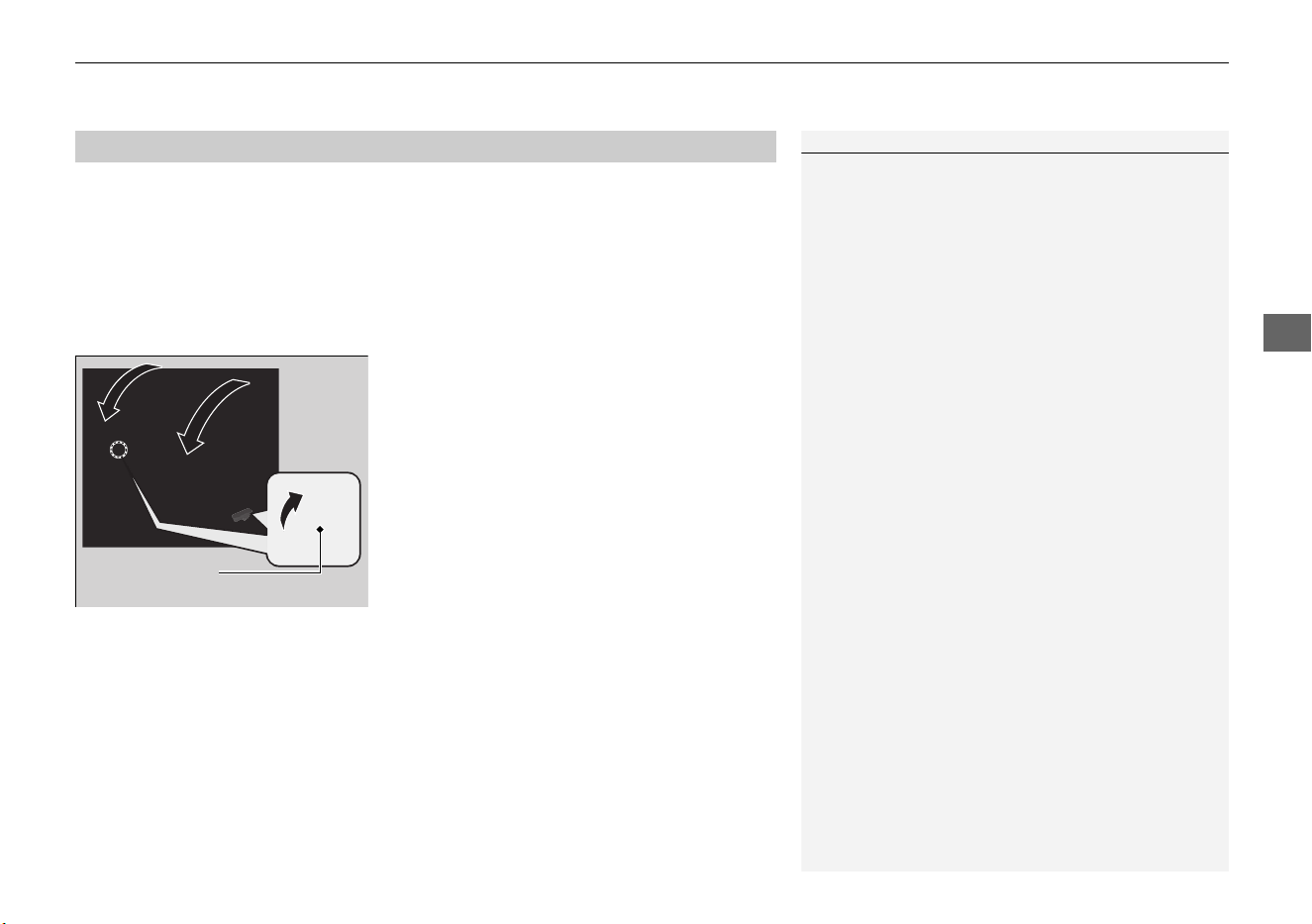
Continued
215
uuSeatsuSecond Row Seats
Controls
The second row outer seat-backs can be folded down to make room for cargo.
1. Store the center seat belt first. Insert the latch plate into the slot on the side of the
anchor buckle.
2. Retract the seat belt into the holder on the ceiling.
2 Seat Belt with Detachable Anchor P. 50
3. Lower the head restraint to its lowest position.
4. Move the seat to its rearmost position.
5. Pull the seat-back angle adjustment lever,
then fold the seat-back down.
To return the seat to the original position, pull
up the seat-back in the upright position.
■
Folding Down the Second Row Outer Seat
1Folding Down the Second Row Outer Seat
Make sure that the folded seat-back does not press
against the front passenger’s seat, as this can cause
the weight sensors in the front passenger’s seat to
work improperly.
2 Passenger Airbag Off Indicator P. 70
The front seat(s) must be far enough forward so they
do not interfere with the second row seats as they
fold down.
To lock the seat-back upright, push it backwards until
it locks.
Make sure the seat-back, head restraints and seat
cushion are securely latched back into place before
driving.
Make sure the center shoulder belt is re-positioned in
the holding slot.
Seat-back Angle
Adjustment Lever
26 PILOT-31T906300.book 215 ページ 2025年10月8日 水曜日 午前11時43分
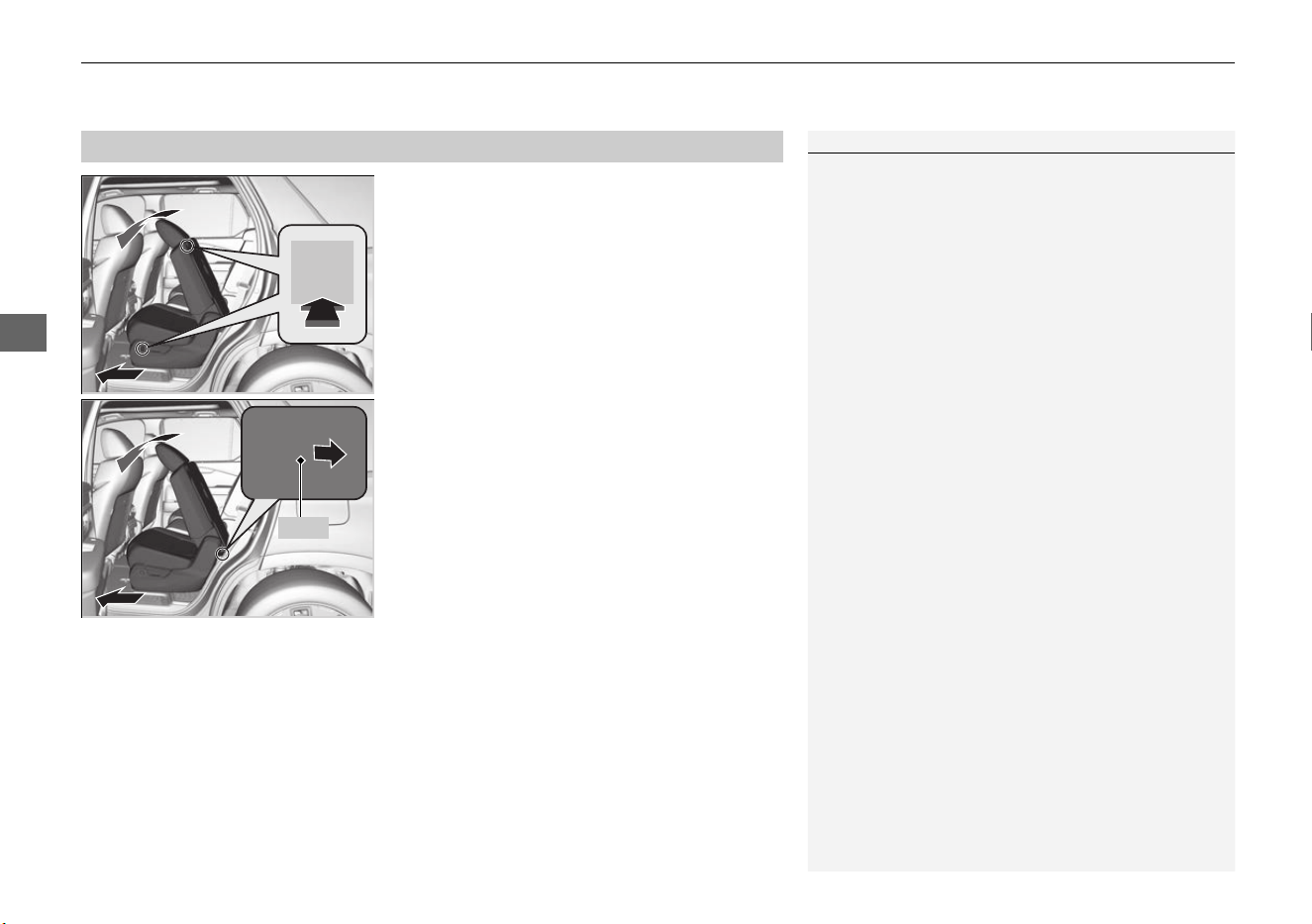
uuSeatsuSecond Row Seats
216
Controls
Pressing the button on the seat-back or seat
cushion tilts the second row outer seat’s seat-
back forward.
u The whole seat slides forward.
Pulling up on the strap also tilts the seat-back
forward.
■
Third Row Seat Access
1Third Row Seat Access
The button is disabled when the vehicle is moving.
When you enter the third row seat, be careful not to
trip over the second row seat belt.
Strap
26 PILOT-31T906300.book 216 ページ 2025年10月8日 水曜日 午前11時43分
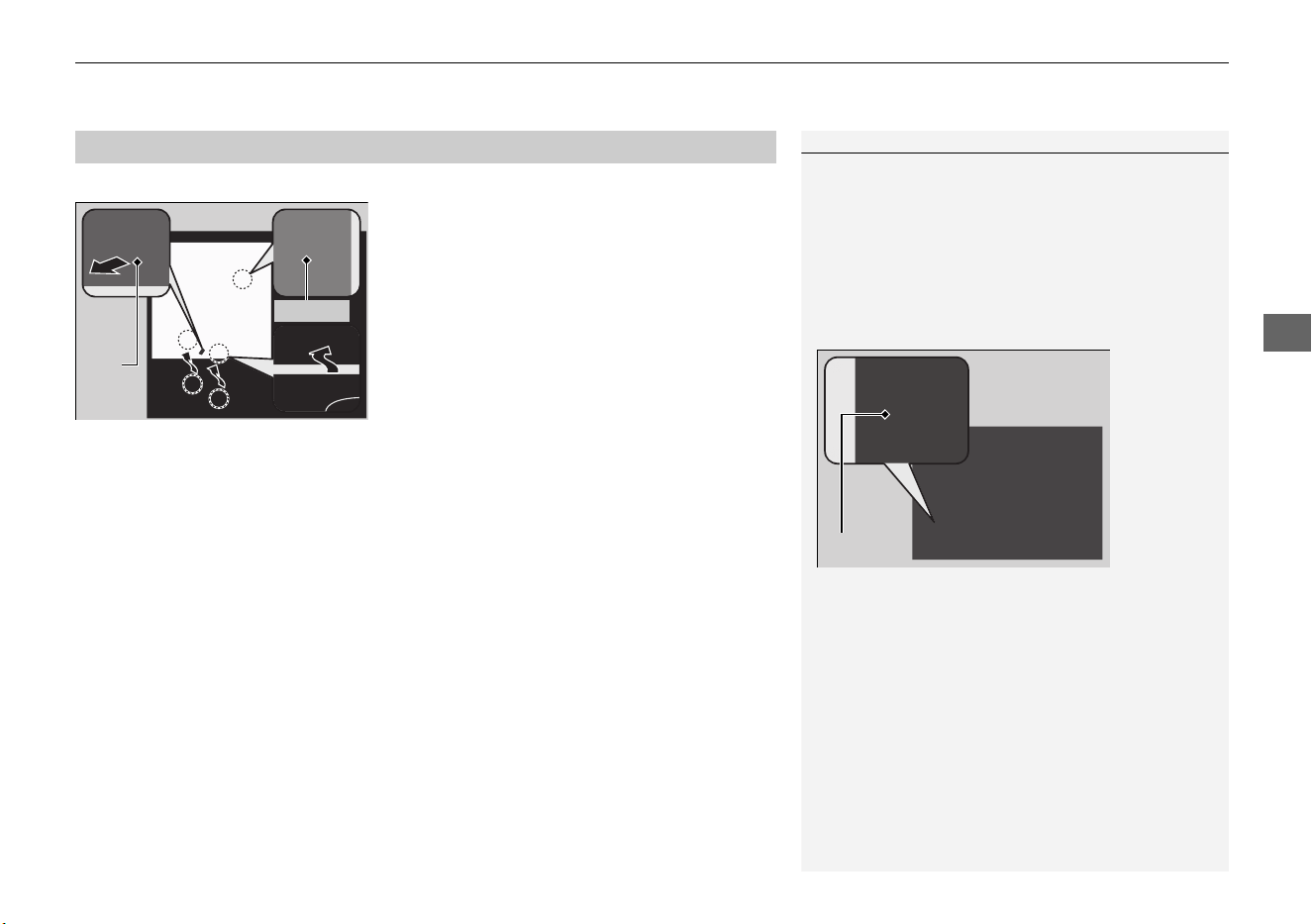
Continued
217
uuSeatsuSecond Row Seats
Controls
Your vehicle’s multi-functional second row center seat is removable.
1. Store the center seat belt first. Insert the
latch plate into the slot on the side of the
anchor buckle.
2. Retract the seat belt into the holder on the
ceiling.
2 Seat Belt with Detachable Anchor P. 50
3. Pull up the strap and fold down the second
row center seat-back.
4. Pull the lock release strap under the seat
cushion, and lift the rear of the seat.
u To lift the seat, grab the handle under
the rear side of the seat cushion.
5. Pull the seat-back slightly, then pivot it
upward.
u This unhooks the front of the seat from
the floor.
■
Removing the Second Row Center Seat
*
1Removing the Second Row Center Seat
*
Do not remove the seat while driving.
The multi-functional center seat can be used as the
beverage holder when folded down.
2 Beverage Holders P. 235
The indicator shows red when the seat is not installed
properly.
To reinstall the seat, remove all objects and debris
from the vehicle floor where the seat will be
attached. Insert the front hooks into the front
strikers, confirming that both are fully engaged.
Begin to lower the rear of the seat; once the seat is
within a foot of the floor, allow the seat to drop and
lock to the rear floor strikers. Raise the seat-back to
an upright position, grab the seat-back and rock it
back and forth to confirm that all latches are secured.
Check the indicator on the front of the seat base. If
the indicator is red, the seat is not correctly installed.
Remove the seat and then reinstall.
Indicator
Lock
Release
Strap
Handle
* Not available on all models
26 PILOT-31T906300.book 217 ページ 2025年10月8日 水曜日 午前11時43分
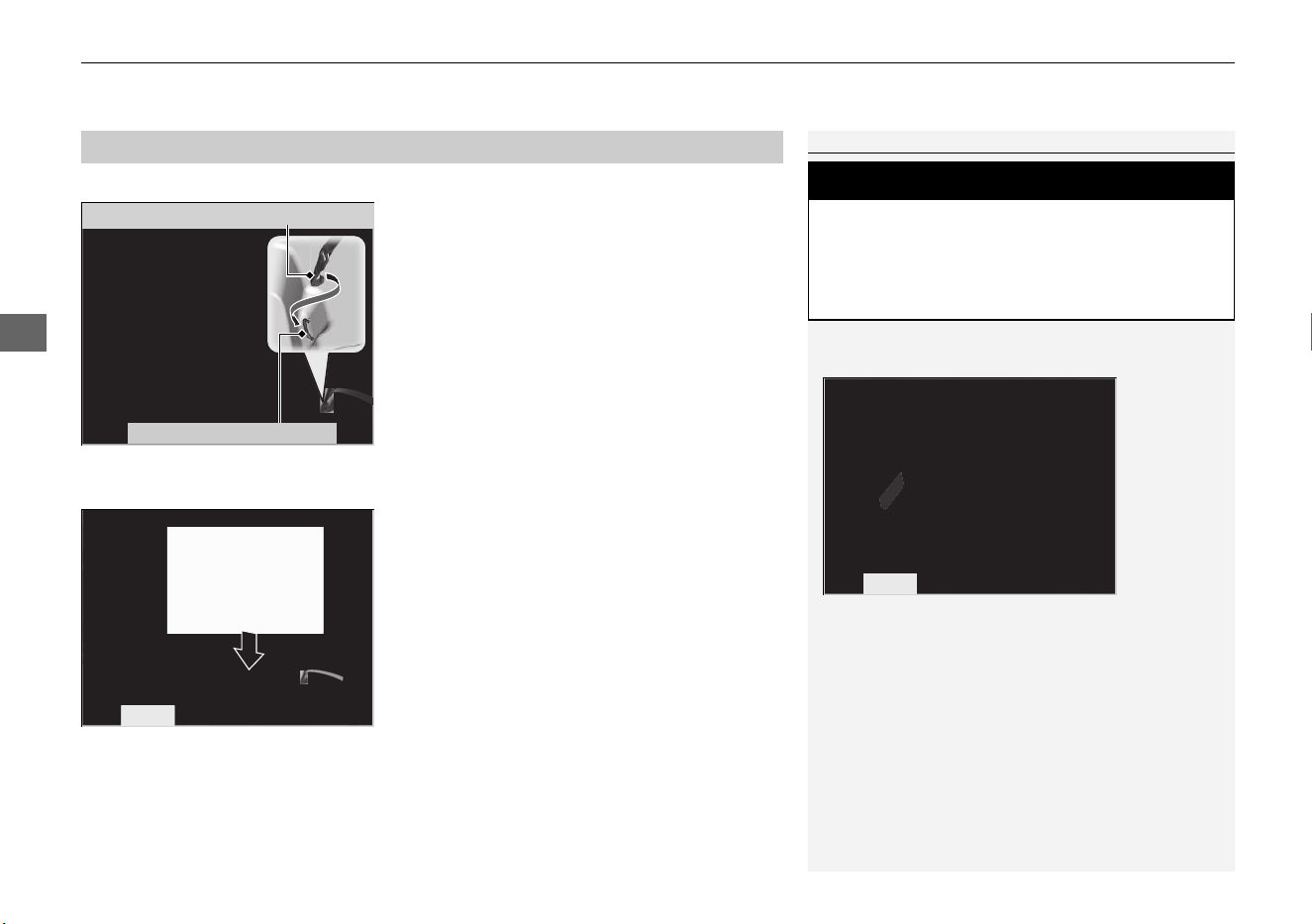
uuSeatsuSecond Row Seats
218
Controls
The second row center seat can be stored in the under-floor storage area.
1. Remove the cargo floor lid.
2 Under-floor Storage Area P. 240
u Remove the cargo dividers
*
.
2 Removable cargo dividers
*
P. 242
2. Take the seat storage strap out of the
under-floor storage area.
u The seat storage strap is located in
pocket on rear wall of under-floor
storage area.
3. Secure the seat storage strap hook to the
passenger’s side anchor as shown in the
image.
4. Store the second row center seat.
u Seat will not fit correctly if head restraint
is positioned to the passenger’s side.
■
Storing the Second Row Center Seat
*
1Storing the Second Row Center Seat
*
A label is in the location shown below.
Seat must be secured with included seat storage
strap when stored in this position.
3
WARNING
This is not a designated seating position.
Do not allow anyone to sit here.
Sitting here while the vehicle is moving
could result in injury or death.
Seat Storage Strap Hook
Passenger’s Side Anchor
* Not available on all models
26 PILOT-31T906300.book 218 ページ 2025年10月8日 水曜日 午前11時43分
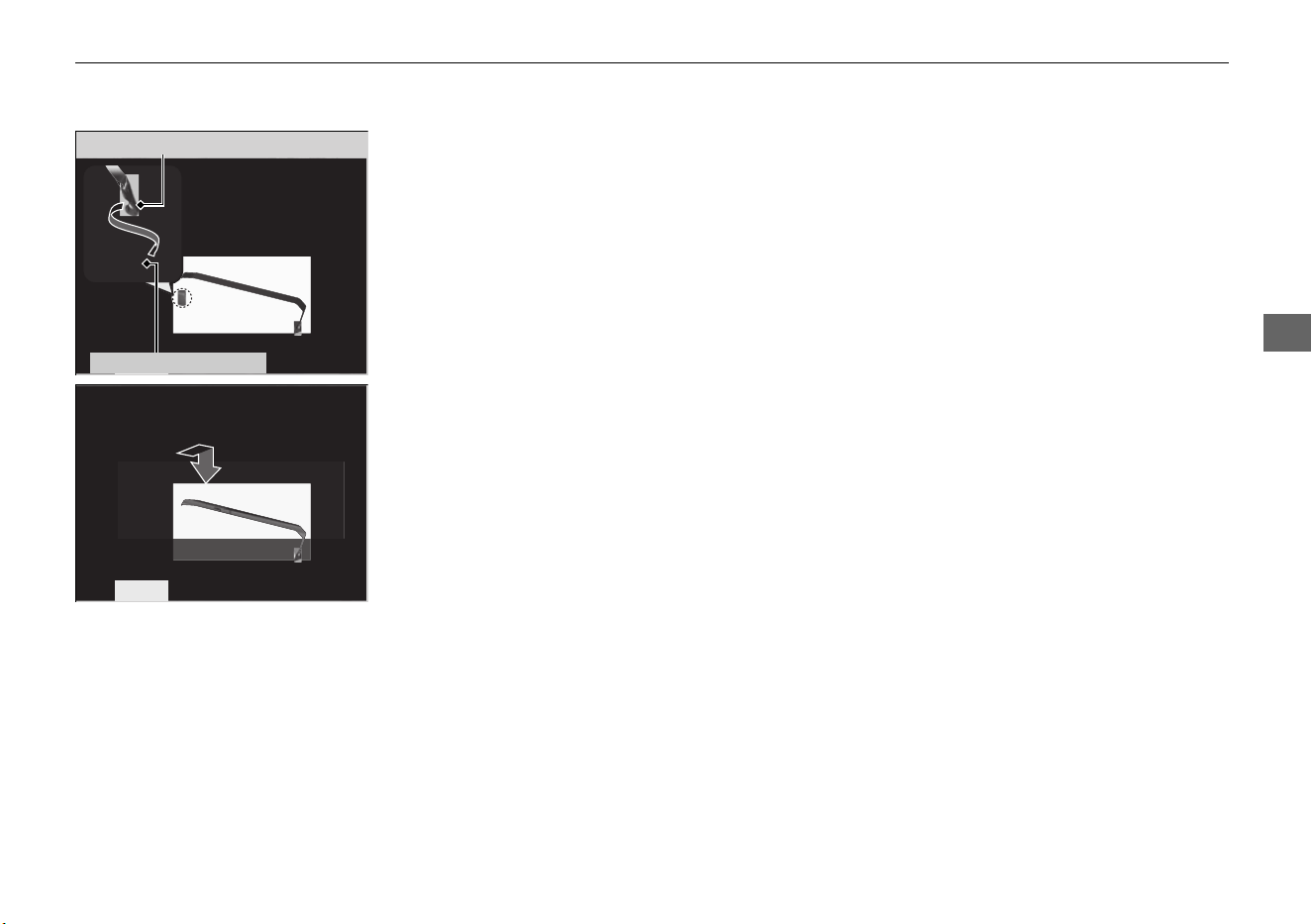
219
uuSeatsuSecond Row Seats
Controls
5. Secure the seat storage strap hook to the
driver’s side anchor.
u Make sure the seat storage strap is not
twisted.
u Store the cargo dividers
*
.
6. Store the cargo floor lid in the cargo area.
Seat Storage Strap Hook
Driver’s Side Anchor
* Not available on all models
26 PILOT-31T906300.book 219 ページ 2025年10月8日 水曜日 午前11時43分
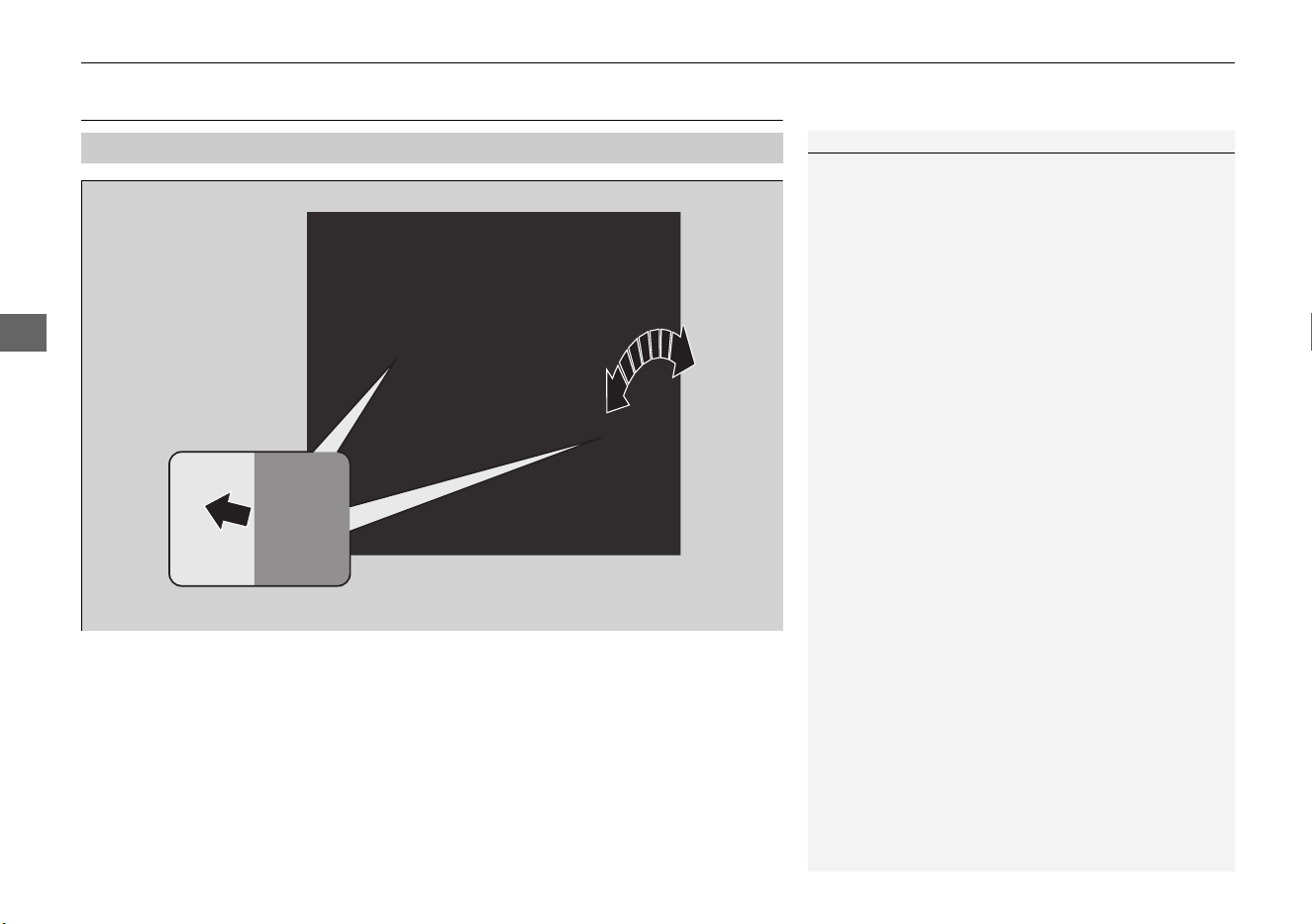
220
uuSeatsuThird Row Seats
Controls
Third Row Seats
■
Adjusting the Seat Positions
1Third Row Seats
Once a seat is adjusted correctly, rock it back and
forth to make sure it is locked in position.
Seat-back Angle Adjustment
Pull the strap to change the angle.
26 PILOT-31T906300.book 220 ページ 2025年10月8日 水曜日 午前11時43分
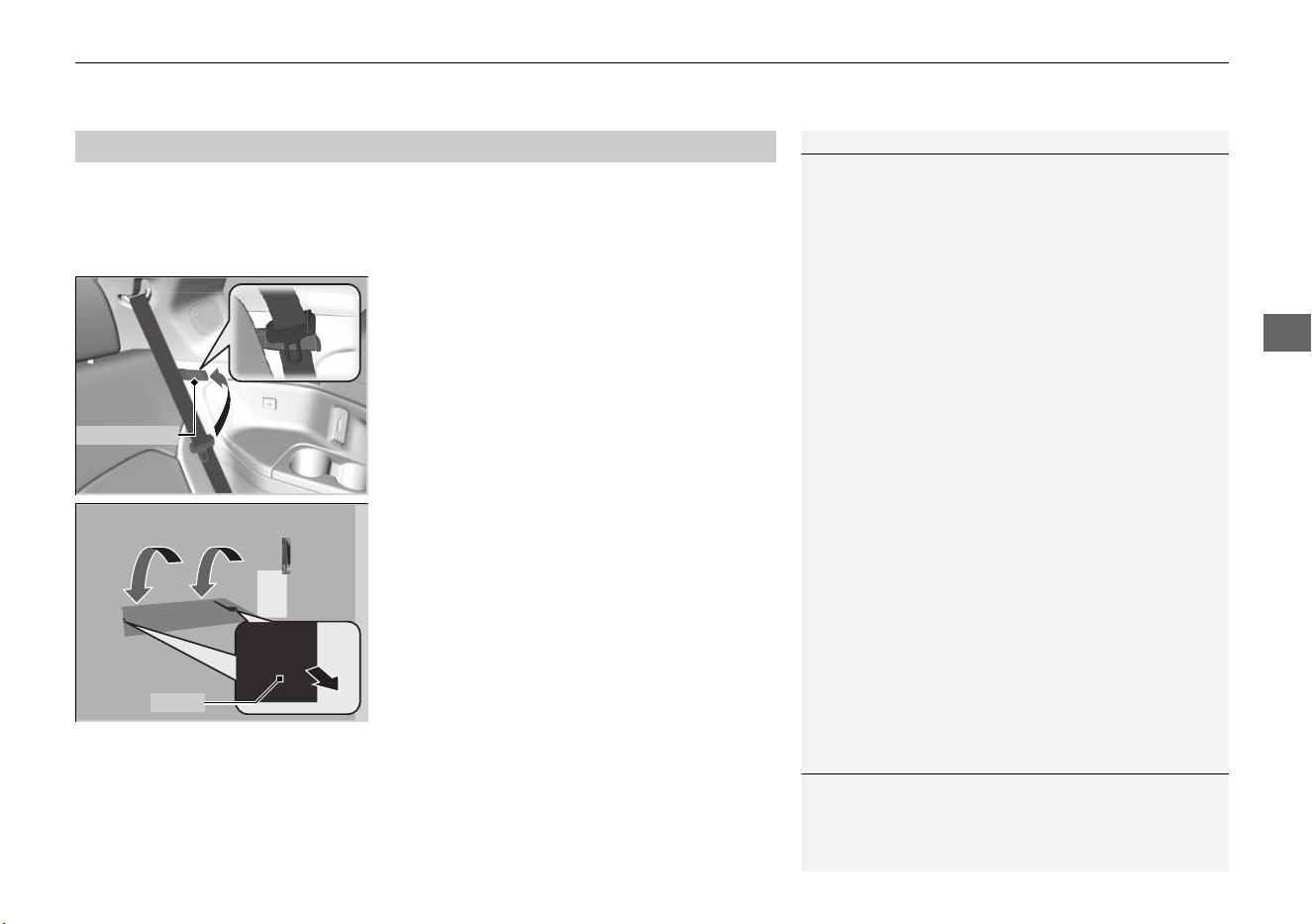
221
uuSeatsuThird Row Seats
Controls
Separately fold down the left and right halves of the third row seats to make room
for cargo.
■
To fold down the seat
1. Store the center seat belt first. Insert the
latch plate into the slot on the side of the
anchor buckle.
2. Retract the seat belt into the holder on the
ceiling.
2 Seat Belt with Detachable Anchor P. 50
3. Insert the seat belt into the belt holder
located next to the seat.
4. Pull the strap on the seat-back fully.
u The head restraint tilts downward.
5. Push the seat-back forward while pulling
the strap.
■
To return the seat to the original position
1. Pull the seat-back up with the strap pulled.
2. Push the head restraint up to its original position.
■
Folding Down the Third Row Seats
1Folding Down the Third Row Seats
Make sure all items in the cargo area or items
extending to the third row seats are properly
secured. Loose items can fly forward if you have
to brake hard.
Make sure that the folded seat-back does not press
against the second row seats.
The second row seat(s) must be far enough forward
so they do not interfere with the third row seats as
they fold down.
Belt Holder
strap
1To return the seat to the original position
Make sure the seat-back and head restraints are
securely latched back into place before driving.
26 PILOT-31T906300.book 221 ページ 2025年10月8日 水曜日 午前11時43分
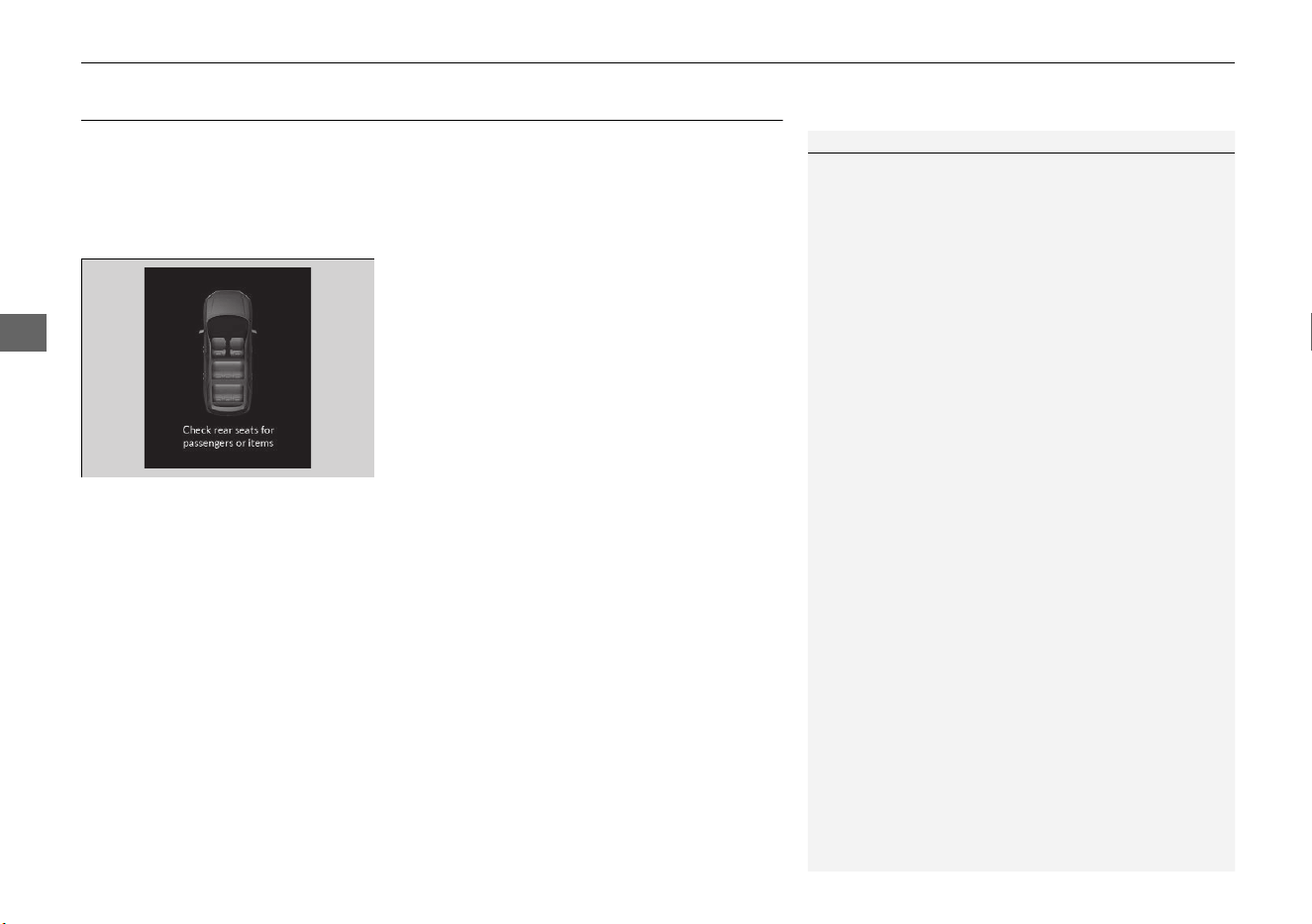
222
uuSeatsuRear Seat Reminder
Controls
Rear Seat Reminder
This feature alerts you to the possible presence of passengers or items in the second
row or third row seats before you exit the vehicle. It activates when the vehicle is set
to VEHICLE OFF if the rear doors were opened shortly before or after the vehicle was
set to ON.
A reminder appears on the driver information
interface and an alert will sound when the
power mode is set to VEHICLE OFF.
1Rear Seat Reminder
When the power mode is set to VEHICLE OFF, the
reminder comes on briefly, then the function is
deactivated.
The reminder will not work if the power mode has
not been set to ON within 10 minutes of operating
the rear doors.
The system does not detect passengers in the rear
seats. Instead, it can detect when a rear door is
opened and closed, indicating that there may be
something in the rear seats.
You can turn off the notification setting.
2 How to Customize the Vehicle Settings
P. 358
26 PILOT-31T906300.book 222 ページ 2025年10月8日 水曜日 午前11時43分
223
uuSeatsuMaintain a Proper Sitting Position
Controls
Maintain a Proper Sitting Position
After all occupants have adjusted their seats and head restraints, and put on their
seat belts, it is very important that they continue to sit upright, well back in their
seats, with their feet on the floor until the vehicle is safely parked and the engine is
off.
Sitting improperly can increase the chance of injury during a crash. For example, if
an occupant slouches, lies down, turns sideways, sits forward, leans forward or
sideways, or puts one or both feet up, the chance of injury during a crash is greatly
increased.
In addition, an occupant who is out of position in the front seat can be seriously or
fatally injured in a crash by striking interior parts of the vehicle or being struck by an
inflating front airbag.
1Maintain a Proper Sitting Position
3
WARNING
Sitting improperly or out of position can
result in serious injury or death in a crash.
Always sit upright, well back in the seat,
with your feet on the floor.
26 PILOT-31T906300.book 223 ページ 2025年10月8日 水曜日 午前11時43分
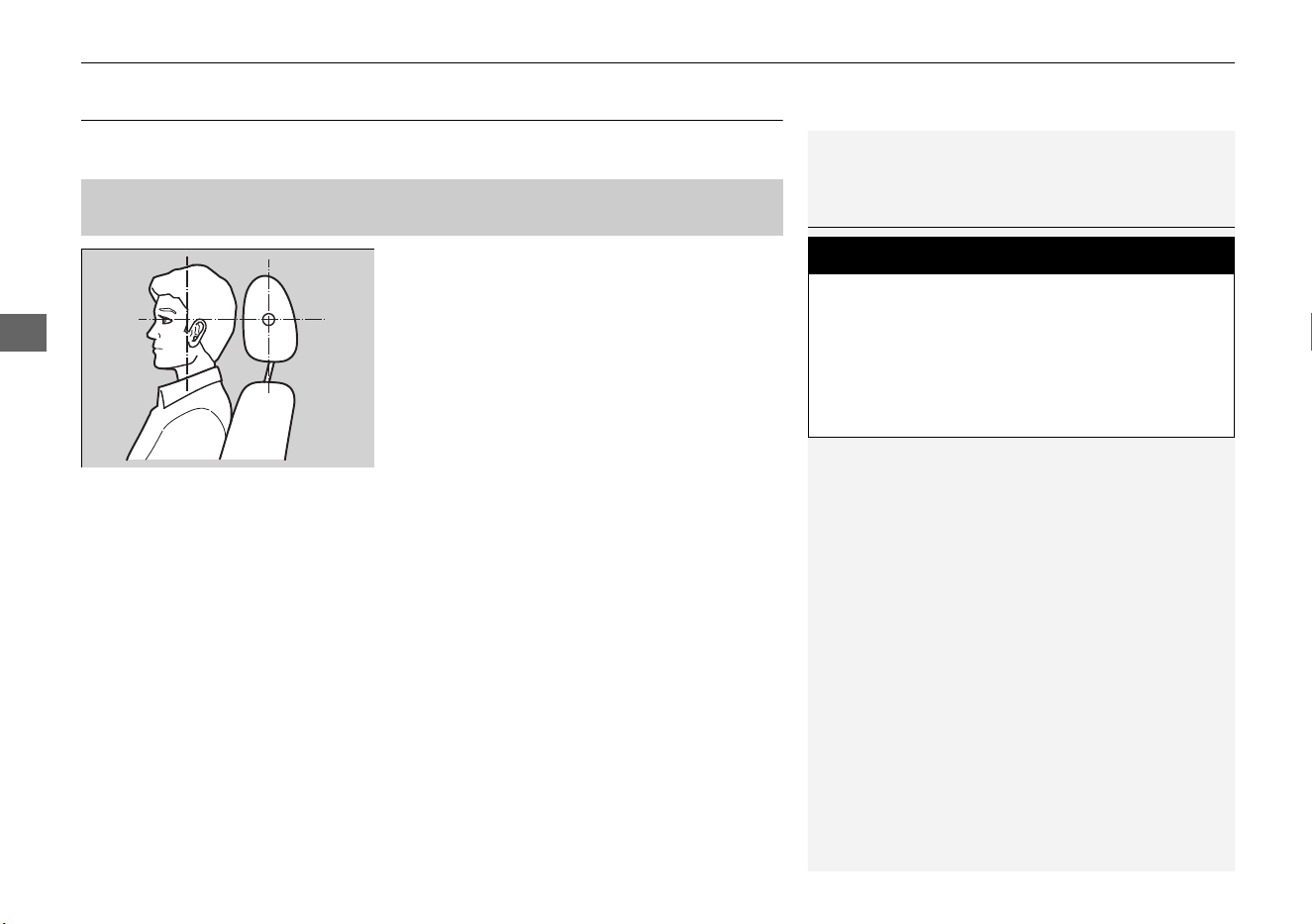
224
uuSeatsuHead Restraints
Controls
Head Restraints
Your vehicle is equipped with head restraints in all seating positions.
Head restraints are most effective for
protection against whiplash and other rear-
impact crash injuries when the center of the
back of the occupant’s head rests against the
center of the restraint. The tops of the
occupant’s ears should be level with the
center height of the restraint.
■
Adjusting the Front and Second Row Outer Seat Head
Restraint Positions
1Adjusting the Front and Second Row Outer Seat Head Restraint
Positions
In order for the head restraint system to work
properly:
• Do not hang any items on the head restraints, or
from the restraint legs.
• Do not place any objects between an occupant and
the seat-back.
• Install each restraint in its proper location.
3
WARNING
Improperly positioning head restraints
reduces their effectiveness and increases
the likelihood of serious injury in a crash.
Make sure head restraints are in place and
positioned properly before driving.
26 PILOT-31T906300.book 224 ページ 2025年10月8日 水曜日 午前11時43分
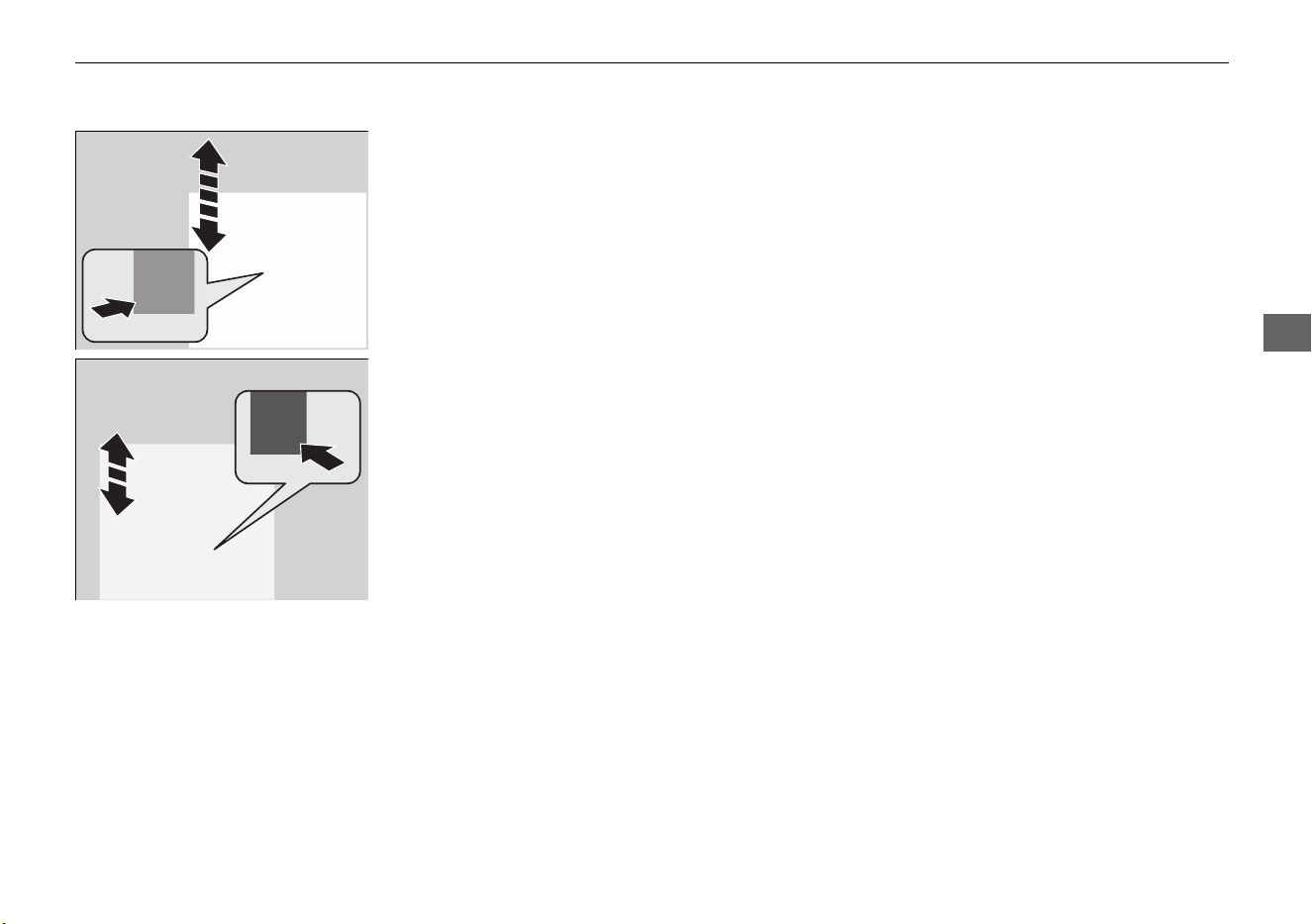
225
uuSeatsuHead Restraints
Continued
Controls
To raise the head restraint: Pull it upward.
To lower the head restraint: Push it down
while pressing the release button.
Front
Second row outer
26 PILOT-31T906300.book 225 ページ 2025年10月8日 水曜日 午前11時43分
226
uuSeatsuHead Restraints
Controls
A passenger sitting in the second row
*
and third row center seating position should
adjust the height of their head restraint to an appropriate position before the vehicle
begins moving.
To raise the head restraint:
Pull it upward.
To lower the head restraint:
Push it down while pressing the right release
button.
■
Changing the Second Row
*
/Third Row Center Seat Head
Restraint Positions
* Not available on all models
26 PILOT-31T906300.book 226 ページ 2025年10月8日 水曜日 午前11時43分
Continued
227
uuSeatsuHead Restraints
Controls
Head restraints can be removed for cleaning or repair.
To remove a head restraint:
Pull the restraint up as far as it will go. Then, push the release button and pull the
restraint up and out.
To reinstall a head restraint:
Insert the legs back in place, then adjust the head restraint to an appropriate height
while pressing the release button. Pull up on the restraint to make sure it is locked
in position.
To remove a head restraint:
Pull the restraint up as far as it will go. Then push the release buttons which are
located on the both legs at the same time, and pull the restraint up and out.
To reinstall a head restraint:
Insert the legs back in place, then adjust the head restraint to an appropriate height
while pressing the right release button. Pull up on the restraint to make sure it is
locked in position.
■
Removing and Reinstalling the Head Restraints
1Removing and Reinstalling the Head Restraints
To remove and install the front head restraint, recline
the seat-back slightly forward as the space between
the ceiling and the seat-back is limited.
3
WARNING
Failure to reinstall or correctly reinstall the
head restraints can result in severe injury
during a crash.
Always replace the head restraints before
driving.
Except third row outer seat head restraints
Front and second row outer seat head restraints
Second row/third row center seat head restraint
26 PILOT-31T906300.book 227 ページ 2025年10月8日 水曜日 午前11時43分
228
uuSeatsuHead Restraints
Controls
A passenger in the third row seating position
should put the head restraint in the upright
position before the vehicle begins moving.
To fold down the head restraint:
Pull the strap.
To put the head restraint back in the
upright position:
Pull up the head restraint and push rearward
until it latches.
■
Folding Down the Third Row Outer Head Restraint
strap
26 PILOT-31T906300.book 228 ページ 2025年10月8日 水曜日 午前11時43分
229
uuSeatsuArmrest
Continued
Controls
Armrest
The console compartment can be used as an
armrest.
■
Using the Front Seat Armrest
26 PILOT-31T906300.book 229 ページ 2025年10月8日 水曜日 午前11時43分
230
uuSeatsuArmrest
Controls
Pull down the armrest.
Pull up the strap and fold down the center
backrest to use as an armrest.
■
Using the Second Row Seat Armrest
Models without second row center
seat
Models without second row center seat
Models with second row center seat
Models with second row center seat
26 PILOT-31T906300.book 230 ページ 2025年10月8日 水曜日 午前11時43分
231
Continued
Controls
Interior Convenience Items
Interior Lights
■
ON
The interior lights come on regardless of
whether the tailgate and doors are open or
closed.
■
Door activated
The interior lights come on in the following
situations:
• When the tailgate or any doors are opened.
• When the driver’s door is unlocked.
• When the power mode is set to VEHICLE
OFF.
■
OFF
The interior lights remain off regardless of
whether the tailgate or any doors are open or
closed.
■
Interior Light Switches
1Interior Light Switches
In the door activated position, the interior lights fade
out and turn off about 30 seconds after the doors are
closed.
The lights turn off after about 30 seconds in the
following situations:
• When you unlock the driver’s door but do not open
it.
• When you set the power mode to VEHICLE OFF but
do not open a door.
You can change the interior lights dimming time.
2 How to Customize the Vehicle Settings
P. 358
The interior lights turn off immediately in the
following situations:
• When you lock the driver’s door.
• When you close the driver’s door in ACCESSORY
mode.
• When you set the power mode to ON.
Door Activated Position
Off
On
26 PILOT-31T906300.book 231 ページ 2025年10月8日 水曜日 午前11時43分
uuInterior Convenience ItemsuInterior Lights
232
Controls
■
Front
The map lights can be turned on and off by
pressing the (map light) button.
■
Second and third row
The map lights can be turned on and off by
pressing the lenses when the front interior
light switch is in the door activated position or
ON position.
■
Map Light Switches
1Interior Light Switches
If you leave any of the tailgate or doors open in
VEHICLE OFF mode, the interior lights go off after
about 15 minutes.
To avoid draining the battery, do not leave the
interior light on for an extended length of time when
the engine is off.
Front
Second and third row
1Map Light Switches
When the interior light switch is in the door activated
position and any door is open, the front map lights
will not go off when you press the button.
26 PILOT-31T906300.book 232 ページ 2025年10月8日 水曜日 午前11時43分
233
uuInterior Convenience ItemsuInterior Lights
Controls
The cargo area light comes on when you open
the tailgate.
■
Cargo Area Light
1Cargo Area Light
The cargo area light does not have an on/off switch.
In case the tailgate is left open for an extended period
of time, they automatically turn off in 30 minutes.
26 PILOT-31T906300.book 233 ページ 2025年10月8日 水曜日 午前11時43分
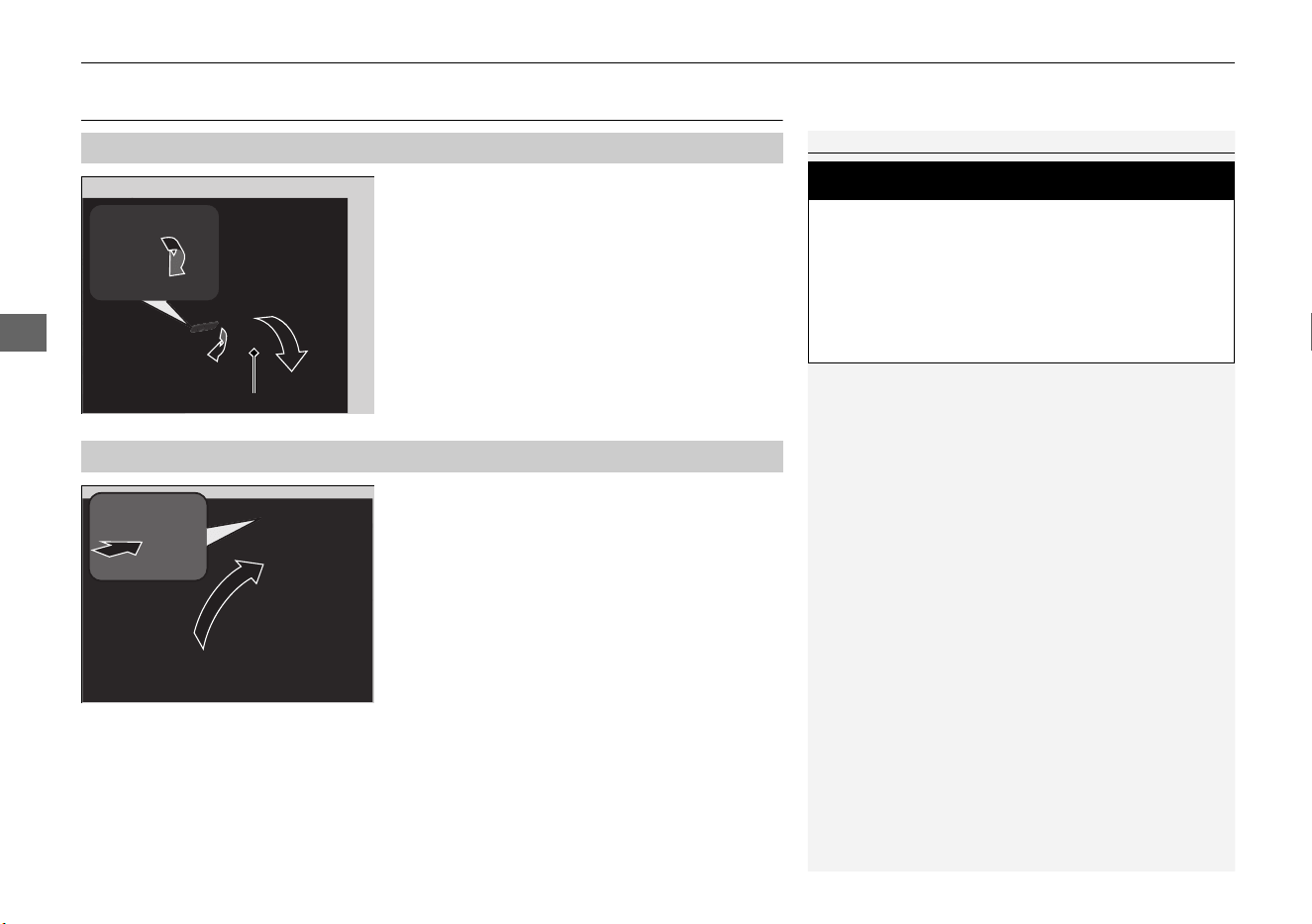
234
uuInterior Convenience ItemsuStorage Items
Controls
Storage Items
Pull the handle to open the glove box. You
can lock the glove box with the built-in key.
Press the button to open the console
compartment.
■
Glove Box
1Glove Box
3
WARNING
An open glove box can cause serious injury
to your passenger in a crash, even if the
passenger is wearing the seat belt.
Always keep the glove box closed while
driving.
Glove Box
To lock
■
Console Compartment
26 PILOT-31T906300.book 234 ページ 2025年10月8日 水曜日 午前11時43分
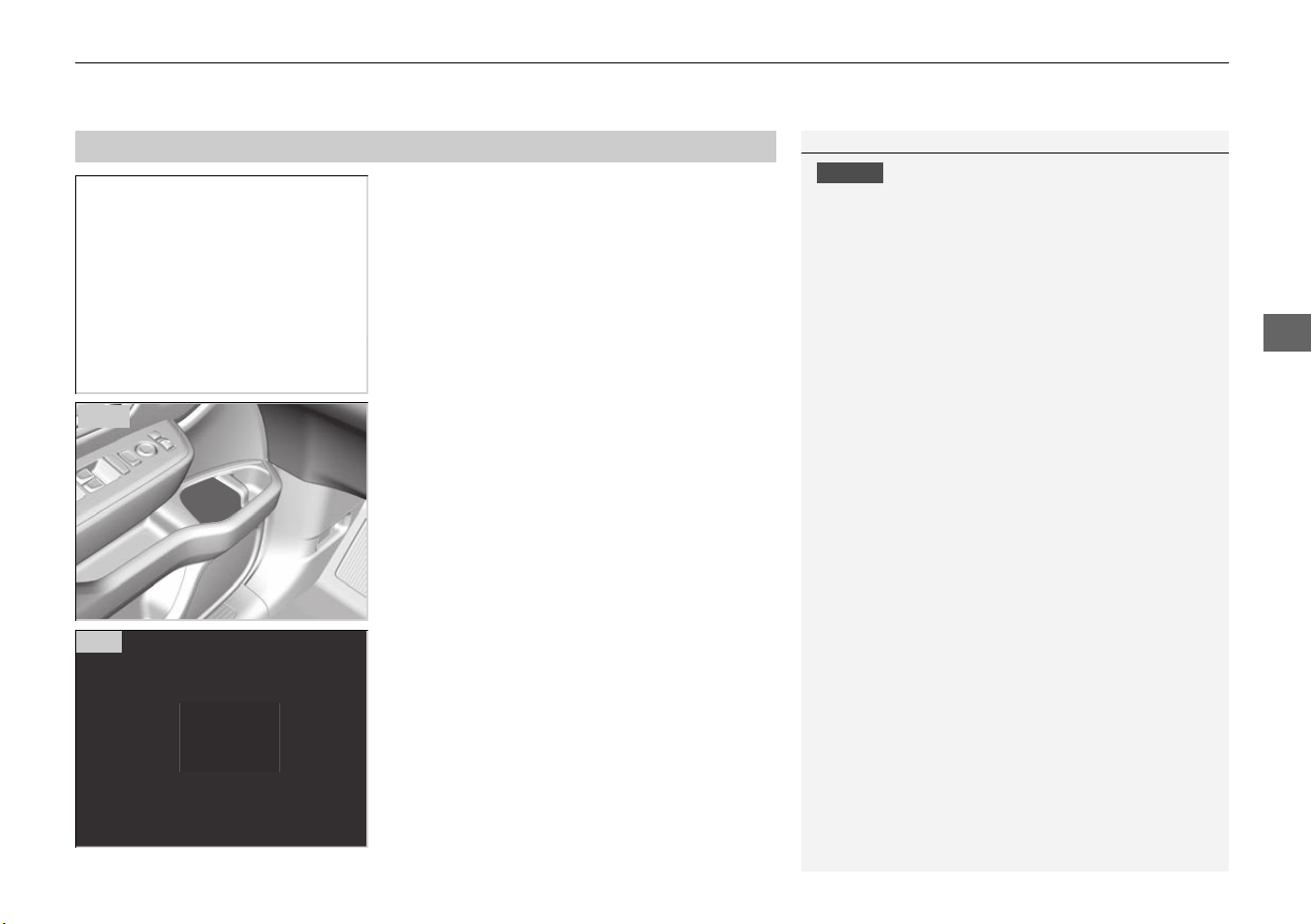
Continued
235
uuInterior Convenience ItemsuStorage Items
Controls
■
Front seat beverage holders
Located in the console between the front
seats.
■
Door side beverage holders
Located on both of the front and rear door
side pockets.
■
Beverage Holders
1Beverage Holders
NOTICE
Spilled liquids can damage the upholstery, carpeting,
and electrical components in the interior.
Be careful when you are using the beverage holders.
Hot liquid can scald you.
Front
Rear
26 PILOT-31T906300.book 235 ページ 2025年10月8日 水曜日 午前11時43分
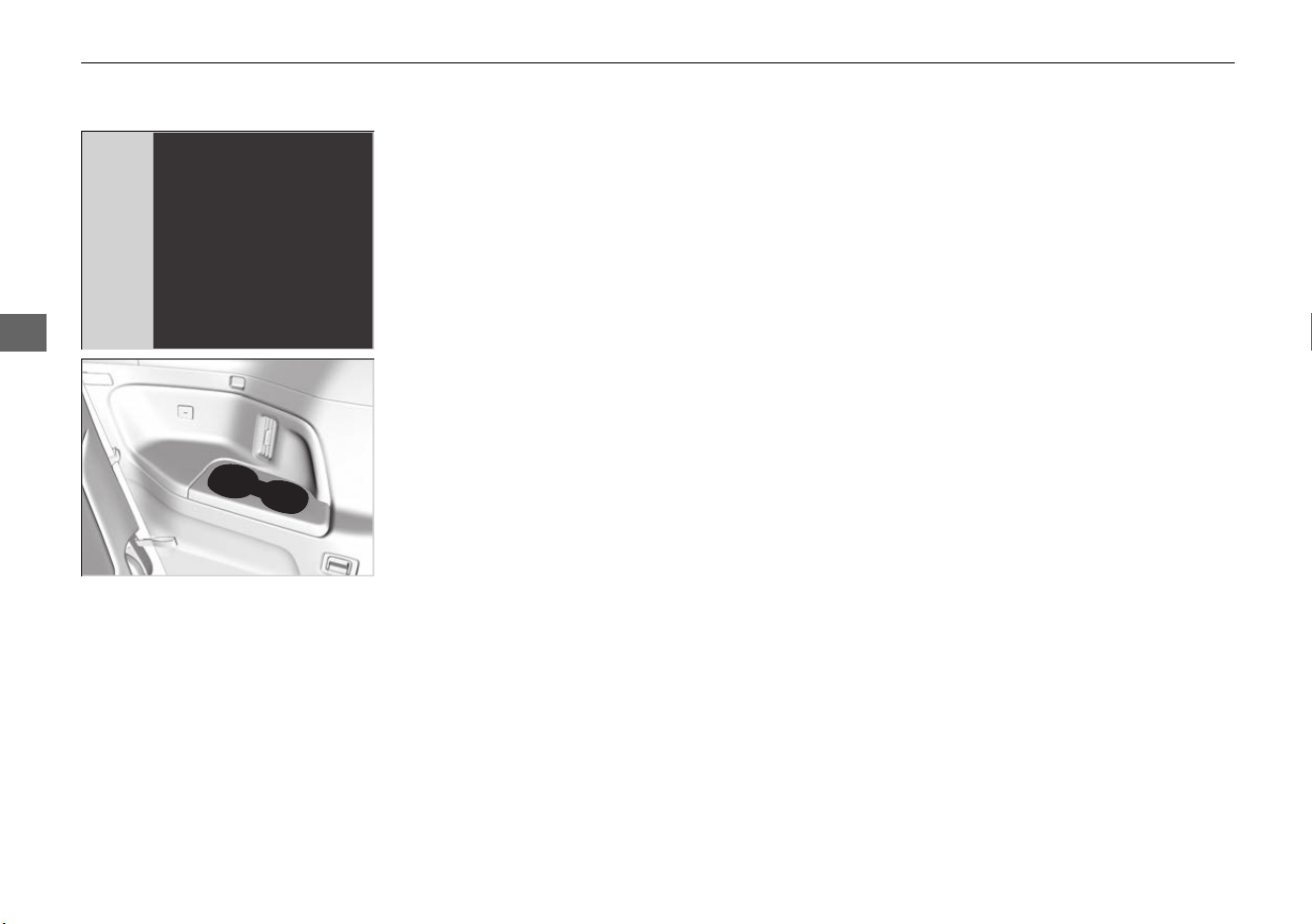
236
uuInterior Convenience ItemsuStorage Items
Controls
■
Second row seat beverage holders
*
Pull up the strap and fold down the center
backrest to expose the beverage holders.
■
Third row seat beverage holders
* Not available on all models
26 PILOT-31T906300.book 236 ページ 2025年10月8日 水曜日 午前11時43分
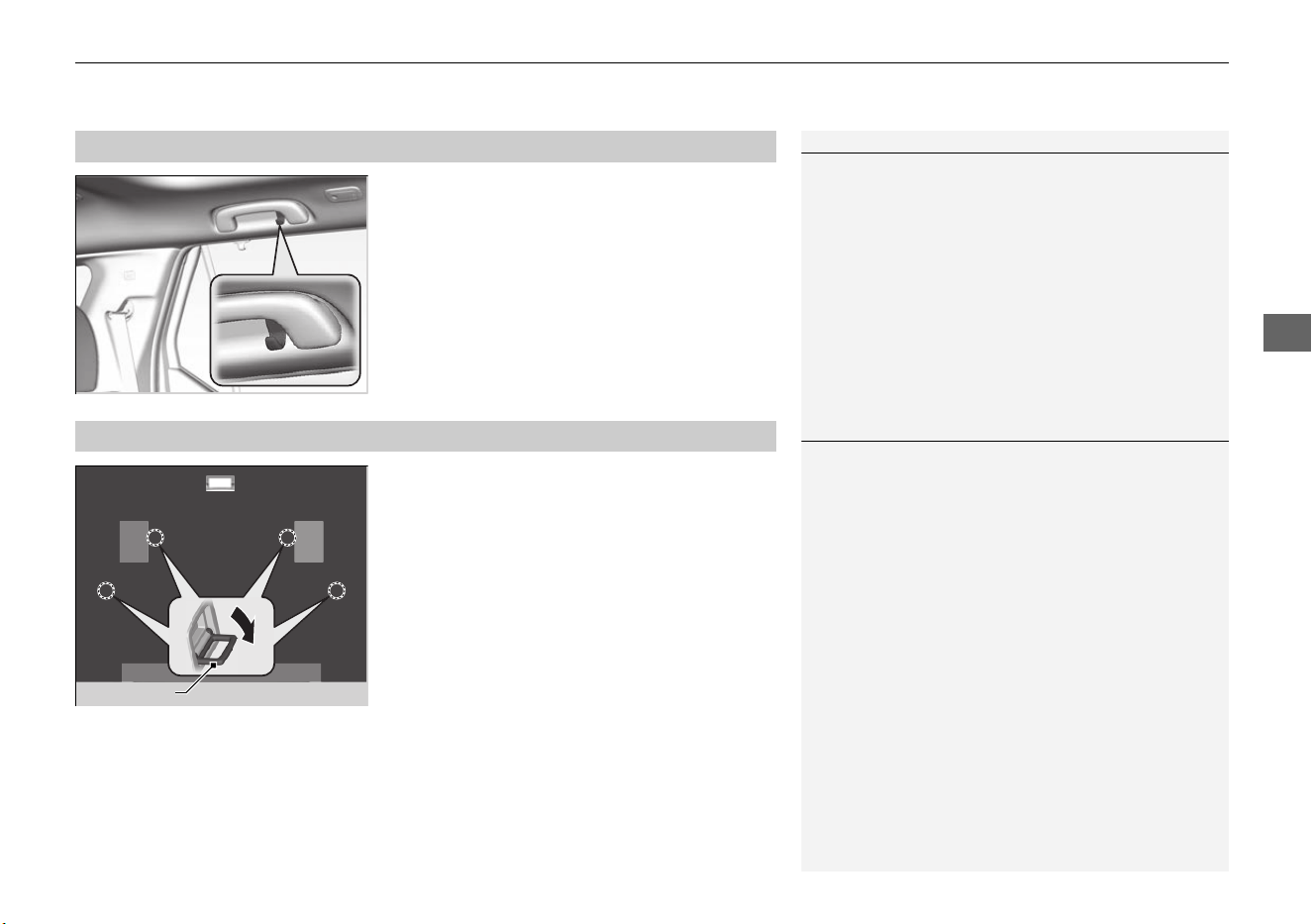
Continued
237
uuInterior Convenience ItemsuStorage Items
Controls
There is a coat hook on the rear grab handle
on both sides.
The tie-down anchors on the cargo area floor
can be used to install a net for securing items.
■
Coat Hooks
1Coat Hooks
The coat hooks are not designed for large or heavy
items.
■
Tie-down Anchors
1Tie-down Anchors
Do not let anyone access items in the cargo area
while driving. Loose items can cause injury if you have
to brake hard.
Anchors
26 PILOT-31T906300.book 237 ページ 2025年10月8日 水曜日 午前11時43分
uuInterior Convenience ItemsuStorage Items
238
Controls
To open the sunglasses holder, push and
release the indent. To close, push it again until
it latches.
You can store eyeglasses and other small
items in this holder.
■
Conversation mirror
*
The sunglasses holder comes with a mirror.
Open the sunglasses holder fully, then push it
back to the first detent. You can use the
mirror to view the rear seats.
■
Sunglasses Holder
1Sunglasses Holder
Keep the holder closed while driving except when
accessing stored items.
Push
* Not available on all models
26 PILOT-31T906300.book 238 ページ 2025年10月8日 水曜日 午前11時43分
239
uuInterior Convenience ItemsuStorage Items
Continued
Controls
Use the cargo hooks to secure cargo in the
cargo area.
■
Cargo Hooks
26 PILOT-31T906300.book 239 ページ 2025年10月8日 水曜日 午前11時43分
uuInterior Convenience ItemsuStorage Items
240
Controls
Pull the handle to open the cargo floor lid.
■
Storing items on the lid (lowered
position)
This is convenient when storing a tall item.
1. Pull the handle and open the lid.
2. Pull the lid toward you until it disengages
from the support rods.
■
Under-floor Storage Area
1Storing items on the lid (lowered position)
The lid can be flipped over and placed in either upper
or lower position. This allows for storage of dirty
items, or items that may damage the carpet lining of
the lid.
Handle
26 PILOT-31T906300.book 240 ページ 2025年10月8日 水曜日 午前11時43分
241
uuInterior Convenience ItemsuStorage Items
Continued
Controls
3. Push the far end of the lid down to the
bottom of the under-floor storage area,
then pull the handle and lower the other
end.
26 PILOT-31T906300.book 241 ページ 2025年10月8日 水曜日 午前11時43分
242
uuInterior Convenience ItemsuStorage Items
Controls
■
Removable cargo dividers
*
The cargo dividers in the under-floor storage
area are detachable.
You can create a flexible, larger storage space
by removing the cargo dividers.
* Not available on all models
26 PILOT-31T906300.book 242 ページ 2025年10月8日 水曜日 午前11時43分
243
uuInterior Convenience ItemsuOther Interior Convenience Items
Continued
Controls
Other Interior Convenience Items
The sun visor can be extended horizontally.
■
Sun Visor
26 PILOT-31T906300.book 243 ページ 2025年10月8日 水曜日 午前11時43分
uuInterior Convenience ItemsuOther Interior Convenience Items
244
Controls
The accessory power sockets can be used when the power mode is in ACCESSORY
or ON.
■
Accessory power socket (console panel)
Open the cover to use it.
■
Accessory power socket (cargo area)
*
Open the cover to use it.
■
Accessory Power Sockets
1Accessory Power Sockets
NOTICE
Do not insert an automotive type cigarette lighter
element. This can overheat the accessory power
socket.
The accessory power sockets are designed to supply
power for 12-volt DC accessories that are rated 180
watts (15 amps) or less.
To prevent battery drain, only use the accessory
power socket with the engine running.
When the accessory power socket is not in use, close
the cover to prevent any small foreign objects from
getting into the accessory power socket.
* Not available on all models
26 PILOT-31T906300.book 244 ページ 2025年10月8日 水曜日 午前11時43分
Continued
245
uuInterior Convenience ItemsuOther Interior Convenience Items
Controls
The AC power outlet can be used when the engine is running.
Open the cover to use it. Plug in the appliance
slightly, turn it 90° clockwise, then push it all
the way.
■
AC Power Outlet
*
1AC Power Outlet
*
NOTICE
Do not use the AC power outlet for electric
appliances that require high initial peak wattage,
such as cathode-ray tube type televisions,
refrigerators, electric pumps, etc. It is not suitable for
devices that process precise data, such as medical
equipment, and that require an extremely stable
power supply, such as microcomputer-controlled
electric blankets, touch sensor lamps, etc.
The AC power outlet is designed to supply power for
up to 115 volt appliances that are rated 150 watts or
less.
Continued use of any electric appliance/device
exceeding these ratings may result in damage to the
appliance/device.
When the AC power outlet is not in use, close the
cover to prevent any small foreign objects from
getting into the AC power outlet.
* Not available on all models
26 PILOT-31T906300.book 245 ページ 2025年10月8日 水曜日 午前11時43分
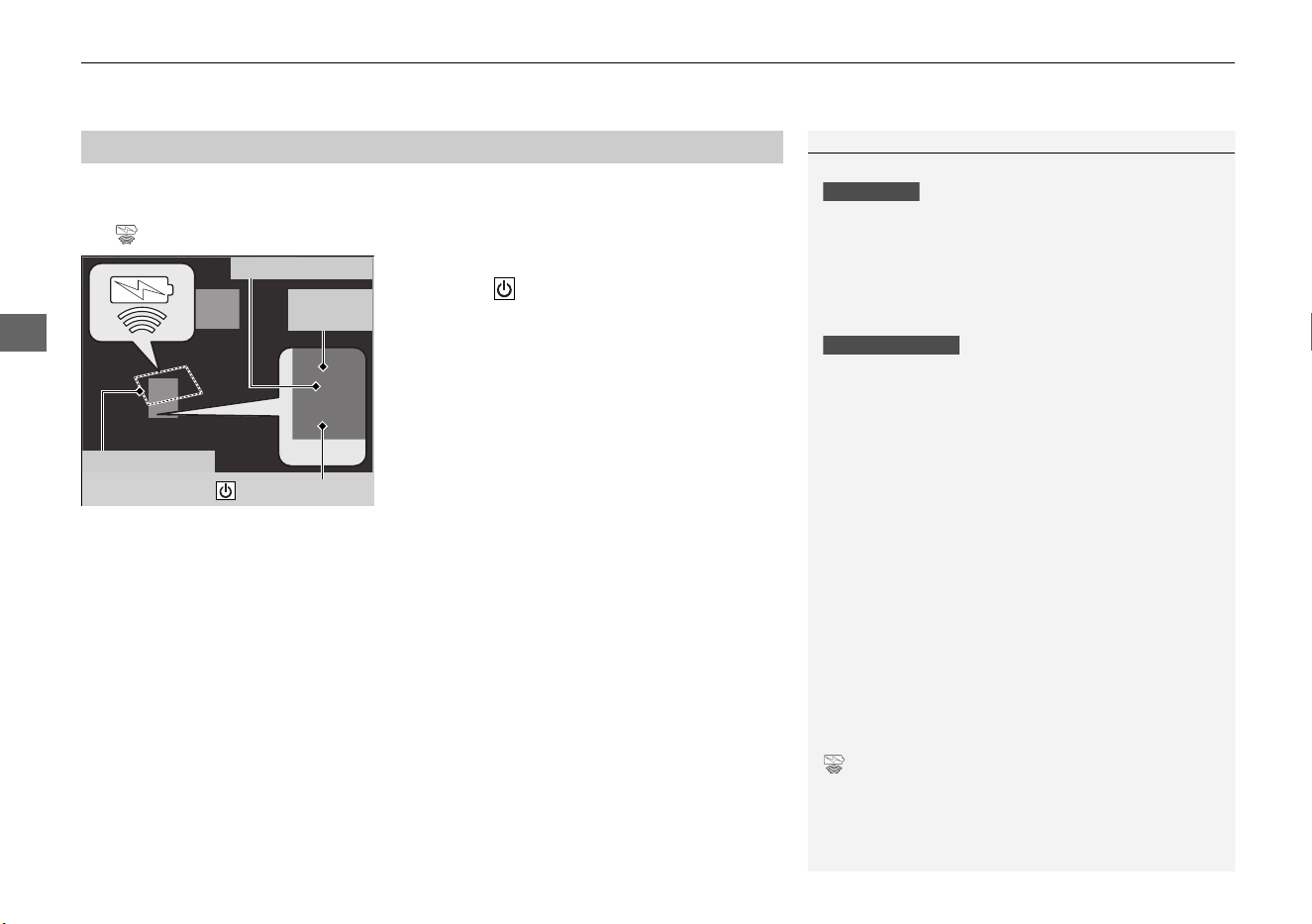
uuInterior Convenience ItemsuOther Interior Convenience Items
246
Controls
To use the wireless charger, the power mode must be in ACCESSORY or ON.
Charge any devices compatible with Qi wireless charging on the area indicated by
the mark as follows:
1. To turn the system on and off, press and
hold the (power) button.
u When the system is activated, the green
indicator light comes on.
2. Place the device you want to charge on the
charging area.
u The system will automatically start
charging the device and the amber
indicator light will come on.
u Make sure that the device is compatible
with the system and placed with the
chargeable side in the center of the
charging area.
3. When charging is completed, the green
indicator light will come on.
u Depending on the device, the amber
indicator light will stay on.
■
Wireless Charger
*
1Wireless Charger
*
RF Radiation Exposure Statement:
This equipment complies with FCC RF Radiation
exposure limits set forth for an uncontrolled
environment.
This device and its antenna must not be co-located or
operating in conjunction with any other antenna or
transmitter.
This equipment complies with ISED RF Radiation
exposure limits set forth for an uncontrolled
environment. This device and its antenna must not be
co-located or operating in conjunction with any other
antenna or transmitter.
In order to use safely:
• Remove any metal objects from the charge pad
before charging a device.
• Do not open the charger case.
• Do not use the charger if it malfunctions. Contact
your dealer.
If the charger interferes with radio communications,
attempt to correct the interference:
• Press and hold the switch on the charger for a few
seconds to turn off the charger.
appears on the audio/information screen when
the device is being charged by the wireless charger.
U.S. models
Canadian models
Green Indicator
Charging Area
(Power) Button
Amber
Indicator
* Not available on all models
26 PILOT-31T906300.book 246 ページ 2025年10月8日 水曜日 午前11時43分
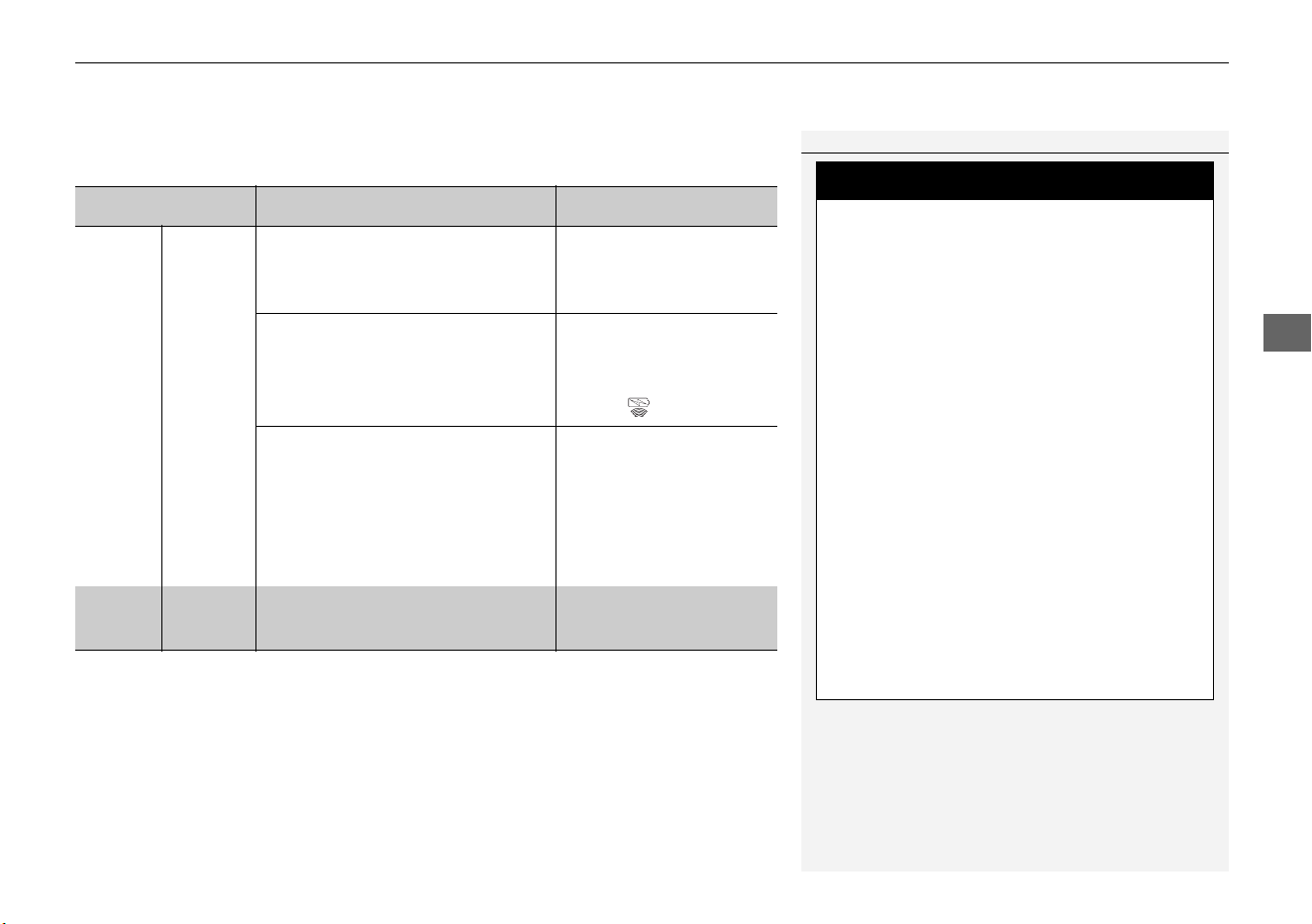
Continued
247
uuInterior Convenience ItemsuOther Interior Convenience Items
Controls
■
When charging does not start
Perform one of the solutions in the following table.
Indicator Cause Solution
Green
&
Amber
Blinking
simulta-
neously
There is an obstacle(s) between
the charging area and the
device.
Remove the
obstacle(s).
The device is not within the
charging area.
Pick up and reset the
device to the center of
the charging area
where is located.
The temperature of the wireless
charger pad increases.
Temporarily suspend
charging the device.
Wait for the
temperature to drop
and attempt to charge
the device again.
Amber Blinking The wireless charger is faulty.
Contact a dealer for
repairs.
1Wireless Charger
*
This system consumes a lot of power. Do not use the
system for a long time when the engine is not
running. This may weaken the battery, making it
difficult to start the engine.
When using the wireless charger, check the user’s manual
that came with the compatible device you want to charge.
3
CAUTION
Metal objects between the charge pad
and the device to be charged will get
hot and can burn you.
• Always remove foreign objects from
the charge pad before charging the
device.
• Be sure the surface is clear of dust and
other debris before charging.
• Do not spill liquids (i. e. water, drinks,
etc.) on the charger and the device.
• Do not use oil, grease, alcohol,
benzine or thinner for cleaning the
charge pad.
• Do not cover the system with towels,
clothing, or other objects while
charging etc.
• Avoid spraying aerosols which may
come in contact with the charge pad
surface.
* Not available on all models
26 PILOT-31T906300.book 247 ページ 2025年10月8日 水曜日 午前11時43分
uuInterior Convenience ItemsuOther Interior Convenience Items
248
Controls
1Wireless Charger
*
The wireless charger can support up to 15 W, but the
charging rate varies based on the device and other
conditions.
NOTICE
Do not place any magnetic recording media or
precision machines within the charging area while
charging.
The data on your cards such as credit cards can be
lost because of the magnetic effect. Also, precision
machines such as watches can be affected.
“Qi” and marks are the registered trademarks
owned by Wireless Power Consortium (WPC).
In the following cases, charging may stop or not start:
• The device is already fully charged.
• The temperature of the device is extremely high
while charging.
• You are at a place that emits strong
electromagnetic waves or noises, such as a TV
station, electric power plant, or gas station.
• The device has a cover, case, or accessories which
are not compatible with wireless charging.
A device may not charge if the size or shape of its
chargeable side is not appropriate for use with the
charging area.
Not all devices are compatible with the system.
* Not available on all models
26 PILOT-31T906300.book 248 ページ 2025年10月8日 水曜日 午前11時43分
Continued
249
uuInterior Convenience ItemsuOther Interior Convenience Items
Controls
1Wireless Charger
*
During the charging phase, it is normal for the
charging area and device to heat up.
Charging may be briefly interrupted when:
• All the doors and the tailgate are closed
- to avoid interference with the proper functioning
of the keyless access system.
• The position of the device is altered.
Do not charge more than one device at a time on a
charging area.
If the device becomes too hot and its battery
protection function activates, it may charge
extremely slowly or no longer charge.
The temperature at which the battery protection
function activates depends on the device.
* Not available on all models
26 PILOT-31T906300.book 249 ページ 2025年10月8日 水曜日 午前11時43分
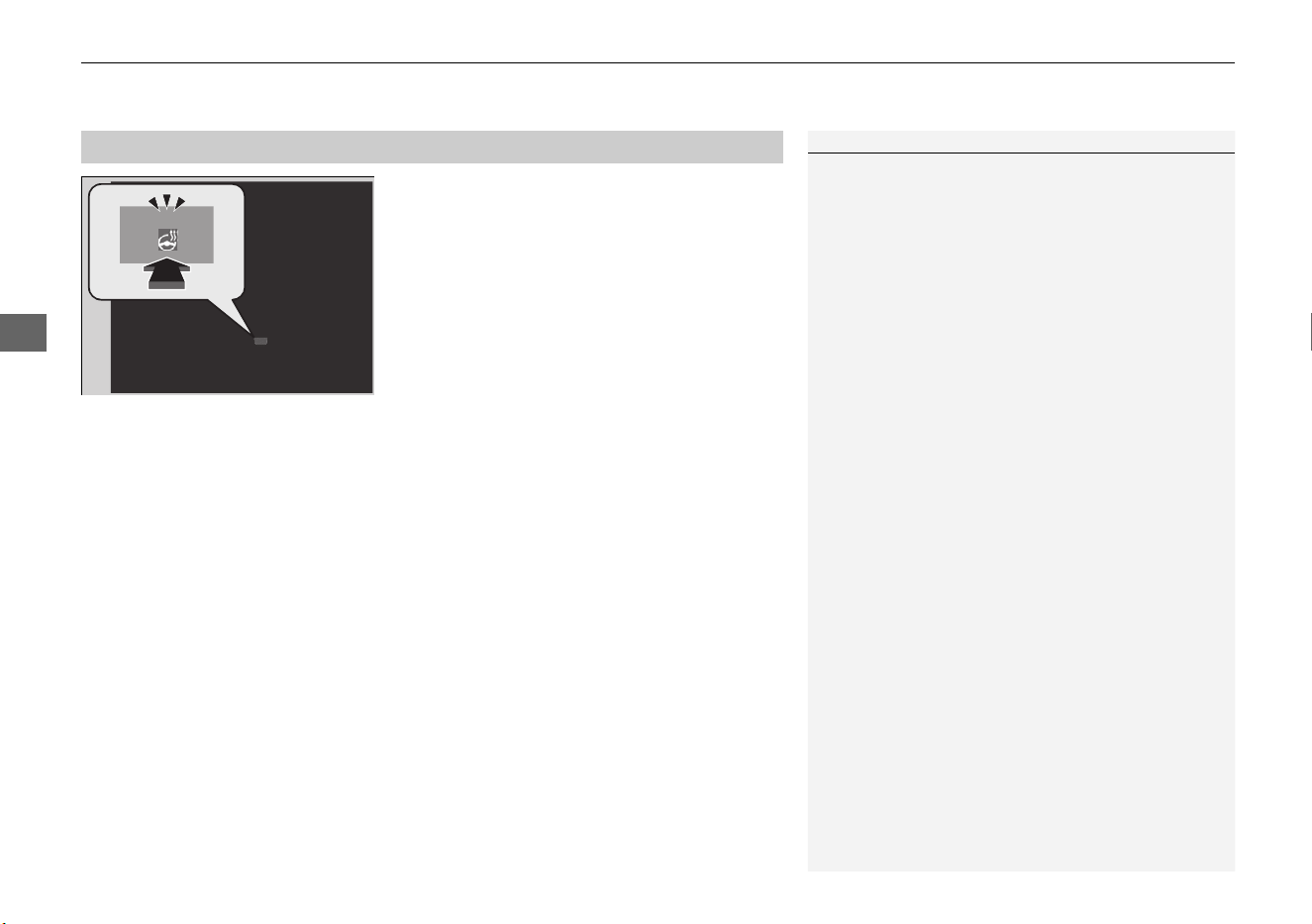
uuInterior Convenience ItemsuOther Interior Convenience Items
250
Controls
The heated steering wheel can be used when
the power mode is in ON.
Press the button on the lower side of the
steering wheel.
When a comfortable temperature is reached,
press the button again to turn it off.
The heated steering wheel is turned off every
time you start the engine, even if you turned it
on the last time you drove the vehicle.
■
Heated Steering Wheel
*
1Heated Steering Wheel
*
Do not use the heated steering wheel continuously
when the engine is off. Under such conditions, the
battery may be weakened, making the engine
difficult to start.
* Not available on all models
26 PILOT-31T906300.book 250 ページ 2025年10月8日 水曜日 午前11時43分
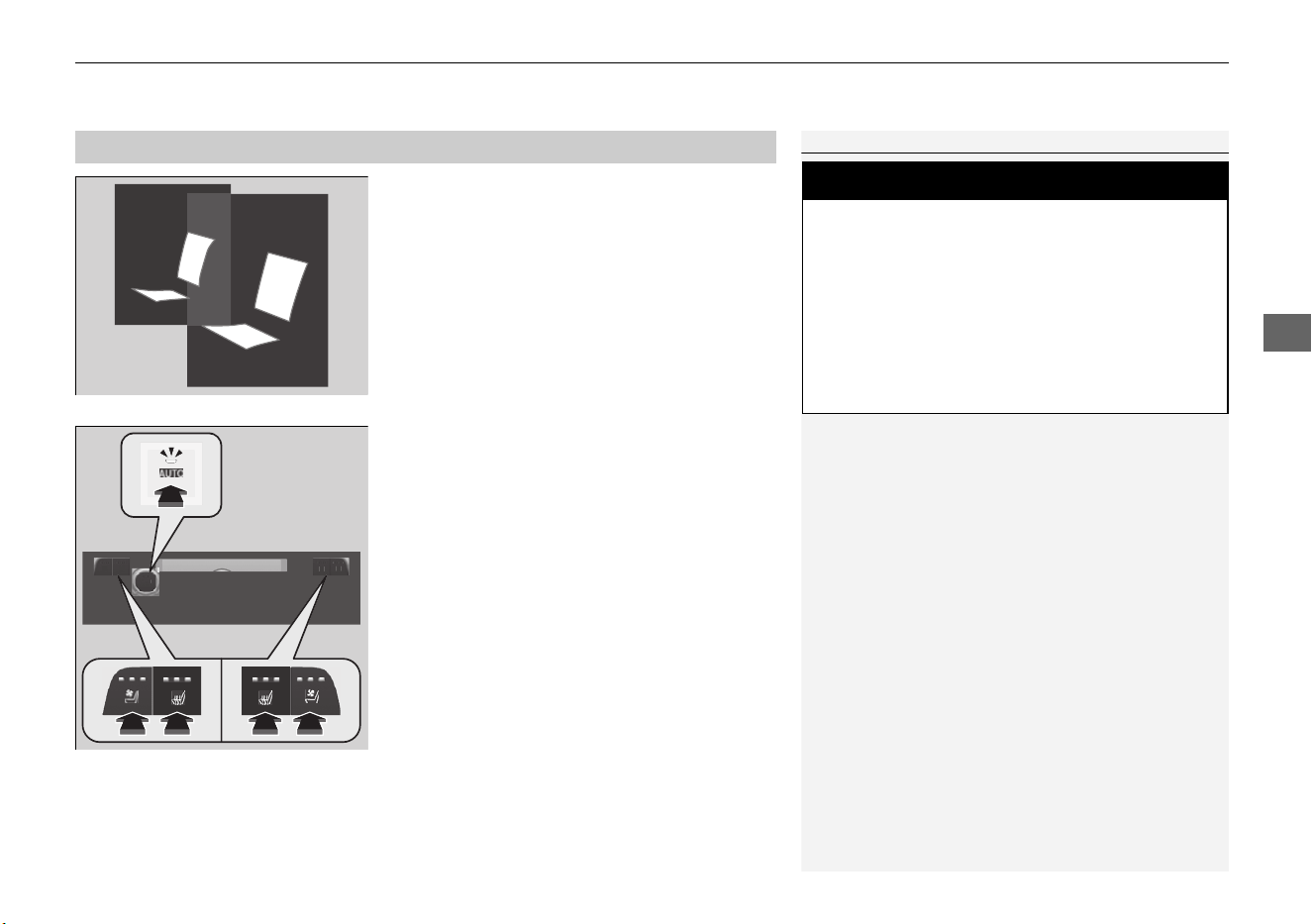
Continued
251
uuInterior Convenience ItemsuOther Interior Convenience Items
Controls
The seat heaters or ventilators
*
can be used
when the power mode is in ON.
The seat heaters: Use them to warm up the
seat.
The seat ventilators
*
: Use them when you
want to ventilate the surface of the seats.
When used with the air conditioning, the
surface of the seats will become easier to cool.
Press the seat heater or the seat ventilation
*
button:
Once - The HI setting (three indicators on)
Twice - The MID setting (two indicators on)
Three times - The LO setting (one indicator on)
Four times - The OFF setting (no indicators on)
When the power mode is turned on after it is
turned off, the previous setting is maintained.
Press the AUTO button:
Both the air conditioner and seat temperature
will automatically change to the setting most
suitable to the ambient environment.
u When any seat heater or seat ventilation
*
button is pressed, settings will switch to
manual mode.
■
Front Seat Heaters and Ventilation
*
1Front Seat Heaters and Ventilation
*
Do not use the seat heaters and the seat ventilation
*
even in LO when the engine is off. Under such
conditions, the battery may be weakened, making
the engine difficult to start.
After a certain period of time, the strength setting for the
seat heaters will automatically be reduced by one level at
a time until the seat heater shuts off. The elapsed time
varies according to the interior environment.
As time passes, the set temperature will fall, and
eventually the seat heater will shut off.
The seat heater and seat ventilation
*
may turn on if
sensors detect weight on the passenger seat due to
cargo, etc.
To prevent automatic activation, you can turn off
automatic climate control for the front seat.
2 How to Customize the Vehicle Settings
P. 358
3
WARNING
Heat induced burns are possible when
using seat heaters.
Persons with a diminished ability to sense
temperature (e.g., persons with diabetes,
lowerlimb nerve damage, or paralysis) or
with sensitive skin should not use seat
heaters.
* Not available on all models
26 PILOT-31T906300.book 251 ページ 2025年10月8日 水曜日 午前11時43分
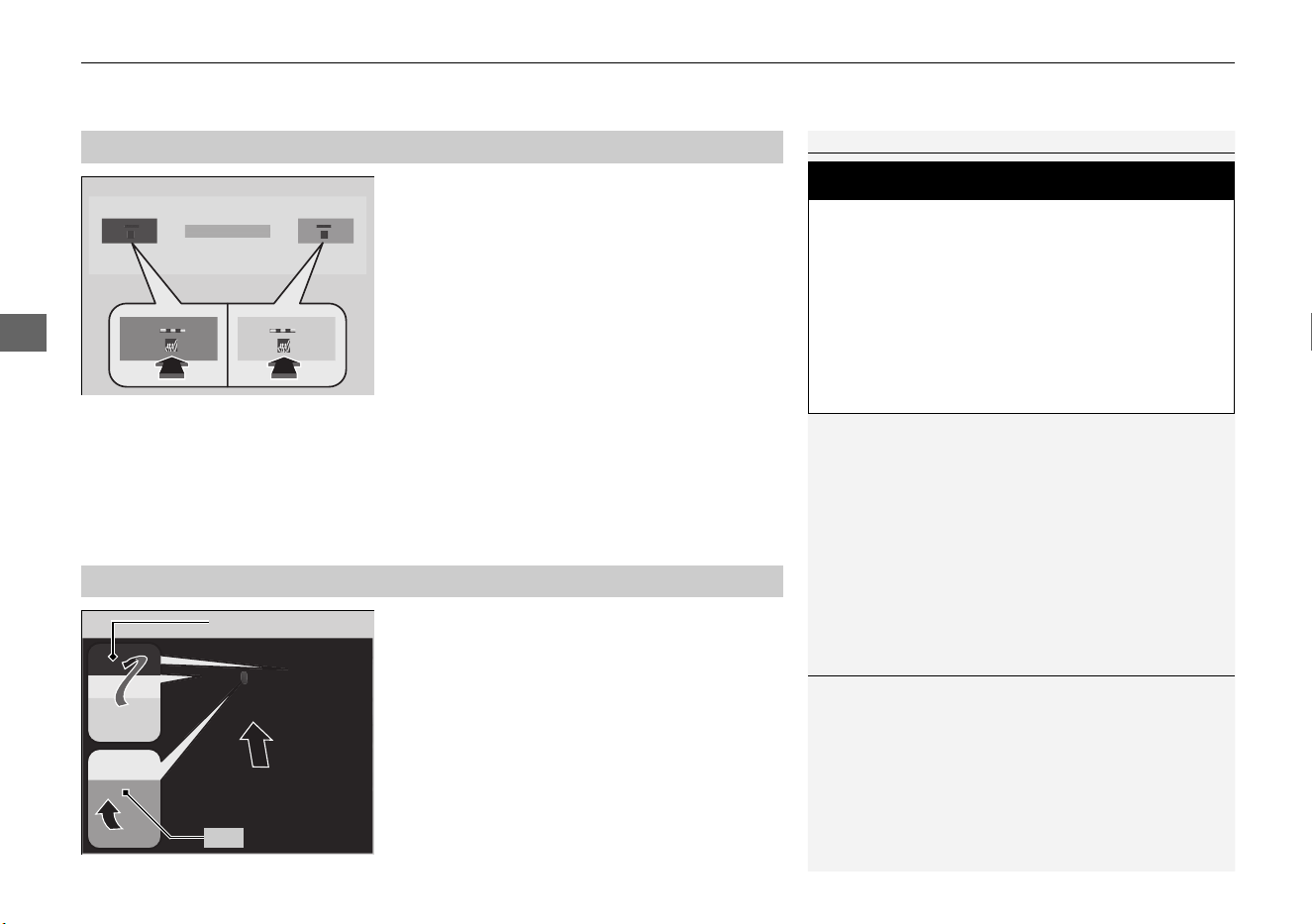
uuInterior Convenience ItemsuOther Interior Convenience Items
252
Controls
The seat heaters can be used when the power
mode is in ON.
Press the seat heater button:
Once - The HI setting (three indicators on)
Twice - The MID setting (two indicators on)
Three times - The LO setting (one indicator on)
Four times - The OFF setting (no indicators on)
Pull the tab and roll up the sunshade all the
way. Use the hooks to hang it.
■
Second Row Outer Seat Heaters
*
1Second Row Outer Seat Heaters
*
Do not use the seat heaters even in LO when the
engine is off. Under such conditions, the battery may
be weakened, making the engine difficult to start.
After a certain period of time, the strength setting for
the seat heaters will automatically be reduced by one
level at a time until the seat heater shuts off. The
elapsed time varies according to the interior
environment.
3
WARNING
Heat induced burns are possible when
using seat heaters.
Persons with a diminished ability to sense
temperature (e.g., persons with diabetes,
lowerlimb nerve damage, or paralysis) or
with sensitive skin should not use seat
heaters.
■
Integrated Sunshades
*
1Integrated Sunshades
*
Use the sunshades only when the windows are fully
closed. Using the shade while a window is open can
unhook and blow off the shade, hitting and possibly
hurting anyone sitting near the window.
Hook
Tab
* Not available on all models
26 PILOT-31T906300.book 252 ページ 2025年10月8日 水曜日 午前11時43分
Continued
253
uuInterior Convenience ItemsuOther Interior Convenience Items
Controls
The HomeLink® Universal Transceiver can be programmed to operate up to three
remote controlled devices around your home, such as garage doors, lighting, or
home security systems.
■
Important Safety Precautions
Refer to the safety information that came with your garage door opener to test that
the safety features are functioning properly. If you do not have the safety
information, contact the manufacturer.
Before programming HomeLink, make sure that people and objects are out of the
way of the garage or gate to prevent potential injury or damage.
When programming a garage door opener, park just outside the garage door’s path.
■
HomeLink® Universal Transceiver
*
1HomeLink® Universal Transceiver
*
Before programming HomeLink to operate a garage
door opener, confirm that the opener has an external
entrapment protection system, such as an “electronic
eye,” or other safety and reverse stop features. If it
does not, HomeLink may not be able to operate it.
NOTE:
Some LED lightbulbs installed in the garage door
opener can interfere with the training and consistent
operation of your HomeLink device. Please consider
use of Low RF interference bulbs in your garage door
opener.
HomeLink will not operate when the vehicle security
is set or about 30 minutes after the power mode is
set to VEHICLE OFF. If HomeLink indicator (LED) does
not show when a button is pressed, ensure doors are
unlocked or the power mode is set to ACCESSORY or
ON to return HomeLink to operation.
2 Setting the security system alarm P. 181
* Not available on all models
26 PILOT-31T906300.book 253 ページ 2025年10月8日 水曜日 午前11時43分
254
uuInterior Convenience ItemsuOther Interior Convenience Items
Controls
If it is necessary to erase a previously entered
learned code:
• Press and hold the I and III HomeLink
buttons for about 10 seconds, until the
green indicator blinks. Release the buttons,
and proceed to step 1.
• If you are training the second or third
button, go directly to step 1.
The instructions on the next page should work for most gate or garage openers, but
may not work for all. For detailed instructions about your specific remote opener,
visit http://www.homelink.com or call (800) 355-3515.
■
Training HomeLink
III HomeLink
Button
Indicator
I HomeLink
Button
26 PILOT-31T906300.book 254 ページ 2025年10月8日 水曜日 午前11時43分
255
uuInterior Convenience ItemsuOther Interior Convenience Items
Controls
■
Programming a Button
1Training HomeLink
Reprogramming a Button
If you want to retrain a programmed button for a
new device, you do not have to erase all button
memory. You can replace the existing memory code
using this procedure:
Erasing Button Memory
To erase programming from the buttons, press and hold
the two outside HomeLink buttons until the HomeLink
indicator changes from
orange to rapidly flashing green
.
This should take about 10 seconds. You should erase all
programming before selling the vehicle.
Operating
To operate, simply press and release the programmed
HomeLink button. Activation will now occur for the
trained device.
Questions
For questions or comments, visit
www.HomeLink.com or www.youtube.com/
HomeLinkGentex, or call the HomeLink Hotline
(North America only) at (800) 355-3515.
HomeLink® is a registered trademark of Gentex
Corporation.
2.
1.
Press and hold the desired HomeLink button until
the HomeLink indicator begins to slowly flash
orange. This should take about 20 seconds.
Release the HomeLink button and position the
remote transmitter you wish to link 1 - 3 inches
(3 - 8 cm) from the HomeLink button you want to
program, then follow steps 3 - 6 under
“programming a button.”
Training
Complete
HomeLink LED is
continuously on green.
YES
YES
1. Position the remote transmitter you wish to link 1 to 3 inches (3 - 8 cm) from the
HomeLink® button you want to program.
3b. Canadian Garage Door Opener
A. Press and release the HomeLink
button. Press, hold, and release the
button on the remote every 2 secs.
Does the HomeLink indicator (LED)
change from slowly flashing orange to
rapidly flashing or continuously on
green? The process should take less
than 60 seconds.
NO
2.
Press and release the desired HomeLink button. Is the HomeLink indicator (LED) slowly
flashing orange?
NO
3a. Hold the button on the remote
transmitter. Does HomeLink indicator
(LED) change from slowly flashing
orange to rapidly flashing green or
continuously on green? The process
should take less than 60 seconds.
5.
Press and hold the HomeLink button again.
HomeLink indicator rapidly flashes
green.
5a.
The remote has a rolling code. Press the
“learn” button on the remote-controlled
device (e.g., garage door opener).
6. Press and hold the HomeLink button
again.
The remote-controlled device should
operate.
Training Complete
5b.
Within 30 seconds, press and hold the
programmed HomeLink button for 2
secs.
4.
Press and hold the programmed HomeLink
button for about a second. Does the device
(garage door opener) work?
26 PILOT-31T906300.book 255 ページ 2025年10月8日 水曜日 午前11時43分
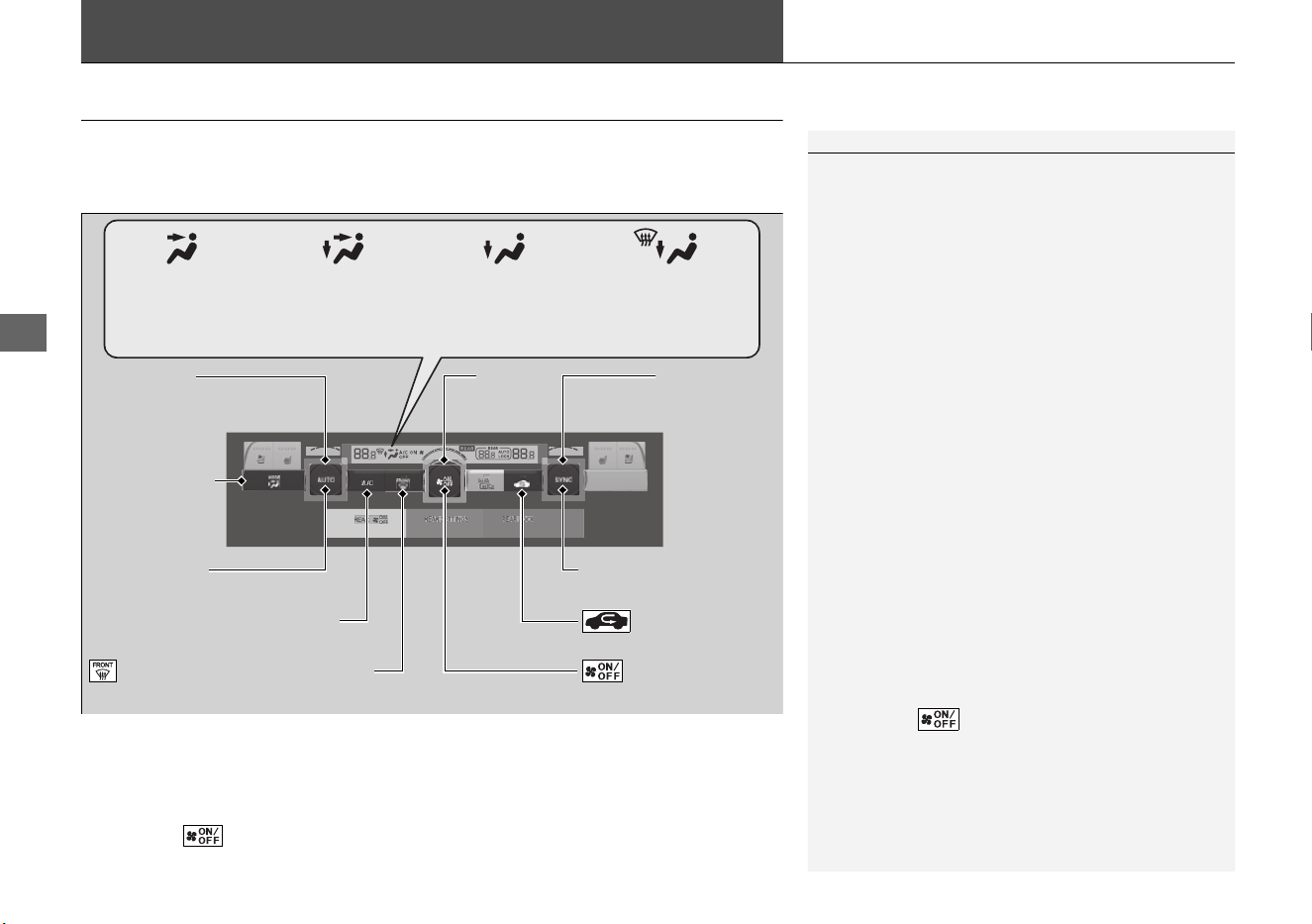
256
Controls
Climate Control System
Using Automatic Climate Control
The automatic climate control system maintains the interior temperature you select.
The system also selects the proper mix of heated or cooled air that raises or lowers
the interior temperature to your preference as quickly as possible.
Use the system when the engine is running.
1. Press the AUTO button.
2. Adjust the interior temperature using the driver’s side or passenger’s side
temperature control dial.
3. Press the (ON/OFF) button to cancel.
1Using Automatic Climate Control
If any buttons are pressed while using the climate
control system in auto, the function of the button
that was pressed will take priority.
The AUTO indicator will go off, but functions
unrelated to the button that was pressed will be
controlled automatically.
During idle-stops, air-conditioning is suspended, and
only the blower remains active.
If you do not want air-conditioning suspended, press
the Auto Idle Stop OFF button to cancel idle-stop.
To prevent cold air from blowing in from outside, the
fan may not start immediately when the AUTO
button is pressed.
If the interior is very warm, you can cool it down
more rapidly by partially opening the windows,
turning the system on auto, and setting the
temperature to low. Change the fresh air mode to
recirculation mode until the temperature cools down.
When you set the temperature to the lower or upper
limit, Lo or Hi is displayed.
Pressing the button switches the climate
control system between on and off. When turned on,
the system returns to your last selection.
Floor and
windshield
defroster
vents
Floor ventsDashboard and
floor vents’, and
back of the console
compartment
Dashboard
vents’ and back
of the console
compartment
Driver’s Side
Temperature
Control Dial
Passenger’s
Side
Temperature
Control Dial
A/C (Air Conditioning) Button
(ON/OFF) Button
Fan
Control
Dial
(Recirculation)
Button
(Windshield Defroster) Button
AUTO Button SYNC (Synchronization)
Button
MODE Control
Button
26 PILOT-31T906300.book 256 ページ 2025年10月8日 水曜日 午前11時43分
Continued
257
uuClimate Control SystemuUsing Automatic Climate Control
Controls
■
Switching between the recirculation and fresh air modes
Press the (recirculation) button and switch the mode depending on
environmental conditions.
Recirculation mode (indicator on): Recirculates air from the vehicle’s interior through
the system.
Fresh air mode (indicator off): Maintains outside ventilation.
1Using Automatic Climate Control
For directions on the proper handling of the front
seat heaters and seat ventilation
*
, refer to the
following page.
2 Front Seat Heaters and Ventilation
*
P. 251
* Not available on all models
26 PILOT-31T906300.book 257 ページ 2025年10月8日 水曜日 午前11時43分
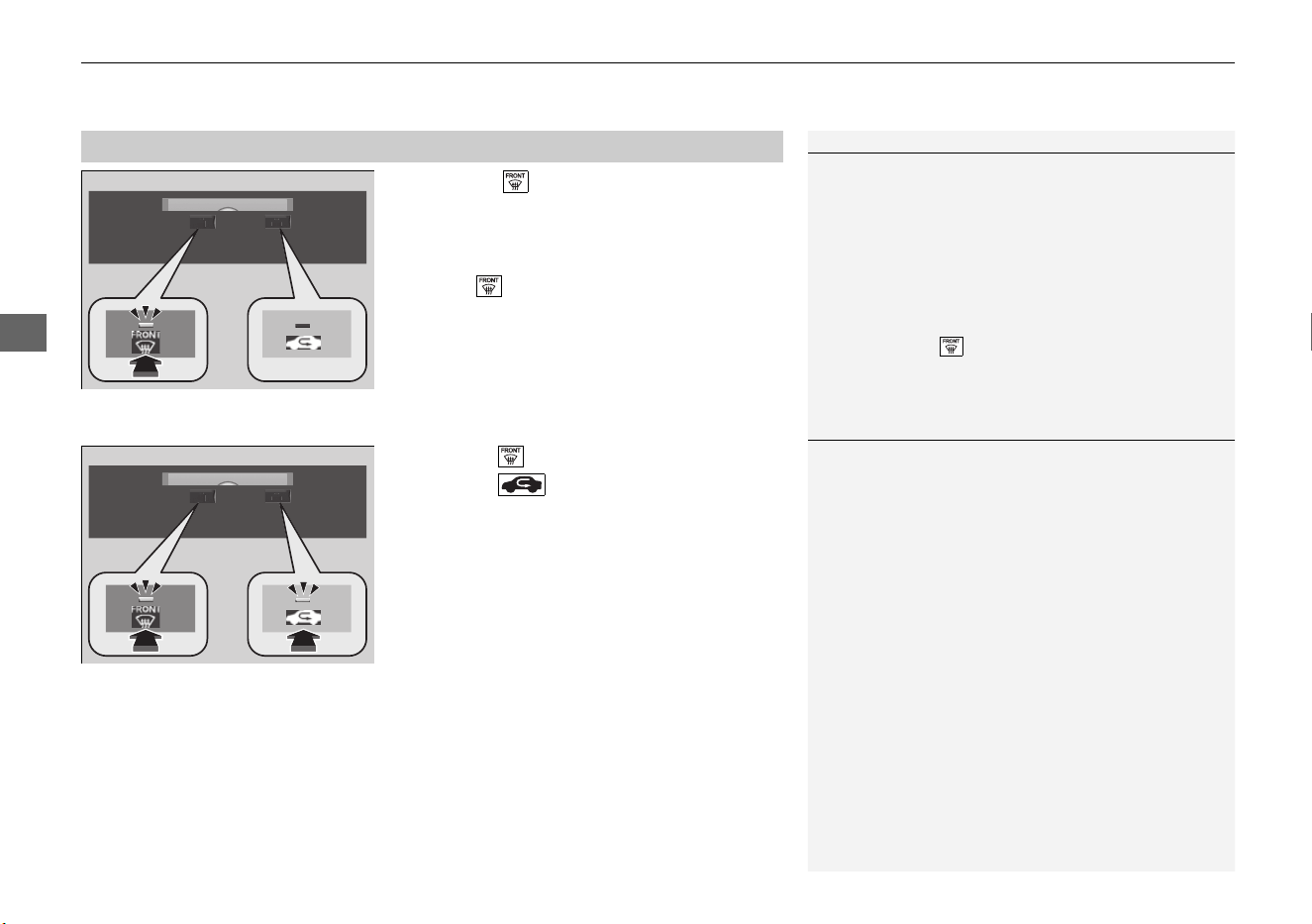
uuClimate Control SystemuUsing Automatic Climate Control
258
Controls
Pressing the button turns the air
conditioning system on and automatically
switches the system to fresh air mode.
Press the button again to turn off, the
system returns to the previous settings.
■
To rapidly defrost the windows
1. Press the button.
2. Press the button.
■
Defrosting the Windshield and Windows
1Defrosting the Windshield and Windows
For your safety, make sure you have a clear view
through all the windows before driving.
Do not set the temperature near the upper or lower
limit.
When cold air hits the windshield, the outside of the
windshield may fog up.
If you press the button during Auto Idle Stop, the
engine restarts automatically.
1To rapidly defrost the windows
After defrosting the windows, switch over to fresh air
mode.
If you keep the system in recirculation mode, the
windows may fog up from humidity. This impedes
visibility.
26 PILOT-31T906300.book 258 ページ 2025年10月8日 水曜日 午前11時43分
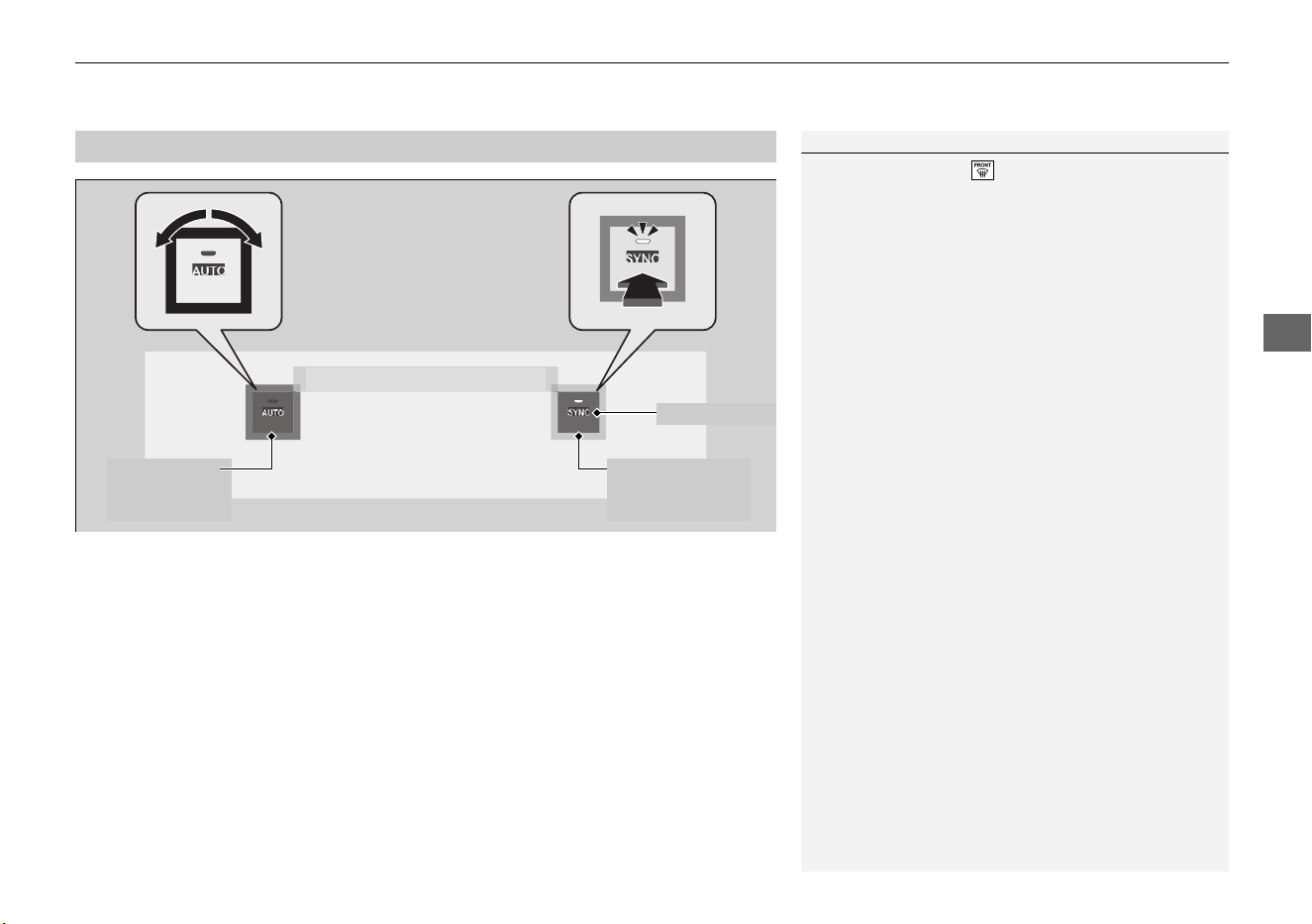
259
uuClimate Control SystemuUsing Automatic Climate Control
Controls
You can set the temperature synchronously for the driver’s side, passenger’s side
and rear in synchronization mode.
1. Press the SYNC button.
u The SYNC indicator will come on.
u The system switches to synchronization mode.
2. Adjust the temperature using the driver’s side temperature control dial.
Press the SYNC button, adjust the interior temperature using the passenger’s side
temperature control dial or changing the rear temperature to return to dual mode.
■
Synchronization Mode
1Synchronization Mode
When you press the button, the system changes
to synchronization mode.
When the system is in dual mode, the driver’s side
temperature, the passenger’s side temperature, and
the rear temperature can be set separately.
Driver’s Side
Temperature
Control Dial
Passenger’s Side
Temperature
Control Dial
SYNC Button
26 PILOT-31T906300.book 259 ページ 2025年10月8日 水曜日 午前11時43分
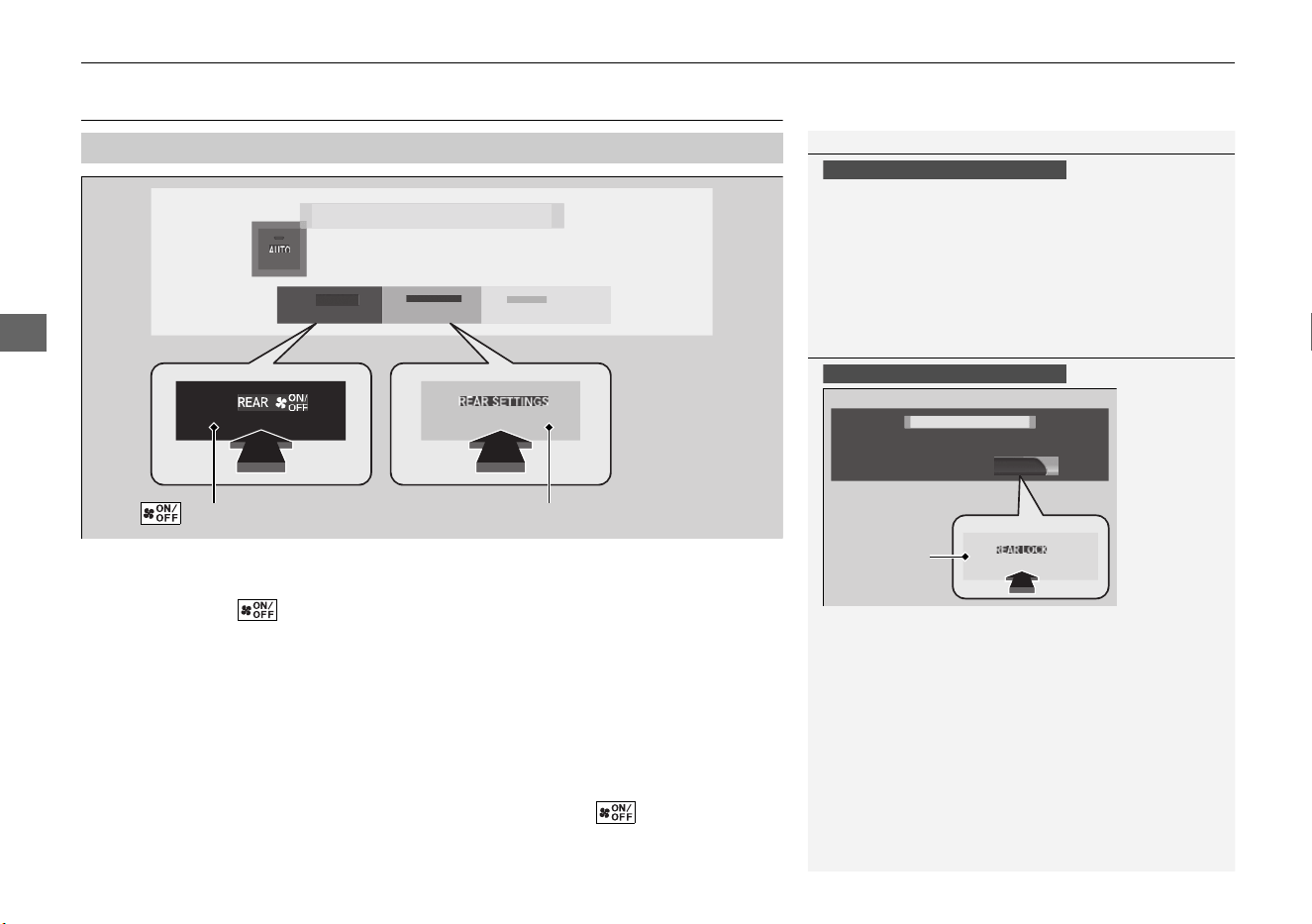
260
uuClimate Control SystemuRear Climate Control System
Controls
Rear Climate Control System
Use the system when the engine is running and the climate control system is
operating.
1. Press the REAR (ON/OFF) button.
2. Press the REAR SETTINGS button.
u The system switches to the rear control mode for 10 seconds. The REAR
indicator appears on the display.
3. Press the AUTO button.
u The rear system changes to AUTO mode.
u The system automatically adjusts the fan speed and airflow levels to maintain
the set rear temperature. Change the temperature if necessary.
4. To turn off the rear climate control system, press the REAR (ON/OFF) button.
■
Using the Rear Climate Control System From the Front Panel
1Rear Climate Control System
LOCK appears on the rear control panel while the
rear lock is on.
If the rear lock is on while in SYNC mode, the rear
control panel is disabled. SYNC LOCK appears on the
rear control panel.
Models with REAR LOCK button
1Using the Rear Climate Control System From the Front Panel
Press the REAR LOCK button to turn the rear lock
mode on and off.
While the rear lock mode is on, the rear control panel
is disabled.
uThe LOCK indicator will come on.
Models with REAR LOCK button
REAR LOCK
Button
REAR SETTINGS ButtonREAR (ON/OFF) Button
26 PILOT-31T906300.book 260 ページ 2025年10月8日 水曜日 午前11時43分
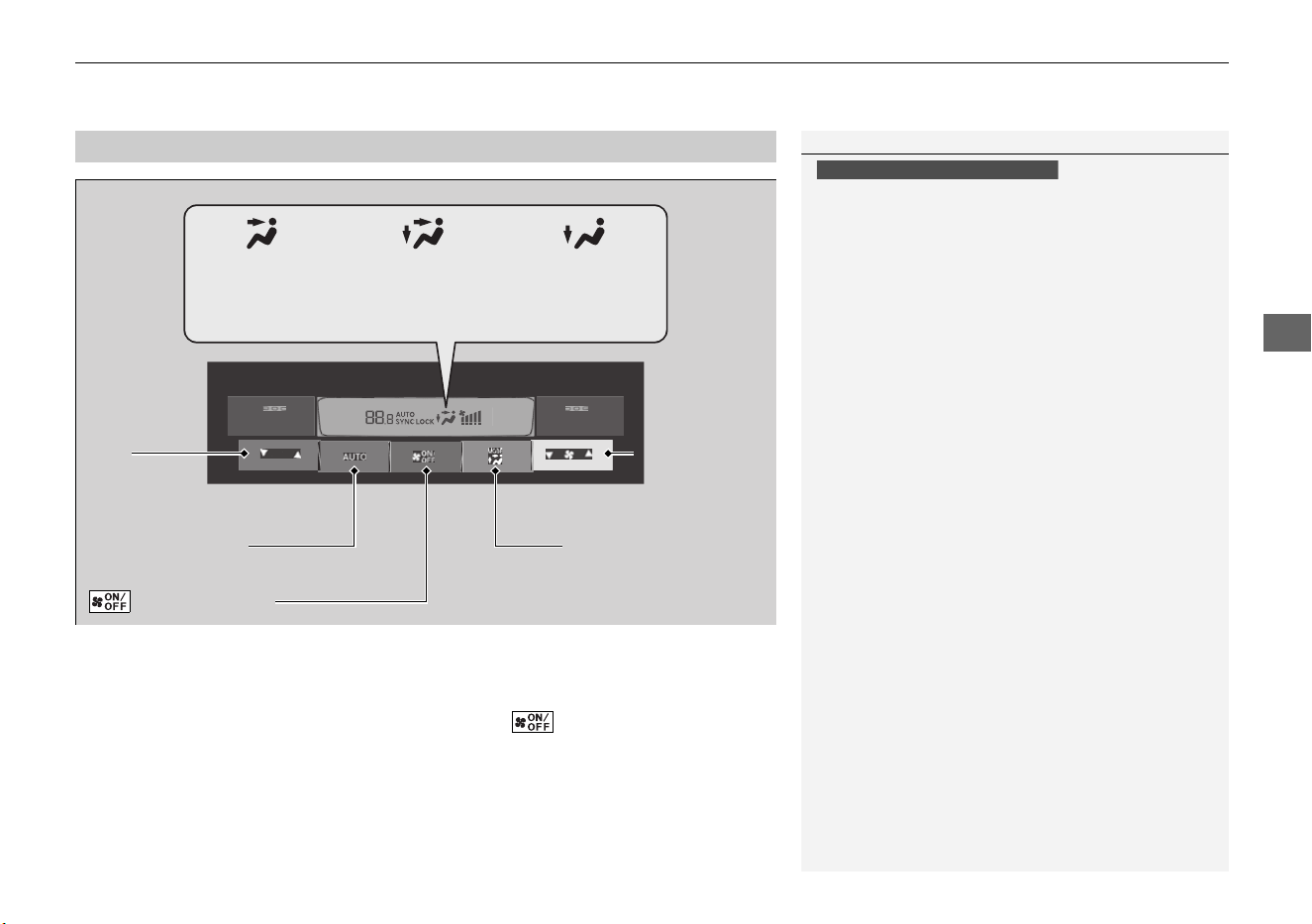
261
uuClimate Control SystemuRear Climate Control System
Controls
Use the system when the engine is running
1. Press the rear AUTO button.
2. Adjust the interior temperature using the rear temperature control button.
3. To turn off the rear climate control system, press (ON/OFF) button.
■
Using the Rear Climate Control System From the Rear Panel
1Using the Rear Climate Control System From the Rear Panel
When the rear lock mode is off, the temperature of
the rear passenger compartment can be controlled
independently.
Models with REAR LOCK button
Rear floor
vents
Back of console
and 3rd row vents’
Rear Fan
Control Buttons
(ON/OFF) Button
Rear
Temperature
Control Buttons
Rear AUTO Button
Back of console,
rear floor, and
3rd row vents’
MODE Control Button
26 PILOT-31T906300.book 261 ページ 2025年10月8日 水曜日 午前11時43分
262
uuClimate Control SystemuAutomatic Climate Control Sensors
Controls
Automatic Climate Control Sensors
The automatic climate control system is
equipped with sensors. Do not cover or spill
any liquid on them.
26 PILOT-31T906300.book 262 ページ 2025年10月8日 水曜日 午前11時43分

263
Features
This chapter describes how to operate technology features.
Audio System .................................... 264
About Your Audio System................ 264
USB Ports......................................... 265
Audio System Theft Protection ......... 267
Audio Remote Controls.................... 268
Audio System Basic Operation ........ 270
Start Up ........................................... 271
Reboot Audio .................................. 273
Audio/Information Screen ................ 274
System Updates ............................... 282
Adjusting the Sound ........................ 284
Display Setup ................................... 285
Alexa Built-In ................................... 286
Playing AM/FM Radio....................... 287
Music Playback via Wired Connection ... 291
Music Playback via USB Flash Drive... 294
Playing Bluetooth® Audio................. 297
HondaLink® ..................................... 300
HondaLink® Service.......................... 303
Wi-Fi Connection............................. 306
AT&T Hotspot .................................. 308
Apple CarPlay .................................. 309
Android Auto
TM
................................ 313
Google built-in................................. 317
User Information.............................. 319
Profile Settings................................. 323
Audio Error Messages ...................... 324
General Information on the Audio
System ............................................. 325
Customized Features........................ 346
Bluetooth® HandsFreeLink®............. 369
CabinTalk® ........................................ 385
26 PILOT-31T906300.book 263 ページ 2025年10月8日 水曜日 午前11時43分
264
Features
Audio System
About Your Audio System
The audio system features AM/FM radio service. It can also play USB flash drives,
iPod, iPhone, smartphones, and Bluetooth® devices.
You can operate the audio system from the knob on the panel, the remote controls
on the steering wheel, or the icons on the touchscreen interface.
1About Your Audio System
State or local laws may prohibit the operation of
handheld electronic devices while operating a
vehicle.
Remote Controls
Device
USB Flash Drive
26 PILOT-31T906300.book 264 ページ 2025年10月8日 水曜日 午前11時43分
265
uuAudio SystemuUSB Ports
Continued
Features
USB Ports
■
USB charging/connector port ( )
The USB port is for charging devices, playing
audio files, and connecting compatible
phones with Apple CarPlay or Android Auto.
u To prevent any potential issues, be sure
to use an Apple MFi Certified Lightning
Connector for Apple CarPlay. USB cables
should be certified by USB-IF to be
compliant with USB 2.0 Standard.
■
USB charging port on the front panel
and the back of the console
compartment ( )
The USB port is only for charging devices.
u You cannot play music even if you have
connected music players to it.
1USB Ports
• Do not leave any devices or USB flash drives in the
vehicle. Direct sunlight and high temperatures may
damage it.
• We recommend that you use a USB cable if you are
attaching a USB flash drive to the USB port.
• Do not connect any devices or USB flash drives
using a hub.
• Do not use a device such as a card reader or hard disk
drive, as the device or your files may be damaged.
• We recommend backing up your data before using
the device in your vehicle.
• Displayed messages may vary depending on the
device model and software version.
• Some devices may not work even if they are
connected to the USB ports.
Supplementary information about USB Charging:
• The USB ports on the front panel and the back of the
console compartment support USB Power Delivery.
• USB standard output
When using 1 port: 5V/3A(15W), 9V/3A(27W),
15V/3A(45W), 20V/3A(60W)
When using both ports: 5V/3A(15W), 9V/3A(27W),
20V/2.25A(45W), Max 60W in total
For amperage details, read the operating manual of
the device that needs to be charged.
• The USB port also supports PPS (Programmable
Power Supply). PPS 5.0V-21V (Max 60W).
• Charging may not start or may operate slowly
depending on the connected devices and cables. Using
only one port while not connecting anything (including
cables) to the other port may solve the issue.
On the front panel
On the back of the console
compartment
26 PILOT-31T906300.book 265 ページ 2025年10月8日 水曜日 午前11時43分
266
uuAudio SystemuUSB Ports
Features
■
USB charging port on both sides of the
third row seats ( )
*
The USB port (3.0A) is only for charging
devices.
u The USB port can supply up to 3.0A of
power. It does not output 3.0A unless
requested by the device.
u You cannot play music even if you have
connected music players to it.
On both sides of the third row seats
*
* Not available on all models
26 PILOT-31T906300.book 266 ページ 2025年10月8日 水曜日 午前11時43分

267
uuAudio SystemuAudio System Theft Protection
Features
Audio System Theft Protection
The audio system is disabled when it is disconnected from the power source, such as
when the battery is disconnected or goes dead. In certain conditions, the system
may display a code entry screen. If this occurs, reactivate the audio system.
■
Reactivating the audio system
1. Set the power mode to ON.
2. Turn on the audio system.
3. Press and hold the audio system power knob for more than two seconds.
u The audio system is reactivated when the audio control unit establishes a
connection with the vehicle control unit. If the control unit fails to recognize
the audio unit, you must go to a dealer and have the audio unit checked.
26 PILOT-31T906300.book 267 ページ 2025年10月8日 水曜日 午前11時43分
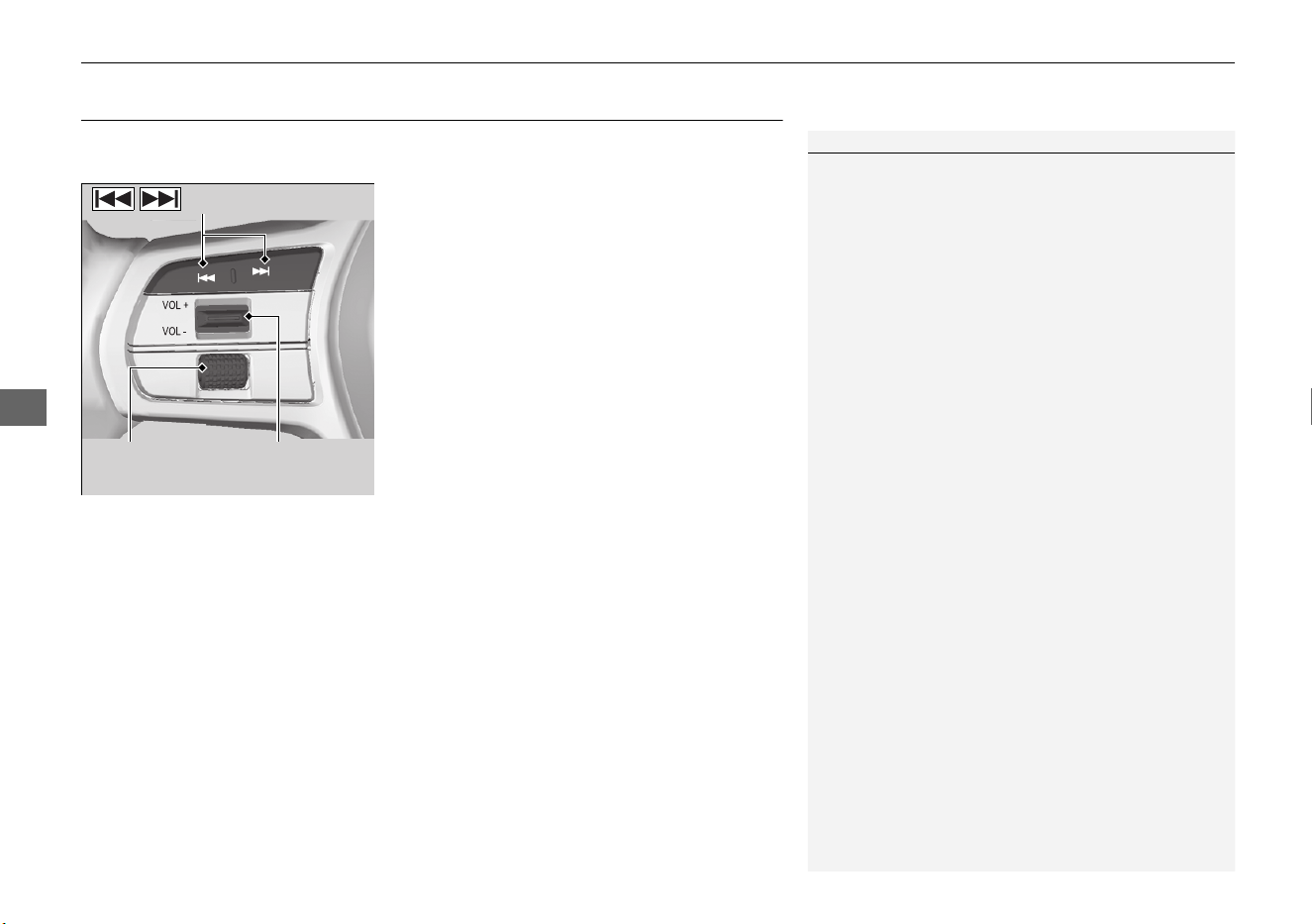
268
uuAudio SystemuAudio Remote Controls
Features
Audio Remote Controls
Allow you to operate the audio system while driving. The information is shown on
the driver information interface.
VOL
(+/VOL(- (Volume) Switch
Press Up: To increase the volume.
Press Down: To decrease the volume.
1Audio Remote Controls
Some modes appear only when an appropriate
device or medium is used.
Depending on the Bluetooth® device you connect,
some functions may not be available.
VOL(+/VOL(-
(Volume) Switch
Left Selector
Wheel
/ (Seek/Skip) Buttons
26 PILOT-31T906300.book 268 ページ 2025年10月8日 水曜日 午前11時43分
269
uuAudio SystemuAudio Remote Controls
Features
/ (Seek/Skip) Buttons
• When listening to the radio
Press : To select the next preset radio station.
Press : To select the previous preset radio station.
Press and hold : To select the next strong station.
Press and hold : To select the previous strong station.
• When listening to a wired connection, USB flash drive, or Bluetooth® Audio, or
Smartphone Connection
u Depending on a connected device, operations may be changed.
Press : To skip to the next song.
Press : To go back to the beginning of the current or previous song.
• When listening to a USB flash drive
Press and hold : To skip to the next folder.
Press and hold : To go back to the previous folder.
Left Selector Wheel
Roll up or down:
To cycle through the audio modes, roll up or down and then press the left selector
wheel.
26 PILOT-31T906300.book 269 ページ 2025年10月8日 水曜日 午前11時43分
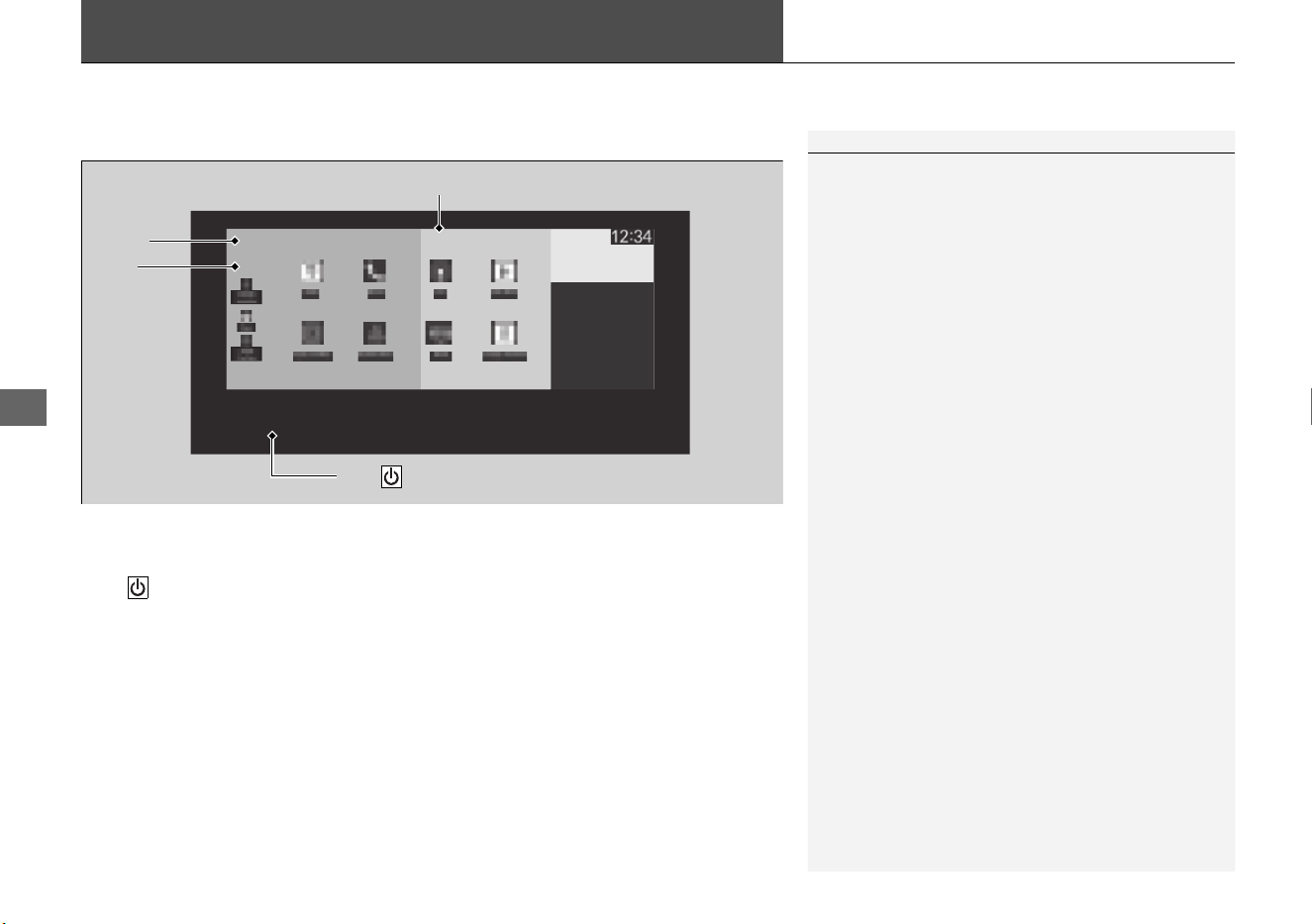
270
Features
Audio System Basic Operation
To use the audio system function, the power mode must be in ACCESSORY or ON.
Home: Select to go to the home screen.
Back: Select to go back to the previous screen.
VOL/ AUDIO (Volume/Power) Knob: Press to turn the audio system on and
off. Turn to adjust the volume.
1Audio System Basic Operation
You can check all apps installed on this system by
selecting All Apps.
Certain manual functions are disabled or inoperable
while the vehicle is in motion.
You cannot select a grayed-out option until the
vehicle is stopped.
Audio/Information Screen
VOL/ AUDIO (Volu
me/Power) Knob
Home
Back
26 PILOT-31T906300.book 270 ページ 2025年10月8日 水曜日 午前11時43分
271
uuAudio System Basic OperationuStart Up
Continued
Features
Start Up
The 12.3" Color Touchscreen starts automatically when you set the power mode to
ACCESSORY or ON. At start-up, the disclaimer screen will be displayed. When
adding a new user, entry of user information is required at start-up.
Select OK on the disclaimer screen.
u If you want to change the settings for data upload, select Data Sharing with
Honda, then select the Enable/Disable settings on the Data Sharing with
Honda screen.
u If you do not select OK, the system will automatically be switched to the home
screen, or the top screen of the last executed application, after a certain period
of time.
u If there is no registered device, select OK and the Bluetooth® pairing screen will
be displayed.
u If you check the box with Do not show this again, this screen will not be
displayed.
1Start Up
Data Sharing with Honda
Enable: Data communication available.
Disable: Data communication unavailable.
26 PILOT-31T906300.book 271 ページ 2025年10月8日 水曜日 午前11時43分
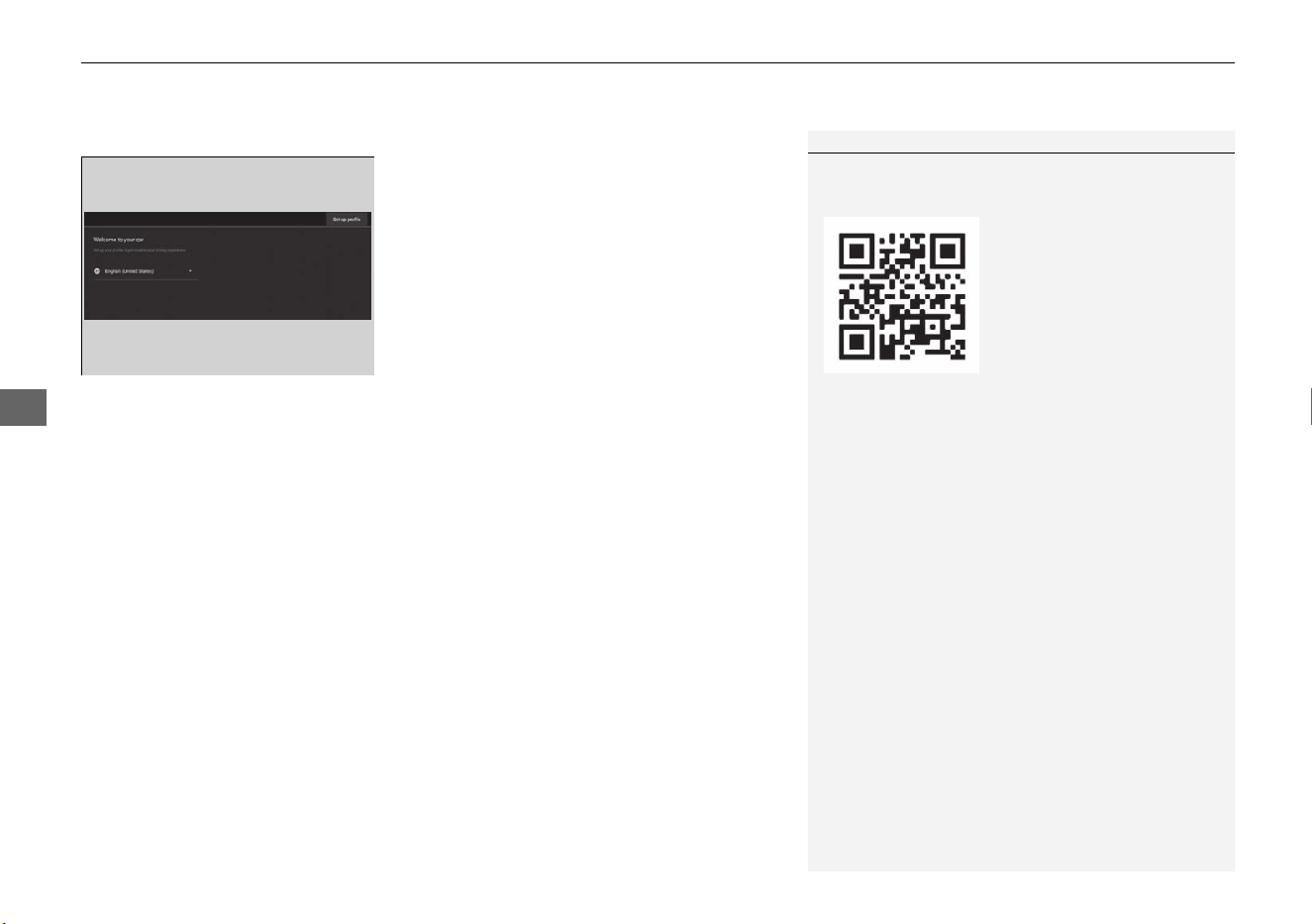
uuAudio System Basic OperationuStart Up
272
Features
■
Registering new user information
1. Read the disclaimer screen and select OK.
2. Select Set up profile.
u If you want to change the language,
select English (United States).
3. Name your profile and select Next.
4. You can view the terms and conditions of
the Google Services agreement.
5. On the System-wide permission Settings
screen, select the data you give permission
for the system to access, and select Accept.
6. Select Done for now.
u By selecting Profile lock, you can set
security settings for your profile.
u By selecting Set up Google Assistant
and apps, you can customize settings
related to Google.
An internet connection is required to
change settings.
2 Wi-Fi Connection P. 306
1Registering new user information
Refer to the Google website for more information on
setting up a profile.
Additional information for Google Apps and Services
is available at mygarage.honda.com (U.S.) or
honda.ca (English) / www.honda.ca/fr (French)
(Canada).
Specifications may be changed via system updates,
etc.
26 PILOT-31T906300.book 272 ページ 2025年10月8日 水曜日 午前11時43分

273
uuAudio System Basic OperationuReboot Audio
Features
Reboot Audio
You can reboot the audio system.
1. Select and hold Home until the reboot dialog screen appears.
2. Select Reboot.
u If Safe Mode is selected, the audio system will be rebooted with third-party
applications turned off.
After the power mode has been turned off once, third-party applications can
be used again.
26 PILOT-31T906300.book 273 ページ 2025年10月8日 水曜日 午前11時43分
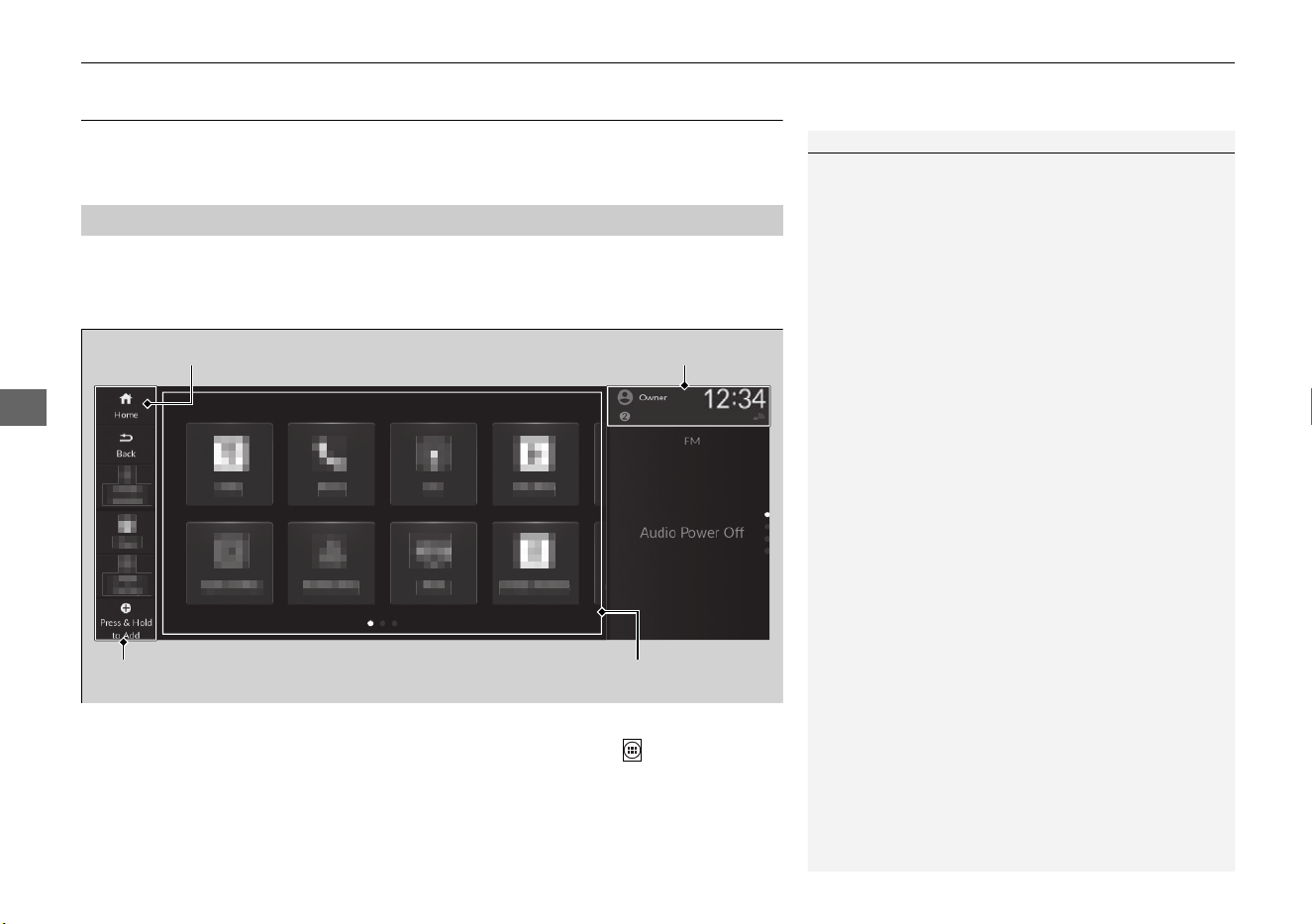
274
uuAudio System Basic OperationuAudio/Information Screen
Features
Audio/Information Screen
Displays the audio status and wallpaper. From this display, you can go to various
setup options.
The A-Zone is main operation area in the 12.3" Color Touchscreen.
■
Switching the display
Select Home to go to the home screen.
Select the following icons on the home screen or after selecting All Apps.
■
A-Zone
1Audio/Information Screen
Touchscreen Operation
• Use simple gestures - including touching, swiping,
and scrolling - to operate certain audio functions.
• Some items may be grayed-out during driving to
reduce the potential for distraction.
• You can select them when the vehicle is stopped or
use voice commands.
• Wearing gloves may limit or prevent touchscreen
response.
You can change the touchscreen sensitivity setting.
2 Customized Features P. 346
Mode Change Switch Bar
You can also select any application from the Mode
Change Switch bar. Shortcuts can be edited to open
other applications; but Home, Back, and Google
Assistant
*1
or Alexa
*1
cannot be edited.
*1: These buttons also cannot be moved.
2 To shortcut icons on the home screen
P. 281
Home
Mode Change Switch Bar
A-Zone
Status Bar
26 PILOT-31T906300.book 274 ページ 2025年10月8日 水曜日 午前11時43分
Continued
275
uuAudio System Basic OperationuAudio/Information Screen
Features
■
Trip Computer
Displays the trip computer information.
• Current Drive tab: Displays the current trip information.
• Trip A/Trip B tab: Displays information for the current and three previous drives.
The information is stored every time you reset Trip A/B.
To reset the Trip A/B, select Menu, then select Delete Trip History.
To change the setting of how to reset Trip A/B, select Menu, then select “Trip A”
Reset Timing or “Trip B” Reset Timing.
■
Compass
Displays the compass screen.
1Audio/Information Screen
• Clock
2 Customized Features P. 346
2 Clock P. 150
• System Updates
2 System Updates P. 282
• FM/AM/USB/Bluetooth® Audio
2 Playing AM/FM Radio P. 287
2 Music Playback via Wired Connection
P. 291
2 Music Playback via USB Flash Drive
P. 294
2 Playing Bluetooth® Audio P. 297
• Profile Settings
2 User Information P. 319
• Vehicle Settings
2 Customized Features P. 346
• General Settings
2 Customized Features P. 346
• Google Assistant/Google Maps/Google Play
2 Google built-in P. 317
• HondaLink
2 HondaLink® P. 300
• Apple CarPlay/Android Auto
2 Apple CarPlay P. 309
2 Android Auto
TM
P. 313
• Wi-Fi Hotspot
2 AT&T Hotspot P. 308
• Alexa
2 Alexa Built-In P. 286
26 PILOT-31T906300.book 275 ページ 2025年10月8日 水曜日 午前11時43分
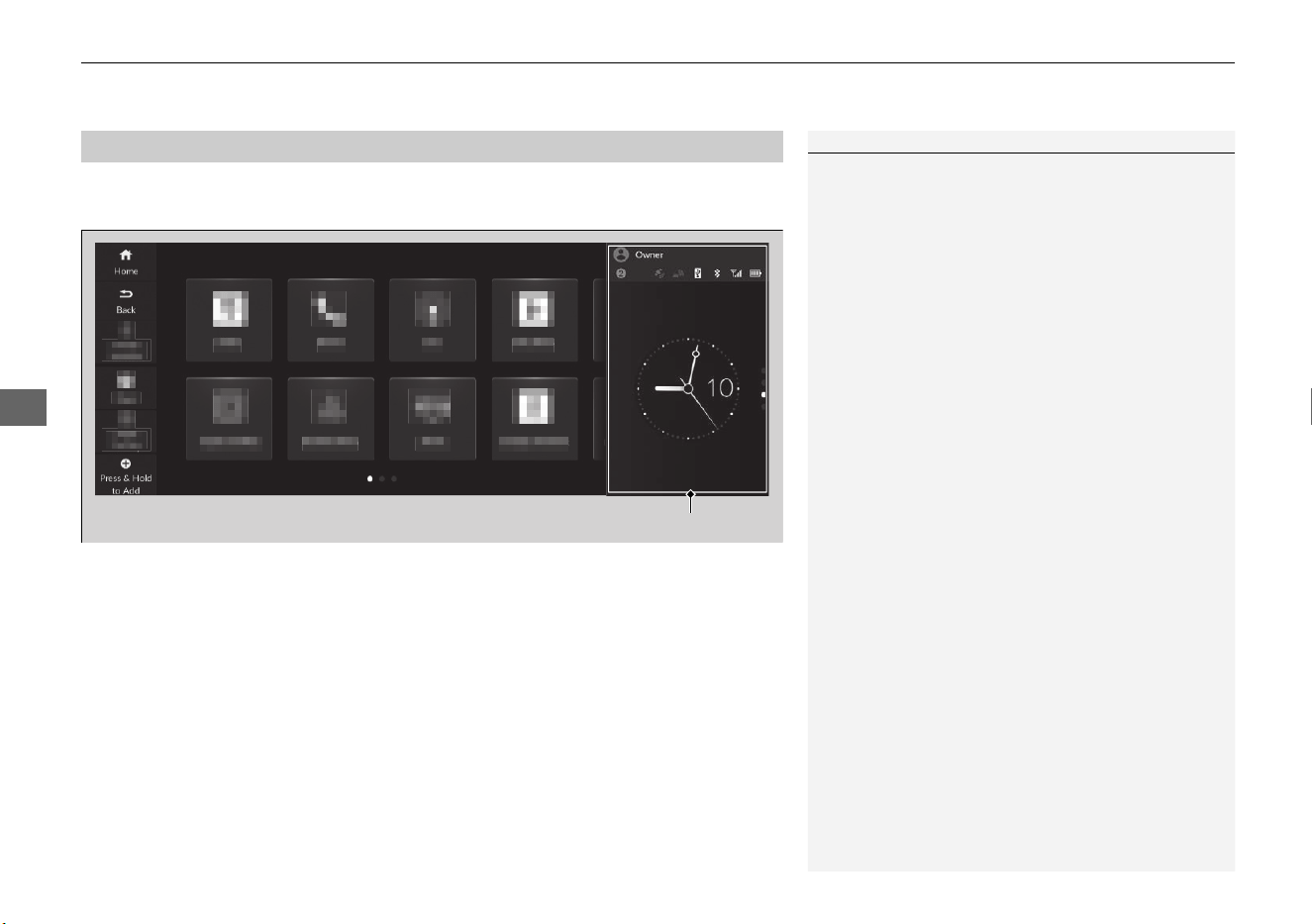
uuAudio System Basic OperationuAudio/Information Screen
276
Features
The B-Zone displays a card that is useful while the driver is using another application
in the A-Zone.
The following cards are available:
• Audio source
• Clock
• Navigation (Apple CarPlay or Android Auto)
• Compass
• Trip Computer
• Suggestions from Google Assistant
■
B-Zone
1B-Zone
You can swipe up and down on the B-Zone to view a
different card.
Page position is indicated at the right of the B-Zone.
B-Zone
26 PILOT-31T906300.book 276 ページ 2025年10月8日 水曜日 午前11時43分
Continued
277
uuAudio System Basic OperationuAudio/Information Screen
Features
You can change, store, and delete the wallpaper on the audio/information screen.
■
Import wallpaper
1. Connect the USB flash drive to the USB port.
2 USB Ports P. 265
2. Select Clock.
3. Select Menu.
4. Select Clock Faces.
5. Select Add More.
6. Import a desired picture.
u Multiple pictures can be imported at the same time.
7. Select Select Files.
8. Select Add Files.
u The display will return to the Clock Faces screen.
■
Wallpaper Setup
1Wallpaper Setup
The wallpaper you set up on Clock Faces cannot be
displayed on the driver information interface.
• When importing wallpaper files, the image must be
in the USB flash drive’s root directory. Images in a
folder cannot be imported.
• The file name must be fewer than 64 bytes.
• The file format of the image that can be imported
is BMP (bmp) or JPEG (jpg).
• Up to 11 pictures can be imported.
• The maximum image size is 4,096 × 2,304 pixels. If
the image size is less, the image is displayed in the
middle of the screen with the extra area appearing
in black.
26 PILOT-31T906300.book 277 ページ 2025年10月8日 水曜日 午前11時43分
uuAudio System Basic OperationuAudio/Information Screen
278
Features
■
Select wallpaper
1. Select Clock.
2. Select Menu.
3. Select Clock Faces.
4. Select a desired wallpaper.
5. Select Save.
u The display will return to the Clock Faces screen.
■
Delete wallpaper
1. Select Clock.
2. Select Menu.
3. Select Clock Faces.
4. Select Delete Files.
5. Select Select Files to Delete.
u When you want to delete everything wallpaper. Select Delete All Files.
6. Select a desired wallpaper.
7. Select Select Files.
8. Select Delete Files.
u The display will return to the Clock Faces screen.
1Wallpaper Setup
You cannot delete the initially imported wallpapers.
26 PILOT-31T906300.book 278 ページ 2025年10月8日 水曜日 午前11時43分
Continued
279
uuAudio System Basic OperationuAudio/Information Screen
Features
■
To move to the next screen
Swiping the screen left or right changes to the next screen.
■
Home Screen
1Home Screen
The home screen can contain up to six pages.
Select Home to go directly back to the first page of
the home screen from any page.
Current page position
Swipe
26 PILOT-31T906300.book 279 ページ 2025年10月8日 水曜日 午前11時43分
uuAudio System Basic OperationuAudio/Information Screen
280
Features
■
To add/remove app icons on the home screen
App icons can be added or deleted on the home screen.
1. Select Home.
2. Select All Apps.
3. Select an app to check or uncheck it.
■
To move/remove icons on the home screen
You can change icon locations on the home screen.
1. Select and hold an icon.
u The screen switches to the customization
screen.
2. Drag and drop the icon to where you want
it to be.
u Drag and drop the icon to Hide to
remove from the home screen.
3. Select Home or Back.
u The screen will return to the home
screen.
1To add/remove app icons on the home screen
Apps will not be deleted by deleting the icon on the
home screen.
Hide
1To move/remove icons on the home screen
Apps will not be deleted by deleting the icon on the
home screen.
Select Tips to show tips. To hide them, select it again.
26 PILOT-31T906300.book 280 ページ 2025年10月8日 水曜日 午前11時43分
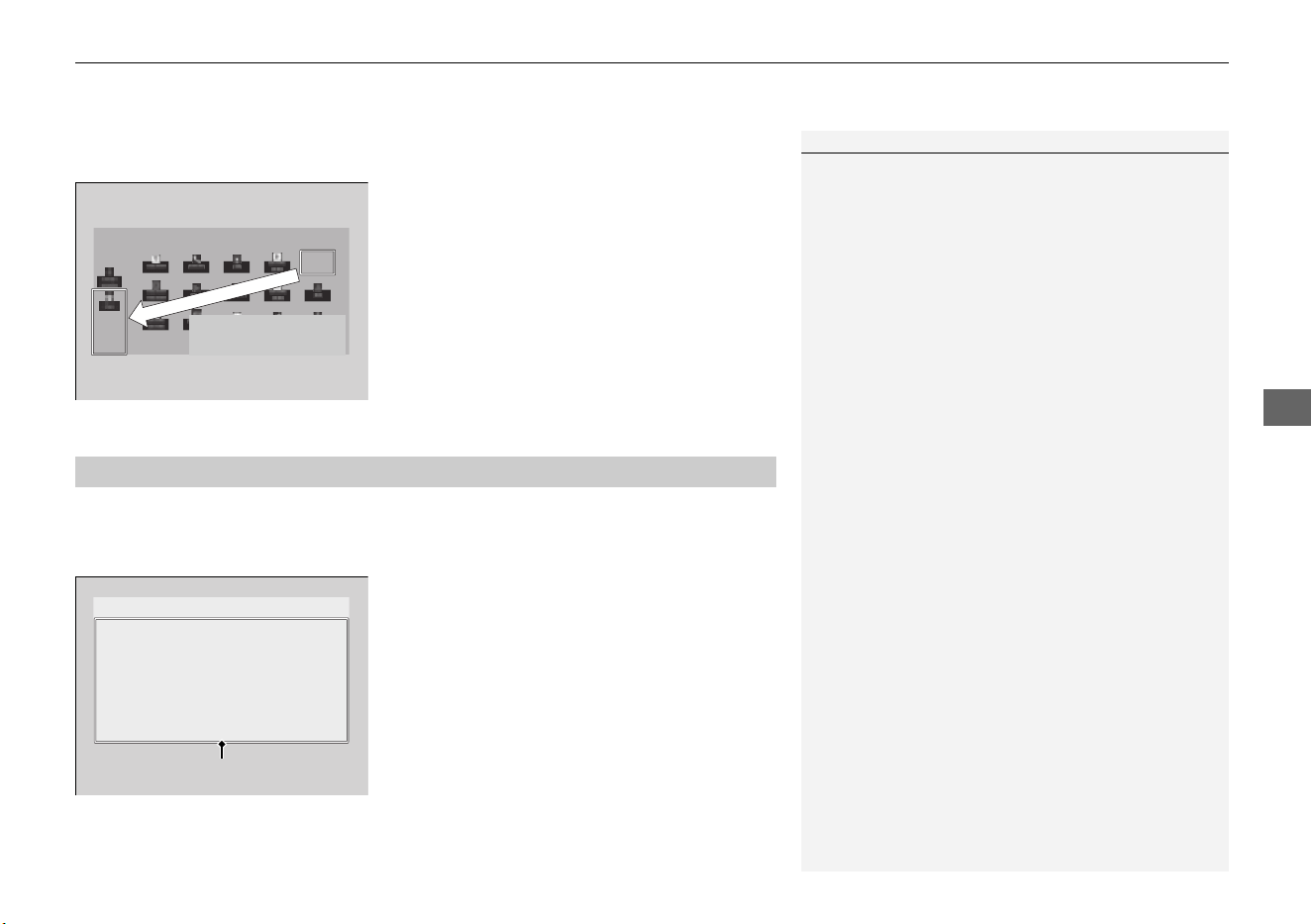
281
uuAudio System Basic OperationuAudio/Information Screen
Features
■
To shortcut icons on the home screen
You can store up to three icons on the mode change switch bar.
1. Select and hold an icon.
u The screen switches to the customization
screen.
2. Select Edit Shortcuts.
3. Drag and drop the icon you want to store to
the left of the home screen.
u The icon is stored as a shortcut.
4. Select Home or Back.
u The screen will return to the home
screen.
Shows the indicators of the information for the vehicle, connected phones, etc. in
the header area. You can confirm the detail information shown in the status area by
selecting the status bar.
1To shortcut icons on the home screen
Select Tips to show tips. To hide them, select it again.
You can also to shortcut icons on the home screen
the following procedure.
1. Select and hold an icon.
2. Select Edit Shortcuts.
3. Select an icon.
4. Select shortcut location.
5. Select Home or Back.
Drag and drop to
preset icon.
■
Status Bar
Status Area
26 PILOT-31T906300.book 281 ページ 2025年10月8日 水曜日 午前11時43分
282
uuAudio System Basic OperationuSystem Updates
Features
System Updates
System Updates uses the telematics control unit (TCU) or Wi-Fi communication
capability to operate.
When an update for your system becomes available, a screen prompting you to
update your system will be displayed on the audio/information screen.
■
Performing System Updates
1. Select Agree to Update to give permission for the update.
2. When the power mode is turned to OFF, the permission screen is displayed.
Once a system update is started, the vehicle will become unable to move.
u When you select Proceed Now, the system update begins immediately.
u If you select Set Update Time, you can set a time for the update to be
performed.
u If you select Remind me Later, you can delay the system update. The
permission screen will be displayed again the next time the power mode is
turned to OFF.
■
Performing/Scheduling System Updates
1System Updates
NOTICE
When a system update is started, the vehicle will be
unable to move.
If new software has been released, perform an
update as soon as possible.
If a system update fails, please consult a dealer.
System updates that change specifications may result
in some discrepancies with the information in this
owner’s manual. For the most up-to-date
information, please refer to the Honda website.
1Performing/Scheduling System Updates
NOTICE
For important updates, Remind me Later will stop
displaying after it has been selected a certain number
of times.
Make sure your vehicle is stopped in a safe location
before starting a system update.
26 PILOT-31T906300.book 282 ページ 2025年10月8日 水曜日 午前11時43分
283
uuAudio System Basic OperationuSystem Updates
Features
3. The next time the power mode is turned to ON, the system update results screen
will be displayed.
You can change or confirm system update settings.
1. Select Home.
2. Select System Updates.
3. Select Settings.
4. Select the option you want to change or confirm.
The following settings can be set.
• Automatic Update
*
• Automatic Download
• Control Unit Versions
• Connection Setup
2 Wi-Fi Connection P. 306
• Update History
■
System Updates Settings
1Performing/Scheduling System Updates
If you have pressed Agree to Update on the
agreement screen when an update is being offered,
or Automatic Update
*
is set to ON, and the
permission screen is not displayed even though the
power mode is set to OFF, it may be due to one or
more of the conditions listed below. For more
information, consult a dealer.
• The hood is open.
• The shift position is not in (P.
• The vehicle is providing one or more emergency
notifications.
• The battery is depleted.
If the system is being updated via Wi-Fi, you will not
be able to use this feature in some situations based
on Wi-Fi authentication methods.
For example:
• The connection requires you to log in.
• Agreement to terms of use is required.
If you are disconnected from the network, the
download will be stopped.
Download is resumed when a new network
connection is established.
1System Updates Settings
To perform a system update via Wi-Fi, change
settings for connecting to Wi-Fi.
2 Wi-Fi Connection P. 306
* Not available on all models
26 PILOT-31T906300.book 283 ページ 2025年10月8日 水曜日 午前11時43分
284
uuAudio System Basic OperationuAdjusting the Sound
Features
Adjusting the Sound
1. Select Home.
2. Select an audio source icon.
3. Select Menu.
4. Select Sound Settings.
5. Select the setting you want.
3. Select Sound.
4. Select the setting you want.
Select an item from the following choices:
• Speed Volume Compensation
*2
: Sets the amount of volume increase.
• Bass / Mid / Treble: Bass, Midrange, Treble
• Balance / Fader
*2
: Balance, Fader
• Audio Zones & Balance / Fader
*1
: Driver Only, Front Only, Rear Only, Full
Vehicle, Balance, Fader
• Bose Centerpoint
*1
: Bose Centerpoint
• Bose Dynamic Speed Compensation
*1
: Sets the amount of volume increase.
*1: Model with BOSE AMP
*2: Model with Normal AMP
1Adjusting the Sound
The Speed Volume Compensation
*2
and Bose
Dynamic Speed Compensation
*1
adjusts the
volume level based on the vehicle speed. As you go
faster, audio volume increases. As you slow down,
audio volume decreases.
You can also adjust the sound the following
procedure.
1. Select Home.
2. Select General Settings.
3. Select Sound.
To reset each setting for Bass / Mid / Treble,
Balance / Fader
*2
, Audio Zones & Balance /
Fader
*1
and Speed Volume Compensation
*2
select
Reset to Default in each setting item.
AM/FM Radio mode
USB Audio, Bluetooth Audio mode
26 PILOT-31T906300.book 284 ページ 2025年10月8日 水曜日 午前11時43分
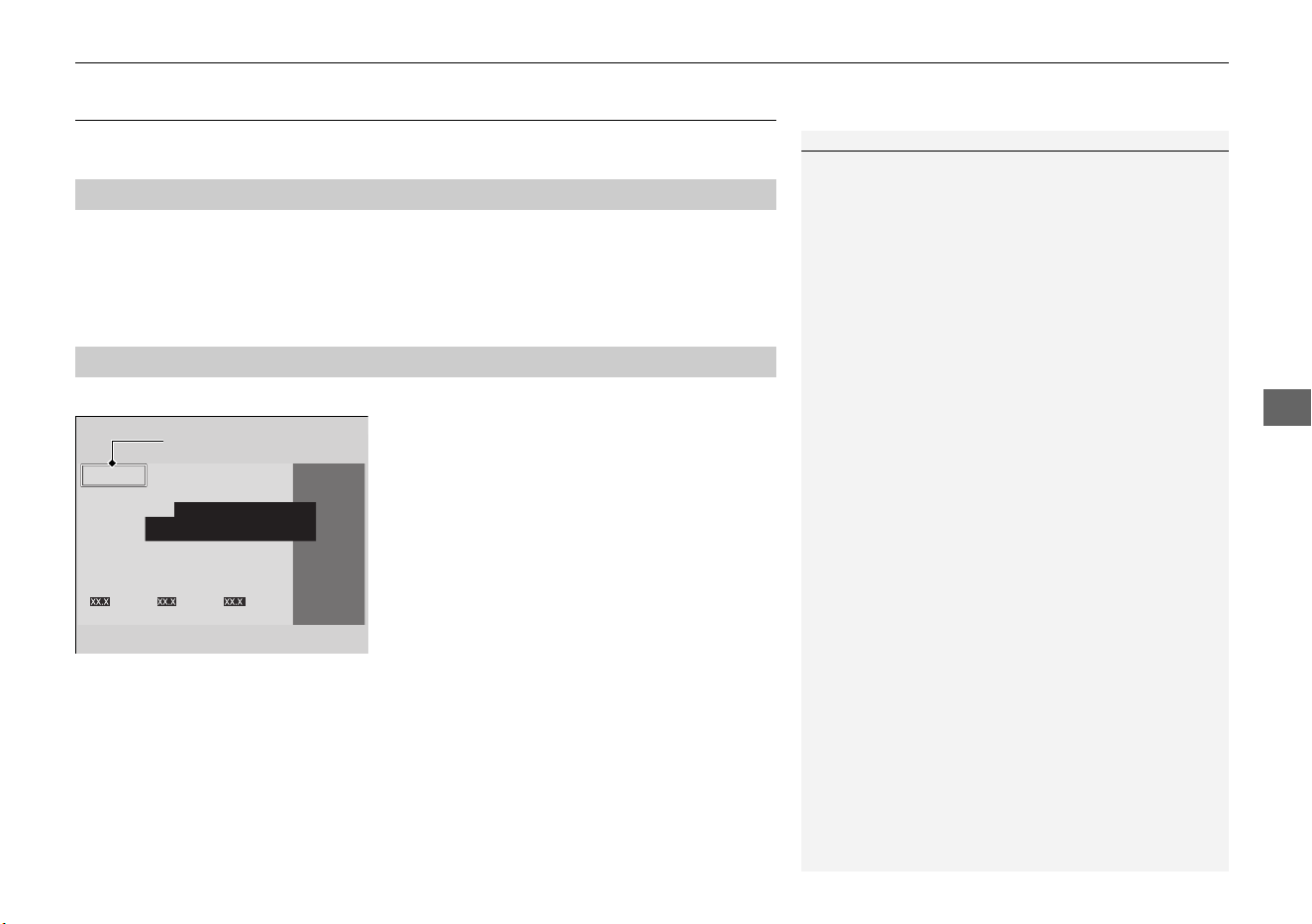
285
uuAudio System Basic OperationuDisplay Setup
Features
Display Setup
You can change the brightness of the audio/information screen.
1. Select Home.
2. Select General Settings.
3. Select Display.
4. Select the setting you want.
You can select an audio source on the audio/information screen.
1. Select application icon of the audio/
information screen.
2. Select an icon on the source list to switch
the audio source.
■
Changing the Screen Brightness
■
Selecting an Audio Source
1Changing the Screen Brightness
You can change the Contrast and Black Level
settings in the same manner.
To reset the settings, select Reset to Default.
Application Icon
26 PILOT-31T906300.book 285 ページ 2025年10月8日 水曜日 午前11時43分
286
uuAudio System Basic OperationuAlexa Built-In
Features
Alexa Built-In
You can talk to Amazon Alexa through the audio system. With Alexa, you can:
• Stream music
• Check the weather
• Answer questions
• Control smart home devices
• And more with supported Alexa skills
Once you sign into Alexa in the vehicle, you can use Alexa without opening the app.
You can trigger Alexa by doing any of the following:
• Say the wake word “Alexa” from anywhere in the audio system.
• Press the (Talk) button on the steering wheel.
• Select the Alexa icon from inside the app.
■
Using Alexa
1Alexa Built-In
Support Resources
For more information or client support:
• Call Honda Customer Service at 1 (800) 999-1009.
• Go to https://www.amazon.com/alexasupport.
You can change the voice recognition from Alexa to
Google Assistant.
2 Customized Features P. 346
1Using Alexa
Troubleshooting Tips:
• Make sure you are connected to Alexa via Wi-Fi
network, AT&T Vehicle Data Plan (U.S.)/Bell Data
Plan (Canada), or HondaLink.
• If using an AT&T Vehicle Data Plan, confirm that
your subscription is active.
• Make sure you are logged into your Amazon
account.
Deleting Your Alexa Settings from the Vehicle
For your privacy and security, if you transfer the
vehicle to a third-party, reset all vehicle settings to
default and delete all personal data. Also, remove the
vehicle from the list of devices in your phone’s Alexa
app.
2 Defaulting All the Settings P. 368
26 PILOT-31T906300.book 286 ページ 2025年10月8日 水曜日 午前11時43分
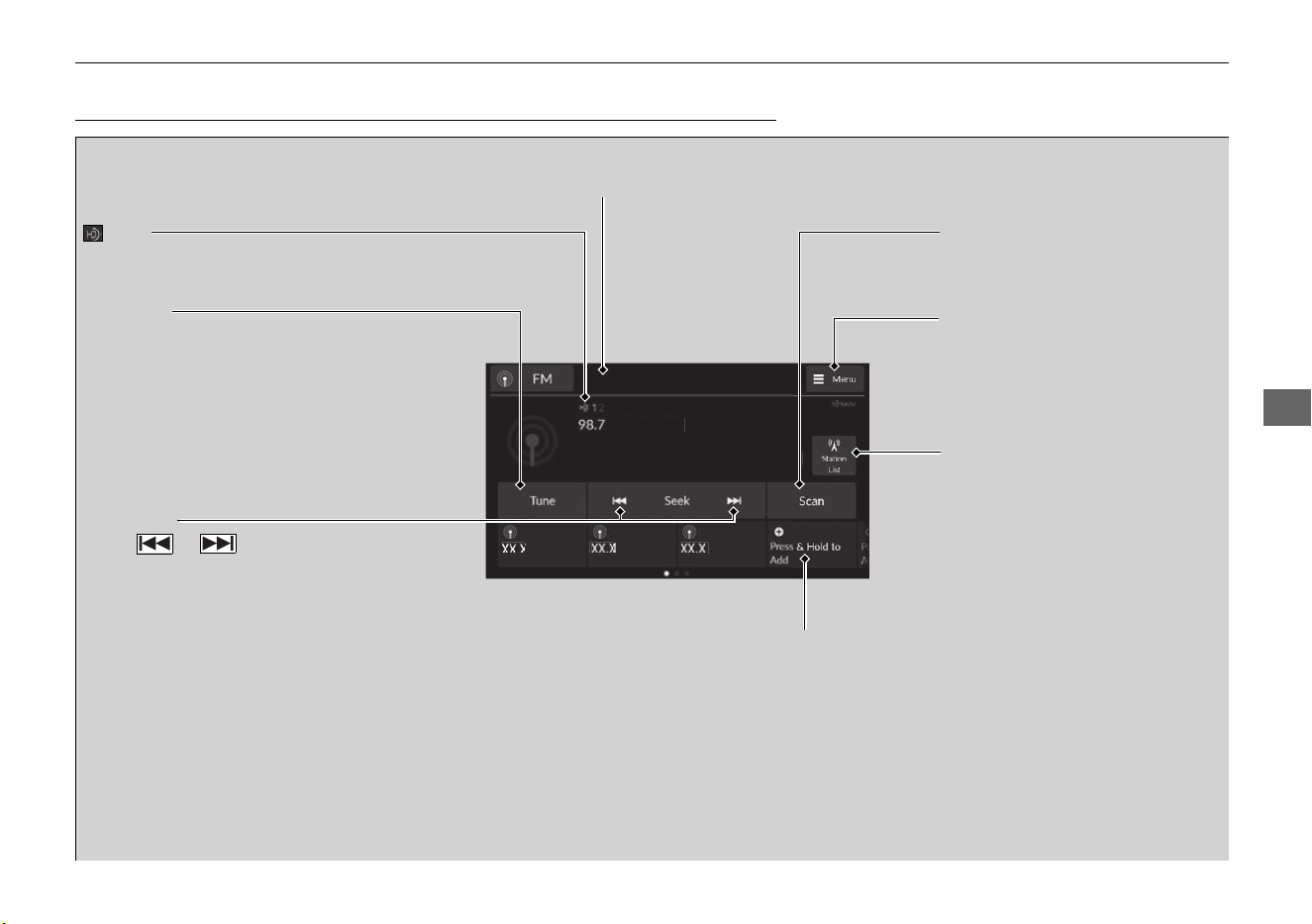
287
uuAudio System Basic OperationuPlaying AM/FM Radio
Continued
Features
Playing AM/FM Radio
Seek Icons
Select or to search up
and down on the selected band
for a station with a strong signal.
Audio/Information Screen
Scan Icon
Select to scan each
station
with a strong signal.
Icon
Select to display the subchannel
list screen.
Menu
Select to display the menu
screen.
Favorite Station Icons, Add Favorite
Tune the radio frequency for a favorite station. Press
and hold + Press & Hold to Add to store the station.
Swipe left or right on the screen to move to the next
or previous favorite station list.
Station List
Select to display the station list
screen.
Tune Icon
Select to use the on-screen
keyboard for entering the radio
frequency directly.
26 PILOT-31T906300.book 287 ページ 2025年10月8日 水曜日 午前11時43分
uuAudio System Basic OperationuPlaying AM/FM Radio
288
Features
To add a station:
1. Tune to the selected station.
2. Select and hold Press & Hold to Add.
■
Editing a favorite station
Select and hold the desired favorite station icon.
The following items are available:
• Remove Favorite: Delete the favorite station icon from the favorite station list.
• Replace with (number): Replace the stored favorite station icon.
• Add to Home: Add the shortcut icon of the stored favorite station to the home
screen.
Lists the strongest stations on the selected band.
1. Select Station List to display a list.
2. Select the station.
■
Manual update
Updates your available station list at any time.
1. Select Station List to display a list.
2. Select Refresh.
■
Favorite Station
■
Station List
1Favorite Station
Switching the Audio Mode
Roll the left selector wheel or select the audio source
icon on the screen.
2 Audio Remote Controls P. 268
You can store 12 AM/FM stations into preset
memory.
26 PILOT-31T906300.book 288 ページ 2025年10月8日 水曜日 午前11時43分
Continued
289
uuAudio System Basic OperationuPlaying AM/FM Radio
Features
Samples each of the strongest stations on the selected band for 10 seconds. To turn
off scan, select Stop or Back.
Provides text data information related to your selected RDS-capable FM station.
■
To find an RDS station from Station List
1. Select Station List to display a list while listening to an FM station.
2. Select the station.
■
Manual update
Updates your available station list at any time.
1. Select Station List to display a list while listening to an FM station.
2. Select Refresh.
■
Scan
■
Radio Data System (RDS)
1Radio Data System (RDS)
When you select an RDS-capable FM station, the RDS
automatically turns on, and the frequency display
changes to the station name. However, when the
signals of that station become weak, the display
changes from the station name to the frequency.
26 PILOT-31T906300.book 289 ページ 2025年10月8日 水曜日 午前11時43分

290
uuAudio System Basic OperationuPlaying AM/FM Radio
Features
Displays the subchannel list when an HD Radio
TM
station is selected while listening to
an FM station.
1. Select Station List.
2. Select the channel number.
Changes the AM/FM settings.
1. Select Menu.
2. Select an option.
• HD Radio: Automatically choose a digital or an analog channel, or listen to
analog only.
• Artwork: Turns the artwork display on and off.
■
HD Subchannel
■
AM/FM Settings
26 PILOT-31T906300.book 290 ページ 2025年10月8日 水曜日 午前11時43分
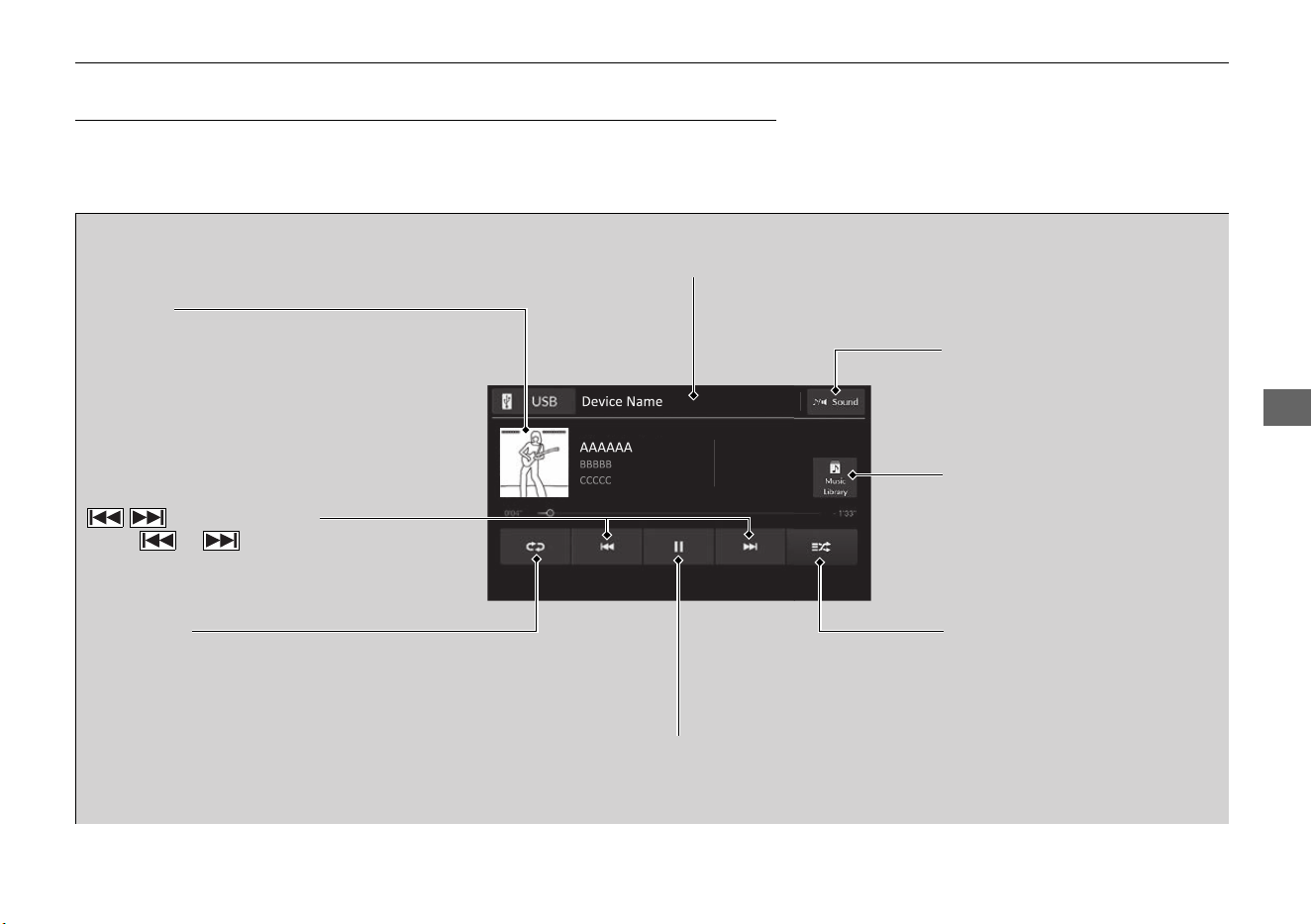
291
uuAudio System Basic OperationuMusic Playback via Wired Connection
Continued
Features
Music Playback via Wired Connection
Using your USB connector, connect the device to the USB charging/connector port,
then select the USB icon.
2 USB Ports P. 265
/ (Skip/Seek) Icons
Select or to change songs.
Select and hold to move rapidly
within a song.
Cover Art
Audio/Information Screen
Play/Pause Icon
Sound Icon
Sele
ct to display the sound
settings.
Repeat Icon
Select to repeat the current song.
Shuffle Icon
Select to play all songs in the
current category in random
order.
Music Library
Select to display the music
search screen.
26 PILOT-31T906300.book 291 ページ 2025年10月8日 水曜日 午前11時43分
uuAudio System Basic OperationuMusic Playback via Wired Connection
292
Features
1. Select Music Library.
2. Select a search category (e.g., Artists, Albums, etc.).
3. Continue making selections until you find the song of your choice.
■
How to Select a Song from the Music Search List
1Music Playback via Wired Connection
Available operating functions vary on models or
versions. Some functions may not be available on the
vehicle’s audio system.
If an iPhone is connected via Apple CarPlay, the USB
source will be unavailable and audio files on the
phone will be playable only within Apple CarPlay.
26 PILOT-31T906300.book 292 ページ 2025年10月8日 水曜日 午前11時43分
293
uuAudio System Basic OperationuMusic Playback via Wired Connection
Features
You can select shuffle and repeat modes when playing a song.
■
Shuffle/Repeat
Repeatedly select the shuffle or repeat icon until you find a play mode option of your
preference.
Play Mode Menu Items
Shuffle
Shuffle off: Shuffle mode turns off.
Shuffle all songs: Plays all available songs in a selected list in random order.
Repeat
Repeat off: Repeat mode turns off.
Repeat song: Repeats the current song.
Repeat all: Repeats all available songs in a selected list.
■
How to Select a Play Mode
26 PILOT-31T906300.book 293 ページ 2025年10月8日 水曜日 午前11時43分
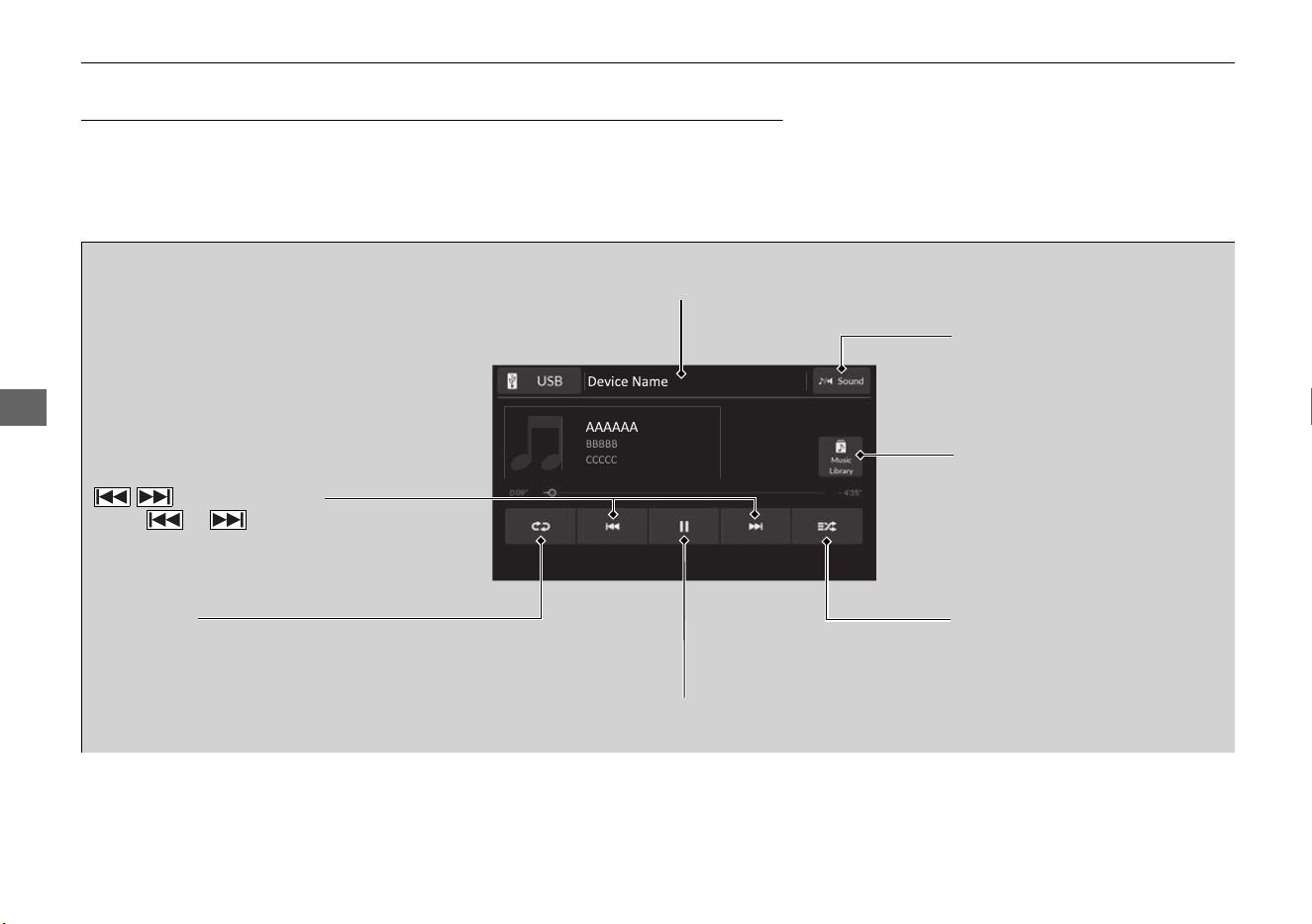
294
uuAudio System Basic OperationuMusic Playback via USB Flash Drive
Features
Music Playback via USB Flash Drive
Your audio system reads and plays audio files on a USB flash drive.
Connect your USB flash drive to the USB charging/connector port, then select the
USB icon.
2 USB Ports P. 265
Audio/Information Screen
Sound Icon
Select to display the sound
settings.
Ra
ndom Icon
Select to play all files in the
current category in random
order.
/ (Skip/Seek) Icons
Select or to change files.
Select and hold to move rapidly
within a file.
Repeat Icon
Select to repeat the current file.
Play/Pause Icon
Music Library
Select to display the music
search screen.
26 PILOT-31T906300.book 294 ページ 2025年10月8日 水曜日 午前11時43分
Continued
295
uuAudio System Basic OperationuMusic Playback via USB Flash Drive
Features
1. Select Music Library.
2. Select a search category (e.g., Artists, Albums, etc.).
3. Continue making selections until you find the song of your choice.
■
How to Select a File from the Music Search List
1Music Playback via USB Flash Drive
Use the recommended USB flash drives.
2 General Information on the Audio System
P. 325
WMA files protected by digital rights management
(DRM) cannot be played.
The audio system displays The selected file cannot
be played on this system, then skips to the next
file.
26 PILOT-31T906300.book 295 ページ 2025年10月8日 水曜日 午前11時43分
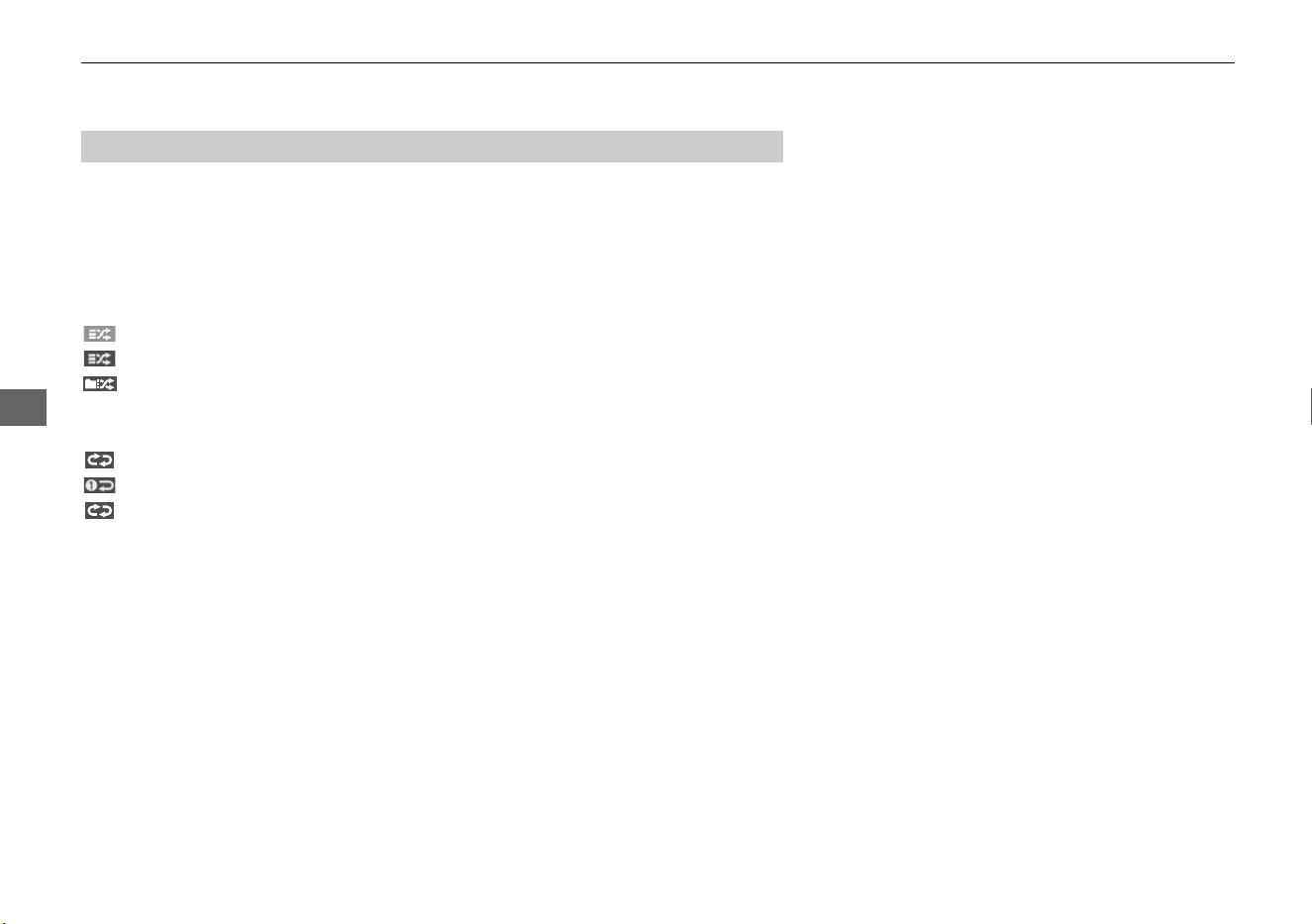
296
uuAudio System Basic OperationuMusic Playback via USB Flash Drive
Features
You can select random and repeat modes when playing a file.
■
Random/Repeat
Select random or repeat icon repeatedly until a desired mode.
Random
Random off: Random mode turns off.
Random all files: Plays all files in random order.
Random in folder: Plays all files in the current folder in random order.
Repeat
Repeat off: Repeat mode turns off.
Repeat file: Repeats the current playing file.
Repeat in folder: Repeats all files in the current folder.
■
How to Select a Play Mode
26 PILOT-31T906300.book 296 ページ 2025年10月8日 水曜日 午前11時43分
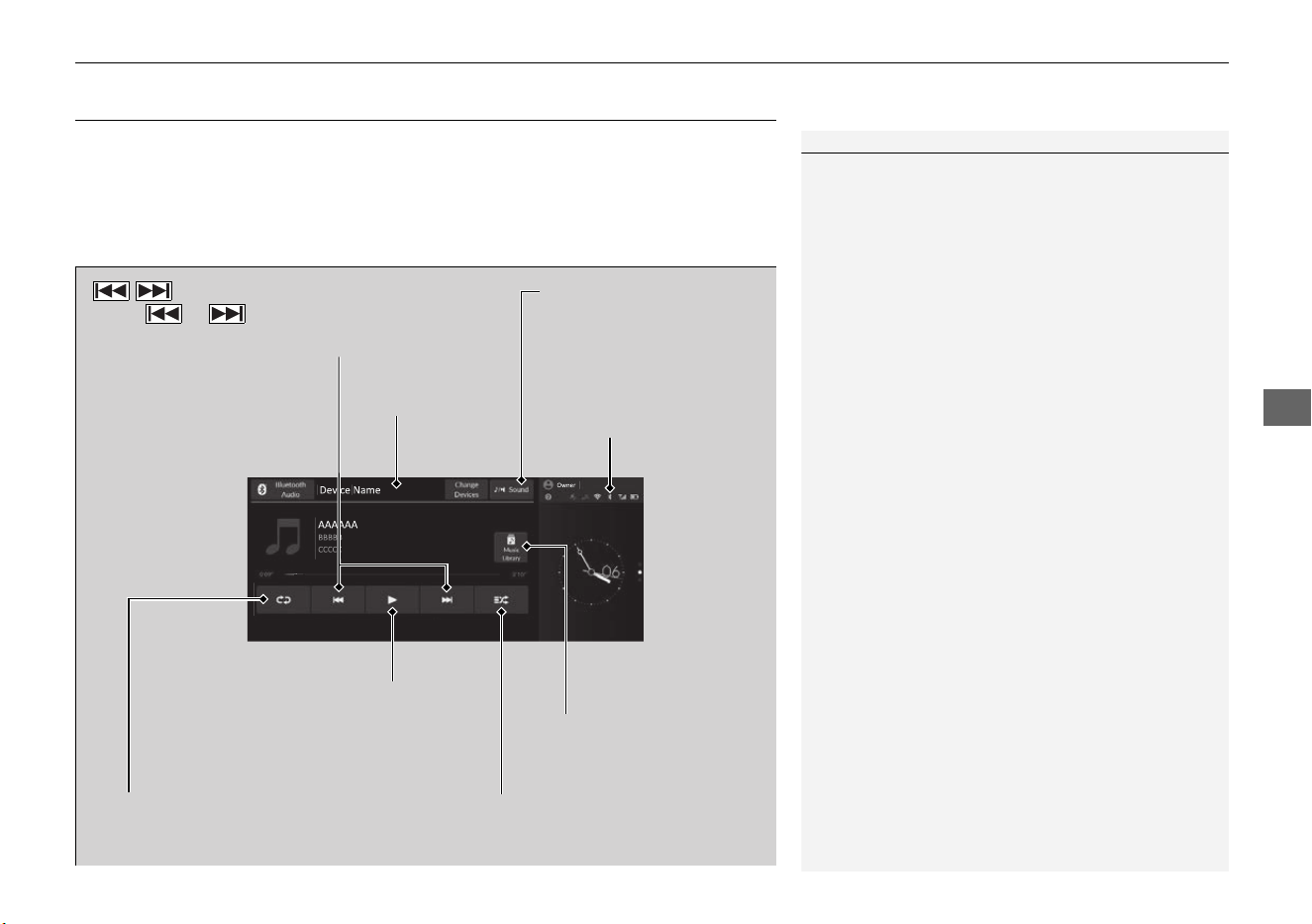
297
uuAudio System Basic OperationuPlaying Bluetooth® Audio
Continued
Features
Playing Bluetooth® Audio
Your audio system allows you to listen to music from your Bluetooth®-compatible
phone.
This function is available when the phone is paired and connected to the vehicle’s
Bluetooth® HandsFreeLink® (HFL) system.
2 Phone Setup P. 373
1Playing Bluetooth® Audio
Not all Bluetooth®-enabled phones with streaming
audio capabilities are compatible with the system. For
a list of compatible phones:
• U.S.: Visit https://mygarage.honda.com/s/honda-
handsfreelink-compatibility-check, or call 1-888-
528-7876.
• Canada: Call 1-855-490-7351.
It may be illegal to perform some data device
functions while driving.
Only one phone can be used with HFL at a time.
When there is more than one paired phone in the
vehicle, the first paired phone the system finds is
automatically connected.
The connected phone for Bluetooth® Audio can be
different.
If more than one phone is paired to the HFL system,
there may be a delay before the system begins to play.
In some cases, the name of the artist, album, or file
may not appear correctly.
Some functions may not be available on some
devices.
If a phone is currently connected via Apple CarPlay or
Android Auto, Bluetooth® Audio from that phone
will be unavailable.
2 Phone Setup P. 373
Audio/Information
Screen
Music Library
Select to display the
music search screen.
Play/Pause Icon
Bluetooth® In
dicator
Appears when your phone
is connected to HFL.
Shuffle Icon
Select to play all files in the current
category in random order.
Repeat Icon
Select to rep
eat t
he current file.
Sound Icon
Select to display the
sound settings.
/ (Skip/Seek) Icons
Select
or
to change file.
Select and hold to move rapidly within a file.
26 PILOT-31T906300.book 297 ページ 2025年10月8日 水曜日 午前11時43分

uuAudio System Basic OperationuPlaying Bluetooth® Audio
298
Features
1. Make sure that your phone is paired and connected to the system.
2 Phone Setup P. 373
2. Select the Bluetooth® Audio mode.
If the phone is not recognized, another HFL-compatible phone, which is not
compatible for Bluetooth® Audio, may already be connected.
1. Select Music Library.
2. Select a search category (e.g., Albums).
3. Select an item.
u The selection begins playing.
■
To Play Bluetooth® Audio Files
■
Searching for Music
1To Play Bluetooth® Audio Files
To play the audio files, you may need to operate your
phone. If so, follow the phone maker’s operating
instructions.
Switching to another mode pauses the music playing
from your phone.
You can change the connected phone by selecting
Change Devices.
2 Phone Setup P. 373
1Searching for Music
Depending on the Bluetooth® device you connect,
some or all of the lists may not be displayed.
26 PILOT-31T906300.book 298 ページ 2025年10月8日 水曜日 午前11時43分
299
uuAudio System Basic OperationuPlaying Bluetooth® Audio
Features
You can select shuffle and repeat modes when playing a file.
■
Shuffle/Repeat
Repeatedly select the shuffle or repeat icon until you find a play mode option of your
preference.
Shuffle
Shuffle off: Shuffle mode to off.
Shuffle all files: Plays all available files in a selected list in random order.
Repeat
Repeat off: Repeat mode to off.
Repeat file: Repeats the current file.
Repeat group: Repeats the current group.
Repeat all: Repeats all files.
■
How to Select a Play Mode
1How to Select a Play Mode
Depending on the Bluetooth® device you connect,
some or all of the functions may not be displayed.
26 PILOT-31T906300.book 299 ページ 2025年10月8日 水曜日 午前11時43分
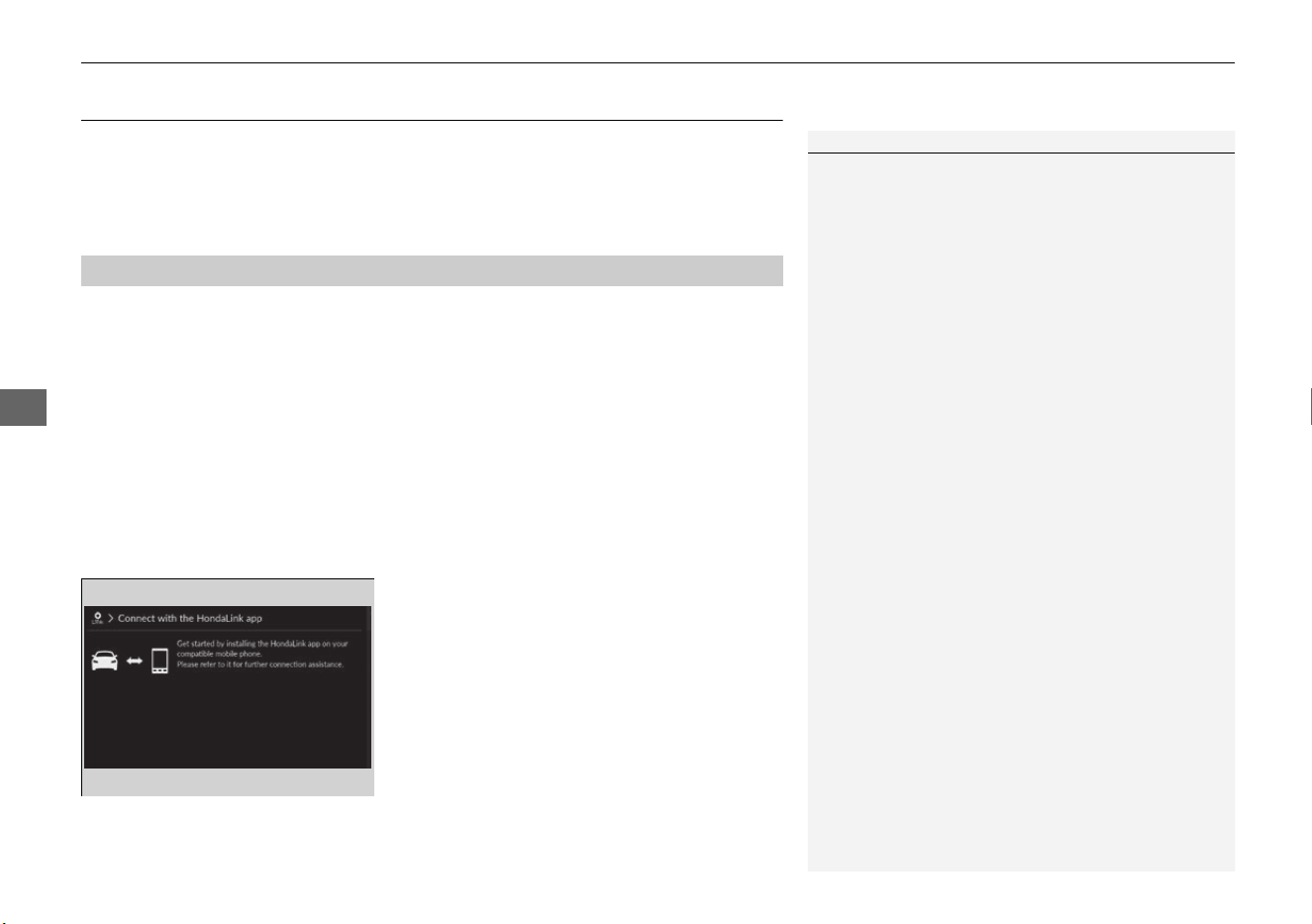
300
uuAudio System Basic OperationuHondaLink®
Features
HondaLink®
HondaLink® connects you to the latest information from Honda. You can connect
your phone wirelessly through Wi-Fi or Bluetooth®.
2 Wi-Fi Connection P. 306
2 Phone Setup P. 373
Use the following procedure to connect to HondaLink®.
■
To enable the HondaLink® service
You must consent to location sharing to enable the HondaLink® service.
1. Select Home.
2. Select General Settings.
3. Select Privacy.
4. Select Data Sharing with Honda.
5. Select Enable.
■
To link with HondaLink®
You can see the connection guide screen after
launching HondaLink® when there is no
connection to a network. If you do not need
this guide, select the check-box and select
OK.
■
To Connect to HondaLink®
1HondaLink®
If your vehicle has a telematics control unit (TCU), you
can use HondaLink® without connecting the phone.
The HondaLink® connect app is compatible with most
iPhone and Android phones.
If the system is connected to the HondaLink® connect
app through Bluetooth® and another Bluetooth®
audio device is connected, the Bluetooth®
connection to the HondaLink® connect app will be
severed.
Some cell phone carriers charge for tethering and
smartphone data use. Check your phone’s data
subscription package.
If there is an active connection to Apple CarPlay or
Android Auto, HondaLink® can only be connected
through Wi-Fi.
26 PILOT-31T906300.book 300 ページ 2025年10月8日 水曜日 午前11時43分
301
uuAudio System Basic OperationuHondaLink®
Continued
Features
• Vehicle Notifications
Displays instruction messages when the vehicle needs service.
• Connect Honda
Displays tips for vehicle usage, and get support via roadside assistance or
customer service center.
• Connect
Displays your phone connection status and HondaLink® subscription status.
■
HondaLink® Menu
26 PILOT-31T906300.book 301 ページ 2025年10月8日 水曜日 午前11時43分
302
uuAudio System Basic OperationuHondaLink®
Features
You can check the messages that are received quickly in the shortcut operation.
1. A notification appears and notifies you of a
new message on the B-zone.
2. Select the system status icon to see the
messages.
u A notification is continuously displayed
on the B-zone until the new message is
read.
3. Select a new message to open.
■
Vehicle Information and Message from Honda Tips
Notification
26 PILOT-31T906300.book 302 ページ 2025年10月8日 水曜日 午前11時43分
303
uuAudio System Basic OperationuHondaLink® Service
Continued
Features
HondaLink® Service
Is a subscription-based service that provides convenient features such as voice
communication in case of emergency, online security, and one-on-one operator
assistance.
1HondaLink® Service
HondaLink® also provides services you can operate
from the Internet or your smartphone.
To subscribe to HondaLink®, or to get more
information about all of its features, contact a Honda
dealer, or visit:
U.S.: https://mygarage.honda.com/s/hondalink-
marketing
Canada: https://www.honda.ca/en/hondalink
(English)
https://www.honda.ca/fr/hondalink
(French)
26 PILOT-31T906300.book 303 ページ 2025年10月8日 水曜日 午前11時43分
uuAudio System Basic OperationuHondaLink® Service
304
Features
Your subscribed telematics service provider can track your vehicle’s location,
remotely lock or unlock doors, and help you find your vehicle.
To use these features, you need your user ID and personal identification number
(PIN).
■
Stolen vehicle tracking
This feature searches and tracks down your vehicle position even if it is on the move.
If you believe that your vehicle has been stolen, contact the police as well as the
provider.
■
Remote door lock/unlock
The provider can remotely lock or unlock doors upon your request.
■
Vehicle finder
This feature is convenient to use when trying to locate your vehicle in large areas,
such as a crowded parking lot. If you cannot locate your vehicle after using the
remote transmitter’s answerback function, you can contact the provider which can
then flash your vehicle’s exterior lights and sound the horn, and send vehicle
location via web/Smartphone.
■
Security alarm notification
If the security system in your vehicle detects an abnormal condition, such as
someone tampering with the lock on your vehicle, the provider notifies you by email.
■
Security Features
1Security Features
To learn more about these features, please visit:
U.S.: https://mygarage.honda.com/s/hondalink-
marketing
Canada: https://www.honda.ca/en/hondalink
(English)
https://www.honda.ca/fr/hondalink
(French)
1Vehicle finder
The lights will stop flashing and horn will stop
sounding under the following:
• When 30 seconds have elapsed.
• You unlock the doors using the remote transmitter.
• You unlock the doors using the keyless access
system.
• You unlock the doors using the built-in key.
• The power mode is set to ACCESSORY or ON.
26 PILOT-31T906300.book 304 ページ 2025年10月8日 水曜日 午前11時43分
305
uuAudio System Basic OperationuHondaLink® Service
Features
Your subscribed telematics service provider can check your vehicle’s condition.
■
Virtual Dashboard
You can remotely check the mileage, fuel range, and oil life in your app.
■
Remote start and stop the engine
You can remotely turn the engine on and off using your app the same way as the
keyless remote.
■
Geofence Alert
You can receive a notification anytime your vehicle enters or leaves a region set by
you.
■
Speed Alert
You can receive a notification when your vehicle has exceeded a speed limit set by
you.
■
Personal Data Wipe
You can reset your audio and navigation system settings to factory defaults with the
app.
■
Wi-Fi hotspot
Vehicle provides a cellular network environment as a Wi-Fi router to use a tablet or
a smartphone in your vehicle.
■
Convenient Features
1Convenient Features
To learn more about these features, please visit:
U.S.: https://mygarage.honda.com/s/hondalink-
marketing
Canada: https://www.honda.ca/en/hondalink
(English)
https://www.honda.ca/fr/hondalink
(French)
26 PILOT-31T906300.book 305 ページ 2025年10月8日 水曜日 午前11時43分
306
uuAudio System Basic OperationuWi-Fi Connection
Features
Wi-Fi Connection
This vehicle is equipped with Wi-Fi connectivity. You can connect to an external Wi-
Fi hotspot or communication device. In addition, the vehicle can be used by other
communication devices as a Wi-Fi hotspot via the telematics unit (TCU).
• Connect the vehicle to a Wi-Fi hotspot
• Use Wi-Fi inside the vehicle
1. Select Home.
2. Select General Settings.
3. Select Connections.
4. Select Wi-Fi.
u To change the Wi-Fi settings, select Options.
5. Select the access point you want to connect to the system.
6. Select Connect.
u When the connection is successful, the status text Connected next to the
network name is displayed on the list.
7. Select Home to go back to the home screen.
■
Connect the vehicle to a Wi-Fi hotspot
1Wi-Fi Connection
Wi-Fi and Wi-Fi Direct are registered trademarks of
Wi-Fi Alliance®.
1Connect the vehicle to a Wi-Fi hotspot
You cannot go through the setting procedure while
the vehicle is moving. Park in a safe place to set the
audio system in Wi-Fi mode.
Some cell phone carriers charge for tethering and
smartphone data use. Check your phone’s data
subscription package.
Check your phone manual to find out if the phone
has Wi-Fi connectivity.
You can confirm whether Wi-Fi connection is on or
off with the icon on the Wi-Fi network list.
Transmission speed and others will not be displayed
on this screen.
In case of Wi-Fi connection with your phone, make
sure your phone’s Wi-Fi setting is in access point
(tethering) mode.
When you select Access Point, you can set up a
wireless connection from the phone to the vehicle.
2 Customized Features P. 346
26 PILOT-31T906300.book 306 ページ 2025年10月8日 水曜日 午前11時43分
307
uuAudio System Basic OperationuWi-Fi Connection
Features
You can set the network as a Wi-Fi hotspot of this audio system.
Use the following steps to set up.
1. Select Home.
2. Select General Settings.
3. Select Connections.
4. Select Data Connection Options.
5. Select Set Up Wi-Fi.
6. Select Options.
7. Select Add Network.
The following options are available for the setup.
• Network SSID: Set this network name.
• Security: Set a password to be required when connecting a Wi-Fi device to this
network.
■
Use Wi-Fi inside the vehicle
26 PILOT-31T906300.book 307 ページ 2025年10月8日 水曜日 午前11時43分
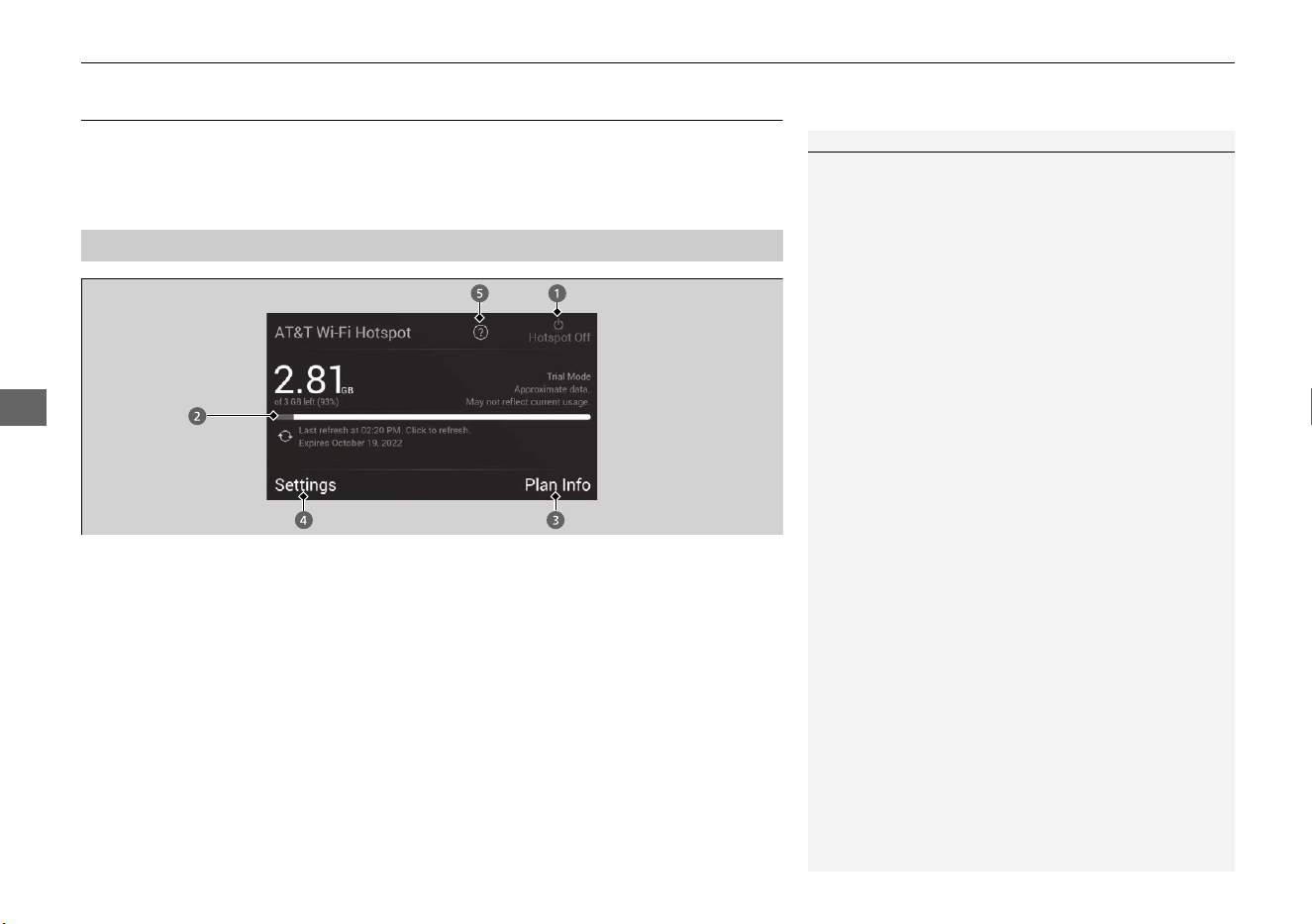
308
uuAudio System Basic OperationuAT&T Hotspot
Features
AT&T Hotspot
If you have subscribed to AT&T hotspot services, your vehicle will provide data to
connect your mobile devices to the Internet. You can use the AT&T Hotspot app to
turn vehicle data on/off and monitor data usage left on your subscription.
a Hotspot Enable
Turn AT&T Hotspot on/off.
b Data Usage Bar
Check the current status of your data plan. This Usage Bar will show your current
plan and how much data remains on your plan. Subscription plans for AT&T Hotspot
can be added/modified at www.att.com/honda.
c Plan Info
Shows your current AT&T subscription plan for the vehicle.
d Settings
Shows the current username and password for vehicle Hotspot. Settings can be
changed while the vehicle is not in motion.
e Help
■
AT&T Hotspot Menu
1AT&T Hotspot
To use AT&T Hotspot services, your vehicle must be
subscribed to a data plan. If your vehicle is not
subscribed to a data plan, you can add vehicle data
services at:
Hotspot username and password can be changed in
the Settings of the AT&T Hotspot app. Settings
cannot be accessed while driving. Park in a safe place
to adjust Hotspot settings.
Alternatively, you can use your mobile hotspot to
connect the vehicle and other mobile devices to the
Internet.
2 Wi-Fi Connection P. 306
U.S.: www.att.com/honda
Canada: https://myvehicle.att.com/#/honda/
learn?country=CA&language=en (English)
https://myvehicle.att.com/#/honda/
learn?country=CA&language=fr (French)
26 PILOT-31T906300.book 308 ページ 2025年10月8日 水曜日 午前11時43分
309
uuAudio System Basic OperationuApple CarPlay
Continued
Features
Apple CarPlay
If you connect an Apple CarPlay-compatible iPhone to the system via the USB port
or wirelessly, and the Apple CarPlay icon is selected, you can use Apple CarPlay on
the audio/information screen.
2 USB Ports P. 265
1Apple CarPlay
We recommend that you update iOS to the latest
version when using Apple CarPlay.
Park in a safe place before connecting your iPhone to
Apple CarPlay and when launching any compatible
apps.
While connected to Apple CarPlay, it is not possible
to use Bluetooth® Audio or HandsFreeLink®. You can
only make calls or listen to music through Apple
CarPlay. Other previously paired phones can use the
Bluetooth® Audio.
When using Hands Free, you can only control it with
Siri.
2 Operating Apple CarPlay with Siri P. 312
Apple CarPlay and Android Auto cannot run at the
same time.
For details on countries and regions where Apple
CarPlay is available, as well as information pertaining
to function, refer to the Apple website.
Use of Apple CarPlay will result in the transmission of
certain user and vehicle information (such as vehicle
location, speed, and status) to your iPhone to
enhance the Apple CarPlay experience. You will need
to consent to the sharing of this information on the
audio/information screen.
26 PILOT-31T906300.book 309 ページ 2025年10月8日 水曜日 午前11時43分
uuAudio System Basic OperationuApple CarPlay
310
Features
For details on available applications, please refer to the Apple CarPlay website.
Apps displayed on your screen can be changed with your iPhone.
Select the Honda icon on the Apple CarPlay menu screen to go back to the home
screen.
■
Apple CarPlay Menu
1Apple CarPlay
Apple CarPlay Operating Requirements &
Limitations
Apple CarPlay requires a compatible iPhone with an
active cellular connection and data plan. Your
carrier’s rate plans will apply.
Changes in operating systems, hardware, software,
and other technology integral to providing Apple
CarPlay functionality, as well as new or revised
governmental regulations, may result in a decrease or
cessation of Apple CarPlay functionality and services.
Honda cannot and does not provide any warranty or
guarantee of future Apple CarPlay performance or
functionality.
It is possible to use third-party apps if they are
compatible with Apple CarPlay. Refer to the Apple
website for information on compatible apps.
26 PILOT-31T906300.book 310 ページ 2025年10月8日 水曜日 午前11時43分
Continued
311
uuAudio System Basic OperationuApple CarPlay
Features
1. Connect the iPhone to the USB charging/connector port.
2 USB Ports P. 265
u The confirmation screen will be displayed.
2. Select Yes.
u If you do not allow this consent, select No.
You may change the consent settings under the Connections settings menu.
1. Select Home.
2. Select Apple CarPlay.
3. Select Check Device List or Connect New Phone.
4. Pair the iPhone to the vehicle’s Bluetooth® HandsFreeLink® (HFL) system.
2 Phone Setup P. 373
5. Select Yes.
■
Connect Apple CarPlay Using the USB Cable
■
Connect Apple CarPlay Wirelessly
1Apple CarPlay
Only initialize Apple CarPlay when you are safely
parked.
When Apple CarPlay first detects your iPhone, you
will need to set up your iPhone. Refer to the
instruction manual that came with your iPhone.
You can also use the method below to set up Apple
CarPlay:
Select Home General Settings Connections
Manage Device Connections Select Device.
Use of user and vehicle information
The use and handling of user and vehicle information
transmitted to/from your iPhone by Apple CarPlay is
governed by the Apple iOS terms and conditions and
Apple’s Privacy Policy.
If there is a problem with the connection of your
iPhone, an error code will be displayed.
2 Customized Features P. 346
Wireless Apple CarPlay and AT&T Hotspot cannot be
used at the same time. When using Apple CarPlay
and AT&T Hotspot at the same time, connect to
Apple CarPlay with a USB cable.
26 PILOT-31T906300.book 311 ページ 2025年10月8日 水曜日 午前11時43分
uuAudio System Basic OperationuApple CarPlay
312
Features
Press and hold the (Talk) button to activate Siri.
Press again to deactivate Siri.
Press and release to activate standard voice recognition system.
■
Operating Apple CarPlay with Siri
1Operating Apple CarPlay with Siri
Below are examples of questions and commands for
Siri:
• What movies are playing today?
• Call dad at work.
• What song is this?
• How’s the weather tomorrow?
• Read my latest email.
For more information, please visit
www.apple.com/ios/siri.
26 PILOT-31T906300.book 312 ページ 2025年10月8日 水曜日 午前11時43分
313
uuAudio System Basic OperationuAndroid Auto
TM
Continued
Features
Android Auto
TM
When you connect an Android
TM
phone to the audio system via the USB port or
wirelessly, and the Android Auto icon is selected, you can use Android Auto on the
audio/information screen.
We recommend that you complete this tutorial while safely parked before using
Android Auto.
2 USB Ports P. 265
1Android Auto
TM
Bluetooth® A2DP cannot be used while your phone is
connected to Android Auto.
Park in a safe place before connecting your Android
phone to Android Auto and when launching any
compatible apps.
Apple CarPlay and Android Auto cannot run at the
same time.
Google, Android, Android Auto, Google Maps and
other marks are trademarks of Google LLC.
Compatible Android phone and compatible active
data plan required.
To use each of Android Auto’s features, say a wake-
up word while the Android Auto screen is displayed,
or press and hold the (Talk) button to activate
Google Assistant.
2 Operating Android Auto with Google
Assistant P. 316
26 PILOT-31T906300.book 313 ページ 2025年10月8日 水曜日 午前11時43分
uuAudio System Basic OperationuAndroid Auto
TM
314
Features
For details on available applications, please refer to the Android Auto website.
Apps displayed on your screen can be changed with your smartphone.
Select the Honda icon on the Android Auto menu screen to go back to the home
screen.
■
Android Auto Menu
1Android Auto
TM
For details on countries and regions where Android
Auto is available, as well as information pertaining to
function, refer to the Android Auto website.
Screens may differ depending on the version of the
Android Auto app you are using.
Android Auto Operating Requirements &
Limitations
Android Auto requires a compatible Android phone
with an active cellular connection and data plan.
Your carrier’s rate plans will apply.
Changes in operating systems, hardware, software,
and other technology integral to providing Android
Auto functionality, as well as new or revised
governmental regulations, may result in a decrease or
cessation of Android Auto functionality and services.
Honda cannot and does not provide any warranty or
guarantee of future Android Auto performance or
functionality.
It is possible to use third-party apps if they are
compatible with Android Auto. Refer to the Android
Auto website for information on compatible apps.
26 PILOT-31T906300.book 314 ページ 2025年10月8日 水曜日 午前11時43分
Continued
315
uuAudio System Basic OperationuAndroid Auto
TM
Features
1. Connect the Android phone to the USB charging/connector port.
2 USB Ports P. 265
u The confirmation screen will be displayed.
2. Select Yes.
u If you do not allow this consent, select No.
You may change the consent settings under the Connections settings menu.
1. Select Home.
2. Select Android Auto.
3. Select Connect Phone or Search for Devices.
4. Pair the device to the vehicle’s Bluetooth® HandsFreeLink® (HFL) system.
2 Phone Setup P. 373
5. Select Yes.
■
Connect Android Auto Using the USB Cable
■
Connect Android Auto Wirelessly
1Android Auto
TM
Only initialize Android Auto when you are safely
parked. When Android Auto first detects your phone,
you will need to set up your phone so that auto
pairing is possible. Please refer to your phone’s
instructions.
You can use the method below to change Android
Auto settings after you have completed the initial
setup:
Select Home General Settings Connections
Manage Device Connections Select Device.
Use of user and vehicle information
The use and handling of user and vehicle information
transmitted to/from your phone by Android Auto is
governed by Google’s Privacy Policy.
If there is a problem with the connection of your
smartphone, an error code will be displayed.
2 Customized Features P. 346
Wireless Android Auto and AT&T Hotspot cannot be
used at the same time. When using Android Auto
and AT&T Hotspot at the same time, connect to
Android Auto with a USB cable.
26 PILOT-31T906300.book 315 ページ 2025年10月8日 水曜日 午前11時43分
uuAudio System Basic OperationuAndroid Auto
TM
316
Features
Press and hold the (Talk) button to operate Android Auto with your voice.
Press and release to activate the standard voice recognition system.
■
Operating Android Auto with Google Assistant
1Operating Android Auto with Google Assistant
Below are examples of commands you can give with
voice recognition:
• Reply to text.
• Call my wife.
• Navigate to Honda.
• Play my music.
• Send a text message to my wife.
• Call flower shop.
For more information, please refer to the Android
Auto website.
26 PILOT-31T906300.book 316 ページ 2025年10月8日 水曜日 午前11時43分
317
uuAudio System Basic OperationuGoogle built-in
Continued
Features
Google built-in
You can use the features available with Google built-in on the audio screen.
1Google built-in
• Google, Google Play, and Google Maps are
trademarks of Google LLC.
• For more details on Google Apps and Services’
features, visit the Google website.
Additional information for Google Apps and Services
is available at mygarage.honda.com (U.S.) or
honda.ca (English) / www.honda.ca/fr (French)
(Canada).
26 PILOT-31T906300.book 317 ページ 2025年10月8日 水曜日 午前11時43分
uuAudio System Basic OperationuGoogle built-in
318
Features
You can operate vehicle functions and features with hands-free help from Google
Assistant.
You can activate Google Assistant by:
• Saying “Hey Google.”
u Wake words vary by region and language. Refer to the Google website for
more information.
• Pressing the (Talk) button on the steering wheel.
• Selecting the Google Assistant icon on the infotainment screen.
Google Maps helps you reach your next destination faster with real-time traffic info,
automatic rerouting, and voice control.
Download your favorite apps on Google Play.
■
Google Assistant
■
Google Maps
■
Google Play
1Google Assistant
Below are example voice commands that can be used
once Google Assistant is activated:
• Turn on the seat heater.
• Play music.
• Play radio.
You can customize language and other settings
regarding Google Assistant.
2 How to Customize the General Settings
P. 346
1Google Maps
You should be parked during setup. However, once
Google Maps is set up, you can safely operate it using
your voice.
When your Google Account is linked with a valid
user, destinations stored on other devices (home,
work, favorites, previous searches, etc.) can be
displayed. When the device and the vehicle are
logged into the same Google Account, changing
information on the device will change it on Google
Maps as well.
1Google Play
The vehicle must be stopped in order to download an
app.
Operate when vehicle is stopped in a safe location.
26 PILOT-31T906300.book 318 ページ 2025年10月8日 水曜日 午前11時43分
319
uuAudio System Basic OperationuUser Information
Continued
Features
User Information
a User Information
1User Information
This feature cannot be used while driving.
You can customize settings individually for each user.
2 Profile Settings P. 323
You can customize security settings for each user. If
you have forgotten security settings, you will need to
delete the user and create a new one. If you have
forgotten security settings for the Owner user, please
contact a dealer or Honda Customer Service.
2 Customer Service Information P. 682
Certain features are unavailable when using a newly
created user or the Guest user.
26 PILOT-31T906300.book 319 ページ 2025年10月8日 水曜日 午前11時43分
320
uuAudio System Basic OperationuUser Information
Features
You can add and change users, as well as customize user settings.
By registering a user, you can personalize your vehicle settings.
You can select a user when the audio/information screen loads, even when the
doors are open or unlocked.
By linking your profile with your Google Account, you can enjoy a more personalized
Google built-in experience. For more assistance on account linking, visit the Google
website.
26 PILOT-31T906300.book 320 ページ 2025年10月8日 水曜日 午前11時43分
Continued
321
uuAudio System Basic OperationuUser Information
Features
1. Select User Info.
u You can also add users when Profile Settings Change Profile is selected.
2 Profile Settings P. 323
u You can add users even when the doors are open and unlocked.
2. Select Change Profile.
3. Select the +Add User.
4. Enter User Information.
2 Start Up P. 271
■
Registering a User
1Registering a User
Profile can be changed only when the vehicle is
parked.
You can add up to 4 users other than the Owner user
and the Guest user.
When you add a user, the audio/information screen is
loaded under that user.
26 PILOT-31T906300.book 321 ページ 2025年10月8日 水曜日 午前11時43分
uuAudio System Basic OperationuUser Information
322
Features
1. Select User Info.
u You can also change users when Profile Settings Change Profile is selected.
2 Profile Settings P. 323
u You can switch users even when the doors are open and unlocked.
2. Select Change Profile.
3. Select the user you want to use.
1. Select Profile Settings.
2. Select Manage Profile.
3. Select Your Profile.
4. Select Delete.
■
Switching Users
■
Deleting Users
1Switching Users
Profile can be changed only when the vehicle is
parked.
Users with customized security settings can restrict
screen operations by selecting the Screen Lock
shortcut.
The transmitter settings may not be switched when
you change the Owner user. If this happens, change
to a different user and then try switching to the
desired user again.
1Deleting Users
When the profile currently being used is deleted, the
audio/information screen is loaded under the Guest
user.
While using the Owner user, you can delete other
users via General Settings Advanced Settings.
2 Customized Features P. 346
Depending on the version of your OS, the steps for
deleting a user may differ from the instructions on
this page. Follow the on-screen prompts.
26 PILOT-31T906300.book 322 ページ 2025年10月8日 水曜日 午前11時43分
323
uuAudio System Basic OperationuProfile Settings
Features
Profile Settings
You can add and change users, as well as customize user settings.
Select Home, select Profile Settings, and select a setting item you want.
■
Change Profile
You can change and add users.
2 User Information P. 319
■
Manage Profile
Use Manage Profile to change profile settings. Please confirm the details on the
audio/information screen.
Specifications are subject to change via system updates, etc.
■
Driving Position Setting
*
By adjusting the seating position and then pressing the Memory1 or Memory2
button, you can store or recall up to 2 driving positions per user.
Refer to the following for details on how to adjust seating position.
2 Seats P. 211
■
How to Customize the Profile Settings
1Profile Settings
When you customize settings:
• Make sure that the vehicle is at a complete stop.
• Put the transmission into (P.
• Set the parking brake.
To customize features detail, refer to the following.
2 Change Profile P. 323
2 Manage Profile P. 323
2 Driving Position Setting
*
P. 323
* Not available on all models
26 PILOT-31T906300.book 323 ページ 2025年10月8日 水曜日 午前11時43分
324
Features
Audio Error Messages
The following error messages are just examples. If you see an error message not
listed below, follow the on-screen instructions to clear it.
iPod/USB Flash Drive
If an error occurs while playing an iPod or USB flash drive, you may see the following
error messages. If you cannot clear the error message, contact a dealer.
Error Message Solution
The selected file cannot be played on this
system
Appears when the files in the USB flash drive are copyright protected or an
unsupported format. This error message appears for about five seconds, then plays
the next file.
No Data
Appears when the iPod is empty.
Appears when the USB flash drive is empty.
Error
Appears when an unsupported device is connected. If it appears when a supported
device is connected, reconnect the device.
Appears when unsupported formats are in the device. Check that compatible files
are stored on the device.
USB Hub Unsupported
Appears when only a HUB is connected. If it appears, connect a USB flash drive to
the HUB.
A charging error has occurred with the
connected USB device. When safe please
check the compatibility of the device and USB
cable and try again.
Appears when an incompatible device is connected. Disconnect the device. Then,
turn the audio system off and turn it on again. Do not reconnect the device that
caused the error.
iPod
USB flash drive
26 PILOT-31T906300.book 324 ページ 2025年10月8日 水曜日 午前11時43分
325
Features
General Information on the Audio System
Compatible iPod, iPhone, and USB Flash Drives
Please use a recommended USB flash drive of 256MB or higher formatted with
FAT16 or FAT32.
• Some digital audio players may not be compatible.
• Some USB flash drives (e.g., a device with security lockout) may not work.
• Some software files may not allow for audio play or text data display.
• Some versions of MP3, WMA, AAC, FLAC, WAV or Opus formats may be
unsupported.
• Only AAC format files recorded with iTunes are playable on this unit.
■
iPod and iPhone Model Compatibility
Model
Made for iPod touch (6th generation)/iPod touch (7th generation)
Made for iPhone 5s/iPhone 6/iPhone 6 Plus/iPhone 6s/iPhone 6s Plus/iPhone SE/
iPhone 7/iPhone 7 Plus/iPhone 8/iPhone 8 Plus/iPhone X/iPhone XS/iPhone XS Max/
iPhone XR/iPhone 11/iPhone 11 Pro/iPhone 11 Pro Max/iPhone SE (2nd
generation)/iPhone 12 mini/iPhone 12/iPhone 12 Pro/iPhone 12 Pro Max/iPhone 13
mini/iPhone 13/iPhone 13 Pro/iPhone 13 Pro Max/iPhone SE (3rd generation)/
iPhone 14/iPhone 14 Plus/iPhone 14 Pro/iPhone 14 Pro Max/iPhone 15/iPhone 15
Plus/iPhone 15 Pro/iPhone 15 Pro Max
■
USB Flash Drives
1iPod and iPhone Model Compatibility
This system may not work with all software versions
of these devices.
The Lightning connector works with iPhone 5s,
iPhone 6, iPhone 6 Plus, iPhone 6S, iPhone 6S Plus,
iPhone SE, iPhone 7, iPhone 7 Plus, iPhone 8, iPhone
8 Plus, iPhone X, iPhone XS, iPhone XS Max, iPhone
XR, iPhone 11, iPhone 11 Pro, iPhone 11 Pro Max,
iPhone SE (2nd generation), iPhone 12 mini, iPhone
12, iPhone 12 Pro, iPhone 12 Pro Max, iPhone 13
mini, iPhone 13, iPhone 13 Pro, iPhone 13 Pro Max,
iPhone SE (3rd generation), iPhone 14, iPhone 14
Plus, iPhone 14 Pro, iPhone 14 Pro Max, iPod touch
(6th generation), iPod touch (7th generation).
USB works with iPhone 5s, iPhone 6, iPhone 6 Plus,
iPhone 6S, iPhone 6S Plus, iPhone SE, iPhone 7,
iPhone 7 Plus, iPhone 8, iPhone 8 Plus, iPhone X,
iPhone XS, iPhone XS Max, iPhone XR, iPhone 11,
iPhone 11 Pro, iPhone 11 Pro Max, iPhone SE (2nd
generation), iPhone 12 mini, iPhone 12, iPhone 12
Pro, iPhone 12 Pro Max, iPhone 13 mini, iPhone 13,
iPhone 13 Pro, iPhone 13 Pro Max, iPhone SE (3rd
generation), iPhone 14, iPhone 14 Plus, iPhone 14
Pro, iPhone 14 Pro Max, iPhone 15, iPhone 15 Plus,
iPhone 15 Pro, iPhone 15 Pro Max, iPod touch (6th
generation), iPod touch (7th generation).
1USB Flash Drives
Files on the USB flash drive are played in their stored
order. This order may be different from the order
displayed on your PC or device.
26 PILOT-31T906300.book 325 ページ 2025年10月8日 水曜日 午前11時43分
326
uuGeneral Information on the Audio SystemuHonda App License Agreement
Features
Honda App License Agreement
PLEASE CAREFULLY READ THIS END USER LICENSE AGREEMENT (THIS “AGREEMENT”) WHICH GOVERNS YOUR USE OF THE SOFTWARE
INSTALLED ON YOUR HONDA OR ACURA VEHICLE (YOUR “VEHICLE”) AS WELL AS THE APPLICATIONS, SERVICES, FUNCTIONS, AND
CONTENT PROVIDED THROUGH THE SOFTWARE (COLLECTIVELY, THE “SERVICES”). YOUR USE OF THE SOFTWARE OR SERVICES WILL
SERVE AS YOUR CONSENT TO THE TERMS OF THIS AGREEMENT. THE SOFTWARE IS OWNED (OR LICENSED), PROVIDED, AND/OR
OPERATED BY AMERICAN HONDA MOTOR CO. INC., (“HONDA,” “US,” “WE,” OR “OUR”), WITH ITS BUSINESS ADDRESS AT 1919
TORRANCE BLVD., TORRANCE, CA 90501. REFERENCE TO “HONDA” IN THIS AGREEMENT INCLUDES HONDA’S PARENT COMPANY AND
ITS AFFILIATES AND DESIGNATED AGENTS. THE SERVICES ARE OWNED (OR LICENSED), PROVIDED, AND/OR OPERATED BY HONDA OR A
THIRD-PARTY SERVICE PROVIDER (A “PROVIDER”). REFERENCE TO A “PROVIDER” IN THIS AGREEMENT INCLUDES SUCH PROVIDER’S
PARENT COMPANY, AFFILIATES, AND DESIGNATED AGENTS.
A. Description of the Software. The SOFTWARE includes the software, firmware and the like, installed and executing on your VEHICLE
during manufacture, and thereafter updated from time to time by HONDA, you or an authorized HONDA dealer (a “DEALER”). The
SOFTWARE allows you to access and use a variety of SERVICES, including but not limited to: (a) HONDA applications, services, and content
provided through the SOFTWARE (together, “HONDA SERVICES”); and (b) PROVIDER applications, services, and content provided through
the SOFTWARE (together, “PROVIDER SERVICES”), each of which may provide access to various information, media, content, and services.
B. SOFTWARE Licensing and Intellectual Property.
1. SOFTWARE. This AGREEMENT grants you a non-exclusive, limited, and revocable license to use the SOFTWARE and SERVICES solely (a)
as installed on your VEHICLE by HONDA, (b) as updated on your Vehicle by HONDA, you (but only as and when directed by HONDA), or a
DEALER and (c) as permitted under the terms of this AGREEMENT.
2. HONDA Services. The SOFTWARE may provide you with access to various HONDA SERVICES. Installation, activation, or use of HONDA
SERVICES may require your consent to additional terms, conditions, and privacy policies applicable to those HONDA SERVICES (the
“HONDA TERMS”). You acknowledge and agree that any collection, use, sharing of data generated by your VEHICLE or your use of your
VEHICLE, and your use of the HONDA SERVICES shall be subject to this AGREEMENT and any additional HONDA TERMS that may be
specifically applicable to such HONDA SERVICES or data generation. The HONDA SERVICES may collect, use, and share such data while
you are using the SOFTWARE.
■
END USER LICENSE AGREEMENT
26 PILOT-31T906300.book 326 ページ 2025年10月8日 水曜日 午前11時43分

327
uuGeneral Information on the Audio SystemuHonda App License Agreement
Continued
Features
3. Open-Source Software. The SOFTWARE and SERVICES may incorporate software licensed to HONDA under free or open-source
licenses which govern HONDA’s distribution and your use of such software. HONDA and the third-party authors, licensors, and distributors
of such software disclaim all warranties and all liability arising from any and all use or distribution of the software. To the extent such
software is provided under terms that differ from the applicable free or open-source licenses, those terms are offered by HONDA alone.
Additional information regarding free and open-source software incorporated in the SOFTWARE and SERVICES is available in this manual
or within the SOFTWARE.
4. Provider Services. The SOFTWARE may provide you with access to various PROVIDER SERVICES. Installation or use of such PROVIDER
SERVICES may require your consent to additional terms, conditions, and privacy policies of the applicable PROVIDER (the “PROVIDER
TERMS”). This AGREEMENT restricts the manner in which you can install and use PROVIDER SERVICES but does not grant you a license or
permission to use such PROVIDER SERVICES. Your permission to use PROVIDER SERVICES is limited and subject to any license grants,
conditions, and limitations included in the PROVIDER TERMS. You acknowledge that any collection, use, sharing of your information,
targeted advertising practices by PROVIDERS, and your use of the PROVIDER SERVICES shall be subject to both this AGREEMENT and any
applicable PROVIDER TERMS. The PROVIDER SERVICES may collect, use, and share such information while you are using the SOFTWARE.
5. License Limitations and Restrictions on Use.
(a) Limited License.
You understand and agree that the SOFTWARE and SERVICES are licensed, not sold, to you solely for use in accordance
with this AGREEMENT and any applicable PROVIDER TERMS, and any documentation for the VEHICLE made available to you by HONDA
(any “DOCUMENTATION”). HONDA and its licensors reserve all rights in the SOFTWARE and HONDA SERVICES not expressly granted to
you under this AGREEMENT. PROVIDERS and their licensors reserve all rights in the PROVIDER SERVICES not expressly granted to you under
the applicable PROVIDER TERMS.
26 PILOT-31T906300.book 327 ページ 2025年10月8日 水曜日 午前11時43分

328
uuGeneral Information on the Audio SystemuHonda App License Agreement
Features
(b) Restrictions on Use. The licenses granted under this AGREEMENT do not permit you to use the SOFTWARE or SERVICES on a device
other than your VEHICLE. As a condition of using the SOFTWARE and SERVICES, you agree that you may not and will not:
6. Intellectual Property Rights. All title and intellectual property rights in and to the SOFTWARE and SERVICES, the accompanying
DOCUMENTATION, and all copies of the SOFTWARE or SERVICES are owned by HONDA, PROVIDERS, or their suppliers or licensors. This
AGREEMENT does not grant you any rights in connection with any trademarks or service marks of HONDA, PROVIDERS, or their licensors,
affiliates, or suppliers.
(1) copy, download, distribute, modify, publish, sell, rent, lease, lend, license, sublicense, reuse, or create derivative works of the
SOFTWARE or SERVICES or any of the content or other material within the SOFTWARE or SERVICES, including without limitation,
HONDA or PROVIDER names, logos, or any other trademarks of HONDA or PROVIDERS or used in association with the SOFTWARE or
any SERVICES, except as required to use the SOFTWARE or SERVICES in accordance with this AGREEMENT, any applicable PROVIDER
TERMS, and the DOCUMENTATION;
(2) access or use the SOFTWARE or SERVICES in any manner intended to damage or impair the operation of the SOFTWARE or SERVICES
or interfere with anyone else’s use and enjoyment of the SOFTWARE or SERVICES;
(3) access or attempt to access any system or server on which the SOFTWARE or SERVICES is hosted or modify or alter the SOFTWARE
or SERVICES in any way;
(4) use the SOFTWARE or SERVICES for any unlawful purpose, or in violation of any third party rights;
(5) use the SOFTWARE or SERVICES in violation of any applicable traffic regulations, rules or laws, including but not limited to any driver
distraction laws, rules or regulations;
(6) violate the terms of this AGREEMENT, any HONDA TERMS, any PROVIDER TERMS or other applicable third-party terms, conditions,
and privacy policies; or
(7) reverse engineer, decompile, disassemble, attempt to derive the source code of, nor permit others to reverse engineer, decompile,
or disassemble, or attempt to derive the source code of the SOFTWARE or SERVICES, except and only to the extent that such activity is
expressly permitted (a) by applicable law notwithstanding this limitation or (b) the terms of applicable free or opensource software
licenses.
26 PILOT-31T906300.book 328 ページ 2025年10月8日 水曜日 午前11時43分

329
uuGeneral Information on the Audio SystemuHonda App License Agreement
Continued
Features
7. Export Restrictions: You acknowledge that the SOFTWARE and SERVICES are subject to U.S., European Union, and other export
jurisdictions. You agree to comply with all applicable international and national laws that apply to the SOFTWARE and SERVICES, including
the U.S. Export Administration Regulations, as well as end-user, end-use, and destination restrictions issued by the U.S. and other
governments.
C. SOFTWARE Operation
1. HONDA reserves the right to suspend or terminate your access to and use of the SOFTWARE or SERVICES if you are found to be in
violation of this AGREEMENT or as reasonably deemed necessary by HONDA.
2. Eligibility/Registration/Activation.
The SOFTWARE is intended for and available to individuals who (a) are of legal age of majority in their
jurisdiction of residence (and at least 18 years of age), or are younger than 18 years of age and possess a valid driver’s license issued by
their jurisdiction of residence, and (b) own or have permissive access to a compatible VEHICLE. We do not knowingly collect any
information, including personal information, from children under 13. If we learn or are notified that we have collected personal
information of a child under 13, we will immediately take steps to delete such information.
3. Use of PROVIDER SERVICES through the SOFTWARE.
Certain PROVIDER SERVICES made available through the SOFTWARE may require
that you register or otherwise have an account with the PROVIDER and agree to PROVIDER TERMS. Any use of any of such PROVIDER
SERVICES within the SOFTWARE is subject to this AGREEMENT and the applicable PROVIDER TERMS. HONDA does not exercise control
over such PROVIDER SERVICES and is not responsible or liable for the availability, security, or content of such PROVIDER SERVICES, and the
inclusion of any PROVIDER SERVICES does not imply a referral from, the approval of, or the endorsement by HONDA of such PROVIDER
SERVICES. HONDA is not responsible or liable, directly or indirectly, for any damage relating to or resulting from your use of the PROVIDER
SERVICES.
4. Links to Third Party Sites:
The SOFTWARE may provide you with the ability to access third-party sites and content through the use of the
SOFTWARE or SERVICES. The third-party sites and content are not under the control of HONDA. HONDA is not responsible or liable,
directly or indirectly, for such third-party websites and their content or for any damage relating to or resulting from your access or use of
such websites and content.
26 PILOT-31T906300.book 329 ページ 2025年10月8日 水曜日 午前11時43分
330
uuGeneral Information on the Audio SystemuHonda App License Agreement
Features
5. Unauthorized Use and Abuse. You are responsible for ensuring your (and any authorized third parties’) use of the SOFTWARE and
SERVICES remains in compliance with this AGREEMENT and all other applicable HONDA TERMS and PROVIDER TERMS. You acknowledge
and agree that any use of the SOFTWARE or SERVICES occurring through your VEHICLE will be deemed your actions and that HONDA and
PROVIDERS may rely upon such actions. You agree to immediately notify us if you suspect fraudulent or abusive activity involving the
SOFTWARE or SERVICES. If you so notify us or if we otherwise suspect fraudulent or abusive activity, you agree to cooperate with us in any
fraud investigation and to use any fraud prevention measures we prescribe. Your failure to immediately notify us or cooperate to use such
measures will result in your liability for all fraudulent usage or abusive activity associated with your VEHICLE.
6. SOFTWARE Updates.
The SOFTWARE and SERVICES may be updated when your VEHICLE is serviced by a DEALER or remotely, over-the-
air, by HONDA from time to time; such updates may occur with or without further notice or your future consent. The SOFTWARE may be
updated at HONDA’s discretion and for any purpose including, without limitation, to patch or otherwise improve the SOFTWARE or
SERVICES functionality, security, or stability. All updates to the SOFTWARE and SERVICES are subject to this AGREEMENT and any other
applicable HONDA TERMS and PROVIDER TERMS.
7. Uninstalling, Removing, and Replacing the SOFTWARE.
Replacing SOFTWARE or HONDA SERVICES with software or firmware not
provided and installed by HONDA or a DEALER will render all representations and warranties for the SOFTWARE, HONDA SERVICES, and
VEHICLE functionality reliant upon the SOFTWARE or HONDA SERVICES null and void.
D. SOFTWARE Operational Notices and Warnings
1. Vehicle Geolocation Information.
You acknowledge that your VEHICLE may be equipped with certain traffic and map features. The
traffic feature will automatically collect and transmit, through GPS technology, your Vehicle’s current location (longitude and latitude),
travel direction and speed (“VEHICLE GEOLOCATION INFORMATION”) to HONDA and PROVIDERS. The VEHICLE GEOLOCATION
INFORMATION is used by HONDA and PROVIDERS to provide traffic and navigation-related information to you, but may also be used to
provide other SERVICES or offers to you. HONDA will not use such VEHICLE GEOLOCATION INFORMATION for its own marketing efforts,
or provide such information to unaffiliated third parties for their own purposes, without your express consent.
26 PILOT-31T906300.book 330 ページ 2025年10月8日 水曜日 午前11時43分

331
uuGeneral Information on the Audio SystemuHonda App License Agreement
Continued
Features
2. Potential Map Inaccuracy and Route Safety. Maps used by this system may be inaccurate because of changes in roads, traffic controls,
routing, or driving conditions. Always use good judgment and common sense when following suggested routes. Do not follow the route
suggestions if doing so would result in an unsafe or illegal driving maneuver, if you would be placed in an unsafe situation, or if you would
be directed into an area that you consider unsafe. Do not rely on any navigation features included in the system to route you to emergency
services. Not all emergency services such as police, fire stations, hospitals, or clinics are likely to be contained in the map database for such
navigation features. Ask local authorities or an emergency services operator for such locations and routes. The driver is ultimately
responsible for the safe operation of the vehicle and therefore, must evaluate whether it is safe to follow the suggested directions. Any
navigation features are provided only as an aid. Make your driving decisions based on your observations of local conditions and existing
traffic regulations. Navigation features are not a substitute for your personal judgment. Any route suggestions made by the SOFTWARE or
SERVICES should never replace any local traffic regulations or your personal judgment or knowledge of safe driving practices.
3. Speech Recognition:
You acknowledge and understand that HONDA and PROVIDERS may record, retain, and use voices commands
when you use the speech recognition components of the SOFTWARE or SERVICES. You and all VEHICLE operators and passengers (a)
consent to the recording and retention of voice commands in support of providing speech recognition components and (b) release HONDA
and PROVIDERS from all claims, liabilities, and losses that may result from any use of such recorded voice commands. Recognition errors
are inherent in speech recognition. It is your responsibility to monitor any speech recognition functions included in the system and address
any errors. Neither HONDA nor PROVIDERS will be liable for any damages arising out of errors in the speech recognition process.
4. Distraction Hazards.
Navigation features may require manual (non-verbal) input or setup. Attempting to perform such set-up or insert
data while driving can seriously distract your attention and could cause a crash or other serious consequences; the ability to undertake such
interactions may also be limited by state or local law, which laws you are responsible to know and follow. Even occasional short scans of
the screen may be hazardous if your attention has been diverted away from your driving at a critical time. Pull over and stop the vehicle in
a safe and legal manner before attempting to access a function of the system requiring prolonged attention. Do not raise the volume
excessively. Keep the volume at a level where you can still hear outside traffic and emergency signals while driving. Driving while unable
to hear these sounds could result in a crash.
26 PILOT-31T906300.book 331 ページ 2025年10月8日 水曜日 午前11時43分
332
uuGeneral Information on the Audio SystemuHonda App License Agreement
Features
E. Information Collection and Storage
1. Information Collection, Use, Transmission and Storage of Data. Consent to Use of Data: You agree that HONDA and PROVIDERS may
collect and use your information gathered in any manner as part of product support services related to the SOFTWARE or related services.
HONDA may share such information with third parties, including, without limitation, PROVIDERS, third party software and services
suppliers, their affiliates and/or their designated agents, solely to improve their products or to provide services or technologies to you.
HONDA, third party software and systems suppliers, their affiliates and/or their designated agent may disclose this information to others,
but not in a form that personally identifies you.
2. Information Storage.
Depending on the type of multimedia system you have in your VEHICLE, certain information may be stored for ease
of use of the SOFTWARE including, without limitation, search history, location history in certain applications, previous and saved
destinations, map locations within certain applications, and device numbers and contact information.
(a) Vehicle Health Information.
Your VEHICLE may remotely transmit information regarding the status and health of your VEHICLE
(“VEHICLE INFORMATION”) to HONDA without notification to you. VEHICLE INFORMATION may contain VEHICLE maintenance and
malfunction status that is derived from VEHICLE diagnostic data and includes, but is not limited to, status of powered doors and windows,
battery life data, battery charging data, VEHICLE speed, coolant temperature, air compressor revolution, output power, warning codes,
diagnostic trouble codes, fuel injection volume, and engine rotations per minute. VEHICLE HEALTH INFORMATION may be used by HONDA
for research and development, to deliver HONDA SERVICES and information to you, and to contact you, and is retained only for a period
of time necessary to fulfill these goals.
(b) VEHICLE Geolocation Data (non-navigation/map based).
If you opt-in to geolocation-based SERVICES, your vehicle’s geolocation data
(latitude and longitude) will be automatically sent from your VEHICLE to HONDA and PROVIDERS.
(c) You understand that the inputting or uploading of information to your VEHICLE’s multimedia system or the SOFTWARE or SERVICES is
at your own risk and that HONDA is not responsible for unauthorized access to or use of any personal or other information. All information
uploaded to the SOFTWARE and SERVICES may be stored on your VEHICLES’s multimedia system and you understand that the security and
safety of your VEHICLE’s multimedia system is your sole responsibility.
26 PILOT-31T906300.book 332 ページ 2025年10月8日 水曜日 午前11時43分

333
uuGeneral Information on the Audio SystemuHonda App License Agreement
Continued
Features
F. NO WARRANTY. You understand and agree that your use of the SOFTWARE and SERVICES are solely at your own risk and that you
will be solely responsible for any damage to your VEHICLE’s multimedia system or any other equipment or any loss of data that may result
from your use of the SOFTWARE or SERVICES. THE SOFTWARE AND SERVICES ARE PROVIDED ON AN “AS IS” AND “AS AVAILABLE” BASIS
WITHOUT ANY WARRANTY OF ANY KIND, EXPRESSED, IMPLIED OR STATUTORY. WE SPECIFICALLY DISCLAIM ANY IMPLIED WARRANTIES
OF MERCHANTABILITY, FITNESS FOR A PARTICULAR PURPOSE, AND NON-INFRINGEMENT. HONDA makes no warranties that the
SOFTWARE or SERVICES will meet your requirements, or that the SOFTWARE or SERVICES will be uninterrupted, timely, secure, non-
infringing or error free. You understand and agree that you are responsible for any and all charges, costs or expenses associated with your
use of the SOFTWARE or SERVICES. Advice or information, whether oral or written, obtained by you from us or through the SOFTWARE
or SERVICES are provided for informational purposes only and will not create any warranty not expressly made herein. You should not rely
on any such information or advice. We assume no liability or responsibility for any errors or omissions in the SOFTWARE or SERVICES. We
do not make any warranty or representation that your use of the material displayed on, or obtained through, the SOFTWARE or SERVICES
is non-infringing of any rights of any third party. Any decision or action taken by you on the basis of information or content provided via
the application is at your sole discretion and risk. HONDA and PROVIDERS are not responsible or liable for any such decision, or for the
accuracy, completeness, usefulness, or availability of any content or information displayed, transmitted, or otherwise made available via
the SOFTWARE or SERVICES. To the extent jurisdictions do not allow the exclusion of certain warranties, some of the above exclusions may
not apply to you.
G. LIMITATIONS ON LIABILITY. You and HONDA are each waiving important rights.
1. Limitations on YOUR liability.
HONDA cannot recover from you any consequential, indirect, incidental, or special damages, or attorney’s
fees in connection with your use of the SOFTWARE or HONDA SERVICES. HONDA WAIVES TO THE FULLEST EXTENT ALLOWED BY LAW
ANY CLAIM FOR DAMAGES OTHER THAN DIRECT, COMPENSATORY DAMAGES AS LIMITED IN THIS AGREEMENT.
26 PILOT-31T906300.book 333 ページ 2025年10月8日 水曜日 午前11時43分
334
uuGeneral Information on the Audio SystemuHonda App License Agreement
Features
2. Limitation on HONDA and PROVIDER liability. Neither HONDA nor PROVIDERS will be liable to you or any other party for consequential,
indirect, incidental, special, or punitive damages (including without limitation lost profits) in connection with your use of the SOFTWARE
or SERVICES, even if HONDA or PROVIDERS are aware of the possibility of such damages. These limitations apply to all claims, including,
without limitation, claims in contract and tort (such as negligence, product liability and strict liability). To the extent that a jurisdiction does
not permit the exclusion or limitation of liability as set forth herein our liability is limited to the maximum extent permitted by law in such
states. If HONDA or PROVIDERS are found liable to you for any reason, you agree that the aggregate liability of all these parties to you for
any claim is limited to ten U.S. dollars (US $10.00). Neither HONDA nor any PROVIDER would have agreed to provide the SOFTWARE or
SERVICES to you if you did not agree to this limitation. This amount is the sole and exclusive liability of HONDA and PROVIDERS to you,
and is payable as liquidated damages and not as a penalty. Except where prohibited by law, you may not bring any claim against HONDA
or any third-party beneficiary more than two (2) years after the claim arises. We do not have any liability for SOFTWARE or SERVICES
interruptions of any length.
(a) Release of HONDA and PROVIDERS
For yourself and anyone else claiming under you, you agree to release and discharge HONDA,
PROVIDERS, their respective officers, directors, and employees, and each third-party beneficiary from all claims, liabilities and losses in
connection with the SOFTWARE or SERVICES, including, but not limited to claims for personal injury or property damage arising from the
total or partial failure of performance of the SOFTWARE or SERVICES, even if caused by or based upon the negligence, gross negligence,
strict products liability, Deceptive Trade Practices Act violations, bad faith, or breach of warranty of us or the malfunction of the SOFTWARE
or SOFTWARE SERVICES. YOU AGREE TO WAIVE TO THE FULLEST EXTENT ALLOWED BY LAW, ANY CLAIM FOR DAMAGES OTHER THAN
DIRECT, COMPENSATORY DAMAGES AS LIMITED IN THIS AGREEMENT. YOU HEREBY RELEASE AND DISCHARGE HONDA AND ITS
LICENSORS AND CONTRACTORS (INCLUDING ANY THIRD PARTIES PROVIDING ALL OR PART OF THE SOFTWARE OR SERVICES) FROM AND
AGAINST ANY CLAIMS, DAMAGES, EXPENSES AND LIABILITY ARISING FROM OR RELATED TO ANY INJURIES, DAMAGES, OR LOSSES TO
ANY PERSON (INCLUDING DEATH) OR PROPERTY OF ANY KIND RESULTING IN WHOLE OR PART, DIRECTLY OR INDIRECTLY, FROM YOUR
USE OF THE SOFTWARE OR SERVICES.
H. Survival. You agree that the limitations of liability and indemnities in this AGREEMENT will survive even after the AGREEMENT has
ended. These limitations of liability apply not only to you, but to anyone using the SOFTWARE or SERVICES via your VEHICLE, to anyone
making a claim on your behalf, and to any claims made by your family, employees, customers, or others arising out of or relating to your
VEHICLE, the SOFTWARE, or SERVICES.
26 PILOT-31T906300.book 334 ページ 2025年10月8日 水曜日 午前11時43分

335
uuGeneral Information on the Audio SystemuHonda App License Agreement
Continued
Features
I. Availability/Interruption. The SOFTWARE and certain SERVICES are made available through your VEHICLE’s compatible multimedia
system when the VEHICLE is turned on. Certain SERVICES may be available only through your compatible mobile device when it is within
the operating range of the VEHICLE and a wireless carrier. The availability of the SOFTWARE and SERVICES may be subject to transmission
limitation or interruption, including but not limited to technical obsolesce or sunsetting of the hardware, software or firmware, inside of
or external to the Vehicle, required for data transmission or receipt. HONDA does not guarantee that the SOFTWARE, SERVICES, or any
portion thereof will be available at all times or in all areas. You acknowledge and agree that HONDA is not responsible for performance
degradation, interruption or delays. You acknowledge that HONDA shall not be liable to you if the SOFTWARE or SERVICES in a given
location are not available. If the SOFTWARE or SERVICES are not available within your intended location, you agree that your sole remedy
shall be to cease using the SOFTWARE and SERVICES.
J. PRODUCT SUPPORT: Product support for the SOFTWARE is provided by HONDA. For product support, please refer to HONDA
instructions provided in the DOCUMENTATION. Should you have any questions concerning this AGREEMENT, or if you desire to contact
HONDA for any other reason, please refer to the HONDA contact information provided in the DOCUMENTATION.
K. Termination and Transfer.
1. Termination. This AGREEMENT is effective until terminated by you or US. WE may terminate this AGREEMENT for any or no reason,
and with or without notice to you. Your rights under this AGREEMENT will terminate automatically without notice from US if you fail to
comply with any term of this AGREEMENT. Upon termination of this AGREEMENT, you shall cease all use of the SOFTWARE and SERVICES.
2. Transfer: You may permanently transfer your rights under this AGREEMENT only as part of a sale or transfer of the VEHICLE, provided
you retain no copies, you transfer all of the SOFTWARE and HONDA SERVICES (including all component parts, the media and printed
materials, and any upgrades), and the recipient agrees to the terms of this AGREEMENT. You agree to notify HONDA upon the sale or
transfer of the VEHICLE. To contact HONDA, please refer to the HONDA contact information provided in the DOCUMENTATION.
26 PILOT-31T906300.book 335 ページ 2025年10月8日 水曜日 午前11時43分

336
uuGeneral Information on the Audio SystemuHonda App License Agreement
Features
L. Changes to the SOFTWARE or SERVICES. WE may change, modify, or update the SOFTWARE or SERVICES from time to time. Unless
explicitly stated otherwise, any new features or services that augment or enhance the SOFTWARE or SERVICES in the future shall
respectively be considered part of the SOFTWARE or SERVICES and subject to this AGREEMENT. WE reserve the right at any time and from
time to time to interrupt, restrict, modify, suspend, discontinue, temporarily or permanently, the SOFTWARE or SERVICES (or any portion
thereof), with or without notice to you, and you agree that HONDA shall not be liable to you or to any third party for any modification,
suspension or discontinuance of the SOFTWARE or SERVICES.
M. ARBITRATION:
PLEASE READ THIS ARBITRATION PROVISION CAREFULLY TO UNDERSTAND YOUR RIGHTS. YOU AGREE THAT ANY CLAIM THAT YOU
MAY HAVE IN THE FUTURE MUST BE RESOLVED THROUGH BINDING ARBITRATION. YOU WAIVE THE RIGHT TO HAVE YOUR DISPUTE
HEARD IN COURT AND WAIVE THE RIGHT TO BRING CLASS CLAIMS. YOU UNDERSTAND THAT DISCOVERY AND APPEAL RIGHTS ARE
MORE LIMITED IN ARBITRATION.
Arbitration is a method of resolving a claim, dispute or controversy without filing a lawsuit. By agreeing to arbitrate, the right to go to
court is waived and instead claims, disputes or controversies are submitted to binding arbitration. This provision sets forth the terms and
conditions of our agreement. YOU and HONDA agree and acknowledge that this Agreement affects interstate commerce and the
Federal Arbitration Act (“FAA”) applies. By using the Software, Vehicle, or Services, YOU elect to have disputes resolved by arbitration.
YOU, HONDA or any involved third party may pursue a Claim. “Claim” means any dispute between YOU, HONDA, or any involved third
party relating to your use of the Software, the Vehicle, or the Services, this Agreement, or our relationship, including any
representations, omissions or warranties. “Claim” does not include personal injury or wrongful death claims. YOU or HONDA may seek
remedies in small claims court or provisional judicial remedies without arbitrating. In addition, notwithstanding anything herein to the
contrary, YOU or HONDA may seek equitable relief in a court of competent jurisdiction.
YOU or HONDA may select arbitration with American Arbitration Association, JAMS or National Arbitration and Mediation. Contact
these sponsors for their rules. The hearing will be in the federal district where YOU reside. If agreed, it may be by telephone or written
submissions. Filing and arbitrator fees to be paid per the sponsor rules. You may contact the sponsor for a fee waiver. If no fee waivers,
HONDA will pay filing and arbitrator fees up to $5,000, unless law requires more. Each party is responsible for other fees. Arbitrator
may award costs or fees to prevailing party, if permitted by law. HONDA will not seek fees, unless the claims are frivolous.
26 PILOT-31T906300.book 336 ページ 2025年10月8日 水曜日 午前11時43分

337
uuGeneral Information on the Audio SystemuHonda App License Agreement
Features
N. Miscellaneous: You may not assign this AGREEMENT without HONDA’s prior written consent. This AGREEMENT and any additional
HONDA TERMS and PROVIDER TERMS represents the entire agreement between you and US. HONDA may amend the terms of this
AGREEMENT by providing you with notices of such updated terms. If you do not consent to be bound by the updated terms, your sole
remedy will be to cease using the SOFTWARE and SERVICES. If any part of this AGREEMENT is found invalid, void, or unenforceable, the
balance of the AGREEMENT will remain valid and enforceable according to its terms. To the fullest extent permitted by law, and except as
explicitly provided otherwise, this AGREEMENT and any disputes arising out of or relating to it will be governed by the laws of the State of
California, except that California laws concerning choice of law or conflicts shall not apply if they would cause the substantive law of
another jurisdiction to apply. Notwithstanding the foregoing, Section M shall be governed by the Federal Arbitration Act and the laws of
the State of California, as applicable, as set forth therein. The failure to enforce any term of this AGREEMENT on one occasion shall not
prevent enforcement on any other occasion or the enforcement of any other term. Headings and captions shall not be considered included
for purposes of interpretation or application hereof, but are for convenience only.
Arbitrator shall be an attorney or current or retired judge familiar with automotive or consumer software. The arbitrator shall follow
substantive law, statute of limitations and decide all issues relating to the interpretation, construction, enforceability and applicability of
this provision. The arbitrator may order relief permitted by law. This provision is governed and enforceable by the FAA. An award shall
include a written opinion and be final, subject to appeal by the FAA.
This provision survives termination of this Agreement or relationship, bankruptcy, assignment or transfer. If part of this provision is
unenforceable, the remainder remains in effect. If unenforceability allows arbitration as a class action, then this provision is entirely
unenforceable. You may opt out within 30 days of your initial use of the Software by sending a signed, written notice to HONDA at
American Honda Motor Co., Inc. Honda Automobile Customer Service Mail Stop CHI-5, 1919 Torrance Blvd. Torrance, CA 90501-2746.
HONDA reserves the right to make changes to this provision after providing written notice and an opportunity to opt out.
26 PILOT-31T906300.book 337 ページ 2025年10月8日 水曜日 午前11時43分
338
uuGeneral Information on the Audio SystemuLegal Information on Apple CarPlay/Android Auto
Features
Legal Information on Apple CarPlay/Android Auto
USE OF APPLE CARPLAY IS SUBJECT TO YOUR AGREEMENT TO THE CARPLAY TERMS OF USE, WHICH ARE INCLUDED AS PART OF THE
APPLE iOS TERMS OF USE. IN SUMMARY, THE CARPLAY TERMS OF USE DISCLAIM APPLE AND ITS SERVICE PROVIDERS’ LIABILITY IF THE
SERVICES FAIL TO PERFORM CORRECTLY OR ARE DISCONTINUED, STRICTLY LIMIT APPLE AND ITS SERVICE PROVIDERS’ OTHER
LIABILITIES, DESCRIBE THE KINDS OF USER INFORMATION (INCLUDING, FOR EXAMPLE, VEHICLE LOCATION, VEHICLE SPEED, AND
VEHICLE STATUS) BEING GATHERED AND STORED BY APPLE AND ITS SERVICE PROVIDERS, AND DISCLOSE CERTAIN POSSIBLE RISKS
ASSOCIATED WITH THE USE OF CARPLAY, INCLUDING THE POTENTIAL FOR DRIVER DISTRACTION. SEE APPLE’S PRIVACY POLICY FOR
DETAILS REGARDING APPLE’S USE AND HANDLING OF DATA UPLOADED BY CARPLAY.
USE OF ANDROID AUTO IS SUBJECT TO YOUR AGREEMENT TO THE ANDROID AUTO TERMS OF USE WHICH MUST BE AGREED TO WHEN
THE ANDROID AUTO APPLICATION IS DOWNLOADED TO YOUR ANDROID PHONE. IN SUMMARY, THE ANDROID AUTO TERMS OF USE
DISCLAIM GOOGLE AND ITS SERVICE PROVIDERS’ LIABILITY IF THE SERVICES FAIL TO PERFORM CORRECTLY OR ARE DISCONTINUED,
STRICTLY LIMIT GOOGLE AND ITS SERVICE PROVIDERS’ OTHER LIABILITIES, DESCRIBE THE KINDS OF USER INFORMATION (INCLUDING,
FOR EXAMPLE, VEHICLE LOCATION, VEHICLE SPEED, AND VEHICLE STATUS) BEING GATHERED AND STORED BY GOOGLE AND ITS
SERVICE PROVIDERS, AND DISCLOSE CERTAIN POSSIBLE RISKS ASSOCIATED WITH THE USE OF ANDROID AUTO, INCLUDING THE
POTENTIAL FOR DRIVER DISTRACTION. SEE GOOGLE’S PRIVACY POLICY FOR DETAILS REGARDING GOOGLE’S USE AND HANDLING OF
DATA UPLOADED BY ANDROID AUTO.
■
OWNER’S MANUAL LICENSE/LIABILITY STATEMENTS
26 PILOT-31T906300.book 338 ページ 2025年10月8日 水曜日 午前11時43分
339
uuGeneral Information on the Audio SystemuLegal Information on Apple CarPlay/Android Auto
Features
YOU EXPRESSLY ACKNOWLEDGE AND AGREE THAT USE OF APPLE CARPLAY OR ANDROID AUTO (“THE APPLICATIONS”) IS AT YOUR
SOLE RISK AND THAT THE ENTIRE RISK AS TO SATISFACTORY QUALITY, PERFORMANCE, ACCURACY AND EFFORT IS WITH YOU TO THE
MAXIMUM EXTENT PERMITTED BY APPLICABLE LAW, AND THAT THE APPLICATIONS AND INFORMATION ON THE APPLICATIONS IS
PROVIDED “AS IS” AND “AS AVAILABLE,” WITH ALL FAULTS AND WITHOUT WARRANTY OF ANY KIND, AND HONDA HEREBY
DISCLAIMS ALL WARRANTIES AND CONDITIONS WITH RESPECT TO THE APPLICATIONS AND INFORMATION ON THE APPLICATIONS,
EITHER EXPRESS, IMPLIED OR STATUTORY, INCLUDING, BUT NOT LIMITED TO, THE IMPLIED WARRANTIES AND/OR CONDITIONS OF
MERCHANTABILITY, SATISFACTORY QUALITY, FITNESS FOR A PARTICULAR PURPOSE, ACCURACY, QUIET ENJOYMENT, AND NON-
INFRINGEMENT OF THIRD PARTY RIGHTS. NO ORAL OR WRITTEN INFORMATION OR ADVICE GIVEN BY HONDA OR AN AUTHORIZED
REPRESENTATIVE SHALL CREATE A WARRANTY. AS EXAMPLES, AND WITHOUT LIMITATION, HONDA DISCLAIMS ANY WARRANTY
REGARDING THE ACCURACY OF DATA PROVIDED BY THE APPLICATIONS, SUCH AS THE ACCURACY OF DIRECTIONS, ESTIMATED
TRAVEL TIME, SPEED LIMITS, ROAD CONDITIONS, NEWS, WEATHER, TRAFFIC, OR OTHER CONTENT PROVIDED BY APPLE, GOOGLE, THEIR
AFFILIATES, OR THIRD PARTY PROVIDERS; HONDA DOES NOT GUARANTEE AGAINST LOSS OF APPLICATION DATA, WHICH MAY BE LOST
AT ANY TIME; HONDA DOES NOT GUARANTEE THAT THE APPLICATIONS OR ANY SERVICES PROVIDED THROUGH THEM WILL BE
PROVIDED AT ALL TIMES OR THAT ANY OR ALL SERVICES WILL BE AVAILABLE AT ANY PARTICULAR TIME OR LOCATION. FOR EXAMPLE,
SERVICES MAY BE SUSPENDED OR INTERRUPTED WITHOUT NOTICE FOR REPAIR, MAINTENANCE, SECURITY FIXES, UPDATES, ETC.,
SERVICES MAY BE UNAVAILABLE IN YOUR AREA OR LOCATION, ETC. IN ADDITION, YOU UNDERSTAND THAT CHANGES IN THIRD PARTY
TECHNOLOGY OR GOVERNMENT REGULATION MAY RENDER THE SERVICES AND/OR APPLICATIONS OBSOLETE AND/OR UNUSABLE.
TO THE EXTENT NOT PROHIBITED BY LAW, IN NO EVENT SHALL HONDA OR ITS AFFILIATES BE LIABLE FOR PERSONAL INJURY, OR ANY
INCIDENTAL, SPECIAL, INDIRECT OR CONSEQUENTIAL DAMAGES WHATSOEVER, INCLUDING, WITHOUT LIMITATION, DAMAGES FOR
LOSS OF PROFITS, CORRUPTION OR LOSS OF DATA, FAILURE TO TRANSMIT OR RECEIVE ANY DATA, BUSINESS INTERRUPTION OR ANY
OTHER COMMERCIAL DAMAGES OR LOSSES, ARISING OUT OF OR RELATED TO THE APPLICATIONS OR YOUR USE OF OR INABILITY TO
USE THE APPLICATIONS OR INFORMATION ON THE APPLICATIONS, HOWEVER CAUSED, REGARDLESS OF THE THEORY OF LIABILITY
(CONTRACT, TORT OR OTHERWISE) AND EVEN IF HONDA WERE ADVISED OF THE POSSIBILITY OF SUCH DAMAGES. SOME STATES AND
JURISDICTIONS DISALLOW THE EXCLUSION OR LIMITATION OF LIABILITY FOR DAMAGES, SO THESE LIMITATIONS AND EXCLUSIONS MAY
NOT APPLY TO YOU. IN NO EVENT SHALL HONDA’S TOTAL LIABILITY TO YOU FOR ALL DAMAGES (OTHER THAN AS MAY BE REQUIRED
BY APPLICABLE LAW IN CASES INVOLVING PERSONAL INJURY) EXCEED THE AMOUNT OF FIVE DOLLARS ($5.00). THE FOREGOING
LIMITATIONS WILL APPLY EVEN IF THE ABOVE STATED REMEDY FAILS OF ITS ESSENTIAL PURPOSE.
■
DISCLAIMER OF WARRANTIES; LIMITATION ON LIABILITY
26 PILOT-31T906300.book 339 ページ 2025年10月8日 水曜日 午前11時43分
340
uuGeneral Information on the Audio SystemuAbout Open Source Licenses
Features
About Open Source Licenses
To see the open source license information, follow these steps.
1. Select Home.
2. Select General Settings.
3. Select Advanced Settings.
4. Select System.
5. Select Legal Information.
6. Select Third-party licenses.
26 PILOT-31T906300.book 340 ページ 2025年10月8日 水曜日 午前11時43分
341
uuGeneral Information on the Audio SystemuLicense Information
Continued
Features
License Information
The Bluetooth® word mark and logos are registered trademarks owned by Bluetooth
SIG, Inc. and any use of such marks by ALPS ALPINE CO.,LTD is under license. Other
trademarks and trade names are those of their respective owners.
https://www.bluetooth.com/develop-with-bluetooth/marketing-branding/
This product is protected by certain intellectual property rights of Microsoft. Use or
distribution of such technology outside of this product is prohibited without a
license from Microsoft.
■
Bluetooth®
■
Windows Media
26 PILOT-31T906300.book 341 ページ 2025年10月8日 水曜日 午前11時43分
342
uuGeneral Information on the Audio SystemuLicense Information
Features
“Made for iPod,” and “Made for iPhone,” mean that an electronic accessory has
been designed to connect specifically to iPod, or iPhone, respectively, and has been
certified by the developer to meet Apple performance standards. Apple is not
responsible for the operation of this device or its compliance with safety and
regulatory standards. Please note that the use of this accessory with iPod, or iPhone,
may affect wireless performance.
Apple, the Apple Logo, iPhone, iPod touch are trademarks of Apple Inc., registered
in the U.S. and other countries. Apple CarPlay, iPod, iPhone, iTunes, Siri and
Lightning are trademarks of Apple Inc. App Store is a service mark of Apple Inc.
■
Apple
26 PILOT-31T906300.book 342 ページ 2025年10月8日 水曜日 午前11時43分
343
uuGeneral Information on the Audio SystemuLicense Information
Continued
Features
Mpeg4 Visual
THIS PRODUCT IS LICENSED UNDER THE MPEG-4 VISUAL PATENT PORTFOLIO
LICENSE FOR THE PERSONAL AND NON-COMMERCIAL USE OF A CONSUMER FOR
(i) ENCODING VIDEO IN COMPLIANCE WITH THE MPEG-4 VISUALA STANDARD
(“MPEG-4 VIDEO”) AND/OR (ii) DECODING MPEG-4 VIDEO THAT WAS ENCODED
BY A CONSUMER ENGAGED IN A PERSONAL AND NONCOMMERCIAL ACTIVITY
AND/OR WAS OBTAINED FROM A VIDEO PROVIDER LICENSED BY MPEG LA TO
PROVIDE MPEG-4 VIDEO. NO LICENSE IS GRANTED OR SHALL BE IMPLIED FOR ANY
OTHER USE. ADDITIONAL INFORMATION INCLUDING THAT RELATING TO
PROMOTIONAL, INTERNAL AND COMMERCIAL USES AND LICENSING MAY BE
OBTAINED FROM MPEG LA, LLC.
SEE HTTP://WWW.MPEGLA.COM.
VC-1
THIS PRODUCT IS LICENSED UNDER THE VC-1 PATENT PORTFOLIO LICENSE FOR THE
PERSONAL AND NON-COMMERCIAL USE OF A CONSUMER TO (i) ENCODE VIDEO
IN COMPLIANCE WITH THE VC-1 STANDARD (“VC-1 VIDEO”) AND/OR (ii) DECODE
VC-1 VIDEO THAT WAS ENCODED BY A CONSUMER ENGAGED IN A PERSONAL
AND NON-COMMERCIAL ACTIVITY AND/OR WAS OBTAINED FROM A VIDEO
PROVIDER LICENSED TO PROVIDE VC-1 VIDEO. NO LICENSE IS GRANTED OR SHALL
BE IMPLIED FOR ANY OTHER USE.
ADDITIONAL INFORMATION MAY BE OBTAINED FROM MPEG LA, L.L.C. SEE
HTTP://WWW.MPEGLA.COM.
■
MPEG
26 PILOT-31T906300.book 343 ページ 2025年10月8日 水曜日 午前11時43分

344
uuGeneral Information on the Audio SystemuLicense Information
Features
AVC/H.264
THIS PRODUCT IS LICENSED UNDER THE AVC PATENT PORTFOLIO LICENSE FOR THE
PERSONAL AND NONCOMMERCIAL USE OF A CONSUMER TO (i) ENCODE VIDEO IN
COMPLIANCE WITH THE AVC STANDARD (“AVC VIDEO”) AND/OR (ii) DECODE
AVC VIDEO THAT WAS ENCODED BY A CONSUMER ENGAGED IN A PERSONAL
AND NON-COMMERCIAL ACTIVITY AND/OR WAS OBTAINED FROM A VIDEO
PROVIDER LICENSED TO PROVIDE AVC VIDEO. NO LICENSE IS GRANTED OR SHALL
BE IMPLIED FOR ANY OTHER USE.
ADDITIONAL INFORMATION MAY BE OBTAINED FROM MPEG LA, L.L.C. SEE
HTTP://WWW.MPEGLA.COM.
26 PILOT-31T906300.book 344 ページ 2025年10月8日 水曜日 午前11時43分
345
uuGeneral Information on the Audio SystemuLicense Information
Features
HD Radio
TM
Technology manufactured under license from iBiquity Digital Corporation, a
subsidiary of Xperi Inc., U.S. and Foreign Patents. For patents see
https://xperi.com/hd-radio-patents/. Xperi, HD Radio, HD, and ‘ARC’ logos and their
respective logos are trademarks or registered trademarks of Xperi Inc. and its subsidiaries
in the United States and other countries.
■
HD Radio
TM
26 PILOT-31T906300.book 345 ページ 2025年10月8日 水曜日 午前11時43分
346
Features
Customized Features
Use the audio/information screen to customize certain features.
With the power mode in ON, select General Settings, then select a setting item.
■
How to Customize the General Settings
1Customized Features
When you customize settings:
• Make sure that the vehicle is at a complete stop.
• Put the transmission into (P.
26 PILOT-31T906300.book 346 ページ 2025年10月8日 水曜日 午前11時43分
347
uuCustomized Featuresu
Continued
Features
■
System
Customizable Features Description Selectable Settings
Date & Time
Set Date &
Time
Automatic
Date &
Time
Select On to have the GPS automatically adjust
the clock. Select Off to cancel this function.
On/Off
Set Date
Adjusts date.
2 Adjusting the Clock P. 150
—
Set Time
Adjusts clock.
2 Adjusting the Clock P. 150
—
Time Zone
Automatic
Time Zone
Sets the navigation system to automatically
adjust the clock when driving through different
time zones.
On/Off
(Select time
zone)
Changes the time zone manually. —
Auto Daylight Saving
Time
Select On to have the GPS automatically adjust
the clock to daylight savings time. Select Off to
cancel this function.
On/Off
Date Format Sets the date format.
Day-of-week, MM DD, YYYY/
YYYY.MM.DD Day-of-week/
YYYY.MM.DD (Day-of-week)/
Day-of-week DD.MM.YYYY/
DD.MM.YYYY
Time Format
Changes the digital clock display from 12H to
24H.
12H/24H
26 PILOT-31T906300.book 347 ページ 2025年10月8日 水曜日 午前11時43分
348
uuCustomized Featuresu
Features
Customizable Features Description Selectable Settings
Language Changes the display language.
English (United States)/
Español/Français
Touch Panel
Sensitivity
Sets the sensitivity of the touch panel screen. Low/High
About
IP Address
Displays the Android setting items. —
Wi-Fi MAC Address
Bluetooth MAC Address
Serial Number
Up Time
Model Number
Android Version
Kernel Version
Build Number
Software Version
Factory Data
Reset
Resets all the settings to their factory default.
2 Defaulting All the Settings P. 368
Cancel/Continue
26 PILOT-31T906300.book 348 ページ 2025年10月8日 水曜日 午前11時43分
349
uuCustomized Featuresu
Continued
Features
■
Connections
Customizable Features Description Selectable Settings
Manage
Device
Connections
Options
Bluetooth Turns Bluetooth® on and off. On/Off
Priority
Device
Information
Sets Bluetooth® connection priority. —
Change
Name
Changes vehicle name for Bluetooth® connection
setting.
—
Smartphone
Projection
Screen Size
Changes the screen size of the smartphone
projection.
Normal/Wide
Smartphone
Projection
Error Code
Displays the error code(s) of the smartphone
projection.
—
+ Connect New Device
Pairs a new device to HFL.
2 Phone Setup P. 373
—
(Saved Devices)
Connects, disconnects, or deletes a paired
device.
2 Phone Setup P. 373
—
26 PILOT-31T906300.book 349 ページ 2025年10月8日 水曜日 午前11時43分
350
uuCustomized Featuresu
Features
Customizable Features Description Selectable Settings
Wi-Fi
Options
Wi-Fi Allow vehicle to connect to Wi-Fi. Off/On
Add
Network
Allows you to connect to a new external
network.
—
Saved
Networks
Deletes a saved network or changes update
permission settings for the selected network.
—
(Detected Networks) Displays the detected network(s).
Access Point Options
Access
Point
Allow wireless connection from the phone to the
vehicle. This feature must be turned on for
wireless Apple CarPlay or Android Auto to work.
Off/On
Edit Access
Point
Settings
Allows you to confirm hotspot settings and edit
hotspot connection information.
—
Data
Connection
Options
Set Up Wi-Fi
Sets personal hotspot (phone tethering).
2 Wi-Fi Connection P. 306
Set Up Vehicle Data Plan
Sets AT&T vehicle data plan.
2 AT&T Hotspot P. 308
26 PILOT-31T906300.book 350 ページ 2025年10月8日 水曜日 午前11時43分
351
uuCustomized Featuresu
Continued
Features
■
Privacy
*1:Please confirm the details on the audio/information screen. Specifications are subject to change via system updates, etc.
Customizable Features Description Selectable Settings
Data Sharing with Honda Toggles data sharing. Disable/Enable
Microphone
Turns the microphone on and off. eCall can still
be used regardless of settings.
Location
Sets the data sharing permission for each
function.
App permissions
System-wide Permission Settings
Infotainment system data
Data sharing with Google
*1
Ads
Google legal
*1
Google Terms of
Service
*1
Displays the Google URL. —
Google Privacy Policy
*1
26 PILOT-31T906300.book 351 ページ 2025年10月8日 水曜日 午前11時43分
352
uuCustomized Featuresu
Features
■
Display
*1:When the AID sensor is disabled.
Customizable Features Description Selectable Settings
Brightness
Changes the brightness of the audio/information
screen.
—
Contrast
Changes the contrast of the audio/information
screen.
—
Black Level
Changes the black level of the audio/information
screen.
—
Day Mode
*1
Changes between the daytime mode and night
mode.
—
Night Mode
*1
Display Off
Turns the audio/information screen brightness
off.
—
26 PILOT-31T906300.book 352 ページ 2025年10月8日 水曜日 午前11時43分
353
uuCustomized Featuresu
Continued
Features
■
Sound
Customizable Features Description Selectable Settings
Bass / Mid /
Treble
Treble
Adjusts the settings of the audio speakers’
sound.
2 Adjusting the Sound P. 284
- 6 ~ 0 ~ + 6
Midrange - 6 ~ 0 ~ + 6
Bass - 6 ~ 0 ~ + 6
Balance / Fader
*
Front/L/R/Rear
Audio Zones & Balance / Fader
*
Full Vehicle/Driver Only/Front
Only/Rear Only
Speed Volume Compensation
*
Off/Low/Mid/High
Bose Centerpoint
*
Off/On
Bose Dynamic Speed Compensation
*
Off/Low/Mid/High
* Not available on all models
26 PILOT-31T906300.book 353 ページ 2025年10月8日 水曜日 午前11時43分
354
uuCustomized Featuresu
Features
■
Sound Volume
Customizable Features Description Selectable Settings
System Sounds
Adjusts sound volume settings.
0~2~3
Voice Recognition 1~2~11
Navigation Guidance 0~6~11
Phone Calls 0~20~40
26 PILOT-31T906300.book 354 ページ 2025年10月8日 水曜日 午前11時43分
355
uuCustomized Featuresu
Continued
Features
■
Camera
Customizable Features Description Selectable Settings
Rear Wide
Camera
*
Guidelines
Fixed Guideline
Shows the guideline that does not move with the
steering wheel.
2 Rear View Camera
*
P. 552
On/Off
Dynamic
Guideline
Shows the guideline that moves with the steering
wheel.
2 Rear View Camera
*
P. 552
On/Off
Multi View
Camera
*
Guidelines
Fixed Guideline
Shows the guideline that does not move with the
steering wheel.
2 Multi View Camera System
*
P. 554
On/Off
Dynamic
Guideline
Shows the guideline that moves with the steering
wheel.
2 Multi View Camera System
*
P. 554
On/Off
Customize
Show after
Shifting from
Reverse
Selects whether to display the forward camera
image after shifting from (R to (D.
On/Off
Auto Display
When Obstacle is
Detected
Displays the forward camera image when a parking
sensor detects an obstacle.
On/Off
Cross Traffic Monitor
Shows arrows on the rear camera image to indicate
vehicles approaching from the sides.
2 Cross Traffic Monitor P. 548
On/Off
* Not available on all models
26 PILOT-31T906300.book 355 ページ 2025年10月8日 水曜日 午前11時43分
356
uuCustomized Featuresu
Features
■
Voice Control
*1:Activates when the iPhone is connected.
Customizable Features Description Selectable Settings
Default Assist App Selects the assistant app. None/Alexa/Google Assistant
Listen for “Hey Siri”
*1
Toggles whether Siri starts up when you say “Hey
Siri”.
On/Off
Google Assistant Sets the functions of Google Assistant. —
26 PILOT-31T906300.book 356 ページ 2025年10月8日 水曜日 午前11時43分

357
uuCustomized Featuresu
Continued
Features
■
Security
You can customize security settings. Please confirm the details on the audio/information screen.
Specifications are subject to change via system updates, etc.
■
Google
You can customize Google settings. Please confirm the details on the audio/information screen.
Specifications are subject to change via system updates, etc.
■
Advanced Settings
You can customize advanced system settings. Please confirm the details on the audio/information screen.
Specifications may be changed via system updates, etc.
26 PILOT-31T906300.book 357 ページ 2025年10月8日 水曜日 午前11時43分
uuCustomized Featuresu
358
Features
With the power mode in ON, select the Home, and then select Vehicle Settings
and select a setting item.
■
How to Customize the Vehicle Settings
1How to Customize the Vehicle Settings
You can change the color of the vehicle image by
selecting the Menu.
2 Vehicle Color Settings P. 367
26 PILOT-31T906300.book 358 ページ 2025年10月8日 水曜日 午前11時43分
359
uuCustomized Featuresu
Continued
Features
■
Driver Assist System Setup
*1:Default Setting
Customizable Features Description Selectable Settings
Forward Collision Warning
Distance
Changes the distance at which Collision Mitigation Braking
System
TM
(CMBS
TM
) alerts.
2 Collision Mitigation Braking System
TM
(CMBS
TM
) P. 456
Long/Normal
*1
/Short
Head-up Warning
*
Turns warning light On/Off for head-up flash alert. On
*1
/Off
ACC Forward Vehicle Detect
Beep
Turns audible notification On/Off when vehicle has moved in/out of
Adaptive Cruise Control with Low Speed Follow range.
2 Adaptive Cruise Control (ACC) with Low Speed Follow P. 482
On/Off
*1
Road Departure Mitigation
Setting
Selects operating mode of the Road Departure Mitigation system.
2 Road Departure Mitigation System P. 474
Narrow/Normal
*1
/Wide/
Warning Only
Lane Keeping Assist
Suspend Beep
Switches the LKAS and Traffic Jam Assist suspend alert beeps on
and off.
2 Lane Keeping Assist System (LKAS) P. 503
2 Traffic Jam Assist P. 514
On/Off
*1
Blind Spot Information
Turns the blind spot information system audible alert On/Off.
2 Blind Spot Information System P. 449
Audible And Visual Alert
*1
/
Visual Alert
* Not available on all models
26 PILOT-31T906300.book 359 ページ 2025年10月8日 水曜日 午前11時43分
360
uuCustomized Featuresu
Features
*1:Default Setting
Customizable Features Description Selectable Settings
Traffic Sign Recognition
System Display Setting
Displays the traffic sign recognition system on instrument panel.
2 Traffic Sign Recognition System P. 523
On
*1
/Off
Traffic Sign Recognition
System Speed Limit
Warning
Enables over speed limit warning when speed limit is exceeded.
2 Traffic Sign Recognition System P. 523
On/Off
*1
Speed Limit Warning
Threshold Setting
When Traffic Sign Recognition System Speed Limit Warning
setting is on, select speed limit warning threshold based on personal
preference.
2 Traffic Sign Recognition System P. 523
Speed Limit
*1
/
Speed Limit+3mph/
Speed Limit+5mph/
Speed Limit+10mph
(When mph is selected)
Speed Limit
*1
/
Speed Limit+5km/h/
Speed Limit+10km/h/
Speed Limit+15km/h
(When km/h is selected)
Driver Attention Monitor
Changes the setting for the driver attention monitor.
2 Driver Attention Monitor P. 132
Tactile And Audible Alert
*1
/
Tactile Alert/Off
Rear Sensor Setting
*
Turns On/Off the rear parking sensor. This selection will also affect
the rear Low Speed Braking Control if equipped.
2 Parking Sensor System
*
P. 544
2 Low Speed Braking Control
*
P. 468
On
*1
/Off
* Not available on all models
26 PILOT-31T906300.book 360 ページ 2025年10月8日 水曜日 午前11時43分
361
uuCustomized Featuresu
Continued
Features
■
Meter/Head-up Display
*
Setup
*1:Default Setting
Customizable Features Description Selectable Settings
Adjust Outside Temp.
Display
Adjusts outside temperature reading by a few degrees.
2 Outside Temperature P. 120
-5°F ~ ±0°F
*1
~ +5°F (U.S.)
-3°C ~ ±0°C
*1
~ +3°C (Canada)
“Trip A” Reset Timing
Changes the timing to reset Trip A.
2 Range/Fuel/Trip Meter P. 128
2 Speed/Time/Trip Meter P. 130
When Fully Refueled/IGN Off/
Manually Reset
*1
“Trip B” Reset Timing
Changes the timing to reset Trip B.
2 Range/Fuel/Trip Meter P. 128
2 Speed/Time/Trip Meter P. 130
When Fully Refueled/IGN Off/
Manually Reset
*1
Adjust Alarm Volume
Changes volume level of all system warnings, door opening
warning, and indicators.
High/Mid
*1
/Low
Reverse Alert Tone Turns the reverse alert tone on and off. On
*1
/Off
Fuel Efficiency Backlight Turns the ambient meter feature on and off. On
*1
/Off
Turn by Turn Auto Display
Toggles the pop-up information in the turn-by-turn navigation
in the driver information interface/head-up display
*
.
2 Navigation P. 131, 147
On
*1
/Off
Rear Seat Reminder Turns the Rear Seat Reminder feature on and off. On
*1
/Off
Speed/Distance Units
Selects the speed/distance units.
2 Speed/distance units P. 140
km/h · km/mph · miles
*1
(U.S.)
km/h · km
*1
/mph · miles
(Canada)
* Not available on all models
26 PILOT-31T906300.book 361 ページ 2025年10月8日 水曜日 午前11時43分
362
uuCustomized Featuresu
Features
■
Driving Position Setup
*
*1:Default Setting
■
Keyless Access Setup
*1:Default Setting
Customizable Features Description Selectable Settings
Memory Position Link Turns the driving position memory system on and off. On
*1
/Off
Seat Position Movement At
Entry/Exit
Moves the seat rearward when you enter/exit of the vehicle.
Changes the setting for this feature.
On
*1
/Off
Customizable Features Description Selectable Settings
Door Unlock Mode
Changes which doors unlock when you grab the driver’s door
handle.
Driver Door Only
*1
/All
Doors
Keyless Access Light Flash
Causes some exterior lights to flash when you unlock/lock the
doors.
On
*1
/Off
Keyless Access Beep Causes the beeper to sound when you unlock/lock the doors. On
*1
/Off
Remote Start System On/Off Turns the remote engine start feature on and off. On
*1
/Off
Lockout Prevention Changes the settings for the lockout protection function. On
*1
/Off
* Not available on all models
26 PILOT-31T906300.book 362 ページ 2025年10月8日 水曜日 午前11時43分
363
uuCustomized Featuresu
Continued
Features
■
Lighting Setup
*1:Default Setting
Customizable Features Description Selectable Settings
Auto High-Beam Toggles the auto high-beam. On
*1
/Off
Interior Light Dimming Time
Selects the length of time the interior lights stay on after doors are
closed.
2 Interior Lights P. 231
60sec/30sec
*1
/15sec
Headlight Auto Off Timer
Selects the length of time the exterior lights stay on after you close
the driver's door.
2 Automatic Lighting Off Feature P. 196
60sec/30sec/15sec
*1
/0sec
Auto Light Sensitivity
*
Changes the timing for the headlights to come on. Max/High/Mid
*1
/Low/Min
Auto Headlight On with
Wiper On
Toggles headlight function at wiper operation when the headlight
is in AUTO setting.
2 Headlight Integration with Wipers P. 196
On
*1
/Off
* Not available on all models
26 PILOT-31T906300.book 363 ページ 2025年10月8日 水曜日 午前11時43分
364
uuCustomized Featuresu
Features
■
Door Setup
*1:Default Setting
Customizable Features Description Selectable Settings
Auto Door Lock Changes the setting for the automatic locking feature. With Vehicle Speed
*1
/Shift From P/Off
Auto Door Unlock
Changes the setting for when the doors unlock
automatically.
All Doors When Driver’s Door Opens
*1
/
All Doors With Shift To P/All Doors
with IGN Off/Off
Walk Away Auto Lock
Changes the settings for the auto lock function when
you walk away from the vehicle.
On/Off
*1
Keyless Lock Answer Back
Turns flash of exterior lights on/off when doors are
locked/unlocked by keyless remote.
2 Using the Remote Transmitter P. 175
On
*1
/Off
Auto Folding Door Mirror
*
Changes the door mirror auto-folding operation. On
*1
/Off
Keyless Remote Power
Window Control
Turns the remote window control on and off. On
*1
/Off
Lock Presetting Toggles the lock presetting function. On
*1
/Off
* Not available on all models
26 PILOT-31T906300.book 364 ページ 2025年10月8日 水曜日 午前11時43分
365
uuCustomized Featuresu
Continued
Features
■
Power Tailgate Setup
*1:Default Setting
■
Climate Control Setup
*1:Default Setting
Customizable Features Description Selectable Settings
Keyless Open Mode
Changes the setting to enable the power tailgate to be opened with
the keyless remote at any time or only when the doors are
unlocked.
Anytime
*1
/When Unlocked
Power Open By Outer
Handle
Changes the setting to enable or disable the power tailgate open
operation when the user presses the outer handle of the power
tailgate.
On (Power/Manual)
*1
/Off
(Manual Only)
Hands Free Access Function
*
Changes the setting to enable or disable the power tailgate open
operation when a kicking motion under the rear bumper is
detected.
On
*1
/Off
Customizable Features Description Selectable Settings
Driver Seat automatic
Climate Control
Automatic climate control of Driver Seat with automatic air
conditioner. Changes the interlocking control setting.
On
*1
/Off
Passenger Seat automatic
Climate Control
Automatic climate control of Passenger Seat with automatic air
conditioner. Changes the interlocking control setting.
On
*1
/Off
* Not available on all models
26 PILOT-31T906300.book 365 ページ 2025年10月8日 水曜日 午前11時43分
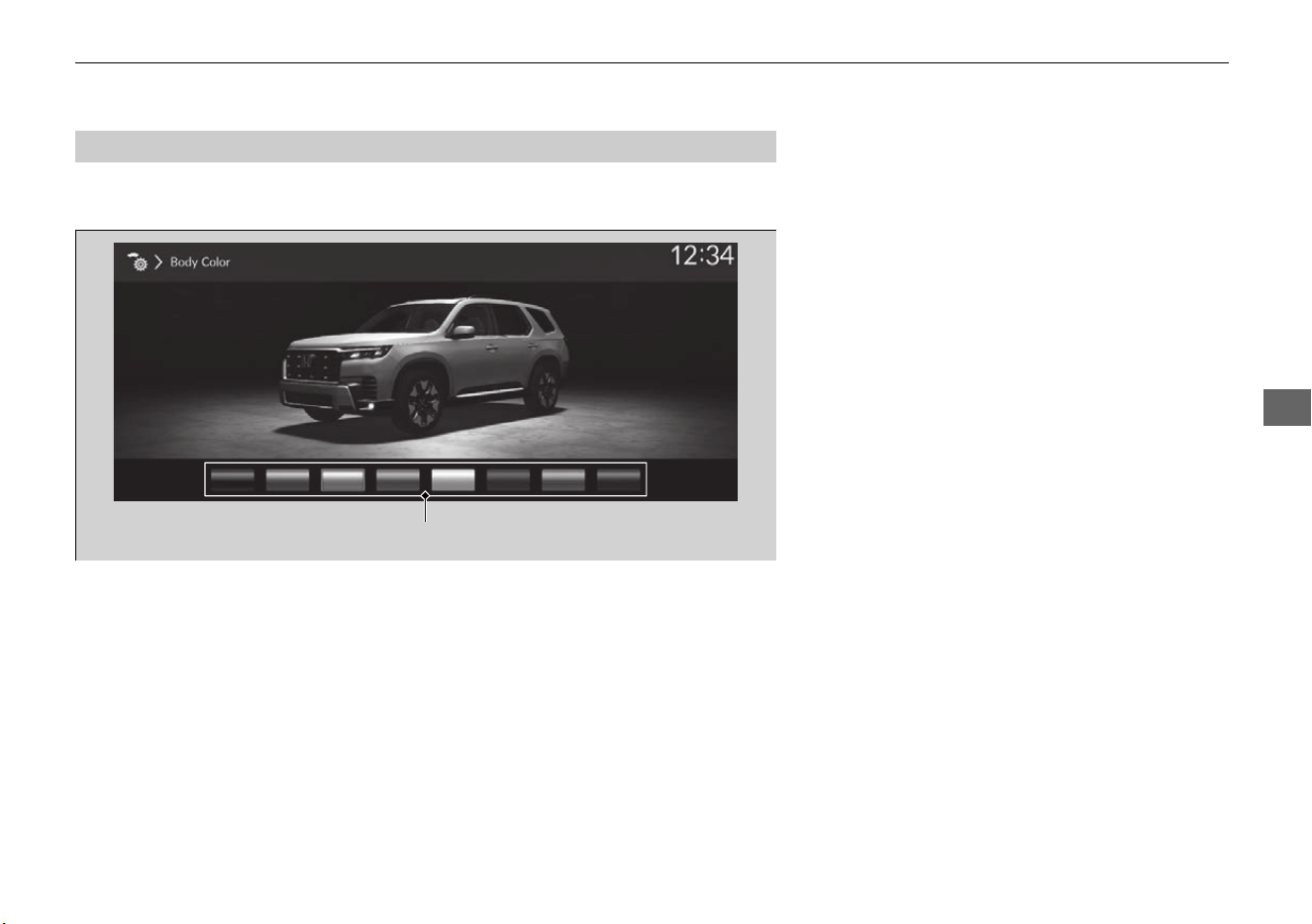
367
uuCustomized Featuresu
Features
You can change the body color of the vehicle image on the Vehicle Settings
screen.
1. Select Menu.
2. Select Body Color.
3. Select desired color.
■
Vehicle Color Settings
Color
26 PILOT-31T906300.book 367 ページ 2025年10月8日 水曜日 午前11時43分
368
uuCustomized FeaturesuDefaulting All the Settings
Features
Defaulting All the Settings
Reset all the menu and customized settings as the factory defaults.
Only the Owner user can execute this command.
If current profile is not the Owner user, please switch users.
2 Switching Users P. 322
1. Select Home.
2. Select General Settings.
3. Select System.
4. Select Factory Data Reset.
u A confirmation message appears on the screen.
5. Select Continue.
6. Select Reset again to reset the settings.
u The system will reboot.
1. Select Home.
2. Select Vehicle Settings.
3. Select Menu.
4. Select Default All.
5. Select Yes.
■
Defaulting System Settings
■
Defaulting Vehicle Settings
1Defaulting All the Settings
When you transfer the vehicle to a third-party, reset
all settings to default and delete all personal data.
If you perform Factory Data Reset, it will reset the
preinstalled apps to their factory default.
If you perform Factory Data Reset, you cannot use
the HondaLink® because it goes offline.
2 HondaLink® P. 300
26 PILOT-31T906300.book 368 ページ 2025年10月8日 水曜日 午前11時43分
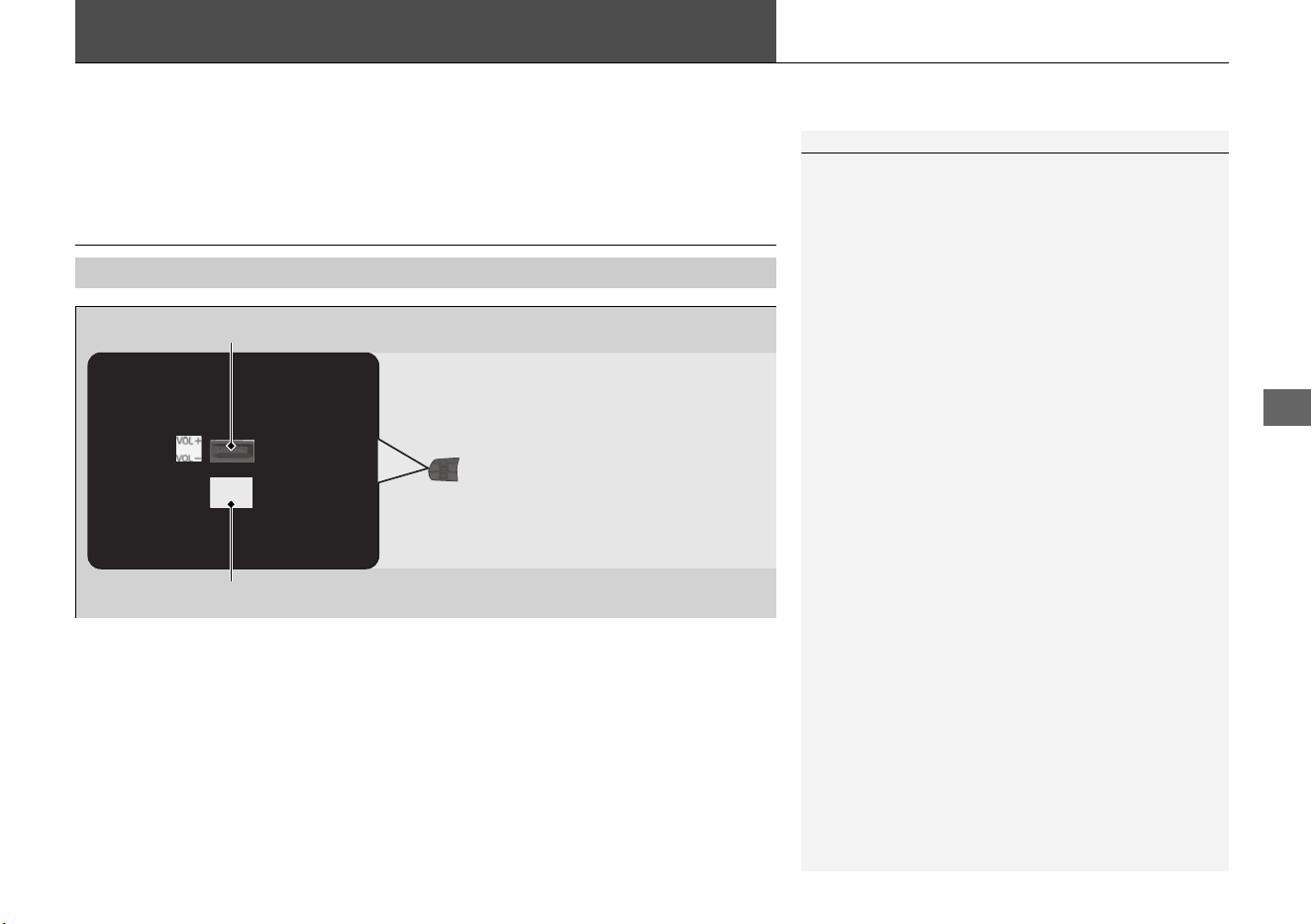
369
Continued
Features
Bluetooth® HandsFreeLink®
Bluetooth® HandsFreeLink® (HFL) allows you to place and receive phone calls using
your vehicle’s audio system without handling your cell phone.
Using HFL
■
HFL Buttons
1Bluetooth® HandsFreeLink®
Place your phone where you can get good reception.
To use HFL, you need a Bluetooth®-compatible cell
phone. For a list of compatible phones, pairing
procedures, and special feature capabilities:
• U.S.: Visit https://mygarage.honda.com/s/honda-
handsfreelink-compatibility-check, or call 1-888-
528-7876.
• Canada: Call 1-855-490-7351.
To use the system, the Bluetooth setting must be
On.
If there is an active connection to Apple CarPlay, HFL
is unavailable.
Voice control tips
• Aim the vents away from the ceiling and close the
windows, as noise coming from them may interfere
with the microphones.
• If the microphones pick up voices other than yours,
the command may be misinterpreted.
• To change the volume level, the volume level is able
to change by the audio system’s volume.
VOL(+/VOL(- (Volume) Switch
Left Selector Wheel
26 PILOT-31T906300.book 369 ページ 2025年10月8日 水曜日 午前11時43分
uuBluetooth® HandsFreeLink®uUsing HFL
370
Features
Left Selector Wheel: Roll up or down to select Phone on the driver information
interface, and then press the left selector wheel.
1Bluetooth® HandsFreeLink®
Bluetooth® Wireless Technology
The Bluetooth® word mark and logos are registered
trademarks owned by Bluetooth SIG, Inc., and any
use of such marks by Honda Motor Co., Ltd., is under
license. Other trademarks and trade names are those
of their respective owners.
HFL Limitations
An incoming call on HFL will interrupt the audio
system when it is playing. It will resume when the call
is ended.
26 PILOT-31T906300.book 370 ページ 2025年10月8日 水曜日 午前11時43分
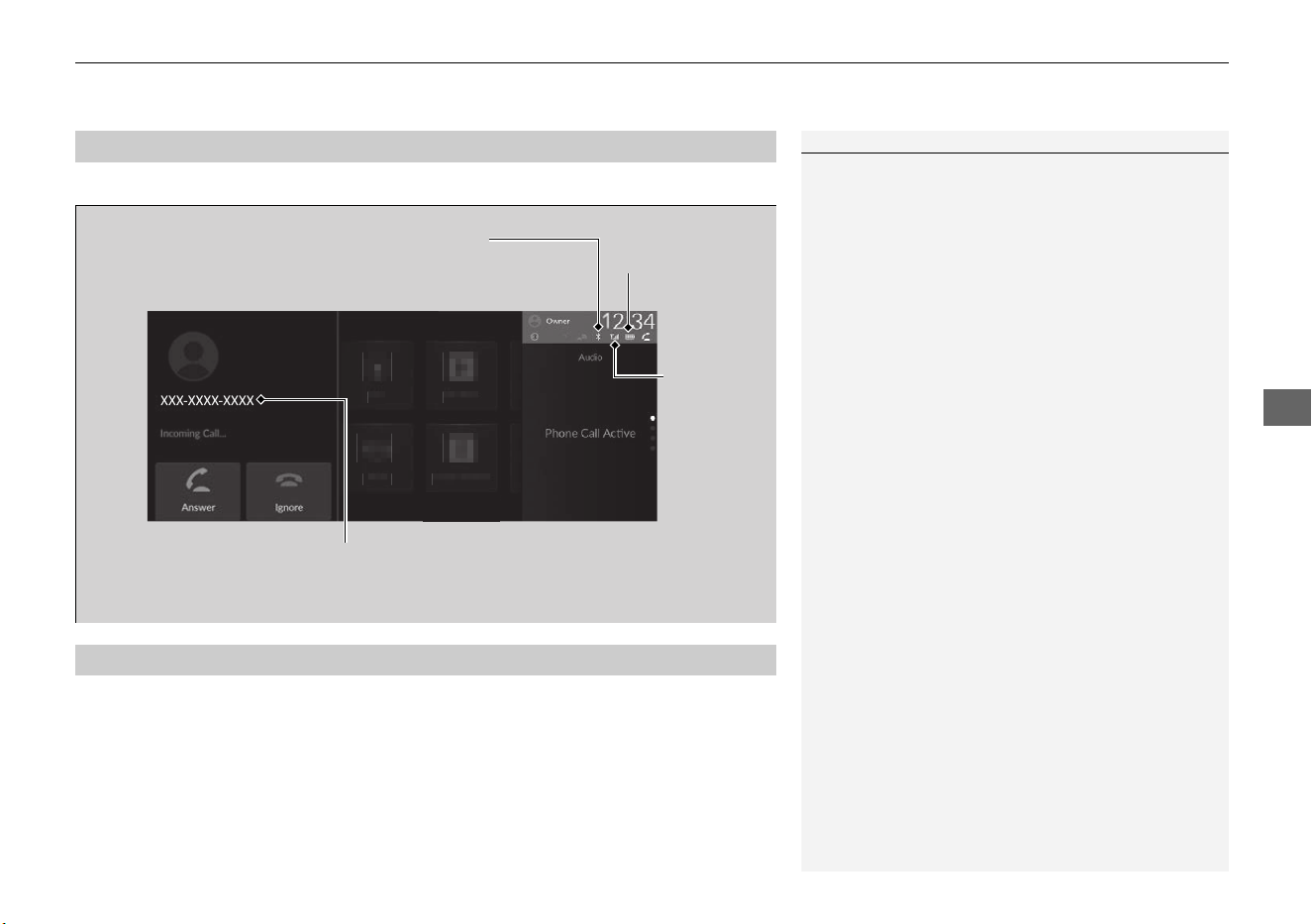
371
uuBluetooth® HandsFreeLink® uUsing HFL
Features
The audio/information screen notifies you when there is an incoming call.
Certain manual functions are disabled or inoperable while the vehicle is in motion.
You cannot select a grayed-out option until the vehicle is stopped.
■
HFL Status Display
1HFL Status Display
The information that appears on the audio/
information screen varies between phone models.
■
Limitations for Manual Operation
Bluetooth® Indicator
Appears when your phone is
connected to HFL.
Signal
Strength
Battery Level
Status
Caller’s Name (if registered)/
Caller’s Number (if not registered)
26 PILOT-31T906300.book 371 ページ 2025年10月8日 水曜日 午前11時43分
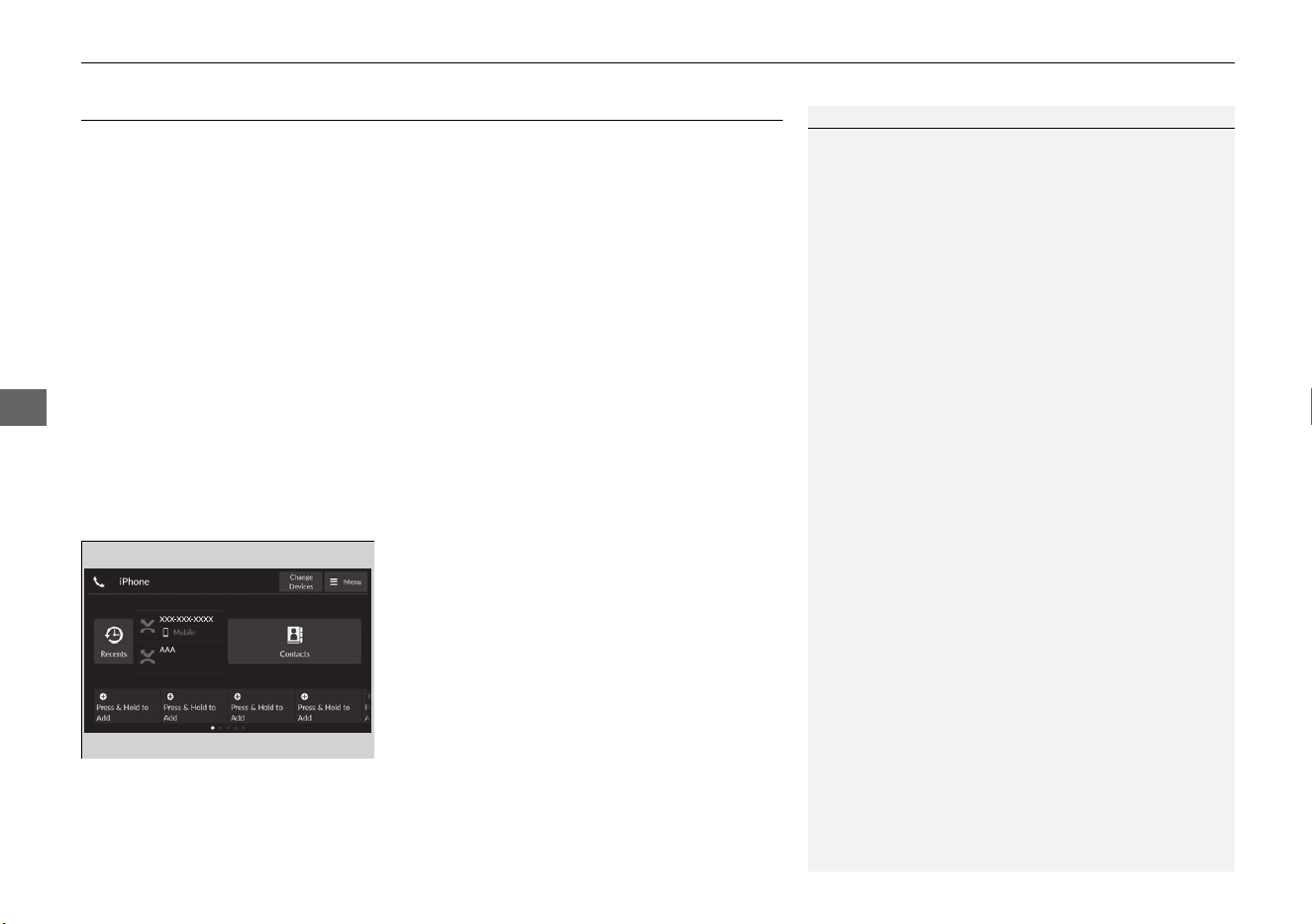
372
uuBluetooth® HandsFreeLink®uHFL Menus
Features
HFL Menus
The power mode must be in ACCESSORY or ON to use the system.
■
Phone menu screen
1. Select Home.
2. Select Phone.
3. Select Menu.
• Keypad: Enter a phone number to dial.
• Latest Call History: Set whether the history shortcut is displayed on the
phone screen.
• Auto Sync Phone: Set phonebook and call history data to be automatically
imported when a phone is paired to HFL.
• Auto Phone Call Transfer: Set calls to automatically transfer from your
phone to HFL when you enter the vehicle.
• Ringtone: Select a fixed ringtone or the one from the connected cell phone.
■
Phone screen
1. Select Home.
2. Select Phone.
• Recents
• (Existing entry list)
• Contacts
• Press & Hold to Add
• Change Devices
• Menu
1HFL Menus
To use HFL, you must first pair your Bluetooth®-
compatible cell phone to the system while the vehicle
is parked.
Some functions are limited while driving.
26 PILOT-31T906300.book 372 ページ 2025年10月8日 水曜日 午前11時43分
373
uuBluetooth® HandsFreeLink®uHFL Menus
Continued
Features
■
Bluetooth® setup
You can turn Bluetooth® function on and off.
1. Select Home.
2. Select General Settings.
3. Select Connections.
4. Select Manage Device Connections.
5. Select Options.
6. Set Bluetooth to On.
■
Phone Setup
26 PILOT-31T906300.book 373 ページ 2025年10月8日 水曜日 午前11時43分
uuBluetooth® HandsFreeLink®uHFL Menus
374
Features
■
To pair a cell phone (when there is no phone paired to the system)
1. Select Home.
2. Select Phone.
3. Select Connect New Device.
4. Make sure your phone is in search or discoverable mode, then select Search for
Devices.
u HFL automatically searches for a Bluetooth® device.
5. Select your phone when it appears on the list.
u If your phone still does not appear, search for Bluetooth® devices using your
phone.
From your phone, search for Vehicle Name.
6. The system gives you a pairing code on the audio/information screen.
u Confirm if the pairing code on the screen and your phone matches.
This may vary by phone.
7. Select Yes.
1Phone Setup
Your Bluetooth®-compatible phone must be paired
to the system before you can make and receive
hands-free calls.
Phone Pairing Tips:
• You cannot pair your phone while the vehicle is
moving.
• Up to six phones can be paired.
• Your phone’s battery may drain faster when it is
paired to the system.
Once you have paired a phone, you can see it
displayed on the screen with one or more icons on
the right side.
These icons indicate the following:
: The phone is compatible with Bluetooth® Audio
and HFL.
: The phone is compatible with Apple CarPlay.
: The phone is compatible with Android Auto.
26 PILOT-31T906300.book 374 ページ 2025年10月8日 水曜日 午前11時43分
Continued
375
uuBluetooth® HandsFreeLink®uHFL Menus
Features
■
To change the currently paired phone
1. Go to the phone screen.
2 Phone screen P. 372
2. Select Change Devices.
3. Select Go to Device List.
4. Select a phone to connect.
u HFL disconnects the connected phone and starts searching for another paired
phone.
5. Select Bluetooth or Apple CarPlay, Android Auto.
6. Select Yes.
■
To delete a paired phone
1. Go to the phone screen.
2 Phone screen P. 372
2. Select Change Devices.
3. Select Go to Device List.
4. Select a phone you want to delete.
5. Select Delete Device.
6. A confirmation message appears on the screen. Select Delete.
1To change the currently paired phone
If no other phones are found or paired when trying to
switch to another phone, the original phone is
connected again.
To pair other phones, select + Connect New Device
from the Bluetooth screen.
You can also switch the connection with the icon,
icon, or icon in the device list.
When , or is selected, cannot be selected.
26 PILOT-31T906300.book 375 ページ 2025年10月8日 水曜日 午前11時43分
uuBluetooth® HandsFreeLink®uHFL Menus
376
Features
You can change the ringtone setting.
1. Go to the phone menu screen.
2 Phone menu screen P. 372
2. Select Ringtone.
3. Select Vehicle or Phone.
If you get into the vehicle while you are on the phone, the call can be automatically
transferred to HFL.
1. Go to the phone menu screen.
2 Phone menu screen P. 372
2. Select Auto Phone Call Transfer.
3. Select On or Off.
■
Ringtone
■
Automatic Transferring
1Ringtone
Vehicle: The fixed ringtone sounds from the
speakers.
Phone: Depending on the make and model of the
cell phone, the ringtone stored in the phone will
sound if the phone is connected.
26 PILOT-31T906300.book 376 ページ 2025年10月8日 水曜日 午前11時43分
Continued
377
uuBluetooth® HandsFreeLink®uHFL Menus
Features
■
When Auto Sync Phone is set to ON:
When your phone is paired, the contents of its phonebook and call history are
automatically imported to the system.
■
Changing the Auto Sync Phone setting
1. Go to the phone menu screen.
2 Phone menu screen P. 372
2. Select Auto Sync Phone.
3. Select On or Off.
■
Automatic Import of Cellular Phonebook and Call History
1Automatic Import of Cellular Phonebook and Call History
On some phones, you will be asked to allow your
cellular phonebook to be imported.
When you select a name from the list in the cellular
phonebook, you can see category icons. The icons
indicate what types of numbers are stored for that
name.
On some phones, it may not be possible to import the
category icons to the system.
The phonebook is updated after every connection.
Call history is updated after every connection or call.
Home
Mobile Work
Other
Pref
26 PILOT-31T906300.book 377 ページ 2025年10月8日 水曜日 午前11時43分
378
uuBluetooth® HandsFreeLink®uHFL Menus
Features
To store a number as a favorite contact:
1. Select Home.
2. Select Phone.
3. Select and hold Press & Hold to Add.
4. Select the From Recents, From Contacts, or Using Enter Number.
5. Select the phone number.
5. Input number, and select Enter.
■
Favorite Contacts
From Recents, From Contacts
Using Enter Number
26 PILOT-31T906300.book 378 ページ 2025年10月8日 水曜日 午前11時43分

379
uuBluetooth® HandsFreeLink®uHFL Menus
Continued
Features
■
To edit a favorite contact
1. Select Home.
2. Select Phone.
3. Select and hold a favorite contact.
4. Select Edit Favorites.
5. Select a setting you want.
6. Select Enter or select type.
■
Add a favorite contact to homepage
1. Select Home.
2. Select Phone.
3. Select and hold a favorite contact.
4. Select Add to Home.
■
To delete a favorite contact
1. Select Home.
2. Select Phone.
3. Select and hold a favorite contact.
4. Select Remove Favorite.
26 PILOT-31T906300.book 379 ページ 2025年10月8日 水曜日 午前11時43分
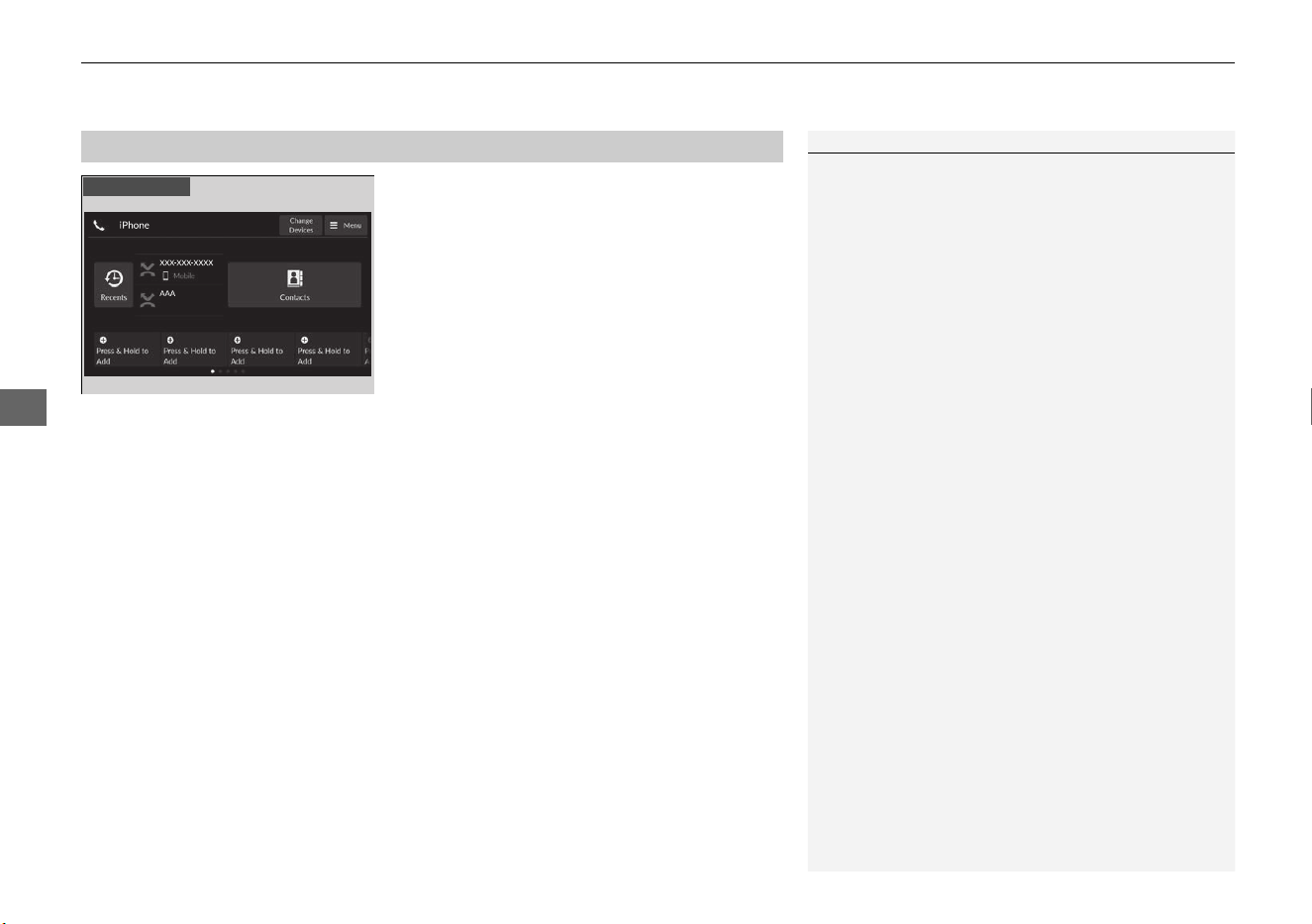
uuBluetooth® HandsFreeLink®uHFL Menus
380
Features
You can make calls by inputting any phone
number, or by using the imported
phonebook, call history, or favorite contact
entries.
■
Making a Call
1Making a Call
Once a call is connected, you can hear the voice of
the person you are calling through the audio
speakers.
While there is an active connection with Apple
CarPlay, phone calls cannot be made with
HandsFreeLink® and are only made from Apple
CarPlay.
Phone screen
26 PILOT-31T906300.book 380 ページ 2025年10月8日 水曜日 午前11時43分

381
uuBluetooth® HandsFreeLink®uHFL Menus
Continued
Features
■
To make a call using the imported phonebook
1. Go to the phone screen.
2 Phone screen P. 372
2. Select Contacts.
3. Select a name.
u You can sort by First Name or Last Name. Select the icon on the upper right
of the screen.
4. Select a number.
u Dialing starts automatically.
■
To make a call using a phone number
1. Go to the phone menu screen.
2 Phone menu screen P. 372
2. Select Keypad.
3. Select a number.
u Use the keyboard on the touch screen for entering numbers.
4. Select Call.
u Dialing starts automatically.
26 PILOT-31T906300.book 381 ページ 2025年10月8日 水曜日 午前11時43分
uuBluetooth® HandsFreeLink®uHFL Menus
382
Features
■
To make a call using the call history
Call history is stored by All, Dialed, Missed, and Received.
1. Go to the phone screen.
2 Phone screen P. 372
2. Select Recents.
u You can sort by All, Dialed, Missed, or Received. Select the icon on the
upper right of the screen.
3. Select a number.
u Dialing starts automatically.
■
To make a call using a favorite contact entry
1. Go to the phone screen.
2 Phone screen P. 372
2. Select desired favorite contact.
u Dialing starts automatically.
1To make a call using the call history
The call history appears only when a phone is
connected to the system.
26 PILOT-31T906300.book 382 ページ 2025年10月8日 水曜日 午前11時43分
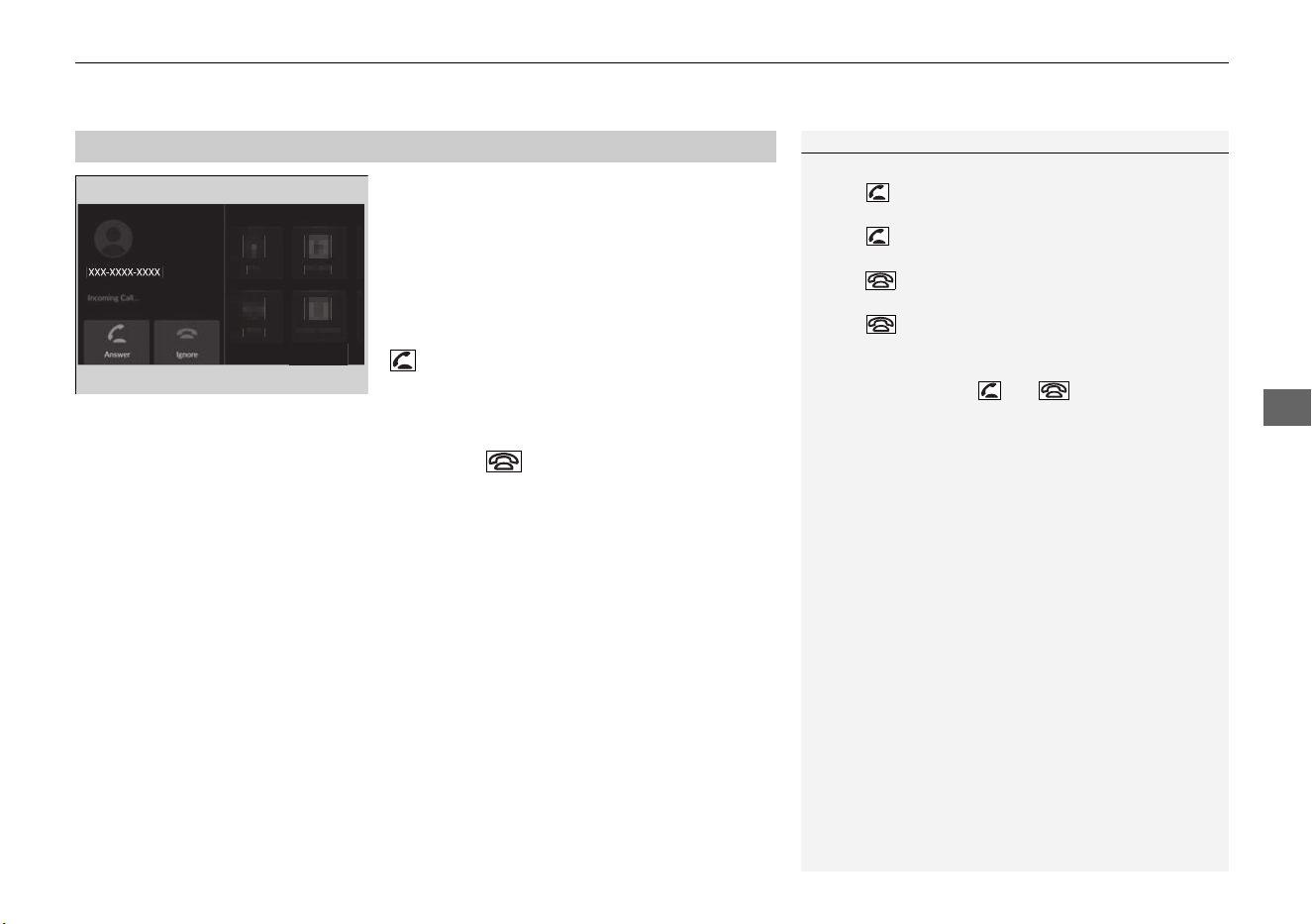
Continued
383
uuBluetooth® HandsFreeLink®uHFL Menus
Features
When there is an incoming call, an audible
notification sounds (if activated) and the
Incoming Call... screen appears.
You can answer the call using the left selector
wheel.
To answer the call, roll up or down to select
(answer) on the driver information
interface or head-up display
*
and then press
the left selector wheel.
u If you want to decline or end the call,
select (ignore) on the driver
information interface or head-up display
*
using the left selector wheel.
■
Receiving a Call
1Receiving a Call
Call Waiting
Select (answer) to put the current call on hold to
answer the incoming call.
Select using the left selector wheel to return to
the current call.
Select (ignore) to ignore the incoming call if you
do not want to answer it.
Select if you want to hang up the current call.
You can select the icons on the audio/information
screen instead of the and on the driver
information interface or head-up display
*
.
* Not available on all models
26 PILOT-31T906300.book 383 ページ 2025年10月8日 水曜日 午前11時43分
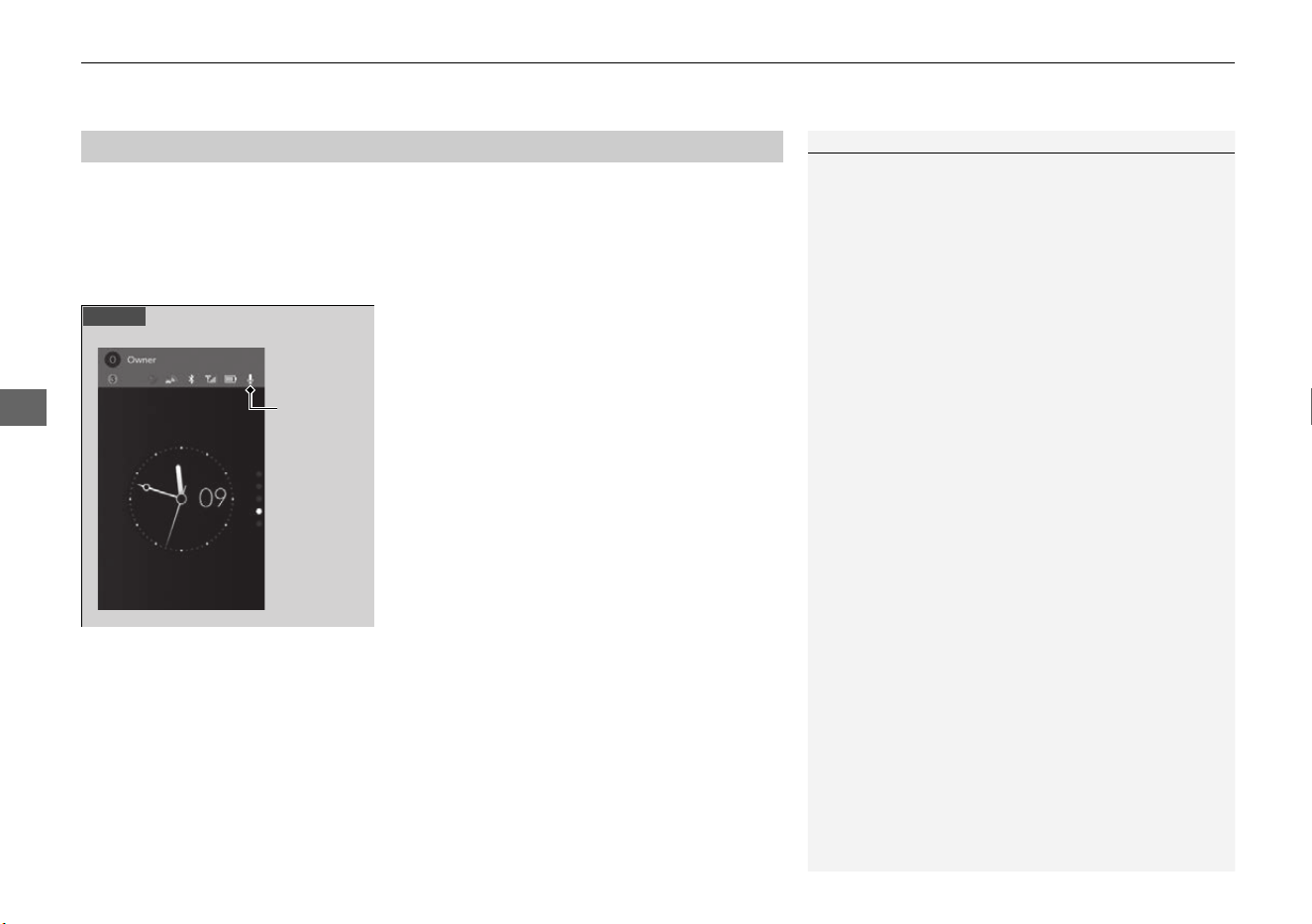
uuBluetooth® HandsFreeLink®uHFL Menus
384
Features
The following options are available during a call.
Mute: Mute your voice.
Transfer to Mobile: Transfer a call from the system to your phone.
Keypad: Send numbers during a call. This is useful when you call a menu-driven
phone system.
The available options are shown on the lower
half of the screen.
Select the option.
u The mute icon appears when Mute is
selected. Select Unmute to turn it off.
■
Options During a Call
1Options During a Call
You can select the icons on the audio/information
screen.
B-Zone
Mute Icon
26 PILOT-31T906300.book 384 ページ 2025年10月8日 水曜日 午前11時43分
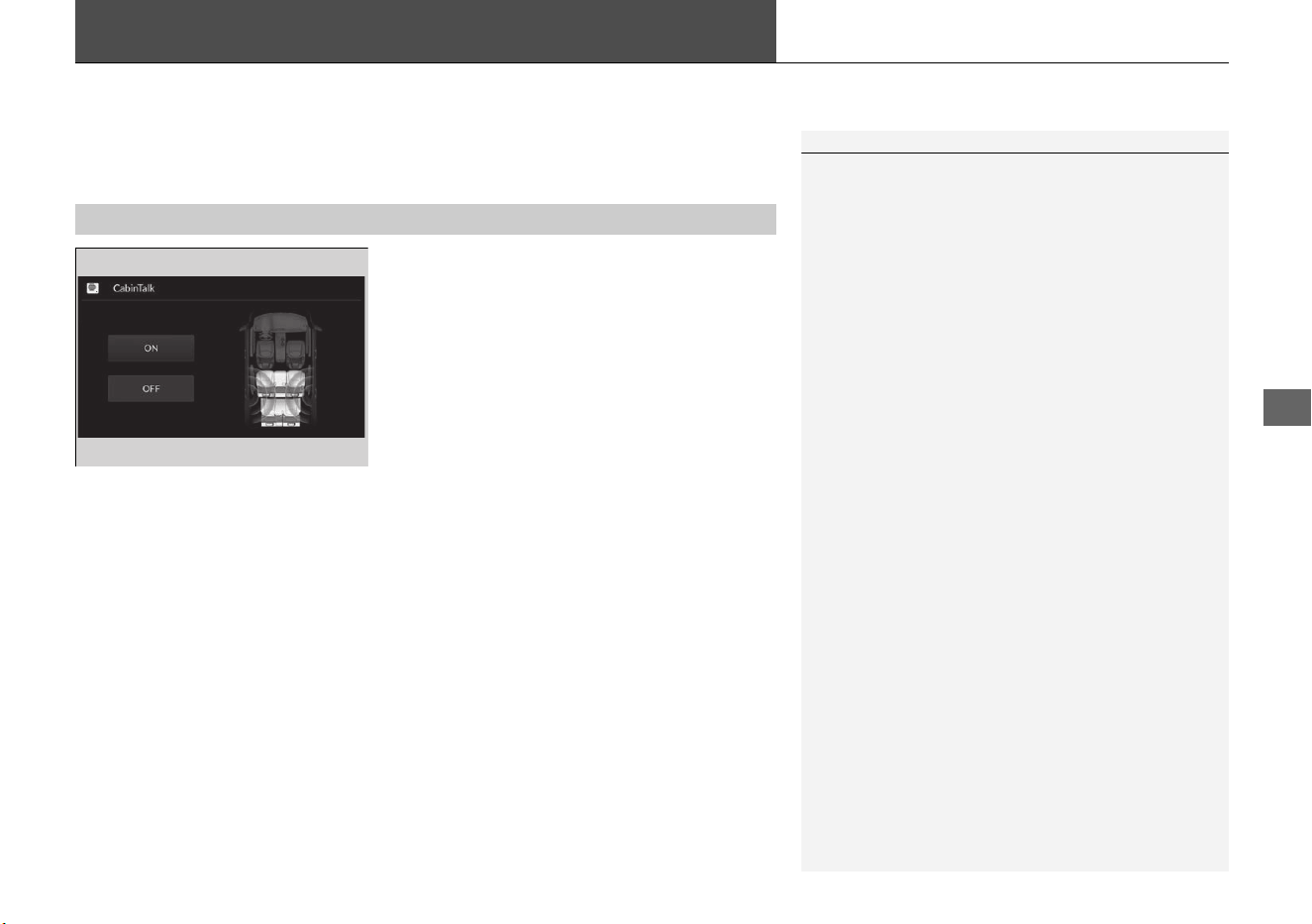
385
Features
CabinTalk®
Your audio system allows your, or the front passenger’s voice to be broadcast to the
second and third row seat’s passengers using the rear speakers.
1. Select Home.
2. Select CabinTalk.
u Select OFF to mute your voice.
■
How to use
1CabinTalk®
You can adjust the speaker volume by turning the
volume knob.
26 PILOT-31T906300.book 385 ページ 2025年10月8日 水曜日 午前11時43分

386
26 PILOT-31T906300.book 386 ページ 2025年10月8日 水曜日 午前11時43分
This page intentionally left blank.

387
Driving
This chapter discusses driving and refueling.
Before Driving ....................................... 388
Towing a Trailer .................................... 394
Off-Highway Driving Guidelines ......... 405
When Driving
Starting the Engine .......................... 410
Precautions While Driving................. 417
Automatic Transmission ................... 418
Shifting............................................ 419
Auto Idle Stop.................................. 427
Drive Mode System .......................... 433
Hill Descent Control System ............. 439
Vehicle Stability Assist
TM
(VSA®), aka Electronic
Stability Control (ESC), System..............441
Agile Handling Assist ....................... 443
Intelligent Variable Torque Management (i-
VTM4
TM
) AWD System
*
.................. 444
Tire Pressure Monitoring System (TPMS)
with Tire Fill Assist.......................... 445
Tire Pressure Monitoring System (TPMS) -
Required Federal Explanation ......... 447
Blind Spot Information System ......... 449
Honda Sensing® .................................... 453
Collision Mitigation Braking System
TM
(CMBS
TM
)....456
Low Speed Braking Control
*
............ 468
Road Departure Mitigation System.. 474
Adaptive Cruise Control (ACC) with Low Speed Follow.. 482
Lane Keeping Assist System (LKAS) .. 503
Traffic Jam Assist ............................. 514
Traffic Sign Recognition System.... 523
Front Sensor Camera ....................... 529
Radar Sensor ................................... 531
Sonar Sensors
*
.............................532
Braking
Brake System ................................... 533
Anti-lock Brake System (ABS) ........... 540
Brake Assist System ......................... 541
Parking Your Vehicle
When Stopped ................................ 542
Parking Sensor System
*
................... 544
Cross Traffic Monitor ....................... 548
Rear View Camera
*
...............................552
Multi View Camera System
*
.................554
Refueling........................................... 565
Fuel Economy and CO
2
Emissions.... 568
* Not available on all models
26 PILOT-31T906300.book 387 ページ 2025年10月8日 水曜日 午前11時43分
388
Driving
Before Driving
Driving Preparation
Check the following items before you start driving.
• Make sure there are no obstructions on the windows, door mirrors, exterior
lights, or other parts of the vehicle.
u Remove any frost, snow, or ice.
u Remove any snow on the roof, as this can slip down and obstruct your field of
vision while driving or fall off and impact other road users. If frozen solid,
remove ice once it has softened.
u When removing ice from around the wheels, be sure not to damage the wheel
or wheel components.
• Make sure the hood is securely closed.
u If the hood opens while driving, your front view will be blocked.
• Make sure the tires are in good condition.
u Check air pressures, and check for damage and excessive wear.
2 Checking and Maintaining Tires P. 604
• Make sure there are no people or objects behind or around the vehicle.
u There are blind spots from the inside.
■
Exterior Checks
1Exterior Checks
NOTICE
When doors are frozen shut, use warm water around
the door edges to melt any ice. Do not try to force
them open, as this can damage the rubber trim
around the doors. When done, wipe dry to avoid
further freezing.
Do not pour warm water into the key cylinder.
You will be unable to insert the key if the water
freezes in the hole.
Heat from the engine and exhaust can ignite
flammable materials left under the hood, causing a
fire. If you’ve parked your vehicle for an extended
period, inspect and remove any debris that may have
collected, such as dried grass and leaves that have
fallen or have been carried in for use as a nest by a
small animal. Also, check under the hood for leftover
flammable materials after you or someone else has
performed maintenance on your vehicle.
26 PILOT-31T906300.book 388 ページ 2025年10月8日 水曜日 午前11時43分
Continued
389
uuBefore DrivinguDriving Preparation
Driving
• Store or secure all items on board properly.
u Carrying too much cargo, or improperly storing it, can affect your vehicle’s
handling, stability, stopping distance, and tires, and make it unsafe.
2 Maximum Load Limit P. 391
• Do not pile items higher than the seatback height.
u They can block your view and may be thrown forward in the event of sudden
braking.
• Do not place anything in the front seat footwells. Make sure to secure the floor
mat.
u An object or unsecured floor mat can interfere with your brake and accelerator
pedal operation while driving.
• If you have any animals on board, do not let them move around in the vehicle.
u They may interfere with driving and a crash could occur.
• Securely close and lock all doors and the tailgate.
2 Locking/Unlocking the Doors from the Inside P. 166
• Adjust your seating position properly.
u Adjust the head restraint, too.
2 Seats P. 211
2 Adjusting the Front and Second Row Outer Seat Head Restraint Positions
P. 224
• Adjust the mirrors and steering wheel properly.
u Adjust them while sitting in the proper driving position.
2 Adjusting the Steering Wheel P. 207
2 Mirrors P. 208
■
Interior Checks
1Interior Checks
The headlight aim is set by the factory, and does not
need to be adjusted. However, if you regularly carry
heavy items in the cargo area or tow a trailer, have
the aiming readjusted at a dealer or by a qualified
technician.
26 PILOT-31T906300.book 389 ページ 2025年10月8日 水曜日 午前11時43分

390
uuBefore DrivinguDriving Preparation
Driving
• Be sure items placed on the floor behind the front seats cannot roll under the
seats.
u They can interfere with the driver’s ability to operate the pedals, the operation
of the seats, or the operation of the sensors under the seats.
• Everyone in the vehicle must fasten their seat belt.
2 Fastening a Seat Belt P. 48
• Make sure that the indicators in the instrument panel come on when you start the
vehicle, and go off soon after.
u Always have a dealer check the vehicle if a problem is indicated.
2 Indicators P. 96
26 PILOT-31T906300.book 390 ページ 2025年10月8日 水曜日 午前11時43分
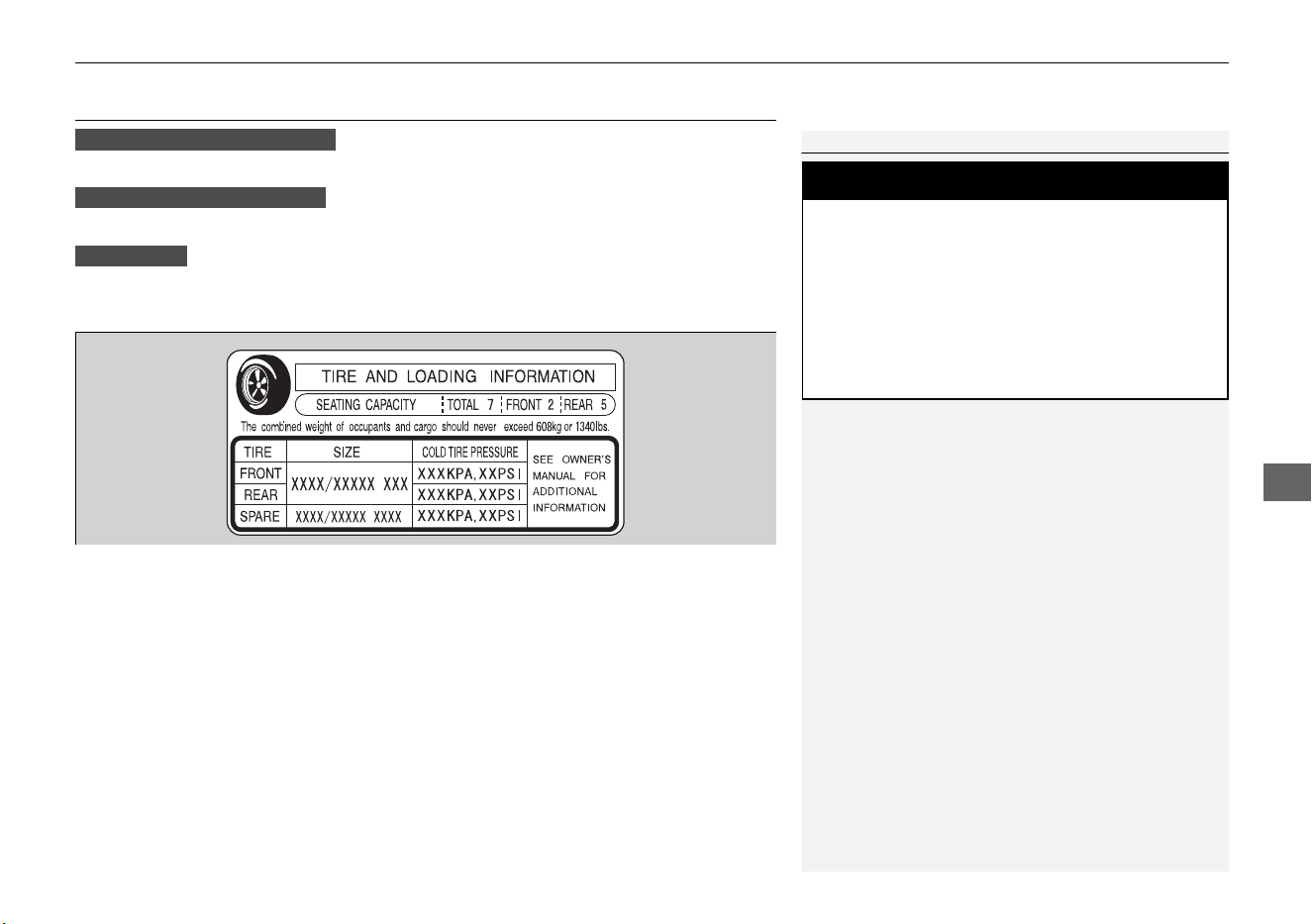
391
uuBefore DrivinguMaximum Load Limit
Continued
Driving
Maximum Load Limit
The maximum load for your vehicle is 1,173 lbs (532 kg).
The maximum load for your vehicle is 1,340 lbs (608 kg).
See the Tire and Loading Information label attached to the driver’s
doorjamb.
This figure includes the total weight of all occupants, cargo, and
accessories, and the tongue load if you are towing a trailer.
Steps for Determining Correct Load Limit -
(1) Locate the statement “The combined weight of occupants and
cargo should never exceed XXX kg or XXX lbs.” on your
vehicle’s placard.
(2) Determine the combined weight of the driver and passengers
that will be riding in your vehicle.
(3) Subtract the combined weight of the driver and passengers
from XXX kg or XXX lbs.
1Maximum Load Limit
Gross Vehicle Weight Rating (GVWR):
The maximum allowable weight of the vehicle, all
occupants, all accessories, all cargo, and the tongue
load.
2 Specifications P. 670
Gross Axle Weight Rating (GAWR):
The maximum allowable weight of the vehicle axle.
2 Specifications P. 670
3
WARNING
Overloading or improper loading
can affect handling and stability
and cause a crash in which you
can be hurt or killed.
Follow all load limits and other
loading guidelines in this manual.
Second row captain seat models
Second row bench seat models
All models
Label Example
26 PILOT-31T906300.book 391 ページ 2025年10月8日 水曜日 午前11時43分

392
uuBefore DrivinguMaximum Load Limit
Driving
(4) The resulting figure equals the available amount of cargo and
luggage load capacity. For example, if the “XXX” amount
equals 1,400 lbs. and there will be five 150 lb. passengers in
your vehicle, the amount of available cargo and luggage load
capacity is 650 lbs.
(1,400 - 750 (5 x 150) = 650 lbs.)
(5) Determine the combined weight of luggage and cargo being
loaded on the vehicle. That weight may not safely exceed the
available cargo and luggage load capacity calculated in step 4.
(6) If your vehicle will be towing a trailer, load from your trailer will
be transferred to your vehicle. Consult this manual to
determine how this reduces the available cargo and luggage
load capacity of your vehicle.
26 PILOT-31T906300.book 392 ページ 2025年10月8日 水曜日 午前11時43分
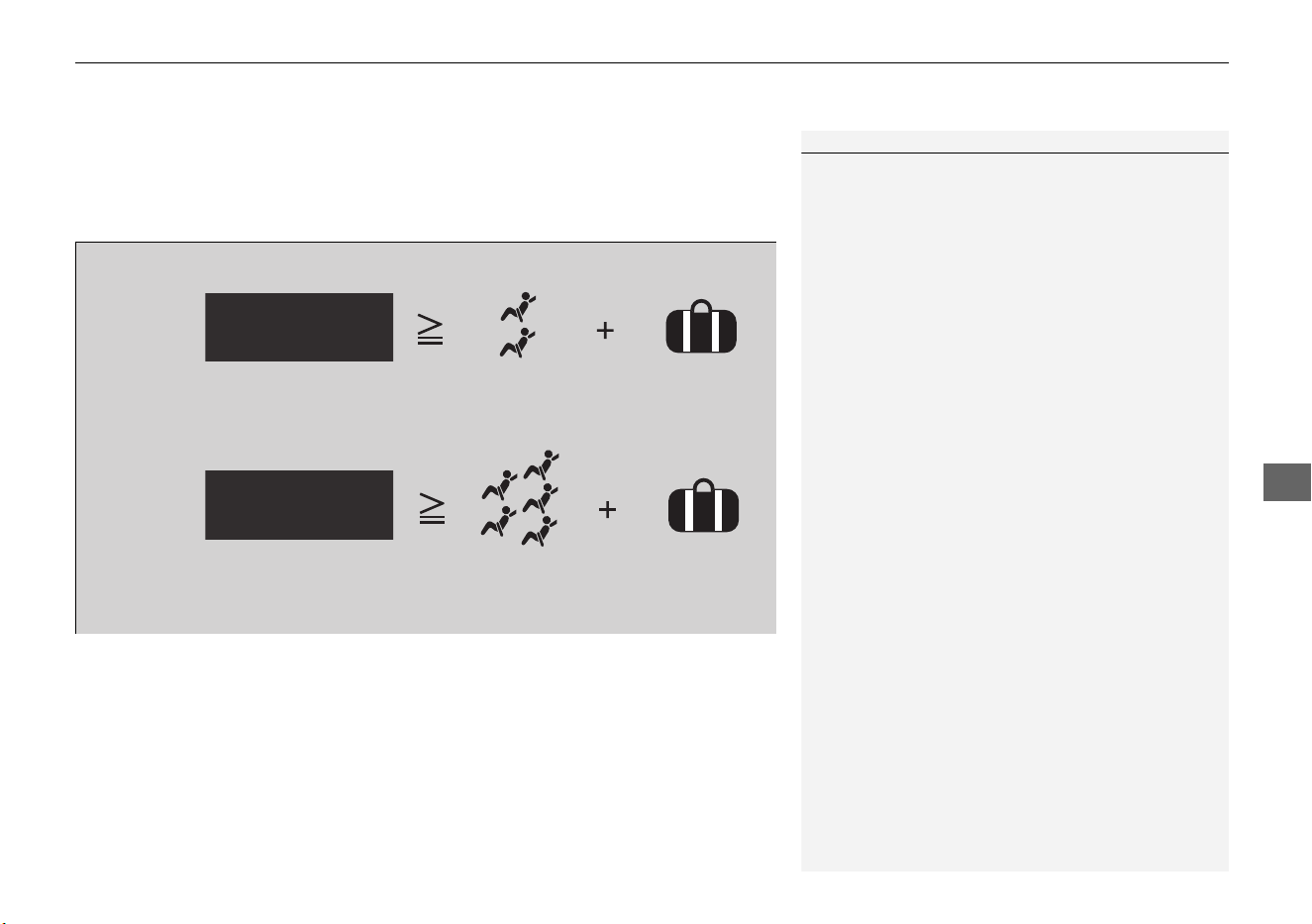
393
uuBefore DrivinguMaximum Load Limit
Driving
In addition, the total weight of the vehicle, all occupants,
accessories, cargo, and trailer tongue load must not exceed the
Gross Vehicle Weight Rating (GVWR) or the Gross Axle Weight
Rating (GAWR). Both are on a label on the driver’s doorjamb.
1Maximum Load Limit
Towing a Trailer:
See Towing a Trailer to determine whether your
vehicle is designed to tow a tailer.
2 Towing a Trailer P. 394
Load Limits Example
Example1
Max Load
1,173 lbs
(532 kg)
Passenger Weight
150 lbs x 2 = 300 lbs
(68 kg x 2 = 136 kg)
Cargo Weight
873 lbs
(396 kg)
Example2
Max Load
1,173 lbs
(532 kg)
Passenger Weight
150 lbs x 5 = 750 lbs
(68 kg x 5 = 340 kg)
Cargo Weight
423 lbs
(192 kg)
26 PILOT-31T906300.book 393 ページ 2025年10月8日 水曜日 午前11時43分
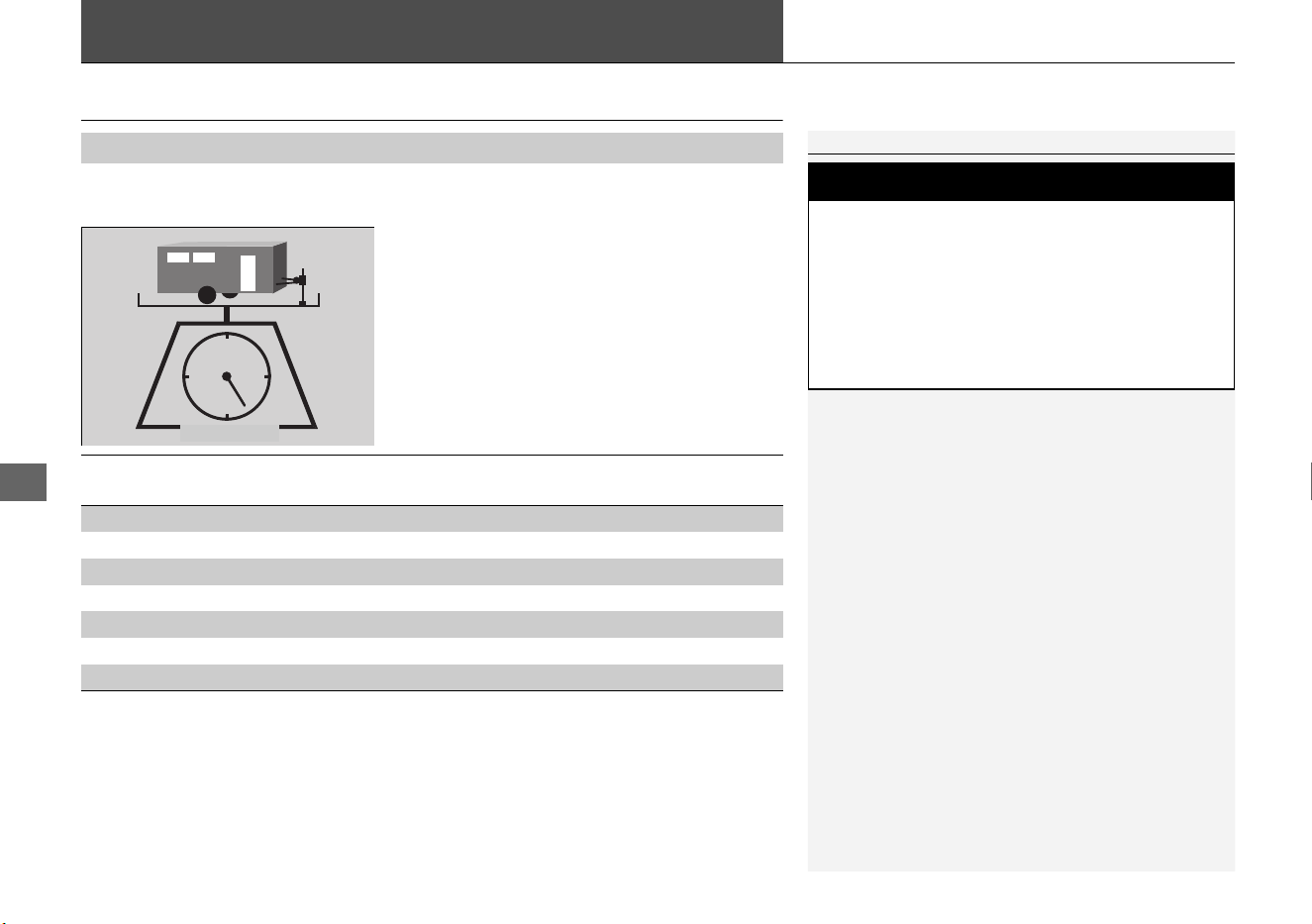
394
Driving
Towing a Trailer
Towing Preparation
Your vehicle can tow a trailer if you carefully observe the load limits, use the proper
equipment, and follow the towing guidelines. Check the load limits before driving.
■
Total trailer weight
Do not exceed the maximum allowable
weight of the trailer, cargo, and everything in
or on it shown in the table.
Towing loads in excess of this can seriously
affect vehicle handling and performance and
can damage the engine and drivetrain.
Each weight limit is calculated based on the following conditions:
• Occupants fill seats from the front of the vehicle to the back.
• Each occupant weighs 150 lbs (68 kg).
• Each occupant has 17.6 lbs (8 kg) cargo in the cargo area.
Any additional weight, cargo or accessories reduce the maximum trailer weight and
maximum tongue load.
■
Towing Load Limits
1Towing Load Limits
Check if all loads are within limits at a public scale.
If a public scale is not available, add the estimated
weight of your cargo load to the weight of your
trailer (as quoted by the manufacturer), and then
measure the tongue load with an appropriate scale or
tongue gauge or estimate it based on cargo
distribution.
Refer to the trailer owner’s manual for additional
information.
Break-in Period.
Avoid towing a trailer during your vehicle’s first 600
miles (1,000 km).
Never exceed the gross weight ratings.
Gross weight information
2 Vehicle Specifications P. 670
3
WARNING
Exceeding any load limit or improperly
loading your vehicle and trailer can cause a
crash in which you can be seriously hurt or
killed.
Check the loading of your vehicle and
trailer carefully before starting to drive.
Total Load
Number of
occupants
AWD models 2WD models
2 5,000 lbs (2,268 kg) 3,500 lbs (1,588 kg)
3 4,750 lbs (2,155 kg) 3,250 lbs (1,474 kg)
4 4,500 lbs (2,041 kg) 3,000 lbs (1,361 kg)
5 4,250 lbs (1,928 kg) 2,750 lbs (1,247 kg)
6 4,000 lbs (1,814 kg) 2,400 lbs (1,089 kg)
7 2,500 lbs (1,134 kg) 1,150 lbs (522 kg)
8
*
Towing not recommended
* Not available on all models
26 PILOT-31T906300.book 394 ページ 2025年10月8日 水曜日 午前11時43分
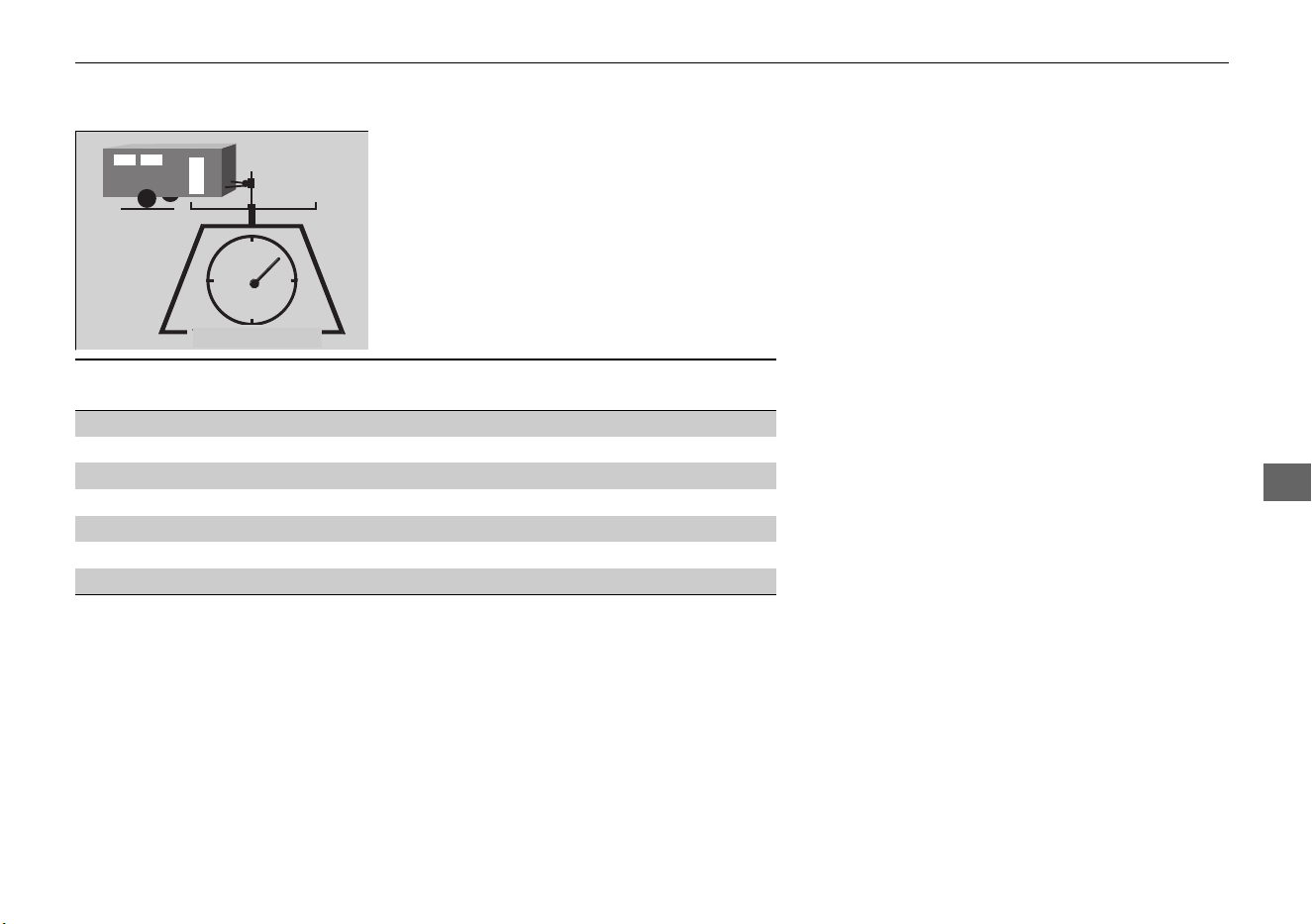
395
uuTowing a TraileruTowing Preparation
Continued
Driving
■
Tongue load
The weight of the tongue with a fully loaded
trailer on the hitch should be approximately:
Boat trailers: 5 – 15% of the total trailer
weight
Other trailers: 10 – 15% of total trailer weight
Tongue Load
Tongue Load
Number of
occupants
AWD models 2WD models
2 500 lbs (227 kg) 350 lbs (159 kg)
3 475 lbs (215 kg) 325 lbs (147 kg)
4 450 lbs (204 kg) 300 lbs (136 kg)
5 375 lbs (170 kg) 275 lbs (125 kg)
6 250 lbs (113 kg) 240 lbs (109 kg)
7 125 lbs (57 kg) 115 lbs (52 kg)
8
*
Towing not recommended
* Not available on all models
26 PILOT-31T906300.book 395 ページ 2025年10月8日 水曜日 午前11時43分
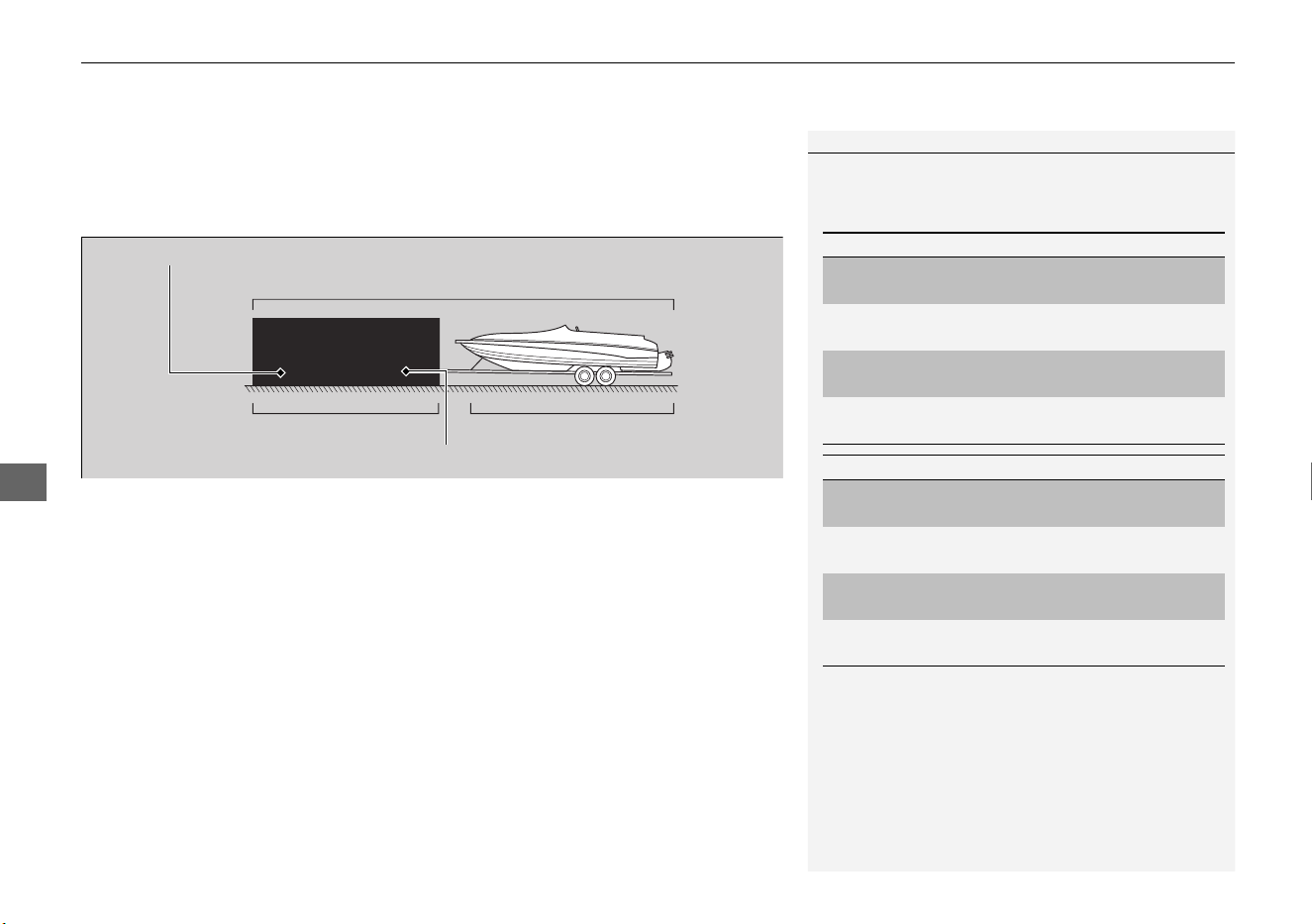
uuTowing a TraileruTowing Preparation
396
Driving
■
How to weigh the trailer loads using the public scale
Check each weight in the order indicated as shown.
Refer to the table on the right for each weight’s limit except for the tongue load.
2 Tongue load P. 395
• If you cannot weigh the rear axle, subtract 1 from 2.
• The maximum gross combined weight (4) decreases by 2% for every 1,000 feet
(305 meters) of elevation.
• To calculate the tongue load, subtract 5 from 6.
• Refer to the trailer owner’s manual for additional information.
1How to weigh the trailer loads using the public scale
Fully load the vehicle and trailer. An attendant who
watches the scale is needed as all occupants should
stay in the vehicle.
If a public scale is not available, add the estimated
weight of your cargo load to the weight of your
trailer (as quoted by the manufacturer), and then
measure the tongue load with an appropriate scale or
tongue gauge or estimate it based on cargo
distribution.
Weight limit for 2WD models AWD models
Front gross axle
2,976 lbs
(1,350 kg)
2,998 lbs
(1,360 kg)
Gross vehicle
5,963 lbs
(2,705 kg)
6,195 lbs
(2,810 kg)
Rear gross axle
3,164 lbs
(1,435 kg)
3,340 lbs
(1,515 kg)
Gross combined
8,444 lbs
(3,830 kg)
10,141 lbs
(4,600 kg)
Weight limit for Models with trailer hitch
Front gross axle
2,998 lbs
(1,360 kg)
Gross vehicle
6,195 lbs
(2,810 kg)
Rear gross axle
3,384 lbs
(1,535 kg)
Gross combined
10,141 lbs
(4,600 kg)
1. Front gross axle weight.
2. Gross vehicle weight.
4. Gross combined weight.
3. Rear gross axle weight.
5. Hitched trailer weight.
6. Unhitched trailer weight.
26 PILOT-31T906300.book 396 ページ 2025年10月8日 水曜日 午前11時43分
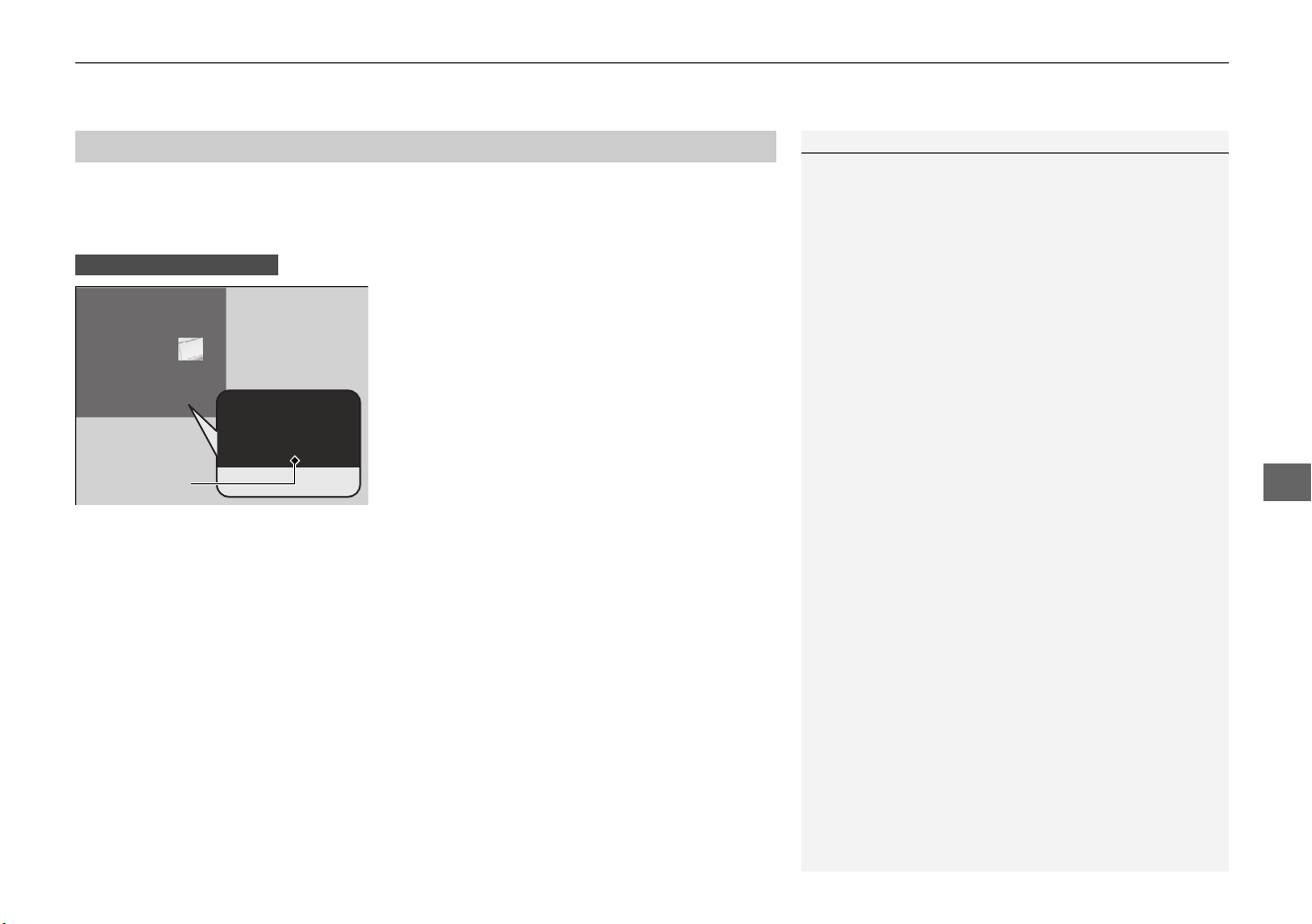
Continued
397
uuTowing a TraileruTowing Preparation
Driving
Towing generally requires a variety of supplemental equipment.
To ensure the best quality, we recommend that you purchase Honda equipment
whenever possible.
Your vehicle has a class 3 trailer hitch as
standard equipment.
2 Trailer brakes P. 398
■
Towing Equipment and Accessories
1Towing Equipment and Accessories
Make sure that all equipment is properly installed and
maintained, and that it meets federal, state, province/
territory, and local regulations.
Consult your trailer sales or rental agency if any other
items are recommended or required for your towing
situation.
Consult your trailer maker for proper installation and
setup of the equipment.
Improper installation and setup can affect the
electrical components, handling, stability, and
braking performance of your vehicle.
The lighting and wiring of trailers can vary by type
and brand. If a connector is required, it should only
be installed by a qualified technician.
Trailer packages and products available at a dealer.
• Ball mount kit.
• Hitch harness kit
• Trailer hitch kit
2 Trailer brakes P. 398
Models with trailer hitch
Trailer hitch
26 PILOT-31T906300.book 397 ページ 2025年10月8日 水曜日 午前11時43分
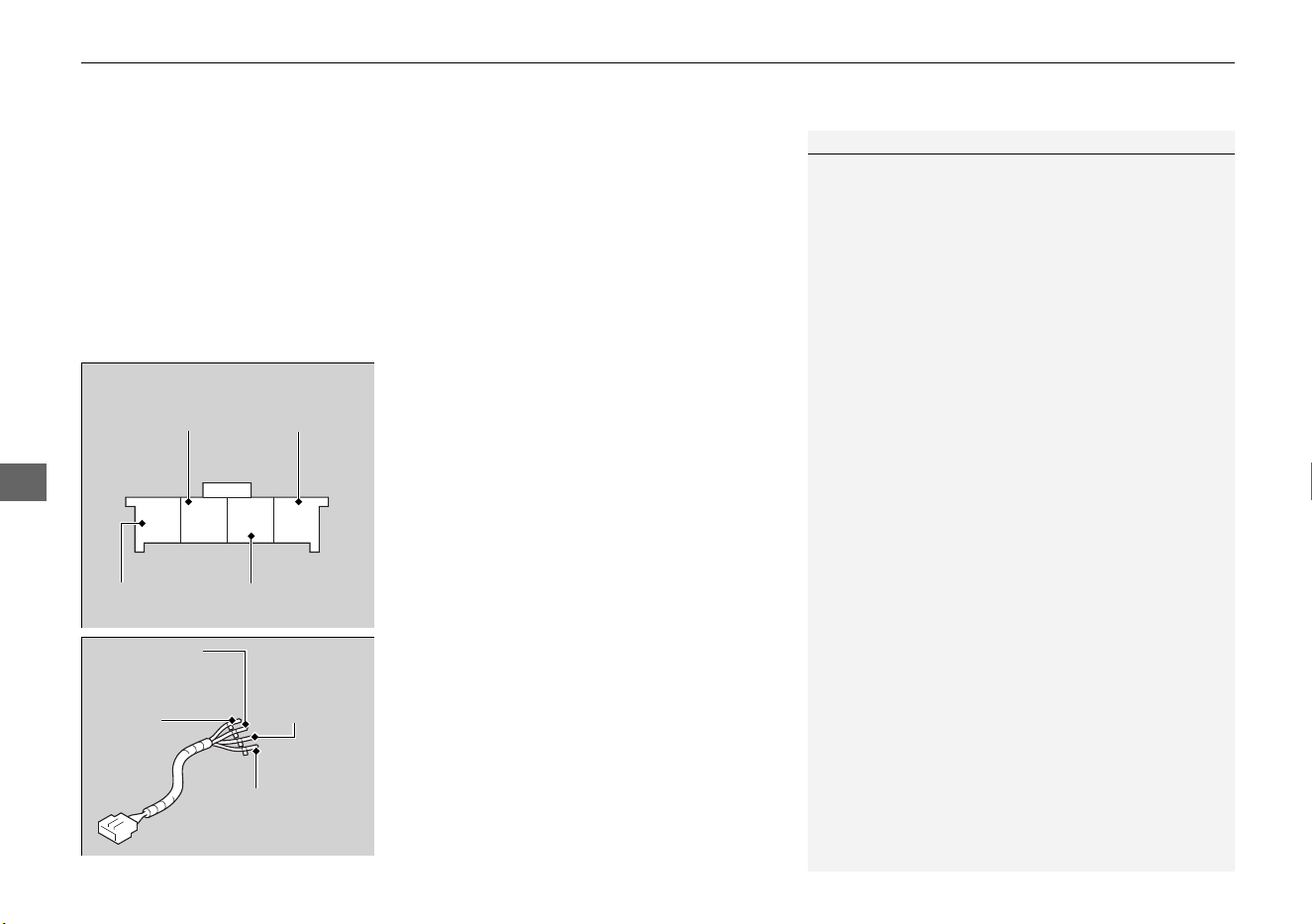
uuTowing a TraileruTowing Preparation
398
Driving
■
Trailer brakes
Recommended for any trailer with a total weight of 1,000 lbs (450 kg) or more:
There are two common types of trailer brakes: surge and electric. Surge brakes are
common for boat trailers, since the brakes will get wet.
If you choose electric brakes, be sure they are electronically actuated. Do not
attempt to attach trailer brakes to your vehicle’s hydraulic system, as it will lower
braking effectiveness and create a potential hazard.
The 4-pin gray connector installed in your vehicle has all of the circuits required to
install most electric trailer brake controllers.
Have a qualified mechanic install your trailer
brake controller following the trailer brake
controller manufacturer’s instructions. Failure
to properly install the trailer brake controller
may increase the distance it takes for you to
stop your vehicle when towing a trailer.
The trailer hitch harness is used to install the
controller for the electric trailer brakes.
Insert the trailer brake fuse into the engine
compartment fuse box.
2 Engine Compartment Fuse Box P. 654
1Trailer brakes
The 4-pin gray connector is located under the
dashboard near the driver’s side interior fuse box.
Electric Brake
(Pink)
Ground (Black)
+B (Green) (20A)
Stop (Violet)
Trailer brake controller
connector’s terminals:
Electric Brake
(Brown)
+B (20A)
(Blue)
Ground
(Black)
Brake Lights
(Sky Blue)
26 PILOT-31T906300.book 398 ページ 2025年10月8日 水曜日 午前11時43分
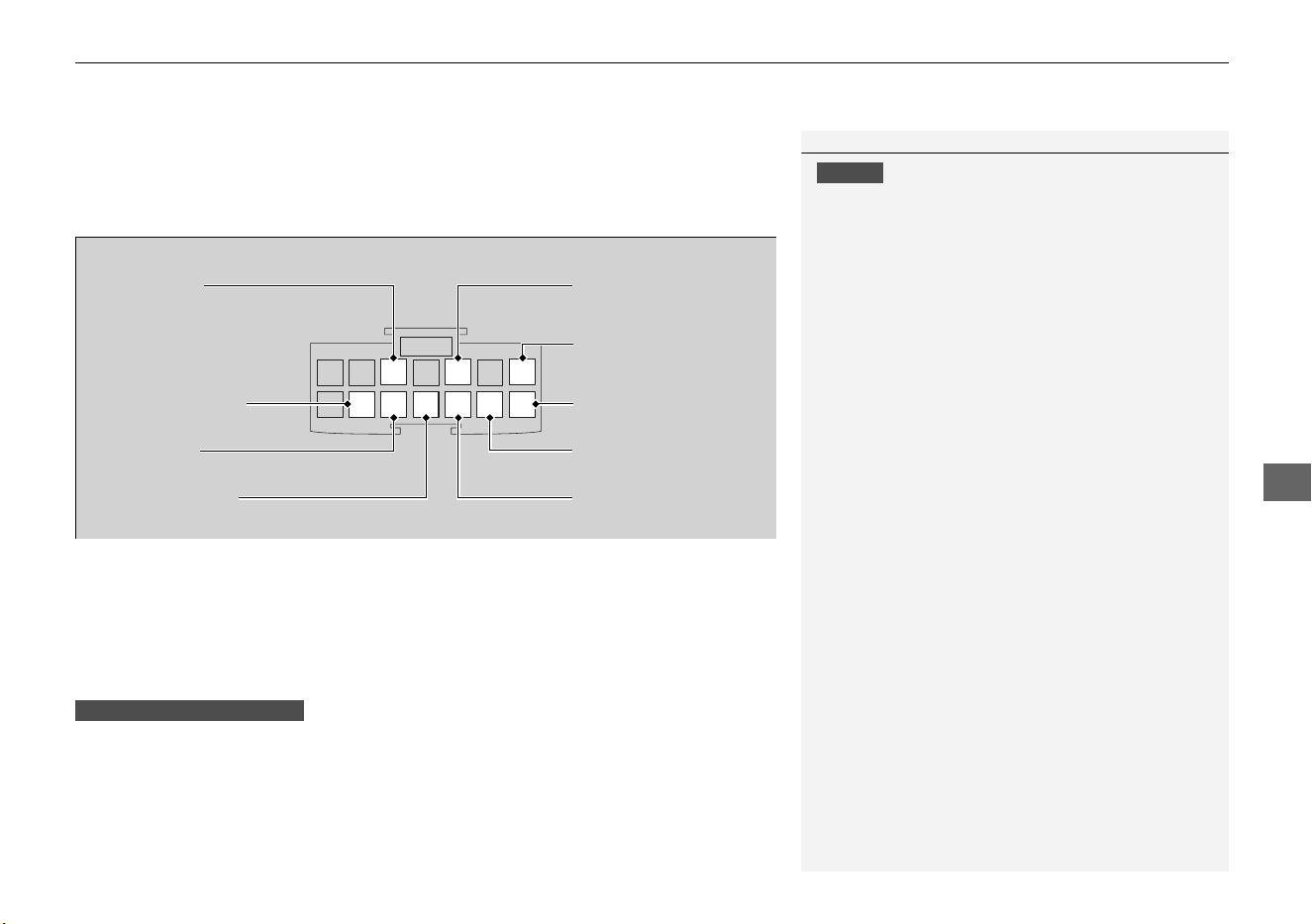
Continued
399
uuTowing a TraileruTowing Preparation
Driving
■
Trailer light
Trailer lights and equipment must comply with federal, state, province/territory, and
local regulations. Check with your local trailer sales or rental agency for the
requirements in the area where you plan to tow.
We recommend that you have a dealer install a Honda wiring harness and converter.
They are designed for your vehicle. Failure to use a non-Honda trailer lighting
harness and converter could damage other components.
The lighting and wiring of trailers can vary by type and brand. If a connector is
required, it should only be installed by a qualified technician.
■
Hitches
The hitch must be of an approved type and properly bolted to the underbody.
1Trailer light
NOTICE
Use only Honda genuine electrical connections.
Do not connect the trailer lamp wiring directly to the
vehicle’s tail lamp. Doing so may damage the
vehicle’s other electrical components, resulting in
malfunction.
The trailer lighting connector is located behind the
left side panel in the cargo area.
Trailer Brake
(Pink)
+B Trailer Main
(Light Blue)
+B Trailer Charge
(Yellow)
IG2 Option
(Red)
Back Light
(Gray)
Trailer Small Light
(Light Green)
Brake Signal
(Violet)
Pins’ wiring color codes and their purposes:
Right Turn Signal
(B
ro
wn)
Left Turn Signal
(Pink)
Models without trailer hitch
26 PILOT-31T906300.book 399 ページ 2025年10月8日 水曜日 午前11時43分

400
uuTowing a TraileruTowing Preparation
Driving
■
Weight distribution hitches
Your vehicle is designed to tow without the need for a load distributing hitch. If you
wish to use one, please consult your trailer maker for proper installation and set-up.
Improper set-up could degrade the handling, stability, and braking performance of
your vehicle.
■
Safety chains
Always use safety chains when you tow a trailer. Leave enough slack to allow the
trailer to turn corners easily, but do not allow the chains to drag on the ground.
■
Sway control
This device can be used if your trailer tends to sway. Your trailer maker can tell you
what kind of sway control you need and how to install it. Improper installation could
degrade the handling and stability of your vehicle.
■
Trailer mirrors
Many states, provinces and territories require special exterior mirrors when towing a
trailer. Install special mirrors whenever you cannot clearly see behind you, or if the
trailer creates a blind spot.
26 PILOT-31T906300.book 400 ページ 2025年10月8日 水曜日 午前11時43分
401
uuTowing a TraileruTrailer Stability Assist
Driving
Trailer Stability Assist
Helps stabilize the vehicle and trailer when the trailer severely sways.
■
How trailer stability assist works
When the vehicle and trailer become unstable while driving, trailer stability assist
determines the cause. If the trailer oscillation is detected as the cause, and the
swaying increases, the system applies the brakes or controls engine output to reduce
vehicle speed.
Both the vehicle and trailer brake lights come on automatically if you brake to
reduce vehicle speed.
1Trailer Stability Assist
Trailer stability assist is not a function that prevents
the vehicle and trailer from swaying. Avoid high
speeds, abrupt steering, improper trailer load, and
sudden braking to keep the trailer from swaying.
When swaying too severely, the system becomes
ineffective, and you may lose control of your vehicle,
causing the trailer to roll over or get damaged.
2 Driving Safely with a Trailer P. 402
Trailer towing sway is caused by:
• Crosswinds
• Improper tongue load
• Excessive Speed
The VSA® system indicator blinks during the trailer
stability assist operation.
2 VSA® Operation P. 441
26 PILOT-31T906300.book 401 ページ 2025年10月8日 水曜日 午前11時43分
402
uuTowing a TraileruDriving Safely with a Trailer
Driving
Driving Safely with a Trailer
• Have the trailer properly serviced and keep it in good condition.
• Make sure that all the weights and load in the vehicle and trailer are within limits.
2 Towing Load Limits P. 394
• Securely attach the hitch, safety chains, and other necessary parts to the trailer.
• Securely store all the items in and on the trailer so that they do not shift while
driving.
• Check if the lights and brakes on the trailer are working properly.
• Check the pressure of the trailer tires, including the spare.
• Turn off the Auto Idle Stop system using the Auto Idle Stop OFF button. The
trailer weight can affect your vehicle’s brake effectiveness if Auto Idle Stop is
activated on a hill while towing a trailer.
2 Auto Idle Stop System ON/OFF P. 428
• Select TOW mode for optimized transmission operation when towing a trailer.
2 Drive Mode System P. 433
• If TOW mode is not selected, turn off the rear parking sensor system through the
rear sensor setting. It may alert if it detects the towed object as an obstacle.
2 Customized Features P. 346
• If TOW mode is not selected, turn off the rear Low Speed Braking Control
through the rear sensor setting. It may activate if it detects the towed object as an
obstacle.
2 Customized Features P. 346
■
Things You Need To Know Before Towing a Trailer
1Driving Safely with a Trailer
Operating speed when towing a trailer must not
exceed 62 mph (100 km/h).
Parking
In addition to the normal precautions, place wheel
chocks at each of the trailer’s tires.
Remember to unhitch the trailer before changing a
flat tire. Ask the trailer sales or rental agency where
and how to store the trailer’s spare tire.
Models with parking sensor system
Models with Low Speed Braking Control
26 PILOT-31T906300.book 402 ページ 2025年10月8日 水曜日 午前11時43分
403
uuTowing a TraileruDriving Safely with a Trailer
Driving
• Drive slower than normal.
• Obey posted speed limits for vehicles with trailers.
• Use the (D position when towing a trailer on level roads.
• Turn more slowly and with a wider turning arc than normal.
• Allow more time and distance for braking.
• Do not brake or turn suddenly.
• Monitor your temperature gauge. If it nears the red (H) mark, turn off the climate
control system and reduce speed. Pull to the side of the road safely to cool down
the engine if necessary.
• Change the gear position to
(S position if the transmission shifts frequently.
When retrieving a boat from the water, the sequential shift mode
(S is
recommended to utilize the transmission lower gears.
■
Towing Speeds and Gears
■
Turning and Braking
■
Driving in Hilly Terrain
■
Retrieving a Boat
1Towing Speeds and Gears
When towing a fixed-sided trailer (e.g., camper), do
not exceed 55 mph (88 km/h).
At higher speeds, the trailer may sway or affect
vehicle handling.
1Driving in Hilly Terrain
If the automatic transmission fluid temperature
exceeds the specified limit, the transmission will also
automatically up shift, even in the sequential shift
mode.
26 PILOT-31T906300.book 403 ページ 2025年10月8日 水曜日 午前11時43分
404
uuTowing a TraileruTowing Behind a Motorhome
Driving
Towing Behind a Motorhome
Your vehicle is not designed to be towed behind a motor home. If your vehicle needs
to be towed in an emergency, refer to the emergency towing information.
2 Emergency Towing P. 661
26 PILOT-31T906300.book 404 ページ 2025年10月8日 水曜日 午前11時43分
405
Driving
Off-Highway Driving Guidelines
General Information
Your vehicle has been designed primarily for use on pavement; however, its higher
ground clearance allows you to occasionally travel on unpaved roads. It is not
designed for trail-blazing, or other challenging off-highway activities.
If you decide to drive on unpaved roads, you will find that it requires somewhat
different driving skills and that your vehicle will handle somewhat differently than it
does on pavement. Pay attention to the precautions and tips in this section, and get
acquainted with your vehicle before leaving the pavement.
Important Safety Precautions
To avoid loss of control or rollover, be sure to follow all precautions and
recommendations:
• Be sure to store cargo properly and do not exceed your cargo load limits.
2 Maximum Load Limit P. 391
• Whenever you drive, make sure you and your passengers always wear seat belts.
• Keep your speed low, and never go faster than the conditions allow.
• It’s up to you to continually assess the situation and drive within the limits.
1Off-Highway Driving Guidelines
Failure to operate your vehicle correctly might result
in a crash or a rollover.
2 Important Handling Information P. 38
2 Precautions While Driving P. 417
Spinning the tires excessively can also damage the
intelligent variable torque management (i-VTM4
TM
)
AWD system
*
.
3
WARNING
Improperly operating this vehicle on or off-
pavement can cause a crash or rollover in
which you and your passengers could be
seriously injured or killed.
• Follow all instructions and guidelines in
this owner’s manual.
• Keep your speed low, and don’t drive
faster than conditions permit.
* Not available on all models
26 PILOT-31T906300.book 405 ページ 2025年10月8日 水曜日 午前11時43分
406
uuOff-Highway Driving GuidelinesuAvoiding Trouble
Driving
Avoiding Trouble
• Check Out Your Vehicle before you leave the pavement and make sure that all
scheduled maintenance has been completed. Pay special attention to the
condition of the tires, and check the tire pressures.
• Remember the route you choose presents limits (too steep or bumpy), you have
limits (driving skill and comfort), and your vehicle has limits (traction, stability, and
power). Failing to recognize these limits will likely put you and your passengers in
a hazardous situation.
• Accelerating and Braking should be done slowly and gradually. Trying to start
or stop too fast can cause a loss of traction and you could lose control.
• Avoiding Obstacles and Debris in the road reduces the likelihood of a rollover
or damage to your suspension or other components.
• Driving on Slopes increases your risk of a rollover, particularly if you attempt to
drive across a slope that is too steep. Going straight up or down a slope is usually
the safest. If you can’t clearly see all conditions or obstacles on a slope, walk it
before you drive it. If there is any doubt whether you can safely pass, don’t try it.
Find another route. If you get stuck when climbing, do not try to turn around.
Back down slowly following the same route you took up the hill.
• Crossing a Stream - Avoid driving through deep water. If you encounter water
in your route (a small stream or large puddle, for example), evaluate it carefully
before going ahead. Make sure it is shallow, flowing slowly, and has firm ground
underneath. If you are not sure of the depth or the ground, turn around and find
another route. Driving through deep water can also damage your vehicle. When
driving in water that reaches around half of the wheel height, water can get into
the transmission and differential, diluting the lubricant and causing an eventual
failure. It can also wash the grease out of the wheel bearings.
• If You Get Stuck, carefully go in the direction that you think will get you
unstuck. Do not spin the tires as this will only make things worse and could
damage the transmission. If you are unable to free yourself, your vehicle has front
and rear recovery points
*
to free the vehicle.
1Avoiding Trouble
Front Central Recovery Hook:
The front central recovery hook is located by the
underside of the front bumper.
Rear Recovery Hook:
Rear recovery hook is rated for off-road recovery.
Models with trailer hitch
Front Central
Recovery
Hook
Rear Recovery
Hook
* Not available on all models
26 PILOT-31T906300.book 406 ページ 2025年10月8日 水曜日 午前11時43分
407
uuOff-Highway Driving GuidelinesuOff-Highway Driving
Continued
Driving
Off-Highway Driving
Your vehicle is designed, built and equipped with systems and features to provide
you with exceptional driving performance off-highway. However, due to the risks to
both you and other road users, including the risk of injury or death from loss of
control or crash, if you engage in off-highway driving, it is important to take
precautions before doing so.
When driving off-highway, you should always obey the posted speed limits and
other traffic laws, reduce speed as needed for traffic and environmental conditions,
and not engage in driving behaviors that may create heightened risks for yourself
and any other off-highway users who may be present (even if you are unaware of
them).
Your vehicle’s TRAIL or SAND mode and other systems are designed for increased
performance off-highway. Use of these systems may delay the intervention of
vehicle safety systems designed to minimize the risk of a loss of traction or steering
control, and can cause your vehicle to handle differently than you might expect or
would experience under normal driving conditions on pavement. Use of these
systems will not make up for a lack of appropriate driver experience and skill, and
will not allow the driver to overcome risks created by:
• A lack of proper vehicle maintenance
• Less than ideal road conditions and/or unfamiliarity with the driving environment
• Other traffic or off-highway users
1Off-Highway Driving
NOTICE
The vehicle warranty does not cover any damage or
failure resulting from off-highway driving, crawling,
competitive climbing of any sort whatsoever, or use
on an off-road course or similar-type venue. See
warranty book for details.
2 TRAIL Mode
*
P. 436
Models with TRAIL and SAND mode
* Not available on all models
26 PILOT-31T906300.book 407 ページ 2025年10月8日 水曜日 午前11時43分

408
uuOff-Highway Driving GuidelinesuOff-Highway Driving
Driving
Off-highway driving requires special skills, knowledge and experience, as the safety
risks are greatly increased when the your vehicle is operated at its upper
performance abilities. As a responsible driver, you should not drive above your skill
limits or training, even if your vehicle’s performance levels would otherwise allow
you to do so. If you intend to engage in off-highway driving, Honda strongly
recommends that:
• You first obtain appropriate, professional training
• Turn off any devices or systems that may distract you from the driving task
Off-highway driving in general, results in greater wear and tear on the vehicle. If
your vehicle is not in top condition or if certain components, such as the brakes or
tires, have undue wear, those components could experience a loss of performance,
or fail, when engaging in off-highway driving. Therefore, Honda highly recommends
that you undertake more proactive and frequent maintenance than that required
under normal use and have your vehicle inspected at an authorized dealer (and all
necessary repairs or adjustments made) before you engage in any off-highway
driving. In addition to any required maintenance, there are specific items and
protocols that you should pay special attention to before, during and after engaging
in any off-highway driving. Ultimately, the decision whether to engage in off-
highway driving is yours, and depending on your vehicle’s condition and prior usage,
the items and protocols listed below may or may not be sufficient to ensure a safe
driving experience.
BEFORE DRIVING
• Before off-highway driving, fill the engine oil up to the upper level.
• Recommend starting with full fuel tank and not allowing fuel to drop below ¼
tank while driving off-highway.
26 PILOT-31T906300.book 408 ページ 2025年10月8日 水曜日 午前11時43分

409
uuOff-Highway Driving GuidelinesuOff-Highway Driving
Driving
INSPECT YOUR VEHICLE
• Driving off-highway can be hard on a vehicle. Before you leave the pavement, be
sure all scheduled maintenance and service has been carried out, and that you
have inspected your vehicle and each of its relevant components to make sure
that it still is in a safe operating condition (example: wheel lug bolt torque, skid
plate
*
and/or under body component damage, tire pressure, etc.). We
recommend repeating the BEFORE DRIVING protocol, and if any item shows
excessive wear or appears to be in an unusual condition, have it replaced, or
exercise appropriate caution when driving and see your authorized dealer.
For more information, please contact your authorized dealer, and/or Honda
Customer Service.
2 Customer Service Information P. 682
AFTER DRIVING
• After off-highway driving, it is critical to allow your vehicle to properly cool down.
• Check underneath your vehicle and each of its relevant components, including
the skid plates
*
, to make sure that it still is in a safe operating condition (example:
wheel lug bolt torque, tire pressure, skid plate
*
damage, dirt and debris
accumulation on skids, and suspension components, etc.). We recommend
repeating the BEFORE DRIVING protocol, and if any item shows excessive wear or
appears to be in an unusual condition, have it replaced, or exercise appropriate
caution when driving and see your authorized dealer
• If operated in dirty conditions, clean brakes of abrasion materials to prevent
excessive wear or/and unpredictable braking.
* Not available on all models
26 PILOT-31T906300.book 409 ページ 2025年10月8日 水曜日 午前11時43分
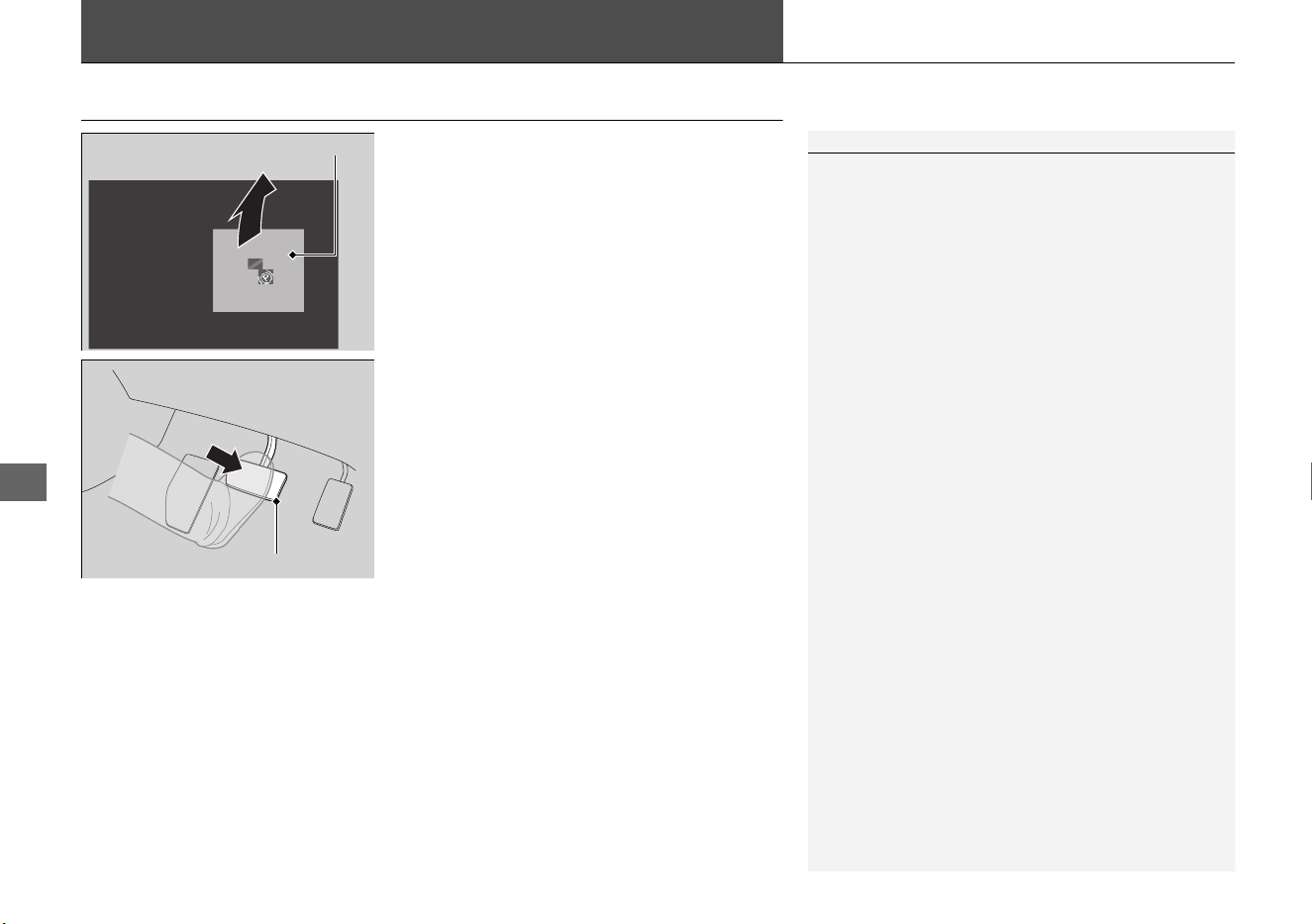
410
Driving
When Driving
Starting the Engine
1. Make sure the parking brake is applied.
u The parking brake and brake system
indicator (red) comes on for 30 seconds
when you pull up the electric parking
brake switch.
2. Depress the brake pedal.
1Starting the Engine
Keep your foot firmly on the brake pedal when
starting the engine.
The engine is harder to start in cold weather and in
thinner air found at altitudes above 8,000 feet
(2,400 meters).
When starting the engine in cold weather, turn off all
electrical accessories such as the lights, climate
control system and rear defogger in order to reduce
battery drain.
If you live in a region where winter is extremely cold,
an engine block heater will improve starting and
warming of the engine. Consult a dealer for details.
If the exhaust system sounds abnormal or you can
smell exhaust gas inside the vehicle, have your vehicle
checked by a dealer. There may be a problem with
the engine or exhaust system.
Bring the keyless remote close to the ENGINE
START/STOP button if the battery in the keyless
remote is weak.
2 If the Keyless Remote Battery is Weak
P. 640
The engine may not start if the keyless remote is
subjected to strong radio waves.
Electric Parking Brake Switch
Brake Pedal
26 PILOT-31T906300.book 410 ページ 2025年10月8日 水曜日 午前11時43分
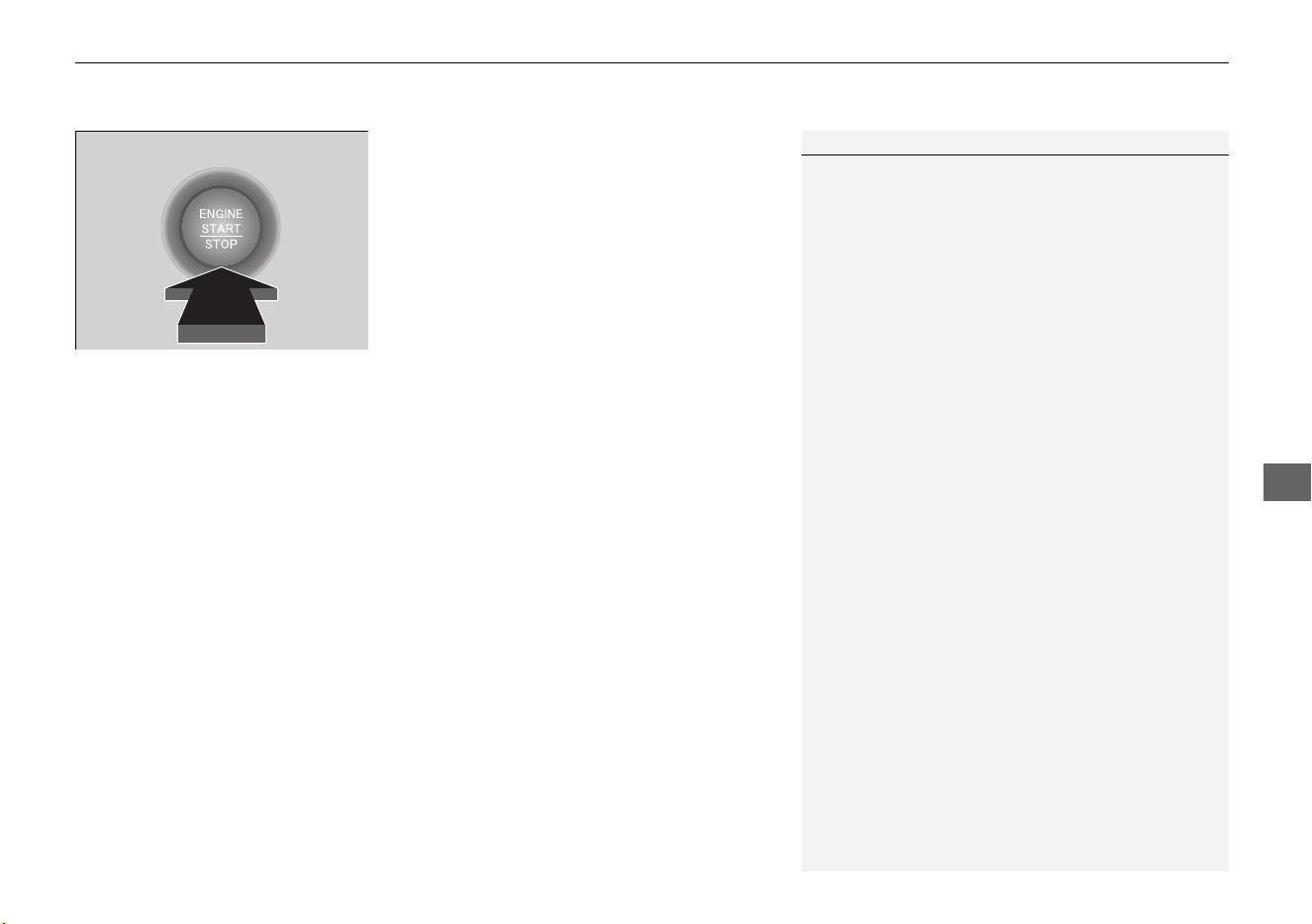
Continued
411
uuWhen DrivinguStarting the Engine
Driving
3. Press the ENGINE START/STOP button
without depressing the accelerator pedal.
1Starting the Engine
Do not hold the ENGINE START/STOP button to
start the engine.
If the engine does not start, wait at least 30 seconds
before starting the engine again.
The immobilizer system protects your vehicle from
theft.
If an improperly coded device is used, the engine’s
fuel system is disabled.
2 Immobilizer System P. 180
When you start the engine, you may feel the brake
pedal slightly sink down. This is normal.
26 PILOT-31T906300.book 411 ページ 2025年10月8日 水曜日 午前11時43分
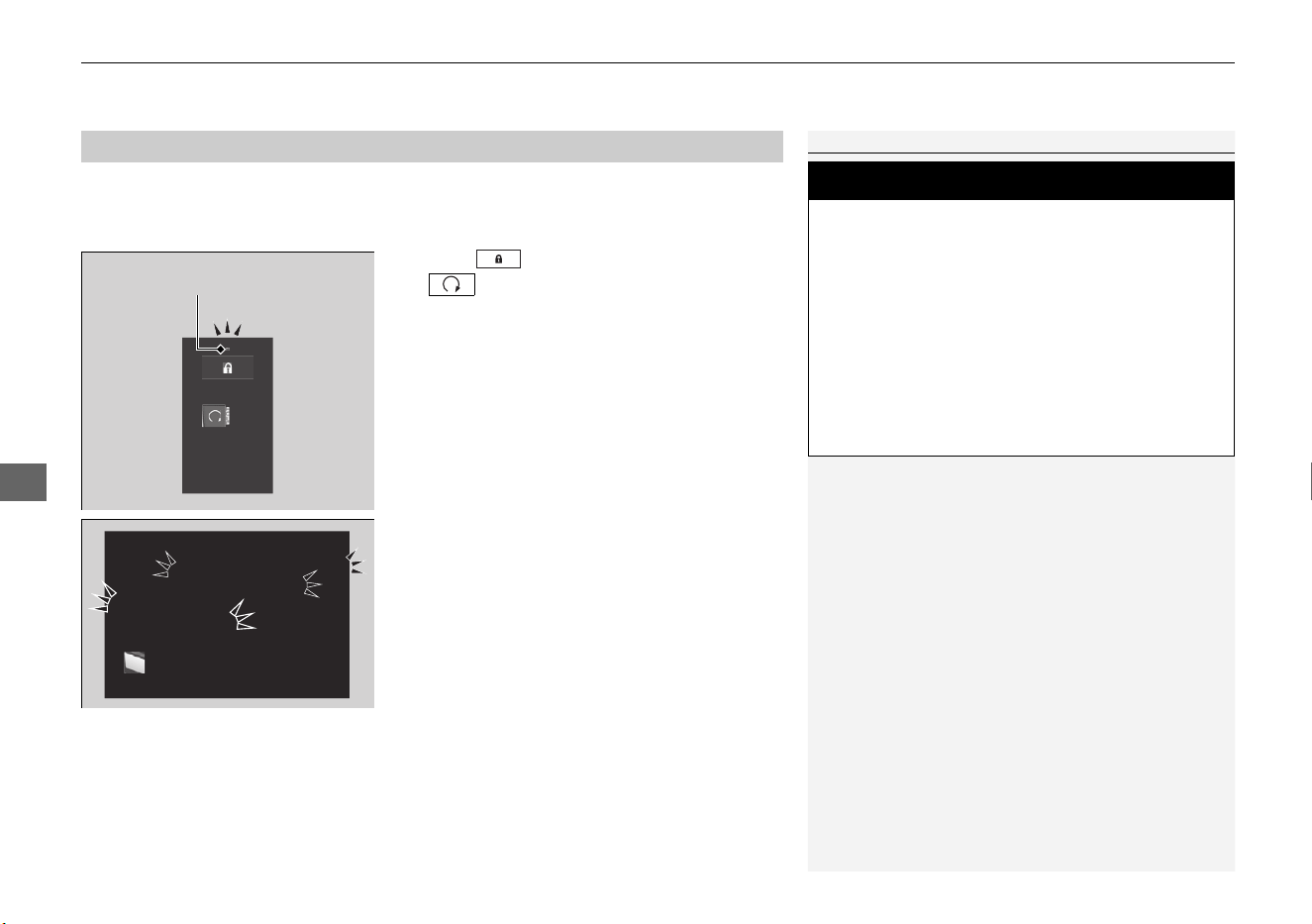
uuWhen DrivinguStarting the Engine
412
Driving
You can remotely start the engine using the keyless remote.
■
To start the engine
Press the button, then press and hold
the button.
u Some exterior lights flash once.
If the engine starts successfully, some exterior
lights flash six times.
■
Remote Engine Start
1Remote Engine Start
The remote engine start may violate local laws.
Before using the remote engine start, check your
local laws.
If there are buildings and obstacles between your
vehicle and the keyless remote, the range will be
reduced.
This distance may vary by external electrical
interference.
3
WARNING
Carbon monoxide gas is toxic and can
rapidly accumulate in closed or even partly
enclosed areas.
Breathing it can cause unconsciousness and
even kill you.
Never use the remote engine starter with
the vehicle parked in a garage or other
areas with limited ventilation.
LED: Blinks when any
button is pressed.
26 PILOT-31T906300.book 412 ページ 2025年10月8日 水曜日 午前11時43分

413
uuWhen DrivinguStarting the Engine
Continued
Driving
If the engine does not start, exterior lights will
not flash.
u Go within the range, and try again.
26 PILOT-31T906300.book 413 ページ 2025年10月8日 水曜日 午前11時43分
uuWhen DrivinguStarting the Engine
414
Driving
When started remotely, the engine automatically shuts off after 10 minutes of idling
and/or the brake pedal and ENGINE START/STOP button have not been pressed
simultaneously.
To extend the run time for another 10 minutes during the first run, press the
button, then press and hold the button.
u Some exterior lights flash six times if a 10-minute extension request was
transmitted successfully.
1Remote Engine Start
The engine may not start by the remote engine start
if:
• You have disabled a keyless remote engine start
setting.
2 Customized Features P. 346
• The power mode is not in VEHICLE OFF.
• The transmission is in a position other than (P.
• The hood is open, or any door or the tailgate is
unlocked.
• You have already used the keyless remote twice to
start the engine.
• Another registered keyless remote is in the vehicle.
• There is any antenna failure.
• The door is unlocked with the built-in key.
• The engine oil pressure is low.
• The engine coolant temperature is extremely high.
• The telematics unit malfunctions.
• The security system alarm is not set.
• The 12-volt battery charge is too low.
26 PILOT-31T906300.book 414 ページ 2025年10月8日 水曜日 午前11時43分
Continued
415
uuWhen DrivinguStarting the Engine
Driving
■
To stop the engine
Press and hold the button for one
second.
If the engine stops successfully, the exterior
lights flash once.
When the keyless remote is out of the keyless
access system range, the exterior lights will
not flash.
The engine will not stop.
u Go within the range, and try again.
1Remote Engine Start
The engine may stop while it is running if:
• You do not start the vehicle within 10 minutes of
starting the engine with the keyless remote.
• The engine is stopped by using the keyless remote.
• The security system alarm is not set.
• The door is unlocked with the built-in key.
• The hood is open, or any door or the tailgate is
unlocked.
• The transmission is in a position other than (P.
• The engine coolant temperature is extremely high.
• The battery is low.
• The engine oil pressure is low.
• The malfunction indicator lamp comes on if there is
a problem with the emissions control systems.
While the engine is running, the vehicle will
automatically precondition inside the vehicle.
When it is warm outside:
• The climate control system is activated in
recirculation mode.
When it is cold outside:
• The defroster is activated at a moderately warm
temperature.
• The rear defogger, heated door mirrors
*
, front seat
heaters, and heated steering wheel
*
are activated.
2 Rear Defogger/Heated Door Mirror
*
Button P. 204
2 Front Seat Heaters and Ventilation
*
P. 251
2 Heated Steering Wheel
*
P. 250
* Not available on all models
26 PILOT-31T906300.book 415 ページ 2025年10月8日 水曜日 午前11時43分
uuWhen DrivinguStarting the Engine
416
Driving
1. Depress and hold the brake pedal, then press the ENGINE START/STOP button.
2. Keeping your right foot on the brake pedal, put the transmission into
(D. Select
(R when reversing.
3. With the parking brake applied, release the brake pedal and gently depress the
accelerator pedal.
u Make sure the parking brake and brake system indicator (red) goes off.
2 Parking Brake P. 533
■
Hill start assist system
Hill start assist keeps the brake engaged briefly to help prevent the vehicle from
rolling on inclines as you move your foot from the brake pedal to the accelerator.
Put the transmission into
(D or (S when facing uphill, or (R when facing downhill,
then release the brake pedal.
You can turn the engine off when the vehicle is completely stopped.
1. Depress the brake pedal and change the shift position to
(P.
u Do not release the brake pedal until you have confirmed that (P is shown on
the gear position indicator.
2. Press the ENGINE START/STOP button.
■
Starting to Drive
■
Stopping the Engine
1Starting to Drive
You can also release the parking brake by pressing
the electric parking brake switch while depressing the
brake pedal. When facing downhill, you can start
your vehicle more smoothly by manually releasing it
with the electric parking brake switch than by
releasing it with the accelerator pedal.
The engine stops when the transmission is taken out
of
(P before the ENGINE START/STOP button is
pressed. Follow step 1 when starting to drive.
When the engine was started using
the keyless remote
When the engine was started using the keyless remote
When the engine was started in any case
1Hill start assist system
Hill start assist may not prevent the vehicle from
rolling downhill on a very steep or slippery slope, and
will not operate on small inclines.
Hill start assist will operate even when VSA® is
switched off.
Hill start assist is not a replacement for the parking
brake.
1Stopping the Engine
The power mode will automatically turn to VEHICLE
OFF about 20 minutes after the following conditions
have been met:
• A door has been opened, such as when leaving the
vehicle.
• The transmission is in (P.
• The driver’s seat belt is not fastened.
26 PILOT-31T906300.book 416 ページ 2025年10月8日 水曜日 午前11時43分
417
uuWhen DrivinguPrecautions While Driving
Continued
Driving
Precautions While Driving
Utility vehicles have a significantly higher rollover rate than other types of vehicles.
To prevent rollovers or loss of control:
• Take corners at slower speeds than you would with a passenger vehicle.
• Avoid sharp turns and abrupt maneuvers whenever possible.
• Do not modify your vehicle in any way that you would raise the center of gravity.
• Do not carry heavy cargo on the roof.
• When loading cargo (including attachment accessories) onto the roof, never
exceed the maximum roof rail load capacity of 75 kg. Refer to the accessory
owner’s manual or other relevant sources for the maximum load capacity of the
installed accessory.
Avoid driving in deep water and on flooded roads. This can damage the engine,
driveline, or cause electrical component failure.
■
Driving Guidelines for Your Utility Vehicle
■
In Rain
1Precautions While Driving
NOTICE
Do not select a shift button while pressing the
accelerator pedal. You could damage the
transmission.
NOTICE
If you repeatedly turn the steering wheel at an
extremely low speed, or hold the steering wheel in
the full left or right position for a while, the electric
power steering (EPS) system heats up. The system
goes into a protective mode and limits its
performance. The steering wheel becomes harder
and harder to operate. Once the system cools down,
the EPS system is restored. Repeated operation under
these conditions can eventually damage the system.
If the power mode is set to ACCESSORY while
driving, the engine will shut down and all steering
and brake power assist functions will stop, making it
difficult to control the vehicle.
Do not select
(N while driving as you will lose engine
braking (and acceleration) performance.
During the first 600 miles (1,000 km) of operation,
avoid sudden acceleration or full throttle operation so
as not to damage the engine or powertrain.
Avoid hard braking for the first 200 miles (300 km)
after purchasing your new vehicle or replacing the
brake pads or rotors to allow for proper break-in.
26 PILOT-31T906300.book 417 ページ 2025年10月8日 水曜日 午前11時43分
uuWhen DrivinguAutomatic Transmission
418
Driving
If there is a strong impact with something under the vehicle, stop in a safe location.
Check the underside of the vehicle for damage or any fluid leaks.
Automatic Transmission
When the engine runs at higher idle speeds, the creeping force increases.
Keep the brake pedal firmly depressed when stopped or ensure that brake-hold is
engaged.
Quickly depressing the accelerator pedal while driving uphill may cause the
transmission to drop to a lower gear, unexpectedly increasing vehicle speed. Depress
the accelerator pedal carefully, especially on slippery roads and curves.
■
Other Precautions
■
Creeping
■
Kickdown
1Driving Guidelines for Your Utility Vehicle
Failure to operate your vehicle correctly might result
in a crash or a rollover.
2 Important Handling Information P. 38
2 Precautions While Driving P. 417
26 PILOT-31T906300.book 418 ページ 2025年10月8日 水曜日 午前11時43分
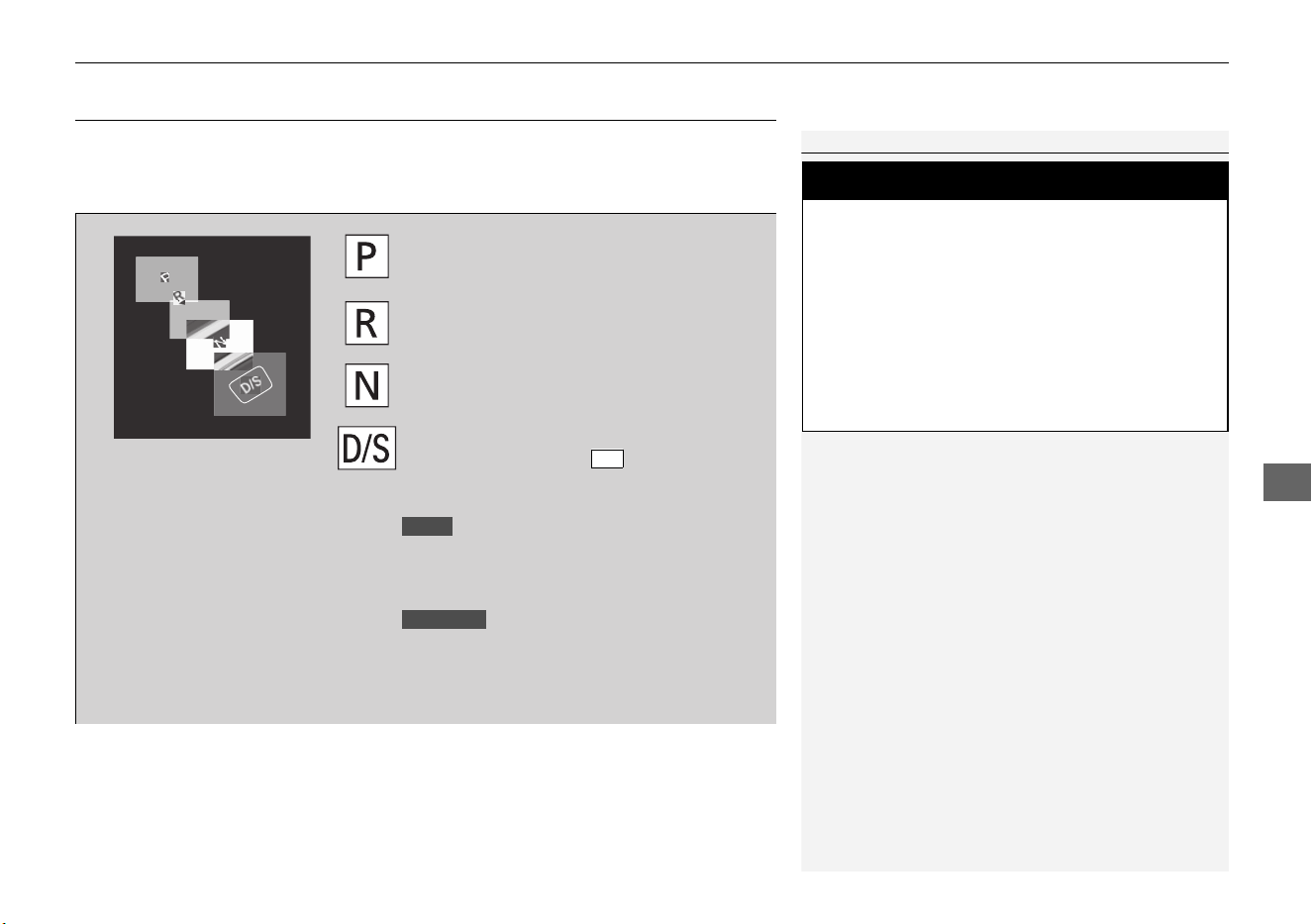
419
uuWhen DrivinguShifting
Continued
Driving
Shifting
Change the gear position in accordance with your driving needs.
■
Shift button positions
1Shifting
To prevent malfunction and unintended
engagement:
• Do not spill any liquids on or around shift buttons.
• Do not place or drop any objects on or around shift
buttons.
• Do not let passengers or children operate the shift
buttons.
The beeper sounds and a message appears on the
driver information interface when you depress the
accelerator pedal with the gear position in
(N.
Change the gear position to
(D or (R with the brake
pedal depressed.
3
WARNING
The vehicle can roll away if left unattended
without confirming that Park is engaged.
A vehicle that rolls away could cause a crash
resulting in serious injury or death.
Always keep your foot on the brake pedal
until you have confirmed that
(P is shown
on the gear position Indicator.
Park
Used when parking or starting the engine.
Reverse
Used when reversing.
Neutral
Transmission is not locked.
Drive/S Position
Each time you press the button, the mode
switches between Drive and S position mode.
Used for:
●
Normal driving (gears change between 1st
and 10th automatically).
●
Temporarily driving in the sequential mode
●
Automatically changing gears between 1st
and 8th (8th gear is used only at high speed).
●
Driving in the sequential mode
D/S
Drive
S Position
26 PILOT-31T906300.book 419 ページ 2025年10月8日 水曜日 午前11時43分
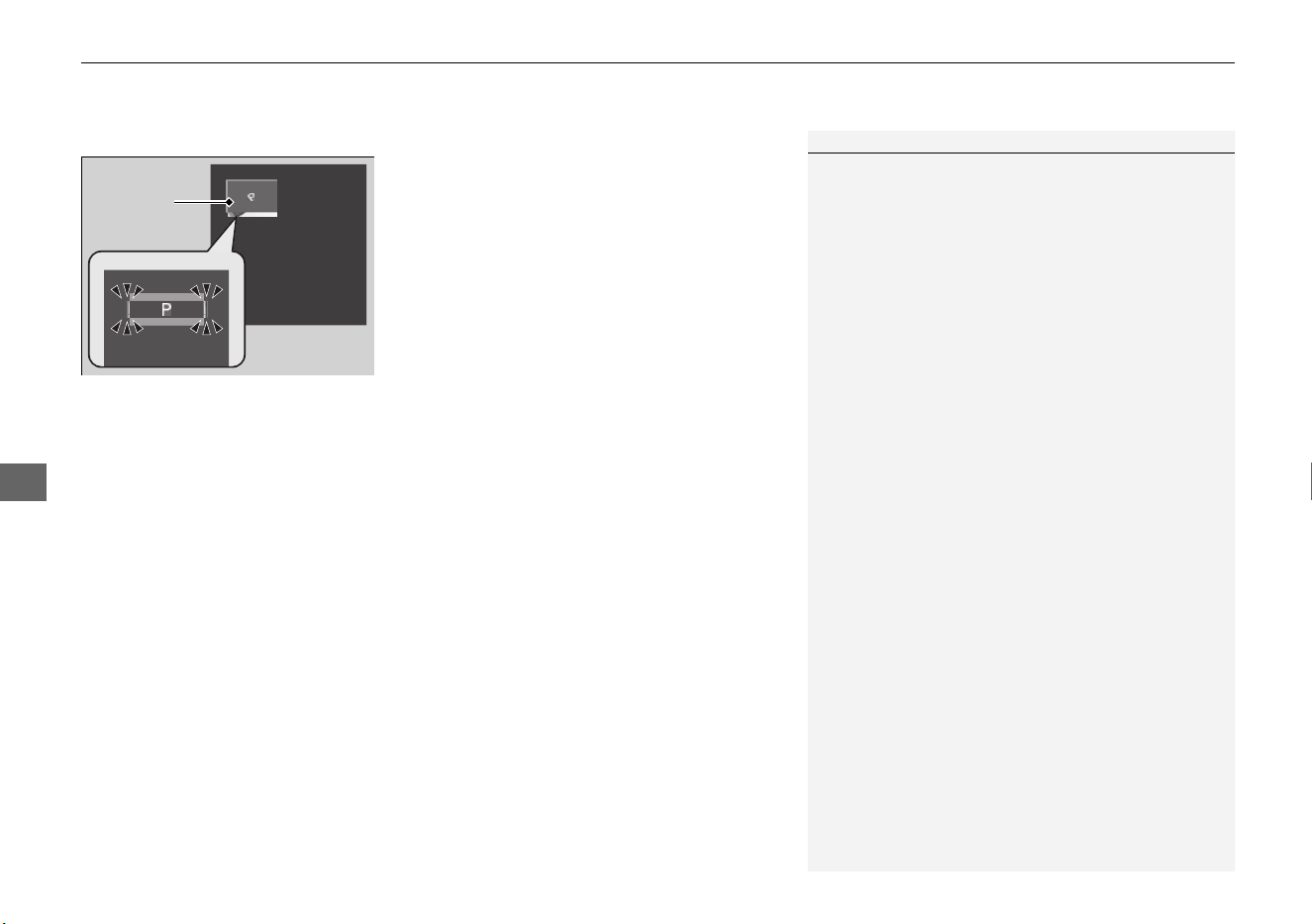
uuWhen DrivinguShifting
420
Driving
■
(P (parking) button
Park your vehicle in a safe place with the
power mode in ON, then apply the brakes and
press the
(P button to put the transmission in
Park.
The indicators on the sides of the
(P button
come on.
1Shifting
When shifting gears in extremely low temperatures
(−22°F/−30°C), there may be a short delay before the
gear position is indicated in the display. Always
confirm you are in the correct gear before driving.
(P Button
26 PILOT-31T906300.book 420 ページ 2025年10月8日 水曜日 午前11時43分
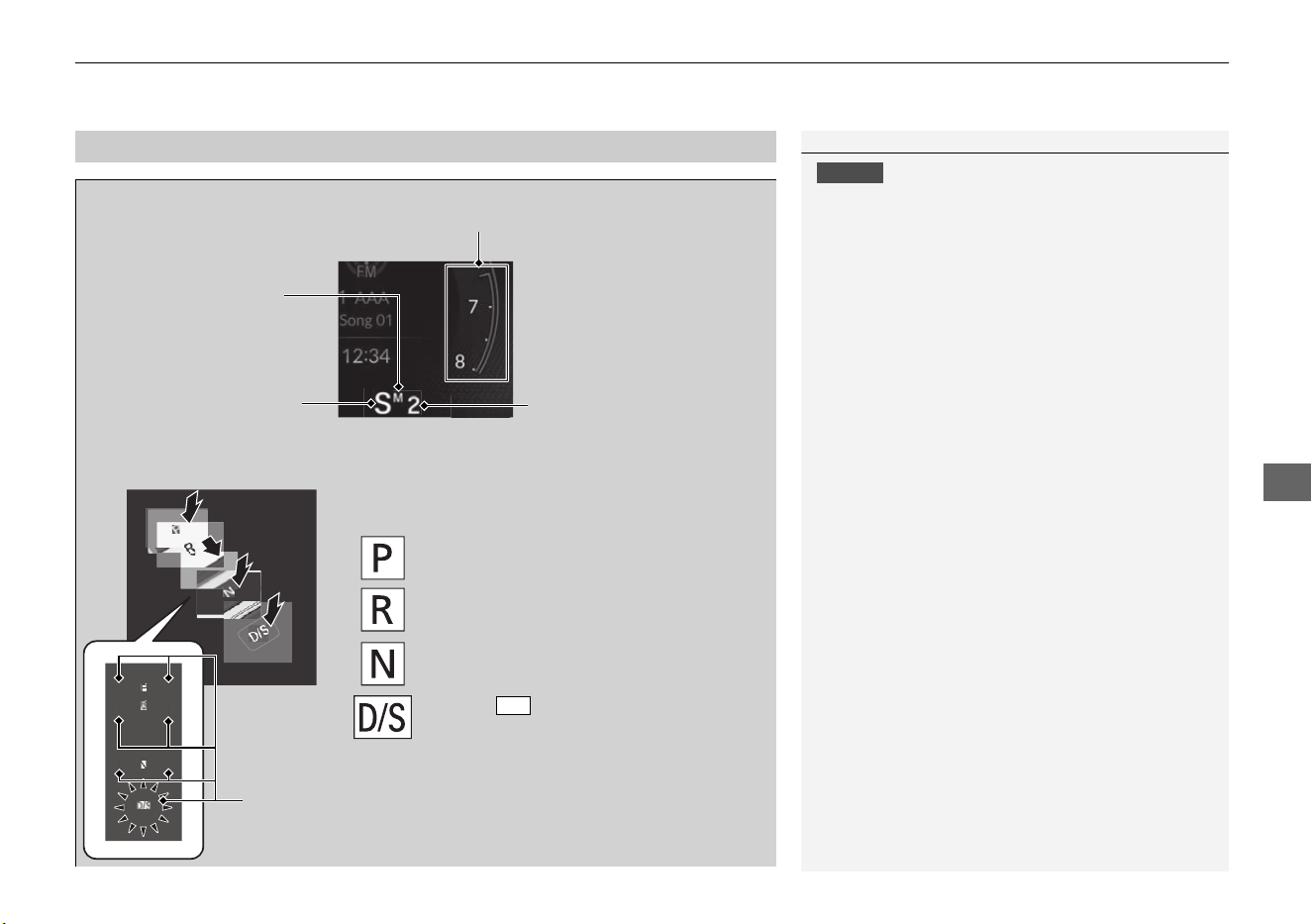
Continued
421
uuWhen DrivinguShifting
Driving
■
Shift Operation
1Shift Operation
NOTICE
When you change (D to (R and vice versa, depress
the brake pedal to come to a complete stop, then
select the intended gear position while maintaining
brake pressure.
Always keep your foot on the brake pedal until you
have confirmed that
(P is shown on the gear
position indicator.
Use the gear position indicator and the shift button
indicator to check the gear position before selecting
a shift button.
If the transmission system indicator blinks when
driving, in any shift position, there is a problem with
the transmission.
Avoid sudden acceleration and have the transmission
checked by a dealer as soon as possible.
The fuel supply may be cut off if you drive at engine
speeds in or over the tachometer red zone (engine speed
limit). If this happens, you may experience a slight jolt.
When the engine speed is increased while the
transmission is in
(N, (P or (R, the fuel supply may
be cut off even without the engine speed entering
the tachometer red zone.
The beeper sounds once when you change to
(R.
2 Customized Features P. 346
Press the (P button.
Press the (R button.
Press the
(N button.
Press the button.
Each time you press the button,
the mode switches between Drive
and S Position mode.
D/S
Shift Button
Indicator
Gear Position Indicator
(Transmission System
Indicator)
Tachometer Red Zone
M (sequential mode)
Indicator
Sequential Mode Gear
Selection Indicator
26 PILOT-31T906300.book 421 ページ 2025年10月8日 水曜日 午前11時43分
uuWhen DrivinguShifting
422
Driving
■
When opening the driver’s door
If you open the driver’s door under the following conditions, the gear position
automatically changes to
(P.
u If you manually change the gear position from (P with the brake pedal
depressed, the gear position will automatically return to (P once you release
the brake pedal.
• The vehicle is stationary with the engine running, or moving at 1 mph (2 km/h) or
slower.
• The transmission is in other than
(P.
• You have unfastened the driver side seat belt.
■
When turning off the power mode
If you turn the engine off while the vehicle is stationary, and the transmission is in
other than (P, the gear position automatically changes to (P.
1When opening the driver’s door
While the system is designed to automatically change
the gear position to
(P under the described
conditions, in the interest of safety you should always
select
(P before opening the driver’s door.
Make sure to park the vehicle in a safe place.
2 When Stopped P. 542
If you want to drive the vehicle after the gear position
has automatically changed to
(P under the described
conditions, close the door, fasten the seat belt,
depress the brake pedal, then change the gear
position.
If you leave the vehicle, turn off the engine and lock
the doors.
26 PILOT-31T906300.book 422 ページ 2025年10月8日 水曜日 午前11時43分
Continued
423
uuWhen DrivinguShifting
Driving
■
If you want to keep the transmission in (N position [car wash mode]
With the engine running:
1. Press and hold the brake pedal.
2. Select
(N, then release the button to display (Neutral) (N hold mode on the driver
information interface.
3. Press and hold
(N again for two seconds.
u This puts the vehicle in car wash mode which must be used when your vehicle
is pulled through a conveyor type automatic car wash where you or an
attendant do not remain in the vehicle.
If the ENGINE START/STOP button is pressed
after car wash mode has been activated, the
power mode will change to ACCESSORY and a
message will be displayed on the driver
information interface.
u For 15 minutes the gear position remains
in
(N with the power mode in
ACCESSORY. After that, the position
automatically changes to
(P and the
power mode changes to OFF.
u Manually changing to (P cancels
ACCESSORY mode. The
(P indicator
comes on and the power mode changes
to OFF. You must always shift to (P
when car wash mode is no longer
needed.
1
If you want to keep the transmission in
(N
position [car wash mode]
Note that the transmission may not stay in (N
position while any of the following indicators is on:
• Transmission system indicator.
• Malfunction indicator lamp.
• Charging system indicator.
26 PILOT-31T906300.book 423 ページ 2025年10月8日 水曜日 午前11時43分
424
uuWhen DrivinguShifting
Driving
■
Restrictions on selecting a gear position
You cannot select a gear position under certain circumstances that may lead to a crash.
When the
transmission is in:
1. Under these circumstances:
2. If you try to change to
the following:
3. The gear position
remains in/changes to:
How to change the
gear position
(P
The brake pedal is not depressed.
Other gear position
(P
Release the accelerator
pedal and depress the
brake pedal.
The accelerator pedal is
depressed.
(N
The vehicle is moving at low
speed without the brake pedal
depressed.
(N
The vehicle is moving at low
speed with the accelerator pedal
depressed.
(N, (D or (S The vehicle is moving forward. (R Stop your vehicle in a
safe place, keep the
brake pedal pressed,
and select the
appropriate gear
position.
(R or (N The vehicle is moving backward. (D, (S
(R, (N, (D or (S The vehicle is moving. (P
26 PILOT-31T906300.book 424 ページ 2025年10月8日 水曜日 午前11時43分
Continued
425
uuWhen DrivinguShifting
Driving
Use the paddle shifters to change between 1st and 10th gears without removing
your hands from the steering wheel. The transmission will switch to the sequential
mode.
■
When the transmission is in (D:
The vehicle will go into the sequential mode momentarily, and the sequential mode
gear selection indicator will come on.
When the vehicle goes into the sequential mode by
(- paddle shifter and the lower
gear is available, the transmission properly selects single or double gear change.
Once the vehicle starts traveling at constant speed or accelerates, the sequential
mode will be automatically turned off, and the sequential mode gear selection
indicator will go off.
Holding the
(+ paddle shifter for two seconds will cancel this mode.
■
When the transmission is in (S
The vehicle will go into the sequential mode, and the M (sequential mode) indicator
and sequential mode gear selection indicator will come on.
If the vehicle speed increases and the engine speed reaches near the tachometer red
zone, the transmission automatically shifts up to the next gear.
Holding the
(+ paddle shifter for two seconds or pushing button will cancel
this mode. When the sequential mode is canceled, the sequential mode indicator
and sequential mode gear selection indicator go off.
■
Sequential Mode
1Sequential Mode
The sequential mode may be canceled if the drive
mode is changed to another drive mode.
D/S
26 PILOT-31T906300.book 425 ページ 2025年10月8日 水曜日 午前11時43分
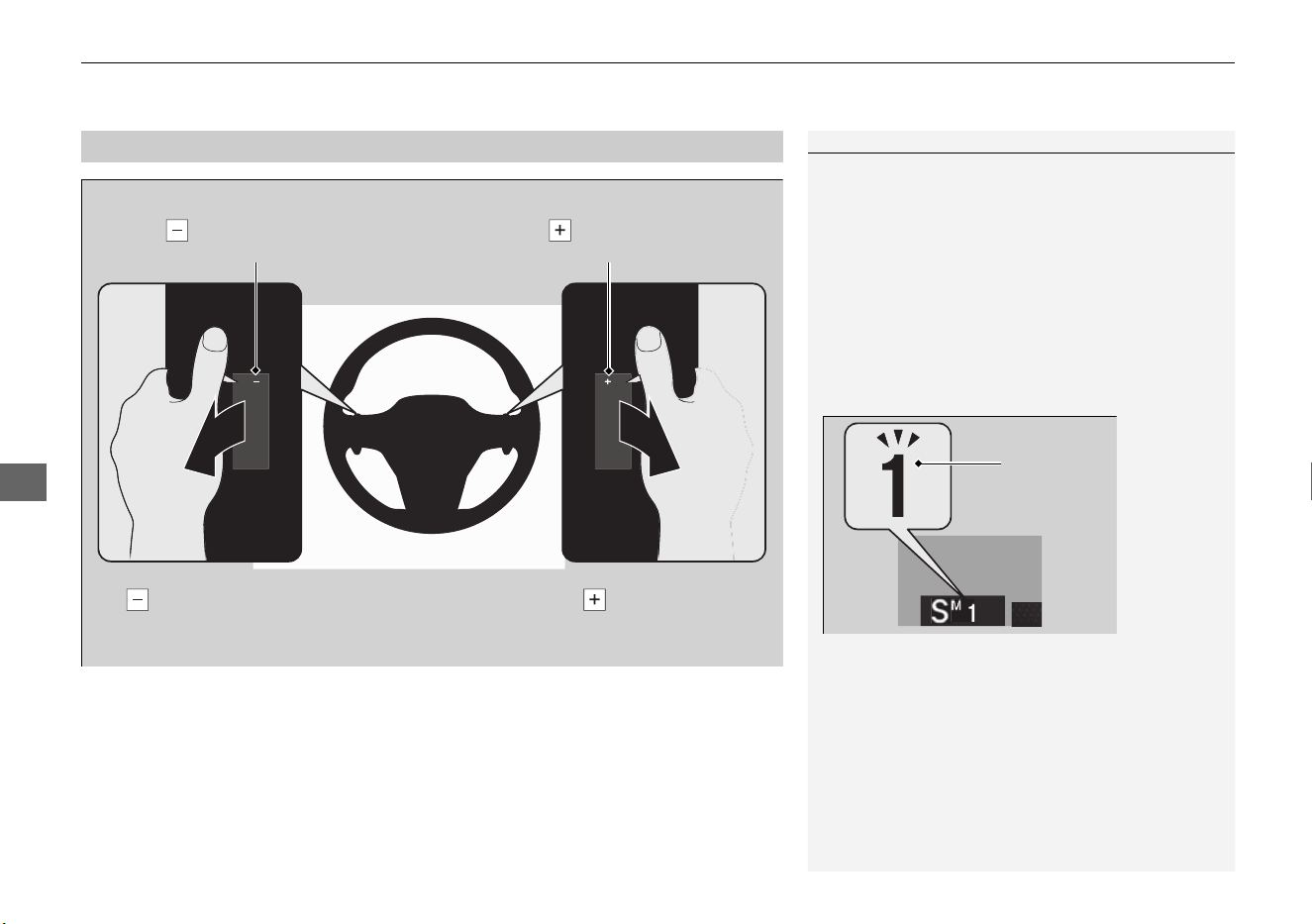
uuWhen DrivinguShifting
426
Driving
■
Sequential Mode Operation
1Sequential Mode Operation
Each paddle shift operation makes a single or double
gear change.
To change gears continuously, release the paddle
shifter before pulling it again for the next gear.
If the sequential mode gear selection indicator blinks
when you try to shift up or down, this means your
vehicle speed is not in its allowable gear range or the
protection of transmission system is necessary.
Slightly accelerate to shift up and decelerate to shift
down while the indicator is blinking.
Sequential
Mode Gear
Selection
Indicator
Downshifting when pulling
the paddle shifter.
(Changes to a lower gear)
Upshifting when pulling
the paddle shifter.
(Changes to a higher gear)
Paddle Shifter
(Shift down)
Paddle Shifter
(Shift up)
26 PILOT-31T906300.book 426 ページ 2025年10月8日 水曜日 午前11時43分
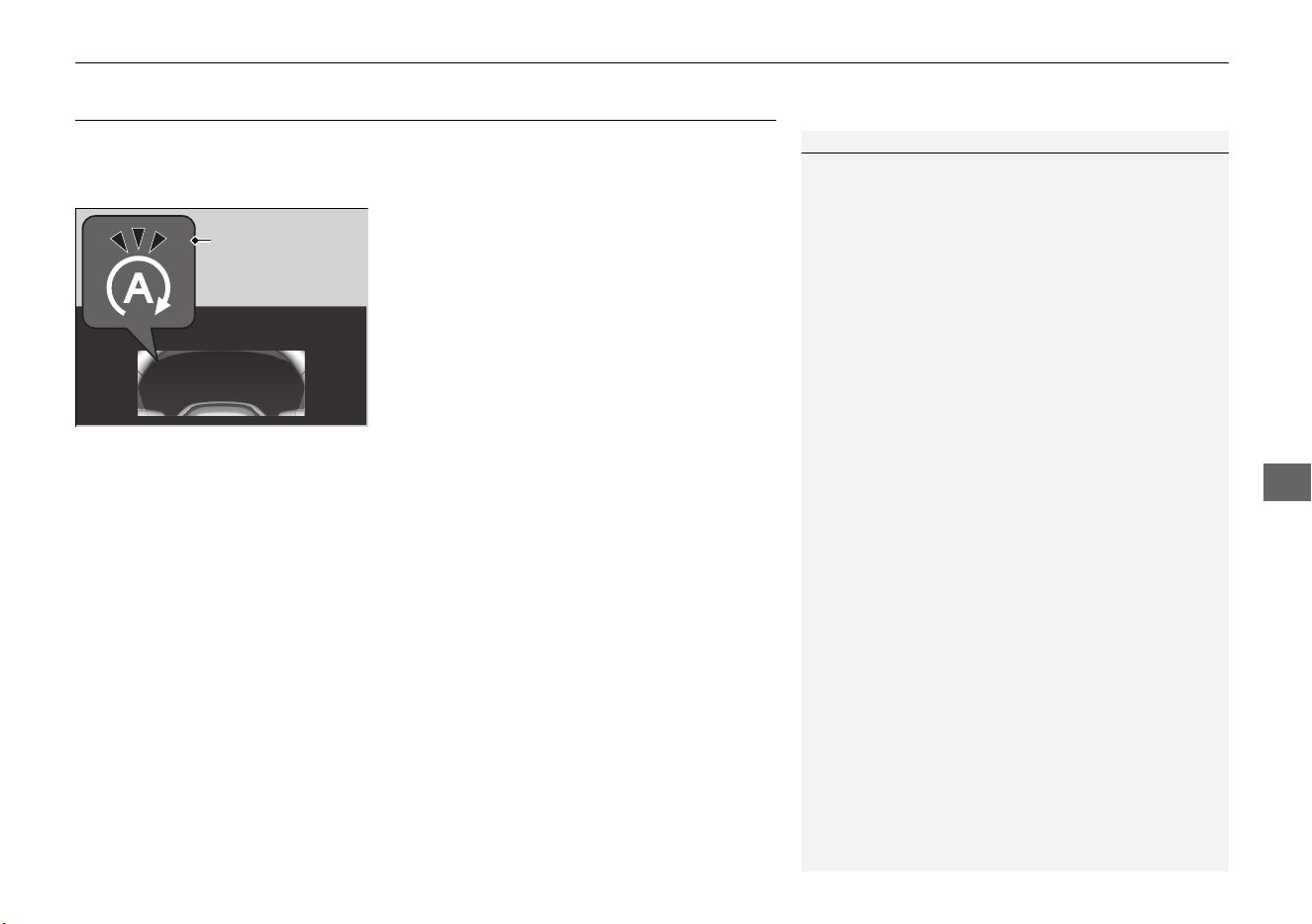
427
uuWhen DrivinguAuto Idle Stop
Continued
Driving
Auto Idle Stop
To help maximize fuel economy, the engine automatically stops when the vehicle
comes to a stop, depending on environmental and vehicle operating conditions. The
indicator (green) comes on at this time.
The environmental and vehicle conditions that
impact Auto Idle Stop system operation are
varied.
2 Auto Idle Stop Activates When: P. 429, 430
The engine then restarts once the vehicle is
about to move again, and the indicator
(green) goes off.
2 The Engine Automatically Restarts When:
P. 431
If the driver’s door is opened while the
indicator (green) comes on, a buzzer sounds
to notify you that the Auto Idle Stop function
is in operation.
A message associated with Auto Idle Stop
appears on the driver information interface.
1Auto Idle Stop
The 12-volt battery installed in this vehicle is
specifically designed for a model with Auto Idle Stop.
Using a 12-volt battery other than this specified type
may shorten the 12-volt battery life, and prevent
Auto Idle Stop from activating. If you need to replace
the 12-volt battery, make sure to select the specified
type. Ask a dealer for more details.
The duration of the Auto Idle Stop operation:
• Increases in the ECON mode, compared to when
the ECON mode is off, with climate control in use.
2 Drive Mode System P. 433
Auto Idle Stop
Indicator (Green)
26 PILOT-31T906300.book 427 ページ 2025年10月8日 水曜日 午前11時43分
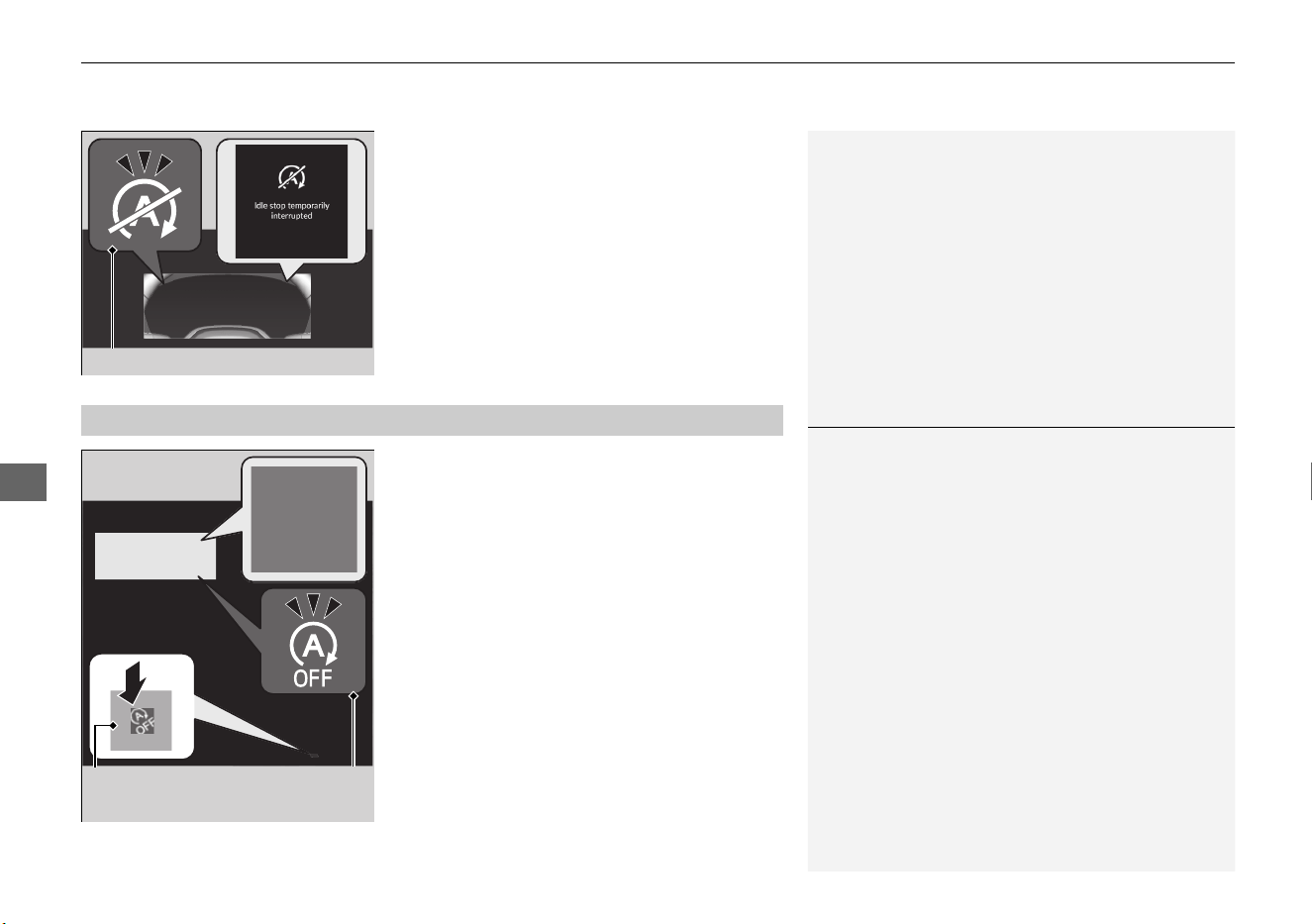
uuWhen DrivinguAuto Idle Stop
428
Driving
The Auto Idle Stop suspend indicator comes
on and a message appears on the driver
information interface when the Auto Idle Stop
system cannot be activated.
2 Indicators P. 96
2 Auto Idle Stop System ON/OFF P. 428
To turn the Auto Idle Stop system off, press
this button. The Auto Idle Stop system stops.
u Auto Idle Stop system will stop, the
indicator will come on and a message
appears on the driver information
interface.
The Auto Idle Stop system is turned on every
time you start the engine, even if you turned it
off the last time you drove the vehicle.
Auto Idle Stop Suspend Indicator
■
Auto Idle Stop System ON/OFF
1Auto Idle Stop System ON/OFF
If you turn off the Auto Idle Stop system while it is
activated, the engine will restart.
2 Auto Idle Stop Activates When: P. 429
If you press and hold the Auto Idle Stop OFF button,
you can select whether to display the status messages
or not.
Auto Idle Stop
OFF Indicator
Auto Idle Stop
OFF Button
26 PILOT-31T906300.book 428 ページ 2025年10月8日 水曜日 午前11時43分
Continued
429
uuWhen DrivinguAuto Idle Stop
Driving
The vehicle stops with the shift position in (D and the brake pedal depressed.
When you put the transmission into (P, the Auto Idle Stop continues to operate,
even if the brake pedal is released.
u If you depress the brake pedal, the engine may automatically restart.
■
Auto Idle Stop does not activate when:
• The Auto Idle Stop OFF button is pressed.
• The driver’s seat belt is not fastened.
• The engine is not adequately warmed up or coolant temperature is high.
• The transmission fluid temperature is low or high.
• The vehicle comes to a stop again before the vehicle speed reaches 3 mph
(5 km/h) after the engine starts.
• The vehicle is stopped on a steep incline.
• The transmission is in a position other than
(D.
• The engine is started with the hood open.
u Turn off the engine. Close the hood before you restart the engine to activate
Auto Idle Stop.
• The battery charge is low.
• The internal temperature of the battery is 14°F (−10°C) or less.
• The climate control system is in use, and the outside temperature is below −4°F
(−20°C) or over 104°F (40°C).
• The climate control system is in use, and the temperature is set to Hi or Lo.
• is ON (indicator on).
• The Drive Mode is changed to SNOW, TOW, SPORT, TRAIL
*
, or SAND
*
mode.
■
Auto Idle Stop Activates When:
1Auto Idle Stop Activates When:
Do not open the hood while the Auto Idle Stop
function is activated. If the hood is opened, the
engine will not restart automatically.
In this case, restart the engine with the ENGINE
START/STOP button.
2 Starting the Engine P. 410
Pressing the ENGINE START/STOP button causes
the engine to no longer restart automatically. Follow
the standard procedure to start the engine.
2 Starting the Engine P. 410
When ACC with Low Speed Follow is in operation,
the vehicle stops without depressing the brake pedal
and Auto Idle Stop may activate. In such cases, the
engine may restart if you change the shift position
other than
(D.
* Not available on all models
26 PILOT-31T906300.book 429 ページ 2025年10月8日 水曜日 午前11時43分

430
uuWhen DrivinguAuto Idle Stop
Driving
■
Auto Idle Stop may not activate when:
• The vehicle is stopped by braking suddenly.
• The steering wheel is operated.
• The fan speed is high.
• The climate control system is in use, and there is a significant difference between
the set temperature and the actual interior temperature.
• The climate control system is in use, and humidity in the interior is high.
26 PILOT-31T906300.book 430 ページ 2025年10月8日 水曜日 午前11時43分
Continued
431
uuWhen DrivinguAuto Idle Stop
Driving
• The brake pedal is released (without the automatic brake hold system activated).
• The accelerator pedal is depressed (with the automatic brake hold system
activated).
2 Automatic Brake Hold P. 537
■
The engine restarts even if the brake pedal is depressed
*1
when:
• The Auto Idle Stop OFF button is pressed.
• The steering wheel is operated.
• The transmission is put into
(R or (S, or when it is set from (N to (D.
u If you put the transmission into (P after the Auto Idle Stop activates, the Auto
Idle Stop continues to operate. In this case, the engine restarts when you
depress the brake pedal.
• The pressure on the brake pedal is reduced and the vehicle starts moving while
stopped on an incline.
• The brake pedal is released slightly during a stop.
• The battery charge becomes low.
• The accelerator pedal is depressed.
• The driver’s seat belt is unlatched.
• is ON (indicator on).
• The climate control system is in use, and the difference between the set
temperature and actual interior temperature becomes significant.
• The climate control system is being used to dehumidify the interior.
• The vehicle ahead of you starts again when your vehicle stops automatically with
ACC with Low Speed Follow.
• The Drive Mode is changed to SNOW, TOW, SPORT, TRAIL
*
, or SAND
*
mode.
■
The Engine Automatically Restarts When:
1The Engine Automatically Restarts When:
If you are using an electronic device during Auto Idle
Stop, the device may temporarily be turned off when
the engine restarts.
1The engine restarts even if the brake pedal is depressed
*1
when:
*1: With the automatic brake hold system activated,
you can release the brake pedal while Auto Idle Stop
is in operation.
If the automatic brake hold system has been turned
off, or if there is a problem with the system, the
engine will restart automatically when you release
the brake pedal.
2 Automatic Brake Hold P. 537
* Not available on all models
26 PILOT-31T906300.book 431 ページ 2025年10月8日 水曜日 午前11時43分
432
uuWhen DrivinguAuto Idle Stop
Driving
Briefly keeps the brake applied after releasing the brake pedal to restart the engine.
This can keep your vehicle from unexpectedly moving while on an incline.
■
Starting Assist Brake Function
26 PILOT-31T906300.book 432 ページ 2025年10月8日 水曜日 午前11時43分
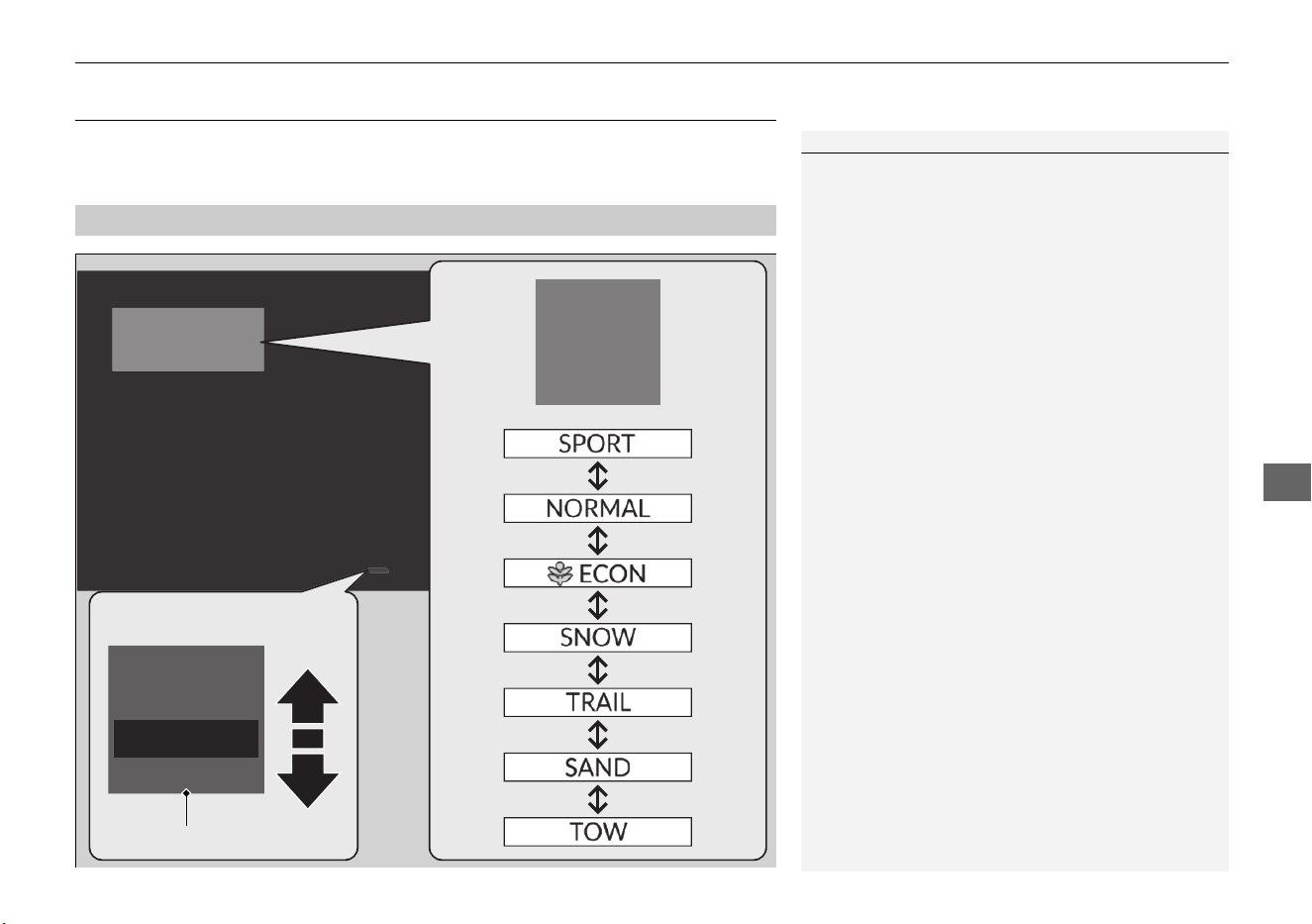
433
uuWhen DrivinguDrive Mode System
Continued
Driving
Drive Mode System
Press the DRIVE MODE switch to select the appropriate mode. The mode you select
appears on the driver information interface.
■
Selecting the Drive Mode
1Drive Mode System
The mode may not be able to be changed under
some driving conditions.
If there is a vehicle system failure, a message will also
appear on the driver information interface, and you
cannot change the mode.
*
*
DRIVE MODE Switch
* Not available on all models
26 PILOT-31T906300.book 433 ページ 2025年10月8日 水曜日 午前11時43分
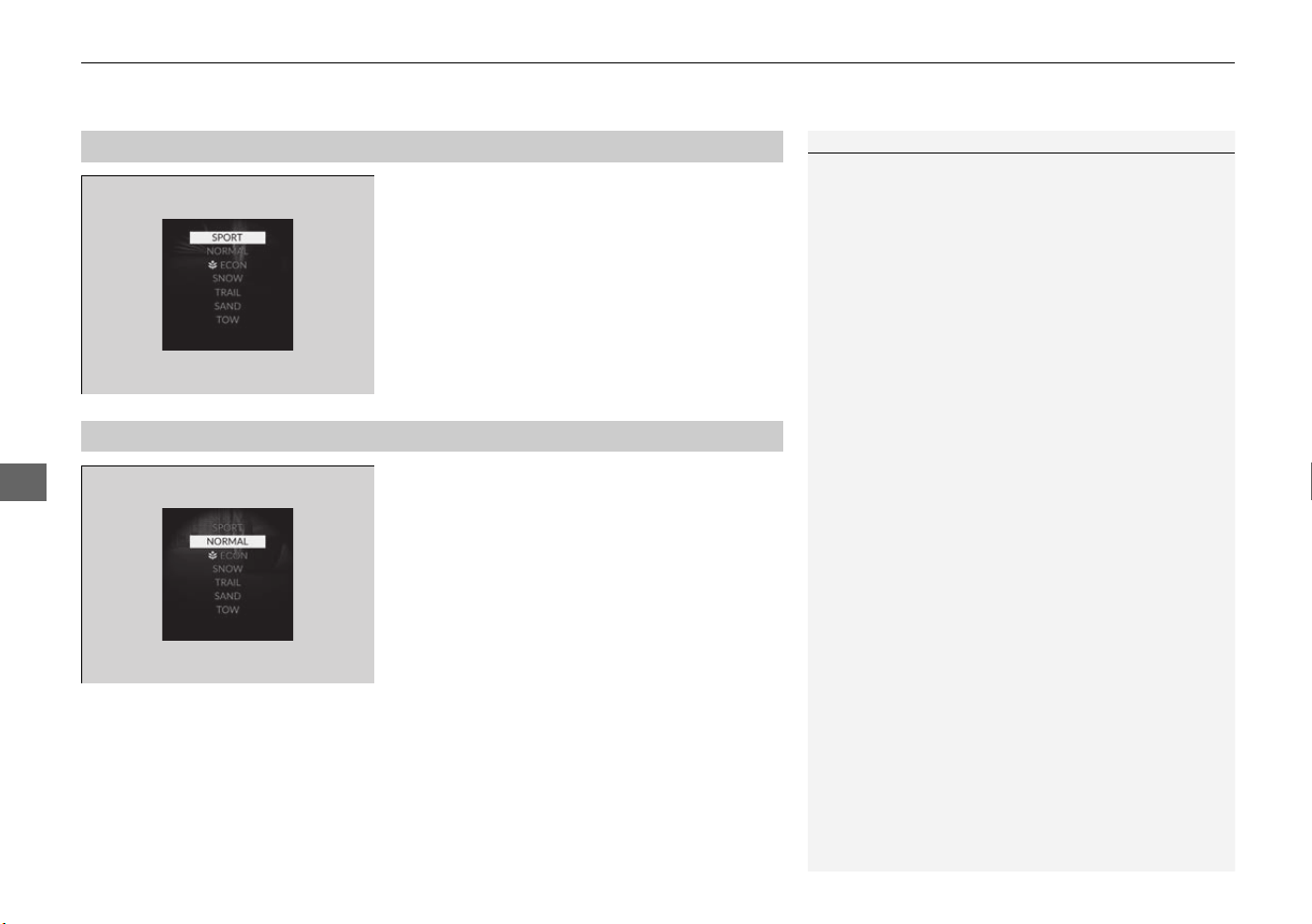
uuWhen DrivinguDrive Mode System
434
Driving
Enhances responsiveness to the driver’s input.
Optimizes the balance between operability
and comfort.
■
SPORT Mode
1SPORT Mode
While in SPORT mode, the Auto Idle Stop System will
stay disabled regardless of the Auto Idle Stop OFF
button.
2 Auto Idle Stop P. 427
■
NORMAL Mode
26 PILOT-31T906300.book 434 ページ 2025年10月8日 水曜日 午前11時43分
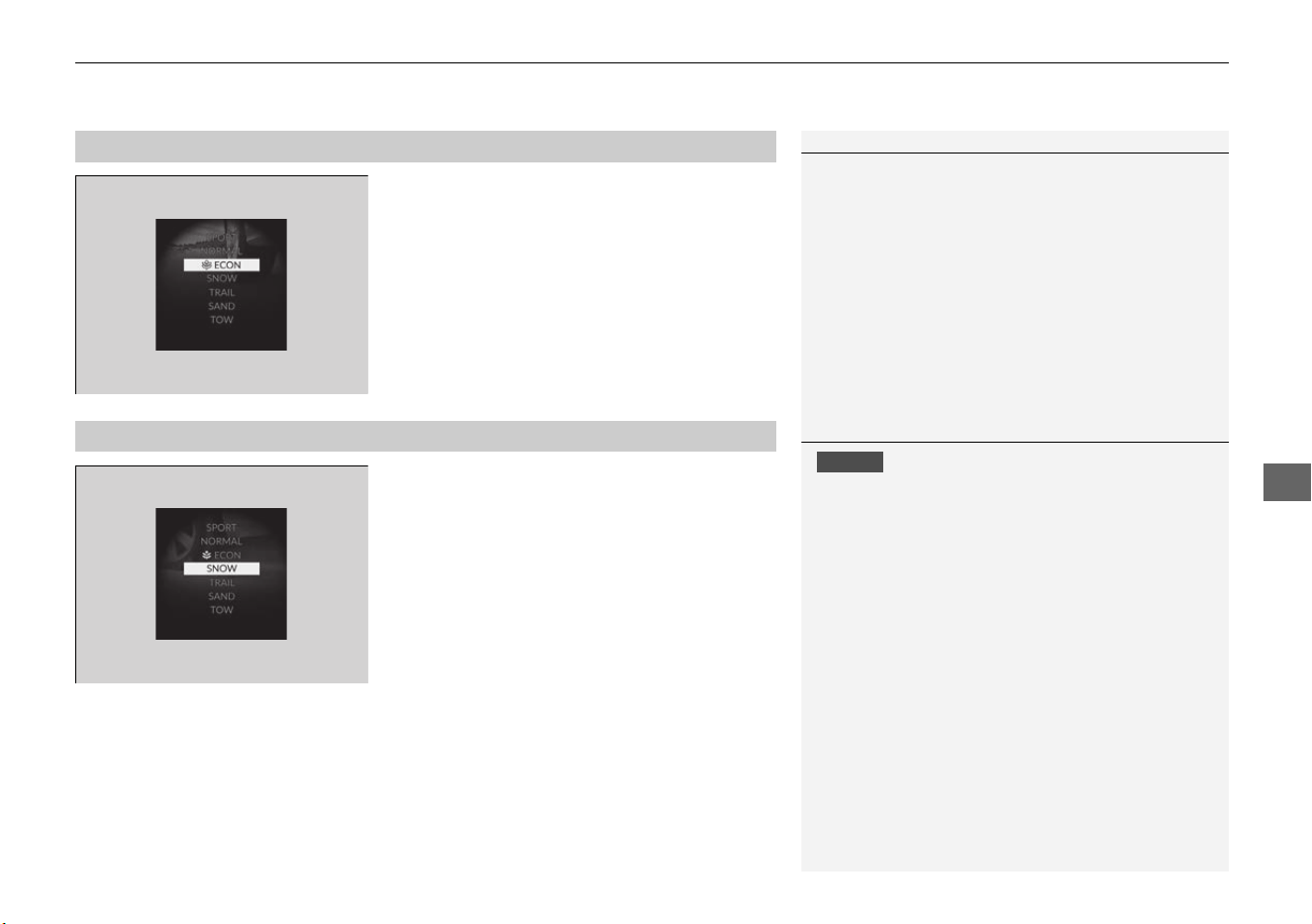
Continued
435
uuWhen DrivinguDrive Mode System
Driving
Facilitates fuel-efficient driving.
Maximizes controllability on snowy road
through powertrain settings.
■
ECON Mode
1ECON Mode
While in ECON mode, the climate control system will
be less effective and the vehicle will be slower to
accelerate.
■
SNOW Mode
1SNOW Mode
NOTICE
SNOW mode does not allow you to drive on snowy
or frozen roads in all situations. There are limits to
SNOW mode.
When driving on snowy or frozen roads, mount
winter tires or tire chains, reduce speed, and maintain
sufficient distance between vehicles.
2 Winter Tires P. 612
While in SNOW mode, the Auto Idle Stop System will stay
disabled regardless of the Auto Idle Stop OFF button.
2 Auto Idle Stop P. 427
26 PILOT-31T906300.book 435 ページ 2025年10月8日 水曜日 午前11時43分
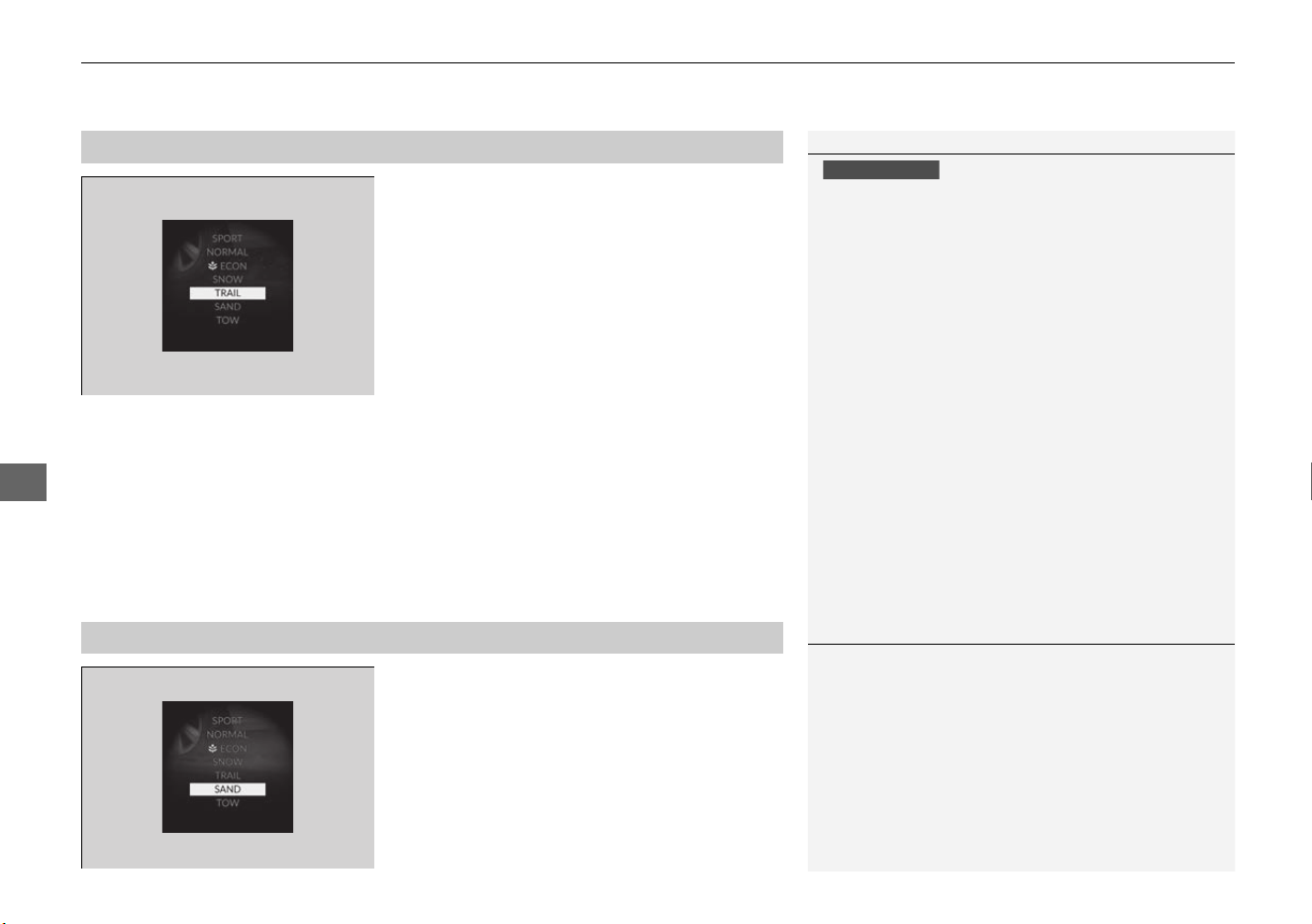
uuWhen DrivinguDrive Mode System
436
Driving
Maximizes controllability on roads with mud,
gravel, or loose dirt.
Maximizes controllability on soft, sandy roads
or off-highway through powertrain settings.
■
TRAIL Mode
*
1TRAIL Mode
*
While in TRAIL Mode, images from the Multi View
Camera System are displayed while your vehicle
speed is about 12 mph (20 km/h) or lower. When the
vehicle's speed reaches about 16 mph (25 km/h) or
higher, the display will return to the previous screen.
2 Multi View Camera System
*
P. 554
While in TRAIL mode, the Auto Idle Stop System will stay
disabled regardless of the Auto Idle Stop OFF button.
2 Auto Idle Stop P. 427
While in TRAIL mode, the VSA® OFF indicator turns
on to indicate that the VSA® system is optimized for
this drive mode.
2 VSA® On and Off P. 442
When the Drive Mode is in TRAIL mode, Low Speed
Braking Control does not operate.
2 Low Speed Braking Control
*
P. 468
TRAILWatch
TM
■
SAND Mode
*
1SAND Mode
*
While in SAND mode, the Auto Idle Stop System will
stay disabled regardless of the Auto Idle Stop OFF
button.
2 Auto Idle Stop P. 427
While in SAND mode, the VSA® OFF indicator turns
on to indicate that the VSA® system is optimized for
this drive mode.
2 VSA® On and Off P. 442
* Not available on all models
26 PILOT-31T906300.book 436 ページ 2025年10月8日 水曜日 午前11時43分
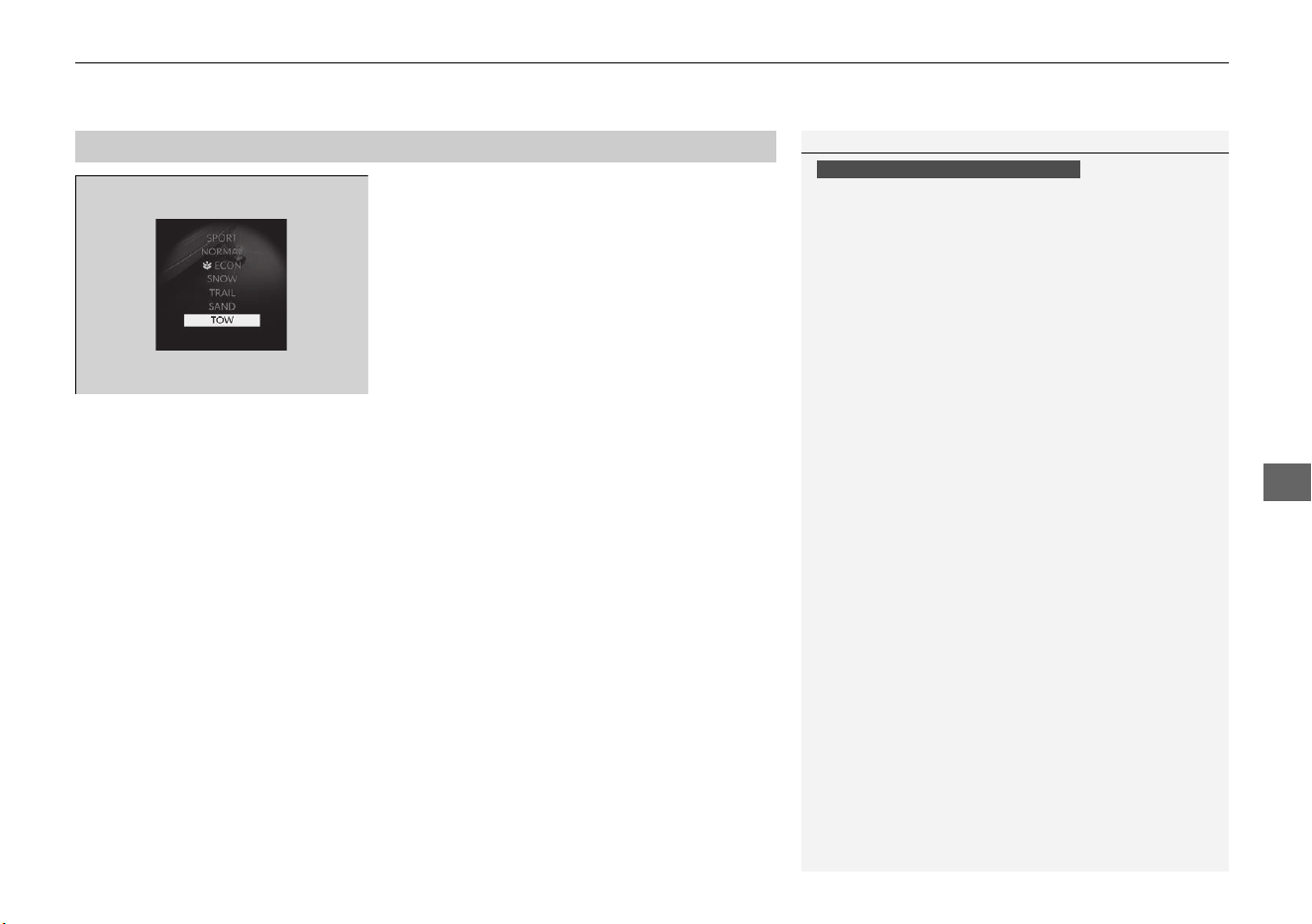
Continued
437
uuWhen DrivinguDrive Mode System
Driving
Optimizes balance between driving
performance and comfort when towing a
trailer.
■
TOW Mode
1TOW Mode
When the Drive Mode is in TOW mode, Low Speed
Braking Control and the parking sensor system do
not operate when reversing.
2 Low Speed Braking Control
*
P. 468
2 Parking Sensor System
*
P. 544
While in TOW mode, the Auto Idle Stop System will
stay disabled regardless of the Auto Idle Stop OFF
button.
2 Auto Idle Stop P. 427
For more details on towing, refer to the following.
2 Towing a Trailer P. 394
Models with parking sensor system
* Not available on all models
26 PILOT-31T906300.book 437 ページ 2025年10月8日 水曜日 午前11時43分
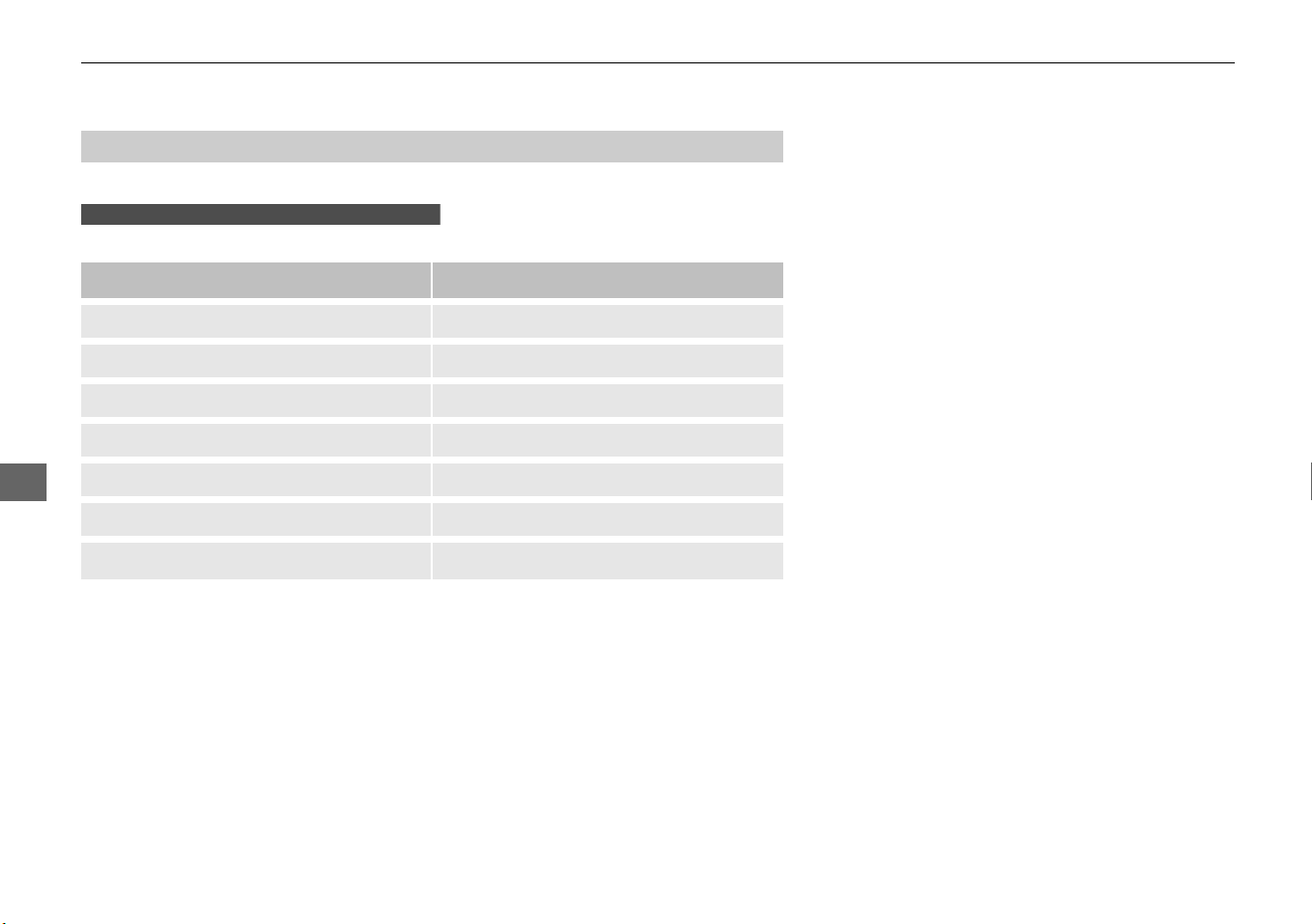
438
uuWhen DrivinguDrive Mode System
Driving
The mode for the next start-up is saved according to the following chart.
Each keyless remote has its own mode saved.
■
Next Start-up Mode
Last Mode Next Mode
SPORT NORMAL
NORMAL NORMAL
ECON ECON
SNOW NORMAL
TRAIL
*
NORMAL
SAND
*
NORMAL
TOW NORMAL
Models with driving position memory system
* Not available on all models
26 PILOT-31T906300.book 438 ページ 2025年10月8日 水曜日 午前11時43分
439
uuWhen DrivinguHill Descent Control System
Continued
Driving
Hill Descent Control System
When driving down hills where engine braking is not enough to decelerate the
vehicle, this system helps maintain a constant vehicle speed without needing to
depress the brake pedal.
The system operates under the following conditions.
• Driving at a speed between about 2-12 mph (3-20 km/h).
• Driving downhill.
• Accelerator pedal and brake pedal are not depressed.
The system’s operating status
• Green: Activated
• White: Standby
Vehicle speed display
• White: Set speed
• Gray: Current speed
u Blinks when the vehicle speed is above
the operating speed.
■
Hill Descent Control Operating Conditions
■
Driver Information Interface Display
1Hill Descent Control System
The brake lights automatically come on while the
system is in operation.
The system may not operate when driving down a
gentle slope. Check the Hill Descent Control System
indicator to see if the system is in operation.
The system may activate even when not driving
downhill, such as when the vehicle leans while
driving over uneven surfaces.
3
WARNING
Hill descent control cannot maintain a
constant vehicle speed in every situation.
When driving down a very steep hill or on
slippery road surfaces, the vehicle may not
be able to maintain the vehicle speed and
could cause a crash, resulting in serious
injury or death.
Since Hill Descent Control is not designed
to increase the limits of vehicle
performance, the driver must always be
aware of road surface conditions and drive
safely.
System’s Operating Status
Vehicle Speed
Display
Current Speed
Operating Range of Set Speed
26 PILOT-31T906300.book 439 ページ 2025年10月8日 水曜日 午前11時43分
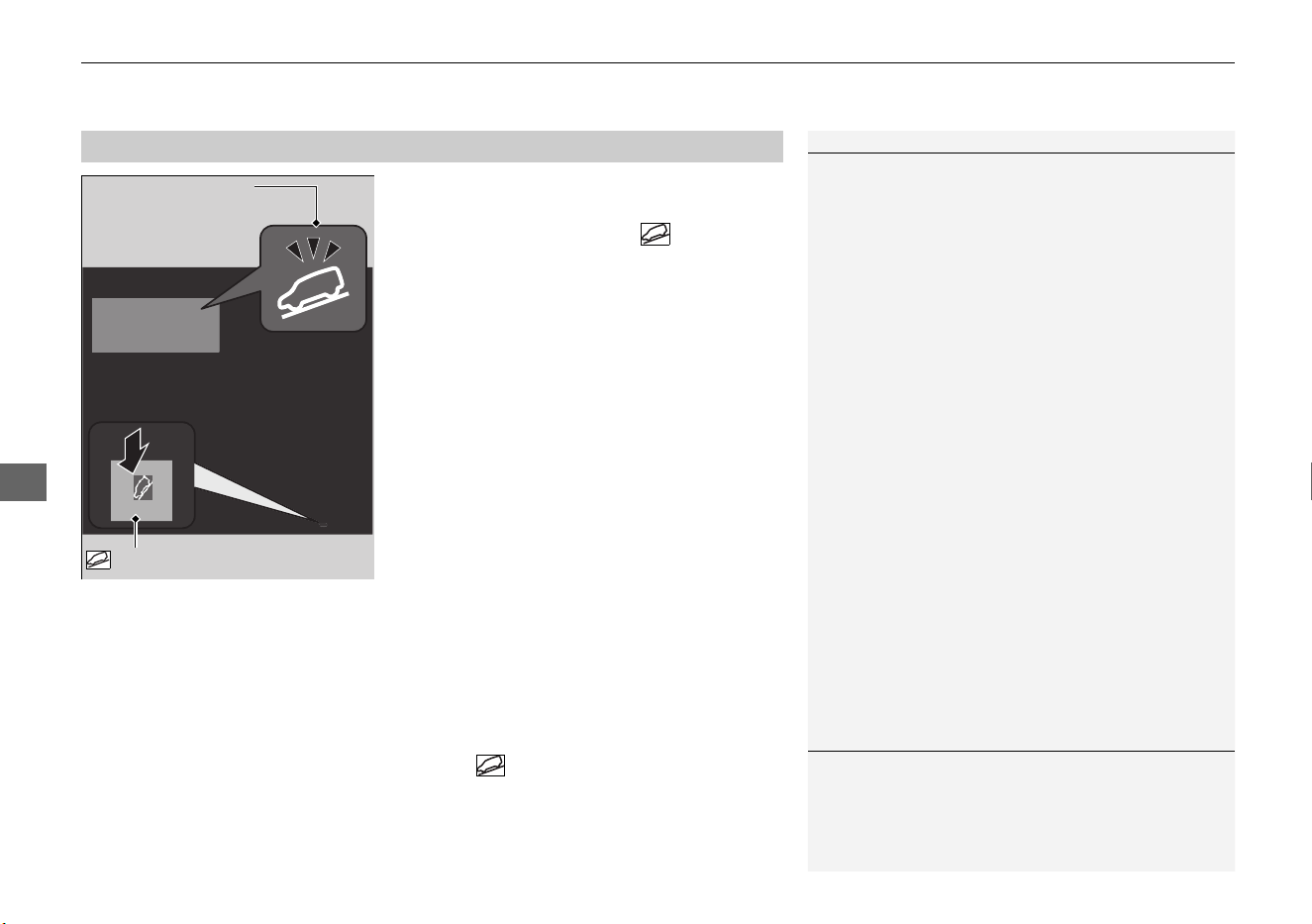
uuWhen DrivinguHill Descent Control System
440
Driving
■
To turn the system on
When the vehicle speed is less than about
12 mph (20 km/h), press the button to
turn the system on.
u The system goes into standby mode, and
the Hill Descent Control System indicator
(white) comes on.
When all the working conditions are met, the
system activates, and the vehicle begins to
maintain the vehicle speed when driving
downhill.
u The Hill Descent Control System indicator
(green) comes on when operating.
■
To adjust the set speed
Depress the accelerator pedal or brake pedal
to adjust the vehicle speed within the
operating range. The vehicle speed at which
you release the accelerator pedal or brake
pedal will be the set speed.
■
To turn the system off
Press the button to turn the system off.
■
How to Operate Hill Descent Control
1How to Operate Hill Descent Control
Using the system repeatedly for a long time may
cause the brakes to heat up and make the system go
into standby mode temporarily.
Hill Descent Control is turned off every time you turn
the engine off, even if it was turned on the last time
you drove the vehicle.
The pedals may vibrate or you may hear the system
working when in operation.
Hill Descent Control
System Indicator
(Hill Descent Control) Button
1To turn the system off
When the vehicle speed is about 37 mph (60 km/h) or
more, the system turns off automatically.
26 PILOT-31T906300.book 440 ページ 2025年10月8日 水曜日 午前11時43分
441
uuWhen DrivinguVehicle Stability Assist
TM
(VSA®), aka Electronic Stability Control (ESC), System
Continued
Driving
Vehicle Stability Assist
TM
(VSA®), aka Electronic
Stability Control (ESC), System
VSA® helps stabilize the vehicle during cornering if the vehicle turns more or less
than what was intended. It also assists in maintaining traction on slippery surfaces.
It does so by regulating engine output and selectively applying the brakes.
When VSA® activates, you may notice that the
engine does not respond to the accelerator.
You may also notice some noise from the
hydraulic brake system. You will also see the
indicator blink.
■
VSA® Operation
1Vehicle Stability Assist
TM
(VSA®), aka Electronic Stability Control
(ESC), System
The VSA® may not function properly if tire type and
size are mixed. Make sure to use the same size and
type of tire, and the air pressures as specified.
When the VSA® system indicator comes on and stays on
while driving, there may be a problem with the system.
While this may not interfere with normal driving, have
your vehicle checked by a dealer immediately.
VSA® cannot enhance stability in all driving situations
and does not control the entire braking system. You
still need to drive and corner at speeds appropriate
for the conditions and always leave a sufficient
margin of safety.
The main function of the VSA® system is generally
known as Electronic Stability Control (ESC). The
system also includes a traction control function.
The Vehicle Stability Assist
TM
(VSA®) system, Adaptive
Cruise Control (ACC) with Low Speed Follow, brake
system (amber), and safety support indicators may
come on in amber along with a message in the driver
information interface when you set the power mode
to ON after reconnecting the battery.
With the engine running, turn the steering wheel to the
left until it stops then to the right until it stops, then
drive a short distance at more than 12 mph (20 km/h).
Each indicator should go off. If any do not, have your
vehicle checked by a dealer.
VSA® System
Indicator
26 PILOT-31T906300.book 441 ページ 2025年10月8日 水曜日 午前11時43分
uuWhen DrivinguVehicle Stability Assist
TM
(VSA®), aka Electronic Stability Control (ESC), System
442
Driving
You can partially disable VSA® features using the driver information interface.
2 Switching the Display P. 126
2 Vehicle Stability Assist Mode P. 139
Your vehicle will have normal braking and cornering ability, but traction control
function will be less effective.
u Traction control function change not required during SAND mode
*
and TRAIL
mode
*
.
VSA® is turned on every time you start the engine, even if you turned it off the last
time you drove the vehicle.
■
VSA® On and Off
1Vehicle Stability Assist
TM
(VSA®), aka Electronic Stability Control
(ESC), System
In certain unusual conditions when your vehicle gets
stuck in shallow mud or fresh snow, it may be easier
to free it with the VSA® temporarily switched off.
When the VSA® system is off, the traction control
function becomes less effective. This allows for the
wheels to spin more freely at low speed. You should
only attempt to free your vehicle with the VSA® off if
you are not able to free it when the VSA® is on.
Immediately after freeing your vehicle, be sure to
switch VSA® on again. We do not recommend driving
your vehicle with the VSA® system switched off.
You may hear a motor sound coming from the
engine compartment while system checks are being
performed immediately after starting the engine or
while driving. This is normal.
You cannot turn the VSA® on or off while the drive
mode is in SAND mode
*
or TRAIL mode
*
.
2 Drive Mode System P. 433
* Not available on all models
26 PILOT-31T906300.book 442 ページ 2025年10月8日 水曜日 午前11時43分
443
uuWhen DrivinguAgile Handling Assist
Driving
Agile Handling Assist
Lightly brakes each of the front and rear wheels, as needed, when you turn the
steering wheel, and helps support the vehicle’s stability and performance during
cornering.
1Agile Handling Assist
The agile handling assist cannot enhance stability in
all driving situations. You still need to drive and
corner at speeds appropriate for the conditions and
always leave a sufficient margin of safety.
When the VSA® system indicator comes on and stays
on while driving, the agile handling assist does not
activate.
You may hear a sound coming from the engine
compartment while the agile handling assist is
activated. This is normal.
26 PILOT-31T906300.book 443 ページ 2025年10月8日 水曜日 午前11時43分
444
uuWhen DrivinguIntelligent Variable Torque Management (i-VTM4
TM
) AWD System
*
Driving
Intelligent Variable Torque Management (i-VTM4
TM
)
AWD System
*
The intelligent variable torque management (i-VTM4
TM
) AWD system is a full time all
wheel drive system that automatically controls and transfers varying amount of
engine torque to all wheels independently according to the driving conditions.
You still need to exercise the same care when accelerating, steering, and braking
that you would in a two-wheel drive vehicle.
Avoid continuously driving on slippery surfaces where a wheel is likely to spin out,
and do not drive if the AWD temperature too hot. Do not drive. Idle engine to
allow system to cool. message appears. Driving continuously under such
conditions can damage the system’s torque distribution unit.
If the AWD temperature too hot. Do not drive. Idle engine to allow system to
cool. message appears on the driver information interface while driving, it indicates
the differential temperature is too high. If this happens, pull to the side of the road
when it is safe, change the shift position to
(P, and idle the engine until the
message disappears. If the message does not disappear, take your vehicle to a dealer
to have it checked.
1
Intelligent Variable Torque Management (i-VTM4
TM
) AWD System
*
NOTICE
Do not continuously spin the front tires of your
vehicle. Continuously spinning the front tires can
cause transmission or rear differential damage.
The intelligent variable torque management
(i-VTM4
TM
) AWD system may not function properly if
tire type and size are mixed. Make sure to use the
same size and type of tire, and the air pressures as
specified.
2 Tire and Wheel Replacement P. 610
* Not available on all models
26 PILOT-31T906300.book 444 ページ 2025年10月8日 水曜日 午前11時43分
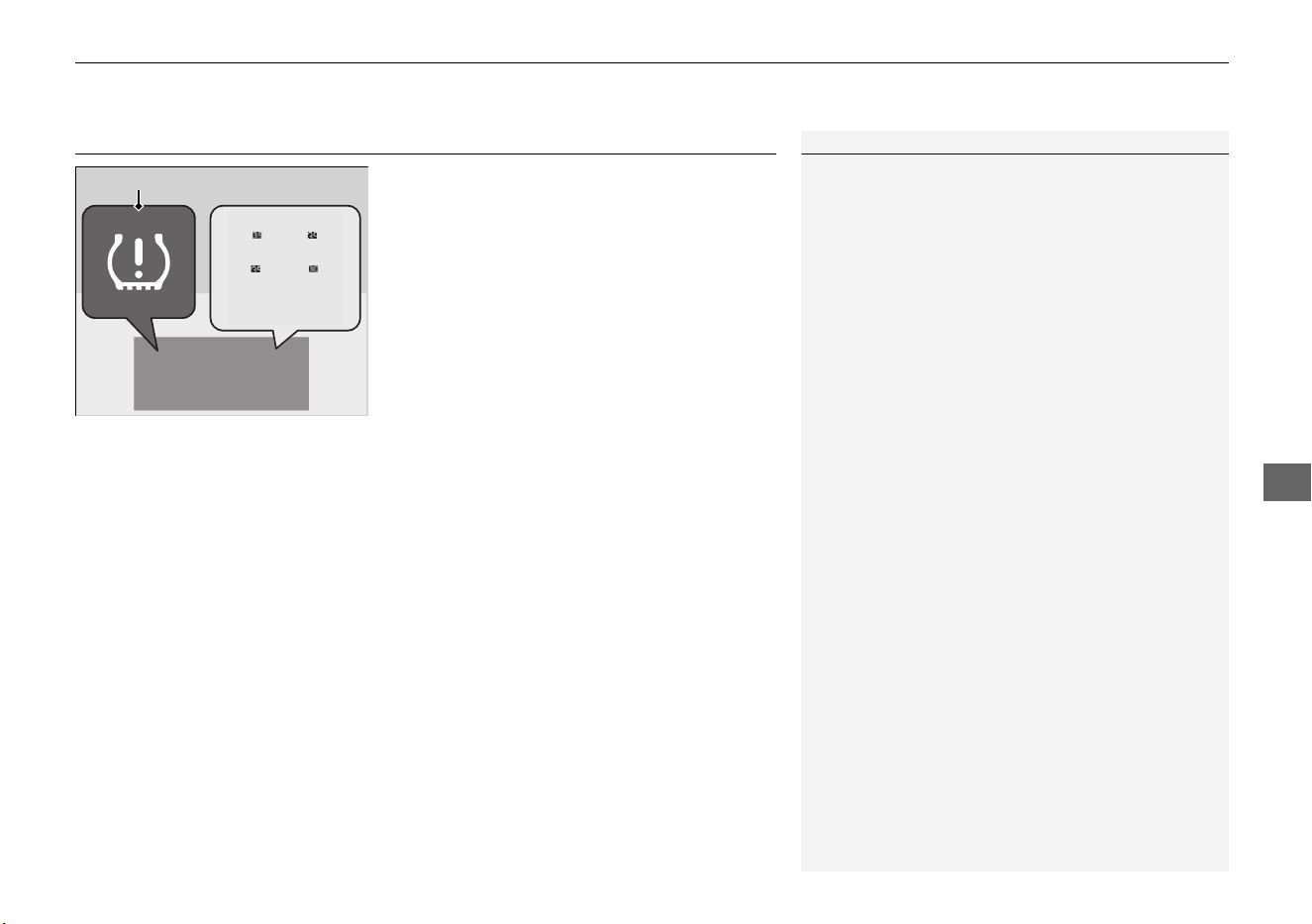
445
uuWhen DrivinguTire Pressure Monitoring System (TPMS) with Tire Fill Assist
Continued
Driving
Tire Pressure Monitoring System (TPMS) with Tire
Fill Assist
Monitors the tire pressure while you are
driving. If your vehicle’s tire pressure becomes
significantly low, the Low Tire Pressure/TPMS
indicator comes on and a message appears on
the driver information interface.
1Tire Pressure Monitoring System (TPMS) with Tire Fill Assist
Conditions such as low ambient temperature and
altitude change directly affect tire pressure and can
trigger the Low Tire Pressure/TPMS indicator to come
on.
2 If the Low Tire Pressure/TPMS Indicator
Comes On or Blinks P. 652
Tire pressure checked and inflated in:
• Warm weather can become under-inflated in
colder weather.
• Cold weather can become overinflated in warmer
weather.
The Low Tire Pressure/TPMS indicator will not come
on as a result of overinflation.
Only use genuine wheels designed for and equipped
with TPMS sensors. If you drive your vehicle without
TPMS-sensor-equipped wheels, the low tire pressure/
TPMS indicator blinks for one minute and then stays
on.
2 Tire and Wheel Replacement P. 610
The TPMS audibly and visually informs you of
changes in tire pressure of the individual tire that you
are adjusting.
2 Tire Fill Assist Function P. 652
Low Tire Pressure/TPMS Indicator
26 PILOT-31T906300.book 445 ページ 2025年10月8日 水曜日 午前11時43分
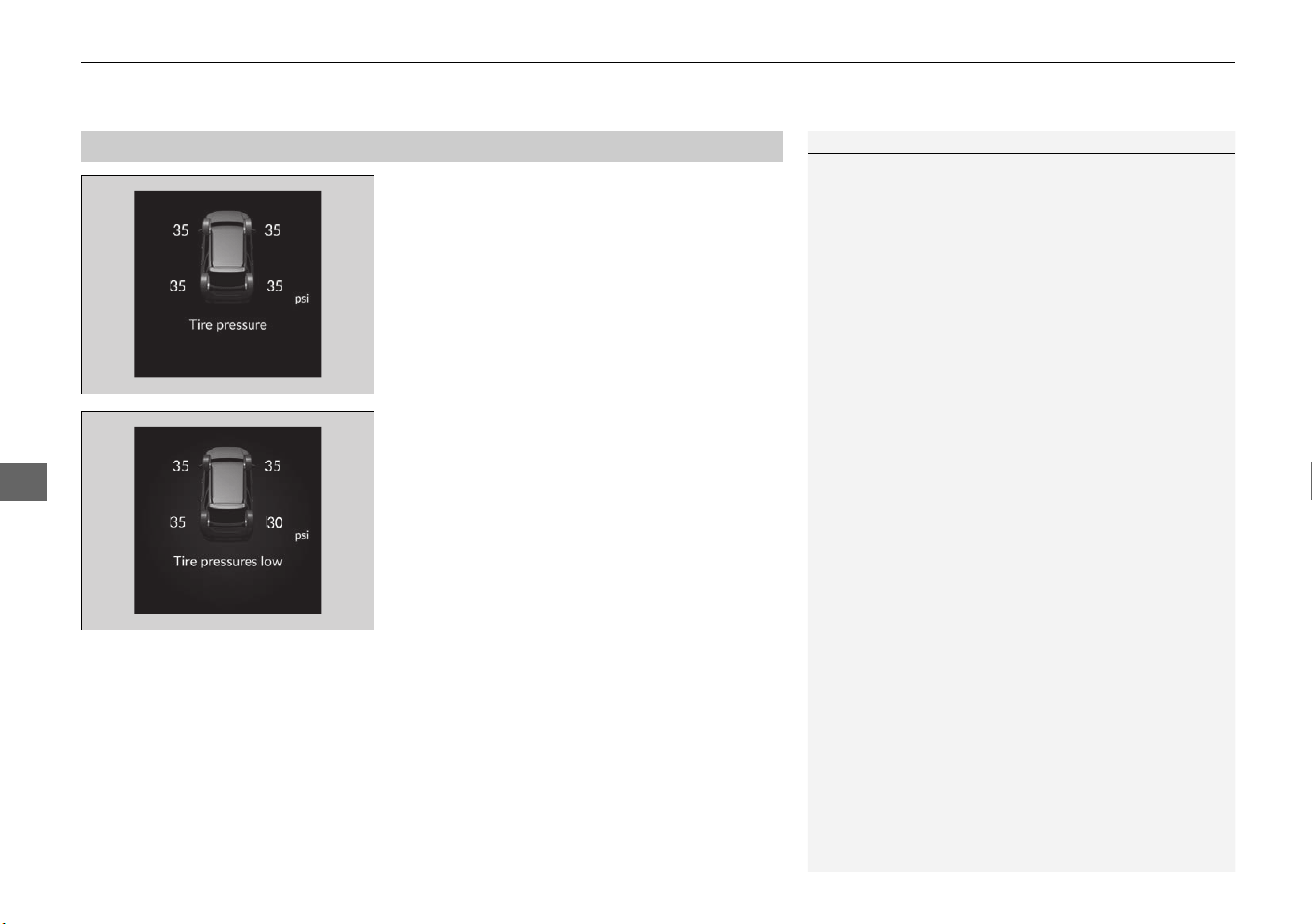
uuWhen DrivinguTire Pressure Monitoring System (TPMS) with Tire Fill Assist
446
Driving
To select the tire pressure monitor, set the
power mode to ON, and roll the right selector
wheel until you see the tire pressure screen.
The pressure for each tire is displayed in psi.
Tire pressures low is displayed when a tire
has significantly low pressure. The specific tire
is displayed on the screen.
■
Tire Pressure Monitor
1Tire Pressure Monitor
The pressure displayed on the driver information
interface can be slightly different from the actual
pressure as measured by a gauge. If there is a
significant difference between the two values, or if
the Low Tire Pressure/TPMS indicator and the
message on the driver information interface do not
go off after you have inflated the tire to the specified
pressure, have the system checked by a dealer.
Tire pressure monitor system problem
. may
appear if you drive with the spare tire, or there is a
problem with the TPMS.
The system checks each tire’s position on the vehicle
each time the power mode is set to ON. “--” is
displayed when the vehicle has not yet identified the
location of each sensor or when there is a problem.
To allow the vehicle to identify the sensor locations,
drive at a speed of more than 25 mph (40 km/h) until
each tire pressure is displayed.
If the pressure display does not update even after
driving for one minute or if “--” is displayed for each
wheel with an amber tire icon, have your vehicle
checked by a dealer.
26 PILOT-31T906300.book 446 ページ 2025年10月8日 水曜日 午前11時43分
447
uuWhen DrivinguTire Pressure Monitoring System (TPMS) - Required Federal Explanation
Continued
Driving
Tire Pressure Monitoring System (TPMS) - Required
Federal Explanation
Each tire, including the spare (if provided), should be checked
monthly when cold and inflated to the inflation pressure
recommended by the vehicle manufacturer on the vehicle placard
or tire inflation pressure label.
(If your vehicle has tires of a different size than the size indicated
on the vehicle placard or tire inflation pressure label, you should
determine the proper tire inflation pressure for those tires.)
As an added safety feature, your vehicle has been equipped with
a tire pressure monitoring system (TPMS) that illuminates a low
tire pressure telltale
when one or more of your tires is significantly under-inflated.
Accordingly, when the low tire pressure telltale illuminates, you
should stop and check your tires as soon as possible, and inflate
them to the proper pressure.
Driving on a significantly under-inflated tire causes the tire to
overheat and can lead to tire failure. Under-inflation also reduces
fuel efficiency and tire tread life, and may affect the vehicle’s
handling and stopping ability.
26 PILOT-31T906300.book 447 ページ 2025年10月8日 水曜日 午前11時43分

448
uuWhen DrivinguTire Pressure Monitoring System (TPMS) - Required Federal Explanation
Driving
Please note that the TPMS is not a substitute for proper tire
maintenance, and it is the driver’s responsibility to maintain
correct tire pressure, even if under-inflation has not reached the
level to trigger illumination of the TPMS low tire pressure telltale.
Your vehicle has also been equipped with a TPMS malfunction
indicator to indicate when the system is not operating properly.
The TPMS malfunction indicator is combined with the low tire
pressure telltale. When the system detects a malfunction, the
telltale will flash for approximately one minute and then remain
continuously illuminated. This sequence will continue upon
subsequent vehicle start-ups as long as the malfunction exists.
When the malfunction indicator is illuminated, the system may
not be able to detect or signal low tire pressure as intended.
TPMS malfunctions may occur for a variety of reasons, including
the installation of replacement or alternate tires or wheels on the
vehicle that prevent the TPMS from functioning properly.
Always check the TPMS malfunction telltale after replacing one or
more tires or wheels on your vehicle to ensure that the
replacement or alternate tires and wheels allow the TPMS to
continue to function properly.
26 PILOT-31T906300.book 448 ページ 2025年10月8日 水曜日 午前11時43分
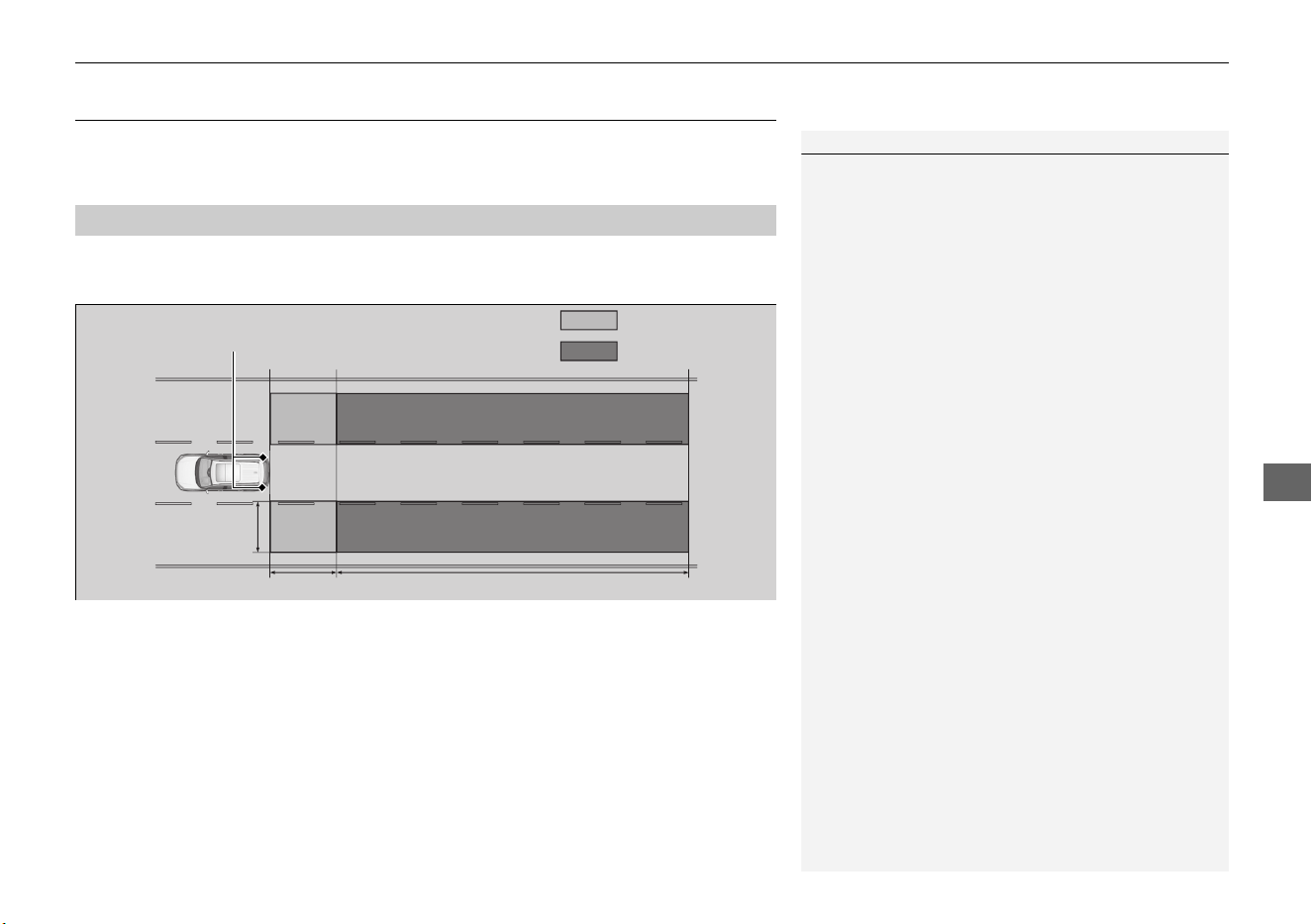
449
uuWhen DrivinguBlind Spot Information System
Continued
Driving
Blind Spot Information System
When the system detects vehicles approaching from behind in adjacent lanes, the
appropriate indicator comes on, providing assistance when you change lanes.
The system activates when your vehicle is moving forward at about 20 mph (32 km/h)
or above.
Alert zone range
A: Approx. 1.6 ~ 10 feet (0.5 ~ 3 meters) from vehicle side.
B: Approx. 10 feet (3 meters) from rear bumper.
C: Approx. 10 ~ 82 feet (3 ~ 25 meters) behind from rear bumper. (The faster the
approaching vehicle, the further away it will be detected.)
The initially set alert zone is alert zone 1. Over time, after the vehicle has been driven
on straight roads with traffic and roadside objects, the system will adapt and expand
the alert zone (alert zone 1 and 2).
■
How the System works
1Blind Spot Information System
Important Safety Reminder
Like all assistance systems, the blind spot information
system has limitations. Always look in your mirrors, to
either side of your vehicle, and behind you for other
vehicles before changing lanes. Overreliance on the
blind spot information system may result in a
collision.
Have your vehicle checked by a dealer in the
following situations:
• The rear bumper or area around the radar sensors
is strongly impacted.
• The indicator does not come on even if a vehicle in
the alert zone should have been detected.
• The rear bumper or any system components need
to be repaired.
If the rear bumper or any system components are
repaired, the system will revert to alert zone 1 only
until it is able to adapt and expand to alert zone 1
and 2.
Radar Sensors: underneath the
rear bumper corners
: Alert zone 1
A
BC
: Alert zone 2
26 PILOT-31T906300.book 449 ページ 2025年10月8日 水曜日 午前11時43分
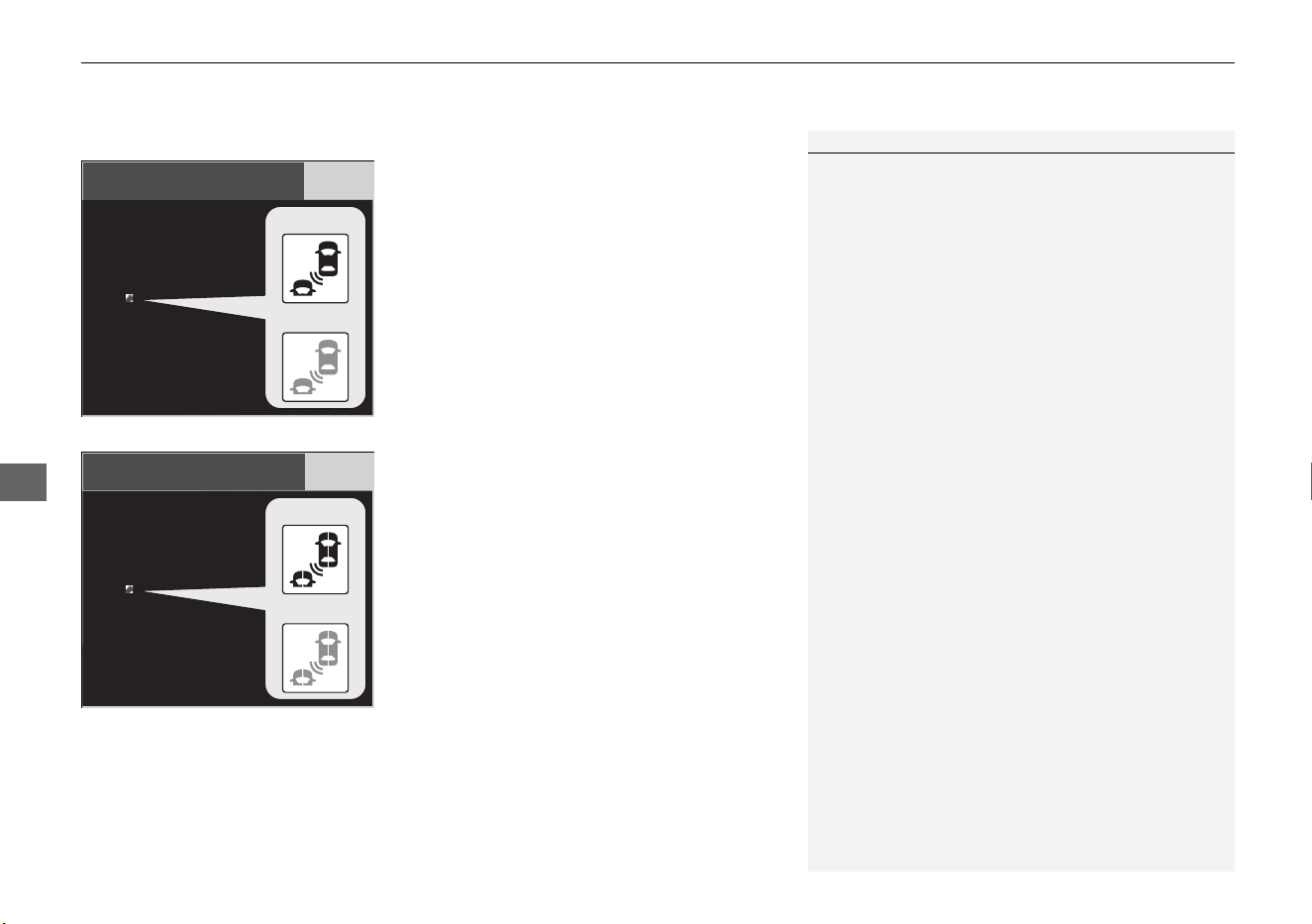
uuWhen DrivinguBlind Spot Information System
450
Driving
■
When the system detects a vehicle
Blind spot information system alert indicator:
Located on the outside door mirror on both
sides.
Comes on when:
• A vehicle approaches you from behind to
overtake you at a speed difference of no
more than about 31 mph (50 km/h).
• You pass a vehicle at a speed difference of
no more than about 12 mph (20 km/h).
Blinks and a beeper sounds when:
You use the turn signal lever to signal a turn in
the direction of the detected vehicle while the
blind spot information system alert indicator is
on.
u The beeper sounds three times.
1Blind Spot Information System
For proper blind spot information system operation:
• Always keep the rear bumper and area around the
radar sensors clean.
• Do not cover the rear bumper corner area with
wraps, labels or stickers of any kind.
The system is for your convenience only. Even if an
object is within the alert zone, the following
situations may occur:
• The blind spot information system alert indicator
does not come on and the Blind spot
information system not available message
appears on the driver information interface.
• The blind spot information system alert indicator
may come on even with the message displayed.
The Vehicle Stability Assist
TM
(VSA®) system, Adaptive
Cruise Control (ACC) with Low Speed Follow, brake
system (amber), and safety support indicators may
come on in amber along with a message in the driver
information interface when you set the power mode
to ON after reconnecting the battery.
With the engine running, turn the steering wheel to the
left until it stops then to the right until it stops, then
drive a short distance at more than 12 mph (20 km/h).
Each indicator should go off. If any do not, have your
vehicle checked by a dealer.
Comes On
Blinks
Models without automatic
dimming power door mirrors
Comes On
Blinks
Models with automatic
dimming power door mirrors
26 PILOT-31T906300.book 450 ページ 2025年10月8日 水曜日 午前11時43分
Continued
451
uuWhen DrivinguBlind Spot Information System
Driving
You can turn the system on and off using the driver information interface.
2 Switching the Display P. 126
2 Safety Support P. 137
The blind spot information system will stay on the previously selected on or off
setting each time you start the engine.
■
Blind Spot Information System On and Off
1How the System works
Turn the system off when towing a trailer.
The system may not work properly for the following
reasons:
• The added mass tilts the vehicle and changes the
radar coverage.
• The trailer itself can be detected by the radar
sensors, causing the blind spot information system
alert indicators to come on.
1Blind Spot Information System On and Off
You can change the settings for the blind spot
information system.
2 Customized Features P. 346
26 PILOT-31T906300.book 451 ページ 2025年10月8日 水曜日 午前11時43分
452
uuWhen DrivinguBlind Spot Information System
Driving
The blind spot information system alert indicator may not come on under the
following conditions:
• There is a large speed difference between your vehicle and the vehicle in the
adjacent lane.
• A vehicle is parked in a side lane.
• An object not detected by the radar sensors approaches or passes your vehicle.
• The vehicle driving in the adjacent lane is a motorcycle or other small vehicle.
The blind spot information system may not operate correctly under the following
conditions:
• Making a turn at an intersection.
• Objects (guard rails, poles, trees, etc.) are detected.
• An object that does not reflect radio waves well or a motorcycle, is in the alert
zone.
• Driving on a curved road.
• A vehicle is moving from a far lane to the adjacent lane.
• The system picks up signal interference such as other radar sensors from another
vehicle or strong radio wave transmitted from a facility nearby.
• The rear bumper or the area around the radar sensors is covered by dirt, mud,
snow, ice, etc.
• The rear bumper or the area around the radar sensors has been damaged or
deformed.
• In bad weather (heavy rain, snow, and fog).
• Making a short turn or driving on a bumpy road that slightly tilts the vehicle.
• An object such as a bicycle rack is attached to the rear of the vehicle.
■
Blind Spot Information System Conditions and Limitations
26 PILOT-31T906300.book 452 ページ 2025年10月8日 水曜日 午前11時43分
453
Continued
Driving
Honda Sensing®
Assists with functions such as acceleration, braking, and steering in order to reduce
the burden on the driver, as well as help avoid or reduce the severity of collisions.
Honda Sensing® has the following functions:
■
The functions that do not require switch operations to activate
• Collision Mitigation Braking System
TM
(CMBS
TM
) 2 P. 456
• Low Speed Braking Control
*
2 P. 468
• Road Departure Mitigation System 2 P. 474
• Traffic Sign Recognition System 2 P. 523
• Auto High-Beam 2 P. 198
• Blind Spot Information System 2 P. 449
• Cross Traffic Monitor 2 P. 548
• Parking Sensor System
*
2 P. 544
• Driver Attention Monitor 2 P. 132
■
The functions that require switch operations to activate
• Adaptive Cruise Control (ACC) with Low Speed Follow
2 P. 482
• Lane Keeping Assist System (LKAS) 2 P. 503
• Traffic Jam Assist 2 P. 514
1Honda Sensing®
Make sure that all the tires are of the same specified
size, type and brand, and that they are evenly worn.
If you use tires of different sizes, types, brands, or
degree of wear, the system may not work properly.
Do not modify the suspension. Altering the height of
the vehicle may prevent the system from working
properly.
* Not available on all models
26 PILOT-31T906300.book 453 ページ 2025年10月8日 水曜日 午前11時43分
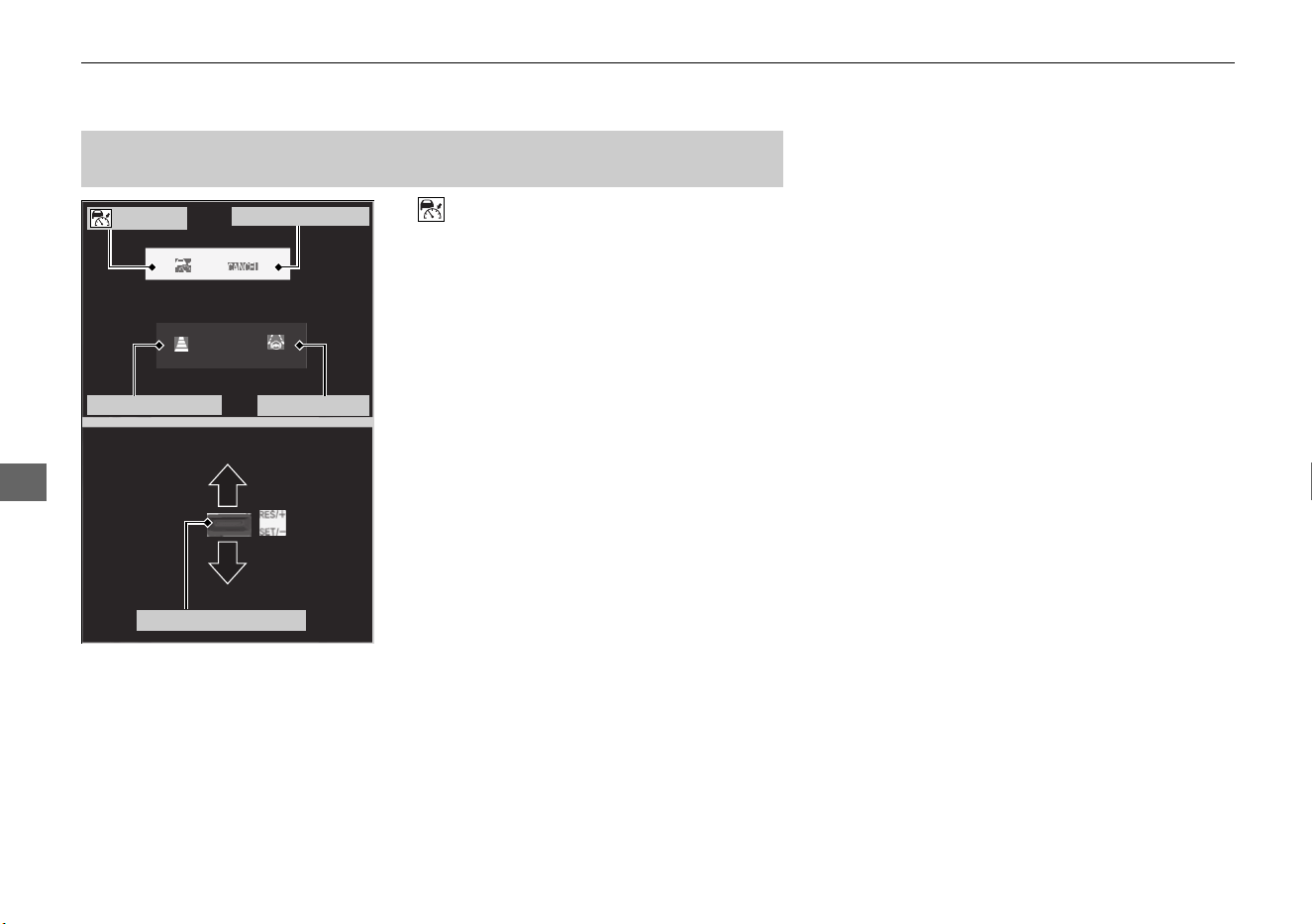
454
uuHonda Sensing® u
Driving
■
Button
Press to activate standby mode for ACC with
Low Speed Follow.
Or press to cancel the system.
■
LKAS Button
Press to activate standby mode for LKAS and
Traffic Jam Assist.
Or press to cancel these systems.
■
CANCEL Button
Press to cancel ACC with Low Speed Follow.
■
Interval Button
Press to change the ACC with Low Speed
Follow following-interval.
■
RES/+/SET/− Switch
Press the RES/+/SET/− switch up to set or
resume the ACC with Low Speed Follow or
increase the vehicle speed. Press the RES/+/
SET/− switch down to set the ACC with Low
Speed Follow or decrease the vehicle speed.
■
Operation Switches for the Adaptive Cruise Control (ACC) with Low
Speed Follow/Lane Keeping Assist System (LKAS)/Traffic Jam Assist
Interval Button
Button
LKAS Button
CANCEL Button
RES/+/SET/− Switch
26 PILOT-31T906300.book 454 ページ 2025年10月8日 水曜日 午前11時43分
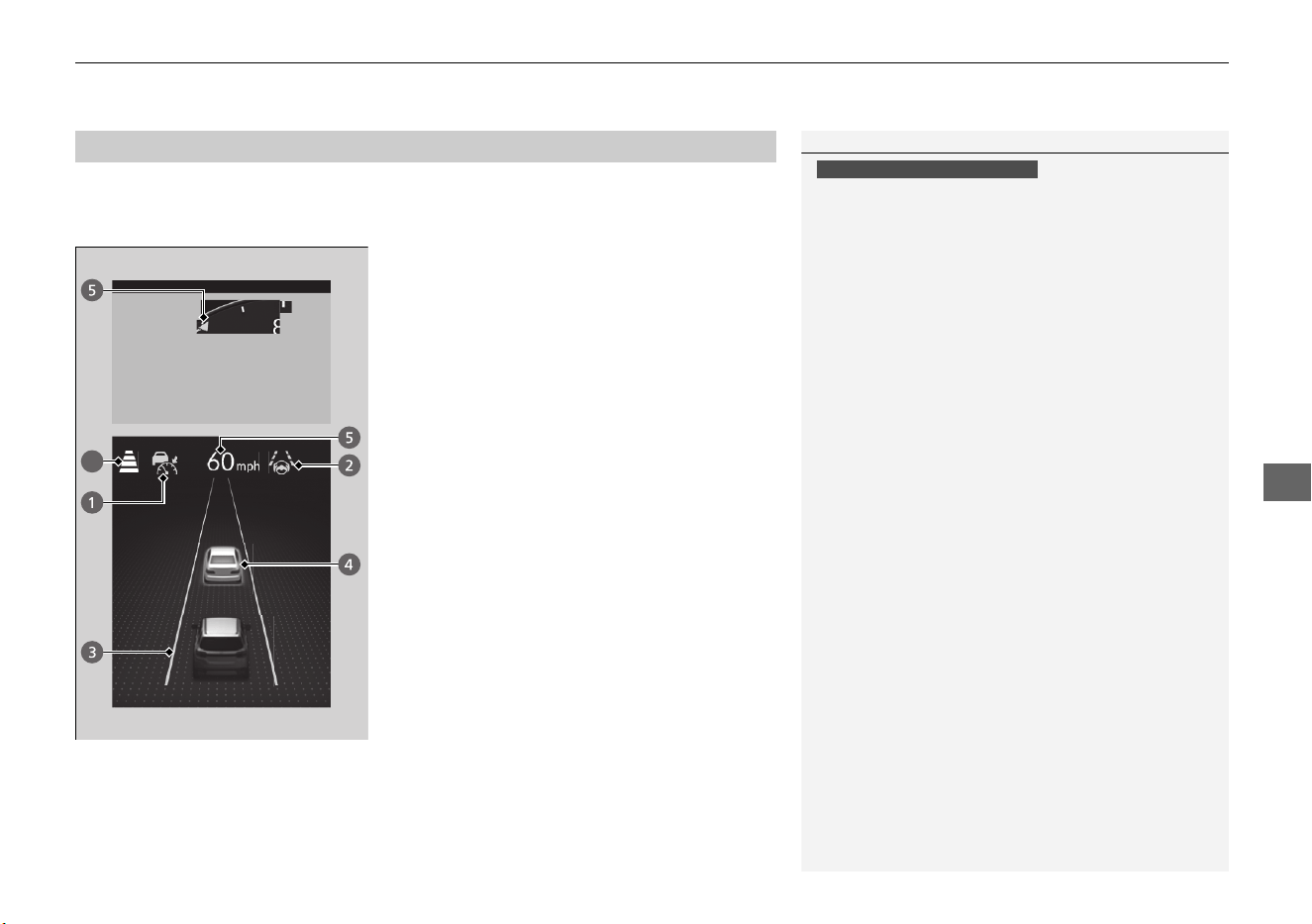
455
uuHonda Sensing® u
Driving
You can see the current state of Adaptive Cruise Control (ACC) with Low Speed
Follow, Lane Keeping Assist System (LKAS) and Traffic Jam Assist.
a Indicates that ACC with Low Speed Follow
is ready to be activated.
• Green, White/Green: The system is on.
u White/Green indicates that a vehicle is
not detected ahead.
• White: The system is standby.
• Amber: There is a problem with the system.
b Indicates that LKAS or Traffic Jam Assist is
ready to be activated.
• Green: The system is operating.
• White: The system is standby.
• Amber: There is a problem with the system.
c Indicates that LKAS or Traffic Jam Assist is
activated and whether or not traffic lane
lines are detected.
• Green lines: The system is operating.
• White lines: Traffic lane lines are detected.
• Amber line: Lane departure is detected.
d Indicates whether or not a vehicle is
detected ahead.
• Control target vehicle: White and outlined
in green
• Outside of control target vehicle: Gray
e Indicates that ACC with Low Speed Follow
shows the set vehicle speed.
f
Indicates that ACC with Low Speed Follow
shows the set vehicle interval.
■
Gauge Content
1Gauge Content
You can have the head-up display show you the
current state of each function.
2 Head-Up Display
*
P. 143
Models with head-up display
6
* Not available on all models
26 PILOT-31T906300.book 455 ページ 2025年10月8日 水曜日 午前11時43分
456
uuHonda Sensing® uCollision Mitigation Braking System
TM
(CMBS
TM
)
Driving
Collision Mitigation Braking System
TM
(CMBS
TM
)
The system can assist you when it determines there is a possibility of your vehicle
colliding with a vehicle (including motorcycles) ahead from behind, an oncoming
vehicle in front, a pedestrian, or someone riding a bicycle (moving bicycle).
The CMBS
TM
is designed to alert you when the potential for a collision is determined,
as well as assist in reducing speed, avoiding collisions, and reducing collision
severity.
1Collision Mitigation Braking System
TM
(CMBS
TM
)
Important Safety Reminder
The CMBS
TM
is designed to reduce the severity of an
unavoidable collision. It does not prevent collisions
nor stop the vehicle automatically. It is still your
responsibility to operate the brake pedal and steering
wheel appropriately according to the driving
conditions.
The CMBS
TM
may not activate or may not detect a
vehicle in front of your vehicle under certain
conditions:
2 CMBS
TM
Conditions and Limitations P. 461
For directions on the proper handling of the radar
sensor, refer to the following page.
2 Radar Sensor P. 531
You can read about handling information for the
camera equipped with this system.
2 Front Sensor Camera P. 529
26 PILOT-31T906300.book 456 ページ 2025年10月8日 水曜日 午前11時43分
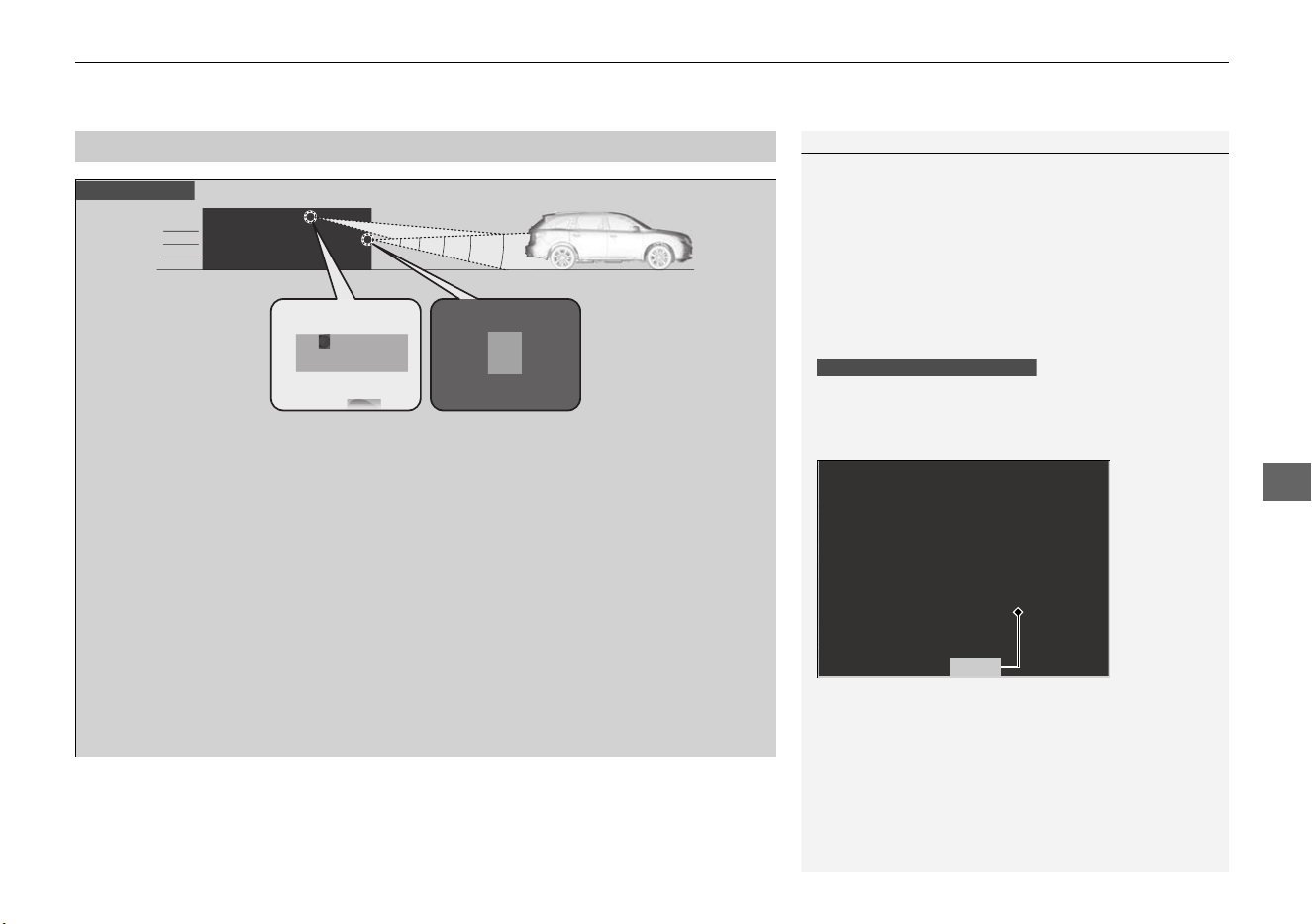
Continued
457
uuHonda Sensing® uCollision Mitigation Braking System
TM
(CMBS
TM
)
Driving
The CMBS
TM
will be canceled when your vehicle stops or the system determines
there no longer is the potential for a collision.
The CMBS
TM
may also be canceled when a driver operates the steering wheel and
the brake or accelerator pedal to avoid a collision.
■
How the System Works
1How the System Works
The camera in the CMBS
TM
is also designed to detect
pedestrians.
However, this pedestrian detection feature may not
activate or may not detect a pedestrian in front of
your vehicle under certain conditions.
Refer to the ones indicating the pedestrian detection
limitations from the list.
2 CMBS
TM
Conditions and Limitations P. 461
The head-up warning uses a lens located at the front
end of the dashboard.
Do not cover the lens or spill any liquid on it.
Models with head-up display
Lens
A front sensor
camera is located
behind the
rearview mirror.
The system starts monitoring the roadway ahead when your vehicle speed is about
3 mph (5 km/h) or above and will search for a vehicle, pedestrian, or moving bicycle
in front of you.
The CMBS
TM
activates when:
●
The speed difference between your vehicle and a vehicle, pedestrian, or moving
bicycle detected in front of you becomes about 3 mph (5 km/h) and over with a
chance of a collision.
●
Your vehicle drives at about 18 mph (30 km/h) or less and there is a chance of a
frontal collision with a detected oncoming vehicle when you turn left at an
intersection.
●
Your vehicle speed is about 62 mph (100 km/h) or less and the system determines
there is a chance of a collision with:
- An oncoming or stationary vehicle detected in front of you.
- A pedestrian or moving bicycle detected in front of you.
When to use
The radar sensor is
behind the Honda
emblem on the
front grille.
26 PILOT-31T906300.book 457 ページ 2025年10月8日 水曜日 午前11時43分
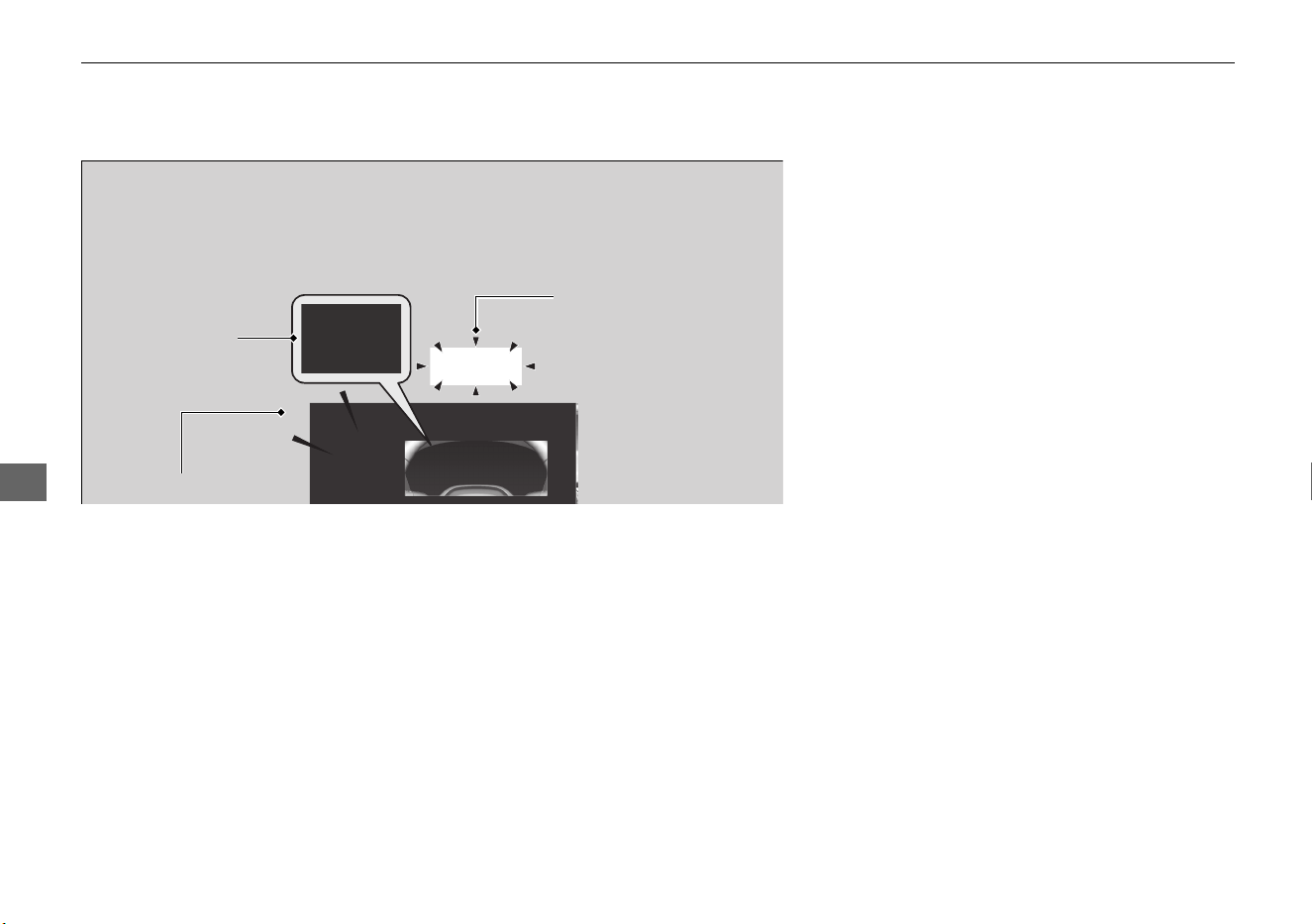
458
uuHonda Sensing® uCollision Mitigation Braking System
TM
(CMBS
TM
)
Driving
■
When the system activates
You can change the distance (Long/Normal/Short) between vehicles at which the
system’s earliest collision alert will come on.
2 Customized Features P. 346
When in Long, visual and audible alerts come on at a longer distance from a vehicle
ahead than in Normal setting, and in Short, at a shorter distance than in Normal.
The system provides visual and audible alerts of a possible collision, and stops if the
collision is avoided.
u Take appropriate action to prevent a collision (apply the brakes, change
lanes, etc.)
Visual Alerts
Beep
Audible Alert
Head-up Warning Lights
*
* Not available on all models
26 PILOT-31T906300.book 458 ページ 2025年10月8日 水曜日 午前11時43分
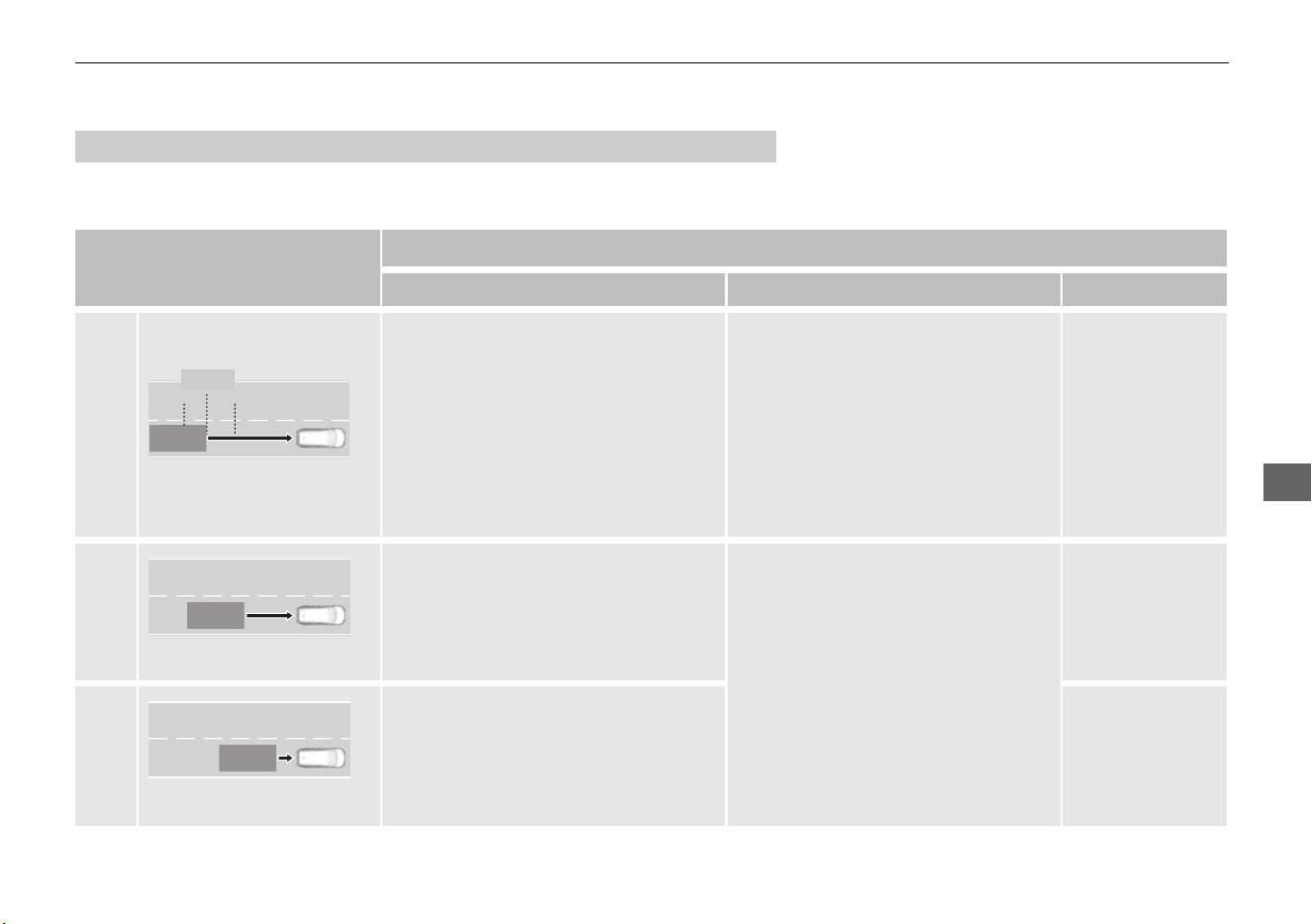
459
uuHonda Sensing® uCollision Mitigation Braking System
TM
(CMBS
TM
)
Continued
Driving
The system has three alert stages for a possible collision. However, depending on circumstances, the CMBS
TM
may not go through all of
the stages before initiating the last stage.
■
Collision Alert Stages
Distance between vehicles
CMBS
TM
The radar sensors detect a vehicle Audible & Visual WARNINGS Braking
Stage
one
There is a risk of a collision with the
vehicle ahead of you.
The visual alert flashes.
If the distance between your vehicle
and the vehicle in front of you
continues to decrease, the audible
alert sounds in addition to the visual
alert flashing.
u The collision warning distance
can be changed.
2 Customized Features P. 346
—
Stage
two
The risk of a collision has increased,
time to respond is reduced.
Visual and audible alerts.
Lightly applied
Stage
three
The CMBS
TM
determines that a collision
is unavoidable.
Forcefully applied
Your
Vehicle
Vehicle
Ahead
Normal
ShortLong
Vehicle
Ahead
Your
Vehicle
Your
Vehicle
Vehicle
Ahead
26 PILOT-31T906300.book 459 ページ 2025年10月8日 水曜日 午前11時43分
uuHonda Sensing® uCollision Mitigation Braking System
TM
(CMBS
TM
)
460
Driving
You can turn the system on and off using the driver information interface.
2 Switching the Display P. 126
2 Safety Support P. 137
The CMBS
TM
is turned on every time you start the engine, even if you turned it off
the last time you drove the vehicle.
■
CMBS
TM
On and Off
1Collision Mitigation Braking System
TM
(CMBS
TM
)
You cannot turn the CMBS
TM
off while driving.
The CMBS
TM
may automatically shut off, and the
safety support indicator (amber) will come and stay
on under certain conditions:
2 CMBS
TM
Conditions and Limitations P. 461
When the CMBS
TM
is activated, it will continue to
operate even if the accelerator pedal is partially
depressed. However, it will be canceled if the
accelerator pedal is fully depressed.
Have your vehicle checked by a dealer if you find any
unusual behavior of the system (e.g., the warning
message appears too frequently).
The Vehicle Stability Assist
TM
(VSA®) system, Adaptive
Cruise Control (ACC) with Low Speed Follow, brake
system (amber), and safety support indicators may
come on in amber along with a message in the driver
information interface when you set the power mode
to ON after reconnecting the battery.
With the engine running, turn the steering wheel to the
left until it stops then to the right until it stops, then
drive a short distance at more than 12 mph (20 km/h).
Each indicator should go off. If any do not, have your
vehicle checked by a dealer.
26 PILOT-31T906300.book 460 ページ 2025年10月8日 水曜日 午前11時43分
461
uuHonda Sensing® uCollision Mitigation Braking System
TM
(CMBS
TM
)
Continued
Driving
In the following situations, the radar sensor or camera may be unable to correctly
detect vehicles, pedestrians, moving bicycles, or road conditions, potentially causing
the CMBS
TM
to operate improperly.
2 Front Sensor Camera P. 529
2 Radar Sensor P. 531
■
Environmental conditions
• Driving in bad weather (rain, fog, snow, etc.).
• Sudden changes between light and dark, such as an entrance or exit of a tunnel.
• There is little contrast between objects and the background.
• Driving into low sunlight (e.g., at dawn or dusk).
• Strong light is reflected onto the pedestrians, moving bicycles or roadway.
• Driving in the shadows of trees, buildings, etc.
• Roadway objects or structures are misinterpreted as vehicles and pedestrians.
• Reflections on the interior of the windshield.
• Driving at night or in a dark place such as a tunnel (due to low-light conditions,
pedestrians, moving bicycles or other vehicles may not be detected).
• When driving for long distances on a road in a trafficless area such as a desert.
■
Roadway conditions
• Driving on a snowy or wet roadway (obscured lane marking, vehicle tracks,
reflected lights, road spray, high contrast).
• Driving on curvy, winding, or undulating roads.
• The road is hilly or the vehicle is approaching the crest of a hill.
• Driving through an area where there are objects that strongly reflect radio waves
onto vehicles, pedestrians, or moving bicycles.
• Your vehicle is strongly shaken on uneven road surfaces.
■
CMBS
TM
Conditions and Limitations
26 PILOT-31T906300.book 461 ページ 2025年10月8日 水曜日 午前11時43分

462
uuHonda Sensing® uCollision Mitigation Braking System
TM
(CMBS
TM
)
Driving
■
Vehicle conditions
• Headlight lenses are dirty or the headlights are not properly adjusted.
• The inside of the windshield is fogged.
• An abnormal tire or wheel condition (incorrect sizes, varied sizes or construction,
improperly inflated, compact spare tire
*
, etc.).
• When tire chains are installed.
• The vehicle is tilted due to a heavy load or suspension modifications.
• The camera temperature gets too high.
• Driving with the electric parking brake applied.
• When the radar sensor behind the Honda emblem gets dirty.
• The vehicle is towing a trailer.
• Driving at night or in a dark place (e.g., a tunnel) with the headlights off.
• There is residue on the windshield from the windshield wipers.
• The front of the camera is obstructed by dirt, fog, rain, mud, wet snow,
accessories, decals, stickers, film, etc.
* Not available on all models
26 PILOT-31T906300.book 462 ページ 2025年10月8日 水曜日 午前11時43分

463
uuHonda Sensing® uCollision Mitigation Braking System
TM
(CMBS
TM
)
Continued
Driving
■
Examples of limitations on the correct detection of the camera due to the
condition of the vehicle ahead of you, oncoming vehicles, pedestrians, or
moving bicycles
• The distance between your vehicle and the vehicle ahead of you, oncoming
vehicle, pedestrian, or moving bicycle ahead of you is too short.
• The vehicle ahead of you, oncoming vehicle, pedestrian, or moving bicycle
suddenly cuts in front of or jumps out in front of you.
• A bicycle or sideways-facing vehicle is stopped.
• The oncoming vehicle or vehicle ahead of you is sideways or facing diagonally.
• When the vehicle ahead of you, oncoming vehicle, pedestrian, or moving bicycle
blends in with the background, preventing the system from recognizing it.
• When several pedestrians are moving ahead of you in a group.
• When several bicycles are moving ahead of you in a group.
• When a pedestrian or moving bicycle crosses the road too quickly.
• A pedestrian or moving bicycle approaches from the opposite direction.
• The headlights of the vehicle ahead of you or oncoming vehicle are lit on one side
or not lit on either side in a dark place.
• When part of a pedestrian (heads, limbs, etc.) is hidden by a load.
• When a pedestrian is bent over or squatting, when their hands are raised, or they
are running.
• When the pedestrian is shorter than about 3.3 feet (1 meter) or taller than about
6.6 feet (2 meters) in height.
• When the pedestrian is pushing a stroller or bicycle.
26 PILOT-31T906300.book 463 ページ 2025年10月8日 水曜日 午前11時43分

464
uuHonda Sensing® uCollision Mitigation Braking System
TM
(CMBS
TM
)
Driving
■
Examples of other limitations on detection or system operation
• When the vehicle ahead of you is a small motorcycle, motorcycle with a sidecar,
wheelchair, or other specially shaped vehicle.
• When a vehicle is lower in the rear than the front such as trucks that are not
carrying a cargo, or a narrow vehicle.
• When the vehicle ahead of you, oncoming vehicle, pedestrian or moving bicycle
is not in front of the vehicle.
• The speed difference between your vehicle and the vehicle ahead of you,
oncoming vehicle, pedestrian or moving bicycle is significantly large.
• When the vehicle or moving bicycle in front of you slows suddenly.
• When the driver operates the brake pedal and steering wheel to avoid a collision.
• When you approach the vehicle ahead of you, oncoming vehicle, pedestrians or
moving bicycles while accelerating rapidly or operating the steering wheel (except
when turning left at an intersection, etc.)
*1
• When the moving bicycle is a child-sized bicycle, folding bicycle, three-wheeler or
other bicycle with small tires, or a long bicycle like a tandem bicycle.
• When the radar and camera cannot correctly identify the shape of the vehicle
ahead of you, oncoming vehicle, pedestrian, or moving bicycle.
• When the minimum ground clearance of a vehicle ahead of you is extremely high.
• When turning left or right and your turn signal is not activated in the same
direction you are turning.
*1: When there is a possibility of a frontal collision with the oncoming vehicle while turning left, the CMBS
TM
is activated. However, it may not be activated if you suddenly turn the steering wheel.
26 PILOT-31T906300.book 464 ページ 2025年10月8日 水曜日 午前11時43分

465
uuHonda Sensing® uCollision Mitigation Braking System
TM
(CMBS
TM
)
Continued
Driving
■
Automatic shutoff
The CMBS
TM
may automatically shut itself off and the safety support indicator (amber)
comes and stays on when:
• You drive off-road or on a mountain road, or curved and winding road for an
extended period.
• Driving in bad weather (rain, fog, snow, etc.).
• Driving with the parking brake applied.
• The camera temperature gets too high.
• The radar sensor temperature gets too high.
• The front of the camera or a radar sensor on the front grille is obstructed by dirt,
fog, rain, mud, wet snow, accessories, decals, stickers, film, etc.
• An abnormal tire condition is detected (incorrect tire size, flat tire, etc.).
• You are driving near an object or place that generates strong radio waves or
noise, such as a TV tower, broadcast station, power plant, or a vehicle equipped
with radar.
Once the conditions that caused the CMBS
TM
to shut off improve or are addressed
(e.g., cleaning), the system comes back on.
26 PILOT-31T906300.book 465 ページ 2025年10月8日 水曜日 午前11時43分
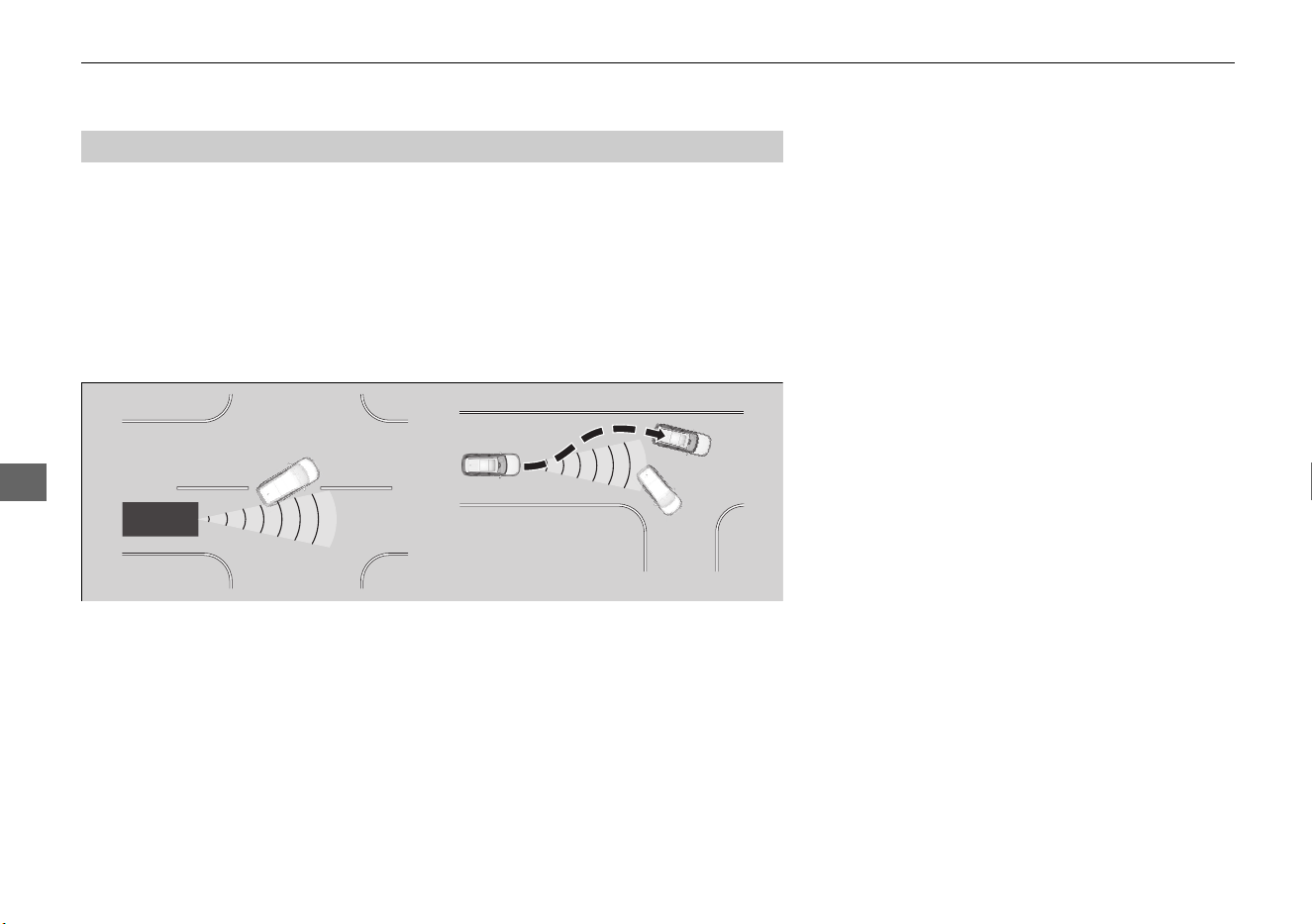
466
uuHonda Sensing® uCollision Mitigation Braking System
TM
(CMBS
TM
)
Driving
Even if there is little chance of a collision, the CMBS
TM
may activate under the
following conditions.
Also, the system may activate if it detects a possibility of collision with pedestrians,
moving bicycles, or vehicles.
• Your vehicle approaches or passes another vehicle that is making a left or right
turn.
• Your vehicle approaches another vehicle ahead of you and you change lanes to
pass.
■
With Little Chance of a Collision
26 PILOT-31T906300.book 466 ページ 2025年10月8日 水曜日 午前11時43分
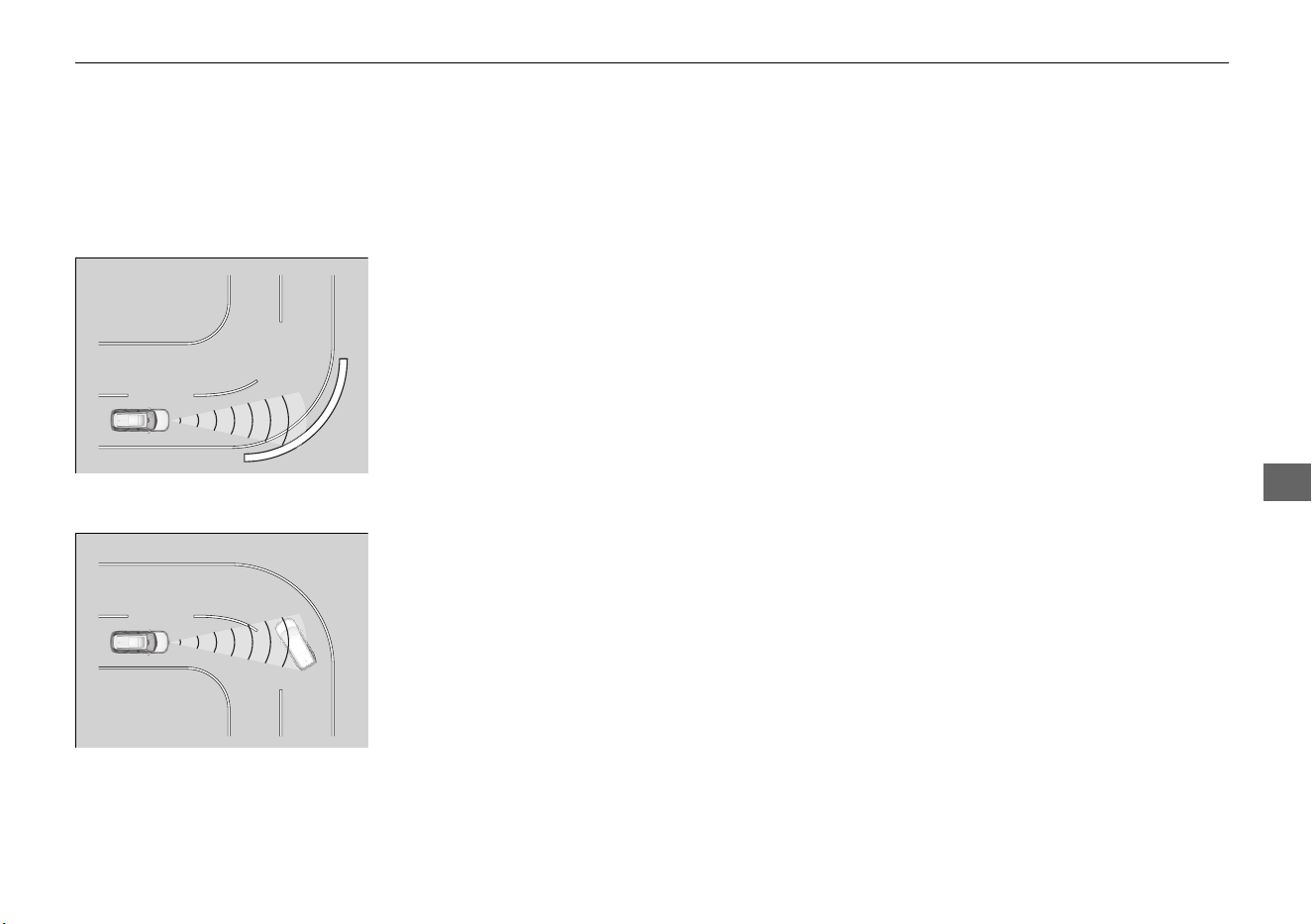
467
uuHonda Sensing® uCollision Mitigation Braking System
TM
(CMBS
TM
)
Driving
• When your vehicle approaches vehicles, pedestrians, or moving bicycles.
• When vehicles, pedestrians, or moving bicycles are passing in front of you.
• When you drive under a low structure or through a narrow gate at high speed.
• When there are traffic signs or structures such as guard rails beside the road along
a curve.
• When driving through curves, your vehicle comes to a point where the oncoming
vehicle is right in front of you.
• When approaching stationary vehicles or walls, such as when parking.
26 PILOT-31T906300.book 467 ページ 2025年10月8日 水曜日 午前11時43分
468
uuHonda Sensing® uLow Speed Braking Control
*
Driving
Low Speed Braking Control
*
Using sonar sensors located on the front and rear bumpers, this system can detect if
there is danger of a potential collision with a wall or other obstacle during normal
driving or when the accelerator pedal is depressed with too much force. The system
then assists in avoiding collisions and reducing damage from impact through
assistive braking and/or assistive driving power suppression.
1Low Speed Braking Control
*
If the Low Speed Braking Control activates in a
situation where you do not want automatic brake
application (such as when the vehicle is between two
railroad crossing gates), simply press the brake pedal
to deactivate the system and then continue to drive
as intended.
3
WARNING
The Low Speed Braking Control System
cannot avoid all collisions and may not
reduce damage in each situation where the
accelerator is mistakenly or aggressively
pressed. Overreliance on the system may
result in a collision with serious injury or
death. Always check your surroundings,
your shift position, and your pedal use.
Driver remains responsible for safely
operating the vehicle.
* Not available on all models
26 PILOT-31T906300.book 468 ページ 2025年10月8日 水曜日 午前11時43分
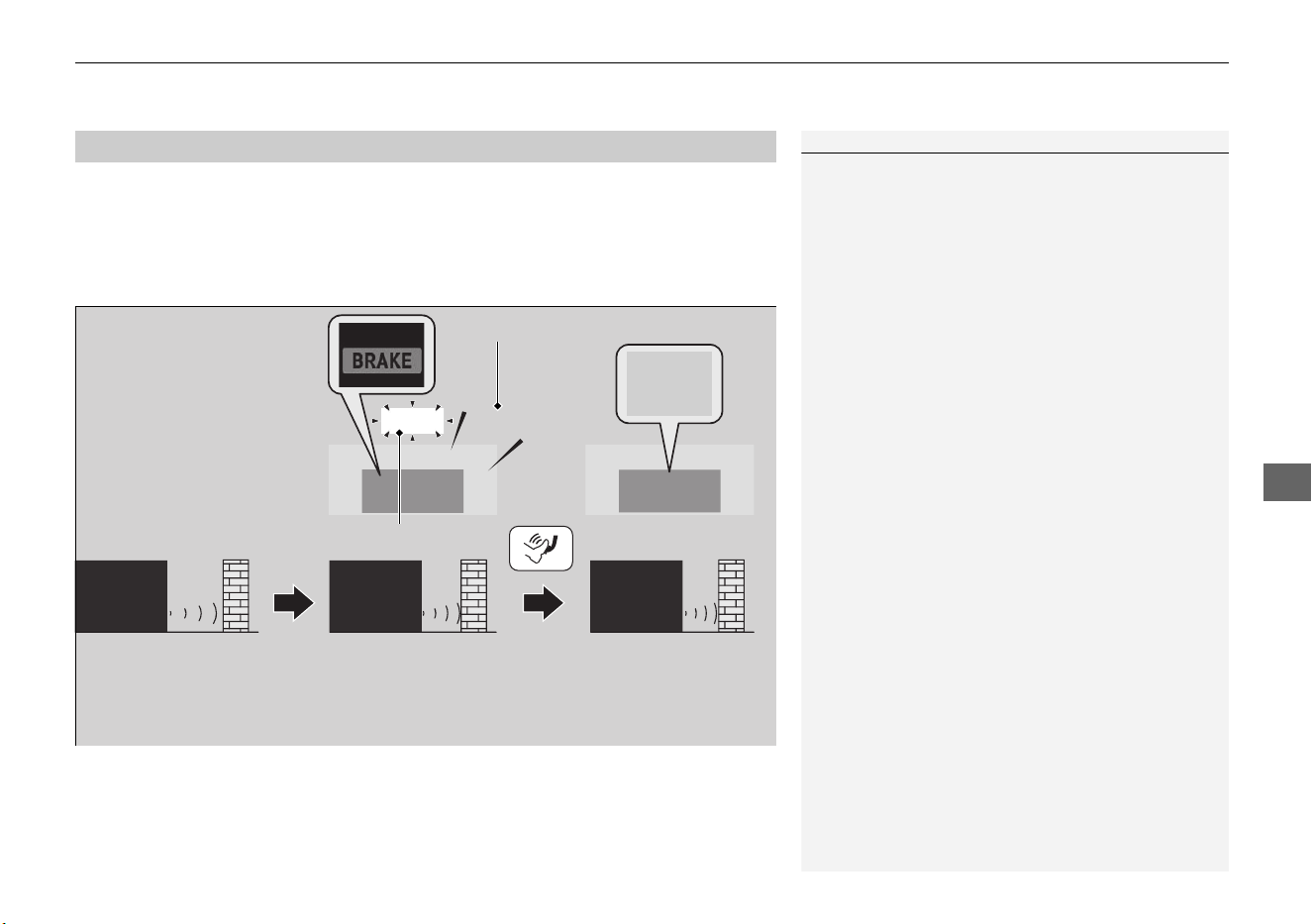
Continued
469
uuHonda Sensing® uLow Speed Braking Control
*
Driving
■
Assistive braking
Assistive braking provides a visual and audible alert when the vehicle is moving
between approximately 1 and 6 mph (2 and 10 km/h) and there is the possibility of
a collision with a detected wall or other obstacles, as well as providing assistance
with braking.
If only the rear sensors are turned off, the assistive braking will not work when
reversing.
2 Customized Features P. 346
■
How the System Works
1Low Speed Braking Control
*
For directions on the proper handling of the sonar
sensors, please refer to the following page.
2 Sonar Sensors
*
P. 532
The vehicle will release the brake and start moving a
few seconds after the system is activated. To keep the
vehicle stopped, keep the brake pedal depressed or
put the transmission into
(P.
In order to prevent the system from activating when
not needed, always turn it off during vehicle
maintenance; when loading on ships, trucks, and so
on; when using a chassis dynamometer or free rollers
for inspection; or when washing the car in conveyor
type car wash machine.
If you put any accessories (such as a bicycle rack) on
or around the rear sensors, the Low Speed Braking
Control System may activate if it detects these
accessories as an obstacle. In this case, turn off the
rear sensor.
2 Customized Features P. 346
When the Drive Mode is changed to TOW mode, the
Low Speed Braking Control System will not work
when reversing.
2 Drive Mode System P. 433
When the Drive Mode is changed to TRAIL mode, the
Low Speed Braking Control System will not work.
*
2 Drive Mode System P. 433
Beep
The vehicle
applies brake
Driver
depresses
brake
pedal
Release
brake after
maintaining
stationary
position
Stop
Audible Alert
Head-up Warning Lights
*
* Not available on all models
26 PILOT-31T906300.book 469 ページ 2025年10月8日 水曜日 午前11時43分
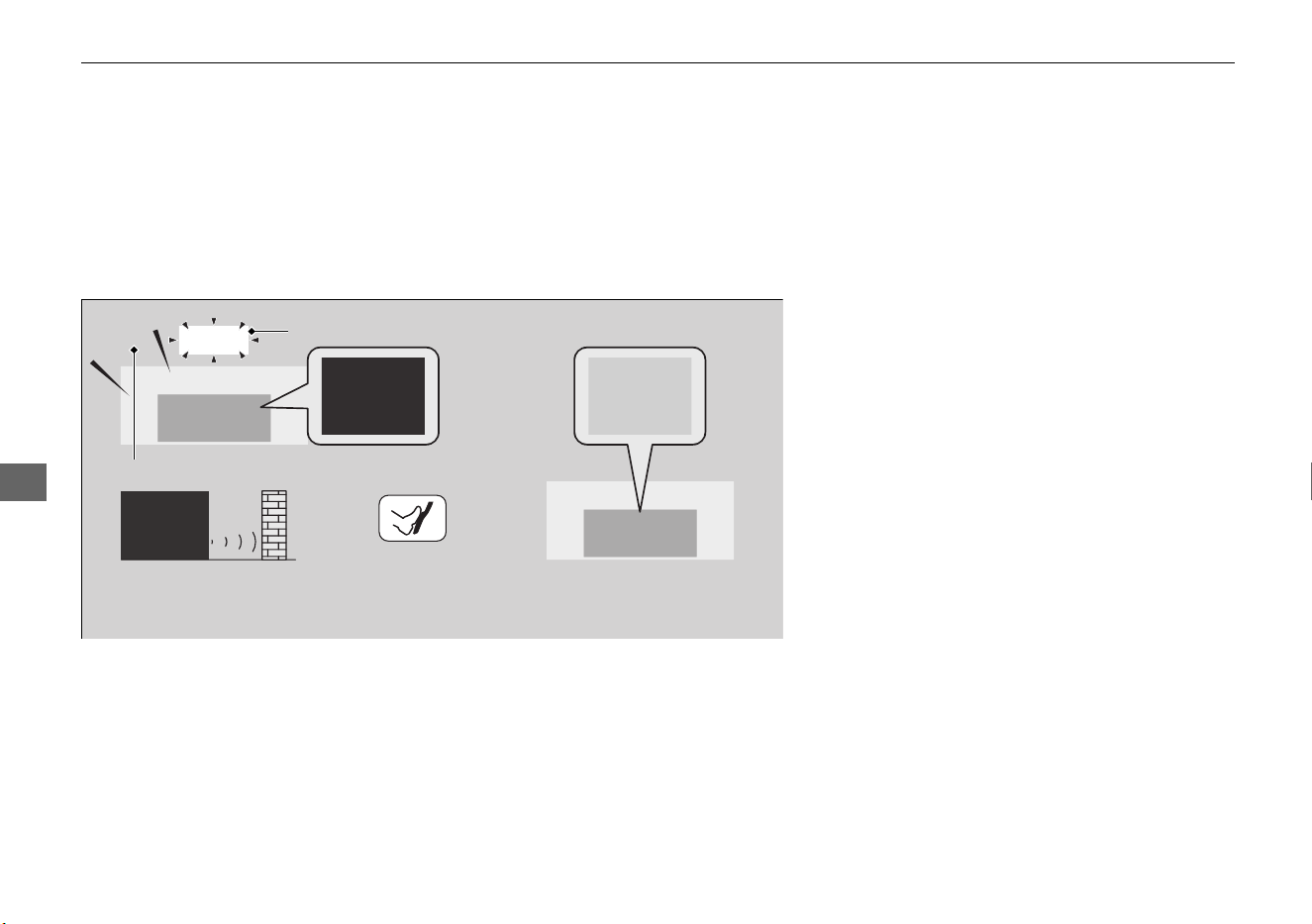
470
uuHonda Sensing® uLow Speed Braking Control
*
Driving
■
Assistive driving power suppression
When the vehicle is stopped or moving at less than 6 mph (10 km/h) and there is an
obstacle such as a wall detected near the front or back of the vehicle, if the
accelerator pedal is depressed more than necessary, the system will inform you with
a visual and audible alert. At the same time, the system will prevent sudden forward
or backwards movement by limiting the output of the engine, then assistive braking
will activate when you get closer to the obstacle.
Assistive driving power suppression will not activate in the following situations.
When moving forward:
When on a steep slope or the shift position is in
(P, (R, or (N.
When reversing:
When on a steep slope or the shift position is in a position other than
(R.
If only the rear sensors are turned off, the assistive driving power suppression will
not work when reversing.
2 Customized Features P. 346
Beep
Accidental depression
of the accelerator/
Limiting the output of
the engine
Audible Alert
Head-up Warning Lights
*
* Not available on all models
26 PILOT-31T906300.book 470 ページ 2025年10月8日 水曜日 午前11時43分
Continued
471
uuHonda Sensing® uLow Speed Braking Control
*
Driving
You can turn the system on and off using the driver information interface.
2 Switching the Display P. 126
2 Safety Support P. 137
The system is turned on every time you start the engine, even if you turned it off the
last time you drove the vehicle.
■
System On and Off
1System On and Off
The Low Speed Braking Control system may
temporarily turn off after reconnecting the battery.
With the engine running, turn the steering wheel to
the left until it stops then to the right until it stops,
then drive at over 20 km/h (12 mph) for some time,
the system will automatically turn ON.
If the system does not turn on, have your vehicle
checked by a dealer.
You cannot turn the Low Speed Braking Control on
while the Drive Mode is in TRAIL mode.
2 Drive Mode System P. 433
26 PILOT-31T906300.book 471 ページ 2025年10月8日 水曜日 午前11時43分
uuHonda Sensing® uLow Speed Braking Control
*
472
Driving
Conditions for assistive driving power suppression:
• When the accelerator is no longer depressed.
• When the accelerator is depressed for approximately four seconds.
• When the brake pedal is depressed.
Conditions for assistive braking cancellation:
• A certain amount of time has passed since activation.
The system may not operate correctly under the following conditions:
■
Examples of obstacles the sonar sensors cannot detect
• Obstacles that do not reflect sound waves well, such as people, snow, cloth,
sponges, etc.
• Thin obstacles such as fences, bicycles, sign posts, etc.
• Short or small obstacles.
• Obstacles immediately in front of the bumper.
• Moving objects or obstacles that suddenly enter the road.
• Obstacles that are not perpendicular to the ground.
■
Conditions for Cancellation
■
Low Speed Braking Control System Conditions and Limitations
1Conditions for Cancellation
After Low Speed Braking Control has activated once,
it will not activate again for the same obstacle.
It can be activated again after driving for a certain
distance after last activation.
Low Speed Braking Control activates separately when
moving forward and reversing. (For example, if it
activates when moving forward, it can be activated
again immediately if reversing.)
26 PILOT-31T906300.book 472 ページ 2025年10月8日 水曜日 午前11時43分

473
uuHonda Sensing® uLow Speed Braking Control
*
Driving
■
Examples of situations where the sonar sensors cannot detect obstacles
• The sonar sensors are dirty (covered by snow, water, mud, etc.).
• The vehicle is too hot or cold.
• The steering wheel is turned sharply when approaching the obstacle at an angle.
■
Examples of other cases where the system may not work correctly
• The vehicle is tilted due to heavy load or suspension modifications.
• An abnormal tire or wheel condition (incorrect sizes, varied sizes or construction,
improperly inflated, compact spare tire
*
, etc.).
• Bad weather conditions such as heavy rain, fog, snow, sandstorms, etc.
• The ambient temperature/humidity is too high or low.
• When going down a very steep slope.
• When driving off-road such as on dirt, grass or rocks.
• When close to other vehicles with sonar sensors or other objects that emit
ultrasonic waves.
■
Situations where the system may activate even without risk of a collision
• When passing through short or narrow gates.
• When driving on uneven surfaces, grassy areas, or places with steps.
• When a sloped pillar or wall is protruding from a high position.
• When there are obstacles next to the road.
• When driving toward flags, curtains, tree branches, railroad crossing bars, etc.
• When driving on flooded roads.
* Not available on all models
26 PILOT-31T906300.book 473 ページ 2025年10月8日 水曜日 午前11時43分
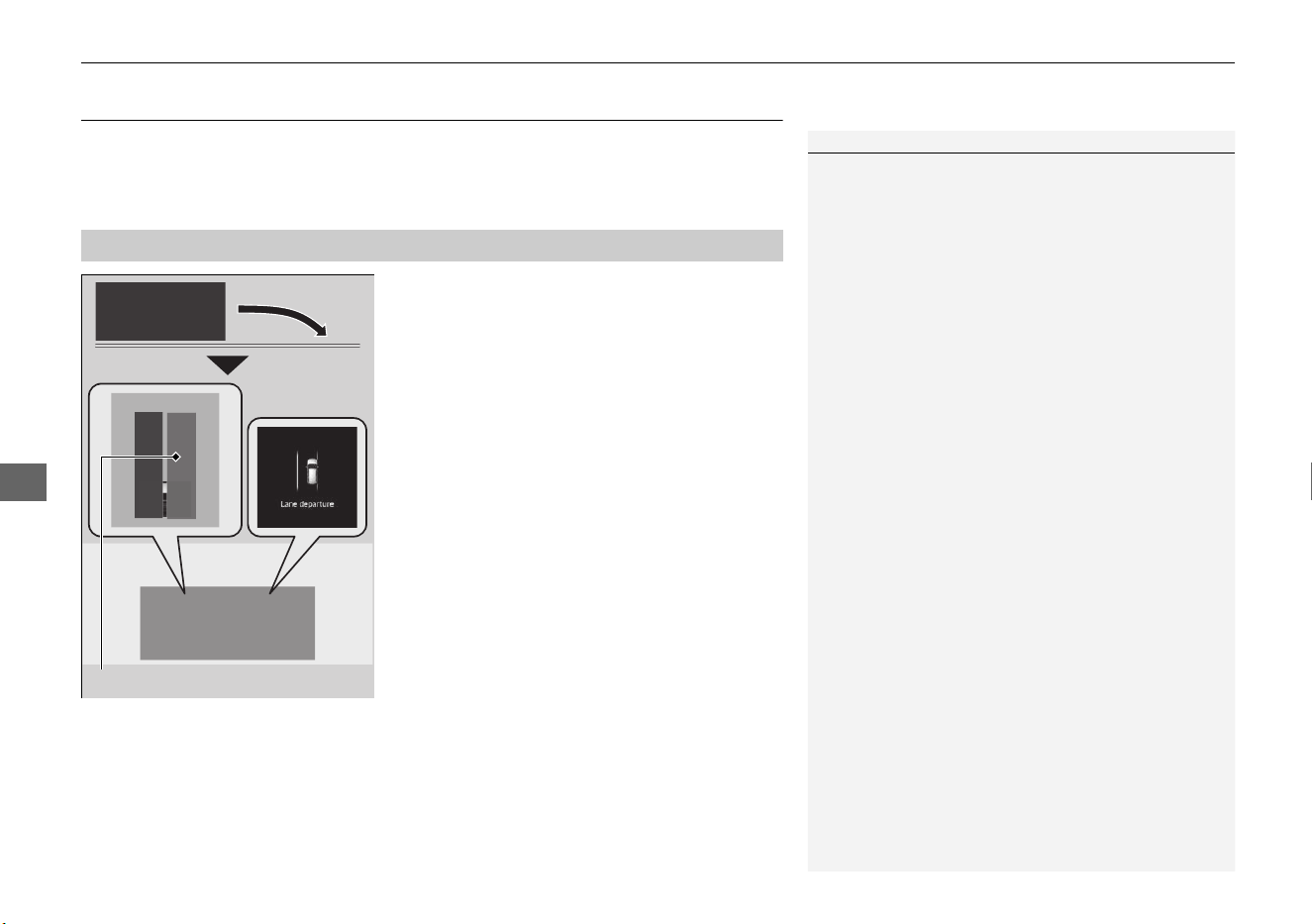
474
uuHonda Sensing® uRoad Departure Mitigation System
Driving
Road Departure Mitigation System
Alerts and helps assist you when the system detects a possibility of your vehicle
crossing over detected lane markings, or approaching the outer edge of the
pavement (into grass or gravel road shoulder) or a detected oncoming vehicle.
The front camera behind the rearview mirror
monitors left and right lane markings in white
or yellow, the outer edge of the pavement
(bordered by grass or gravel road shoulder), or
a detected oncoming vehicle.
If your vehicle approaches any detected lane
markings, the outer edge of the pavement
(bordered by grass or gravel road shoulder), or
a detected oncoming vehicle when the turn
signals have not been engaged, the system
activates.
u If the system cannot detect lane markings
(in white or yellow), no assistance will be
provided to avoid approaching oncoming
vehicles. In addition to a visual alert, the
system assists with steering and alerts you
with rapid steering wheel vibrations to
help you remain within the detected lane.
2 Customized Features P. 346
As a visual alert, the Lane departure
message appears on the driver information
interface.
■
How the System Works
1Road Departure Mitigation System
Important Safety Reminder
Like all assistance systems, the Road Departure
Mitigation system has limitations.
Overreliance on the Road Departure Mitigation
system may result in a collision. It is always your
responsibility to keep the vehicle within your driving
lane.
The Road Departure Mitigation system alerts you
when the system detects that you are approaching
the outer edge of the pavement (into grass or gravel
road shoulder), an oncoming vehicle, or drifting into
another lane without using a turn signal.
The Road Departure Mitigation system may not
detect all lane markings or every instance of lane
drift.
The Road Departure Mitigation system may not
detect that you are approaching the outer edge of
the pavement (bordered by grass or gravel road
shoulder) or an oncoming vehicle.
The Road Departure Mitigation system may not be
able to assist you depending on weather, speed or
road conditions.
You can read about handling information for the
camera equipped with this system.
2 Front Sensor Camera P. 529
Amber line
26 PILOT-31T906300.book 474 ページ 2025年10月8日 水曜日 午前11時43分
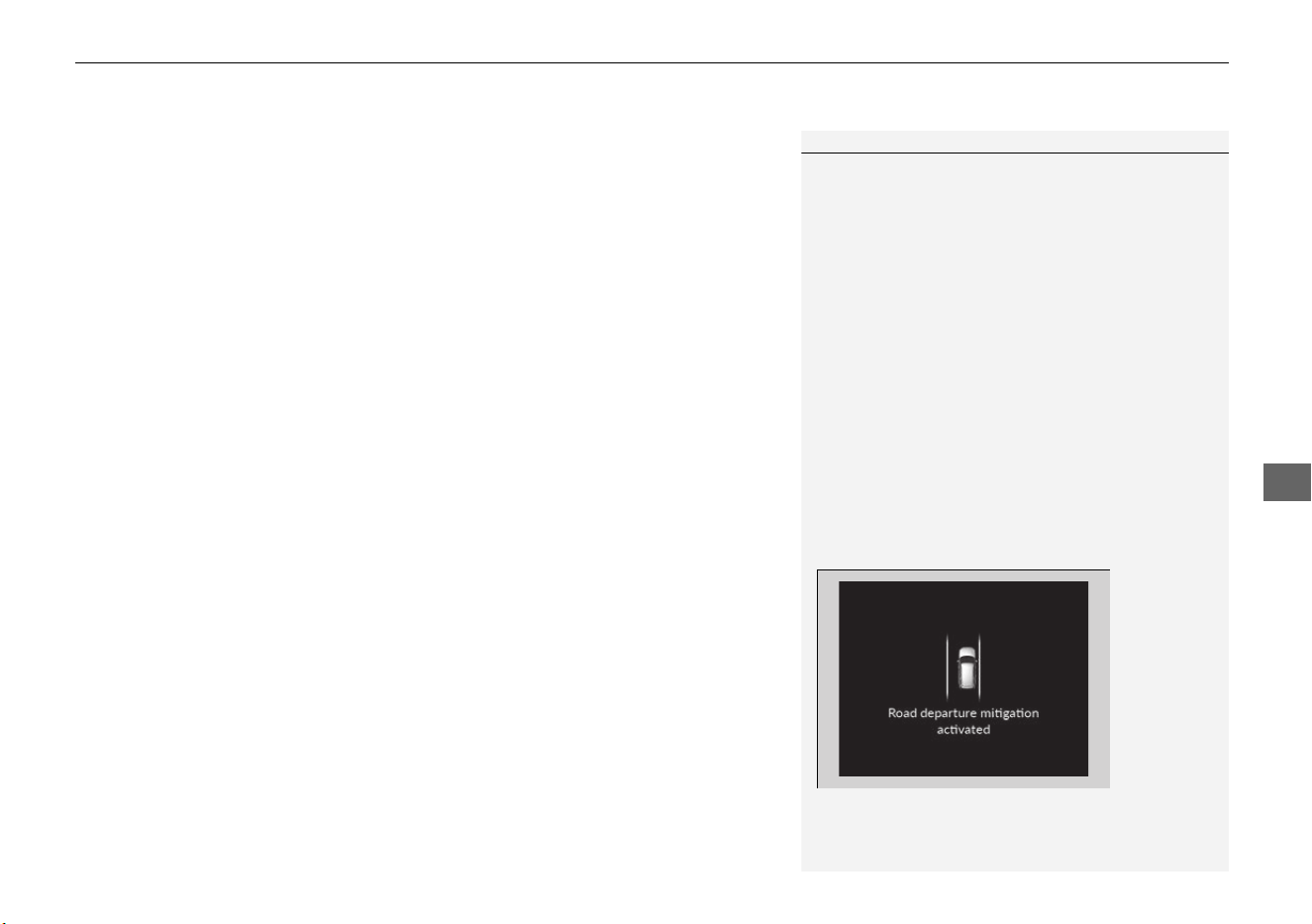
Continued
475
uuHonda Sensing® uRoad Departure Mitigation System
Driving
The system cancels assisting operations when you turn the steering wheel to avoid
crossing over detected lane markings or approaching the outer edge of the
pavement (into grass or gravel road shoulder) or an oncoming vehicle.
If the system operates several times without detecting driver response, the system
beeps to alert you.
1Road Departure Mitigation System
The Road Departure Mitigation system may not work
properly or may work improperly under the certain
conditions:
2 Road Departure Mitigation system
Conditions and Limitations P. 478
There are times when you may not notice the Road
Departure Mitigation system functions due to your
operation of the vehicle, or road surface conditions.
You can change the settings for the Road Departure
Mitigation system.
If LKAS is off, the message below may appear if the
system has determined that there is a possibility of
your vehicle crossing over detected lane markings,
the outer edge of the pavement (into a grass or
gravel road shoulder) or oncoming vehicle.
2 Customized Features P. 346
26 PILOT-31T906300.book 475 ページ 2025年10月8日 水曜日 午前11時43分
uuHonda Sensing® uRoad Departure Mitigation System
476
Driving
The system activates when all of the following conditions are met:
• The vehicle is traveling between about 45 and 90 mph (72 and 145 km/h).
• The vehicle is on a straight or slightly curved road.
• The turn signals are off.
• The system makes a determination that the driver is not actively accelerating,
braking, or steering.
■
How the System Activates
1How the System Activates
The Road Departure Mitigation system may
automatically shut off and the safety support
indicator (amber) comes and stays on.
2 Indicators P. 96
The Road Departure Mitigation system function can
be impacted when the vehicle is:
• Driven on the inside edge of a curve, or outside of
a lane.
• Driven in a narrow lane.
26 PILOT-31T906300.book 476 ページ 2025年10月8日 水曜日 午前11時43分
Continued
477
uuHonda Sensing® uRoad Departure Mitigation System
Driving
You can turn the system on and off using the driver information interface.
2 Switching the Display P. 126
2 Safety Support P. 137
The Road Departure Mitigation system is in the previously selected on or off setting
each time you start the engine.
■
Road Departure Mitigation system On and Off
1Road Departure Mitigation system On and Off
When you have selected Warning Only, the system
does not operate the steering wheel.
2 Customized Features P. 346
The Vehicle Stability Assist
TM
(VSA®) system, Adaptive
Cruise Control (ACC) with Low Speed Follow, brake
system (amber), and safety support indicators may
come on in amber along with a message in the driver
information interface when you set the power mode
to ON after reconnecting the battery.
With the engine running, turn the steering wheel to the
left until it stops then to the right until it stops, then
drive a short distance at more than 12 mph (20 km/h).
Each indicator should go off. If any do not, have your
vehicle checked by a dealer.
26 PILOT-31T906300.book 477 ページ 2025年10月8日 水曜日 午前11時43分
478
uuHonda Sensing® uRoad Departure Mitigation System
Driving
The system may not properly detect lane markings (in white or yellow), the outer
edge of the pavement (into grass or gravel road shoulder), or an oncoming vehicle
under certain conditions. Some examples of these conditions are listed below.
■
Environmental conditions
• There is little contrast between lane lines and the roadway surface.
• Driving in bad weather (rain, fog, snow, etc.).
• Driving on a snowy or wet roadway.
• Driving into low sunlight (e.g., at dawn or dusk).
• Shadows of adjacent objects (trees, buildings, guard rails, vehicles, etc.) are
parallel to white (or yellow) lines.
• Sudden changes between light and dark, such as the entrance or exit of a tunnel
or the shadows of trees, buildings, etc.
• Strong light is reflected onto the roadway.
• Driving at night or in a dark place such as a tunnel (due to low-light conditions,
lane lines, the road surface, or oncoming vehicles may not be illuminated).
• The distance between your vehicle and the vehicle ahead of you is too short, and
lane lines and the road surface are not visible.
• The outer edge of the road is bordered by objects, materials, etc. other than grass
or gravel.
■
Road Departure Mitigation system Conditions and
Limitations
26 PILOT-31T906300.book 478 ページ 2025年10月8日 水曜日 午前11時43分

479
uuHonda Sensing® uRoad Departure Mitigation System
Continued
Driving
■
Roadway conditions
• Driving on a road with temporary lane markings.
• Faint, multiple, or varied lane markings are visible on the roadway due to road
repairs or deteriorated lane markings.
• The roadway has merging, split, or crossing lines, such as at an intersection or
crosswalk.
• The lane markings are extremely narrow, wide, or changing.
• Part of the lane markings are hidden by an object, such as a vehicle.
• The road is hilly or the vehicle is approaching the crest of a hill.
• Your vehicle is strongly shaken on uneven road surfaces.
• When objects on the road (curb, guard rail, pylons, etc.) are recognized as white
(or yellow) lines.
• Driving on rough or unpaved roads, or over bumpy surfaces.
• Driving on roads with double lane lines.
• Driving on snowy or slippery roads.
• Passing through an exit or an interchange.
• The pavement is only partially visible due to snow or puddles on the road.
• Driving on unpaved or rutted roads.
• White (or yellow) lines are not recognized correctly due to road conditions such as
curves, twists, or hills.
26 PILOT-31T906300.book 479 ページ 2025年10月8日 水曜日 午前11時43分

480
uuHonda Sensing® uRoad Departure Mitigation System
Driving
■
Vehicle conditions
• When lighting is weak due to dirt covering the headlight lenses, or there is poor
visibility in a dark place due to the headlights being improperly adjusted.
• The front of the camera is obstructed by dirt, fog, rain, mud, wet snow,
accessories, decals, stickers, film, etc.
• Driving at night or in a dark place (e.g., a tunnel) with the headlights off.
• When the driver operates the brake pedal and steering wheel.
• There is residue on the windshield from the windshield wipers.
• An abnormal tire or wheel condition (incorrect sizes, varied sizes or construction,
improperly inflated, compact spare tire
*
, etc.).
• The vehicle is tilted due to heavy load in the cargo area or rear seats.
• Tire chains are installed.
• The suspension has been modified.
• The vehicle is towing a trailer.
■
Examples of limitations on detection due to the condition of oncoming
vehicles
• The oncoming vehicle or vehicle ahead of you is sideways.
• The oncoming vehicle jumps out in front of you.
• When the oncoming vehicle blends in with the background, preventing the
system from recognizing it.
• The headlights of an oncoming vehicle are lit on one side or not lit on either side
in a dark place.
• The distance between your vehicle and the oncoming vehicle is too short.
• Part of the oncoming vehicle is not visible due to the vehicle ahead of you.
• There are multiple oncoming lanes or turning lanes.
• The vehicle in the adjacent lane is parked or moving at an extremely slow speed.
* Not available on all models
26 PILOT-31T906300.book 480 ページ 2025年10月8日 水曜日 午前11時43分

481
uuHonda Sensing® uRoad Departure Mitigation System
Driving
■
Examples of other limitations on detection or system operation
• When the oncoming vehicle is specially-shaped.
• When the camera cannot correctly identify the shape of the oncoming vehicle.
■
With Little Chance of a Collision
The Road Departure Mitigation system may activate in the below conditions.
• When driving through curves, your vehicle comes to a point where an oncoming
vehicle is right in front of you.
26 PILOT-31T906300.book 481 ページ 2025年10月8日 水曜日 午前11時43分
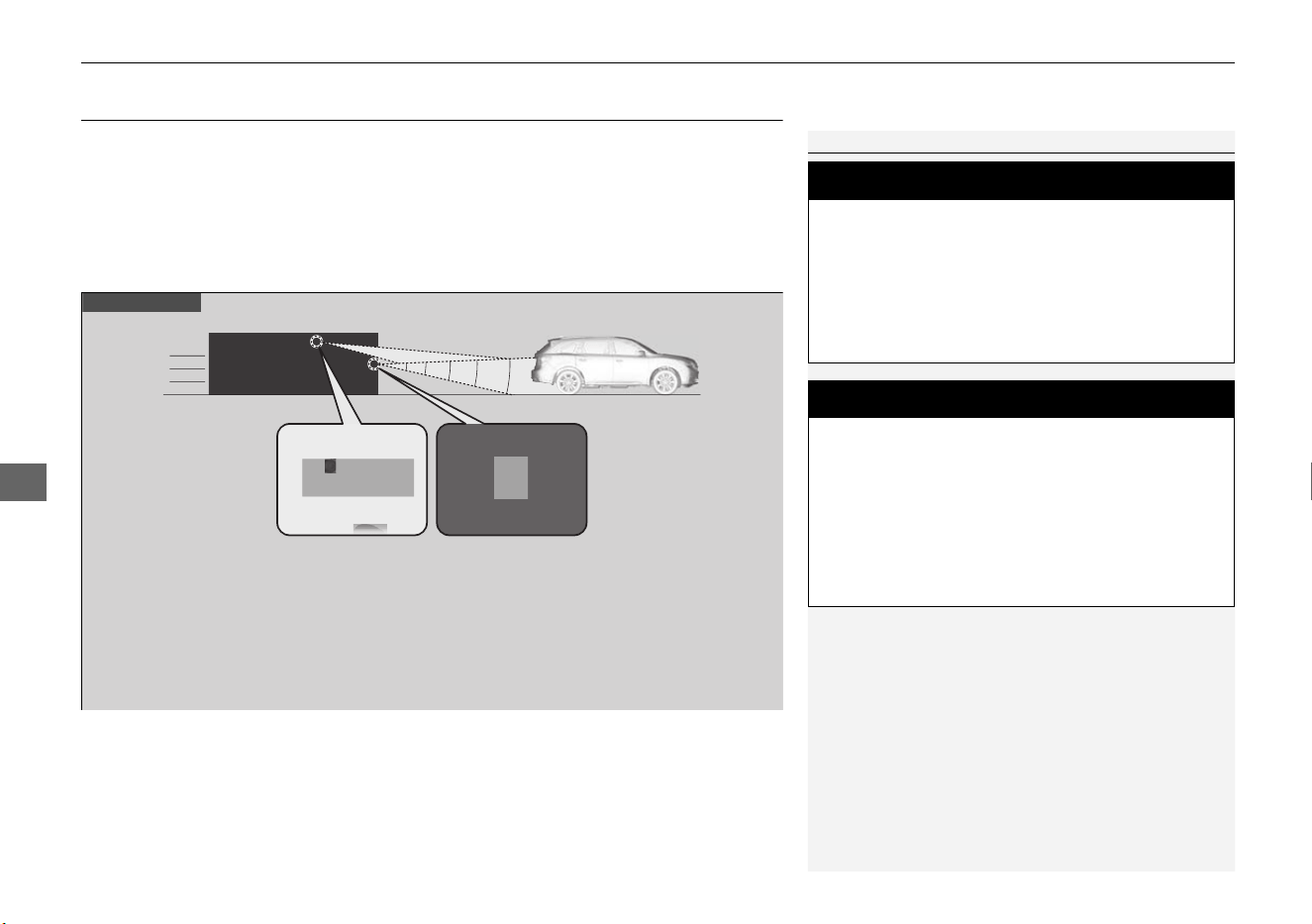
482
uuHonda Sensing® uAdaptive Cruise Control (ACC) with Low Speed Follow
Driving
Adaptive Cruise Control (ACC) with Low Speed Follow
Helps maintain a constant vehicle speed and a set following-interval behind a vehicle
detected ahead of yours and, if the detected vehicle comes to a stop, can decelerate
and stop your vehicle, without you having to keep your foot on the brake or the
accelerator.
When ACC with Low Speed Follow slows your vehicle by applying the brakes, your
vehicle’s brake lights will illuminate.
1Adaptive Cruise Control (ACC) with Low Speed Follow
3
WARNING
Improper use of ACC with Low Speed
Follow can lead to a crash.
Use ACC with Low Speed Follow only when
driving on expressways or freeways and in
good road and weather conditions.
3
WARNING
ACC with Low Speed Follow has limited
braking capability and may not stop your
vehicle in time to avoid a collision with a
vehicle that quickly stops in front of you.
Always be prepared to apply the brake
pedal if the conditions require.
When to use
■
Vehicle speed for ACC with Low Speed Follow: A vehicle is detected ahead
within ACC with Low Speed Follow range – ACC with Low Speed Follow
operates at speeds up to 90 mph (145 km/h).
No vehicle is detected within ACC with Low Speed Follow range – ACC with
Low Speed Follow operates at the speed of 20 mph (30 km/h) or above.
■
Shift position for ACC with Low Speed Follow: In (D or (S.
The front sensor
camera is located
behind the
rearview mirror.
The radar sensor is
behind the Honda
emblem on the
front grille.
26 PILOT-31T906300.book 482 ページ 2025年10月8日 水曜日 午前11時43分
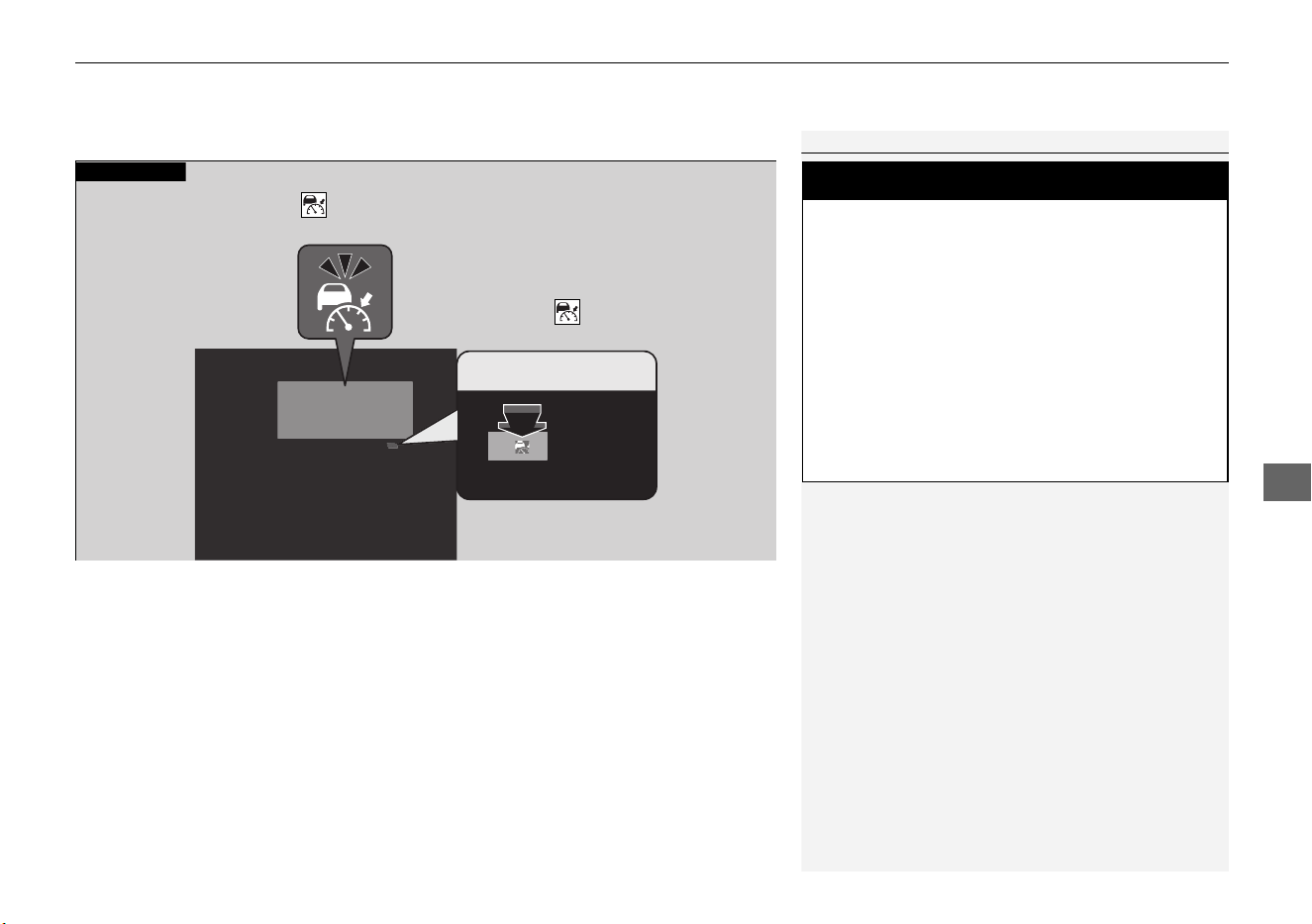
Continued
483
uuHonda Sensing® uAdaptive Cruise Control (ACC) with Low Speed Follow
Driving
■
How to activate the system
1Adaptive Cruise Control (ACC) with Low Speed Follow
Important Reminder
As with any system, there are limits to ACC with Low
Speed Follow. Use the brake pedal whenever
necessary, and always keep a safe interval between
your vehicle and other vehicles.
For directions on the proper handling of the radar
sensor, refer to the following page.
2 Radar Sensor P. 531
You can read about handling information for the
camera equipped with this system.
2 Front Sensor Camera P. 529
3
WARNING
Exiting a vehicle that has been stopped
while the ACC with Low Speed Follow
system is operating can result in the vehicle
moving without operator control.
A vehicle that moves without operator
control can cause a crash, resulting in
serious injury or death.
Never exit a vehicle when the vehicle is
stopped by ACC with Low Speed Follow.
How to use
■
Press the button on the
steering wheel.
(white) is on in the gauge
ACC with Low Speed Follow is ready to use.
26 PILOT-31T906300.book 483 ページ 2025年10月8日 水曜日 午前11時43分
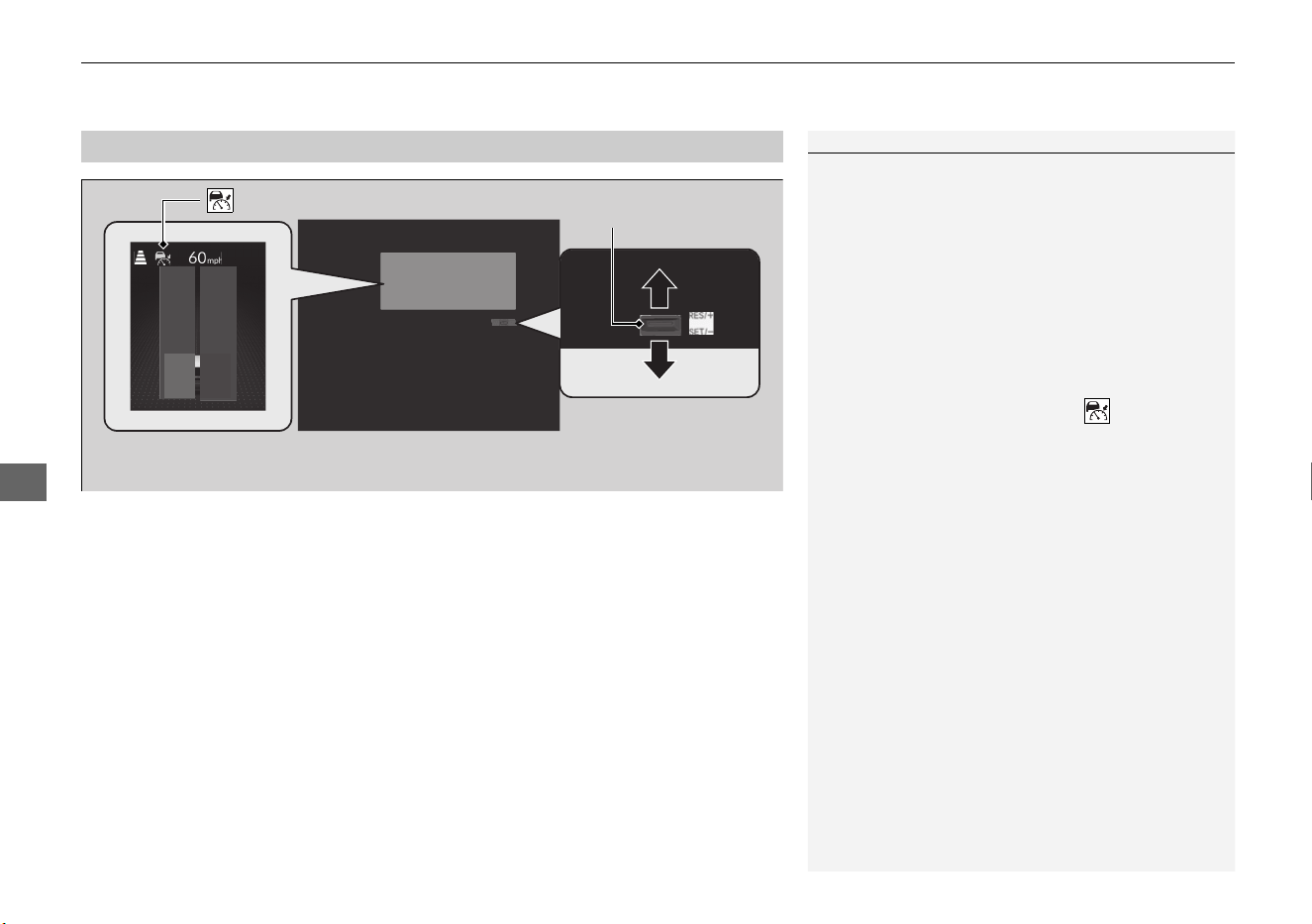
uuHonda Sensing® uAdaptive Cruise Control (ACC) with Low Speed Follow
484
Driving
When driving at about 20 mph (30 km/h) or above: Take your foot off the
pedal and press the RES/+/SET/− switch up or down when you reach the desired
speed. The moment you release the switch, the set speed is fixed, and ACC with
Low Speed Follow begins.
When you use ACC with Low Speed Follow, Straight Driving Assist (a feature of the
Electric Power Steering system) is activated.
By enabling the steering system to automatically compensate for natural steering pull,
Straight Driving Assist makes it easier for you to keep your vehicle in a straight line.
■
To Set the Vehicle Speed
1To Set the Vehicle Speed
The radar sensor for ACC with Low Speed Follow is shared
with the Collision Mitigation Braking System
TM
(CMBS
TM
).
2 Collision Mitigation Braking System
TM
(CMBS
TM
) P. 456
ACC with Low Speed Follow may not work properly
under certain conditions.
2 ACC with Low Speed Follow Conditions
and Limitations P. 490
When not using ACC with Low Speed Follow: Turn
off adaptive cruise by pressing the button.
Do not use ACC with Low Speed Follow under the
following conditions:
• On roads with frequent lane-change or continuous
stop and go traffic, ACC with Low Speed Follow
cannot keep an appropriate distance between your
vehicle and the vehicle ahead of you.
• On roads with sharp turns.
• On roads with toll collection facilities or other
objects between lanes of traffic, or in parking
areas, or facilities with drive through access.
• On roads with bad weather (rain, fog, snow, etc.),
ACC with Low Speed Follow may not detect the
distance between your vehicle and the vehicle
ahead of you properly.
• On roads with slippery or icy surfaces. The wheels
may spin out and your vehicle may lose the control
on the condition.
• On roads with steep uphill or steep downhill slopes.
• On roads with undulating slopes.
On when ACC with Low
Speed Follow begins
RES/+/SET/− Switch
(green)
Up or down
26 PILOT-31T906300.book 484 ページ 2025年10月8日 水曜日 午前11時43分
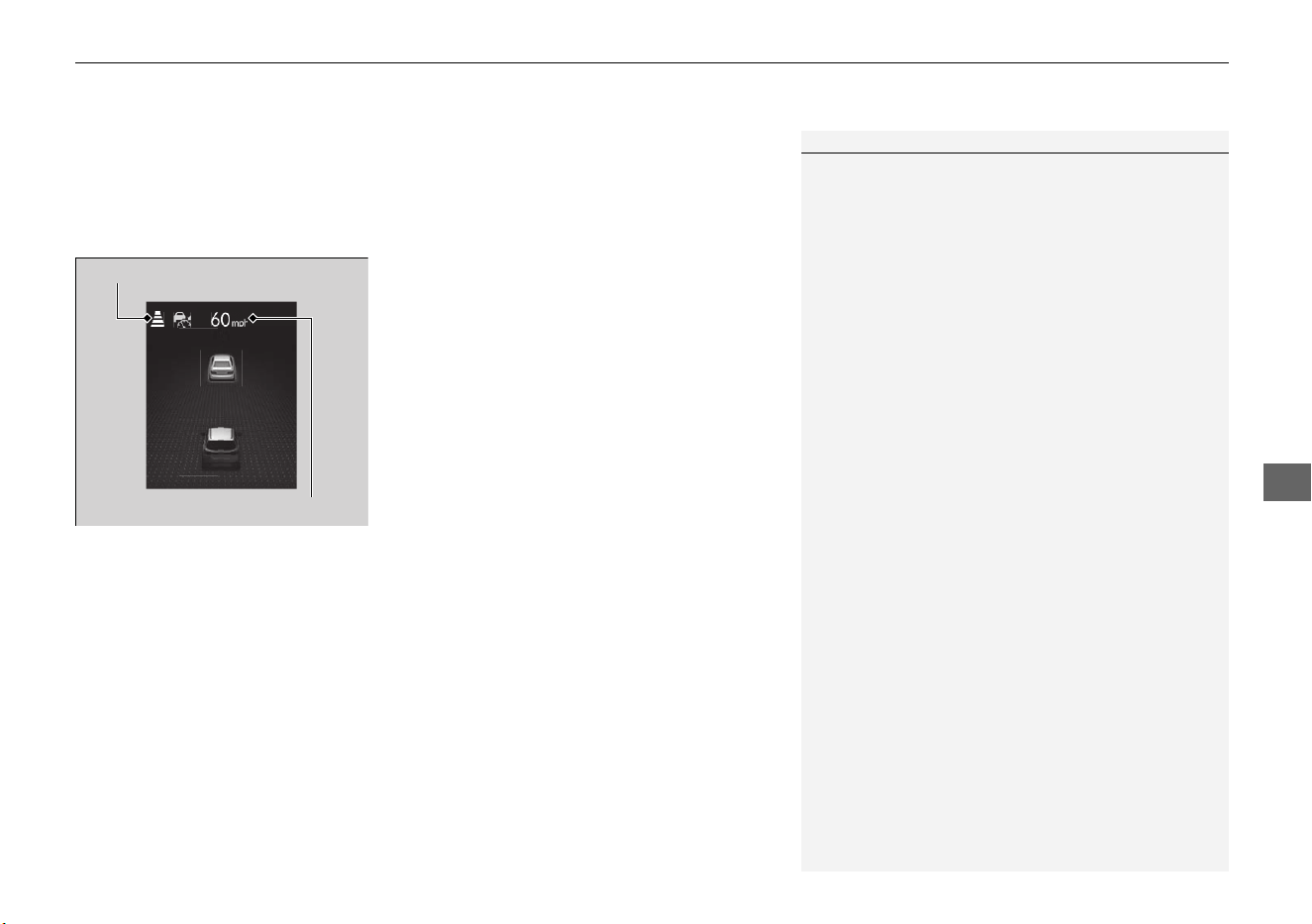
Continued
485
uuHonda Sensing® uAdaptive Cruise Control (ACC) with Low Speed Follow
Driving
When driving slower than about 20 mph (30 km/h): If the vehicle is moving
and the brake pedal is not depressed, pressing the switch fixes the set speed to
about 20 mph (30 km/h) regardless of current vehicle speed. If your vehicle is
stationary, you can set the vehicle speed even with the brake pedal depressed.
When ACC with Low Speed Follow starts
operating, the vehicle icon, interval bars and
set speed appear on the gauge.
1To Set the Vehicle Speed
The Vehicle Stability Assist
TM
(VSA®) system, Adaptive
Cruise Control (ACC) with Low Speed Follow, brake
system (amber), and safety support indicators may
come on in amber along with a message in the driver
information interface when you set the power mode
to ON after reconnecting the battery.
With the engine running, turn the steering wheel to
the left until it stops then to the right until it stops,
then drive a short distance at more than 12 mph (20
km/h).
Each indicator should go off. If any do not, have your
vehicle checked by a dealer.
You can switch the displayed set speed
measurements on the gauge or audio/information
screen between mph and km/h.
2 Speed/distance units P. 140
2 Customized Features P. 346
Set Vehicle Speed
Set Vehicle Interval
26 PILOT-31T906300.book 485 ページ 2025年10月8日 水曜日 午前11時43分
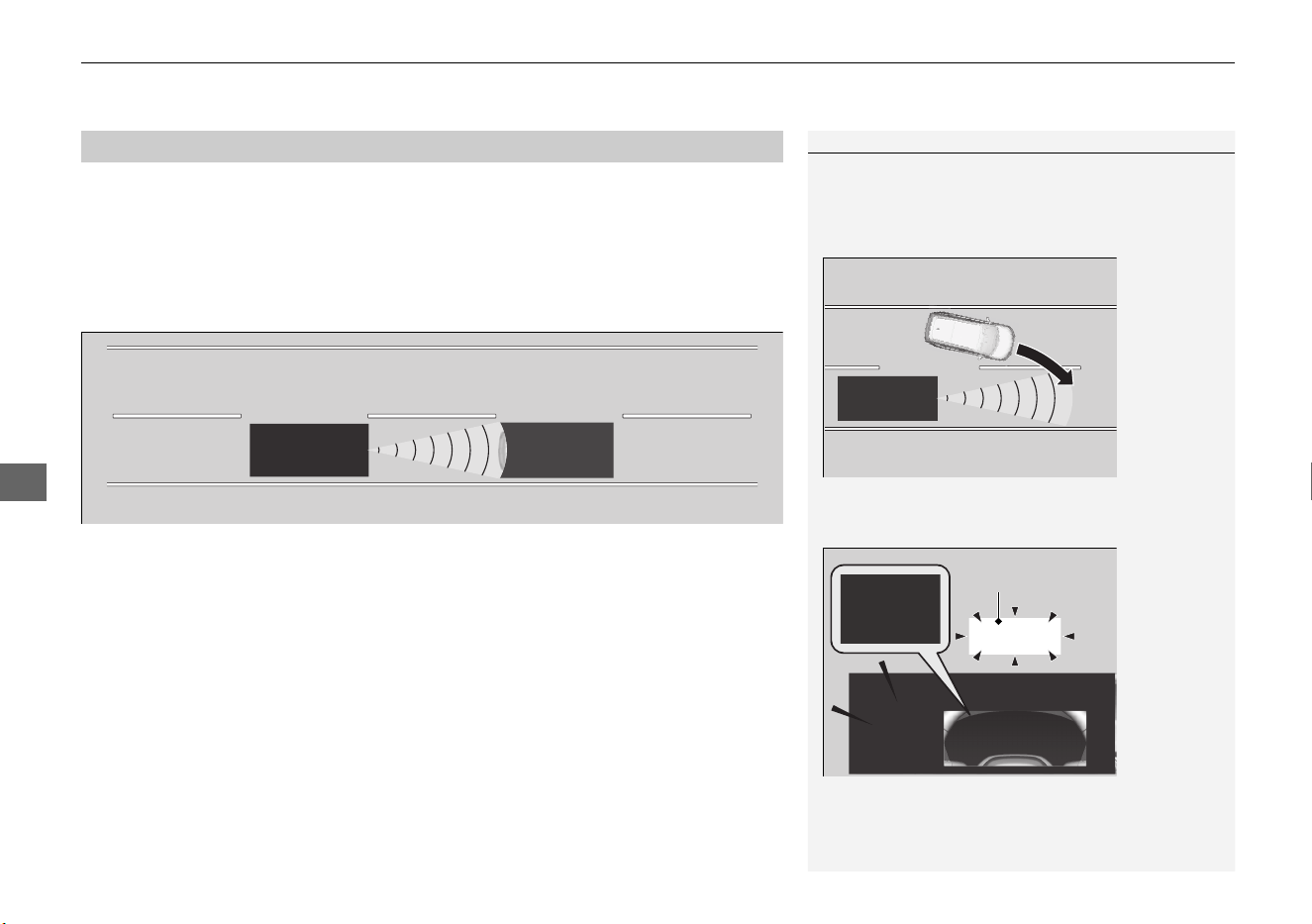
uuHonda Sensing® uAdaptive Cruise Control (ACC) with Low Speed Follow
486
Driving
■
There is a vehicle ahead
ACC with Low Speed Follow monitors if a vehicle ahead of you enters the ACC with
Low Speed Follow range. If a vehicle is detected doing so, the ACC with Low Speed
Follow system maintains or decelerates your vehicle’s set speed in order to keep the
vehicle’s set following-interval from the vehicle ahead.
2 To Set or Change Following-interval P. 495
■
When in Operation
1When in Operation
If the vehicle ahead of you slows down abruptly, or if
another vehicle cuts in front of you, a beeper sounds
and a message appears on the driver information
interface, and the head-up warning lights flash.
Depress the brake pedal, and keep an appropriate
interval from the vehicle ahead.
Beep
Head-up
Warning Lights
*
ACC with Low Speed Follow Range: 394 ft. (120 m)
* Not available on all models
26 PILOT-31T906300.book 486 ページ 2025年10月8日 水曜日 午前11時43分
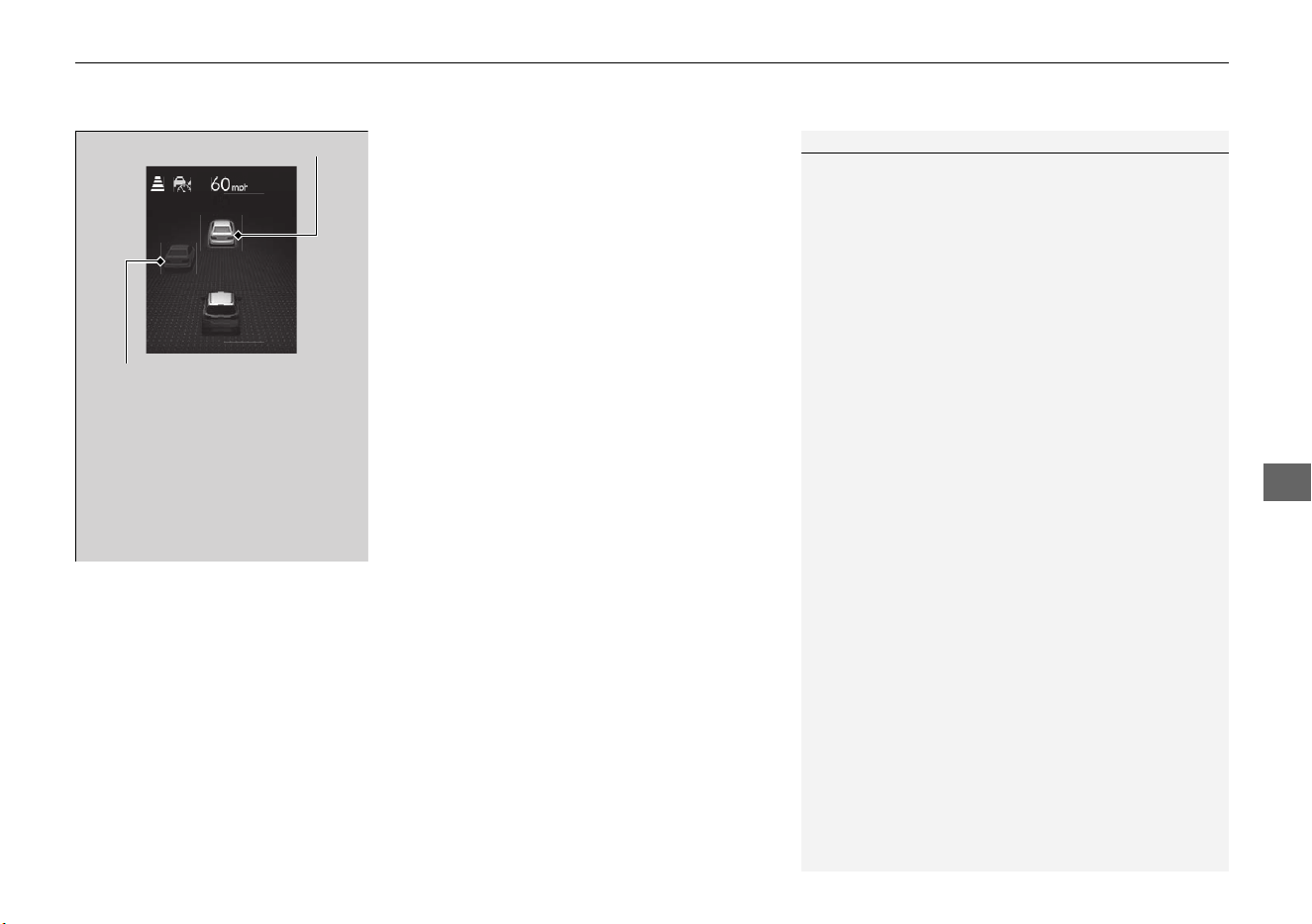
Continued
487
uuHonda Sensing® uAdaptive Cruise Control (ACC) with Low Speed Follow
Driving
When a vehicle whose speed is slower than
your set speed comes in or cuts in front of you
and is detected by the radar and the camera,
your vehicle starts to slow down.
1When in Operation
Even if the interval between your vehicle and the
vehicle detected ahead is short, ACC with Low Speed
Follow may start accelerating your vehicle under the
following circumstances:
• The vehicle ahead of you is going at almost the
same speed as, or faster than, your vehicle.
• A vehicle that cuts in front of you is going faster
than your vehicle, gradually increasing the interval
between the vehicles.
You can also set the system to beep when a vehicle
detected in front of you comes in and goes out of the
ACC with Low Speed Follow detecting range.
A vehicle detect beep on and off can be selected.
2 Customized Features P. 346
Limitations
You may need to use the brake to maintain a safe
interval when using ACC with Low Speed Follow.
Additionally, ACC with Low Speed Follow may not
work properly under certain conditions.
2 ACC with Low Speed Follow Conditions
and Limitations P. 490
Control target vehicle:
White and outlined in green
Outside of control target vehicle:
Gray
Control target vehicle
Outside of control target vehicle
A vehicle icon appears on the
gauge.
26 PILOT-31T906300.book 487 ページ 2025年10月8日 水曜日 午前11時43分
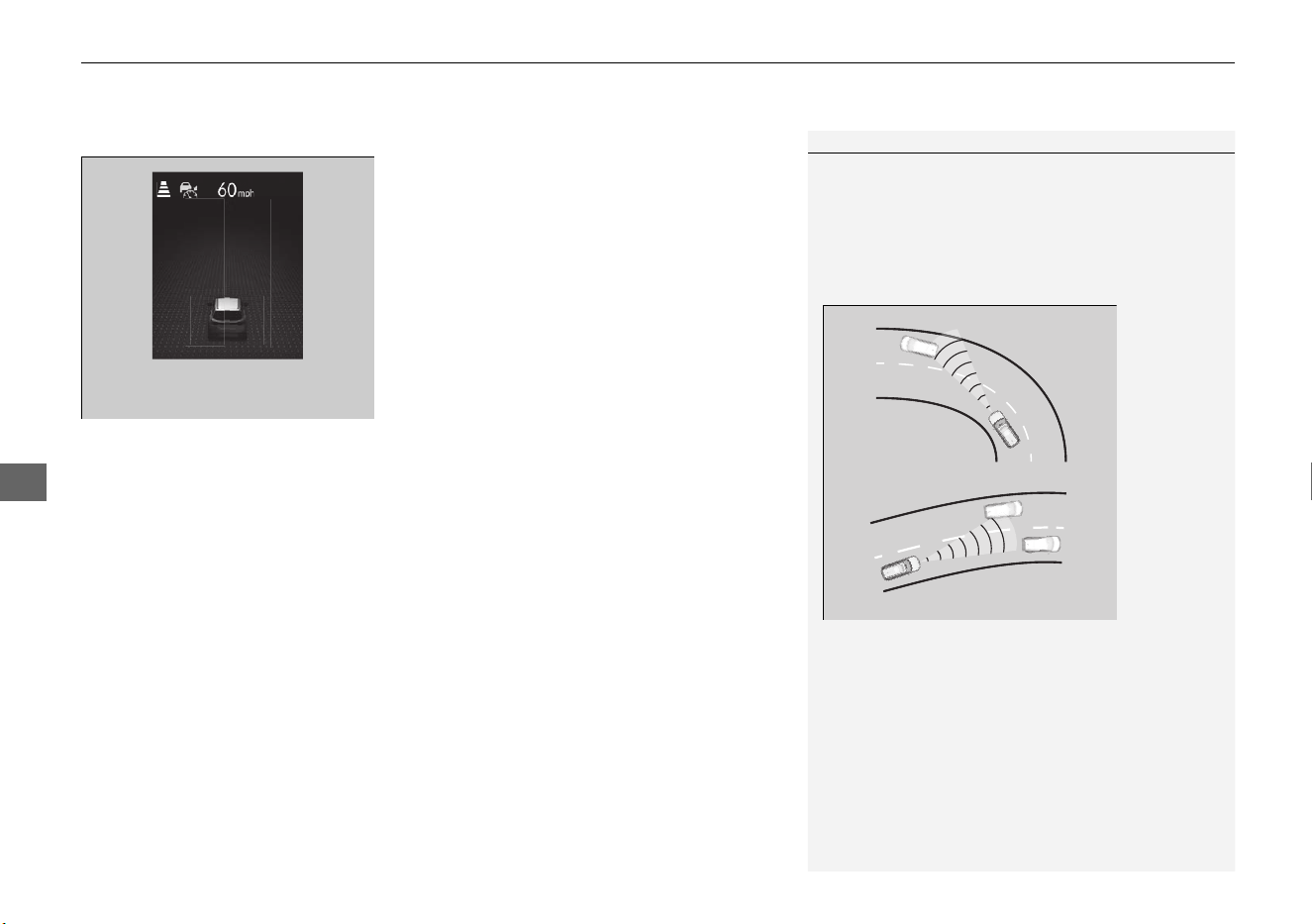
uuHonda Sensing® uAdaptive Cruise Control (ACC) with Low Speed Follow
488
Driving
■
There is no vehicle ahead
Your vehicle maintains the set speed without
having to keep your foot on the brake or
accelerator pedal.
If there previously was a vehicle detected
ahead that kept your vehicle from traveling at
the set speed, ACC with Low Speed Follow
accelerates your vehicle to the set speed, and
then maintains it.
While driving down steep hills, ACC with Low
Speed Follow brakes to inhibit excessive
acceleration for maintaining the set speed.
However, the vehicle speed may become
faster than the set speed.
■
When you depress the accelerator pedal
You can temporarily increase the vehicle speed. In this case, there is no audible or
visual alert even if a vehicle is in the ACC with Low Speed Follow range.
ACC with Low Speed Follow stays on unless you cancel it. Once you release the
accelerator pedal, the system resumes an appropriate speed for keeping the
following-interval while a vehicle ahead is within the ACC with Low Speed Follow
range.
1When in Operation
• ACC with Low Speed Follow may temporarily
control the interval between your vehicle and the
vehicle in adjacent lane or surroundings of your
vehicle depending on the road conditions (e.g.,
curves) or vehicle conditions (e.g., operating the
steering wheel or the vehicle location in the lane).
• When the vehicle ahead of you moves away, such
as when entering an interchange or rest area, ACC
with Low Speed Follow may continue to maintain
the set following-interval for a short time.
A vehicle icon disappears on the
gauge.
26 PILOT-31T906300.book 488 ページ 2025年10月8日 水曜日 午前11時43分
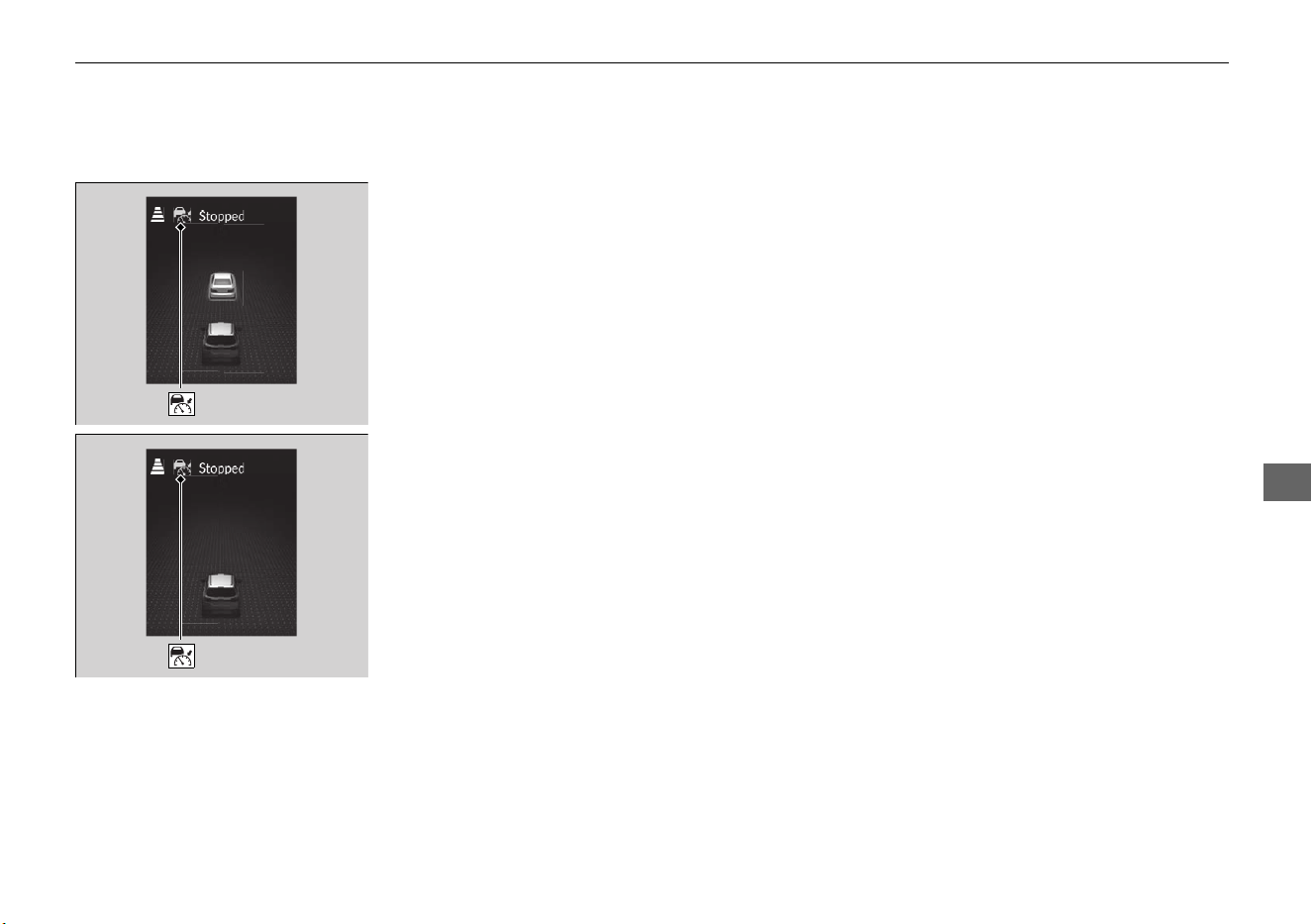
489
uuHonda Sensing® uAdaptive Cruise Control (ACC) with Low Speed Follow
Continued
Driving
■
A vehicle detected ahead is within ACC with Low Speed Follow range and
slows to a stop
Your vehicle also stops automatically. The
Stopped message appears on the gauge.
When the vehicle ahead of you starts again, if
you press the RES/+/SET/− switch up or
down, or depress the accelerator pedal, ACC
with Low Speed Follow will operate again
within the prior set speed.
If no vehicle is ahead of you before you
resume driving, depress the accelerator pedal
and ACC with Low Speed Follow will operate
again within the prior set speed.
(green)
(white/green)
26 PILOT-31T906300.book 489 ページ 2025年10月8日 水曜日 午前11時43分
uuHonda Sensing® uAdaptive Cruise Control (ACC) with Low Speed Follow
490
Driving
The system may automatically shut off under certain conditions. Some examples of
these conditions are listed below. Other conditions may reduce some of the ACC
with Low Speed Follow functions.
2 Front Sensor Camera P. 529
2 Radar Sensor P. 531
■
Environmental conditions
• Driving in bad weather (rain, fog, snow, etc.).
• When driving for long distances on a road in a trafficless area such as a desert.
■
Roadway conditions
• Driving on a snowy or wet roadway (obscured lane marking, vehicle tracks,
reflected lights, road spray, high contrast).
■
Vehicle conditions
• The outside of the windshield is blocked by dirt, mud, leaves, wet snow, etc.
• An abnormal tire or wheel condition (incorrect sizes, varied sizes or construction,
improperly inflated, compact spare tire
*
, etc.).
• The camera temperature gets too high.
• The electric parking brake is applied.
• The front grille is dirty.
• The vehicle is tilted due to a heavy load or suspension modifications.
• When tire chains are installed.
• The vehicle is towing a trailer.
■
ACC with Low Speed Follow Conditions and Limitations
1ACC with Low Speed Follow Conditions and Limitations
Always keep the radar sensor cover clean.
Never use chemical solvents or polishing powder for
cleaning the sensor cover. Clean it with water or a
mild detergent.
Do not put a sticker on the radar sensor cover or
replace the radar sensor cover.
If you need the radar sensor to be repaired, or
removed, or the radar sensor cover is strongly
impacted, turn off the system by pressing the
button and take your vehicle to a dealer.
Have your vehicle checked by a dealer if you find any
unusual behavior of the system (e.g., the warning
message appears too frequently).
* Not available on all models
26 PILOT-31T906300.book 490 ページ 2025年10月8日 水曜日 午前11時43分
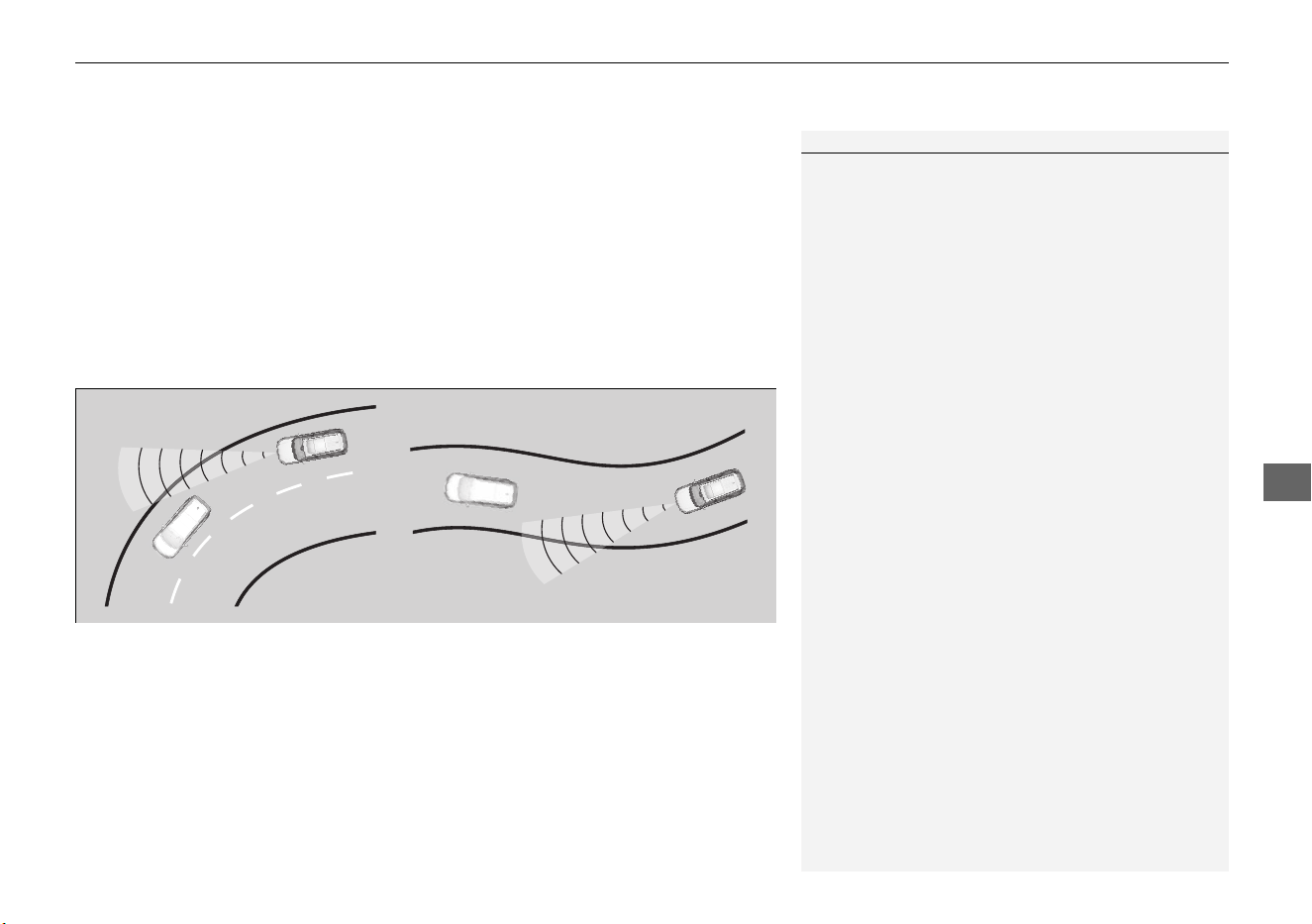
Continued
491
uuHonda Sensing® uAdaptive Cruise Control (ACC) with Low Speed Follow
Driving
■
Detection limitations
• A vehicle suddenly crosses in front of you.
• The interval between your vehicle and the vehicle ahead of you is too short.
• A vehicle cuts in front of you at a slow speed, and it brakes suddenly.
• You accelerate rapidly and approach the vehicle ahead of you at high speed.
• The vehicle ahead of you is a motorcycle, bicycle, mobility scooter, or other small
vehicle.
• There are animals in front of your vehicle.
• You drive on a curved or winding or undulating road that makes it difficult for the
sensor to properly detect a vehicle in front of you.
• A vehicle ahead of you stops and the speed difference between your vehicle and
the vehicle ahead of you is significantly large.
• An oncoming vehicle suddenly comes in front of you.
• Your vehicle abruptly crosses over in front of an oncoming vehicle.
1ACC with Low Speed Follow Conditions and Limitations
If the front of the vehicle is impacted in any of the
following situations, the radar sensor may not work
properly. Have your vehicle checked by a dealer:
• The vehicle mounted onto a bump, curb, chock,
embankment, etc.
• You drive the vehicle where water is deep.
• Your vehicle has a frontal collision.
26 PILOT-31T906300.book 491 ページ 2025年10月8日 水曜日 午前11時43分
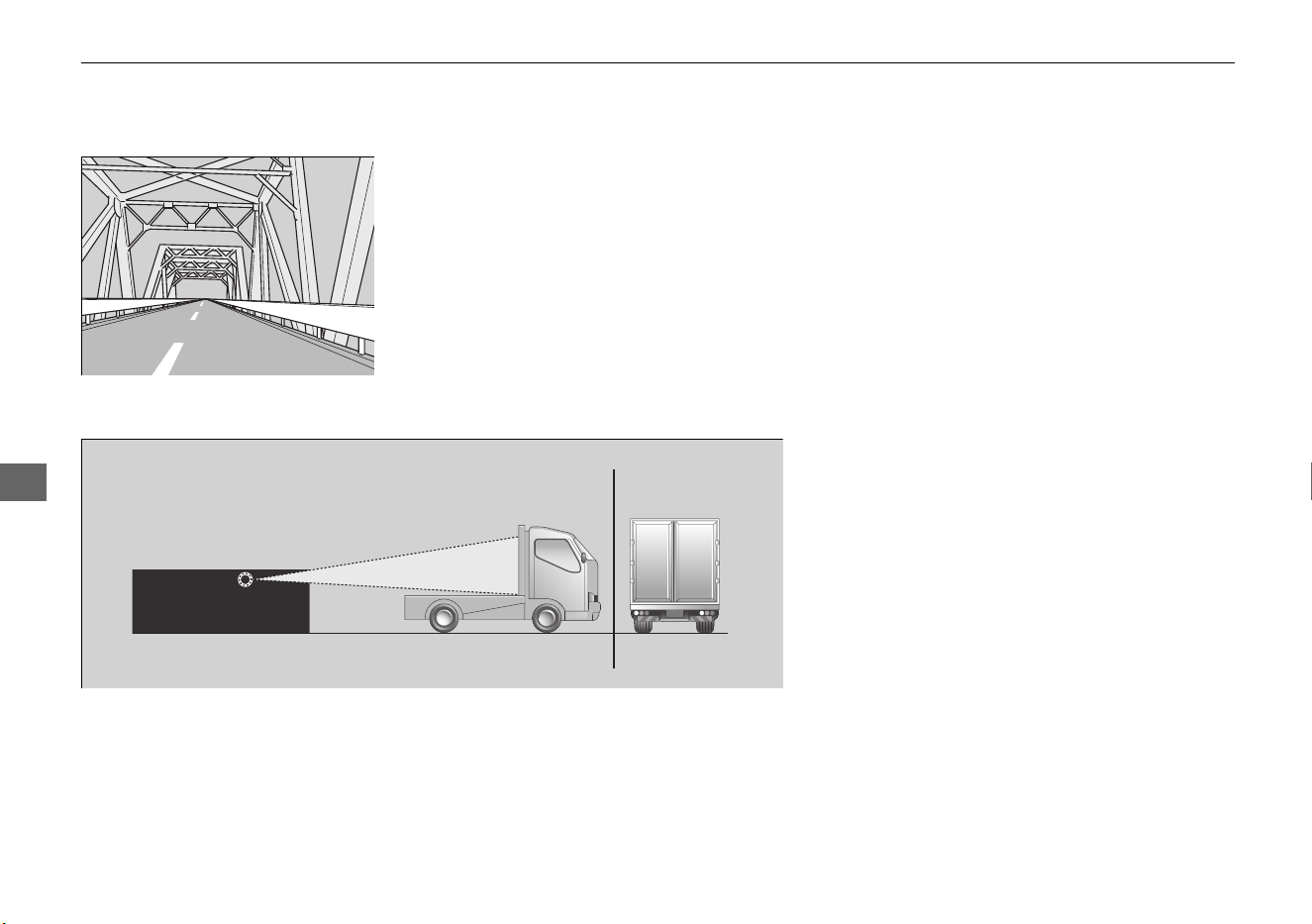
492
uuHonda Sensing® uAdaptive Cruise Control (ACC) with Low Speed Follow
Driving
• Driving through a narrow metal bridge.
• The vehicle ahead of you brakes suddenly.
• The vehicle ahead of you has a unique shape.
• Your vehicle or the vehicle ahead of you is driving on one edge of the lane.
Sensor detects upper section of
an empty carrier truck.
Panel truck,
tanker truck,
etc.
26 PILOT-31T906300.book 492 ページ 2025年10月8日 水曜日 午前11時43分
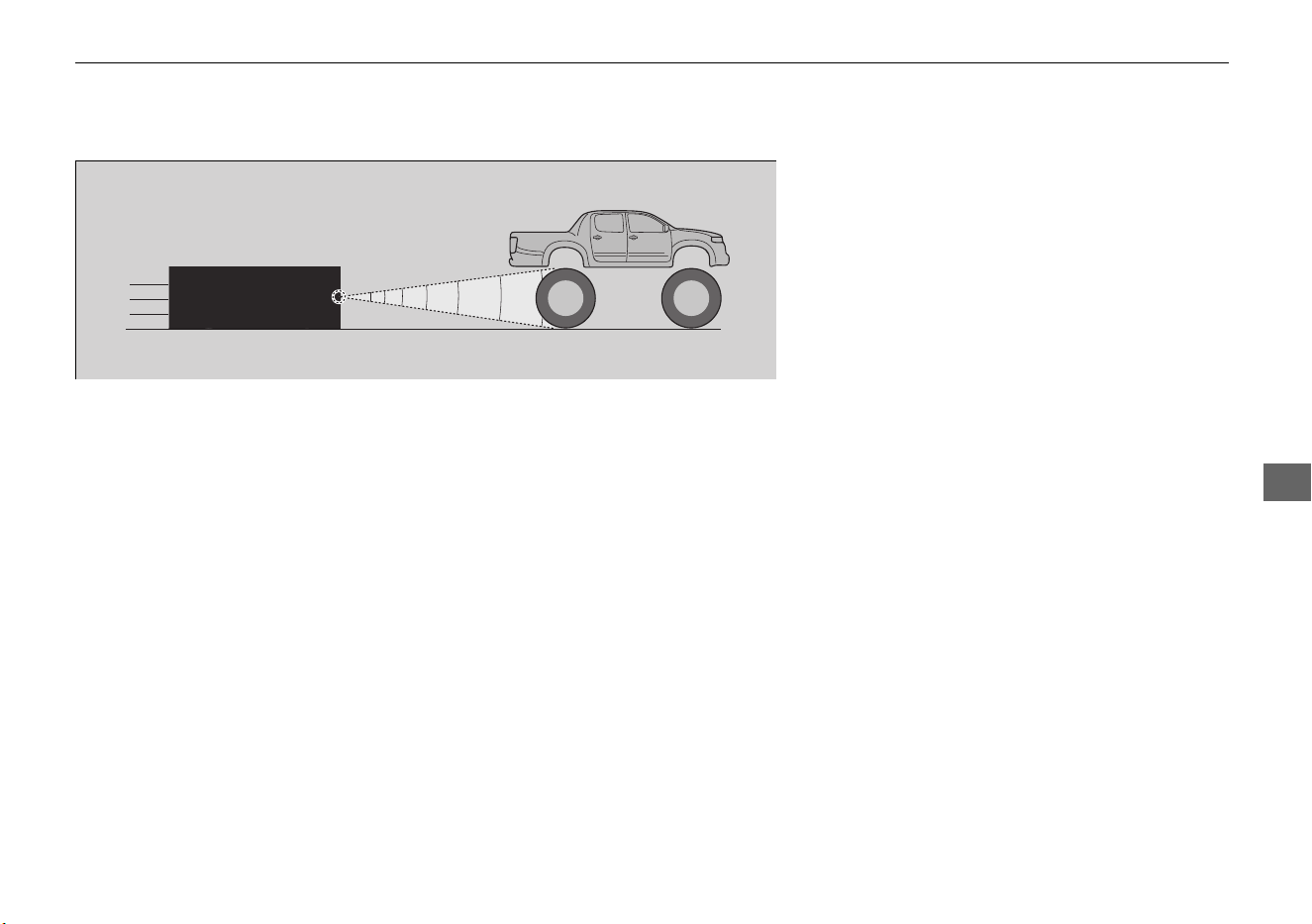
493
uuHonda Sensing® uAdaptive Cruise Control (ACC) with Low Speed Follow
Continued
Driving
• When the minimum ground clearance of a vehicle ahead of you is extremely high.
26 PILOT-31T906300.book 493 ページ 2025年10月8日 水曜日 午前11時43分
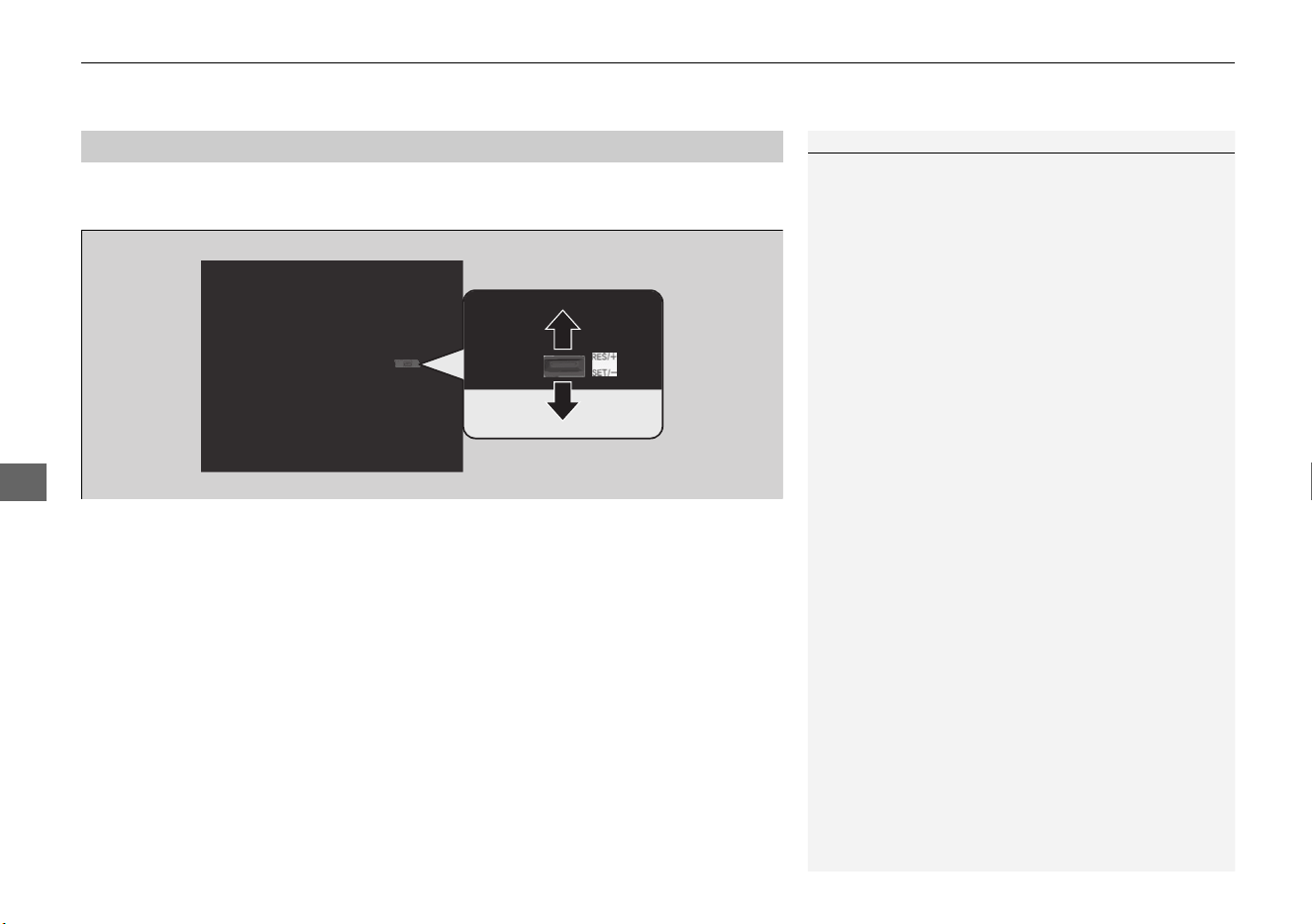
uuHonda Sensing® uAdaptive Cruise Control (ACC) with Low Speed Follow
494
Driving
Increase or decrease the vehicle speed using the RES/+/SET/− switch on the steering
wheel.
• Each time you press the RES/+/SET/− switch up or down, the vehicle speed is
increased or decreased by about 1 mph or 1 km/h accordingly.
• If you keep the RES/+/SET/− switch pressed up or down, the vehicle speed
increases or decreases by about 5 mph or 5 km/h accordingly.
■
To Adjust the Vehicle Speed
1To Adjust the Vehicle Speed
If a vehicle detected ahead is going at a speed slower
than your increased set speed, ACC with Low Speed
Follow may not accelerate your vehicle. This is to
maintain the set interval between your vehicle and
the vehicle ahead.
When you depress the accelerator pedal and then
press down and release the RES/+/SET/− switch, the
current speed of the vehicle is set.
To increase speed
To decrease speed
26 PILOT-31T906300.book 494 ページ 2025年10月8日 水曜日 午前11時43分
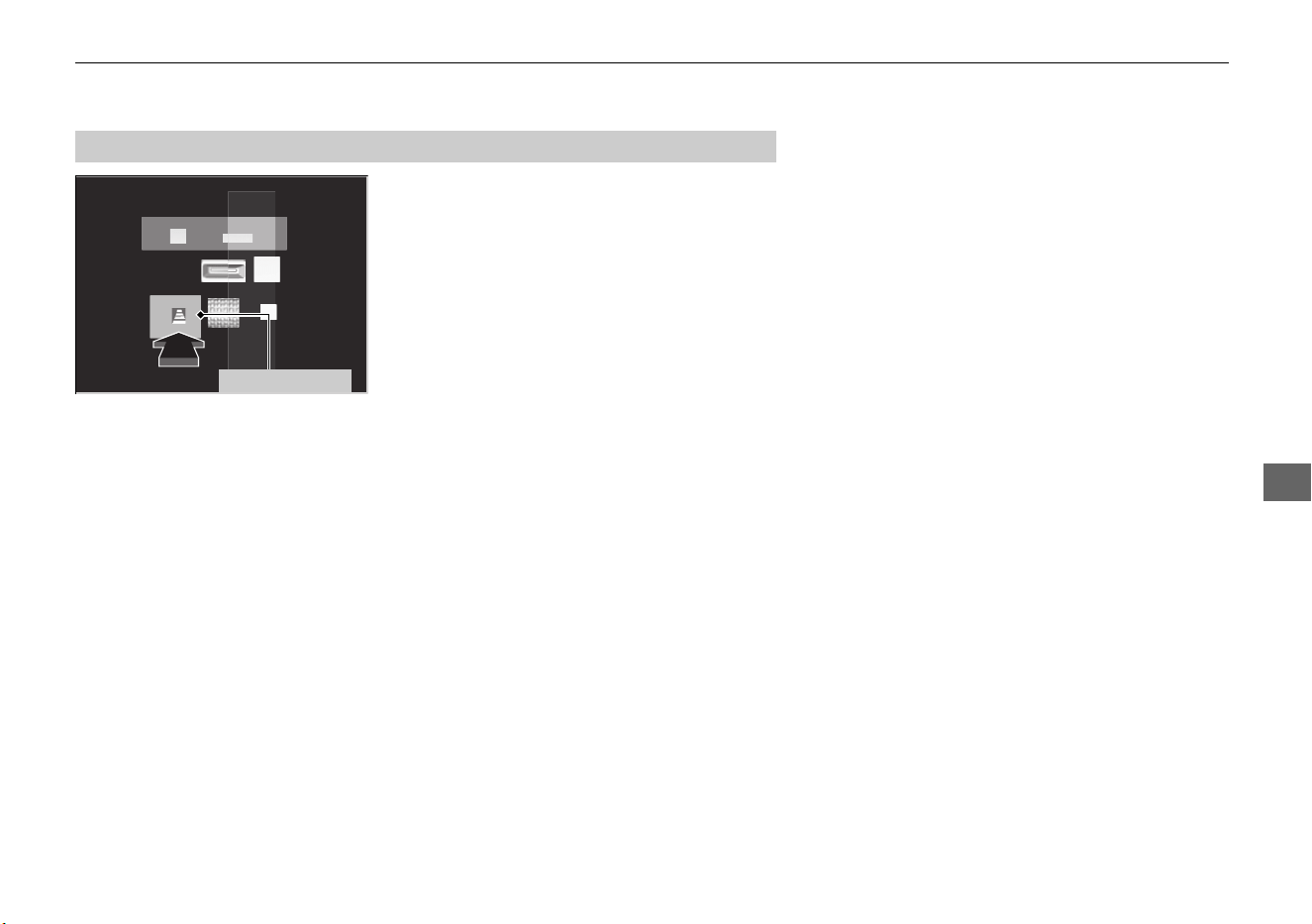
495
uuHonda Sensing® uAdaptive Cruise Control (ACC) with Low Speed Follow
Continued
Driving
Press the Interval button to change the ACC
with Low Speed Follow following-interval.
Each time you press the button, the following-
interval (the interval behind a vehicle detected
ahead of you) setting cycles through furthest,
far, mid, and nearest following-intervals.
Determine the most appropriate following-
interval setting based on your specific driving
conditions. Be sure to adhere to any
following-interval requirements set by local
regulation.
■
To Set or Change Following-interval
Interval Button
26 PILOT-31T906300.book 495 ページ 2025年10月8日 水曜日 午前11時43分
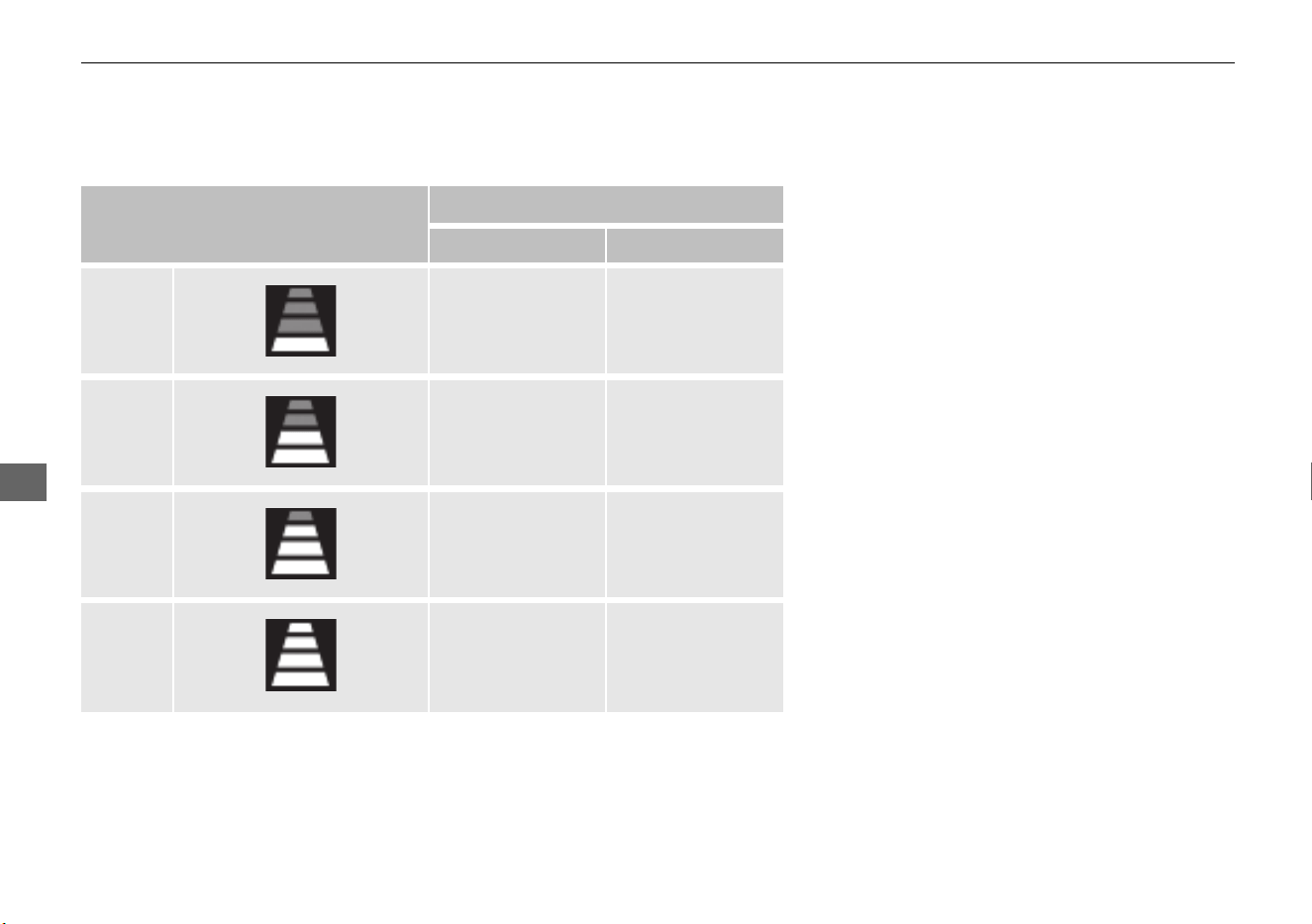
496
uuHonda Sensing® uAdaptive Cruise Control (ACC) with Low Speed Follow
Driving
The higher your vehicle’s following-speed is, the longer the nearest, mid, far, or
furthest following-interval becomes. See the following examples for your reference.
When your vehicle stops automatically because a vehicle detected ahead of you has
stopped, the interval between the two vehicles will vary based on the ACC with Low
Speed Follow interval setting.
Following-interval
When the Set Speed is:
50 mph (80 km/h) 65 mph (104 km/h)
Nearest
83 feet
25 meters
1.1 sec
100 feet
31 meters
1.1 sec
Mid
108 feet
33 meters
1.5 sec
137 feet
42 meters
1.5 sec
Far
154 feet
47 meters
2.1 sec
200 feet
61 meters
2.1 sec
Furthest
213 feet
65 meters
2.9 sec
282 feet
86 meters
2.9 sec
26 PILOT-31T906300.book 496 ページ 2025年10月8日 水曜日 午前11時43分
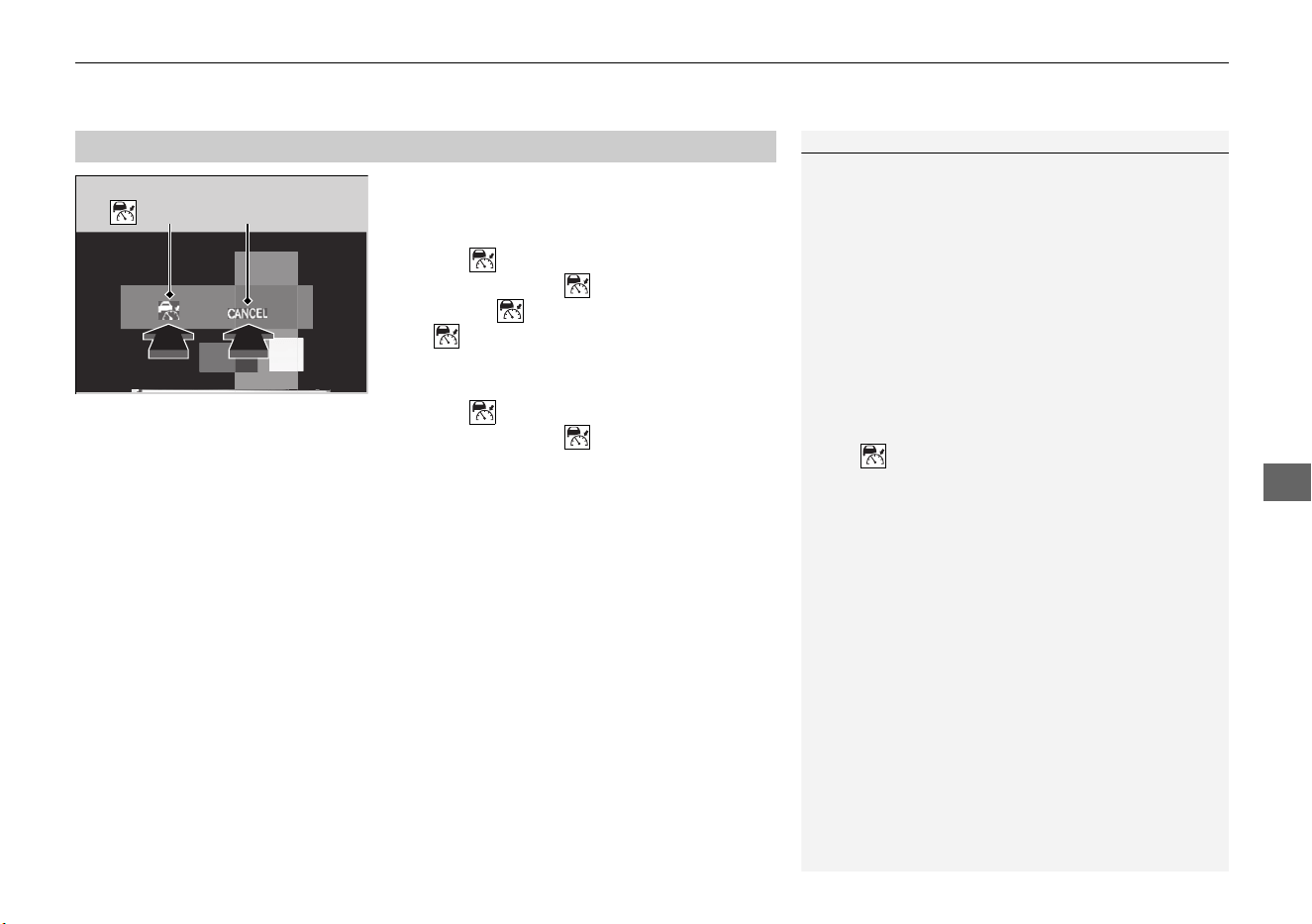
Continued
497
uuHonda Sensing® uAdaptive Cruise Control (ACC) with Low Speed Follow
Driving
To cancel ACC with Low Speed Follow, do any
of the following:
• Press the CANCEL button.
u The indicator (green) on the gauge
changes to the indicator (white).
• Press the button.
u indicator (green) goes off.
• Depress the brake pedal while the vehicle is
moving forward.
u The indicator (green) on the gauge
changes to the indicator (white).
■
To Cancel
1To Cancel
Resuming the prior set speed: After you have
canceled ACC with Low Speed Follow, you can
activate the ACC with Low Speed Follow with the
prior set speed displayed on the gauge (in gray) by
pressing the RES/+/SET/− switch up even if the
vehicle is stopped.
When you turn the ACC with Low Speed Follow off
by pressing the CANCEL button or depressing the
brake pedal, the prior set speed is displayed on the
gauge in gray.
When pressing the RES/+/SET/− switch up, the ACC
with Low Speed Follow is activated with displayed
speed.
If the indicator (white) is displayed and you press
the RES/+/SET/− switch up, but no prior set speed (in
gray) is displayed, the speed will be set to your
vehicle’s current speed.
CANCEL Button Button
26 PILOT-31T906300.book 497 ページ 2025年10月8日 水曜日 午前11時43分
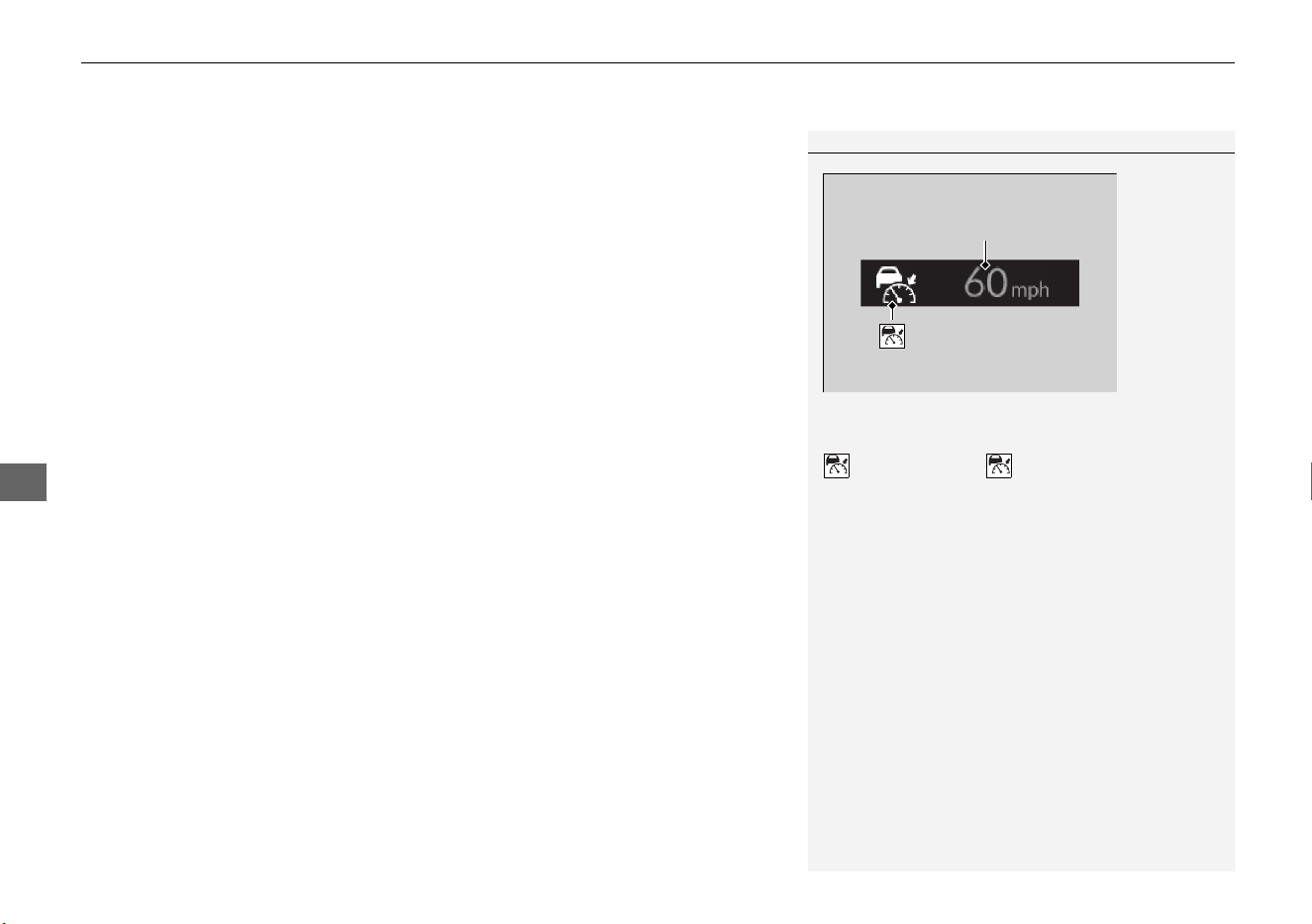
uuHonda Sensing® uAdaptive Cruise Control (ACC) with Low Speed Follow
498
Driving
■
Automatic cancellation
The beeper sounds and a message appears on the driver information interface when
ACC with Low Speed Follow is automatically canceled. Any of these conditions may
cause the ACC with Low Speed Follow to automatically cancel:
• Bad weather (rain, fog, snow, etc.)
• When the radar sensor behind the Honda emblem gets dirty.
• The vehicle ahead of you cannot be detected.
• An abnormal tire condition is detected, or the tires are skidding.
• Driving on a mountainous road for extended periods, or driving off road.
• Abrupt steering wheel movement.
• When the ABS, VSA®, CMBS
TM
, Low Speed Braking Control
*
, or Post-Collison
Braking System is activated.
• When the ABS or VSA® system indicator comes on.
• When the vehicle is stopped on a very steep slope.
• When you manually apply the parking brake.
• When the detected vehicle within the ACC with Low Speed Follow range is too
close to your vehicle.
• When accelerating rapidly.
• The camera behind the rearview mirror, or the area around the camera, including
the windshield, gets dirty.
• The vehicle has repeatedly applied the brakes to maintain the set speed (for
example, you are descending a long slope).
• When the system doesn't detect any driving actions from the driver for a certain
amount of time while the LKAS is also activated.
• When the Maximum Load Limit is exceeded.
• When passing through an enclosed space, such as tunnel.
• When the parking brake and brake system indicator (amber) comes on.
1To Cancel
The set speed cannot be set or resumed when ACC
with Low Speed Follow has been turned off using the
button. Press the button to activate the
system, then set the desired speed.
Prior Set Speed (gray)
(white)
* Not available on all models
26 PILOT-31T906300.book 498 ページ 2025年10月8日 水曜日 午前11時43分

499
uuHonda Sensing® uAdaptive Cruise Control (ACC) with Low Speed Follow
Continued
Driving
The ACC with Low Speed Follow automatic cancellation can be also triggered by the
following causes. In these cases, the parking brake will be automatically applied.
• The driver’s seat belt is unfastened when the vehicle is stationary.
• The vehicle stops for more than 10 minutes.
• The engine is turned off.
26 PILOT-31T906300.book 499 ページ 2025年10月8日 水曜日 午前11時43分
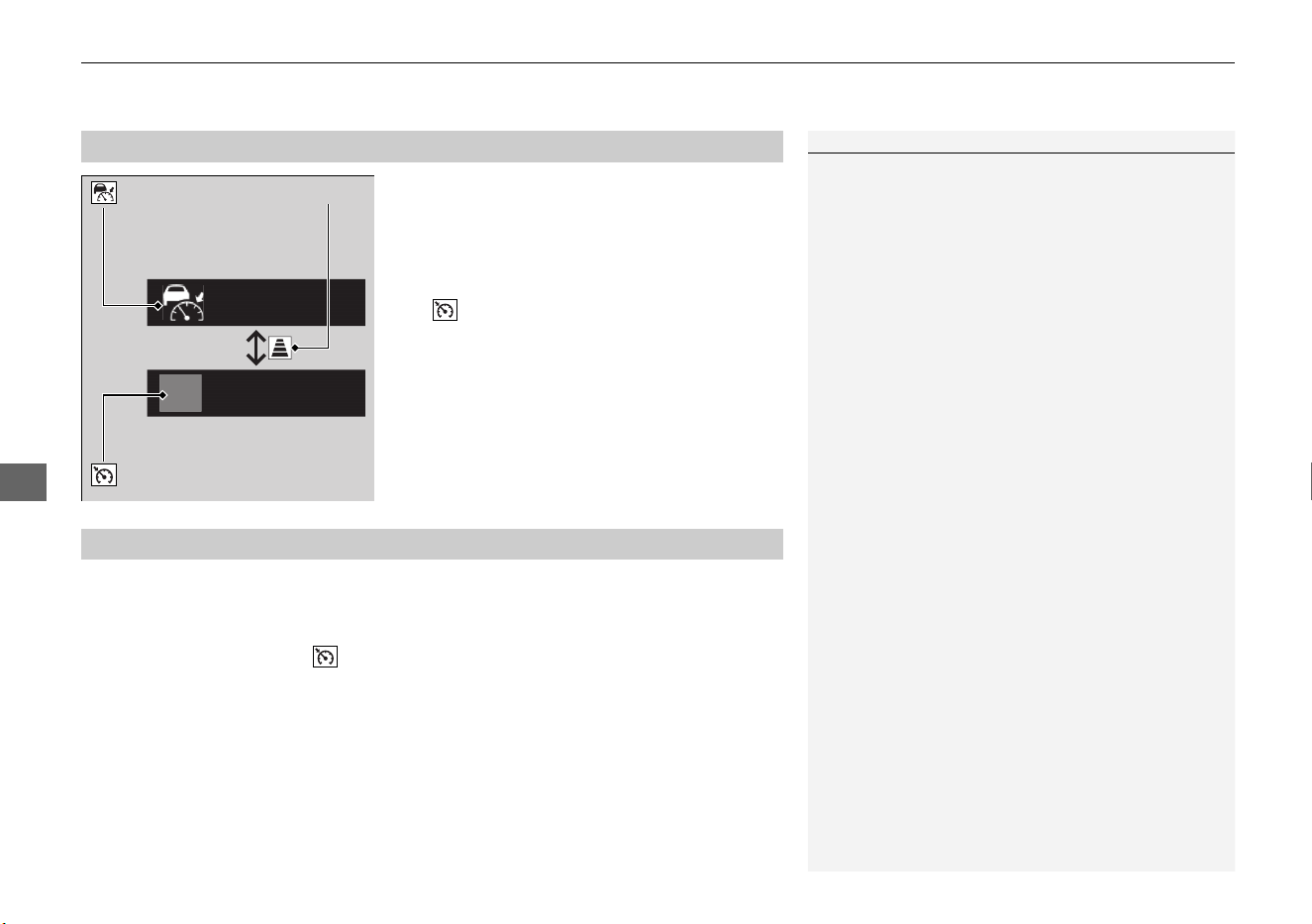
uuHonda Sensing® uAdaptive Cruise Control (ACC) with Low Speed Follow
500
Driving
Press and hold the interval button for one
second. Cruise mode selected appears on
the driver information interface for two
seconds, and then the mode switches to
Cruise.
The comes on.
• Green: The system is on.
• White: The system is standby.
To switch back to ACC with Low Speed
Follow, press and hold the interval button
again for one second.
Take your foot off the pedal and press the RES/+/SET/– switch up or down when
you reach the desired speed.
The moment you release the RES/+/SET/– switch, the set speed is fixed, and cruise
control begins. The color of indicator changes from white to green and set speed
appears on the gauge.
When you use cruise control, Straight Driving Assist (a feature of the Electric Power
Steering system) is activated.
By enabling the steering system to automatically compensate for natural steering pull,
Straight Driving Assist makes it easier for you to keep your vehicle in a straight line.
■
When to use
Desired speed in a range above roughly 20 mph (30 km/h).
■
To Switch ACC with Low Speed Follow to Cruise Control
1To Switch ACC with Low Speed Follow to Cruise Control
Always be aware which mode you are in. When you
are driving in Cruise mode, the system will not assist
you to maintain a following-interval from a vehicle
ahead of you.
You cannot switch ACC with Low Speed Follow to
Cruise Control in the following situations:
• When the vehicle speed is set.
• When ACC with Low Speed Follow is not activated.
You can switch the displayed set speed
measurements on the gauge or audio/information
screen between mph and km/h.
2 Speed/distance units P. 140
2 Customized Features P. 346
(white)
(white)
ACC with Low
Speed Follow ON
Cruise Control ON
Interval Button
■
To Set the Vehicle Speed
26 PILOT-31T906300.book 500 ページ 2025年10月8日 水曜日 午前11時43分
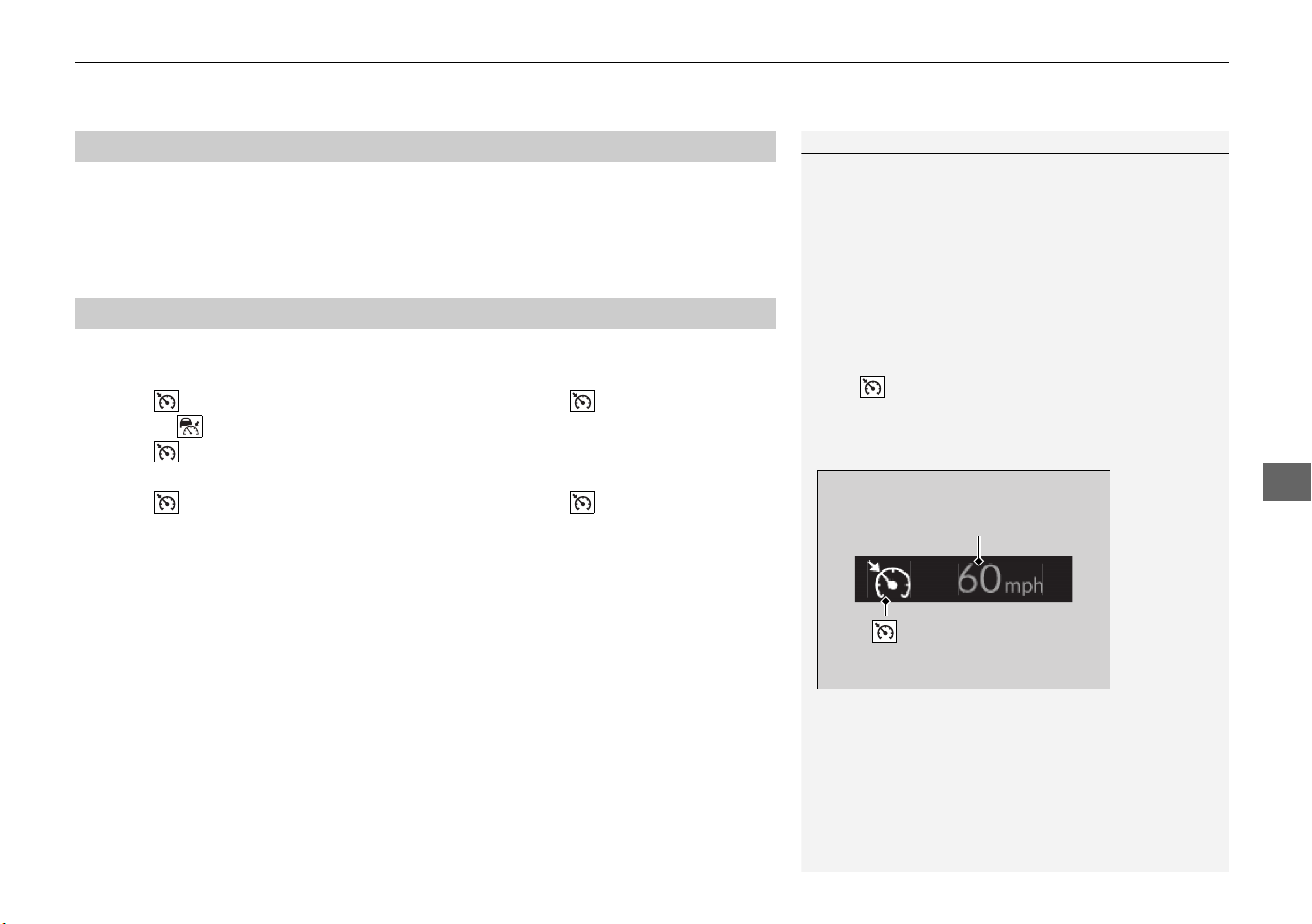
Continued
501
uuHonda Sensing® uAdaptive Cruise Control (ACC) with Low Speed Follow
Driving
Each time you press the RES/+/SET/– switch up or down, the vehicle speed is
increased or decreased by about 1 mph (1 km/h) accordingly.
If you keep the RES/+/SET/– switch pressed up or down, the vehicle speed increases
or decreases by about 5 mph or 5 km/h accordingly.
To cancel cruise control, do any of the following:
• Press the CANCEL button.
u The indicator (green) on the gauge change to the indicator (white).
• Press the button.
u The indicator (green) goes off.
• Depress the brake pedal.
u The indicator (green) on the gauge change to the indicator (white).
■
To Adjust the Vehicle Speed
■
To Cancel
1To Cancel
Resuming the prior set speed:
After you have canceled cruise control, you can activate
the cruise control with the prior set speed displayed on
the gauge (in gray) by pressing the RES/+/SET/– switch
up while driving at a speed of at least 20 mph (30 km/h)
or more.
When you turn the cruise control off by pressing the
CANCEL button or depressing the brake pedal, the
prior set speed is displayed on the gauge in gray.
When pressing the RES/+/SET/– switch up, the cruise
control is activated with displayed speed.
If the indicator (white) is displayed and you press
the RES/+/SET/– switch up, but no prior set speed (in
gray) is displayed, the speed will be set to your
vehicle’s current speed.
Prior Set Speed (gray)
(white)
26 PILOT-31T906300.book 501 ページ 2025年10月8日 水曜日 午前11時43分
uuHonda Sensing® uAdaptive Cruise Control (ACC) with Low Speed Follow
502
Driving
1To Cancel
You cannot set or resume in the following situations:
• When vehicle speed is less than 20 mph (30 km/h).
• When the button is turned off.
At vehicle speeds of 17 mph (25 km/h) or less, cruise
control is canceled automatically.
26 PILOT-31T906300.book 502 ページ 2025年10月8日 水曜日 午前11時43分
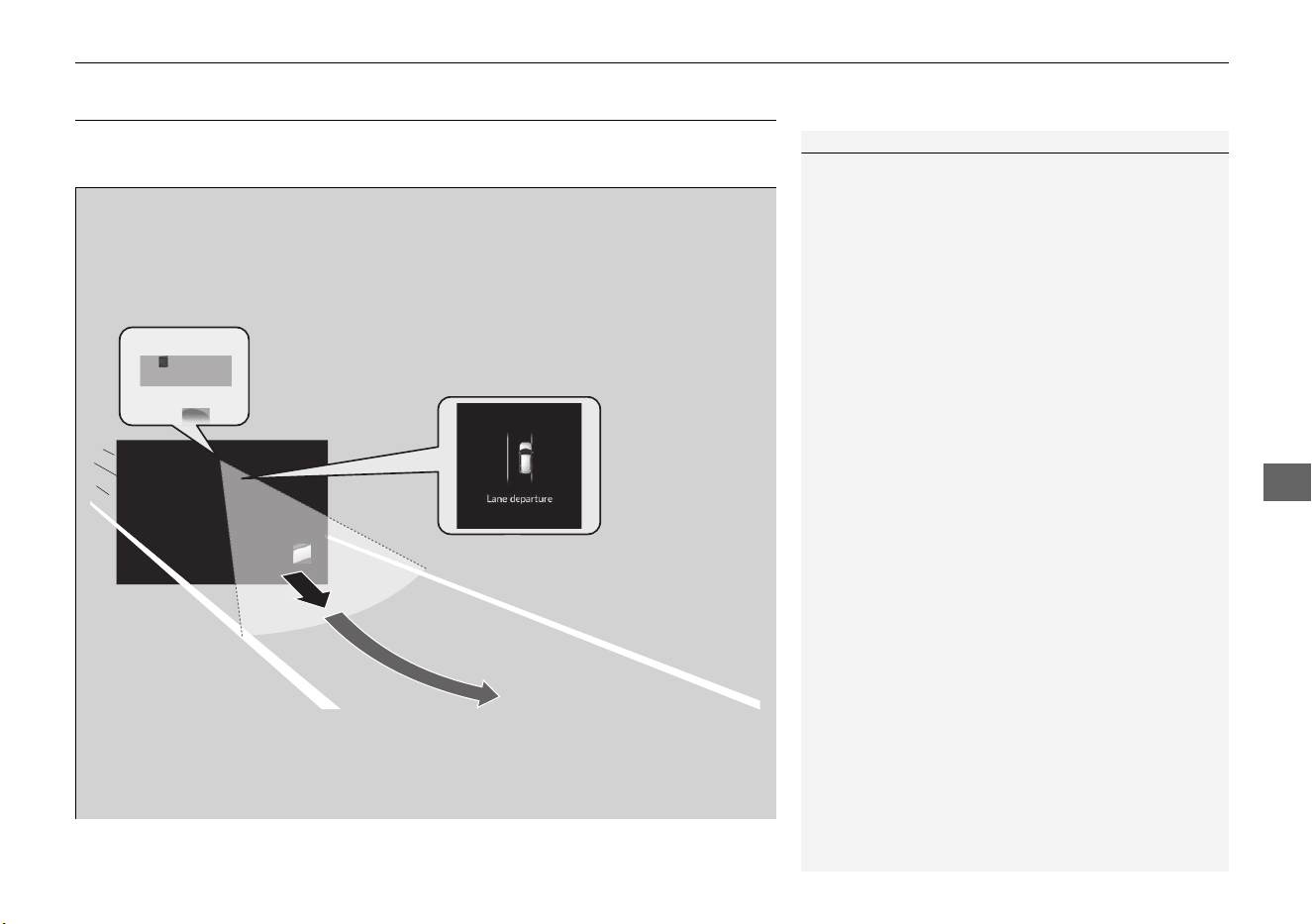
503
uuHonda Sensing® uLane Keeping Assist System (LKAS)
Continued
Driving
Lane Keeping Assist System (LKAS)
Provides steering input to help keep the vehicle in the middle of a detected lane and
provides tactile and visual alerts if the vehicle is detected drifting out of its lane.
1Lane Keeping Assist System (LKAS)
Important Safety Reminders
The LKAS is for your convenience only. It is not an
autonomous driving system and always requires
driver attention and control. The system does not
work if you take your hands off the steering wheel or
fail to steer the vehicle.
The LKAS is convenient when it is used on
expressways or freeways.
Do not place objects on the instrument panel.
Objects may reflect on the windshield and prevent
correct detection of the traffic lanes.
The LKAS only alerts you when lane drift is detected
without a turn signal in use. The LKAS may not detect
all lane markings or lane departures; accuracy will
vary based on weather, speed, and lane marker
condition.
It is always your responsibility to safely operate the
vehicle and avoid collisions.
You can read about handling information for the
camera equipped with this system.
2 Front Sensor Camera P. 529
The LKAS may not work properly or may work
improperly under the certain conditions:
2 LKAS Conditions and Limitations P. 510
When you operate the turn signals to change lanes, the system is suspended, and
resumes after the signals are off.
If you make a lane change without operating the turn signals, the LKAS alerts
activate, and torque is applied to the steering.
■
Front Sensor
Camera
Monitors the
lane lines
■
Tactile and visual alerts
Rapid vibrations on the steering wheel
and a warning display alert you that the
vehicle is drifting out of a detected lane.
■
Steering input assist
The system applies torque to the steering to keep the vehicle between the left
and right lane lines. The applied torque becomes stronger as the vehicle gets
closer to either of the lane lines.
26 PILOT-31T906300.book 503 ページ 2025年10月8日 水曜日 午前11時43分
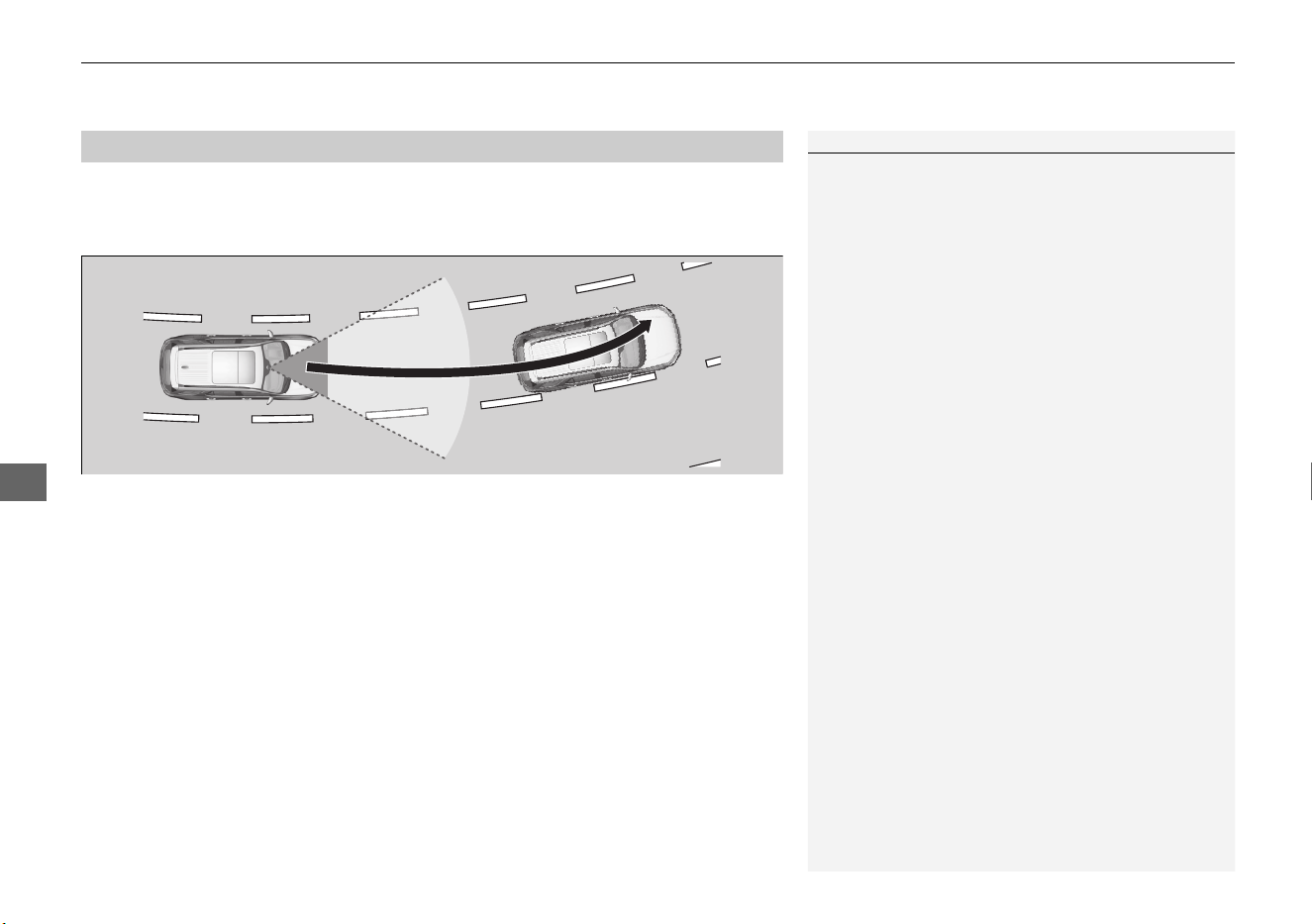
uuHonda Sensing® uLane Keeping Assist System (LKAS)
504
Driving
Provides assistance to keep the vehicle in the center of the lane. When the vehicle
nears a white or yellow line, steering force of the electric power steering will become
stronger.
■
Lane Keep Support Function
1Lane Keeping Assist System (LKAS)
When it fails to detect lanes, the system will
temporarily be canceled. When a lane is detected, the
system will recover automatically.
The LKAS may not function as designed while driving
in frequent stop and go traffic, or on roads with
sharp curves.
26 PILOT-31T906300.book 504 ページ 2025年10月8日 水曜日 午前11時43分
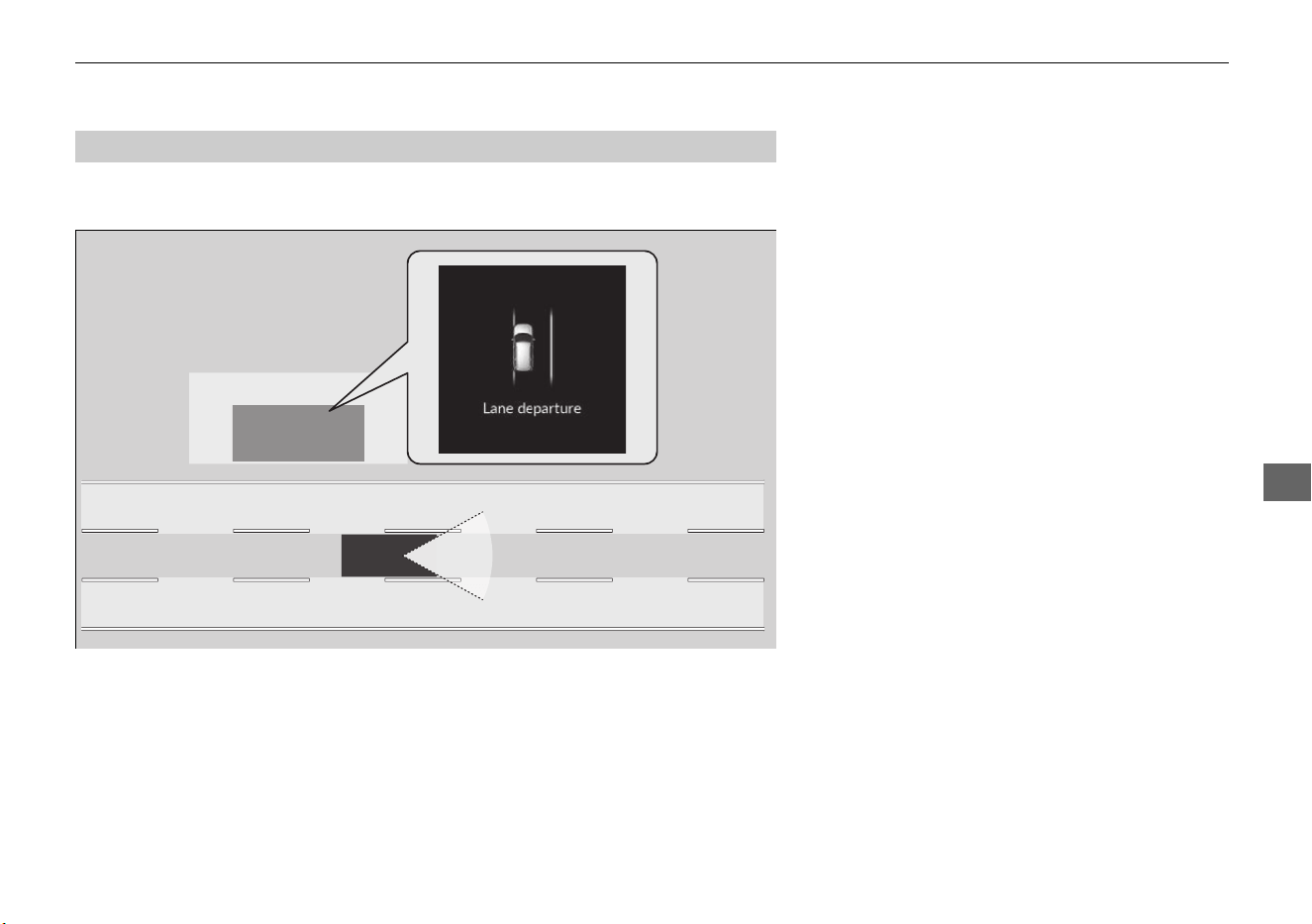
505
uuHonda Sensing® uLane Keeping Assist System (LKAS)
Continued
Driving
When the vehicle enters the warning area, the LKAS alerts you with slight steering
wheel vibration as well as a warning display.
■
Lane Departure Warning Function
Warning Area
Warning Area
26 PILOT-31T906300.book 505 ページ 2025年10月8日 水曜日 午前11時43分
uuHonda Sensing® uLane Keeping Assist System (LKAS)
506
Driving
The system can be used when the following conditions are met.
• The vehicle is traveling between about 45 and 90 mph (72 and 145 km/h).
• The lane in which you are driving has detectable lane markers on both sides, and
your vehicle is in the center of the lane.
• You are driving on a straight or slightly curved road.
• The turn signals are off.
• The brake pedal is not suddenly depressed.
■
When the System can be Used
1When the System can be Used
If the vehicle drifts toward either left or right lane line
due to the system applying torque, turn off the LKAS
and have your vehicle checked by a dealer.
Follow the points below to properly activate the
system:
• Always keep the windshield around the camera
clean.
• When cleaning the windshield, be careful not to
apply windshield cleanser to the camera lens.
• Do not touch the camera lens.
• Do not attach a sticker to the area around the
camera.
If LKAS button is pressed when the system can be
used, LKAS is on without standby.
26 PILOT-31T906300.book 506 ページ 2025年10月8日 水曜日 午前11時43分
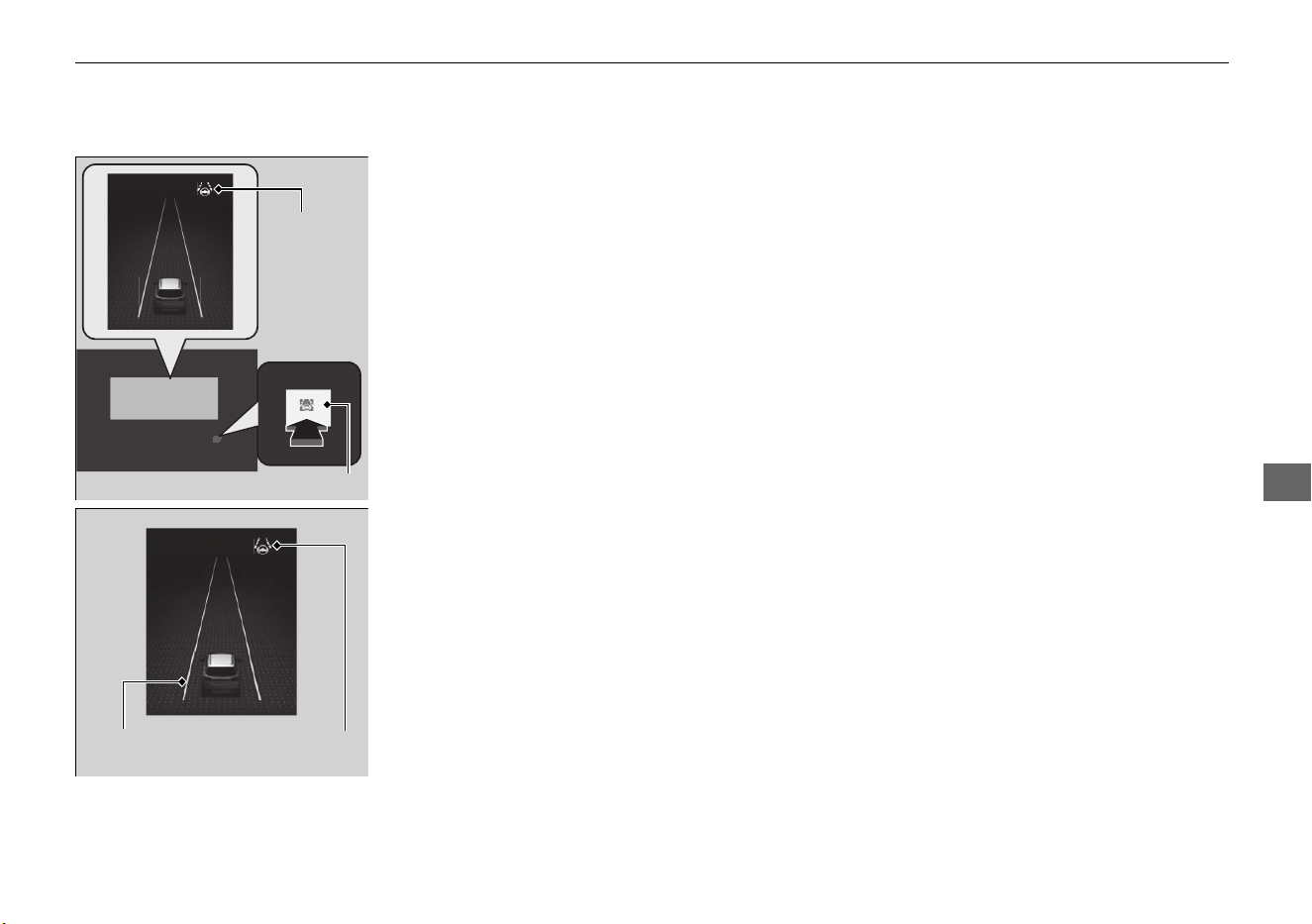
507
uuHonda Sensing® uLane Keeping Assist System (LKAS)
Continued
Driving
■
How to activate the system
1. Press the LKAS button.
u LKAS indicator (white) appears on the
gauge.
The system is standby.
u If traffic lane lines are detected, white
lines appear on the gauge.
2. Keep your vehicle near the center of the
lane while driving.
u The LKAS indicator changes from white
to green, and white lines change to
green once the system starts operating
after detecting the left and right lane
markings.
LKAS
indicator
(white)
LKAS Button
LKAS indicator
(green)
Green lines
26 PILOT-31T906300.book 507 ページ 2025年10月8日 水曜日 午前11時43分
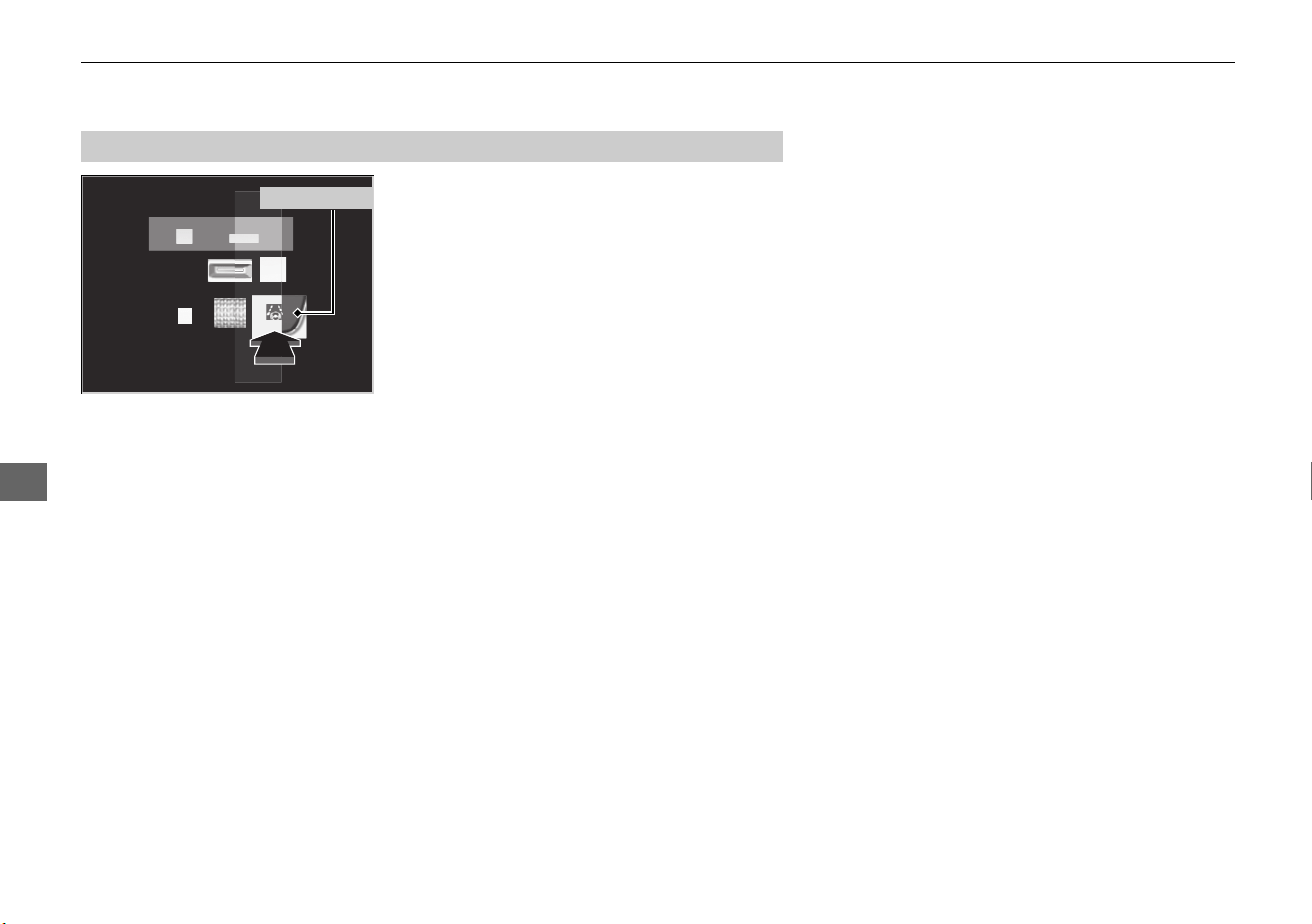
508
uuHonda Sensing® uLane Keeping Assist System (LKAS)
Driving
Press the LKAS button.
The LKAS is turned off every time you stop the
engine, even if you turned it on the last time
you drove the vehicle.
■
To Cancel
LKAS Button
26 PILOT-31T906300.book 508 ページ 2025年10月8日 水曜日 午前11時43分
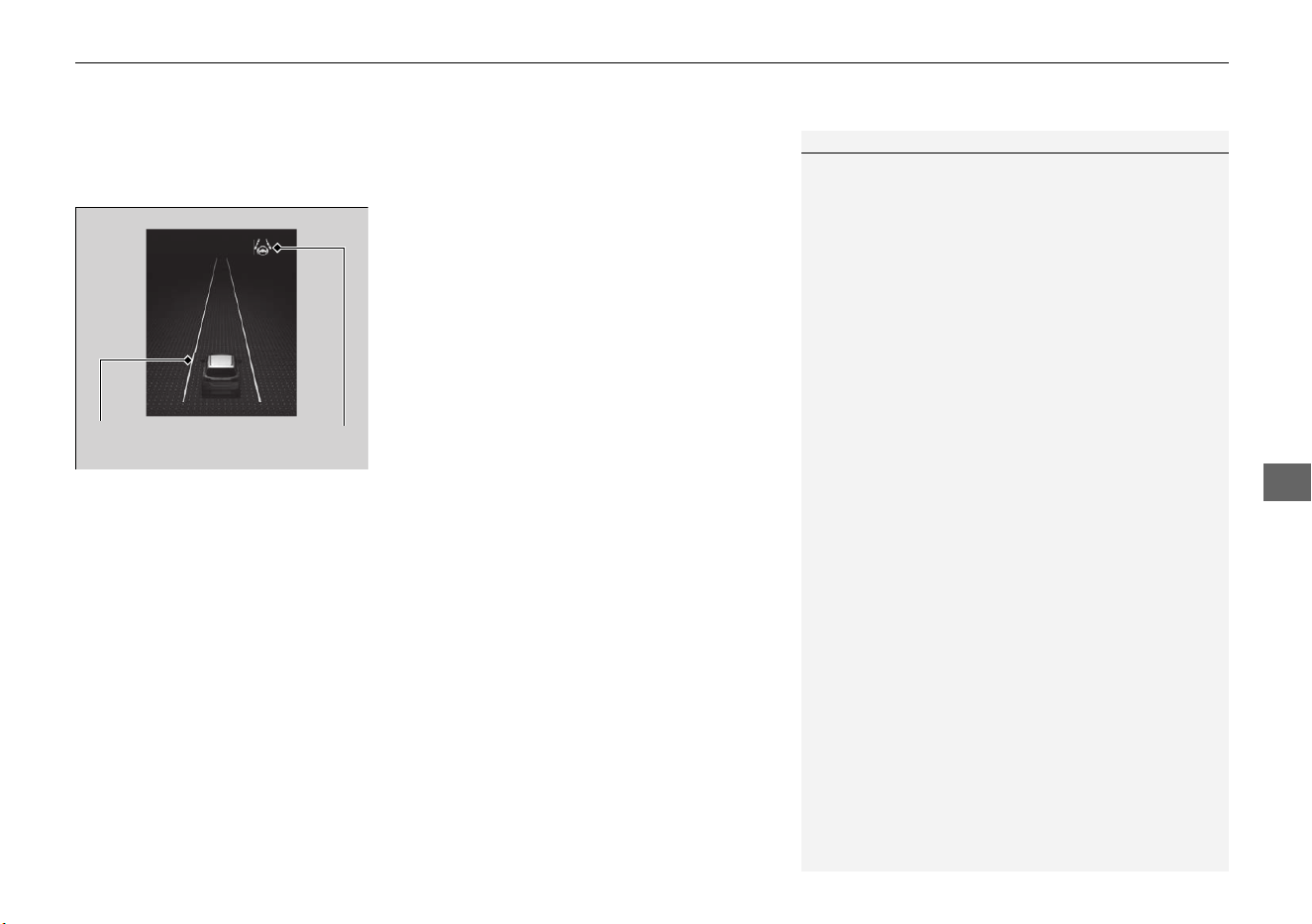
Continued
509
uuHonda Sensing® uLane Keeping Assist System (LKAS)
Driving
■
The LKAS may be automatically suspended when:
When the LKAS is suspended under the following circumstances, green lines on the
gauge change to white lines or disappear, and the beeper sounds (if activated).
• Your vehicle is driving to the right or the left
of the lane.
• The system fails to detect lane lines.
• The steering wheel is turned quickly.
• You fail to steer the vehicle.
• Driving through a sharp curve.
• Driving at a speed in excess of
approximately 94 mph (150 km/h).
• The ABS or VSA® system engages.
• The brake pedal is suddenly depressed.
Once these conditions no longer exist, the
LKAS automatically resumes.
■
The LKAS may be automatically canceled when:
In the following cases, traffic lane lines may disappear on the gauge, the beeper may
sound, and the LKAS may be automatically canceled:
• The camera temperature gets extremely high.
• The camera behind the rearview mirror, or the area around the camera, including
the windshield, is dirty.
1The LKAS may be automatically suspended when:
LKAS suspended beep on and off can be selected.
2 Customized Features P. 346
LKAS indicator
(white)
White lines
26 PILOT-31T906300.book 509 ページ 2025年10月8日 水曜日 午前11時43分
510
uuHonda Sensing® uLane Keeping Assist System (LKAS)
Driving
The system may not detect lane markings (in white or yellow), and LKAS may not
function properly under certain conditions, including the following:
■
Environmental conditions
• There is little contrast between lane lines and the roadway surface.
• Driving in bad weather (rain, fog, snow, etc.).
• Driving on a snowy or wet roadway.
• Driving into low sunlight (e.g., at dawn or dusk).
• Shadows of adjacent objects (trees, buildings, guard rails, vehicles, etc.) are
parallel to white (or yellow) lines.
• Sudden changes between light and dark, such as the entrance or exit of a tunnel
or the shadows of trees, buildings, etc.
• Driving at night or in a dark place such as a tunnel (due to low-light conditions,
lane lines or the road surface may not be illuminated).
• The distance between your vehicle and the vehicle ahead of you is too short, and
lane lines and the road surface are not visible.
• Strong light is reflected onto the roadway.
■
LKAS Conditions and Limitations
26 PILOT-31T906300.book 510 ページ 2025年10月8日 水曜日 午前11時43分
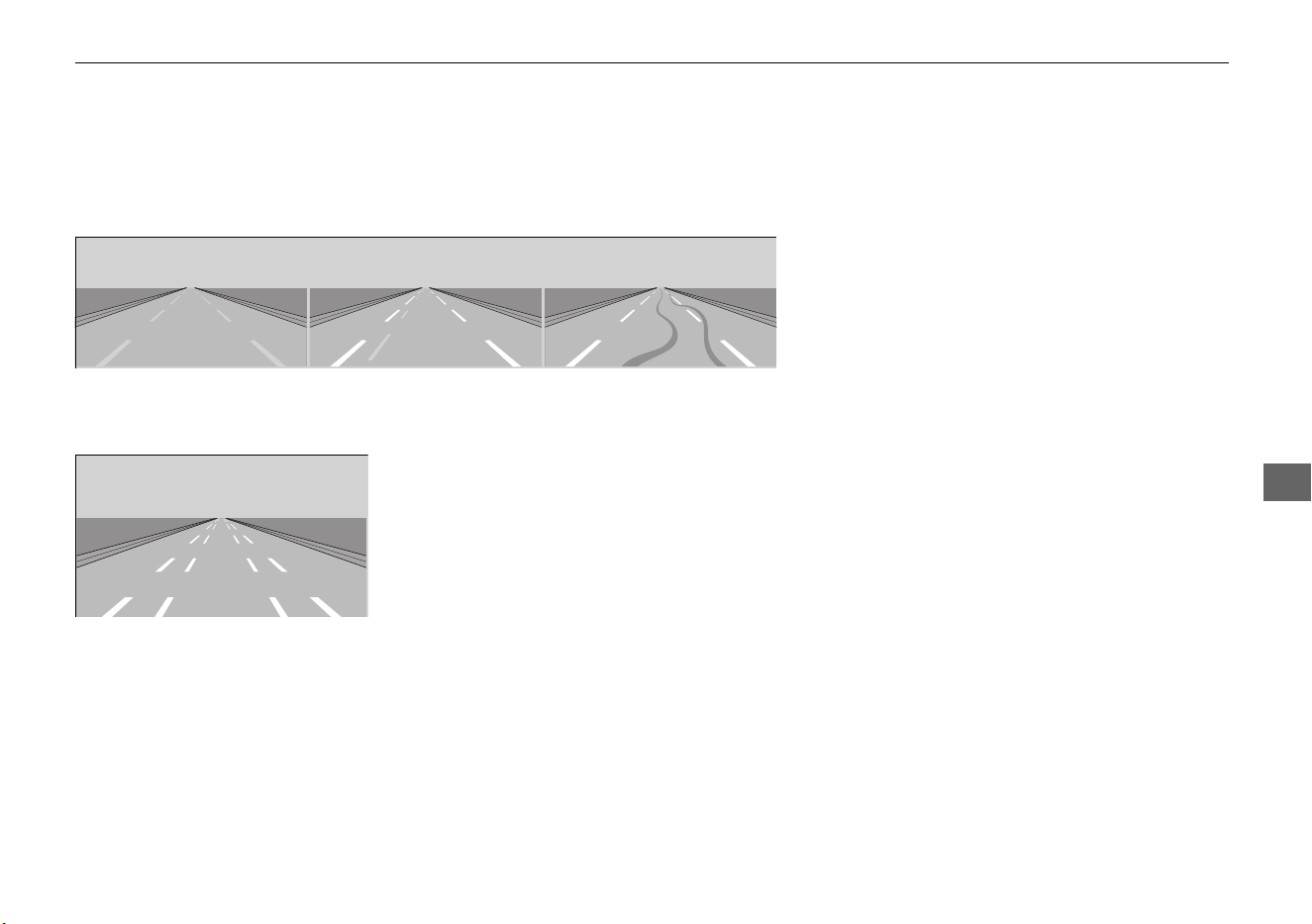
511
uuHonda Sensing® uLane Keeping Assist System (LKAS)
Continued
Driving
■
Roadway conditions
• Driving on a road with temporary lane markings.
• Faint, multiple, or varied lane markings are visible on the roadway due to road
repairs or deteriorated lane markings.
• The roadway has merging, split, or crossing lines, such as at an intersection or
crosswalk.
• The lane markings are extremely narrow, wide, or changing.
• Part of the lane markings are hidden by an object, such as a vehicle.
• The road is hilly or the vehicle is approaching the crest of a hill.
• Your vehicle is strongly shaken on uneven road surfaces.
Faded lines Duplicate lines Tire tracks
Very wide or narrow traffic lane
26 PILOT-31T906300.book 511 ページ 2025年10月8日 水曜日 午前11時43分
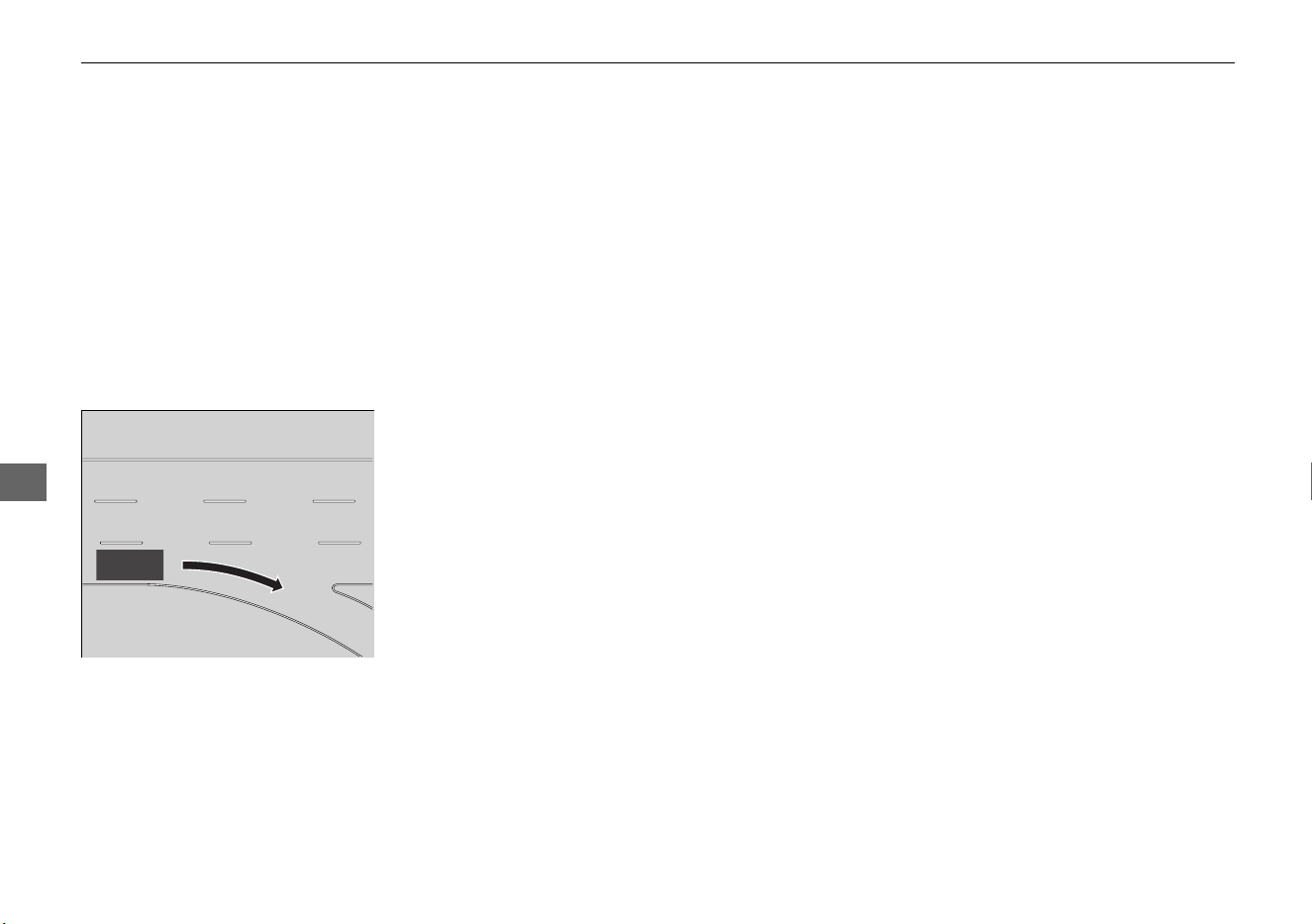
512
uuHonda Sensing® uLane Keeping Assist System (LKAS)
Driving
• When objects on the road (curb, guard rail, pylons, etc.) are recognized as white
(or yellow) lines.
• Driving on rough or unpaved roads, or over bumpy surfaces.
• Driving on roads with double lane lines.
• Driving on snowy or slippery roads.
• The pavement is only partially visible due to snow or puddles on the road.
• There is a film of water or puddles on the road surface.
• White (or yellow) lines are not recognized correctly due to road conditions such as
curves, twists, or hills.
• Driving on unpaved or rutted roads.
• Passing through an exit or an interchange.
Lane void of lines at exit or
interchange
26 PILOT-31T906300.book 512 ページ 2025年10月8日 水曜日 午前11時43分

513
uuHonda Sensing® uLane Keeping Assist System (LKAS)
Driving
■
Vehicle conditions
• When lighting is weak due to dirt covering the headlight lenses, or there is poor
visibility in a dark place due to the headlights being improperly adjusted.
• The front of the camera is obstructed by dirt, fog, rain, mud, wet snow,
accessories, decals, stickers, film, etc.
• Driving at night or in a dark place (e.g., a tunnel) with the headlights off.
• There is residue on the windshield from the windshield wipers.
• An abnormal tire or wheel condition (incorrect sizes, varied sizes or construction,
improperly inflated, compact spare tire
*
, etc.).
• The vehicle is tilted due to a heavy load in the cargo area or rear seats.
• The suspension has been modified.
• Tire chains are installed.
• The vehicle is towing a trailer.
* Not available on all models
26 PILOT-31T906300.book 513 ページ 2025年10月8日 水曜日 午前11時43分
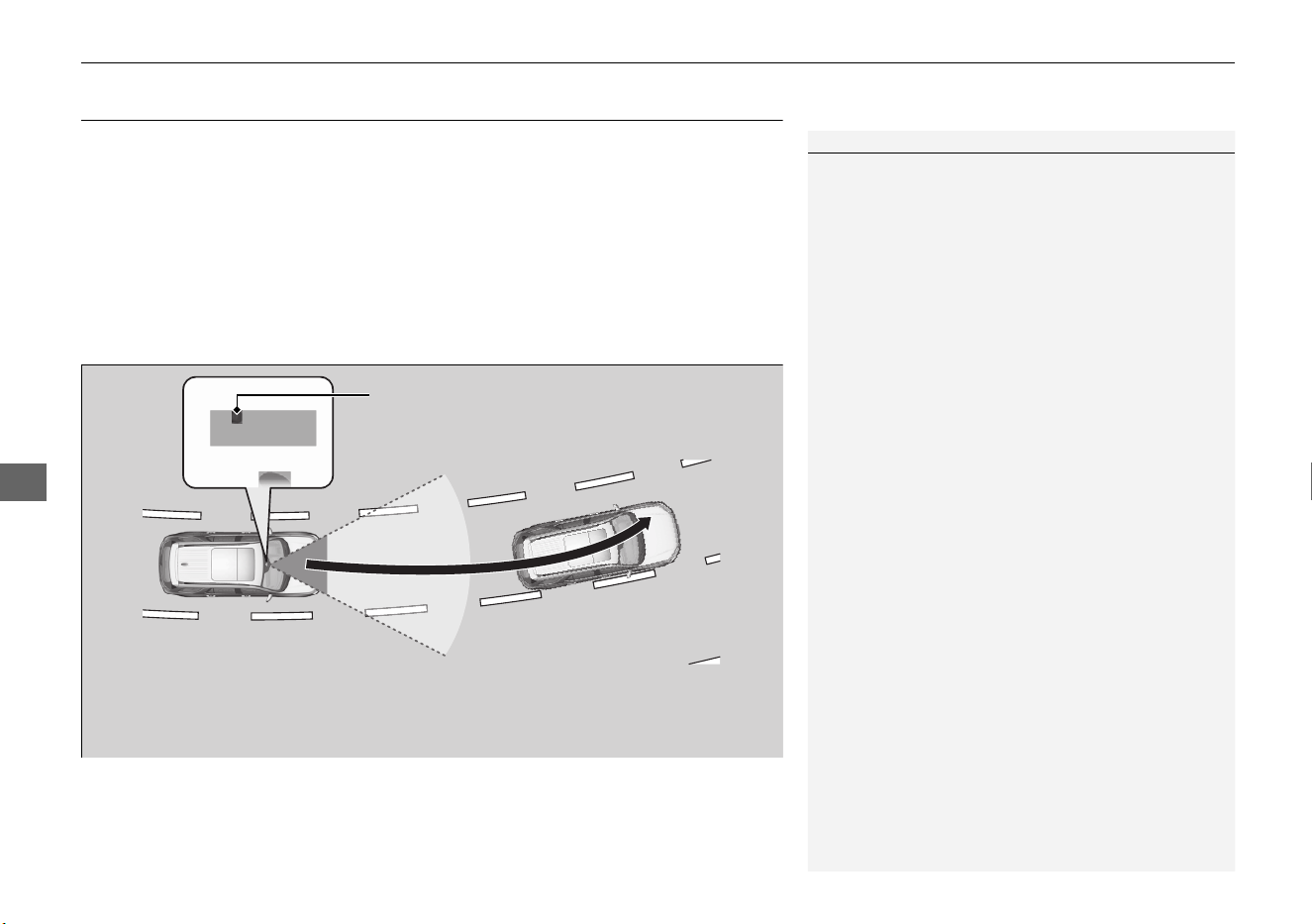
514
uuHonda Sensing® uTraffic Jam Assist
Driving
Traffic Jam Assist
The Traffic Jam Assist system uses a camera mounted to the upper portion of the
windshield to detect and monitor left and right white (or yellow) traffic lane lines.
Based on inputs from the camera, the system can apply steering torque to keep your
vehicle in the center of the detected lane.
■
How Traffic Jam Assist works
When you are in heavy traffic and Lane Keeping Assist System (LKAS) is active, the
Traffic Jam Assist system, upon detecting the traffic lane lines, will apply steering
torque to help keep your vehicle in the center of the lane.
1Traffic Jam Assist
Important Safety Reminders
Traffic Jam Assist is for your convenience only. It is
not an autonomous driving system and always
requires driver attention and control. The system
does not work if you take your hands off the steering
wheel or fail to steer the vehicle.
Traffic Jam Assist is convenient when it is used on
expressways or freeways.
You can read about handling information for the
camera equipped with this system.
2 Front Sensor Camera P. 529
The Traffic Jam Assist only alerts you when lane drift
is detected without a turn signal in use. The Traffic
Jam Assist may not detect all lane markings or lane
departures; accuracy will vary based on weather,
speed, and lane marker condition.
It is always your responsibility to safely operate the
vehicle and avoid collisions.
Traffic Jam Assist may not work properly under
certain conditions:
2 Traffic Jam Assist Conditions and
Limitations P. 519
Front Sensor Camera
When you use the turn signal to indicate a lane change, Traffic Jam Assist is
temporarily deactivated. It is reactivated once the vehicle is traveling in the
center of the lane and the system has detected the traffic lane lines.
Detects left and right white
(o
r ye
llow) traffic lane lines
26 PILOT-31T906300.book 514 ページ 2025年10月8日 水曜日 午前11時43分
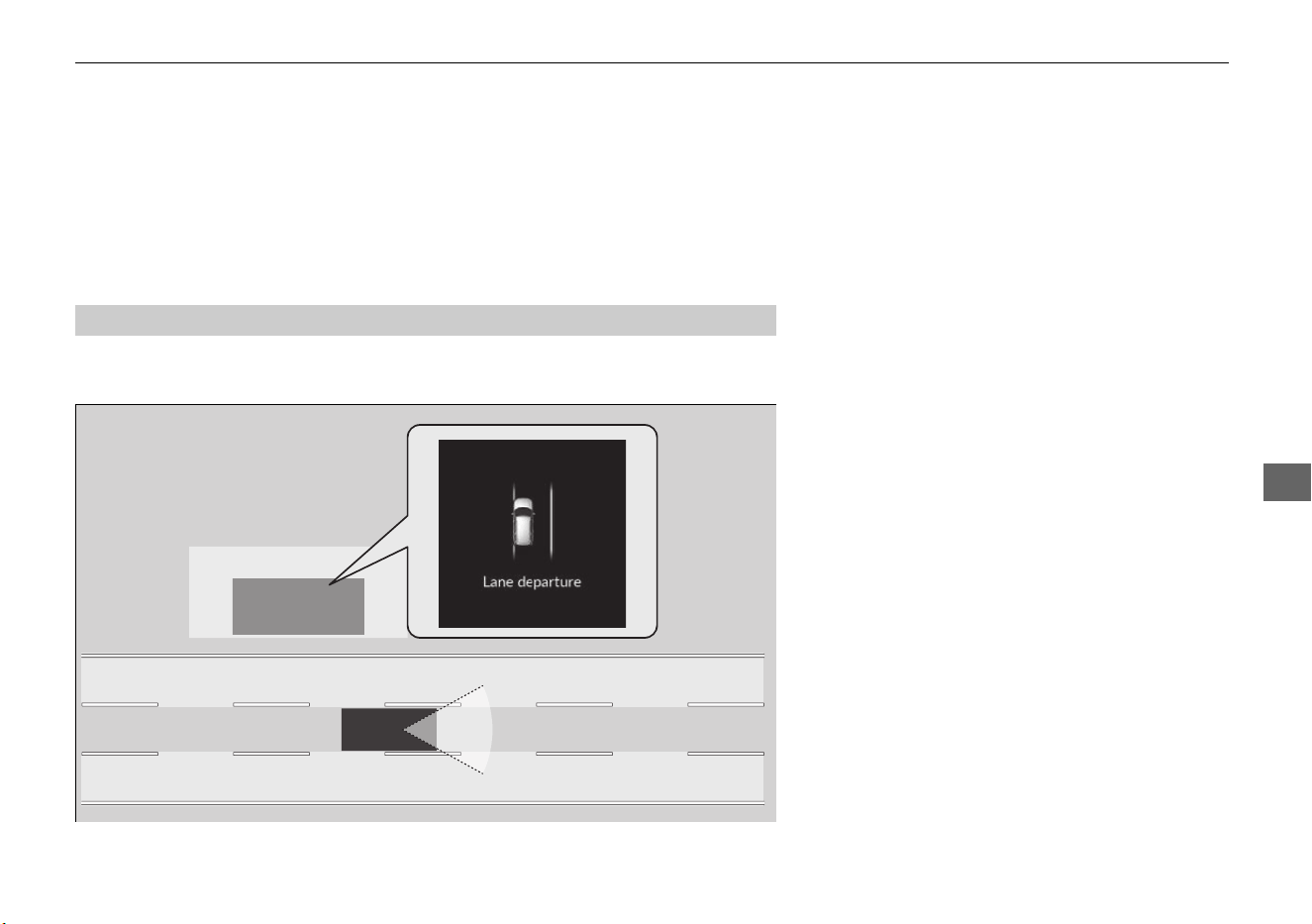
515
uuHonda Sensing® uTraffic Jam Assist
Continued
Driving
In some situations, if you make a lane change without operating the turn signals, the
Traffic Jam Assist alerts activate, and torque is applied to the steering.
When the driver takes full control of the steering, the steering assist function is
temporarily canceled.
The torque applied to the steering may not be noticeable when the driver has full
control of the steering, or when the surface of the road is rough or uneven.
When the vehicle enters the warning area, Traffic Jam Assist alerts you with an
audible alert as well as a warning display.
■
Lane Departure Warning Function
Warning Area
Warning Area
26 PILOT-31T906300.book 515 ページ 2025年10月8日 水曜日 午前11時43分
uuHonda Sensing® uTraffic Jam Assist
516
Driving
Traffic Jam Assist is activated when all of the following conditions exist:
• LKAS is activated.
• The lane in which you are driving has detectable lane markers on both sides, and
your vehicle is in the center of the lane.
• The vehicle is traveling between about 0 and 45 mph (0 and 72 km/h).
• You are driving on a straight or slightly curved road.
• The driver is gripping the steering wheel.
• The shift position is in
(D or (S.
Do not use Traffic Jam Assist in any of the following situations:
• You are traveling on a road with sharp curves.
u The system may not allow your vehicle to respond in a manner best suited for
the road conditions.
• You are entering a toll booth, interchange, service area, or parking area.
• You are driving in adverse weather (rain, fog, snow, etc.).
• The surface of the road is slippery; for example, it is icy or covered with snow.
u The tires may slip, causing you to lose control of the vehicle.
■
Traffic Jam Assist Activation
1Traffic Jam Assist Activation
Refer to the following page for proper handling of
the Lane Keeping Assist System (LKAS):
2 Lane Keeping Assist System (LKAS) P. 503
Refer to the following page for steering buttons and
displays:
2 Operation Switches for the Adaptive
Cruise Control (ACC) with Low Speed
Follow/Lane Keeping Assist System
(LKAS)/Traffic Jam Assist P. 454
2 Gauge Content P. 455
26 PILOT-31T906300.book 516 ページ 2025年10月8日 水曜日 午前11時43分
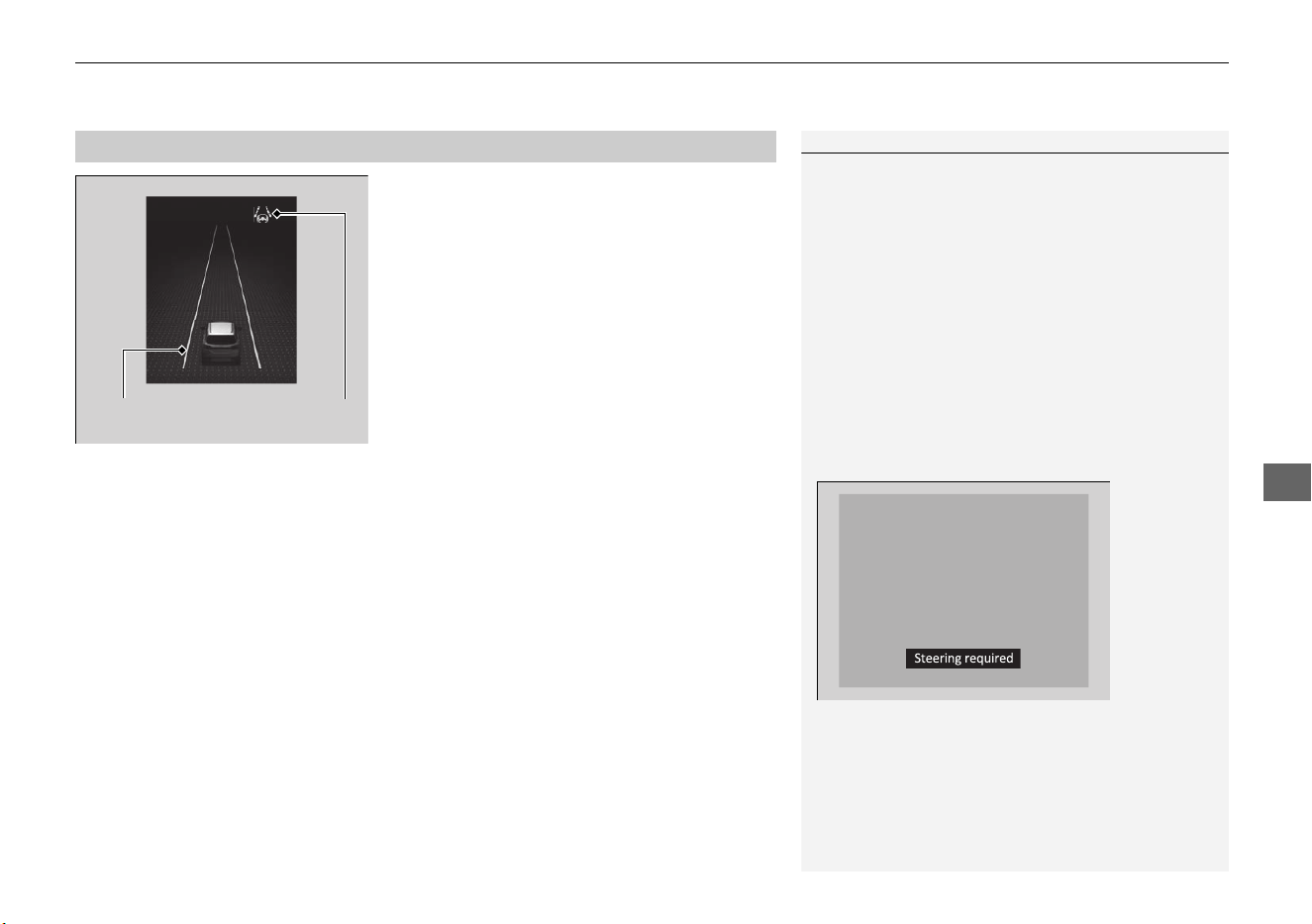
Continued
517
uuHonda Sensing® uTraffic Jam Assist
Driving
Keep your vehicle near the center of the lane
while driving.
u The LKAS indicator changes from white
to green, and white lines change to
green once the system starts operating
after detecting the left and right lane
markings.
■
How Traffic Jam Assist Works
1How Traffic Jam Assist Works
If your vehicle veers too far to the right or the left of
the white (or yellow) traffic lane lines while Traffic
Jam Assist is active, deactivate Traffic Jam Assist and
have your vehicle checked by a dealer.
In some cases the system cannot properly detect the
traffic lane lines and, as a result, will not provide
steering assistance.
2 Traffic Jam Assist Conditions and
Limitations P. 519
If the driver takes their hands off the steering wheel
or does not adequately maintain control of steering,
the warning below will appear.
If the driver does not grip the steering wheel after the
warning above has repeatedly appeared, a warning
buzzer will sound and Traffic Jam Assist will be
canceled.
LKAS indicator
(green)
Green lines
26 PILOT-31T906300.book 517 ページ 2025年10月8日 水曜日 午前11時43分
uuHonda Sensing® uTraffic Jam Assist
518
Driving
Press the LKAS button to cancel Traffic Jam Assist.
■
Traffic Jam Assist may be automatically suspended when:
• The system fails to detect lane lines.
• The steering wheel is turned sharply.
• You fail to steer the vehicle.
• You are driving through a sharp curve.
• The brake pedal is suddenly depressed.
Once these conditions no longer exist, Traffic Jam Assist automatically resumes.
■
Traffic Jam Assist may be automatically canceled when:
• The temperature of the camera is too high.
• The camera behind the rearview mirror, or the area around the camera, including
the windshield, is dirty.
Upon cancelation, the lane lines will disappear from the screen and the beeper may
sound.
■
Canceling Traffic Jam Assist
1Traffic Jam Assist may be automatically suspended when:
You can change the setting for the Traffic Jam Assist
suspended beep on and off when you select the
Lane Keeping Assist Suspend Beep on the audio/
information screen.
2 Customized Features P. 346
26 PILOT-31T906300.book 518 ページ 2025年10月8日 水曜日 午前11時43分
519
uuHonda Sensing® uTraffic Jam Assist
Continued
Driving
The system may not detect lane markings (in white or yellow), and Traffic Jam Assist
may not function properly under certain conditions, including the following:
■
Environmental conditions
• There is little contrast between lane lines and the roadway surface.
• Driving in bad weather (rain, fog, snow, etc.).
• Driving on a snowy or wet roadway.
• Driving into low sunlight (e.g., at dawn or dusk).
• Shadows of adjacent objects (trees, buildings, guard rails, vehicles, etc.) are
parallel to white (or yellow) lines.
• Sudden changes between light and dark, such as the entrance or exit of a tunnel
or the shadows of trees, buildings, etc.
• Driving at night or in a dark place such as a tunnel (due to low-light conditions,
lane lines or the road surface may not be illuminated).
• When the lane lines or road surface are not visible, such as when the distance to
the vehicle in front of you is extremely short or when at an intersection.
• Strong light is reflected onto the roadway.
■
Traffic Jam Assist Conditions and Limitations
26 PILOT-31T906300.book 519 ページ 2025年10月8日 水曜日 午前11時43分
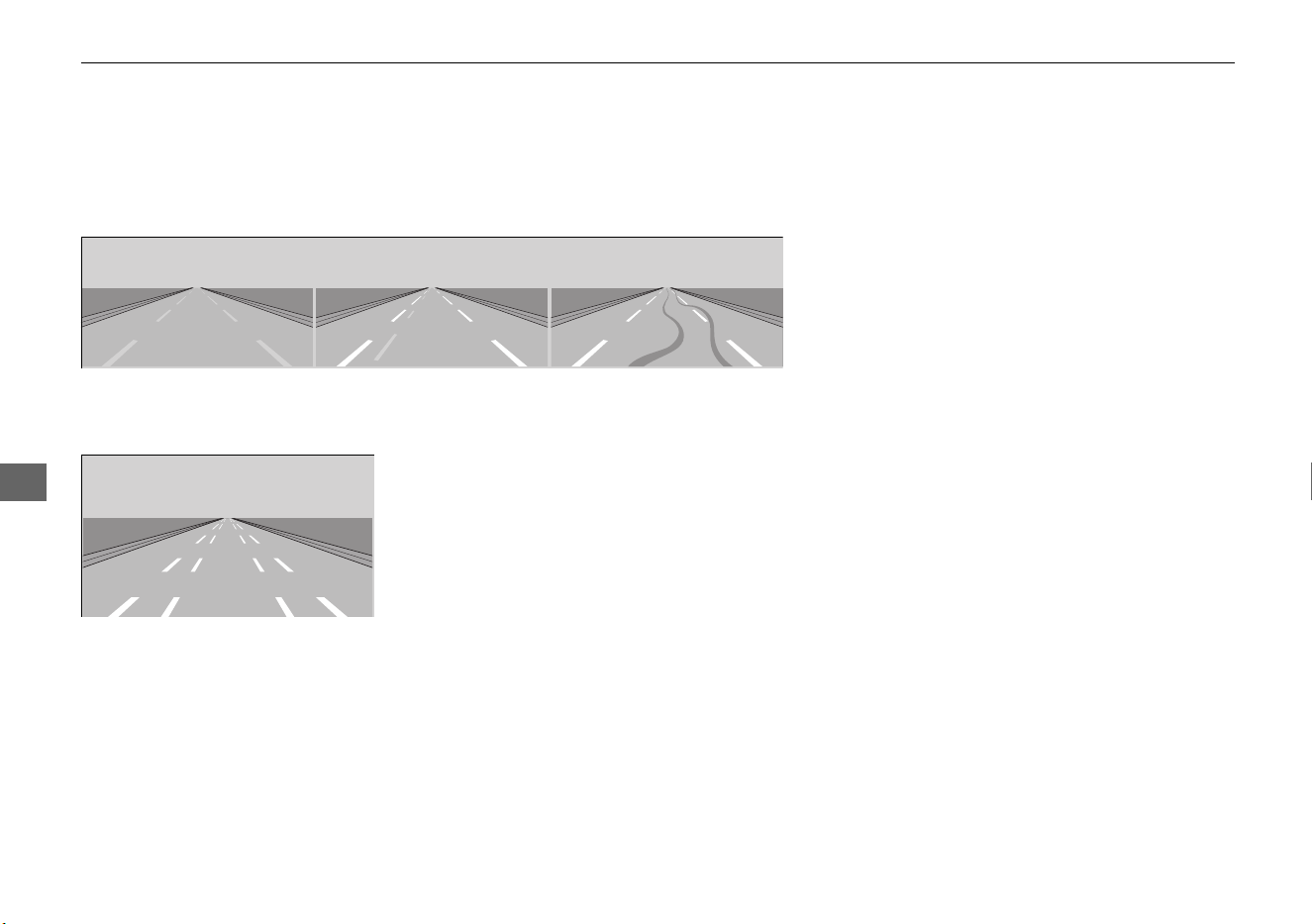
520
uuHonda Sensing® uTraffic Jam Assist
Driving
■
Roadway conditions
• Driving on a road with temporary lane markings.
• Faint, multiple, or varied lane markings are visible on the roadway due to road
repairs or deteriorated lane markings.
• The roadway has merging, split, or crossing lines, such as at an intersection or
crosswalk.
• The lane markings are extremely narrow, wide, or changing.
• Part of the lane markings are hidden by an object, such as a vehicle.
• The road is hilly or the vehicle is approaching the crest of a hill.
• Your vehicle is strongly shaken on uneven road surfaces.
Faded lines Duplicate lines Tire tracks
Very wide or narrow traffic lane
26 PILOT-31T906300.book 520 ページ 2025年10月8日 水曜日 午前11時43分
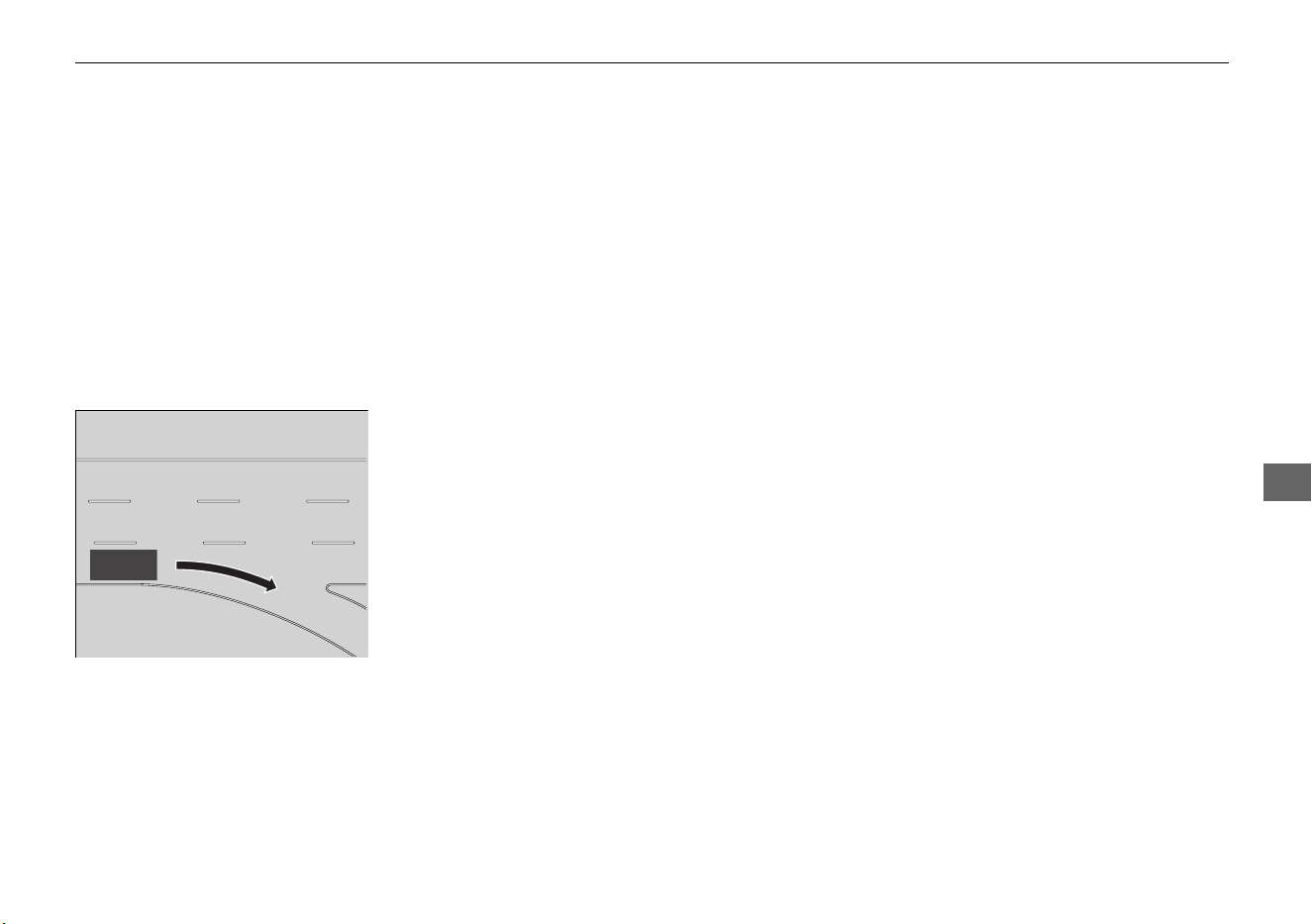
521
uuHonda Sensing® uTraffic Jam Assist
Continued
Driving
• When objects on the road (curb, guard rail, pylons, etc.) are recognized as white
(or yellow) lines.
• Driving on rough or unpaved roads, or over bumpy surfaces.
• Driving on roads with double lane lines.
• Driving on snowy or slippery roads.
• The pavement is only partially visible due to snow or puddles on the road.
• There is a film of water or puddles on the road surface.
• White (or yellow) lines are not recognized correctly due to road conditions such as
curves, twists, or hills.
• Driving on unpaved or rutted roads.
• Passing through an exit or an interchange.
Lane void of lines at exit or
interchange
26 PILOT-31T906300.book 521 ページ 2025年10月8日 水曜日 午前11時43分

522
uuHonda Sensing® uTraffic Jam Assist
Driving
■
Vehicle conditions
• When lighting is weak due to dirt covering the headlight lenses, or there is poor
visibility in a dark place due to the headlights being improperly adjusted.
• The front of the camera is obstructed by dirt, fog, rain, mud, wet snow,
accessories, decals, stickers, film, etc.
• Driving at night or in a dark place (e.g., a tunnel) with the headlights off.
• There is residue on the windshield from the windshield wipers.
• An abnormal tire or wheel condition (incorrect sizes, varied sizes or construction,
improperly inflated, compact spare tire
*
etc.).
• The vehicle is tilted due to a heavy load in the cargo area or rear seats.
• The suspension has been modified.
• Tire chains are installed.
• The vehicle is towing a trailer.
* Not available on all models
26 PILOT-31T906300.book 522 ページ 2025年10月8日 水曜日 午前11時43分
523
uuHonda Sensing®uTraffic Sign Recognition System
Continued
Driving
Traffic Sign Recognition System
Reminds you of road sign information, such as the current speed limit your vehicle
has just passed through, showing it on the gauge and the head-up display
*
.
1Traffic Sign Recognition System
Not all signs may be displayed, but any signs posted
on roadsides should not be ignored. The system does
not work on the designated traffic signs of all the
countries you travel, nor in all situations.
Do not rely too much on the system. Always drive at
speeds appropriate for the road conditions.
Never apply a film or attach any objects to the
windshield that could obstruct the camera’s field of
vision and cause the system to operate abnormally.
Scratches, nicks, and other damage to the windshield
within the camera’s field of vision can cause the
system to operate abnormally. If this occurs, we
recommend that you replace the windshield with a
genuine Honda replacement windshield. Making even
minor repairs within the camera’s field of vision or
installing an aftermarket replacement windshield may
also cause the system to operate abnormally. After
replacing the windshield, have a dealer recalibrate the
camera. Proper calibration of the camera is necessary
for the system to operate properly.
To help reduce the likelihood that high interior
temperatures will cause the camera’s sensing system to
shut off, find a shady area or face the front of the vehicle
away from the sun when parking. If you use a reflective
sun shade, do not allow it to cover the camera housing.
Covering the camera can concentrate heat on it.
You can read about handling information for the
camera equipped with this system.
2 Front Sensor Camera P. 529
* Not available on all models
26 PILOT-31T906300.book 523 ページ 2025年10月8日 水曜日 午前11時43分
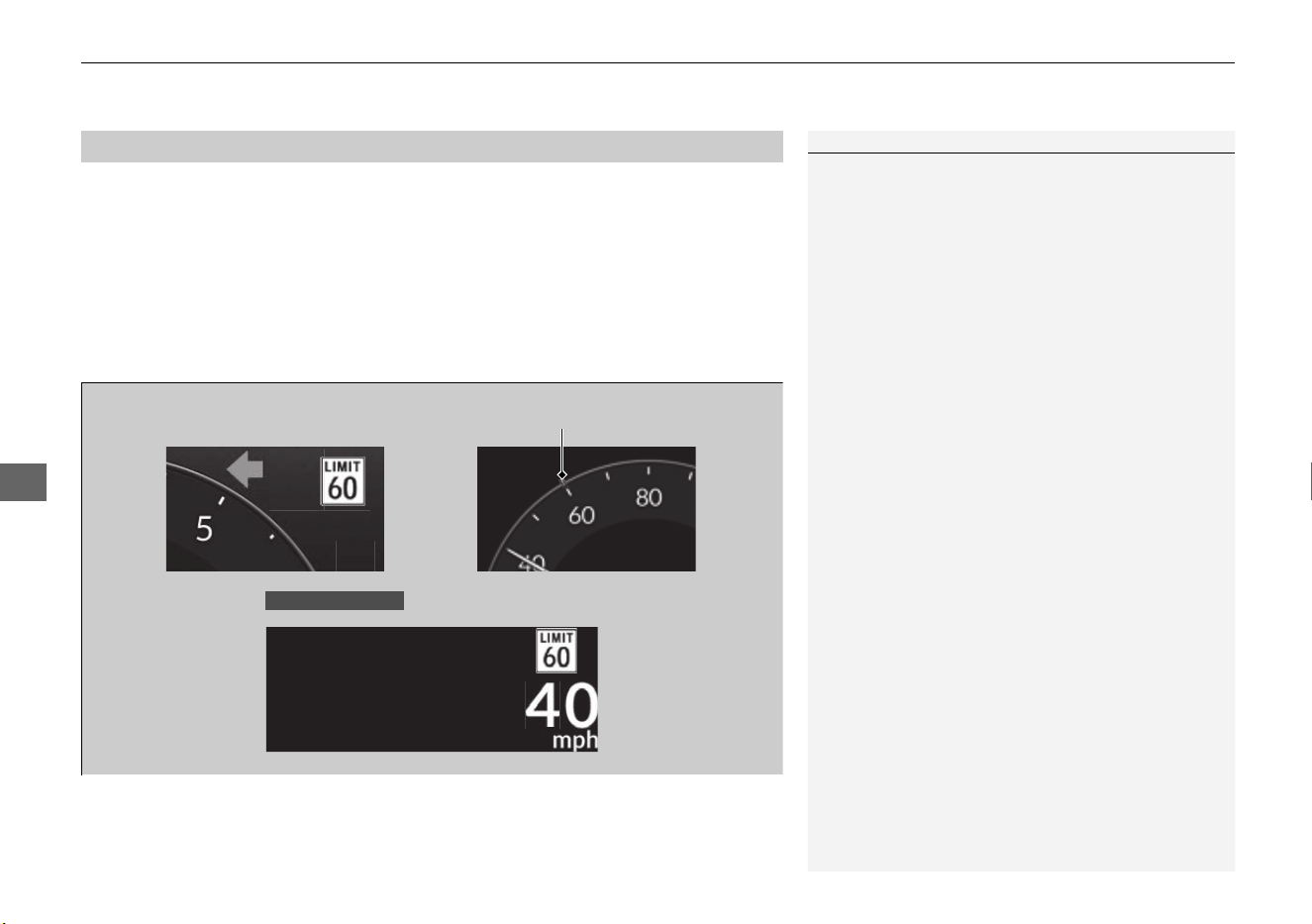
uuHonda Sensing® uTraffic Sign Recognition System
524
Driving
When the camera located behind the rearview mirror captures traffic signs while
driving, the system displays the ones that are recognized as designated for your
vehicle. If speed limit warning is activated, the sign icon blinks when the maximum
speed of the traffic sign detected is exceeded by a threshold, when compared with
the vehicle speed. The sign icon will be displayed until the vehicle reaches a
predetermined time and distance.
If the system does not detect any traffic signs while you are driving, the sign icon will
not be displayed.
The sign icon also may switch to another one, or disappear when:
• The end of speed limit or other designated limit is detected.
• You make a turn with a turn signal at an intersection.
■
How the System Works
1Traffic Sign Recognition System
You can turn the Traffic Sign Recognition System on
and off.
2 Customized Features P. 346
The default speed limit warning threshold is the
maximum speed of the traffic sign detected.
You can adjust the threshold for speed limit warning.
2 Customized Features P. 346
The system’s ability to accurately notify the driver of
the speed limit is dependent on certain conditions
such as the units displayed on the traffic sign as well
as the speed and direction of travel of the vehicle. In
some cases, the system may display false warnings or
other inaccurate information.
2 Traffic Sign Recognition System Conditions
and Limitations P. 525
The unit for speed limits (mph or km/h) varies from
country to country. Just after entering a country
whose unit differs to the one of the country from
which you came, The Traffic Sign Recognition System
may not work correctly.
2 Speed/distance units P. 140
2 Customized Features P. 346
Head-up display
*
Speed Limit Sign
* Not available on all models
26 PILOT-31T906300.book 524 ページ 2025年10月8日 水曜日 午前11時43分
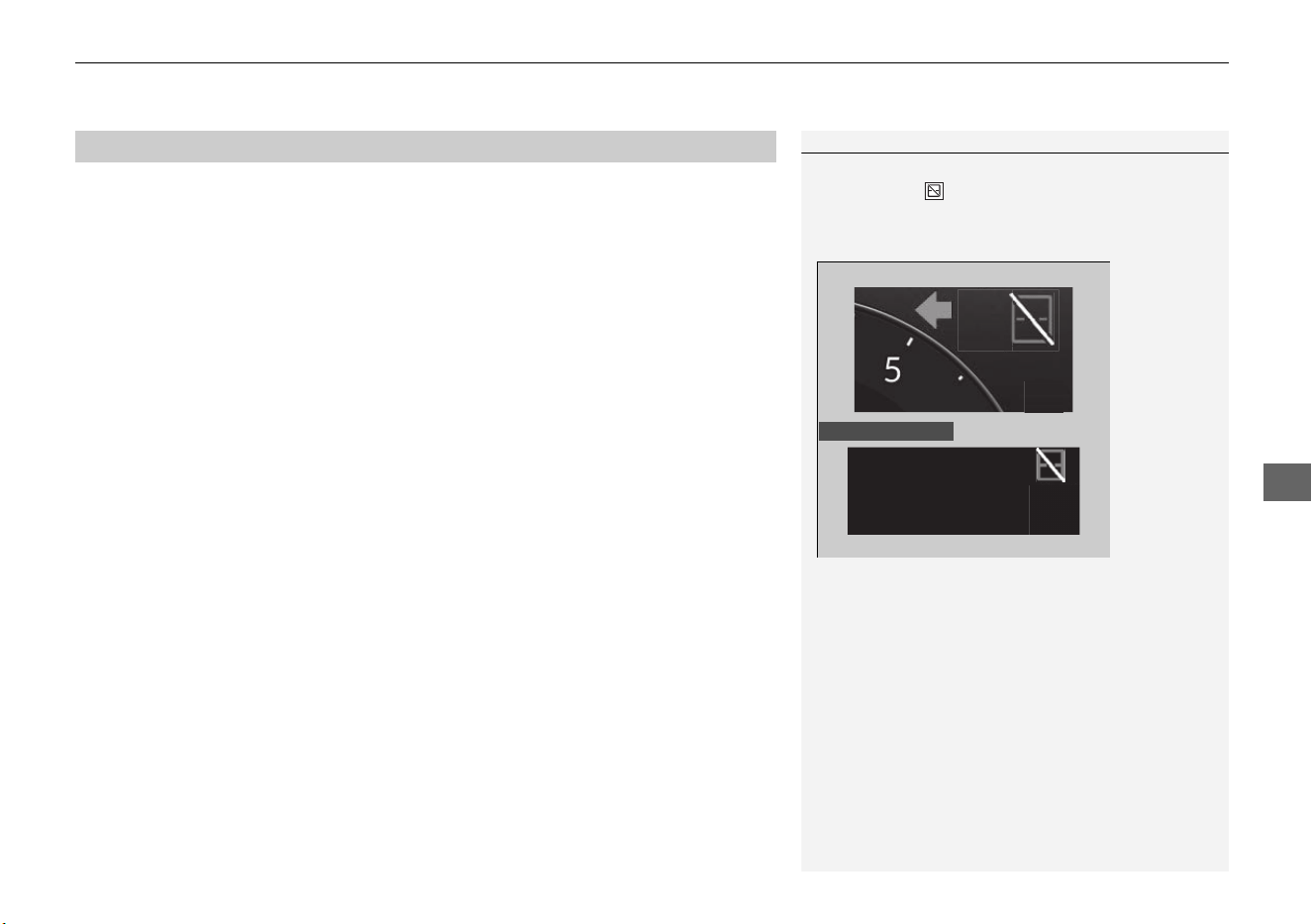
Continued
525
uuHonda Sensing®uTraffic Sign Recognition System
Driving
The Traffic Sign Recognition system may incorrectly recognize, be slow to identify,
or fail to recognize the traffic sign in the following cases.
■
Environmental conditions
• Driving into low sunlight (e.g., at dawn or dusk).
• Strong light is reflected onto the roadway.
• Driving at night, in dark areas such as long tunnels.
• Driving in bad weather (rain, fog, snow, etc.).
• Sudden changes between light and dark, such as the entrance or exit of a tunnel
or the shadows of trees, buildings, etc.
• Water is sprayed by or snow blown from a vehicle ahead.
■
Roadway conditions
• Your vehicle is strongly shaken on uneven road surfaces.
■
Vehicle conditions
• When lighting is weak due to dirt covering the headlight lenses, or there is poor
visibility in a dark place due to the headlights being improperly adjusted.
• The front of the camera is obstructed by dirt, fog, rain, mud, wet snow,
accessories, decals, stickers, film, etc.
• There is residue on the windshield from the windshield wipers.
• An abnormal tire or wheel condition (incorrect sizes, varied sizes or construction,
improperly inflated, compact spare tire
*
, etc.).
• The vehicle is tilted due to heavy load in the cargo area or rear seats.
• The suspension has been modified.
• Tire chains are installed.
• Driving at night or in a dark place (e.g., a tunnel) with the headlights off.
• The vehicle is towing a trailer.
■
Traffic Sign Recognition System Conditions and Limitations
1Traffic Sign Recognition System Conditions and Limitations
When the traffic sign recognition system
malfunctions, appears on the gauge. If this
message does not disappear, have your vehicle
checked by a dealer.
Head-up display
*
* Not available on all models
26 PILOT-31T906300.book 525 ページ 2025年10月8日 水曜日 午前11時43分

526
uuHonda Sensing® uTraffic Sign Recognition System
Driving
■
The position or the condition of the traffic sign
• The sign is in a place that makes it hard to find.
• The sign is located far away from your vehicle.
• The sign is located where it is hard for headlight beams to reach.
• The sign is on a corner or bend in the road.
• The sign is faded or bent.
• The sign is rotated or damaged.
• The sign is covered with mud, snow, or frost.
• Part of the sign is hidden by the trees, or is in the shadow of a vehicle or other
object.
• Light (such as a streetlight) is reflected on the surface of the sign, or it is hidden
in shadow.
• The sign is too bright or too dark (electric signs).
• Small signs (auxiliary signs, etc.).
■
Other conditions
• When you are driving at a high speed.
26 PILOT-31T906300.book 526 ページ 2025年10月8日 水曜日 午前11時43分

527
uuHonda Sensing®uTraffic Sign Recognition System
Continued
Driving
The traffic sign recognition system may not operate correctly, such as displaying
signs that do not adhere to the actual regulations for the roadway or do not exist at
all in the following cases.
u A speed limit sign may display at a higher or lower speed than the actual speed
limit.
• There is a supplementary sign with further information such as weather, time,
vehicle type, school zone, etc.
• Figures on the sign are hard to read (electric signs, numbers on the sign are
blurred, etc.).
• The sign is in the vicinity of the lane you are driving in, even though it is not for
the lane, such as a speed limit sign situated at an exit or an intersection between
the side road and the main road.
• There are things that look similar in color or shape to recognized objects (similar
sign, electric sign, signboard, structure, etc.).
26 PILOT-31T906300.book 527 ページ 2025年10月8日 水曜日 午前11時43分
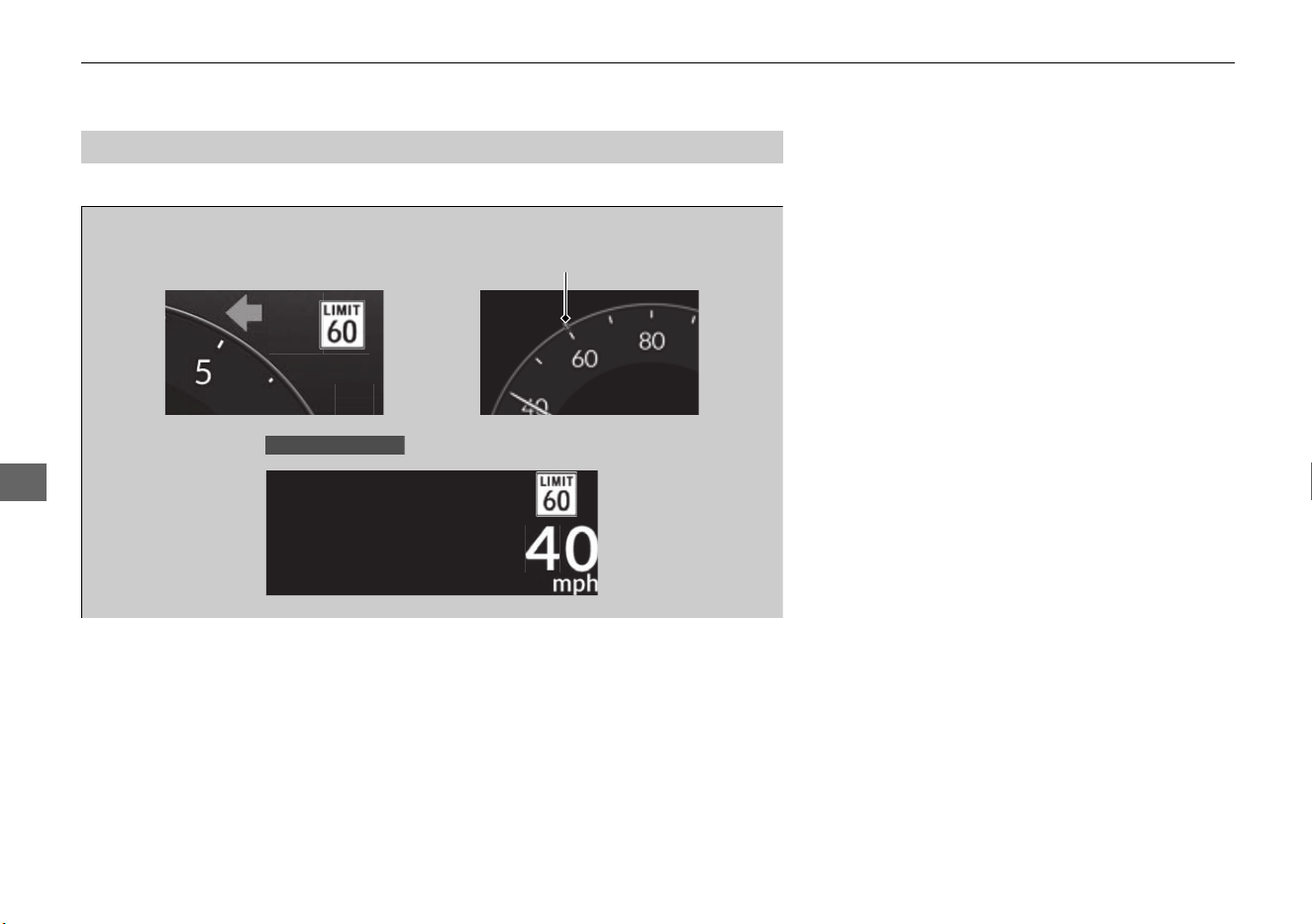
528
uuHonda Sensing® uTraffic Sign Recognition System
Driving
The speed limit sign icon is displayed on the gauge and head-up display
*
.
■
Signs Displayed on the Gauge and Head-up Display
*
Head-up display
*
Speed Limit Sign
* Not available on all models
26 PILOT-31T906300.book 528 ページ 2025年10月8日 水曜日 午前11時43分
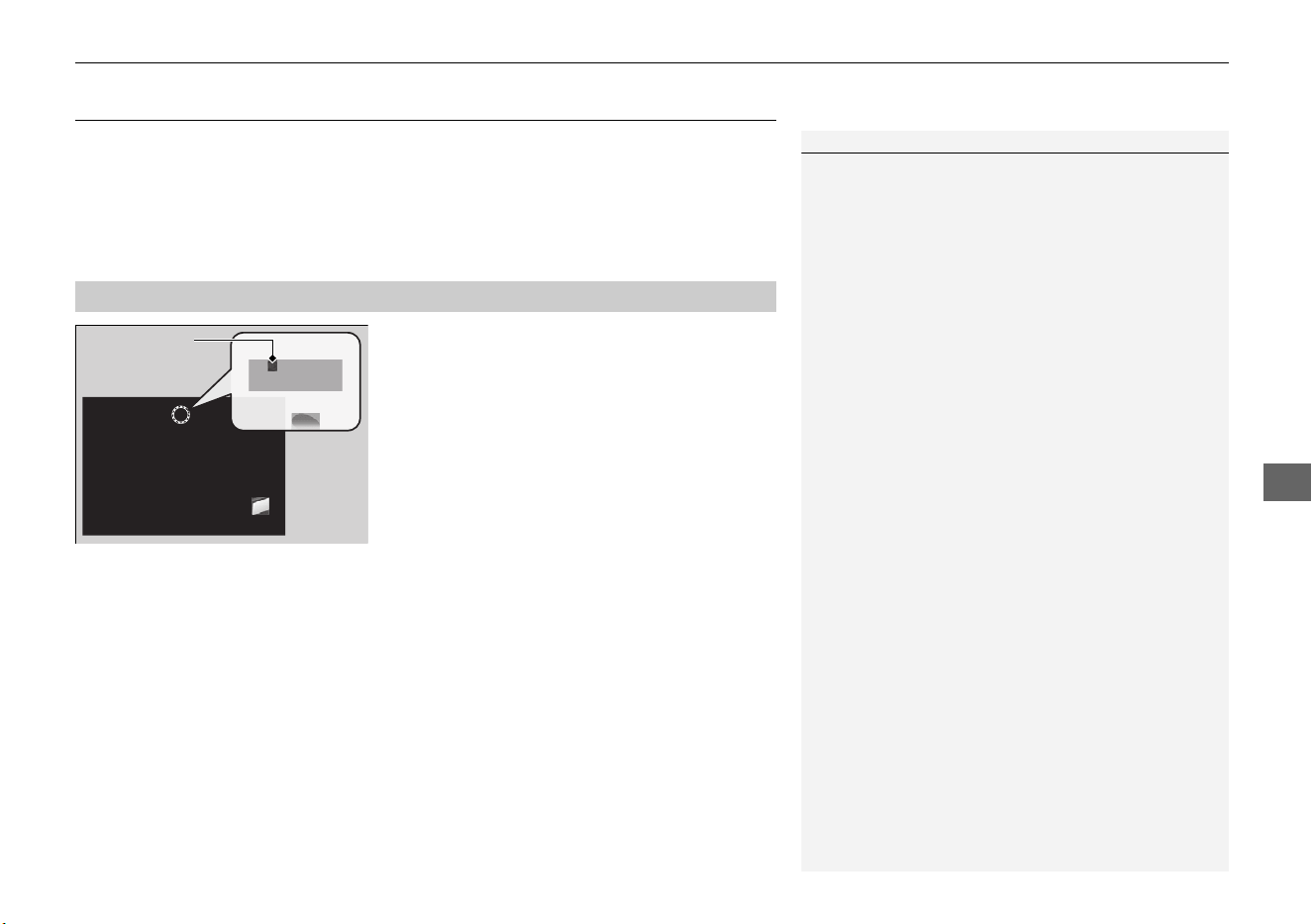
529
uuHonda Sensing® uFront Sensor Camera
Continued
Driving
Front Sensor Camera
The camera, used in systems such as Collision Mitigation Braking System
TM
(CMBS
TM
), Road Departure Mitigation system, Adaptive Cruise Control (ACC) with
Low Speed Follow, Lane Keeping Assist System (LKAS), Traffic Jam Assist, Traffic
Sign Recognition system and Auto High-Beam is designed to detect an object that
triggers any of the systems to operate its functions.
This camera is located behind the rearview
mirror.
To help reduce the likelihood that high interior
temperatures will cause the camera’s sensing
system to shut off, find a shady area or face
the front of the vehicle away from the sun
when parking. If you use a reflective sun
shade, do not allow it to cover the camera
housing. Covering the camera can
concentrate heat on it.
■
Camera Location and Handling Tips
1Front Sensor Camera
Never apply a film or attach any objects to the
windshield, the hood, or the front grille that could
obstruct the camera’s field of vision and cause the
system to operate abnormally.
Scratches, nicks, and other damage to the windshield
within the camera’s field of vision can cause the
system to operate abnormally. If this occurs, we
recommend that you replace the windshield with a
genuine Honda replacement windshield. Making
even minor repairs within the camera’s field of vision
or installing an aftermarket replacement windshield
may also cause the system to operate abnormally.
After replacing the windshield, have a dealer
recalibrate the camera. Proper calibration of the
camera is necessary for the system to operate
properly.
Do not place an object on the top of the instrument
panel. It may reflect onto the windshield and prevent
the system from detecting lane lines properly.
Front Sensor
Camera
26 PILOT-31T906300.book 529 ページ 2025年10月8日 水曜日 午前11時43分
uuHonda Sensing® uFront Sensor Camera
530
Driving
1Front Sensor Camera
If the Some driver assist systems cannot operate:
Camera temperature too high message appears:
• Use the climate control system to cool down the
interior and, if necessary, also use defroster mode
with the airflow directed toward the camera.
• Start driving the vehicle to lower the windshield
temperature, which cools down the area around
the camera.
If the Some driver assist systems cannot operate:
Clean front windshield or poor viewing
condition. message appears:
• Park your vehicle in a safe place, and make sure the
windshield is clean. Clean the windshield if it is
dirty. If the message does not disappear after
driven for a while, have your vehicle checked by a
dealer.
26 PILOT-31T906300.book 530 ページ 2025年10月8日 水曜日 午前11時43分
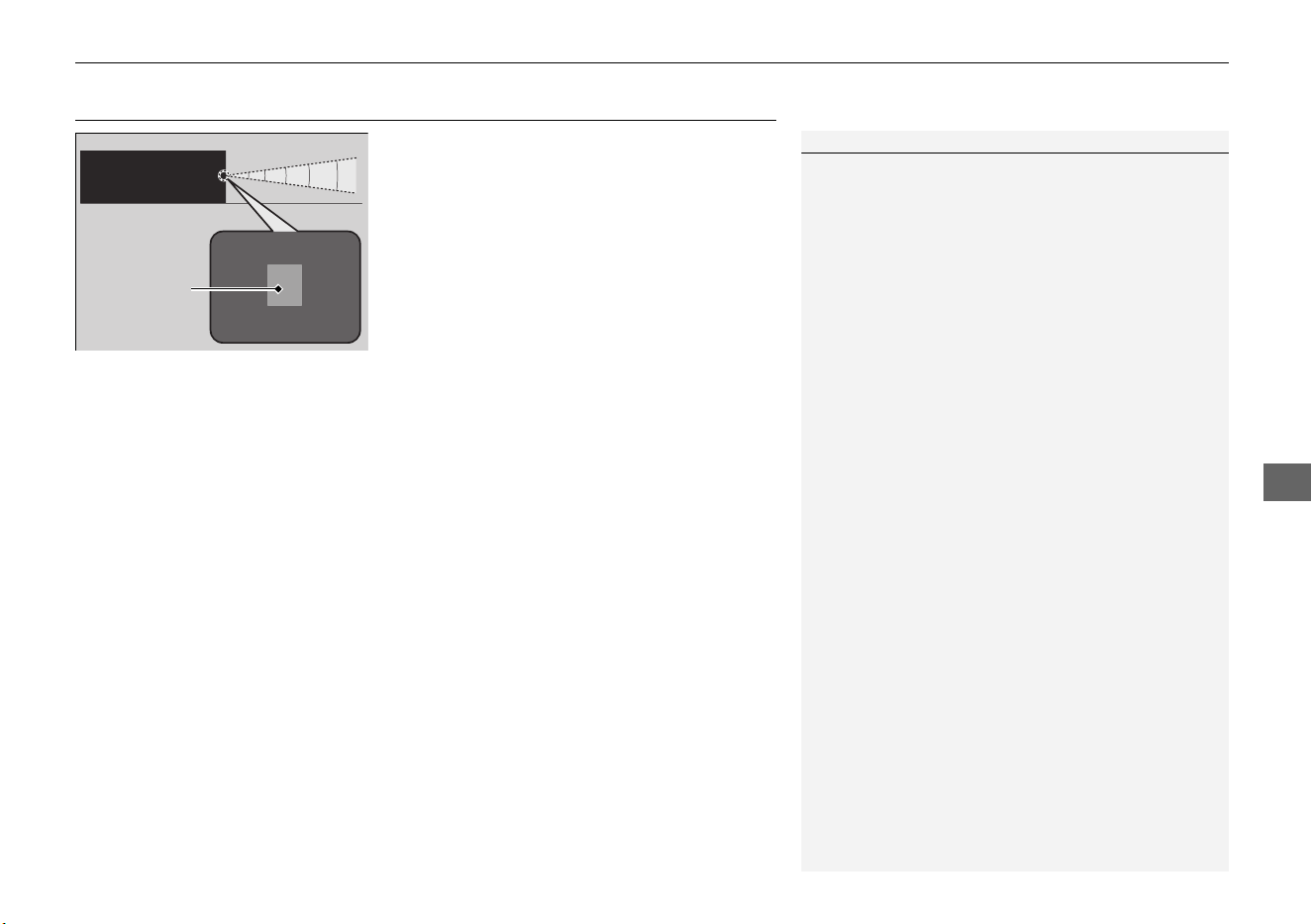
531
uuHonda Sensing® uRadar Sensor
Driving
Radar Sensor
The radar sensor is behind the Honda emblem
on the front grille.
1Radar Sensor
For the system to work properly, observe the
following precautions.
• Always keep the area around the sensors clean.
• Never use chemical solvents or polishing powder
for cleaning the around the sensors. Clean it with
water or a mild detergent.
• Do not put any stickers, paint, accessories, decals,
or film on the area around the sensor.
• Do not scratch or damage the area around the
sensors.
• Do not replace the emblem, front grille, or bumper.
• Do not remove or disassemble the radar sensor.
Consult a dealer if:
• The radar sensor cover is strongly impacted.
• The front grille or bumper needs to be repaired.
If the vehicle is involved in any of the following
situations, the radar sensor may not work properly.
Have your vehicle checked by a dealer:
• The area around the sensors strongly strikes a
bump, curb, chock, slope, or embankment that
could jar the radar sensor.
• Your vehicle drives through deep water or is
submerged in deep water.
• Your vehicle is involved in a collision.
Radar Sensor
26 PILOT-31T906300.book 531 ページ 2025年10月8日 水曜日 午前11時43分
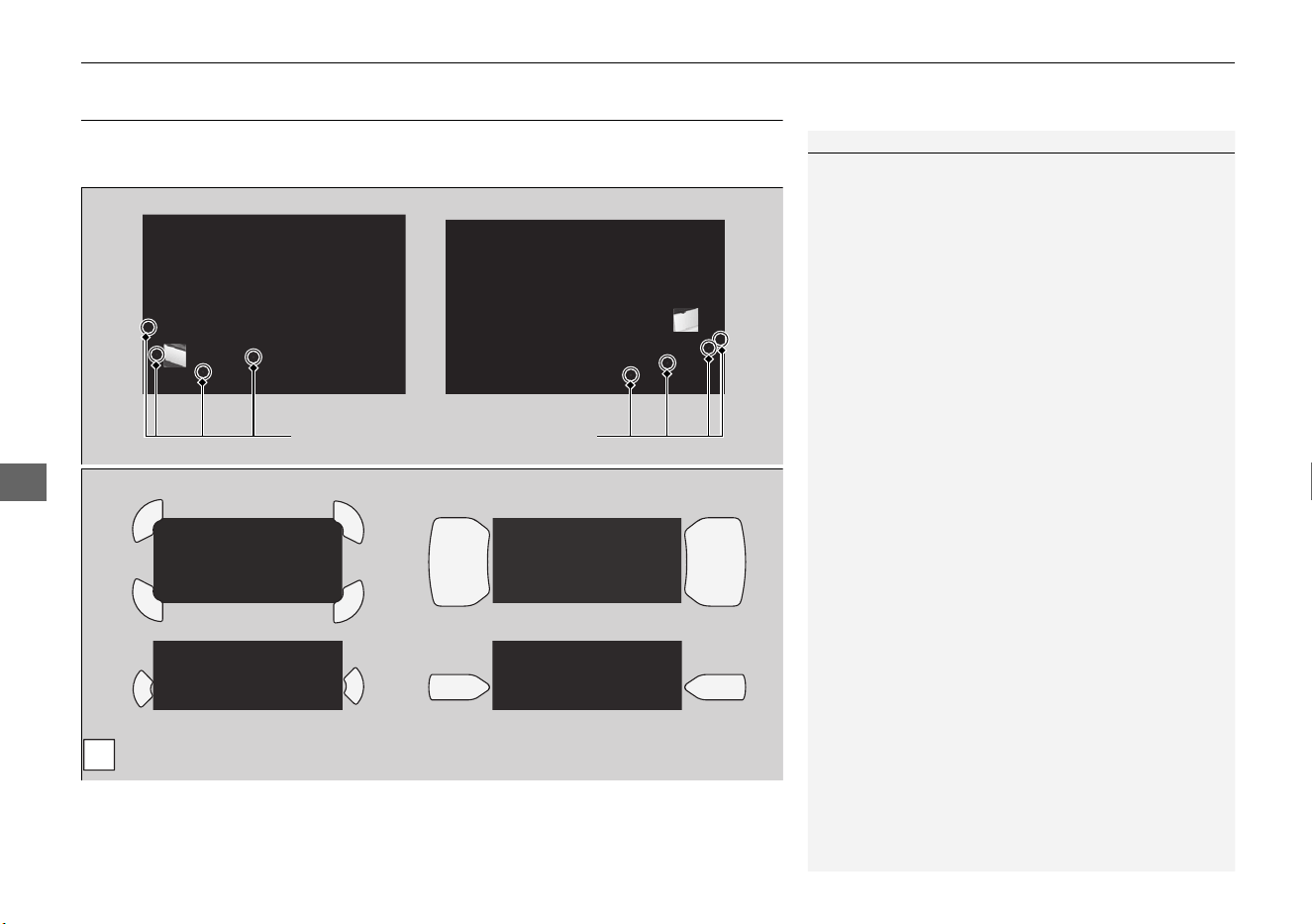
532
uuHonda Sensing® uSonar Sensors
*
Driving
Sonar Sensors
*
■
Location and range of sensors
The sonar sensors are situated in the front and rear bumpers.
1Sonar Sensors
*
For the sonar sensors to work properly, do not:
• Place stickers or other objects on or around the
sensors.
• Hit the area around the sensors.
• Attempt to take apart any sensor.
• Put any accessories on or around the sensors.
Consult with a dealer if:
• A sensor has been subjected to shock.
• Work needs to be done to the area around a
sensor.
In the following cases, the sonar sensors may not
work properly. Have your vehicle checked by a dealer.
• The front or rear bumper has made contact with a
hill, parking block, curb, embankment, etc.
• The vehicle has been involved in a frontal or rear
collision.
• The vehicle has been driven through a deep
puddle.
If the Low speed braking control problem.
Parking sensor obstructed. message appears:
• Park your vehicle in a safe place, and make sure the
sonar sensors or around the sensors is clean.
Sonar Sensors Sonar Sensors
Sensor Range
* Not available on all models
26 PILOT-31T906300.book 532 ページ 2025年10月8日 水曜日 午前11時43分
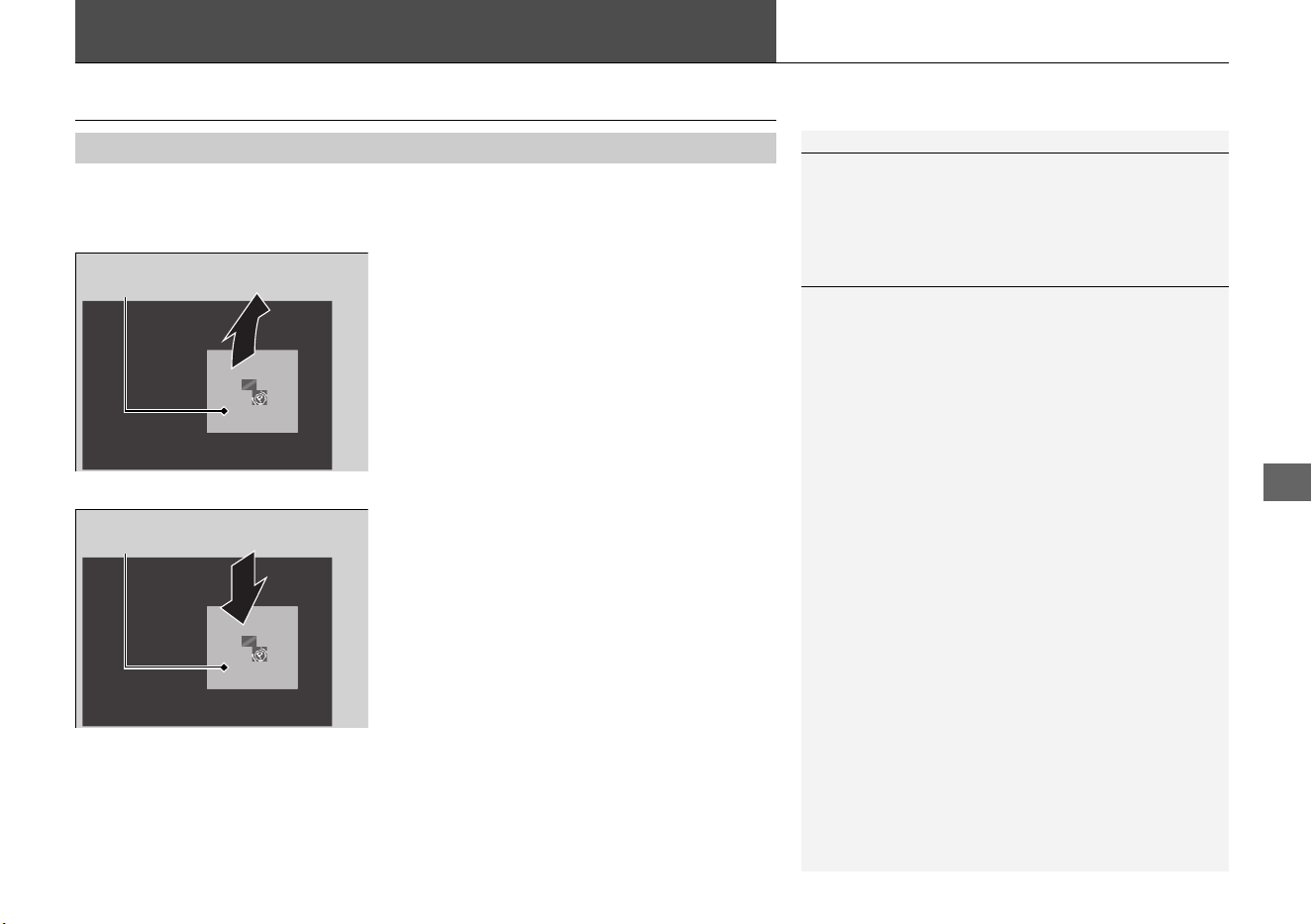
533
Continued
Driving
Braking
Brake System
Use the parking brake to keep the vehicle stationary when parked. When the
parking brake is applied, you can manually or automatically release it.
■
To apply
The electric parking brake can be applied any
time the vehicle has battery, no matter which
position the power mode is in.
Pull the electric parking brake switch up gently
and securely.
u The indicator in the switch comes on.
u The parking brake and brake system
indicator (red) comes on.
■
To release
The power mode must be in ON in order to
release the electric parking brake.
1. Depress the brake pedal.
2. Press the electric parking brake switch.
u The indicator in the switch goes off.
u The parking brake and brake system
indicator (red) goes off.
Manually releasing the parking brake using
the switch helps your vehicle start slowly and
smoothly when facing downhill on steep hills.
■
Parking Brake
1Brake System
When you depress the brake pedal, you may hear a
whirring sound from the engine compartment. This is
because the brake system is in operation, and it is
normal.
Electric Parking
Brake Switch
Electric Parking
Brake Switch
1Parking Brake
You may hear the electric parking brake system
motor operating from the rear wheel area when you
apply or release the parking brake. This is normal.
The brake pedal may slightly move due to the electric
parking brake system operation when you apply or
release the parking brake. This is normal.
You cannot apply or release the parking brake if the
battery goes dead.
2 If the Battery Is Dead P. 643
If you pull up and hold the electric parking brake
switch while driving, the brakes on all four
wheels are applied by the VSA® system until the
vehicle comes to a stop. The electric parking
brake then applies, and the switch should be
released.
26 PILOT-31T906300.book 533 ページ 2025年10月8日 水曜日 午前11時43分
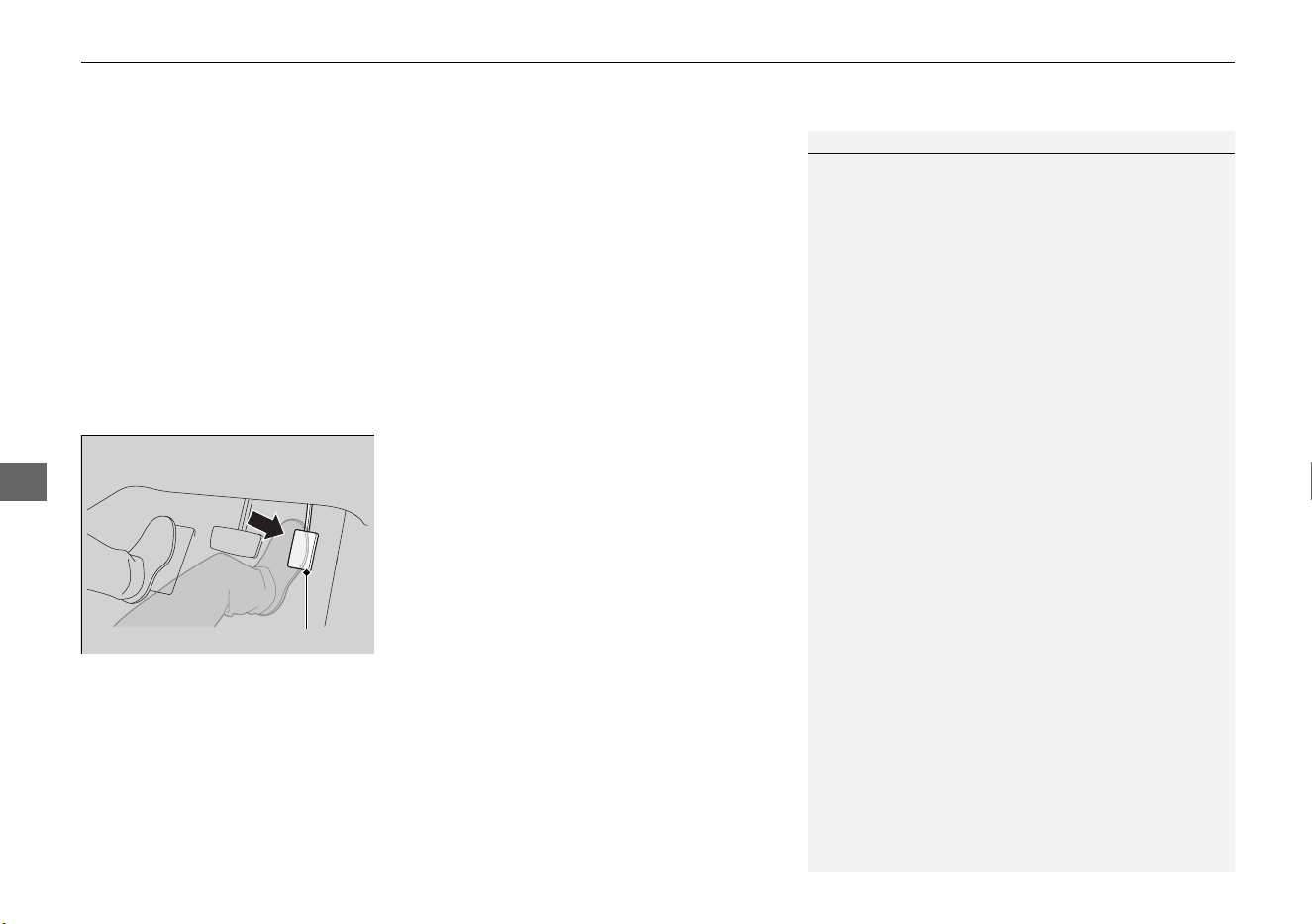
uuBrakinguBrake System
534
Driving
■
Automatic parking brake feature operation
If the automatic parking brake feature has been activated:
• The parking brake is applied automatically when you set the power mode to
VEHICLE OFF.
• To confirm that the parking brake is applied, check if the parking brake and brake
system indicator (red) is on.
2 Activating and deactivating the automatic parking brake feature P. 535
■
To release automatically
Depressing the accelerator pedal releases the parking brake.
Use the accelerator pedal to release the brake when you are starting the vehicle
facing uphill, or in a traffic jam.
Gently depress the accelerator pedal.
When on a hill, it may require more
accelerator input to release.
u The parking brake and brake system
indicator (red) goes off.
You can release the parking brake
automatically when:
• You are wearing the driver’s seat belt.
• The engine is running.
• The transmission is not in
(P or (N.
1Parking Brake
In the following situations, the parking brake
automatically operates.
• When the vehicle stops more than 10 minutes
while ACC with Low Speed Follow is activated.
• When the driver’s seat belt is unfastened while
your vehicle is stopped automatically by ACC with
Low Speed Follow.
• When the engine is turned off, except by Auto Idle
Stop system, while ACC with Low Speed Follow is
activated.
• When the vehicle stops with the automatic brake
hold system activated for more than 10 minutes.
• When the driver’s seat belt is unfastened while
your vehicle is stopped and the brake hold is
applied.
• When the engine is turned off, except by Auto Idle
Stop system, while the brake hold is applied.
• When there is a problem with the Brake Hold
System while brake hold is applied.
If the parking brake cannot be released
automatically, release it manually.
When the vehicle is traveling uphill, the accelerator
pedal may need to be pressed farther to
automatically release the electric parking brake.
The parking brake cannot be released automatically
while the following indicators are on:
• Malfunction indicator lamp
• Transmission system indicator
Accelerator Pedal
26 PILOT-31T906300.book 534 ページ 2025年10月8日 水曜日 午前11時43分
Continued
535
uuBrakinguBrake System
Driving
■
Activating and deactivating the automatic parking brake feature
With the power mode is in ON, carry out the following steps to either activate or
deactivate the automatic parking brake feature.
1. Put the transmission into
(P.
2. Without depressing the brake pedal, pull up the electric parking brake switch.
u Check that the parking brake and brake system indicator (red) has come on.
3. Pull up and hold the electric parking brake switch. When you hear a beeping sound,
release the switch and within three seconds pull up and hold the switch again.
4. When you hear a sound indicating that the procedure is completed, release the
switch.
u Two beeps indicate that the feature has been activated.
u One beep indicates that the feature has been deactivated.
u When you have completed activating the feature, the parking brake will
remain applied after you turn off the engine.
u To confirm that the parking brake is applied, check if the parking brake and
brake system indicator (red) is on.
If you need to temporarily deactivate the feature while putting your vehicle through
a conveyor type car wash or when having your vehicle towed, follow the procedure
explained below.
1. Depress the brake pedal and bring the vehicle to a stop.
2. Set the power mode to VEHICLE OFF and then within two seconds push down the
electric parking brake switch.
u Activation and deactivation settings for the feature will not be affected.
u Before temporarily deactivating the feature, make sure to first turn off both
Adaptive Cruise Control (ACC) with Low Speed Follow and the automatic
brake hold system.
u To confirm that the parking brake is applied, check if the parking brake and
brake system indicator (red) is on.
1Parking Brake
The parking brake may not be released automatically
while the following indicators are on:
• Parking brake and brake system indicator (amber)
• VSA® system indicator
• ABS indicator
• Supplemental restraint system indicator
1Activating and deactivating the automatic parking brake feature
In cold climates, the parking brake may freeze in
place if applied.
When parking the vehicle, chock the wheels and
make sure the automatic parking brake feature is
deactivated.
Also, when putting your vehicle through a conveyor-
type car wash or when having your vehicle towed,
deactivate the automatic parking brake feature and
leave the parking brake released.
26 PILOT-31T906300.book 535 ページ 2025年10月8日 水曜日 午前11時43分
uuBrakinguBrake System
536
Driving
Your vehicle is equipped with disc brakes at all four wheels. The brake assist system
increases the stopping force when you depress the brake pedal hard in an
emergency situation. The anti-lock brake system (ABS) helps you retain steering
control when braking very hard.
2 Brake Assist System P. 541
2 Anti-lock Brake System (ABS) P. 540
■
Foot Brake
1Foot Brake
Check the brakes after driving through deep water,
or if there is a buildup of road surface water. If
necessary, dry the brakes by lightly depressing the
pedal several times.
If you hear a continuous metallic friction sound when
applying the brakes, this is caused by the brake wear
indicator rubbing on the brake rotor and indicates
that the brake pads need to be replaced. Have your
vehicle checked by a dealer. If you hear only an
occasional squeak or squeal when you initially apply
the brake pedal, this may be normal and caused by
high frequency vibration of the brake pads against
the rotating brake disc.
Constantly using the brake pedal while going down a
long hill builds up heat, which reduces the brake
effectiveness. Apply engine braking by taking your
foot off the accelerator pedal and downshifting to a
lower gear.
Do not rest your foot on the brake pedal while
driving, as it will lightly apply the brakes and cause
them to lose effectiveness over time and reduce pad
life. It will also confuse drivers behind you.
Whenever the brakes are activated by CMBS
TM
or
another system that automatically controls braking,
the brake pedal is depressed and released in
accordance with braking function.
26 PILOT-31T906300.book 536 ページ 2025年10月8日 水曜日 午前11時43分
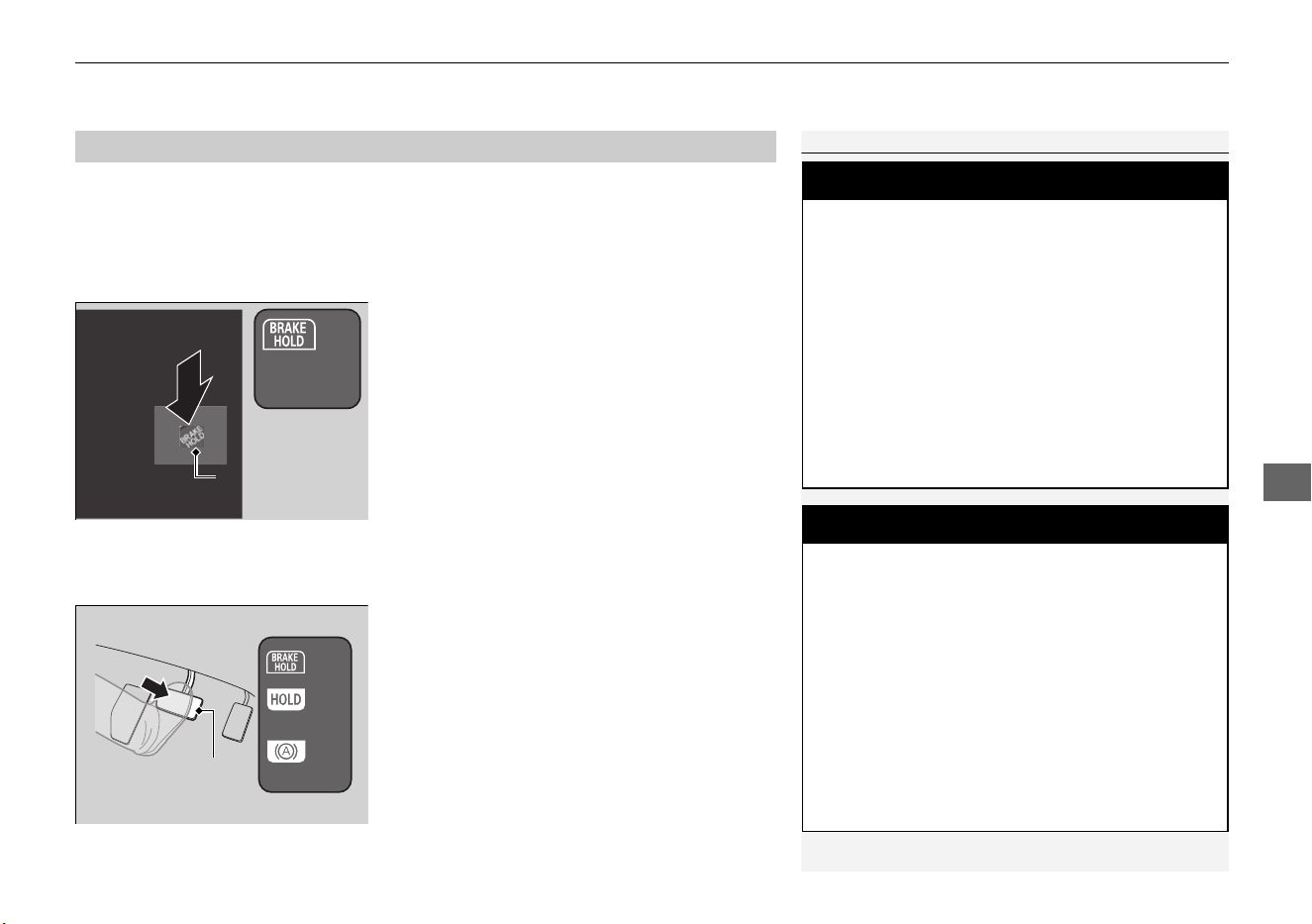
Continued
537
uuBrakinguBrake System
Driving
Keeps the brake applied after releasing the brake pedal until the accelerator pedal is
pressed. You can use this system while the vehicle is temporarily stopped, like at
traffic lights and in heavy traffic.
■
Turning on the system
Fasten your seat belt properly, then start the
engine. Press the automatic brake hold
button.
u The automatic brake hold system
indicator comes on. The system is turned
on.
The system is in the previously selected on or
off setting each time you fasten the driver’s
seat belt and start the engine.
■
Activating the system
Depress the brake pedal to come to a
complete stop. The transmission must not be
in
(P or(R.
u The automatic brake hold indicator
comes on. Braking is kept for up to 10
minutes.
u Release the brake pedal after the
automatic brake hold indicator comes
on.
■
Automatic Brake Hold
1Automatic Brake Hold
3
WARNING
Activating the automatic brake hold system
on steep hills or slippery roads may still
allow the vehicle to move if you remove
your foot from the brake pedal.
If a vehicle unexpectedly moves, it may
cause a crash resulting in serious injury or
death.
Never activate the automatic brake hold
system or rely on it to keep a vehicle from
moving when stopped on a steep hill or
slippery roads.
3
WARNING
Using the automatic brake hold system to
park the vehicle may result in the vehicle
unexpectedly moving.
If a vehicle moves unexpectedly, it may
cause a crash, resulting in serious injury or
death.
Never leave the vehicle when braking is
temporarily kept by automatic brake hold
and always park the vehicle by putting the
transmission in
(P and applying the parking
brake.
Comes
On
Automatic Brake
Hold Button
On
Brake Pedal
Comes
On
Comes
On
U.S.
Canada
26 PILOT-31T906300.book 537 ページ 2025年10月8日 水曜日 午前11時43分
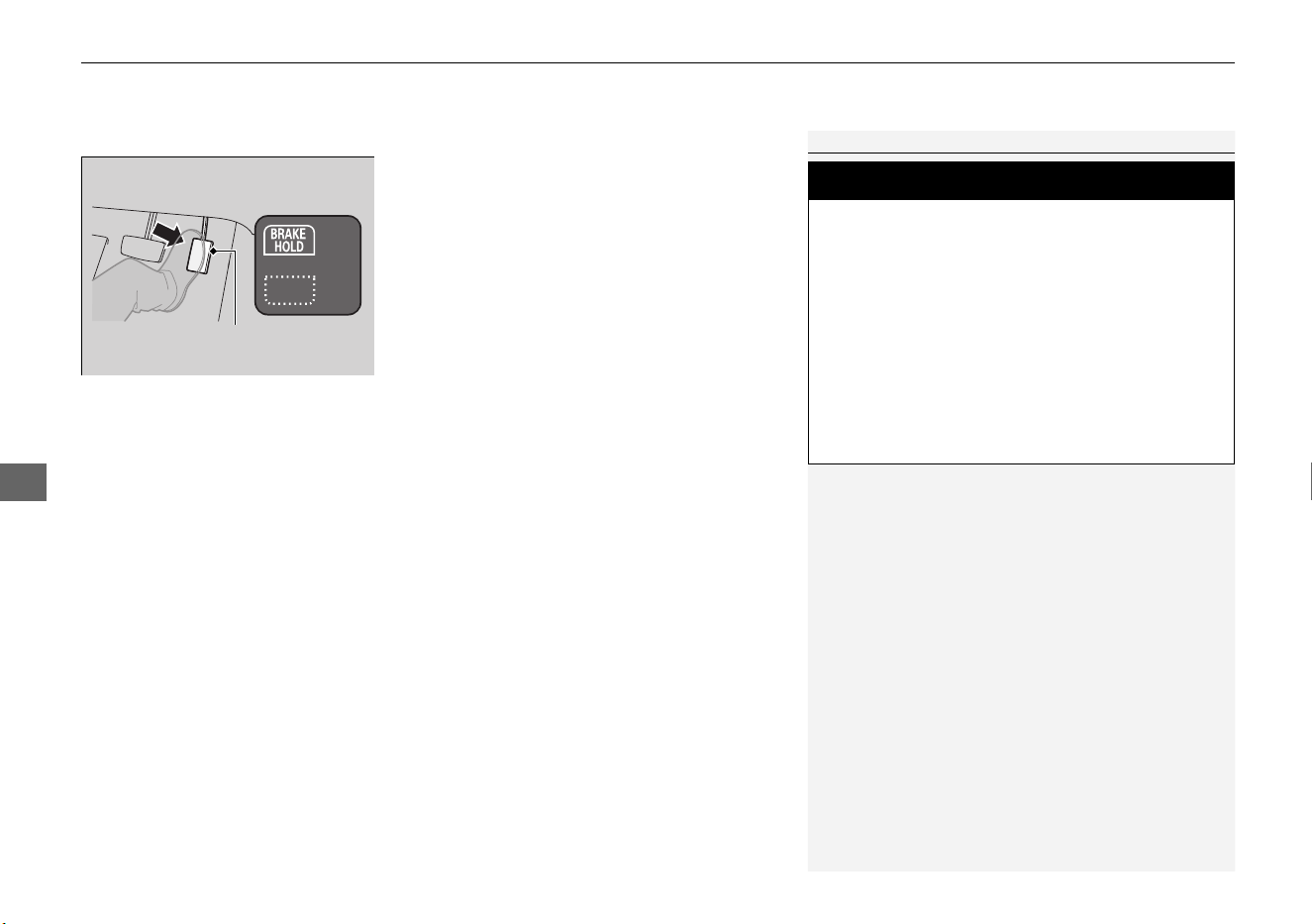
uuBrakinguBrake System
538
Driving
■
Canceling the system
Depress the accelerator pedal while the
transmission is in a position other than
(P or
(N. The system is canceled and the vehicle
starts to move.
u The automatic brake hold indicator goes
off. The system continues to be on.
■
The system automatically cancels when:
• You engage the parking brake.
• You depress the brake pedal and put the transmission into
(P or (R.
■
The system automatically cancels and the parking brake is applied when:
• Braking is kept for more than 10 minutes.
• The driver’s seat belt is unfastened.
• The engine is turned off.
• There is a problem with automatic brake hold system.
1Automatic Brake Hold
While the system is activated, you can turn off the
engine or park the vehicle through the same
procedure as you normally do.
2 When Stopped P. 542
You may hear an operating noise if the vehicle moves
while the automatic brake hold system is in
operation.
3
WARNING
When using the automatic brake hold,
keep your foot on the brake pedal until the
automatic brake hold indicator comes on.
If the vehicle unexpectedly moves, it may
cause a crash resulting in serious injury or
death.
Release your foot from the brake pedal
after the automatic brake hold indicator
comes on.
On
Accelerator Pedal
Goes
Off
26 PILOT-31T906300.book 538 ページ 2025年10月8日 水曜日 午前11時43分
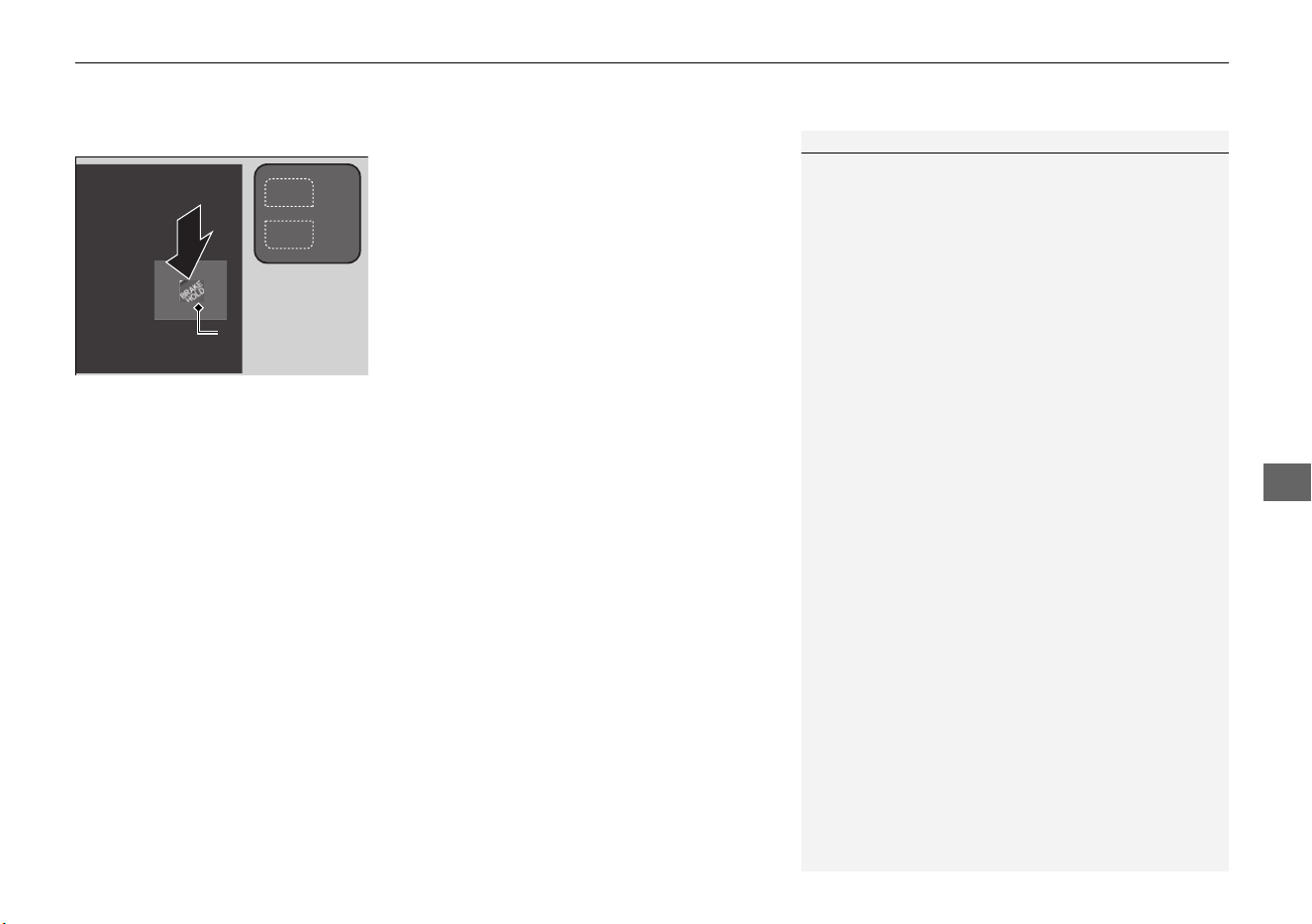
539
uuBrakinguBrake System
Driving
■
Turning off the automatic brake hold system
Only the automatic brake hold system
indicator comes on:
• Press the automatic brake hold button.
u The automatic brake hold system
indicator goes off.
When the automatic brake hold indicator
comes on at the same time:
• Press the automatic brake hold button with
the brake pedal depressed.
u The automatic brake hold system
indicator and the automatic brake hold
indicator go off.
1Turning off the automatic brake hold system
Make sure to turn off the automatic brake hold
system before using an automated car wash.
If you turn off the engine or unfasten the driver’s seat
belt while the automatic brake hold system is on, the
automatic brake hold system will automatically turn
off. In this case, when the driver’s seat belt is
fastened and the engine is restarted, the automatic
brake hold system will turn on without needing to
press the automatic brake hold button.
Automatic Brake
Hold Button
Goes
Off
Goes
Off
26 PILOT-31T906300.book 539 ページ 2025年10月8日 水曜日 午前11時43分
540
uuBrakinguAnti-lock Brake System (ABS)
Driving
Anti-lock Brake System (ABS)
Helps prevent the wheels from locking up, and helps you retain steering control by
pumping the brakes rapidly, much faster than you can.
The electronic brake distribution (EBD) system, which is part of the ABS, also
balances the front-to-rear braking distribution according to vehicle loading.
You should never pump the brake pedal. Let the ABS work for you by always
keeping firm, steady pressure on the brake pedal. This is sometimes referred to as
“stomp and steer.”
■
ABS operation
The brake pedal may pulsate slightly when the ABS is working. Depress the brake
pedal and keep holding the pedal firmly down. On dry pavement, you will need to
press on the brake pedal very hard before the ABS activates. However, you may feel
the ABS activate immediately if you are trying to stop on snow or ice.
ABS may activate when you depress the brake pedal when driving on:
• Wet or snow covered roads.
• Roads paved with stone.
• Roads with uneven surfaces, such as potholes, cracks, manholes, etc.
When the vehicle speed goes under 6 mph (10 km/h), the ABS stops.
■
ABS
1Anti-lock Brake System (ABS)
NOTICE
The ABS may not function correctly if you use a tire of
the incorrect size or type.
If the ABS indicator comes on while driving, there
may be a problem with the system.
While normal braking will not be affected, there is a
possibility that the ABS will not be operating. Have
your vehicle checked by a dealer immediately.
The ABS is not designed for the purpose of reducing
the time or distance it takes for a vehicle to stop: It is
designed to limit brake lockup which can lead to
skidding and loss of steering control.
In the following cases, your vehicle may need more
distance to stop than a vehicle without the ABS:
• You are driving on rough or uneven road surfaces,
such as gravel or snow.
• The tires are equipped with snow chains.
The following may be observed with the ABS system:
• Motor sounds coming from the engine
compartment when the brakes are applied, or when
system checks are being performed after the engine
has been started and while the vehicle accelerates.
• Brake pedal and/or the vehicle body vibration when
ABS activates.
These vibrations and sounds are normal to ABS
systems and are no cause for concern.
26 PILOT-31T906300.book 540 ページ 2025年10月8日 水曜日 午前11時43分

541
uuBrakinguBrake Assist System
Driving
Brake Assist System
Designed to assist the driver by generating greater braking force when you depress
the brake pedal hard during emergency braking.
■
Brake assist system operation
Press the brake pedal firmly for more powerful braking.
When brake assist operates, the pedal may wiggle slightly and an operating noise
may be heard. This is normal. Keep holding the brake pedal firmly down.
26 PILOT-31T906300.book 541 ページ 2025年10月8日 水曜日 午前11時43分
542
Driving
Parking Your Vehicle
When Stopped
1. Depress the brake pedal firmly and come to a complete stop.
2. With the brake pedal depressed, pull up the electric parking brake switch slowly,
but fully.
3. Change the shift position to
(P.
u Do not release the brake pedal until you have confirmed that (P is shown on
the shift position indicator.
4. Turn off the engine.
u The parking brake and brake system indicator (red) goes off in about 30
seconds.
Always set the parking brake, especially if you are parked on an incline.
1When Stopped
Do not park your vehicle near flammable objects,
such as dry grass, oil, or timber.
Heat from the exhaust can cause a fire.
NOTICE
The following can damage the transmission:
• Depressing the accelerator and brake pedals
simultaneously.
• Holding the vehicle in place when facing uphill by
depressing the accelerator pedal.
• Changing into (P before the vehicle stops
completely.
3
WARNING
The vehicle can roll away if left unattended
without confirming that Park is engaged.
A vehicle that rolls away could cause a crash
resulting in serious injury or death.
Always keep your foot on the brake pedal
until you have confirmed that
(P is shown
on the gear position Indicator.
26 PILOT-31T906300.book 542 ページ 2025年10月8日 水曜日 午前11時43分
543
uuParking Your VehicleuWhen Stopped
Driving
1When Stopped
In extremely cold temperatures, the parking brake
may freeze up if applied. If such temperatures are
expected, do not apply the parking brake but if
parking on a slope, either turn the front wheels so
they will contact the curb if the vehicle rolls down the
slope or block the wheels to keep the vehicle from
moving. If you do not take either precaution, the
vehicle may roll unexpectedly, leading to a crash.
26 PILOT-31T906300.book 543 ページ 2025年10月8日 水曜日 午前11時43分
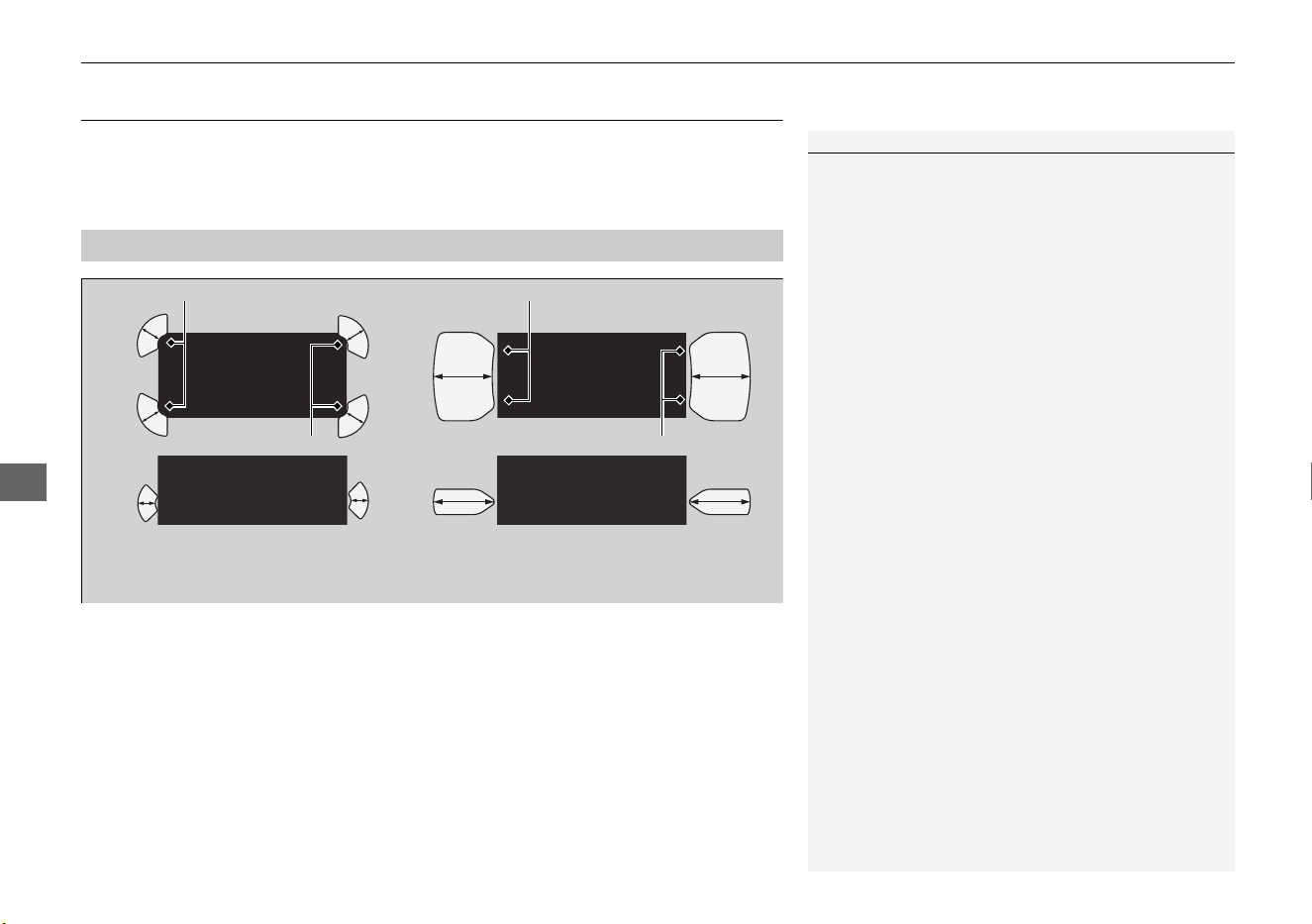
544
uuParking Your VehicleuParking Sensor System
*
Driving
Parking Sensor System
*
The corner and center sensors monitor obstacles around your vehicle, and the
beeper, gauge and audio/information screen let you know the approximate distance
between your vehicle and the obstacle.
■
The Sensor Location and Range
1Parking Sensor System
*
Even when the system is on, always confirm if there is
no obstacle near your vehicle before parking.
The system may not work properly when:
• The sensors are covered with snow, ice, mud, or
dirt.
• The vehicle has been out in hot or cold weather.
• There is something nearby that emits ultrasonic
waves or high frequency sounds.
• Driving in bad weather (rain, fog, snow, etc.).
The system may not detect these obstacles:
• Thin or low objects.
• Sonic-absorptive materials, such as snow, cotton,
or sponge.
• Obstacles immediately in front of the bumper.
The system may falsely detect obstacles in the
following situations:
• The vehicle is on uneven surface, such as grass,
bumps, or a hill.
• When close to other vehicles with sonar sensors or
other objects that emit ultrasonic waves.
• There is splashing water near the sensors due to
heavy rains, etc.
Do not put any accessories on or around the sensors.
uIf you put any accessories (such as a towing hitch
or bicycle rack) on or around the rear sensors, the
system may activate if it detects these accessories as
an obstacle. In this case, turn off the rear sensor.
2 Customized Features P. 346
Front Corner Sensors
Rear Corner Sensors Rear Center Sensors
Front Center Sensors
Front: Within about 22 in (57 cm) or less
Rear: Within about 23 in (60 cm) or less
Front: Within about 31 in (78 cm) or less
Rear
: Within about 45 in (115 cm) or less
* Not available on all models
26 PILOT-31T906300.book 544 ページ 2025年10月8日 水曜日 午前11時43分
Continued
545
uuParking Your VehicleuParking Sensor System
*
Driving
You can turn the system on and off using the driver information interface.
2 Switching the Display P. 126
2 Safety Support P. 137
The front corner, rear corner and rear center sensors start to detect an obstacle
when the transmission is in (R, and the vehicle speed is less than 5 mph (8 km/h).
The front corner and front center sensors start to detect an obstacle when the
transmission is in any position other than
(P or (R, and the vehicle speed is less
than 5 mph (8 km/h).
■
Parking Sensor System On and Off
1Parking Sensor System On and Off
When you set the power mode to ON, the system will
be in the previously selected condition.
You can turn the rear parking sensor system on and
off using the audio/information screen.
2 Customized Features P. 346
If the rear sensors are turned off when using the
parking sensor system, the Low Speed Braking
Control System will not activate while reversing.
2 Low Speed Braking Control
*
P. 468
When the Drive Mode is in TOW mode, the rear
parking sensor system will turn off.
2 Drive Mode System P. 433
When the vehicle is moving forward at 5 mph (8 km/h)
or less, the system detects any obstacles in front of the
vehicle and the forward camera image will display as
the distance between them decreases.
2 Multi View Camera System
*
P. 554
You can customize whether or not to display the
forward camera image when an obstacle is detected.
2 Customized Features P. 346
* Not available on all models
26 PILOT-31T906300.book 545 ページ 2025年10月8日 水曜日 午前11時43分
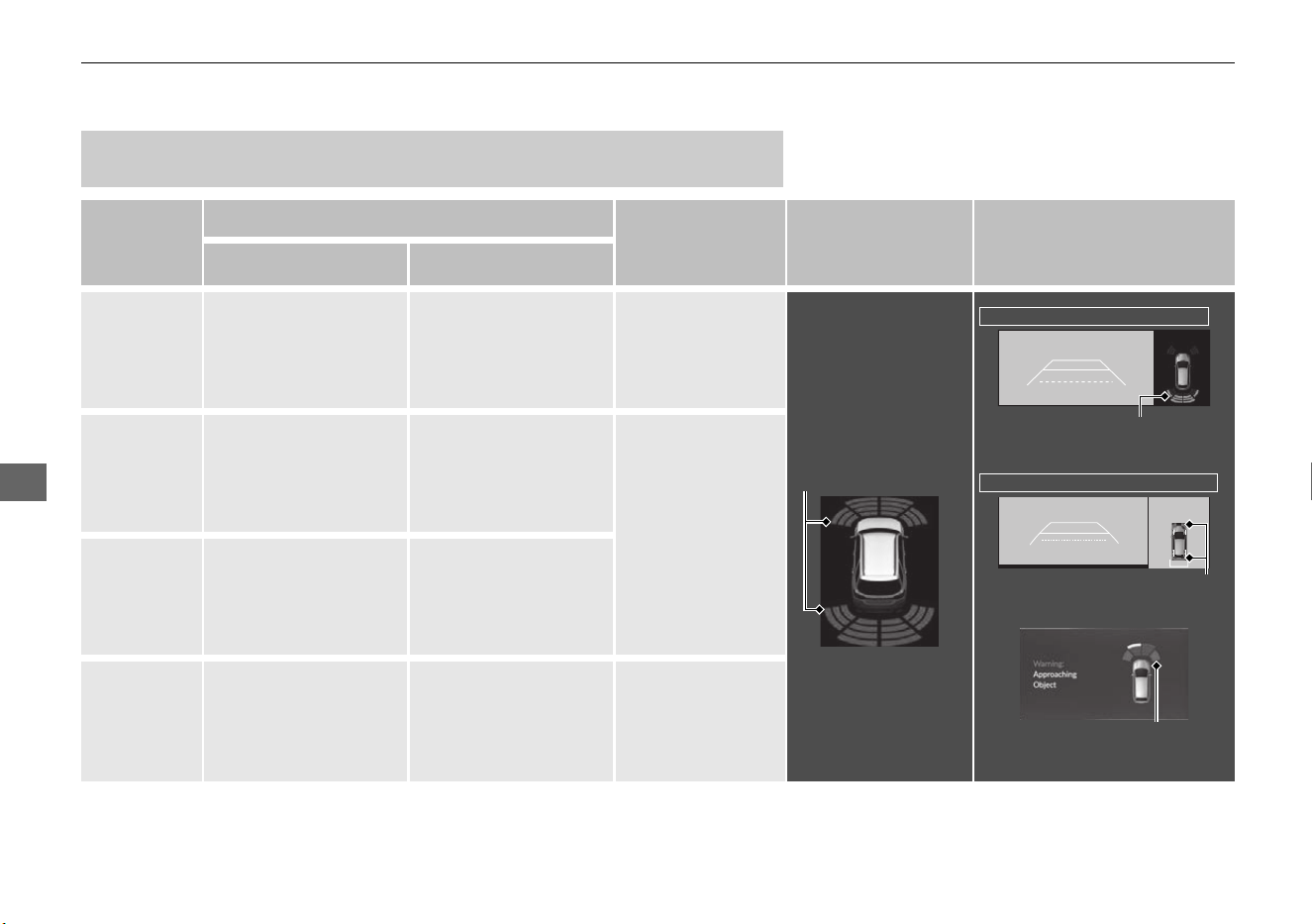
546
uuParking Your VehicleuParking Sensor System
*
Driving
*1:On the gauge
*2:On the audio/information screen
*3:At this stage, only the center sensors detect obstacles.
■
When the Distance Between Your Vehicle and Obstacles
Becomes Shorter
Interval
between
beeps
Distance between the Bumper and Obstacle
Indicator Gauge Audio/Information Screen
Corner Sensors Center Sensors
Moderate
—
Front: About 31-23 in
(78-58 cm)
Rear: About 45-24 in
(115-61 cm)
Comes on
*1
/
Blinks
*2
in Yellow
*3
Short
Front: About 22-18 in
(57-45 cm)
Rear: About 23-18 in
(60-45 cm)
Front: About 23-19 in
(58-48 cm)
Rear: About 24-18 in
(61-46 cm)
Comes on
*1
/
Blinks
*2
in Amber
Very short
About 18-14 in
(45-35 cm)
Front: About 19-15 in
(48-38 cm)
Rear: About 18-14 in
(46-36 cm)
Continuous
About 14 in
(35 cm) or less
Front: About 15 in
(38 cm) or less
Rear: About 14 in
(36 cm) or less
Comes on
*1
/
Blinks
*2
in Red
Indicators light up
where the sensor
detects an obstacle.
Indicators light up where the
sensor detects an obstacle.
Indicators light up where the
sensor detects an obstacle.
Indicators light up where the
sensor detects an obstacle.
Models with rear view camera
Models with multi view camera
26 PILOT-31T906300.book 546 ページ 2025年10月8日 水曜日 午前11時43分

547
uuParking Your VehicleuParking Sensor System
*
Driving
To temporarily turn off the beeper, press the right selector wheel while it is sounding. Temporary OFF will be canceled when the shift
position changes from (P/(R to (N/(D/(S or vice-versa, or the vehicle speed reaches 9 mph (14 km/h) or higher.
26 PILOT-31T906300.book 547 ページ 2025年10月8日 水曜日 午前11時43分
548
uuParking Your VehicleuCross Traffic Monitor
Driving
Cross Traffic Monitor
Monitors the rear corner areas using the radar sensors when reversing, and alerts
you if a vehicle approaching from a rear corner is detected.
The system is convenient when you are backing out of a parking space.
1Cross Traffic Monitor
3
CAUTION
Cross Traffic Monitor cannot detect all
approaching vehicles and may not detect
an approaching vehicle at all.
Failure to visually confirm that it is safe to
back up the vehicle before doing so may
result in a collision.
Do not solely rely on the system when
reversing; always also use your mirrors, and
look behind and to the sides of your vehicle
before reversing.
26 PILOT-31T906300.book 548 ページ 2025年10月8日 水曜日 午前11時43分
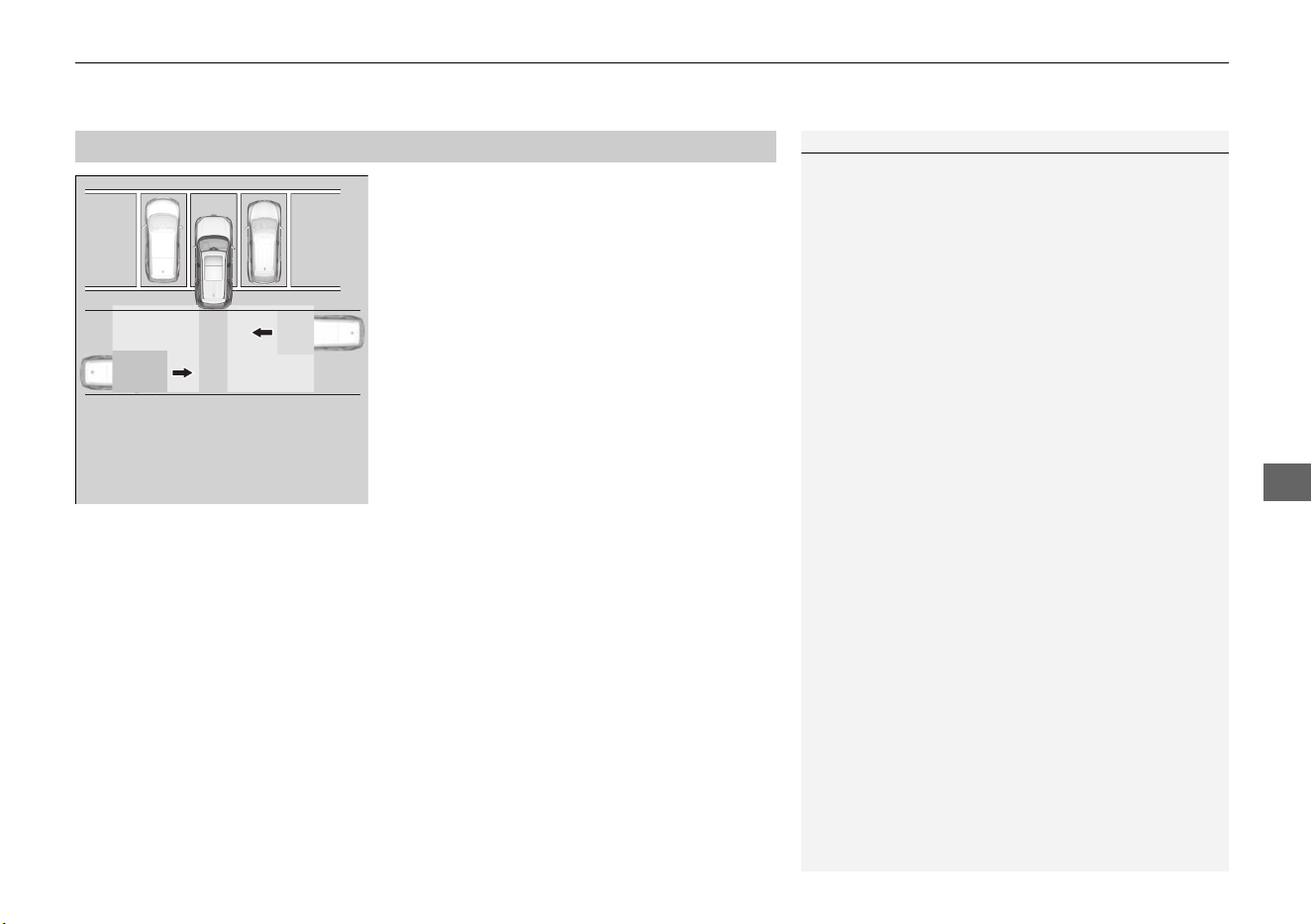
Continued
549
uuParking Your VehicleuCross Traffic Monitor
Driving
The system activates when:
• The power mode is in ON.
• The Cross Traffic Monitor is turned on.
2 Cross Traffic Monitor On and Off P. 551
• The transmission is in (R.
• Your vehicle is moving at 3 mph (5 km/h) or
lower.
When a vehicle is detected approaching from a rear corner, Cross Traffic Monitor
alerts you with a buzzer and a displayed warning.
The system will not detect a vehicle that approaches from directly behind your
vehicle, nor will it provide alerts about a detected vehicle when it moves directly
behind your vehicle.
The system does not provide alerts for a vehicle that is moving away from your
vehicle, and it may alert for pedestrians, bicycles, or stationary objects.
■
How the System Works
1Cross Traffic Monitor
Cross Traffic Monitor may not detect or may delay
alerting an approaching vehicle, or may alert without
an approaching vehicle under the following
conditions:
• An obstacle, such as another vehicle or a wall near
your vehicle's rear bumper, is blocking the radar
sensor's scope.
• Your vehicle is moving at a speed of about 3 mph
(5 km/h) or higher.
• A vehicle is approaching at a speed other than
between about 6 and 16 mph (10 and 25 km/h).
• The system picks up external interference such as
other radar sensors from another vehicle or strong
radio wave transmitted from a facility nearby.
• Either corner of the rear bumper is covered with
snow, ice, mud or dirt.
• When there is bad weather.
• Your vehicle is on an incline.
• Your vehicle is tilted due to a heavy load in the rear.
• Your vehicle is reversing toward a wall, a pole, a
vehicle, and so on.
• When driving for long distances on a road in a
trafficless area such as a desert.
If the rear bumper or the sensors have been
improperly repaired or the rear bumper has been
deformed. Have your vehicle checked by a dealer.
For proper operation, always keep the rear bumper
corner area clean.
Do not cover the rear bumper corner area with labels
or stickers of any kind.
Radar sensors:
Underneath the rear bumper
corners
26 PILOT-31T906300.book 549 ページ 2025年10月8日 水曜日 午前11時43分
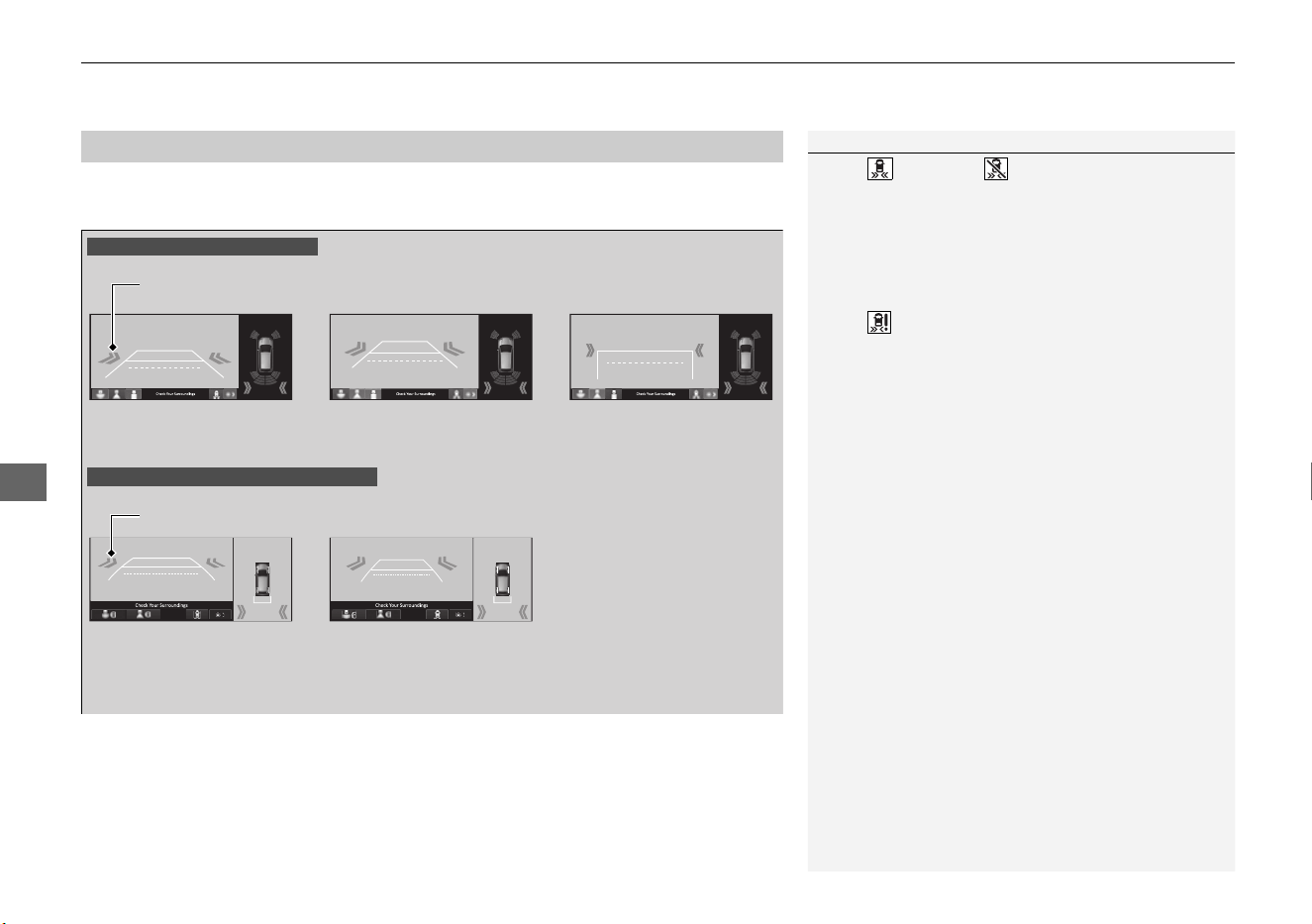
uuParking Your VehicleuCross Traffic Monitor
550
Driving
An arrow icon appears on the side a vehicle is approaching on the audio/information
screen.
■
When the System Detects a Vehicle
1When the System Detects a Vehicle
If the changes to in amber when the
transmission is in
(R, mud, snow or ice, etc. may
have accumulated in the vicinity of the sensor. The
system is temporarily canceled. Check the bumper
corners for any obstructions, and thoroughly clean
the area if necessary.
If the comes on when the transmission is in
(R,
there may be a problem with the Cross Traffic
Monitor system. Do not use the system and have your
vehicle checked by a dealer.
If the display remains the same with the transmission
in
(R, there may be a problem with the rear camera
system and the Cross Traffic Monitor system.
Do not use the system and have your vehicle checked
by a dealer.
Wide ViewNormal View
Arrow Icon
Models with rear view camera
Top Down View
Rear Wide View/
Ground View
Rear Normal View/
Ground View
Arrow Icon
Models with multi view camera system
26 PILOT-31T906300.book 550 ページ 2025年10月8日 水曜日 午前11時43分
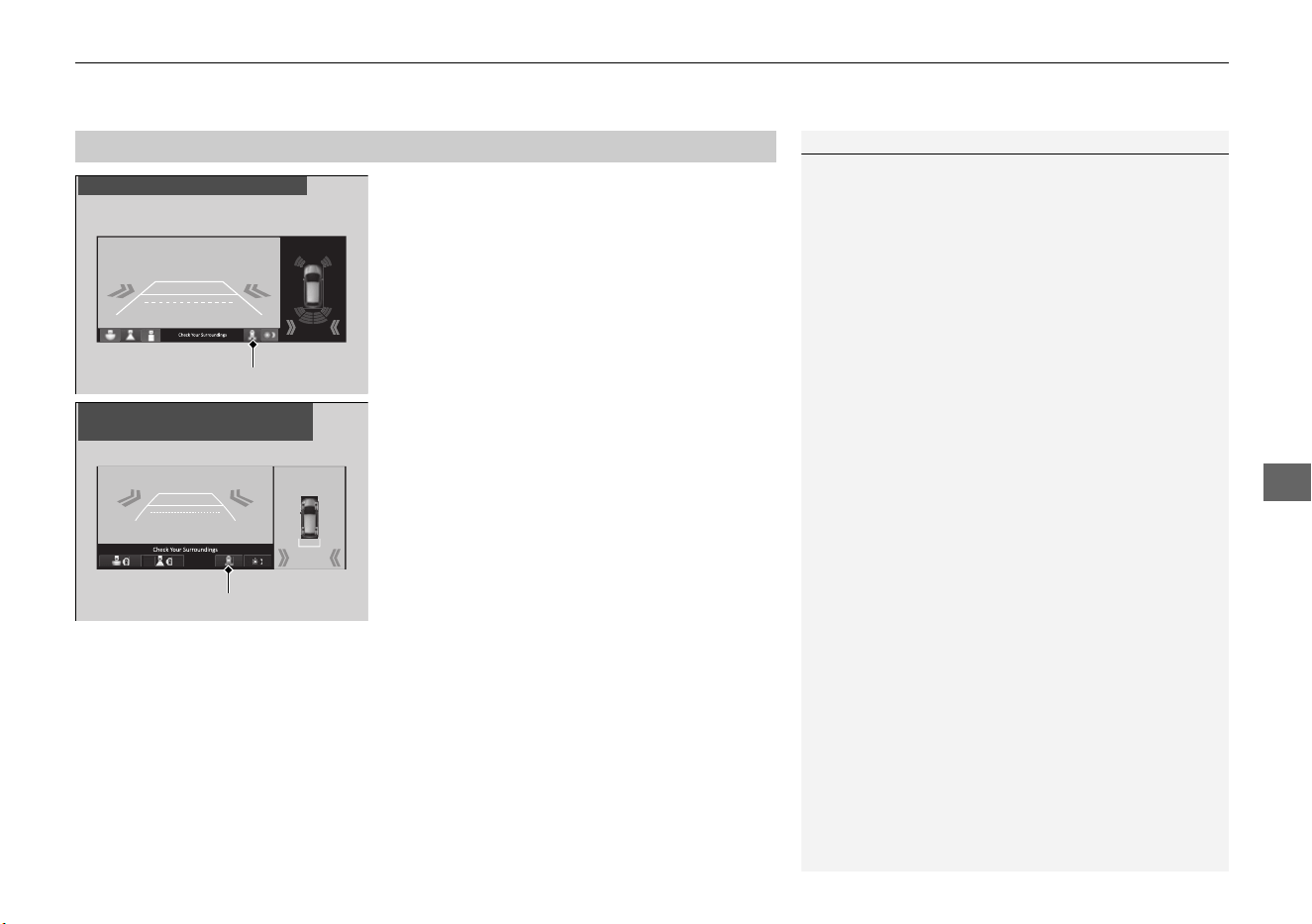
551
uuParking Your VehicleuCross Traffic Monitor
Driving
The system can be turned on and off on the
audio/information screen by selecting the
Cross Traffic Monitor icon.
■
Cross Traffic Monitor On and Off
1Cross Traffic Monitor On and Off
You can also switch the system on and off using the
audio/information screen.
2 Customized Features P. 346
Cross Traffic Monitor icon
Models with rear view camera
Cross Traffic Monitor icon
Models with multi view camera
system
26 PILOT-31T906300.book 551 ページ 2025年10月8日 水曜日 午前11時43分
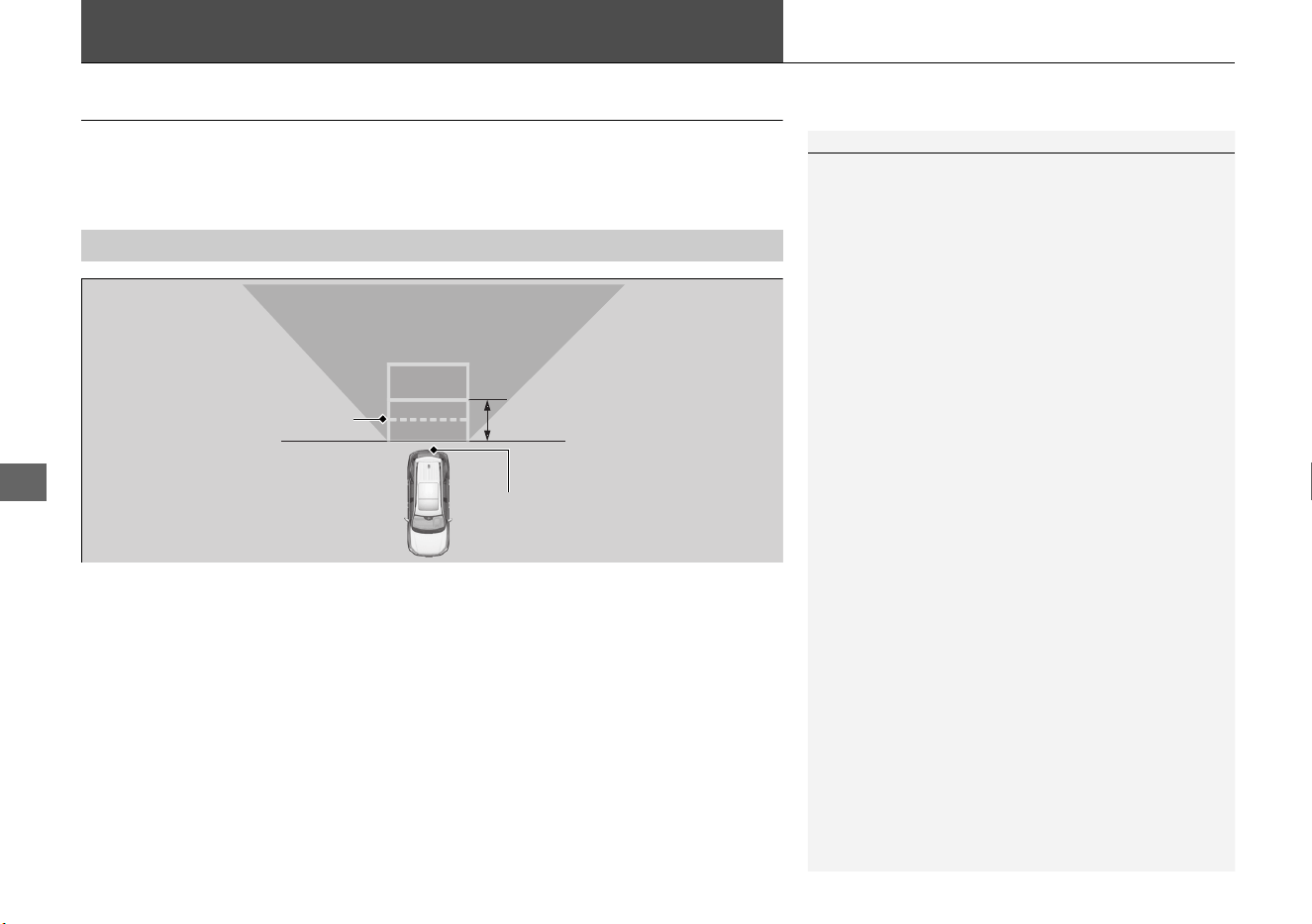
552
Driving
Rear View Camera
*
About Your Rear View Camera
The audio/information screen can display your vehicle’s rear view.
The display automatically changes to the rear view when the transmission is put into
(R.
■
Rear View Camera Display Area
1About Your Rear View Camera
The rear camera view is restricted. You cannot see
the corner ends of the bumper or what is underneath
the bumper. Its unique lens also makes objects
appear closer or farther than they actually are.
Visually confirm that it is safe to drive before backing
up. Certain conditions (such as weather, lighting, and
high temperatures) may also restrict the rear view. Do
not rely on the rearview display which does not give
you all information about conditions at the back of
your vehicle.
The rear camera view is displayed prior to the audio/
information screen.
If the camera lens is covered with dirt or moisture,
activate the rearview camera washer or use a soft,
moist cloth to keep the lens clean and free of debris.
2 Rear Wiper/Washer P. 203
You can change the Fixed Guideline and Dynamic
Guideline settings.
2 Customized Features P. 346
Fixed Guideline
On: Guidelines appear when you put the
transmission into
(R.
Off: Guidelines do not appear.
Dynamic Guideline
On: Guidelines move according to the steering wheel
direction.
Off: Guidelines do not move.
Approx. 39 inch (1 m)
Camera
Tailgate open range
* Not available on all models
26 PILOT-31T906300.book 552 ページ 2025年10月8日 水曜日 午前11時43分
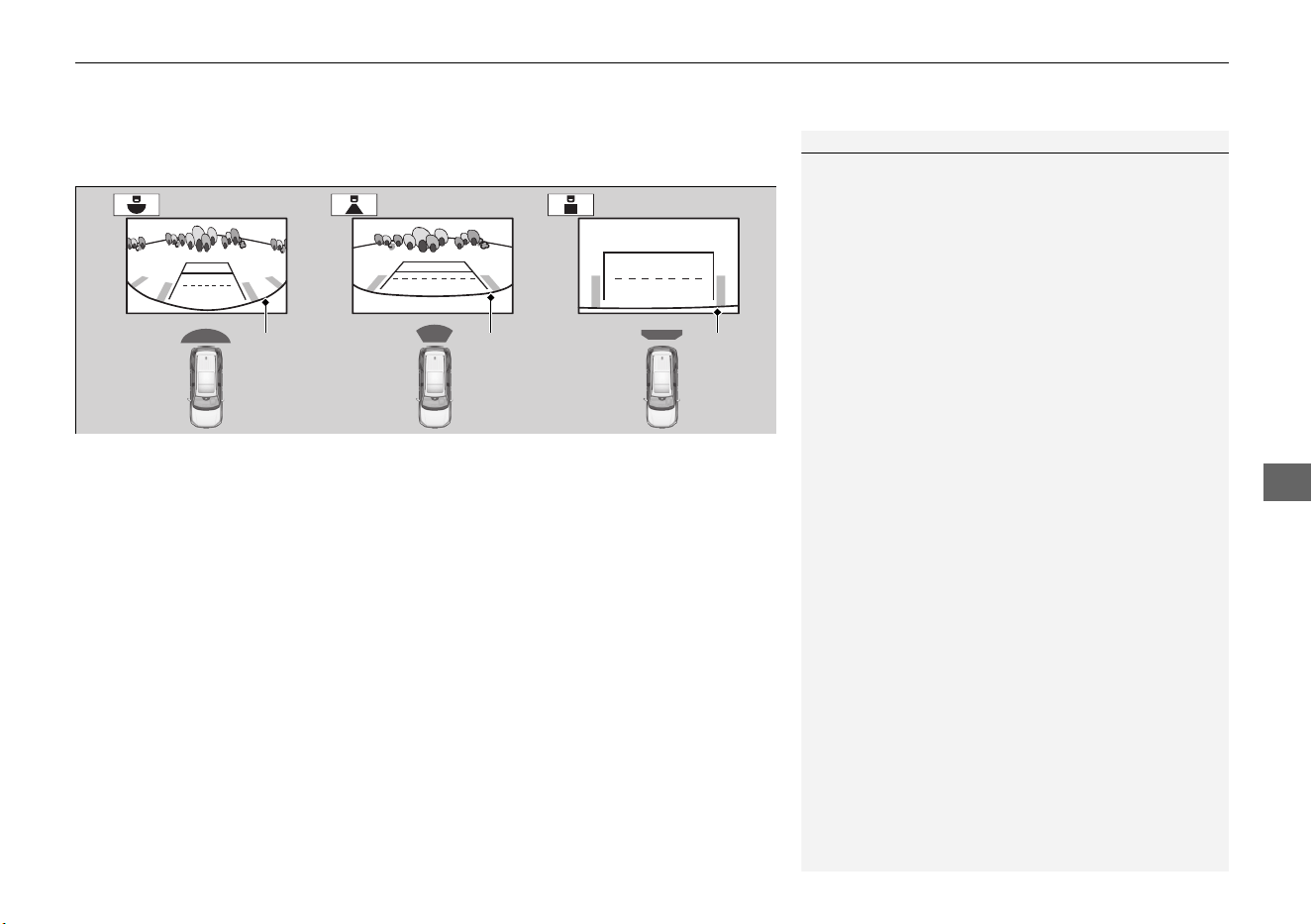
553
uuRear View Camera
*
uAbout Your Rear View Camera
Driving
You can view three different camera modes on the audio/information screen.
Touch the appropriate icon to switch the mode.
• If you were last using Wide view mode or Normal view mode, the same view
mode will be activated the next time you put the transmission into (R.
• If you were using Top down view mode before you turned off the engine, Wide
view mode will be activated the next time you set the power mode to ON and put
the transmission into
(R.
• If you were using Top down view mode and 10 seconds elapsed after you took
the transmission out of
(R, Wide view mode will be activated the next time you
put the transmission into (R.
Bumper Bumper Bumper
Wide view mode Normal view mode Top down view mode
1About Your Rear View Camera
If the vehicle’s rear view is not displayed on the audio/
information screen while the shift position is in
(R,
there may be a problem with the system. Have your
vehicle checked by a dealer immediately.
26 PILOT-31T906300.book 553 ページ 2025年10月8日 水曜日 午前11時43分
554
Driving
Multi View Camera System
*
Is a four camera system that views areas commonly known as “blind spots” from
different angles, then displays the images on the audio/information screen. This
system can be used to:
• Check for obstacles when you are moving in
(R.
2 Checking for obstacles at the back of your vehicle P. 562
• Check for obstacles in front of the vehicle when parking or maneuvering in
confined areas.
2 Checking the front and sides of your vehicle P. 560
2 Checking the sides of your vehicle P. 561
1Multi View Camera System
*
3
WARNING
Failure to visually assess the area around
the vehicle (directly or by use of the
mirrors) may result in a crash causing
serious injury or death.
The areas shown in the multi view camera
system display are limited. The display may
not show all pedestrians or other objects
around your vehicle.
Do not solely rely only on the multi view
camera system display to assess whether it
is safe to move your vehicle.
3
WARNING
Failure to pay proper attention to your
surroundings while driving may result in a
crash causing serious injury or death.
To help mitigate the chances of a collision,
only look at the multi view camera system
display when it is safe to do so.
* Not available on all models
26 PILOT-31T906300.book 554 ページ 2025年10月8日 水曜日 午前11時43分
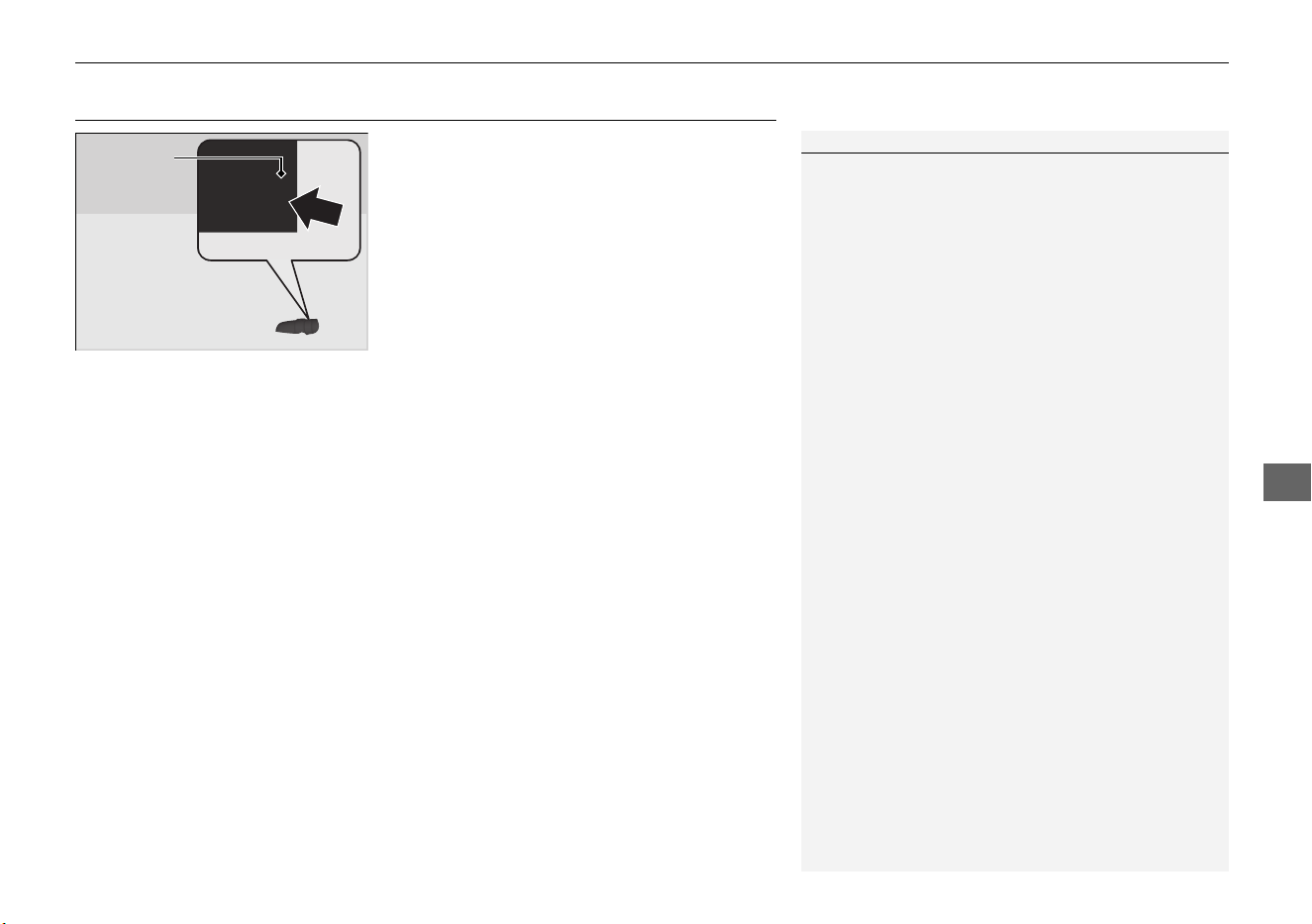
555
uuMulti View Camera System
*
uDisplaying an Image From the Multi View Cameras
Continued
Driving
Displaying an Image From the Multi View Cameras
■
For frontal views:
Press the CAMERA button when the vehicle is
stationary or moving at 12 mph (20 km/h) or
slower.
■
For rear reviews:
Change the shift position to (R when the
vehicle is stationary. Press the CAMERA
button to switch to rear view mode.
You can customize the display setting.
2 Customized Features P. 346
1Multi View Camera System
*
The multi view camera system does not eliminate all
blind spots. The system is for your convenience only.
Always keep the camera lenses clean and free from
debris.
If the front or rear camera lens is covered with dirt or
moisture, activate the frontview or rearview camera
washer or use a soft, moist cloth to keep the lens clean
and free of debris.
2 Windshield Wipers/Washers P. 201
2 Rear Wiper/Washer P. 203
When the parking sensor system detects any
obstacles, the indicator will display.
2 Parking Sensor System
*
P. 544
When a vehicle is detected approaching from a rear
corner, Cross Traffic Monitor alerts you.
2 Cross Traffic Monitor P. 548
CAMERA
Button
* Not available on all models
26 PILOT-31T906300.book 555 ページ 2025年10月8日 水曜日 午前11時43分
uuMulti View Camera System
*
uDisplaying an Image From the Multi View Cameras
556
Driving
1Displaying an Image From the Multi View Cameras
The navigation system is disabled when the shift
position is in
(R.
Operating the navigation system or audio system
while the multi view camera system screen is
displayed cancels the multi view camera system
screen and starts up the navigation system screen.
If you press the CAMERA button while the vehicle
speed is more than 16 mph (25 km/h), the standby
screen appears.
When the vehicle speed is reduced below 12 mph (20
km/h), the screen switches to a multi view camera
system image.
26 PILOT-31T906300.book 556 ページ 2025年10月8日 水曜日 午前11時43分
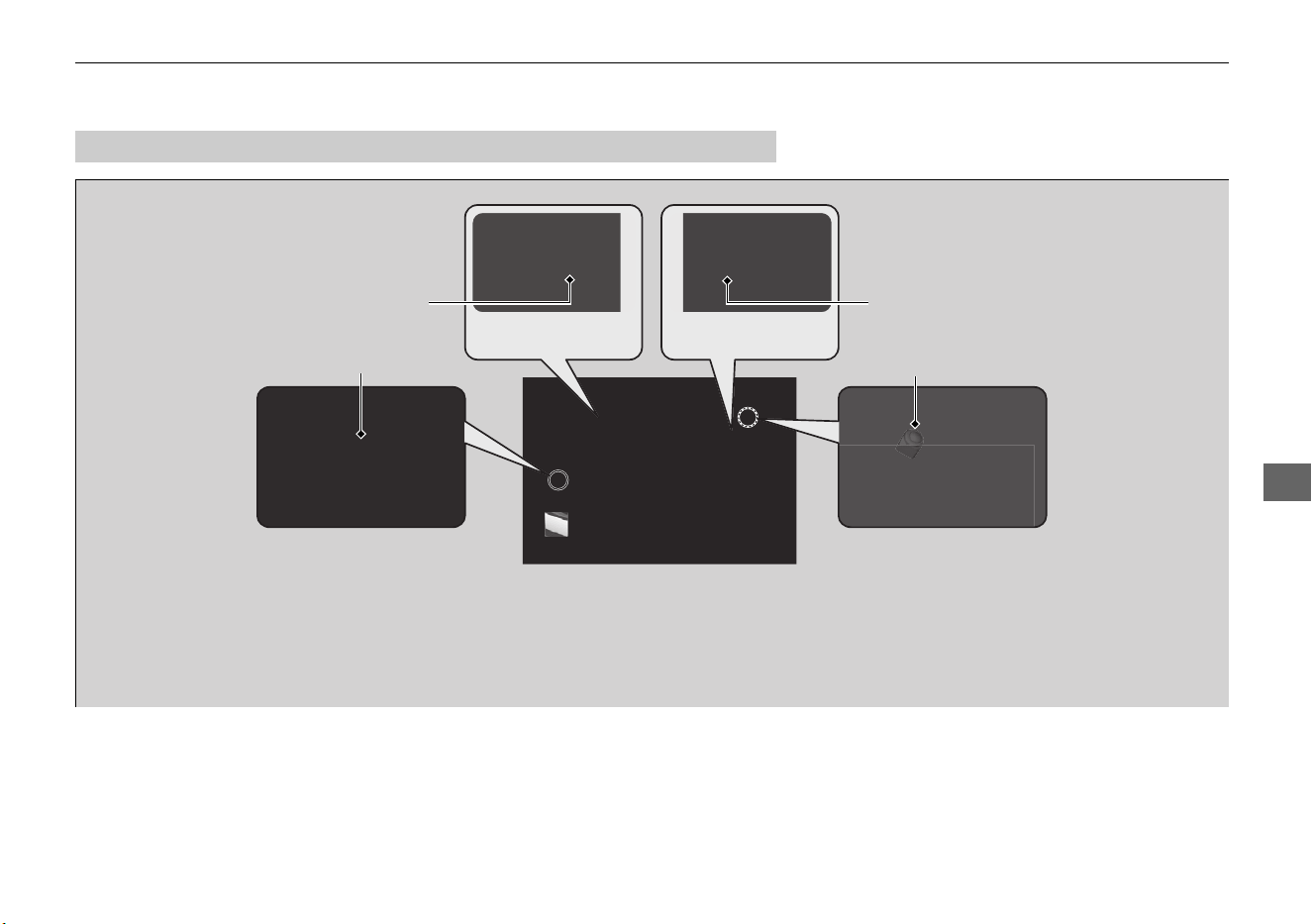
557
uuMulti View Camera System
*
uDisplaying an Image From the Multi View Cameras
Continued
Driving
■
Camera Locations and Images
Sideview Camera
(Passenger side)
Sideview Camera
(Driver side)
The unique multi view camera lenses make distances appear
differently than they actually are - objects seen on the audio/
information screen may appear closer or further away, and may be
distorted. This becomes more apparent the further away an object is
from your vehicle.
Frontview Camera
Rearview Camera
26 PILOT-31T906300.book 557 ページ 2025年10月8日 水曜日 午前11時43分
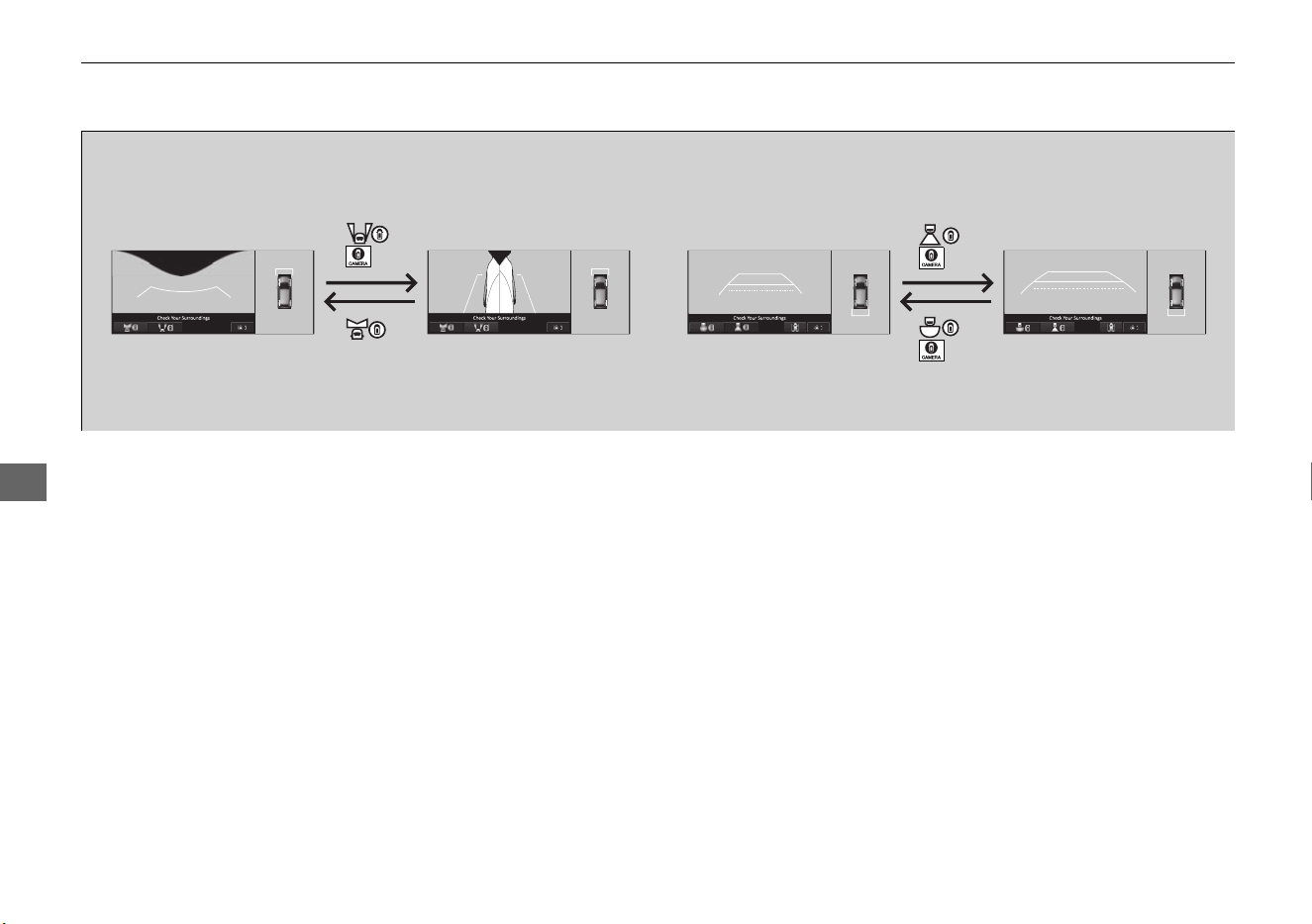
558
uuMulti View Camera System
*
uDisplaying an Image From the Multi View Cameras
Driving
Front View + Ground View Side View + Ground View
Rear Wide View + Ground View
Rear View + Ground View
or
or
or
26 PILOT-31T906300.book 558 ページ 2025年10月8日 水曜日 午前11時43分
Continued
559
uuMulti View Camera System
*
uDisplaying an Image From the Multi View Cameras
Driving
The following can be displayed when the system is on.
Fixed Guideline: Helps you get a sense of a distance between your vehicle and the
rear surroundings. The distance may appear differently than the actual distance.
Dynamic Guideline: Indicates vehicle direction while the steering wheel is in the
current position.
■
Reference Lines and Guides
1Reference Lines and Guides
The positions/distances indicated by the guidelines
and camera views on the display may differ from the
actual positions/distances due to the changes in the
vehicle height, road conditions, and other factors.
The guidelines should be used as a reference only.
The guidelines can be turned on and off using the
audio/information screen.
2 Customized Features P. 346
If you turn the guidelines off, they remain off until
you turn them back on.
26 PILOT-31T906300.book 559 ページ 2025年10月8日 水曜日 午前11時43分
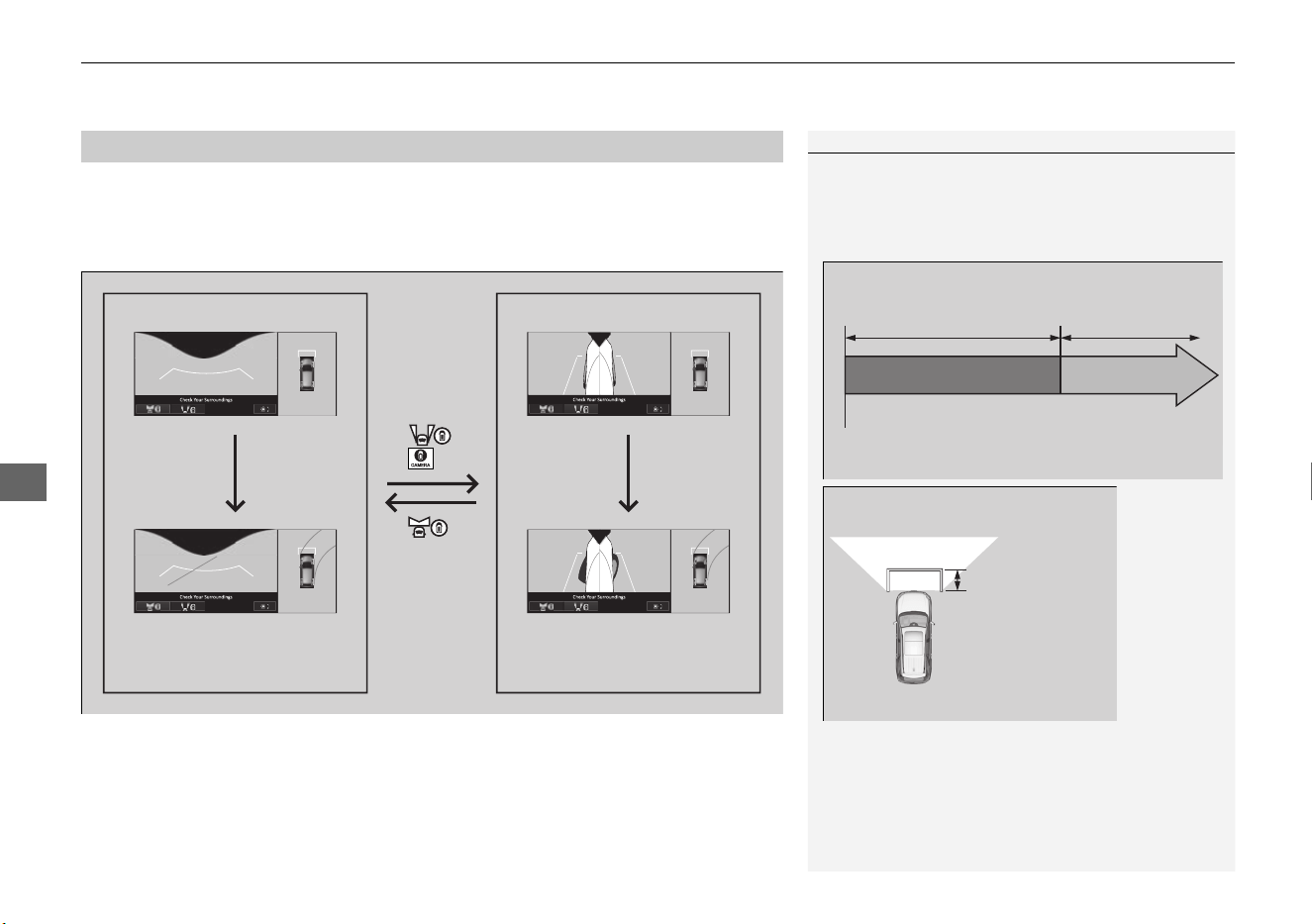
uuMulti View Camera System
*
uDisplaying an Image From the Multi View Cameras
560
Driving
■
Checking the front and sides of your vehicle
You can display the front ground view screen using all the four cameras for the
system. Pressing the CAMERA button when the vehicle speed is at below 12 mph
(20 km/h) changes the image as follows.
■
Using the Multi View Camera System
1Checking the front and sides of your vehicle
If the vehicle speed exceeds 15 mph (25 km/h) while
the front or side view image from the multi view
camera system is displayed, the screen automatically
switches to the audio/information screen.
0 mph (0 km/h)
Down Up
Camera Screen
Audio/Information
Screen
16 mph (25 km/h)
Approximate distance the
reference line indicates.
approx.
43 inches
(1.1 m)
Front View + Ground View
When the
steering wheel
is turned more
than 90
degrees.
The dynamic guideline
appears approx. 14 inches
(35 cm) outside the vehicle
body.
Side View + Ground View
When the
steering wheel
is turned more
than 90
degrees.
The dynamic guideline
appears approx. 14 inches
(35 cm) outside the vehicle
body.
or
26 PILOT-31T906300.book 560 ページ 2025年10月8日 水曜日 午前11時43分
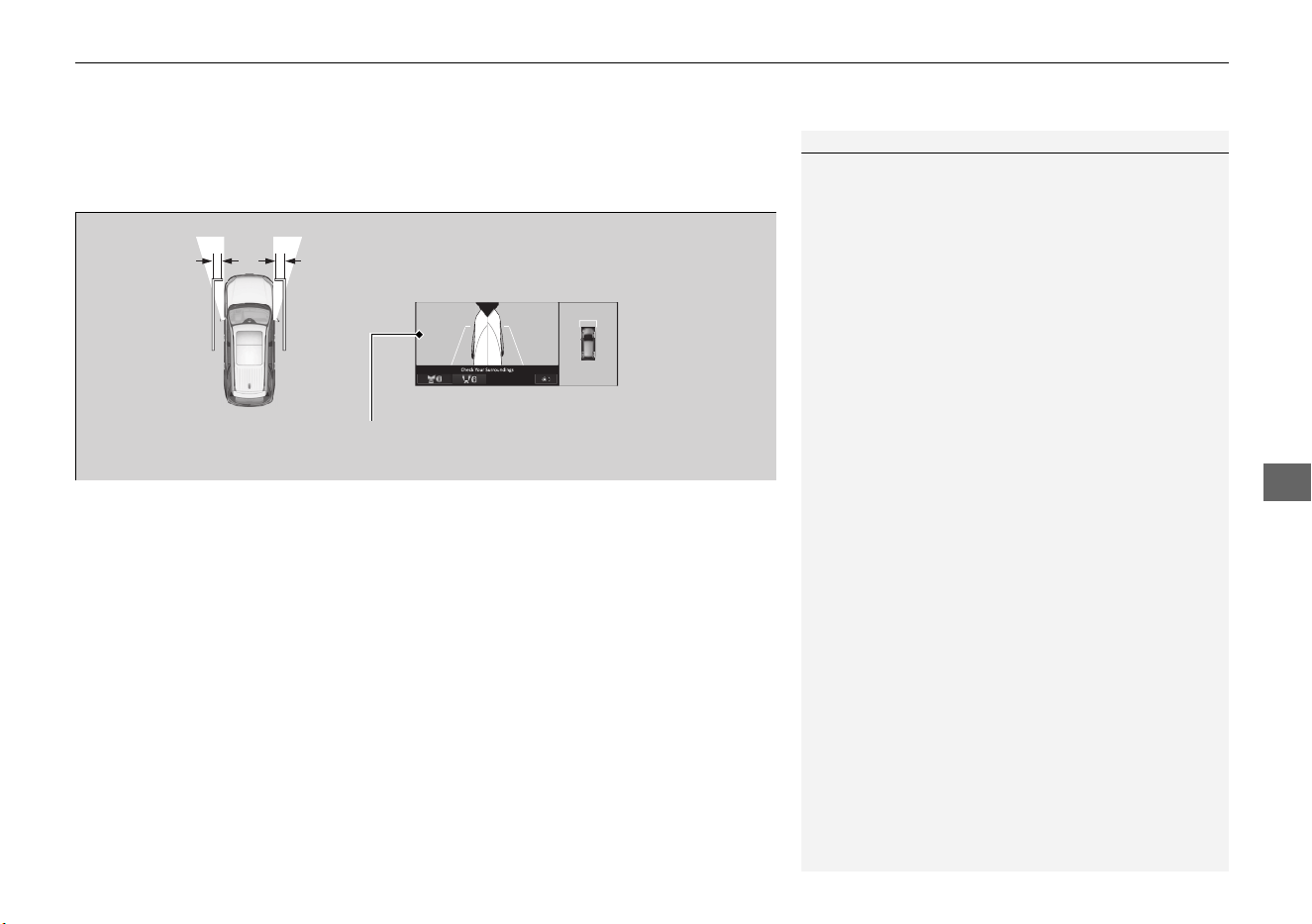
Continued
561
uuMulti View Camera System
*
uDisplaying an Image From the Multi View Cameras
Driving
■
Checking the sides of your vehicle
The side view screens are convenient when you pull over at a curb or tollbooth, or
slowly pass by oncoming vehicles on a narrow road.
1Checking the sides of your vehicle
When the door mirrors are folded, the side views
cannot be displayed.
approx.
16 inches
(40 cm)
Side Views
The images from the side cameras.
approx.
16 inches
(40 cm)
Side View + Ground View
26 PILOT-31T906300.book 561 ページ 2025年10月8日 水曜日 午前11時43分
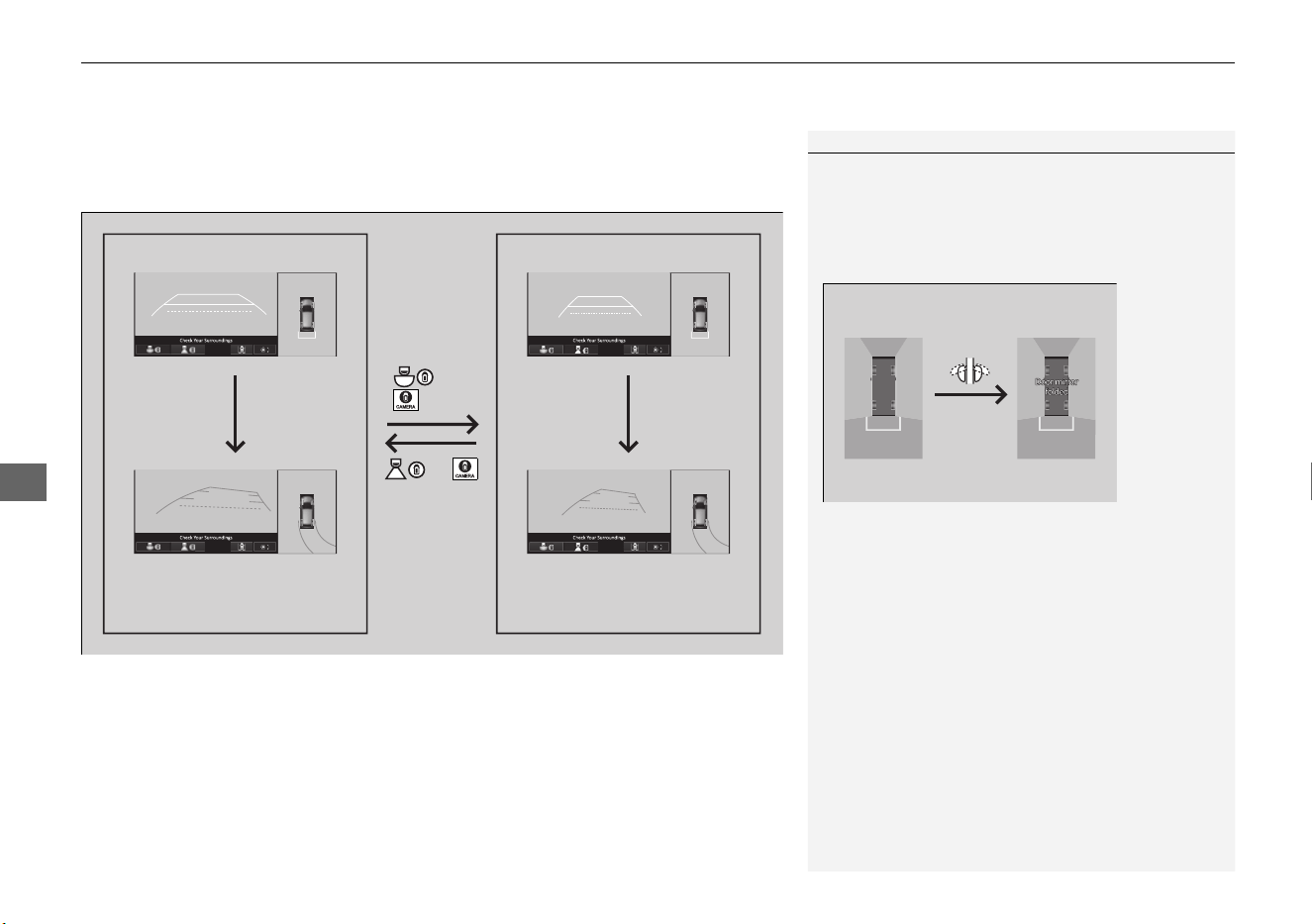
uuMulti View Camera System
*
uDisplaying an Image From the Multi View Cameras
562
Driving
■
Checking for obstacles at the back of your vehicle
The display automatically changes to the rear view when the shift position is
changed to
(R.
1Checking for obstacles at the back of your vehicle
The ground view can be displayed even with the door
mirrors folded. However, the viewable angle and
blind spot change.
Do not refer to the multi view camera system when
the door mirrors are folded.
FoldedNot folded
Rear View + Ground View
When the
steering wheel
is turned more
than 90
degrees.
The dynamic guideline
appears approx. 14 inches (35
cm) outside the vehicle body.
Rear Wide View + Ground View
When the
steering wheel
is turned more
than 90
degrees.
The dynamic guideline
appears approx. 14 inches (35
cm) outside the vehicle body.
or
or
26 PILOT-31T906300.book 562 ページ 2025年10月8日 水曜日 午前11時43分
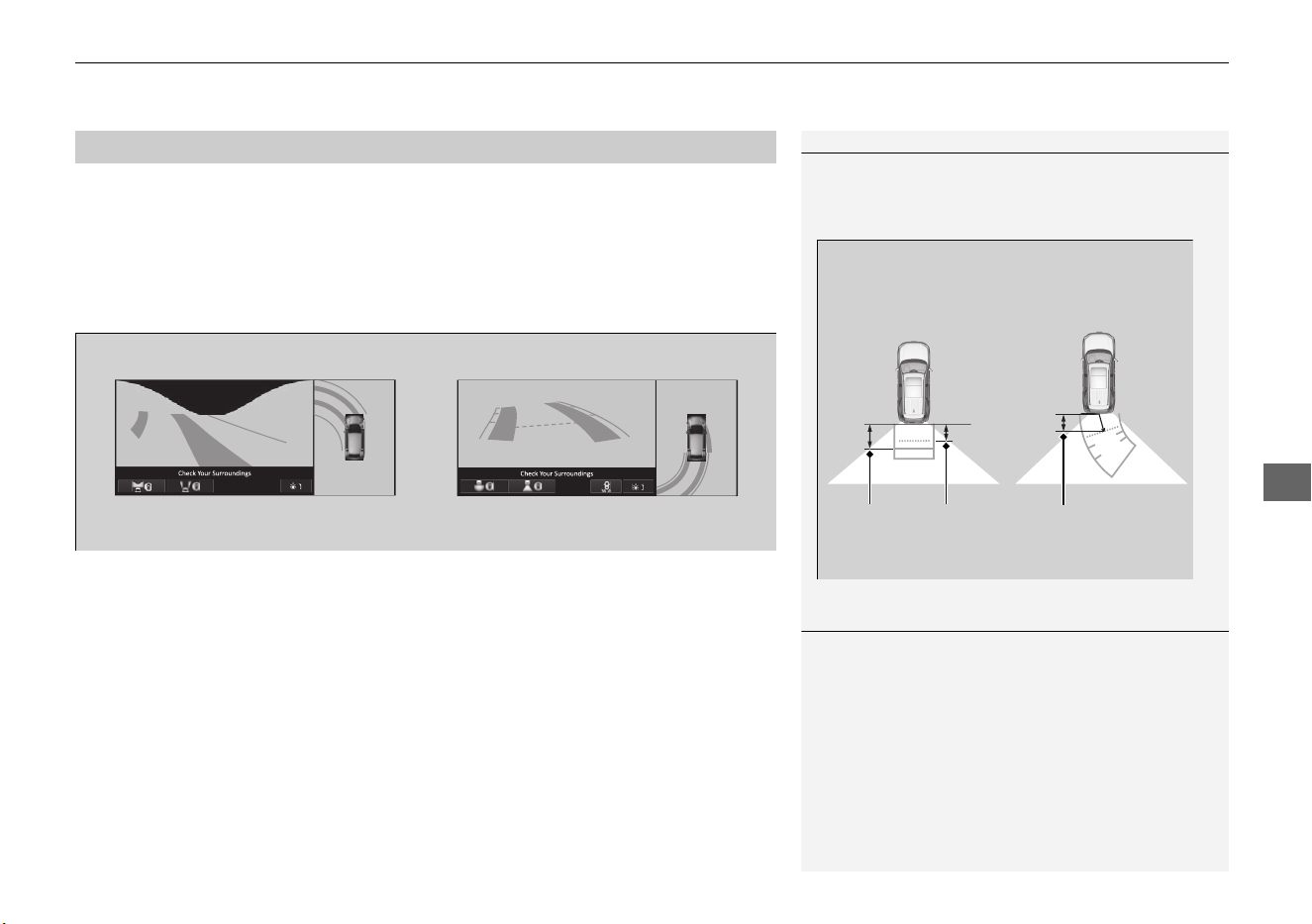
Continued
563
uuMulti View Camera System
*
uDisplaying an Image From the Multi View Cameras
Driving
When the drive mode is in TRAIL mode, images from the Multi View Camera System
are displayed while your vehicle speed is about 12 mph (20 km/h) or lower. When
the vehicle’s speed reaches about 16 mph (25 km/h) or higher, the display will return
to the previous screen.
2 TRAIL Mode
*
P. 436
Multi View Camera Guideline accuracy degrades off road.
The dynamic guideline appears approx. 14 inches (35 cm) outside the vehicle body.
■
TrailWatch
TM
*
1Checking for obstacles at the back of your vehicle
When changing the gear position from/to
(R, you
may experience a delay in switching between the
audio/information screen and a rear view image.
Approximate
distances the guide
lines indicate
Approximate
distances the
projection lines
indicate
approx.
35 inches
(90 cm)
approx.
23 inches
(60 cm)
approx.
23 inches
(60 cm)
Front View + Ground View
Tire Direction Lines
Tire Direction Lines
Rear View/Rear Wide View +
Ground View
1TrailWatch
TM
*
The tire direction lines should be used as a reference
only.
The positions/distances indicated by the tire direction
lines and camera views on the display may differ from
the actual positions/distances due to the changes in
the vehicle height, road conditions, and other factors.
* Not available on all models
26 PILOT-31T906300.book 563 ページ 2025年10月8日 水曜日 午前11時43分
564
uuMulti View Camera System
*
uDisplaying an Image From the Multi View Cameras
Driving
The system may not work properly under the following conditions.
■
Multi View Camera System Limitations
Conditions Solutions
The images may not
appear clearly when:
●
You activate the system in bad weather (heavy rain,
snow, fog, etc.) or in the dark.
●
Camera temperatures are high.
●
A sudden change between light and dark such as an
entrance or exit of a tunnel.
●
You drive into the sunlight (e.g., at dawn or dusk.)
Do not use the multi view camera system but rely only
on visual confirmation until the conditions allow the
system to work properly.
●
A camera lens is covered with dirt, moisture, or
debris.
●
A camera lens is scratched.
Clean camera lenses with the frontview or rearview
camera washer or a soft cloth moisturized with water,
mild detergent or glass cleaner.
2 Windshield Wipers/Washers P. 201
2 Rear Wiper/Washer P. 203
The audio/information screen is dirty. Wipe off the screen using a soft dry cloth.
A camera angle is
altered.
A camera or the area around the camera has been
severely impacted.
Do not use the multi view camera system and contact a
dealer.
An error message is displayed while the multi view camera system is in use.
26 PILOT-31T906300.book 564 ページ 2025年10月8日 水曜日 午前11時43分
565
Driving
Refueling
Fuel Information
■
Fuel recommendation
Use of a lower octane gasoline can cause a persistent, heavy metallic knocking noise
that can lead to engine damage.
■
Top tier detergent gasoline
Because the level of detergency and additives in gasoline vary in the market, Honda
endorses the use of “TOP TIER Detergent Gasoline” where available to help
maintain the performance and reliability of your vehicle. TOP TIER Detergent
Gasoline meets a new gasoline standard jointly established by leading automotive
manufacturers to meet the needs of today’s advanced engines.
Qualifying gasoline retailers will, in most cases, identify their gasoline as having met
“TOP TIER Detergent Gasoline” standards at the retail location. This fuel is
guaranteed to contain the proper level of detergent additives and be free of metallic
additives. The proper level of detergent additives, and absence of harmful metallic
additives in gasoline, help avoid buildup of deposits in your engine and emission
control system.
For further important fuel-related information for your vehicle, or on information on
gasoline that does not contain MMT, visit www.hondacars.com. In Canada, visit
www.honda.ca (English), www.honda.ca/fr (French) for additional information on
gasoline. For more information on top tier gasoline, visit www.toptiergas.com.
■
Fuel tank capacity: 18.5 US gal (70 L)
Unleaded gasoline, pump octane number 87 or higher
1Fuel Information
NOTICE
We recommend quality gasoline containing
detergent additives that help prevent fuel system and
engine deposits. In addition, in order to maintain
good performance, fuel economy, and emissions
control, we strongly recommend the use of gasoline
that does NOT contain harmful manganese-based
fuel additives such as MMT, if such gasoline is
available.
Use of gasoline with these additives may adversely
affect performance, and cause the malfunction
indicator lamp on your instrument panel to come on.
If this happens, contact a dealer for service. Some
gasoline today is blended with oxygenates such as
ethanol. Your vehicle is designed to operate on
oxygenated gasoline containing up to 15% ethanol
by volume. Do not use gasoline containing methanol.
If you notice any undesirable operating symptoms, try
another service station or switch to another brand of
gasoline.
26 PILOT-31T906300.book 565 ページ 2025年10月8日 水曜日 午前11時43分
566
uuRefuelinguHow to Refuel
Driving
How to Refuel
Your fuel tank is not equipped with a fuel filler cap. You can insert the filler nozzle
directly into the filler neck. The tank seals itself again when you pull out the filler
nozzle.
1. Stop your vehicle with the service station
pump on the left side of the vehicle in the
rear.
2. Turn off the engine.
3. Unlock the driver’s door.
u The fuel fill door on the outer side of the
vehicle will unlock.
4. Press and release the area indicated by the
arrow to release the fuel fill door. You will
hear a click and the lid will open slightly.
5. Manually pull the fuel fill door to a fully
open position.
1How to Refuel
The fuel filler opening is designed to accept only
service station filler nozzles for refueling. Use of
smaller diameter tubes (e.g., those used to siphon fuel
for other uses) or other non-service station devices can
damage the area in and around the filler opening.
Use the lock tab or the master door lock switch to unlock
the fuel fill door.
The vehicle doors and fuel fill door automatically
relock if the keyless remote unlock function is used.
This can be deactivated by briefly opening then
closing the driver’s door.
Using the Walk away auto lock® feature will also lock
the fuel fill door. Always make sure both the driver’s
door and fuel fill door are unlocked before
attempting to open the fuel fill door.
2 Locking the doors and tailgate (Walk away
auto lock®) P. 158
3
WARNING
Gasoline is highly flammable and explosive.
You can be burned or seriously injured
when handling fuel.
• Stop the engine, and keep heat, sparks,
and flames away.
• Handle fuel only outdoors.
• Wipe up spills immediately.
Press
26 PILOT-31T906300.book 566 ページ 2025年10月8日 水曜日 午前11時43分
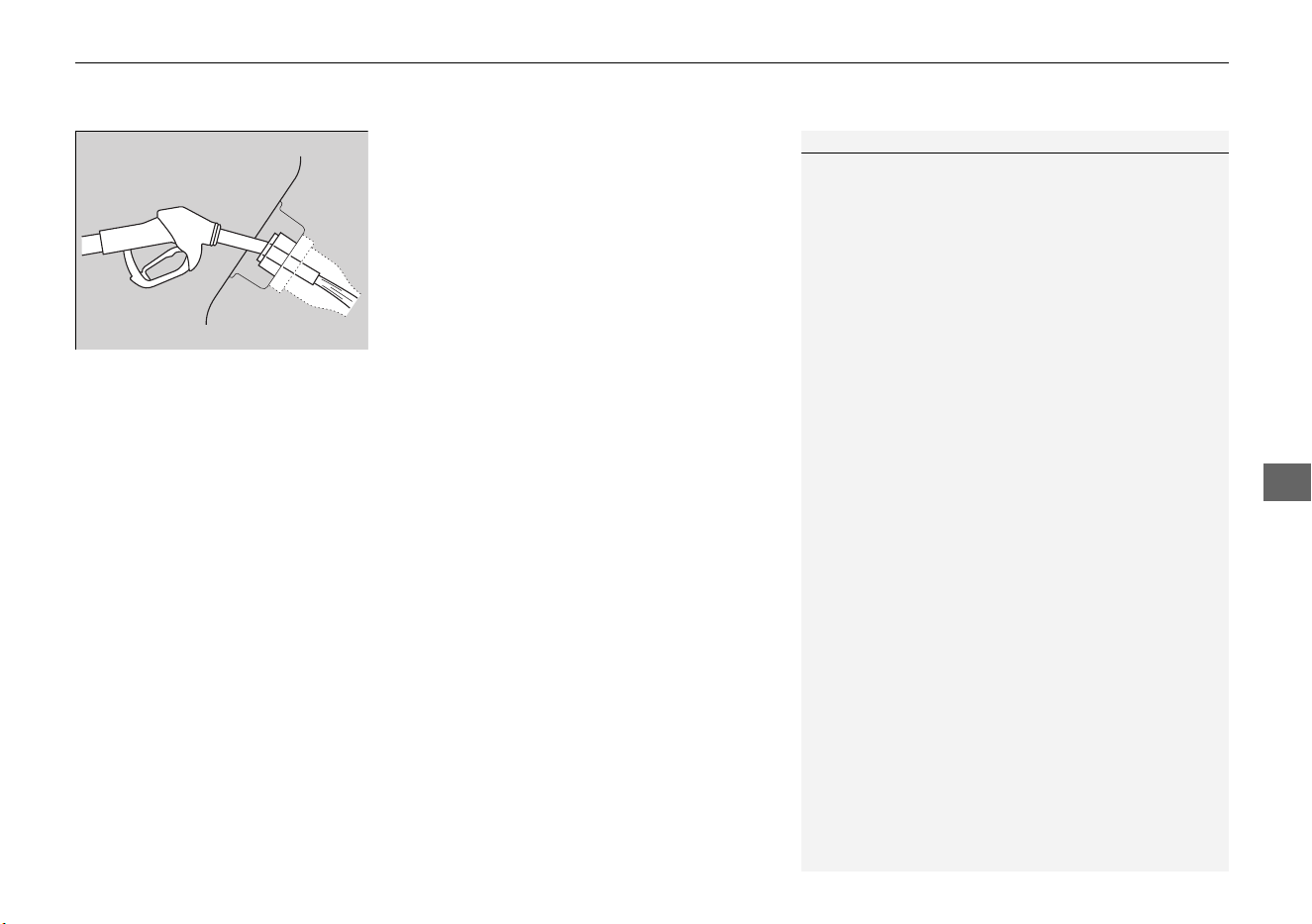
567
uuRefuelinguHow to Refuel
Driving
6. Place the end of the filler nozzle on the
lower part of filler opening, then insert it
slowly and fully.
u Make sure that the end of the filler
nozzle goes down along with the filler
pipe.
u Keep the filler nozzle level.
u When the tank is full, the filler nozzle will
click off automatically.
u If you do not fill up the tank to full,
always add a minimum of 2.6 US gal
(10.0 L) of fuel.
u After filling, wait about five seconds
before removing the filler nozzle.
7. Shut the fuel fill door by hand.
1How to Refuel
If the fuel filler nozzle keeps turning off when the
tank is not full, there may be a problem with the
pump’s fuel vapor recovery system. Try filling at
another pump. If this does not fix the problem,
consult a dealer.
The filler nozzle automatically stops to leave space in
the fuel tank so that fuel does not overflow as a result
of changes in air temperature.
Do not continue to add fuel after the filler nozzle has
automatically stopped. Additional fuel can exceed
the full tank capacity and cause fuel to spill.
If you repeatedly fill the tank with less than the
specified minimum amount of fuel, the malfunction
indicator lamp may come on. If this happens, have
your vehicle checked by a dealer.
If you have to refuel your vehicle from a portable
container, use the funnel provided with your vehicle.
2 Refueling From a Portable Fuel Container
P. 664
26 PILOT-31T906300.book 567 ページ 2025年10月8日 水曜日 午前11時43分
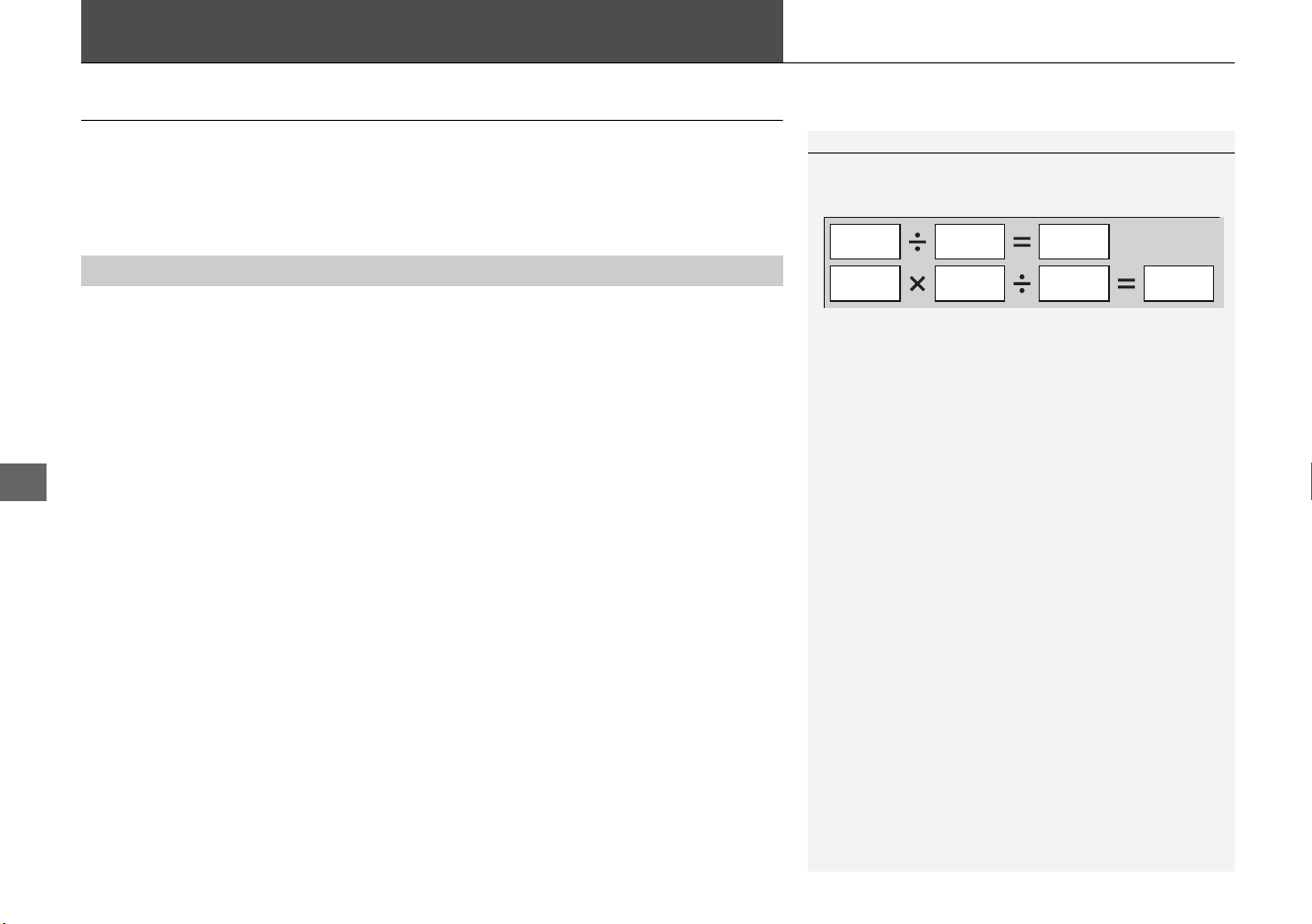
568
Driving
Fuel Economy and CO
2
Emissions
Improving Fuel Economy and Reducing CO
2
Emissions
Achieving fuel economy and reducing CO
2
emissions is dependent on several
factors, including driving conditions, load weight, idling time, driving habits, and
vehicle condition. Depending on these and other factors, you may not achieve the
rated fuel economy of this vehicle.
You can optimize your fuel economy with proper maintenance of your vehicle.
Always maintain your vehicle in accordance with the messages displayed on the
driver information interface.
• Use engine oil with the viscosity recommended.
2 Recommended Engine Oil P. 585
• Maintain the specified tire pressure.
• Do not load the vehicle with excess cargo.
• Keep your vehicle clean. A buildup of snow or mud on your vehicle’s underside
adds weight and increases wind resistance.
■
Maintenance and Fuel Economy
1Improving Fuel Economy and Reducing CO
2
Emissions
Direct calculation is the recommended method to
determine actual fuel consumed while driving.
In Canada, posted fuel economy numbers are
established following a simulated test.
For more information on how this test is performed,
please visit https://www.nrcan.gc.ca and search for
“fuel consumption testing” in the search field at the
top of the page.
Miles driven
Gallons of
fuel
Miles per
Gallon
100 Liters of fuel
Kilometers
driven
L per 100 km
26 PILOT-31T906300.book 568 ページ 2025年10月8日 水曜日 午前11時43分
569
Maintenance
This chapter discusses basic maintenance.
Before Performing Maintenance
Inspection and Maintenance ............ 570
Safety When Performing Maintenance..571
Parts and Fluids Used in Maintenance
Service ........................................... 572
Maintenance Minder
TM
..................... 573
Maintenance Under the Hood
Maintenance Items Under the Hood.. 581
Opening the Hood ........................... 582
Engine Compartment Cover............. 584
Recommended Engine Oil ................ 585
Oil Check......................................... 586
Adding Engine Oil............................ 587
Changing the Engine Oil and Oil Filter ....588
Engine Coolant................................ 590
Transmission Fluid............................ 592
Transfer Assembly Fluid
*
.................. 592
Brake Fluid....................................... 593
Refilling Window Washer Fluid......... 593
Replacing Light Bulbs ....................... 594
Checking and Maintaining Wiper
Blades .......................................... 599
Checking and Maintaining Tires
Checking Tires ................................. 604
Tire and Loading Information Label .. 605
Tire Labeling .................................... 605
DOT Tire Quality Grading (U.S. Vehicles) .. 607
Wear Indicators ............................... 609
Tire Service Life................................ 609
Tire and Wheel Replacement ........... 610
Tire Rotation.................................... 611
Winter Tires ..................................... 612
Battery............................................... 613
Remote Transmitter Care................. 615
Climate Control System Maintenance .. 616
Cleaning
Interior Care .................................... 618
Exterior Care.................................... 620
Accessories and Modifications ........ 623
* Not available on all models
26 PILOT-31T906300.book 569 ページ 2025年10月8日 水曜日 午前11時43分
570
Maintenance
Before Performing Maintenance
Inspection and Maintenance
For your safety, perform all listed inspections and maintenance to keep your vehicle
in good condition. If you become aware of any abnormality (noise, smell, insufficient
brake fluid, oil residue on the ground, etc.), have your vehicle inspected by a dealer.
(Note, however, that service at a dealer is not mandatory to keep your warranties in
effect.)
■
Routine inspections
Perform inspections before long distance trips, when washing the vehicle, or when
refueling.
2 Maintenance P. 30
■
Periodic inspections
• Check the brake fluid level monthly.
2 Checking the Brake Fluid P. 593
• Check the tire pressure monthly. Examine the tread for wear and foreign objects.
2 Checking and Maintaining Tires P. 604
• Check the operation of the exterior lights monthly.
2 Replacing Light Bulbs P. 594
• Check the condition of the wiper blades at least every six months.
2 Checking and Maintaining Wiper Blades P. 599
■
Types of Inspection and Maintenance
1Inspection and Maintenance
Maintenance, replacement, or repair of
emissions control devices and systems may be
done by any automotive repair establishment or
individuals using parts that are “certified” to
EPA standards.
According to state and federal regulations, failure to
perform maintenance on the maintenance main
items marked with # will not void your emissions
warranties. However, all maintenance services should
be performed in accordance with the intervals
indicated by the driver information interface.
2 Maintenance Service Items P. 577
If you want to perform complex maintenance tasks
that require more skills and tools, you can purchase a
subscription to the Service Express website at
https://techinfo.honda.com.
2 Authorized Manuals P. 681
If you want to perform maintenance yourself, make
sure that you have the necessary tools and skills first.
After performing maintenance, update the records in
the separate maintenance booklet.
U.S. models
26 PILOT-31T906300.book 570 ページ 2025年10月8日 水曜日 午前11時43分
571
uuBefore Performing MaintenanceuSafety When Performing Maintenance
Continued
Maintenance
Safety When Performing Maintenance
Some of the most important safety precautions are given here. However, we cannot
warn you of every conceivable hazard that can arise in performing maintenance.
Only you can decide whether you should perform a given task.
• To reduce the possibility of fire or explosion, keep cigarettes, sparks, and flames
away from the battery and all fuel related parts.
• Never leave rags, towels, or other flammable objects under the hood.
u Heat from the surrounding parts can ignite them, causing a fire.
•
To clean parts, use a commercially available degreaser or parts cleaner, not gasoline.
• Wear eye protection and protective clothing when working with the battery or
compressed air.
• Engine exhaust contains carbon monoxide, which is poisonous and can kill you.
u Only operate the engine if there is sufficient ventilation.
■
Maintenance Safety
1Safety When Performing Maintenance
3
WARNING
Improperly maintaining this vehicle or
failing to correct a problem before driving
can cause a crash in which you can be
seriously hurt or killed.
Always follow the inspection and
maintenance recommendations according
to the schedules in this owner’s manual.
3
WARNING
Failure to properly follow maintenance
instructions and precautions can cause you
to be seriously hurt or killed.
Always follow the procedures and
precautions in this owner’s manual.
26 PILOT-31T906300.book 571 ページ 2025年10月8日 水曜日 午前11時43分
uuBefore Performing MaintenanceuParts and Fluids Used in Maintenance Service
572
Maintenance
• The vehicle must be in a stationary condition.
u Make sure your vehicle is parked on level ground, the parking brake is set, and
the engine is off.
• Make sure that the radiator fan is stopped before inspecting the engine
compartment.
u Depending on the vehicle condition, the radiator fan may operate even when
the power mode is in VEHICLE OFF.
• Be aware that hot parts can burn you.
u Make sure to let the engine and exhaust system cool thoroughly before
touching vehicle parts.
• Be aware that moving parts can injure you.
u Do not start the engine unless instructed, and keep your hands and limbs away
from moving parts.
u Do not open the hood while the Auto Idle Stop function is activated.
Parts and Fluids Used in Maintenance Service
The use of Honda Genuine Parts and fluids is recommended when maintaining and
servicing your vehicle. Honda Genuine Parts are manufactured according to the
same high quality standards used in Honda vehicles.
■
Vehicle Safety
1Parts and Fluids Used in Maintenance Service
NOTICE
Do not press the engine cover forcibly. This may
damage the engine cover and component parts.
26 PILOT-31T906300.book 572 ページ 2025年10月8日 水曜日 午前11時43分

573
Maintenance
Maintenance Minder
TM
If the engine oil life is less than 15%, you will see the Maintenance Minder messages
appear on the driver information interface every time you set the power mode to
ON. The messages notify you when to change the engine oil, or when to bring your
vehicle to a dealer for indicated maintenance services.
26 PILOT-31T906300.book 573 ページ 2025年10月8日 水曜日 午前11時43分
574
uuMaintenance Minder
TM
uTo Use Maintenance Minder
TM
Maintenance
To Use Maintenance Minder
TM
Maintenance items, which should be serviced at the same time that you replace the
engine oil, appear on the driver information interface.
You can view them on the engine oil life screen at any time.
1. Set the power mode to ON.
2. Roll the right selector wheel until the Maintenance Minder screen is displayed.
The engine oil life appears on the driver information interface along with
maintenance items due soon.
■
Displaying the Maintenance Minder Information
1Displaying the Maintenance Minder Information
Based on the engine operating conditions, the
remaining engine oil life is calculated and displayed
as a percentage.
There is a list of maintenance main and sub items you
can view on the driver information interface.
2 Maintenance Service Items P. 577
Displayed Engine Oil
Life (%)
Calculated Engine Oil
Life (%)
100 100 to 91
90 90 to 81
80 80 to 71
70 70 to 61
60 60 to 51
50 50 to 41
40 40 to 31
30 30 to 21
20 20 to 16
15 15 to 11
10 10 to 6
5 5 to 1
0 0
Engine Oil Life
Main Item
Sub Item
Right Selector Wheel
26 PILOT-31T906300.book 574 ページ 2025年10月8日 水曜日 午前11時43分
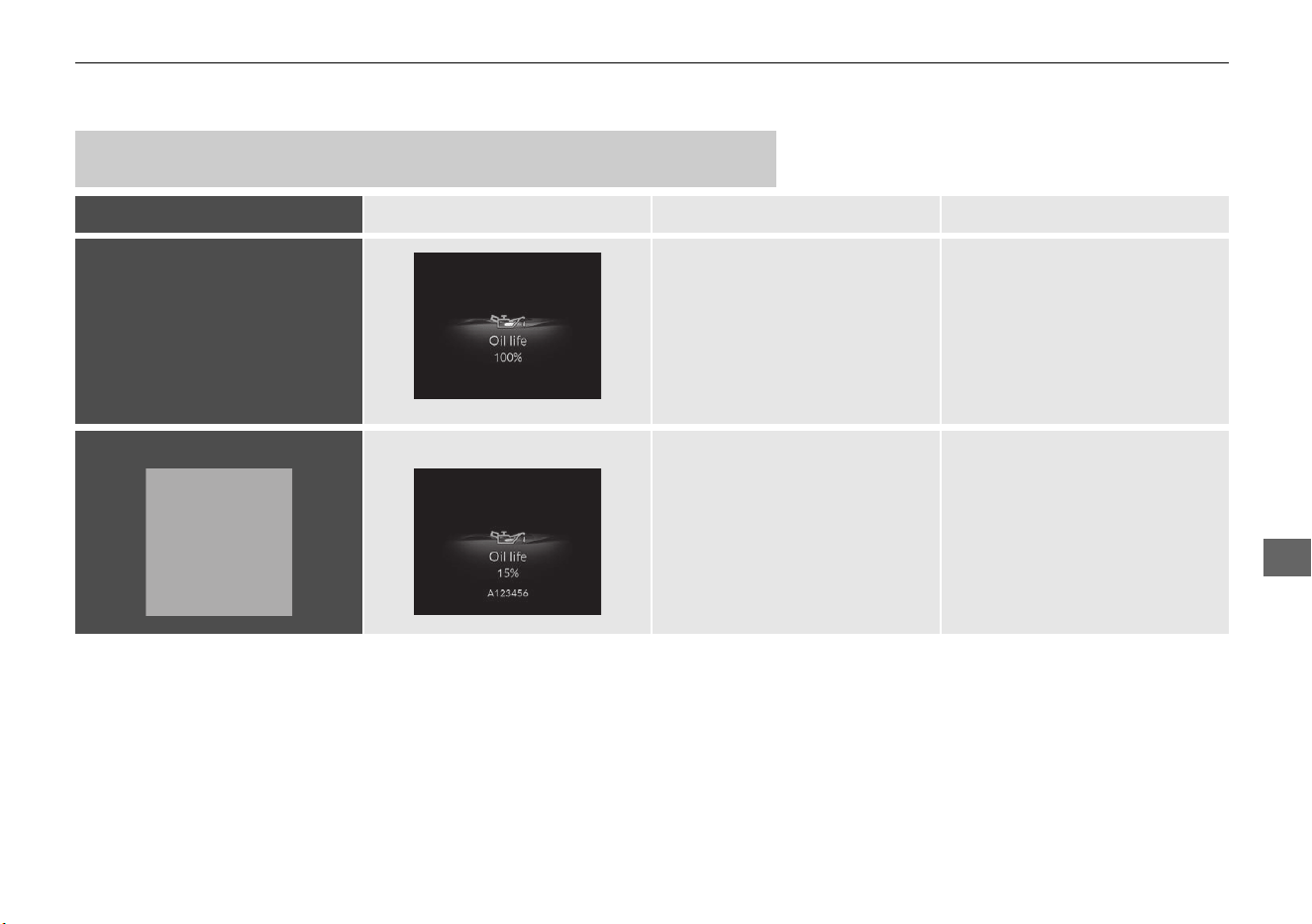
575
uuMaintenance Minder
TM
uTo Use Maintenance Minder
TM
Continued
Maintenance
■
Maintenance Minder Messages on the Driver Information
Interface
Maintenance Message Oil Life Display Explanation Information
-
When you select the
Maintenance Minder screen, it
displays codes for maintenance
items due at the next engine oil
change, along with the
percentage of engine oil life
remaining.
-
Maintenance Due Soon 15 % The remaining engine oil life is
15 to 6 percent.
Roll the right selector wheel to
switch to another display.
The engine oil is approaching the
end of its service life, and the
maintenance items should be
inspected and serviced soon.
26 PILOT-31T906300.book 575 ページ 2025年10月8日 水曜日 午前11時43分
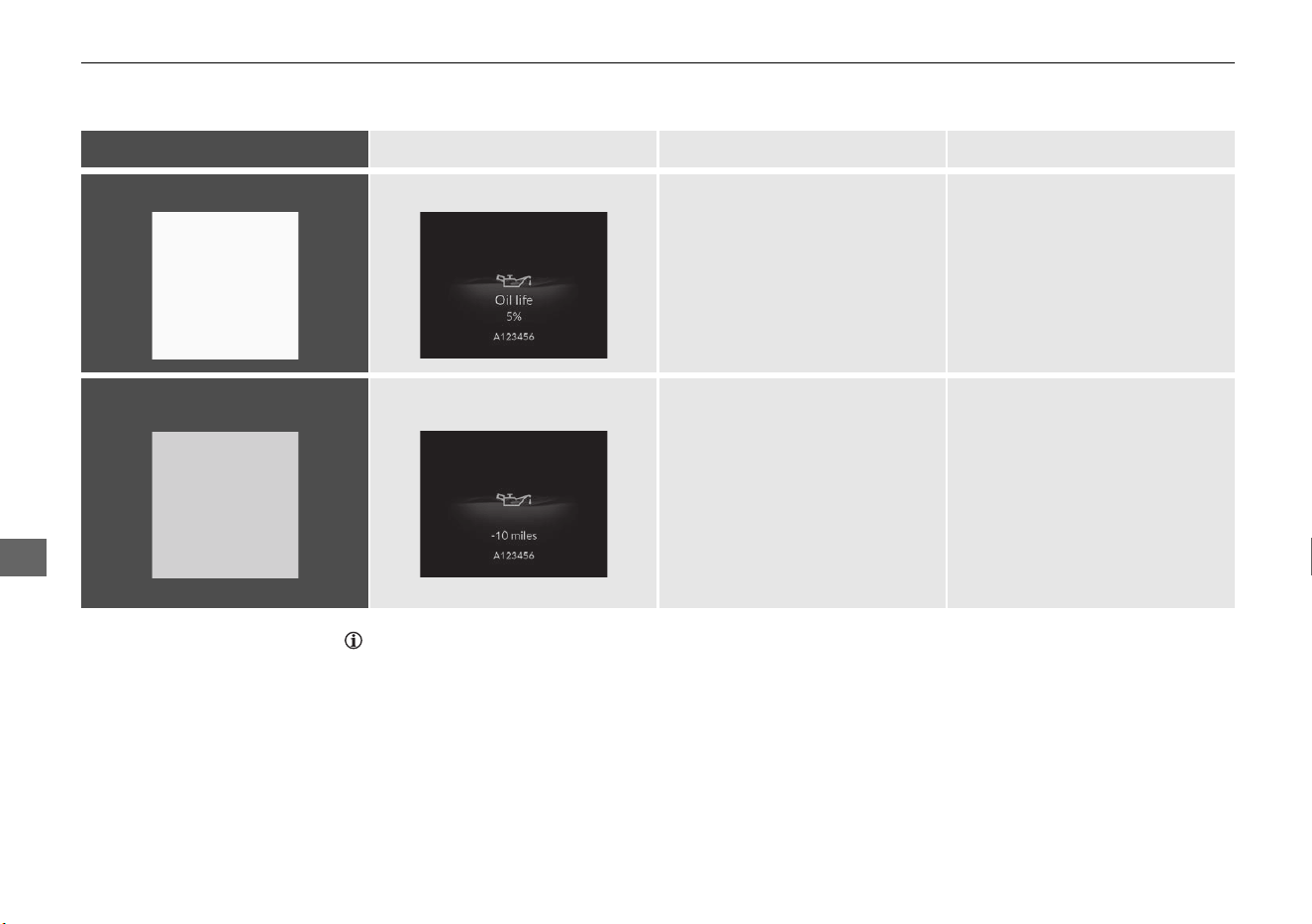
576
uuMaintenance Minder
TM
uTo Use Maintenance Minder
TM
Maintenance
The system message indicator ( ) comes on along with the Maintenance Minder
message.
Maintenance Message Oil Life Display Explanation Information
Maintenance Due Now 5 % The remaining engine oil life is 5
to 1 percent.
Roll the right selector wheel to
switch to another display.
The engine oil has almost
reached the end of its service life,
and the maintenance items
should be inspected and serviced
as soon as possible.
Maintenance Past Due
Negative Distance
The engine oil life has passed its
service life, and a negative
distance appears after driving
over 10 miles (U.S. models) or 10
km (Canadian models). The
negative distance on the display
blinks.
Roll the right selector wheel to
switch to another display.
The engine oil life has passed.
The maintenance items must be
inspected and serviced
immediately.
26 PILOT-31T906300.book 576 ページ 2025年10月8日 水曜日 午前11時43分
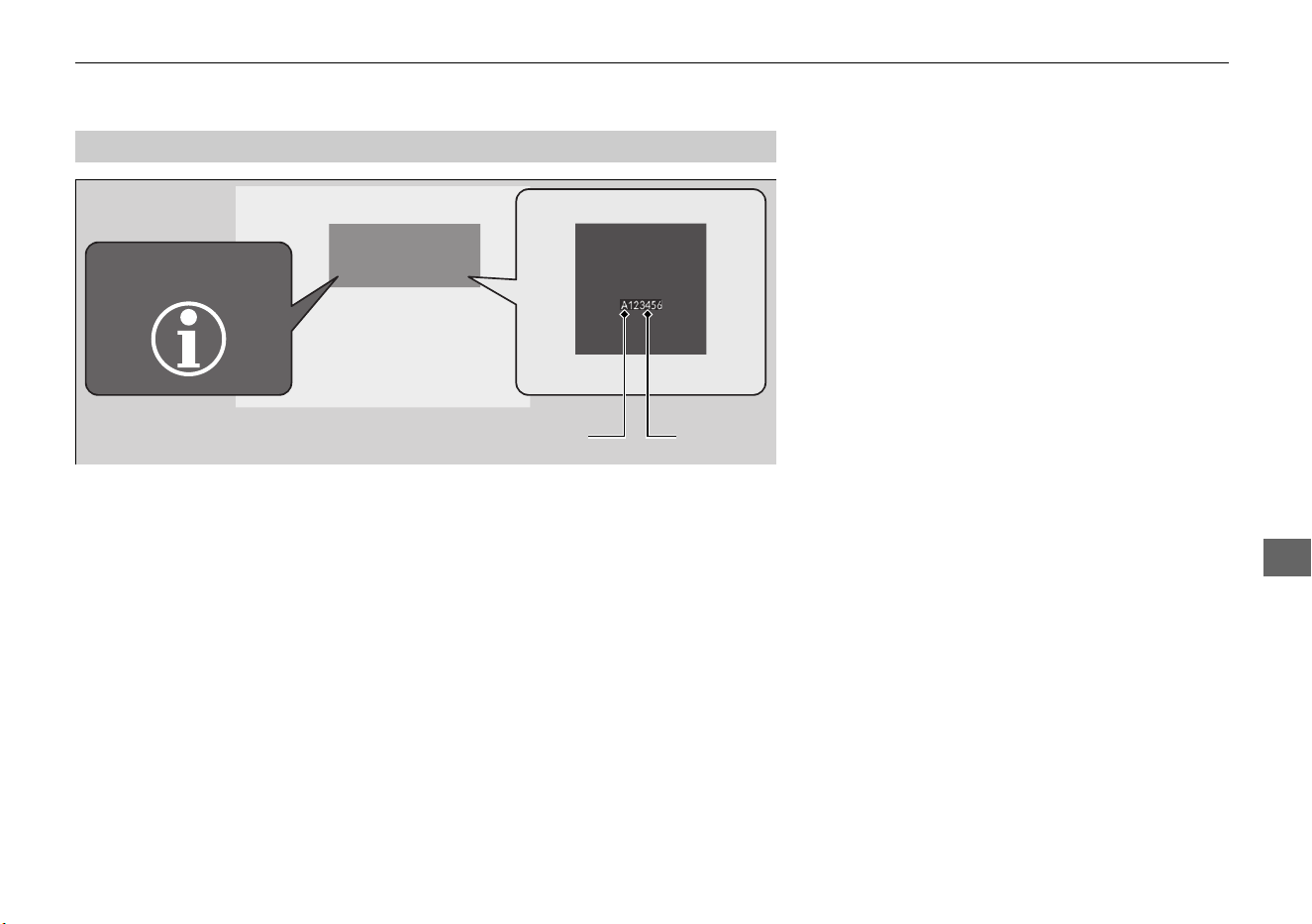
577
uuMaintenance Minder
TM
uTo Use Maintenance Minder
TM
Continued
Maintenance
■
Maintenance Service Items
Maintenance Minder Message
System Message
Indicator
Sub ItemsMain Item
26 PILOT-31T906300.book 577 ページ 2025年10月8日 水曜日 午前11時43分
578
uuMaintenance Minder
TM
uTo Use Maintenance Minder
TM
Maintenance
U.S. models
*1: If a Maintenance Minder message does not appear more than 12 months after the display is reset,
change the engine oil every year.
# : See information on maintenance and emissions warranty on page 678.
CODE Maintenance Main Items
A
●
Replace engine oil
*1
B
●
Replace engine oil
*1
and oil filter
●
Inspect front and rear brakes
●
Inspect these items:
• Tie rod ends, steering gearbox, and boots
• Suspension components
• Driveshaft boots
• Brake hoses and lines (including ABS/VSA®)
• All fluid levels and condition of fluids
• Exhaust system
#
• Fuel lines and connections
#
*2: If you drive in dusty conditions, replace the air cleaner element every 15,000 miles (24,000 km).
*3: If you drive primarily in urban areas that have high concentrations of soot in the air from industry and
from diesel-powered vehicles, replace the dust and pollen filter every 15,000 miles (24,000 km).
*4: If you drive regularly in very high temperatures (over 110°F, 43°C), in very low temperatures (under -20°F,
-29°C), or towing a trailer, replace every 60,000 miles (100,000 km).
*5: Driving in mountainous areas at very low vehicle speeds or trailer towing results in higher level of
mechanical (Shear) stress to fluid. This requires differential fluid changes more frequently than
recommended by the Maintenance Minder. If you regularly drive your vehicle under these conditions,
have the differential fluid changed at 7,500 miles (12,000 km), then every 15,000 miles (24,000 km).
*6: If a Maintenance Minder message does not appear more than 36 months after the display for item 7 is
reset, change the brake fluid every 3 years.
CODE Maintenance Sub Items
1
●
Rotate tires
2
●
Replace air cleaner element
*2
●
Replace dust and pollen filter
*3
●
Inspect drive belt
3
●
Replace transmission fluid
●
Replace transfer fluid
*
4
●
Replace spark plugs
●
Replace timing belt and inspect water pump
*4
5
●
Replace engine coolant
6
●
Replace rear differential fluid
*, *5
7
●
Replace brake fluid
*6
* Not available on all models
26 PILOT-31T906300.book 578 ページ 2025年10月8日 水曜日 午前11時43分
579
uuMaintenance Minder
TM
uTo Use Maintenance Minder
TM
Continued
Maintenance
Canadian models
*1: If a Maintenance Minder message does not appear more than 12 months after the display is reset,
change the engine oil every year.
*2: If you drive in dusty conditions, replace the air cleaner element every 24,000 km (15,000 miles).
*3: If you drive primarily in urban areas that have high concentrations of soot in the air from industry and
from diesel-powered vehicles, replace the dust and pollen filter every 24,000 km (15,000 miles).
*4: If you drive regularly in very high temperatures (over 43°C, 110°F), in very low temperatures (under
-29°C, -20°F), or towing a trailer, replace every 100,000 km (60,000 miles).
*5: Driving in mountainous areas at very low vehicle speeds or trailer towing results in higher level of
mechanical (Shear) stress to fluid. This requires differential fluid changes more frequently than
recommended by the Maintenance Minder. If you regularly drive your vehicle under these conditions,
have the differential fluid changed at 12,000 km (7,500 miles), then every 24,000 km (15,000 miles).
*6: If a Maintenance Minder message does not appear more than 36 months after the display for item 7 is
reset, change the brake fluid every 3 years.
# : See information on maintenance and emissions warranty on page 678.
CODE Maintenance Main Items
A
●
Replace engine oil
*1
0
●
Replace engine oil
*1
and oil filter
CODE Maintenance Sub Items
1
●
Rotate tires
2
●
Replace air cleaner element
*2
●
Replace dust and pollen filter
*3
●
Inspect drive belt
3
●
Replace transmission fluid
●
Replace transfer fluid
4
●
Replace spark plugs
●
Replace timing belt and inspect water pump
*4
5
●
Replace engine coolant
6
●
Replace rear differential fluid
*5
7
●
Replace brake fluid
*6
9
●
Service front and rear brakes
●
Inspect these items:
• Tie rod ends, steering gearbox, and boots
• Suspension components
• Driveshaft boots
• Brake hoses and lines (including ABS/VSA®)
• All fluid levels and condition of fluids
• Exhaust system
#
• Fuel lines and connections
#
26 PILOT-31T906300.book 579 ページ 2025年10月8日 水曜日 午前11時43分
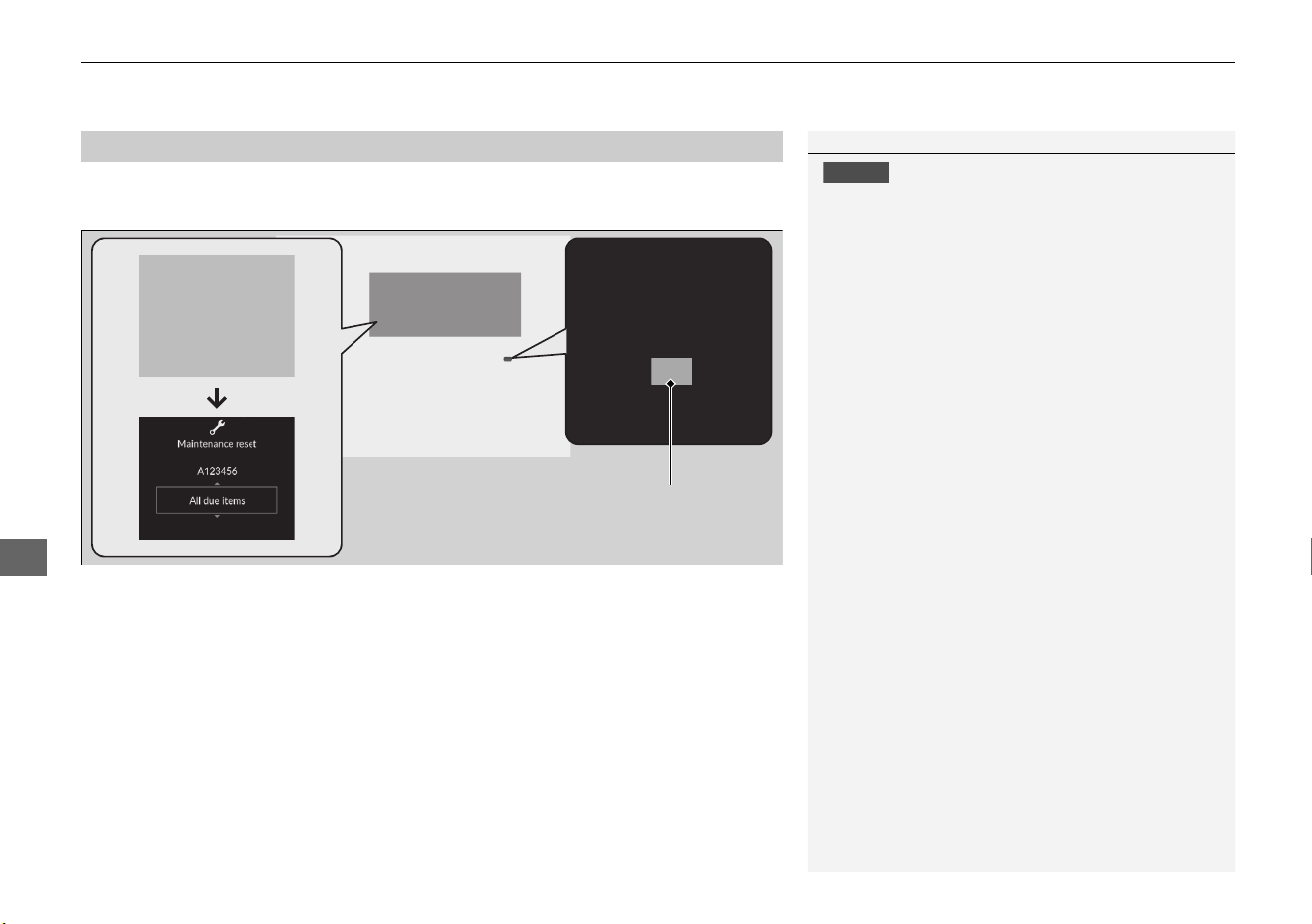
uuMaintenance Minder
TM
uTo Use Maintenance Minder
TM
580
Maintenance
Reset the maintenance minder information display if you have performed the
maintenance service.
1. Set the power mode to ON.
2. Roll the right selector wheel until the Maintenance Minder screen is displayed.
3. Press and hold the right selector wheel for about 10 seconds to enter the reset
mode.
4. Roll the right selector wheel to select a maintenance item to reset, or to select All
due items (You can also select Cancel to end the process).
5. Press the right selector wheel to reset the selected item.
6. Repeat from step 3 for other items you wish to reset.
■
Resetting the Display
1Resetting the Display
NOTICE
Failure to reset the Maintenance Minder
TM
display
after a maintenance service results in the system
showing incorrect maintenance intervals, which can
lead to serious mechanical problems.
The dealer will reset the Maintenance Minder
TM
display after completing the required maintenance
service. If someone other than a dealer performs
maintenance service, reset the Maintenance
Minder
TM
display yourself.
You can also reset the Maintenance Minder
TM
display
using the audio/information screen.
2 Customized Features P. 346
Right Selector Wheel
26 PILOT-31T906300.book 580 ページ 2025年10月8日 水曜日 午前11時43分
581
Maintenance
Maintenance Under the Hood
Maintenance Items Under the Hood
Brake Fluid
(Black Cap)
Washer Fluid
Radiator Cap
Engine Coolant
Reserve Tank
Engine Oil Fill Cap
Battery
Engine Oil Dipstick
(Orange)
26 PILOT-31T906300.book 581 ページ 2025年10月8日 水曜日 午前11時43分
582
uuMaintenance Under the HooduOpening the Hood
Maintenance
Opening the Hood
1. Park the vehicle on a level surface, and set
the parking brake.
2. Pull the hood release handle under the
driver's side lower corner of the dashboard.
u The hood will pop up slightly.
3. Push the hood latch lever (located under
the front edge of the hood on the driver’s
side) to the side and raise the hood. Once
you have raised the hood slightly, you can
release the lever.
4. Remove the support rod from the clamp
using the grip. Mount the support rod in
the hood.
When closing, remove the support rod and
stow it in the clamp, then gently lower the
hood. Remove your hand at a height of
approximately 12 inches (30 cm) and let the
hood close.
1Opening the Hood
NOTICE
Do not open the hood when the wiper arms are
raised. The hood will strike the wipers, resulting in
possible damage to the hood and/or the wipers.
NOTICE
Do not press the engine cover forcibly. This may
damage the engine cover and component parts.
When closing the hood, check that both right and
left latches are securely latched.
If the hood latch lever moves stiffly, or if you can
open the hood without lifting the lever, the latch
mechanism should be cleaned and lubricated.
Do not open the hood while the Auto Idle Stop
function is activated.
Hood Release Handle
Pull
Lever
Latches
Support Rod
Grip
Clamp
26 PILOT-31T906300.book 582 ページ 2025年10月8日 水曜日 午前11時43分
583
uuMaintenance Under the HooduOpening the Hood
Maintenance
1Opening the Hood
NOTICE
If a warning message for “hood open” is displayed,
either right, left, or both hood locks are not correctly
locked in place.
If they are incorrectly locked in place, the hood may
open while driving.
Immediately stop in a safe place and close the hood
by pressing down on the front of the hood until both
locks are latched and the warning disappears.
26 PILOT-31T906300.book 583 ページ 2025年10月8日 水曜日 午前11時43分
584
uuMaintenance Under the HooduEngine Compartment Cover
Maintenance
Engine Compartment Cover
The component parts in the engine compartment are protected by a cover.
You may need to remove the cover when you perform certain maintenance work.
Pull up on the engine compartment cover and remove it from the retaining clips.
Engine
Compartment
Cover
26 PILOT-31T906300.book 584 ページ 2025年10月8日 水曜日 午前11時43分
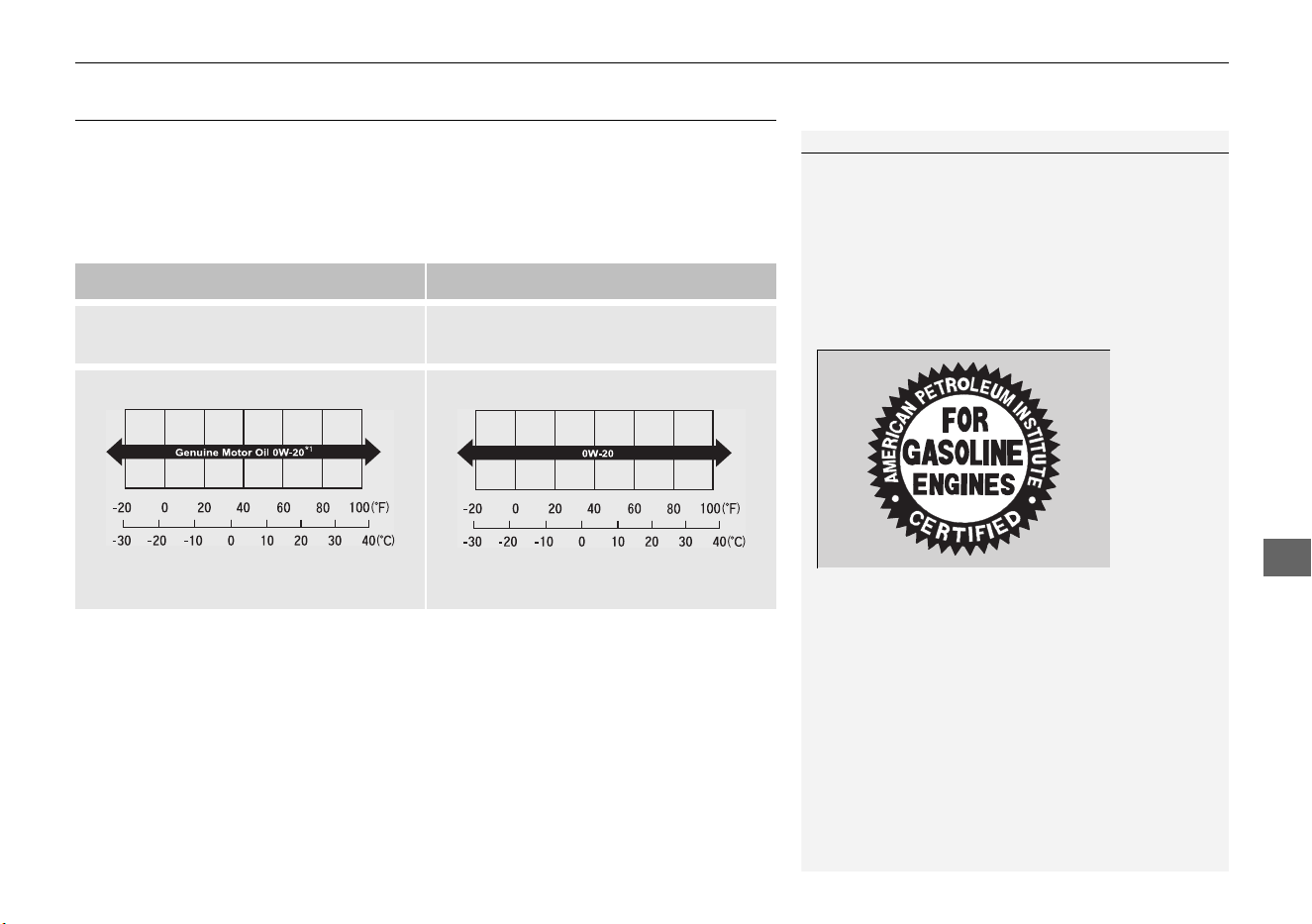
585
uuMaintenance Under the HooduRecommended Engine Oil
Maintenance
Recommended Engine Oil
Use a genuine engine oil or another commercial engine oil of suitable type and
viscosity (for the ambient temperature) as shown in the image that follows.
Oil is a major contributor to your engine’s performance and longevity. If you drive
the vehicle with insufficient or deteriorated oil, the engine may fail or be damaged.
*1:Formulated to improve fuel economy.
■
Synthetic oil
You may also use synthetic motor oil if it is labeled with the API Certification Seal
and is the specified viscosity grade.
Genuine Engine Oil Commercial Engine Oil
●
Honda Genuine Motor Oil
●
API service SN or higher grade
●
API Certification Mark “Starburst”
1Recommended Engine Oil
Engine Oil Additives
Your vehicle does not require oil additives. In fact,
they may adversely affect the engine performance
and durability.
The following seal indicates the oil is energy
conserving and that it meets the American Petroleum
Institute’s latest requirements.
Ambient Temperature
Ambient Temperature
26 PILOT-31T906300.book 585 ページ 2025年10月8日 水曜日 午前11時43分
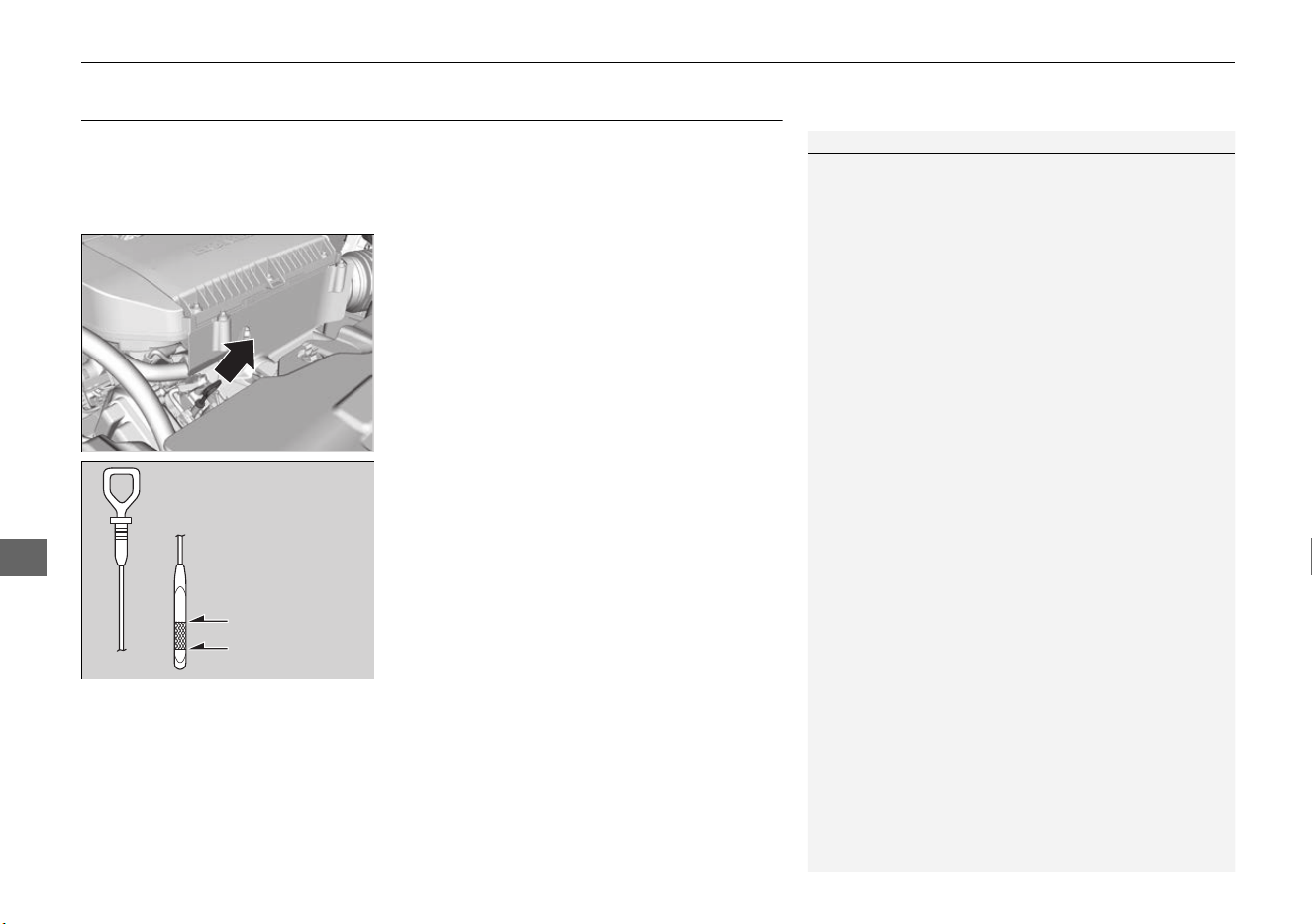
586
uuMaintenance Under the HooduOil Check
Maintenance
Oil Check
We recommend that you check the engine oil level every time you refuel.
Park the vehicle on level ground.
Wait approximately three minutes after turning the engine off before you check the
oil.
1. Remove the dipstick (orange).
2. Wipe the dipstick with a clean cloth or
paper towel.
3. Insert the dipstick back all the way into its
hole.
4. Remove the dipstick again, and check the
level. It should be between the upper and
lower marks. Add oil if necessary.
1Oil Check
If the oil level is near or below the lower mark, slowly
add oil, being careful not to overfill.
Lower Mark
Upper Mark
26 PILOT-31T906300.book 586 ページ 2025年10月8日 水曜日 午前11時43分
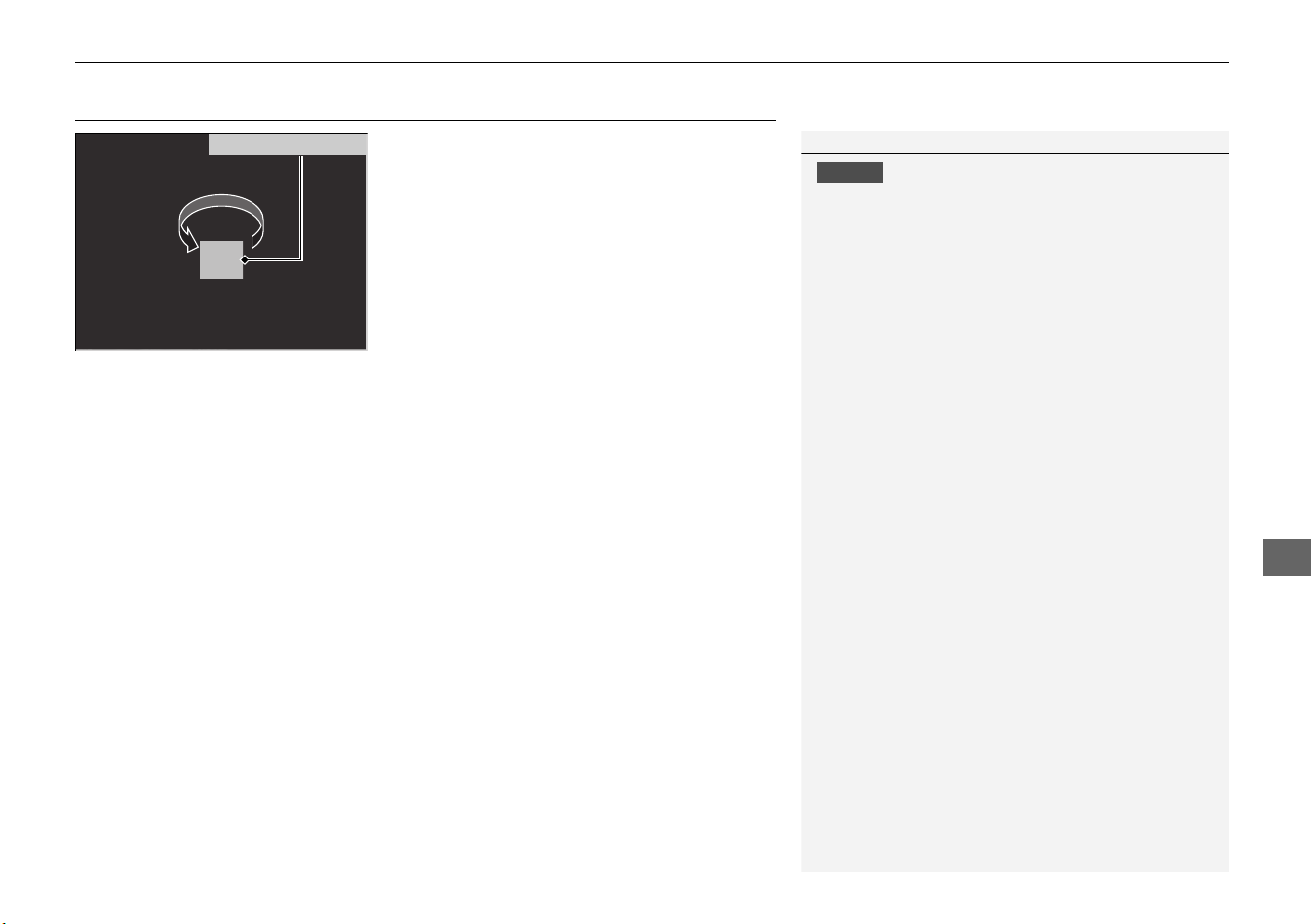
587
uuMaintenance Under the HooduAdding Engine Oil
Maintenance
Adding Engine Oil
1. Unscrew and remove the engine oil fill cap.
2. Add oil slowly.
3. Reinstall the engine oil fill cap, and tighten
it securely.
4. Wait for three minutes and recheck the
engine oil dipstick.
1Adding Engine Oil
NOTICE
Do not fill the engine oil above the upper mark.
Overfilling the engine oil may result in leaks and
engine damage.
If any oil spills, wipe it away immediately. Spilled oil
may damage the engine compartment components.
Engine Oil Fill Cap
26 PILOT-31T906300.book 587 ページ 2025年10月8日 水曜日 午前11時43分
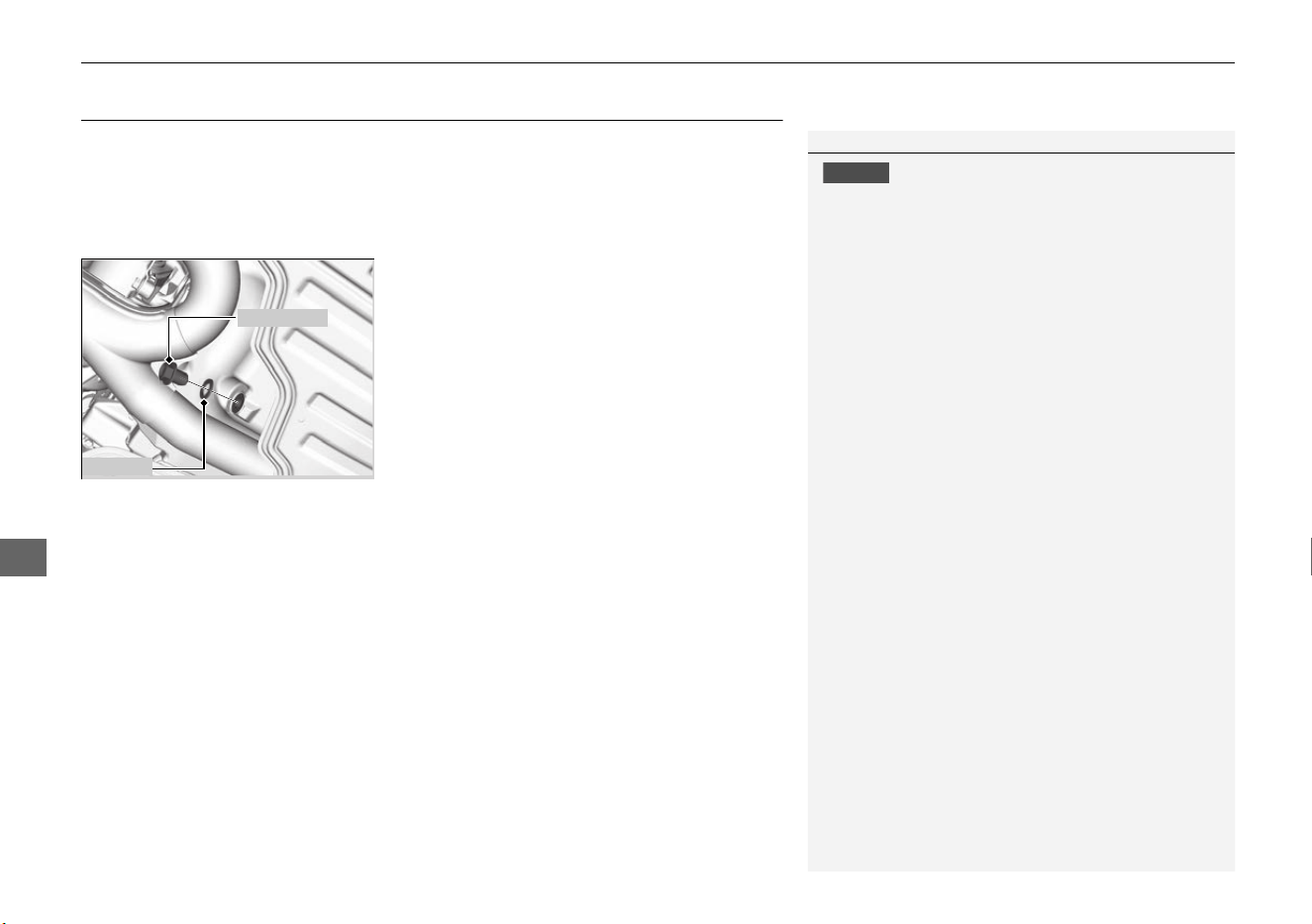
588
uuMaintenance Under the HooduChanging the Engine Oil and Oil Filter
Maintenance
Changing the Engine Oil and Oil Filter
You must change the engine oil and oil filter regularly in order to maintain the
engine’s lubrication. The engine may be damaged if they are not changed regularly.
Change the oil and filter in accordance with the maintenance message on the driver
information interface.
1. Run the engine until it reaches normal
operating temperature, and then turn the
engine off.
2. Open the hood and remove the engine oil
fill cap.
3. Remove the drain bolt and washer from
the bottom of the engine, and drain the
oil into a suitable container.
1Changing the Engine Oil and Oil Filter
NOTICE
You may damage the environment if you do not
dispose of the oil in a suitable way. If you are
changing the oil by yourself, appropriately dispose of
the used oil. Put the oil in a sealed container and take
it to a recycling center. Do not throw the oil away
into a garbage can or onto the ground.
Drain Bolt
Washer
26 PILOT-31T906300.book 588 ページ 2025年10月8日 水曜日 午前11時43分
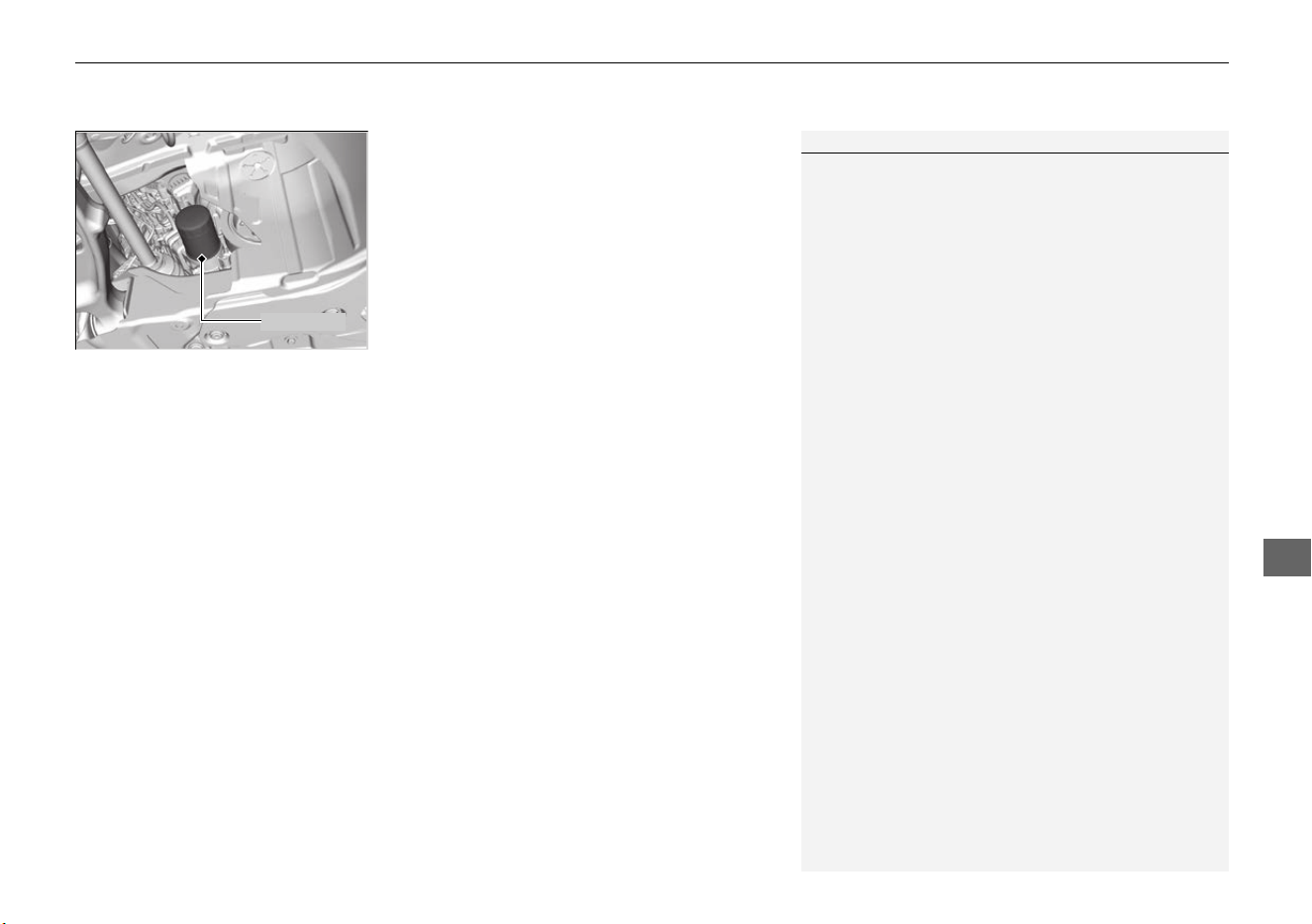
589
uuMaintenance Under the HooduChanging the Engine Oil and Oil Filter
Maintenance
4. Remove the oil filter and dispose of the
remaining oil.
5. Check that the filter gasket is not stuck to
the engine contact surface.
u If it is stuck, you must detach it.
6. Wipe away dirt and dust adhering to the
contact surface of the engine block, and
install a new oil filter.
u Apply a light coat of new engine oil to
the oil filter rubber seal.
7. Put a new washer on the drain bolt, then
reinstall the drain bolt.
u Tightening torque:
30 lbf∙ft (40 N∙m, 4.0 kgf∙m)
8. Pour the recommended engine oil into the
engine.
u Engine oil change capacity (including
filter):
5.8 US qt (5.5 L)
9. Reinstall the engine oil fill cap securely and
start the engine.
10. Run the engine for a few minutes, and
then check that there is no leak from the
drain bolt or oil filter.
11. Stop the engine, wait for three minutes,
and then check the oil level on the
dipstick.
u If necessary, add more engine oil.
1Changing the Engine Oil and Oil Filter
You will need a special wrench to replace the oil
filter. You can buy this wrench from a dealer.
When installing the new oil filter, follow the
instructions supplied with the oil filter.
Reinstall the engine oil fill cap. Start the engine. If the
Engine oil pressure low warning appears, turn off
the engine, and check your work.
Oil Filter
26 PILOT-31T906300.book 589 ページ 2025年10月8日 水曜日 午前11時43分
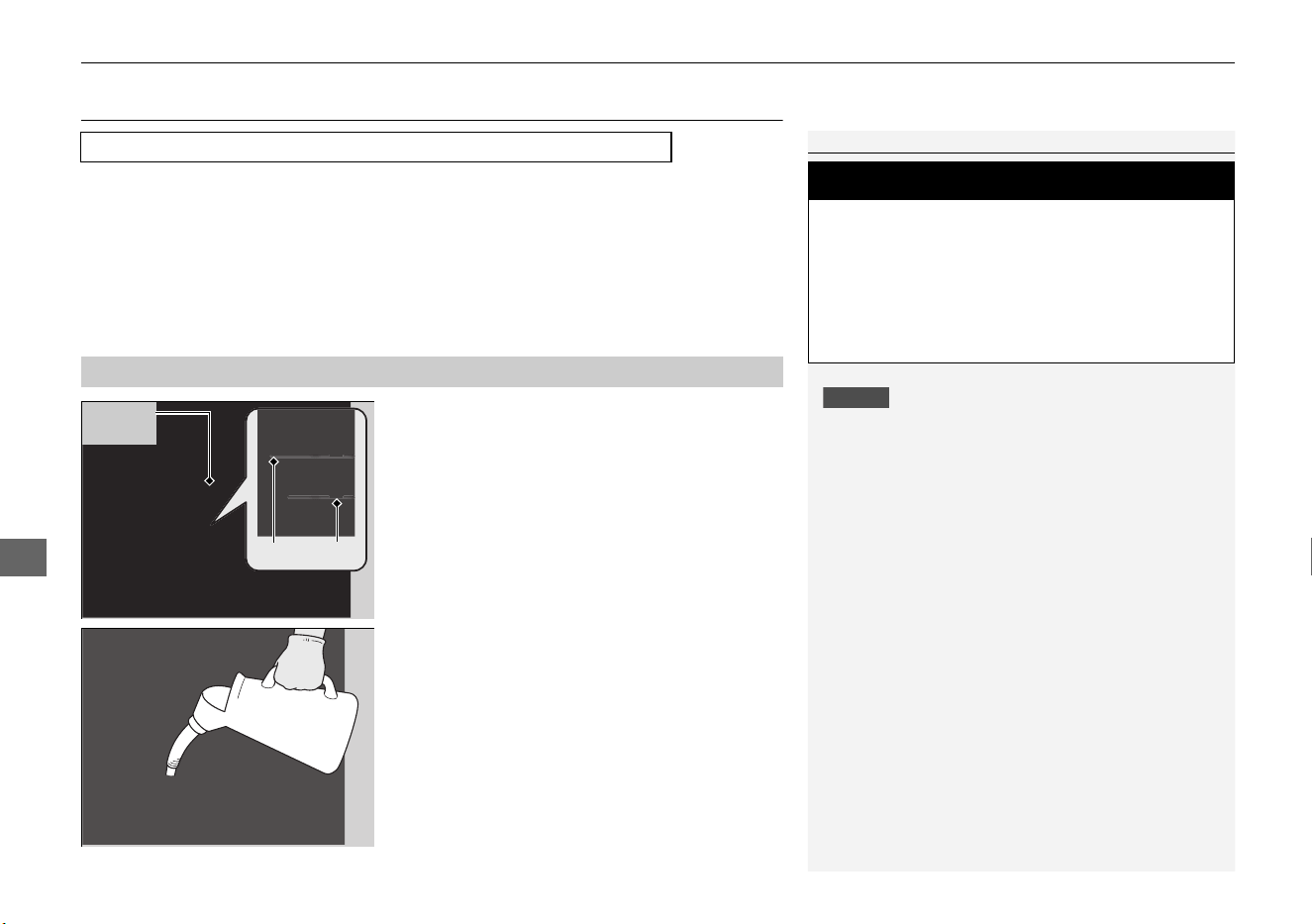
590
uuMaintenance Under the HooduEngine Coolant
Maintenance
Engine Coolant
This coolant is premixed with 50% antifreeze and 50% water. Do not add any
straight antifreeze or water.
We recommend you check the engine coolant level every time you refuel. Check the
reserve tank first. If it is completely empty, also check the coolant level in the
radiator. Add the engine coolant accordingly.
1. Make sure the engine and radiator are
cool.
2. Check the amount of coolant in the reserve
tank.
u If the coolant level is below the MIN
mark, add the specified coolant until it
reaches the MAX mark.
3. Inspect the cooling system for leaks.
Specified coolant: Honda Long Life Antifreeze/Coolant Type 2
■
Reserve Tank
1Engine Coolant
NOTICE
Genuine Honda engine coolant is a 50/50 mixture of
antifreeze and water that can withstand freezing at
temperatures as low as about -31°F (-35°C). If your
vehicle is consistently subjected to temperatures below
this, the concentration of antifreeze in the coolant
should be increased. Consult a dealer for details.
If Honda antifreeze/coolant is not available, you may use
another major brand of non-silicate coolant as a
temporary replacement. Check that it is a high quality
coolant recommended for aluminum engines.
Continued use of any non-Honda coolant can result in
corrosion, causing the cooling system to malfunction or
fail. Have the cooling system flushed and refilled with
Honda antifreeze/coolant as soon as possible.
Do not add rust inhibitors or other additives to your
vehicle’s cooling system. They may not be compatible
with the coolant or with the engine components.
3
WARNING
Removing the radiator cap while the
engine is hot can cause the coolant to spray
out, seriously scalding you.
Always let the engine and radiator cool
down before removing the radiator cap.
MAX MIN
Reserve
Tank
26 PILOT-31T906300.book 590 ページ 2025年10月8日 水曜日 午前11時43分
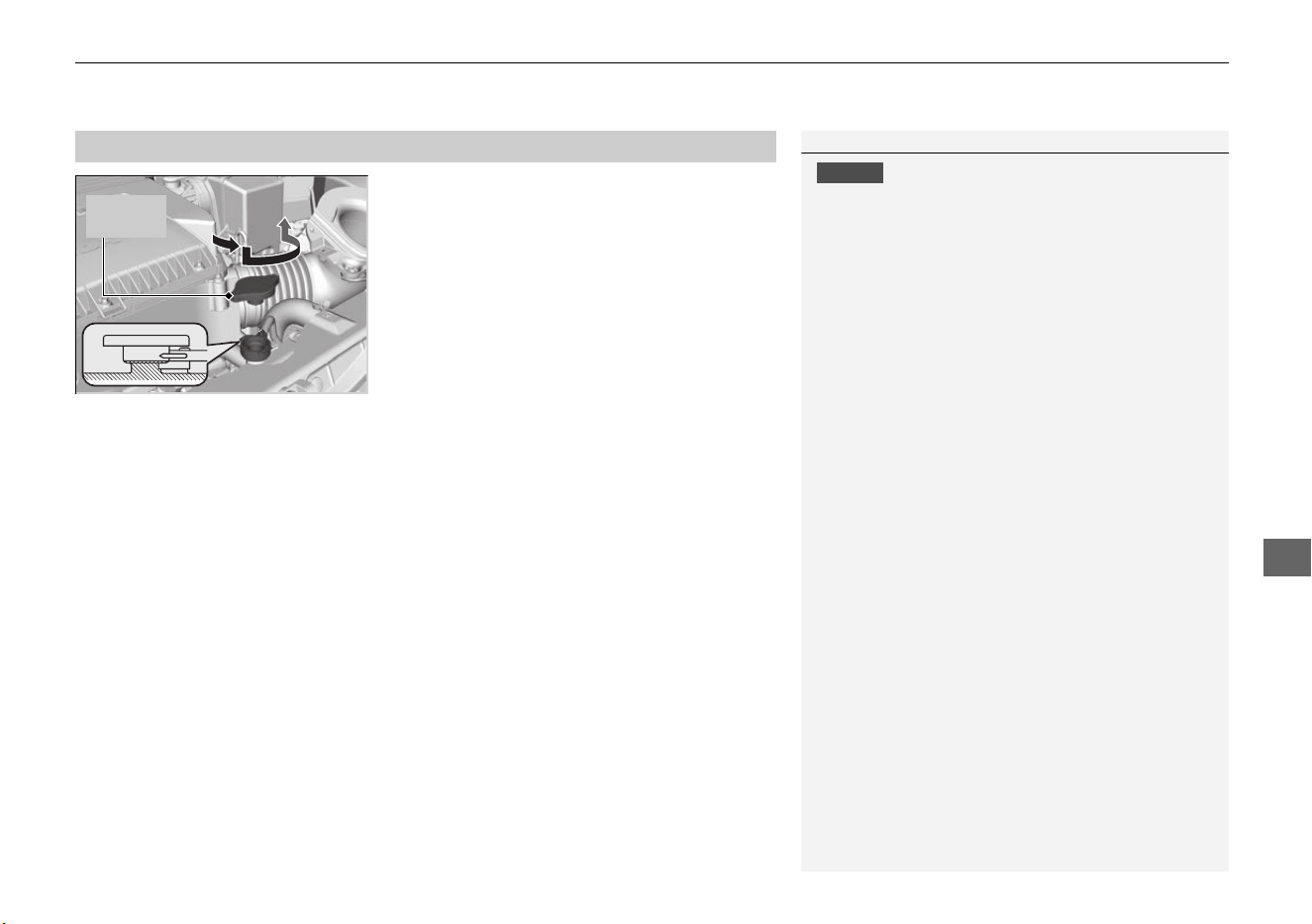
591
uuMaintenance Under the HooduEngine Coolant
Maintenance
1. Make sure the engine and radiator are
cool.
2. Remove the engine compartment cover.
2 Engine Compartment Cover P. 584
3. Turn the radiator cap 1/8th turn counter-
clockwise and relieve any pressure in the
cooling system. Do not push the cap down
when turning.
4. Push down and turn the radiator cap
counter-clockwise to remove it.
5. The coolant level should be up to the base
of the filler neck. Add coolant if it is low.
6. Put the radiator cap back on, and tighten it
fully.
■
Radiator
1Radiator
NOTICE
Pour the fluid slowly and carefully so you do not spill
any. Clean up any spills immediately; they can
damage components in the engine compartment.
Radiator
Cap
26 PILOT-31T906300.book 591 ページ 2025年10月8日 水曜日 午前11時43分
592
uuMaintenance Under the HooduTransmission Fluid
Maintenance
Transmission Fluid
Have a dealer check the fluid level and replace if necessary.
Do not attempt to check or change the automatic transmission fluid yourself.
Transfer Assembly Fluid
*
Have a dealer check the fluid level and replace if necessary.
Fluid to be changed at same interval as Automatic Transmission Fluid.
Do not attempt to check or change the transfer assembly fluid yourself.
■
Automatic Transmission Fluid
Specified fluid: Honda ATF-TYPE 2.0
1Automatic Transmission Fluid
NOTICE
Do not mix Honda ATF-TYPE 2.0 with other
transmission fluids.
Using a transmission fluid other than Honda ATF-
TYPE 2.0 may adversely affect the operation and
durability of your vehicle’s transmission, and damage
the transmission.
Any damage caused by using a transmission fluid that
is not equivalent to Honda ATF-TYPE 2.0 is not
covered by Honda’s new vehicle limited warranty.
■
Hypoid Gear Oil
Specified fluid: HGO-1 (12HGO)
* Not available on all models
26 PILOT-31T906300.book 592 ページ 2025年10月8日 水曜日 午前11時43分
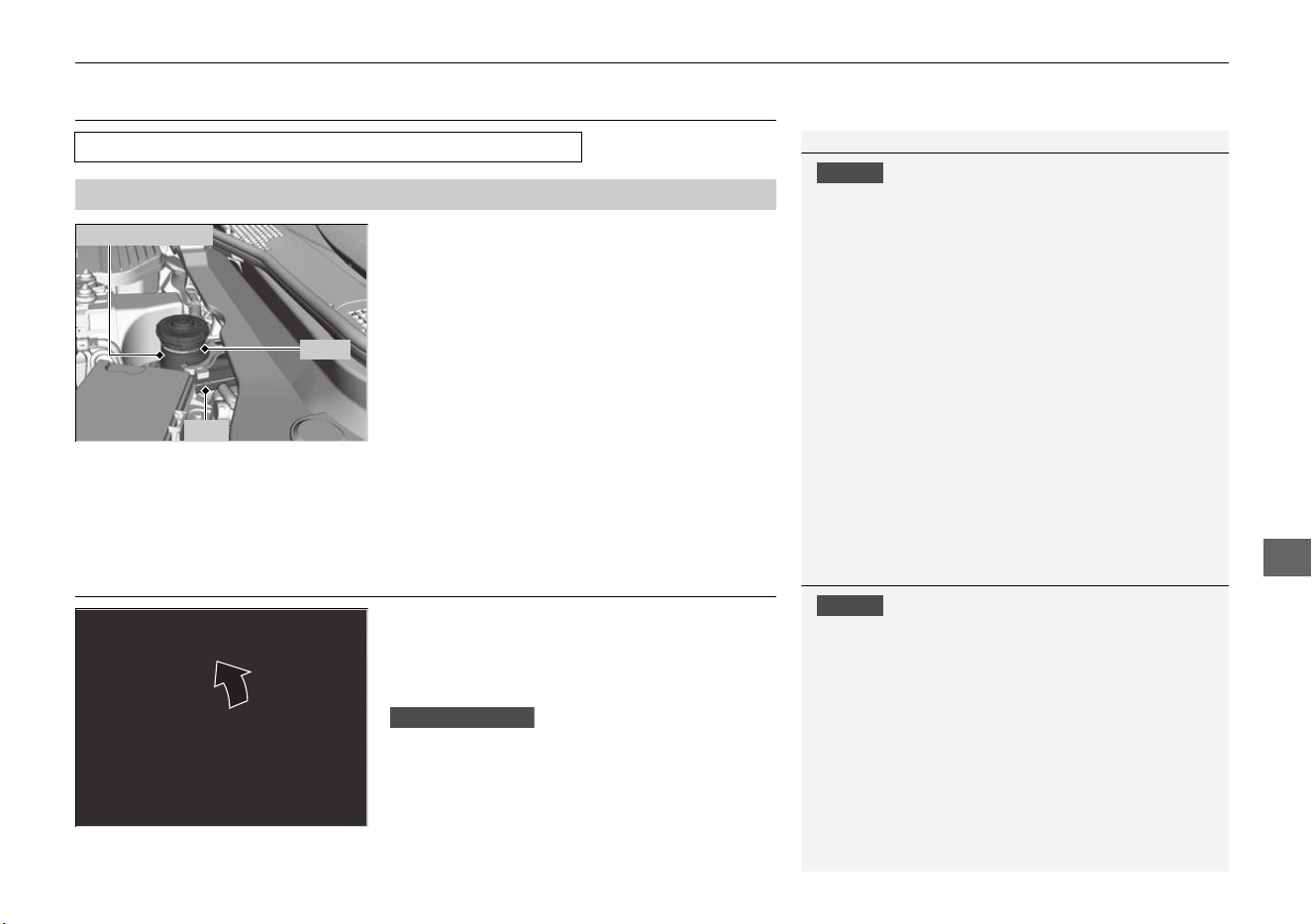
593
uuMaintenance Under the HooduBrake Fluid
Maintenance
Brake Fluid
The fluid level should be between the MIN
and MAX marks on the side of the reserve
tank.
Refilling Window Washer Fluid
Open the cap and check the amount of
window washer fluid.
If the level is low, fill the washer reservoir.
If the washer fluid is low, a message appears
on the driver information interface.
Pour the washer fluid carefully. Do not overflow the reservoir.
Specified fluid: Honda Heavy Duty Brake Fluid DOT 3
■
Checking the Brake Fluid
1Brake Fluid
NOTICE
Brake fluid marked DOT 5 is not compatible with your
vehicle’s braking system and can cause extensive
damage.
If the specified brake fluid is not available, you should
use only DOT 3 or DOT 4 fluid from a sealed
container as a temporary replacement.
Using any non-Honda brake fluid can cause corrosion
and decrease the longevity of the system. Have the
brake system flushed and refilled with Honda Heavy
Duty Brake Fluid DOT 3 as soon as possible.
If the brake fluid level is at or below the MIN mark,
have a dealer inspect the vehicle for leaks or worn
brake pads as soon as possible.
Brake Reservoir
MIN
MAX
1Refilling Window Washer Fluid
NOTICE
Do not use engine antifreeze or a vinegar/water
solution in the windshield washer reservoir.
Antifreeze can damage your vehicle’s paint. A
vinegar/water solution can damage the windshield
washer pump.
Use only commercially available windshield washer
fluid. Avoid prolonged use of hard water to prevent
lime scale buildup.
Canadian models
26 PILOT-31T906300.book 593 ページ 2025年10月8日 水曜日 午前11時43分
594
Maintenance
Replacing Light Bulbs
Headlights
Headlights are LED type. Have an authorized Honda dealer inspect and replace the
light assembly.
Fog Lights
Fog lights are LED type. Have an authorized Honda dealer inspect and replace the
light assembly.
Front Turn Signal Lights
Front turn signal lights are LED type. Have an authorized Honda dealer inspect and
replace the light assembly.
Front Side Marker Lights
Front side marker lights are LED type. Have an authorized Honda dealer inspect and
replace the light assembly.
Parking/Daytime Running Lights
Parking/daytime running lights are LED type. Have an authorized Honda dealer
inspect and replace the light assembly.
Side Turn Signal/Emergency Indicator Lights
*
Door mirror side turn lights are LED type. Have an authorized Honda dealer inspect
and replace the light assembly.
1Headlights
The headlight aim is set by the factory, and does not
need to be adjusted. However, if you regularly carry
heavy items in the cargo area or tow a trailer, have
the aiming readjusted at a dealer or by a qualified
technician.
* Not available on all models
26 PILOT-31T906300.book 594 ページ 2025年10月8日 水曜日 午前11時43分
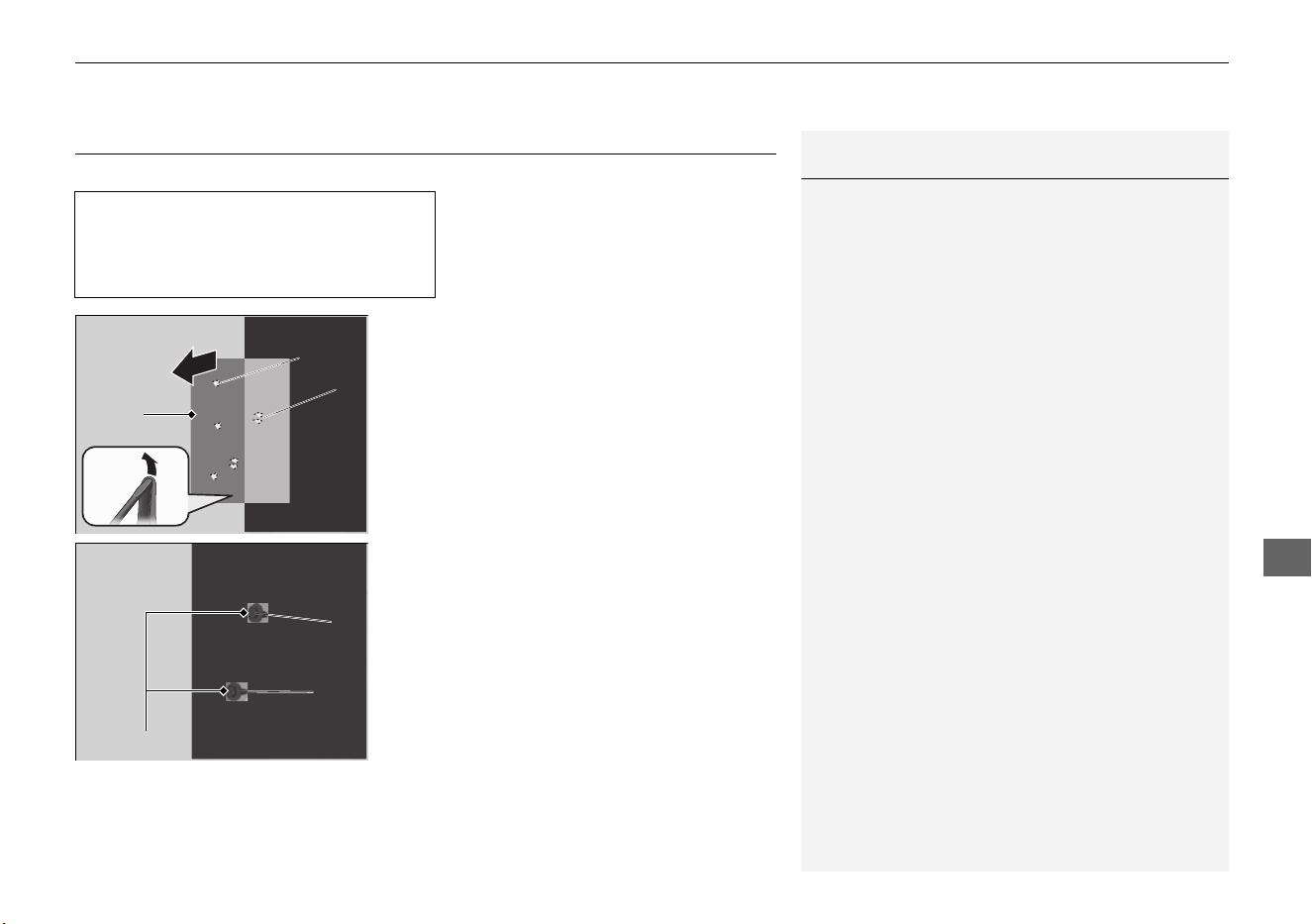
595
uuReplacing Light BulbsuBrake Lights, Taillights, Rear Side Marker Lights, and Rear Turn Signal Light Bulbs
Continued
Maintenance
Brake Lights, Taillights, Rear Side Marker Lights, and
Rear Turn Signal Light Bulbs
When replacing, use the following bulbs.
1. Pry on the edge of the cover using a flat-tip
screwdriver to remove the cover.
u Wrap the flat-tip screwdriver with a cloth
to prevent scratches.
2. Remove the bolts.
Brake Light: LED
Taillight: LED
Rear Side Marker Light: LED
Rear Turn Signal Light: 21 W (Amber)
1Brake Lights, Taillights, Rear Side Marker Lights, and Rear Turn
Signal Light Bulbs
Brake lights, taillights, and rear side marker lights are
LED type. Have an authorized Honda dealer inspect
and replace the light assembly.
Cover
Bolt
26 PILOT-31T906300.book 595 ページ 2025年10月8日 水曜日 午前11時43分
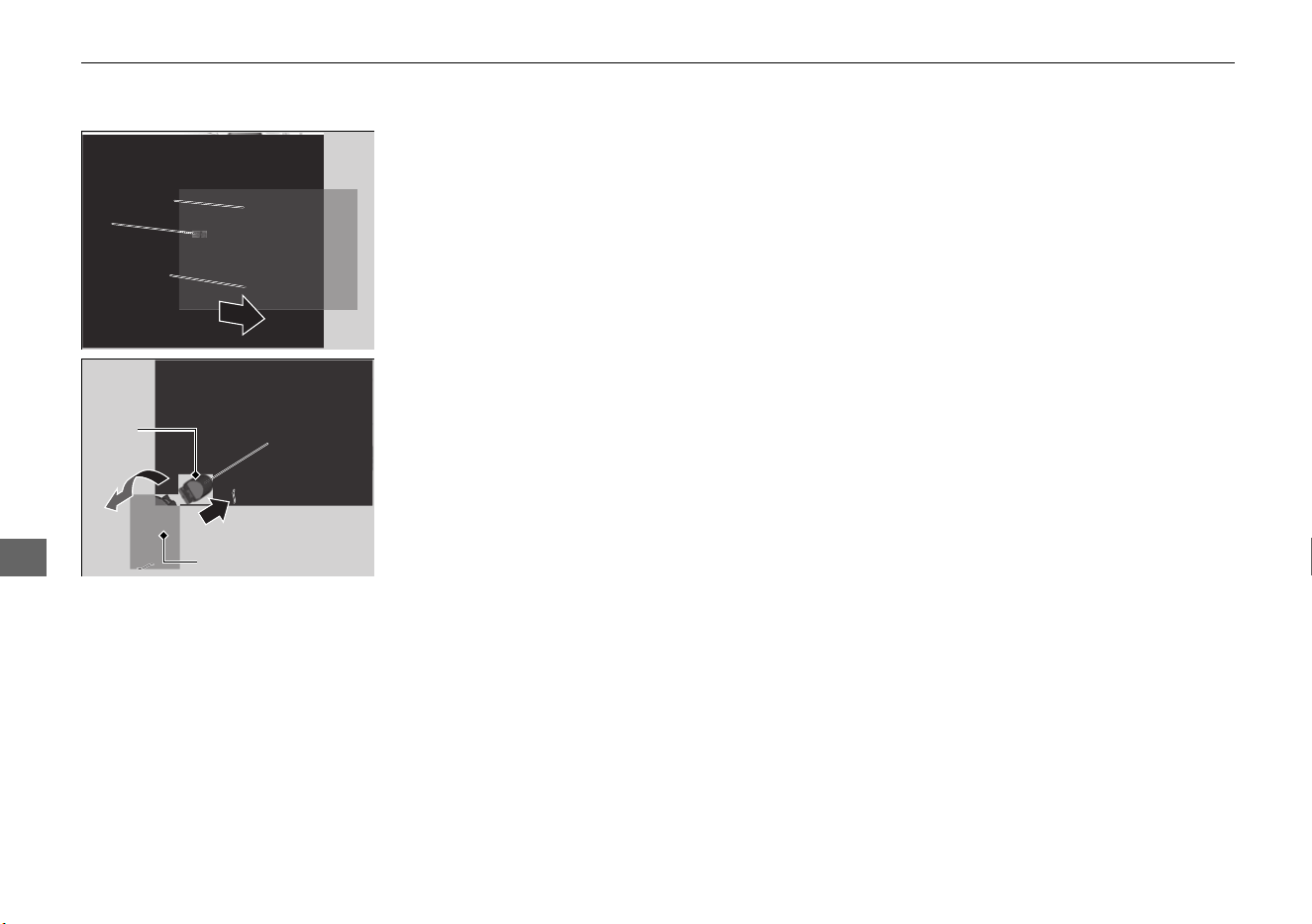
596
uuReplacing Light BulbsuBrake Lights, Taillights, Rear Side Marker Lights, and Rear Turn Signal Light Bulbs
Maintenance
3. Pull the light assembly out of the rear pillar.
4. Turn the socket counter-clockwise and
remove it.
5. Remove the old bulb and insert a new bulb.
6. Align the pins with the body grommets,
then push in until they fully seat.
Bulb
Socket
26 PILOT-31T906300.book 596 ページ 2025年10月8日 水曜日 午前11時43分
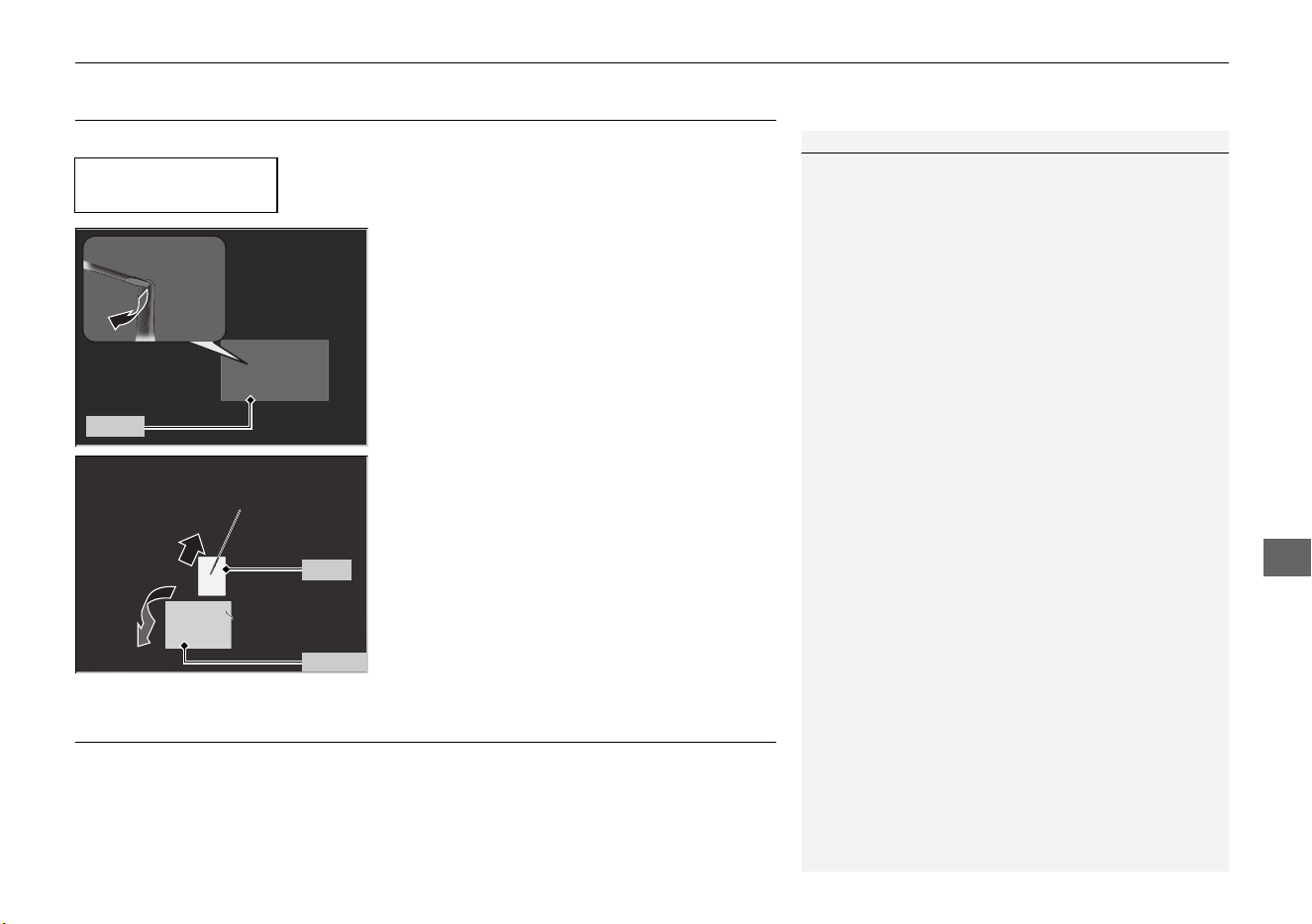
597
uuReplacing Light BulbsuTaillights
*
and Back-Up Light Bulbs
Maintenance
Taillights
*
and Back-Up Light Bulbs
When replacing, use the following bulbs.
1. Remove the cover by prying on the edge
using a flat-tip screwdriver.
u Wrap the flat-tip screwdriver with a cloth
to prevent scratches.
2. Turn the socket counter-clockwise and
remove it.
3. Remove the old bulb and insert a new bulb.
Rear License Plate Light
Rear license plate light is LED type. Have an authorized Honda dealer inspect and
replace the light assembly.
Taillight: LED
*
Back-Up Light: 21 W
1Taillights
*
and Back-Up Light Bulbs
Taillights are LED type. Have an authorized Honda
dealer inspect and replace the light assembly.
Cover
Bulb
Socket
* Not available on all models
26 PILOT-31T906300.book 597 ページ 2025年10月8日 水曜日 午前11時43分
598
uuReplacing Light BulbsuHigh-Mount Brake Light
Maintenance
High-Mount Brake Light
High-mount brake light is LED type. Have an authorized Honda dealer inspect and
replace the light assembly.
Puddle Lights
*
Puddle lights are LED type. Have an authorized Honda dealer inspect and replace the
light assembly.
* Not available on all models
26 PILOT-31T906300.book 598 ページ 2025年10月8日 水曜日 午前11時43分
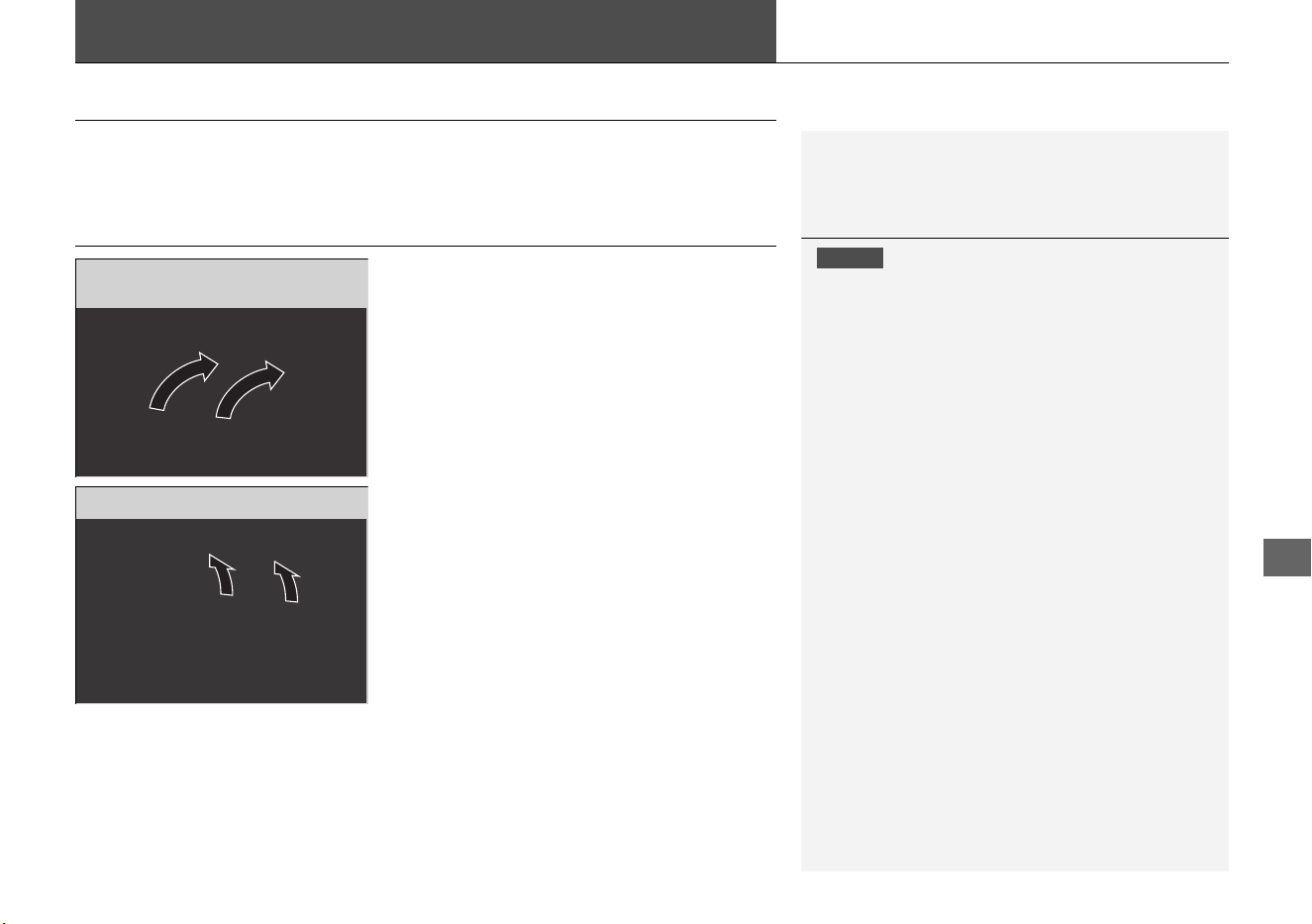
599
Maintenance
Checking and Maintaining Wiper Blades
Checking Wiper Blades
If the wiper blade rubber has deteriorated, it will leave streaks and become noisy,
and the hard surfaces of the blade may scratch the window glass.
Lifting the Front Wiper Arms
1. Set the power mode to VEHICLE OFF.
2. While holding the wiper switch in the MIST
position, set the power mode to ON, then
to VEHICLE OFF.
u Both wiper arms are set to the
maintenance position as shown in the
image.
3. Lift both wiper arms.
1Lifting the Front Wiper Arms
NOTICE
When lifting the wiper arms, always follow the
instructions to move them into the maintenance
position.
The wiper arms may be damaged if they are moved
manually.
26 PILOT-31T906300.book 599 ページ 2025年10月8日 水曜日 午前11時43分
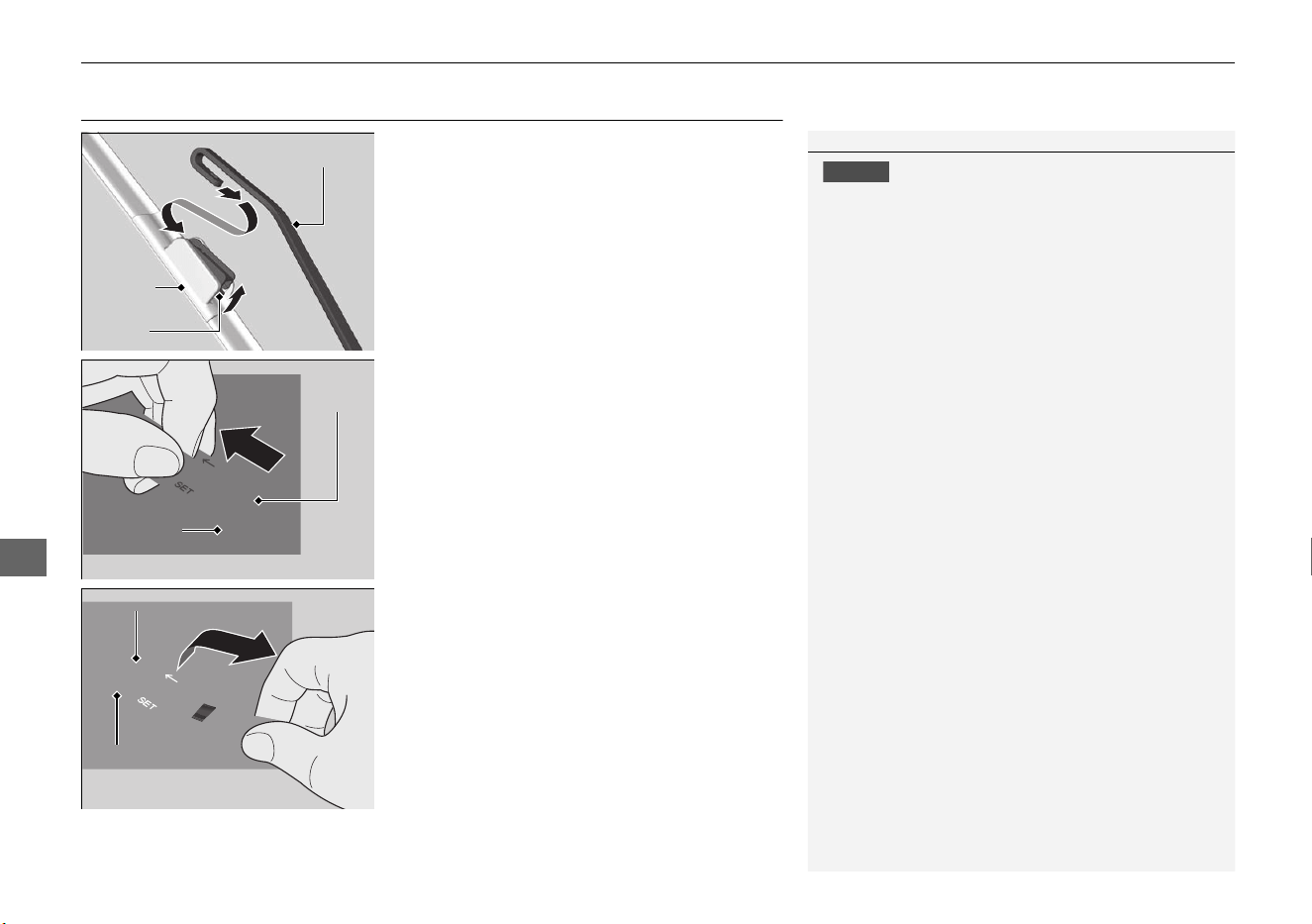
600
uuChecking and Maintaining Wiper BladesuChanging the Front Wiper Blade Rubber
Maintenance
Changing the Front Wiper Blade Rubber
1. Lift both wiper arms.
2 Lifting the Front Wiper Arms P. 599
2. Press up on and hold the tab, then slide the
holder off the wiper arm.
3. Pull the end of the wiper blade in the
direction of the arrow in the image until it is
out of the holder’s end cap.
4. Pull the wiper blade in the opposite
direction to slide it out of the holder.
1Changing the Front Wiper Blade Rubber
NOTICE
Avoid dropping the wiper arm onto the windshield,
as it may damage the wiper arm and/or the
windshield.
Tab
Holder
Wiper Arm
Wiper
Blade
End cap at
the bottom
Wiper Blade
Holder
26 PILOT-31T906300.book 600 ページ 2025年10月8日 水曜日 午前11時43分
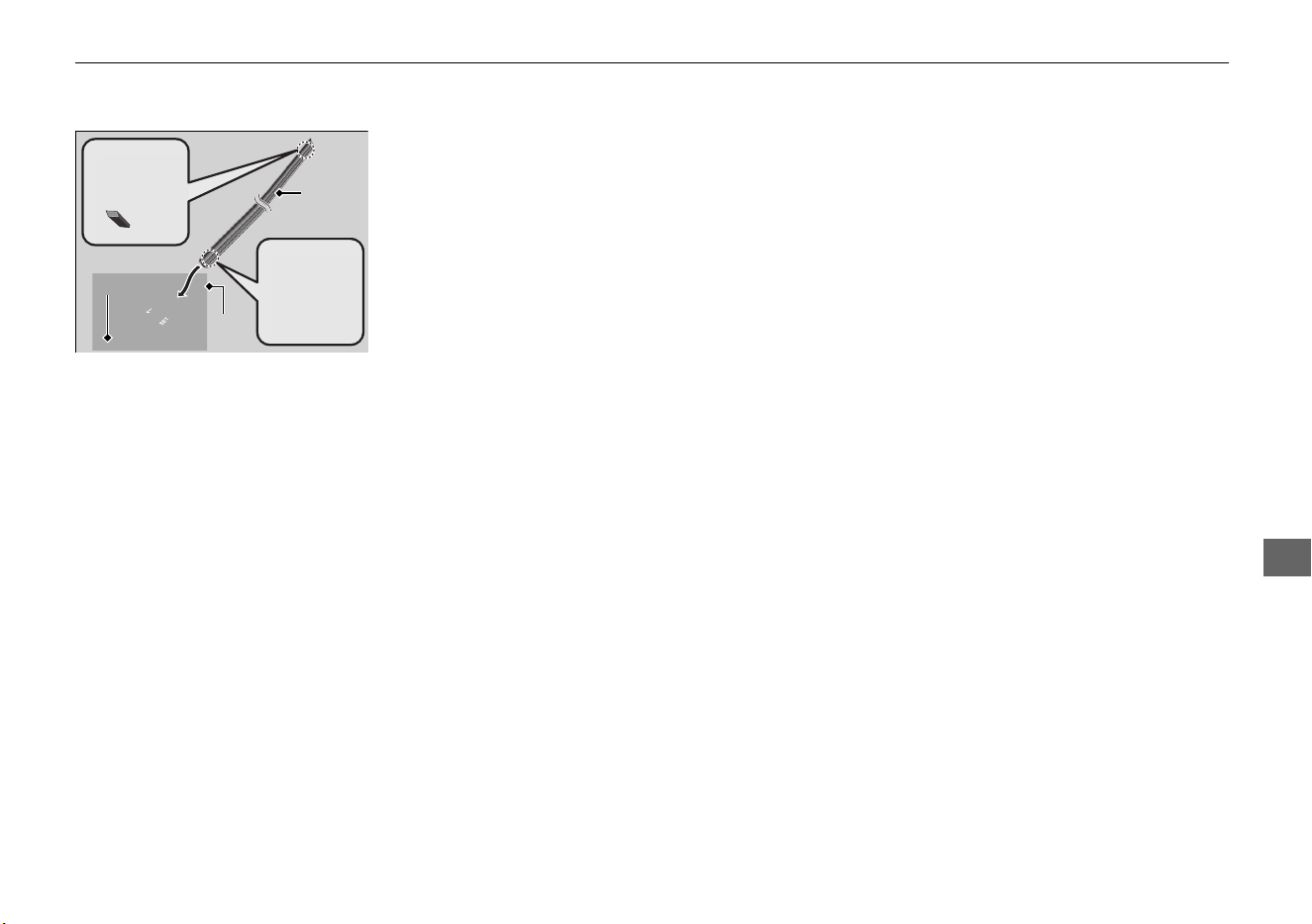
601
uuChecking and Maintaining Wiper BladesuChanging the Front Wiper Blade Rubber
Maintenance
5. Insert the flat side of the new wiper blade
onto the bottom part of the holder. Insert
the blade all the way.
6. Install the end of the wiper blade into the
cap.
7. Slide the holder onto the wiper arm until it
locks.
8. Lower both wiper arms.
9. Set the power mode to ON and hold the
wiper switch in the MIST position until both
wiper arms return to the standard position.
Holder
Wiper
Blade
Cap
26 PILOT-31T906300.book 601 ページ 2025年10月8日 水曜日 午前11時43分
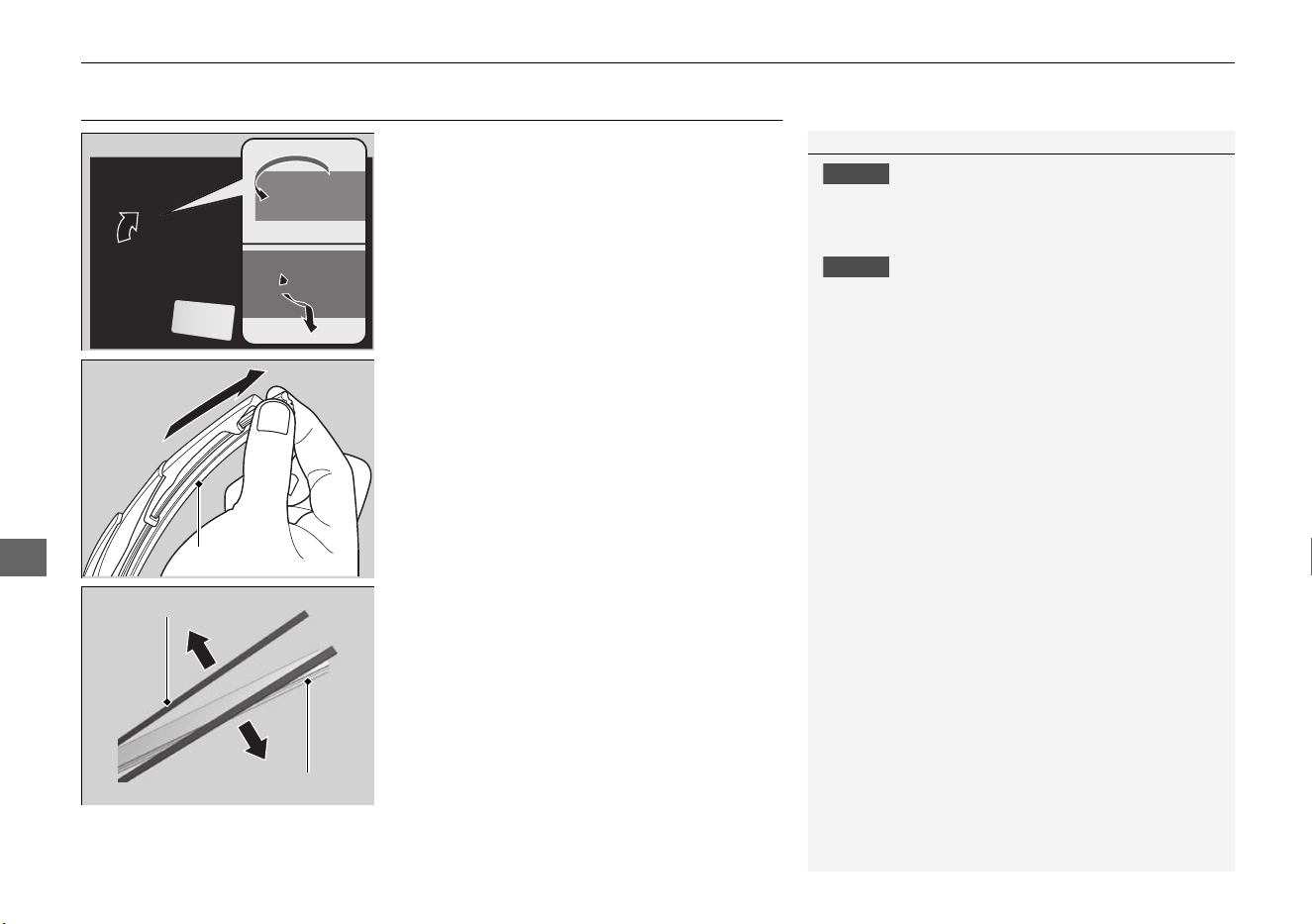
602
uuChecking and Maintaining Wiper BladesuChanging the Rear Wiper Blade Rubber
Maintenance
Changing the Rear Wiper Blade Rubber
1. Raise the wiper arm off.
2. Pivot the bottom end of the wiper blade up
until it comes off from the wiper arm.
3. Slide the wiper blade out from the wiper.
4. Remove the retainers from wiper blade and
mount to a new rubber blade.
1Changing the Rear Wiper Blade Rubber
NOTICE
Do not try to forcefully lift up the wiper arm.
The wiper arm may be damaged if it is lifted too high.
NOTICE
Avoid dropping the wiper arm, as it may damage the
rear window.
Blade
Retainer
Rubber
26 PILOT-31T906300.book 602 ページ 2025年10月8日 水曜日 午前11時43分
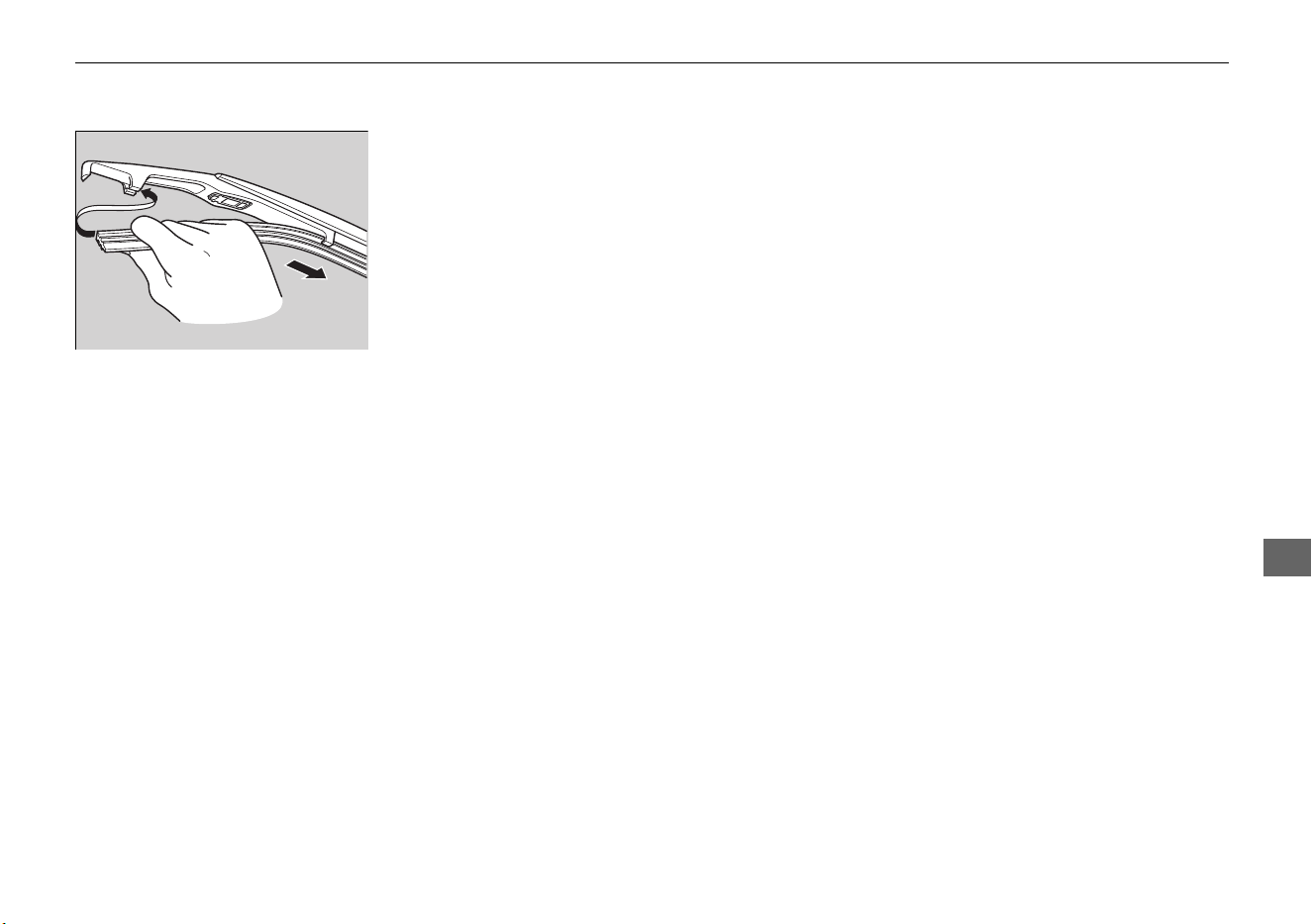
603
uuChecking and Maintaining Wiper BladesuChanging the Rear Wiper Blade Rubber
Maintenance
5. Slide the new wiper blade onto the holder.
u Make sure it is engaged correctly, then
install the wiper blade assembly onto the
wiper arm.
26 PILOT-31T906300.book 603 ページ 2025年10月8日 水曜日 午前11時43分
604
Maintenance
Checking and Maintaining Tires
Checking Tires
To safely operate your vehicle, your tires must be of the proper type and size, in
good condition with adequate tread, and properly inflated.
■
Inflation guidelines
Properly inflated tires provide the best combination of handling, tread life, and comfort.
Refer to the driver’s doorjamb label or specifications page for the specified pressure.
Underinflated tires wear unevenly, adversely affect handling and fuel economy, and
are more likely to fail from overheating.
Overinflated tires make your vehicle ride harshly, are more prone to road hazards,
and wear unevenly.
Every day before you drive, look at each of the tires. If one looks lower than the
others, check the pressure with a tire gauge.
At least once a month or before long trips, use a gauge to measure the pressure in
all tires, including the spare. Even tires in good condition can lose 1-2 psi (10-20 kPa,
0.1-0.2 kgf/cm
2
) per month.
■
Inspection guidelines
Every time you check inflation, also examine the tires and valve stems.
Look for:
• Bumps or bulges on the side or in the tread. Replace the tire if you find any cuts,
splits, or cracks in the side of the tire. Replace it if you see fabric or cord.
• Remove any foreign objects and inspect for air leaks.
• Uneven tread wear. Have a dealer check the wheel alignment.
• Excessive tread wear.
2 Wear Indicators P. 609
• Cracks or other damage around valve stem.
1Checking Tires
Measure the air pressure when tires are cold. This
means the vehicle has been parked for at least three
hours, or driven less than 1 mile (1.6 km). If
necessary, add or release air until the specified
pressure is reached.
If checked when hot, tire pressure can be as much as
4–6 psi (30–40 kPa, 0.3–0.4 kgf/cm
2
) higher than if
checked when cold.
Have a dealer check the tires if you feel a consistent
vibration while driving. New tires and any that have
been removed and reinstalled should be properly
balanced.
3
WARNING
Using tires that are excessively worn or
improperly inflated can cause a crash in
which you can be seriously hurt or killed.
Follow all instructions in this owner’s
manual regarding tire inflation and
maintenance.
26 PILOT-31T906300.book 604 ページ 2025年10月8日 水曜日 午前11時43分
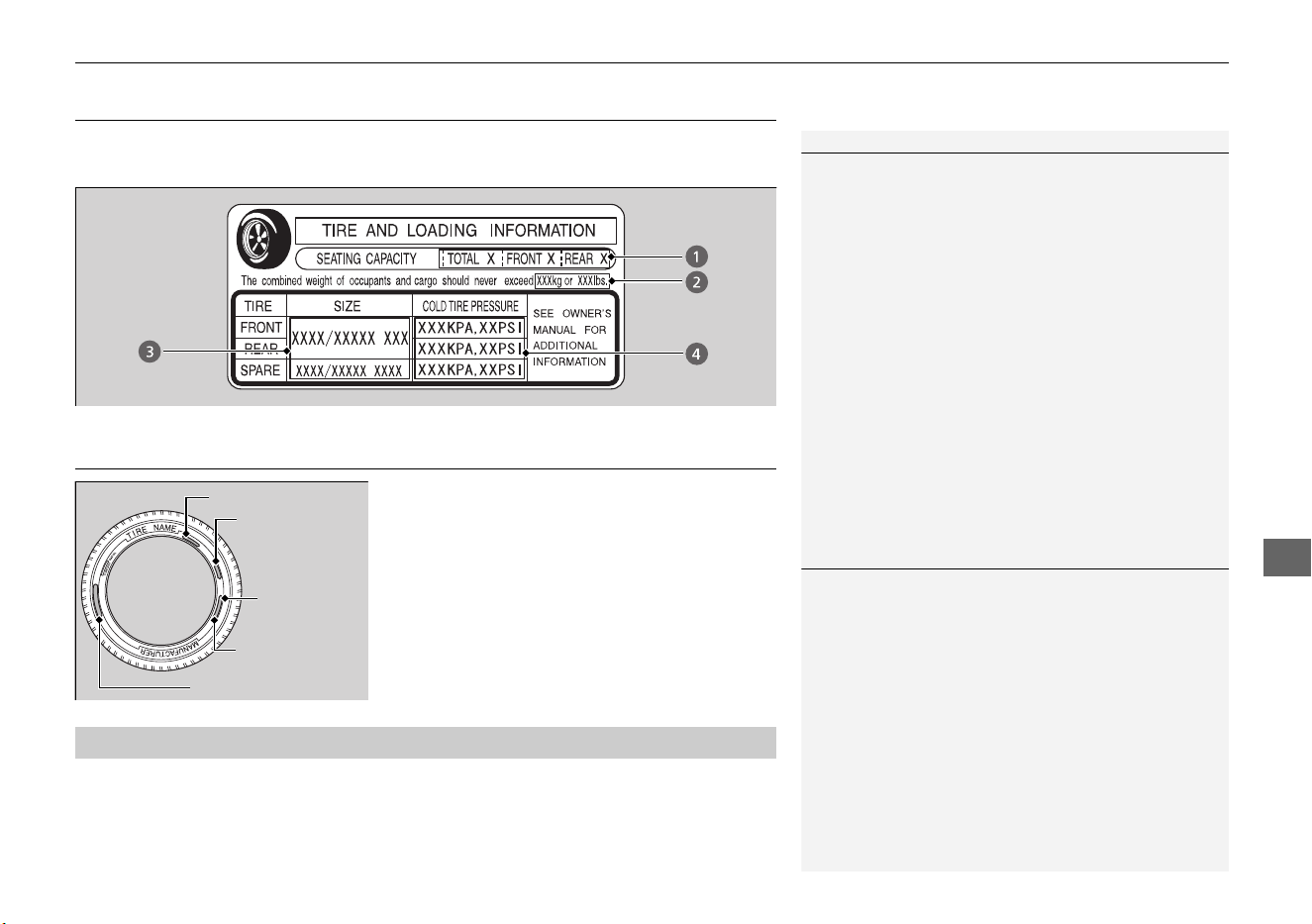
605
uuChecking and Maintaining TiresuTire and Loading Information Label
Continued
Maintenance
Tire and Loading Information Label
The label attached to the driver’s doorjamb provides necessary tire and loading
information.
Tire Labeling
The tires that came on your vehicle have a
number of markings. Those you should be
aware of are described as shown.
Whenever tires are replaced, they should be replaced with tires of the same size.
1Tire and Loading Information Label
The tire and loading information label attached to the
driver’s doorjamb contains:
a The number of people your vehicle can carry.
b The total weight your vehicle can carry. Do not
exceed this weight.
c The original tire sizes for front, rear, and spare.
d The proper cold tire pressure for front, rear, and
spare.
Label
Example
Example
Tire Size
Tire
Identification
Number (TIN)
Maximum
Tire Load
Maximum
Tire Pressure
Tire Size
■
Tire Sizes
1Tire Sizes
Following is an example of tire size with an
explanation of what each component means.
P235/60R18 102V
P: Vehicle type (P indicates passenger vehicle).
235: Tire width in millimeters.
60: Aspect ratio (the tire’s section height as a
percentage of its width).
R: Tire construction code (R indicates radial).
18: Rim diameter in inches.
102: Load index (a numerical code associated with
the maximum load the tire can carry).
V: Speed symbol (an alphabetical code indicating the
maximum speed rating).
26 PILOT-31T906300.book 605 ページ 2025年10月8日 水曜日 午前11時43分
uuChecking and Maintaining TiresuTire Labeling
606
Maintenance
The tire identification number (TIN) is a group of numbers and letters that look like
the examples in the side column. TIN is located on the sidewall of the tire.
Cold Tire Pressure – The tire air pressure when the vehicle has been parked for at
least three hours or driven less than 1 mile (1.6 km).
Load Rating – Means the maximum load that a tire is rated to carry for a given
inflation pressure.
Maximum Inflation Pressure – The maximum tire air pressure that the tire can
hold.
Maximum Load Rating – Means the load rating for a tire at the maximum
permissible inflation pressure for that tire.
Recommended Inflation Pressure – The cold tire inflation pressure recommended
by the manufacturer.
Treadwear Indicators (TWI) – Means the projections within the principal grooves
designed to give a visual indication of the degrees of wear of the tread.
■
Tire Identification Number (TIN)
■
Glossary of Tire Terminology
1Tire Identification Number (TIN)
There are two different formats that the TIN may be
listed in.
Format A
Format B
DOT B97R FW6X 2209
DOT: This indicates that the tire meets all
requirements of the U.S. Department of
Transportation.
B97R: Manufacturer’s identification mark.
FW6X: Tire type code.
22 09: Date of manufacture.
Year
Week
DOT 1A3 OFBEKP 1522
DOT: This indicates that the tire meets all
requirements of the U.S. Department of
Transportation.
1A3: PLANT CODE
OFBEKP: MANUFACTURER’S CODE
15 22: DATE CODE
Year
Week
26 PILOT-31T906300.book 606 ページ 2025年10月8日 水曜日 午前11時43分
607
uuChecking and Maintaining TiresuDOT Tire Quality Grading (U.S. Vehicles)
Continued
Maintenance
DOT Tire Quality Grading (U.S. Vehicles)
The tires on your vehicle meet all U.S. Federal Safety
Requirements. All tires are also graded for treadwear, traction,
and temperature performance according to Department of
Transportation (DOT) standards. The following explains these
gradings.
Quality grades can be found where applicable on the tire sidewall
between tread shoulder and maximum section width.
The treadwear grade is a comparative rating based on the wear
rate of the tire when tested under controlled conditions on a
specified government test course. For example, a tire graded 150
would wear one and one-half (1 1/2) times as well on the
government course as a tire graded 100. The relative performance
of tires depends upon the actual conditions of their use, however,
and may depart significantly from the norm due to variations in
driving habits, service practices and differences in road
characteristics and climate.
■
Uniform Tire Quality Grading
■
Treadwear
1Uniform Tire Quality Grading
For example:
Treadwear 200
Traction AA
Temperature A
All passenger car tires must conform
to Federal Safety Requirements in
addition to these grades.
26 PILOT-31T906300.book 607 ページ 2025年10月8日 水曜日 午前11時43分
uuChecking and Maintaining TiresuDOT Tire Quality Grading (U.S. Vehicles)
608
Maintenance
The traction grades, from highest to lowest, are AA, A, B, and C.
Those grades represent the tire’s ability to stop on wet pavement
as measured under controlled conditions on specified
government test surfaces of asphalt and concrete. A tire marked
C may have poor traction performance.
The temperature grades are A (the highest), B, and C,
representing the tire’s resistance to the generation of heat and its
ability to dissipate heat when tested under controlled conditions
on a specified indoor laboratory test wheel. Sustained high
temperature can cause the material of the tire to degenerate and
reduce tire life, and excessive temperature can lead to sudden tire
failure. The grade C corresponds to a level of performance which
all passenger car tires must meet under the Federal Motor Vehicle
Safety Standard No. 109. Grades B and A represent higher levels
of performance on the laboratory test wheel than the minimum
required by law.
■
Traction
■
Temperature
1Traction
Warning: The traction grade
assigned to this tire is based on
straight-ahead braking traction tests,
and does not include acceleration,
cornering, hydroplaning, or peak
traction characteristics.
1Temperature
Warning: The temperature grade for
this tire is established for a tire that is
properly inflated and not
overloaded. Excessive speed,
underinflation, or excessive loading,
either separately or in combination,
can cause heat buildup and possible
tire failure.
26 PILOT-31T906300.book 608 ページ 2025年10月8日 水曜日 午前11時43分
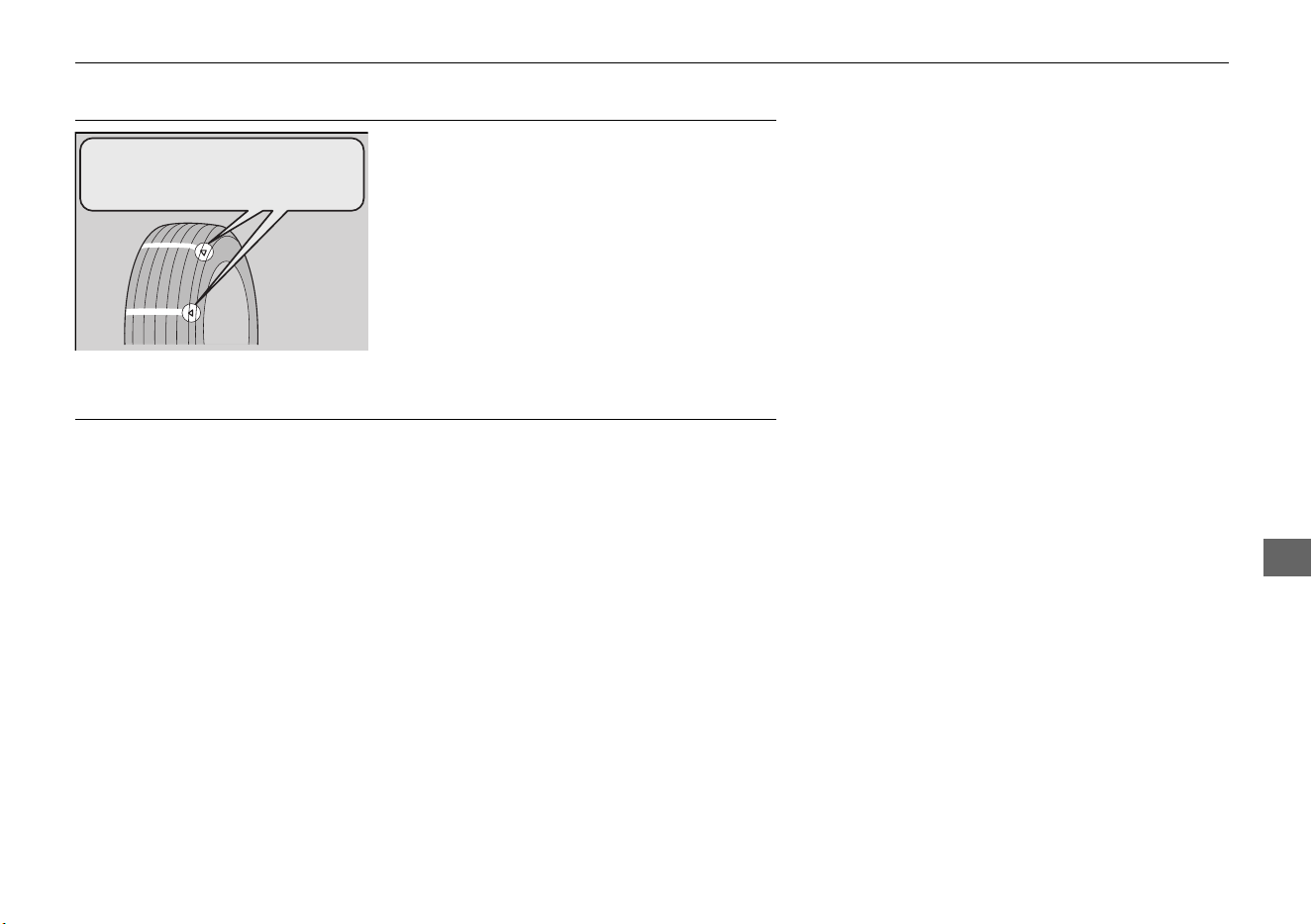
609
uuChecking and Maintaining TiresuWear Indicators
Maintenance
Wear Indicators
The groove where the wear indicator is
located is about 1/16 inch (about 1.6 mm)
shallower than elsewhere on the tire. If the
tread has worn so that the indicator is
exposed, replace the tire.
Worn out tires have poor traction on wet
roads.
Tire Service Life
The life of your tires is dependent on many factors, including driving habits, road
conditions, vehicle loading, inflation pressure, maintenance history, speed, and
environmental conditions (even when the tires are not in use).
In addition to regular inspections and inflation pressure maintenance, it is
recommended that you have annual inspections performed once the tires reach five
years old. All tires, including the spare, should be removed from service after 10
years from the date of manufacture, regardless of their condition or state of wear.
Example of a Wear
Indicator mark
26 PILOT-31T906300.book 609 ページ 2025年10月8日 水曜日 午前11時43分
610
uuChecking and Maintaining TiresuTire and Wheel Replacement
Maintenance
Tire and Wheel Replacement
Replace your tires with radials of the same size, load range, speed rating, and
maximum cold tire pressure rating (as shown on the tire's sidewall). Using tires of a
different size or construction can cause certain vehicle systems such as the ABS and
Vehicle Stability Assist
TM
(VSA®) system to work incorrectly.
It is best to replace all four tires at the same time. If that isn’t possible, replace the
front or rear tires in pairs.
Whenever you have a tire replaced or reset, make sure that the rubber valve stem is
replaced and that the TPMS sensor is transferred from the old valve stem to the new
one.
If you replace a wheel, make sure that the wheel’s specifications match those of the
original wheels.
1Tire and Wheel Replacement
3
WARNING
Installing improper tires on your vehicle can
affect handling and stability. This can cause
a crash in which you can be seriously hurt or
killed.
Always use the size and type of tires
recommended in this owner’s manual.
26 PILOT-31T906300.book 610 ページ 2025年10月8日 水曜日 午前11時43分
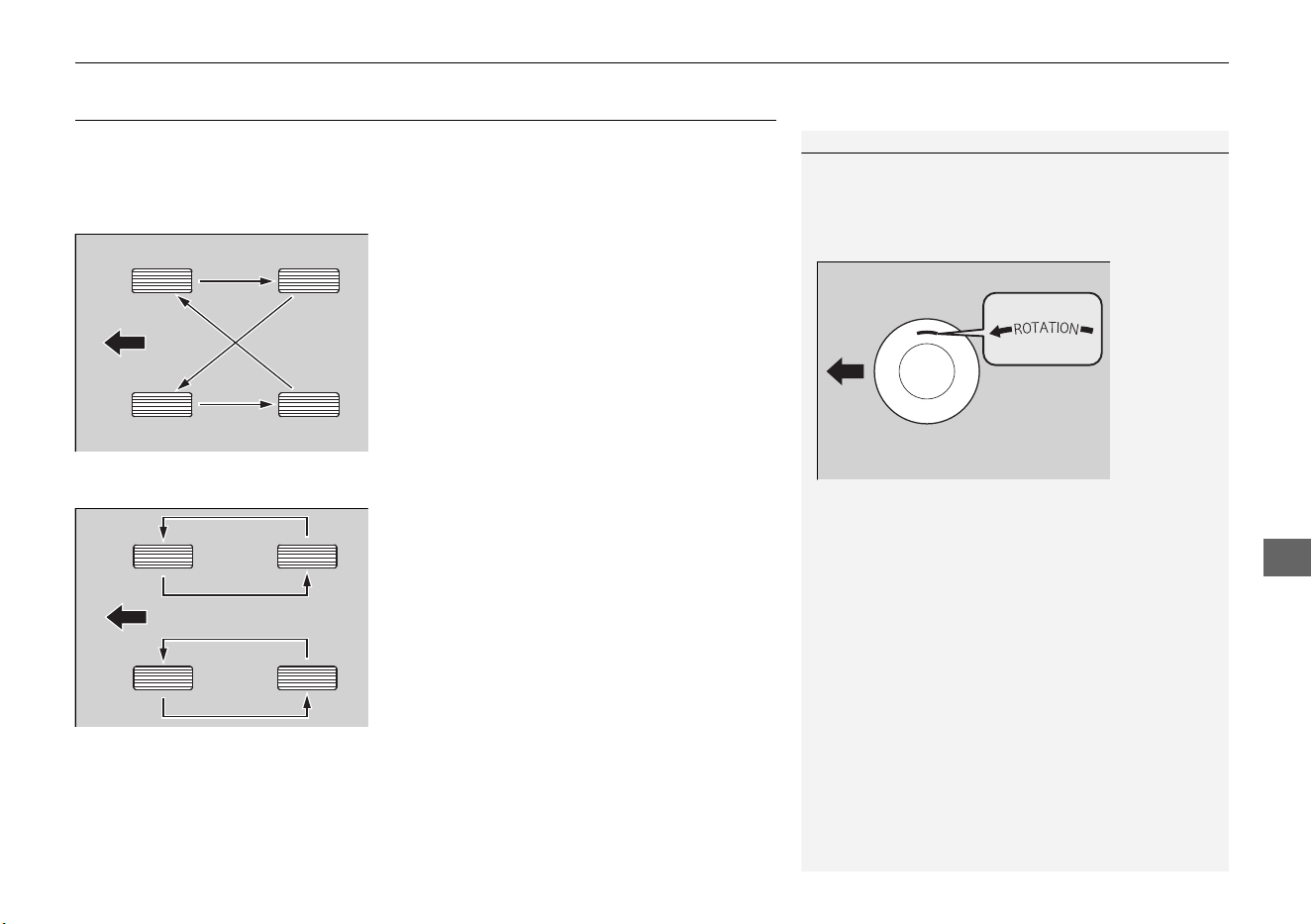
611
uuChecking and Maintaining TiresuTire Rotation
Maintenance
Tire Rotation
Rotating tires according to the maintenance messages on the driver information
interface helps to distribute wear more evenly and increase tire life.
■
Tires without rotation marks
Rotate the tires as shown here.
■
Tires with rotation marks
Rotate the tires as shown here.
1Tire Rotation
Tires with directional tread patterns should only be
rotated front to back (not from one side to the other).
Directional tires should be mounted with the rotation
indication mark facing forward, as shown below.
Wheel nut torque for the tires that come standard-
equipped with your vehicle is as follows.
Wheel nut torque:
94 lbf∙ft (127 N∙m, 13 kgf∙m)
Front
Rotation Mark
Front
Front
26 PILOT-31T906300.book 611 ページ 2025年10月8日 水曜日 午前11時43分
612
uuChecking and Maintaining TiresuWinter Tires
Maintenance
Winter Tires
If driving on snowy or frozen roads, mount all season marked M+S tires, snow tires,
or tire chains; reduce speed; and maintain sufficient distance between vehicles when
driving.
Be particularly careful when operating the steering wheel or brakes to prevent
skidding.
Use tire chains, snow tires, or all season tires when necessary or according to the law.
When mounting, refer to the following points.
For winter tires:
• Select the size and load ranges that are the same as the original tires.
• Mount the tires to all four wheels.
For tire chains:
• Install them on the front tires only.
• Because your vehicle has limited tire clearance, we strongly recommend using the
chains listed below:
• Follow the chain manufacturer’s instruction when installing. Mount them as
tightly as you can.
• Check that the chains do not touch the brake lines or suspension.
• Drive slowly.
Cable-type: Konig XB-16 265
Cable-type: Peerless Auto-Trac 0232605
1Winter Tires
NOTICE
Traction devices that are the wrong size or improperly
installed can damage your vehicle’s brake lines,
suspension, body, and wheels. Stop driving if they are
hitting any part of the vehicle.
When tire chains are mounted, follow the chain
manufacturer’s instructions regarding vehicle
operational limits.
If your vehicle is equipped with summer tires, be
aware that these tires are not designed for winter
driving conditions. For more information, contact a
dealer.
3
WARNING
Using the wrong chains, or not properly
installing chains, can damage the brake
lines and cause a crash in which you can be
seriously injured or killed.
Follow all instructions in this owner’s
manual regarding the selection and use of
tire chains.
Models with 255/60R18 tires
Models with 255/50R20 tires
Models with 265/60R18 tires
26 PILOT-31T906300.book 612 ページ 2025年10月8日 水曜日 午前11時43分
613
Maintenance
Battery
Checking the Battery
The condition of the battery is monitored by a
sensor located on the negative terminal of the
battery. If there is a problem with this sensor,
the driver information interface will display a
warning message. If this happens, have your
vehicle inspected by a dealer.
Check the battery terminals for corrosion monthly.
If your vehicle’s battery is disconnected or goes dead:
• The audio system is disabled.
2 Audio System Theft Protection P. 267
• The clock resets
*
.
2 Clock P. 150
•
The immobilizer system needs to be reset.
2 Immobilizer System Indicator P. 109
1Battery
WARNING: Battery post, terminals,
and related accessories contain lead
and lead compounds.
Wash your hands after handling.
When you find corrosion, clean the battery terminals
by applying a baking powder and water solution.
Clean the terminals with a damp towel. Cloth/towel
dry the battery. Coat the terminals with grease to
help prevent future corrosion.
When replacing the battery, the replacement must be
of the same specifications.
Consult a dealer for more information.
3
WARNING
The battery gives off explosive hydrogen
gas during normal operation.
A spark or flame can cause the battery to
explode with enough force to kill or
seriously hurt you.
When conducting any battery
maintenance, wear protective clothing and
a face shield, or have a skilled technician do
it.
Canadian models only
* Not available on all models
26 PILOT-31T906300.book 613 ページ 2025年10月8日 水曜日 午前11時43分
614
uuBatteryuCharging the AGM Battery
Maintenance
Charging the AGM Battery
AGM labeled batteries like those installed in your vehicle require a compatible
charger to be properly charged. Damage to the battery can result if the battery is
charged improperly or with the wrong equipment. For more information on how to
charge your vehicle’s AGM battery, consult a dealer.
If the battery cable is removed while a system update is being performed, the
electrical system can be permanently damaged. Only remove the battery cable when
a system update is not being performed.
1Battery
The battery installed in this vehicle is specifically
designed for a model with Auto Idle Stop or System
Updates. Using a battery other than this specified
type may shorten the battery life, and prevent Auto
Idle Stop or System Updates from activating. If you
need to replace the battery, make sure to select the
specified type and size. Ask a dealer for more details.
The Vehicle Stability Assist
TM
(VSA®) system, Adaptive
Cruise Control (ACC) with Low Speed Follow, brake
system (amber), and safety support indicators may
come on in amber along with a message in the driver
information interface when you set the power mode
to ON after reconnecting the battery.
With the engine running, turn the steering wheel to
the left until it stops then to the right until it stops,
then drive a short distance at more than 12 mph
(20 km/h). Each indicator should go off. If any does
not, have your vehicle checked by a dealer.
26 PILOT-31T906300.book 614 ページ 2025年10月8日 水曜日 午前11時43分
615
Maintenance
Remote Transmitter Care
Replacing the Remote Battery
If the indicator does not come on when the button is pressed, replace the battery.
1. Remove the built-in key.
2. With the buttons facing down, remove the
upper half of the cover by carefully prying
on the slot with the key grip.
u Wrap a key grip with a cloth to prevent
scratching the keyless remote.
3. Remove the battery by prying on the edge
with flat-tip screwdriver. Make sure to
replace the battery with the correct polarity.
u Wrap a flat-tip screwdriver with a cloth
to prevent scratching the keyless remote.
1Replacing the Remote Battery
NOTICE
An improperly disposed of battery can damage the
environment. Always confirm local regulations for
battery disposal.
Replacement batteries are commercially available or
at a dealer.
3
WARNING
CHEMICAL BURN HAZARD
The battery that powers the remote
transmitter can cause severe internal burns
and can even lead to death if swallowed.
Keep new and used batteries away from
children.
If you suspect that a child has swallowed
the battery, seek medical attention
immediately.
Battery type: CR2032
Battery
26 PILOT-31T906300.book 615 ページ 2025年10月8日 水曜日 午前11時43分
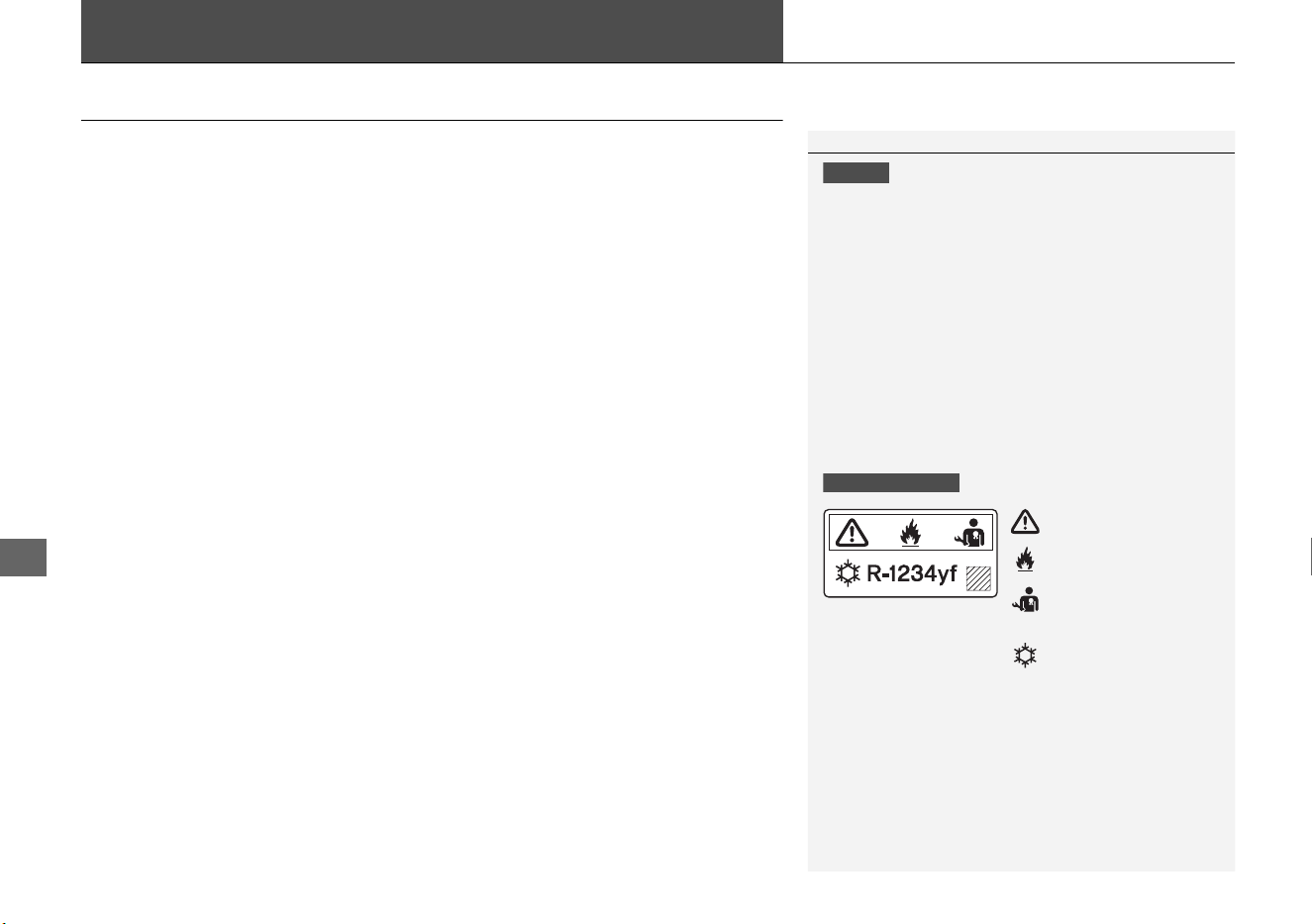
616
Maintenance
Climate Control System Maintenance
Air Conditioning
To ensure proper and safe operation, the Society of Automotive Engineers (SAE
J2845) recommends that the refrigerant system only be serviced by trained and
certified technicians.
Never repair or replace the air conditioning evaporator (cooling coil) with one
removed from a used or salvaged vehicle.
New replacement mobile air conditioning evaporators must be certified (and
labeled) as meeting SAE Standard J2842.
1Climate Control System Maintenance
NOTICE
Vented refrigerant is harmful to the environment.
To avoid refrigerant from venting, never replace the
evaporator with one removed from a used or
salvaged vehicle.
Refrigerant in your vehicle’s air conditioning system is
flammable and can be ignited during servicing if
proper procedures are not followed.
The air conditioner label is found under the hood:
2 Safety Labels P. 93
2 Specifications P. 670
Canadian models
Caution
Flammable Refrigerant
Requires Registered
Technician to Service
Air Conditioning
System
:
:
:
:
26 PILOT-31T906300.book 616 ページ 2025年10月8日 水曜日 午前11時43分
617
uuClimate Control System MaintenanceuDust and Pollen Filter
Maintenance
Dust and Pollen Filter
The climate control system is equipped with a dust and pollen filter that collects
pollen, dust, and other debris in the air. The Maintenance Minder
TM
messages will let
you know when to replace the filter.
We recommend that you replace the dust and pollen filter sooner when using your
vehicle in areas with high concentrations of dust.
1Dust and Pollen Filter
If the airflow from the climate control system
deteriorates noticeably, and the windows fog up
easily, the filter may need to be replaced. Please
contact a dealer for replacement.
26 PILOT-31T906300.book 617 ページ 2025年10月8日 水曜日 午前11時43分
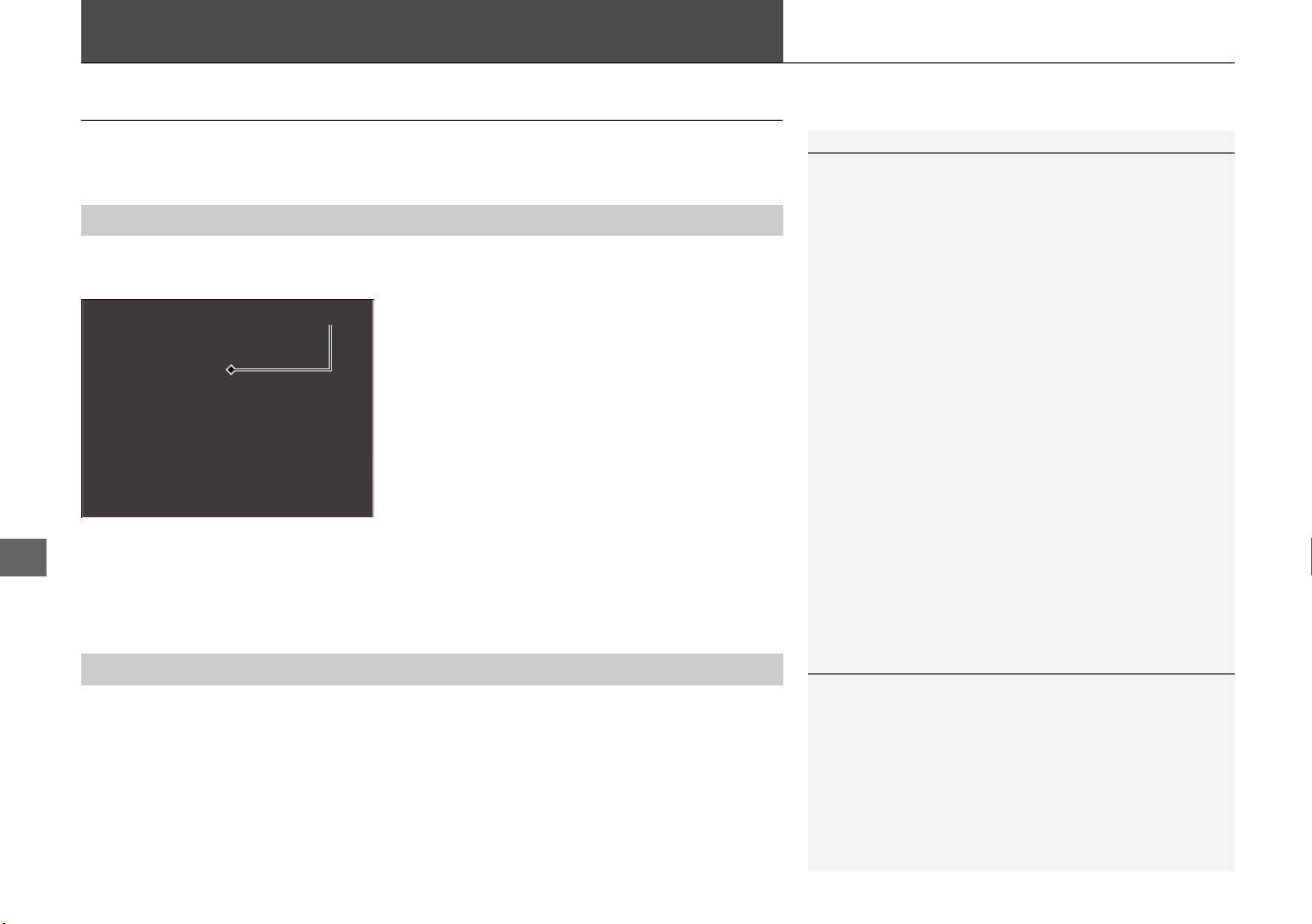
618
Maintenance
Cleaning
Interior Care
Use a damp cloth with a mixture of mild detergent and warm water to remove dirt.
Use a clean cloth to remove detergent residue.
Use a soft brush with a mixture of mild soap and warm water to clean the seat belts.
Let the belts air dry. Wipe the loops of the seat belt anchors using a clean cloth.
Wipe using a glass cleaner.
■
Cleaning Seat Belts
1Interior Care
Do not spill liquids inside the vehicle. Electrical
devices and systems may malfunction if liquids are
splashed on them.
Do not use silicone-based sprays on electrical devices
such as audio devices and switches. Doing so may
cause the items to malfunction or cause a fire inside
the vehicle.
If a silicone-based spray is inadvertently used on
electrical devices, consult a dealer.
Depending on their composition, chemicals and
liquid aromatics may cause discoloration, wrinkles,
and cracking to resin-based parts and textiles.
Do not use alkali solvents or organic solvents such as
benzene or gasoline.
After using chemicals, make sure to gently wipe them
away using a dry cloth.
Do not place used cloths on top of resin-based parts
or textiles for long periods of time without washing.
Loop
■
Cleaning the Window
1Cleaning the Window
Wires are mounted to the inside of the rear window.
Wipe along the same direction as the wires with a
soft cloth so as not to damage them.
Be careful not to spill fluids, such as water or glass
cleaner, on or around the cover of the electrical
components around the rearview mirror.
26 PILOT-31T906300.book 618 ページ 2025年10月8日 水曜日 午前11時43分
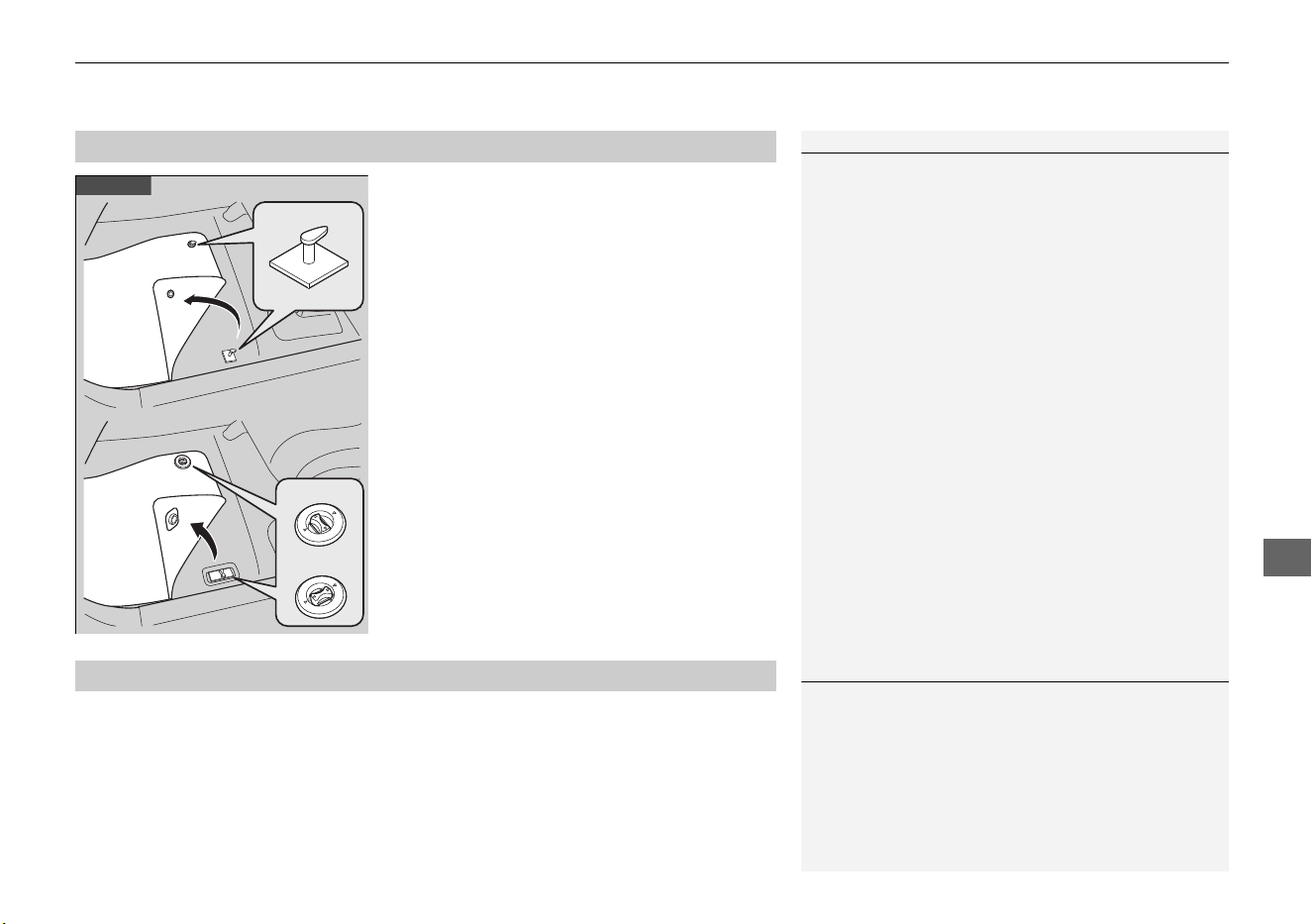
619
uuCleaninguInterior Care
Maintenance
The driver’s floor mat hooks over floor
anchors, which keep the mat from sliding
forward.
Do not put any additional floor mats on
top of the anchored mat.
To properly clean leather:
1. Use a vacuum or soft dry cloth first to remove any dirt or dust.
2. Clean the leather with a soft cloth dampened with a solution comprised of 90%
water and 10% neutral soap.
3. Wipe away any soap residue with a clean damp cloth.
4. Wipe away residual water and allow leather to air dry in the shade.
■
Floor Mats
1Floor Mats
If you use any floor mats that were not originally
provided with your vehicle, make sure they are
designed for your specific vehicle, fit correctly, and
are securely anchored by the floor anchors.
Position any rear seat floor mats properly. If not
properly positioned, the floor mats can interfere with
the front seat functions.
Lock
Unlock
Example
■
Maintaining Genuine Leather
1Maintaining Genuine Leather
It is important to clean or wipe away dirt or dust as
soon as possible. Spills can soak into leather, resulting
in stains. Dirt or dust can cause abrasions in the
leather. In addition, please note that some dark
colored clothing can rub onto the leather seats,
resulting in discoloration or stains.
26 PILOT-31T906300.book 619 ページ 2025年10月8日 水曜日 午前11時43分
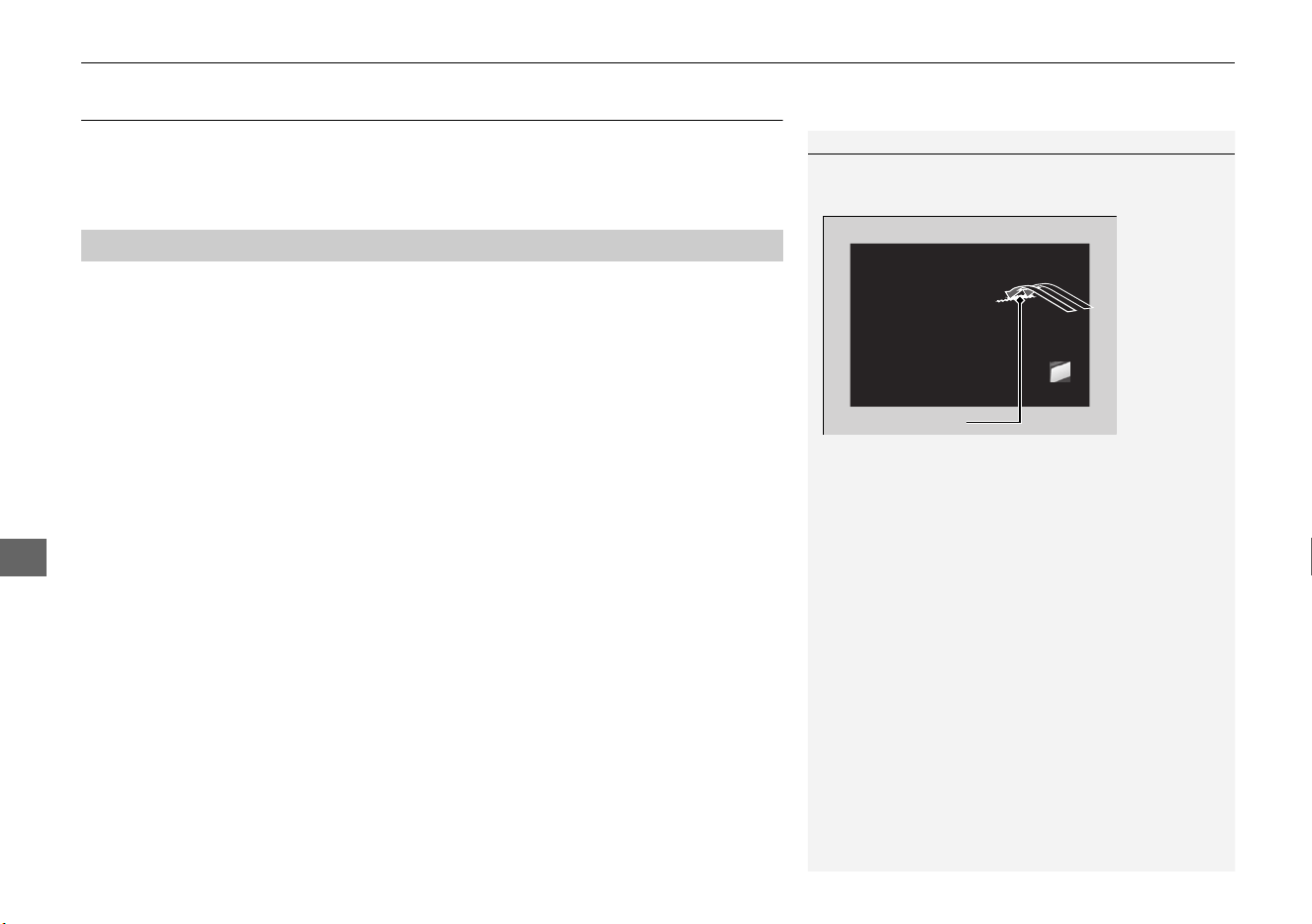
620
uuCleaninguExterior Care
Maintenance
Exterior Care
Dust off the vehicle body after you drive.
Regularly inspect your vehicle for scratches on painted surfaces. A scratch on a
painted surface can result in body rust. If you find a scratch, promptly repair it.
Wash the vehicle regularly. Wash more frequently when driving in the following
conditions:
• If driving on roads with road salt.
• If driving in coastal areas.
• If tar, soot, bird droppings, insects, or tree sap is stuck to painted surfaces.
■
Washing the Vehicle
1Washing the Vehicle
Do not spray water into the air intake vents. It can
cause a malfunction.
Lock the doors when washing the vehicle. Do not
spray water onto the fuel fill door directly. A high-
pressure spray may cause it to open.
Do not spray water onto the capless unit when the
fuel fill door is open. It can cause damage to the fuel
system or engine.
If you need to lift the wiper arms away from the
windshield, first set the wiper arms to the
maintenance position.
2 Lifting the Front Wiper Arms P. 599
If water and any chemicals are on the brakes when
your vehicle is being washed, drive a short distance
and apply the brakes several times before parking.
Parking while brakes are wet may cause them to be
stuck by rust.
Air Intake Vents
26 PILOT-31T906300.book 620 ページ 2025年10月8日 水曜日 午前11時43分
Continued
621
uuCleaninguExterior Care
Maintenance
• Make sure to follow the instructions indicated on the automated car wash.
• Fold in the door mirrors.
• For models equipped with automatic intermittent wipers, turn the wipers off.
• Keep sufficient distance between the cleaning nozzle and the vehicle body.
• Take particular care around the windows. Standing too close may cause water to
enter the vehicle interior.
• Do not spray high pressure water directly into the engine compartment. Instead,
use low pressure water and a mild detergent.
• Do not spray water directly onto the camera or the area around it. Water may
enter the lens and cause the camera to malfunction.
A good coat of automotive body wax helps protect your vehicle’s paint from the
elements. Wax will wear off over time and expose your vehicle’s paint to the
elements, so reapply as necessary.
If you get gasoline, oil, engine coolant, or battery fluid on resin-coated parts, they
may stain or the coating may peel. Promptly wipe it away using a soft cloth and
clean water.
■
Using an Automated Car Wash
■
Using High Pressure Cleaners
■
Applying Wax
■
Maintaining the Bumpers and Other Resin-Coated Parts
1Using an Automated Car Wash
When using an automated car wash that pulls the
vehicle through with a conveyor, make sure the
transmission in
(N position.
2 If you want to keep the transmission in
(N
position [car wash mode] P. 423
1Applying Wax
NOTICE
Chemical solvents and strong cleaners can damage
the paint, metal, and plastic on your vehicle. Wipe
away spills immediately.
1Maintaining the Bumpers and Other Resin-Coated Parts
Ask a dealer about the correct coating material when
you want to repair the painted surface of the parts
made of resin.
26 PILOT-31T906300.book 621 ページ 2025年10月8日 水曜日 午前11時43分

622
uuCleaninguExterior Care
Maintenance
Wipe using a glass cleaner.
Aluminum is susceptible to deterioration caused by salt and other road
contaminants. When necessary, as early as possible use a sponge and mild detergent
to wipe away these contaminants. Do not use a stiff brush or harsh chemicals
(including some commercial wheel cleaners). These can damage the protective finish
on aluminum alloy wheels, resulting in corrosion. Depending on the type of finish,
the wheels also may lose their luster or appear burnished. To avoid water stains,
wipe the wheels dry with a cloth while they are still wet.
The inside lenses of exterior lights (headlights, brake lights, etc.) may fog temporarily
if you have driven in the rain, or after the vehicle has been run through a car wash.
Dew condensation also may build up inside the lenses when there is a significant
enough difference between the ambient and inside lens temperatures (similar to
vehicle windows fogging up in rainy conditions). These conditions are natural
processes, not structural design problems in the exterior lights.
Lens design characteristics may result in moisture developing on the light lens frame
surfaces. This also is not a malfunction.
However, if you see large amounts of water accumulation, or large water drops
building up inside the lenses, have your vehicle inspected by a dealer.
■
Cleaning the Window
■
Maintaining Aluminum Wheels
■
Fogged Exterior Light Lenses
26 PILOT-31T906300.book 622 ページ 2025年10月8日 水曜日 午前11時43分
623
Maintenance
Accessories and Modifications
Accessories
When installing accessories, check the following:
• Do not install accessories on the windshield. They can obstruct your view and
delay your reaction to driving conditions.
• Do not install any items other than Honda Genuine Accessories designated for
your vehicle over areas marked SRS AIRBAG, on the sides or backs of the front
seats, on front or side pillars, or near the side windows.
Items other than Honda Genuine Accessories designated for your vehicle installed
in these areas may interfere with proper operation of the vehicle’s airbags or may
be propelled into you or another occupant if the airbags deploy.
• Be sure electronic accessories do not overload electrical circuits or interfere with
proper operation of your vehicle.
2 Fuses P. 654
• Before installing any electronic accessory, have the installer contact a dealer for
assistance. If possible, have a dealer inspect the final installation.
1Accessories and Modifications
Honda Genuine Accessories are recommended to
ensure proper operation on your vehicle.
Some Honda Genuine Accessories are supplied with
an exclusive owner’s manual for the operation and
care detail of the product. If an accessory owner’s
manual is provided to you, please refer to it for full
detail.
If any Honda Genuine Accessories become
inoperable, refer to the separate accessory owner’s
manual (if applicable) or consult a dealer for
assistance to troubleshoot the potential faulty
condition.
3
WARNING
Improper accessories or modifications can
affect your vehicle’s handling, stability, and
performance, and cause a crash in which
you can be seriously hurt or killed.
Follow all instructions in this owner’s
manual regarding accessories and
modifications.
26 PILOT-31T906300.book 623 ページ 2025年10月8日 水曜日 午前11時43分
624
uuAccessories and ModificationsuModifications
Maintenance
Modifications
Do not modify your vehicle in a manner that may affect its handling, stability, or
reliability, or install non-genuine Honda parts or accessories that may have a similar
effect.
Even minor modifications to vehicle systems can affect overall vehicle performance.
Always make sure all equipment is properly installed and maintained, and do not
make any modification to your vehicle or its systems that might cause your vehicle
to no longer meet federal, state, province, territory, and local regulations.
The on-board diagnostic port (OBD-II/SAE J1962 connector) installed on this vehicle
is intended to be used with automobile system diagnostic devices or with other
devices that Honda has approved. Use of any other type of device may adversely
affect the vehicle’s electronic systems or allow them to be compromised, possibly
resulting in a system malfunction, drained battery, or other unexpected problems.
Do not modify or attempt to repair any of the electrical components.
26 PILOT-31T906300.book 624 ページ 2025年10月8日 水曜日 午前11時43分

625
Handling the Unexpected
This chapter explains how to handle unexpected troubles.
Tools
Types of Tools .................................. 626
If a Tire Goes Flat
Changing a Flat Tire......................... 627
Engine Does Not Start
Checking the Engine........................ 638
If the Keyless Remote Battery is Weak .. 640
Emergency Engine Start ................... 641
Emergency Engine Stop ................... 642
If the Battery Is Dead ....................... 643
Overheating
How to Handle Overheating............. 645
Indicator Coming On/Blinking
If the Engine oil pressure low Warning
Appears............................................. 647
If the Charging System Indicator Comes On ....648
If the Malfunction Indicator Lamp Comes
On or Blinks ................................... 648
If the Brake System Indicator (Red) Comes
On or Blinks ................................... 649
If the Electric Power Steering (EPS) System
Indicator Comes On ....................... 650
If the Brake System Indicator (Red) Comes On
or Blinks at the Same Time When the Brake
System Indicator (Amber) Comes On .. 651
If the Low Tire Pressure/TPMS Indicator
Comes On or Blinks ....................... 652
If the Transmission System Indicator Blinks
along with the Warning Message .......653
Fuses
Fuse Locations ................................. 654
Inspecting and Changing Fuses........ 659
Emergency Towing........................... 661
If You Cannot Unlock the Fuel Fill Door
..662
If You Cannot Open the Tailgate .... 663
Refueling........................................... 664
Emergency Call (eCall)...................... 665
26 PILOT-31T906300.book 625 ページ 2025年10月8日 水曜日 午前11時43分
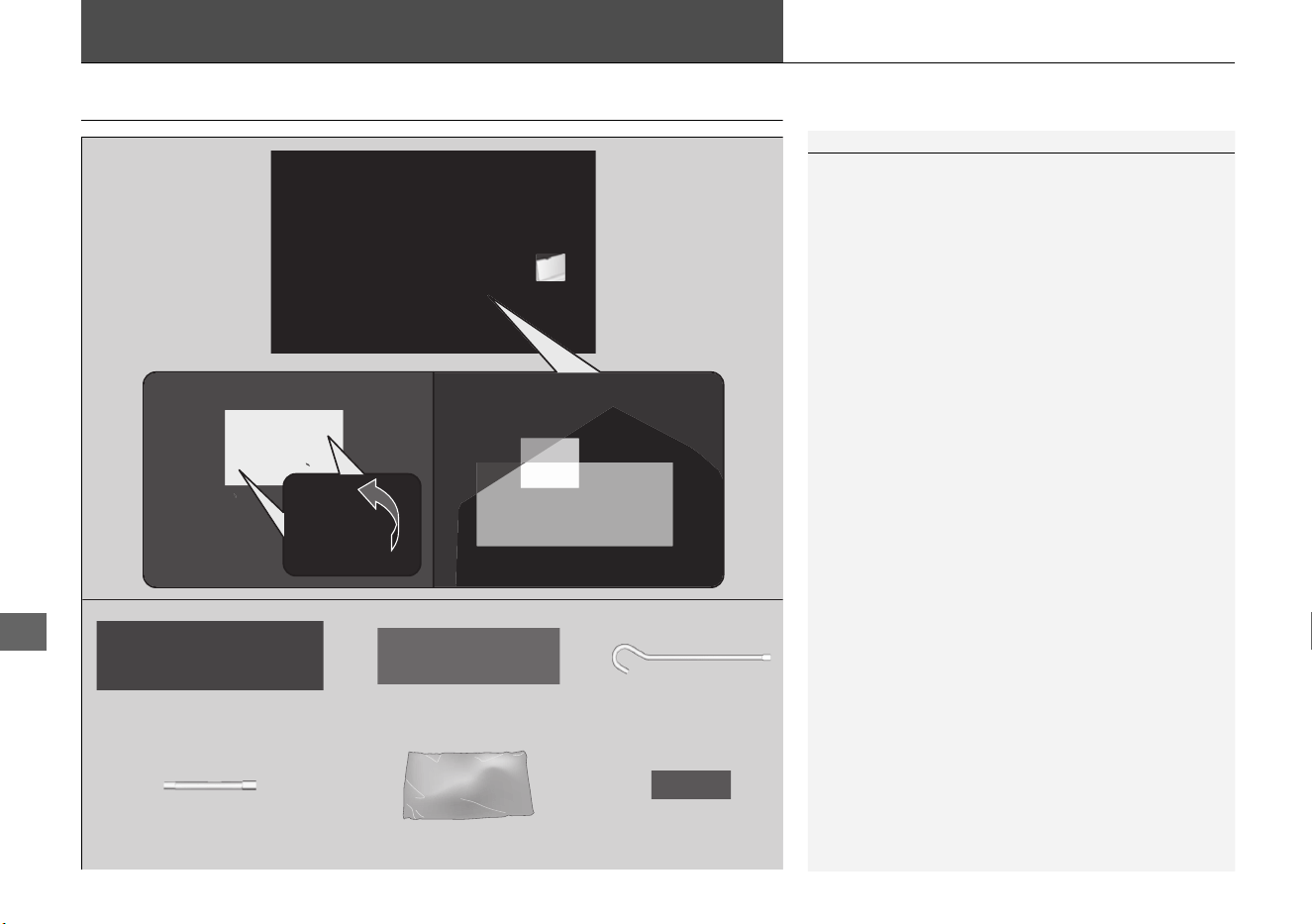
627
Continued
Handling the Unexpected
If a Tire Goes Flat
Changing a Flat Tire
If a tire goes flat while driving, grasp the steering wheel firmly and brake gradually
to reduce speed. Then, stop in a safe place. Replace the flat tire with a compact
spare tire
*
/full-size spare tire
*
. Go to a dealer as soon as possible to have the regular
tire repaired or replaced.
1. Park the vehicle on a firm, level, non-slippery surface and apply the parking brake.
2. Put the transmission into
(P.
3. Turn on the hazard warning lights and set the power mode to VEHICLE OFF.
1Changing a Flat Tire
Follow compact spare
*
precautions:
Periodically check the tire pressure of the compact
spare. It should be set to the specified pressure.
2 Specifications P. 670
When driving with the compact spare tire, keep the
vehicle speed under 50 mph (80 km/h). Replace with
a regular tire as soon as possible.
The compact spare tire and wheel in your vehicle are
specifically for this model. Do not use them with
another vehicle. Do not use another type of compact
spare tire or wheel with your vehicle.
Do not mount tire chains on a compact spare tire.
If a chain-mounted front tire goes flat, remove one of
the regular rear tires and replace it with the compact
spare tire. Remove the flat front tire and replace it
with the regular tire that was removed from the rear.
Mount the tire chains on the front tire.
* Not available on all models
26 PILOT-31T906300.book 627 ページ 2025年10月8日 水曜日 午前11時43分
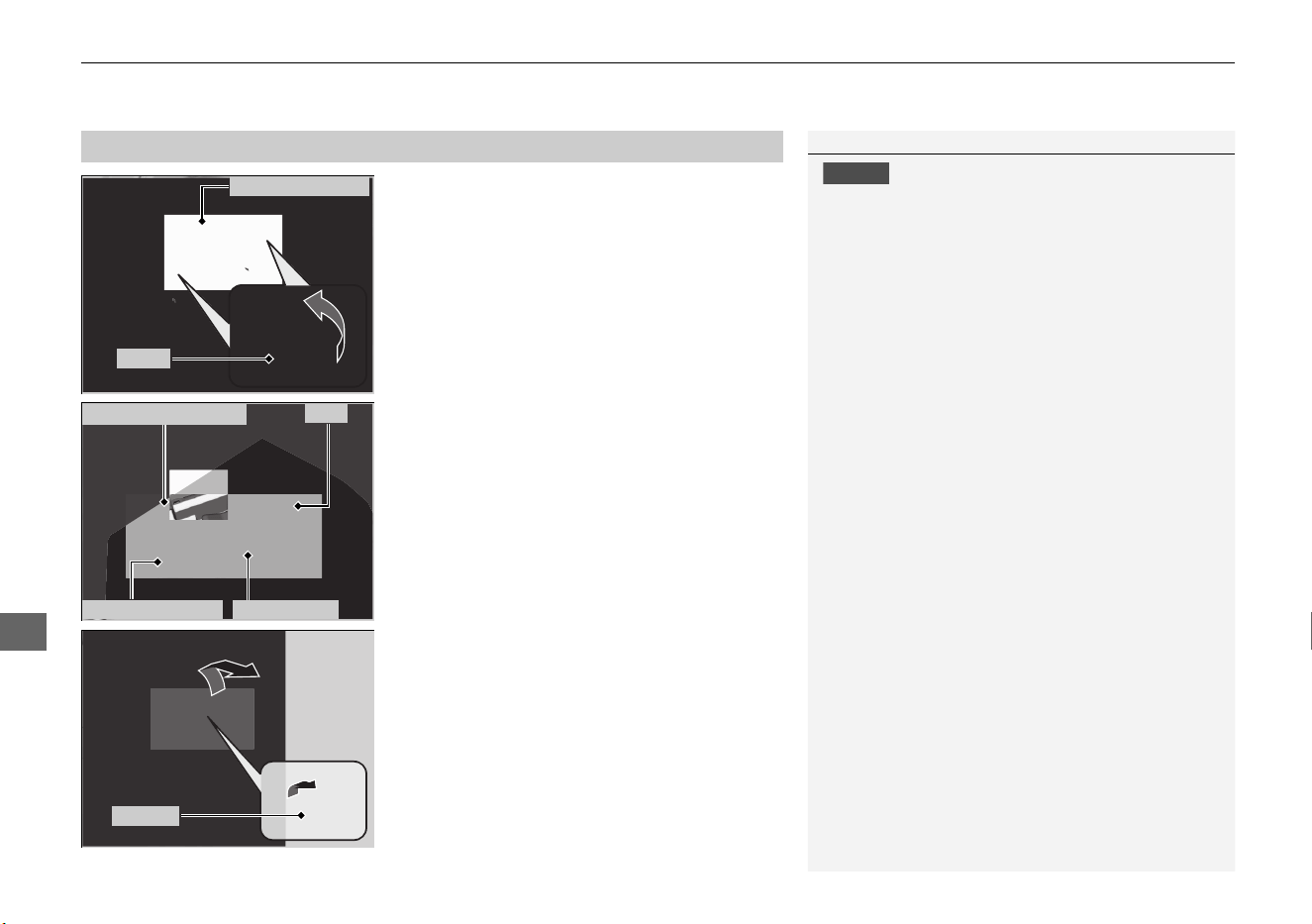
uuIf a Tire Goes FlatuChanging a Flat Tire
628
Handling the Unexpected
1. Turn the knobs counter-clockwise to
remove the tool case cover.
2. Take the jack, wheel nut wrench, jack
handle bar, and box wrench out of the
tool case.
3. Pull the rear edge of the handle on the
floor lid and remove the lid.
■
Getting Ready to Replace the Flat Tire
1Changing a Flat Tire
NOTICE
Do not use the jack if it doesn’t work properly. Call
your dealer or a professional towing service.
Knob
Tool Case Cover
Wheel Nut Wrench
Jack Handle Bar
Jack
Box Wrench
Handle
26 PILOT-31T906300.book 628 ページ 2025年10月8日 水曜日 午前11時43分
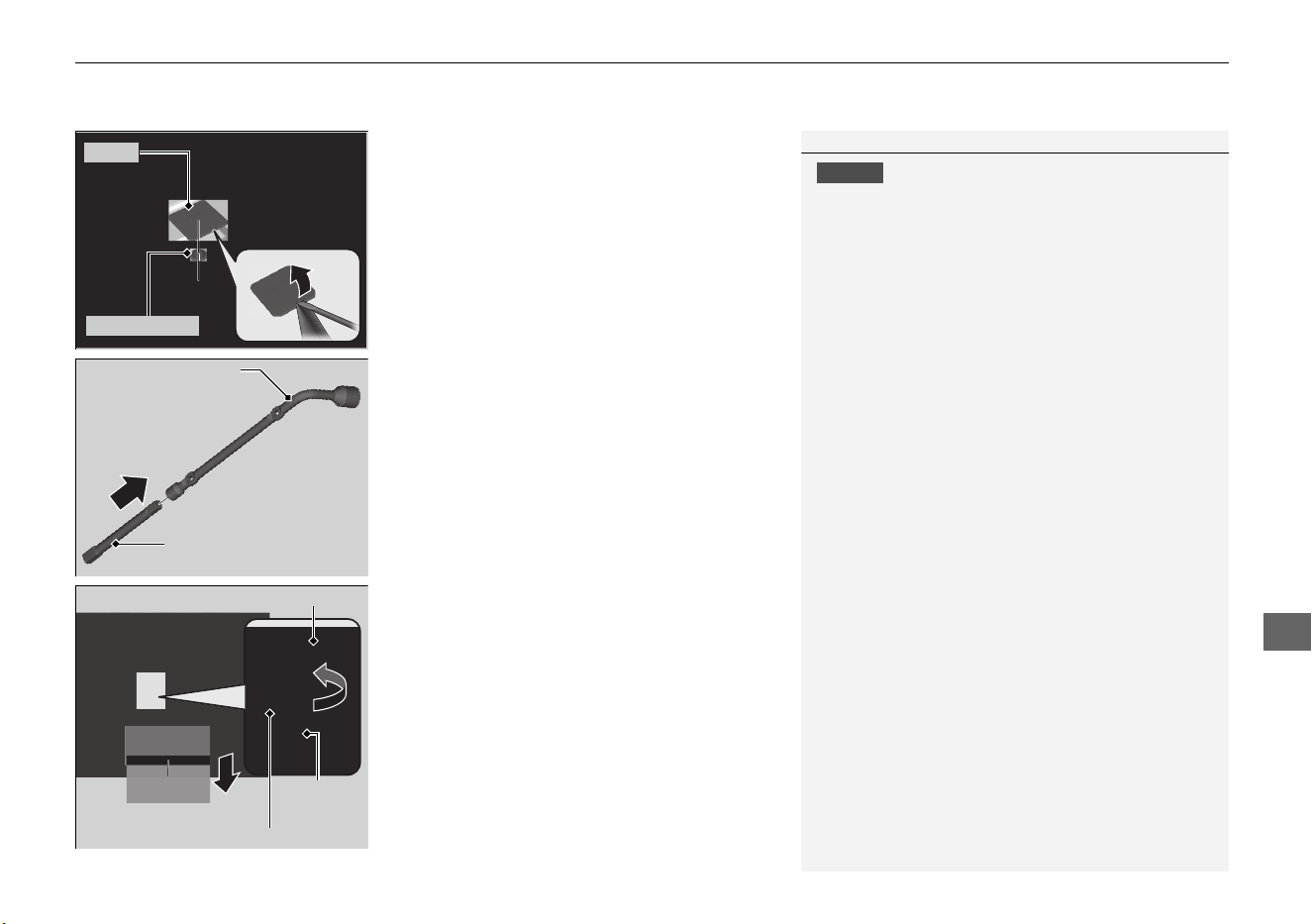
Continued
629
uuIf a Tire Goes FlatuChanging a Flat Tire
Handling the Unexpected
4. Use a flat-tip screwdriver and remove the
cover.
Remove the rubber plug on the cargo area
lining to access the shaft for the spare tire
hoist.
u Wrap the flat-tip screwdriver with a
cloth to prevent scratches.
5. Connect the wheel nut wrench with the
box wrench.
6. Put the wheel nut wrench with the jack
handle bar on the hoist shaft.
Turn the wrench to the left to lower the
spare tire to the ground.
1Getting Ready to Replace the Flat Tire
NOTICE
The wheel nut wrench supplied with your vehicle is
specially adapted to fit the hoist shaft. Do not use any
other tool.
Cover
Rubber Plug
Wheel Nut Wrench
Box Wrench
Jack Handle Bar
Wheel Nut Wrench
Box
Wrench
26 PILOT-31T906300.book 629 ページ 2025年10月8日 水曜日 午前11時43分
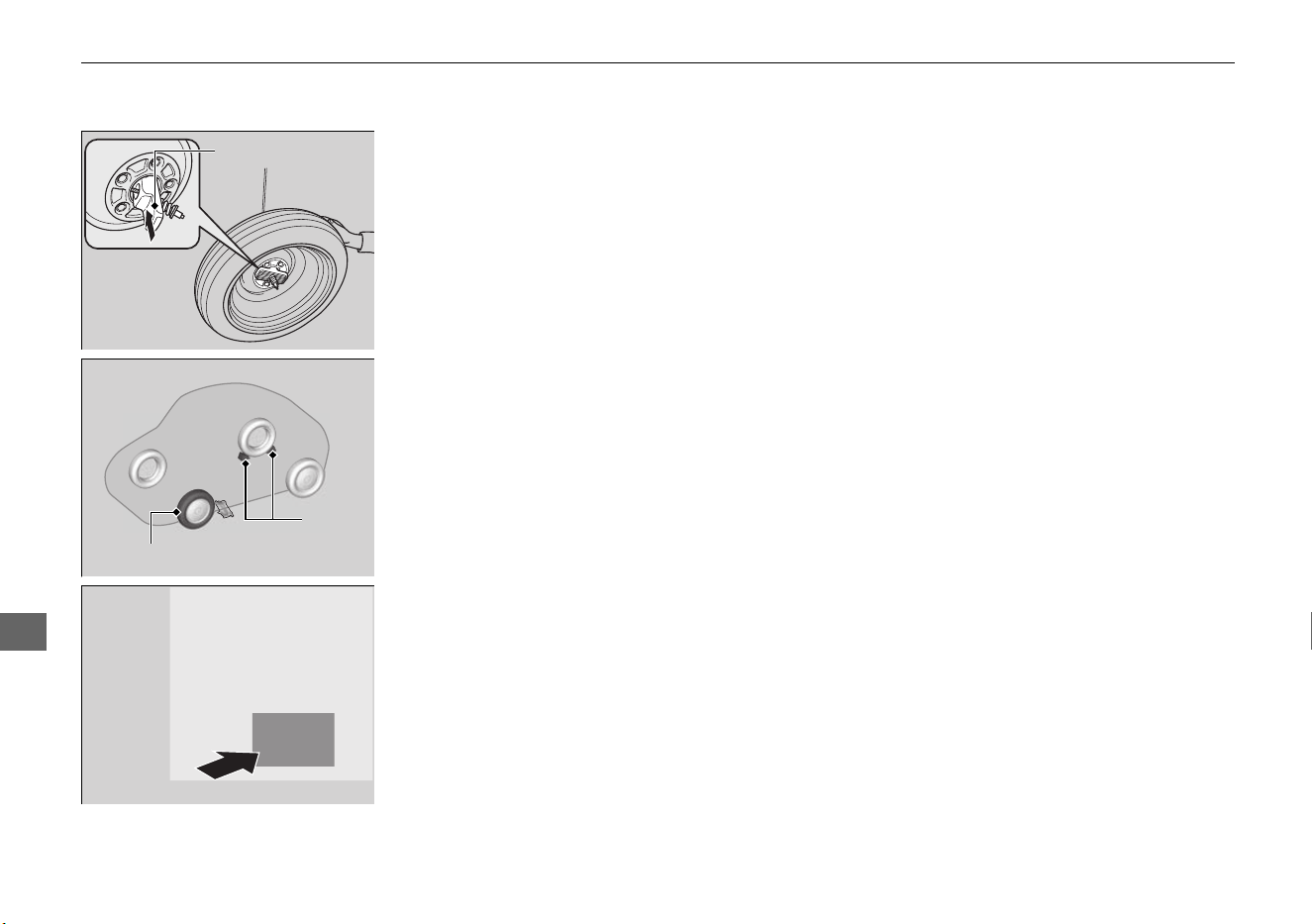
630
uuIf a Tire Goes FlatuChanging a Flat Tire
Handling the Unexpected
7. Keep turning the wheel nut wrench to
create slack in the cable.
8. Remove the bracket from the spare tire.
9. Place a wheel block or rock in front and
rear of the wheel diagonal to the flat tire.
10. Place the spare tire (wheel side up) under
the vehicle body, near the tire that needs
to be replaced.
Bracket
Wheel
Blocks
The tire to be replaced.
26 PILOT-31T906300.book 630 ページ 2025年10月8日 水曜日 午前11時43分
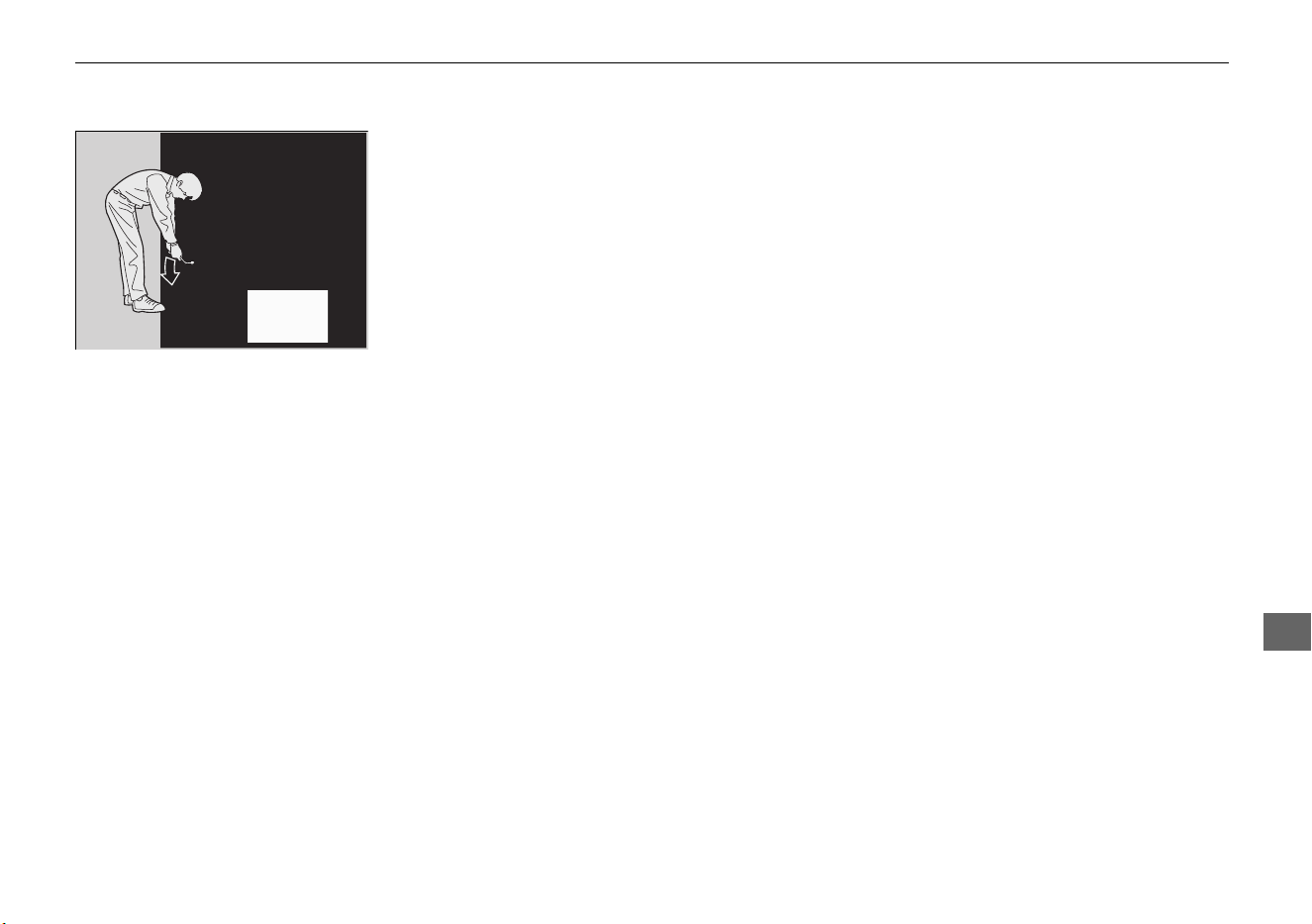
631
uuIf a Tire Goes FlatuChanging a Flat Tire
Continued
Handling the Unexpected
11. Loosen each wheel nut about one turn
using the wheel nut wrench.
26 PILOT-31T906300.book 631 ページ 2025年10月8日 水曜日 午前11時43分
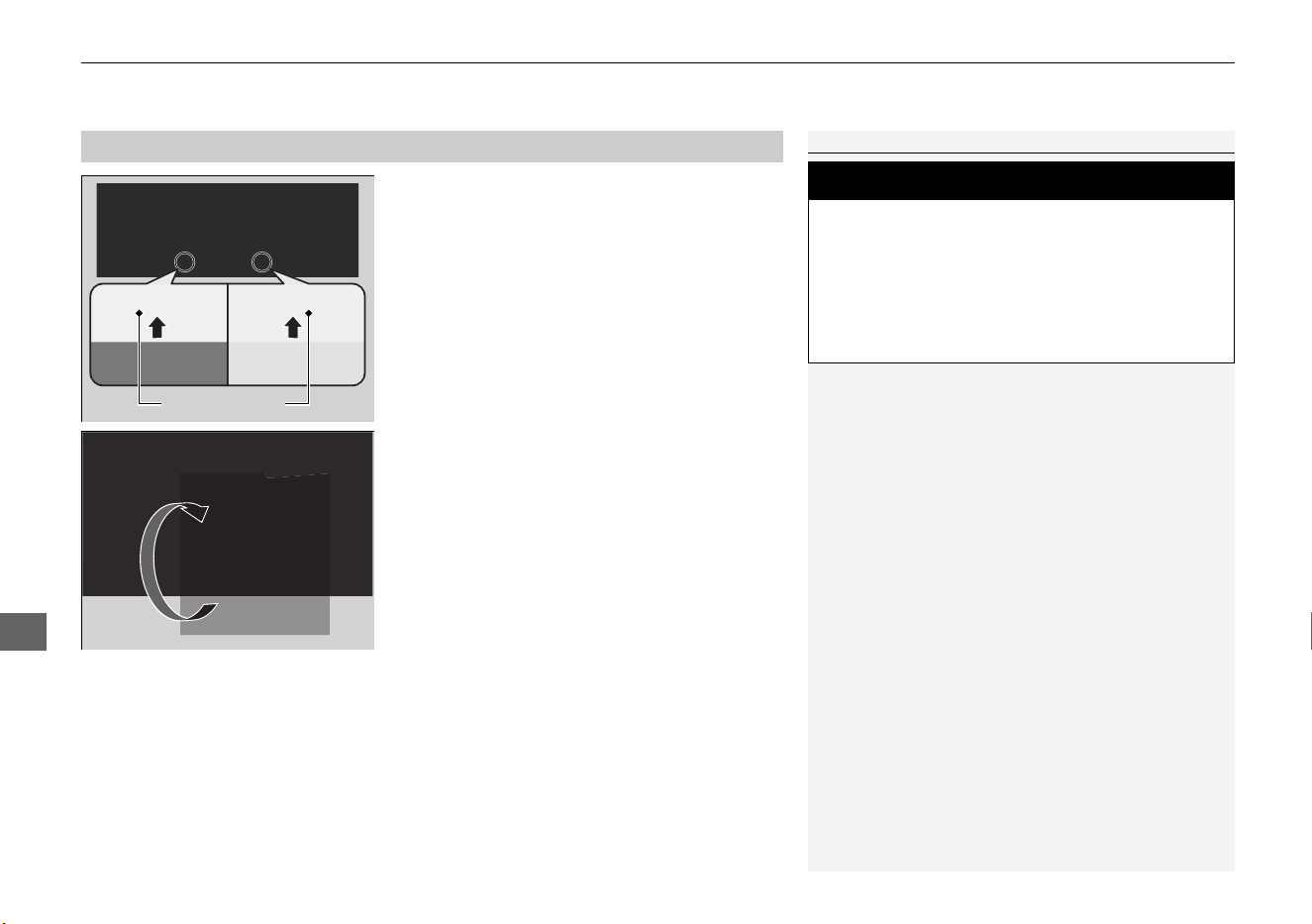
uuIf a Tire Goes FlatuChanging a Flat Tire
632
Handling the Unexpected
1. Place the jack under the jacking point
closest to the tire to be changed.
2. Turn the end bracket clockwise as shown in
the image until the top of the jack contacts
the jacking point.
u Make sure that the jacking point tab is
resting in the jack notch.
■
How to Set Up the Jack
1How to Set Up the Jack
Do not use the jack with people or luggage in the
vehicle.
Use the jack provided in your vehicle.
Other jacks may not support the weight (“load”) or
may not fit the jacking point.
The following instructions must be followed to use
the jack safely:
• Do not use while the engine is running.
• Use only where the ground is firm and level.
• Use only at the jacking points.
• Do not get in the vehicle while using the jack.
• Do not put anything on top of or underneath the
jack.
3
WARNING
The vehicle can easily roll off the jack,
seriously injuring anyone underneath.
Follow the directions for changing a tire
exactly, and never get under the vehicle
when it is supported only by the jack.
Jacking Points
26 PILOT-31T906300.book 632 ページ 2025年10月8日 水曜日 午前11時43分
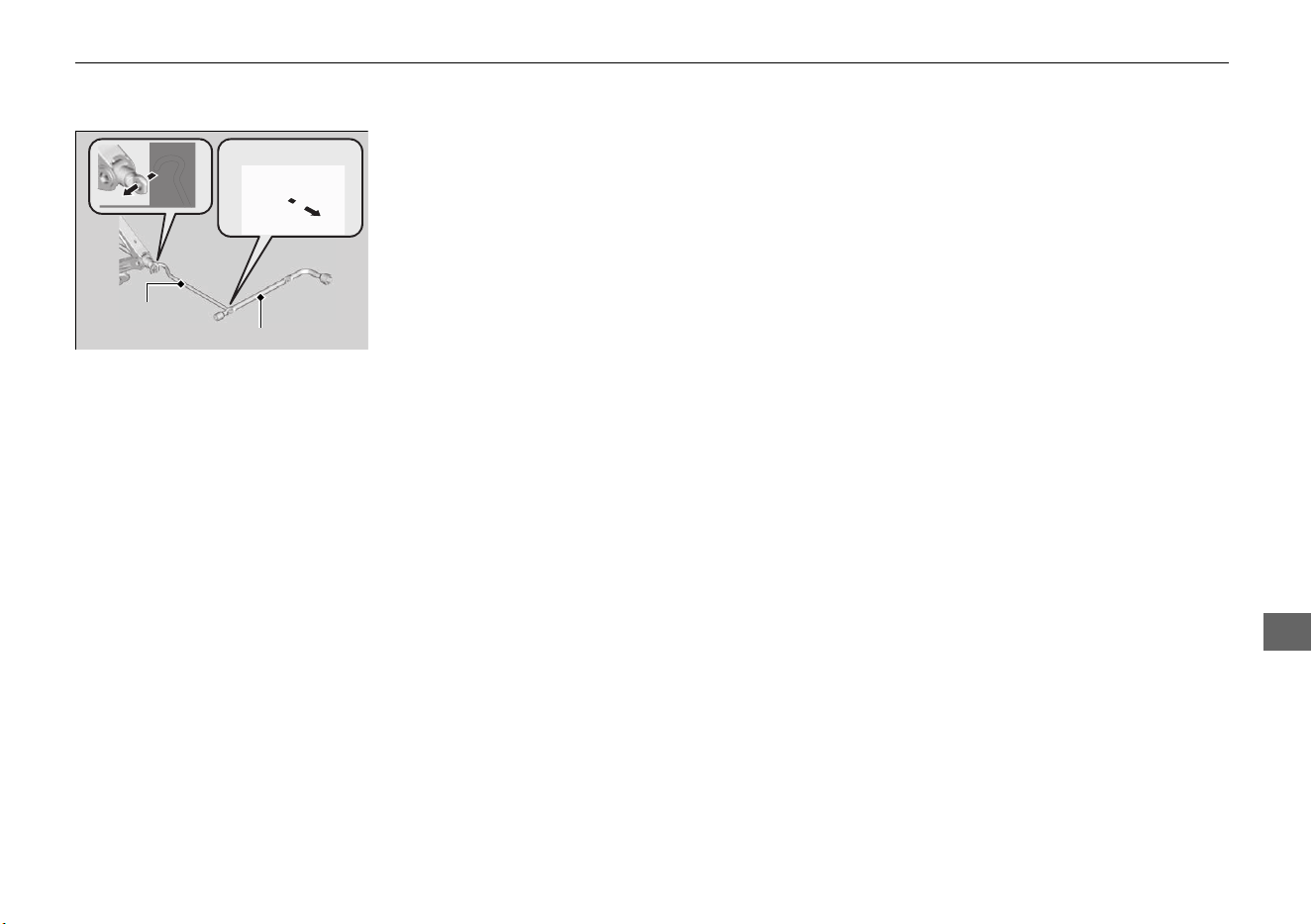
633
uuIf a Tire Goes FlatuChanging a Flat Tire
Continued
Handling the Unexpected
3. Raise the vehicle, using the jack handle bar
and the jack handle, until the tire is off the
ground.
Jack Handle Bar
Wheel Nut Wrench as Jack Handle
26 PILOT-31T906300.book 633 ページ 2025年10月8日 水曜日 午前11時43分
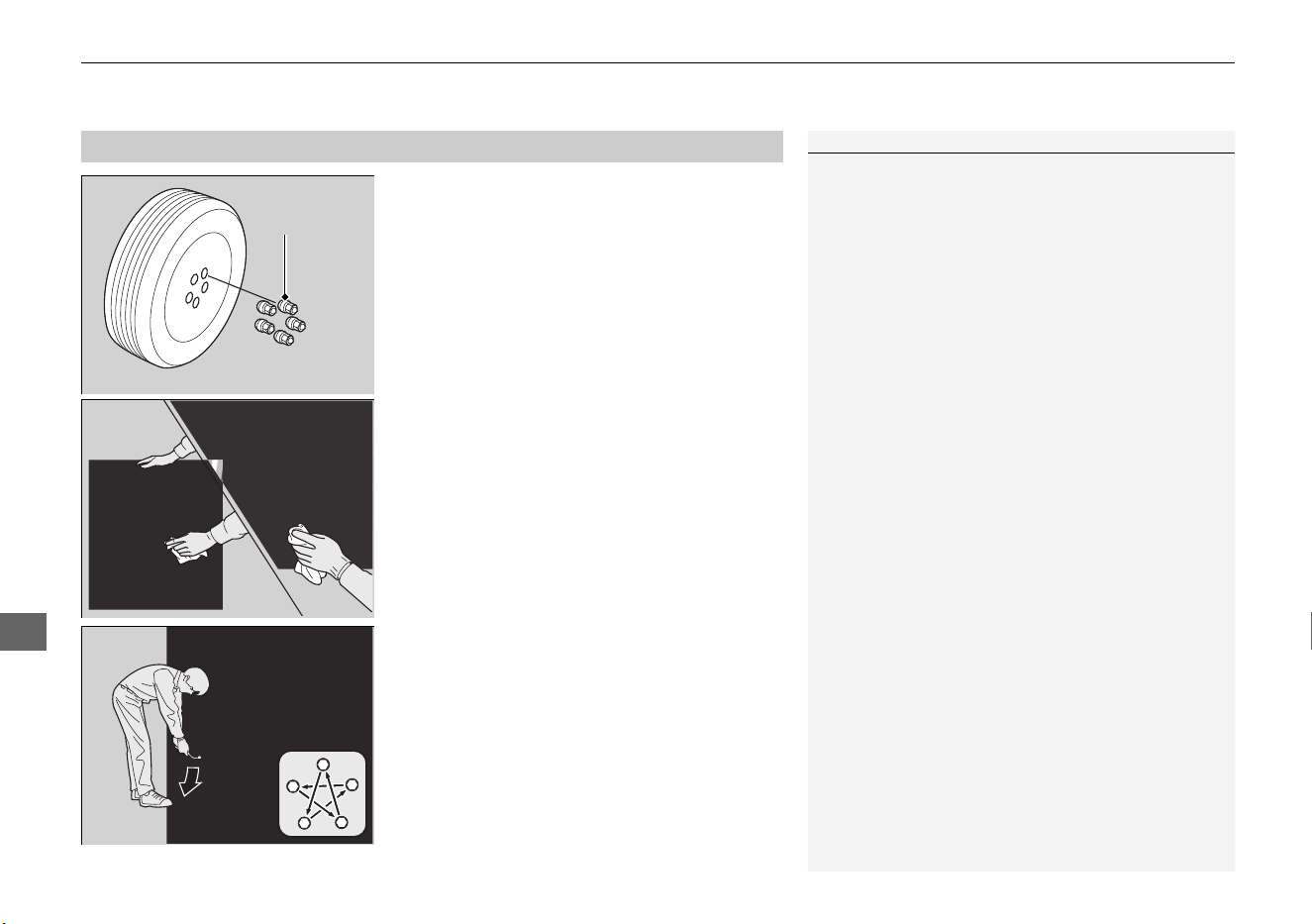
uuIf a Tire Goes FlatuChanging a Flat Tire
634
Handling the Unexpected
1. Remove the wheel nuts and flat tire.
2. Wipe the mounting surfaces of the wheel
with a clean cloth.
3. Mount the spare tire.
4. Screw the wheel nuts until they touch the
lips around the mounting holes, then stop
rotating.
5. Lower the vehicle and remove the jack.
Tighten the wheel nuts in the order
indicated in the image. Go around
tightening the nuts two to three times in
this order.
Wheel nut torque:
94 lbf∙ft (127 N∙m, 13 kgf∙m)
■
Replacing the Flat Tire
1Replacing the Flat Tire
Do not over tighten the wheel nuts by applying extra
torque using your foot or a pipe.
Wheel
Nut
26 PILOT-31T906300.book 634 ページ 2025年10月8日 水曜日 午前11時43分
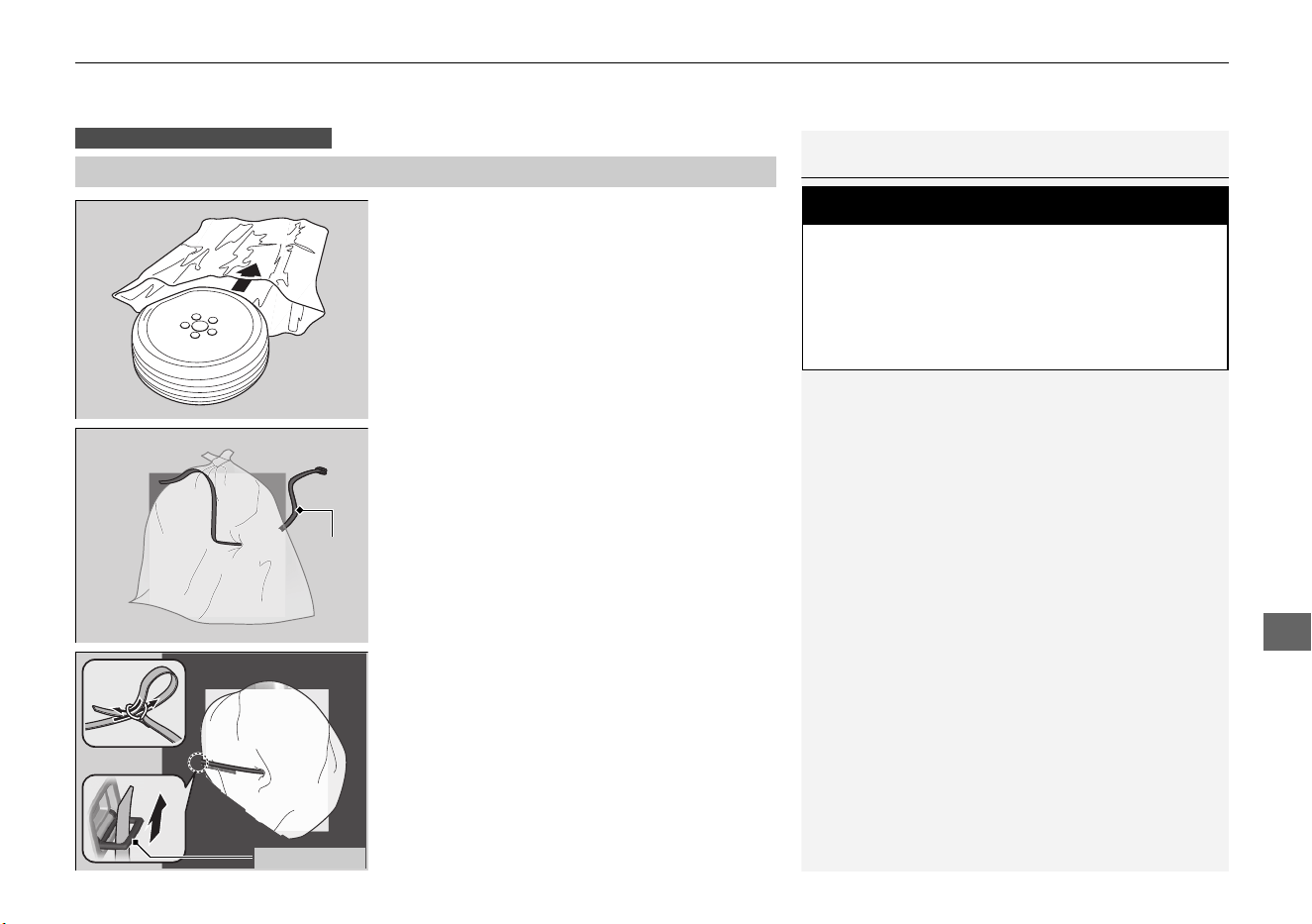
Continued
635
uuIf a Tire Goes FlatuChanging a Flat Tire
Handling the Unexpected
1. Put the flat tire in the tire storage bag
provided with your vehicle.
u The tire storage bag is in the tool case.
2. Knot the top of the tire storage bag.
3. Securely put the jack, wheel nut wrench,
jack handle bar, and box wrench back in
the tool case.
4. Bore through the bag, and pass the holding
belt through the hole of the bag and the
wheel of the flat tire as shown.
5. Place the cargo floor lid in the lower
position.
2 Under-floor Storage Area P. 240
6. Place the flat tire in the cargo area, and
thread the belt through the rear anchor as
shown.
7. Pass the belt through the ring, and tighten
the belt to secure the flat tire in place.
■
Storing the Flat Tire
Models with compact spare tire
1Storing the Flat Tire
3
WARNING
Loose items can fly around the interior in a
crash and can seriously injure the
occupants.
Store the wheel, jack, and tools securely
before driving.
Belt
Rear Anchor
26 PILOT-31T906300.book 635 ページ 2025年10月8日 水曜日 午前11時43分
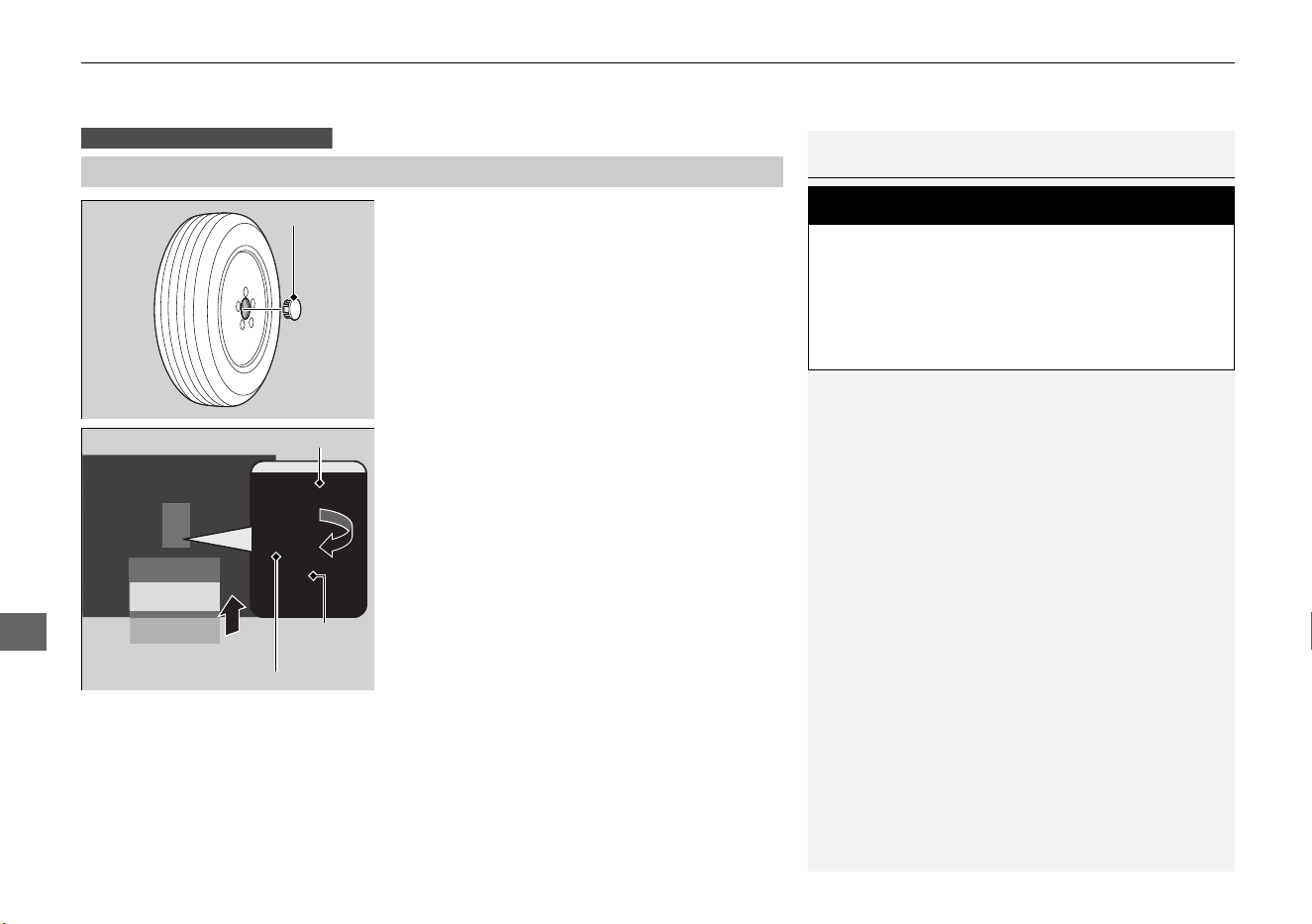
uuIf a Tire Goes FlatuChanging a Flat Tire
636
Handling the Unexpected
1. Remove the center cap and place the flat
tire face up under the hoist.
2. Insert the hoist bracket into the center hole
of the flat tire.
3. Connect the wheel nut wrench with the
box wrench.
4. Slowly turn the wheel nut wrench clockwise
to take up the hoist cable slack.
Make sure the bracket is seated in the
center hole of the flat tire.
5. Turn the wheel nut wrench with the jack
handle bar clockwise until the flat tire rests
against the underbody of the vehicle and
you hear the hoist click.
6. Securely put the jack, wheel nut wrench,
jack handle bar, and box wrench back in
the tool case.
■
Storing the Flat Tire
Models with full-size spare tire
1Storing the Flat Tire
3
WARNING
Loose items can fly around the interior in a
crash and can seriously injure the
occupants.
Store the jack and tools securely before
driving.
Center Cap
Jack Handle Bar
Wheel Nut Wrench
Box
Wrench
26 PILOT-31T906300.book 636 ページ 2025年10月8日 水曜日 午前11時43分
637
uuIf a Tire Goes FlatuChanging a Flat Tire
Handling the Unexpected
If you replace a flat tire with the spare tire, the low tire pressure/TPMS indicator
comes on while you are driving. After driving for a few miles (kilometers), Tire
pressure monitor system problem will appear on the driver information interface
and the indicator will start blinking for a short time and then stay on; however, this
is normal and is no cause for concern.
If you replace the tire with a regular tire, the warning message on the driver
information interface and the low tire pressure/TPMS indicator will go off after a few
miles (kilometers).
■
TPMS with Tire Fill Assist and the Spare Tire
1TPMS with Tire Fill Assist and the Spare Tire
The system cannot monitor the pressure of the spare
tire. Manually check the spare tire pressure to be sure
that it is correct.
Use genuine wheels designed for and equipped with
TPMS sensors. Each wheel is equipped with a tire
pressure sensor mounted inside the tire behind the
valve stem.
26 PILOT-31T906300.book 637 ページ 2025年10月8日 水曜日 午前11時43分
638
Handling the Unexpected
Engine Does Not Start
Checking the Engine
If the engine does not start, check the starter.
If you cannot start the engine after checking all the items in the list above, have your vehicle checked by a dealer.
Starter condition Checklist
Starter doesn’t turn or turns
over slowly.
The battery may be dead. Check
each of the items on the right and
respond accordingly.
Check for a message on the driver information interface.
If the To start, touch start button with emblem side of remote message appears
2 If the Keyless Remote Battery is Weak P. 640
Check the fuses.
Check all fuses, or have your vehicle checked by a dealer.
2 Inspecting and Changing Fuses P. 659
The starter turns over normally
but the engine doesn’t start.
There may be a problem with a
fuse. Check each of the items on
the right and respond accordingly.
Review the engine start procedure.
Follow its instructions, and try to start the engine again.
2 Starting the Engine P. 410
Check the immobilizer system indicator.
When the immobilizer system indicator is blinking, the engine cannot be started.
2 Immobilizer System P. 180
2 Immobilizer System Indicator P. 109
Check the fuel level.
There should be enough fuel in the tank.
2 Fuel Gauge P. 119
Check the fuses.
Check all fuses, or have your vehicle checked by a dealer.
2 Inspecting and Changing Fuses P. 659
If the problem continues:
2 Emergency Towing P. 661
26 PILOT-31T906300.book 638 ページ 2025年10月8日 水曜日 午前11時43分

639
uuEngine Does Not StartuChecking the Engine
Handling the Unexpected
If you must start the vehicle immediately, use an assisting vehicle or booster battery
to jump start it.
2 If the Battery Is Dead P. 643
Depending on the situation, it may be possible to temporarily start the engine using
the emergency start procedure.
2 Emergency Engine Start P. 641
26 PILOT-31T906300.book 639 ページ 2025年10月8日 水曜日 午前11時43分
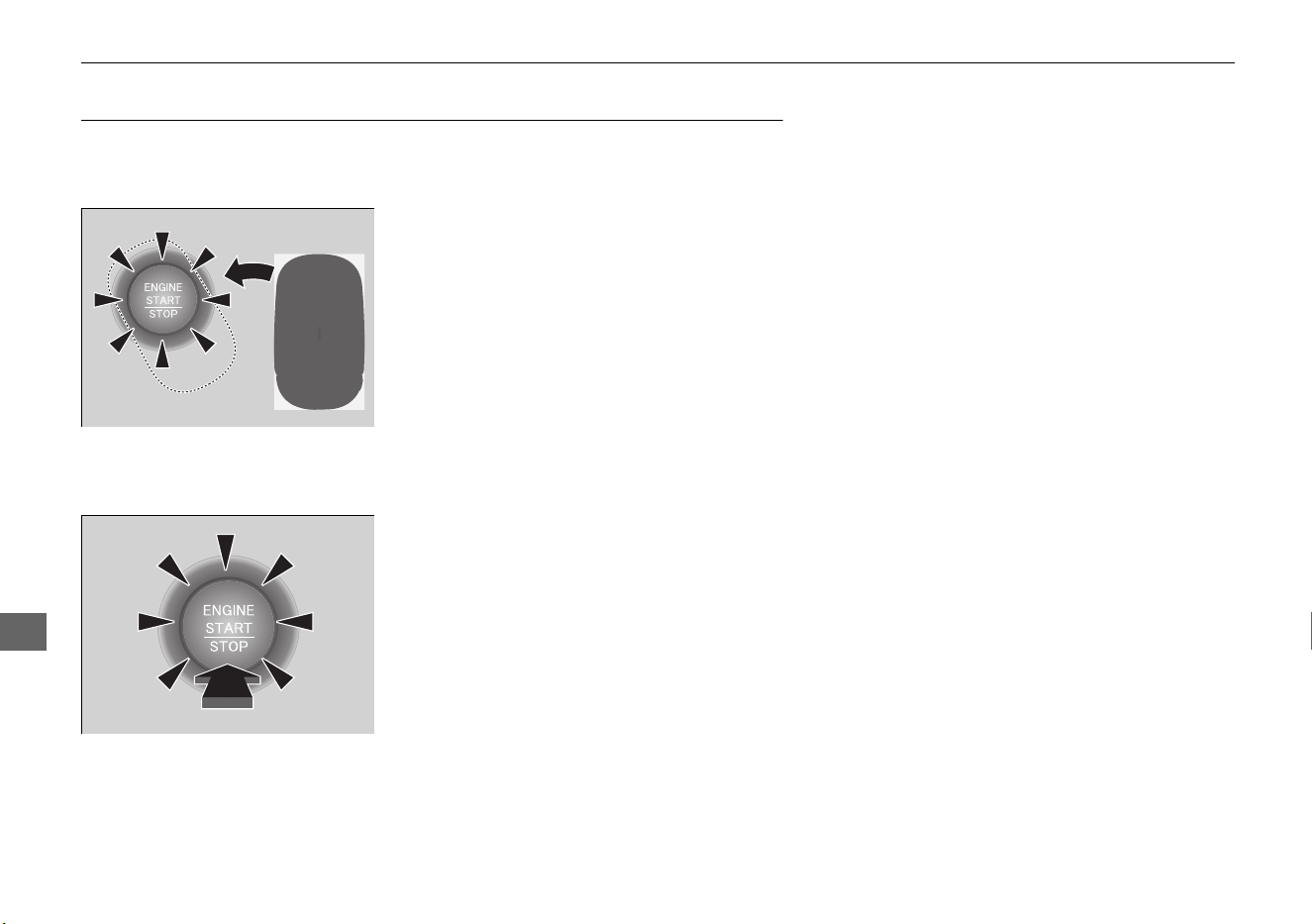
640
uuEngine Does Not StartuIf the Keyless Remote Battery is Weak
Handling the Unexpected
If the Keyless Remote Battery is Weak
If the beeper sounds, the To start, touch start button with emblem side of
remote message appears on the driver information interface, the ENGINE START/
STOP button flashes, and the engine won’t start, start the engine as follows:
1. Press the ENGINE START/STOP button.
u The beeper sounds and the ENGINE
START/STOP button flashes for about
30 seconds.
2. Touch the center of the ENGINE START/
STOP button with the H logo on the keyless
remote while the ENGINE START/STOP
button is flashing. The buttons on the
keyless remote should be facing you.
u The beeper sounds, and the ENGINE
START/STOP button stays on for about
10 seconds.
3. Depress the brake pedal and press the
ENGINE START/STOP button while the
ENGINE START/STOP button is on.
u The engine starts.
u If you don’t depress the pedal, the mode
will change to ACCESSORY.
26 PILOT-31T906300.book 640 ページ 2025年10月8日 水曜日 午前11時43分
641
uuEngine Does Not StartuEmergency Engine Start
Handling the Unexpected
Emergency Engine Start
If the engine cannot start using the normal starting procedure, you may be able to
start it using the emergency start procedure below.
Do not use this procedure if it is not an emergency.
1. Make sure the parking brake is applied.
2. Check that the transmission is in
(P, then set the power mode to ACCESSORY.
3. Firmly depress the brake pedal, then press and hold the ENGINE START/STOP
button for at least 15 seconds.
This should be considered a system malfunction even if you are able to start the
engine using the above procedure.
Have your vehicle checked by a dealer immediately.
26 PILOT-31T906300.book 641 ページ 2025年10月8日 水曜日 午前11時43分
642
uuEngine Does Not StartuEmergency Engine Stop
Handling the Unexpected
Emergency Engine Stop
The ENGINE START/STOP button may be used to stop the engine due to an
emergency situation even while driving. If you must stop the engine, do either of the
following operations:
• Press and hold the ENGINE START/STOP button for about two seconds.
• Firmly press the ENGINE START/STOP button three times.
The steering wheel will not lock. However, because turning off the engine disables
the power assist the engine provides to the steering and braking systems, it will
require significantly more physical effort and time to steer and slow the vehicle. Use
both feet on the brake pedal to slow down the vehicle and stop immediately in a
safe place.
The transmission automatically changes to
(P after the vehicle comes to a complete
stop. Then, the power mode changes to VEHICLE OFF.
1Emergency Engine Stop
NOTICE
Do not press the ENGINE START/STOP button while
driving unless it is absolutely necessary for the engine
to be turned off.
If you press the ENGINE START/STOP button while
driving, the beeper sounds.
26 PILOT-31T906300.book 642 ページ 2025年10月8日 水曜日 午前11時43分
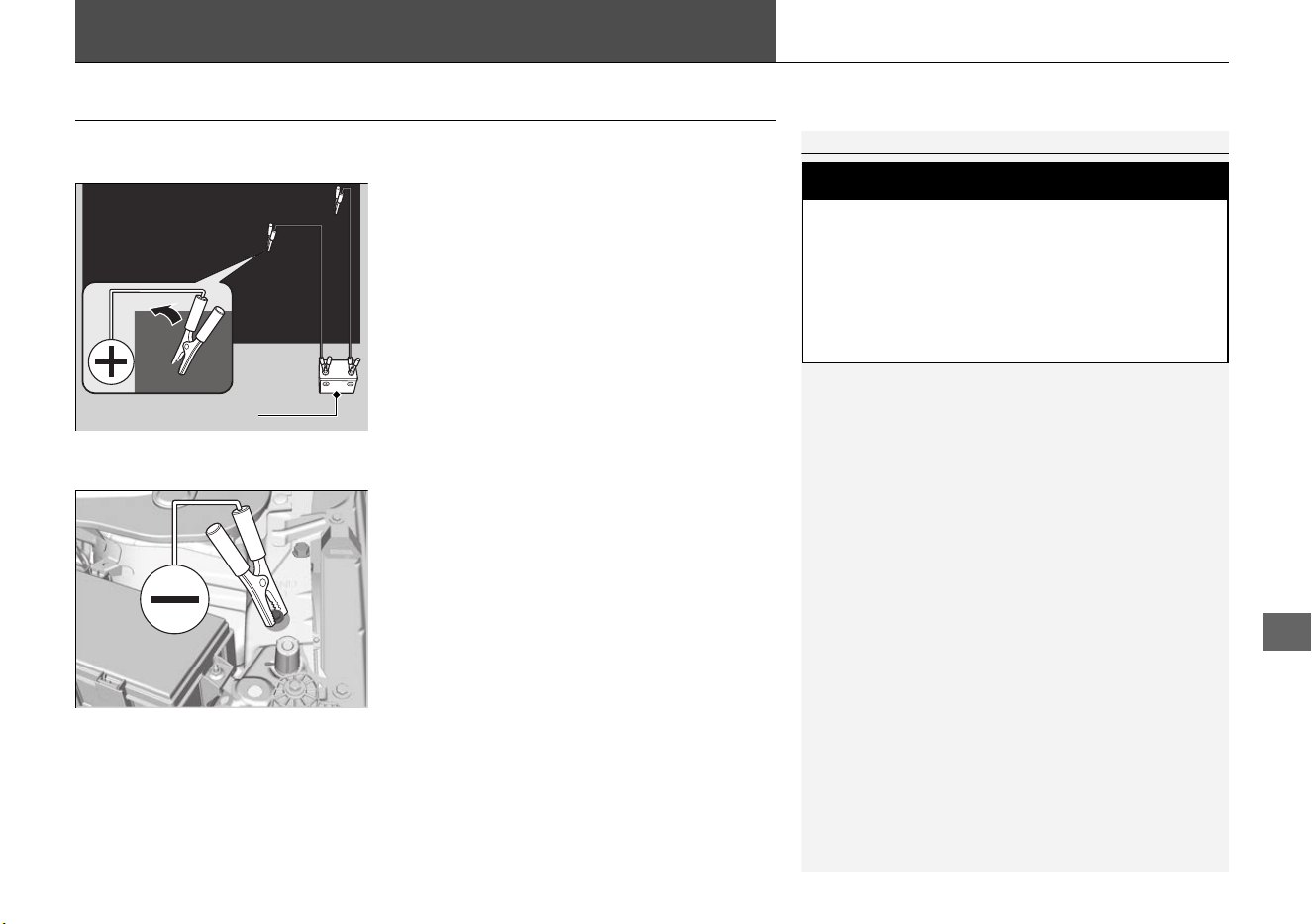
643
Continued
Handling the Unexpected
If the Battery Is Dead
Jump Starting Procedure
Turn off the power to electric devices, such as audio and lights. Turn off the engine,
then open the hood.
1. Connect the first jumper cable to your
vehicle’s battery + terminal.
2. Connect the other end of the first jumper
cable to the booster battery + terminal.
u Use a 12-volt booster battery only.
u When using an automotive battery
charger to boost your 12-volt battery,
select a lower charging voltage than 15-
volt. Check the charger manual for the
proper setting.
3. Connect the second jumper cable to the
booster battery - terminal.
4. Connect the other end of the second
jumper cable to the ground bolt as shown.
Do not connect this jumper cable to any
other part.
5. If your vehicle is connected to another
vehicle, start the assisting vehicle’s engine
and increase its RPM slightly.
6. Attempt to start your vehicle’s engine. If it
turns over slowly, check that the jumper
cables have good metal-to-metal contact.
1Jump Starting Procedure
Securely attach the jumper cables clips so that they
do not come off when the engine vibrates. Be careful
not to tangle the jumper cables or allow the cable
ends to touch each other while attaching or
detaching the jumper cables.
Battery performance degrades in cold conditions and
may prevent the engine from starting.
3
WARNING
A battery can explode if you do not follow
the correct procedure, seriously injuring
anyone nearby.
Keep all sparks, open flames, and smoking
materials away from the battery.
Booster Battery
26 PILOT-31T906300.book 643 ページ 2025年10月8日 水曜日 午前11時43分
uuIf the Battery Is DeaduJump Starting Procedure
644
Handling the Unexpected
Once your vehicle’s engine has started, remove the jumper cables in the following
order:
1. Disconnect the jumper cable from your vehicle’s ground bolt.
2. Disconnect the other end of the jumper cable from the booster battery -
terminal.
3. Disconnect the jumper cable from your vehicle’s battery + terminal.
4. Disconnect the other end of the jumper cable from the booster battery +
terminal.
Have your vehicle inspected by a nearby service station or a dealer.
■
What to Do After the Engine Starts
1Jump Starting Procedure
The Vehicle Stability Assist
TM
(VSA®) system, Adaptive
Cruise Control (ACC) with Low Speed Follow, brake
system (amber), and safety support indicators may
come on in amber along with a message in the driver
information interface when you set the power mode
to ON after reconnecting the battery.
With the engine running, turn the steering wheel to the
left until it stops then to the right until it stops, then
drive a short distance at more than 12 mph (20 km/h).
Each indicator should go off. If any do not, have your
vehicle checked by a dealer.
26 PILOT-31T906300.book 644 ページ 2025年10月8日 水曜日 午前11時43分
645
Continued
Handling the Unexpected
Overheating
How to Handle Overheating
Overheating symptoms are as follows:
• The temperature gauge is at the mark or the engine suddenly loses power.
• The Engine temperature too hot. Do not drive. Allow engine to cool.
message appears on the driver information interface.
• Steam or spray comes out of the engine compartment.
■
First thing to do
1. Immediately park the vehicle in a safe place.
2. Turn off all accessories and turn on the hazard warning lights.
u No steam or spray present: Keep the engine running and open the hood.
u Steam or spray is present: Turn off the engine and wait until it subsides.
Then, open the hood.
1How to Handle Overheating
NOTICE
Continuing to drive with the temperature gauge at
the mark may damage the engine.
NOTICE
Continuing to drive with the Engine temperature
too hot. Do not drive. Allow engine to cool.
message on the driver information interface may
damage the engine.
3
WARNING
Steam and spray from an overheated
engine can seriously scald you.
Do not open the hood if steam is coming
out.
H
H
26 PILOT-31T906300.book 645 ページ 2025年10月8日 水曜日 午前11時43分
uuOverheatinguHow to Handle Overheating
646
Handling the Unexpected
■
Next thing to do
1. Check that the cooling fan is operating and
stop the engine once the temperature
gauge goes down.
u If the cooling fan is not operating,
immediately stop the engine.
2. Once the engine has cooled down, inspect
the coolant level and check the cooling
system components for leaks.
u If the coolant level in the reserve tank is
low, add coolant until it reaches the
MAX mark.
u If there is no coolant in the reserve tank,
check that the radiator is cool. Remove
the engine compartment cover. Cover
the radiator cap with a heavy cloth and
open the cap. If necessary, add coolant
up to the base of the filler neck, and put
the cap back on.
2 Engine Compartment Cover P. 584
■
Last thing to do
Once the engine has cooled sufficiently, restart it and check the temperature gauge.
If the temperature gauge has gone down, resume driving. If it has not gone down,
contact a dealer for repairs.
1How to Handle Overheating
If the coolant is leaking, contact a dealer for repairs.
Use water as an emergency/temporary measure only.
Have a dealer flush the system with proper antifreeze
as soon as possible.
3
WARNING
Removing the radiator cap while the
engine is hot can cause the coolant to spray
out, seriously scalding you.
Always let the engine and radiator cool
down before removing the radiator cap.
MAX MIN
Reserve
Tank
26 PILOT-31T906300.book 646 ページ 2025年10月8日 水曜日 午前11時43分
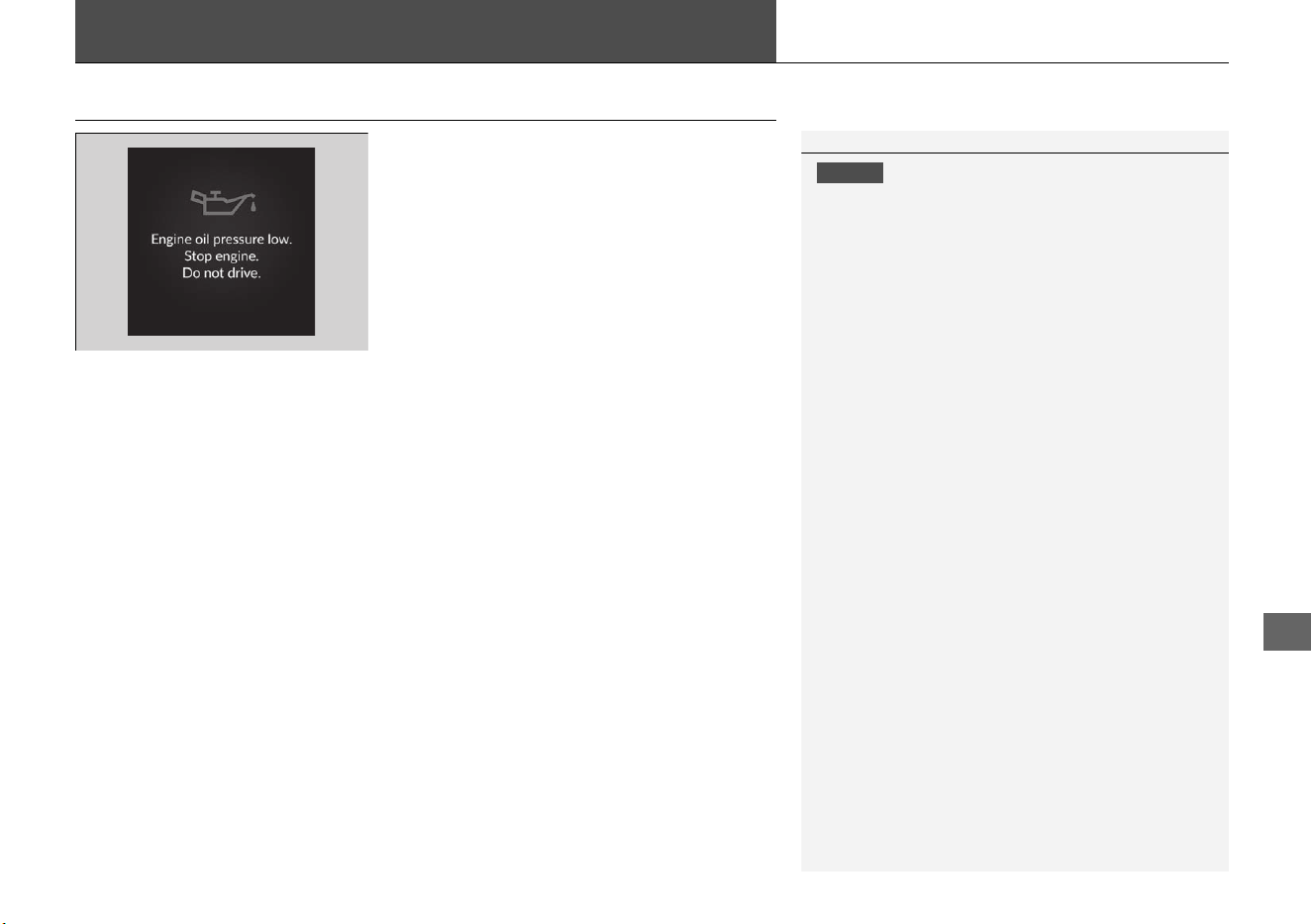
647
Handling the Unexpected
Indicator Coming On/Blinking
If the Engine oil pressure low Warning Appears
■
Reasons for the warning to appear
Appears when the engine oil pressure is low.
■
What to do as soon as the warning
appears
1. Immediately park the vehicle on level
ground in a safe place.
2. If necessary, turn the hazard warning lights
on.
■
What to do after parking the vehicle
1. Stop the engine and let it sit for
approximately three minutes.
2. Open the hood and check the oil level.
u Add oil as necessary.
2 Oil Check P. 586
3. Start the engine and check the Engine oil
pressure low warning.
u The warning disappears: Start driving
again.
u The warning does not disappear within
10 seconds: Immediately stop the engine
and contact a dealer for repairs.
1If the Engine oil pressure low Warning Appears
NOTICE
Running the engine with low oil pressure can cause
serious mechanical damage almost immediately.
26 PILOT-31T906300.book 647 ページ 2025年10月8日 水曜日 午前11時43分
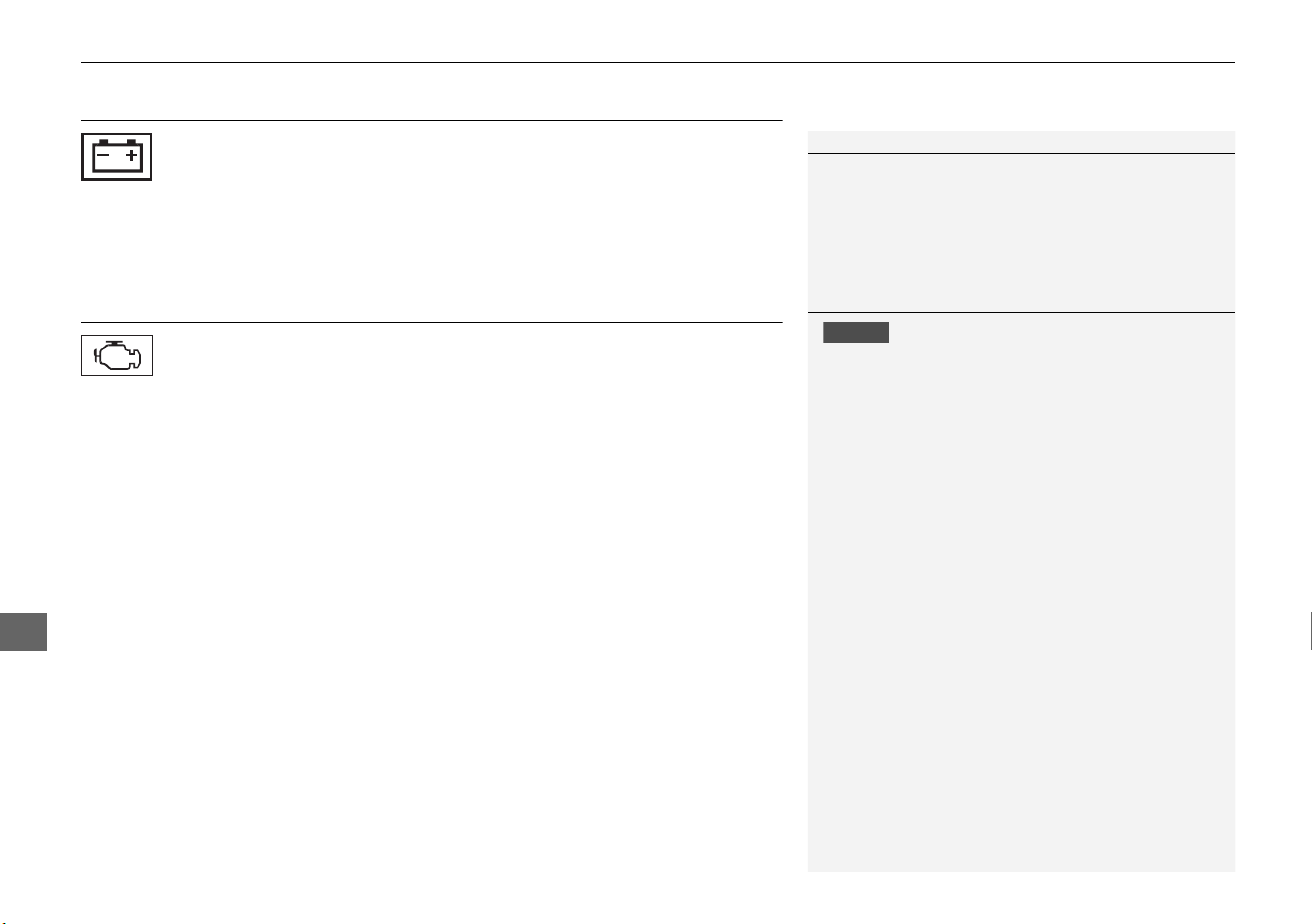
648
uuIndicator Coming On/BlinkinguIf the Charging System Indicator Comes On
Handling the Unexpected
If the Charging System Indicator Comes On
■
Reasons for the indicator to come on
Comes on when there is a problem with the charging system.
■
What to do when the indicator comes on
Stop in a safe place and have your vehicle checked by a dealer
immediately.
If the Malfunction Indicator Lamp Comes On or Blinks
■
Reasons for the indicator lamp to come on or blink
• Comes on when there is a problem with the engine emissions control
system.
• Blinks when engine misfiring is detected.
■
What to do when the indicator lamp comes on
Avoid high speeds and immediately get your vehicle inspected at a
dealer.
■
What to do when the indicator lamp blinks
Park the vehicle in a safe place with no flammable items and wait at least
10 minutes or more with the engine stopped until it cools.
1If the Charging System Indicator Comes On
If you need to stop temporarily, do not turn off the
engine. Restarting the engine may rapidly discharge
the battery.
1If the Malfunction Indicator Lamp Comes On or Blinks
NOTICE
If you drive with the malfunction indicator lamp on,
the emissions control system and the engine could be
damaged.
If the malfunction indicator lamp blinks again when
restarting the engine, drive to the nearest dealer at
31 mph (50 km/h) or less. Have your vehicle
inspected.
26 PILOT-31T906300.book 648 ページ 2025年10月8日 水曜日 午前11時43分
649
uuIndicator Coming On/Blinkingu
If the Brake System Indicator (Red) Comes On or Blinks
Handling the Unexpected
If the Brake System Indicator (Red) Comes On or
Blinks
■
Reasons for the indicator to come on
• The brake fluid is low.
• There is a malfunction in the brake system.
■
What to do when the indicator comes on while driving
Depress the brake pedal lightly to check pedal pressure.
• If normal, check the brake fluid level the next time you stop.
• If abnormal, take immediate action. If necessary, downshift the
transmission to slow the vehicle using engine braking.
■
Reasons for the indicator to blink
• There is a problem with the electric parking brake system.
■
What to do when the indicator blinks
Avoid using the parking brake and have your vehicle checked by a dealer
immediately.
1If the Brake System Indicator (Red) Comes On or Blinks
Have your vehicle repaired immediately.
It is dangerous to drive with low brake fluid. If there
is no resistance from the brake pedal, stop
immediately in a safe place. If necessary, downshift
the gears.
If the brake system indicator (red) and ABS indicator
come on simultaneously, the electronic brake
distribution system is not working. This can result in
vehicle instability under sudden braking.
Have your vehicle inspected by a dealer immediately.
If the brake system indicator (red) blinks at the same
time when the brake system indicator (amber) comes
on, the parking brake may not work.
Avoid using the parking brake and have your vehicle
checked by a dealer immediately.
2 If the Brake System Indicator (Red) Comes
On or Blinks at the Same Time When the
Brake System Indicator (Amber) Comes On
P. 651
U.S.
Canada
26 PILOT-31T906300.book 649 ページ 2025年10月8日 水曜日 午前11時43分
650
uuIndicator Coming On/BlinkinguIf the Electric Power Steering (EPS) System Indicator Comes On
Handling the Unexpected
If the Electric Power Steering (EPS) System Indicator
Comes On
■
Reasons for the indicator to come on
• Comes on when there is a problem with the EPS system or Driver
Attention Monitor System.
■
What to do when the indicator comes on
• Stop the vehicle in a safe place and restart the engine.
If the indicator comes on and stays on, immediately have your vehicle
inspected by a dealer.
• If Do not drive displays on the driver information interface,
immediately stop in a safe place and contact a dealer.
26 PILOT-31T906300.book 650 ページ 2025年10月8日 水曜日 午前11時43分
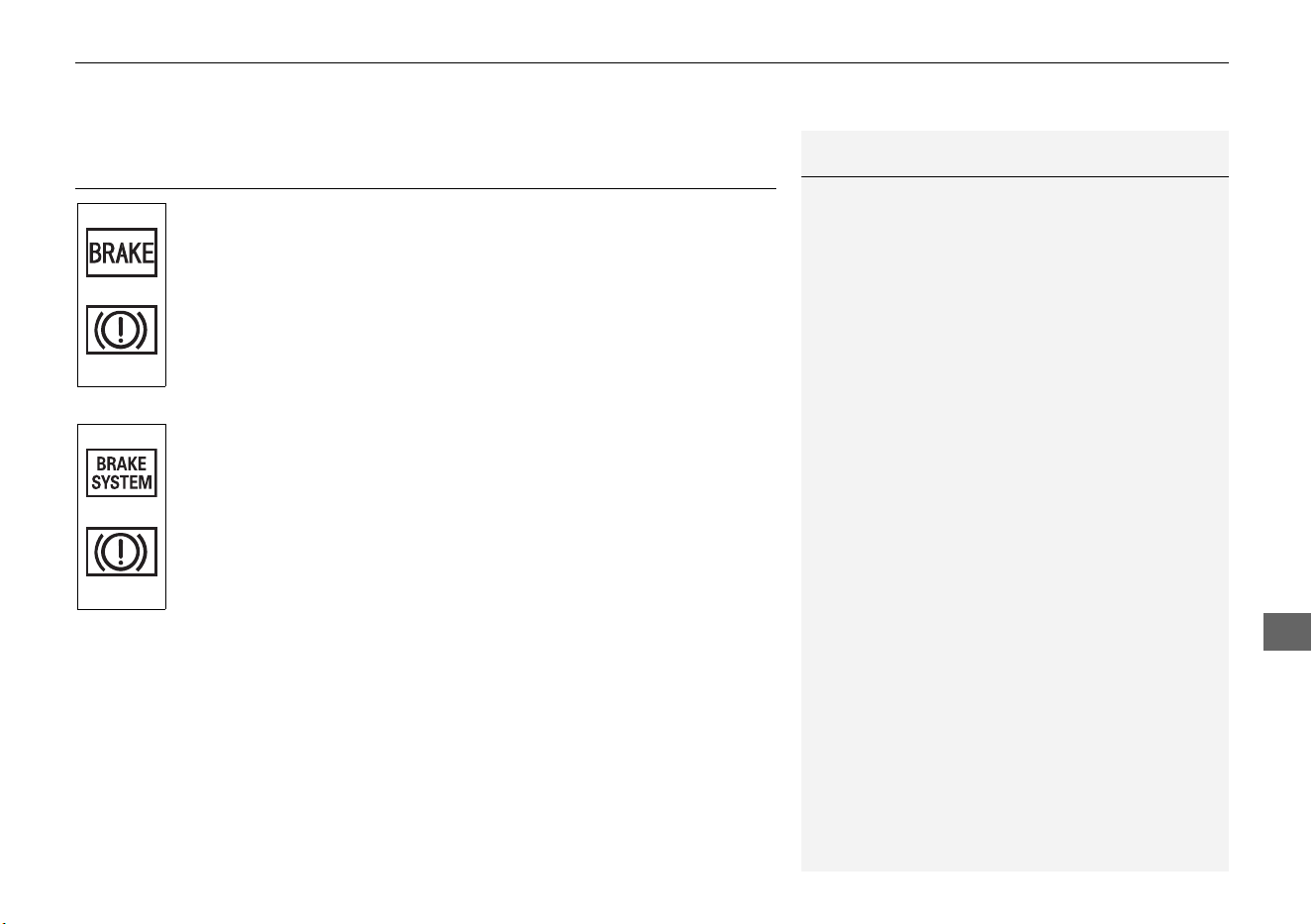
651
uuIndicator Coming On/Blinkingu
If the Brake System Indicator (Red) Comes On or Blinks at the Same Time When the Brake System Indicator (Amber) Comes On
Handling the Unexpected
If the Brake System Indicator (Red) Comes On or
Blinks at the Same Time When the Brake System
Indicator (Amber) Comes On
■
If the brake system indicator (red) comes on or blinks at the
same time when the brake system indicator (amber) comes on,
release the parking brake manually or automatically
2 Parking Brake P. 533
•If the brake system indicator (red) continuously comes on or blinks at
the same time when the brake system indicator (amber) comes on,
stop the vehicle in a safe place and have it inspected by a dealer
immediately.
u To prevent the vehicle from moving, put the transmission into
(P.
•If only the brake system indicator (red) is turned off, avoid using the
parking brake and have your vehicle checked by a dealer immediately.
1
If the Brake System Indicator (Red) Comes On or Blinks at the Same
Time When the Brake System Indicator (Amber) Comes On
If you apply the parking brake, you may not be able
to release it.
If the brake system indicator (red) and the brake
system indicator (amber) come on at the same time,
the parking brake is working.
If the brake system indicator (red) blinks at the same
time when the brake system indicator (amber) comes
on, the parking brake may not work because it is
checking the system.
U.S.
Canada
(Red)
U.S.
Canada
(Amber)
26 PILOT-31T906300.book 651 ページ 2025年10月8日 水曜日 午前11時43分
652
uuIndicator Coming On/BlinkinguIf the Low Tire Pressure/TPMS Indicator Comes On or Blinks
Handling the Unexpected
If the Low Tire Pressure/TPMS Indicator Comes On or
Blinks
■
Reasons for the indicator to come on or blink
A tire pressure is significantly low. If there is a problem with the TPMS
with Tire Fill Assist or the spare tire is installed, the indicator blinks for
about one minute, and then stays on.
■
What to do when the indicator comes on
Drive carefully and avoid abrupt cornering and hard braking.
Stop your vehicle in a safe place. Check the tire pressure and adjust the
pressure to the specified level. The specified tire pressure is on a label on
the driver side doorjamb.
■
What to do when the indicator blinks, then remains on
Have the tire inspected by a dealer as soon as possible. If the spare tire
causes the indicator to first blink, and then stay on, change the tire to a
regular tire. The indicator goes off after driving for a few miles
(kilometers).
1If the Low Tire Pressure/TPMS Indicator Comes On or Blinks
NOTICE
Driving on an extremely underinflated tire can cause
it to overheat. An overheated tire can fail. Always
inflate your tires to the prescribed level.
Tire Fill Assist Function
TPMS with Tire Fill Assist provides visual and audible
assistance during tire pressure adjustment. Tire Fill
Assist is available for a few minutes after changing
the power mode to ON and while the transmission is
in
(P. While Tire Fill Assist is active, when you adjust
tire pressure up or down, the system alerts you as
follows:
Below recommended pressure: The beeper
sounds and exterior lights flash once every five
seconds.
At recommended pressure: The beeper sounds
and exterior lights flash rapidly for three seconds with
five seconds intervals.
Above recommended pressure: The beeper
sounds and lights flash twice every two seconds.
When a certain amount of time has passed since
activation, Tire Fill Assist will be canceled until you set
the power mode to OFF.
You cannot use Tire Fill Assist if the engine was
started by the remote engine start, or if there is a
malfunction in the system. If Tire Fill Assist does not
work, use a tire pressure gauge.
26 PILOT-31T906300.book 652 ページ 2025年10月8日 水曜日 午前11時43分
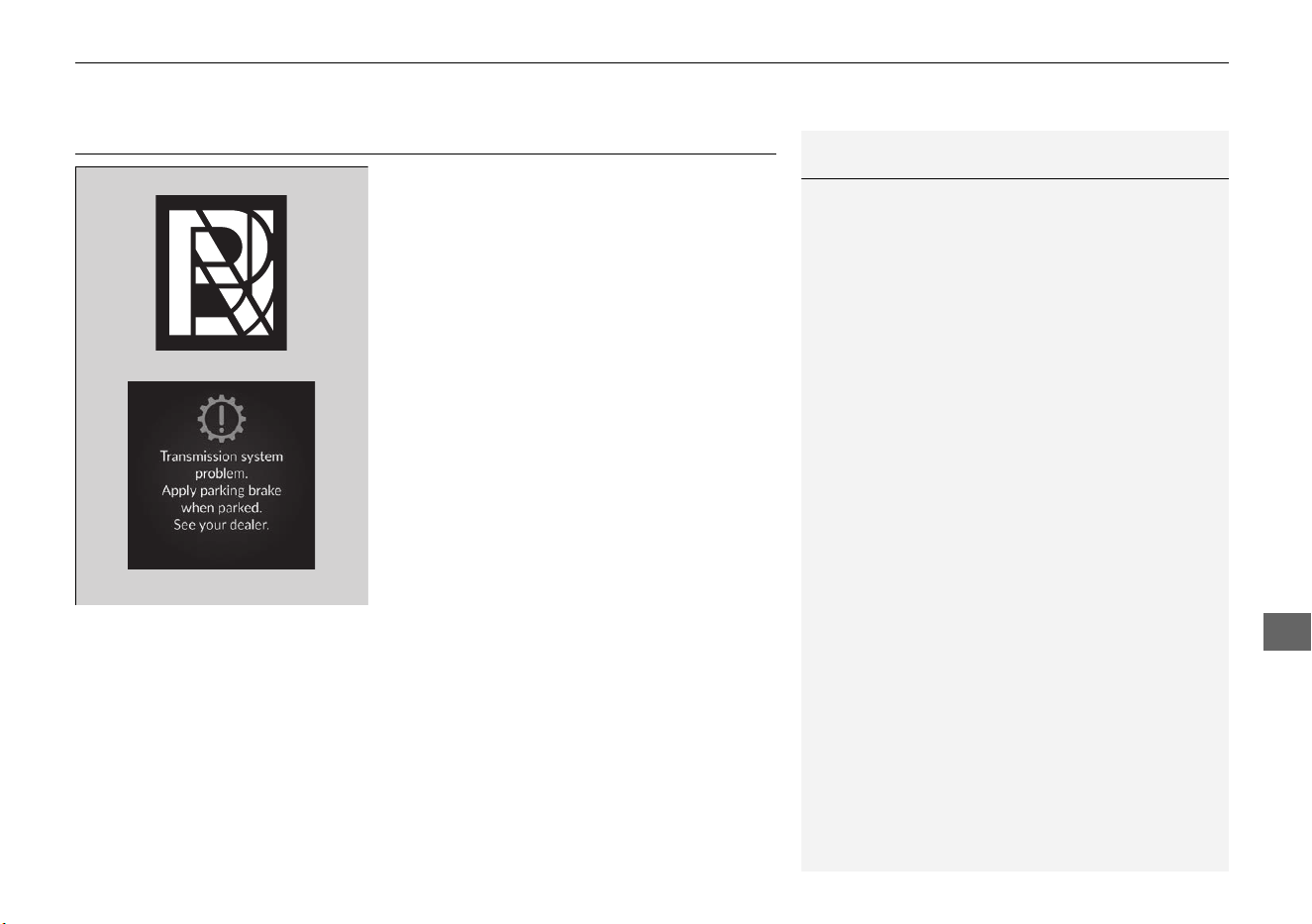
653
uuIndicator Coming On/Blinkingu
If the Transmission System Indicator Blinks along with the Warning Message
Handling the Unexpected
If the Transmission System Indicator Blinks along
with the Warning Message
■
Reasons for the indicator to blink
The transmission is malfunctioning.
■
What to do when the indicator blinks
Immediately have your vehicle inspected by a
dealer.
1If the Transmission System Indicator Blinks along with the
Warning Message
You may not be able to start the engine.
Make sure to set the parking brake when parking
your vehicle.
Call a professional towing service if you need to tow
your vehicle.
2 Emergency Towing P. 661
26 PILOT-31T906300.book 653 ページ 2025年10月8日 水曜日 午前11時43分
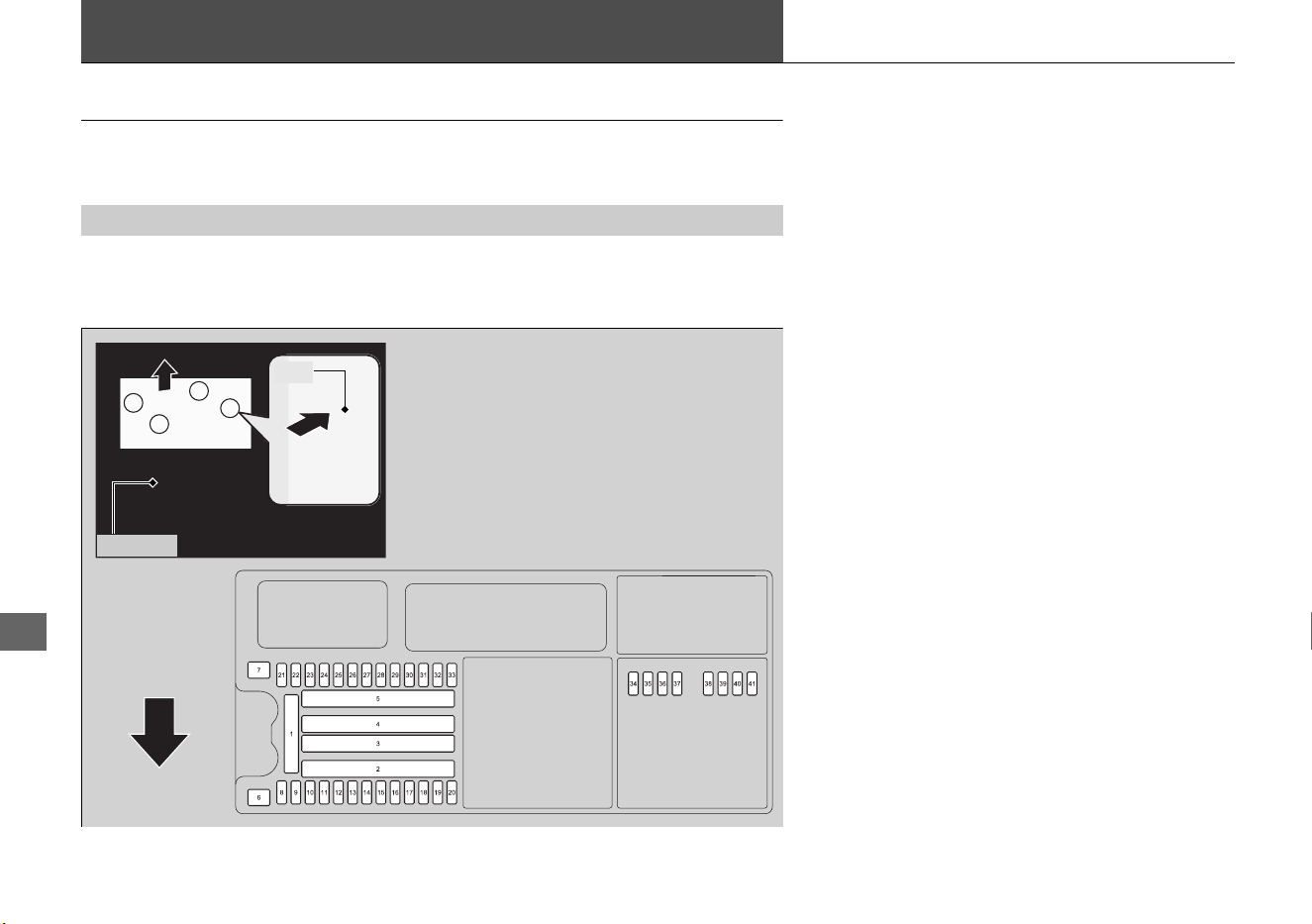
654
Handling the Unexpected
Fuses
Fuse Locations
If any electrical devices are not working, set the power mode to VEHICLE OFF and
check to see if any applicable fuse is blown.
Located near the brake fluid reservoir. Push the tabs to open the box.
Fuse locations are shown on the fuse box cover or the image below. Locate the fuse
in question by the fuse number.
■
Engine Compartment Fuse Box
Fuse Box
Tab
Front
26 PILOT-31T906300.book 654 ページ 2025年10月8日 水曜日 午前11時43分
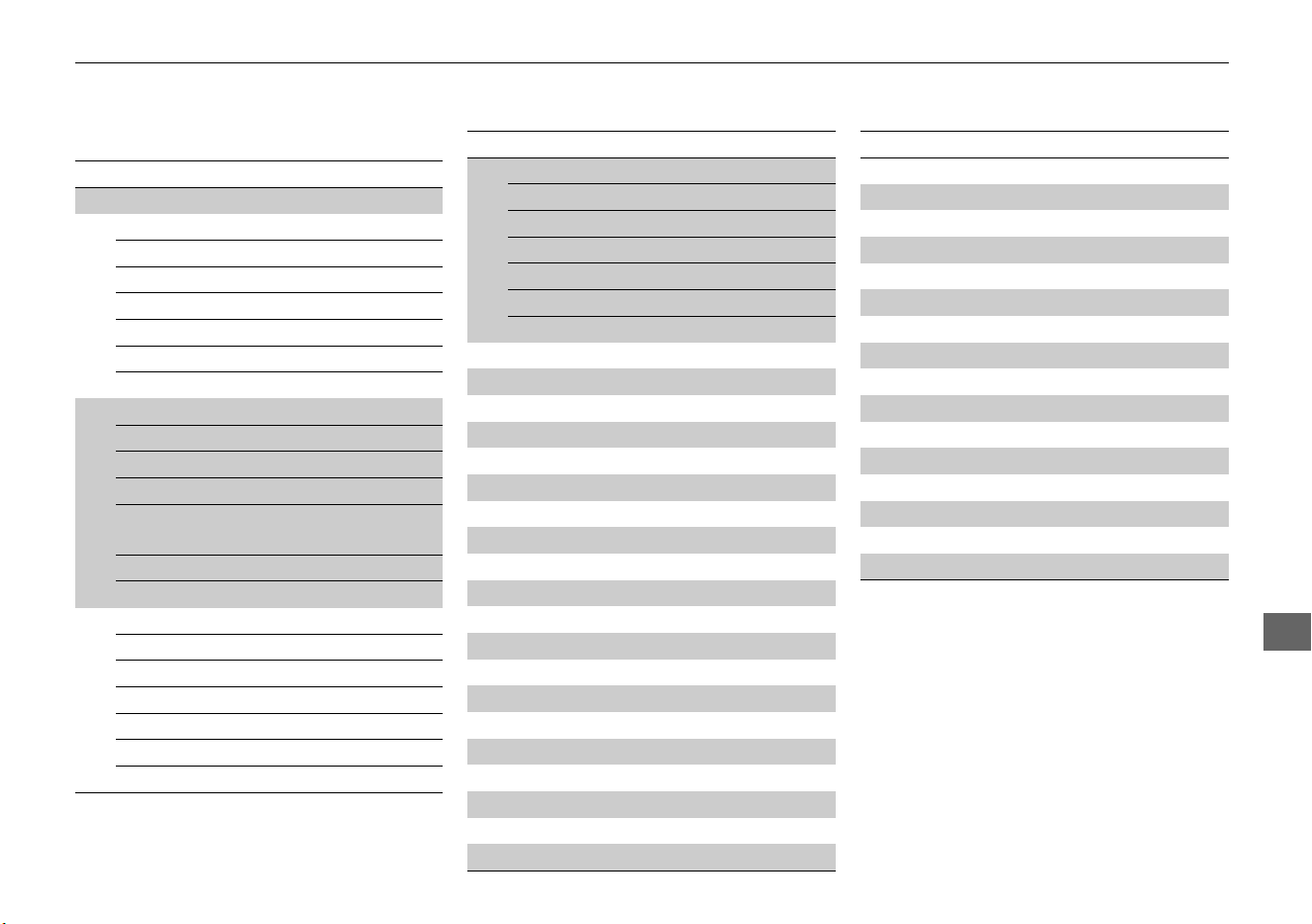
655
uuFusesuFuse Locations
Continued
Handling the Unexpected
■
Circuit protected and fuse rating
Circuit Protected Amps
1 BATTERY 225 A
2
Idle Stop 1 (30 A)
Idle Stop 2 (30 A)
EPS 80 A
FET Main 1 70 A
Fuse Box Main 1 60 A
Fuse Box Option 1 60 A
Rear Blower 30 A
3
ACM 30 A
Starter Cut 30 A
Sub Fan Motor 30 A
Heater Motor 40 A
Accessory Power Socket
Main
*
(40 A)
Rear Defogger 40 A
Fuse Box Option 2 60 A
4
AC Power Outlet
*
(30 A)
EBB 40 A
Power Tailgate (40 A)
ABS/VSA FSR 40 A
- 60 A
Wiper Motor 30 A
Fuse Box Main 2 60 A
5
FET Main 2 30 A
ABS/VSA Motor 40 A
IG Main 2 30 A
SRM 2 30 A
SRM 1 30 A
AWD
*
(30 A)
IG Main 1 30 A
6 Condenser Fan 30 A
7 Trailer Main
*
(30 A)
8 Power Tailgate (20 A)
9 - (15 A)
10 - -
11 Back Up 10 A
12 Trailer Charge
*
(20 A)
13 Trailer Brake
*
(20 A)
14 Horn 15 A
15 - -
16 VBU 10 A
17 - -
18 - -
19 FI Main 20 A
20 Injector 20 A
21 TCU 1 15 A
22 IG Coil 15 A
23 Hazard 15 A
24 Right H/L 15 A
25 Stop 5 A
Circuit Protected Amps
26 Left H/L 15 A
27 TCU 3 10 A
28 TCU 2 10 A
29 - -
30 - -
31 Front Washer 15 A
32 Battery Sensor 10 A
33 Shutter Grille 10 A
34 IG1 START 5 A
35 Battery Fan 5 A
36 FI ECU 5 A
37 - -
38 IG1 PCS 5 A
39 IGPS RAD 10 A
40 IGPS VSSV (10 A)
41 - -
Circuit Protected Amps
* Not available on all models
26 PILOT-31T906300.book 655 ページ 2025年10月8日 水曜日 午前11時43分
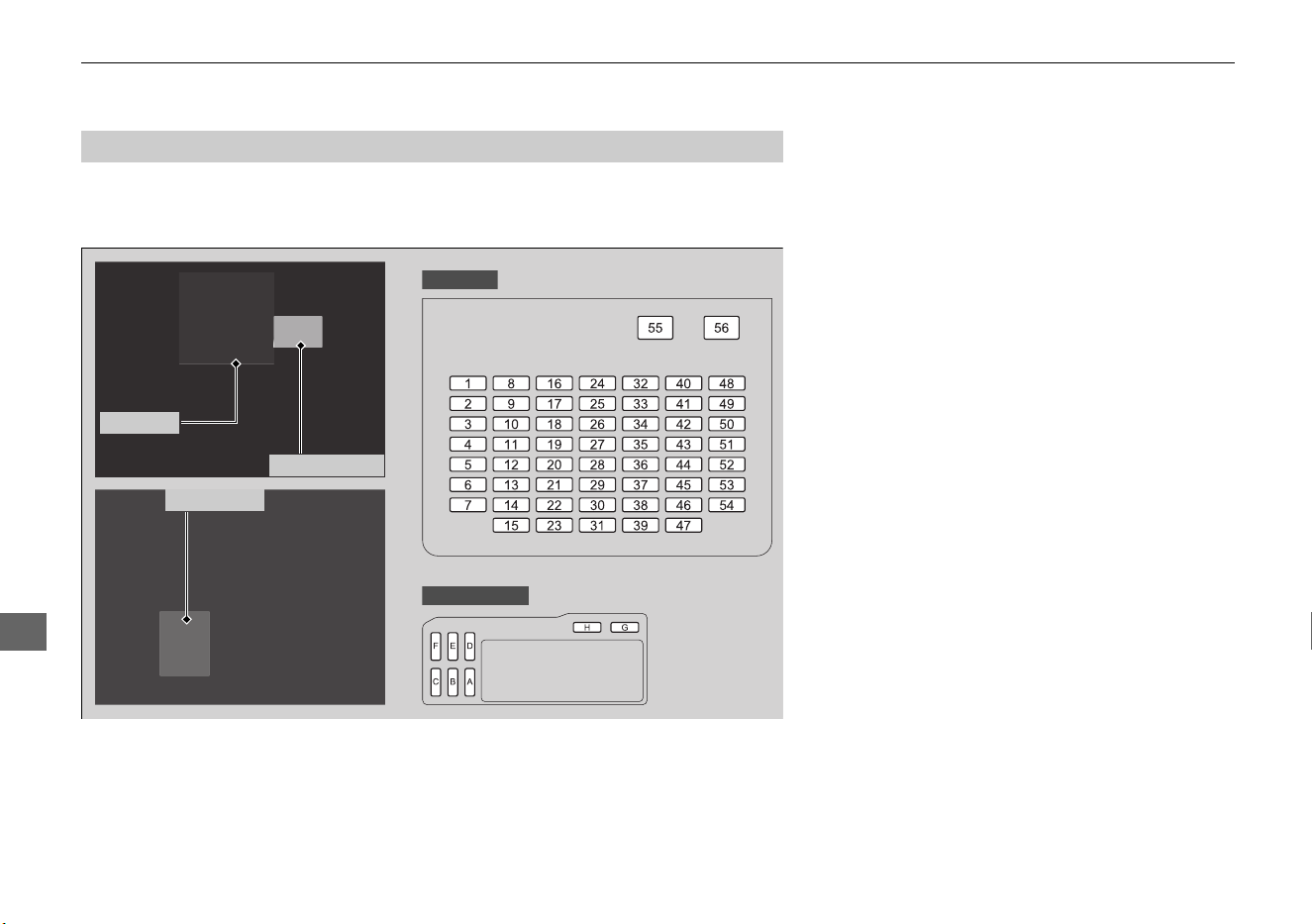
656
uuFusesuFuse Locations
Handling the Unexpected
Located under the dashboard.
Fuse locations are shown on the label
*
on the side panel or the image below.
Locate the fuse in question by the fuse number.
■
Driver’s Side Interior Fuse Box
Fuse Box
Sub Fuse Box
Fuse Label
*
Fuse Box
Sub Fuse Box
* Not available on all models
26 PILOT-31T906300.book 656 ページ 2025年10月8日 水曜日 午前11時43分
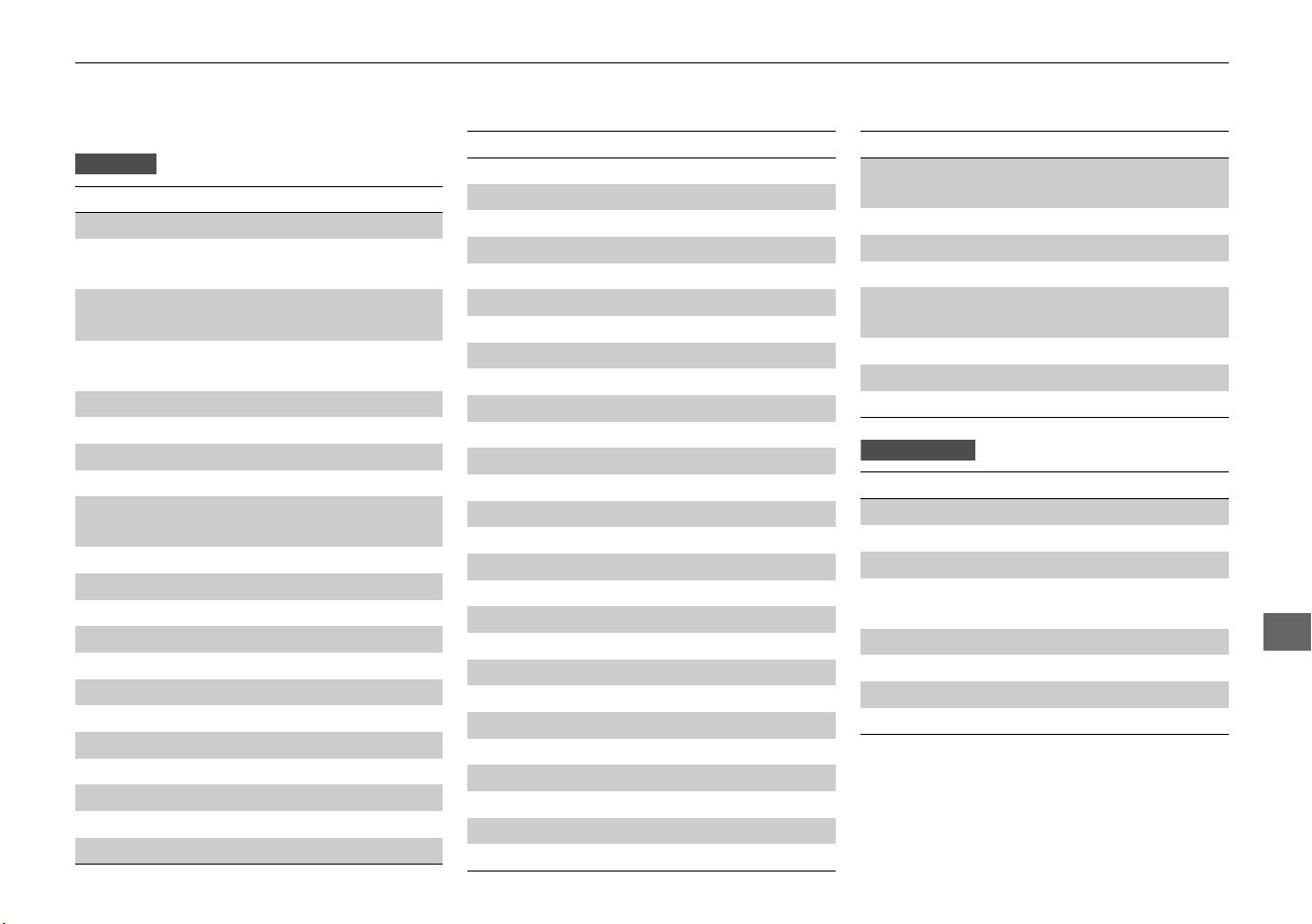
657
uuFusesuFuse Locations
Continued
Handling the Unexpected
■
Circuit protected and fuse rating
Circuit Protected Amps
1 Driver’s Power Window 30 A
2
Front Passenger’s Power
Window
30 A
3
Rear Right Side Power
Window
30 A
4
Rear Left Side Power
Window
30 A
5 Option 10 A
6 SRS 10 A
7 - (10 A)
8- -
9
Rear Accessory Power
Socket
*
(20 A)
10 Door Lock Main 20 A
11 Meter 10 A
12 MISS SOL 10 A
13 Rear Wiper 10 A
14 - -
15 Driver’s Door Unlock (10 A)
16 Panoramic Roof
*
(20 A)
17 - -
18 - -
19 AWD
*
(10 A)
20 Center Display 10 A
21 - -
Fuse Box
22 Keyless Access System 10 A
23 Driver’s Door Lock (10 A)
24 - -
25 Shifter 10 A
26 SRS 10 A
27 ACG 15 A
28 ABS/VSA 10 A
29 FUEL PUMP 20 A
30 Left Side Door Unlock 10 A
31 Right Side Door Unlock 10 A
32 Sunshade
*
(20 A)
33 CGW 10 A
34 - -
35 Front USB 10 A
36 Rear USB 15 A
37 - -
38 Rear Seat Act 20 A
39 Right Side Door Lock 10 A
40 Driver’s Power Seat Slide (20 A)
41 Driver’s Power Seat Recline (20 A)
42 Starter 10 A
43 A/C 10 A
44 DRL 10 A
45 Accessory 10 A
46 - -
47 Left Side Door Lock 10 A
48 - -
Circuit Protected Amps
49
Front Passenger’s Power
Seat Slide
(20 A)
50 Driver’s Power Seat Lumbar (10 A)
51 - -
52 - -
53
Front Passenger’s Power
Seat Recline
(20 A)
54 - -
55 Audio Amp
*
(30 A)
56 - -
Circuit Protected Amps
A Option VST (10 A)
BAccessory VST(10 A)
C Back Up 2 Main (15 A)
D
Surround View Camera
System VST
*
(10 A)
E Audio VST (20 A)
F- -
G Meter VST (15 A)
H MICU VST (10 A)
Circuit Protected Amps
Sub Fuse Box
* Not available on all models
26 PILOT-31T906300.book 657 ページ 2025年10月8日 水曜日 午前11時43分
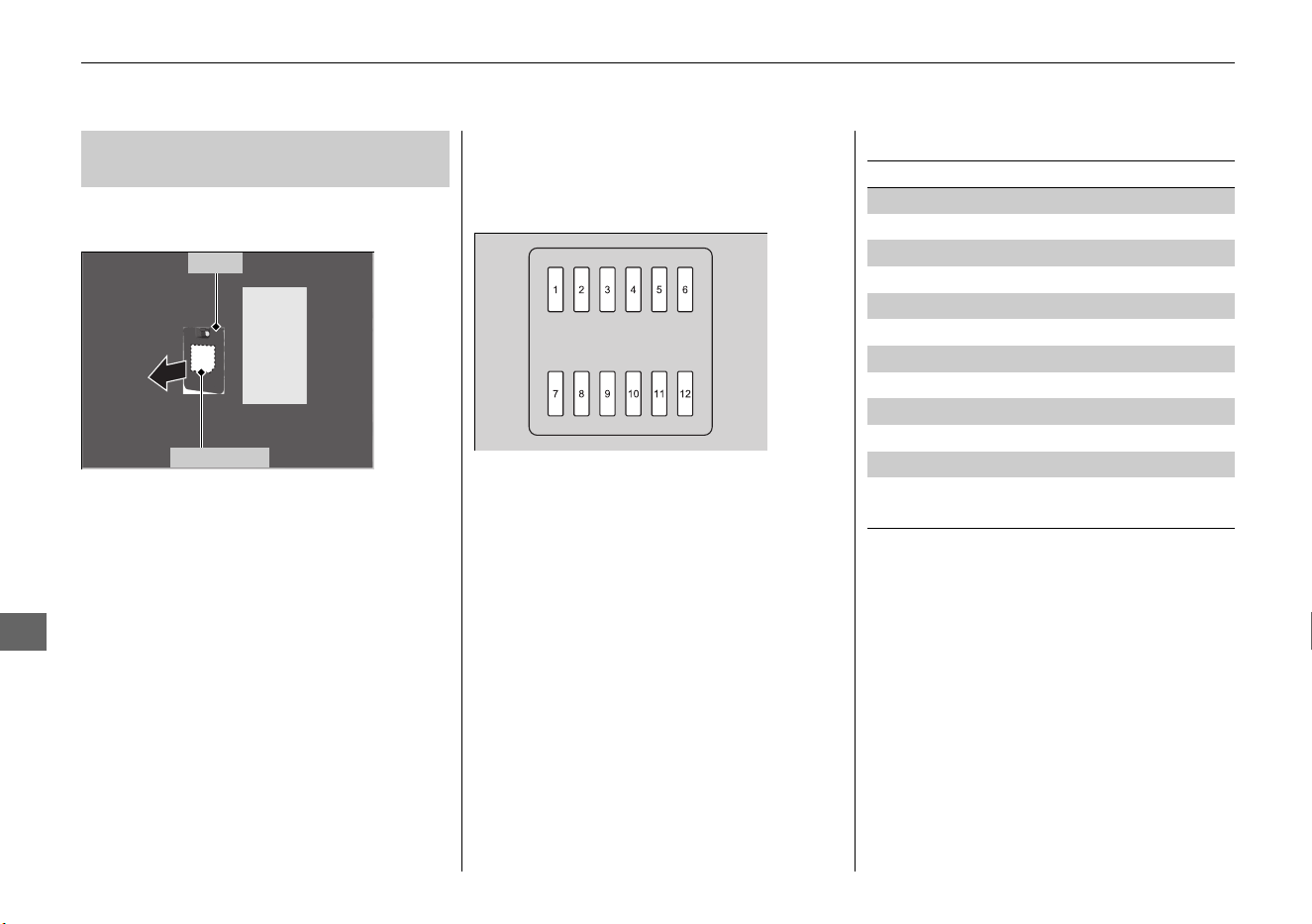
658
uuFusesuFuse Locations
Handling the Unexpected
Located on the lower side panel. Take off
the cover to open.
■
Passenger’s Side Interior Fuse
Box
Cover
Fuse Label
*
Fuse locations are shown on the label
*
on
the back of the cover or the image below.
Locate the fuse in question by the fuse
number.
■
Circuit protected and fuse rating
Circuit Protected Amps
1 − −
2 A/C Compressor 10 A
3 Heated Steering Wheel
*
(10 A)
4 Heated Windshield
*
(15 A)
5 Fog Lights (10 A)
6 FI Sub 15 A
7 Front Seat Heaters 20 A
8 − −
9 − −
10 Second Row Seat Heaters
*
(20 A)
11 − −
12
Front Accessory Power
Socket
20 A
* Not available on all models
26 PILOT-31T906300.book 658 ページ 2025年10月8日 水曜日 午前11時43分
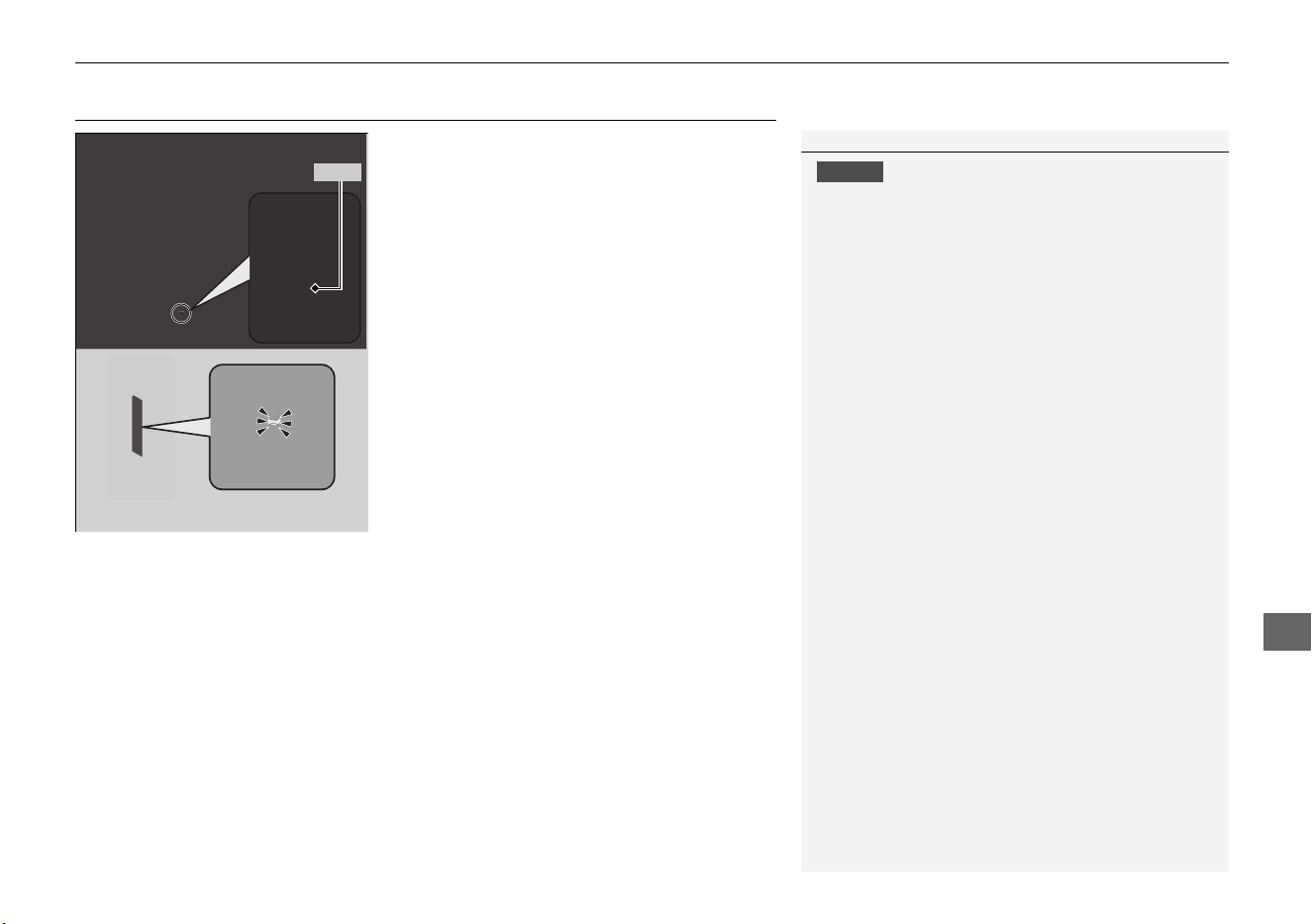
659
uuFusesuInspecting and Changing Fuses
Continued
Handling the Unexpected
Inspecting and Changing Fuses
1. Set the power mode to VEHICLE OFF. Turn
headlights and all accessories off.
2. Remove the fuse box cover.
3. Check the main fuse in the engine
compartment fuse box.
u Look at the fuse through the hole.
u If the fuse is blown, have it replaced by a
dealer.
1Inspecting and Changing Fuses
NOTICE
Replacing a fuse with one that has a higher rating
greatly increases the chances of damaging the
electrical system.
Use the charts to locate the fuse in question and
confirm the specified amperage on the fuse label.
2 Fuse Locations P. 654
Replace with a fuse of the same specified amperage.
Hole
Main Fuse
26 PILOT-31T906300.book 659 ページ 2025年10月8日 水曜日 午前11時43分
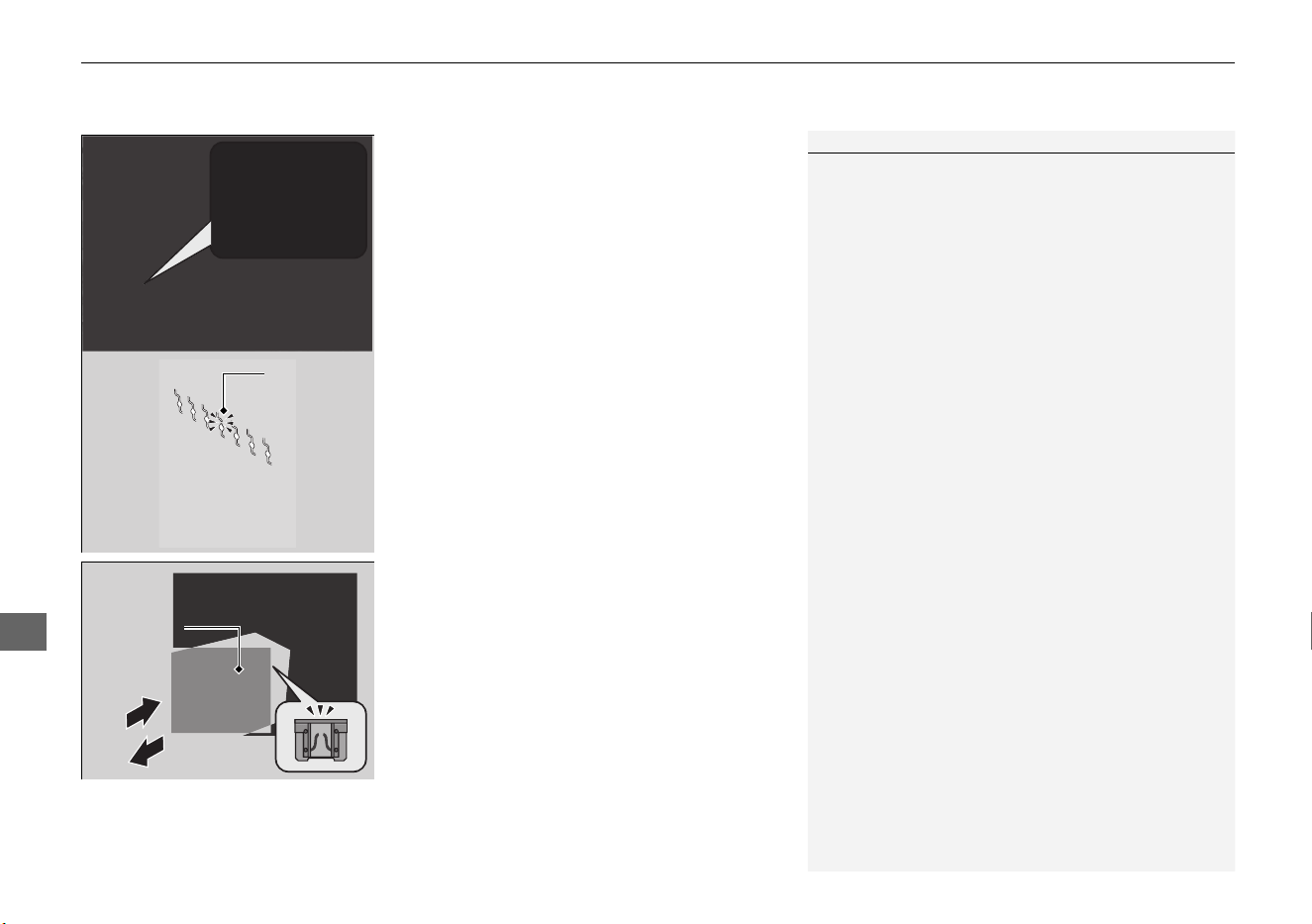
uuFusesuInspecting and Changing Fuses
660
Handling the Unexpected
4. Check the combined fuses in the engine
compartment fuse box.
u Look into the space between the fuses.
u If the fuse is blown, have it replaced by a
dealer.
5. Inspect the small fuses in the engine
compartment and the vehicle interior.
u If there is a blown fuse, remove it with
the fuse puller and replace it with a new
one.
1Inspecting and Changing Fuses
There is a fuse puller on the back of the engine
compartment fuse box cover.
Combined Fuse
Blown Fuse
Fuse Puller
26 PILOT-31T906300.book 660 ページ 2025年10月8日 水曜日 午前11時43分
661
Handling the Unexpected
Emergency Towing
Call a professional towing service if you need to tow your vehicle.
■
Flatbed equipment
The operator loads your vehicle on the back of a truck.
This is the best way to transport your vehicle.
■
Wheel lift equipment
The tow truck uses two pivoting arms that go under the front tires and lift them off
the ground. The rear tires remain on the ground. This is an acceptable way to
tow your vehicle.
1Emergency Towing
NOTICE
Trying to lift or tow your vehicle by the bumpers will
cause serious damage. The bumpers are not designed
to support the vehicle’s weight.
NOTICE
Improper towing such as towing behind a
motorhome or other motor vehicle can damage the
transmission.
Never tow your vehicle with just a rope or chain.
It is very dangerous since ropes or chains may shift
from side to side or break.
Make sure the parking brake is released. If you
cannot release the parking brake, your vehicle must
be transported by the flatbed equipment.
2 Parking Brake P. 533
2WD models
2WD models
26 PILOT-31T906300.book 661 ページ 2025年10月8日 水曜日 午前11時43分
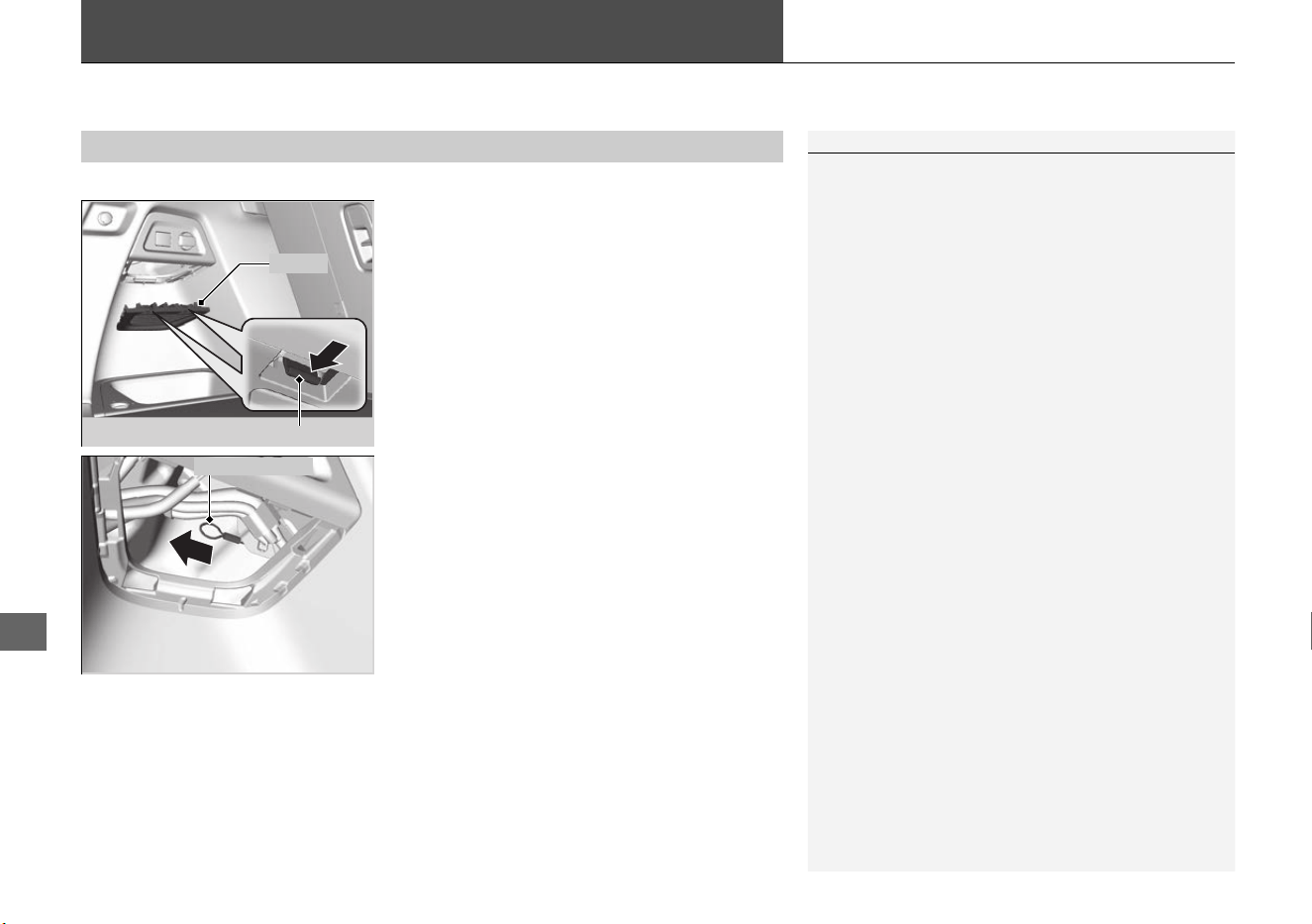
662
Handling the Unexpected
If You Cannot Unlock the Fuel Fill Door
If you cannot unlock the fuel fill door, use the following procedure.
1. Open the tailgate.
2. Push on the tabs, then remove the cover.
3. Pull the release cord as shown.
4. Open the fuel fill door.
2 How to Refuel P. 566
■
What to Do If Unable to Unlock the Fuel Fill Door
1What to Do If Unable to Unlock the Fuel Fill Door
After taking these steps, contact a dealer to have the
vehicle checked.
Cover
Tab
Release Cord
26 PILOT-31T906300.book 662 ページ 2025年10月8日 水曜日 午前11時43分
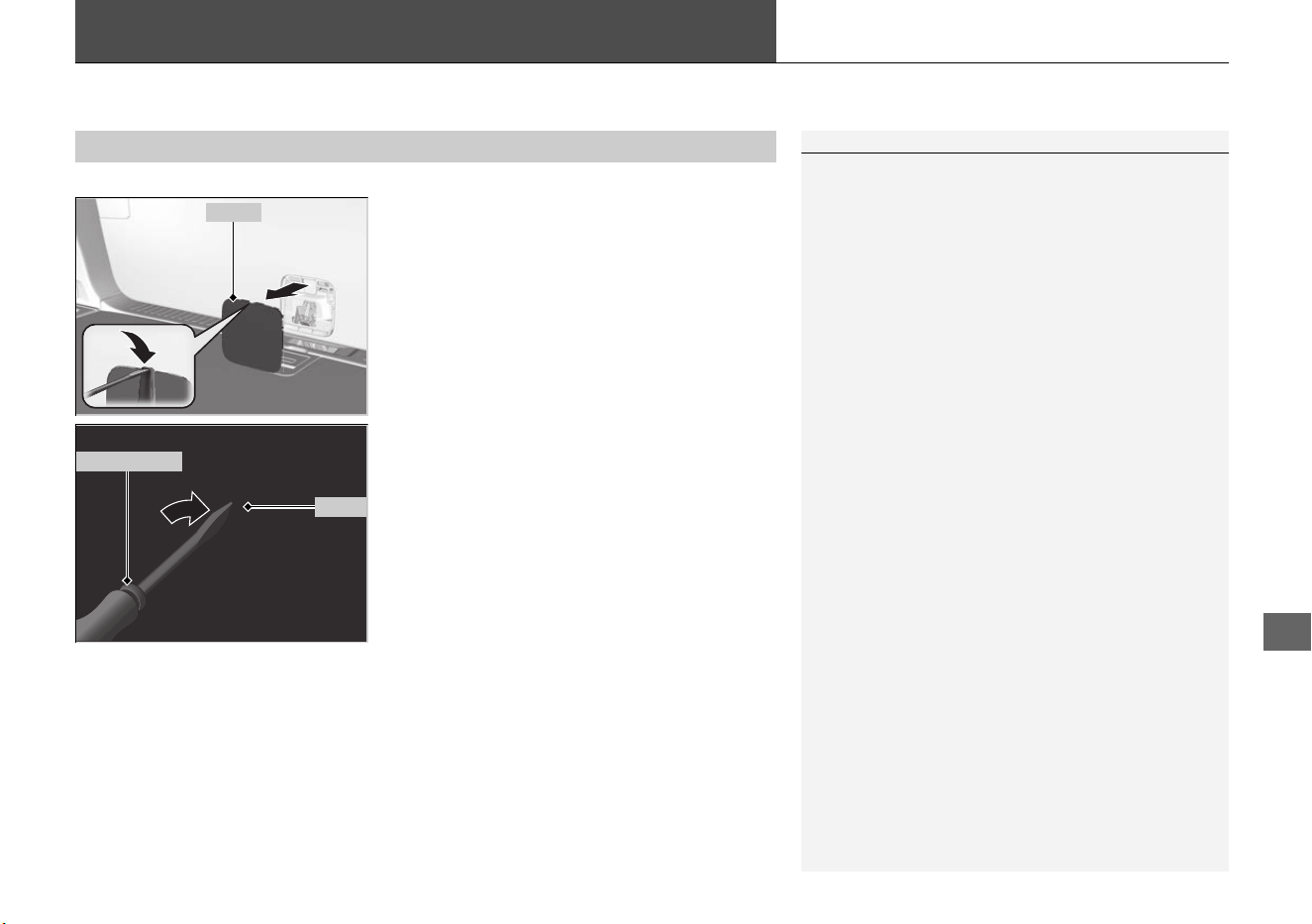
663
Handling the Unexpected
If You Cannot Open the Tailgate
If you cannot open the tailgate, use the following procedure.
1. Use a flat-tip screwdriver and remove the
cover on the back of the tailgate.
u Wrap the flat-tip screwdriver with a cloth
to prevent scratches.
2. To open the tailgate, push the tailgate
while pushing the lever to the right with the
flat-tip screwdriver.
■
What to Do If Unable to Open the Tailgate
1What to Do If Unable to Open the Tailgate
Following up:
After taking these steps, contact a dealer to have the
vehicle checked.
When you open the tailgate from inside, make sure
there is enough space around the tailgate, and it
does not hit anyone or any object.
Cover
Lever
Screwdriver
26 PILOT-31T906300.book 663 ページ 2025年10月8日 水曜日 午前11時43分
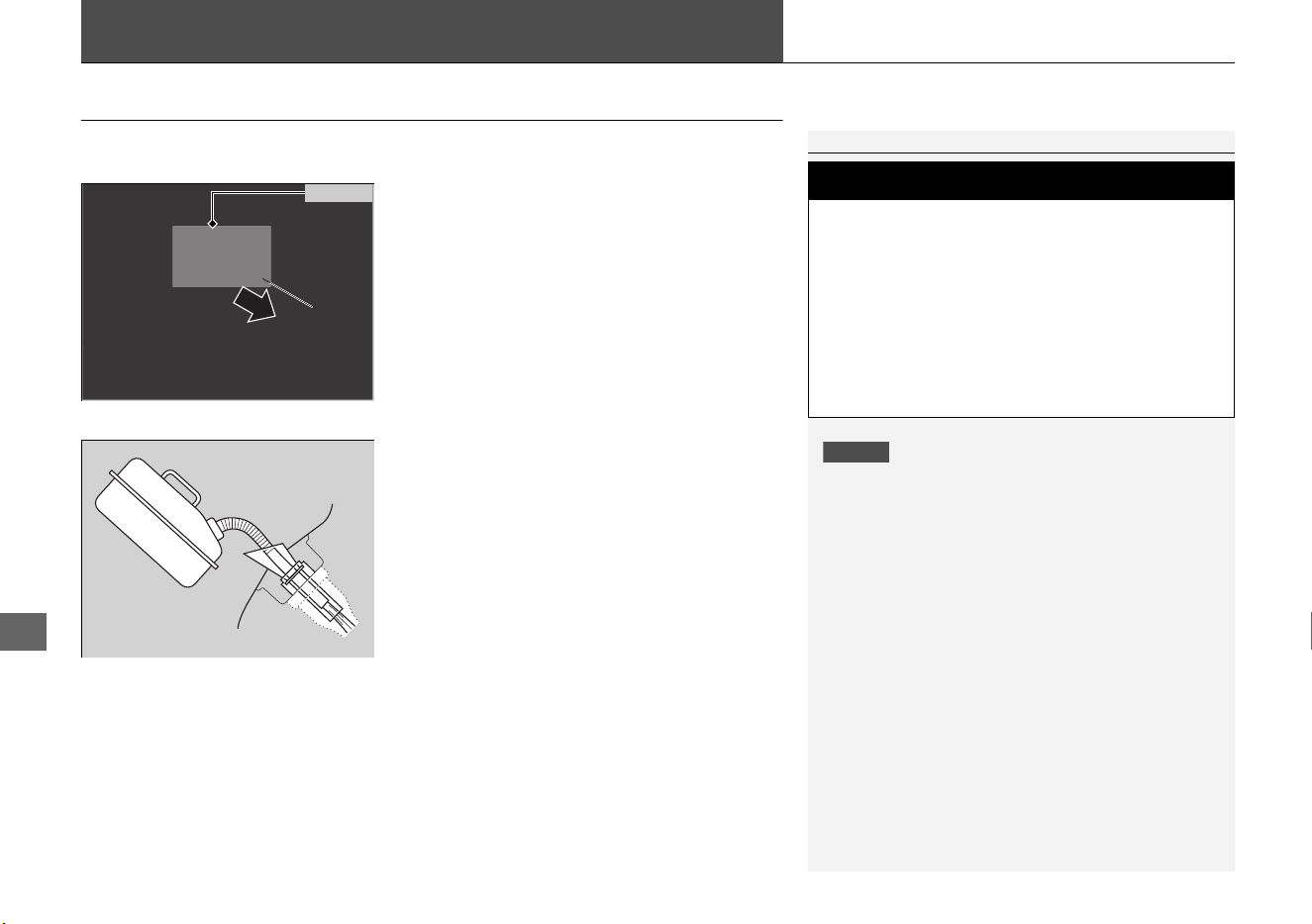
664
Handling the Unexpected
Refueling
Refueling From a Portable Fuel Container
If you have run out of fuel and need to refuel your vehicle from a portable fuel
container, use the funnel provided with your vehicle.
1. Turn off the engine.
2. Open the fuel fill door.
2 How to Refuel P. 566
3. Take the funnel out of the cargo area.
2 Types of Tools P. 626
4. Place the end of the funnel on the lower
part of filler opening, then insert it slowly
and fully.
u Make sure that the end of the funnel
goes down along with the filler pipe.
5. Fill the tank with fuel from the portable fuel
container.
u Pour fuel carefully so you do not spill any.
6. Remove the funnel from the filler neck.
u Wipe up any fuel from the funnel before
storing it.
7. Shut the fuel fill door by hand.
1Refueling From a Portable Fuel Container
NOTICE
Do not insert the nozzle of a portable fuel container
or any funnel other than the one provided with your
vehicle. Doing so can damage the fuel system.
Do not try to pry open or push open the sealed fuel
tank with foreign objects. This can damage the fuel
system and its seal.
Make sure the fuel in the portable fuel container is
gasoline before you refuel.
3
WARNING
Gasoline is highly flammable and explosive.
You can be burned or seriously injured
when handling fuel.
• Stop the engine, and keep heat, sparks,
and flames away.
• Handle fuel only outdoors.
• Wipe up spills immediately.
Funnel
26 PILOT-31T906300.book 664 ページ 2025年10月8日 水曜日 午前11時43分
665
Continued
Handling the Unexpected
Emergency Call (eCall)
Automatic emergency call
If your vehicle is involved in a collision, the
vehicle will attempt to connect to an operator.
Once a connection is established, your
location information will be sent to an
operator with whom you will be able to speak.
When an emergency call is initiated, the vehicle speakers are disabled so that you
can hear the operator.
When the power mode is set to ON, the eCall indicator lights up in green for 1
second, then in red for 1 second.
eCall Indicator
26 PILOT-31T906300.book 665 ページ 2025年10月8日 水曜日 午前11時43分
uuEmergency Call (eCall)uAutomatic emergency call
666
Handling the Unexpected
If the eCall system is working properly, the indicator will light up in green.
• Green: eCall system is ready.
• Blinking in green: eCall system is connected and making an eCall to an operator.
• Repeating a pattern of short flashes of the red light: The eCall system has failed
to connect to an operator. The eCall indicator will continue this pattern for five
seconds, then it will light up in green.
If the eCall system is disabled in the event of a critical system failure, the following
warning will be given to the occupants of the vehicle:
• Red or blacked out: A problem with the eCall system has occurred. If the indicator
stays red or blacked out even after you have restarted the vehicle, have the system
checked by a dealer.
1Emergency Call (eCall)
Your vehicle may NOT be able to connect to an
operator if:
• The 12V battery is too low.
• Your vehicle is in an area without adequate cellular
coverage.
• There is a problem with the eCall system itself or its
peripheral equipment such as the microphone or
speakers.
26 PILOT-31T906300.book 666 ページ 2025年10月8日 水曜日 午前11時43分
667
uuEmergency Call (eCall)u
Manual emergency call
Handling the Unexpected
Manual emergency call
If you need to make an emergency call, you
can establish a connection manually. Press the
SOS button.
To cancel a call, press the SOS button for
more than two seconds, before 10 seconds
have elapsed since the SOS button was
pressed.
The SOS button is protected by a cover. Open the cover to gain access.
When an emergency call is initiated, the vehicle speakers are disabled so that you
can hear the operator.
1Manual emergency call
Do NOT press the button while you are driving. If you
need to contact an operator, park the vehicle in a
safe place before you make a call.
If the eCall system at first fails to connect to an
operator, it will try again until a connection is
established. However, if two minutes have elapsed
since the first try was attempted, the system will no
longer attempt to establish a connection.
The SOS button does not cancel a call once the
system is connected to an operator.
Cover
Microphone
SOS Button
26 PILOT-31T906300.book 667 ページ 2025年10月8日 水曜日 午前11時43分

668
26 PILOT-31T906300.book 668 ページ 2025年10月8日 水曜日 午前11時43分
This page intentionally left blank.
669
Information
This chapter includes your vehicle’s specifications, locations of identification numbers, and other
information required by regulation.
Specifications .................................... 670
Identification Numbers
Vehicle Identification Number (VIN),
Engine Number, and Transmission
Number ......................................... 672
Devices that Emit Radio Waves ....... 673
Reporting Safety Defects ................. 675
Emissions Testing
Testing of Readiness Codes.............. 676
Warranty Coverages ........................ 678
Authorized Manuals......................... 681
Customer Service Information......... 682
Open Source License ........................ 683
26 PILOT-31T906300.book 669 ページ 2025年10月8日 水曜日 午前11時43分
670
Information
Specifications
■
Vehicle Specifications
*1: Models without second row center seat
*2: Models with second row center seat
*3: 2WD models
*4: AWD models
Model Pilot
No. of Passengers:
Front 2
Rear 2nd Row 2
*1
3
*2
3rd Row 3
Total
7
*1
8
*2
Weights:
Gross Vehicle
Weight Rating
See the certification label on the driver's
doorjamb
Gross Axle Weight
Rating (Front)
See the certification label on the driver's
doorjamb
Gross Axle Weight
Rating (Rear)
See the certification label on the driver's
doorjamb
Gross Combined Weight
Rating
U.S.: 8,444 lbs (3,830 kg)
*3
10,141 lbs (4,600 kg)
*4
Canada: 4,600 kg
■
Air Conditioning
■
Engine Specifications
■
Fuel
■
Washer Fluid
*1: Models without surround view camera system
*2: Models with surround view camera system
Refrigerant Type HFO-1234yf (R-1234yf)
Charge Quantity 17.8 – 19.6 oz (505 – 555 g)
Lubricant Type RB100EV-01 (POE)
Quantity 10.28 – 11.41 cu-in (168.5 – 187.1 cm
3
)
Displacement 211.7 cu-in (3,471 cm
3
)
Spark Plugs NGK DILZKAR7H11H
Type
Unleaded gasoline, pump octane number
87 or higher
Fuel Tank Capacity 18.5 US gal (70.0 L)
Tank Capacity
U.S.: 2.6 US qt (2.5 L)
*1
4.8 US qt (4.5 L)
*2
Canada: 4.8 US qt (4.5 L)
■
Light Bulbs
Headlights (Low Beam) LED
Headlights (High Beam) LED
Fog Lights LED
Front Turn Signal Lights LED
Front Side Marker Lights LED
Parking/Daytime Running Lights LED
Side Turn Signal Lights
*
(on Door Mirrors)
LED
Brake Lights LED
Rear Side Marker Lights LED
Taillights LED
Back-Up Lights 21 W (W21W)
Rear Turn Signal Lights
21 W Amber
(WY21W)
High-Mount Brake Light LED
Rear License Plate Light LED
Puddle Lights
*
LED
Interior Lights
Front, Second Row, and Third Row Map
Lights
LED
Ambient Lights LED
Vanity Mirror Lights
*
2.3 W
Door Courtesy Lights
*
LED
Door Inner Handle Lights
*
LED
Door Pocket Lights
*
LED
Foot Lights
*
LED
Instrument Panel Tray Lights
*
LED
Glove Box Light LED
Cargo Area Light LED
* Not available on all models
26 PILOT-31T906300.book 670 ページ 2025年10月8日 水曜日 午前11時43分
671
uuSpecificationsu
Information
■
Brake Fluid
■
Automatic Transmission Fluid
*1: 2WD models
*2: AWD models
■
Rear Differential Fluid
*
■
Transfer Assembly Fluid
*
Specified Honda Heavy Duty Brake Fluid DOT 3
Specified Honda ATF-TYPE 2.0
Capacity Change
3.9 US qt (3.7 L)
*1
4.4 US qt (4.2 L)
*2
Specified Honda DPSF-II
Capacity Change 1.76 US qt (1.67 L)
Specified Honda HGO-1
Capacity Change 0.58 US qt (0.55 L)
■
Engine Oil
■
Engine Coolant
Recommended
·Honda Genuine Motor Oil 0W-20
·API service SN or higher grade 0W-20
Capacity
Change 5.5 US qt (5.2 L)
Change
including
filter
5.8 US qt (5.5 L)
Specified Honda Long Life Antifreeze/Coolant Type 2
Ratio 50/50 with distilled water
Capacity
2.03 US gal (7.67 L)
(change including the remaining 0.223 US gal
(0.845 L) in the reserve tank)
■
Tire
*1: Original tire size is mentioned on the tire information label on
the driver’s doorjamb.
*2: Models with 18 inch wheel
*3: Models with 20 inch wheel
Regular
Size
*1
255/60R18 108H
265/60R18 110T
255/50R20 105H
Pressure
35 (240 [2.4])
psi (kPa [kgf/cm
2
])
Compact
Spare
*
Size T155/85D18 115M
Pressure
psi (kPa [kgf/cm
2
])
60 (420 [4.2])
Spare
(Full-size
tire)
*
Size 265/60R18 110T
Pressure
psi (kPa [kgf/cm
2
])
35 (240 [2.4])
Wheel Size
Regular
18 x 8J
*2
20 x 8J
*3
Compact Spare
*
18 x 4T
Full-size Spare
*
18 x 8J
* Not available on all models
26 PILOT-31T906300.book 671 ページ 2025年10月8日 水曜日 午前11時43分
672
Information
Identification Numbers
Vehicle Identification Number (VIN), Engine Number,
and Transmission Number
Your vehicle has a 17-digit vehicle identification number (VIN) used to register your
vehicle for warranty purposes, and for licensing and insuring your vehicle.
The locations of your vehicle’s VIN, engine number, and transmission number are
shown as follows.
Vehicle Identification Number
Engine Number
Certification Label/Vehicle Identification Number
Automatic Transmission
Number
26 PILOT-31T906300.book 672 ページ 2025年10月8日 水曜日 午前11時43分

673
Continued
Information
Devices that Emit Radio Waves
Each radio frequency device installed in the vehicle conforms to the requirements
and standards of the regulation listed below:
As required by the FCC:
This device complies with Part 15 of the FCC rules. Operation is
subject to the following two conditions: (1) This device may not
cause harmful interference, and (2) this device must accept any
interference received, including interference that may cause
undesired operation.
Changes or modifications not expressly approved by the party
responsible for compliance could void the user’s authority to
operate the equipment.
This device complies with Industry Canada licence-exempt RSS standard(s).
Operation is subject to the following two conditions: (1) this device may not cause
interference, and (2) this device must accept any interference, including interference
that may cause undesired operation of the device.
26 PILOT-31T906300.book 673 ページ 2025年10月8日 水曜日 午前11時43分

674
uuDevices that Emit Radio Wavesu
Information
Adaptive Cruise Control (ACC)/Collision Mitigation Braking System (CMBS)
Legal warning text for RF equipment:
This device contains licence-exempt transmitter(s)/receiver(s) that comply with Innovation, Science and Economic Development Canada’s
licence-exempt RSS(s). Operation is subject to the following two conditions:(1) This device may not cause interference. (2) This device
must accept any interference, including interference that may cause undesired operation of the device.
L’émetteur/récepteur exempt de licence contenu dans le présent appareil est conforme aux CNR d’Innovation, Sciences et
Développement économique Canada applicables aux appareils radio exempts de licence. L’exploitation est autorisée aux deux conditions
suivantes: (1) L’appareil ne doit pas produire de brouillage; (2) L’appareil doit accepter tout brouillage radioélectrique subi, même si le
brouillage est susceptible d’en compromettre le fonctionnement.
●
User manual statements:
User Manual statement according to §15.19:
This device complies with Part 15 of the FCC Rules.
Operation is subject to the following two conditions:
1. this device may not cause harmful interference and
2. this device must accept any interference received, including interference that may cause undesired operation.
User Manual statement according to §15.105:
This equipment has been tested and found to comply with the limits for a Class A digital device, pursuant to Part 15 of the FCC Rules.
These limits are designed to provide reasonable protection against harmful interference when the equipment is operated in a commercial
environment. This equipment generates, uses, and can radiate radio frequency energy and, if not installed and used in accordance with
the instruction manual, may cause harmful interference to radio communications. Operation of this equipment in a residential area is
likely to cause harmful interference in which case the user will be required to correct the interference at his own expense.
RF Exposure Information according 2.1091 / 2.1093 / OET bulletin 65:
Radiofrequency radiation exposure Information:
This equipment complies with FCC radiation exposure limits set forth for an uncontrolled environment. This equipment should be
installed and operated with minimum distance of 20 cm between the radiator and your body.
This transmitter must not be co-located or operating in conjunction with any other antenna or transmitter.
26 PILOT-31T906300.book 674 ページ 2025年10月8日 水曜日 午前11時43分

675
Information
Reporting Safety Defects
In the U.S.
If you believe that your vehicle has a defect which could cause a crash or could cause injury or death, you
should immediately inform the National Highway Traffic Safety Administration (NHTSA) in addition to
notifying American Honda Motor Co., Inc.
If NHTSA receives similar complaints, it may open an investigation, and if it finds that a safety defect exists
in a group of vehicles, it may order a recall and remedy campaign. However, NHTSA cannot become involved
in individual problems between you, your dealer, or American Honda Motor Co., Inc.
To contact NHTSA, you may call the Vehicle Safety Hotline toll-free at 1-888-327-4236 (TTY: 1-888-275-
9171); go to http://www.safercar.gov; or write to: Administrator, NHTSA, 1200 New Jersey Avenue, SE.,
Washington, DC 20590. You can also obtain other information about motor vehicle safety from http://
www.safercar.gov.
In Canada
If you believe that your vehicle has a defect which could cause a crash or could cause injury or death, you
should immediately inform Honda Canada Inc. and you may also inform Transport Canada.
If Transport Canada receives similar complaints, it may open an investigation, and if it finds that a safety
defect exists in a group of vehicles, it may lead to a recall and remedy campaign. However, Transport Canada
cannot become involved in individual problems between you, your dealer, or Honda Canada Inc.
To contact Transport Canada’s Defect Investigations and Recalls Division, you may call 1-800-333-0510. For
more information on reporting safety defects or about motor vehicle safety, go to http://www.tc.gc.ca/
roadsafety.
26 PILOT-31T906300.book 675 ページ 2025年10月8日 水曜日 午前11時43分
676
Information
Emissions Testing
Testing of Readiness Codes
Your vehicle has readiness code as part of the onboard self diagnostic system.
Some states use these codes for testing to verify whether your vehicle’s emissions
components are working properly.
The codes may not be read properly if testing is performed just after the battery has
gone dead or been disconnected.
To check the state of the readiness codes, set the power mode to ON, without
starting the engine. The malfunction indicator lamp will come on for 15 to 20
seconds. If the malfunction indicator lamp then turns off, the readiness codes are
set. If the malfunction indicator lamp blinks five to ten times, the readiness codes are
not set.
If you are required to have your vehicle tested and the readiness codes are not set,
prepare the vehicle for testing by doing the following:
1. Fill the gas tank to approximately 3/4 full.
2. Drive the vehicle for about 10 minutes, reaching 50 to 70 mph (80 to 112 km/h)
at least once during this drive, and make sure transmission is shifting throughout
10 available gears.
(If you want to make sure the top gear shifted properly, you can check the
sequential mode gear selection indicator by using the + paddle shifter.)
3. Park the vehicle and leave the engine off for 6 hours or more.
4. Make sure the ambient temperature is between 40°F and 95°F (4°C and 35°C).
5. Start the engine without touching the accelerator pedal, and let it idle for 20
seconds.
6. Keep the vehicle in
(P. Increase the engine speed to 2,000 rpm, and hold it
there for about 3 minutes.
7. Let the engine idle with your foot off the accelerator for 20 seconds.
1Testing of Readiness Codes
If a testing facility determines that the readiness
codes are not set, you may be requested to return at
a later date to complete the test.
If the testing facility determines the readiness codes
are still not set, see a dealer.
26 PILOT-31T906300.book 676 ページ 2025年10月8日 水曜日 午前11時43分

677
uuEmissions TestinguTesting of Readiness Codes
Information
8. Select a nearby, lightly traveled major highway where you can maintain a speed
of 50 to 60 mph (80 to 97 km/h) for at least 20 minutes. Drive on the highway
in
(D. Do not use cruise control. When traffic allows, drive for 90 seconds
without moving the accelerator pedal. (Vehicle speed may vary slightly; this is
okay.) If you cannot do this for a continuous 90 seconds because of traffic
conditions, drive for at least 30 seconds, then repeat it two more times (for a
total of 90 seconds).
9. Drive in city or suburban traffic for at least 10 minutes. When traffic conditions
allow, let the vehicle coast for several seconds without using the accelerator
pedal or the brake pedal.
10. Park the vehicle and leave the engine off for 30 minutes.
11. If this procedure is done immediately after losing 12-volt battery power, several
additional hours of driving may be required to set all codes.
26 PILOT-31T906300.book 677 ページ 2025年10月8日 水曜日 午前11時43分

678
Information
Warranty Coverages
■
U.S. Owners
Your new vehicle is covered by these warranties:
New Vehicle Limited Warranty – covers your new vehicle, except for the
emissions control systems and accessories, against defects in materials and
workmanship.
Emissions Control Systems Defects Warranty and Emissions Performance
Warranty – these two warranties cover your vehicle’s emissions control systems.
Time, mileage, and coverage are conditional. Please read your warranty booklet for
exact information.
Seat Belt Limited Warranty – a seat belt that fails to function properly is covered
by a limited warranty. Please read your warranty booklet for details.
Rust Perforation Limited Warranty – all exterior body panels are covered against
rusting from the inside out for the specified time period, regardless of mileage.
Accessory Limited Warranty – Honda accessories are covered under this
warranty. Time and mileage limits depend on the type of accessory and other
factors. Please read your warranty booklet for details.
Replacement Parts Limited Warranty – covers all Honda replacement parts
against defects in materials and workmanship.
26 PILOT-31T906300.book 678 ページ 2025年10月8日 水曜日 午前11時43分

679
uuWarranty Coveragesu
Continued
Information
Replacement Battery Limited Warranty – provides prorated coverage for a
replacement battery purchased from your dealer.
Replacement Muffler Lifetime Limited Warranty – provides coverage for as
long as the purchaser of the muffler owns the vehicle.
Restrictions and exclusions apply to all these warranties. Please read the Honda
warranty information booklet that came with your vehicle for precise information on
warranty coverages. Your vehicle’s original tires are covered by their manufacturer.
Tire warranty information is in a separate booklet.
■
Statement on Warranty Coverage for Aftermarket and Recycled Parts
The Magnuson-Moss Warranty Act, 15 U.S.C. s.2301 et seq., makes it illegal for
motor vehicle manufacturers to void a motor vehicle warranty or deny warranty
coverage solely because an aftermarket or recycled part has been used to repair the
vehicle or someone other than the authorized service provider performed service on
the vehicle. This provision does not apply to a new motor vehicle purchased solely
for commercial or industrial use.
26 PILOT-31T906300.book 679 ページ 2025年10月8日 水曜日 午前11時43分

680
uuWarranty Coveragesu
Information
Under federal law, a manufacturer may deny warranty coverage and charge for
repairs to a vehicle if it is discovered that an aftermarket or recycled part installed on
the vehicle is defective or was installed incorrectly and caused damage to another
part of the vehicle otherwise covered under warranty. The Federal Trade
Commission requires that a manufacturer demonstrate that an aftermarket or
recycled part or service performed by a person other than an authorized service
provider caused damage to another part of the vehicle otherwise covered under
warranty before denying warranty coverage. Additionally, federal law allows a
manufacturer to void a motor vehicle warranty or deny warranty coverage if the
manufacturer provides the article or service to consumers free of charge under the
warranty or the manufacturer has secured a waiver from the Federal Trade
Commission.
■
Canadian Owners
Please refer to the warranty manual that came with your vehicle.
■
EPA Contact Information
An owner may obtain further information concerning emission warranties or report
violations of the terms of the emission warranties by contacting:
Director,
Light-Duty Vehicle Center,
U.S. Environmental Protection Agency,
Attention: Warranty Claim
2000 Traverwood Drive,
Ann Arbor, MI 48105;
26 PILOT-31T906300.book 680 ページ 2025年10月8日 水曜日 午前11時43分

681
Information
Authorized Manuals
■
Service Express
For electronic copies of service publications, you can purchase a subscription to
Service Express. Visit https://techinfo.honda.com for pricing and options.
■
For U.S. Owners
Manuals can be purchased from Helm Incorporated. You can order a manual by
phone at 1 (800) 782-4356 (credit card orders only), or online at www.helminc.com.
■
For Canadian Owners
Please contact a dealer to order any manuals that you may require.
26 PILOT-31T906300.book 681 ページ 2025年10月8日 水曜日 午前11時43分
682
Information
Customer Service Information
Honda dealership personnel are trained professionals able to deal with any problems
you may encounter with your vehicle. If, however, you are faced with a problem that
they cannot resolve to your satisfaction, contact Honda Customer Service.
U.S. Owners
American Honda Motor Co., Inc.
Honda Automobile Customer Service
Mail Stop CHI-5
1919 Torrance Blvd.
Torrance, CA 90501-2746
Tel: 1 (800) 999-1009
Canadian Owners
Honda Canada Inc.
Customer Relations
180 Honda Boulevard
Markham, ON
L6C 0H9
Tel: 1-888-9-HONDA-9
Fax: 1-877-939-0909
E-mail: [email protected]
In Puerto Rico and the U.S. Virgin
Islands
Bella International
P.O. Box 190816
San Juan, PR 00919-0816
Tel: 1 (787) 620-7546
In Guam
Triple J Autogroup
157 S. Marine Corps Drive
Tamuning, GU 96913
Tel: (671) 648-2277
In Saipan, Commonwealth of the
Northern Mariana Islands
Joeten Motor Company, Inc.
P.O. Box 500680
Saipan, MP 96950
Tel: (670) 234-5562
1Customer Service Information
When you call or write, please give us the following
information:
• Vehicle Identification Number
2 Vehicle Identification Number (VIN),
Engine Number, and Transmission
Number P. 672
• Date of purchase
• Odometer reading of your vehicle
• Your name, address, and telephone number
• A detailed description of the problem
• Name of the dealer who sold the vehicle to you
26 PILOT-31T906300.book 682 ページ 2025年10月8日 水曜日 午前11時43分

683
Continued
Information
Open Source License
■
Meter Open Source License
The software embedded in this product includes open source software. Refer to the
following website for details regarding the open source software.
https://www.denso.com/global/en/opensource/meter/honda/
■
TCU Open Source License
To obtain the source code under GPL, LGPL, MPL, and other open source licenses
that have the obligations to disclose source code, that is contained in this product,
and to access all referred license terms, copyright notices and other relevant
documents please visit https://opensource.lge.com. LG Electronics will also provide
open source code to you on CD-ROM for a charge covering the cost of performing
such distribution (such as the cost of media, shipping, and handling) upon email
request to [email protected]. This offer is valid to anyone in receipt of this
information for a period of three years after our last shipment of this product.
■
Multi View Camera System Open Source License
*
Free/Open Source Software Information
This product contains Free/Open Source Software(FOSS).
The license information and/or the source code of such FOSS can be found at the
following URL.
https://car.panasonic.jp/oss/n03pkdl6
* Not available on all models
26 PILOT-31T906300.book 683 ページ 2025年10月8日 水曜日 午前11時43分

684
uuOpen Source Licenseu
Information
■
Front Sensor Camera Open Source License
“The product includes code under public domain : https://www.jonolick.com/uploads/7/9/2/1/7921194/jo_jpeg.cpp
The code is based on https://github.com/jpeg-js/jpeg-js/blob/master/lib/encoder.js
Copyright (c) 2008, Adobe Systems Incorporated
All rights reserved.
Redistribution and use in source and binary forms, with or without modification, are permitted provided that the following conditions are met:
* Redistributions of source code must retain the above copyright notice, this list of conditions and the following disclaimer.
* Redistributions in binary form must reproduce the above copyright notice, this list of conditions and the following disclaimer in the
documentation and/or other materials provided with the distribution.
* Neither the name of Adobe Systems Incorporated nor the names of its contributors may be used to endorse or promote products derived
from this software without specific prior written permission.
THIS SOFTWARE IS PROVIDED BY THE COPYRIGHT HOLDERS AND CONTRIBUTORS "AS IS" AND ANY EXPRESS OR IMPLIED WARRANTIES,
INCLUDING, BUT NOT LIMITED TO, THE IMPLIED WARRANTIES OF MERCHANTABILITY AND FITNESS FOR A PARTICULAR PURPOSE ARE
DISCLAIMED. IN NO EVENT SHALL THE COPYRIGHT OWNER OR CONTRIBUTORS BE LIABLE FOR ANY DIRECT, INDIRECT, INCIDENTAL,
SPECIAL, EXEMPLARY, OR CONSEQUENTIAL DAMAGES (INCLUDING, BUT NOT LIMITED TO, PROCUREMENT OF SUBSTITUTE GOODS OR
SERVICES; LOSS OF USE, DATA, OR PROFITS; OR BUSINESS INTERRUPTION) HOWEVER CAUSED AND ON ANY THEORY OF LIABILITY,
WHETHER IN CONTRACT, STRICT LIABILITY, OR TORT (INCLUDING NEGLIGENCE OR OTHERWISE) ARISING IN ANY WAY OUT OF THE USE
OF THIS SOFTWARE, EVEN IF ADVISED OF THE POSSIBILITY OF SUCH DAMAGE.
*/
/*
26 PILOT-31T906300.book 684 ページ 2025年10月8日 水曜日 午前11時43分

Index
685
Index
Index
A
ABS (Anti-lock Brake System).................. 540
AC Power Outlet ...................................... 245
Accessories and Modifications ................ 623
Accessory Power Sockets ......................... 244
Adaptive Cruise Control (ACC) with
Low Speed Follow .................................. 482
Additives
Coolant .................................................. 590
Engine Oil ............................................... 585
Washer ................................................... 593
Additives, Engine Oil ............................... 585
Adjusting
Armrest .................................................. 229
Clock ...................................................... 150
Front Seats.............................................. 211
Head Restraints............................... 224, 228
Mirrors.................................................... 208
Steering Wheel ....................................... 207
Third row seat......................................... 220
Agile Handling Assist............................... 443
Air Conditioning System
(Climate Control System) ....................... 256
Defrosting the Windshield and
Windows .............................................. 258
Dust and Pollen Filter .............................. 617
Sensor .................................................... 262
Synchronized Mode ................................ 259
Using Automatic Climate Control............ 256
Air Pressure ...................................... 605, 671
Airbags ........................................................ 55
Advanced Airbags ..................................... 61
After a Collision......................................... 58
Airbag Care............................................... 72
Event Data Recorder .................................... 0
Front Airbags (SRS) .................................... 58
Indicator............................................ 69, 105
Knee Airbags............................................. 63
Passenger Airbag Off Indicator .................. 70
Sensors...................................................... 55
Side Airbags .............................................. 66
Side Curtain Airbags .................................. 68
AM/FM Radio ............................................ 287
Android Auto
TM
........................................ 313
Anti-lock Brake System (ABS) .................. 540
Indicator.................................................. 105
Apple CarPlay ........................................... 309
Armrest ..................................................... 229
AT&T Hotspot ........................................... 308
Audio Remote Controls............................ 268
Audio System ............................................ 264
Adjusting the Sound................................ 284
Alexa Built-In ........................................... 286
AM/FM Radio .......................................... 287
Android Auto
TM
....................................... 313
Apple CarPlay.......................................... 309
Audio/Information Screen ........................ 274
Bluetooth® Audio .................................... 297
Display Setup........................................... 285
Error Messages ........................................ 324
General Information ................................ 325
Google built-in ........................................ 317
Home Screen........................................... 279
How to Update Wirelessly ....................... 282
Reactivating ............................................ 267
Remote Controls ..................................... 268
Selecting an Audio Source....................... 285
Status Bar................................................ 281
System Updates....................................... 282
Theft Protection ...................................... 267
USB Flash Drives.............................. 294, 325
USB Ports ................................................ 265
Wallpaper Setup...................................... 277
Wired Connection ................................... 291
Audio/Information Screen ....................... 274
Authorized Manuals ................................ 681
Auto Door Locking/Unlocking................. 169
Auto High-Beam....................................... 198
Indicator.................................................. 107
Auto Idle Stop .......................................... 427
OFF Button.............................................. 428
Automatic Brake Hold ............................. 537
Indicator.......................................... 101, 537
Automatic Brake Hold System
Indicator.......................................... 101, 537
Automatic Folding Door Mirror .............. 210
Automatic Intermittent Wipers............... 202
Automatic Transmission........................... 418
Creeping................................................. 418
Fluid........................................................ 592
26 PILOT-31T906300.book 685 ページ 2025年10月8日 水曜日 午前11時43分

686
Index
Kickdown ................................................ 418
Operating the Shift Button....................... 421
Shifting.................................................... 419
Average Fuel Economy............................. 129
Average Speed.......................................... 131
AWD Torque Distribution Monitor ......... 135
B
Battery....................................................... 613
Charging System Indicator ............... 102, 648
If the Battery Is Dead ............................... 643
Maintenance (Checking the Battery) ........ 613
Maintenance (Replacing).......................... 615
Belts (Seat) .................................................. 41
Beverage Holders...................................... 235
Blind Spot Information System ................ 449
Bluetooth® Audio ..................................... 297
Bluetooth® HandsFreeLink® ................... 369
Booster Seats (For Children)....................... 91
Brake System............................................. 533
Anti-lock Brake System (ABS) ................... 540
Automatic Brake Hold.............................. 537
Brake Assist System ................................. 541
Fluid ........................................................ 593
Foot Brake ............................................... 536
Indicator (Amber)............................. 100, 651
Indicator (Red) ..................... 98, 99, 649, 651
Parking Brake .......................................... 533
Post-Collision............................................. 73
Brightness ................................................. 139
Bulb Replacement .................................... 594
Brake Lights, Taillights, Rear Side Marker
Lights, and Rear Turn Signal Light
Bulbs ..................................................... 595
Fog Lights ............................................... 594
Front Side Marker Lights.......................... 594
Front Turn Signal Lights........................... 594
Headlights............................................... 594
High-Mount Brake Light .......................... 598
Parking/Daytime Running Lights .............. 594
Puddle Lights........................................... 598
Rear License Plate Light ........................... 597
Side Turn Signal/Emergency Indicator
Lights .................................................... 594
Taillight and Back-Up Light Bulbs............. 597
Bulb Specifications ................................... 670
C
CabinTalk® .............................................. 385
CAMERA Button ....................................... 555
Car Wash Mode ........................................ 423
Carbon Monoxide Gas ............................... 92
Cargo Hooks ............................................. 239
Carrying Cargo ................................. 389, 391
Certification Label.................................... 672
Changing Bulbs ........................................ 594
Charging System Indicator............... 102, 648
Child Safety................................................. 74
Childproof Door Locks............................. 168
Child Seat ................................................... 74
Booster Seats ............................................ 91
Child Seat for Infants ................................ 76
Child Seat for Small Children .................... 77
Installing a Child Seat with a Lap/Shoulder Seat
Belt ......................................................... 84
Larger Children ......................................... 90
Rear-facing Child Seat............................... 76
Selecting a Child Seat ............................... 78
Childproof Door Locks............................. 168
Cleaning the Exterior............................... 620
Cleaning the Interior ............................... 618
Climate Control System ........................... 256
Defrosting the Windshield and
Windows .............................................. 258
Dust and Pollen Filter .............................. 617
Sensors ................................................... 262
Synchronized Mode ................................ 259
Using Automatic Climate Control............ 256
Clock ......................................................... 150
CMBS
TM
(Collision Mitigation Braking
System
TM
) ................................................ 456
Coat Hook ................................................ 237
Collision Mitigation Braking System
TM
(CMBS
TM
) ................................................. 456
Compact Spare Tire.......................... 627, 671
Console Compartment............................. 234
Controls .................................................... 149
Coolant (Engine) ...................................... 590
Adding to the Radiator ........................... 591
Adding to the Reserve Tank .................... 590
26 PILOT-31T906300.book 686 ページ 2025年10月8日 水曜日 午前11時43分

687
Index
Overheating............................................ 645
Creeping (Automatic Transmission)........ 418
Cross Traffic Monitor ............................... 548
Cup Holders.............................................. 235
Customer Service Information ................ 682
Customize Display.................................... 124
Customized Features ............................... 346
D
Daytime Running Lights .......................... 197
Dead Battery ............................................ 643
Defaulting All the Settings...................... 368
Defrosting the Windshield and
Windows................................................. 258
Detachable Anchor .................................... 50
Devices that Emit Radio Waves............... 673
Dimming
Headlights .............................................. 193
Rearview Mirror ...................................... 208
Dipstick (Engine Oil) ................................ 586
Door Mirrors............................................. 209
Doors ........................................................ 152
Auto Door Locking.................................. 169
Auto Door Unlocking .............................. 169
Door Open Message ................................. 40
Keys........................................................ 152
Locking/Unlocking the Doors from
the Inside .............................................. 166
Locking/Unlocking the Doors from
the Outside ........................................... 155
DOT Tire Quality Grading ........................ 607
Drive Mode System................................... 433
Driver Attention Monitor ........................ 132
Driver Information Interface
Switching the Display .............................. 126
Driver Information Interface
(Left Side Area) ....................................... 122
Driver Information Interface
(Right Side Area)..................................... 126
Driving....................................................... 387
Automatic Transmission........................... 418
Braking.................................................... 533
Off-Highway Driving Guidelines ............... 405
Shifting Gear ........................................... 419
Starting the Engine .................................. 410
Driving Position Memory System............. 205
Dust and Pollen Filter............................... 617
E
Eco Assist® System ...................................... 14
Elapsed Time............................................. 131
Electric Power Steering (EPS) System
Indicator.......................................... 105, 650
Electronic Stability Control (ESC) ............. 441
Elevation and Compass ............................ 123
Emergency ................................................ 661
Emergency Call (eCall).............................. 665
Emissions Testing (Readiness Codes) ....... 676
Engine
Coolant ................................................... 590
If the Battery Is Dead ............................... 643
Number................................................... 672
Oil........................................................... 585
Starting................................................... 410
Switch Buzzer.................................. 191, 192
Engine Compartment Cover .................... 584
Engine Coolant......................................... 590
Adding to the Radiator............................ 591
Adding to the Reserve Tank..................... 590
Overheating ............................................ 645
Temperature Gauge ................................ 119
Engine Oil ................................................. 585
Adding.................................................... 587
Checking................................................. 586
Displaying Oil Life.................................... 574
Engine oil pressure low Warning ............. 647
Recommended Engine Oil ....................... 585
Engine oil pressure low Warning ............ 647
ENGINE START/STOP Button .................... 190
EPS (Electric Power Steering) System ...... 650
Exhaust Gas Hazard (Carbon Monoxide).. 92
Exterior Care (Cleaning)........................... 620
Exterior Mirrors ........................................ 209
F
Features .................................................... 263
Filters
Dust and Pollen....................................... 617
Oil........................................................... 588
Flat Tire..................................................... 627
26 PILOT-31T906300.book 687 ページ 2025年10月8日 水曜日 午前11時43分

688
Index
Floor Mats ................................................. 619
Fluids
Automatic Transmission........................... 592
Brake....................................................... 593
Engine Coolant........................................ 590
Transfer Assembly.................................... 592
Windshield Washer.................................. 593
FM/AM Radio ............................................ 287
Fog Light Indicator ................................... 107
Folding Down the Second Row Seat ....... 215
Folding Down the Third Row Seat .......... 221
Foot Brake................................................. 536
Front Airbags (SRS)..................................... 58
Front Seats
Adjusting................................................. 211
Front Sensor Camera ................................ 529
Fuel...................................................... 27, 565
Average Fuel Economy............................. 129
Economy ................................................. 568
Gauge ..................................................... 119
Instant Fuel Economy............................... 129
Low Fuel Indicator ................................... 104
Range...................................................... 129
Recommendation .................................... 565
Refueling................................................. 565
Fuel Economy............................................ 568
Fuel Fill Door............................................. 566
Unable to Unlock..................................... 662
Fuses .......................................................... 654
Inspecting and Changing......................... 659
Locations ................................. 654, 656, 658
G
Gasoline (Fuel).................................... 27, 565
Average Fuel Economy ............................ 129
Economy ................................................. 568
Gauge..................................................... 119
Information ............................................. 565
Instant Fuel Economy .............................. 129
Low Fuel Indicator ................................... 104
Recommendation .................................... 565
Refueling................................................. 565
Gauge Display Settings ............................ 140
Gauges ...................................................... 118
Gear Position Indicator .................... 102, 421
Gear Shift Positions
Automatic Transmission .......................... 419
Glass (care)................................................ 622
Glove Box.................................................. 234
Google built-in ......................................... 317
H
Handling the Unexpected........................ 625
HandsFreeLink® (HFL)............................... 369
Automatic Import of Cellular Phonebook and
Call History............................................ 377
Automatic Transferring............................ 376
Favorite Contacts .................................... 378
HFL Buttons............................................. 369
HFL Menus .............................................. 372
HFL Status Display ................................... 371
Limitations for Manual Operation ............ 371
Making a Call ......................................... 380
Options During a Call.............................. 384
Phone Setup ........................................... 373
Receiving a Call....................................... 383
Ringtone................................................. 376
Hazard Warning Button .............................. 8
HD Radio
TM
....................................... 290, 345
Head Restraints ................................ 224, 228
Headlights ................................................ 193
Aiming.................................................... 594
Auto High-Beam ..................................... 198
Dimming................................................. 193
Operating ............................................... 193
Head-Up Display ...................................... 143
Heated Door Mirrors ............................... 204
Heated Steering Wheel ........................... 250
Heated Windshield .................................. 204
Heaters (Seat)................................... 251, 252
HFL (HandsFreeLink®) .............................. 369
High Beam Indicator................................ 107
Hill Descent Control System .................... 439
Hill Descent Control System Indicator .... 108
Hill Start Assist System............................. 416
Honda App License Agreement .............. 326
Honda Sensing® ................................ 28, 453
HondaLink® ............................................ 300
I
Identification Numbers............................ 672
Engine and Transmission......................... 672
26 PILOT-31T906300.book 688 ページ 2025年10月8日 水曜日 午前11時43分

689
Index
Vehicle Identification............................... 672
Immobilizer System.................................. 180
Indicator ................................................. 109
Indicators.................................................... 96
Adaptive Cruise Control (ACC) with
Low Speed Follow (Amber).................... 112
Adaptive Cruise Control (ACC) with
Low Speed Follow Indicator
(White/Green) ............................... 112, 482
Adaptive Cruise Control (ACC) with
Low Speed Follow Interval............. 113, 482
Anti-lock Brake System (ABS) .................. 105
Auto High-Beam ..................................... 107
Auto Idle Stop (Green) ............................ 110
Auto Idle Stop OFF.................................. 110
Auto Idle Stop Suspend........................... 111
Auto Idle Stop System (Amber) ............... 110
Automatic Brake Hold..................... 101, 537
Automatic Brake Hold System ......... 101, 537
Charging System............................. 102, 648
Cruise Mode (White/Green) .................... 113
ECON Mode ................................... 108, 433
Electric Power Steering (EPS)
System .......................................... 105, 650
Engine oil pressure low Warning ............. 647
Fog Light ................................................ 107
Gear Position .......................................... 102
High Beam.............................................. 107
Hill Descent Control System .................... 108
Immobilizer System ................................. 109
Lane Keeping Assist System (LKAS)
(Amber) ................................................. 113
Lane Keeping Assist System (LKAS)
(White/Green)........................................ 113
Lights On................................................. 107
Low Fuel.................................................. 104
Low Tire Pressure/TPMS ................... 107, 652
M (sequential mode) Indicator/Sequential
Mode Gear Selection ............................. 102
Malfunction Indicator Lamp............. 101, 648
NORMAL Mode ............................... 108, 433
Parking Brake and Brake System
(Amber) ......................................... 100, 651
Parking Brake and Brake System
(Red).................................. 98, 99, 649, 651
Safety Support (Amber) ........................... 114
Safety Support (Green/Gray) .................... 117
SAND Mode .................................... 109, 433
Seat Belt Reminder ............................ 43, 104
Security System Alarm ............................. 109
SNOW Mode ................................... 108, 433
SPORT Mode ................................... 108, 433
Supplemental Restraint System .......... 69, 105
System Message ...................................... 108
TOW Mode ..................................... 109, 433
TRAIL Mode..................................... 109, 433
Transmission System........................ 103, 653
Turn Signal and Hazard Warning ............. 107
Vehicle Stability Assist
TM
(VSA®) OFF......... 106
Vehicle Stability Assist
TM
(VSA®)
System........................................... 106, 441
Information .............................................. 669
Instant Fuel Economy............................... 129
Instrument Panel........................................ 95
Intelligent VTM4 (i-VTM4
TM
).................... 444
Interior Lights........................................... 231
Interior Rearview Mirror.......................... 208
iPhone ....................................................... 325
iPod ........................................................... 325
J
Jack (Wheel Nut Wrench) ........................ 632
Jump Starting ........................................... 643
K
Keyless Access System .............................. 155
Keys........................................................... 152
Number Tag............................................ 153
Rear Door Won’t Open............................ 168
Remote Transmitter................................. 161
Kickdown (Automatic Transmission)....... 418
Knee Airbags .............................................. 63
L
Lane Keeping Assist System (LKAS)......... 503
LATCH (Child Seats).............................. 79, 86
Lights................................................. 193, 594
Auto High-Beam ..................................... 198
Bulb Replacement ................................... 594
Daytime Running Lights........................... 197
26 PILOT-31T906300.book 689 ページ 2025年10月8日 水曜日 午前11時43分

690
Index
Fog Light ................................................. 197
High Beam Indicator ................................ 107
Interior .................................................... 231
Light Switches ......................................... 193
Lights On Indicator .................................. 107
Parking Lights .......................................... 193
Load Limits................................................ 391
Locking/Unlocking .................................... 152
Auto Door Locking/Unlocking .................. 169
Childproof Door Locks ............................. 168
From Inside.............................................. 166
From Outside........................................... 155
Keys ........................................................ 152
Using a Key ............................................. 162
Low Battery Charge.................................. 648
Low Fuel Indicator.................................... 104
Low Speed Braking Control ..................... 468
Lower Anchors............................................ 79
Lubricant Specifications Chart ................. 671
Luggage (Maximum Load Limit).............. 391
Lumbar Support........................................ 212
Lumbar Support Adjustment Switch ....... 212
M
Maintenance............................................. 569
Battery..................................................... 613
Brake Fluid............................................... 593
Cleaning.................................................. 618
Coolant ................................................... 590
Maintenance Minder
TM
............................ 573
Oil........................................................... 586
Precautions ............................................. 570
Radiator .................................................. 591
Remote Transmitter................................. 615
Replacing Light Bulbs .............................. 594
Safety...................................................... 571
Service Items ........................................... 577
Tires ........................................................ 604
Transfer Assembly Fluid ........................... 592
Transmission Fluid ................................... 592
Under the Hood ...................................... 581
Malfunction Indicator Lamp............ 101, 648
Map Light Switches .................................. 232
Maximum Load Limit ............................... 391
Meters, Gauges......................................... 118
Mirrors ...................................................... 208
Adjusting ................................................ 208
Door ....................................................... 209
Exterior ................................................... 209
Interior Rearview ..................................... 208
Modifications (and Accessories) .............. 623
Multi View Camera System...................... 554
N
Navigation ........................................ 131, 147
Numbers (Identification).......................... 672
O
Odometer ................................................. 119
Off-Highway Driving Guidelines ............. 405
Oil (Engine) .............................................. 585
Adding ................................................... 587
Checking ................................................ 586
Displaying Oil Life ................................... 574
Engine oil pressure low Warning ............. 647
Recommended Engine Oil ....................... 585
Viscosity.................................................. 585
Open Source License................................ 683
Open Source Licenses .............................. 340
Opening/Closing
Hood ...................................................... 582
Panoramic Roof ...................................... 186
Power Windows...................................... 183
Tailgate................................................... 170
Other Interior Convenience Items .......... 243
Outside Temperature Display ................. 120
Overheating ............................................. 645
P
Paddle Shifters (Sequential Mode) ... 26, 426
Panic Mode............................................... 182
Panoramic Roof........................................ 186
Parking ..................................................... 542
Parking Brake........................................... 533
Parking Brake and Brake System Indicator
(Amber)........................................... 100, 651
Parking Brake and Brake System Indicator
(Red).................................... 98, 99, 649, 651
Parking Lights .......................................... 193
26 PILOT-31T906300.book 690 ページ 2025年10月8日 水曜日 午前11時43分

691
Index
Parking Sensor System............................. 544
Passenger Airbag Off Indicator................. 70
Passing Indicators..................................... 193
Pitch and Roll ........................................... 135
Playing Bluetooth® Audio ....................... 297
Post-Collision Braking System ................... 73
Power Tailgate ......................................... 172
Power Windows ....................................... 183
Precautions While Driving....................... 417
Driving Guidelines for Your Utility
Vehicle.................................................. 417
Rain ........................................................ 417
Pregnant Women....................................... 53
Puddle Lights............................................ 157
Puncture (Tire) ......................................... 627
R
Radiator.................................................... 591
Radio (AM/FM) ......................................... 287
Radio Data System (RDS) ......................... 289
Range........................................................ 129
RDS (Radio Data System) ......................... 289
Readiness Codes (Emissions Testing) ...... 676
Rear Climate Control System
From the Rear Panel................................ 261
Rear Defogger/Heated Door Mirror
Button..................................................... 204
Rear Seat Reminder ................................. 222
Rear Seats
Second Row Seat .................................... 214
Third Row Seat ........................................ 221
Rear View Camera .................................... 552
Rearview Mirror........................................ 208
Refueling................................................... 565
Fuel Gauge.............................................. 119
Gasoline .......................................... 565, 670
Low Fuel Indicator ................................... 104
Regulations ............................... 447, 607, 673
Remote Transmitter ................................. 161
Removing the Second Row Center Seat.. 217
Replacement
Battery .................................................... 615
Bulbs ....................................................... 594
Front Wiper Blade Rubber........................ 600
Fuses ....................................... 654, 656, 658
Rear Wiper Blade Rubber......................... 602
Tires ........................................................ 610
Reporting Safety Defects ......................... 675
Resetting a Trip Meter ............................. 128
Reverse Tilt Door Mirror .......................... 209
Road Departure Mitigation ..................... 474
On and Off.............................................. 477
S
Safe Driving ................................................ 35
Safety Check ............................................... 40
Safety Labels ............................................... 93
Safety Message ............................................. 5
Safety Support .......................................... 137
Seat Belts .................................................... 41
Adjusting the Shoulder Anchor.................. 49
Automatic Seat Belt Tensioners ................. 47
Checking................................................... 54
Detachable Anchor.................................... 50
Fastening .................................................. 48
Installing a Child Seat with a Lap/Shoulder Seat
Belt ......................................................... 84
Pregnant Women ...................................... 53
Reminder .................................................. 43
Warning Indicator ............................. 43, 104
Seat Heaters...................................... 251, 252
Seats .......................................................... 211
Adjusting ................................................ 211
Front Seats .............................................. 211
Rear Seats ............................................... 214
Seat Heaters.................................... 251, 252
Second Row Seat .................................... 214
Third Row Seat........................................ 221
Ventilation .............................................. 251
Second Row Outer Seats Heaters............ 252
Second Row Seat (Folding Down) ........... 215
Security System......................................... 180
Security System Alarm Indicator............... 109
Select Button ...................................... 25, 419
Operation.......................................... 25, 421
Selecting a Child Seat................................. 78
Sequential Mode ...................................... 425
Sequential Mode Operation.................... 426
Shift Button ........................................ 25, 419
26 PILOT-31T906300.book 691 ページ 2025年10月8日 水曜日 午前11時43分

692
Index
Shifting (Transmission)....................... 25, 419
Shoulder Anchor......................................... 49
Side Airbags ................................................ 66
Side Curtain Airbags................................... 68
Snow Tires ................................................. 612
Sonar Sensors............................................ 532
Spare Tire .......................................... 627, 671
Spark Plugs................................................ 670
Specifications ............................................ 670
Specified Fuel.................................... 565, 670
Speedometer............................................. 118
SRS Airbags (Airbags) ................................. 58
Starting Assist Brake Function ................. 432
Starting the Engine .................................. 410
Does Not Start ......................................... 638
If the Battery Is Dead ............................... 643
Steering Wheel
Adjusting................................................. 207
Stopping.................................................... 542
Summer Tires ............................................ 612
Sun Visor ................................................... 243
Sunglasses Holder..................................... 238
Supplemental Restraint System (SRS) ........ 58
Switches
(Around the Steering Wheel)......... 8, 9, 190
Synchronized Mode.................................. 259
System Message Indicator........................ 108
System Updates......................................... 282
T
Tachometer............................................... 119
Tailgate ..................................................... 170
Unable to Open....................................... 663
Temperature
Gauge..................................................... 119
Outside Temperature Display................... 120
Temperature Sensor......................... 120, 262
Third Row Seat (Folding Down) .............. 221
Third Row Seat Access.............................. 216
Tie-down Anchors .................................... 237
Tire Fill Assist ............................................ 652
Tire Pressure Monitoring System (TPMS)
Indicator.......................................... 107, 652
Tires........................................................... 604
Air Pressure ..................................... 605, 671
Checking and Maintaining ...................... 604
Inspection ............................................... 604
Labeling .................................................. 605
Puncture (Flat Tire) .................................. 627
Regulations ............................................. 607
Rotation .................................................. 611
Spare Tire........................................ 627, 671
Summer .................................................. 612
Tire Chains .............................................. 612
Wear Indicators ....................................... 609
Winter..................................................... 612
Tools.......................................................... 626
Towing a Trailer ....................................... 394
Equipment and Accessories ..................... 397
Load Limits.............................................. 394
Towing Behind a Motorhome................. 404
Towing Your Vehicle
Emergency.............................................. 661
TPMS (Tire Pressure Monitoring System)
Indicator ......................................... 107, 652
TPMS with Tire Fill Assist ................. 445, 652
Traffic Jam Assist...................................... 514
Traffic Sign Recognition System ............. 523
Trailer Stability Assist............................... 401
Transmission....................................... 25, 419
Automatic......................................... 25, 419
Fluid ....................................................... 592
Gear Position Indicator.................... 102, 421
Number .................................................. 672
Sequential Mode..................................... 425
Transmission System
Indicator ......................................... 103, 653
Trip Meter ................................................ 128
Troubleshooting ...................................... 625
Blown Fuse ............................. 654, 656, 658
Brake Pedal Vibrates ................................. 32
Buzzer Sounds When Opening Door ......... 32
Emergency Towing ................................. 661
Engine Won’t Start ................................. 638
Noise When Braking ................................. 34
Overheating............................................ 645
Puncture/Flat Tire .................................... 627
Rear Door Won’t Open ..................... 32, 168
Warning Indicators.................................... 96
Turn Signals
Indicators (Instrument Panel) ................... 107
26 PILOT-31T906300.book 692 ページ 2025年10月8日 水曜日 午前11時43分

693
Index
U
Under-floor Storage Area ....................... 240
Unlocking the Doors................................ 155
Unlocking the Front Doors from
the Inside ................................................ 166
USB Flash Drives ............................... 294, 325
USB Ports .................................................. 265
V
Vanity Mirrors ............................................ 11
Vehicle Identification Number................ 672
Vehicle Stability Assist Mode .................. 139
Vehicle Stability Assist
TM
(VSA®) .............. 441
Off Indicator ........................................... 106
System Indicator ............................. 106, 441
Ventilation ............................................... 251
Viscosity (Oil).................................... 585, 671
W
Wallpaper................................................. 277
Warning Indicator On/Blinking ............... 647
Warning Labels .......................................... 93
Warnings .................................................. 142
Warranties (Warranty Manual provided
separately) .............................................. 678
Watts ........................................................ 670
Wear Indicators (Tire) .............................. 609
Wheel Nut Wrench (Jack Handle)........... 632
Wi-Fi Connection ..................................... 306
Window Washers...................................... 201
Adding/Refilling Fluid............................... 593
Switch ..................................................... 201
Windows (Opening and Closing)............. 183
Windshield ................................................ 201
Cleaning.................................................. 622
Defrosting/Defogging .............................. 258
Washer Fluid ........................................... 593
Wiper Blades ........................................... 599
Wipers and Washers................................ 201
Winter Tires .............................................. 612
Snow Tires............................................... 612
Tire Chains .............................................. 612
Wipers and Washers................................. 201
Automatic Intermittent Wipers................. 202
Checking and Replacing Wiper Blades ..... 599
Front ....................................................... 201
Rear ........................................................ 203
Wired Connection .................................... 291
Wireless Charger....................................... 246
Worn Tires................................................. 604
26 PILOT-31T906300.book 693 ページ 2025年10月8日 水曜日 午前11時43分

© 2025 Honda Motor Co., Ltd. — All Rights Reserved
Printed in the U.S.A.
MYGARAGE.HONDA.COM (U.S.A.)
HONDA.CA (CANADA)
31T90630
OM-26889
00X31-T90-6300
2026 Honda Pilot Owner’s Manual

