DNG09SEB
DNP09SEB
Dryer
User Manual
Asciugatrice
Manuale utente
2960314931_EN/ 04-09-25.(21:07)
Dear Customer,
Please read this guide prior to use this product!
Thank you for choosing Smeg product. We would like you to achieve the optimal efficiency from
this high quality product which been manufactured with state of the art technology. Please make
sure you read and understand this guide and supplementary documentation fully before use.
Observe all warnings and information herein. Therefore you can protect both yourself and your
product against potential damages.
Keep the manual. Include this guide with the unit if you hand it over to someone else.
Symbols and Remarks
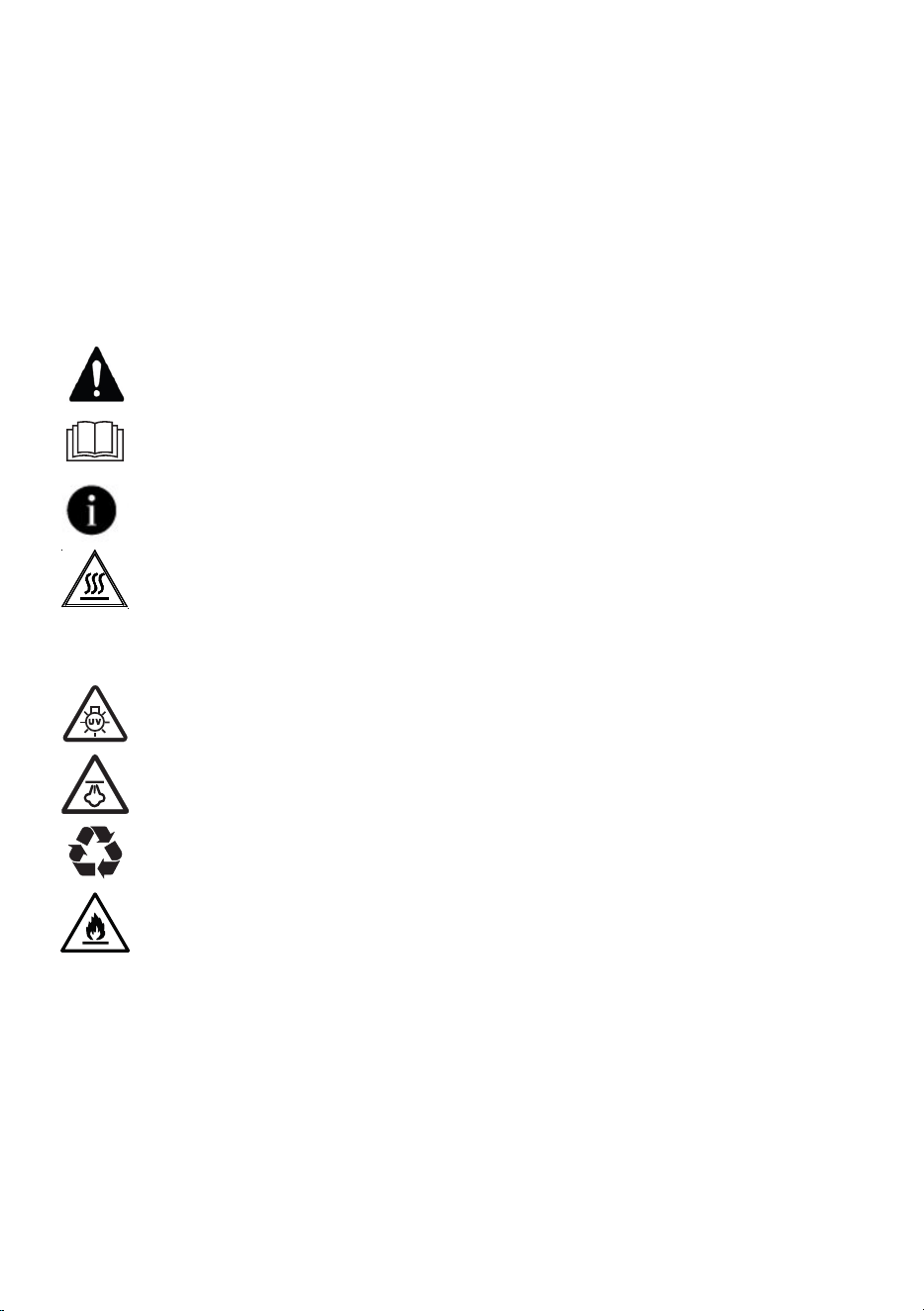
The following symbols are used in the user guide:
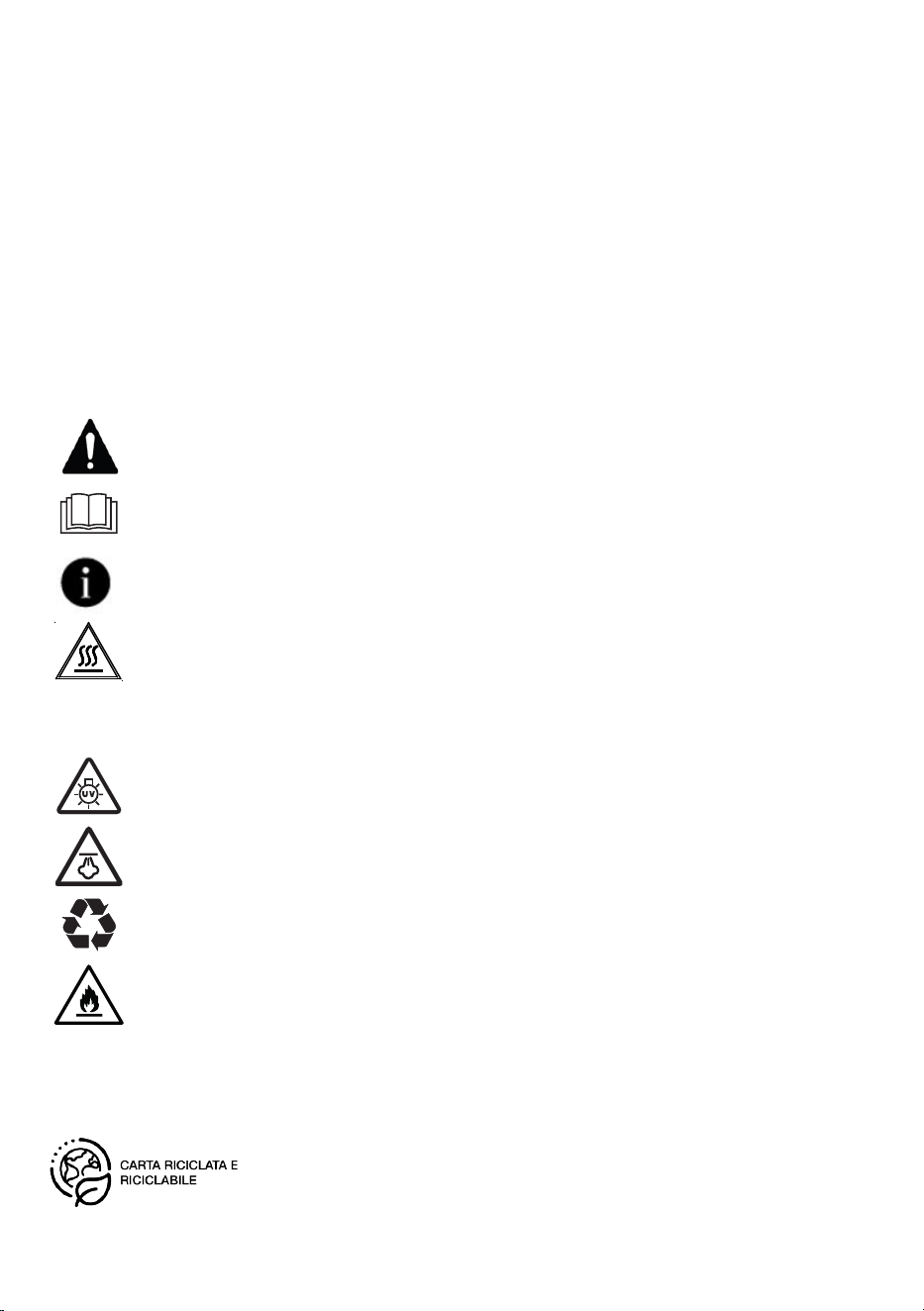
Danger that may cause death or injury
Read the manual
Important information or useful usage tips
Warning against hot surfaces
B
Warning against electric shock
Warning against UV Radiation hazard
Warning against scalding
The product's packaging is made of recyclable materials, in accordance with the
National Environment Legislation.
Warning against fire
NOTICE Danger that may cause material damage on the product or surrounding area
This product was manufactured using the latest technology in environmentally friendly conditions.

3
Dryer / User manual
Table Of Contents
1 Safety Instructions ............................................................................. 5
1.1 Intended use .....................................................................................................5
1.2 Safety of children, vulnerable persons and pets .................................................5
1.3 Electrical Safety .................................................................................................6
1.4 Transporting safety ............................................................................................7
1.5 Installing safety ..................................................................................................7
1.6 Usage safety .....................................................................................................9
1.7 Maintenance and cleaning safety .....................................................................11
1.8 Lighting safety .................................................................................................11
2 Environmental instructions................................................................. 12
2.1 Compliance with the WEEE Regulations and Waste Disposal ..........................12
2.2 Packaging information .....................................................................................12
2.3 Standard conformity and test information / EU declaration of conformity .........12
3 Your drying machine ........................................................................... 13
3.1 Technical specifications ...................................................................................13
3.2 General appearance ........................................................................................14
3.3 Scope of delivery .............................................................................................14
4 Installation .......................................................................................... 15
4.1 Right place for installation ................................................................................15
4.2 Removing the shipping safety group ................................................................15
4.3 Connection of water drain hose on products with vapour feature ..................... 16
4.4 Adjusting the stands ........................................................................................16
4.5 Moving the drying machine .............................................................................. 16
4.6 Warning regarding the noise ............................................................................16
4.7 Replacing the lighting bulb ............................................................................... 16
5 Preparation ......................................................................................... 17
5.1 Laundry suitable for drying in drying machine ..................................................17
5.2 Laundry not suitable for drying in drying machine ............................................17
5.3 Preparing the laundry to be dried ..................................................................... 17
5.4 What to do for energy saving ...........................................................................17
5.5 Correct load capacity ......................................................................................18

4
Dryer / User manual
6 Running the product .......................................................................... 19
6.1 Control Panel ................................................................................................... 19
6.2 Symbols ..........................................................................................................19
6.3. Preparation of drying machine ........................................................................20
6.4 Program selection and consumption chart ....................................................... 21
6.5 Auxiliary functions ............................................................................................25
6.6 Warning indicators ........................................................................................... 26
6.7 Starting the program ........................................................................................26
6.8 Child Lock .......................................................................................................26
6.9 Changing the program after it is started ...........................................................26
6.10 Cancelling the program ..................................................................................27
6.11 End of program .............................................................................................27
6.12 General Description of Steam Programs .......................................................27
7 Maintenance and cleaning ................................................................. 29
7.1 Fibre filter /Loading Door Inner Surface ............................................................29
7.2 Cleaning the sensors ......................................................................................29
7.3 Emptying the water tank ..................................................................................29
7.4 Cleaning the filter drawer ................................................................................30
7.5 Cleaning the condenser ................................................................................... 30
8 Troubleshooting ................................................................................. 32
9 Waiver Warning .................................................................................. 34
9.1 I want to fix it myself ........................................................................................34
5
Dryer / User manual
1 Safety Instructions
This section includes the safety instructions necessary to prevent the
risk of personal injury or material damage.
• Our company shall not be held responsible for damages that may occur
if these instructions are not observed.
• Installation and repair operations shall always be performed by
Authorized Service.
• Use original spare parts and accessories only.
• Do not repair or replace any component of the product unless it is
clearly specified in the operation manual.
• Do not modify the product.
1.1 Intended use
• Product is designed only for household use. It is not intended for
commercial use.
• The product is not designed for outdoor use.
• Do not install or operate the product where freezing is a possibility and/
or vulnerable to external elements. Water frozen in the pump or the
hoses may cause damages
• Product can only be used to dry and ventilate laundry which are washed
with water and drying machine safe.
1.2 Safety of children, vulnerable persons and pets
• This product may be used by children aged 8 years and older and
persons with underdeveloped physical, sensory or mental capabilities or
lack of experience and knowledge if they have been given supervision
or instruction concerning use of the appliance in a the product safe way
and the hazards involved. Children should not tamper with the device.
Cleaning and maintenance should not be carried out by children unless
they are supervised.
• Children under 3 years old shall be kept away from the product unless
supervised.
6
Dryer / User manual
• Electrical products are dangerous for children and pets. Children and
pets shall not play with the product, climb on or get inside the product.
• Keep the product door closed even when not operated. Children or
pets could be locked inside the product and suffocate.
• Cleaning and user maintenance operations must not be performed by
children unless supervised.
• Keep the packaging materials away from children. Risk of injury and
suffocation.
• Keep all additives used with the product away from children.
• Before disposing of the product, cut the power cord and destroy the
loading door.
1.3 Electrical Safety
• The product must not be plugged in during installation, maintenance,
cleaning, repair and transporting operations.
• If the power the cord is damaged, it shall be replaced by authorized
service to avoid any risk that may occur.
• Do not tuck the power cord under the product or to the rear of the
product. Do not put heavy items on the power cord. Power cord shall
not be kinked, pinched and shall not come in contact with any heat
source.
• Do not use an extension cord, multi-plug or adaptor to operate your
product.
• The product shall not be powered via an external switch such as a timer
or shall not be connected to a circuit that is regularly opened and closed
with a tool.
• The plug shall be easily accessible. If this is not possible, a mechanism
that meets the electrical legislation and that disconnects all terminals
from the mains (fuse, switch, main switch, etc.) shall be available on the
electrical installation.
• Do not touch the plug with wet hands.
• When unplugging the appliance, don’t hold the power cord, but the
plug.
7
Dryer / User manual
1.4 Transporting safety
• Unplug the product prior to transport, empty the water tank and if any,
remove the water drain connections.
• This product is heavy, do not handle it by yourself.
• Take required precautions for the product against falling and tipping. Do
not crash or drop the product when transporting.
• Do not use the extruding parts of the product (such as the loading door)
to move the product.
• Move the product in upright position. If it cannot be moved upright,
transport via tilting to the right side when viewed from the front.
1.5 Installing safety
• To prepare the product ready for installation, ensure that the electrical
installation and water drain is proper by checking the information in the
user manual. If it is not suitable for installation, call a qualified electrician
and plumber to arrange the utilities as necessary. These operations shall
be undertaken by the customer.
• Check for any damage on the product before installing it. Do not have
the product installed if it is damaged.
• Do not remove the adjustable stand.
• Place the product on a level and hard surface and balance with the
adjustable legs.
• The gap between the product and the floor shall not be reduced via
materials such as rugs, pieces of wood and bands. The ventilation holes
under the base of the product shall not be clogged with a rug.
• The product shall be installed not to clog the ventilation holes.
• Install the product in an environment free of dust with good ventilation.
• Do not install the product in close proximity to flammable and explosive
materials and do not keep flammable and explosive materials near the
product when it is in operation.
• The product shall not be installed against a door, sliding door where the
product loading door cannot be completely opened, or behind a hinged
door where the product hinge is faced against the door’s hinges.

8
Dryer / User manual
• Install the product where periodic maintenance and cleaning can be
done with ease.
• Place the product with its back surface to the wall (for heater models).
• After placing the product, ensure that the back wall does not come in
contact with any extrusion (a water tap, electrical outlet etc.).
• Place the product with at least 1 cm space between the product and
the furniture edges.
• Follow the flue connection rules specified in the guide (for models with
flue).
• The exhaust air shall not be directed to flue which is used to exhaust the
smoke of devices that consume gas or other fuels (for models with flue).
• The ventilation hose shall not be connected to a heating stove or a
chimney flue (for models with flue).
• Plug the product to a grounded outlet protected with an appropriate
fuse in align with the specified type and current rates. Have an expert
electrician set grounding equipment. Do not use the product without a
grounding conforming with regional/national regulations.
• Plug the product in a grounded socket that conforms with the voltage,
current and frequency values specified in the type label.
• Do not plug the product to loose, broken, dirty, greasy sockets or
sockets that has come out their seats or sockets with a risk of water
contact.
• The new hose sets supplied with the product shall be used. Do not re-
use the old hose sets. Do not make attachments to the hoses.
• Place the power cord and hoses not cause a risk of tripping over.
• To use the product on top of a washing machine, a fixing aperture shall
be used between two products. Fixing aperture shall be mounted by the
authorised service.
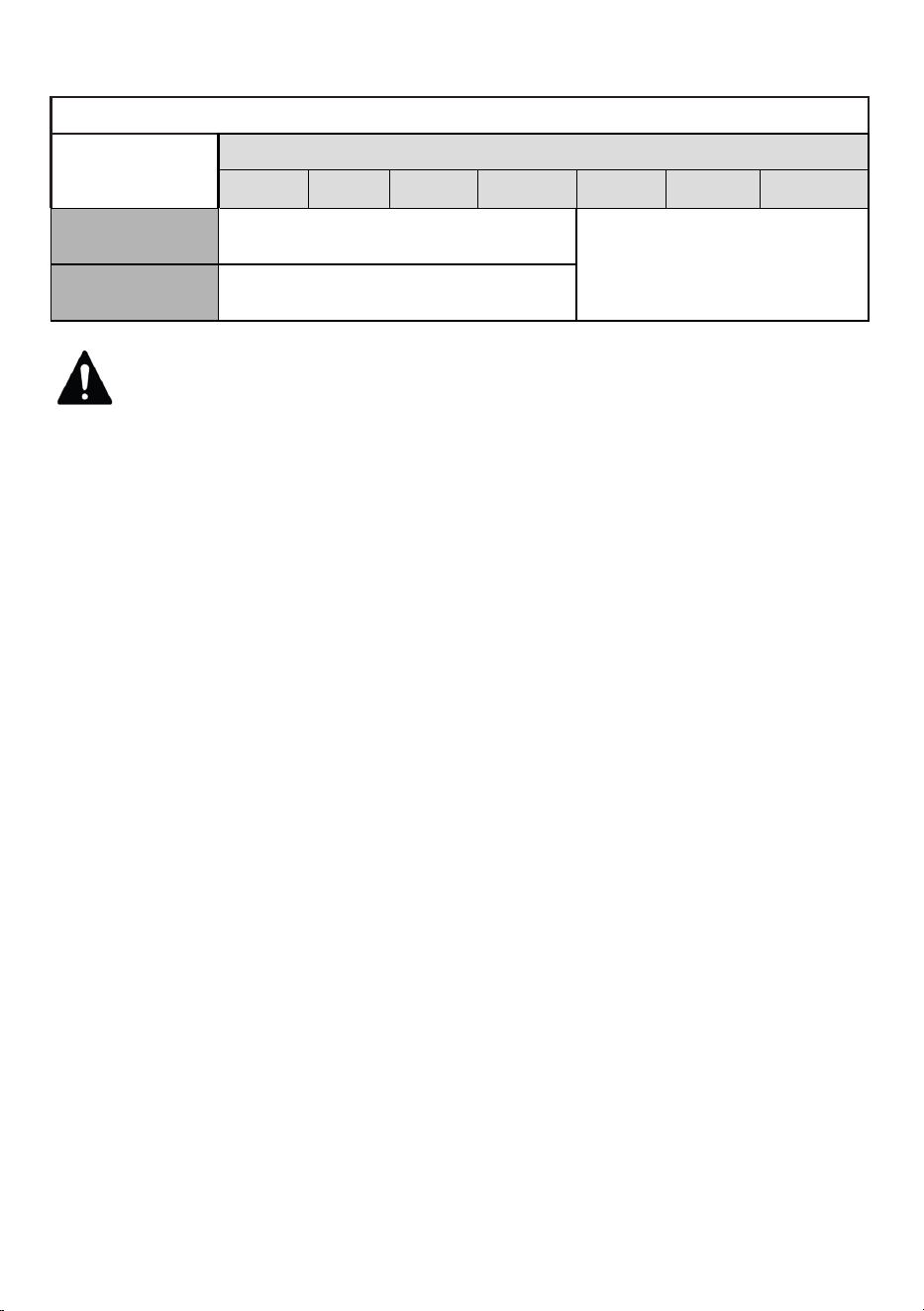
• When the product is placed on the washing machine, their combined
weight when full could be around 180 kg. Place the products on a
sturdy floor that can carry adequate amount of load.
9
Dryer / User manual
• Washing machine cannot be placed on top of the drying machine.
Installation Table for Washing Machine and Dryer
Dryer Depth
Washing Machine Depth
62 cm 60 cm 54 cm 50 cm 49 cm 45 cm 40 cm
54 cm
Can be installed
Cannot be installed
60 cm
Can be installed
1.6 Usage safety
• The maximum weight of dry laundry prior to washing is specified in
“Technical Specifications” section.
• Do not place the unwashed items in the drying machine.
• Items that are soiled with materials such as cooking oils, acetone,
alcohol, petrol, kerosene, stain removers, turpentine, wax or was
removers shall be washed in hot water with more amount of detergent
prior to drying with the drying machine.
• If chemicals are utilized for cleaning, the drying machine shall not be
used.
• Rubber foam (latex foam), shower bonnets, water resistant textiles,
rubber supported materials and clothes, pillows with rubber foam pads
shall not be dried in a drying machine.
• The items with hair spray, hair product residue or similar materials shall
not be dried in a drying machine.
• Empty the pockets of the clothes and remove items such as matches
and lighters.
• If all items cannot be removed rapidly and cannot be placed where
heat can dissipate, do not stop the drying machine before drying cycle
completed.
• The last part of the drying machine cycle is conducted without
heating (cooling cycle) in order to ensure that the items are kept at a
temperature that will not harm the items.

10
Dryer / User manual
• Laundry softeners or similar products shall be used in align with the
laundry softener instructions.
• Do not use the drying machine without the fibre filter.
• Do not allow fibre accumulation around the drying machine.
• To prevent back draft of gas in the room from the devices that consume
other fuels, including open fire, appropriate ventilation shall be provided
(for models with flue).
• Do not operate the product together with heaters such as gas heater
and a chimney. It may cause the flue to catch fire. (for models with flue)
• Do not lean or sit on the loading door when it is open, the product may
tip over.
• Do not get on the product.
• Do not place a source of flame (candles, cigarettes, etc.) on the product
or in the vicinity of it. Do not keep flammable/explosive materials.
• Do not touch the drum as it revolves.
• The back wall of the product will be hot during operation. Do not touch
the back side of the product during drying or after the drying process is
completed. (For models with heating)
• Do not touch the inner surface of the drum while adding or removing
clothes during a continuing program. The drum surface is hot.
• Do not press the buttons with sharp objects such as forks, knives, with
your nails etc.
• Do not operate the faulty or damaged product. Unplug the product (or
shut down the connected fuse) and call the authorized service.
• Unplug the product when not in use.
11
Dryer / User manual
1.7 Maintenance and cleaning safety
• Do not wash the product by spraying or pouring water on it. Do not use
a pressure cleaner, steam cleaner, hose or pressurised gun to clean the
product.
• Do not use sharp or abrasive tools to clean the product.
• Do not use materials such as household cleaning agents, soaps,
detergents, gas, gasoline, alcohol, wax, etc. to clean the product.
• The fibre filter shall be regularly cleaned. After each drying cycle, clean
the fibre filter and the inner surface of the loading door.
• Clean the fibre accumulation on the fins of the evaporator behind the
filter drawer with a vacuum cleaner. You can clean by hand, provided
you wear protective gloves. Do not try to clean with bare hands.
Evaporator fins may damage your hands. (For products with heat pump)
• Due to fire and explosion hazard, do not use solutions, cleaning
materials, steel wool or similar materials and tools to clean sensors.
• Clean the flue. (for models with flue)
• Do not drink the condensed water.
1.8 Lighting safety
• Contact an authorized service when you need to replace the LED/bulb
using for lighting (for products with lighting).
12
Dryer / User manual
2 Environmental instructions
2.1 Compliance with the WEEE Regulations and Waste Disposal
This product does not contain the dangerous and prohibited materials indicated in the
“Regulation on The Control of Waste Electrical and Electronic Equipment” published by
Ministry of Environment and Urbanisation of Republic of Turkey. Complies WEEE
Regulations. This product was manufactured from recyclable and reusable high quality
parts and materials. Therefore, do not dispose of this product with other domestic
wastes at the end of its life cycle. Take it to a collection point for electrical and electronic
equipment. You can ask your local administration about these collection points. You can help
protect the environment and natural resources by delivering the used products for recycling.
Also R290 is a flammable refrigerant. Therefore ensure that the system and pipes are
not damaged during operation and transportation.
Keep the product from heat sources, otherwise it may catch fire if damaged.
Do not dispose of the product by throwing it into fire.
2.2 Packaging information
The product’s packaging is made of recyclable materials, in accordance with the National
Legislation. Do not dispose the packaging waste with the household waste or other wastes,
dispose it to the packaging collection areas specified by local authorities.
2.3 Standard conformity and test information
/ EU declaration of conformity
The development, manufacturing and sales phases of this product is conducted in
conformity with the safety rules specified in all related instructions of the European
Union.
13
Dryer / User manual
3 Your drying machine
3.1 Technical specifications
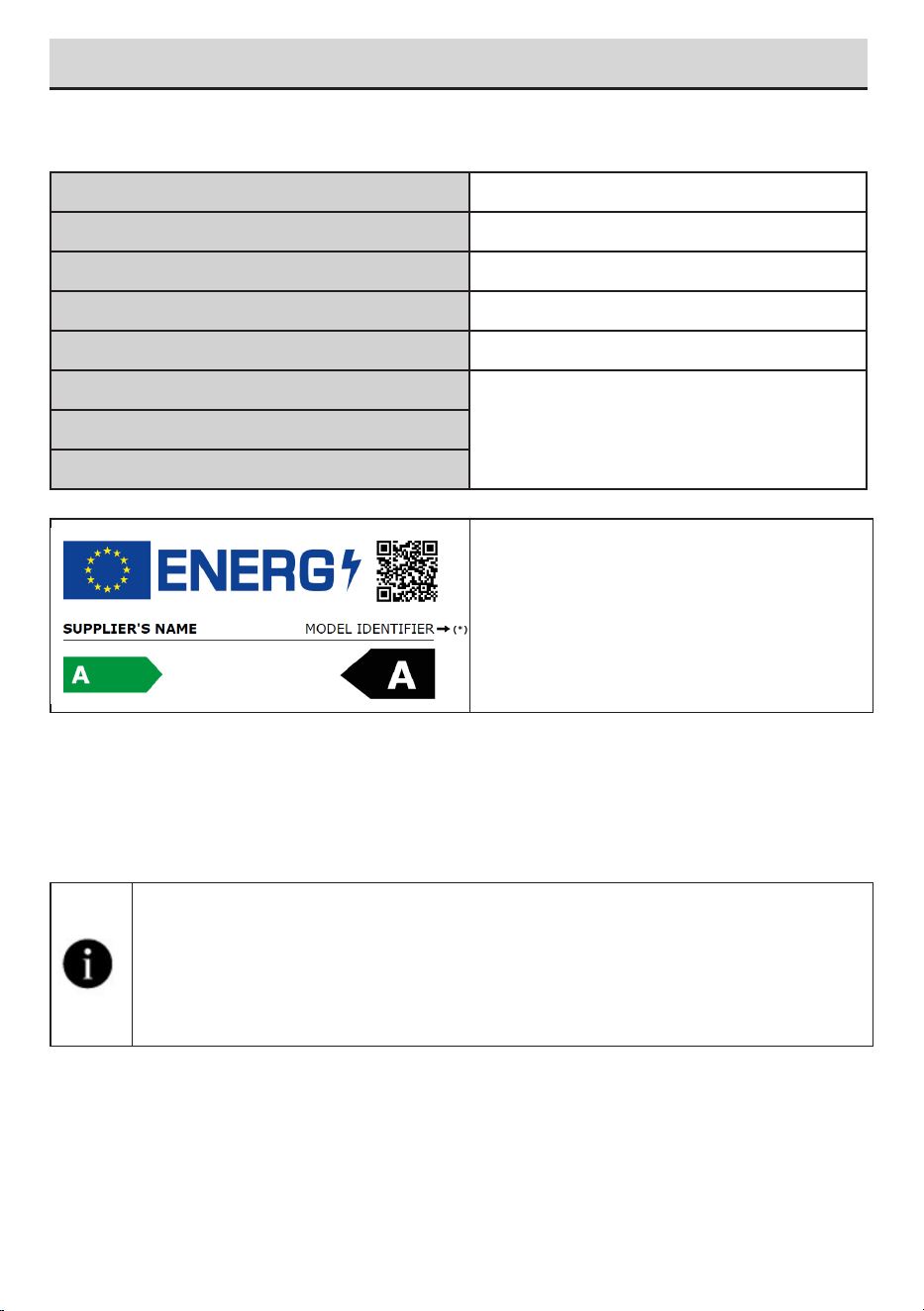
The model information as stored in the product
database can be reached by entering following
website and searching for your model identifier
(*) found on energy label.
https://eprel.ec.europa.eu/
* Min. height: Height with the adjustable stand closed.
Max. height: Height with the adjustable stand opened at maximum height.
** Weight of dry laundry before washing.
*** Data plate is under the door on the drying machine.
In order to increase the drying machine’s quality, the technical specifications may be
changed without prior notice.
Figures in this manual are schematic and may not exactly match the product.
The values provided with the drying machine or its accompanying documents are
laboratory readings in accordance with the respective standards. These values may
differ depending on the use and ambient conditions.
EN
Height (Min. / Max.) 84,6 cm / 86,6 cm*
Width 59,8 cm
Depth 67,1 cm
Capacity (max.) 9 kg**
Net weight (± %10) 48 kg
Voltage
See type label***Rated power input
Model code
14
Dryer / User manual
3.2 General appearance
11
10
1
2
3
4
5
6
7
8
9
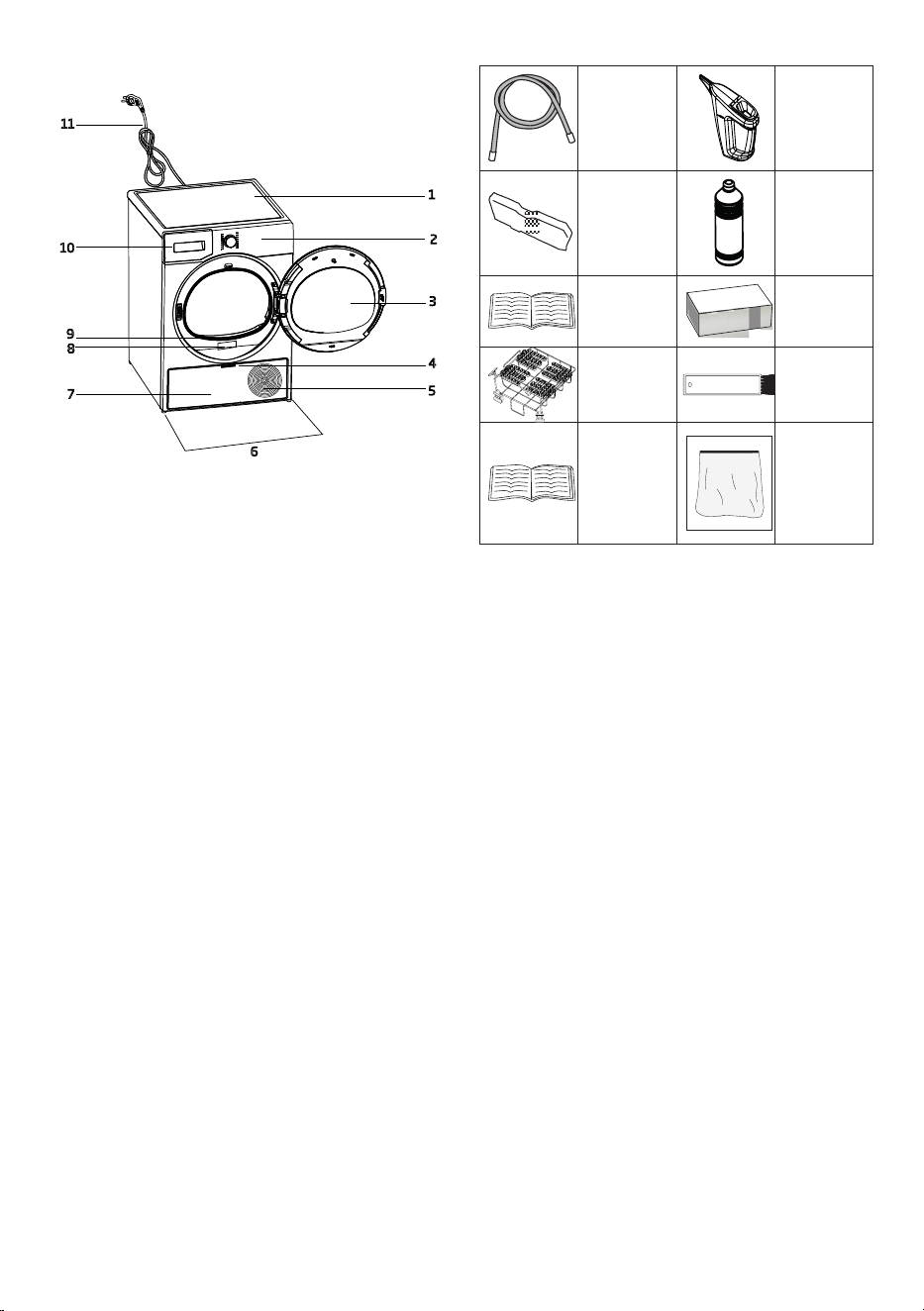
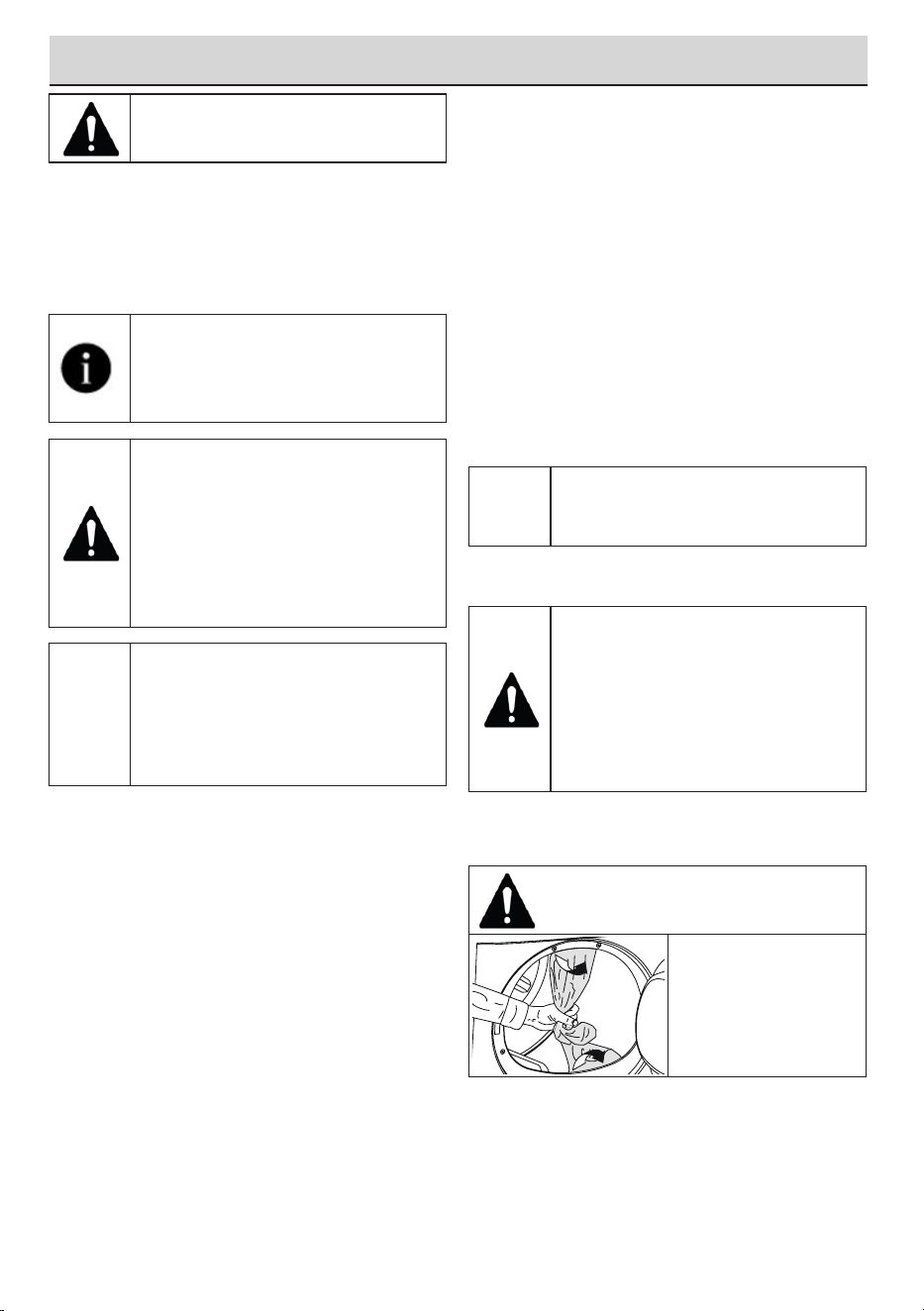
1. Top panel
2. Control panel
3. Loading door
4. Toe board handle
5. Ventilation grids
6. Adjustable feet
7. Toe board
8. Rating plate
9. Lint filter
10. Water tank drawer
11. Power cord
3.3 Scope of delivery
1. Water
discharge
hose*
6. Water
filling cap*
2. Filter
drawer
spare
sponge*
7. Pure
Water*
3. User
Manual
8. Odour
Capsule
Group*
4. Drying
basket*
9. Brush*
5. Drying
basket user
manual*
10. Filter
cloth*
*Optional - may not be included, depends on
model.
15
Dryer / User manual
4 Installation
Read the “Safety Instructions” first!
Before consulting the nearest Authorized
Service for installing the drying machine, see
the information in the user guide and make sure
the electric and water utilities are as required. If
not, call an electrician and plumber to arrange
the utilities as necessary.
It is customer's responsibility to
prepare the location the drying
machine shall be placed on and
also have power and waste water
installation prepared.
Check for any damage on the
drying machine before installing it. If
drying machine is damaged, do not
get it installed. Damaged products
cause a risk for your safety.
Wait 12 hours prior to operating the
drying machine.
NOTICE
The product includes a cooling
agent and if the product is operated
right after its transported, it may
get damaged. After each time the
product is moved, it shall be left to
rest for 12 hours.
4.1 Right place for installation
• Install the drying machine on a flat and
stable surface.
• Dryer machine is heavy. Do not move it by
yourself.
• Operate the drying machine in an
environment free of dust with good
ventilation.
• The gap between the drying machine and
the floor shall not be reduced via materials
such as rugs, pieces of wood and bands.
• Do not block the ventilation grilles of the
drying machine.
• There shall not be doors that can be
locked, sliding doors or hinged doors near
the installation environment of the drying
machine that may block the loading door
to be opened.
• Once the drying machine is installed,
the connections must stay stable. After
placing the drying machine, ensure that
the back wall does not come in contact
with any extrusion (a water tap, electrical
outlet etc.).
• Place the drying machine with at least 1
cm space between the product and the
furniture edges.
• Your drying machine is suitable to be
operated between +5°C to +35°C. If
operated outside this temperature range,
your drying machine’s operation may be
compromised and get damaged.
• The drying machine shall not be placed
with the back side against a wall.
B
Do not place the drying machine on
its power cord.
* Ignore following warning if your
product’s system does not contain R290.
Dryer contains R290 refrigerant.*
R290 is an environment-friendly, but
flammable refrigerant.*
Ensure that the air inlet of the dryer
is open and it is well-ventilated.*
Keep potential flame sources away
from the dryer.*
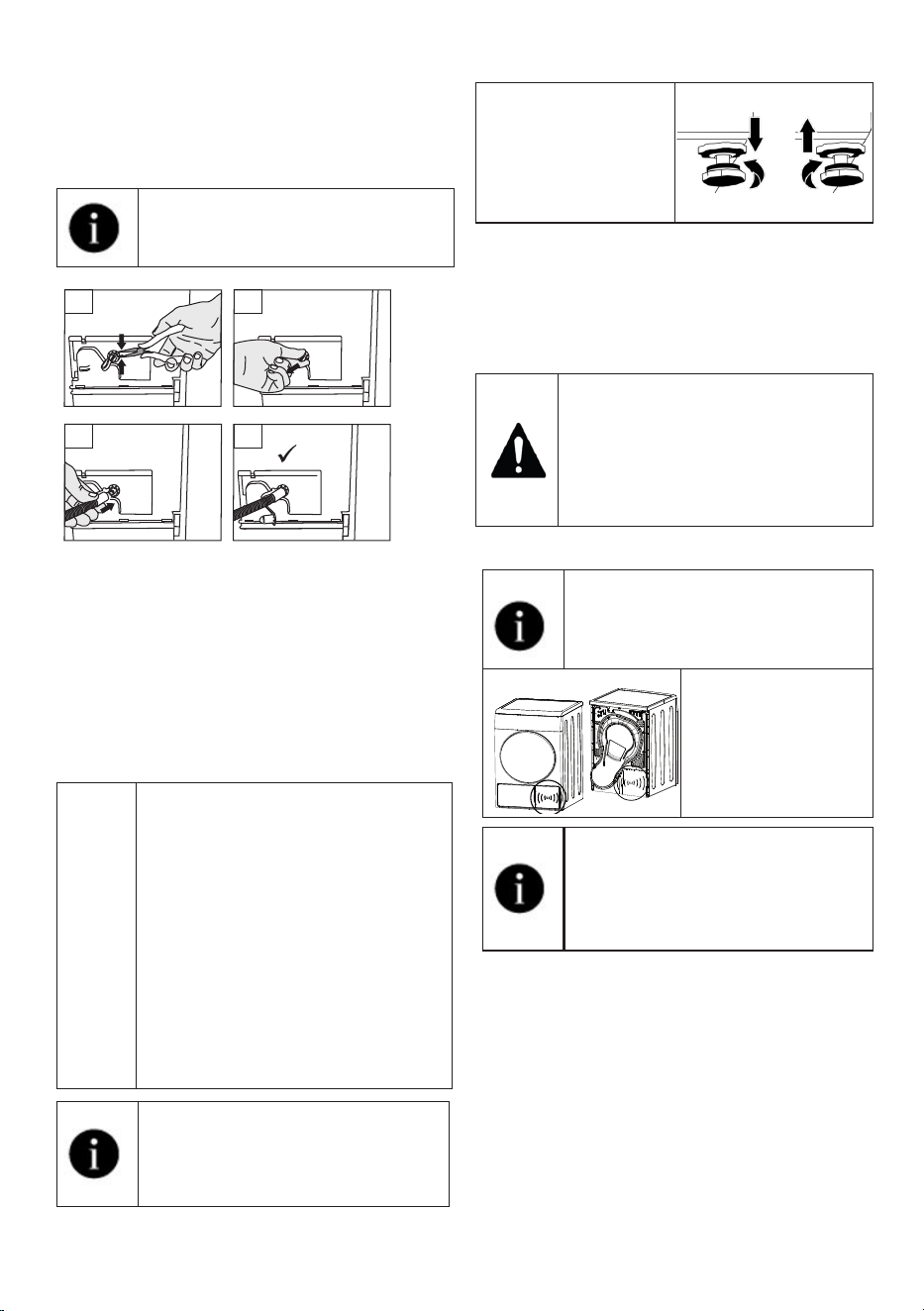
4.2 Removing the shipping
safety group
Remove the shipping
safety group prior to
first use the product.
16
Dryer / User manual
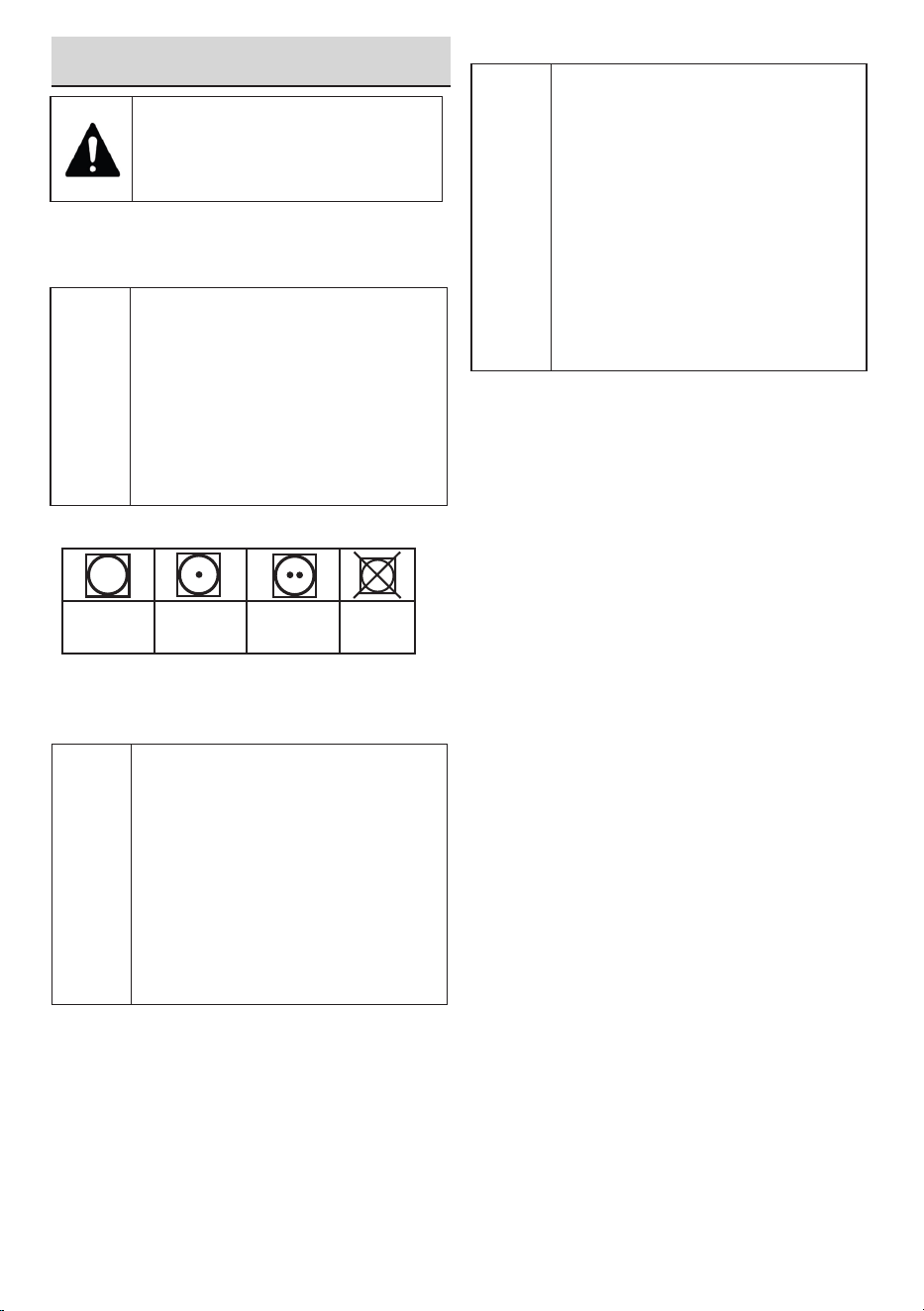
4.3 Connection of water drain hose
on products with vapour feature
You can directly drain accumulated water
through the water drain hose supplied with
the product instead of periodically draining the
water collected in the water tank
If your dryer has a steam feature,
follow the following diagram for the
water discharge connection.
1 2
3 4
1 Remove the clamp attached to the stopper
at the back of the dryer by pulling it from the
place it is connected with the help of a tool.
2 After removing the clamp, pull the plug
under the clamp.
3 Attach the water drain hose supplied with
the machine to the pipe under the plug.
4 Your machine is ready for use with direct
discharge.
NOTICE
The water discharge hose shall be
fixed at maximum 80 cm height.
Ensure that the water discharge
hose do not get kinked, collapsed
or pressed on between the
discharge and the drying machine.
Hose shall be connected not to
be disconnected from its location.
Leaked water may cause damage.
Do not extend the water drainage
hose.
Check whether the water runs at an
appropriate flow. The drainage line
shall not be closed or clogged.
If an accessory package is provided
with your product, check the
detailed instructions.
4.4 Adjusting the stands
Until the drying
machine stands level
and sturdy, adjust
the stands by turning
them left and right.
4.5 Moving the drying machine
• Drain the water in the drying machine
completely.
• If the product is connected via direct
discharge, remove the hose connections.
The drying machine is
recommended to be moved in
upright position. Otherwise, tilt it to
the right side when viewed from the
front and move the drying machine.
Wait 12 hours prior to operating the
drying machine.
4.6 Warning regarding the noise
As the product is
operated, metallic
noises may come
from the compressor
from time to time, it is
normal.
When the product is operated,
the accumulated water is pumped
to the water tank. It is normal to
hear pumping sounds from the
appliance during this operation.
4.7 Replacing the lighting bulb
If your drying machine has drum lighting lamp;
Consult the authorized service to replace the
bulb/LED used in lighting your drying machine.
The bulb in this product is not suitable for home
lighting. The intended use of this lamp is to
ensure safely loading the laundry to the drying
machine. The lamps used in this appliance is
resistant to heavy physical conditions such as
temperatures over 50°C.
17
Dryer / User manual
Read the “Safety Instructions” first!
5.1 Laundry suitable for
drying in drying machine
NOTICE
Laundry that are not drying machine
safe may damage the appliance and
the laundry during drying. Follow
the instructions on the labels on the
laundry to be dried. Only dry the
laundry with “drying machine safe”
written on their labels.
Suitable for the dryer At low temperature At medium temperature Do not dry with
dryer
5.2 Laundry not suitable for
drying in drying machine
NOTICE
Undergarments with metal supports
shall not be dried in drying machine.
If these metal supports get loose
and ripped from the garment, it may
damage the machine.
Delicate embroidery textiles, cotton
and silk garments, garments
manufactured from delicate and
valuable textiles, non breathing
garments and tulle curtains shall not
be dried in drying machine.
5.3 Preparing the laundry to be dried
NOTICE
Items such as coins, metal parts,
needles, nails, screws, stones etc.
may damage the drum group of the
product or may cause functional
operation issues. Therefore check
all laundry that will be loaded to the
product.
Dry the laundry with metal
accessories such as zippers by
turning them inside out.
Close the zippers, hooks and
clasps, button up the covers’
buttons, tie textile belts and apron
belts.
5.4 What to do for energy saving
• Use the highest possible wringing option
as you wash the laundry. Therefore you
can reduce the drying period and reduce
energy consumption. Sort the laundry
based on their types and thickness.
Dry same types of laundry together. For
instance kitchen towels and table cloths
dry faster than bathroom towels.
• Follow the recommendations in the user
manual for program selection.
• During drying do not open the loading
door unless necessary. If you are required
to open the loading door, do not keep it
open for too long.
• Do not add wet laundry as the drying
machine operates.
• Clean the Fibre Filter before and after
each drying session.
• Make sure the filters are clean. Refer to
maintenance and cleaning for details.
• For models with flue, follow the flue
connection rules specified in the guides
and clean the flue.
• During drying session, properly ventilate
the environment in which the drying
machine is in.
• The Eco program is the most energy-
efficient program for drying wet cotton
laundry and is used to assess compliance
with environmentally conscious design
regulations.
• Keep the loading door shut to prevent
heat loss.
5 Preparation
18
Dryer / User manual
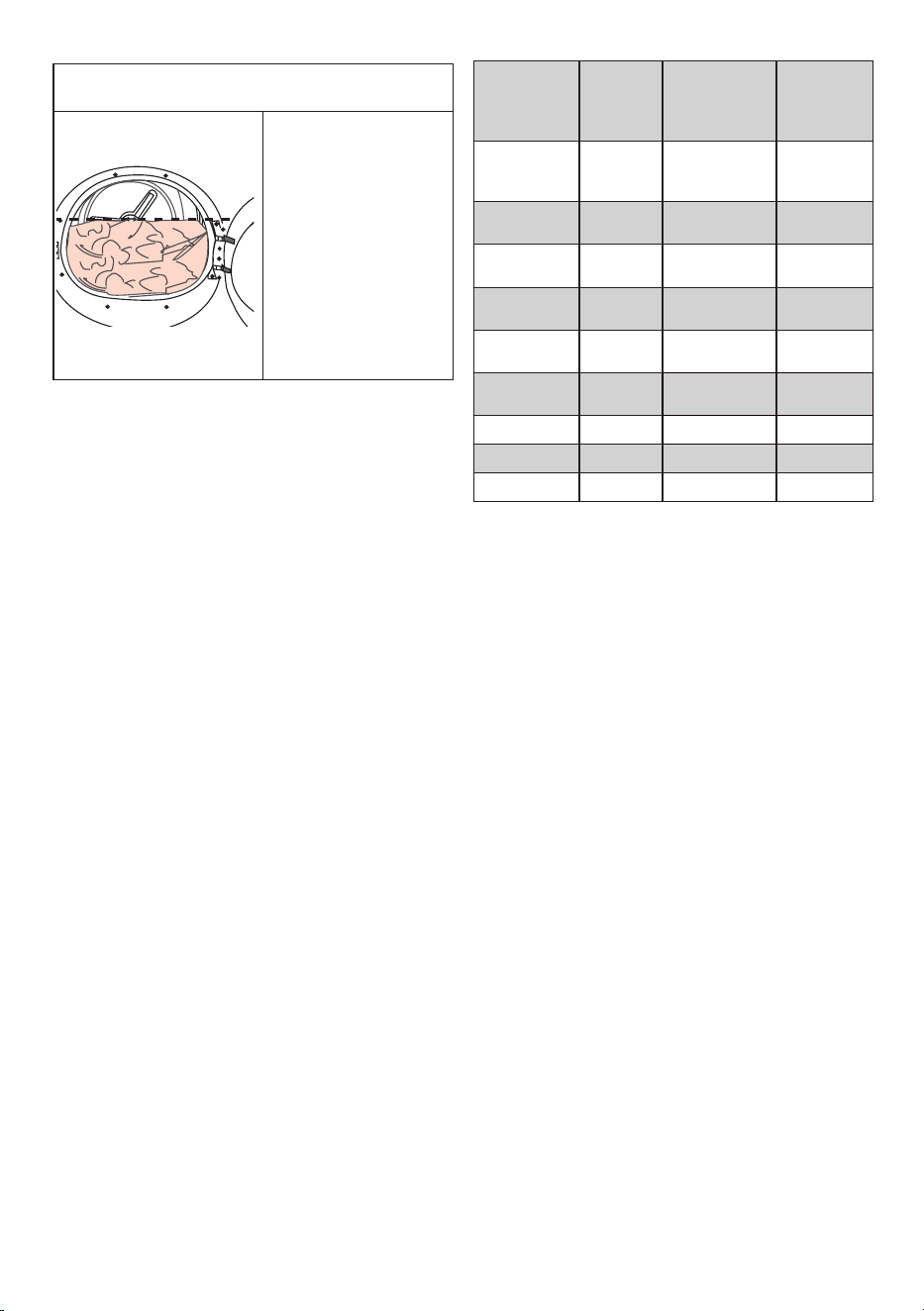
5.5 Correct load capacity
NOTICE
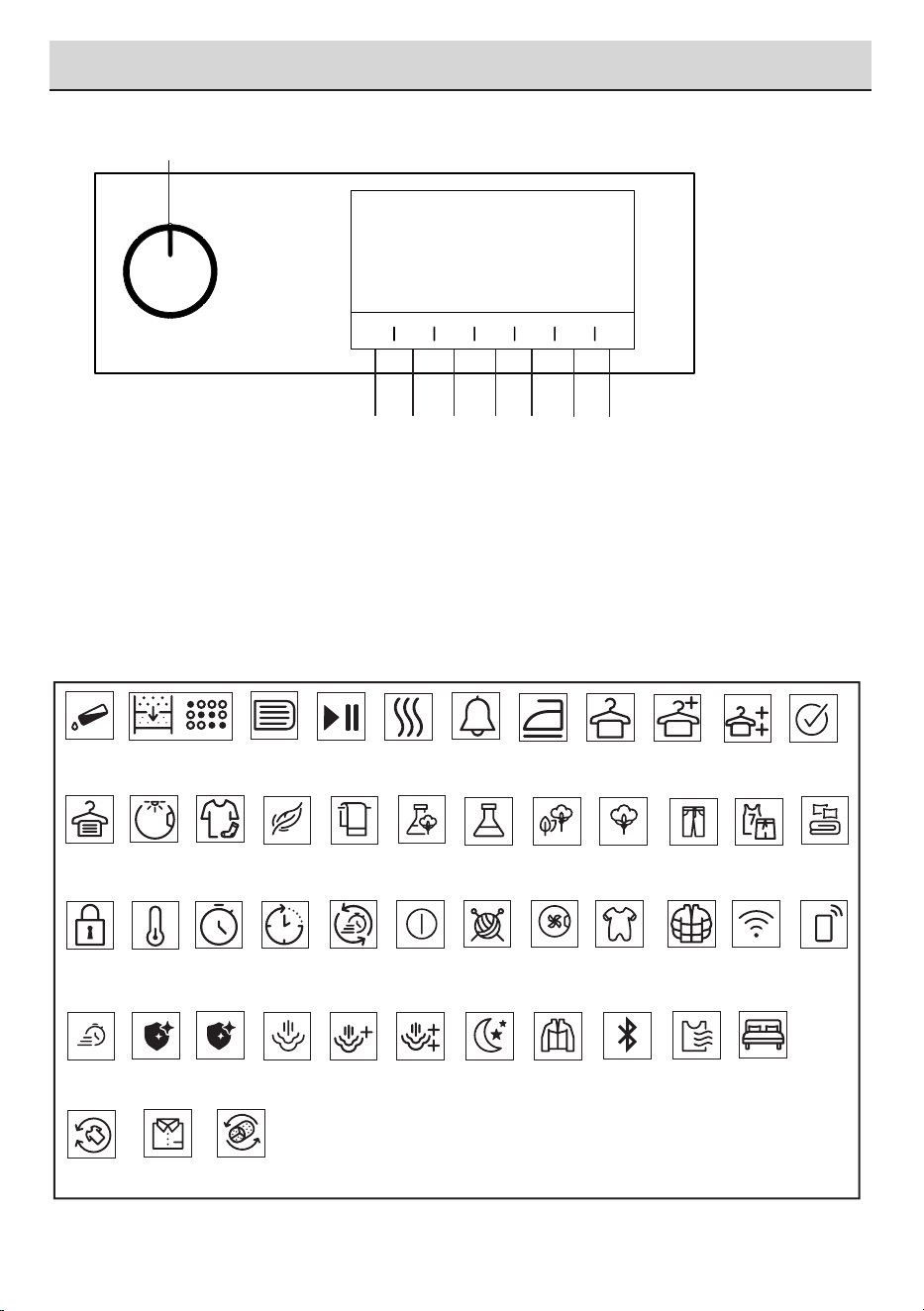
If the laundry in the
product exceed
maximum load
capacity, it may not
operate as intended
and may cause
material damage or
damage the product.
For each program,
follow the maximum
load capacity.
• Loading the domestic drying machine up
to the maximum capacity specified by the
manufacturer for the relevant programs
will help save energy.
The weights below are provided as examples.
Laundry
Approx.
weight
(g)*
Laundry
Approx.
weight (g)*
Cotton
bedding
(double size)
1500 Cotton dress 500
Bedding
(single size)
1000 Dress 350
Bed sheet
(double size)
500 Denim 700
Bed sheet
(single size)
350
Handkerchief
(10 pcs)
100
Large table
cloth
700 T-Shirt 125
Small table
cloth
250 Blouse 150
Tea napkin 100 Cotton shirt 300
Bath towel 700 Shirt 200
Hand towel 350
*Weight of dry laundry before washing.
19
Dryer / User manual
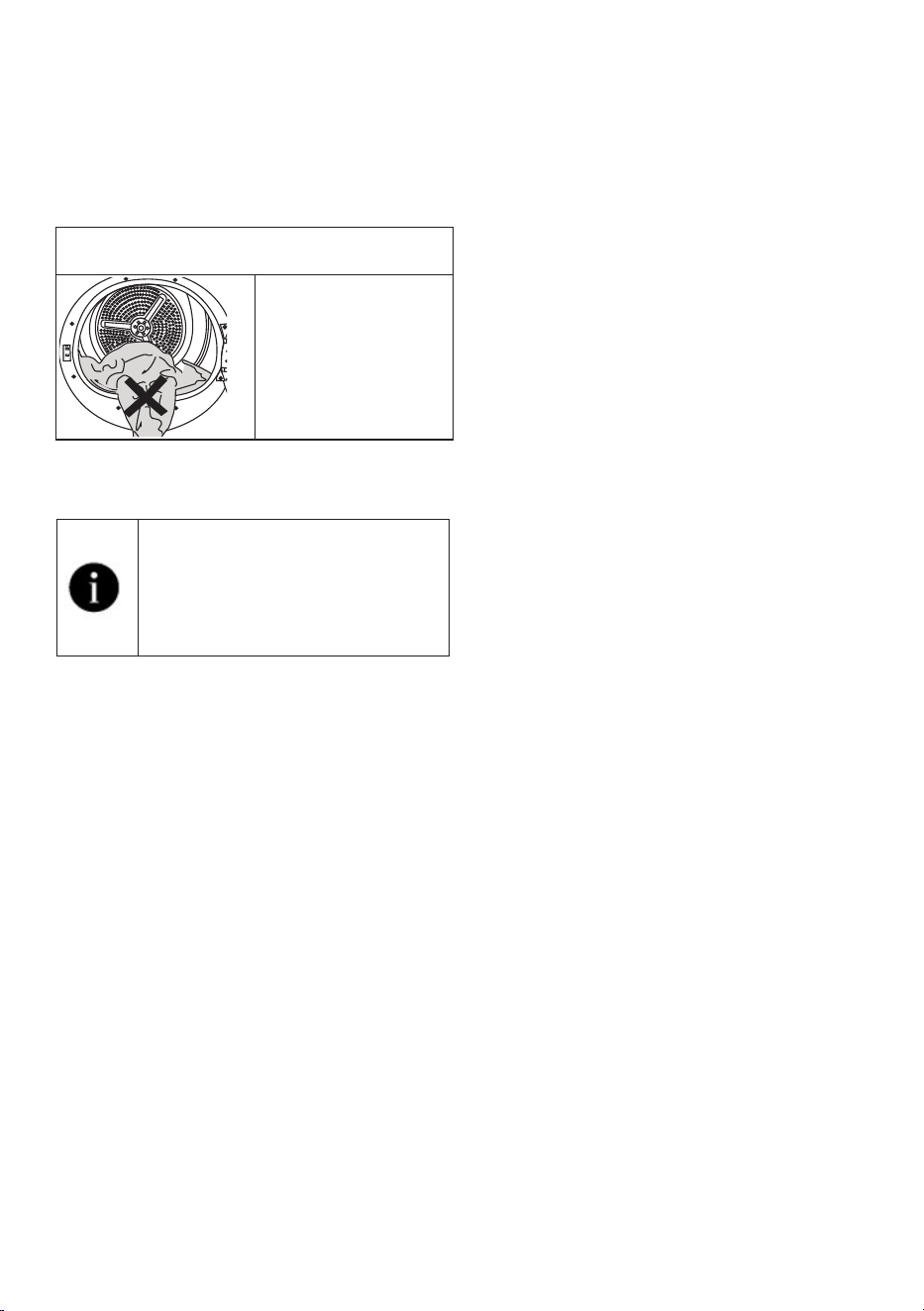
6.1 Control Panel
6 Running the product
1. On/Off/Program Selection button.
2. Start / Stand-by button.
3. End time selection button.
4. Steam sellection button.
5. Low temperature selection button / Time
program selection button.
6. Audible warning and child lock selection
button.
7. Wrinkle prevention selection button/ Drum
light button.
8. Dryness level selection button.
6.2 Symbols
Filter
Cleaning
Water tank
Filter drawer /
Heat exchanger
cleaning
Start
pause
cancel
Iron Dry
Drying Buzzer Cupboard
Dry
Cupboard
Dry +
Extra dry End
Anti-
creasing
Child-proof
lock
Low
temperature
TimeDry Ending In RapiDry
Drum
Light
Dryness
Level
EasyCare
Delicates
SyntheticsTowels Mix Cottons
Eco
Cottons Jeans Sport
Duvet/
DownWear
Shirts
Express Hygienic
Drying
Hygienic
Refresh
Steam Steam
Level 1
Steam
Level 2
On / Off Wool Protect
Night
Freshen
Up
Outdoor
Hygiene
(Baby Protect+)
Downwear Wifi
Remote
Control
Bluetooth Gentle
Dry
Reverse
Drum
Bedding
3
4
5
2
6
7
8
1
20
Dryer / User manual
6.3. Preparation of drying machine
• Plug the drying machine.
• Open the loading door.
• Remove any foreign material inside it.
• Place the laundry to the drying machine
without jamming them.
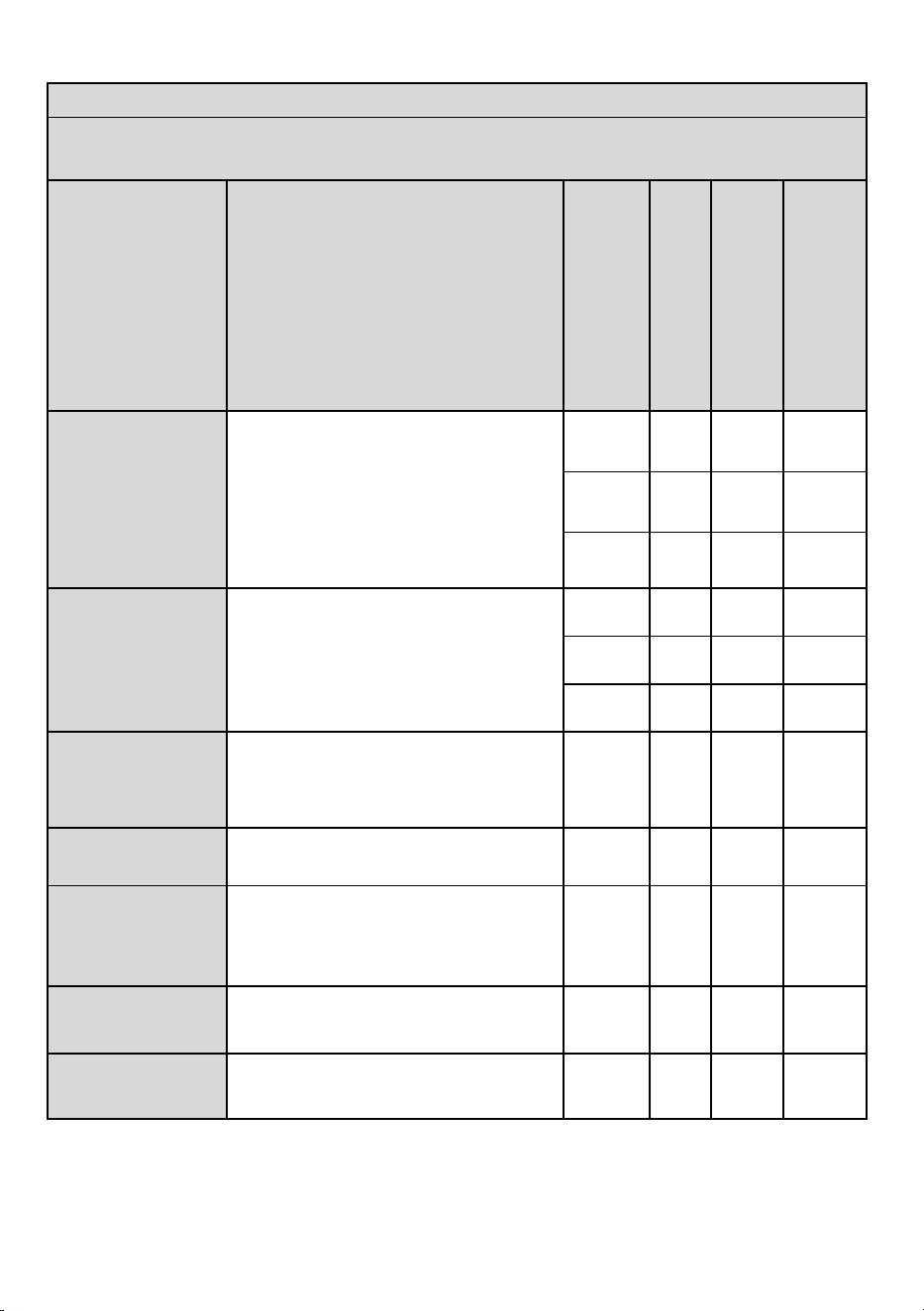
• Push and close the loading door.
NOTICE
Ensure that no
laundry is jammed to
the loading door.
Do not close the
loading door with
force.
• Select the desired program by using
On/Off/Program Selection button, the
machine will turn on.
Selecting the program with the On/
Off/Program Selection button does
not mean that the program started.
Press Start / Stand-by button to
start the program.
21
Dryer / User manual
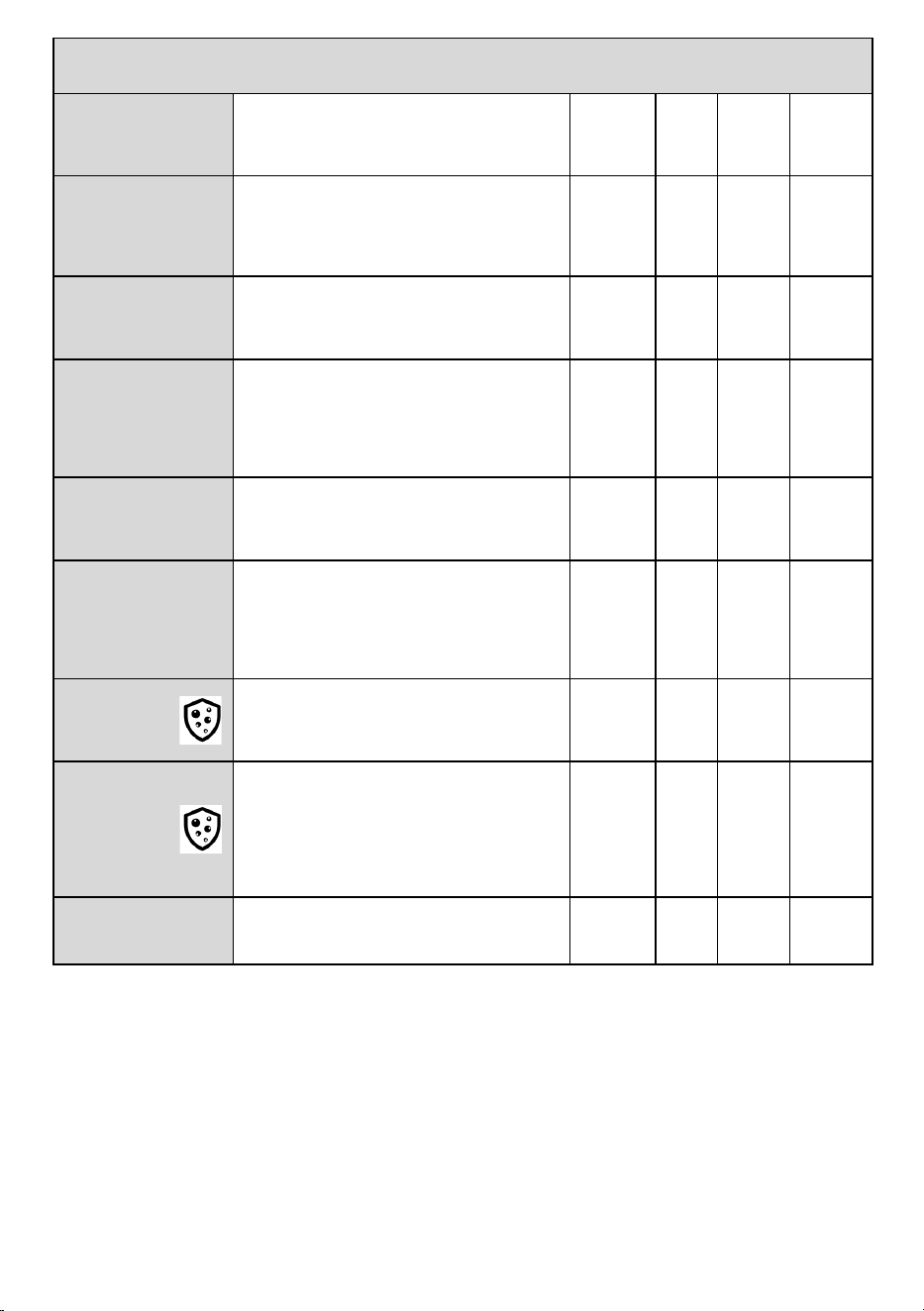
6.4 Program selection and consumption chart
EN
Table of steam functioned cycles
Programmes Programme Description
Capacity (kg)
Spin speed in washing
machine (rpm)
Drying Time (minutes)
Steam Drying Time (Min.)
Ready to Wear*
Is a cycle aimed to reduce the wrinkle level on
shirts and t-shirts using a steam function. This
cycle usually eliminates the need for ironing for
casual shirts after drying. Depending on the
texture and thickness of the product to be dried,
the percentage of wrinkle reducing may vary. It
is recommended to use this cycle combining
the same types of fabrics.
1,5 (6
pieces)
800 - 90
1 (3
pieces)
800 - 70
0,3 (1
pieces)
800 - 50
Steam Refresh
Refreshes clothes with a steam function and
removes unwanted odours. Use only with dry
clothes.
1,5 (6
pieces)
- - 35
1 (3
pieces)
- - 31
0,3 (1
pieces)
- - 23
Mix
Use this programme to dry non-pigmenting
synthetic and cotton laundry items together.
Sports and fitness clothes may be dried with
this program.
6 1000 175 180
Jeans
You may dry denim pants, skirts, shirts or
jackets in this program.
4 1200 130 135
Cottons
You can dry your heat-resistant cotton textiles
with this programme. A drying setting suitable
for the thickness of the products to be dried
and the desired level of dryness should be
selected.
9 1000 205 210
Cottons Eco
It dries single layer, casual cotton textiles in the
most economical way.
9 1000 190 195
Synthetics
You can dry all your synthetic textiles with this
programme. A drying setting suitable for the
level of dryness you desire should be selected.
4 800 80 85
22
Dryer / User manual
Table of non-steam functioned cycles
Cottons Iron dry
You may dry your cotton laundry to be ironed
in this program to have them slightly damp for
ease of ironing. (Shirt, T-shirt, tablecloth, etc.)
9 1000 140 -
Wool protect
Use this programme to dry woolen garments
such as jumpers that are washed according
to the instructions.It is recomended that
garments would be removed at the end of the
programme.
1.5 600 148 -
Night (silent)
In this programme the level of noise emitted to
the ambient will be the lowest.With this program
you can dry your cotton or synthetic blend
clothes quietly.
8 1000 240 -
Duvet/Downwear
You can dry your feather or fibre filled textile
that bears can be dried in drier label as a single
piece of laundry. You can dry double duvet,
pillow or coats as single piece of laundry. Dry
your cloths such as coats and jackets turned
inside out.
- 800 165 -
Outdoor/Sports
(Goretex)
Use it to dry your clothes made of synthetics,
cotton or mixed fabrics or waterproof products
such as functional jacket, raincoat etc. Turn
them inside out prior to drying.
2 1000 135 -
Time Programmes
You may select from time programmes
between 10 and 160 minutes to achieve the
desired drying level at low temperature. In this
programme, tumble drier’s operation lasts for
the set time independently from the dryness of
laundry.
- - - -
Hygienic Refresh
You can use this programme for your dry
clothes and laundry that you want to provide
with hygiene without washing them. It provides
high hygiene for your dry textiles via heat effect.
1,5 - 120 -
Hygienic Drying
It is a longer program that you can use for the
clothes (baby clothes, towels, underwear, etc.
cotton) you require hygeine. Hygiene is provided
with high temperature. It is especially suitable for
durable fabrics. (This program is identified and
approved by England’s “The British Foundation”
(Allergy UK).
5 800 200 -
Express Super Short
Use this program to have 2 shirts ready for
ironing.
0.5 1200 30 -
23
Dryer / User manual
** Above values have been specified under standard conditions. Consumption values may vary
from the values in the chart depending on laundry type, spin speed, ambient conditions and
voltage levels.
Energy consumption values
Programmes Capacity (kg)
Spin speed in washing
machine (rpm)
Approximate amount
of remaining humidity
Energy consumption
value kWh
Cottons Eco** 9 1000 60% 1,38
Cottons Iron dry 9 1000 60% 1,15
Synthetics Cupboard Dry 4 800 40% 0,55
“If you regularly dry the 9 Kg maximum load of Cottons we suggest to connect the drain hose to prevent
the dryer stopping mid-cycle in order to empty the tank” (see Section “Connection to the drain”)
*The ability of Ready to Wear cycle to bring 100% cotton, 100% polyester, 100% viscose and %56 cotton - 44% polyester blend shirts
in a wearable state (wrinkle release effect) was approved by the Independent Institute of Textile Testing in Europe. Collar, shirt cuffs or
sleeves may be ironed if desired.
24
Dryer / User manual
EN
General Programs
Programmes Capacity (kg)
Program period
(hour:min)
Energy consumption (Kwh)
Cottons Eco 9 3:10 1,38
Cottons Eco 4,5 1:55 0,78
Cottons Iron dry 9 2:20 1,15
Cottons Iron dry 4,5 1:24 0,57
Cottons Cupboard Dry 9 3:25 1,49
Cottons Cupboard Dry 4,5 2:10 0,88
Cottons Cupboard Dry Plus 9 3:35 1,56
Cottons Cupboard Dry Plus 4,5 2:20 0,95
Cotton Cupboard Dry ++ 9 3:45 1,63
Cotton Cupboard Dry ++ 4,5 2:30 1,02
Synthetics Iron Dry 9 1:05 0,45
Synthetics Cupboard Dry 9 1:20 0,55
Synthetic Cupboard Dry +y 9 1:30 0,62
Synthetic Cupboard Dry ++ 9 - -
GentleCare 2 - -
Wool protect 1,5 2:28 1,35
The values given for the programs other than Eco are only indicative.
Different modes of operation
Power consumption (W)
Power off mode
(W) (if present)
Delayed operation
mode (W) (if present)
Stand-by mode (W)
(if present)
Stand-by mode with
connectivity function
(W) (if present)
0,50 4,00 0,50 -
Acoustic airborne noise emission of drying cycle dB(A):
64
25
Dryer / User manual
6.5 Auxiliary functions
Dryness level
Dryness level button is used for adjusting to
desired dryness. Program time may change
depending on the selection.
You can activate this function only
prior to start of program.
DRYNESS LEVELS
Iron Dry
You may dry your cotton laundry to be
ironed in this program to have them slightly
damp for ease of ironing. (Shirt, T-shirt,
tablecloth, etc.)
Cupboard Dry
It dries single layer, casual cotton
textiles in the most economical way.
Cupboard Dry +
You may use this program for extra
dryness in thick laundry such as pants,
tracksuit. You can put your dry laundry
that doesn’t require ironing directly in the
wardrobe.
Extra dry
You may dry your thick cotton laundry in
this program such as towels, bathrobe,
etc.
Wrinkle prevention
You can turn on and off the wrinkle prevention
function by pressing the wrinkle prevention
selection button. If you will not take the
laundry out immediately after the program has
completed, you may use Wrinkle prevention
function to prevent wrinkling of your laundry.
Audible warning
Drying machine makes an audible warning
when the program is completed. Press the
“Audible Warning” button if you do not want
audible warning. When you press the audible
warning button, the light goes off and it does
not sound when the program is completed.
You can select this function before
the program starts or after the
program starts.
Delicates
You can activate this function only prior to start
of a program. You can activate this function
if you want to dry your laundry at a lower
temperature. The program duration will be
longer after it becomes activated.
End time
You can delay the end time of the program up
to 24 hours with end time function.
1. Open the loading door and place the
laundry.
2. Select the drying program.
3. Press the End Time selection button and
set the delay time you wish. End time LED
turns on. (When pressed and hold the
button, End Time proceeds non-stop).
4. Press the Start / Stand-by button. End
Time countdown begins. The “:” sign in the
middle of displayed delay time flashes.
You can add or remove laundry
within end time. Displayed time is
the sum of normal drying time and
end time. End Time LED turns off at
the end of countdown, the drying
starts and the drying LED turns on.
Changing the end time
If you want to change the duration during the
countdown:
Pause the program and Turn the On/Off/
Program Selection button and cancel the
program. Select the desired program and
repeat the End Time selection.
Cancelling the end time function
If you want to cancel the end time countdown
and start the program immediately:
26
Dryer / User manual
Pause the program and Turn the On/Off/
Program Selection button and cancel the
program. Select the desired program and press
the “Start/Pause” button.
Drum Light
You can turn on and off the drum light by
pressing this button. The light turns on when
the button is pressed and turns off after certain
time.
6.6 Warning indicators
Warning indicators may vary
depending on the model of your
drying machine.
Filter cleaning
When the program is completed, the warning
indicator for filter cleaning turns on.
Water tank
If the water tank fills up while the program
continues, the warning indicator starts flashing
and the machine goes into stand-by. In this
case, empty the water tank and start the
program by pressing the Start / Stand-by
button. Warning indicator turns off and program
resumes.
Cleaning of filter drawer/
heat exchanger
Warning symbol flashes periodically to remind
that filter drawer must be cleaned.
6.7 Starting the program
Press the Start/Stand-by button to start the
program.
Start/Stand-by and Drying indicators turn on to
show that program started.
6.8 Child Lock
The drying machine has a child lock which
prevents the program flow from being
interrupted when the buttons are pressed
during a program. When the Child Lock is
activated, all buttons on the panel except
the On/Off/Program Selection button are
deactivated.
Press the Audible Warning button for 3
seconds in order to activate the child lock.
The child lock has to be deactivated to be
able to start a new program after the current
program is finished or to be able to interfere
with the program. To deactivate the child lock,
keep the same buttons pressed for 3 seconds.
When the child lock is activated,
the child lock warning indicator on
the screen turns on.
When the child lock is active:
The drying machine runs, or in stand-by state
the indicator symbols will not change upon
changing the position of the program selection
button.
When the drying machine is
operated and the child lock is
active, if the program selection
button is turned, a double beeping
noise will be heard. If the child lock
is deactivated before the program
selection button is turned to its
original place, the program will
be terminated since the program
selection button is displaced.
6.9 Changing the program
after it is started
You can change the program you selected to
dry your laundry with a different program after
the drying machine starts running.
• For example, Pause the program and turn
the On/Off/Program Selection button to
select the Extra Dry program in order to
select the Extra Dry program instead of
Ironing Dryness.
• Press the Start/Stand-by button to start
the program.
Adding and removing
clothes during stand-by
If you want to add or remove clothes to/from
the drying machine after the drying program
starts:
• Press the Start/Stand-by button to put
the drying machine in Stand-by state. The
drying operation stops.
• Open the loading door while in Stand-
by state, and close the door after you
remove or add laundry.
• Press the Start/Stand-by button to start
the program.
27
Dryer / User manual
Adding laundry after the drying
operation starts may cause the
dried laundry inside the drying
machine to mix with wet laundry
and leave the laundry damp at the
end of operation.
Adding or removing laundry
during drying may be repeated as
many times as you wish. But this
operation continuously interrupts
the drying operation, and thus
increases program duration and
energy consumption. So, it is
recommended to add laundry
before the program starts.
If a new program is selected by
turning the program selection
button while the drying machine is
in stand-by, the running program
terminates.
Do not touch the inner surface of
the drum while adding or removing
clothes during a continuing
program. The drum surface is hot.
6.10 Cancelling the program
If you want to cancel the program and
terminate the drying operation for any reason
after the drying machine starts running, Pause
the program and turn the On/Off/Program
Selection button; the program terminates.
The inside of the drying machine
shall be extremely hot when you
cancel the program during machine
operation, so run the refreshing
program to allow it to cool down.
6.11 End of program
When the program ends, the LED’s of End/
Wrinkle Prevention and Fibre Filter Cleaning
Warning on the program follow-up indicator
turn on. Loading door can be opened and
drying machine is ready for another operation.
Turn the On/Off/Program Selection button to
On/Off position in order to turn off the drying
machine.
If the Wrinkle Prevention mode
is active and the laundry is not
removed after the program is
completed, the wrinkle prevention
function activates for 2 hours to
prevent the laundry inside the
machine to get wrinkled. The
program tumbles the laundry with
10-minute intervals to prevent them
from wrinkling.
6.12 General Description
of Steam Programs
Steam cycles
You may use the steam function in cycles that
are marked with a blue line in your machine
panel. It is necessary to to use the dryer
grouping your clothes depending on their types
and thicknesses when you use a cycle with the
steam function active. Do not dry wool, leather,
or clothes that contain metal parts in this cycle.
Extra noise may be generated during steam
generation in steam cycles. Depending on
the type, amount of laundry and the selected
cycle, the result of wrinkle release and odour
removal processes may differ. Upon completion
of steam cycles, laundry should be immediately
extracted from the machine and hung on a
hanger.
Getting the machine ready
Steam tank must be filled before the initial use
of the steam functioned cycles. Therefore,
when using the machine for the first time,
it is required to dry laundry using a steam-
functioned cycle or a cycle with the steam
function inactive.
How to activate the steam cycle:
When you turn on the machine and the rotate
the cycle navigator to the ‘Ready to Wear’ or
‘Steam Refresh’ cycles, the indicator shown on
the image below will turn on.
This symbol indicates that you can run the
drying cycle with a maximum load of 1.5 kg (6
pieces). To be able to dry 1 piece or 3 pieces of
laundry, you need to tap the ‘Steam’ option on
the screen to make the required adjustment in
loading level settings.
28
Dryer / User manual
3 Pieces 1Pieces
Once you have made the required adjustments,
you may start the cycle by pressing the Start/
Hold button.
You will need to tap on the ‘Steam’ option on
the screen to be able to activate the steam
function in Blend, Jeans, Cotton, Economic
Cotton, and Synthetic cycles. When you tap
this button, steam function will be activated, the
symbol shown below will be displayed and the
cycle duration will change.
You may start the cycle by pressing the
Start/Hold button when you see the
symbol displayed and the steam function is
activated.
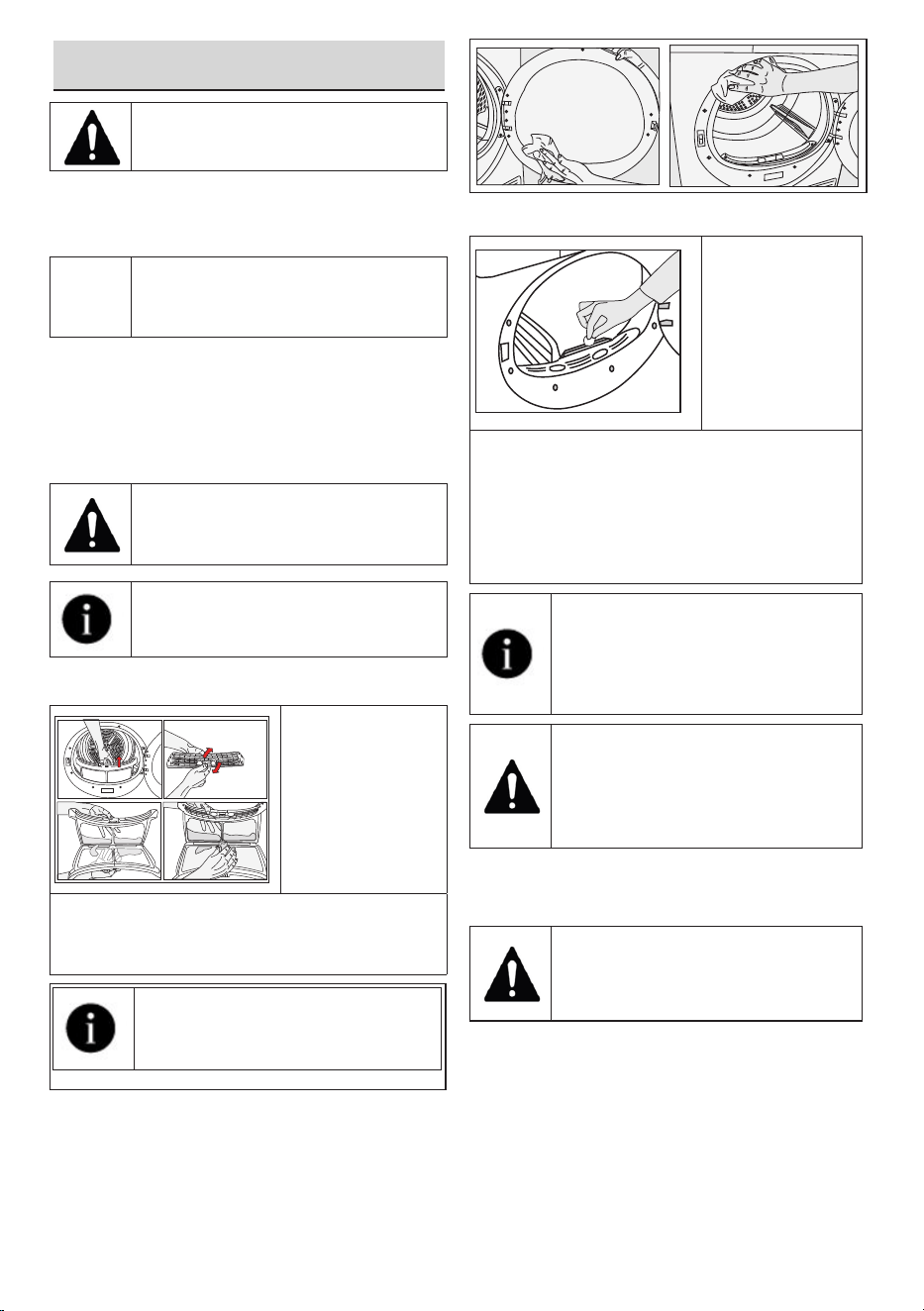
If the steam tank is empty, the icon
shown below will blink. It is required
to dry laundry in a cycle with the
steam function inactive to fill the
tank.
29
Dryer / User manual
7 Maintenance and cleaning
Read the “Safety Instructions” first!
If it is cleaned regularly, the life of the product
will be extended and common problems will be
reduced.
B
The device must not be plugged in
during maintenance and cleaning
operations (control panel, body, etc.).
7.1 Fibre filter /Loading
Door Inner Surface
The hair and fibres that are separated from the
laundry during drying process are collected by
the Fibre Filter.
After each drying cycle, clean the
fibre filter and the inner surface of the
loading door.
You can clean the filter slot with a
vacuum cleaner.
To clean the fibre filter:
1. Open the
loading door.
2. Pull the fiber
filter upwards to
remove it and
turn it on.
3. Clean feathers, fibers and cotton lumps by
hand or with a soft cloth.
4. Turn off the fiber filter and place it in place.
Clean the loading door interior and
its washer.
7.2 Cleaning the sensors
There are moisture
sensors inside
the machine that
detect whether
the laundry is dry
or not.
To clean the
sensors:
1. Open the loading door of the machine.
2. If the machine is still hot due after drying,
wait until it cools.
3. Clean the metal surfaces of the sensor
with a soft cloth dampened with vinegar
and then dry.
Clean the metal surfaces of the
sensor 4 times a year.
Do not use metal tools to clean the
sensor’s metal surfaces.
Due to fire and explosion hazard, do
not use solutions, cleaning materials
or similar materials to clean sensors!
7.3 Emptying the water tank
Empty the water tank after each drying session.
Condensed water is not potable
water!
Never remove the water tank while
the program is running!
If you forget to empty the water tank, during
the next drying sessions the machine will stop
operating when the water tank completely fills
and a Water Tank warning icon will blink. In this
case empty the water tank and to continue
drying operation, press the Start / Standby /
Cancel button.
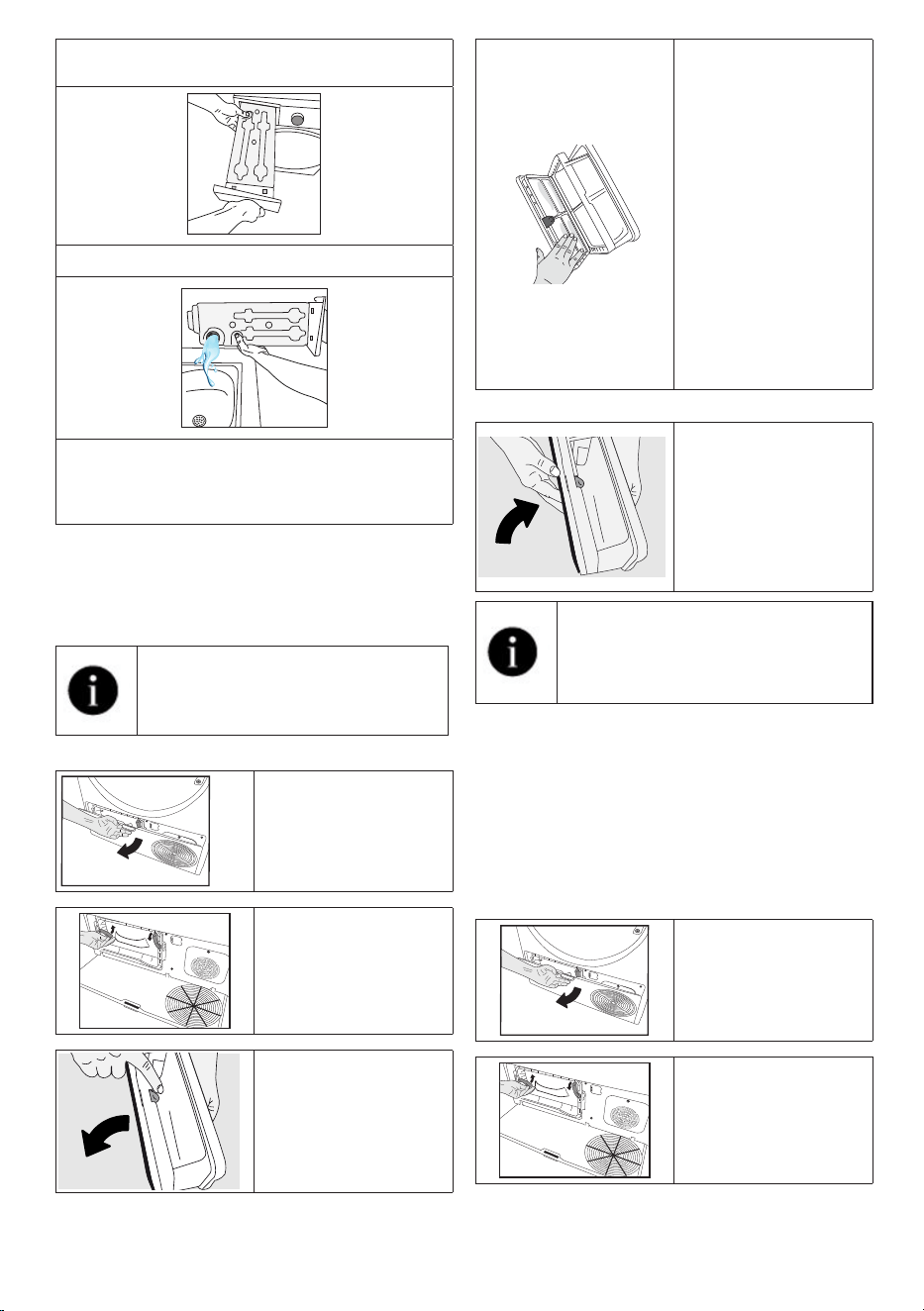
To drain the water tank:
30
Dryer / User manual
1. Carefully pull the water tank out from its
drawer.
2. Empty the water tank.
3. If lint builds up in the funnel on the water
tank, remove it under running water.
4. Place back the water tank.
7.4 Cleaning the filter drawer
Lint and fibers that cannot be caught by the
fibre filter are caught in the filter drawer behind
the kick plate.
Be sure to clean the filter drawer
after each drying process.
To clean the filter drawer:
Open the kickplate by
pulling its button
Move the latches to
open the air deflector
lid.
Open the filter drawer
by pressing the button.
Clean the lint, fibers
and cotton lumps on
the filter cloth by hand
or with a soft cloth.
If a layer that may
cause clogging is
observed on the filter
cloth surface, clean
the layer with your
hand or the brush on
the air diverter.
You can also clean the
hair in the filters with a
vacuum cleaner.
Close the filter drawer
knob so that it locks.
Dirty fibre filters and filter drawers
will result in longer drying times and
more energy consumption.
7.5 Cleaning the condenser
Hair and fibres not collected by the fibre filter will
build up on the metal surface of the condenser
behind the air deflector. These fibres shall be
cleaned regularly.
If the condenser cleaning icon is blinking, check
the metal surface. Clear away any lint. It must
be checked at least every 6 months.
Open the kickplate by
pulling its button.
Move the latches to
open the air deflector
lid.
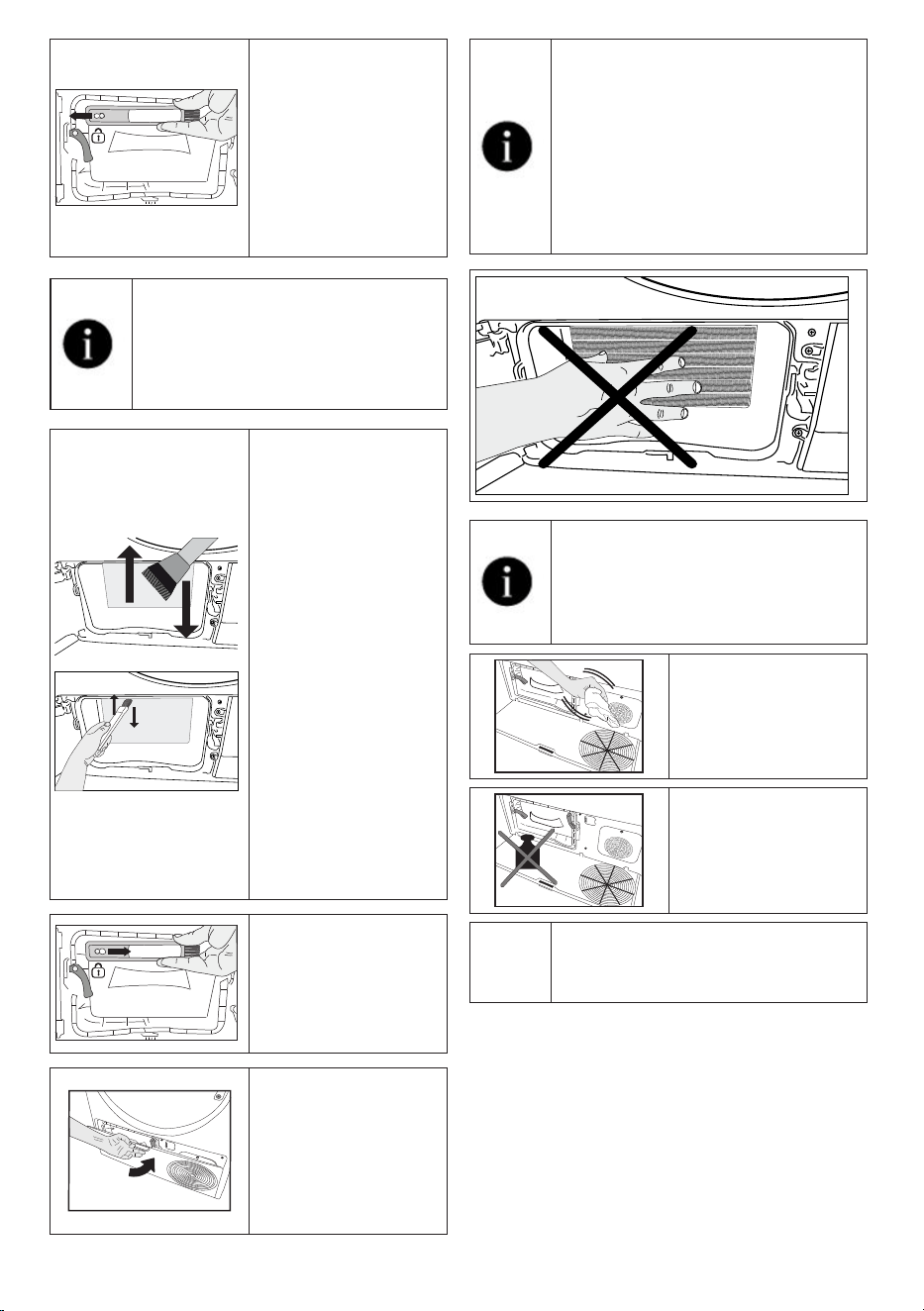
31
Dryer / User manual
Pull the brush to the
left to remove it. You
can use the cleaning
brush to clean
filter, condensing
metal surface and
accumulated fibre on
the door.
The cleaning brush is inside the
documentation bag. Get your
brush from the documentation bag
and insert it to its place on the air
deflector to store it.
Clean the fibre on the
metal surface of the
condenser with damp
cloth or the brush on
the air deflector in
up - down direction.
Do not clean in a
left - right direction
since it will damage
the metal plates of the
condenser.
You can also use a
vacuum cleaner with
a brush for cleaning.
If the vacuum cleaner
does not have a
brush, it should
not be used for
condenser cleaning.
After cleaning the
filter, door and the
condenser, drag the
brush to the right and
lock it in its place.
After the cleaning
process is completed,
place the air deflector
cover to its place,
move the latches to
close it and close the
toe board.
You can clean by hand, provided
you wear protective gloves. Do not
try to clean with bare hands. The
condenser fins may damage your
hands. Cleaning from left to right
may damage the condenser fins.
This may lead to drying issues.
When the air deflector cover is
removed, it is normal to have water
at the plastic section in front of the
condenser.
If you see fibre
accumulation on the
fan cover and the toe
board, remove with a
cloth.
Do not put weight on
the kickplate when it
is open.
NOTICE
Do not use abrasive materials or
steel wool to clean the drum
32
Dryer / User manual
8 Troubleshooting
The drying takes too long.
Lint filter (interior and exterior filters) pores may be clogged. >>> Can be cleaned with vacuum cleaner.
The front side of the condenser may be clogged. >>> Clean the front of the condenser.
The ventilation grills in front of the machine might be closed. >>> Remove any object in front of the
ventilation grills that blocks ventilation.
Ventilation may be insufficient if the dryer is installed in a small space. Open the door or windows to
prevent the room temperature from rising very high.
If there is a humidity sensor;
Limescale may have accumulated on the humidity sensor. >>> Clean the humidity sensor.
The machine may be overloaded with laundry. >>> Do not load the drying machine excessively.
The laundry may not have been spun enough. >>> Spin at a higher speed in the washing machine.
The laundry comes out damp after drying.
The right program for the type of laundry might not have been used. >>> Check the care labels on the
laundry and select a program ideal for the kind of laundry or use longer programs.
Lint filter (interior and exterior filters) pores may be clogged. >>> Can be cleaned with vacuum cleaner.
The front side of the condenser may be clogged. >>> Clean the front of the condenser.
The machine may be overloaded with laundry. >>> Do not load the drying machine excessively.
The laundry may not have been spun enough. >>> Spin at a higher speed in the washing machine.
Drying machine does not turn on or program cannot be started. The dryer does not turn on when set.
The power plug may not be plugged in. >>> Make sure the power plug is plugged in.
The loading door may be left open. >>> Make sure that the loading door is properly closed.
The program may not have been set or the Start / Pause button may not have been pressed. >>> Make
sure that the program is set and it is not in Standby position.
Child lock may be activated. >>> Turn off the child lock.
The program was interrupted for no reason.
The loading door might not be closed properly. >>> Make sure that the loading door is properly closed.
There might be a power outage. >>> Press the Start / Standby / Cancel button to start the program.
The water tank may be full. >>> Empty the water tank.
Laundry shrunk, matted or spoiled.
The right program for the type of laundry may not have been used. Check the maintenance labels on the
clothes and select a program suitable for the clothes.
Water is flowing from the loading door.
Lint might have gathered on the inner surfaces of the loading door and on the surfaces of the loading door
gasket. >>> Clean the inner surfaces of the loading door and the loading door gasket surfaces.
The loading door opens by itself.
The loading door might not be closed properly. >>> Push the loading door until the closing sound is
heard.
The water tank warning symbol is on/flashing.
The water tank may be full. >>> Empty the water tank.
The water discharge hose might have folded. If the product is connected directly to the water drain check
the water discharge hose.
The lighting inside the drying machine does not turn on. (in models with lamps)
The drying machine might not have been turned on by the On/Off button. >>> Check that the drying
machine is turned on.
Lamp might be broken. >>> Contact Authorized Service to replace the lamp.
Anti-Wrinkle icon or light is lit.
An anti-wrinkle program that prevents the laundry in the dryer from creasing may be activated. >>> Turn
the drier off and remove the laundry.
33
Dryer / User manual
Fiber filter cleaning icon is lit
Lint filters (interior and exterior filters) may be unclean. >>> Can be cleaned with vacuum cleaner.
A layer may be formed in the lint filter pores, leading to clogging. >>> Can be cleaned with vacuum
cleaner.
A layer may be formed in the lint filter (inner and outer filters) pores that leads to clogging.<<Can be cleaned with
vacuum cleaner.>>
Lint filters might not be in place. >>> Insert the interior and exterior filters into their places.
Eco-friendly filter cloth may not be installed on the plastic part, and the front of the condenser may have
clogged.>>>Install the eco-friendly filter to the plastic part and place it on the filter housing.
Eco-friendly filters may not have been replaced, although the warning symbol is illuminated. “Replace your filter.”
The machine gives an audible warning,
Lint filters might not be in place. >>> Insert the interior and exterior filters into their places.
Filters of the machine might not have been installed.>>> Install the lint filters (internal and external) or the
environmentally-friendly filter in their housing.
The condenser warning icon is flashing.
Condenser front may be clogged with fibres. >>> Clean the front of the condenser.
Lint filters might not be in place. >>> Insert the interior and exterior filters into their places.
The lighting inside the drying machine turns on. (in models with lamps)
If the drying machine is plugged to the power outlet, the On/Off button is pressed and the door is open;
the light turns on. >>> Unplug the drying machine or bring the On/Off button to Off position.
Wi-Fi icon flashes continuously. (HomeWhiz Function models)
>>> The product may not be connected to the wireless network. Follow the instructions to connect to the network.
The device the appliance uses to connect to the network may be faulty. Check it. The appliance might not be
connected to the network due to being out of wi-fi range.
Check the steps below if you see "F L t" on the screen.
The filters may be dirty. Clean the internal and external filters
In the loading door area, if you are using the inner and outer dual filters. >>> Make sure that both filters are installed.
The front side of the condenser may be dirty. >>> Open and check the kick zone and make sure it is clean.
Check out the Maintenance and Cleaning section.
The foreign objects, if any, should be removed from the drying machine drum,
If the problem persists after following the instructions in this section, contact your vendor or an Authorized
Service. Never attempt to repair a malfunctioning product yourself.
If you experience a problem with any part of your appliance, you can request a replacement by consulting
the nearest authorised service with the appliance model number.
Operating the appliance with non-genuine parts may cause it to malfunction.
The manufacturer and distributor are not responsible for malfunctions caused by non-genuine parts.
9 Waiver Warning
Some (simple) malfunctions can be fixed by the end-user without creating any safety
issues or leading to unsafe operation provided these instructions are followed. (See the
“I Want to Fix it Myself” Section.) Therefore, other than the parts in the “I Want to Fix it
Myself” section that end-users are allowed to fix themselves, having the appliance fixed
at an authorised service station is recommended in order to prevent safety issues and
to maintain the Smeg product warranty.
9.1 I want to fix it myself
The repairs made by end-users may include the following spare parts. Loading door, door seal,
door handles, door locking mechanism and hinges, lint filters, air filters, peripheral plastic parts,
condenser tank. (You can find a current list of spare parts at https://www.smeg.com/services/
customer-service as of 1 March 2021.) Furthermore, be sure to carry out your repairs by following
the instructions at https://www.smeg.com/services/customer-service to ensure product safety
and prevent serious injury. For your safety, unplug the product first before making any repairs.
Smeg cannot be held responsible for safety issues that may arise because of repair work or
attempted repairs on parts other than those on the current spare parts list or found at the https://
www.smeg.com/services/customer-service address and carried out by end-users not following
the instructions in the user manuals or found at the https://www.smeg.com/services/customer-
service address. Such cases will void the Smeg warranty. We therefore strongly advise end-users
to refrain from repairing parts other than the spare parts specified above and to apply to the
authorised service station when required.
These kinds of repairs carried out by end-users can lead to safety issues, damage the product,
and cause fires, flooding, electrocution and serious injury. Not limited to those listed above, the
following parts must be repaired by the authorised station. Motor, pump, motherboard, motor
board, screen card, etc. The manufacturer/seller cannot be held responsible for any situation
caused by end-users not following what is written above. The repairs made by end-users may
include the following spare parts. Loading door, door seal, door handles, door locking mechanism
and hinges, lint filters, air filters, peripheral plastic parts, condenser tank. (You can find a current
list of spare parts at https://www.smeg.com/services/customer-service
as of 1 March 2021.) Furthermore, be sure to carry out your repairs by following the instructions
at https://www.smeg.com/services/customer-service to ensure product safety and prevent
serious injury. For your safety, unplug the product first before making any repairs. Smeg cannot
be held responsible for safety issues that may arise because of repair work or attempted repairs
on parts other than those on the current spare parts list or found at the https://www.smeg.com/
services/customer-service address and carried out by end-users not following the instructions
in the user manuals or found at the https://www.smeg.com/services/customer-service address.
Such cases will void the Smeg warranty. We therefore strongly advise end-users to refrain from
repairing parts other than the spare parts specified above and to apply to the authorised service
station when required. These kinds of repairs carried out by end-users can lead to safety issues,
damage the product, and cause fires, flooding, electrocution and serious injury. Not limited to
those listed above, the following parts must be repaired by the authorised station. Motor, pump,
motherboard, motor board, screen card, etc. The manufacturer/seller cannot be held responsible
for any situation caused by end-users not following what is written above.
Caro cliente,
invitiamo a leggere questa guida prima di utilizzare questo prodotto!
Grazie per aver scelto il prodotto Smeg Vorremmo che lei potesse raggiungere un livello di
efficienza ottimale da questo prodotto di alta qualità, con una tecnologia all'avanguardia.
Assicuratevi di aver letto e compreso a fondo questa guida e la documentazione supplementare
prima dell'uso.
Osservare tutte le avvertenze e le informazioni qui contenute. In questo modo sarà possibile
proteggere sia voi che il vostro prodotto da potenziali danni.
Conservare il manuale. Qualora il prodotto venga ceduto a un’altra persona, consegnare anche
questo manuale.
Simboli e note
Nel manuale sono utilizzati i seguenti simboli:
Pericolo che può causare morte o lesioni
Leggere il manuale
Informazioni importanti o consigli utili per l'uso
Attenzione alle superfici calde
B
Avvertenza contro le scosse elettriche
Attenzione al pericolo di radiazioni UV
Attenzione alle scottature
L'imballaggio del prodotto è fatto di materiali riciclabili, in conformità con la Normativa
Ambientale Nazionale.
Attenzione al fuoco
AVVISO Pericolo che può causare danni materiali al prodotto o all'area circostante
Questo prodotto è stato realizzato servendosi delle ultimissime tecnologie in condizioni rispettose dell’ambiente.

1 Istruzioni di sicurezza ......................................................................... 38
1.1 Uso previsto ....................................................................................................38
1.2 Sicurezza dei bambini, delle persone vulnerabili e degli animali domestici ........38
1.3 Sicurezza elettrica ............................................................................................ 39
1.4 Sicurezza nel trasporto ....................................................................................40
1.5 Sicurezza in fase di installazione ......................................................................40
1.6 Sicurezza d'uso ...............................................................................................42
1.7 Sicurezza nella manutenzione e nella pulizia .....................................................44
1.8 Sicurezza dell'illuminazione ..............................................................................44
2 Istruzioni per l'ambiente ..................................................................... 45
2.1 Rispetto dei regolamenti WEEE e smaltimento dei rifiuti ...................................45
2.2 Informazioni sull'imballaggio ............................................................................45
2.3 Conformità alle norme e informazioni sui test / Dichiarazione di conformità ONU 45
3 La vostra asciugatrice ........................................................................ 46
3.1 Specifiche tecniche .........................................................................................46
3.2 La tua asciugatrice ..........................................................................................47
3.3 Informazioni sull’imballaggio ............................................................................47
4 Installazione ......................................................................................... 48
4.1 Corretto posizionamento per l'installazione ......................................................48
4.2 Rimozione del gruppo di sicurezza usato per la spedizione del prodotto ..........49
4.3 Collegamento tubo di scarico dell’acqua sui prodotti con funzione vapore ....... 49
4.4 Regolazione dei supporti .................................................................................49
4.5 Spostamento dell'asciugatrice .........................................................................49
4.6 Attenzione al rumore ........................................................................................ 50
4.7 Sostituzione della lampadina ............................................................................50
5 Preparazione ........................................................................................ 51
5.1 Bucato adatto per l'asciugatura in asciugatrice ................................................ 51
5.2 Bucato non adatto all'asciugatura in asciugatrice ............................................51
5.3 Preparare il bucato da asciugare ......................................................................51
5.4 Cosa fare per il risparmio energetico ................................................................ 51
5.5 Capacità di carico corretta ............................................................................... 52

6 Funzionamento del prodotto .............................................................. 53
6.1 Pannello di controllo ........................................................................................53
6.2 Simboli ............................................................................................................53
6.3 Preparazione dell’asciugatrice .........................................................................54
6.4 Selezione programma e tabella di consumo ..................................................... 55
6.5 Funzioni ausiliarie Tipo di asciugatura ..............................................................59
6.6 Spie luminose di avvertenza .............................................................................60
6.7 Avvio del programma ....................................................................................... 60
6.8 Blocco bambini ...............................................................................................60
6.9 Modifica del programma dopo che è stato avviato ........................................... 61
6.10 Annullamento del programma ........................................................................61
6.11 Fine del programma .......................................................................................61
6.12 Descrizione generale dei programmi con vapore ........................................... 62
7 Manutenzione e pulizia ...................................................................... 63
7.1 Filtro in fibra / superficie interna dell'oblò di caricamento ..................................63
7.2 Pulizia dei sensori ...........................................................................................63
7.3 Svuotare il serbatoio dell'acqua .......................................................................63
7.4 Pulizia del cassetto filtro .................................................................................. 64
7.5 Pulizia del condensatore ..................................................................................65
8 Guida alla risoluzione dei problemi .................................................. 67
9 Avviso di rinuncia ............................................................................... 69
9.1 Voglio ripararlo da solo ....................................................................................69
38
Asciugatrice/ Manuale utente
1 Istruzioni di sicurezza
Questa sezione include le istruzioni di sicurezza necessarie per evitare
il rischio di lesioni personali e danni materiali.
• La nostra azienda non è da ritenersi responsabile per il verificarsi di
danni causati dall’inosservanza delle presenti istruzioni.
• Le operazioni di installazione e riparazione devono sempre essere
eseguite da un servizio di assistenza autorizzato.
• Utilizzare solo ricambi e accessori originali.
• Non riparare o sostituire alcun componente del prodotto, a meno che
non sia chiaramente specificato nelle istruzioni per l'uso.
• Non modificare il prodotto.
1.1 Uso previsto
• Il prodotto è progettato unicamente per uso domestico. Non è stato
pensato per un uso di tipo commerciale.
• Il prodotto non è stato pensato per essere usato all’esterno.
• Non installare o far funzionare il prodotto dove il congelamento è una
possibilità e/o dove risulta vulnerabile agli elementi esterni. L'acqua
congelata nella pompa o nei tubi può causare danni
• Il prodotto può essere utilizzato solo per asciugare e ventilare il bucato
che è lavato con acqua e asciugatrice in modo sicuro.
1.2 Sicurezza dei bambini, delle persone
vulnerabili e degli animali domestici
• Questo prodotto può essere utilizzato da bambini dagli 8 anni in su e da
persone con capacità fisiche, sensoriali o mentali insufficienti o prive di
esperienza e conoscenza se è stata loro fornita supervisione o istruzioni
sull'uso dell'apparecchio in modo sicuro e sui relativi pericoli connessi.
I bambini non devono manomettere l'apparecchiatura. Le operazioni
di pulizia e la manutenzione non devono essere eseguite dai bambini a
meno che non siano sorvegliati.
• I bambini di età inferiore ai 3 anni devono essere tenuti lontani dal
prodotto a meno che non siano sorvegliati.
39
Asciugatrice/ Manuale utente
• I dispositivi elettrici sono pericolosi per i bambini e gli animali domestici.
I bambini e gli animali domestici non devono giocare con il prodotto,
salirci sopra o entrare al suo interno.
• Tenere la porta del prodotto chiusa anche quando non è in funzione.
I bambini o gli animali domestici potrebbero rimanere chiusi dentro il
prodotto e soffocare.
• Le operazioni di pulizia e di manutenzione dell'utente non devono
essere eseguite dai bambini, a meno che non siano sorvegliati.
• Tenere i materiali di imballaggio lontano dalla portata dei bambini.
Pericolo di lesioni e soffocamento.
• Tenere lontano dai bambini tutti gli additivi usati con il prodotto.
• Prima di smaltire il prodotto, tagliare il cavo di alimentazione e
distruggere l’oblò di caricamento.
1.3 Sicurezza elettrica
• Il prodotto non deve essere collegato durante le operazioni di
installazione, manutenzione, pulizia, riparazione e trasporto.
• Se il cavo di alimentazione è danneggiato, deve essere sostituito da un
servizio autorizzato per evitare che si verifichino eventuali rischi.
• Non infilare il cavo di alimentazione sotto il prodotto o sul retro del
prodotto. Non appoggiare oggetti pesanti sul cavo di alimentazione.
Il cavo di alimentazione non deve essere attorcigliato, pizzicato e non
deve entrare in contatto con nessuna fonte di calore.
• Non utilizzare prolunghe, multiple o adattatori per azionare il prodotto.
• Il prodotto non deve essere alimentato tramite un interruttore esterno
come ad esempio un timer. Non deve inoltre essere collegato a un
circuito che viene regolarmente aperto e chiuso servendosi di un
attrezzo.
• La spina deve essere facilmente accessibile. Se ciò non è possibile,
sull'impianto elettrico deve essere disponibile un meccanismo che
soddisfi la regolamentazione in materia di elettricità e che scolleghi tutti
i terminali dalla rete elettrica (fusibile, interruttore, interruttore principale,
ecc.).
• Non toccare la spina con le mani bagnate.
40
Asciugatrice/ Manuale utente
• Quando si scollega l'apparecchio, non tenere in mano il cavo di
alimentazione, ma la spina.
1.4 Sicurezza nel trasporto
• Scollegare il prodotto prima del trasporto, svuotare il serbatoio
dell'acqua e, se presenti, rimuovere le connessioni di scarico dell'acqua.
• Il prodotto è pesante, non maneggiarlo da soli.
• Adottare le precauzioni necessarie per il prodotto al fine di evitarne la
caduta e il ribaltamento. Non far cadere il prodotto durante il trasporto.
• Non usare le parti sporgenti del prodotto (come ad esempio l’oblò di
caricamento) per spostare il prodotto stesso.
• Spostare il prodotto in posizione verticale. Se non può essere
spostato in posizione verticale, trasportarlo inclinandolo sul lato destro
(guardandolo da davanti).
1.5 Sicurezza in fase di installazione
• Per preparare il prodotto per l'installazione, assicurarsi che l'installazione
elettrica e lo scarico dell'acqua siano corretti controllando le informazioni
indicate nel manuale d'uso. Se il prodotto non è adatto all'installazione,
contattare un elettricista e un idraulico qualificati per riorganizzare le
utenze secondo necessità. Queste operazioni sono a carico del cliente.
• Controllare che non vi siano danni al prodotto prima di installarlo. Non
far installare il prodotto se è danneggiato.
• Non rimuovere il supporto regolabile.
• Posizionare il prodotto su una superficie piana, solida e bilanciata coi
piedini regolabili.
• Lo spazio tra il prodotto e il pavimento non deve essere ridotto da
materiali quali ad esempio tappeti, pezzi di legno e fasce. I fori di
ventilazione sotto alla base del prodotto non devono essere ostruiti da
un tappeto.
• Il prodotto deve essere installato in modo tale da non ostruire i fori di
ventilazione.
• Installare il prodotto in un ambiente privo di polvere e dotato di una
buona ventilazione.

41
Asciugatrice/ Manuale utente
• Non installare il prodotto in prossimità di materiali infiammabili ed
esplosivi e non tenere materiali infiammabili ed esplosivi vicino al
prodotto quando è in funzione.
• Il prodotto non deve essere installato contro una porta, una porta
scorrevole dove l’oblò di caricamento non può essere completamente
aperto, oppure dietro a una porta incernierata dove la cerniera del
prodotto è rivolta contro le cerniere della porta.
• Installare il prodotto in un luogo in cui la manutenzione periodica e la
pulizia possano essere fatte in modo facile.
• Posizionare il prodotto con la superficie posteriore rivolta verso la parete
(per i modelli con riscaldamento).
• Dopo aver posizionato il prodotto, assicurarsi che la parete posteriore
non entri in contatto con nessuna sporgenza (un rubinetto dell'acqua,
una presa elettrica, ecc.).
• Posizionare il prodotto lasciando almeno 1 cm di spazio tra il prodotto e
i bordi del mobile.
• Seguire le regole di collegamento alla canna fumaria specificate nella
guida (per i modelli con canna fumaria).
• L'aria di scarico non deve essere diretta verso la canna fumaria che
viene utilizzata per scaricare i fumi dei dispositivi che consumano gas o
altri combustibili (per i modelli con canna fumaria).
• Il tubo di ventilazione non deve essere collegato a una stufa o a una
canna fumaria (per i modelli con canna fumaria).
• Collegare il prodotto a una presa con messa a terra protetta da un
fusibile appropriato in linea con il tipo e i tassi di corrente specificati.
Chiedere a un elettricista esperto di impostare i dispositivi di messa a
terra. Non utilizzare il prodotto senza una messa a terra conforme alle
normative regionali/nazionali.
• Collegare il prodotto a una presa con messa a terra conforme ai
valori di tensione, corrente e frequenza specificati nella targhetta di
identificazione.
• Non collegare il prodotto a prese allentate, rotte, sporche o piene
di grasso, che fuoriescono dalla mascherina o prese a contatto con
l'acqua.
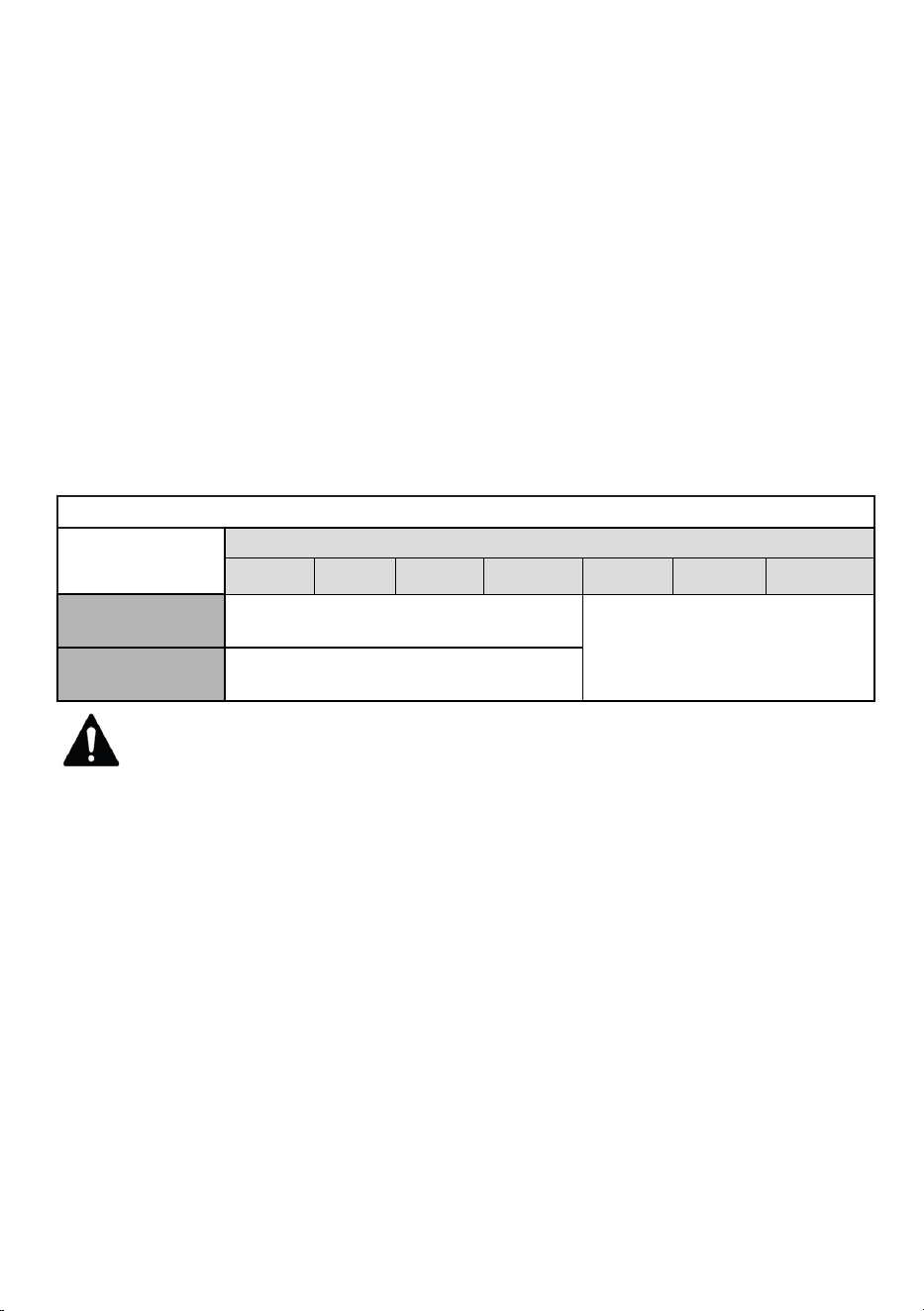
42
Asciugatrice/ Manuale utente
• Sarà necessario usare set di tubi nuovi, forniti in dotazione con il
prodotto. Non riutilizzare set di tubi vecchi. Non collegare attacchi ai
tubi.
• Posizionare il cavo di alimentazione e i tubi flessibili in modo tale che
non sia possibile inciamparvi sopra.
• Per utilizzare il prodotto sopra a una lavatrice, è necessario utilizzare
un'apertura di fissaggio tra due prodotti. L'apertura di fissaggio deve
essere montata dal servizio autorizzato.
• Quando il prodotto viene posizionato sulla lavatrice, il loro peso
combinato (quando sono pieni) potrebbe essere di circa 180 kg.
Posizionare i prodotti su un pavimento robusto in grado di supportare
una quantità di carico adeguata.
• La lavatrice non può essere messa sopra all'asciugatrice.
Tavolo di installazione per lavatrice e asciugatrice
Profondità
dell’asciugatrice
Profondità della lavatrice
62 cm 60 cm 54 cm 50 cm 49 cm 45 cm 40 cm
54 cm
Può essere
installata
Non può
essere
installata
60 cm
Può essere
installata
1.6 Sicurezza d'uso
• Il peso massimo del bucato asciutto prima del lavaggio è specificato
nella sezione “Specifiche tecniche”.
• Non mettere i capi non lavati nell'asciugatrice.
• Gli articoli che sono sporchi di materiali come oli da cucina, acetone,
alcool, benzina, cherosene, smacchiatori, trementina, cera o
smacchiatori devono essere lavati in acqua calda con più quantità di
detergente prima di essere asciugati con l'asciugatrice.
• Se vengono utilizzati prodotti chimici per la pulizia, l'asciugatrice non
deve essere messa in funzione.
• La schiuma di gomma (schiuma di lattice), le cuffiette per la doccia, i
tessuti resistenti all'acqua, i materiali e i vestiti supportati dalla gomma,
i cuscini con imbottiture in schiuma di gomma non devono essere
asciugati in una macchina asciugatrice.

43
Asciugatrice/ Manuale utente
• Gli articoli con spray per capelli, residui di prodotti per capelli o materiali
simili non devono essere asciugati in una macchina asciugatrice.
• Svuota le tasche dei vestiti e rimuovi oggetti come fiammiferi e
accendini.
• Se non è possibile togliere rapidamente tutti gli articoli e non è possibile
collocarli in un luogo dove è possibile dissipare il calore, non fermare
l'asciugatrice prima che il ciclo di asciugatura sia completato.
• L'ultima parte del ciclo di asciugatura avviene senza riscaldamento
(ciclo di raffreddamento) al fine di garantire che gli articoli vengano tenuti
a una temperatura che non li danneggi.
• Gli ammorbidenti per il bucato o prodotti simili devono essere usati in
linea con le istruzioni dell'ammorbidente per il bucato.
• Non utilizzare l'asciugatrice senza il filtro in fibra.
• Non permettere l'accumulo di fibre intorno all'asciugatrice.
• Per evitare il ritorno di fiamma del gas nella stanza dagli apparecchi che
consumano altri combustibili, compreso il fuoco aperto, è necessario
prevedere una ventilazione adeguata (per i modelli con canna fumaria).
• Non utilizzare il prodotto insieme a riscaldatori come stufe a gas e un
camino. Ciò potrebbe causare l'incendio della canna fumaria. (per i
modelli con canna fumaria)
• Non appoggiarsi o sedersi sull’oblò di caricamento quando è aperto, il
prodotto potrebbe ribaltarsi.
• Non salire sul prodotto.
• Non mettere una sorgente di fiamma (candele, sigarette, ecc.) sul
prodotto o nelle immediate vicinanze. Non tenere materiali infiammabili/
esplosivi.
• Non toccare il tamburo mentre gira.
• La parete posteriore del prodotto sarà calda durante il funzionamento.
Non toccare il lato posteriore del prodotto durante l'asciugatura o dopo
che il processo di asciugatura è stato completato. (Per i modelli con
riscaldamento)
• Non toccare la superficie interna del tamburo in fase di aggiunta
o estrazione degli indumenti mentre un programma è in fase di
esecuzione. La superficie del tamburo è calda.
44
Asciugatrice/ Manuale utente
• Non premere i pulsanti con oggetti appuntiti come ad esempio:
forchette, coltelli, unghie, ecc.
• Non utilizzare il prodotto se è difettoso o danneggiato. Scollegare
il prodotto (o spegnere il fusibile collegato) e contattare il servizio
autorizzato.
• Scollegare il prodotto se non viene usato.
1.7 Sicurezza nella manutenzione e nella pulizia
• Non lavare il prodotto spruzzando o versandoci acqua sopra. Non usare
un pulitore a pressione, un pulitore a vapore, un tubo o una pistola a
pressione per pulire il prodotto.
• Non utilizzare utensili affilati o abrasivi per pulire il prodotto.
• Non usare materiali come detergenti domestici, saponi, detersivi, gas,
benzina, alcool, cera, ecc. per pulire il prodotto.
• Il filtro in fibra deve essere pulito a intervalli regolari. Dopo ogni ciclo
di asciugatura, pulire il filtro in fibra e la superficie interna dell’oblò di
caricamento.
• Pulire l'accumulo di fibre sulle alette dell'evaporatore dietro il cassetto
del filtro con un aspirapolvere. Si può pulire a mano, purché si
indossino guanti protettivi. Non cercare di pulire a mani nude. Le alette
dell'evaporatore possono danneggiare le mani. (Per i prodotti con
pompa di calore)
• A causa del pericolo di incendio e di esplosione, non utilizzare soluzioni,
materiali di pulizia, lana d'acciaio o materiali e strumenti simili per pulire i
sensori.
• Pulire la canna fumaria. (per i modelli con canna fumaria)
• Non bere acqua condensata.
1.8 Sicurezza dell'illuminazione
• Contattare un servizio autorizzato quando è necessario sostituire il LED/
la lampadina utilizzati per l'illuminazione (per i prodotti con illuminazione).
45
Asciugatrice/ Manuale utente
2 Istruzioni per l'ambiente
2.1 Rispetto dei regolamenti WEEE e smaltimento dei rifiuti
Questo prodotto non contiene i materiali pericolosi e proibiti indicati nel "Regolamento
sul controllo dei rifiuti di apparecchiature elettriche ed elettroniche" pubblicato dal
Ministero dell'ambiente e dell'urbanizzazione della Repubblica di Turchia. Il prodotto è
conforme alle normative WEEE. Questo prodotto è stato fabbricato con componenti e
materiali di alta qualità riciclabili e riutilizzabili. Non è quindi necessario smaltire questo
prodotto con altri rifiuti domestici al termine del suo ciclo di vita. Portarlo presso un punto di
raccolta per apparecchiature elettriche ed elettroniche. Sarà possibile informarsi in merito a
questi punti di raccolta presso la propria amministrazione locale. Sarà possibile contribuire alla
protezione dell’ambiente e delle risorse naturali consegnando i prodotti usati per il riciclaggio.
Anche l'R290 è un refrigerante infiammabile. Accertarsi quindi che il sistema e i tubi
non vengano danneggiati in fase di funzionamento e di trasporto.
Tenere il prodotto lontano da fonti di calore, altrimenti potrebbe prendere fuoco se
danneggiato.
Non smaltire il prodotto gettandolo nel fuoco.
2.2 Informazioni sull'imballaggio
L'imballaggio del prodotto è realizzato con materiali riciclabili, in conformità con la legislazione
nazionale. Non smaltire i rifiuti di imballaggio con i rifiuti domestici o altri rifiuti, smaltirli nelle aree di
raccolta degli imballaggi specificate dalle autorità locali.
2.3 Conformità alle norme e informazioni sui test
/ Dichiarazione di conformità ONU
Le fasi di sviluppo, produzione e vendita di questo prodotto vengono condotte
in conformità con le regole di sicurezza specificate in tutte le relative istruzioni
dell'Unione Europea.
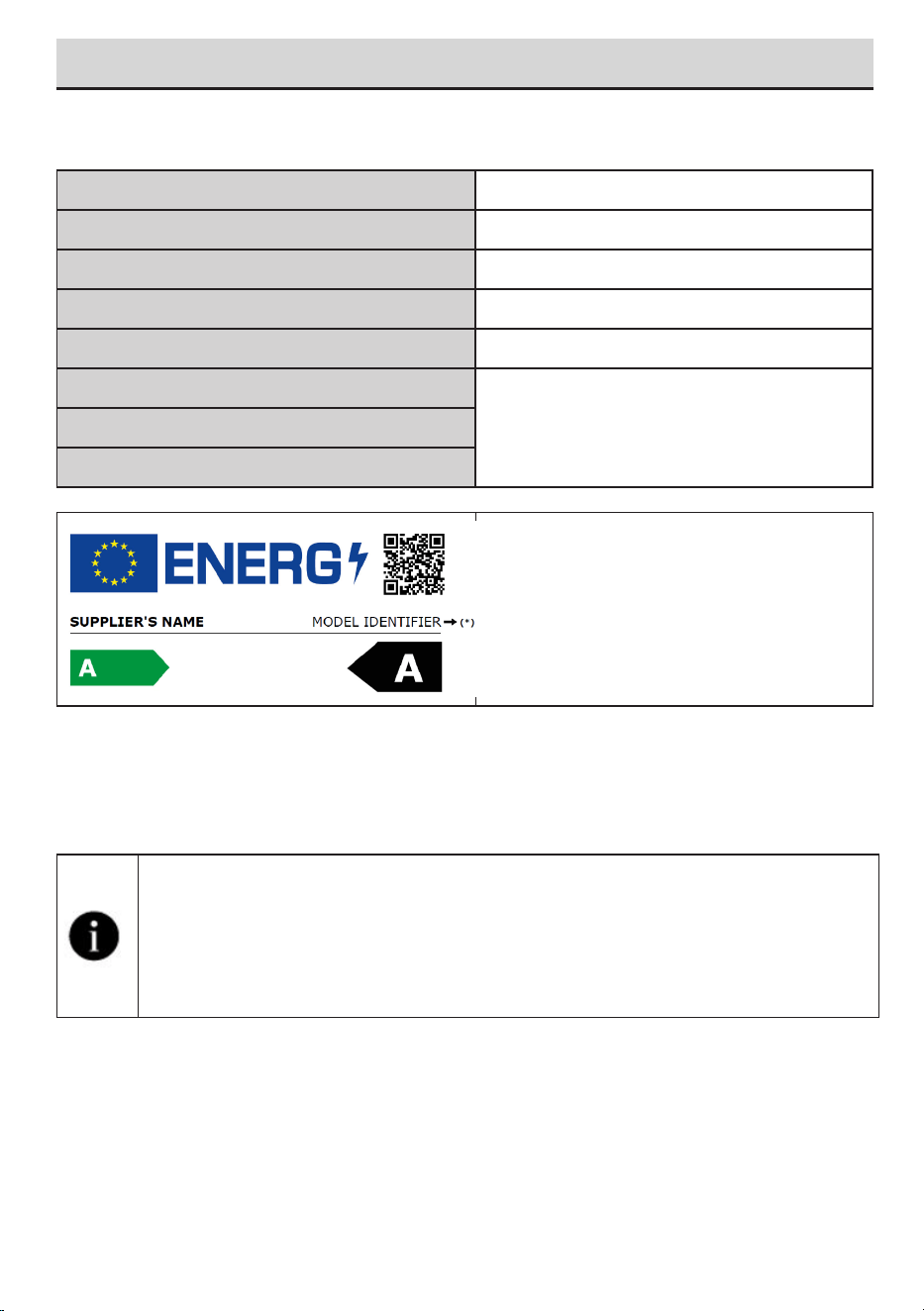
46
Asciugatrice/ Manuale utente
3 La vostra asciugatrice
3.1 Specifiche tecniche
Le informazioni sul modello memorizzate
nel database del prodotto possono essere
ottenute entrando nel seguente sito web e
cercando il proprio identificatore di modello (*)
che si trova sull’etichetta energetica.
https://eprel.ec.europa.eu/
* Altezza minima: Altezza con il supporto regolabile chiuso.
Altezza massima: Altezza con il supporto regolabile aperto alla massima altezza.
** Peso del bucato asciutto prima del lavaggio.
*** La targhetta dei dati si trova sotto lo sportello dell'asciugatrice.
Al fine di migliorare la qualità dell'asciugatrice, le specifiche tecniche possono essere
modificate senza preavviso.
Le figure in questo manuale sono schematiche e potrebbero non corrispondere
esattamente al prodotto.
I valori forniti con l'asciugatrice o i documenti di accompagnamento sono letture di
laboratorio secondo le rispettive norme. Questi valori possono differire a seconda
dell'uso e delle condizioni ambientali.
IT
Altezza (regolabile) 84,6 cm / 86,6 cm*
Larghezza 59,8 cm
Profondità 67,1 cm
Capacità (max.) 9 kg**
Peso netto (± %10) 48 kg
Tensione
Vedere etichetta tipo***Ingresso alimentazione nominale
Codice modello
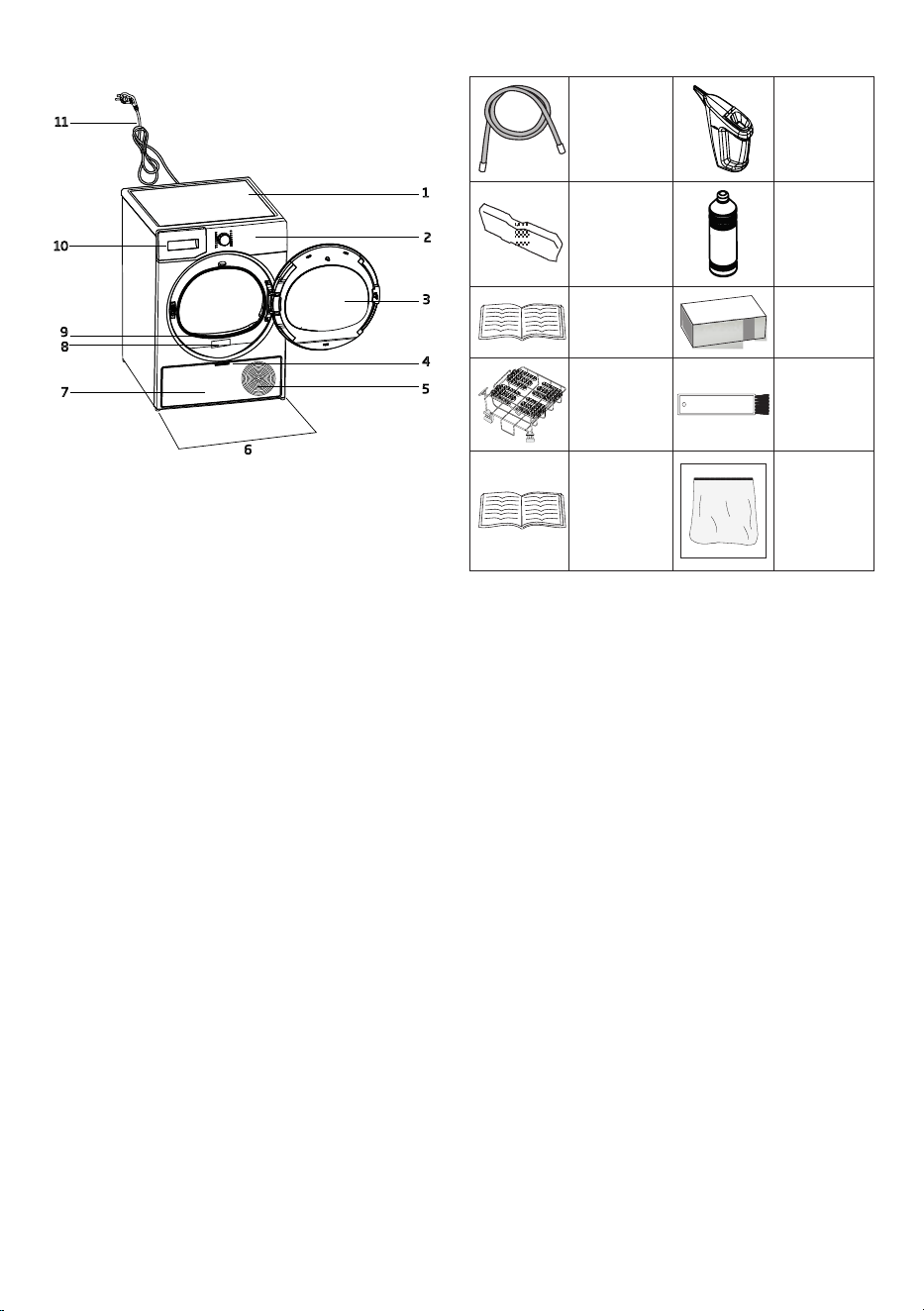
47
Asciugatrice/ Manuale utente
3.2 La tua asciugatrice
11
10
1
2
3
4
5
6
7
8
9
1. Pannello superiore
2. Pannello di controllo
3. Porta di carico
4. Apertura sportello zoccolo
5. Griglie di ventilazione
6. Piedini regolabili
7. Sportello filtro zoccolo
8. Etichetta tipo
9. Filtro lanugine
10. Cassetto del serbatoio dell’acqua
11. Cavo di alimentazione
3.3 Informazioni sull’imballaggio
1. Tubo
di scarico
acqua *
6.
Contenitore
di
riempimento
dell’acqua*
2. Spugna
di ricambio
cassetto
filtro*
7. Acqua
pura*
3. Manuale
dell’Utente
8. Gruppo
capsule
fragranza*
4. Cestello di
asciugatura*
9. Spazzola*
5. Manuale
dell’utente
del
cestello di
asciugatura*
10. Filtro
stoffa*
*Può essere fornito in dotazione con la
macchina, a seconda del modello.
48
Asciugatrice/ Manuale utente
4 Installazione
Leggere come prima cosa le
"Istruzioni di sicurezza"!
Prima di consultare il servizio autorizzato più
vicino per l'installazione dell'asciugatrice,
vedere le informazioni nel manuale d'uso e
assicurarsi che le utenze elettriche e dell'acqua
siano conformi alle richieste. In caso contrario
contattare un elettricista e un idraulico per
rendere questi servizi conformi ai requisiti.
È responsabilità del cliente
preparare il luogo in cui
l'asciugatrice deve essere
collocata e anche l'installazione
dell'alimentazione e delle acque di
scarico.
Controllare che non ci siano danni
sull'asciugatrice prima di installarla.
Se l'asciugatrice è danneggiata, non
farla installare. I prodotti danneggiati
causano un rischio per la sicurezza
dell’utente.
Attendere 12 ore prima di mettere in
funzione l'asciugatrice.
AVVISO
Il prodotto include un agente
refrigerante. Se il prodotto viene
utilizzato subito dopo il suo
trasporto, potrebbe danneggiarsi.
Dopo ogni spostamento, il prodotto
deve essere lasciato riposare per
12 ore.
4.1 Corretto posizionamento
per l'installazione
• Installare l'asciugatrice su una superficie
piana e stabile.
• L’asciugatrice è pesante. Non spostarla
da soli.
• Far funzionare l'asciugatrice in un
ambiente privo di polvere con una buona
ventilazione.
• Lo spazio tra l'asciugatrice e il pavimento
non deve essere ridotto da materiali quali
ad esempio tappeti, pezzi di legno e
fasce.
• Non bloccare le griglie di ventilazione
dell'asciugatrice.
• Non ci devono essere porte che possono
essere bloccate, porte scorrevoli o
porte incernierate vicino all'ambiente
di installazione dell'asciugatrice che
possono bloccare l’apertura dell’oblò di
caricamento.
• Una volta che l'asciugatrice è installata,
le connessioni devono rimanere stabili.
Dopo aver posizionato l'asciugatrice,
assicurarsi che la parete posteriore non
entri in contatto con alcuna estrusione (un
rubinetto dell'acqua, una presa elettrica,
ecc.).
• Posizionare l'asciugatrice con almeno 1
cm di spazio tra il prodotto e i bordi dei
mobili.
• L'asciugatrice è adatta ad essere utilizzato
tra +5°C e +35°C. Se utilizzata al di
fuori di questo range di temperatura,
il suo funzionamento potrebbe essere
compromesso e danneggiato.
• L'asciugatrice non deve essere
posizionata con il lato posteriore contro
una parete.
B
Non appoggiare l'asciugatrice sul
suo cavo di alimentazione.
* Ignorare il seguente avviso se il
sistema del proprio prodotto non
contiene R290
L’asciugatrice contiene il refrigerante
R290.*
R290 è un refrigerante ecologico,
ma infiammabile.*
Assicurarsi che l’ingresso dell’aria
dell’asciugatrice sia aperto e ben
ventilato.*
Tenere lontane dall’asciugatrice
potenziali fonti di fiamma viva.*
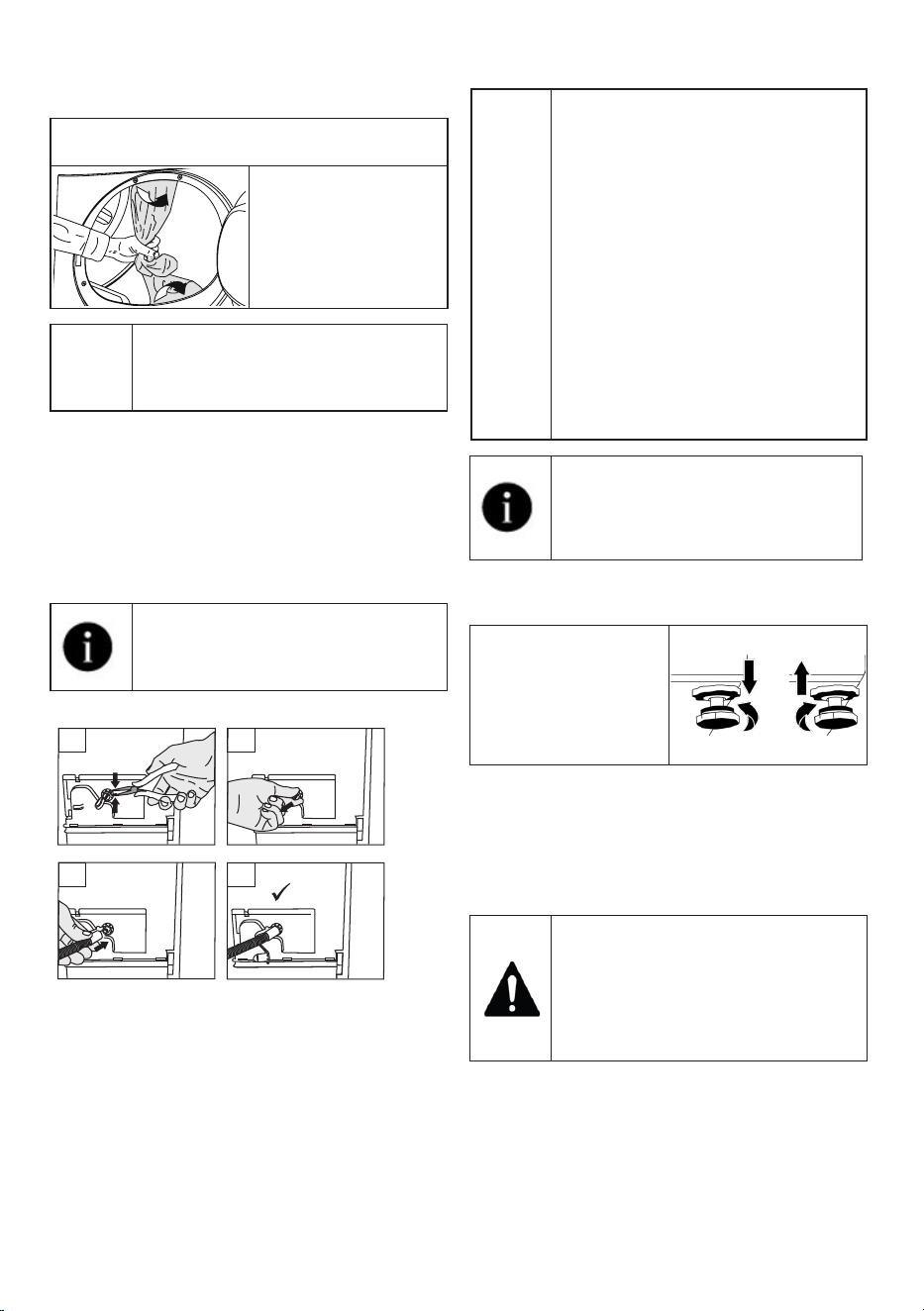
49
Asciugatrice/ Manuale utente
4.2 Rimozione del gruppo
di sicurezza usato per la
spedizione del prodotto
AVVISO
Togliere il gruppo
di sicurezza usato
per la spedizione
del prodotto prima
di iniziare a usare il
prodotto.
AVVISO
Non lasciare un accessorio o
qualsiasi parte del gruppo di
sicurezza usato per la spedizione
del prodotto all'interno del tamburo.
4.3 Collegamento tubo di
scarico dell’acqua sui prodotti
con funzione vapore
Invece di scaricare periodicamente l’acqua
accumulata nel serbatoio dell’acqua, è possibile
scaricare tramite il tubo di scarico dell’acqua
fornito con l’asciugatrice.
Se l’asciugatrice dispone di una
funzione vapore, per lo scarico
dell’acqua seguire il seguente
schema.
1 2
3 4
1 Rimuovere il morsetto collegato al tappo sul
retro dell’asciugatrice tirandolo dal punto in
cui è collegato con l’aiuto di un attrezzo.
2 Dopo aver rimosso il morsetto, estrarre la
spina sotto il morsetto.
3 Collegare il tubo di scarico dell’acqua
fornito con la macchina al tubo sotto il
tappo.
4 La macchina è pronta per l’uso con lo
scarico diretto.
AVVISO
Il tubo di scarico dell'acqua deve
essere fissato a un'altezza massima
di 80 cm.
Assicurarsi che il tubo di scarico
dell'acqua non sia attorcigliato,
schiacciato o premuto tra lo scarico
e l'asciugatrice.
Il tubo deve essere collegato per
non essere scollegato dalla sua
posizione. L'acqua fuoriuscita può
causare danni.
Non allungare il tubo di scarico
dell'acqua.
Controllare se l'acqua scorre con un
flusso adeguato. La linea di scarico
non deve essere chiusa o intasata.
Se l’accessorio viene fornito
in dotazione con un pack di
accessori, invitiamo a consultare le
istruzioni dettagliate.
4.4 Regolazione dei supporti
Fino a quando
l’asciugatrice non sta
in piedi in modo piano
e robusto, regolare i
supporti girandoli a
destra e a sinistra.
4.5 Spostamento dell'asciugatrice
• Scaricare completamente l'acqua
nell'asciugatrice.
• Se il prodotto è collegato tramite scarico
diretto, togliere i collegamenti del tubo.
Si consiglia di spostare l'asciugatrice
in posizione verticale. Altrimenti,
inclinarlo verso il lato destro visto dal
davanti e spostare l'asciugatrice.
Attendere 12 ore prima di mettere in
funzione l'asciugatrice.
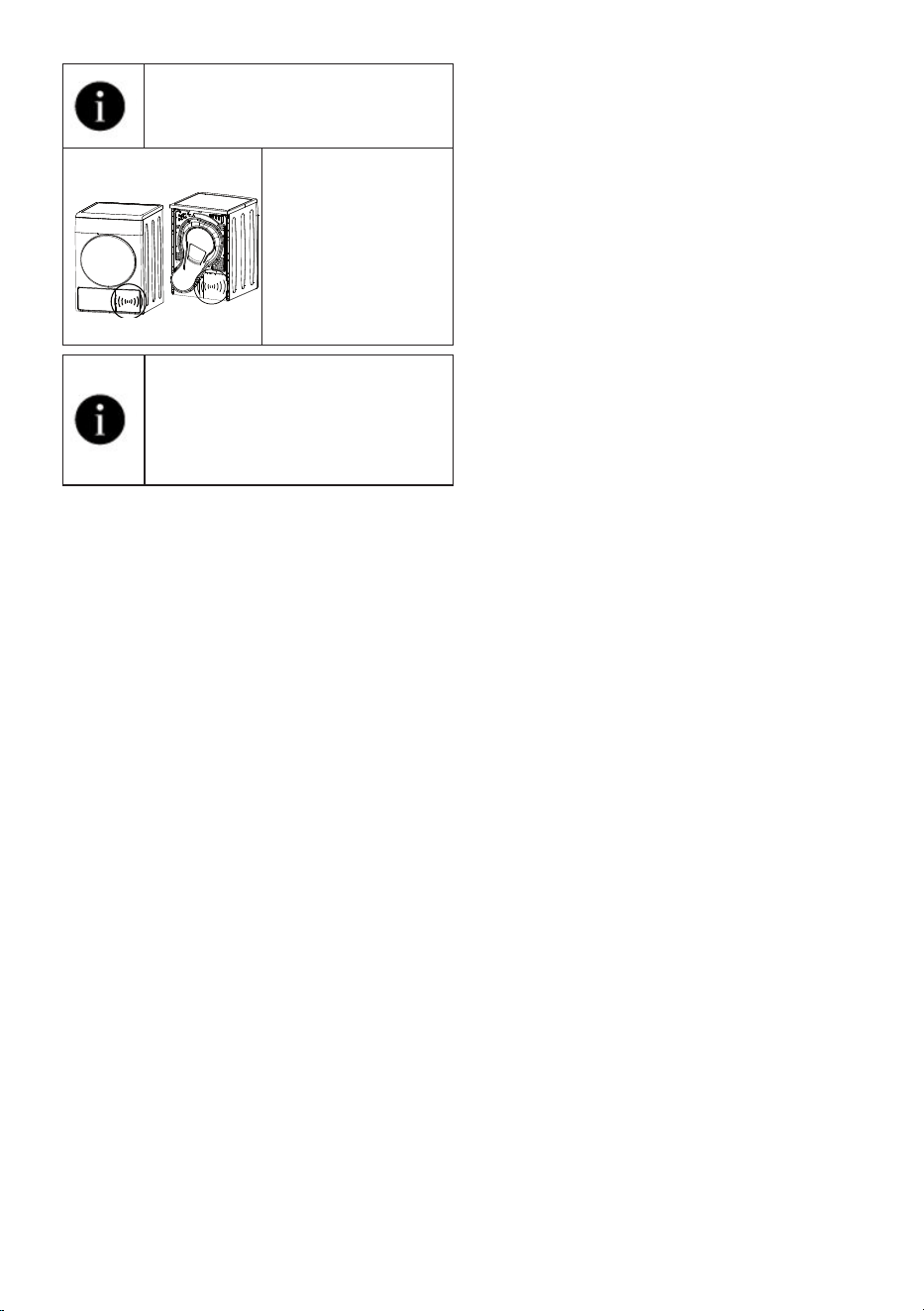
50
Asciugatrice/ Manuale utente
4.6 Attenzione al rumore
Durante il
funzionamento
del prodotto, il
compressore può
emettere rumori
metallici di tanto in
tanto, non si tratta
di un’anomalia di
funzionamento.
Quando il prodotto è in funzione,
l'acqua accumulata viene pompata
nel serbatoio dell'acqua. È normale
sentire dei suoni di pompaggio
dall'apparecchio durante questa
operazione.
4.7 Sostituzione della lampadina
Se l’asciugatrice ha la lampada di illuminazione
del tamburo;
Consultare il servizio autorizzato per sostituire
la lampadina/LED utilizzata nell'illuminazione
dell'asciugatrice. La lampadina di questo
prodotto non è adatta all'illuminazione
domestica. L'uso previsto di questa lampada
è quello di garantire il caricamento sicuro del
bucato nell'asciugatrice. Le lampade utilizzate
in questo apparecchio sono resistenti a
condizioni fisiche pesanti come ad esempio
temperature superiori a 50°C.
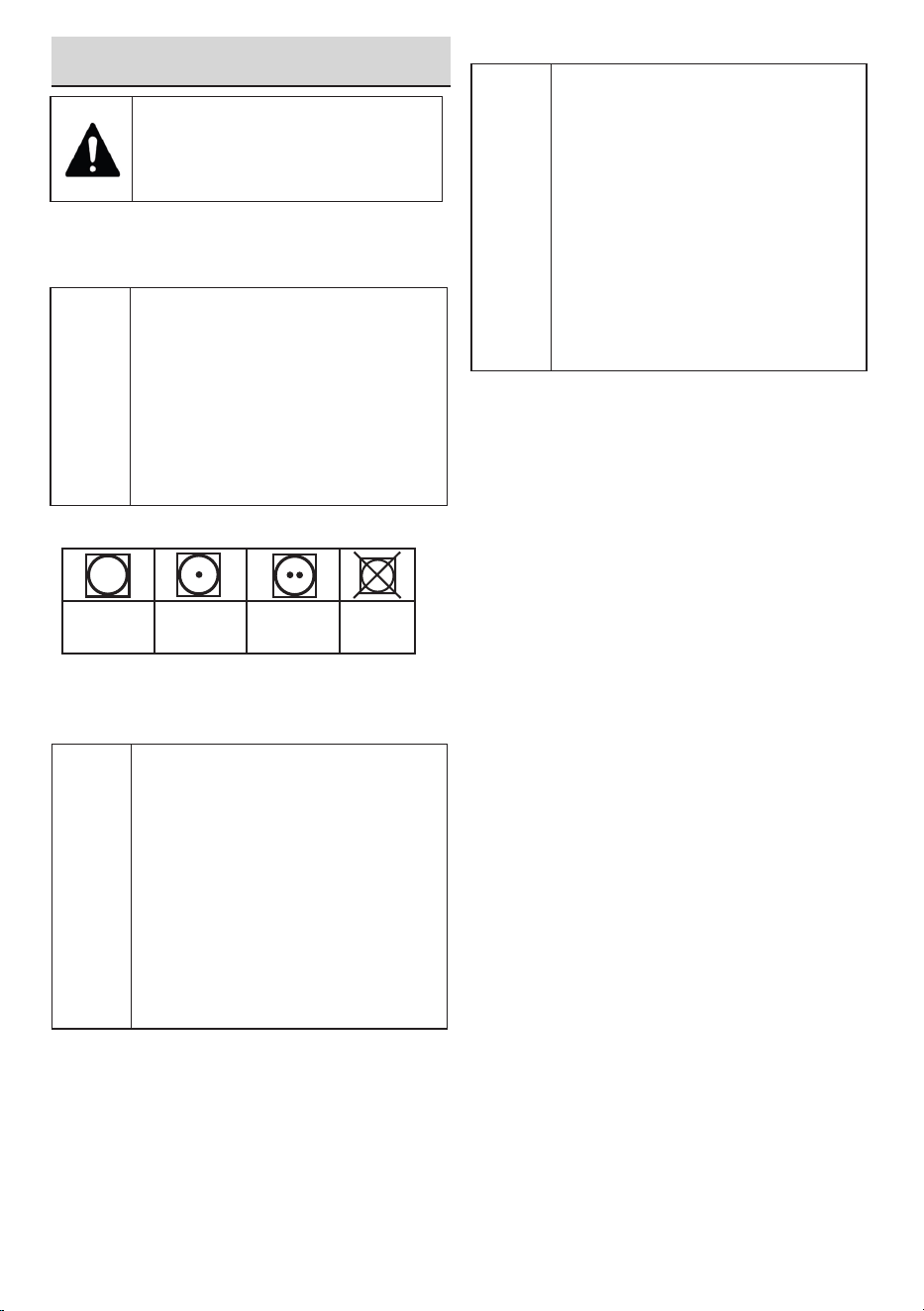
51
Asciugatrice/ Manuale utente
Leggere come prima cosa le
"Istruzioni di sicurezza"!
5.1 Bucato adatto per
l'asciugatura in asciugatrice
AVVISO
Il bucato non sicuro per
l'asciugatrice può danneggiare
l'apparecchio e il bucato stesso
durante l'asciugatura. Attenersi alle
istruzioni sulle etichette del bucato
da asciugare. Asciugare solo il
bucato con la scritta "dry machine
safe - sicuro in asciugatrice" sulle
etichette.
Suitable for the dryer At low temperature At medium temperature Do not dry with
dryer
5.2 Bucato non adatto
all'asciugatura in asciugatrice
AVVISO
Gli indumenti intimi con supporti
metallici non devono essere
asciugati in asciugatrice. Se questi
supporti metallici si allentano e si
strappano dall'indumento, si può
danneggiare la macchina.
I tessuti delicati da ricamo, gli
indumenti di cotone e seta, gli
indumenti fabbricati con tessuti
delicati e pregiati, gli indumenti che
non traspirano e le tende di tulle
non devono essere asciugati in
asciugatrice.
5.3 Preparare il bucato da asciugare
AVVISO
Oggetti quali ad esempio monete,
parti metalliche, aghi, chiodi, viti,
pietre ecc. possono danneggiare
il gruppo di tamburi del prodotto o
causare problemi di funzionamento.
Controllare quindi tutto il bucato che
verrà caricato sul prodotto.
Asciugare il bucato con accessori
metallici come le cerniere girandole
al contrario.
Chiudere le cerniere, i ganci e le
chiusure, abbottonare i bottoni
delle coperture, legare le cinture di
tessuto e le cinture del grembiule.
5.4 Cosa fare per il
risparmio energetico
• Usare la massima torcitura possibile
mentre si lava il bucato. Sarà pertanto
possibile ridurre il periodo di asciugatura
oltre che il consumo di energia. Ordinare
il bucato in base al tipo e allo spessore.
Asciugare insieme gli stessi tipi di bucato.
Per esempio, gli asciugamani da cucina e
le tovaglie si asciugano più velocemente
degli asciugamani da bagno.
• Seguire le indicazioni del manuale utente
per la selezione del programma.
• Durante l'asciugatura non aprire l’oblò
di caricamento qualora ciò non sia
necessario. Qualora sia necessario aprire
l’oblò di caricamento, non tenerlo aperto
troppo a lungo.
• Non aggiungere bucato bagnato mentre
l'asciugatrice funziona.
• Pulire il filtro in fibra prima e dopo ogni
sessione di asciugatura.
• Accertarsi che i filtri siano puliti.
Rimandiamo alla sezione “Manutenzione e
pulizia” per ulteriori dettagli in merito.
• Per i modelli con canna fumaria, seguire
le regole di collegamento della canna
fumaria specificate nelle guide e pulire la
canna fumaria.
• Durante la sessione di asciugatura,
ventilare adeguatamente l'ambiente in cui
si trova l'asciugatrice.
5 Preparazione
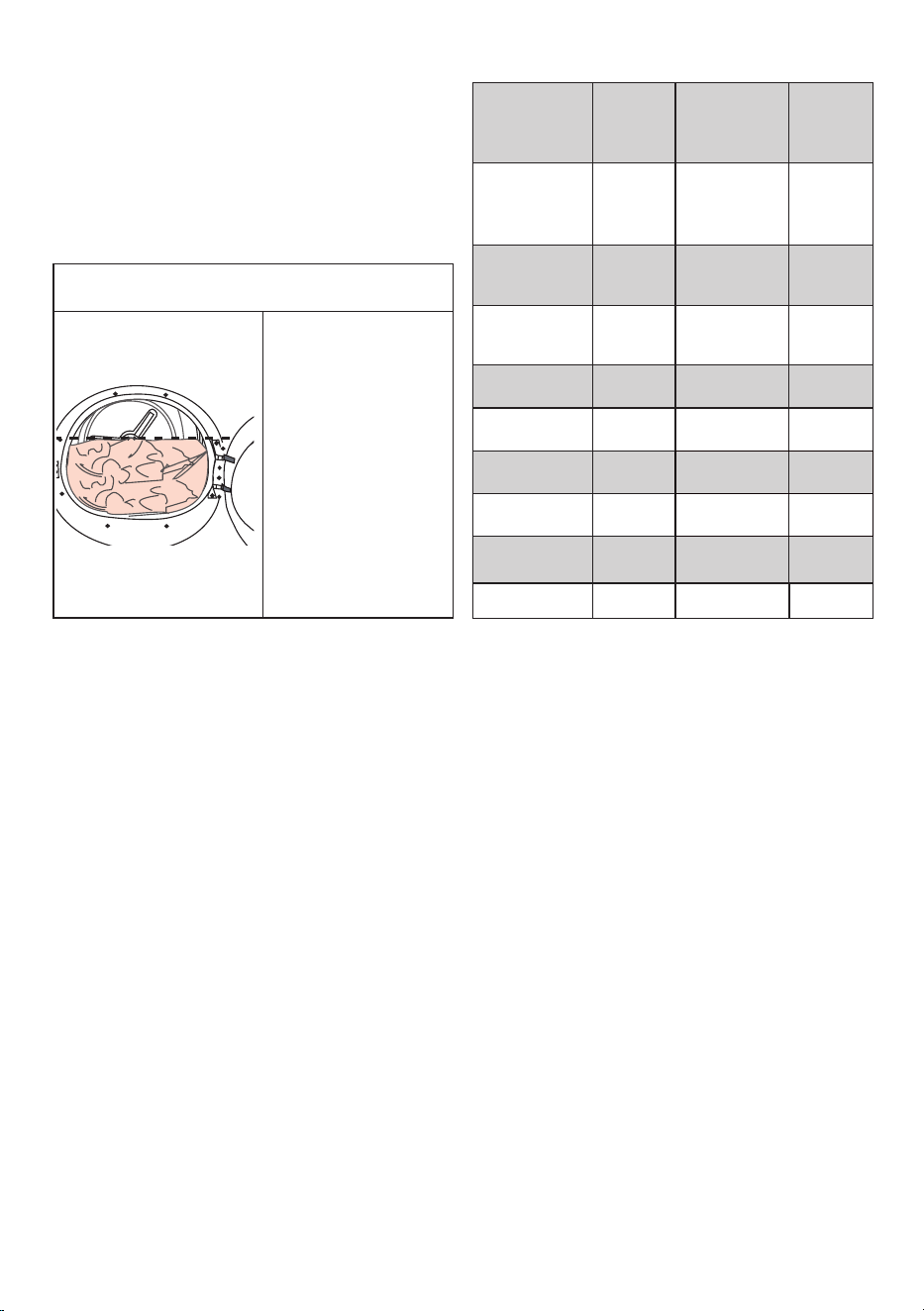
52
Asciugatrice/ Manuale utente
• Il programma Eco è il programma più
efficiente dal punto di vista energetico per
l'asciugatura della biancheria di cotone
bagnata e viene utilizzato per valutare la
conformità alle norme di progettazione
ecologica.
• Tenere l’oblò di caricamento chiuso per
evitare perdite di calore.
5.5 Capacità di carico corretta
AVVISO
Se il bucato
all’interno della
macchina supera la
capacità di carico
massima, potrebbe
non funzionare
come previsto e
potrebbe causare
danni materiali
o danneggiare il
prodotto. Per ogni
programma, attenersi
alla capacità
massima di carico.
• Caricare l'asciugatrice domestica fino alla
capacità massima indicata dal produttore
per i relativi programmi aiuta a risparmiare
energia.
I pesi che seguono sono forniti a titolo
esemplificativo.
Bucato
Peso
indicativo
(g)*
Bucato
Peso
indicativo
(g)*
Biancheria da
letto in cotone
(matrimoniale)
1500
Abito in
cotone
500
Biancheria da
letto (formato
singolo)
1000 Abito 350
Lenzuolo
da letto
(matrimoniale)
500 Tessuto jeans 700
Lenzuolo da
letto (singolo)
350
Fazzoletto
(10 pezzi)
100
Tovaglia
grande
700 Maglietta 125
Tovaglia
piccola
250 Camicetta 150
Tovagliolo
da tè
100
Camicia di
cotone
300
Asciugamano
da bagno
700 Camicie 200
Asciugamano 350
*Peso del bucato asciutto prima del lavaggio.
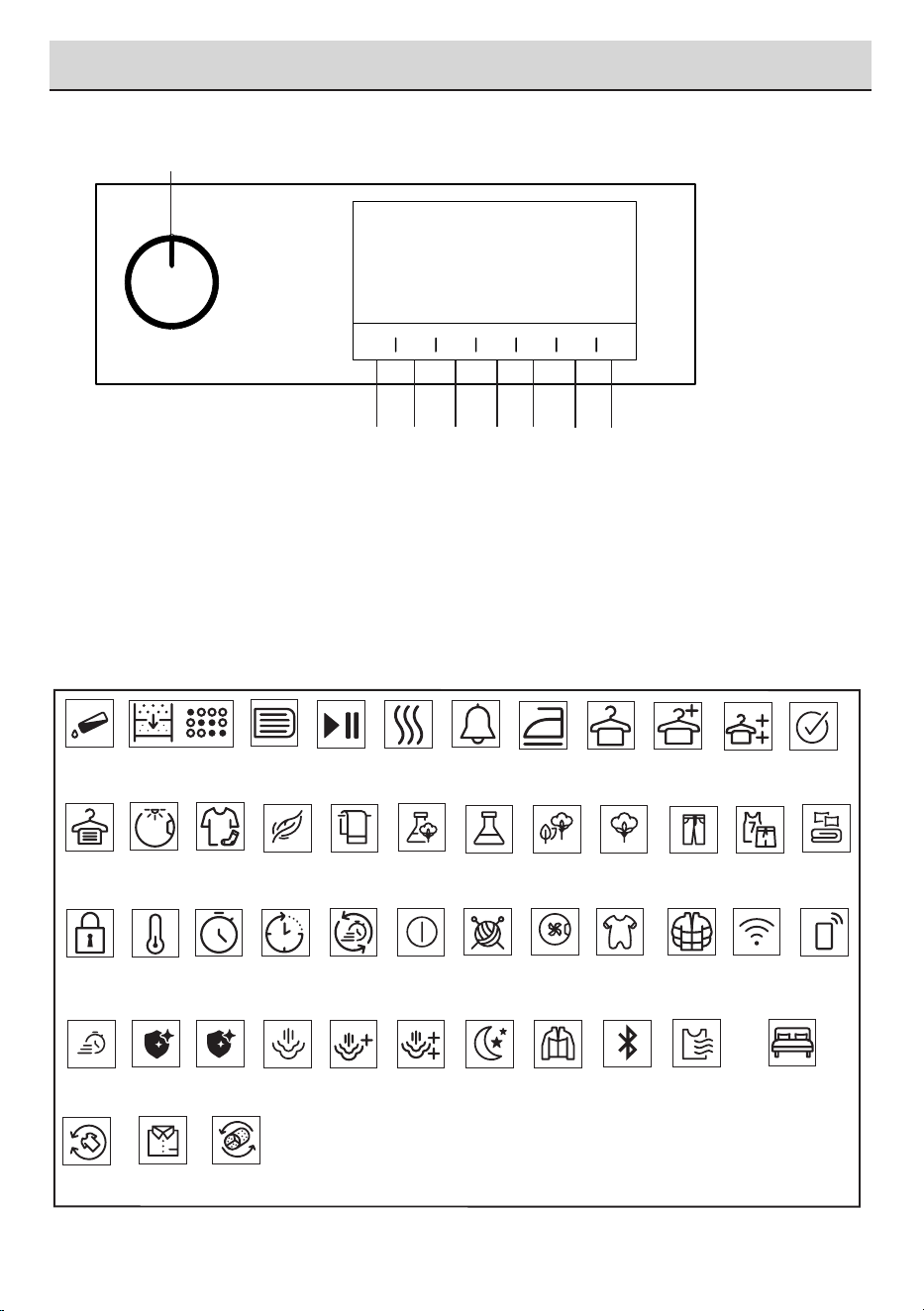
53
Asciugatrice/ Manuale utente
6.1 Pannello di controllo
6 Funzionamento del prodotto
1. Pulsante di selezione Acceso / Spento /
Programma
2. Pulsante Start / Stand-by.
3. Pulsante di selezione tempo finale
4. Pulsante di selezione del programma a
vapore.
6.2 Simboli
Pulizia
del filtro
Serbatoio
pieno
Pulizia cassetto
filtro/scambiatore
di calore
Avvia
pausa
annulla
Stiratura
Asciugatura Cicalino Armadio a
secco
Armadio a
secco +
Extra
secco
Fine
Anti
piega
Blocco
bambini
Bassa
temperatura
Asciugatura
tempo
Fine tra Asciugatura
rapida
Luce
cestello
Livello di
asciugatura
EasyCare
Delicati
Sintetici
Asciugamani Mix Cottons
Eco
Cotone Eco Jeans Sport
Piumini/
coperte
Camicie
Express Asciugatura
igienica
Rinfresca
igienico
Livello
del vapore
Livello
del vapore 1
Livello
del vapore 2
Pulsante
accensione/
spegnimento
Wool protect
Notte
(silenzioso)
Refresh
Esterno
Igiene
(BabyProtect+)
Piume Wifi
Controllo
da Remoto
Bluetooth Asciugatura
Delicata
Inversione
Tamburo
Biancheria da letto
3
4
5
2
6
7
8
1
5. Pulsante di selezione temperatura bassa /
Pulsante di selezione programma tempo
6. Avviso acustico e pulsante di selezione del
blocco per bambini.
7. Pulsante luce interna / Pulsante Antipiega
8. Pulsante di selezione tipo di asciugatura
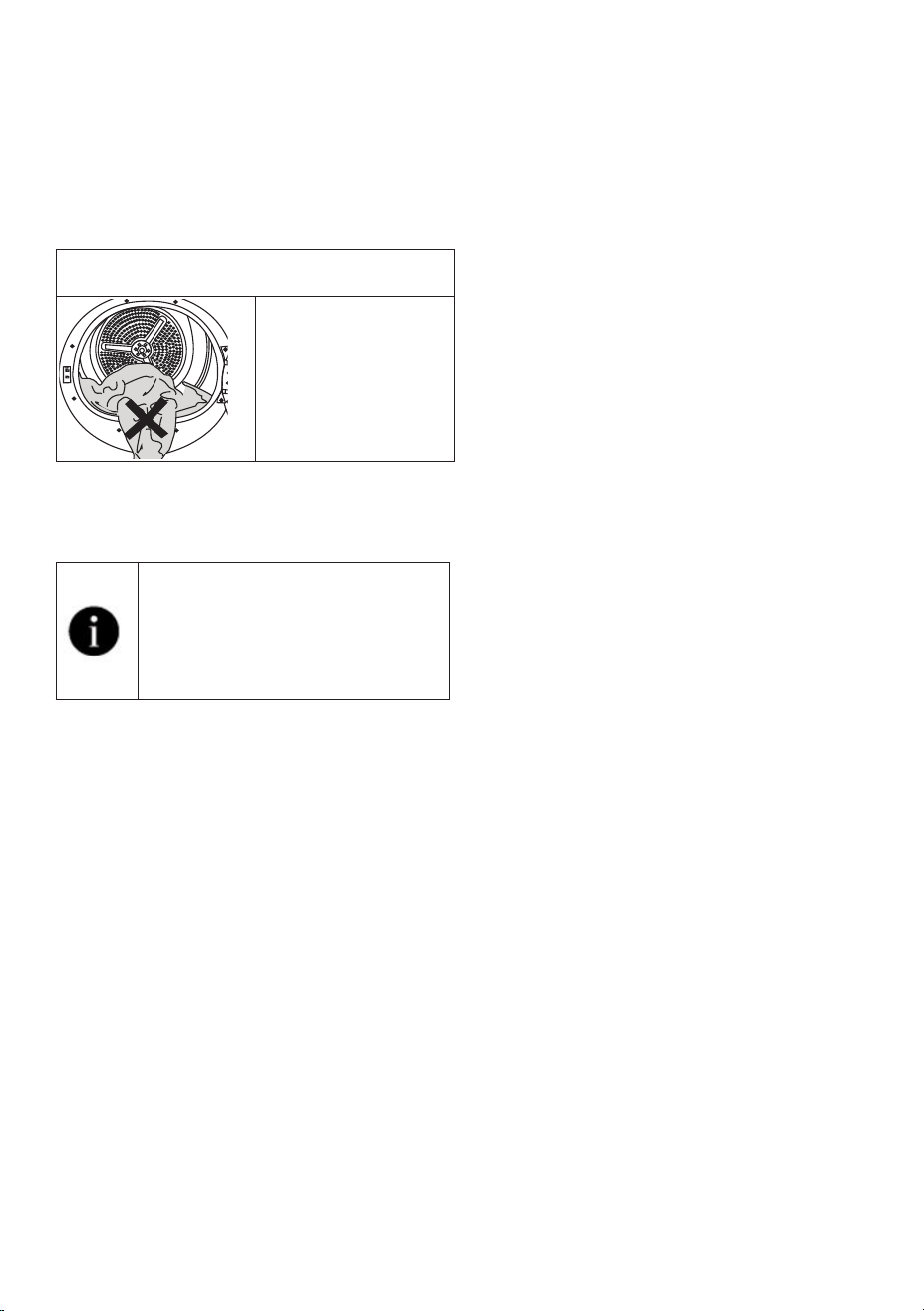
54
Asciugatrice/ Manuale utente
6.3 Preparazione dell’asciugatrice
• Collegare l’asciugatrice
• Aprire l’oblò di caricamento.
• Rimuovere qualsiasi materiale estraneo al
suo interno.
• Mettere il bucato nell’asciugatrice senza
esagerare a livello di quantità.
• Premere e chiudere l’oblò di caricamento.
AVVISO
Verificare che non vi
sia bucato impigliato
nell’oblò.
Non chiudere l’oblò
di caricamento con
forza.
• Quando si seleziona il programma
desiderato utilizzando il pulsante di
selezione Acceso/Spento/Programma, la
macchina si accenderà.
Selezionare un programma usando
il pulsante di selezione Acceso/
Spento/Programma non significa
che il programma è stato avviato.
Per avviare il programma, premere il
pulsante Start/Stand-by.
55
Asciugatrice/ Manuale utente
6.4 Selezione programma e tabella di consumo
IT
Tabella dei cicli funzionanti a vapore
Programmi Descrizione del programma
Capacità (kg)
Velocità centrifuga della
lavatrice (rpm)
Tempo di asciugatura (minuti)
Tempo di asciugatura a
vapore
Camicie*
È un ciclo volto a ridurre il livello di grinze su
camicie e magliette, utilizzando la funzione
vapore. Questo ciclo solitamente elimina la
necessità di stirare le camicie in stile casual
dopo l'asciugatura. A seconda della consistenza
e dello spessore del prodotto da asciugare,
la percentuale di riduzione delle grinze può
variare. Raccomandiamo di usare questo ciclo
combinando gli stessi tipi di tessuti.
1,5 (6
pezzi)
800 - 90
1 (3 pezzi) 800 - 70
0,3 (1
pezzi)
800 - 50
Steam Refresh
Rinfresca i capi con la funzione vapore e
rimuove gli odori indesiderati. Usare solo con
capi asciutti.
1,5 (6
pezzi)
- - 35
1 (3 kpezzi) - - 31
0,3 (1
pezzi)
- - 23
Mix
Usare questo programma per asciugare sia
tessuti sintetici che non stingono che in cotone.
Questo programma è adatto a capi sportivi e
da fitness.
6 1000 175 180
Jeans
Con questo programma si possono asciugare
pantaloni, gonne, camicie o giacche in tessuto
denim.
4 1200 130 135
Cotone
Con questo ciclo si possono asciugare i
tessuti di cotone resistenti al calore. Si sceglie
un'impostazione di asciugatura adeguata allo
spessore del bucato da asciugare e al livello di
asciugatura desiderato.
9 1000 205 210
Cotone Eco
I tessuti di cotone a strato singolo, casual,
vengono asciugati nel modo più economico
possibile.
9 1000 190 195
Sintetici
Con questo ciclo si possono asciugare tutti i
tessuti sintetici. Selezionare un'impostazione di
asciugatura adeguata al livello di asciugatura
desiderato.
4 800 80 85
56
Asciugatrice/ Manuale utente
Tabella dei cicli non funzionanti a vapore
Cotone pronto da stirare
I tessuti di cotone a strato singolo e casual
asciugati un po' umidi, in modo che siano pronti
per la stiratura.
9 1000 140 -
Lana
Usare questo programma per asciugare
indumenti in lana, quali ad esempio felpe, lavati
secondo le istruzioni. Consigliamo di rimuovere
gli indumenti al termine del programma
1.5 600 148 -
Silent
In questo programma, il livello di rumore emesso
verrà ridotto al minimo. Con questo programma
è possibile asciugare in modo silenzioso capi in
cotone o in tessuti sintetici misti.
8 1000 240 -
Piumoni
È possibile asciugare tessuti imbottiti di piume o
fibre recanti sull'etichetta la dicitura asciugabile
in asciugatrice come un unico pezzo di bucato.
È possibile asciugare piumoni king size, cuscini
o cappotti come un unico pezzo di bucato.
Asciugare tessuti quali giacche e cappotti
rivoltati.
- 800 165 -
Outdoor
Utilizzatela per asciugare i capi in materiali
sintetici, cotone, tessuti misti o prodotti
impermeabili come giacche funzionali,
impermeabili, ecc. Rivoltateli prima
dell'asciugatura.
2 1000 135 -
Programmi a tempo
Sarà possibile selezionare i programmi a tempo
fra 10 e 160 minuti fino a raggiungere il livello
di asciugatura desiderato a bassa temperatura.
In questo programma, il funzionamento
dell’asciugatrice dura per il tempo impostato a
prescindere dal livello di asciugatura del bucato.
- - - -
Refresh
È possibile usare questo programma per i vestiti
asciutti e il bucato a cui si vuole assicurare
l'igiene senza doverli lavare. Permette un'elevata
igiene ai tessuti asciutti grazie all'effetto del
calore.
1,5 - 120 -
Asciugatura
Si tratta di un programma di lunga durata che
potete utilizzare per i capi (vestiti dei bambini,
asciugamani, intimo, ecc.) che desiderate
igienizzare. L’igiene si ottiene grazie all’alta
temperatura.((Questo programma è riconosciuto
e approvato dalla "British Foundation"
d'Inghilterra (Allergy UK).))
5 800 200 -
Rapido
Utilizzare questo programma per ottenere 2
magliette pronte per essere stirate
0.5 1200 30 -
57
Asciugatrice/ Manuale utente
** I valori sopra indicati sono stati specificati in condizioni standard. I valori di consumo possono
variare rispetto a quelli indicati nella tabella a seconda del tipo di biancheria, della velocità di
centrifuga, delle condizioni ambientali e dei livelli di tensione.
Valori consumo elettricità
Programmi Capacità (kg)
Velocità centrifuga
della lavatrice (rpm)
Quantità
approssimativa di
umidità rimanente
Valore consumo
elettricità kWh
Cotone Eco** 9 1000 60% 1,38
Cotone pronto da stirare 9 1000 60% 1,15
Capi sintetici pronti da
indossare
4 800 40% 0,55
"Se si asciuga regolarmente il carico massimo di 9Kg del programma Cotone, si consiglia di
collegare il tubo di scarico per evitare che l'asciugatrice si fermi a metà ciclo per svuotare il
serbatoio" (cfr. paragrafo "Collegamento allo scarico")."
*La capacità del ciclo “Ready to Wear” (Pronto per l’uso) di rendere le camicie 100% cotone, 100% poliestere, 100%
viscosa e %56 cotone - 44% poliestere indossabili (effetto antigrinza) è stata approvata dall'Istituto indipendente di test
tessili in Europa. Il colletto, i polsini della camicia o le maniche possono essere stirati, se lo si desidera.
58
Asciugatrice/ Manuale utente
IT
Programmi generali
Programmi Capacità (kg)
Periodo del
programma (ora:min)
Consumo di energia (Kwh)
Cotone Eco 9 3:15 1,69
Cotone Eco 4,5 2:00 0,92
Cotone pronto da stirare 9 2:40 1,35
Cotone pronto da stirare 4,5 1:36 0,74
Cotone Asciutto Armadio 9 3:30 1,82
Cotone Asciutto Armadio 4,5 2:15 1,04
Cotone Asciutto Armadio + 9 3:40 1,91
Cotone Asciutto Armadio + 4,5 2:25 1,11
Asciugatura a secco cotone
++
9 3:50 1,99
Asciugatura a secco cotone
++
4,5 2:35 1,19
Sintetici Pronto Stiro 9 1:05 0,65
Capi sintetici pronti da
indossare
9 1:20 0,80
Asciutto armadio sintetico + 9 1:30 0,90
Asciutto armadio sintetico ++ 9 - -
Ciclo delicato 2 - -
Proteggi lana 1,5 2:28 1,50
I valori indicati per i programmi diversi da Eco sono solo indicativi.
Diverse modalità di funzionamento
Consumo energetico (W)
Modalità di
spegnimento (W)
(se presente)
Modalità di
funzionamento
ritardato (W) (se
presente)
Modalità stand-by
(W) (se presente)
Modalità stand-by
con funzione di
connettività (W) (se
presente)
0,47 4,00 0,47 -
Emissione acustica del rumore aereo del ciclo di essiccazione dB(A):
64
59
Asciugatrice/ Manuale utente
6.5 Funzioni ausiliarie
Tipo di asciugatura
Il pulsante tipo di ascigatura è usato per
selezionare la tipologia di asciugatura
desiderata. La durata del programma può
variare a seconda della selezione.
Sarà possibile attivare questa
funzione solo prima dell’avvio del
programma.
LIVELLI DI ASCIUGATURA
Asciugatura ferro
da stiro
Puoi asciugare la biancheria di cotone
da stirare con questo programma
in modo che sia leggermente umida
per facilitare l’operazione di stiratura.
(Camicia, maglietta, tovaglia, ecc.)
Asciugatura armadio
Asciuga i tessuti di cotone mono-strato
e casual nel modo più economico.
Asciugatura armadio+
Puoi usare questo programma per
asciugare meglio la biancheria spessa,
come pantaloni e tute da ginnastica.
Puoi mettere la biancheria asciutta
che non richiede stiratura direttamente
nell’armadio.
Asciugatura extra
Con questo programma è possibile
asciugare la biancheria in cotone
spesso, come asciugamani,
accappatoi, ecc.
Antipiega
È possibile attivare e disattivare la funzione di
antipiega premendo il pulsante dedicato. Se
non si toglie il bucato immediatamente dopo il
completamento del programma, si potrà usare
la funzione di antipiega per evitare che il bucato
si raggrinzisca.
Annulla allarme
L'asciugatrice emette un segnale acustico
quando il programma è completato. Premere il
pulsante "Avviso acustico" se non si desidera
un avviso acustico. Quando si preme il pulsante
di avviso acustico, la luce si spegne e non
suona al termine del programma.
Sarà possibile selezionare questa
funzione prima o dopo l'avvio del
programma.
Delicati
Sarà possibile attivare questa funzione solo
prima dell’avvio del programma. Questa
funzione può essere attivata se si desidera
asciugare il bucato ad una temperatura
inferiore. La durata del programma sarà più
lunga dopo la sua attivazione.
Fine Programmata
Sarà possibile ritardare la durata di fine del
programma fino a un massimo di 24 ore grazie
alla funzione durata fine.
1. Aprire l’oblò a mettere il bucato all’interno.
2. Selezionare il programma di asciugatura.
3. Premere il pulsante End Time (Tempo
di fine) e impostare il tempo di partenza
ritardata desiderato. Il LED del tempo
finale si accende. (Quando il pulsante viene
premuto e tenuto premuto, il tempo di fine
procede senza interruzioni).
4. Premere il pulsante Start / Stand-by. Inizia il
conteggio alla rovescia del tempo di fine. Il
simbolo “:” nella parte centrale del tempo di
ritardo visualizzato lampeggia.
Sarà possibile aggiungere o togliere
il bucato entro il tempo di fine. Il
tempo visualizzato è la somma del
tempo di asciugatura normale e del
tempo di fine. Il LED tempo di fine
si spegne al termine del conto alla
rovescia, l’asciugatura inizia e il LED
di asciugatura si accende.
60
Asciugatrice/ Manuale utente
Modifica del tempo di fine
Per modificare la durata durante il conto alla
rovescia:
Attivare il pulsante Acceso/Spento/Programma
e annullare il programma. Selezionare il
programma desiderato e ripetere il processo di
selezione dell’End Time (Tempo di fine).
Disattivare la funzione di end time (tempo di
fine)
Per annullare il conto alla rovescia del tempo di
fine e avviare immediatamente il programma:
Attivare il pulsante Acceso/Spento/Programma
e annullare il programma. Selezionare il
programma desiderato e premere il pulsante
Start/Pausa.
Luce interna
Premendo questo pulsante è possibile
accendere e spegnere la luce del cestello. La
luce si accende quando si preme il pulsante e
si spegne dopo un certo tempo.
6.6 Spie luminose di avvertenza
Le spie di avvertenza possono
variare a seconda del modello di
asciugatrice che si possiede.
Pulizia del filtro
Al termine del programma la spia per la pulizia
del filtro si accende.
Serbatoio dell'acqua
Se il serbatoio dell'acqua si riempie mentre
il programma continua, la spia di avvertenza
inizia a lampeggiare e l'apparecchiatura passa
in modalità stand-by. In questo caso, svuotare
il serbatoio dell'acqua e avviare il programma
premendo il pulsante Start / Stand-by. La
spia di avvertenza si spegne e il programma
riprende.
Pulizia del cassetto filtro/
scambiatore di calore
Il simbolo di avvertenza lampeggia a intervalli
periodici a ricordare che il cassetto filtro deve
essere pulito.
6.7 Avvio del programma
Premere il pulsante Start/Stand-by per avviare il
programma.
Le spie Start/Stand-by e Drying (Asciugatura)
si illuminano a indicare che il programma è
iniziato.
6.8 Blocco bambini
L’asciugatrice è dotata di un blocco bambini
che impedisce l’interruzione del flusso
programma quando vengono premuti dei
pulsanti in fase di funzionamento. Quando il
blocco bambini è attivato, tutti i pulsanti del
pannello tranne il pulsante On/Off/Selezione
programma sono disattivati.
Premere il pulsante Avviso Acustico per 3
secondi per attivare il blocco bambini.
Il blocco bambini deve essere disattivato per
poter avviare un nuovo programma dopo che il
programma attuale finisce o per poter interferire
col programma. Per disattivare il blocco
bambini, tenere premuti gli stessi tasti per 3
secondi.
Quando il blocco bambini viene
attivato, la spia di avvertenza del
blocco bambini sullo schermo si
accende.
Quando il Blocco Bambini è attivato:
mentre l’asciugatrice è in funzione oppure
in modalità stand-by, i simboli indicatori non
cambiano se viene modificata la posizione del
pulsante di selezione programma.
Quando l'asciugatrice è in funzione
e il blocco bambini è attivo, se
si gira il pulsante di selezione del
programma, si sente un doppio
bip. Se il blocco bambini viene
disattivato prima che il pulsante di
selezione del programma venga
riportato nella sua posizione
originale, il programma verrà
terminato poiché il pulsante
di selezione del programma è
spostato.
61
Asciugatrice/ Manuale utente
6.9 Modifica del programma
dopo che è stato avviato
Dopo che l’asciugatrice inizia a funzionare, è
possibile modificare il programma selezionato
per l'asciugatura del bucato con un programma
diverso.
• Per esempio, attivare il pulsante Acceso/
Spento/Programma per selezionare il
programma Extra Dry (Extra asciutto)
invece di Ironing Dryness (Asciugatura
con stiratura).
• Premere il pulsante Start/Stand-by per
avviare il programma.
Aggiungere e togliere indumenti durante la
fase di stand-by.
Per aggiungere o rimuovere indumenti in
asciugatrice/dall’asciugatrice dopo che è
iniziato il programma di asciugatura:
• Premere il pulsante Start/Stand-by per
mettere l’asciugatrice in modalità Stand-
by. La fase di asciugatura si interrompe.
• Aprire l’oblò di caricamento mentre ci si
trova in stato Stand-by, quindi chiudere
l’oblò dopo aver tolto o aggiunto bucato.
• Premere il pulsante Start/Stand-by per
avviare il programma.
L’aggiunta di bucato dopo
l’inizio della fase di asciugatura
potrebbe causare il mescolamento
del bucato asciutto all’interno
dell’asciugatrice col bucato umido
e lasciare quindi tutto il bucato
leggermente umido al termine della
funzione.
L’aggiunta o la rimozione di
bucato in fase di asciugatura
può essere ripetuta tutte le
volte necessarie, a seconda
delle proprie preferenze. Questa
operazione interrompe tuttavia in
modo continuo l’operazione di
asciugatura aumentando così la
durata del programma e il consumo
di energia. Consigliamo quindi
di aggiungere il bucato prima
dell'inizio del programma.
Qualora venga selezionato un
nuovo programma ruotando
il pulsante di selezione del
programma mentre l’asciugatrice è
in modalità stand-by, il programma
in corso si interrompe.
Non toccare la superficie interna
del tamburo in fase di aggiunta
o estrazione degli indumenti
mentre un programma è in fase
di esecuzione. La superficie del
tamburo è calda.
6.10 Annullamento del programma
Per annullare il programma e concludere
l'operazione di asciugatura per qualsiasi motivo
dopo che l’asciugatrice ha iniziato a funzionare,
ruotare il pulsante di selezione Acceso/Spento/
Programma e il programma verrà annullato.
L’interno dell’asciugatrice è
molto caldo quando viene
annullato il programma in fase
di funzionamento, quindi avviare
il programma “Refresh” per
consentirne il raffreddamento.
6.11 Fine del programma
Quando il programma termina, si accendono
i LED di End/Wrinkle Prevention (Fine/
Prevenzione Pieghe) e il Fibre Filter Cleaning
Warning (avviso di pulizia del filtro fibre)
sull'indicatore di follow-up del programma.
Sarà possibile aprire l’oblò di caricamento
e l'asciugatrice sarà pronta per un altro
caricamento.
Portare il pulsante di selezione Acceso/Spento/
Programma in posizione Acceso/Spento per
spegnere l'asciugatrice.
Se il bucato non viene tolto dopo
il completamento del programma,
e se la funzione di prevenzione
pieghe è attiva, quest’ultima
funziona per 2 ore al fine di
evitare che il bucato all’interno
dell’apparecchiatura si raggrinzisca.
Il programma muove il bucato a
intervalli di 10 minuti per evitare la
formazione di pieghe.
62
Asciugatrice/ Manuale utente
6.12 Descrizione generale dei
programmi con vapore
Cicli di vapore
È possibile utilizzare la funzione vapore nei cicli
contrassegnati da una linea blu nel pannello
della macchina. È necessario utilizzare
l’asciugatrice raggruppando i vestiti in base al
loro tipo e spessore, quando si utilizza un ciclo
con funzione vapore attiva. Non asciugare lana,
pelle o vestiti che contengono parti metalliche
con questo ciclo. Durante la generazione di
vapore nei cicli a vapore può essere generato
un rumore extra. A seconda del tipo, della
quantità di biancheria e del ciclo selezionato, il
risultato dei processi di rimozione delle grinze
e degli odori può variare. Al termine dei cicli di
vapore, il bucato deve essere immediatamente
estratto dalla macchina e appeso su una
gruccia.
Preparazione della macchina
Il serbatoio del vapore deve essere riempito
prima dell’uso iniziale dei cicli a vapore.
Pertanto, quando si utilizza la macchina per la
prima volta, è necessario asciugare il bucato
utilizzando un ciclo con funzione vapore o un
ciclo con funzione vapore inattiva.
Come attivare il ciclo a vapore:
Quando si accende la macchina e si ruota
la manopola dei cicli sui cicli “Ready to
Wear”(Pronto per l’uso) o “Steam Refresh”
(Rinfresco con vapore), si accende l’indicatore
mostrato nell’immagine sottostante.
Questo simbolo indica che è possibile eseguire
il ciclo di asciugatura con un carico massimo
di 1,5 kg (6 pezzi). Per poter asciugare 1 capo
o 3 capi di biancheria, è necessario toccare
l’opzione “Steam” (Vapore) sullo schermo
per effettuare le regolazioni necessarie nelle
impostazioni del livello di carico.
3 pezzi 1 pezzi
Una volta eseguite le regolazioni richieste, si
può iniziare il ciclo premendo il pulsante Start/
Hold.
È necessario toccare l’opzione “Steam”
(Vapore) sullo schermo, per poter attivare la
funzione vapore nei cicli Blend, Jeans, Cotton,
Economic Cotton e Synthetic (Misto, Jeans,
Cotone, Cotone Economico e Sintetici).
Quando si tocca questo pulsante, sarà attivata
la funzione vapore, sarà visualizzato il simbolo
mostrato sotto e la durata del ciclo cambierà.
È possibile avviare il ciclo premendo il
pulsante Start/Hold quando compare il
relativo simbolo e la funzione vapore è
attiva.
Se il serbatoio del vapore è vuoto,
l’icona mostrata sotto lampeggerà.
È necessario asciugare il bucato
in un ciclo con la funzione vapore
inattiva per riempire il serbatoio.
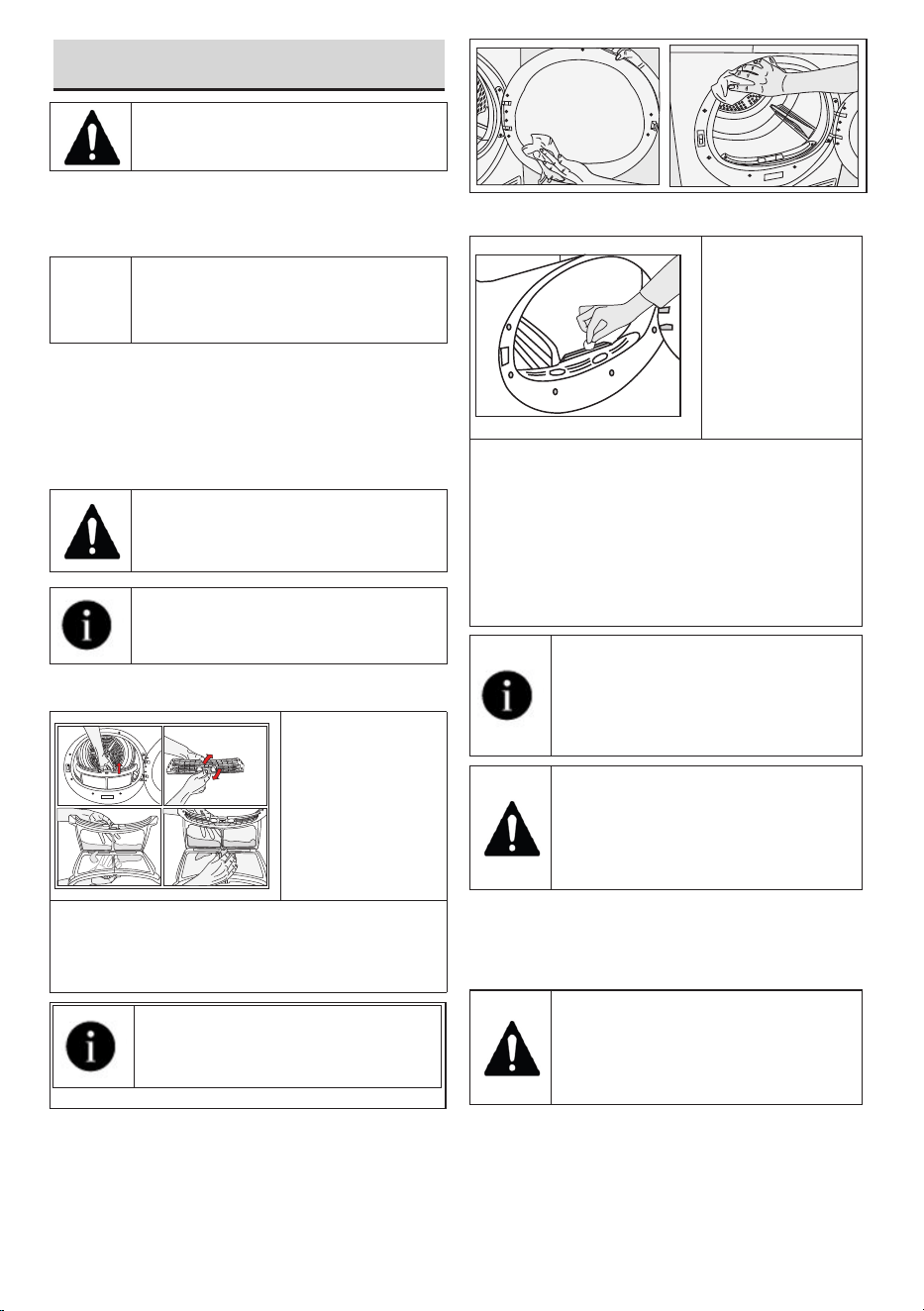
63
Asciugatrice/ Manuale utente
7 Manutenzione e pulizia
Leggere come prima cosa le
"Istruzioni di sicurezza"!
Se viene pulito regolarmente, la durata del
prodotto sarà estesa e i problemi comuni
saranno ridotti.
B
Il dispositivo deve essere scollegato
durante i lavori di manutenzione
e pulizia (pannello di controllo,
carrozzeria, ecc.).
7.1 Filtro in fibra / superficie
interna dell'oblò di caricamento
I capelli e le fibre che si separano dal bucato
durante il processo di asciugatura vengono
raccolti dal filtro in fibra.
Dopo ogni ciclo di asciugatura, pulire
il filtro in fibra e la superficie interna
dell’oblò di caricamento.
Sarà possibile pulire lo slot del filtro
con un aspirapolvere.
Per pulire il filtro in fibra:
1. Aprire lo
sportello di
caricamento.
2. Tirare il filtro in
fibra verso l’alto
per rimuoverlo e
attivarlo.
3. Pulire piume, fibre e grumi di cotone a
mano o con un panno morbido.
4. Disattivare il filtro in fibra e posizionarlo in
sede.
Pulire l'interno dello sportello di
carico e la relativa lavatrice.
7.2 Pulizia dei sensori
All'interno della
macchina sono
presenti sensori
di umidità che
rilevano se il
bucato è asciutto
o meno.
Per pulire i
sensori:
1. Aprire l’oblò di caricamento della
macchina.
2. Se la macchina è ancora calda a causa
dell'operazione di asciugatura, attendere
che si raffreddi.
3. Pulire le superfici metalliche del sensore
con un panno morbido inumidito con
aceto e poi asciugare.
Pulire le superfici metalliche del
sensore 4 volte all'anno.
Non utilizzare strumenti metallici
per pulire le superfici metalliche dei
sensori.
A causa del pericolo di incendio e di
esplosione, non utilizzare soluzioni,
materiali di pulizia o strumenti simili
per pulire i sensori!
7.3 Svuotare il serbatoio dell'acqua
Svuotare il serbatoio dell'acqua dopo ogni
sessione di asciugatura.
L'acqua condensata non è acqua
potabile!
Non togliere mai il serbatoio
dell'acqua quando il programma è
in funzione!
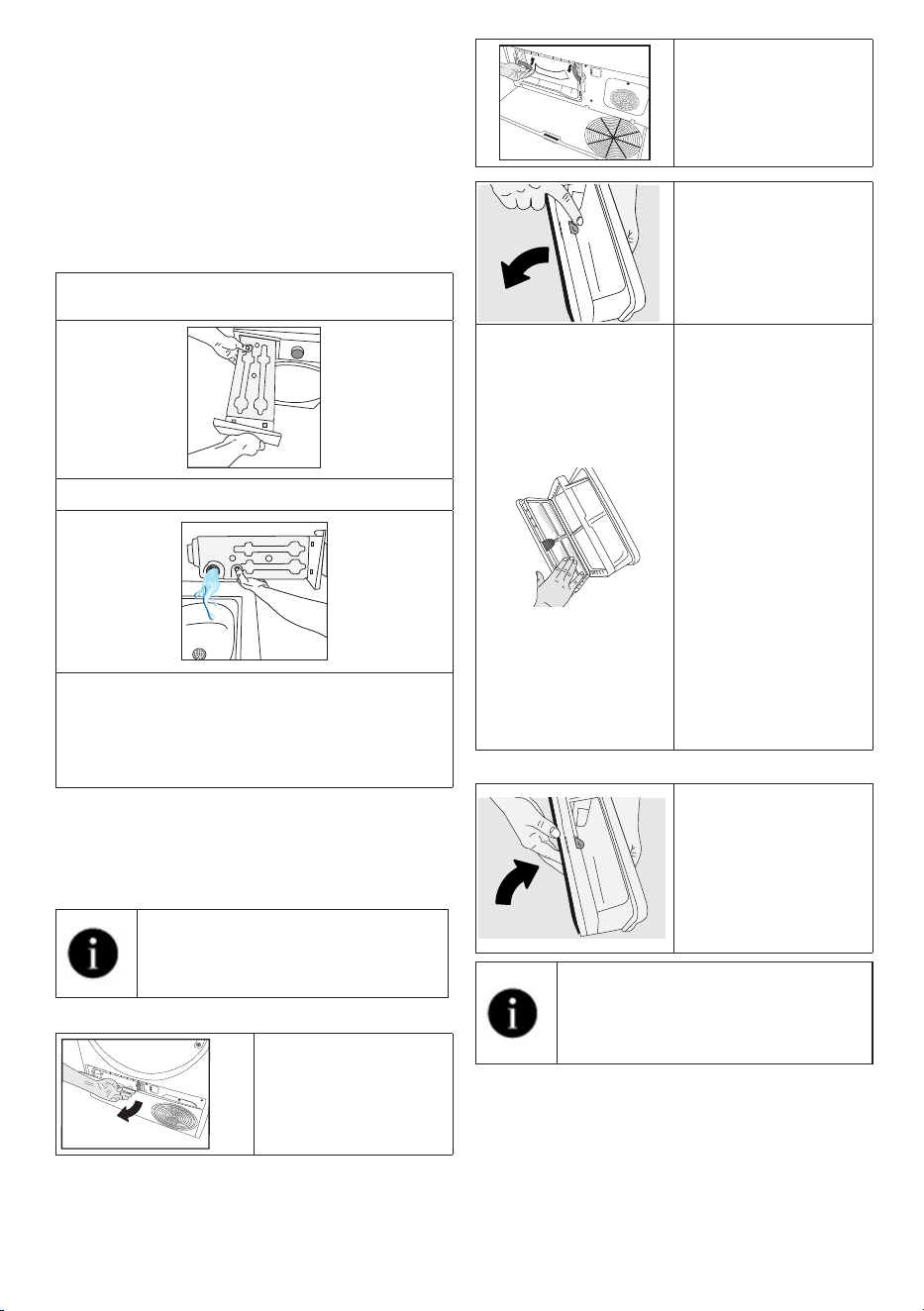
64
Asciugatrice/ Manuale utente
Se si dimentica di svuotare il serbatoio
dell'acqua, durante le successive sessioni di
asciugatura la macchina smetterà di funzionare
quando il serbatoio dell'acqua si riempie
completamente e l'icona di avviso del serbatoio
dell'acqua lampeggerà. In questo caso
svuotare il serbatoio dell'acqua e per continuare
l'operazione di asciugatura, premere il pulsante
Avvio/Standby/ Annulla.
Per scaricare il serbatoio dell'acqua:
1. Estrarre con attenzione il serbatoio
dell'acqua dal suo cassetto.
2. Svuotamento del serbatoio dell'acqua.
3. Se si accumula lanugine nell'imbuto del
serbatoio dell'acqua, rimuoverle sotto
l'acqua corrente.
4. Rimettere in posizione il serbatoio
dell'acqua.
7.4 Pulizia del cassetto filtro
La lanugine e le fibre che non sono state
catturate dal filtro in fibra vengono bloccate nel
cassetto filtro dietro allo zoccolo.
Assicurarsi di pulire il cassetto filtro
dopo ogni processo di asciugatura.
Per pulire il cassetto filtro:
Aprire lo zoccolo
tirando il relativo
pulsante.
Spostare i fermi per
aprire il coperchio del
deflettore d'aria.
Aprire il cassetto filtro
premendo il relativo
pulsante.
Pulire lanugine, fibre
e cotone impigliati
sul filtro in tessuto a
mano o con un panno
morbido.
Se sulla superficie
del filtro in tessuto si
nota uno strato che
potrebbe causare
intasamento, pulire lo
strato con le mani o
con la spazzola posta
sul deviatore dell'aria.
Sarà possibile pulire i
capelli nei filtri con un
aspirapolvere.
Chiudere la manopola
del cassetto del filtro in
modo che si blocchi.
Filtri in fibra e cassetti del filtro
sporchi comporteranno tempi
di asciugatura più lunghi e un
maggiore consumo di energia.
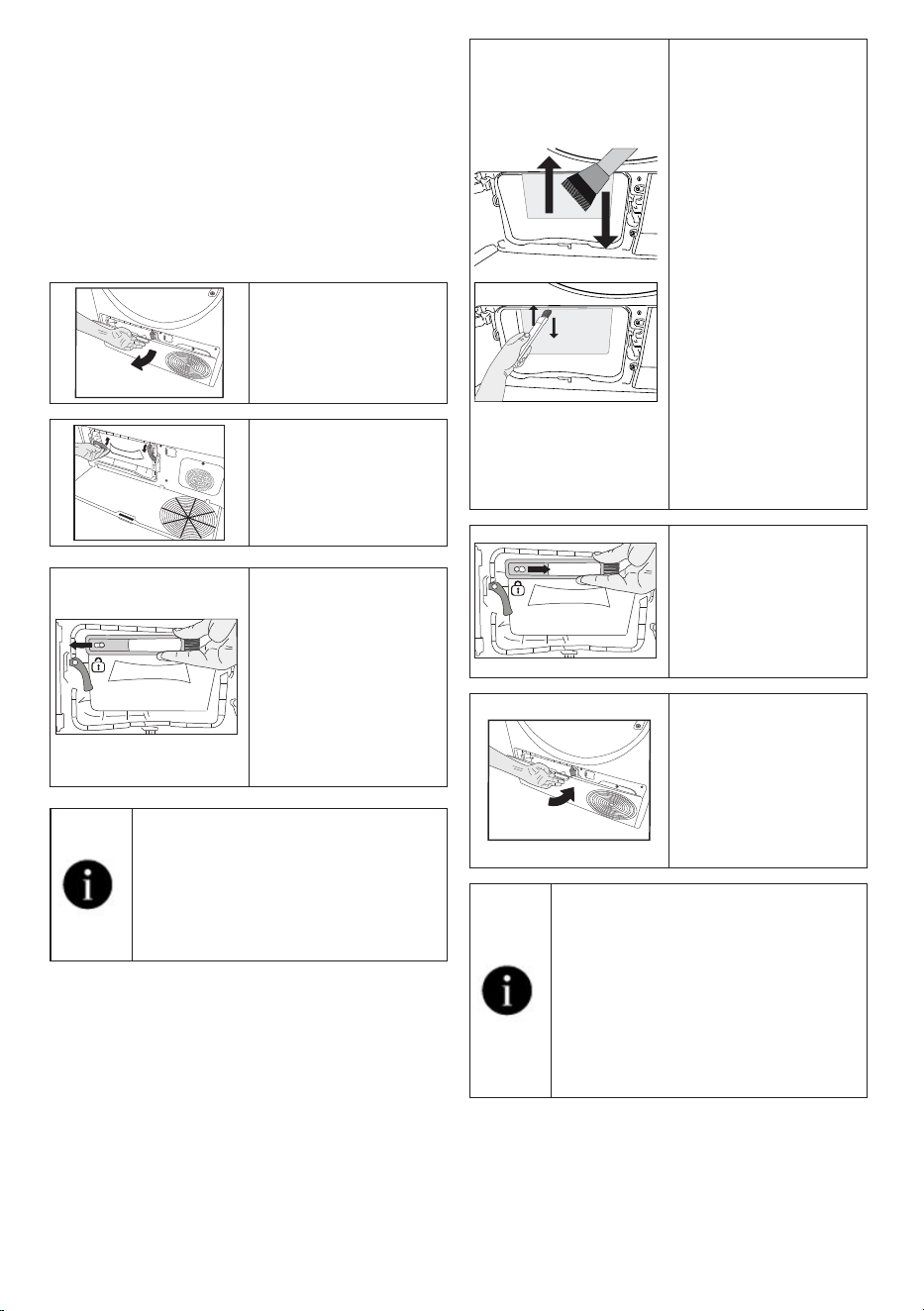
65
Asciugatrice/ Manuale utente
7.5 Pulizia del condensatore
Capelli e fibre non raccolti dal filtro in fibra
si accumuleranno sulla superficie metallica
del condensatore dietro il deflettore dell'aria.
Queste fibre devono essere pulite in modo
regolare.
Se l'icona della pulizia del condensatore
lampeggia, controllare la superficie metallica.
Eliminare eventuali pelucchi. Deve essere
controllato almeno ogni 6 mesi.
Aprire lo zoccolo
tirando il relativo
pulsante.
Spostare i fermi per
aprire il coperchio del
deflettore d'aria.
Tirare la spazzola
verso sinistra per
toglierla. Sarà
possibile usare la
spazzola di pulizia
per pulire il filtro, la
superficie metallica di
condensazione e le
fibre accumulate sulla
porta.
La spazzola per la pulizia si trova
all'interno della borsa contenente
la documentazione. Prendere la
spazzola dalla borsa contenente
la documentazione e inserirla al
suo posto sul deflettore d'aria per
riporla.
Pulire la fibra sulla
superficie metallica
del condensatore con
un panno umido o la
spazzola sul deflettore
dell'aria in direzione
su - giù. Non pulire
nella direzione sinistra
- destra poiché
danneggerebbe le
piastre metalliche del
condensatore.
Per la pulizia si
può usare anche
un’aspirapolvere
con spazzola. Se
l'aspirapolvere non è
dotato di spazzola,
non deve essere
utilizzato per la pulizia
del condensatore.
Dopo aver pulito
il filtro, lo sportello
e il condensatore,
trascinare la spazzola
verso destra e
bloccarla al suo
posto.
Dopo aver completato
il processo di pulizia,
rimettere il coperchio
del deflettore dell'aria
in posizione, spostare
i fermi per chiuderlo
e chiudere lo zoccolo
base.
Si può pulire a mano, purché si
indossino guanti protettivi. Non
cercare di pulire a mani nude. Le
alette del condensatore possono
danneggiare le mani. La pulizia da
sinistra a destra può danneggiare
le alette del condensatore.
Questo può portare a problemi di
asciugatura.
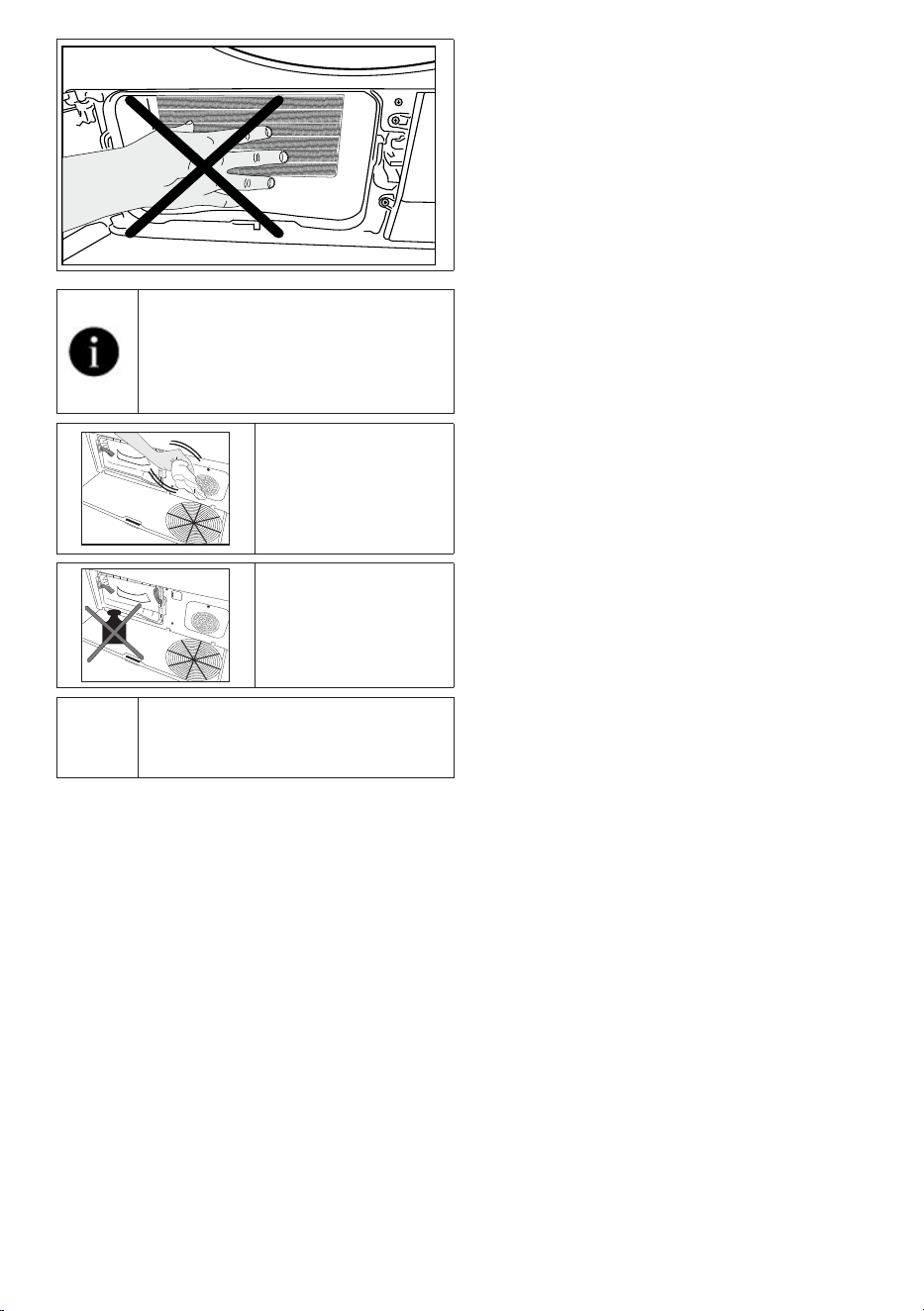
66
Asciugatrice/ Manuale utente
Quando il coperchio del deflettore
dell'aria viene rimosso, è normale
avere acqua nella sezione di plastica
davanti al condensatore.
Qualora venga visto
un accumulo di fibre
sul copriventola e
sulla tavola di fondo,
si prega di rimuoverlo
con un panno.
Non mettere un peso
sullo zoccolo quando
è aperto.
AVVISO
Non usare materiali abrasivi o lana
d'acciaio per pulire il tamburo
67
Asciugatrice/ Manuale utente
8 Guida alla risoluzione dei problemi
Il processo di asciugatura richiede troppo tempo.
I pori del filtro lanugine (filtri interni ed esterni) possono essere ostruiti. >>> Può essere pulito con l'aspirapolvere.
Il lato anteriore del condensatore potrebbe essere ostruito. >>> Pulire il lato anteriore del condensatore.
Le griglie di ventilazione davanti alla macchina potrebbero essere chiuse. >>> Rimuovere qualsiasi oggetto davanti
alle griglie di ventilazione che blocca l'aria.
La ventilazione potrebbe essere insufficiente se l'asciugatrice è installata in uno spazio ridotto. Aprire la porta o le
finestre per evitare che la temperatura dell’acqua raggiunga livelli molto elevati.
Se c'è un sensore di umidità;
Si potrebbe essere accumulato uno strato di calcare sul sensore dell’umidità. >>> Pulire il sensore dell’umidità.
La macchina potrebbe essere sovraccarica di biancheria. >>> Non sovraccaricare eccessivamente l'asciugatrice.
Il bucato potrebbe non essere stato centrifugato abbastanza. >>> Far girare la lavatrice a una velocità maggiore.
Il bucato esce umido dopo l'asciugatura.
Potrebbe non essere stato utilizzato il programma giusto per il tipo di biancheria. >>> Verificare le etichette di
manutenzione della biancheria e selezionare un programma ideale per il tipo di biancheria o utilizzare programmi più
lunghi.
I pori del filtro lanugine (filtri interni ed esterni) possono essere ostruiti. >>> Può essere pulito con l'aspirapolvere.
Il lato anteriore del condensatore potrebbe essere ostruito. >>> Pulire il lato anteriore del condensatore.
La macchina potrebbe essere sovraccarica di biancheria. >>> Non sovraccaricare eccessivamente l'asciugatrice.
Il bucato potrebbe non essere stato centrifugato abbastanza. >>> Far girare la lavatrice a una velocità maggiore.
L'asciugatrice non si accende oppure non è possibile avviare il programma. L'asciugatrice non si accende quando è
impostata.
La spina di alimentazione potrebbe non essere inserita. >>> Assicurarsi che la spina sia inserita.
L’oblò di caricamento può essere lasciato aperto. >>> Controllare che l’oblò di caricamento sia chiuso correttamente.
È possibile che il programma non sia stato impostato o che non sia stato premuto il tasto Avvio/Pausa. >>>
Controllare che il programma sia stato impostato e che non sia in posizione di Standby.
Il blocco bambini potrebbe essere attivato. >>> Disattivare il blocco bambini.
Il programma è stato interrotto senza motivo.
Forse la porta di caricamento non è stata chiusa in modo corretto. >>> Controllare che l’oblò di caricamento sia
chiuso correttamente.
Ci potrebbe essere un’interruzione dell’alimentazione. >>> Premere il pulsante Start / Standby / Cancel per avviare il
programma.
Il serbatoio dell'acqua potrebbe essere pieno. >>> Svuotare del serbatoio dell'acqua.
Il bucato si restringe, si opacizza o si rovina.
È possibile che non sia stato utilizzato il programma adatto al tipo di biancheria. Controllare le etichette di
manutenzione sugli indumenti e selezionare un programma adatto agli indumenti stessi.
Gocciola acqua dall’oblò di caricamento.
La lanugine si potrebbe essere accumulata sulle suprefici interne dell’oblò di caricamento e sulle superfici della
guarnizione dell’oblò di caricamento. >>> Pulire le superfici interne dell’oblò di caricamento e le superfici dell’oblò di
caricamento.
L’oblò di caricamento si apre da solo.
Forse la porta di caricamento non è stata chiusa in modo corretto. >>> Spingere l’oblò di caricamento fino a che non
si sente un suono di chiusura.
Il simbolo di avvertenza del serbatoio dell'acqua è acceso/lampeggiante.
Il serbatoio dell'acqua potrebbe essere pieno. >>> Svuotare del serbatoio dell'acqua.
Il tubo di scarico dell’acqua potrebbe essersi piegato. Se il prodotto è collegato direttamente allo scarico
dell'acqua di scarico, controllare il tubo flessibile di scarico dell'acqua.
L'illuminazione all'interno dell'asciugatrice non si accende. (nei modelli con lampade)
L'asciugatrice potrebbe non essere stata accesa con il pulsante On/Off. >>> Controllare che l'asciugatrice sia
accesa.
La lampada potrebbe essere rotta. >>> Contattare il Servizio Autorizzato per procedere alla sostituzione della
lampada.
L'icona o la spia Anti-Piega è accesa.
Può essere attivata la modalità Anti-Piega che impedisce al bucato nell'asciugatrice di sgualcirsi. >>> Spegnere
l'asciugatrice e togliere il bucato..
68
Asciugatrice/ Manuale utente
L'icona della pulizia del filtro in fibra è accesa
I filtri lanugine (filtro interno ed esterno) potrebbero essere sporchi. >>> Può essere pulito con l'aspirapolvere.
Nei pori del filtro lanugine si può formare uno strato che porta all'intasamento. >>> Può essere pulito con
l'aspirapolvere.
Nei pori del filtro lanugine (filtri interni ed esterni) può formarsi uno strato che provoca un intasamento.<<Può essere
pulito con l'aspirapolvere.>>
I filtri lanugine potrebbero non essere a posto. >>> Inserire i filtri interni ed esterni in posizione.
Il tessuto filtrante eco potrebbe non essere installato sulla parte in plastica e la parte anteriore del condensatore
potrebbe essersi intasata.>>>Installareil filtro eco sulla parte in plastica e posizionarlo sull'alloggiamento del filtro.
I filtri eco potrebbero non essere stati sostituiti anche se il simbolo di avvertenza è acceso. "Sostituire il proprio filtro"
La macchina emette un segnale acustico,
I filtri lanugine potrebbero non essere a posto. >>> Inserire i filtri interni ed esterni in posizione.
I filtri della macchina potrebbero non essere stati installati.>>> Installare i filtri lanugine (interni ed esterni) o il filtro
ecologico nel loro alloggiamento.
L'icona di avvertenza del condensatore lampeggia.
Il condensatore può essere intasato da fibre. >>> Pulire il lato anteriore del condensatore.
I filtri lanugine potrebbero non essere a posto. >>> Inserire i filtri interni ed esterni in posizione.
L'illuminazione all'interno dell'asciugatrice si accende. (nei modelli con lampade)
Se l'asciugatrice è collegata alla presa di corrente, si preme il pulsante On/Off e lo sportello è aperto; la luce si
accende. >>> Scollegare l'asciugatrice o portare il pulsante On/Off in posizione Off.
L'icona Wi-Fi lampeggia continuamente. (Modelli con funzione HomeWhiz)
>>> Il prodotto potrebbe non essere collegato alla rete wireless. Seguire le istruzioni per connettersi alla rete. Il
dispositivo che l'apparecchio utilizza per connettersi alla rete potrebbe essere difettoso. Controllare. L'apparecchio
potrebbe non essere connesso alla rete perché fuori dal raggio d'azione del wi-fi..
Se sullo schermo compare la scritta “F L t”, controllare i passaggi seguenti.
I filtri potrebbero essere sporchi. Pulire i filtri interni ed esterni
Nell'area dell’oblò di caricamento, se si utilizzano i doppi filtri interno ed esterno. >>> Assicurarsi che
entrambi i filtri siano installati.
Il lato anteriore del condensatore potrebbe essere sporco. >>> Aprire e controllare la zona di calcio e assicurarsi che
sia pulita.
Consultare la sezione Manutenzione e pulizia.
Gli eventuali corpi estranei devono essere rimossi dal tamburo dell’essiccatore.
Qualora il problema persista dopo aver seguito le istruzioni contenute in questa selezione,
contattare il proprio fornitore oppure un Servizio Autorizzato. Non tentare mai di riparare da
soli un prodotto malfunzionante.
Se si riscontra un problema con qualsiasi parte del tuo dispositivo, puoi richiedere una
sostituzione consultando il servizio autorizzato più vicino con il numero di modello del
dispositivo.
L›utilizzo di parti non originali può causare il malfunzionamento dell›apparecchio.
Il produttore e il distributore non sono responsabili di malfunzionamenti causati da parti non
autentiche.
9 Avviso di rinuncia
Alcuni (semplici) malfunzionamenti possono essere risolti dall'utente finale senza creare
alcun problema di sicurezza o portare a un funzionamento non sicuro, a condizione
che vengano seguite queste istruzioni. (cfr. la sezione "Voglio ripararlo da solo")
Pertanto, a parte le parti della sezione "Voglio ripararlo da solo" che gli utenti finali
possono riparare da soli, si raccomanda di far riparare l'apparecchio presso un centro
di assistenza autorizzato per evitare problemi di sicurezza e mantenere la garanzia del
prodotto Smeg.
9.1 Voglio ripararlo da solo
Le riparazioni effettuate dagli utenti finali possono includere i seguenti ricambi. Oblò di
caricamento, guarnizione della porta, maniglie della porta, meccanismo di chiusura della porta e
cerniere, filtri per lanugine, filtri dell'aria, parti periferiche in plastica, serbatoio del condensatore.
(L'elenco aggiornato dei pezzi di ricambio è disponibile sul sito https://www.smeg.com/services/
customer-service a partire dal 1° marzo 2021) Inoltre, accertarsi di eseguire le riparazioni
seguendo le istruzioni riportate sul sito https://www.smeg.com/services/customer-service per
garantire la sicurezza del prodotto e prevenire gravi lesioni. Per sicurezza, scollegare il prodotto
prima di effettuare qualsiasi riparazione. Smeg non può essere ritenuta responsabile per i problemi
di sicurezza che possono insorgere a causa di interventi o tentativi di riparazione su parti diverse
da quelle presenti nell'attuale elenco dei ricambi o reperibili all'indirizzo https://www.smeg.com/
services/customer-service ed eseguiti dagli utenti finali senza seguire le istruzioni contenute nei
manuali d'uso o reperibili all'indirizzo https://www.smeg.com/services/customer-service. In questi
casi la garanzia Smeg decade. Pertanto, consigliamo vivamente agli utenti finali di astenersi dal
riparare parti diverse da quelle specificate sopra e di rivolgersi al centro di assistenza autorizzato
quando necessario.
Questo tipo di riparazioni effettuate dagli utenti finali può causare problemi di sicurezza,
danneggiare il prodotto e provocare incendi, allagamenti, folgorazioni e lesioni gravi. Oltre a
quelle sopra elencate, le seguenti parti devono essere riparate dalla stazione autorizzata. Motore,
pompa, scheda madre, scheda motore, scheda schermo, ecc. Il produttore/venditore non può
essere ritenuto responsabile di eventuali situazioni causate da utenti finali che non si attengono
a quanto scritto sopra. Le riparazioni effettuate dagli utenti finali possono includere i seguenti
ricambi. Oblò di caricamento, guarnizione della porta, maniglie della porta, meccanismo di
chiusura della porta e cerniere, filtri per lanugine, filtri dell'aria, parti periferiche in plastica, serbatoio
del condensatore. (L'elenco aggiornato dei pezzi di ricambio è disponibile sul sito https://www.
smeg.com/services/customer-service a partire dal 1° marzo 2021) Inoltre, accertarsi di eseguire
le riparazioni seguendo le istruzioni riportate sul sito https://www.smeg.com/services/customer-
service per garantire la sicurezza del prodotto e prevenire gravi lesioni. Per sicurezza, scollegare il
prodotto prima di effettuare qualsiasi riparazione. Smeg non può essere ritenuta responsabile per i
problemi di sicurezza che possono insorgere a causa di interventi o tentativi di riparazione su parti
diverse da quelle presenti nell'attuale elenco dei ricambi o reperibili all'indirizzo https://www.smeg.
com/services/customer-service ed eseguiti dagli utenti finali senza seguire le istruzioni contenute
nei manuali d'uso o reperibili all'indirizzo https://www.smeg.com/services/customer-service.
In questi casi la garanzia Smeg decade. Pertanto, consigliamo vivamente agli utenti finali di
astenersi dal riparare parti diverse da quelle specificate sopra e di rivolgersi al centro di assistenza
autorizzato quando necessario. Questo tipo di riparazioni effettuate dagli utenti finali può causare
problemi di sicurezza, danneggiare il prodotto e provocare incendi, allagamenti, folgorazioni e
lesioni gravi. Oltre a quelle sopra elencate, le seguenti parti devono essere riparate dalla stazione
autorizzata. Motore, pompa, scheda madre, scheda motore, scheda schermo, ecc. Il produttore/
venditore non può essere ritenuto responsabile di eventuali situazioni causate da utenti finali che
non si attengono a quanto scritto sopra.


SCATOLA ESTERNA
(CARTONE)
RESISTENZA FILM (PE) IMBALLAGGI INTERNI
RIGGIA (PP)
CARTONE
PAP 20
RACCOLTA CARTA
Verifica le disposizioni del tuo Comune
FILM TERMORETRAIBILE
LDPE 4
RACCOLTA PLASTICA
Verifica le disposizioni del tuo Comune
POLISTIRENE ESPANSO
PS 6
RIGGIA
PP 5
PAP 21
SEPARATORE CARTONATO
PAP 20
(Se disponibile)
CARTONATO INTERNI
PAP 21
PASTA DI CELLULOSA
PAP 21
HDPE 4
PLURIBALL
LDPE 4
BUSTA
HDPE 4
BUSTA
PP 5
RIGGIA
PET 1
NASTRO ADESIVO
NASTRO ADESIVO
PP 5
PELLICOLA PROTETTIVA
PELLICOLA PROTETTIVA
PVC 3
PELLICOLA PROTETTIVA
LDPE 4
FOGLIO IN ESPANSO
FOGLIO IN ESPANSO
PE-PU 7
LEGNO
FOR 50
RACCOLTA DIFFERENZIATA
Verifica le disposizioni del tuo Comune
(Se disponibile)
(Se disponibile)
(Se disponibile)
(Se disponibile)
CARTONE
FILM TERMORETRAIBILE
RACCOLTA CARTA
Verifica le disposizioni del tuo Comune
RACCOLTA CARTA
Verifica le disposizioni del tuo Comune
RACCOLTA CARTA
Verifica le disposizioni del tuo Comune
RACCOLTA CARTA
Verifica le disposizioni del tuo Comune
RACCOLTA PLASTICA
Verifica le disposizioni del tuo Comune
RACCOLTA PLASTICA
Verifica le disposizioni del tuo Comune
RACCOLTA PLASTICA
Verifica le disposizioni del tuo Comune
RACCOLTA PLASTICA
Verifica le disposizioni del tuo Comune
RACCOLTA PLASTICA
Verifica le disposizioni del tuo Comune
RACCOLTA PLASTICA
Verifica le disposizioni del tuo Comune
RACCOLTA PLASTICA
Verifica le disposizioni del tuo Comune
RACCOLTA PLASTICA
Verifica le disposizioni del tuo Comune
RACCOLTA PLASTICA
Verifica le disposizioni del tuo Comune
RACCOLTA PLASTICA
Verifica le disposizioni del tuo Comune
RACCOLTA PLASTICA
Verifica le disposizioni del tuo Comune
BANCALE LI LEGNO
Informazioni per lo smaltimento dell’imballaggio