OWNER'S MANUAL
DRYER
Before beginning installation, read these instructions
carefully. This will simplify installation and ensure that the
product is installed correctly and safely. Leave these
instructions near the product after installation for future
reference.
ENGLISH
RHX7010T*B
MFL71983276
Rev.00_062725
www.lg.com
Copyright © 2025 LG Electronics. All Rights Reserved
Scan the QR code to see the manual.

TABLE OF CONTENTS
This manual may contain images or
content that may be different from the
model you purchased.
This manual is subject to revision by the
manufacturer.
SAFETY INSTRUCTIONS
READ ALL INSTRUCTIONS BEFORE USE .................................................... 5
Safety Messages...................................................................................................5
WARNING .................................................................................................... 6
Technical Safety....................................................................................................6
Maximum Capacity ..............................................................................................7
Installation ............................................................................................................8
Operation ..............................................................................................................9
Maintenance .......................................................................................................10
Disposal ...............................................................................................................10
CARING FOR THE ENVIRONMENT
Environmental and Economical Tips...................................................... 11
Energy consumption..........................................................................................11
Disposal of Your Old Appliance ........................................................................12
Disposal of the Packaging Material .................................................................12
This dryer contains refrigerant gases .............................................................12
OPERATION
Control Panel ............................................................................................ 13
Control Panel Features......................................................................................13
Basic Operation ........................................................................................ 16
Using the Appliance...........................................................................................16
Preparing the Clothes.............................................................................. 19
Checking the Clothes before Loading .............................................................19
Sorting the Clothes ............................................................................................19
Checking the Fabric Care Label ........................................................................20
Programme Table..................................................................................... 21
Drying Programme ............................................................................................21
Selectable Drying Options.................................................................................26
Extra Options and Functions .................................................................. 28
Customizing a Drying Programme ..................................................................28
Using Extra Options...........................................................................................28

Using Various Settings.......................................................................................30
Using Dryer Rack................................................................................................31
Auto Condenser Cleaning .................................................................................33
SMART FUNCTIONS
LG ThinQ Application ............................................................................... 34
LG ThinQ Application Features.........................................................................34
Installing LG ThinQ App and Connecting an LG Appliance...........................35
Activating Network Connection........................................................................36
Using the Appliance Remotely .........................................................................36
Deactivating Network Connection ...................................................................37
Radio Equipment Specifications.......................................................................37
Effect of Network Activation on Power Consumption ...................................37
Declaration of Conformity.................................................................................37
Declaration of Conformity for UK ....................................................................38
Smart Diagnosis ....................................................................................... 39
Using LG ThinQ to Diagnose Issues.................................................................39
Using Audible Diagnosis to Diagnose Issues .................................................39
MAINTENANCE
Cleaning after Every Dry ......................................................................... 40
Cleaning the Lint Filters.....................................................................................40
Emptying the Water Container.........................................................................42
Ventilating inside the drum ..............................................................................43
Cleaning the Appliance Periodically ...................................................... 44
Wiping the Moisture Sensor .............................................................................44
Using Drum Clean Feature................................................................................44
Using Condenser Clean Feature.......................................................................45
Cleaning the Condenser....................................................................................46
TROUBLESHOOTING
Before Calling for Service ........................................................................ 48
Error Messages...................................................................................................48
Operation ............................................................................................................49
Performance .......................................................................................................50
Odours.................................................................................................................53
Wi-Fi .....................................................................................................................54
Customer Care and Service...............................................................................55
INSTALLATION
Installation Location Requirements ...................................................... 56

Installation Location ..........................................................................................56
Ventilation ...........................................................................................................56
Ambient Temperature .......................................................................................57
Electrical Connection .........................................................................................57
Leveling the Appliance ............................................................................ 58
Checking Leveling ..............................................................................................58
Adjusting and Leveling the Appliance .............................................................58
Stacking Instructions............................................................................... 59
Stacking Kit .........................................................................................................59
Installation Procedure .......................................................................................59
Installing the Optional Drain Hose ..................................................................60
APPENDIX
Names of Parts and Accessories............................................................. 62
Front View ...........................................................................................................62
Available Accessories.........................................................................................63
Technical Data .......................................................................................... 64
Consumption Data.............................................................................................64
Note for Test Institutes......................................................................................65
Specifications......................................................................................................65
Additional Information............................................................................ 67
Information on LED Lighting ............................................................................67
Open Source Software Notice Information ....................................................67
5
READ ALL INSTRUCTIONS BEFORE USE
SAFETY INST RUCTIONS
READ ALL IN STRUCTIONS B EFORE USE
The following safety guidelines are intended to prevent unforeseen
risks or damage from unsafe or incorrect operation of the appliance.
The guidelines are separated into ‘WARNING’ and ‘CAUTION’ as
described below.
Safety Messages
This symbol is displayed to indicate matters and operations
that can cause risks. Read the part with this symbol carefully
and follow the instructions in order to avoid risks.
WARNING
This indicates that the failure to follow the instructions can
cause serious injury or death.
CAUTION
This indicates that the failure to follow the instructions can
cause the minor injury or damage to the appliance.
6
WARNING
WARNING
WARNING
To reduce the risk of explosion, fire, death, electric shock, injury or
scalding to persons when using this product, follow basic precautions,
including the following.
Technical Safety
• In the appliance enclosure or in the built-in structure, keep
ventilation openings clear of obstruction. If not, it can result in a fire.
• This appliance contains R290, a refrigerant that is environmentally
friendly but flammable. Do not damage the refrigerant circuit, keep
an open frame and ignition sources away from the appliance.
• This appliance can be used by children aged from 8 years and above
and persons with reduced physical, sensory or mental capabilities or
lack of experience and knowledge if they have been given supervision
or instruction concerning use of the appliance in a safe way and
understand the hazards involved. Children shall not play with the
appliance. Cleaning and user maintenance shall not be made by
children without supervision.
• Children of less than 3 years should be kept away unless continuously
supervised.
• Do not dry unwashed items in the appliance.
• Fabric softeners, or similar products, should be used as specified by
the fabric softener instructions.
• Remove all objects from pockets such as lighters and matches.
• Never stop the appliance before the end of the drying cycle unless all
items are quickly removed and spread out so that the heat is
dissipated.
WARNING - To avoid a fire
Risk of Fire and Flammable Materials

7
WARNING
• The appliance is not to be used if industrial chemicals have been used
for cleaning.
• Items that have been soiled with substances such as cooking oil,
vegetable oil, acetone, alcohol, petroleum, kerosene, spot removers,
turpentine, waxes and wax removers should be washed in hot water
with an extra amount of detergent before being dried in the
appliance.
• Do not drink the condensed water. Failure to do so may result in food-
borne illnesses.
• If the supply cord is damaged, it must be replaced by the
manufacturer or its service agents or similarly qualified person in
order to avoid a hazard.
• The lint filters must be cleaned frequently.
• Lint must not to be allowed to accumulate around the appliance.
• Do not spray dry cleaning detergent directly onto the appliance or
use the appliance to dry clothes left with dry cleaning detergent.
• Do not dry clothes stained with oil substances. Oil substances
(including edible oils) stained on clothes cannot be completely
removed even after washing with water.
• The appliance must not be supplied through an external switching
device, such as a timer, or connected to a circuit that is regularly
switched on and off by a utility.
• Remove clothes from the appliance immediately when drying is
complete or the power is turned off during the drying process.
Leaving clothes that have been dried in the appliance unattended
could result in fire. Remove clothes immediately after drying, and
then hang or lay the clothes flat to cool.
• This appliance is intended to be used in household only.
Maximum Capacity
• The maximum capacity in some cycles for clothes to be dried is
10 kg
(Dry)
.

8
WARNING
• The recommended maximum capacity for each drying programme
may differ. To get good dry results, please refer to
Programme Table
in
OPERATION
chapter for further details.
Installation
• Make sure the appliance is properly installed, grounded, and
adjusted by qualified service personnel according to the installation
instructions.
• Never attempt to operate the appliance if it is damaged,
malfunctioning, partially disassembled, or has missing or broken
parts, including a damaged cord or plug.
• This appliance should only be transported by two or more people
holding the appliance securely.
• Do not install the appliance in a damp and dusty place. Do not install
or store the appliance in any outdoor area, or any area that is subject
to weathering conditions such as direct sunlight, wind, rain, or
temperatures below freezing.
• Tighten the drain hose to avoid separation.
• If the power cord is damaged or the hole of the socket outlet is loose,
do not use the power cord and contact an authorized service centre.
• Do not plug multiple socket outlets, an extension power cable or
adapter with this appliance.
• Items such as foam rubber (latex foam), shower caps, waterproof
textiles, rubber backed articles and clothes or pillows fitted with foam
rubber pads should not be dried in the appliance.
• This appliance must not be installed behind a lockable door, a sliding
door or a door with a hinge on the opposite side to that of the
appliance, in such a way that a full opening of the appliance door is
restricted.
• This appliance must be grounded. In the event of malfunction or
breakdown, grounding will reduce the risk of electric shock by
providing a path of least resistance for electric current.

9
WARNING
• This appliance is equipped with a power cord having an equipment-
grounding conductor and a grounding power plug. The power plug
must be plugged into an appropriate socket outlet that is installed
and grounded in accordance with all local codes and ordinances.
• Improper connection of the equipment-grounding conductor can
result in risk of electric shock. Check with a qualified electrician or
service personnel if you are in doubt as to whether the appliance is
properly grounded.
• Do not modify the power plug provided with the appliance. If it does
not fit the outlet, have a proper outlet installed by a qualified
electrician.
Operation
• Do not attempt to separate any panels or disassemble the appliance.
Do not apply any sharp objects to the control panel in order to
operate the appliance.
• Do not repair or replace any part of the appliance yourself. All repairs
and servicing must be performed by qualified service personnel
unless specifically recommended in this Owner’s Manual. Use only
authorized factory parts.
• Keep the area underneath and around the appliance free from
combustible materials such as lint, paper, rags, chemicals, etc.
• Do not put pets or other animals into the appliance.
• Do not leave the appliance door open. Children may hang on the door
or crawl inside the appliance, causing damage or injury.
• Never reach into the appliance while it is operating. Wait until the
drum has completely stopped.
• Do not put in, wash or dry articles that have been cleaned in, washed
in, soaked in, or spotted with combustible or explosive substances
(such as wax, oil, paint, gasoline, degreasers, drycleaning solvents,
kerosene, vegetable oil, cooking oil, etc.). Improper use can cause fire
or explosion.

10
WARNING
• In case of flood, disconnect the power plug and contact the LG
Electronics customer information centre.
• Do not push down on the appliance door when it is open.
• Do not use flammable gas and combustible substances (benzene,
gasoline, thinner, petroleum, alcohol, etc.) near the appliance.
• If the drain hose or inlet hose is frozen during winter, thaw it out
before using the appliance.
• Keep all washing detergents, softener and bleach away from
children.
• Do not touch the power plug or the appliance controls with wet
hands.
• Do not bend the power cable excessively or place a heavy object on it.
Maintenance
• Remove any moisture or dust from the power plug before securely
plugging it into an outlet.
• Disconnect the appliance from the power supply before cleaning the
appliance. Setting the controls to the OFF or stand by position does
not disconnect this appliance from the power supply.
• Never unplug the appliance by pulling on the power cable. Always
grip the power plug firmly and pull straight out from the outlet.
• Do not spray water inside or outside the appliance to clean it.
Disposal
• Before discarding an old appliance, unplug it and cut off the power
cable directly behind the appliance to prevent misuse.
• Dispose of all packaging materials (such as plastic bags and
styrofoam) away from children. The packaging materials can cause
suffocation.
• Remove the door before disposing of or discarding this appliance to
avoid the danger of children or small animals getting trapped inside.

11
Environmental and Economical Tips
CARING FOR THE ENVIRONMENT
Environmental and Economical Tips
Energy consumption
• The appliance performs best at a room temperature of 23 ℃.
• A high atmospheric temperature and a small room may both increase
drying time as well as energy consumption.
• Evenly loading laundry up to the capacity indicated by the
manufacturer for the respective programmes will contribute to
energy savings.
• Do not load soaking wet clothes into the appliance. It will cause an
increasing of drying time and energy consumption. Make sure that
the clothes are spun thoroughly before loading.
• If the clothes are not spun at a high speed during washing, energy
consumption and drying times will increase. Large bed sheets or quilt
covers may not dry evenly due to uneven airflow should they become
rolled up. They may require removal and reloading mid cycle to
ensure proper drying.
• Open the door and ensure the lint filter is clean. When the filter is full
with lint, drying times will be longer than usual.
12
Environmental and Economical Tips
Disposal of Your Old Appliance
Disposal of the Packaging Material
• Dispose of the packaging waste according to recycling symbols of
material types. Put the packaging waste in relevant containers to
recycle it.
This dryer contains refrigerant gases
R290 (GWP: 3): 0.145 kg Hermetically sealed.
• This crossed-out wheeled bin symbol indicates that waste
electrical and electronic products (WEEE) should be
disposed of separately from the municipal waste stream.
• Old electrical products can contain hazardous substances
so correct disposal of your old appliance will help prevent
potential negative consequences for the environment and
human health. Your old appliance may contain reusable
parts that could be used to repair other products, and
other valuable materials that can be recycled to conserve
limited resources.
• You can take your appliance either to the shop where you
purchased the product, or contact your local government
waste office for details of your nearest authorised WEEE
collection point. For the most up to date information for
your country please see www.lg.com/global/recycling.
13
Control Panel
OPERATION
Control Panel
Control Panel Features
Description
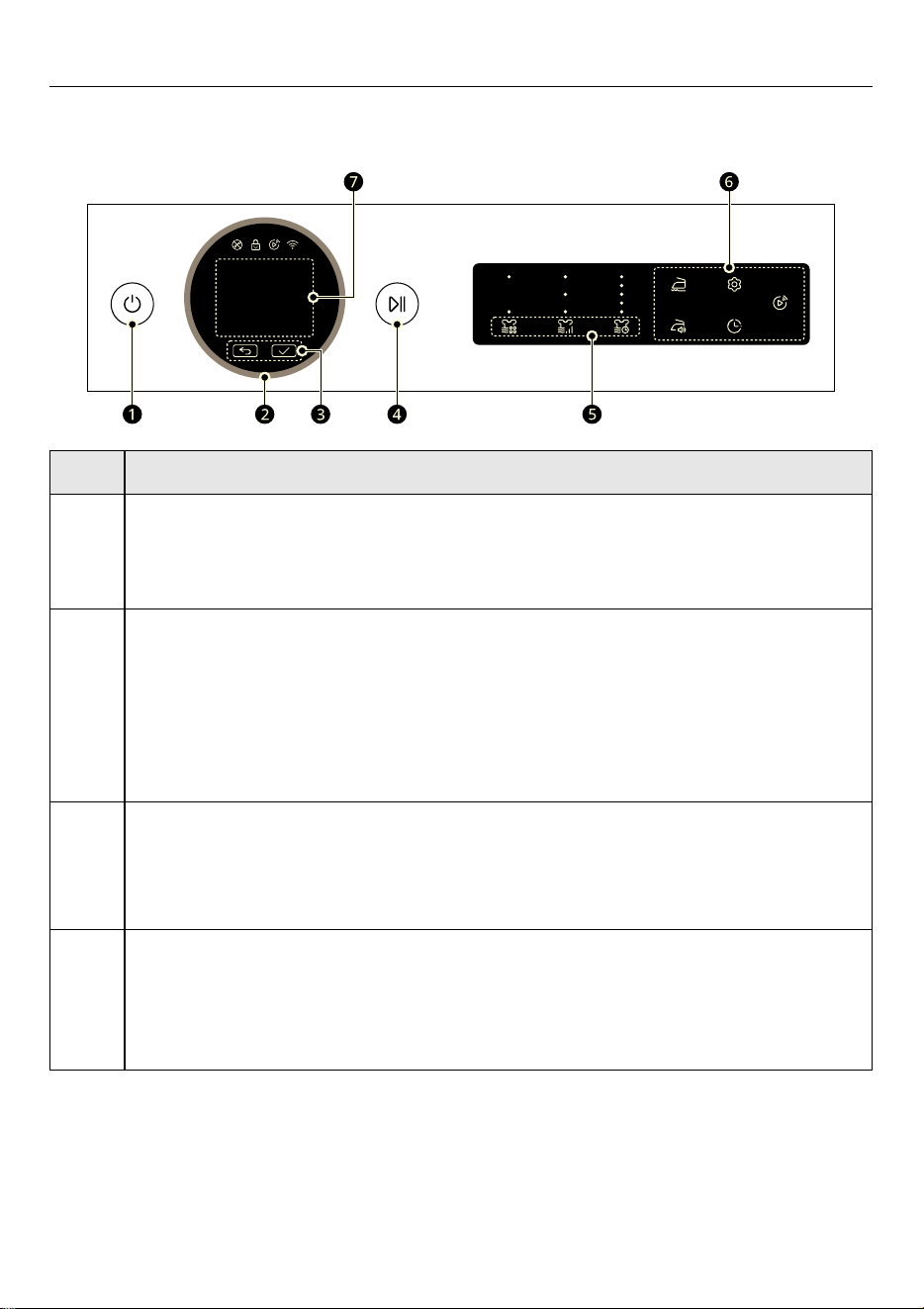
a
Power
On/Off Button
• Press the
Power
button to turn power on and off.
• Press the
Power
button to cancel the
Delay End
function.
b
Programme Selector
• Turn this knob to select the desired programme or option.
• Once the desired programme has been selected, the standard presets
will appear in the display. These settings can be adjusted using the
Programme Modifier Buttons
at any time before starting the
programme.
c
N
&
8
Buttons
• Press the
N
button to go to the previous screen.
• Press the
8
button to select a menu item or save the information.
d
Start/Pause
Button
• Press the
Start/Pause
button to start or pause a dry programme.
• When in pause, the power is turned off automatically after a certain time
for safety reasons.
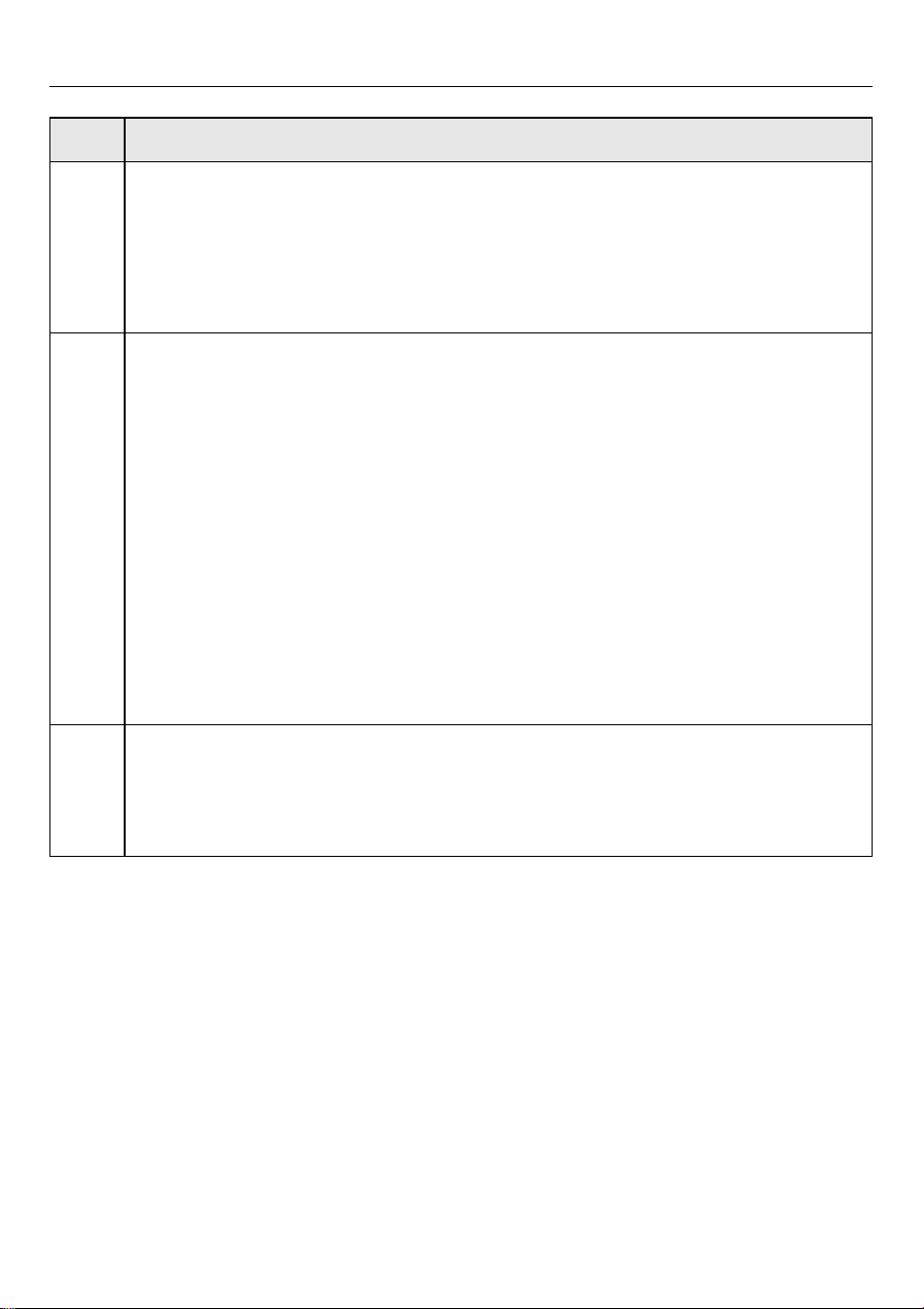
14
Control Panel
e
Customizing Drying Programme Buttons
Use these buttons to adjust the
É
Dry Mode
,
Ë
Dry Level
or
Ê
Dry Time
settings for the selected programme.
• The current settings are shown in the display.
• Press the button for that option to select other settings.
f
Option and Extra Functions Buttons
• Use these buttons to select the desired options for the selected
programme. Not all options are available in each programme.
• To use the extra functions, press the corresponding button. The
corresponding symbol lights up in the display.
Ó
Anti Crease,
Õ
Damp Alert,
Å
Delay End,
ε
Settings
• In order to use this function, refer to
Extra Options and Functions
.
Â
Remote Start
• With the
LG ThinQ
app, you can use a smartphone to control your
appliance remotely.
• In order to use this function, refer to
SMART FUNCTIONS
.
g
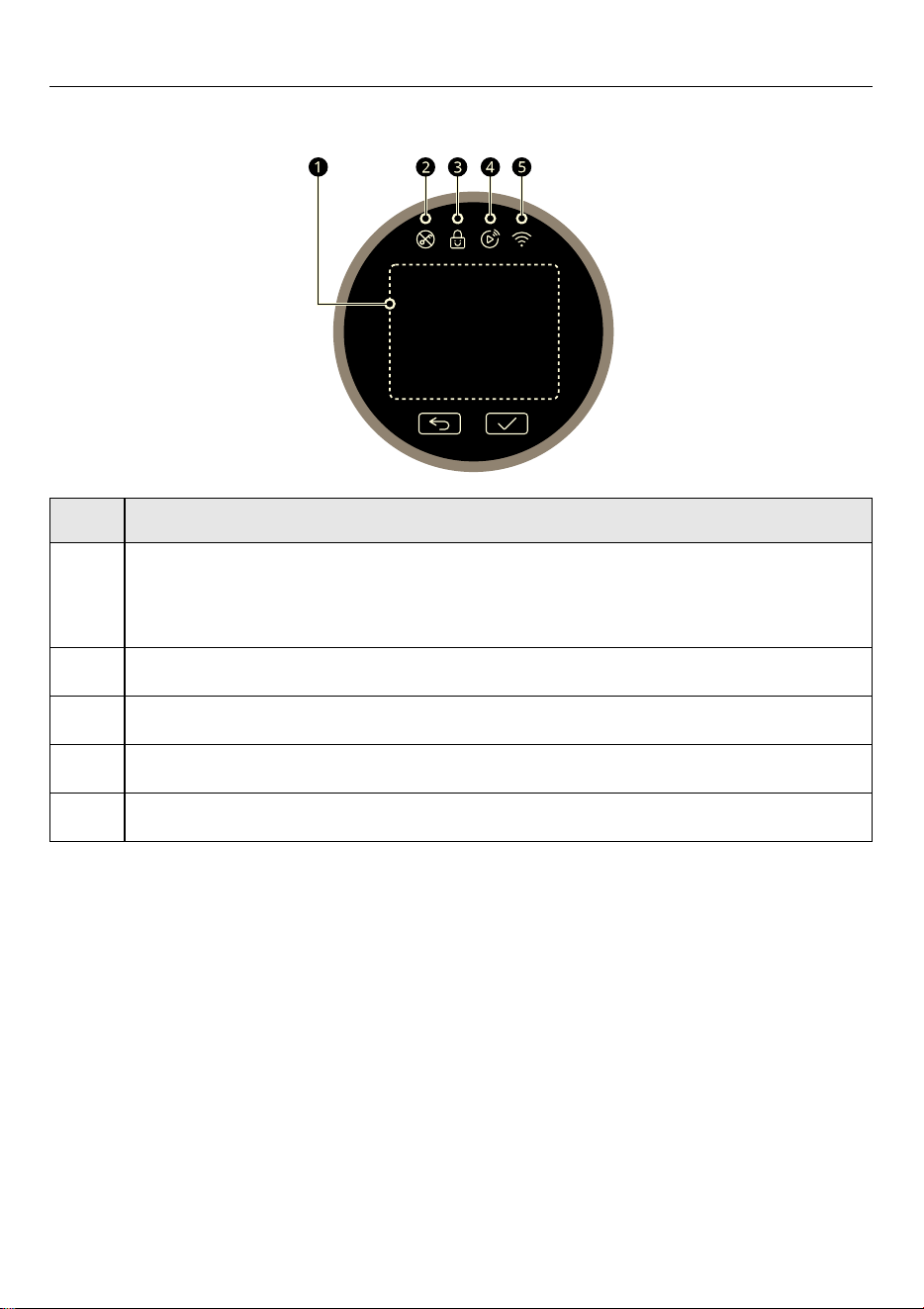
Time and Status Display
• The display shows the settings, estimated remaining time, options, and
status messages. When the appliance is turned on, the default settings in
the display will illuminate.
Description
15
Control Panel
Time and Status Display
Description
a
Status Display
• The display shows the settings, estimated time remaining, options, and
status messages.
b
Ã
lights up when the programme starts and the door is locked.
c
Á
lights up when the
Child Lock
feature is activated.
d
Â
lights up when the
Remote Start
feature is activated.
e
Ç
lights up when the appliance is connected to Wi-Fi network at home.
16
Basic Operation
Basic Operation
Using the Appliance
Open the door between loads the first
few times you use the appliance to allow
any odours from the interior of the
appliance to disperse.
Children must be supervised so that they
do not climb inside the drum.
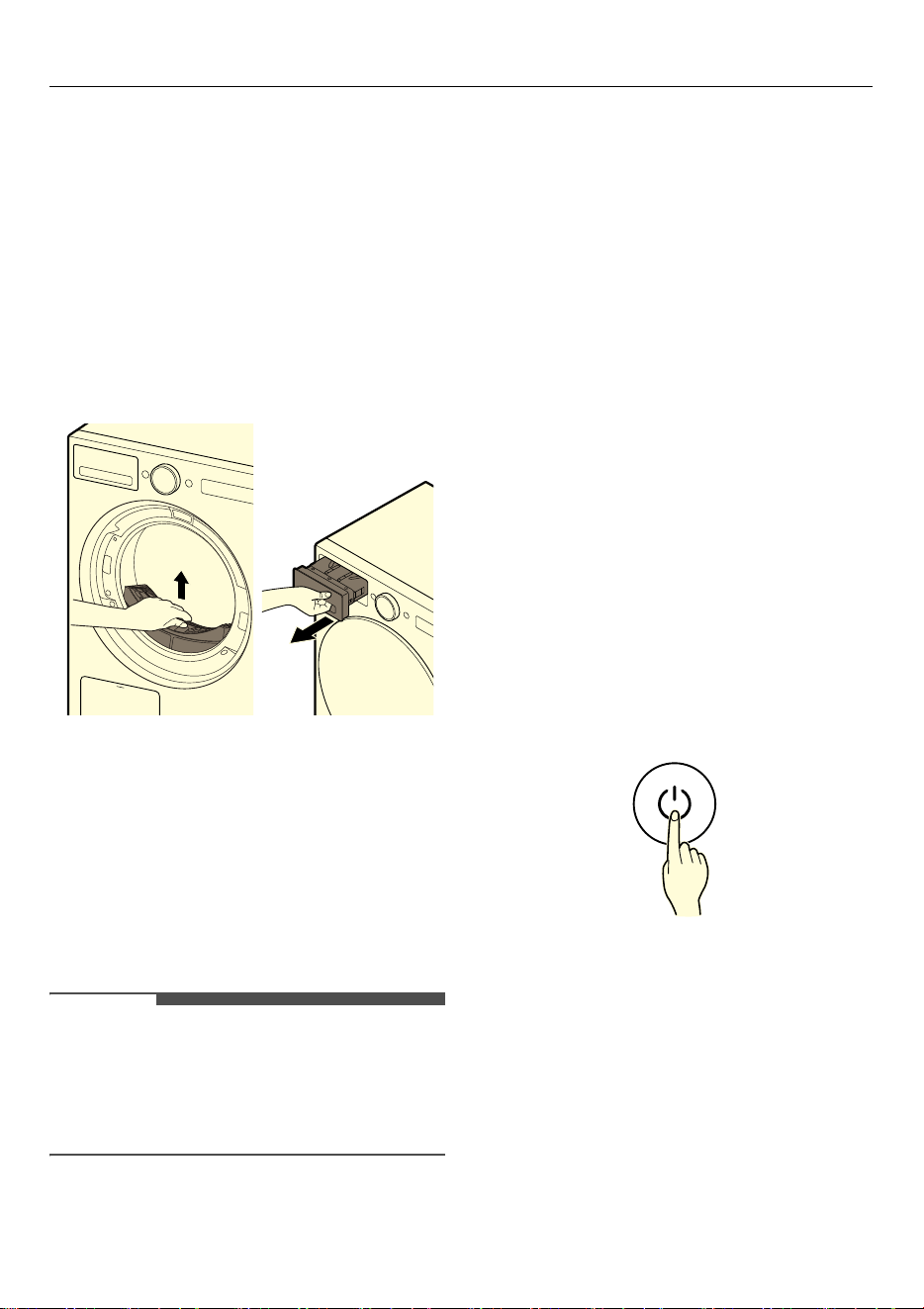
1
Ensure the lint filter and water
container are clean.
• Open the door and ensure the lint
filter is clean. When the filter is full
with lint, drying times will be longer
than usual.
• Pull out the water container and
empty the condensed water. When
the water container is full, the
appliance may stop during the
cycle.
NOTE
• In some instance, LCD window may
display empty water to inform you that
the water container is full. If this
occurs, empty the water container.
2
Place the clothes into the drum after
sorting and close the door.
• Push the clothes deep into the
drum so that the clothes keeps
away from the door seal. When the
clothes get stuck between the door
and seal, they may get damaged
while drying.
• The clothes should be sorted by
fabric types and dryness level.
• All strings and attached belts of
clothes should be well tied and
fixed before being put into the
drum.
3
Press the
Power
button to turn the
appliance on.
• Depending on the models, the
Power
button may light up to
indicate that the appliance is ready
for dry.
17
Basic Operation
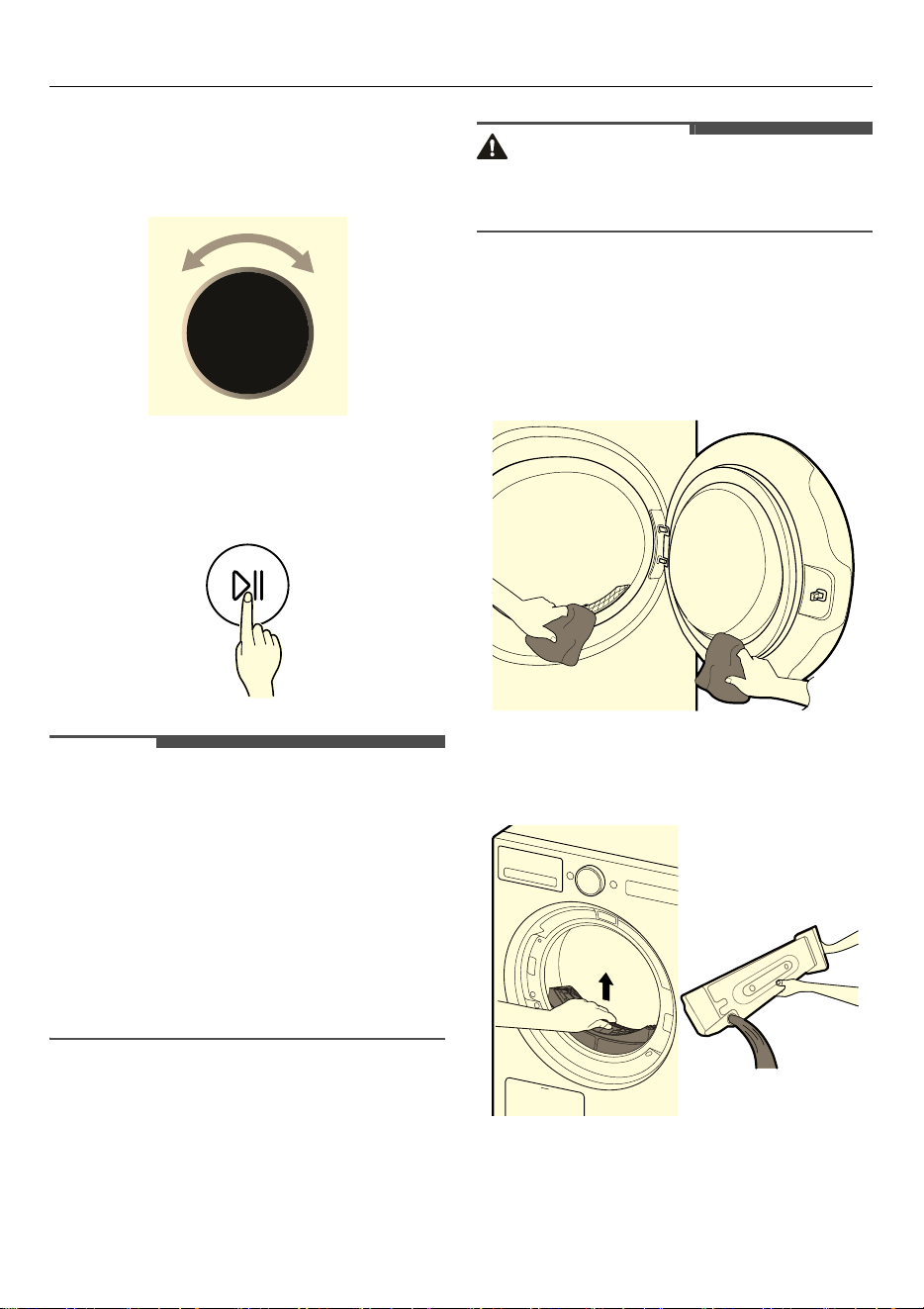
4
Choose a drying programme by
turning the programme selector
knob.
5
Press the
Start/Pause
button to start
the drying programme.
NOTE
• The appliance washes lint, which
builds up onto the surface of the
condenser, automatically using water
that is condensed from the clothes
during operation.
• The frequency of cleaning condenser
may vary depending on the size and
the initial moisture amount of the
clothes.
6
After the drying programme has
finished, open the door and unload
the clothes.
CAUTION
• Be carefull! The drum inside may still
be hot.
7
Clean the lint around the door glass,
rubber packing, and filter.
• Wipe clean with a damp cloth or wet
tissue.
8
Clean the lint filter and empty the
water container.
9
To help reduce odours from forming,
the dryer’s door can be left open or
18
Basic Operation
slightly ajar for a short period of time
if possible to help ventilate the drum
after use.
WARNING
• For safety reasons, do not allow
children or animals to enter the
appliance. It may cause damage or
injury.
NOTE
• The final part of a tumble dry cycle
occurs without heat (cool down cycle)
to ensure that the clothes are left at a
temperature that ensures the clothes
will not be damaged.
• A high atmospheric temperature and a
small room may both increase drying
time as well as energy consumption.
19
Preparing the Clothes
Preparin g the Clothes
NOTE
• For the best drying performance and most efficient energy usage, do not overload
the appliance.
Checking the Clothes
before Loading
CAUTION
• Check that the clothes are not stuck
between appliance and door, or the
clothes may get damaged while
drying.
• Observe the maximum load capacity
on the programme table for the
relevant drying programme to get
optimum drying results. Overloading
gives a poor drying result and causes
unnecessary creasing.
• Do not load soaking wet clothes into
the appliance. Doing so will increase
the drying time and energy
consumption. Make sure that the
clothes are spun thoroughly in the
washer before loading them in the
dryer.
• A mixed fabric load can cause the
drying time to be extended and the
time remaining in the display to pause
during active drying until the actual
time remaining matches the time
displayed.
• Make sure to empty all pockets. Items
such as nails, hair clips, matches, pens,
coins and keys can damage both your
appliance and clothes.
• Remove loose belts and close zippers,
hooks and strings to make sure that
these items do not snag other clothes.
Sorting the Clothes
Clothes have their own fabric care labels,
so drying according to the fabric care
label is recommended.
Sort the clothes into size and type of
fabric and then prepare the clothes
according to the symbols on the fabric
care labels.
Woollens
• Dry woollens on the
Wool
programme.
Be sure to follow fabric care label
symbols first. Wool may not be
completely dried from the cycle, so do
not repeat drying. Pull woollens to
their original shape and dry them flat.
Woven and Loopknit Materials
• Some woven and loopknit materials
may shrink, depending on quality.
No-Iron and Synthetics
• Do not overload the appliance. Take
out no-iron items as soon as the
appliance stops to reduce creases.
Baby Clothes and Nightgowns
• Always check fabric care labels.
20
Preparing the Clothes
Rubber and Plastics
• Do not dry any items made from or
containing rubber or plastics such as:
- Aprons, Bibs and Chair Covers
- Curtains and Tablecloths
- Bath Mats
Fiberglass
• Do not dry fiberglass items in the
appliance. Glass particles left in the
appliance may be subsequently picked
up by your clothes in later cycles.
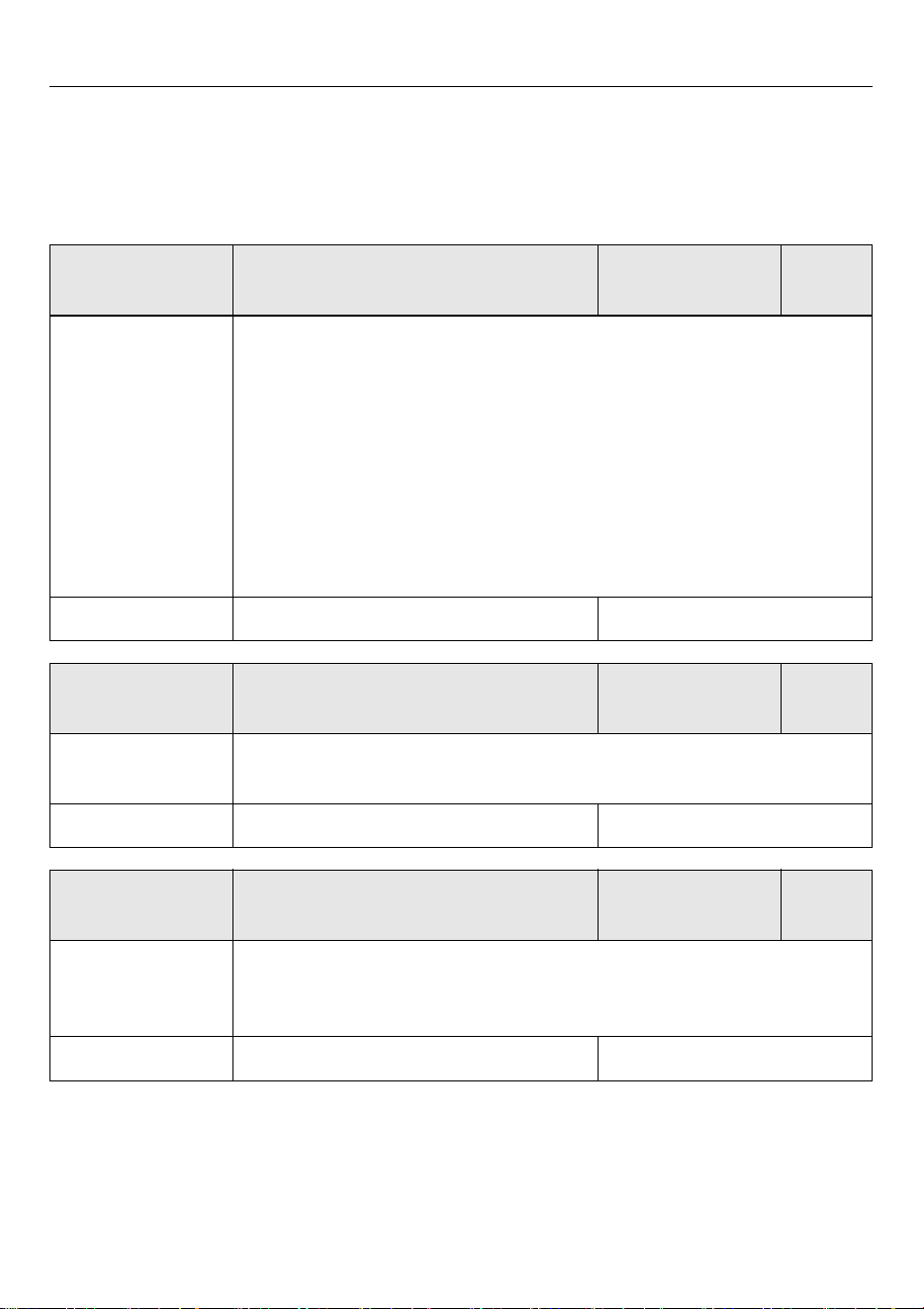
Checking the Fabric Care
Label
The symbols on the fabric care label tell
you about the fabric content of your
clothes and how they should be dried.
Symbol Description
Dry
Tumble Dry
Permanent Press /
Crease Resistant
Gentle / Delicate
Do not Tumble Dry
Do not Dry
High Heat
Medium Heat
Low Heat
No Heat / Air
Line Dry / Hang to dry
Drip Dry
Dry Flat
In the Shade
Symbol Description
21
Programme Table
Programme Table
Drying Programme
Default Drying Programme
These programmes are in the initial programme list.
Programme AI Dry
Max. Load
Capacity
5 kg
Description
This programme optimizes drying times and temperatures by
detecting the laundry’s characteristics.
• When the characteristics of the dry material are detected, the
drying time may either increase or decrease.
• The drying degree may vary depending on the type and
thickness of the fabric and the installation environment. Some
fabrics may feel damp when cotton and soft synthetics are
mixed.
• When drying a duvet or blanket, use the
Duvet
programme.
Dry Level
Default :
Cupboard
Not adjustable
Programme Cotton
Max. Load
Capacity
10 kg
Description
Use for drying all normal items such as cotton, linen, shirts,
jeans or mixed loads, except delicate fabrics such as wool or silk.
Dry Level
Default :
Cupboard
Available :
All
Programme
Eco
R
Max. Load
Capacity
10 kg
Description
Use for drying with less energy consumption for all normal
items such as cotton, linen, shirts, jeans or mixed loads, except
delicate fabrics such as wool or silk.
Dry Level
Default :
Cupboard
Available :
All
22
Programme Table
Programme TurboDry
Max. Load
Capacity
5 kg
Description
Use this programme for drying light items such as cotton-
synthetic blends and synthetics.
Dry Level
Default :
Cupboard
Not adjustable
Programme Mixed Fabric
Max. Load
Capacity
4 kg
Description
Dries mixed fabrics simultaneously.
• Use for various kind of fabrics except special garments (silk/
delicate, sports wear, dark clothes, wool, duvet/curtains).
Dry Level
Default :
Cupboard
Available :
All
Programme Quick 30
Max. Load
Capacity
1 kg
Description
Use this programme for drying up to 3 pieces of polyamide,
acrylic and polyester items.
Dry Level
Not adjustable
Programme Delicates
Max. Load
Capacity
1.5 kg
Description
Use this programme for drying dress shirts, blouses, nylons,
lingerie, or sheer and lacy clothes which can easily be damaged.
Dry Level
Not adjustable
Programme Easy Care
Max. Load
Capacity
4 kg
Description
Dries clothes that do not need ironing after drying.
• Use for polyamide, acrylic, polyester.
Dry Level
Default :
Cupboard
Available :
Cupboard
,
Iron
23
Programme Table
Non-Default Drying Programme
Edit the list of drying programmes using the
Cycle List Edit
option to use these
programmes.
Programme Wool
Max. Load
Capacity
1 kg
Description
Use this programme for drying shrinkable woolen or hand-
washable items requiring delicate care.
Dry Level
Not adjustable
Programme Timed Dry
Max. Load
Capacity
-
Description
Use this programme to manually select the drying time from 20
to 180 minutes.
Dry Time
Default: 20 min Available: 20-180 min
Programme Activewear
Max. Load
Capacity
2 kg
Description
Use this programme for drying special garments such as sports
and outdoor wear.
Dry Level
Not adjustable
Programme Allergy Care
Max. Load
Capacity
4.5 kg
Description
Use this programme helps to reduce allergens such as dust
mites.
Dry Level
Not adjustable
Programme Drum Care
Max. Load
Capacity
-
Description
This programme prevents unpleasant odours in the drum.
Dry Level
Not adjustable
24
Programme Table
Programme Air Dry
Max. Load
Capacity
-
Description
Tumble dries heat-sensitive items.
Dry Time
Default: 60 min Available: 20-180 min
Programme Super Dry
Max. Load
Capacity
10 kg
Description
Thoroughly dries cotton fabrics.
Dry Level
Default :
Extra
Not adjustable
Programme Easy Ironing
Max. Load
Capacity
4 kg
Description
Leaves clothes slightly damp for easy ironing.
Dry Level
Default :
Iron
Not adjustable
Programme Rainy Days
Max. Load
Capacity
4 kg
Description
Dries damp clothes.
Dry Level
Not adjustable
Programme Towels
Max. Load
Capacity
4.5 kg
Description
Bath towels, bath robes hand towels.
Dry Level
Not adjustable
Programme Duvet
Max. Load
Capacity
2.5 kg
Description
Bulky items, blanket, bed dressings.
Dry Level
Not adjustable
25
Programme Table
Programme Bedding Refresh
Max. Load
Capacity
3 kg
Description
Warms and fluffs up blankets.
Dry Level
Not adjustable
Programme Warm Air
Max. Load
Capacity
-
Description
Small items and damp clothing suitable for heat drying.
Dry Time
Default: 60 min Available: 20-180 min
Programme Crease Prevention
Max. Load
Capacity
10 kg
Description
Prevents creases by tumbling clothes after the cycle.
Dry Level
Default :
Cupboard
Not adjustable
Programme Rack Dry
Max. Load
Capacity
-
Description
Use this cycle when it is necessary to dry clothes using the
drying rack, i.e. on a flat surface without tumble action. The
Rack Dry
cycle can be used to dry delicate clothes such as
sweaters.
Dry Time
Default: 180 min Available: 20-180 min
Programme Down Jacket Refresh
Max. Load
Capacity
2 kg
Description
Helps to re-plump the down jackets.
Dry Level
Not adjustable
26
Programme Table
CAUTION
• If the load is less than 1 kg, please use the
Timed Dry
programme. Wool items
should be dried using the
Wool
programme and heat-sensitive fabrics including
silk, underwear and lingerie should be dried using the
Delicates
programme.
Please comply with the recommended clothing load when you select your desired
programme. Otherwise, your clothes may be damaged.
NOTE
• If the appliance is installed as built under, it may cause performance degradation.
• If the clothes are not spun at a high speed during washing, energy consumption
and drying times will increase. Large Bed sheets or quilt covers may not dry evenly
due to uneven airflow should they become rolled up. They may require removal
and reloading mid cycle to ensure proper drying.
Selectable Drying Options
*1 This option is automatically inserted in the programme and can not be deselected.
Programme
Dry Mode
Delay End
Anti
Crease
Off Efficiency Turbo
AI Dry
## #
Cotton
## #
Eco
R
####
TurboDry
## #
Mixed Fabric
####
Quick 30
## #
Delicates
###
Easy Care
####
Wool
###

28
Extra Options and Functions
Extra Options and Functions
Customizing a Drying
Programme
Each programme has default settings
that are selected automatically. You may
also customize these settings using
these buttons.
É
Dry Mode
It allows you to offer the option of saving
energy or time.
•
Efficiency
: This mode saves energy
but extends the drying time. The
appliance dries the clothes with less
energy at low temperatures by
compressing the refrigerant to lower
pressure than default mode.
•
Turbo
: This mode saves the drying
time but consumes more energy. The
appliance dries the clothes fast at high
temperatures by compressing the
refrigerant to higher pressure than
default mode.
Ë
Dry Level
It allows you to select a dryness level for
the drying programme.
•
Extra
: For thick and quilted fabrics
•
Cupboard
: For fabrics that do not need
to be ironed
•
Iron
: For fabrics that need to be ironed
Ê
Dry Time
Use this option to manually select the
drying time, from 20 to 180 minutes.
Follow the next steps to
customize a drying programme:
1
Prepare the clothes and load the
drum.
2
Press the
Power
button.
3
Select a drying programme.
4
Customize the drying programme
(
Dry Mode
,
Dry Level
, and
Dry Time
)
as necessary.
5
Press the
Start/Pause
button.
Using Extra Options
You can customize the programmes by
using the following options:
Ó
Anti Crease
It allows you to reduce creases that are
formed when the clothes are not
unloaded promptly at the end of drying
cycle.
When the option is turned on, a lamp
indicated that the anti crease option is
set, lights up and the appliance
repeatedly runs for 10 seconds and
pauses for 5 minutes. The option is
turned off automatically after 2 hours at
the end of drying cycle
To turn off the option, press the
Anti
Crease
button before you start a drying
cycle.
29
Extra Options and Functions
NOTE
• When the option is set, a symbol
appears on the display until the
feature is off.
• When the option is set, only the
Power
button works after the drying cycle is
end.
• When a drying cycle is running, pause
the cycle first to set the option.
• Always turn off the appliance before
unloading the clothes.
Õ
Damp Alert
When this option is selected, the
appliance signals when the load is
approximately 80% dry. This allows you
to remove faster-drying lightweight
items or items that you would like to iron
or hang while they are still slightly damp.
Å
Delay End
It allows you to delay the finishing time
of the drying cycle from 3 hours to 19
hours.
1
Press the
Power
button.
2
Select a programme.
3
Press the
Delay End
button to
schedule your appointment.
(For example, if it is currently 1 p.m.
and you want to finish drying at
7.p.m, set it after 6 hours (7-1=6).)
• Turn the knob to select desired
reservation time and press the
8
button.
• When the reservation function is
set, the
Delay End
button will light
up.
4
Press the
Start/Pause
to start the
scheduled drying cycle.
• If you want to modify the
Delay
End
, pause it first and then press
the
Delay End
button. After
modifying the
Delay End
function,
press the
8
button to save it and
start it again.
NOTE
• Reservations can be made every 30
minutes from 3 to 19 hours, and
reservations are not made for less
than 3 hours.
• The reservation time and the actual
end time may vary depending on the
amount of drying.
• If you change the course by turning
the operation dial after setting the
reservation function, the reservation
function is canceled.
• If the power is turned off due to a
power outage, the reservation will be
canceled.
• The
Delay End
function does not apply
to the
Condenser Care
programme.
30
Extra Options and Functions
Using Various Settings
Settings
1
Press the
ε
Settings
button.
2
Turn the knob to select the desired
setting and press the
8
button.
3
Turn the knob to select or change the
setting and press the
8
button to
save the setting.
4
To return to the previous screen,
press the
Settings
button again or
press the
N
button.
NOTE
• If no action is taken for several
minutes after pressing the
Settings
button, the display reverts to the
previous screen.
Drum Light
The drum is equipped with a white LED
light that illuminates when the dryer is
turned on. This light automatically turns
off when the door is closed and the cycle
starts.
• To manually turn the light on, press
the
Drum Light
button.
• The drum light will turn off
automatically after 4 minutes.
Child Lock
Use this function to disable the controls.
This function can prevent children from
changing cycles or operating the dryer.
• To unlock the Control Panel, press and
hold the
8
button for 3 seconds.
Cycle List Edit
Edit the list of dry programmes as
desired.
1) Turn the knob to select the desired
drying programme and press the
8
button to include or exclude drying
programmes.
• If a drying programme is added, a
check mark is displayed by that
programme.
• If a drying programme is deleted,
the check mark is not displayed by
that programme.
2) After selecting the programme,
press the
8
button to save it.
NOTE
• Some programmes cannot be deleted.
• The order of cycles in the list can be
changed. On the product, use the
Cycle Optimization
function in the
More Settings
menu. In the
LG ThinQ
application, use the
Cycle
Optimization
feature.
More Settings
1
Press the
ε
Settings
button.

31
Extra Options and Functions
2
Turn the knob to select
More
Settings
and press the
8
button.
3
Turn the knob to select the desired
setting and press the
8
button.
4
Turn the knob to select or change the
setting and press the
8
button to
save the setting.
5
To return to the previous screen,
press the
N
button.
NOTE
• If no action is taken for several
minutes after pressing the
More
Settings
button, the display reverts to
the previous screen.
Wi-Fi Connection
Use to set up the Wi-Fi connection. When
Wi-Fi is turned on, the Wi-Fi icon appears
in the display.
Cycle Optimization
When activated, this feature organizes
the cycle list and options automatically
based on your usage patterns.
•
On
is the default setting.
• Selecting
Off
retains the current list
order.
Condenser Care
Use this to manually operate the
Condenser Care
cycle.
Sound
The volume of the notification sounds
and button sounds can be set from quiet
to very loud.
• Default volume is
Very High
and can
be adjusted.
- Volume :
Off
,
Low
,
Medium
,
High
,
Very High
Language
Use this to change the language shown
on the display.
Smart Diagnosis
Use this to help troubleshoot errors or
malfunctions.
• See the
Smart Diagnosis
section for
more details.
Factory Reset
Select this to delete all the stored data
and initialize settings.
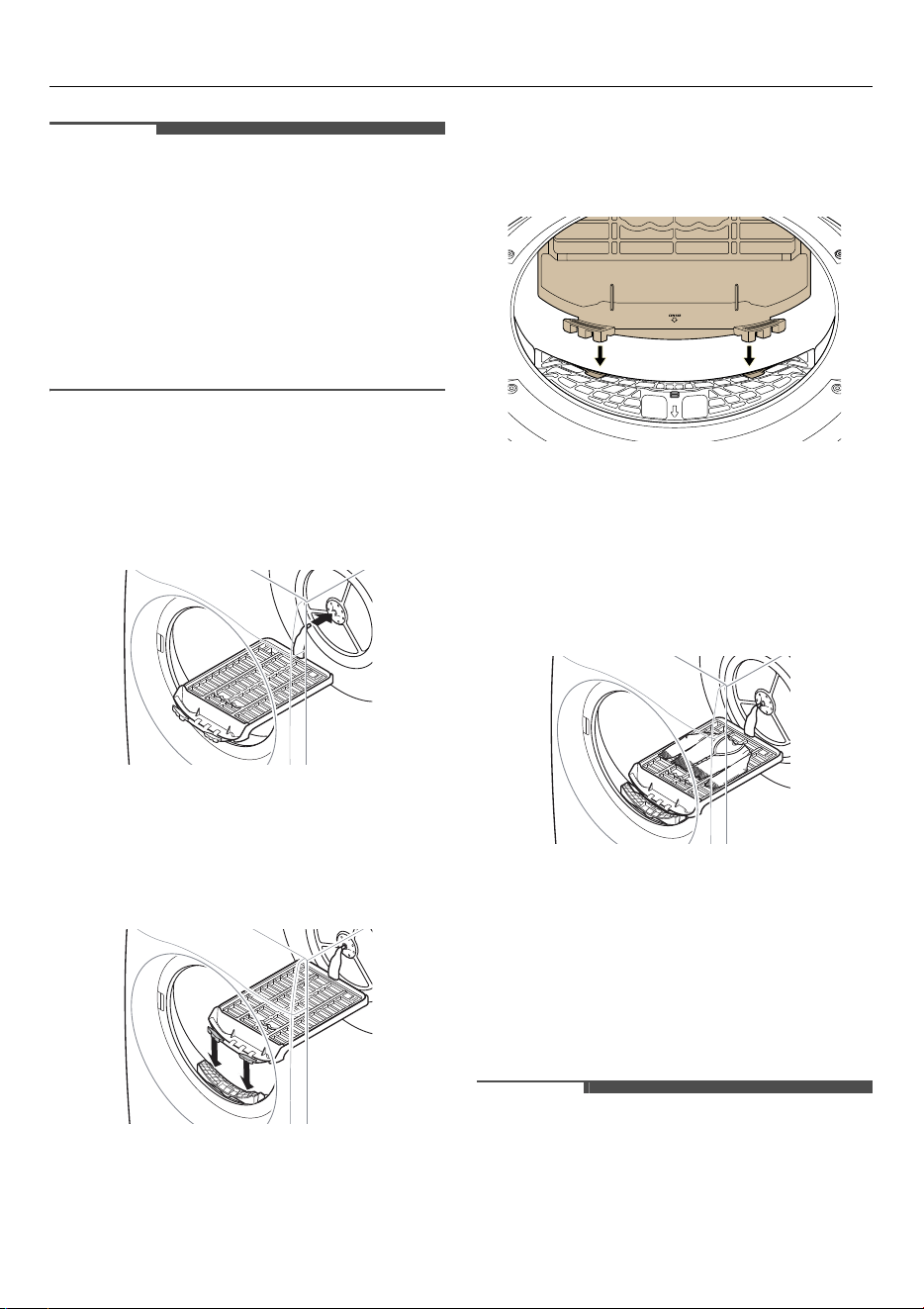
Using Dryer Rack
Rack Dry
This programme is designed for use with
clothes that must be dried flat, without
tumbling, including sweaters and
delicate fabrics.
To use the programme, you need a dryer
rack that is placed inside the appliance.
Before drying, discard packing materials
of the dryer rack.
32
Extra Options and Functions
NOTE
• Some models are not sold with all of
the available accessories, you may
need to purchase the dryer rack first if
it was not provided with your model.
Please contact LG Electronics
Customer Information Centre or visit
the LG Website at http://www.lg.com
for purchase.
1
Open the door.
2
Insert the hook of dryer rack to the
drum centre.
3
Once you have completed the
fastening in the center hole of the
drum, fasten the rack in three filter
holes on each side of the filter.
Look carefully at the filter hole and
insert it. If you push the rack slightly
inside the drum, it will fit better.
4
Place wet items on top of the rack.
Allow space around items for air to
circulate.
• The dryer rack does not move, but
the drum will rotate.
5
Close the door.
6
Turn power on and select
Rack Dry
.
7
Press the
Start/Pause
button.
NOTE
• Check the lint filter and remove any lint
accumulated from items dried on the
rack.

33
Extra Options and Functions
• The
Dry Time
key can be used to finely
adjust the drying time.
Auto Condenser Cleaning
• This model is equipped with “Auto
Condenser Cleaning”. It automatically
cleans the condenser every specific
number of times(about 30 times).
Nevertheless, if you want to clean it,
you can manually operate the cycle or
you can clean it by yourself. Please
refer to the page on condenser
cleaning.
34
LG ThinQ Application
SMART FUNC TIONS
LG ThinQ Application
The
LG ThinQ
application allows you to communicate with the appliance using a
smartphone.
LG ThinQ Application
Features
Remote Start
Control the appliance remotely or check
to see how much time is left in the cycle
from the
LG ThinQ
application.
NOTE
• Once the remote control feature is
enabled, you can start a cycle from the
LG ThinQ
application. If the cycle is not
started, the appliance will wait to start
the cycle until the appliance is turned
off remotely or the remote control
feature is disabled.
• If the door is opened, the remote
control feature is disabled.
Smart Pairing
This function automatically selects the
best cycle and settings for the dryer
based on usage information about the
most recently completed wash cycle.
NOTE
• To use this function, both washer and
dryer must be connected to
LG ThinQ
application.
Smart Diagnosis
This function provides useful
information for diagnosing and solving
issues with the appliance based on the
pattern of use.
Push Alert
When the cycle is complete or the
appliance has problems, you will receive
a push message.
Energy Monitoring
*1
This feature keeps track of how the
dryer’s power consumption is affected
by selected drying cycles and options.
Settings
Allows you to set various options on the
appliance and in the application.
*1 This feature is only available on some
models.
NOTE
• In the following cases, you must
update the network information for
each appliance in the
LG ThinQ
application under
Device Cards
~
Settings
~
Change Network
.
- wireless router is changed
- wireless router password is changed
- Internet service provider is changed
• This information is current at the time
of publication. The application is
subject to change for product
improvement purposes without notice
to users.
35
LG ThinQ Application
Installing LG ThinQ App
and Connecting an LG
Appliance
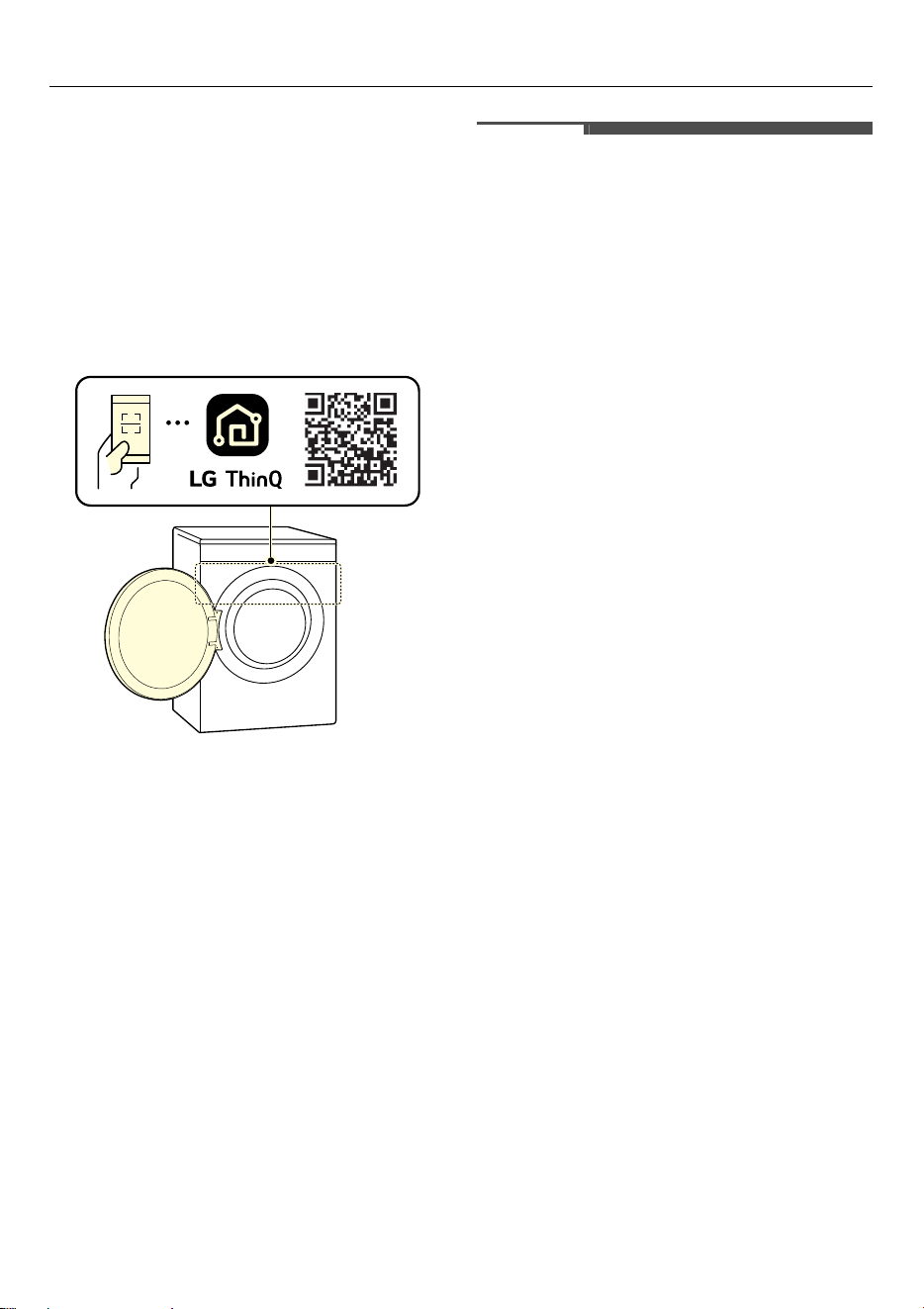
Models with QR Code
Scan the QR code attached to the
product using the camera or a QR code
reader app on your smartphone.
Models without QR Code
1
Search for and install the
LG ThinQ
app from the Google Play Store or
Apple App Store on a smartphone.
2
Run the
LG ThinQ
app and sign in
with your existing account or create
an LG account to sign in.
3
Touch the add (
~
) button on the
LG
ThinQ
app to connect your LG
appliance. Follow the instructions in
the app to complete the process.
NOTE
• You may be asked to provide a
password to connect to the LG network
(not your home network) during the
Wi-Fi setup. The password is the last 4
characters of the network name,
repeated twice, with no spaces. For
example, if the network name appears
as LG_XXXX_8b92, then you would
enter 8b928b92 as your password. The
password is case sensitive and the last
4 characters are unique to your
appliance.
• To verify the Wi-Fi connection, check
that the
f
icon on the control panel is
lit.
• The appliance supports 2.4 GHz Wi-Fi
networks only. To check your network
frequency, contact your Internet
service provider or refer to your
wireless router manual.
•
LG ThinQ
is not responsible for any
network connection problems or any
faults, malfunctions, or errors caused
by network connection.
• If the appliance is having trouble
connecting to the Wi-Fi network, it may
be too far from the router. Purchase a
Wi-Fi repeater (range extender) to
improve the Wi-Fi signal strength.
• The Wi-Fi connection may not connect
or may be interrupted because of the
home network environment.
• The network connection may not work
properly depending on the Internet
service provider.
• The surrounding wireless environment
can make the wireless network service
run slowly.

36
LG ThinQ Application
NOTE
• If the appliance cannot be connected
due to problems with the wireless
signal transmission, unplug the
appliance and wait about a minute
before trying again.
• If the firewall on your wireless router is
enabled, disable the firewall or add an
exception to it.
• The wireless network name (SSID)
should be a combination of English
letters and numbers. (Do not use
special characters.)
• Smartphone user interface (UI) may
vary depending on the mobile
operating system (OS) and the
manufacturer.
• If the security protocol of the router is
set to
WEP
, network setup may fail.
Change the security protocol (
WPA2
is
recommended) and connect the
product again.
Activating Network
Connection
1
Run the
LG ThinQ
application.
2
Select and touch the
Dryer
in the
application.
3
Press the
Power
button on the
control panel.
4
Press the
ε
Settings
button.
5
Turn the knob to select the
More
Settings
and press the
8
button.
6
Turn the knob to select the
Wi-Fi
Connection
and press the
8
button.
7
Select the
On
and press the
8
button.
• When
Wi-Fi
is turned on, the
Wi-Fi
icon appears in the display.
Using the Appliance
Remotely
Â
Remote Start
Use a smartphone to control the
appliance remotely. You can also
monitor the cycle operation so you know
how much time is left in the cycle.
Using Remote Start
1
Put the laundry into the drum and
close the dryer door.
2
Press the
Power
button.
3
Press the
Remote Start
button.
4
Turn the knob to select
On
and press
the
8
button to enable the remote
control function.
5
Start a cycle from the
LG ThinQ
application on your smartphone.
37
LG ThinQ Application
NOTE
• Once the function is enabled, you can
only start a cycle from the
LG ThinQ
smartphone application. If the cycle is
not started, the application will wait to
start the cycle until it is turned off
remotely from the application or this
function is disabled.
• If the door has been opened, you
cannot start a cycle remotely.
Disabling Remote Start Manually
When this function is activated, press the
Remote Start
button and select
Off
to
deactivate it.
Deactivating Network
Connection
1
Press the
Power
button on the
control panel.
2
Press the
ε
Settings
button.
3
Turn the knob to select
More
Settings
and press the
8
button.
4
Turn the knob to select
Wi-Fi
Connection
and press the
8
button.
5
Turn the knob to select
Off
button
and press the
8
button.
Radio Equipment
Specifications
*1 This feature is only available on some
models.
Wireless function S/W version: V 1.0
For consideration of the user, this device
should be installed and operated with a
minimum distance of 20 cm between the
device and the body.
Effect of Network
Activation on Power
Consumption
The activation of the network connection
may increase the power consumption of
the appliance.
Declaration of Conformity
Hereby, LG Electronics declares that the
radio equipment type Dryer is in
compliance with Directive 2014/53/EU.
The full text of the EU declaration of
conformity is available at the following
internet address:
Type
Operating
Frequency
Range
Output
Power
(Max.)
Wireless
LAN
2400 MHz -
2483.5 MHz
< 100
mW
Bluetooth
*1
38
LG ThinQ Application
http://www.lg.com/global/support/
cedoc/cedoc#
Declaration of Conformity
for UK
Hereby, LG Electronics declares that the
radio equipment type Dryer is in
compliance with the relevant statutory
requirements. The full text of the UK
declaration of conformity is available at
the following internet address :
http://www.lg.com/global/support/
cedoc/cedoc#
39
Smart Diagnosis
Smart Diagnosis
Use this feature to help you diagnose and solve problems with your appliance.
NOTE
• For reasons not attributable to LGE’s negligence, the service may not operate due
to external factors such as, but not limited to, Wi-Fi unavailability, Wi-Fi
disconnection, local app store policy, or app unavailability.
• The feature may be subject to change without prior notice and may have a different
form depending on where you are located.
Using LG ThinQ to
Diagnose Issues
If you experience a problem with your
Wi-Fi equipped appliance, it can transmit
troubleshooting data to a smartphone
using the
LG ThinQ
application.
• Launch the
LG ThinQ
application and
select the
Smart Diagnosis
feature in
the menu. Follow the instructions
provided in the
LG ThinQ
application.
Using Audible Diagnosis to
Diagnose Issues
Follow the instructions below to use the
audible diagnosis method.
• Launch the
LG ThinQ
application and
select the
Smart Diagnosis
feature in
the menu. Follow the instructions for
audible diagnosis provided in the
LG
ThinQ
application.
1
Press the
Power
button to turn on
the appliance.
2
Press the
Settings
button.
3
Turn the knob to select the
More
Settings
and press the
8
button.
4
Turn the knob to select the
Smart
Diagnosis
and press the
8
button.
5
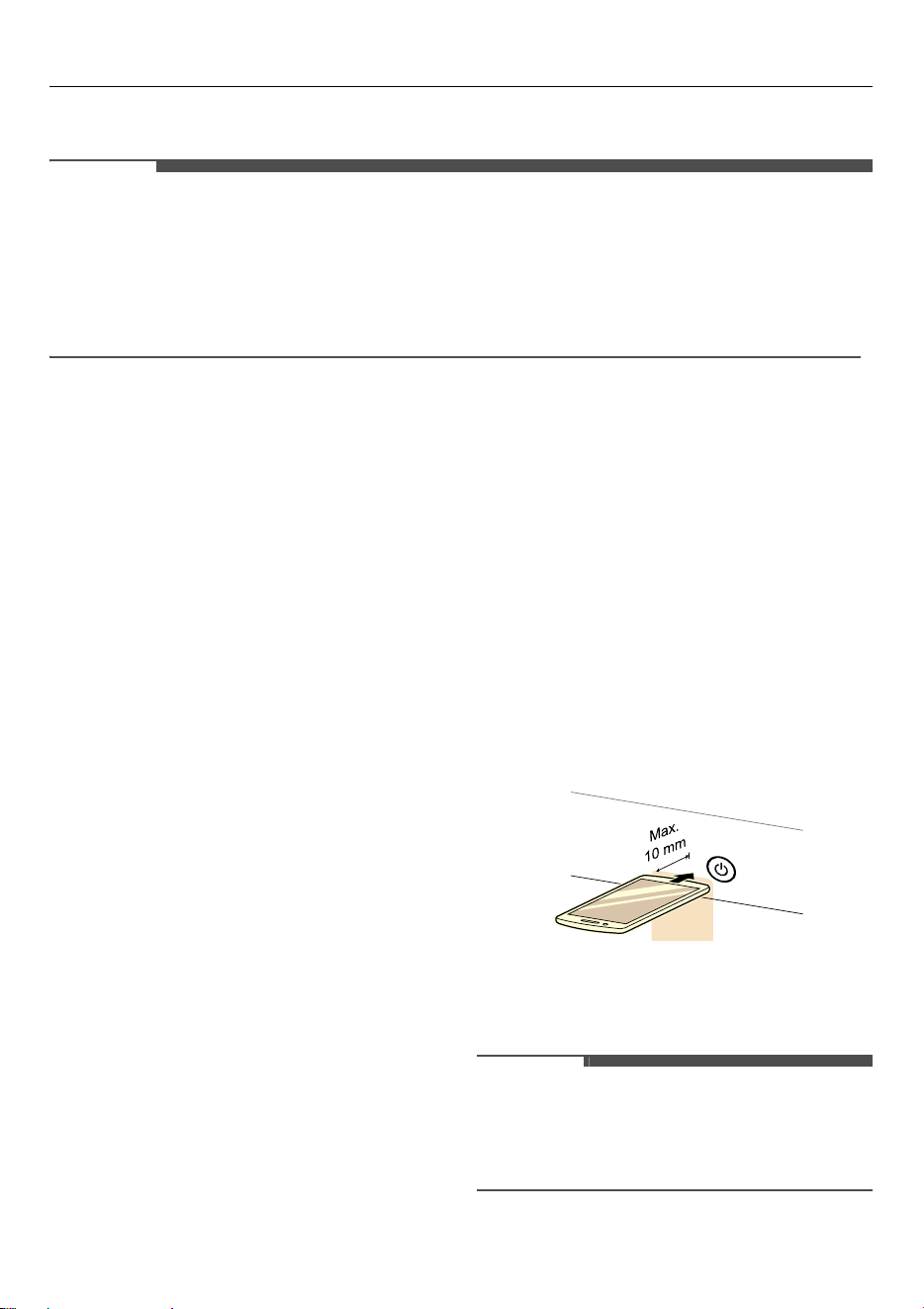
Place the mouthpiece of your
smartphone close to the
Power
button and press the
8
button.
• Hold the smartphone mouthpiece
to the
Power
button until the data
transfer is complete.
6
After the data transfer is complete,
the appliance will turn off.
NOTE
• For best results, do not move the
smartphone while the tones are being
transmitted.
40
Cleaning after Every Dry
MAINTENAN CE
WARNING
• Remove the power plug when you clean the appliance. Not removing the plug may
result in electric shock.
Cleaning after Every Dry
Cleaning the Lint Filters
CAUTION
• Clean the lint filters in the proper way
referring to the following instructions.
Failure to do so, the lint that is
accumulated on the heat exchanger
may not be cleaned properly.
• When the lint drops into the filter inlet,
it may cause less efficient drying
performance and increase of drying
time.
NOTE
• Unload all of the laundries from the
appliance before pull out the lint
filters.
• Put the lint filters back in place after
cleaning. If the lint filters are not in the
appliance, you can not operate the
appliance.
• when cleaning the filters, the lint
should be thrown in the trash and not
washed through the drain in order to
avoid spreading microplastics in the
used water system.
Inner Filter
• Always clean the inner filter before and
after use.
Outer Filter
• Clean the outer filter after drying 10
times or when the lint is accumulated
into the outer filter.
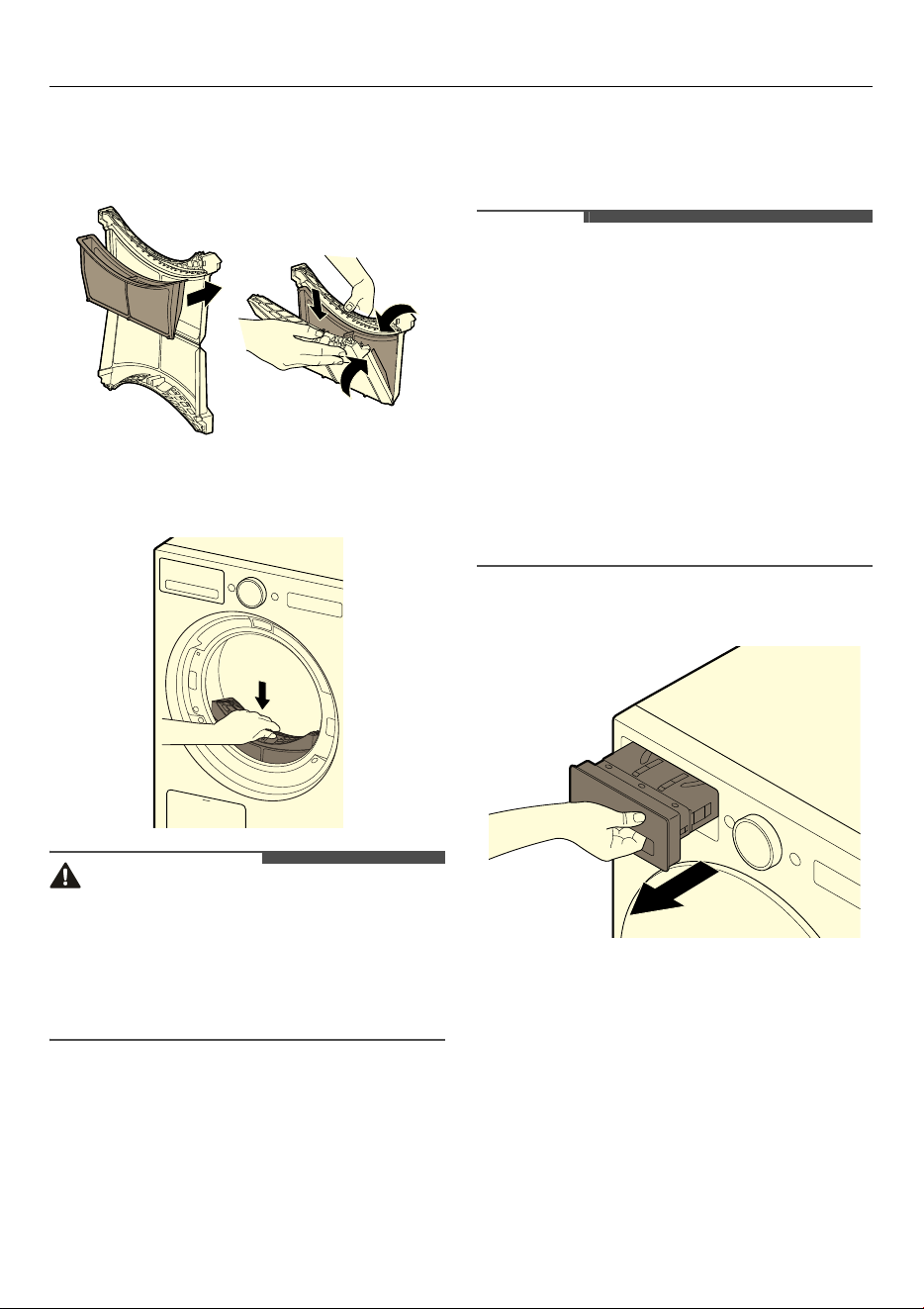
Clean the inner filter
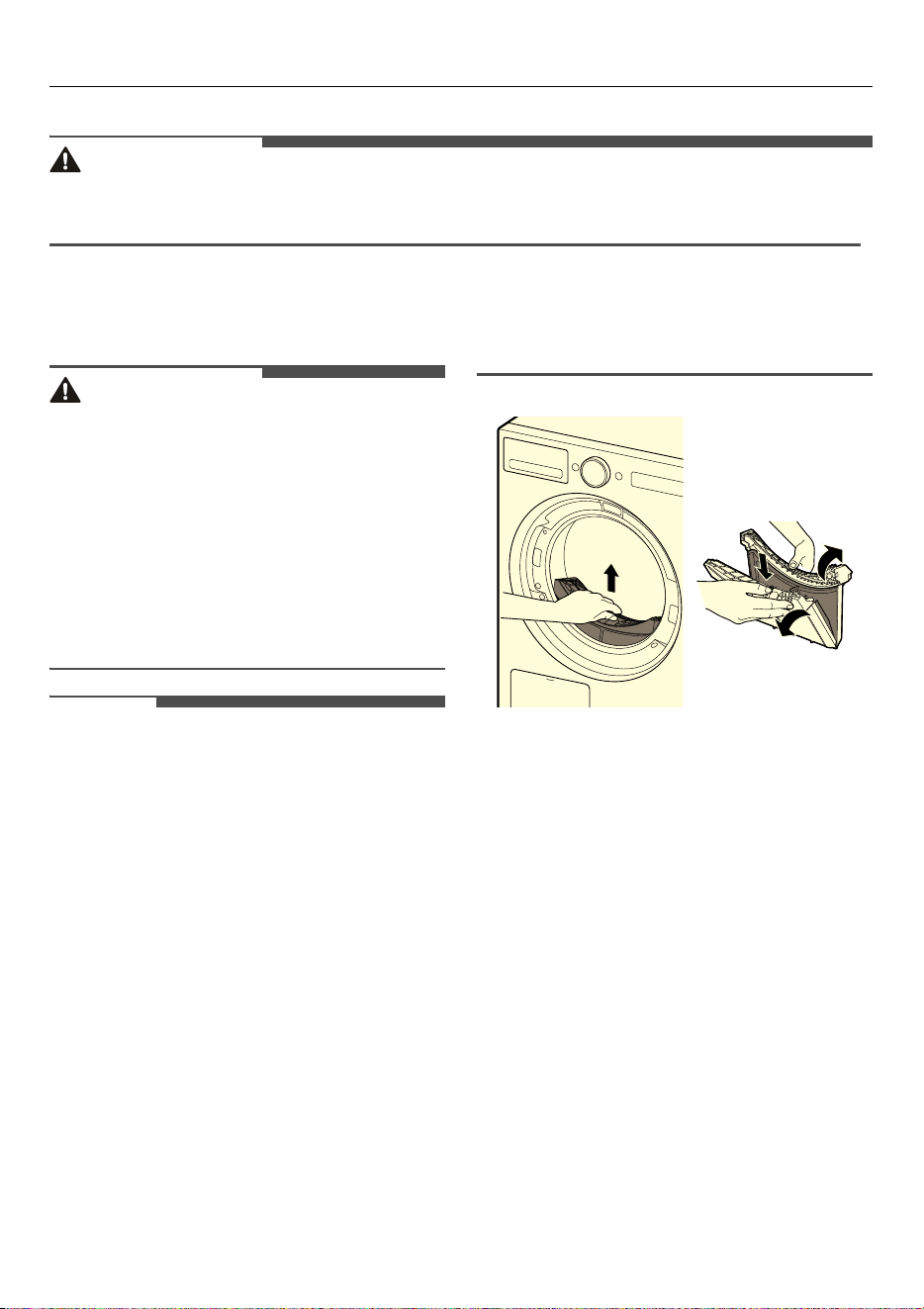
1
Pull out the inner filter from the outer
filter and then open the inner filter.
41
Cleaning after Every Dry
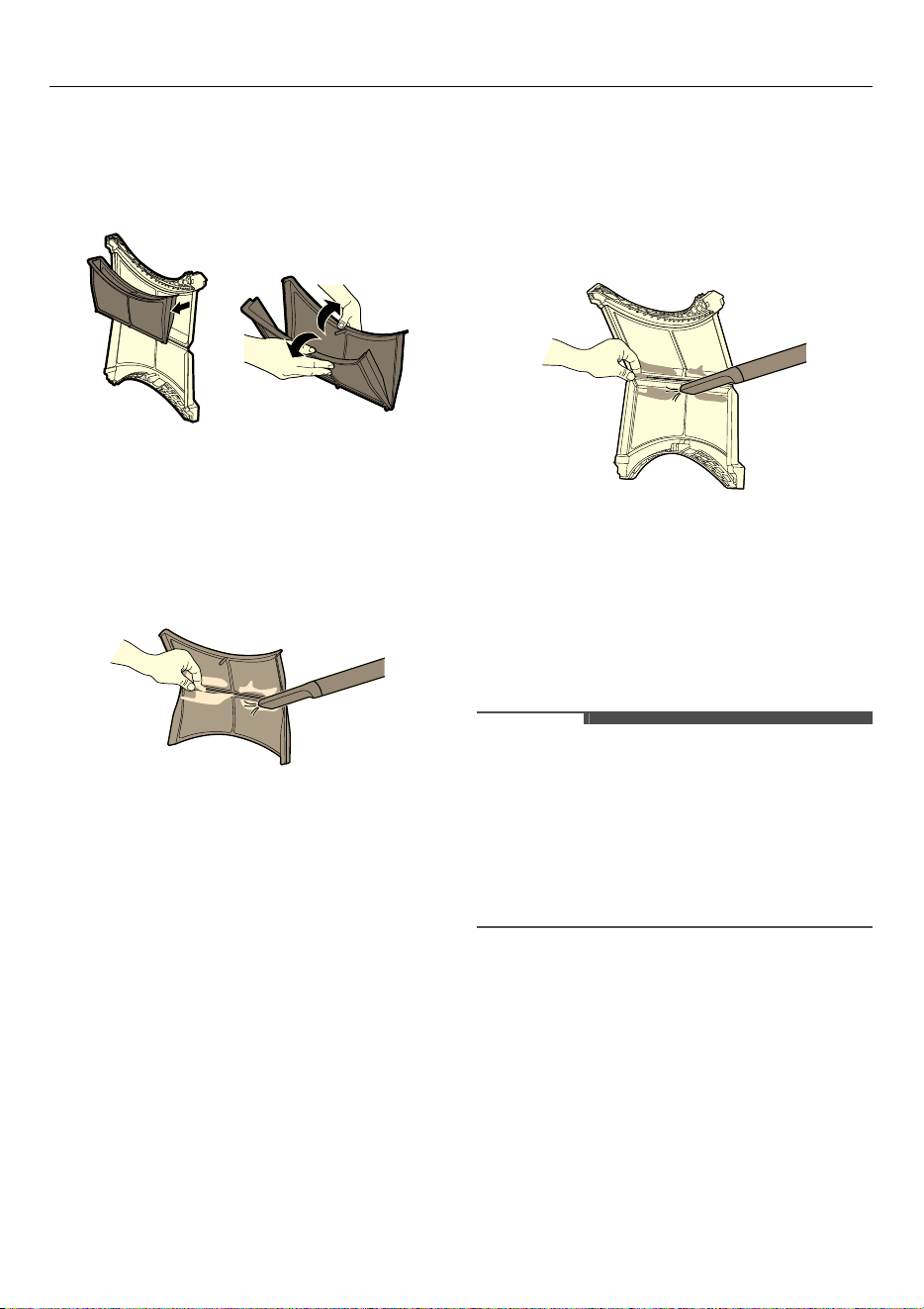
• Open the filter by unfolding it in the
direction of the arrows.
2
Remove large clusters of lint by hand,
then use a vacuum cleaner to clean
remaining lint.
• Avoid using excessive force to
prevent damaging the filter.
• Dry the filter completely if the filter
is moist. Failure to do so, odour
may occur in the appliance.
• Throw lint in the trash.
3
Insert the inner filter into the outer
filter.
Clean the outer filter
1
Remove large clusters of lint by hand,
then use a vacuum cleaner to clean
remaining lint.
• Avoid using excessive force to
prevent damaging the filter.
• Dry the filter completely if the filter
is moist. Failure to do so, odour
may occur in the appliance.
• Throw lint in the trash.
NOTE
• Ensure the side of the filter is closed
properly. Failure to do so, any lint
accumulated on the filter may get into
the appliance and may cause
degradation of the drying
performance.
42
Cleaning after Every Dry
2
Insert the inner filter into the outer
filter and close the outer filter.
3
Reinsert the lint filter set to the dryer.
CAUTION
• Do not load or remove any clothes
when the lint filter is not in place. The
clothes can drop into the filter inlet
and it may cause the appliance to
malfunction.
Emptying the Water
Container
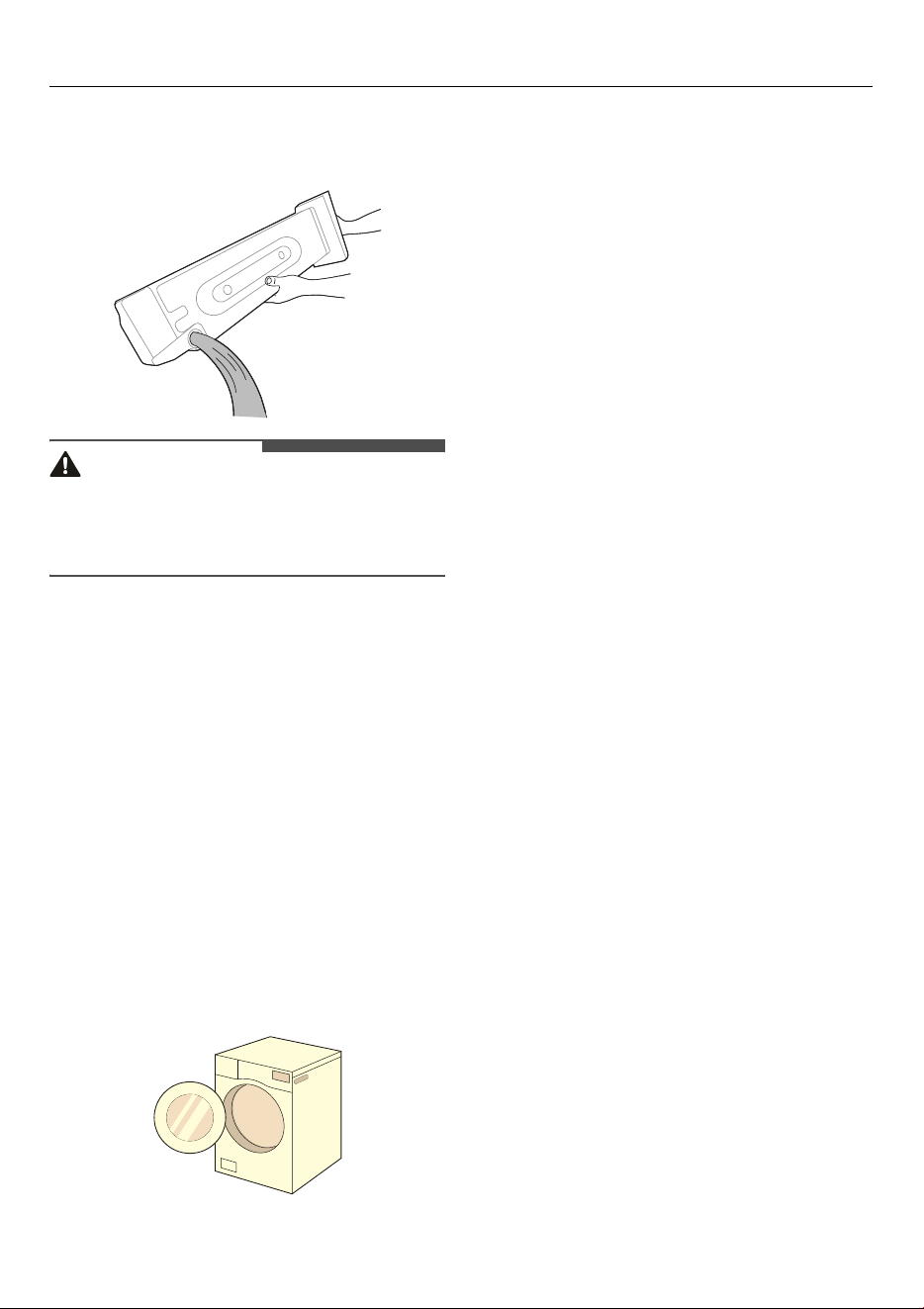
Condensed water is collected in the
water container.
Empty the water container after every
use. Not doing so will affect the drying
performance.
NOTE
• In some instance, LCD window may
display empty water to inform you that
the water container is full. If this
occurs, empty the water container.
• If the appliance does not have an
optional drain hose connected, the
water container should be emptied.
When the condensed water is drained
out directly through the optional drain
hose, there is no need to empty the
water container.
1
Pull out the water container.
43
Cleaning after Every Dry
2
Empty the water container into the
sink.
CAUTION
• Do not drink the condensed water or
reuse it. It could be lead to health
problems for people and animals.
3
Refit it back into the appliance.
• Push in the water container fully
into the appliance until it is in place.
4
Press the
Start/Pause
button.
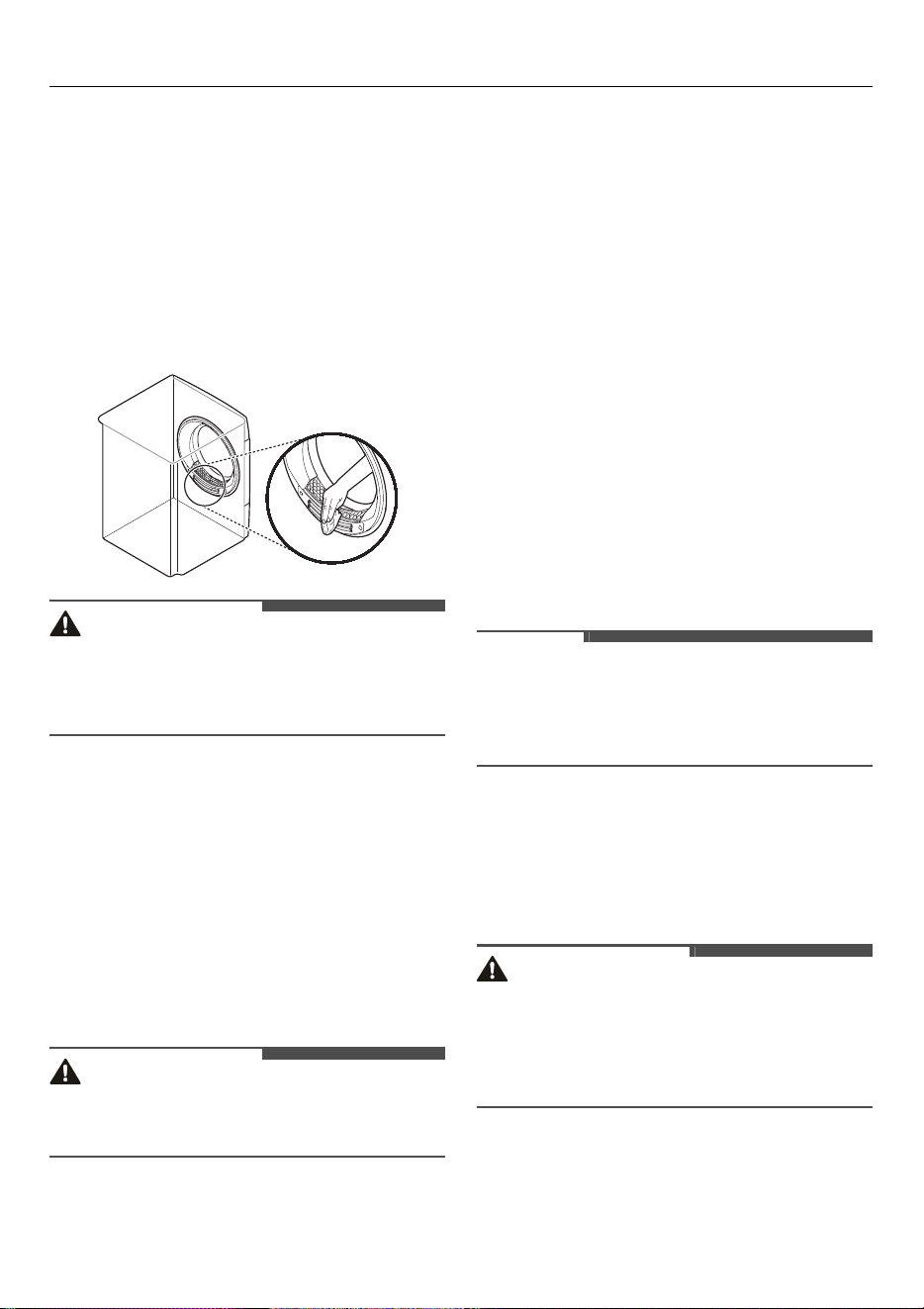
Ventilating inside the
drum
To help prevent odours, leave the door
slightly open to help air out the drum
after use.
44
Cleaning the Appliance Periodically
Cleaning the Appliance Periodically
Wiping the Moisture
Sensor
This device senses the moisture level of
the clothes during operation, which
means it must be cleaned
once every six
months
to remove any build-up of lime
scale on the surface of the sensor.
Wipe the sensors inside the drum.
CAUTION
• Do not wipe the moisture sensor with
abrasive materials. Always clean the
sensor with a dry rough acrylic sponge.
Using Drum Clean Feature
With time and use, the appliance may
form unpleasant odours that leave your
clothes smelling after drying. Using this
cleaning function
once a month (or
after drying 30 times)
helps to reduce
the unpleasant odours from the
appliance.
CAUTION
• Remove all of the clothes from the
appliance.
1
Pull out the water container, empty
the condensed water from it and refit
the water container back into the
appliance.
2
Turn on the appliance.
3
Press the
Drum Care
button.
4
Press the
Start/Pause
button.
• This function operates for about 3
hours.
5
Empty the water container after the
function has finished.
NOTE
• When the optional drain hose is
installed, there is no need to empty the
water container.
6
Open the dryer's door to provide the
appliance with enough air circulation
for exhausting any remaining
odours.
WARNING
• For safety reasons, do not allow
children or animals to enter the
appliance. It may cause damage or
injury.
45
Cleaning the Appliance Periodically
Using Condenser Clean
Feature
The appliance washes lint, which builds
up onto the surface of the condenser,
automatically using water that is
condensed from the clothes during
operation. Using this cleaning function
once a month (or after drying 30
times)
helps to wash the lint.
CAUTION
• Remove all of the clothes from the
appliance.
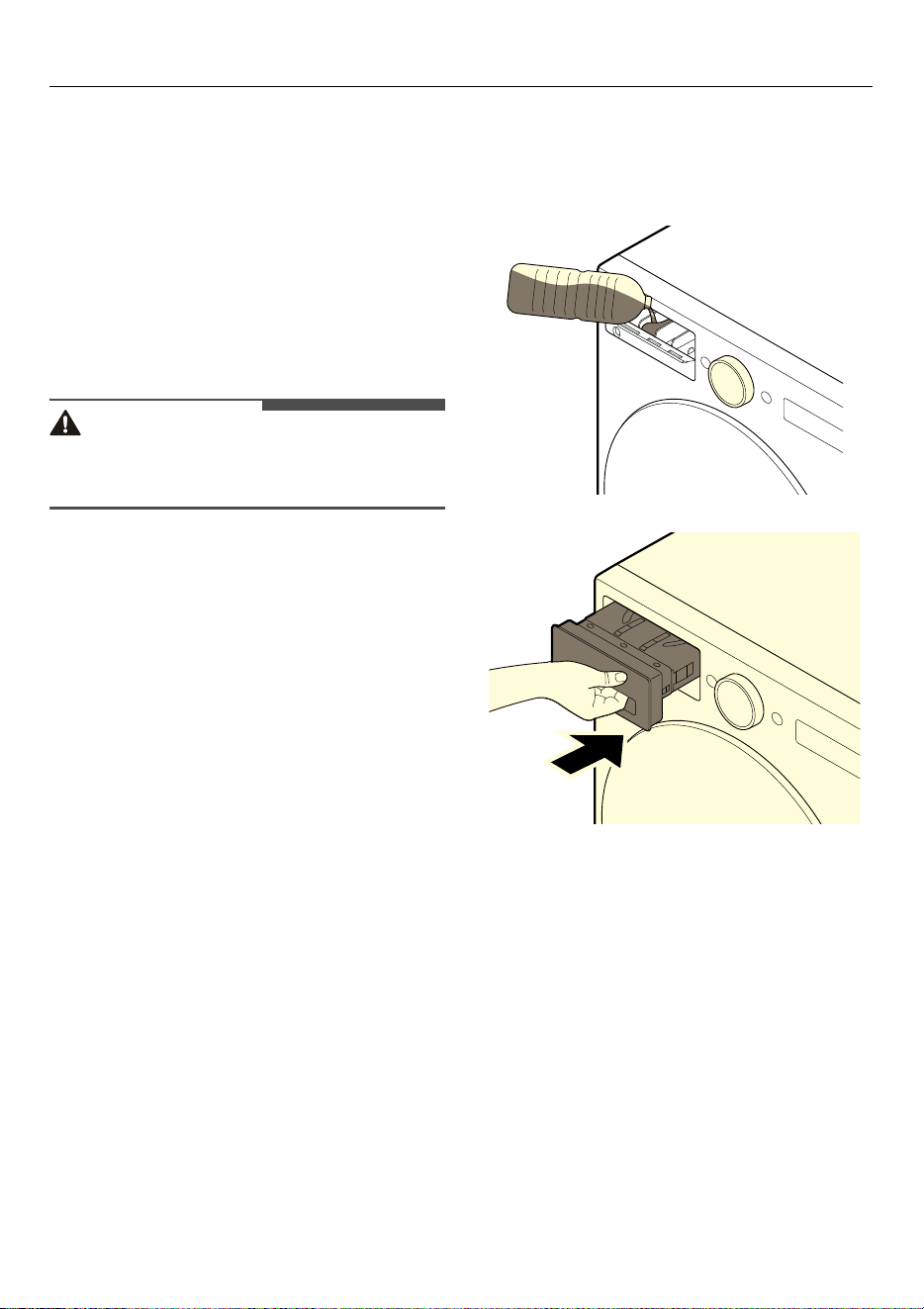
1
Pull out the water container and
empty the water container.
2
Pour 1 litre of clean water slowly into
the entrance of the water container
compartment. Then refit the empty
water container into the
compartment.
• Do not pour the water quickly as it
will spill out.
• Pouring more that 1.0 litres of
water into the compartment will
cause water to leak back out.
3
Turn on the appliance.
4
Press and hold the
Condenser Care
button for 3 seconds.
5
Press the
Start/Pause
button to start
the cleaning of the condenser.
• The cleaning of the condenser
proceeds for 1 hour.
46
Cleaning the Appliance Periodically
6
Empty the water container after the
cleaning is finished.
NOTE
• When the optional drain hose is
installed, there is no need to empty the
water container.
7
Open the dryer's door to provide the
appliance with enough air circulation
for more thorough drying of the tub
after the cleaning has ended.
WARNING
• For safety reasons, do not allow
children or animals to enter the
appliance. It may cause damage or
injury.
Cleaning the Condenser
This model equips “Auto Condenser
Cleaning”. But, if you want to clean, you
can. Please follow the instructions
below.
Refer to the following instructions for
manually cleaning the condenser.
CAUTION
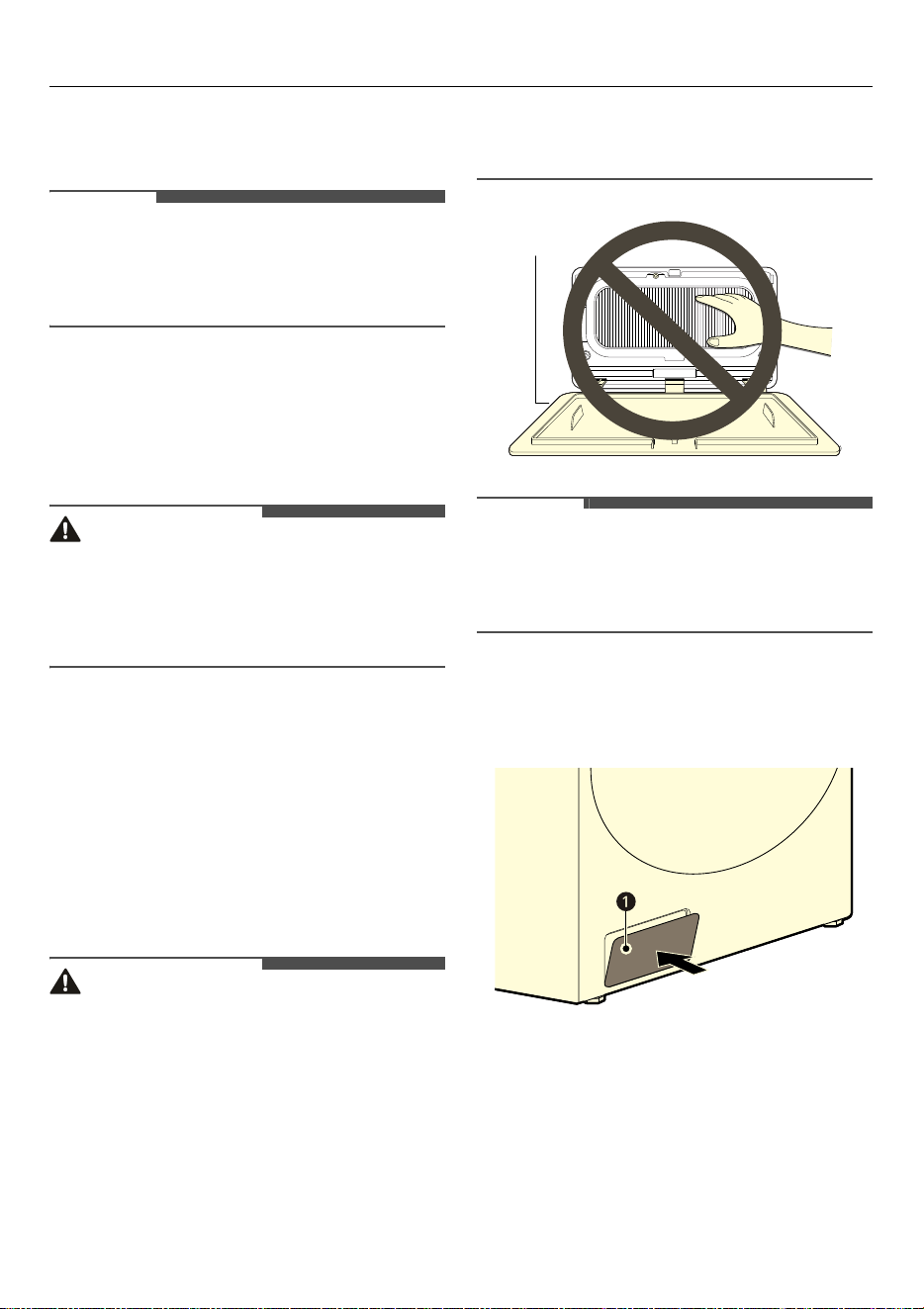
• To avoid physical injury and burns, do
not touch or clean the condenser with
bare hands.
• When cleaning the condenser, be
careful not to damage the fins.
NOTE
• If drying performance deteriorates,
open the condenser cover to check for
foreign substances.
1
Press the top part of the access panel
a
to open it.
47
Cleaning the Appliance Periodically
2
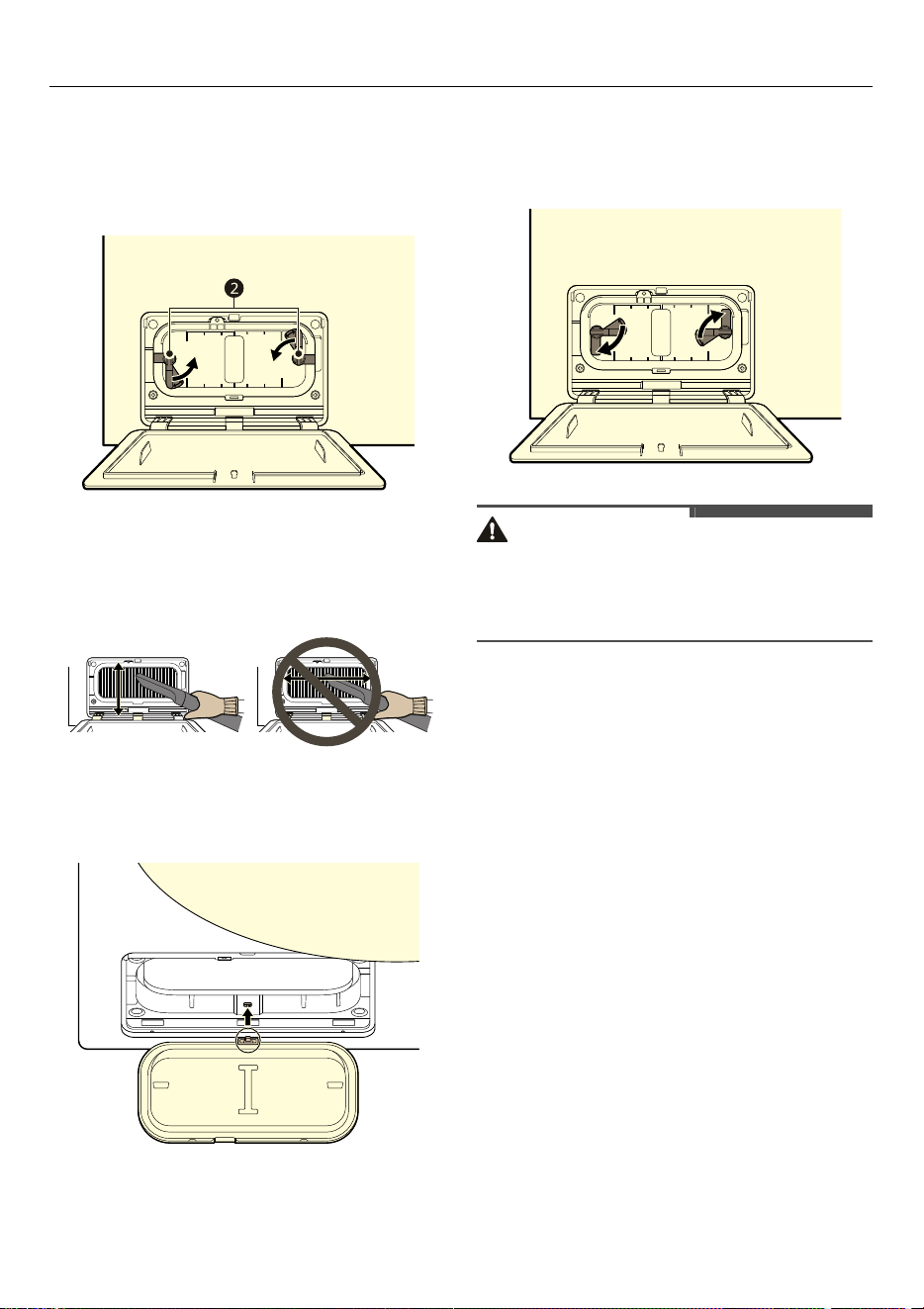
Turn the locks
b
to release the
condenser cover, and pull the cover
to remove it.
3
Clean the dust on the condenser
using a vacuum cleaner or soft brush.
4
Fit the cover with the hole below.
5
Reinsert and reassemble the
condenser cover completely.
CAUTION
• If the condenser cover is not
completely reassembled, the product
will not work properly and may leak.
6
Close the access panel.
48
Before Calling for Service
TROUBLESHOOTING
Errors and malfunctions may occur when operating the appliance. The following
tables contain possible causes and notes for resolving an error message or
malfunction. Read the tables below carefully in order to save time and money before
calling the LG Electronics service centre.
Befor e Callin g for Servic e
Your appliance is equipped with an automatic error-monitoring system to detect and
diagnose problems at an early stage. If the appliance does not function properly or
does not function at all, check the following tables before calling to LG Electronics
service centre.
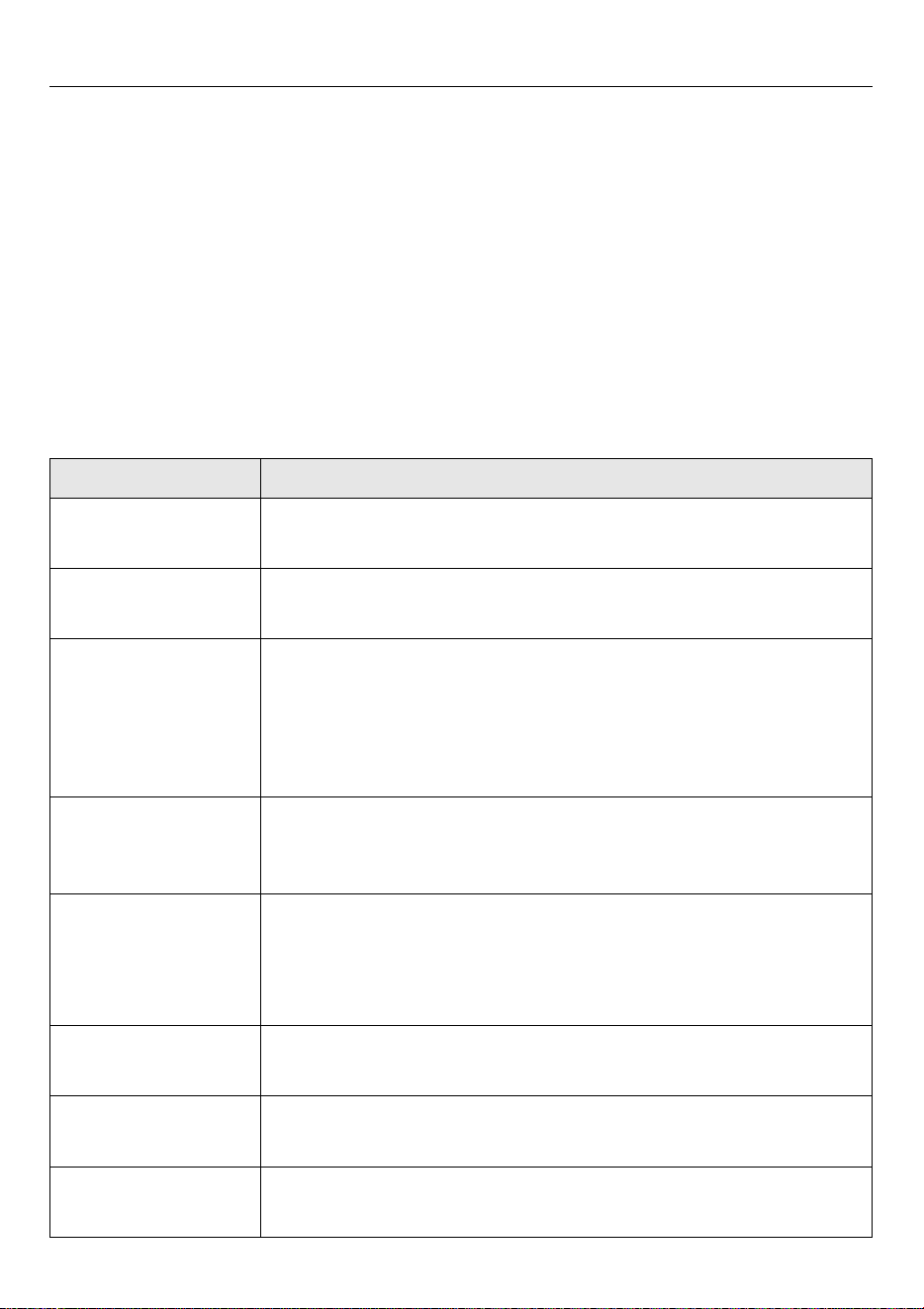
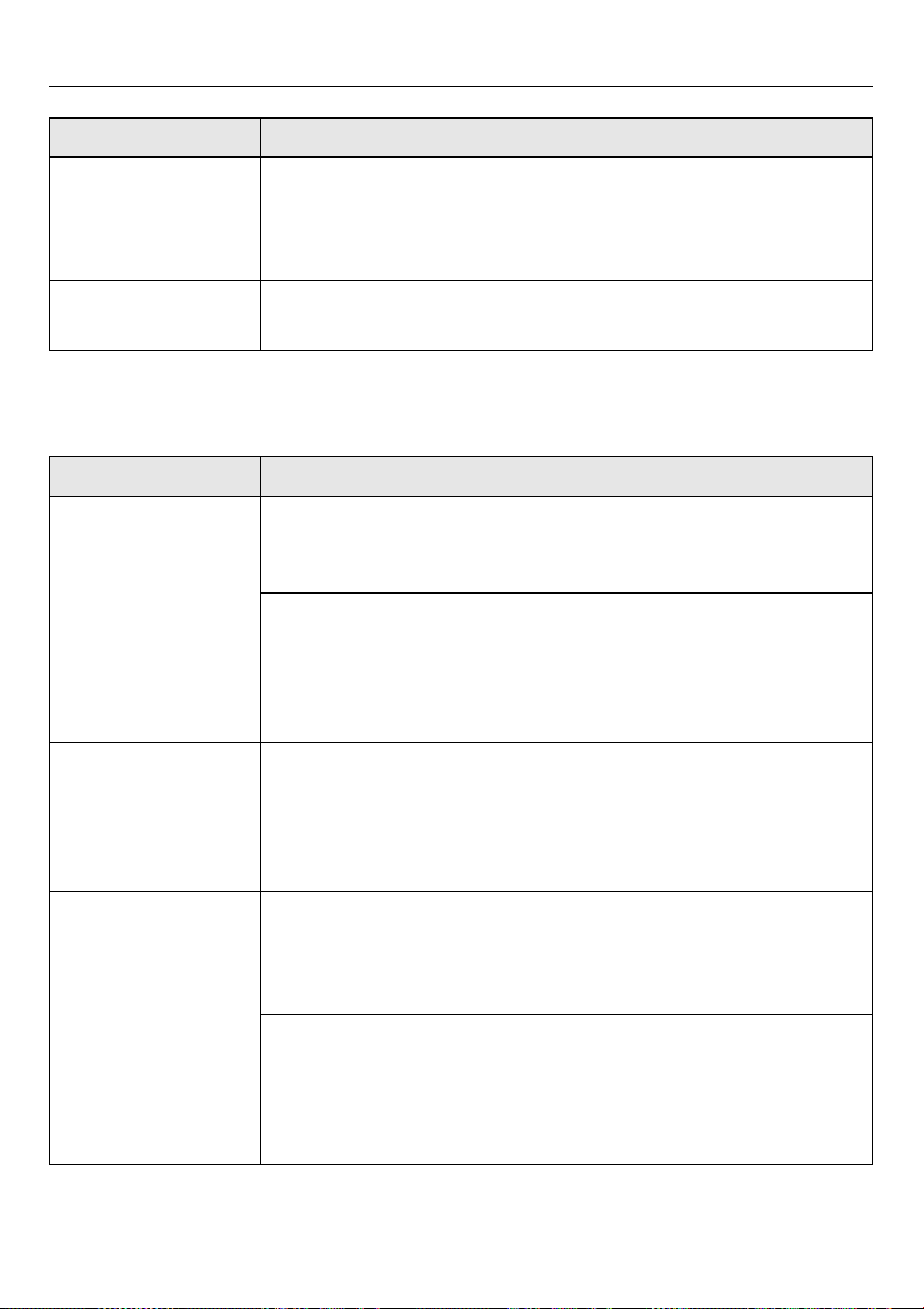
Error Messages
Symptoms Possible Cause & Solution
Temperature
sensor error
Temperature sensor has malfunctioned.
• Unplug the power plug and call for service.
No drainage The drain pump motor has malfunctioned.
• Unplug the appliance and call for service.
Door open The door has been opened while the appliance is in
operation or the appliance is being operated without the
door being closed properly.
• Close the door completely.
• If error is not released, call for service.
Door unlocked The door is not secured.
• Close and secure the door. If the message keeps appearing,
unplug the power cord and call for service.
Drum motor error The motor has stopped suddenly.
• Check if the amount of clothes exceeds the maximum load
capacity.
• Unplug the power plug and call for service.
Compressor error The compressor has stopped suddenly.
• Unplug the power plug and call for service.
Drum
temperature error
The temperature inside the drum has risen suddenly.
• Unplug the power plug and call for service.
Voltage
abnormality
Supply voltage is not correct.
• Unplug the appliance. If error reoccurs, call for service.
49
Before Calling for Service
Operation
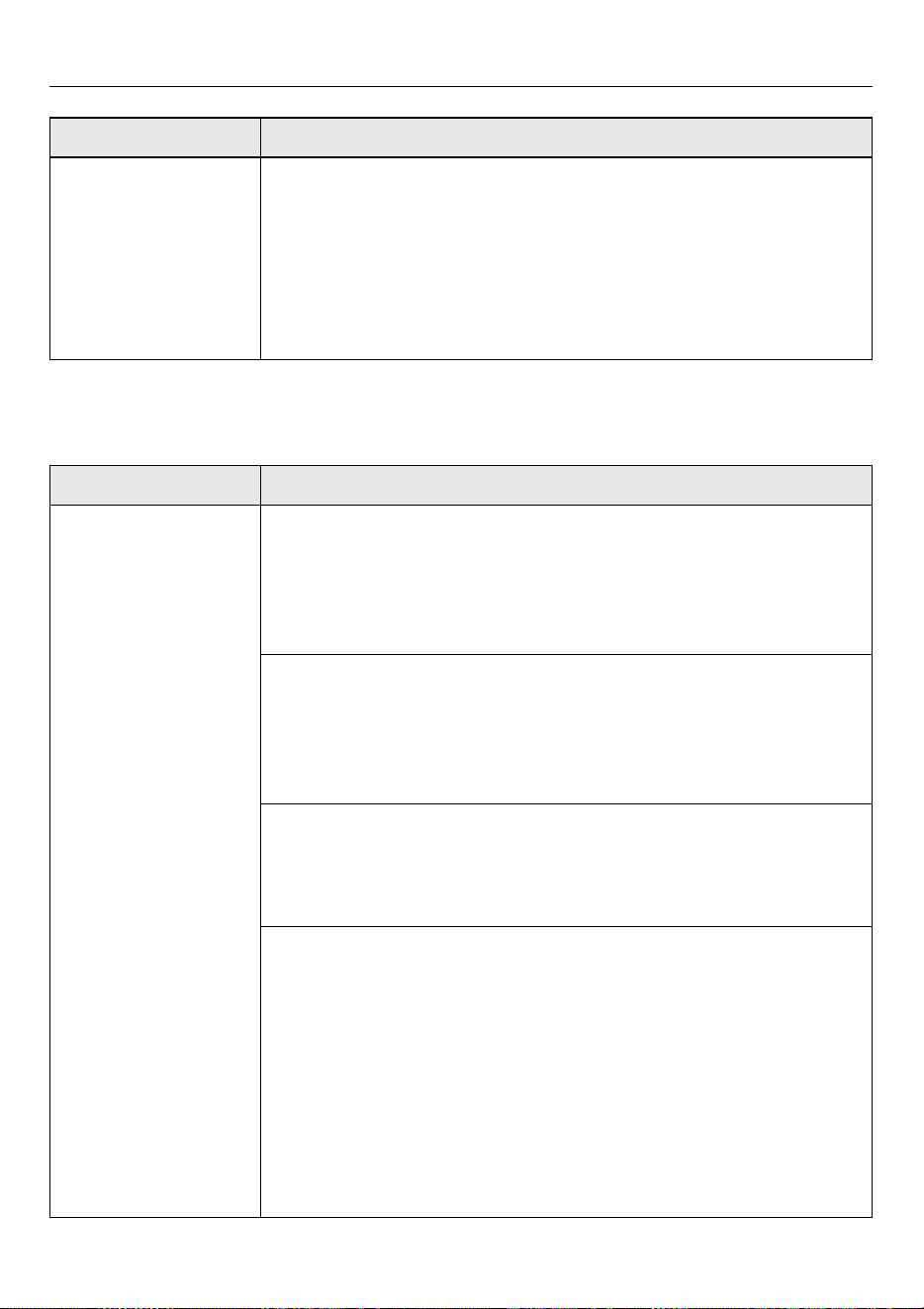
Service cover
error
The appliance is being operated without the Inner Service
cover.
• Open the
Outer Service Cover
and assemble the
Inner
Service Cover
.
Reinstall the filter. The lint filter is not in the appliance.
• Insert the lint filter.
Symptoms Possible Cause & Solution
Appliance will not
turn on.
Power cord is not properly plugged in.
• Make sure that the power plug is securely plugged into a
grounded outlet matching the appliance's rating plate.
House fuse is blown, circuit breaker has tripped, or power
outage has occurred.
• Reset circuit breaker or replace fuse. Do not increase fuse
capacity. If the problem is a circuit overload, have it
corrected by a qualified electrician.
Appliance does
not heat.
House fuse is blown, circuit breaker has tripped, or power
outage has occurred.
• Reset circuit breaker or replace fuse. Do not increase fuse
capacity. If the problem is a circuit overload, have it
corrected by a qualified electrician.
Water leaks. The water container hose or the optional drain hose is not
connected correctly.
• Connect the water container hose or the optional drain
hose correctly.
The door is closed while clothes or foreign substance is
caught in the door.
• Check if clothes or foreign substance is caught in the door
before using the appliance. If water leaks continuously,
contact the LG Electronics Customer Information Centre.
Symptoms Possible Cause & Solution
50
Before Calling for Service
Performance
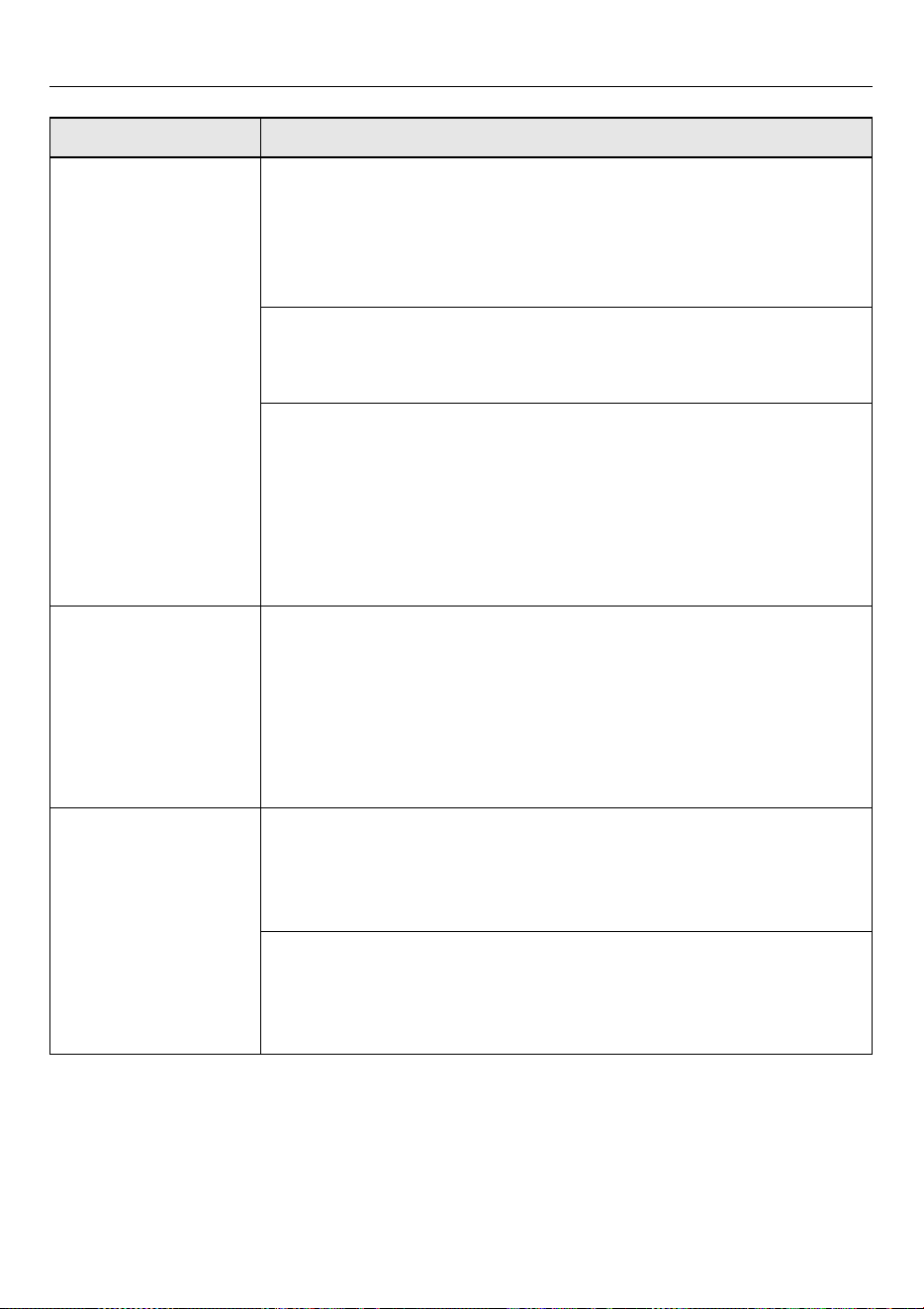
Appliance runs
and pauses by
itself after the
drying cycle
finishes.
This is how the Anti Crease option works.
• Make sure that the
Anti Crease
option has been set. The
option is designed to prevent creases that are formed when
the clothes are not unloaded promptly after the drying
cycle. When the option is set, the appliance runs for 10
seconds and pauses for 5 minutes. The option is works for
up to 2 hours.
Symptoms Possible Cause & Solution
Clothes take too
long to dry.
Load is not properly sorted.
• Separate heavy items from lightweight items. Larger and
heavier items take longer to dry. Light items in a load with
heavy items can fool the sensor because the light items dry
faster.
Large load of heavy fabrics.
• Heavy fabrics take longer to dry because they tend to retain
more moisture. To help reduce and maintain more
consistent drying times for large and heavy fabrics,
separate these items into smaller loads of a consistent size.
Appliance controls are not set properly.
• Use the appropriate control settings for the type of load
you are drying. Some loads may require an adjustment of
the dry level setting for proper drying.
Lint filter needs to be cleaned.
• The appliance displays a filter cleaning message before and
after the cycle operation. “Clean the filter to start the cycle”,
“Clean inner and outer filters to start cycle”
• Remove the lint from the lint filter before every cycle. With
the lint removed, hold the lint filter up to a light to see if it
is dirty or clogged. With some loads that produce high
amounts of lint, such as new bath towels, it may be
necessary to pause the cycle and clean the filter during the
cycle.
Symptoms Possible Cause & Solution
51
Before Calling for Service
Clothes take too
long to dry.
House fuse is blown, circuit breaker has tripped, or power
outage has occurred.
• Reset circuit breaker or replace fuse. Do not increase fuse
capacity. If the problem is a circuit overload, have it
corrected by a qualified electrician.
Appliance is overloaded.
• Divide extra large loads into smaller loads for better drying
performance and efficiency.
Appliance is underloaded.
• If you are drying a very small load, add a few extra items to
ensure proper tumbling action. If the load is very small and
you are using Sensor Dry programmes, the electronic
control cannot properly sense the dryness of the load and
may shut off too soon. Use Timed Drying programmes or
add some extra wet clothes to the load.
Drying time is not
consistent.
Heat settings, load size, or dampness of clothing is not
consistent.
• The drying time for a load will vary depending on the type
of heat used (electric), the size of the load, the type of
fabrics, the wetness of the clothes, and lint filter. Even an
unbalanced load in the appliance can cause poor spinning,
resulting in wetter clothes which will take longer to dry.
Greasy or dirty
spots are left on
clothes.
Fabric softener is used incorrectly.
• When washing clothes that are to be dried in the appliance,
use the correct amount of fabric softener as recommended
by the manufacturer of the fabric softener.
Clean and dirty clothes are being dried together.
• Use the appliance to dry only clean items. Soil from dirty
clothes can transfer to the clean clothes in the same or later
loads.
Symptoms Possible Cause & Solution
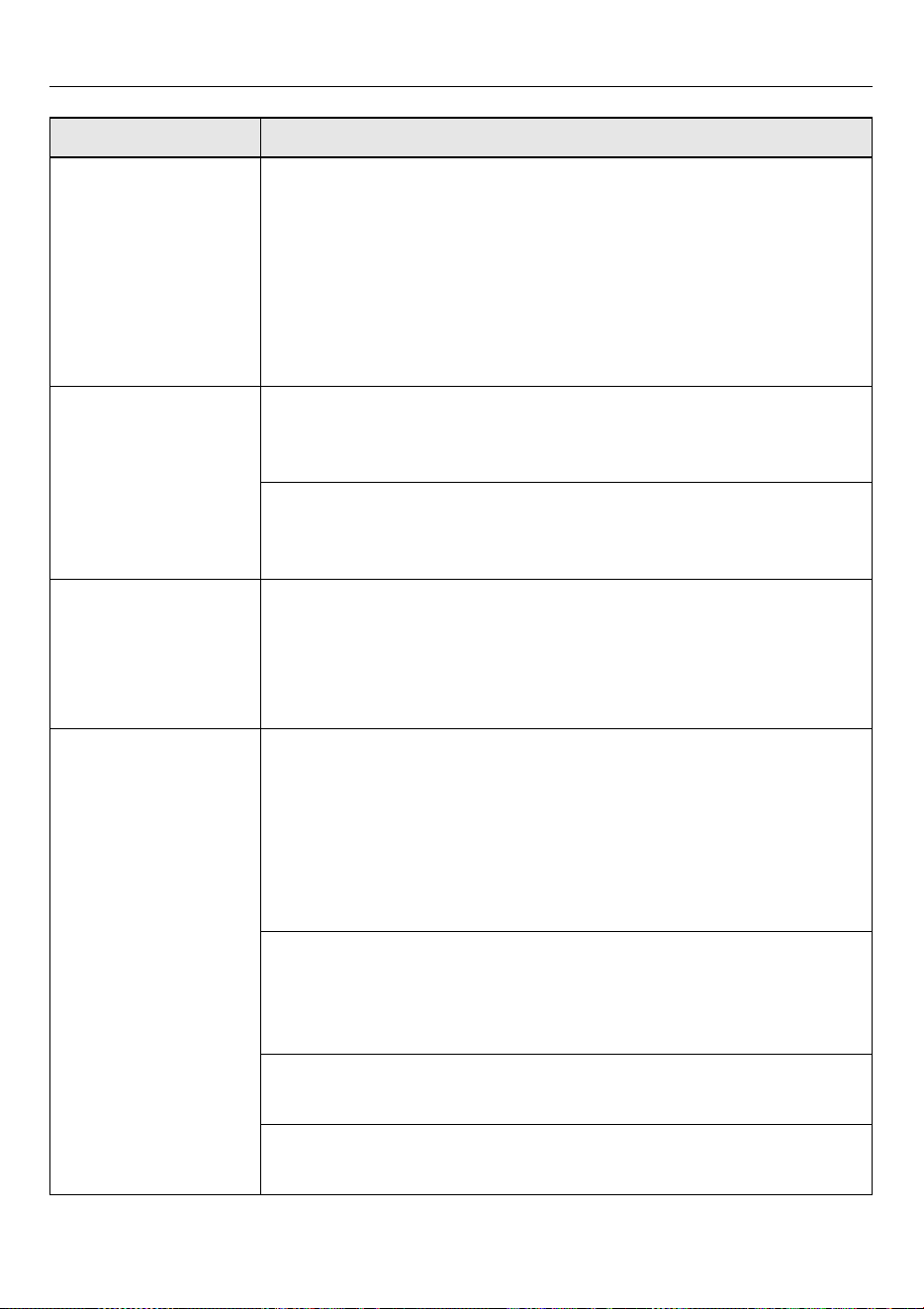
52
Before Calling for Service
Greasy or dirty
spots are left on
clothes.
Clothes were not properly cleaned or rinsed before being
placed in the appliance.
• Stains on dried clothes could be stains that were not
removed during the washing process. Make sure that
clothes are being completely cleaned or rinsed according to
the instructions for your washing machine and detergent.
Some difficult soils may require pre-treating prior to
washing.
Clothes are
wrinkled.
Clothes have dried too long (overdried).
• Over drying a load of clothes can lead to wrinkled clothes.
Try a shorter drying time.
Clothes have been left in the appliance for too long after
cycle ends.
• Use the
Anti Crease
option.
Clothes are
shrinking.
Garment care instructions are not being followed.
• To avoid shrinking your clothes, always consult and follow
fabric care instructions. Some fabrics will naturally shrink
when washed. Other fabrics can be washed but will shrink
when dried in the appliance. Use a low or no heat setting.
Lint is left on
clothes.
Lint filter has not been cleaned properly.
• Remove the lint from the lint filter after every cycle. With the
lint removed, hold the lint filter up to a light to see if it is
dirty or clogged. If it looks dirty, follow the cleaning
instructions. With some loads that produce high amounts
of lint, it may be necessary to clean the lint filter during the
cycle.
Clothes have not been sorted properly.
• Some fabrics are lint producers (i.e., a fuzzy white cotton
towel) and should be dried separately from clothes that are
lint trappers (i.e., a pair of black linen pants).
Appliance is overloaded.
• Divide extra large loads into smaller loads for drying.
Tissue, paper, etc., has been left in pockets.
• Check pockets thoroughly before drying clothes.
Symptoms Possible Cause & Solution
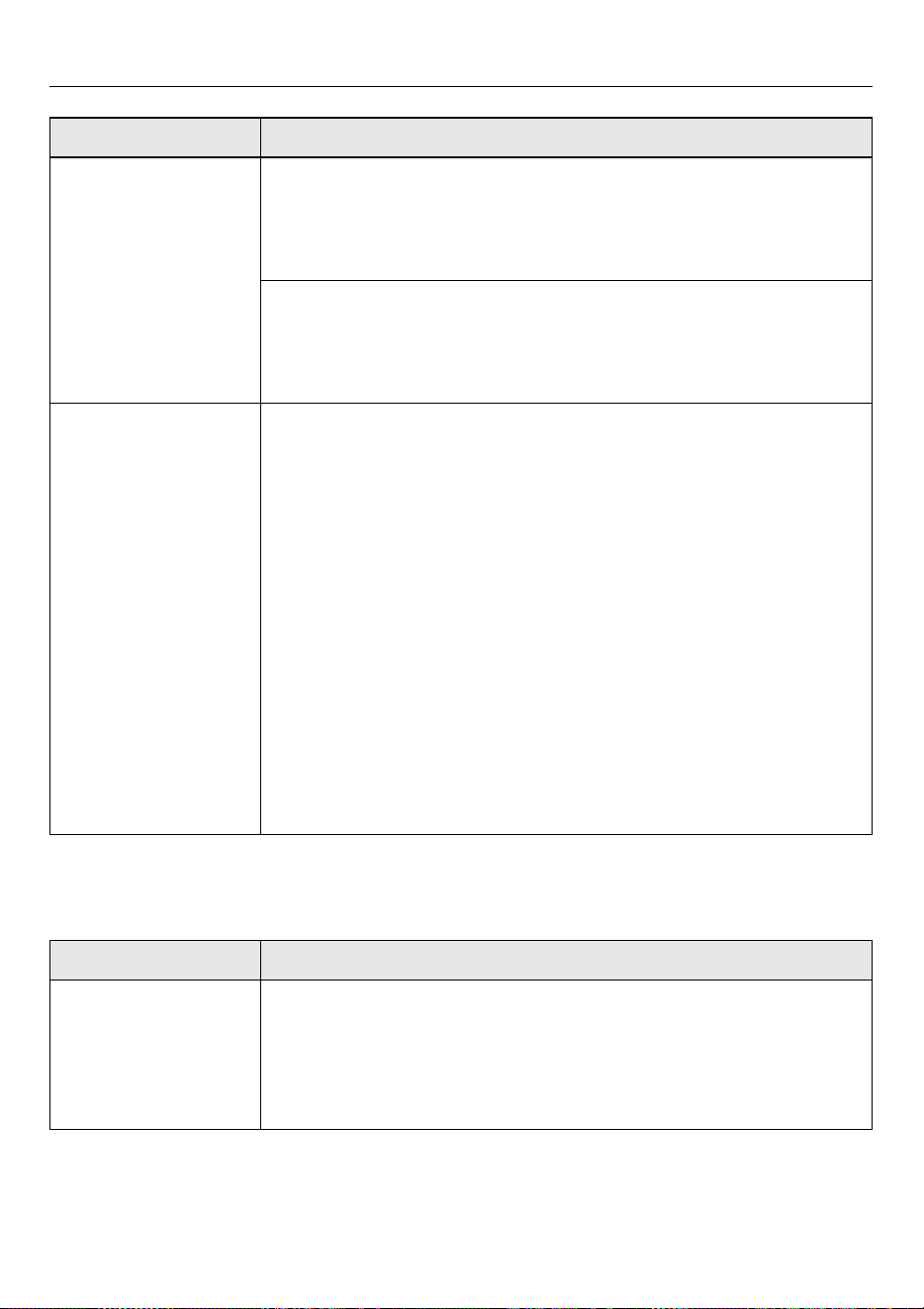
53
Before Calling for Service
Odours
Excess static in
clothes after
drying.
Clothes have dried for too long (overdried).
• Overdrying a load of clothes can cause a buildup of static
electricity. Adjust settings and use a shorter drying time, or
use Sensor Dry programmes.
Drying synthetics, permanent press, or synthetic blends.
• These fabrics are naturally more prone to static buildup. Try
using fabric softener, or use shorter Timed Drying time
settings.
Clothes have
damp spots after a
Sensor Dry
programme.
Very large load or very small load. Single large item such
as a blanket or comforter.
• If items are too tightly packed or too sparse the sensor may
have trouble reading the dryness level of the load. Use a
Timed Dry
programme for very small loads.
• Large, bulky items such as blankets or comforters can
sometimes wrap themselves into a tight ball of fabric. The
outside layers will dry and register on the sensors, while the
inner core remains damp. When drying a single bulky item,
it may help to pause the cycle once or twice and rearrange
the item to unwrap and expose any damp areas.
• To dry a few remaining damp items from a very large load
or a few damp spots on a large item after a Sensor Dry
programme has completed, empty the lint filter, then set a
Timed Dry
programme to finish drying the item(s).
Symptoms Possible Cause & Solution
The appliance has
an odour.
Are you using the appliance for the first time?
• The smell is caused by rubber material that is attached to
the appliance inside. This kind of smell is a rubber's own
smell and disappears automatically after using the
appliance several times.
Symptoms Possible Cause & Solution
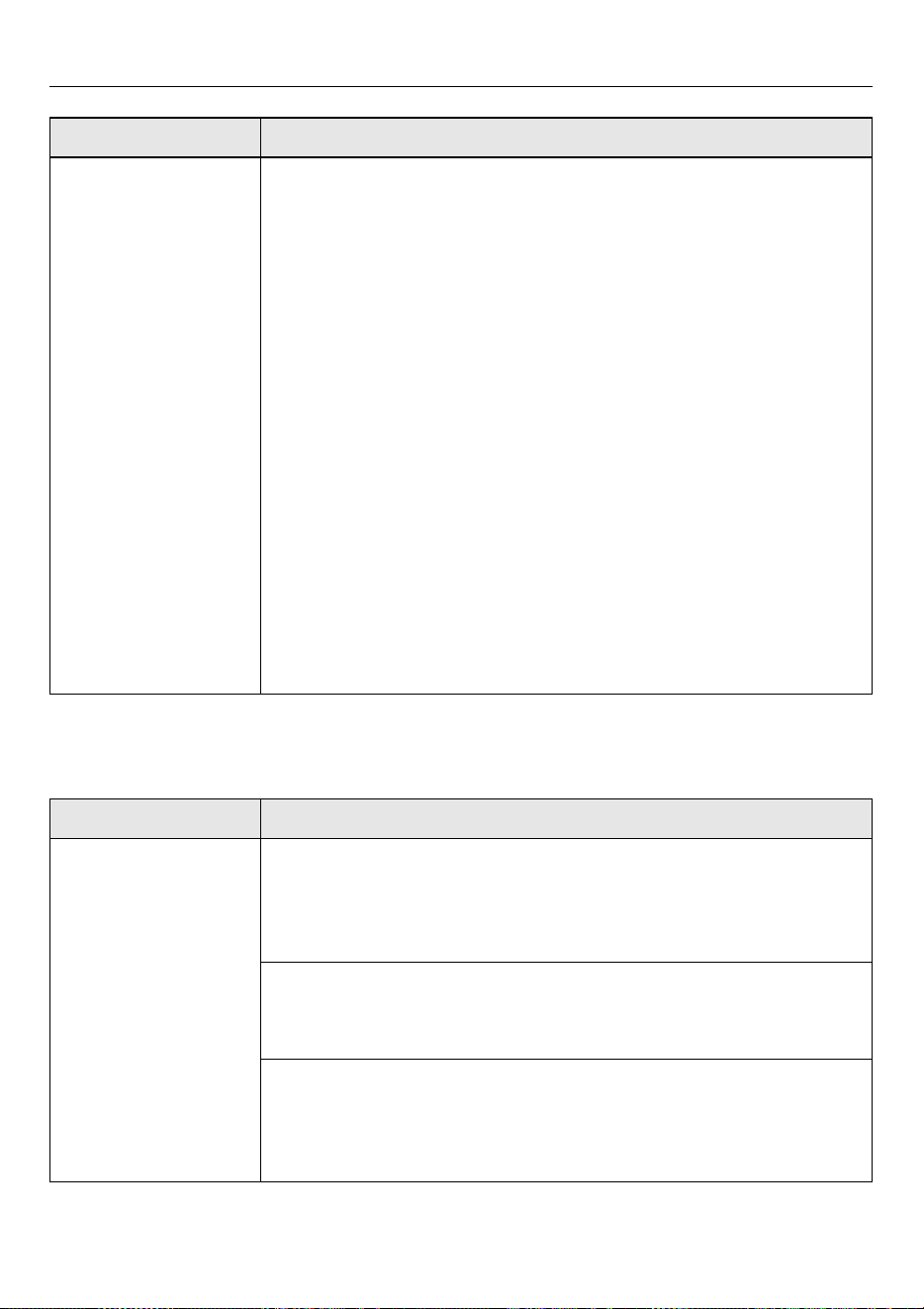
54
Before Calling for Service
Wi-Fi
The appliance has
an odour.
Do you smell an odour during use?
• Do not exceed the manufacturer's recommended amount
of detergent when washing clothes. Excess detergent can
build up on clothing and cause odours.
• Leaving clothes in the washer or dryer after the cycle ends
can lead to odors. Unload clothing promptly when the cycle
ends.
• Keep lint filters clean. Clogged or dirty lint filters can cause
odors. After cleaning the lint filter, allow it to dry completely
before using it.
• For ventless models, leave the dryer door open after drying,
or use the magnetic door stop (on some models) to keep
the door slightly ajar.
• If the odor is coming from the washer, follow the
instructions in the product manual to clean the washer tub/
drum.
• Periodically run the Drum Care and Condenser Care cycles
following the instructions in the
MAINTENANCE
section.
Symptoms Possible Cause & Solution
Your home
appliance and
smartphone is not
connected to the
Wi-Fi network.
The password for the Wi-Fi that you are trying to connect
to is incorrect.
• Find the Wi-Fi network connected to your smartphone and
remove it, then register your appliance on
LG ThinQ
.
Mobile data for your smartphone is turned on.
• Turn off the
Mobile data
of your smartphone and register
the appliance using the Wi-Fi network.
The wireless network name (SSID) is set incorrectly.
• The wireless network name (SSID) should be a combination
of English letters and numbers. (Do not use special
characters.)
Symptoms Possible Cause & Solution
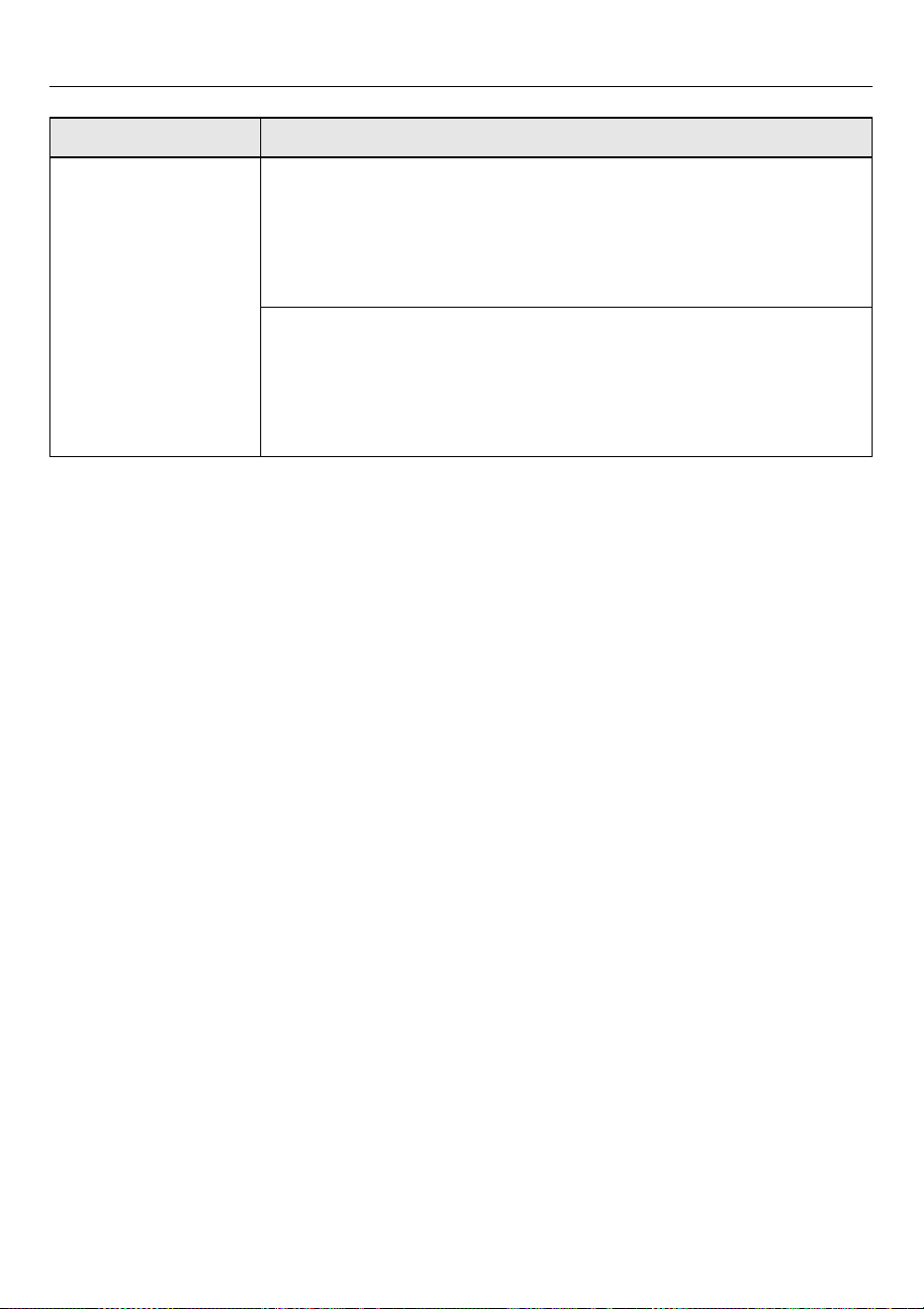
55
Before Calling for Service
Customer Care and Service
Contact an LG Electronics customer information centre.
• To find an LG Electronics authorised service personnel, visit our website at
www.lg.com
and follow the instructions found there.
• Self-repair is not recommended as it could further damage the device and void the
guarantee.
• Spare parts referenced in Regulation 2023/2533 are available for a minimum
duration of 10 years.
Your home
appliance and
smartphone is not
connected to the
Wi-Fi network.
The router frequency is not 2.4 GHz.
• Only a 2.4 GHz router frequency is supported. Set the
wireless router to 2.4 GHz and connect the appliance to the
wireless router. To check the router frequency, check with
your Internet service provider or the router manufacturer.
The appliance is too far from the router.
• If the appliance is too far from the router, the signal may be
weak and the connection may not be configured correctly.
Move the location of the router so that it is closer to the
appliance.
Symptoms Possible Cause & Solution
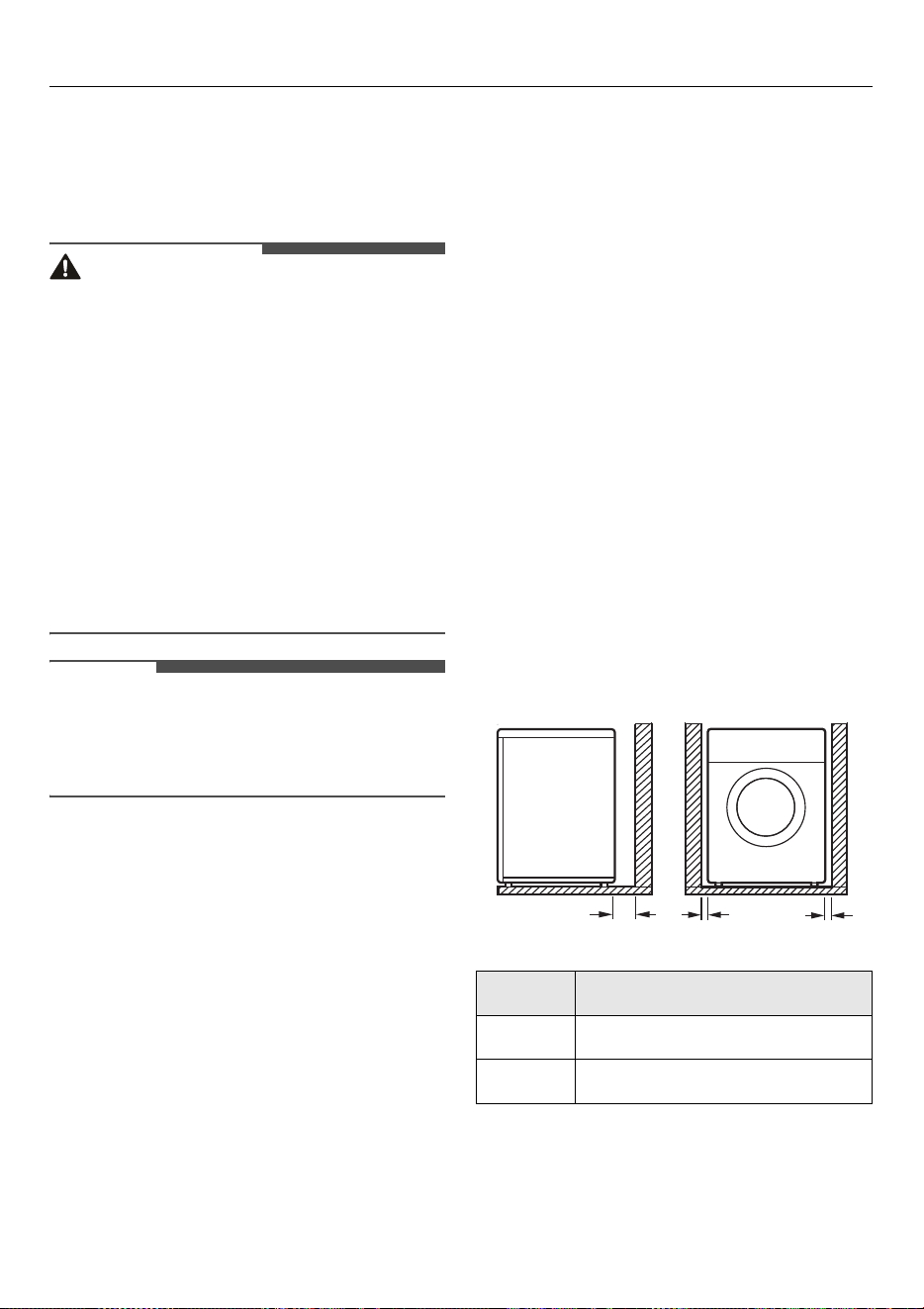
56
Installation Location Requirements
INSTALLATION
Instal lation Locati on Require ments
Before installing the appliance, check the following information to make sure that the
appliance is installed in the correct location.
Installation Location
WARNING
• Do not install the appliance around a
heat source. The rear side of the
appliance must be well ventilated.
Failure to follow these instructions
may result in problems.
• The appliance is not designed for
maritime use or for use in mobile
installation such as caravans, aircraft
and etc.
• Do not install the appliance as a built-
in appliance. It is not suitable for built-
in purpose.
NOTE
• For better drying performance, keep
the rear of the appliance away from
the wall.
• Make sure that the location where the
appliance will be installed meets a
minimum clearance conditions.
• Install the appliance on a flat hard
floor. Allowable slope under the
appliance is 1 degree.
• Never try to correct any unevenness in
the floor with pieces of wood,
cardboard or similar materials under
the appliance.
• Install the appliance in a location
where service engineers are easily
accessible in the event of a breakdown.
• Do not install the appliance next to
high-temperature appliances such as
refrigerator, oven or stove, and etc. It
can cause poor drying performance
and delay programme duration. It also
adversely affect the proper functioning
of the compressor.
• Do not install the appliance where
there is a risk of frost or dust. The
appliance may not be able to operate
properly or may be damaged by
freezing of condensed water in the
pump and drain hose.
• With the appliance installed, adjust all
four feet using a spanner to ensure the
appliance is stable, and a clearance of
approximately 20 mm is left between
the top of the appliance and the
underside of any work-top.
Ventilation
• Alcove or under counter
Index Clearance (mm)
A
100
B
20
A
BB
57
Installation Location Requirements
- Make sure that air circulation around
the appliance should not be impeded
by carpets, rugs, etc.
• Cupboard
- Cupboard door must have 2
(louvered) opening, each have a
minimum area of 387 cm
2
, located 8
cm from bottom and top of the door.
Ambient Temperature
• Do not install the appliance in rooms
where freezing temperatures may
occur. Frozen hoses may burst under
pressure. The reliability of the
electronic control unit may be
impaired at temperatures below
freezing point.
NOTE
• If the appliance is delivered in winter
and temperatures are below freezing,
place the appliance at room
temperature for a few hours before
putting it into operation.
• The appliance performs best at a room
temperature of 23 ℃.
Electrical Connection
• Do not use an extension cord or
double adapter.
• Do not overload the outlet with more
than one appliance.
• Connect the appliance to an earthed
socket in accordance with current
wiring regulations.
• The appliance must be positioned a
place close to outlet socket so that the
plug is easily accessible.
• Outlet socket must be within 1.5
meters of either side of the location of
the appliance.
NOTE
• Always unplug the appliance after use.
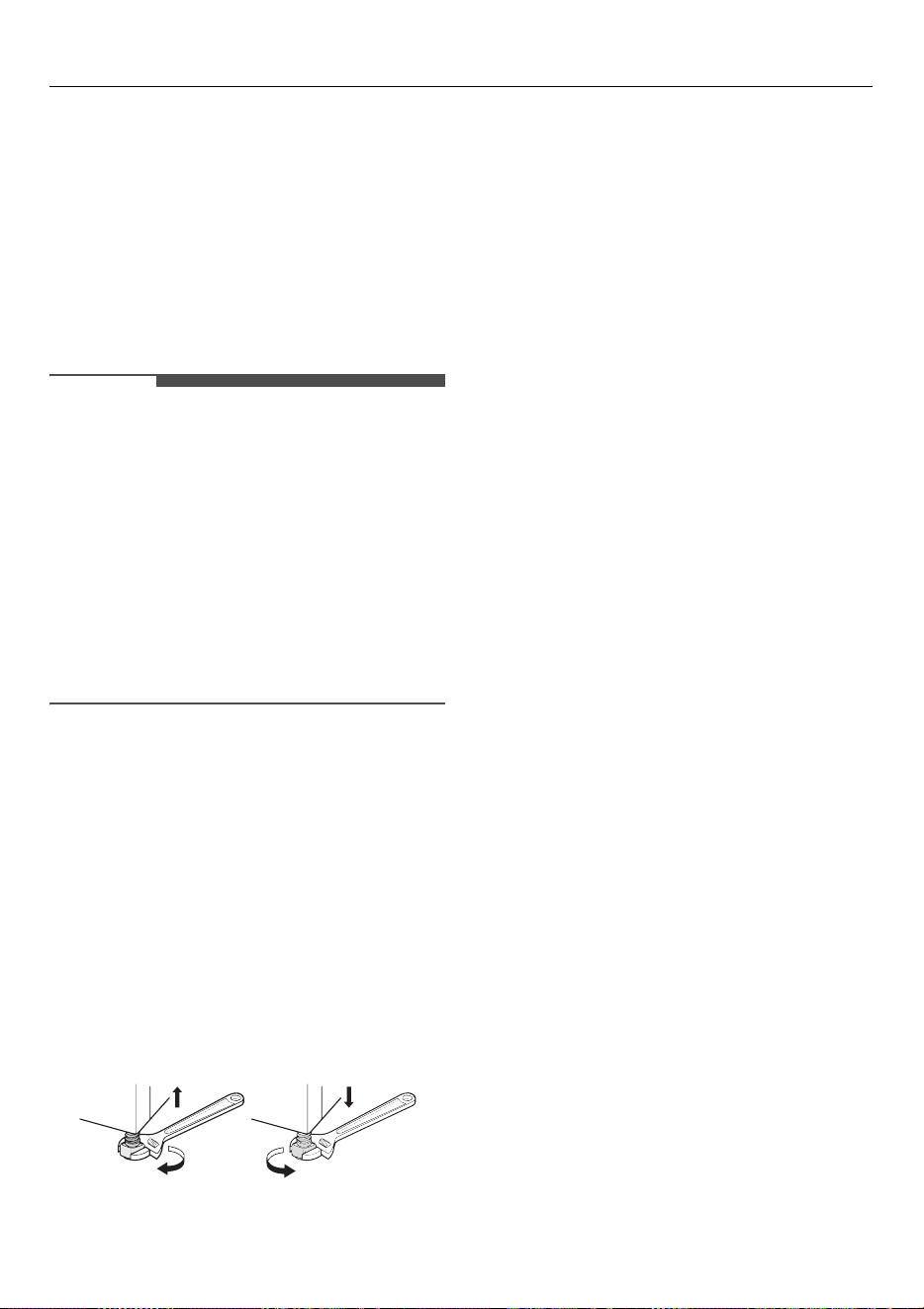
58
Leveling the Appliance
Leveling the Appliance
Checking Leveling
Leveling the appliance prevents
unnecessary noise and vibration. Check
whether the appliance is perfectly level
after installation.
• If the appliance rocks when pushing
the top plate of the appliance
diagonally, adjust the feet again.
NOTE
• Timber or suspended type flooring
may contribute to excessive vibration
and unbalance. Re-enforcement or
bracing of the timber floor may need
to be considered to stop or reduce
excessive noise and vibration.
• Do not install the appliance on any
elevated surface, stand or plinth as it
can become unstable and fall causing
serious injury and damage.
Adjusting and Leveling the
Appliance
When the appliance is not perfectly level,
turn the adjustable feet until the
appliance no longer wobbles.
• Turn the adjustable feet clockwise to
raise or turn the adjustable feet
counterclockwise to lower from front-
to-back, side-to-side and corner-to-
corner.
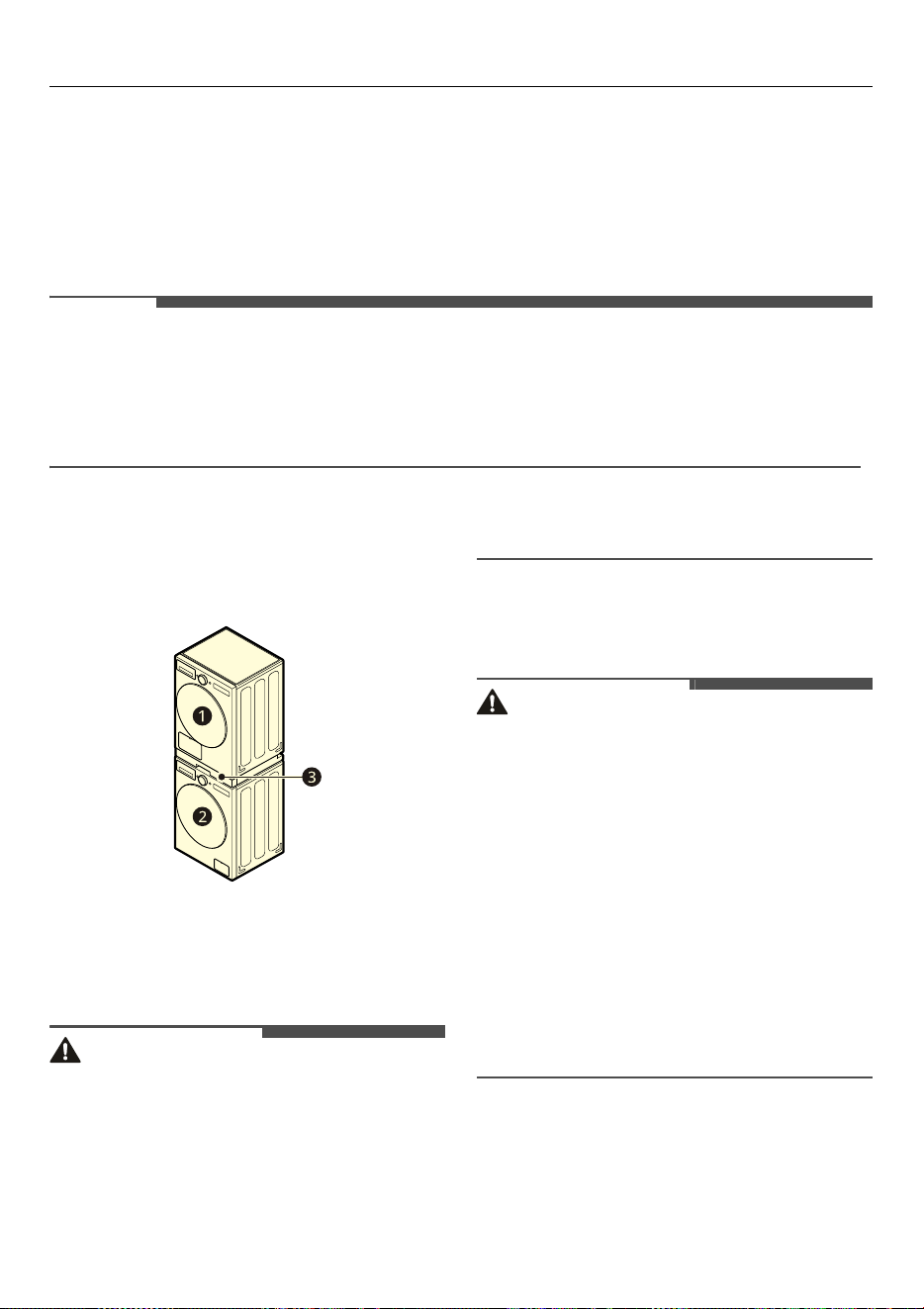
59
Stacking Instructions
Stacking Ins tructions
The appliance can be placed on top of an LG front load washing machine and securely
fixed with a stacking kit. This installation must be conducted by qualified service
personnel to ensure it has been installed correctly.
The qualified personnel will ensure you have the correct stacking kit for your model
of LG front load washing machine and will ensure it is firmly fixed. For these reasons,
expert fitting is essential.
NOTE
• The drawer-type stacking kit is not enclosed in the product, so you need to
purchase it separately. Please contact LG Electronics Customer Information Center
or visit the LG Website at http://www.lg.com for purchase.
• Stacking on the LG SIGNATURE washing machine is
unavailable
.
Stacking Kit
In order to stack the appliance, an LG
stacking kit is required.
a
Dryer
b
LG Front Load Washing Machine
c
Stacking Kit
CAUTION
• The appliance may only be stacked on
top of an LG front load washing
machine. Do not attempt to stack the
appliance on any other washing
machine, as it could result in damage,
injury or property damage.
Installation Procedure
WARNING
• For safety reasons, installation
procedure should be performed by
two or more qualified service
personnel.
• The weight of the appliance and the
height of the installation makes the
installation procedure too risky for one
person.
• Incorrect installation can cause serious
accidents.
• Do not operate if the appliance is not
properly stacked.
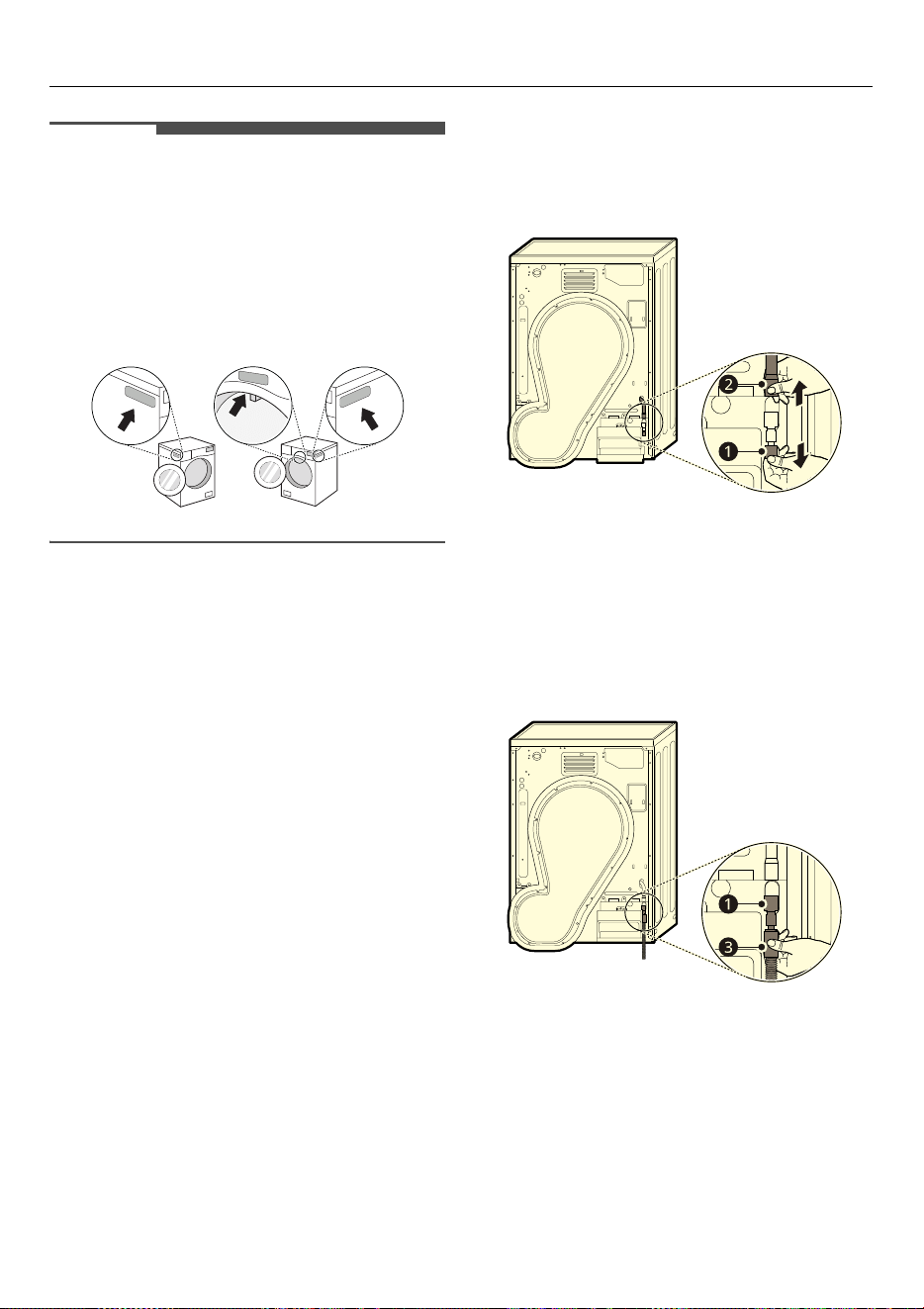
60
Stacking Instructions
NOTE
• The stacking kit should be aligned
depending on the depth of the
washing machine. (When you open the
door or look at the side of the washing
machine, you can find the dimension
information of your washing machine
at the label.)
Installing the Optional
Drain Hose
Normally, condensed water is pumped
up to the water container where water is
collected until manually emptied. Water
can also be drained out directly to a
mains drain, especially when the
appliance is stacked on top of a washing
machine. With the connecting elbow or T
piece of the mains drain hose, simply
change the water path and re-route to
the drainage facility as below:
1
Separate the anti-backflow lid
a
and
the water container hose
b
from the
connecting elbow or T piece.
2
Attach the anti-backflow lid
a
to the
head of the connecting elbow or T
piece and then connect the optional
drain hose
c
to the opposite side of
the connecting elbow or T piece.
3
The drain hose should not be placed
higher than 150 cm above the floor.
Water in the appliance may not drain
or may drain slowly.
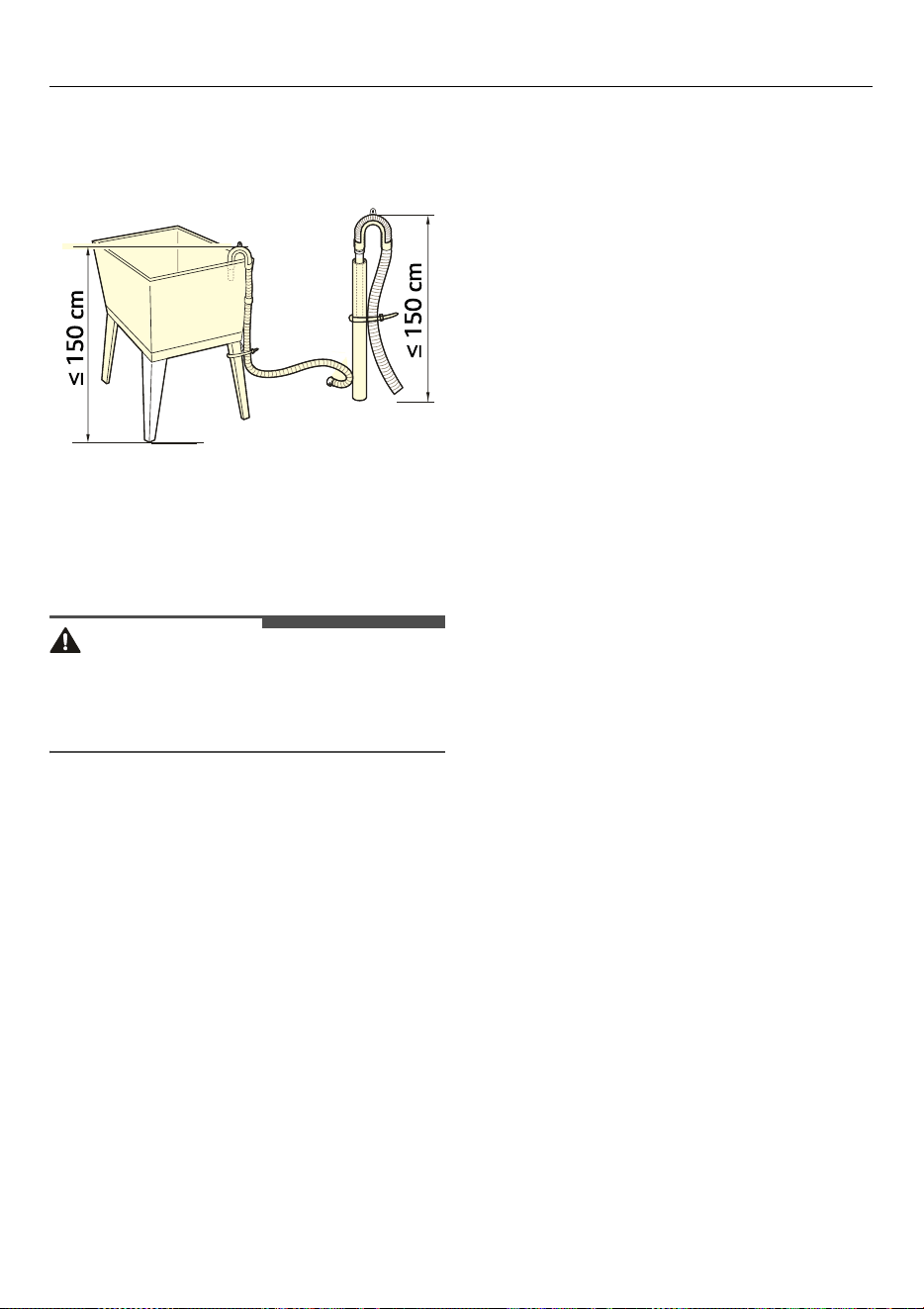
61
Stacking Instructions
• Securing the drain hose correctly
will protect the floor from damage
due to water leakage.
• If the drain hose is too long, do not
force it back into the appliance. This
will cause abnormal noise.
• When installing the drain hose to a
sink, secure it tightly with string.
CAUTION
• If the optional drain hose is installed in
a way that leaves it bent or pinched,
drainage may not function properly.
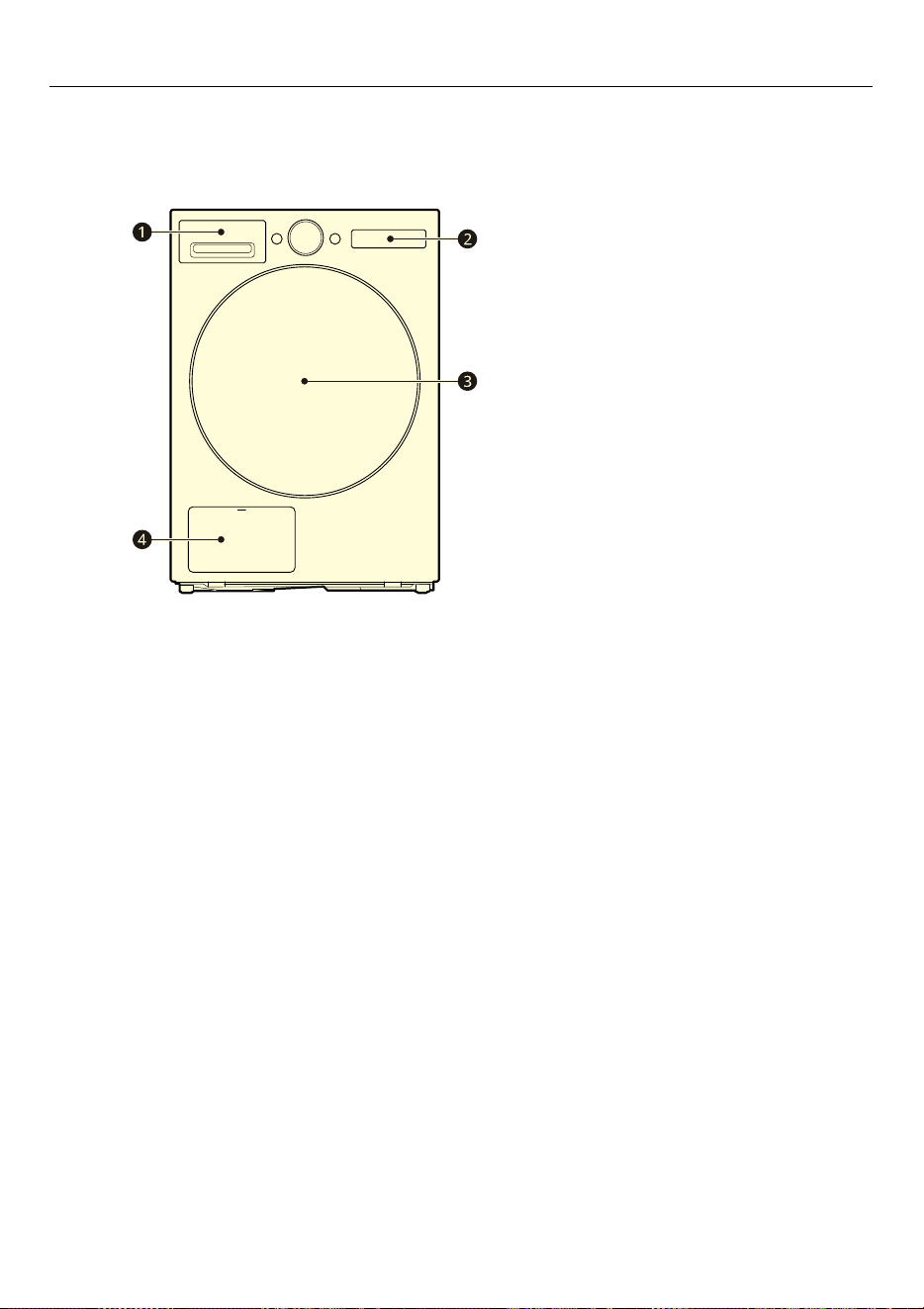
62
Names of Parts and Accessories
APPENDIX
Names of Parts and Accessories
Front View
a
Water Container
b
Control Panel
c
Door
d
Condenser Cover
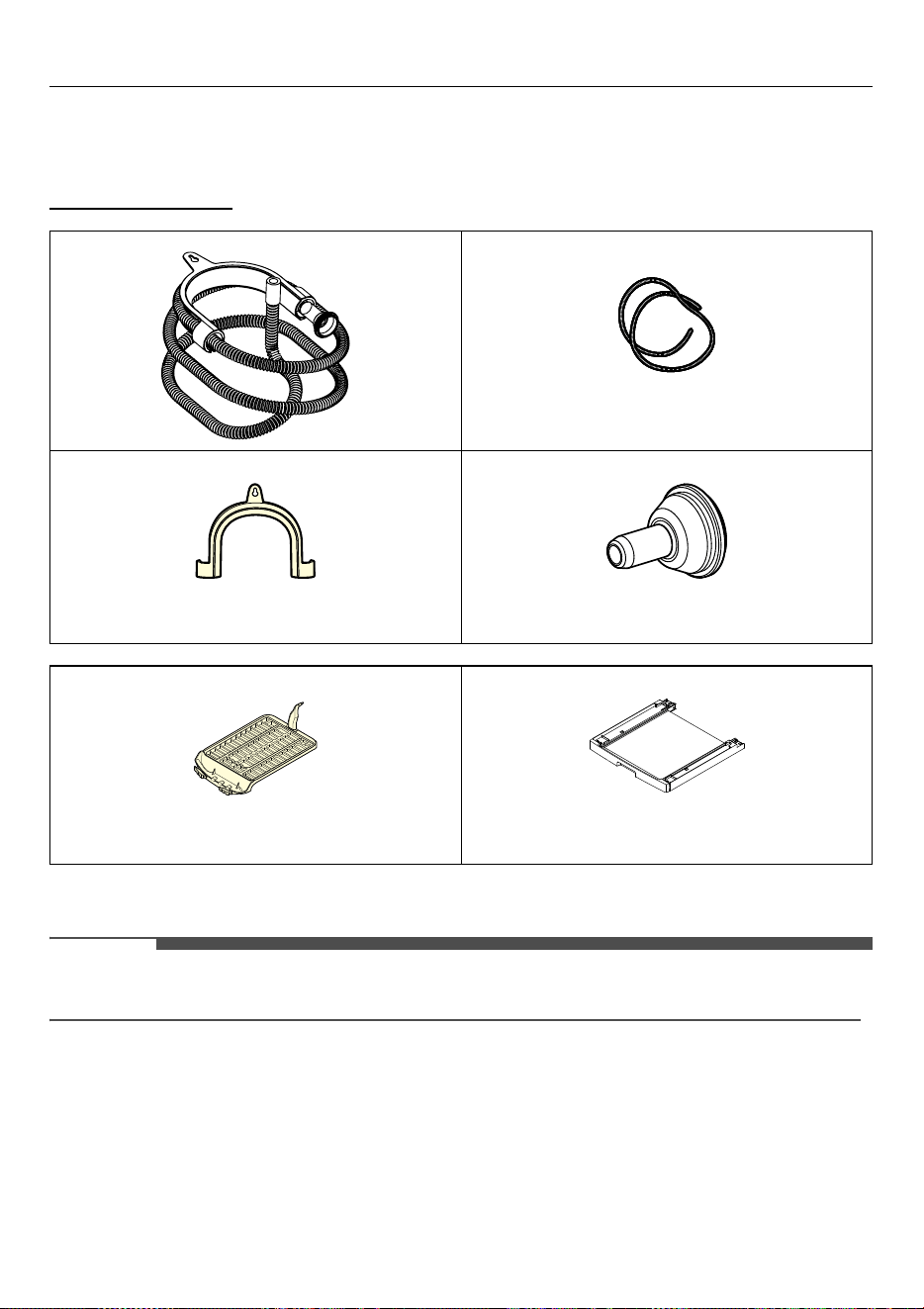
63
Names of Parts and Accessories
Available Accessories
Please contact LG Electronics Customer Information Centre or visit the LG Website at
http://www.lg.com
for purchase.
*1 This can be purchased separately.
NOTE
• In order to stack the appliance, the stacking kit should be purchased separately.
Condensing Drain Hose
Elbow Bracket for Securing Drain Hose Drain Hose Holder
Dry Rack
Stacking Kit
*1
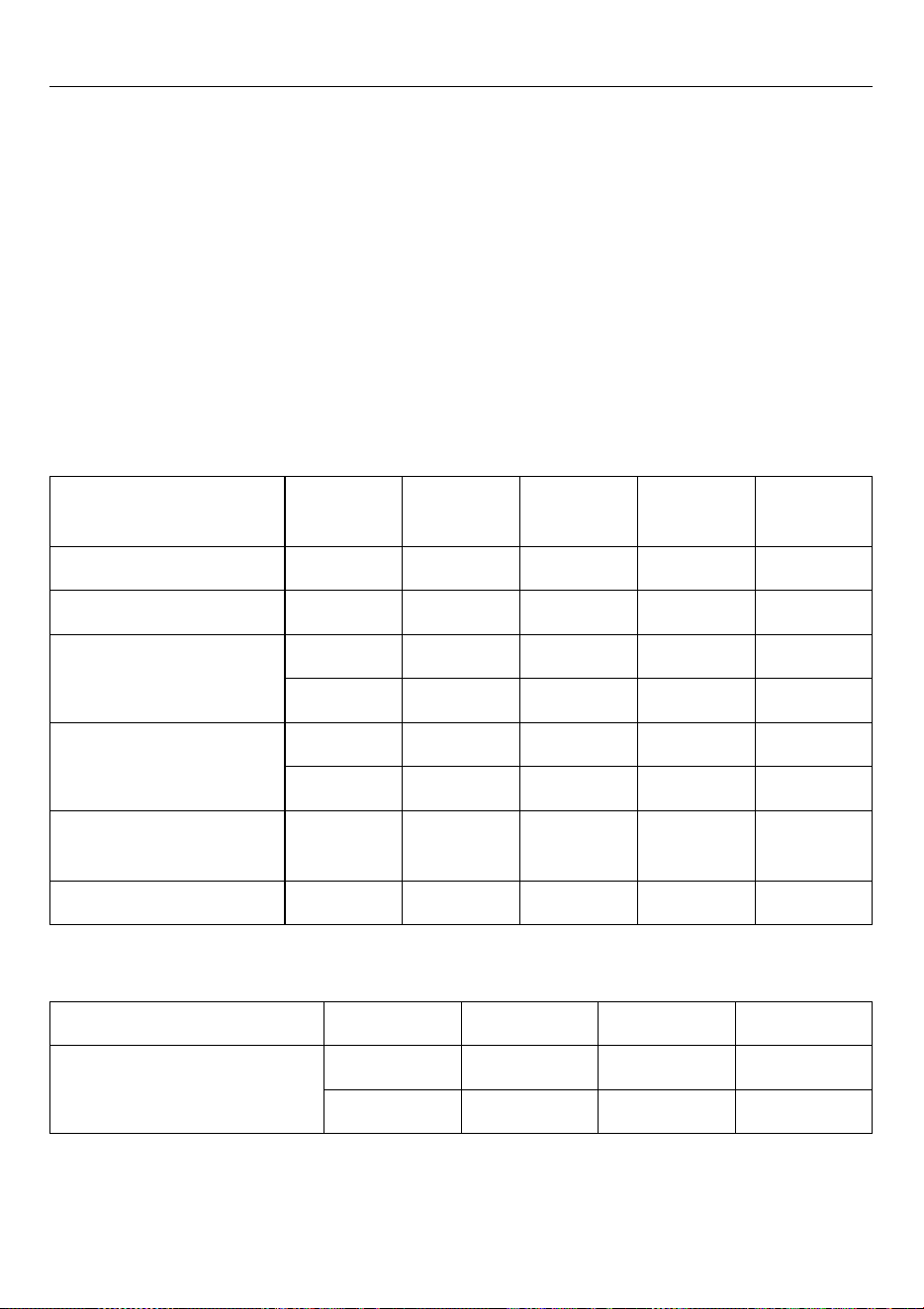
64
Technical Data
Technical Data
Consumption Data
Unit Description
Common Programmes
Standard Programmes
*1 Test programme based on 60% moisture content in accordance with Regulation
(EU) 2023/2534 for energy labelling, measured in accordance with EN 61121
kg
: Laundry load (Weight of dry laundry)
rpm (spun at)
: Selected spin speed in
washing machine
Initial (%)
: Remaining moisture of
laundry after spinning
h:mm
: Programme duration
kWh
: Energy consumption
dB
: Sound power level
Programme kg
rpm
(spun at)
Initial
(%)
h:mm kWh
Delicates
1.5 800 45 1:45 0.50
Wool
1 800 35 0:40 0.16
Cotton
+
Extra
10 1400 60 4:00 2.72
5 1400 60 2:55 1.89
Cotton
+
Iron
10 1400 60 3:45 1.26
5 1400 60 2:25 0.75
Easy Care
+
Cupboard
4 1400 40 1:10 0.57
Easy Care
+
Iron
4 1400 40 0:55 0.43
Programme kg h:mm kWh dB
Eco
R
+
Cupboard
*1
10 5:08 1.70 62
53:000.89 -

65
Technical Data
NOTE
• The test results depend on room temperature, type and amount of load, residual
moisture levels after spinning, fluctuations in the main electricity supply and
chosen additional options.
• The test results are based on the programme's default
Dry Mode
settings.
• The values for the common programmes other than the standard programmes are
indicative only.
• Scan the QR code on the energy label supplied with the appliance, which provides
a web link to the information related to the performance of the appliance in the EU
EPREL database. Keep the energy label for reference together with the owner's
manual and all other documents supplied with the appliance.
• The model name can be found on the rating label of the appliance, open the door
which is just around the opening to the drum.
• To find the same information in EPREL, visit https://eprel.ec.europa.eu
and search
using the model name.
Note for Test Institutes
• A drain hose should be connected to the appliance for the test in accordance with
EN61121 and Directive 2023/2533. If the drain hose is not connected to the
appliance, connect the drain hose to the appliance by referring to
Installing the
Optional Drain Hose
.
• Set programme at
Eco
R
+
Cupboard
+
Efficiency
(Full & Half Load) for test in
accordance in conformity with EN61121 and Directive 2023/2533.
•
Eco
R
+
Cupboard
+
Efficiency
is suitable to dry wet cotton laundry, and that this
programme is used to assess the compliance with EN 61121 and Directive 2023/
2533.
•
Eco
R
+
Cupboard
+
Efficiency
is the most efficient programme in terms of
energy consumption for drying wet cotton laundry.
• The test results depend on room temperature, type and amount of load, water
hardness, fluctuations in the main electricity supply and chosen additional options.
Specifications
Asterisk(s) means model variant and can be varied (0-9) or (A-Z).
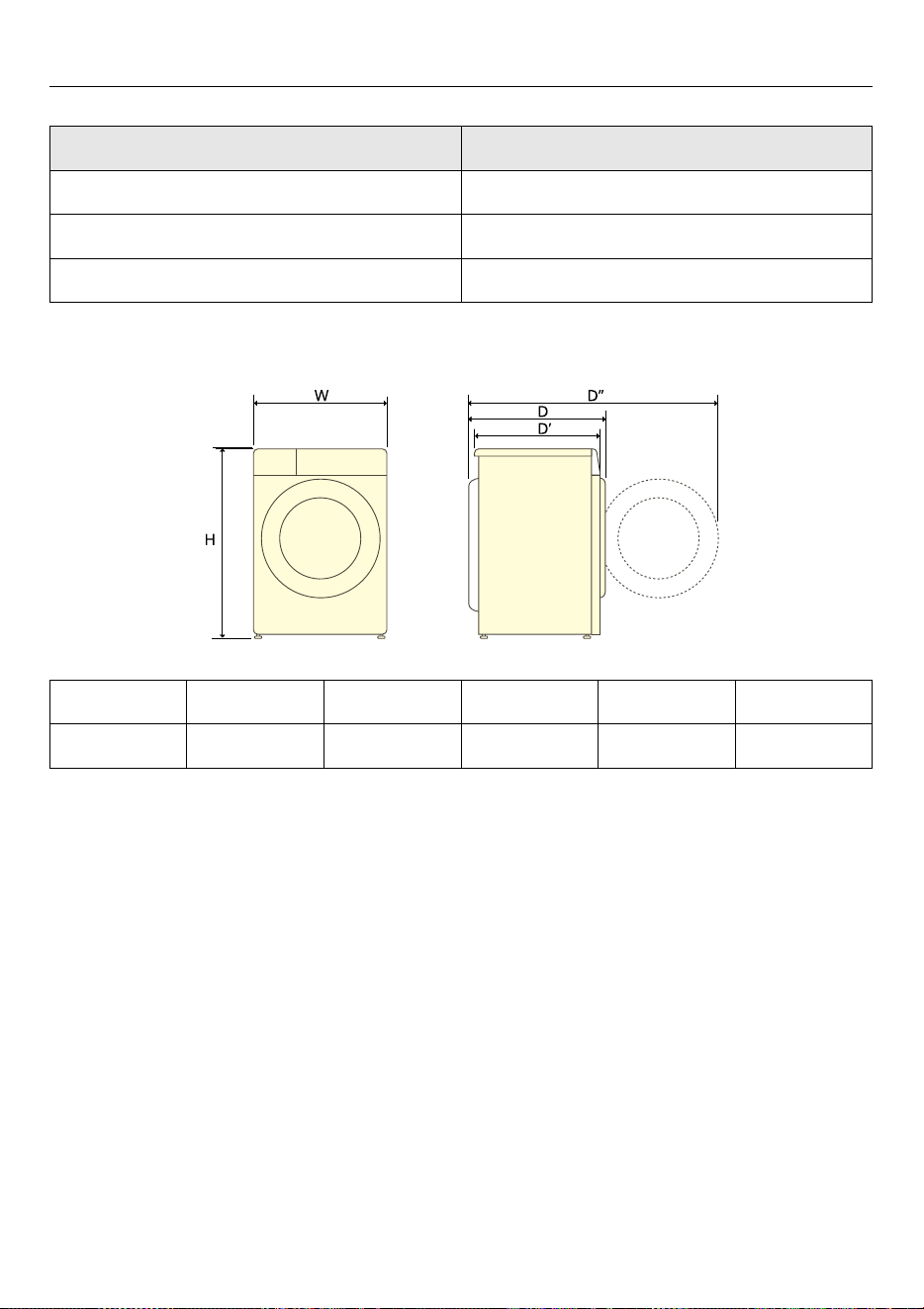
66
Technical Data
Dimension(mm)
Model RHX7010T*B
Power supply 220 - 240 V~, 50 Hz
Product weight 55 kg
Allowable temperature 5 - 35 ℃
W 600 D 660 D'' 1140
H 850 D' 615
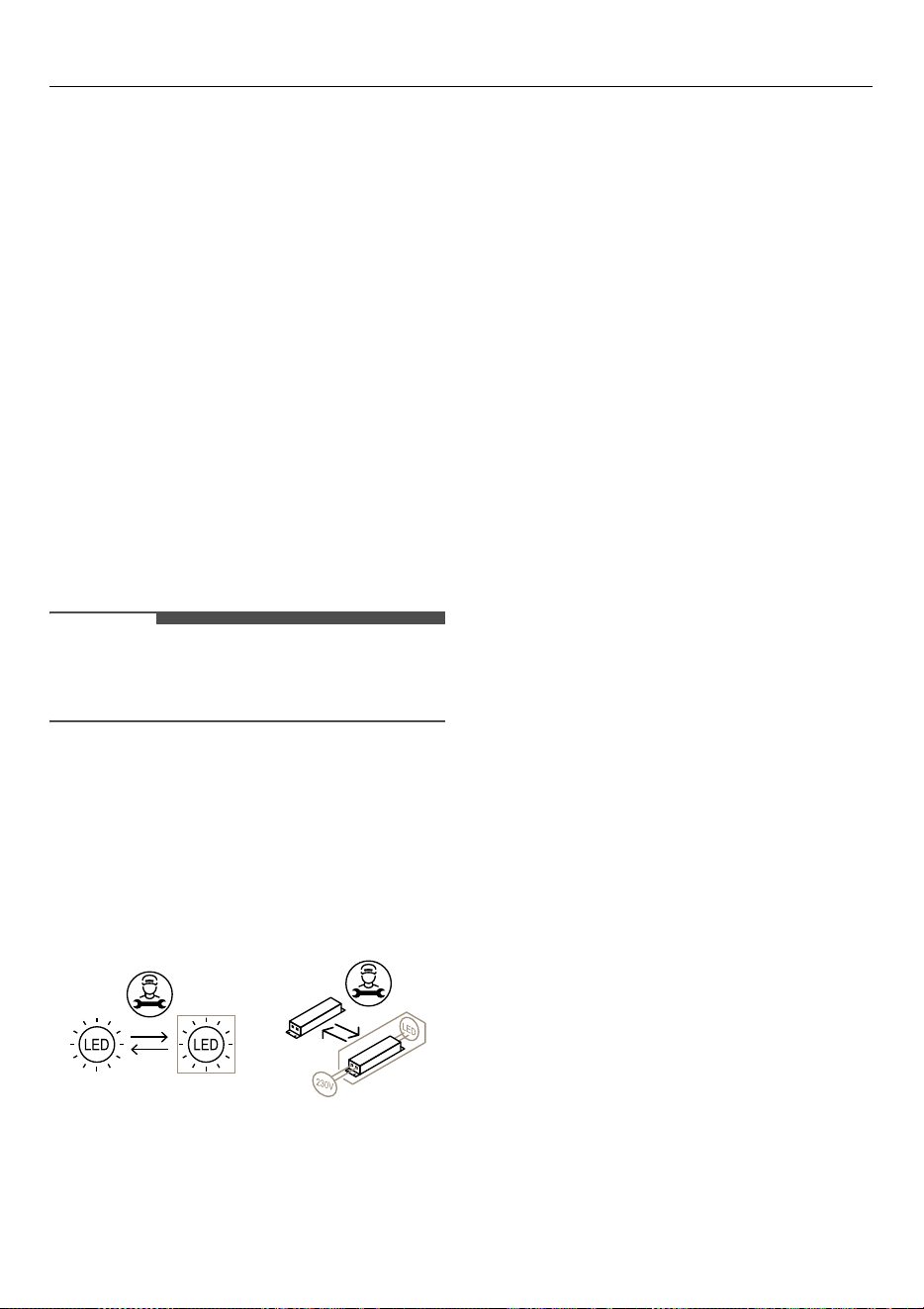
67
Additional Information
Additional Information
Information on LED
Lighting
This product contains the light source of
energy efficiency class G.
• The LED lighting automatically turns
on and off in any of the following
cases:
- when opening and closing the door,
- when pressing
Power
and
Start/
Pause
Button.
• The LED lighting is not dimmable.
• The LED lighting does not contain
mercury.
• Please see
www.lg.com/global/
recycling
.
NOTE
• This feature varies depending on the
model purchased.
If the LED lighting is not working
Close the door and re-open, or press
Power
button. If the LED lighting does
not turn on, please contact the LG
Electronics customer information centre.
Do not attempt removal of the LED
lighting.
Open Source Software
Notice Information
To obtain the source code that is
contained in this product, under GPL,
LGPL, MPL, and other open source
licenses that have the obligation to
disclose source code, and to access all
referred license terms, copyright notices
and other relevant documents, please
visit https://opensource.lge.com.
LG Electronics will also provide open
source code to you on CD-ROM for a
charge covering the cost of performing
such distribution (such as the cost of
media, shipping, and handling) upon
email request to [email protected].
This offer is valid to anyone in receipt of
this information for a period of three
years after our last shipment of this
product.