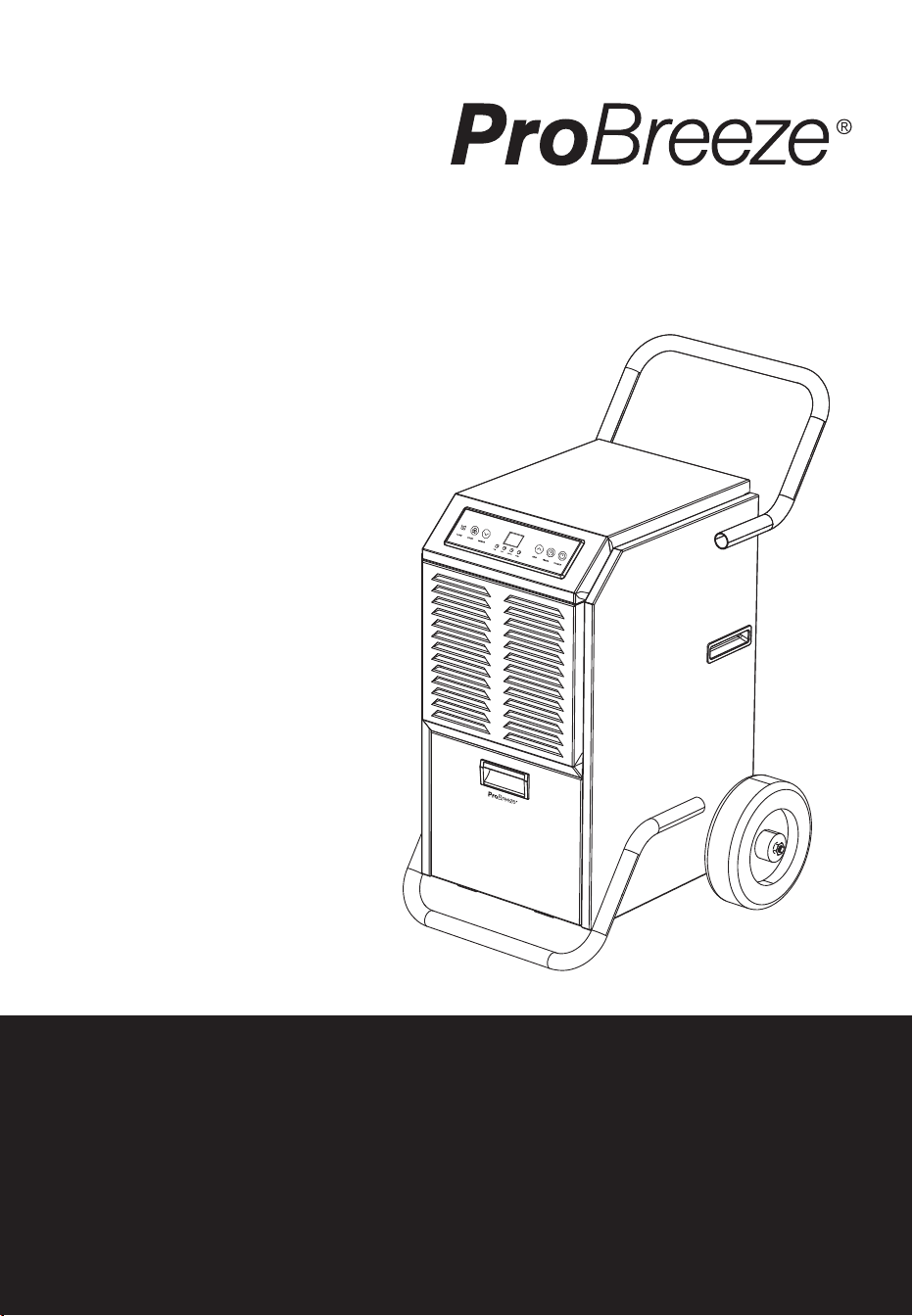
Instruction Manual
Model PB-D-31-UK
50L Industrial Compressor Dehumidier
IMPORTANT INSTRUCTIONS
- RETAIN FOR FUTURE USE

2 of 20 | English English | 3 of 20
50L INDUSTRIAL COMPRESSOR
DEHUMIDIFIER
PB-D-31-UK
Warning copy should always
be in BOLD RED with a warning
symbol next to it.
Attention copy should always be
in BOLD CAPITAL.
Please note that all Warnings/
Caution thorughout the IM need
to be 3mm in height (12pt size,
13pt leading).
ALL Warning/Cautions and
bullet pointed text in the Safety
Instructions and Cleaning
instructions need to be 3mm in
height
Thank you for choosing to purchase a product from Pro Breeze. Please read the entire manual carefully
prior to rst use and keep in a safe place for future reference.
SAFETY INSTRUCTIONS
――
PLEASE READ AND SAVE THESE IMPORTANT SAFETY
INSTRUCTIONS.
When using electrical appliances, basic safety precaution
should always be followed to reduce the risk of re, electric
shock, and injury to persons, including the following:
WARNING: TO AVOID THE RISK OF ELECTRICAL SHOCK,
FIRE OR INJURY TO PEOPLE, ALWAYS TURN THE APPLIANCE
OFF UNPLUG THE POWER CORD FROM THE ELECTRICAL
OUTLET AND EMPTY THE WATER TANK BEFORE HANDLING,
CLEANING OR SERVICING THE APPLIANCE.
• Use this appliance only as described in this manual. Any
other use not recommended by the manufacturer may
cause re, electric shock, or injury to person.
• Do not cover the appliance whilst in use.
• Always unplug the appliance when not in use.
• Do not expose the appliance to direct sunlight, heat
sources or extreme cold.
• Keep the appliance out of reach of children and pets.
• Do not leave children alone or unattended in the area
where the appliance is in use.
• Children shall not play with the appliance.
• Cleaning and user maintenance shall not be made by
children without supervision.
• Dispose of water held by the appliance. This water is not
drinkable.
• This appliance can be used by children aged from 8
years and above and persons with reduced physical,
CONTENTS
Safety Instructions................................ Page 3
Servicing Safety Instructions ............ Page 7
Symbols Explained ...............................Page 11
Specication .......................................... Page 12
Assembly.................................................Page 12
Product Overview .................................Page 13
Control Panel .........................................Page 14
Operating Instructions ....................... Page 15
Cleaning and Storage ........................Page 17
Recycling and Disposal .....................Page 19
EN
A CONTENTS PAGE SHOULD BE ADDED AT THE
BEGINNING OF EACH LANGUAGE SECTION
2 of 20 | English English | 3 of 20
50L INDUSTRIAL COMPRESSOR
DEHUMIDIFIER
PB-D-31-UK
Warning copy should always
be in BOLD RED with a warning
symbol next to it.
Attention copy should always be
in BOLD CAPITAL.
Please note that all Warnings/
Caution thorughout the IM need
to be 3mm in height (12pt size,
13pt leading).
ALL Warning/Cautions and
bullet pointed text in the Safety
Instructions and Cleaning
instructions need to be 3mm in
height
Thank you for choosing to purchase a product from Pro Breeze. Please read the entire manual carefully
prior to rst use and keep in a safe place for future reference.
SAFETY INSTRUCTIONS
――
PLEASE READ AND SAVE THESE IMPORTANT SAFETY
INSTRUCTIONS.
When using electrical appliances, basic safety precaution
should always be followed to reduce the risk of re, electric
shock, and injury to persons, including the following:
WARNING: TO AVOID THE RISK OF ELECTRICAL SHOCK,
FIRE OR INJURY TO PEOPLE, ALWAYS TURN THE APPLIANCE
OFF UNPLUG THE POWER CORD FROM THE ELECTRICAL
OUTLET AND EMPTY THE WATER TANK BEFORE HANDLING,
CLEANING OR SERVICING THE APPLIANCE.
• Use this appliance only as described in this manual. Any
other use not recommended by the manufacturer may
cause re, electric shock, or injury to person.
• Do not cover the appliance whilst in use.
• Always unplug the appliance when not in use.
• Do not expose the appliance to direct sunlight, heat
sources or extreme cold.
• Keep the appliance out of reach of children and pets.
• Do not leave children alone or unattended in the area
where the appliance is in use.
• Children shall not play with the appliance.
• Cleaning and user maintenance shall not be made by
children without supervision.
• Dispose of water held by the appliance. This water is not
drinkable.
• This appliance can be used by children aged from 8
years and above and persons with reduced physical,
CONTENTS
Safety Instructions................................ Page 3
Servicing Safety Instructions ............ Page 7
Symbols Explained ...............................Page 11
Specication .......................................... Page 12
Assembly.................................................Page 12
Product Overview .................................Page 13
Control Panel .........................................Page 14
Operating Instructions ....................... Page 15
Cleaning and Storage ........................Page 17
Recycling and Disposal .....................Page 19
EN
A CONTENTS PAGE SHOULD BE ADDED AT THE
BEGINNING OF EACH LANGUAGE SECTION

4 of 20 | English English | 5 of 20
sensory or mental capabilities or lack of experience
and knowledge if they have been given supervision or
instruction concerning use of the appliance in a safe way
and understand the hazards involved.
• When moving the appliance, ensure it is kept in an
upright position.
• The appliance must have a minimum 50cm clearance
around all sides.
• Never leave the appliance unattended in use. Always
turn the appliance off and disconnect it from the power
supply when not in use.
• Avoid placing the power cord in areas where it can
become a tripping hazard. Do not place the power cord
under carpeting or cover it with rugs, runners or similar.
• Place the appliance on a at, stable and dry surface
and always keep the appliance in an upright position.
Operating the appliance in any other position could
cause a hazard.
• Never place anything on top of the appliance.
• Ensure that the mains supply (voltage, frequency and
power) complies with the rating label of the appliance.
• There may be trace of odour during the rst few minutes
of initial use. This is normal and ill quickly disappear.
• Do not place the appliance against a wall or other
appliances.
• Do not cover the appliance or restrict the air ow of the
inlet or exhaust grills whilst in use.
• Do not place the appliance against a wall or other
appliances.
• Do not cover, obstruct or push objects into the vents and
opening of the appliance as this may cause an electric
shock, re or damage the appliance.
• Do not operate the appliance with wet hands.
• Do not use this appliance near water or in the immediate
surroundings of a bath, shower or a swimming pool.
Never place the appliance where it may fall into a
bathtub or other water container.
• Do not allow water or other liquids to run into the interior
of the appliance, as this could create a re and/or
electrical hazard.
• Do not use mechanical devices to accelerate the
appliances defrosting process.
• Do not place the continuous drainage hose outside when
the temperature falls below 1C.
• This appliance is intended for indoor household use and
similar applications. Do not use outdoors.
• Do not use the appliance near petrol, paints, ammable
gases, ovens, or other heating sources.
• The mains cable should not hang down from the surface
on which the appliance is placed in order to prevent the
appliance from being pulled down.
• To avoid a circuit overload when using this appliance,
do not operate another high-wattage appliance on the
same electrical circuit.
• Always plug the appliance directly into a wall socket.
Avoid using extension leads where possible as they may
overheat and cause a risk of re.
• Do not use this appliance with an external programmer,
timer switch or any other device which would switch the
appliance on automatically unless this has already been
pre-built into the appliance by the manufacturer.
• Do not pull on the power cord. Never move, carry, or hang
the appliance by the power cord.
• Do not kink or wrap the power cord and plug around the
appliance, as this may cause the insulation to weaken or
split, particularly where it enters the appliance.
• Do not operate the appliance with the water tank
removed.
• Ensure the mains cable is fully extended before use and
arrange it so that it is not in contact with any part of the
appliance.
• Do not operate the appliance with any safety guards

4 of 20 | English English | 5 of 20
sensory or mental capabilities or lack of experience
and knowledge if they have been given supervision or
instruction concerning use of the appliance in a safe way
and understand the hazards involved.
• When moving the appliance, ensure it is kept in an
upright position.
• The appliance must have a minimum 50cm clearance
around all sides.
• Never leave the appliance unattended in use. Always
turn the appliance off and disconnect it from the power
supply when not in use.
• Avoid placing the power cord in areas where it can
become a tripping hazard. Do not place the power cord
under carpeting or cover it with rugs, runners or similar.
• Place the appliance on a at, stable and dry surface
and always keep the appliance in an upright position.
Operating the appliance in any other position could
cause a hazard.
• Never place anything on top of the appliance.
• Ensure that the mains supply (voltage, frequency and
power) complies with the rating label of the appliance.
• There may be trace of odour during the rst few minutes
of initial use. This is normal and ill quickly disappear.
• Do not place the appliance against a wall or other
appliances.
• Do not cover the appliance or restrict the air ow of the
inlet or exhaust grills whilst in use.
• Do not place the appliance against a wall or other
appliances.
• Do not cover, obstruct or push objects into the vents and
opening of the appliance as this may cause an electric
shock, re or damage the appliance.
• Do not operate the appliance with wet hands.
• Do not use this appliance near water or in the immediate
surroundings of a bath, shower or a swimming pool.
Never place the appliance where it may fall into a
bathtub or other water container.
• Do not allow water or other liquids to run into the interior
of the appliance, as this could create a re and/or
electrical hazard.
• Do not use mechanical devices to accelerate the
appliances defrosting process.
• Do not place the continuous drainage hose outside when
the temperature falls below 1C.
• This appliance is intended for indoor household use and
similar applications. Do not use outdoors.
• Do not use the appliance near petrol, paints, ammable
gases, ovens, or other heating sources.
• The mains cable should not hang down from the surface
on which the appliance is placed in order to prevent the
appliance from being pulled down.
• To avoid a circuit overload when using this appliance,
do not operate another high-wattage appliance on the
same electrical circuit.
• Always plug the appliance directly into a wall socket.
Avoid using extension leads where possible as they may
overheat and cause a risk of re.
• Do not use this appliance with an external programmer,
timer switch or any other device which would switch the
appliance on automatically unless this has already been
pre-built into the appliance by the manufacturer.
• Do not pull on the power cord. Never move, carry, or hang
the appliance by the power cord.
• Do not kink or wrap the power cord and plug around the
appliance, as this may cause the insulation to weaken or
split, particularly where it enters the appliance.
• Do not operate the appliance with the water tank
removed.
• Ensure the mains cable is fully extended before use and
arrange it so that it is not in contact with any part of the
appliance.
• Do not operate the appliance with any safety guards
6 of 20 | English English | 7 of 20
removed.
• Do not operate the appliance if there are any signs of
damage to the appliance or accessories supplied.
• Do not attempt to repair or adjust any electrical or
mechanical elements in the appliance. Doing so may be
unsafe and will void your warranty.
• The appliance shall be installed in accordance with
national wiring regulations.
• The unit’s circuit board (PCB) is designed with a fuse to
provide overcurrent protection. The specications of the
fuse are printed on the circuit board.
• Never insert ngers or metal objects into the vents and
openings of the appliance
• Do not operate the appliance without the lter.
• If the supply cord is damaged, it must be replaced by the
manufacturer, its service agent or a similarly qualied
person in order to avoid a hazard.
• This appliance is intended to be used by expert or trained
users in shops, in light industry and on farms, or for
commercial use by lay persons.
Specic Information Regarding R290 Refrigerant Gas
WARNING: THE APPLIANCE MUST BE INSTALLED, OPERATED
AND STORED IN A ROOM WITH A FLOOR AREA LARGER
THAN 6M2.
• This appliance contains 0.12kg (120g) of R290 refrigerant
gas.
CAUTION
RISK OF FIRE
• R290 is a refrigerant gas that complies with the European
directive on the environment.
• Do not puncture any part of refrigerant circuit.
• Be aware R290 refrigerant is odourless and does not
have the odour normally associated with natural gas and
propane tanks.
• Do not use means to accelerate the defrosting process
or to clean, other than those recommended by the
manufacturer.
• The appliance must be placed in an area without any
continuous sources of ignition such as open ames, gas,
or electrical appliances in operation.
• Do not puncture and do not burn.
• If the appliance is installed, operated or stored in a non-
ventilated area, the room must be designed to prevent
the accumulation of refrigerant leaks resulting in a risk of
re or explosion due to ignition of the refrigerant caused
by electric heaters, stoves, or other sources of ignition.
• The appliance must be stored in such a way as to
prevent mechanical failure.
• Individuals who operate or work on the refrigerant circuit
must have the appropriate certication issued by an
accredited organisation that ensures competence in
handling refrigerants according to a specic evaluation
recognised by associations in the industry.
• Maintenance and repairs that require the assistance
of other qualied personnel must be performed under
the supervision of an individual specied in the use of
ammable refrigerants.
SERVICING SAFETY INSTRUCTIONS
――
Please follow these warnings when to undertake the
following when servicing a dehumidier with R290.

6 of 20 | English English | 7 of 20
removed.
• Do not operate the appliance if there are any signs of
damage to the appliance or accessories supplied.
• Do not attempt to repair or adjust any electrical or
mechanical elements in the appliance. Doing so may be
unsafe and will void your warranty.
• The appliance shall be installed in accordance with
national wiring regulations.
• The unit’s circuit board (PCB) is designed with a fuse to
provide overcurrent protection. The specications of the
fuse are printed on the circuit board.
• Never insert ngers or metal objects into the vents and
openings of the appliance
• Do not operate the appliance without the lter.
• If the supply cord is damaged, it must be replaced by the
manufacturer, its service agent or a similarly qualied
person in order to avoid a hazard.
• This appliance is intended to be used by expert or trained
users in shops, in light industry and on farms, or for
commercial use by lay persons.
Specic Information Regarding R290 Refrigerant Gas
WARNING: THE APPLIANCE MUST BE INSTALLED, OPERATED
AND STORED IN A ROOM WITH A FLOOR AREA LARGER
THAN 6M2.
• This appliance contains 0.12kg (120g) of R290 refrigerant
gas.
CAUTION
RISK OF FIRE
• R290 is a refrigerant gas that complies with the European
directive on the environment.
• Do not puncture any part of refrigerant circuit.
• Be aware R290 refrigerant is odourless and does not
have the odour normally associated with natural gas and
propane tanks.
• Do not use means to accelerate the defrosting process
or to clean, other than those recommended by the
manufacturer.
• The appliance must be placed in an area without any
continuous sources of ignition such as open ames, gas,
or electrical appliances in operation.
• Do not puncture and do not burn.
• If the appliance is installed, operated or stored in a non-
ventilated area, the room must be designed to prevent
the accumulation of refrigerant leaks resulting in a risk of
re or explosion due to ignition of the refrigerant caused
by electric heaters, stoves, or other sources of ignition.
• The appliance must be stored in such a way as to
prevent mechanical failure.
• Individuals who operate or work on the refrigerant circuit
must have the appropriate certication issued by an
accredited organisation that ensures competence in
handling refrigerants according to a specic evaluation
recognised by associations in the industry.
• Maintenance and repairs that require the assistance
of other qualied personnel must be performed under
the supervision of an individual specied in the use of
ammable refrigerants.
SERVICING SAFETY INSTRUCTIONS
――
Please follow these warnings when to undertake the
following when servicing a dehumidier with R290.

8 of 20 | English English | 9 of 20
Checks to the Area
Prior to beginning work on systems containing ammable
refrigerants, safety checks are necessary to ensure that the
risk of ignition is minimized. For repair to the refrigerating
system, the following precautions shall be complied with
prior to conducting work on the system.
Work Procedure
Work shall be undertaken under a controlled procedure to
minimize the risk of a ammable gas or vapor being present
while the work is being performed.
General Work Area
All maintenance staff and others working in the local area
shall be instructed on the nature of work being carried
out. Work in conned spaces shall be avoided. The area
around the workspace shall be sectioned off. Ensure that the
conditions within the area have been made safe by control
of ammable material.
Checking for Presence of Refrigerant
The area shall be checked with an appropriate refrigerant
detector prior to and during work, to ensure the technician
is aware of potentially ammable atmospheres. Ensure that
the leak detection equipment being used is suitable for use
with ammable refrigerants, i.e. no sparking, adequately
sealed or intrinsically safe.
Presence of Fire Extinguisher
If any hot work is to be conducted on the refrigeration
equipment or any associated parts, appropriate re
extinguishing equipment shall be available to hand. Have a
dry powder or CO2 re extinguisher adjacent to the charging
area.
No Ignition Sources
No person carrying out work in relation to a refrigeration
system which involves exposing any pipe work that contains
or has contained ammable refrigerant shall use any
sources of ignition in such a manner that it may lead to
the risk of re or explosion. All possible ignition sources,
including cigarette smoking, should be kept sufciently far
away from the site of installation, repairing, removing and
disposal, during which ammable refrigerant can possibly
be released to the surrounding space. Prior to work taking
place, the area around the equipment is to be surveyed to
make sure that there are no ammable hazards or ignition
risks. “No Smoking” signs shall be displayed.
Ventilated Area
Ensure that the area is in the open or that it is adequately
ventilated before breaking into the system or conducting
any hot work. A degree of ventilation shall continue during
the period that the work is carried out. The ventilation should
safely disperse any released refrigerant and preferably
expel it externally into the atmosphere.
Checks to the Refrigeration Equipment
Where electrical components are being changed, they
shall be t for the purpose and to the correct specication.
At all times the manufacturer’s maintenance and service
guidelines shall be followed. If in doubt consult the
manufacturer’s technical department for assistance.

8 of 20 | English English | 9 of 20
Checks to the Area
Prior to beginning work on systems containing ammable
refrigerants, safety checks are necessary to ensure that the
risk of ignition is minimized. For repair to the refrigerating
system, the following precautions shall be complied with
prior to conducting work on the system.
Work Procedure
Work shall be undertaken under a controlled procedure to
minimize the risk of a ammable gas or vapor being present
while the work is being performed.
General Work Area
All maintenance staff and others working in the local area
shall be instructed on the nature of work being carried
out. Work in conned spaces shall be avoided. The area
around the workspace shall be sectioned off. Ensure that the
conditions within the area have been made safe by control
of ammable material.
Checking for Presence of Refrigerant
The area shall be checked with an appropriate refrigerant
detector prior to and during work, to ensure the technician
is aware of potentially ammable atmospheres. Ensure that
the leak detection equipment being used is suitable for use
with ammable refrigerants, i.e. no sparking, adequately
sealed or intrinsically safe.
Presence of Fire Extinguisher
If any hot work is to be conducted on the refrigeration
equipment or any associated parts, appropriate re
extinguishing equipment shall be available to hand. Have a
dry powder or CO2 re extinguisher adjacent to the charging
area.
No Ignition Sources
No person carrying out work in relation to a refrigeration
system which involves exposing any pipe work that contains
or has contained ammable refrigerant shall use any
sources of ignition in such a manner that it may lead to
the risk of re or explosion. All possible ignition sources,
including cigarette smoking, should be kept sufciently far
away from the site of installation, repairing, removing and
disposal, during which ammable refrigerant can possibly
be released to the surrounding space. Prior to work taking
place, the area around the equipment is to be surveyed to
make sure that there are no ammable hazards or ignition
risks. “No Smoking” signs shall be displayed.
Ventilated Area
Ensure that the area is in the open or that it is adequately
ventilated before breaking into the system or conducting
any hot work. A degree of ventilation shall continue during
the period that the work is carried out. The ventilation should
safely disperse any released refrigerant and preferably
expel it externally into the atmosphere.
Checks to the Refrigeration Equipment
Where electrical components are being changed, they
shall be t for the purpose and to the correct specication.
At all times the manufacturer’s maintenance and service
guidelines shall be followed. If in doubt consult the
manufacturer’s technical department for assistance.

10 of 20 | English English | 11 of 20
The following checks shall be applied to installations using
ammable refrigerants:
• The charge size is in accordance with the room size
within which the refrigerant containing parts are
installed.
• The ventilation machinery and outlets are operating
adequately and are not obstructed.
• If an indirect refrigerating circuit is being used, the
secondary circuit shall be checked for the presence of
refrigerant.
• Marking to the equipment continues to be visible and
legible. Markings and signs that are illegible shall be
corrected.
• Refrigeration pipe or components are installed in a
position where they are unlikely to be exposed to any
substance which may corrode refrigerant containing
components, unless the components are constructed
of materials which are inherently resistant to being
corroded or are suitably protected against being so
corroded.
Checks to Electrical Devices
Repair and maintenance to electrical components shall
include initial safety checks and component inspection
procedures. If a fault exists that could compromise safety,
then no electrical supply shall be connected to the circuit
until it is satisfactorily dealt with. If the fault cannot be
corrected immediately but it is necessary to continue
operation, an adequate temporary solution shall be used.
This shall be reported to the owner of the equipment, so all
parties are advised.
Initial safety checks shall include:
• Those capacitors are discharged: this shall be done in a
safe manner to avoid possibility of sparking.
• That there no live electrical components and wiring
are exposed while charging, recovering or purging the
system.
• That there is continuity of earth bonding.
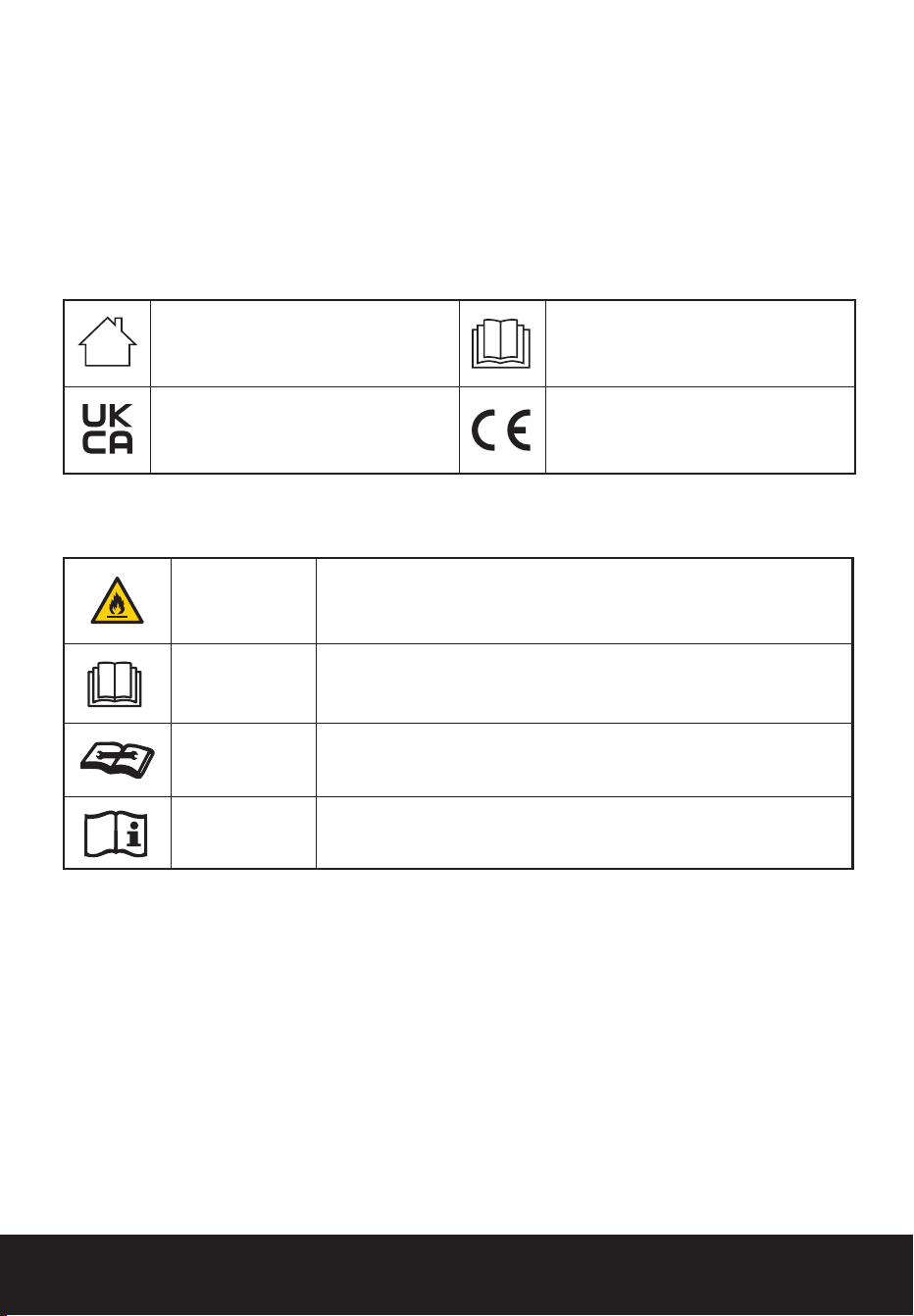
SYMBOLS EXPLAINED
――
For indoor use only. Please read instruction manual
and retain for future use.
Equipment complies with the
applicable UK safety requirements
and regulations.
Equipment complies with the
applicable EU safety requirements
and regulations.
Explanation of symbols displayed on the unit.
WARNING
The symbol shows that this appliance uses a ammable
refrigerant. If the refrigerant leaks and is exposed to an external
ignition source, there is a risk of re.
CAUTION
This symbol shows that the operation manual should be read
carefully.
CAUTION
This symbol shows that a service personnel should be handling
this equipment with reference to the installation manual.
CAUTION
This symbol shows that information is available such as the
operating manual or instruction manual.
10 of 20 | English English | 11 of 20
The following checks shall be applied to installations using
ammable refrigerants:
• The charge size is in accordance with the room size
within which the refrigerant containing parts are
installed.
• The ventilation machinery and outlets are operating
adequately and are not obstructed.
• If an indirect refrigerating circuit is being used, the
secondary circuit shall be checked for the presence of
refrigerant.
• Marking to the equipment continues to be visible and
legible. Markings and signs that are illegible shall be
corrected.
• Refrigeration pipe or components are installed in a
position where they are unlikely to be exposed to any
substance which may corrode refrigerant containing
components, unless the components are constructed
of materials which are inherently resistant to being
corroded or are suitably protected against being so
corroded.
Checks to Electrical Devices
Repair and maintenance to electrical components shall
include initial safety checks and component inspection
procedures. If a fault exists that could compromise safety,
then no electrical supply shall be connected to the circuit
until it is satisfactorily dealt with. If the fault cannot be
corrected immediately but it is necessary to continue
operation, an adequate temporary solution shall be used.
This shall be reported to the owner of the equipment, so all
parties are advised.
Initial safety checks shall include:
• Those capacitors are discharged: this shall be done in a
safe manner to avoid possibility of sparking.
• That there no live electrical components and wiring
are exposed while charging, recovering or purging the
system.
• That there is continuity of earth bonding.
SYMBOLS EXPLAINED
――
For indoor use only. Please read instruction manual
and retain for future use.
Equipment complies with the
applicable UK safety requirements
and regulations.
Equipment complies with the
applicable EU safety requirements
and regulations.
Explanation of symbols displayed on the unit.
WARNING
The symbol shows that this appliance uses a ammable
refrigerant. If the refrigerant leaks and is exposed to an external
ignition source, there is a risk of re.
CAUTION
This symbol shows that the operation manual should be read
carefully.
CAUTION
This symbol shows that a service personnel should be handling
this equipment with reference to the installation manual.
CAUTION
This symbol shows that information is available such as the
operating manual or instruction manual.
12 of 20 | English English | 13 of 20
SPECIFICATION
――
Model: PB-D-31W-UK, PB-D-31B-UK Tank Capacity: 5.5L
Product Dimensions: 43 x 51.5 x 82.5cm Refrigerant Charge: R290 (120g)
Net Weight: 36kg Min Room Size: 6m²
Frequency: 50Hz Fuse Type: AC 250V~, 3.15A/
6.3A, T/F type
Power: 630W Rated Capacity: 50L/day (30 °,
80%RH) 28.7L/day
(27 °, 60%RH)
Max Rated Input Power: 725W
Max Permissible
Pressure on the High/
Low Pressure Side:
3.2MPa Maximum Suction/
Exhaust Side
Working Pressure:
0.7MPa/3.2MP
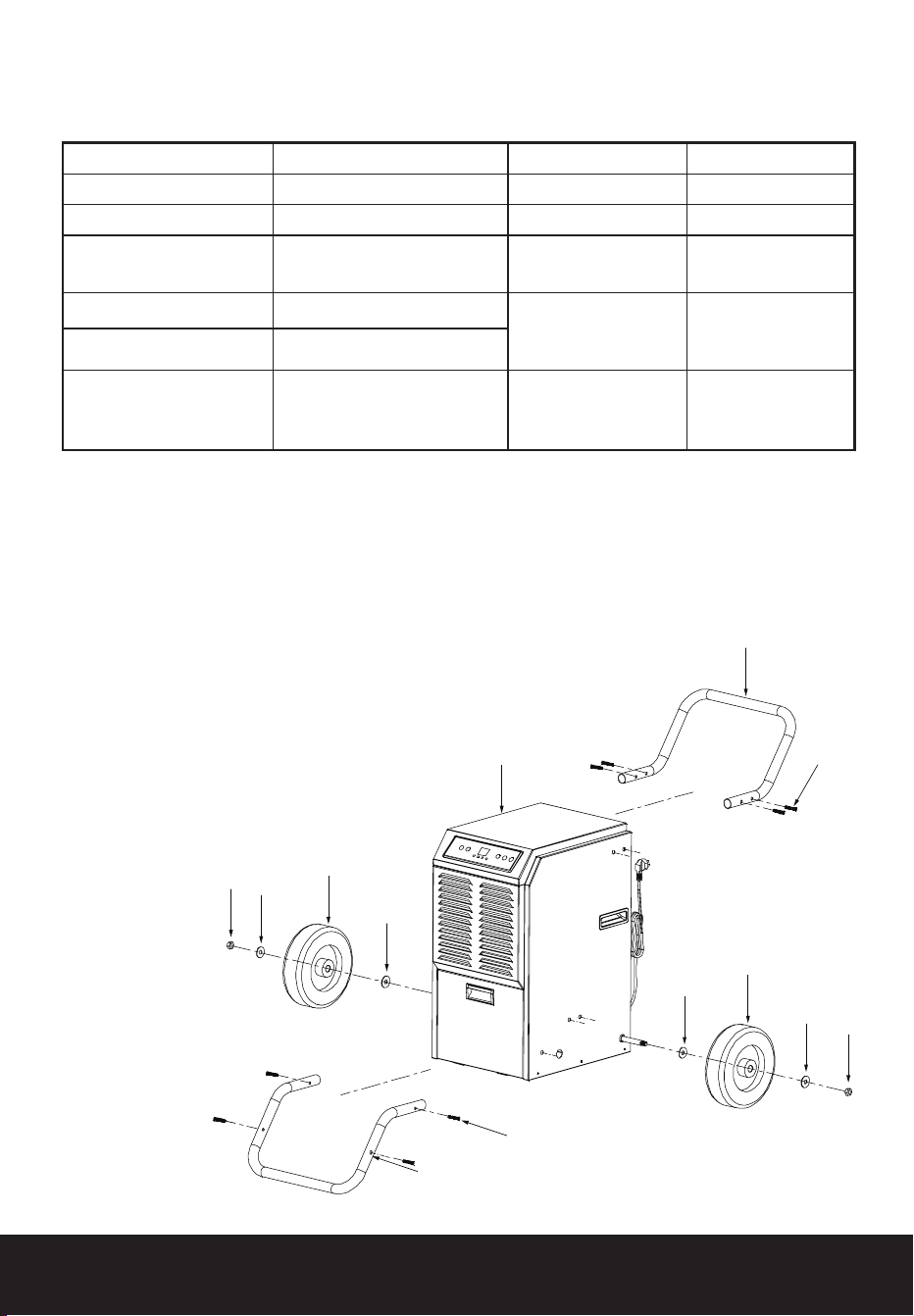
ASSEMBLY
――
1. Main Body
2. Push Handle
3. Stainless Steel Bolt
4. Flat Washer
5. Wheel
6. Flat Washer
7. Nut
8. Support Rod
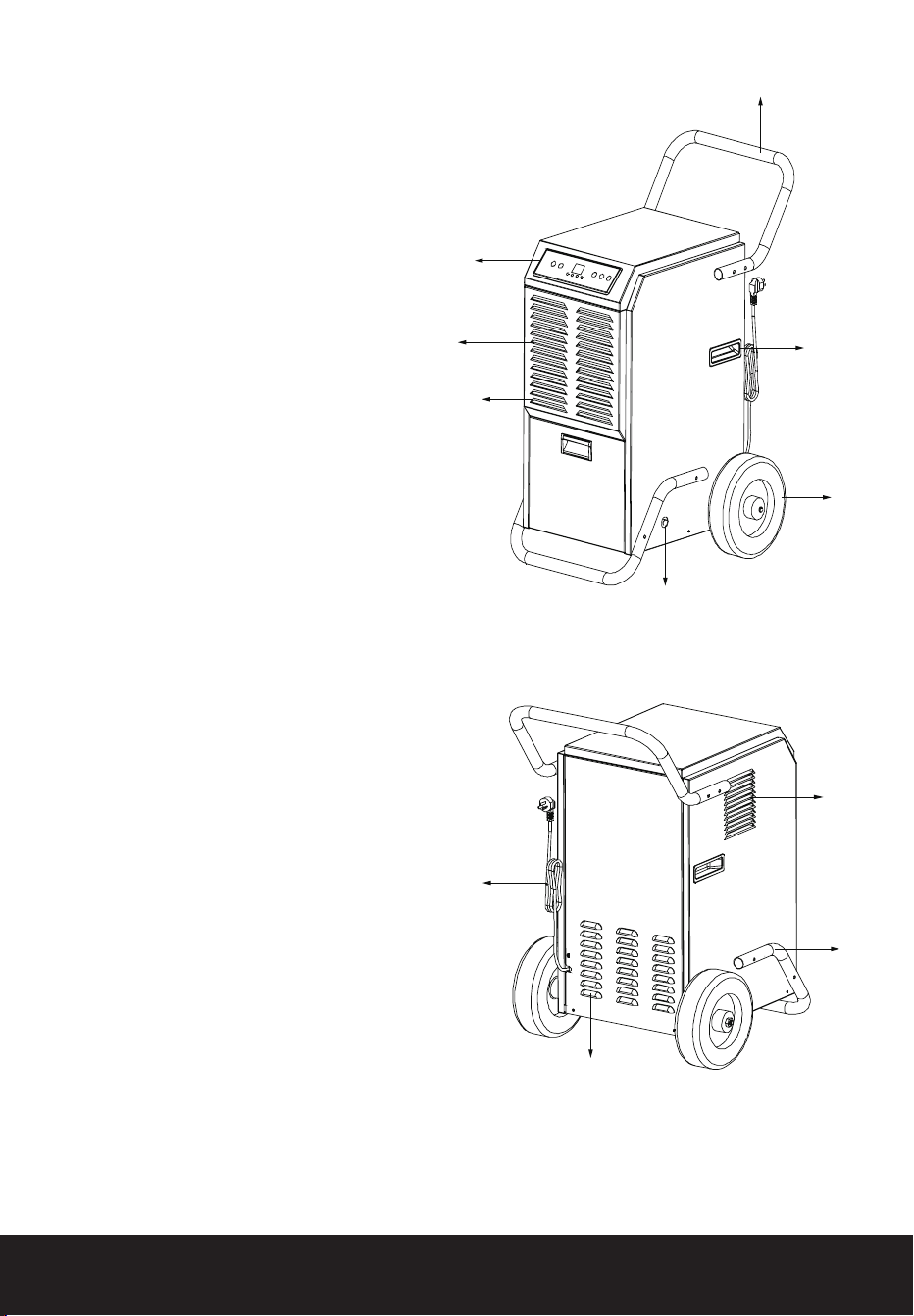
PRODUCT OVERVIEW
――
Front view
1. Control Panel
2. Air Inlet Grille
3. Air Filter
4. Continuous Drainage Opening
5. Wheel
6. Recessed Handle
7. Transport Handle
Back view
1. Power Cord
2. Grille
3. Support Rod
4. Air Outlet
1
2
3
4
5
6
7
1
2
3
4
These images are for reference only, please refer to your product.
If you nd you’re missing any parts from your order, please contact our customer care team by
emailing [email protected] for fast and friendly help.
1
2
3
4
5
6
7
4
5
6
7
3
8
12 of 20 | English English | 13 of 20
SPECIFICATION
――
Model: PB-D-31W-UK, PB-D-31B-UK Tank Capacity: 5.5L
Product Dimensions: 43 x 51.5 x 82.5cm Refrigerant Charge: R290 (120g)
Net Weight: 36kg Min Room Size: 6m²
Frequency: 50Hz Fuse Type: AC 250V~, 3.15A/
6.3A, T/F type
Power: 630W Rated Capacity: 50L/day (30 °,
80%RH) 28.7L/day
(27 °, 60%RH)
Max Rated Input Power: 725W
Max Permissible
Pressure on the High/
Low Pressure Side:
3.2MPa Maximum Suction/
Exhaust Side
Working Pressure:
0.7MPa/3.2MP
ASSEMBLY
――
1. Main Body
2. Push Handle
3. Stainless Steel Bolt
4. Flat Washer
5. Wheel
6. Flat Washer
7. Nut
8. Support Rod
PRODUCT OVERVIEW
――
Front view
1. Control Panel
2. Air Inlet Grille
3. Air Filter
4. Continuous Drainage Opening
5. Wheel
6. Recessed Handle
7. Transport Handle
Back view
1. Power Cord
2. Grille
3. Support Rod
4. Air Outlet
1
2
3
4
5
6
7
1
2
3
4
These images are for reference only, please refer to your product.
If you nd you’re missing any parts from your order, please contact our customer care team by
emailing [email protected] for fast and friendly help.
1
2
3
4
5
6
7
4
5
6
7
3
8
14 of 20 | English English | 15 of 20
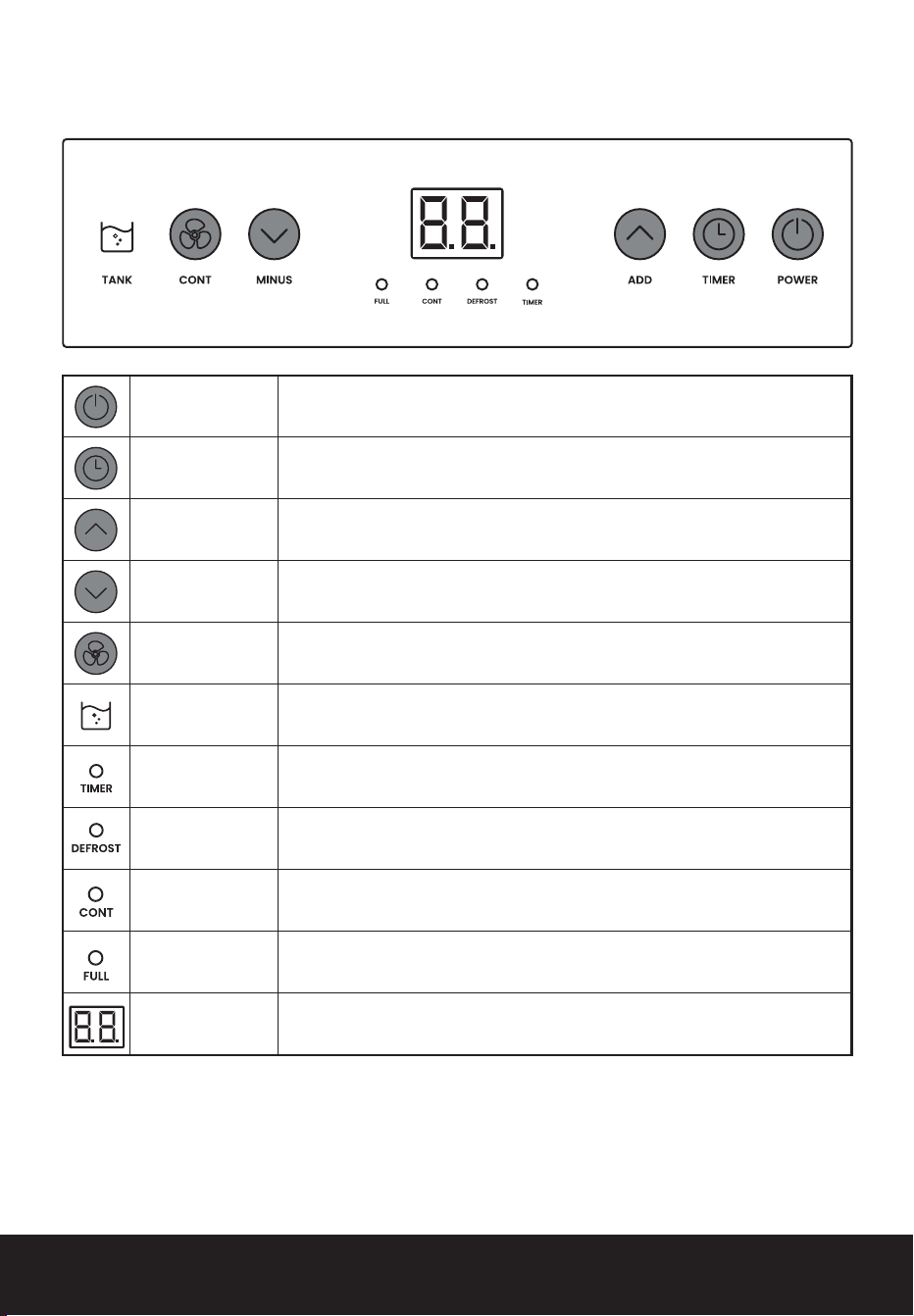
Power button Press once to switch unit on or off.
Timer button Press to enable or disable the timer function.
Setting button
(ADD)
Adjust the humidity set-point within the range of 20%-90%.
Adjust the timer set point. (1h~24h)
Setting button
(MINUS)
Adjust the humidity set-point within the range of 20%-90%.
Adjust the timer set point. (1h~24h)
Continuous
button
Press to turn on/off continuous dehumidifying mode.
Water Tank
Symbol
This unit has a 5.5L water tank.
Timer indicator
(green)
Lights up when the timer function is set.
Defrost LED
(green)
Lights up when automatic defrosting is in process.
Continuous LED
(green)
Lights up when the continuous dehumidifying mode is turned on.
Water full (red) Lights up when the water tank is almost full.
Digital display
(green)
Displays the current humidity (20-95%) and the humidity setting
(20-90%). Displays timer setting and temperature.
CONTROL PANEL
――
OPERATING INSTRUCTIONS
――
Turning On/Off
• Turning On: Press the POWER key to turn on the unit.
• Turning Off: Press the POWER key again to turn off the unit. The fan will continue to run for a
short period before stopping completely.
Choosing a mode
• Continuous Operation:
1. Press the POWER key to turn on the unit.
2. The dehumidier will operate continuously, ignoring the humidity set-point.
• Normal Operation:
1. Press the POWER key to turn on the unit.
2. Press the CONT key to deactivate continuous mode.
3. The unit will operate at the default 50% humidity set-point.
4. Set your target humidity following the instructions below:
Setting Target Humidity in Normal Operation
1. Ensure the unit is in normal operation mode.
2. Press the ADD/MINUS key repeatedly to adjust the humidity set-point.
3. Set the humidity level in 5% increments between 20% and 90% for optimal comfort.
4. The unit will cycle on and off to maintain the set humidity level.
Checking the Room Temperature
1. Press and hold the TIMER button for 5 seconds.
2. The digital display will show the current room temperature in degrees Celsius.
Setting a Timer
• To Turn Off (When Power Is On):
1. Press the TIMER button.
2. Use the +/- buttons to set the delay off time (1-24 hours).
• To Turn On (When Power Is Off):
1. Press the TIMER button.
2. Use the +/- buttons to set the delay on time (1-24 hours).

14 of 20 | English English | 15 of 20
Power button Press once to switch unit on or off.
Timer button Press to enable or disable the timer function.
Setting button
(ADD)
Adjust the humidity set-point within the range of 20%-90%.
Adjust the timer set point. (1h~24h)
Setting button
(MINUS)
Adjust the humidity set-point within the range of 20%-90%.
Adjust the timer set point. (1h~24h)
Continuous
button
Press to turn on/off continuous dehumidifying mode.
Water Tank
Symbol
This unit has a 5.5L water tank.
Timer indicator
(green)
Lights up when the timer function is set.
Defrost LED
(green)
Lights up when automatic defrosting is in process.
Continuous LED
(green)
Lights up when the continuous dehumidifying mode is turned on.
Water full (red) Lights up when the water tank is almost full.
Digital display
(green)
Displays the current humidity (20-95%) and the humidity setting
(20-90%). Displays timer setting and temperature.
CONTROL PANEL
――
OPERATING INSTRUCTIONS
――
Turning On/Off
• Turning On: Press the POWER key to turn on the unit.
• Turning Off: Press the POWER key again to turn off the unit. The fan will continue to run for a
short period before stopping completely.
Choosing a mode
• Continuous Operation:
1. Press the POWER key to turn on the unit.
2. The dehumidier will operate continuously, ignoring the humidity set-point.
• Normal Operation:
1. Press the POWER key to turn on the unit.
2. Press the CONT key to deactivate continuous mode.
3. The unit will operate at the default 50% humidity set-point.
4. Set your target humidity following the instructions below:
Setting Target Humidity in Normal Operation
1. Ensure the unit is in normal operation mode.
2. Press the ADD/MINUS key repeatedly to adjust the humidity set-point.
3. Set the humidity level in 5% increments between 20% and 90% for optimal comfort.
4. The unit will cycle on and off to maintain the set humidity level.
Checking the Room Temperature
1. Press and hold the TIMER button for 5 seconds.
2. The digital display will show the current room temperature in degrees Celsius.
Setting a Timer
• To Turn Off (When Power Is On):
1. Press the TIMER button.
2. Use the +/- buttons to set the delay off time (1-24 hours).
• To Turn On (When Power Is Off):
1. Press the TIMER button.
2. Use the +/- buttons to set the delay on time (1-24 hours).
16 of 20 | English English | 17 of 20
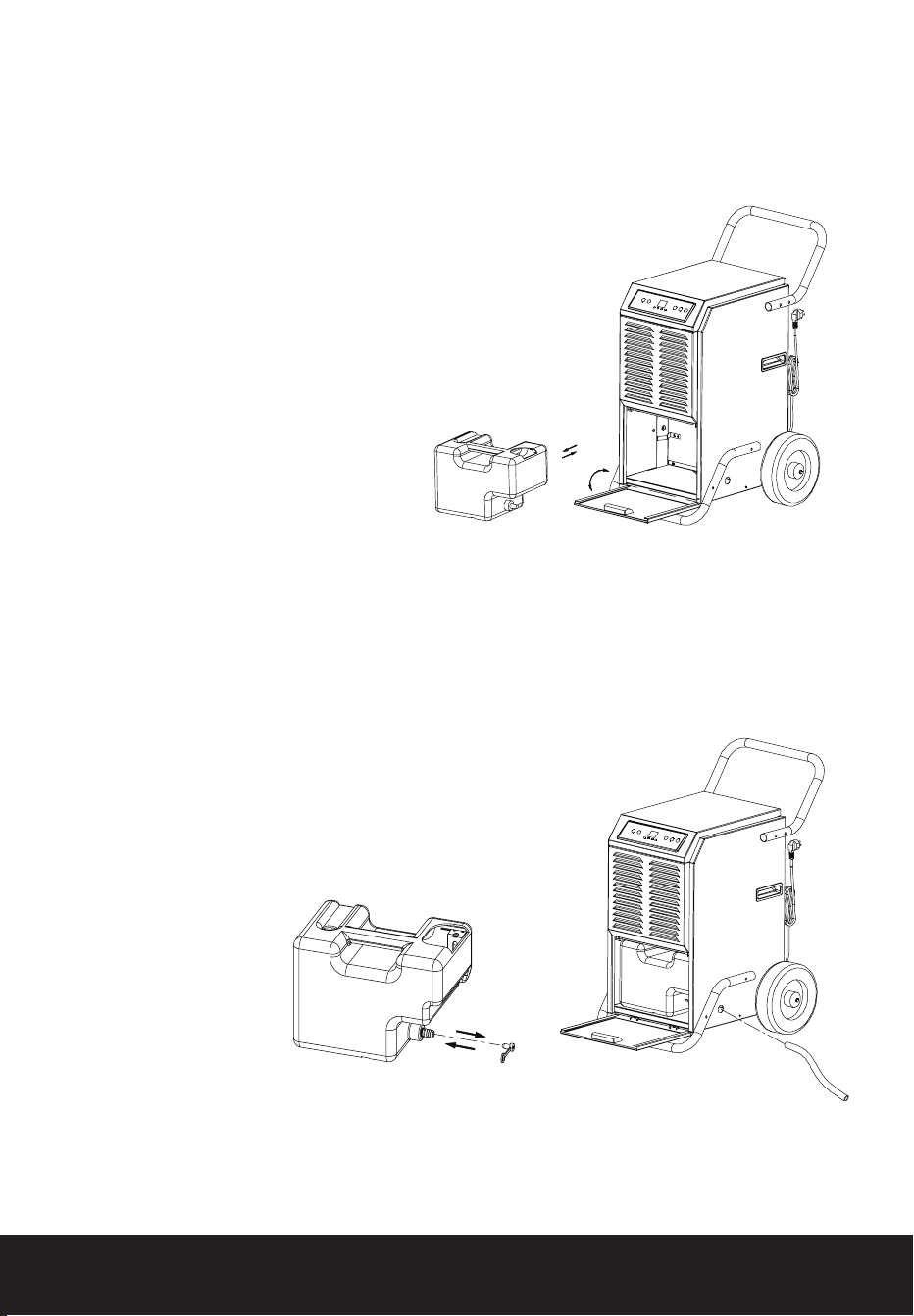
Emptying the Water Tank
1. When the water tank is full, the machine will shut off and an indicator light will turn on,
accompanied by 15 buzzes.
2. Gently pull the handle on the water tank panel to reveal the water tank.
3. Empty the water tank.
4. Reinstall the water tank correctly to resume operation.
Continuous Draining
To connect the drain hose to the unit:
1. Remove and empty the water tank per the instructions above.
2. Insert one end of the hose through the continuous drainage hole of the unit, ensure it is
connected securely to the water tank.
3. Carefully return the water tank with the connected drainage hose into the unit and close the
water tank panel.
4. Ensure the hose is not bent or blocked.
Note: Gravity will pull the water out of the unit into your chosen drainage area. Ensure the chosen
area is not higher than the unit.
Safety Features
• Auto Defrost Function:
1. If frost builds up on the evaporator at low temperatures, the unit will automatically defrost
for 15 minutes.
2. The Defrost LED will blink during this process.
3. The compressor will stop, but the fan will continue to run.
4. The unit will resume normal operation after defrosting.
• Overload Protection:
In case of a power loss, there is a 3-minute delay before the compressor restarts to protect
the unit.
CLEANING AND STORAGE
――
WARNING: ALWAYS TURN THE APPLIANCE OFF AND UNPLUG
THE POWER CORD FROM THE ELECTRICAL OUTLET BEFORE
HANDLING OR CLEANING IT.
CAUTION: DO NOT ALLOW WATER OR OTHER LIQUIDS TO
RUN INTO THE INTERIOR OF THE APPLIANCE, AS THIS COULD
CREATE A FIRE AND/OR ELECTRICAL HAZARD.
CAUTION: DO NOT USE ANY ABRASIVE CLEANERS OR
SOLVENTS, AS THIS CAN DAMAGE THE APPLIANCE.
Do not attempt to clean the appliance in any other way
than that detailed by the manufacturer.
Cleaning the body of the dehumidier:
• Turn the dehumidier of and unplug the power cord.
• Clean the exterior surface of the appliance by wiping
it with a soft, damp cloth. Dry the appliance with a soft,
clean cloth.
Cleaning the water tank:
• Remove and empty the water tank as per the instructions
in the “Emptying the water tank” section.

16 of 20 | English English | 17 of 20
Emptying the Water Tank
1. When the water tank is full, the machine will shut off and an indicator light will turn on,
accompanied by 15 buzzes.
2. Gently pull the handle on the water tank panel to reveal the water tank.
3. Empty the water tank.
4. Reinstall the water tank correctly to resume operation.
Continuous Draining
To connect the drain hose to the unit:
1. Remove and empty the water tank per the instructions above.
2. Insert one end of the hose through the continuous drainage hole of the unit, ensure it is
connected securely to the water tank.
3. Carefully return the water tank with the connected drainage hose into the unit and close the
water tank panel.
4. Ensure the hose is not bent or blocked.
Note: Gravity will pull the water out of the unit into your chosen drainage area. Ensure the chosen
area is not higher than the unit.
Safety Features
• Auto Defrost Function:
1. If frost builds up on the evaporator at low temperatures, the unit will automatically defrost
for 15 minutes.
2. The Defrost LED will blink during this process.
3. The compressor will stop, but the fan will continue to run.
4. The unit will resume normal operation after defrosting.
• Overload Protection:
In case of a power loss, there is a 3-minute delay before the compressor restarts to protect
the unit.
CLEANING AND STORAGE
――
WARNING: ALWAYS TURN THE APPLIANCE OFF AND UNPLUG
THE POWER CORD FROM THE ELECTRICAL OUTLET BEFORE
HANDLING OR CLEANING IT.
CAUTION: DO NOT ALLOW WATER OR OTHER LIQUIDS TO
RUN INTO THE INTERIOR OF THE APPLIANCE, AS THIS COULD
CREATE A FIRE AND/OR ELECTRICAL HAZARD.
CAUTION: DO NOT USE ANY ABRASIVE CLEANERS OR
SOLVENTS, AS THIS CAN DAMAGE THE APPLIANCE.
Do not attempt to clean the appliance in any other way
than that detailed by the manufacturer.
Cleaning the body of the dehumidier:
• Turn the dehumidier of and unplug the power cord.
• Clean the exterior surface of the appliance by wiping
it with a soft, damp cloth. Dry the appliance with a soft,
clean cloth.
Cleaning the water tank:
• Remove and empty the water tank as per the instructions
in the “Emptying the water tank” section.
18 of 20 | English English | 19 of 20
• Remove the water tank’s lid by removing the handle and
lifting the water tank’s lid upwards.
• Clean the water tank with warm tap water and mild
detergent (e.g. washing up liquid). Note: Do not use
boiling water to clean the water tank.
• Ensure to remove any scale or deposits that have formed
inside the water tank.
• Wipe all surfaces dry before placing the water tank’s lid
handle.
• Then return the water tank to the unit.
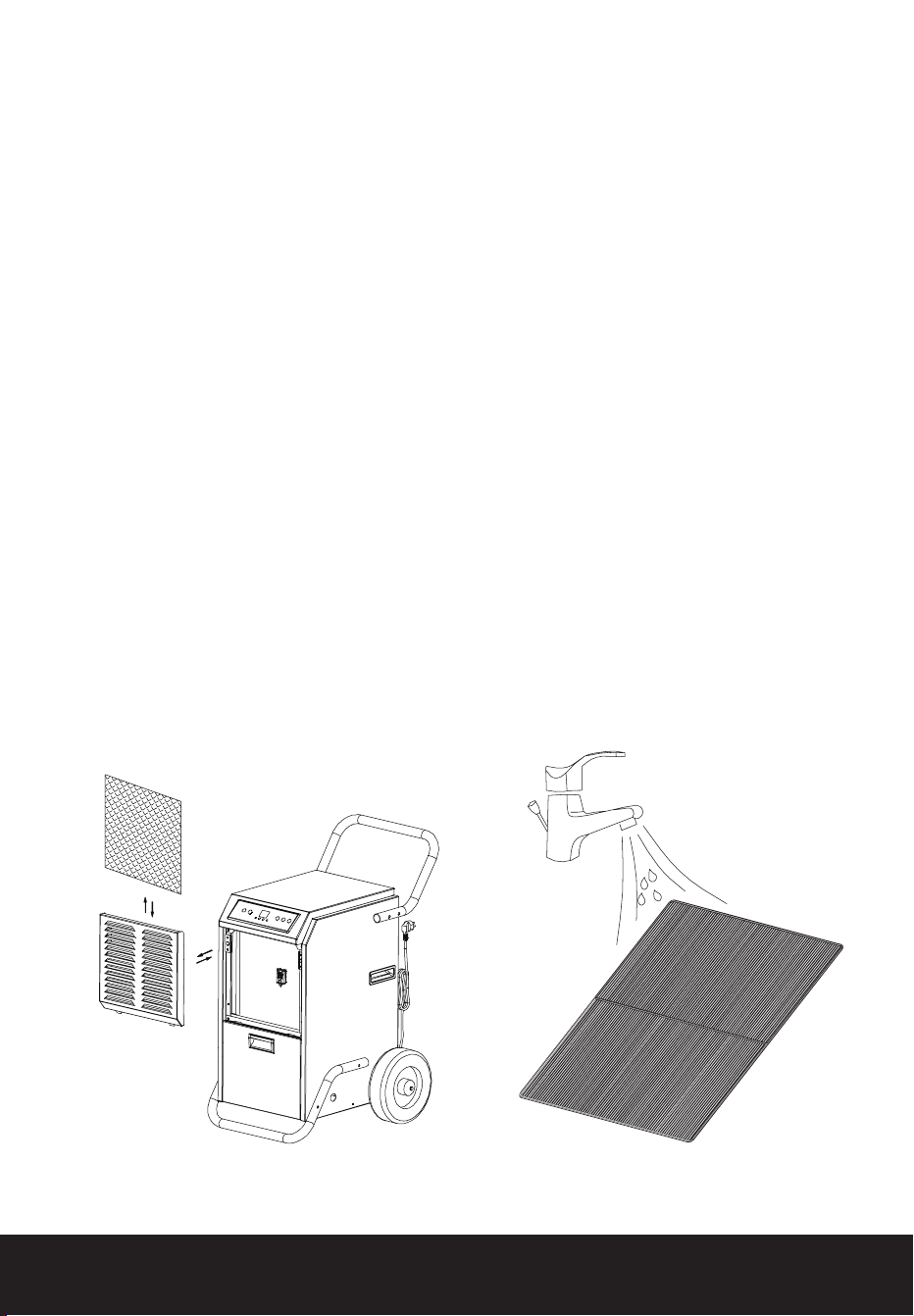
Cleaning the air lter:
The lter should be cleaned every two weeks.
1. Gently pull on the front grille to remove it from the unit.
2. Remove the mesh lter from the unit.
3. Use a clean, soft cloth to absorb the surface dust on the
lter mesh. If the lter is extremely dirt, use tap water to
ush the lter. Fully dry the lter before putting git back
into the unit. A clean lter will increase the machine’s
capacity.
Storage
• The unit may need defrosting in temperatures less than
23°C - This will happen automatically and last up to 5
minutes. During this time, the dehumidifying function will
stop and the defrost indicator will light up. Do not switch
off while the unit is defrosting.
• To store your product, we recommend using the original
or a similar-sized box. Store the appliance in a safe,
clean and dry place, away from direct sunlight and out of
reach of children when not in use.
• Always empty the water tank, clean and dry the
appliance when not in use to prevent mould.
• Empty and clean the appliance before storage. Clean the
appliance before next use.
RECYCLING AND DISPOSAL
――
Waste electrical and electronic products (WEEE), batteries, accumulators, and packaging
should not be disposed of with general household waste. This is to prevent possible harm to the
environment and human well-being, and to help conserve our natural resources. Most electrical
products with a plug, battery, or cable can be recycled. Contact your local council, household
waste disposal service, or the store where you purchased the product for information regarding
the collection schemes in your area.
Take-Back Scheme
Waste electrical products (WEEE) can be sent to One Retail Group for recycling and disposal
when you purchase a new product from One Retail Group, on a like-for-like basis. For more
information on how to recycle this product please visit www.probreeze.com
The end-user of electrical and electronic products (WEEE) is responsible for separating old
batteries and lamp bulbs before they are handed over to a designated disposal and recycling
service. Waste batteries can also be disposed of in collection bins, which can be found in most
local supermarkets and household waste recycling centres.
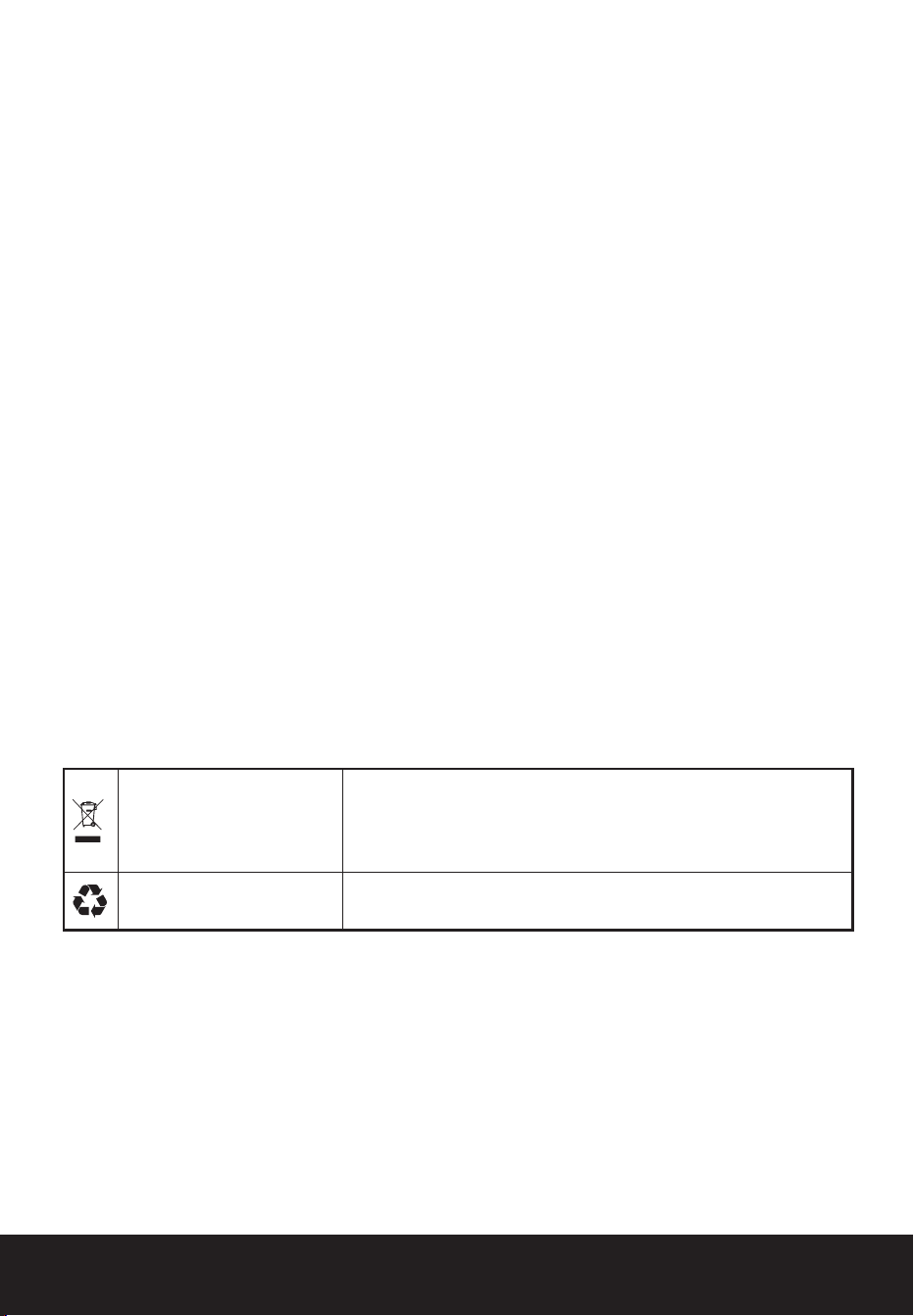
Waste Electrical and
Electronic Equipment
(WEEE)
This symbol on the product and/or packaging indicates that
Waste Electrical products (WEEE) under Directive 2012/19/
EU which governs used electrical and electronic appliances,
should not be disposed of with general household waste.
The Mobius Loop
This symbol indicates that the product or packaging is
capable of being recycled.
18 of 20 | English English | 19 of 20
• Remove the water tank’s lid by removing the handle and
lifting the water tank’s lid upwards.
• Clean the water tank with warm tap water and mild
detergent (e.g. washing up liquid). Note: Do not use
boiling water to clean the water tank.
• Ensure to remove any scale or deposits that have formed
inside the water tank.
• Wipe all surfaces dry before placing the water tank’s lid
handle.
• Then return the water tank to the unit.
Cleaning the air lter:
The lter should be cleaned every two weeks.
1. Gently pull on the front grille to remove it from the unit.
2. Remove the mesh lter from the unit.
3. Use a clean, soft cloth to absorb the surface dust on the
lter mesh. If the lter is extremely dirt, use tap water to
ush the lter. Fully dry the lter before putting git back
into the unit. A clean lter will increase the machine’s
capacity.
Storage
• The unit may need defrosting in temperatures less than
23°C - This will happen automatically and last up to 5
minutes. During this time, the dehumidifying function will
stop and the defrost indicator will light up. Do not switch
off while the unit is defrosting.
• To store your product, we recommend using the original
or a similar-sized box. Store the appliance in a safe,
clean and dry place, away from direct sunlight and out of
reach of children when not in use.
• Always empty the water tank, clean and dry the
appliance when not in use to prevent mould.
• Empty and clean the appliance before storage. Clean the
appliance before next use.
RECYCLING AND DISPOSAL
――
Waste electrical and electronic products (WEEE), batteries, accumulators, and packaging
should not be disposed of with general household waste. This is to prevent possible harm to the
environment and human well-being, and to help conserve our natural resources. Most electrical
products with a plug, battery, or cable can be recycled. Contact your local council, household
waste disposal service, or the store where you purchased the product for information regarding
the collection schemes in your area.
Take-Back Scheme
Waste electrical products (WEEE) can be sent to One Retail Group for recycling and disposal
when you purchase a new product from One Retail Group, on a like-for-like basis. For more
information on how to recycle this product please visit www.probreeze.com
The end-user of electrical and electronic products (WEEE) is responsible for separating old
batteries and lamp bulbs before they are handed over to a designated disposal and recycling
service. Waste batteries can also be disposed of in collection bins, which can be found in most
local supermarkets and household waste recycling centres.
Waste Electrical and
Electronic Equipment
(WEEE)
This symbol on the product and/or packaging indicates that
Waste Electrical products (WEEE) under Directive 2012/19/
EU which governs used electrical and electronic appliances,
should not be disposed of with general household waste.
The Mobius Loop
This symbol indicates that the product or packaging is
capable of being recycled.
One Retail Group, Ryland House,
24A Ryland Road, Kentish Town, London, NW5 3EH, United Kingdom
EU Authorised Representative: Brandrep Limited, The Black Church,
St Mary's Pl N, Dublin, D07 P4AX, Ireland
© Copyright 2024
www.probreeze.com