WITH INSTALLATION INSTRUCTIONS FOR THE CONTRACTOR
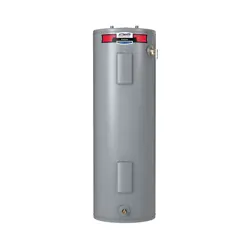
Residential Electric Water Heate
r
USE & CARE MANUAL
®
LISTED
786H
AP8319-8 (04/02)
Printed in USA
Single and Double Element Models
40 Gallon Capacity
CALIFORNIA PROPOSITION 65 WARNING: This product contains chemicals known to the State of California to
cause cancer, birth defects or other reproductive harm.
Do Not Destroy this Manual. Please read carefully
and keep in a safe place for Future Reference.
Recognize this symbol as an Indication of Important
Safety Information!
The purpose of this manual is twofold: one, for the installing
contractor, to provide requirements and recommendations for the
proper installation and adjustment of the water heater; and two,
for the owner-operator, to explain the features, operation, safe-
ty precautions, maintenance and trouble shooting of the water
heater. This manual also includes a parts list.
It is imperative that all persons who are expected to install, op-
erate or adjust this water heater read the instructions carefully
so that they may understand how to do so.
!
!
!
2
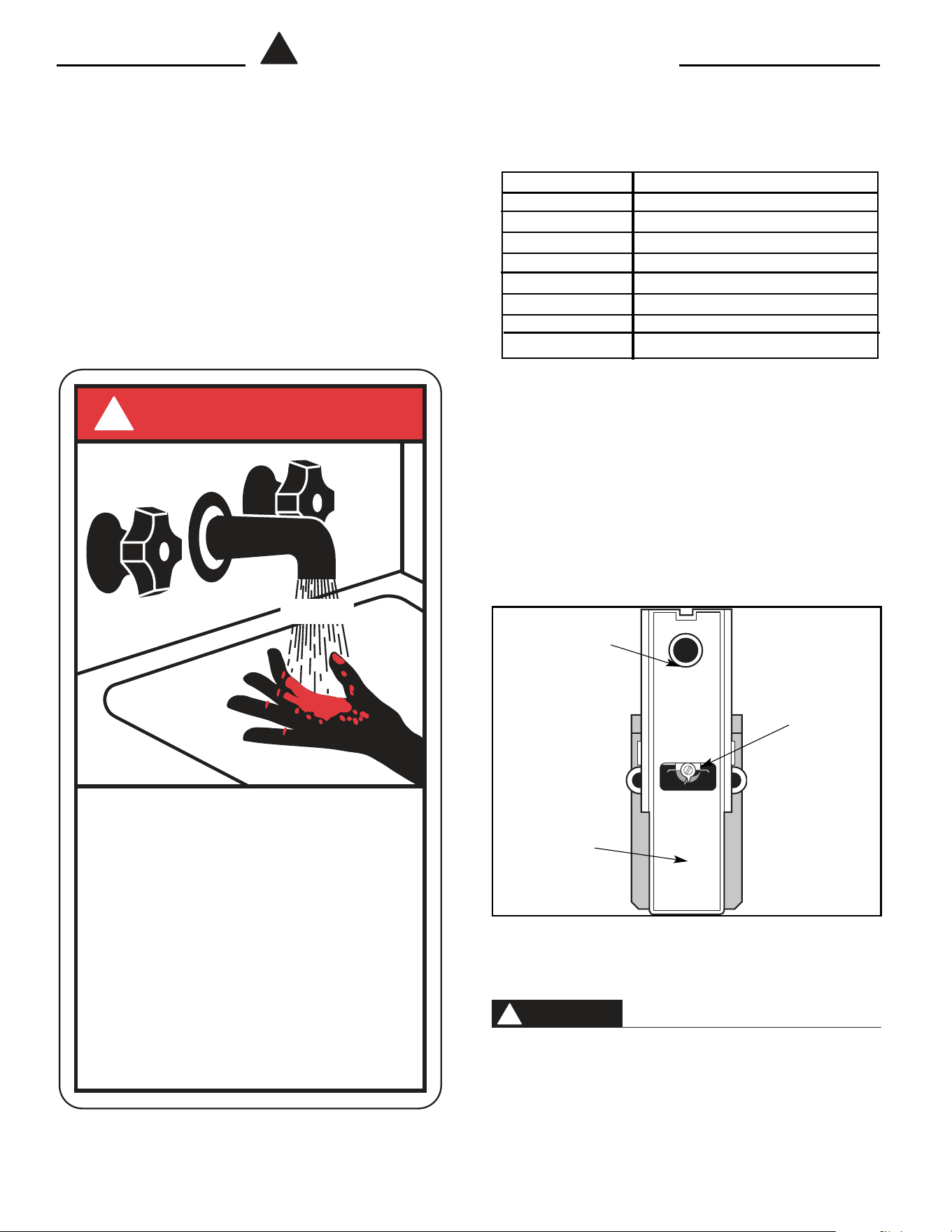
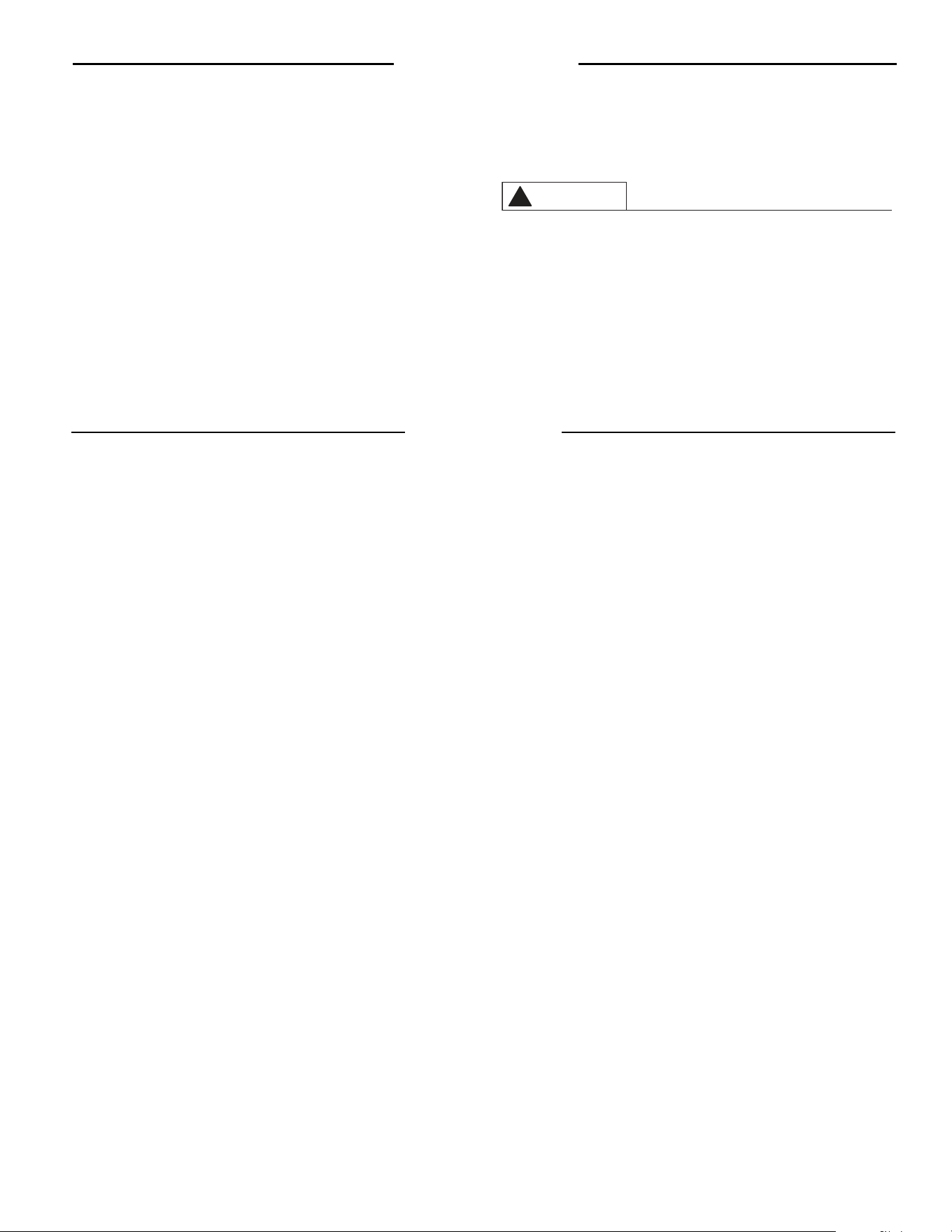
WATER TEMPERATURE ADJUSTMENT - Safety and en-
ergy conservation are factors to be considered when se-
lecting the water temperature setting of water heater’s
thermostat. Water temperatures above 125°F. can cause
severe burns or death from scalding. Be sure to read and
follow the warnings outlined on the label pictured below.
This label is also located on the water heater near the ther-
mostat access panel
General Safety Precautions
!
DANGER
!
HOT
Water temperature over 125°F can
cause severe burns instantly or
death from scalds.
Children, disabled and elderly are
at highest risk of being scalded.
See instruction manual before
setting temperature at water
heater.
Feel water before bathing or
showering.
Temperature limiting valves are
available, see manual.
BURN
The chart shown above may be used as a guide in de-
termining the proper water temperature for your home.
NOTE: Households with small children, disabled, or el-
derly persons may require a 120°F. or lower thermostat
setting to prevent contact with “HOT” water.
The temperature of the water in the heater is regulated
by the adjustable surface mounted thermostat(s) locat-
ed behind the Jacket Access Panel(s). Dual element
heaters have two thermostats. To comply with safety reg-
ulations the thermostat(s) were set at 120° F. before the
water heater was shipped from the factory.
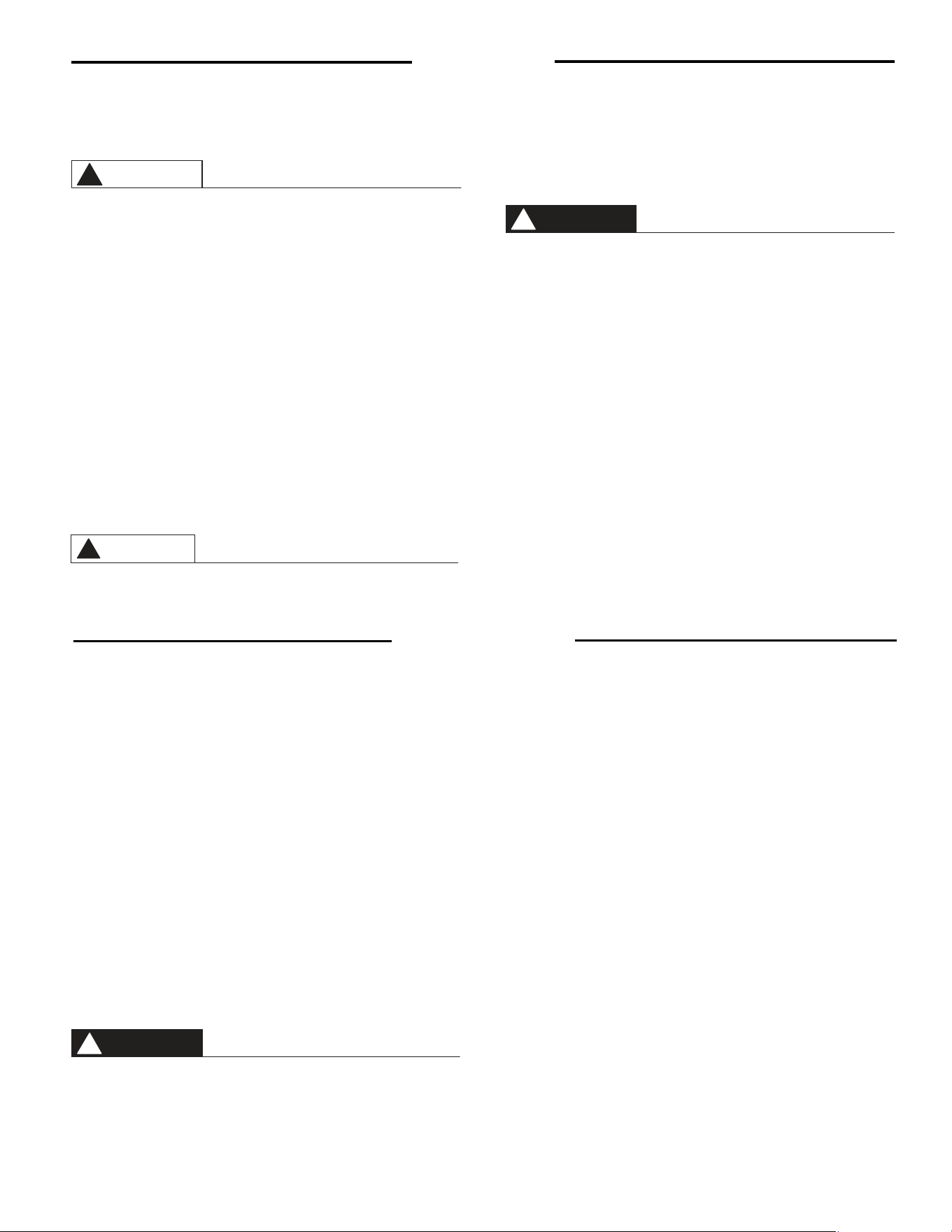
The illustration above shows the temperature adjustment dial
used for setting the water temperature. Refer to Operation
section of this manual for detailed instructions in how to adjust
the thermostat(s).
There is a Hot Water SCALD Potential if the thermostat is
set too high.
Mixing valves for reducing point of use water temperature
by mixing hot and cold water in branch water lines are
available. Contact a licensed plumber or the local plumb-
ing authority for further information.
TIME / TEMPERATURE RELATIONSHIPS IN SCALDS
R
E
S
E
T
R
E
S
E
T
TURN OFF
POWER
BEFORE
SERVICING
90°F150°F
125°F
DANGER
!
Be sure to read and understand the entire Use & Care Manual before attempting to install or operate this water heater. It may save you time and
cost. Pay particular attention to the General Safety Precautions. Failure to follow these warnings could result in serious bodily injury or death.
Should you have problems understanding the instructions in this manual, or have any questions, STOP, and get help from a qualified installer,
service technician, or the local electric utility.
Thermostat Dial
Pointer
Reset Button
Thermostat Protective
Cover
Table courtesy of Shriners Burn Institute
Temperature Time to Produce Serious Burn
120° F More than 5 minutes
125° F 1
1
/
2
to 2 minutes
130° F About 30 seconds
135° F About 10 seconds
140° F Less than 5 seconds
145° F Less than 3 seconds
150° F About 1
1
/
2
seconds
155° F About 1 second
1. INSPECT SHIPMENT — Inspect water heater for possible dam-
age. Check the markings on the rating plate of the water heater
to be certain the power supply corresponds to that for which the
water heater is equipped.
2. THERMAL EXPANSION — Determine if a check valve exists in
the inlet water line. It may have been installed in the cold water
line as a separate back flow preventer, or it may be part of a pres-
sure reducing valve, water meter or water softener. A check valve
located in the cold water inlet line can cause what is referred to
as a ”closed water system”. A cold water inlet line with no check
valve or back flow prevention device is referred to as an ”open”
water system.
As water is heated, it expands in volume and creates an increase
in the pressure within the water system. This action is referred
to as ”thermal expansion”. In an ”open” water system, expanding
water which exceeds the capacity of the water heater flows back
into the city main where the pressure is easily dissipated.
A ”closed water system”, however, prevents the expanding
water from flowing back into the main supply line, and the result
of ”thermal expansion” can create a rapid, and dangerous pres-
sure increase in the water heater and system piping. This rapid
pressure increase can quickly reach the safety setting of the re-
lief valve, causing it to operate during each heating cycle. Ther-
mal expansion, and the resulting rapid, and repeated expansion
and contraction of components in the water heater and piping
system can cause premature failure of the relief valve, and pos-
sibly the heater itself.Replacing the relief valve will not correct
the problem!
The suggested method of controlling thermal expansion is to install
an expansion tank in the cold water line between the water heater and
the check valve. The expansion tank is designed with an air cushion
built in that compresses as the system pressure increases, thereby
relieving the over pressure condition and eliminating the repeated op-
eration of the relief vale. Other methods of controlling thermal ex-
pansion are also available. Contact your installing contractor, water
supplier, or plumbing inspector for additional information regarding
this subject.
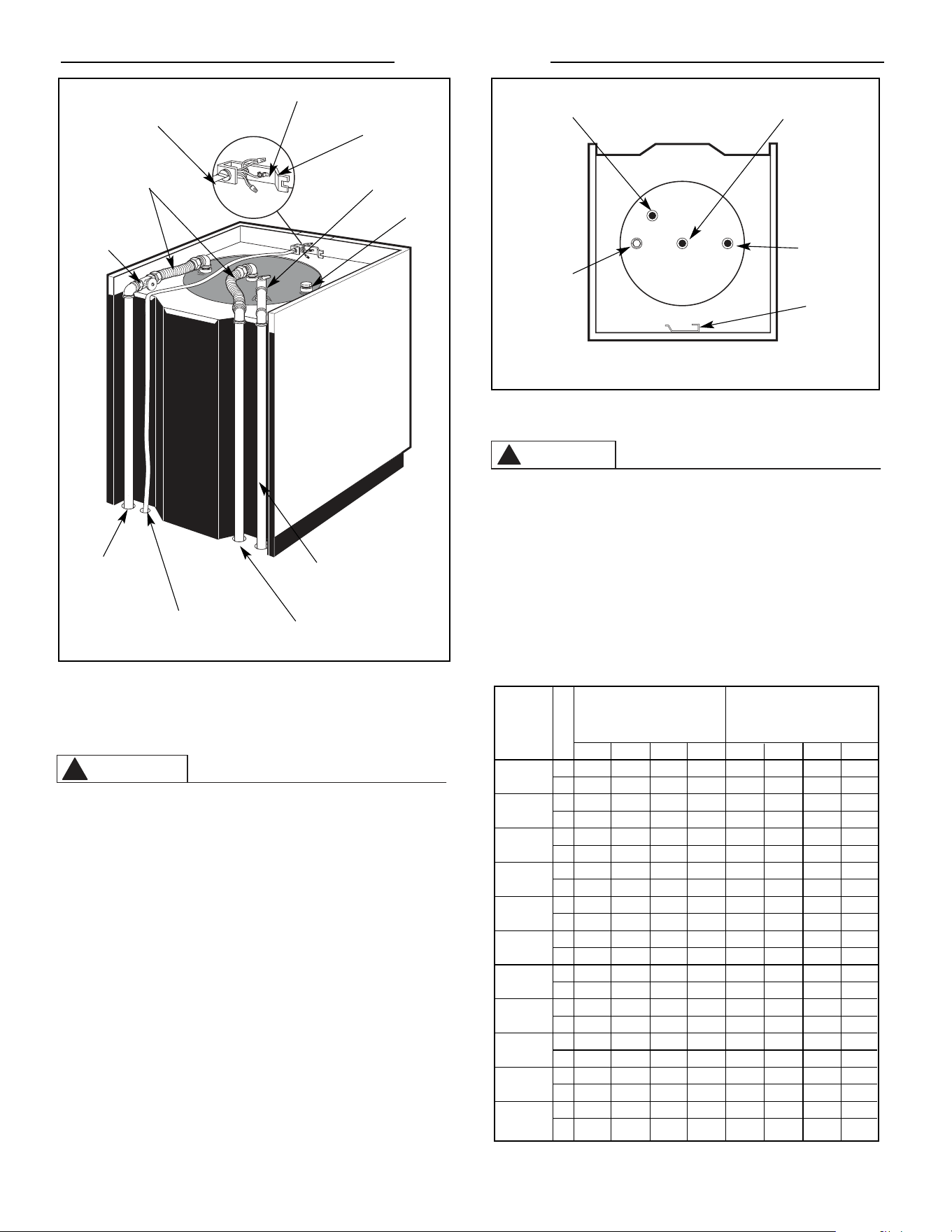
3. WATER SUPPLY CONNECTIONS — Refer to Fig. 2 for suggested
typical installation. The installation of unions or flexible copper
connectors is recommended on the hot and cold water connec-
tions so that the water heater may be easily disconnected for ser-
vicing if necessary. The HOT and COLD water connections are
clearly marked and are 3/4” NPT on all models. Install a shut-off
valve in the cold water line near the water heater.
IMPORTANT!! Do not apply heat to the hot or cold water connections.
If sweat connections are used, sweat tubing to adapter before fitting
adapter to hot or cold water connections on heater. Any heat applied
to the hot or cold water supply fittings will permanently damage them.
4. RELIEF VALVE — A new combination temperature and pressure
relief valve, complying with the Standard for Relief Valves and
Automatic Gas Shutoff Devices for Hot Water Supply Systems,
ANSI Z21.22, must be installed in the opening provided and
marked for the purpose on the water heater. (Refer to Fig. 2.) No
valve of any type should be installed between the relief valve and
the tank. Local codes shall govern the installation of relief valves.
The pressure rating of the relief valve must not exceed 150 PSI,
the maximum working pressure of the water heater as marked on
the rating plate. The BTUH Rating of the relief valve must not be
less than the input rating of the water heater as indicated on the
rating label located on front of the heater (1 watt = 3.412 BTUH).
Connect the outlet of the relief valve to a suitable open drain so
that the discharge water cannot contact live electrical parts and
to eliminate potential water damage. Piping used should be of a
type approved for hot water distribution. The discharge line must
be no smaller than the outlet of the valve and must pitch downward
from the valve to allow complete drainage (by gravity) of the re-
lief valve and discharge line. The end of the discharge line should
not be threaded or concealed and should be protected from freez-
ing. No valve of any type, restriction or reducer coupling should
be installed in the discharge line.
5. TO FILL WATER HEATER — Make certain drain valve is com-
pletely closed. Open shut-off valve in cold water supply line. Open
each hot water faucet slowly to allow air to vent from the water
3
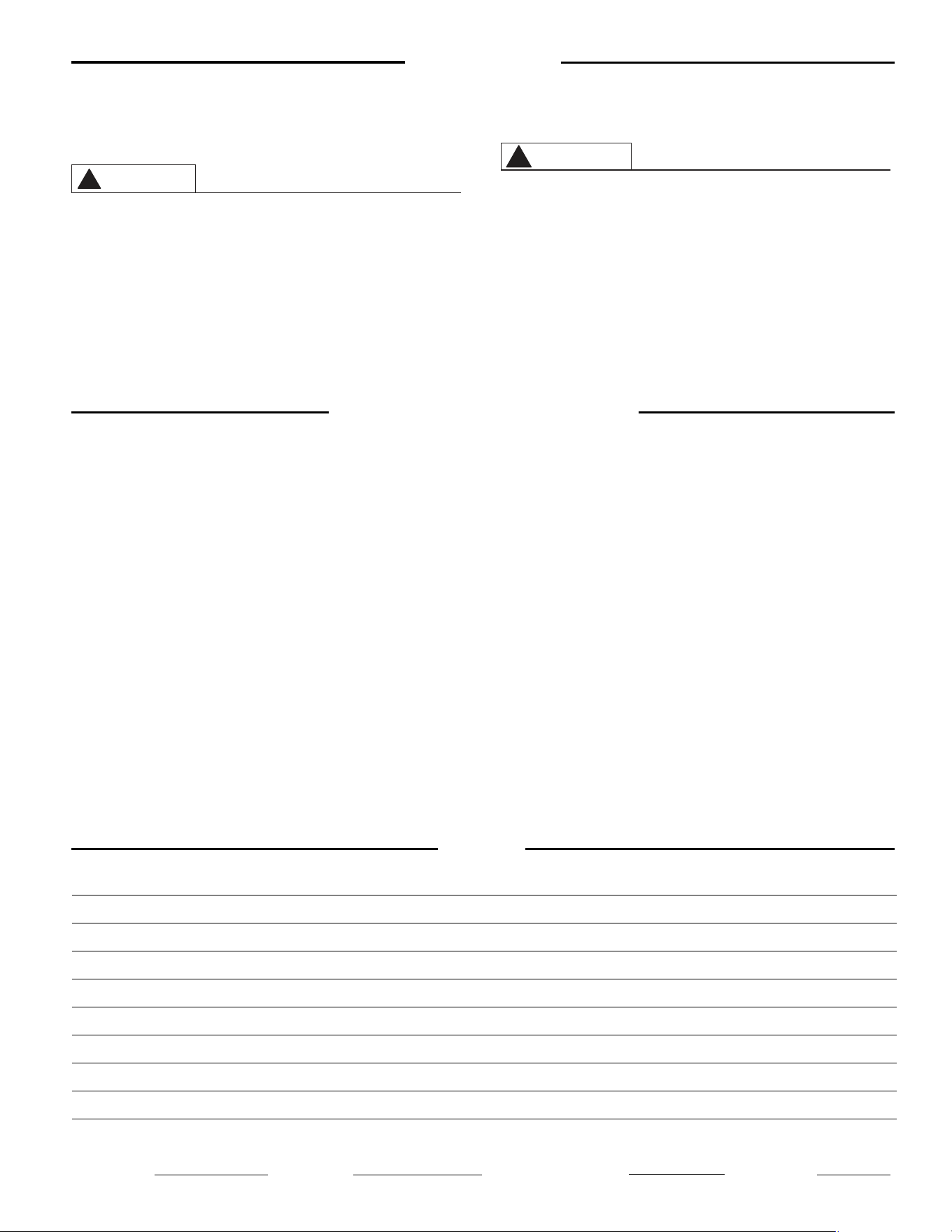
The location chosen for the water heater must take into consideration the
following:
LOCAL INSTALLATION REGULATIONS
This water must be installed in accordance with these instructions, local
codes, utility company requirements or, in the absence of local codes, the
latest edition of the National Electrical Code. It is available from some local
libraries or can be purchased from the National Fire Prevention Association,
1 Batterymarch Park, Quincy, MA 02269 as booklet ANSI/NFPA 70.
LOCATION
Locate the water heater in a clean dry area as near as practical to the area of
greatest heated water demand. Long uninsulated hot water lines can waste
energy and water. Place the water heater in such a manner that the front
panel can be easily removed to permit inspection and servicing such as
removal of elements or checking controls. The water heater and water lines
should be protected from freezing temperatures. Do not install the water
heater in outdoor, unprotected areas.
The water heater should not be located in an area where
leakage of the tank or connections will result in damage to
the area adjacent to it or to lower floors of the structure.
Introduction
CAUTION
!
Installation
4
heater and piping. A steady flow of water from the hot water
faucet(s) indicates a full water heater.
Tank MUST BE full of water before power is turned on. Heating ele-
ment(s) WlLL BE DAMAGED if energized for even a short time while
tank is dry. The water heater’s warranty does not cover damage or fail-
ure resulting from operation with an empty or partially empty tank.
(Reference is made to the limited warranty for complete terms and
conditions.)
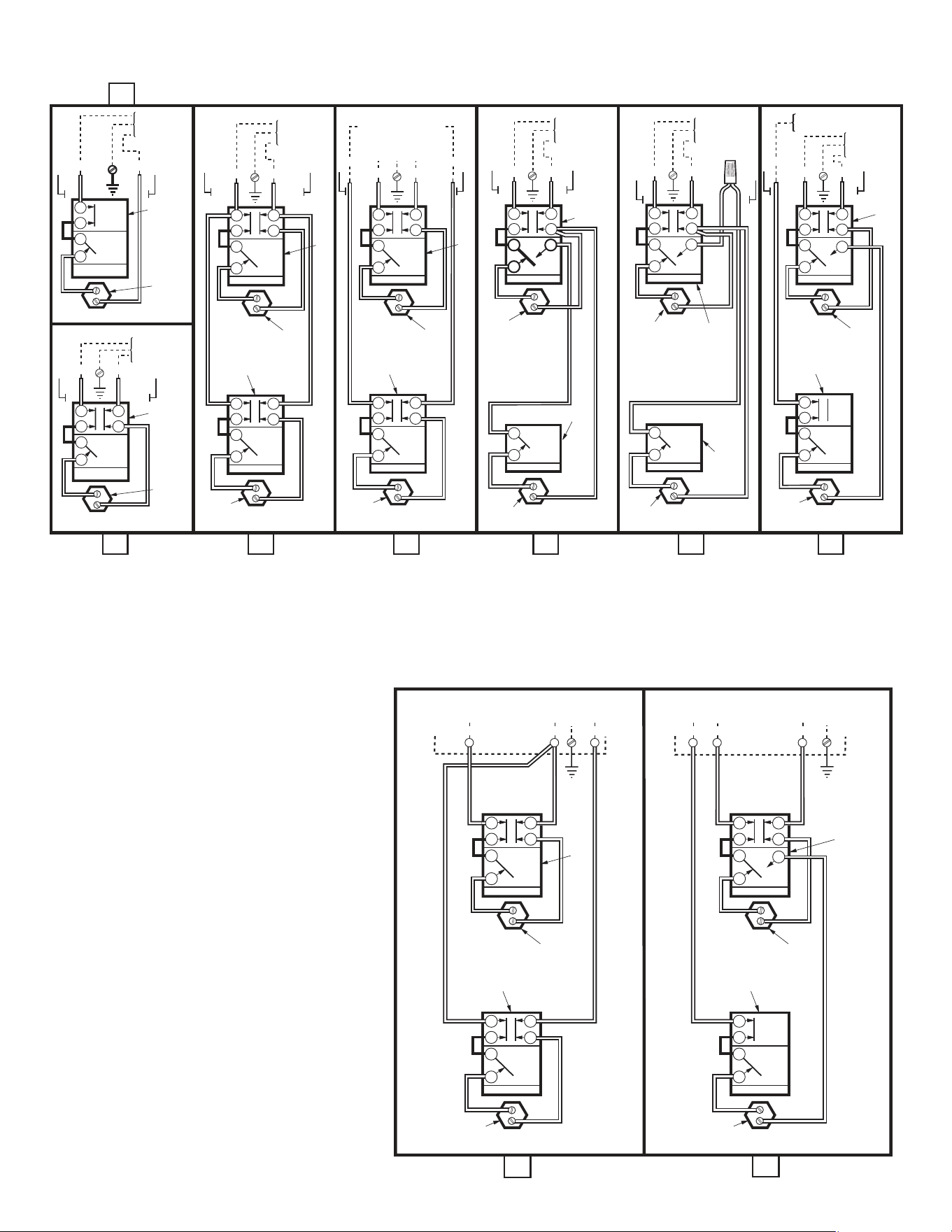
6. ELECTRICAL CONNECTIONS — A separate branch circuit with
copper conductors, overcurrent protective device and suitable
disconnecting means must be provided by a qualified electrician.
All wiring must conform to local codes or latest edition of the Na-
tional Electrical Code ANSI/NFPA 70.
The water heater is completely wired to the junction box inside
jacket at top front of water heater. An opening for
l
/2” or
3
/4” elec-
trical fitting is provided for field wiring connections. (Refer to Fig.
3)
The voltage requirements and wattage load for the water heater
is specified on the rating plate on front of heater.
Table 1 recommends minimum branch circuit sizing based on
National Electric Code. Refer to wiring diagram on back cover
of this manual for field wiring connections.
The presence of water in the piping and water heater does not provide
sufficient conduction for a ground. Non-metallic piping, dielectric
unions, flexible connectors etc. can cause the water heater to be elec-
trically isolated.
The branch circuit wiring should include either:
A. Metallic conduit or metallic sheathed cable approved for use as
a grounding conductor and installed with fittings approved for
the purpose.
B. Non-metallic sheathed cable or metallic conduit or metallic
Installation
Figure 2. — Typical Installation (Pictured from rear of
heater with Top Panel and Insulation Pad re-
moved).
Figure 3. — Location of water connections on water heater
tank. (Pictured with top insulation pad removed
WARNING
!
Hot Water
Outlet to Fixtures
To Electrical Distribution Panel
(Use only Copper Conductors)
Shut-Off Valve in
Cold Water
Supply Line
Temperature & Pressure
Relief Valve
Wiring Junction
Bracket
Grounding Screw
To Electrical
Distribution Panel
Flexible Connectors for
Water Connections at
Tank Fittings
To Cold Water
Supply
Relief Valve Discharge
Line to suitable open drain
Anode
Table 1. — Branch Circuit Sizing and Wire Size Guide
Based on N.E.C. ANSI / NFPA 70
CAUTION
!
FRONT OF WATER HEATER
Anode Location
Cold Water
Inlet Coupling
Electrical
Junction
Bracket
Hot Water
Outlet Coupling
Temperature & Pressure
Relief Valve Coupling
P
Recommended Over
Total h
Current Protection Copper Wire Size -
Water a
(Fuse or Circuit Breaker) AWG Based on N.E.C.
Heater s
Amperage Rating Table 310-16 (75°C.)
Wattage e 208V 240V 277V 480V 208V 240V 277V 480V
3,000
12020151512121414
3 20 20 --- 15 12 12 --- 14
4,000
12525201510101214
3 25 25 --- 15 10 10 --- 14
4,500
13025251510101014
3 30 25 --- 15 10 10 --- 14
5,000
13030251510101014
3 30 30 --- 15 10 10 --- 14
5,500
135302515 8 101014
3 35 30 --- 15 8 10 --- 14
6,000
140353020 8 8 1012
3 35 30 --- 15 8 10 --- 14
8,000
150454025 8 8 8 10
3 45 40 --- 20 8 8 --- 12
9,000
1 --- 50 45 25 --- 8 8 10
3 50 45 --- 25 8 8 --- 10
10,000
1 --- --- 50 30 --- --- 8 10
3 --- 50 --- 25 --- 8 --- 10
11,000
1 --- --- 50 30 --- --- 8 10
3 --- 50 --- 25 --- 8 --- 10
12,000
1 --- --- --- 35 --- --- --- 8
3 --- --- --- 30 --- --- --- 10
A. Water Heater Location
❑
Close to area of heated water demand.
❑
Indoors and protected from freezing temperatures.
❑
Area free of flammable vapors.
❑
Provisions made to protect area from water damage.
❑
Sufficient room to service water heater.
B. Water Supply
❑
Water heater completely filled with water.
❑
Water heater and piping air vented.
❑
Water connections tight and free of leaks
C. Relief Valve
❑
Temperature and Pressure Relief Valve properly installed
and discharge line run to open drain
❑
Discharge line protected from freezing.
D. Wiring
❑
Power supply voltage agrees with water heater rating plate.
❑
Branch circuit wire and fusing or circuit breaker of proper size.
❑
Electrical connections tight and unit properly grounded.
sheathed cable not approved for use as a ground conductor shall
include a separate conductor for grounding. It should be attached
to the ground terminals of the water heater and the electrical dis-
tribution box. (Refer to Fig. 3)
The manufacturer’s warranty does not cover any damage or defect
caused by installation, attachment or use of any type of energy sav-
ing or other unapproved devices (other than those authorized by the
manufacturer) into, onto or in conjunction with the water heater. The
use of unauthorized energy saving devices may shorten the life of the
water heater and may endanger life and property. The manufacturer
disclaims any responsibility for such loss or injury resulting from the
use of such unauthorized devices.
If local codes require external application of insulation blanket kits
the manufacturer’s instructions included with the kit must be care-
fully followed.
Application of any external insulation to this water heater will require
careful attention to the following:
• Do not cover the temperature and pressure relief valve.
• Do not cover jacket access panels to thermostats and heat-
ing elements.
• Do not cover electrical junction box of water heater.
• Do not cover operating or warning labels attached to the water
heater nor attempt to relocate them on exterior of insulation
blanket.
5
CAUTION
!
WARNING
!
Installation
Installation Check List
Model No. Serial No. Date of Installation Installed By:
Notes
6
A.
Do
turn off power to water heater if it has been subjected to over
heating, fire, flood or physical damage.
B.
Do Not
turn on water heater unless it is filled with water.
C.
Do Not
turn on water heater if cold water supply shut-off valve is
closed.
D. If there is any difficulty in understanding or following the OPERATION
or MAINTENANCE instructions, it is recommended that a qualified
person or serviceman perform the work.
Hydrogen gas can be produced in a hot water system
served by this water heater that has not been used for a
long period of time (generally two weeks or more). HY-
DROGEN GAS IS EXTREMELY FLAMMABLE!! To dissi-
pate such gas and to reduce risk of injury, it is recom-
mended that the hot water faucet be opened for several
minutes at the kitchen sink before using any electrical
appliance connected to the hot water system. If hydro-
gen is present, there will probably be an unusual sound
such as air escaping through the pipe as the water be-
gins to flow.
Do not
smoke or use an open flame near
the faucet at the time it is open.
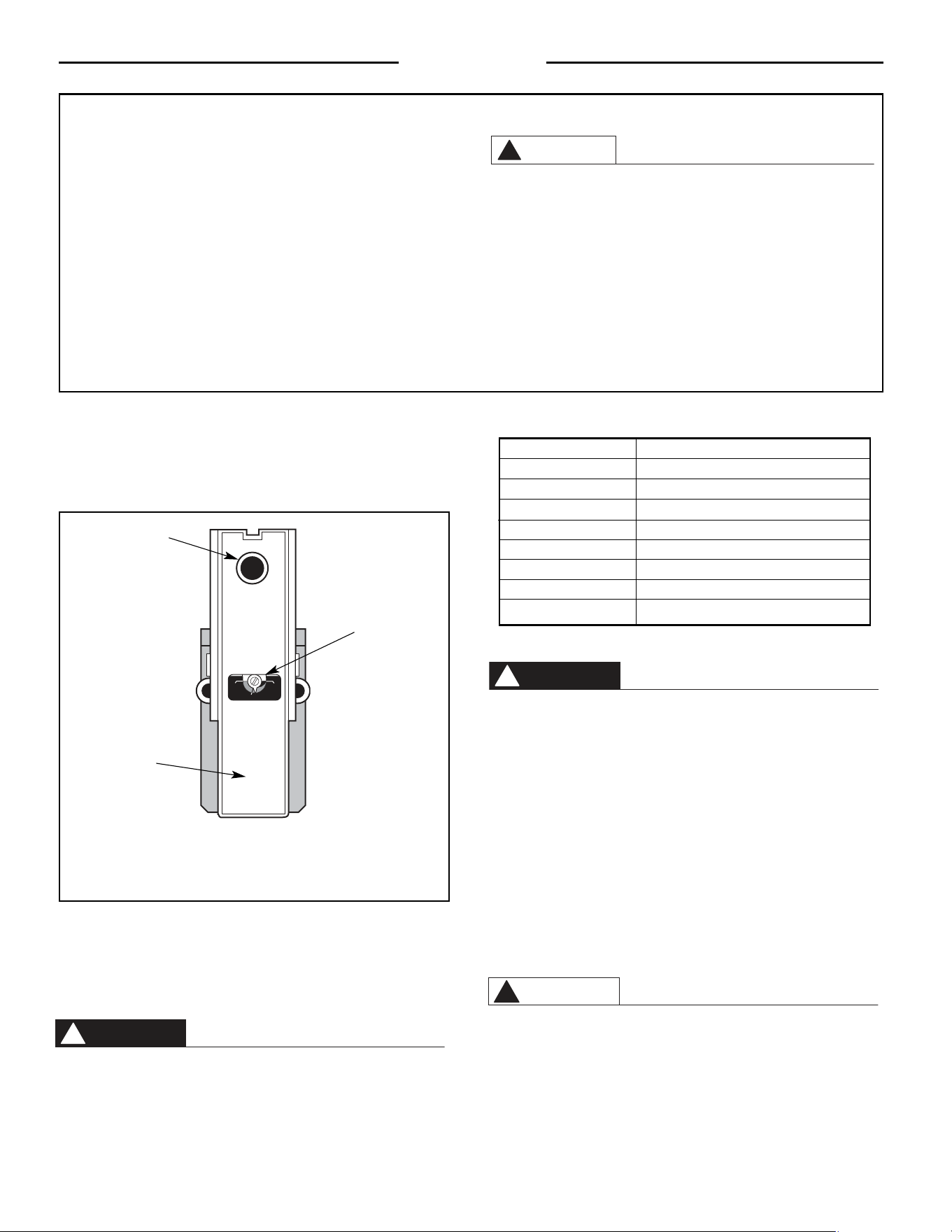
1. WATER TEMPERATURE SETTING — The temperature of the water in
the water heater can be regulated by setting the temperature dial of the
adjustable surface mounted thermostats located behind the front center
panel. To comply with safety regulations the thermostats are factory set
at 120° F. or less where local codes require.
Safety and energy conservation are factors to be considered when
selecting the water temperature setting of the water heater’s thermostats.
The lower the temperature setting the greater the savings in energy and
operating costs.
There is a Hot Water SCALD Potential if the thermostat is
set too high.
NOTE: Households with small children or invalids may require a 120° F.
or lower thermostat setting to prevent contact with “HOT” water.
Make certain power to water heater is OFF before remov-
ing front center panel or top panel FOR ANY REASON.
If adjustment is necessary,
turn off
power to water heater, remove front
center panel and insulation exposing thermostats. The thermostat
protective covers
should not be removed
. Set thermostats dial pointers,
with a small screwdriver, to desired temperature. (Refer to Fig. 4.)
Replace insulation and front center panel. Turn on power to water heater.
2. SAFETY CONTROLS — The water heater is equipped with a
combination Thermostat and Temperature Limiting Control (ECO) that is
located above the heating element in contact with the tank surface. If for
any reason the water temperature becomes excessively high, the
Temperature Limiting Control (ECO) breaks the power circuit to the
heating element. Once the control opens, it must be reset manually.
The cause of the High Temperature Condition must be in-
vestigated by qualified service personnel and corrective
action taken before placing the water heater in service
again.
To reset Temperature Limiting Control,
turn off
power to water heater,
remove front center panel and insulation.
The thermostat protective
cover SHOULD NOT be removed
. (Refer to Fig. 4.) Press red
SAFETY PRECAUTIONS
R
E
S
E
T
R
E
S
E
T
TURN OFF
POWER
BEFORE
SERVICING
90°F150°F
125°F
Figure 4 — Thermostat and Protective Cover.
Temperature Time to Produce Serious Burn
120° F More than 5 minutes
125° F 1
1
/
2
to 2 minutes
130° F About 30 seconds
135° F About 10 seconds
140° F Less than 5 seconds
145° F Less than 3 seconds
150° F About 1
1
/
2
seconds
155° F About 1 second
Table courtesy of Shriners Burn Institute
TIME / TEMPERATURE RELATIONSHIPS IN SCALDS
DANGER
!
DANGER
!
CAUTION
!
Operation
WARNING
!
Thermostat Dial
Pointer
Reset Button
Thermostat Protective
Cover
This illustration shows shows the temperature adjustment dial used for setting
the water temperature. Refer to Section 1 - Water Temperature Setting, above,
for more details and safety instructions regarding water temperature setting.
CAUTION!! — Hotter water increases the risk of SCALDING!
7
Properly maintained, your water heater will provide years of dependable
trouble-free service. It is suggested that a routine preventive maintenance
program be established and followed by the user. It is further recommended
that a periodic inspection of the operating controls, heating element and wiring
should be made by service personnel qualified in electric appliance repair.
1. ROUTINE PREVENTATIVE MAINTENANCE
A. Most electrical appliances make some sound when in operation, even
when new. If the hissing or singing sound level increases excessively, the
electric heating element may require cleaning. Contact your installer or
plumbing contractor to inspect.
B. The area near the water heater must be kept free of flammable liquids such
as gasoline or paint thinners, adhesives or other combustible materials.
C. At least once a year, lift and release the lever handle on the temperature
pressure relief valve, located near the top of the water heater, to make
certain the valve operates freely and allow several gallons to flush through
discharge line. Make certain the discharged water is directed to an open
drain.
Before manually operating the relief valve, make certain
no one will be exposed to the danger of coming in con-
tact with the hot water released by this valve. The water
may be hot enough to create a SCALD hazard. The water
released should be directed to a suitable drain to prevent
injury or damage.
NOTE: If the temperature and pressure relief valve on the water
heater discharges periodically, this may be due to thermal expansion
in a “Closed” water system. Contact the water supplier or your
plumbing contractor on how to correct this. DO NOT plug the relief
valve outlet.
D. A water heater’s tank can act as a settling basin for solids suspended in the
water. It is, therefore, not uncommon for hard water deposits to accumulate
in the bottom of the tank. It is suggested that a few quarts of water be
drained from the water heater’s tank every month to clean the tank of these
deposits.
E. Rapid closing of faucets or solenoid valves in automatic water using
appliances can cause a pounding “water hammer” sound. “Water hammer”
can be described as a banging noise heard in a water pipe following an
abrupt alteration of the flow with resulting pressure surges. Strategically
located risers in the water pipe system can be used to minimize the
problem. Also water hammer arresting devices are usually available from
your plumber or local plumbing supply store.
2. ANODE ROD INSPECTION — The anode rod should be removed from
the water heater’s tank annually for inspection and replaced when more
than 6” of core wire is exposed at either end of the rod. Refer to Fig. 2 or 3
for anode rod location. Make certain cold water supply is turned off before
removing anode rod.
“RESET” button. Replace insulation and jacket access panel(s) before
turning on power to water heater.
3. EMERGENCY INSTRUCTIONS —
If water heater has been subjected to flood, fire, or phys-
ical damage, turn off power and water to water heater. Do
not operate the water heater again until it has been thor-
oughly checked by qualified service personnel.
4. VACATION AND LONG TIME SHUT-DOWN — If the water heater is to
remain idle for an extended period of time, the power and water to the
water heater should be turned off to conserve energy. The water heater
and piping should be drained if they might be subjected to freezing
temperatures.
NOTE: Refer to “Hydrogen Gas Caution” in Safety Precautions
Section on page 6.
After a very long shut-down period, the water heater’s operation and
controls should be checked by qualified service personnel. Make certain
the water heater is completely filled before again placing it in operation .
5. DRAINING HEATER —
Shut off power to water heater before draining water.
In order to drain water heater, turn off cold water supply, then it is
necessary to open a hot water faucet or lift the handle on the relief valve
to admit air to the tank. Attach a garden hose to the drain valve on the
water heater (located behind the front center panel near the bottom of the
water heater) and direct the stream of water to a drain where it will do no
damage.
The water drained from the tank may be hot enough to pre-
sent a SCALD HAZARD and should be directed to a suit-
able drain to prevent injury or damage.
6. ANODE — This water heater is equipped with an anode rod designed to
prolong the life of the glass lined tank. The anode is slowly consumed
cathodically, thereby eliminating or minimizing corrosion of the glass lined
tank.
Water sometimes contains a high sulfate and/or mineral content and
together with the cathodic protection process can produce a hydrogen
sulfide or rotten egg odor in the heated water. Chlorination of the water
supply should minimize the problem.
NOTE: Do not remove the anode rod from the water heater’s tank,
except for inspection and/or replacement, as operation with the
anode rod removed will greatly shorten the life of the glass lined
tank and will exclude warranty coverage.
Operation
Maintenance
DANGER
!
CAUTION
!
WARNING
!
DANGER
!
8
R
E
S
E
T
R
E
S
E
T
1
4
0
1
3
0
1
20
110
10
0
90
T
HE
R
M-O
-D
ISC
T
UR
N
O
F
F
P
OWE
R
BE
FO
R
E
S
E
R
VIC
IN
G
T
UR
N
O
FF
P
O
W
E
R
B
E
FO
RE
S
E
RV
I
C
IN
G
14
0
1
30
12
0
1
1
0
1
0
0
9
0
TH
E
R
M
-O
-
D
IS
C
1
2
13
14
3*
6*
10
11
15
12
7*
6
7
5
5*
8
9
4*
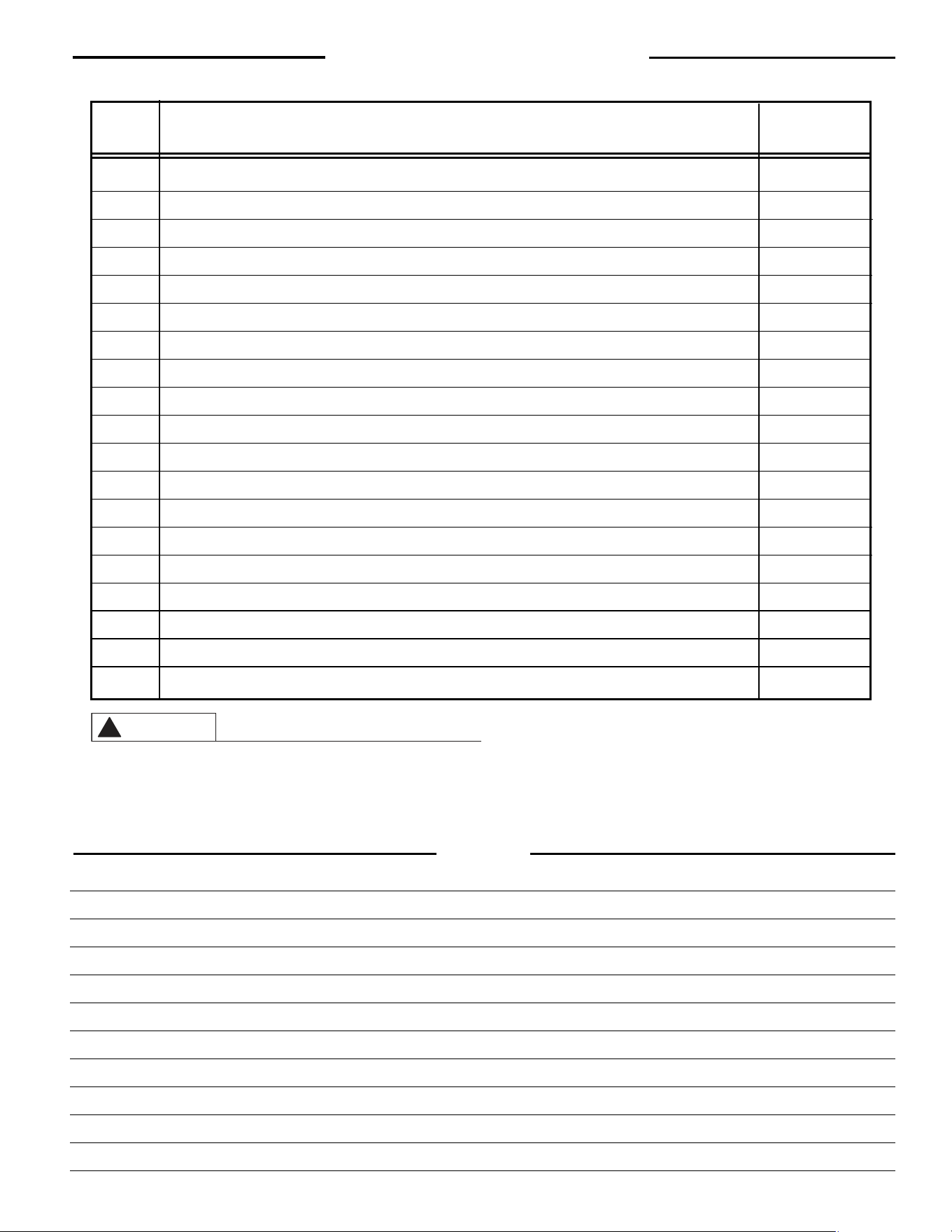
Replacement Parts List
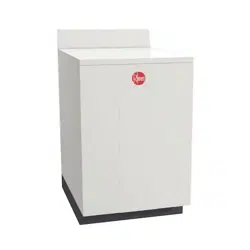
40 Gallon Table Top Models
Single and Double Element
Instructions for placing a Parts Orders:
Address parts orders to the distributor or store from where the heater was purchased.
All parts orders should include:
1. Model number and Serial number of heater (from rating plate).
2. Specify voltage and wattage as marked on rating plate.
3. Part Description (as noted at right) and number of parts desired.
*
These parts are supplied only
on double element models.
9
For your safety, DO NOT attempt repair of electrical wiring, thermostats, heating elements or other operating con-
trols. Refer repairs to qualified service personnel.
CAUTION
!
Replacement Parts List
Ref. Qty.
No. Part Description Req’d
1. Splash Top 1
2. Front Center Panel 1
3. Upper Thermostat (on double element models only) 1
4. Upper Thermostat Protective Cover (on double element models only) 1
5. Thermostat Bracket As Req’d.
6. Heating Element Gasket As Req’d.
7. Heating Element As Req’d.
8. Lower Thermostat Protective Cover 1
9. Lower Thermostat 1
10. Drain Valve 1
11. Dip Tube 1
12. Dip Tube Gasket 2
13. Anode 1
14. Relief Valve 1
15. Hot Outlet Heat Trap or Dip Cup Insert 1
Owners Manual 1
Notes
10
Trouble Shooting Guide
How to Obtain Service Assistance
NATURE OF TROUBLE POSSIBLE CAUSE SERVICE
No Hot Water 1. Manual switch turned off Turn to ON
2. Improper Wiring ** Rewire per Wiring Diagram
3. No Power — blown fuse or circuit breaker tripped
a. Shorted wiring ** Replace or repair
b. Circuit overloaded ** Provide adequate circuit or reduce load
c. Improper wiring ** Rewire per diagram
d. Grounded element or thermostat ** Replace
4. Manual Reset Limit (ECO) open Refer to "Operation Section"
a. Thermostat(s) defective ** Replace
b. Thermostat out of calibration ** Lower setting or replace
c. Heat build-up due to loose wires ** Tighten wire connections
d. Defective Limit (ECO) ** Replace
Not enough Hot Water 1. Heater undersized Reduce rate of hot water use
2. Defective Element(s) ** Check amperage, replace element if low
3. Miswired or defective thermostat ** Check wiring or replace
causing only one element to work
Water too hot or not 1. Thermostat setting too high or low Change setting as required
hot enough 2. Thermostat out of calibration ** Replace
Noisy heating element(s) 1. Scale build-up on elements ** Remove and clean
Rattling noise during 1. Internal Heat Trap fittings in operation None. The rattling noise is normal for
periods of water usage Heat Trap fittings when in operation and
does not indicate a need for service.
** For your safety, DO NOT attempt repair of Electrical Wiring, Thermostat(s), Heating Elements or other Operating Con-
trols. Refer repairs to qualified service personnel.
CAUTION
!
1. Should you have any questions about your new water heater, or if it
requires adjustment, repair, or routine maintenance, it is suggested that
you first contact your installer, plumbing contractor or previously agreed
upon service agency. In the event that the firm has moved, or is
unavailable, refer to the telephone directory commercial listings or local
utility for qualified service assistance.
2. Should your problem not be solved to your complete satisfaction, you
should then contact the Manufacturer’s National Service Department at
the following address:
2600 Gunter Park Drive
Montgomery, Alabama 36109-1413
Phone: 1-800-432-8373.
When contacting the manufacturer, the following information should be
made available:
a. Model and serial numbers of the water heater as shown on the rating
plate attached to the jacket of the heater.
b. Address where water heater is located and can be seen.
c. Name and address of installer and any service agency who performed
service on the water heater.
d. Date of original installation and dates any service work was performed.
e. Details of the problem as you can best describe them.
f. List of people, with dates, who have been contacted regarding your
problem.

NOTICE
FOR INSTALLATIONS IN THE STATE OF CALIFORNIA
California Law requires that residential water heaters must be braced, anchored or strapped to resist falling or hor-
izontal displacement due to earthquake motions. For residential water heaters up to 52 gallon capacity, a
brochure with generic earthquake bracing instructions can be obtained from:
OFFICE OF THE STATE ARCHITECT
400 P Street
Sacramento, CA 95814
Telephone: (916)324-5315
or, ask a water heater dealer. However, applicable Local Codes shall govern installations. (For residential water
heaters of capacity greater than 52 gallons, consult the local building jurisdiction for acceptable bracing installa-
tions)
! !
Grounding conductor may be required.
Refer to Wiring Section of Manual
*
This water heater is factory equipped for two (2) wire connection to
electrical power. For use with "off-peak" meter (timer) remove wire
nut from red and black leads and connect to "off-peak" meter (timer).
!
Wiring Diagrams — Therm-O-Disc Thermostats (Type 59T)
SINGLE ELEMENT
DOUBLE ELEMENT
SIMULTANEOUS OPERATION
DOUBLE ELEMENT
SIMULTANEOUS OPERATION
WITH 4 WIRE OUTLET
DOUBLE ELEMENT
NON-SIMULTANEOUS
DOUBLE ELEMENT
NON-SIMULTANEOUS
WITH 4 WIRE OUTLET
!
DOUBLE ELEMENT
NON-SIMULTANEOUS
WITH 3 WIRE OUTLET
FIG. A-1
FIG. A-2 FIG. B FIG. C FIG. D FIG. E FIG. F
2
1
2
THERMOSTAT
& HIGH TEMP.
LIMIT (ECO)
HEATING
ELEMENT
WHITE
BLACK
BLACK
H
JUNCTION
BOX
N
1
G
BRANCH CIRCUIT
TO ELECTRICAL
DISTRIBUTION PANEL
120 V ONLY
2
1
2
THERMOSTAT
& HIGH TEMP.
LIMIT (ECO)
HEATING
ELEMENT
RED
BLACK
BLACK
L1
G
*
BRANCH CIRCUIT
TO ELECTRICAL
DISTRIBUTION PANEL
JUNCTION
BOX
4
L2
RED
1 3
SINGLE ELEMENT
2
UPPER THERMOSTAT
& HIGH TEMP. LIMIT
(ECO)
UPPER
HEATING
ELEMENT
BLUE
L1
JUNCTION
BOX
4
L2
1 3
BLACK
RED
BLACK
LOWER
HEATING
ELEMENT
LOWER
THERMOSTAT
& HIGH TEMP
LIMIT (ECO)
1
2
1
1
2
BLUE
CONNECTOR TO "OFF PEAK"
METER (TIMER)
TM2
4
YELLOW
YELLOW
2
BRANCH CIRCUIT
TO ELECTRICAL
DISTRIBUTION PANEL
BLACK
LOWER
HEATING
ELEMENT
2
UPPER THERMOSTAT
& HIGH TEMP.
LIMIT (ECO)
UPPER
HEATING
ELEMENT
BLUE
YELLOW
BLACK
L1
JUNCTION
BOX
4
L2
RED
1 3
1
2
BLACK
RED
LOWER
THERMOSTAT
1
2
4
BRANCH CIRCUIT
TO ELECTRICAL
DISTRIBUTION PANEL
2
1
2
UPPER THERMOSTAT
& HIGH TEMP. LIMIT
(ECO)
UPPER
HEATING
ELEMENT
BLUE
YELLOW
L1
JUNCTION
BOX
4
L2
RED
1 3
1
2
4
BLACK
BLUE
BLACK
BLUE
YELLOW
LOWER
THERMOSTAT
LOWER
HEATING
ELEMENT
TM 1
BLACK
TM 2
BRANCH CIRCUIT
TO ELECTRICAL
DISTRIBUTION PANEL
G
*
G
*
G
*
BRANCH CIRCUIT
TO ELECTRICAL
DISTRIBUTION PANEL
UPPER THERMOSTAT
& HIGH TEMP. LIMIT (ECO)
2
UPPER
HEATING
ELEMENT
BLUE
L1
JUNCTION BOX
4
L2
1 3
RED (10 GA)
BLACK
LOWER
HEATING
ELEMENT
LOWER
THERMOSTAT
& HIGH TEMP
LIMIT (ECO)
1
2
4
1 3
1
2
RED
2
BLACK
(10 GA)
YELLOW
BLACK (10 GA)
RED
(10 GA)
G
*
2
UPPER THERMOSTAT
& HIGH TEMP. LIMIT (ECO)
UPPER
HEATING
ELEMENT
BLUE
L1
BRANCH CIRCUIT
TO ELECTRICAL
DISTRIBUTION PANEL
JUNCTION BOX
4
L2
1 3
BLACK (10 GA)
RED (10 GA)
BLACK
LOWER
HEATING
ELEMENT
LOWER
THERMOSTAT
& HIGH TEMP
LIMIT (ECO)
1
2
4
1 3
1
2
RED
2
BLUE
(10 GA)
TO SECOND POWER SOURCE,
"OFF PEAK" METER, OR TIMER
TM2
TM1
YELLOW
(10 GA)
YELLOW
G
*
THIS ELECTRIC WATER HEATER IS WIRED AS INDICATED ABOVE OR BELOW
Wiring Diagrams
Electric Water Heaters for
3 - Phase Applications
Therm-O-Disc Thermostats
(Type 59T)
For the connection of this water
heater to a 3-Phase Branch Circuit,
connect field wiring to the water
heater as indicated in the ap propri -
ate wiring diagram at right. A sep a-
rate junction box is being supplied
with this water heater (check bot -
tom of carton) to accomodate wir ing
and conduit con nections. Install the
Junction Box as shown on the In-
stallation/Instruction Sheet in cluded
in the plastic bag at tached to the
heater.
DOUBLE ELEMENT
SIMULTANEOUS OPERATION
DOUBLE ELEMENT
NON-SIMULTANEOUS
FIG. G
FIG. H
2
UPPER THERMOSTAT
& HIGH TEMP. LIMIT (ECO)
UPPER
HEATING
ELEMENT
BLUE
4
L3
BLACK
BLACK
LOWER
HEATING
ELEMENT
LOWER
THERMOSTAT
& HIGH TEMP
LIMIT (ECO)
1
1
2
RED
2
BLUE
YELLOW
G
*
YELLOW
3
L2
1
1
L1
2
4
3- PHASE BRANCH CIRCUIT
TO ELECTRICAL
DISTRIBUTION PANEL
2
UPPER THERMOSTAT
& HIGH TEMP. LIMIT (ECO)
UPPER
HEATING
ELEMENT
BLUE
3- PHASE BRANCH CIRCUIT
TO ELECTRICAL
DISTRIBUTION PANEL
4
L3
BLACK (10 GA)
RED (10 GA)
BLACK
LOWER
HEATING
ELEMENT
LOWER
THERMOSTAT
& HIGH TEMP
LIMIT (ECO)
1
4
1
2
RED
2
BLUE (10 GA)
YELLOW
G
*
YELLOW (10 GA)
3
3
L2
1
1
L1
2