SAFETY DATA SHEET
Page 1 of 7
HFT-97733
Prepared to OSHA, ACC, ANSI, NOHSC, WHMIS, 2001/58 & 1272/2008/EC Standards SDS Revision: 1.1 SDS Revision Date: 12/29/2015
1. PRODUCT & COMPANY IDENTIFICATION
1.1 Product Name:
1/8 IN AWS MILD STEEL WELDING ELECTRODE E6011
1.2 Chemical Name:
Metal Alloy
1.3 Synonyms:
P/N 97733
1.4 Trade Names:
Chicago Electric Welding
1.5 Product Uses & Restrictions:
Welding Electrode
1.6 Distributor’s Name:
Harbor Freight Tools USA, Inc.
1.7 Distributor’s Address:
26541 Agoura Road, Calabasas, CA 91302 USA
1.8 Emergency Phone:
CHEMTREC: +1 (703) 527-3887 / +1 (800) 424-9300 (CCN 676687)
1.9 Business Phone / Fax:
+1 (805) 388-1000
2. HAZARDS IDENTIFICATION
2.1 Hazard Identification:
This product is classified as a HAZARDOUS SUBSTANCE but not as DANGEROUS GOODS
according to the classification criteria of NOHSC: 1088 (1999) and ADG Code (Australia).
DANGER! MAY CAUSE CANCER. MAY CAUSE DAMAGE TO ORGANS (LUNGS, BONES)
THROUGH PROLONGED OR REPEATED EXPOSURE. CAUSES SERIOUS EYE IRRITATION.
MAY CAUSE RESPIRATORY IRRITATION.
Classification
: Carc. 1A; STOT RE 2; Eye Irrit. 2; STOT SE 3
Hazard Statements
(H): H350 – May cause cancer. H319 – Causes serious eye irritation. H335 –
May cause respiratory irritation. H372 – Causes damage to organs (lungs, bones) through
prolonged or repeated exposure.
Precautionary Statements
(P): P201 – Obtain special instructions before use. P202 – Do not
handle until all safety precautions have been read and understood. P260 – Do not breathe
dust/fume. P264 – Wash hands and exposed skin areas with soap and warm water thoroughly
after handling. P270 – Do not eat, drink or smoke when using this product. P271 – Use only
outdoors or in a well-ventilated area. P280 – Wear protective gloves/protective clothing/eye
protection/face protection. P304+P340 – IF INHALED: Remove victim to fresh air and keep at rest
in a position comfortable for breathing. P305+P351+P338 – IF IN EYES: Rinse cautiously with
water for several minutes. Remove contact lenses, if present and easy to do. Continue rinsing.
P308+P313 – IF exposed or concerned: Get medical advice/attention. P314 – Get medical
advice/attention if you feel unwell. P337+P313 – If eye irritation persists: Get medical
advice/attention. P405 – Store locked up. P501 – Dispose of contents and container to a
licensed treatment, storage or disposal facility (TSDF).
3. COMPOSITION & INGREDIENT INFORMATION
CHEMICAL NAME(S) CAS No. RTECS No.
EINECS No. %
EXPOSURE LIMITS IN AIR (mg/m
3
)
ACGIH NOHSC OSHA
OTHER
ppm ppm ppm
TLV STEL
ES-
TWA
ES-
STEL
ES-
PEAK PEL STEL IDLH
IRON
7439-89-6 NO4565500 231-096-4 60-100 (5) NA NF NF NF (10) NA NA 0.5 – NIOSH
Acute Tox. 4 *; Skin Corr. 1A; H302, H314
MANGANESE
7439-96-5 OO9275000 231-105-1 0.1-1 NA NA (1) NF NF NA NA 500
SILICON
7440-21-3 VW0400000 231-130-8 0.1-1 (10.0) NA (10.0) NF NF (10.0) NA NA
CARBON
1333-86-4 FF5800000 215-609-9 0-0.1 (3.5) NA NF (3) NF (3.5) NA (1750)
SULFUR
7704-34-9 NA 231-722-6 0-0.1 (0.02) NA NF (0.1) NF NA NA (5)
Skin Irrit. 2; H315
PHOSPHOROUS
7723-14-0 TH3500000 231-768-7 0-0.1 (0.02) NA NF (0.1) NF NA NA (5)
Pyr. Sol. 1; Acute Tox. 2 *; Acute Tox. 2 *; Skin Corr. 1A; Aquatic Acute 1; H250, H330, H300, H314, H400
METAL OXIDE (COATING)
TITANIUM DIOXIDE
13463-67-7 XR2275000 236-675-5 15-40 (10) NA NF NF NF (5) NA 5000
SILICON DIOXIDE
14808-60-7 VV7330000 238-878-4 15-40 (0.025
)
NA NF (0.1) NF (0.1) NA (50)
STOT RE 1; H372
MAGNESIUM OXIDE
1309-48-4 OM3850000 215-171-9 10-30 NA NA NF NF NF NA NA NA
MANGANESE (II) OXIDE
1344-43-0 NA 215-695-8 7-13 NA NA NF NF NF NA NA NA
CALCIUM OXIDE
1305-78-8 EW3100000 215-138-9 7-13 NA NA NF NF NF NA NA NA
Skin Irrit. 2; Eye Dam. 1; STOT SE 3; H315, H318, H335
ALUMINA
1344-28-1 BD1200000 215-691-6 1-5 NA NA NF NF NF NA NA NA
DIPOTASSIUM OXIDE
12136-45-7 NA 235-227-6 1-3 NA NA NF NF NF NA NA NA
DISODIUM OXIDE
1313-59-3 NA 215-208-9 0.1-1 NA NA NF NF NF NA NA NA
Skin Corr. 1B; H314
SAFETY DATA SHEET
Page 2 of 7
HFT-97733
Prepared to OSHA, ACC, ANSI, NOHSC, WHMIS, 2001/58 & 1272/2008/EC Standards SDS Revision: 1.1 SDS Revision Date: 12/29/2015
4. FIRST AID MEASURES
4.1 First Aid:
Ingestion: Ingestion is unlikely; however, particulates from grinding or cutting may be ingested. DO NOT INDUCE
VOMITING. Contact ChemTrec at +1 (703) 527-3887 or the nearest Poison Control Center or local
emergency telephone number for assistance and instructions. Seek immediate medical attention. If
vomiting occurs spontaneously, keep victim’s head lowered (forward) to reduce the risk of aspiration.
Eyes
: Flush eyes thoroughly with copious amounts of water for at least 15 minutes, holding eyelid(s) open to
ensure complete flushing. If irritation persists, seek immediate medical attention. Arc rays can injure eyes.
If exposed to arc rays, move victim to a dark room and remove contact lenses, cover eyes with padded
dressing and seek medical advice/attention.
Skin
: Remove contaminated clothing and wash affected areas with soap and water. If irritation persists, seek
prompt medical attention. Do not wear contaminated clothing until after it has been properly cleaned.
Inhalation
: Remove victim to fresh air at once. If breathing is difficult, administer supplemental oxygen and seek
immediate medical attention. If breathing stops, perform artificial respiration.
4.2 Effects of Exposure:
Ingestion: Gastrointestinal irritation, nausea, and/or vomiting.
Eyes
: Mild to moderate irritant.
Skin
: Redness, irritation, rash at site of exposure.
Inhalation
: Inhalation of fumes can cause a metallic taste, tightness in the chest, nausea, fever, fatigue and allergic
reaction. Fumes may cause irritation to nasal membranes, bronchial tubes and lungs.
4.3 Symptoms of Overexposure:
Ingestion: Intestinal discomfort, nausea, vomiting, and diarrhea.
Eyes
: Mild irritation, redness, and watering.
Skin
: Contact dermatitis, characterized by localized red or puffy dry skin and itching.
Inhalation
: Acute overexposure may include signs and symptoms such as watery eyes, nose and throat irritation,
headache, dizziness, metal fume fever, difficulty in breathing, frequent coughing, or chest pain.
4.4 Acute Health Effects:
Ingestion: Gastrointestinal irritation and central nervous system depression.
Eyes
: Mild to moderate irritant.
Skin
: Prolonged or repeated contact may cause contact dermatitis (localized redness or rash).
Inhalation
: Acute overexposure may include signs and symptoms such as watery eyes, nose and throat irritation,
headache, dizziness, metal fume fever, difficulty in breathing, frequent coughing, or chest pain.
Overexposure to metals oxide may cause metal fume fever characterized by metallic taste, tightness of
chest and fever. Symptoms may last 24-48 hours following overexposure.
4.5 Chronic Health Effects:
Ingestion: Ingestion or inhalation of fumes may cause gastrointestinal disturbance.
Eyes
: None reported by the manufacturer.
Skin
: Prolonged or repeated contact may cause contact dermatitis (localized redness or rash).
Inhalation
: Long term exposure to welding and allied processes gases, dusts and fumes may contribute to pulmonary
irritation or pneumoconiosis or “siderosis.” Inhalation of fumes can cause irritation of the respiratory tract,
lung damage and asthma-like symptoms. Long-term overexposure to manganese compounds may affect
the central nervous system. Symptoms may be similar to Parkinson's Disease and can include slowness,
changes in handwriting, gait impairment, muscle spasms and cramps and less commonly, tremor and
behavioral changes. Employees who are overexposed to manganese compounds should be seen by a
physician for early detection of neurologic problems.
4.6 Target Organs:
Eyes, Skin & Respiratory System.
4.7 Medical Conditions
Aggravated by Exposure:
Individuals with allergies or impaired respiratory function may have
symptoms worsened by exposure to welding fumes; however, such
reaction cannot be predicted due to the variation in the composition
and in the quantity of the decomposition products.
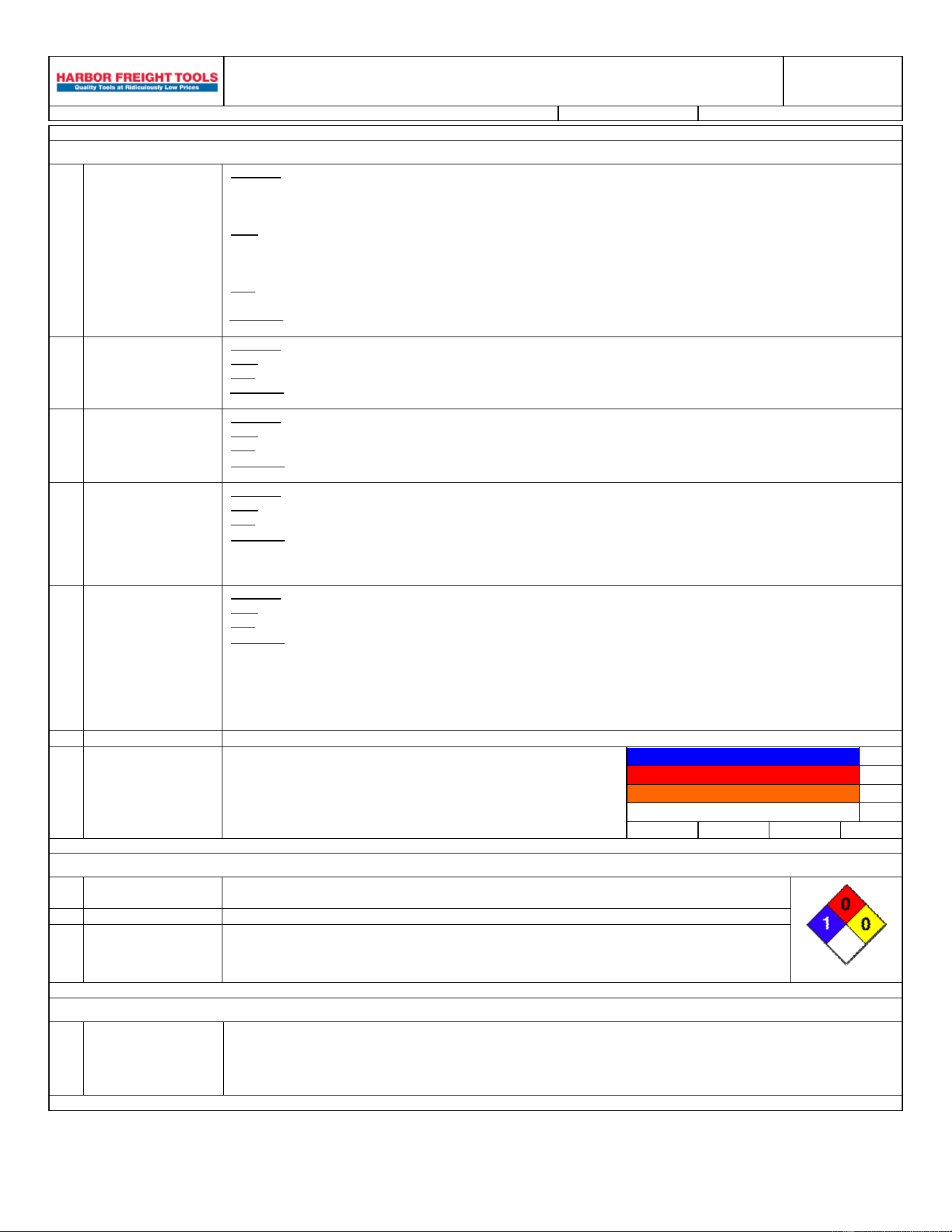
HEALTH
1
FLAMMABILITY
0
PHYSICAL HAZARDS
0
PROTECTIVE EQUIPMENT
E
EYES SKIN LUNGS
5. FIREFIGHTING MEASURES
5.1 Fire & Explosion Hazards:
This product is not flammable. Welding slag or sparks may cause fire. Keep away from
combustible material. When exposed to high temperatures, toxic fumes may be released.
5.2 Extinguishing Methods:
Water, Dry Chemical, Foam, & Carbon Dioxide.
5.3 Firefighting Procedures:
Fight fires as for surrounding materials. Firefighters should wear a MSHA/NIOSH approved or
equivalent self-contained breathing apparatus (SCBA) and protective clothing. Fire should be fought
from a safe distance. Keep containers cool until well after the fire is out. Prevent runoff from fire
control or dilution from entering sewers, drains, drinking water supply, or any natural waterway.
6. ACCIDENTAL RELEASE MEASURES
6.1 Spills:
Before cleaning any spill, individuals involved in spill cleanup must wear appropriate Personal Protective Equipment
including gloves, glasses and NIOSH approved (or equivalent) dust respirator. Spilled product may produce a tripping
hazard. Particulate from grinding, welding or burning may produce a slipping hazard. Carefully vacuum or sweep up the
particulate, slag, dusts or powders. Dispose of properly in accordance with local, state and federal regulations. Wash all
affected areas. Remove any contaminated clothing and wash thoroughly before reuse.
SAFETY DATA SHEET
Page 3 of 7
HFT-97733
Prepared to OSHA, ACC, ANSI, NOHSC, WHMIS, 2001/58 & 1272/2008/EC Standards SDS Revision: 1.1 SDS Revision Date: 12/29/2015
7. HANDLING & STORAGE INFORMATION
7.1 Work & Hygiene Practices:
Avoid contact to eyes, skin, and mucous membranes. Avoid inhalation of vapors, gases, fumes and dusts. Wash
thoroughly after handling and use. Do not smoke, eat, drink, chew gum or tobacco, or apply cosmetics within the
working area. Do not store or bring tobacco products, gum, food, drinks or cosmetics within the working area. Otherwise
follow the standards of good industrial hygiene practices.
7.2 Storage & Handling:
No unusual methods are required. Keep product contained and retain all warning and identity labels. Preferred storage
is a sheltered warm area with temperature and humidity control to prevent high humidity and “going through the dew
point.” Keep away from incompatible materials (e.g., strong acids, alkalis, oxidizers) – see also Section 10. Open
containers slowly on a stable surface. Keep container tightly closed when not in use.
7.3 Special Precautions:
Read and understand the manufacturer’s instructions and the precautionary label on this product. See American
National Standard Z-49.1, “Safety in Welding, Cutting and Allied Processes,” published by the American Welding
Society, P. O. Box 351040, Miami, FL 33135 and OSHA Publication 2206 (29 C.F.R. 1910), U.S. Government Printing
Office, Superintendent of Documents, P.O. Box 371954, Pittsburgh, PA 15250-7954 for additional details regarding fire
and explosion control, exposure control and other special precautions.
8. EXPOSURE CONTROLS & PERSONAL PROTECTION
8.1 Exposure Limits:
ppm (mg/m
3
)
CHEMICAL NAME(S)
ACGIH NOHSC OSHA OTHER
TLV STEL ES-TWA
ES-
STEL
ES-
PEAK PEL STEL IDLH
IRON (5) NA NF NF NF (10) NA NA 0.5 – NIOSH
MANGANESE NA NA (1) NF NF NA NA 500
SILICON (10.0) NA (10.0) NF NF (10.0) NA NA
CARBON (3.5) NA NF (3) NF (3.5) NA (1750)
SULFUR (0.02) NA NF (0.1) NF NA NA (5)
PHOSPHOROUS (0.02) NA NF (0.1) NF NA NA (5)
TITANIUM DIOXIDE (10) NA NF NF NF (5) NA 5000
SILICON DIOXIDE (0.025) NA NF (0.1) NF (0.1) NA (50)
8.2
Ventilation & Engineering
Controls:
Use industrial hygiene monitoring equipment to ensure that exposure does not exceed threshold limit values. Use with
adequate ventilation (e.g., open doors and windows, local exhaust ventilation). Ensure appropriate decontamination
equipment is available (e.g., sink, safety shower, eye-wash station). Use in a chemical fume hood when working with
large quantities of product and provide adequate ventilation (e.g., local exhaust ventilation, fans).
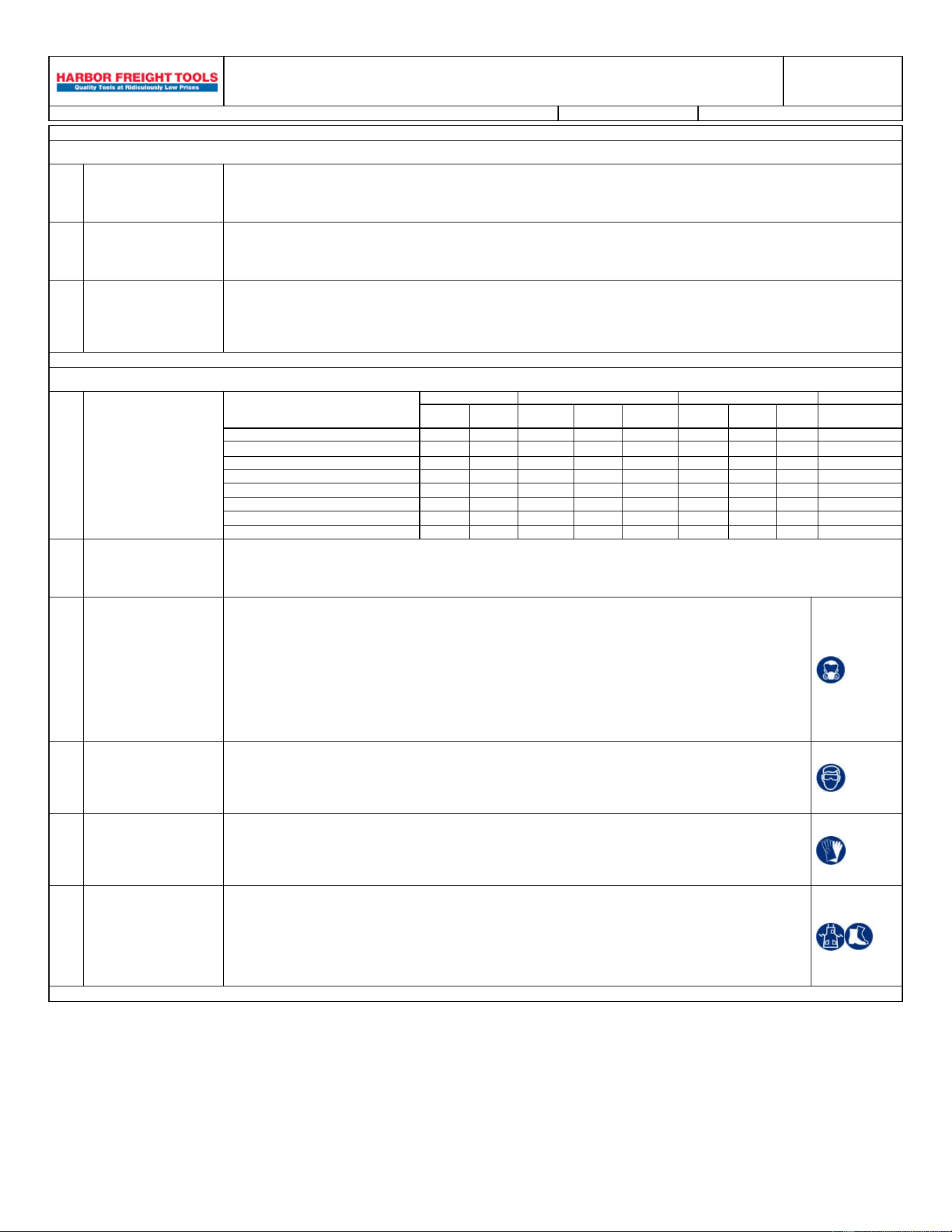
8.3 Respiratory Protection:
CAUTION: Welding or cutting may produce fumes and gases hazardous to health. Avoid breathing
these fumes and gases. Use adequate ventilation. Use NIOSH approved respiratory protection. See
ANSI Z49.1-1967 Safety in Welding and Cutting published by the American Welding Society. Keep the
exposure within legal limits. In the worker’s breathing zone and the general area, the fumes and gases
must be kept below the TLVs and the equivalent exposure must compute to less than one. Keep
exposure as low as possible. Use respirable fume respirator or air supplied respirator when welding in
confined space or where local exhaust or ventilation does not keep exposure below the TLV. Where
respiratory protection is necessary, NIOSH approved respiratory protection should be used. The
selection of the appropriate respiratory protection (dust respirator, etc.) should be based on the actual
or potential airborne contaminants and their concentrations present.
8.4 Eye Protection:
Wear helmet or use face shield with filter lens according to ANSI Z87.1. Provide protective screens and
flash goggles, if necessary, to shield others. Wear safety glasses with UV protective side shields or
goggles. Wear contact lenses in combination with safety eyewear, except where the contact lenses
create a likelihood of injury from intense heat, highly particulate atmosphere, or where their use is
prohibited.
8.5 Hand Protection:
Wear head, hand and body protection that help to prevent injury from hot metal, sparks, slag, infrared
radiation, UV radiation, abrasions, contusions and heat stress. Protective clothing will not generally
prevent shock except for leather if kept dry. Gloves made of leather with inside seams (or those that
give equal performance) are preferred. If necessary, refer to U.S. OSHA 29 CFR §1910.138, the
appropriate standards of Canada, or the EU member states.
8.6 Body Protection:
Wear head, hand and body protection that help to prevent injury from radiation, sparks and electrical
shock. Wear flame resistant ear plugs to keep sparks out of ears. See ANSI Z-49.1. The clothing may
include heat/fire resistant gloves, overalls, aprons, sleeves, footwear, welder’s spats and head cover.
Wear garments made of leather, heavyweight tightly woven wool or cotton. Keep clothing clean (free of
oil, grease or solvents) and in good repair. Do not wear clothing with frayed edges, tears or holes. Do
not roll up sleeves or trousers (pants should not be cuffed). . If necessary, refer to appropriate
standards of Canada, the EU member states, or U.S. OSHA.
SAFETY DATA SHEET
Page 4 of 7
HFT-97733
Prepared to OSHA, ACC, ANSI, NOHSC, WHMIS, 2001/58 & 1272/2008/EC Standards SDS Revision: 1.1 SDS Revision Date: 12/29/2015
9. PHYSICAL & CHEMICAL PROPERTIES
9.1 Appearance:
Solid grey article
9.2 Odor:
Odorless
9.3 Odor Threshold:
NA
9.4 pH:
NA
9.5 Melting Point/Freezing Point:
~ 1500 °C
9.6 Initial Boiling Point/Boiling
Range:
NA
9.7 Flashpoint:
NA
9.8 Upper/Lower Flammability
Limits:
NA
9.9 Vapor Pressure:
NA
9.10 Vapor Density:
NA
9.11 Relative Density:
NA
9.12 Solubility:
Insoluble
9.13 Partition Coefficient (log P
ow
):
NA
9.14 Autoignition Temperature:
NA
9.15 Decomposition Temperature:
NA
9.16 Viscosity:
NA
9.17 Other Information:
NA
10. STABILITY & REACTIVITY
10.1 Stability:
Stable under normal conditions of use (See Section 7).
10.2 Hazardous Decomposition
Products:
Irritating vapors and toxic gases (e.g., carbon monoxide and carbon dioxide) when involved in fire.
10.3 Hazardous Polymerization:
Will not occur.
10.4 Conditions to Avoid:
Use or storage near incompatible substances.
10.5 Incompatible Substances:
Strong oxidizing agents, strong acids and bases.
11. TOXICOLOGICAL INFORMATION
11.1 Routes of Entry: Inhalation:
NO
Absorption:
YES
Ingestion:
YES
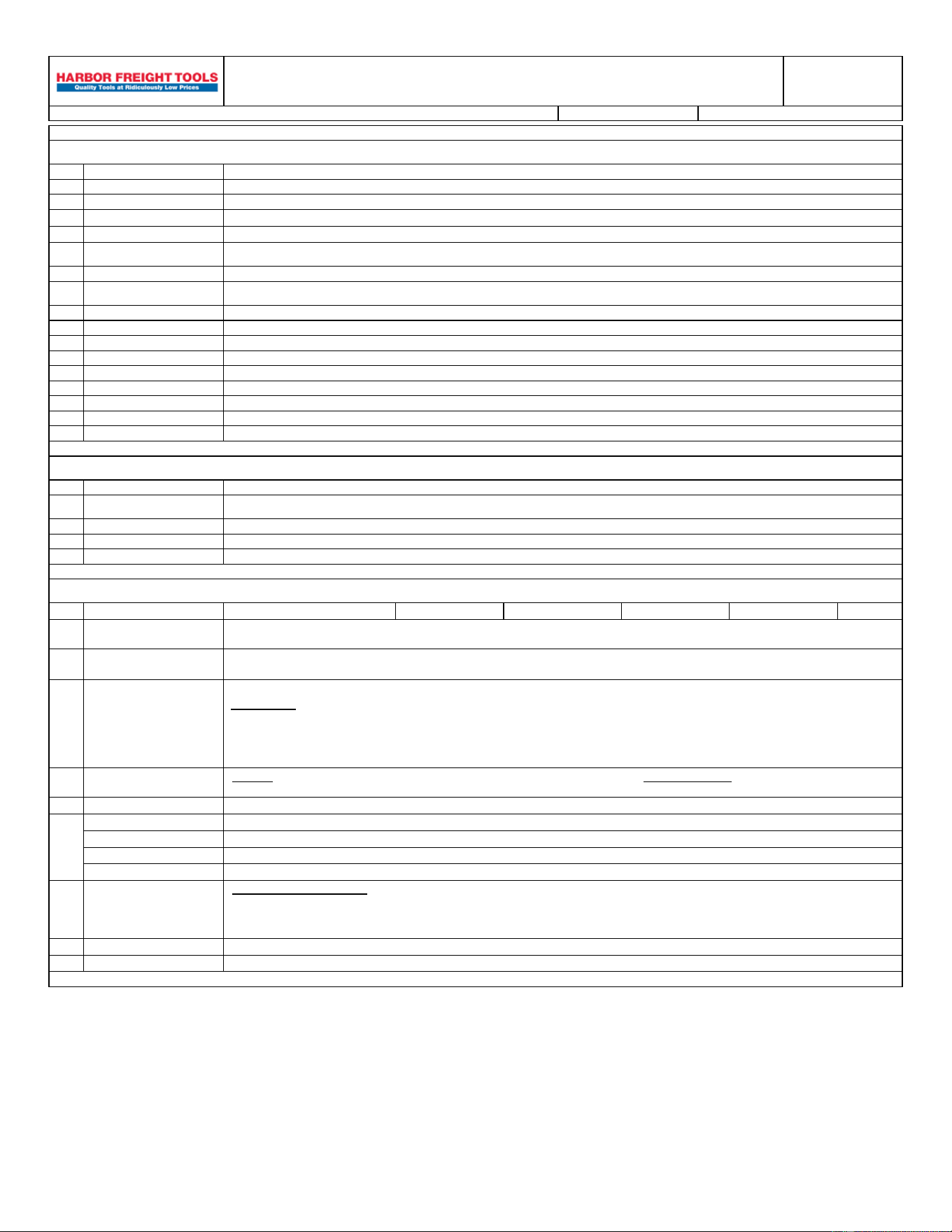
11.2 Toxicity Data:
This material or its emission may induce an allergic of sensitization reaction and thereby aggravate existing systemic
disease.
11.3 Acute Toxicity:
Overexposure to welding fumes may cause: fever, nausea, giddiness, eye irritation to the respiratory tract and to other
mucous membranes. May aggravate pre-existing respiratory conditions (e.g., asthma, emphysema).
11.4 Chronic Toxicity:
Overexposure to welding fumes may cause: pulmonary disease and/or cause breathing difficulty. Overexposure to
manganese
fumes may affect the brain and central nervous system, resulting in poor coordination, loss of motor control,
and tremor in the extremities, which may be irreversible. Long-term (chronic) overexposure to welding fumes can lead to
siderosis (iron deposits in lungs), central nervous system effects, bronchitis and other pulmonary effects. Respiratory
exposure to crystalline silica present in the weld wire or electrode is not anticipated during normal use. Respiratory
overexposure to airborne crystalline silica is known to cause silicosis.
11.5 Suspected Carcinogen:
Carbon is listed as IARC Group 2B (Possibly carcinogenic to humans). Welding Fumes is listed as IARC Group 2B
(Possibly carcinogenic to humans).
11.6 Reproductive Toxicity:
This product is not reported to cause reproductive toxicity in humans.
Mutagenicity:
This product is not reported to produce mutagenic effects in humans.
Embryotoxicity:
This product is not reported to produce embryotoxic effects in humans.
Teratogenicity:
This product is not reported to cause teratogenic effects in humans.
Reproductive Toxicity:
This product is not reported to cause reproductive effects in humans.
11.7 Irritancy of Product:
General Nuisance Dusts: Many of the metal oxides generated as components of welding fume, are considered nuisance
dusts (such as oxides of titanium and aluminum), which are essentially non-toxic and chemically non-irritating. Skin
contact has shown no problems other than possible drying and mechanical irritation. Eye contact can produce
particulate irritation.
11.8 Biological Exposure Indices:
NE
11.9 Physician Recommendations:
Treat symptomatically.
SAFETY DATA SHEET
Page 5 of 7
HFT-97733
Prepared to OSHA, ACC, ANSI, NOHSC, WHMIS, 2001/58 & 1272/2008/EC Standards SDS Revision: 1.1 SDS Revision Date: 12/29/2015
12. ECOLOGICAL INFORMATION
12.1 Environmental Stability:
There are no specific data available for this product.
12.2 Effects on Plants & Animals:
There are no specific data available for this product.
12.3 Effects on Aquatic Life:
There are no specific data available for this product.
13. DISPOSAL CONSIDERATIONS
13.1 Waste Disposal:
Waste disposal must be in accordance with appropriate Federal, state, provincial and local regulations.
13.2 Special Considerations:
NA
14. TRANSPORTATION INFORMATION
The basic description (ID Number, proper shipping name, hazard class & division, packing group) is shown for each mode of transportation. Additional
descriptive information may be required by 49 CFR, IATA/ICAO, IMDG and the CTDGR.
14.1 49 CFR (GND):
NOT REGULATED
14.2 IATA (AIR):
NOT REGULATED
14.3 IMDG (OCN):
NOT REGULATED
14.4 TDGR (Canadian GND):
NOT REGULATED
14.5 ADR/RID (EU):
NOT REGULATED
14.6 SCT (MEXICO):
NOT REGULATED
14.7 ADGR (AUS):
NOT REGULATED
15. REGULATORY INFORMATION
15.1 SARA Reporting
Requirements:
This product Manganese and Alumina, substances subject to SARA Title III, section 313 reporting requirements.
15.2 SARA Threshold Planning
Quantity:
There are no specific Threshold Planning Quantities for the components of this product.
15.3 TSCA Inventory Status:
The components of this product are listed on the TSCA Inventory or are otherwise exempt.
15.4 CERCLA Reportable Quantity
(RQ):
Sulfur: 0.454 kg (1 lbs)
15.5 Other Federal Requirements:
Manganese (and its compounds) is listed as Hazardous Air Pollutants (HAPs). Manganese (and its compounds) is listed
as Toxic Pollutants under the Clean Water Act (CWA). Zinc
(and its compounds) is listed as Priority Pollutants under the
Clean Water Act (CWA). This product does not contain any Class 1 or Class 2 ozone depletors.
15.6 Other Canadian Regulations:
This product has been classified according to the hazard criteria of the Controlled Products
Regulations (CPR) and the SDS contains all of the information required by the CPR. The
components of this product are listed on the DSL/NDSL. None of the components of this product
are listed on the Priorities Substances List.
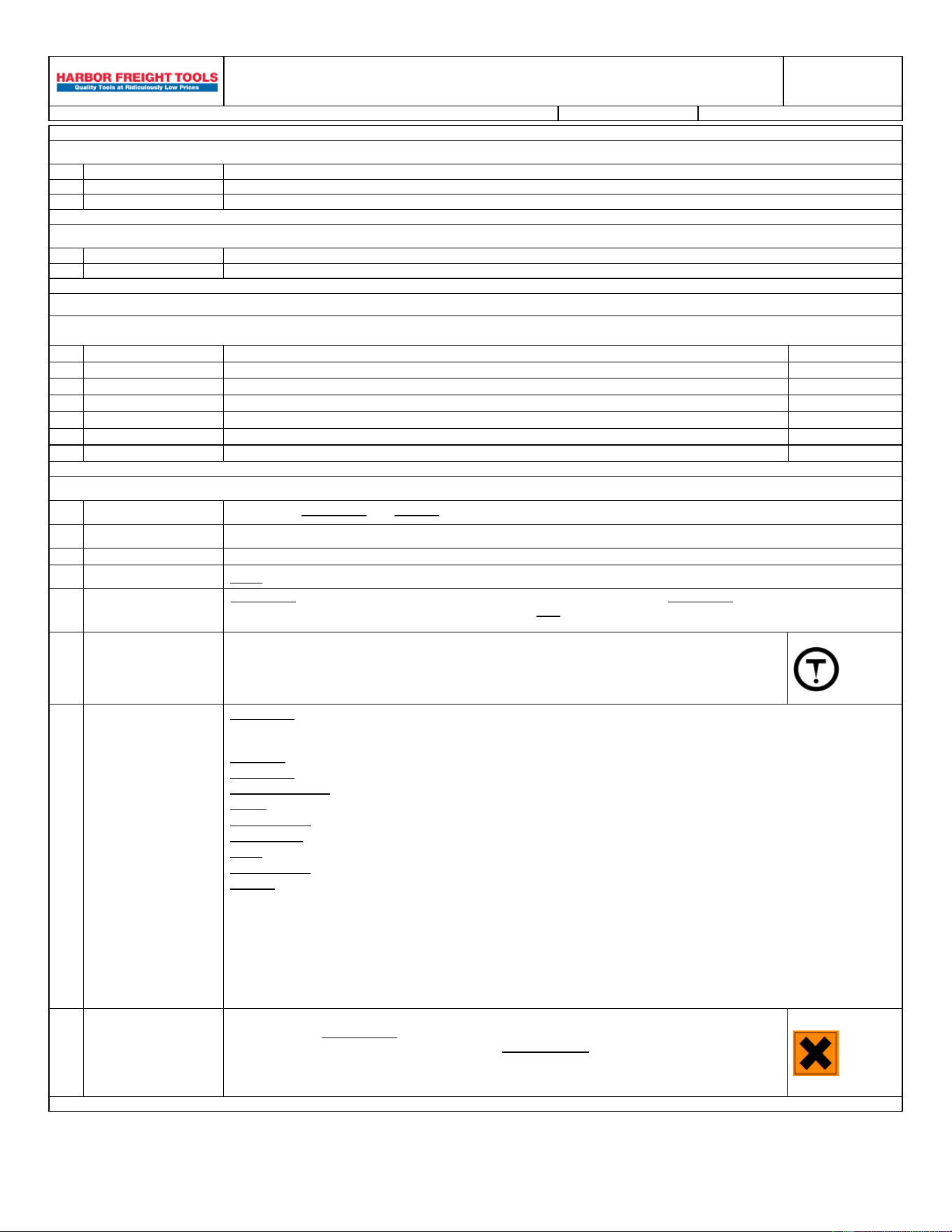
WHMIS Classification: D2B (Other Toxic Effects).
15.7 State Regulatory Information:
Manganese is found on the following state criteria lists: Florida Toxic Substances List (FL), Massachusetts Hazardous
Substances List (MA), Minnesota Hazardous Substances List (MN), New Jersey Right-to-Know List (NJ), Pennsylvania
Right-to-Know List (PA), and Washington Permissible Exposures List (WA).
Aluminum
is found on the following state criteria lists: MA, MN, NJ and PA.
Magnesium
is found on the following state criteria lists: FL, MA and PA.
Magnesium Oxide
is found on the following state criteria lists: FL, MA, MN, PA and WA.
Silicon
is found on the following state criteria lists: MA, MN, PA, and WA.
Silicon Dioxide
is found on the following state criteria lists: FL, MA, MN, NJ, PA and WA
Phosphorous
is found on the following state criteria lists: FL, MA, MN, NJ, PA and WA.
Sulfur
is found on the following state criteria lists: FL, MA and PA.
Calcium Oxide
is found on the following state criteria lists: FL, MA, MN, PA and WA.
Alumina
is found on the following state criteria lists: MA, MN, NJ, PA and WA.
None of the other ingredients in this product, present in a concentration of 1.0% or greater, are listed on any of the
following state criteria lists: California Proposition 65 (CA65), Delaware Air Quality Management List (DE), Florida Toxic
Substances List (FL), Massachusetts Hazardous Substances List (MA), Michigan Critical Substances List (MI),
Minnesota Hazardous Substances List (MN), New Jersey Right-to-Know List (NJ), New York Hazardous Substances List
(NY), Pennsylvania Right-to-Know List (PA), Washington Permissible Exposures List (WA), Wisconsin Hazardous
Substances List (WI).
NOTE: This product contains a substance(s) known to the State of California to cause cancer, birth defects or other
reproductive harm.
15.8 Other Requirements:
The primary components of this product are not listed in Annex I of EU Directive 67/548/EEC:
Harmful (Xn). Risk Phrases
(R): 9-20-24/25 - Use only in well ventilated areas. Harmful by
inhalation. Avoid contact with skin and eyes. Safety Phrases
(S): 22-36/37/39-38-51 - Do not
breathe gas/fumes/spray. Wear suitable protective clothing, gloves and eye/face protection. In
case of insufficient ventilation wear suitable respiratory equipment. Use only in well-ventilated
areas.
SAFETY DATA SHEET
Page 6 of 7
HFT-97733
Prepared to OSHA, ACC, ANSI, NOHSC, WHMIS, 2001/58 & 1272/2008/EC Standards SDS Revision: 1.1 SDS Revision Date: 12/29/2015
16. OTHER INFORMATION
16.1 Other Information:
DANGER! MAY CAUSE CANCER. MAY CAUSE DAMAGE TO ORGANS (LUNGS, BONES) THROUGH
PROLONGED OR REPEATED EXPOSURE. CAUSES SERIOUS EYE IRRITATION. MAY CAUSE RESPIRATORY
IRRITATION. Obtain special instructions before use. Do not handle until all safety precautions have been read and
understood. Do not breathe dust/fume. Wash hands and exposed skin areas with soap and warm water thoroughly after
handling. Do not eat, drink or smoke when using this product. Use only outdoors or in a well-ventilated area. Wear
protective gloves/protective clothing/eye protection/face protection. IF INHALED: Remove victim to fresh air and keep at
rest in a position comfortable for breathing. IF IN EYES: Rinse cautiously with water for several minutes. Remove
contact lenses, if present and easy to do. Continue rinsing. IF exposed or concerned: Get medical advice/attention. Get
medical advice/attention if you feel unwell. If eye irritation persists: Get medical advice/attention. Store locked up.
NOTE: Local ventilation should be used during handling and use. Good housekeeping and personal hygiene are
recommended. Some individuals may show sensitivity to exposure. Failure to observe proper practices may be
hazardous to health. Use only in well-ventilated areas. Harmful by inhalation. Avoid contact with skin and eyes. Do not
breathe gas, fumes, vapor or spray. Wear suitable protective clothing, gloves and eye/face protection. In case of
insufficient ventilation wear suitable respiratory protective equipment. Avoid overexposure to metal fumes, powders and
particulates.
WARNING: Electric shock from welding equipment or electrodes may be fatal. The welding process uses electrical
circuits that sustain a welding arc between the electrode and the base plate. The welding arc converts the electrical
energy into a localized, concentrated heat source. The tremendously high temperatures of the arc cause the welding
continuous wire and rod electrode (or filler metal, when used as such) to decompose. Electric arc working may create
one or more health hazards. Hot metal spatter and heat from electric arcs, welding flames or the thermal spray process
may cause burns to the hands and body or may cause fire if it comes into contact with combustible materials. UV, IR
and light radiation from an electric arc may cause damage to unprotected eyes. Wear suitable protective equipment.
Fumes and gases generated during the welding process can be harmful to your health and noise generated during
welding can damage hearing. See also American National Standard Z-49.1, “Safety in Welding, Cutting and Allied
Processes” published by the American Welding Society for additional safety precautions and hazard warnings.
NOTE: This product contains a substance(s) known to the State of California to cause cancer, birth defects or other
reproductive harm.
16.2 Terms & Definitions:
See last page of this Safety Data Sheet.
16.3 Disclaimer:
This Safety Data Sheet is offered pursuant to OSHA’s Hazard Communication Standard, 29 CFR §1910.1200. Other
government regulations must be reviewed for applicability to this product. To the best of ShipMate's & Harbor Freight
Tools USA, Inc.’s knowledge, the information contained herein is reliable and accurate as of this date; however,
accuracy, suitability or completeness is not guaranteed and no warranties of any type, either expressed or implied, are
provided. The information contained herein relates only to the specific product(s). If this product(s) is combined with
other materials, all component properties must be considered. Data may be changed from time to time. Be sure to
consult the latest edition.
16.4 Prepared for:
Harbor Freight Tools USA, Inc.
26541 Agoura Road
Calabasas, CA 91302 USA
Tel: +1 (805) 388-1000
http://www.harborfreight.com/
16.5 Prepared by:
ShipMate, Inc.
P.O. Box 787
Sisters, Oregon 97759-0787 USA
Tel: +1 (310) 370-3600
Fax: +1 (310) 370-5700
http://www.shipmate.com
SAFETY DATA SHEET
Page 7 of 7
HFT-97733
Prepared to OSHA, ACC, ANSI, NOHSC, WHMIS, 2001/58 & 1272/2008/EC Standards SDS Revision: 1.1 SDS Revision Date: 12/29/2015
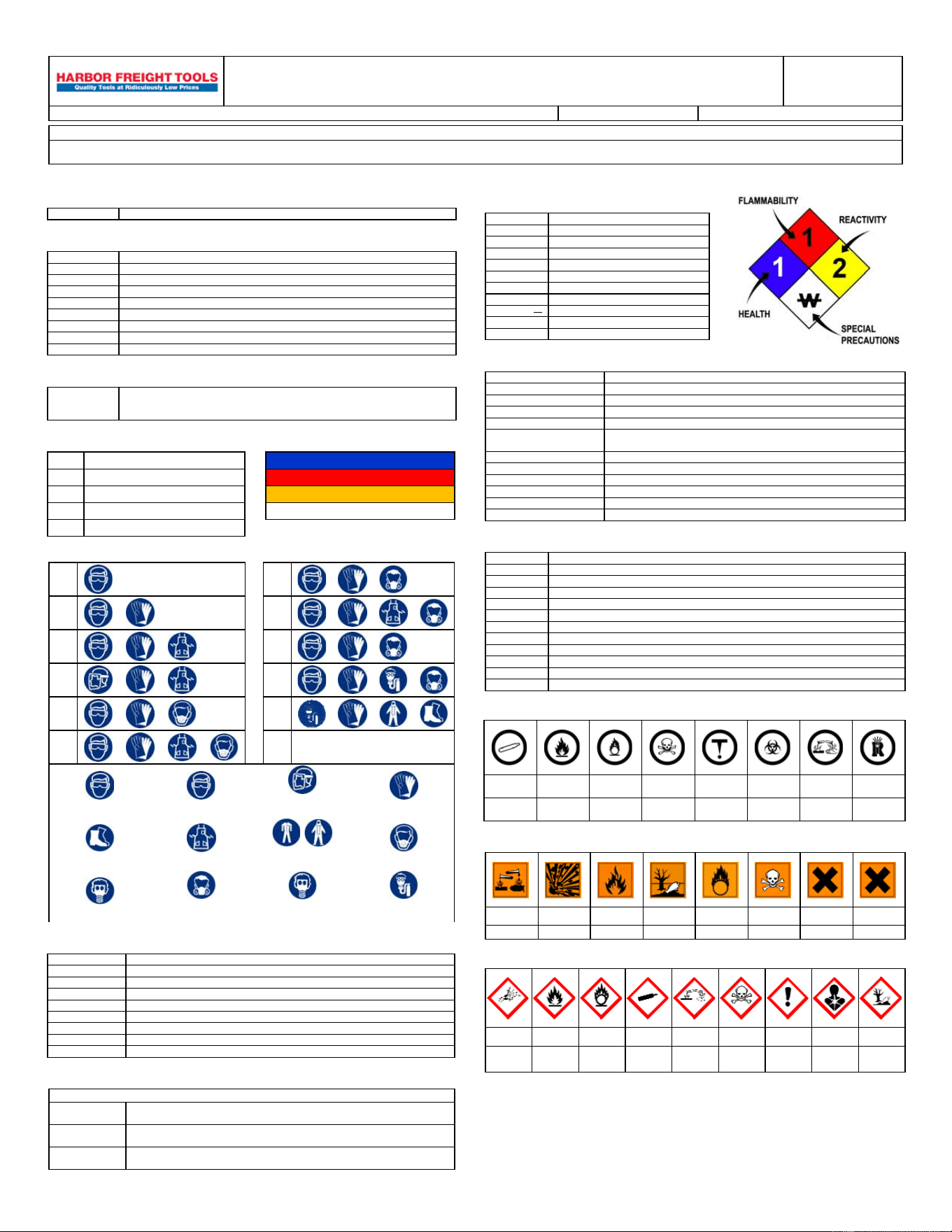
DEFINITION OF TERMS
A large number of abbreviations and acronyms appear on a SDS. Some of these that are commonly used include the following:
GENERAL INFORMATION:
CAS No. Chemical Abstract Service Number
EXPOSURE LIMITS IN AIR:
ACGIH American Conference on Governmental Industrial Hygienists
C Ceiling Limit
ES Exposure Standard (Australia)
IDLH Immediately Dangerous to Life and Health
OSH
A
U.S. Occupational Safety and Health Administration
PEL Permissible Exposure Limit
STEL Short-Term Exposure Limit
TLV Threshold Limit Value
TW
A
Time Weighted Average
FIRST AID MEASURES:
CPR Cardiopulmonary resuscitation - method in which a person whose heart has
stopped receives manual chest compressions and breathing to circulate blood
and provide oxygen to the body.
HMIS-III HEALTH, FLAMMABILITY & REACTIVITY RATINGS:
0 Minimal Hazard
HEALTH
1 Slight Hazard
FLAMMABILITY
2 Moderate Hazard
PHYSICAL HAZARDS
3 Severe Hazard
PERSONAL PROTECTION
4 Extreme Hazard
PERSONAL PROTECTION RATINGS:
A
G
B
H
C
I
D
J
E
K
F
X
Consult your supervisor or SOPs fo
r
special handling directions.
Safety Glasses
Splash Goggles
Face Shield &
Protective Eyewear
Gloves
Boots
Synthetic Apron
Protective Clothing
& Full Suit
Dust Respirator
Full Face Respirator
Dust & Vapor Half-
Mask Respirator
Full Face
Respirator
Airline Hood/Mask
or SCBA
OTHER STANDARD ABBREVIATIONS:
ML Maximum Limit
mg/m3 milligrams per cubic meter
N
A
Not Available
ND Not Determined
NE Not Established
NF Not Found
NR No Results
ppm parts per million
SCB
A
Self-Contained Breathing Apparatus
NATIONAL FIRE PROTECTION ASSOCIATION: NFPA
FLAMMABILITY LIMITS IN AIR:
Autoignition
Temperature
Minimum temperature required to initiate combustion in air with no other
source of ignition
LEL Lower Explosive Limit - lowest percent of vapor in air, by volume, that will
explode or ignite in the presence of an ignition source
UEL Upper Explosive Limit - highest percent of vapor in air, by volume, that will
explode or ignite in the presence of an ignition source
HAZARD RATINGS:
0 Minimal Hazard
1 Slight Hazard
2 Moderate Hazard
3 Severe Hazard
4 Extreme Hazard
ACD Acidic
ALK Alkaline
COR Corrosive
W Use No Water
OX Oxidizer
TREFOIL Radioactive
TOXICOLOGICAL INFORMATION:
LD
50
Lethal Dose (solids & liquids) which kills 50% of the exposed animals
LC
50
Lethal concentration (gases) which kills 50% of the exposed animal
ppm Concentration expressed in parts of material per million parts
TD
lo
Lowest dose to cause a symptom
TCLo Lowest concentration to cause a symptom
TD
lo
, LD
lo
, & LD
o
or
TC, TC
o
, LC
lo
, & LC
o
Lowest dose (or concentration) to cause lethal or toxic effects
IARC International Agency for Research on Cancer
NTP National Toxicology Program
RTECS Registry of Toxic Effects of Chemical Substances
BCF Bioconcentration Factor
TL
m
Median threshold limit
log
K
OW
or log
K
OC
Coefficient of Oil/Water Distribution
REGULATORY INFORMATION:
WHMIS Canadian Workplace Hazardous Material Information System
DOT U.S. Department of Transportation
TC Transport Canada
EP
A
U.S. Environmental Protection Agency
DSL Canadian Domestic Substance List
NOHSC National Occupational Health and Safety Commission (Australia)
NDSL Canadian Non-Domestic Substance List
PSL Canadian Priority Substances List
TSC
A
U.S. Toxic Substance Control Act
EU European Union (European Union Directive 67/548/EEC)
WG
K
Wassergefährdungsklassen (German Water Hazard Class)
HMIS-III National Paint & Coatings Association Hazardous Materials Identification System
WORKPLACE HAZARDOUS MATERIALS IDENTIFICATION (WHMIS) SYSTEM:
Class A Class B Class C Class D1 Class D2 Class D3 Class E Class F
Compressed Flammable Oxidizing Toxic Irritation Infectious Corrosive Reactive
EC (67/548/EEC) INFORMATION:
C E F N O T Xi Xn
Corrosive Explosive Flammable Harmful Oxidizing Toxic Irritant Harmful
CLP/GHS (1272/2008/EC) PICTOGRAMS:
GHS01 GHS02 GHS03 GHS04 GHS05 GHS06 GHS07 GHS08 GHS09
Explosive Flammable Oxidizer Pressurized Corrosive Toxic
Harmful
Irritating
Health
Hazard
Environ-
ment