User Guide
www.hp.com/support/colorljM479MFP
HP Color LaserJet Pro MFP M479


Legal information
Copyright and License
© Copyright 2019 HP Development Company,
L.P.
Reproduction, adaptation, or translation without
prior written permission is prohibited, except as
allowed under the copyright laws.
The information contained herein is subject to
change without notice.
The only warranties for HP products and
services are set forth in the express warranty
statements accompanying such products and
services. Nothing herein should be construed
as constituting an additional warranty. HP shall
not be liable for technical or editorial errors or
omissions contained herein.
Edition 3, 5/2021
Trademark Credits
Adobe
®
, Adobe Photoshop
®
, Acrobat
®
, and
PostScript
®
are trademarks of Adobe Systems
Incorporated.
Apple and the Apple logo are trademarks of
Apple Inc., registered in the U.S. and other
countries.
macOS is a trademark of Apple Inc., registered in
the U.S. and other countries.
AirPrint is a trademark of Apple Inc., registered in
the U.S. and other countries.
Google™ is a trademark of Google Inc.
Microsoft®, Windows®, and Windows Server®
are U.S. registered trademarks of Microsoft
Corporation.
UNIX
®
is a registered trademark of The Open
Group.


Table of contents
1 Printer overview..........................................................................................................................................................................................1
Warning icons..........................................................................................................................................................................................1
Potential shock hazard..........................................................................................................................................................................2
Printer views ...........................................................................................................................................................................................2
Printer front view...........................................................................................................................................................................2
Printer back view ...........................................................................................................................................................................3
Control panel view.........................................................................................................................................................................4
How to use the touchscreen control panel ......................................................................................................................6
Printer specications .............................................................................................................................................................................7
Technical specications ................................................................................................................................................................7
Supported operating systems.....................................................................................................................................................9
Mobile printing solutions........................................................................................................................................................... 11
Printer dimensions..................................................................................................................................................................... 11
Power consumption................................................................................................................................................................... 13
Electrical specications ............................................................................................................................................................. 13
Acoustic emissions..................................................................................................................................................................... 13
Operating environment range.................................................................................................................................................. 14
Printer hardware setup and software installation ......................................................................................................................... 14
2 Paper trays................................................................................................................................................................................................ 15
Introduction.......................................................................................................................................................................................... 15
Load paper to Tray 1........................................................................................................................................................................... 15
Introduction................................................................................................................................................................................. 15
Load Paper Tray 1 (multipurpose tray)................................................................................................................................... 16
Tray 1 paper orientation ........................................................................................................................................................... 17
Load paper to Tray 2........................................................................................................................................................................... 19
Introduction................................................................................................................................................................................. 19
Load paper Tray 2 ...................................................................................................................................................................... 19
Tray 2 paper orientation ........................................................................................................................................................... 21
Load paper to Tray 3 (optional accessory)...................................................................................................................................... 23
Introduction................................................................................................................................................................................. 23
Load paper to Tray 3 (optional)................................................................................................................................................ 23
Tray 3 paper orientation ........................................................................................................................................................... 25
Load and print envelopes................................................................................................................................................................... 26
Introduction................................................................................................................................................................................. 26
Print envelopes........................................................................................................................................................................... 26
Envelope orientation.................................................................................................................................................................. 27
3 Supplies, accessories, and parts............................................................................................................................................................ 29
Order supplies, accessories, and parts ............................................................................................................................................ 29
Ordering ....................................................................................................................................................................................... 29
Supplies and accessories .......................................................................................................................................................... 30
Customer self-repair parts........................................................................................................................................................ 31
Dynamic security................................................................................................................................................................................. 32
v

Congure the HP toner-cartridge-protection supply settings ..................................................................................................... 32
Introduction................................................................................................................................................................................. 32
Enable or disable the Cartridge Policy feature ...................................................................................................................... 32
Use the printer control panel to enable the Cartridge Policy feature ....................................................................... 33
Use the printer control panel to disable the Cartridge Policy feature....................................................................... 33
Use the HP Embedded Web Server (EWS) to enable the Cartridge Policy feature ................................................. 33
Use the HP Embedded Web Server (EWS) to disable the Cartridge Policy feature................................................. 34
Troubleshoot Cartridge Policy control panel error messages ................................................................................... 34
Enable or disable the Cartridge Protection feature .............................................................................................................. 34
Use the printer control panel to enable the Cartridge Protection feature ............................................................... 35
Use the printer control panel to disable the Cartridge Protection feature............................................................... 35
Use the HP Embedded Web Server (EWS) to enable the Cartridge Protection feature ......................................... 35
Use the HP Embedded Web Server (EWS) to disable the Cartridge Protection feature......................................... 36
Troubleshoot Cartridge Protection control panel error messages............................................................................ 36
Replace the toner cartridges ............................................................................................................................................................. 37
Toner cartridge information...................................................................................................................................................... 37
Remove and replace the toner cartridges.............................................................................................................................. 39
4 Print............................................................................................................................................................................................................ 45
Print tasks (Windows)......................................................................................................................................................................... 45
How to print (Windows)............................................................................................................................................................. 45
Automatically print on both sides (Windows) ........................................................................................................................ 46
Manually print on both sides (Windows) ................................................................................................................................ 46
Print multiple pages per sheet (Windows) ............................................................................................................................. 47
Select the paper type (Windows)............................................................................................................................................. 47
Additional print tasks................................................................................................................................................................. 48
Print tasks (macOS)............................................................................................................................................................................. 48
How to print (macOS)................................................................................................................................................................. 48
Automatically print on both sides (macOS)............................................................................................................................ 48
Manually print on both sides (macOS) .................................................................................................................................... 49
Print multiple pages per sheet (macOS)................................................................................................................................. 49
Select the paper type (macOS)................................................................................................................................................. 49
Additional print tasks................................................................................................................................................................. 50
Store print jobs on the printer to print later or print privately ..................................................................................................... 50
Introduction................................................................................................................................................................................. 50
Before beginning ........................................................................................................................................................................ 50
Set up job storage ...................................................................................................................................................................... 51
Disable or enable the job storage feature.............................................................................................................................. 52
Create a stored job (Windows) ................................................................................................................................................. 52
Create a stored job (macOS) ..................................................................................................................................................... 53
Print a stored job ........................................................................................................................................................................ 54
Delete a stored job ..................................................................................................................................................................... 54
Delete a job that is stored on the printer....................................................................................................................... 54
Information sent to printer for Job Accounting purposes.................................................................................................... 54
Mobile printing ..................................................................................................................................................................................... 55
Introduction................................................................................................................................................................................. 55
Wi-Fi Direct printing (wireless models only)........................................................................................................................... 55
To turn on Wi-Fi Direct ...................................................................................................................................................... 55
Change the printer Wi-Fi Direct name............................................................................................................................ 56
Step one: Open the HP Embedded Web Server................................................................................................... 56
Step two: Change the Wi-Fi Direct name .............................................................................................................. 56
HP ePrint via Email..................................................................................................................................................................... 56
AirPrint ......................................................................................................................................................................................... 57
Android embedded printing...................................................................................................................................................... 57
Print from a USB ash drive .............................................................................................................................................................. 57
Introduction................................................................................................................................................................................. 57
vi

Print USB documents................................................................................................................................................................. 58
5 Copy ........................................................................................................................................................................................................... 59
Make a copy.......................................................................................................................................................................................... 59
Copy on both sides (duplex) .............................................................................................................................................................. 60
Copy on both sides automatically............................................................................................................................................ 60
Copy on both sides manually ................................................................................................................................................... 60
Copy an identication card................................................................................................................................................................. 61
Additional copy tasks.......................................................................................................................................................................... 61
6 Scan............................................................................................................................................................................................................ 63
Scan by using HP Scan software (Windows)................................................................................................................................... 63
Scan by using HP Easy Scan Software (macOS)............................................................................................................................. 64
Set up Scan to Email........................................................................................................................................................................... 64
Introduction................................................................................................................................................................................. 64
Before you begin ........................................................................................................................................................................ 64
Method one: Use the Scan to Email Wizard (Windows)........................................................................................................ 64
Method two: Set up the Scan to Email feature via the HP Embedded Web Server ......................................................... 66
Step one: Access the HP Embedded Web Server (EWS).............................................................................................. 66
Step two: Congure the Scan to Email feature............................................................................................................. 66
Set up Scan to Network Folder ......................................................................................................................................................... 67
Introduction................................................................................................................................................................................. 67
Before you begin ........................................................................................................................................................................ 67
Method one: Use the Scan to Network Folder Wizard (Windows)...................................................................................... 67
Method two: Set up the Scan to Network Folder feature via the HP Embedded Web Server........................................ 69
Step one: Access the HP Embedded Web Server (EWS).............................................................................................. 69
Step two: Congure the Scan to Network Folder feature ........................................................................................... 69
Set up Scan to SharePoint ................................................................................................................................................................. 70
Step one: Access the HP Embedded Web Server (EWS)....................................................................................................... 70
Step two: Set up Scan to SharePoint....................................................................................................................................... 70
Set up Scan to Computer (Windows)................................................................................................................................................ 70
Enable scanning to a computer (Windows)............................................................................................................................ 71
Scan to a USB ash drive ................................................................................................................................................................... 71
Scan to email........................................................................................................................................................................................ 71
Scan to a network folder.................................................................................................................................................................... 72
Scan to SharePoint.............................................................................................................................................................................. 73
Scan to a computer (Windows) ......................................................................................................................................................... 73
Additional scan tasks.......................................................................................................................................................................... 74
7 Fax.............................................................................................................................................................................................................. 75
Connect and congure the printer for fax ....................................................................................................................................... 75
Connect the printer to a telephone line .................................................................................................................................. 75
Congure the printer for fax..................................................................................................................................................... 76
Congure the fax time, date and header using the HP Fax Setup Wizard................................................................ 76
Congure the time, date, and header using the printer control panel...................................................................... 76
Congure the time, date, and header using the HP Embedded Web Server and Printer Home Page (EWS) ..... 77
Congure for stand-alone fax ......................................................................................................................................... 77
Congure for an answering machine ............................................................................................................................. 78
Install the HP Fax software in Windows (optional)....................................................................................................... 79
Send a fax............................................................................................................................................................................................. 79
Send a fax by dialing manually from the printer control panel........................................................................................... 79
Fax from the atbed scanner ................................................................................................................................................... 80
Fax from the document feeder................................................................................................................................................ 80
Schedule a fax to be sent later................................................................................................................................................. 81
Use phone book entries ............................................................................................................................................................ 82
Send a fax from the software (Windows)............................................................................................................................... 82
Send a fax from a third-party software program, such as Microsoft Word ...................................................................... 83
Create, edit, and delete phone book entries................................................................................................................................... 83
vii

Create and edit individual phone-book entries ..................................................................................................................... 83
Create and edit group phone-book entries............................................................................................................................ 83
Delete phone book entries ....................................................................................................................................................... 84
Reprint a received fax from the printer memory ........................................................................................................................... 84
Additional fax tasks............................................................................................................................................................................. 84
8 Manage the printer .................................................................................................................................................................................. 85
Use HP Web Services applications.................................................................................................................................................... 85
Change the printer connection type (Windows)............................................................................................................................. 86
Advanced conguration with HP Embedded Web Server and Printer Home Page (EWS)....................................................... 86
Method one: Open the HP Embedded Web Server (EWS) from the software .................................................................. 86
Method two: Open the HP Embedded Web Server (EWS) from a web browser............................................................... 86
Congure IP network settings........................................................................................................................................................... 89
Introduction................................................................................................................................................................................. 89
Printer sharing disclaimer......................................................................................................................................................... 89
View or change network settings ............................................................................................................................................ 89
Rename the printer on a network ........................................................................................................................................... 89
Manually congure IPv4 TCP/IP parameters from the control panel................................................................................. 90
Link speed and duplex settings ............................................................................................................................................... 90
Printer security features .................................................................................................................................................................... 91
Introduction................................................................................................................................................................................. 91
Assign or change the system password using the Embedded Web Server...................................................................... 91
Energy-conservation settings........................................................................................................................................................... 92
Introduction................................................................................................................................................................................. 92
Print with EconoMode................................................................................................................................................................ 92
Set the Sleep Mode setting....................................................................................................................................................... 92
Set the Shutdown Mode setting .............................................................................................................................................. 92
Set the Disable Shutdown setting ........................................................................................................................................... 93
HP Web Jetadmin ................................................................................................................................................................................ 93
Update the rmware........................................................................................................................................................................... 93
Method one: Update the rmware using the control panel................................................................................................. 94
Method two: Update the rmware using the HP Printer Update utility............................................................................. 94
9 Solve problems......................................................................................................................................................................................... 95
Customer support ............................................................................................................................................................................... 95
Control panel help system................................................................................................................................................................. 96
Restore the factory-set defaults ...................................................................................................................................................... 96
A “Cartridge is low” or “Cartridge is very low” message displays on the printer control panel .............................................. 96
Change the “Very Low” settings............................................................................................................................................... 97
Change the "Very Low" settings from the control panel............................................................................................. 97
For printers with fax capability........................................................................................................................................ 98
Order supplies............................................................................................................................................................................. 98
Printer does not pick up paper or misfeeds.................................................................................................................................... 98
Introduction................................................................................................................................................................................. 98
The printer picks up multiple sheets of paper....................................................................................................................... 98
The printer does not pick up paper .......................................................................................................................................100
The document feeder jams, skews, or picks up multiple sheets of paper......................................................................102
Clear paper jams................................................................................................................................................................................103
Introduction...............................................................................................................................................................................103
Experiencing frequent or recurring paper jams?.................................................................................................................103
Paper jam locations .................................................................................................................................................................104
Clear paper jams in the document feeder............................................................................................................................104
Clear paper jams in Tray 1 (13.02) ........................................................................................................................................107
Clear paper jams in Tray 2 (13.03) ........................................................................................................................................109
Clear paper jams in the output bin (13.10, 13.11, 13.12) .................................................................................................110
Clear paper jams in the duplexer (duplex models only) (13.14, 13.15) ..........................................................................111
Clear paper jams in the toner cartridge or fuser area (13.08, 13.09)..............................................................................112
viii

Resolving print quality problems....................................................................................................................................................113
Introduction...............................................................................................................................................................................113
Troubleshoot print quality ......................................................................................................................................................114
Update the printer rmware..........................................................................................................................................114
Print from a dierent software program.....................................................................................................................114
Check the paper-type setting for the print job ...........................................................................................................114
Check the paper type setting on the control panel...........................................................................................114
Check the paper type setting (Windows)............................................................................................................115
Check the paper type setting (macOS)................................................................................................................115
Check toner-cartridge status.........................................................................................................................................115
Step one: Print a supplies status page................................................................................................................115
Step two: Check supplies status ..........................................................................................................................116
Print a cleaning page ......................................................................................................................................................116
Visually inspect the toner cartridge or cartridges ......................................................................................................116
Check paper and the printing environment ................................................................................................................117
Step one: Use paper that meets HP specications ...........................................................................................117
Step two: Check the environment........................................................................................................................117
Step three: Set the individual tray alignment ....................................................................................................117
Try a dierent print driver..............................................................................................................................................118
Troubleshoot color quality.............................................................................................................................................118
Calibrate the printer to align the colors ..............................................................................................................118
Adjust color settings (Windows)...........................................................................................................................119
Print and interpret the print quality page...........................................................................................................119
Check the EconoMode settings.....................................................................................................................................120
Adjust print density .........................................................................................................................................................120
Troubleshoot image defects...................................................................................................................................................121
Improve copy and scan image quality............................................................................................................................................129
Introduction...............................................................................................................................................................................129
Check the scanner glass for dirt and smudges ...................................................................................................................129
Check the paper settings ........................................................................................................................................................129
Check the image adjustment settings ..................................................................................................................................130
Optimize for text or pictures...................................................................................................................................................130
Check the scanner resolution and color settings on the computer .................................................................................130
Resolution and color guidelines....................................................................................................................................131
Color...................................................................................................................................................................................131
Edge-to-edge copying.............................................................................................................................................................132
Clean the pickup rollers and separation pad in the document feeder.............................................................................132
Improve fax image quality ...............................................................................................................................................................133
Introduction...............................................................................................................................................................................133
Check the scanner glass for dirt and smudges ...................................................................................................................133
Check the send-fax resolution settings................................................................................................................................134
Check the Error Correction Mode setting..............................................................................................................................134
Send to a dierent fax machine.............................................................................................................................................134
Check the sender's fax machine ............................................................................................................................................134
Solve wired network problems .......................................................................................................................................................135
Introduction...............................................................................................................................................................................135
Poor physical connection ........................................................................................................................................................135
The computer is using the incorrect IP address for the printer ........................................................................................135
The computer is unable to communicate with the printer ................................................................................................135
The printer is using incorrect link and duplex settings for the network..........................................................................136
New software programs might be causing compatibility problems................................................................................136
The computer or workstation might be set up incorrectly................................................................................................136
The printer is disabled, or other network settings are incorrect ......................................................................................136
Solve wireless network problems...................................................................................................................................................136
Introduction...............................................................................................................................................................................136
ix

Wireless connectivity checklist...............................................................................................................................................136
The printer does not print after the wireless conguration completes...........................................................................137
The printer does not print, and the computer has a third-party rewall installed ........................................................137
The wireless connection does not work after moving the wireless router or printer ...................................................138
Cannot connect more computers to the wireless printer ..................................................................................................138
The wireless printer loses communication when connected to a VPN............................................................................138
The network does not appear in the wireless networks list .............................................................................................138
The wireless network is not functioning...............................................................................................................................138
Perform a wireless network diagnostic test ........................................................................................................................139
Reduce interference on a wireless network.........................................................................................................................139
Solve fax problems ...........................................................................................................................................................................139
Introduction...............................................................................................................................................................................139
Fax troubleshooting checklist.................................................................................................................................................139
Solve general fax problems....................................................................................................................................................141
Faxes are sending slowly................................................................................................................................................141
Fax quality is poor ...........................................................................................................................................................141
Fax cuts o or prints on two pages..............................................................................................................................142
Index.............................................................................................................................................................................................................143
x

Printer overview1
Review the location of features on the printer, the physical and technical specications of the printer, and where
to locate setup information.
For more information:
For video assistance, see www.hp.com/videos/LaserJet.
The following information is correct at the time of publication. For current information, see www.hp.com/
support/colorljM479MFP.
HP's all-inclusive help for the printer includes the following information:
● Install and congure
● Learn and use
● Solve problems
● Download software and rmware updates
● Join support forums
● Find warranty and regulatory information
Warning icons
Use caution if you see a warning icon on your HP printer, as indicated in the icon denitions.
Figure 1-1 Caution: Electric shock
Figure 1-2 Caution: Hot surface
Figure 1-3 Caution: Keep body parts away from moving parts
Figure 1-4 Caution: Sharp edge in close proximity
Printer overview 1

Figure 1-5 Warning
Potential shock hazard
Review this important safety information.
● Read and understand these safety statements to avoid an electrical shock hazard.
● Always follow basic safety precautions when using this product to reduce risk of injury from re or electric
shock.
● Read and understand all instructions in the user guide.
● Observe all warnings and instructions marked on the product.
● Use only a grounded electrical outlet when connecting the product to a power source. If you do not know
whether the outlet is grounded, check with a qualied electrician.
● Do not touch the contacts on any of the sockets on the product. Replace damaged cords immediately.
● Unplug this product from wall outlets before cleaning.
● Do not install or use this product near water or when you are wet.
● Install the product securely on a stable surface.
● Install the product in a protected location where no one can step on or trip over the power cord.
Printer views
Identify parts on the printer and buttons on the control panel.
Printer front view
Identify the parts on the front of the printer.
2 Chapter 1 Printer overview
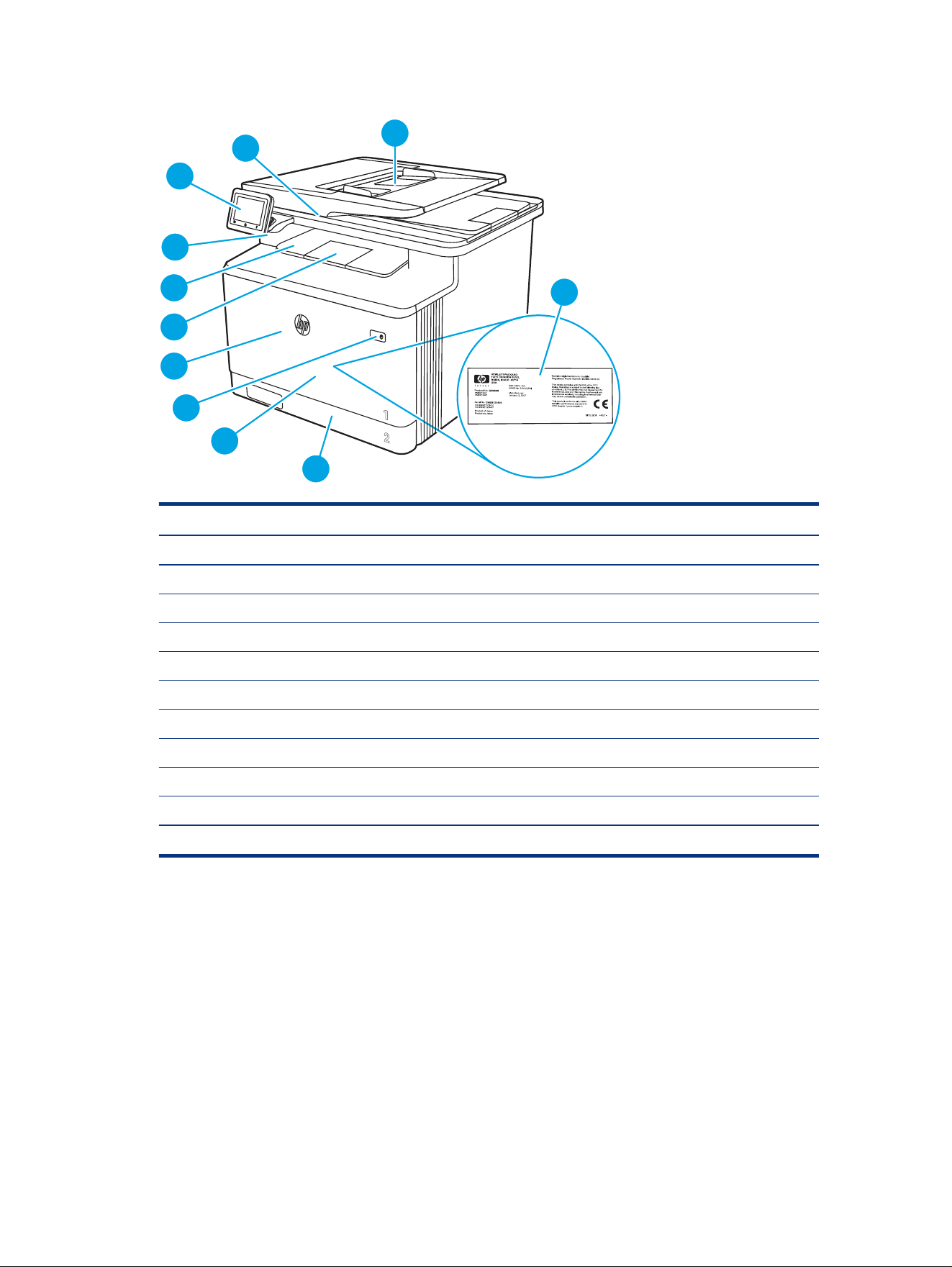
Figure 1-6 Printer front view
10
11
9
8
7
6
1
2
4
5
3
Number Description
1 Scanner
2 Document feeder
3 Regulatory label (inside the front door)
4 Tray 2
5 Tray 1
6 Power on/o button
7 Front door (provides toner cartridge access)
8 Output bin extension
9 Output bin
10 Walk-up USB port (for printing and scanning without a computer)
11 Touchscreen control panel (tilts up for easier viewing)
Printer back view
Identify the parts on the back of the printer.
Printer back view 3
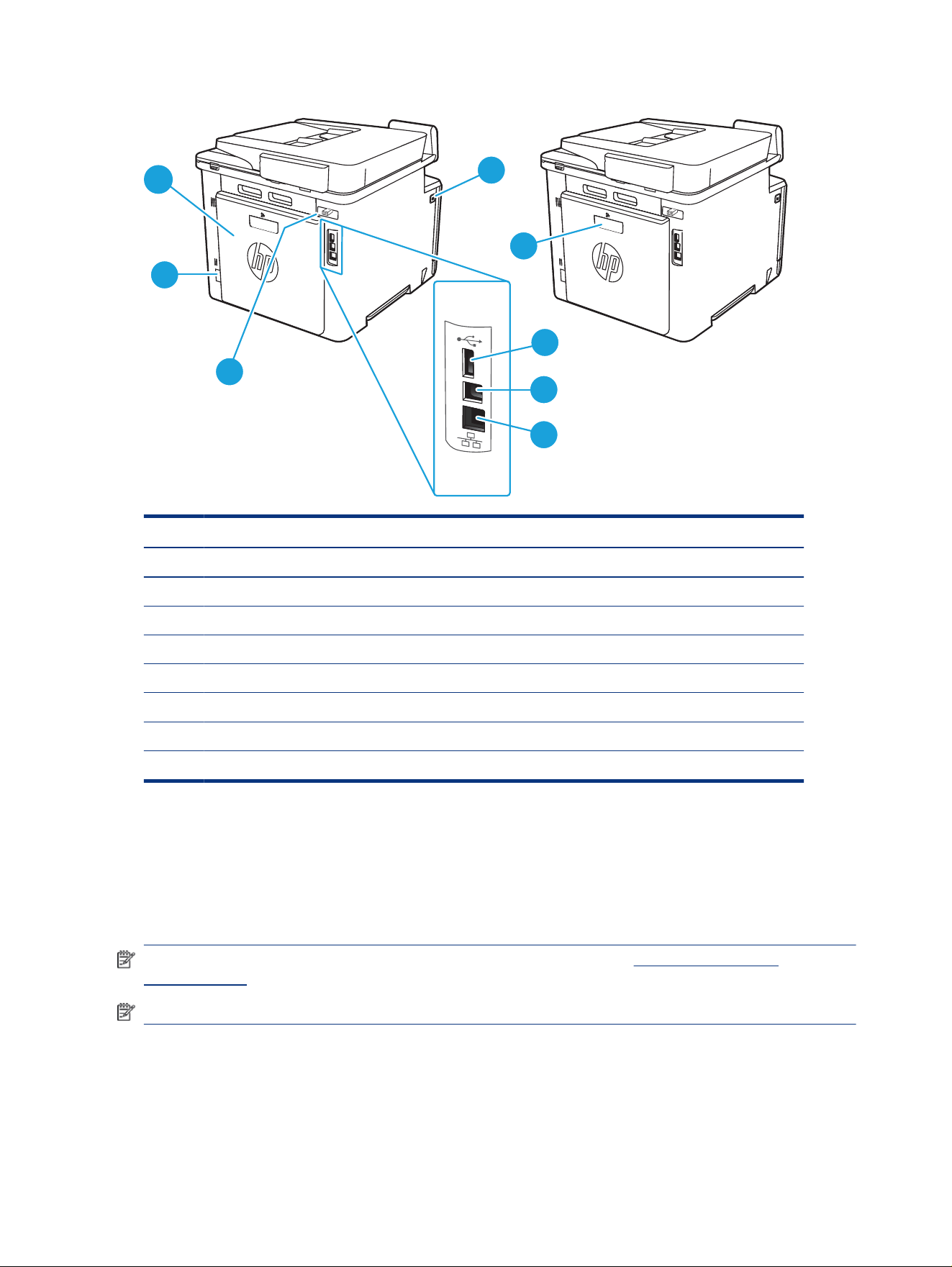
Figure 1-7 Printer rear view
7
8
6
3
5
4
1
2
Number Description
1 Front door release button
2 Duplexer (dw, fdn, and fdw models only)
3 USB port for job storage
4 USB port for direct connection to a computer
5 Ethernet port
6 Fax ports
7 Power connection
8 Rear door (fnw model only) (provides access for clearing jams)
Control panel view
Identify the buttons and features on the touchscreen control panel.
The Home screen provides access to the printer features and indicates the current status of the printer.
Return to the Home screen at any time by touching the Home button on the bottom of the printer control panel.
NOTE: For more information about the printer control panel features, go to www.hp.com/support/
colorljM479MFP.
NOTE: The features that appear on the Home screen can vary, depending on the printer conguration.
4 Chapter 1 Printer overview
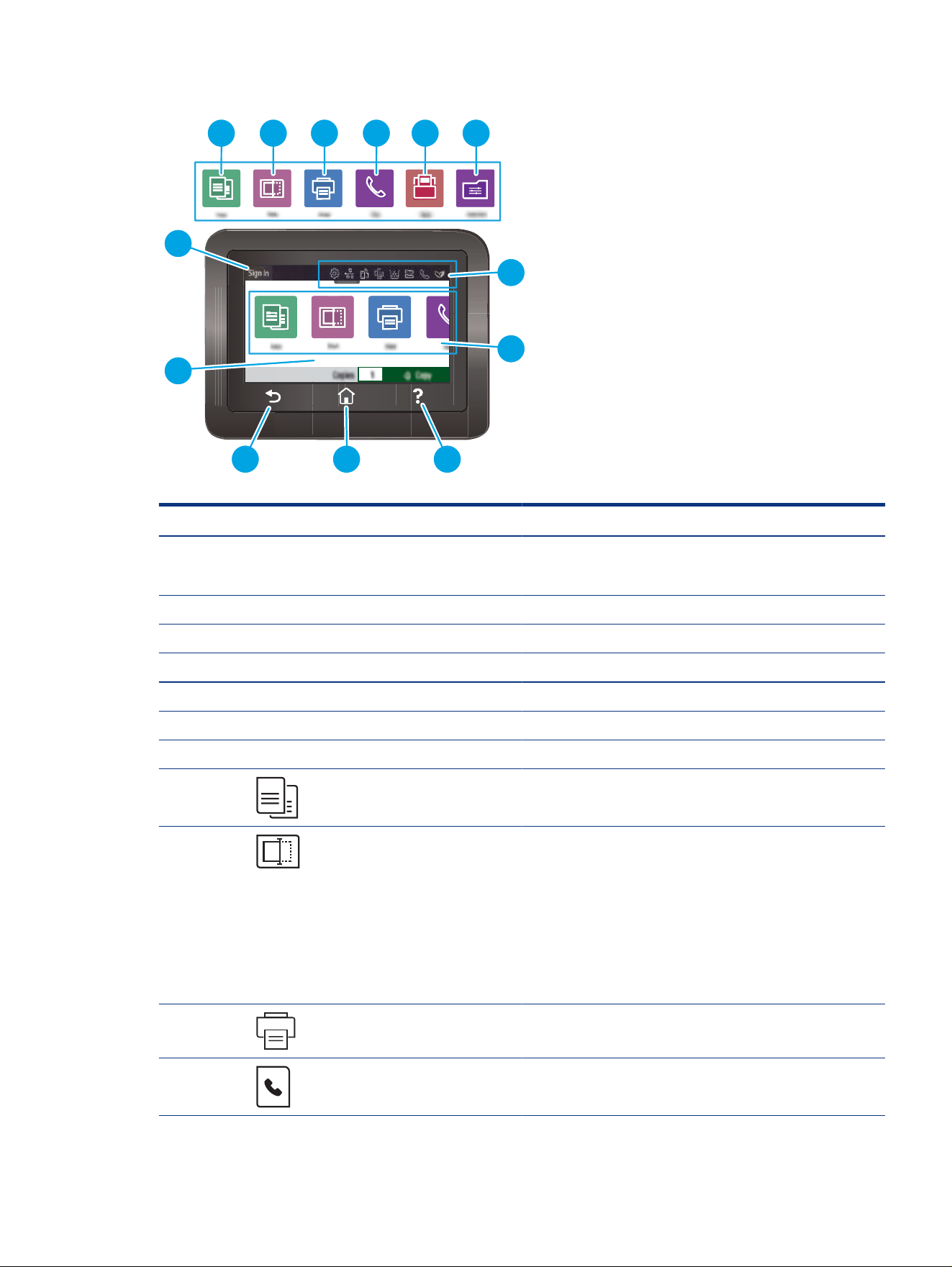
Figure 1-8 Control panel view
Copies Copy
3
1312111098
7
2
6
1
45
Table 1-1 Control panel features
Number Item Description
1 Home screen dashboard display icons See the table that follows for a description of the icons.
Pull down this tab to open the Jobs menu.
2 Home screen icons Touch these icons to open the menus for these functions.
3 Help button Provides access to the control panel help system.
4 Home button Provides access to the Home screen.
5 Back button Returns to the previous screen.
6 Color touchscreen Provides access to menus, help animations, and printer information.
7 Sign In button Touch this button to sign in to the printer.
8 Copy icon: Touch this icon to open the Copy menu.
9 Scan icon: Touch this icon to open the Scan menus:
● Scan to USB Drive
● Scan to Network Folder
● Scan to E-mail
● Scan to Computer
● Scan to SharePoint
10 Print icon: Touch this icon to open the Print menus.
11 Fax icon: Touch this icon to open the Fax menus.
Control panel view 5
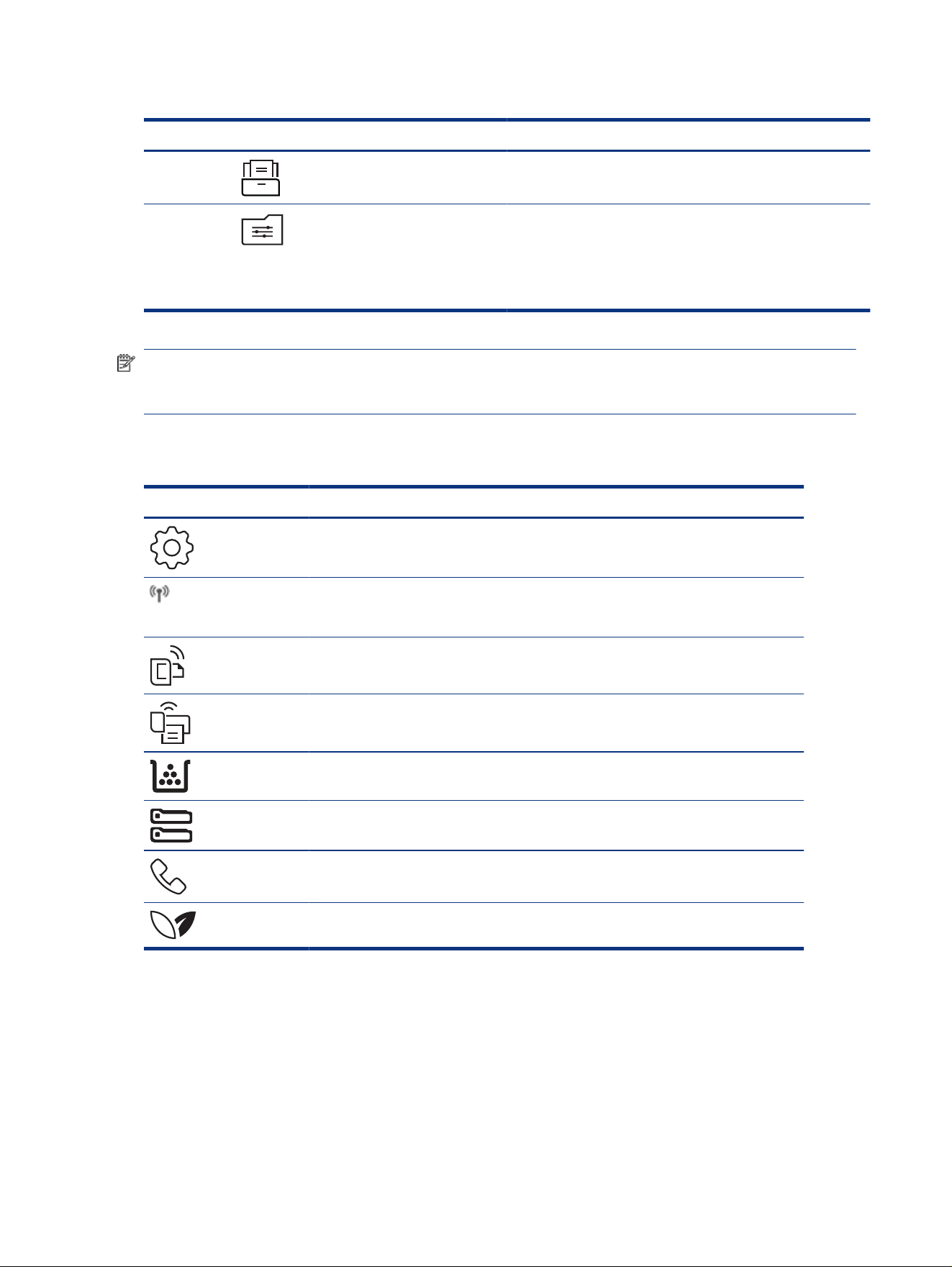
Table 1-1 Control panel features (continued)
Number Item Description
12 Apps icon: Touch this icon to open the Apps menu to print directly
from select Web applications.
13 Quick Sets icon: Touch this icon to access shortcut jobs that are set
up for frequently performed tasks. This icon appears after a Quick
Set is congured.
Quick Sets are congured in the Embedded Web Server (EWS), under
Settings > Control Panel Customization.
NOTE: While the control panel does not have a standard Cancel button, during many printer processes a
Cancel button appears on the touchscreen. This permits users to cancel a process before the printer completes
it.
Home screen dashboard display icons
Table 1-2 Home screen icons
Icon Purpose
Setup icon: Opens the Setup menu, where you can change preferences and perform
maintenance functions.
Wireless icon: Opens the Wireless Summary menu, where you can check wireless status and
change wireless settings. You can also print a wireless test report, which helps diagnosing
network connection issues.
HP ePrint icon: Opens the Web Services Summary menu, where you can check ePrint status
details, change ePrint settings, or print an Info page.
Wi-Fi Direct icon: Opens the Wi-Fi Direct menu, where you can turn on Wi-Fi Direct, turn o
Wi-Fi Direct, and display the Wi-Fi Direct name and password.
Cartridge icon: Opens the Cartridge Information screen, where you can view the estimated
levels and pages remaining for the toner cartridges.
Paper Setup icon: Opens the Paper Setup menu, where you can congure the default Paper
Size and Paper Type for the paper trays.
Fax Status icon: Displays status information for the Auto Answer function, fax logs, and the fax
sound volume.
ECO icon: Allows you to congure some of the printer environmental features.
How to use the touchscreen control panel
Use the following actions to use the printer touchscreen control panel.
6 Chapter 1 Printer overview
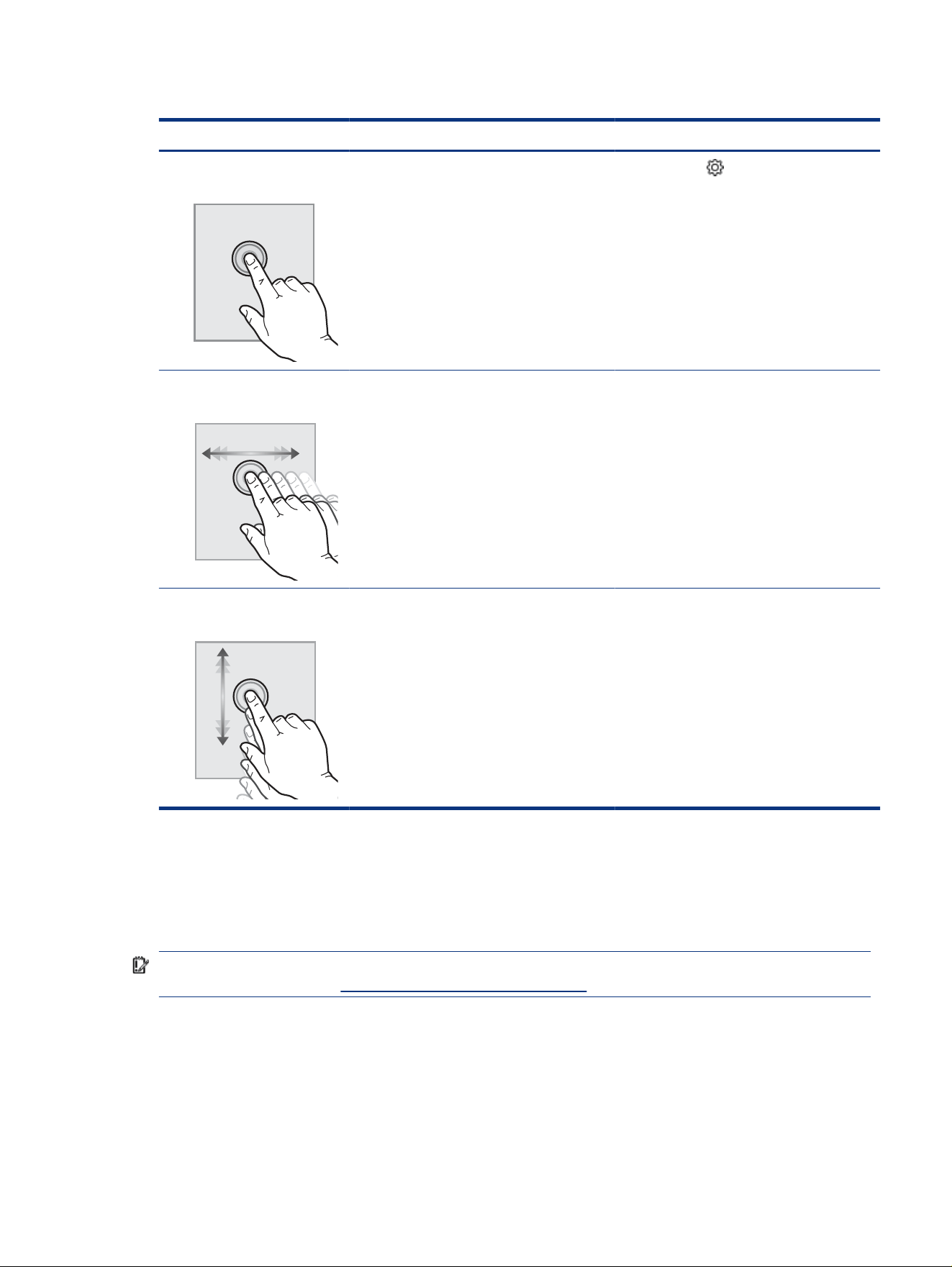
Table 1-3 How to use the touchscreen control panel
Action Description Example
Touch Touch an item on the screen to select that item
or open that menu. Also, when scrolling through
menus, briey touch the screen to stop the
scrolling.
Touch the Setup icon to open the Setup
menu.
Swipe Touch the screen and then move your nger
horizontally to scroll the screen sideways.
Swipe the Home screen to access additional
menu options.
Scroll Touch the screen and then move your nger
vertically to scroll the screen up and down. When
scrolling through menus, briey touch the screen
to stop the scrolling.
Scroll through the Setup menu.
Printer specications
Review hardware, software, and printer environment specications.
IMPORTANT: The following specications are correct at the time of publication, but they are subject to change.
For current information, see www.hp.com/support/colorljM479MFP.
Technical specications
Review the technical specications for the printer.
Product numbers for each model
● M479dw - #W1A77A
Printer
specications
7

● M479fnw - #W1A78A
● M479fdn - #W1A79A
● M479fdw - #W1A80A
Table 1-4 Paper handling specications
Paper handling features M479dw M479fnw M479fdn M479fdw
Tray 1 (50-sheet
capacity)
Tray 2 (250-sheet
capacity)
Optional 550-sheet
accessory tray
Optional Optional Optional Optional
Automatic duplex
printing
Not available
Table 1-5 Connectivity specications
Connectivity features M479dw M479fnw M479fdn M479fdw
10/100/1000 Ethernet
LAN connection with IPv4
and IPv6
Hi-Speed USB 2.0
Walk-up USB port
Print server for wireless
connectivity
Not available
Bluetooth Low Energy
(BLE)
Not available
Wi-Fi Direct for printing
from mobile devices
Not available
Table 1-6 Print specications
Print features M479dw M479fnw M479fdn M479fdw
Prints 27 pages per
minute (ppm) on A4 and
28 ppm on letter-size
paper
USB printing (no
computer required)
Job storage and private
printing
NOTE: Requires a 16 GB
(or greater) USB thumb
drive.
8 Chapter 1 Printer overview

Table 1-7 Copy and scan specications
Copy and scan features M479dw M479fnw M479fdn M479fdw
Copies 27 pages per
minute (ppm) and scans
up to 26 ppm
NOTE: Copy and scan
speeds are subject to
change.
50-page document
feeder with dual-head
scanner for single-pass
duplex copying and
scanning
Not available
50-page document
feeder with simplex
copying and scanning
Scan to E-mail, Scan
to USB, and Scan to
Network Folder options
Table 1-8 Other specications
Other features M479dw M479fnw M479fdn M479fdw
Color touchscreen control
panel
Fax features Not available
HP Digital Fax (Fax
to Email, and Fax to
Network Folder options)
Not available
Supported operating systems
The following information applies to the printer-specic Windows and HP print drivers for macOS and to the
software installer.
Windows: The HP Software Installer installs a PCL 6 print driver along with optional software when using the full
software installer. See the software installation notes for more information.
macOS: Mac computers and Apple mobile devices are supported with this printer. Download HP Easy Start either
from 123.hp.com or from the Printer Support page, and then use HP Easy Start to install the HP print driver. HP
Easy Start is not included in the HP Software Installer.
1. Go to 123.hp.com.
2. Follow the steps provided to download HP Easy Start.
Linux: For information and print drivers for Linux, go to www.hp.com/go/linuxprinting.
UNIX: For information and print drivers for UNIX, go to www.hp.com/go/unixmodelscripts.
Supported operating systems 9

Table 1-9 Supported operating systems and print drivers
Operating system Print driver installed (from the software on the web)
Windows 7, 32-bit and 64-bit The HP PCL 6 printer-specic print driver is installed for this operating system as part of the
software installation.
Windows 8, 32-bit and 64-bit The HP PCL 6 printer-specic print driver is installed for this operating system as part of the
software installation.
1
Windows 8.1, 32-bit and 64-bit The HP PCL-6 printer-specic print driver is installed for this operating system as part of the
software installation.
2
Windows 10, 32-bit and 64-bit The HP PCL-6 printer-specic print driver is installed for this operating system as part of the
software installation.
Windows Server 2008 R2, 64-bit The HP PCL 6 printer-specic print driver is available for download from the printer support
website. Download the driver, and then use the Microsoft Add Printer tool to install it.
3
Windows Server 2008 R2, SP1, 64-bit The HP PCL 6 printer-specic print driver is available for download from the printer support
website. Download the driver, and then use the Microsoft Add Printer tool to install it.
Windows Server 2012 The HP PCL 6 printer-specic print driver is available for download from the printer support
website. Download the driver, and then use the Microsoft Add Printer tool to install it.
Windows Server 2012 R2 The HP PCL 6 printer-specic print driver is available for download from the printer support
website. Download the driver, and then use the Microsoft Add Printer tool to install it.
Windows Server 2016, 64-bit The HP PCL 6 printer-specic print driver is available for download from the printer support
website. Download the driver, and then use the Microsoft Add Printer tool to install it.
macOS Sierra 10.12, macOS High
Sierra 10.13, macOS Mojave 10.14
To install the print driver, download HP Easy Start from 123.hp.com. Follow the steps
provided to install the printer software and print driver.
1
Windows 8 RT support is provided through Microsoft IN OS Version 4, 32-bit driver.
2
Windows 8.1 RT support is provided through Microsoft IN OS Version 4, 32-bit driver.
3
Microsoft retired mainstream support for Windows Server 2008 in January 2015. HP will continue to provide best eort support for the
discontinued Server 2008 operating system.
NOTE: For a current list of supported operating systems, go to www.hp.com/support/colorljM479MFP for HP's
all-inclusive help for the printer.
NOTE: For details on client and server operating systems and for HP UPD PCL6 and UPD PS driver support for
this printer, go to www.hp.com/go/upd and click Specications.
Table 1-10
Minimum system requirements
Windows 10, 8.1, 8, 7 macOS Mojave v10.14, macOS
High Sierra v10.13, macOS
Sierra v10.12
Mobile devices, iOS, Android
● 32-bit or 64-bit
● 2 GB of available hard disk
space
● Microsoft Internet Explorer
● Internet connection
● USB port
● 2 GB of available hard disk
space
● Internet connection
Router connection not required
www.hp.com/go/mobileprinting
10 Chapter 1 Printer overview
Mobile printing solutions
HP oers multiple mobile and ePrint solutions to enable easy printing to an HP printer from a laptop, tablet,
smartphone, or other mobile device.
To see the full list and to determine the best choice, go to www.hp.com/go/MobilePrinting.
The printer supports the following software for mobile printing:
● Wi-Fi Direct (wireless models only)
● Bluetooth Low Energy
● HP Smart app for iOS and Android devices
● Google Cloud Print
● AirPrint
● Android Printing
● HP Roam
Printer dimensions
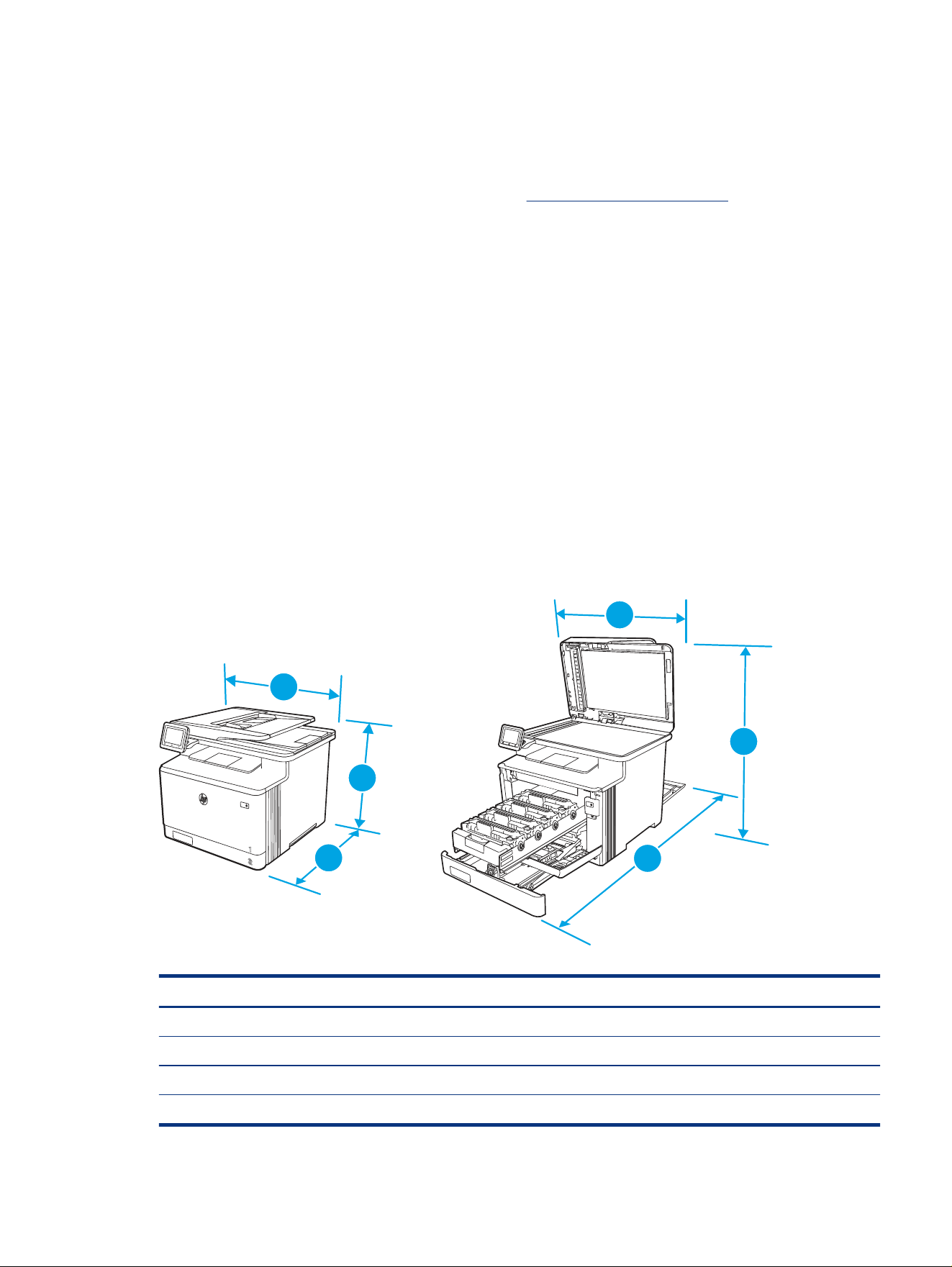
Make sure your printer environment is large enough to accommodate the printer.
Dimensions for the M479fnw model
3
3
1
1
2
2
Table 1-11
Dimensions for the M479fnw model
Measurement Printer fully closed Printer fully opened
1 - Height 399.8 mm (15.74 in) 656 mm (25.83 in)
2 - Depth 461 mm (18.15 in) 1025 mm (40.35 in)
3 - Width 415.4 mm (16.35 in) 415.4 mm (16.35 in)
Weight (with cartridges) 21.8 kg (48.06 lb) 21.8 kg (48.06 lb)
Mobile printing solutions 11
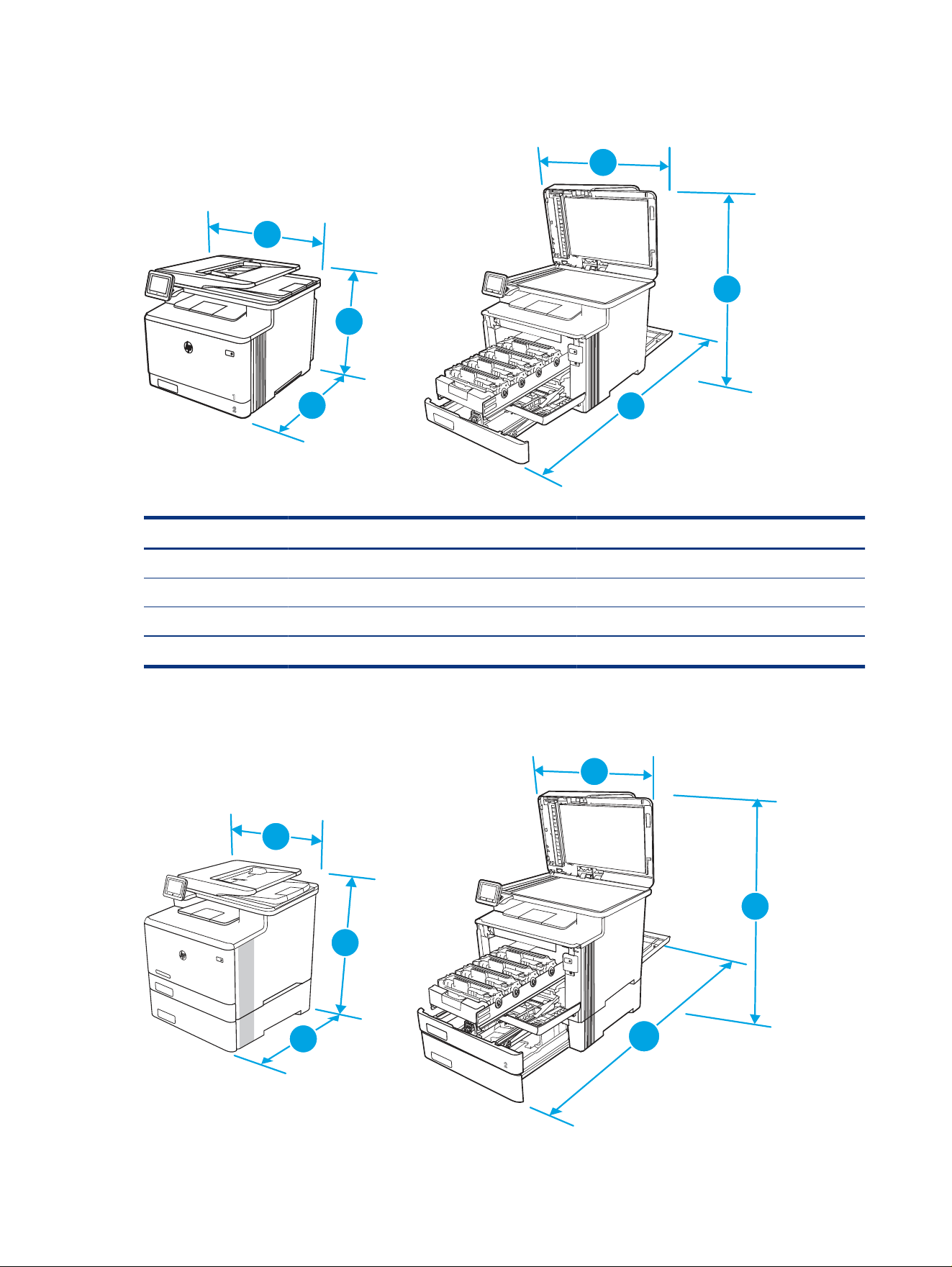
Dimensions for the M479dw, M479fdn, and M479fdw models
3
3
1
1
2
2
Table 1-12 Dimensions for the M479dw, M479fdn, and M479fdw models
Measurement Printer fully closed Printer fully opened
1 - Height 399.8 mm (15.74 in) 656 mm (25.83 in)
2 - Depth 472 mm (18.59 in) 1124.4 mm (44.27 in)
3 - Width 415.4 mm (16.35 in) 415.4 mm (16.35 in)
Weight (with cartridges) 23.2 kg (51.15 lb) 23.2 kg (51.15 lb)
Dimensions for models with optional Tray 3
3
1
2
1
2
3
12 Chapter 1 Printer overview

Table 1-13 Dimensions for the printer with the optional Tray 3
Measurement Printer fully closed Printer fully opened
1 - Height 531.8 mm (20.93 in) 788 mm (31.02 in)
2 - Depth 461 mm (18.15 in) (fnw model)
472.3 mm (18.59 in) (dw, fdn, and fdw models)
1025 mm (40.35 in) (fnw model)
1124.4 mm (44.27 in) (dw, fdn, and fdw models)
3 - Width 415.4 mm (16.35 in) 415.4 mm (16.35 in)
Weight (with cartridge) 27 kg (59.52 lb) (fnw model)
28.4 kg (62.61 lb) (dw. fdn, and fdw models)
27 kg (59.52 lb) (fnw model)
28.4 kg (62.61 lb) (dw. fdn, and fdw models)
Power consumption
Review the power consumption for each printer status or function.
Table 1-14 Power consumption (average, in watts)
Printing Ready Sleep Auto-o/Auto-on Auto-o/Manual
on
O
550 W 20 W 0.7 W 0.7 W 0.06 W 0.06 W
Electrical specications
Review the electrical specications for the printer.
NOTE: Power requirements are based on the country/region where the printer is sold. The values in the
following table are subject to change.
CAUTION: Do not convert operating voltages. This can damage the printer and void the printer warranty.
Table 1-15
Recommended voltage
Specication 110-volt models 220-volt models
Power requirements (Volts)
1
100 to 127 volts (± 10%)
50/60 Hz (± 3 Hz)
220 to 240 volts (± 10%)
50/60 Hz (± 3 Hz)
1
Power reported is highest value measured for all printer models using standard voltages.
Acoustic emissions
Review the acoustic emissions, including sound power level and sound pressure level.
Table 1-16
Sound power level
Acoustics: Sound power level (pages per minute (ppm)) Declared per ISO 9296
Printing (28 ppm)
L
wAD = 6.2 or 6.3 Bels(A)
Scanning
L
wAD = 6.2 or 6.3 Bels(A)
Power consumption 13

Table 1-16 Sound power level (continued)
Acoustics: Sound power level (pages per minute (ppm)) Declared per ISO 9296
Ready
L
wAD = 3.4 or 3.5 Bels(A)
Table 1-17 Sound pressure level
Acoustics: Sound pressure level (pages per minute (ppm)) Declared per ISO 9296
Printing (28 ppm)
L
pAm = 49 dB(A)
Scanning
L
pAm = 47 or 48 dB(A)
Ready
L
pAm = 14 dB(A)
Operating environment range
Review the recommended operating-environment specications for your printer.
Table 1-18 Operating environment specications
Environment Recommended Allowed
Temperature 15° to 27°C (59° to 80.6°F) 15° to 30°C (59° to 86°F)
Relative humidity 20% to 70% relative humidity (RH) 10% to 80% RH
Printer hardware setup and software installation
For basic setup instructions, see the Hardware Installation Guide that came with the printer. For additional
instructions, go to HP support on the web.
Go to www.hp.com/support/colorljM479MFP for HP's all-inclusive help for the printer, which includes the
following information:
● Install and congure
● Learn and use
● Solve problems
● Download software and rmware updates
● Join support forums
● Find warranty and regulatory information
● Find instructions about how to use the Microsoft Add Printer tool
14 Chapter 1 Printer overview

Paper trays2
Discover how to load and use the paper trays, including how to load special items such as envelopes.
For more information:
The following information is correct at the time of publication. For current information, see www.hp.com/
support/colorljM479MFP.
HP's all-inclusive help for the printer includes the following information:
● Install and congure
● Learn and use
● Solve problems
● Download software and rmware updates
● Join support forums
● Find warranty and regulatory information
Introduction
Use caution when loading the paper trays.
CAUTION: Do not extend more than one paper tray at a time.
Do not use paper tray as a step.
Keep hands out of paper trays when closing.
All trays must be closed when moving the printer.
If the printer has a keyboard, close the keyboard tray when it is not in use.
Load paper to Tray 1
Review the following information about loading paper to Tray 1.
Introduction
The following information describes how to load paper into Tray 1.
Paper trays 15
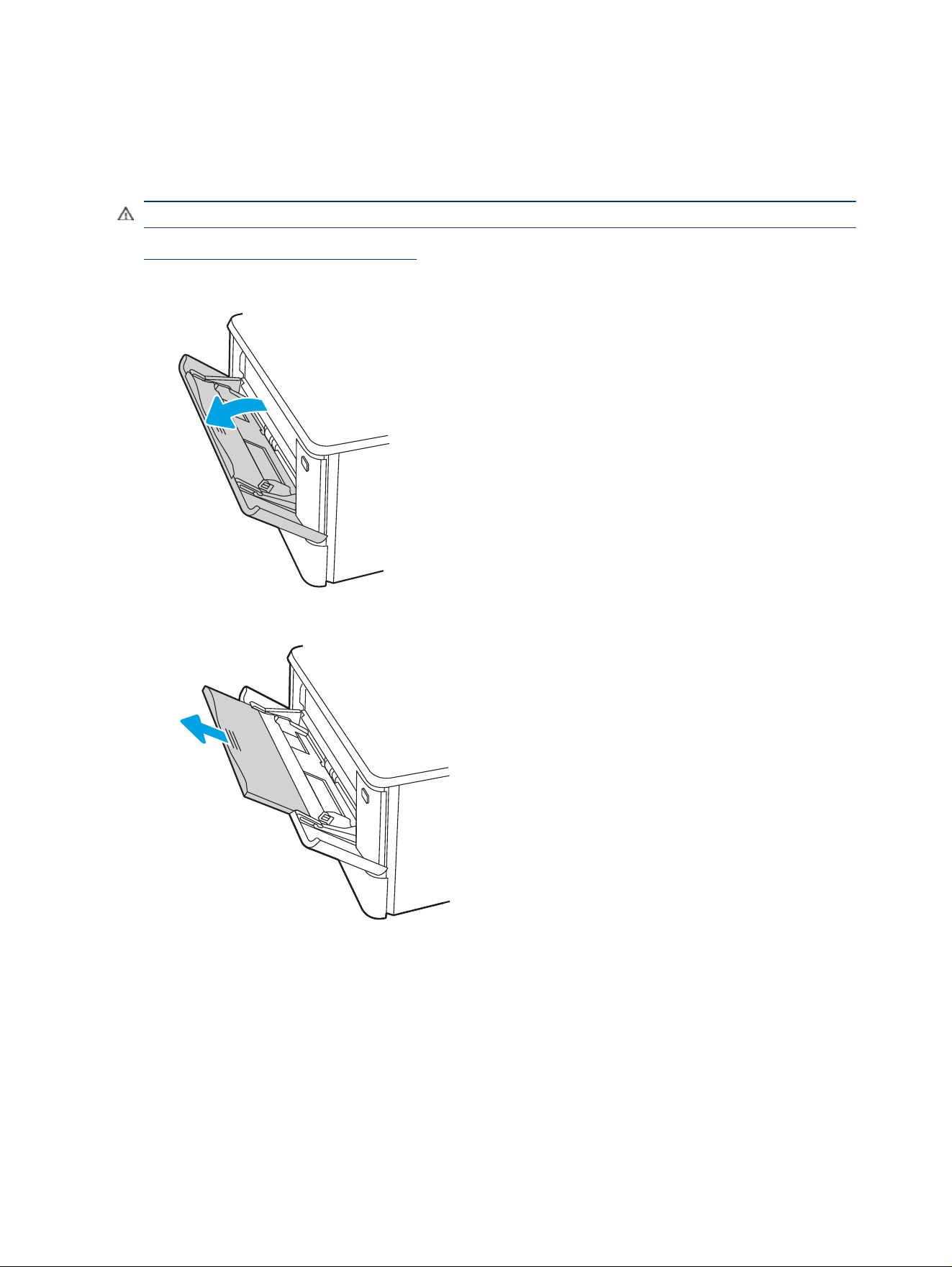
Load Paper Tray 1 (multipurpose tray)
Follow these steps to load paper in Tray 1.
This tray holds up to 50 sheets of 75 g/m
2
(20 lb) paper.
CAUTION: To avoid jams, never add or remove paper from Tray 1 during printing.
View a video of how to load paper in Tray 1
1. Open Tray 1 by grasping the handles on the left and right side of the tray and pulling down.
2. Slide out the tray extension.
16 Chapter 2 Paper trays
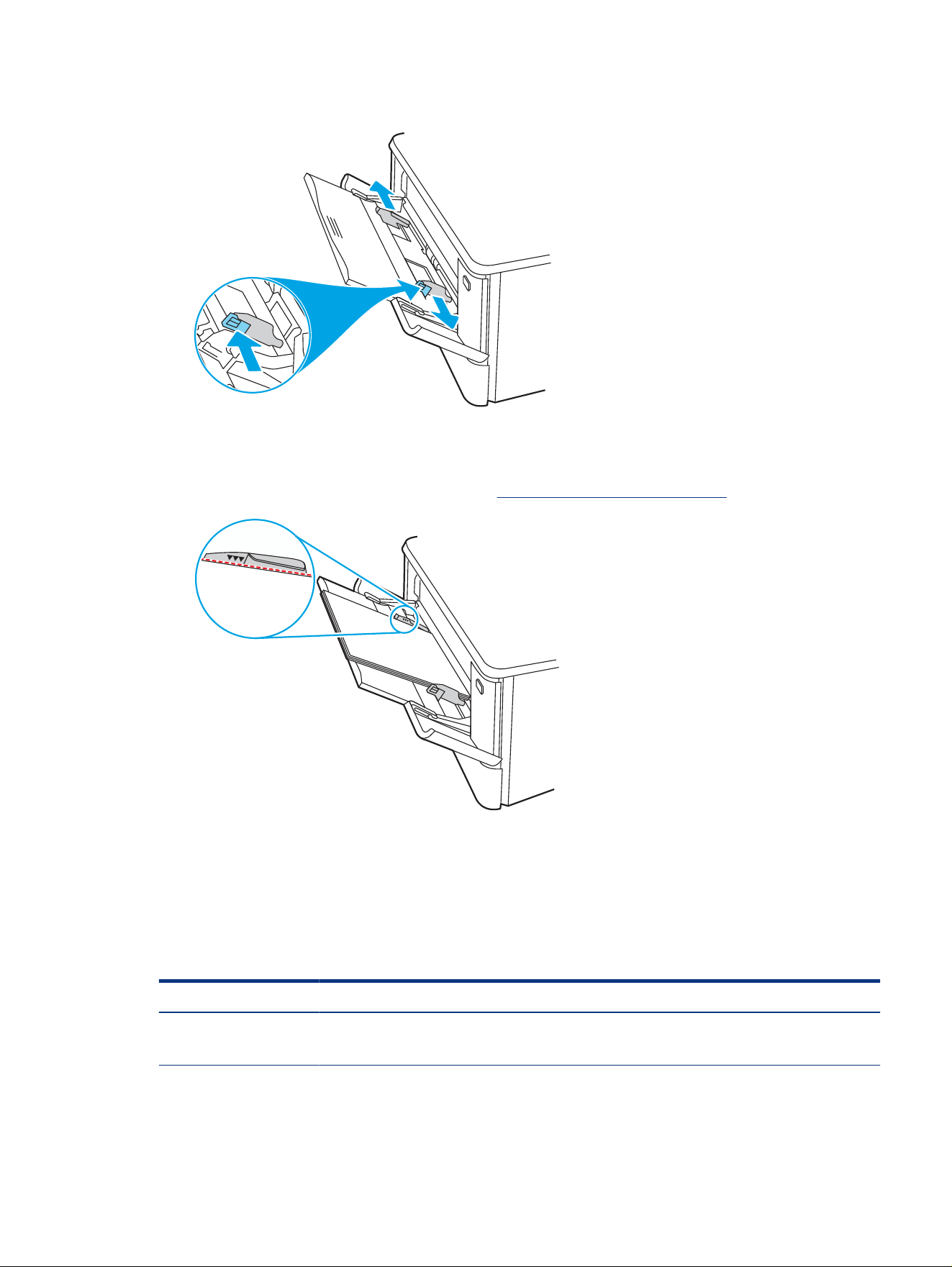
3. Press down on the tab on the right paper guide, and then spread the paper guides to the correct size.
4. Load the paper into the tray. Make sure that the paper ts under the tabs and below the maximum height
indicators.
For information on how to orient the paper, see Tray 1 paper orientation on page 17.
5. At the computer, begin the printing process from the software application. Make sure that the driver is set to
the correct paper type and size for the paper being printed from the tray.
Tray 1 paper orientation
When using paper that requires a specic orientation, load it according to the information in the following table.
Table 2-1
Tray 1 paper orientation
Paper type Output How to load paper
Letterhead or preprinted 1-sided printing Face-up
Top edge leading into the printer
Tray 1 paper orientation 17
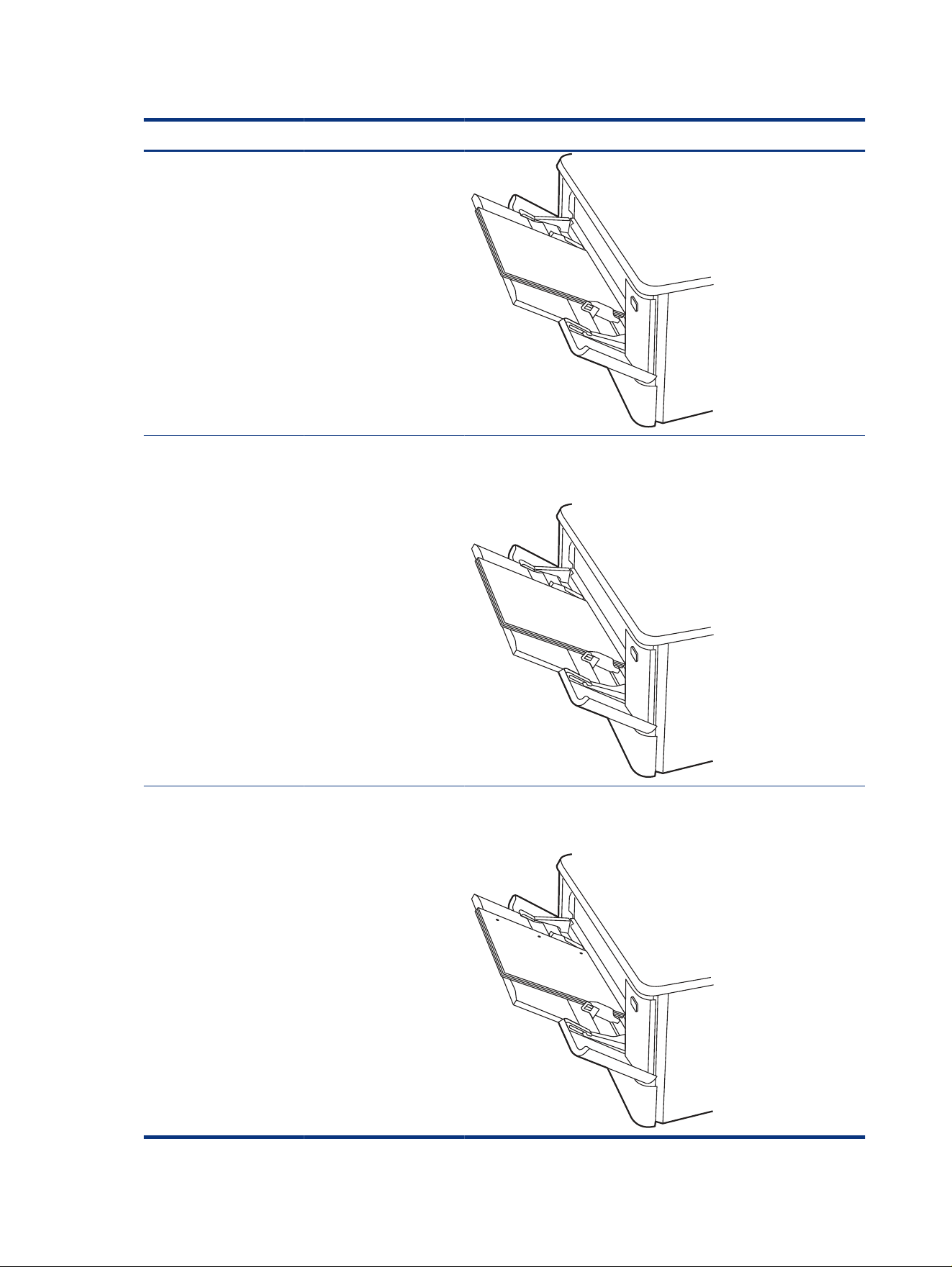
Table 2-1 Tray 1 paper orientation (continued)
Paper type Output How to load paper
12
3
Letterhead or preprinted 2-sided printing Face-down
Top edge away from the printer
1
23
Pre-punched 1-sided or 2-sided printing Face-up
Holes toward the left side of the printer
12
3
18 Chapter 2 Paper trays
Load paper to Tray 2
Review the following information about loading paper to Tray 2.
Introduction
The following information describes how to load paper into Tray 2.
Load paper Tray 2
Follow these steps to load paper in Tray 2.
This tray holds up to 250 sheets of 75 g/m
2
(20 lb) paper.
View a video of how to load paper in Tray 2
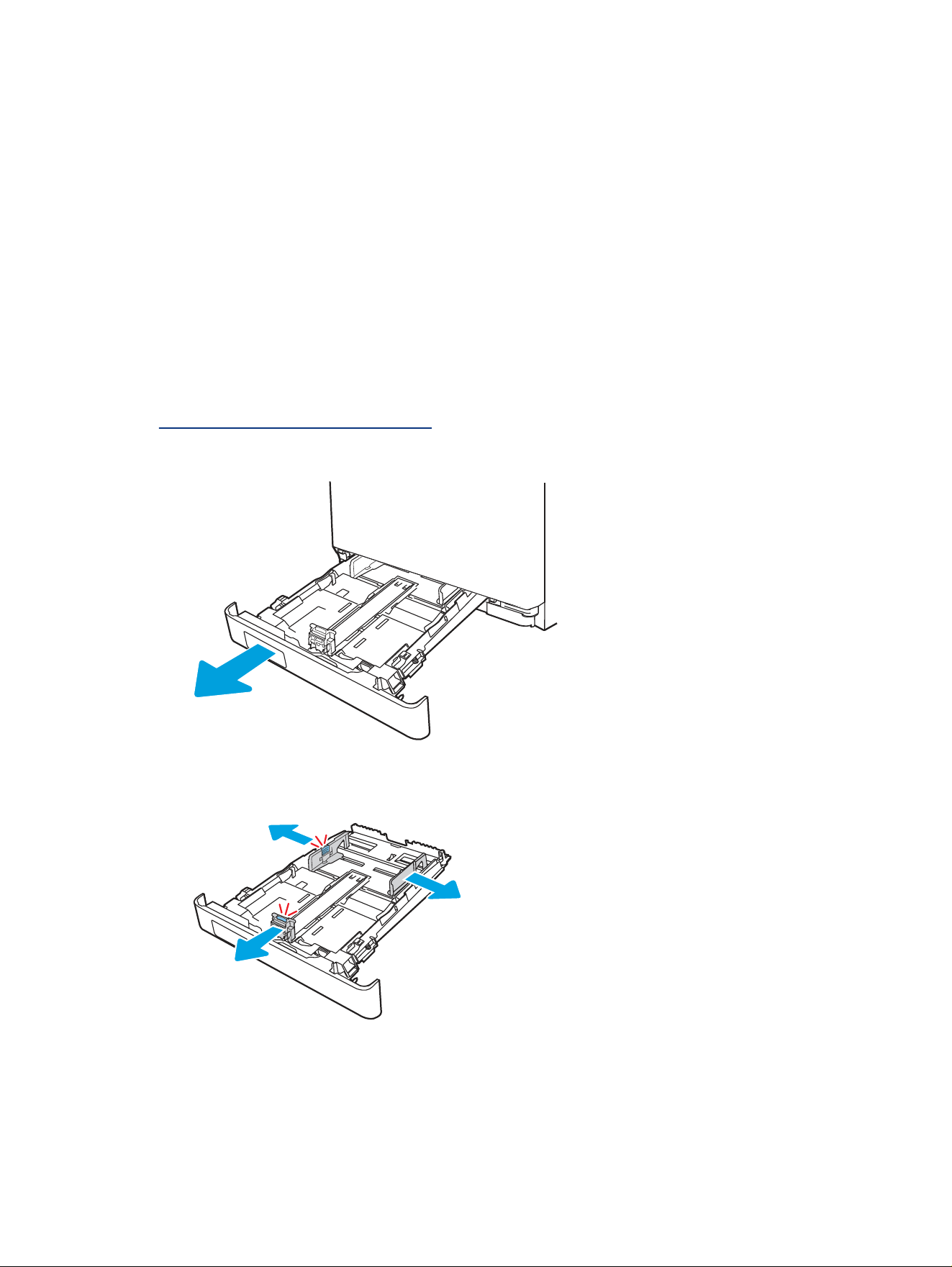
1. Open tray 2.
2. Adjust the paper-width guides by squeezing the adjustment latches on the guides and then sliding the
guides to the size of the paper being used.
Load paper to Tray 2 19
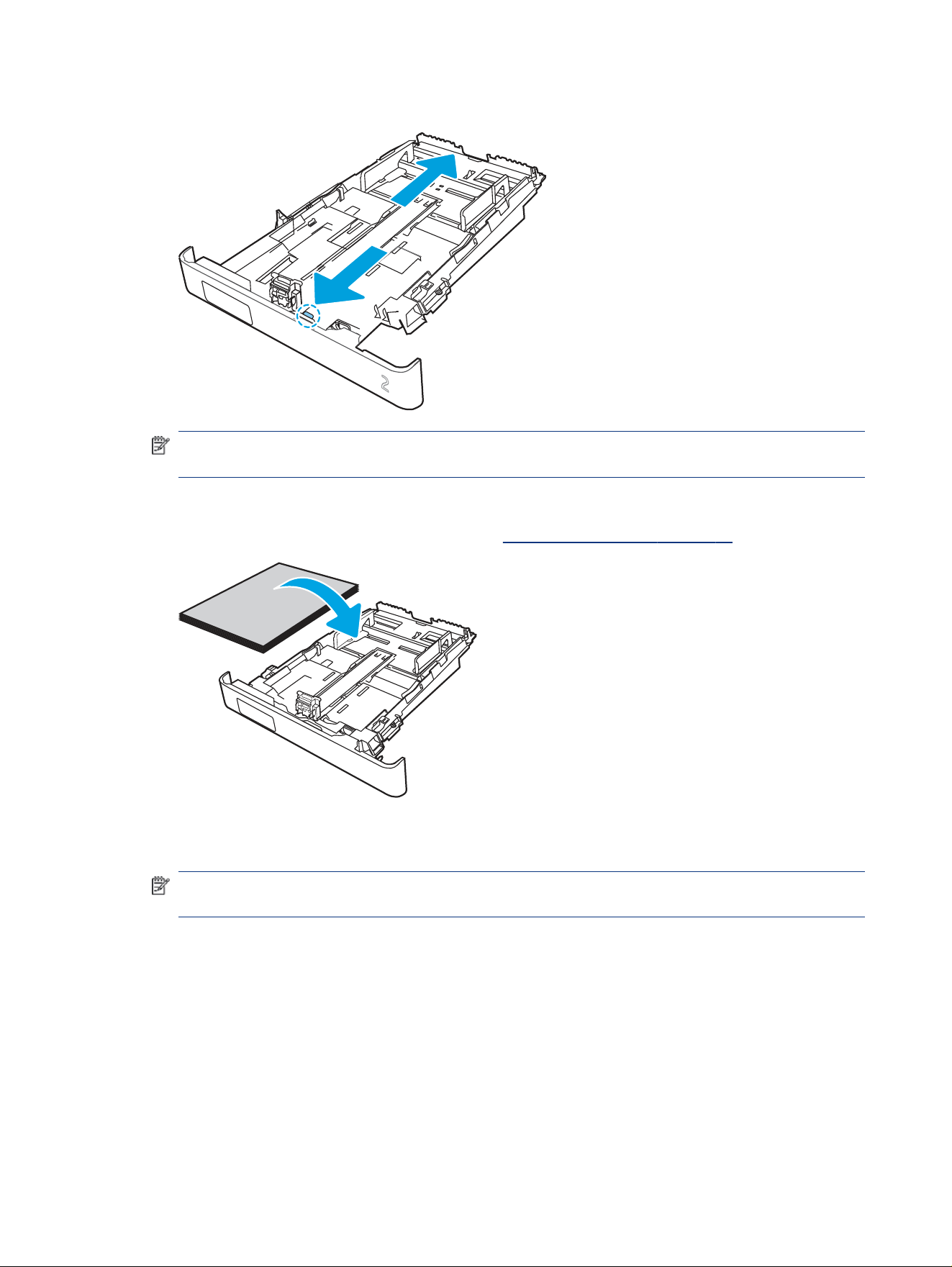
3. To load legal-size paper, extend the tray front by squeezing the front latch and pulling the front of the tray.
NOTE: When loaded with legal-size paper, Tray 2 extends from the front of the printer approximately (2
in)51 mm.
4. Load the paper into the tray.
For information about how to orient the paper, see Tray 2 paper orientation on page 21.
5. Make sure that the paper stack is at at all four corners. Slide the paper length and width guides so that
they are against the stack of paper.
NOTE: To prevent jams, do not overll the tray. Be sure that the top of the stack is below the tray full
indicator.
20 Chapter 2 Paper trays
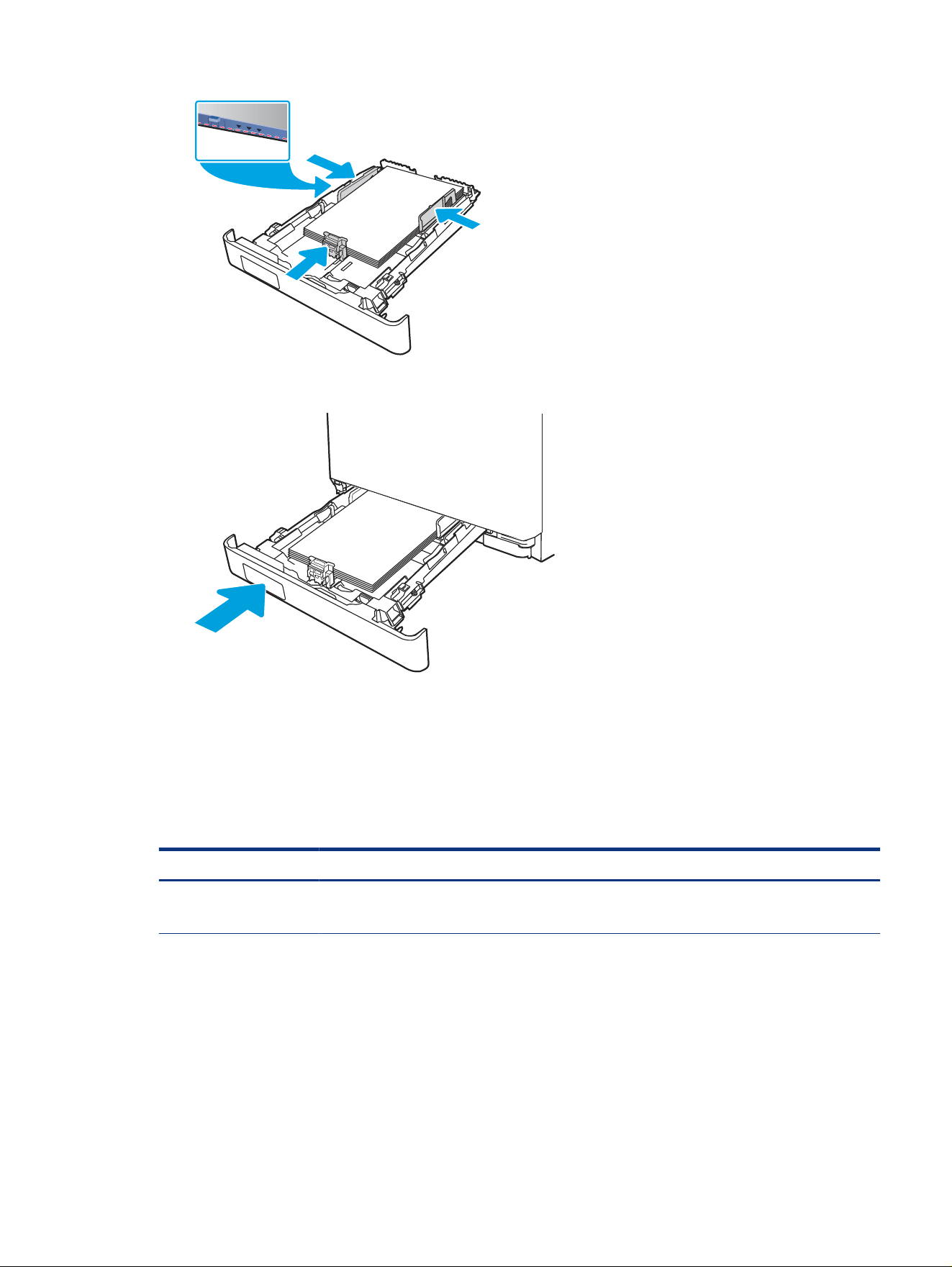
6. After making sure that the paper stack is below the tray full indicator, close the tray.
7. At the computer, begin the printing process from the software application. Make sure that the driver is set to
the correct paper type and size for the paper being printed from the tray.
Tray 2 paper orientation
When using paper that requires a specic orientation, load it according to the information in the following table.
Table 2-2
Tray 2 paper orientation
Paper type Output How to load paper
Letterhead or preprinted 1-sided printing Face-up
Top edge toward the printer.
Tray 2 paper orientation 21
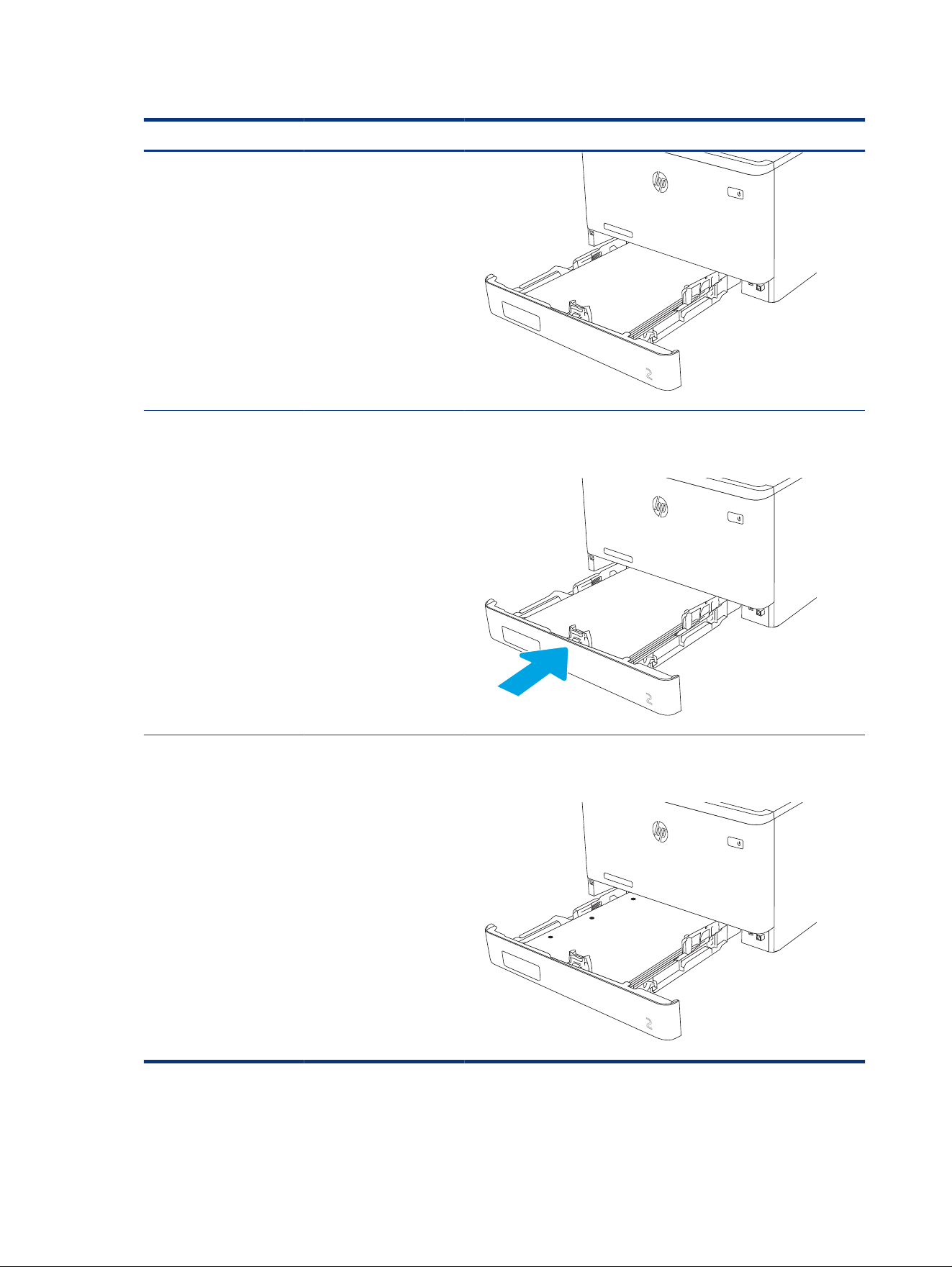
Table 2-2 Tray 2 paper orientation (continued)
Paper type Output How to load paper
123
Letterhead or preprinted 2-sided printing Face-down
Top edge away from the printer
1
23
Prepunched 1-sided printing or 2-sided
printing
Face-up
Holes toward the left side of the printer
123
22 Chapter 2 Paper trays
Load paper to Tray 3 (optional accessory)
Review the following information about loading paper to Tray 3.
Introduction
The following information describes how to load paper into Tray 3.
Load paper to Tray 3 (optional)
Follow these steps to load paper in Tray 3.
This tray holds up to 550 sheets of 75 g/m
2
(20 lb) paper.
CAUTION: Do not print envelopes, labels, or unsupported sizes of paper from Tray 3. Print these types of
paper only from Tray 1.
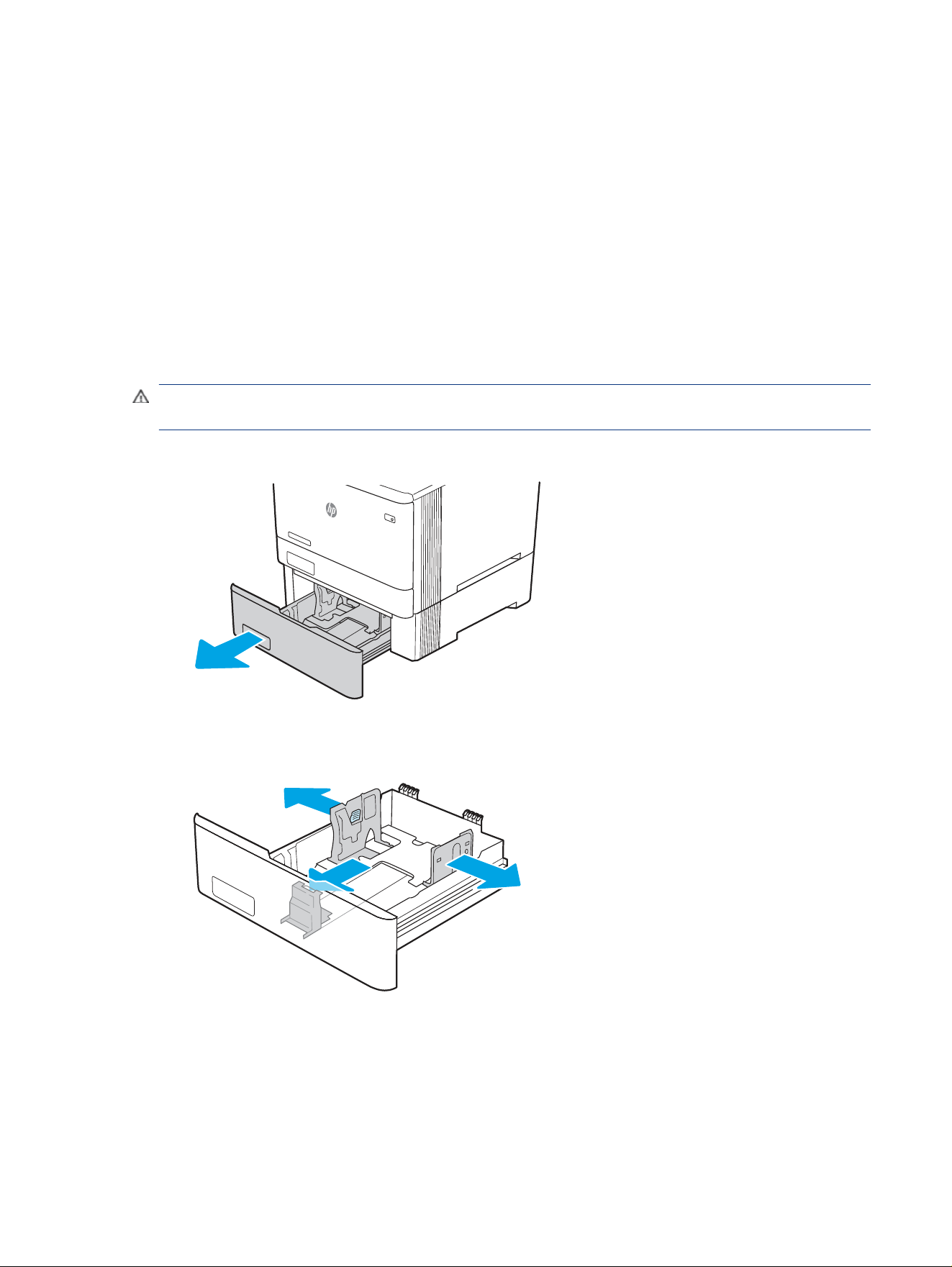
1. Open Tray 3.
2. Adjust the paper-width guides by squeezing the adjustment latches on the guides and then sliding the
guides to the size of the paper being used.
Load paper to Tray 3 (optional accessory) 23
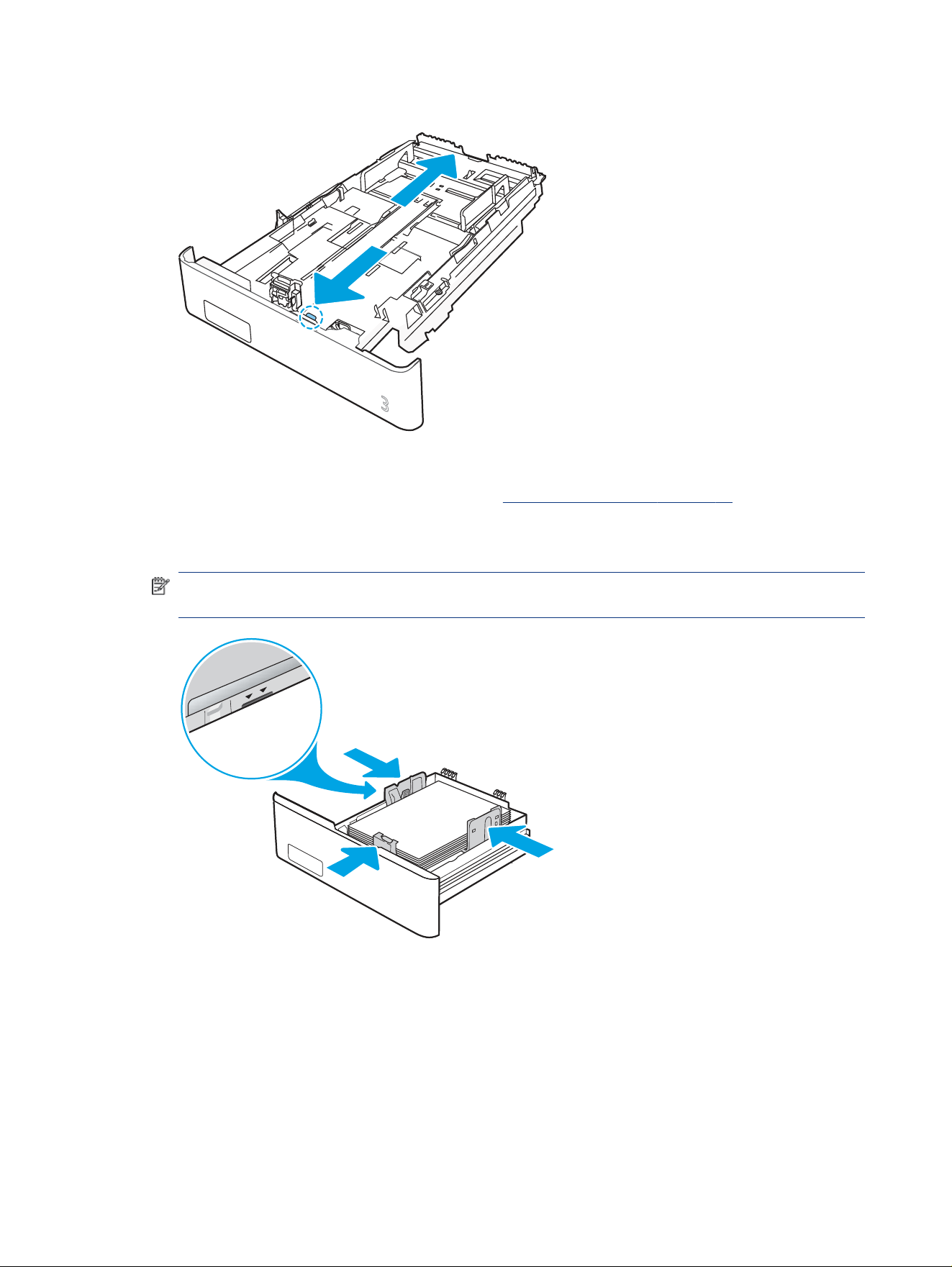
3. To load legal-size paper, extend the tray front by squeezing the front latch and pulling the front of the tray.
4. Load paper into the tray.
For information about how to orient the paper, see Tray 3 paper orientation on page 25.
5. Make sure that the paper stack is at at all four corners. Slide the paper length and width guides so that
they are against the stack of paper.
NOTE: To prevent jams, do not overll the tray. Be sure that the top of the stack is below the tray full
indicator.
24 Chapter 2 Paper trays
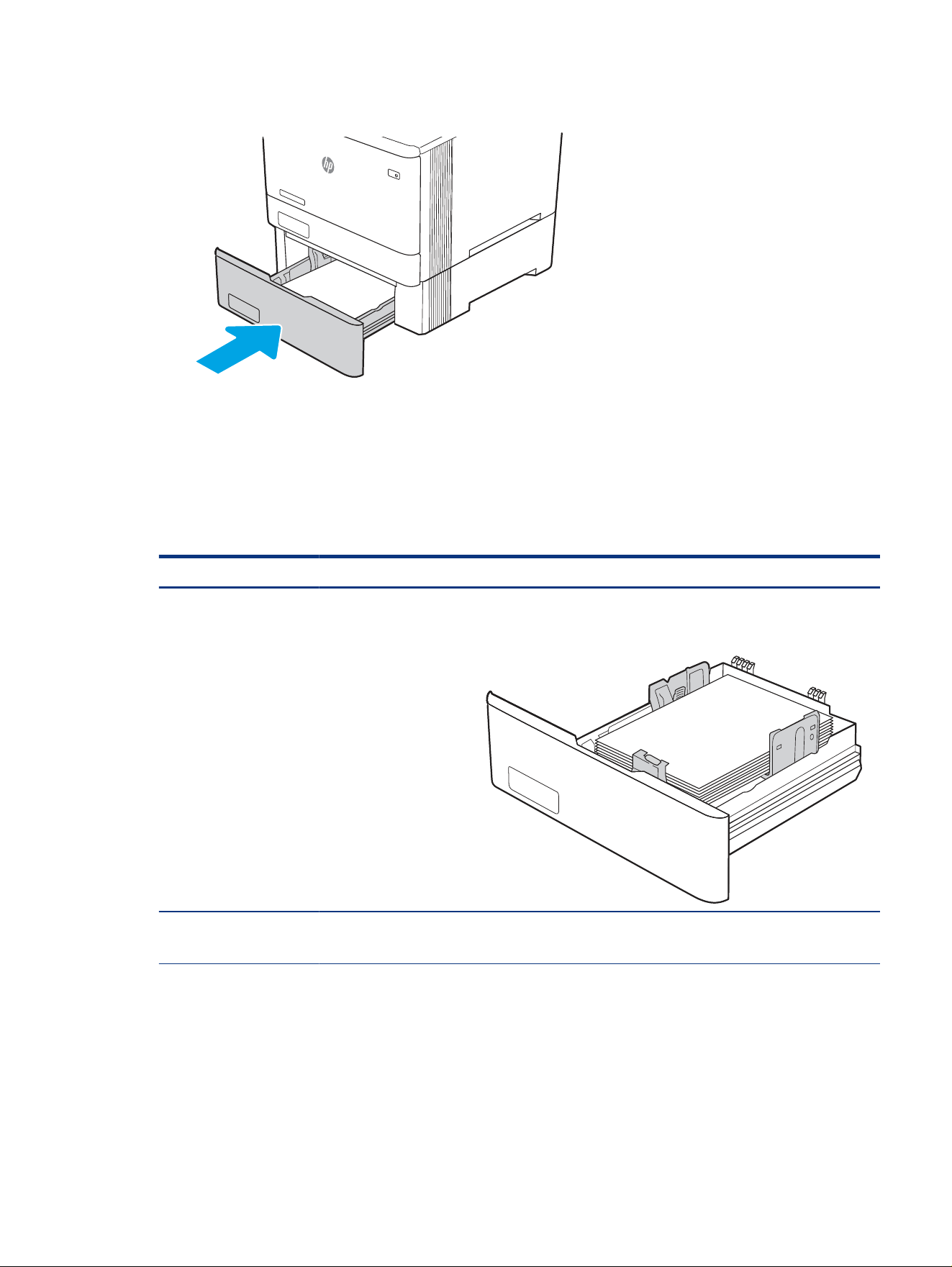
6. After making sure that the paper stack is below the tray full indicator, close the tray.
7. At the computer, begin the printing process from the software application. Make sure that the driver is set to
the correct paper type and size for the paper being printed from the tray.
Tray 3 paper orientation
When using paper that requires a specic orientation, load it according to the information in the following table.
Table 2-3 Tray 3 paper orientation
Paper type Output How to load paper
Letterhead or preprinted 1-sided printing Face-up
Top edge toward the printer.
123
Letterhead or preprinted 2-sided printing Face-down
Top edge away from the printer
Tray 3 paper orientation 25
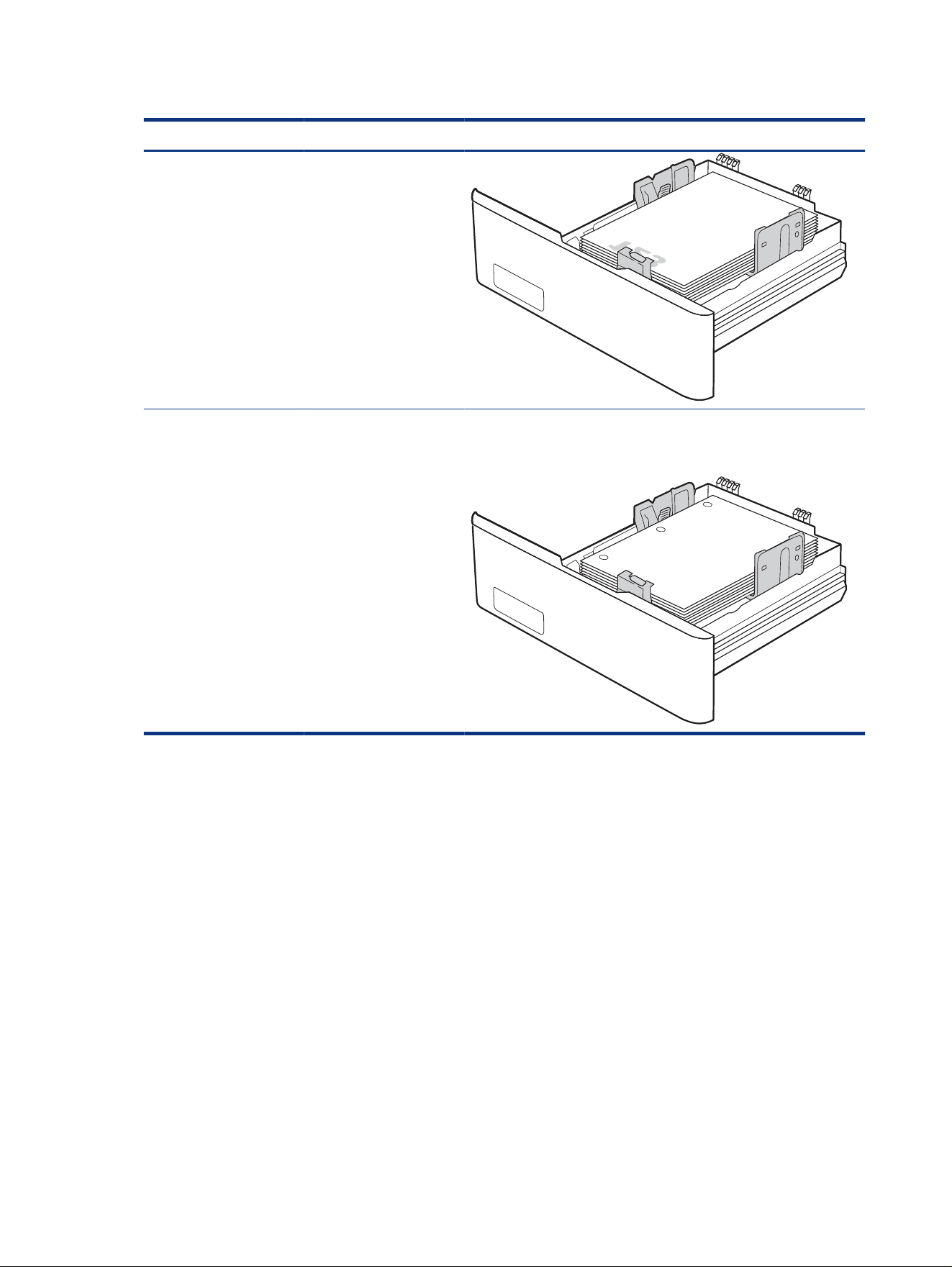
Table 2-3 Tray 3 paper orientation (continued)
Paper type Output How to load paper
Prepunched 1-sided printing or 2-sided
printing
Face-up
Holes on left side of the printer
123
Load and print envelopes
Review the following information about loading and printing envelopes.
Introduction
The following information describes how to print and load envelopes.
Print envelopes
To print envelopes using either Tray 1 or Tray 2, follow the steps to select the correct settings in the print driver.
Tray 1 holds up to 10 envelopes.
1. From the software program, select the Print option.
26 Chapter 2 Paper trays
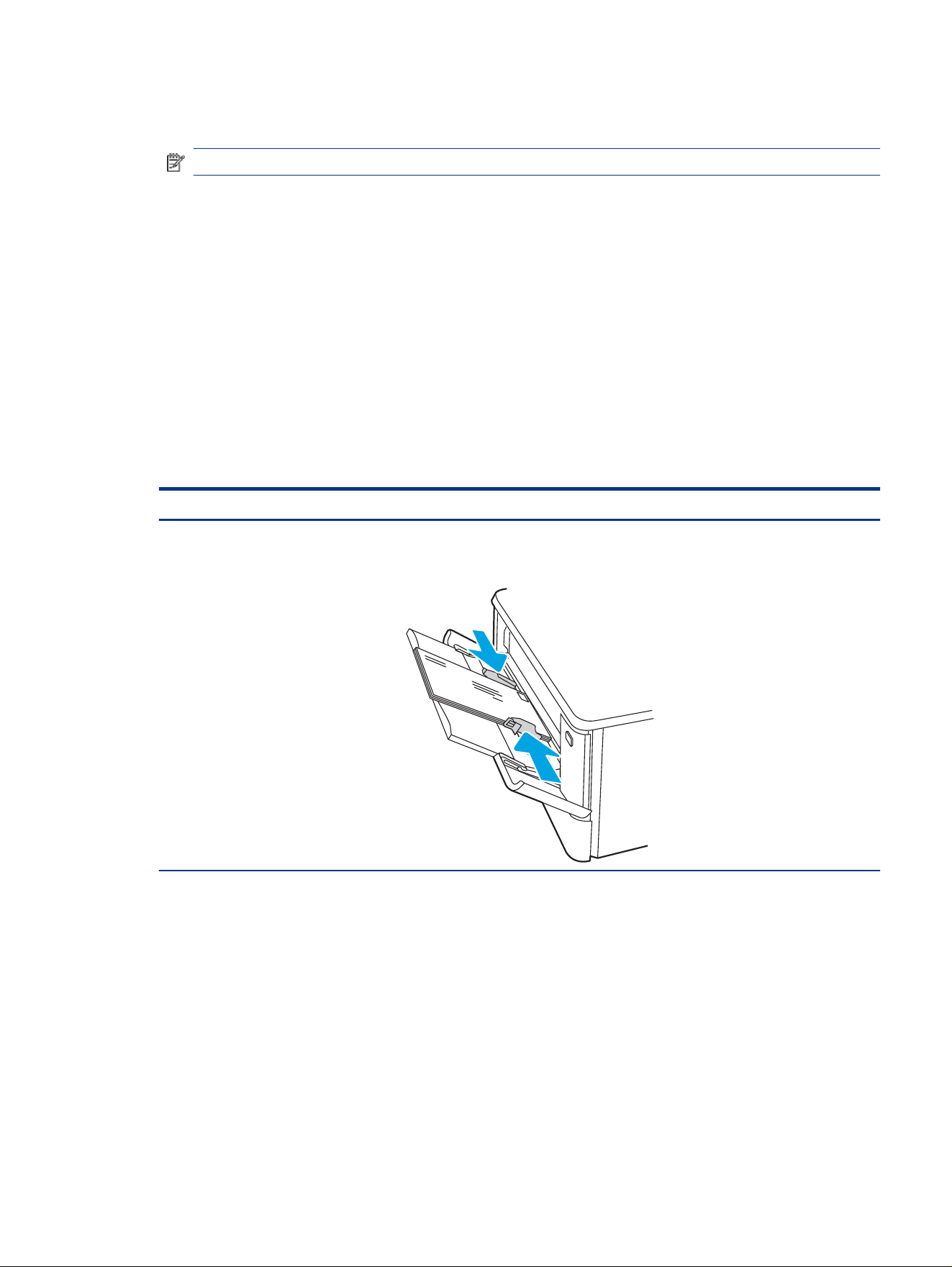
2. Select the printer from the list of printers, and then click or tap the Properties or Preferences button to open
the print driver.
NOTE: The name of the button varies for dierent software programs.
3. Click or tap the Paper/Quality tab.
4. In the Paper size drop-down list, select the correct size for the envelopes.
5. In the Paper type drop-down list, select Envelope.
6. In the Paper source drop-down list, select Manual feed.
7. Click the OK button to close the Document Properties dialog box.
8. In the Print dialog box, click the OK button to print the job.
Envelope orientation
When using envelopes, load them according to the information in the following table.
Table 2-4 Envelope orientation
Tray How to load
Tray 1 Face-up
Short, postage-end leading into the printer
Tray 2 Face-up
Short, postage-end leading into the printer
Envelope orientation 27
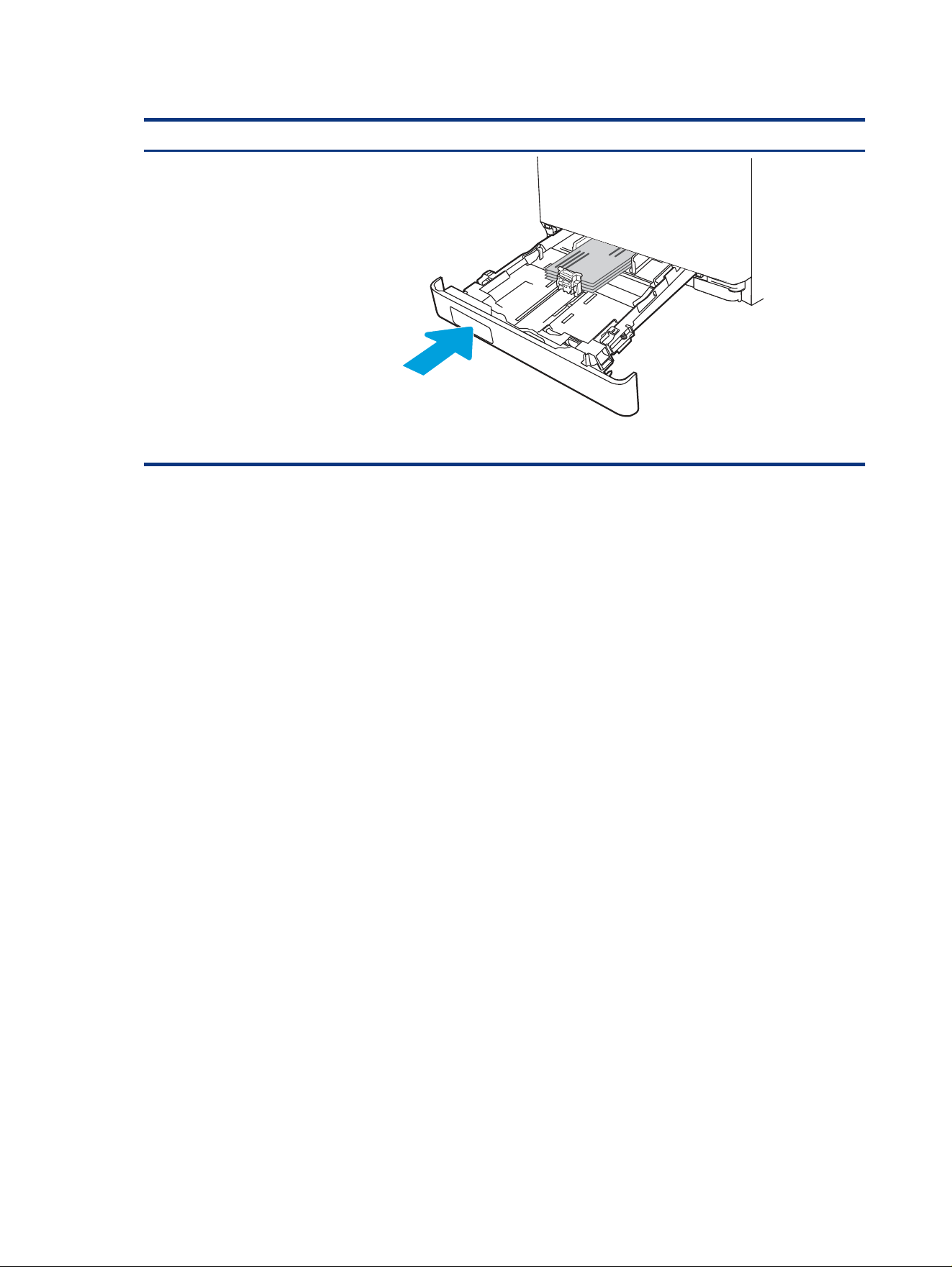
Table 2-4 Envelope orientation (continued)
Tray How to load
28 Chapter 2 Paper trays

Supplies, accessories, and parts3
Order supplies or accessories, replace the toner cartridges, or remove and replace another part.
For more information:
For video assistance, see www.hp.com/videos/LaserJet.
The following information is correct at the time of publication. For current information, see www.hp.com/
support/colorljM479MFP.
HP's all-inclusive help for the printer includes the following information:
● Install and congure
● Learn and use
● Solve problems
● Download software and rmware updates
● Join support forums
● Find warranty and regulatory information
Order supplies, accessories, and parts
Review details about ordering supplies, accessories and parts for your printer.
Ordering
Find information and links for ordering supplies, parts, and accessories for your printer.
Ordering option
Ordering information
Order supplies and paper www.hp.com/go/suresupply
Order genuine HP parts or accessories www.hp.com/buy/parts
Order through service or support providers Contact an HP-authorized service or support provider.
Order using the HP Embedded Web Server (EWS) To access, in a supported Web browser on your computer,
enter the printer IP address or host name in the address/URL
eld. The EWS contains a link to the HP SureSupply Web site,
which provides options for purchasing Original HP supplies.
Supplies, accessories, and parts 29

Supplies and accessories
Find information about the supplies and accessories that are available for your printer.
CAUTION: Cartridges are for distribution and use within their designated region only; they will not work
outside of their designated region.
Table 3-1 Supplies - For use in North America and Latin America only
Item Description Cartridge number Part number
HP 414A Black Original LaserJet
Toner Cartridge
Standard-capacity replacement
black toner cartridge
414A W2020A
HP 414A Cyan Original LaserJet
Toner Cartridge
Standard-capacity replacement
cyan toner cartridge
414A W2021A
HP 414A Yellow Original
LaserJet Toner Cartridge
Standard-capacity replacement
yellow toner cartridge
414A W2022A
HP 414A Magenta Original
LaserJet Toner Cartridge
Standard-capacity replacement
magenta toner cartridge
414A W2023A
HP 414X High Yield Black
Original LaserJet Toner Cartridge
High-capacity replacement
black toner cartridge
414X W2020X
HP 414X High Yield Cyan
Original LaserJet Toner Cartridge
High-capacity replacement cyan
toner cartridge
414X W2021X
HP 414X High Yield Yellow
Original LaserJet Toner Cartridge
High-capacity replacement
yellow toner cartridge
414X W2022X
HP 414X High Yield Magenta
Original LaserJet Toner Cartridge
High-capacity replacement
magenta toner cartridge
414X W2023X
Table 3-2 Supplies - For use in Europe, Middle East, Russia, CIS, and Africa only
Item Description Cartridge number Part number
HP 415A Black Original LaserJet
Toner Cartridge
Standard-capacity replacement
black toner cartridge
415A W2030A
HP 415A Cyan Original LaserJet
Toner Cartridge
Standard-capacity replacement
cyan toner cartridge
415A W2031A
HP 415A Yellow Original
LaserJet Toner Cartridge
Standard-capacity replacement
yellow toner cartridge
415A W2032A
HP 415A Magenta Original
LaserJet Toner Cartridge
Standard-capacity replacement
magenta toner cartridge
415A W2033A
HP 415X High Yield Black
Original LaserJet Toner Cartridge
High-capacity replacement
black toner cartridge
415X W2030X
HP 415X High Yield Cyan
Original LaserJet Toner Cartridge
High-capacity replacement cyan
toner cartridge
415X W2031X
HP 415X High Yield Yellow
Original LaserJet Toner Cartridge
High-capacity replacement
yellow toner cartridge
415X W2032X
HP 415X High Yield Magenta
Original LaserJet Toner Cartridge
High-capacity replacement
magenta toner cartridge
415X W2033X
30 Chapter 3 Supplies, accessories, and parts

Table 3-3 Supplies - For use in Asia Pacic only
Item Description Cartridge number Part number
HP 416A Black Original LaserJet
Toner Cartridge
Standard-capacity replacement
black toner cartridge
416A W2040A
HP 416A Cyan Original LaserJet
Toner Cartridge
Standard-capacity replacement
cyan toner cartridge
416A W2041A
HP 416A Yellow Original
LaserJet Toner Cartridge
Standard-capacity replacement
yellow toner cartridge
416A W2042A
HP 416A Magenta Original
LaserJet Toner Cartridge
Standard-capacity replacement
magenta toner cartridge
416A W2043A
HP 416X High Yield Black
Original LaserJet Toner Cartridge
High-capacity replacement
black toner cartridge
416X W2040X
HP 416X High Yield Cyan
Original LaserJet Toner Cartridge
High-capacity replacement cyan
toner cartridge
416X W2041X
HP 416X High Yield Yellow
Original LaserJet Toner Cartridge
High-capacity replacement
yellow toner cartridge
416X W2042X
HP 416X High Yield Magenta
Original LaserJet Toner Cartridge
High-capacity replacement
magenta toner cartridge
416X W2043X
Table 3-4 Accessories
Item Description Part number
Optional 550-sheet paper feeder Optional Tray 3 CF404A
USB 2.0 printer cable A-to-B cable (2-meter standard) DT2738
Customer self-repair parts
Customer Self-Repair (CSR) parts are available for many HP LaserJet printers to reduce repair time.
More information about the CSR program and benets can be found at www.hp.com/go/csr-support and
www.hp.com/go/csr-faq.
Genuine HP replacement parts can be ordered at www.hp.com/buy/parts or by contacting an HP-authorized
service or support provider. When ordering, one of the following will be needed: part number, serial number
(found on back of printer), product number, or printer name.
● Parts listed as Mandatory self-replacement are to be installed by customers, unless you are willing to pay
HP service personnel to perform the repair. For these parts, on-site or return-to-depot support is not
provided under the HP printer warranty.
● Parts listed as Optional self-replacement can be installed by HP service personnel at your request for no
additional charge during the printer warranty period.
Table 3-5
Customer self-repair parts
Item Description Self-replacement options Part number
150-sheet paper input tray Replacement cassette for Tray 2 Mandatory RM2-6377-000CN
550-sheet paper feeder Replacement optional Tray 3 Mandatory CF404-67901
Customer self-repair parts 31

Dynamic security
Learn about dynamic-security-enabled printers.
Certain HP printers use cartridges that have security chips or electronic circuitry. Cartridges using a non-HP chip
or modied or non-HP circuitry* might not work. And, those that work today might not work in the future.
As is standard in the printing business, HP has a process for authenticating cartridges. HP continues to use
security measures to protect the quality of our customer experience, maintain the integrity of our printing
systems, and protect our intellectual property. These measures include authentication methods that change
periodically and might prevent some third-party supplies from working now or in the future. HP printers
and original HP cartridges deliver the best quality, security and reliability. When cartridges are cloned or
counterfeited, the customer is exposed to quality and potential security risks, compromising the printing
experience.
*Non-HP Chips and modied or non-HP electronic circuitry are not produced or validated by HP. HP cannot
guarantee that these chips or circuitry will work in your printer now or in the future. If you are using a
non-original HP cartridge, please check with your supplier to ensure your cartridge has an original HP security
chip or unmodied HP electronic circuitry.
Congure the HP toner-cartridge-protection supply settings
A network administrator can congure the toner-cartridge-protection settings using the printer control panel or
the HP Embedded Web Server (EWS).
Introduction
Use HP Cartridge Policy and Cartridge Protection to control which cartridges are installed in the printer and
protect the cartridges that are installed from theft.
● Cartridge Policy: This feature protects the printer from counterfeit toner cartridges by allowing only genuine
HP cartridges to be used with the printer. Using genuine HP cartridges ensures the best possible print
quality. When someone installs a cartridge that is not a genuine HP cartridge, the printer control panel
displays a message that the cartridge is unauthorized and it provides information explaining how to proceed.
● Cartridge Protection: This feature permanently associates toner cartridges with a specic printer, or eet
of printers, so they cannot be used in other printers. Protecting cartridges protects your investment. When
this feature is enabled, if someone attempts to transfer a protected cartridge from the original printer into
an unauthorized printer, that printer will not print with the protected cartridge. The printer control panel
displays a message that the cartridge is protected, and it provides information explaining how to proceed.
CAUTION: After enabling cartridge protection for the printer, all subsequent toner cartridges installed in
the printer are automatically and permanently protected. To avoid protecting a new cartridge, disable the
feature before installing the new cartridge.
Turning the feature o does not turn o protection for cartridges that are currently installed.
Both features are o by default. Follow these procedures to enable or disable them.
Enable or disable the Cartridge Policy feature
The Cartridge Policy feature can be enabled or disabled using the control panel or the Embedded Web Server
(EWS).
32 Chapter 3 Supplies, accessories, and parts

NOTE: Enabling or disabling this feature might require entering an administrator password.
Check with your administrator to determine if an administrator password has been set. EWS passwords cannot
be recovered.
Use the printer control panel to enable the Cartridge Policy feature
From the printer control panel, a network administrator can enable the Cartridge Policy feature. This allows only
genuine HP cartridges to be used with the printer.
1. From the Home screen on the printer control panel, swipe the tab at the top of the screen downward to
open the Dashboard, and then touch the Setup icon .
2. Open the following menus:
a. Supply Settings
b. Cartridge Policy
3. Touch Authorized HP to enable the feature.
Use the printer control panel to disable the Cartridge Policy feature
From the printer control panel, a network administrator can disable the Cartridge Policy feature. This removes
the restriction that only genuine HP cartridges can be used.
1. From the Home screen on the printer control panel, swipe the tab at the top of the screen downward to
open the Dashboard, and then touch the Setup icon .
2. Open the following menus:
a. Supply Settings
b. Cartridge Policy
3. Touch O to disable the feature.
Use the HP Embedded Web Server (EWS) to enable the Cartridge Policy feature
From the EWS, a network administrator can enable the Cartridge Policy feature. This allows only genuine HP
cartridges to be used with the printer.
1. Open the HP Embedded Web Server (EWS):
a. From the Home screen on the printer control panel, touch the Wireless icon or the Ethernet icon
to view the printer's IP address or host name.
b. Open a web browser, and in the address line, type the IP address or host name exactly as it displays on
the printer control panel. Press the Enter key on the computer keyboard. The EWS opens.
NOTE: If a message displays in the web browser indicating that the website might not be safe, select
the option to continue to the website. Accessing this website will not harm the computer.
2. On the EWS Home page, click the Settings tab.
3. In the left navigation pane, click Supplies to expand the options, and then click Supply Settings.
Use the printer control panel to enable the Cartridge Policy feature 33

4. In the Cartridge Policy area, click the drop-down menu and select Authorized HP.
5. Click Apply to save the changes.
Use the HP Embedded Web Server (EWS) to disable the Cartridge Policy feature
From the EWS, a network administrator can disable the Cartridge Policy feature. This removes the restriction that
only genuine HP cartridges can be used.
1. Open the HP Embedded Web Server (EWS):
a. From the Home screen on the printer control panel, touch the Wireless icon or the Ethernet icon
to view the printer's IP address or host name.
b. Open a web browser, and in the address line, type the IP address or host name exactly as it displays on
the printer control panel. Press the Enter key on the computer keyboard. The EWS opens.
NOTE: If a message displays in the web browser indicating that the website might not be safe, select
the option to continue to the website. Accessing this website will not harm the computer.
2. On the EWS Home page, click the Settings tab.
3. In the left navigation pane, click Supplies to expand the options, and then click Supply Settings.
4. In the Cartridge Policy area, click the drop-down menu and select O.
5. Click Apply to save the changes.
Troubleshoot Cartridge Policy control panel error messages
Review the recommended actions for Cartridge Policy error messages.
Table 3-6
Cartridge Policy control panel error messages
Error message Description Recommended action
10.0X.30 Unauthorized <Color> Cartridge The administrator has congured this
printer to use only genuine HP supplies that
are still under warranty. The cartridge must
be replaced to continue printing.
Replace the cartridge with a genuine HP
toner cartridge.
If you believe you purchased a genuine HP
supply, visit www.hp.com/go/anticounterfeit
to determine if the toner cartridge is a
genuine HP cartridge, and learn what to do if
it is not a genuine HP cartridge.
Enable or disable the Cartridge Protection feature
The Cartridge Protection feature can be enabled or disabled using the control panel or the Embedded Web Server
(EWS).
NOTE: Enabling or disabling this feature might require entering an administrator password.
Check with your administrator to determine if an administrator password has been set. EWS passwords cannot
be recovered.
34 Chapter 3 Supplies, accessories, and parts

Use the printer control panel to enable the Cartridge Protection feature
From the printer control panel, a network administrator can enable the Cartridge Protection feature. This protects
the cartridges associated with the printer from being stolen and used in other printers.
1. From the Home screen on the printer control panel, swipe the tab at the top of the screen downward to
open the Dashboard, and then touch the Setup icon .
2. Open the following menus:
a. Supply Settings
b. Cartridge Protection
3. Touch Protect Cartridges to enable the feature.
CAUTION: After enabling cartridge protection for the printer, all subsequent toner cartridges installed in
the printer are automatically and permanently protected. To avoid protecting a new cartridge, disable the
feature before installing the new cartridge.
Turning the feature o does not turn o protection for cartridges that are currently installed.
Use the printer control panel to disable the Cartridge Protection feature
From the printer control panel, a network administrator can disable the Cartridge Protection feature. This
removes protection for any new cartridges installed in the printer.
1. From the Home screen on the printer control panel, swipe the tab at the top of the screen downward to
open the Dashboard, and then touch the Setup icon .
2. Open the following menus:
a. Supply Settings
b. Cartridge Protection
3. Touch O to disable the feature.
Use the HP Embedded Web Server (EWS) to enable the Cartridge Protection feature
From the EWS, a network administrator can enable the Cartridge Protection feature. This protects the cartridges
that are associated with the printer from being stolen and used in other printers.
1. Open the HP Embedded Web Server (EWS):
a. From the Home screen on the printer control panel, touch the Wireless icon or the Ethernet icon
to view the printer's IP address or host name.
b. Open a web browser, and in the address line, type the IP address or host name exactly as it displays on
the printer control panel. Press the Enter key on the computer keyboard. The EWS opens.
NOTE: If a message displays in the web browser indicating that the website might not be safe, select
the option to continue to the website. Accessing this website will not harm the computer.
2. On the EWS Home page, click the Settings tab.
Use the printer control panel to enable the Cartridge Protection feature 35

3. In the left navigation pane, click Supplies to expand the options, and then click Supply Settings.
4. In the Cartridge Protection area, click the drop-down menu and select On.
5. Click Apply to save the changes.
CAUTION: After enabling Cartridge Protection for the printer, all subsequent toner cartridges installed in
the printer are automatically and permanently protected. To avoid protecting a new cartridge, disable the
feature before installing the new cartridge.
Turning the feature o does not turn o protection for cartridges that are currently installed.
Use the HP Embedded Web Server (EWS) to disable the Cartridge Protection feature
From the EWS, a network administrator can disable the Cartridge Protection feature. This removes protection for
any new cartridges installed in the printer.
1. Open the HP Embedded Web Server (EWS):
a. From the Home screen on the printer control panel, touch the Wireless icon or the Ethernet icon
to view the printer's IP address or host name.
b. Open a web browser, and in the address line, type the IP address or host name exactly as it displays on
the printer control panel. Press the Enter key on the computer keyboard. The EWS opens.
NOTE: If a message displays in the web browser indicating that the website might not be safe, select
the option to continue to the website. Accessing this website will not harm the computer.
2. On the EWS Home page, click the Settings tab.
3. In the left navigation pane, click Supplies to expand the options, and then click Supply Settings.
4. In the Cartridge Protection area, click the drop-down menu and select O.
5. Click Apply to save the changes.
Troubleshoot Cartridge Protection control panel error messages
Review the recommended actions for Cartridge Protection error messages.
Table 3-7
Cartridge Protection control panel error messages
Error message Description Recommended action
10.0X.57 Protected <Color> Cartridge The cartridge can only be used in the printer
or eet of printers that initially protected it
using HP Cartridge Protection.
The Cartridge Protection feature allows an
administrator to restrict cartridges to work
in only one printer or eet of printers. The
cartridge must be replaced to continue
printing.
Replace the cartridge with a new toner
cartridge.
36 Chapter 3 Supplies, accessories, and parts

Replace the toner cartridges
Replace the toner cartridges if you receive a message on the printer, or if you have print quality problems.
Toner cartridge information
Review details about ordering replacement toner cartridges.
The printer indicates when the toner cartridge level is low. The actual toner cartridge life remaining can vary.
Consider having a replacement cartridge available to install when print quality is no longer acceptable.
To purchase cartridges or check cartridge compatibility for the printer, go to HP SureSupply at www.hp.com/go/
suresupply. Scroll to the bottom of the page and verify that the country/region is correct.
The printer uses four colors and has a dierent toner cartridge for each color: yellow (Y), magenta (M), cyan (C),
and black (K). The toner cartridges are inside the front door.
CAUTION: Cartridges are for distribution and use within their designated region only; they will not work
outside of their designated region.
Table 3-8 Supplies - For use in North America and Latin America only
Item Description Cartridge number Part number
HP 414A Black Original LaserJet
Toner Cartridge
Standard-capacity replacement
black toner cartridge
414A W2020A
HP 414A Cyan Original LaserJet
Toner Cartridge
Standard-capacity replacement
cyan toner cartridge
414A W2021A
HP 414A Yellow Original LaserJet
Toner Cartridge
Standard-capacity replacement
yellow toner cartridge
414A W2022A
HP 414A Magenta Original LaserJet
Toner Cartridge
Standard-capacity replacement
magenta toner cartridge
414A W2023A
HP 414X High Yield Black Original
LaserJet Toner Cartridge
High-capacity replacement black
toner cartridge
414X W2020X
HP 414X High Yield Cyan Original
LaserJet Toner Cartridge
High-capacity replacement cyan
toner cartridge
414X W2021X
HP 414X High Yield Yellow Original
LaserJet Toner Cartridge
High-capacity replacement yellow
toner cartridge
414X W2022X
HP 414X High Yield Magenta
Original LaserJet Toner Cartridge
High-capacity replacement
magenta toner cartridge
414X W2023X
Table 3-9 Supplies - For use in Europe, Middle East, Russia, CIS, and Africa only
Item Description Cartridge number Part number
HP 415A Black Original LaserJet
Toner Cartridge
Standard-capacity replacement
black toner cartridge
415A W2030A
HP 415A Cyan Original LaserJet
Toner Cartridge
Standard-capacity replacement
cyan toner cartridge
415A W2031A
HP 415A Yellow Original LaserJet
Toner Cartridge
Standard-capacity replacement
yellow toner cartridge
415A W2032A
Replace the toner cartridges 37

Table 3-9 Supplies - For use in Europe, Middle East, Russia, CIS, and Africa only (continued)
Item Description Cartridge number Part number
HP 415A Magenta Original LaserJet
Toner Cartridge
Standard-capacity replacement
magenta toner cartridge
415A W2033A
HP 415X High Yield Black Original
LaserJet Toner Cartridge
High-capacity replacement black
toner cartridge
415X W2030X
HP 415X High Yield Cyan Original
LaserJet Toner Cartridge
High-capacity replacement cyan
toner cartridge
415X W2031X
HP 415X High Yield Yellow Original
LaserJet Toner Cartridge
High-capacity replacement yellow
toner cartridge
415X W2032X
HP 415X High Yield Magenta
Original LaserJet Toner Cartridge
High-capacity replacement
magenta toner cartridge
415X W2033X
Table 3-10 Supplies - For use in Asia Pacic only
Item Description Cartridge number Part number
HP 416A Black Original LaserJet
Toner Cartridge
Standard-capacity replacement
black toner cartridge
416A W2040A
HP 416A Cyan Original LaserJet
Toner Cartridge
Standard-capacity replacement
cyan toner cartridge
416A W2041A
HP 416A Yellow Original LaserJet
Toner Cartridge
Standard-capacity replacement
yellow toner cartridge
416A W2042A
HP 416A Magenta Original LaserJet
Toner Cartridge
Standard-capacity replacement
magenta toner cartridge
416A W2043A
HP 416X High Yield Black Original
LaserJet Toner Cartridge
High-capacity replacement black
toner cartridge
416X W2040X
HP 416X High Yield Cyan Original
LaserJet Toner Cartridge
High-capacity replacement cyan
toner cartridge
416X W2041X
HP 416X High Yield Yellow Original
LaserJet Toner Cartridge
High-capacity replacement yellow
toner cartridge
416X W2042X
HP 416X High Yield Magenta
Original LaserJet Toner Cartridge
High-capacity replacement
magenta toner cartridge
416X W2043X
Do not remove the toner cartridge from its package until it is time to replace it.
CAUTION: To prevent damage to the toner cartridge, do not expose it to light for more than a few minutes. If
the toner cartridge must be removed from the printer for an extended period of time, place the cartridge in the
original plastic packaging, or cover the cartridge with a lightweight opaque item.
The following illustration shows the toner cartridge components.
38 Chapter 3 Supplies, accessories, and parts
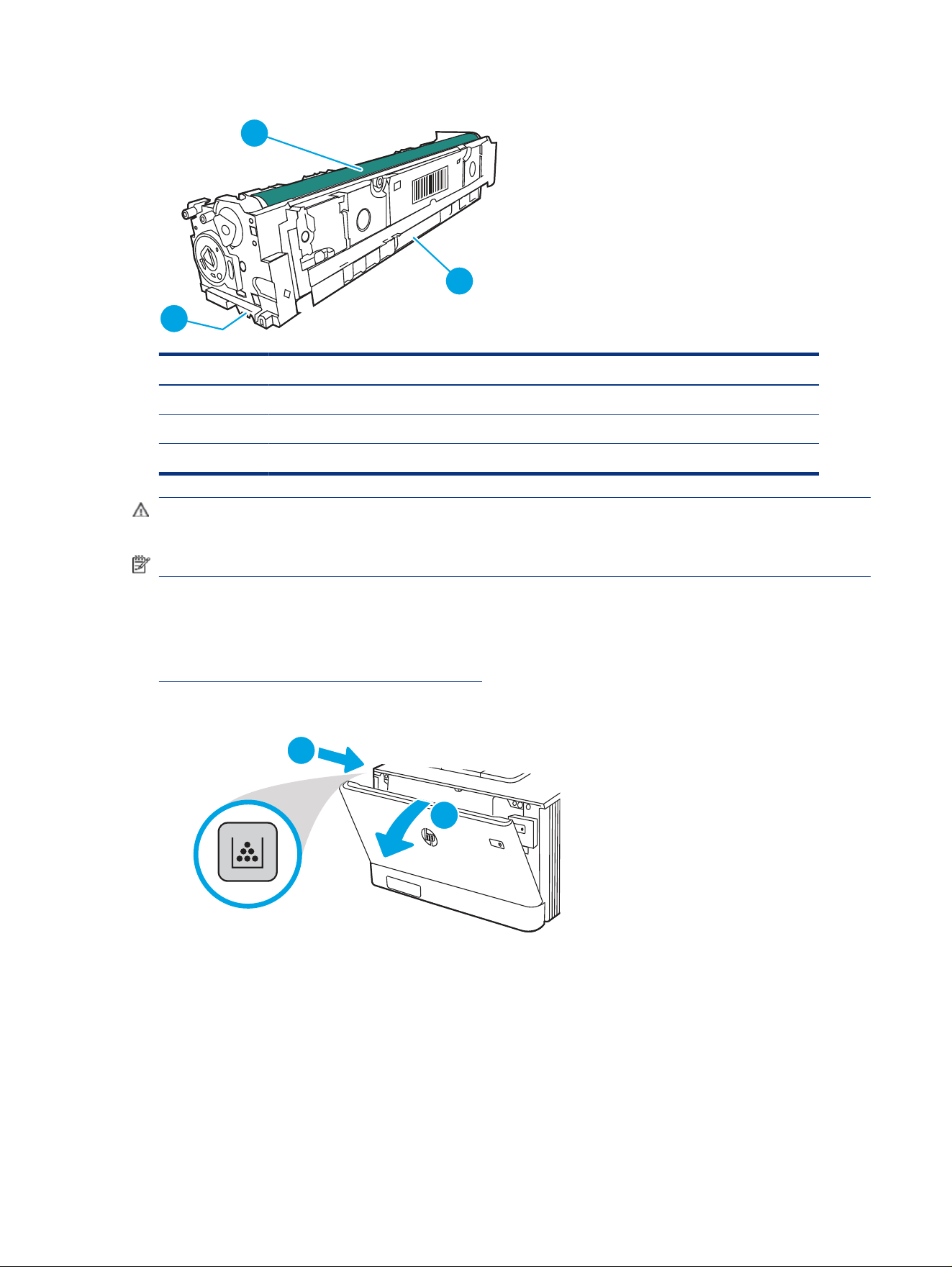
Figure 3-1 Toner cartridge components
2
1
3
3
1
1
2
Number Description
1 Handle
2 Imaging drum
3 Memory chip
CAUTION: If toner gets on clothing, wipe it o by using a dry cloth and wash the clothes in cold water. Hot
water sets toner into fabric.
NOTE: Information about recycling used toner cartridges is in the toner cartridge box.
Remove and replace the toner cartridges
Follow these steps to replace the toner cartridge.
View a video of how to replace the toner cartridges
1. Open the front door by pressing the button on the left panel.
1
2
Remove and replace the toner cartridges 39
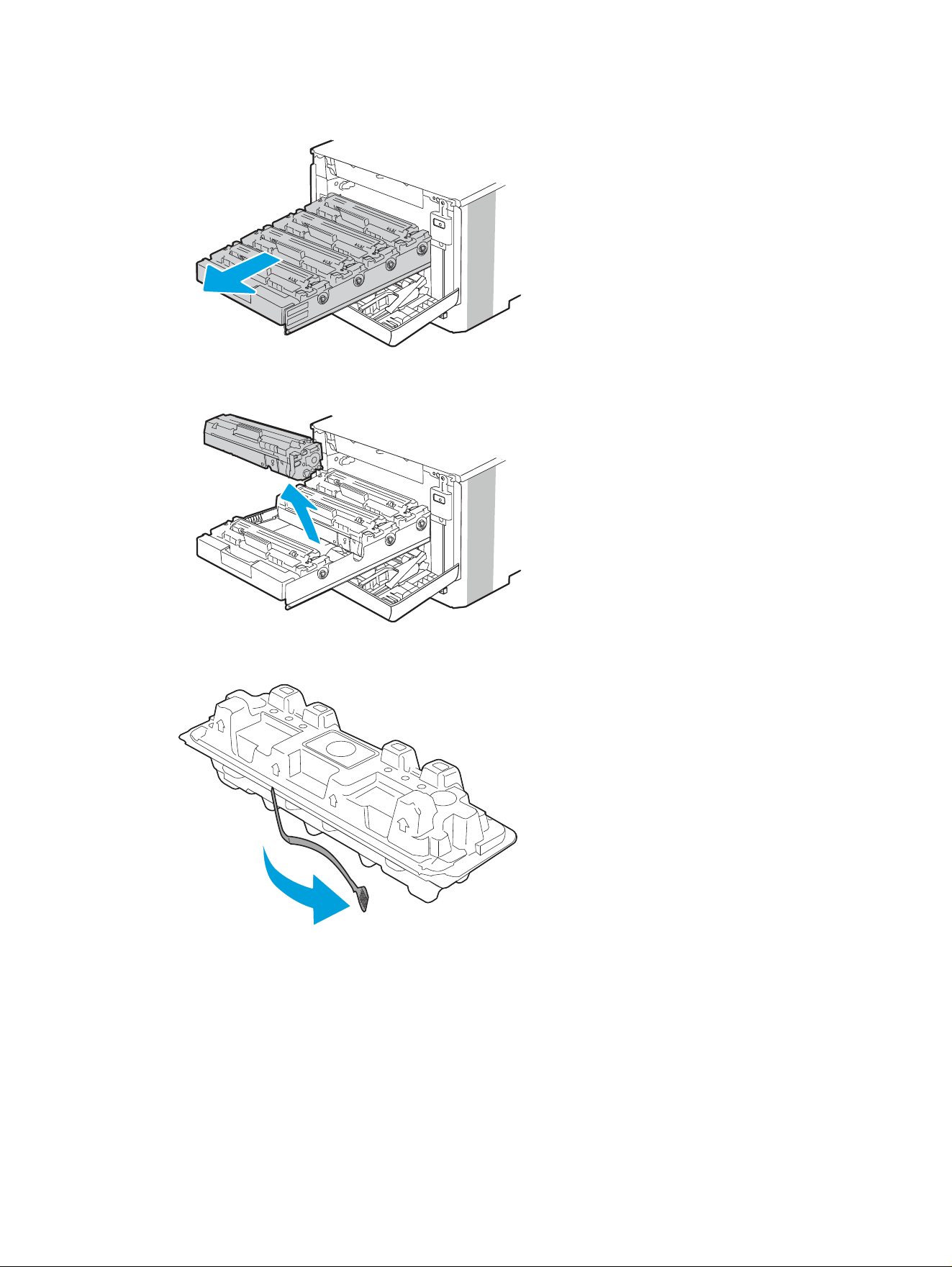
2. Grasp the blue handle on the toner cartridge drawer, and then pull out the drawer.
3. Grasp the handle on the toner cartridge, and then pull the toner cartridge straight up to remove it.
4. Remove the new toner cartridge package from the box, and then pull the release tab on the packaging.
40 Chapter 3 Supplies, accessories, and parts
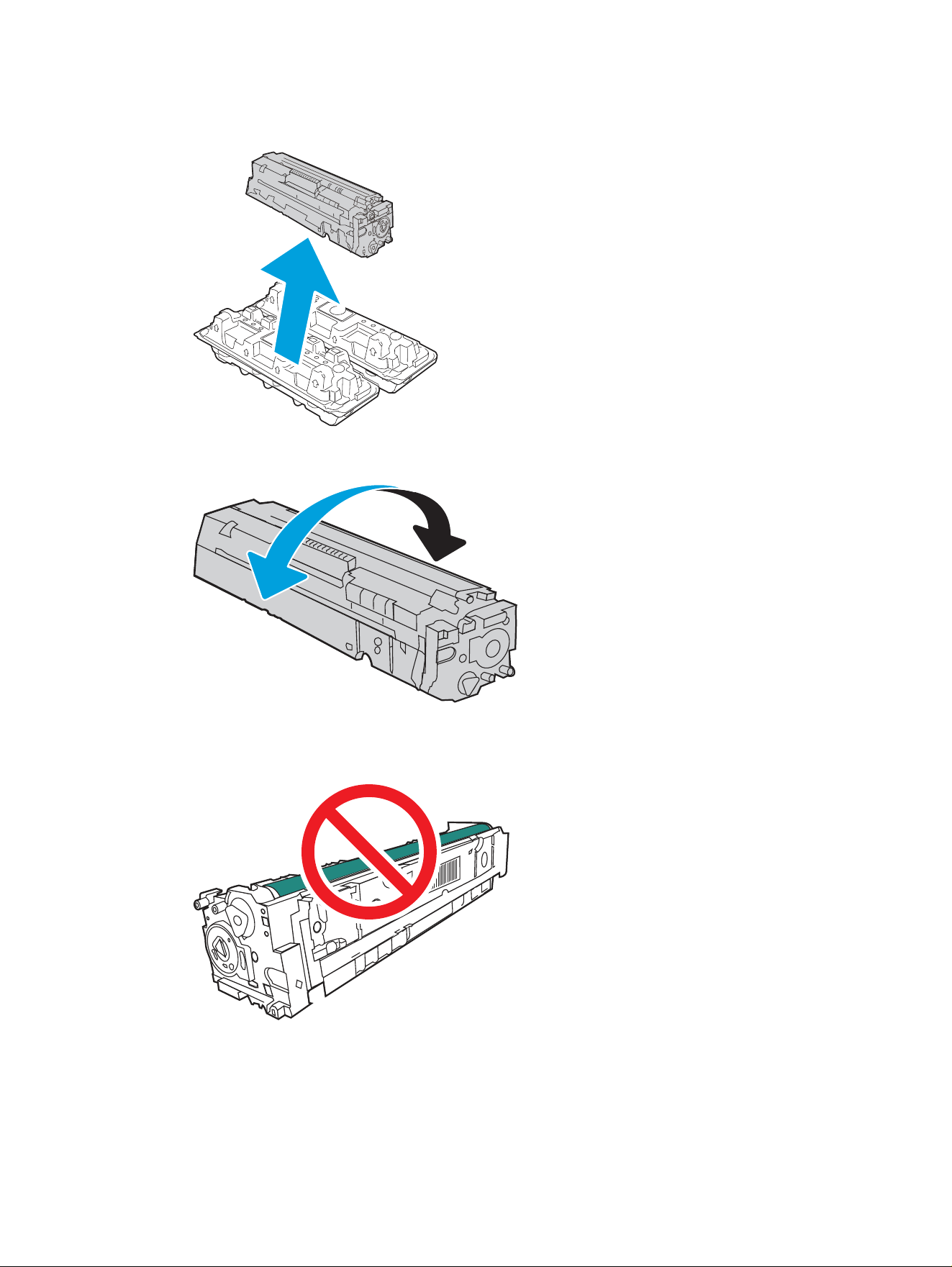
5. Remove the toner cartridge from the opened packaging shell. Place the used toner cartridge in the shell for
recycling.
6. Hold both ends of the toner cartridge and rock it 5-6 times.
7. Do not touch the imaging drum on the bottom of the toner cartridge. Fingerprints on the imaging drum can
cause print-quality problems. Also, do not expose the cartridge to light unnecessarily.
Remove and replace the toner cartridges 41
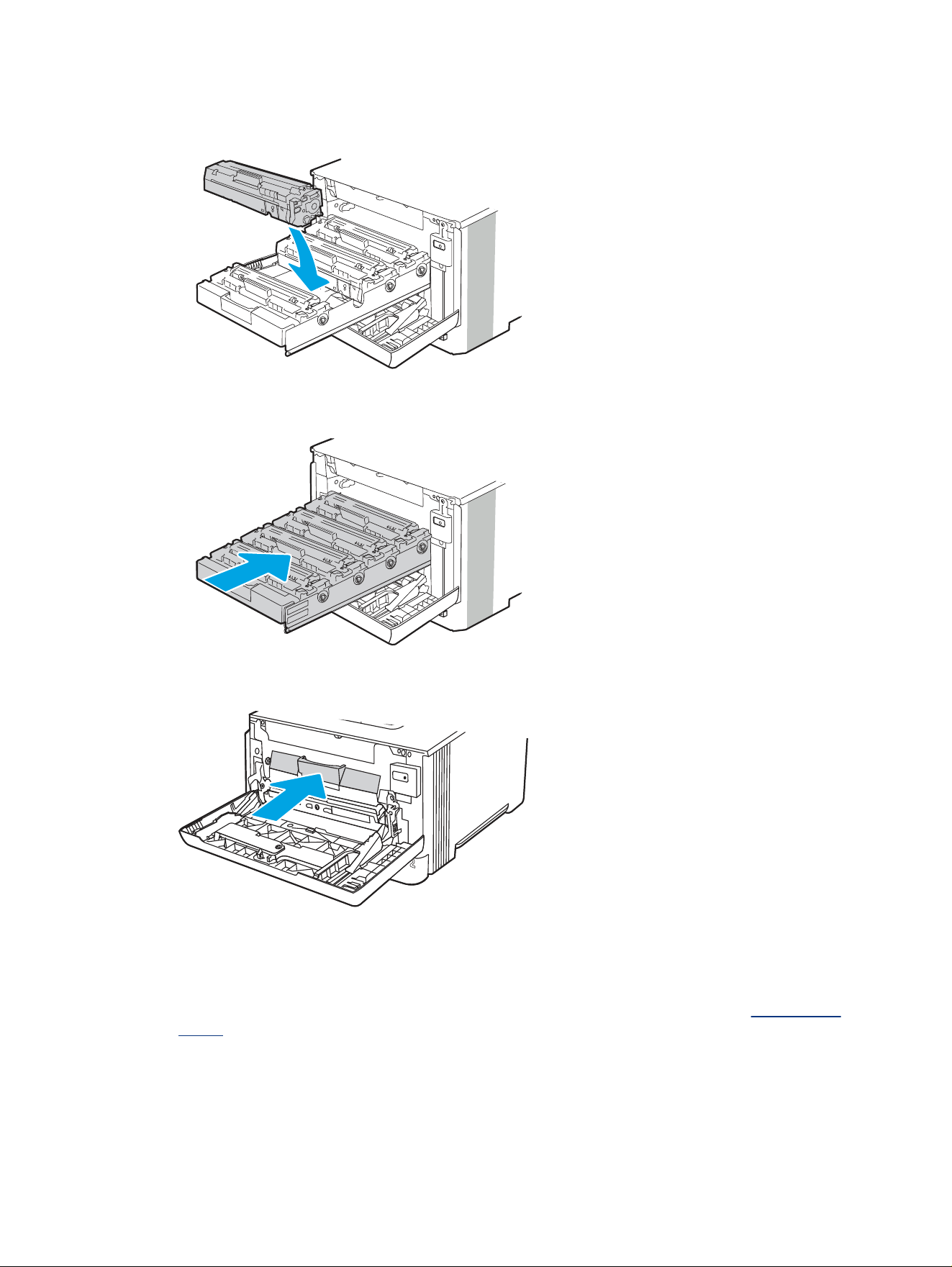
8. Insert the new toner cartridge into the drawer. Make sure that the color chip on the cartridge matches the
color chip on the drawer.
9. Close the toner cartridge drawer.
10. Close the front door.
11. Pack the used toner cartridge into the box the new cartridge came in, or use a large cardboard box and
ll it with several cartridges you need to recycle. See the enclosed recycling guide for information about
recycling.
In the US, a pre-paid shipping label is included in the box. In other countries/regions, go to www.hp.com/
recycle to print a pre-paid shipping label.
Adhere the pre-paid shipping label to the box, and return the used cartridge to HP for recycling.
42 Chapter 3 Supplies, accessories, and parts

http://www.hp.com/recycle
Remove and replace the toner cartridges 43

44 Chapter 3 Supplies, accessories, and parts

Print4
Print using the software, or print from a mobile device or USB ash drive.
For more information:
For video assistance, see www.hp.com/videos/LaserJet.
The following information is correct at the time of publication. For current information, see www.hp.com/
support/colorljM479MFP.
HP's all-inclusive help for the printer includes the following information:
● Install and congure
● Learn and use
● Solve problems
● Download software and rmware updates
● Join support forums
● Find warranty and regulatory information
Print tasks (Windows)
Learn about common printing tasks for Windows users.
How to print (Windows)
Use the Print option from a software application to select the printer and basic options for your print job.
The following procedure describes the basic printing process for Windows.
1. From the software program, select the Print option.
2. Select the printer from the list of printers. To change settings, click the Properties or Preferences button to
open the print driver.
NOTE:
● The name of the button varies for dierent software programs.
● For the HP PCL-6 driver, the HP AiO Printer Remote application downloads additional driver features
when More settings is selected.
Print 45

● For more information, click the Help (?) button in the print driver.
3. Click the tabs in the print driver to congure the available options. For example, set the paper orientation on
the Finishing tab, and set the paper source, paper type, paper size, and quality settings on the Paper/Quality
tab.
4. Click the OK button to return to the Print dialog box. Select the number of copies to print from this screen.
5. Click the Print button to print the job.
Automatically print on both sides (Windows)
If your printer has an automatic duplexer installed, you can automatically print on both sides of the paper. Use a
paper size and type supported by the duplexer.
1. From the software program, select the Print option.
2. Select the printer from the list of printers, and then click the Properties or Preferences button to open the
print driver.
NOTE:
● The name of the button varies for dierent software programs.
● For the HP PCL-6 driver, the HP AiO Printer Remote application downloads additional driver features
when More settings is selected.
3. Click the Finishing tab.
4. Select Print on both sides. Click OK to close the Document Properties dialog.
5. In the Print dialog, click Print to print the job.
Manually print on both sides (Windows)
Use this procedure for printers that do not have an automatic duplexer installed or to print on paper that the
duplexer does not support.
1. From the software program, select the Print option.
2. Select the printer from the list of printers, and then click the Properties or Preferences button to open the
print driver.
NOTE:
● The name of the button varies for dierent software programs.
● For the HP PCL-6 driver, the HP AiO Printer Remote application downloads additional driver features
when More settings is selected.
3. Click the Finishing tab.
4. Select Print on both sides (manually), and then click OK to close the Document Properties dialog.
5. In the Print dialog, click Print to print the rst side of the job.
6. Retrieve the printed stack from the output bin, and place it in Tray 1.
46 Chapter 4 Print

7. If prompted, select the appropriate control panel button to continue.
Print multiple pages per sheet (Windows)
When you print from a software application using the Print option, you can select an option to print multiple
pages on a single sheet of paper. For example, you might want to do this if you are printing a very large
document and want to save paper.
1. From the software program, select the Print option.
2. Select the printer from the list of printers, and then click the Properties or Preferences button to open the
print driver.
NOTE:
● The name of the button varies for dierent software programs.
● For the HP PCL-6 driver, the HP AiO Printer Remote application downloads additional driver features
when More settings is selected.
3. Click the Finishing tab.
4. Select the number of pages per sheet from the Pages per sheet drop-down.
5. Select the correct Print page borders, Page order, and Orientation options. Click OK to close the Document
Properties dialog.
6. In the Print dialog, click Print to print the job.
Select the paper type (Windows)
When you print from a software application using the Print option, you can set the paper type you are using for
your print job. For example, if your default paper type is Letter, but you are using a dierent paper type for a print
job, select that specic paper type.
1. From the software program, select the Print option.
2. Select the printer from the list of printers, and then click or tap the Properties or Preferences button to open
the print driver.
NOTE:
● The name of the button varies for dierent software programs.
● For the HP PCL-6 driver, the HP AiO Printer Remote application downloads additional driver features
when More settings is selected.
3. Click the Paper/Quality tab.
4. Select the option for the type of paper you are using, and then click OK.
5. Click OK to close the Document Properties dialog.
6. In the Print dialog, click Print to print the job.
Print multiple pages per sheet (Windows) 47

Additional print tasks
Locate information on the Web for performing common printing tasks.
Go to www.hp.com/support/colorljM479MFP.
Instructions are available for print tasks, such as the following:
● Create and use printing shortcuts or presets
● Select the paper size, or use a custom paper size
● Select the page orientation
● Create a booklet
● Scale a document to t a specic paper size
● Print the rst or last pages of the document on dierent paper
● Print watermarks on a document
Print tasks (macOS)
Print using the HP printing software for macOS, including how to print on both sides or print multiple pages per
sheet.
How to print (macOS)
Use the Print option from a software application to select the printer and basic options for your print job.
The following procedure describes the basic printing process for macOS.
1. Click the File menu, and then click the Print option.
2. Select the printer.
3. Click Show Details or Copies & Pages, and then select other menus to adjust the print settings.
NOTE: The name of the item varies for dierent software programs.
4. Click the Print button.
Automatically print on both sides (macOS)
If your printer has an automatic duplexer installed, you can automatically print on both sides of the paper. Use a
paper size and type supported by the duplexer.
This feature is available if you install the HP print driver. It might not be available if you are using AirPrint.
1. Click the File menu, and then click the Print option.
2. Select the printer.
3. Click Show Details or Copies & Pages, and then click the Layout menu.
NOTE: The name of the item varies for dierent software programs.
48 Chapter 4 Print

4. Select a binding option from the Two-Sided drop-down list.
5. Click the Print button.
Manually print on both sides (macOS)
If your printer does not have an automatic duplexer installed, or you are using a paper size or type not supported
by the duplexer, you can print on both sides of the paper using a manual process. You will need to reload the
pages for the second side.
This feature is available if you install the HP print driver. It might not be available if you are using AirPrint.
1. Click the File menu, and then click the Print option.
2. Select the printer.
3. Click Show Details or Copies & Pages, and then click the Manual Duplex menu.
NOTE: The name of the item varies for dierent software programs.
4. Click the Manual Duplex check box, and select a binding option.
5. Go to the printer, and remove any blank paper that is in Tray 1.
6. Click the Print button.
7. Retrieve the printed stack from the output bin and place it with the printed-side facing down in the input
tray.
8. If prompted, touch the appropriate control panel button to continue.
Print multiple pages per sheet (macOS)
When you print from a software application using the Print option, you can select an option to print multiple
pages on a single sheet of paper. For example, you might want to do this if you are printing a very large
document and want to save paper.
1. Click the File menu, and then click the Print option.
2. Select the printer.
3. Click Show Details or Copies & Pages, and then click the Layout menu.
NOTE: The name of the item varies for dierent software programs.
4. From the Pages per Sheet drop-down list, select the number of pages that you want to print on each sheet.
5. In the Layout Direction area, select the order and placement of the pages on the sheet.
6. From the Border menu, select the type of border to print around each page on the sheet.
7. Click the Print button.
Select the paper type (macOS)
When you print from a software application using the Print option, you can set the paper type you are using for
your print job. For example, if your default paper type is Letter, but you are using a dierent paper type for a print
job, select that specic paper type.
Manually print on both sides (macOS) 49

1. Click the File menu, and then click the Print option.
2. Select the printer.
3. Click Show Details or Copies & Pages, and then click the Media & Quality menu or the Paper/Quality menu.
NOTE: The name of the item varies for dierent software programs.
4. Select from the Media & Quality or Paper/Quality options.
NOTE: This list contains the master set of options available. Some options are not available on all printers.
● Media Type: Select the option for the type of paper for the print job.
● Print Quality: Select the resolution level for the print job.
● EconoMode: Select this option to conserve toner when printing drafts of documents.
5. Click the Print button.
Additional print tasks
Locate information on the Web for performing common printing tasks.
Go to www.hp.com/support/colorljM479MFP.
Instructions are available for print tasks, such as the following:
● Create and use printing shortcuts or presets
● Select the paper size, or use a custom paper size
● Select the page orientation
● Create a booklet
● Scale a document to t a specic paper size
● Print the rst or last pages of the document on dierent paper
● Print watermarks on a document
Store print jobs on the printer to print later or print privately
Store print jobs in the printer memory for printing at a later time.
Introduction
The following information provides procedures for creating and printing documents that are stored on the USB
ash drive. These jobs can be printed at a later time or printed privately.
Before beginning
Review the requirements for using the job storage feature.
The job storage feature has the following requirements:
50 Chapter 4 Print
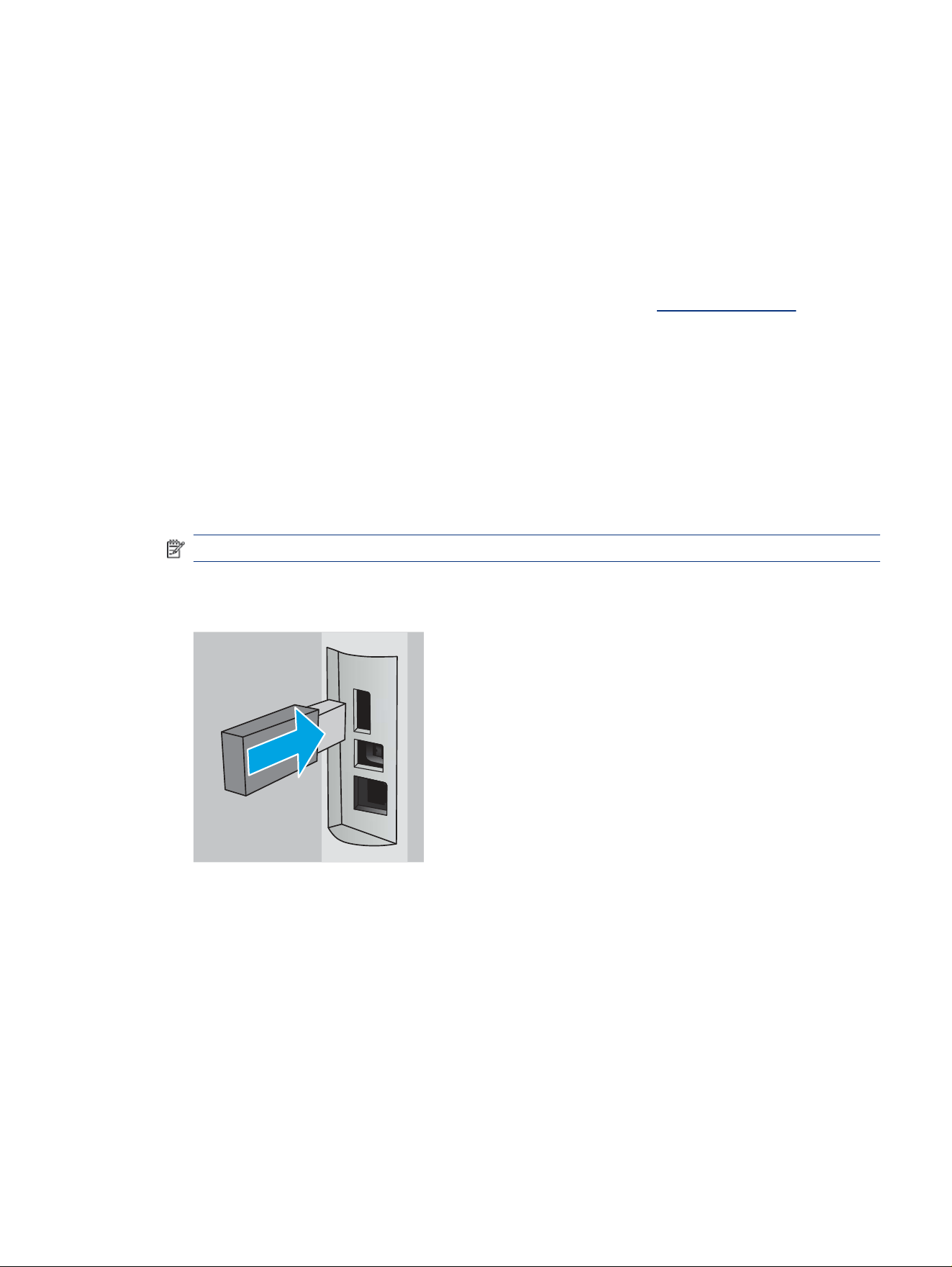
● A dedicated USB 2.0 storage device that is at least 16 GB in size must be installed in the rear host USB. This
USB storage device holds the job storage jobs sent to the printer. Removing this USB storage device from the
printer disables the job storage feature.
● If you are using an HP Universal Print Driver (UPD), you must use UPD version 5.9.0 or above.
Set up job storage
Set up job storage in the print driver, insert the storage media (USB ash drive) in the printer, and verify the
feature is ready to use.
Before you begin, install the printer software if it is not already installed. Go to www.hp.com/support, click
Software and Drivers, and then follow the onscreen instructions to download the latest HP software.
When the print driver is installed, the Job Storage option is set to Automatic by default. The option is located as
follows:
● Windows: Devices and Printers > Printer Properties > Device Settings
● macOS: Printers & Scanners > Options & Supplies
To complete Job Storage setup:
1. Locate the rear USB port.
NOTE: On some models, the rear USB port is covered. Remove the rear USB port cover before proceeding.
2. Insert the USB ash drive into the rear USB port.
Figure 4-1 Insert USB ash drive
A message displays on the control panel warning that the USB drive will be formatted. Select OK to
complete the procedure.
3. Open the print driver to verify the Job Storage tab is visible. If it is visible, the feature is ready to use.
From a software program, select the Print option, select your printer from the list of printers, and do the
following:
● Windows: Select Properties or Preferences. Click the Job Storage tab.
If the Job Storage tab is not showing, activate it as follows:
From the Start menu, open Settings, click Devices, and then click Devices and Printers. Right-click on
the printer name and click Printer Properties. Click the Device Settings tab, click on Job Storage, and
then select Automatic. Click Apply and OK.
Set up job storage 51

● macOS: The print driver displays the Copies & Pages menu. Open the drop-down list, and then click the
Job Storage menu.
If the Job Storage menu is not showing, close the Print window and then reopen it to activate the menu.
Disable or enable the job storage feature
Disable the job storage feature to make it unavailable, even if a USB drive is inserted into the printer. Enable the
feature to make it available again.
1. Open the Printer Properties:
● Windows: From the Start menu, open Settings, click Devices, and then click Devices and Printers.
Right-click on the printer and click Printer properties.
● macOS: From the Apple menu, open System Preferences, and then click Printers & Scanners. Select the
printer and click Options & Supplies.
2. Disable the Job Storage option as follows:
● Windows: Click the Device settings tab, click on Job Storage, and then select Disable.
● macOS: On the Options tab, clear the Job Storage check box.
To enable the feature, set the Job Storage option back to Automatic (Windows), or select the Job Storage check
box (macOS).
Create a stored job (Windows)
Store jobs on the USB ash drive for private or delayed printing.
1. From the software program, select the Print option.
2. Select the printer from the list of printers, and then select Properties or Preferences.
NOTE: The name of the button varies for dierent software programs.
For the HP PCL 6 driver, the HP AiO Printer Remote application downloads additional driver features when
More settings is selected.
3. Click the Job Storage tab.
NOTE: If the Job Storage tab is not showing, follow the instructions in the "Disable or enable job storage
feature" section to activate the tab.
4. Select a Job Storage Mode option:
● Proof and Hold: Print and proof one copy of a job, and then print more copies. The rst copy prints
immediately. Printing of the subsequent copies must be initiated from the device's front control panel.
For example, if 10 copies are sent, one copy prints immediately, and the other nine copies will print
when the job is retrieved. The job is deleted after all copies are printed.
● Personal Job: The job does not print until you request it at the printer control panel. For this job-storage
mode, you can select one of the Make Job Private/Secure options. If you assign a personal identication
number (PIN) to the job, you must provide the required PIN at the control panel. If you encrypt the job,
you must provide the required password at the control panel. The print job is deleted from memory
after it prints.
52 Chapter 4 Print

● Quick Copy: Print the requested number of copies of a job and store a copy of the job in the printer
memory so you can print it again later. The job is deleted manually or by the job retention schedule.
● Stored Job: Store a job on the printer and allow other users to print the job at any time. For this
job-storage mode, you can select one of the Make Job Private/Secure options. If you assign a personal
identication number (PIN) to the job, the person who prints the job must provide the required PIN
at the control panel. If you encrypt the job, the person who prints the job must provide the required
password at the control panel. The job is deleted manually or by the job retention schedule.
5. To use a custom user name or job name, click the Custom button, and then enter the user name or the job
name.
Select which option to use if another stored job already has that name:
● Use Job Name + (1-99): Append a unique number to the end of the job name.
● Replace Existing File: Overwrite the existing stored job with the new one.
6. Click the OK button to close the Document Properties dialog box. In the Print dialog box, click the Print
button to print the job.
Create a stored job (macOS)
Store jobs on the USB ash drive for private or delayed printing.
1. Click the File menu, and then click the Print option.
2. In the Printer menu, select the printer.
3. Click Show Details or Copies & Pages, and then click the Job Storage menu.
NOTE: If the Job Storage menu is not showing, follow the instructions in the "Disable or enable job storage
feature" section to activate the menu.
4. In the Mode drop-down list, select the type of stored job.
● Proof and Hold: Print and proof one copy of a job, and then print more copies. The rst copy prints
immediately. Printing of the subsequent copies must be initiated from the device's front control panel.
For example, if 10 copies are sent, one copy prints immediately, and the other nine copies will print
when the job is retrieved. The job is deleted after all copies are printed.
● Personal Job: The job does not print until someone requests it at the printer control panel. If the job
has a personal identication number (PIN), provide the required PIN at the control panel. The print job is
deleted from memory after it prints.
● Quick Copy: Print the requested number of copies of a job and store a copy of the job in the printer
memory to print it again later. The job is deleted manually or by the job retention schedule.
● Stored Job: Store a job on the printer and allow other users to print the job at any time. If the job has
a personal identication number (PIN), the person who prints the job must provide the required PIN at
the control panel. The job is deleted manually or by the job retention schedule.
5. To use a custom user name or job name, click the Custom button, and then enter the user name or the job
name.
NOTE: macOS 10.14 Mojave and later: The print driver no longer includes the Custom button. Use the
options below the Mode drop-down list to set up the saved job.
Create a stored job (macOS) 53

Select which option to use if another stored job already has that name.
● Use Job Name + (1-99): Append a unique number to the end of the job name.
● Replace Existing File: Overwrite the existing stored job with the new one.
6. If you selected the Stored Job or Personal Job option in the Mode drop-down list, you can protect the job
with a PIN. Type a 4-digit number in the Use PIN to Print eld. When other people attempt to print this job,
the printer prompts them to enter this PIN.
7. Click the Print button to process the job.
Print a stored job
Print a job that is stored on a USB ash drive.
1. From the Home screen on the printer control panel, touch the Print icon, and then touch Job Storage.
2. Scroll to and touch the name of the folder where the job is stored.
3. Scroll to and touch the name of the job that you want to print.
NOTE: If the job is private or encrypted, enter the PIN or password, and then touch Done.
4. To adjust the number of copies, touch the box to the left of the Print button and then enter the number of
copies using the touch keypad. Touch Done to close the keypad.
5. Touch Print to print the job.
Delete a stored job
When a new job is stored on a USB ash drive, any previous jobs with the same user and job name are
overwritten. If the memory on the USB ash drive is full, the following message displays on the printer control
panel: The USB ash storage device is out of memory. Delete unused jobs, and then try again. Existing stored
jobs must be deleted before additional print jobs can be stored.
Delete a job that is stored on the printer
Delete a job that is stored on a USB ash drive.
1. From the Home screen on the printer control panel, touch the Print icon, and then touch Job Storage.
2. Scroll to and touch the name of the folder where the job is stored.
3. Scroll to and touch the name of the job that you want to delete.
NOTE: If the job is private or encrypted, enter the PIN or password, and then touch Done.
4. Touch the Trash icon , and then touch Delete to delete the job.
Information sent to printer for Job Accounting purposes
Printing jobs sent from drivers on the client (e.g., PC) may send personally identiable information to HP’s
Printing and Imaging devices. This information may include, but is not limited to, user name and client name from
which the job originated that may be used for job accounting purposes, as determined by the Administrator of
the printing device. This same information may also be stored with the job on the mass storage device (e.g., disk
drive) of the printing device when using the job storage feature.
54 Chapter 4 Print

Mobile printing
Mobile and ePrint solutions enable easy printing to an HP printer from a laptop, tablet, smartphone, or other
mobile device.
Introduction
Review the following information about mobile printing.
To see the full list of mobile and ePrint solutions and determine the best choice, go to www.hp.com/go/
LaserJetMobilePrinting.
Wi-Fi Direct printing (wireless models only)
Wi-Fi Direct enables printing from a wireless mobile device without requiring a connection to a network or the
Internet.
NOTE: Not all mobile operating systems are currently supported by Wi-Fi Direct.
Use Wi-Fi Direct to print wirelessly from the following devices:
● Android mobile devices compatible with the Android embedded print solution
● iPhone, iPad, or iPod touch using Apple AirPrint or the HP Smart app
● Android mobile devices using the HP Smart app or the Android embedded print solution
● PC and Mac devices using the HP ePrint Software
● HP Roam
For more information on Wi-Fi Direct printing, go to www.hp.com/go/wirelessprinting.
Wi-Fi Direct can be enabled or disabled from the printer control panel.
To turn on Wi-Fi Direct
To print wirelessly from mobile devices, Wi-Fi Direct must be turned on.
Follow these steps to turn on Wi-Fi Direct from the printer control panel.
1. From the Home screen on the printer control panel, swipe the tab at the top of the screen downward to
open the Dashboard, and then touch the Wi-Fi Direct icon .
2. Touch the Settings icon .
3. If Wi-Fi Direct is set to O, touch the switch to turn it on.
NOTE: In environments where more than one model of the same printer is installed, it might be helpful to
provide each printer a unique Wi-Fi Direct name for easier printer identication when using Wi-Fi Direct printing.
To view the Wi-Fi Direct Name on the printer control panel, go to the Home screen, swipe the Dashboard tab
downward, and then touch the Wi-Fi Direct icon
.
Mobile printing 55

Change the printer Wi-Fi Direct name
Change the printer Wi-Fi Direct name using the HP Embedded Web Server (EWS):
Step one: Open the HP Embedded Web Server
Use the EWS to manage your printer from a computer instead of the printer control panel.
Your printer must be connected to an IP-based network before you can access the EWS.
1. From the Home screen on the printer control panel, touch the Wireless icon or the Ethernet icon to
view the printer's IP address or host name.
2. Open a web browser, and in the address line, type the IP address or host name exactly as it displays on the
printer control panel. Press the Enter key on the computer keyboard. The EWS opens.
NOTE: If a message displays in the web browser indicating that the website might not be safe, select the
option to continue to the website. Accessing this website will not harm the computer.
Step two: Change the Wi-Fi Direct name
Use the following procedure to change the Wi-Fi Direct name.
1. On the EWS Home page, click the Network tab.
2. In the left navigation pane, click Wi-Fi Direct.
3. Under the Status eld, click Edit Settings.
4. In the Wi-Fi Direct Name eld, enter the new name, and then click Apply.
HP ePrint via Email
Use HP ePrint to print documents by sending them as an email attachment to the printer's email address from
any email-enabled device.
To use HP ePrint, the printer must meet these requirements:
● The printer must be connected to a wired or wireless network and have Internet access.
● HP Web Services must be enabled on the printer, and the printer must be registered with HP Connected.
Follow these steps to enable HP Web Services and register with HP Connected:
1. From the Home screen on the printer control panel, swipe the tab at the top of the screen downward to
open the Dashboard, and then touch the HP ePrint icon .
2. On the HP ePrint screen, touch Setup in the lower right corner.
3. On the Setup Web Services screen, read the terms of use agreement, and then touch Yes to accept the
terms and enable HP Web Services.
The printer enables Web Services and then prints an information page. The information page contains the
printer code that is necessary to register the printer on the HP web site.
4. Go to www.hpsmart.com to create an HP ePrint account and complete the setup process.
56 Chapter 4 Print

AirPrint
With Apple AirPrint, you can print directly to the printer from your iOS device or Mac computer, without having a
print driver installed.
AirPrint is supported for iOS and from Mac computers running macOS (10.7 Lion and newer).
Use AirPrint to print directly to the printer from an iPad, iPhone (3GS or later), or iPod touch (third generation or
later) in the following mobile applications:
● Mail
● Photos
● Safari
● iBooks
● Select third-party applications
To use AirPrint, the printer must be connected to the same network (sub-net) as the Apple device. For
more information about using AirPrint and about which HP printers are compatible with AirPrint, go to
www.hp.com/go/LaserJetMobilePrinting.
NOTE: Before using AirPrint with a USB connection, verify the version number. AirPrint versions 1.3 and earlier
do not support USB connections.
Android embedded printing
HP's built-in print solution for Android and Kindle enables mobile devices to automatically nd and print to HP
printers that are either on a network or within wireless range for Wi-Fi Direct printing.
The printer must be connected to the same network (sub-net) as the Android device.
The print solution is built into the supported operating systems, so installing drivers or downloading software is
not necessary.
For more information on how to use Android embedded printing and which Android devices are supported, go to
www.hp.com/go/LaserJetMobilePrinting.
Print from a USB ash drive
Learn how to print directly from a USB ash drive.
Introduction
This printer features walk-up USB printing, for quickly printing les without sending them from a computer. The
printer accepts standard USB ash drives in the USB port that is located below the control panel. It supports the
following types of les:
● .pdf
● .jpg
● .prn and .PRN
● .pcl and .PCL
AirPrint 57

● .ps and .PS
● .doc and .docx
● .ppt and .pptx
Print USB documents
Use the following procedure to print USB documents.
1. Insert the USB ash drive into the USB port on the front of the printer.
A Reading... message displays on the printer control panel.
2. On the Memory Device Options screen, touch Print Documents.
3. Scroll to and touch the name of the le that you want to print. If the le is stored in a folder, touch the name
of the folder, and then scroll to and touch the name of the le.
4. When the Print from USB menu displays, touch any of the following menu items to change the settings for
the print job:
● Tray Selection
● Copies
● Quality
NOTE: For additional options, touch the Settings icon .
5. Touch Print to print the job.
6. Retrieve the printed job from the output bin, and then remove the USB ash drive from the USB port.
58 Chapter 4 Print

Copy5
Make copies with the printer, learn how to copy a two-sided document, and locate additional copy tasks on the
Web.
For more information:
The following information is correct at the time of publication. For current information, see www.hp.com/
support/colorljM479MFP.
HP's all-inclusive help for the printer includes the following information:
● Install and congure
● Learn and use
● Solve problems
● Download software and rmware updates
● Join support forums
● Find warranty and regulatory information
Make a copy
Copy a document or picture from the scanner glass or automatic document feeder.
View a video of how to make a copy using the touchscreen with a white background
1. Load the original print-side down on the scanner glass or print-side up in the automatic document feeder.
2. From the Home screen on the printer control panel, touch the Copy icon .
3. Touch the Document icon.
4. On the Document Copy menu, select the settings for your copy job.
NOTE: For additional copy options, touch the Settings icon .
5. To adjust the number of copies, touch the box to the left of the Copy button and then enter the number of
copies using the touch keypad. Touch the keypad icon to close the keypad.
6. Touch Copy to begin copying.
Copy 59

Copy on both sides (duplex)
The printer allows you to copy a two-sided document. You can select an automatic or manual method, depending
on if you copy from a document feeder or from the scanner glass.
Copy on both sides automatically
Use the automatic document feeder to copy a two-sided document without manual intervention.
1. Load the original documents into the document feeder with the rst page facing up, and with the top of the
page leading.
2. Adjust the paper guides to t the size of the document.
3. From the Home screen on the printer control panel, touch the Copy icon .
4. Touch the Document icon.
5. Touch 2-Sided, and then touch the option you want to use for your copy job.
If you have two-sided originals, you can choose 2-1 sided to create single-sided copies, or 2-2 sided to
create two-sided copies. If you have single-sided originals, you can choose 1-1 sided to create single-sided
copies, or 1-2 sided to make two-sided copies.
6. Touch the Copy button to start copying.
Copy on both sides manually
Use the scanner to copy a two-sided document using a manual process. The printer prompts when to place and
copy each page.
1. Place the document face-down on the scanner glass with the upper-left corner of the page in the upper-left
corner of the glass, and then close the scanner lid.
2. From the Home screen on the printer control panel, touch the Copy icon .
3. Touch the Document icon.
4. Touch 2-Sided, and then touch the option you want to use for your copy job.
You can choose 1-1 sided to make a single-sided copy from a single-sided original, or 1-2 sided to make
single-sided copies from a two-sided original.
5. Touch the Copy button to start copying.
6. The printer prompts you to load the next original document. Place the next page on the glass, or turn the
two-sided document over to copy the second side.
7. Touch the OK button.
8. Repeat this process until you have scanned the last page. Touch the keypad icon to nish printing the
copies.
60 Chapter 5 Copy

Copy an identication card
Use this feature to copy both sides of an identication card, or other small-sized documents, onto the same side
of one sheet of paper. The printer prompts you to copy the rst side, and then turn the card over to copy the
other side.
1. Place the ID card onto the scanner glass, near the icon at the back left corner, and slightly away from the
edges of the scanner glass.
2. Close the scanner lid.
3. From the Home screen on the printer control panel, touch the Copy icon .
4. Touch the ID Card icon.
5. Select the copy orientation and tray settings, and then touch Copy.
6. Follow the prompts on the control panel screen to copy the rst side of the ID card and then turn the card
over to copy the other side.
Additional copy tasks
Locate information on the Web for performing common copy tasks.
Go to www.hp.com/support/colorljM479MFP.
Instructions are available for copy tasks, such as the following:
● Copy or scan pages from books or other bound documents
● Copy mixed-size documents
● Copy or scan a document into a booklet format
Copy an identication card 61

62 Chapter 5 Copy

Scan6
Scan using the software, or scan directly to email, a USB ash drive, a network folder or another destination.
For more information:
The following information is correct at the time of publication. For current information, see www.hp.com/
support/colorljM479MFP.
HP's all-inclusive help for the printer includes the following information:
● Install and congure
● Learn and use
● Solve problems
● Download software and rmware updates
● Join support forums
● Find warranty and regulatory information
Scan by using HP Scan software (Windows)
Use the HP Scan software to initiate scanning from software on your computer. You can save the scanned image
as a le or send it to another software application.
1. Open the HP Printer Assistant.
● Windows 10: From the Start menu, click All Apps, click HP, and then select the printer name.
● Windows 8.1: Click the down arrow in lower left corner of the Start screen, and then select the printer
name.
● Windows 8: Right-click an empty area on the Start screen, click All Apps on the app bar, and then select
the printer name.
● Windows 7: From the computer desktop, click Start, select All Programs, click HP, click the folder for the
printer, and then select the printer name.
2. In the HP Printer Assistant, select Scan, and then select Scan a Document or Photo.
3. Adjust the settings if necessary.
4. Click Scan.
Scan 63

Scan by using HP Easy Scan Software (macOS)
Use the HP Easy Scan software to initiate scanning from software on your computer.
1. Load the document in the document feeder or on the scanner glass according to the indicators on the
printer.
2. From the computer, open HP Easy Scan, which is located in the Applications folder.
3. Follow the on-screen instructions to scan the document.
4. When you have scanned all the pages, click File and then Save to save them to a le.
Set up Scan to Email
The Scan to Email feature allows you to scan a document and send it directly to one or more email addresses.
The printer must be connected to a network, and the Scan to Email feature must be set up by a network
administrator before it can be used.
Introduction
There are two methods for conguring Scan to Email, the Scan to Email Setup Wizard (Windows), which is
installed in the HP program group for the printer as part of the full software installation, and the Scan to Email
Setup through the HP Embedded Web Server (EWS).
Before you begin
To set up the Scan to Email feature, the network administrator needs access to the printer and to SMTP
information, including the server, port, and other authentication requirements. The printer must have an active
network connection to the same network as the computer that will run the setup process.
Administrators need the following information before beginning the conguration process.
● Administrative access to the printer
● SMTP server (e.g., smtp.mycompany.com)
NOTE: If you do not know the SMTP server name, SMTP port number, or authentication information,
contact the email/Internet service provider or system administrator for the information. SMTP server
names and port names are typically easy to nd by doing an Internet search. For example, use terms like
"gmail smtp server name" or "yahoo smtp server name" to search.
● SMTP port number
● SMTP server authentication requirements for outgoing email messages, including the user name and
password used for authentication, if applicable.
NOTE: Consult your email service provider's documentation for information on digital sending limits for
your email account. Some providers may temporarily lock your account if you exceed your sending limit.
Method one: Use the Scan to Email Wizard (Windows)
Use the Scan to Email Wizard, available from the HP Printer Assistant application (Windows), to set up the Scan to
Email feature.
64 Chapter 6 Scan

Some operating systems do not support the Scan to Email Wizard.
1. Open the HP Printer Assistant.
● Windows 10: From the Start menu, click All Apps, click HP, and then select the printer name.
● Windows 8.1: Click the down arrow in lower left corner of the Start screen, and then select the printer
name.
● Windows 8: Right-click an empty area on the Start screen, click All Apps on the app bar, and then select
the printer name.
● Windows 7: From the computer desktop, click Start, select All Programs, click HP, click the folder for the
printer, and then select the printer name.
2. In the HP Printer Assistant, select Scan, and then select Scan to E-mail Wizard.
NOTE: If the Scan to E-mail Wizard option is not available, use Method two: Set up the Scan to Email
feature via the HP Embedded Web Server on page 66.
3. In the Outgoing Email Proles dialog, click the New button. The Scan to Email Setup dialog opens.
4. On the 1. Start page, enter the sender’s email address in the Email Address eld.
5. In the Display Name eld, enter the sender’s name. This is the name that will display on the printer control
panel.
6. To require a PIN to be entered on the printer control panel before the printer can send an email, enter a
4-digit PIN in the Security PIN eld, and then re-enter the PIN in the Conrm Security PIN eld, and then click
Next.
HP recommends creating a PIN to secure the email prole. When a PIN is created, it must be entered on the
printer control panel each time the prole is used to send a scan to email.
7. On the 2. Authenticate page, enter the SMTP Server name and SMTP Port number.
NOTE: In most cases, the default port number does not need to be changed.
NOTE: If you are using a hosted SMTP service such as Gmail, verify the SMTP address, port number, and
SSL settings from the service provider’s website or other sources. Typically, for Gmail, the SMTP address is
smtp.gmail.com, port number 465, and the SSL should be enabled.
Please refer to online sources to conrm these server settings are current and valid at the time of
conguration.
8. If you are using Google™ Gmail for email service, select the Always use secure connection (SSL/TLS) check
box.
9. Select the Maximum Size of Email from the drop-down menu.
HP recommends using the default le size of Automatic for the maximum size.
10. If the SMTP server requires authentication to send an email, select the Email Log-in Authentication check
box, enter the User ID and Password, and then click Next.
11. On the 3. Congure page, to automatically copy the sender on email messages sent from the prole, select
Include sender in all email messages sent out successfully from the printer, and then click Next.
Method one: Use the Scan to Email Wizard (Windows) 65

12. On the 4. Finish page, review the information and verify all the settings are correct. If there is an error, click
the Back button to correct the error. If the settings are correct, click the Save and Test button to test the
conguration.
13. When the Congratulations message displays, click Finish to complete the conguration.
14. The Outgoing Email Proles dialog now shows the newly added sender email prole. Click Close to exit the
wizard.
Method two: Set up the Scan to Email feature via the HP Embedded Web Server
Use the HP Embedded Web Server (EWS) to set up the Scan to Email feature. This method is available for all
supported operating systems.
Step one: Access the HP Embedded Web Server (EWS)
Locate the printer's IP address and then enter it into a Web browser to access the EWS.
Your printer must be connected to an IP-based network before you can access the EWS.
1. From the Home screen on the printer control panel, touch the Wireless icon or the Ethernet icon to
view the printer's IP address or host name.
2. Open a web browser, and in the address line, type the IP address or host name exactly as it displays on the
printer control panel. Press the Enter key on the computer keyboard. The EWS opens.
NOTE: If a message displays in the web browser indicating that the website might not be safe, select the
option to continue to the website. Accessing this website will not harm the computer.
Step two: Congure the Scan to Email feature
Use the Embedded Web Server (EWS) to set up the Scan to Email feature. Dene the email settings and the
default scan and le options, and add contacts to the Address Book.
1. On the Home tab in the EWS, click Scan to Email.
2. On the Outgoing Email Settings page that appears, do the following:
● If your organization uses one email server for all its emails: Set up your email addresses and the SMTP
server information. Click Apply.
● If your organization uses multiple email servers for its emails: Set up the email addresses, names, and
security PINs for each email prole. Click Apply.
After completing the email settings, the EWS displays the Scan tab.
3. On the Scan tab, click Scan to Email, and then click Default Settings. Select your default scan and le
settings, and then click Apply.
4. Set up your contact list or lists. On the Scan tab, click Address Book.
● A local address book can be set up on the device. Click Contacts to congure a local address book.
● A Network Directory Server (LDAP) can be set up to search for users within a company. Click Address
Book Settings to congure LDAP.
66 Chapter 6 Scan

5. After setting up your contacts, click Apply.
Set up Scan to Network Folder
The Scan to Folder feature allows you to scan a document directly to network folder. The printer must be
connected to a network, and the Scan to Folder feature must be set up by a network administrator before it can
be used.
Introduction
There are two methods for conguring Scan to network folder, the Scan to Network Folder Wizard (Windows),
which is installed in the HP program group for the printer as part of the full software installation, and the
Network Folder Setup through the HP Embedded Web Server (EWS).
Before you begin
To set up the Scan to Folder feature, the network administrator needs access to the printer and information
about the network path and destination folder. The printer must have an active network connection to the same
network as the computer that will run the setup process.
Administrators need the following information before beginning the conguration process.
● Administrative access to the printer
● The network path of the destination folder (e.g., \\servername.us.companyname.net\scans)
NOTE: The network folder must be set up as a shared folder for the Scan to Network Folder feature to
work.
Method one: Use the Scan to Network Folder Wizard (Windows)
Use the Scan to Network Folder Wizard, available from the HP Printer Assistant application (Windows), to set up
the Scan to Network Folder feature.
Some operating systems do not support the Scan to Network Folder Wizard.
1. Open the HP Printer Assistant.
● Windows 10: From the Start menu, click All Apps, click HP, and then select the printer name.
● Windows 8.1: Click the down arrow in lower left corner of the Start screen, and then select the printer
name.
● Windows 8: Right-click an empty area on the Start screen, click All Apps on the app bar, and then select
the printer name.
● Windows 7: From the computer desktop, click Start, select All Programs, click HP, click the folder for the
printer, and then select the printer name.
2. In the HP Printer Assistant, select Scan, and then select Scan to Network Folder Wizard.
NOTE: If the Scan to Network Folder Wizard option is not available, use Method two: Set up the Scan to
Network Folder feature via the HP Embedded Web Server on page 69.
3. In the Network Folder Proles dialog, click the New button. The Scan to Network Folder Setup dialog opens.
Set up Scan to Network Folder 67

4. On the 1. Start page, enter the folder name in the Display Name eld. This is the name that will display on
the printer control panel.
5. Complete the Destination Folder eld in one of the following ways:
a. Enter the le path manually.
b. Click the Browse button and navigate to the folder location.
c. Complete the following task to create a shared folder:
i. Click Share Path.
ii. In the Manage Network Shares dialog, click New.
iii. In the Share Name eld, enter the name to display for the shared folder.
iv. To complete the Folder Path eld, click the Browse button, and then select one of the following
options. Click OK when done.
● Navigate to an existing folder on the computer.
● Click Make New Folder to create a new folder.
v. If the shared path needs a description, enter a description in the Description eld.
vi. In the Share Type eld, select one of the following options, and then click Apply.
● Public
● Private
NOTE: For security considerations, HP recommends selecting Private as the share type.
vii. When a The share was successfully created message displays, click OK.
viii. Select the check box for the destination folder, and then click OK.
6. To create a shortcut to the network folder on the computer desktop, select the Create a Desktop shortcut to
the network folder check box.
7. To require a PIN to be entered on the printer control panel before the printer can send a scanned document
to a network folder, enter a 4-digit PIN in the Security PIN eld, and then re-enter the PIN in the Conrm
Security PIN eld. Click Next.
HP recommends creating a PIN to secure the destination folder. When a PIN is created, it must be entered
on the printer control panel each time a scan is sent to the network folder.
8. On the 2. Authenticate page, enter the Windows User Name and Windows Password used to log in to the
computer, and then click Next.
9. On the 3. Congure page, select the default scan settings by completing the following task, and then click
Next.
a. From the Document Type drop-down, select the default le format for scanned les.
b. From the Color Preference drop-down, select Black & White or Color.
c. From the Paper Size drop-down, select the default paper size for scanned les.
68 Chapter 6 Scan

d. From the Quality Settings drop-down, select the default resolution for scanned les.
NOTE: Higher resolution images have more dots per inch (dpi), so they show more detail. Lower
resolution images have fewer dots per inch and show less detail, but the le size is smaller.
e. In the Filename Prex eld, enter a le name prex (e.g., MyScan).
10. On the 4. Finish page, review the information and verify all the settings are correct. If there is an error, click
the Back button to correct the error. If the settings are correct, click the Save and Test button to test the
conguration.
11. When the Congratulations message displays, click Finish to complete the conguration.
12. The Network Folder Proles dialog now shows the newly added sender email prole. Click Close to exit the
wizard.
Method two: Set up the Scan to Network Folder feature via the HP Embedded Web
Server
Use the HP Embedded Web Server (EWS) to set up the Scan to Network Folder feature. This method is available
for all supported operating systems.
Step one: Access the HP Embedded Web Server (EWS)
Locate the printer's IP address and then enter it into a Web browser to access the EWS.
Your printer must be connected to an IP-based network before you can access the EWS.
1. From the Home screen on the printer control panel, touch the Wireless icon or the Ethernet icon to
view the printer's IP address or host name.
2. Open a web browser, and in the address line, type the IP address or host name exactly as it displays on the
printer control panel. Press the Enter key on the computer keyboard. The EWS opens.
NOTE: If a message displays in the web browser indicating that the website might not be safe, select the
option to continue to the website. Accessing this website will not harm the computer.
Step two: Congure the Scan to Network Folder feature
Use the Embedded Web Server (EWS) interface to set up the Scan to Folder feature.
1. On the Settings tab in the EWS, click Control Panel Customization, and then click Quick Sets.
2. Click (Add), for Type select Scan to Network Folder, and follow the onscreen instructions for adding a
Quick Set prole for a network folder. When nished, click Next.
3. In this page, follow the onscreen instructions for setting up the network folder, authentication requirements,
and scan and le congurations. When nished, click Apply.
Method two: Set up the Scan to Network Folder feature via the HP Embedded Web Server 69

4. In the settings page, follow the onscreen instructions for conguring scan settings, such as paper size and
scan resolution. When nished, click Save.
NOTE: You can change the default scan and le settings for future Scan to Network Folder Quick Sets. In
the EWS, click the Scan tab, click Scan to Network Folder, and then click Default Settings.
Set up Scan to SharePoint
Learn how to set up the Scan to SharePoint feature in the Embedded Web Server (EWS) so you can scan and save
les to a SharePoint site from the printer.
NOTE: Scan to SharePoint is not supported with SharePoint 365.
Step one: Access the HP Embedded Web Server (EWS)
Locate the printer's IP address and then enter it into a Web browser to access the EWS.
Your printer must be connected to an IP-based network before you can access the EWS.
1. From the Home screen on the printer control panel, touch the Wireless icon or the Ethernet icon to
view the printer's IP address or host name.
2. Open a web browser, and in the address line, type the IP address or host name exactly as it displays on the
printer control panel. Press the Enter key on the computer keyboard. The EWS opens.
NOTE: If a message displays in the web browser indicating that the website might not be safe, select the
option to continue to the website. Accessing this website will not harm the computer.
Step two: Set up Scan to SharePoint
Use the Embedded Web Server (EWS) interface to set up the Scan to SharePoint feature.
1. On the Settings tab, click Control Panel Customization, and then click Quick Sets.
2. Click (Add), for Type select Scan to SharePoint, and follow the onscreen instructions for adding a Quick
Set prole for the SharePoint destination. When nished, click Next.
3. In this page, follow the onscreen instructions for setting up the SharePoint destination, authentication
requirements, and scan and le congurations. When nished, click Apply.
NOTE: You can change the default scan and le settings for future Scan to SharePoint Quick Sets. In the
EWS, click the Scan tab, click Scan to SharePoint, and then click Default Settings.
Set up Scan to Computer (Windows)
Follow the procedure if this feature has been disabled, and you want to enable it.
This feature is available for Windows only.
IMPORTANT: For security purposes, scanning remotely is disabled by default. To enable this feature, in the
Embedded Web Server, open the Settings tab, click Security, click Administrator Settings, select the Enable
checkbox beside Scan from a Computer or Mobile Device, and then click Apply.
70 Chapter 6 Scan

When this feature is enabled, anyone with access to the printer can scan whatever is on the scanner glass.
Enable scanning to a computer (Windows)
Use the HP Printer Assistant application to enable Scan to Computer if it has been disabled.
1. Open the HP Printer Assistant.
● Windows 10: From the Start menu, click All Apps, click HP, and then select the printer name.
● Windows 8.1: Click the down arrow in lower left corner of the Start screen, and then select the printer
name.
● Windows 8: Right-click an empty area on the Start screen, click All Apps on the app bar, and then select
the printer name.
● Windows 7: From the computer desktop, click Start, select All Programs, click HP, click the folder for the
printer, and then select the printer name.
2. Go to the Scan section.
3. Select Manage Scan to Computer.
4. Click Enable.
Scan to a USB ash drive
Use the printer control panel to scan a le directly to a USB ash drive.
1. Place the document on the scanner glass or into the document feeder according to the indicators on the
printer.
2. Insert the USB ash drive into the USB port on the front of the printer.
A Reading... message displays on the printer control panel.
3. On the Memory Device Options screen, touch Scan To.
4. Select a le type from the Save As list.
5. Touch <Filename> and then use the keypad to assign a name to the scanned le. Touch Save .
6. If you want to preview the scan or change the scan options, do the following:
● To preview the scan, touch the Preview icon or Touch to Preview (the scan preview option varies
depending on the printer model).
● For additional scan options, touch the Settings icon .
7. Touch Save .
Scan to email
Use the printer control panel to scan a le directly to an email address or contact list. The scanned le is sent to
the address as an email message attachment.
Enable scanning to a computer (Windows) 71

In order to use this feature, the printer must be connected to a network and the Scan to Email feature must be
congured by using the Scan to Email Setup Wizard (Windows) or the HP Embedded Web Server.
1. Load the document on the scanner glass or into the document feeder according to the indicators on the
printer.
2. From the Home screen on the printer control panel, touch the Scan icon, and then touch E-mail.
3. If prompted, enter your login information in the Sign In screen.
This will set the From (or sender) address to the email address associated with your login.
4. Enter the email recipient or recipients:
● Touch Enter email address to enter an email address using the keypad. Touch Done.
● Touch the Address Book icon to select an individual or group contact in an address book.
a. Select the Address Book you want to use from the list, and enter the password if required.
b. Select the individual or group contacts you want to send to.
c. Touch Continue.
5. Touch Subject to add a subject line.
6. If you want to preview the scan or change the scan options, do the following:
● To preview the scan, touch the Preview icon or Touch to Preview (the scan preview option varies
depending on the printer model).
● For additional scan options, touch the Settings icon .
7. Touch Send or Start Scan .
Scan to a network folder
Use the printer control panel to scan a document and save it to a folder on the network.
In order to use this feature, the printer must be connected to a network and the Scan to Network Folder feature
must be congured by using the Scan to Network Folder Setup Wizard (Windows) or the HP Embedded Web
Server.
1. Load the document on the scanner glass or into the document feeder according to the indicators on the
printer.
2. From the Home screen on the printer control panel, touch the Scan icon, and then touch the Network Folder
icon.
3. In the list of network folders, select the folder to which you want to save the document.
4. If prompted, enter the PIN.
5. Select a le type from the Save As list.
6. Touch <Filename> and use the keypad to assign a name to the scanned le. Touch Done.
72 Chapter 6 Scan

7. If you want to preview the scan or change the scan options, do the following:
● To preview the scan, touch the Preview icon or Touch to Preview (the scan preview option varies
depending on the printer model).
● For additional scan options, touch the Settings icon .
8. Touch Send or Start Scan .
Scan to SharePoint
Use the printer control panel to scan a document directly to a SharePoint site.
NOTE: Scan to SharePoint is not supported with SharePoint 365.
1. Load the document on the scanner glass or into the document feeder according to the indicators on the
printer.
2. Touch the Scan icon, the SharePoint icon, and then select the SharePoint folder.
3. If prompted, enter the PIN.
4. Select a le type from the Save As list.
5. Touch <Filename> and use the keypad to assign a name to the scanned le. Touch Done.
6. If you want to preview the scan or change the scan options, do the following:
● To preview the scan, touch the Preview icon or Touch to Preview (the scan preview option varies
depending on the printer model).
● For additional scan options, touch the Settings icon .
7. Touch Send or Start Scan .
Scan to a computer (Windows)
Use this feature to scan directly to a computer from the printer control panel.
This feature is available for Windows only.
Before scanning to a computer, make sure you have already installed the HP recommended printer software. The
printer and computer must be connected and turned on. The printer software must be running before you scan.
1. Load the document on the scanner glass or into the document feeder according to the indicators on the
printer.
2. From the Home screen on the control panel, touch the Scan icon.
3. Swipe right and then touch the Computer icon.
4. Select the computer you want to scan to.
5. Verify the Scan Shortcut is the option you want to use, or touch Scan Shortcut to select a dierent scan
option.
Scan to SharePoint 73

6. If you are using the automatic document feeder (ADF) and your original is single-sided, touch the left side of
the Original 2-sided slider to move it to the o position.
7. To select any additional scan options, touch the Settings icon .
8. Touch Send or Start Scan .
Additional scan tasks
Locate information on the Web for performing common scan tasks.
Go to www.hp.com/support/colorljM479MFP.
Instructions are available for scan tasks, such as the following:
● How to scan a general photo or document
● How to scan as editable text (OCR)
● How to scan multiple pages into a single le
74 Chapter 6 Scan

Fax7
Congure the fax features, and send and receive faxes using the printer.
For more information:
The following information is correct at the time of publication. For current information, see www.hp.com/
support/colorljM479MFP.
HP's all-inclusive help for the printer includes the following information:
● Install and congure
● Learn and use
● Solve problems
● Download software and rmware updates
● Join support forums
● Find warranty and regulatory information
Connect and congure the printer for fax
Before using the printer to fax, connect the printer to a telephone line and congure the fax settings.
Connect the printer to a telephone line
This printer is an analog fax device. HP recommends using the printer on a dedicated analog telephone line.
▲ Connect the telephone cable to the fax port on the printer and to the telephone jack on the wall.
NOTE: On some printers, the fax port might be above the phone port. Refer to the icons on the printer.
NOTE: Some countries/regions might require an adapter for the telephone cable that came with the
printer.
Fax 75

Congure the printer for fax
Use this information to congure the fax settings after the printer is connected to a phone line.
To begin, use one of the following methods:
● Congure the fax time, date and header using the HP Fax Setup Wizard on page 76 (recommended
method)
● Congure the time, date, and header using the printer control panel on page 76
● Congure the time, date, and header using the HP Embedded Web Server and Printer Home Page (EWS) on
page 77 (if the software is installed)
NOTE: In the United States and many other countries/regions, setting the time, date, and other fax header
information is a legal requirement.
Congure the fax time, date and header using the HP Fax Setup Wizard
Congure the fax settings using the HP Fax Setup Wizard in Windows.
Access the Fax Setup Wizard after initial setup and software installation by following these steps.
NOTE: Some operating systems do not support the Fax Setup Wizard.
1. Open the HP Printer Assistant.
● Windows 10: From the Start menu, click All Apps, click HP, and then select the printer name.
● Windows 8.1: Click the down arrow in the lower left corner of the Start screen, and then select the
printer name.
● Windows 8: Right-click an empty area on the Start screen, click All Apps on the app bar, and then select
the printer name.
● Windows 7: From the computer desktop, click Start, select All Programs, click HP, click the folder for the
printer, and then select the printer name.
2. In the HP Printer Assistant, select Fax, and then select Fax Setup Wizard.
3. Follow the on-screen instructions in the HP Fax Setup Wizard to congure the fax settings.
Congure the time, date, and header using the printer control panel
Change the fax settings using the printer control panel (after rst-time setup using the Fax Setup Wizard).
76 Chapter 7 Fax

1. From the Home screen on the printer control panel, swipe the tab at the top of the screen downward to
open the Dashboard, and then touch the Setup icon .
2. Touch Preferences, and then touch Date and Time.
3. Touch Set the Date, swipe each column to set the month, day, and year, and then touch Done.
4. Touch Set the Time, swipe each column to set the hour, minute, and AM/PM setting, and then touch Done.
5. Touch the Back button to return to the Setup menu, and then scroll to and touch Fax Setup.
6. Touch Preferences, and then scroll to and touch Fax Header.
7. Enter your personal or company name using the touch keypad, and then touch Done.
NOTE: The maximum number of characters for the fax header is 25.
8. Enter your fax number using the touch keypad, and then touch Done.
NOTE: The maximum number of characters for the fax number is 20.
Congure the time, date, and header using the HP Embedded Web Server and Printer Home Page (EWS)
Congure the fax settings using the HP Embedded Web Server (EWS).
1. Access the EWS using one of the following methods:
Access the EWS from the software:
a. From the Start menu, select HP, and then select the printer name to open the HP Printer Assistant.
b. In the HP Printer Assistant, select Print, and then select Printer Home Page (EWS). The EWS opens.
Access the EWS from a web browser:
a. Locate the printer's IP address: From the Home screen on the printer control panel, touch the Wireless
icon or the Ethernet icon to view the printer's IP address or host name.
b. Open a web browser, and in the address line, type the IP address or host name exactly as it displays on
the printer control panel. Press the Enter key on the computer keyboard. The EWS opens.
NOTE: If a message displays in the web browser indicating that the website might not be safe, select
the option to continue to the website. Accessing this website will not harm the computer.
2. On the EWS Home page, click the Fax tab.
3. Follow the on-screen instructions to congure the fax settings.
Congure for stand-alone fax
Congure the printer to use as a stand-alone fax machine without connecting it to a computer or a network.
1. From the Home screen on the printer control panel, swipe right and then touch the Fax icon.
2. Swipe right and touch the Setup icon, and then touch Setup Wizard.
Congure
the time, date, and header using the HP Embedded Web Server and Printer Home Page (EWS)
77
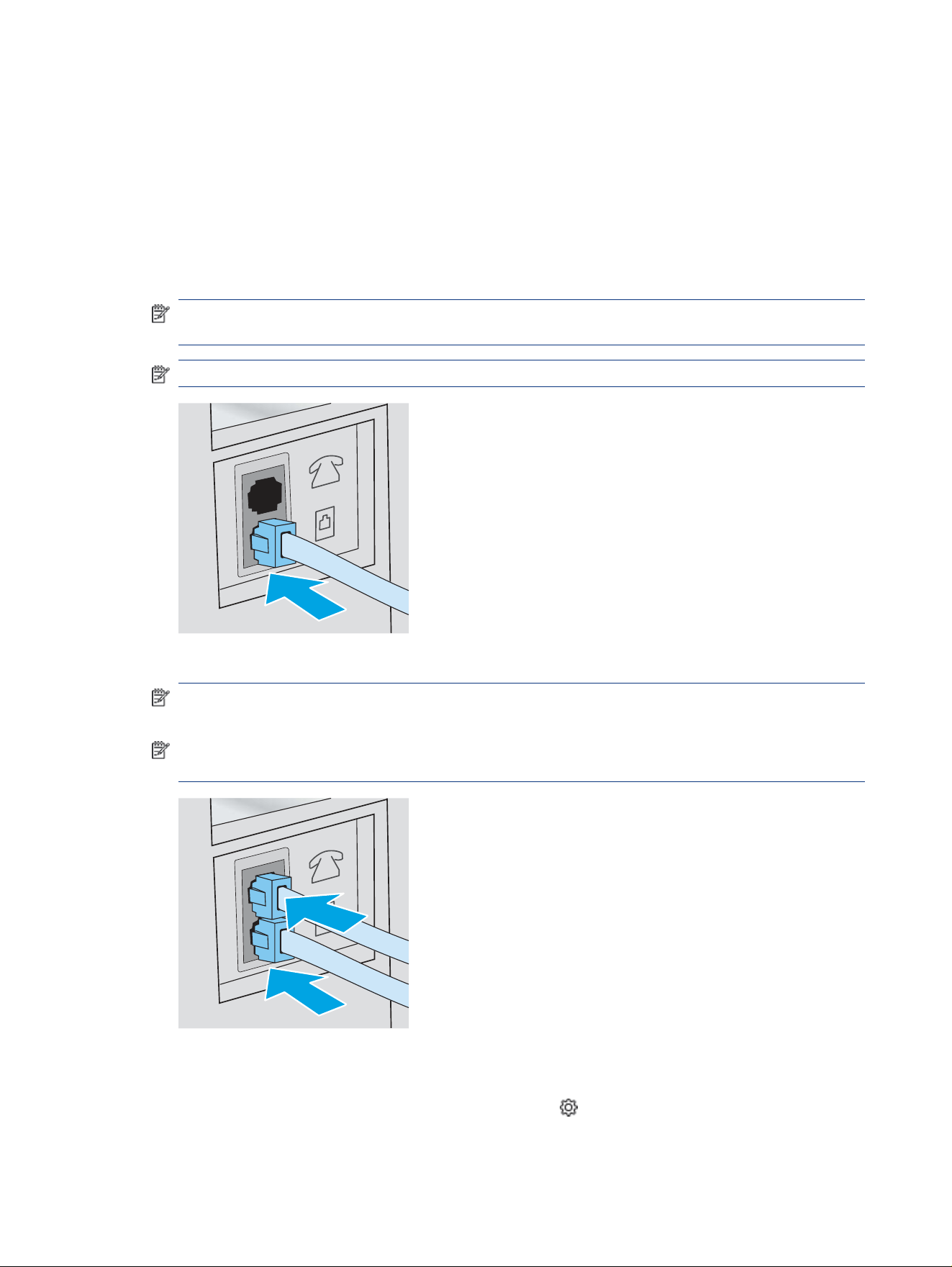
3. Follow the on-screen instructions to congure the fax settings.
Congure for an answering machine
Follow these steps to set up the printer on a shared voice/fax line with an answering machine.
1. Disconnect any devices that are connected to the telephone jack.
2. Remove the plug from the telephone line out port on the rear of the printer.
3. Connect the telephone cable to the fax port on the printer and to the telephone jack on the wall.
NOTE: Some countries/regions might require an adapter for the telephone cable that came with the
printer.
NOTE: On some printers, the fax port might be above the phone port. Refer to the icons on the printer.
4. Connect the answering machine telephone cable to the telephone line out port on the rear of the printer.
NOTE: If you do not connect the answering machine directly to the printer, the answering machine might
record fax tones from a sending fax machine and the printer might not receive faxes.
NOTE: If the answering machine does not have a built-in telephone, connect a telephone to the OUT port
on the answering machine for convenience.
5. Congure the Rings to Answer setting on the printer:
a. From the Home screen on the printer control panel, swipe the tab at the top of the screen downward
to open the Dashboard, and then touch the Setup icon .
78 Chapter 7 Fax

b. Scroll to and touch Fax Setup, and then touch Preferences.
c. Scroll to and touch Rings to Answer, select the number of rings, and then touch Done to return to the
Preferences menu.
6. Congure the printer to answer fax calls automatically:
▲ From the Preferences menu, touch Auto Answer to turn on the setting.
Install the HP Fax software in Windows (optional)
With the HP Fax software, you can fax electronic documents from a computer using the printer.
To use the HP Fax software, the following conditions are required:
● The printer is connected directly to the computer or to a network to which the computer is connected
● The printer software is installed on the computer
● The computer operating system is supported by the printer
NOTE: The HP Fax software that came with the printer is the only computer fax program that can be used with
the printer. The printer is not compatible with fax software produced by other manufacturers.
Download from the Web: Go to www.hp.com/support, click Software and Drivers, and then follow the onscreen
instructions to download the latest HP software.
When prompted by the software installer, make sure you select HP Fax Software as one of the software
components to install.
Send a fax
Send a fax from the printer or a third-party software program. Learn how to use speed dials and group-dial
entries.
Send a fax by dialing manually from the printer control panel
Send a fax manually using the printer control panel.
1. Load the document:
● If you are loading an original on the scanner glass, place it face-down on the left rear corner of the
glass.
● If you are loading multiple pages in the document feeder, load the pages face-up and adjust the paper
guides so they are snug against the paper.
NOTE: If documents are in the document feeder and on the scanner glass at the same time, the printer
processes the document in the document feeder and not the one on the scanner glass.
2. From the Home screen on the printer control panel, swipe right and then touch the Fax icon.
3. Touch Send Now.
Install the HP Fax software in Windows (optional) 79
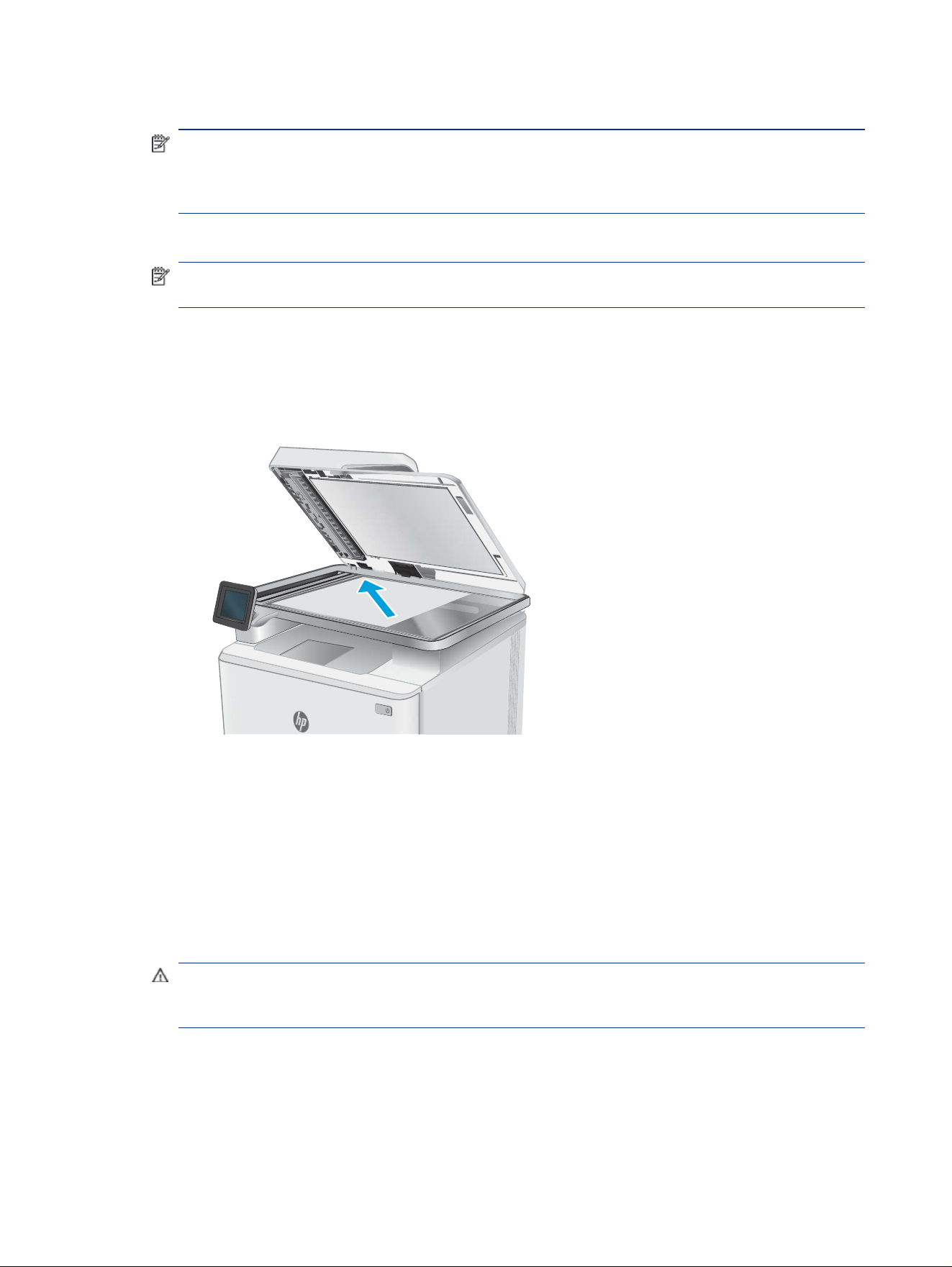
4. Enter the fax number using the touch keypad.
NOTE: To use access codes, credit cards, or calling cards, you must dial the fax number manually to allow
for pauses and dialing codes. To send a fax to an international destination, dial manually to allow for pauses
and international dialing codes. You cannot use speed dials with access codes, credit cards, calling cards, or
to dial international destinations.
5. Touch Send to send the fax.
NOTE: If you are faxing from the scanner glass and your document includes multiple pages, follow the
control panel prompts to conrm and load additional pages.
Fax from the atbed scanner
Fax a document using the scanner glass.
1. Place the document face-down on the scanner glass.
2. From the Home screen on the printer control panel, swipe right and then touch the Fax icon.
3. Touch Send Now.
4. Enter the fax number using the touch keypad, and then touch Send.
Fax from the document feeder
Fax a document using the document feeder.
1. Insert the originals into the document feeder face-up.
CAUTION: To prevent damage to the printer, do not use an original that contains correction tape,
correction uid, paper clips, or staples. Also, do not load photographs, small originals, or fragile originals
into the document feeder.
80 Chapter 7 Fax
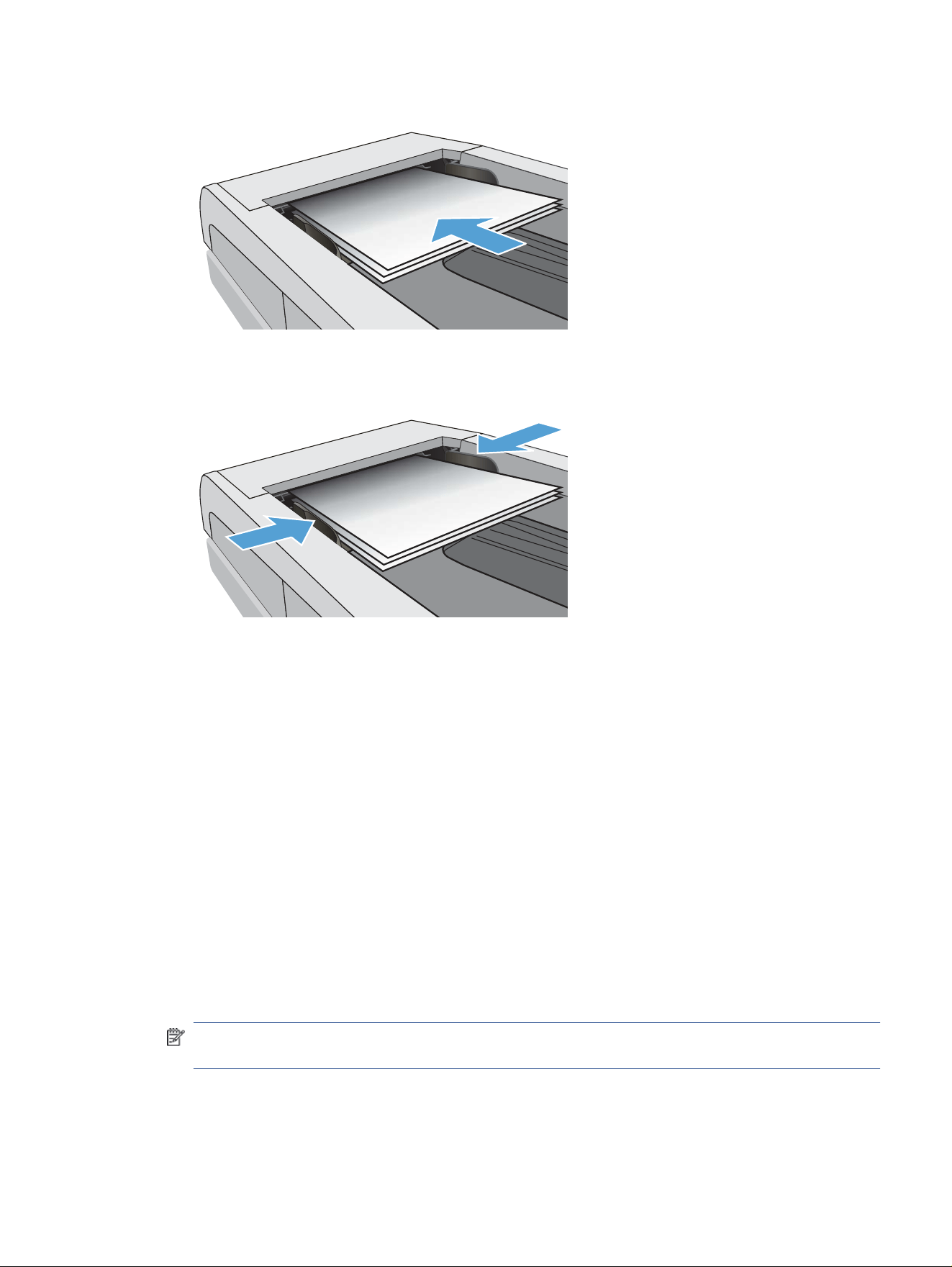
123
2. Adjust the paper guides until they are snug against the paper.
123
3. From the Home screen on the printer control panel, touch the Fax icon.
4. Touch Send Now.
5. Enter the fax number using the touch keypad, and then touch Send.
The printer sends the fax.
Schedule a fax to be sent later
Use the printer control panel to schedule a fax to be automatically sent at a future time within the next 24 hours.
When using this option, the printer scans the document into memory and then returns to a Ready state to fax the
document at the specied time.
1. Load the document:
● If you are loading an original on the scanner glass, place it face-down on the left rear corner of the
glass.
● If you are loading multiple pages in the document feeder, load the pages face-up and adjust the paper
guides so they are snug against the paper.
NOTE: If documents are in the document feeder and on the scanner glass at the same time, the printer
processes the document in the document feeder and not the one on the scanner glass.
2. From the Home screen on the printer control panel, swipe right and then touch the Fax icon.
3. Touch Send Later.
Schedule a fax to be sent later 81
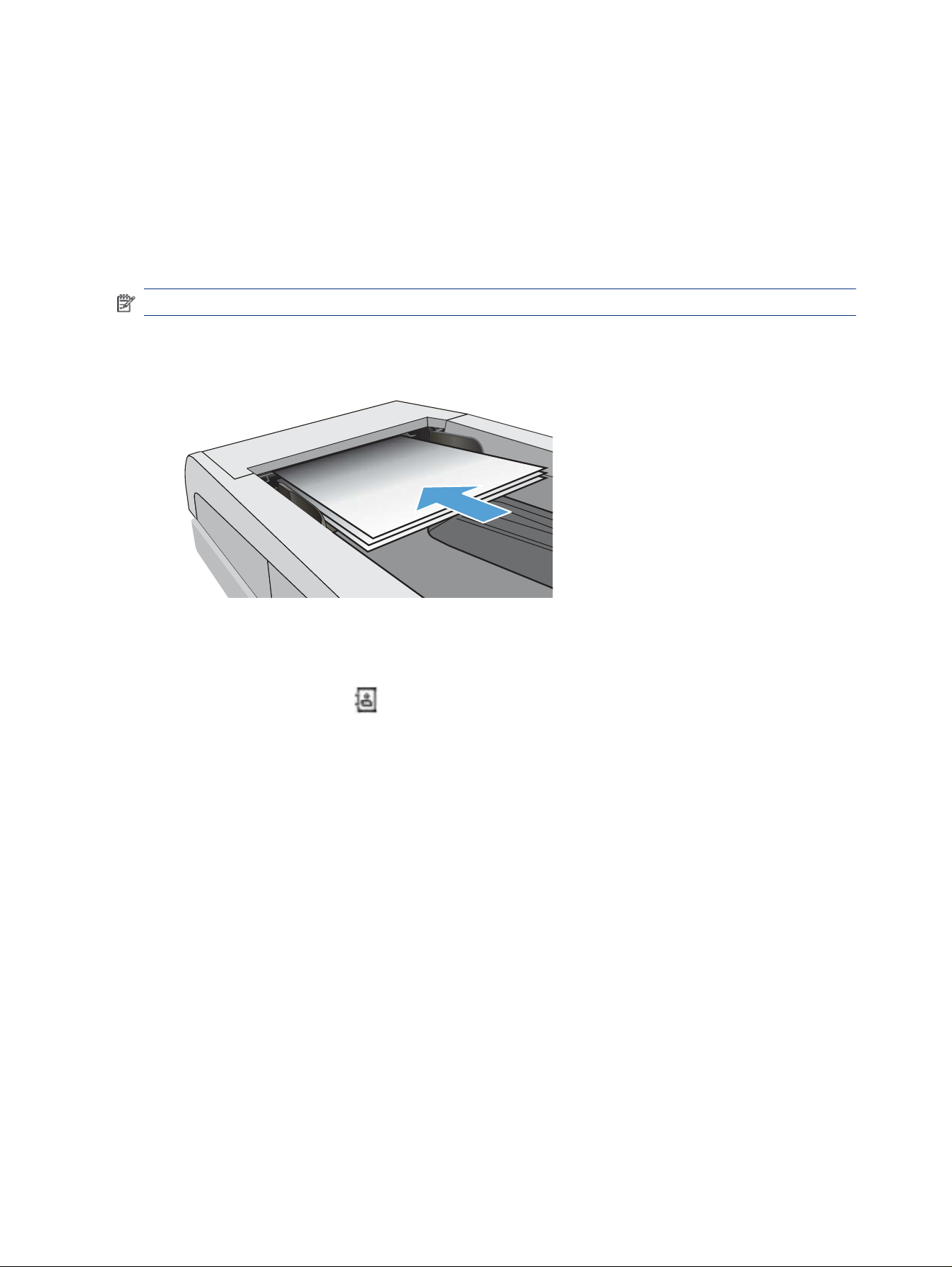
4. Swipe the columns on the screen to set the hour and minute to the specic time you want to send the fax.
5. Enter the fax number using the touch keypad, and then touch Send.
The printer will scan the document and save it in the printer's memory until the scheduled time, and then it
will automatically send the fax at that time.
Use phone book entries
Send a fax to an individual or a group that has already been added to the phone book.
NOTE: Before you can send a fax using phone book entries, you must rst add contacts to the phone book.
1. Load the document onto the scanner glass or into the document feeder.
123
2. From the Home screen on the printer control panel, touch the Fax icon.
3. Touch Send Now.
4. Touch the Phone Book icon .
5. Touch the local phone book, touch the name of the individual or group entry that you want to use, and then
touch Select.
6. Touch Send to send the fax.
Send a fax from the software (Windows)
Fax a document using the HP Fax software in Windows.
The procedure to send a fax varies according to your specications. The most typical steps follow.
1. From the Start menu, select HP, and then select the printer name to open the HP Printer Assistant.
2. In the HP Printer Assistant, select Fax, and then select Send Fax.
The fax software opens.
3. Enter the fax number of one or more recipients.
4. Place the document on the scanner glass or load it in the document feeder.
5. Click Add Scan.
6. Click Send Now.
82 Chapter 7 Fax

Send a fax from a third-party software program, such as Microsoft Word
If you created a document using a third-party software program, such as Microsoft Word, you can fax the
document directly from the software.
1. Open a document in a third-party program.
2. Click the File menu, and then click Print.
3. Select the fax print driver from the print driver drop-down list.
The fax software opens.
4. Enter the fax number of one or more recipients.
5. Include any pages loaded at the printer. This step is optional.
6. Click Send Now.
Create, edit, and delete phone book entries
You can store frequently dialed fax numbers in the phone book as individual entries, or a group of entries.
Create and edit individual phone-book entries
Add new individual entries to the phone book, or edit existing entries.
1. From the Home screen on the printer control panel, swipe right and then touch the Fax icon.
2. Swipe right and then touch the Phone Book icon.
3. Touch Local Phone Book, and then proceed with one of the following options:
● Add a new contact: Touch the Add Contact icon .
● Edit an existing contact: Touch the name of the contact in the list.
4. Touch Name, enter (or edit) the name of the contact using the touch keypad, and then touch Done.
5. Touch Fax Number, enter (or edit) the fax number using the touch keypad, and then touch Done.
6. Touch Add to save a new contact, or touch Done to save the changes you made to an existing contact.
Create and edit group phone-book entries
Create or edit group entries in the address book.
1. From the Home screen on the printer control panel, swipe right and then touch the Fax icon.
2. Swipe right and then touch the Phone Book icon.
3. Touch Local Phone Book.
4. Touch the Phone Book icon , and then touch the Group icon .
NOTE: To edit an existing group, touch the name of the group and then make the changes in the Edit
Group menu.
Send a fax from a third-party software program, such as Microsoft Word 83

5. Touch Add New Group .
6. Touch Name, enter a name for the group using the touch keypad, and then touch Done.
7. Touch Number of Members, touch the names of the contacts that you want to add to the group, and then
touch Select.
8. Touch Create to save the new group.
Delete phone book entries
Delete entries from the phone book.
1. From the Home screen on the printer control panel, swipe right and then touch the Fax icon.
2. Swipe right and then touch the Phone Book icon.
3. Touch Local Phone Book, and then scroll to and touch the name of the contact or group that you want to
delete.
4. On the Edit Contact or Edit Group screen, touch Delete, and then touch Yes to conrm that you want to
delete the contact.
Reprint a received fax from the printer memory
Received faxes that are not printed are stored in the printer's memory. Reprint a received fax that is stored in the
memory.
NOTE: After the memory becomes full, the printer cannot receive a new fax until you print or delete the faxes
from memory. You might also want to delete the faxes in memory for security or privacy purposes.
1. Make sure paper is loaded in the main paper tray.
2. From the Home screen on the printer control panel, swipe right and then touch the Fax icon.
3. Touch Reprint.
4. Scroll to and touch the name of the received fax that you want to print, and then touch Print.
Additional fax tasks
Locate information on the Web for performing common fax tasks.
Go to www.hp.com/support/colorljM479MFP.
Instructions are available for fax tasks, such as the following:
● Create and manage fax speed dial lists
● Congure fax billing codes
● Use a fax printing schedule
● Block incoming faxes
● Fax archiving and forwarding
84 Chapter 7 Fax

Manage the printer8
Utilize management tools, security and energy-conservation settings, and rmware updates for the printer.
For more information:
The following information is correct at the time of publication. For current information, see www.hp.com/
support/colorljM479MFP.
HP's all-inclusive help for the printer includes the following information:
● Install and congure
● Learn and use
● Solve problems
● Download software and rmware updates
● Join support forums
● Find warranty and regulatory information
Use HP Web Services applications
With Web Services, you can add print apps to your printer using HP Connected. Print apps is a content-on
demand delivery platform that allows you to browse and view popular web destinations and print in an easy-to
read format.
1. From the Home screen on the printer control panel, swipe right and then touch Apps.
2. Touch the print app that you want to use.
For more information about individual print apps and to create an account, visit HP Connected. With an
HP Connected account, you can add, congure, or remove print apps, and set the order in which the apps
appear on your printer control panel.
NOTE: The HP Connected website might not be available in all countries/regions.
NOTE: You can also turn o print apps using the EWS. To do so, open the EWS (see Open the Embedded
Web Server), click the Settings tab, click Security and then click Administrator Settings. Disable the Only
Print Apps option.
Manage the printer 85

Change the printer connection type (Windows)
If you are already using the printer and you wish to change the way it is connected, use Device Setup & Software
to change the connection. For example, connect the new printer to the computer using a USB or network
connection, or change the connection from a USB to a wireless connection.
To open Device Setup & Software, complete the following procedure:
1. From the Start menu, select HP, and then select the printer name to open the HP Printer Assistant.
2. In the HP Printer Assistant, select Tools from the navigation bar, and then select Device Setup & Software.
Advanced conguration with HP Embedded Web Server and Printer
Home Page (EWS)
Use the HP Embedded Web Server to manage printing functions from your computer instead of the printer
control panel.
● View printer status information
● Determine the remaining life for all supplies and order new ones
● View and change tray congurations (paper types and sizes)
● View and print internal pages
● View and change network conguration
The HP Embedded Web Server works when the printer is connected to an IP-based network. The HP Embedded
Web Server does not support IPX-based printer connections. You do not have to have Internet access to open and
use the HP Embedded Web Server.
When the printer is connected to the network, the HP Embedded Web Server is automatically available.
NOTE: Printer Home Page (EWS) is software used to connect to the HP Embedded Web Server when the
printer is connected to a computer via USB. It is available only if a full installation was performed when the
printer was installed on a computer. Depending on how the printer is connected, some features might not be
available.
NOTE: The HP Embedded Web Server is not accessible beyond the network rewall.
Method one: Open the HP Embedded Web Server (EWS) from the software
Use this method to open the EWS from the HP Printer Assistant software.
1. From the Start menu, select HP, and then select the printer name to open the HP Printer Assistant.
2. In the HP Printer Assistant, select Print, and then select Printer Home Page (EWS).
Method two: Open the HP Embedded Web Server (EWS) from a web browser
Use the EWS to manage your printer from a computer instead of the printer control panel.
Your printer must be connected to an IP-based network before you can access the EWS.
86 Chapter 8 Manage the printer

1. From the Home screen on the printer control panel, touch the Wireless icon or the Ethernet icon to
view the printer's IP address or host name.
2. Open a web browser, and in the address line, type the IP address or host name exactly as it displays on the
printer control panel. Press the Enter key on the computer keyboard. The EWS opens.
NOTE: If a message displays in the web browser indicating that the website might not be safe, select the
option to continue to the website. Accessing this website will not harm the computer.
Table 8-1 HP Embedded Web Server tabs
Tab or section Description
Home tab
Provides printer, status, and
conguration information.
● Scan to Email: Scan documents and send them as email attachments.
● HP Digital Fax: Congure the printer to save faxes to a network folder or to forward faxes to
an email address.
● Sleep Mode: Congure the Sleep Mode settings.
● Web Services: Set up and manage Web Services such as HP ePrint and Print Apps.
● Printer Update: Check for new printer updates.
● Estimated Cartridge Levels: View the status of the cartridges and the estimated cartridge
levels.
● Network Summary: View a summary of the printer's network settings.
● Print Quality Toolbox: Use maintenance tools to improve the print quality of your printouts.
● Wireless Setup Wizard: Connect the printer to a wireless network.
● Wi-Fi Direct: View and edit Wi-Fi Direct settings.
● AirPrint: View and edit AirPrint settings.
● Printer Information: View general information about the printer.
● Administrator: Set up and manage advanced security and usage controls for the printer.
● Shutdown Mode: Congure Shutdown Mode settings.
● Usage Report: View detailed information about printer usage.
● Fax Log: View the printer's fax log.
● Fax Setup Wizard: Set up the fax.
● Firewall: Set up and manage the printer's rewall.
● Printer Reports: View the reports available for the printer.
● Webscan: Scan documents from the web browser.
● Backup: Back up the printer settings into a password-encrypted le.
● Personalize: Add or remove features that display on the Home tab.
Scan
tab
(MFP models only)
● Scan to Computer
● Scan to Email
● Scan to Network Folder
Method two: Open the HP Embedded Web Server (EWS) from a web browser 87

Table 8-1 HP Embedded Web Server tabs (continued)
Tab or section Description
● Scan to Sharepoint
● Scan to USB
● Address Book
Copy/Print tab
Provides the ability to change default
copy and print settings from your
computer.
● Copy
● Print
Fax tab
(Fax models only)
● Settings
● Information
● HP Digital Fax
Web Services tab ● Web Services Settings
Network tab
(Network-connected printers only)
Provides the ability to change network
settings from your computer.
● General
● Wired (802.3)
● Wireless (802.11)
● Wi-Fi Direct
● Bluetooth Smart
● AirPrint
● Google Cloud Print
● Internet Printing Protocol
● Security
● Advanced Settings
Tools tab ● Product Information
● Reports
● Utilities
● Backup and Restore
● Printer Restart
● Printer Updates
Settings tab ● Power Management
● Preferences
● Supplies
● Control Panel Customization
● Security
● Email Alerts
● Restore Defaults
88 Chapter 8 Manage the printer

Table 8-1 HP Embedded Web Server tabs (continued)
Tab or section Description
● Firewall
Congure IP network settings
Review the following information about conguring IP network settings.
Introduction
Use the information in the following sections to congure the printer network settings.
Printer sharing disclaimer
HP does not support peer-to-peer networking, as the feature is a function of Microsoft operating systems and
not of the HP printer drivers.
Go to Microsoft at www.microsoft.com.
View or change network settings
Use the HP Embedded Web Server to view or change IP conguration settings.
1. Open the HP Embedded Web Server (EWS):
a. From the Home screen on the printer control panel, touch the Wireless icon or the Ethernet icon
to view the printer's IP address or host name.
b. Open a web browser, and in the address line, type the IP address or host name exactly as it displays on
the printer control panel. Press the Enter key on the computer keyboard. The EWS opens.
NOTE: If a message displays in the web browser indicating that the website might not be safe, select
the option to continue to the website. Accessing this website will not harm the computer.
2. On the EWS Home page, click the Network tab to view network information. Change settings as needed.
Rename the printer on a network
Use the HP Embedded Web Server (EWS) to rename the printer on a network so it can be uniquely identied.
1. Open the HP Embedded Web Server (EWS):
a. From the Home screen on the printer control panel, touch the Wireless icon or the Ethernet icon
to view the printer's IP address or host name.
Congure
IP network settings
89

b. Open a web browser, and in the address line, type the IP address or host name exactly as it displays on
the printer control panel. Press the Enter key on the computer keyboard. The EWS opens.
NOTE: If a message displays in the web browser indicating that the website might not be safe, select
the option to continue to the website. Accessing this website will not harm the computer.
2. On the EWS Home page, click the Network tab.
3. In the left navigation pane, click General to expand the options, and then click Network Identication.
4. In the Host Name text eld, enter a name to uniquely identify this printer, and then click Apply to save the
changes.
Manually congure IPv4 TCP/IP parameters from the control panel
Use the control-panel menus to manually set the IPv4 address, subnet mask, and default gateway.
1. From the Home screen on the printer control panel, swipe the tab at the top of the screen downward to
open the Dashboard, and then touch the Setup icon .
2. Touch Network Setup, and then scroll to and touch one of the following menus:
● Ethernet Settings (for a wired network)
● Wireless Settings (for a wireless network)
3. Touch IP Settings.
4. Touch Manual, and then touch IP Address.
5. Touch each of the following menu items and then use the touch keypad to enter the information:
● IP Address
● Subnet Mask
● Default Gateway
6. Touch Apply to save the settings.
Link speed and duplex settings
The link speed and communication mode of the print server must match the network hub. For most situations,
leave the printer in automatic mode. Incorrect changes to the link speed and duplex settings might prevent the
printer from communicating with other network devices. If you need to make changes, use the printer control
panel.
NOTE: This information applies only to Ethernet (wired) networks. It does not apply to wireless networks.
NOTE: The printer setting must match the setting for the network device (a network hub, switch, gateway,
router, or computer).
NOTE: Making changes to these settings causes the printer to turn o and then on. Make changes only when
the printer is idle.
90 Chapter 8 Manage the printer

1. From the Home screen on the printer control panel, swipe the tab at the top of the screen downward to
open the Dashboard, and then touch the Setup icon Setup icon .
2. Touch Network Setup.
3. Touch Ethernet Settings, and then touch Link Speed.
4. Select one of the following options:
Setting Description
Automatic The print server automatically congures itself for the highest link speed and communication mode
allowed on the network.
10T Full 10 Mbps, full-duplex operation
10T Half 10 Mbps, half-duplex operation
100TX Full 100 Mbps, full-duplex operation
100TX Half 100 Mbps, half-duplex operation
1000T Full 1000 Mbps, full-duplex operation
After making a change to the setting, the printer turns o and then on.
Printer security features
Review the following information about the printer security features.
Introduction
The printer includes several security features to restrict who has access to conguration settings, to secure data,
and to prevent access to valuable hardware components.
Assign or change the system password using the Embedded Web Server
Assign an administrator password for access to the printer and the HP Embedded Web Server so that
unauthorized users cannot change the printer settings.
1. Open the HP Embedded Web Server (EWS):
a. From the Home screen on the printer control panel, touch the Wireless icon or the Ethernet icon
to view the printer's IP address or host name.
b. Open a web browser, and in the address line, type the IP address or host name exactly as it displays on
the printer control panel. Press the Enter key on the computer keyboard. The EWS opens.
NOTE: If a message displays in the web browser indicating that the website might not be safe, select
the option to continue to the website. Accessing this website will not harm the computer.
2. On the EWS Home page, click the Settings tab.
3. In the left navigation pane, click Security to expand the options, and then click Password Settings.
Printer security features 91

4. Enter a password.
5. Re-enter the password in the Conrm Password eld, and then click Apply.
NOTE: Make note of the password and store it in a safe place.
Energy-conservation settings
Learn about the energy-conservation settings that are available on your printer.
Introduction
The printer includes several economy features to conserve energy and supplies.
Print with EconoMode
This printer has an EconoMode option for printing drafts of documents. Using EconoMode can use less toner.
However, using EconoMode can also reduce print quality.
HP does not recommend the full-time use of EconoMode. If EconoMode is used full-time, the toner supply might
outlast the mechanical parts in the toner cartridge. If print quality begins to degrade and is no longer acceptable,
consider replacing the toner cartridge.
NOTE: If this option is not available in your print driver, you can set it using the HP Embedded Web Server.
1. From the software program, select the Print option.
2. Select the printer, and then click the Properties or Preferences button.
3. Click the Paper/Quality tab.
4. Click the drop-down menu in the Print Quality section, and then select EconoMode.
5. Click OK to save the change.
Set the Sleep Mode setting
Use the control panel menus to specify the amount of time the printer must be inactive before it goes into sleep
mode.
1. From the Home screen on the printer control panel, swipe the tab at the top of the screen downward to
open the Dashboard, and then touch the Setup icon .
2. Scroll to and open the following menus:
a. Power Management
b. Sleep Mode
3. Touch an option to specify the amount of time the printer must be inactive before it goes into sleep mode.
Set the Shutdown Mode setting
Use the control panel menus to specify the amount of time the printer must be inactive before it shuts down.
92 Chapter 8 Manage the printer

NOTE: After the printer shuts down, the power consumption is 1 watt or less.
1. From the Home screen on the printer control panel, swipe the tab at the top of the screen downward to
open the Dashboard, and then touch the Setup icon .
2. Scroll to and open the following menus:
a. Power Management
b. Shutdown Mode
3. Touch an option to specify the amount of time the printer must be inactive before it shuts down.
Set the Disable Shutdown setting
Use the control panel menus to disable the printer from shutting down after a period of inactivity.
1. From the Home screen on the printer control panel, swipe the tab at the top of the screen downward to
open the Dashboard, and then touch the Setup icon .
2. Scroll to and open the following menus:
a. Power Management
b. Disable Shutdown
3. Touch one of the following options:
● When ports are active: The printer will not shut down unless all ports are inactive. An active network
link or fax connection will prevent the printer from shutting down.
● Do not disable: The printer will shut down after a period of inactivity as determined by the Shutdown
Mode setting.
NOTE: The default setting is When ports are active.
HP Web Jetadmin
HP Web Jetadmin is an award-winning, industry-leading tool for eiciently managing a wide variety of networked
HP products, including printers, multifunction printers, and digital senders. This single solution allows you
to remotely install, monitor, maintain, troubleshoot, and secure your printing and imaging environment —
ultimately increasing business productivity by helping you save time, control costs, and protect your investment.
HP Web Jetadmin upgrades are periodically made available to provide support for specic printer features. Go to
www.hp.com/go/webjetadmin for more information.
Update the rmware
HP oers periodic printer updates, new Web Services apps, and new features to existing Web Services apps.
Follow these steps to update the printer rmware for a single printer. When you update the rmware, Web
Service apps will update automatically.
There are two supported methods to perform a rmware update on this printer. Use only one of the following
methods to update the printer rmware.
Set the Disable Shutdown setting 93

Method one: Update the rmware using the control panel
Follow these steps to update the rmware using the printer control panel (for network-connected printers only),
and/or set the printer to install future rmware updates automatically. For USB-connected printers, skip to
Method two.
1. Make sure the printer is connected to a wired (Ethernet) or wireless network with an active Internet
connection.
NOTE: The printer must be connected to the internet to update the rmware via a network connection.
2. From the Home screen on the printer control panel, swipe the tab at the top of the screen downward to
open the Dashboard, and then touch the Setup icon .
3. Scroll to and touch Printer Maintenance, and then touch Update the Printer.
NOTE: If the Update the Printer option is not listed, use Method two.
4. Touch Check for Printer Updates Now to check for updates.
NOTE: The printer automatically checks for an update, and if a newer version is detected, the update
process starts automatically.
5. Set the printer to automatically update the rmware when updates become available:
a. From the Home screen on the printer control panel, swipe the tab at the top of the screen downward
to open the Dashboard, and then touch the Setup icon .
b. Scroll to and touch Printer Maintenance, and then touch Update the Printer.
c. Touch Manage Updates, touch Allow Updates, and then touch Yes.
d. Touch the Back button , touch Printer Update Options, and then touch Install Automatically
(Recommended).
Method two: Update the rmware using the HP Printer Update utility
Follow these steps to manually download and install the HP Printer Update utility.
NOTE: This method is the only rmware update option available for printers connected to the computer via a
USB cable. This method also works for printers that are connected to a network.
NOTE: You must have a print driver installed in order to use this method.
1. Go to support.hp.com, click Software and Drivers, and then click Printer.
2. In the text eld, type the printer name, click Submit, and then click your printer model from the list of search
results.
3. In the Firmware section, locate the Firmware Update le.
4. Click Download, and then click Run.
5. When the HP Printer Update utility launches, select the printer that you wish to update, and then click
Update.
6. Follow the on-screen instructions to complete the installation, and then click the OK button to close the
utility.
94 Chapter 8 Manage the printer

Solve problems9
Troubleshoot problems with the printer. Locate additional resources for help and technical support.
For more information:
The following information is correct at the time of publication. For current information, see www.hp.com/
support/colorljM479MFP.
HP's all-inclusive help for the printer includes the following information:
● Install and congure
● Learn and use
● Solve problems
● Download software and rmware updates
● Join support forums
● Find warranty and regulatory information
Customer support
Find support contact options for your HP printer.
Table 9-1
HP support options
Support option Contact information
Get telephone support for your country/region
Have the printer name, serial number, date of purchase, and
problem description ready
Country/region phone numbers are on the yer that was in the box
with the printer or at support.hp.com.
Get 24-hour Internet support, and download software utilities and
drivers
www.hp.com/support/colorljM479MFP
Order additional HP service or maintenance agreements www.hp.com/go/carepack
Register the printer www.register.hp.com
Solve problems 95

Control panel help system
The printer has a built-in Help system that explains how to use each screen.
To open the Help system, touch the Help icon in the lower-right corner of the screen.
Tips for using the online Help:
● For some screens, the Help opens to a global menu where you can search for specic topics. You can browse
through the menu structure by touching the buttons in the menu.
● Some Help screens include animations that guide you through procedures, such as clearing jams.
● For screens that contain settings for individual jobs, the Help opens to a topic that explains the options for
that screen.
● If the printer alerts you of an error or warning, touch the Help icon to open a message that describes the
problem. The message also contains instructions to help solve the problem.
Restore the factory-set defaults
Restoring the factory-set defaults returns all of the printer and network settings to the factory defaults. It will not
reset the page count, or tray size.
To restore the printer to the factory-default settings, follow these steps.
CAUTION: Restoring the factory-set defaults returns all of the settings to the factory defaults, and it also
deletes any pages that are stored in the memory.
1. From the Home screen on the printer control panel, swipe the tab at the top of the screen downward to
open the Dashboard, and then touch the Setup icon .
2. Scroll to and open the following menus:
a. Printer Maintenance
b. Restore
c. Restore Factory Defaults
The printer automatically restarts.
A “Cartridge is low” or “Cartridge is very low” message displays on
the printer control panel
Understand the cartridge-related messages on the control panel and what actions to take.
Cartridge is low: The printer indicates when a toner cartridge level is low. Actual toner cartridge life remaining
may vary. Consider having a replacement available to install when print quality is no longer acceptable. The toner
cartridge does not need to be replaced now.
Continue printing with the current cartridge until redistributing the toner no longer yields acceptable print quality.
To redistribute the toner, remove the toner cartridge from the printer and gently rock the cartridge back and forth
end to end. Reinsert the toner cartridge into the printer and close the cover.
96 Chapter 9 Solve problems
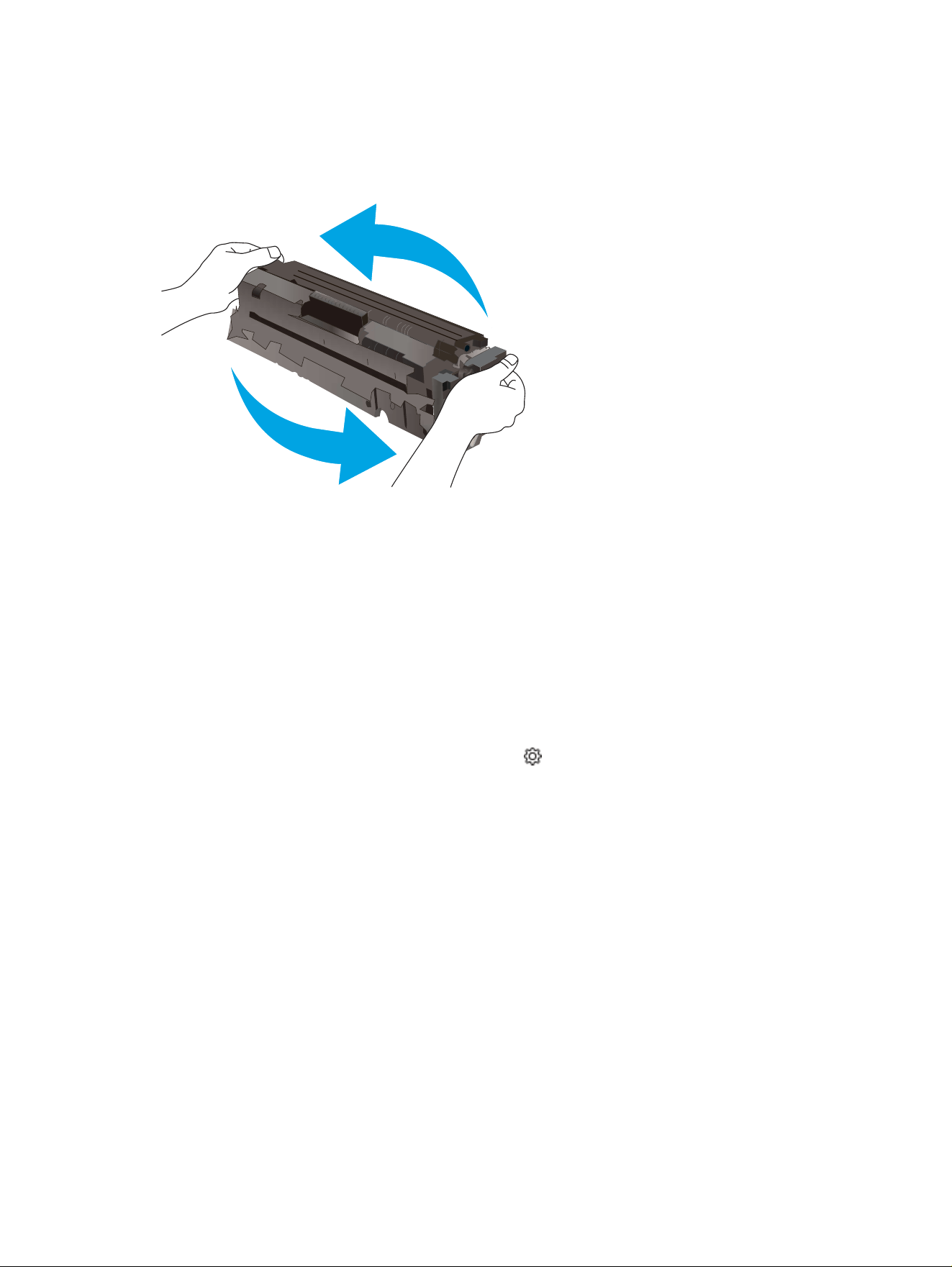
Cartridge is very low: The printer indicates when the toner cartridge level is very low. Actual toner cartridge life
remaining may vary. To extend the life of the toner, gently rock the cartridges back and forth end to end. Consider
having a replacement available to install when print quality is no longer acceptable. The toner cartridge does not
need to be replaced now unless the print quality is no longer acceptable.
HP’s Premium Protection Warranty expires when a message indicating that HP’s Premium Protection Warranty on
this supply has ended appears on the Supplies Status Page or the EWS.
Change the “Very Low” settings
You can change the way the printer reacts when supplies reach the Very Low state. You do not have to
re-establish these settings when you install a new toner cartridge.
Change the "Very Low" settings from the control panel
Determine how the printer will notify you about very low cartridge levels.
1. From the Home screen on the printer control panel, swipe the tab at the top of the screen downward to
open the Dashboard, and then touch the Setup icon .
2. Scroll to and open the following menus:
a. Supply Settings
b. Black Cartridge or Color Cartridge
c. Very Low Setting
3. Select one of the following options:
● Select the Stop option to set the printer to stop printing until you replace the toner cartridge.
● Select the Prompt option to set the printer to stop printing and prompt you to replace the toner
cartridge. You can acknowledge the prompt and continue printing.
● Select the Continue option to set the printer to alert you that the toner cartridge is very low, but to
continue printing.
Change the “Very Low” settings 97

● (For Color Cartridges) Select the Print Black option to set the printer to alert you that the toner cartridge
is very low, but to continue printing using black only.
NOTE: The Low Threshold option allows you to dene the level of ink that is considered very low.
For printers with fax capability
When the printer is set to the Stop or Prompt option, there is some risk that faxes will not print when the printer
resumes printing. This can occur if the printer has received more faxes than the memory can hold while the
printer is waiting.
The printer can print faxes without interruption when it passes the Very Low threshold if you select the Continue
option for the toner cartridge, but print quality might degrade.
Order supplies
Order supplies and paper for your HP printer.
Table 9-2 Options for ordering supplies
Ordering options Contact information
Order supplies and paper www.hp.com/go/suresupply
Order through service or support providers Contact an HP-authorized service or support provider.
Order using the HP Embedded Web Server (EWS) To access, in a supported web browser on your computer, enter
the printer IP address or host name in the address/URL eld. The
EWS contains a link to the HP SureSupply website, which provides
options for purchasing Original HP supplies.
Printer does not pick up paper or misfeeds
Review the following information about the printer not picking up paper or misfeeding paper.
Introduction
The following solutions can help solve problems if the printer is not picking up paper from the tray or is picking up
multiple sheets of paper at one time. Either of these situations can result in paper jams.
The printer picks up multiple sheets of paper
If the printer picks up multiple sheets of paper from the tray, try these solutions.
1. Remove the stack of paper from the tray and ex it, rotate it 180 degrees, and ip it over. Do not fan the
paper. Return the stack of paper to the tray.
NOTE: Fanning the paper introduces static electricity. Instead of fanning the paper, ex the stack by
holding it at each end and bringing the ends up to form a U shape. Then, rotate the ends down to reverse
the U shape. Next, hold each side of the stack of paper, and repeat this process. This process releases
individual sheets without introducing static electricity. Straighten the paper stack against a table before
returning it to the tray.
98 Chapter 9 Solve problems

Figure 9-1 Technique for exing the paper stack
1
2
2. Use only paper that meets HP specications for this printer.
3. Verify that the humidity in the room is within specications for this printer, and that paper is being stored in
unopened packages. Most reams of paper are sold in moisture-proof wrapping to keep paper dry.
In high-humidity environments, paper at the top of the stack in the tray can absorb moisture, and it might
have a wavy or uneven appearance. If this happens, remove the top 5 to 10 sheets of paper from the stack.
In low-humidity environments, excess static electricity can cause sheets of paper to stick together. If this
happens, remove the paper from the tray, and ex the stack as described above.
4. Use paper that is not wrinkled, folded, or damaged. If necessary, use paper from a dierent package.
5. Make sure the tray is not overlled by checking the stack-height markings inside the tray. If it is overlled,
remove the entire stack of paper from the tray, straighten the stack, and then return some of the paper to
the tray.
The following images show examples of the stack-height markings in the trays for various printers. Most HP
printers have markings similar to these. Also make sure that all sheets of paper are below the tabs near the
stack-height marks. These tabs help hold the paper in the correct position as it enters the printer.
The printer picks up multiple sheets of paper 99
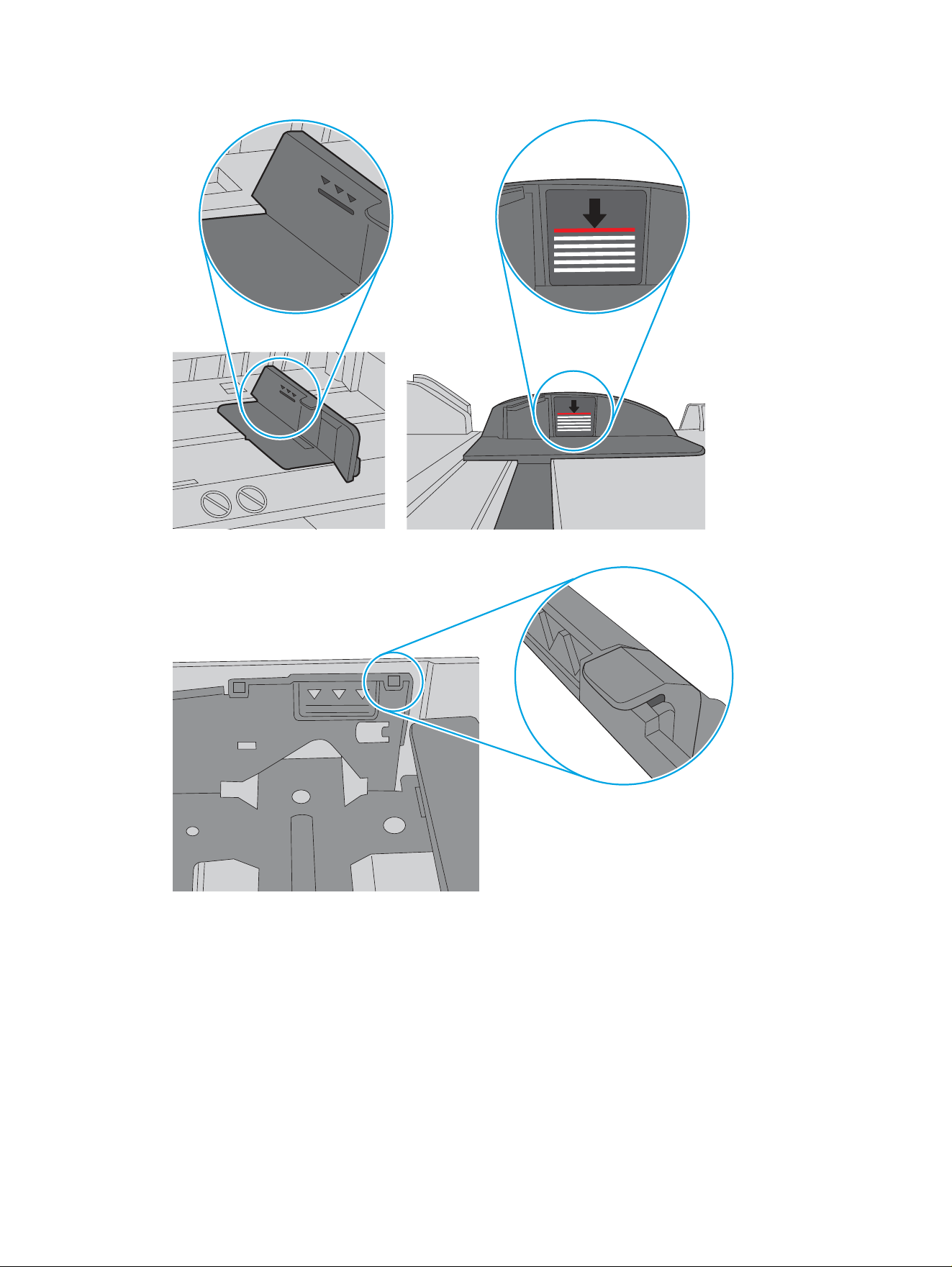
Figure 9-2 Stack height markings
Figure 9-3 Tab for the paper stack
6. Make sure the paper guides in the tray are adjusted correctly for the size of paper. Adjust the guides to the
appropriate indentation in the tray.
7. Make sure the printing environment is within recommended specications.
The printer does not pick up paper
If the printer does not pick up paper from the tray, try these solutions.
1. Open the printer and remove any jammed sheets of paper. Verify that no torn remnants of paper remain
inside of the printer.
2. Load the tray with the correct size of paper for the job.
100 Chapter 9 Solve problems
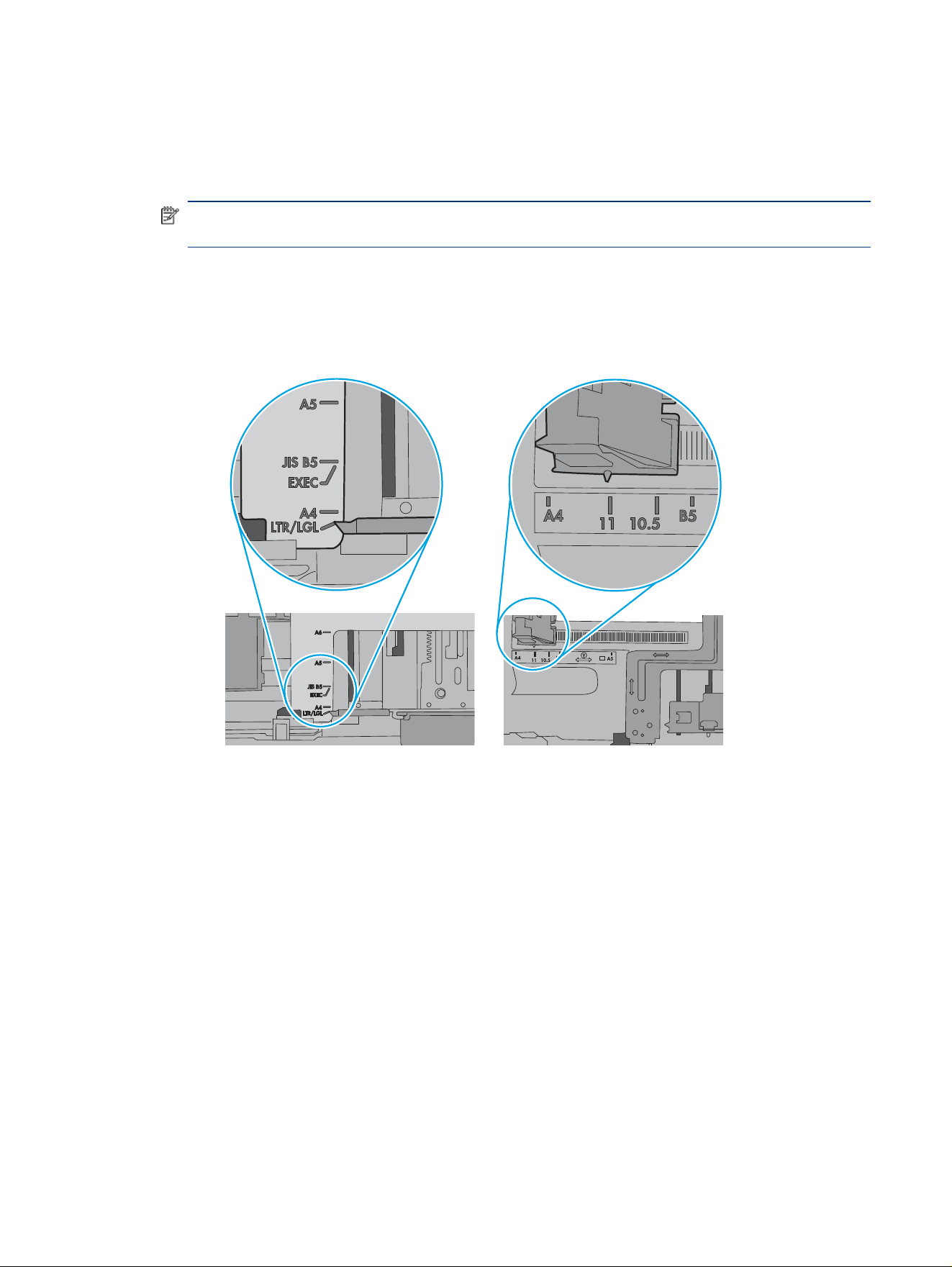
3. Make sure the paper size and type are set correctly on the printer control panel.
4. Make sure the paper guides in the tray are adjusted correctly for the size of paper. Adjust the guides to the
appropriate indentation in the tray. The arrow on the tray guide should line up exactly with the marking on
the tray.
NOTE: Do not adjust the paper guides tightly against the paper stack. Adjust them to the indentations or
markings in the tray.
The following image shows examples of the paper-size indentations in the trays. Most HP printers have
markings similar to these.
Figure 9-4 Examples of size markings
5. Verify that the humidity in the room is within specications for this printer, and that paper is being stored in
unopened packages. Most reams of paper are sold in moisture-proof wrapping to keep paper dry.
In high-humidity environments, paper at the top of the stack in the tray can absorb moisture, and it might
have a wavy or uneven appearance. If this happens, remove the top 5 to 10 sheets of paper from the stack.
In low-humidity environments, excess static electricity can cause sheets of paper to stick together. If this
happens, remove the paper from the tray, and ex the stack by holding it at each end and bringing the
ends up to form a U shape. Then, rotate the ends down to reverse the U shape. Next, hold each side of
the stack of paper, and repeat this process. This process releases individual sheets without introducing static
electricity. Straighten the paper stack against a table before returning it to the tray.
The printer does not pick up paper 101
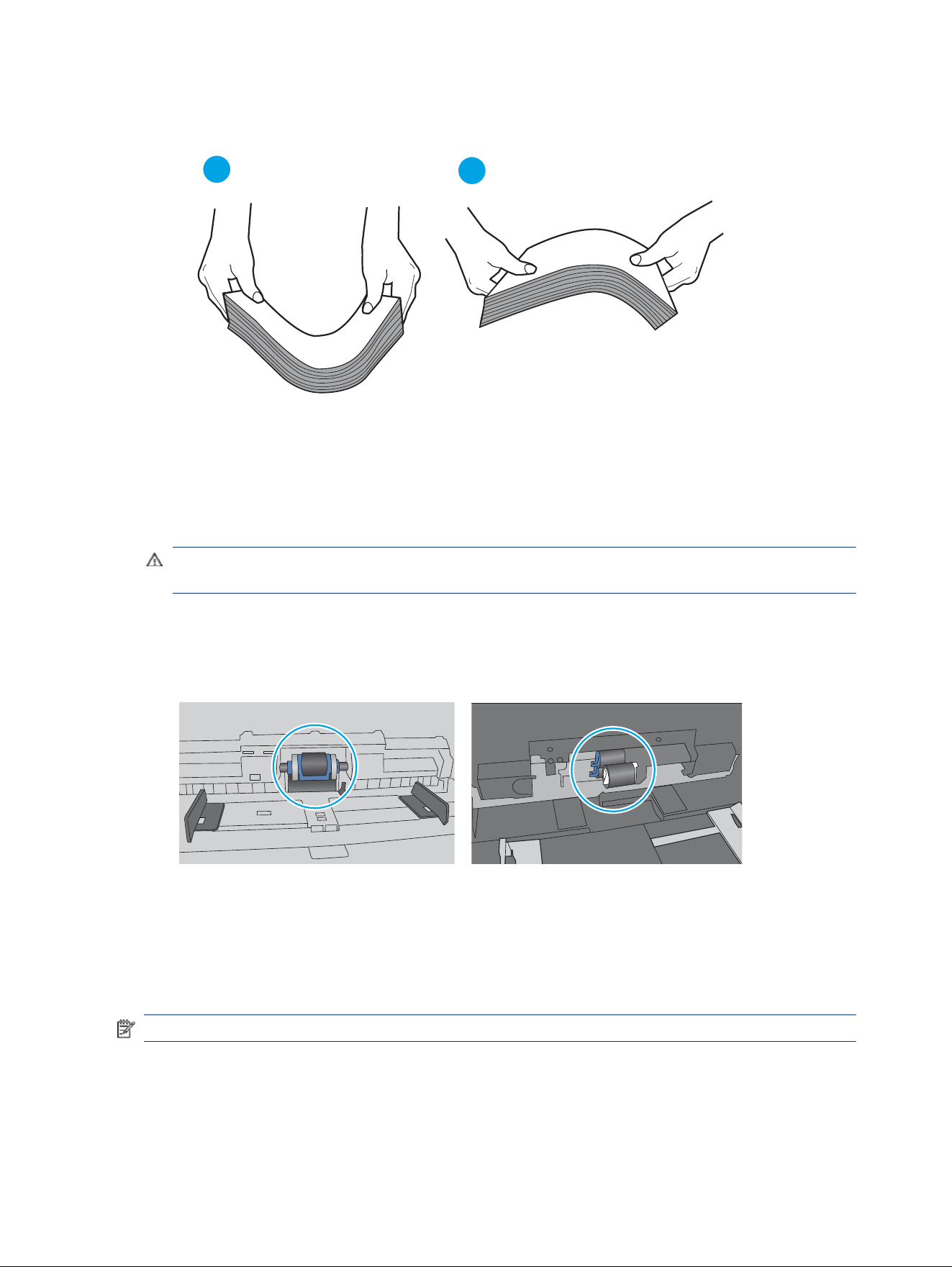
Figure 9-5 Technique for exing the paper stack
1
2
6. Check the printer control panel to see if it is displaying a prompt to feed the paper manually. Load paper, and
continue.
7. The rollers above the tray might be contaminated. Clean the rollers with a lint-free cloth dampened with
warm water. Use distilled water, if it is available.
CAUTION: Do not spray water directly on to the printer. Instead, spray water on the cloth or dab the cloth
in water and wring it out before cleaning the rollers.
The following image shows examples of the roller location for various printers.
Figure 9-6 Roller locations for Tray 1 or the multipurpose tray
The document feeder jams, skews, or picks up multiple sheets of paper
Try the suggested xes if the document feeder is jamming, skewing pages, or picking up multiple sheets of paper
at a time.
NOTE: This information applies to MFP printers only.
● The original might have something on it, such as staples or self-adhesive notes, that must be removed.
● Check that all rollers are in place and that the roller-access cover inside the document feeder is closed.
● Make sure that the top document-feeder cover is closed.
102 Chapter 9 Solve problems

● The pages might not be placed correctly. Straighten the pages and adjust the paper guides to center the
stack.
● The paper guides must be touching the sides of the paper stack to work correctly. Make sure that the paper
stack is straight and the guides are against the paper stack.
● The document feeder input tray or output bin might contain more than the maximum number of pages.
Make sure the paper stack ts below the guides in the input tray, and remove pages from the output bin.
● Verify that there are no pieces of paper, staples, paper clips, or other debris in the paper path.
● Clean the document-feeder rollers and the separation pad. Use compressed air or a clean, lint-free cloth
moistened with warm water. If misfeeds still occur, replace the rollers.
Clear paper jams
Review the following information about clearing paper jams.
Introduction
The following information includes instructions for clearing paper jams from the printer.
Experiencing frequent or recurring paper jams?
Follow the steps to solve problems with frequent paper jams. If the rst step does not resolve the problem
continue with the next step until you have resolved the problem.
1. If paper has jammed in the printer, clear the jam and then print a conguration page to test the printer.
2. Check that the tray is congured for the correct paper size and type on the printer control panel. Adjust
paper settings if necessary.
a. From the Home screen on the printer control panel, swipe the tab at the top of the screen downward
to open the Dashboard, and then touch the Setup icon .
b. Touch Paper setup.
c. Select the tray from the list.
d. Select Paper Type, and then select the type of paper that is in the tray.
e. Select Paper Size, and then select the size of paper that is in the tray.
3. Turn the printer o, wait 30 seconds, and then turn it on again.
4. Print a cleaning page to remove excess toner from inside the printer:
a. From the Home screen on the printer control panel, swipe the tab at the top of the screen downward
to open the Dashboard, and then touch the Setup icon .
b. Open the following menus:
i. Printer Maintenance
ii. Print Quality Tools
iii. Cleaning Page
Clear paper jams 103
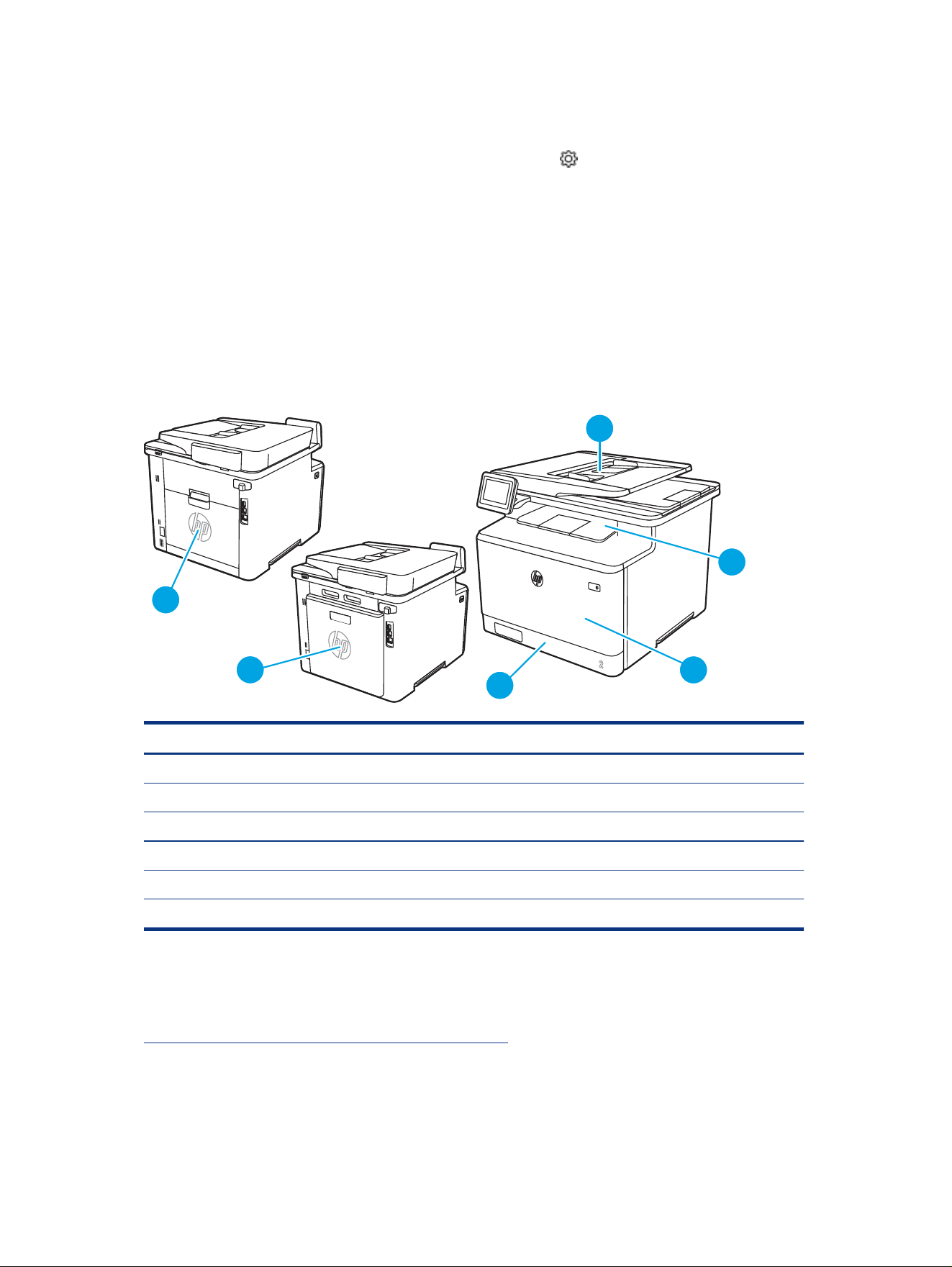
5. Print a conguration page to test the printer:
a. From the Home screen on the printer control panel, swipe the tab at the top of the screen downward
to open the Dashboard, and then touch the Setup icon .
b. Open the following menus:
i. Reports
ii. Printer Conguration Report
If none of these steps resolves the problem, the printer might need service. Contact HP customer support.
Paper jam locations
Jams can occur in these locations.
Figure 9-7 Jam locations
2
3
4
1
5
6
Number Description
1 Document feeder
2 Output bin
3 Tray 1
4 Tray 2
5 Rear door and fuser area
6 Duplexer (duplex models only)
Clear paper jams in the document feeder
Use the following procedure to check for paper in all possible jam locations related to the document feeder.
View a video of how to clear jams in the document feeder
When a jam occurs, the control panel displays an animation that assists in clearing the jam.
104 Chapter 9 Solve problems
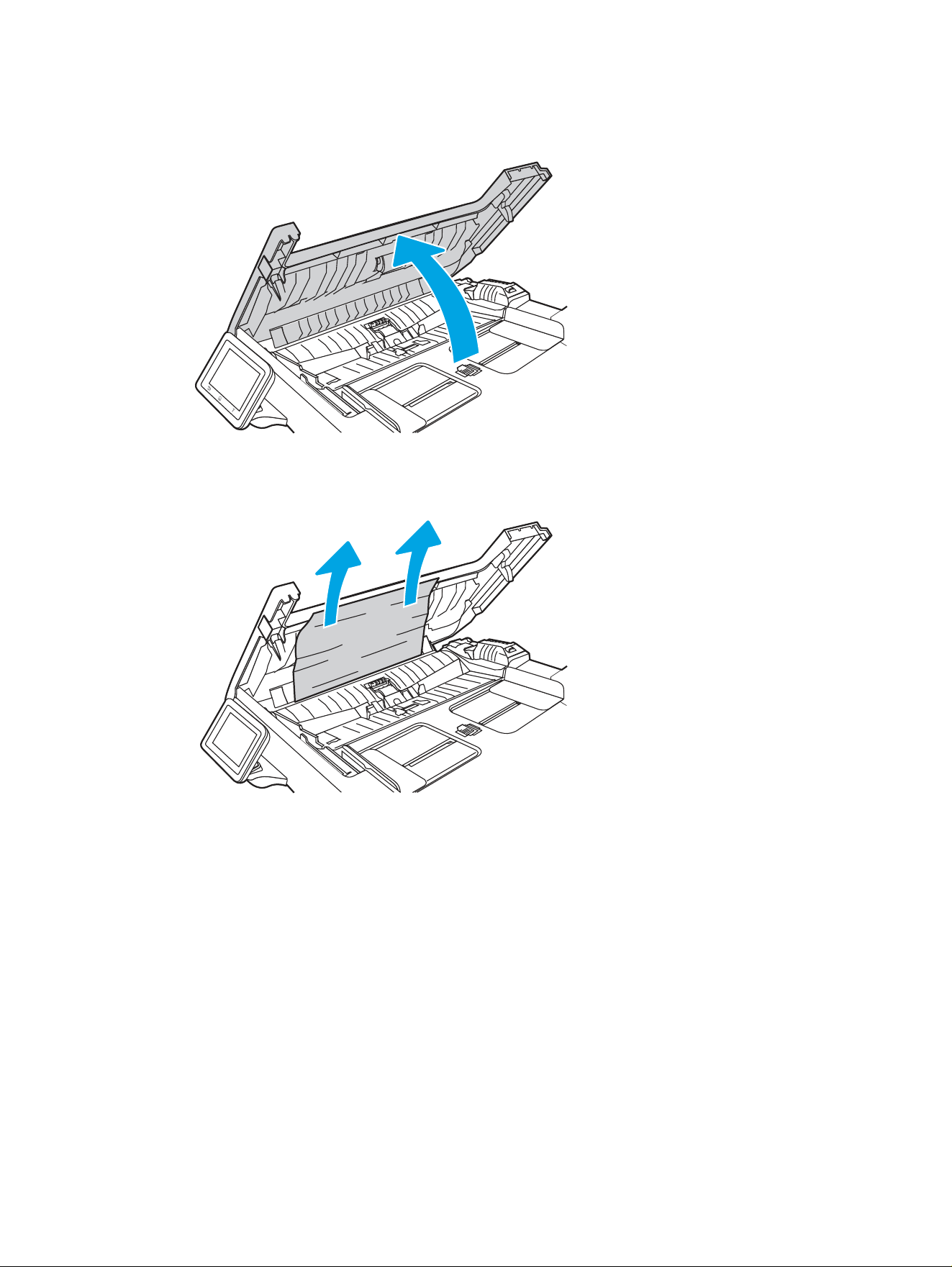
1. Open the document feeder cover.
2. Remove any jammed paper.
Clear paper jams in the document feeder 105
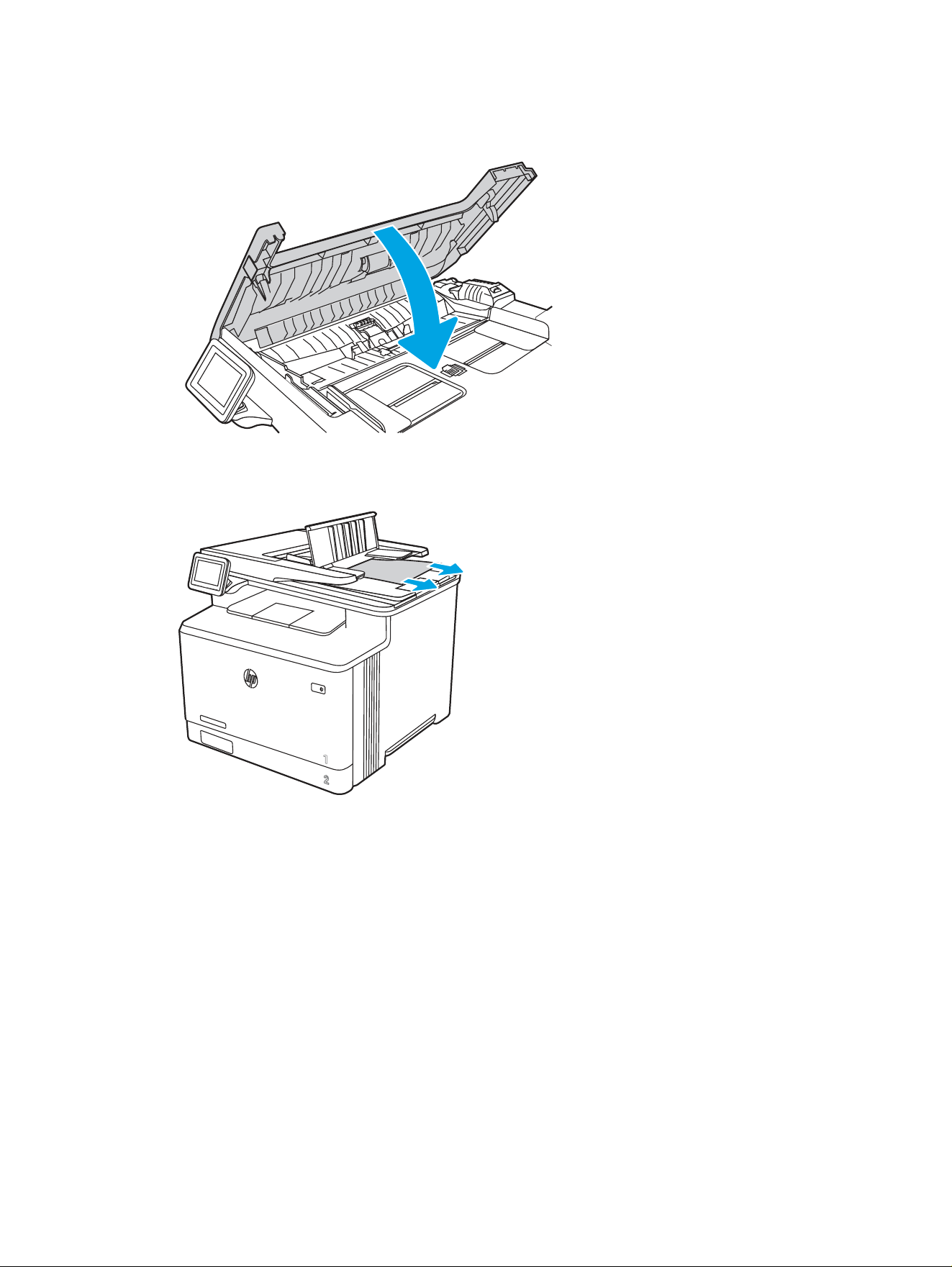
3. Close the document feeder cover.
4. Lift the document feeder input tray to provide better access to the document feeder output bin, and then
remove any jammed paper from the output area.
106 Chapter 9 Solve problems
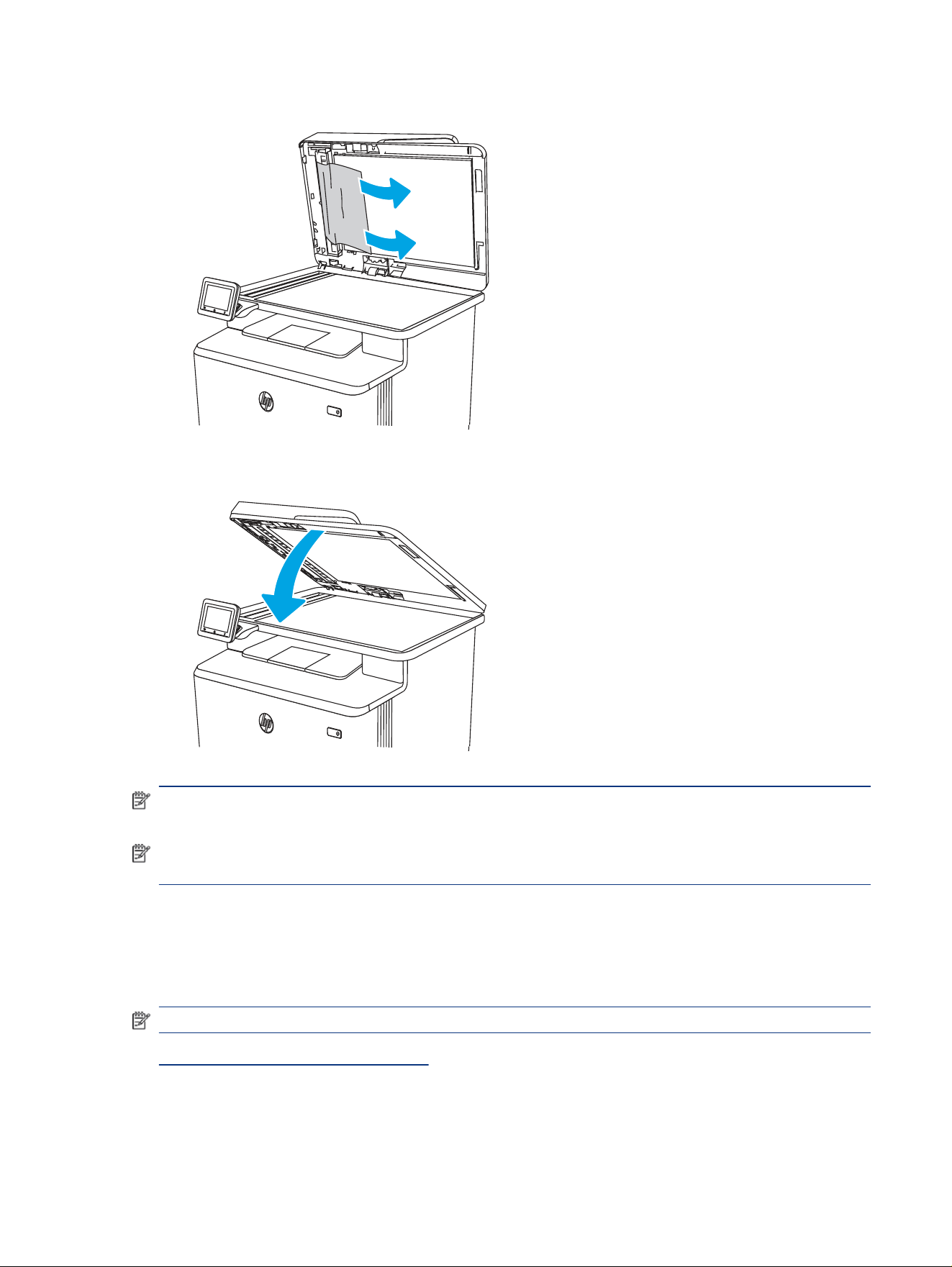
5. Open the scanner lid. If paper is jammed behind the white plastic backing, gently pull it out.
6. Lower the scanner lid.
NOTE: To avoid jams, make sure the guides in the document feeder input tray are adjusted tightly against the
document. Remove all staples and paper clips from original documents.
NOTE: Original documents that are printed on heavy, glossy paper can jam more frequently than originals that
are printed on plain paper.
Clear paper jams in Tray 1 (13.02)
Use the following procedure to clear paper jams in Tray 1.
When a jam occurs, the control panel displays an animation that assists in clearing the jam.
NOTE: If the sheet tears, remove all fragments before resuming printing.
View a video of how to clear jams in Tray 1
Clear paper jams in Tray 1 (13.02) 107
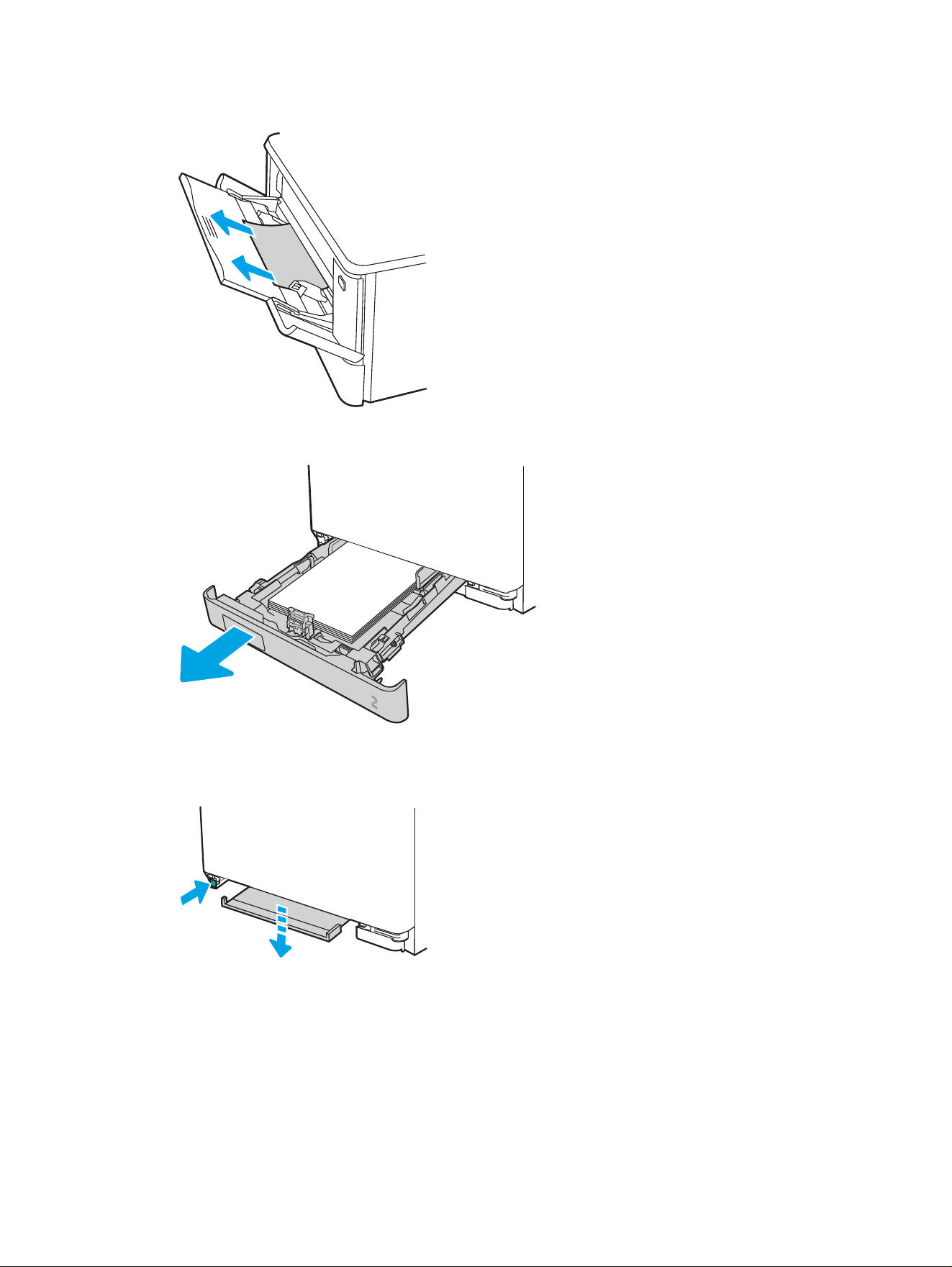
1. If you can see the jammed sheet in Tray 1, remove the jammed sheet by pulling it straight out.
2. If you cannot see the jammed sheet, close Tray 1, and then remove Tray 2.
3. At the left side of the Tray 2 cavity, press the tab to lower the tray plate, and then remove any paper.
Remove the jammed sheet by gently pulling it straight out.
108 Chapter 9 Solve problems
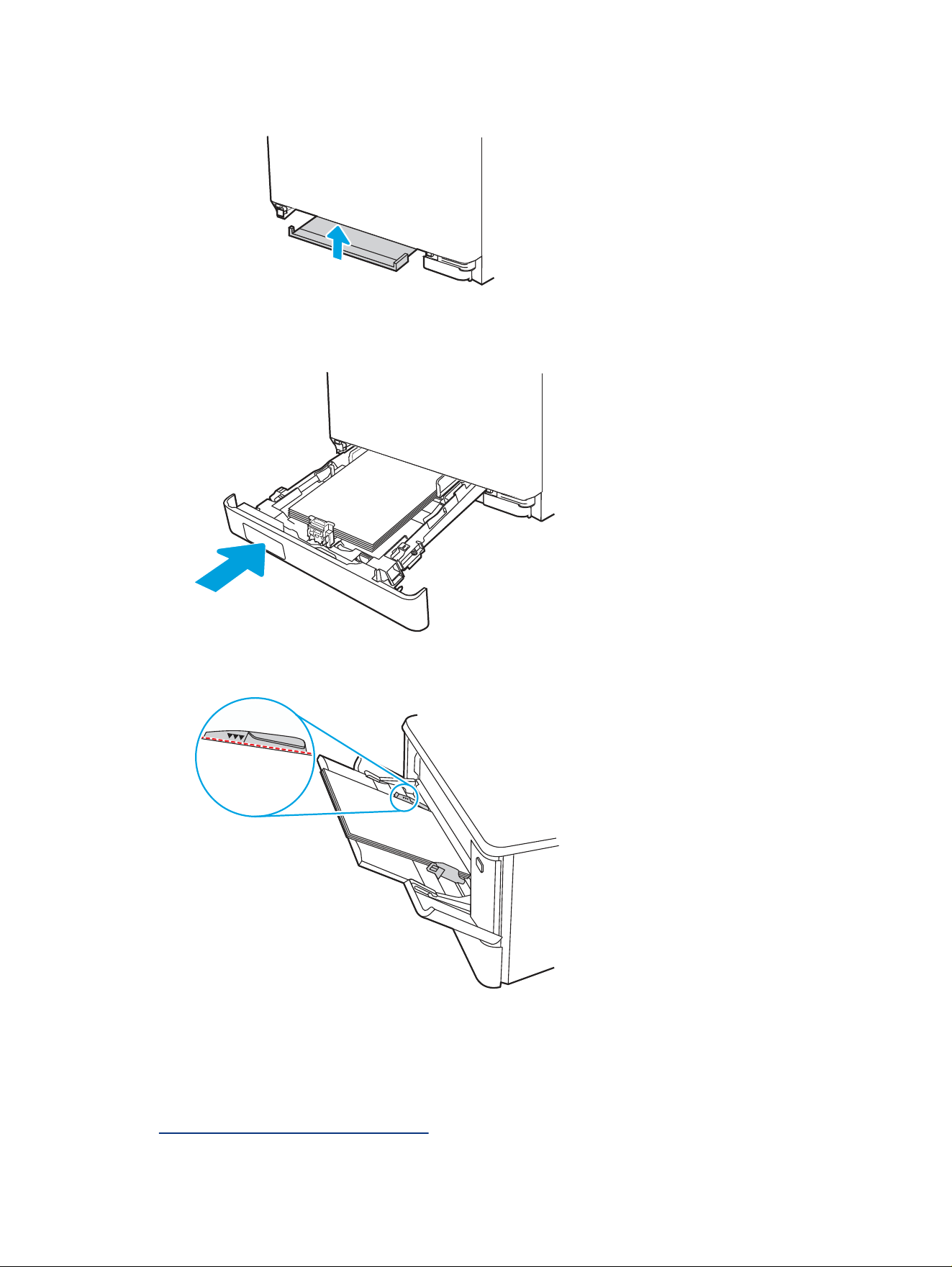
4. Push the tray plate back up into place.
5. Reinstall Tray 2.
6. Reopen Tray 1 and load paper into the tray.
Clear paper jams in Tray 2 (13.03)
Use the following procedure to check for a paper jam in Tray 2.
When a jam occurs, the control panel displays an animation that assists in clearing the jam.
View a video of how to clear jams in Tray 2
Clear paper jams in Tray 2 (13.03) 109
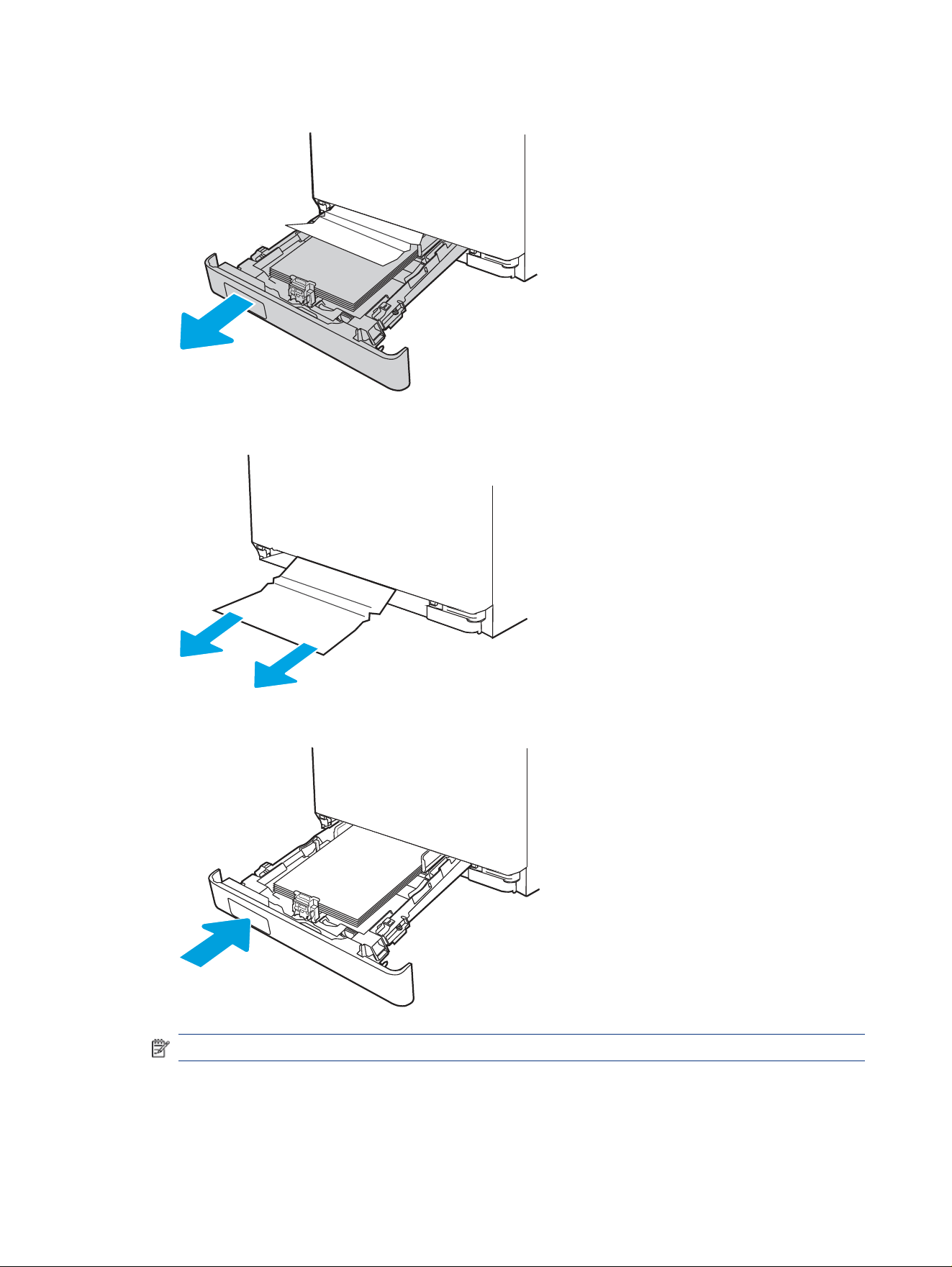
1. Pull the tray completely out of the printer.
2. Remove any jammed or damaged sheets of paper.
3. Reinsert and close Tray 2.
NOTE: When reinserting the paper, make sure the paper guides are adjusted properly for the paper size.
Clear paper jams in the output bin (13.10, 13.11, 13.12)
Use the following procedure to check for paper in all possible jam locations related to the output bin.
110 Chapter 9 Solve problems
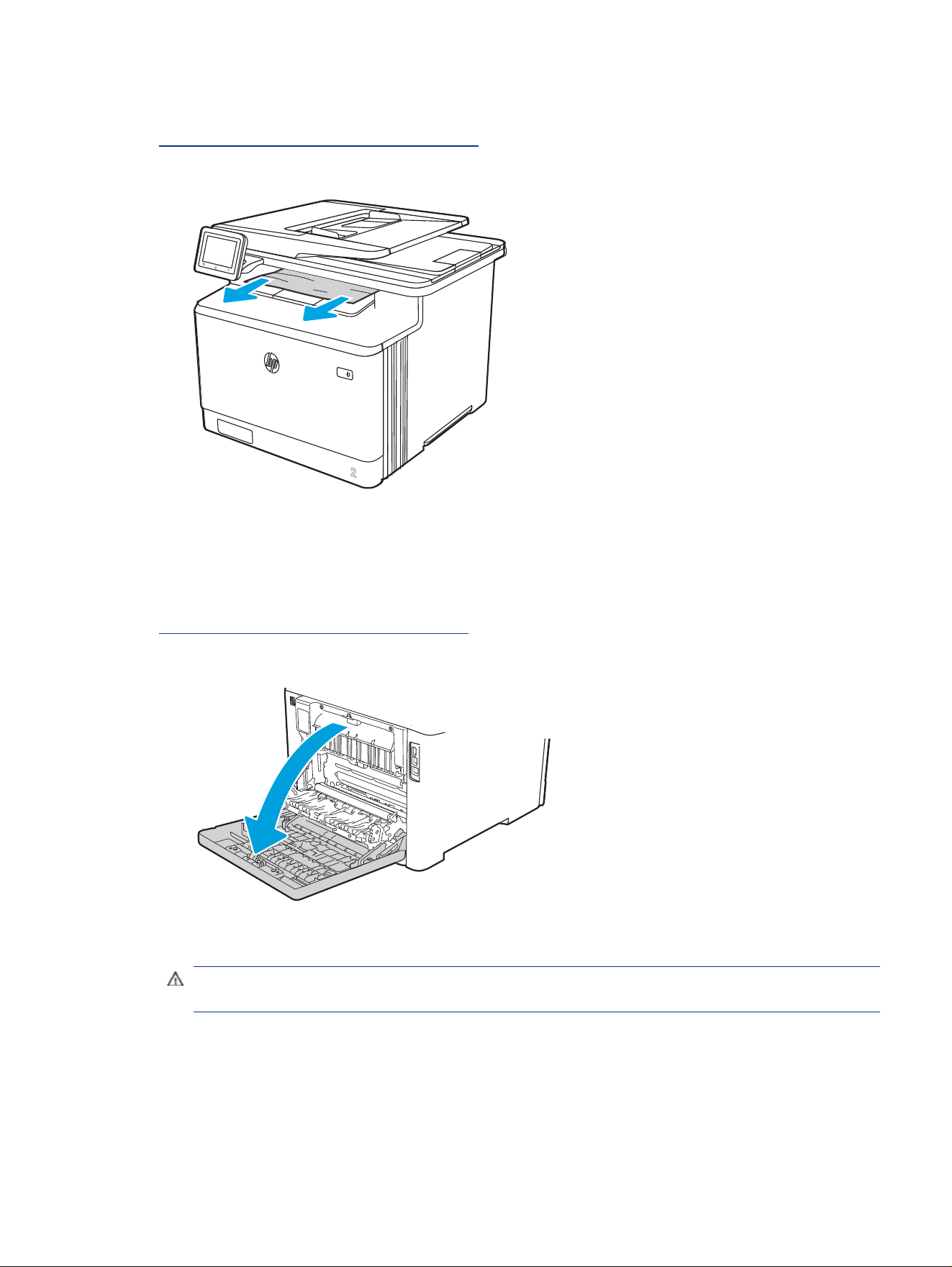
When a jam occurs, the control panel displays an animation that assists in clearing the jam.
View a video of how to clear jams in the output bin
▲ If paper is visible in the output bin, grasp the leading edge and remove it.
Clear paper jams in the duplexer (duplex models only) (13.14, 13.15)
Use the following procedure to check for paper in all possible jam locations in the automatic duplexer.
When a jam occurs, the control panel displays an animation that assists in clearing the jam.
View a video of how to clear jams in the duplexer
1. At the rear of the printer, open the duplexer.
2. Remove any jammed or damaged sheets of paper.
CAUTION: The fuser is located above the rear door, and it is hot. Do not attempt to reach into the area
above the rear door until the fuser is cool.
Clear paper jams in the duplexer (duplex models only) (13.14, 13.15) 111
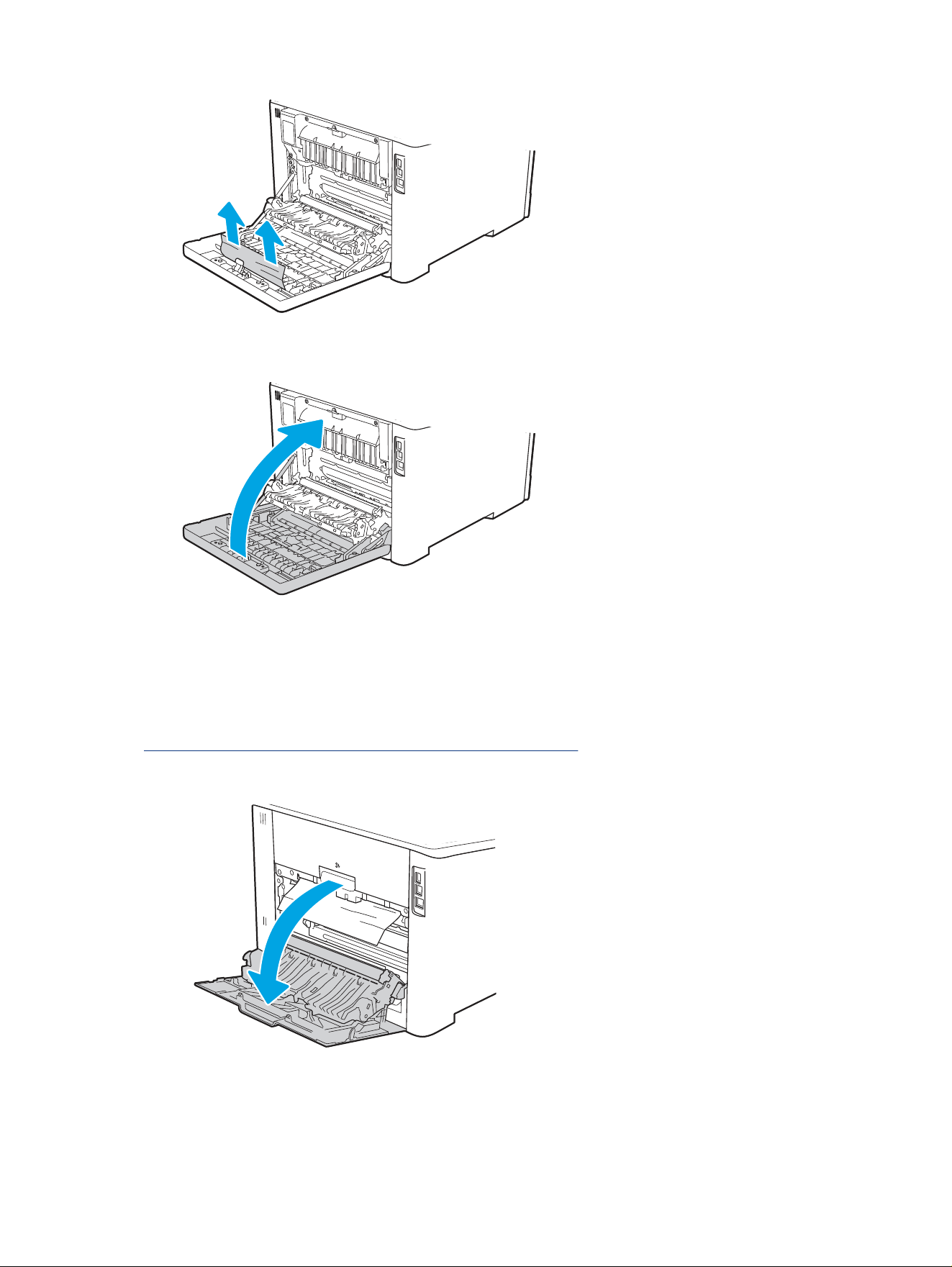
3. Close the duplexer.
Clear paper jams in the toner cartridge or fuser area (13.08, 13.09)
Use the following procedure to check for paper in all possible jam locations in the toner cartridge or fuser area.
When a jam occurs, the control panel displays an animation that assists in clearing the jam.
View a video of how to clear jams in the toner cartridge or fuser area
1. Open the rear door.
112 Chapter 9 Solve problems
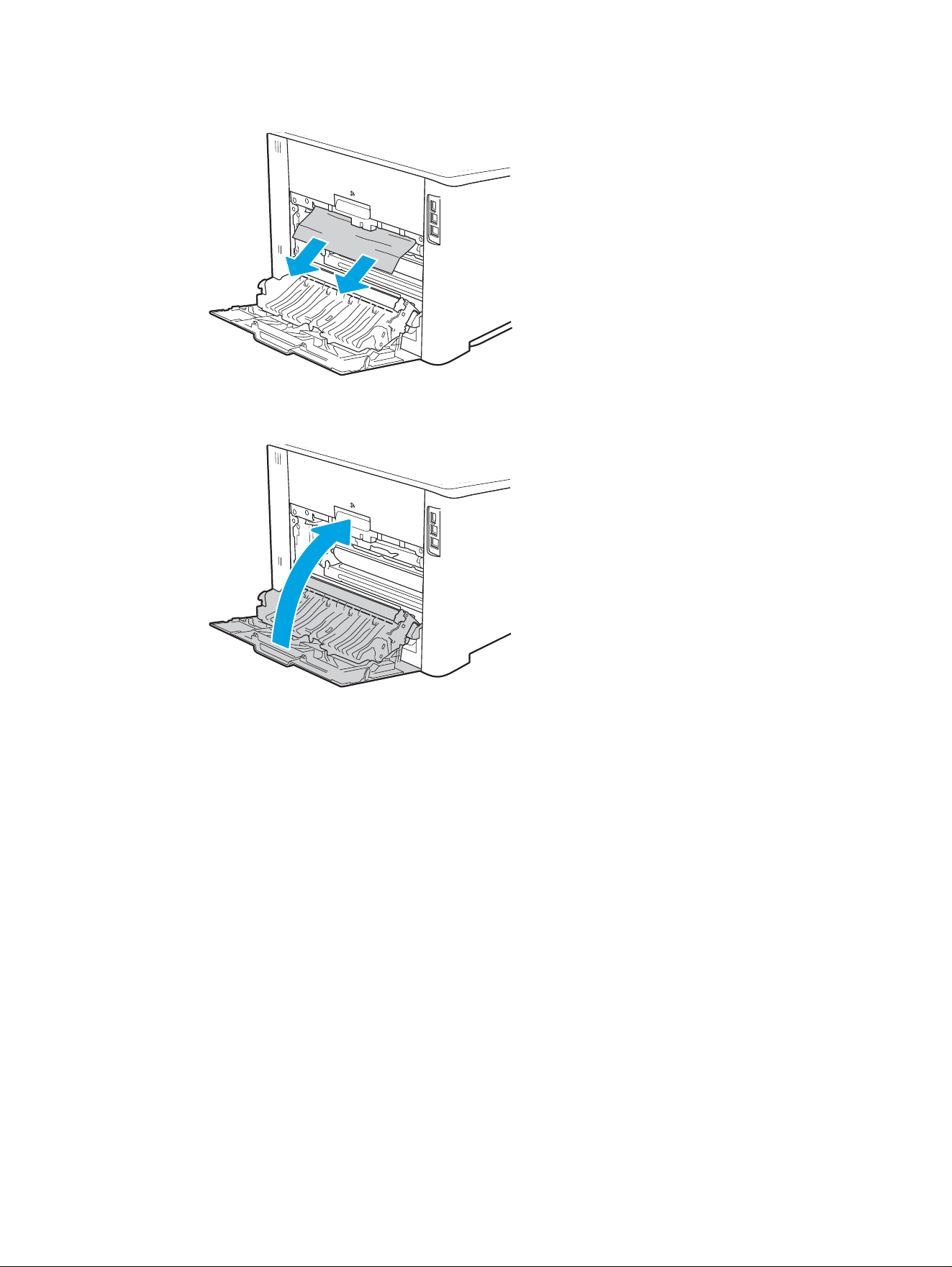
2. Gently pull out any jammed paper from the rollers in the rear door area.
3. Close the rear door.
Resolving print quality problems
Review the following information about resolving print quality problems.
Introduction
Use the information below to troubleshoot print-quality problems, including issues with image quality and color
quality.
The troubleshooting steps can help resolve the following defects:
● Blank pages
● Black pages
● Colors that do not align
● Curled paper
● Dark or light bands
● Dark or light streaks
Resolving print quality problems 113

● Fuzzy print
● Gray background or dark print
● Light print
● Loose toner
● Missing toner
● Scattered dots of toner
● Skewed images
● Smears
● Streaks
Troubleshoot print quality
To resolve print-quality issues, try these steps in the order presented.
To troubleshoot specic image defects, see Troubleshoot Image Defects.
Update the printer rmware
Try upgrading the printer rmware.
See support.hp.com for more information.
Print from a dierent software program
Try printing from a dierent software program.
If the page prints correctly, the problem is with the software program from which you were printing.
Check the paper-type setting for the print job
Check the paper type setting when printing from a software program and the printed pages have smears, fuzzy
or dark print, curled paper, scattered dots of toner, loose toner, or small areas of missing toner.
Check the paper type setting on the control panel
Check the paper type setting on the printer control panel, and change the setting as needed.
1. Open and close the paper tray.
2. Follow the control panel prompts to conrm or modify the paper type and size settings for the tray.
3. Make sure the paper loaded meets specications.
4. Adjust the humidity and resistance setting on the control panel to match the environment.
a. Open the following menus:
i. Settings
ii. Copy/Print
iii. Print quality
114 Chapter 9 Solve problems

iv. Adjust paper type
b. Select the paper type that matches the type loaded in the tray.
c. Use the arrows to increase or decrease the humidity and resistance setting.
5. Make sure the driver settings match the control panel settings.
NOTE: The print driver settings will override any control panel settings.
Check the paper type setting (Windows)
Check the paper type setting for Windows, and change the setting as needed.
NOTE: The print driver settings will override any control panel settings.
1. From the software program, select the Print option.
2. Select the printer, and then click the Properties or Preferences button.
3. Click the Paper/Quality tab.
4. From the Paper Type drop-down list, click the More... option.
5. Expand the list of Type is: options.
6. Expand the category of paper types that best describes your paper.
7. Select the option for the type of paper you are using, and click the OK button.
8. Click the OK button to close the Document Properties dialog box. In the Print dialog box, click the OK button
to print the job.
Check the paper type setting (macOS)
Check the paper type setting for macOS, and change the setting as needed.
1. Click the File menu, and then click the Print option.
2. In the Printer menu, select the printer.
3. Click Show Details or Copies & Pages.
4. Open the menus drop-down list, and then click the Paper/Quality menu.
5. Select a type from the Media Type drop-down list.
6. Click the Print button.
Check toner-cartridge status
Follow these steps to check the estimated life remaining in the toner cartridges, and if applicable, the status of
other replaceable maintenance parts.
Step one: Print a supplies status page
Use the control panel menus to print a supplies status page.
1. From the Home screen on the printer control panel, swipe the tab at the top of the screen downward to
open the Dashboard, and then touch the Setup icon .
Check the paper type setting (Windows) 115

2. Scroll to and touch Reports.
3. Scroll to and touch Supplies Status Page to print the report.
Step two: Check supplies status
The Supplies Status Page contains information about the cartridges and other replaceable maintenance parts.
1. Look at the Supplies Status Page to check the percent of life remaining for the toner cartridges, and if
applicable, the status of other replaceable maintenance parts.
● Print quality problems can occur when using a toner cartridge that is at its estimated end of life. The
Supplies Status Page indicates when a supply level is very low.
● HP's Premium Protection Warranty expires when a message, indicating that HP's Premium Protection
Warranty on this supply has ended, displays on the Supplies Status Page, or in the EWS.
● The toner cartridge does not need to be replaced now unless the print quality is no longer acceptable.
Consider having a replacement cartridge available to install when print quality is no longer acceptable.
● If you determine that you need to replace a toner cartridge, or another replaceable maintenance part,
the genuine HP part numbers are listed on the Supplies Status Page.
2. Check to see if you are using a genuine HP cartridge.
A genuine HP toner cartridge has "HP" on it, or it has the HP logo. For more information on identifying HP
cartridges, go to www.hp.com/go/learnaboutsupplies.
Print a cleaning page
During the printing process, paper, toner, and dust particles can accumulate inside the printer and can cause
print-quality issues such as toner specks or spatter, smears, streaks, lines, or repeating marks.
Use the following procedure to print a cleaning page:
1. From the Home screen on the printer control panel, swipe the tab at the top of the screen downward to
open the Dashboard, and then touch the Setup icon .
2. Scroll to and touch the following menus:
a. Printer Maintenance
b. Print Quality Tools
c. Cleaning Page
3. When prompted, load plain Letter or A4 size paper, and then touch OK.
A Cleaning message displays on the printer control panel. Wait until the process is complete. Discard the
page that prints.
Visually inspect the toner cartridge or cartridges
Follow these steps to inspect each toner cartridge:
1. Remove the toner cartridge from the printer, and verify that the sealing tape has been removed.
2. Check the memory chip for damage.
116 Chapter 9 Solve problems

3. Examine the surface of the green imaging drum.
CAUTION: Do not touch the imaging drum. Fingerprints on the imaging drum can cause print-quality
problems.
4. If you see any scratches, ngerprints, or other damage on the imaging drum, replace the toner cartridge.
5. Reinstall the toner cartridge and print a few pages to see if the problem has resolved.
Check paper and the printing environment
Use the following information to check the paper selection and the printing environment.
Step one: Use paper that meets HP specications
Some print-quality problems arise from using paper that does not meet HP specications.
● Always use a paper type and weight that this printer supports.
● Use paper that is of good quality and free of cuts, nicks, tears, spots, loose particles, dust, wrinkles, voids,
staples, and curled or bent edges.
● Use paper that has not been previously printed on.
● Use paper that does not contain metallic material, such as glitter.
● Use paper that is designed for use in laser printers. Do not use paper that is designed only for use in Inkjet
printers.
● Use paper that is not too rough. Using smoother paper generally results in better print quality.
Step two: Check the environment
The environment can directly aect print quality and is a common cause of print-quality or paper-feeding issues.
Try the following solutions:
● Move the printer away from drafty locations, such as open windows or doors, or air-conditioning vents.
● Make sure the printer is not exposed to temperatures or humidity outside of printer specications.
● Do not place the printer in a conned space, such as a cabinet.
● Place the printer on a sturdy, level surface.
● Remove anything that is blocking the vents on the printer. The printer requires good air ow on all sides,
including the top.
● Protect the printer from airborne debris, dust, steam, grease, or other elements that can leave residue inside
the printer.
Step three: Set the individual tray alignment
Follow these steps when text or images are not centered or aligned correctly on the printed page when printing
from specic trays.
1. From the Home screen on the printer control panel, swipe the tab at the top of the screen downward to
open the Dashboard, and then touch the Setup icon .
Check paper and the printing environment 117

2. Scroll to and open the following menus:
a. Tray Management
b. Image Adjust
3. Select the tray to adjust, and then touch Print Test Page to print the report.
4. Follow the instructions on the printed pages.
5. Touch Print Test Page again to verify the results, and then make further adjustments if necessary.
Try a dierent print driver
Try a dierent print driver when printing from a software program and the printed pages have unexpected lines
in graphics, missing text, missing graphics, incorrect formatting, or substituted fonts.
Download any of the following drivers from the HP Web site: www.hp.com/support/colorljM479MFP.
Table 9-3 Print drivers
Driver Description
HP PCL.6 driver If available, this printer-specic print driver supports older operating systems like Windows
XP and Windows Vista. For a list of supported operating systems, go to www.hp.com/go/
support.
HP PCL 6 driver This printer-specic print driver supports Windows 7 and newer operating systems that
support version 3 drivers. For a list of supported operating systems, go to www.hp.com/go/
support.
HP PCL-6 driver This product-specic print driver supports Windows 8 and newer operating systems that
support version 4 drivers. For a list of supported operating systems, go to www.hp.com/go/
support.
HP UPD PS driver ● Recommended for printing with Adobe software programs or with other highly
graphics-intensive software programs
● Provides support for printing from Postscript emulation needs, or for Postscript ash
font support
HP UPD PCL 6 ● Recommended for printing in all Windows environments
● Provides the overall best speed, print quality, and printer feature support for most
users
● Developed to align with Windows Graphic Device Interface (GDI) for best speed in
Windows environments
● Might not be fully compatible with third-party and custom software programs that are
based on PCL 5
Troubleshoot color quality
Try the suggested steps if you have issues with color alignment or the quality of color images.
Calibrate the printer to align the colors
Calibration is a printer function that optimizes print quality, and can help resolve print-quality problems such as
misaligned color, colored shadows, blurry graphics, or other print-quality issues.
118 Chapter 9 Solve problems

1. From the Home screen on the printer control panel, swipe the tab at the top of the screen downward to
open the Dashboard, and then touch the Setup icon .
2. Scroll to and touch the following menus:
a. Printer Maintenance
b. Color Calibration
A Calibrating message will display on the printer control panel. The calibration process takes a few minutes
to complete. Do not turn o the printer until the calibration process has nished.
3. Wait while the printer calibrates, and then try printing again.
Adjust color settings (Windows)
When printing from a software program, follow these steps if colors on the printed page do not match colors on
the computer screen, or if the colors on the printed page are not satisfactory.
1. From the software program, select the Print option.
2. Select the printer, and then click the Properties or Preferences button.
3. Click the Color tab.
4. Click the Print in Grayscale option to print a color document in black and shades of gray. Use this option to
print color documents for photocopying or faxing. Also use this option to print draft copies or to save color
toner.
5. Click the OK button to close the Document Properties dialog box. In the Print dialog box, click the OK button
to print the job.
Print and interpret the print quality page
Use the following procedure to print and interpret the print quality page.
1. From the Home screen on the printer control panel, swipe the tab at the top of the screen downward to
open the Dashboard, and then touch the Setup icon .
2. Scroll to and open the following menus:
a. Reports
b. Print Quality Report
3. Touch OK to print the page.
This page contains ve bands of color, which are divided into four groups as indicated in the following illustration.
By examining each group, you can isolate the problem to a particular toner cartridge.
Figure 9-8 Print quality page
Adjust color settings (Windows) 119

Section Toner cartridge
1 Yellow
2 Cyan
3 Black
4 Magenta
● If dots or streaks appear in only one of the groups, replace the toner cartridge that correlates with that
group.
● If dots appear in more than one group, print a cleaning page. If this does not solve the problem, determine
if the dots are always the same color; for example, if magenta dots appear in all ve color bands. If the dots
are all the same color, replace that toner cartridge.
● If streaks appear in multiple color bands, contact HP. A component other than the toner cartridge is probably
causing the problem.
Check the EconoMode settings
HP does not recommend the full-time use of EconoMode. If EconoMode is used full-time, the toner supply might
outlast the mechanical parts in the toner cartridge. If print quality begins to degrade and is no longer acceptable,
consider replacing the toner cartridge.
NOTE: This feature is available with the PCL 6 print driver for Windows. If you are not using that driver, you can
enable the feature by using the HP Embedded Web Server.
Follow these steps if the entire page is too dark or too light:
1. From the software program, select the Print option.
2. Select the printer, and then click the Properties or Preferences button.
3. Click the Paper/Quality tab, and locate the Print Quality area.
4. If the entire page is too dark, use these settings:
● Select the 600 dpi option, if available.
● Select the EconoMode check box to enable it.
If the entire page is too light, use these settings:
● Select the FastRes 1200 option, if available.
● Clear the EconoMode check box to disable it.
5. Click the OK button to close the Document Properties dialog box. In the Print dialog, click the OK button to
print the job.
Adjust print density
Adjust the print density when your printing results are too dense or too light in color.
Complete the following steps to adjust the print density:
1. Open the HP Embedded Web Server:
120 Chapter 9 Solve problems
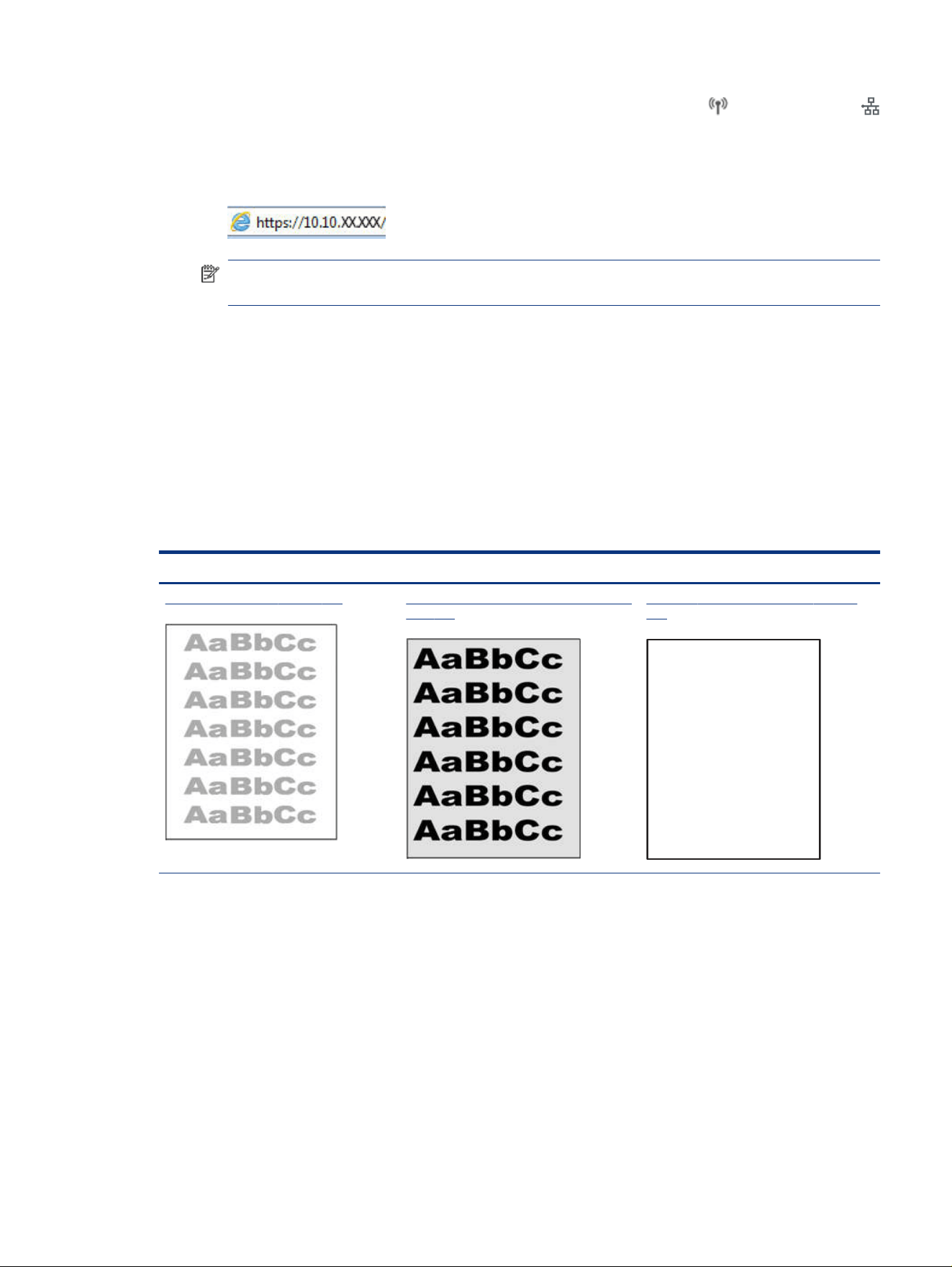
a. From the Home screen on the printer control panel, touch the Wireless icon or the Ethernet icon
to view the printer's IP address or host name.
b. Open a web browser, and in the address line, type the IP address or host name exactly as it displays on
the printer control panel. Press the Enter key on the computer keyboard. The EWS opens.
NOTE: If a message displays in the web browser indicating that the website might not be safe, select
the option to continue to the website. Accessing this website will not harm the computer.
2. On the EWS Home page, click the Tools tab.
3. In the left navigation pane, click Utilities to expand the options, and then click Print Density.
4. Under Print Density, adjust the setting as desired.
5. Click Apply to save the changes.
Troubleshoot image defects
Review examples of image defects and steps to resolve these defects.
Table 9-4 Image defects table quick reference
Defect Defect Defect
Table 9-12 Light print on page 127 Table 9-10 Gray background or dark print on
page 126
Table 9-7 Blank page — No print on page
124
Troubleshoot image defects 121
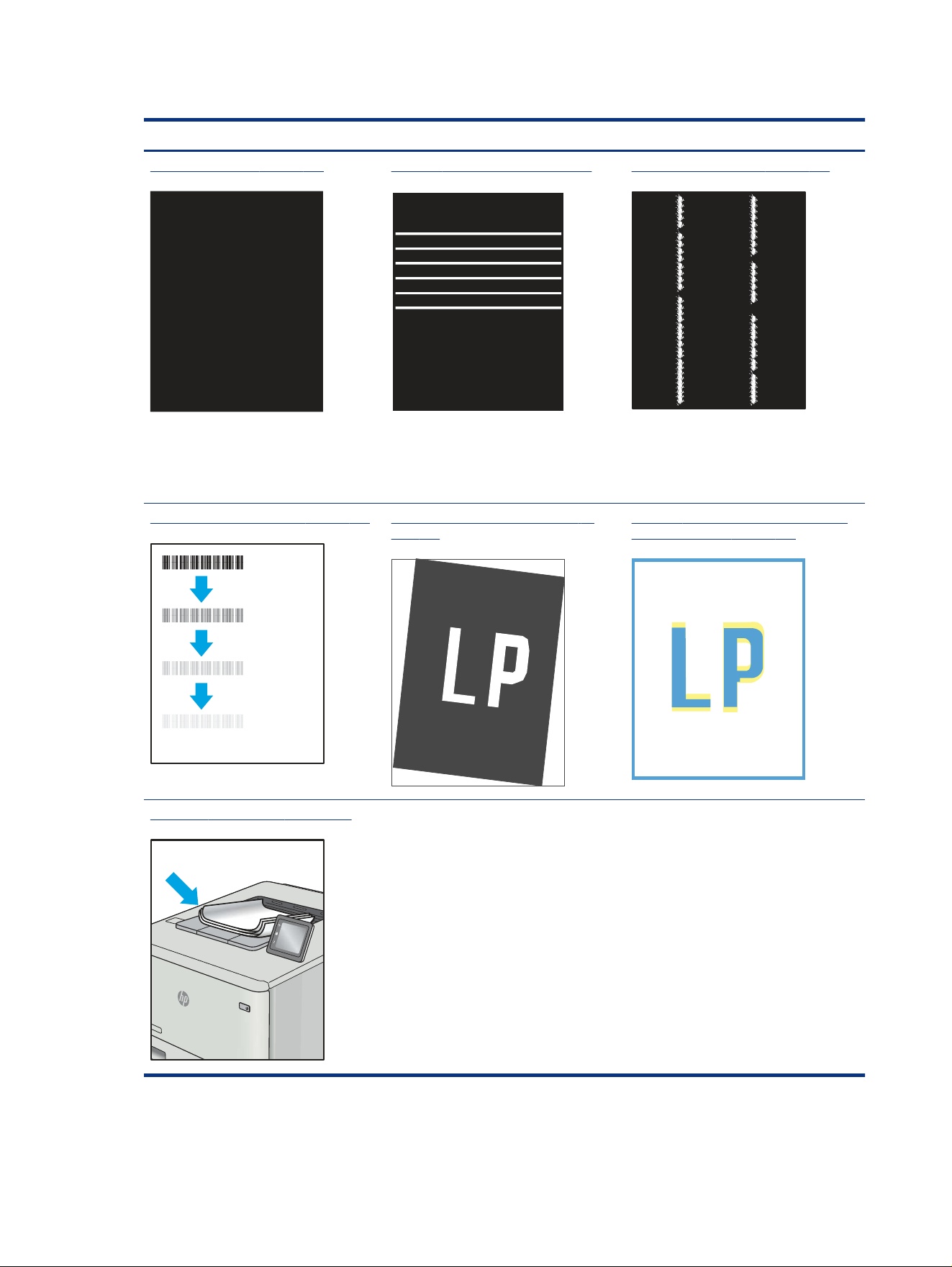
Table 9-4 Image defects table quick reference (continued)
Defect Defect Defect
Table 9-6 Black page on page 124 Table 9-5 Banding defects on page 123 Table 9-14 Streak defects on page 128
Table 9-9 Fixing/fuser defects on page 125 Table 9-11 Image placement defects on
page 126
Table 9-8 Color plane registrations defects
(color models only) on page 125
Table 9-13 Output defects on page 127
122 Chapter 9 Solve problems

Image defects, no matter the cause, can often be resolved using the same steps. Use the following steps as a
starting point for solving image defect issues.
1. Reprint the document. Print quality defects can be intermittent in nature or can go away completely with
continued printing.
2. Check the condition of the cartridge or cartridges. If a cartridge is in a Very Low state (it has passed the
rated life), replace the cartridge.
3. Make sure that the driver and tray print mode settings match the media that is loaded in the tray. Try using
a dierent ream of media or a dierent tray. Try using a dierent print mode.
4. Make sure the printer is within the supported operating temperature/humidity range.
5. Make sure that the paper type, size, and weight are supported by the printer. See the printer support page
at support.hp.com for a list of the supported paper sizes and types for the printer.
NOTE: The term "fusing" refers to the part of the printing process where toner is aixed to paper.
The following examples depict letter-size paper that has passed through the printer with the short edge rst.
Table 9-5 Banding defects
Sample Description Possible solutions
Dark or light lines which repeat down the
length of the page, and are wide-pitch
and/or impulse bands. They might be sharp
or soft in nature. The defect displays only in
areas of ll, not in text or sections with no
printed content.
1. Reprint the document.
2. Try printing from another tray.
3. Replace the cartridge.
4. Use a dierent paper type.
5. Enterprise models only: From the
Home screen on the printer control
panel, go to the Adjust Paper Types
menu, and then choose a print mode
that is designed for a slightly heavier
media than what you are using. This
slows the print speed and might
improve the print quality.
6. If the issue persists, go to
support.hp.com.
Troubleshoot image defects 123

Table 9-6 Black page
Sample Description Possible solutions
The entire printed page is black.
1. Visually inspect the cartridge to check
for damage.
2. Make sure that the cartridge is
installed correctly.
3. Replace the cartridge.
4. If the issue persists, go to
support.hp.com.
Table 9-7 Blank page — No print
Sample Description Possible solutions
The page is completely blank and contains
no printed content.
1. Make sure that the cartridges are
genuine HP cartridges.
2. Make sure that the cartridge is
installed correctly.
3. Print with a dierent cartridge.
4. Check the paper type in the paper
tray and adjust the printer settings to
match. If necessary, select a lighter
paper type.
5. If the issue persists, go to
support.hp.com.
124 Chapter 9 Solve problems
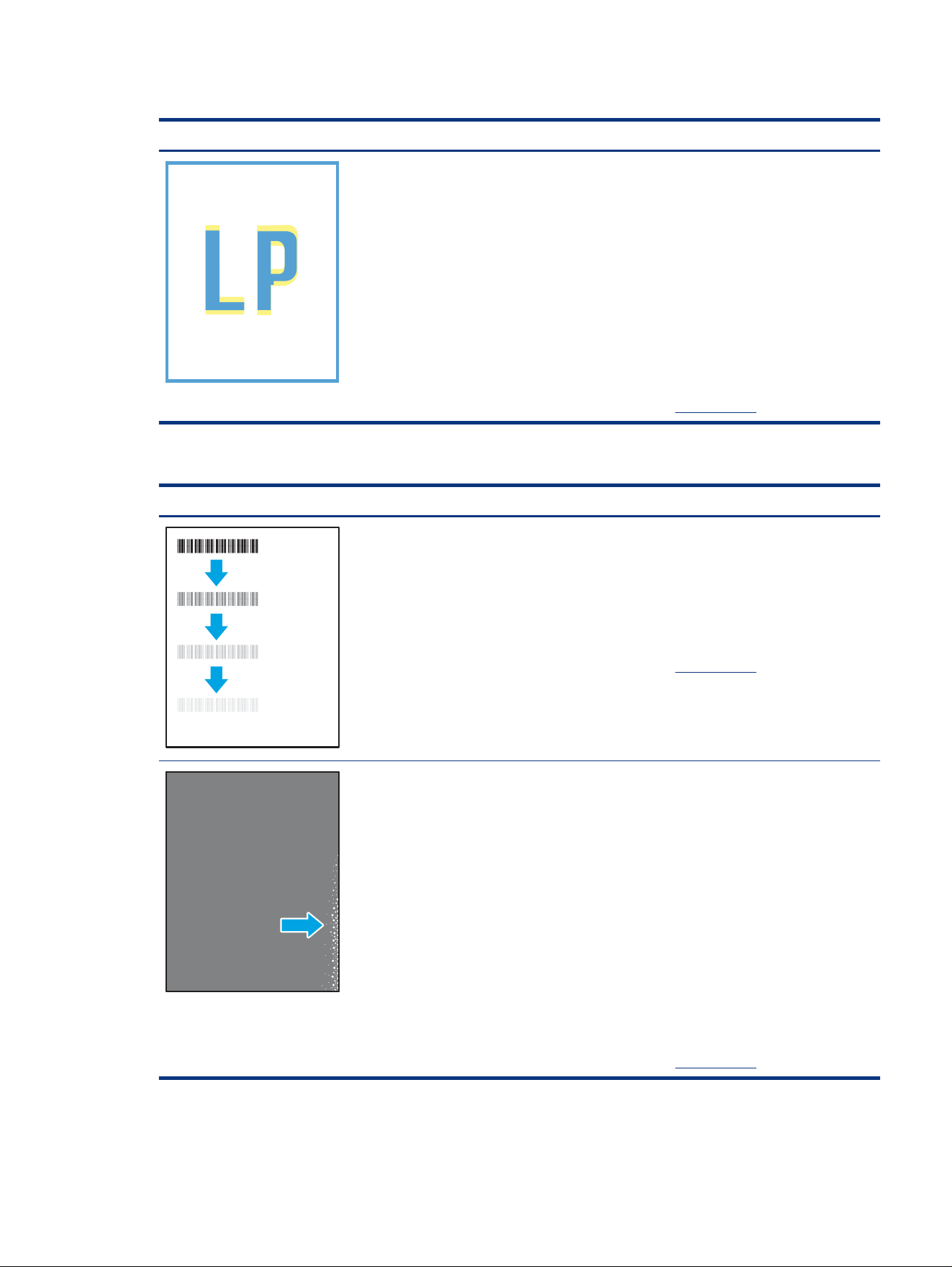
Table 9-8 Color plane registrations defects (color models only)
Sample Description Possible solutions
One or more color plane(s) is not aligned
with the other color planes. This registration
error will typically occur with yellow.
1. Reprint the document.
2. From the printer control panel,
calibrate the printer.
3. If a cartridge has reached a Very Low
state, or the printed output is severely
faded, replace the cartridge.
4. From the printer control panel use the
Restore Calibration feature to reset
the printer's calibration settings to the
factory defaults.
5. If the issue persists, go to
support.hp.com.
Table 9-9 Fixing/fuser defects
Sample Description Possible solutions
Slight shadows or osets of the image
are repeated down the page. The repeated
image might fade with each recurrence.
1. Reprint the document.
2. Check the paper type in the paper
tray and adjust the printer settings to
match. If necessary, select a lighter
paper type.
3. If the issue persists, go to
support.hp.com.
Toner rubs o along either edge of the
page. This defect is more common at the
edges of high-coverage jobs, and on light
media types, but can occur anywhere on the
page.
1. Reprint the document.
2. Check the paper type in the paper
tray and adjust the printer settings to
match. If necessary, select a heavier
paper type.
3. Enterprise models only: From the
printer control panel, go to the Edge
to-Edge menu and then select Normal.
Reprint the document.
4. Enterprise models only: From the
printer control panel, select Auto
Include Margins and then reprint the
document.
5. If the issue persists, go to
support.hp.com.
Troubleshoot image defects 125
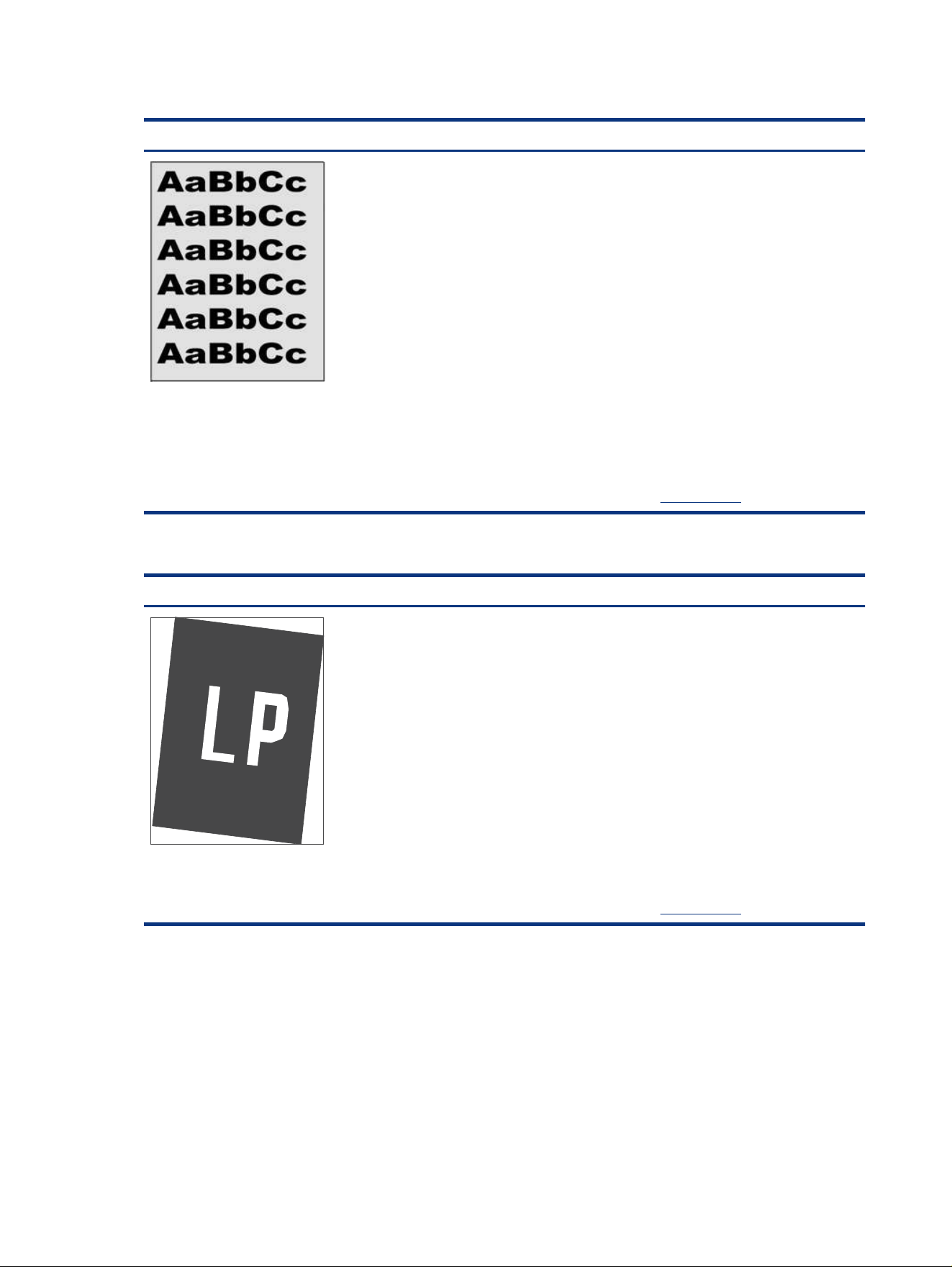
Table 9-10 Gray background or dark print
Sample Description Possible solutions
The image or text is darker than expected
and/or the background is gray.
1. Make sure that the paper in the trays
has not already been run through the
printer.
2. Use a dierent paper type.
3. Reprint the document.
4. Mono models only: From the Home
screen on the printer control panel,
go to the Adjust Toner Density menu,
and then adjust the toner density to a
lower level.
5. Make sure that the printer is within the
supported operating temperature and
humidity range.
6. Replace the cartridge.
7. If the issue persists, go to
support.hp.com.
Table 9-11 Image placement defects
Sample Description Possible solutions
The image is not centered, or is skewed on
the page. The defect occurs when the paper
is not positioned properly as it is pulled from
the tray and moves through the paper path.
1. Reprint the document.
2. Remove the paper and then reload
the tray. Make sure that all the paper
edges are even on all sides.
3. Make sure that the top of the paper
stack is below the tray-full indicator.
Do not overll the tray.
4. Make sure that the paper guides are
adjusted to the correct size for the
paper. Do not adjust the paper guides
tightly against the paper stack. Adjust
them to the indentations or markings
in the tray.
5. If the issue persists, go to
support.hp.com.
126 Chapter 9 Solve problems
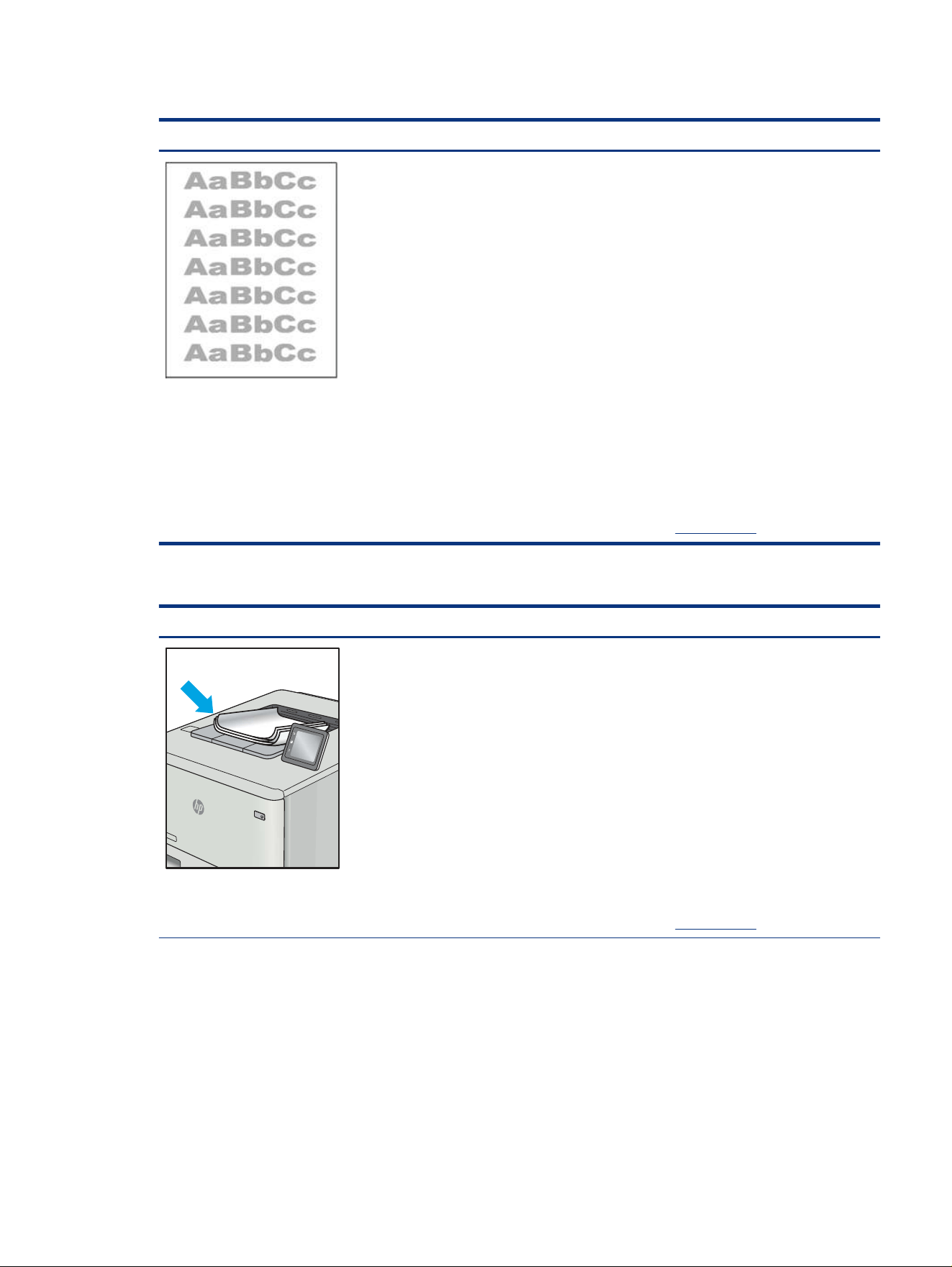
Table 9-12 Light print
Sample Description Possible solutions
The printed content is light or faded on the
entire page.
1. Reprint the document.
2. Remove the cartridge, and then shake
it to redistribute the toner. Reinsert
the toner cartridges into the printer
and close the cover. For a graphical
representation of this procedure, see
Replace the toner cartridges.
3. Mono models only: Make sure that the
EconoMode setting is disabled, both
at the printer control panel and in the
print driver.
4. Make sure that the cartridge is
installed correctly.
5. Print a Supplies Status Page and check
the life and usage of the cartridge.
6. Replace the cartridge.
7. If the issue persists, go to
support.hp.com.
Table 9-13 Output defects
Sample Description Possible solutions
Printed pages have curled edges. The curled
edge can be along the short or long side of
the paper. Two types of curl are possible:
● Positive curl: The paper curls toward
the printed side. The defect occurs
in dry environments or when printing
high-coverage pages.
● Negative curl: The paper curls away
from the printed side. The defect
occurs in high-humidity environments
or when printing low-coverage pages.
1. Reprint the document.
2. Positive curl: From the printer control
panel, select a heavier paper type. The
heavier paper type creates a higher
temperature for printing.
Negative curl: From the printer control
panel, select a lighter paper type. The
lighter paper type creates a lower
temperature for printing. Try storing
the paper in a dry environment prior to
use, or use freshly opened paper.
3. Print in duplex mode.
4. If the issue persists, go to
support.hp.com.
Troubleshoot image defects 127
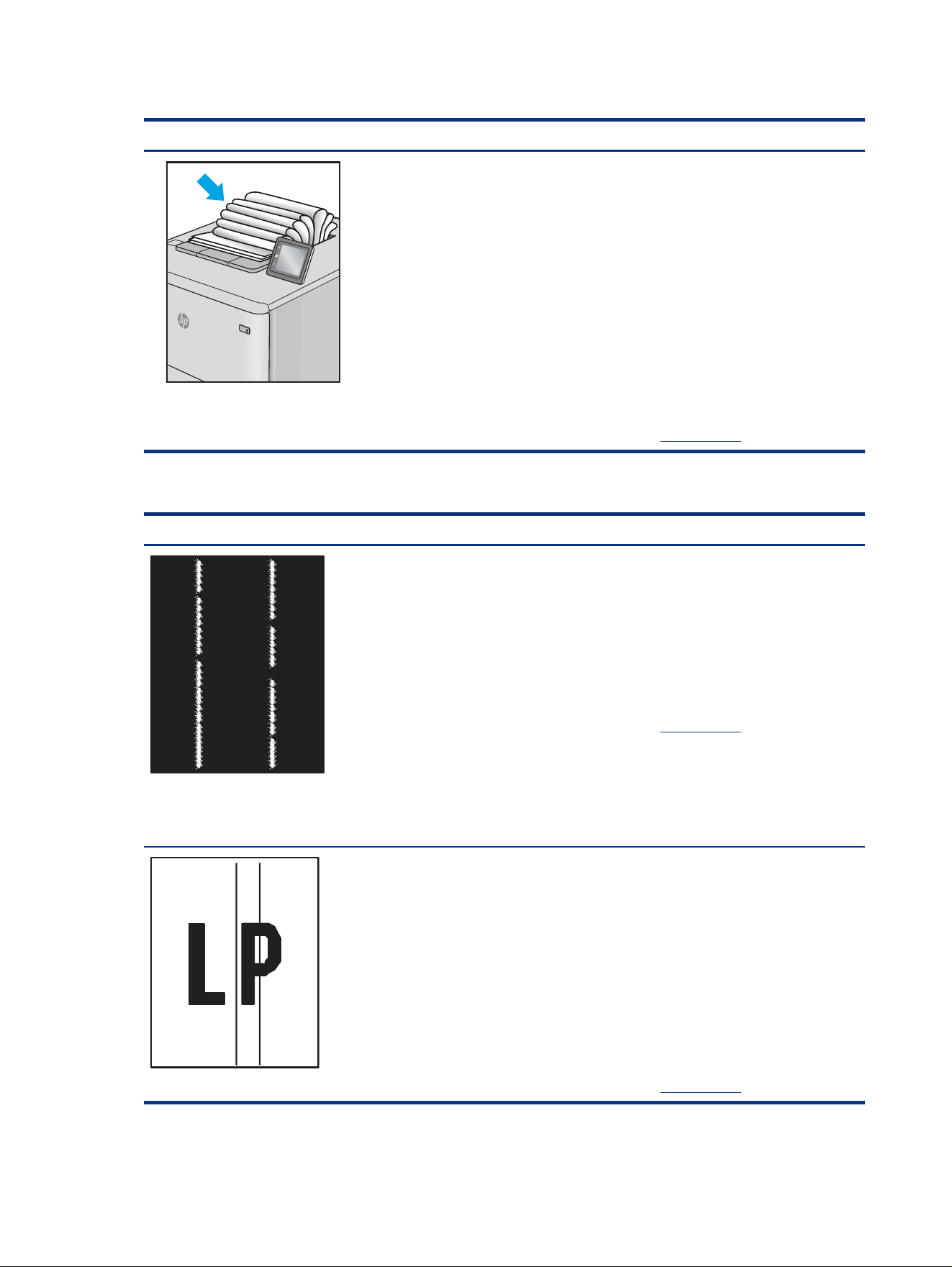
Table 9-13 Output defects (continued)
Sample Description Possible solutions
The paper does not stack well in the output
tray. The stack might be uneven, skewed,
or the pages might be pushed out of the
tray and onto the oor. Any of the following
conditions can cause this defect:
● Extreme paper curl
● The paper in the tray is wrinkled or
deformed
● The paper is a non-standard paper
type, such as envelopes
● The output tray is too full
1. Reprint the document.
2. Extend the output bin extension.
3. If the defect is caused by
extreme paper curl, refer to the
troubleshooting steps for "Output
curl."
4. Use a dierent paper type.
5. Use freshly opened paper.
6. Remove the paper from the output
tray before the tray gets too full.
7. If the issue persists, go to
support.hp.com.
Table 9-14 Streak defects
Sample Description Possible solutions
Light vertical streaks that usually span the
length of the page. The defect displays only
in areas of ll, not in text or sections with no
printed content.
1. Reprint the document.
2. Remove the cartridge, and then shake
it to redistribute the toner. Reinsert
the toner cartridges into the printer
and close the cover. For a graphical
representation of this procedure, see
Replace the toner cartridges.
3. If the issue persists, go to
support.hp.com.
NOTE: Both light and dark vertical streaks
can occur when the printing environment is
outside the
specied range for temperature
or humidity. Refer to your printer's
environmental
specications for allowable
temperature and humidity levels.
Dark vertical lines which occur down the
length of the page. The defect might occur
anywhere on the page, in areas of ll or in
sections with no printed content. On color
models, these lines or streaks will also be
visible on the ITB cleaning page.
1. Reprint the document.
2. Remove the cartridge, and then shake
it to redistribute the toner. Reinsert
the toner cartridges into the printer
and close the cover. For a graphical
representation of this procedure, see
Replace the toner cartridges.
3. Print a cleaning page.
4. Check the toner level in the cartridge.
5. If the issue persists, go to
support.hp.com.
128 Chapter 9 Solve problems

Improve copy and scan image quality
Learn how to improve the quality of copies and scanned images, and how to properly clean the scanner glass.
Introduction
If the printer is having image quality problems, try the following solutions in the order presented to resolve the
issue.
Try these few simple steps rst:
● Use the atbed scanner rather than the document feeder.
● Use high-quality originals.
● When using the document feeder, load the original document into the feeder correctly, using the paper
guides, to avoid unclear or skewed images.
If the problem still exists, try these additional solutions. If they do not x the problem, see "Improve print quality"
for further solutions.
Check the scanner glass for dirt and smudges
Over time, specks of debris might collect on the scanner glass and white plastic backing, which can aect
performance. Use the following procedure to clean the scanner.
1. Press the Power button to turn o the printer, and then disconnect the power cable from the electrical
outlet.
2. Open the scanner lid.
3. Clean the scanner glass and the white plastic backing underneath the scanner lid with a soft cloth or sponge
that has been moistened with nonabrasive glass cleaner.
CAUTION: Do not use abrasives, acetone, benzene, ammonia, ethyl alcohol, or carbon tetrachloride on any
part of the printer; these can damage the printer. Do not place liquids directly on the glass or platen. They
might seep and damage the printer.
4. Dry the glass and white plastic parts with a chamois or a cellulose sponge to prevent spotting.
5. Connect the power cable to an outlet, and then press the Power button to turn on the printer.
Check the paper settings
Follow these steps to check the paper settings on the printer control panel.
1. From the Home screen on the printer control panel, swipe the tab at the top of the screen downward to
open the Dashboard, and then touch the Setup icon .
2. Scroll to and touch Paper Setup, and then touch the name of the tray you are printing from.
3. Touch Paper Size, and then touch the paper size option that matches the size of paper in the tray.
4. Touch Paper Type, and then touch the paper type option that matches the type of paper in the tray.
Improve copy and scan image quality 129

Check the image adjustment settings
To improve copy quality, adjust the image settings using the printer control panel.
1. From the Home screen on the printer control panel, touch the Copy icon.
2. Touch the Document or ID Card icon.
3. Touch the Settings icon , and then scroll to and touch the following menu items to adjust the settings:
● Quality: Choose the output quality for the image.
● Lighter/Darker: Adjust the lightness/darkness setting.
● Enhancements: Choose an image enhancement option.
● Binding Margin: Turn the binding margin setting on or o.
4. Touch the Back button to return to the main copy menu, and then touch Copy to begin copying.
Optimize for text or pictures
Follow these steps to optimize the scan or copy for text or pictures.
1. From the Home screen on the printer control panel, touch the Copy icon.
2. Touch the Document or ID Card icon.
3. Touch the Settings icon , and then scroll to and touch Enhancements.
4. Touch one of the following options depending on the type of document you are copying:
● None: Use this setting when you are not concerned about the quality of the copy. This is the default
setting.
● Text: Use this setting for documents that contain mostly text.
● Photo: Use this setting for photos or documents that contain mostly graphics.
● Mixed: Use this setting for documents that contain a mixture of text and graphics.
Check the scanner resolution and color settings on the computer
If you are printing a scanned image, and the quality is not what you expected, you might have selected a
resolution or color setting in the scanner software that does not match your needs. Resolution and color aect
the following features of scanned images:
● Image clarity
● Texture of gradations (smooth or rough)
● Scan time
● File size
Scanning resolution is measured in pixels per inch (ppi).
NOTE: Scanning ppi levels are not interchangeable with printing dpi (dots per inch) levels.
130 Chapter 9 Solve problems

Color, grayscale, and black and white dene the number of colors possible. You can adjust the scanner hardware
resolution for up to 1200 ppi.
The resolution and color guidelines table lists simple tips that you can follow to meet your scanning needs.
NOTE: Setting the resolution and color to a high value can create large les that take up disk space and slow
the scanning process. Before setting the resolution and color, determine how you are going to use the scanned
image.
Resolution and color guidelines
The following table describes the recommended resolution and color settings for dierent types of scan jobs.
NOTE: The default resolution is 200 ppi.
Table 9-15 Resolution and color guidelines
Intended use Recommended resolution Recommended color settings
Fax 150 ppi ● Black and White
Email 150 ppi ● Black and White, if the image does not require smooth
gradation
● Grayscale, if the image requires smooth gradation
● Color, if the image is in color
Edit text 300 ppi ● Black and White
Print (graphics or text) 600 ppi for complex graphics,
or if you want to signicantly
enlarge the document
300 ppi for normal graphics and
text
150 ppi for photos
● Black and White for text and line art
● Grayscale for shaded or colored graphics and photos
● Color, if the image is in color
Display on screen 75 ppi ● Black and White for text
● Grayscale for graphics and photos
● Color, if the image is in color
Color
You can set the color values to the following settings when scanning.
Table 9-16
Color settings
Setting Recommended use
Color Use this setting for high-quality color photos or documents in which the color is important.
Black and White Use this setting for text documents.
Grayscale Use this setting when le size is an issue or when you want to scan a document or
photograph quickly.
Resolution and color guidelines 131
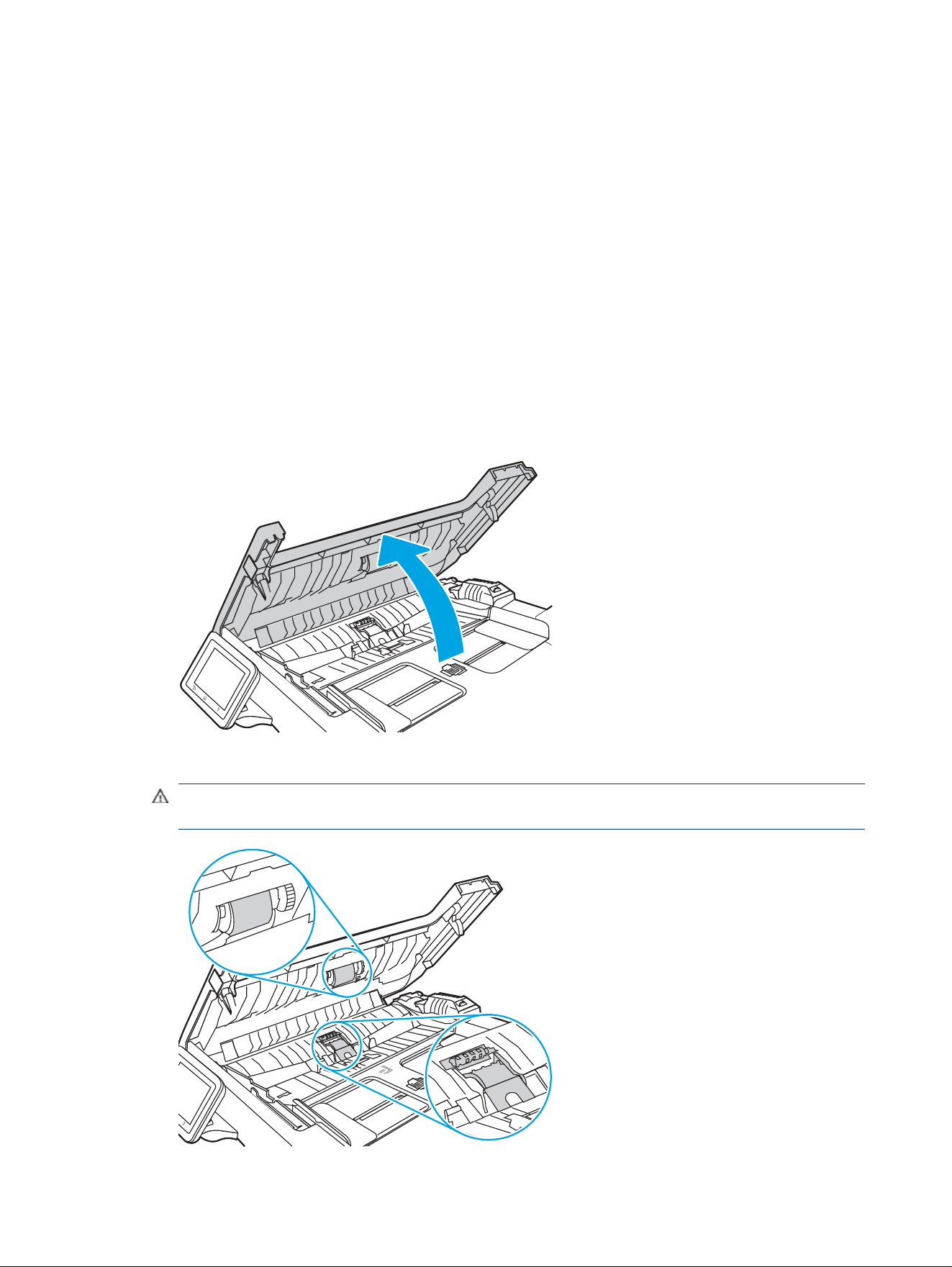
Edge-to-edge copying
The printer cannot print fully edge-to-edge. There is a 4 mm (1/6 inch) unprintable border around the page.
Considerations for printing or scanning documents with cropped edges:
● When the original is smaller than the output size, move the original 4 mm (1/6 inch) away from the corner
indicated by the icon on the scanner. Recopy or scan in this position.
● When the original is the size of the printed output that you want, use the Reduce/Enlarge feature to reduce
the image so the copy is not cropped.
Clean the pickup rollers and separation pad in the document feeder
If the document feeder experiences paper handling problems, such as jams or multiple-page feeds, clean the
document feeder rollers and separation pad.
1. Open the document feeder access cover.
2. Use a moist, lint-free cloth to wipe both pickup rollers and the separation pad to remove dirt.
CAUTION: Do not use abrasives, acetone, benzene, ammonia, ethyl alcohol, or carbon tetrachloride on any
part of the printer; these can damage the printer.
132 Chapter 9 Solve problems

3. Close the document feeder access cover.
Improve fax image quality
Review the following information to improve fax image quality.
Introduction
If the printer is having image quality problems, try the following solutions in the order presented to resolve the
issue.
Try these few simple steps rst:
● Use the atbed scanner rather than the document feeder.
● Use high-quality originals.
● When using the document feeder, load the original document into the feeder correctly, using the paper
guides, to avoid unclear or skewed images.
If the problem still exists, try these additional solutions. If they do not x the problem, see "Improve print quality"
for further solutions.
Check the scanner glass for dirt and smudges
Over time, specks of debris might collect on the scanner glass and white plastic backing, which can aect
performance. Use the following procedure to clean the scanner.
1. Press the Power button to turn o the printer, and then disconnect the power cable from the electrical
outlet.
2. Open the scanner lid.
Improve fax image quality 133

3. Clean the scanner glass and the white plastic backing underneath the scanner lid with a soft cloth or sponge
that has been moistened with nonabrasive glass cleaner.
CAUTION: Do not use abrasives, acetone, benzene, ammonia, ethyl alcohol, or carbon tetrachloride on any
part of the printer; these can damage the printer. Do not place liquids directly on the glass or platen. They
might seep and damage the printer.
4. Dry the glass and white plastic parts with a chamois or a cellulose sponge to prevent spotting.
5. Connect the power cable to an outlet, and then press the Power button to turn on the printer.
Check the send-fax resolution settings
If the printer was unable to send a fax because the receiving fax machine did not answer or was busy, the
printer attempts to redial based on the redial-on-busy, redial-on-no-answer, and redial-on-communication-error
options.
1. From the Home screen on the printer control panel, swipe right and touch the Fax icon.
2. Touch Send Now, and then touch the Settings icon .
3. Touch Resolution, and then touch the desired setting.
Try the Standard resolution setting if the fax will not send with a higher resolution.
Check the Error Correction Mode setting
Usually, the printer monitors the signals on the telephone line while it is sending or receiving a fax. If the printer
detects an error during the transmission and the Error Correction Mode setting is On, the printer can request that
the portion of the fax be resent. The factory-set default for error correction is On.
You should turn o error correction only if you are having trouble sending or receiving a fax, and you are willing
to accept the errors in the transmission. Turning o the setting might be useful when you are trying to send a fax
overseas or receive one from overseas, or if you are using a satellite telephone connection.
1. From the Home screen on the printer control panel, swipe right and then touch the Fax icon.
2. Swipe right and touch the Setup icon.
3. Touch Preferences.
4. Scroll to Error Correction Mode and then touch the button to turn the setting o or on.
Send to a dierent fax machine
Try sending the fax to a dierent fax machine. If the fax quality is better, the problem is related to the initial
recipient's fax machine settings or supplies status.
Check the sender's fax machine
Ask the sender to try sending from a dierent fax machine. If the fax quality is better, the problem is with the
sender's fax machine. If a dierent fax machine is unavailable, ask the sender to consider making the following
changes:
● Make sure the original document is on white (not colored) paper.
● Increase the fax resolution, quality level, or contrast settings.
134 Chapter 9 Solve problems

● If possible, send the fax from a computer software program.
Solve wired network problems
Check the following information to resolve wired network issues.
Introduction
Certain types of problems can indicate there is a network communication problem. These problems include the
following issues:
Poor physical connection
Check the cable connections.
1. Verify that the printer is attached to the correct network port using a cable of the correct length.
2. Verify that cable connections are secure.
3. Look at the network port connection on the back of the printer, and verify that the amber activity light
ashes indicating network traic, and the green link-status light is continuously lit indicating a network link.
4. If the problem continues, try a dierent cable or port on the hub.
The computer is using the incorrect IP address for the printer
If the computer is using the incorrect IP address for the printer, try these solutions.
1. Open the printer properties and click the Ports tab. Verify that the current IP address for the printer is
selected. The printer IP address is listed on the printer conguration page.
2. If you installed the printer using the HP standard TCP/IP port, select the check box next to Always print to
this printer, even if its IP address changes.
3. If you installed the printer using a Microsoft standard TCP/IP port, use the hostname instead of the IP
address.
4. If the IP address is correct, delete the printer and then add it again.
The computer is unable to communicate with the printer
Verify that the printer is communicating with the network and your computer.
1. Test network communication by pinging the network.
a. Open a command-line prompt on your computer.
● For Windows, click Start, click Run, type cmd, and then press Enter.
● For macOS, go to Applications, then Utilities, and open Terminal.
b. Type ping followed by the IP address for your printer.
c. If the window displays round-trip times, the network is working.
2. If the ping command failed, verify that the network hubs are on, and then verify that the network settings,
the printer, and the computer are all congured for the same network (also known as subnet).
Solve wired network problems 135

3. If the network is working, make sure that the computer is using the correct IP address for the printer.
a. Open the printer properties and click the Ports tab. Verify that the current IP address for the printer is
selected. The printer IP address is listed on the printer conguration page.
b. If you installed the printer using the HP standard TCP/IP port, select the box labeled Always print to
this printer, even if its IP address changes.
c. If you installed the printer using a Microsoft standard TCP/IP port, use the printer’s hostname instead
of the IP address.
d. If the IP address is correct, delete the printer and then add it again.
The printer is using incorrect link and duplex settings for the network
HP recommends leaving these settings in automatic mode (the default setting). If you change these settings, you
must also change them for your network.
New software programs might be causing compatibility problems
Verify that any new software programs are correctly installed and that they use the correct print driver.
The computer or workstation might be set up incorrectly
An incorrectly congured computer can cause issues with printing.
1. Check the network drivers, print drivers, and the network redirection settings.
2. Verify that the operating system is congured correctly.
The printer is disabled, or other network settings are incorrect
Check the network settings.
1. Review the printer’s conguration/networking pages to check the status of the network settings and
protocols.
2. Recongure the network settings if necessary.
Solve wireless network problems
To resolve network issues, try these steps in the order presented.
Introduction
Use the troubleshooting information to help resolve issues.
NOTE: To determine whether Wi-Fi Direct printing is enabled on your printer, print a conguration page from
the printer control panel
Wireless connectivity checklist
Review the following information to check wireless connectivity.
● Verify that the network cable is not connected.
136 Chapter 9 Solve problems

● Verify that the printer and the wireless router are turned on and have power. Also make sure that the
wireless radio in the printer is turned on.
● Verify that the service set identier (SSID) is correct. Print a conguration page to determine the SSID. If you
are not sure the SSID is correct, run the wireless setup again.
● With secured networks, verify that the security information is correct. If the security information is incorrect,
run the wireless setup again.
● If the wireless network is working correctly, try accessing other computers on the wireless network. If the
network has Internet access, try connecting to the Internet over a wireless connection.
● Verify that the encryption method (AES or TKIP) is the same for the printer as it is for the wireless access
point (on networks using WPA security).
● Verify that the printer is within the range of the wireless network. For most networks, the printer must be
within 30 m (100 ft) of the wireless access point (wireless router).
● Verify that obstacles do not block the wireless signal. Remove any large metal objects between the access
point and the printer. Make sure poles, walls, or support columns containing metal or concrete do not
separate the printer and wireless access point.
● Verify that the printer is located away from electronic devices that might interfere with the wireless signal.
Many devices can interfere with the wireless signal including motors, cordless phones, security system
cameras, other wireless networks, and some Bluetooth devices.
● Verify that the print driver is installed on the computer.
● Verify that you have selected the correct printer port.
● Verify that the computer and printer connect to the same wireless network.
● For macOS, verify that the wireless router supports Bonjour.
The printer does not print after the wireless conguration completes
If the printer does not print after the wireless conguration completes, try these solutions.
1. Make sure that the printer is turned on and in the ready state.
2. Turn o any third-party rewalls on your computer.
3. Make sure that the wireless network is working correctly.
4. Make sure that your computer is working correctly. If necessary, restart the computer.
5. Verify that you can open the printer HP Embedded Web Server from a computer on the network.
The printer does not print, and the computer has a third-party rewall installed
If the printer does not print, and the computer has a third-party rewall installed, try these solutions.
1. Update the rewall with the most recent update available from the manufacturer.
2. If programs request rewall access when you install the printer or try to print, make sure you allow the
programs to run.
3. Temporarily turn o the rewall, and then install the wireless printer on the computer. Enable the rewall
when you have completed the wireless installation.
The printer does not print after the wireless
conguration completes
137

The wireless connection does not work after moving the wireless router or printer
If the wireless connection does not work after moving the wireless router or printer, try these solutions.
1. Make sure that the router or printer connects to the same network that your computer connects to.
2. Print a conguration page.
3. Compare the service set identier (SSID) on the conguration page to the SSID in the printer conguration
for the computer.
4. If the numbers are not the same, the devices are not connecting to the same network. Recongure the
wireless setup for the printer.
Cannot connect more computers to the wireless printer
If additional computers cannot connect to the wireless printer, try these solutions.
1. Make sure that the other computers are within the wireless range and that no obstacles block the signal.
For most networks, the wireless range is within 30 m (100 ft) of the wireless access point.
2. Make sure that the printer is turned on and in the ready state.
3. Make sure there are not more than 5 concurrent Wi-Fi Direct users.
4. Turn o any third-party rewalls on your computer.
5. Make sure that the wireless network is working correctly.
6. Make sure that your computer is working correctly. If necessary, restart the computer.
The wireless printer loses communication when connected to a VPN
Typically, you cannot connect to a VPN and other networks at the same time.
The network does not appear in the wireless networks list
If the network does not appear in the wireless networks list, try these solutions.
● Make sure the wireless router is turned on and has power.
● The network might be hidden. However, you can still connect to a hidden network.
The wireless network is not functioning
If the wireless network is not functioning, try these solutions.
1. Make sure that the network cable is not connected.
2. To verify if the network has lost communication, try connecting other devices to the network.
3. Test network communication by pinging the network.
a. Open a command-line prompt on your computer.
● For Windows, click Start, click Run, type cmd, and then press Enter.
● For macOS, go to Applications, then Utilities, and open Terminal.
138 Chapter 9 Solve problems

b. Type ping followed by the router IP address.
c. If the window displays round-trip times, the network is working.
4. Make sure that the router or printer connects to the same network that the computer connects to.
a. Print a conguration page.
b. Compare the service set identier (SSID) on the conguration report to the SSID in the printer
conguration for the computer.
c. If the numbers are not the same, the devices are not connecting to the same network. Recongure the
wireless setup for the printer.
Perform a wireless network diagnostic test
From the printer control panel, you can run a diagnostic test that provides information about the wireless
network settings.
1. From the Home screen on the printer control panel, swipe the tab at the top of the screen downward to
open the Dashboard, and then touch the Setup icon .
2. Scroll to and touch Reports.
3. Scroll to and touch Wireless Test Report.
The printer prints a test page that shows test results.
Reduce interference on a wireless network
The following tips can reduce interference in a wireless network:
● Keep the wireless devices away from large metal objects, such as ling cabinets, and other electromagnetic
devices, such as microwaves and cordless telephones. These objects can disrupt radio signals.
● Keep the wireless devices away from large masonry structures and other building structures. These objects
can absorb radio waves and lower signal strength.
● Position the wireless router in a central location in line of sight with the wireless printers on the network.
Solve fax problems
Use the following information to solve fax problems.
Introduction
Use the fax troubleshooting information to help resolve issues.
Fax troubleshooting checklist
After each recommended action, retry faxing to see if the problem is resolved.
For best results during fax problem solving, make sure the line from the printer is connected directly to the wall
phone port. Disconnect all other devices that are connected to the printer.
1. Verify that the telephone cord is connected to the correct port on the back of the printer.
Perform a wireless network diagnostic test 139

2. Check the phone line by using the fax test:
a. From the Home screen on the printer control panel, swipe the tab at the top of the screen downward
to open the Dashboard, and then touch the Setup icon .
b. Scroll to and open the following menus:
i. Fax Setup
ii. Tools
iii. Run Fax Test
The printer prints a fax test report.
The report contains the following possible results:
● Pass: The report contains all of the current fax settings for review.
● Fail: The report indicates the nature of the error and contains suggestions for how to resolve the
issue.
3. Verify that the printer rmware is current:
NOTE: To determine the current rmware version on your printer, print a Printer Status Report from the
printer control panel, and then look on the report to nd the rmware date code. Then visit the HP product
support page (using the steps below) and compare the rmware date code to the latest rmware version
that is available from HP. If there is a newer version available, follow the steps below to update the rmware
on your printer.
a. Go to www.hp.com/go/support, click the Drivers & Software link, type the printer name in the search
eld, press the ENTER button, and then select the printer from the list of search results.
b. Select the operating system.
c. Under the Firmware section, locate the Firmware Update Utility.
NOTE: Make sure to use the rmware update utility that is specic to the printer model.
d. Click Download, click Run, and then click Run again.
e. When the utility launches, select the printer from the drop-down list, and then click Send Firmware.
f. Follow the on-screen instructions to complete the installation, and then click the Exit button to close
the utility.
4. Verify that the fax was set up when the printer software was installed.
From the computer, in the HP program folder, run the Fax Setup Utility.
5. Verify that the telephone service supports analog fax.
● If using ISDN or digital PBX, contact your service provider for information about conguring to an
analog fax line.
● If using a VoIP service, change the Fax Speed setting to Speed-Slow (9600 bps). From the control panel
Home Screen, select Fax, select Setup, and then select Preferences.
● Ask if your service provider supports fax, and what the recommended fax modem speed is. Some
companies might require an adapter.
140 Chapter 9 Solve problems

● If you are using a DSL service, make sure that a lter is included on the phone-line connection to the
printer. Contact the DSL service provider, or purchase a DSL lter if you do not have one. If a DSL lter is
installed, try another lter because lters can be defective.
Solve general fax problems
Review suggestions and tips for resolving various fax-related issues.
Faxes are sending slowly
The printer is experiencing poor phone line quality.
Try the following suggestions to resolve the issue:
● Try resending the fax when the line conditions have improved.
● Check with the phone service provider to verify that the line supports fax.
● Turn o the Error Correction Mode setting:
1. From the Home screen on the printer control panel, swipe right and then touch the Fax icon.
2. Swipe right and touch the Setup icon.
3. Touch Preferences.
4. Scroll to Error Correction Mode and then touch the button to turn o the setting.
NOTE: This can reduce image quality.
● Use white paper for the original. Do not use colors such as gray, yellow, or pink.
● Increase the Fax Speed setting:
1. From the Home screen on the printer control panel, swipe right and then touch the Fax icon.
2. Swipe right and touch the Setup icon.
3. Touch Preferences, and then scroll to and touch Speed.
4. Touch the desired speed setting.
● Divide large fax jobs into smaller sections, and then fax them individually.
Fax quality is poor
Faxes are blurry or too light.
Try the following suggestions to resolve the issue:
● Increase fax resolution when sending faxes:
NOTE: Resolution does not aect received faxes.
1. From the Home screen on the printer control panel, swipe right and then touch the Fax icon.
2. Touch the Send Now icon.
3. Touch the Settings icon , and then touch Resolution.
Solve general fax problems 141

4. Touch the desired resolution setting.
NOTE: Increasing resolution slows transmission speed.
● Turn on the Error Correction Mode setting:
1. From the Home screen on the printer control panel, swipe right and then touch the Fax icon.
2. Swipe right and touch the Setup icon.
3. Touch Preferences.
4. Scroll to Error Correction Mode and then touch the button to turn on the setting.
● Check the toner cartridges and replace if necessary.
● Ask the sender to darken the contrast setting on the sending fax machine, and then resend the fax.
Fax cuts o or prints on two pages
If the paper size settings on the printer do not match the paper size of the document being faxed, the received
fax might be missing content, or it could print on two pages.
Try the following suggestions to resolve the issue:
● Set the Default Paper Size setting:
NOTE: Faxes print on a single size of paper based on the Default Paper Size settings.
1. From the Home screen on the printer control panel, swipe the tab at the top of the screen downward to
open the Dashboard, and then touch the Setup icon .
2. Scroll to and open the following menus:
a. Tray Management
b. Tray Assignment
c. Default Paper Size
3. Touch the desired paper size from the list of options.
● Set the paper type and size for the tray that is used for faxes.
142 Chapter 9 Solve problems

Index
Symbols/Numerics
550-sheet paper trays
part numbers 30
A
accessories
ordering 29
part numbers 30
acoustic specications 13
Address Book
set up 66
AirPrint 55, 57
Android devices
printing from 55, 57
applications
downloading 85
Apps menu 85
B
bin, output
locating 2
browser requirements
HP Embedded Web Server 86
C
calibrate
colors 118
cartridge
dynamic security 32
replacing 37
cartridge policy 32
cartridge protection 32, 34
cartridges
order numbers 37
checklist
fax troubleshooting 139
wireless connectivity 136
cleaning
glass 129, 133
paper path 114
color options
changing, Windows 118
color theme
changing, Windows 118
colors
calibrate 118
Contact Lists
set up 66
control panel
help 96
locating 2
locating features 4
copying
edges of documents 129, 132
multiple copies 59
optimizing for text or
pictures 129
setting paper size and type 129
single copies 59
two-sided documents 60
customer support
online 95
D
deleting
stored jobs 50, 54
dimensions, printer 11
document feeder 60
copying two-sided
documents 60
faxing from 79
jams 104
paper-feeding problems 102
double-sided copying 60
double-sided printing
Mac 48
Windows 45
drivers, supported 9
duplex 60
duplex printing
Mac 48
duplex printing (double-sided)
settings (Windows) 45
Windows 45
duplexer
clear jams 111
duplexing
automatically (Windows) 46
manually (Mac) 48
manually (Windows) 45
dynamic security
toner cartridge 32
E
EconoMode setting 92, 114
economy settings 92
electronic faxes
sending 79
Embedded Web Server (EWS)
assigning passwords 91
features 86
envelopes
loading 26
orientation 26
Ethernet (RJ-45)
locating 3
F
fax
sending from software 79
solve general problems 139,
141
speed dials 79, 83
fax port
locating 3
fax troubleshooting
checklist 139
faxing
from a computer (Windows) 79
from the document feeder 79
from the atbed scanner 79
rmware
updating 93
Index 143

fuser
jams 112
G
genuine HP cartridges 32
glass, cleaning 129, 133
H
Help button
locating 4
help, control panel 96
Home button
locating 4
HP Customer Care 95
HP Easy Scan Software (macOS) 64
HP Embedded Web Server (EWS)
features 86
HP ePrint 56
HP EWS, using 86
HP Printer Home Page, using 86
HP Scan software (Windows) 63
HP Web Jetadmin 93
HP Web Services
applications 85
enabling 85
I
image quality
check toner-cartridge
status 114, 115
image quality issues
examples and solutions 113
interface ports
locating 3
IP network settings
congure 89
J
jams
causes of 103
document feeder 104
duplexer 111
fuser 112
locations 104
output bin 104, 110
Tray 1 107
Tray 2 109
Jetadmin, HP Web 93
jobs, stored
creating (Windows) 50
deleting 50, 54
Mac settings 50
printing 50
L
LAN port
locating 3
loading
paper in Tray 1 15
paper in Tray 2 19
paper in Tray 3 23
local area network (LAN)
locating 3
M
Mac driver settings
Job Storage 50
manual duplex
Mac 48
Windows 45
memory
included 7
memory chip (toner)
locating 37
Microsoft Word, faxing from 79
mobile printing
Android devices 55, 57
mobile printing, software
supported 11
multiple pages per sheet
printing (Mac) 48
printing (Windows) 45
N
network settings 89
networks
HP Web Jetadmin 93
supported 7
number of copies, changing 59
O
on/o button
locating 2
online help, control panel 96
online support 95
operating systems, supported 9
ordering
supplies and accessories 29
output bin
clear jams 104, 110
locating 2
P
pages per minute 7
pages per sheet
selecting (Mac) 48
selecting (Windows) 45
paper
jams 103
loading Tray 1 15
loading Tray 2 19
loading Tray 3 23
selecting 114, 117
Tray 1 orientation 17
Tray 2 orientation 21
Tray 3 orientation 25
paper jams
document feeder 104
duplexer 111
fuser 112
locations 104
output bin 104, 110
Tray 1 107
Tray 2 109
paper pickup problems
solving 98, 100
paper trays
part numbers 30
paper type
selecting (Windows) 45
paper types
selecting (Mac) 48
paper, ordering 29
part numbers
accessories 30
replacement parts 31
supplies 30
toner cartridges 30
phone book, fax
adding entries 79, 83
ports
locating 3
potential shock hazard 2
power
consumption 13
power connection
locating 3
power switch
locating 2
print drivers, supported 9
print on both sides
Mac 48
manually, Windows 45
Windows 45
printing
from USB ash drives 57
stored jobs 50
printing on both sides
settings (Windows) 45
private printing 50
144 Index

product number
locating 2
protect cartridges 32, 34
R
replacement parts
part numbers 31
replacing
toner cartridges 37
RJ-45 port
locating 3
S
scan setup
scan to computer 70
scan to email 64
scan to network folder 67
scan to SharePoint 70
Scan to Email
set up with EWS 66
Scan to Folder
set up with EWS 69
scanner
faxing from 79
glass cleaning 129, 133
scanning
from HP Easy Scan Software
(macOS) 64
from HP Scan software
(Windows) 63
to computer 73
to email 71
to network folder 72
to SharePoint 73
to USB drive 71
security features 91
sending faxes
from software 79
serial number
locating 2
shut down after delay
setting 92
Sign In button
locating 4
Sign Out button
locating 4
sleep delay
setting 92
software
sending faxes 79
solve problems
fax 139, 141
specications
printer 7
speed dials
deleting entries 83
editing entries 83
programming 79
Start Copy button
locating 4
storage, job
Mac settings 50
store print jobs 50
stored jobs
creating (Mac) 50
creating (Windows) 50
deleting 50, 54
printing 50
storing jobs
with Windows 50
supplies
low threshold settings 96
ordering 29
part numbers 30
replacing toner cartridges 37
using when low 96
support
online 95
supported operating systems 9
system requirements
HP Embedded Web Server 86
minimum 7
T
technical support
online 95
toner cartridge
dynamic security 32
low threshold settings 96
using when low 96
toner cartridges
components 37
order numbers 37
part numbers 30
replacing 37
touchscreen
locating features 4
Tray 1
jams 107
loading 15
loading envelopes 26
paper orientation 17
Tray 2
jams 109
loading 19
Tray 2
paper orientation 21
Tray 3
loading 23
paper orientation 25
trays
capacity 7
included 7
locating 2
troubleshooting
check toner-cartridge
status 114, 115
color quality 118
faxes 139
jams 103
network problems 135
paper feed problems 98
print quality 114
wired network 135
wireless network 136
two-sided copying 60
two-sided printing
settings (Windows) 45
U
USB 2.0 printing port
locating 3
USB ash drives
printing from 57
USB port
locating 3
W
walk-up USB printing 57
web browser requirements
HP Embedded Web Server 86
Web Services
applications 85
enabling 85
Web sites
customer support 95
HP Web Jetadmin,
downloading 93
weight, printer 11
Wi-Fi Direct Print 11
Wi-Fi Direct Printing 55
Windows
faxing from 79
wireless network
troubleshooting 136
wireless network interference 136,
139
Word, faxing from 79
Index 145