Dear Customer,
Thank you for choosing this quality product from ASKO.
We hope it will meet your expectations and fulfill your needs
for many years to come. Scandinavian design combines clean
lines, everyday functionality, and high quality. These are key
characteristics of all our products and the reason they are
greatly appreciated throughout the world.
To get the most out of your new machine, we recommend that
you read the operating instructions before using it. The
operating instructions also include information on how you
can help protect the environment.
Operating Instructions
Washing Machine
Save these instructions for future reference
ASKO Professional

4
Before using your machine for
the first time
5
Transport protection
5
Packing material
5
Washer door
5
Language selection
5
Checking water hardness
6Important safety instructions
6
Grounding instructions
7
Installation
7
Overflow guard function
7
Transport/Winter storage
7
Disposal
8Child safety
8
Keep an eye on children!
8
Child safety catch
9Parts of the washing machine
10Detergent compartment
11Advice and tips before washing
11
Sorting your laundry
11
Clothing
11
Laundry labels
13
Colored cotton
13
Unbleached linen
13
Wool
13
Rayon fibers and synthetic fibers
13
Detergents
15Operating instructions
15
Sort your laundry.
15
Turn on the main power switch
15
Open the washer door and load
the laundry
15
Add detergent and fabric softener,
as required
16
Select the program
19
Close the washer door and press
the Start/Stop button
19
Once the program has finished
20Settings
20
You can change the following
settings:
20
Door opening
20
Language
20
Temperature
20
Water intake
20
Child-safe Start
21
Care and maintenance
instructions
21
Cleaning the trap and the drain
pump
21
Cleaning the detergent
compartment
21
Cleaning the outside of the
machine
22
Cleaning the inside of the machine
to avoid unpleasant smells
23
Rinse holes under the paddle
23
If you have hard water
24Troubleshooting
24
The washer door will not open
24
The machine will not start
25
Error messages
26Technical information
26
Technical data
27Transport protection
Customer Care Center2
1-800-898-1879
www.askousa.com
Contents


Do you need this Use&Care Guide in Spanish? Log on to www.askousa.com/customer-care to download.
¿Necesita esta Instrucciones de uso y cuidado en español? Entre en www.askousa.com/customer-care
y descárguesela.
Customer Care Center4
1-800-898-1879
www.askousa.com
Before using your machine for the first time

Transport protection
Remove any transport protection devices before
installing the machine. See the "Transport
protection" chapter.
Packing material
Please sort waste materials in accordance with
local guidelines.
Washer door
• The washer door cannot be opened until the
machine is connected to the electricity supply.
• To open the door manually, see "The washer
door will not open" in the "Troubleshooting"
chapter.
• The machine cannot be started when the door
is open.
• To open the washer door while a program is
running, see "Close the door and press the
Start/Stop button" in the "Operating
instructions" chapter.
Language selection
You will be prompted to select the display
language when you have connected your machine
and start it for the first time. Do as follows:
1. Turn the program selector to choose from: US
English, English, Svenska, Dansk, Norsk,
Suomi, Français, Deutsch, Italiano, Espanol,
Русский, Nederlands.
2. Press the Door Opening button once to save
the setting.
Checking water hardness
The quantity of detergent needed depends,
among other things, on water hardness. See the
detergent pack for details. Phone your local water
company to check the water hardness in your
area.
NOTE!
Each machine is tested before leaving the
factory. A small amount of water may remain in
the drain pump, though this does not affect
quality or damage the machine.
See Quick guide on the last page
5Customer Care Center
1-800-898-1879
www.askousa.com
Before using your machine for the first time
SAVE THESE INSTRUCTIONS FOR FUTURE
REFERENCE
WARNING!
To reduce the risk of fire, electric shock, or injury
to persons when using your appliance, follow
basic precautions, including the following:
• Read all instructions before using the
appliance.
• Do not run appliance while you are out of the
home.
• Do not wash or dry articles that have been
previously cleaned in, washed in, soaked in,
or spotted with gasoline, dry-cleaning solvents,
cooking oils, or other flammable or explosive
substances because they give off vapors that
could ignite or explode.
• Do not allow children to play on or in the
appliance. Close supervision of children is
necessary when the appliance is used near
children.
• Before the appliance is removed from service
or discarded, remove the door to the washing
compartment.
• Do not reach into the appliance if the drum is
moving.
• Do not install or store this appliance where it
will be exposed to the weather.
• Do not tamper with controls.
• Do not repair or replace any part of the
appliance or attempt any servicing unless
specifically recommended in the user-repair
instructions or in published user-repair
instructions that you understand and have the
skills to carry out.
• Do not add gasoline, dry-cleaning solvents, or
other flammable or explosive substances to
the wash water. These substances give off
vapors that could ignite or explode.
• Under certain conditions, hydrogen gas may
be produced in a hot water system that has not
been used for 2 weeks or more. HYDROGEN
GAS IS EXPLOSIVE. If the hot water system
has not been used for such a period, before
using a washing machine or combination
washer-dryer, turn on all water faucets and let
the water flow from each for several minutes.
This will release any accumulated hydrogen
gas. As the gas is flammable, do not smoke or
use an open flame during this time.
WARNING!
This appliance must be properly grounded.
This manual does not cover every possible
condition and situation that may occur. Use
common sense and caution when installing,
operating, and maintaining any appliance.
Grounding instructions
A) Grounding instructions for a grounded,
cord-connected appliance:
In the event of malfunction or breakdown,
grounding will reduce the risk of electric shock by
providing a path of least resistance for electric
current. This appliance is equipped with a cord
having an equipment-grounding conductor and a
grounding plug. The plug must be plugged into
an appropriate outlet that is properly installed and
grounded in accordance with all local codes and
ordinances.
WARNING!
Improper connection of the equipment-grounding
conductor can result in a risk of electric shock.
Check with a qualified electrician or service
representative or personnel if you are in doubt
as to whether the appliance is properly grounded.
Do not modify the plug provided with the
appliance. If it will not fit the outlet, have a proper
outlet installed by a qualified electrician.
Customer Care Center6
1-800-898-1879
www.askousa.com
Important safety instructions
B) Grounding instructions for a
permanently connected appliance:
This appliance must be connected to a grounded
metal, permanent wiring system, or an
equipment-grounding conductor must be run with
the circuit conductors and connected to the
equipment-grounding terminal or lead on the
appliance.
NOTE!
This manual does not cover every possible
condition and situation that may occur. Use
common sense and caution when installing,
operating, and maintaining any appliance.
Installation
See the "Installation" chapter.
Overflow guard function
If the machine’s water level rises above the normal
level, the overflow guard function begins to pump
water out and shuts off the water intake. If the
water level has not dropped within 60 seconds,
the program is terminated.
Transport/Winter storage
If the machine is to be transported or stored in
unheated premises where the temperature can
fall below freezing, do as follows:
• Empty the filter and the drain pump. See the
"Care and maintenance instructions" chapter.
• Shut off the water to the washing machine,
loosen the supply hose to the intake valve, and
let the water run out from the valve and hose.
• After emptying the pump, a small amount of
water may remain in the machine. This does
not affect quality or damage the machine.
Disposal
When the machine has reached the end of its
service life and is to be disposed of, it should
immediately be made unusable by removing the
door to the washing compartment. Contact your
local authorities for information about where your
machine should be disposed of and recycled in
the proper way. The machine is manufactured
and labeled for recycling.
SAVE THESE INSTRUCTIONS FOR FUTURE REFERENCE
7Customer Care Center
1-800-898-1879
www.askousa.com
Important safety instructions

Keep an eye on children!
WARNING!
Be observant of children!
• Laundry detergents are corrosive, so always
keep them out of reach of children.
• Should a child swallow detergent, give plenty
to drink immediately, i.e., one or two glasses
of milk or water. Do not try to induce vomiting.
Seek medical advice immediately: The
National Poison center phone number is
1-800-222-1222.
• Always close the door and start the appliance
as soon as you put in the detergent.
• Always turn the power off to the machine
when it is not in use.
• Always keep small children away from the
machine when it is open. There may be some
detergent residue left inside the machine.
• If laundry detergent gets in someone’s eyes,
rinse them with plenty of water for at least 15
minutes.
Child safety catch
Do as follows to open the settings menu:
1. Turn off the machine using the main power
switch.
2. Press and hold the Door Opening button and
then press the main power switch. Then press
the Door Opening button 5 times within 10
seconds.
3. Select the setting you want to change by
turning the program selector.
4. Press the Door Opening button once.
5. Change and save the setting as described
below.
6. Press Start/Stop to return to the program
menu.
You can activate the Child-safe Start option to
prevent children from starting the machine.
1. Turn the program selector and select
"Child-safe On" or "Child-safe Off".
2. Press the Door Opening button once to save
the setting.
You can temporarily deactivate Child-safe Start
by pressing Start/Stop and the Door Open button
at the same time. Child-safe Start will be
deactivated for 3 minutes.
Customer Care Center8
1-800-898-1879
www.askousa.com
Child safety
1 2 3 4
5,6 7
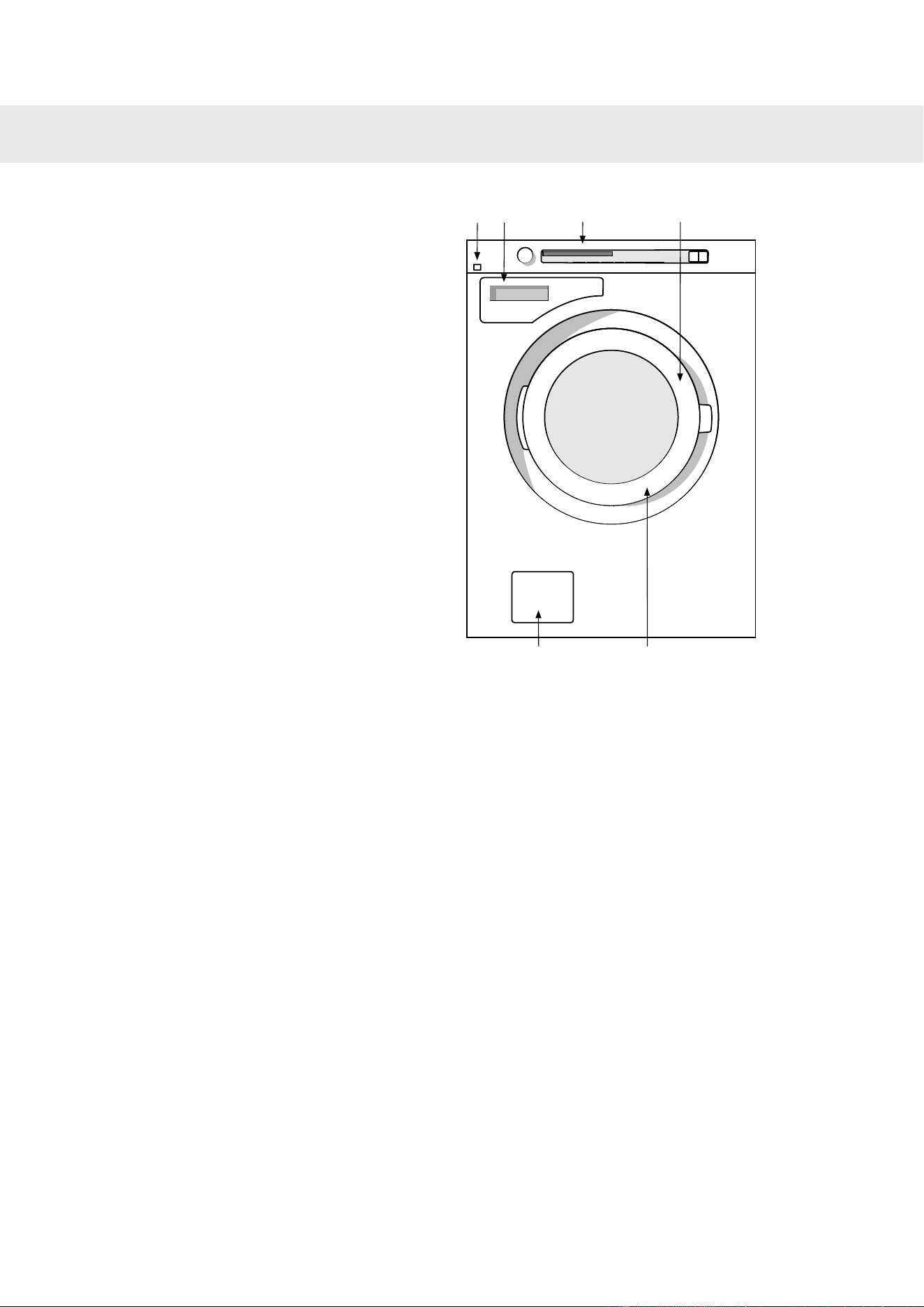
1. Main power switch
2. Detergent compartment
3. Program panel
4. Serial number plate (on inside of washer door)
5. Drain pump cover
6. Drain pump (behind cover)
7. Washer door
9Customer Care Center
1-800-898-1879
www.askousa.com
Parts of the washing machine
1 2 3
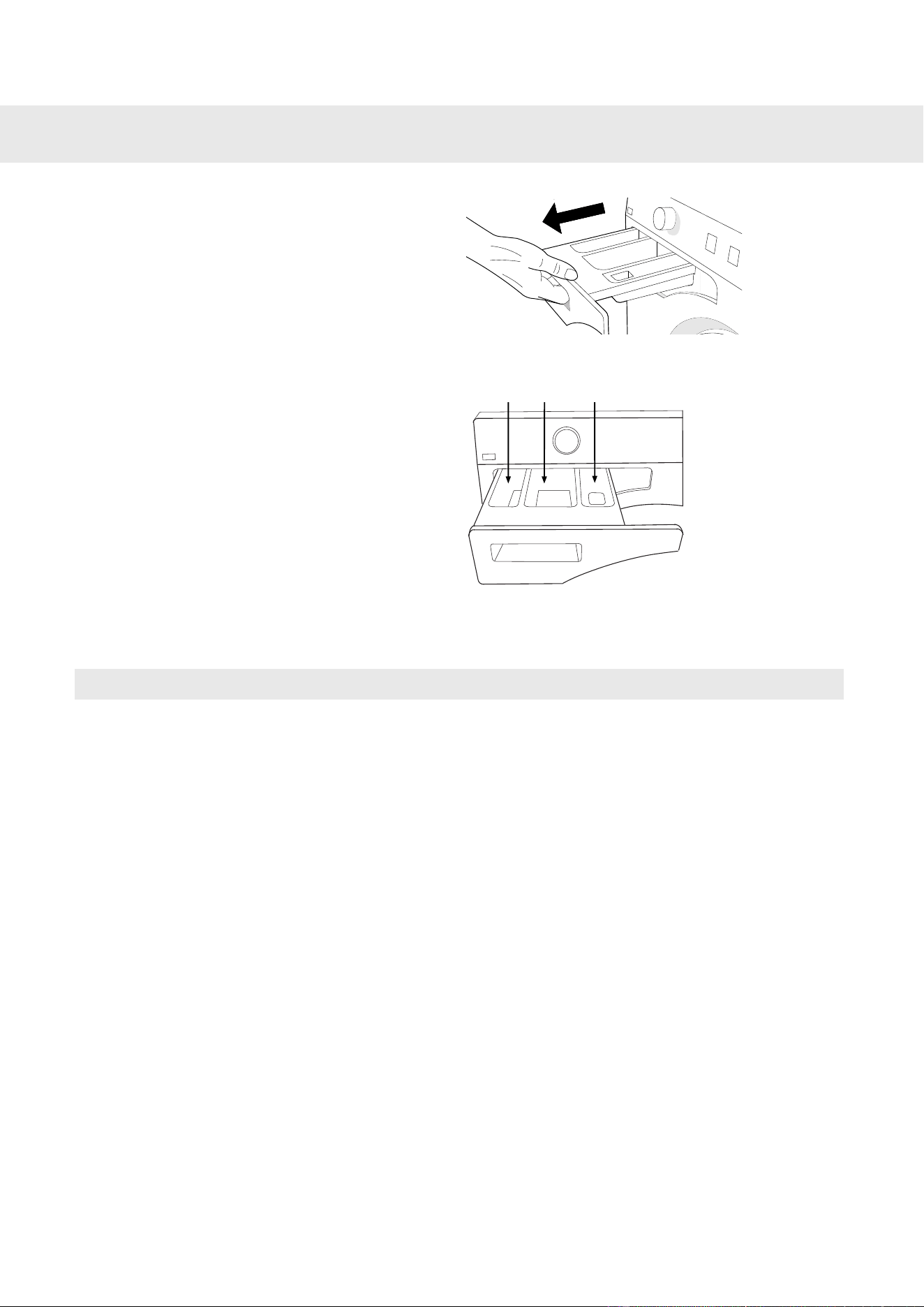
1. Pre Wash
2. Main Wash
3. Fabric softener
The detergent drawer automatically dispenses the detergent and fabric softener at the appropriate times.
Simply pour the measured amounts of detergent and softener into the proper compartments (as illustrated)
and close the drawer.
NOTE!
To avoid oversudsing, do not put detergent in the prewash compartment unless you are using one of
the Heavy wash programs which has a prewash cycle.
Customer Care Center10
1-800-898-1879
www.askousa.com
Detergent compartment
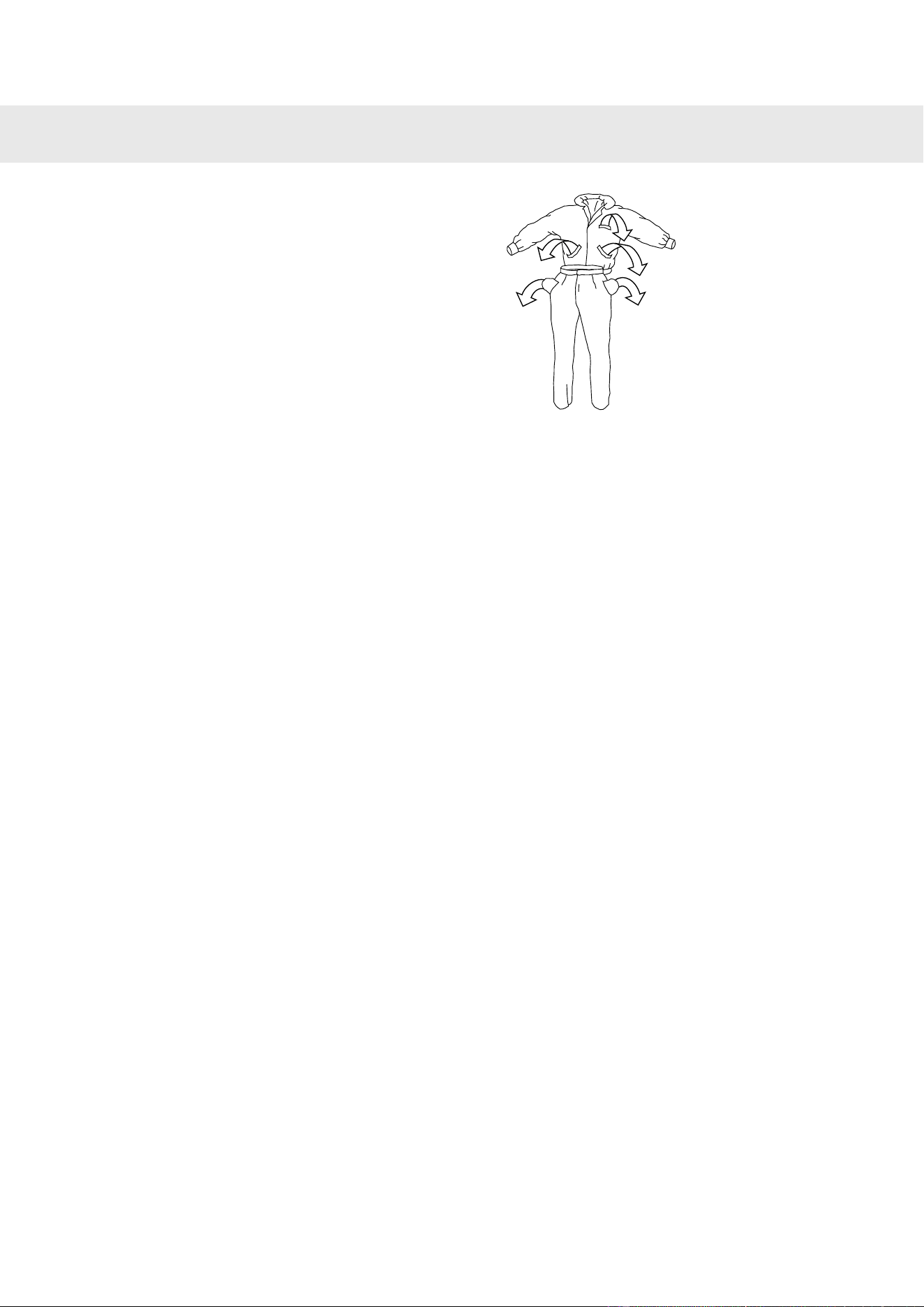
Here are some tips that may help you before
washing.
Sorting your laundry
Sort items according to:
• how soiled they are
• color
• material
Clothing
1. Close zippers and Velcro straps so they won’t
damage fabrics.
2. New colored items may contain excess dye
and should therefore be washed separately
the first few times.
3. Turn delicate items inside out. This reduces
the risk of burling and fading.
4. Empty pockets and wash them inside out if
possible.
Laundry labels
Look at the item’s laundry label. The table below
shows suitable wash programs for different
materials and wash loads. Using modern washing
machines and detergents, such as compact
detergents, you can usually wash at lower
temperatures. It is a good idea to use trial and
error to find out what produces the best results.
11Customer Care Center
1-800-898-1879
www.askousa.com
Advice and tips before washing
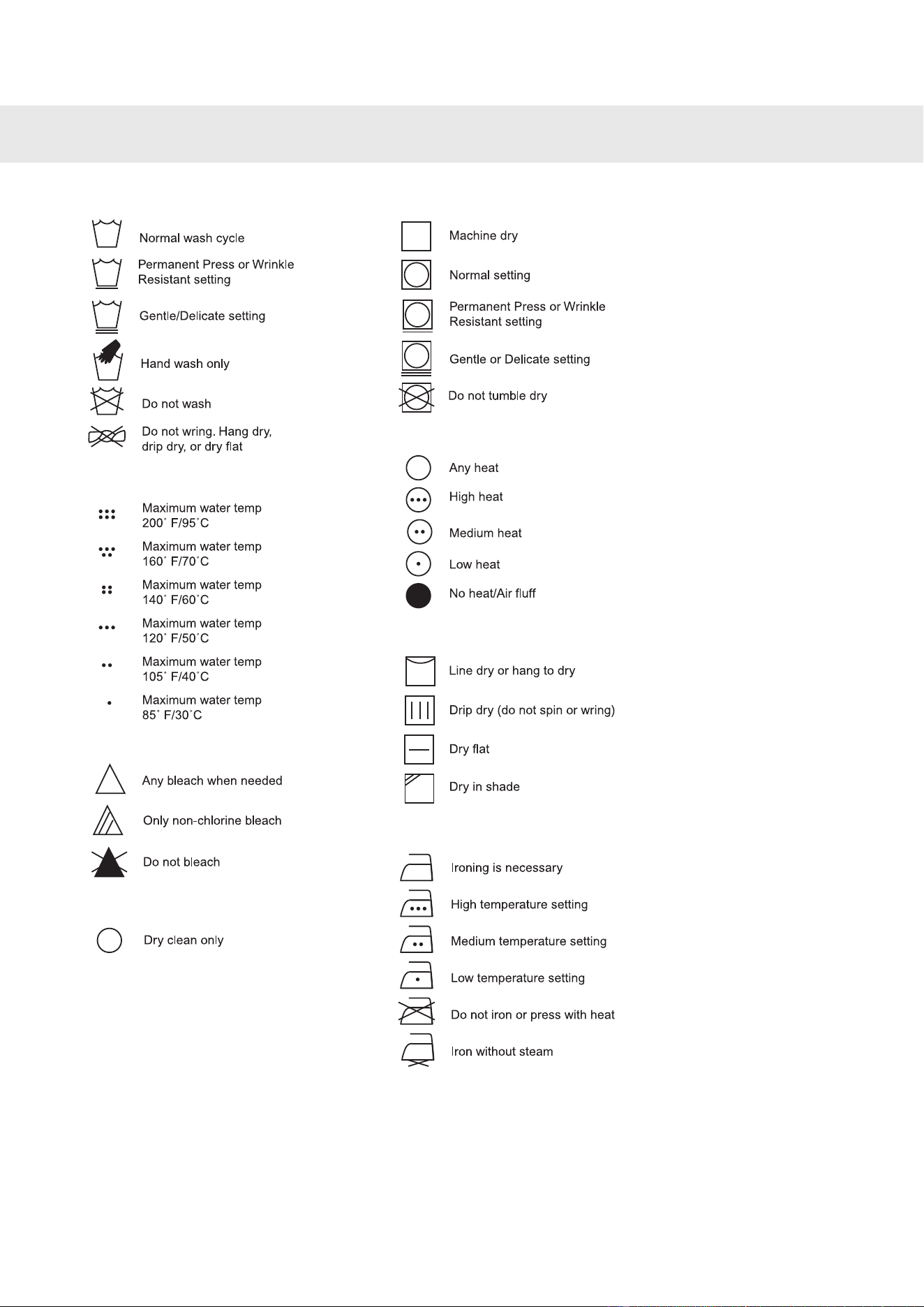
Ironing instructions
Special drying instructions
Tumble dry heat setting
Tumble dry cycle
Dry clean symbol
Bleach instructions
Wash water temperature
Wash cycle
Customer Care Center12
1-800-898-1879
www.askousa.com
Advice and tips before washing

Colored cotton
Colored cotton items labeled 140 °F (60 °C)
should be washed at 140 °F (60 °C) the first time
in order to remove any excess dye. If you do not
do so, there is a risk that the color will run. Use
detergent without bleach in order to preserve the
color of the fabric.
Unbleached linen
Unbleached linen fabrics should be washed at
140 °F (60 °C), using detergent containing no
bleach or optical whiteners. Heavily-soiled linen
can occasionally be washed at higher
temperatures, but not too often as the heat can
destroy the linen’s sheen and strength.
Wool
These fabrics are labeled either machine wash
or hand wash. The Wool/hand wash, 86 °F (30
°C) program is at least as gentle as washing by
hand.
Rayon fibers and synthetic fibers
Materials made of rayon fibers, such as viscose,
and some synthetic fibers are very delicate and
require much space to avoid wrinkling. Only half
fill the drum when washing and choose a spin
speed of 800 rpm or lower.
NOTE!
Viscose and acetates are fragile when wet.
Detergents
Eco-labeled detergents are less harmful to the
environment.
Detergent overdosing does not give better
washing results; it merely causes a greater impact
on the environment.
Try to use less detergent, and increase only if you
are not satisfied with the results.
NOTE!
Due to environmental concerns, we discourage
the use of strong chemicals.
When using agents for bleaching or stain
removal, there is a risk of rust (corrosion) and
discoloration of the machine.
Liquid detergents
We don’t recommend liquid detergents because
they tend to produce more suds than powder
detergents when used in water temperatures of
150° F or higher. If you should try a liquid
detergent, start with a very small amount, such
as 1 to 2 tablespoons. Also, liquid detergent can
be used for all programs without prewash, so add
it into the main wash compartment.
Detergents
Laundry detergents are available in low-, normal-
and high-sudsing formulas. A detergent´s ability
to clean is not relative to the amount of suds it
produces. Excess suds in a front-loading washer
actually interfere with the cleaning because they
cushion the tumbling action. Also, high-sudsing
detergents are more difficult to completely rinse
out.
The use of anything other than a low-sudsing
detergent can cause severe oversudsing, which
could cause suds to backup through the detergent
compartment and run down the front of the washer
onto the floor. If oversudsing occurs, run the wash
through one or more rinse programs until all items
are thoroughly rinsed. Remove the laundry then
run the washer through a Normal wash program
to get rid of any remaining detergent.
We recommend that you don’t use bleach in your
ASKO washer. The tumbling wash action,
temperature control options, extended wash times
and proper amount of detergent are sufficient to
remove most stains.
13Customer Care Center
1-800-898-1879
www.askousa.com
Advice and tips before washing
Recommended powder detergents
ASKO washers use 50% to 75% less detergent
than most other washers. This is because of their
low water consumption and the fact that all the
wash water is repeatedly circulated through the
laundry, ensuring that all the detergent is fully
utilized. We recommend that you use powder
detergents made specifically for front-loading
washers. These are sometimes called HE
(High-Efficiency) detergents. Please visit our
homepage www.askousa.com to see the powder
detergents we recommend for ASKO washers.
We recommend that you do not use any powder
detergent that doesn’t wash completely out of the
detergent drawer.
Detergent Amounts Based on Water
Hardness
The amount of detergent needed can vary due to
differences in water hardness. To determine the
water hardness in your area, contact your local
water utility or area water softening company. The
harder the water, the more detergent you may
need. Refer to the chart below for the
recommended detergent amounts based on water
hardness. Remember, you should adjust the
amount of detergent you use by small amounts
until you find the correct amount.
Note that 12 grains and higher is extremely hard
water and detergent alone may not be enough.
You may need to use a water softener to maximize
the performance of your washer. Also, in areas
with hard water (9+) you may need to wash at
lower temperatures to prevent hard water deposits
from forming in the tank and wash system.
Amount of detergent to use
The amount of detergent needed varies among
the different brands, but for most detergents, you
need only one or two tablespoons. Using too
much detergent can result in detergent residue
being left in your clothes, which can cause them
to appear gray or dingy. You should start with a
small amount of detergent and increase it only if
the cleaning results are unsatisfactory.
Additionally, you should never put detergent in
the prewash compartment unless you are using
a wash program that has a prewash cycle. This
could cause excess foaming, which could damage
the machine.
The amount of detergent needed can also depend
on the hardness of the water in your area. See
the “Detergent Amounts Based on Water
Hardness” section on the next page for more
details.
Recommended detergent amounts based on water hardness
Detergent amounts
Main WashPre WashWater hardness
1 to 1-1/2 tablespoons1 teaspoonSoft (0-3 grains per gal.)
1 to 2 tablespoons1 teaspoonMedium (4-8 grains per gal.)
2 to 3 tablespoons1 teaspoonHard (9+ grains per gal.)
Customer Care Center14
1-800-898-1879
www.askousa.com
Advice and tips before washing
WARNING!
To reduce the risk of fire, electric shock, or injury
to persons, read the IMPORTANT SAFETY
INSTRUCTIONS before operating this appliance.
1
Sort your laundry.
See the "Advice and tips before washing"
chapter.
Place underwired bras in a laundry net.
Empty pockets. Coins, nails, and the like can
cause damage to the machine and fabrics. See
the "Advice and Tips" section before washing.
2
Turn on the main power switch
3
Open the washer door and load
the laundry
If the washer door is closed, press the Door
Opening button (key symbol). The door opens
once all water has drained from the machine.
Load the laundry. The wash program chart shows
how much laundry can be washed with each
program.
4
Add detergent and fabric
softener, as required
The detergent packaging will have
recommendations for how much detergent you
should use. The machine holds 18 lb (8 kg) of
laundry. If you only have a small amount of
laundry in the machine, you can reduce the
amount of detergent used.
Powder detergent
Pour the powder into the main wash compartment,
and pre-wash compartment as well if desired.
Liquid detergent
When using liquid detergent, follow the chart on
page 15 for recommended detergent amounts.
We recommend always using a wash ball with
very thick liquid detergent.
Wash ball or net
If you use a wash ball or net, place it directly in
the drum and select a program without pre-wash.
NOTE!
Detergent overdosing does not give better
washing results; it merely causes a greater
impact on the environment.
Try using less detergent, and increase only if
you are not satisfied with the results.
Fabric softener
Pour the fabric softener into the compartment with
the symbol. Follow the recommendations on
the fabric softener packaging.
NOTE!
Do not fill above the compartment’s maximum
fill level. Otherwise fabric softener will be
dispensed too early, which impairs the washing
effect.
WARNING!
To reduce the risk of fire, electric shock, or injury
to persons, read the IMPORTANT SAFETY
INSTRUCTIONS before operating this appliance.
15Customer Care Center
1-800-898-1879
www.askousa.com
Operating instructions
5
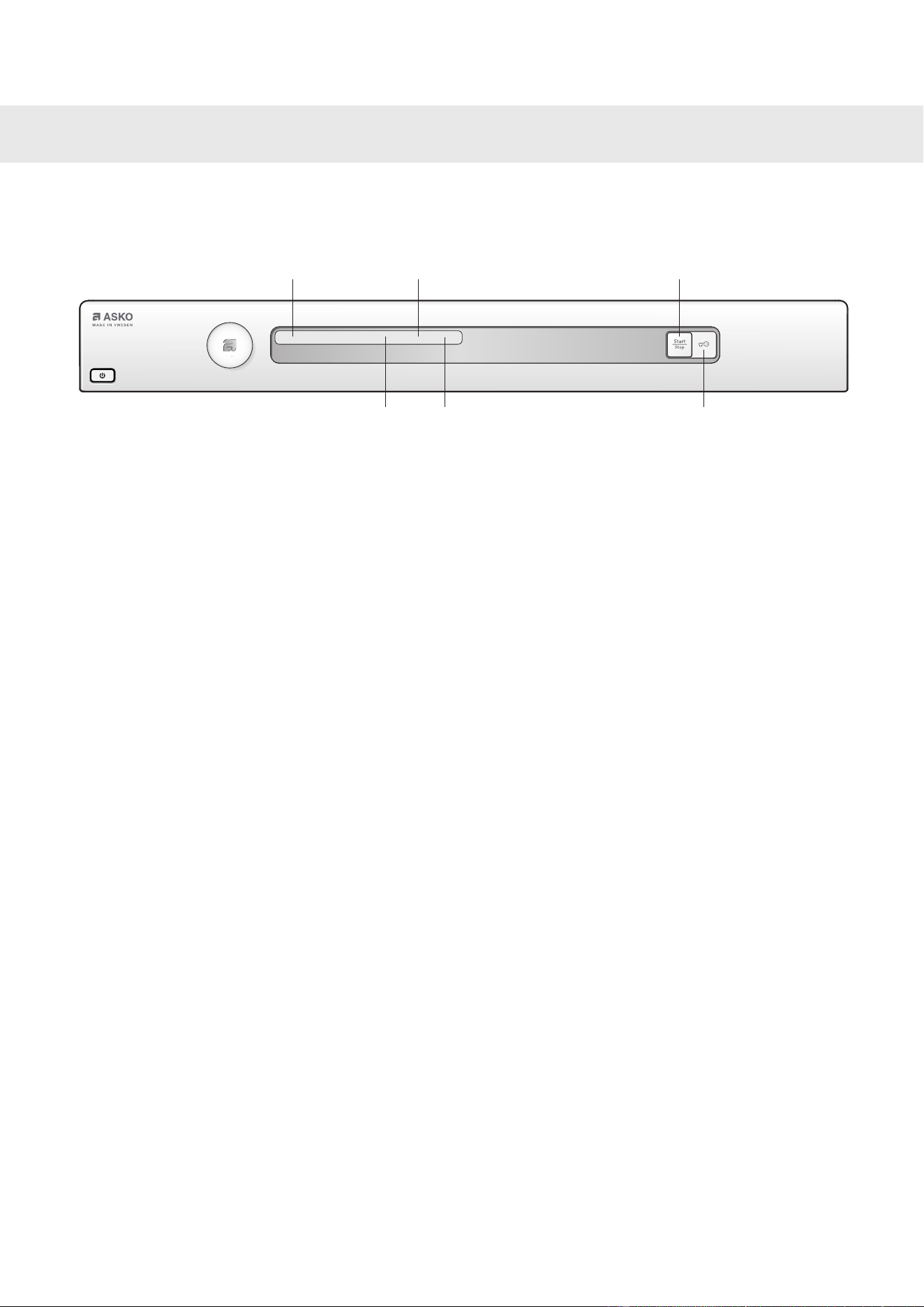
Select the program
Program
Temperature
Spin Speed
Time remaining
Start/Stop
Door Opening
The display shows the program name, the water
temperature, and the spin speed.
The washing machine has a number of
preselected programs when delivered from the
factory. The preselected programs can be
replaced. Contact the Customer Care Center for
information on which programs are available and
how to alter the preselected programs.
Normal Hot, 140 °F (60 °C)
Program for normally to heavily soiled laundry,
whites and colors. Follow the washing instructions
for each garment. 140 °F (60 °C) is a good
temperature for garments worn next to the skin.
This program has five rinses.
Normal Warm, 104 °F (40 °C)
Program for normally to heavily soiled laundry,
whites and colors. Follow the washing instructions
for each garment. This program has five rinses.
Heavy Wash, 194 °F (90 °C)
Program for heavily soiled laundry, with dirt that
needs to be fully dissolved before the main wash.
A pre-wash is used to do this.
Heavy Wash, 140 °F (60 °C)
Program for heavily soiled laundry, with dirt that
needs to be fully dissolved before the main wash.
A pre-wash is used to do this.
Sani, 194 °F (90 °C)
Program for normally to heavily soiled laundry.
Follow the washing instructions for each garment.
194 °F (90 °C) is a good temperature for white
and light-colored cotton, such as bed linen.
White, 140 °F (60 °C)
Program for normally soiled laundry, whites and
colors. Follow the washing instructions for each
garment. 140 °F (60 °C) is a good temperature
for garments worn next to the skin.
Colour, 104 °F (40 °C)
Program for normally soiled laundry, whites and
colors. Follow the washing instructions for each
garment.
Quick wash, 140 °F (60 °C)
Fast program for laundry that just needs
freshening up. Follow the washing instructions for
each garment. Garments worn next to the skin
ought to be washed at 140 °F (60 °C).
Super quick wash, 104 °F (40 °C)
Fast program for laundry that just needs
freshening up. Follow the washing instructions for
each garment.
PermaPress, 104 °F (40 °C)
Program for synthetics, delicate blended
materials, and permanent press cotton. Suitable
for shirts and blouses. Follow the washing
instructions for each garment. Many synthetics
will come clean at 104 °F (40 °C).
Wool/hand wash, 86 °F (30 °C)
A gentle laundry program for wool, silk, and
garments that should be washed by hand. The
program has a short spin.
Customer Care Center16
1-800-898-1879
www.askousa.com
Operating instructions

Rinse
This program performs one cold rinse cycle +
spin. Suitable for laundry that just needs to be
dampened.
MOP Wash, 194 °F (90 °C)
Program suitable for different types of mop. The
program has two rinses that use a large amount
of water.
MOP Wash, 140 °F (60 °C)
Program suitable for different types of mop. The
program has two rinses that use a large amount
of water.
Micro fibre wash, 140 °F (60 °C)
Program for laundry made of microfibers, such as
microfiber cloths. The program has three rinses,
and uses a large amount of water in the first rinse.
Micro fibre wash, 104 °F (40 °C)
Program for laundry made of microfibers, such as
microfiber cloths. The program has three rinses,
and uses a large amount of water in the first rinse.
Disinfection, 104 °F (40 °C)
Program where the temperature reached during
the main wash is maintained for 20 minutes.
Disinfection at this temperature requires special
detergent.
Disinfection, 140 °F (60 °C)
Program where the temperature reached during
the main wash is maintained for 20 minutes.
Disinfection at this temperature requires special
detergent.
Disinfection, 194 °F (90 °C)
Program where the temperature reached during
the main wash is maintained for 10 minutes. This
temperature is sufficient for disinfection without
special detergent.
Program A
No information available
Program B
No information available
Program C
No information available
17Customer Care Center
1-800-898-1879
www.askousa.com
Operating instructions
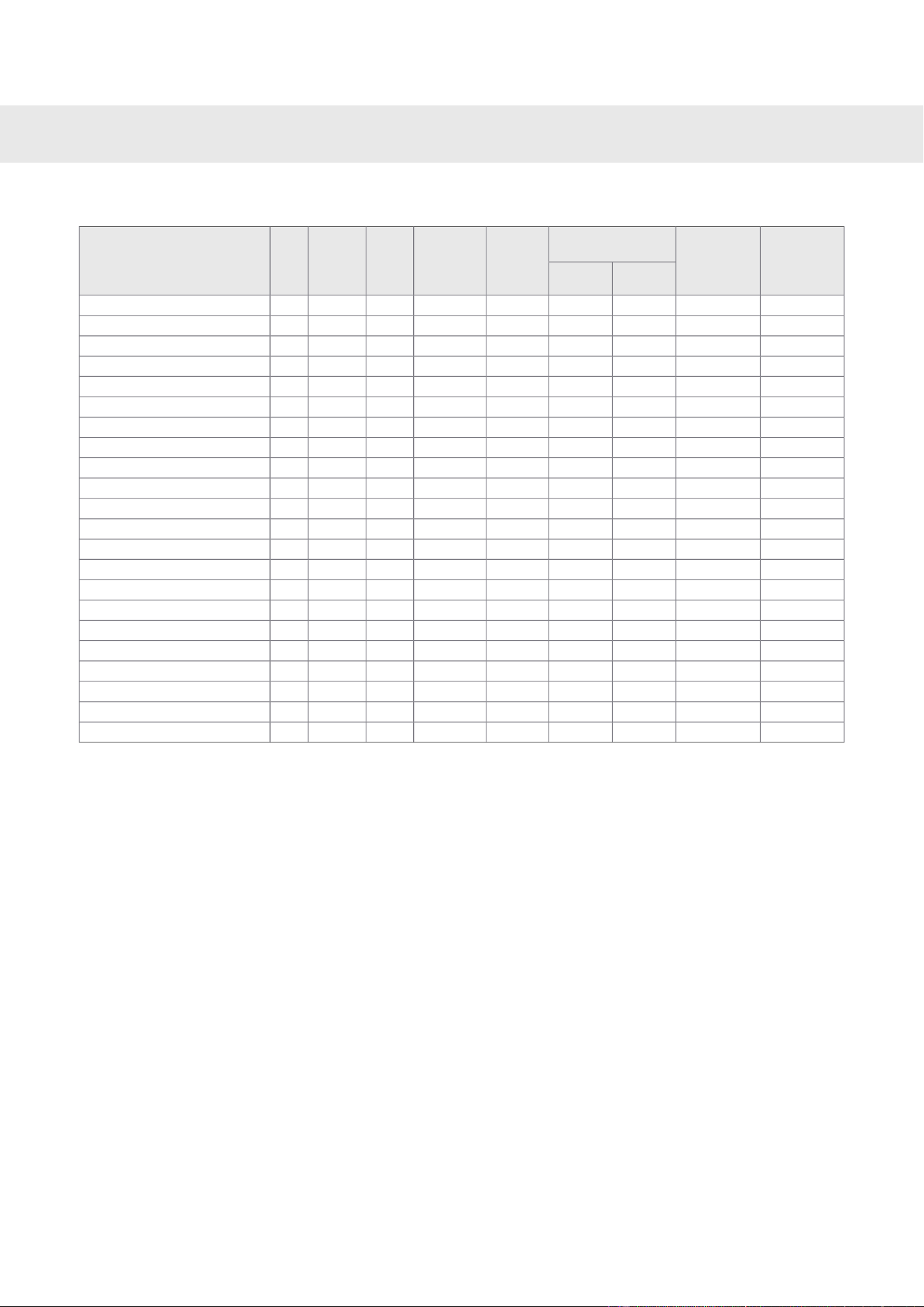
Program chart
Program time
(approx. hrs
and min.)
Energy con-
sumption
(approx.
kWh)
Water consumption
(approx. gallon)
Max. load
( lb)
Spin speed
rpm
Num-
ber
of rins-
es
Temp. °FPre
Wash
Program
ColdHot
3:051.200,021,71814005140Normal Hot, 140 °F (60 °C)
2:550.700,021,71814005104Normal Warm, 104 °F (40 °C)
1:352.351,819,31814003194XHeavy Wash, 194 °F (90 °C)
1:151.151,816,61814003140XHeavy Wash, 140 °F (60 °C)
0:581.354,813,71814003194Sani, 194 °F (90 °C)
0:480.304,812,41814003140White, 140 °F (60 °C)
0:500.303,713,51814003104Colour, 104 °F (40 °C)
0:300.603,28,798003140Quick wash, 140 °F (60 °C)
0:250.351,88,798003104Super quick wash, 104 °F (40 °C)
0:230.351,310,698003104PermaPress, 104 °F (40 °C)
0:300.350,015,97800386Wool/hand wash, 86 °F (30 °C)
0:150.100,05,3914001Rinse
1:001.252,112,41814002194XMOP Wash, 194 °F (90 °C)
0:400.352,111,11814002140XMOP Wash, 140 °F (60 °C)
1:000.304,89,81814003140Micro fibre wash, 140 °F (60 °C)
0:500.303,710,81814003104Micro fibre wash, 104 °F (40 °C)
1:150.701,818,01814003104XDisinfection, 104 °F (40 °C)
1:251.501,818,01814003140XDisinfection, 140 °F (60 °C)
1:452.651,820,61814003194XDisinfection, 194 °F (90 °C)
Program A
Program B
Program C
Customer Care Center18
1-800-898-1879
www.askousa.com
Operating instructions

6
Close the washer door and
press the Start/Stop button
NOTE!
A few seconds after you start a program, the
washing machine will begin to fill with water from
the hot and cold supplies. If for some reason no
hot water is available, the machine waits for one
minute and then fills with cold water only. The
wash drum does not start to rotate until it begins
to fill with water.
Time remaining
"Program Started" is shown on the display.
To add or remove laundry after the
program starts
If you want to add or remove items after the
program has started, you can stop the program
by pressing and holding the Door Opening button
(key symbol) for three seconds. When you restart
the machine, add any extra detergent needed and
close the washer door. The machine continues
automatically from the point where the program
was interrupted.
Stopping or changing a program
You can stop a program by pressing the
Start/Stop button for three seconds. "Stop"
appears on the display. To restart the machine,
select a new program, add any extra detergent
needed, and press the Start/Stop button.
NOTE!
Do not open the detergent compartment while
the machine is running.
7
Once the program has finished
Once a program has finished, "End"
appears on the display.
The washer door opens automatically once the
program has finished. If you want to deactivate
the Automatic Door Opening function, see the
"Selecting settings" section.
• Remove the laundry.
• Turn off the main power switch as this will save
energy.
If you have small children or pets at home, close
the washer door once you have removed the
laundry.
Backlighting
Two minutes after the wash program finishes the
display backlighting enters energy saving mode.
19Customer Care Center
1-800-898-1879
www.askousa.com
Operating instructions

You can change the following settings:
• Language
• Child-safe Start
• Door opening
• Temperature °C/°F
• Water intake
Do as follows to open the settings menu:
1. Turn off the machine using the main power switch.
2. Press and hold the Door Opening button and then press the main power switch. Then press the Door
Opening button 5 times within 10 seconds.
3. Select the setting you want to change by turning the program selector.
4. Press the Door Opening button once.
5. Change and save the setting as described below.
6. Press Start/Stop to return to the program menu.
Door opening
If you do not want the washer door to open automatically when the program is finished, you can deactivate
this function.
1. Turn the program selector and choose "Automatic Door Opening On" or "Automatic Door Opening
Off".
2. Press the Door Opening button once to save the setting.
Language
1. Turn the program selector to choose from: US English, English, Svenska, Dansk, Norsk, Suomi,
Français, Deutsch, Italiano, Espanol, Русский, Nederlands.
2. Press the Door Opening button once to save the setting.
Temperature
1. Turn the program selector to choose between: °C and °F.
2. Press the Door Opening button once to save the setting.
Water intake
Connecting to both the hot and cold water supplies reduces the wash time and reduces the washing
machine's electricity consumption. At the factory, the machine is set for connecting to both hot and cold
water supplies. Select Cold if you want to set the machine for cold water intake only.
• Turn the program selector to choose between: Cold and Hot.
• Press the Door Opening button once to save the setting.
Child-safe Start
You can activate the Child-safe Start option to prevent children from starting the machine.
1. Turn the program selector and select "Child-safe On" or "Child-safe Off".
2. Press the Door Opening button once to save the setting.
You can temporarily deactivate Child-safe Start by pressing Start/Stop and the Door Open button at the
same time. Child-safe Start will be deactivated for 3 minutes.
Customer Care Center20
1-800-898-1879
www.askousa.com
Settings
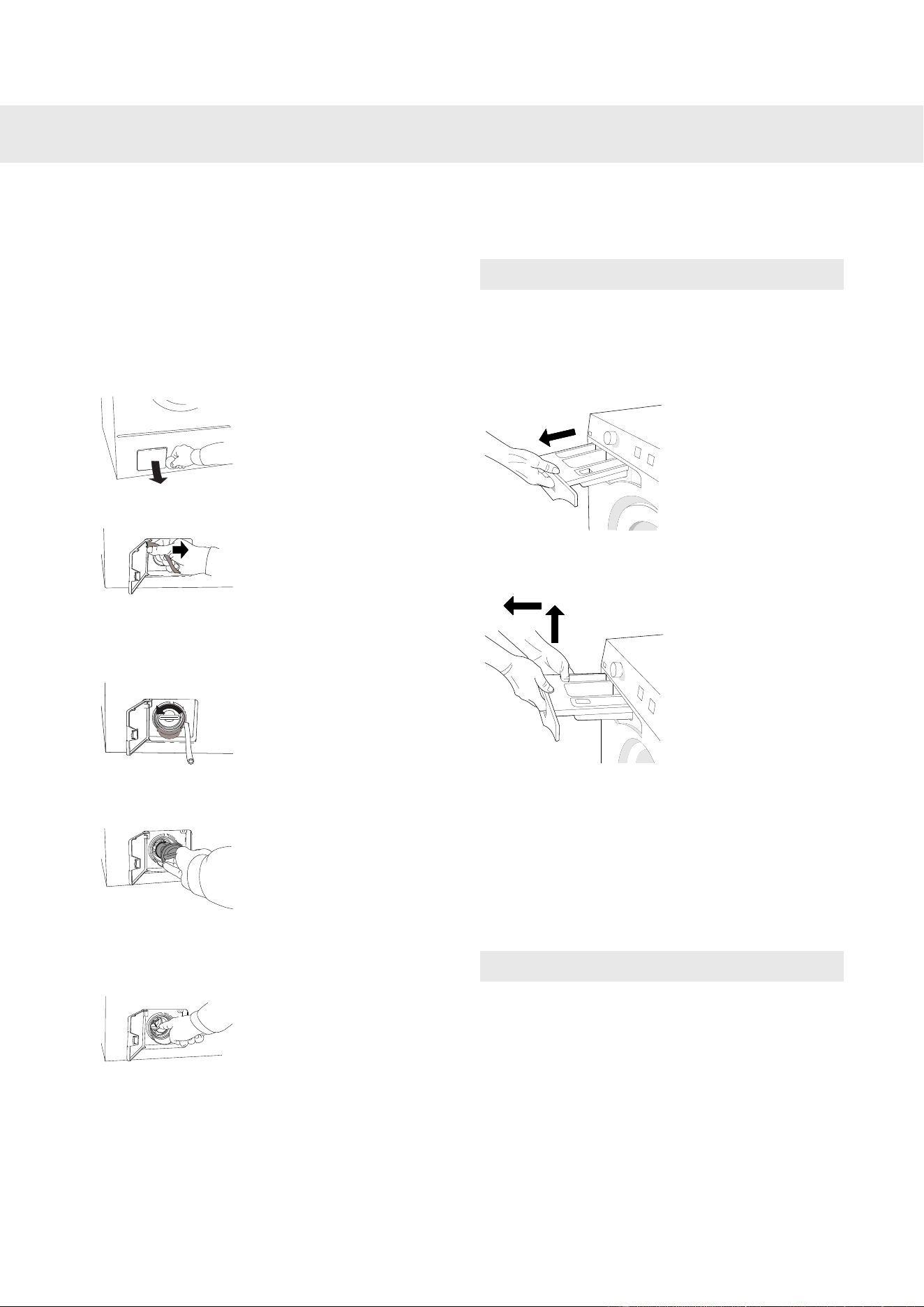
Cleaning the trap and the drain
pump
The washing machine has a trap where small
items such as coins, buttons, and hairpins can
collect. To clean the trap and the drain pump, do
as follows:
1. Make sure the machine is empty of water and
switched off at the main power switch.
2. Open the door.
3. Unhook the drain hose from the connector
inside the door and drain the water into a
suitable container, such as a shallow bowl.
4. Turn the cover counter-clockwise to open the
pump. Remove the cover.
5. Remove any items and debris from the pump
housing and cover. Also check that the pump
impellers at the back rotate.
6. Screw on the cover, replace the drainage hose
on the hatch pin, and close the hatch.
Cleaning the detergent
compartment
NOTE!
Do not run the detergent compartment through
a dishwasher!
Pull the detergent compartment out as far as it
will go.
Lift the detergent compartment as you pull it out
to remove it from the machine.
Rinse the compartment and scrub it clean. The
fabric softener compartment cover can be
removed.
Cleaning the outside of the machine
Clean the outside of the machine and the program
panel with a mild cleaner. Do not use any
solvents, as these can damage the machine.
NOTE!
Do not hose down the machine with water!
21Customer Care Center
1-800-898-1879
www.askousa.com
Care and maintenance instructions

Cleaning the inside of the machine
to avoid unpleasant smells
Modern detergents often allow laundry to be
washed at low temperatures. This means that
small deposits can build up in the machine. These,
in turn, may lead to unpleasant odors developing.
To avoid this, we recommend running a 203 °F
(95 °C) wash program once a month. When you
do this, use a small quantity of detergent. It is not
necessary to put any laundry in the machine.
Customer Care Center22
1-800-898-1879
www.askousa.com
Care and maintenance instructions
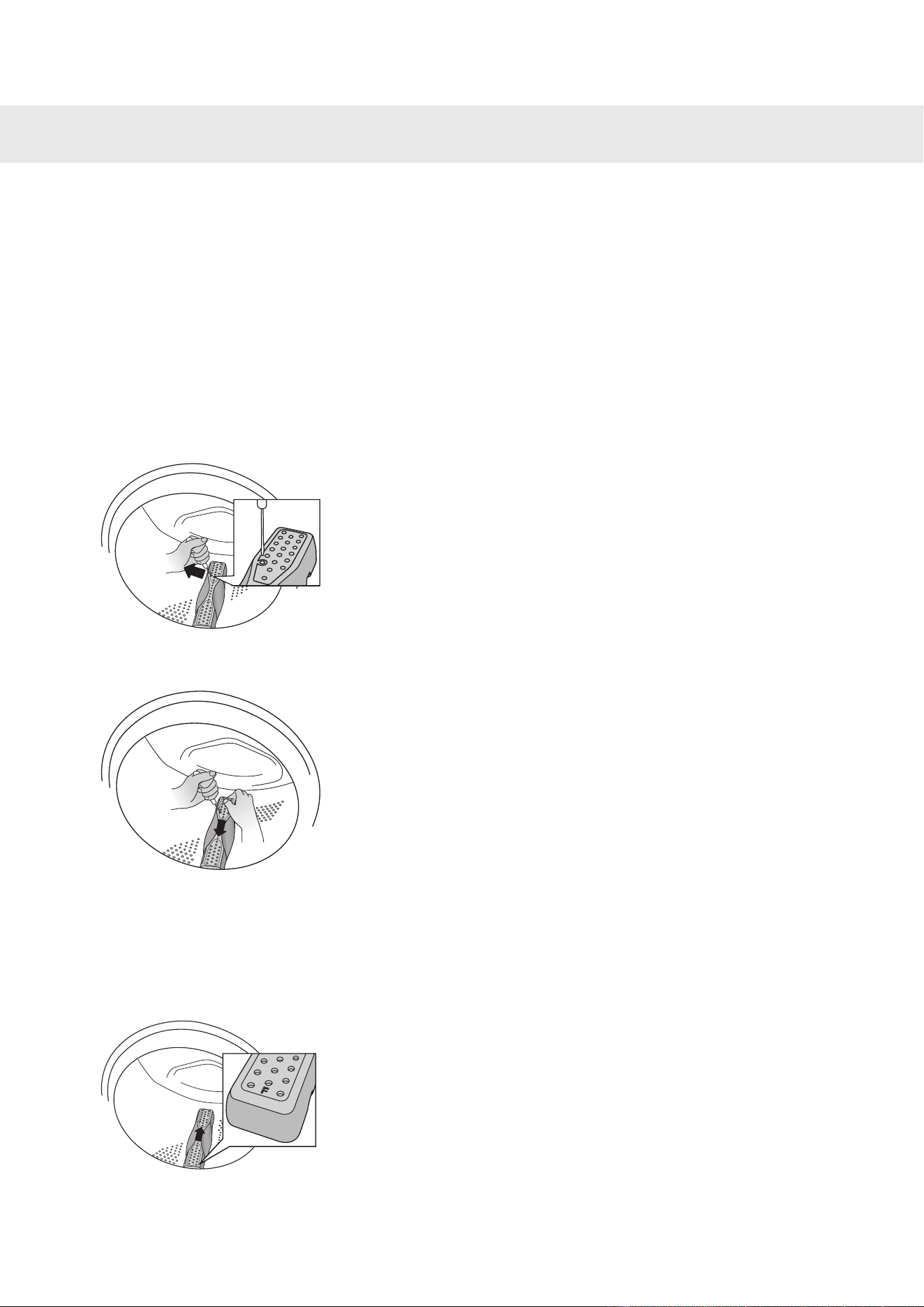
Rinse holes under the paddle
If you suspect that objects such as nails or paper
clips may have fallen into the wash drum, you
should check the space under the paddles. Such
objects can rust and cause spots on clothing.
Nails and other sharp objects can cause holes in
fabrics.
Do as follows:
1. Insert a screwdriver or similar tool into the hole
on the paddle as illustrated and carefully push
to the left.
2. Use your other hand to grasp the paddle and
pull it toward you.
3. Lift the paddle.
4. Remove any objects.
5. Place the paddle in the mounting hole with the
F-mark toward you. Ensure that all the paddle
fasteners are in their holes in the drum. Push
it in until it catches.
If you have hard water
If you live in an area with hard water (high
limescale content), a grayish-white coating may
form on the wash drum. To remove this coating,
pour approximately 20 gram (1 oz) of citric acid
into the wash drum and run any 203 °F (95 °C)
program. Repeat if necessary.
23Customer Care Center
1-800-898-1879
www.askousa.com
Care and maintenance instructions
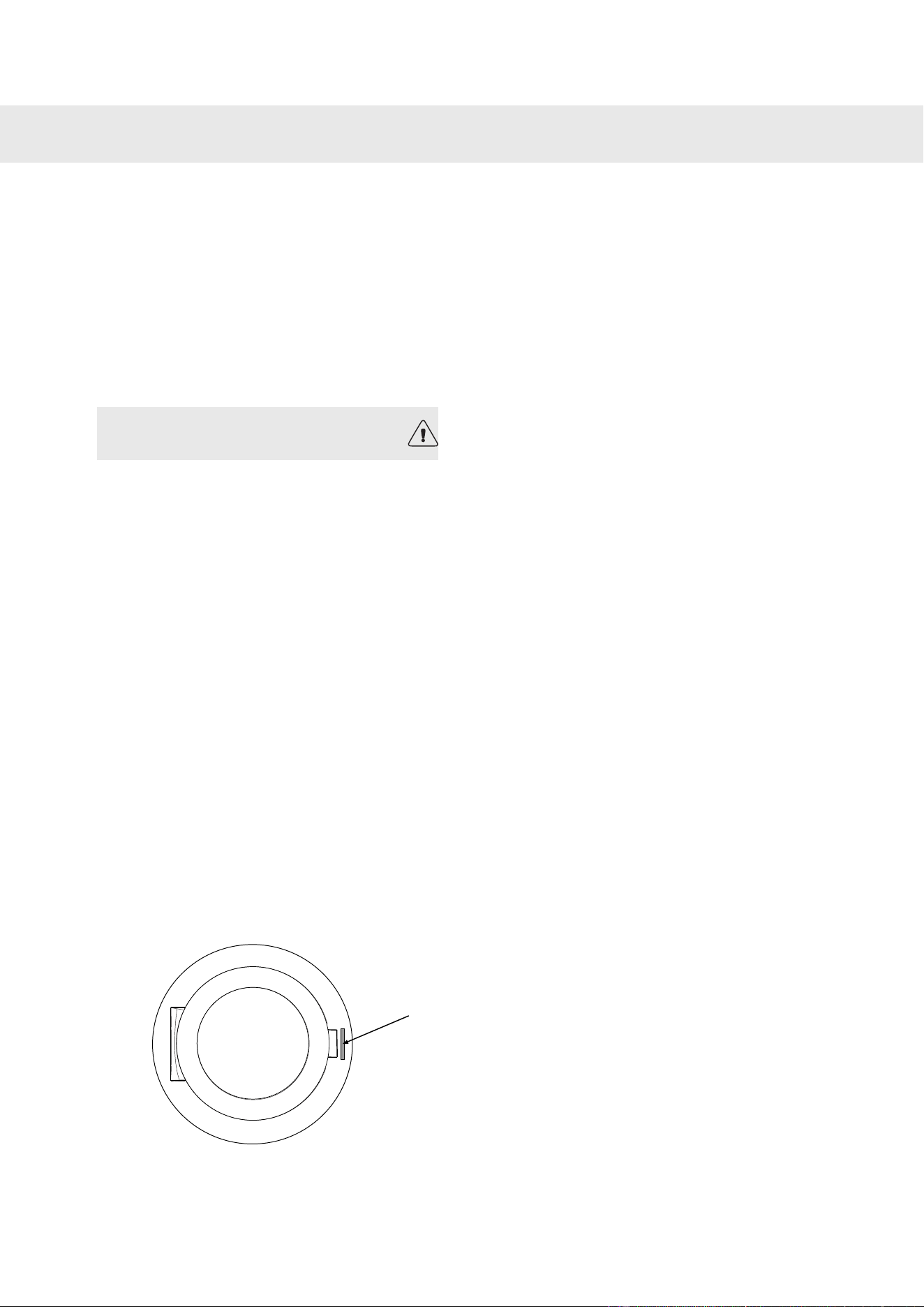
The washer door will not open
1. Check that the main power switch is on.
2. Is there power? Check your home’s fuses
(circuit breakers). The washer door cannot be
opened with the door opening button (with the
key symbol) if the power is off.
If nothing else works, the washer
door can be opened as follows:
WARNING!
The door may only be opened manually if the
electric power is cut and the machine has
been drained of water.
A First, empty the water from the washing
machine. Press and hold the Door Opening
button for three seconds to pump out the
water. If this does not work, the machine
must be drained manually. See "Cleaning
the trap and the drain pump" in the "Care
and maintenance instructions" chapter.
B Ensure that the main power switch is turned
off and that the plug has been removed from
the wall socket.
C Take the emergency door opening tool and
place it in the gap on the right side of the
washer door lock. This tool is found in the
enclosed plastic bag.
D Push the tool upward to open the washer
door.
If in the future the washer door does not open
when the wash program has finished, call the
Customer Care Center.
The machine will not start
1. Is the washer door properly closed? Push it
firmly.
2. Is there power? Check the fuses and residual
current devices (circuit breakers) in the
building.
Customer Care Center24
1-800-898-1879
www.askousa.com
Troubleshooting

Error messages
If an error occurs during the program, a message
is shown on the display. To exit the message after
taking action, turn the machine off and then back
on.
The error messages that may be shown in the
display are:
Close the door
Close the washer door and the program will start.
Overfilling
1. Shut off the water tap.
2. See "Drainage error".
Drainage error
Check:
• that no objects are stuck in the drainage hose
outlet.
• that the drain pump is not blocked by foreign
objects. Clean the pump. See the "Care and
maintenance instructions" chapter.
• that there are no kinks in the drainage hose.
Press the Door Opening button (key symbol) to
empty the machine of water before opening the
washer door. If this does not resolve the problem,
call the Customer Care Center.
Water Inlet Fault
Check:
• that the tap on the water pipe is open.
• that the filter in the machine’s water intake is
not blocked.
Action:
1. Shut off the water tap.
2. Unscrew the hose.
3. Clean the filter in the intake valve on the
machine.
4. Screw the hose back on.
5. Turn on the tap.
6. Run the program again to check whether the
error has been fixed.
7. If this does not resolve the problem, call the
Customer Care Center.
Door opening error
Contact the Customer Care Center at the number
listed at the bottom of this page!
Motor fault
Contact the Customer Care Center at the number
listed at the bottom of this page!
Imbalance
The machine stops the spin cycle if there is too
much imbalance. The washing machine restarts
the spin cycle and hopefully the laundry is better
distributed in the drum. This procedure can be
repeated up to 10 times. If the machine still fails
to find a good balance, the program jumps to the
next step.
The error message requires no action.
25Customer Care Center
1-800-898-1879
www.askousa.com
Troubleshooting

Technical data
33 1/2'' (850 mm)Height:
23 1/2'' (597 mm)Width:
23 7/8" (606 mm)Depth:
161 lb (73 kg)Weight:
15,9 gal (60 l)Cylinder volume:
18 lb (8 kg)Max. laundry capacity:
400-1400Spin speed (rpm):
See serial number tag and rating plate.Rated power:
See serial number tag and rating plate.Heater output:
14-145 psiWater pressure:
Stainless steelWash drum and liquid compartment material:
Powder-coated and hot-galvanized sheet steel or stainless steel.Outer casing material:
59" (1.5 m) pex pipeWater connection:
67" (1.7 m) polypropylene hoseDrain:
Customer Care Center26
1-800-898-1879
www.askousa.com
Technical information
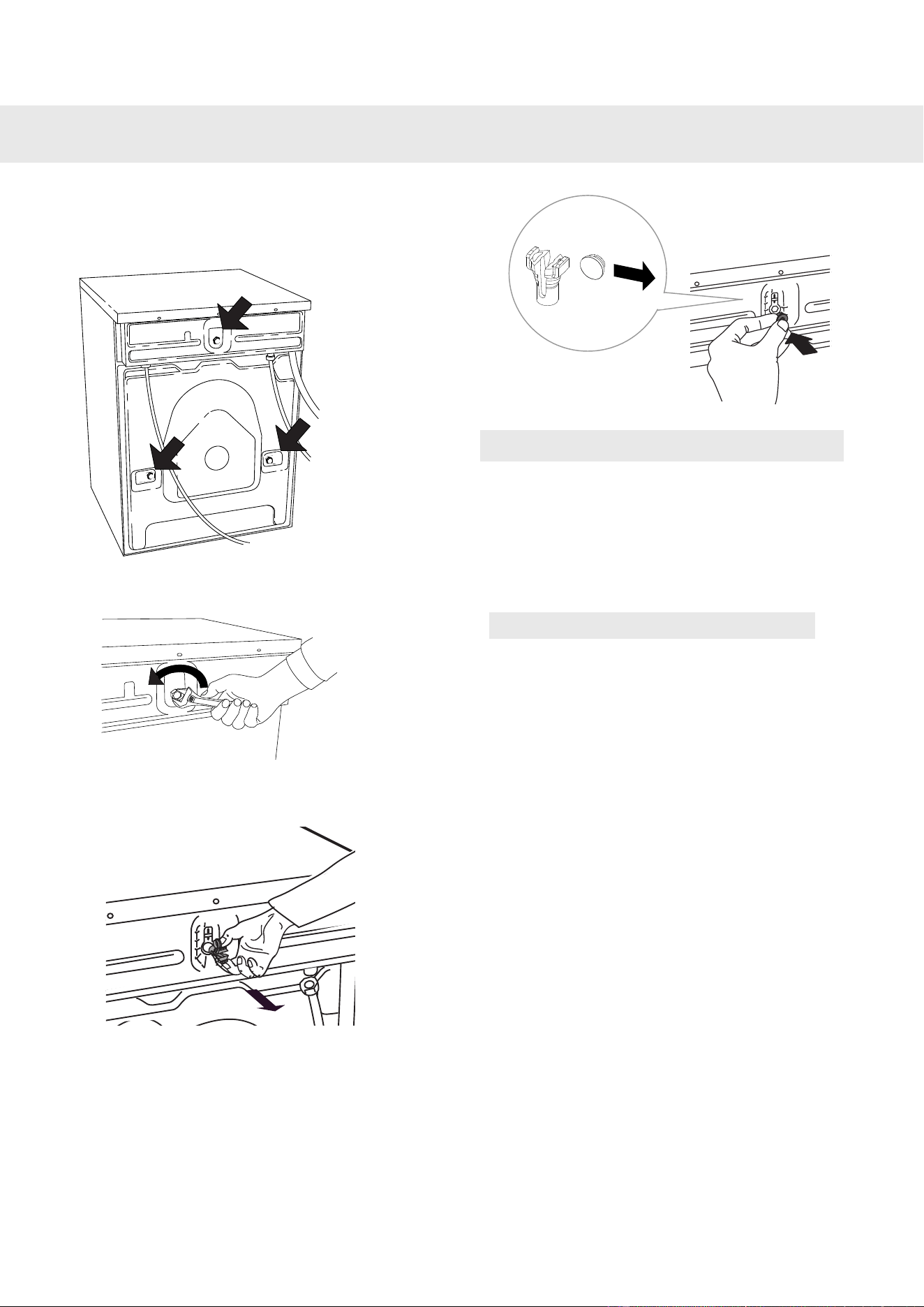
Remove the three transport bolts and the plastic
plugs for locking the machine for transport before
using the machine.
1. Loosen and remove the bolts as illustrated
below.
2. To remove the plastic plugs that held the bolts,
squeeze together and pull out.
3. Remove the plastic covers from the plugs.
Push the plastic covers into the three holes
that contained the plugs. Save the plastic plugs
in case the machine is moved in the future.
NOTE!
If the machine is to be transported, the bolts and
plastic plugs for locking the machine during
transport must be installed to prevent damage
to the machine through shaking. If the transport
bolts or plastic plugs have been lost, you can
order new ones from your retailer.
DesignationArticle number
Screw80 882 77
Plastic plug, transport
lock
80 901 05
Order three of each item!
27Customer Care Center
1-800-898-1879
www.askousa.com
Transport protection
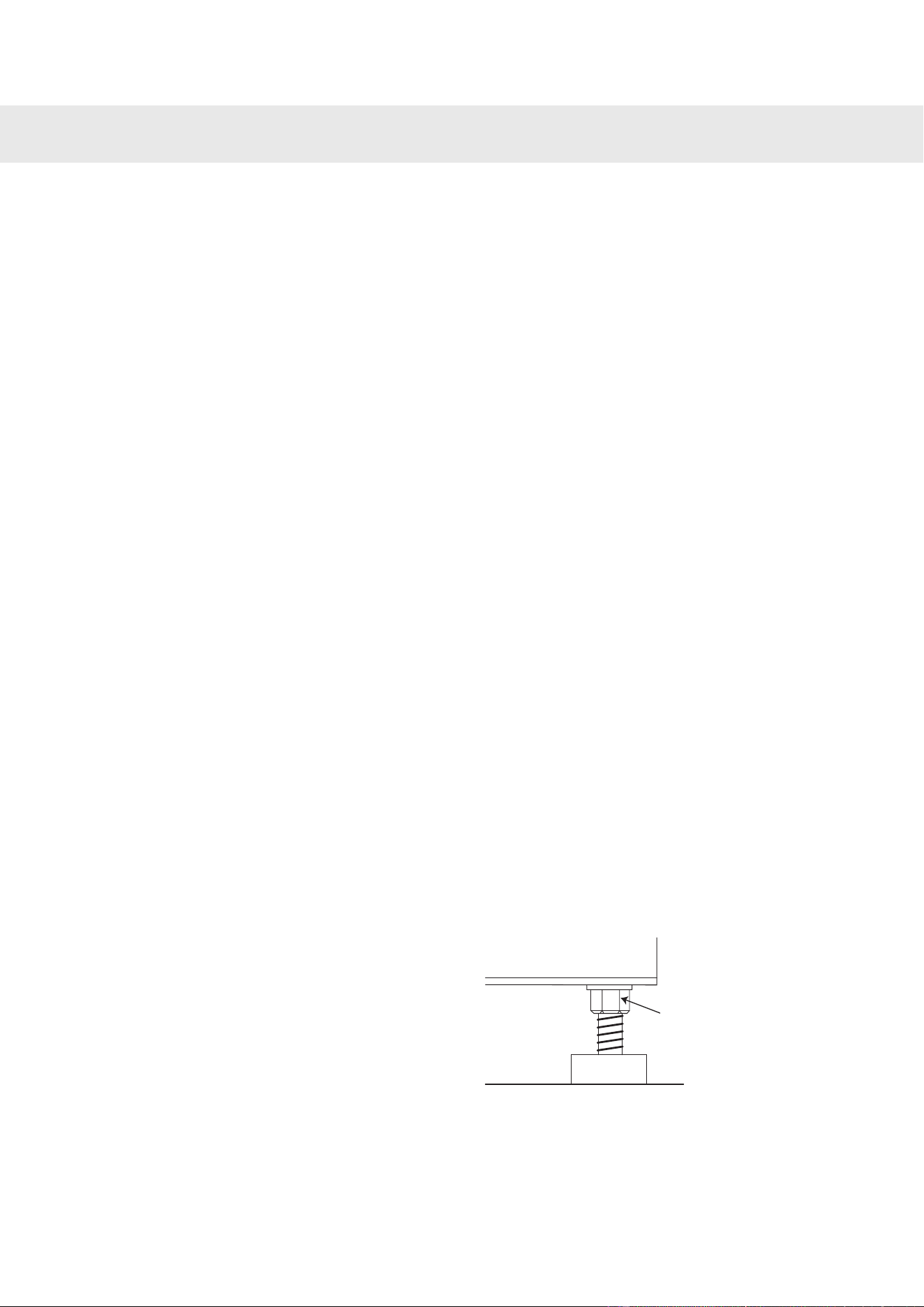
Connection to water supply
Water intake
At the factory, the machine is set for connecting
to both hot and cold water supplies. The machine
can be set for cold water intake only. See the
section "Settings".
Hot water connection
A few seconds after you start a program, the
washing machine will begin to fill with water from
the hot and cold supplies. If for some reason no
hot water is available, the machine waits for one
minute and then fills with cold water only. The
wash drum does not start to rotate until it begins
to fill with water.
Electrical installation
Coin operation
The machine is prepared for coin operation. Such
installation must be carried out by a qualified
professional.
The installation requires a connection cable to
power the coin meter. This connection cable can
be ordered using spare part number 92 090 95.
The coin meter shall be able to short circuit two
signal lines for periods of up to 10 minutes. This
is to give the user time to load the machine,
choose a program, and start the program after
putting the coins in.
"Insert coin" appears on the display when the
machine is started with the main power switch.
Read these instructions carefully and completely
before you install the machine. The installation
should be carried out by a qualified person who
is familiar with all local codes and ordinances for
electrical and plumbing connections.
Cosmetic damage must be reported to your dealer
within five days from the date of purchase. After
unpacking the washer, thoroughly check the unit
for cosmetic damage.
Leveling the machine
It is important that the machine is level to prevent
excessive vibrations during spin cycles. Each foot
of the washer is adjustable, so you can level the
washer on any surface. Once it is level, securely
tighten the lock nuts on the feet to prevent
excessive vibration during spin cycles.
Be sure to tighten the
lock nuts securely
when you level the
machine.
Customer Care Center28
1-800-898-1879
www.askousa.com
Installation
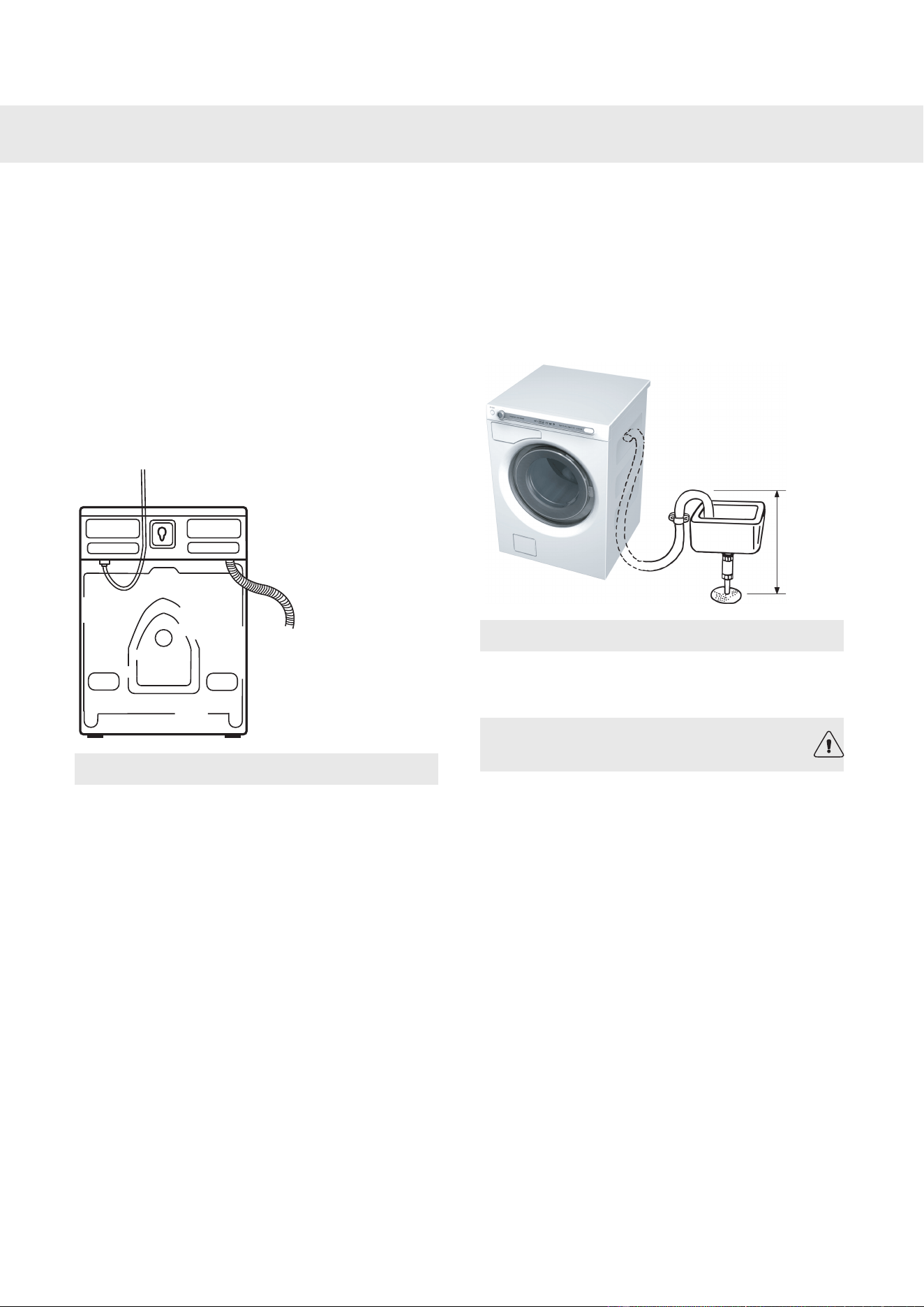
Water supply connection
Since ASKO washers have a built-in heating
element, you only need a cold water inlet. The
connection should be made by someone who is
sufficiently skilled. Use the hose supplied with the
washer. (The inlet hose is marked for correct
connection.) The water pressure must be in the
range 15–146 PSI. A valve should be fitted on the
water supply pipe. If a new supply pipe has been
installed for the washer, it should be flushed
thoroughly to remove any foreign particles that
might clog the filter in the fill valve.
NOTE!
If the unit is installed on a second storey, follow
local building codes. We recommend installing
a drip pan.
Drain outlet connection
The machine is supplied with the outlet hose
already attached. The hose should be extended
over a suitable sink edge or drain pipe at a height
of 24" to 36" (610 mm to 914 mm) above the
bottom of the unit. (The lower height is preferable.)
Make sure the hose is not kinked.
24" to
36"
NOTE!
If the hose is extended, the internal diameter of
the coupling must not be less than ½".
WARNING!
Do not extend the drain hose higher than 36"
(914 mm) from the bottom of the unit.
Electrical Connections
The machine is delivered ready-fitted with a plug
and is intended for connection to an ASKO Dryer,
which is equipped with a matching receptacle.
The plug supplied with the washer can only be
used with an ASKO Dryer. If the washer is used
separately or with another dryer, it must be on a
separate 208-240 V single-phase circuit.
If the machine is to be used in a wet area, the
supply must be protected by a residual current
device.
As supplied: 208-240 V, 60 Hz, 3000W heating
element,15A fuse required.
29Customer Care Center
1-800-898-1879
www.askousa.com
Installation
WARNING!
Connection to a permanently wired supply point
must be made only by a qualified electrician
Grounding instructions
This appliance must be grounded. In the event of
malfunction or breakdown, grounding will reduce
the risk of electric shock by providing a path of
least resistance for electric current. This appliance
is equipped with a cord having an
equipment-grounding conductor and a grounding
plug. The plug must be plugged into an
appropriate outlet that is properly installed and
grounded in accordance with all local codes and
ordinances.
Freestanding installation
The washer can be placed next to the dryer. It is
essential that the machine is leveled and the
locknuts are tightened to prevent excessive
vibration during spin cycles. Also be sure to leave
a minimum of ½" of space between the washer
and the dryer. The height adjustment for the
washer is 33½" to 34½" (850 mm to 876 mm). Do
not raise it higher than 34½" (876 mm).
WARNING!
Improper connection of the equipment-grounding
conductor can result in a risk of electric shock.
Check with a qualified electrician or serviceman
if you are in doubt as to whether the appliance
is properly grounded.
Do not modify the plug provided with the
appliance. If it will not fit the outlet, have a proper
outlet installed by a qualified electrician.
Stacked installation
ASKO washers should never be stacked on a
counter or a dryer. You can, however, stack an
ASKO dryer on an ASKO washer. Refer to your
Dryer Use and Care Guide for instructions on how
to do this.
Built-in installation
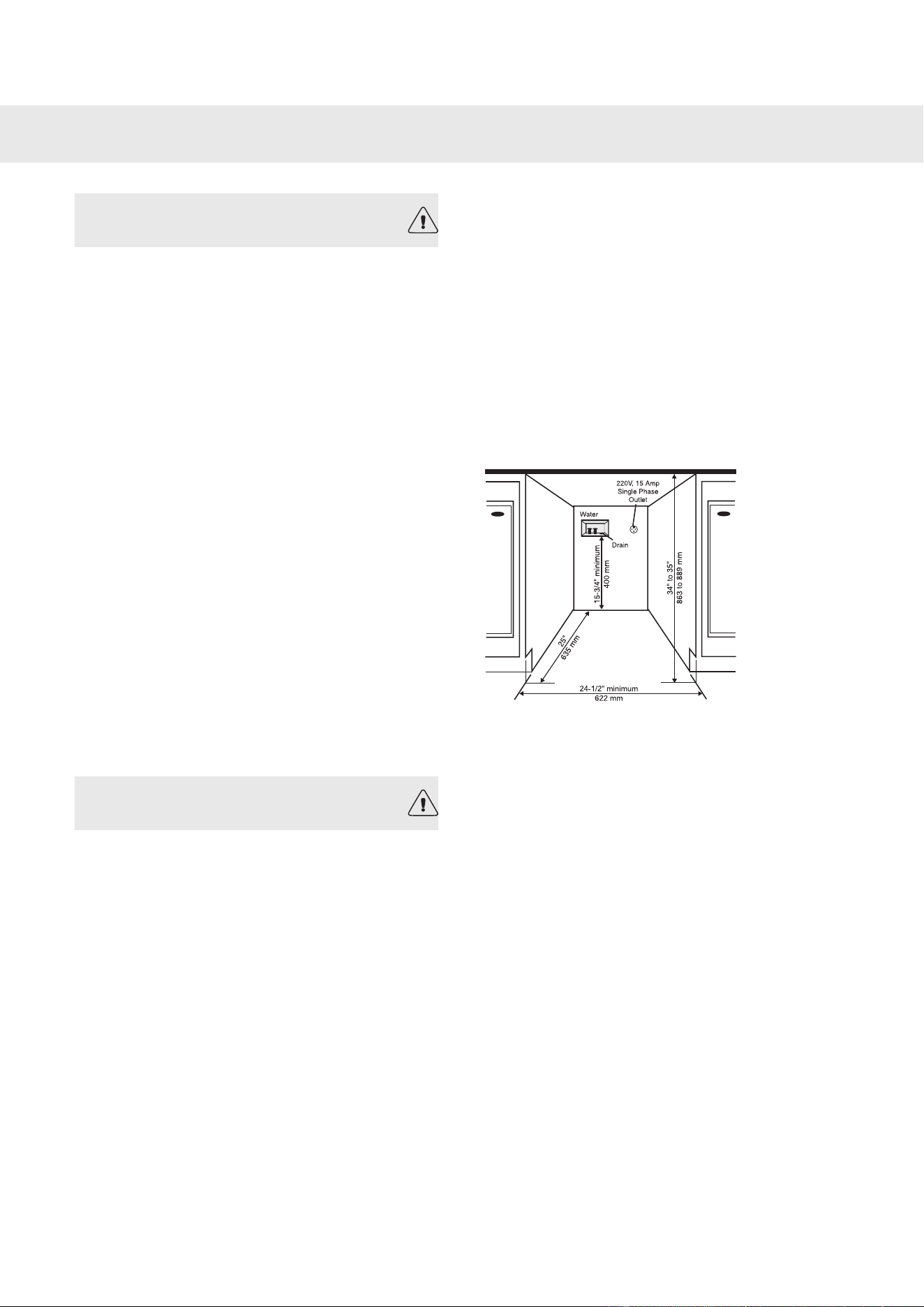
ASKO washers can be installed beneath a cabinet
or worktop with a height of 34" to 35" (863 to 889
mm) or in a closet. There must be a gap of about
½" (12 mm) all around the machine, including
between the rear edge of the machine's top panel
and the back wall. The opening width must be at
least 24½" (622 mm). Space must also be
available for the fill and drain hoses. See the
illustration below for measurements and positions.
If the washer is installed in a closet the door must
be left open while the washer is running.
If the drain outlet is higher than 24"(610 mm), the
connections will need to be recessed.
Customer Care Center30
1-800-898-1879
www.askousa.com
Installation
It is important to register your product warranty by logging onto "http://www.askousa.com/customer-
care/register-my-appliance/" and filling out all required fields within 90 days from the date of purchase.
After doing so, you will be e-mailed a certificate that will extend the original warranty for one additional
year. If you do not have access to the internet, complete the warranty card included with the product
and mail it to the address on the warranty card within 90 days from the date of purchase. Cosmetic
damage must be reported to your dealer within five days from the date of purchase. After unpacking
the washer, thoroughly check the unit for cosmetic damage.
ASKO Appliances Inc. will pay for:For residential installations only
ASKO replacement parts and/or repair labor to correct
defect in materials or workmanship. Service must be
provided by an authorized ASKO service agent.
Length of warranty Two-Year Full
From date of purchase.
ASKO replacement parts and/or repair labor to correct
defect in materials or workmanship. Service must be
performed by an authorized ASKO service agent.
Third Year Full
Complete your product warranty registration
online at "http://www.askousa.com/customer-
care/register-my-appliance/" within 90 days from
the date of purchase to extend the original war-
ranty one additional year. If you do not have
access to the internet, complete the warranty
card included with the product and mail it to the
address on the warranty card within 90 days
from the date of purchase.
ASKO replacement parts (labor cost not included) for
the stainless steel tank if it exhibits a manufacturing
defect such as cracking or rusting through. Service
must be provided by an authorized ASKO service
agent.
Lifetime
ASKO replacement parts and/or repair labor to correct
defect in materials or workmanship. Service must be
provided by an authorized ASKO service agent.
For non-residential installations One-year Full
Warranty
From date of purchase.
31Customer Care Center
1-800-898-1879
www.askousa.com
Service

Warranty
ASKO Appliances Inc. will not pay for:
• Service calls to:
1. Correct the installation of the appliance.
2. Repair damage due to shipment, delivery,
installation, misuse or abuse.
3. Instruct how to use the appliance.
4. Replace house fuses or correct house
wiring.
5. Correct house plumbing, including drainage
problems related to improper installation.
6. Clean or service air device in drain line.
• Repair and/or replacement parts for failure of
product if appliance is used for other than
home/residential use.
• Damage resulting from accident, fire, floods,
acts of God, alteration, misuse, abuse,
improper installation, or installation not in
accordance with local electrical or plumbing
codes.
• Any shipping costs for parts during the limited
warranty period.
• Replacement parts or repair labor costs for
units operated outside the continental United
States.
• Pickup and delivery. ASKO products are
designed to be repaired in the home.
In no event shall ASKO Appliances Inc.
be responsible for any incidental or
consequential damages.
Some states will not allow the exclusion or
limitation of incidental or consequential damages,
so this exclusion or limitation may not apply to
you. This warranty gives you specific legal rights
and you may also have other rights which vary
from state to state.
For warranty service, contact our
Customer Care Center at the number
listed below.
Before calling for service or contacting ASKO
Appliances Inc. regarding a warranty issue, make
a note of the model, type name, and serial
number.
How to contact ASKO Appliances Inc.
Write to us at:
ASKO Appliances Inc.
P.O. Box 940609
Plano, TX 75094-0609
www.askousa.com
Or contact our
Customer Care Center at
1-800-898-1879
www.askousa.com
Customer Care Center32
1-800-898-1879
www.askousa.com
Service

33Customer Care Center
1-800-898-1879
www.askousa.com
Notes

Customer Care Center34
1-800-898-1879
www.askousa.com
Notes

35Customer Care Center
1-800-898-1879
www.askousa.com
Notes

1
Washing
1. Empty pockets and close zippers.
2. Read the item’s laundry label.
3. Sorting laundry.
NOTE!
Place underwired bras in a laundry net.
2
Load the laundry
1. Pressing the main power switch.
2. If the washer door is closed, press the
Door Opening button (key symbol) and
the door will open.
3. Load the laundry and close the washer
door.
3
Detergent compartment
1. Pour detergent into the main wash
compartment, and pre-wash
compartment as well if required. Pour
fabric softener into the compartment on
the right with the symbol.
2. If you use liquid detergent, follow the
detergent manufacturer’s
recommendations.
3. If you use liquid detergent, use the
accompanying divider. Place it in the
filter at the back of the detergent
compartment. Pour detergent directly
into the main wash compartment.
4
Select the program
1. Select a program by turning the program
selector.
2. Press the Start/Stop button.
5
Program finished
1. "End" on the display indicates that the
wash program has ended.
2. The washer door opens automatically
once the program has finished.
3. Remove the laundry.
4. Turn off the main power switch.
If you have small children or pets at home,
close the washer door once you have
removed the laundry.
Item No.: 80 898 67. Rev. 02. We reserve the right to make changes.
Customer Care Center36
1-800-898-1879
www.askousa.com
Quick guide