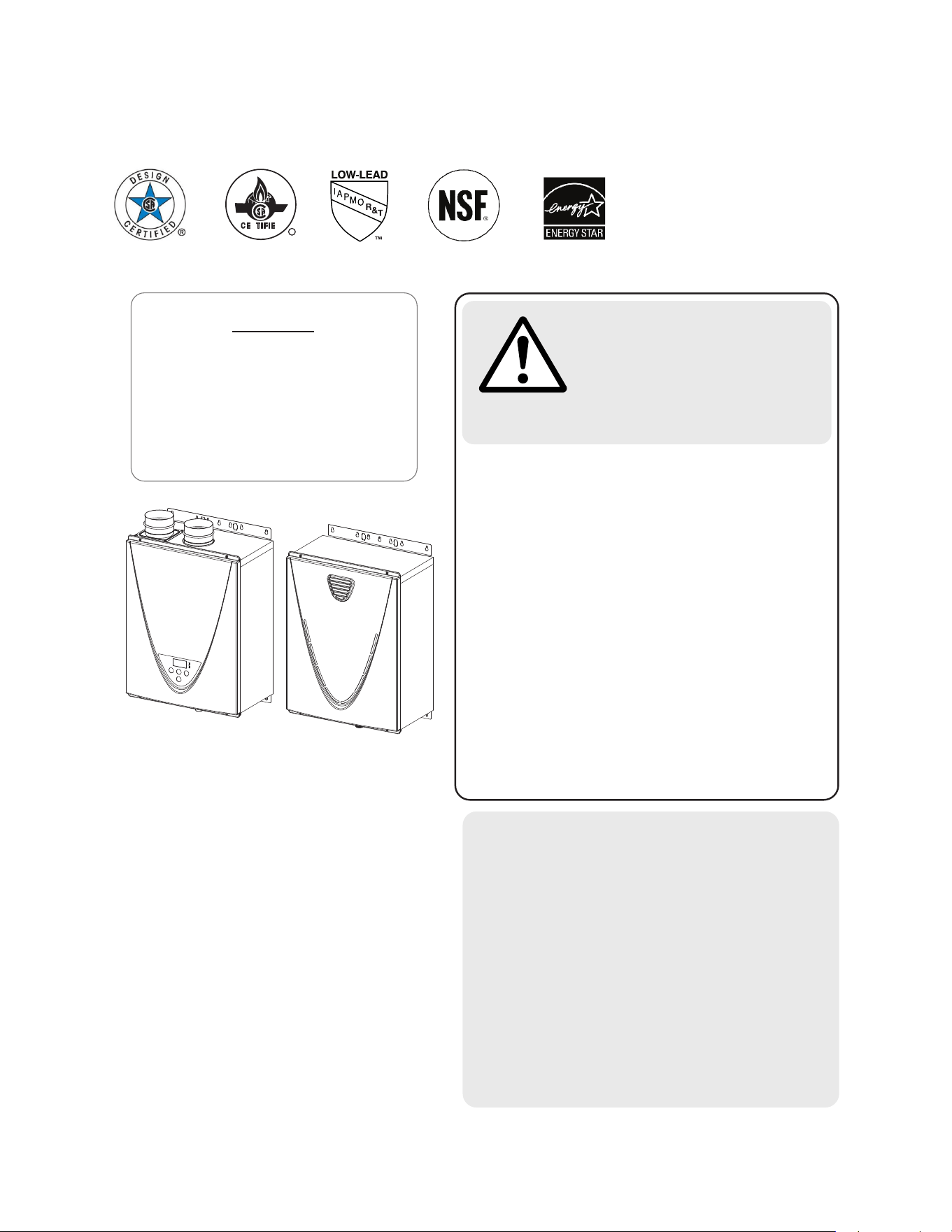
Gas Tankless Water Heater
TM
Suitable for combination potable water heating
and space heating. Please refer to local codes for
space-heating compliance.
On-Demand Water Heater
Installation Manual and Owner’s Guide
If you have any questions, please call
or write to:
In the United States
500 Tennessee Waltz Parkway
Ashland City, TN 37015
Toll Free: 1-877-737-2840
In Canada
599 Hill Street West
Fergus, ON N1M 2X1
1-888-479-8324
- Do not store or use gasoline or other
flammable vapors and liquids in the vicinity
of this or any other appliance.
- WHAT TO DO IF YOU SMELL GAS
• Do not try to light any appliance.
• Do not touch any electric switch; do not
use any phone in your building.
• Immediately call your gas supplier from
a neighbor's phone. Follow the gas
supplier's instructions.
• If you cannot reach your gas supplier, call
the fire department.
- Installation and service must be performed
by a qualified installer, service agency or the
gas supplier.
WARNING
If the information in these
instructions is not followed
exactly, a fire or explosion may
result causing property damage,
personal injury or death.
ANSI Z21.10.3 ・ CSA 4.3
540H only
R
DR
Keep this manual near the water heater for future reference whenever maintenance, adjustment, or
service is required.
FEATURING
• ENDLESS HOT WATER
• ON-DEMAND USAGE
• COMPACT, SPACE SAVING
• ENERGY CONSERVATION
• COMPUTERIZED SAFETY
• NO PILOT LIGHT
• Complies with SCAQMD Rule
1146.2 for natural gas Low NOx
Emissions of 14 ng/J or 20 ppm.
• EASY-LINK SYSTEM (540H only)
• MULTI-UNIT SYSTEM (540H only)
Models
140H
240H
340H
540H

2 Page
Contents
CONTENTS
Installation Manual
SPECIFICATIONS .............................................4
INTRODUCTION ..........................................5
SAFETY GUIDELINES.....................................6
SAFETY DEFINITION ....................................6
GENERAL ......................................................6
INSTALLATION ................................................7
GENERAL ......................................................7
CLEARANCES ...............................................9
INCLUDED ACCESSORIES ............................9
OPTIONAL ITEMS ........................................ 9
WARNING FOR INSTALLATIONS ...............11
HIGH-ALTITUDE INSTALLATIONS .............12
VENTING INSTRUCTIONS .........................13
Vent termination clearances ....................14
Clearances for sidewall terminations .......15
Clearances for rooftop terminations ........16
Combustion air supply ..............................17
Exhaust vent (ABS,PVC,CPVC, or
polypropylene vent) .................................21
DIP switch settings for vent length
(ABS,PVC,CPVC, or polypropylene vent) ...22
Exhaust vent (Stainless steel vent) ...........25
DIP switch settings for vent length
(Stainless steel vent) .................................26
Common venting system ..........................28
GAS SUPPLY AND GAS PIPE SIZING ......... 30
General .....................................................30
Gas connections .......................................30
Natural Gas supply piping .........................31
Propane (LP) supply piping ....................... 31
WATER CONNECTIONS .............................32
Pressure relief valve .................................32
CONDENSATE DRAIN ................................33
ELECTRICAL CONNECTIONS .....................35
TEMPERATURE REMOTE CONTROLLER .....36
Included accessories .................................36
Installation ................................................36
EASY-LINK SYSTEM .........................................38
Easy link connection procedures ..............38
MULTI-UNIT SYSTEM ......................................40
APPLICATIONS ..............................................41
Recirculation ...............................................41
Domestic and space heating ......................42
Dual-purpose hot water heating ................... 44
INITIAL OPERATION .....................................45
Owner's Guide
OPERATING SAFETY .....................................47
NORMAL OPERATION ..................................49
BUILT-IN CONTROLLER
AND REMOTE CONTROLLER ..................49
GENERAL ....................................................49
OUTLET WATER TEMPERATURE
SETTING ..................................................... 50
TEMPERATURE TABLE OF CONTROLLER .50
ADDITIONAL FEATURES ...................... ......51
Information mode ....................................51
Unit conversion mode ..............................51
TEMPERATURE SETTINGS ON THE PCB ........52
FLOW .......................................................... 52
FREEZE PROTECTION SYSTEM ................. 53
MAINTENANCE AND SERVICE .................. 54
INLET WATER FILTER CLEANING ................... 54
UNIT DRAINING & POWER OUTAGE (FREEZE
PROTECTION) .............................................. 55
MEASURING INLET GAS PRESSURE.................. 56
TROUBLESHOOTING .....................................57
ERROR CODES ...........................................58
Single unit installation ..............................59
Easy-Link System ....................................... 59
Fault analysis error code ..........................60
COMPONENTS DIAGRAM ............................62
PARTS LIST .................................................... 70
OUTPUT TEMPERATURE CHART ..................74

3 Page
Installaon Manual
Installation ManualInstallation Manual
CONGRATULATIONS
Congratulations and thank you for choosing our tankless water
heater. Before use, we recommend that you read through this
installation manual carefully. Keep this manual for future reference.
If you need an additional manual, contact the manufacturer or your
local distributor. You may also download a manual from our website.
When you call, please tell us the product name and the serial number
of your unit written on the rating plate of the water heater.
4 Page
Specicaons
Installaon Manual
SPECIFICATIONS
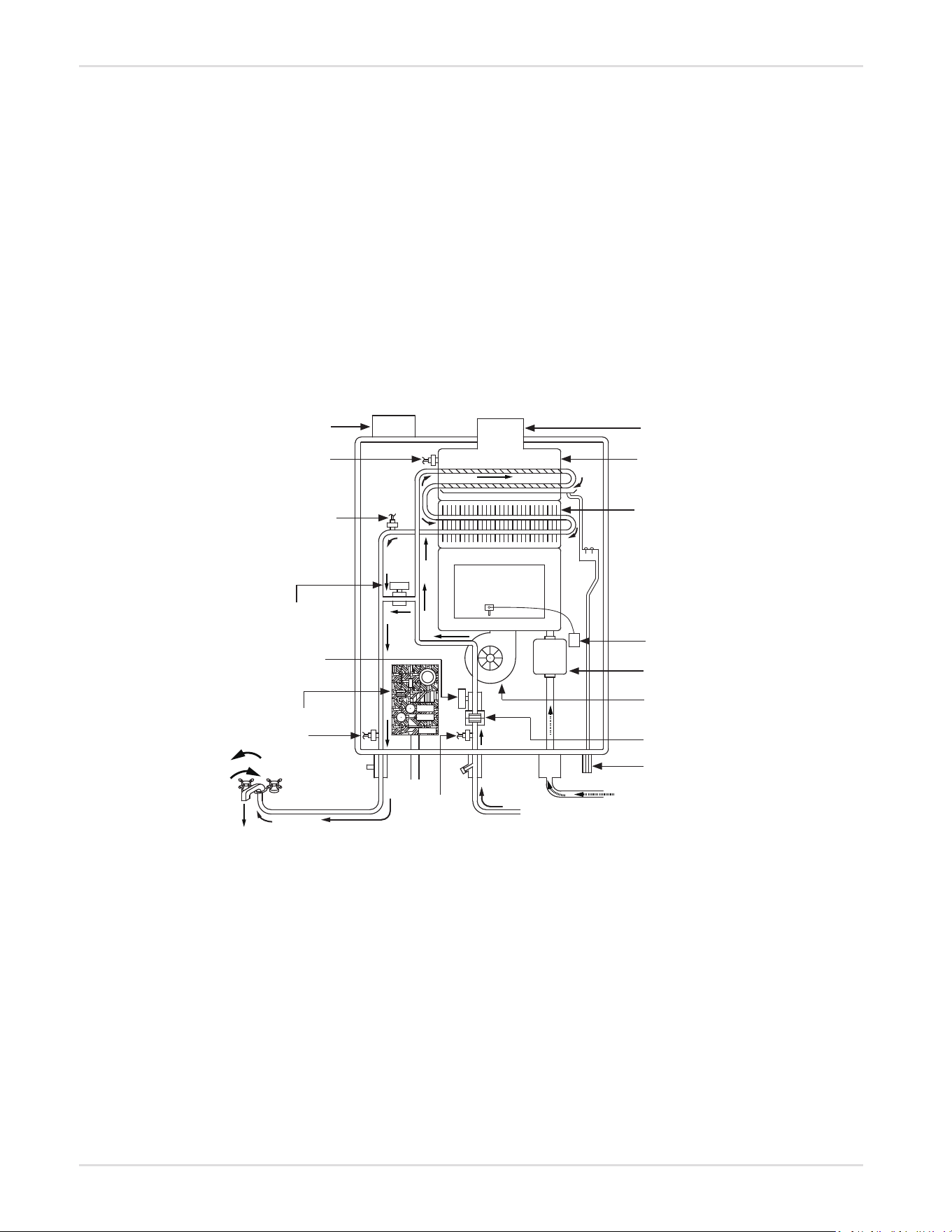
*40 psi or above is recommended for maximum flow.
**Water heater Category — water heaters of other than direct vent type, for outdoor installation, are divided into four categories
based on static pressure produced in the vent and flue loss.
Category IV - a water heater that operates with a positive vent static pressure and with a vent gas temperature that may
cause excessive condensate production in the vent.
NOTE:
• Check the rating plate to ensure that this product matches your specifications.
• The manufacturer reserves the right to discontinue, or change at any time, specifications or designs with-
out notice and without incurring obligation.
Model
140H
Indoor
(AT-H3M
-DV)
140H
Outdoor
(AT-H3M
-OS)
240H
Indoor
(AT-H3J
-DV)
240H
Outdoor
(AT-H3J
-OS)
340H
Indoor
(AT-H3S
-DV)
340H
Outdoor
(AT-H3S
-OS)
540H
Indoor
(AT-H3
-DV)
540H
Outdoor
(AT-H3
-OS)
Natural Gas Input
(Operating Range)
BTU/h
Min.: 15,000
Max.: 120,000
Min.: 15,000
Max.: 160,000
Min.: 15,000
Max.: 180,000
Min.: 15,000
Max.: 199,000
Propane Input
(Operating Range)
BTU/h
Min.: 15,000
Max.: 120,000
Min.: 13,000
Max.: 160,000
Min.: 13,000
Max.: 180,000
Min.: 13,000
Max.: 199,000
Gas Connection 1/2” NPT 3/4" NPT
Water Connections
3/4" NPT
Water Pressure*
psi
(MPa)
15 - 150
(0.1 - 1)
Natural gas
Inlet Pressure
" W.C.
(kPa)
Min. 4.0 (1.00)
Max. 10.5 (2.61)
Propane
Inlet Pressure
" W.C.
(kPa)
Min. 8.0 (1.99)
Max. 14.0 (3.48)
Weight
lbs.
(kg)
50
(22.5)
50
(22.5)
58
(26.3)
58
(26.2)
58
(26.3)
58
(26.2)
59
(26.8)
59
(26.9)
Dimensions
(HxWxD)
inch
21.7 x 13.9 x 9.3 22.4 x 17.7 x 10.7
mm
552 x 352 x 236 570 x 450 x 272
Ignition Electric Ignition
Electric
Supply
VAC/Hz 120/60
Consumption
Operation
W/A
53.9 / 0.7
72.7 / 0.61 78.2 / 0.65 89.0 / 0.74
Standby
W/A
3.2 / 0.05
3.1 / 0.03 3.1 / 0.03 4.2 / 0.04
Freeze-
Protection
W/A
223.9 / 1.94
174 / 1.5 174 / 1.5 175 / 1.5
Water heater category** IV N/A IV N/A IV N/A IV N/A
5 Page
INTRODUCTION
• This manual provides information necessary for the installation, operation, and maintenance of the
water heater.
• The model description is listed on the rating plate which is attached to the side/front panel of the
water heater.
• Please read all installation instructions completely before installing this product.
• If you have any problems or questions regarding this equipment, consult the manufacturer or its
local representative.
• This equipment is an on-demand, tankless water heater designed to efficiently supply endless hot
water for your needs when properly sized and installed.
• These high efficiency models have a built-in secondary heat exchanger that absorbs latent heat
from the exhaust gas.
• The Indoor models are only to be installed indoors. The Outdoor models are only to be installed
outdoors.
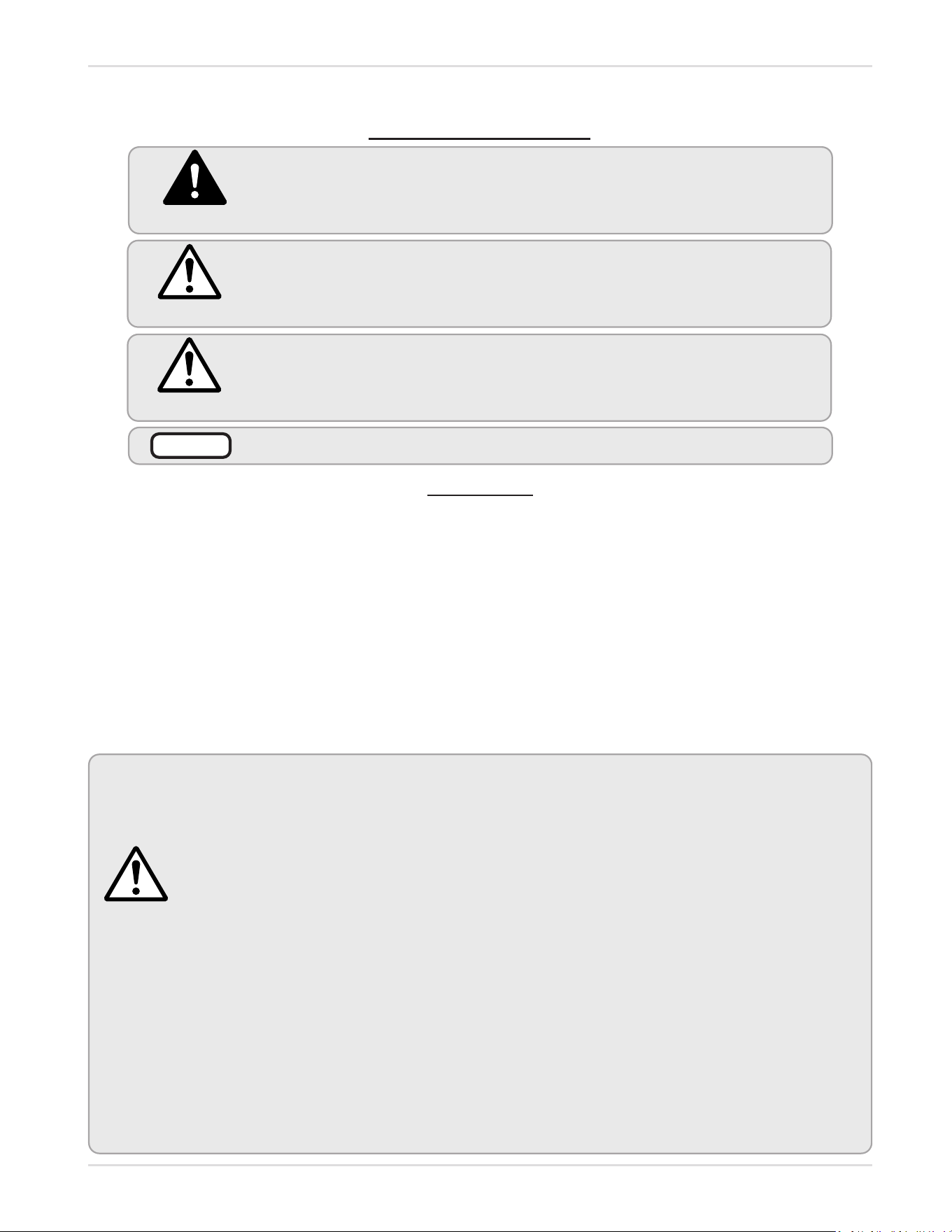
• The principle behind tankless water heaters is simple:
Exhaust
Secondary
heat exchanger
Intake port
Condensate
drain port
Cold water inlet
Gas
Hot water outlet
Computer board
Fan motor
Gas valves
Igniter
Thermistor
Thermistor
Bypass valve
Primary
heat exchanger
Exhaust thermistor
Water control valve
Thermistor
Flow sensor
Burners
1
2
3
4
5
4
6
7
7
7
8
4
4
7
*This diagram illustrates tankless water heater design concepts only and does not accurately represent the
water heater’s physical description.
1. A hot water fixture is turned on.
2. Water flows through the heater.
3. The water flow sensor detects the water flow.
4. The computer initiates the fan motor and gas valve to let gas flow through the heater and sends a signal to
the igniter to create an ignition spark.
5. The gas ignites and flames appear within the burner chamber.
6. Water is heated as it flows through the heat exchanger.
7. Using thermistors to measure temperatures throughout the water heater, the computer modulates the gas
and water valves to ensure proper output water temperature and hot water outflows.
8. When the fixture is turned off, the unit shuts down.
Introducon
Installaon Manual
6 Page
GENERAL
1. Follow all local codes, or in the absence of local codes, follow the current edition of the National Fuel Gas
Code: ANSI Z223.1/NFPA 54 in the USA or B149.1 Natural Gas, Propane Installation Code in Canada.
2. Properly ground the unit in accordance with all local codes or in the absence of local codes, with the National
Electrical Codes: ANSI/NFPA 70 in the USA or CSA standard C22.1 Canadian Electrical Code Part 1 in Canada.
3. Carefully plan where you intend to install the water heater. Please ensure:
• Your water heater will have enough combustion air and proper ventilation.
• Locate your heater where water leakage will not damage surrounding areas. (Please refer to page 8.)
4. Check the rating plate for the correct GAS TYPE, GAS PRESSURE, WATER PRESSURE and ELECTRIC RATING.
• If this unit does not match your requirements, do not install and consult with the manufacturer.
5. If any problem should occur, turn off all hot water taps and turn off the gas. Then call a trained
technician, the gas company, or the manufacturer.
Safety Guidelines
Installaon Manual
SAFETY GUIDELINES
SAFETY DEFINITION
WARNING
Indicates an imminently hazardous situation which, if not avoided, could result in
death or serious injury.
CAUTION
Indicates an imminently hazardous situation which, if not avoided, could result in
minor or moderate injury.
Indicates an imminently hazardous situation which, if not avoided, will result in
death or serious injury.
DANGER
Indicates information considered important but not hazard related.
NOTICE
WARNING
• Water temperatures over 125 °F (52 °C) can cause severe burns instantly or death from
scalding. The water temperature is set at 120 °F (50 °C) from the factory to minimize any
scalding risk. Before bathing or showering always check the water temperature.
• To reduce the risk of scalding, install Thermostatic Mixing Valves (temperature limiting valves)
at each point of use.
• Do not store or use gasoline or other flammables, vapors, or liquids in the vicinity of this
appliance.
• Do not reverse the water and/or gas connections as this will damage the gas valves and can
cause severe injury or death. Follow the diagram on page 32 when installing your water
heater.
• Should overheating occur or the gas supply fails to shut off, turn off the manual gas control
valve to the appliance.
• Do not use this appliance if any part has been in contact with or been immersed in water.
Immediately call a qualified installer or service agency to replace a flooded water heater. Do
not attempt to repair the unit. It must be replaced.
• Do not disconnect the electrical supply if the ambient temperature will drop below freezing
unless the water has been drained from the water heater. The Freeze Protection System only
works if the unit has electrical power. The warranty will not be covered if the heat exchanger
is damaged due to freezing. Refer to the section on the Freeze Protection System on page 53
and Unit draining & power outage (Freeze protection) on page 55 for more information.
• Failure to observe these warnings could result in severe personal injury or death.

7 Page
INSTALLATION
GENERAL
1. Follow all local codes, or in the absence of local codes, follow the current edition of the National Fuel Gas
Code: ANSI Z223.1/NFPA 54 in the USA or B149.1 Natural Gas, Propane Installation Code in Canada.
2. All gas water heaters require careful and correct installation to ensure safe and efficient operation. This
manual must be followed exactly. Read the "Safety Guidelines" Section.
3. The manifold gas pressure is preset at the factory. It is computer controlled and should not need
adjustment.
4. Maintain proper space for servicing. Install the unit so that it can be connected or removed easily. Refer
to the "Clearances" Section on page 9 for proper clearances.
5. The water heater must be installed in a location where the proper amount of combustion air will be
available to it at all times without obstructions, or the indoor heater must be direct vented. See pages 13
to 29.
6. Install the water heater so it is level (left-to-right & front-to-back) and plumb (vertically).
7. Electrical service to the water heater requires a means of disconnection. This will allow power to the
water heater to be shut off for servicing and safety purposes.
8. Do not install the unit where the exhaust vent is pointing into any opening in a building or where the
noise may disturb your neighbors. Make sure the vent termination meets the required clearance from
any doorway or opening to prevent exhaust from entering a building. (Refer to pages 8, 11, 14 and 15.)
Check local code requirements prior to installation.
9. Carefully plan the installation location of the heater and vent terminations. Contaminants such as
aerosols, lint, and fine powders (including flour) can clog the air intake and reduce the operation of the
fan. This, in turn, can cause improper combustion and reduce the life of the water heater. Regularly
ensure that the area around the water heater, vent termination, and air intake are free of dust, debris,
and other contaminants. In environments with a high level of contaminants (laundry facilities, hair salons,
pet salons, chemical plants, commercial kitchens, etc.), direct venting is required.
10. The Indoor models are to be installed indoors only. These units are equipped with a thermistor and
hi-limit switch for the exhaust gas, detecting excess temperatures within the flue and enabling the unit
to safely stop operations if needed. These components are always monitoring exhaust gas conditions in
order to prevent heat damage to ABS, PVC, CPVC, or polypropylene (Plastic) venting if ABS, PVC, CPVC,
or polypropylene is used. If the exhaust gas temperature exceeds 140 °F (60 °C), these components will
enable the unit to safely stop operations. These components are not installed on the outdoor models
since the exhaust vent is built-in.
• If the water heater is used as a direct-vent appliance, the unit requires 3ʺ or 4ʺ combustion air
supply pipe. The intake pipe must be sealed airtight. Refer to pages 13 to 29 for more detail.
• Terminating the venting through a sidewall is recommended for the direct-vent system.
• Running the exhaust vent and the intake pipe parallel is recommended.
• Terminating the exhaust and intake on the same wall/surface is recommended. Terminating in the
same pressure zone allows for pressure balancing, which prevents nuisance shutdowns.
• Only install the water heater in a heated area where below freezing temperatures cannot occur.
The warranty does not cover damage caused by freezing.
• The water heater must be securely mounted to a wall or other suitable structure.
• The venting system shall be installed in accordance with the water heater manufacturer's and
venting system manufacturer's instructions.
11. The Outdoor models must only be installed outdoors and only in an area with mild, temperate climates.
The Outdoor model shall be wall-mounted or mounted on a stand. Locate the Outdoor model in an open,
unroofed area and maintain the following minimum clearances: There is a 3 in (76 mm) clearance from
the left and right sides of the unit to combustible and non-combustible surfaces.
Installaon
Installaon Manual
8 Page
Installaon
Installaon Manual
WARNING
• Installation and service must be performed by a qualified installer (for example, a licensed
plumber or gas fitter). Otherwise, the warranty will be void.
• The installer (licensed professional) is responsible for the correct installation of the water
heater and for compliance with all national, state/provincial, and local codes.
• The manufacturer does not recommend installing the water heater in a pit or location
where gas and water can accumulate.
• Do not attach the gas line to the water heater until after the gas line system pressure test
for leaks has been completed. See page 30 for additional information.
• Do not install or locate the vent terminal pointing toward any operating window, door, opening
into a building or other area where people gather, where combustion gases could create a
nuisance or hazard or cause property damage.
• Do not install the air intake next to any source of airborne debris, such as a clothes dryer, that can
cause debris to be trapped inside the combustion chamber, unless the system is direct-vented.
• Do not install the unit where water, debris, or flammable vapors may get into the flue terminal
or the air intake line.
• The manufacturer does not recommend installing the water heater in an attic due to safety
issues. If you install the water heater in an attic:
- Make sure the unit will have enough combustion air and proper ventilation. Failure to do so
could lead to carbon monoxide poisoning or death.
- Keep the area around the water heater clean. When dust collects on the flame sensor and
pressure sensor, the water heater will shut down on an error code.
- Place the unit where it will allow easy access for service and maintenance.
- A drain pan, or other means of protection against water damage, is recommended to be
installed under the water heater in case of leaks. See the NOTICE below.
• The water heater must be securely mounted to a wall or other suitable structure so that it is
level (left-to-right & front-to-back) and plumb (vertically).
• Failure to observe these warnings could result in severe personal injury, death, and/or
property damage.
NOTICE
• The warranty will not cover damage caused by water quality.
- Only potable water can be used with this water heater. Do not introduce pool or spa
water, or any chemically treated water into the water heater.
- Water hardness levels must not exceed 7 grains per gallon (120 ppm) for single family
domestic applications or more than 4 grains per gallon (70 ppm) for all other types of
applications. Water hardness leads to scale formation and may affect/damage the water
heater. Hard water scaling must be avoided or controlled by proper water treatment.
- Water pH levels must be between 6.5 and 8.5.
- Well water must be treated.
• The manufacturer recommends direct venting when the water heater is installed in beauty
salons, dry cleaners or any other locations in which such chemicals are present in the air.
Some chemicals used in beauty salons or dry cleaners may affect the flame sensor. In such
cases, the water heater may not work properly.
• Although the water heater is designed to operate with minimal sound, the manufacturer
does not recommend installing the unit on a wall adjacent to a bedroom, or a room that is
intended for quiet study or meditation, etc.
• Locate your water heater close to a drain where water leakage will not do damage to
surrounding areas. As with any water heating appliance, the potential for leakage at some
time in the life of the product does exist. A drain pan, or other means of protection against
water damage, is recommended to be installed under the water heater in case of leaks. In
addition, you may install an active water leak detector with a shutoff valve which can turn
off the water supply in the event of a leak. The manufacturer is not responsible for damage
due to water leaks. If you install a drain pan under the unit, ensure that it will not restrict
the combustion air flow.
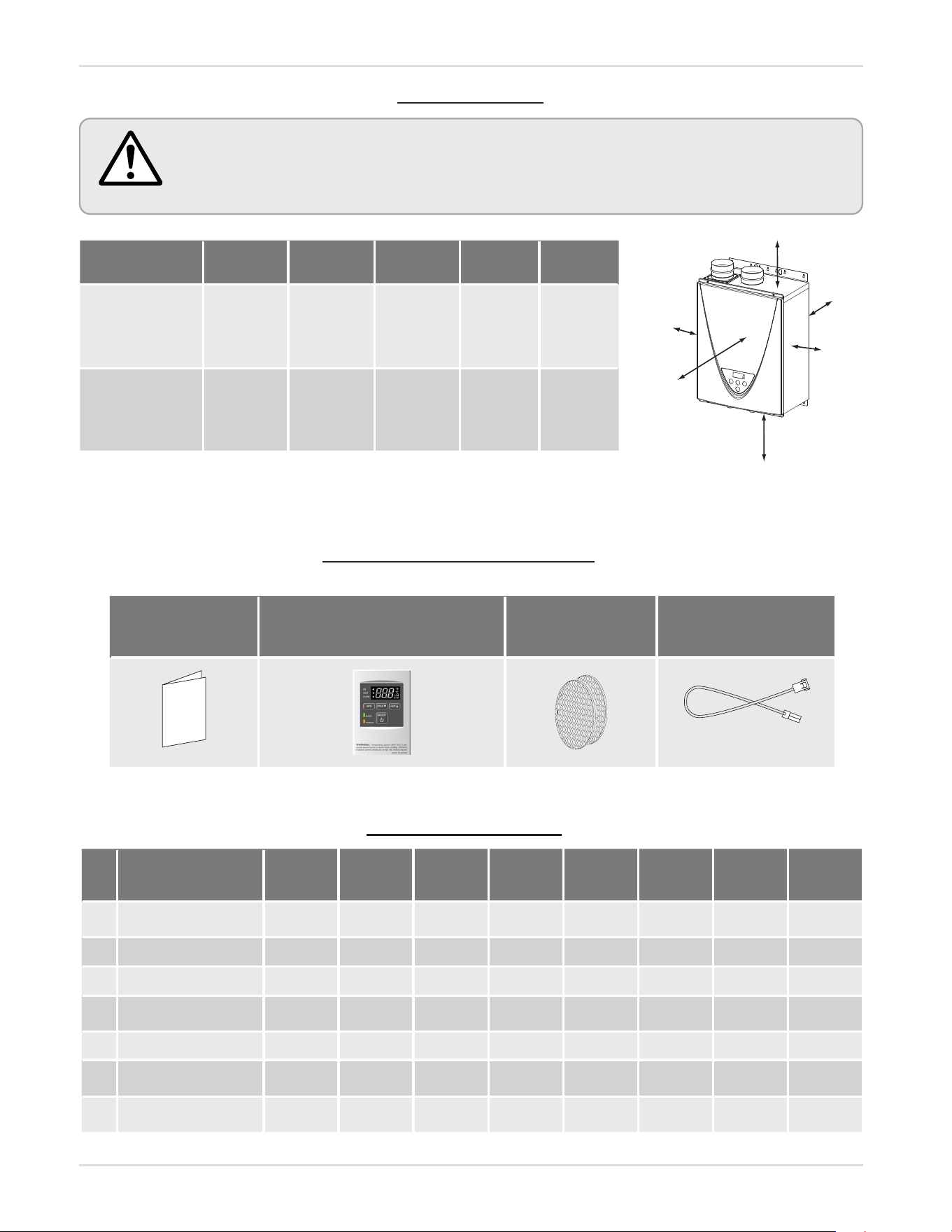
9 Page
CLEARANCES
Installaon
Installaon Manual
Model Top Bottom Front Back Sides
Indoor
12 in
(305 mm)
12 in
(305 mm)
4 in*
(102 mm)
0.5 in**
(13 mm)
3 in
(76 mm)
Outdoor
36 in
(914 mm)
12 in
(305 mm)
24 in
(610 mm)
0.5 in**
(13 mm)
3 in
(76 mm)
*24 inches (610 mm) recommended for maintenance.
**140H Back clearance is 1 in (25 mm).
OPTIONAL ITEMS
Back
Side
Front
Side
Top
Boom
#
Model
140H
Indoor
140H
Outdoor
240H
Indoor
240H
Outdoor
340H
Indoor
340H
Outdoor
540H
Indoor
540H
Outdoor
1.
Temperature remote
controller
✓ ✓ ✓ ✓
2.
Pipe cover
✓ ✓ ✓ ✓ ✓ ✓ ✓ ✓
3.
Neutralizer kit
✓ ✓ ✓ ✓ ✓ ✓ ✓ ✓
4.
3" PVC concentric
termination
✓ ✓ ✓ ✓
5.
Recess box
✓ ✓ ✓ ✓
6.
Non-return valve
✓ ✓ ✓
7.
4" PVC Adapter
(for Non-return valve)
✓ ✓ ✓
INCLUDED ACCESSORIES
Check that these items below are included with the water heater.
Installation manual
and owner’s guide
Temperature remote controller kit
Outdoor models only
(Refer to pp. 10 and 35.)
Bird screen
Indoor models only
Communication cable
540H model only
Qty: 1 Qty: 1Qty: 1 Qty: 2
100209924 (TM-RE42) 100282480 100076516
Maintain all clearances around the water heater. Failure to do so could create a fire hazard,
potentially leading to death, serious injury, and/or property damage.
WARNING
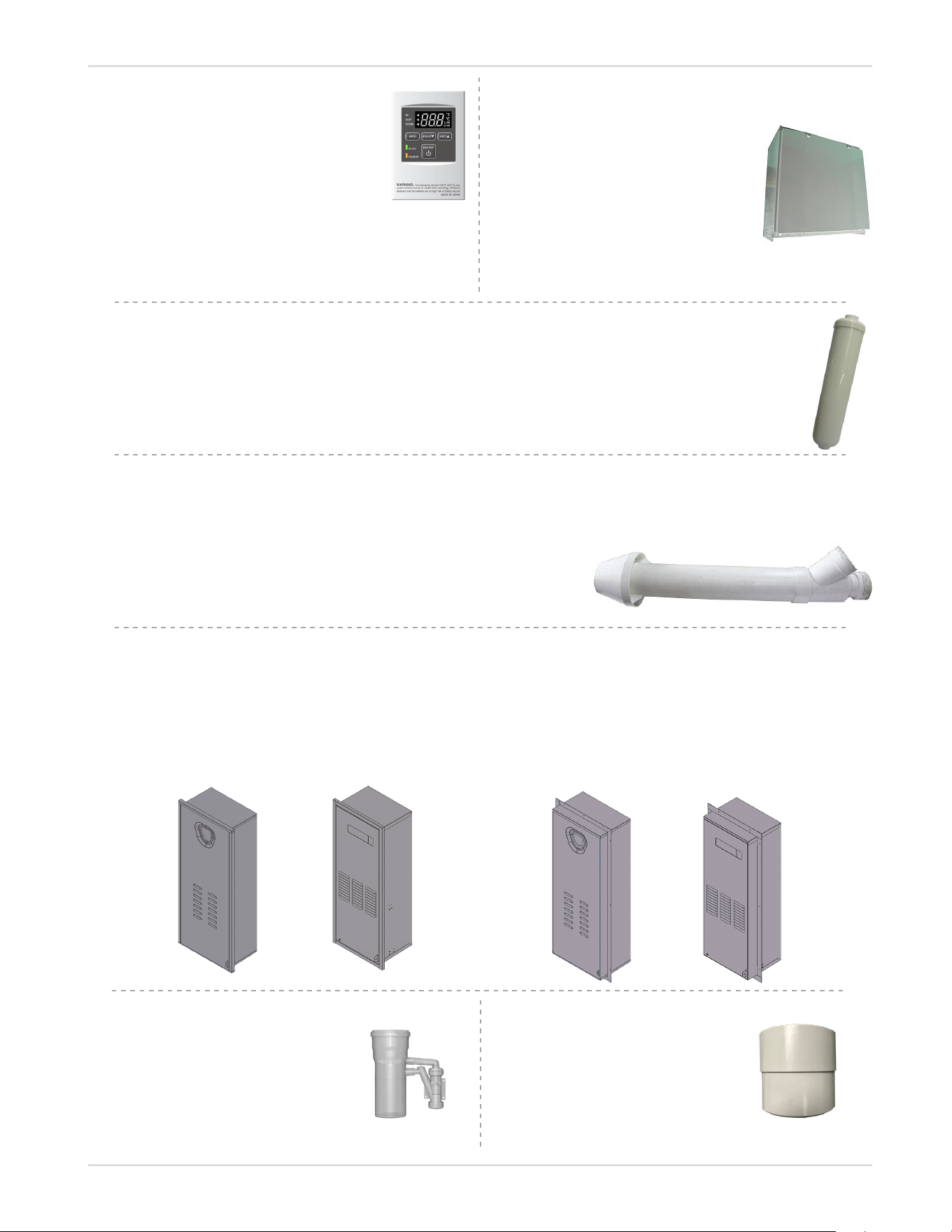
10 Page
Installaon
Installaon Manual
3. Neutralizer kit: 100112159
The neutralizer assembly neutralizes the condensate (acidic water) that forms in the secondary heat
exchanger of the water heater.
It connects to the condensate drain port of the water heater by using connectors included with the
neutralizer kit. (Refer to pages 33 and 34.)
1. Temperature remote controller:
100209924 (TM-RE42)
The temperature remote controllers have
three functions. It allows the output
temperature from the water heater
to be adjusted and it also works as a
diagnostic tool and it provides a concise
error code whenever there is a problem with the unit.
See the Troubleshooting Section (pages 57 to 61) for
information on possible error codes.
4. 3" PVC concentric termination: 100112163
Used when terminating direct-vent (sealed combustion) systems, with Indoor models that require a 3ʺ intake
and a 3ʺ exhaust. This concentric termination provides the convenience of only having to make one penetration
through a sidewall instead of two separate penetrations for the intake
and exhaust piping. The termination includes a bird screen, restricting
small animals, pests, and foreign objects from entering into the vent
system.
2. Pipe cover:
100112718 (TH-PC03) for 240H/340H/540H
100187904 (TH-PC04) for 140H
The pipe cover protects the plumbing
pipes to the water heater from
unexpected adjustments. This pipe
cover is fixed to the bottom of the
water heater, which hides the plumbing
and improves the visual aspects of the
whole installation for the water heater.
7. 4" PVC Adapter: 100113129
6. Non-return valve: 100113130
It is a required item for common
venting system. It prevents the
escape of combustion gas through
non-operating appliances. (Refer
to pages 28 and 29.)
This adapter transitions from the
Non-return valve outlet to 4"
schedule 40 PVC pipe.
5. Recess box:
It allows for “clean” installations for Outdoor installation. The water heater fits inside the recess box, which
hides and protects the whole water heater and plumbing. The recess box will fit between most wall studs.
For retrofit applications - no flange For new construction application s -with flange
100266730
for 140H
100306285
for 240H/340H/540H
100298009
for 240H/340H/540H
100266729
for 140H
11 Page
Installaon
Installaon Manual
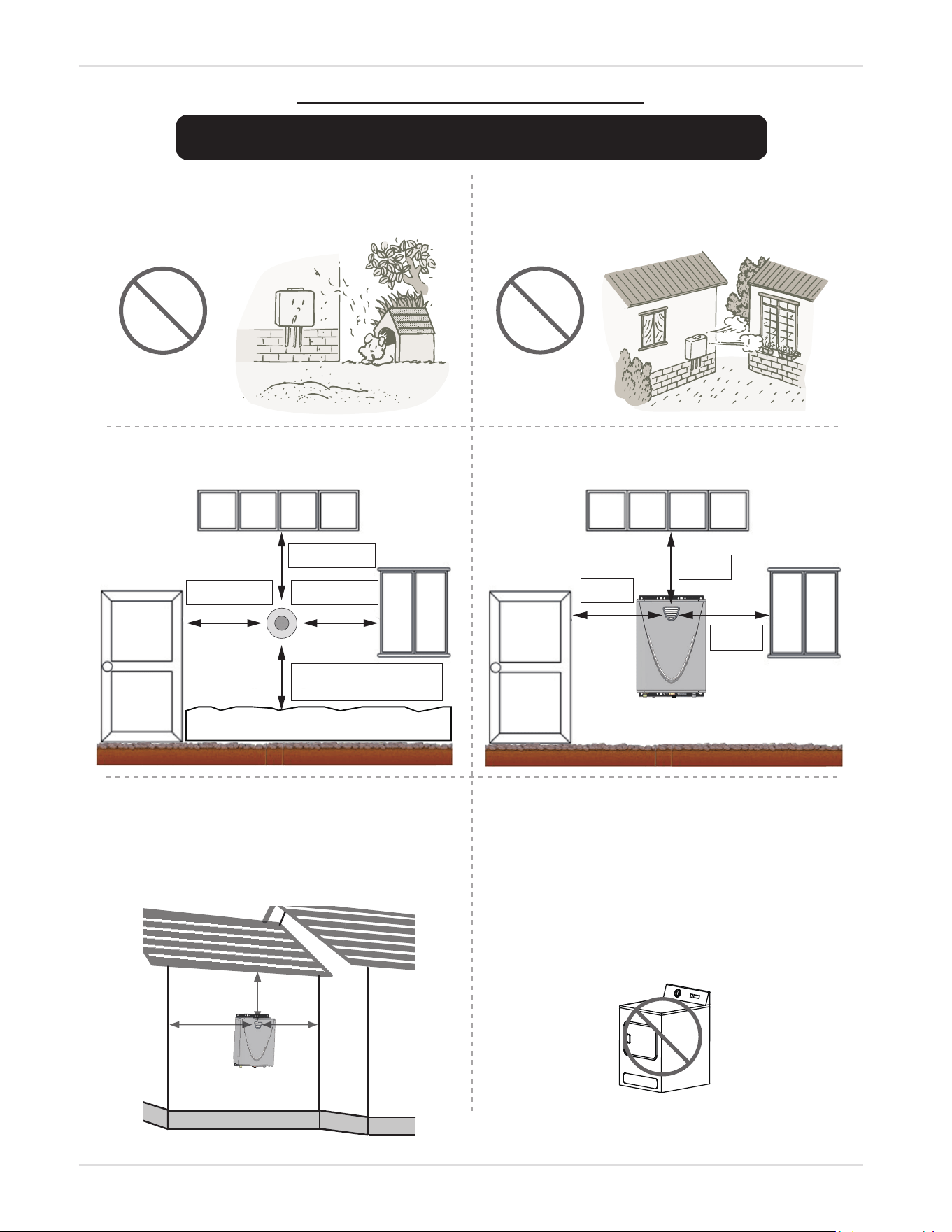
WARNING FOR INSTALLATIONS
FOR YOUR SAFETY, READ BEFORE INSTALLATION:
Do not install the heater where water, debris or
flammable vapors may get into the flue terminal.
This may cause damage to the heater and void
the warranty.
Do not have the vent terminal pointing toward
any opening into a building. Do not locate
your heater in a pit or location where gas and
water can accumulate.
Do not install next to a dryer or any source
of airborne debris that can be trapped inside
the combustion chamber, unless the system
is direct-vented.
Prohibited
Prohibited
Ensure that you meet the minimum clearances
shown below for a direct vent termination:
Ensure that you meet the minimum clearances
shown below for Outdoor vent termination:
Locate the outdoor water heater so it's vent terminal
meets the following clearances. Locate the vent terminal
of an indoor heater to meet the following clearances:
2 (61 cm) from an inside corner
2 (61 cm) from an outside corner
3 (91 cm) below a sot/overhang
4 � min.
4 � min.
4 � min.
USA: 1 � (30 cm) min.
Canada: 3 � (91 cm) min.
USA: 1 � (30 cm) min.
Canada: 3 � (91 cm) min.
USA: 1 � (30 cm) min.
Canada: 3 � (91 cm) min.
USA: 1 � (30 cm) above grade and
above an�cipated snow level
Canada: 1 � (30 cm) above grade
An�cipated snow level
Outside
corner
Inside
corner
2
(61 cm)
3
(91 cm)
2
(61 cm)
12 Page
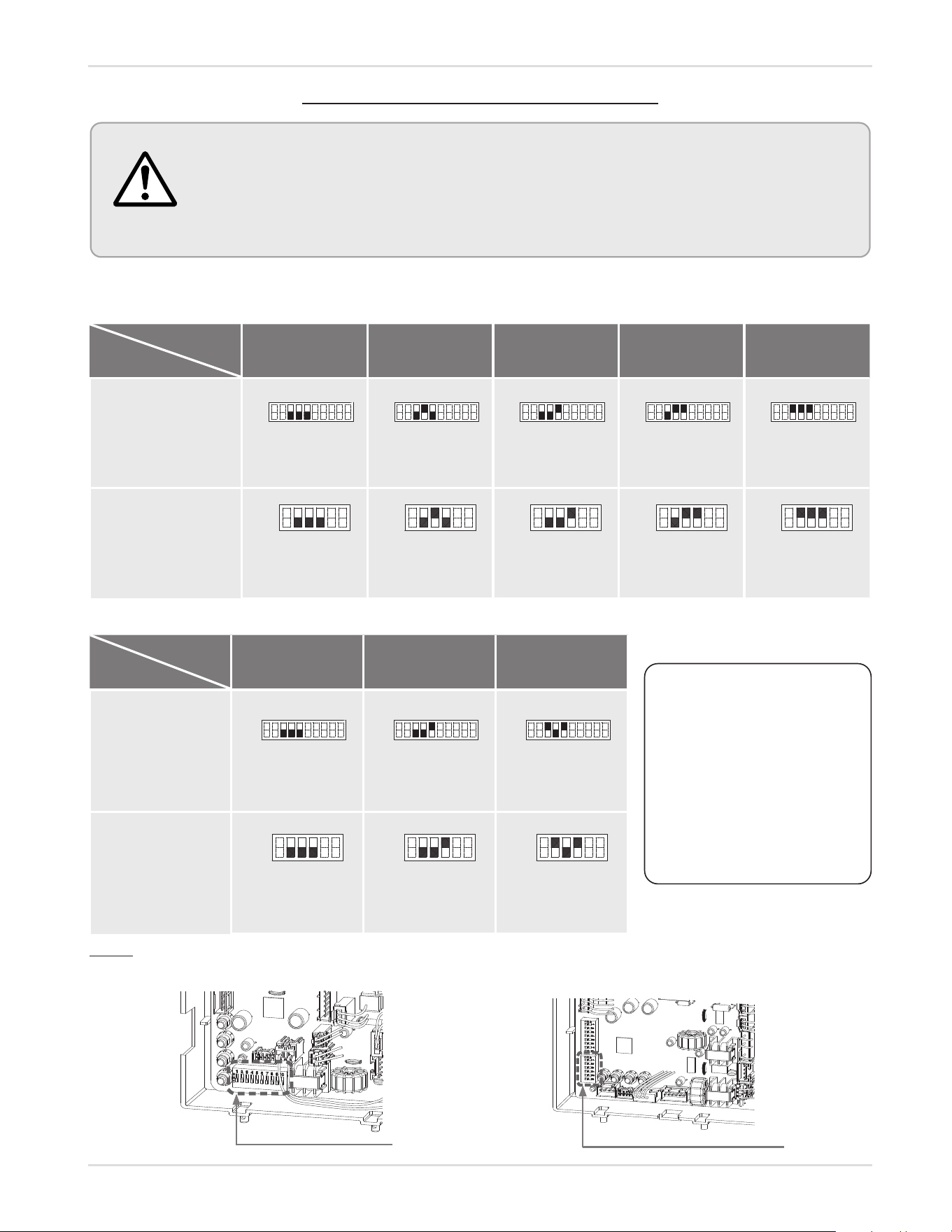
HIGH-ALTITUDE INSTALLATIONS
WARNING
• Adjust the appropriate DIP switches according to model and elevation as shown
below. DO NOT adjust the other DIP switches.
• Turn off the power supply to the water heater before changing the DIP switch
settings.
• Failure to observe these warnings could lead to carbon monoxide poisoning or
death.
Installaon
Installaon Manual
NOTE: The dark squares indicate the correct DIP switch positions.
540H
Lower bank of DIP switches
Bank of DIP switches
140H/240H/340H
Indoor models
0 to 2,000 ft
(0 to 610 m)
(DEFAULT)
2,001 to
3,000 ft
(611 to 914 m)
3,001 to
5,000 ft
(915 to 1,524 m)
5,001 to
7,500 ft
(1,525 to 2,286 m
7,501 to
10,100 ft
(2,287 to 3,078 m)
140H/240H/340H
OFF
ON
1 2 3 4 5 6 7 8 9 10
No. 3 : OFF
No. 4 : OFF
No. 5 : OFF
OFF
ON
1 2 3 4 5 6 7 8 9 10
No. 3 : OFF
No. 4 : O N
No. 5 : OFF
OFF
ON
1 2 3 4 5 6 7 8 9 10
No. 3 : OFF
No. 4 : OFF
No. 5 : ON
OFF
ON
1 2 3 4 5 6 7 8 9 10
No. 3 : OFF
No. 4 : O N
No. 5 : O N
OFF
ON
1 2 3 4 5 6 7 8 9 10
No. 3 : O N
No. 4 : O N
No. 5 : O N
540H
(Lower bank of
DIP switches)
OFF
ON
1 2 3 4 5 6
No. 2 : OFF
No. 3 : OFF
No. 4 : OFF
OFF
ON
1 2 3 4 5 6
No. 2 : OFF
No. 3 : O N
No. 4 : OFF
OFF
ON
1 2 3 4 5 6
No. 2 : OFF
No. 3 : OFF
No. 4 : O N
OFF
ON
1 2 3 4 5 6
No. 2 : OFF
No. 3 : O N
No. 4 : O N
OFF
ON
1 2 3 4 5 6
No. 2 : O N
No. 3 : O N
No. 4 : O N
Altitude
DIP switches
Installation altitude
The maximum certified
or allowable installed
altitude is 10,100 ft
(3,078 m) for indoor
models and 6,000 ft
(1,829 m) for outdoor
models.
Outdoor models
0 to 2,000 ft
(0 to 610 m)
(DEFAULT)
2,001 to
4,000 ft
(611 to 1,219 m)
4,001 to
6,000 ft
(1,220 to 1,829 m)
140H/240H/340H
OFF
ON
1 2 3 4 5 6 7 8 9 10
No. 3 : OFF
No. 4 : OFF
No. 5 : OFF
OFF
ON
1 2 3 4 5 6 7 8 9 10
No. 3 : OFF
No. 4 : OFF
No. 5 : O N
OFF
ON
1 2 3 4 5 6 7 8 9 10
No. 3 : O N
No. 4 : OFF
No. 5 : O N
540H
(Lower bank of
DIP switches)
OFF
ON
1 2 3 4 5 6
No. 2 : OFF
No. 3 : OFF
No. 4 : OFF
OFF
ON
1 2 3 4 5 6
No. 2 : OFF
No. 3 : OFF
No. 4 : O N
OFF
ON
1 2 3 4 5 6
No. 2 : O N
No. 3 : OFF
No. 4 : O N
Altitude
DIP switches

13 Page
Installaon
Installaon Manual
VENTING INSTRUCTIONS
• Improper venting of this appliance can result in excessive levels of carbon monoxide which
can result in severe personal injury or death.
• Improper installation can cause nausea or asphyxiation, severe injury or death from carbon
monoxide and flue gases poisoning. Improper installation will void product warranty.
• When installing the vent system, all applicable national and local codes must be followed.
If you install thimbles, fire stops or other protective devices and they penetrate any
combustible or noncombustible construction, be sure to follow all applicable national and
local codes.
WARNING
The Indoor model must be vented in accordance with "Venting of Equipment" in the current edition of the
National Fuel Gas Code: ANSI Z223.1/NFPA 54 in the United States and/or Section 8 of the B149.1 Natural Gas
and Propane Installation Code in Canada, as well as applicable local building codes.
The use of venting materials approved for Category III/IV appliances is recommended whenever possible.
However, the Indoor model may also be vented with plastic pipe materials such as ABS, PVC (solid core), CPVC
(solid core), or polypropylene. For details, please refer to the Exhaust Vent (ABS, PVC, CPVC, or Polypropylene
Vent) Section on page 21. Vent installations in Canada which utilize plastic vent systems must use venting that
complies with ULC S636.
General rules for venting water heaters:
• Place the water heater as close as possible to the vent termination.
• The vent collar of the water heater must be fastened directly to an unobstructed vent pipe.
• Do not weld the vent pipe to the water heater’s vent collar.
• Do not cut or alter the vent collar of the unit.
• The vent must be easily removable from the top of the water heater for normal service and inspection of the unit.
• The water heater vent must not be connected to any other gas appliance or vent stack except an approved
common-venting system. Refer to pages 28 and 29.
• Avoid using an oversized vent pipe or using extremely long runs of the pipe unless it is part of an approved
common vent system.
• Air supply pipe can be made of ABS, PVC (solid core), CPVC (solid core), polypropylene, corrugated stainless
steel, or Category lll/IV stainless steel. Regarding exhaust pipe, refer to pages 21 to 27.
• Use of cellular core PVC (ASTM F891), cellular core CPVC, or Radel® (polyphenylsulfone) in nonmetallic
venting systems is prohibited. Covering non-metallic vent pipe and fittings with thermal insulation is
prohibited.
• Sidewall venting is recommended for the Indoor model. Vertical venting (roof termination) is acceptable.
• Slope horizontal venting sections 1/4" upwards for every 12" (300 mm) toward the termination or
according to local and state codes, or in the absence of local or state codes, the current edition of the
National Fuel Gas Code, ANSI Z223.1 (NFPA 54).
• The manufacturer recommends running the exhaust vent and the intake pipe as parallel as possible.
• For rooftop venting, a rain cap or other form of termination that prevents rain water from entering into the
water heater must be installed.
• Do not terminate vent into a chimney. If the vent must go through the chimney, the vent must run all the
way through the chimney with approved vent pipe.
• The water heater shall not be connected to a chimney flue serving a separate appliance, designed to burn solid fuel.
• When an existing Category I appliance is removed or replaced, the original venting system may no longer
be sized to properly vent the attached water heater. An improperly sized venting system may cause
formation of condensate, leakage, and spillage and so on.
General rules for vent terminations:
• Avoid locating the water heater vent termination near any air intake devices. These fans can pick up the
exhaust flue products from the water heater and return them to the building. This can create a health
hazard.
• Locate the vent termination so that it cannot be blocked by any debris, at any time. Most codes require
that the termination be at least 12 in (305 mm) above grade and anticipated snow level, but the installer
may determine if it should be higher depending on the job site condition and applicable codes.
• A proper sidewall termination is recommended when the water heater is vented through a sidewall.
• Regarding the clearances from the exhaust termination to the air inlet or opening, refer to pages 14 to 16.
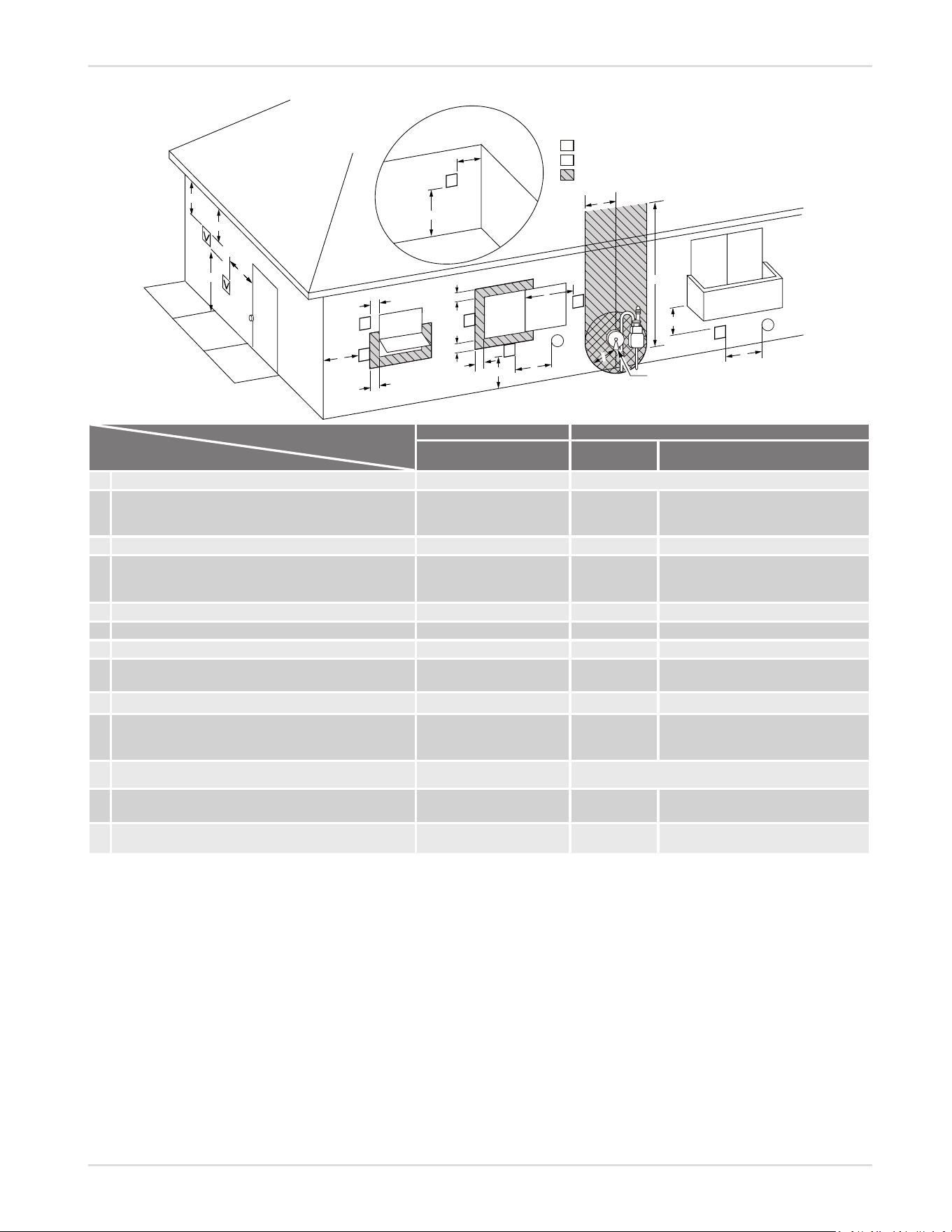
14 Page
Installaon
Installaon Manual
D
L
B
V
V
V
V
V
V
F
J
BB
C
B
B
B
B
A
K
M
X
X
B
15 �
I
E
H
Inside
corner detail
V
G
A
Fixed
closed
Fixed
closed
Operable
Operable
Regulator vent outlet
In the event no regulator is present,
H and I can be disregarded
Legend:
V
X
= Vent terminal
= Air supply inlet
= Area where terminal is not permi�ed
Canada Installations
1
US Installations
2
Direct vent and
other than direct vent
Direct vent Other than direct vent
A Clearance above grade, veranda, porch, deck, or balcony 1 ft (30 cm) 1 ft (30 cm)
B Clearance to window or door that may be opened 3 ft (91 cm)
1 ft
(30 cm)
4 ft (1.2 m) below or to side of
opening;
1 ft (30 cm) above opening
C Clearance to permanently closed window 0 0 0
D
Vertical clearance to ventilated soffit located above
the terminal within a horizontal distance of 2 ft (61
cm) from the center line of the terminal
3 ft (91 cm) 3 ft (91 cm) 3 ft (91 cm)
E Clearance to unventilated soffit 3 ft (91 cm) 3 ft (91 cm) 3 ft (91 cm)
F Clearance to outside corner 2 ft (61 cm) 2 ft (61 cm) 2 ft (61 cm)
G Clearance to inside corner 2 ft (61 cm) 2 ft (61 cm) 2 ft (61 cm)
H
Clearance to each side of center line extended above
meter/regulator assembly
3 ft (91 cm) within
a height of 15ft(4.6m)
* *
I Clearance to service regulator vent outlet 3 ft (91 cm) * *
J
Clearance to non-mechanical air supply inlet to
a building or the combustion air inlet to any other
appliance.
3 ft (91 cm)
1 ft
(30 cm)
4 ft (1.2 m) below or to side of
opening;
1 ft (30 cm) above opening
K Clearance to mechanical air supply inlet 6 ft (183 cm)
3 ft (91 cm) above if within
10 ft (3 m) horizontally.
L
Clearance above paved sidewalk or paved driveway
located on public property
7 ft (213 cm)**
7 ft
(213 cm)
7 ft (213 cm)
M Clearance under veranda, porch deck, or balcony 1 ft (30 cm)***
1 ft
(30 cm)***
1 ft (30 cm)***
*Clearance in accordance with local installation codes and the requirements of the gas supplier.
**A vent shall not terminate directly above a sidewalk or paved driveway that is located between two single family dwellings and serves
both dwellings.
***Permitted only if veranda, porch, deck, or balcony is fully open on a minimum of two sides beneath the floor.
The vent for condensing water heaters shall not terminate:
• over public walkways; or
• near soffit vents or crawl space vents or other areas where condensate or vapor could create a nuisance or hazard or cause property damage; or
• where condensate vapor could cause damage or could be detrimental to the operation of regulators, relief valves, or other
equipment.
Notes:
1) In accordance with the current CSA B149.1, Natural Gas and Propane Installation Code
2) In accordance with the current ANSI Z223.1/NFPA 54, National Fuel Gas Code
3) If locally adopted installation codes specify clearances different than those illustrated, then the most stringent clearance shall prevail.
4) Blocking air supply and exhaust vent by snow may cause incomplete combustion and an appliance failure. Install the termination by
providing sufficient clearance from anticipated snow line in accordance with local code or manufacture's instructions and make sure
there in no blockage.
5) Provide an appropriate clearance between a vent termination and a building to prevent degradation to building materials caused by
flue gases.
6) Water heaters installed outdoors follow the Other Than Direct Vent clearances.
-Vent terminaon clearances-
15 Page
Installaon
Installaon Manual
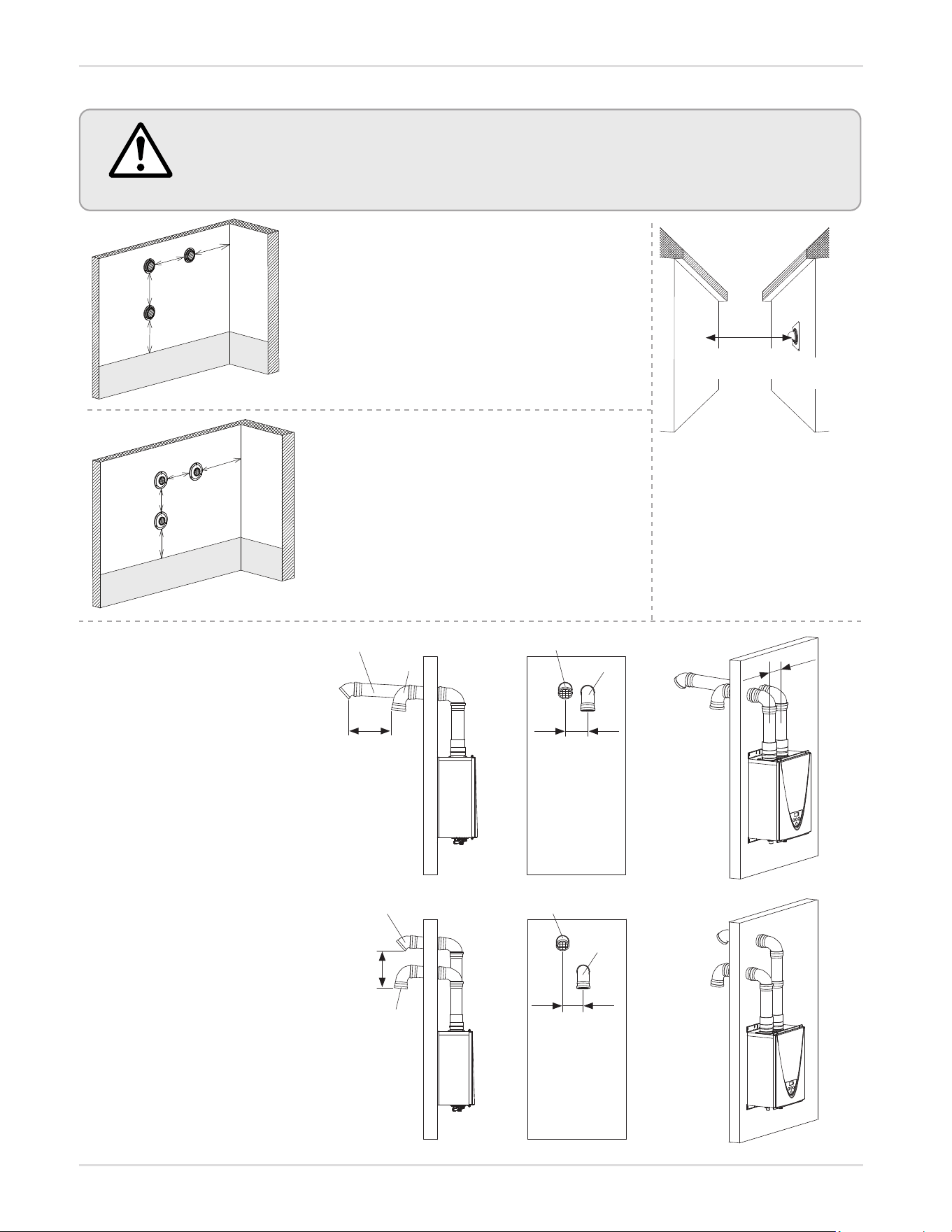
-Clearances for sidewall terminaons-
Multiple Sidewall Terminations
An exhaust termination must be at least
1 ft (305 mm) away from another exhaust
termination. An exhaust termination must
also be at least 2 ft (610 mm) away from an
inside corner. (If the adjacent wall is less than
2 ft (610 mm) of length, the minimum required
distance away from the inside corner will be
equal to the length of that adjacent wall.)
Multiple DV Sidewall Terminations
A direct vent (DV) termination must be at least
1 ft (305 mm) away from other direct vent
terminations.
A direct vent termination must also be at least
2 ft (610 mm) away from an inside corner. (If
the adjacent wall is less than 2 ft (610 mm) of
length, the minimum required distance away
from the inside corner will be equal to the
length of that adjacent wall.)
Ancipated Snow level
Exhaust
Terminaon
2
(610 mm)
min.
1
(305 mm)
min.
1
(305 mm)
min.
Inside
corner
Inside
corner
Ancipated Snow level
2
(610 mm)
min.
1
(305 mm)
min.
1
(305 mm)
min.
Combined
intake and
exhaust
terminaon
For direct vent sidewall
terminations that use two
separate penetrations for the
intake and exhaust, keep the
termination clearances shown in
the diagrams on the right.
Improper installation can result in carbon monoxide poisoning or death. Follow all local and
national codes in regards to proper termination clearances. In the absence of such codes, the
clearances below can be used as guidelines. Local codes supersede these guidelines.
WARNING
1 ft (305 mm) min.
0.5 ft
(159 mm) min.
Exhaust
Intake
Exhaust
Intake
<Case 2>
1 ft (305 mm)
min.
0.5 ft
(159 mm) min.
Exhaust
Intake
Exhaust
Intake
<Case 1>
Exhaust
termination
2 ft (610 mm)
min.
Exhaust and/or direct
vent sidewall terminations
should be at least 2 ft
(610 mm) away from an
opposite surface/wall. Do
not place the termination
directly in front of an
opening into a building.
16 Page
Installaon Manual
Installaon
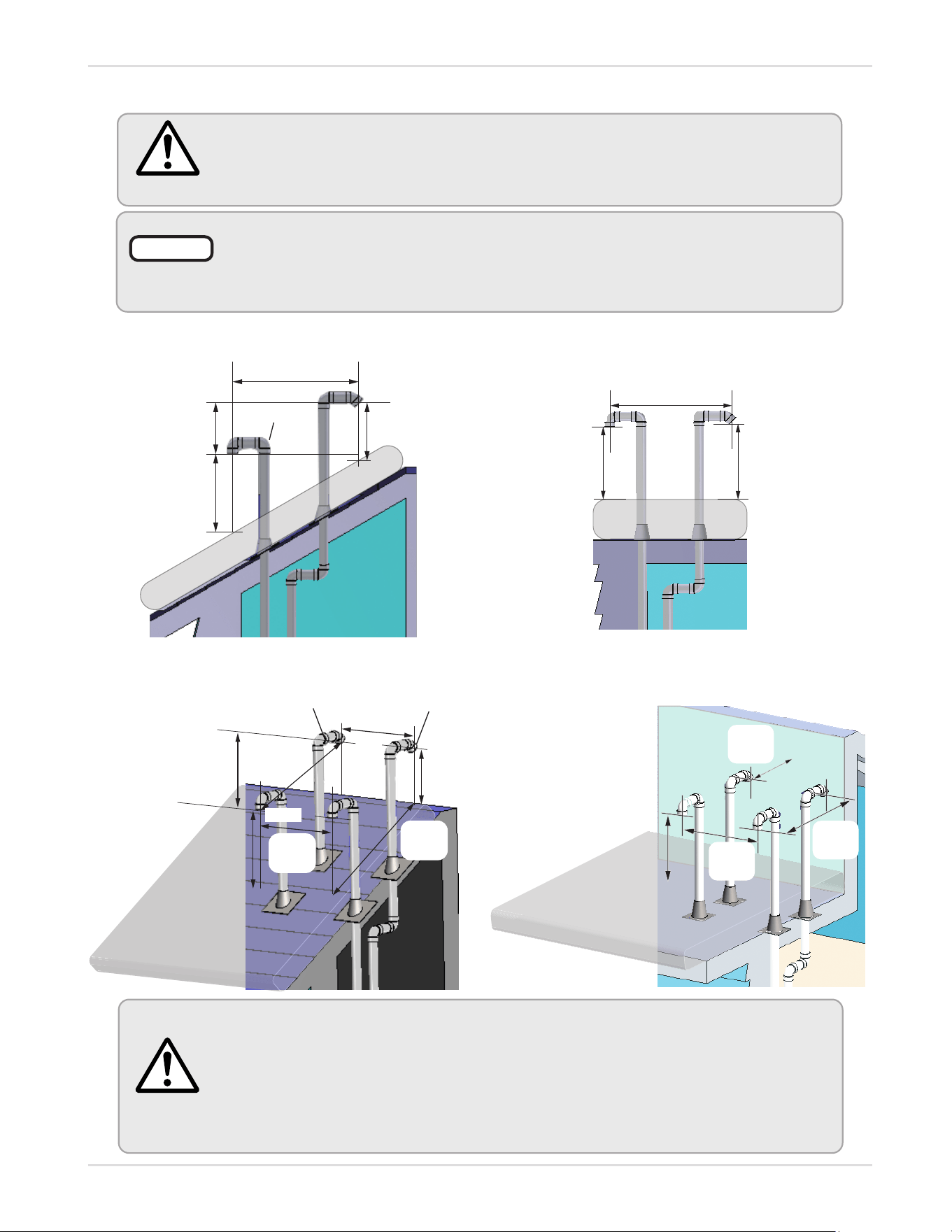
-Clearances for rooop terminaons-
Follow all local and national codes in regards to proper termination clearances. In the
absence of such codes, the clearances below must be met. Local codes supersede these
clearances. Failure to observe this warning may result in severe personal injury or death.
WARNING
• Exhaust terminations must be at least 1 ft (305 mm) away from any obstructions.
• Minimum spacing between multiple terminals:
- intake terminals: 1 ft (305 mm) spacing between each
- exhaust terminals: 1 ft (305 mm) spacing between each
• The exhaust termination must be a horizontal distance of at least 2 ft (610 mm) from a
wall or surface unless specified differently by local code.
• Failure to observe this warning may result in severe personal injury or death.
WARNING
Canadian requirements differ from the guidelines in this section. In Canada, follow
the requirements of B149.1 (Natural Gas and Propane Installation Code, current
edition) as well as local and provincial codes. Contact your local code enforcement
agency for direction.
NOTICE
Angled roof termination
Ancipated snow level
2 (610 mm) min.
1
(305 mm)
min.
1
(305 mm)
min.
1
(305 mm)
min.
Exhaust
Intake
Multiple flat roof terminations
An�cipated snow level
2 �
(610 mm)
min.
3 �
(914 mm)
min.
1 �
(305 mm)
min.
1 �
(305 mm)
min.
Exhaust
Exhaust
Intake
Intake
Flat roof termination
Ancipated snow level
3 (914 mm) min.
1
(305 mm)
min.
1
(305 mm)
min.
Exhaust
Intake
Multiple angled roof terminations
1
(305 mm)
min.
1
(305 mm)
min.
3
(914 mm)
min.
1
(305 mm)
min.
1
(305 mm)
min.
Ancipated snow level
2
(610 mm)
min.
1
(305 mm)
min.
Exhaust
Exhaust
Intake
Intake
17 Page
-Combuson air supply-
This gas water heater requires an adequate source of clean air for combustion and
ventilation. Without sufficient air, your water heater may not operate properly and
may emit excessive and abnormal amounts of carbon monoxide which may result in
carbon monoxide poisoning or death.
WARNING
• The guidelines in this section apply to installations within the United States. All
U.S. installations must conform to the National Fuel Gas Code, ANSI Z223.1/
NFPA 54 (current edition) and local codes.
• Canadian requirements differ from the guidelines in this section. In Canada,
follow the requirements of B149.1 (Natural Gas and Propane Installation Code,
current edition) as well as local and provincial codes. Contact your local code
enforcement agency for direction.
NOTICE
Before installing the water heater, you must determine the amount of air needed to supply this water heater and
any other gas appliances in the same area and provide adequate air for combuson and venlaon. Consult a
qualied person if you’re unsure of the proper way to supply air to your water heater.
Check for Chemicals:
Air for combuson and venlaon must be clean and free of corrosive chemicals. If corrosive chemicals, such as
sulfur, uorine, or chlorine are present, the water heater must be direct vented. Failure due to these corrosive
chemicals is not covered by the warranty.
WARNING!
In all cases, ensure that corrosive chemicals are not present at the air intake. Presence of such chemicals at the
air intake could result in death, personal injury, or property damage. Examples of locaons that require outside air
due to chemicals include:
• Beauty salons
• Photo processing labs
• Indoor pools
• Laundry, hobby, or cra rooms
• Chemical storage areas
• Restaurants
Products such as aerosol sprays, detergents, bleaches, cleaning solvents, gasoline, air fresheners, paint and varnish
removers, and refrigerants should not be stored or used near the water heater.
Does your installation space have sufficient combustion air?
Venlaon with outside air is recommended for all installaons. Even if the water heater is installed in a large,
open room inside the house, outdoor air is usually needed because modern homes are very ghtly sealed and
oen do not supply enough air to the water heater. However, when installed in a large indoor space, it may be
possible to provide enough air without outside venlaon. If you are unsure if your installaon locaon has
enough venlaon, contact your local gas ulity company or code ocials for a safety inspecon or direct vent
the water heater
The following instrucons will help determine if it may be possible to install the water heater without outside
venlaon.
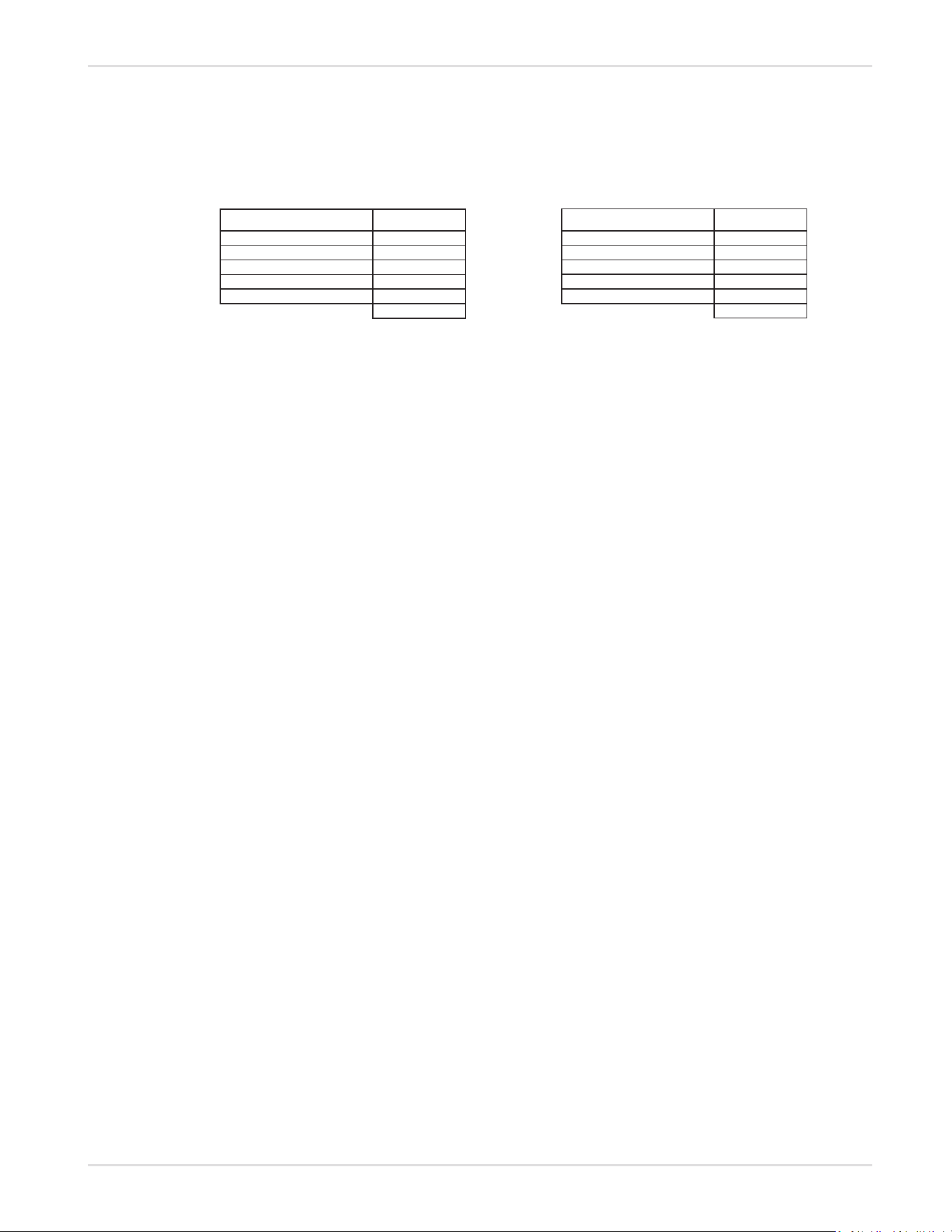
Calculate total BTU/h rang of all appliances.
To calculate the combuson air and venlaon required, add up the total BTU/h rangs of all gas burning appli-
ances (e.g., water heaters, furnaces, clothes dryers) in the same area. Do not include appliances that are direct
vented. Refer to the following example.
Installaon
Installaon Manual
18 Page
Your water heater’s BTU/h rating is on the rating plate. The BTU/h ratings should be on the other appliances’
rating plates. If you have trouble determining the BTU/h ratings, contact the manufacturer or have a qualified
person determine the ventilation requirements.
NOTICE: If you are replacing your old water heater with one that has a higher BTU/h rang, the amount of
venlaon required may be greater.
Gas Burning Appliance BTU/h Rang
Gas Water Heater 199,000
Furnace 75,000
Dryer 20,000
Total 294,000
Example:
Gas Burning Appliance BTU/h Rang
Gas Water Heater
Total
Your
appliances:
Calculate the air volume of the room
Air requirements depend on the size of the room.
Room Volume (
3
) = Floor Area (
2
) X Ceiling Height ()
If there are large objects in the room (e.g., refrigerator, furnace, car), subtract their volume from the volume of the
room to get a beer esmate of the air available.
Air Volume = Room Volume - Object Volume
NOTE: Adjoining rooms with permanently opened doorways can be counted as part of the calculaon.
Calculate required air volume
A water heater installed in an unconned ac, garage, or space requires that the space be at least 50
3
(1.42
m
3
) per 1,000 BTU/h of the total input for all gas burning appliances in the same area.
Required Air Volume (
3
) =Total Appliance Energy Rang (btu/h) X 50
3
/ 1000 (btu/h)
Example:
(294,000 / 1000) x 50 = 14,700
3
If the air volume of the room is less than the required air volume, you must direct vent the water heater or
provide permanent outside air openings that draw in sucient air. Go to “Install with outside venlaon” if you
want to provide combuson air with outside venlaon.
If the air volume of the room is greater than the required air volume, it may be possible to install the water heat-
er without outside venlaon. However, be sure to consider the eects of exhaust fans.
Exhaust fans can aect the amount of combuson air that is available in your home. Appliances such as furnac-
es, whole house fans, and clothes dryers draw air out of your home. If they draw air out faster than it can be
replaced, your water heater may not have enough oxygen to re properly. Back-draing may also result, which is
when negave air pressure pulls air backwards through chimneys or appliance vents. These events can cause un-
sasfactory water heater performance. The best soluon is to direct vent the water heater or install an adequate
number of make-up air vents. (See “Install with outside venlaon”.) For more informaon, consult a qualied
technician or your local gas ulity.
Install with outside ventilation
Venlaon with outside air is recommended, and, for most installaons, is needed. There may be exisng venlaon
that is adequate, or you may need to add more venlaon.
Supplying outside air to the water heater typically requires two openings. One opening must be within 12 in (305 mm)
from the oor and the second opening must be within 12 in (305 mm) from the ceiling. Although a single opening is
not preferred, you may use a single opening to outside air if the minimum free area is sized according to Table 1. Two
openings must be used when venlang with air from another room.
The outside air can be taken from a crawl space or ac open to the outdoors and adequately venlated. You may
use vercal or horizontal ducts.
Installaon
Installaon Manual
19 Page
Determine type of ventilation
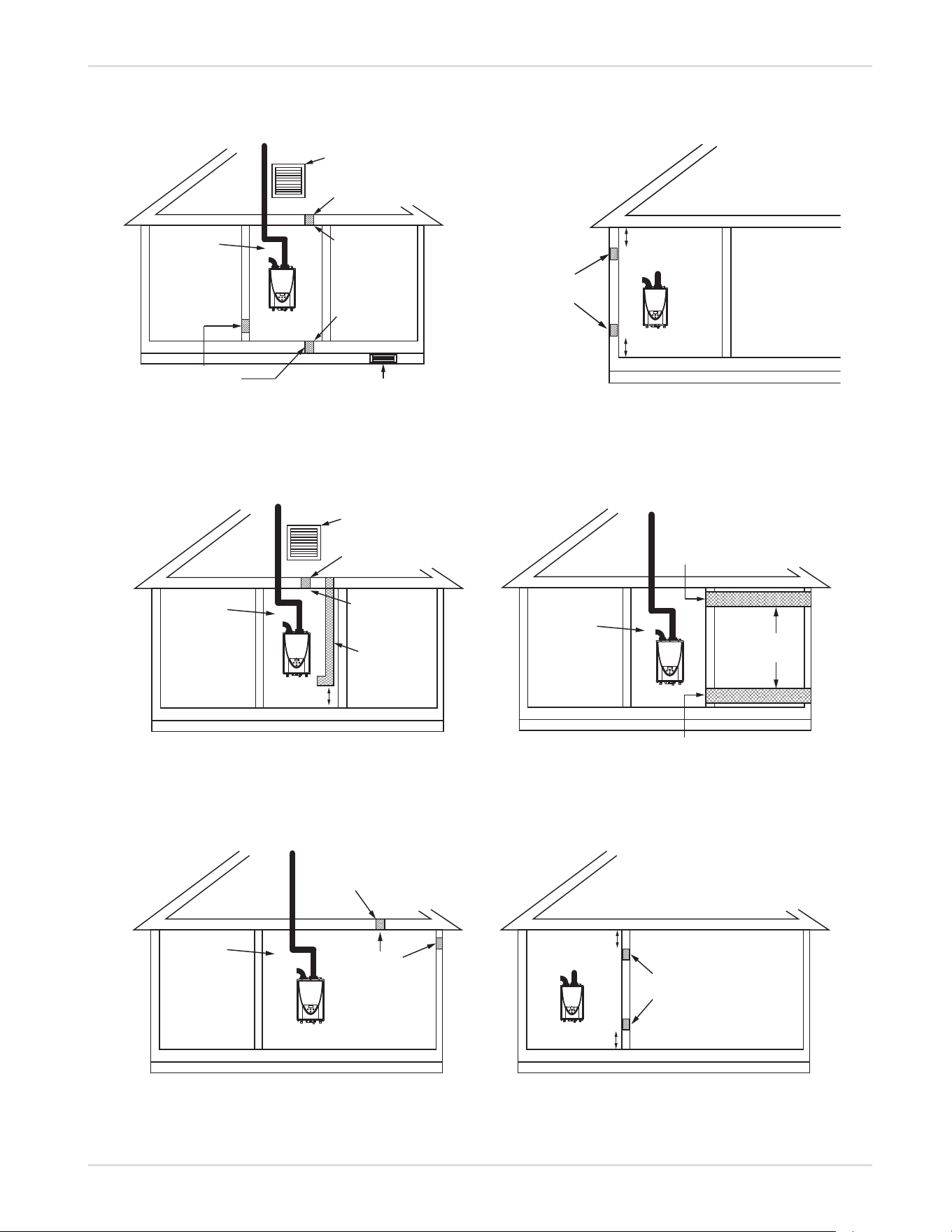
There are several types of venlaon that can be used. The various opons are listed below. See also the illustra-
ons on the next page.
1. Direct to outdoors
2. Vercal ducts
3. Horizontal ducts-Single opening (not recommended; must be at least 100 in
2
(645 cm
2
) . Not appropriate for con-
ned spaces smaller than 50
3
(1.42 m
3
) per 1,000 BTU/h or when geng air from another room.)
4. From a larger room inside the house (not recommended – refer to "Calculate the air volume of the room" above to
determine if the combined volume of the rooms may be adequate).
Determine minimum free area required for each vent opening
The size of the vent openings depends on the total BTU/h rang of all appliances in the space (use your calculaon from “Be-
fore beginning”) and the type of vent used. Table 1 provides the minimum free area for each vent opening depending on the
type of venlaon.
Calculate minimum size of vent openings and ducts
The vent cross-seconal area needed to provide the free area depends on the covering on the vent openings. Typical vents use
louvers or grilles to protect the opening. The louver or grill itself blocks some of the free area, so the opening may need to be
larger to meet the minimum free area requirements.
Use the following formula to calculate the required cross-seconal area:
Cross-seconal area = minimum free area required ÷ percent free area of covering (in decimals – e.g., 60 % = 0.6)
For example, an installaon area that requires openings with 100 in
2
(645 cm
2
) of free area would need 134 in
2
(865 cm
2
) openings if using metal louvers rated at 75% free area (100 in
2
÷ 0.75 = 134 in
2
).
If you do not know the % free area for your louver or grill, use the following values:
• For wood louvers or grilles: 25%
• For metal louvers or grilles: 75%
Follow these rules to ensure that vents and ducts provide adequate air ow:
• Each vent opening must be no smaller than 100 in
2
(645 cm
2
).
• Ducts must have the same cross-seconal area as free area of the opening.
• Rectangular ducts must have a minimum dimension of no less than 3 in (76 mm).
• All screens must have mesh ¼” or larger.
• Movable louvers must be locked open or interconnected with the equipment so that they open automacally during
operaon.
• Keep louvers and grills clean and free of debris or other obstrucons.
Check that air source is clean and free of chemicals
Air for combuson and venlaon must be clean and free of corrosive or ammable chemicals. A failure due to corrosive
chemicals in the air is not covered by the warranty. Combuson air must be free of acid-forming chemicals such as sulfur, uo-
rine, and chlorine. Be sure that air at the vent inlets is free of such chemicals.
See graphics on next page.
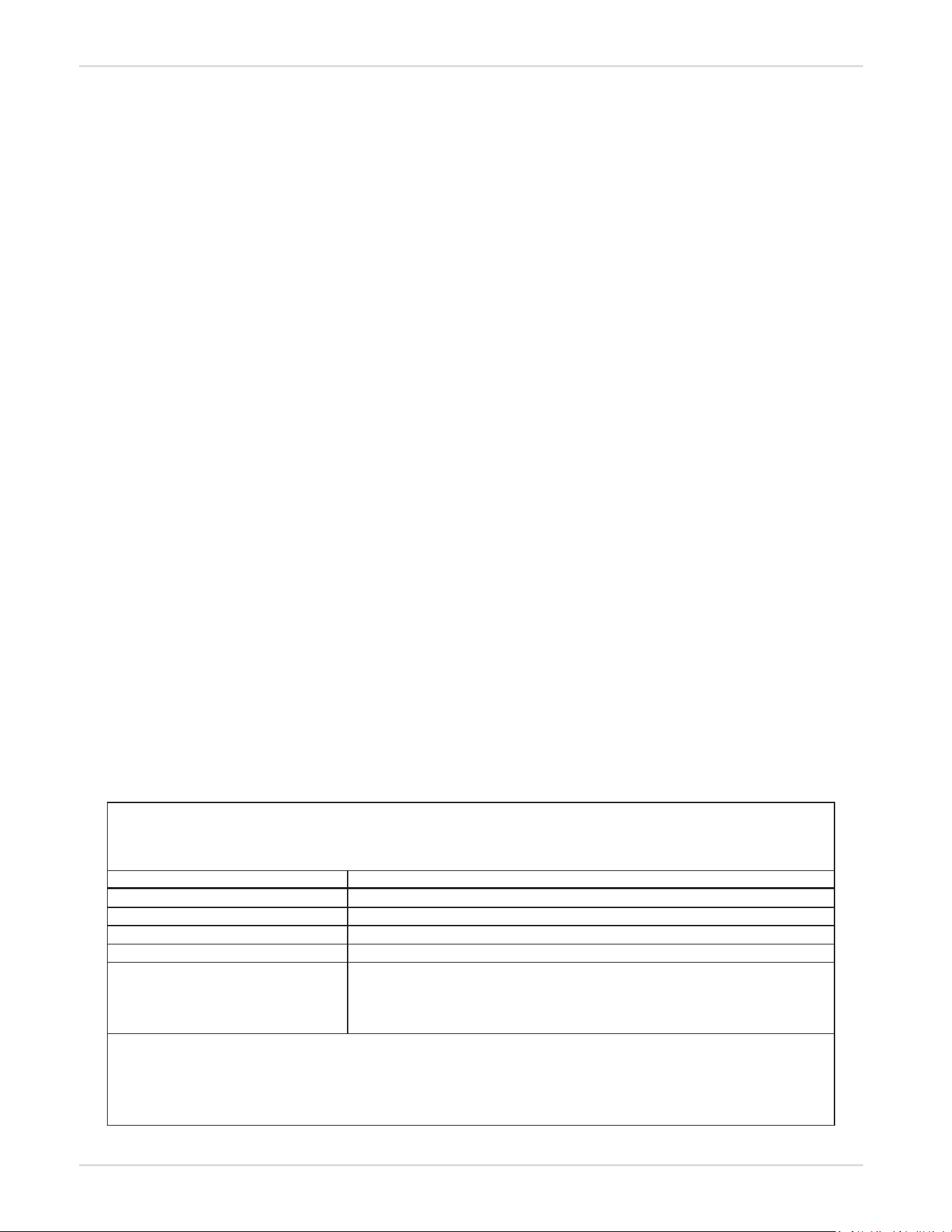
Table 1
Minimum Free Area of Permanent Openings for Venlaon and Combuson Air Supply – Air from outdoor or
indoor spaces.
Based on the total BTU/h input rang for all gas burning appliances within a conned space.
Opening Source Minimum Free Area
Direct to outdoors*
1 in
2
(6.5 cm
2
) per 4,000 BTU/hr (see Figure 1, 2)
Vercal ducts
1 in
2
(6.5 cm
2
) per 4,000 BTU/hr (see Figure 3)
Horizontal ducts
1 in
2
(6.5 cm
2
) per 2,000 BTU/hr (see Figure 4)
Single Opening
1 in
2
(6.5 cm
2
) per 3,000 BTU/hr (see Figure 5)
Two permanent openings
to another room**
1 in
2
(6.5 cm
2
) per 1,000 Btu/hr (see Figure 6)
Opening: 100 in
2
(645 cm
2
) Min
Minimum dimension of air openings:
no less than 3 in (76 mm)
*These openings connect directly with the outdoors through a venlated ac, a venlated crawl space, or through
an outside wall.
**United States: For direcon on combining spaces in dierent stories within the structure, refer to the current edi-
on of the Naonal Fuel Gas Code ANSI Z223.1/NFPA 54. In Canada, contact your local code enforcement agency for
direcon.
Installaon
Installaon Manual
20 Page
Combuson air supply opons
Gable vent
to outdoors
Install above
insulaon
Outlet air to
ac 1 in
2
(6.5 cm
2
)
per 4,000 btu/h
Inlet air from
the crawl space
Open foundaon vent
Confined
Space
Alternate
Air Inlet
1 in
2
(6.5 cm
2
)
per 4,000 btu/h
Figure 1 - Direct to outdoors openings
Figure 3 - Vercal duct openings
Outlet air to
ac 1 in
2
(6.5 cm
2
)
per 4,000 btu/h
Inlet air duct
1 in
2
(6.5 cm
2
)
per 4,000 btu/h
Confined
Space
12” (305 mm)
maximum
Gable vent
to outdoors
Install above
insulaon
Figure 5 - Single opening
Confined
Space
1 in
2
(6.5 cm
2
)
per 3,000 btu/h
Alternave
Opening
Locaon
Figure 6 - Two permanent openings
Two permanent
Openings
1 in
2
(6.5 cm
2
)
per
1,000 btu/h
12” (305 mm)
maximum
12” (305 mm)
maximum
Confined
Space
Figure 4 - Horizontal duct openings
1 in
2
(6.5 cm
2
)
per 2,000 btu/h
Confined
Space
Outlet
Inlet
Outdoor
Air Ducts
1 in
2
(6.5 cm
2
)
per 2,000 btu/h
Figure 2 - Direct to outdoors openings
Two permanent openings
Two permanent
Openings
1 in
2
(6.5 cm
2
)
per 4,000 btu/h
12” (305 mm)
maximum
12” (305 mm)
maximum
Confined
Space
Installaon
Installaon Manual
21 Page
-Exhaust vent (ABS, PVC, CPVC, or polypropylene vent)-
The Indoor models can be vented with ABS, PVC, CPVC, or polypropylene (temperature rated up to 149 °F).
Vent material certified to ULC S636 standards is recommended in the USA. In Canada, plastic venting must be
certified to ULC S636 standards.
•
Item Material United States Canada
Exhaust pipe and
Fittings
Schedule 40 PVC ANSI/ASTM D1785
ULC S636 Certified
Materials Only
PVC-DWV ANSI/ASTM D2665
Schedule 40 CPVC ANSI/ASTM F441
Schedule 40 ABS-DWV ANSI/ASTM D2661
Polypropylene UL-1738
Pipe Cement/Primer
PVC ANSI/ASTM D2564
CPVC ANSI/ASTM F493
ABS ANSI/ASTM D2235
Use of cellular core PVC (ASTM F891), cellular core CPVC, or Radel® (polyphenylsulfone) in
non-metallic venting systems is prohibited.
Covering non-metallic vent pipe and fittings with thermal insulation is prohibited.
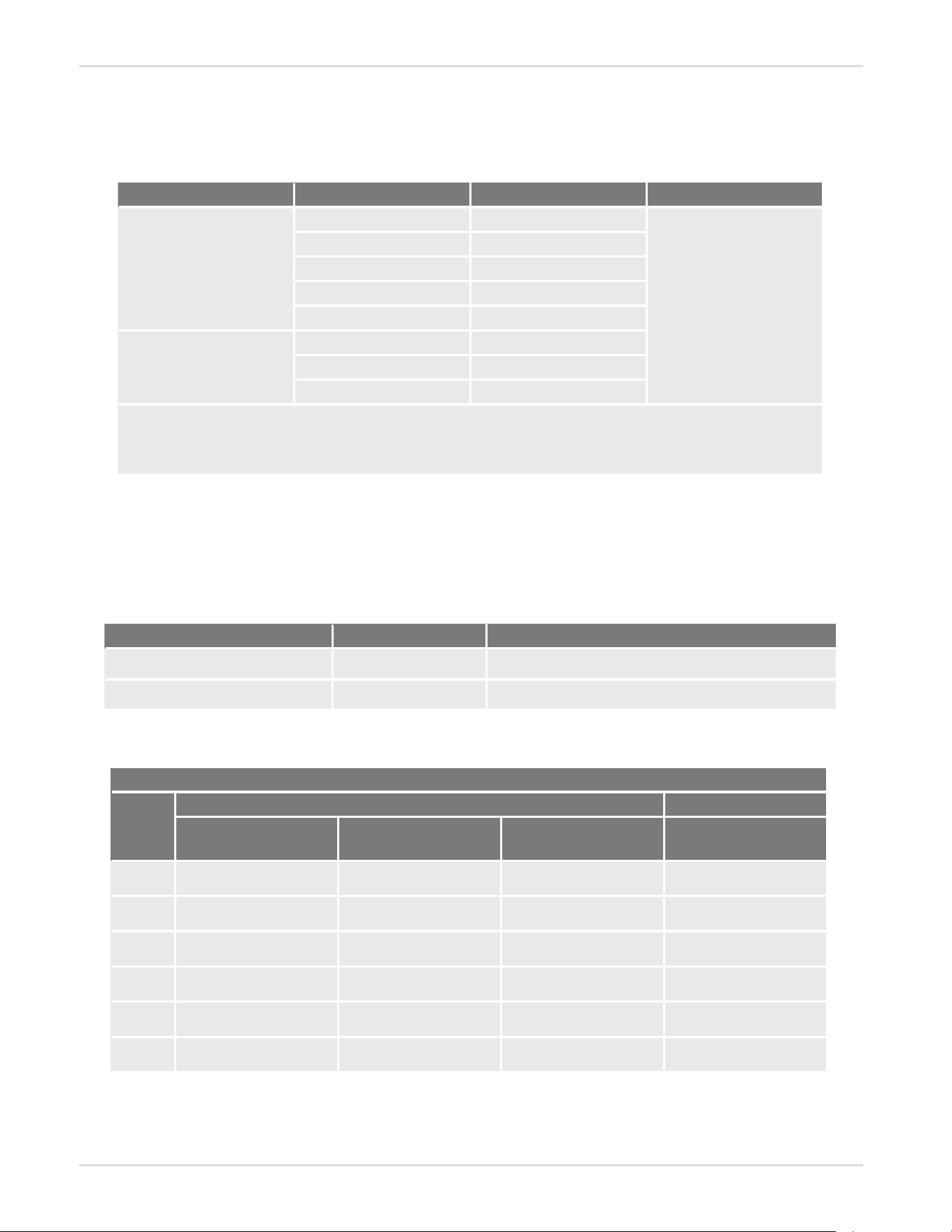
The maximum length of exhaust vent piping must not exceed 70 ft (21.3 m) for 3ʺ venting, which
depends on the elevation where the water heater is installed, and 100 ft (30.5 m) for 4ʺ venting
(deducting 5 ft (1.5 m) for each elbow used in the venting system). Do not use more than 5 elbows.
See the table below.
• When the horizontal vent run exceeds 5 ft (1.5 m), support the vent run at 3 ft (0.9 m) intervals with
overhead hangers.
Installaon
Installaon Manual
Diameter Max. No. of Elbows Max. Vertical and Horizontal (Total) Vent Length
3 in 5 70 ft (21.3 m)
4 in 5 100 ft (30.5 m)
*For each elbow added, deduct 5 ft. (1.5 m) from max. vent length.
Vertical or Horizontal (Total) Vent Length
No. of
Elbows*
3" venting 4" venting
0 to 3,000 ft
(0 to 914 m)
3,001 to 6,000 ft
(915 to 1,829 m)
6,001 to 10,100 ft
(1,830 to 3,078 m)
0 to 10,100 ft
(0 to 3,078 m)
0 70 ft (21.3 m) 40 ft (12.2 m) 25 ft (7.6 m) 100 ft (30.5 m)
1 65 ft (19.8 m) 35 ft (10.7 m) 20 ft (6.1 m) 95 ft (29.0 m)
2 60 ft (18.3 m) 30 ft (9.1 m) 15 ft (4.6 m) 90 ft (27.4 m)
3 55 ft (16.8 m) 25 ft (7.6 m) 10 ft (3.0 m) 85 ft (25.9 m)
4 50 ft (15.2 m) 20 ft (6.1 m) N/A 80 ft (24.4 m)
5 45 ft (13.7 m) N/A N/A 75 ft (22.9 m)
*For each elbow added, deduct 5 ft (1.5 m) from max. vent length.
For details on the vent connection, refer to pages 23 to 25.
Excludes vent terminators, one termination elbow, or rain caps.
22 Page
Installaon
Installaon Manual
-DIP switch settings for vent length-
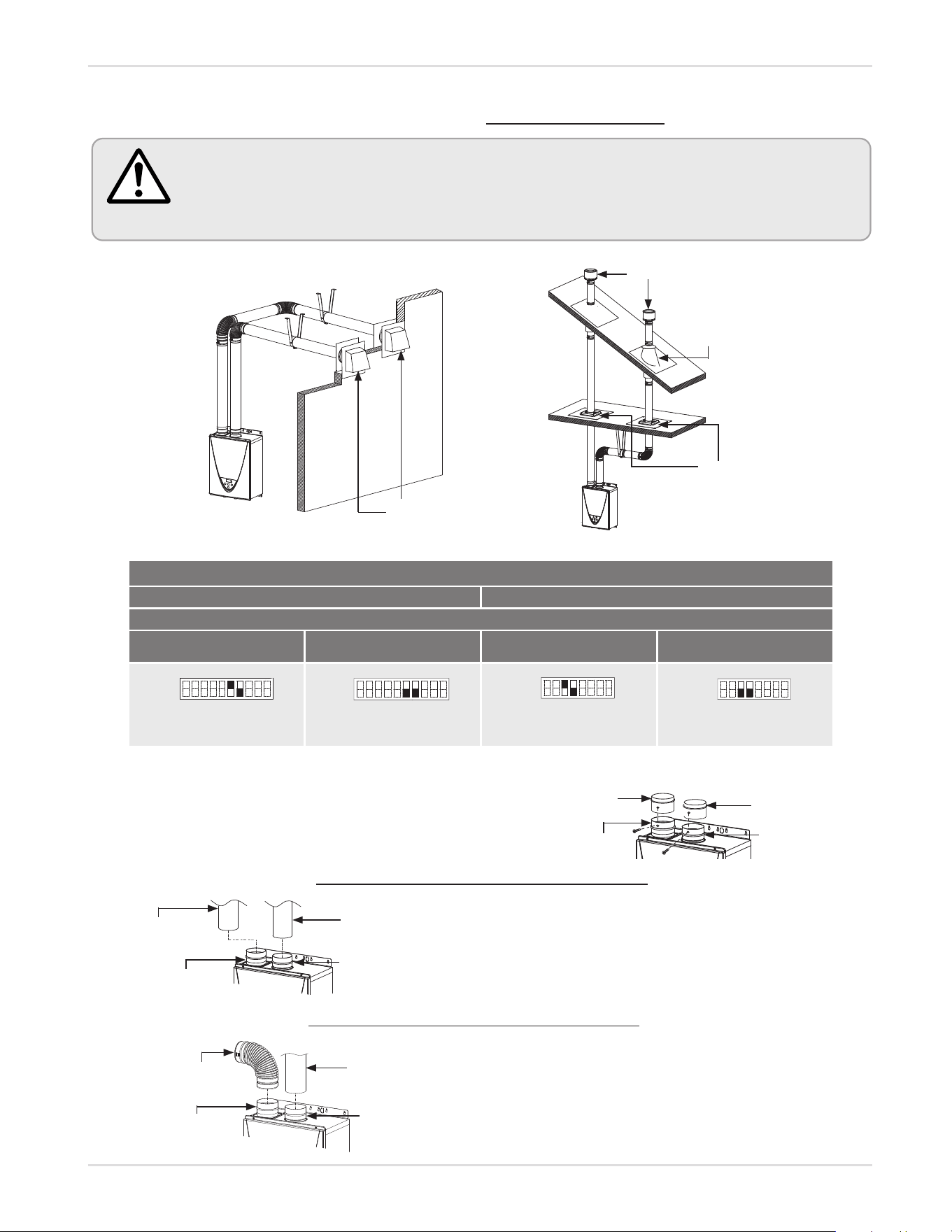
Typical installaons using PVC, CPVC, ABS, or polypropylene vent
WARNING
• Adjust the appropriate DIP switches according to model and vent length as shown
below. DO NOT adjust the other DIP switches.
• Turn off the power supply to the water heater before changing the DIP switch settings.
• Failure to observe these warnings could lead to carbon monoxide poisoning or death.
• For details of the vent items, refer to the Installation manual
for each item.
• For clearance information, refer to pages 14 to 16.
Termination
Hanger
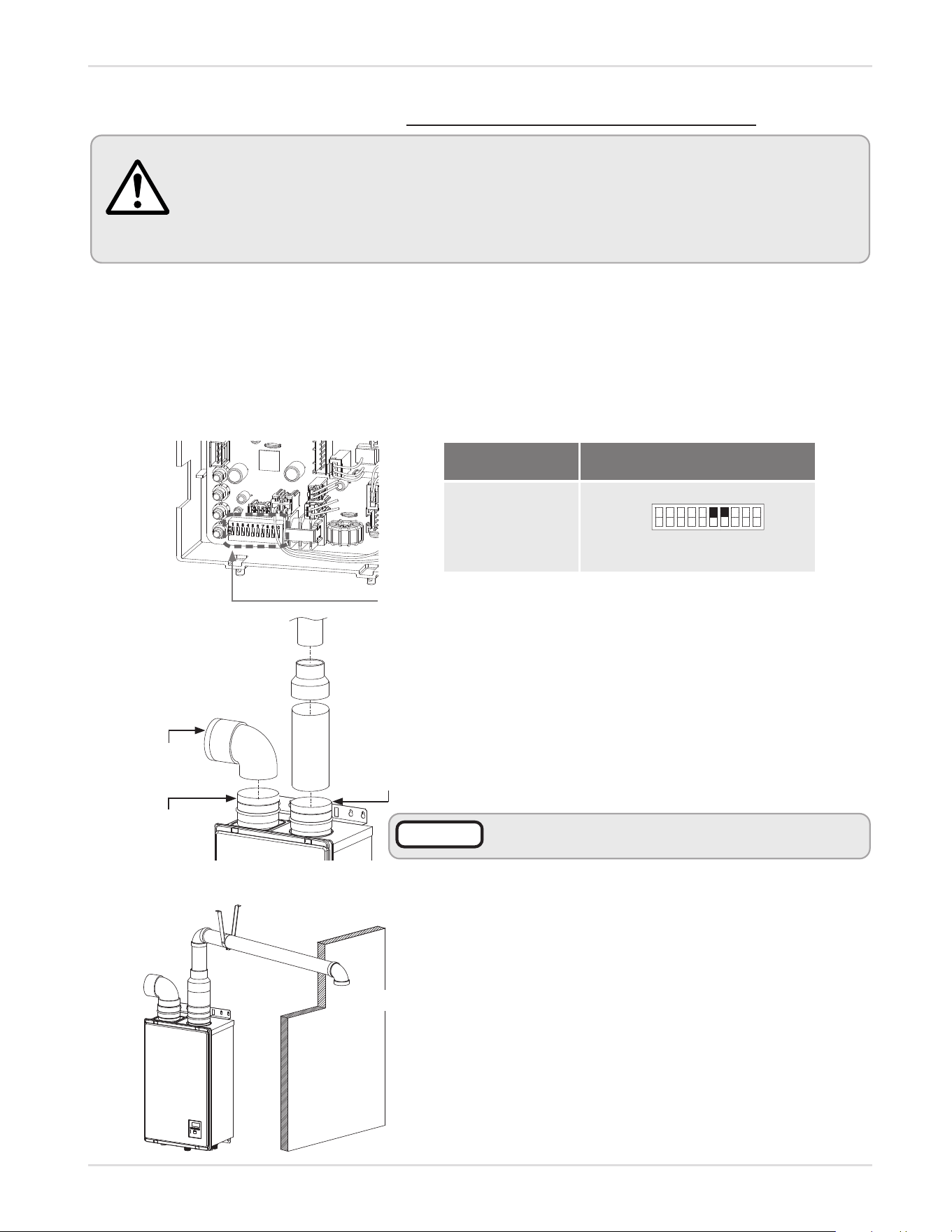
Vent connections for Single-pipe with Room-Air Intake Installaon, Horizontal Installaon
*3" street elbow
with bird screen
Intake vent collar
with 3" adapter
(Female)
3"x 2" reducer
2" straight pipe
Exhaust vent
collar with 3"
adapter
(Female)
2 inch vent installaon for 140H model
• 2ʺ pipe for venng is only approved for the 140H model in the Single Pipe with Room-Air Intake Installaon,
Horizontal Installaon as shown below.
• Maximum vent length for 2ʺ venng is 6.5 (2.0 m) , not including terminaon.
• One long sweep elbow may be installed. Deduct 5 (1.5 m) from maximum vent length.
• 2ʺ venng is approved on installaons up to 3,000 (914 m).
Vent length Single vent
5 to 6.5 ft
(1.5 to 2.0 m)
OFF
ON
1 2 3 4 5 6 7 8 9 10
No. 6 : ON
No. 7 : ON
Bank of DIP switches
140H Computer board
3" PVC adapters are not approved for use in Canada.
NOTICE
1. Insert no more than 12" (305 mm) of 3" straight pipe into
the exhaust vent collar with 3" adapter.
2. Connect a 3" x 2" reducer with the 3" straight pipe.
3. Connect 2" straight pipe into the reducer.
4. Connect spigot end of the 3" street elbow into the intake
vent collar with 3" adapter. Be sure to insert a bird screen
into the hub side.
*The bird screen that fits into the 3 inch elbow is supplied
with the indoor water heater.
23 Page
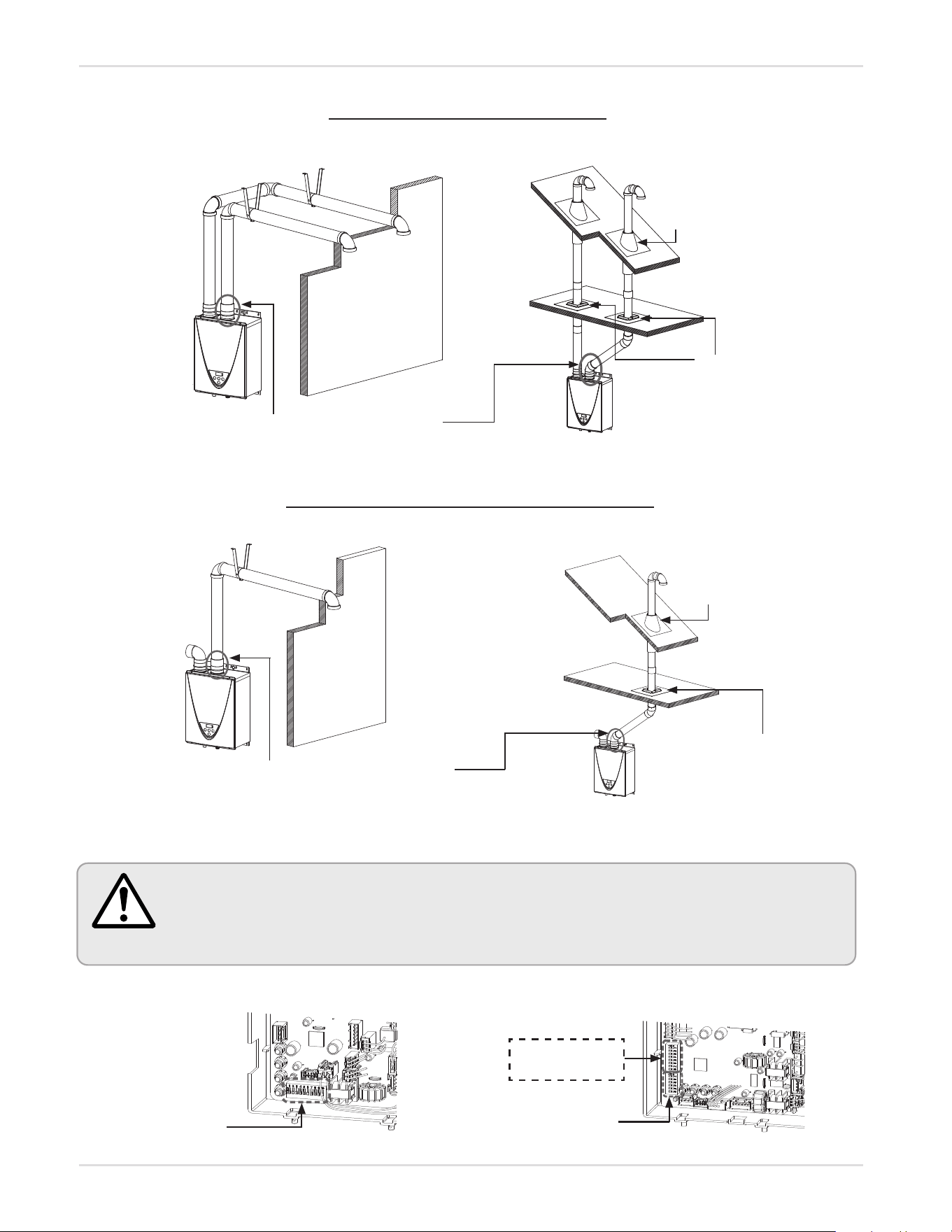
WARNING
• Adjust the appropriate DIP switches according to model and vent length as shown
in the following. DO NOT adjust the other DIP switches.
• Turn off the power supply to the water heater before changing the DIP switch settings.
• Failure to observe these warnings could lead to carbon monoxide poisoning or death.
Two-pipe, direct-vent installaon
3 inch & 4 inch vent installaon
Vercal Installaon
Roof ashing
Roof
Fire stop
Horizontal Installaon
Wall
Connect between exhaust vent collar and piping.
See the instrucons on the next page.
Hanger
Hanger
140H/240H/340H
Bank of
DIP switches
540H
Upper bank of
DIP switches
Lower bank of
DIP switches
Installaon
Installaon Manual
Connect between exhaust vent collar and piping.
See the instrucons on the next page.
Single-pipe with room-air intake installaon
Roof
ashing
Fire stop
Vercal Installaon
Roof
Elbow
Horizontal Installaon
Elbow
Wall
Hanger
For details on the vent components, refer to the vent manufacturer’s instructions.
For details on the vent components, refer to the vent manufacturer’s instructions.
24 Page
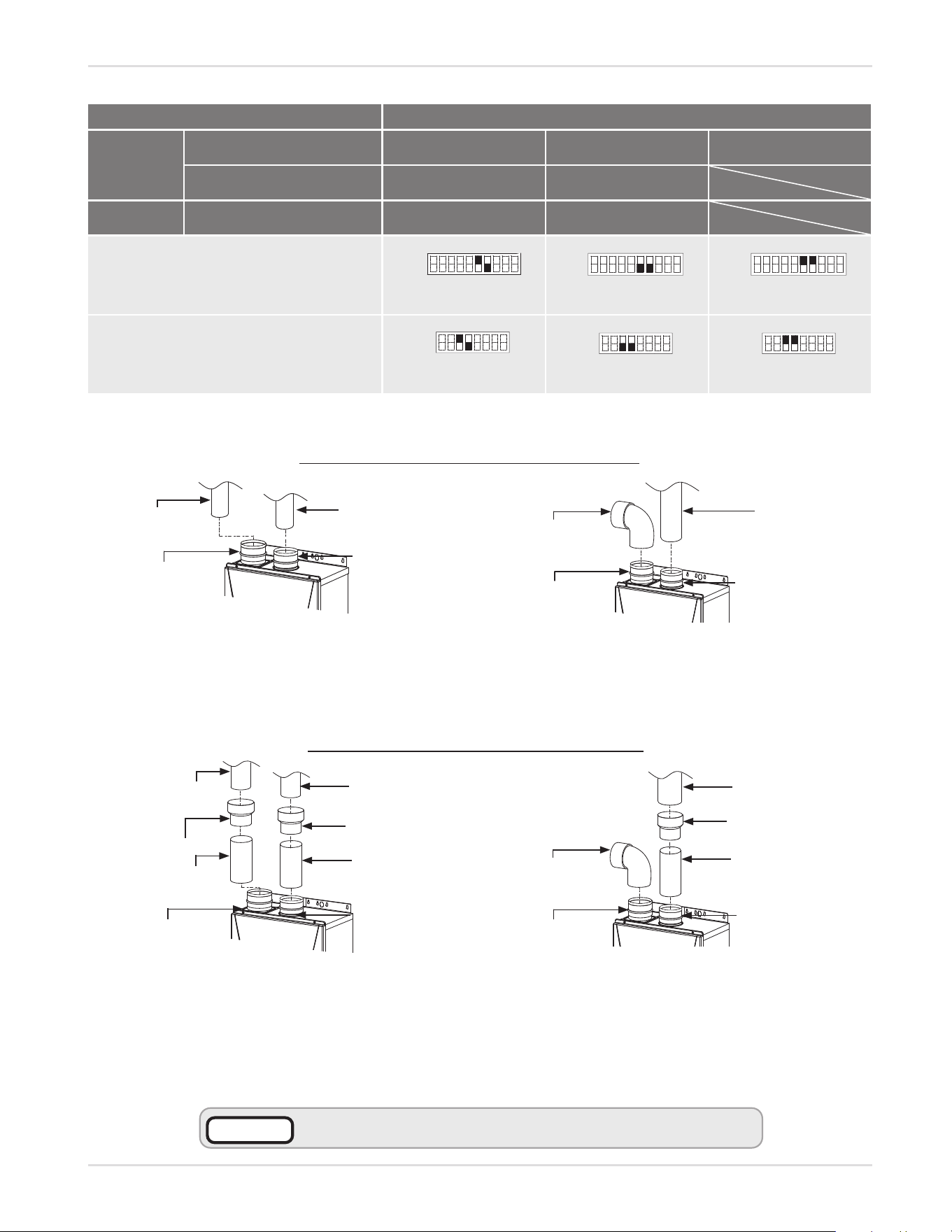
Set DIP switches shown in the table below depending on the vent diameter, the installation, and the vent length.
Vent diameter & Installation Vent length
3ʺ venting*
Two-pipe, Direct vent
5 to 20 ft (1.5 to 6.1 m)
(DEFAULT)
21 to 40 ft (6.2 to 12.2 m) 41 to 70 ft (12.3 to 21.3 m)
Single vent
5 to 45 ft (1.5 to 13.7 m)
(DEFAULT)
46 to 70 ft (13.8 to 21.3 m)
4ʺ venting
Two-pipe, Direct vent &
Single vent
5 to 50 ft (1.5 to 15.2 m)
(DEFAULT)
51 to 100 ft (15.3 to 30.5 m)
140H/240H/340H
Indoor
OFF
ON
1 2 3 4 5 6 7 8 9 10
No. 6 : O N
No. 7 : OFF
OFF
ON
1 2 3 4 5 6 7 8 9 10
No. 6 : OFF
No. 7 : OFF
OFF
ON
1 2 3 4 5 6 7 8 9 10
No. 6 : O N
No. 7 : O N
540H Indoor
(Upper bank of
DIP switches)
OFF
ON
1 2 3 4 5 6 7 8
No. 3 : O N
No. 4 : OFF
OFF
ON
1 2 3 4 5 6 7 8
No. 3 : OFF
No. 4 : OFF
OFF
ON
1 2 3 4 5 6 7 8
No. 3 : O N
No. 4 : O N
*PVC concentric termination (100112163) installation is applied to the DIP switch settings of 3" venting. (Refer
to page 10.)
Installaon
Installaon Manual
1. Insert no more than 12" (305 mm) of 3" straight pipe
into the exhaust/intake vent collar with 3" adapter.
2. Connect 3" x 4" increasers to straight pipes.
3. Connect 4" straight pipes to the increasers.
4" vent connecon for PVC/CPVC venng only
• PVC adapter will accept 3" straight pipe.
3" vent connecon for PVC/CPVC venng only
Exhaust vent collar
with 3" adapter*
(Female)
Intake vent collar with
3" adapter* (Female)
3" straight pipe
3" straight pipe
*3" PVC adapters are not approved for use in Canada.
NOTICE
Intake vent collar with
3" adapter* (Female)
Exhaust vent collar
with 3" adapter*
(Female)
3" x 4" increaser
3" x 4" increaser
4"straight pipe
3"straight pipe
no more than 12"
(305 mm)
4" straight pipe
3" straight pipe
no more than 12"
(305 mm)
1. Connect spigot end of 3" street elbow into the intake
vent collar with 3" adapter. Be sure to insert bird
screen into the hub side.
2. Connect 3" straight pipe into the exhaust vent collar
with 3" adapter.
Exhaust vent collar with
3" adapter (Female)
Intake vent collar
with 3" adapter
(Female)
3" street elbow
with bird screen
3" straight pipe
1. Insert no more than 12" (305 mm) of 3" straight pipe
into the exhaust vent collar with 3" adapter.
2. Connect a 3" x 4" increaser into the 3" straight pipe.
3. Connect 4" straight pipe into the increaser.
4. Connect spigot end of 3" street elbow into the intake
vent collar with 3" adapter. Be sure to insert bird
screen into the hub side.
Exhaust vent collar
with 3" adapter*
(Female)
3" x 4" increaser
4" straight pipe
3" straight pipe
no more than 12"
(305 mm)
Intake vent collar
with 3" adapter
(Female)
3" street elbow
with bird screen
25 Page
*3" PVC adapters are not approved for use in Canada.
NOTICE
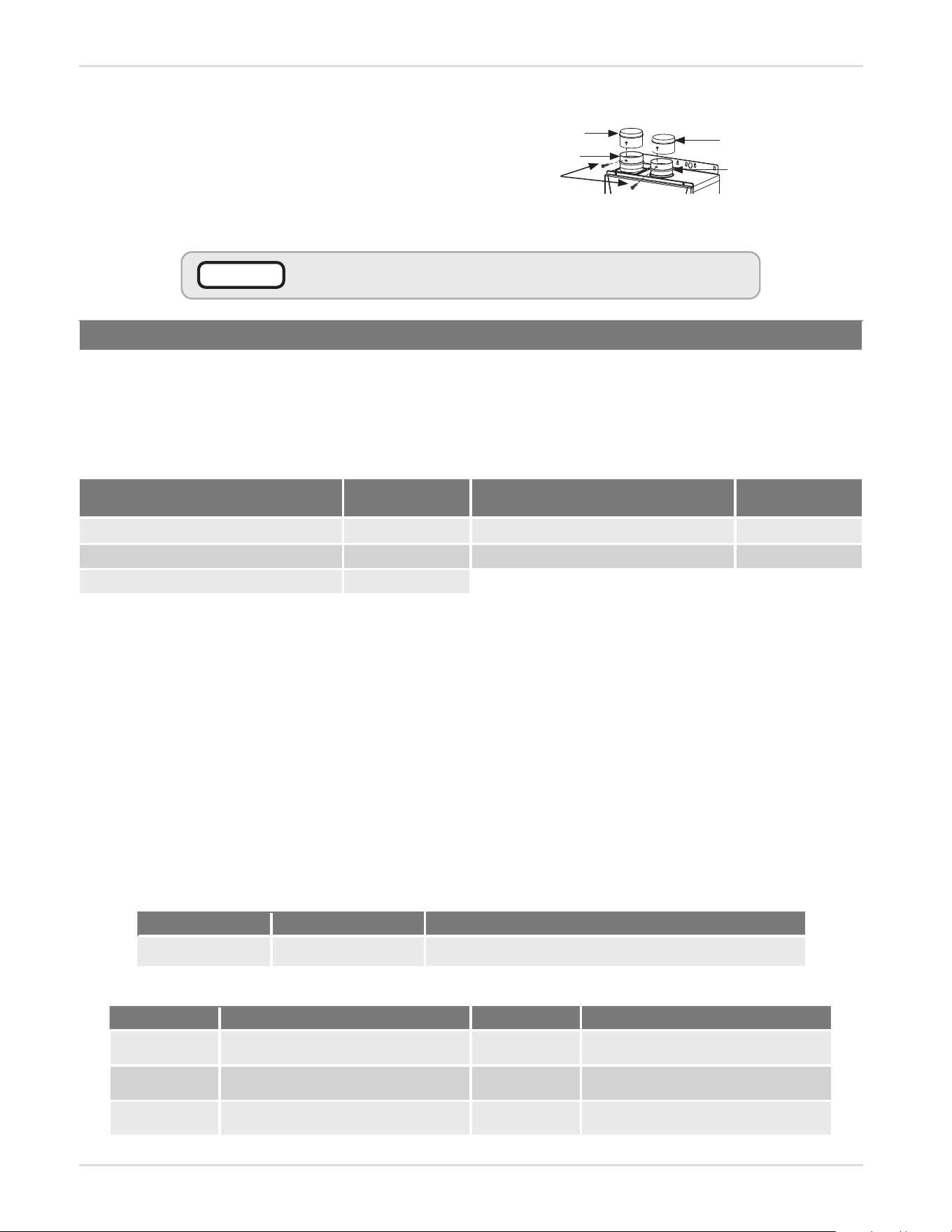
<How to remove 3" PVC adapter from the intake/exhaust collar>
Remove the 3" adapter when using vent material
other than PVC or CPVC.
POLYPROPYLENE VENTING
WARNING! Do not mix parts or fittings of different material types, and do not mix pipe, fittings, or joining
methods from different manufacturers. Combustion exhaust can contain carbon monoxide and must be prop-
erly vented outside. Breathing abnormal amounts of carbon monoxide can result in serious injury or death.
Centrotherm Innoflue polypropylene venting is approved for use with these water heaters. Follow the instruc-
tions in this manual and in the vent manufacturer’s instructions when installing vent pipe.
Description
Centrotherm Part
No. (Trade Name
InnoFlue)
Description
Centrotherm Part
No. (Trade Name
InnoFlue)
4''/6'' x 39" (990 mm) Concentric Wall
ICWS4639
3''/5'' x 13'' (330 mm) Concentric Wall
Termination SS
ICWS3513
101 mm to 3” Adapter
ISA010103
3'' Twin Pipe to 3''/5'' Concentric Adapter
ICTC0335
101 mm to 4” Adapter
ISA010104
1. Remove each screw from 3" adapter to detach
the adapters from each vent collar.
Exhaust vent collar
(Female)
Intake vent collar
(Female)
3" adapter*
3" adapter*
Screws
-Exhaust vent (Stainless steel vent)-
This is a Category IV appliance and must be vented accordingly. The vent system must be sealed airtight. All
seams and joints without gaskets must be sealed with high heat resistant silicone sealant or UL listed aluminum
adhesive tape having a minimum temperature rating of 160 °F (71 °C). For best results, a vent system should be
as short and straight as possible.
• The Indoor models are a Category IV appliance and must be vented accordingly with any 4ʺ vent approved for use with
Category III/IV or Special BH type gas vent.
• The manufacturer recommends the NovaVent® or Z-Vent® venting manufactured by Z-Flex® U.S. and are
listed to UL 1738.
• Follow the vent pipe manufacturer’s instructions when installing the vent pipe.
• The maximum length of exhaust vent piping must not exceed 100 ft (30.5 m) (deducting 5 ft (1.5 m) for each elbow
used in the venting system). Do not use more than 5 elbows.
• When the horizontal vent run exceeds 5 ft (1.5 m), support the vent run at 3 ft (0.9 m) intervals with overhead hangers.
Diameter Max. No. of Elbows Max. Vertical and Horizontal (Total) Vent Length*
4 in 5 100 ft (30.5 m )
*For each elbow added, deduct 5 ft. (1.5 m) from max. vent length.
Excludes vent terminators, termination elbows, or rain caps.
No. of Elbows Max. Vertical or Horizontal Vent Length No. of Elbows Max. Vertical or Horizontal Vent Length
0 100 ft (30.5 m) 3 85 ft (25.9 m)
1 95 ft (29.0 m) 4 80 ft (24.4 m)
2 90 ft (27.4 m) 5 75 ft (22.9 m)
Installaon
Installaon Manual
26 Page
Installaon
Installaon Manual
-DIP switch settings for vent length-
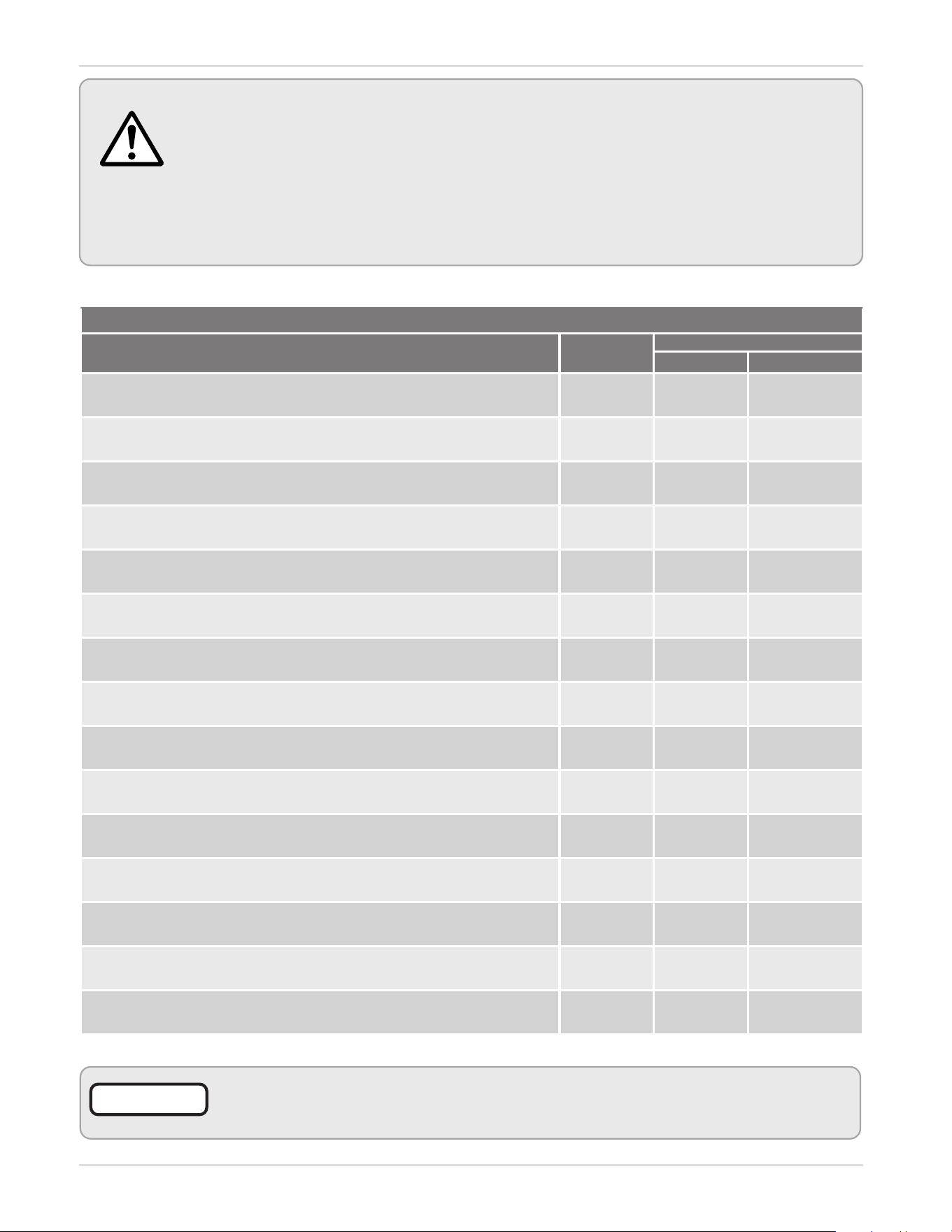
Typical installaons using stainless steel vents
DIP switch settings : Single pipe and Direct vent installations / Vent diameter : 4" venting
140H/240H/340H Indoor 540H Indoor (Upper bank of DIP switches)
Vent length
5 to 50 ft (1.5 to 15.2 m)
(DEFAULT)
51 to 100 ft (15.3 to 30.5 m) 5 to 50 ft (1.5 to 15.2 m)
(DEFAULT)
51 to 100 ft (15.3 to 30.5 m)
OFF
ON
1 2 3 4 5 6 7 8 9 10
No. 6 : O N
No. 7 : OFF
OFF
ON
1 2 3 4 5 6 7 8 9 10
No. 6 : OFF
No. 7 : OFF
OFF
ON
1 2 3 4 5 6 7 8
No. 3 : O N
No. 4 : OFF
OFF
ON
1 2 3 4 5 6 7 8
No. 3 : OFF
No. 4 : OFF
Vercal Installaon
Roof
Roof ashing
Fire stop
Rain cap
Horizontal Installaon
Wall
Sidewall vent
terminaon
Hanger
Hanger
WARNING
• Adjust the appropriate DIP switches according to model and vent length as shown
below. DO NOT adjust the other DIP switches.
• Turn off the power supply to the water heater before changing the DIP switch settings.
• Failure to observe these warnings could lead to carbon monoxide poisoning or death.
4" vent connecon for direct-vent installaon
4" stainless steel
vent straight pipe or
appliance adapter
Exhaust vent collar
of the Indoor
models (Female)
Intake vent
collar (Female)
4" stainless steel
vent straight pipe
or appliance adapter
Exhaust vent collar
of the Indoor models
(Female)
4" stainless steel
vent straight pipe or
appliance adapter
Intake vent
collar (Female)
4" elbow with bird
screen
1. Connect a 4” stainless steel vent pipe or appliance
adapter to the exhaust vent collar.
2. Connect a 4" elbow to the intake vent collar.
• Connect 4” stainless steel vent straight pipes
or appliance adapters to the exhaust/intake
vent collar.
4" vent connecon for single vent installaon
Remove the 3" adapter when using metal vent.
Exhaust vent
collar (Female)
Intake vent collar
(Female)
3" adapter*
3" adapter*
Screw
<How to remove 3" PVC adapter from the intake/exhaust collar>
For details on the vent components, refer to the vent manufacturer’s instructions.
27 Page
Installaon
Installaon Manual
WARNING
• Follow the clearances listed on pages 11, 14-16 when installing the vent and air intake terminations.
• Follow the vent manufacturer’s installation instructions and clearance requirements.
• Use 4" Category III/IV approved or Special BH, single or double wall stainless steel vent pipe, listed to
UL 1738.
• Do not mix parts or fittings of different material types, and do not mix pipe, fittings, or joining
methods from different manufacturers. Combustion exhaust can contain carbon monoxide and
must be properly vented outside. Breathing abnormal amounts of carbon monoxide can result in
serious injury or death.
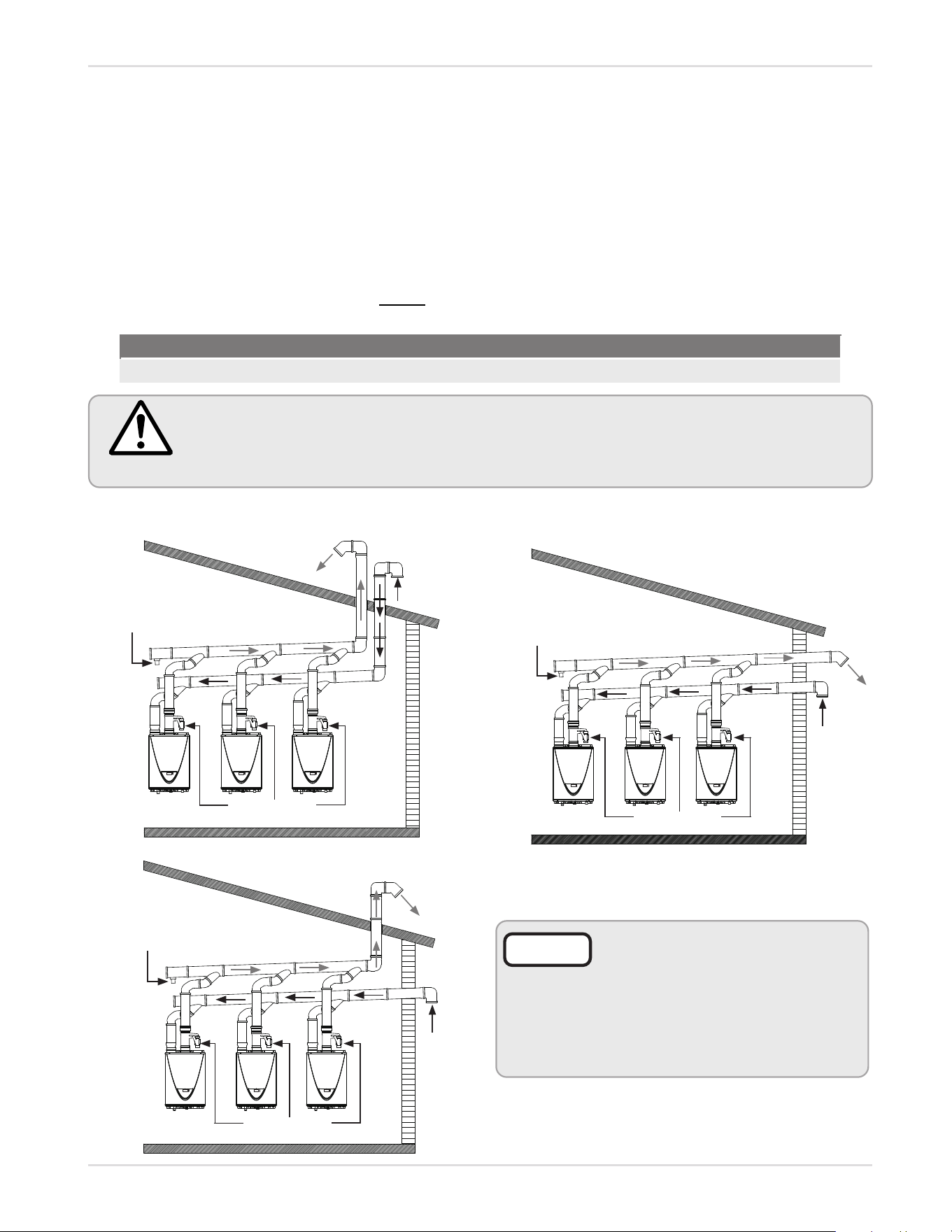
Approved Category IV, Single Wall, Venting Suppliers and Part Numbers
Description
Heater Vent
Kits
Z-FLEX®
Nova VENT® Z-VENT®
4" Adjustable straight pipe - 10"-18" (254 - 457 mm) adjustability 100112405 2NVAL4 2SVSPA04
4" Sidewall termination (4" Termination Hood) 100112419 2NVTH4 2SVSHTX04
4" Vent termination tee 100112547
2NVTT4 2SVSTTF04
4" Rain Cap 100112415 2NVRC4 2SVSRCF04
4" Extreme weather rain cap 100112548 2NVWC4 2SVSHRC04
4" 3-in-1 adaptor
(F-F adaptor, condensate drain, & back-flow preventer)
100112549 2NVBFA4 2SVBFDPA04
4" F-F adaptor 100112399 2NVAFF4 2SVEEWCF0445
4" Backflow preventer w/ F-F adaptor 100112416 2NVBFU4 2ZVB04
4" exhaust/3" intake DV concentric termination - 5"-10" (127 - 254 mm)
adjustability
100112550 2NVHTC43S 2SVSHTC43S
4" exhaust/3" intake DV concentric termination - 12"-18" (305 - 457 mm)
adjustability
100112551 2NVHTC43 2SVSHTC43
4" Sidewall termination, adjustable pipe 100187853 2NVBV4 n/a
4" exhaust/3" intake concentric termination - 5" to 10" (127 - 254 mm)
adjustability
100112550 2NVHTC43S 2SVSHTC43S
4" exhaust/3" intake concentric termination - 12" to 18" (305 - 457 mm)
adjustability
100112551 2NVHTC43 2SVSHTC43
4" exhaust / 4" intake concentric termination - 5" to 10" (127 - 254 mm)
adjustability
100112552 2NVHTC44S 2SVSHTC04S
4" exhaust/4" intake concentric termination - 12" to 18" (305 - 457 mm)
adjustability
100112553 2NVHTC44S 2SVSHTC04
Refer to heater manufacturer literature/website and the vent manufacturer
for available components.
NOTICE
28 Page
Typical common-vent installaon examples
-Common-venng system-
The Indoor model can be vented together using the same exhaust and intake venting except 140H model.
• Up to 8 water heaters can be common-vented together.
• A non-return valve (100113130) must be used for each water heater that is part of the system.
• The water heaters must all be direct-vented.
• The common-venting system shall be in accordance with the National Fuel Gas Code,
ANSI Z223.1/NFPA 54 and/or B149.1, Natural Gas and Propane Installation Code (Current Editions),
local codes, and the venting manufacturer’s instructions.
• For common-venting pieces and components, the manufacturer recommends
Centrotherm's vent line.
• 240HX3/340HX3/540HX3 models do not have Easy-Link or Multi-Unit capability.
• 140H Indoor models are not approved for common venting.
Installaon
Installaon Manual
Intake
wall
Exhaust
Roof
Condensate drain port
Non-Return Valve
Exhaust
wall
Roof
Non-Return Valve
Condensate drain port
Exhaust
Intake
wall
Roof
Non-Return Valve
Condensate drain port
Allowable models for common-venting
240H, 340H, 540H, 540P, CT-199, 240HX3, 340HX3, 540HX3
NOTICE
For details on the installation of a
common-vent system, please refer
to "Common Venting Tankless Gas
Water Heaters." It is a manual
which is available on the water
heater manufacturer's website.
Only the models listed in the table above can be common-vented together. Other models
cannot be common-vented.
Failure to observe these warnings could lead to carbon monoxide poisoning or death.
WARNING
Intake
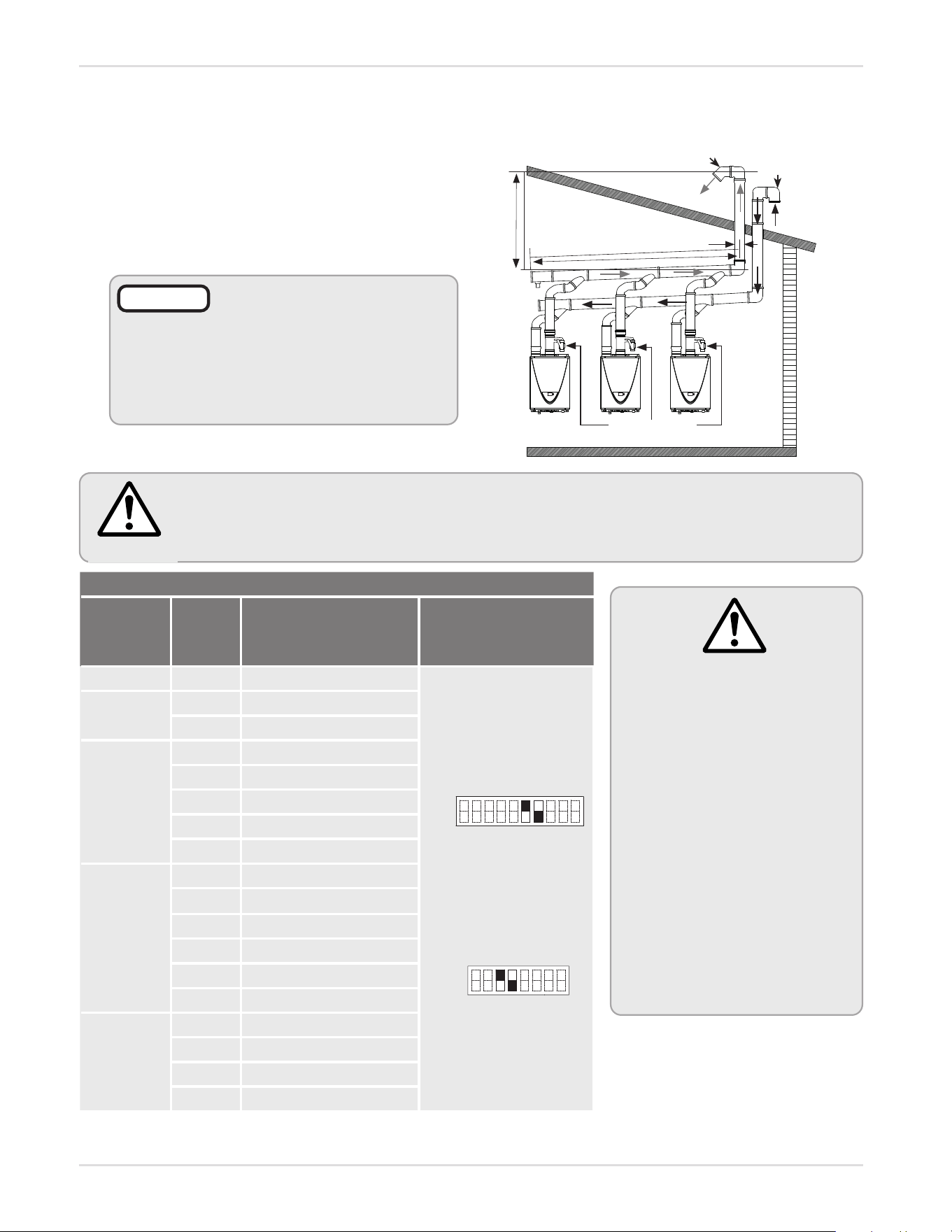
29 Page
To determine the dimension of a common-venng system
Determine the vent diameter (D) and the total vent length based on the number of water heaters installed. The
total vent length (L) consists of the horizontal width (W) and the vercal height (H). See the table below.
• Total vent length (L)="H"+"W"+
(Number of Elbows X 5)
• Vent diameter="D"
WARNING
• A Non-Return Valve must be installed for each water heater. This prevents the escape of
combustion gas through non-operating appliances.
• For detailed instructions on the common-venting system, refer to the instructions that are
packaged with the vent parts or web site.
*Diameters of pipes are in accordance with Centrotherm's specifications.
**One elbow is equivalent to 5 ft (1.5 m) linear length, and the maximum number of elbows is 5.
NOTICE
• Regarding the clearances
between the exhaust
terminaon and the intake
terminaon, refer to pages
14 to 16.
• Insert bird screen in elbow
terminations.
Common-venting system
Vent
Diameter*
(D)
Max.
No. of
water
heaters
Max. Vertical and
Horizontal
(Total) Vent Length** (L)
DIP switch settings
4 in 2 25 ft (7.6 m)
240H/340H Indoor
OFF
ON
1 2 3 4 5 6 7 8 9 10
No. 6 : ON / No. 7: OFF
540H Indoor
(Upper bank of
DIP switches)
OFF
ON
1 2 3 4 5 6 7 8
No. 3 : ON / No. 4: OFF
5 in
2 50 ft (15.2 m)
3 20 ft (6.1 m)
6 in
2 100 ft (30.5 m)
3 75 ft (22.9 m)
4 50 ft (15.2 m
5 25 ft (7.6 m)
6 20 ft (6.1 m)
8 in
3 100 ft (30.5 m)
4 100 ft (30.5 m)
5 85 ft (25.9 m)
6 65 ft (19.8 m)
7 50 ft (15.2 m)
8 41 ft (12.5 m)
10 in
5 100 ft (30.5 m)
6 100 ft (30.5 m)
7 100 ft (30.5 m)
8 100 ft (30.5 m)
Installaon
Installaon Manual
"H"
Intake
Exhaust
"D"
Elbow terminal
Elbow terminal
"W"
Non-Return Valve
• Adjust the appropriate DIP
switches according to model
as shown in the left table.
DO NOT adjust the other DIP
switches.
(Refer to page 23 for the
location of the DIP switches.)
• Turn off the power supply
to the water heater before
changing the DIP switch set-
tings.
• Failure to observe these
warnings could lead to car-
bon monoxide poisoning or
death.
WARNING
30 Page
GAS SUPPLY AND GAS PIPE SIZING
-General-
• Do not use this water heater with any gas other than the one listed on the rating plate.
• Ensure that any and all gas regulators used are operating properly and providing gas
pressures within the specified range shown below. Excess gas inlet pressure may cause
serious accidents.
• Conversion of this unit from natural gas to propane or vice versa will void all warranty.
Contact your local distributor to get the correct unit for your gas type. The manufacturer
is not liable for any property and/or personal damage resulting from gas conversions. In
Canada, contact tech support at 888.479.8324 for options.
• Failure to observe these warnings could result in severe personal injury, carbon monoxide
poisoning, or death.
WARNING
• The minimum and maximum inlet gas pressures are:
Gas type Inlet gas pressure
Natural Gas Min. 4.0" W.C. (1.00 kPa) – Max. 10.5" W.C. (2.61 kPa)
Propane Min. 8.0" W.C. (1.99 kPa) – Max. 14.0" W.C. (3.48 kPa)
• Inlet gas pressures that fall outside the range of values listed above may adversely affect the performance of
the water heater. These pressures are measured when the water heater is in full operation and in standby.
• Inlet gas pressure must not exceed the above maximum values; gas pressure above the specified range will
cause dangerous operating conditions and damage to the unit.
• Until testing of the main gas line supply pressure is completed, ensure the gas line to the water heater is
disconnected to avoid any damage to the water heater.
• If the gas supply pressure to the heater is greater than the specified maximum, a field-supplied regulator is
required. The regulator must lower the gas pressure within the approved range.
- Install the gas regulator according to the manufacturer's instructions.
- The regulator must be sized for the water heater input and provide the specified pressures that are listed
on the rating plate.
- In the absence of minimum install distance stated by the regulator manufacturer, it is recommended
that there is at least 3 ft (1 m) of piping between the regulator outlet and the water heater's inlet gas
connection.
-Gas connecons-
1. Install a manual gas shutoff valve between the water heater and the gas supply line.
2. When the gas connections are completed, it is necessary to perform a gas leak test either by applying soapy
water to all gas fittings and observing for bubbles or by using a gas leak detection device.
• The water heater and its individual shutoff valve must be disconnected from the gas supply piping
system during any pressure testing of that system at test pressures in excess of 1/2 psi (3.5 kPa).
• The water heater must be isolated from the gas supply piping system by closing its individual manual
shutoff valve during any pressure testing of the gas supply piping system at test pressures equal to or
less than 1/2 psi (3.5 kPa).
3. Always purge the gas line of any debris and/or water before connecting to the gas inlet.
Size the gas pipe appropriately to supply the necessary volume of gas required for
the water heater using ANSI Z223.1/NFPA 54 in the USA or B149.1 in Canada or
local codes. Otherwise, flow capabilities and output temperatures will be limited.
NOTICE
Installaon
Installaon Manual
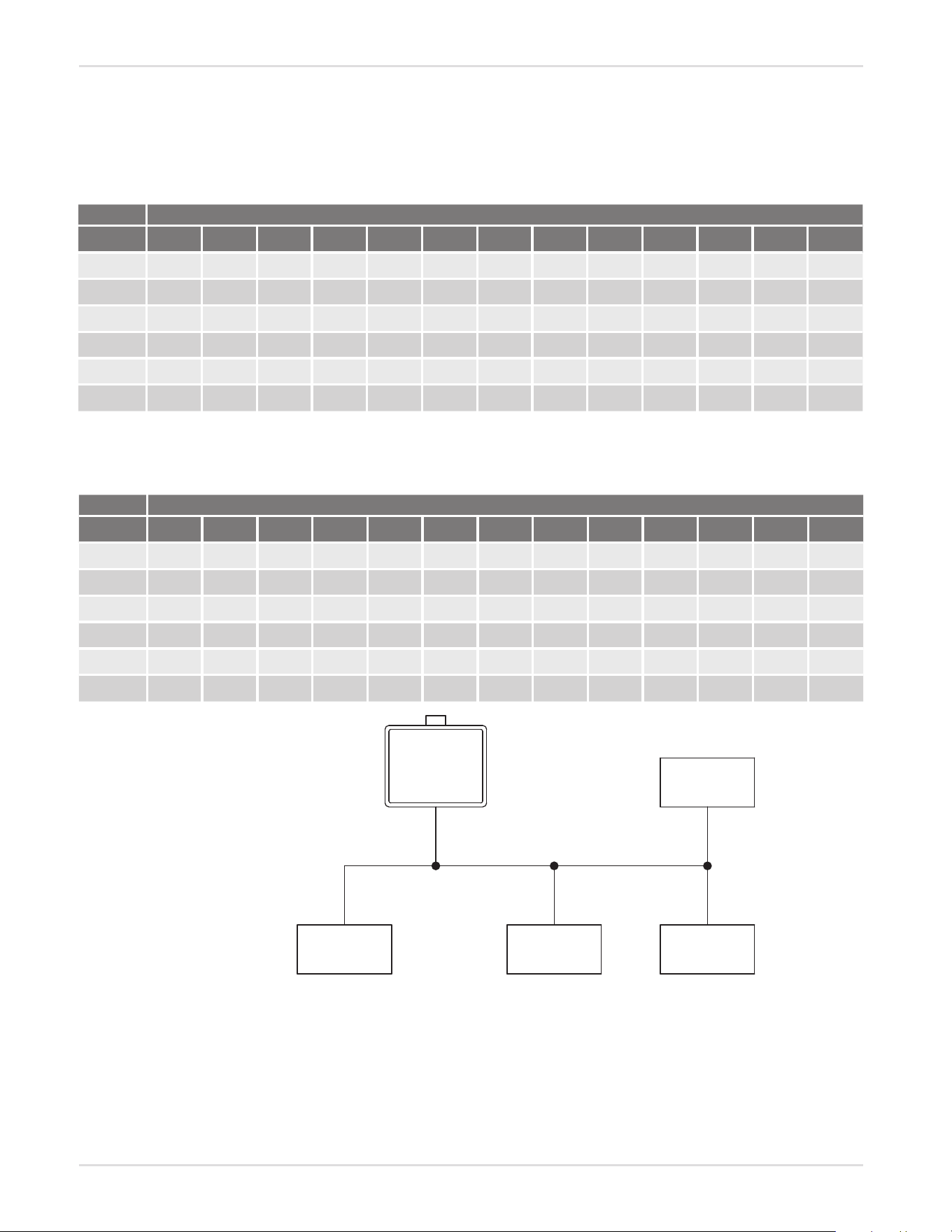
31 Page
-Natural gas supply piping-
Maximum delivery Capacity in Cubic Feet of Gas per Hour (based on IPS Pipe carrying Natural Gas with 0.60
Specific Gravity with a Pressure Drop of 0.5" W.C.).
Based on Energy Content of 1,000 BTU/Cubic ft: The water heater requires 120 Cubic ft/hr for the 140H model, 160 Cubic
ft/hr for the 240H model, 180 Cubic ft/hr for the 340H model, and 199 Cubic ft/hr for the 540H model.
The following tables are from NFPA 54.
-Propane (LP) supply piping-
Maximum Capacity of Propane (LP) Based on 11" W.C. supply pressure at a 0.5" W.C. pressure drop
Pipe Size
Length
Diameter
10'
(3 .0 m)
20'
(6.1 m)
30'
(9.1 m)
40'
(12.2 m)
50'
(15.2 m)
60'
(18.3 m)
70'
(21.3 m)
80'
(24.4 m)
90'
(27.4 m)
100'
(30.5 m)
125'
(38.1 m)
150'
(45.7 m)
200'
(61.0 m)
1/2"
172 118 95 81 72 65 60 56 52 50 44 40 34
3/4"
360 247 199 170 151 137 126 117 110 104 92 83 71
1"
678 466 374 320 284 257 237 220 207 195 173 157 134
1-1/4"
1,390 957 768 657 583 528 486 452 424 400 355 322 275
1-1/2"
2,090 1,430 1,150 985 873 791 728 677 635 600 532 482 412
2"
4,020 2,760 2,220 1,900 1,680 1,520 1,400 1,300 1,220 1,160 1,020 928 794
Unit: Cubic feet per hour
Water
heater
199,000 BTU/h
Dryer
35,000 BTU/h
Gas meter
Furnace
120,000 BTU/h
Range
65,000 BTU/h
A
B
C
10' (3 m)Length
1/2" Pipe size
15' (4.6 m)Length
1/2" Pipe size
15' (4.6 m)Length
1" Pipe size
10'(3 m)Length
3/4" Pipe size
10' (3 m )Length
1" Pipe size
5' (1.5 m) Length
1-1/4" Pipe size
10' (3 m)Length
3/4" Pipe size
5' (1.5 m)Length
1-1/4" Pipe size
Gas sizing example
(Natural Gas)
Unit: kBTU per hour
Pipe Size
Length
Diameter
10'
(3 .0 m)
20'
(6.1 m)
30'
(9.1 m)
40'
(12.2 m)
50'
(15.2 m)
60'
(18.3 m)
70'
(21.3 m)
80'
(24.4 m)
90'
(27.4 m)
100'
(30.5 m)
125'
(38.1 m)
150'
(45.7 m)
200'
(61.0 m)
1/2"
268 184 148 126 112 101 93 87 82 77 68 62 53
3/4"
567 393 315 267 237 217 196 185 173 162 146 132 112
1"
1,071 732 590 504 448 409 378 346 322 307 275 252 213
1-1/4"
2,205 1,496 1,212 1,039 913 834 771 724 677 630 567 511 440
1-1/2"
3,307 2,299 1,858 1,559 1,417 1,275 1,181 1,086 1,023 976 866 787 675
2"
6,221 4,331 3,465 2,992 2,646 2,394 2,205 2,047 1,921 1,811 1,606 1,496 1,260
Based on Energy Content of 1,000 BTU/Cubic ft:
Divide each appliance's BTU/h requirement by 1,000 BTU/ft
3
to get the appliance's ft
3
/h requirement.
Take into account the distance the appliance is from the gas meter, then look in the above gas chart to properly size the line.
For sections of the gas line supplying gas to more than one appliance (Ex: Point A to Point B), add up the cubic ft per hour
requirements of the appliances that are being supplied by that section, and size to the farthest appliance.
For Example: The section from A to B supplies gas to the furnace, range and dryer. Adding up the BTU/h requirements and
dividing by 1,000 yields a cubic ft per hour requirement of 220 cubic ft of gas per hour. The farthest appliance is the range,
which is 50 ft away from the meter. Looking at the above chart, and under the column of 50 ft, Section A to B needs to be
1" in order to supply 220 cubic ft.
Installaon
Installaon Manual
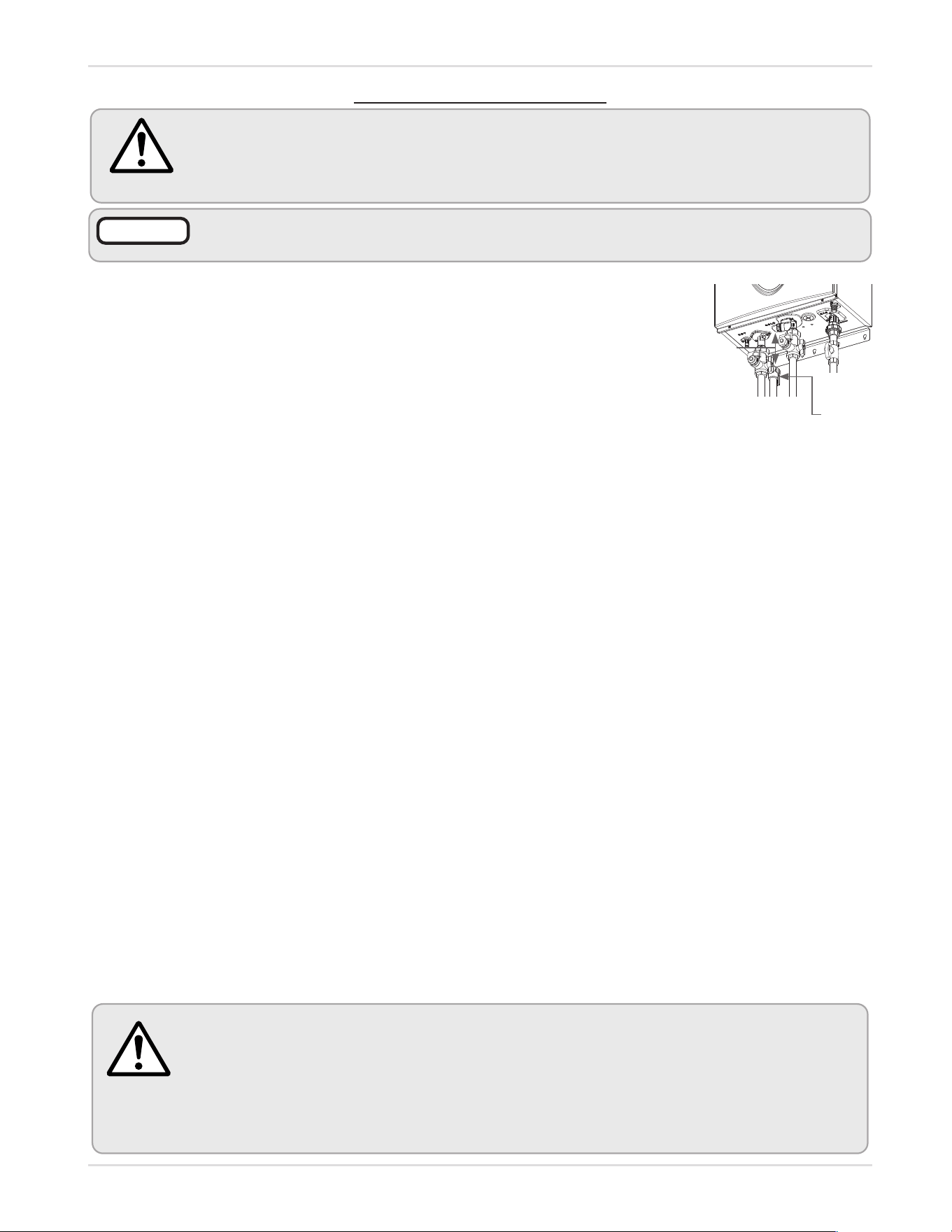
32 Page
WATER CONNECTIONS
Do not use this appliance if any part has been under water. Immediately contact a qualified
installer or service agency to replace a flooded water heater. Do not attempt to repair the unit!
It must be replaced!
WARNING
Do not reverse the hot outlet and cold inlet connections to the water heater. This will prevent
the water heater from activating properly.
NOTICE
All pipes, pipe fittings, valves and other components, including soldering materials, must be suitable for potable
water systems.
1. A manual shutoff valve must be installed on the cold water inlet to the water
heater between the main water supply line and the water heater.
2. In addition, a manual shutoff valve is also recommended on the hot water out-
let of the unit. If the water heater is installed within, or subjected to, a closed
loop water system, a thermal expansion tank or code approved device to han-
dle thermal expansion must be installed.
Cold
inlet
Hot
outlet
Gas inlet
As Close
as
Possible
Pressure
relief
valve
-Pressure relief valve-
The water heater has a high-temperature shutoff switch built in as a standard safety feature (called a Hi-Limit
switch) therefore a “pressure only” relief valve is required.
• This unit does not come with an approved pressure relief valve.
• An approved pressure relief valve must be installed on the hot water outlet.
• The pressure relief valve must conform to ANSI Z21.22/CSA 4.4 and installation must follow local codes.
• The discharge capacity must be at least 120,000 BTU/h for the 140H model, 160,000 BTU/h for the 240H
model, 180,000 BTU/h for the 340H model, and 199,000 BTU/h for the 540H model.
• The pressure relief valve needs to be rated for a maximum of 150 psi (1 MPa).
• The discharge piping for the pressure relief valve must be directed so that the hot water cannot splash out-
ward and cause damage or personal injury.
• Attach the discharge tube to the pressure relief valve and run the end of the tube to within 6 in (152 mm)
from the floor. This discharge tube must allow free and complete drainage without any restrictions.
WARNING! Do Not plug the pressure relief valve.
• If the pressure relief valve discharges periodically, this may be due to thermal expansion in a closed water
supply system. Contact the water supplier or a local plumbing professional on how to correct this situation.
• The pressure relief valve must be manually operated periodically to check for correct operation. Before
operating the valve manually, check that it will discharge in a place for secure disposal.
• No valve must be placed between the relief valve and the water heater.
WARNING
Hot water could be released when the pressure relief valve is opened. This could
result in severe personal injury. Before operating the pressure relief valve manually,
check that it will discharge in a safe place. If water does not flow freely from the end
of the discharge pipe, turn the gas supply and power OFF and call a qualified person
to determine the cause.
Refer to the pressure relief valve manufacturer's instructions for inspection and main-
tenance requirements.
Installaon
Installaon Manual
3. If the water heater is installed within, or subjected to, a closed loop water system, a thermal expansion tank or
code approved device to handle thermal expansion must be installed.
NOTE: If the plumbing system is subject to water hammer, then it is recommended that water hammer arres-
tors be installed.
4. Before installing the water heater, flush the water line to remove all debris, and after installation is complete,
purge the air from the line. Failure to do so may cause damage to the heater.
5. There is a wire mesh filter within the cold inlet to trap debris from entering your heater. This will need to be
cleaned periodically to maintain optimum flow. (Refer to page 54.)

33 Page
CONDENSATE DRAIN
This high eciency water heater produces acidic condensate that must be properly drained per local codes. The
water heater does not have a built-in neutralizer to raise the pH level. A neutralizer is available from the water
heater manufacturer, if needed. Follow the instrucons in this secon in order to install the condensate drain line.
• All preventave measures and safety pracces must be adhered to when draining condensate. The manufac-
turer will not be responsible for any damage caused by condensate.
• A drain pan, or other means of protecon against water damage, is recommended to be installed under the
water heater in case of leaks.
• Discharge condensate (acidic water) in accordance with all local codes and common safety pracces. In the
absence of applicable local codes and regulaons, the manufacturer recommends that a condensate neutral-
izer is installed and dispose the condensate into a drain. See picture on page 34.
• Use corrosion resistant pipe, such as PVC, for the condensate drain line. Do not use metallic pipe.
• The condensate drain does not require a trap.
• A eld-supplied bypass is required if a neutralizer is installed.
• The condensate drain is at atmospheric pressure (non-pressurized) and therefore must be allowed to drain
freely with gravity only. Ensure that the condensate drain tube is not plugged, blocked, or kinked. Ensure that
it slopes downward to allow condensate to ow freely. All porons of the condensate drain (neutralizer and
drain tube) must be at a lower elevaon than the water heater to prevent condensate water from building up
inside the heat exchanger.
• Do not connect the condensate drain line directly to a condensate pump.
The condensate drain system must be inspected regularly to make sure it drains properly and in accordance with
local codes or the part manufacturer’s instrucons.
• Condensate cannot be eecvely neutralized if the neutralizer elements inside the Neutralizer accessory have
been completely consumed. If this happens, condensate will remain acidic and can possibly cause damage to
items such as pipes, concrete, etc.
• The actual life of the neutralizer may vary, depending on the applicaon and usage. Replace the cartridge
when the condensate pH goes below 6.0. This can be tested using litmus pH test strips.
• Please ensure that the cartridge is properly replaced before the neutralizer elements have been completely
consumed.
Installaon
Installaon Manual
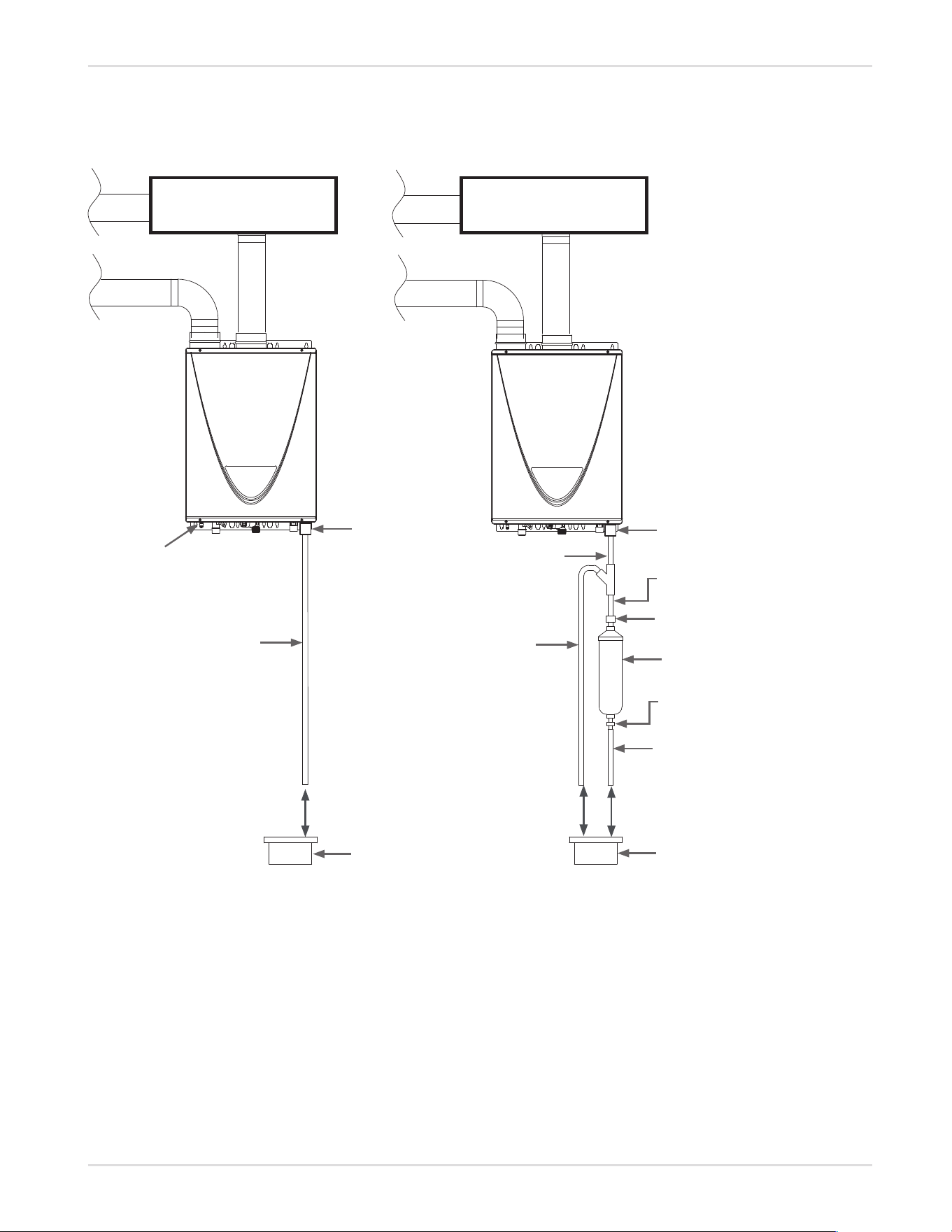
34 Page
*Maintain downward slope, including installations in which the drain is not directly below the heater.
**A 2" (50 mm) minimum distance must be maintained between the condensate line and drain to allow full
flow of the condensation.
*** Condensate connection on 140H model is located on the back left and the connection method is the same
as shown.
Installation
with neutralizer
Installation
without neutralizer
1/2"
Condensate
drain tube*
Overflow bypass*
(1/2" Condensate
drain tube)
Neutralizer cartridge (Included
with Neutralizer accessory)
1/2" MPT x 3/8" FPT (Included
with Neutralizer accessory)
1/2" Condensate drain tube*
1/2" Condensate drain tube*
1/2" FPT x 1/2" HB (Included
with Neutralizer accessory)
1/2"
Condensate
drain tube*
1/2" MPT
Condensate
connection
2" (50 mm)
MIN. distance**
Floor drain, standpipe, pump,
or other acceptable drain
Floor drain, standpipe, pump,
or other acceptable drain
2" (50 mm)
MIN. distance**
2" (50 mm)
MIN. distance**
1/2" MPT
Condensate connection
Installaon
Installaon Manual
140H Condensate
drain port***
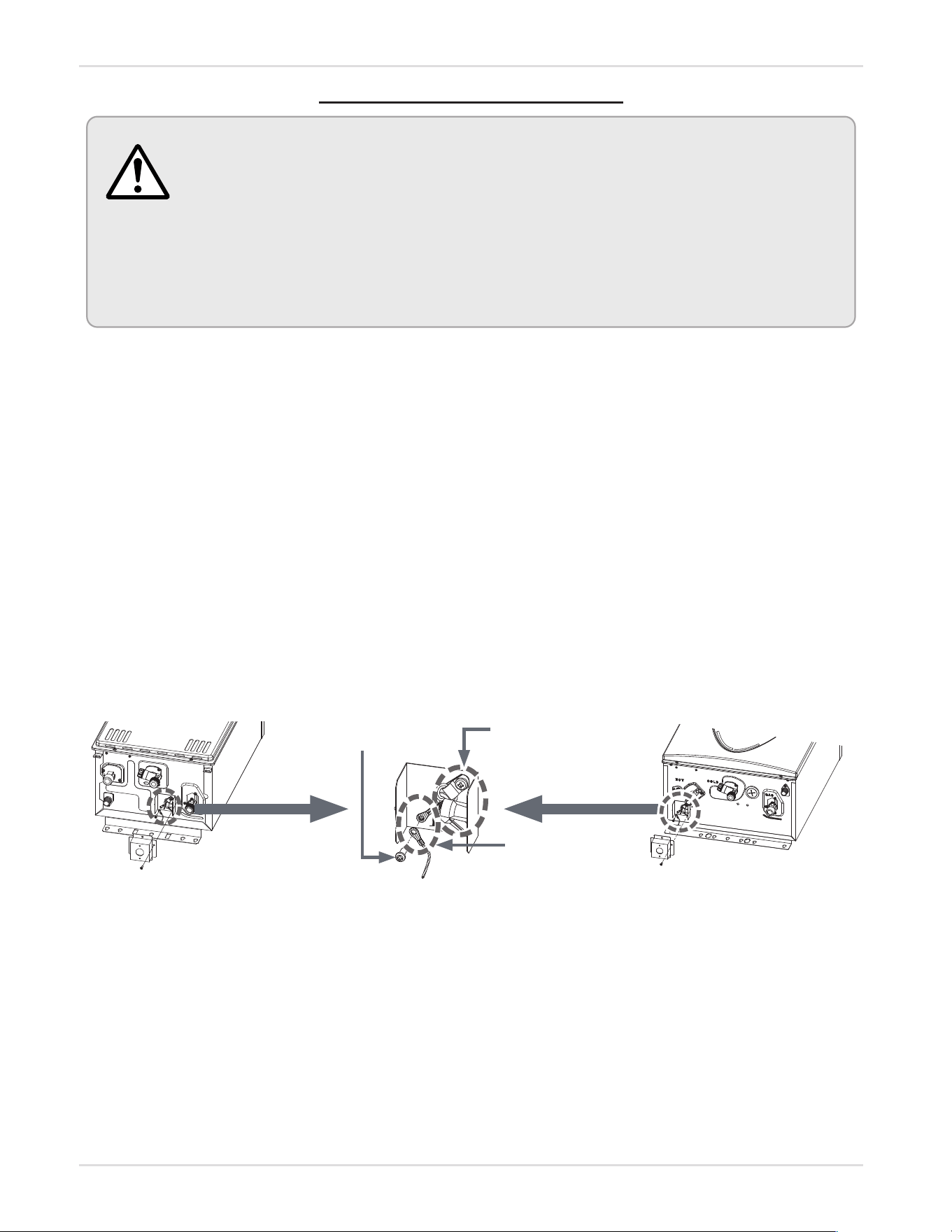
35 Page
Installaon
Installaon Manual
ELECTRICAL CONNECTIONS
• Ensure that circuit power is turned OFF before you complete the following steps.
• Follow the electrical code requirements of the local authority having jurisdiction. In the
absence of such requirements, follow the current edition of the National Electrical Code
ANSI/NFPA 70 in the U.S. or the current edition of CSA C22.1 Canadian Electrical Code
Part 1 in Canada.
• When servicing or replacing parts within the water heater, label all wires prior to dis-
connection to facilitate an easy and error-free reconnection. Wiring errors can cause
improper and dangerous operation. Verify proper operation after servicing.
• Failure to observe these warnings could result in personal injury or loss of life.
WARNING
Indoor model comes with a power plug instead of a junction box. The following procedure is for the outdoor
model only.
1. The water heater must be electrically grounded. Do not attach the ground wire to either the gas or the
water piping.
2. The water heater requires a 120 VAC, 60 Hz electrical power supply that is properly grounded.
• A proper disconnect (i.e. on/off switch, power plug, etc.) controlling the main power to the water heater
must be provided for service reasons. (Must comply with local codes.)
• Connect the power supply to the water heater exactly as shown in the wiring diagram.
3. A green screw is provided in the junction box to ground the connection.
4. The water heater can be hardwired or wired to a plug-in.
5. The use of a surge protector is recommended in order to protect the water heater from power surges.
140H
Outdoor
Boom view of water heater
View of electrical connecons in
the juncon box.
Connect
Power supply
120VAC, 60Hz
Ground
Green screw
240H/340H/540H
Outdoor
Boom view of water heater
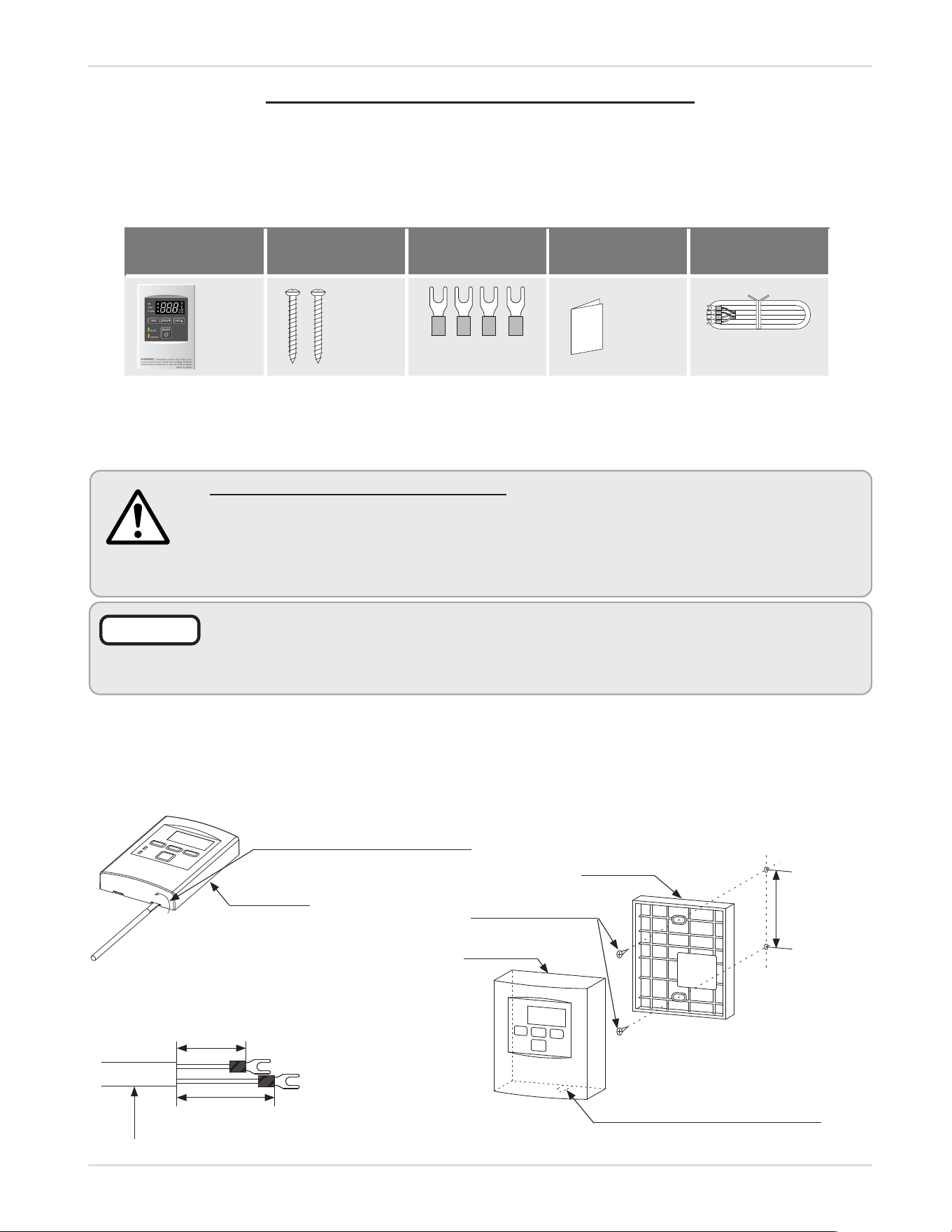
36 Page
TEMPERATURE REMOTE CONTROLLER
-Included accessories-Outdoor models only
<Mounting and Wiring the Remote Controller>
1.
Take off the Back plate from the remote controller with a flat head screwdriver. (Fig. A and B)
2.
Attach the Back plate on the wall with the two provided screws. (Fig. B)
3.
If you use another cable, crimp the Fork terminals to the wires. (Fig. C)
Fig. B
Back plate
3-1/4 inches
Attach the screws
Cut out the partition with pliers.
(removed during later steps.)
Main body
Fig. A
Main body
Twist
Press and twist flat head
screwdriver against the cutout.
Remote controller cable
1-3/8 Inch
(35 mm)
Fig. C
1-5/8 Inch
(41 mm)
Fork
Terminals
100209924 (TM-RE42)
It is also an optional accessory as a second remote for the indoor models. Refer to pp. 9 and 10.
*The optional remote controller (sold separately) has no remote controller cable.
Verify that the items listed below are included with the remote controller.
Temperature
remote controller
Screws Fork terminals Manual
Remote controller
cable*
Qty: 1
Qty: 2
Qty: 4
Qty: 1
Qty: 1
-Installaon-
• This remote controller is NOT waterproof.
• The water heater can only have one remote controller.
• Do not install in high temperature environments, high humidity conditions outdoors, in direct
sunlight, or within the reach of children.
• Make sure the remote controller does not come into contact with water or oil.
• Failure to observe these warnings could result in personal injury or electrical shock.
WARNING
• Do not place the remote controller cable close to other wires from other products.
• Cables used for the remote controller connection must be:
- Minimum 20 gauge wire (No polarity)
- Maximum 400 ft (122 m) long
NOTICE
• The remote control is an optional accessory that can be installed in a hall, closet, etc., to allow for tempera-
ture adjustment without having to go to the heater.
• When installed, the remote will take priority over the built-in controller of indoor models.
Installaon
Installaon Manual
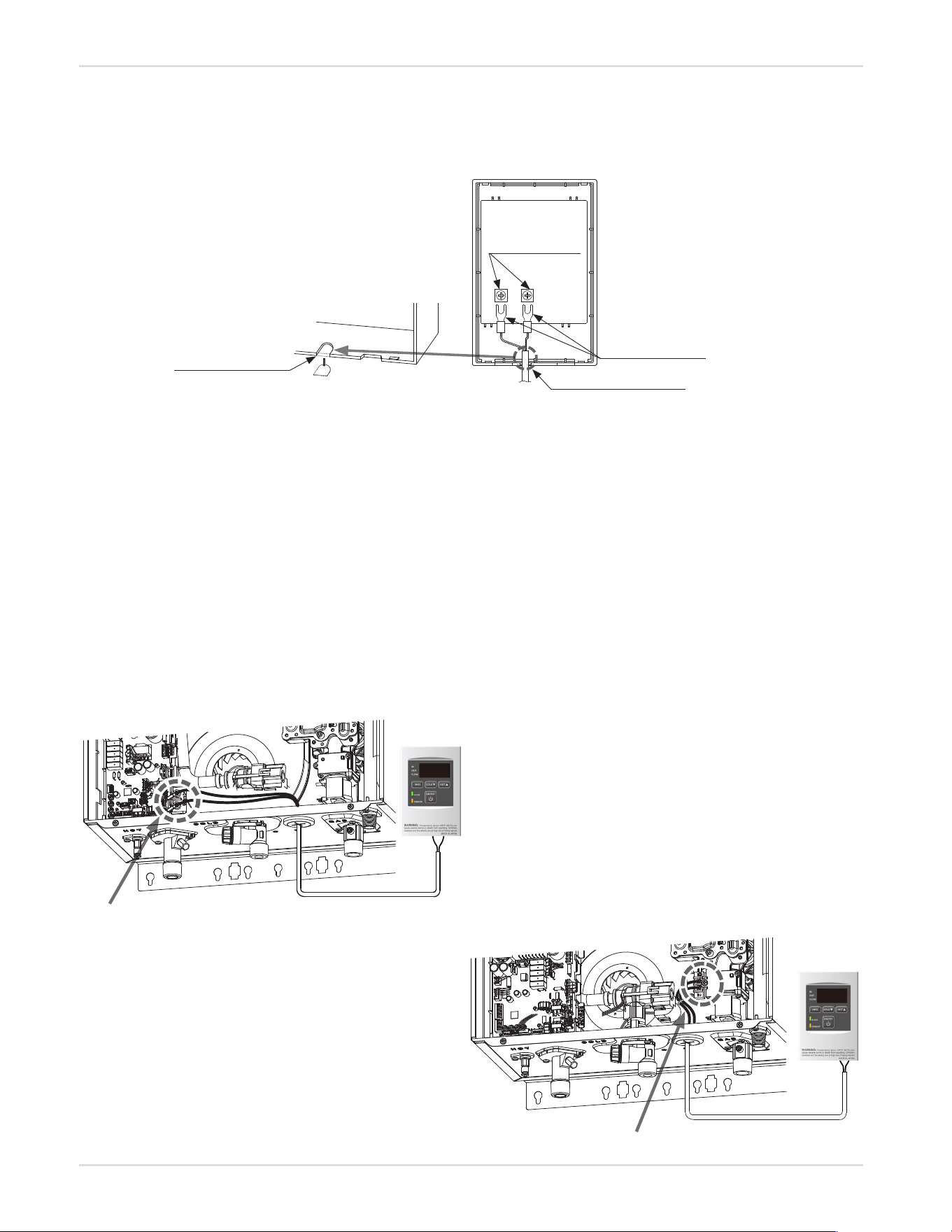
37 Page
4.
Tighten the two Fork terminals beneath the two Remote controller terminal screws on the back of the
main body. (Fig. D-1)
5.
Cut out the inlet for the remote controller cable from the bottom of the main body. (Fig. D-2)
6.
Place the Main body back on the Back plate, with the Remote controller cable running out of the
bottom inlet.
<How to connect the remote controller to the water heater>
1.
Disconnect power supply from the water heater.
2.
Take off the water heater’s front cover.
3.
Locate the two terminals for the remote controller in the water heater. (Refer to the Fig. E-1 and E-2.)
4.
Take off the back plate from the remote controller, and then attach the two fork terminals to the
connector base on the back side of the remote controller with two screws. Make sure the terminals are
firmly fixed. (See the above instructions for installation of the remote controller.)
5.
Pull the remote controller cable through the hole at the bottom of the water heater’s casing.
6.
Secure both controller cable terminals to the terminals on the computer board as shown below. (Secure
them underneath the screw terminals. No polarity.)
* Do NOT jump or short-circuit the cables, or computer will be damaged.
7.
Replace the front cover securely.
Remote controller
terminals
Fig. D-1
Two fork terminals
Remote controller cable
Inlet for the remote
controller cable
Cut out
Fig. D-2
140H/240H/340H models
100209924
(TM-RE42)
Connect other end to these terminals
Fig. E-1
100209924
(TM-RE42)
Connect other end to these terminals
540H model
Fig. E-2
Installaon
Installaon Manual
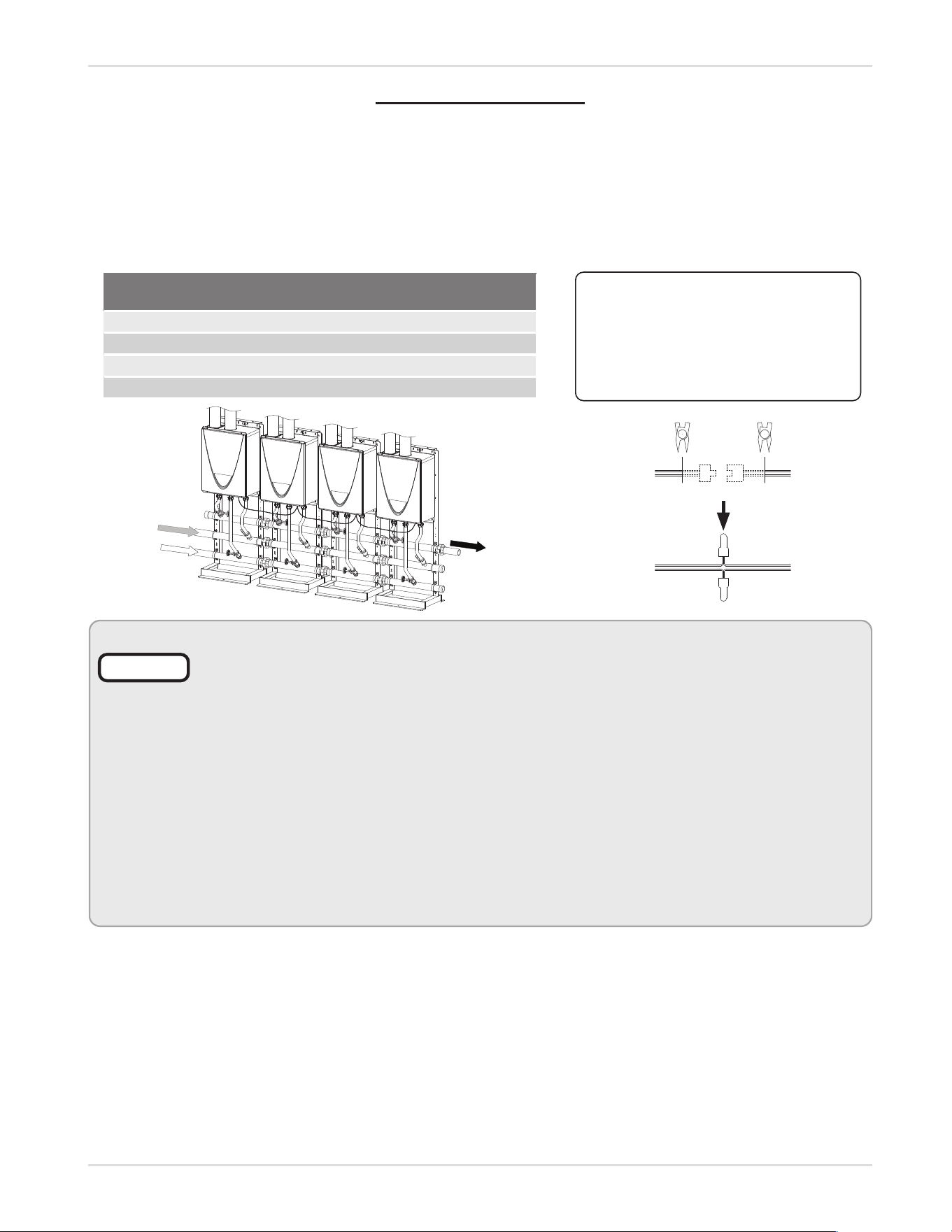
38 Page
EASY-LINK SYSTEM
(540H model only)
The 540H model water heaters can combine with the following approved heaters with communication
cables to work as a multiple-unit manifold system.
• The built-in Easy-Link System allows up to 4 units to manifold together.
• A communication cable (gray color) comes with each 540H model.
You can manifold from 2 to 4 units without the need for a multi-unit controller. A 4-unit system has full auto-
matic modulation between 13,000 BTU/h (Propane) or 15,000 BTU/h (Natural gas) to 796,000 BTU/h.
-Easy-Link connecon procedures-
1. Make sure the power to the heaters are off.
2. Verify the DIP switch set temperatures of all units within the system. Every single water heater must be set
to the same set temperature. If a remote controller is used, it should be installed to the “PARENT” unit.
The controller will set the temperature for the entire system. NOTICE: Only a remote approved for use with
the "PARENT" model may be installed.
3. Select one unit to be the “PARENT” unit. The “PARENT” unit should be one of the end units.
4. “PARENT” unit:
Locate the two banks of DIP switches at the bottom left of the computer board of the unit that you select
to be the “PARENT” unit. Change DIP switch No. 1 on the lower bank of DIP switches to the ON position.
Refer to the following page. Do not change any DIP switches on any of the “CHILD” units.
Approved heaters that can be combined with 540H model
in an Easy-Link System
710 model /710 ASME
520 model
540H model, CT-199 model
540P model (Only when 540P is a PARENT unit in the system. )
Hot Out
Gas In
Cold In
Due to the dierence in the connector type
for the Easy-Link System between the 710
and 540H, cut out the connectors for the
Easy-Link System and then splice the wires
directly together when connecng the 710
and 540H in the Easy-Link System.
Easy-Link connectors
Wire
cutters
• The Easy-Link System is limited to up to 4 units. If you connect more than 4 units, only the first
4 units will work as a part of the Easy-Link System. The other additional units will not work.
• The 540H model cannot be combined together with other models not listed on the table above.
• A 540P model only can be connected to 540H models where the 540P is the PARENT unit in
the system.
• When a 540H model is connected to other models listed above in an Easy-Link System,
contact the manufacturer.
• When a 710 and 540H are connected together in an Easy-Link System, change DIP switch
No.6 on the lower bank of DIP switches on the 540H model computer board to the "ON"
position. (See the following page for detail.)
• A remote controller is not required for an Easy-Link System. However, it does provide for
more temperature options and ease of maintenance.
• If a remote controller is used, the temperature on all the units in the system will automatical-
ly be set to the same temperature that is set on the remote.
• When a remote is used in an Easy-Link System, it must be connected to the parent unit.
• Only one remote can be connected.
NOTICE
Installaon
Installaon Manual
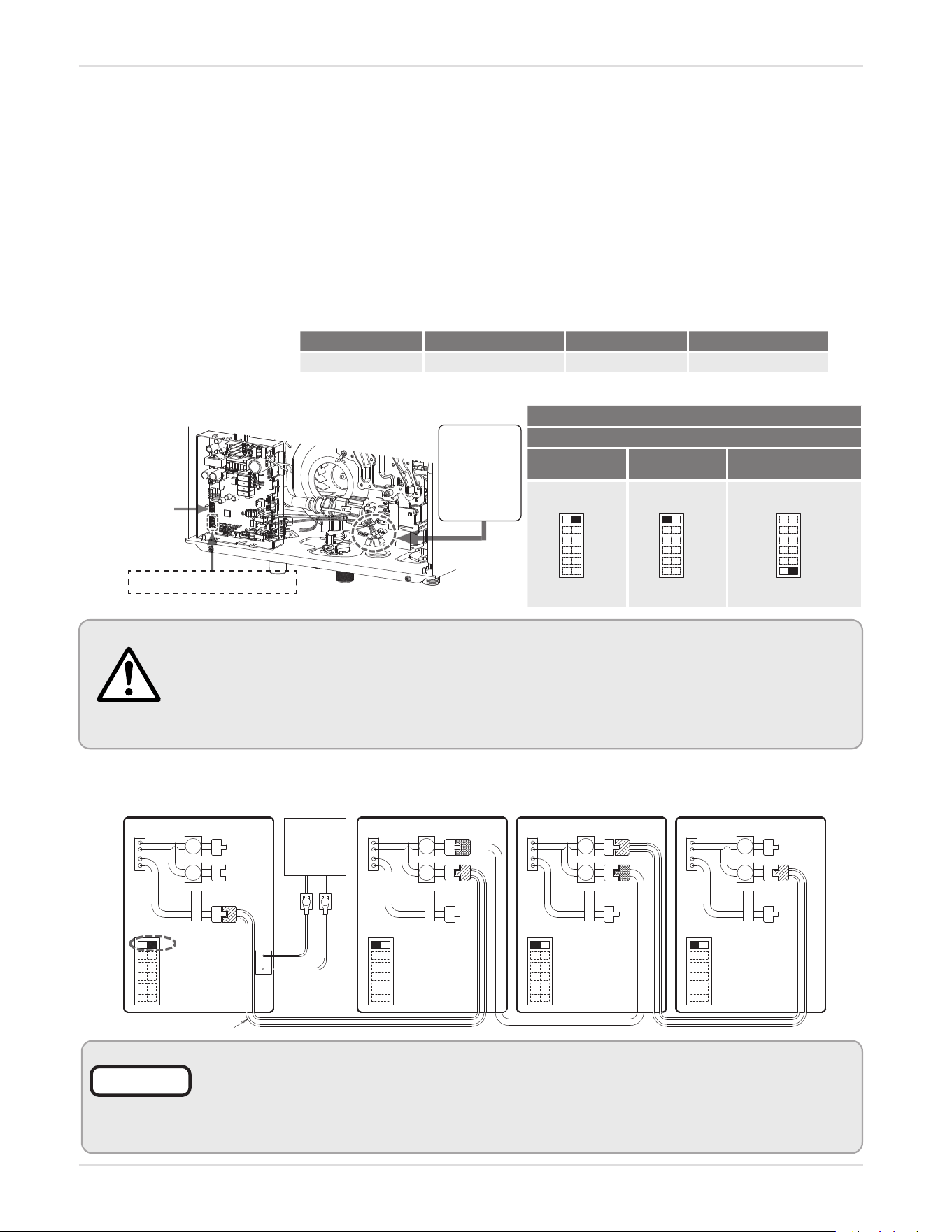
39 Page
5. Between the “PARENT” and the “CHILD-1” units:
Connect the “PARENT” connector of the “PARENT” unit to the “1” connector of the “CHILD-1” unit using
the supplied linking cable.
6. Between the “CHILD-1” and the “CHILD-2” units:
Connect the “2” connector of the “CHILD-1” unit to the “1” connector of the “CHILD-2” unit.
7. Between the “CHILD-2” and the “CHILD-3” units:
Connect the “2” connector of the “CHILD-2” unit to the “1” connector of the “CHILD-3” unit.
8. Verify that all cables are connected like the diagram below (B).
9. Turn on power to the “PARENT” unit. Turn on “CHILD-1”. When the (remote and/or built-in temperature)
controller displays a number, turn on “CHILD-2”.
When the (remote and/or built-in temperature) controller displays a number, turn on “CHILD-3”.
Make sure the (remote and/or built-in temperature) controllers display the unit #. The numbering system
automatically allocates the unit # to each water heater in the Easy-Link System, in accordance with the table
at right. (Refer to p.58.)
(B) Basic diagram of connections between the Easy-Link System units
Type of unit Unit # of easy-link Type of unit Unit # of easy-link
Parent 1 Child 2, 3, or 4
(A) 540H model computer board
• The dark squares indicate the correct position of the DIP switch.
• When the 540P, 710, or 520 is a PARENT unit in an Easy-Link System, refer to the
respective manual for DIP switch settings.
• Either a built-in controller or a remote controller is required for the Easy-Link System for
ease of usage and maintenance.
NOTICE
WARNING
• To change the DIP switch settings for the Easy-Link System, locate the lower bank of
DIP switches at the bottom left of the computer board of 540H.
• DO NOT adjust any other DIP switches .
• Turn off the power supply to the water heater before changing the DIP switch set-
tings.
• Failure to observe this warning could result in carbon monoxide poisoning or death.
PARENT
Lower bank of DIP switches
Upper bank
of
DIP switches
Easy-Link /
Mul-Unit
connectors
are next to
the computer
board.
540H DIP switch settings for Easy-Link System
Lower bank of DIP switches
PARENT CHILD
Connection
with 710
1
2
3
4
5
6
OFF
ON
No. 1 ON
1
2
3
4
5
6
OFF
ON
No. 1 OFF
1
2
3
4
5
6
OFF
ON
No. 6 ON
PARENT unit 540H CHILD unit 540H
PARENT
Communicaon cable
Connectors
Lower bank of
DIP switches
OFF
ON
1
1
1
12
2
2
2
PARENT
PARENT
PARENT
1
2
3
4
5
6
Connectors Connectors Connectors
1
2
3
4
5
6
OFF
ON
OFF
ON
1
2
3
4
5
6
OFF
ON
1
2
3
4
5
6
Lower bank of
DIP switches
Lower bank of
DIP switches
Lower bank of
DIP switches
Built-in/
remote
controller
CHILD unit 540H CHILD unit 540H
Installaon
Installaon Manual
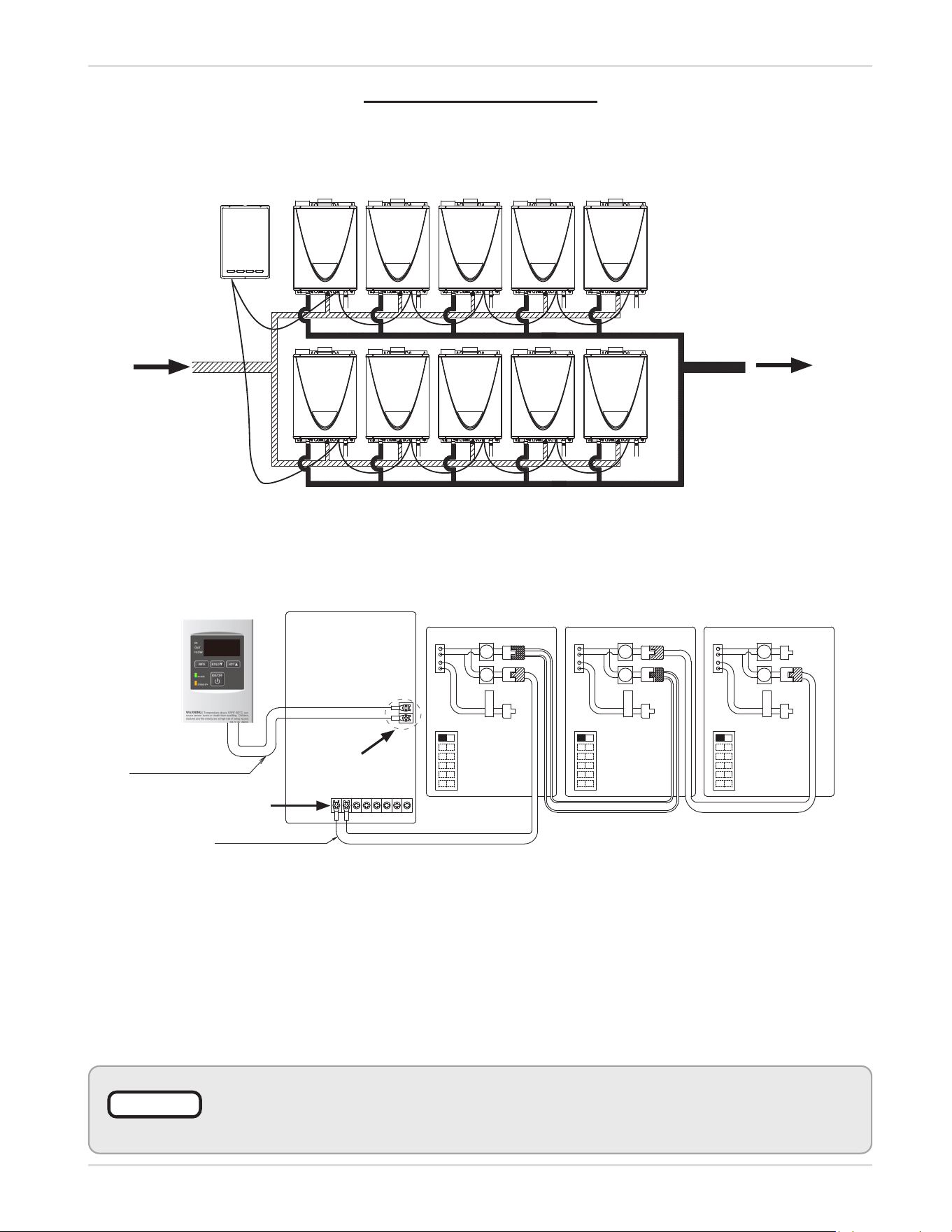
40 Page
MULTI-UNIT SYSTEM
Multiple 540H models can be combined for a Multi-Unit System, along with the multi-unit controller (Part
100112691 (TM-MC02)). The multi-unit controller can control from 2 units to 20 units for commercial or
residential applications. For a 20-unit system, the computer can modulate between the usages of 13,000 BTU/h
(Propane) or 15,000 BTU/h (Natural gas) to 3.98 Million BTU/h.
An individual cut-off switch is recommended for each unit in a Multi-Unit System for the purpose of
maintenance.
Multi-Unit System connection diagram
Multi-unit controller with the remote controller wiring:
• DIP switch settings: Default position (It does not need adjustment.)
• This is the connection diagram for a 540H model and a multi-unit controller in the Multi-Unit System. The
example above shows three water heaters.
• The multi-unit controller automatically allocates the unit # (1-20) to each water heater in the Multi-Unit
System.
• In a Multi-Unit System, connect the “[1]” connector and the “[2]” connector with the communication cable
(refer to page 9) or 18 gauge wire cables. The total cable length can be up to 250 ft (76.2 m) long.
• In a Multi-Unit System, 540H models can only be connected with other 540H models or 710 models.
• The multi-unit controller allocates random numbering. See the controller instructions to learn how to
renumber the system units sequentially.
OFF
ON
1
1
1
2
2
2
PARENT
PARENT
PARENT
1
2
3
4
5
6
Connectors Connectors Connectors
OFF
ON
OFF
ON
Lower bank of
DIP switches
Lower bank of
DIP switches
Lower bank of
DIP switches
1
2
3
4
5
6
1
2
3
4
5
6
Communicaon cable
Remote controller cable
Unit 1
Unit 2 Unit 3
Remote controller
supplied with controller
Terminals for
water heaters
100112691
(TM-MC02)
Remote controller
terminals
Cold IN
Hot Out
540H
100112691
(TM-MC02)
• For detailed instructions on the multi-unit controller, refer to the instructions that
are packaged with the multi-unit controller.
• If 710 and 540H models are to be connected together in a Multi-Unit System, refer to the
installation manual of the multi-unit controller for more details.
NOTICE
Installaon
Installaon Manual
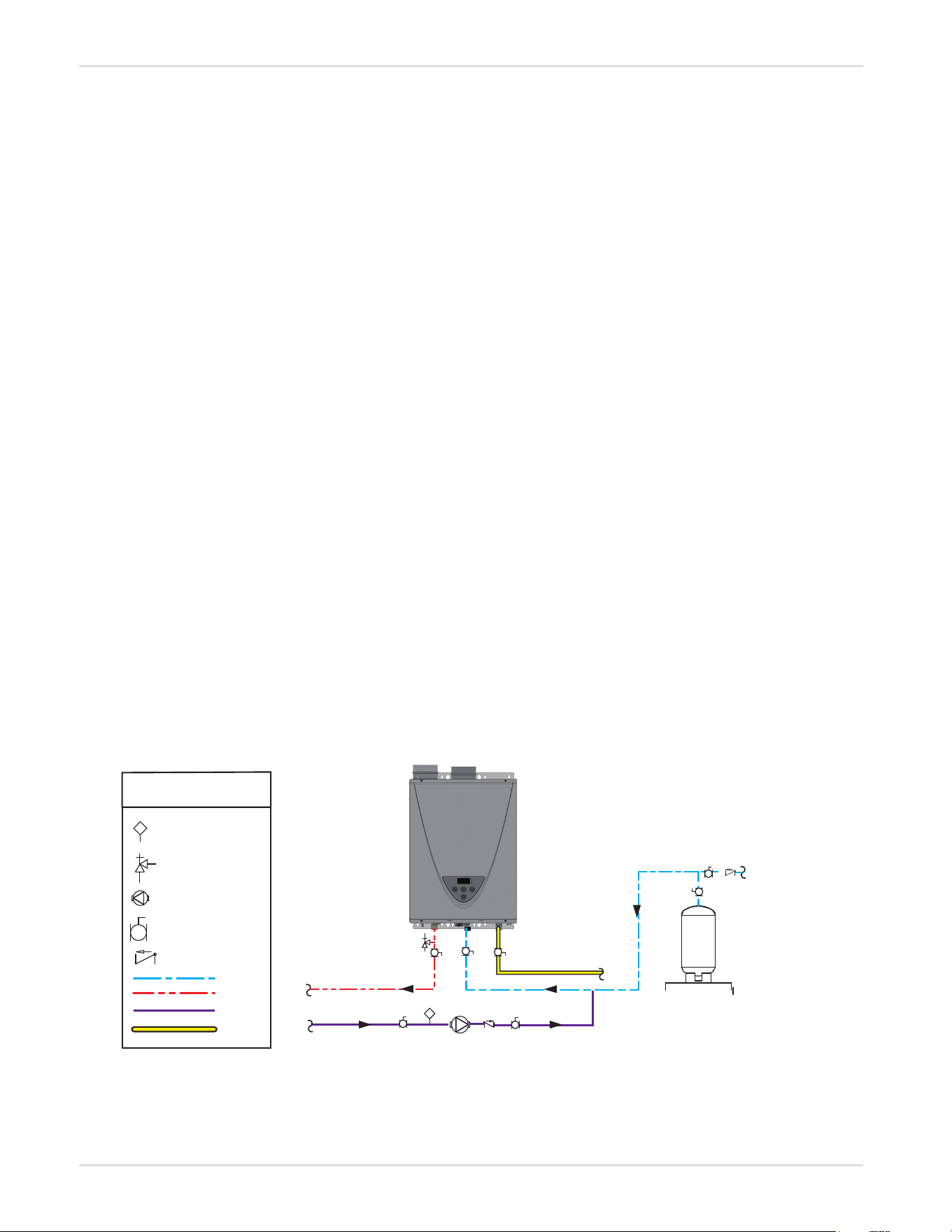
41 Page
APPLICATIONS
Applicaons
Installaon Manual
-Recirculaon-
When installing a recirculaon pump, care must be taken to properly size the pump for the applicaon. Sizing must
be performed by the installing contractor or engineer. Below are requirements that need to be followed when sizing:
• Size the recirculaon pump to ow no less than 2 gpm (7.6 l/m) and no more than 4 gpm (15.1 l/m) per ac-
vated heater. The manufacturer’s suggested ow rate is 3 gpm (11.4 l/m). Refer to the water heater’s pressure
drop chart on its specicaon sheet for losses at other ow rates.
Head loss of each model at 3 gpm,
140H/240H/340H models: 13.4 feet (5.8 psi)
540H models: 8.8 feet (3.8 psi)
• The pump should be controlled by a eld supplied aquastat with immersion probe and an adjustable dieren-
al. The minimum suggested dierenal is 15 °F (8.3 °C). NOTE: Running the pump connuously will reduce
the warranty of the water heater.
• An air eliminaon device is suggested to remove air from the piping system. Air may cause the recirculaon
pump to cavitate and may reduce the water ow rate. These items should be installed per the manufacturer’s
instrucons.
The installer will need to consider the size of water tubing, material type, and ngs when determining the pres-
sure drop of the system to size the recirculaon pump. Note that these characterisc vary for each tubing material
of the same nominal size. Refer to the water tubing manufacturer for pressure drop informaon that is needed to
size the recirculaon pump.
Below is a suggested piping diagram. Check with local codes and ordinances for addional installaon require-
ments. Refer to the water heater manufacturer’s website for addional layouts.
Thermostac mixing valves may be used with tankless water heaters. Consult with the mixing valve manufacturer
for the appropriate mixing valve for the applicaon. Refer to the thermostac mixing valve manufacturer for prop-
er installaon when recirculaon is in use.
To reduce the risk of scalding, install Thermostac Mixing Valves (temperature liming valves) at each point of use.
LEGEND
PRESSURE RELIEF
VALVE
BALL VALVE
CHECK VALVE
COLD
HOT
BUILDING
RETURN
GAS
CIRCULATION PUMP
TEMPERATURE
CONTROL PROBE
COLD
WATER
SUPPLY
EXPANSION
TANK
GAS
HOT WATER
TO FIXTURES
BUILDING RETURN
T-1
P-1
42 Page
-Domesc and Space Heang-
• This water heater is suitable for combination water (potable) heating & space heating
and not suitable for space heating applications only.
• This water heater shall not be connected to any heating system or component(s)
previously used with non-potable water where any chemicals were added to the
water heating appliances.
• Toxic chemicals used in boiler treatments such as alcohol, glycerol, and glycol groups
must not be introduced into the water system.
• When the system requires water for space heating at temperatures higher than
required for other uses, Thermostatic Mixing Valves (temperature limiting valves)
shall be installed at each point-of-use. Water temperatures over 125°F (52°C) can
cause severe burns instantly or death from scalding. When installed per the valve
manufacturer’s instructions, they automatically mix hot and cold water to limit the
temperature at the tap.
• Failure to observe these warnings could result in severe personal injury or death.
WARNING
Care must be taken by the installing contractor or design engineer to size the components of the system appro-
priately for ow rate and temperature. In addion to sizing the water heater for the domesc potable water, the
installer must size the water heater to provide the ow rate required by the manufacturer of the air handler. Refer
to the air handler manufacturer’s instrucons and specicaon documents for this ow rate. The pump, eld sup-
plied or provided by the air handler manufacturer, must be able to provide this minimum ow rate.
When sizing the pump, the installer must take into account the pressure drop of the following:
• Hydronic air handler. Refer to the manufacturer for this informaon.
• Water heater. Refer to the water heater’s specicaon sheet for pressure drop informaon.
At 3.5 gpm (13.2 l/m), the pressure drop of the water heaters are:
140H: 15.2 feet (6.6 psi)
240H & 340H: 13.8 feet (6.0 psi)
540H: 11.8 feet (5.1 psi)
• Water tubing size, length, and material. Refer to the water tubing manufacturer for pressure drop informa-
on as it diers from one material to the next and at dierent sizes. There may be addional applicaon
requirements by the water tubing manufacturer.
• Fings. Refer to the ng manufacturer for pressure drop informaon.
Addional consideraons are:
• Installing an air eliminaon device to remove air that may cause cavitaon in the pump.
• A thermostac mixing valve for the domesc system. Refer to the mixing valve manufacturer for proper
selecon and installaon. To reduce the risk of scalding, install Thermostac Mixing Valves (temperature
liming valves) at each point of use.
• A priority control device, such as a ow switch, to priorize the domesc water system over the heang
system.
Applicaons
Installaon Manual
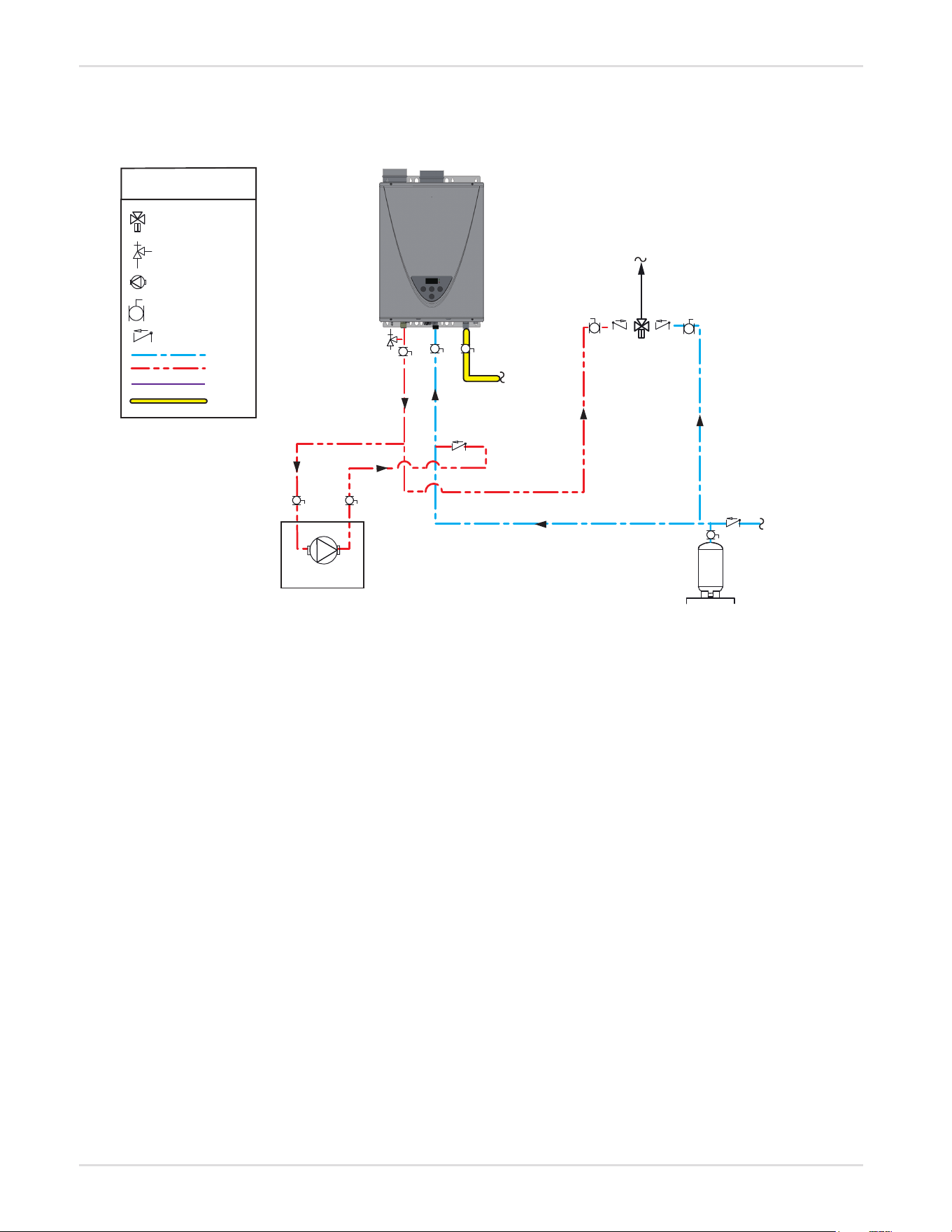
43 Page
LEGEND
PRESSURE RELIEF
VALVE
BALL VALVE
CHECK VALVE
COLD
HOT
BUILDING
RETURN
GAS
CIRCULATION PUMP
THERMOSTATIC
MIXING VALVE
COLD
WATER
SUPPLY
EXPANSION
TANK
AIR HANDLER
TEMPERED HOT
WATER TO FIXTURE
GAS
P-1
Below is a suggested piping layout. The installer must properly install the system per manufacturers instrucons
and local codes.
Applicaons
Installaon Manual
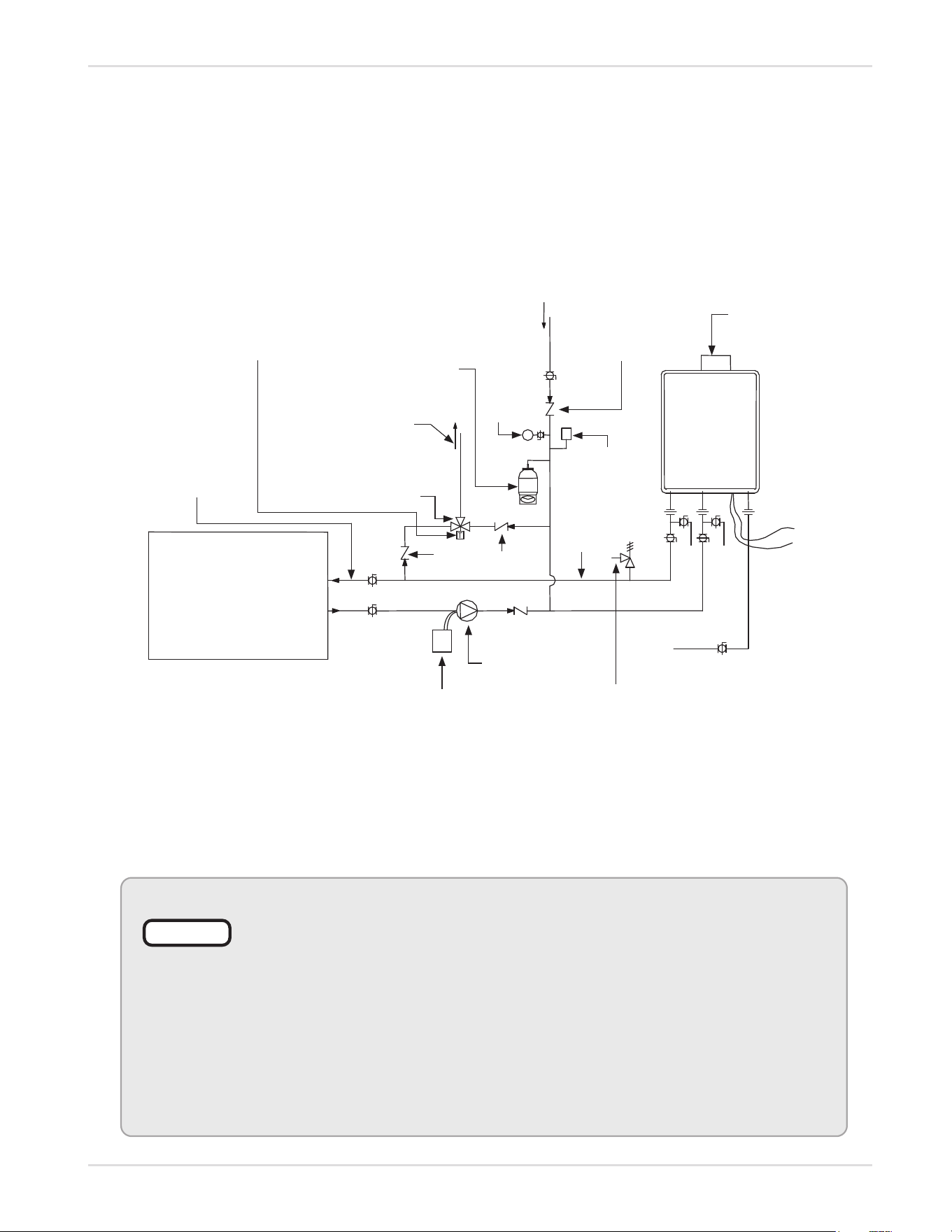
44 Page
• Priority Control Devices such as a flow switch, an Aquastat or other
electronic controller can be used to prioritize the domestic water system
over the heating system.
• Follow all local codes, or in the absence of local codes, follow the current
edition of the National Standard Code, ANSI Z21.10.3 • CSA 4.3.
• This illustration is a concept design only. The reference to the 1/8
th
hole
in check is only for the State of Massachusetts. There are a wide variety
of variations to the application of controls and equipment presented.
Designers must add all necessary safety and auxiliary equipment to conform
to code requirements and design practice. For more details, contact the
manufacturer.
NOTICE
120 VAC
switch or
outlet
Hot water outlet
Unions
T-handle gas shuto valve
Check valve
Electronically controlled
pump mer. Acvates
every 6 hours for 60
seconds. Wire to
product approved pump
Heang Coil
(used with air-handler)
Cold water supply
3-inch gas exhaust
vent (Discharge must
comply with local and
state codes.) Cannot
be common vented
with other appliances
An approved temperature and pressure
relief valve. Tie to locaon approved by
local codes and must meet BTU rang of
water heater model used
Check valve will have
1/8-inch hole drilling
in clapper oponal
Atmospheric
vacuum
breaker
Shuto
valve
Pressure
gauge
Apply correct thermal
expansion tank-size
per applicaon
Shuto valves
Shuto valves
Check valves
Cold water inlet
Gas inlet
Water
lter
Drain
plug
Thermostac mixing valve
Hot water
supply and
return to
heang coil
System installed with reverse
acng aquastat to shut o fan.
Suggested but not required by
248 CMR
50’-0” maximum distance from
water heater to fan coil.
(Developed length) Not including
coil in heang unit
NSF-61 product
approved pump
Automac tempering device
must be installed below
the top of the water heater
as per manufacturer’s
recommendaons
Piping loop
between water
heater and fan
coil shall be in
compliance with
248 CMR
Tempered water to
plumbing xtures. Must
meet temperature
requirements of 248 CMR
All water piping should be insulated
in accordance with 780 CMR
(Massachuses energy code)
-Dual Purpose Water Heang for the State of Massachuses-
Diagrammatic layout of radiant heating and domestic water heater.
The recirculation pump is to provide no less than 2 GPM (7.5 L/min) and no more than 4 GPM (15 L/min)
through each activated unit in the system
Ball
Valve
Isolation
Valve
Applicaons
Installaon Manual
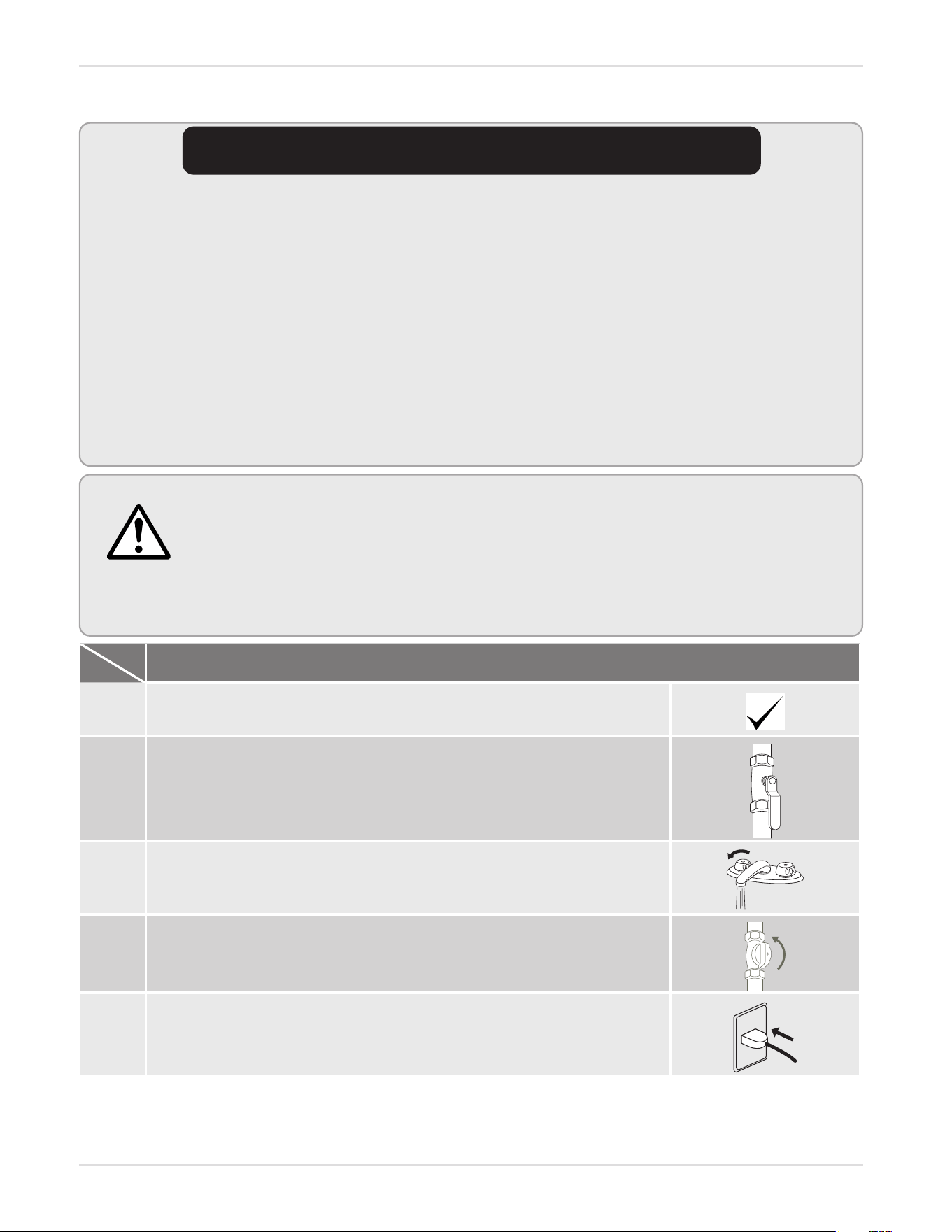
45 Page
INITIAL OPERATION
Inial operaon
Installaon Manual
IF YOU SMELL GAS:
• Do not try to start the water heater.
• Do not touch any electric switches; do not use any phone in your building.
• Immediately call your gas supplier from a neighbor’s phone. Follow the gas supplier’s
instructions.
• If you cannot reach your gas supplier, call the fire department.
• Failure to observe these warnings could lead to fire or an explosion, resulting in severe
injury or death.
WARNING
Operation
1.
Once the above checks have been completed, please clean filter of
any debris. Refer to page 54 for instructions.
2.
Fully open the manual water control valve on the water supply line.
3.
Open a hot water tap to verify that water is flowing to that tap,
then close the hot water tap.
4.
Fully open the manual gas control valve installed.
5.
Turn on the 120 VAC, 60 Hz power supply to the water heater.
NOTE:
To reduce the risk of scalding, install Thermostac Mixing Valves (temperature liming valves) at each point of use.
• Check the GAS and WATER CONNECTIONS for leaks before firing unit for the first time.
• Open the main gas supply valve to the unit using only your hand to avoid any spark. Never use tools. If
the knob will not turn by hand, do not try to force it; call a qualified service technician. Forced repair
may result in a fire or explosion due to gas leaks.
• Be sure to check for the presence of leaking gas toward the bottom of the unit because some gases are
heavier than air and may settle towards the floor.
• Check the GAS PRESSURE. Refer to pages 30 and 56.
• Do not try to light the burner manually. It is equipped with an electronic ignition device which automati-
cally lights the burner.
• Check for PROPER VENTING and COMBUSTION AIR to the water heater.
• Purge the GAS and WATER LINES to remove any air pockets.
• Do not use this appliance if any part has been under water. Immediately contact a qualified install-
er or service agency to replace a flooded water heater. Do not attempt to repair the unit! It must be
replaced!
FOR YOUR SAFETY, READ BEFORE OPERATING

46 Page
Owner's GuideOwner's Guide
Owner's Guide
CONGRATULATIONS
Congratulations and thank you for choosing our tankless water
heater. Before use, we recommend that you read through this
owner's guide carefully. Keep this manual for future reference.
If you need an additional manual, contact the manufacturer or your
local distributor. You may also download a manual from our website.
When you call, please tell us the product name and the serial number
of your unit written on the rating plate of the water heater.
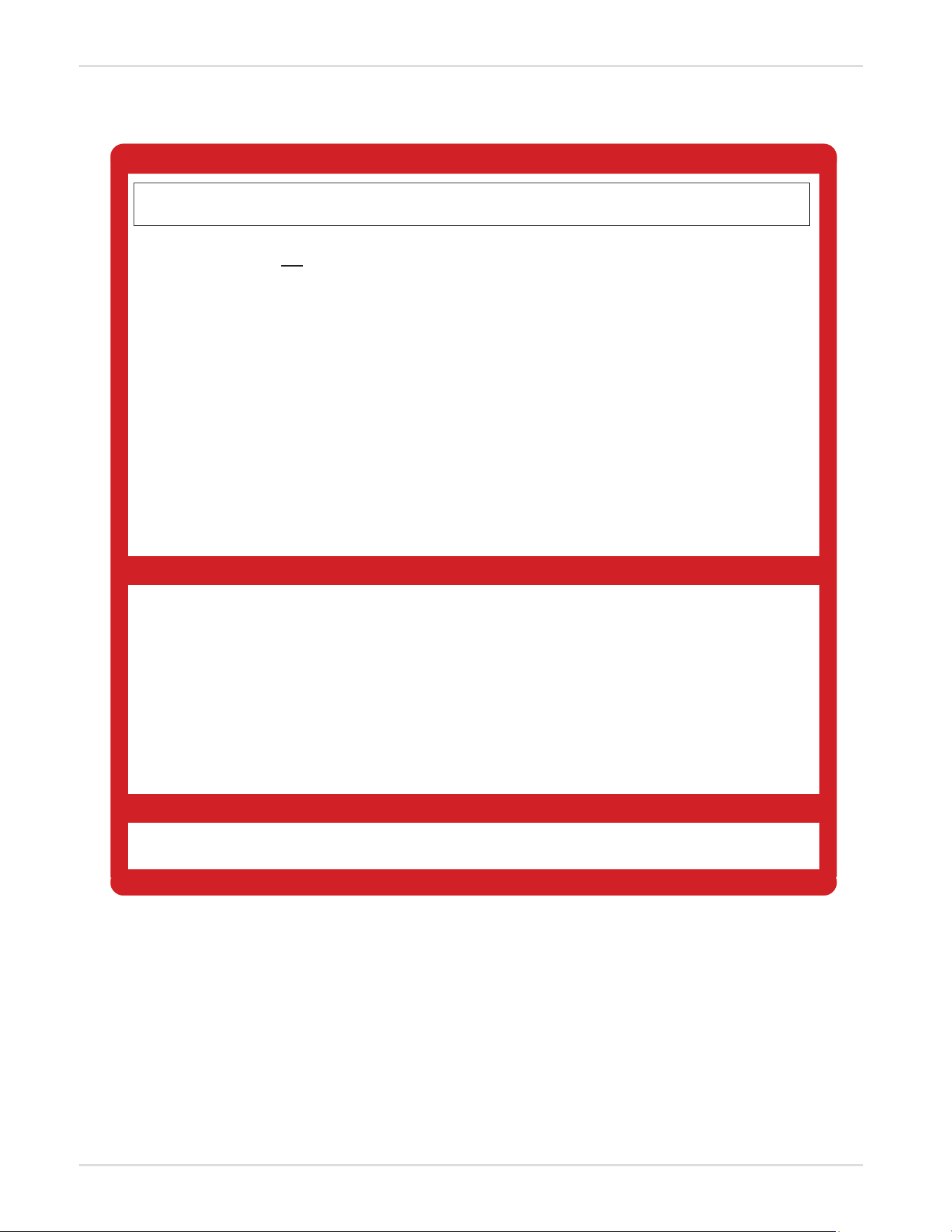
47 Page
Operang Safety
Owner's Guide
OPERATING SAFETY
WARNING:
If you do not follow these instructions exactly, a re or explosion may result
causing property damage, personal injury or loss of life.
A. This appliance does not have a pilot. It is equipped with an ignition device which automatically
lights the burner. Do not try to light the burner by hand.
B. BEFORE OPERATING smell all around the appliance area for gas. Be sure to smell next to
the oor because some gas is heavier than air and will settle on the oor.
WHAT TO DO IF YOU SMELL GAS
• Do not try to light any appliance.
• Do not touch any electric switch; do not use any phone in your building.
• Immediately call your gas supplier from a neighbor’s phone. Follow the gas supplier’s
instructions.
• If you cannot reach your gas supplier, call the re department.
C. Use only your hand to turn the gas shuto valve. Never use tools. If the valve will not turn by
hand, don’t try to repair it, call a qualied service technician. Force or attempted repair may result
in a re or explosion.
D. Do not use this appliance if any part has been under water. Immediately contact a qualied
installer or service agency to replace a ooded water heater. Do not attempt to repair the unit! It
must be replaced!
1. STOP! Read the safety information above on this label.
2. Turn o all electric power to the appliance.
3. Do not attempt to light the burner by hand.
4. Turn the gas shuto valve located on the outside of the unit to the closed position.
5. Wait ve (5) minutes to clear out any gas. If you then smell gas, STOP! Follow “B” in the
safety information above on this label. If you don’t smell gas, go to the next step.
6. Turn the gas shuto valve located on the outside of the unit to the open position.
7. Turn on all electrical power to the appliance.
8. If the appliance will not operate, follow the instructions in “To Turn O Gas to Appliance,” and
call your service technician or gas supplier.
1. Turn o all electric power to the appliance if service is to be performed.
2. Turn the gas shuto valve located on the outside of the unit to the closed position.
FOR YOUR SAFETY READ BEFORE OPERATING
OPERATING INSTRUCTIONS
TO TURN OFF GAS TO APPLIANCE
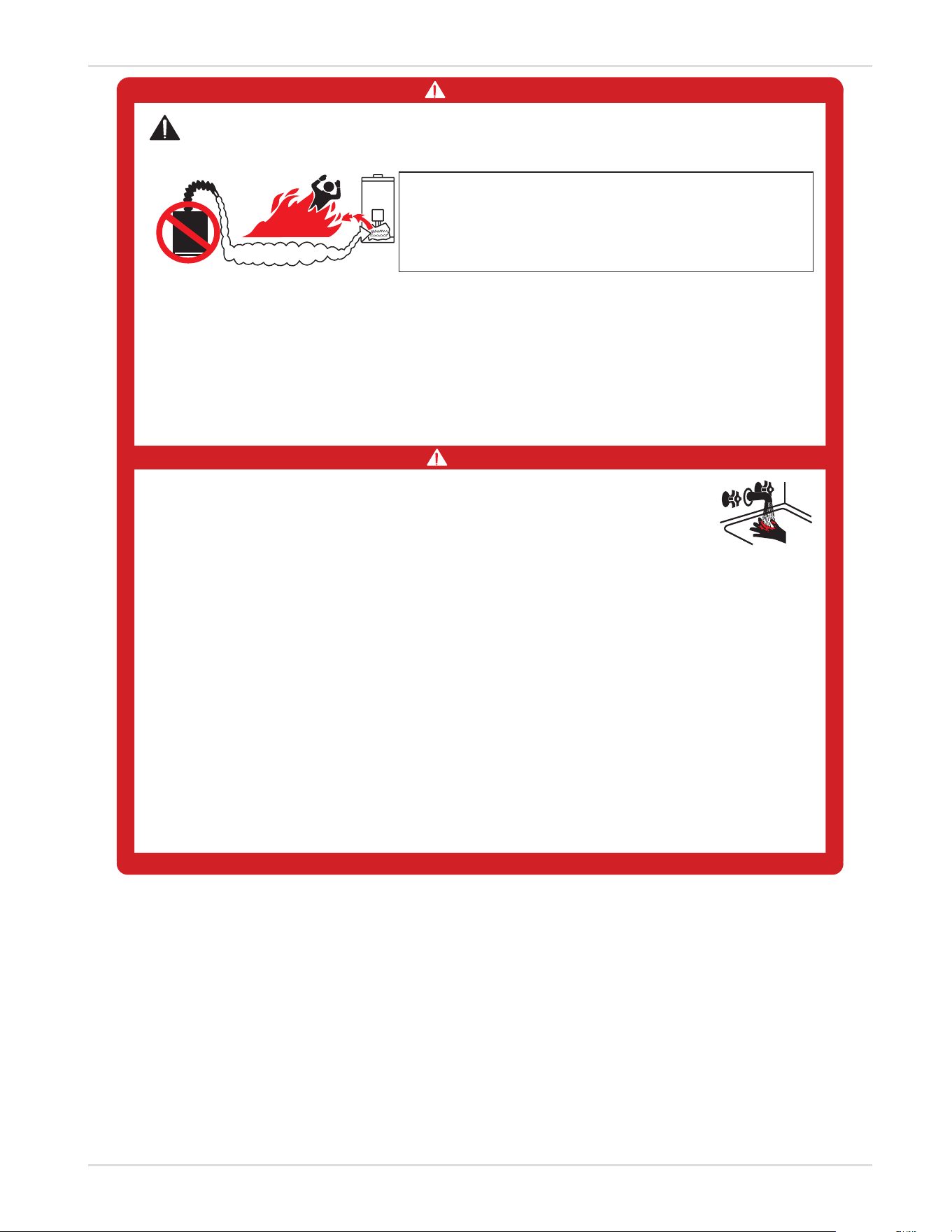
48 Page
Operang Safety
Owner's Guide
A pressure relief valve listed as complying with the standard for Relief Valve and Automatic Gas Shuto
Devices for Hot Water Supply System, ANSI Z21.22
・
CSA 4.4, shall be installed at the time of installation of
the water heater in the location specied by the manufacturer. Local codes shall govern the installation of
relief devices for safety operation of the water heater. The relief valve must not be removed or plugged.
No valve shall be placed between the relief valve and the water heater. The relief from the discharge of
the pressure relief valve shall be disposed of in a suitable place where it will cause no damage. Also, there
shall be no other reducing coupling or other restrictions installed on the discharge line to restrict ow.
See Installation Manual heading “PRESSURE RELIEF VALVES” for installation and maintenance of relief
valve discharge line and other safety precautions.
Vapors from ammable liquids will explode and catch re causing death or severe burns.
Do not use or store ammable products such as gasoline, solvents or adhesives in the same room or
area near the water heater.
Keep ammable products:
1. Far away from heater.
2. In approved containers.
3. Tightly closed and out of reach of children.
4. Water heater has a main burner, which may
come on at any time and will ignite ammable
vapors.
Vapors:
1. Cannot be seen.
2. Are heavier than air.
3. Go a long way on the oor.
4. Can be carried from other rooms to the main
burner by air currents.
Do not install water heater where ammable products will be stored or
used unless the main burner is at least 18” above the oor. This
will reduce, but not eliminate the risk of vapors being ignited by the
main burner.
Read and follow water heater warnings and instructions. If the owner’s
manual is missing, contact the retailer or manufacturer.
Flammable Vapors
FLAMMABLES
1. Water temperature over 125°F (52°C) can cause severe burns instantly or death from
scalds.
2. Children, disabled and elderly are at highest risk of being scalded.
3. Feel water before bathing or showering.
4. Temperature limiting valves are available. See manual.
5. To reduce the risk of scalding, install Thermostatic Mixing Valves (temperature limiting valves) at each
point of use.
6. The outlet temperature of the water heater is set at 120°F (50°C). If you require water temperatures
below this setting, follow the instruction manual.
7. Use this heater at your own risk. Test the water before bathing or showering. Do not leave children or
an inrm person unsupervised. See your local water supply company [plumbing hardware retailer] for
temperature limiting valves that are available.
BRÛLURE
BURN
CHAUDECHAUDE
HOTHOT
CHAUDE
HOT
DANGER
DANGER
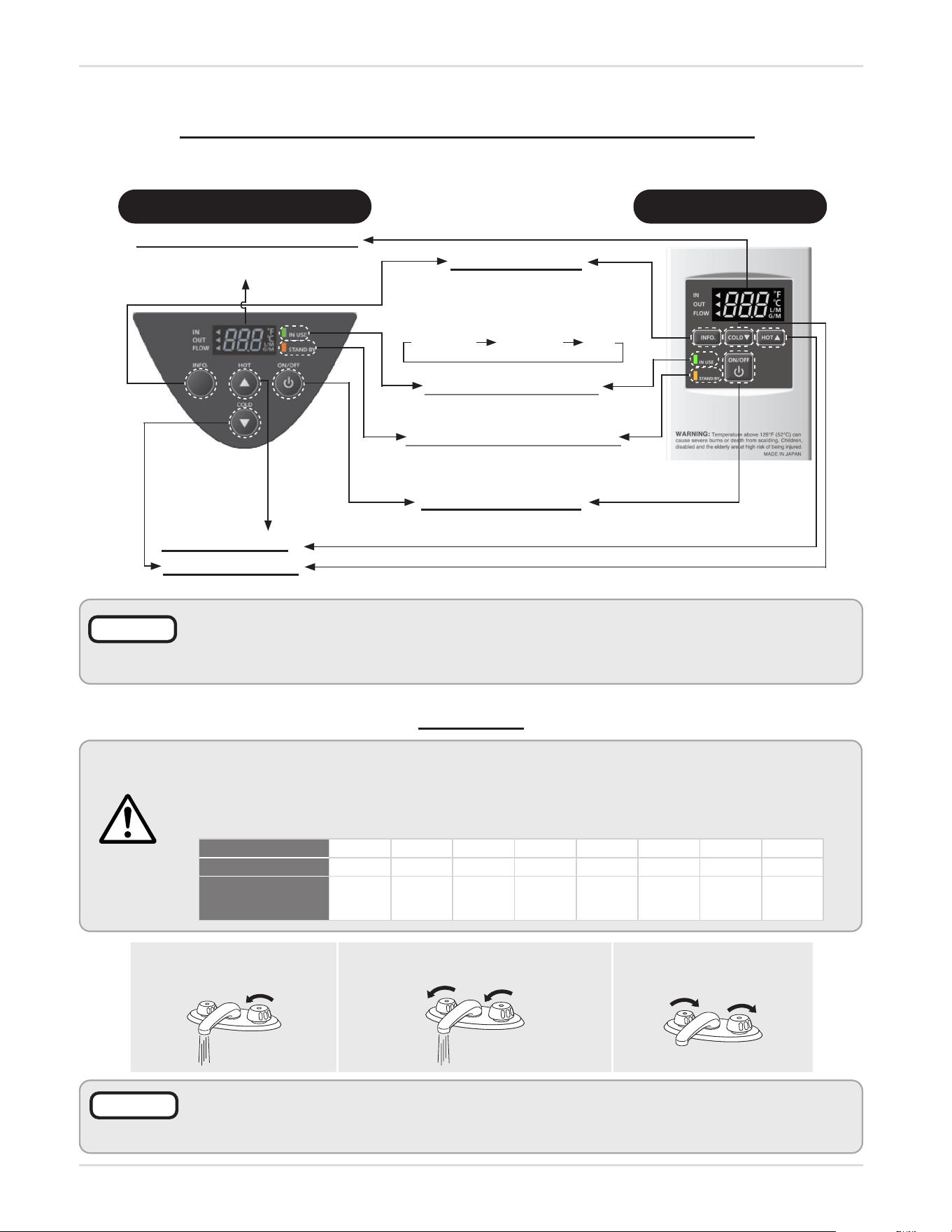
49 Page
Normal Operaon
Owner's Guide
NORMAL OPERATION
BUILT-IN CONTROLLER AND REMOTE CONTROLLER
The illustraon below shows an example of the controllers. The exact display may dier from examples. 140H
built-in controller display is same orientaon as remote controller image as shown below.
"COLD" Button
"HOT" Button
Press the "HOT" button or the "COLD" button to adjust the hot water temperature.
STAND BY LED (Orange)
The indicator is ON to show
that power is ON.
IN USE LED (Green)
The indicator lights during combustion.
"INFO" Button
Each time the button is pressed,
the operation mode is selected
in the sequence of the following.
Inlet water
temperature
Outlet water
temperature
Water
flow
When the STAND BY LED is ON, the
hot water temperature will be
displayed.
Display for Temperature
"ON/OFF" Button
Press this button to start
or stop operation.
Built-in controller Remote controller
• When the remote controller is installed it will take priority over the built-in controller.
• The controller has an energy saving mode. Five minutes after the water heater stops
operating, the backlight of the controller turns off.
• The backlight of the remote will turn back on once the water heater begins firing again.
NOTICE
GENERAL
1. Open a cold water
fixture.
2. Mix hot water with the cold water
to get the correct temperature water.
3. When finished, close the
water fixtures.
• Flow rate to activate the water heater: 0.5 gallons per minute at the default set tempera-
ture (1.9 L/min).
• Flow rate to keep the water heater running: 0.4 gallons per minute (1.5 L/min).
NOTICE
• Temperatures above 125 °F (52 °C) can cause severe burns or death from scalding.
Children, disabled and the elderly are at high risk of being injured.
• To reduce the risk of scalding, install Thermostatic Mixing Valves (temperature limiting
valves) at each point of use.
WARNING
°F 120 125 130 135 140 145 150 155
°C 49 52 54 57 60 63 66 68
Time to produce
serious burn
more
than 5
min.
1½ to 2
min.
about
30 sec.
about
10 sec.
less than
5 sec.
less than
3 sec.
about
1½ sec.
about
1 sec.
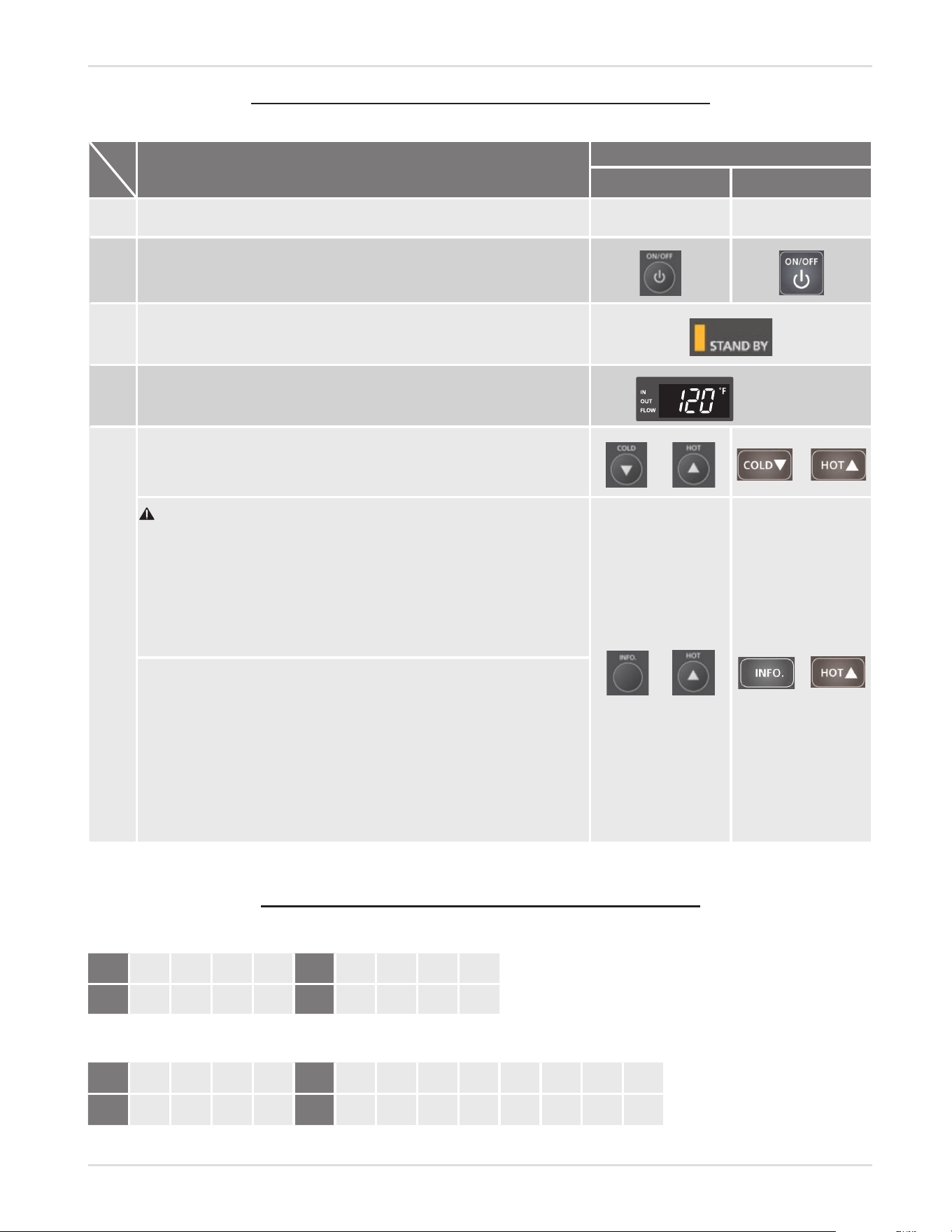
50 Page
Normal Operaon
Owner's Guide
Operation
Screen on the controller
Built-in controller Remote controller
1.
Turn on the 120 VAC power supply to the unit (the water heater or the
multi-unit controller).
2.
Press the "ON/OFF" button on the controller in order to turn the
controller on.
3.
When ON, the STAND BY LED is lit.
4.
It shows the set temperature on its display as shown in the picture on
the right. (EX.: 120 °F)
(EX.: 120 °F)
5.
Press the "HOT" button or the "COLD" button to set the temperature
setting of the unit.
WARNING! Higher temperatures increase the risk of scalding, but
even at 120 °F (50 °C), hot water can scald (page 6).
Increasing temperature from 120 °F (50 °C) to 125 °F (52 °C) :
1. The water heater must be in Stand By to increase the temperature.
2. Press the "HOT" buon to set 120 °F (50 °C).
3. Press and hold the "INFO" buon and the "HOT" buon for at least 3
seconds. The remote will emit a beep and change to 125 °F (52 °C).
4. Press the "HOT" buon to set up to 140 °F (60 °C).
-540H model only-:
Increasing temperature above 140 °F (60 °C)
To reduce the risk of scalding, install Thermostac Mixing Valves (tem-
perature liming valves) at each point of use.
1. The water heater must be in Stand By to increase the temperature.
2. Press the "HOT" buon to set 140 °F (60 °C).
3. Press and hold the "INFO" buon and the "HOT" buon for at least 3
seconds. The remote will emit a beep and change to 145 °F (63 °C).
4. Press the "HOT" buon to set up to 160 °F (70 °C).
OUTLET WATER TEMPERATURE SETTING
-Set temperature
°F 100 105 110 115 120* 125 130 135 140
°C 38 40 43 45 50* 52 55 57 60
a) For 140H, 240H and 340H models
°F 100 105 110 115 120* 125 130 135 140 145 150 155 160
°C 38 40 43 45 50* 52 55 57 60 63 65 68 70
b) For 540H model
*Factory setting (Default): 120 °F
TEMPERATURE TABLE OF CONTROLLER
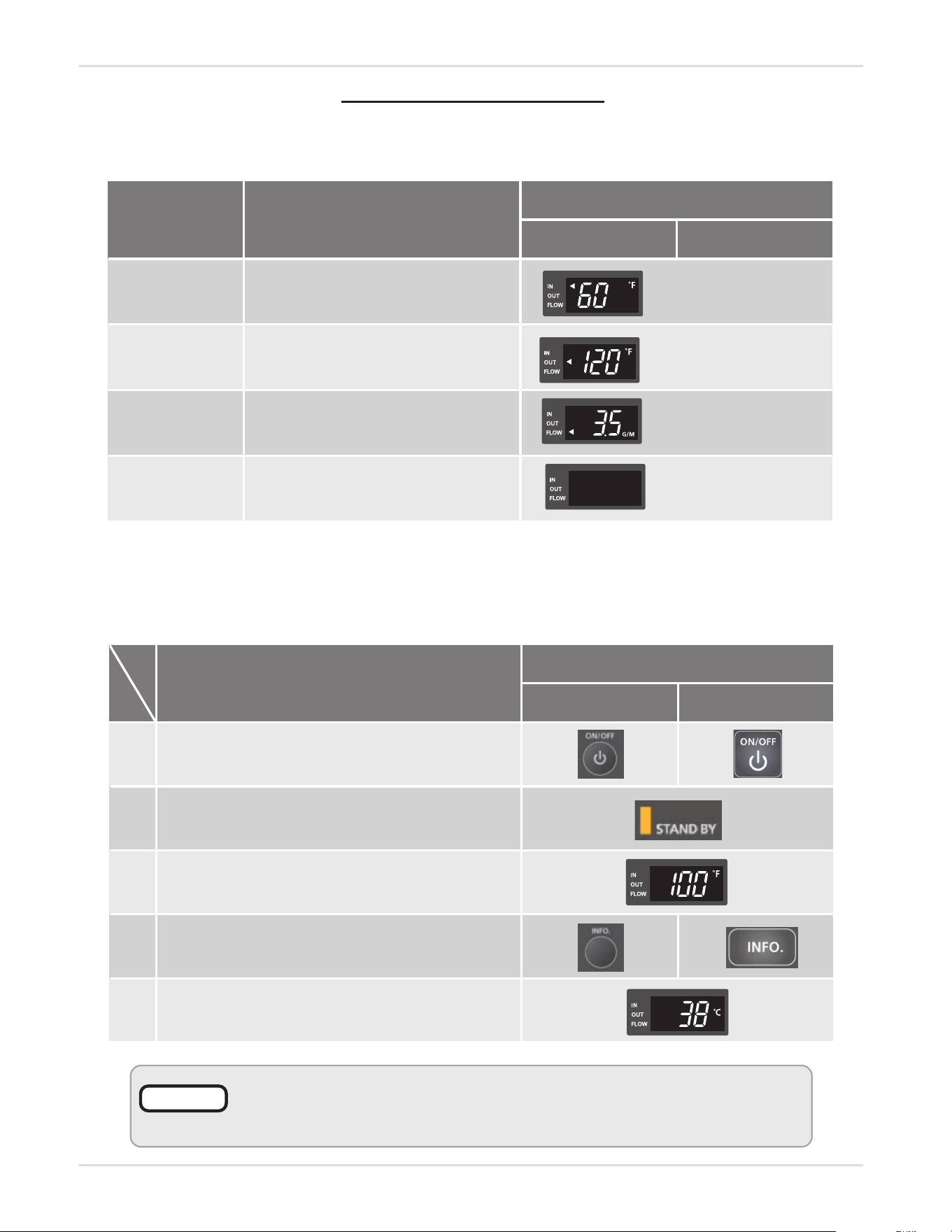
51 Page
ADDITIONAL FEATURES
-Informaon mode-
You can get some information about the water heater condition by pressing the "INFO" button. For
more information, follow the procedures below:
INFO
Button
Operation
Screen on the controller
Built-in controller Remote controller
1st. press
Inlet water temperature will be
displayed on the controller by pressing
the "INFO" button.
Inlet water temperature
(EX.: 60 °F)
2nd. press
Outlet water temperature will be
displayed on the controller by pressing
the "INFO" button.
Outlet water temperature
(EX.: 120 °F)
3rd. press
And then, water flow will be displayed
on the controller by pressing the
"INFO" button.
4th. press
Press the "INFO" button to finish
information mode.
Water flow
(EX.: 3.5 GPM)
-Unit conversion mode-
Units of measure can be changed from Imperial to Metric and vice versa. For example, temperature can
be changed from °F to °C. Flow rate will also change from gallons per minute to liters per minute when
this setting is changed. Follow this procedure to change this setting:
Operation
Screen on the controller
Built-in controller Remote controller
1.
Press the "ON/OFF" button on the controller in
order to turn the controller on.
2.
When ON, the orange LED is lit.
3.
The previous set temperature will be displayed on
the screen.
4.
Press the "INFO" buttons for at least 3 seconds.
5.
The set temperature should now be displayed in
the alternate unit of measurement.
(EX.: 100 °F)
(EX.: 38 °C)
When the water heater is connected with the remote controller, the built-
in controller will not operate temperature settings. It will only work for the
information mode (Indoor models only).
NOTICE
Normal Operaon
Owner's Guide
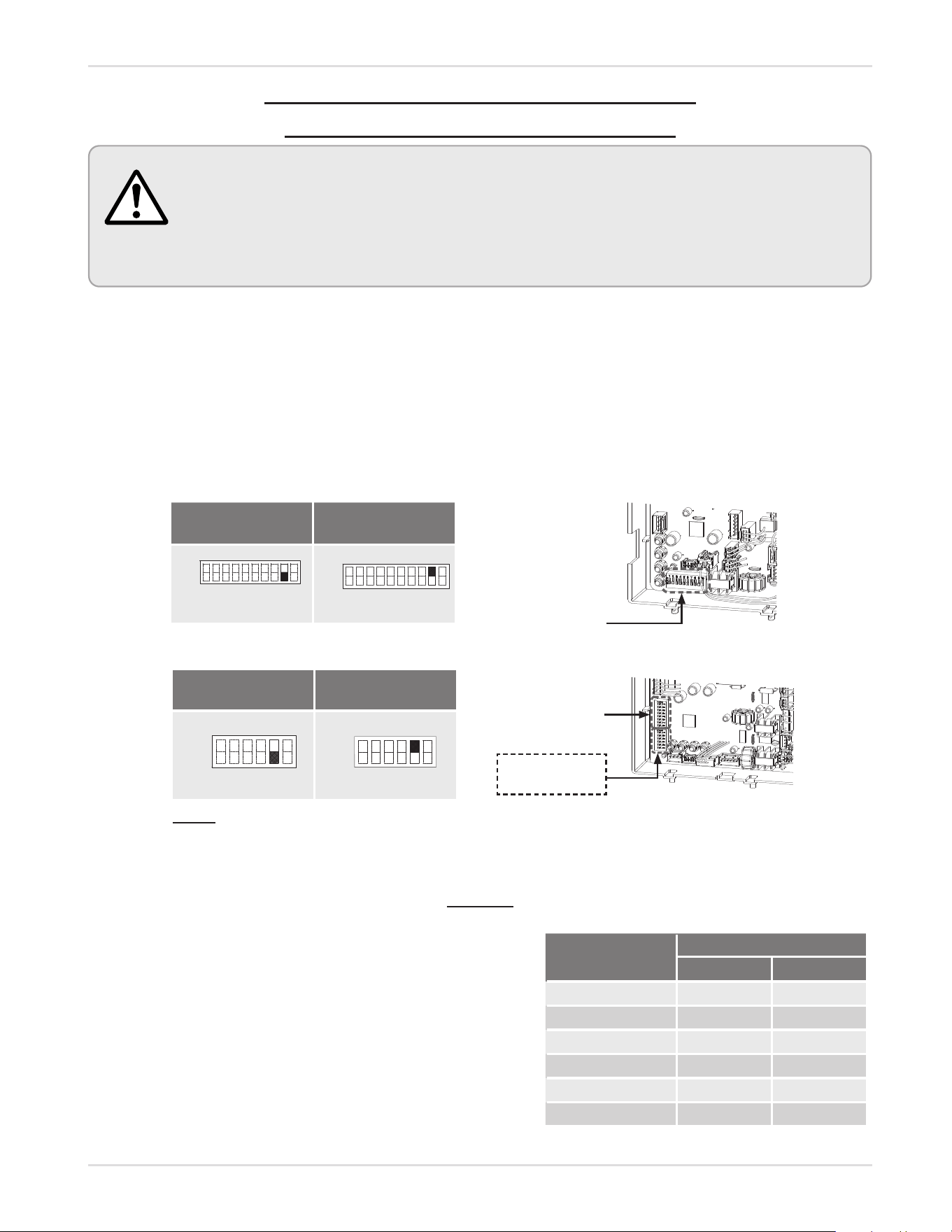
52 Page
TEMPERATURE SETTINGS ON THE PCB
(WITHOUT REMOTE CONTROLLER)
WARNING
• Adjust the appropriate DIP switches according to model and temperature as shown
below. DO NOT adjust the other DIP switches.
• Turn off the power supply to the water heater before changing the DIP switch set-
tings.
• Failure to observe these warnings could lead to carbon monoxide poisoning, severe
personal injury, or death.
• There are 2 preset temperatures , 120 °F (50 °C) and 140 °F (60 °C), that you can select by changing the DIP
switch settings on the computer board without the remote controller. See below.
• To reduce the risk of scalding, install Thermostatic Mixing Valves (temperature limiting valves) at each point
of use.
• When the remote controller is in normal operation, the set temperature of the remote controller is given
priority over the set temperature of the DIP switch settings.
The temperature has been preset at the factory to 120 °F (50 °C).
Computer board
120 °F (50 °C)
DEFAULT
140 °F (60 °C)
No. 9 : OFF
No. 9 : ON
140H/240H/340H
OFF
ON
1 2 3 4 5 6
7 8 9
10
OFF
ON
1 2 3 4 5 6 7 8 9 10
Bank of
DIP switches
NOTE: The dark squares indicate the correct DIP switch positions.
(Lower bank of DIP switches)
120 °F (50 °C)
DEFAULT
140 °F (60 °C)
OFF
ON
1 2 3 4 5 6
No. 5 : OFF
OFF
ON
1 2 3 4 5 62 3 4 5 6
No. 5 : ON
540H
Computer board
Upper bank of
DIP switches
Lower bank of
DIP switches
FLOW
Appliance/Use
Flow rate
GPM (US) L/min
Lavatory Faucet 1.0 3.8
Bath Tub 4.0 – 10.0 15.2 - 37.8
Shower 2.0 7.5
Kitchen Sink 1.5 5.6
Dishwasher 1.5 5.6
Washing machine 4.0 15.2
Household Flow Rates
Taken from UPC 2006
• The flow rate through the water heater is limited to a
maximum of 7.0 GPM (26.5 L/min) for the 140H model, a
maximum of 6.6 GPM (25 L/min) for the 240H model, 8.0
GPM (30 L/min) for the 340H model, and 10.0 GPM (38 L/
min) for the 540H model.
• The flow rate capacity of the water heater will vary based on
temperature difference of the set temperature and supply
water temperature. Flow Capacity tables are located on
pages 74-75.
• The table to the right provides typical household plumbing
fixture flow rates.
Normal Operaon
Owner's Guide
53 Page
FREEZE PROTECTION SYSTEM
• This water heater comes equipped with heating blocks to protect it from damage associated with freezing.
When the freeze protection thermostat senses air temperature below 36.5 °F (2.5 °C), the blocks will heat up
to prevent freezing of the unit.
• The 540H Indoor model briefly fires on for about 3 seconds to provide freeze protection around the heat
exchanger drum - Automatic firing system. Once 5 minutes have elapsed since the 540H Indoor previous
firing operation, the computer will continually check the temperature of the exhaust thermistor. The freeze
protection firing system will activate if: Tex < 32 °F (0 ˚C) (where Tex is the temperature of exhaust thermis-
tor.)
• To operate these freeze protection systems, there has to be electrical power to the unit. Damage to the heat
exchanger caused by freezing temperatures due to power loss is not covered under the warranty. In cases
where power losses can occur, consider the use of a backup power supply. In the event of a power outage
during freezing conditions, the manufacturer recommends draining water (page 55) from the water heater
and disconnecting power.
• In any areas subject to freezing temperatures, the manufacturer highly recommends an indoor installation
with an indoor model.
• The manufacturer also highly recommends the use of a backflow preventer (sold separately) to minimize the
amount of cold air entering through the exhaust venting when the water heater is off.
• It is the installer’s responsibility to be aware of freezing issues and take all preventative measures. The man-
ufacturer will not be responsible for any damage to the heat exchanger as a result of freezing.
• If you will not be using your heater for a long period of time:
1. Completely drain the water out of the unit. Refer to page 55.
2. Disconnect power to your heater.
This will keep your unit from freezing and being damaged.
Only pipes within the water heater are protected by the freeze protection system. Any water
pipes (hot or cold) located outside the unit will not be protected. Properly protect and insulate
these pipes from freezing.
NOTICE
Normal Operaon
Owner's Guide
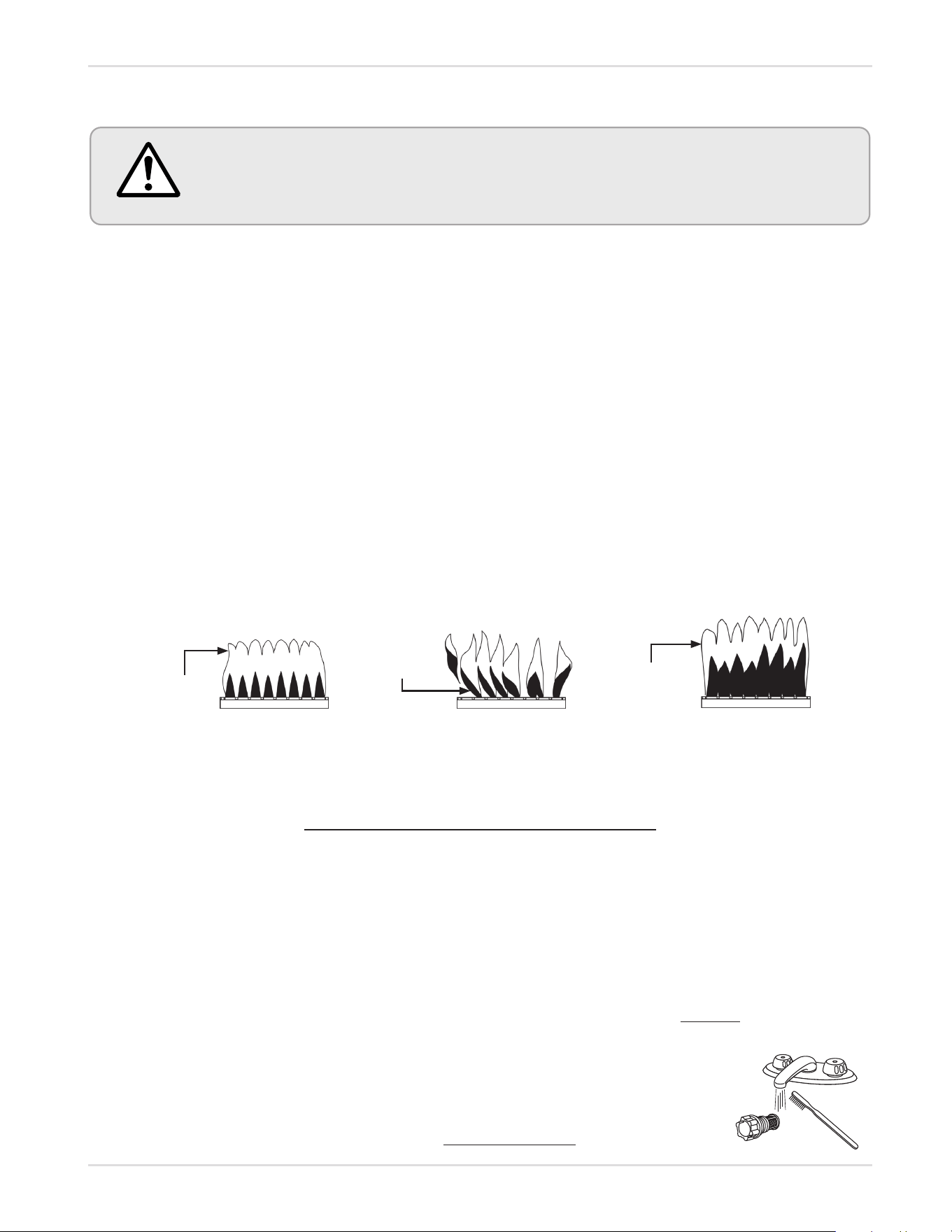
54 Page
MAINTENANCE AND SERVICE
• Turn off the electrical power supply and close the manual gas shutoff valve and
the manual water control valve before servicing.
• Failure to do so could result in severe personal injury, or death.
WARNING
The following maintenance is required for the proper operation of water heaters.
• Regularly ensure that the area around the water heater, vent termination, and air intake is free from dust,
debris, and other contaminants.
• Be sure that all openings for combustion and ventilation air are not blocked.
• The venting system should be checked annually for any leaks, corrosion, blockages or damage.
• The screen of the termination (if it is installed) must be inspected regularly that it is no blocked by any object
and debris including dust, dirt, and snow so on.
• Keep the area around the water heater clear. Remove any combustible materials, gasoline or any flammable
vapors and liquids.
• Clean the cold-water inlet filter. (Refer to Inlet Water Filter Cleaning in the following.)
• If the relief valve discharges periodically, it may be due to thermal expansion in a closed water supply system.
Contact a service technician to correct this issue.
• The pressure relief valve must be manually operated periodically to check for correct operation. Before
operating the valve manually, check that it will discharge in a place for secure disposal.
• Condensate drain system must be inspected regularly to make sure it drains properly and accordance with
local code or the part manufacturer’s instructions. (Refer to pages 33 and 34.)
• The burner should be checked annually for dust, lint, grease or dirt by a licensed technician.
• Visually check the burner flames (see below) through the burner window in the burner assembly located at
the middle of the water heater.-
Sasfactory
Blue ame
Unsasfactory
Flame
blowing up
Unsasfactory
Red or Yellow
ame
The manufacturer recommends having the unit checked once a year or as necessary by a licensed technician. If
repairs are needed, any repairs should be done by a licensed technician.
INLET WATER FILTER CLEANING
If this filter is clogged, water will not be supplied to the water heater properly.
1. Close the manual gas shutoff valve.
2. Turn off power to the unit and wait a couple of seconds. Turn on again.
3. Wait 30 seconds, and then turn off power to the unit.
4. Close the inlet water valve. If the heater is part of an Easy-Link or Multi-Unit System, close the inlet and
outlet water valves to isolate the heater. Then proceed to step 5.
5. Open all hot water taps in the house. When the residual water flow has ceased, close all hot water taps.
6. Have a bucket or pan to catch the water from the unit’s large drain plug with filter. If Isolation valves are
installed, open the drains to drain the water. If isolation valves are not installed, unscrew the large drain
plug to drain all the water out of the unit. Do not lose the o-ring that will be on the large drain plug.
7. Wait a few minutes to ensure all water has completely drained from the unit.
8. Clean the filter: Check the water filter located within the cold inlet. With a tiny brush,
clean the water filter of any debris which may have accumulated and reinsert the filter
back into the cold water inlet.
9. Securely screw the drain plug back into place. Hand- tighten only.
Maintenance and service
Owner's Guide
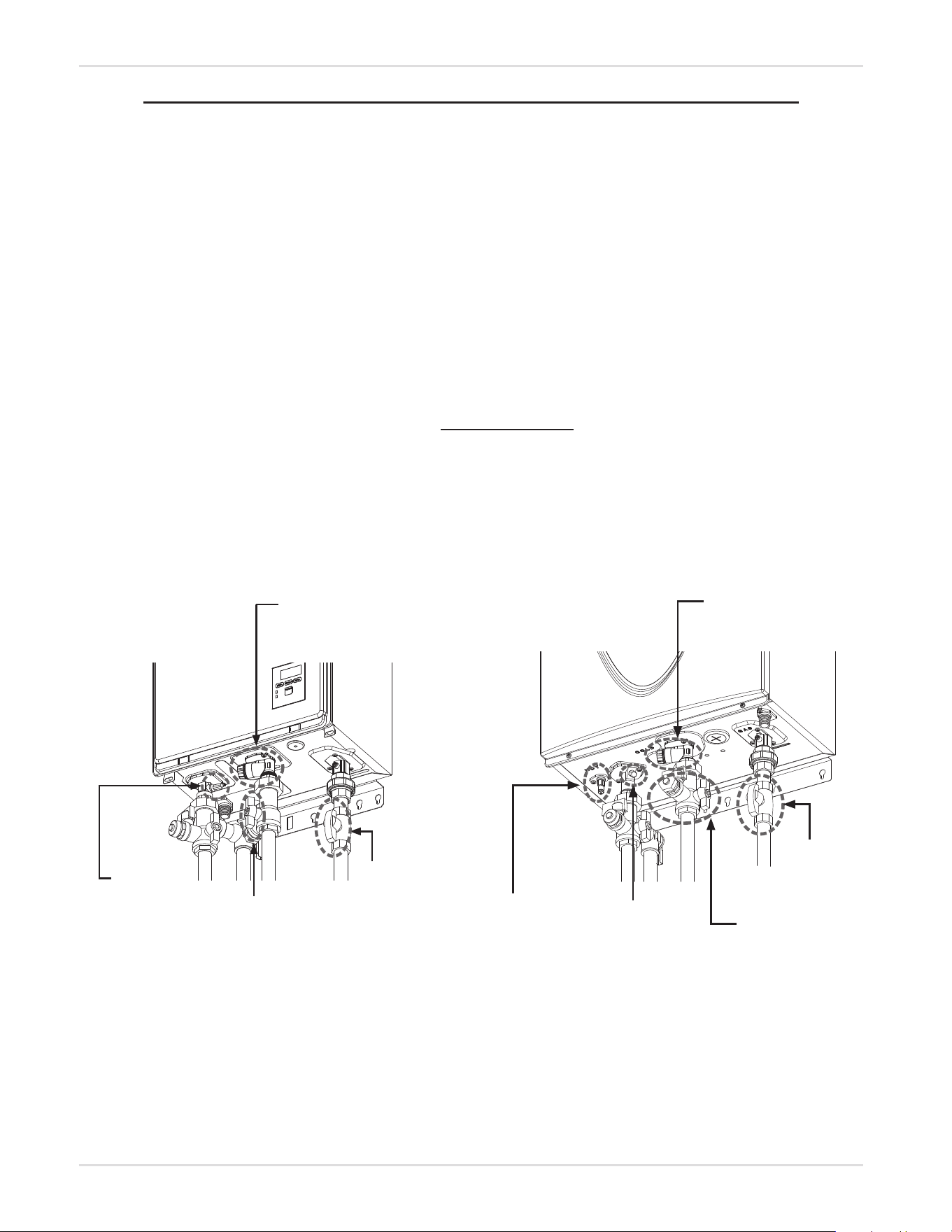
55 Page
UNIT DRAINING & POWER OUTAGE (FREEZE PROTECTION)
If you will not be using your heater for a long period of time, drain the water out of the unit completely and dis-
connect power to your heater to keep the water heater from freezing and being damaged.
1. Close the manual gas shutoff valve.
2. Turn off power to the unit and wait a couple of seconds. Turn on again.
3. Wait 30 seconds, and then turn off power to the unit.
4. Close the inlet water valve. If the heater is part of an Easy-Link or Multi-Unit System, close the inlet and
outlet water valves to isolate the heater. Then proceed to step 5.
5. Open all hot water taps in the house. When the residual water flow has ceased, close all hot water taps.
6. Have a bucket or pan to catch the water from the unit’s drain plugs. If isolation valves are installed, open
the drains to drain the water. If isolation valves are not installed, unscrew the filters and open the pressure
relief valve to drain all the water out of the unit. Do not lose the o-rings that will be on the two filter caps.
7. In addition to the large and small drain plugs, the model has another drain plug that drains the small line
that covers the water line between the primary and secondary heat exchangers*. Unscrew this drain plug
to drain the water line as well.
8. Securely screw the drain plugs back into place. Hand- tighten only.
Inlet water
valve
Gas
valve
Drain plug
(Small)
Drain plug
with Filter (Large)
140H 240H/340H/540H
*Drain plug for the
water line of heat
exchangers
Drain plug
with Filter (Large)
Drain plug
(Small)
Gas
valve
Inlet water
valve
Maintenance and service
Owner's Guide
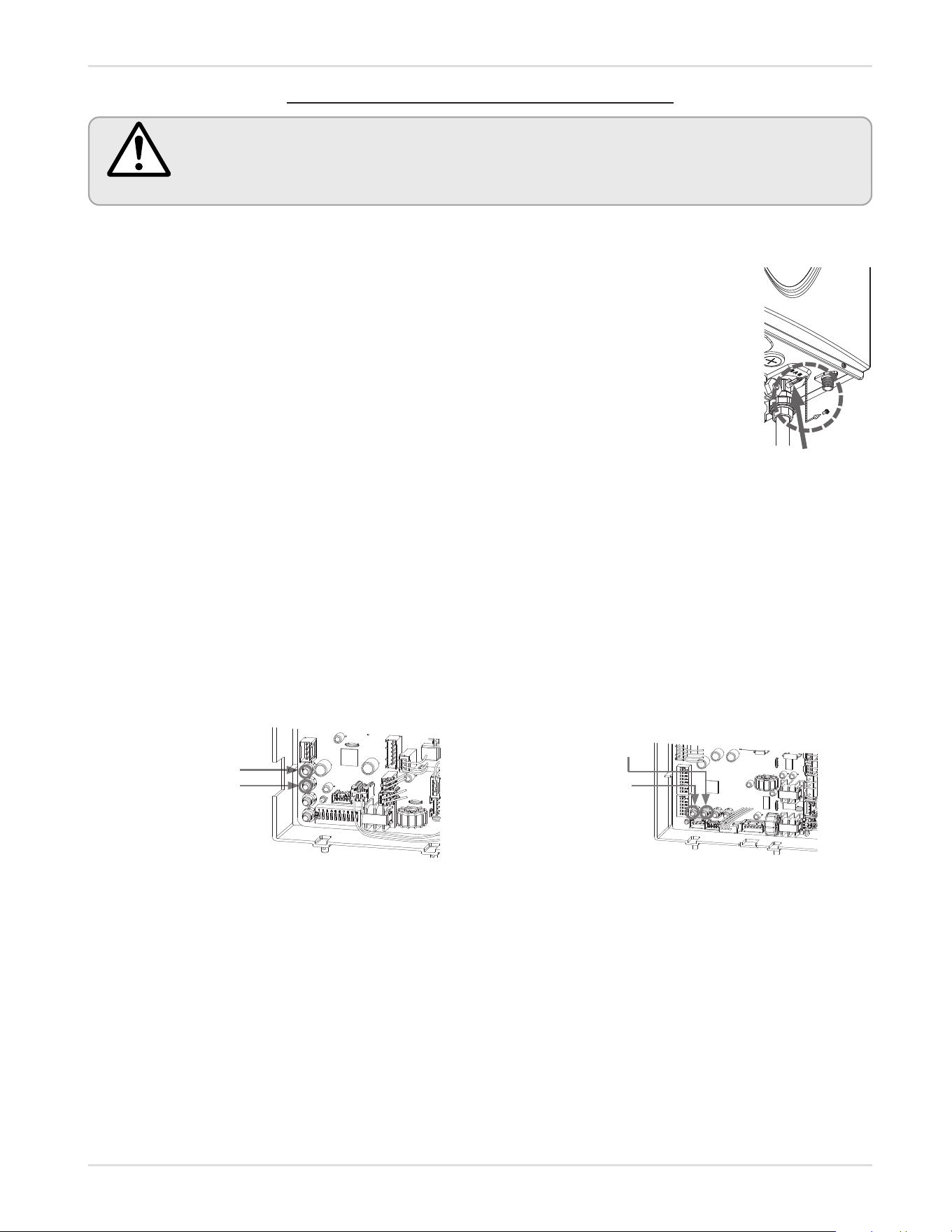
56 Page
Pressure
port
1. Shut off the manual gas valve on the gas supply line.
2. Remove the screw from the pressure port which is located on the gas inlet of the water
heater shown in the diagram on the right.
3. Connect the manometer to the pressure port and zero the manometer.
4. Re-open the manual gas valve. Verify that there are no gas leaks.
5. With all gas burning equipment off, take a reading of the static gas pressure and make a
note of it.
6. Measure gas supply pressure at maximum heater operation: Open hot water faucets to
create maximum flow. Press the MAX button on the computer board. (Refer to the dia-
grams below.) Take a reading of the supply dynamic gas pressure with all gas burning
equipment running at maximum rate.
7. The static and dynamic pressures should be within the ranges specified on the heater's rat-
ing plate and the table on page 30.
8. The difference of static to dynamic pressure should not exceed 1.5" W.C. Pressure drops that exceed 1.5"
W.C. can indicate restricted gas flow, undersized gas lines, and/or undersized supply regulators. (NOTICE: In
Canada, the pressure drops cannot exceed those specified in CSA B149.1.)
9. Measure gas supply pressure at minimum heater operation: Reduce water flow so the heater is running at
minimal operation. Press the MIN button on the computer board. (Refer to the diagrams below.) Take a
supply gas pressure reading and verify that it is within the specified inlet gas pressure range.
540H
MAX button
MIN button
140H/240H/340H
MAX button
MIN button
MEASURING INLET GAS PRESSURE
1. Turn off all electric power to the water heater if service is to be performed.
2. Turn the manual gas valve located on the outside of the unit to the off position.
3. Failure to follow these steps could lead to fire or explosion, resulting in personal injury or
death.
WARNING
The water heater cannot perform properly without sufficient inlet gas pressure. Below are instructions
on how
to check the inlet gas pressure. ONLY A LICENSED PROFESSIONAL SHOULD PERFORM THE PROCEDURE BELOW.
Maintenance and service
Owner's Guide
57 Page
TROUBLESHOOTING
PROBLEM SOLUTIONS
TEMPERATURE and AMOUNT OF HOT WATER
It takes a long time to
get hot water at the
fixtures.
• The time it takes to deliver hot water from the water heater to your fixtures
depends on the length of piping between the two. The longer the distance or
the bigger the pipes, the longer it will take to get hot water.
• If you would like to receive hot water to your fixtures more quickly you may
want to consider a hot water recirculation system. (p. 41)
The water is not hot
enough.
• Compare the flow and temperature. See the charts on pp. 74 and 75.
• Check cross plumbing between the cold water lines and hot water lines.
• Is the gas supply valve open fully? (p. 45)
• Is the gas line sized properly? (p. 31)
• Is the gas supply pressure sufficient? (pp. 30 and 56)
• Is the set temperature set too low? (pp. 50 and 52)
• Check if the POU mixing valve are set correctly, if they are installed.
The water is too hot. • Is the set temperature set too high? (pp. 50 and 52)
The hot water is not
available when a
fixture is opened.
• Make sure the unit has 120 VAC, 60 Hz power supply.
• If you are using the remote controller and/or temperature controller, is the
power button turned on?
• Is the gas supply valve open fully? (p. 45)
• Is the water supply valve open fully? (p. 45)
• Is the filter on the cold water inlet clean? (p. 54)
• Is the hot water fixture sufficiently open to draw at least 0.5 GPM
(1.9 L/min) through the water heater? (p. 49)
• Is the unit frozen? (p. 53)
• Is there enough gas in the tank / cylinder? (For Propane models)
The hot water turns
cold and stays cold.
• Is the flow rate enough to keep the water heater running? (p. 49)
• If there is a recirculation system installed, does the recirculation line have
enough check valves? (p. 41)
• Is the gas supply valve open fully? (p. 45)
• Is the filter on the cold water inlet clean? (p. 54)
• Are the fixtures clean of debris and obstructions?
• Check if the flow rate is too low. (p. 49)
Fluctuation in hot
water temperature.
• Is the filter on the cold water inlet clean? (p. 54)
• Is the gas line sized properly? (p. 31)
• Is the supply gas pressure sufficient? (pp. 30 and 56)
• Check for cross connection between the cold water lines and hot water lines.
WATER HEATER
Unit does not ignite
when water goes
through the unit.
• Is the flow rate over 0.5 GPM (1.9 L/min)? (p. 49)
• Check for the filter on the cold water inlet. (p. 54)
• Check for reverse connection and cross connection.
• If you use the remote controller and/or built-in controller, is the power button
turned on?
• Check if the inlet temperature is too high. If it is too close to the set tem-
perature, the water heater will not activate.
The fan motor is still
spinning after operation
has stopped.
• This is normal. After operation has stopped, the fan motor keeps running
from 15 to 70 seconds in order to re-ignite quickly, as well as purge all the
exhaust gas out of the flue.
Unit sounds abnormal
while in operation
• Contact the manufacturer at 1-877-737-2840 (USA)
1-888-479-8324 (Canada).
Troubleshoong
Owner's Guide
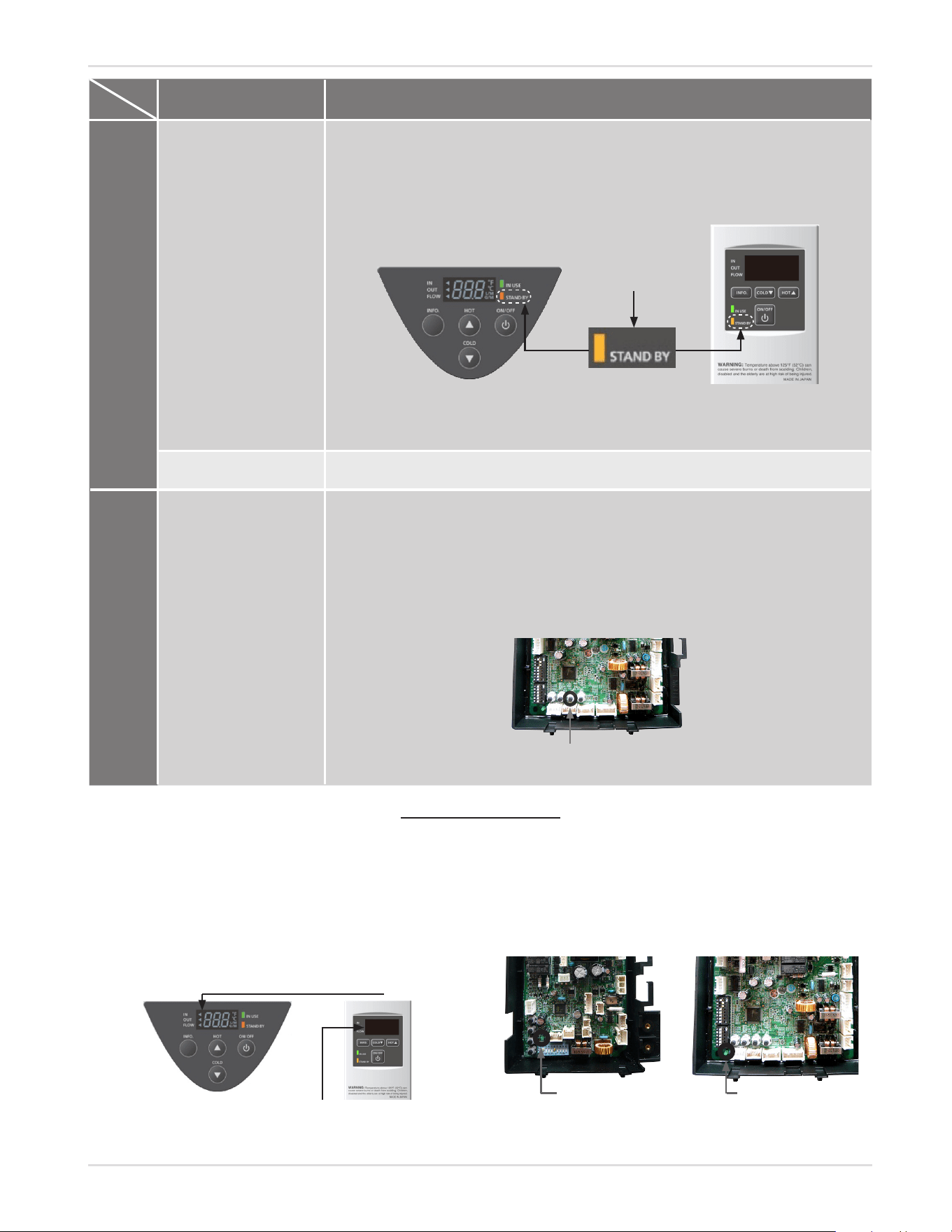
58 Page
PROBLEM SOLUTIONS
BUILT-IN CONTROLLER AND
REMOTE CONTROLLER
Controller does not
display anything when
the power button is
turned on.
• Make sure the unit is supplied with power.
• Make sure the connection to the unit is correct. (pp. 36 and 37)
NOTICE:
When the unit has not operated for five minutes or more, the display of the
controllers turns off to conserve energy.
When the
controller turned
ON, STAND BY LED
is lit.
Built-in controller
Although the controller of the parent unit will display the set temperature at
the Easy-Link System, the controller of the child unit will not display the set
temperature.
An ERROR code is
displayed.
• Please see pp. 58 to 61.
EASY-LINK SYSTEM
540H model only
How are the unit
numbers assigned?
• For an Easy-Link System, the Parent unit is always labeled #1 and all other
subsequent Child units are numbered randomly.
• To check which numbers are assigned to which Child units, push the
increase button on the computer board of any Child unit as shown below.
The unit number will be displayed on the temperature controller of the
Child unit and/or the remote controller of the Child unit, if installed. (Refer
to pp. 38 and 39.)
Increase buon to check
unit number
Troubleshoong
Owner's Guide
ERROR CODES
• The units have self-diagnostic functions for safety and convenience when troubleshooting.
• If there is a problem with the installation or the unit, the error code will be displayed on the built-in
controller and remote controller. The green LED on the computer board will flash in a pattern shown on the
next page.
• Consult the table on the following pages for the description of each error code.
Error code indicator on the built -in
temperature controller
Error code indicator on the remote
controller
Error code on the computer board
Indicated by 1/2-second flashes on the Green LED.
140H/240H/340H
Green LED
540H
Green LED
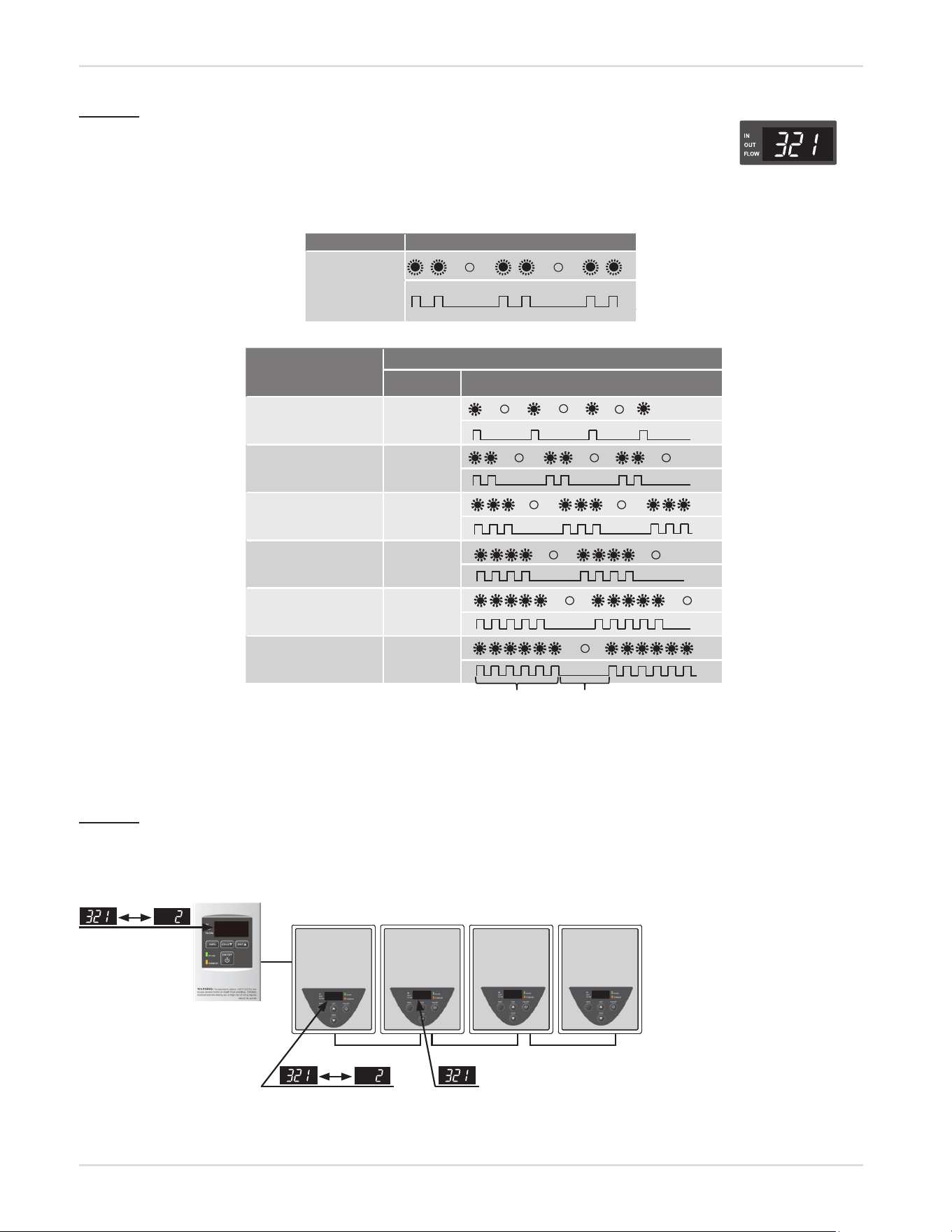
59 Page
-Single unit Installaon-
Example: If your unit has a “321” error code (which signifies an inlet thermistor failure)
• Indicator on the built-in controller or remote controller : “321” will be displayed
on the screen.
• Green LED on the computer board: The green LED on the computer board will indicate this code with two
flashes with a 1/2 second pause in between. The pattern will repeat with a three second pause between
patterns.
Error code
Error code Green LED
on on on on
on on
off off off off off
321
Error Code
on the temperature
controller
Green LED
The number
of flashes
Flash pa�ern
031 701 711
One
311 321 331 341
391 441
Two
111 121
Three
611 651 661
Four
101 291 941 991
Five
510 551 721
Six
on on
off
off
0.5 sec. on, 0.5 sec. off 3 sec. off
Error Indication
-Easy-Link System-
(540H model only)
Error codes will be displayed differently with units installed in an Easy-Link System. The built-in/remote con-
troller installed in a PARENT unit will show both the error code and which unit has the error code. Below is an
example of how an error code of "321" is displayed in an Easy-Link System.
Example: If Unit #2 has the “321” error code (inlet thermistor failure)
Indoor model installation
Indicator on the built-in and/or remote controller of Parent unit*: “321” and “2” will alternately flash on the
display.
Unit #1
PARENT
Unit #2
CHILD
Unit #4
CHILD
Unit #3
CHILD
Unit #2: “321” will flash inter-
mittently on the display. The
green LED on the computer
board will flash twice, just like
in the single unit example.
Unit #3 and #4: These units will
not display anything.
*If the remote controller is connected to the Parent unit, the remote controller has priority over the built-in
controllers.
Troubleshoong
Owner's Guide
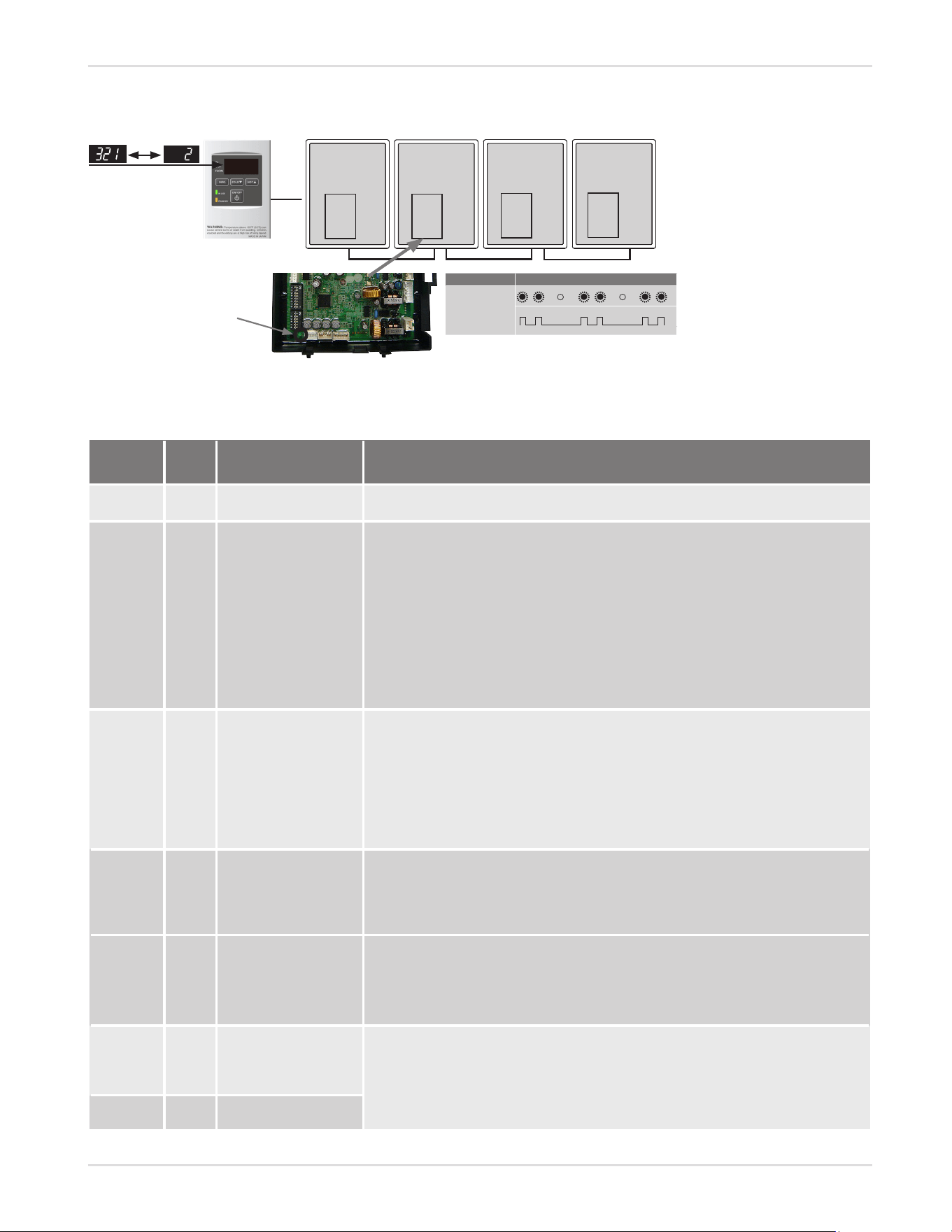
60 Page
-Fault Analysis of Error Codes-
If the error code is displayed on the computer board of the water heater or remote controller and/or tempera-
ture controller, please check the following. After checking, consult with the manufacturer.
Troubleshoong
Owner's Guide
Controller
Green
LED
Malfunction
description
Diagnosis
031
One
Flash
Incorrect DIP switch
setting
• Check the DIP switch settings on the PCB (Part #701).
101
Five
Flashes
Warning for the “991”
error code
• Ensure the gas type of the water heater matches the gas supplied.
• Inspect the environment around the water heater. Determine how long the
unit has been installed.
• Ensure the heater altitude DIP switches are properly set to match the
installed altitude.
• Check if there is any blockage in the intake air and/or exhaust.
• If the water heater is installed as a direct-vent system, check whether there
is enough distance between the intake air terminal and the exhaust terminal.
• Check if there is grease and/or dirt in the burner (Part #101) and the fan motor
(Part #103), especially if the water heater has been installed in a contaminated
area.
111*
Three
Flashes
Ignition failure
• Check if the Hi-limit switch (Part #412) is properly functioning.
• Check for connection/breakage of wires (Part #413, 708, 709, 711) burn marks on
the computer board (Part #701), and/or soot on the flame rod (Part #108).
• Check if there is a buzzing spark ignition sound coming from the burner (Part
#101) when the water heater prepares for combustion.
• Listen for the double “clunk” sound coming from gas valve assembly (Part
#102) when water heater goes into combustion.
• Check if there is leaking from heat exchanger (Part #401).
121*
Three
Flashes
Loss of flame
• Check if the Hi-limit switch (Part #412) is functioning properly.
• Check for connection/breakage of wires (Part #413, 708, 709, 711) burn
marks on the computer board (Part #701), and/or soot on the flame rod
(Part #108).
• Check if there is leaking from heat exchanger (Part #401).
291
Five
Flashes
Blocked condensate
drain system
• Check for and remove any blockage in the condensate drain line, neutralizer
(if installed), condensate drain assembly inside the water heater (part #416,
421, 423).
• Ensure that any horizontal drain line runs are sloped downward. Removal
any sags in the drain line.
311*
Two
Flashes
140H/240H/340H: Outlet
Thermistor Failure
540H: Heat Exchanger
Thermistor Failure
• Check for connection/breakage of wires and/or debris on thermistor (Part
#407, 408, 411, 715).
321*
Two
Flashes
Inlet thermistor failure
Error code Green LED
on on on on
on on
off off off off off
321
Unit #1
PARENT
Unit #2
CHILD
Unit #3
CHILD
Unit #4
CHILD
Green LED on the
computer board
Outdoor model installation
Indicator on the remote controller of Parent unit (If it is installed): “321” and “2” will alternately flash on the
display.
No. 2 Unit: The green LED
on the computer board will
indicate this code with two
flashes every 1/2 second.
No. 3&4 Unit: No sign.
*These error codes will be cleared when water flow stops.
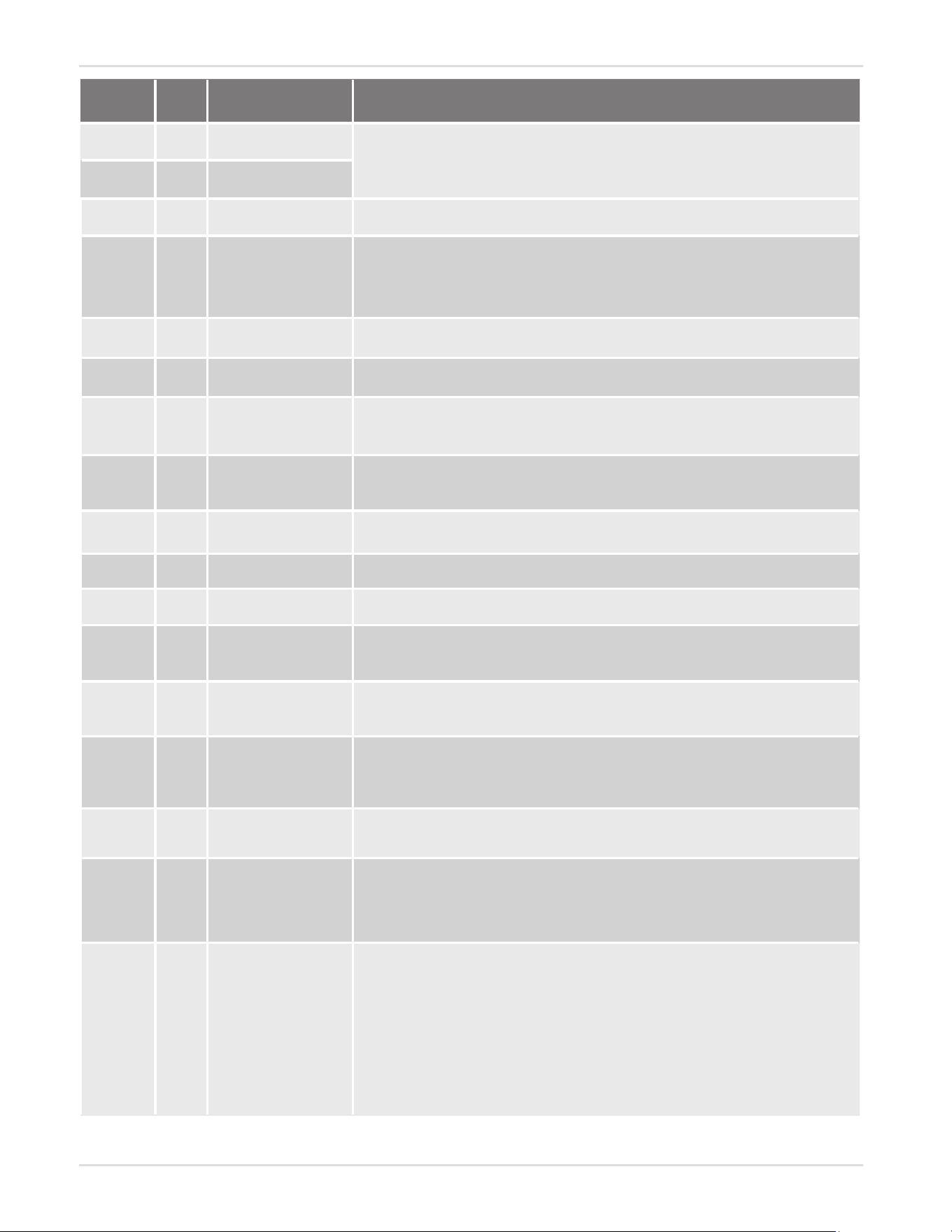
61 Page
Troubleshoong
Owner's Guide
Controller
Green
LED
Malfunction
description
Diagnosis
331*
Two
Flashes
Outlet thermistor fail-
ure (540H only)
• Check for connection/breakage of wires and/or debris on thermistor (Part
#407, 408, 411, 715, 718 721).
341*
Two
Flashes
Exhaust thermistor failure
(Indoor models only)
391*
Two
Flashes
Air-fuel ratio rod fail-
ure
• Check for connection/breakage of wires (Part #709) and/or soot on the AFR
rod (Part #108).
441
Two
Flashes
Flow sensor failure
(Easy-Link System only)
• Check for connection/breakage of wires and/or debris on the flow sensor
impeller (Part #402).
• Verify the shutoff valves on the hot and cold water line to the water heater
are open.
• Inspect the filter for blockage/debris. Refer to the procedure on p.51.
510
Six
Flashes
Abnormal main gas
solenoid valve
• Check for connection/breakage of wires (Part #708) and/or burn marks on the
computer board (Part #701).
551
Six
Flashes
Abnormal gas solenoid
valve
• Check for connection/breakage of wires (Part #708) and/or burn marks on the
computer board (Part #701).
611*
Four
Flashes
Fan motor fault • Check for connection/breakage of wires, dust buildup in the fan motor (Part #103)
and/or burn marks on the computer board (Part #701).
• Check for frozen/corrosion of connectors (Part #103).
651*
Four
Flashes
Flow adjustment valve
fault (Easy-Link System
only)
• Inspect the flow adjustment valve (Part #402), for connection/breakage of
wires, locked motor drive due to scale buildup, and/or water leakage.
661*
Four
Flashes
Bypass valve fault
(540H only)
• Inspect the bypass valve (Part #403), for connection/breakage of wires, locked
motor drive due to scale buildup, and/or water leakage.
701*
One
Flash
Computer board fault • Check for connection/breakage of wires (Part #714).
711*
One
Flash
Gas solenoid valve
drive circuit failure
• Refer to the 111 and 121 error codes.
721*
Six
Flashes
False flame detection • For indoor models, check if condensate drain is installed on the vent collar of
the water heater.
• Check if there is leaking from heat exchanger (Part #401).
741
N/A
Miscommunication
between water heater
and remote controller
• Check the model type of the remote controller.
• Inspect the connections between the water heater and remote controller.
• Check the power supply of the water heater.
751
N/A
Miscommunication
between water heater
and built-in controller
(Indoor models only)
• Inspect the connections between the water heater and built-in controller.
• Check the power supply of the water heater.
761
N/A
Miscommunication in
Easy-Link System
• Check if the connections between the parent unit and the child units are cor-
rect. Refer to pp. 38 to 39.
• Check that power is on to all heaters.
941
Five
Flashes
Abnormal exhaust
temperature (Indoor
models only)
• Check if the set temperature is higher than 140 °F (60 °C) and the system is
Recirculaon.
• Check for connection/breakage of wires, dust buildup in the fan motor (Part #103).
• Check for connection/breakage of wires of the hi-limit switch for exhaust (Part
#472, 721).
991
Five
Flashes
Imperfect
combustion
• Check the gas type of the water heater.
• Inspect the environment around the water heater. Determine how long the
unit has been installed.
• Check the altitude/elevation of the area where the water heater is installed.
• Check if there is any blockage in the intake air and/or exhaust.
• If the water heater is installed as a direct-vent system, check whether there is
enough distance between the intake air terminal and the exhaust terminal.
• Check if there is grease and/or dirt in the burner (Part #101) and the fan motor
(Part #103), especially if the water heater has been installed in a contaminated
area.
*These error codes will be cleared when water flow stops.
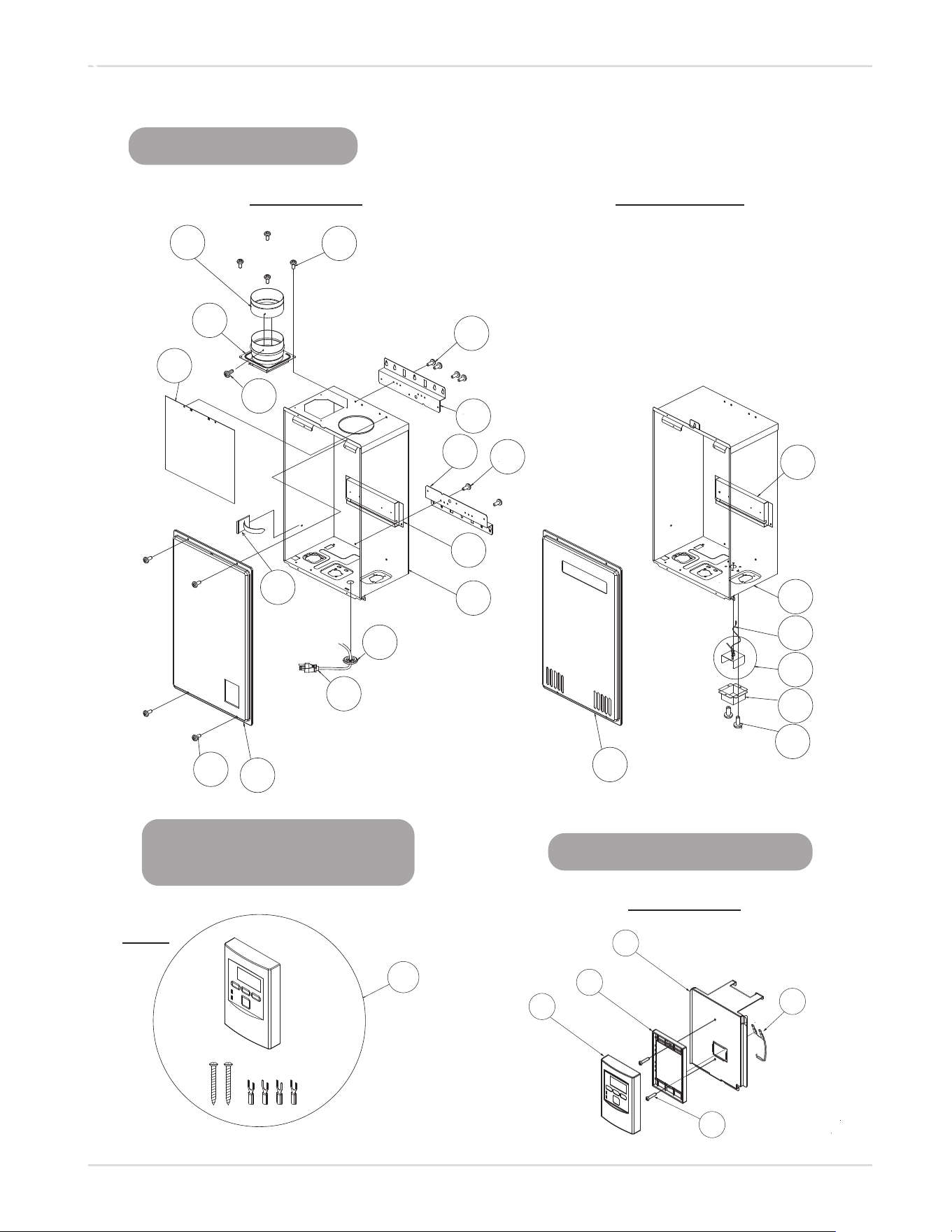
62 Page
Case assembly
140H Indoor 140H Outdoor
COMPONENTS DIAGRAM
Components Diagram
Owner's Guide
Built-in controller
140H Indoor
723
722
056
722
725
419
052
052
004
004
052
067
003
007
008
001
717
702
704
050
002
002
008
001
006
005
052
704
Temperature
remote controller
724
100209924
140H
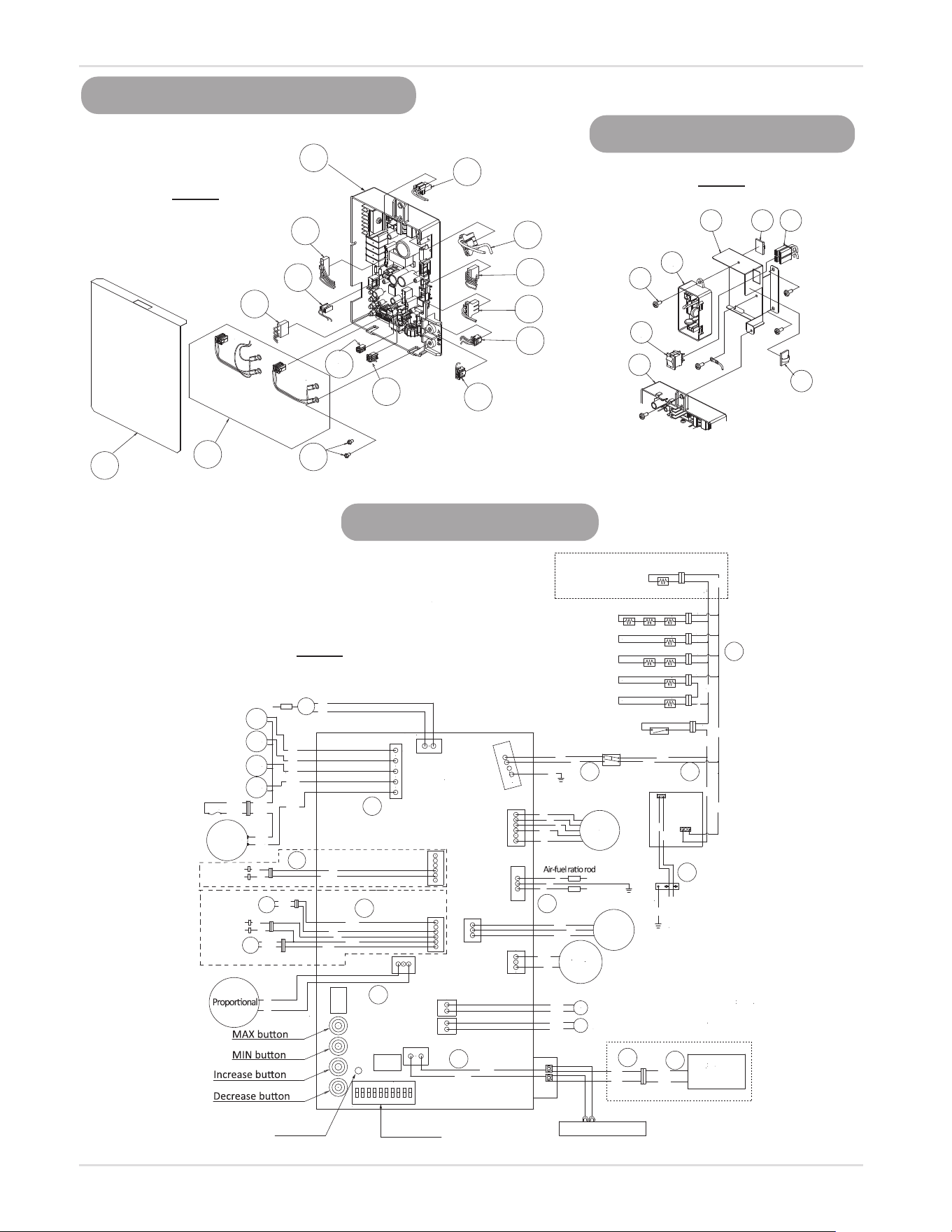
63 Page
Components Diagram
Owner's Guide
711
713
103
709
402
708
701
714
721
402
407
408
061
716
707
for
Indoor model
for
Outdoor model
140H
Computer board assembly
987654321
10
OFF
Remote controller
Flow
adjust
valve
R
BK
R
W
BK
Flow
sensor
Ground
G
O
W
Y
BL
O
R
FM
PCB
W
120 VAC
G
Ground
SW
Ground
W
BK
G
W
R
BK
BK
BK
BK
Outlet thermistor
Inlet thermistor
Surge
box
BK
W
BK
DIP switches
Y
Y
Flame rod
BK
W
Thermostat
Heater
Heaters
Indoor only
Gas
Valve
W
BK
W
BK
controller
Indoor only
W
Y
Y
Y
(for the secondary
heat exchanger)
(for the heat exchanger
and water pipes)
(for the drain hose)
(for the water pipes)
(for the water inlet)
(for the water outlet)
Built-in
Green LED
O
R
G
LB
BL
SV3
SV2
SV1
MV
O.H.C.F
BL
Hi-
limit
BL
BL
BL
BL
BL
73
53
9
3
708
IG
Igniter rod
P
P
713
713713
709
704
725
707
707
714
Hi-limit switch
for exhaust
Exhaust
thermistor
W
W
W
W
W
W
Indoor only
G
G
G
Drain plug
detector
Outdoor only
G
G
G
Drain plug
detector
G
721
721
140H
Wiring diagram
140H
Surge box assembly
701
713
703
121
053
706
726
726
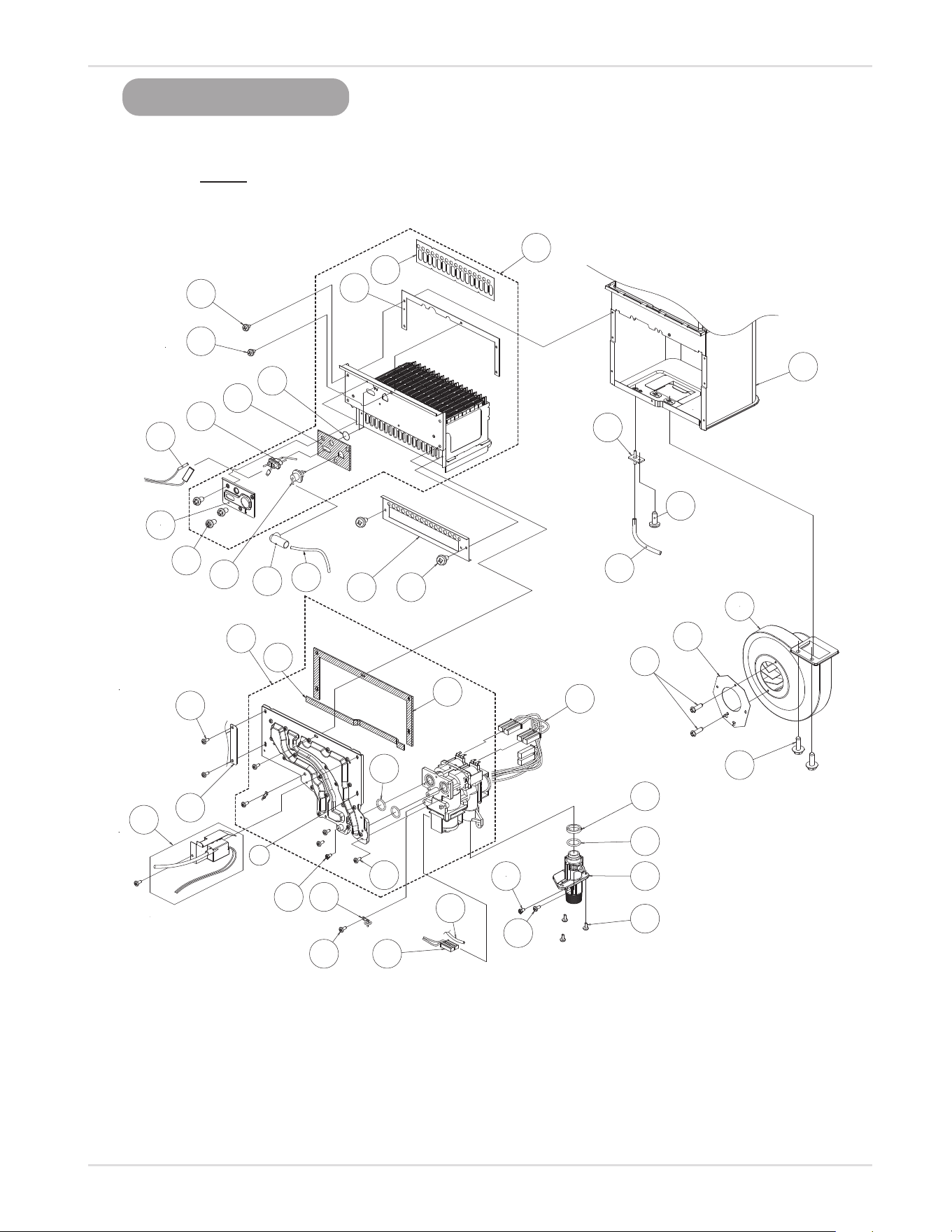
64 Page
Burner assembly
101
401
116
053
117
103
105
065
054
104
115
053
053
106
107
108
709
110
062
109
111
711
112 053
114
113
707
102
053
121
711
150
057
055 063
053
066
714
117
055
119
151
118
051
G
Manifold
assembly
Burner assembly
Components Diagram
Owner's Guide
140H
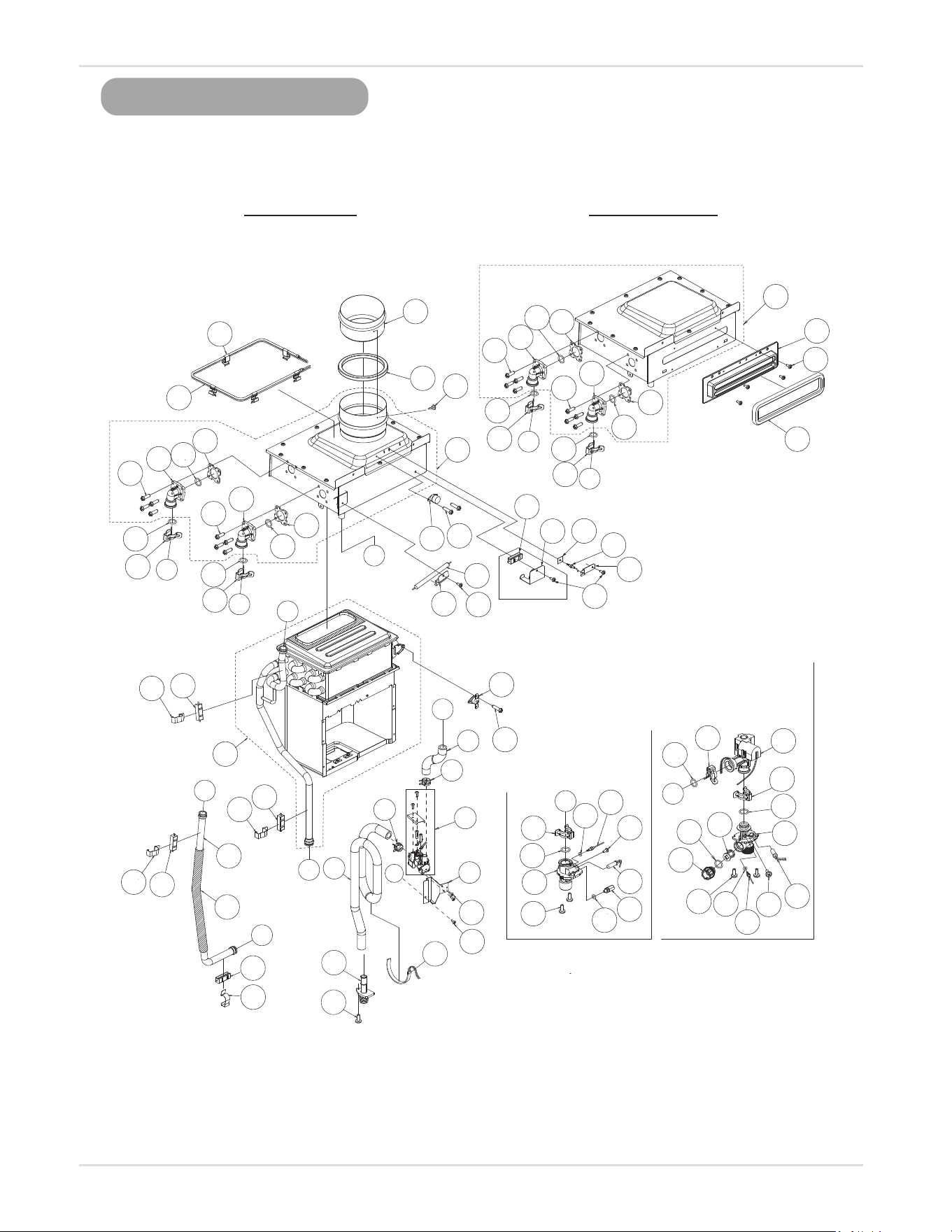
65 Page
Water Way assembly
C
D
D
C
419
153
152
418
472
065
058
414
450
053
473
468
064
456
460
466
414
451
451
414
451
415
415
451
052
409
458
462
454
408
059
455
410
417
456
460
402
461
458
404
406
457
405
052
454
407
059
417
053
418
A
B
A
B
401
154
E
473
468
064
456
460
452
053
068
067
456
473
468
064
456
460
A
456
456
474
B
473
468
064
456
460
456
for Indoor model
424
425 471
718
470
053
413
422
426
423
422
416
464
009
052
E
G
421
412
Components Diagram
Owner's Guide
140H Indoor 140H Outdoor
Water outlet section Water inlet section
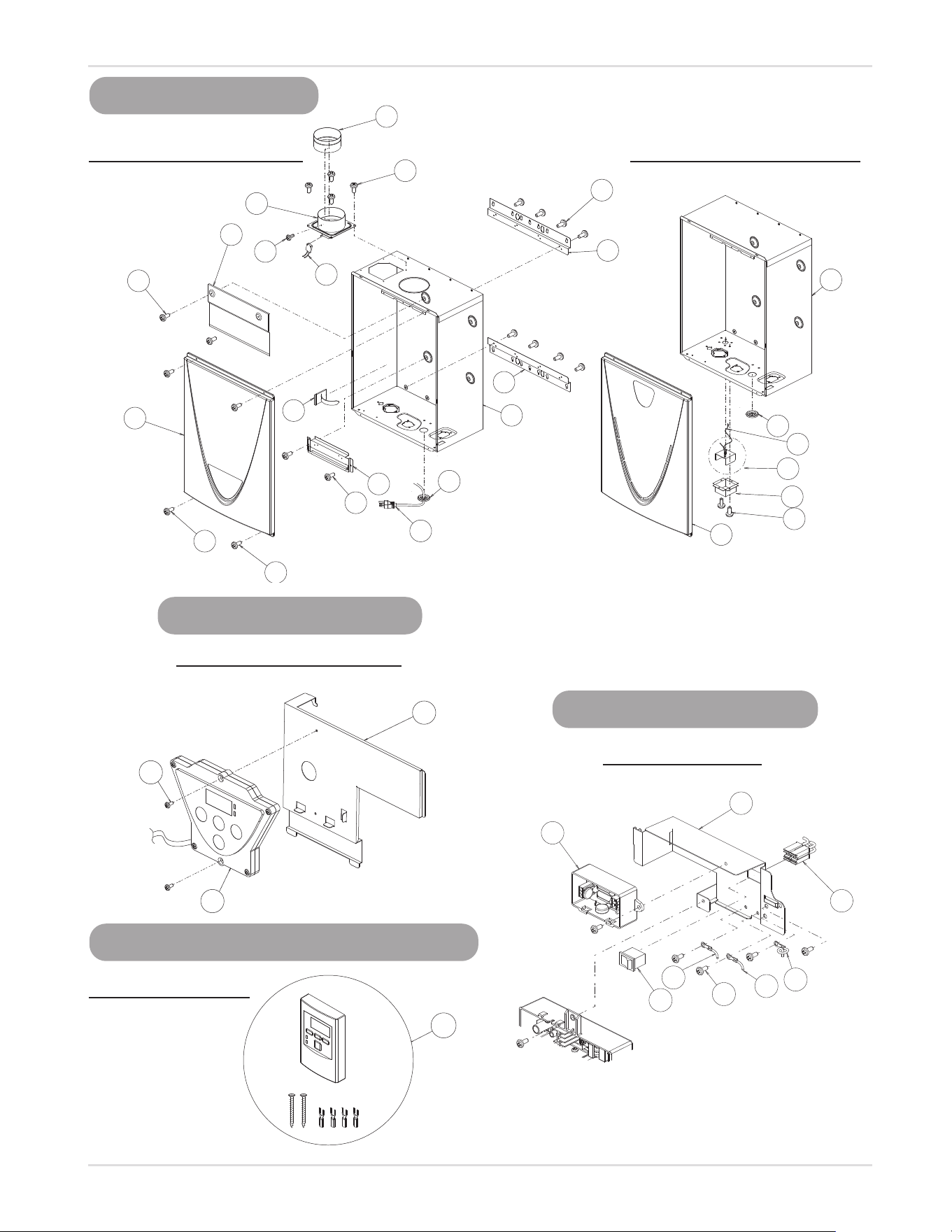
66 Page
052
052
419
003
007
002
050
006
704
005
052
702
704
008
052
050
052
717
067
702
713
004
002
001
001
004
Components Diagram
Owner's Guide
240H/340H/540H Indoor 240H/340H/540H Outdoor
240H/340H/540H
Temperature remote controller
724
Case assembly
121
713
703
706
704
713
053
703
240H/340H/540H
Surge box assembly
240H/340H/540H Indoor
723
722
056
Built-in controller
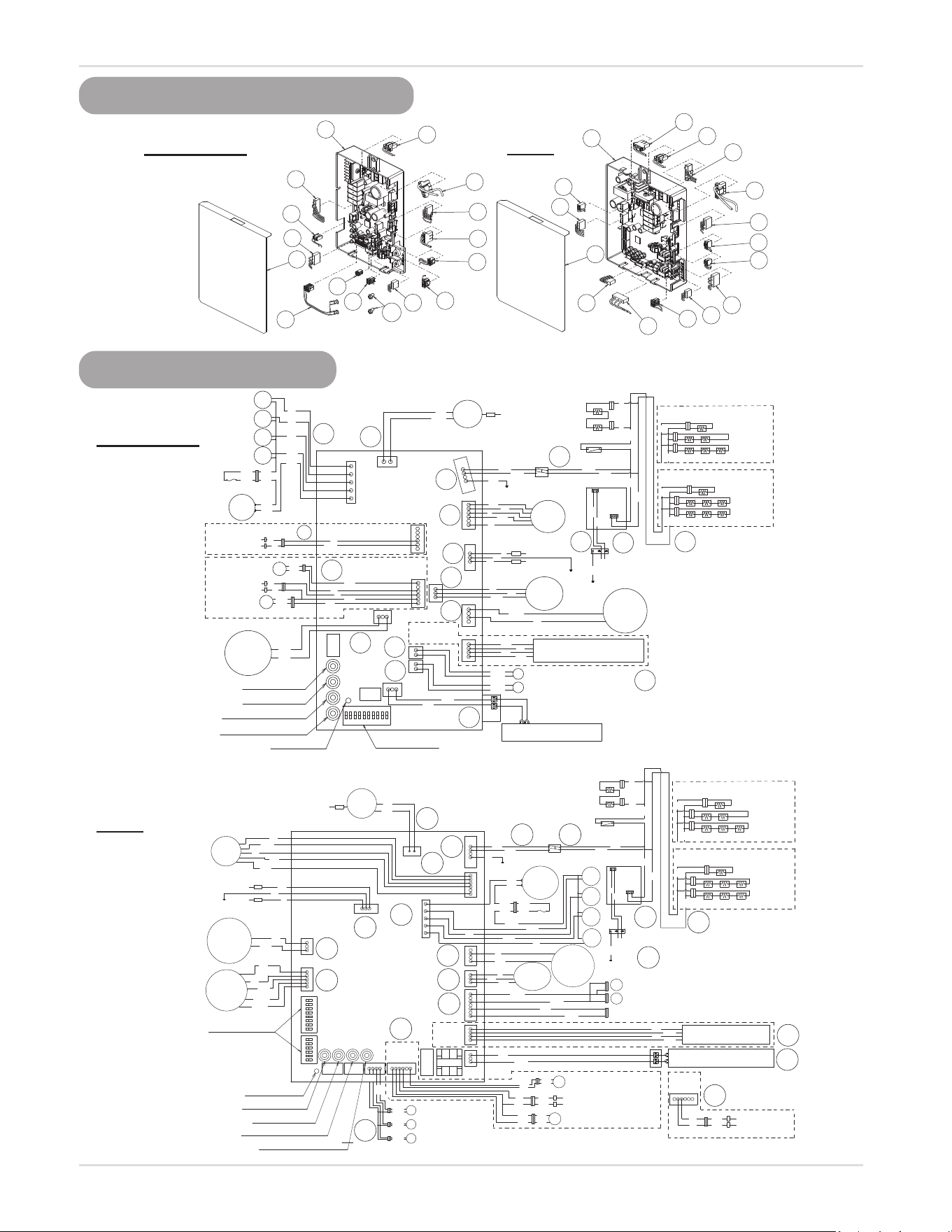
67 Page
Components Diagram
Owner's Guide
061
716
716
711
701
713
103
709
402
707
708
714
721
407
408
701
714
715
715
721
707
722
715
402
402
103
713
708
711
709
722
402
540H240H/340H
Computer board assembly
87
65
4
3
2
1
ON
654
3
2
1
ON
R
W
G
Y
PCB
W
120 VAC
G
Ground
SW
Ground
BK
W
G
BK
W
Surge
box
73
53
9
3
BL
BL
R
BK
R
W
BK
BK
BK
BK
BK
BK
W
BK
W
Heater
Y
Y
Thermostat
BK
O
Ground
Flame rod
AFR rod
BK
BK
W
MAX bu�on
MIN bu�on
Increase bu�on
Decrease bu�on
Green LED
DIP switches
Bypass
Valve
R
W
BR
Y
BL
Gas
Propor-
�onal
Valve
R
Y
O
BL
W
FM
IG
Igniter rod
P
P
exchanger Heat
thermistor
Inlet thermistor
Outlet thermistor
1
2
Flow
Sensor
Flow
Adjust-
ment
Valve
Hi-
switch
limit
O.H.C.F
MV
SV1
SV2
SV3
BL
BL
BL
BL
LB
G
O
R
BL
BK
Parent
711
713
713
713
103
713 713
704
715
402
402
715
715
714
709
708
Y
Y
540H Outdoor Only
Y
Y
Heater
Heater
Heater
540H Indoor Only
Heater
Heater
Heater
707
BK
W
Remote controller
Built-in controller
W
BL
R
BK
722
Only
Indoor
540H
Hi-limit switch
for exhaust
Exhaust
thermistor
W
W
W
W
721
Indoor
Only
540H
Drain plug detector
G
G
721
Outdoor
Only
540H
Drain plug
detector
G
G
540H
9
8
7
65
4
3
21
10
OFF
Remote controller
R
BK
R
W
BK
Ground
G
O
W
Y
BL
O
R
PCB
W
120 VAC
G
Ground
SW
Ground
W
BK
G
Gas
Propor-
�onal
Valve
W
R
BK
BK
W
BK
BK
Outlet thermistor
Inlet thermistor
Surge
box
W
BK
W
BL
R
BK
Built-in controller
BK
DIP switches
Y
Y
Y
Flame rod
AFR rod
BK
W
Thermostat
Heater
Decrease bu�on
Increase bu�on
MIN bu�on
MAX bu�on
Green LED
Flow
Adjust-
ment
Valve
Flow
Sensor
FM
Indoor Only
240H/340H
713
713
103
713
713
704
408
407
722
707
402
402
714
709
708
Y
Y
240H/340H Outdoor Only
Y
Y
Heater
Heater
Heater
240H/340H Indoor Only
Heater
Heater
Heater
Igniter rod
P
P
IG
711
O
R
G
LB
BL
O.H.C.F
BL
BL
BL
BL
BL
BL
SV3
SV2
SV1
MV
73
53
9
3
Hi-limit
switch
Hi-limit switch
for exhaust
Exhaust
thermistor
W
W
W
W
W
W
721
Only
240H/340H Indoor
G
G
G
Drain plug
detector
240H/340H Outdoor Only
G
G
G
Drain plug
detector
G
721
240H/340H
Wiring diagram
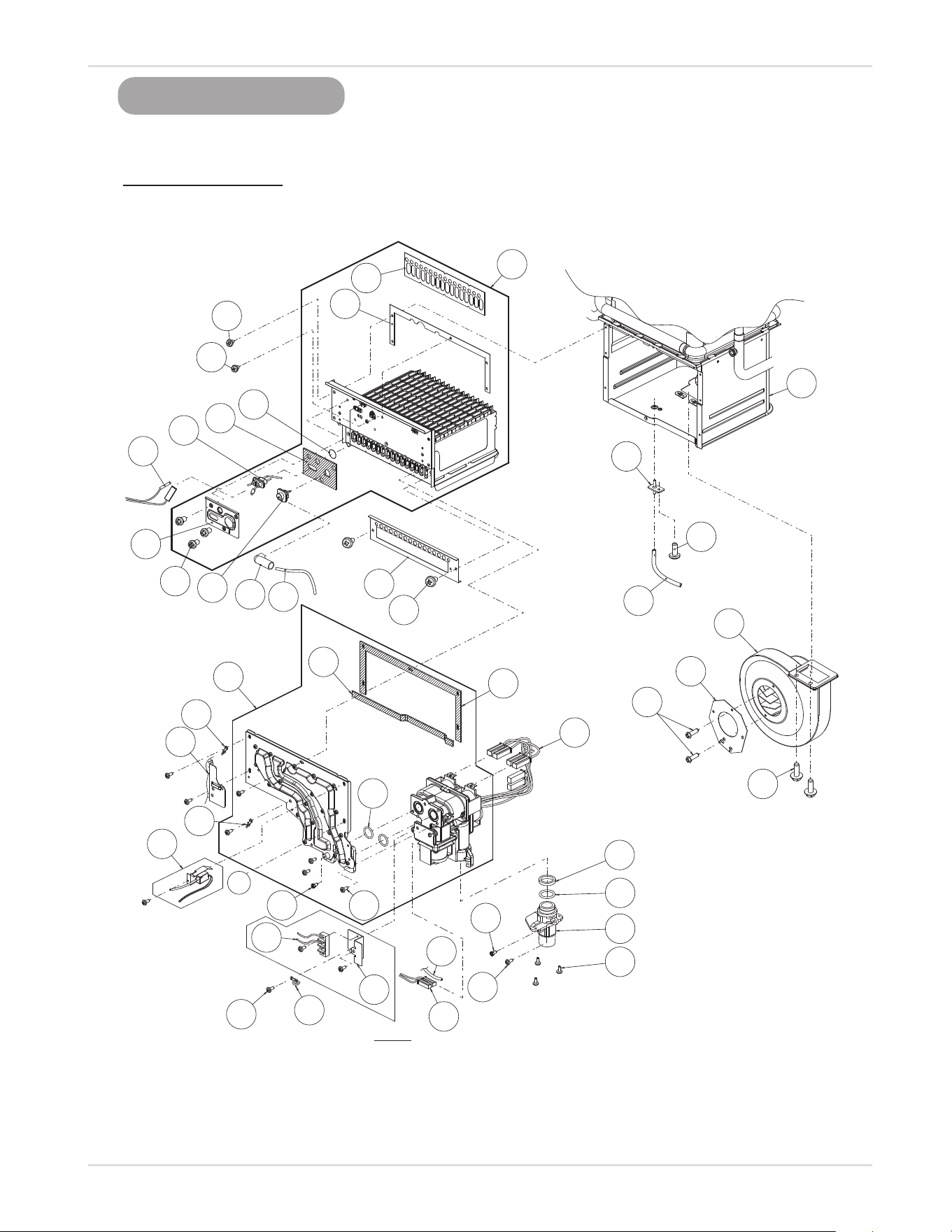
68 Page
Components Diagram
Owner's Guide
101
104
115
106
107
108
110
109
111
711
112
062
053
053
709
053
401
103
105
065
054
113
114
102
063
121
708
119
151
118
055
051
150
057
055
063
117
053
116
062
066
714
719
707
709
711
117
G
Manifold
assembly
Burner assembly
Burner assembly
240H/340H/540H
540H
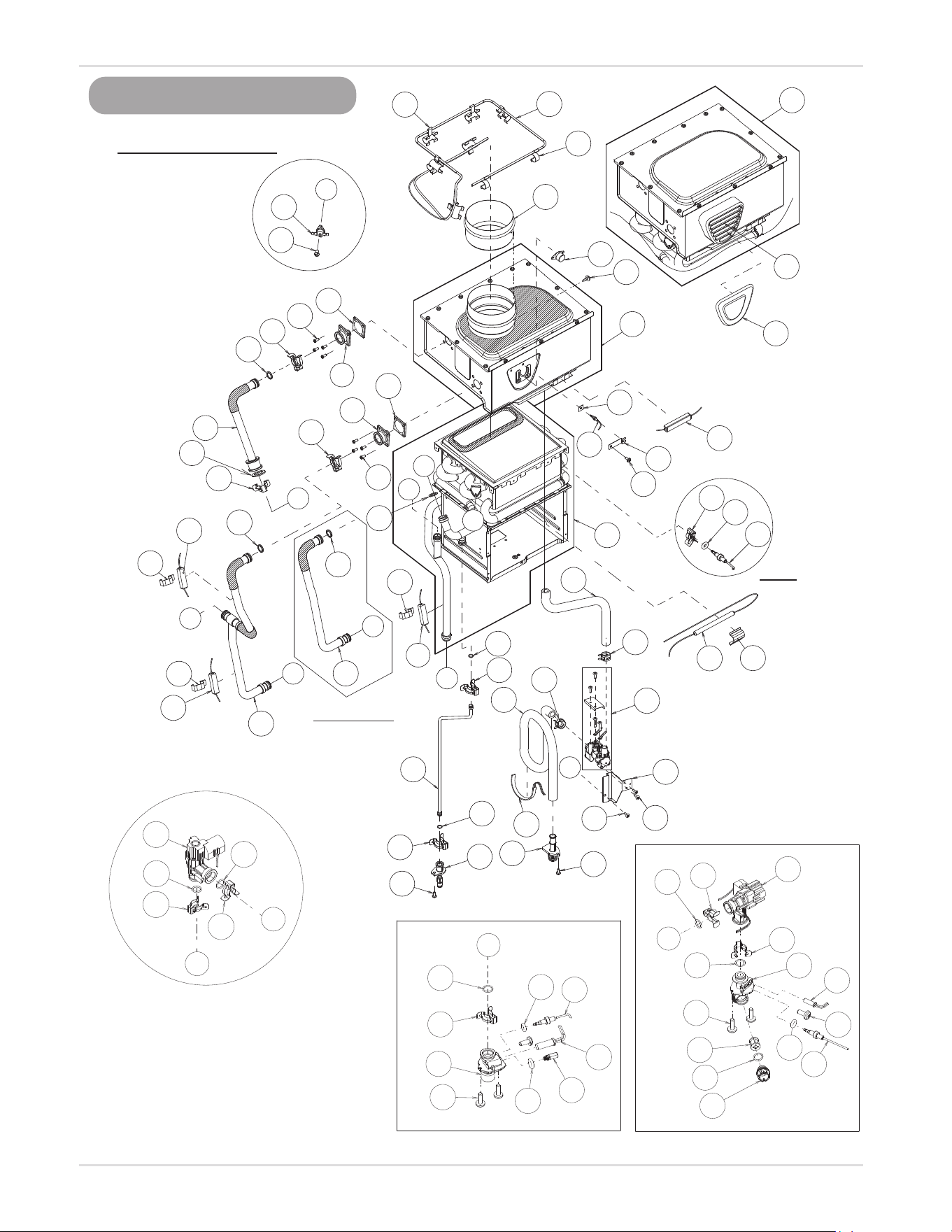
69 Page
D
A
E
459
454
411
412
058
F
413
452
450
068
414
451
414
418
419
C
453
468
468
455
463
455
469
052
463
053
009
462
467
064
462
462
473
466
466
415
451
465
418
414
471
064
D
472
067
153
152
053
718
470
415
401
B
E
F
473
451
458
458
458
458
458
464
052
426
423
422
416
422
421
G
402
460
456
461
458
404
417
407
454
405
457
406
410
455
408
458
454
462
C
D
052
059
052
409
417
Water outlet section
Water inlet section
403
456
460
458
462
B
A
Bypass section 540H
540H
240H/340H
Water Way assembly
Components Diagram
Owner's Guide
240H/340H/540H
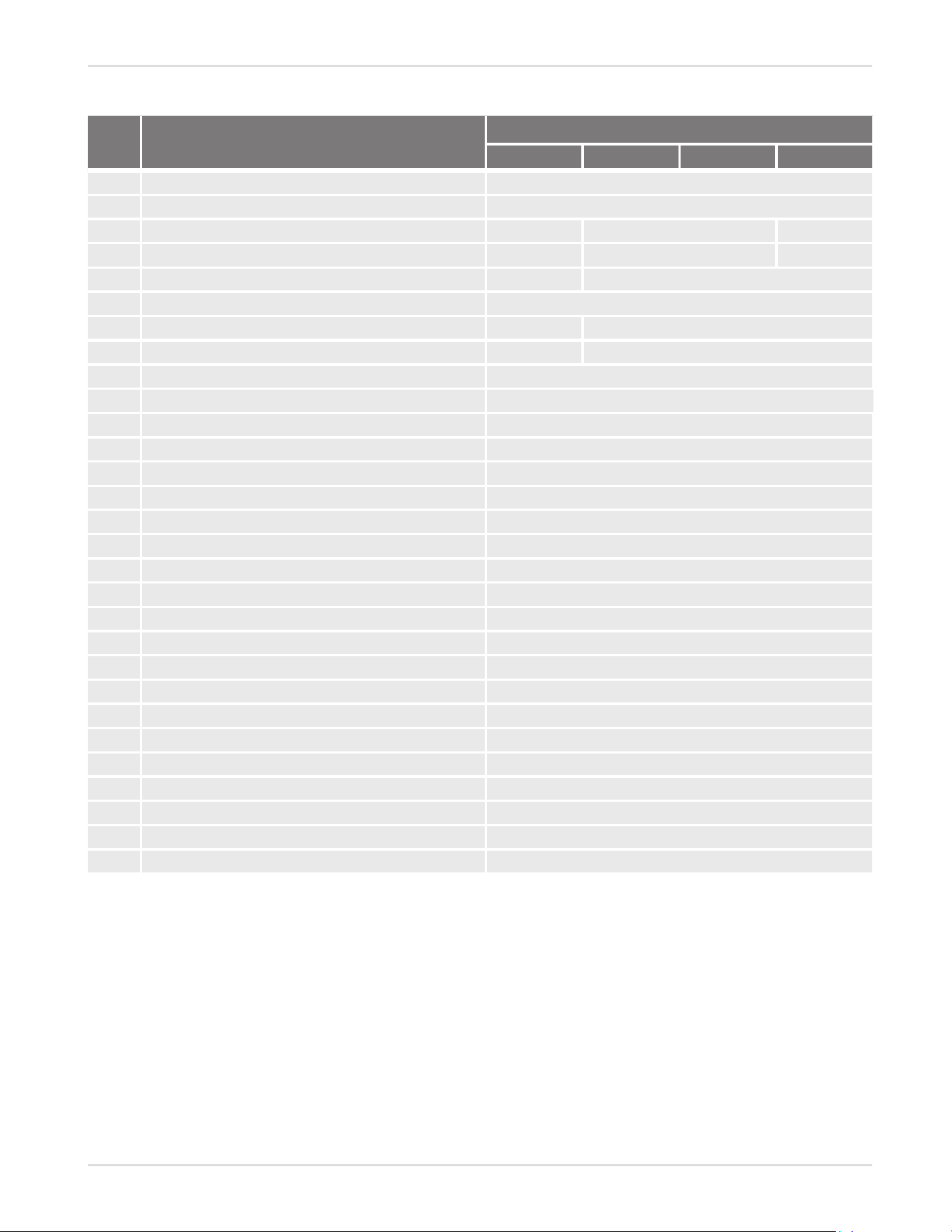
70 Page
PARTS LIST
Item # Description
Model
140H 240H 340H 540H
001 Case assembly Indoor N/A
Case assembly Outdoor N/A
002 Front cover Indoor N/A 100074663 100074665
Front cover Outdoor N/A 100074664 100074666
003 Intake air port assembly 100076311 100074667
004 Bracket N/A
005 Junction box 100074668 100074668
006 Power supply cord assembly 100076313 100074669
007 Back guard panel N/A
008 Chamber fixing plate N/A
009 Condensate drain port 100074203
050 Truss screw M4X2 (W/Washer) SUS410 100074210
051 Truss screw M4×10 (W/Washer) 100074509
052 Truss screw M4×10 (Coated) SUS3 100074211
053 Truss screw M4×10 SUS 100074245
054 Hex head screw M4×12 (W/Washer) SUS3 100074510
055 Hex head screw M4x8 FEZN 100074248
056 Pan screw M4x20 N/A
057 Tap tight screw M4x12 FEZN 100074385
058 Pan head screw M3x6 SUS3 100074272
059 Truss head screw M4x6 SUS3 100074512
061 Screw M3x6 Plus bind FEZN N/A
062 Pan screw M4x8 MFZN 100074244
063 Wire clamp 60 100074233
064 Truss tapping screw M4x10 (S coated) N/A
065 Screw M3x6 SUS3 Binding head 100074514
066 Pan screw M4x10 100074247
067 Pan screw M4x10 for 3” adapter N/A
068 Plus truss P tight M3.5x12 N/A
Parts list
Owner's Guide
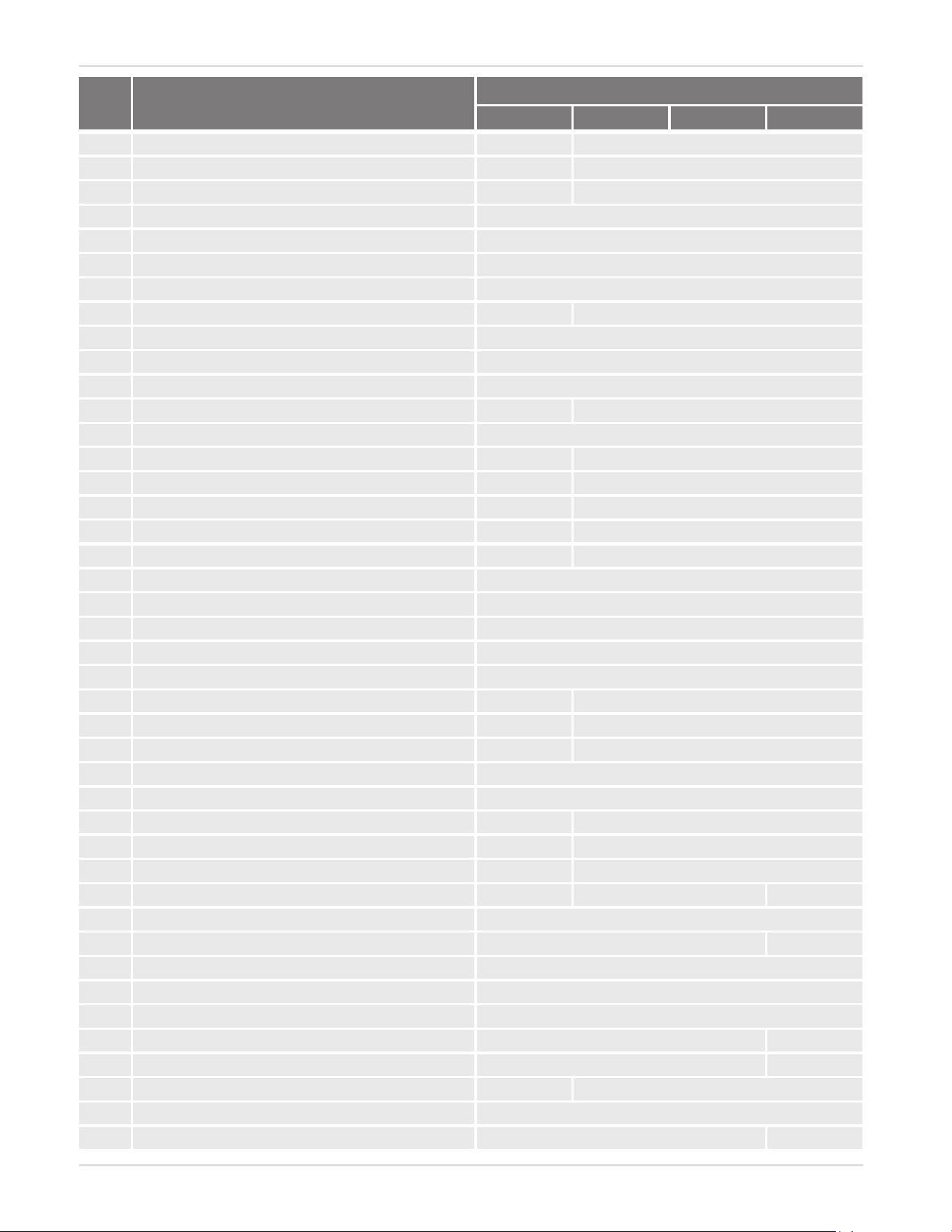
71 Page
Item # Description
Model
140H 240H 340H 540H
101 Burner assembly 100076314
100074670
102 Manifold with gas valve assembly LP 100337320 100074671
Manifold with gas valve assembly NA 100337321 100074672
103 Fan motor for Indoor model 100074606
Fan motor for Outdoor model 100074228
104 Burner gasket 100074216
105 Fan damper for Indoor model (140H: Outdoor) 100074466
Fan damper for Indoor model (140H) 100076511 N/A
106 Burner window 100074218
107 Rod holder gasket 100074219
108 Flame rod 100074673
109 Igniter rod 100076318 100074222
110 Rod holder 100074221
111 Rod cap 100076319 100074223
112 Burner damper LP (240H/340H/540H) N/A 100074674
Burner damper NA (240H/340H/540H) N/A 100074675
Burner damper Indoor (140H) 100076320 N/A
Burner damper Outdoor (140H) 100076321 N/A
113 Manifold gasket A 100074229
114 Manifold gasket B 100074230
115 Burner holder gasket 100074217
116 Pressure port 100074227
117 Combustion chamber tube 100074528
118 Gas inlet 100076323 100074616
119 Gas inlet ring 100074234 100074526
121 Surge box plate N/A N/A
150 O-ring P18 NBR (Black) 100074533
151 O-ring P20 NBR (Black) 100074242
152 Silicon ring for Outdoor models 100074553 100074678
153 Exhaust port for Outdoor models 100074306 100074679
154 Silicon ring (140H) 100074250 N/A
401 Primary heat exchanger assembly 100076510 100074698 100074699
402 Flow adjustment valve / Flow sensor 100074624
403 Bypass valve (540H) N/A 100074625
404 Water inlet 100074377
405 Inlet drain plug 100074381
406 Inlet water filter 100074382
407 Inlet thermistor 100074398 100074626
408 Outlet thermistor 100074680 100074374
409 Water outlet 100074627 100074681
410 Outlet drain plug 100074383
411 Heat exchanger thermistor (540H) N/A 100074281
Parts list
Owner's Guide
72 Page
Item # Description
Model
140H 240H 340H 540H
412 Hi-Limit switch
100074412
100074280
413 Overheat-cut-off fuse 100074252 100074334
414 Pipe heater 100076325 100074682
415 Inlet heater for Indoor model 100076326 100074683
Inlet heater for Outdoor model (240H/340H/540H) N/A 100074684
416 Drain plug detector assembly 100342423
417 Inlet heater 100074629
418 Secondary heat exchanger for Indoor model 100076507 100074700
418 Secondary heat exchanger for Outdoor model 100076508 100074701
419 3ʺ PVC adapter 100310706
421 Upper drain tube N/A
422 Band A N/A
423 Lower drain tube N/A
424 Secondary heat exchanger heater (140H) 100076328 N/A
425 Heater fixing plate (140H) N/A N/A
426 Drain detector fixing plate N/A
450 Pipe heater fixing plate N/A 100074273
451 Heater fixing plate 16 100074310
452 Fuse fixing plate 18 (240H/340H/540H) N/A 100074251
Fuse fixing plate (140H) N/A N/A
453 Fuse fixing plate 14 (240H/340H/540H) N/A 100074331
454 O-ring P4 FKM 100076303
455 O-ring P6 FKM 100076305
456 O-ring P14 FKM 100076306
457 O-ring P15 FKM 100076307
458 O-ring P16 FKM 100076308
459 Fastener “4-11” (240H/340H/540H) N/A 100074282
460 Fastener “14-22” 100074290
461 Fastener “16A” 100074410
462 Fastener “16-25A” 100074389
463 Fastener “6-15” (240H/340H/540H) N/A 100074297
464 Flat heater 100074686
465 Drain tube (240H/340H/540H) N/A 100074687
466 Cold pipe 100076509 100074688 100074689
467 Stainless heat exchanger out pipe (240H/340H/540H) N/A 100074690
468 Header connection 100076329 100074691
Parts list
Owner's Guide
73 Page
Item # Description
Model
140H 240H 340H 540H
469 Drain port (240H/340H/540H) N/A
100074692
470 Thermistor fixing plate 100074291
471 Exhaust thermistor gasket 100074296
472 Hi-limit switch for exhaust 100074289
473 Gasket 100074693
474 Inlet pipe packing (140H) N/A N/A
701 Computer board 100342808 100342802 100342801 100342430
702 Rubber grommet N/A 100076470
703 Surge box 100076100
704 120 VAC wire for Indoor model 100074601
704 120 VAC wire for Outdoor model 100074697
706 120 VAC Power ON-OFF switch 100074326
707 Remote controller wire (240H/340H/540H) N/A 100074649 100074650
Remote controller wire for Indoor model (140H) 100076337 N/A
Remote controller wire for Outdoor model (140H) 100074634 N/A
708 Gas valve wire 100076340 100074651
709 Flame rod wire 100076341 100074652
711 Igniter assembly 100076342 100074640
713 Switch wire with thermostat for Indoor model 100342431
Switch wire with thermostat for Outdoor model 100342432
714 Proportional gas valve wire 100074642 100074657
715 24V cables for 540H model N/A 100074658
716 Computer board cover 100074375
717 Cable clamp for Indoor model N/A
718 Exhaust thermistor for Indoor model 100074316
719 Remote fixing plate (540H) N/A 100074644
721 Exhaust Hi-limit switch wire for Indoor 100342433
Drain plug wire 100342434
722 Built-in controller for Indoor model 100076567 100074660
723 Fixing plate N/A 100074661
724 Temperature remote controller 100209924
725 Built-in controller connection wire (140H) 100076471 N/A
726 Nylon clamp FC6 (140H) N/A N/A
Communication cable for Easy-Link (540H)* N/A 100076516
*Refer to page 9.
Parts list
Owner's Guide
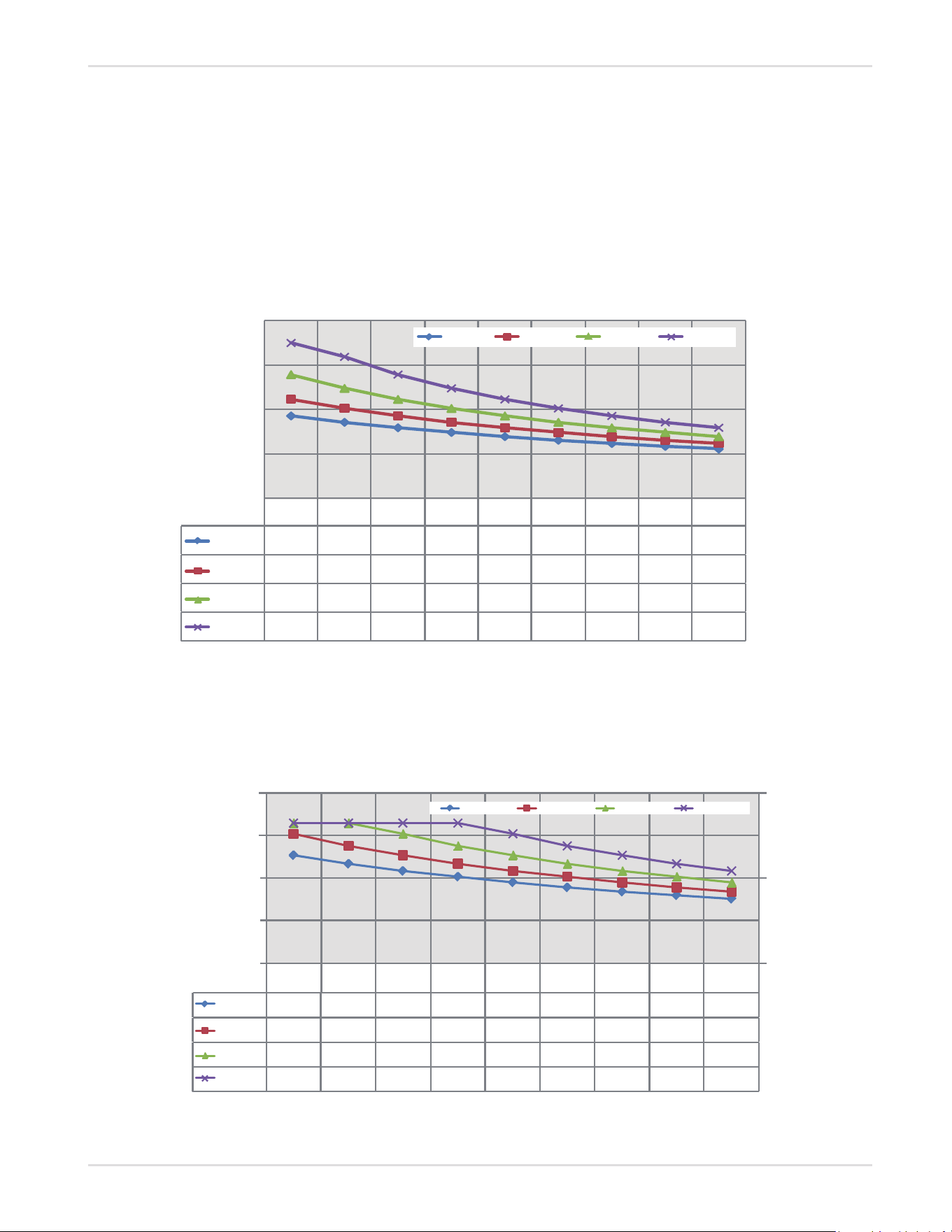
74 Page
100
(38)
105
(40)
110
(43)
115
(45)
120
(50)
125
(52)
130
(55)
135
(57)
140
(60)
40℉ (4℃)
3.7
3.4 3.2 3.0 2.8 2.6 2.5 2.3 2.2
50℉
4.5 4.1 3.7 3.4 3.2 3.0 2.8 2.6 2.5
60℉
5.6 5.0 4.5 4.1 3.7 3.4 3.2 3.0 2.8
70℉
7.0 6.4 5.6 5.0 4.5 4.1 3.7 3.4 3.2
0.0
2.0
4.0
6.0
8.0
)
0.0
15.0
30.0
(L/M)
(10℃)
(16℃)
(21℃)
(14.1) (13.0) (12.1) (11.3) (10.6) (9.4) (8.9) (8.4)(9.9)
(16.9) (15.4) (14.1) (13.0) (12.1) (10.6) (9.9) (9.4)(11.3)
(21.1) (18.8) (16.9) (15.4) (14.1) (12.1) (11.3) (10.6)(13.0)
(26.5) (24.1) (21.1) (18.8) (16.9) (14.1) (13.0) (12.0)(15.4)
℃)(2170℉℃(1660 )℉
℃(10 )50℉
℃℉40 )(4
100
(38)
105
(40)
110
(43)
115
(45)
120
(50)
125
(52)
130
(55)
135
(57)
140
(60)
40°F (4°C)
5.1 4.7 4.3 4.1 3.8 3.6 3.4 3.2 3.0
50°F(10°C)
6.1 5.5 5.1 4.7 4.3 4.1 3.8 3.6 3.4
60°F(16°C)
6.6 6.6 6.1 5.5 5.1 4.7 4.3 4.1 3.8
70°F(21°C)
6.6 6.6 6.6 6.6 6.1 5.5 5.1 4.7 4.3
0.0
2.0
4.0
6.0
8.0
40°F (4°C) 50°F(10°C) 60°F(16°C) 70°F(21°C)
30
15
0
Output Hot Water GPM
Set temp.°F(°C)
Incoming temp.
(L/M)
(19.2)
(23.0)
(25.0)
(25.0)
(17.7)
(20.9)
(25.0)
(25.0)
(16.4)
(19.2)
(23.0)
(25.0)
(15.3)
(17.7)
(20.9)
(25.0)
(14.4)
(16.4)
(19.2)
(23.0)
(13.5)
(15.3)
(17.7)
(20.9)
(12.8)
(14.4)
(16.4)
(19.2)
(12.1)
(13.5)
(15.3)
(17.7)
(11.5)
(12.8)
(14.4)
(16.4)
Output Temperature vs. GPM (Max. 6.6 GPM) with Various Inlet Water temperature
Output Temperature vs. GPM (Max. 7.0 GPM) with Various Inlet Water temperature
OUTPUT TEMPERATURE CHART
These charts are based on properly sized gas lines and installation at 0-2,000 ft (0-610m). The water heater will
de-rate approximately 4% per 1,000 ft (305 m) of elevation increase above 2,000 ft (914 m).
To reduce the risk of scalding, install Thermostatic Mixing Valves (temperature limiting valves) at each point of
use.
240H model
140H model
Output Temperature Chart
Owner's Guide
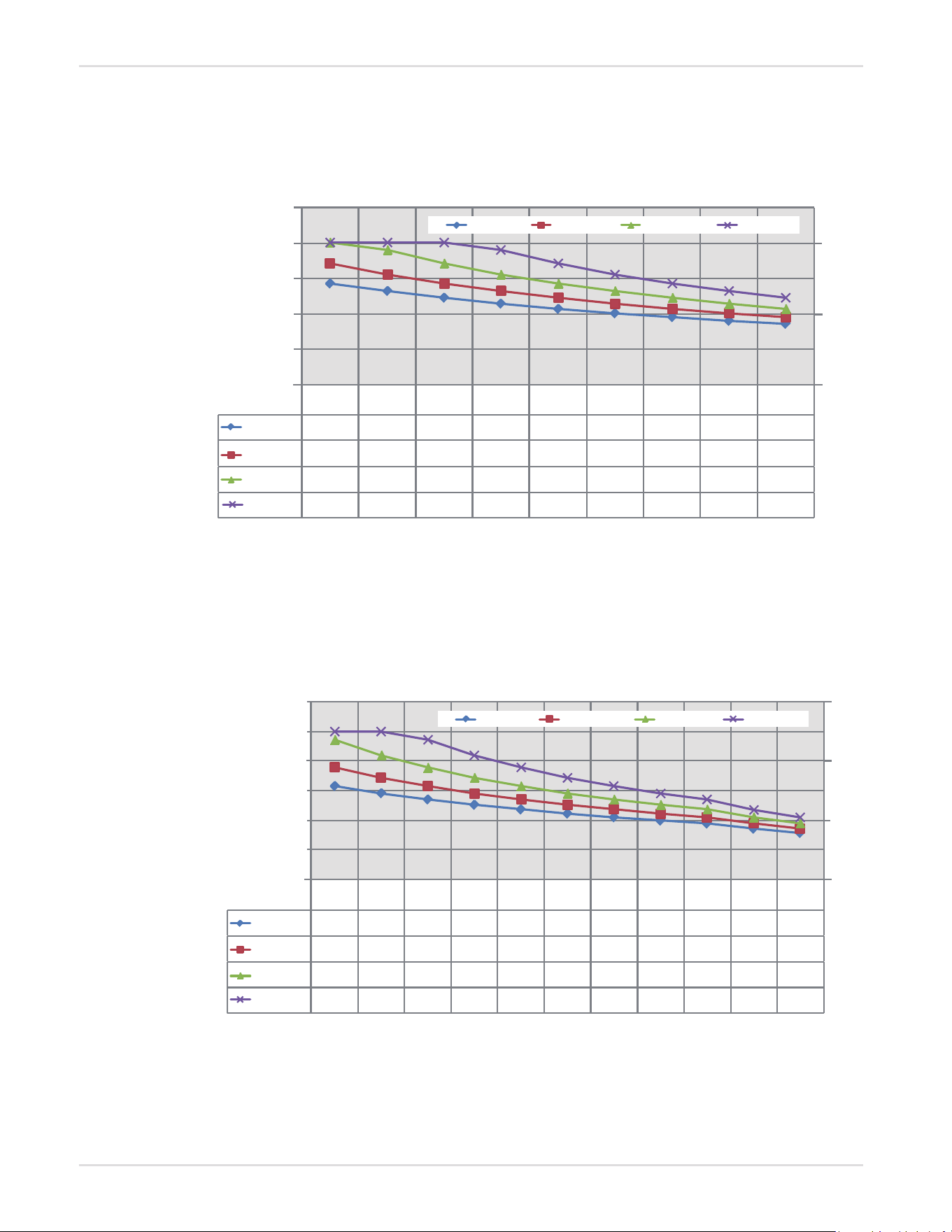
75 Page
100
(38)
105
(40)
110
(43)
115
(45)
120
(50)
125
(52)
130
(55)
135
(57)
140
(60)
40°F(4°C)
5.7 5.3 4.9 4.6 4.3 4.0 3.8 3.6 3.4
50°F(10°C)
6.8 6.2 5.7 5.3 4.9 4.6 4.3 4.0 3.8
60°F(16°C)
8.0 7.6 6.8 6.2 5.7 5.3 4.9 4.6 4.3
70°(21°C)
8.0 8.0 8.0 7.6 6.8 6.2 5.7 5.3 4.9
0.0
2.0
4.0
6.0
8.0
10.0
40°F(4°C) 50°F(10°C) 60°F(16°C) 70°(21°C)
Output Hot Water GPM
Set temp.°F(°C)
Incoming temp.
30
15
0
(L/M)
(21.6)
(30.3)
(30.3)
(25.9)
(19.9)
(30.3)
(28.8)
(23.5)
(18.5)
(30.3)
(25.9)
(21.6)
(17.3)
(28.8)
(23.5)
(19.9)
(16.2)
(25.9)
(21.6)
(18.5)
(15.2)
(23.5)
(19.9)
(17.3)
(14.4)
(21.6)
(18.5)
(16.2)
(13.6)
(19.9)
(17.3)
(15.2)
(12.9)
(18.5)
(16.2)
(14.4)
100
(38)
105
(40)
110
(43)
115
(45)
120
(50)
125
(52)
130
(55)
135
(57)
140
(60)
150
(65)
160
(70)
40°F(4°C)
6.3 5.8 5.4 5.0 4.7 4.4 4.2 4.0 3.8 3.4 3.2
50°F(10°C)
7.6 6.9 6.3 5.8 5.4 5.0 4.7 4.4 4.2 3.8 3.4
60°F(16°C)
9.5 8.4 7.6 6.9 6.3 5.8 5.4 5.0 4.7 4.2 3.8
70°F(21°C)
10.0 10.0 9.5 8.4 7.6 6.9 6.3 5.8 5.4 4.7 4.2
0.0
2.0
4.0
6.0
8.0
10.0
12.0
40°F(4°C) 50°F(10°C) 60°F(16°C) 70°F(21°C)
45
30
15
0
(L/M)
Output Hot Water GPM
Set temp.°F(°C)
Incoming temp.
(23.9)
(28.6)
(35.8)
(37.9)
(22.0)
(26.0)
(31.8)
(37.9)
(20.4)
(23.9)
(28.6)
(35.8)
(19.1)
(22.0)
(26.0)
(31.8)
(17.9)
(20.4)
(23.9)
(28.6)
(16.8)
(19.1)
(22.0)
(26.0)
(15.9)
(17.9)
(20.4)
(23.9)
(15.1)
(16.8)
(19.1)
(22.0)
(14.3)
(15.9)
(17.9)
(22.4)
(13.0)
(14.3)
(15.9)
(17.9)
(11.9)
(13.0)
(14.3)
(15.9)
Output Temperature vs. GPM (Max. 8.0 GPM) with Various Inlet Water temperature
Output Temperature vs. GPM (Max. 10.0 GPM) with Various Inlet Water temperature
Output Temperature Chart
Owner's Guide
340H model
540H model

68A255-1
2000534710 (REV. F)