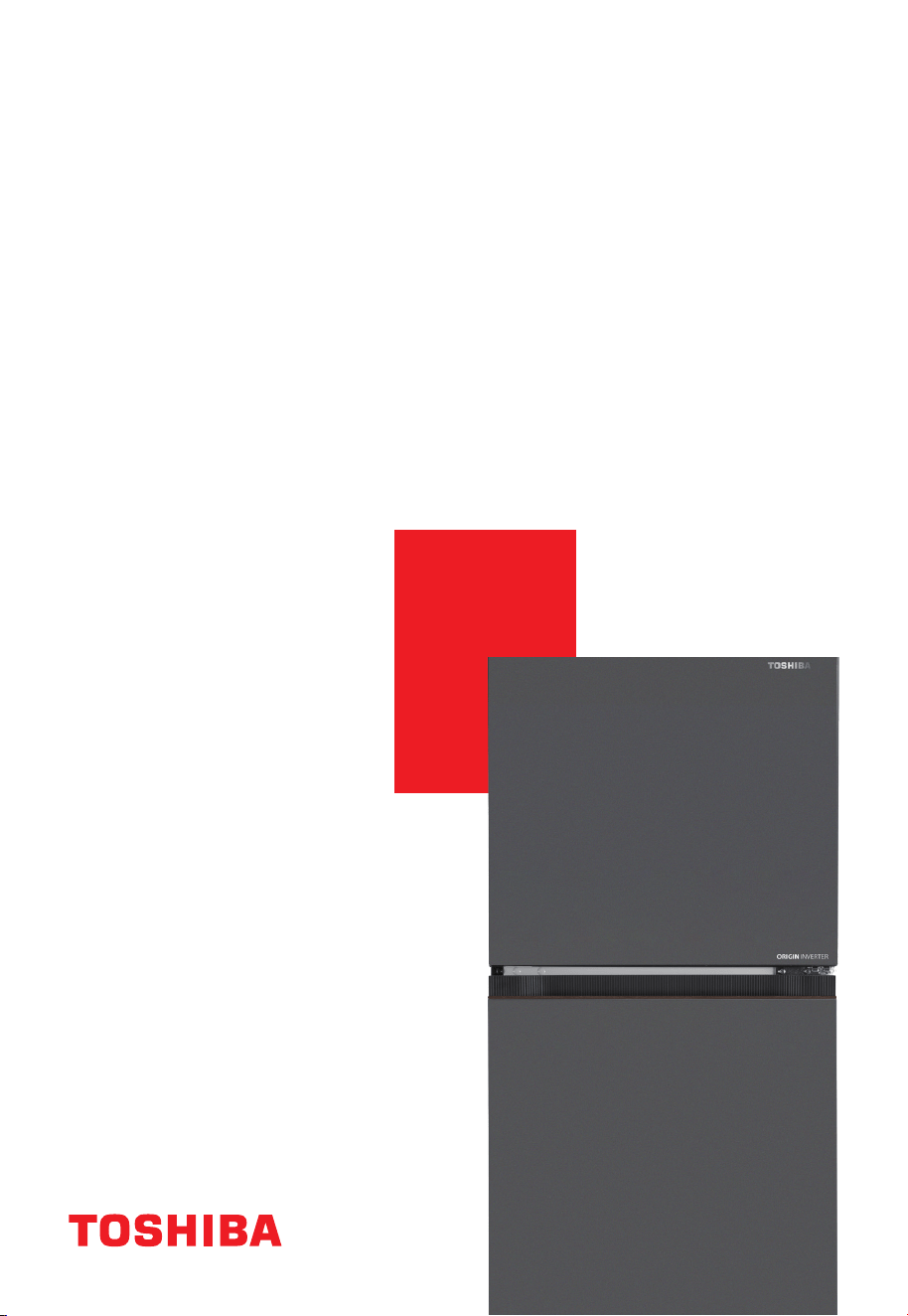
GR-RT238WE-PMY(**)
GR-RT312WE-PMY(**)
GR-RT351WE-PMY(**)
USER
MANUAL
REFRIGERATOR FREEZER
For Home Use Only
CONTENTS
1. Safety warnings ....................................................................................1
2. Proper use of the freezer .....................................................................8
3. Structure and functions ....................................................................
4. Maintenance and care of the refrigerator........................................1
5. Trouble shooting ................................................................................2
6. Disposal of your appliance ................................................................2
Thank you very much for purchasing this Toshiba product.
Read this user manual and become completely familiar
with the product before. use in order to use this product safely
and correctly.
Keep this user manual in a handy place for future reference.
Make sure that you received your warranty.
Dear user :
1. Safety warnings
READ SAFETY PRECAUTIONS BEFORE INSTALLATION
1.1 Warning
To prevent injury to the user or other people and property damage, the following
instructions must be followed. Incorrect operation due to ignoring of instructions
may cause harm or damage.
Warning: risk of re / ammable materials
1
WARNING: Risk of re disaster and explosion
The refrigerant of the appliance is ammable, please be care not to damage the
cooling pipes during installation and transportation. if gas leakage happens,
please contact the distributor or local service agent, and the following precautions
should be always taken:
1. Open the windows for ensuring good ventilation.
2. No re around and please do not use other electric appliance.
This appliance is intended to be used in household and similar applications such
as sta kitchen areas in shops, oces and other working environments; farm
houses and by clients in hotels, motels and other residential type environments;
bed and breakfast type environments; catering and similar non-retail applications.
WARNING: Risk of re disaster and electric shock
If the supply cord is damaged, it must be replaced by the manufacturer, its service
agent or similarly qualied persons in order to avoid a hazard.
Please unplug the power plug from socket when clean the appliance or leave the
appliance nonuse for a long time.
Do not use extension cord or ungrounded (two prong) adapters.
WARNING: Keep ventilation openings, in the appliance enclosure or in the built-in
structure, clear of obstruction.
WARNING: Do not use mechanical devices or other means to accelerate the
defrosting process, other than those recommended by the manufacturer.
WARNING: Do not damage the refrigerant circuit.
WARNING: Do not use electrical appliances inside the food storage compartments
of the appliance, unless they are of the type recommended by the manufacturer.
WARNING: Please abandon the refrigerator according to local regulators for it use
ammable cyclopentane foaming material and refrigerant.
2
WARNING: When positioning the appliance, ensure the supply cord is not trapped
or damaged.
Do not store explosive substances such as aerosol cans with a ammable
propellant in this appliance.
WARNING: Do not locate multiple portable socket-outlets or portable power
supplies at the rear of the appliance.
WARNING: Please ll with potable water only. Please do not ll hot water or liquids
other than potable water such as juices.
DANGER: Risk of child entrapment. Before you throw away your old refrigerator or
freezer:
Take of the doors.
Leave the shelves in place so that children may not easily climb inside.
The refrigerator must be disconnected from the source of electrical supply before
attempting the Installation of accessory.
Refrigerant and cyclopentane foaming material used for the refrigerator are
ammable. Therefore, when the refrigerator is scraped, it shall be kept away from
any re source and be recovered by a special recovering company with
corresponding qualication other than be disposed by combustion, so as to
prevent damage to the environment or any other harm.
For IEC standard: This appliance is not intended for use by persons (including
children) with reduced physical, sensory or mental capabilities, or lack of
experience and knowledge, unless they have been given supervision or instruction
concerning use of the appliance by a person responsible for their safety.
For EN standard: This appliance can be used by children aged from 8 years and
above and persons with reduce physical sensory or mental capabilities or lack of
experience and knowledge If they have been given supervision or instruction
concerning use of the appliance in a safe way and understand the hazards
involved. Children shall not play with the appliance. Cleaning and user
maintenance shall not be made by children without supervision.
Please do not use the appliance on trac means (such as ship and so on).
Children aged from 3 to 8 years are allowed to load and unload refrigerating
appliances.
If noise, odor and smoking happens, please unplug the power plug Immediately,
and contact the distributor or local service agent.
Children should be supervised to ensure that they do not play with the appliance.
3
Please leave the packing materials and other parts out of the reach of children to
prevent from risk of suocation.
Note 1,2,3,4: Please conrm whether it is applicable according to your product
compartment type.
For a freestanding appliance: this refrigerating appliance is not intended to be
used as a built in appliance.
Any replacement or maintenance of the LED lamps is intended to be made by the
manufacturer, its service agent or similar qualied person.
WARNING: To avoid a hazard due to instability of the appliance, it must be xed in
accordance with the instructions.
To avoid contamination of food, please respect the following instructions:
Opening the door for long periods can cause a signicant increase of the
temperature in the compartments of the appliance.
Clean regularly surfaces that can come in contact with food and accessible
drainage systems.
Clean water tanks if they have not been used for 48h, ush the water system
connected to a water supply if water has not been drawn for 5days. (note 1)
Store raw meat and sh in suitable containers in the refrigerator, so that it is
not in contact with or drip onto other food.
Two-star frozen-food compartments are suitable for storing pre-frozen food,
storing or making ice-cream and making ice cubes. (note 2)
One-, two- and three star compartments are not suitable for the freezing of
fresh food. (note 3)
For appliances without a 4-star compartment: this refrigerating appliance is not
suitable for freezing foodstus. (note 4)
If the refrigerating appliance is left empty for long periods, switch o, defrost,
clean, dry, and leave the door open to prevent mouldy developing within the
appliance.
Please do not put your hands under or behind the appliance to prevent from being
hurt.
4
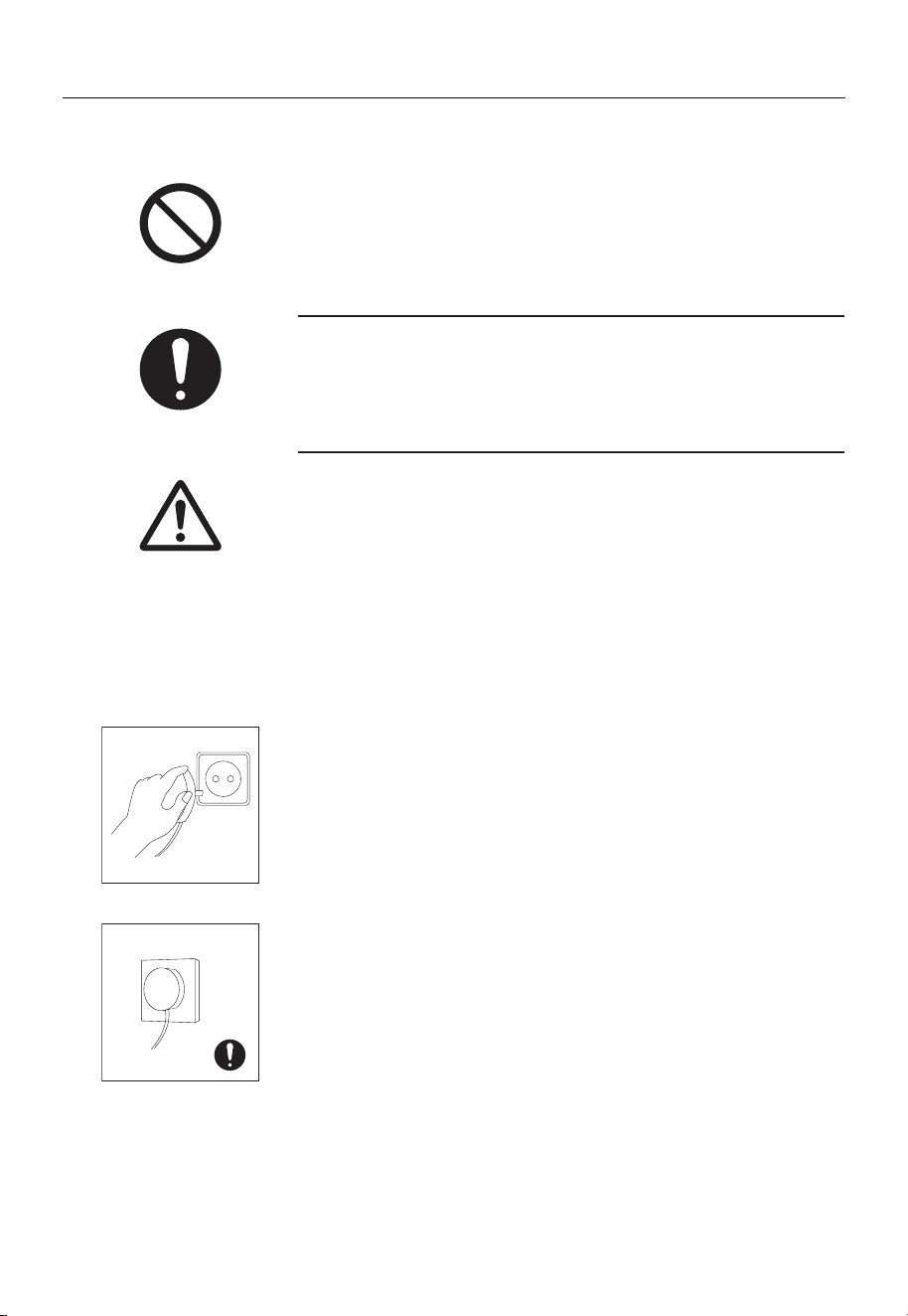
1.2 Meaning of safety warning symbols
1.3 Electricity related warnings
This manual contains lots of important safety information which shall be observed
by the users.
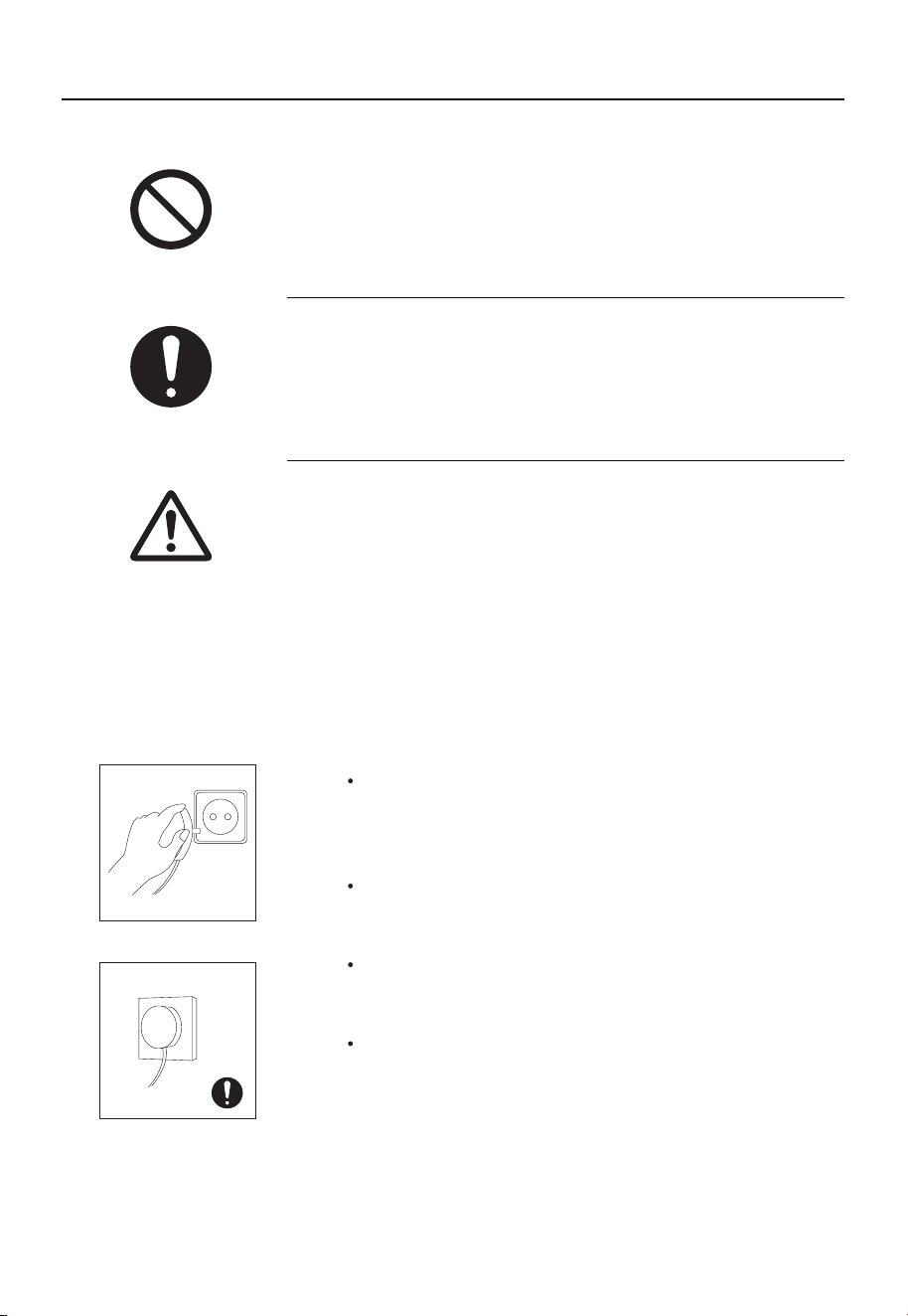
Prohibition symbol
Mandatory symbol
Cautioning symbol
This is a prohibition symbol.
Any incompliance with instructions marked with this
symbol may result in damage to the product or endanger
the personal safety of the user.
This is a mandatory symbol.
It is required to operate in strict observance of instructions
marked with this symbol; or otherwise damage to the product
or personal injury may be caused.
This is a cautioning symbol.
Instructions marked with this symbol require special caution.
Insucient caution may result in slight or moderate injury, or
damage to the product.
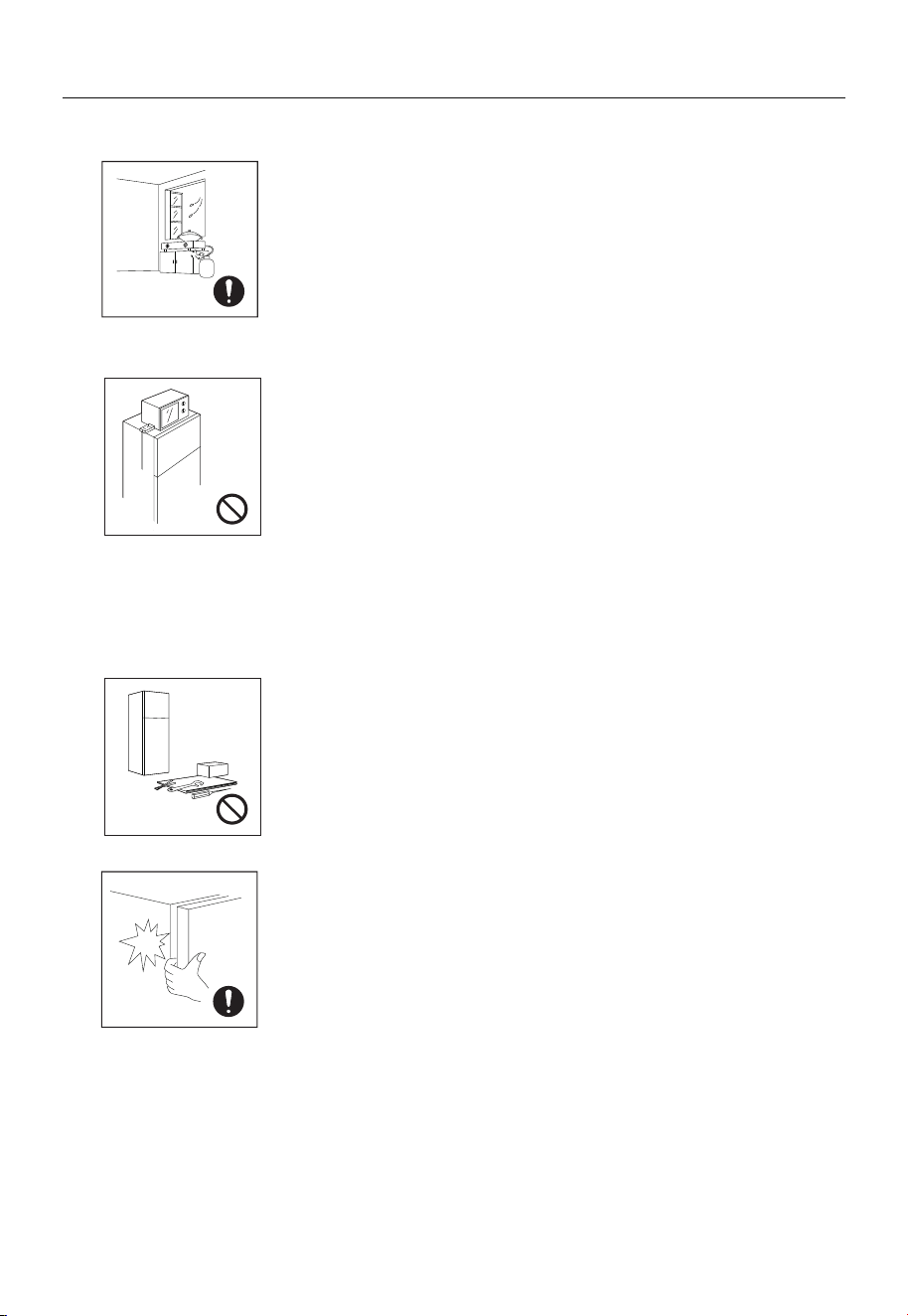
Do not pull the power cord when pulling the power
plug of the refrigerator. Please rmly grasp the plug
and pull out it from the socket directly.
To ensure safe use, do not damage the power cord or
use the power cord when it is damaged or worn.
Please do not touch the power plug with wet hand to
prevent from electric shock.
Please use a dedicated power socket and the power
socket shall not be shared with other electrical
appliances. The power plug should be rmly
contacted with the socket or else res might be
caused.
5
1.4 Warnings for using
Please ensure that the grounding electrode of the
power socket is equipped with a reliable grounding
line.
Please ask for help from persons with professional
qualication to examine whether the socket is with
reliable grounding line or not.
It is the end-consumers' responsibility to change the
ungrounded socket into grounded socket.
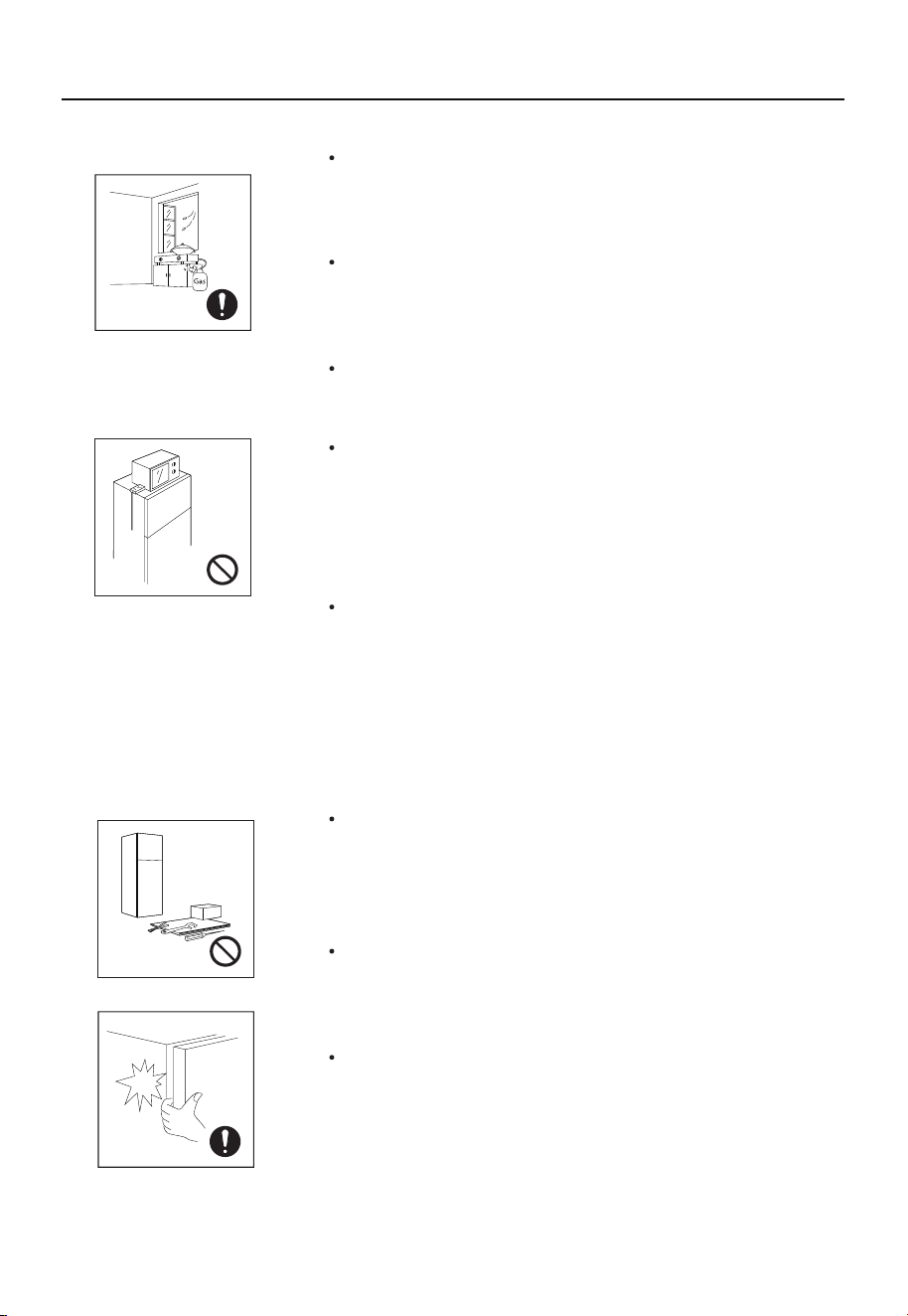
Please turn o the valve of the leaking gas and then
open the doors and windows in case of leakage of
gas and other ammable gases. Do not unplug the
refrigerator and other electrical appliances
considering that spark may cause a re.
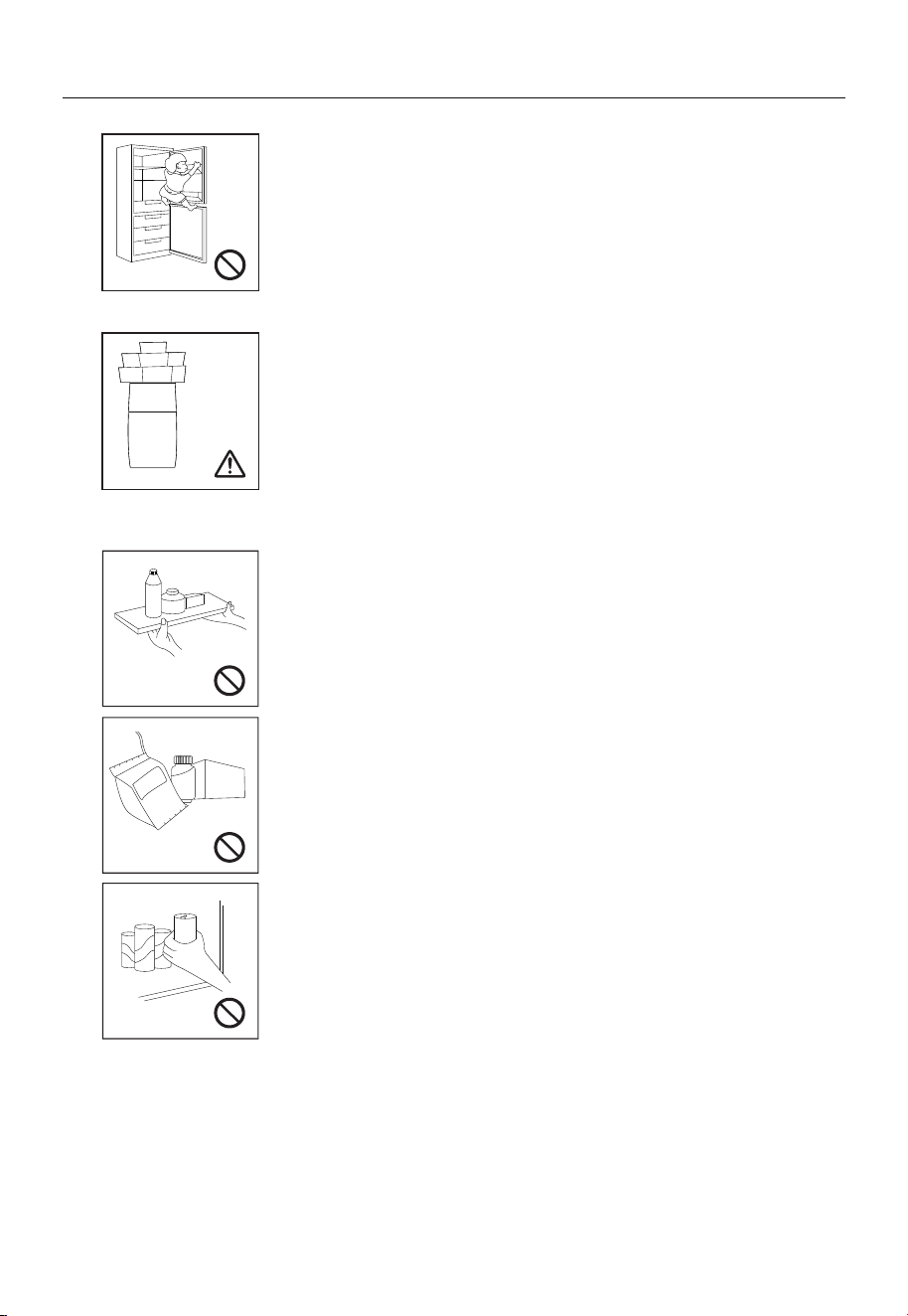
Do not use electrical appliances on the top of the
appliance, unless they are of the type recommended
by the manufacturer.
Do not arbitrarily disassemble or reconstruct the
refrigerator, nor damage the refrigerant circuit;
maintenance of the appliance must be conducted by
a specialist.
Damaged power cord must be replaced by the
manufacturer, its maintenance department or related
professionals in order to avoid danger.
The gaps between refrigerator doors and between
doors and refrigerator body are small, be noted not to
put your hand in these areas to prevent from squeezing
the nger. Please be gentle when close the refrigerator
door to avoid falling articles.
6
1.5 Warnings for placement
Do not pick foods or containers with wet hands in the
freezing chamber when the refrigerator is running,
especially metal containers in order to avoid frostbite.
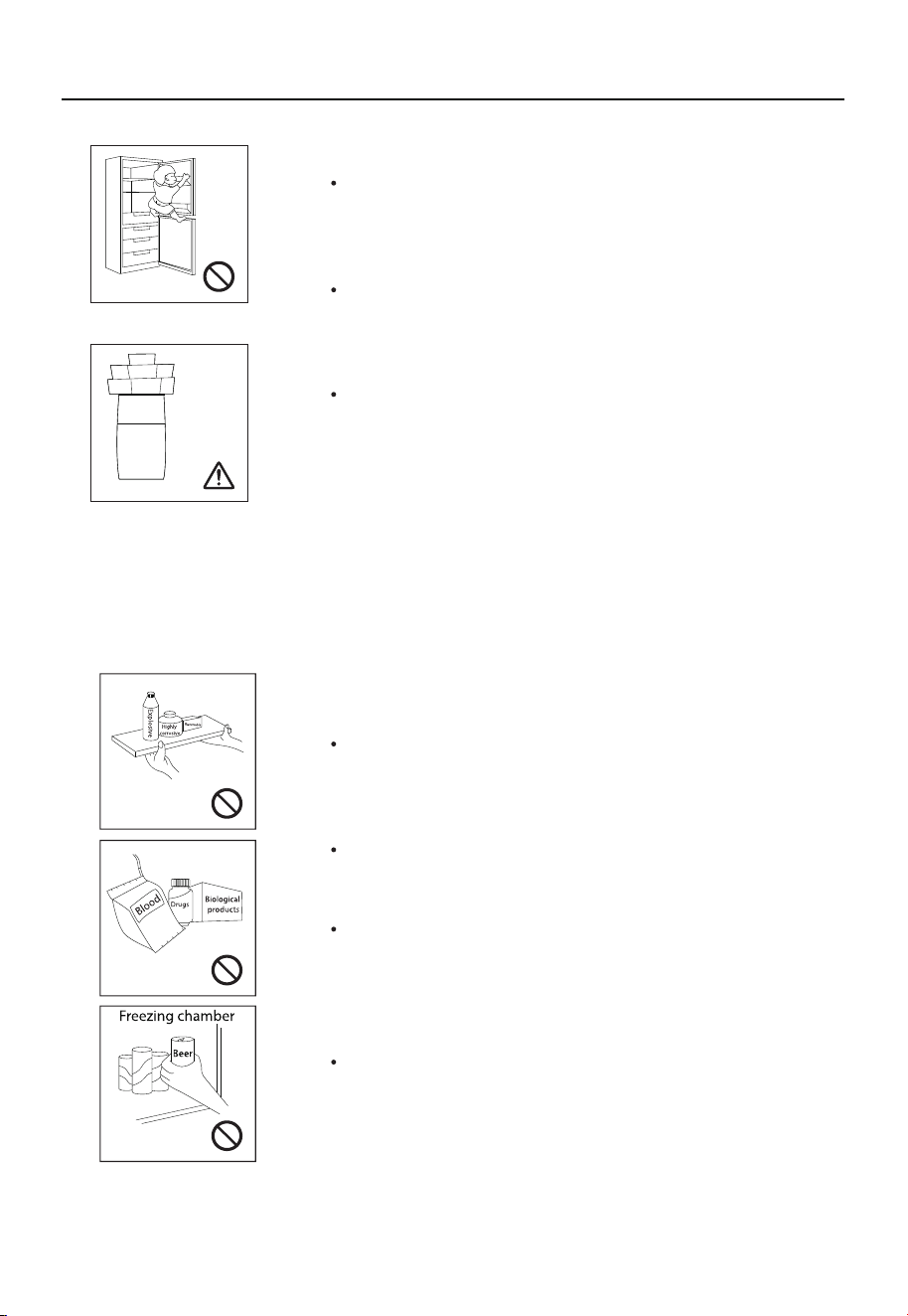
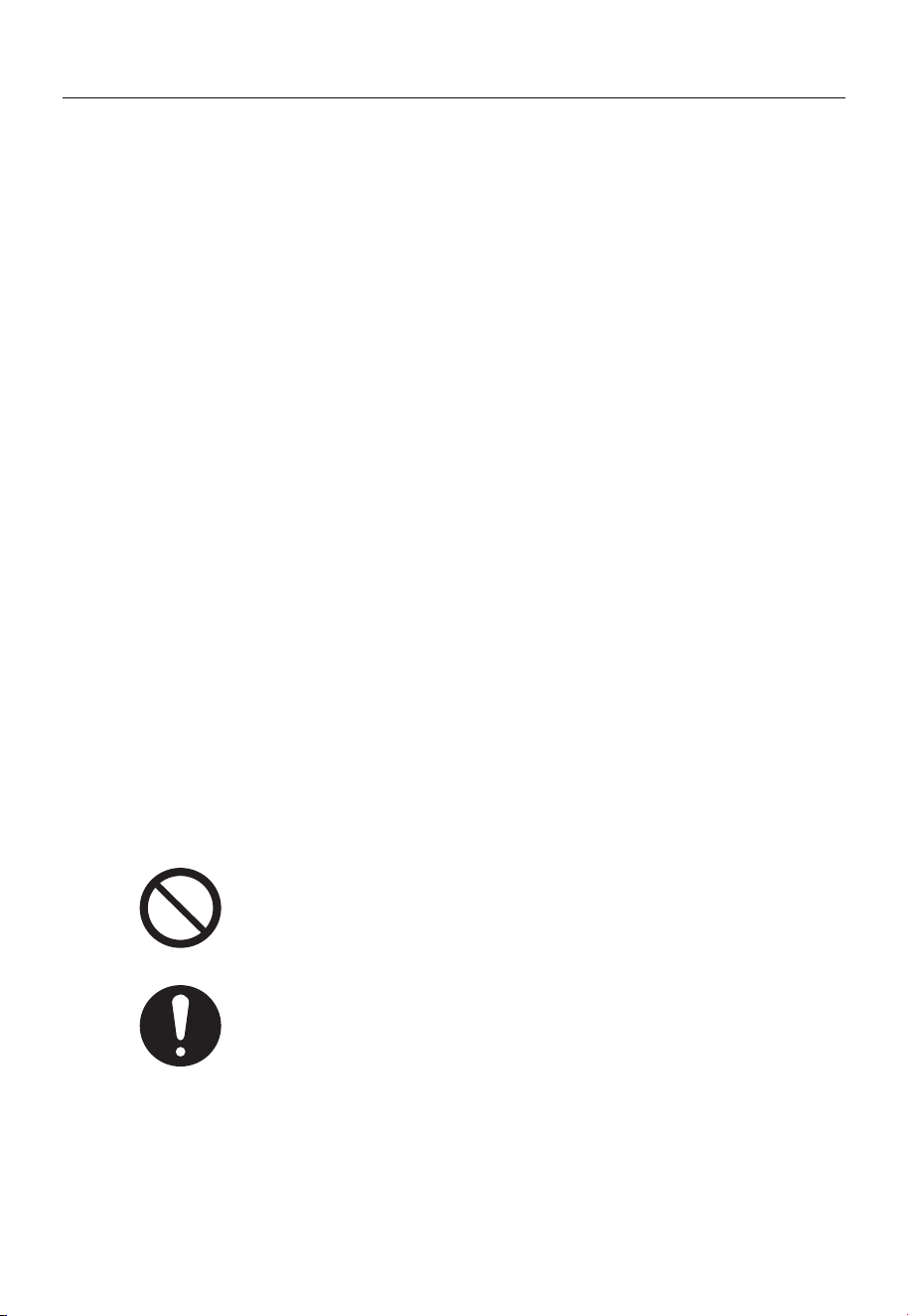
Do not allow any child to get into or climb the
refrigerator; otherwise suocation or falling injury of
the child may be caused.
Please do not put heavy or dangerous objects on top
of the appliance (bottles, tableware, or something
containing liquid).
Do not put ammable, explosive, volatile and highly
corrosive items in the refrigerator to prevent damages
to the product or re accidents.
Do not place ammable items near the refrigerator to
avoid res.
The refrigerator is intended for household use, such
as storage of foods; it shall not be used for other
purposes, such as storage of blood, drugs or biological
products, etc.
Do not store beer, beverage or other uid contained in
bottles or enclosed containers in the freezing chamber
of the refrigerator ; or otherwise the bottles or enclosed
containers may crack due to freezing to cause damages.
7
1.6 Warnings for energy
1.7 Warnings for disposal
Refrigerating appliances might not operate consistently (possibility of defrosting
of contents or temperature becoming too warm in the frozen food compartment)
when sited for an extended period of time below the cold end of the range of
temperatures for which the refrigerating appliance is designed.
The fact that eervescent drinks should not be stored in food freezer compartments
or cabinets or in low-temperature compartments or cabinets, and that some
products such as water ices should not be consumed too cold.
The need to not exceed the storage time(s) recommended by the food
manufacturers for any kind of food and particularly for commercially quick-frozen
food in food-freezer and frozen-food storage compartments or cabinets.
The precautions necessary to prevent an undue rise in the temperature of the
frozen food while defrosting the refrigerating appliance, such as wrapping the
frozen food in several layers of newspaper.
The fact that a rise in temperature of the frozen food during manual defrosting,
maintenance or cleaning could shorten the storage life.
The necessity that, for doors or lids tted with locks and keys, the keys be kept out
of the reach of children and not in the vicinity of the refrigerating appliance, in
order to prevent children from being locked inside.
Refrigerant and cyclopentane foaming material used for the
refrigerator are ammable. Therefore, when the refrigerator is
scrapped, it shall be kept away from any re source and be
recovered by a special recovering company with corresponding
qualication other than be disposed by combustion, so as to
prevent damage to the environment or any other harm.
When the refrigerator is scrapped, disassemble the doors, and
remove gasket of door and shelves; put the doors and shelves in
a proper place, so as to prevent trapping of any child.
2. Proper use of the freezer
8
2.1 Placement
Precautions before installation:
Before installation or adjusting of accessories, it shall be ensured
that the refrigerator is disconnected from power. Precautions
shall be taken to prevent fall of the handle from causing any
personal injury.
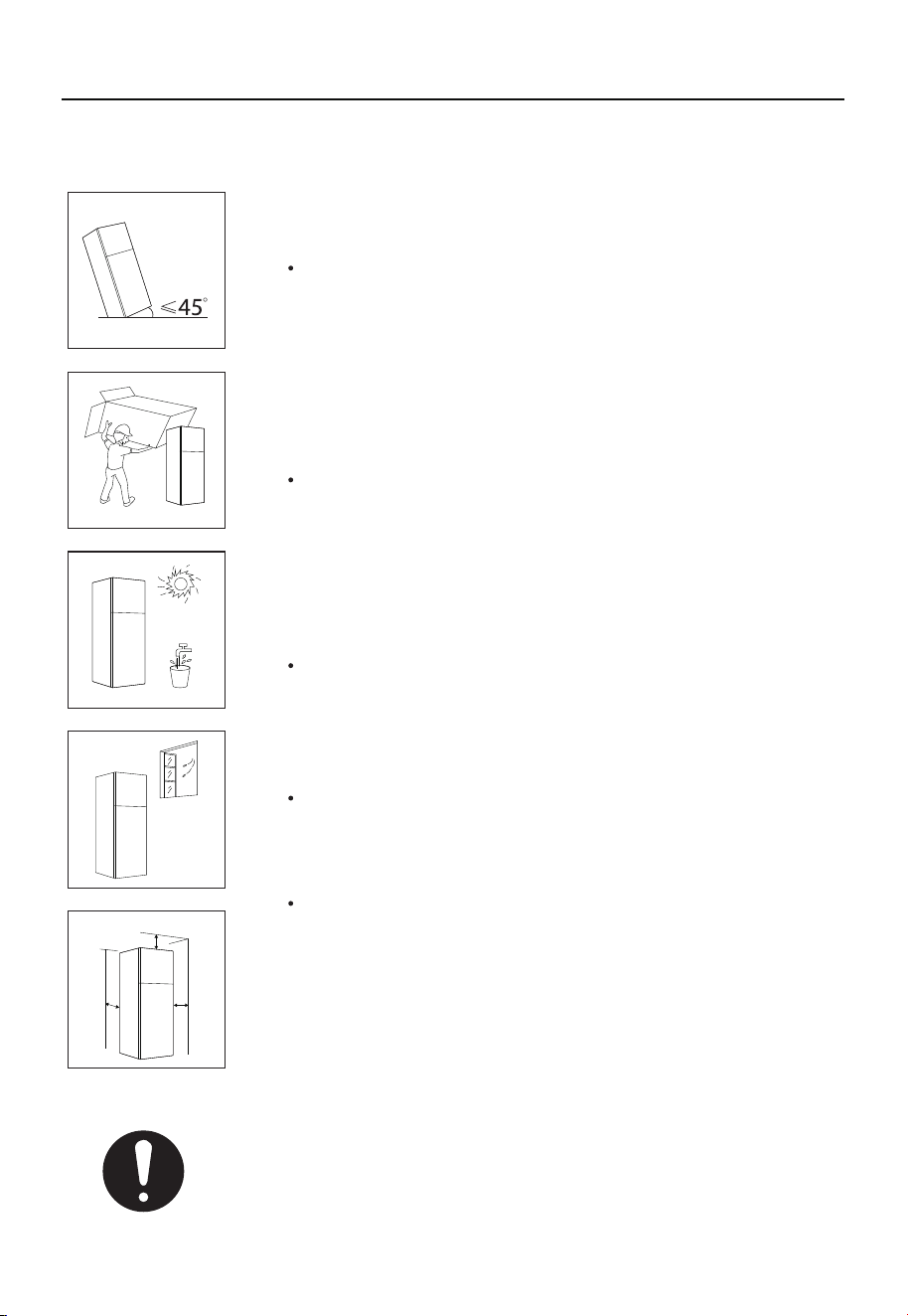
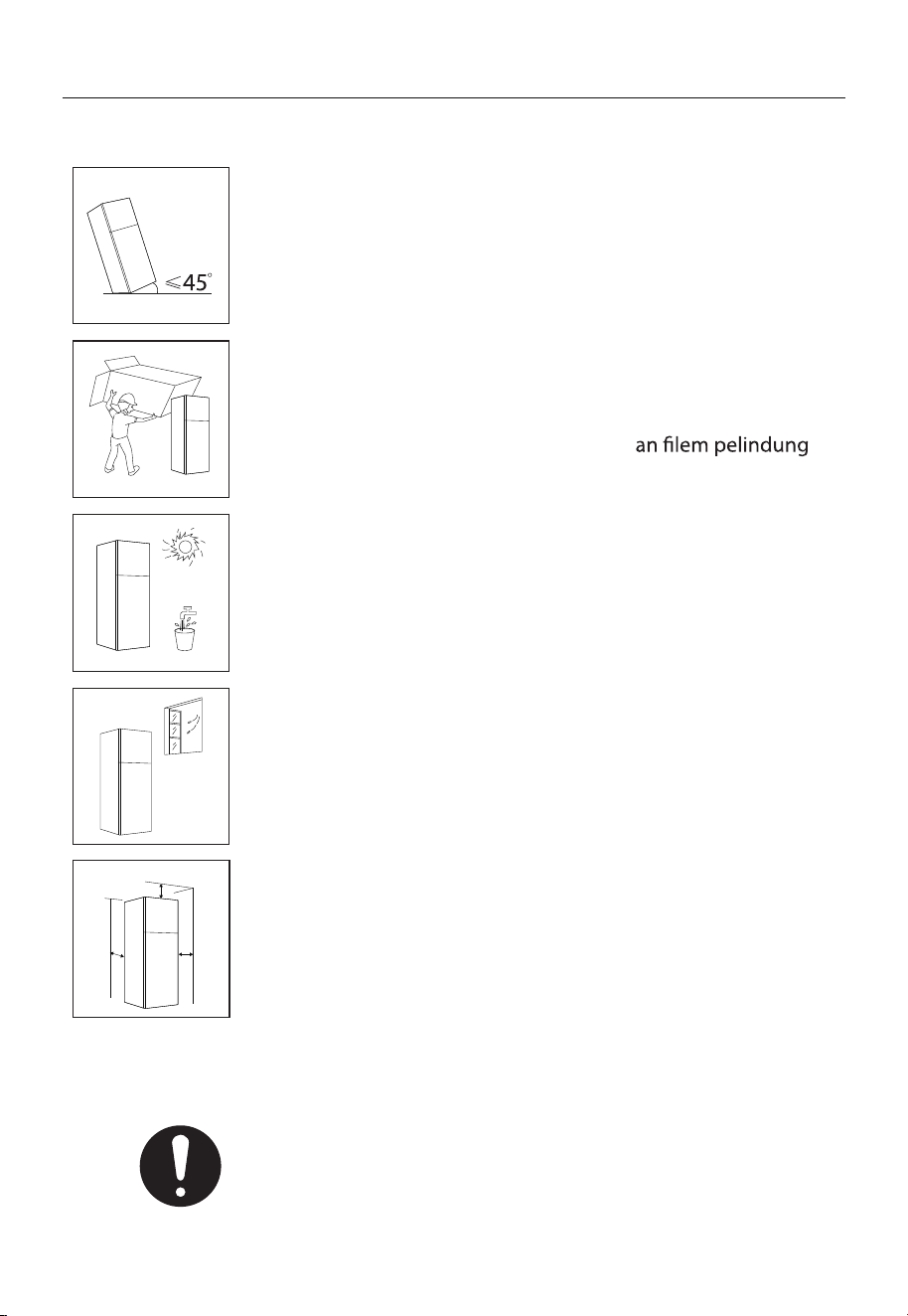
Before the refrigerator is moved, take all objects inside
out, x the glass partitions, vegetable holder, freezing
chamber drawers and etc. with tape, and tighten the
leveling feet; close the doors and seal them with tape.
During moving, the appliance shall not be laid upside
down or horizontally, or be vibrated; the inclination
during movement shall be no more than 45°.
Before use, remove all packing materials, including button
cushions, foam pads and tapes inside of the refrigerator;
tear o the protective lm on the doors and the refrigerator
body. Keep away from heat and avoid direct sunlight. Do
not place the freezer in moist or watery places to prevent
rust or reduction of insulating eect.
Do not spray or wash the refrigerator; do not put the
refrigerator in moist places easy to be splashed with water
so as not to aect the electrical insulation properties of the
refrigerator.
The refrigerator is placed in a well-ventilated indoor place;
the ground shall be at, and sturdy (rotate left or right to
adjust the wheel for leveling if unstable).
The top space of the refrigerator shall be greater than 30cm,
the refrigerator should be placed against a wall with a free
distance more than 10cm on the both side to facilitate heat
dissipation, and the back of appliances is intended to be
placed against a wall with a free distance not exceeding
5-7.5 cm, be careful not to damage the power cord when
close to the wall.
10cm
30cm
5-7.5
cm
9
2.2 Leveling feet
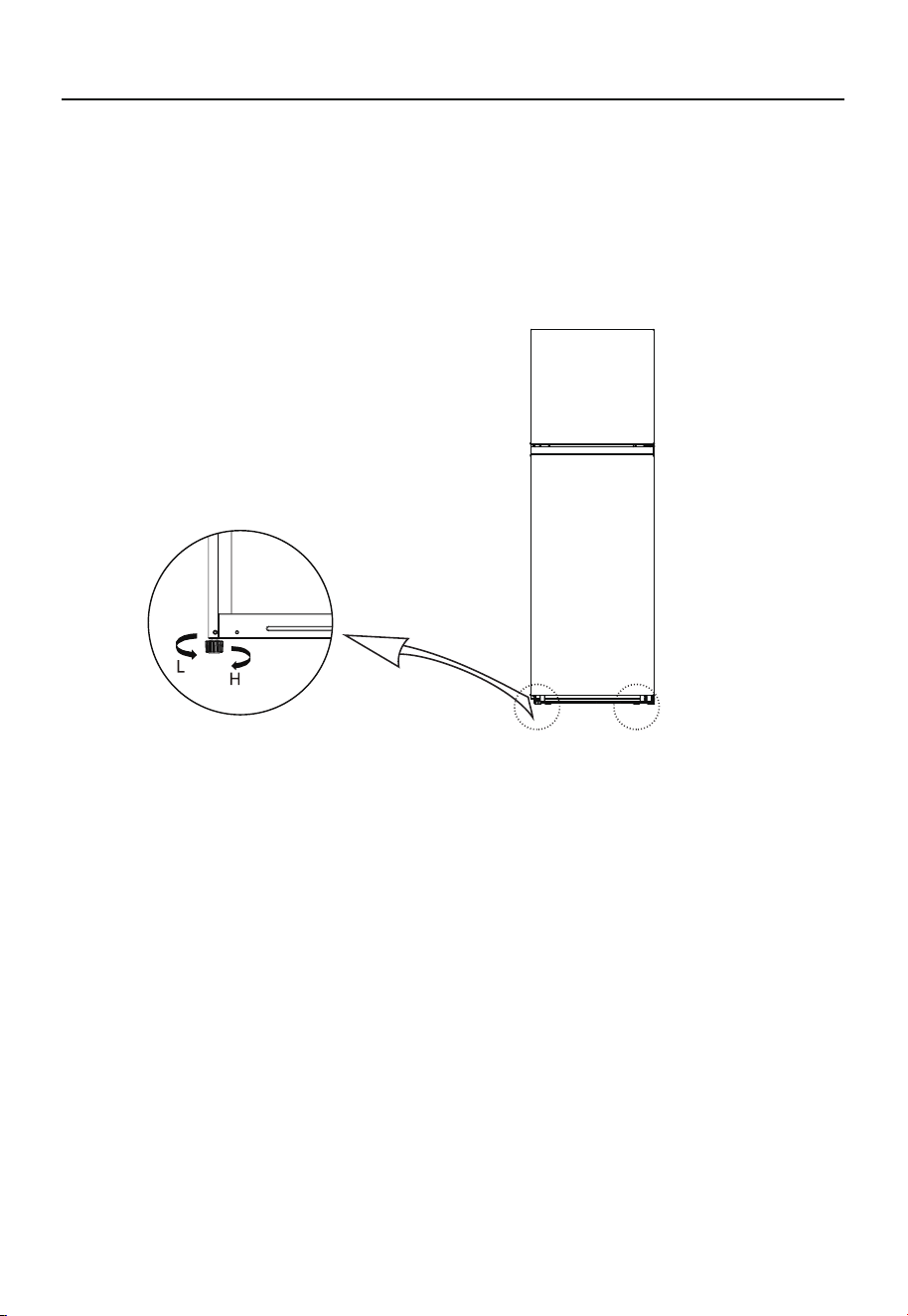
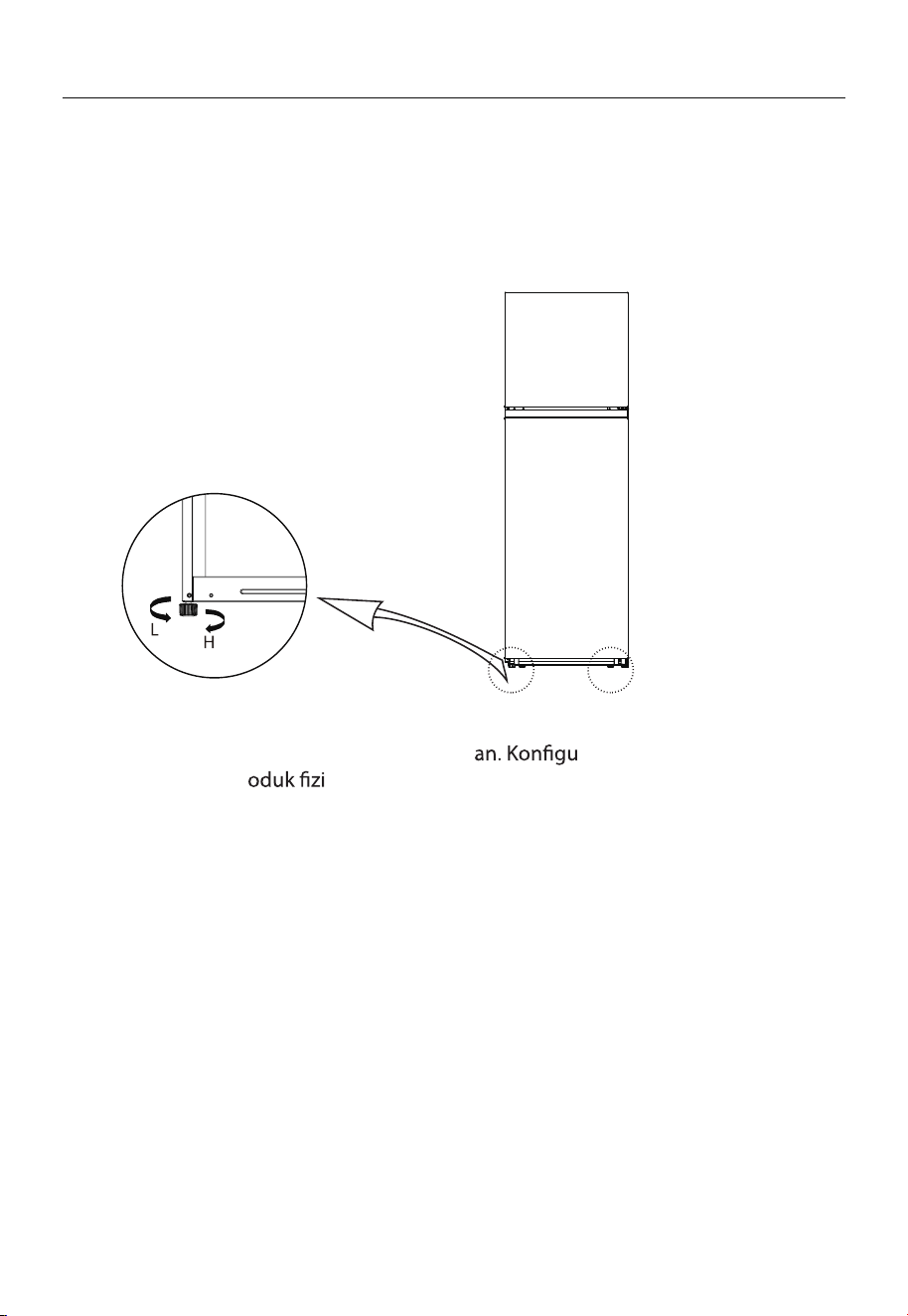
Schematic dia gram of the leveling feet
Adjusting procedures:
a. Turn the feet clockwise to raise the refrigerator;
b. Turn the feet counterclockwise to lower the refrigerator;
c. Adjust the right and left feet based on the procedures above to a horizontal level.
(The picture above is only for reference. The actual conguration will
depend on the physical product or statement by the distributor)
2.3 Changing the Light
2.4 Starting
2.
Energy saving tips
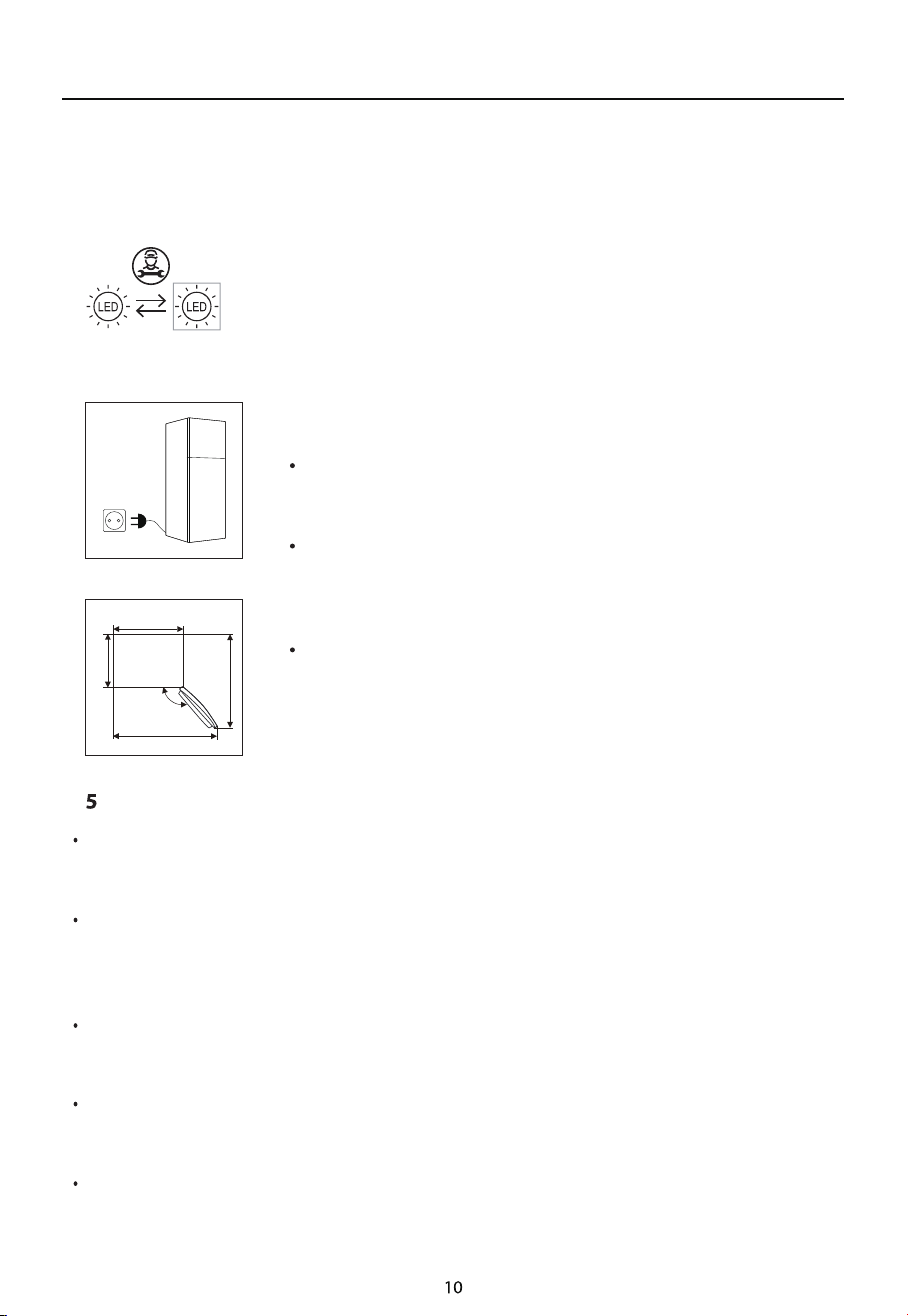
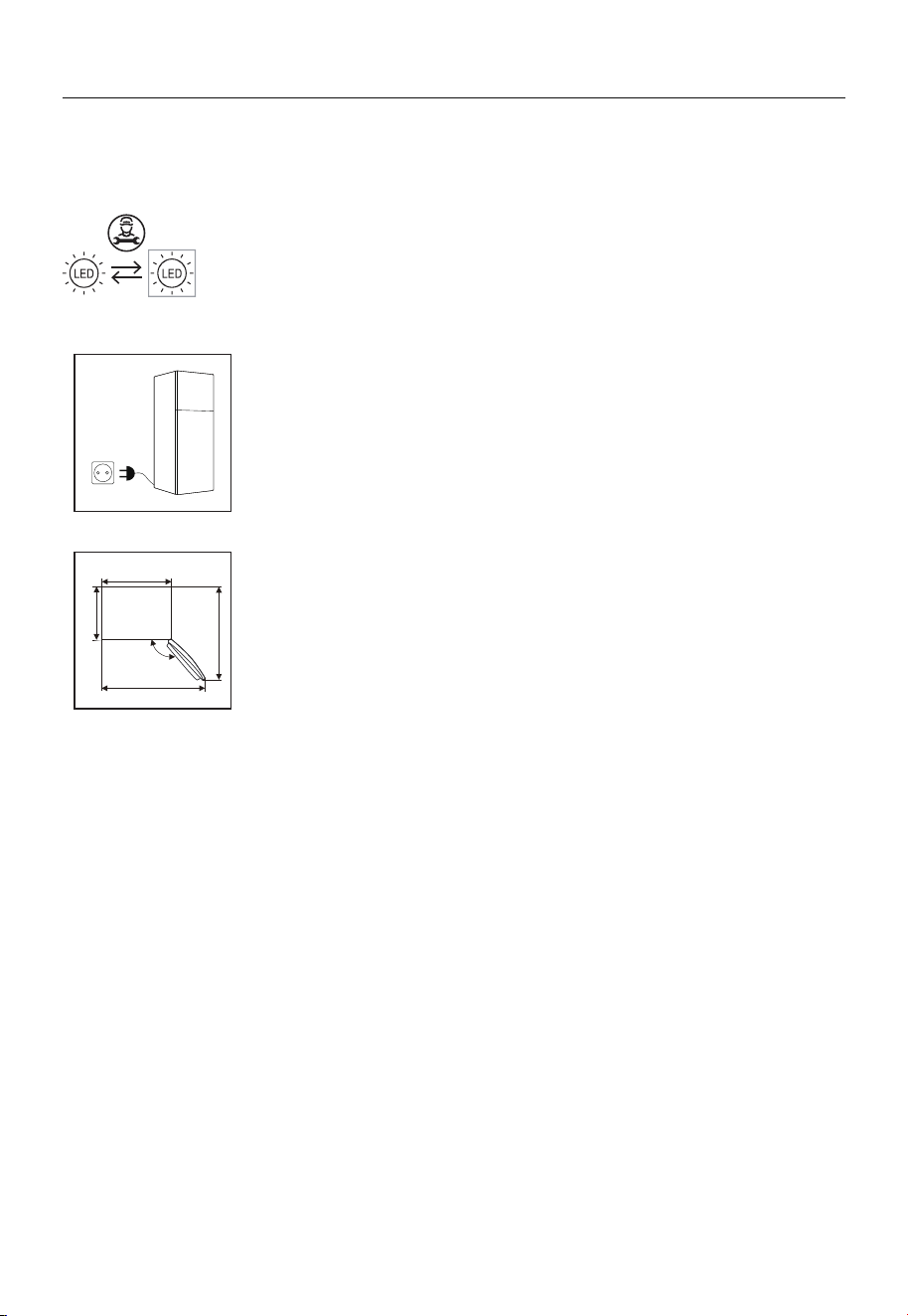
Any replacement or maintenance of the LED lamps is intended to be made by the
manufacturer, its service agent or similar qualied person.
Before initial start, keep the refrigerator still for two hours
before connecting it to power supply.
Before putting any fresh or frozen foods, the refrigerator
shall have run for 2-3 hours, or for above 4 hours in summer
when the ambient temperature is high.
Spare enough space for convenient opening of the doors
and drawers or statement by the distributor.
The appliance should be located in the coolest area of the room, away from heat
producing appliances or heating ducts, and out of the direct sunlight.
Let hot foods cool to room temperature before placing in the appliance. Overloading
the appliance forces the compressor to run longer. Foods that freeze too slowly may
lose quality, or spoil.
Be sure to wrap foods properly, and wipe containers dry before placing them in the
appliance. This cuts down on frost build-up inside the appliance.
Appliance storage bin should not be lined with aluminum foil, wax paper, or paper
toweling. Liners interfere with cold air circulation, making the appliance less ecient.
Organize and label food to reduce door openings and extended searches. Remove as
many items as needed at one time, and close the door as soon as possible.
831mm
545mm
120°
545mm
1060mm
11
3. Structure and functions
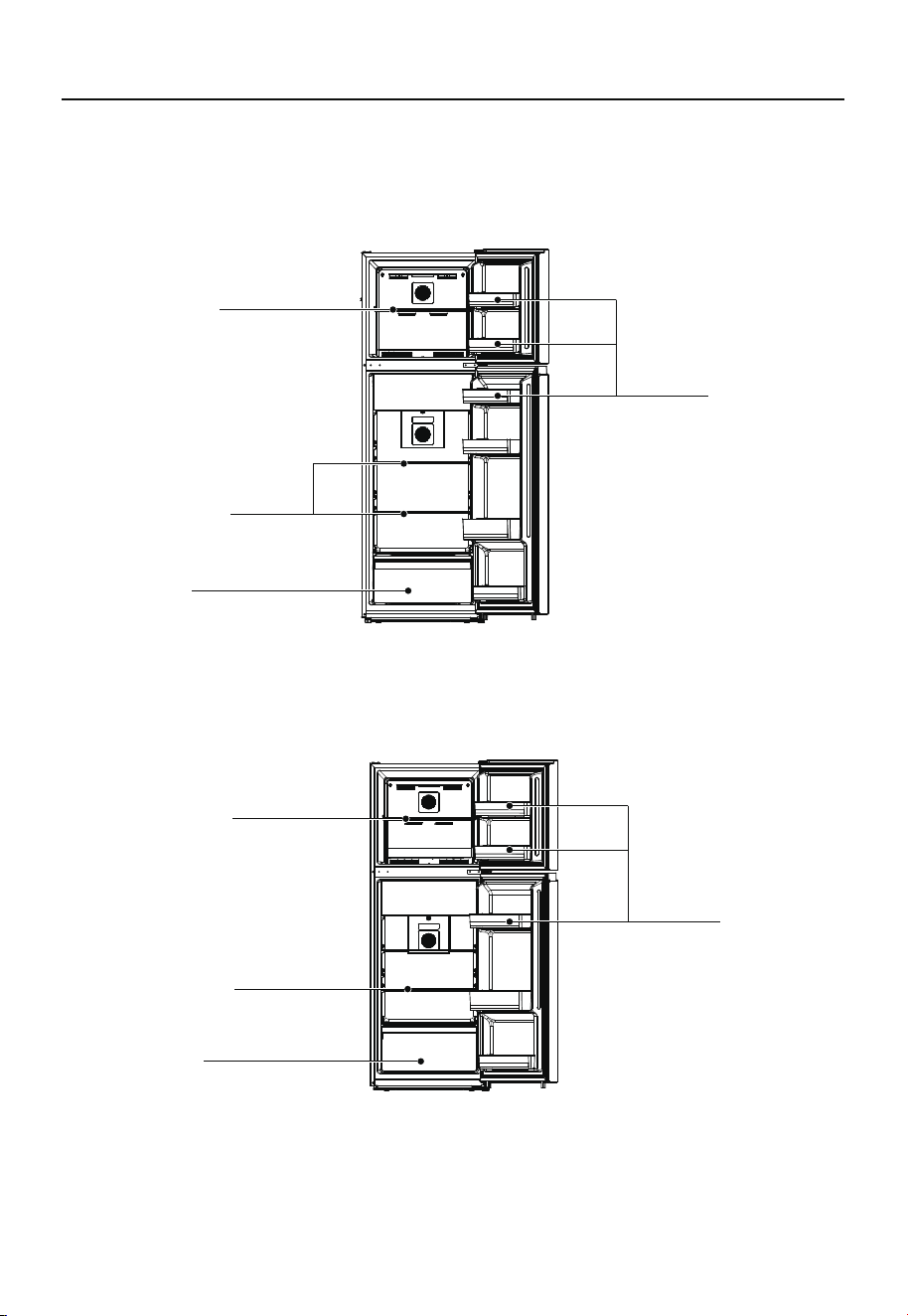
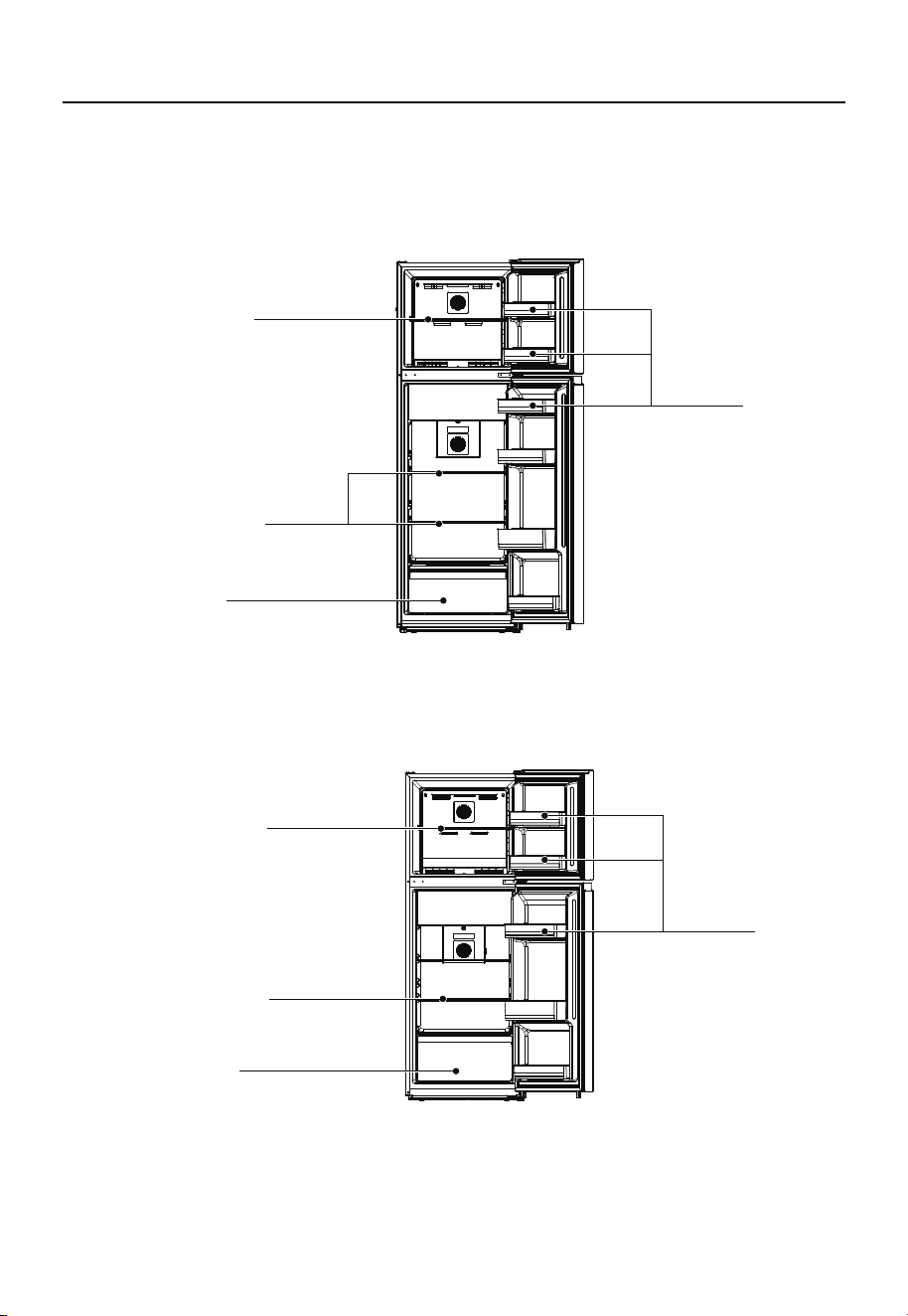
3.1 Key components
Door tray
Glass shelf
Glass shelf
Fruits and vegetables
Drawer
Door tray
Glass shelf
Glass shelf
Fruits and vegetables
Drawer
GR-RT351WE-PMY(**)
GR-RT312WE-PMY(**)
12
(The picture above is only for reference. The actual conguration will
depend on the physical product or statement by the distributor)
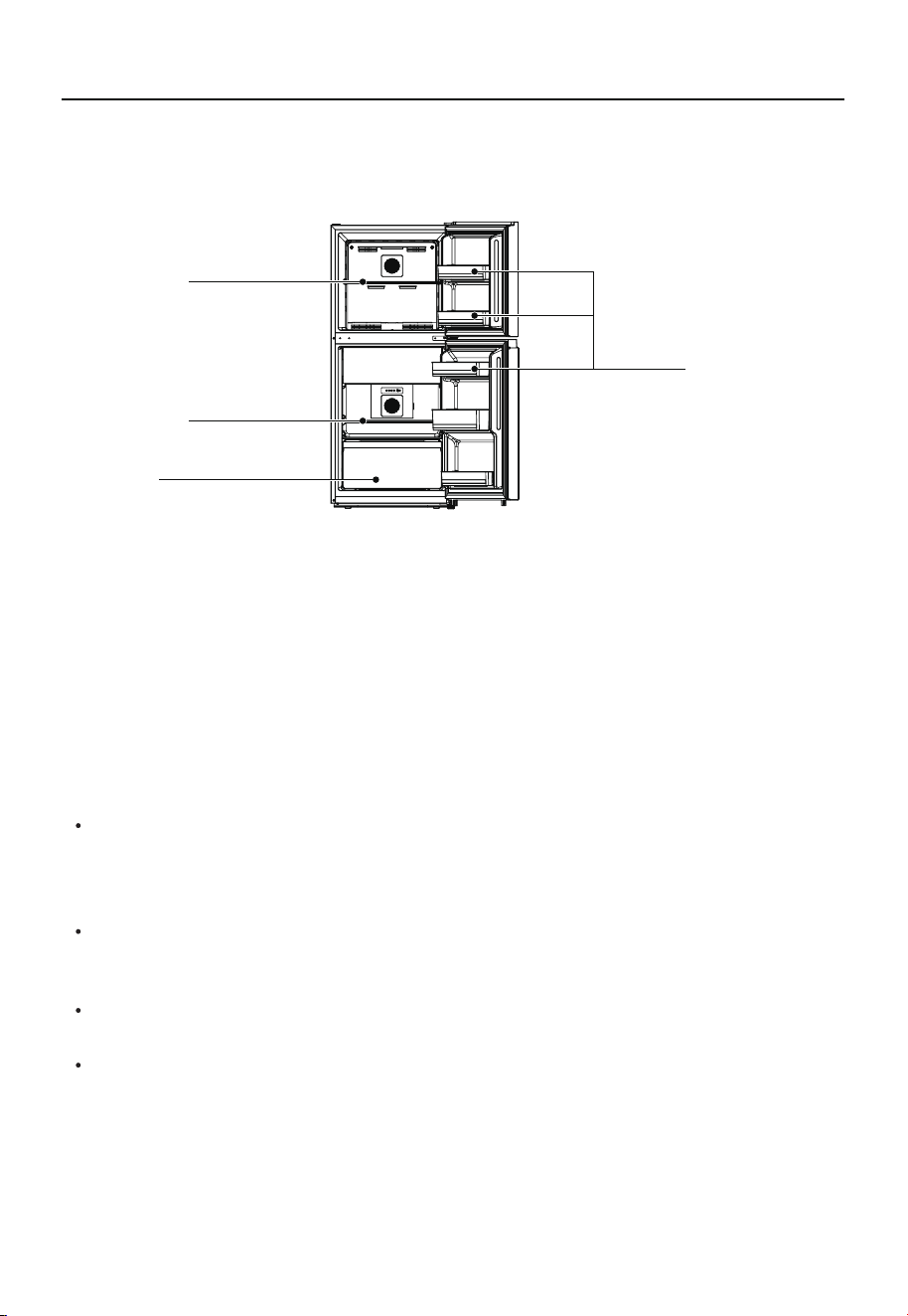
Glass shelf
Glass shelf
Fruits and vegetables
Drawer
Door tray
Refrigerating chamber
The Refrigerating chamber is suitable for storage of a variety of fruits, vegetables,
beverages and other food consumed in the short term, suggested storage time
3days to 5 days.
Cooking foods shall not be put in the refrigerating chamber until cooled to room
temperature.
Foods are recommended to be sealed up before putting into the refrigerator.
The glass shelves can be adjusted up or down for a reasonable amount of storage
space and easy use.
GR-RT238WE-PMY(50)
13
Freezing chamber
Note: Storage of too much food during operation after the initial refrigerator. Foods
stored shall not block the air outlet; or otherwise the freez ing eect will also be
adversely aected.
The low temperature freezing chamber may keep food fresh for a long time and it
is mainly used to store frozen foods and making ice.
The freezing chamber is suitable for storage of meat, sh, rice balls and other
foods not to be consumed in short term.
Chunks of meat are preferably to be divided into small pieces for easy access. Please
be noted food shall be consumed within the shelf time.
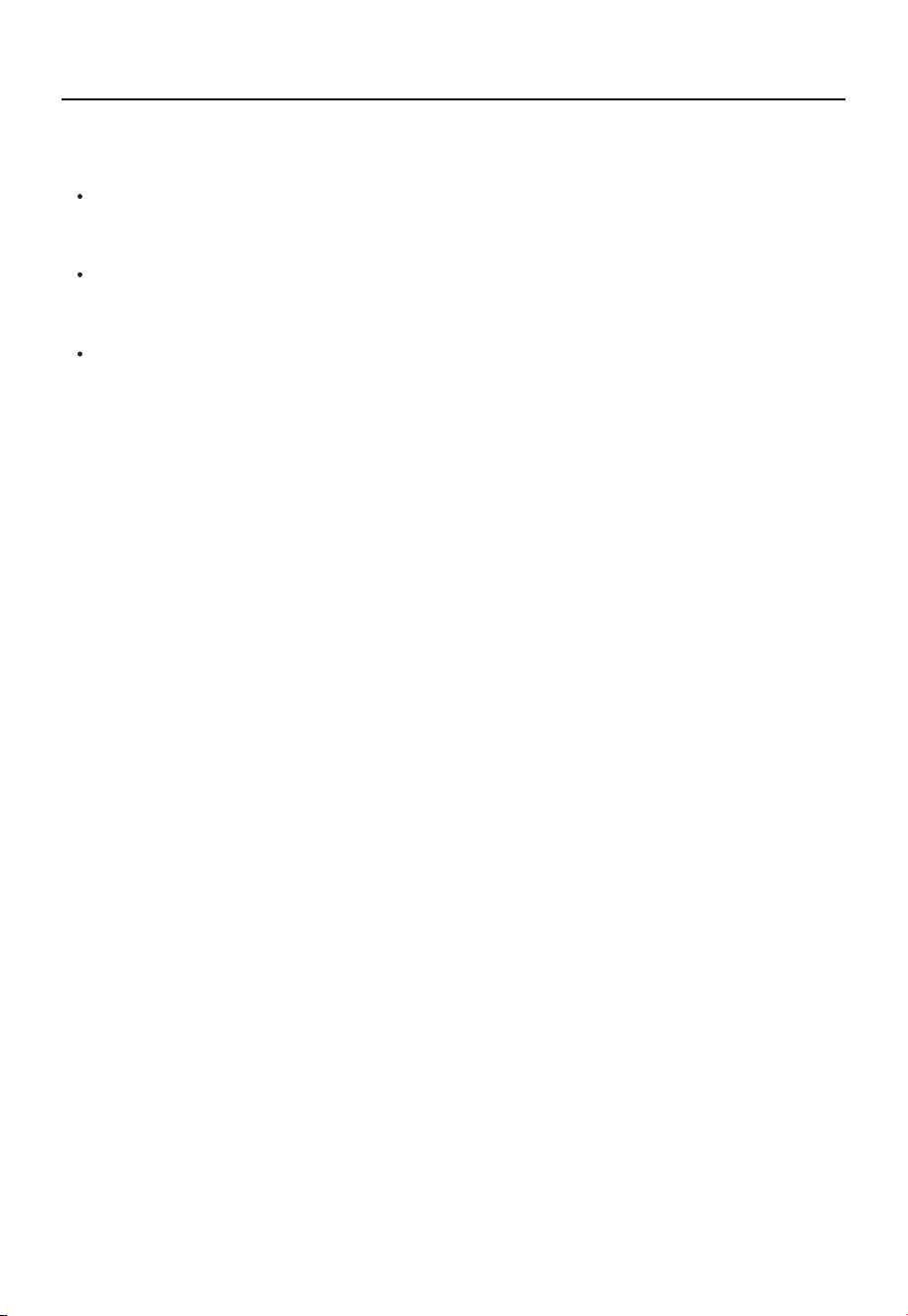
Drawers, food boxes, shelves, etc. placed according to the position in the picture above
are the most energy ecient.
14
3.2 Functions
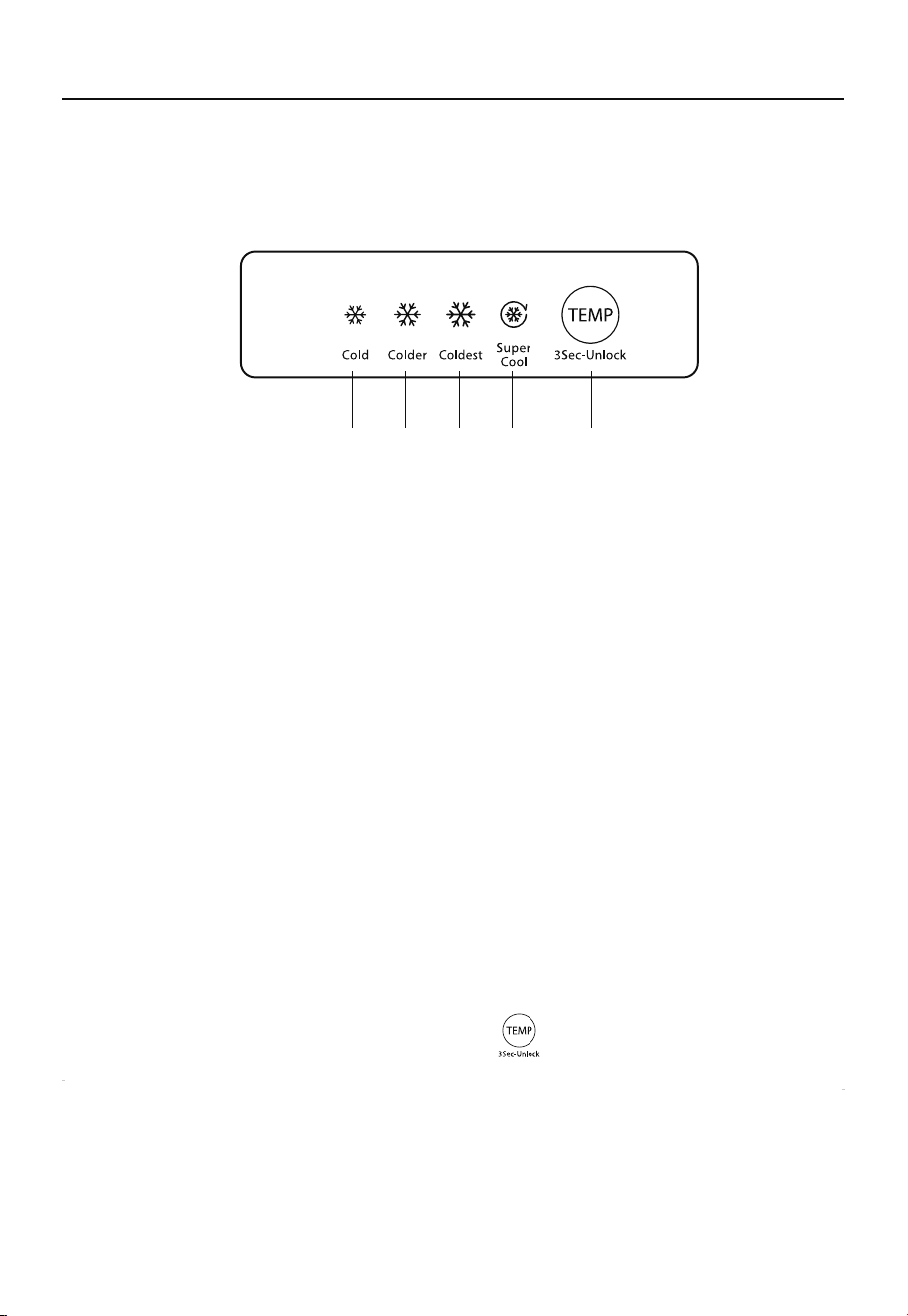
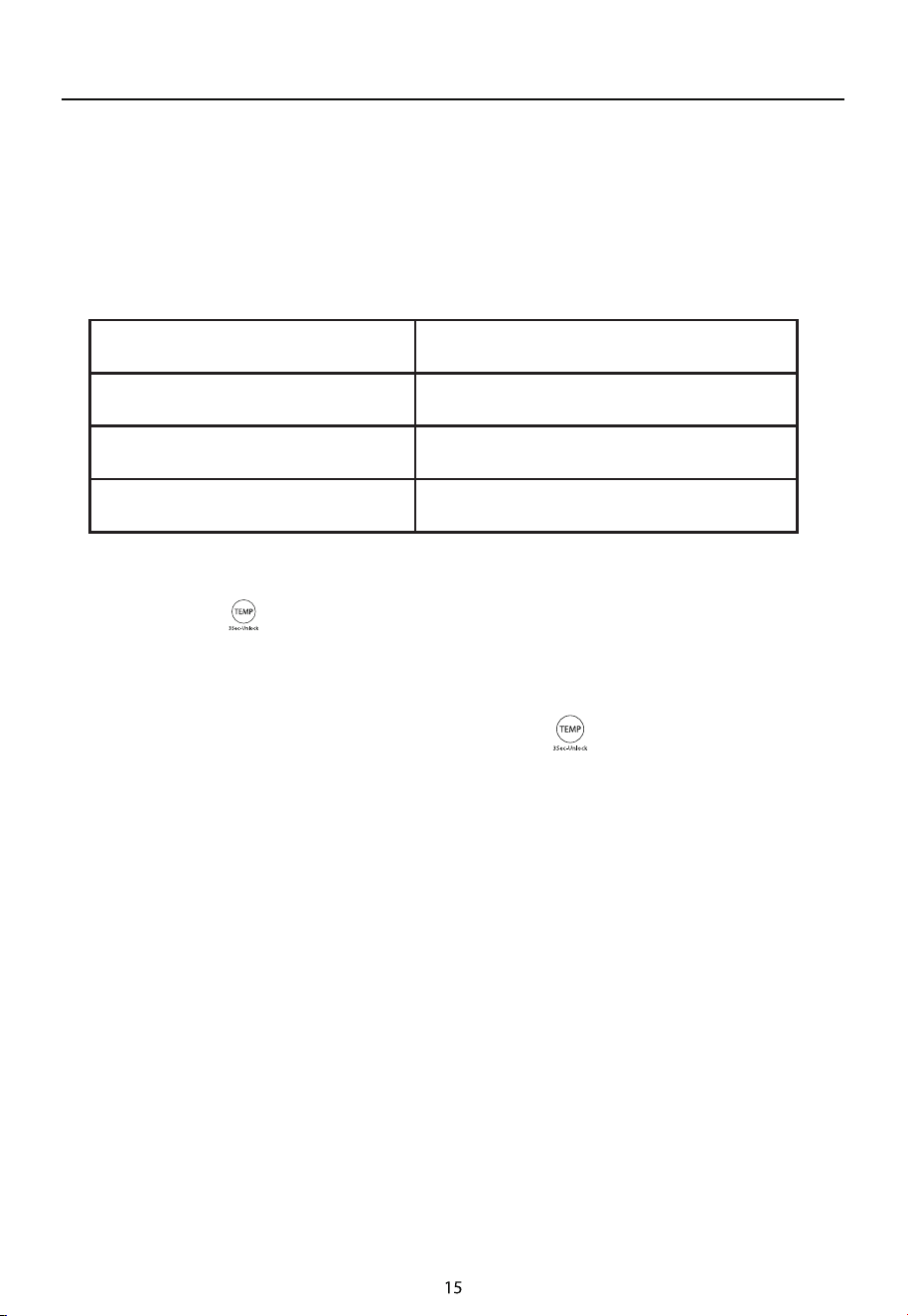
1. Operation button
(The picture above is only for reference. The actual conguration will
depend on the physical product or statement by the distributor)
A: Temperature setting button of refrigerator compartment
2. Control panel
LED 1: super cool setting,the highest setting
LED 2: coldest setting
LED 3: colder setting
LED 4: cold setting
3. Unlock/Lock
1) Under normal conditions, the unit will lock after15seconds of no door activity or
button operation;
2) While in the locked state, press and hold the for 3 seconds to unlock;
4 3 2 1 A
4. Display
The display lights up when the door is open and turns o after the door is closed; If a
'Visible Fault Code' type fault occurs and the door is open, the fault code will be
displayed. When electrify the refrigerator for rst time, all keys on the display light up
fully for 3 seconds, and then the refrigerator runs according to coldest setting. In case
of a failure, the corresponding LED blinks.
5. Temperature Setting
Each press of the changes the temperature setting in the
following sequence: LED2—LED1—LED4—LED3—LED2—……
6. Super Cool Mode Settings
(1) When the refrigerator is not in the o mode, press the button to switch to
'Super Cool' mode;
(2) The refrigerator automatically sets to 2°C, and the super cool indicator lights up;
Fault Codes Fault Name
LED1 and LED2 Flashing
LED1 and LED3 Flashing
LED1 and LED4 Flashing
Refrigerator Sensor Fault
Freezer Defrost Sensor Fault
Ambient Temperature Fault
7. Exiting Super Cool Mode
(1) After running for 6 hours in super cool mode, the system automatically exits super
cool mode;
(2) Adjusting the setting can also exit super cool mode;
(3) After exiting super cool mode, the display setting in the refrigerator compartment
remains unchanged, operating at the highest setting.
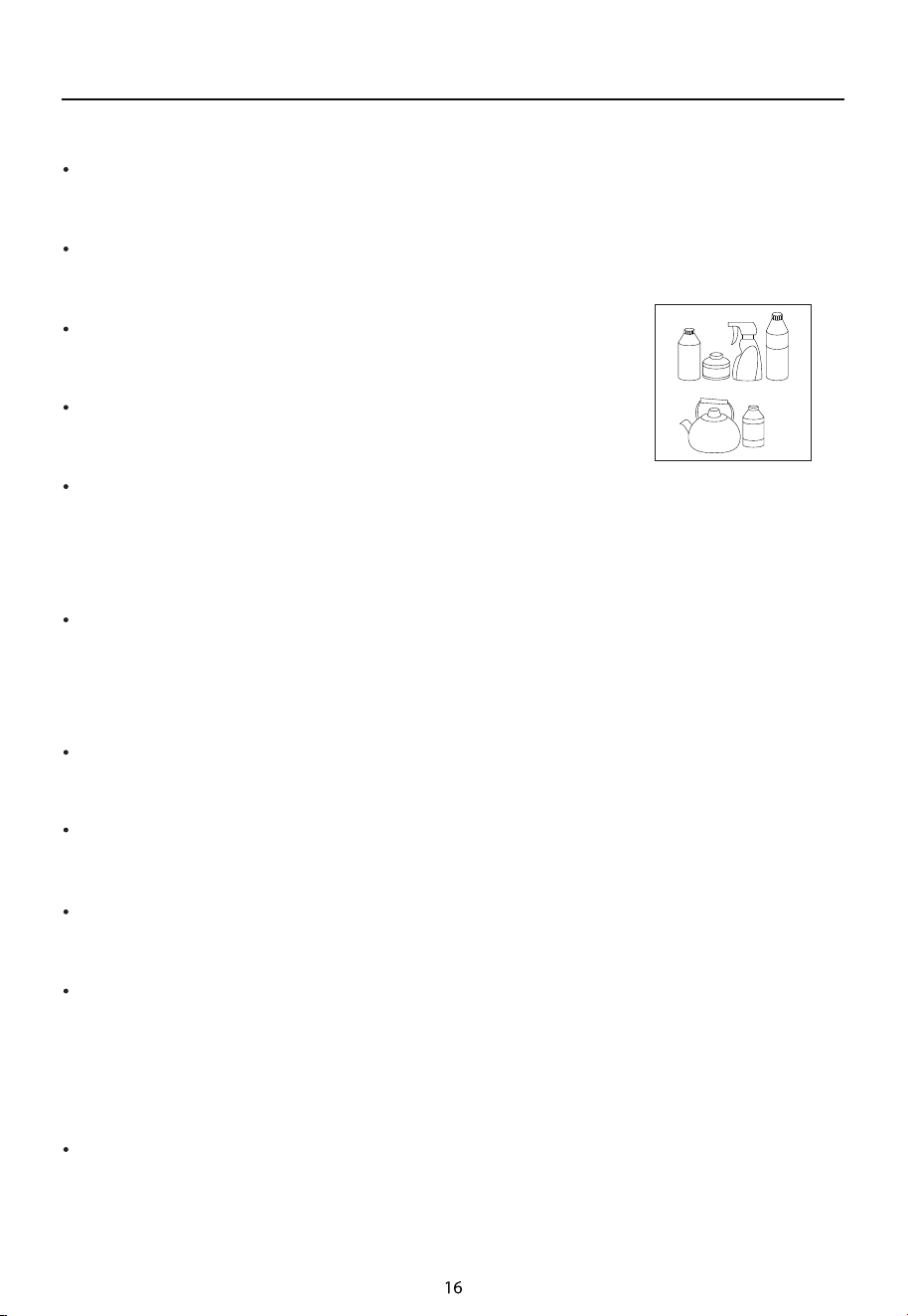
4.1 Overall cleaning
Dusts behind the refrigerator and on the ground shall be timely cleaned to improve
the cooling eect and energy saving.
Check the door gasket regularly to make sure there are no debris. Clean the door
gasket with a soft cloth dampened with soapy water or diluted detergent.
The interior of the refrigerator should be cleaned regularly
to avoid odor.
Please turn o the power before cleaning interior, remove
all foods, drinks, shelves, drawers, etc.
Use a soft cloth or sponge to clean the inside of the refrigerator, with two
tablespoons of baking soda and a quart of warm water. Then rinse with water and
wipe clean. After cleaning, open the door and let it dry naturally before turning on
the power.
For areas that are dicult to clean in the refrigerator (such as narrow sandwiches,
gaps or corners), it is recommended to wipe them regularly with a soft rag, soft
brush, etc. and when necessary, combined with some auxiliary tools (such as thin
sticks) to ensure no contaminants or bacterial accumulation in these areas.
Do not use soap, detergent, scrub powder, spray cleaner, etc. as these may cause
odors in the interior of the refrigerator or contaminated food.
Clean the bottle frame, shelves and drawers with a soft cloth dampened with soapy
water or diluted detergent. Dry with a soft cloth or dry naturally.
Wipe the outer surface of the refrigerator with a soft cloth dampened with soapy
water, detergent, etc., and then wipe dry.
Do not use hard brushes, clean steel balls, wire brushes, abrasives (such as
toothpastes), organic solvents (such as alcohol, acetone, Isoamyl acetate, etc.),
boiling water, acid or alkaline items, which may damage the fridge surface and
interior. Boiling water and organic solvents such as benzene may deform or damage
plastic parts.
Do not rinse directly with water or other liquids during cleaning to avoid short circuits
or aect electrical Insulation after immersion.
4. Maintenance and care of the refrigerator
Gas
Detergent
Bananaoil
Alcohol
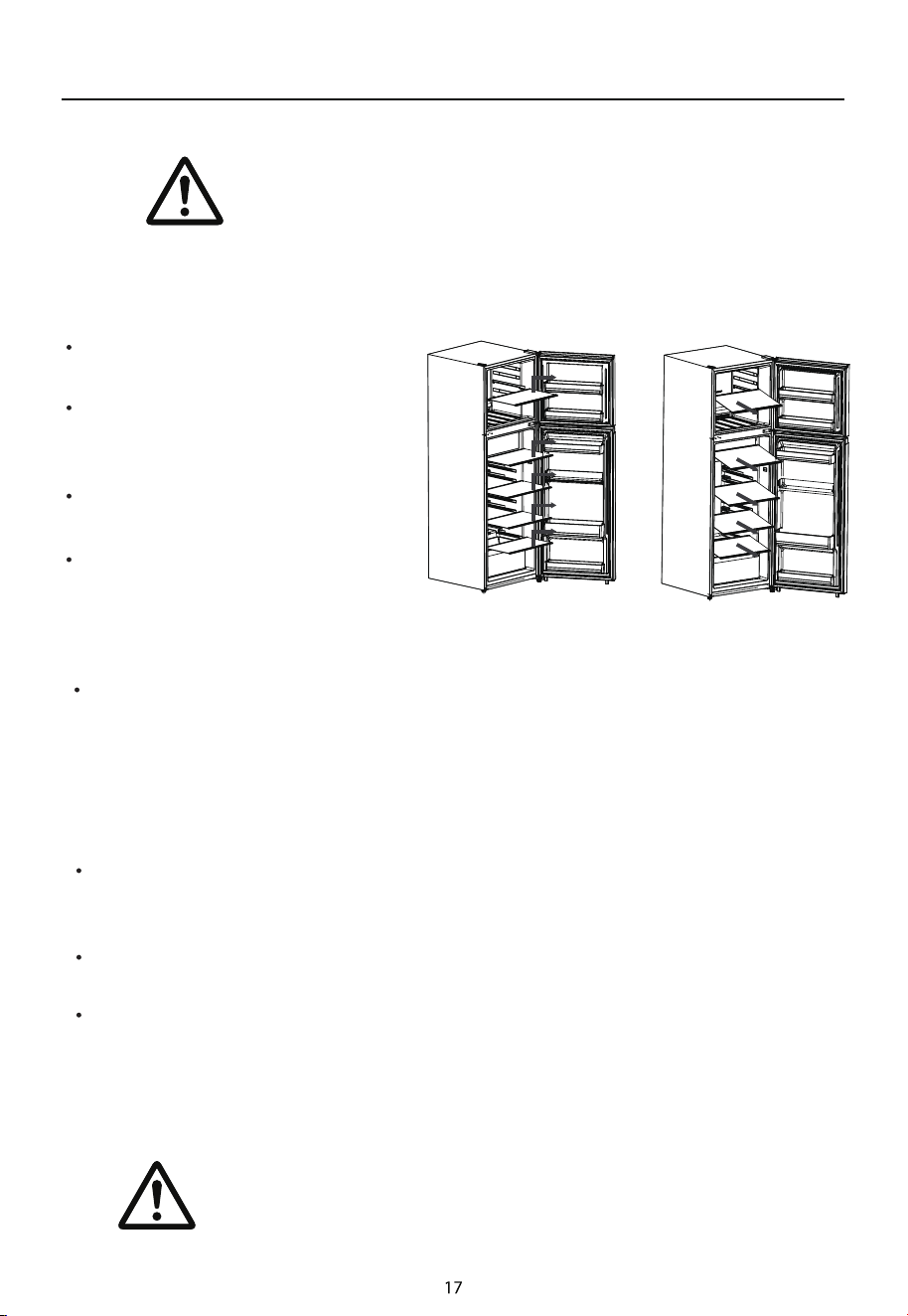
4.2 Cleaning method for glass shelves:
Lift the rear of the glass shelf
slightly and pull it outwards;
Tilt the glass shelf slightly
downward at a certain angle and
remove it;
Remove the glass shelf and clean
it as needed;
Install the glass shelf by reversing
the removal process.
Please unplug the refrigerator for defrost and cleaning.
4.3 Defrosting
This refrigerator is made according to the principle of air cooling, so it has an
automatic defrosting function. Frost formed due to seasonal or temperature
changes can also be removed manually by disconnecting the power from the
device or wiping with a dry towel.
4.4 Out of operation
Power failure: If there is a power failure, the food in the refrigerator can be kept for
several hours even in summer; in the event of a power failure, the opening time
should be reduced and fresh food should no longer be placed in the refrigerator.
Long-term non-use: The electrical plug should be unplugged and then cleaned; open
the refrigerator door to prevent odors.
Movement: Before moving the refrigerator, remove all items from the inside to the
outside, secure the glass shelf, fruit vegetable bin cover, freezer drawers, etc., and
tighten the leveling feet; close the door and seal with tape. The equipment shall not
be inverted or placed horizontally during the moving process; the inclination when
moving shall not be greater than 45°.
The appliance shall run continuously once it is started.
Generally, the operation of the appliance shall not be
interrupted; otherwise the service life may be impaired.
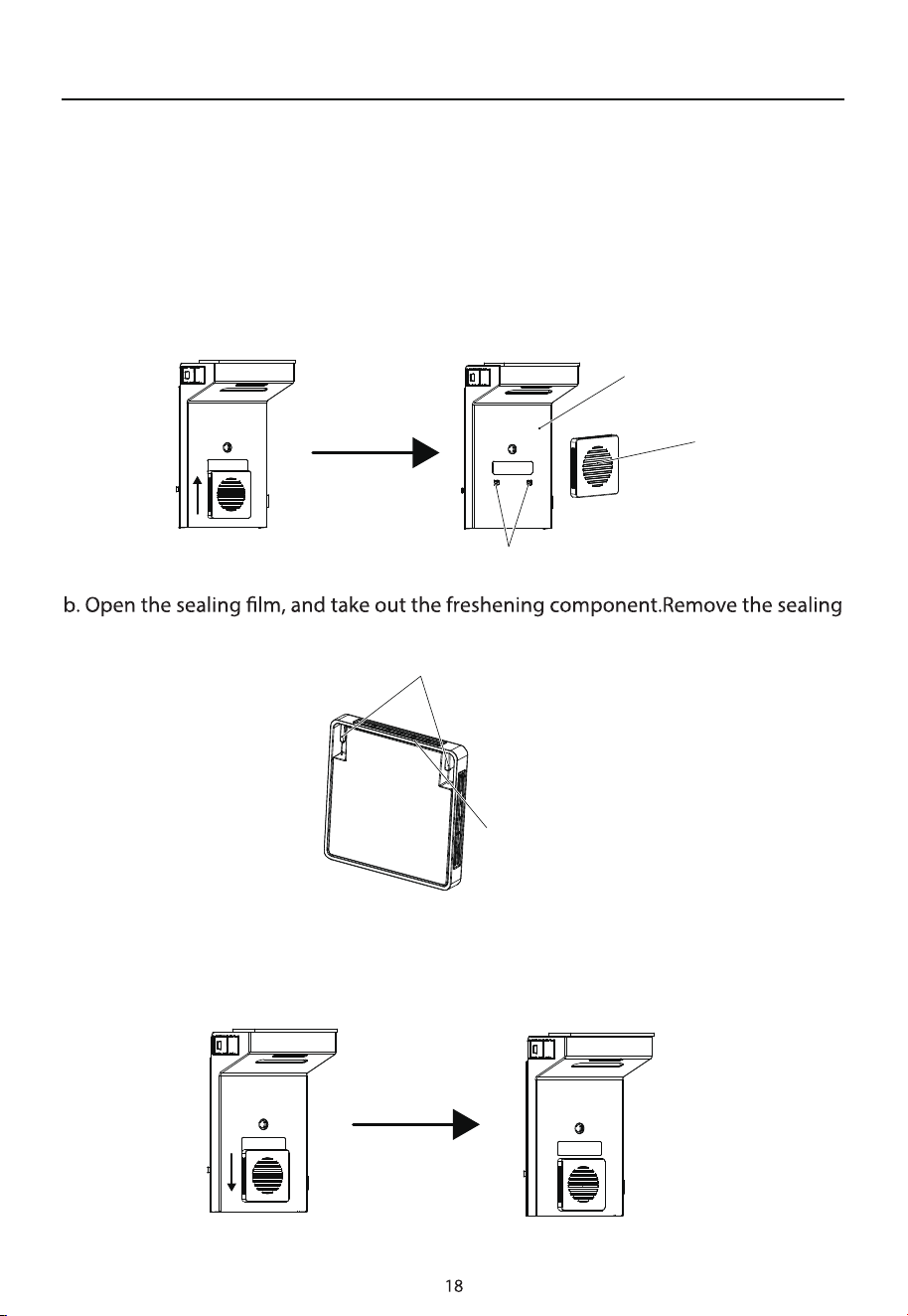
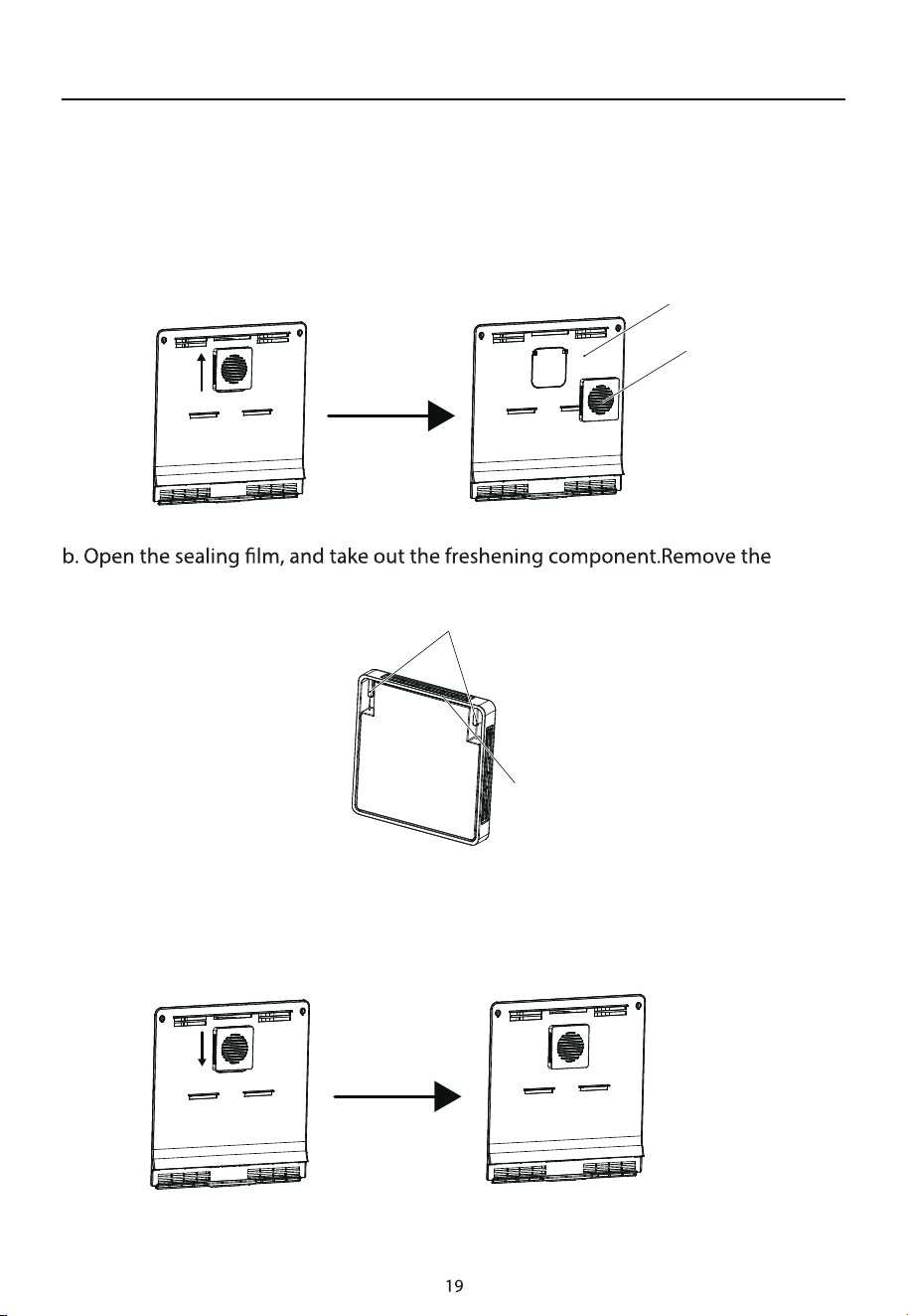
4.5 Addition of Freshening Installation and Replacement Instructions
(1) Freshening Installation Steps for Refrigerator:
Assemble from
top to bottom
The side with this clip facing up
Sealing Strip
Refrigerator Air
Duct Component
Freshening
Component
Hook
Bottom-up
removal
a.Remove the sealed freshening component from the refrigerator door tray or the
refrigerated air duct (from bottom to top).
The steps to remove the freshening component from the refrigeration air duct are
as follows:
strip from the top of the back of the freshening component.
c. Align the freshening component with the air duct, move the freshening compo-
nent from top to bottom, and attach the buckle to the air duct hook. After moving,
please ensure that the freshening component is correctly installed.
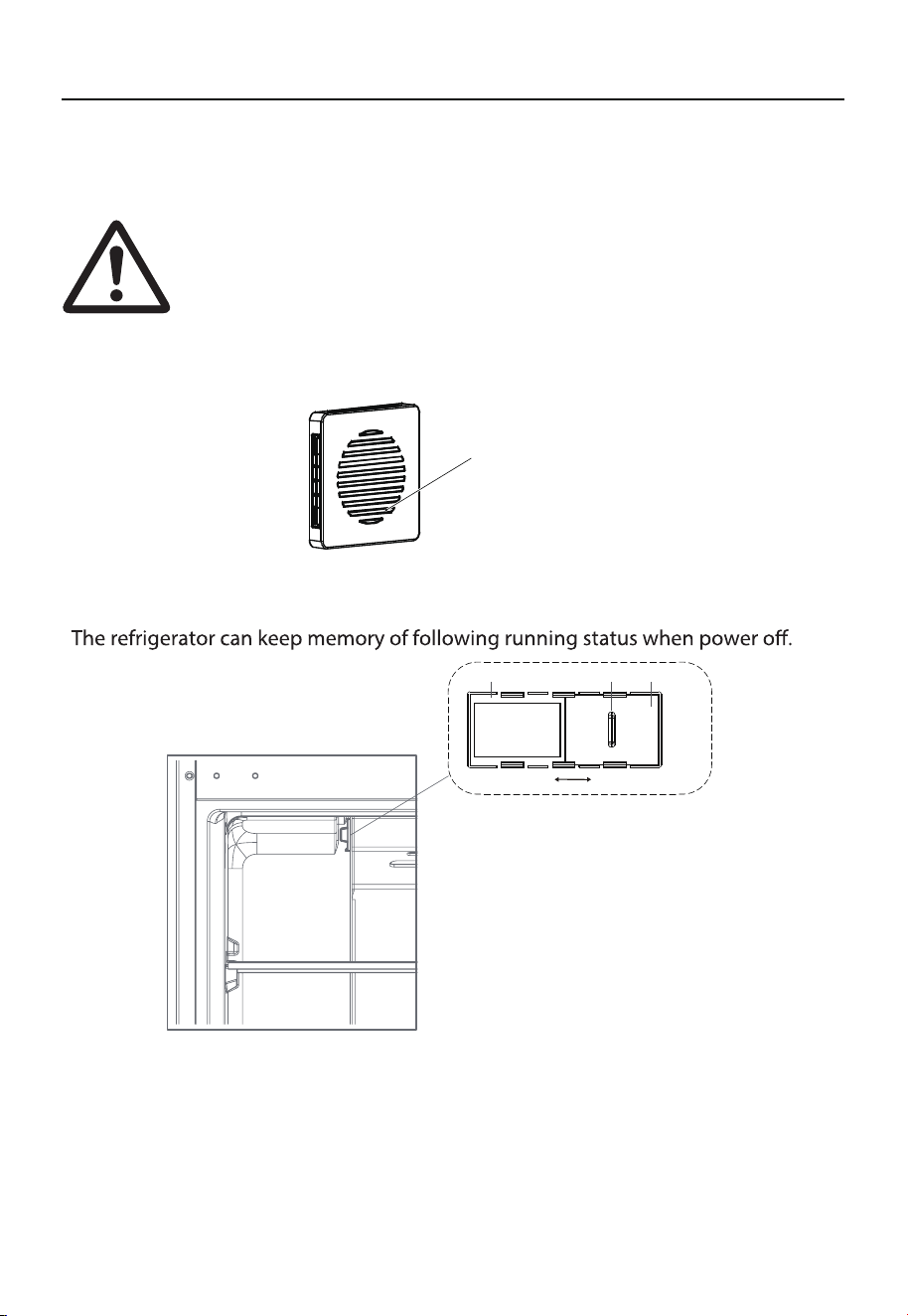
(2) Installation Steps for Freezer Deodorizer:
Assemble from
top to bottom
The side with this clip facing up
Sealing Strip
Freezer Air Duct
Component
Freshening
Component
Bottom-up
removal
a.Remove the sealed freshening component from the refrigerator door tray or the
freezer air duct (from bottom to top).
The steps to remove the freshening component from the freezer air duct are as
follows:
c. Align the freshening component with the air duct, move the freshening
component from top to bottom, and attach the buckle to the air duct hook. After
moving, please ensure that the freshening component is correctly installed.
sealing strip from the top of the back of the freshening component.
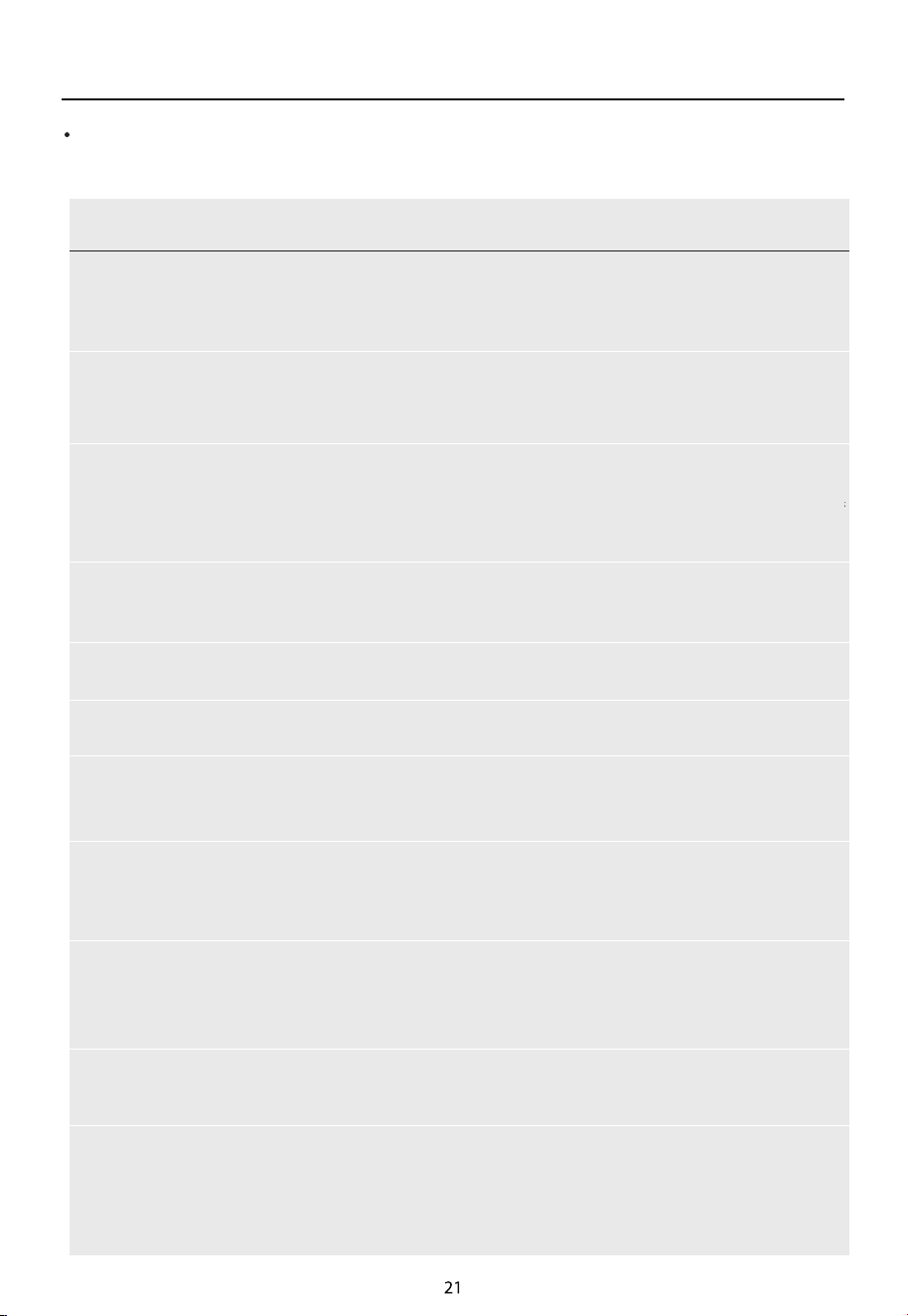
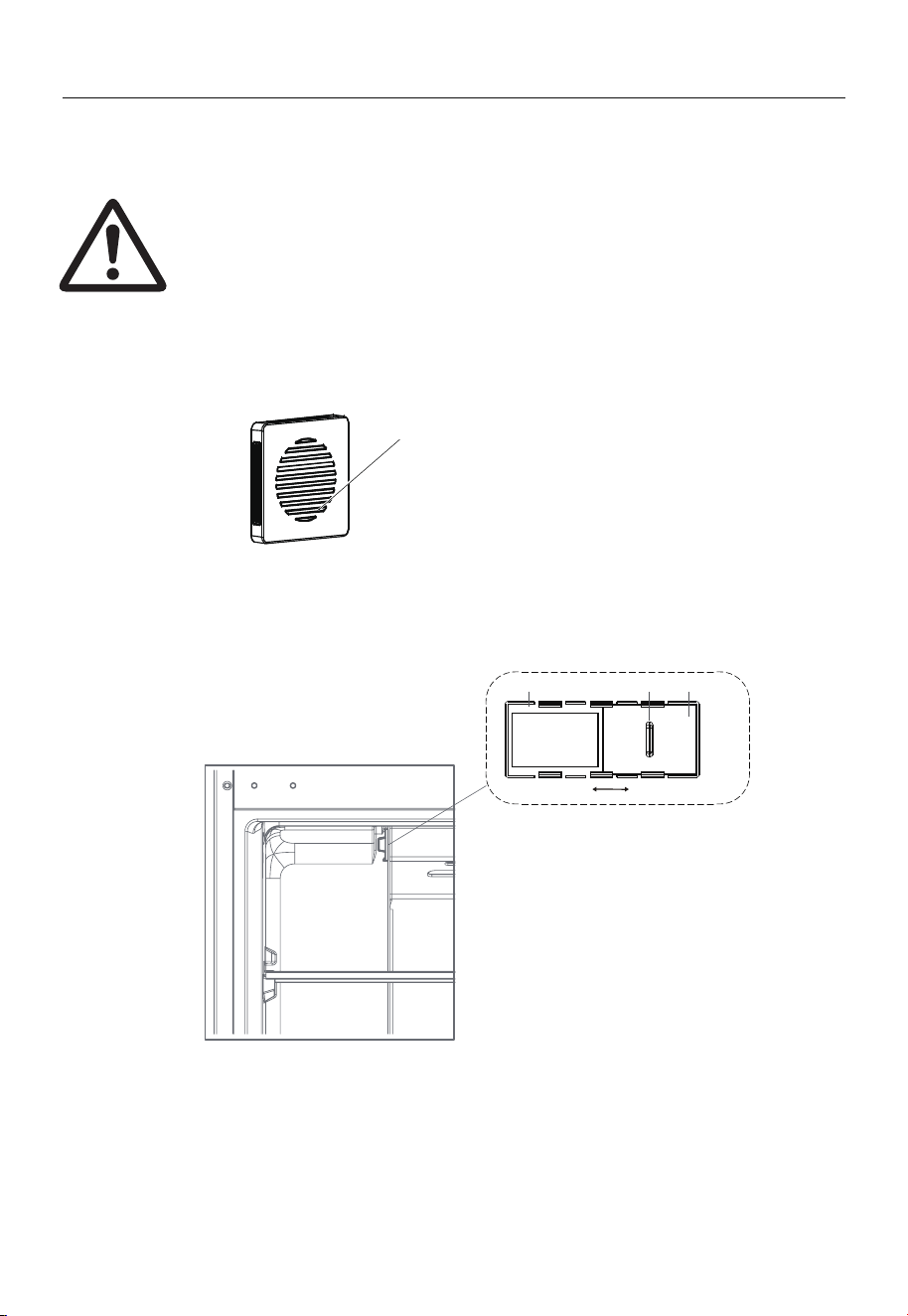
4.6 Damper adjusting slider
(3) Deodorizer Notice
20
Replace when the internal yellow
gel remains only to this position,
or after 6 months of use.
.
The temperature inside the freezer can be adjusted by changing the position of the
damper slider.The initial position of the damper slider is at position A.If lower temp-
erature inside the freezer is required, you can adjust the damper slider from the
position A to left side.
.
For better use of the refrigerator , it is recommended to keep the damper slider at
initial position.
.
COLDEST
COLD
MAX
Damper SliderA
a. This product is not edible.
b. Please place in a location out of reach of children.
c. Avoid direct sunlight or high-temperature storage.
d. Do not use for any other purpose.
e. When using the deodorizer component, ensure it stands upright.
f. Replace the deodorizer component in the refrigerator every 5-6
months, or when the gel remains only to the position shown in
the diagram.
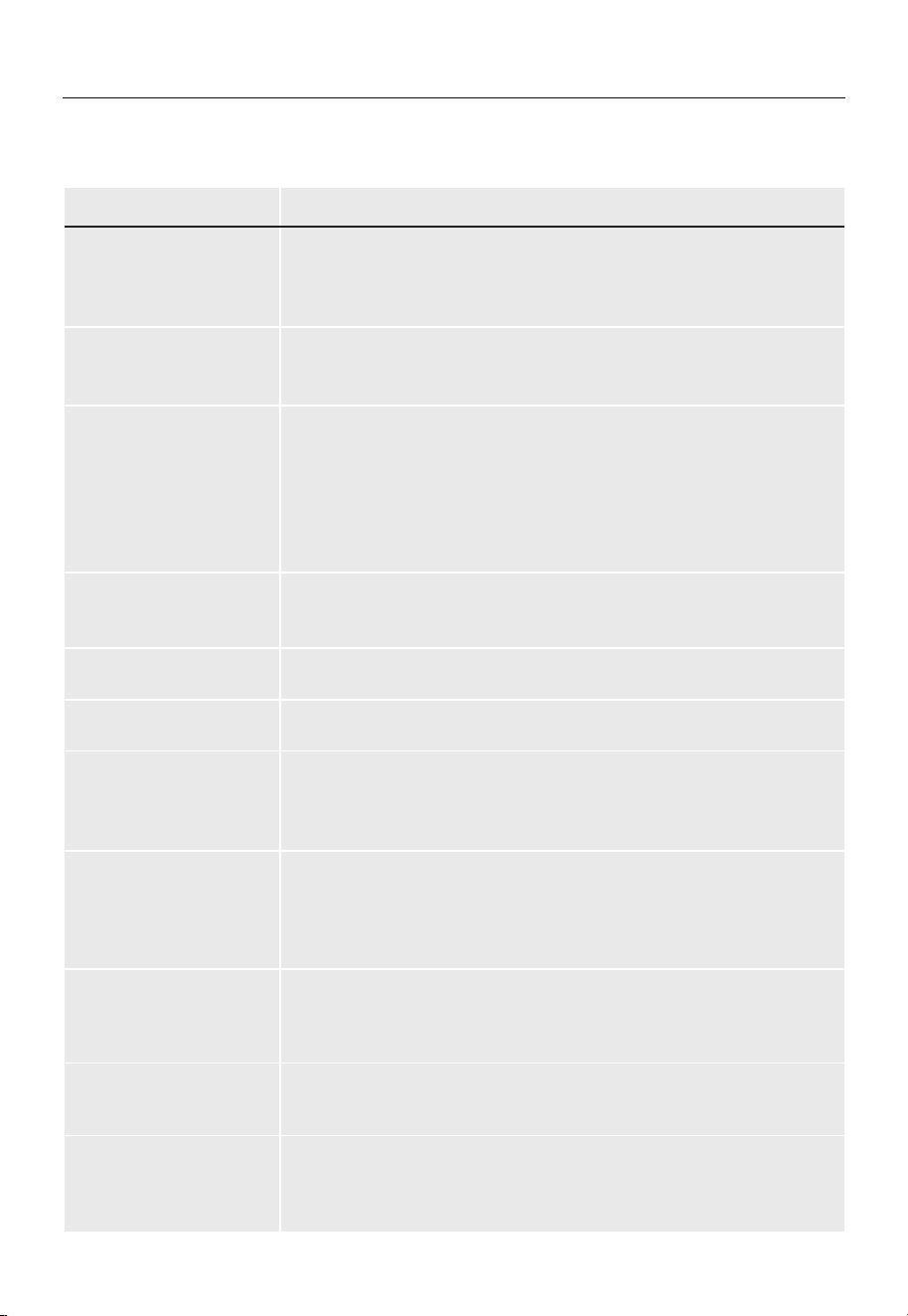
You may try to solve the following simple problems by yourself. If them cannot be
solved, please contact the after-sales department.
5. Trouble shooting
Occurrence
Failed operation
Odor
Light fails to get lit
Loud noise
Water pan overows
Hot housing
Surface condensation
Abnormal noise
Buzz: The compressor may produce buzzes during operation, and the
buzzes are loud particularly upon start or stop. This is normal.
Creak: Refrigerant owing inside of the appliance may produce creak,
which is normal
Condensation on the exterior surface and door seals of the refrigerator
is normal when the ambient humidity is too high. Just wipe the condensate
with a clean towel
Heat dissipation of the built-in condenser via the housing, which is normal
When housing becomes hot due to high ambient temperature,
storage of too much food or shutdown of the compressor is shut down,
provide sound ventilation to facilitate heat dissipation
There is too much food in the chamber or food stored contains
too much water,resulting in heavy defrosting
The doors are not closed properly, resulting in frosting due to entry
of air and increased water due to defrosting
Remove foreign matters on the door seal
Heat the door seal and then cool it for restoration
(or blow it with an electrical drier or use a hot towel for heating)
Door seal fails to
be tight
Check whether the oor is level and whether the refrigerator is placed stably
Check whether accessories are placed at proper locations
The door is stuck by food packages Too much food is placed
The refrigerator is tilted
Doors cannot be
properly closed
Check whether the refrigerator is connected to power supply and
whether the illuminating light is damaged
Have the light replaced by a specialist
Long-time operation
of the compressor
Odorous foods shall be tightly wrapped
Check whether there is any rotten food
Clean the inside of the refrigerator
Replace the deodorizer block
Long operation of the refrigerator is normal in summer
when the ambient temperature is high
It is not suggestible having too much food in the appliance at the
same time
The doors are opened too frequently
Check whether the appliance is connected to power or
whether the plug is in well contact
Check whether the voltage is too low
Check whether there is a power failure or partial circuits have tripped
Possible cause/inspection items
Food shall get cool before being put into the appliance
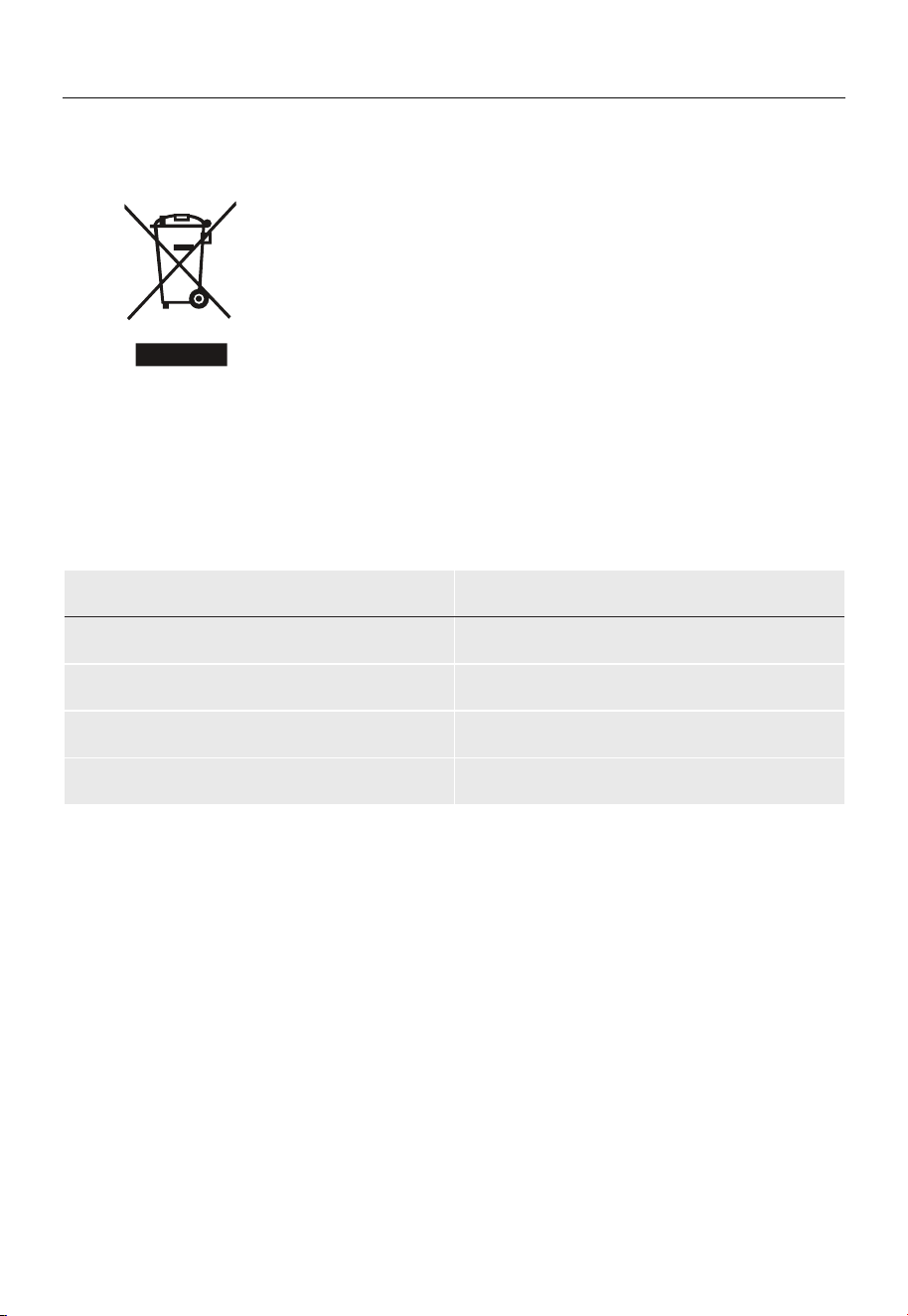
AMBIENT TEMPERATURE
Climate category
SN
N
ST
T
+10°C to +32°C
+16°C to +32°C
+16°C to +38°C
+16°C to +43°C
Ambient temperature (from...to...)
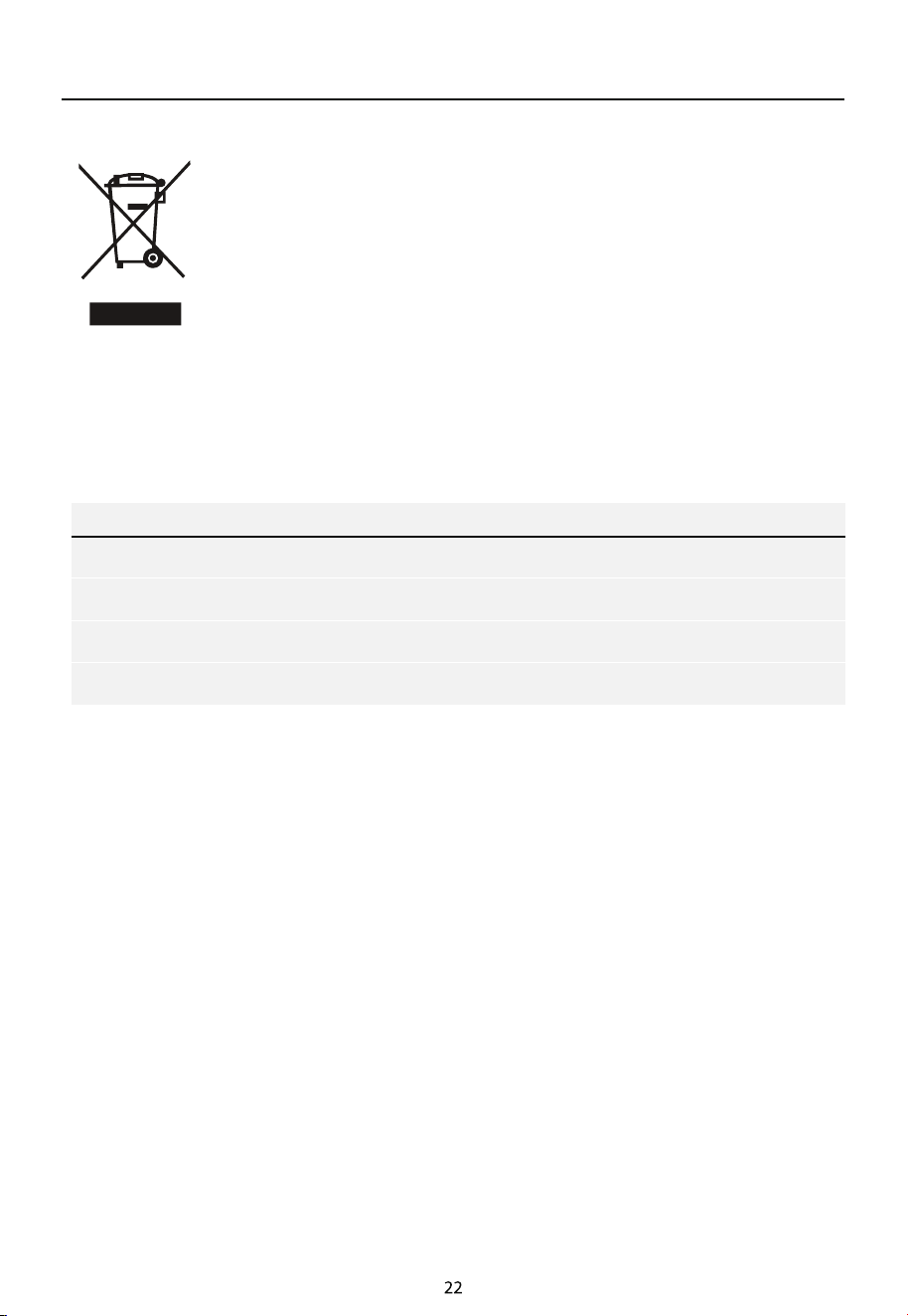
Correct Disposal of this product:
This marking indicates that this product should not be disposed
with other household wastes throughout the EU. To prevent
possible harm to the environment or human health from
uncontrolled waste disposal, recycle it responsibly to promote
the sustainable reuse of material resources. To return your used
device, please use the return and collection systems or contact
the retailer where the product was purchased. They can take this
product for environmental safe recycling.
This appliance is designed to operate in ambient temperature specied by its category
marked onthe rating plate.
6. Disposal of your appliance
https://www.toshiba-lifestyle.com/my/
MANUAL
PENGGUNA
PETI SEJUK BEKU
Untuk Kegunaan Rumah Sahaja
GR-RT238WE-PMY(**)
GR-RT312WE-PMY(**)
GR-RT351WE-PMY(**)
KANDUNGAN
1. Amaran keselamatan ........................................................................1
2. Penggunaan peti sejuk beku yang betul .........................................8
3. Struktur dan fungsi ...........................................................................1
4. Penyelenggaraan dan penjagaan peti sejuk ...................................1
5. Penyelesaian masalah .......................................................................2
6. Pelupusan perkakas anda .................................................................2
Pengguna yang dihormati:
• Terima kasih banyak kerana membeli produk Toshiba ini.
• Baca manual pemilik ini dan kenali sepenuhnya produk sebelum
digunakan untuk menggunakan produk ini dengan selamat dan
betul.
• Simpan manual pemilik ini di tempat yang berguna untuk rujukan
masa hadapan.
• Pastikan anda menerima jaminan anda.
1
1. Amaran keselamatan
BACA LANGKAH BERJAGA-JAGA KESELAMATAN SEBELUM PEMASANGAN
Untuk mengelakkan kecederaan kepada pengguna atau orang lain dan kerosakan
harta benda, arahan berikut mesti dipatuhi. Operasi yang salah kerana mengabaikan
arahan boleh menyebabkan bahaya atau kerosakan.
1.1 Amaran
Amaran: risiko kebakaran / bahan mudah terbakar
• AMARAN: Risiko bencana kebakaran dan letupan
Bahan penyejuk perkakas mudah terbakar, sila berhati-hati agar tidak
merosakkan paip bahan penyejuk semasa pemasangan dan pengangkutan.
Jika kebocoran gas berlaku, sila hubungi pengedar atau ejen perkhidmatan
tempatan, dan langkah berjaga-jaga berikut hendaklah sentiasa diambil:
1. Buka tingkap untuk memastikan pengudaraan yang baik.
2. Tiada api di sekeliling dan sila jangan gunakan perkakas elektrik lain.
• Perkakas ini bertujuan untuk digunakan dalam rumah dan aplikasi serupa
seperti kawasan dapur kakitangan di kedai, pejabat dan persekitaran kerja
lain; rumah ladang dan oleh pelanggan di hotel, motel dan persekitaran jenis
kediaman lain; persekitaran jenis katil dan sarapan; katering dan aplikasi
bukan runcit yang serupa.
• Kanak-kanak harus diawasi untuk memastikan bahawa mereka tidak bermain
dengan perkakas.
• AMARAN: Risiko bencana kebakaran dan kejutan elektrik
Kord kuasa hendaklah diganti apabila ia telah rosak. Sila hubungi pengedar
atau ejen perkhidmatan tempatan untuk penggantian.
• Sila cabut palam kuasa daripada soket apabila membersihkan perkakas atau
biarkan perkakas tidak digunakan untuk masa yang lama.
• Jangan gunakan kord sambungan atau penyesuai yang tidak dibumikan
(dua-serampang).
• AMARAN: Pastikan bukaan pengudaraan di dalam kepungan perkakas atau
dalam struktur terbina dalam bersih daripada halangan.
• AMARAN: Jangan gunakan peranti mekanikal atau cara lain untuk
mempercepatkan proses penyahbekuan, selain daripada yang disyorkan
oleh pengilang.
• AMARAN: Jangan rosakkan litar bahan penyejuk.
• AMARAN: Jangan gunakan peralatan elektrik di dalam petak penyimpanan
makanan perkakas, melainkan jenis yang disyorkan oleh pengilang.

2
• AMARAN: Sila lupuskan peti sejuk mengikut pengawal selia tempatan kerana
ia menggunakan bahan berbuih siklopentana dan bahan penyejuk yang
mudah terbakar.
• AMARAN: Apabila meletakkan perkakas, pastikan kord bekalan tidak
terperangkap atau rosak.
• AMARAN: Jangan letak berbilang alur keluar soket mudah alih atau bekalan
kuasa mudah alih di bahagian belakang perkakas.
• AMARAN: Sila isi dengan air yang boleh diminum sahaja. Tolong jangan isi air
panas atau cecair selain air yang boleh diminum, seperti jus.
• BAHAYA: Risiko terperangkap kanak-kanak. Sebelum anda membuang peti
sejuk atau penyejuk beku yang lama anda:
—Tanggalkan pintu.
—Biarkan rak di tempatnya supaya kanak-kanak tidak mudah memanjat ke
dalam.
• Peti sejuk mesti diputuskan daripada sumber bekalan elektrik sebelum
mencuba pemasangan aksesori.
• Bahan penyejuk dan bahan berbuih siklopentana yang digunakan untuk
peti sejuk adalah mudah terbakar. Oleh itu, apabila perkakas itu dibuang, ia
hendaklah dijauhkan daripada sebarang punca kebakaran dan dipulihkan
oleh syarikat pemulihan khas yang mempunyai kelayakan yang sepadan
selain daripada dilupuskan melalui pembakaran, untuk mengelakkan
kerosakan kepada alam sekitar atau sebarang bahaya lain.
• Untuk standard IEC: Perkakas ini tidak dimaksudkan untuk digunakan oleh
orang (termasuk kanak-kanak) yang kurang keupayaan zikal, deria atau
mental, atau kurang pengalaman dan pengetahuan, melainkan mereka telah
diberi pengawasan atau arahan mengenai penggunaan perkakas oleh orang
yang bertanggungjawab untuk keselamatan mereka.
• Untuk standard EN: Perkakas ini boleh digunakan oleh kanak-kanak berumur
dari 8 tahun ke atas dan orang yang kurang keupayaan zikal deria atau
mental atau kurang pengalaman dan pengetahuan jika mereka telah diberi
penyeliaan atau arahan mengenai penggunaan perkakas dengan cara yang
selamat dan memahami bahaya terbabit. Kanak-kanak tidak boleh bermain
dengan perkakas. Pembersihan dan penyelenggaraan pengguna tidak boleh
dibuat oleh kanak-kanak tanpa pengawasan.
• Tolong jangan gunakan perkakas pada laluan lalu lintas (seperti kapal dan
sebagainya).
• Jika bunyi bising, bau dan merokok berlaku, sila cabut palam kuasa dengan
segera, dan hubungi pengedar atau ejen perkhidmatan tempatan.
• Tolong jangan letakkan tangan anda di bawah atau di belakang perkakas
untuk mengelakkan daripada cedera.

3
• Sila tinggalkan bahan pembungkusan dan bahagian lain di luar jangkauan
kanak-kanak untuk mengelakkan risiko lemas.
• Untuk mengelakkan pencemaran makanan, sila patuhi arahan berikut:
— Pintu terbuka untuk tempoh yang lama boleh menyebabkan
peningkatan ketara suhu dalam petak perkakas.
— Bersihkan dengan kerap permukaan yang boleh bersentuhan dengan
makanan dan sistem saliran yang boleh diakses.
— Bersihkan tangki air jika ia tidak digunakan selama 48 jam, siram sistem
air yang disambungkan ke bekalan air jika air tidak diambil selama 5 hari.
(nota 1)
— Simpan daging dan ikan mentah dalam bekas yang sesuai di dalam peti
sejuk, supaya ia tidak bersentuhan atau menitis ke makanan lain.
— Petak makanan beku dua bintang sesuai untuk menyimpan makanan
pra-beku, menyimpan atau membuat ais krim dan membuat kiub. (nota
2)
— Petak satu-, dua- dan tiga bintang tidak sesuai untuk membekukan
makanan segar. (nota 3)
— Untuk perkakas tanpa petak 4 bintang: perkakas penyejukan ini tidak
sesuai untuk membekukan bahan makanan. (nota 4)
— Jika perkakas penyejuk dibiarkan kosong untuk tempoh yang lama,
matikan, nyahbeku, bersihkan, keringkan, dan biarkan pintu terbuka
untuk mengelakkan acuan berkembang di dalam perkakas.
• Nota 1,2,3: Sila sahkan sama ada ia boleh digunakan mengikut jenis petak
produk anda.
• Untuk perkakas berdiri bebas: perkakas penyejukan ini tidak bertujuan untuk
digunakan sebagai perkakas terbina dalam.
• S
• AMARAN : Untuk mengelakkan bahaya akibat ketidakstabilan perkakas, ia
mesti diperbaiki mengikut arahan.
ebarang penggantian atau penyelenggaraan lampu LED bertujuan untuk
dibuat oleh pengilang, ejen perkhidmatannya atau orang berkelayakan yang
serupa.
4
1.2 Maksud simbol amaran keselamatan
Simbol larangan
Ini adalah simbol larangan.
Sebarang ketidakpatuhan terhadap arahan yang
ditandakan dengan simbol ini boleh mengakibatkan
kerosakan pada produk atau membahayakan keselamatan
peribadi pengguna.
Simbol wajib
Ini adalah simbol wajib.
Ia dikehendaki beroperasi dengan mematuhi arahan yang
ditanda dengan simbol ini; atau sebaliknya kerosakan pada
produk atau kecederaan peribadi mungkin disebabkan.
Simbol peringatan
Ini adalah simbol peringatan.
Arahan yang ditanda dengan simbol ini memerlukan
perhatian khusus. Berhati-hati yang tidak mencukupi boleh
mengakibatkan kecederaan ringan atau sederhana, atau
kerosakan pada produk.
Manual ini mengandungi banyak maklumat keselamatan penting yang perlu
dipatuhi oleh pengguna.
1.3 Amaran berkaitan elektrik
• Jangan tarik kord kuasa semasa menarik palam kuasa
peti sejuk. Sila genggam palam dengan kuat dan cabut
terus dari soket.
• Untuk memastikan penggunaan yang selamat, jangan
rosakkan kord kuasa atau gunakan kord kuasa apabila
ia rosak atau haus.
• Tolong jangan sentuh palam kuasa dengan tangan
yang basah untuk mengelakkan daripada renjatan
elektrik.
• Sila gunakan soket kuasa khusus dan soket kuasa tidak
boleh dikongsi dengan peralatan elektrik lain. Palam
kuasa hendaklah disentuh dengan kuat ke soket atau
kebakaran mungkin berpunca.
5
Gas
• Sila pastikan bahawa elektrod pembumian soket kuasa
dilengkapi dengan talian pembumian yang boleh
dipercayai.
• Sila minta bantuan daripada orang yang mempunyai
kelayakan profesional untuk memeriksa sama ada
soket itu mempunyai talian pembumian yang boleh
dipercayai atau tidak.
• Adalah menjadi tanggungjawab pengguna akhir untuk
menukar soket yang tidak dibumikan kepada soket
yang dibumikan.
• Sila matikan injap gas yang bocor dan kemudian buka
pintu dan tingkap sekiranya berlaku kebocoran gas dan
gas mudah terbakar lain. Jangan cabut plag peti sejuk
dan peralatan elektrik lain memandangkan percikan
api boleh menyebabkan kebakaran.
• Jangan gunakan peralatan elektrik di atas perkakas,
melainkan jenis yang disyorkan oleh pengilang.
1.4 Amaran untuk penggunaan
• Jangan sewenang-wenangnya membuka atau
membina semula peti sejuk, atau merosakkan litar
bahan penyejuk; penyelenggaraan perkakas mesti
dijalankan oleh pakar.
• Kord kuasa yang rosak mesti diganti oleh pengilang,
jabatan penyelenggaraannya atau profesional yang
berkaitan untuk mengelakkan bahaya.
• Celah antara pintu peti sejuk dan antara pintu dan
badan peti sejuk adalah kecil, ambil perhatian untuk
tidak meletakkan tangan anda di kawasan ini untuk
mengelakkan daripada memerah jari. Sila berhati-hati
semasa menutup pintu peti sejuk untuk mengelakkan
barang terjatuh.
6
• Jangan pilih makanan atau bekas dengan tangan basah
di dalam ruang pembekuan semasa peti sejuk berjalan,
terutamanya bekas logam untuk mengelakkan radang
dingin.
• Jangan benarkan mana-mana kanak-kanak masuk ke
dalam atau memanjat peti sejuk; jika tidak lemas atau
kecederaan terjatuh kanak-kanak mungkin disebabkan.
• Tolong jangan letakkan objek berat atau berbahaya di
atas perkakas (botol, pinggan mangkuk, atau sesuatu
yang mengandungi cecair).
1.5 Amaran untuk penempatan
Bahan letupan
Mudah
terbakar
Sangat
Menghakis
Ruang pembekuan
Ubat
Bir
Produk biologi
Darah
• Jangan letakkan barang mudah terbakar, mudah
meletup, meruap dan sangat menghakis di dalam peti
sejuk untuk mengelakkan kerosakan pada produk atau
kemalangan kebakaran.
• Jangan letak barang mudah terbakar berhampiran peti
sejuk untuk mengelakkan kebakaran.
• Peti sejuk bertujuan untuk kegunaan isi rumah, seperti
penyimpanan makanan; ia tidak boleh digunakan
untuk tujuan lain, seperti penyimpanan darah, ubat-
ubatan atau produk biologi, dsb.
• Jangan simpan bir, minuman atau cecair lain yang
terkandung dalam botol atau bekas tertutup di dalam
ruang pembekuan peti sejuk; atau sebaliknya botol
atau bekas tertutup mungkin retak akibat pembekuan
untuk menyebabkan kerosakan.
7
1.6 Amaran untuk tenaga
• Perkakas penyejukan mungkin tidak beroperasi secara konsisten (kemungkinan
penyahbekuan kandungan atau suhu menjadi terlalu panas dalam petak
makanan beku) apabila diletakkan untuk tempoh masa yang panjang di bawah
hujung sejuk julat suhu yang direka bentuk untuk perkakas penyejukan.
• Hakikat bahawa minuman berkarbonat tidak boleh disimpan dalam petak atau
kabinet pembekuan makanan atau dalam petak atau kabinet suhu rendah, dan
sesetengah produk seperti ais air tidak boleh dimakan terlalu sejuk.
• Keperluan untuk tidak melebihi masa penyimpanan yang disyorkan oleh
pengilang makanan untuk apa-apa jenis makanan dan terutamanya untuk
makanan cepat beku secara komersial dalam peti sejuk beku makanan dan petak
atau kabinet penyimpanan makanan beku.
• Langkah berjaga-jaga yang perlu untuk mengelakkan kenaikan suhu makanan
sejuk beku yang tidak wajar semasa mencair beku alat penyejuk, seperti
membungkus makanan sejuk beku dalam beberapa lapisan surat khabar.
• Fakta bahawa kenaikan suhu makanan beku semasa penyahbekuan manual,
penyelenggaraan atau pembersihan boleh memendekkan hayat penyimpanan.
• Untuk pintu atau penutup yang dipasang dengan ibu kunci dan anak kunci, anak
kunci itu harus dijauhkan daripada capaian kanak-kanak dan tidak berada di
sekitar perkakas penyejukan, untuk mengelakkan kanak-kanak daripada terkunci
di dalam.
1.7 Amaran untuk pelupusan
• Bahan penyejuk dan bahan berbuih siklopentana yang
digunakan untuk peti sejuk adalah mudah terbakar.
Oleh itu, apabila peti sejuk itu dibuang, ia hendaklah
dijauhkan daripada sebarang punca kebakaran
dan dipulihkan oleh syarikat pemulihan khas yang
mempunyai kelayakan yang sepadan selain daripada
dilupuskan melalui pembakaran, untuk mengelakkan
kerosakan kepada alam sekitar atau sebarang bahaya.
• Apabila peti sejuk dibuang, buka pintu, dan keluarkan
gasket pintu dan rak; letakkan pintu dan rak di tempat
yang betul, untuk mengelakkan terperangkap mana-
mana kanak-kanak.
8
2.1 Penempatan
• Sebelum peti sejuk dialihkan, keluarkan semua objek
ke dalam, betulkan sekatan kaca, pemegang sayur,
laci ruang pembekuan dan lain-lain dengan pita, dan
ketatkan kaki meratakan; tutup pintu dan tutupnya
dengan pita. Semasa bergerak, perkakas tidak boleh
diletakkan terbalik atau mendatar, atau digetarkan;
kecondongan semasa pergerakan hendaklah tidak
lebih daripada 45°.
• Sebelum digunakan, keluarkan semua bahan
pembungkusan, termasuk kusyen bawah, pad buih
dan pita di dalam peti sejuk; koyakk
pada pintu dan badan peti sejuk. Jauhkan dari haba
dan elakkan cahaya matahari langsung. Jangan
letakkan peti sejuk beku di tempat yang lembap atau
berair untuk mengelakkan karat atau pengurangan
kesan penebat.
• Jangan sembur atau basuh peti sejuk; jangan letakkan
peti sejuk di tempat yang lembap mudah disimbah air
supaya tidak menjejaskan sifat penebat elektrik peti
sejuk.
• Peti sejuk diletakkan di tempat tertutup yang
berventilasi baik; tanah hendaklah rata, dan kukuh
(putar ke kiri atau kanan untuk melaraskan roda untuk
meratakan jika tidak stabil).
• Ruang atas peti sejuk hendaklah lebih besar daripada
30cm, peti sejuk perlu diletakkan bersebelahan dengan
dinding dengan jarak bebas lebih daripada 10cm di kedua
-dua belah untuk memudahkan pengaliran haba, dan
bahagian belakang peralatan perlu diletakkan bersebelahan
dengan dinding dengan jarak bebas tidak melebihi 5-7.5 cm,
berhati-hati untuk tidak merosakkan wayar kuasa apabila
berdekatan dengan
Langkah berjaga-jaga sebelum pemasangan:
Sebelum pemasangan atau pelarasan aksesori, ia
hendaklah dipastikan bahawa peti sejuk diputuskan
daripada kuasa. Langkah berjaga-jaga hendaklah
diambil untuk mengelakkan kejatuhan pemegang
daripada menyebabkan sebarang kecederaan diri.
2. Penggunaan peti sejuk beku yang betul
10cm
30cm
5-7.5
cm
9
2.2 Meratakan kaki
Gambarajah skematik kaki meratakan:
Prosedur pelarasan:
a. Pusingkan kaki mengikut arah jam untuk menaikkan peti sejuk;
b. Pusingkan kaki lawan jam untuk menurunkan peti sejuk;
c. Laraskan kaki kanan dan kiri berdasarkan prosedur di atas ke tahap mendatar.
(Gambar rajah di atas hanyalah sebagai rujuk
rasi sebenar akan
bergantung pada pr kal atau kenyataan oleh pengedar)
10
2.3 Menukar lampu
Sebarang penggantian atau penyelenggaraan lampu LED bertujuan untuk dibuat
oleh pengilang, ejen perkhidmatannya atau orang berkelayakan yang serupa.
2.4 Bermula
• Sebelum memulakan, biarkan peti sejuk diam selama
dua jam sebelum menyambungnya kepada bekalan
kuasa.
• Sebelum meletakkan apa-apa makanan segar atau
beku, peti sejuk hendaklah berjalan selama 2-3 jam,
atau melebihi 4 jam pada musim panas apabila suhu
persekitaran tinggi.
• Luangkan ruang yang cukup untuk membuka pintu
dan laci atau penyata dengan mudah oleh pengedar.
2.5 Petua penjimatan tenaga
• Perkakas hendaklah terletak di kawasan paling sejuk di dalam bilik, jauh dari
peralatan penghasil haba atau saluran pemanas, dan jauh dari cahaya matahari
langsung.
• Biarkan makanan panas sejuk ke suhu bilik sebelum dimasukkan ke dalam
perkakas. Kelebihan beban perkakas memaksa pemampat untuk berjalan lebih
lama. Makanan yang membeku terlalu perlahan mungkin kehilangan kualiti, atau
rosak.
• Pastikan anda membungkus makanan dengan betul, dan lap bekas sehingga
kering sebelum meletakkannya di dalam perkakas. Ini mengurangkan
pembentukan fros di dalam perkakas.
• Tong penyimpanan perkakas tidak boleh dialas dengan kerajang aluminium,
kertas lilin atau tuala kertas. Pelapik mengganggu peredaran udara sejuk,
menjadikan perkakas kurang cekap.
• Susun dan labelkan makanan untuk mengurangkan bukaan pintu dan carian
lanjutan. Keluarkan seberapa banyak item yang diperlukan pada satu masa, dan
tutup pintu secepat mungkin.
831mm
545mm
120°
545mm
1060mm
11
3.1 Komponen utama
3. Struktur dan fungsi
Dulang Pintu
Dulang Pintu
Rak
Rak
Rak
Rak
Buah-
buahan&Sayur-
sayuran
Buah-
buahan&Sayur-
sayuran
GR-RT351WE-PMY(**)
GR-RT312WE-PMY(**)
12
Ruang penyejukan
Ruang penyejukan sesuai untuk menyimpan pelbagai buah-buahan, sayur-
sayuran, minuman dan makanan lain yang digunakan dalam jangka pendek, masa
penyimpanan yang dicadangkan 3 hari hingga 5 hari.
Makanan memasak tidak boleh dimasukkan ke dalam ruang penyejukan sehingga
disejukkan ke suhu bilik.
Makanan disyorkan untuk ditutup sebelum dimasukkan ke dalam peti sejuk.
Rak kaca boleh dilaraskan ke atas atau ke bawah untuk jumlah ruang simpanan
yang munasabah dan mudah digunakan.
Rak
Rak
Dulang Pintu
Buah-
buahan&Sayur-
sayuran
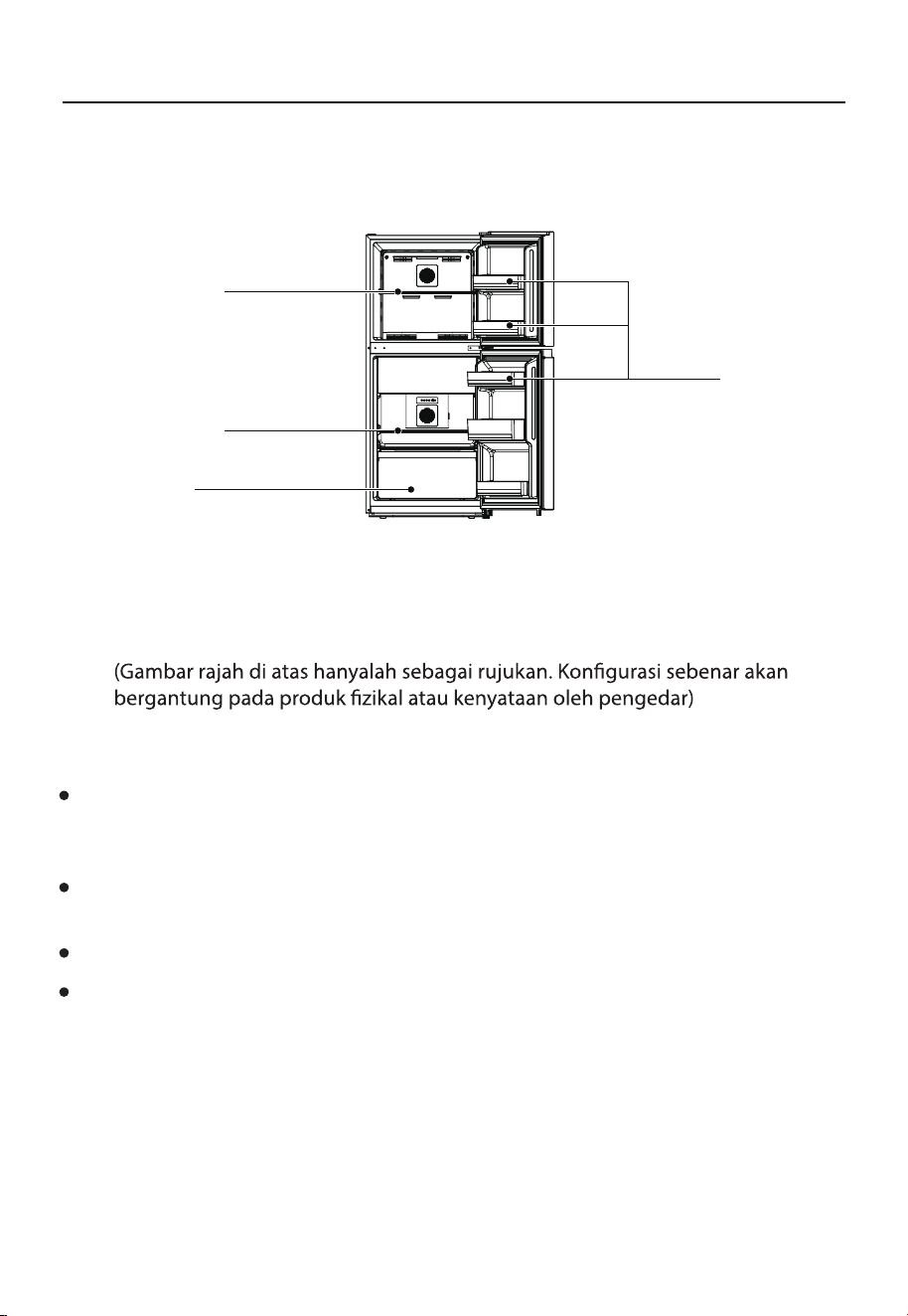
GR-RT238WE-PMY(50)
13
Ruang pembekuan
Ruang pembekuan suhu rendah boleh menyimpan makanan segar untuk masa
yang lama dan ia digunakan terutamanya untuk menyimpan makanan beku dan
membuat ais.
Ruang pembekuan sesuai untuk penyimpanan daging, ikan, bebola nasi dan
makanan lain yang tidak boleh dimakan dalam jangka pendek.
Ketulan daging sebaiknya dibahagikan kepada kepingan kecil untuk memudahkan
akses. Sila ambil perhatian bahawa makanan hendaklah dimakan dalam masa
penyimpanan.
Laci, kotak makanan, rak dan sebagainya yang diletakkan mengikut kedudukan
dalam gambar di atas adalah yang paling jimat tenaga.
Nota: Penyimpanan terlalu banyak makanan semasa operasi selepas peti sejuk
awal. Makanan yang disimpan tidak boleh menghalang saluran keluar udara;
atau sebaliknya kesan pembekuan juga akan terjejas.
14
3.2 Fungsi
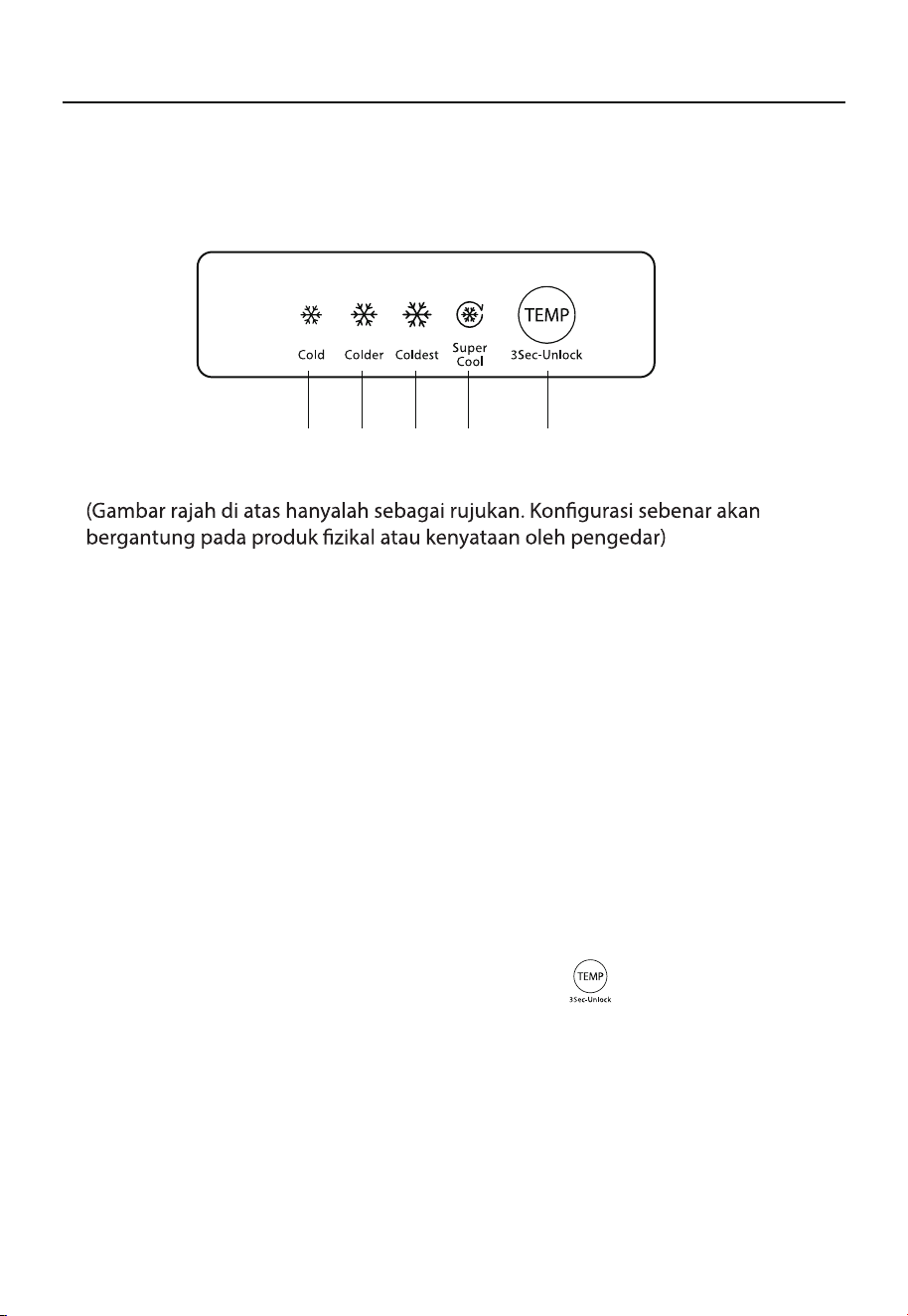
4 3 2 1 A
1. Butang operasi
A: Butang tetapan suhu ruang sejuk peti sejuk
2. Panel kawalan
LED 1: tetapan super sejuk, tetapan tertinggi
LED 2: tetapan paling sejuk
LED 3: tetapan lebih sejuk
LED 4: tetapan sejuk
3. Buka/Kunci
1) Di bawah keadaan normal, unit akan dikunci selepas 15 saat tiada aktiviti pintu
atau operasi butang;
2) Semasa dalam keadaan terkunci, tekan dan tahan selama 3 saat untuk
membuka;
15
4. Paparan
Paparan menyala apabila pintu dibuka dan padam selepas pintu ditutup; Jika berlaku
kesalahan jenis 'Kod Kegagalan Terlihat' dan pintu terbuka, kod kesalahan akan
dipaparkan. Apabila elektrik peti sejuk untuk kali pertama, semua kekunci pada paparan
menyala sepenuhnya selama 3 saat, dan kemudian peti sejuk berfungsi mengikut
tetapan paling sejuk. Dalam kes kegagalan, LED yang berkaitan.
5. Tetapan Suhu
Setiap tekanan pada menukar tetapan suhu dalam
urutan berikut: LED2—LED1—LED4—LED3—LED2— ……
6. Tetapan Mod Super Sejuk
(1) Apabila peti sejuk tidak dalam mod mati, tekan butang untuk bertukar ke
mod 'Super Sejuk';
(2) Peti sejuk secara automatik ditetapkan pada 2°C, dan penunjuk super sejuk
menyala;
7. Keluar Mod Super Sejuk
(1) Selepas beroperasi selama 6 jam dalam mod super sejuk, sistem secara automatik
keluar dari mod super sejuk;
(2) Melaraskan tetapan juga boleh keluar dari mod super sejuk;
(3) Selepas keluar dari mod super sejuk, tetapan paparan dalam peti sejuk kekal tidak
berubah, beroperasi pada tetapan tertinggi.
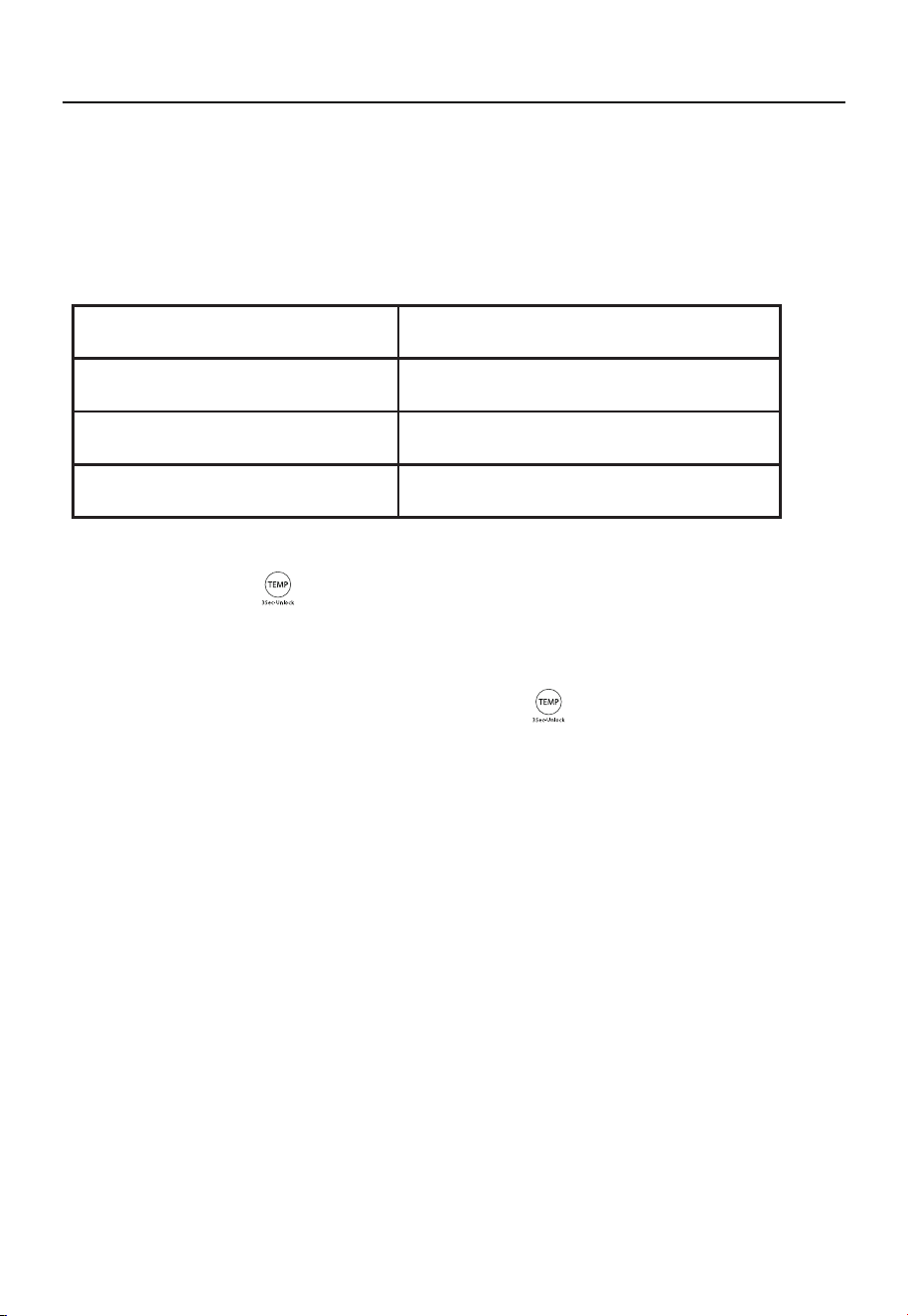
Kod Kegagalan Nama Kegagalan
LED1 dan LED2 Berkelip
LED1 dan LED3 Berkelip
LED1 dan LED4 Berkelip
Kegagalan Sensor Peti Sejuk
Kegagalan Sensor Penyejukan Beku
Kegagalan Suhu Sekitar
16
4.1 Pembersihan keseluruhan
• Habuk di belakang peti sejuk dan di atas lantai mesti dibersihkan untuk
meningkatkan kesan penyejukan dan penjimatan tenaga.
• Periksa gasket pintu dengan kerap untuk memastikan tiada
serpihan. Bersihkan gasket pintu dengan kain lembut yang
dilembapkan dengan air sabun atau detergen cair.
• Bahagian dalam peti sejuk perlu dibersihkan dengan kerap
untuk mengelakkan bau.
• Sila matikan kuasa sebelum membersihkan bahagian dalam, keluarkan semua
makanan, minuman, rak, laci, dsb.
• Gunakan kain lembut atau span untuk membersihkan bahagian dalam peti sejuk,
dengan dua sudu soda penaik dan satu liter air suam. Kemudian bilas dengan air
dan lap bersih. Selepas membersihkan, buka pintu dan biarkan ia kering secara
semula jadi sebelum menghidupkan kuasa.
• Untuk kawasan yang sukar dibersihkan di dalam peti sejuk (seperti tempat
sempit, celah atau sudut), disyorkan untuk mengelapnya dengan kerap
menggunakan kain lembut, berus lembut, dsb. dan apabila perlu, dikombinasikan
dengan beberapa alat bantu (seperti kayu nipis) untuk memastikan tiada bahan
cemar atau pengumpulan bakteria di kawasan ini.
• Jangan menggunakan sabun, deterjen, serbuk gosok, pembersih semburan,
dsb., kerana ini boleh menyebabkan bau dalam peti sejuk atau makanan yang
tercemar.
• Bersihkan rangka botol, rak dan laci dengan kain lembut yang dilembapkan
dengan air sabun atau detergen cair. Keringkan dengan kain lembut atau
keringkan secara semula jadi.
• Lap permukaan luar peti sejuk dengan kain lembut yang dilembapkan dengan
air sabun, detergen, dsb., dan kemudian lap kering.
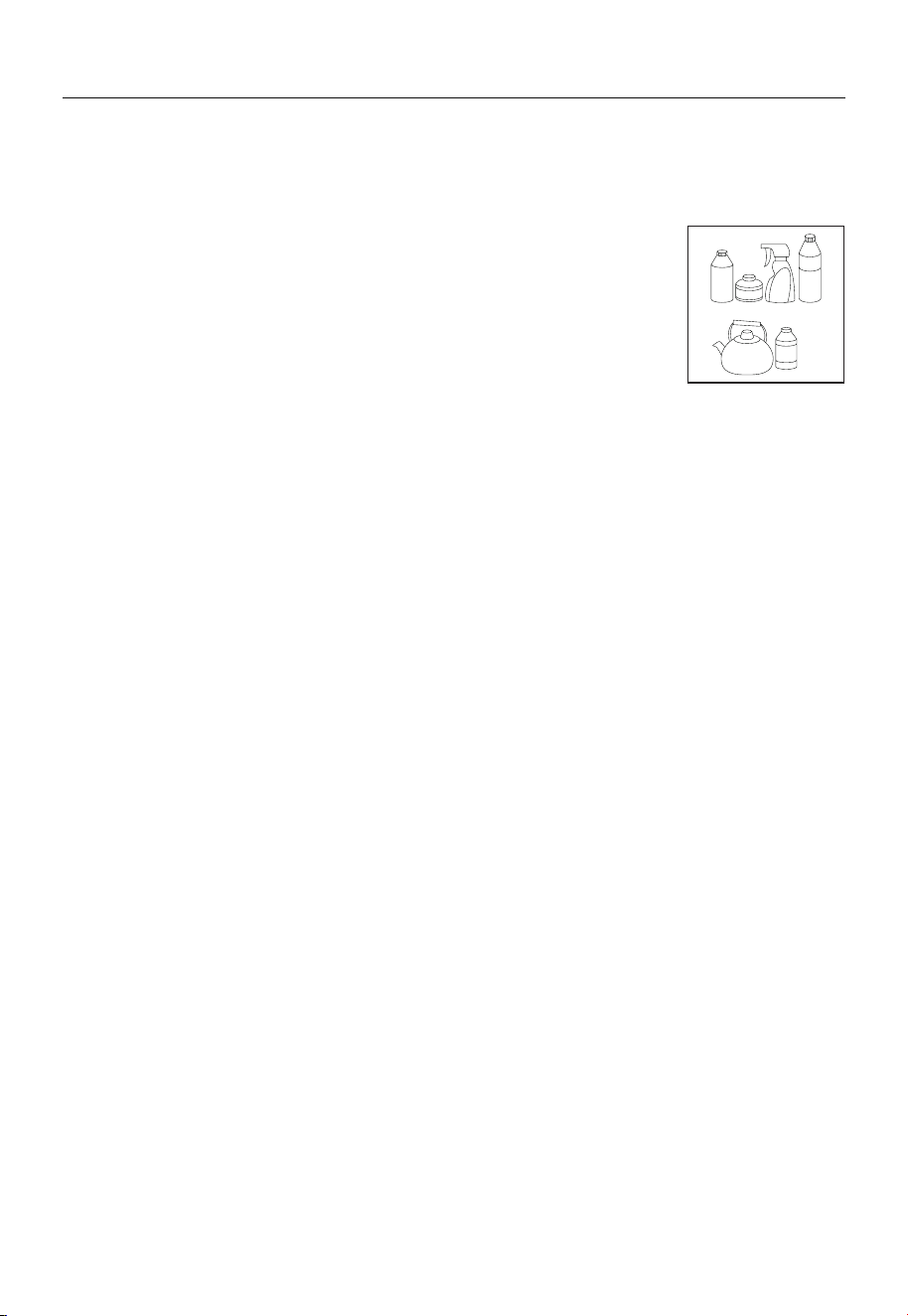
• Jangan gunakan berus keras
, bersihkan bola-bola baja., berus dawai, bahan
pelelas (seperti ubat gigi), pelarut organik (seperti alkohol, aseton, minyak pisang,
dll.), air mendidih, bahan asid atau alkali, yang boleh merosakkan permukaan
peti sejuk dan dalaman. Air mendidih dan pelarut organik seperti benzena boleh
berubah bentuk atau merosakkan bahagian plastik.
• Jangan bilas terus dengan air atau cecair lain semasa pembersihan untuk
mengelakkan litar pintas atau menjejaskan penebat elektrik selepas rendaman.
Gas
Alkohol
Detergen
Minyak
Pisang
4. Penyelenggaraan dan penjagaan peti sejuk
17
Sila cabut plag peti sejuk untuk nyahbeku dan
pembersihan.
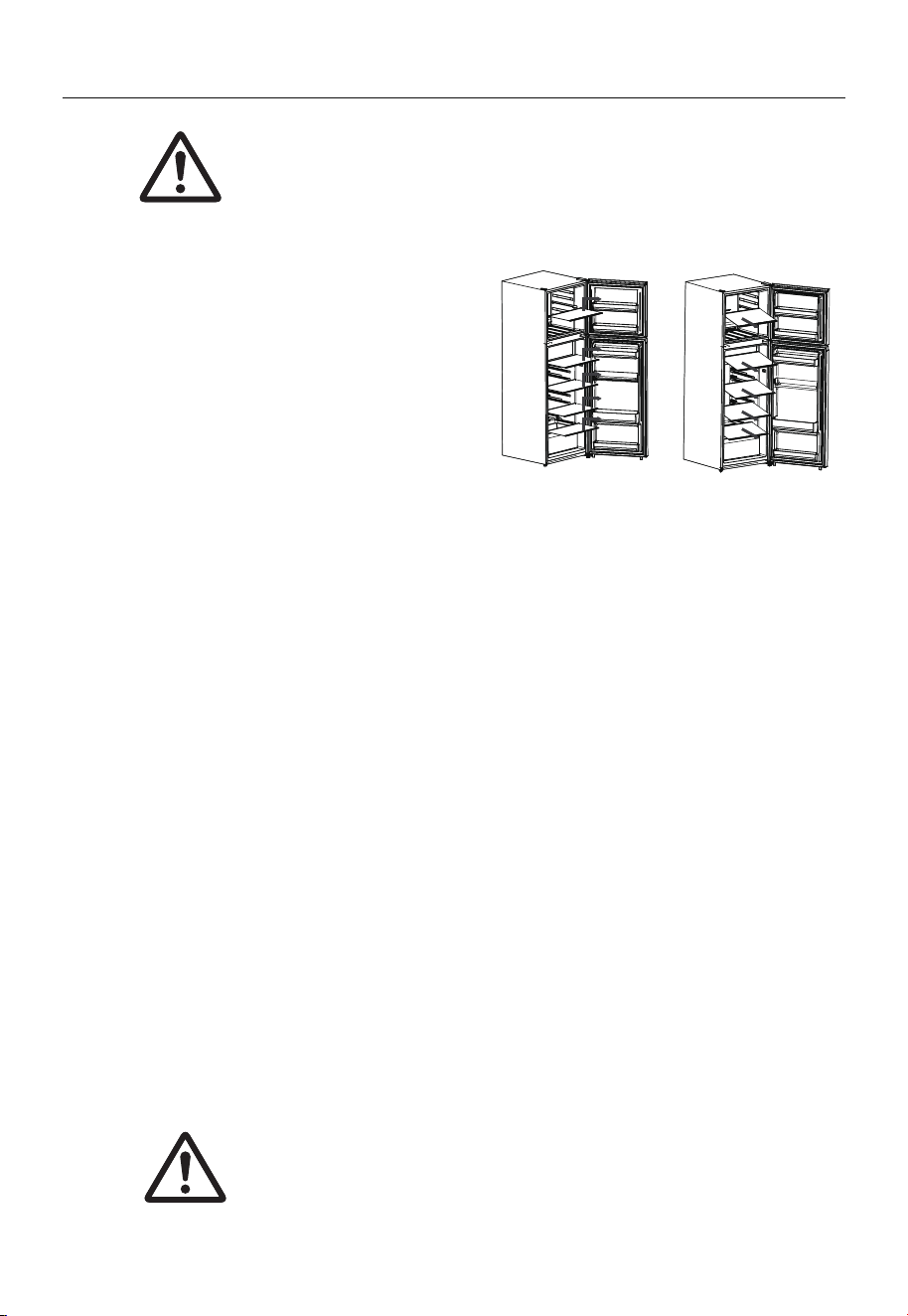
4.2 Kaedah Pembersihan untuk rak kaca:
• Angkat bahagian belakang rak kaca
sedikit dan tarik keluar;
• Condongkan rak kaca sedikit ke bawah
pada sudut tertentu dan keluarkannya;
• Alihkan rak kaca dan bersihkan jika perlu;
•
•
Pasang rak kaca dengan membalik proses
penyingkiran.
4.4 Tidak beroperasi
• Kegagalan kuasa: Sekiranya berlaku kegagalan kuasa, walaupun pada musim
panas, makanan di dalam perkakas boleh disimpan selama beberapa jam; semasa
kegagalan kuasa, masa pembukaan pintu hendaklah dikurangkan, dan tiada lagi
makanan segar boleh dimasukkan ke dalam perkakas.
• Lama tidak digunakan: Perkakas hendaklah dicabut plag dan kemudian
dibersihkan; kemudian pintu dibiarkan terbuka untuk mengelakkan bau.
• Bergerak: Sebelum peti sejuk digerakkan, keluarkan semua objek ke dalam,
betulkan sekatan kaca, pemegang sayur, laci ruang pembekuan dan lain-lain
dengan pita, dan ketatkan kaki meratakan; tutup pintu dan pasangkannya
dengan pita. Semasa bergerak, perkakas tidak boleh diletakkan terbalik atau
mendatar, atau digetarkan; kecondongan semasa pergerakan hendaklah tidak
lebih daripada 45°.
Perkakas hendaklah berjalan secara berterusan sebaik
sahaja ia dimulakan. Secara amnya, operasi perkakas
tidak boleh diganggu; jika tidak, hayat perkhidmatan
mungkin terjejas.
4.3 Penyahbekuan
Peti sejuk dibuat berdasarkan prinsip penyejukan udara dan dengan itu
mempunyai fungsi penyahbekuan automatik. Fros yang terbentuk akibat
perubahan musim atau suhu juga boleh dikeluarkan secara manual dengan
memutuskan sambungan perkakas daripada bekalan kuasa atau dengan
mengelap dengan tuala kering.
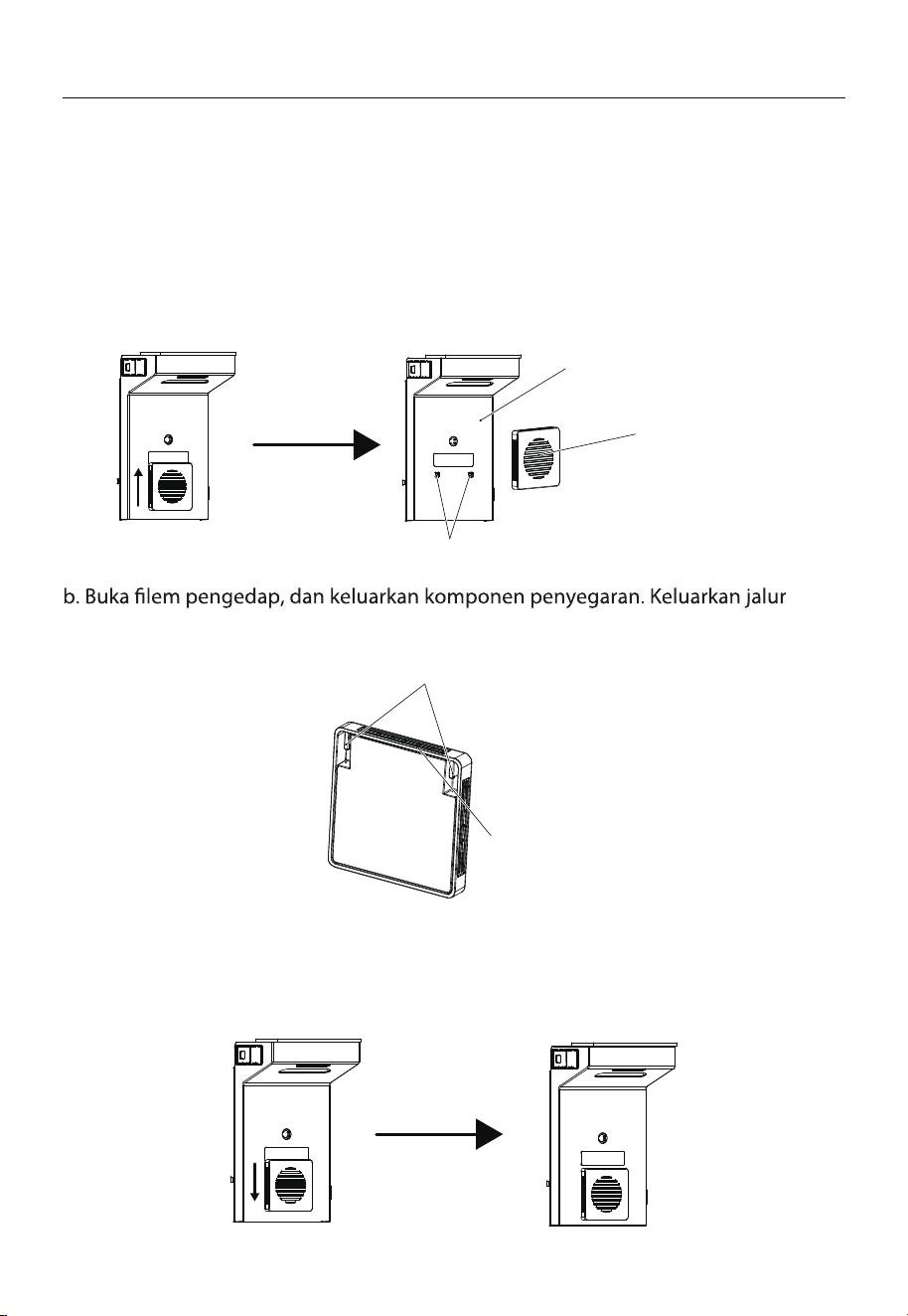
4.5 Penambahan Arahan Pemasangan dan Penggantian Penyegar
(1) Langkah Pemasangan Penyegar untuk Peti Sejuk:
Sisi dengan klip ini menghadap ke atas
Jalur pengedap
Komponen Saluran
Udara Peti Sejuk
Komponen Pemurnian
Segar
Ganjak
Penyingkiran
bawah ke atas
Pasang dari
atas ke bawah
a. Keluarkan komponen penyegar tertutup dari dulang pintu peti sejuk atau
saluran udara yang disejukkan (dari bawah ke atas). Langkah-langkah untuk
mengeluarkan komponen penyegaran daripada saluran udara penyejukan adalah
seperti berikut:
pengedap dari bahagian atas bahagian belakang komponen penyegaran.
c. Selaraskan komponen penyegar dengan saluran udara, gerakkan komponen
penyegar dari atas ke bawah, dan pasangkan gesper pada cangkuk saluran udara.
Selepas bergerak, sila pastikan komponen penyegar dipasang dengan betul.
18
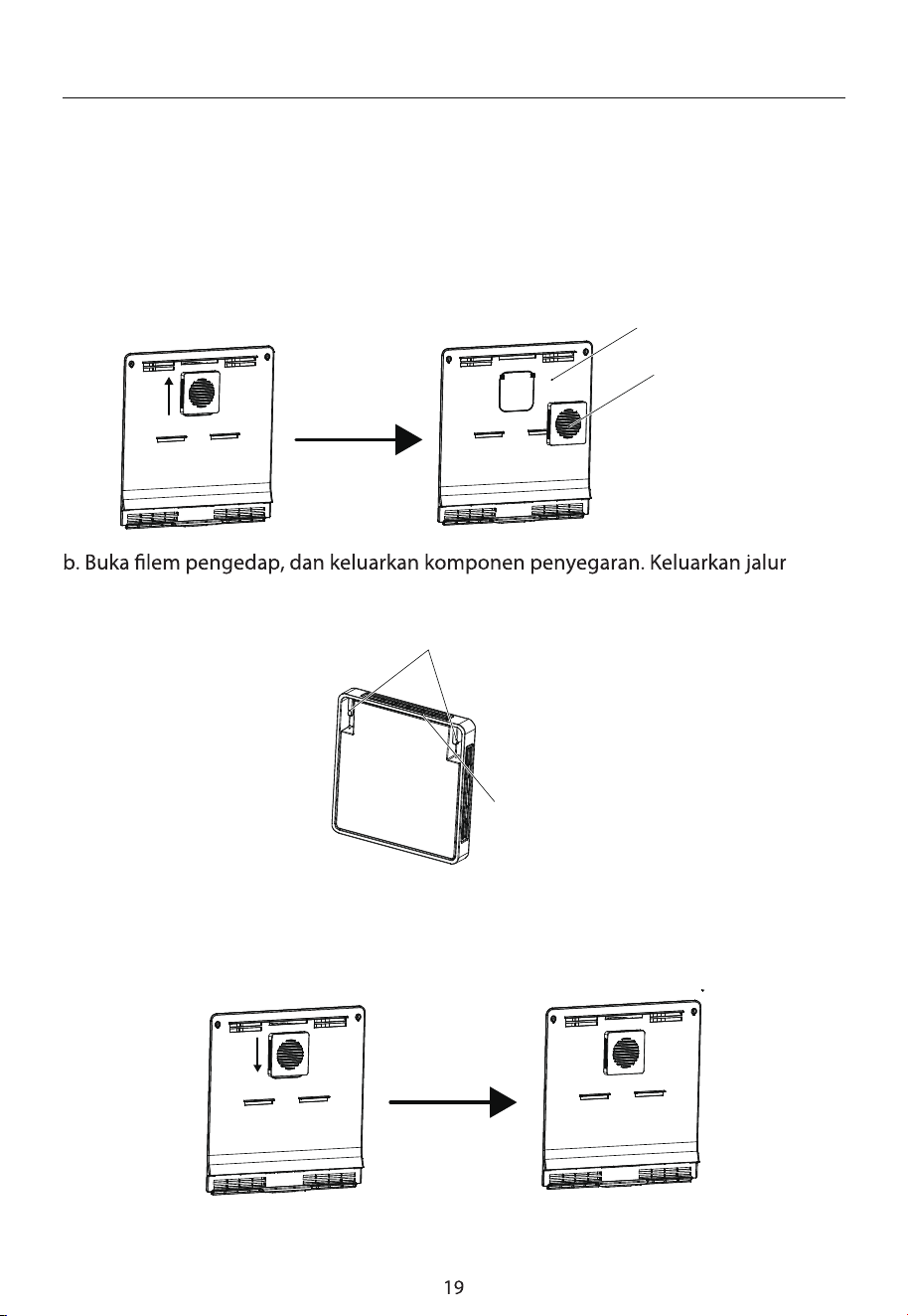
(2) Langkah Pemasangan untuk Pemurni Beku:
Sisi dengan klip ini menghadap ke atas
Jalur pengedap
Komponen
Penyegar
Komponen
Saluran Udara Beku
Penyingkiran
bawah ke atas
Kumpulkan dari
atas ke bawah
a. Keluarkan komponen penyegar tertutup dari dulang pintu peti sejuk atau
saluran udara penyejuk beku (dari bawah ke atas). Langkah-langkah untuk
mengeluarkan komponen penyegaran dari saluran udara penyejuk beku adalah
seperti berikut:
pengedap dari bahagian atas bahagian belakang komponen penyegaran.
c. Selaraskan komponen penyegar dengan saluran udara, gerakkan komponen
penyegar dari atas ke bawah, dan pasangkan gesper pada cangkuk saluran udara.
Selepas bergerak, sila pastikan komponen penyegar dipasang dengan betul.
20
4.6 Peluncur penyesuaian damper
• Peti sejuk boleh menyimpan ingatan status berikut semasa kuasa dimatikan.
• Suhu di dalam peti sejuk boleh diselaraskan dengan menukar kedudukan
penyelarasan aliran udara. Kedudukan awal penyalur aliran udara berada di
kedudukan A. Jika suhu yang lebih rendah di dalam peti sejuk diperlukan,
anda boleh menyesuaikan penyalur aliran udara dari kedudukan A ke bahagian.
• Untuk kegunaan yang lebih baik bagi peti sejuk, disyorkan untuk mengekalkan
penyalur aliran udara pada kedudukan awal.
TERDINGIN
SEJUK
MAKSIMUM
Penyelar
Aliran Udara
A
(3) Notis Pemurni
a. Produk ini tidak boleh dimakan.
b. Sila letakkan di tempat yang tidak boleh dijangkau oleh kanak-kanak.
c. Elakkan daripada sinaran matahari langsung atau penyimpanan pada
suhu tinggi.
d. Jangan digunakan untuk tujuan lain.
e. Apabila menggunakan komponen pemurni, pastikan ia berdiri tegak.
f. Gantikan komponen pemurni dalam peti sejuk setiap 5-6 bulan, atau
apabila gel hanya tinggal pada kedudukan yang ditunjukkan dalam
gambarajah.
Gantikan apabila gel kuning dalaman hanya
tinggal pada kedudukan ini, atau selepas 6
bulan penggunaan.
21
• Anda boleh cuba menyelesaikan sendiri masalah mudah berikut. Jika ia tidak
dapat diselesaikan, sila hubungi jabatan selepas jualan.
Kejadian Kemungkinan sebab/perkara pemeriksaan
Operasi gagal
Periksa sama ada perkakas disambungkan kepada kuasa atau sama ada
palam bersentuhan dengan baik
Periksa sama ada voltan terlalu rendah
Periksa sama ada terdapat kegagalan kuasa atau litar separa tersandung
Bau
Makanan berbau hendaklah dibalut rapat
Periksa sama ada terdapat makanan busuk
Bersihkan bahagian dalam peti sejuk
Operasi jangka panjang
pemampat
Operasi lama peti sejuk adalah perkara biasa pada musim panas apabila
suhu persekitaran tinggi
Tidak dicadangkan meletakkan terlalu banyak makanan dalam perkakas
pada masa yang sama
Makanan hendaklah menjadi sejuk sebelum dimasukkan ke dalam
perkakas
Pintu dibuka terlalu kerap
Cahaya gagal menyala
Periksa sama ada peti sejuk disambungkan kepada bekalan kuasa dan sama
ada lampu penerang rosak
Minta ganti lampu oleh pakar
Pintu tidak boleh ditutup
dengan betul
Pintu tersekat oleh bungkusan makanan. Terlalu banyak makanan
diletakkan. Peti sejuk dicondongkan.
Bunyi yang kuat
Periksa sama ada lantai adalah rata dan sama ada peti sejuk diletakkan
secara stabil. Periksa sama ada aksesori diletakkan di lokasi yang betul
Kedap pintu gagal ketat
Keluarkan bendasing pada meterai pintu
Panaskan kedap pintu dan kemudian sejukkannya untuk pemulihan
(atau tiup dengan pengering elektrik atau gunakan tuala panas untuk
memanaskan)
Kuali air melimpah
Terdapat terlalu banyak makanan di dalam ruang atau makanan yang
disimpan mengandungi terlalu banyak air, yang mengakibatkan
penyahbekuan berat
Pintu tidak ditutup dengan betul, mengakibat
kan pembekuan akibat
kemasukan udara dan peningkatan air akibat penyahbekuan
Perumahan panas
Pelesapan haba kondenser terbina dalam melalui perumah, yang biasa
Apabila perumah menjadi panas disebabkan oleh suhu persekitaran yang
tinggi, penyimpanan terlalu banyak makanan atau penutupan pemampat
ditutup, sediakan pengudaraan bunyi untuk memudahkan pelesapan haba
Pemeluwapan permukaan
Pemeluwapan pada permukaan luar dan pengedap pintu peti sejuk
adalah normal apabila kelembapan persekitaran terlalu tinggi. Hanya lap
kondensat dengan tuala bersih
Bunyi yang tidak normal
Buzz: Pemampat mungkin mengeluarkan bunyi buzz semasa operasi, dan
bunyi buzz kuat terutamanya semasa mula atau berhenti. Ini adalah biasa.
Berderit: Bahan penyejuk yang mengalir di dalam perkakas boleh
menghasilkan bunyi berderit, itu perkara biasa
5. Penyelesaian masalah
22
6. Pelupusan perkakas anda
Lupuskan produk ini dengan betul:
Penandaan ini menunjukkan bahawa produk ini tidak boleh
dilupuskan bersama sisa isi rumah lain di seluruh EU. Untuk
mengelakkan kemungkinan kemudaratan kepada alam
sekitar atau kesihatan manusia daripada pembuangan sisa
yang tidak terkawal, kitar semula secara bertanggungjawab
untuk menggalakkan penggunaan semula sumber bahan
yang mampan. Untuk memulangkan peranti terpakai anda,
sila gunakan sistem pemulangan dan pengumpulan atau
hubungi peruncit tempat produk itu dibeli. Mereka boleh
mengambil produk ini untuk kitar semula selamat alam
sekitar.
SUHU PERSEKITARAN
Perkakas ini direka bentuk untuk beroperasi dalam suhu persekitaran yang
ditentukan oleh kategorinya yang ditanda pada plat penarafan.
Kategori iklim Suhu persekitaran (dari...hingga...)
SN +10°C hingga +32°C
N +16°C hingga +32°C
ST +16°C hingga +38°C
T +16°C hingga +43°C
https://www.toshiba-lifestyle.com/my/