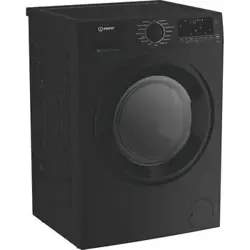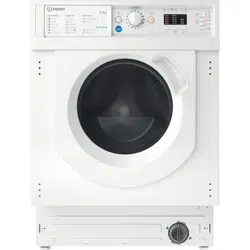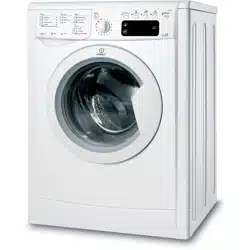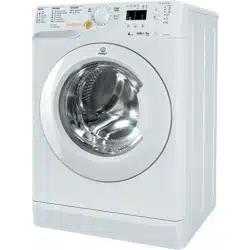
Washer-Dryer
User Manual
IDP 9646 PUSH&GO UK
2820533965/ EN/ / 5.12.2025 10:43
EN / 2
Please read this user manual first!
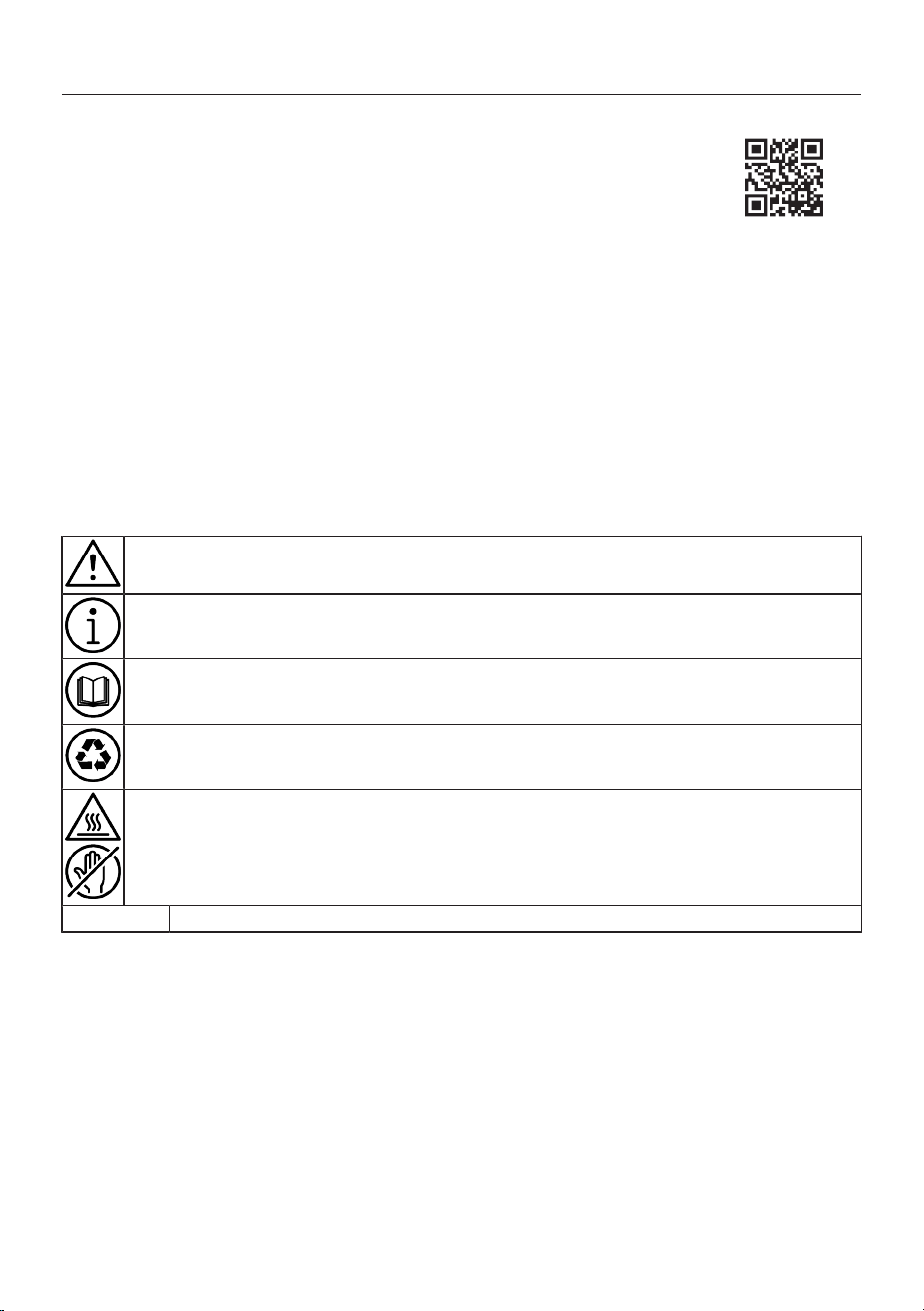
For more information, you can access the digital user manual by scan-
ning the QR code.
Dear customer,
Thank you for choosing Indesit product.
We want your product, manufactured with high quality and technology, to provide you with
the best possible performance. To do this, please read the entire manual and other
provided documentation carefully before using the product.
Please follow all the warnings and information in the user manual to protect yourself and
your product from potential dangers.
Keep the user manual. If you give the product to someone else, provide the user manual as
well. The warranty terms, usage and troubleshooting methods for your product are in-
cluded in the manual.
Symbols and Definitions
The following symbols appear in the user manual:
Danger that could result in death or injury.
Important information or useful tips for use.
Read the user manual.
Recyclable material.
Hot surface.
NOTICE Danger that could result in property damage to the product or its surroundings.
EN / 3
1 Safety Instructions
This section includes the safety
instructions necessary to pre-
vent the risk of personal injury or
material damage.
Our company shall not be held
responsible for damages that
may occur if these instructions
are not observed.
• Installation and repair opera-
tions shall always be per-
formed by Authorised Service.
• Use original spare parts and
accessories only.
• Do not repair or replace any
component of the product un-
less it is clearly specified in the
operation manual.
• Do not modify the product.
1.1 Intended Use
• The service life of your product
is 10 years. During this period,
original spare parts will be
available to operate the
product properly.
• This product has been de-
signed for domestic use. Do
not use this product for com-
mercial purposes or outside its
intended purpose.
• Use only for washing and dry-
ing textile products that are
marked accordingly.
• The manufacturer assumes no
responsibility for any damage
due to misuse or mishandling.
• This product is intended to be
used in household and similar
applications. For example;
– Personnel kitchens of stores,
offices and other work envir-
onments;
– Agricultural establishments,
– By customers of hotels, mo-
tels and other accommoda-
tion facilities
– Bed and breakfasts, hostel-
like environments
– Common areas of apartment
blocks or laundries.
1.2 Safety of Children,
Vulnerable Persons
and Pets
• This product may be used by
children aged 8 years and
older and persons with re-
duced physical, sensory or
mental capabilities or lack of
experience and knowledge if
they have been given supervi-
sion or instruction concerning
use of the product in a safe
way and understand the haz-
ards involved.
• Children under the age of 3
should be kept away unless
continuously supervised.
EN / 4
• Electrical products are danger-
ous for children and pets. Chil-
dren or pets should not play
with, climb on top or inside the
product. Check inside the
product before use.
• Use child lock to prevent chil-
dren from interfering with the
product.
• Do not forget to close the load-
ing door when leaving the
room where the product is loc-
ated. Children and pets may
get locked inside and drown.
• Children should not perform
cleaning and user mainten-
ance works without an adult’s
supervision.
• Keep the packaging materials
away from children. Risk of in-
jury and suffocation.
• Keep all detergents and addit-
ives used for the product out
of children's reach
• Cut the power cable and break
and deactivate the locking
mechanism of the loading
door before disposing of the
product for children’s safety.
1.3 Electrical Safety
• Product should be unplugged
during installation, mainten-
ance, cleaning and repair pro-
cedures. Unplug the product or
turn off the fuse.
• Damaged power cables should
be replaced by the authorised
service in order to prevent pos-
sible danger.
• The product should not be fed
via an external switching
device such as a timer or con-
nected to a circuit that is regu-
larly switched on and off by a
device.
• Do not tuck the power cord un-
der the product or to the rear
of the product. Do not put
heavy items on the power
cord. Do not bend, crush, or ex-
pose the power cable to heat
sources.
• Only use the original cable. Do
not use cut or damaged
cables.
• Do not use an extension cord,
multi-plug or adaptor to oper-
ate your product.
• Extension cords, multi-socket
outlets, adapters or portable
power supplies can overheat
and cause a fire. Make sure
not to place power sockets
and portable power supplies
near or behind the product.
• The plug shall be easily ac-
cessible. If this is not possible,
a mechanism that meets the
electrical legislation and that
disconnects all terminals from
EN / 5
the mains (fuse, switch, main
switch, etc.) shall be available
on the electrical installation.
• Do not touch the plug with wet
hands.
• When unplugging the product,
do not hold the power cord, but
the plug.
• Make sure the plug is not wet,
dirty or dusty.
• Never connect your product to
electricity saving devices. Such
systems are harmful to the
product.
1.4 Handling Safety
• Unplug the product before
moving, remove the water out-
let and water main connec-
tions. Drain any water left in-
side the product.
• This product is heavy, do not
handle it by yourself. It may
cause injuries if your product
falls on you. Do not hit and
drop the product while carry-
ing.
• Do not hold parts such as the
laundry loading door to lift and
move the product. The upper
tray should be tightly fixed for
moving.
• Carry the product in an upright
position. If it cannot be carried
upright, tilt it to the right side in
frontal view.
• Make sure that the hoses as
well as the power cable are not
folded, pinched or crushed
after the product is fitted into
its place after installation or
cleaning procedures.
1.5 Installation Safety
• Check the information in the
manual and installation in-
structions to prepare the
product for installation and
make sure the electrical mains,
clean water mains and water
outlet are suitable. If not, call a
qualified electrician and
plumber to have them make
the necessary arrangements.
These operations are the re-
sponsibility of the customer.
• Prior to commencing the in-
stallation, be sure to switch off
the fuse to deactivate the
power supply for the line to
which the product will be con-
nected.
• This product is intended for
use at altitudes not exceeding
2000 meters above sea level.
• Check the product for any
damage before installing it. Do
not have the product installed
if it is damaged.

EN / 6
• Always wear personal protect-
ive equipment (gloves, etc.)
during product installation,
maintenance and repair. There
is a risk of injury.
• Injuries may occur if hands are
put into uncovered slots. Close
the holes of the transportation
safety bolts with plastic plugs.
• Do not install or leave the ap-
pliance in areas exposed to en-
vironmental conditions like
rain or sunlight.
• Do not install the product at
locations where the temperat-
ure drops below 0 ºC.
• Do not place the product on a
carpet or similar surface. It
would create fire hazard since
it cannot receive air from un-
derneath.
• Place the product on a level
and hard surface and balance
with the adjustable feet.
• Connect the product to a
grounding plug protected by a
fuse suitable to the current val-
ues on the type label. Make
sure the grounding is carried
out by an expert electrician. As
required by local and national
regulations, do not use the
product without proper ground-
ing.
• Plug the product in a socket
with voltage and frequency val-
ues suitable to those indicated
on the type label.
• Do not plug the product into
loose, broken, dirty, greasy, or
water-damaged sockets.
• Use the new hose set provided
with the product. Do not re-use
old hose sets. Do not extend
the hoses.
• Connect the water inlet hose
directly to the water tap. The
pressure from the tap should
be minimum 0.1 MPa (1 bar)
and maximum 1MPa (10 bars).
10 to 80 litres of water should
be running from the tap in a
minute in order for the product
to function properly. If the wa-
ter pressure is above 1 MPa
(10 bars), a pressure-reducing
valve should be fitted. The
maximum allowed temperat-
ure is 25°C.
• Fit the end of the water dis-
charge hose to the wastewater
drain, the sink or the bathtub.
• Place the power cable and
hoses in locations without risk
of tripping.
• Do not install the product be-
hind a door, a sliding door or at
another location that will pre-
vent the door from opening
completely.
EN / 7
• If a dryer is to be placed on the
product, fix with a suitable con-
nection apparatus obtained
from the authorised service.
• There is a risk of contact with
electrical components when
the upper tray is removed. Do
not dismantle the upper tray of
the product.
• Keep the appliance at least 1
cm from furniture.
• Make sure the room in which
the installation performed is
adequately ventilated, as there
may be a risk of undesirable
gases coming out of the
device igniting other fuels in
the room or interacting with an
open flame.
1.6 Operational Safety
• When you are using the appli-
ances, use only detergents,
softeners and additives suit-
able for washing machines.
• Do not use chemical solvents
on the product. These materi-
als contain an explosion risk.
• Do not operate defective or
damaged products. Unplug the
product (or turn off the fuse it
is connected to), turn off the
water tap and call an author-
ised service.
• Do not place sources of igni-
tion (burning candle, cigar-
ettes, etc.) or sources of heat
(irons, cooktops, ovens, etc.)
on top of or near the product.
Do not put inflammable/ex-
plosive materials near the
product.
• Do not stand or climb on the
product.
• Unplug the product and turn
off the tap if you will not be us-
ing the product for long peri-
ods.
• Avoid opening the detergent
drawer while the machine is
running to prevent splashes.
Contact of the detergent with
your skin and eyes is danger-
ous.
• Make sure pets do not climb
inside the product. Check in-
side the product before use.
• Do not force open the locked
loading door. The door will
open once the washing is com-
pleted. If the door does not
open, use the solutions for
“loading door does not open”
error in the Troubleshooting
section.
• Do not wash items contamin-
ated with gasoline, kerosene,
benzene, reducers, alcohol or
other inflammable or explosive
materials and industrial chem-
icals.
EN / 8
• Do not directly use dry clean-
ing detergent and do not wash,
rinse, spin or dry laundry con-
taminated with dry cleaning
detergent.
• Do not place your hands into
the rotating drum. Wait until
the drum no longer rotates.
• If washing laundry at high tem-
peratures, the discharged
washing water would burn your
skin if in contact with your
skin, for ex. when the draining
hose is connected to the tap.
Do not touch the discharge wa-
ter.
• Take the following precautions
to prevent formation of biofilm
and malodours:
– Make sure the room where
the washing machine is
placed is well ventilated.
– Wipe the door gasket and
loading door glass with a dry
and clean cloth at the end of
the programme.
• The glass of the loading door
will heat up when washing or
drying at high temperatures.
To avoid burns, do not touch
the loading door glass and
keep children away from the
product during operation.
• Before disposing of old and in-
operable products:
1. Unplug the power plug and
remove it from the socket.
2. Cut the power cable and dis-
connect it with the plug from
the product.
3. Break the locking mechanism
of the loading door to render
it inoperable.
4. Do not allow children to play
with the discarded product.
1.7 Drying Safety
• Laundry that has been previ-
ously washed, cleaned, con-
taminated or stained with gas-
oline/gas, dry cleaning
solvents or other inflammable/
explosive materials should not
be dried in the machine be-
cause they give off inflam-
mable or explosive vapours.
Otherwise, fire hazard arises.
• Laundry contaminated with
materials such as vegetable or
mineral oil, acetone, alcohol,
gasoline, gas oil, stain re-
movers, naphtha, turpentine,
paraffin or paraffin removers
should be washed separately
in hot water by adding extra
detergent before being dried in
the washing machine with
dryer. Otherwise, fire hazard
arises.

EN / 9
• Do not dry textile products that
contain predominantly foam,
rubber or rubber-like parts (e.g.
shower caps, waterproof tex-
tile products, rubber products
and clothes) or the ones that
are filled and damaged (e.g.
Pillows or coats). There is a
risk of burns.
• If you use a laundry ball, deter-
gent scale, laundry cage or ball
in your machine, these
products may melt during dry-
ing. If you are going to choose
the drying feature, do not use
these products. Otherwise, fire
hazard arises.
• If you use industrial chemicals
for cleaning, do not use the
drying function. Otherwise, fire
hazard arises.
• The door becomes very hot
after drying process. After dry-
ing is over, open the door of
the device completely. Do not
touch the metal door located
inside of the door glass. There
is a risk of burns due to high
temperatures.
• During Drying programmes, a
cooling step is performed as
the last step to ensure that the
laundry remains at a temperat-
ure where it will not be dam-
aged. You may be exposed to
hot steam if you open the
cover without completing the
cooling step. Risk of seething.
• If the drying programmes are
interrupted (as a result of pro-
gramme cancellation or power
failure), the laundry in the ma-
chine may be hot. Be careful.
• Avoid interrupting the drying
program by stopping your
tumble dryer prematurely, as
the laundry inside the machine
may become excessively hot in
the event of program cancella-
tion or a power failure. Risk of
burns! If you have to stop the
machine, take out the laundry
and lay them somewhere to
cool down.
• Your product is suitable to op-
erate between the temperat-
ures of 0°C and +35°C.
• Ambient temperatures
between 15°C and +25°C are
ideal for your product.
• Do not overload the machine
for drying. Observe the spe-
cified maximum load levels for
drying.
• If the laundry has been washed
with a stain remover, run an
additional rinsing speed before
starting the drying speed.
• Do not dry leather laundry and
laundry containing leather
(such as leather tags on jeans)

EN / 10
in the machine. The colour left
by the leather parts may smear
on other textiles.
• If there is a problem that you
cannot solve using the inform-
ation given in the safety in-
structions section, turn off and
unplug the machine and call an
Authorized Service.
• In your washer-dryer, you can
only wash laundry, only dry
laundry or do both of these
processes. The machine
should not be used for a long
period of time only for drying
wet laundry. While the machine
is only used for drying, it
should be run empty in a short
washing programme every 15
starts.
• Before putting laundry in the
machine, check all of them and
make sure that there is no ob-
ject such as lighter, coin, metal
object and pin, etc. in their
pockets or inside of them.
• Lingerie that has metal parts
should not be dried in the ma-
chine. Metal parts may come
off during drying and cause
damage to the machine. Put
them in a bag or pillow case.
• Do not dry large laundry such
as tulle curtains, curtains,
sheets/beddings, blankets,
rugs in the machine. Laundry
may get damaged.
• Do not dry unwashed laundry
in the machine.
• Do not use softener or anti-
static agent unless recommen-
ded by the manufacturer.
• Products such as softener
should be used in accordance
with the manufacturer's in-
structions.
• Do not dry silk, wool and sim-
ilar delicate clothes in the ma-
chine. Otherwise, wool clothes
can shrink and damage may
be caused in other delicate
clothes.
• Check the symbols on laundry
label before washing and dry-
ing processes.
• The machine automatically
cleans the lint itself that
comes out of the laundry dur-
ing drying. The machine per-
forms automatic water intakes
for cleaning. For this reason,
the water tap of the machine
should also be open during
drying programmes.
• Prevent the lint from accumu-
lating around the product.
EN / 11
• Remove all objects such as
matches and lighters from
your pockets.
1.8 Maintenance and
Cleaning Safety
• Before cleaning or servicing
the product, unplug it or cut
the power at the fuse.
• If you need to move the
product for cleaning, do not
pull on the loading door. The
door can break and cause in-
jury!
• Do not put hands, feet and
metal objects under or behind
your product. This can cause
jams, and any sharp edge can
cause personal injury.
• Use a clean, dry cloth to wipe
foreign material or dust from
the plug ends. When cleaning
the plug, do not use a wet or
damp cloth. Otherwise, there is
a risk of fire or electric shock.
• Do not wash the product with
pressure washers, by spraying
vapour, water or pouring water.
There is a risk of electrocution.
• Do not use sharp or abrasive
tools to clean the product. Do
not use household cleaners,
soap, detergent, gas, gasoline,
thinner, alcohol, varnish, etc.
while cleaning.
• Cleaning agents containing
solvents (e.g. cleaning solvent)
might reek poisonous fumes.
Do not use cleaning products
containing solvents.
• There may be detergent
residues in the detergent
drawer when you open it for
cleaning.
• Do not dismantle the filter of
the discharge pump while the
product is running.
• The temperature in the product
may rise up to 90ºC. Clean the
filter after the water in the
product cools down in order to
avoid risk of getting burnt.
2 Important Instructions for Environment
2.1 Compliance with WEEE Direct-
ive
This product complies with EU
WEEE Directive (2012/19/EU).
This product bears a classifica-
tion symbol for waste electrical
and electronic equipment
(WEEE).
This product has been manufactured with
high quality parts and materials which can
be reused and are suitable for recycling. Do
not dispose of the waste product with nor-
mal domestic and other wastes at the end
of its service life. Take it to the collection
center for the recycling of electrical and
electronic equipment. Please consult your
local authorities to learn about these collec-
tion centers.
EN / 12
Compliance with RoHS Directive:
The product you have purchased complies
with EU RoHS Directive (2011/65/EU). It
does not contain harmful and prohibited
materials specified in the Directive.
2.2 Package Information
Packaging materials of the product are
manufactured from recyclable materials in
accordance with our National Environment
Regulations. Do not dispose of the pack-
aging materials together with the domestic
or other wastes. Take them to the pack-
aging material collection points designated
by the local authorities.
3 Technical Specifications
Washing capacity (cotton) (kg) 9
Drying capacity (cotton) (kg) 6
4 Installation
Please read the “Safety Instruc-
tions” section first!
Your product automatically detects
the amount of laundry placed inside
when selecting a programme.
While installing the product, before the first
use, calibration should be done to ensure
that the laundry amount is detected in the
most accurate way.
To do this, select the Drum Cleaning* pro-
gramme and cancel the spin function. Start
the programme without laundry. Wait for
the programme to finish, which will take
about 15 minutes.
*The programme name may vary depend-
ing on the model. For the appropriate pro-
gramme selection, review the programme
descriptions section.
• Please contact the nearest Authorised
Service for the installation of the product.
• Make sure that the installation and elec-
trical connections of the product are per-
formed by authorised service agent. Man-
ufacturer shall not be held responsible
for damages caused by operations per-
formed by unauthorised persons.
• Preparation of the location and electrical,
tap water and waste water installations
at the place of installation is under cus-
tomer's responsibility.
• Make sure that the water inlet and dis-
charge hoses as well as the power cable
are not folded, pinched or crushed while
pushing the product into its place after
installation or cleaning procedures.
• Prior to installation, visually check if the
product has any defects on it. Do not
have the product installed if it is dam-
aged. Damaged products cause risks for
your safety.
4.1 Installation of Bottom Panel
Covers
With some models, the base parts
of the products are completely
closed. These models do not have
cap or covers.
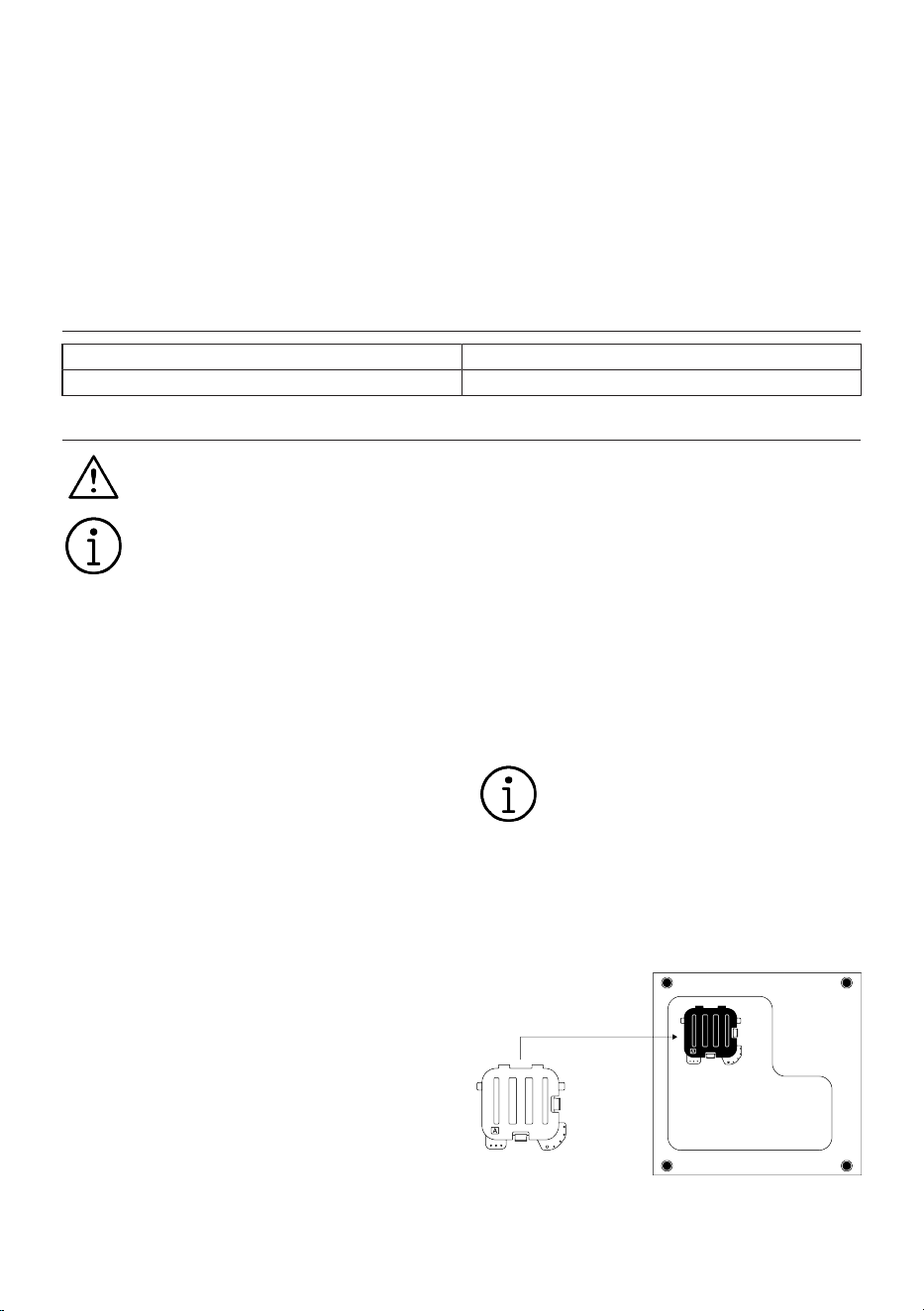
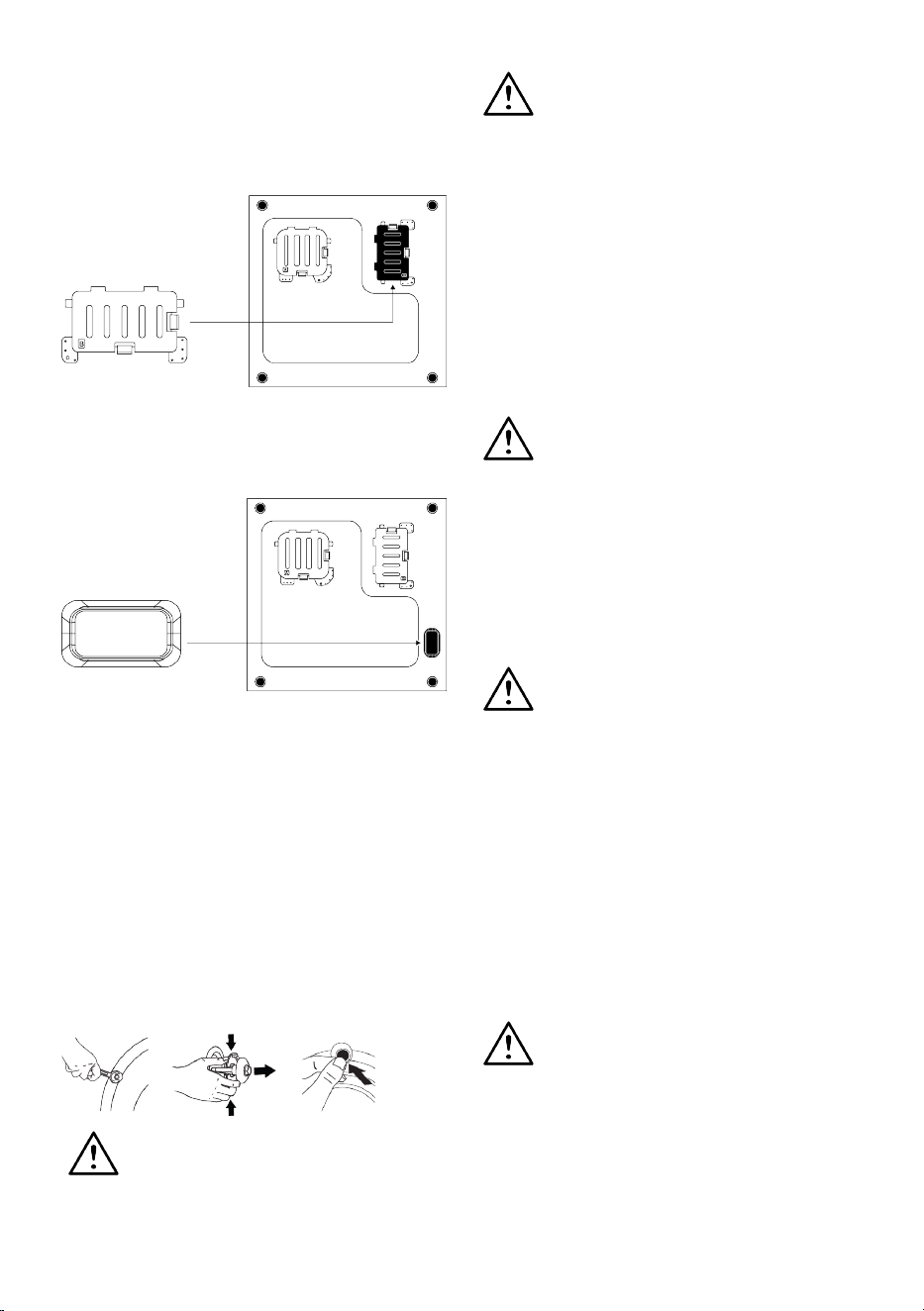
• Cap and Covers are optional. If present,
remove the packaging foam and then in-
stall the cap and covers.
Cover A
EN / 13
Tilt the machine back slightly. Place the
tabs of Cover A against the bottom panel.
Rotate the cover to complete the installa-
tion.
Cover B
Place the tabs of Cover B against the bot-
tom panel. Rotate the cover to complete
the installation.
Cap
Install the cap by pushing it with your fin-
ger.
4.2 Removing Transportation Safety
Bolts
1. Loosen all transportation safety bolts
with an appropriate wrench until they
turn freely.
2. Bend the inner part by pressing it at the
grip areas and pull the part out.
3. Attach the plastic covers supplied in the
User Manual bag into the holes on the
rear panel.
WARNING
Remove the transportation safety
bolts before operating the product.
Otherwise, the product will get
damaged.
WARNING
Keep the transportation safety
bolts in a safe place to reuse when
the product needs to be moved
again in the future.
Install the transportation safety
bolts in reverse order of the disas-
sembly procedure.
Never move the product without the
transportation safety bolts properly
fixed in place.
4.3 Connecting to Water Supply
WARNING
The water pressure required for the
operation of the product is between
1-10 bars (0.1-1 MPa). To ensure a
smooth operation of the machine,
10 - 80 liters of water shall be sup-
plied in a minute from a fully
opened tap. If the water pressure is
higher, install a pressure reducing
valve.
WARNING
Models with a single water inlet
shall not be connected to the hot
water tap. In such a case the laun-
dry will get damaged or the product
will switch to protection mode and
will not operate.
Do not use old or used water inlet
hoses on a new product. It may
cause water leakage from your
product and stain your laundry.
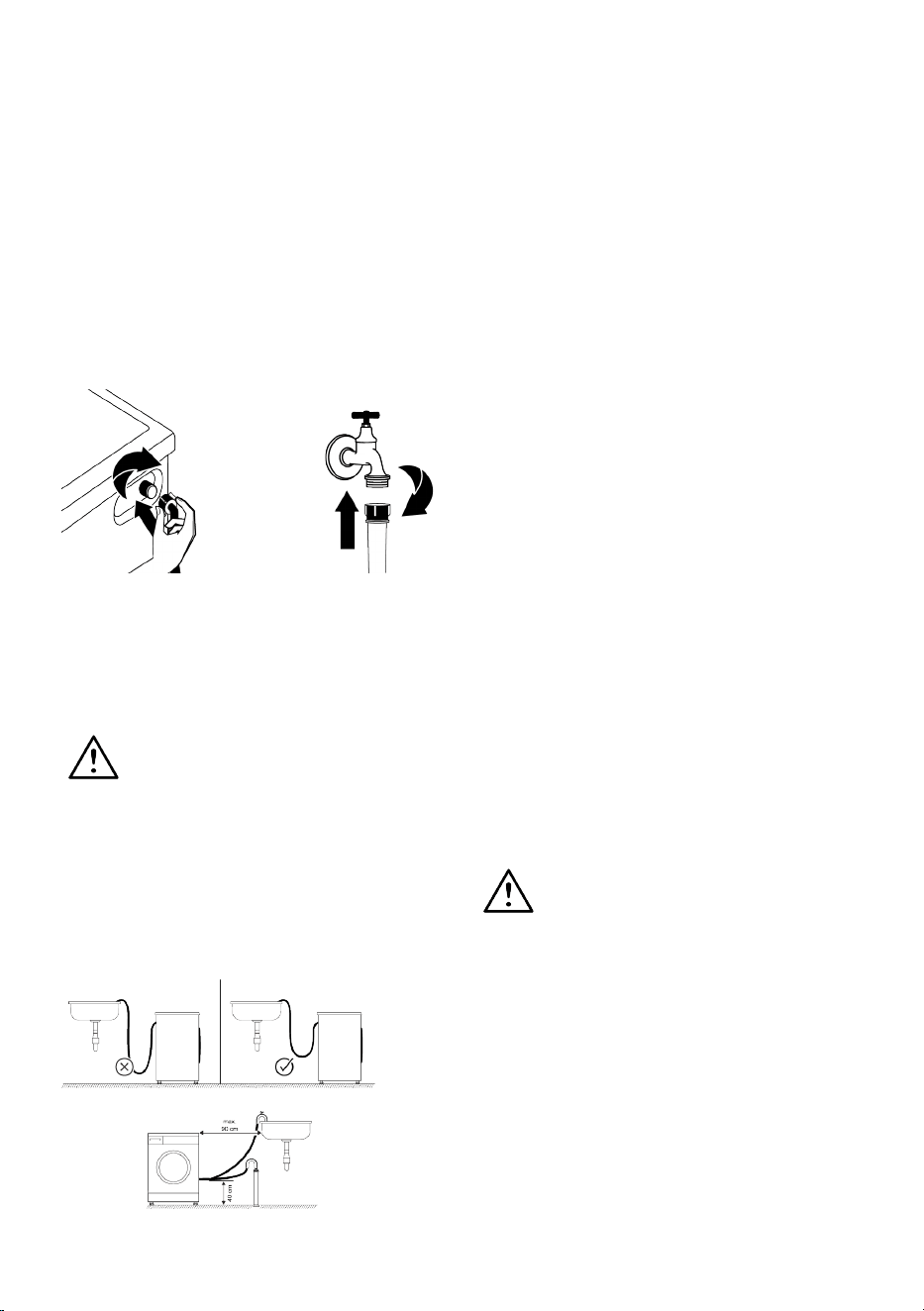
1. Connect the special hose supplied with
the product to the water inlet on the
product.
WARNING
Make sure that the cold water con-
nection is performed correctly dur-
ing the installation of the product.
Otherwise, your laundry may come
out as hot at the end of the washing
cycle and thus they may be worn.
EN / 14
2. Tighten all hose nuts by hand. Ensure
that all hose connections are fully tight.
Never use a tool when tightening the
nuts.
3. Open the taps completely after making
the hose connection to check for water
leaks at the connection points. If any
leak occurs, turn off the tap and remove
the nut. Check the gasket and tighten
the nut carefully again. In order to pre-
vent the water leaks and resultant dam-
ages, keep the taps closed when you do
not use the product.
4.4 Connecting the Drain Hose to
the Drain
1. Attach the end of the drain hose directly
to waste water drain, washbasin or
bathtub.
Your house will be flooded if the
water draining hose is dislocated
during water draining. There is also
a risk of burning due to the high
washing temperatures. In order to
prevent such situations and make
sure that the product performs wa-
ter intake and drain processes
without any problem, fix the drain
hose securely.
2. Connect the hose to a minimum height
of 40 cm and a maximum height of 90
cm.
3. If the hose is placed on the floor (or at a
maximum height of 40 cm from the
floor) and then its height is increased,
discharging of water becomes difficult,
and laundry may come out very wet
from the machine. Thus, follow the
heights provided in the figure.
4. To prevent the waste water to go back
into the product again and to ensure
easy drainage, do not immerse the end
of the hose into the waste water or do
not insert it into the drain for more than
15 cm. If it is too long, cut it short.
5. The end of the hose should not be bent,
it should not be stepped on and the
hose must not be pinched between the
drain and the product. Otherwise, water
discharge issues may emerge.
6. If the length of the hose is too short, use
it by adding an original extension hose.
The overall length of the hose shall not
be longer than 3.2 m. To prevent water
leaks, always secure the connection
between the extension hose and the
draining hose of the product with a suit-
able clamp so that it does not come off
and cause leaks.
4.5 Adjusting the Feet
NOTICE
In order to ensure that the product
operates more silently and vibra-
tion-free, it must stand level and
balanced on its feet. Adjust the feet
to ensure balance. Otherwise, the
product may move from its place
and cause bumping, noise and vi-
bration problems.
1. To loosen the nuts on the feet, rotate
the nuts clockwise using the hand tool.
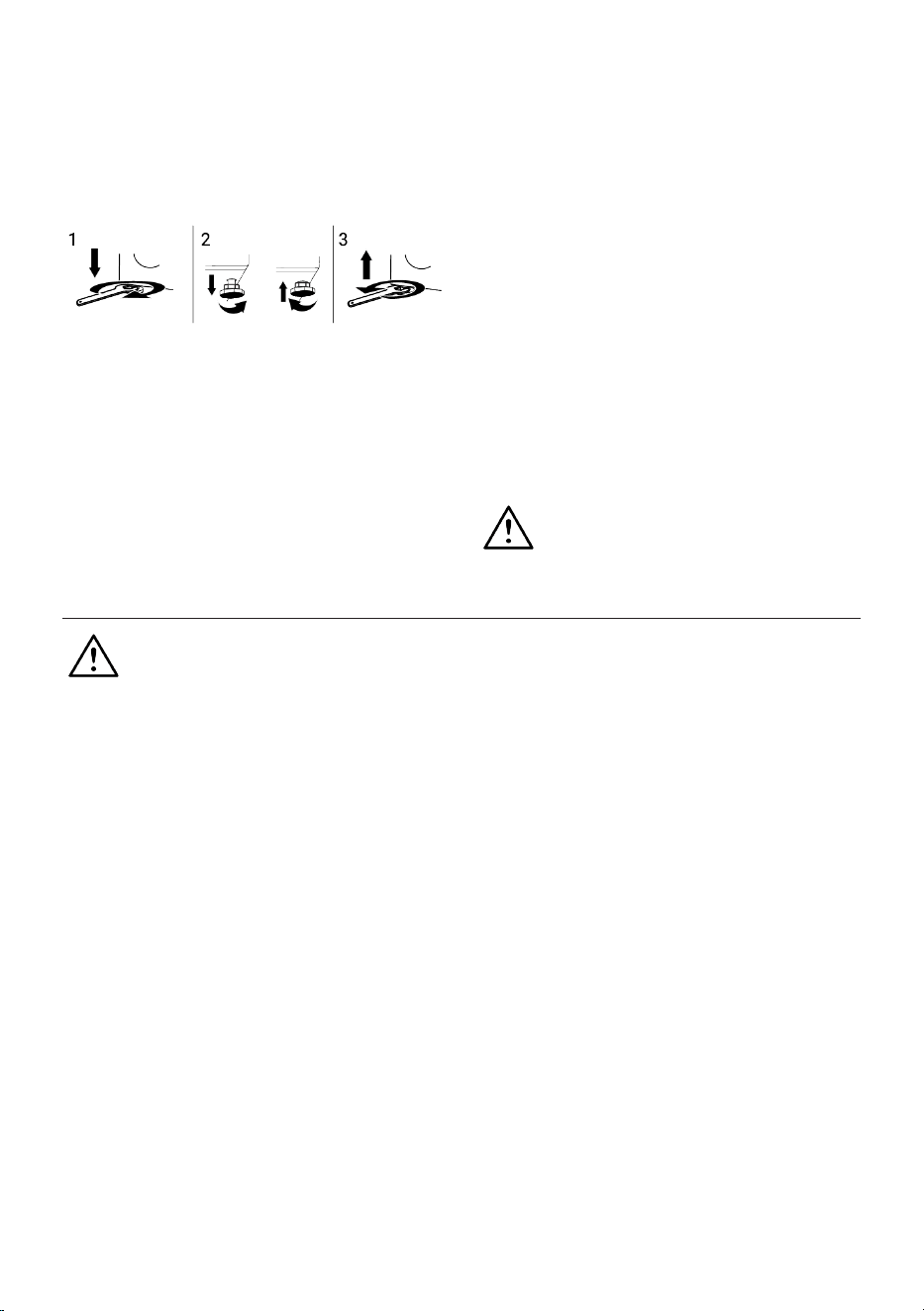
EN / 15
2. Adjust the feet until the product stands
level and stable. To lower the feet, ro-
tate them counterclockwise. To raise
the feet, rotate them clockwise.
3. To retighten the nuts, rotate them coun-
terclockwise using the hand tool.
4.6 Electrical Connection
Connect the product to a grounded outlet
protected by a 13-amp fuse. Our company
shall not be responsible for the damages
that shall be incurred due to using the
product without grounding according to
local regulations.
• Connection must comply with national
regulations.
• The electrical connection cable infra-
structure of the product must be ad-
equate and suitable for product require-
ments. It is recommended to use a
Ground Fault Circuit Breaker (GFCI).
• Power cable plug must be within easy
reach after installation.
• If the current supply to the fuse or
breaker in the house is less than 13 amp,
have a qualified electrician install a 13-
amp supply.
• The voltage specified in the "Technical
specifications" section must be equal to
your mains voltage.
• Do not make connections via extension
cables or multi-plugs. Overheating and
burning may occur due to the connecting
cable.
Damaged power cables should be
replaced by the authorised service
in order to prevent possible danger.
5 Operating the Product
Please read the “Safety Instruc-
tions” section first!
EN / 16
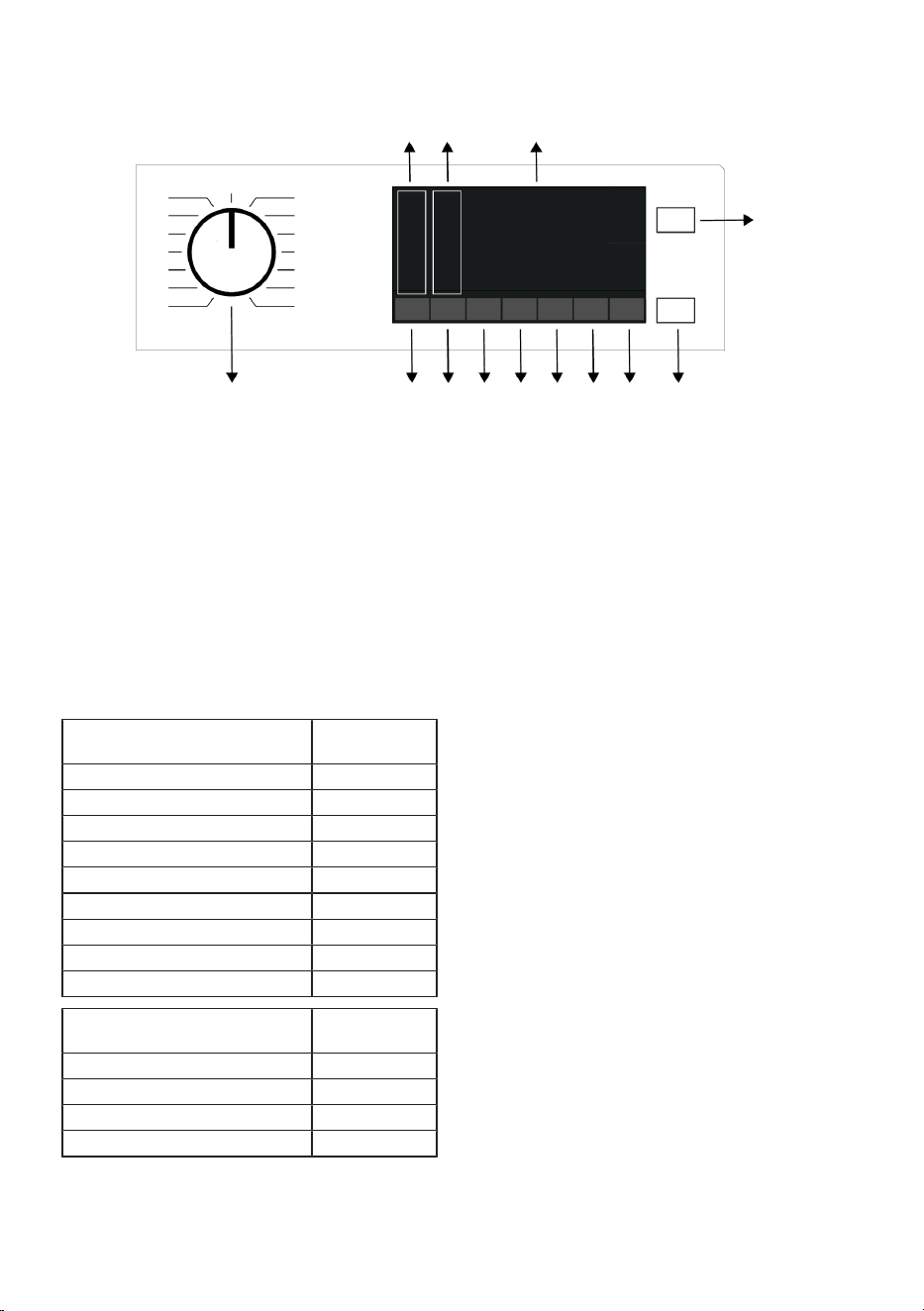
5.1 Control Panel
1
2 3 4
5
678910111213
1 Program Selection Button 2 Temperature Level Lights
3 Spin Speed Indicator Lights 4 Display
5 Push&GO Program Button 6 Start/Pause Button
7 Auxiliary Function Button 3 8 End Time Adjustment Button
9 Drying Level Adjustment Button 10 Auxiliary Function Button 2
11 Auxiliary Function Button 1 12 Spin Speed Adjustment Knob
13 Temperature Adjustment Button
5.2 Program Table
Program
Maximum load
(kg)
Full Load 59’ 9,0
Mixed 59’ 3,5
Synthetics 59’ 3,0
Cotton 28’ 9,0
Cottons 9,0
Eco 40-60 *** 9,0
Express 14’ 9,0
20°C 9,0
Wool & Delicates 1,5
Program
Maximum load
(kg)
Synthetic Dry 4,0
Cotton Dry 6,0
Wash & Dry 6kg 6,0
Wash&Wear 1,0
- : See programme description for max-
imum load.
***: Eco 40-60 program 40 ° C temperature
selection is the test program according to
EU regulation EU/2019/2014 and EN
60456:2016/A11:2020 standard.
Eco 40-60 program is a washing and drying
cycle test program with 40 °C temperature
and cabinet dryness selection, in accord-
ance with EU regulation EU/2019/2014 and
EN 62512 standard.
5.3 Selection of Washing Program
1. According to the "Programme table", de-
termine the programme suitable for the
type, quantity and dirt level of the laun-
dry.
EN / 17
Programs are limited to the highest
spin speed suitable for the fabric
type.
When choosing the program you
will use, always take into considera-
tion the fabric type, color, degree of
soiling and allowed water temperat-
ure.
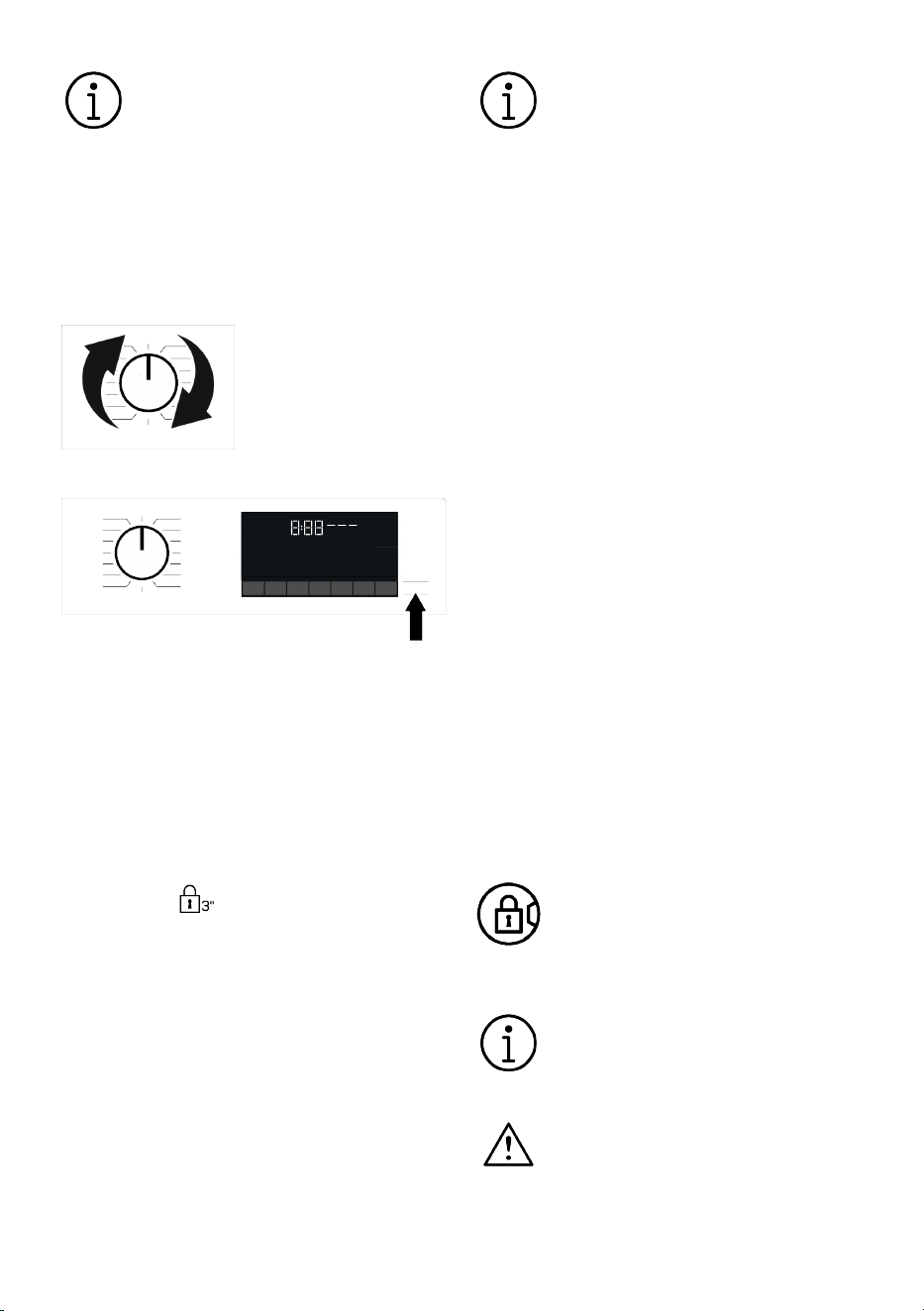
2. Select the desired program using the
Program Selection button.
5.4 Starting the Program
• Start the program by pressing the Start/
Pause button for about 1 second.
• The flashing light of the Start/Pause but-
ton will turn solid, indicating that the pro-
gram has started.
• The loading door is locked. The message
"Door Locking" appears on the display
while the door is locking.
5.5 Child Lock
• Child Lock
Use Child Lock function to prevent children
from tampering with the product. Thus you
can avoid any changes in a running pro-
gramme.
You can switch on and off the
product with On / Off button when
the Child Lock is active. When you
switch on the product again, pro-
gramme will resume from where it
has stopped.
When the Child Lock is enabled, an
audio warning will be given if the
buttons are pressed. Audio warning
will be cancelled if the buttons are
pressed five times consecutively.
To activate the child lock:
Press and hold Drying Level Adjustment
button for 3 seconds. After the countdown
as “CL 3-2-1” on the display is over, “CL On”
(Child Lock On) symbol appears on the dis-
play. You may release the Drying Level Ad-
justment button when this symbol is dis-
played.
To deactivate the child lock:
Press and hold Drying Level Adjustment
button for 3 seconds. After the countdown
“CL 3-2-1” on the display is over, “CL Off”
(Child Lock Off) symbol appears on the dis-
play.
5.6 Loading Door Lock
There is a locking system on the loading
door of the machine that prevents opening
of the loading door in cases when the water
level is unsuitable.
"Door Locked" symbol appears on the dis-
play when the loading door is locked.
Opening the loading door in case of power
failure:
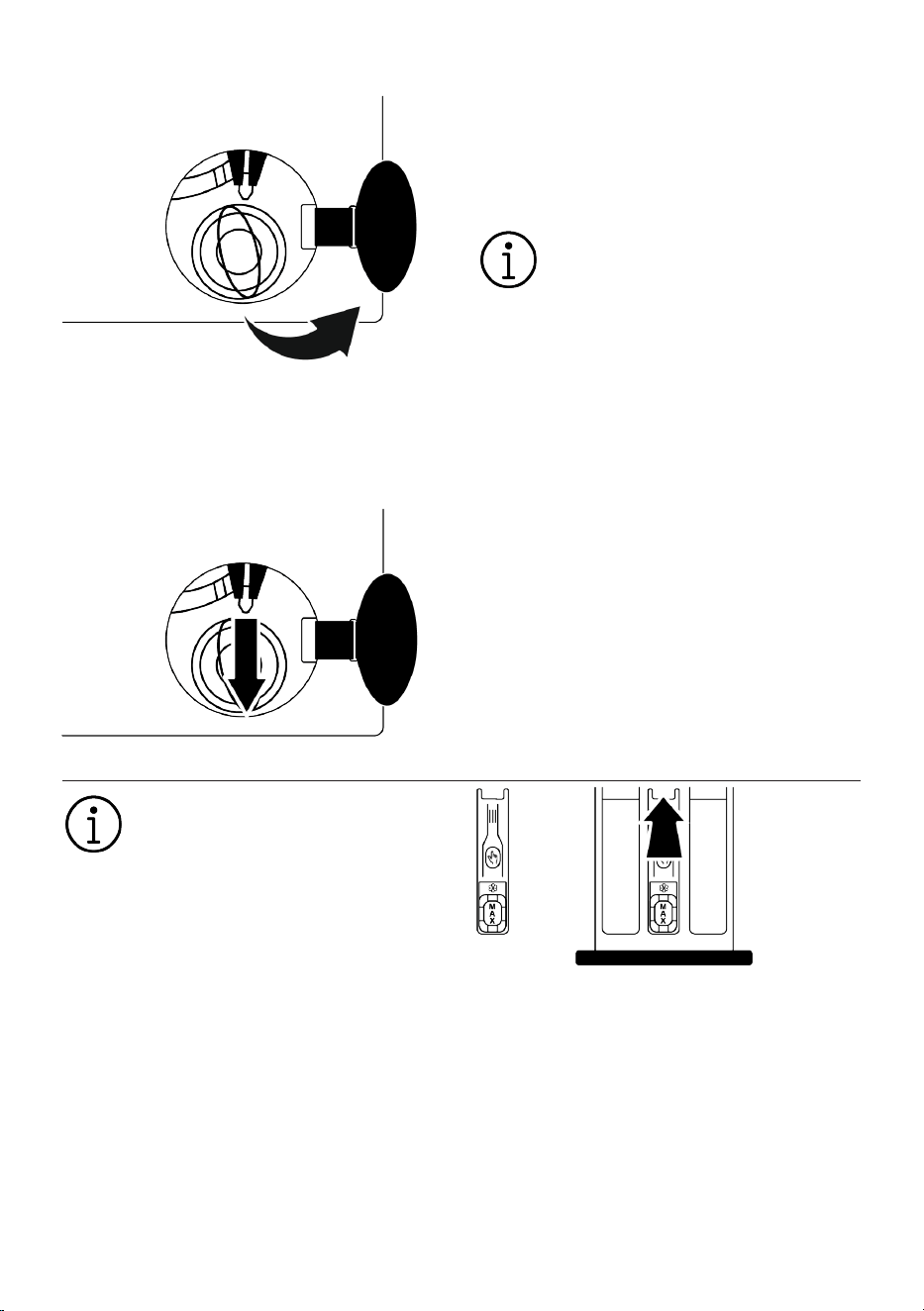
In case of a power failure, you can
use the loading door emergency
handle under the pump filter lid to
manually open the loading door.
Before opening the loading door,
make sure that there is no water in
the product to avoid flooding.
1. Turn off and unplug the product.
EN / 18
2. Open the pump filter lid.
3. Pull down the loading door emergency
handle with a tool and release. Then
open the loading door.
4. If the loading door does not open then
repeat the previous step.
5.7 Cancelling the Programme
The programme is cancelled when pro-
gramme selection knob is turned to a dif-
ferent programme or product is turned off
and on again using the programme selec-
tion knob.
If you turn the programme selection
knob when the Child Lock is en-
abled, the programme will not be
cancelled. You should cancel the
Child Lock first.
If you want to open the loading
door after you have cancelled the
programme but it is not possible to
open the loading door since the wa-
ter level in the product is above the
loading door baseline, then turn the
Programme Selection knob to
Pump+Spin programme and drain
the water in the product.
6 Maintenance and Cleaning
Please read the “Safety Instruc-
tions” section first!
Service life of your product extends and fre-
quently experienced problems will be re-
duced if it is cleaned at regular intervals.
6.1 Cleaning the Detergent Drawer
Clean the detergent drawer at regular inter-
vals (once every 4 to 5 wash) as mentioned
below to prevent accumulation of powder
detergent.
Clean the syphon if excess amounts of wa-
ter and fabric softener mixture remains in
the softener compartment.
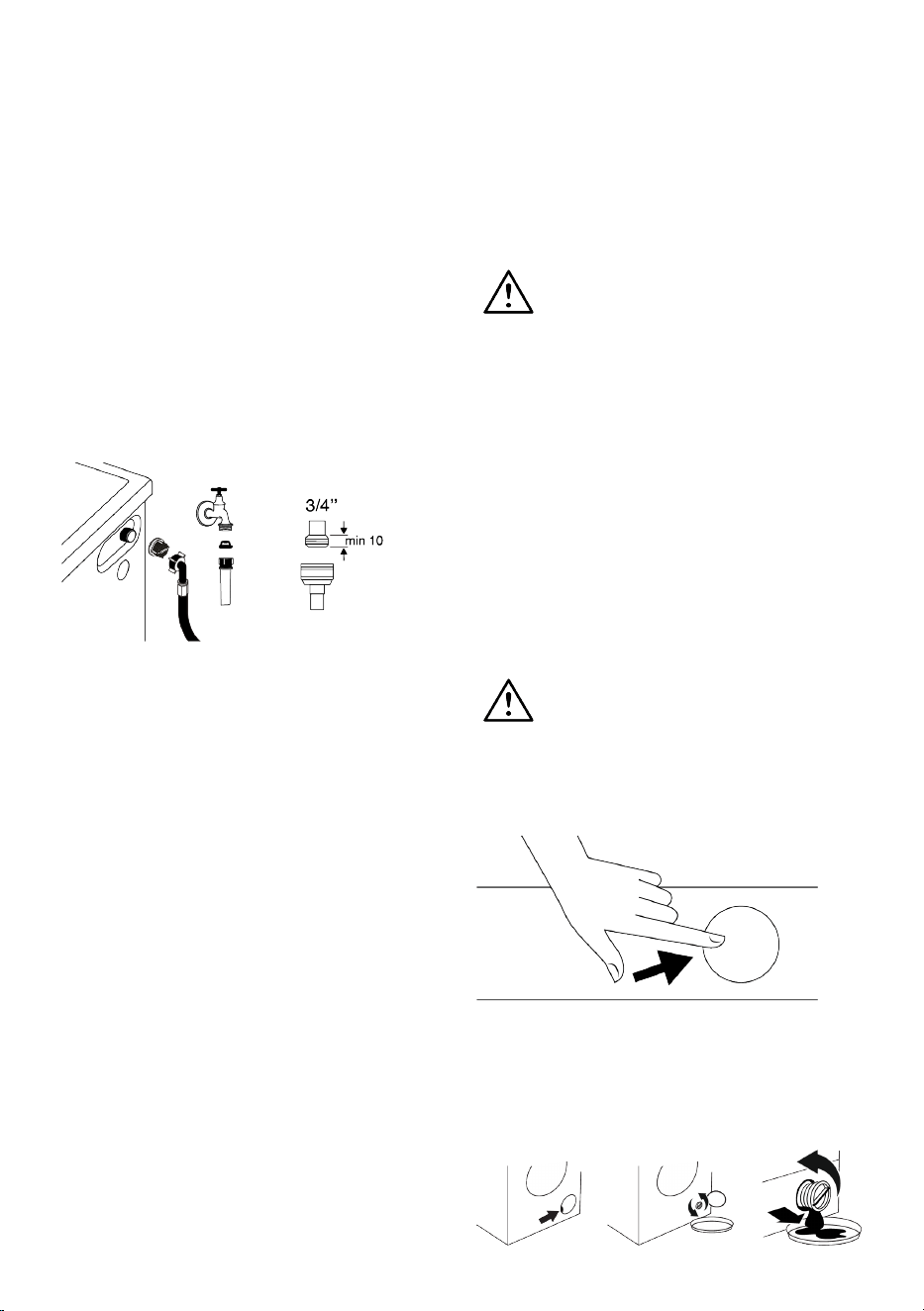
1. Press the marked part of the syphon
within the softener compartment and
then pull the drawer towards yourself to
take it out.
2. Lift and remove the syphon from behind
as shown.
EN / 19
3. Rinse drawer and syphon in the sink
with plenty of warm water. Use gloves
or suitable brush to prevent contact of
residues in the drawer with your skin.
4. Firmly fit the syphon and the drawer
back after cleaning.
6.2 Cleaning the Water Intake Fil-
ters
There is a filter at the end of each water in-
take valve at the rear of the product and
also at the end of each water intake hose
where they are connected to the tap. These
filters prevent foreign substances and dirt
in the water to enter the product. Filters
should be cleaned if they are dirty.
1. Close the taps.
2. Remove the nuts of the water intake
hoses to access the filters on the water
intake valves and clean them with an ap-
propriate brush. If the filters are too
dirty, remove them from their places
with a pliers and clean in this way.
3. Take out the filters on the flat ends of
the water intake hoses together with the
gaskets and clean thoroughly under run-
ning water.
4. Replace the gaskets and filters carefully
and tighten their nuts by hand.
6.3 Draining Remaining Water and
Cleaning the Pump Filter
The filter system in your product prevents
solid items such as buttons, coins and fab-
ric fibres clogging the pump impeller during
draining of washing water. Thus, the water
will be drained without any problem and the
service life of the pump will extend.
If the product fails to drain water inside it,
the pump filter is clogged. Filter must be
cleaned whenever it is clogged or in every 3
months. Water must be drained off first to
clean the pump filter.
In addition, prior to transporting the product
(e.g., when moving to another house) water
should be drained completely.
NOTE:
Foreign substances left in the
pump filter may damage your
product or may cause noise prob-
lem.
If you live in areas prone to frost, re-
member to turn off the water tap,
disconnect the main hose, and
drain the water from the product
when it's not in use.
After each use, turn off the tap to
which the mains hose is connected.
In order to clean the dirty filter and drain
the water:
1. Unplug the product to cut off the supply
power.
Temperature of the water inside the
product may rise up to 90 ºC. To
avoid the risk of scalding, clean the
filter after the water inside the
product is cooled down.
2. Open the filter cover.
3. Follow the below procedures in order to
drain water.
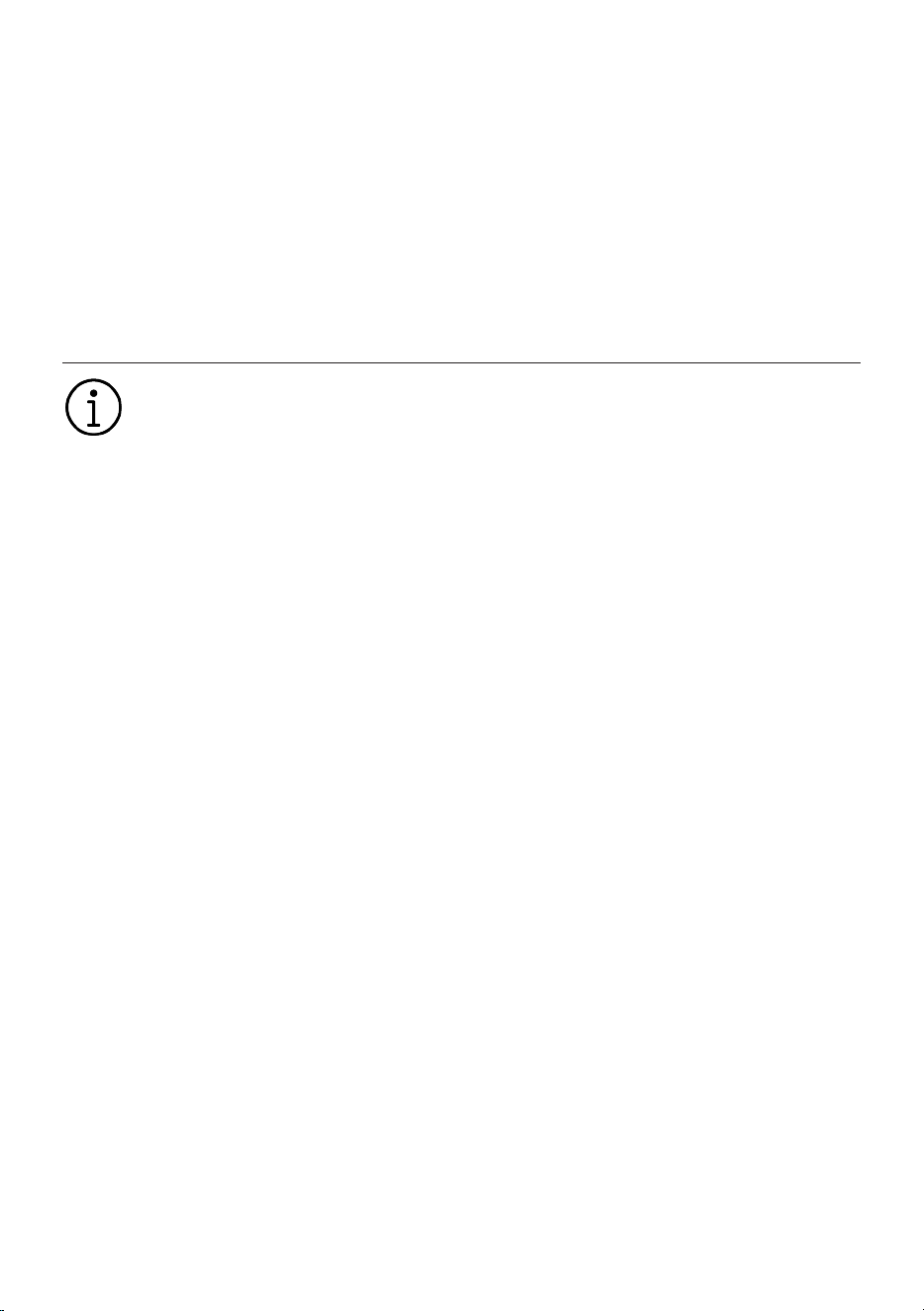
If the product does not have an emergency
water draining hose, in order to drain the
water:
EN / 20
• Place a large container at the end of the
hose to collect the water from the filter.
• When the pump filter starts leaking water
loosen it by turning (opposite clockwise).
Fill the running water to the container you
placed in front of the filter. Keep a cloth
ready to clean the water that may spill.
• Completely turn and remove the pump fil-
ter when the water in the product leaks
out.
1. Clean any residues inside the filter as
well as fibres, if any, around the pump
impeller region.
2. Replace the filter.
3. If the filter cap is composed of two
pieces, close the filter cap by pressing
on the tab. If it is one piece, seat the
tabs in the lower part into their places
first, and then press the upper part to
close.
7 Troubleshooting
Read the “Safety Instructions” sec-
tion first!
The program does not start after closing
the machine door.
• The Start/Pause button may not have
been pressed. >>> Press the Start/Pause
button.
• In case of overload, the door may be diffi-
cult to close. >>> Reduce the laundry and
make sure the door closes properly.
The program cannot be started or the pro-
gram selection cannot be made.
• The product may have switched to self-
protection due to infrastructure problems
(mains voltage, water pressure, etc.). >>>
Depending on the product model, to can-
cel the program, select another program
by turning the Program Selection knob or
pressing and holding the On/Off button
for 3 seconds. The previous program will
be canceled. See.Cancelling the Pro-
gramme [}18]
The product does not absorb water.
• The tap may be closed. >>> Open the
taps.
• The water inlet hose may be kinked. >>>
Straighten the hose.
• The water inlet filter may be clogged. >>>
Clean the filter.
• The loading door may not be closed. >>>
Close the door.
The product does not drain water.
• The water drain hose may be clogged or
kinked. >>> Clean or straighten the hose.
• The pump filter may be clogged. >>>
Clean the pump filter.
The product vibrates or makes noise.
• The product may be standing unstable.
>>> Balance the product by adjusting its
feet.
• A hard object may have gotten stuck in
the pump filter. >>> Clean the pump filter.
• Transportation safety bolts may not have
been removed. >>> Remove the trans-
portation safety bolts.
• The amount of laundry in the product
may be less. >>> Load more laundry into
the product.
• Excessive laundry may have been loaded
into the product. >>> Remove some of
the laundry inside the product or
straighten the laundry with your hand and
distribute it evenly inside the product.
• The product may be resting on a hard
surface. >>> Check that the product is
not resting on anything.
Water is coming from the bottom of the
product.
• The water drain hose may be clogged or
kinked. >>> Clean or straighten the hose.
• The pump filter may be clogged. >>>
Clean the pump filter.

EN / 21
No water is visible in the product during
washing.
• Water is in the invisible part of the
product. >>> This is not a malfunction.
The loading door does not open.
• The door lock is activated due to the wa-
ter level in the product. >>> Drain the wa-
ter by running the Pump or Spin program.
• The product may be heating the water or
in the spinning phase. >>> Wait for the
program to finish.
• The front cover may remain attached due
to pressure on it. >>> The front cover is
released from its attached position and
opened by pushing and pulling the
handle.
• In cases where there is no electricity, the
loading door of the product will not open.
>>> To open the loading door of the
product, open the pump filter cover and
pull down the loading door emergency re-
lease lever located behind it. See.Loading
Door Lock [}17]
The program time does not count down. (*)
• The laundry may have created an imbal-
ance in the product. >>> Due to the unbal-
anced distribution of the laundry inside
the product, the automatic unbalanced
load detection system may have been ac-
tivated.
The product does not pass the squeezing
step. (*)
• The laundry may have created an imbal-
ance in the product. >>> Due to the unbal-
anced distribution of the laundry inside
the product, the automatic unbalanced
load detection system may have been ac-
tivated.
• The spin cycle may not have been com-
pleted because the water inside the
product could not be drained. >>> Check
the filter and drain hose.
• Excessive foam may have formed due to
excessive detergent use and the auto-
matic foam dampening system may have
been activated. >>> Use the recommen-
ded amount of detergent.
Suds are overflowing from the detergent
drawer.
• Too much detergent may have been
used. >>> Mix 1 tablespoon of softener
with ½ liter of water and pour it into the
main wash compartment of the detergent
drawer. >>> Add the appropriate amount
of detergent to the product according to
the program and maximum load stated in
the "Program table" section. When using
additional chemicals (stain removers,
bleach, etc.), reduce the amount of deter-
gent.
The drying process takes too long.
• The machine may be overloaded. >>> Do
not overload the machine.
• The laundry may not be spun sufficiently.
>>> Select a higher spin speed in the
washing step of the Washing-Drying ma-
chine.
• The tap may be closed. >>> Open the
taps.
The laundry remains wet after drying.
• A programme suitable for the type of
laundry may not have been selected. >>>
Check the care labels on the garments
and select a programme suitable for this
or use additional timed programmes.
• The machine may be overloaded. >>> Do
not overload the machine.
• The laundry may not be spun sufficiently.
>>> Select a higher spin speed in the
washing step of the Washing-Drying ma-
chine.
Laundry shrinks, fades, becomes dull or
damaged.
• A program appropriate for your laundry
type may not have been selected.
>>>Check the care labels on your clothes
and select an appropriate program, or
use additional timed programs. You
should not dry laundry that is not suitable
for drying.
The loading door does not open.
• The lid of your machine may not be
opened for safety reasons. >>> If the lid
locked indicator is active on the screen

EN / 22
after the drying process, the machine
keeps the lid locked until it cools down
for your safety.
• In cases where there is no electricity, the
loading door of the product will not open.
>>> To open the loading door of the
product, open the pump filter cover and
pull down the loading door emergency re-
lease lever located behind it. See.Loading
Door Lock [}17]
(*) When the laundry is not well distributed
inside the product, the product does not
proceed to the spinning step to prevent
damage to itself and the environment. Ar-
range the laundry and spin again.
8 DISCLAIMER
Some (simple) failures can be adequately
handled by the end-user without any safety
issue or unsafe use arising, provided that
they are carried out within the limits and in
accordance with the following instructions
(see the “Self-Repair” section).
Therefore, unless otherwise authorized in
the “Self-Repair” section below, repairs
shall be addressed to registered profes-
sional repairers in order to avoid safety is-
sues. A registered professional repairer is a
professional repairer that has been granted
access to the instructions and spare parts
list of this product by the manufacturer ac-
cording to the methods described in legis-
lative acts pursuant to Directive 2009/125/
EC.
However, only the service agent (i.e. au-
thorized professional repairers) that you
can reach through the phone number given
in the user manual/warranty card or
through your authorized dealer may
provide service under the guarantee terms.
Therefore, please be advised that repairs
by professional repairers (who are not au-
thorized by Indesit ) shall void the guaran-
tee.
Self-Repair
Self-repair can be done by the end-user
with regard exclusively to the following
spare parts: door, door hinge and seals,
other seals, door locking assembly and
plastic peripherals such as detergent dis-
pensers (an updated list is also available in
parts-selfservice.europeanappliances.com
as of 1st of March 2021)
Moreover, to ensure product safety and to
prevent risk of serious injury, the mentioned
self-repair shall be done following the in-
structions in the user manual for self-repair
or which are available in parts-selfser-
vice.europeanappliances.com For your
safety, unplug the product before attempt-
ing any self-repair.
Repair and repair attempts by end-users for
parts not included in such list and/or not
following the instructions in the user manu-
als for self-repair or which are available in
parts-selfservice.europeanappliances.com ,
might give raise to safety issues not attrib-
utable to parts-selfservice.europeanappli-
ances.com , and will void the warranty of
the product.
Therefore, it is highly recommended that
end-users refrain from the attempt to carry
out repairs falling outside the mentioned
list of spare parts, contacting in such cases
authorized professional repairers or re-
gistered professional repairers. On the con-
trary, such attempts by end-users may
cause safety issues and damage the
product and subsequently cause fire, flood,
electrocution and serious personal injury to
occur.
By way of example, but not limited to, the
following repairs must be addressed to au-
thorized professional repairers or re-
gistered professional repairers: motor,
pump assembly, main board, motor board,
display board, heaters etc.
The manufacturer/seller cannot be held li-
able in any case where end-users do not
comply with the above

EN / 23
The spare part availability of the washing
machine or washer-dryer that you pur-
chased is 10 years. During this period, ori-
ginal spare parts will be available to oper-
ate the washing machine or washer-dryer
properly.