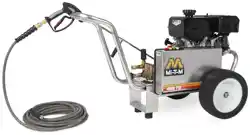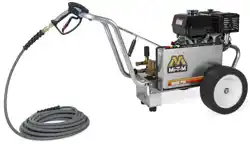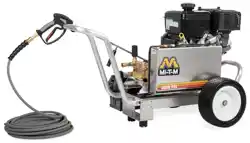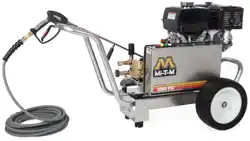
Mi-T-M
CW-GASOLINE / DIESEL Operator's Manual 1
OPERATOR'S MANUAL
FOR ALL Mi-T-M
®
CW-GASOLINE & DIESEL
COLD WATER BELT DRIVEN
PRESSURE WASHERS
CAUTION
RISK OF INJURY!
READ MANUAL BEFORE OPERATING!
THIS MANUAL IS AN IMPORTANT PART OF THE PRESSURE WASHER
AND SHOULD REMAIN WITH THIS UNIT WHEN YOU SELL OR RENT IT.
©Copyright 2006, Mi-T-M
®
Corporation Form #37-0095-E/S-021323
PARTS LIST
2 Mi-T-M
®
CW-GASOLINE / DIESEL Operator's Manual
WARNING: This product can expose you to
chemicals including carbon monoxide, which is
known to the State of California to cause birth
defects or other reproductive harm. For more
information go to www.P65Warnings.ca.gov
WARNING
WARNING: This product can expose you to
chemicals including Lead, which is known to
the State of California to cause cancer and birth
defects or other reproductive harm. For more
information go to www.P65Warnings.ca.gov
WARNING
WARNING: Breathing diesel engine exhaust
exposes you to chemicals known to the State
of California to cause cancer and birth defects
or other reproductive harm.
•Always start and operate the engine in a
well-ventilated area.
•If in an enclosed area, vent the exhaust to
the outside.
•Do not modify or tamper with the exhaust
system.
•Do not idle the engine except as necessary.
For more information go to
www.P65warnings.ca.gov/diesel.
WARNING
CONTENTS
INTRODUCTION .............................................................................................................3
IMPORTANT SAFETY INSTRUCTIONS .........................................................................4
RISK OF EXPLOSION OR FIRE ....................................................................................................................4
RISK OF ASPHYXIATION .............................................................................................................................4
RISK OF INJECTION OR SEVERE CUTTING INJURY .................................................................................5
RISK OF ELECTROCUTION OR ELECTRICAL SHOCK ...............................................................................5
RISK OF BURNS ..........................................................................................................................................5
RISK OF BURSTING ....................................................................................................................................5
RISK FROM MOVING PARTS.......................................................................................................................6
RISK OF BODILY INJURY ............................................................................................................................6
FEATURES ....................................................................................................................... 7
SAFETY DECALS ............................................................................................................8
INSTALLATION & PREPARATION ..................................................................................9
ATTIRE: .........................................................................................................................................................9
SETUP: .........................................................................................................................................................9
ENGINE FUEL TANK: ...................................................................................................................................9
NOZZLE REVIEW: ....................................................................................................................................10
NOZZLE CONNECTION: ............................................................................................................................ 10
WATER SUPPLY: ........................................................................................................................................11
UNLOADER: ...............................................................................................................................................11
THERMAL RELIEF VALVE: .........................................................................................................................11
PRE-START INSPECTION PROCEDURES:................................................................................................12
OPERATING INSTRUCTIONS ......................................................................................13
PRIMING THE PUMP: ................................................................................................................................13
START-UP: .................................................................................................................................................. 13
CLEANING WITH DETERGENTS (OPTIONAL FEATURE): ........................................................................14
SHUTDOWN: ..............................................................................................................................................14
STORAGE & MAINTENANCE ....................................................................................... 15
SPECIFIC MAINTENANCE: ........................................................................................................................15
WINTERIZING: ............................................................................................................................................16
TROUBLESHOOTING ...................................................................................................17
STATEMENT OF WARRANTY ......................................................................................19
Mi-T-M
CW-GASOLINE / DIESEL Operator's Manual 3
INTRODUCTION
Congratulations on the purchase of your new Mi-T-M pressure washer! You can be assured your Mi-T-M pressure
washer was constructed and designed with quality and performance in mind. Each component has been rigorously
tested to ensure the highest level of acceptance.
This operator's manual was compiled for your benet. By reading and following the simple safety, installation, oper-
ation, maintenance and troubleshooting steps described in this manual, you will receive years of trouble-free opera-
tion from your new Mi-T-M pressure washer. The contents of this manual are based on the latest product information
available at the time of publication. Mi-T-M reserves the right to make changes in price, color, materials, equipment,
specications or models at any time without notice.
! IMPORTANT !
THESE PARAGRAPHS ARE SURROUNDED BY A "SAFETY ALERT BOX." THIS BOX IS USED TO
DESIGNATE AND EMPHASIZE SAFETY WARNINGS THAT MUST BE FOLLOWED WHEN OPERATING
THIS PRESSURE WASHER.
ACCOMPANYING THE SAFETY WARNINGS ARE "SIGNAL WORDS" WHICH DESIGNATE THE DEGREE
OR LEVEL OF HAZARD SERIOUSNESS. THE "SIGNAL WORDS" USED IN THIS MANUAL ARE AS
FOLLOWS:
DANGER: INDICATES AN IMMINENTLY HAZARDOUS SITUATION WHICH, IF NOT AVOIDED, WILL RESULT
IN DEATH OR SERIOUS INJURY.
WARNING: INDICATES A POTENTIALLY HAZARDOUS SITUATION WHICH, IF NOT AVOIDED, COULD
RESULT IN DEATH OR SERIOUS INJURY.
CAUTION: INDICATES A POTENTIALLY HAZARDOUS SITUATION WHICH, IF NOT AVOIDED MAY RESULT
IN MINOR OR MODERATE INJURY.
THE SYMBOLS SET BELOW THIS PARAGRAPH ARE "SAFETY ALERT SYMBOLS." THESE SYMBOLS ARE
USED TO CALL ATTENTION TO ITEMS OR PROCEDURES THAT COULD BE DANGEROUS TO YOU OR
OTHER PERSONS USING THIS EQUIPMENT.
ALWAYS PROVIDE A COPY OF THIS MANUAL TO ANYONE USING THIS EQUIPMENT. READ ALL
INSTRUCTIONS BEFORE OPERATING THIS PRESSURE WASHER AND ESPECIALLY POINT OUT THE
"SAFETY WARNINGS" TO PREVENT THE POSSIBILITY OF PERSONAL INJURY TO THE OPERATOR.
Once the unit has been uncrated, immediately write in the serial number of your unit in the space provided below.
SERIAL NUMBER_________________________________
Inspect for signs of obvious or concealed freight damage. If damage does exist, le a claim with the transportation
company immediately. Be sure that all damaged parts are replaced and that the mechanical problems are corrected
prior to operation of the unit. If you require service, contact Mi-T-M Customer Service.
CUSTOMER SERVICE
CALL OUR TOLL-FREE NUMBER
for the Sales or Service Center nearest you!
(800) 553-9053
Please have the following information available for all service calls:
1. Model Number
2. Serial Number
3. Date and Place of Purchase
4 Mi-T-M
®
CW-GASOLINE / DIESEL Operator's Manual
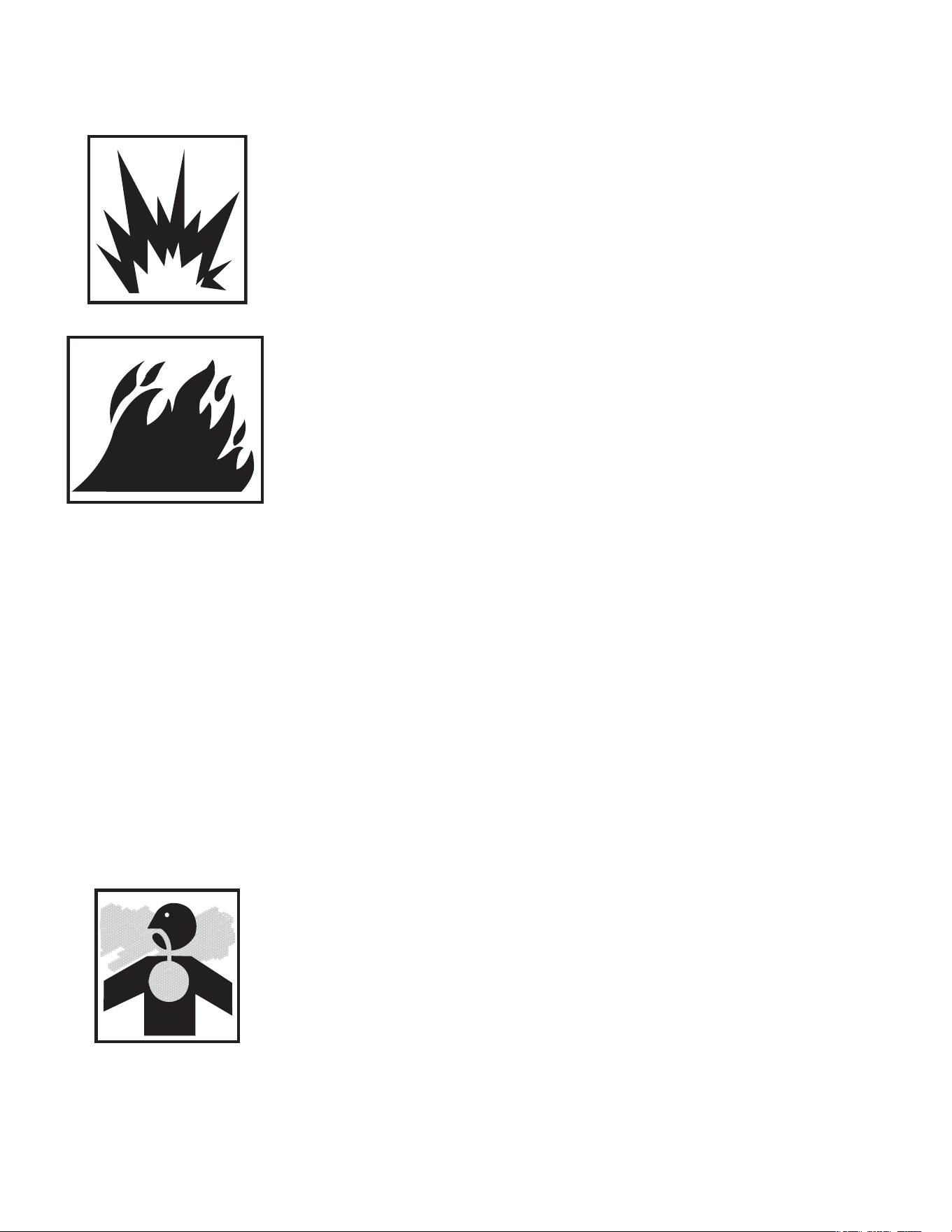
RISK OF EXPLOSION OR FIRE
1. Serious injury or death may occur from normal sparks in the engine ignition
system or engine exhaust/mufer. Always operate pressure washer in a
well ventilated area free of ammable vapors, combustible dust, gases or
other combustible materials.
Do not store the pressure washer near an open ame or any equipment
such as a stove, furnace water heater, etc. which utilizes a pilot light or
sparking device.
Do not use this pressure washer to spray ammable material!
2. Serious injury or death may occur as a result of improper fueling.Do not
smoke while lling engine fuel tank. Never ll the engine fuel tank while
the engine is running or hot. Allow the engine to cool two minutes before
refueling. Do not refuel indoors or in a poorly ventilated area.
Always refuel slowly to avoid the possibility of spilled fuel which may cause
a risk of re.
Gasoline Engine Fuel Tank:
Refuel with gasoline only. Do not use diesel or fuel oil.
Diesel Engine Fuel Tank:
Refuel with diesel only. Do not use gasoline.
Do not operate the unit if gasoline/diesel fuel is spilled. Wipe the pressure
washer clean and move it away from the spill. Avoid creating any ignition
until the gasoline/diesel fuel has evaporated.
3. Serious injury or death may occur from the battery when using an Electric
Start Option. When the battery is being activated, hydrogen and oxygen
gases in the battery are extremely explosive. Keep open sparks and ames
away from the battery at all times, especially when charging the battery.
Be certain to disconnect the battery ground terminal before servicing. When
disconnecting the cable from the battery, start with the negative terminal,
and when connecting them, start with the positive one.
When charging the battery, remove the battery vent plugs.Use only a
voltmeter or hydrometer to check a battery charge. DO NOT jump start the
battery unless both batteries are of equal voltage and amperage.
4. Serious injury or death may occur from a ground re caused by a mufer
spark. A spark arrester must be added to the mufer of this engine if it is to
be used on any forest covered, brush covered or grass covered unimproved
land. The arrester must be maintained in effective working order by the
operator. In the state of California, the above is required by law. (Section
4442 of the California Public Resources Code.) Other states may have
similar laws. Federal laws apply on federal lands.
RISK OF ASPHYXIATION
1. Serious injury or death may occur from inhaling engine exhaust or dangerous
vapors. The engine exhaust from this product contains chemicals known to
the State of California to cause cancer, birth defects, or other reproductive
harm.
2. This pressure washer was designed for outdoor use only. Never operate
this pressure washer in an enclosed area. Always make certain there is
adequate ventilation (fresh outside air) for breathing and combustion. This
will prevent the buildup of dangerous carbon monoxide gases. Beware of
poorly ventilated areas, or areas with exhaust fans which can cause poor
air exchange.
3. Follow all safety instructions provided with the materials you are spraying.
Use of a respirator may be required when working with some materials.
Do not use this pressure washer to dispense hazardous detergents.
IMPORTANT SAFETY INSTRUCTIONS
Mi-T-M
CW-GASOLINE / DIESEL Operator's Manual 5
RISK OF INJECTION OR SEVERE CUTTING INJURY
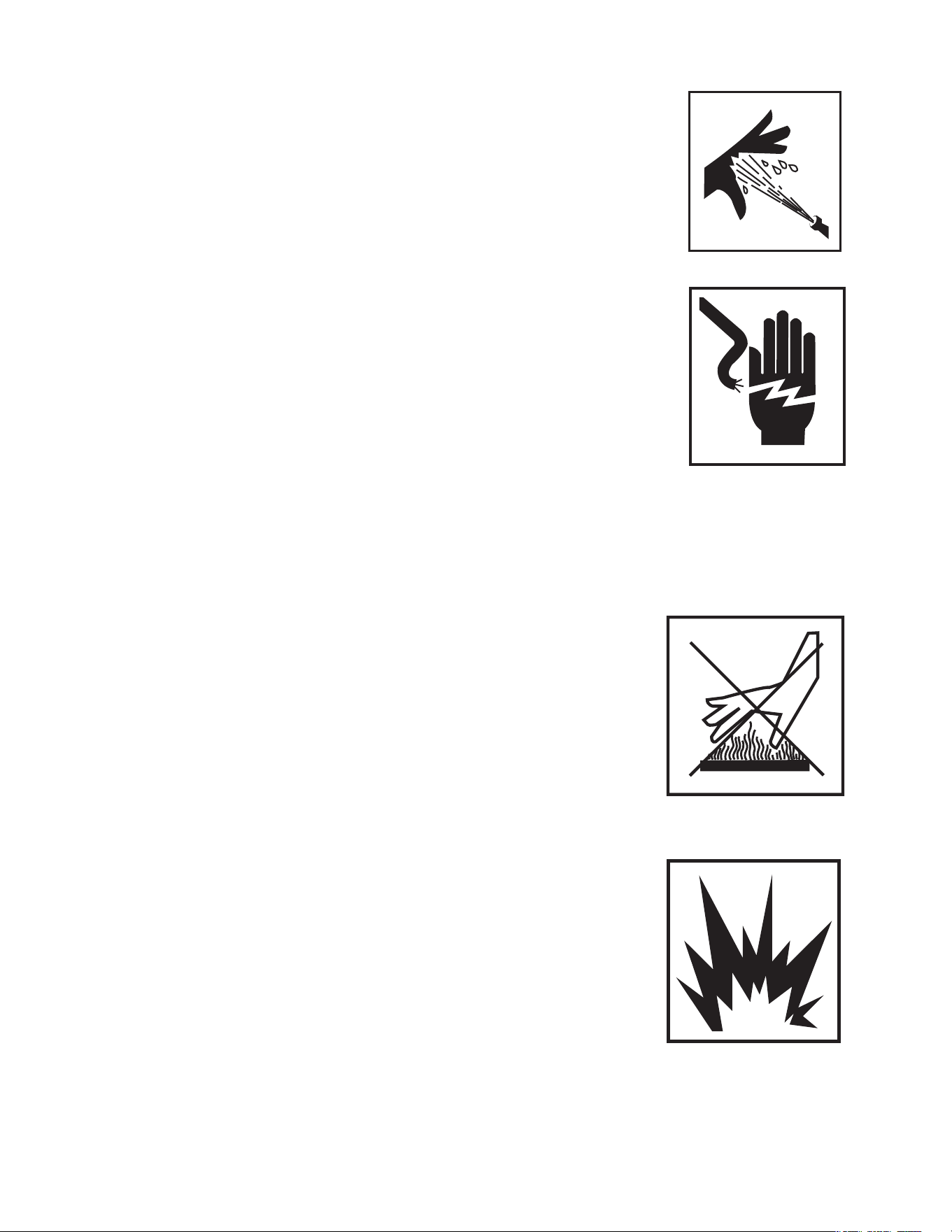
1. Serious injury or death could occur from high pressure spray penetrating
the skin. Keep clear of nozzle and spray! Never put your hand, ngers or
body directly over the spray nozzle.
2 Never point the high pressure discharge spray at yourself or anyone else.
3 Always keep operating area clear of all persons.
4. DO NOT allow children to operate this unit.
5. SEEK EMERGENCY MEDICAL CARE if the spray appears to have penetrated
the skin! DO NOT TREAT AS A SIMPLE CUT!!
6. High pressure hoses and fuel lines should be inspected daily for signs of
wear. If evidence of failure exists, promptly replace all suspect hoses and
fuel lines to prevent the possibility of injury from the high pressure spray.
If a hose or tting is leaking, NEVER PLACE YOUR HAND DIRECTLY ON
THE LEAK.
7. NEVER operate the gun with the trigger wired in the open position. To
prevent accidental discharge, the trigger gun should be securely locked
when not in use.
8. Before removing the spray nozzle or servicing the unit, ALWAYS shut off
the unit and trigger the gun to release trapped pressure. (Even after you
shut off the unit, there is high pressure water left in the pump, hose and
gun until you release it by triggering the gun.)
RISK OF ELECTROCUTION OR ELECTRICAL SHOCK
1. Serious injury or death may occur from contact with electricity. DO NOT
direct spray on or into electrical installations of any kind! This includes
electrical outlets, light bulbs, fuse boxes, transformers, the unit itself, etc.
2. DO NOT allow metal components of the pressure washer to come in contact
with live electrical components.
RISK OF BURNS
1. Serious injury could occur from touching the engine mufer. This area can
remain hot for some time after the pressure washer is shutdown. Never
allow any part of your body to contact the engine mufer or adjacent areas.
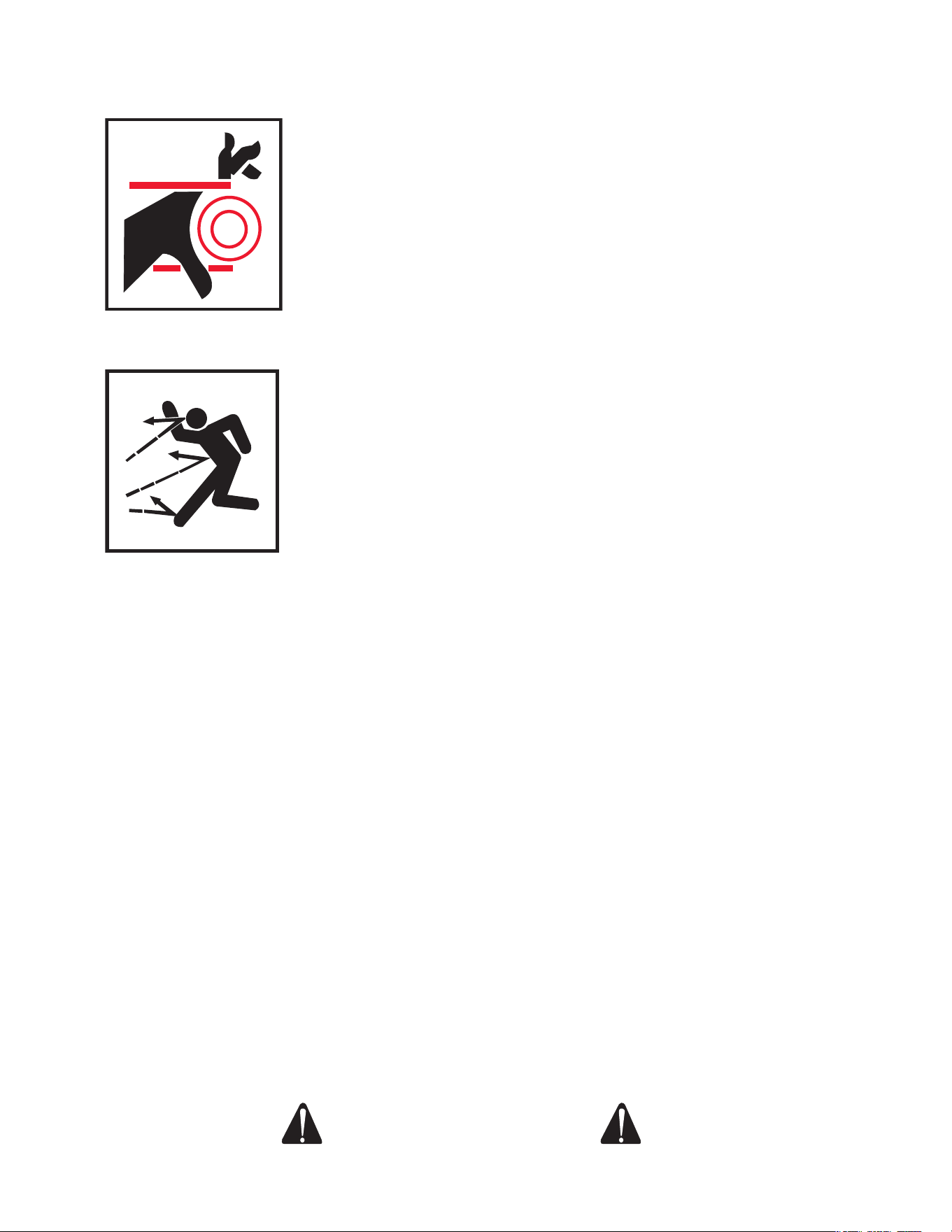
RISK OF BURSTING
1. Serious injury may occur from a pressure washer malfunction or exploding
accessories if incorrect system components, attachments or accessories
are used. Never make adjustments to the factory set pressures.
2. Never exceed manufacturers maximum allowable pressure rating of
attachments.
3. Do not allow any hoses to make contact with the engine mufer or gasoline
engine to prevent the possibility of bursting. Avoid dragging the hoses over
abrasive surfaces such as cement.
4. Use only manufacturer recommended repair parts for your pressure washer.
5. Serious injury or death may occur if attempting to start the pressure washer
when the pump is frozen. In freezing temperatures, the unit must always be
warm enough to ensure there is no ice formation in the pump. Do not start
the pressure washer if it has been transported in an open or underheated
vehicle without rst allowing the pump to thaw.
IMPORTANT SAFETY INSTRUCTIONS
6 Mi-T-M
®
CW-GASOLINE / DIESEL Operator's Manual
!SAVE THESE INSTRUCTIONS!
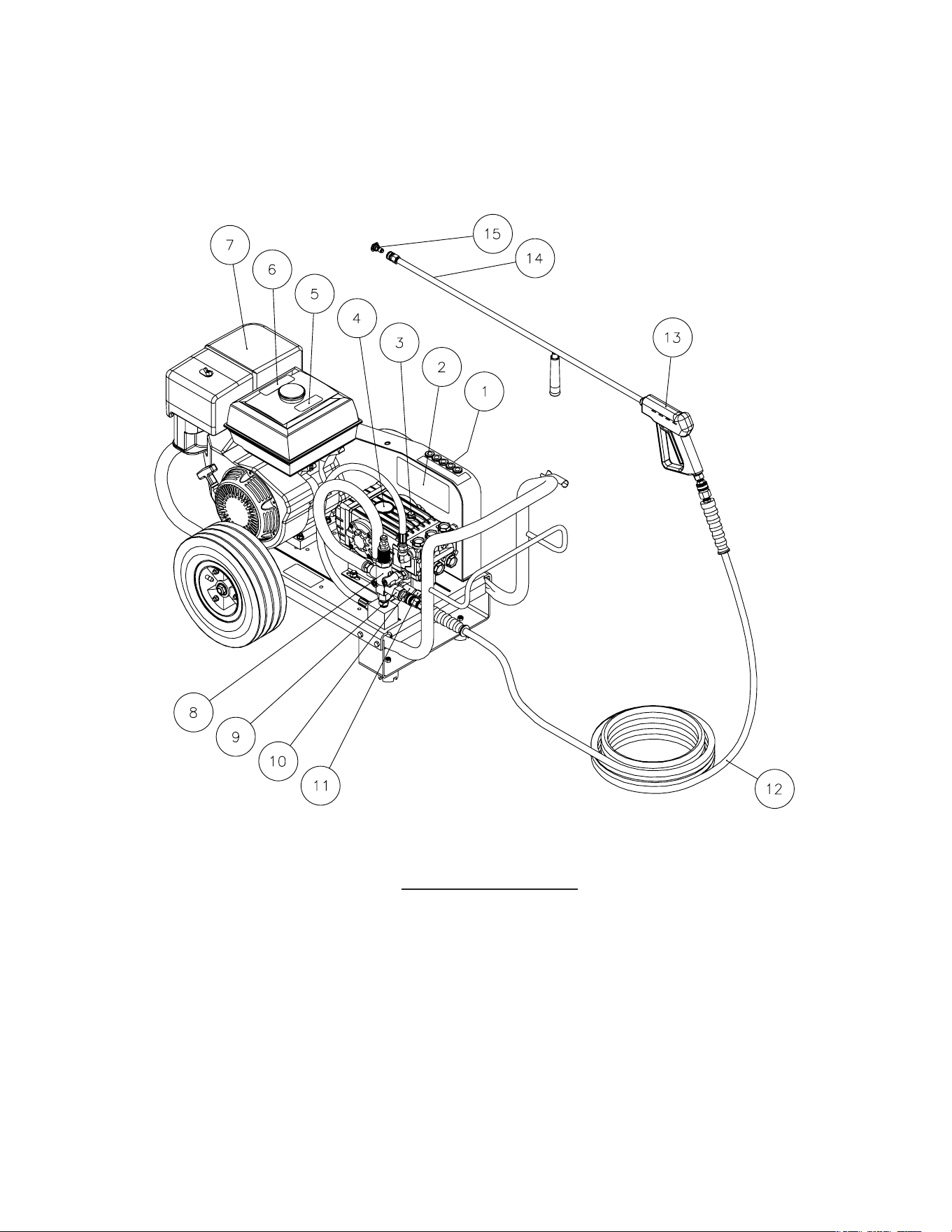
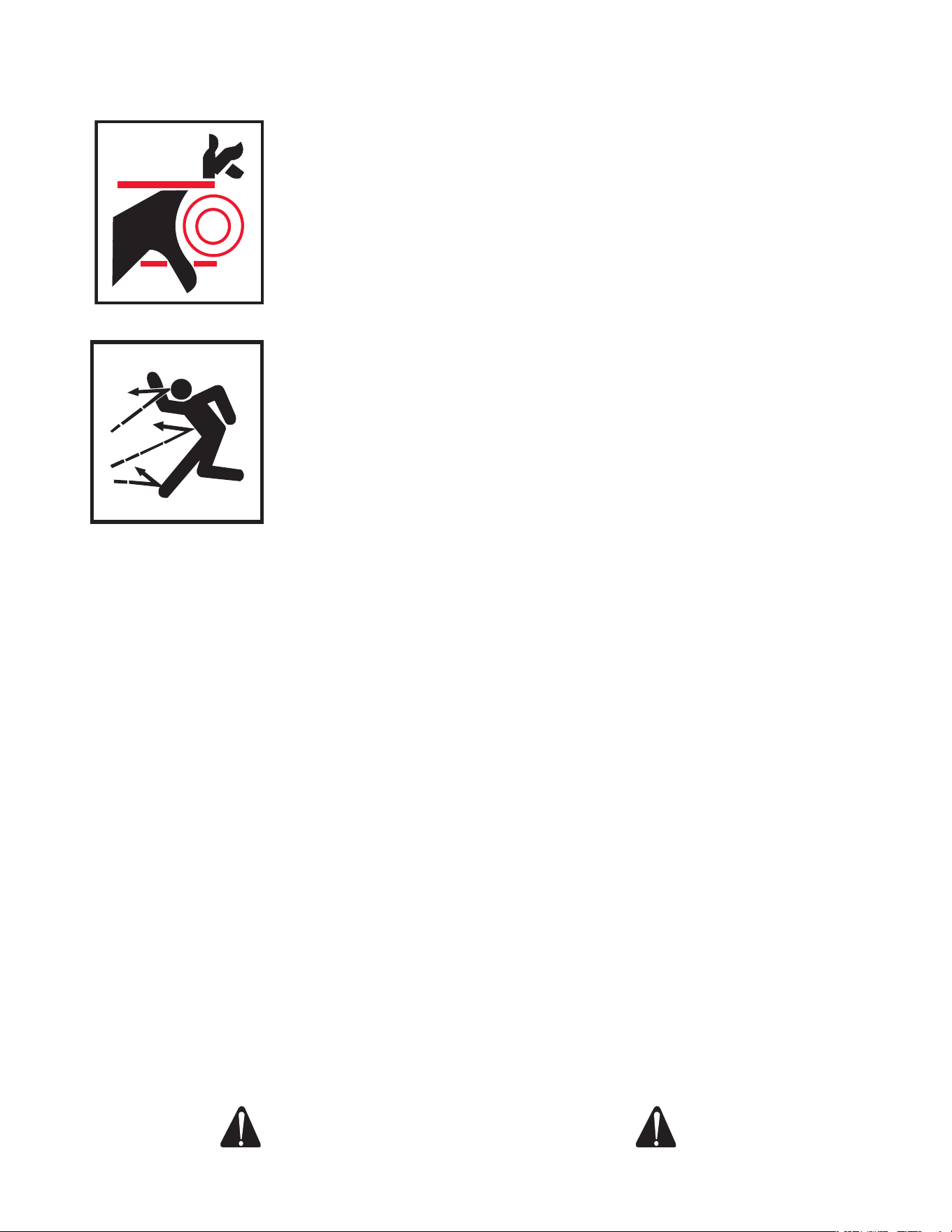
RISK FROM MOVING PARTS
1. Serious injury may occur to the operator from moving parts on the pressure
washer. Before making any adjustments, be certain the engine is turned
off and the ignition cable(s) is removed from the spark plug(s). (If using a
battery, ensure the positive battery cable is disconnected.) Turning the
machinery over by hand during adjustment or cleaning might start the
engine and machinery with it.
2. Do not operate the unit without all protective covers in place.
RISK OF BODILY INJURY
1. Serious injury or death may occur from detergents contacting the skin.SEEK
EMERGENCY MEDICAL CARE if you are using cleaning agents and the
spray appears to have penetrated the skin! DO NOT TREAT AS A SIMPLE
CUT!! Be prepared to tell a physician exactly what kind of detergents you
were using by reading the Material Safety Data Sheet (MSDS) provided
with your detergent.
Never use any solvents or highly corrosive detergents or acid type cleaners
with this pressure washer.
Protective equipment such as rubber suits, gloves and respirators are
advisable, especially when using cleaning detergents.
Keep all detergents out of the reach of children!
ALWAYS wear protective goggles when operating the unit to shield the
eyes from ying debris and detergents.
2. Serious injury can occur from loose debris being propelled at a high speed
from the spray gun. DO NOT direct spray toward fragile materials such as
glass for shattering could occur.
Injury may occur if the operator loses his balance caused by the thrust of
water traveling through the spray nozzle. Stay alert-watch what you are
doing. Do not operate the unit when fatigued or under the inuence of
alcohol or drugs.
NEVER squeeze the trigger unless securely braced. DO NOT overreach or
stand on unstable support. Wet surfaces can be slippery, wear protective
foot gear and keep good footing and balance at all times. NEVER trigger
the gun while on a ladder or roof.
ALWAYS hold on rmly to the gun/lance assembly when starting and
operating the unit. Failure to do so can cause the lance to fall and whip
dangerously.
3. Injury may occur from the pressure washer. Know how to stop the pressure
washer and bleed pressures quickly. Be thoroughly familiar with controls.
DO NOT leave pressurized unit unattended. Shut off the pressure washer
and release trapped pressure before leaving.
DO NOT operate the unit if you see any fuel, oil or water leaks from the
machine. DO NOT resume operation until the unit has been inspected and
repaired by a qualied service person.
NEVER run the unit with the governor disconnected or operate at excessive
speeds.
Place unit in a clean, dry, at area for servicing. Before servicing the unit,
turn the unit off, relieve the water pressure from the trigger gun, and allow
the unit to cool down. Service in clean, dry, at area. Block wheels to
prevent unit from moving.
Do not move the unit by pulling on the hose.
IMPORTANT SAFETY INSTRUCTIONS
Mi-T-M
CW-GASOLINE / DIESEL Operator's Manual 7
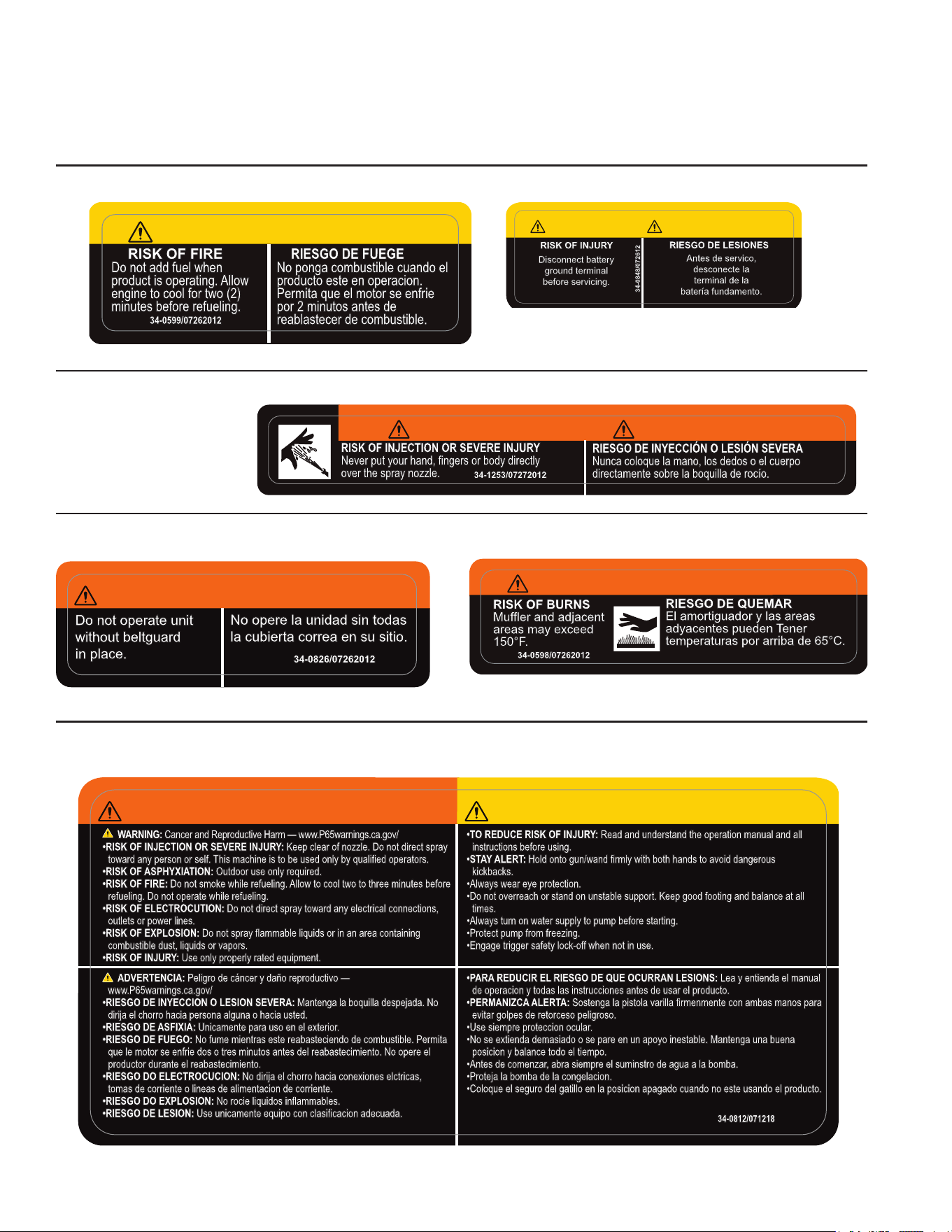
FEATURES
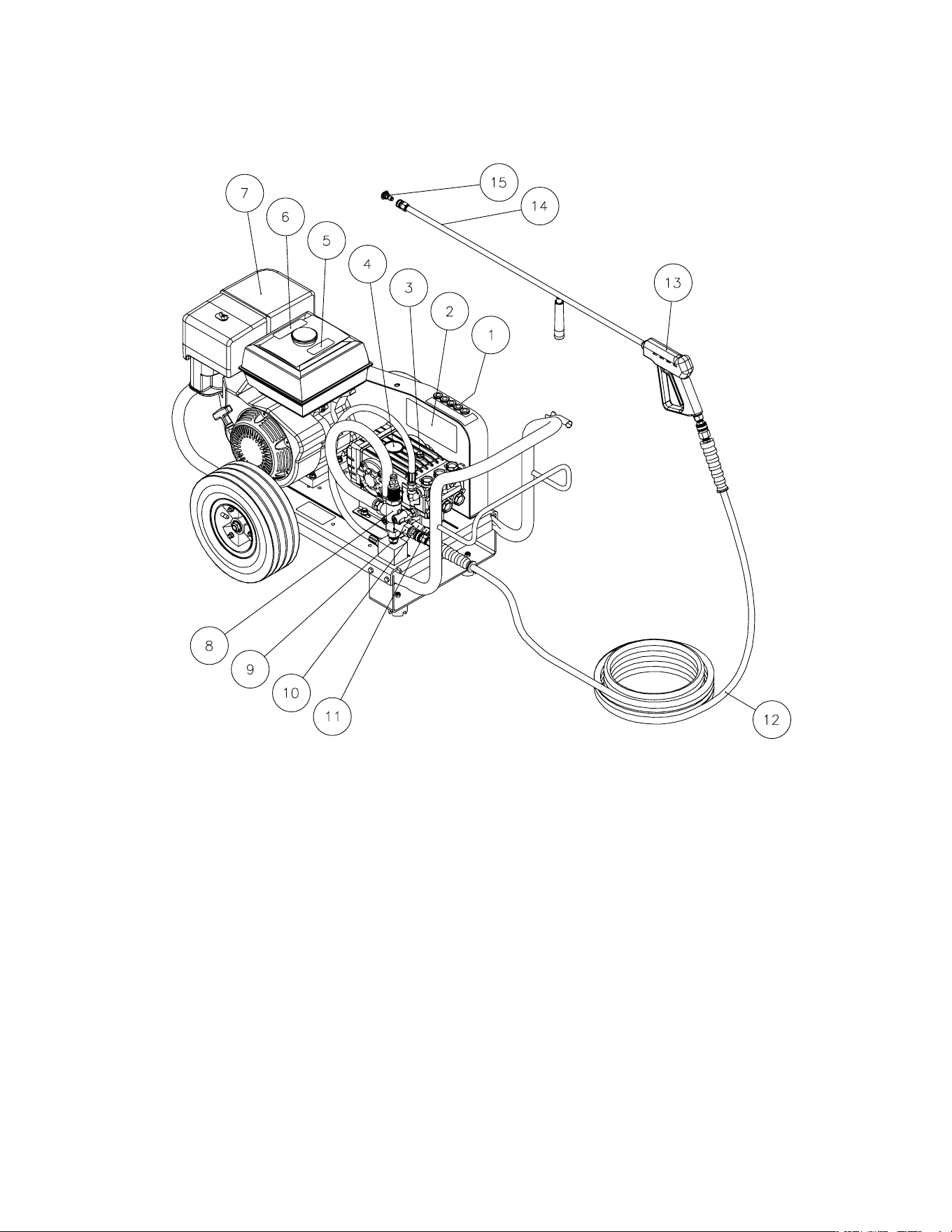
9. Quick Connect
10. Inlet Filter
11. Garden Hose Swivel
12. Pressure Hose
13. Gun Assembly
14. Decal- Warning: Risk of Injection
15. Quick Connect Spray Nozzle
1. Decal- Warning: Beltguard Cover
2. Decal- Warning/Caution
3. Oil Dip Stick
4. Pump
5. Decal- Caution: Allow to Cool
6. Decal- Warning: Mufer Hot
7. Engine
8. Unloader
FEATURES LISTING
CW FEATURES-032603-DLG
8 Mi-T-M
®
CW-GASOLINE / DIESEL Operator's Manual
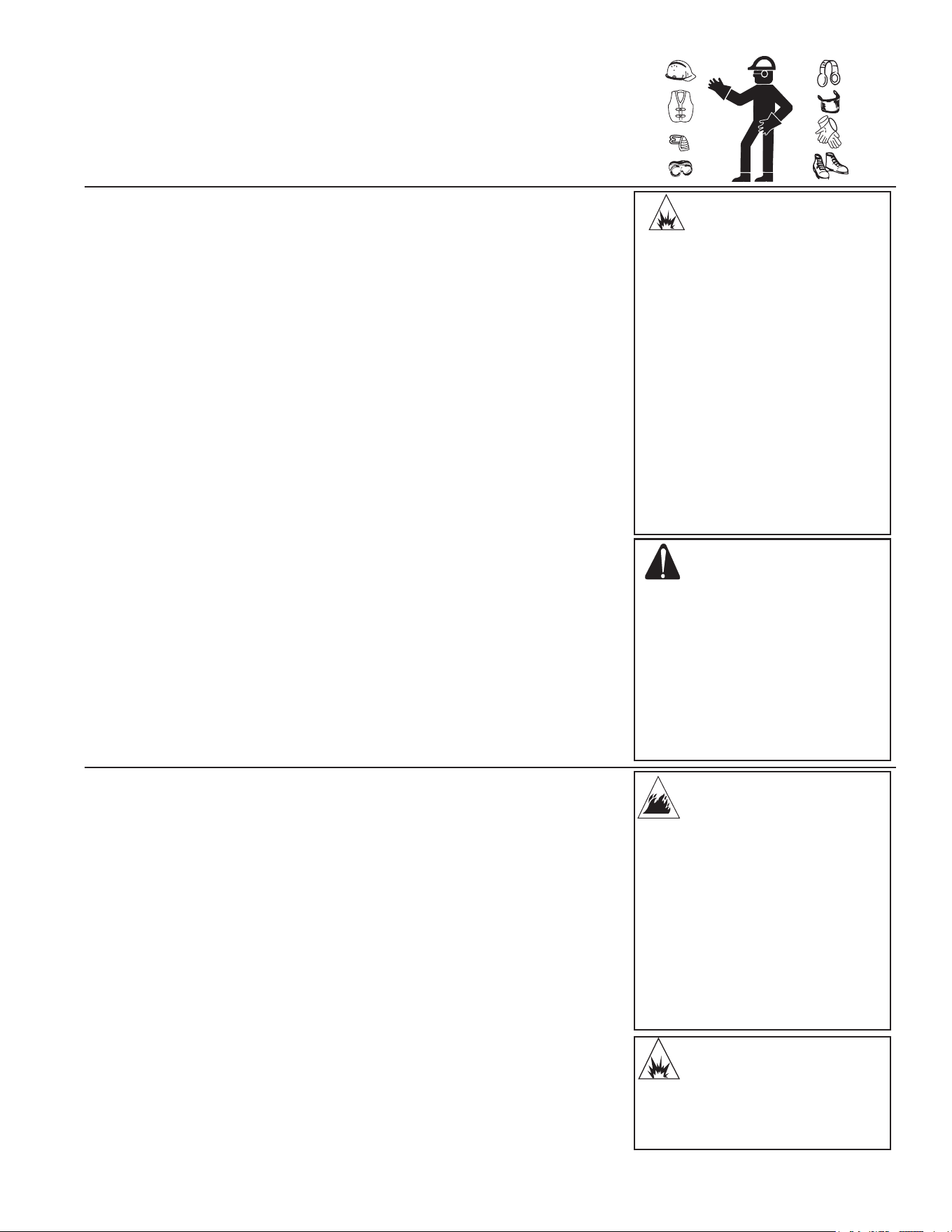
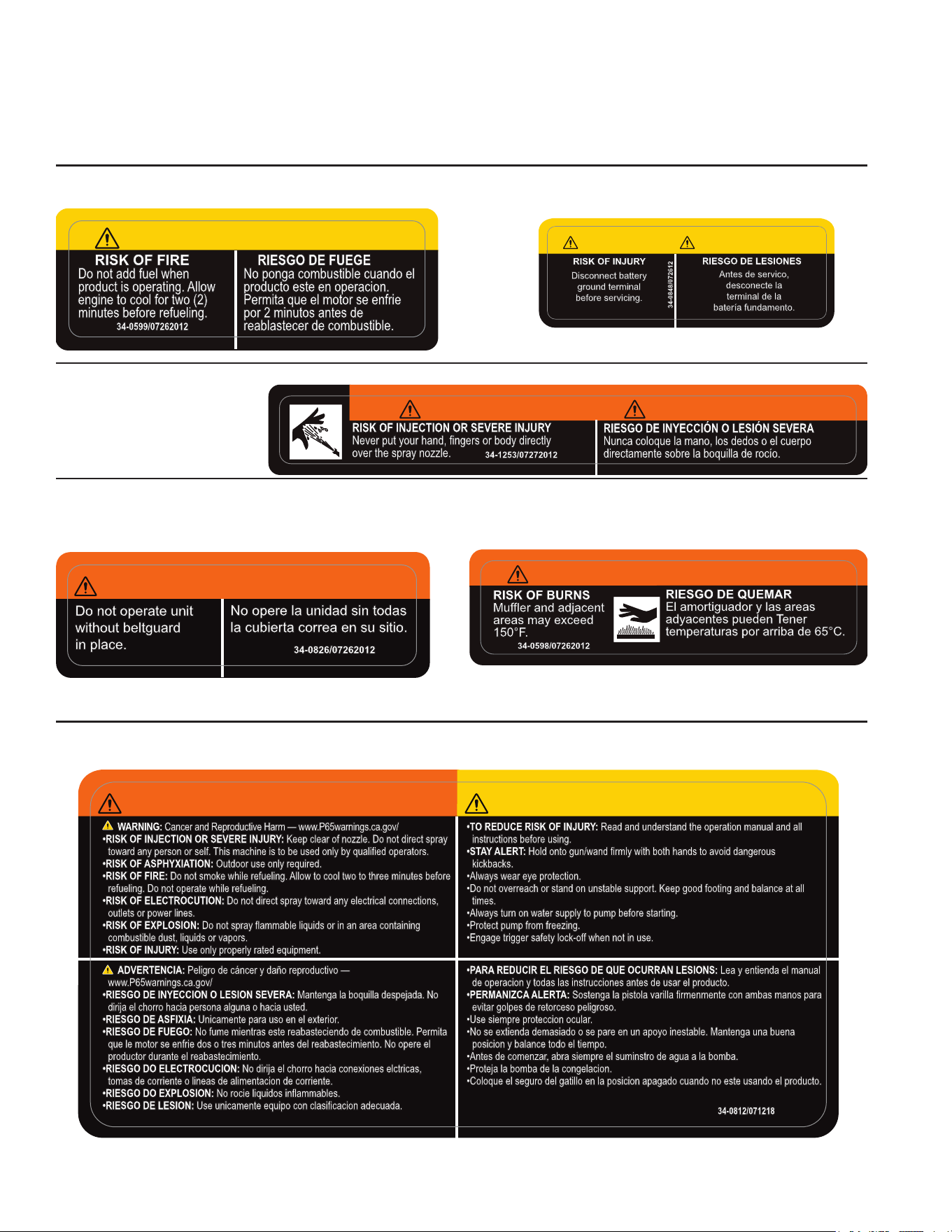
Reference #5 Decal: Caution-Engine Fuel (Part #34-0599) Decal: Caution-Risk of Injury (Part # 34-0848)
Reference #14 Decal: Warning-Risk of Injection (Part #34-1253)
Reference #1 Decal: Warning-Beltguard (Part #34-0826) Reference #6 Decal: Warning-Hot (Part #34-0598)
Reference #2 Decal: Caution/Warning Statements (Part #34-0812)
SAFETY DECALS
DO NOT REMOVE SAFETY DECALS FROM UNIT UNLESS
REPLACING WITH MOST CURRENT SAFETY DECAL!!!
CAUTION/PRECAUCIÓN
Do not add fuel when
product is operating. Allow
engine to cool for two (2)
minutes before refueling.
34-0599/07262012
RISK OF FIRE
RIESGO DE FUEGE
No ponga combustible cuando el
producto este en operacion.
Permita que el motor se enfrie
por 2 minutos antes de
reablastecer de combustible.
CAUTION
PRECAUCION
RISK OF INJURY
Disconnect battery
ground terminal
before servicing.
RIESGO DE LESIONES
Antes de servico,
desconecte la
terminal de la
batería fundamento.
34-0848/072612
RISK OF INJECTION OR SEVERE INJURY
Never put your hand, fingers or body directly
over the spray nozzle.
34-1253/07272012
RIESGO DE INYECCIÓN O LESIÓN SEVERA
Nunca coloque la mano, los dedos o el cuerpo
directamente sobre la boquilla de rocío.
WARNING
ADVERTENCIA
WARNING/ADVERTENCIA
RISK OF BURNS
Muffler and adjacent
areas may exceed
150°F.
RIESGO DE QUEMAR
El amortiguador y las areas
adyacentes pueden Tener
temperaturas por arriba de 65°C.
34-0598/07262012
WARNING/ADVERTENCIA
34-0826/07262012
No opere la unidad sin todas
la cubierta correa en su sitio.
Do not operate unit
without beltguard
in place.
34-0826/07262012
No opere la unidad sin todas
la cubierta correa en su sitio.
Do not operate unit
without beltguard
in place.
WARNING/ADVERTENCIA
CAUTION/PRECAUCION
WARNING: Cancer and Reproductive Harm — www.P65warnings.ca.gov/
•RISK OF INJECTION OR SEVERE INJURY: Keep clear of nozzle. Do not direct spray
toward any person or self. This machine is to be used only by qualified operators.
•RISK OF ASPHYXIATION: Outdoor use only required.
•RISK OF FIRE: Do not smoke while refueling. Allow to cool two to three minutes before
refueling. Do not operate while refueling.
•RISK OF ELECTROCUTION: Do not direct spray toward any electrical connections,
outlets or power lines.
•RISK OF EXPLOSION: Do not spray flammable liquids or in an area containing
combustible dust, liquids or vapors.
•RISK OF INJURY: Use only properly rated equipment.
ADVERTENCIA: Peligro de cáncer y daño reproductivo —
www.P65warnings.ca.gov/
•RIESGO DE INYECCION O LESION SEVERA: Mantenga la boquilla despejada. No
dirija el chorro hacia persona alguna o hacia usted.
•RIESGO DE ASFIXIA: Unicamente para uso en el exterior.
•RIESGO DE FUEGO: No fume mientras este reabasteciendo de combustible. Permita
que le motor se enfrie dos o tres minutos antes del reabastecimiento. No opere el
productor durante el reabastecimiento.
•RIESGO DO ELECTROCUCION: No dirija el chorro hacia conexiones elctricas,
tomas de corriente o lineas de alimentacion de corriente.
•RIESGO DO EXPLOSION: No rocie liquidos inflammables.
•RIESGO DE LESION: Use unicamente equipo con clasificacion adecuada.
•TO REDUCE RISK OF INJURY: Read and understand the operation manual and all
instructions before using.
•STAY ALERT: Hold onto gun/wand firmly with both hands to avoid dangerous
kickbacks.
•Always wear eye protection.
•Do not overreach or stand on unstable support. Keep good footing and balance at all
times.
•Always turn on water supply to pump before starting.
•Protect pump from freezing.
•Engage trigger safety lock-off when not in use.
•PARA REDUCIR EL RIESGO DE QUE OCURRAN LESIONS: Lea y entienda el manual
de operacion y todas las instrucciones antes de usar el producto.
•PERMANIZCA ALERTA: Sostenga la pistola varilla firmenmente con ambas manos para
evitar golpes de retorceso peligroso.
•Use siempre proteccion ocular.
•No se extienda demasiado o se pare en un apoyo inestable. Mantenga una buena
posicion y balance todo el tiempo.
•Antes de comenzar, abra siempre el suminstro de agua a la bomba.
•Proteja la bomba de la congelacion.
•Coloque el seguro del gatillo en la posicion apagado cuando no este usando el producto.
34-0812/071218
Mi-T-M
CW-GASOLINE / DIESEL Operator's Manual 9
SETUP:
1. This unit should only be placed on a level surface to ensure proper lubrication
for the engine and water pump while operating.
2. Do not use unit in an area:
a. with insufcient ventilation.
b. where there is evidence of oil, gas or fuel leaks.
c. where ammable gas vapors may be present.
3. Be certain to block the wheels to prevent the unit from moving while
operating.
4. Do not allow the unit to be exposed to rain, snow or freezing temperatures.
If any part of the unit becomes frozen, excessive pressure may build up in
the unit which could cause it to burst resulting in possible serious injury to
the operator or bystanders.
5. Pump oil level should be checked before each use. Check the oil level
indicator on the pump crankcase. Make certain the oil is in the center of
the oil sight glass. If the level appears to be low, ll with Mi-T-M pump oil
#AW-4085-0016.
ENGINE FUEL TANK:
1. Review "Risk of Explosion or Fire" warnings, pg. 4, before fueling.
2. Locate the Safety Decals on your unit and heed their warnings.
3. Gasoline Engines: When lling tank, gasoline fuel should be a minimum
of 85 octane. DO NOT MIX OIL WITH GASOLINE. Gasoline fuel should be
purchased in quantities that may be used within 30 days. Use of clean,
fresh lead-free gasoline is recommended. Leaded gasoline may be used
if lead-free is unavailable. DO NOT use gasoline containing methanol or
alcohol.
Diesel Fueled Engines: When lling tank, diesel fuel should be a minimum
of 45 cetane. Diesel fuel oil substitutes are not recommended. Diesel fuel
should be free of water and dirt.
4. Check the engine oil level before starting the engine. (See Engine Manual.)
5. Refer to the Engine Manual supplied with this unit for proper fueling and
adjustment procedures.
6. Review the Engine Manual accompanying this pressure washer for correct
engine start-up and maintenance procedures.
ATTIRE:
Proper attire is essential to your safety. It is advised to utilize whatever
means necessary to protect eyes, ears, and skin. Additional safety attire
(such as respiratory mask) may be required when using detergent cleaning
agents with this washer.
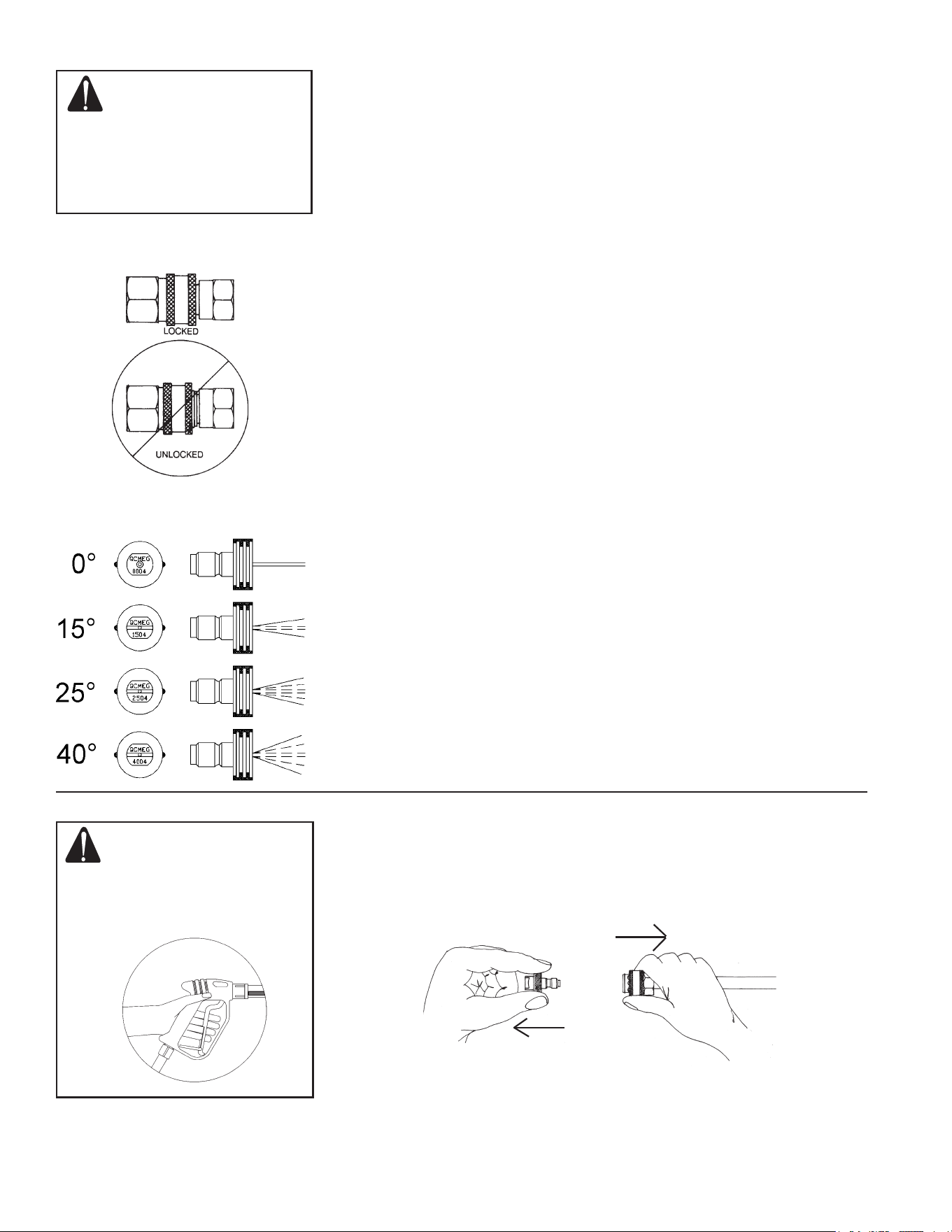
WARNING RISK OF
EXPLOSION OR FIRE!
ALWAYS STORE FUEL AWAY
FROM THE WASHER WHILE
THE UNIT IS RUNNING OR
HOT.
DANGER RISK OF FIRE!
-DO NOT SMOKE WHILE FU-
ELING!
-DO NOT FILL THE FUEL TANK
WHILE UNIT IS RUNNING OR
HOT. ALLOW UNIT & ENGINE
TO COOL FOR TWO MINUTES
BEFORE REFUELING.
-DO NOT FILL FUEL TANK TO
POINT OF OVERFLOWING.
ALLOW APPROXIMATELY 1/4"
OF TANK SPACE FOR FUEL
EXPANSION.
WARNING RISK OF
ASPHYXIATION!
USE THIS PRODUCT ONLY
IN WELL VENTILATED AR-
EAS! DO NOT OPERATE IN
AN ENCLOSED AREA. THE
EXHAUST CONTAINS CARBON
MONOXIDE, A POISONOUS,
ODORLESS AND INVISIBLE
GAS. BREATHING THIS GAS
CAN CAUSE SERIOUS INJURY,
ILLNESS & POSSIBLE DEATH.
DANGER RISK OF
EXPLOSION OR FIRE!
-WHEN CHARGING BATTER-
IES, THEY GENERATE A HIGH-
LY EXPLOSIVE HYDROGEN
GAS. A SPARK COULD CAUSE
AN EXPLOSION OR FIRE!
-DO NOT JUMP START BAT-
TERY UNLESS BOTH BATTER-
IES ARE OF EQUAL VOLTS &
AMPS.
-DO NOT SMOKE OR ALLOW
SPARKS OR FLAMES NEAR
THE BATTERY.
-DO NOT PLACE UNIT IN AN
AREA WHERE FLAMMABLE
GAS VAPORS MAY BE PRES-
ENT. A SPARK COULD CAUSE
AN EXPLOSION OR FIRE.
INSTALLATION & PREPARATION
10 Mi-T-M
®
CW-GASOLINE / DIESEL Operator's Manual
INSTALLATION & PREPARATION
WARNING RISK OF
INJECTION CAUSING
SEVERE INJURY!
NEVER LOOK DIRECTLY AT
THE NOZZLE UNLESS IT IS
DISCONNECTED FROM THE
GUN/LANCE ASSEMBLY!
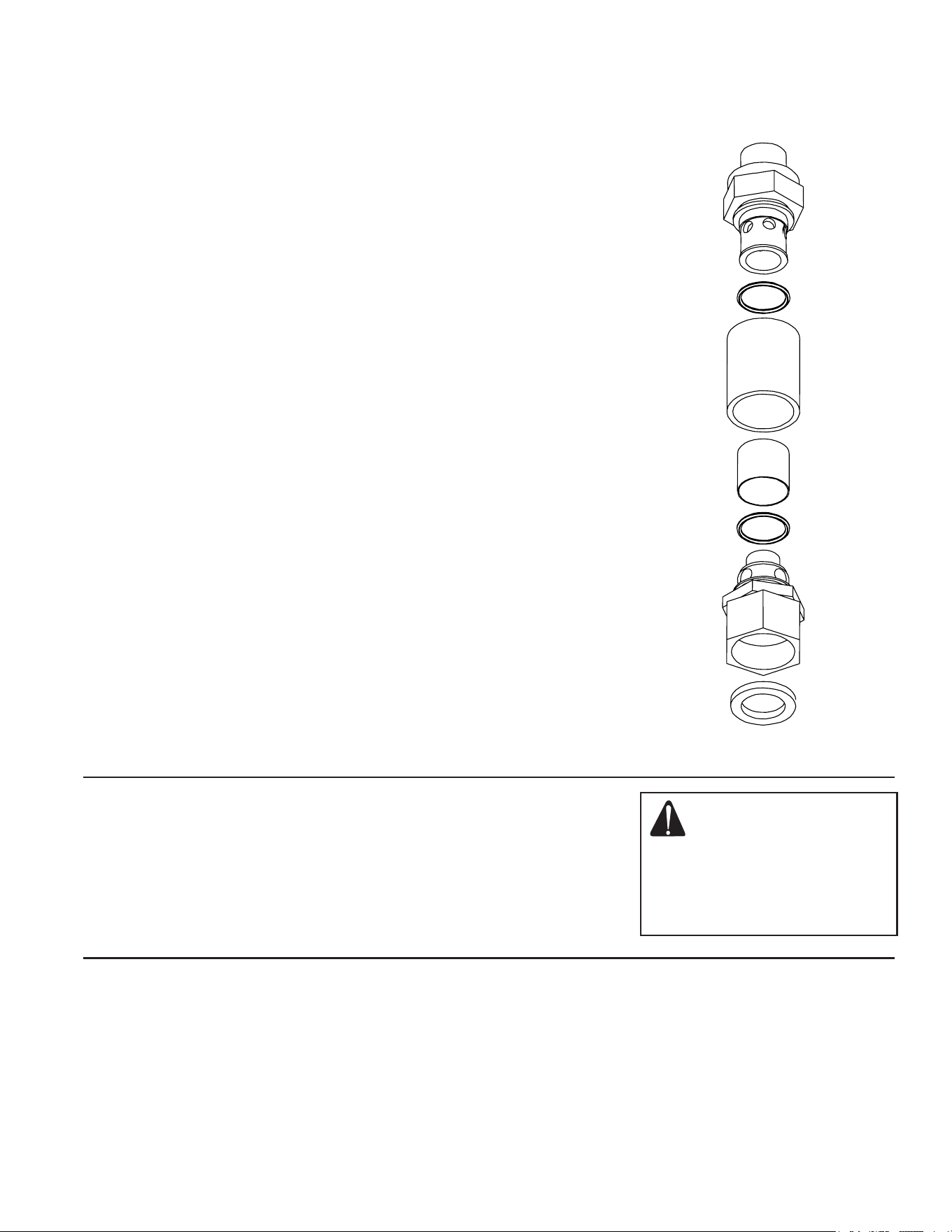
NOZZLE REVIEW:
Various nozzles may be quick-connected into the end of the lance to change
the spray pattern or use the detergent feature. When using quick-connects
(Q.C.), be certain the connection is securely locked. If not, the high pressure
water may shoot the nozzle from the lance, causing severe injury or serious
damage. To determine spray fan, refer to the actual number stamped
on the nozzle. The rst two digits indicate the spray fan in degrees, i.e.:
00=0°, 15=15°, 25=25°, 40=40°, 65=detergent/low pressure.
1. The 0° nozzle (RED): This is a blasting nozzle. It delivers a very concentrated
stream of water. Be cautious when using the straight narrow stream. It is
not recommended for use on painted or wood surfaces or items attached
with adhesive backings. Uses: Removing weeds from sidewalk cracks,
stubborn stains from concrete, masonry, aluminum and steel, caked mud
from equipment, and cleaning lawn mower undersides.
2. The 15° nozzle (YELLOW): This is a chiseling nozzle. The spray should
be directed at a 45° angle to the surface and used like a scraper to remove
paint, grease and dirt. Uses: Surface preparation (removing mildew stains
and paint chips), cleaning gutters and downspouts.
3. The 25° nozzle (GREEN): This is a ushing nozzle. This pattern is best
suited for ushing dirt, mud, and grime. Uses: Wet sweeping leaves from
walks, curbs and driveways, cleaning stable oors, washing swimming pool
bottoms, degreasing engines.
4. The 40° nozzle (WHITE): This is a wash nozzle. This wide spray pattern
disperses the water pressure over a large area and is recommended for
moderate washing. Uses: Washing down aluminum siding, cleaning windows,
washing vehicles, spraying sidewalks, driveways and patios.
QUICK-CONNECT (Q.C.) NOZZLES
CONNECTION OF Q.C. NOZZLES
WARNING RISK OF SEVERE
INJURY!
THE TRIGGER GUN SHOULD
ALWAYS BE LOCKED IN THE
OFF POSITION WHEN NOT IN
USE!
NOZZLE CONNECTION:
1. Ensure the trigger on the gun assembly is locked in the OFF position. See
WARNING, right.
2. The quick-connect nozzle should be disconnected from the gun assembly
at this time. As shown in the drawing below, retract the locking ring on
the quick-connect tting to remove the nozzle.
Mi-T-M
CW-GASOLINE / DIESEL Operator's Manual 11
INSTALLATION & PREPARATION
CHECK WATER INLET STRAINER
UNLOADER:
If the unloader on your machine is equipped with an adjustment knob you
can adjust the pressure. Should less pressure be required, simply turn the
adjustment knob counterclockwise. To set back to maximum, turn adjust-
ment knob completely clockwise. DO NOT OVERTIGHTEN!
If the unloader does not have an adjustment knob, DO NOT adjust the pres-
sure on your own! The pressure has been preset at the factory and should
only be adjusted by a trained Mi-T-M Service Representative.
THERMAL RELIEF VALVE:
To ensure the bypass water temperature does not exceed acceptable levels,
never allow the pressure washer to operate in the bypass mode (with the unit
running and the trigger closed) for more than three minutes.
A thermal relief valve has been added to this unit to protect the pump. It may
begin to open and release water if the water temperature in the pump has
exceeded 140° F. This will allow fresh, cool water to enter the system, there-
fore preventing premature failure of pump packings.
CAUTION RISK OF UNIT
DAMAGE!
DO NOT OVERTIGHTEN THE
UNLOADER. BREAKAGE WILL
RESULT IN IMMEDIATE LOSS
OF WATER PRESSURE AND
COSTLY REPAIRS.
WATER SUPPLY:
1. Select a water supply hose which is a quality grade of garden hose measuring
at least 3/4" ID and no longer than 50 feet.
2 Check the see-through water lter to ensure it is clean and free of any
obstructions. Periodic cleaning of the see-through water lter will help
prevent pump problems. As a lter screen becomes obstructed, it restricts
proper ow of water to the pump. This can result in cavitations which will
cause premature failure of pump packings.
a. Unscrew the garden hose inlet connection from the front of the lter
assembly.
b. Remove the clear plastic cover and clean the lter screen.
3. Connect the hoses:
a. Connect one end of the water supply hose to the water inlet of the unit.
b. Connect the other end of the hose to your pressurized water supply.
When connecting the water inlet to the water supply mains, local
regulations of your water company must be observed. In some areas,
the unit must not be connected directly to the public drinking water
supply. This is to ensure that there is no feedback of the detergents
into the water supply. (Direct connection is permitted if a back ow
preventer is installed.)
c. Quick-connect the high pressure discharge hose to the water outlet of
the unit.
d. Connect the other end of the discharge hose to the gun.
4. Follow the incoming water requirements listed below:
a. Water pressure must be a minimum of 25 pounds per square inch (PSI)
and a maximum of 125 PSI. (A typical outdoor faucet will generally
supply this PSI if turned completely "ON".)
b. Incoming GPM must be approximately one gallon more than the
outgoing GPM stated on the pressure washer nameplate. (You can
check GPM by timing how long it takes to ll a 5 gallon container.)
c. Incoming water temperature must not exceed 125°F. Excessive pump
damage may result if the water temperature exceeds this acceptable
level.
5. Never allow the unit to operate without the incoming water line attached
and the water supply completely turned on.

12 Mi-T-M
®
CW-GASOLINE / DIESEL Operator's Manual
INSTALLATION & PREPARATION
PRE-START INSPECTION PROCEDURES:
Before starting the unit, perform the following procedures:
1. Check the oil level in the pump and engine.
2. Inspect the water inlet strainer. Clean or replace if necessary. See "Water
Supply," #2, pg. 12.
3. Check all hose connections to ensure they are securely tightened. See
"Water Supply," #3, pg. 12.
4. Inspect for system water leaks, oil leaks and fuel leaks. If a fuel leak is found,
DO NOT START UNIT! See "Risk of Explosion or Fire" warnings, pg. 4. Be
sure that all damaged parts are replaced and that the mechanical problems
are corrected prior to operation of the unit. If you require service, contact
Mi-T-M Customer Service.
5. Inspect high pressure hoses for kinking, cuts and leaks. If a cut or leak is
found, DO NOT USE HOSE! Replace hose before starting unit. See "Risk
of Injection" warnings, pg. 5. Be sure that all damaged parts are replaced
and that the mechanical problems are corrected prior to operation of the
unit. If you require service, contact Mi-T-M Customer Service.
WARNING
THE FOLLOWING PAGES CONTAIN OPERATING AND MAINTENANCE INSTRUCTIONS
DO NOT ATTEMPT TO OPERATE THIS PRESSURE WASHER
UNTIL YOU HAVE READ AND UNDERSTOOD ALL SAFETY PRECAUTIONS AND INSTRUCTIONS
LISTED IN THIS MANUAL.
INCORRECT OPERATION OF THIS UNIT CAN CAUSE SERIOUS INJURY!!
DO NOT ALTER OR MODIFY THIS EQUIPMENT IN ANY MANNER!
Mi-T-M
CW-GASOLINE / DIESEL Operator's Manual 13
OPERATING INSTRUCTIONS
PRIMING THE PUMP:
1. It is essential to prime the pump on initial start-up and each time the water
supply is disconnected from the unit after initial use.
2. Lay the high pressure hose out to remove any loops. (Water ow will tighten
the hose, creating tight loops if the hose is not straight.)
3. Securely connect the gun assembly to the high pressure hose.
NOTE: The quick-connect nozzle should NOT be connected to the gun assembly at this
time. See "Nozzle Connection," pg. 11.
4. With the trigger gun locked in the OFF position, turn the water supply
completely on. Pointing the gun in a safe direction, unlock the trigger gun
and squeeze the trigger.
5. Low pressure water will begin owing from the hose/gun assembly. This
allows the unit to prime and purge any air from the system. The unit is
primed when water ow is uninterrupted by air.
6. Once the unit is primed, release the trigger and lock the gun in the OFF
position. Securely connect the quick-connect nozzle. (See "Nozzle
Connection," pg. 11)
CAUTION RISK OF
DAMAGE.
DO NOT ALLOW SPRAY PAT-
TERN TO REMAIN ON A FIXED
AREA FOR AN EXTENDED
PERIOD OF TIME. POSSIBLE
DAMAGE MAY OCCUR TO THE
AREA.
DANGER RISK OF
INJECTION CAUSING
SEVERE INJURY!
-KEEP CLEAR OF NOZZLE!
NEVER PLACE HAND OR FIN-
GERS IN FRONT OF NOZZLE!
-DO NOT DIRECT DISCHARGE
STREAM AT PEOPLE OR PETS!
-BE CERTAIN THE NOZZLE IS
SECURELY CONNECTED TO
THE LANCE TO PREVENT AC-
CIDENTAL DISCHARGE!
START-UP:
1. Refer to the "Safety Warnings" on pgs. 4-7 before starting the unit.
2. Locate the Safety Decals on your unit and heed their warnings.
3. With the gun locked in the OFF position, point the trigger gun away from
yourself or anyone else. Ensure the water supply is completely turned on.
4. Disengage the safety lock-off on the gun and squeeze the trigger. Low
pressure water will begin owing from the nozzle.
5. BE CERTAIN the trigger gun remains in an open position while starting the
engine. Brace yourself as the gun will kickback from the high pressure
created by the pump once the engine has started.
6. Put your foot on the frame or wheel to steady the unit during engine start-
up. (Refer to the Engine Manual accompanying this pressure washer for
the correct procedures needed to start the engine.)
7. Once the engine has started, perform the following procedures with the
gun open:
a. Inspect for system water leaks, oil leaks and fuel leaks. If a fuel leak
is found, TURN UNIT OFF IMMEDIATELY! See "Risk of Explosion or
Fire," pg. 4. Be sure that all damaged parts are replaced and that the
mechanical problems are corrected prior to operation of the unit. If
you require service, contact Mi-T-M Customer Service.
b. Inspect high pressure hoses for kinking, cuts and leaks. If a cut or
leak is found, DO NOT TOUCH HOSE AT LEAK!!! TURN UNIT OFF
IMMEDIATELY! Replace hose before restarting the unit. See "Risk of
Injection," warnings, pg. 5. Be sure that all damaged parts are replaced
and that the mechanical problems are corrected prior to operation of
the unit. If you require service, contact Mi-T-M Customer Service.
8. Trigger the gun several times. Be certain to LOCK the trigger gun in the
OFF position whenever changing the quick-connect nozzles. NEVER look
directly into the nozzle! High pressure water creates a risk of severe injury!
9. Do not allow unit to operate in bypass mode (with trigger closed) for more
than three minutes without triggering the gun. Failure to follow this simple
rule can cause premature failure of pump packing seals, resulting in costly
pump repair.
10. Because your pressure washer delivers a high pressure spray and a variety
of spray patterns, there are many cleaning jobs that can be done without
the use of detergents. If a cleaning agent is required, see "Cleaning With
Detergents" pg. 15 for the correct procedures.
14 Mi-T-M
®
CW-GASOLINE / DIESEL Operator's Manual
CLEANING WITH DETERGENTS (OPTIONAL FEATURE):
The Detergent Injection feature is an optional feature on this machine. If you
wish to add this feature to your unit, order Mi-T-M part
#AW-8300-0000. Connect the Detergent Injector to the unit as directed in
the Detergent Injector Manual.
1. Refer to "Risk of Bodily Injury," pg. 7, and the Detergent Injector Manual
which accompanies part #AW-8300-0000. Be certain to wear protective
safety attire as stated on pg. 10.
2. Prepare detergent solution according to label directions. Never pump acids,
alkaline, abrasive uids or solvents through the unit. Due to the unknown
and often corrosive characteristics of many detergents commonly used in
the pressure washer cleaning industry, it is recommended to use only Mi-
T-M detergents with this unit.
3. Adjust the amount of detergent desired by locating the adjustment knob
at the end of the clear vinyl hose near at the Detergent Injector. Turn the
knob completely counterclockwise to set at the maximum siphon rate.
4. Immerse the strainer into the detergent solution to allow detergent to siphon.
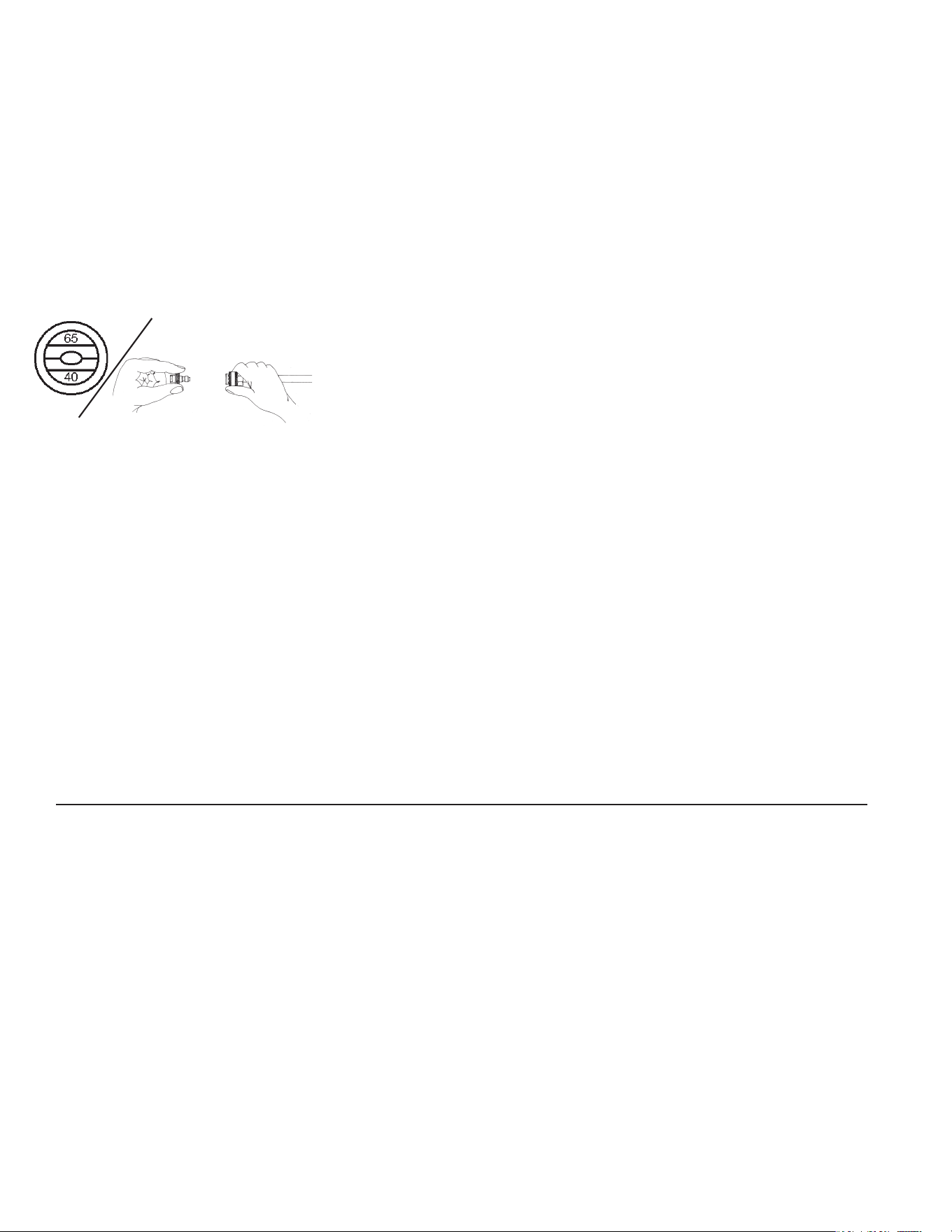
5. With the trigger gun locked in the OFF position, securely quick-connect
the detergent spray nozzle (#6540° BLACK) into the end of the lance.
NOTE: This injection system is designed to apply detergents under low pressure only.
It will not allow detergent solutions to be introduced into the system unless the
detergent nozzle is installed in the lance.
6. To apply solution, unlock the trigger gun and squeeze the trigger. In a
few moments a detergent/water mixture will exit the low pressure nozzle.
Start spraying the lower portion of the surface being cleaned and move up,
using long overlapping strokes. Applying from the bottom up helps avoid
streaking. Allow to soak briey. (Avoid working on hot surfaces or in direct
sunlight to minimize the chances of the detergent drying, which may result
in damaging painted surfaces.) Be certain to apply cleaning solution to a
small section at a time.
7. To rinse: lock the trigger gun in the OFF position, securely quick-connect
the 40° nozzle into the end of the lance. Unlock the trigger gun and spray.
It will take about 30 seconds to purge all detergent from the line. For best
rinsing results, start at the top and work down.
8. Siphon a gallon of water through the low pressure detergent injection system
after each use. This prevents the possibility of corrosion or detergent
residue causing mechanical problems during the next use.
QUICK CONNECT DETERGENT
SHUTDOWN:
1. Turn engine "OFF" as directed in the Engine Manual.
2. Turn the water supply "OFF".
3. Pointing the gun in a safe direction, trigger gun momentarily to relieve any
trapped pressure.
4. Once pressure is relieved, disconnect the nozzle assembly.
5. Disconnect and drain gun, lance and hoses.
6. Wipe unit clean and store with gun, lance and hoses in a safe, non-freezing
area.
OPERATING INSTRUCTIONS

Mi-T-M
CW-GASOLINE / DIESEL Operator's Manual 15
SPECIFIC MAINTENANCE:
ENGINE: The engine instructions that accompany your unit detail specic
procedures for maintenance of the engine. Following the engine manufactur-
er's recommendations will extend engine work life.
PUMP: Change the pump oil after the rst 25 hours of operation. After
initial change, every 3 months or 250 hour intervals are recommended. If oil
appears dirty or milky, changes may be required in greater frequency. Use
Mi-T-M pump oil (#AW-4085-0016) and ll only to the dot on the oil sight
glass. DO NOT overll.
WATER STRAINER: Periodic cleaning of the water strainer will help prevent
pump problems. As a strainer becomes obstructed, it restricts proper ow
of water to the pump. This can result in cavitations which will cause prema-
ture failure of pump packings. Unscrew the water strainer cap, remove the
screen and clean or replace.
NOZZLES: Water ow through the quick-connect spray nozzle will erode
the orice, making it larger, resulting in a pressure loss. Nozzles should be
replaced whenever pressure is less than 85% of the maximum. The frequen-
cy of replacement will depend upon such variables as mineral content in the
water and number of hours the nozzle is used.
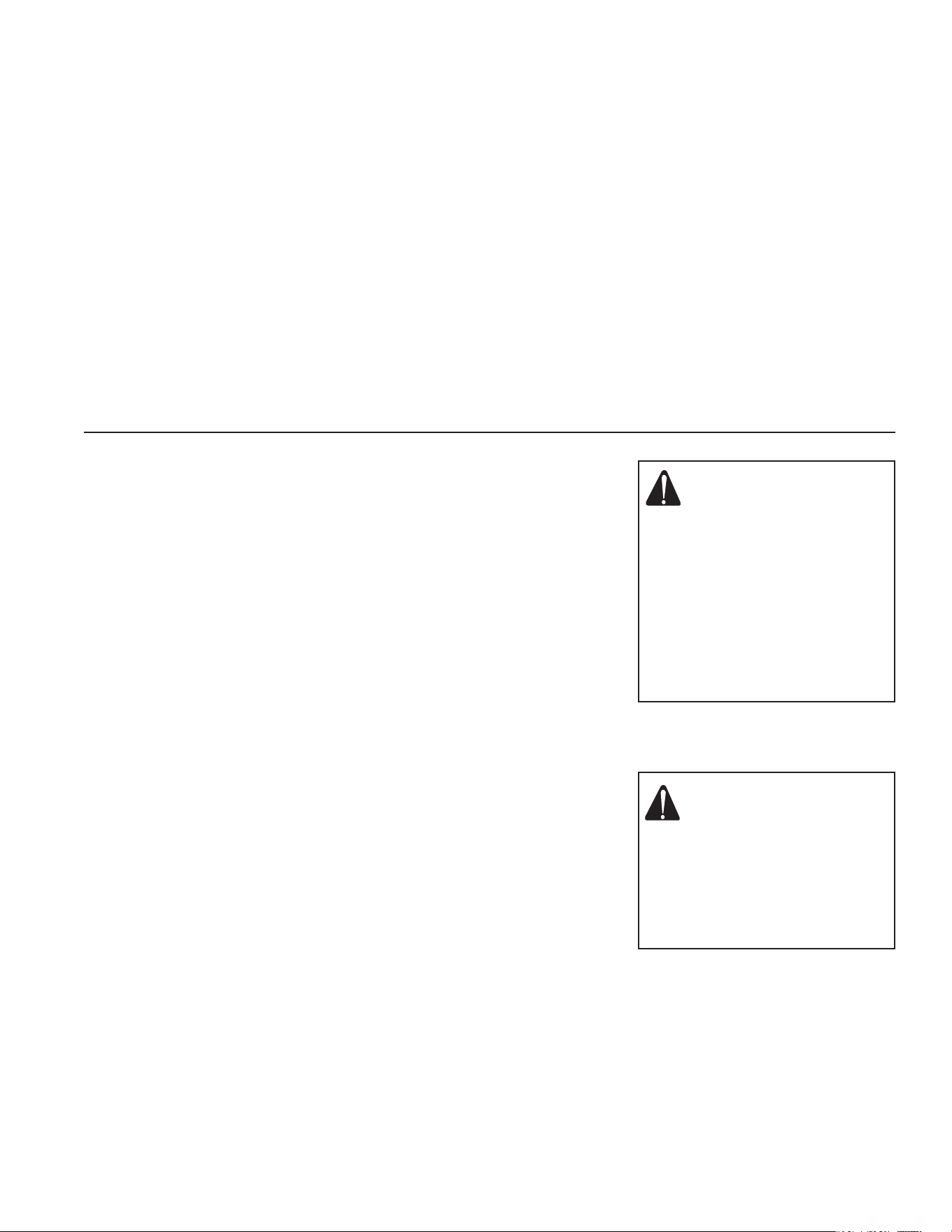
QUICK COUPLERS: There is an o-ring seal inside the female quick-coupler.
This o-ring will deteriorate or, if the unit is allowed to pump without the high
pressure hose attached, it may be blown out occasionally. Simply insert a
replacement o-ring to correct the leak. (Additional o-rings can be purchased
from your dealer.)
BELT TENSION ADJUSTMENT: To maintain peak performance of your
pressure washer, it may be necessary to adjust the belt tension on occasion.
Follow the procedure outlined below.
1. Remove the belt guard and loosen the two nuts on each side of the pump
(Reference A). There are a total of 4 nuts.
2. Turn the cap screw (Reference B) clockwise until a 1/2 inch belt deection
is noticed between the pulleys.
3. Tighten the side nuts (Reference A).
4. Put a straight edge across both pulleys. If necessary, loosen one set of
pulley screws and adjust in or out to properly align. Tighten the pulley
screws and check the tension again.
5. Replace the beltguard and tighten the fasteners securely.
STORAGE & MAINTENANCE
16 Mi-T-M
®
CW-GASOLINE / DIESEL Operator's Manual
STORAGE & MAINTENANCE
WINTERIZING:
For storage and transportation purposes in subfreezing ambient tempera-
tures, it will be necessary to winterize this unit. This unit must be protected
to the lowest incurred temperature for the following reasons:
1. If any part of the pumping system becomes frozen, excessive pressure may
build up in the unit which could cause the unit to burst resulting in possible
serious injury to the operator or bystanders.
2. The pumping system in this unit may be permanently damaged if frozen.
FREEZE DAMAGE IS NOT COVERED BY WARRANTY.
If you must store your unit in an area where the temperature may fall below
32°F, you can protect your unit by following the procedure outlined below.
1. Gather the following items:
a. Two 5 gallon containers.
b. One gallon of antifreeze. (Mi-T-M recommends an environmentally safe
antifreeze.)
c. Water supply.
d. Three foot hose, 1/2-3/4 I.D. with a 3/4 inch male garden hose tting.
2. Procedure:
a. To start winterizing, unit must be run and primed according to the
procedures listed on page 14.
b. After running and priming, shut off the unit and water supply.
c. Relieve system pressure by pointing the trigger gun in a safe direction
and squeezing the trigger until water ow ceases to exit the nozzle.
d. Lock the trigger gun in an OFF position and remove the nozzle.
e. In one 5 gallon container, mix the antifreeze and water according to
manufacturer's recommendations for the temperature to which you are
winterizing.
NOTE: Proper winterizing is based on the recommended manufacturer's instructions
listed on the "Protection Chart" shown on the back label of most antifreeze con-
tainers.
f. Remove the water supply hose from the unit and attach the 3 foot hose
securely to the inlet connection. Submerge the opposite end into the
antifreeze solution.
g. Shut off the detergent injector if applicable.
h. Point the lance into the empty container and start the unit.
i. Trigger the gun until the antifreeze begins to exit the lance. Release
the trigger for 3 seconds; then trigger the gun for 3 seconds. Continue
cycling the gun several times until all the antifreeze mixture is siphoned
from the container.
j. Stop the unit.
k. Detach the 3 foot hose from the unit and drain any excess antifreeze
back into a 5 gallon container.
l. Disconnect the hose/gun/lance assembly from the unit and drain any
excess antifreeze back into a 5 gallon container.
m. Store the hose, gun and lance with the unit in a safe area.
n. Store antifreeze solution for next use or dispose of according to state
EPA laws.
3. Optional procedure:
a. Shut off the unit and water supply.
b. Relieve system pressure by pointing the trigger gun in a safe direction
and squeezing the trigger until water ow ceases to exit the nozzle.
c. Disconnect and drain the hose, gun and lance.
d. Start the unit and allow it to run until all the water exits the unit. Once
the water has stopped owing from the unit, turn the unit off.
NOTE: When using this procedure, caution should be used as ice chips can form from
drops of water which could cause the unit to burst if starting before completely
thawed.
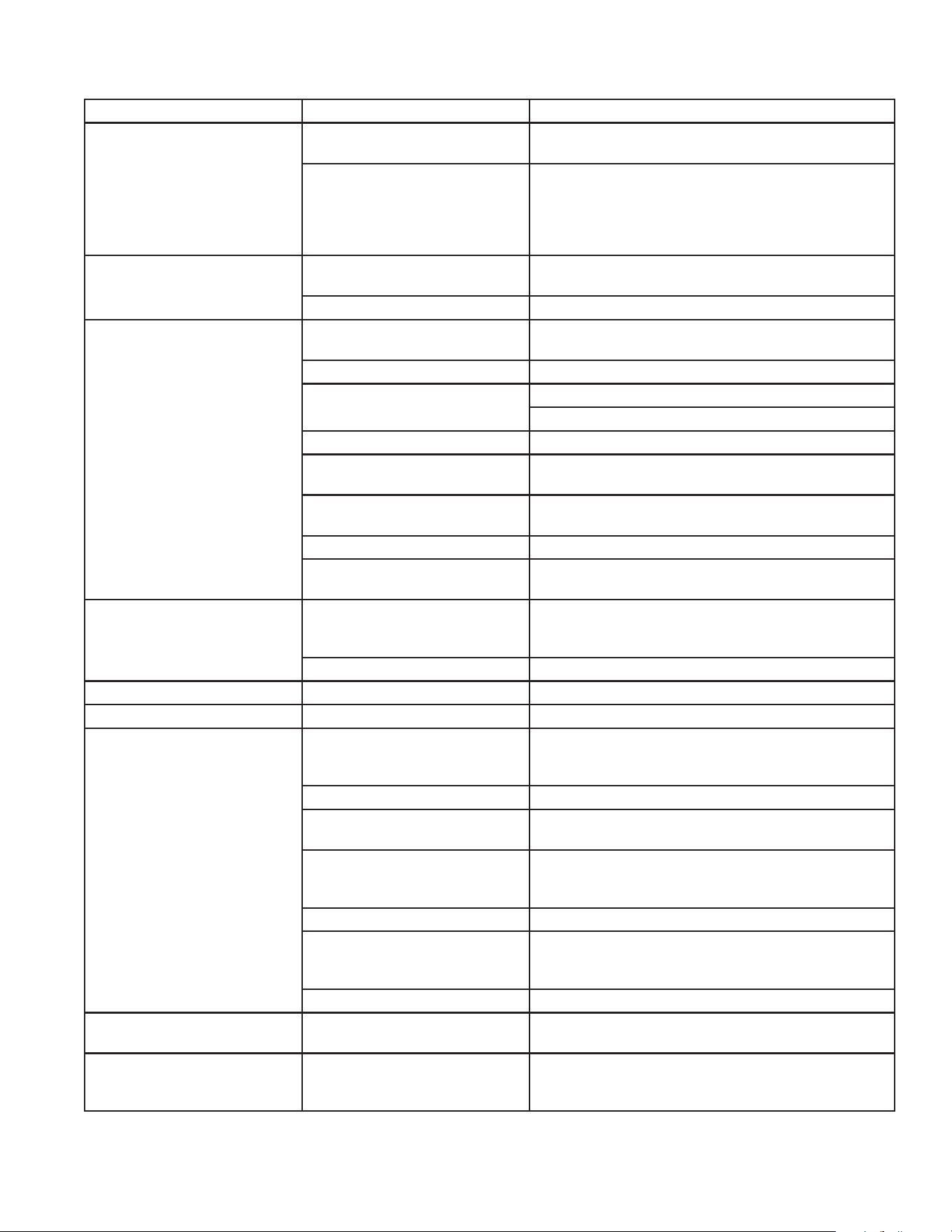
WARNING RISK OF UNIT
BURSTING.
DO NOT STORE / OPERATE
UNIT IN A FREEZING ENVI-
RONMENT!
32˚F 0˚C
Mi-T-M
CW-GASOLINE / DIESEL Operator's Manual 17
TROUBLESHOOTING
SYMPTOM PROBABLE CAUSE REMEDY
Engine will not start. Various engine problems. Refer to the Engine Manual accompanying your
unit.
Unit components are frozen. Allow to thaw. If any part of the unit becomes
frozen, excessive pressure may build up in the
unit which could cause the unit to burst resulting
in possible serious injury to the operator or by-
standers.
No discharge at nozzle
when trigger mechanism is
squeezed.
Inadequate water supply. Ensure hose is 3/4" diameter and incoming water
supply is turned on.
Kink in water inlet hose. Remove kink.
Low or uctuating pressure. Kink in high pressure dis-
charge hose.
Replace kinked high pressure hose
Water inlet screen obstructed. Remove screen, clean or replace.
Pump sucking air (prime elim-
inated).
Tighten all water intake connections.
Eliminate leaks in intake line
Not in high pressure mode. Adjust the pressure on the unloader.
Obstructed or worn spray
nozzle.
Remove, clean or replace.
Damaged or obstructed valve
assy.on pump.
Remove, inspect, clean or replace.
Pump packings worn. Replace packings.
Bypass valve not operating
correctly.
Repair or replace.
Water is leaking from the
"Thermal Relief Valve."
Water temperature is too high. Do not allow unit to operate inthe bypass mode
(with trigger gun closed) for more than three min-
utes.
Defective valve. Replace
Oil appears milky or foamy. Water in oil. Change pump oil. Fill to proper level.
Oil leaking from unit. DO NOT USE!!!!! Contact Mi-T-M Customer Service.
Detergent will not siphon
into Low Pressure Detergent
mode.
Detergent strainer is not com-
pletely submerged in deter-
gent solution
Check, submerge if necessary.
Detergent strainer obstructed. Inspect, clean or replace.
Detergent hose cut, obstruct-
ed or kinked
Inspect, clean or replace.
Detergent adjusting knob
turned to closed posi-
tion.
Open adjusting knob. Refer to "Cleaning with
Detergents" pg. 15
Nozzle assembly is plugged Clean or replace.
Too many high pressure hose
extensions attached to the
water outlet.
Use one extension maximum
Ball & Spring in Venturi stuck. Remove, clean or replace.
Water ows back into deter-
gent container
Ball & Spring in Venturi re-
versed, missing or corroded.
Remove, clean or replace.
Water ows from the noz-
zle when the trigger gun is
locked in the OFF position
Gun is malfunctioning. Repair or replace.
18 Mi-T-M
®
CW-GASOLINE / DIESEL Operator's Manual
ACCESSORIES
*PSI and GPM must be specied when ordering.
Mi-T-M All-Purpose Cleaner, Paint Surface Prep, House & Deck Wash, and Heavy Duty Degreaser are specially formulated de-
tergents for use with all Mi-T-M pressure washers and are packaged in one (1), ve (5), and fty-ve (55) gallon
containers. Contact Mi-T-M Customer Service Department at (800) 553-9053 for more information.
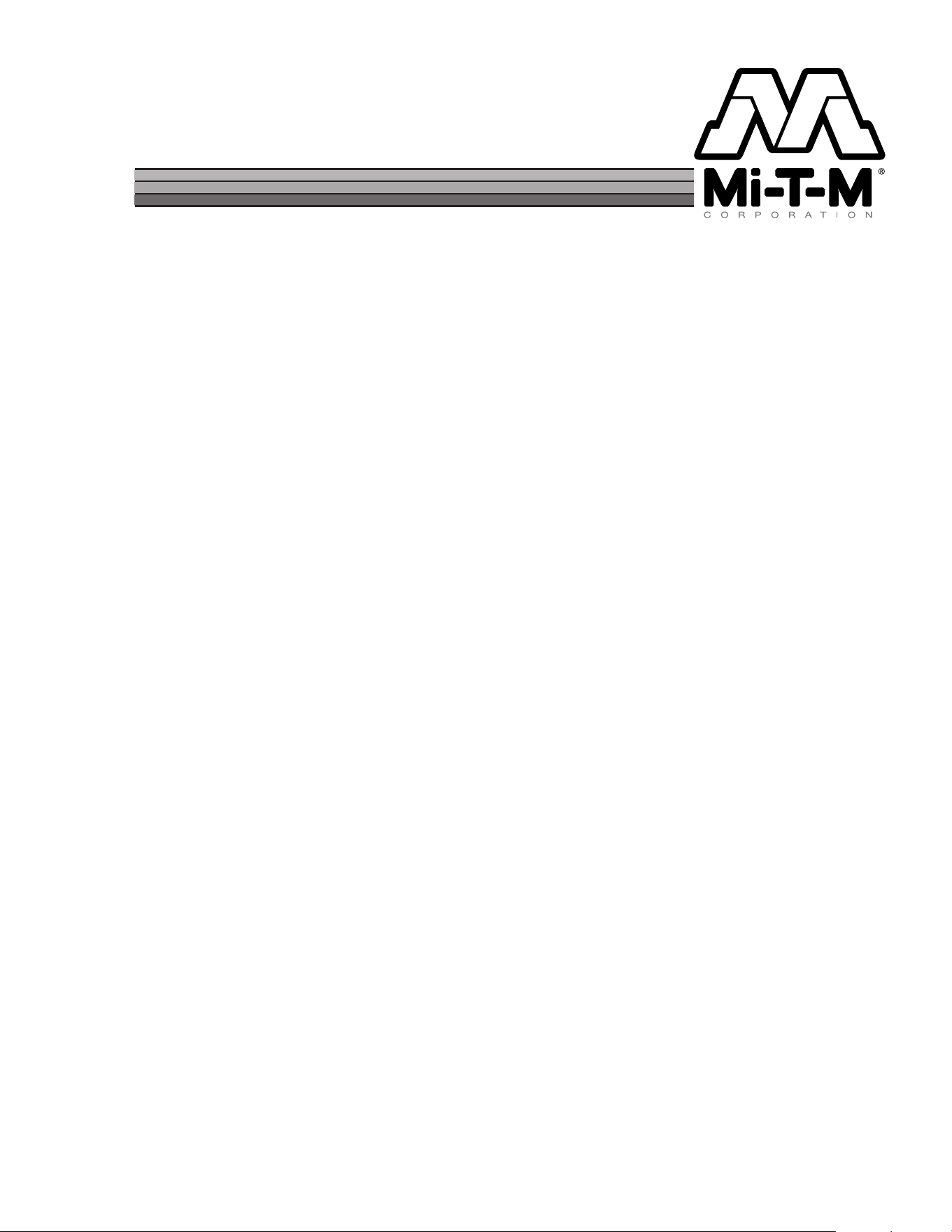
CW-1504
CW-2003
CW-2504
CW-2505
CW-3004
CW-3504
CW-4003
CW-4004
15-0006
3/4' SUPPLY HOSE
X X X X X X X X
50-0136 HOSE REEL 13" (HOLDS 100' OF HOSE)
X X X X X X X X
50-0137 HSOE REEL 16" (HOLDS 200' OF HOSE)
X X X X X X X X
851-0006 4000PSI EXTENSION HOSE 50'
X X X
851-0007 3000PSI EXTENSION HOSE 50'
X X X X X
AW-3000-0000 SANDBLASTER CARBIDE NOZZLE*
X X X X X X X X
AW-3020-0000 SANDBLASTER CERAMIC NOZZLE*
X X X X X X X X
AW-4085-0016 PUMP OIL
X X X X X X X X
AW-7002-4045 ROTATING G-FORCE NOZZLE
X
AW-7003-1500 ROTATING BRUSH
X X X X X X X X
AW-7004-0045 ROTATING NOZZLE
X X X X
AW-7008-4055 ROTATING G-FORCE NOZZLE
X X
AW-7015-1200 EXTENSION WAND 12'
X X X X X X X X
AW-7015-1800 EXTENSION WAND 18'
X X X X X X X X
AW-7015-2400 EXTENSION WAND 24'
X X X X X X X X
AW-7020-8000 ROTARY SURFACE CLEANER
X X X X X X X
AW-7025-8000 25" POWER BROOM (5-80° NOZZLES)*
X X X X X X X X
AW-7035-8000 35" POWER BROOM (7-80° NOZZLES)*
X X X X X X X X
AW-7103-1800 EXTENSION WAND 18"
X X X X X X X X
AW-7103-3600 EXTENSION WAND 36"
X X X X X X X X
AW-7103-7200 EXTENSION WAND 72"
X X X X X X X X
AW-8007-0000 HIGH PRESSURE DETERGENT INJECTOR
X X X X X X X X
AW-8300-0000 LOW PRESSURE DETERGENT INJECTOR
X X X X X X X X
Mi-T-M
CW-GASOLINE / DIESEL Operator's Manual 19
STATEMENT OF WARRANTY
Mi-T-M
®
Corporation warrants all parts, (except those referred to below), of your new CW-Series pressure
washer to be free from defects in materials and workmanship during the following periods:
For Lifetime against freezing and cracking:
Pump Manifold
For Ten (10) Years from the date of original purchase:
High Pressure Pump
For Two (2) Years from the date of original purchase:
Cart Assembly Pulleys
Plumbing
For One (1) Year from the date of original purchase:
GFCI Cord Selector Switch
Starter Contactor Overload
For Ninety (90) Days from the date of original purchase:
Trigger Gun/Wand High Pressure Hose
Unloader Valve Strainer/Filter
Defective parts not subject to normal wear and tear will be repaired or replaced at our option during the
warranty period. In any event, reimbursement is limited to the purchase price paid.
EXCLUSIONS
1. Engine is covered under separate warranty by its respective manufacturer and is subject to the terms set
forth therein.
2. Normal wear parts:
Pump Packings Spray Nozzles Quick Couplings/Screw Connects
Pump Valves O-rings
Detergent Valves Belts
3. This warranty does not cover parts damaged due to normal wear, misapplication, misuse, operation at
other than recommended speeds, pressures or temperature. Parts damaged or worn because of the use
of caustic liquids or by operation in abrasive or corrosive environments or under conditions causing pump
cavitation are not warranted. Failure to follow recommended operating and maintenance procedures
also voids warranty.
4. The use of other than genuine Mi-T-M repair parts will void warranty. Parts returned, prepaid to our
factory or to a Mi-T-M authorized service center will be inspected and replaced free of charge if found
to be defective and subject to warranty. There are no warranties which extend beyond the description
of the face hereof. Under no circumstances shall Mi-T-M Corporation bear any responsibility for loss of
use of the unit, loss of time or rental, inconvenience, commercial loss or consequential damages.
For Service or Warranty consideration, contact Mi-T-M Customer Service
563-556-7484 / 800-553-9053 / Fax 563-556-1235
Monday-Friday 8:00 a.m. - 5:00 p.m. CST
20 Manual del Operador
ADVERTENCIA: Este producto puede expo-
nerle a químicos incluyendo carbon monoxide,
que es conocido por el Estado de California
como causante de defectos de nacimiento u
otros daños reproductivos. Para mayor
información, visite www.P65Warnings.ca.gov.
ADVERTENCIA
ADVERTENCIA: Este producto puede
exponerlo a productos químicos, incluido el
plomo, que el Estado de California conoce a
causar cáncer y defectos congénitos u otros
daños reproductivos. Para obtener más
información, visite www.P65Warnings.ca.gov
ADVERTENCIA
ADVERTENCIA: Respirar los gases del
escape de motores a diésel le expone a
químicos conocidos por el Estado de Califor-
nia como causantes de cáncer y defectos de
nacimiento u otros daños reproductivos.
•Siempre encienda y opere el motor en un
área bien ventilada.
•Si es en un área cerrada, ventile el orificio
del escape hacia el exterior.
•No modifique ni altere el sistema de escape.
•No encienda el motor, excepto cuando sea
necesario.
Para mayor información visite
www.P65warnings.ca.gov/diesel.
ADVERTENCIA
CONTENTS
INTRODUCCION ...........................................................................................................21
ADVERTENCIAS DE SEGURIDAD ...............................................................................22
RIESGO DE DESCARGA ELÉCTRICA........................................................................................................22
RIESGO DE ASFIXIA ..................................................................................................................................22
RIESGO DE INYECCION O DE LESION GRAVE DE CORTE ....................................................................23
RIESGO DE DESCARGA ELÉCTRICA O ELECTROCUCIÓN ....................................................................23
RIESGO DE QUEMADURAS ......................................................................................................................23
RIESGO DE REVENTÓN ............................................................................................................................23
RIESGO DE MOVIM. DE PZAS. .................................................................................................................24
RIESGO DE LESIONES ..............................................................................................................................24
ELEMENTOS Y COMPONENTES ................................................................................25
CALCOMANIAS DE SEGURIDAD ................................................................................26
INSTALACION Y PREPARACION .................................................................................27
VESTIMENTA: .............................................................................................................................................27
PREPARACION: .........................................................................................................................................27
TANQUE DE COMBUSTIBLE DEL MOTOR: ..............................................................................................27
BOQUILLAS DE CONEXION RAPIDA: ......................................................................................................28
CONEXION DE LA BOQUILLA: ..................................................................................................................28
SUMINISTRO DE AGUA: ............................................................................................................................29
DESCARGADOR: .......................................................................................................................................29
VALVULA DE DESCARGA TERMICA: ........................................................................................................29
PROCEDIMIENTOS DE INSPECCION ANTES DEL ARRANQUE: .............................................................30
INSTRUCCIONES DE OPERACION .............................................................................31
CEBADO DE LA BOMBA: ..........................................................................................................................31
ARRANQUE: ............................................................................................................................................... 31
LIMPIEZA CON DETERGENTES (CARACTERÍSTICA OPCIONAL): ...........................................................32
APAGADO: .................................................................................................................................................32
ALMACENAMIENTO Y MANTENIMIENTO .................................................................33
MANTENIMIENTO ESPECIFICO: ...............................................................................................................33
PREPARADO PARA EL INVIERNO ............................................................................................................33
LOCALIZACION DE FALLAS ........................................................................................ 35
DECLARACIÓN DE GARANTÍA ...................................................................................38
Manual del Operador 21
INTRODUCCION
¡Felicitaciones por la compra de su nueva lavadora a presión! Puede estar seguro que su lavadora a presión fue con-
struida con el nivel más alto de precisión y exactitud. Cada componente ha sido probado rigurosamente por técnic-
os para asegurar la calidad, la resistencia y el rendimiento de esta unidad.
Este manual del operador fue compilado para su benecio. Leyendo y siguiendo los pasos simples de seguridad,
instalación, operación, mantenimiento y localización de fallas descritos en este manual ayudará a prolongar aun más
la operación libre de fallas que usted puede esperar de su nueva lavadora a presión. El contenido de este manual
está basado en la información actualizada disponible al momento de la publicación. Fabricante se reserva el dere-
cho de efectuar cambios en precio, color, materiales, equipo, especicaciones o modelos en cualquier momento sin
previo aviso.
¡IMPORTANTE!
ESTOS PÁRRAFOS ESTÁN RODEADOS POR UNA “CASILLA DE ALERTA DE SEGURIDAD”. ESTA
CASILLA SE USA PARA DESIGNAR Y ENFATIZAR LAS ADVERTENCIAS DE SEGURIDAD QUE DEBEN
SEGUIRSE AL OPERAR ESTA LAVADORA A PRESIÓN. ACOMPAÑANDO A LAS ADVERTENCIAS
DE SEGURIDAD ESTÁN LAS “PALABRAS DE ALERTA” QUE DESIGNAN EL GRADO O NIVEL DE
SERIEDAD DE RIESGO. LAS “PALABRAS DE ALERTA” USADAS EN ESTE MANUAL SON LAS
SIGUIENTES:
PELIGRO: INDICA UNA SITUACIÓN INMINENTE RIESGOSA LA CUAL, SI NO SE EVITA, RESULTARA EN LA
MUERTE O EN LESIONES GRAVES.
ADVERTENCIA: INDICA UNA SITUACIÓN POTENCIALMENTE RIESGOSA LA CUAL, SI NO SE EVITA,
PODRIA RESULTAR EN LA MUERTE O EN LESIONES GRAVES.
PRECAUCION: INDICA UNA SITUACIÓN POTENCIALMENTE RIESGOSA LA CUAL, SI NO SE EVITA PUEDE
RESULTAR EN LESIONES MENORES O MODERADAS.
EL SÍMBOLO INDICADO A LA IZQUIERDA DE ESTE PÁRRAFO ES EL “SÍMBOLO DE ALERTA
DE SEGURIDAD”. ESTE SÍMBOLO SE USA PARA ALERTARLO ACERCA DE ARTÍCULOS O
PROCEDIMIENTOS QUE PODRÍAN SER PELIGROSOS PARA USTED U OTRAS PERSONAS USANDO
ESTE EQUIPO.
PROVEA SIEMPRE UNA COPIA DE ESTE MANUAL A CUALQUIER PERSONA QUE USE ESTE EQUIPO.
LEA TODAS LAS INSTRUCCIONES ANTES DE OPERAR ESTA LAVADORA A PRESION, OBSERVANDO
EN PARTICULAR LAS “ADVERTENCIAS DE SEGURIDAD” PARA EVITAR LA POSIBILIDAD DE
LESIONES PERSONALES AL OPERADOR.
Escriba el número de serie de su unidad en el espacio provisto abajo, una vez que la unidad haya sido desempaca-
da.
NUMERO DE SERIE___________________________
Inspeccione por daño el contenido de la caja. Si algo parece dañado, NO LA DEVUELVA AL LUGAR DE COMPRA.
Llame a su representante de servicio al cliente de al 800-228-6172.
Por favor tenga disponible la información siguiente para todas las llamadas de servicio:
1. Número de modelo
2. Número de serie
3. Fecha y lugar de compra
22 Manual del Operador
RIESGO DE DESCARGA ELÉCTRICA
1. Fuego chispas normales de sistema de encendido del motor o de exhosto
de motor/moe puede causar lesiones graves y la muerte.
Siempre use la lavadora en un área bien ventilada libre de emanaciones
inamables, polvo combustible, gases y cualquier material combustible.
¡No use esta lavadora para rociar material inamable!
2. No fume mientras esté llenando el tanque de combustible del quemador.
NUNCA llene el tanque de gasolina mientras el motor está funcionando o
está caliente. Permita que el motor se enfríe durante dos minutos antes
de cargar combustible.NO cargue gasolina en un ambiente cerrado o en
un área mal ventilada.
SIEMPRE cargue combustible lentamente para evitar la posibilidad de
combustible derramado que puede ocasionar un riesgo de incendio.
Tanque del comestible de gasolina del motor:
Dé más de gasolina solo. No use diesel o aceite de comestible.
Tanque del comestible de diesel del motor:
Dé más diesel solo. No use gasolina.
NO opere la unidad si hay combustible derramado. Limpie
la unidad y aléjela del área del derrame. Evite crear cualquier
encendido hasta que se haya evaporado la gasolina.
3. Un resulto de batería cuando usando un opción de empezando electrico es
lesiones graves y la muerte. Cuando la batería está activando hay vapores
de hidrógeno y oxigeno en la batería que son muy explosivos. No tenga
chispas y llamas abiertos cerca de la batería nada y especialamente cuando
cargando la batería.
Asegúrese a desconectar la terminal de tierra de batería antes de
mantenimiento. Cuando desconectando el cable de la batería, empece
con la terminal negativa y cuando los conectando, empece con la positiva.
Cuando cargando la batería quite los tapones ventilaciónes de batería.
Solo use un hidrómetro o voltómetro para revisar la carga de batería. No
haga un puente la batería a menos que las dos beterías son de voltaje y
amperio iguales.
4. Una chispa del moee puede causar un fuego de tierra y resultará en
lesiones graves o la muerte. Necesitar tener arrestador de chispas en el
moee de este motor para usar con alga tierra que tener hierba o arboles.
Esta parte mantener efectuar por operador. En el estado de California la
arriba es necesario por la ley (sección 4442 de codigo de CPR). Otros
estados puede tener leyes similares. Leyes federales son aplicados en
tierras federales.
RIESGO DE ASFIXIA
1. Pueden producirse lesiones corporales graves o la muerte si se inhalan las
emanaciones provenientes del quemador u otras emanaciones peligrosas.
El exhosto de este producto tiene quimicos que sabido al estado de
California para causar cáncer, defectos de nacimiento, o otros daños de
reproductores.
2. Nunca utilice esta lavadora de chorro a presión en un área encerrada. Siempre
asegúrese de que haya ventilación adecuada (aire fresco del exterior) para
la respiración y combustión. De esta manera se evita la acumulación de
los peligrosos gases de monóxido de carbono. Esté consciente de áreas
mal ventiladas o con ventiladores de extracción que pueden causar un mal
intercambio de aire.
3. Siga todas las instrucciones de seguridad suministradas con los materiales
a los que esté rociando. Puede ser necesario tener puesta una mascarilla
de respiración para trabajar con ciertos materiales. No use esta lavadora
de chorro a presión para aplicar detergentes peligrosos.
ADVERTENCIAS DE SEGURIDAD
Manual del Operador 23
ADVERTENCIAS DE SEGURIDAD
RIESGO DE INYECCION O DE LESION GRAVE DE CORTE
1. Lesiones graves o la muerte puede ocurir de rocio de presión alta que
penetrar la piel.
2 ¡ No esté cerca de boquilla o rocio! Nunca apunte la pistola hacia usted ni
hacia otra persona. Nunca coloque su mano, dedos o cuerpo directamente
sobre la boquilla de rociado. .
3 Mantenga siempre el área de operación despejada de todas las personas.
4. No permite que niños operar esta unidad.
5. REQUIERA CUIDADO MEDICO DE EMERGENCIA si ocurriera un accidente
y el rocío parece haber penetrado la piel. NO LO TRATE COMO UN CORTE
SIMPLE.
6. Cada día mangueras y lineas de comestible debían inspectar para senales
de gastarse. Si había pruebas de fracaso, en pronto reemplace todas
mangueras y lineas sospechas para prevenir la posibilidad de lesiones de
rocio de presión alta. Si una manguera o instalación agujereada, NUNCA
PONGA SU MANO DIRECTAMENTE EN EL AGUJERO.
7. SIEMPRE sujete rmemente el conjunto de pistola/vara al arrancar y
operar la unidad. El no hacerlo puede causar que la vara caiga y azote
peligrosamente. NUNCA opere la pistola con el gatillo conectado en la
posición abierta. La pistola a gatillo debería estar bien asegurado cuando
no se usa, para evitar una descarga accidental.
8. Aun después que apague la unidad, hay agua a alta presión en la bomba,
manguera y pistola hasta que la elimine accionando el gatillo. SIEMPRE
apague la unidad y accione el gatillo para liberar la presión interna, antes
de sacar la boquilla de rociado o reparar la unidad.
RIESGO DE DESCARGA ELÉCTRICA O ELECTROCUCIÓN
1. Contacto con eléctrica puede producirse lesiones graves o la muerte. ¡NO
dirija el rociado de agua hacia o dentro de ninguna instalación eléctrica!
Esto incluye tomacorrientes, lámparas eléctricas, transformadores, la unidad
misma, etc. Puede ocurrir un choque eléctrico grave.
2. NO permita que ningún componente metálico de la lavadora de chorro a
presión entre en contacto con elementos electrizados.
RIESGO DE QUEMADURAS
1. El tocar de moee de motor podría causar lesiones graves. Esta área
puede permanecer caliente durante algún tiempo después de apagarse la
lavadora de chorro a presión. Nunca permita que algo de su cuerpo tener
contacto con el moee del motor o areas adyacentes.
RIESGO DE REVENTÓN
1. Pueden producirse lesiones graves si funciona mal la lavadora o si explotan
accesorios, en caso de usarse componentes, aditamentos o accesorios
inadecuados. Nunca haga ajustes a las presiones jadas en la fábrica.
2. Nunca se exceda de las presión nominal máxima permitida por el fabricante
de los aditamentos.
3. No permita que ninguna manguera haga contacto con el intercambiador
de calor para evitar el peligro de reventón de las mismas. Evite arrastrar
las mangueras encima de supercies abrasivas como el cemento.
4. Use solamente piezas de repuesto recomendadas por el fabricante para
la lavadora.
5. Puden producirse lesiones graves o la muerte si se intenta arrancar la
lavadora cuando está congelado el sistema de bombeo de la unidad.A
temperaturas de congelación, la unidad siempre debe estar a la suciente
temperatura para evitar la formación de hielo en la bomba. No arranque la
lavadora si ha sido transportada en un vehículo abierto o a baja temperatura
sin permitir calentarse primero al sistema de bombeo de la unidad.
24 Manual del Operador
¡GUARDE ESTAS INSTRUCCIONES!
ADVERTENCIAS DE SEGURIDAD
RIESGO DE MOVIM. DE PZAS.
1. Pueden causarse lesiones graves al operario con las piezas móviles de la
lavadora.
2. Antes de algo ajustados, asegúrese que el motor está en posición de OFF
y cable(s) de ignición está quitado de chispero(s). (Si usando una batería,
asegúrese que cable positiva de batería está desconectado.) Tirando la
maquinaria por mano durante ajustados o limpiando puede empezar el
motor y maquinaria.
3. No opere la unidad sin las tapas protectoras puestas en su lugar.
RIESGO DE LESIONES
1. Pueden producirse lesiones o la muerte si los detergentes llegan a tocar
la piel.BUSQUE ATENCIÓN MÉDICA DE EMERGENCIA si está aplicando
agentes limpiadores y el chorro parece haber penetrado la piel! NO TRATE
LA LESIÓN COMO UNA SIMPLE CORTADA. Esté preparado para indicarle
al doctor la clase de detergentes que estaba aplicando; para ello, lea la hoja
de datos de seguridad del material (MSDS) correspondiente al detergente.
Nunca use ningún solvente, detergentes corrosivos ni limpiadores de tipo
ácido con esta lavadora de chorro a presión.
Se recomienda ponerse equipo protector como traje de hule, guantes y
mascarilla de respiración, especialmente al aplicar detergentes.
¡Mantenga todo detergente fuera del alcance de los niños!
SIEMPRE póngase gafas protectoras al operar la unidad para protegerse
los ojos de la basura que sale despedida y detergentes.
2. Pueden producirse lesiones por la basura impulsada a alta velocidad por
la pistola de rociado. NO dirija el chorro hacia materiales frágiles como el
vidrio ya que pueden romperse.
NO extienda el cuerpo demasiado ni se pare en una base inestable.
Permanezca alerta de lo que está haciendo. No maneje la unidad si está
fatigado o bajo los efectos del alcohol o drogas.
NUNCA accione el gatillo si no lo tiene bien abrazado con el dedo. NO extienda
el cuerpo demasiado ni se pare en una base inestable. Las supercies
húmedas pueden estar resbalosas; póngase equipo antirresbalante en
los pies, párese en forma sólida y mantenga un buen equilibrio. NUNCA
accione el gatillo mientras esté en una escalera o techo.
SIEMPRE sostenga rmemente el conjunto de la pistola y la caña al arrancar
y operar la unidad. De lo contrario la caña puede caer y dar chicotazos
peligrosamente.
3. Sepa bien cómo detener la lavadora de chorro a presión y cómo purgar
las presiones con rapidez. Familiarícese bien con los controles.
NO deje desatendida la unidad si tiene presión. Apague la lavadora y libere
toda presión acumulada antes de retirarse.
NO maneje la unidad si ve fugas de combustible, aceite o agua de la
máquina. NO reanude el trabajo hasta que un técnico calicado de servicio
haya inspeccionado y reparado la unidad.
Nunca opere la unidad con director está desconectado ni opere en
velocidades excesivas.
Para dar servicio a la unidad, colóquela en un área limpia, seca y plana.
Antes de darle servicio a la unidad, apáguela, alivie la presión de la pistola
y permita enfriarse a la unidad. Embrague el freno para evitar el movimiento
de la unidad.
No tire de la manguera para mover la unidad.
Manual del Operador 25
9. Acoples Rapidos
10. Tamiz de entrada de agua
11. Entrada de agua
12. Manguera de descarga de alta
presión
13. Conjunto del la pistola
14. Calcomanía- riesgo de inyección
15. Acoples Rapidos Boquilla
1. Calcomanía- Correa Cubierta
2. Calcomaní- Declaraciones de
Advertencia/Precaución
3. Varilla del aceite
4. Bomba
5. Calcomanía- Combustible del motor
6. Calcomanía- Silenciador caliente
7. Motor
8. Descargador
CW FEATURES-032603-DLG
ELEMENTOS Y COMPONENTES
LISTA DE LOS ELEMONTOS Y COMPONENTES
26 Manual del Operador
CAUTION/PRECAUCIÓN
Do not add fuel when
product is operating. Allow
engine to cool for two (2)
minutes before refueling.
34-0599/07262012
RISK OF FIRE
RIESGO DE FUEGE
No ponga combustible cuando el
producto este en operacion.
Permita que el motor se enfrie
por 2 minutos antes de
reablastecer de combustible.
CAUTION
PRECAUCION
RISK OF INJURY
Disconnect battery
ground terminal
before servicing.
RIESGO DE LESIONES
Antes de servico,
desconecte la
terminal de la
batería fundamento.
34-0848/072612
RISK OF INJECTION OR SEVERE INJURY
Never put your hand, fingers or body directly
over the spray nozzle.
34-1253/07272012
RIESGO DE INYECCIÓN O LESIÓN SEVERA
Nunca coloque la mano, los dedos o el cuerpo
directamente sobre la boquilla de rocío.
WARNING
ADVERTENCIA
WARNING/ADVERTENCIA
RISK OF BURNS
Muffler and adjacent
areas may exceed
150°F.
RIESGO DE QUEMAR
El amortiguador y las areas
adyacentes pueden Tener
temperaturas por arriba de 65°C.
34-0598/07262012
WARNING/ADVERTENCIA
34-0826/07262012
No opere la unidad sin todas
la cubierta correa en su sitio.
Do not operate unit
without beltguard
in place.
34-0826/07262012
No opere la unidad sin todas
la cubierta correa en su sitio.
Do not operate unit
without beltguard
in place.
WARNING/ADVERTENCIA
CAUTION/PRECAUCION
WARNING: Cancer and Reproductive Harm — www.P65warnings.ca.gov/
•RISK OF INJECTION OR SEVERE INJURY: Keep clear of nozzle. Do not direct spray
toward any person or self. This machine is to be used only by qualified operators.
•RISK OF ASPHYXIATION: Outdoor use only required.
•RISK OF FIRE: Do not smoke while refueling. Allow to cool two to three minutes before
refueling. Do not operate while refueling.
•RISK OF ELECTROCUTION: Do not direct spray toward any electrical connections,
outlets or power lines.
•RISK OF EXPLOSION: Do not spray flammable liquids or in an area containing
combustible dust, liquids or vapors.
•RISK OF INJURY: Use only properly rated equipment.
ADVERTENCIA: Peligro de cáncer y daño reproductivo —
www.P65warnings.ca.gov/
•RIESGO DE INYECCION O LESION SEVERA: Mantenga la boquilla despejada. No
dirija el chorro hacia persona alguna o hacia usted.
•RIESGO DE ASFIXIA: Unicamente para uso en el exterior.
•RIESGO DE FUEGO: No fume mientras este reabasteciendo de combustible. Permita
que le motor se enfrie dos o tres minutos antes del reabastecimiento. No opere el
productor durante el reabastecimiento.
•RIESGO DO ELECTROCUCION: No dirija el chorro hacia conexiones elctricas,
tomas de corriente o lineas de alimentacion de corriente.
•RIESGO DO EXPLOSION: No rocie liquidos inflammables.
•RIESGO DE LESION: Use unicamente equipo con clasificacion adecuada.
•TO REDUCE RISK OF INJURY: Read and understand the operation manual and all
instructions before using.
•STAY ALERT: Hold onto gun/wand firmly with both hands to avoid dangerous
kickbacks.
•Always wear eye protection.
•Do not overreach or stand on unstable support. Keep good footing and balance at all
times.
•Always turn on water supply to pump before starting.
•Protect pump from freezing.
•Engage trigger safety lock-off when not in use.
•PARA REDUCIR EL RIESGO DE QUE OCURRAN LESIONS: Lea y entienda el manual
de operacion y todas las instrucciones antes de usar el producto.
•PERMANIZCA ALERTA: Sostenga la pistola varilla firmenmente con ambas manos para
evitar golpes de retorceso peligroso.
•Use siempre proteccion ocular.
•No se extienda demasiado o se pare en un apoyo inestable. Mantenga una buena
posicion y balance todo el tiempo.
•Antes de comenzar, abra siempre el suminstro de agua a la bomba.
•Proteja la bomba de la congelacion.
•Coloque el seguro del gatillo en la posicion apagado cuando no este usando el producto.
34-0812/071218
CALCOMANIAS DE SEGURIDAD
Referencia No. 5: Calcomanía-Combustible del mo-
tor (Pieza No. 34-0599)
Referencia No. 6: Calcomanía-Silenciador caliente
(Pieza No.34-0598)
Referencia No. 2: Calcomanía-Declaraciones de Precaución/Advertencia (Pieza No. 34-0812)
NO RETIRE LAS CALCOMANIAS DE SEGURIDAD DE LA UNIDAD A MENOS QUE LAS
REEMPLACE POR LAS CALCOMANIAS DE SEGURIDAD MAS RECIENTES!
Referencia No. 14: Calcomanía-Riesgo de inyec-
ción. (Pieza No.34-1253)
Referencia No. 1: Calcomanía-Correa Cubierta
(Pieza No.34-0826)
Calcomanía-Precaucion:
Riesgo de Lesiones.(Pieza No.34-0848)
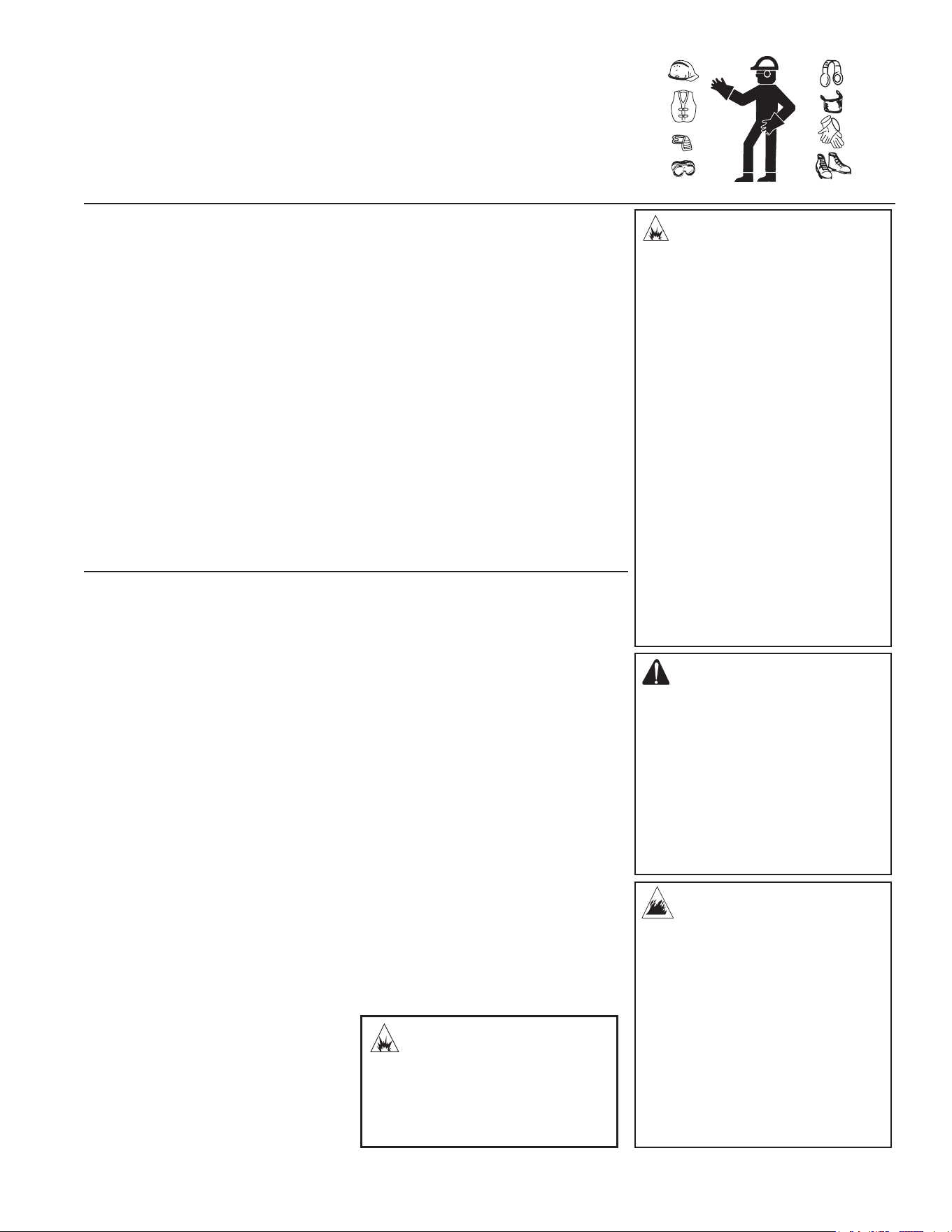
Manual del Operador 27
INSTALACION Y PREPARACION
PREPARACION:
1. Al operar esta unidad, debería colocarse solamente sobre una supercie
nivelada para asegurar una lubricación apropiada del motor y de la bomba
de agua.
2. NO coloque la unidad en un área:
a. con ventilación insuciente.
b. donde haya evidencia de pérdidas de aceite o combustible.
c. donde puedan estar presentes vapores de gas inamable.
3. Asegúrese de inmovilizar las ruedas para evitar que la unidad se mueve
durante el funcionamiento.
4. Si cualquier parte de la unidad se congela, esto puede causar una
acumulación excesiva de presión en la misma lo que podría causar que
reviente, resultando en posibles lesiones al operador o a los observadores.
5. Debe revisarse el nivel del aceite de la bomba debe revisarse antes de
cada aplicación. Revise el indicador del nivel de aciete en el cárter de la
bomba. Asegúrese que el aciete esté al nivel correcto indicado por el punto
en el vidrio de nivel. Use aceite para bombas de Mi-T-M # AW-4085-0016
si parece que el nivel está bajo.
TANQUE DE COMBUSTIBLE DEL MOTOR:
1. Repase las “Precauciones contra incendio y de ventilación” pág. 24, antes
de cargar combustible.
2. Ubique las Calcomanías de Seguridad en su unidad y preste atención a
sus advertencias.
3. Motores de Gasolina: Cuando llenando tanque comestible de gasolina
debe ser un mínimo de 85 octano. No mezcla aceite con gasolina. Gasolina
debía comprar en cantidades que podría usar en 30 días. Es recomiendo
que use gasolina limpia, fresco y sin plomo. Gasolina con plomo puede
usar si sin plomo está averiado. No use gasolina que contenga metanol o
alcohol.
Motores de Comestible Diesel: Cuando llenando tanque, comestible del
diesel debía una mínima de 45 octano. Reemplazos de aceite comestible
de diesel no son recomendados. Comestible de diesel no tenga agua ni
suciedad.
4. Revise el nivel de aceite del motor antes de arrancar el motor. (Vea el manual
del motor.)
5. Reérase al manual de motor que fue suministrado con está una unidad
para abastecer correcto y procedimientos ajustables.
6. Repase el manual del motor adjunto de esta lavadora a presión para
los procedimientos correctos de arranque y mantenimiento del motor.
VESTIMENTA:
Una vestimenta apropiada es esencial para su seguridad. Se recomienda
que utilice cualquier medio necesario para proteger los ojos, los oídos y
la piel. Al usar agentes limpiadores detergentes con esta lavadora, puede
requerirse una vestimenta adicional de seguridad (tal como una máscara
respiratoria).
ADVERTENCIA RIESGO DE
EXPLOSION O INCENDIO!
MIENTRAS LA UNIDAD ESTA
FUNCIONANDO O ESTA CALI-
ENTE, ALMACENE SIEMPRE EL
COMBUSTIBLE ALEJADO DE LA
LAVADORA.
PELIGRO¡RIESGO DE
INCENDIO! ¡NO FUME AL
CARGAR COMBUSTIBLE!
MIENTRAS LA UNIDAD ESTA
FUNCIONANDO O ESTA CALIENTE
NO LLENE EL TANQUE DE COM-
BUSTIBLE.
PERMITA QUE LA UNIDAD Y EL
MOTOR SE ENFRIEN DURANTE
DOS MINUTOS ANTES DE CARGAR
COMBUSTIBLE. NO LLENE EL
TANQUE DE COMBUSTIBLE HASTA
QUE SE DERRAME. PERMITA 1/4"
DE ESPACIO DE TANQUE APROXI-
MADAMENTE PARA LA EXPANSION
DEL COMBUSTIBLE.
ADVERTENCIA¡RIESGO DE
ASFIXIA!
NO OPERE EN UN AREA CERRADA.
USE ESTE PRODUCTO EN AREAS
BIEN VENTILADAS SOLAMENTE!
EL ESCAPE DEL MOTOR CON-
TIENE MONOXIDO DE CARBONO,
UN GAS VENENOSO, INODORO E
INVISIBLE.
EL RESPIRAR ESTE GAS PUEDE
CAUSAR LESIONES GRAVES,
ENFERMEDAD Y POSIBLEMENTE
LA MUERTE.
PELIGRO¡RIESGO DE
EXPLOSIÓN O INCENDIDO!
-CUANDO SE CARGAN BATERíAS,
éSTAS GENERAN UN GAS DE HI-
DRóGEN O QUE SEA ALTAMENTE
EXPLOSIVO. ¡UNA CHISPA PODRíA
CAUSAR UNA EXPLOSIóN O UN
INCENDIDO!
-NO ARRANQUE LA BATERíA CON
FUENTE DE ENERGíA AUXILIAR A
MENOS DE QUE AMBAS BATERíAS
SEAN DE VOLTAJE Y AMPERAJE
EQUIVALENTES.
-NO FUME NI PERMITA QUE HAYA
CHISPAS O LLAMAS CERCA DE LA
BATERíA.
-RIESGO DE EXPLOSION O INCEN-
DIO! NO COLOQUE LA UNIDAD EN
UN AREA DONDE PUEDAN ESTAR
PRESENTES VAPORES INFLAM-
ABLES. ¡UNA CHISPA PODRIA
CAUSAR UNA EXPLOSION O UN
INCENDIO!
¡RIESGO QUE LA UNIDAD REVI-
ENTE! NO ALMACENE NI OPERE LA
UNIDAD EN UN AMBIENTE HELA-
DO.
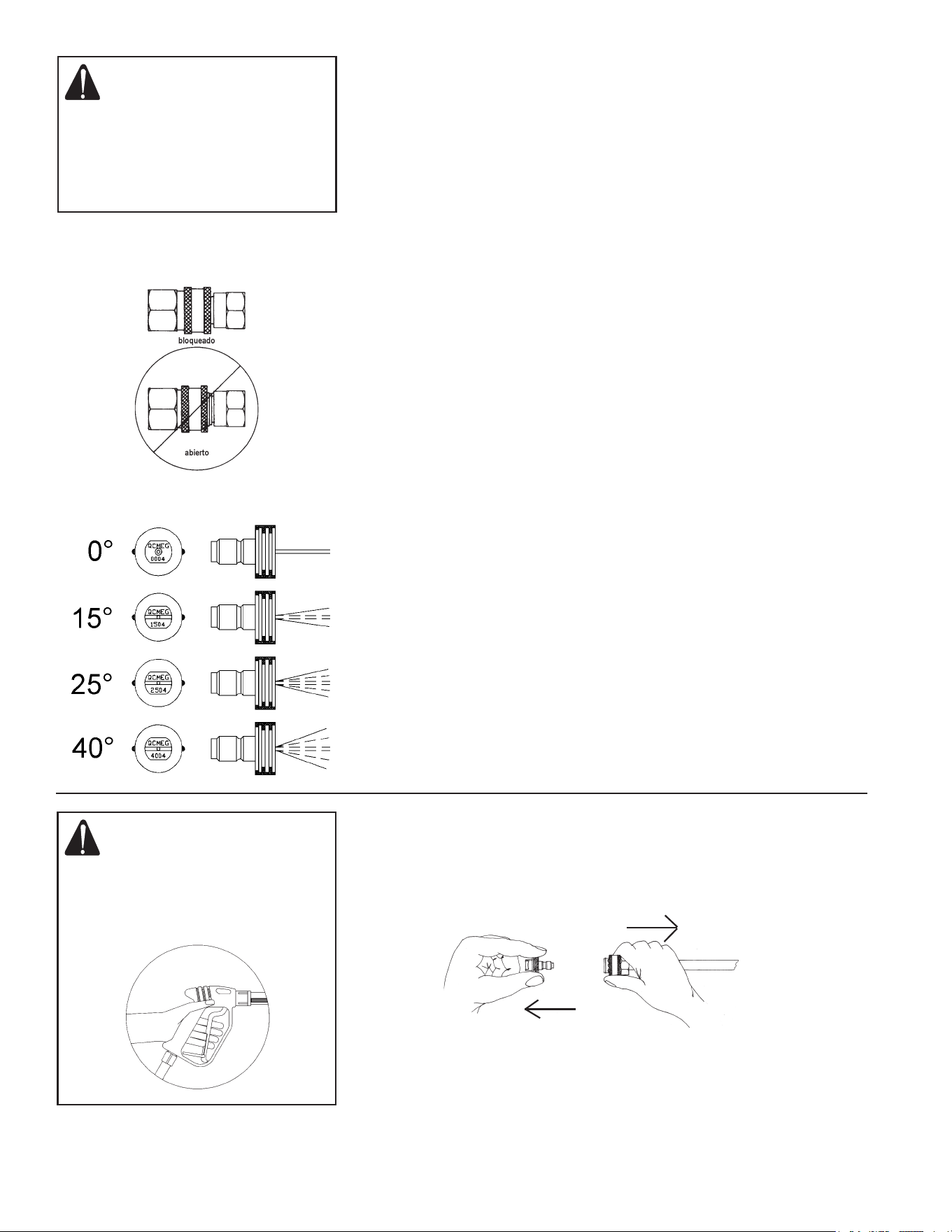
28 Manual del Operador
INSTALACION Y PREPARACION
ADVERTENCIA ¡RIESGO DE
INYECCION CAUSANTE
DE LESIONES GRAVES!
¡NUNCA MIRE DIRECTAMENTE
AL ORIFICIO DE LA BOQUILLA A
MENOS QUE ESTE DESCONECT-
ADO DEL CONJUNTO DE LA
PISTOLA/VARA!
BOQUILLAS DE CONEXION RAPIDA:
Pueden conectarse rápidamente varias boquillas al extremo de la vara
para cambiar el patrón de rociado o para usar la característica de deter-
gente. Asegúrese que la conexión está seguramente calzada, al usar los
conectores rápidos (C.R.). En caso contrario el agua a alta presión puede
despedir la boquilla de la vara, causando lesiones graves o daños impor-
tantes. Reérase al número estampado en la boquilla, para determinar el
patrón de abanico del rociado. Los primeros dos dígitos indican el patrón
de abanico del rociado en grados, por ej.: 00=0°, 15=15º, 25=25º, 65=de-
tergente/baja presión.
1. Boquilla de 0º (ROJA): Esta es una boquilla de disparo que emite una
corriente muy concentrada de agua. Debería ejercerse cuidado para
evitar rayar la madera o dañar supercie frágiles. Usos: eliminación
de malas hierbas de las grietas de las aceras, manchas resistentes del
concreto, mampostería, aluminio y acero, lodo endurecido en equipos,
y para limpiar el fondo de las cortadoras de césped.
2. Boquilla de 15º (AMARILLA): Esta es una boquilla biselada. El rociado
debería dirigirse a un ángulo de 45º sobre la supercie y usarse como
un raspador para sacar pintura, grasa y suciedad. Usos: preparación de
supercies (eliminación de manchas de moho y escamas de pintura).
3. Boquilla de 25º (VERDE): Esta es una boquilla de limpieza por descarga
de agua. Este patrón es más apropiado para limpiar suciedad, lodo, y
hollín. Usos: Barrido en mojado de senderos, cordones de las aceras y
entradas de garages, limpieza de suelos de los establos, lavado de los
fondos de las piscinas de natación, desengrasado de motores.
4. Boquilla de 40º (VERDE): Esta es una boquilla de lavado. Este patrón de
rociado amplio dispersa la presión de agua sobre un área grande y se
recomienda para un lavodo moderado. Usos: Lavado de recubrimientos
de aluminio de paredes limpieza de ventanas, lavado de vehiculos,
rociado de aceras, entradas de garages, y patios, limpieza de techos.
BOQUILLAS DE CONEXION RAPIDA
(C.R.)
CONEXION DE LAS BOQUILLAS DE
CONEXION RAPIDA
ADVERTENCIA ¡RIESGO DE
LESIONES GRAVES!
¡CUANDO NO SE USA, LA PISTO-
LA A GATILLO DEBERIA ESTAR
SIEMPRE ASEGURADO EN LA
POSICION DESCONECTADO!
CONEXION DE LA BOQUILLA:
1. Asegúrese que la pistola a gatillo esté asegurada en la posición "OFF"
(DESCONECTADO). Vea la ADVERTENCIA, a la derecha.
2. Retraiga el anillo de cierre sobre el adaptador de conexión rápida para
sacar la boquilla.
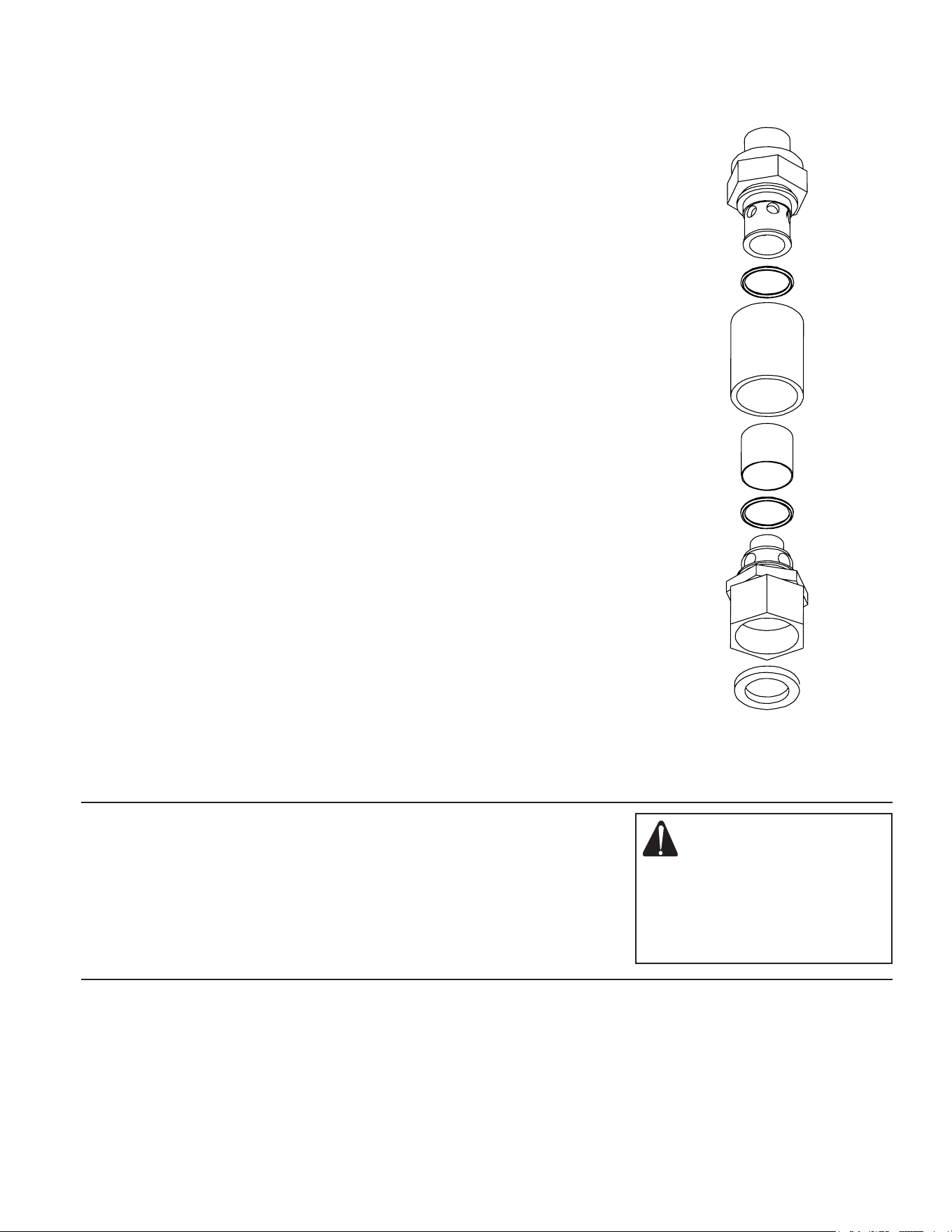
Manual del Operador 29
INSTALACION Y PREPARACION
REVISA COLADORA ENTRADA DE
AGUA
DESCARGADOR:
Usted puede ajustar la presión, si el descargador de su máquina está equi-
pado con una perilla de ajuste. Si se requiere menos presión, simplemente
gire la perilla de ajuste en sentido contrario a las agujas del reloj. Para retor-
nar al máximo, gire completamente la perilla de ajuste en el sentido de las
agujas del reloj. ¡NO AJUSTE EN EXCESO!
Si el descargador no tenga una perilla de ajustados, no ajuste la presión
sólo! La presión ha preprogramado en la fábrica y debe ajustar por un
represtado calicado de Mi-T-M.
VALVULA DE DESCARGA TERMICA:
Nunca permita que la lavadora a presión opere en el modo de derivación
durante más de tres minutos (con la unidad funcionando y la pistola a gatillo
cerrado), para asegurar que la temperatura del agua no exceda niveles
aceptables.
Se ha agregado una válvula de descarga térmica a esta unidad para proteger
la bomba. Puede comenzar a abrirse y permitir la salida de agua si la tem-
peratura del agua en la bomba ha excedido los 140°F. Esto permitirá que
agua fresca y fría entre al sistema, evitando por consiguiente la falla premat-
ura del sello del empaque de la bomba.
PRECAUCION ¡RIESGO DE
DAÑO DE UNIDAD!
NO APRETE DEMASIADO EL
DESCARGADOR. ROTURAS
RESULTARáN EN PERDIDA
INMEDIAMENTE DE PRESIóN
DE AGUA Y REPARACIONES
CAROS.
SUMINISTRO DE AGUA:
1. Seleccione una manguera de suministro de agua que sea de calidad de
manguera de jardín que mida 3/4" de DI por lo menos y que no sea más
larga que 50 pies.
2. Inspeccione el tamiz de ltro del agua para asegurar que esté limpio y libre de
obstrucciones. La limpieza periódica del tamiz de agua ayudará a prevenir
problemas con la bomba. El tamiz restringe el ujo apropiado de agua a
la bomba, a medida que se obstruye. Esto puede resultar en cavitaciones
que causarán la falla prematura de los empaques de las bombas.
a. Desatornille la conexión de la entrada de la manguera del jardín del
frente del montaje de ltro.
b. Quite la cubierta de plástico claro y limpie la pantalla de ltro.
3. Conecte la mangueras:
a. Conecte un extremo de la manguera de suministro de agua a la entrada
de agua de la unidad.
b. Conecte el otro extremo de la manguera a su suministro presurizado
de agua. Cuando conectando la entrada de agua a las canerías de
suministro de agua, regulaciones locales de su companía del agua
tenga que observar. En algunas areas la unidad no tenga que conectar
directamente al suministro publico. Este es para asegurése que no
había nada retroalimentación de los detergentes entre el suministro del
agua. (Es permite que conexión directamente si instale de preventor
de corriente atraso.
c. Efectúe la conexión de la manguera de descarga de alta presión a la
salida de agua de la unidad.
d. Conecte rmemente el otro extremo de la manguera a la pistola.
4. Siga los requerimientos de agua entrante listados abajo:
a. La presión de agua debe estar a un mínimo de 25 libras por pulgada
cuadrada (PSI) y un máximo de 125 PSI. (Un grifo típico al aire libre
suministrará generalmente estas PSI si está completamente ABIERTO).
b. Los GPM (galones por minuto) entrantes deben ser ser 1 galón más
aproximadamente que los GPM salientes deben indicados en la placa
de nombre de la lavadora a presión. (Usted puede inspeccionar los
GPM observando el tiempo requerido para llenar un recipiente de 5
galones.)
c. La temperatura del agua de entrada no debe exceder 125°F. Puede
resultar un daño excesivo a la bomba si la temperatura del agua excede
este nivel aceptable.
5. Nunca permita que la unidad opere sin que esté conectada la tubería de
agua de entrada y el suministro de agua completamente abierto.

30 Manual del Operador
INSTALACION Y PREPARACION
PROCEDIMIENTOS DE INSPECCION ANTES DEL
ARRANQUE:
Efectúe los procedimientos siguientes antes de arrancar la unidad:
1. Inspeccione el nivel de aceite en la bomba y en el motor.
2. Inspeccione el tamiz de entrada de agua. Limpie o reemplace si fuera
necesario. Vea “Suministro de agua”, #2, pág. 32.
3. Inspeccione todas las conexiones de las mangueras para asegurar que
estén bien ajustadas. Vea “Suministro de agua”, #3, pág. 32.
4. Inspeccione por pérdidas de combustible del sistema. ¡NO ARRANQUE LA
UNIDAD, si encuentra una pérdida de combustible! Vea las “Precauciones
contra incendio y de ventilación”, #2 y #4, pág. 24. Asegúrese que se
reemplacen todas las piezas dañadas y que se corrijan todos los problemas
mecánicos antes de operar la unidad. Consulte con el Servicio, si usted
requiere servicio.
5. Inspeccione las mangueras de alta presión por dobleces, cortes y pérdidas.
¡NO USE LA MANGUERA, si halla un corte o una pérdida! Antes de arrancar
la unidad reemplace la manguera. Vea las “Precauciones misceláneas de
seguridad” #6, pág. 25. Asegúrese que se reemplacen todas las piezas
dañadas y que se corrijan los problemas mecánicos antes de operar la
unidad. Consulte con el Servicio, si usted requiere servicio.
ADVERTENCIA
LAS PAGINAS SIGUIENTES CONTIENEN INSTRUCCIONES DE OPERACION Y MANTENIMIENTO.
NO TRATE DE OPERAR ESTA LAVADORA A PRESION HASTA QUE HAYA LEIDO Y ENTENDIDO TODAS
LAS PRECAUCIONES E INSTRUCCIONES DE SEGURIDAD LISTADAS EN ESTE MANUAL.
¡¡LA OPERACION INCORRECTA DE ESTA UNIDAD PUEDE CAUSAR LESIONES GRAVES!!
¡¡DE NINGUNA MANERA ALTERE O MODIFIQUE ESTE EQUIPO!!
Manual del Operador 31
INSTRUCCIONES DE OPERACION
ARRANQUE:
1. Reérase a las “Precauciones de seguridad”, págs. 24-27 antes de arrancar
la unidad.
2. Ubique las calcomanías de seguridad en su unidad y obedezca sus
advertencias.
3. Apunte la pistola a gatillo alejado de usted o de cualquier otra persona, con
el mismo asegurado en la posición “OFF”. Asegúrese que el suminstro de
agua esté completamente abierto.
4. Desenganche el seguro de la pistola y accione el gatillo. Comenzará a uir
agua a baja presión de la boquilla.
5. Al arrancar el motor, ASEGURESE que la pistola a gatillo permanezca en
la posición abierta. Afírmese ya que la pistola retrocederá violentamente a
causa de la alta presión causada por la bomba una vez que haya arrancado
el motor.
6. Para armar la unidad durante el arranque del motor, coloque su pie sobre
el chasis o rueda. (Reérase al manual del motor adjunto a esta lavadora
a presión para los procedimientos correctos requeridos para arrancar el
motor.)
7. Efectúe los procedimientos siguientes una vez que haya arrancado el motor
con la pistola en la posición abierta:
a. Inspeccione por pérdidas de aceite y combustible del sistema.
¡APAGUE INMEDIATAMENTE LA UNIDAD, si encuentra una pérdida! Vea
las “Precauciones contra incendio y de ventilación”, #2 y #4, pág.24.
Antes de operar la unidad, asegúrese que se hayan reemplazado todas
las piezas dañadas y que se hayan corregido todos los problemas
mecánicos. Consulte con el Servicio, si usted requiere servicio.
b. Inspeccione las mangueras de alta presión por dobleces, cortes y
pérdidas. ¡¡¡NO TOQUE LA MANGUERA EN LA PERDIDA, si encuentra
un corte o una pérdida!!! ¡APAGUE INMEDIATAMENTE LA UNIDAD!
Antes de arrancar nuevamente la unidad, reemplace la manguera. Vea
las “Precauciones misceláneas de seguridad” #6, pág. 27. Antes de
operar la unidad, asegúrese que se hayan reemplazado todas las piezas
dañadas y que se hayan corregido todos los problemas mecánicos.
Consulte con el Servicio, si usted requiere servicio.
8. ASEGURE la pistola a gatillo en la posición “OFF” siempre que cambie las
boquillas de conexión rápida. ¡NUNCA mire directamente en la boquilla!
¡El agua a alta presión crea un riesgo de lesiones graves!
9. No permita que la unidad funcione en un modo de derivación (con el gatillo
cerrado) por más de tres minutos sin accionar el gatillo de la pistola. El no
seguir esta simple regla puede causar la falla prematura de los sellos del
empaque de la bomba, resultando en una reparación costosa a la misma.
PRECAUCION RIESGO DE
DAÑO
NO PERMITA QUE EL PATRON
DE ROCIADO PERMANEZCA
EN UNA AREA
FIJA DURANTE UN PERIODO
PROLONGADO DE TIEMPO.
PUEDE OCURRIR UN DAÑO
POSIBLE AL AREA.
PELIGRO ¡RIESGO DE
INYECCION CAUSANTE
DE LESIONES GRAVES!
¡MANTENGASE ALEJADO DE
LA BOQUILLA!
¡NUNCA COLOQUE LA MANO
NI LOS DEDOS DELANTE DE LA
BOQUILLA!
¡NO DIRIJA LA CORRIENTE DE
DESCARGA HACIA LAS PER-
SONAS O LOS ANIMALES!
¡ASEGURESE QUE LA BO-
QUILLA ESTE SEGURAMENTE
CONECTADA A LA VARA PARA
EVITAR UNA DESCARGA ACCI-
DENTAL!
CEBADO DE LA BOMBA:
1. Es esencial cebar la bomba en el arranque inicial y cada vez que se
desconecta el suministro de agua de la unidad después del uso inicial.
2. Desplieque la manguera de alta presión para eliminar los dobleces. (El ujo
de agua endurecerá la manguera, creando bucles rígidos si la manguera
no está recta.)
3. Conecte seguramente el conjunto de la pistola a la manguera de alta presión.
NOTA: El conjecto de la boquilla NO debería conectarse al conjunto de la
pistola en este momento. Vea “Conexión de la boquilla”, pág. 31.
4. Abra completamente el suministro de agua, con la pistola a gatillo asegurado
en la posición “OFF”. Suelte el seguro de la pistola a gatillo y accione este
último, apuntando la pistola en una dirección segura.
5. Comenzará a uir agua a baja presión del conjunto de manguera/pistola.
Esto permite que la unidad se cebe y purgue todo el aire del sistema. Esta
unidad está cebada cuando el ujo de agua no esté interrumpido por el
aire.
6. Suelte el gatillo y asegure la pistola en la posición “OFF”, una vez que la
unidad esté cebada. Conecte seguramente el conjunto de la boquilla.
(Vea "Conexión de la boquilla", pág. 31.)
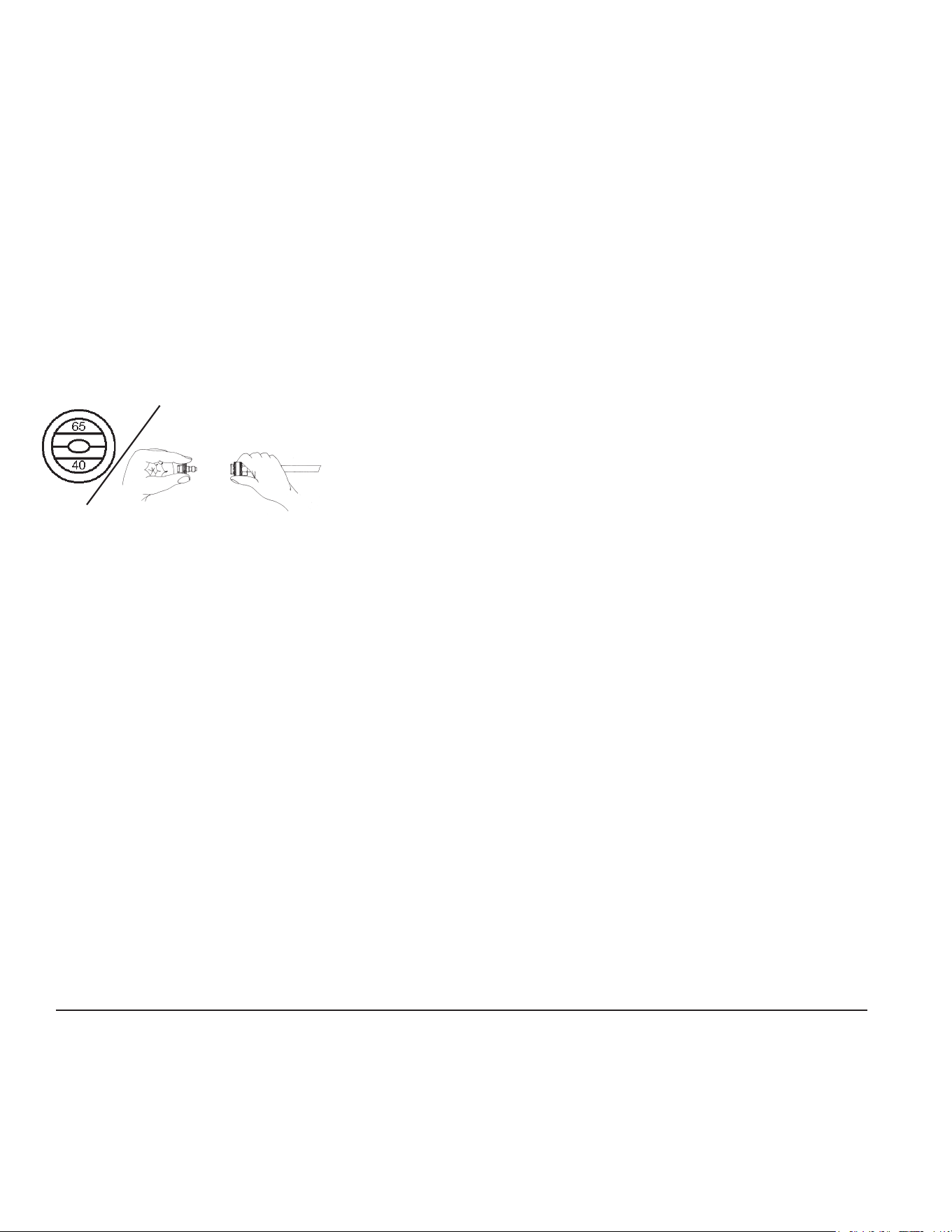
32 Manual del Operador
10. Puede haber muchas tareas de limpieza que pueden efectuarse sin el uso
de detergentes, a causa que la lavadora a presión suministra un rociado
a alta presión y una variedad de patrones de rociado. Vea “Limpieza con
detergentes”, pág. 33, para los procedimientos correctos, si se requiere
un agente de limpieza.
LIMPIEZA CON DETERGENTES (CARACTERÍSTICA
OPCIONAL):
La característica de inyección de detergente es una característica opcional
de esta maquina. Si quiere agregar esta característica a su unidad, encargue
pieza de Mi-T-M #AW-8300-0000. Conecte el inyector de detergente a la
unidad como directado en la manual de Inyector de Detergente.
1. Reérase a las “Precauciones de limpieza con detergentes”, pág. 27.
Asegúrese de usar vestimenta protectora de seguridad según lo mencionado
en la pág. 30.
2. Prepare la solución de detergente de acuerdo con las instrucciones del
rótulo. Nunca bombee ácidos, alcalinos, uidos abrasivos o solventes a
través de la unidad. Debido que características desconocidas y corrosivas
de muchos detergentes user comúnmente en la industriá de limpiando de
lavadora de presión es recomiendo que use detergentes de Mi-T-M sólo
con esta unidad.
3. Ajuste la cantidad de detergente deseable por encontrando la perilla de
ajustados en el n de manguera claro y vinilo cerca al inyector de detergente.
Doble la perilla completamente en sentido contrario a las agujas del reloj
para programar en la velocidad maxima de sifón.
4. Sumerja el tamiz dentro de la solución del detergente para permitir que
este último circule por sifón.
5. Usando el conector rápido, conecte bien la boquilla de rociado de detergente
(#6540º NEGRA) al extremo de la vara, con la pistola a gatillo asegurado
en la posición “OFF”.
NOTA: Este sistema de inyección está diseñado para aplicar deter-
gentes a baja presión solamente. No permitirá que se introduzcan
soluciones de detergente en el sistema a menos que la boquilla del
detergente esté instalada en la vara.
6. Desenganche la pistola a gatillo y accione el gatillo, para aplicar la solución.
Una mezcla de detergente/agua saldrá de la boquilla de baja presión en unos
pocos momentos. Comience rociando la porción inferior de la supercie
que está siendo limpiada y muévase hacia arriba usando pasadas largas
superpuestas. El aplicar desde abajo hacia arriba ayuda a evitar el estriado.
Permita que se empape brevemente. (Para minimizar la posibilidad de que
se seque el detergente, lo que puede resultar en daños a las supercies
pintadas, evite trabajar sobre supercies calientes o bajo la luz directa del
sol.) Asegúrese de enjuagar una sección pequeña por vez.
7. Para enjuagar: asegure la pistola a gatillo en la posición “OFF”, y usando el
conector rápido, conecte seguramente la boquilla de alta presión al extremo
de la vara. Desenganche la pistola a gatillo y rocíe. Llevará 30 segundos
aproximadamente purgar todo el detergente de la tubería. Comience en la
parte superior y trabaje hacia abajo, para obtener los mejores resultados
del enjuague.
8. Después de cada uso, extraiga por sifón un galón de agua del sistema de
inyección de detergente a baja presión. Esto evita la posibilidad de corrosión
o de que el residuo de detergente cause problemas mecánicos durante el
próximo uso.
APAGADO:
1. APAGUE el motor según se instruye en el Manual del Motor.
2. CIERRE el suministro de agua.
3. Accione momentáneamente la pistola a gatillo para eliminar toda la presión
interna, apuntando la pistola en una dirección segura.
4. Desconecte el conjunto de la boquilla, una vez que se haya eliminado la
presión.
CONEXION RAPIDA PARA
DETERGENTES
INSTRUCCIONES DE OPERACION
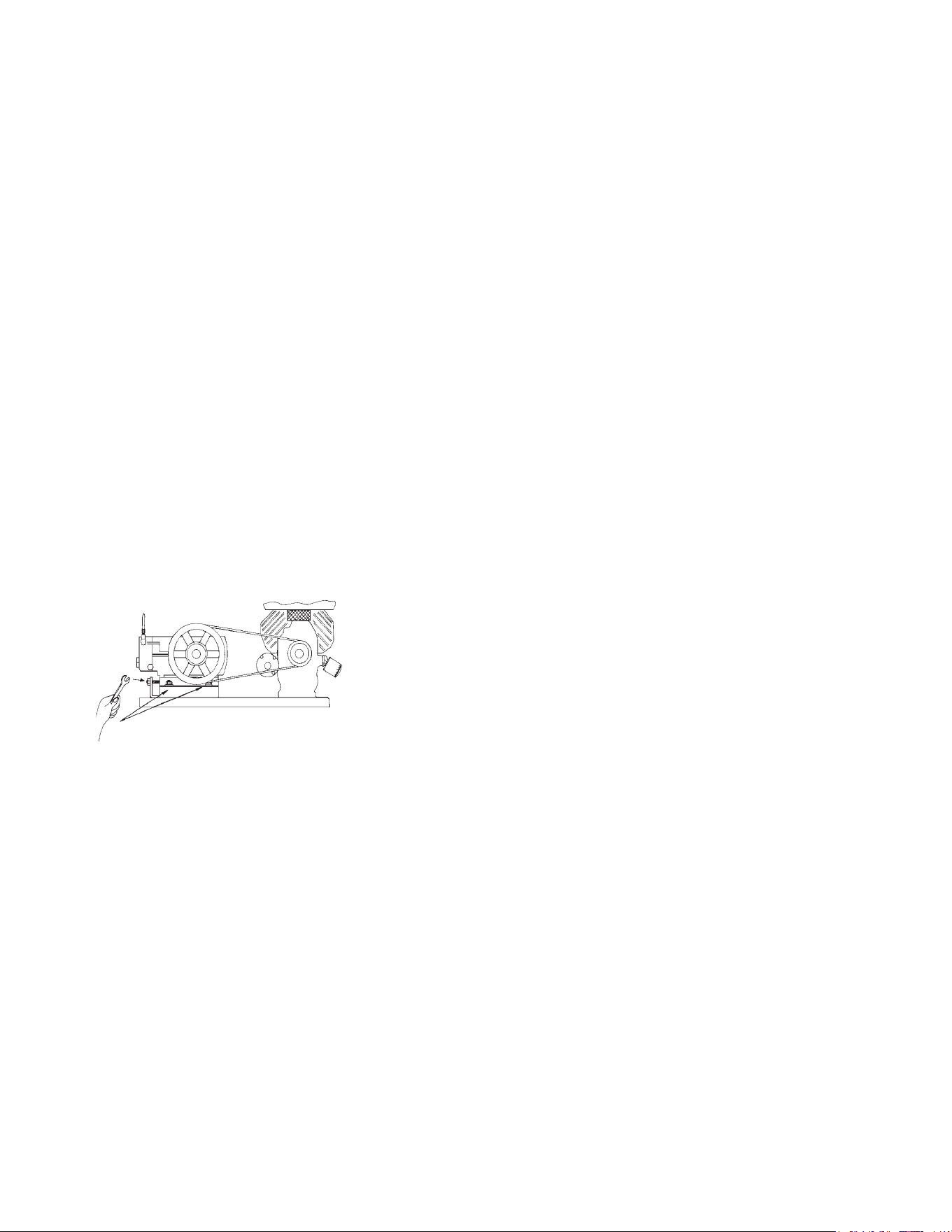
Manual del Operador 33
B
A
5. Desconecte y drene la pistola, la vara y las mangueras.
6. Limpie la unidad con un paño y almacene con la pistola, la vara y las
mangueras en un área segura.
ALMACENAMIENTO Y MANTENIMIENTO
MANTENIMIENTO ESPECIFICO:
MOTOR: Las instrucciones del motor que acompañan a su unidad detallan
los procedimientos especícos para el mantenimiento del motor. El obser-
var las recomendaciones del fabricante del motor prolongará la vida útil del
motor.
BOMBA: El aceite de la bomba debe ser cambiado después de las primeras
25 horas de operación en todas las unidades. Se recomienda intervalos de
250 horas, después de la carga inicial. Pueden requerirse cambios con may-
or frecuencia, si el aceite parece sucio o lechoso. Use aceite para bombas
de Mi-T-M #AW-4018-0016 y llene sólo hasta la marca en el vidrio. NO llene
en exceso.
COLADOR DE AGUA: Limpiando periódico del colador de agua ayudará
prevenir problemas de bomba. Cuando un colador tenga obstrucción, lo
limite ujo correcto de agua a la bomba. Este puede reultar en cavidaciones
cual causarán fallo prematuro de embaljes de bomba. Destornille la tapa de
colador de agua, quite la pantalla y limpie o reemplace.
BOQUILLAS: El agua que uye a través de la boquilla de rociado de con-
exión rápida desgastará y agrandará el oricio, resultando en una pérdida
de presión. Deberían reemplazarse las boquillas siempre que la presión sea
menor que el 85% del máximo. La frecuencia de reemplazo dependerá de
tales variables tales como el contenido mineral en el agua y el número de
horas que se usa la boquilla.
ACOPLES RAPIDOS: Hay un sello del anillo en O dentro de acople rápido
hembra en la salida de agua de su unidad. Este anillo en O se deteriorará, o
se saldrá de lugar si se permite que la unidad bombee sin la manguera de
alta presión. Simplemente inserte un anillo de repuesto para corregir la pér-
dida. (Pueden comprarse anillos en O adicionales de su distribuidor).
AJUSTE DE TENSIÓN DE CORREAS: Para mantener la máxima eciencia
de su lavadora de alta presión, puede ser necesario ajustar la tensión de las
correas ocasionalmente. Siga el procedimiento que se describe a continu-
ación.
1. Quite el protector de correas y aoje las tuercas que están a los lados de
la bomba (Referencia A). Hay un total de 4 tuercas.
2. Gire el tornillo (Referencia B) en el sentido de las manecillas del reloj hasta
observar que la correa se exiona una 1/2 pulgada (1,3 cm) entre las poleas.
3. Apriete las tuercas laterales (Referencia A).
4. Ponga una regla tocando el costado de ambas poleas. Si es necesario,
aoje los tornillos de una polea y muévala hacia adentro o hacia afuera
para que quede correctamente alineada. Apriete los tornillos de la polia y
verique otra vez la tensión.
5. Vuelva a poner la protección y apriete los sujetadores rmemente.
PREPARADO PARA EL INVIERNO
Usted puede proteger su unidad siguiendo el procedimiento indicado abajo,
si debe almacenarla en un lugar donde la temperatura puede descender por
debajo de los 32°F.
1. Reúne los artículos siguientes:
a. Dos recipientes de 5 galones.
b. Un galón de anticongelante. (Mi-T-M® recomienda un anticongelante
seguro para el medio ambiente.)
c. Suministro de agua.
AJUSTE DE TENSION DE CORREAS
INSTRUCCIONES DE OPERACION
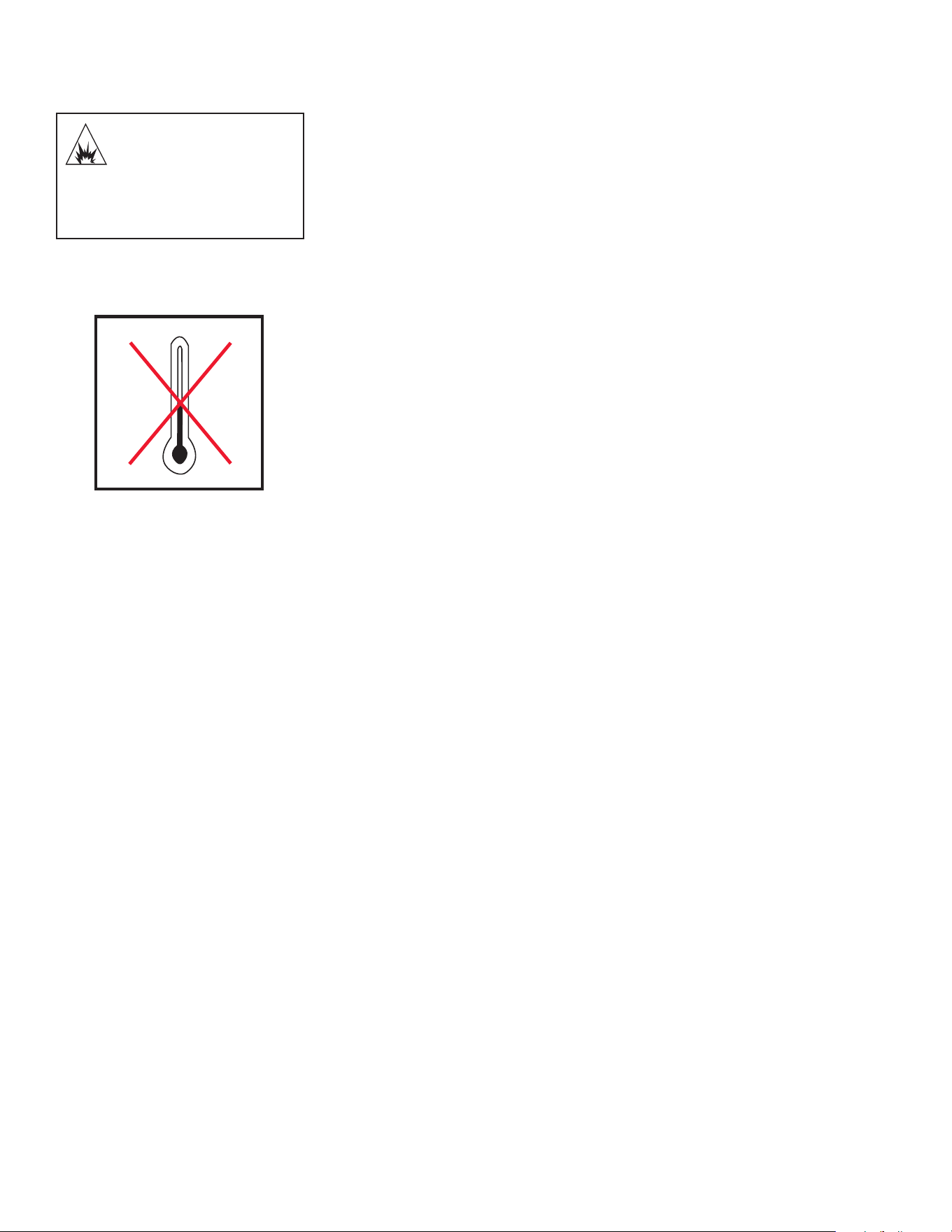
34 Manual del Operador
ALMACENAMIENTO Y MANTENIMIENTO
d. Una manguera de tres pies de largo con un D.I. de 1/2-3/4 y con un
adaptador macho de manguera de jardín de 3/4 de pulgada.
2. Procedimiento:
a. Para comenzar a preparar su unidad para el invierno, la misma debe
hacerse funcionar y cebarse de acuerdo con los “Procedimientos de
Arranque” indicados en la página 34.
b. Apague la unidad y corte el suministro de agua, después de hacerla
funcionar y cebarla.
c. Elimine la presión del sistema apuntando la pistola a gatillo hacia una
dirección segura y accionando el gatillo hasta que el ujo de agua cese
de salir por la boquilla.
d. Asegure la pistola a gatillo en la posición OFF y retire la boquilla.
e. En un recipiente de cinco galones, mezcla el anticon-gelante y água
según las recomendaciones del fabricante para la temperatura loque
esta preparando para el invierno.
NOTA: La preparación apropiada para el invierno está basada en las
instrucciones recomendadas del fabricante incluidas en la “Tabla
de Protección” mostrada en el rótulo posterior de la mayoría de los
recipientes de anticongelantes.
f. Retire la manguera de suministro de agua de la unidad y je seguramente
la manguera de 3 pies a la conexión de entrada. Sumerja el otro extremo
de la manguera del anticongelantes.
g. Si fuera aplicable apague el inyector de detergente.
h. Apunte la vara hacia el recipiente vacío y arranque la unidad.
i. Accione el gatillo de la pistola hasta que el anticongelante comience a
salir por la vara. Suelte el gatillo por 3 segundos, a continuación accione
el gatillo de la pistola por 3 segundos. Continúe ciclando la pistola
varias veces hasta que toda la mezcla anticongelante es extraída del
recipiente por la acción de sifón.
j. Apaque la unidad.
k. Separe la manguera de 3 pies de la unidad y drene todo el exceso
restante de anticongelante dentro del reciente de 5 galones.
l. Desconecte el conjunto de manguera/pistola/vara de la unidad y drene
todo el exceso restante de anticongelante dentro del recipiente de 5
galones.
m. Almacene la manguera, la pistola y vara junto con la unidad, en un lugar
seguro.
n. Almecene la solución anticongelante para un uso ulterior o descártela
de acuerdo con las leyes de protección del medio ambiente
correspondientes.
3. Procedimiento opcional:
a. Apague la unidad y corte el suministro de agua.
b. Elimine la presión del sistema apuntando la pistola a gatillo hacia una
dirección segura y accionando el gatillo hasta que el ujo de agua cese
de salir por la boquilla.
c. Desconecte y drene la manguera, la pistola y la vara.
d. Arranque la unidad y permita que funcione hasta que toda el agua
salga de la misma. Apague una vez que el agua ha cesado de uir de
la unidad.
NOTA: Debe ejercerse precaución al usar este procedimiento, ya que
pueden formarse plaquitas de hielo de las gotas de agua, lo que
podría causar que la unidad reviente si se arranca antes de estar
completamente descongelada.
32˚F 0˚C
ADVERTENCIA ¡RIESGO
QUE LA UNIDAD
REVIENTE!
¡NO ALMACENE/OPERE LA
UNIDAD EN UN AMBIENTE
HELADO!
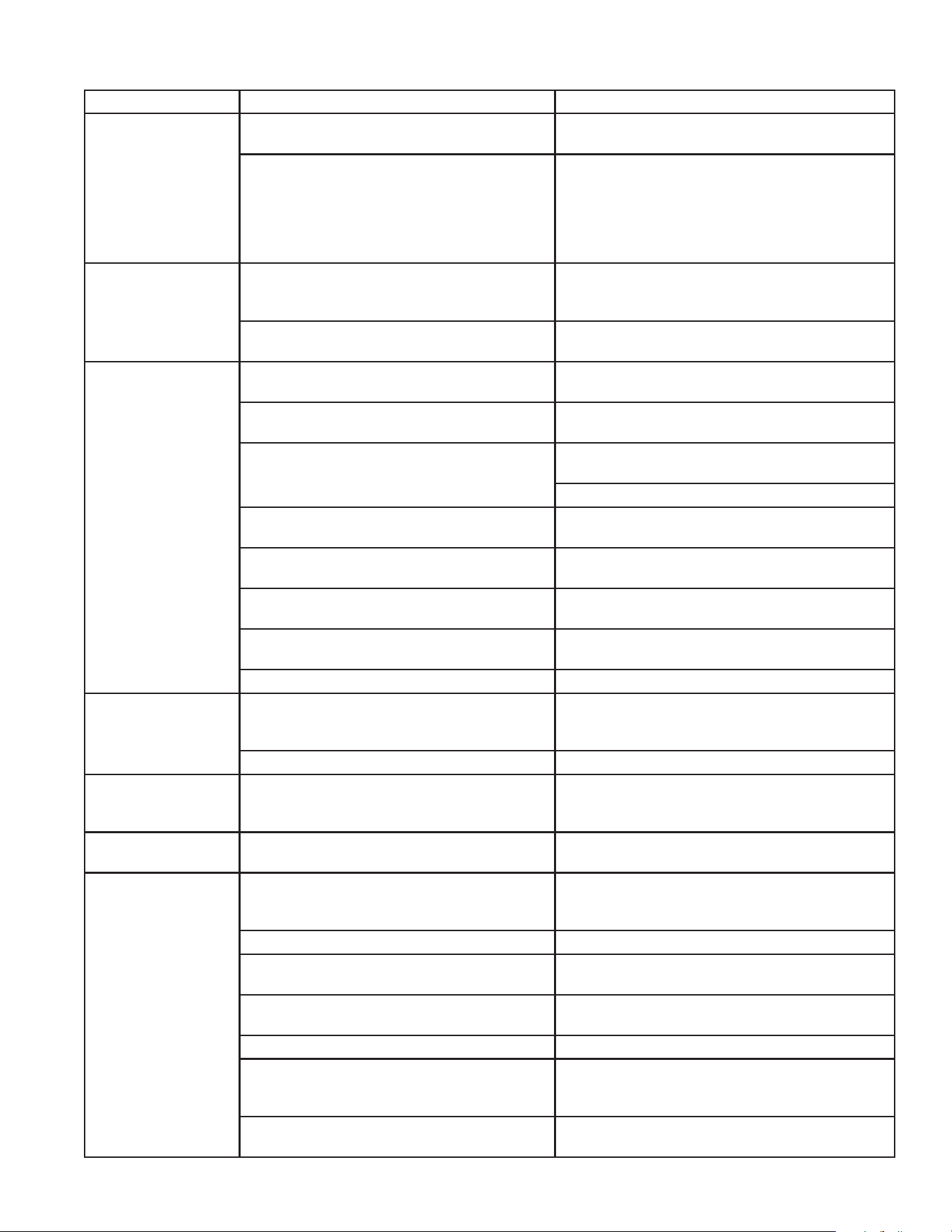
Manual del Operador 35
LOCALIZACION DE FALLAS
SINTOMA CAUSA PROBABLE SOLUCION
El motor no arranca. Varios problemas del motor. Reérase al Manual del Motor que acompaña
a su unidad.
Los componentes de la unidad están con-
gelados.
Permita que se descongele. Si se congela
cualquier parte de la unidad, puede acumu-
larse una presión excesiva en la unidad, lo que
podría causar que la misma reviente, resultan-
do en lesiones posibles graves al operador o a
los observadores.
No hay descarga de
la boquilla cuando
se acciona el me-
canismo del gatillo.
Suministro inadecuado de agua. Asegúrese que la manguera tenga 3/4" de
diámetro y que el suministro de agua entrante
esté abierto.
Doblez en la manguera de entrada de
agua.
Elimine el doblez.
Presión baja o uc-
tuante.
Doblez en la manguera de descarga de alta
presión.
Reemplace la manguera.
Está obstruido el tamiz de la entrada de
agua.
Saque el tamiz, limpie o reemplace.
La bomba absorbe aire (Eliminado el ceba-
do).
Ajuste todas las conexiones de entrada de
agua.
Elimine dobleces en la tubería de entrada.
No está en el modo de alta presión. Conecte seguramente la boquilla de alta
presión.
La boquilla de rociado está obstruida o
gastada.
Saque, limpie o reemplace.
El conjunto de la válvula en la bomba está
dañado u obstruido.
Saque, inspeccione, limpie o reemplace.
Los empaques de la bomba están gasta-
dos.
Reemplace los empaques.
La de derivación no opera correctamente. Repare o reemplace.
Pérdida de agua de
la “Válvula de des-
carga térmica”.
La temperatura del agua es demasiado
elevada.
No permita que la unidad opere en el modo
de derivación (con la pistola a gatillo cerrado)
durante más de tres minutos.
Válvlula defectuosa. Reemplace.
El agua parece
lechosa o espumo-
sa.
Agua en el aceite. Cambie la bomba de aceite. Llene al nivel
apropiado.
Pérdida de aceite
de la unidad.
¡¡¡¡¡NO LA USE!!!!! Llame al Servicio al Cliente.
El detergente no
uirá por sifón en el
modo de detergente
a baja presión.
El tamiz del detergente no está completa-
mente sumergido en la solución de deter-
gente.
Inspeccione, sumerja si fuera necesario.
El tamiz del detergente está obstruido. Inspeccione, limpie o reemplace.
La manguera del detergente está cortada,
obstruida o doblada.
Inspeccione, limpie o reemplace.
La perilla de ajuste del detergente está
girada a la posición cerrada.
Abra la perilla de ajuste. Reérase a “Limpieza
con detergentes” pág. 35.
La boquilla del detergente está taponada. Limpie o reemplace.
Hay demasiadas extensiones de las
mangueras de alta presión conectadas a la
salida de agua.
Use una extensión como máximo.
La esfera y el resorte en el Venturi están
atascados.
Retire, limpie o reemplace.

36 Manual del Operador
LOCALIZACION DE FALLAS
SINTOMA CAUSA PROBABLE SOLUCION
El ujo de agua ret-
rocede al recipiente
del detergente.
La esfera y el resorte en el Venturi están
invertidos, faltan o están desgastados.
Retire, limpie o reemplace.
Cuando la pisto-
la de gatillo está
asegurado en la
posición “OFF”, el
agua uye desde la
boquilla.
La pistola funciona mal. Repare o reemplace.
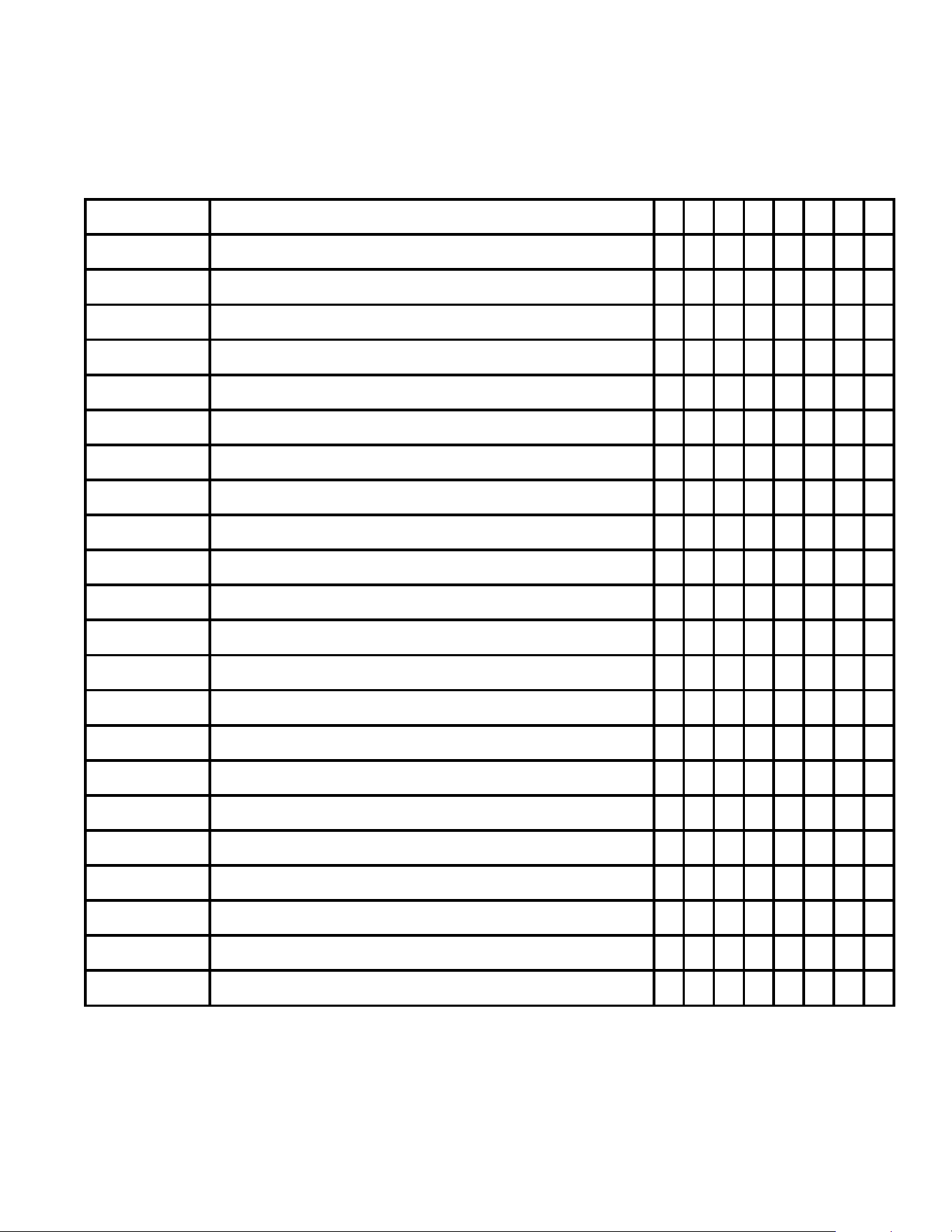
Manual del Operador 37
CW-1504
CW-2003
CW-2504
CW-2505
CW-3004
CW-3504
CW-4003
CW-4004
ACCESORIOS
*Se debe especicar presión (PSI) y volumen (GPM) al hacer el pedido.
El limpiador de uso general, el preparador de supercies para pintar, el limpiador de casa y pisos de terrazas, y el
desengrasante de uso pesado, son detergentes Mi-T-M especialmente formulados para usarse con todas las lava-
doras a presión Mi-T-M y se envasan en recipientes de uno (1), cinco (5) y cincuenta-cinco (55) galones. Si desea
más información, llame al departamento de servicio, al 800-228-6172 de larga distancia gratuita.
15-0006 MANGUERA DE ALIMENTACION DE 3/4"
X X X X X X X X
50-0136 CARRETE PARA LA MANGUERA 100'
X X X X X X X X
50-0137 CARRETE PARA LA MANGUERA 200'
X X X X X X X X
851-0006 MANGUERA DE EXTENSION DE 50' DE 4000PSI
X X X
851-0007 MANGUERA DE EXTENSION DE 50' DE 3000PSI
X X X X X
AW-3000-0000 CORREADOR DE ARENA-PUNTE DE CARBURO
X X X X X X X X
AW-3020-0000 CORREADOR DE ARENA-PUNTE DE CERAMICA
X X X X X X X X
AW-4085-0016 PETROLEO DE BOMBA
X X X X X X X X
AW-7002-4045 G-FUERZA BOQUILLA GIRATORIA
X
AW-7003-1500 CEPILL A GIRATORA
X X X X X X X X
AW-7004-0045 BOQUILLA GIRATORIA
X X X X
AW-7008-4055 G-FUERZA BOQUILLA GIRATORIA
X X
AW-7015-1200 VARA DE EXTENSION DE 12'
X X X X X X X X
AW-7015-1800 VARA DE EXTENSION DE 18'
X X X X X X X X
AW-7015-2400 VARA DE EXTENSION DE 24'
X X X X X X X X
AW-7020-8000 LIMPIADOR ROTATIVO DE SUPERFICIES
X X X X X X X
AW-7025-8000 CEPILLO CON MANGO DE 25" (INCLUYE CINCO BOQUILLAS DE 80)
X X X X X X X X
AW-7035-8000 CEPILLO CON MANGO DE 35" (INCLUYE CINCO BOQUILLAS DE 80)
X X X X X X X X
AW-7103-1800 VARA DE EXTENSION DE 18"
X X X X X X X X
AW-7103-3600 VARA DE EXTENSION DE 36"
X X X X X X X X
AW-7103-7200 VARA DE EXTENSION DE 72"
X X X X X X X X
AW-8007-0000 INYECTOR DE DETERGENTE DE ALTA PRESION
X X X X X X X X
AW-8300-0000 INYECTOR DE DETERGENTE DE BAJO PRESION
X X X X X X X X
38 Manual del Operador
DECLARACIÓN DE GARANTÍA
Mi-T-M Corporation garantiza que todas las piezas (excepto aquellas a las que se hace referencia abajo),
de su nueva lavadora a presión libres de defectos en materiales y mano de obra durante los periodos
siguientes:
Para un curso de la vida contra congelar y agrietarse:
Colector de bomba
Por diez (10) años a partir de la fecha original de compra:
Bomba de Alta Presión
Por dos (2) año a partir de la fecha original de compra:
Unidad Base Tuberías
Polea Correa
Por un (1) año a partir de la fecha original de compra:
GFCI Encender de selector
Contacto de entrada Sobrecarga
Por noventa (90) días a partir de la fecha original de compra:
Manguera de alta presión Pistola de gatillo
Vàlvulas de descargador Enciende/ apaga la luz
Las piezas defectuosas que no están sujetas a deterioro causado por el uso serán reparadas o reempla-
zadas a nuestra opción durante el periodo de garantía. En todo caso, el reembolso está limitado al precio
de compra pagado.
EXCLUSIONES
1. El motor está cubierto bajo una garantía separada proporcionada por el fabricante respectivo y está
sujeta a los términos en ella establecidos.
2. Partes de desgaste normal:
Empaques de las Bombas Válvulas de la Bomba
Boquillas Válvulas del Detergente
Círculo Connexión Rapida / El Tornillo Conecta
Correas
3. Esta garantía no cubre las piezas dañadas debido al deterioro normal causado por el uso, mala aplicación,
mal uso, operación a velocidades, presiones o temperaturas diferentes a las recomendadas. Las piezas
dañadas o gastadas a causa del uso de líquidos cáusticos o por la operación en medios ambientes
abrasivos o corrosivos o bajo condiciones que causan cavitación de la bomba no están garantizadas.
La falla en seguir los procedimientos recomendados de operación y mantenimiento también cancela la
garantía.
4. El uso de piezas de repuesto diferentes a las genuinas Mi-T-M
®
cancelará la garantía. Las piezas devueltas,
con franqueo pagado a un Centro de Servicio Autorizado, serán inspeccionadas y reemplazadas, libre
de cargos, si se determina que están defectuosas y sujetas a la garantía. No existen garantías que se
extiendan más allá de la descripción contenida aquí. Bajo ninguna circumstancia el Mi-T-M Corporation
será responsable por la pérdida de uso de la unidad, pérdida de tiempo, inconvenientes, pérdida
comercial o daños consecuentes.
PARA SERVICIO O CONSIDERACION DE LA GARANTIA CONSULTE CON:
Mi-T-M Corporation / 50 Mi-T-M Drive, Peosta, IA 52068-0050
Telefono: 563-556-7484
Telefone gratis en los EE. UU.: 800-228-6172 / Fax: 563-556-1235
Lunes - Viernes 8:00 a.m. - 5:00 p.m. CST

Manual del Operador 39

40 Manual del Operador