Form No. 3477-175 Rev D
Flex-Force Power System
®
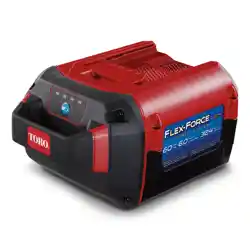
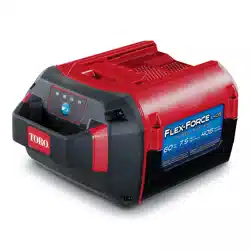
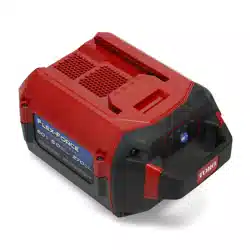
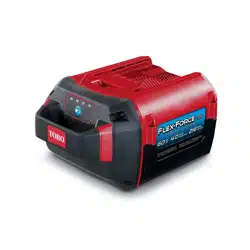
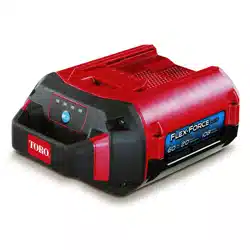
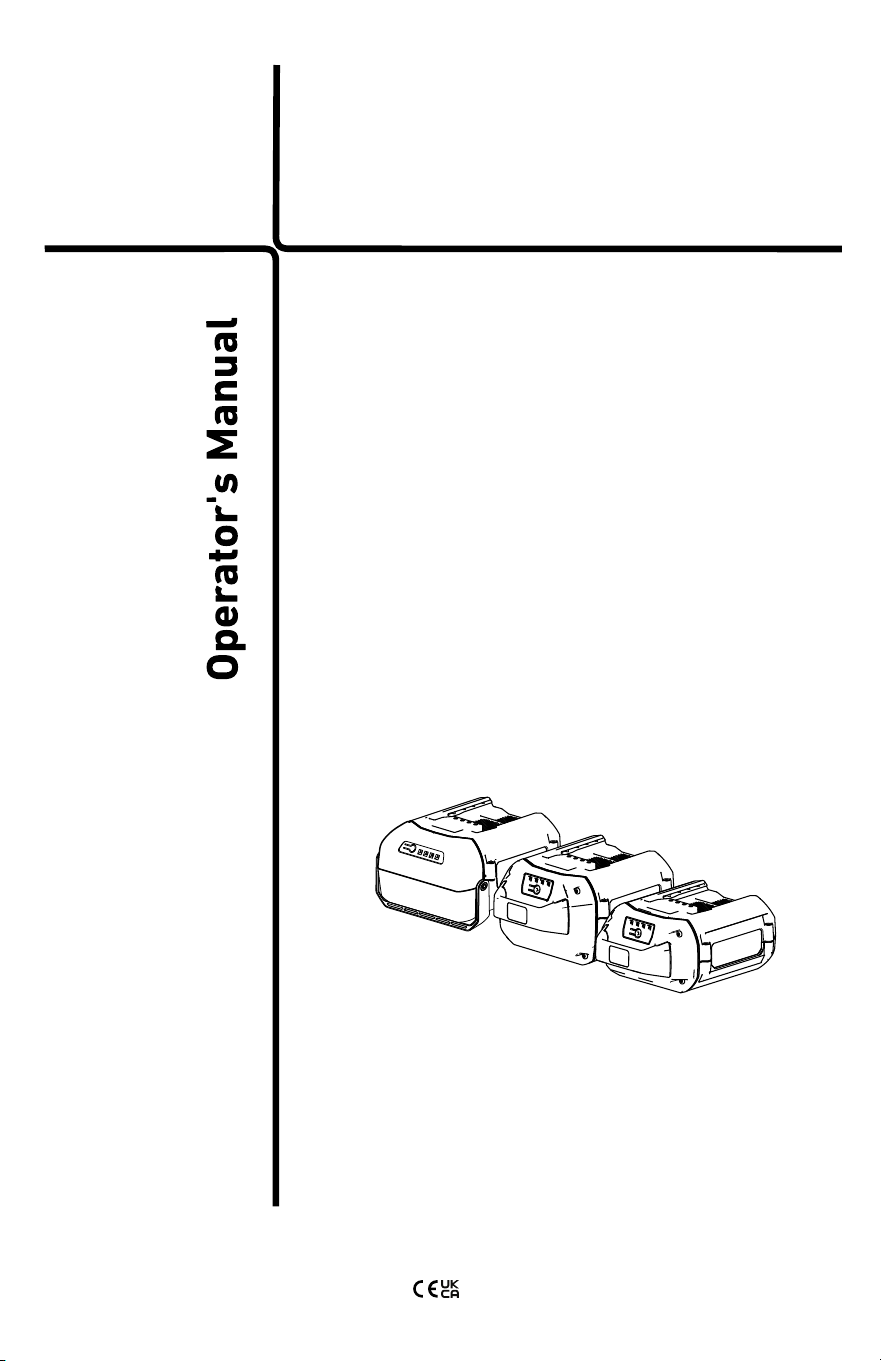
60V MAX Battery Packs
Model No. 66910 —Serial No. 325100000 and Up
Model No. 66912 —Serial No. 325100000 and Up
Model No. 88920 —Serial No. 352100000 and Up
Model No. 88925 —Serial No. 325100000 and Up
Model No. 88941 —Serial No. 325100000 and Up
Model No. 88950 —Serial No. 325100000 and Up
Model No. 88960 —Serial No. 325100000 and Up
Model No. 88975 —Serial No. 325100000 and Up
Model No. 88980 —Serial No. 325100000 and Up
Original Instructions (EN)
*3477-175*
W ARNING
CALIFORNIA
Proposition 65 W arning
Use of this product may cause exposure to chemicals
known to the State of California to cause cancer , birth
defects, or other reproductive harm.
Introduction
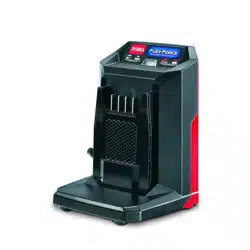
These chargers and battery packs are intended to be used by homeowners
and professional operators. These battery packs are designed to be
charged only by Flex-Force 60V
™
lithium-ion battery chargers. These
chargers are designed to charge only Flex-Force 60V lithium-ion battery
packs. They are not designed to charge any other batteries. Using these
products for purposes other than their intended use could prove dangerous
to you and bystanders.
Read this information carefully to learn how to operate and maintain
your product properly and to avoid injury and product damage. Y ou are
responsible for operating the product properly and safely .
Original Instructions (EN)
Printed in China
All Rights Reserved
*3477-175*
Whenever you need service, genuine parts, or additional information,
contact an Authorized Service Dealer or distributor , or the tool
manufacturer ’ s Customer Service, and have the model and serial numbers
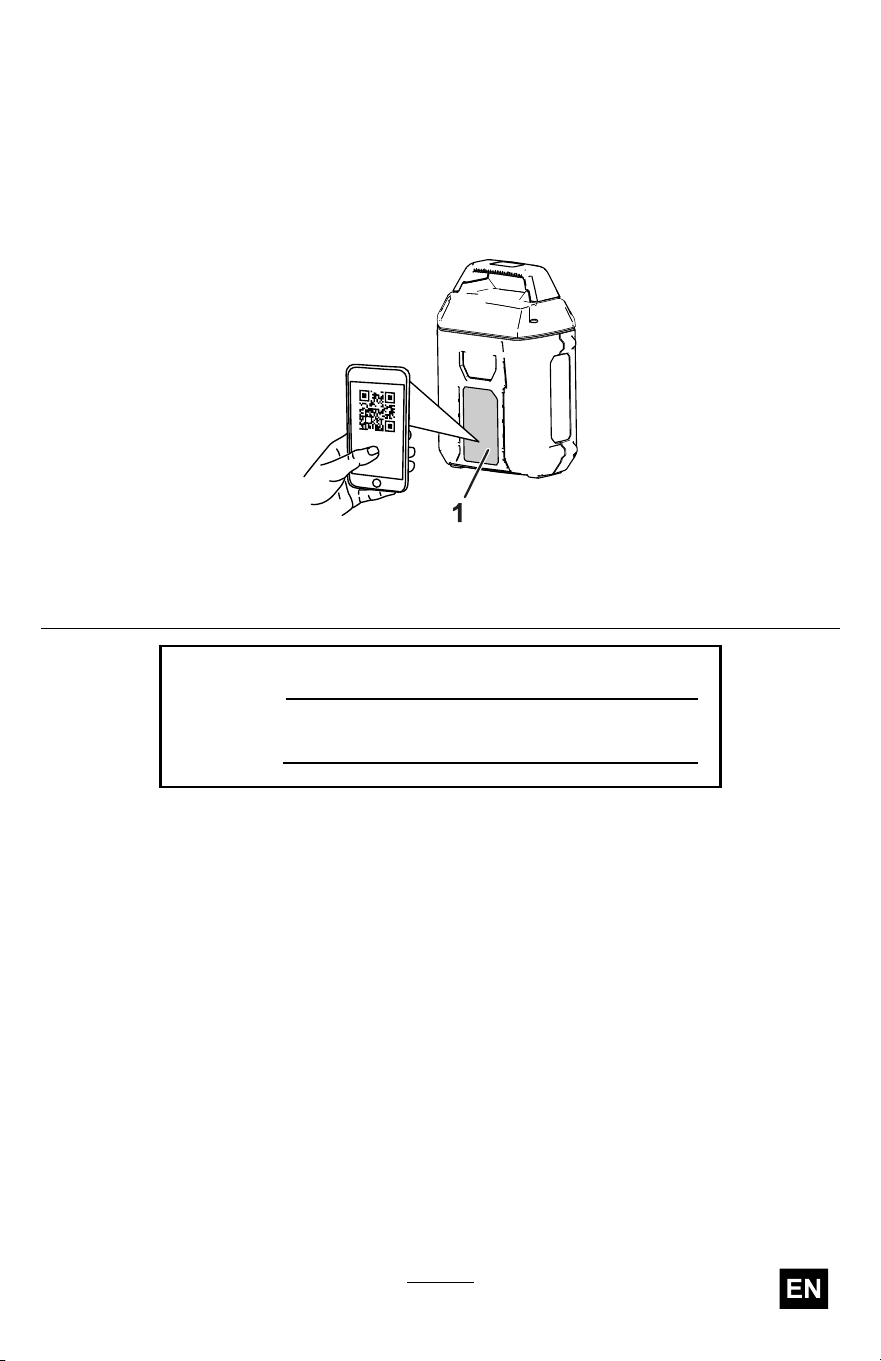
of your product ready . Figure 1 identies the location of the model and
serial numbers on the product. W rite the numbers in the space provided.
Important: W ith your mobile device, you can scan the QR code on
the serial number decal for more information.
g446125
Figure 1
1. Model and serial number location.
Model No.
Serial No.
3

Safety-Alert Symbol
The safety-alert symbol ( Figure 2 ) shown in this manual and on the
machine identies important safety messages that you must follow to
prevent accidents.
g000502
Figure 2
Safety-alert symbol
The safety-alert symbol appears above information that alerts you to
unsafe actions or situations and is followed by the word DANGER ,
W ARNING , or CAUTION .
DANGER indicates an imminently hazardous situation which, if not
avoided, will result in death or serious injury .
W ARNING indicates a potentially hazardous situation which, if not
avoided, could result in death or serious injury .
CAUTION indicates a potentially hazardous situation which, if not avoided,
may result in minor or moderate injury .
This manual uses two other words to highlight information. Important calls
attention to special mechanical information and Note emphasizes general
information worthy of special attention.
4
Battery Pack
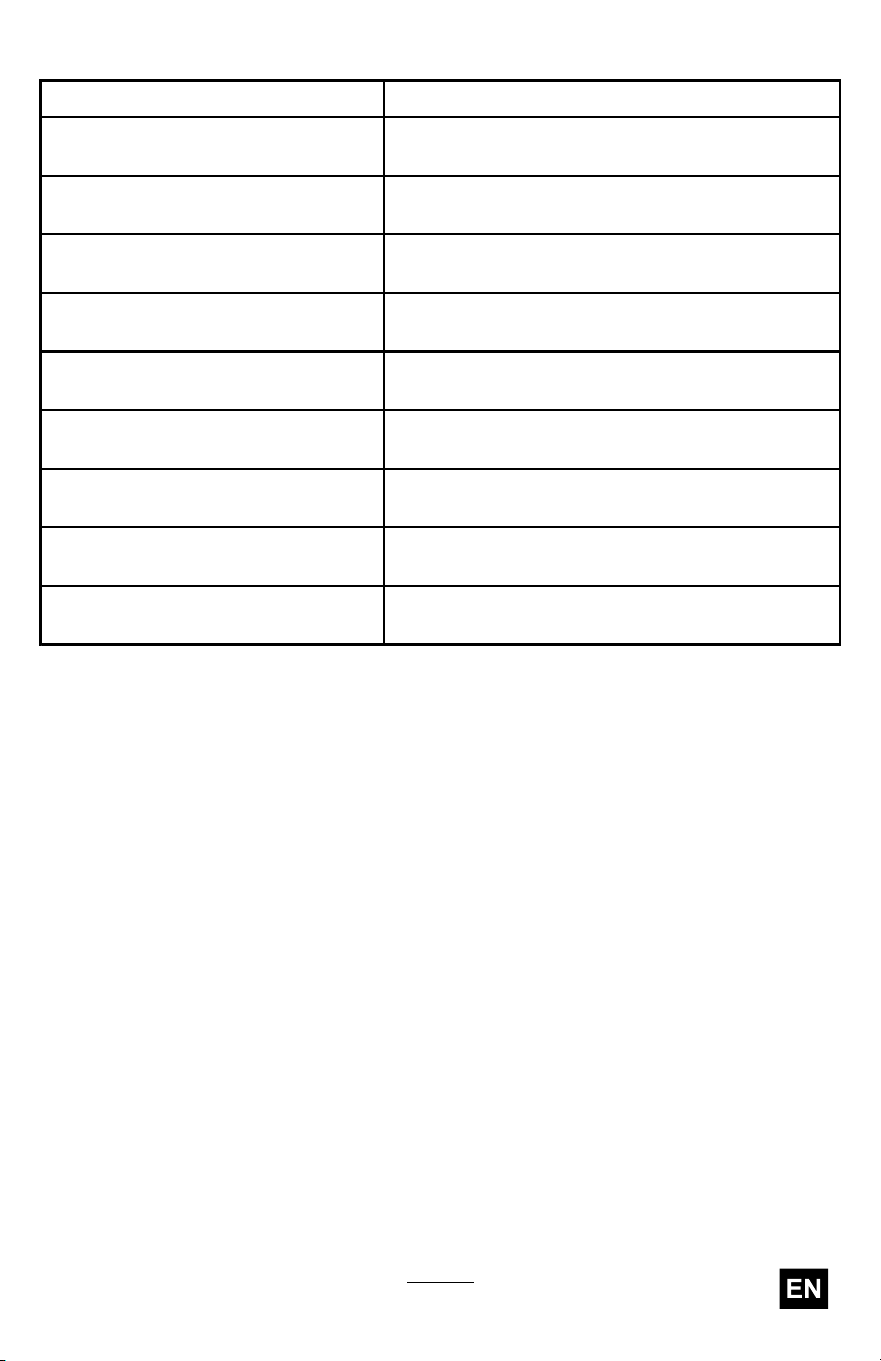
Model
Certied Combinations
66910
This battery is third-party certied for use with all
Flex-Force powered tools and chargers.
66912
This battery is third-party certied for use with all
Flex-Force powered tools and chargers.
88920
This battery is third-party certied for use with all
Flex-Force powered tools and chargers.
88925
This battery is third-party certied for use with all
Flex-Force powered tools and chargers.
88941
This battery is third-party certied for use with all
Flex-Force powered tools and chargers.
88950
This battery is third-party certied for use with all
Flex-Force powered tools and chargers.
88960
This battery is third-party certied for use with all
Flex-Force powered tools and chargers.
88975
This battery is third-party certied for use with all
Flex-Force powered tools and chargers.
88980
This battery is third-party certied for use with all
Flex-Force powered tools and chargers.
5

Safety
IMPORT ANT SAFETY
INSTRUCTIONS
1. SA VE THESE INSTRUCTIONS—This manual contains important
safety and operating instructions for Flex-Force 60V lithium-ion
battery packs and Flex-Force 60V lithium-ion battery chargers.
2. Before using the battery charger or battery pack, read all the
instructions and cautionary markings on the battery charger , battery
pack, and product using the battery pack.
3. CAUTION—T o reduce risk of injury , charge Flex-Force 60V
lithium-ion battery packs with Flex-Force 60V lithium-ion battery
chargers only . Other brands of battery packs may burst, causing
personal injury and damage.
4. W ARNING—North America: Plugging the battery charger into an
outlet that is not 120V can cause a re or electric shock. Do not plug
the battery charger into an outlet other than 120V . For a dif ferent
style of connection, use an attachment plug adapter of the proper
conguration for the power outlet if needed.
5. W ARNING—Other Regions: Plugging the battery charger into an
outlet that is not 100 to 240V can cause a re or electric shock. Do
not plug the battery charger into an outlet other than 100 to 240V .
For a dif ferent style of connection, use an attachment plug adapter of
the proper conguration for the power outlet if needed.
6. These devices comply with Part 15 of the FCC rules. Operation is
subject to the following 2 conditions: (1) These devices may not
cause harmful interference; and (2) these devices must accept
any interference received, including interference that may cause
undesired operation.
6

I. T raining
1. Do not allow children or untrained people to operate or service this
device. Allow only people who are responsible, trained, familiar with
the instructions, and physically capable to operate or service the
device.
2. Do not allow children to use or play with the battery pack or battery
charger; local regulations may restrict the age of the operator .
II. Preparation
1. Use appliances only with specically designated battery packs.
Using other types of battery packs may create a risk of injury and/or
re.
2. Do not use a damaged or modied battery pack or battery charger .
It may exhibit unpredictable behavior , resulting in re, explosion,
or risk of injury .
3. If the supply cord to the battery charger is damaged, contact an
Authorized Service Dealer or distributor to replace it.
III. Operation
1. Charge the battery pack with only the battery charger specied by
the tool manufacturer . A charger suitable for 1 type of battery pack
may create a risk of re when used with another battery pack.
2. Charge the battery pack in a well-ventilated area only .
3. Follow all charging instructions and do not charge the battery pack
outside of the temperature range specied in the instructions.
Otherwise, you may damage the battery pack and increase the risk
of re.
4. Under abusive conditions, the battery pack may eject liquid; avoid
contact. If you accidently come into contact with the liquid, ush with
water . If the liquid contacts your eyes, seek medical help. Liquid
ejected from the battery pack may cause irritation or burns.
5. Do not expose a battery pack or tool to re or excessive temperature.
Exposure to re or temperature above 130°C (265°F) may cause
explosion.
6. CAUTION—A mistreated battery pack may present a risk of re,
explosion, or chemical burn.
• Do not disassemble the battery pack.
7

• Replace the battery pack with a genuine Flex-Force battery pack
only; using another type of battery pack may cause a re or risk
of injury .
• Keep battery packs out of the reach of children and in the original
packaging until you are ready to use them.
IV . Maintenance and Storage
1. Do not allow children to clean or maintain the battery charger .
2. When the battery pack is not in use, keep it away from metal objects
such as paper clips, coins, keys, nails, and screws that can make a
connection from 1 terminal to another . Shorting the battery terminals
may cause burns or a re.
3. Do not attempt to repair the battery pack or battery charger . Have
an Authorized Service Dealer or distributor perform service on the
battery pack or battery charger using identical replacement parts to
ensure that the product is safely maintained.
4. Check with local codes for possible special battery disposal
instructions.
SA VE THESE
INSTRUCTIONS
8
Decal Symbols
Safety decals and instructions are easily visible to the operator .
Replace any decal that is damaged or missing.
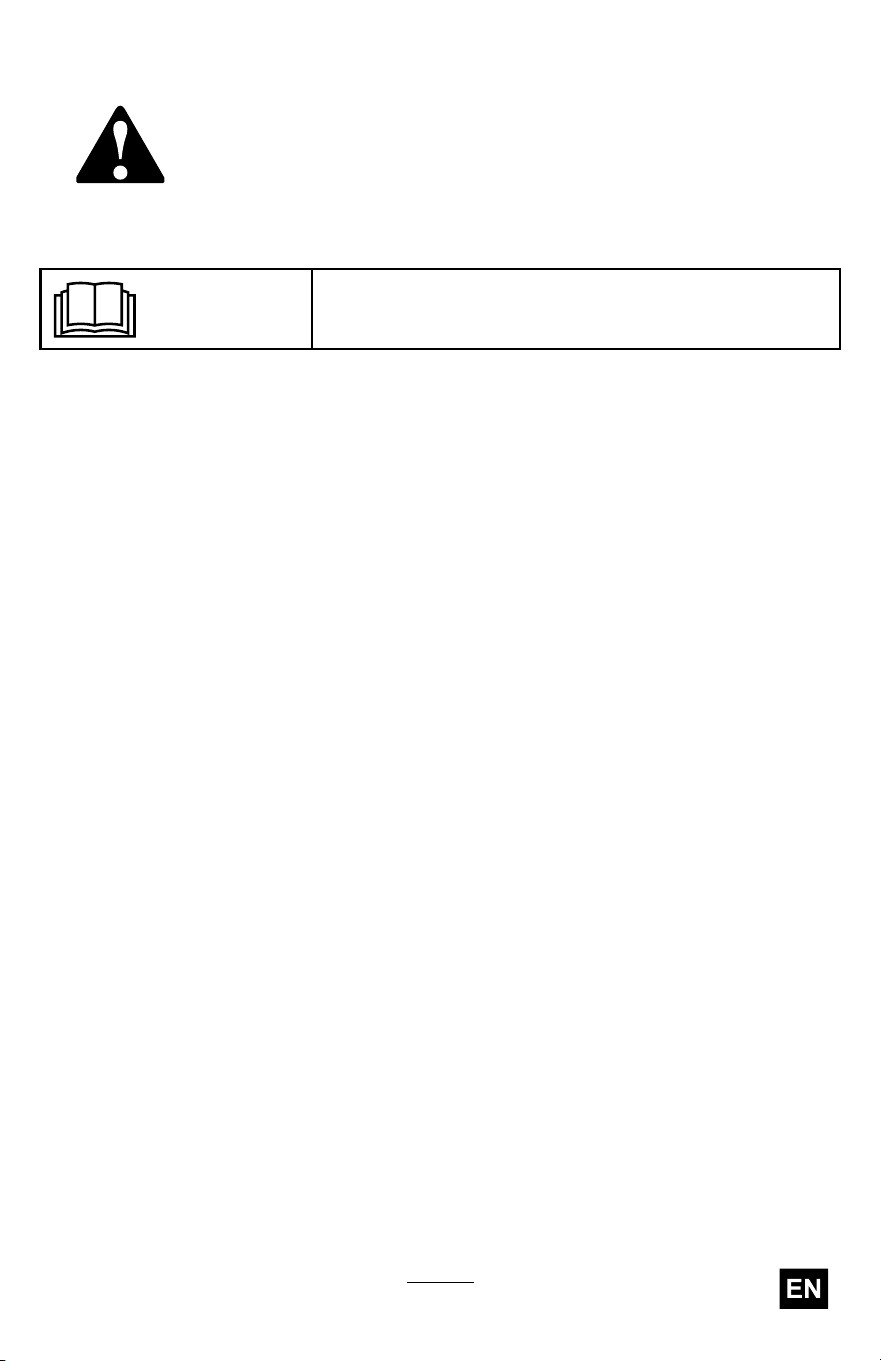
The following tables describe the safety symbols that appear on the
decals.
Battery Pack Safety Symbols
Read the Operator ’ s Manual .
9
Product Overview
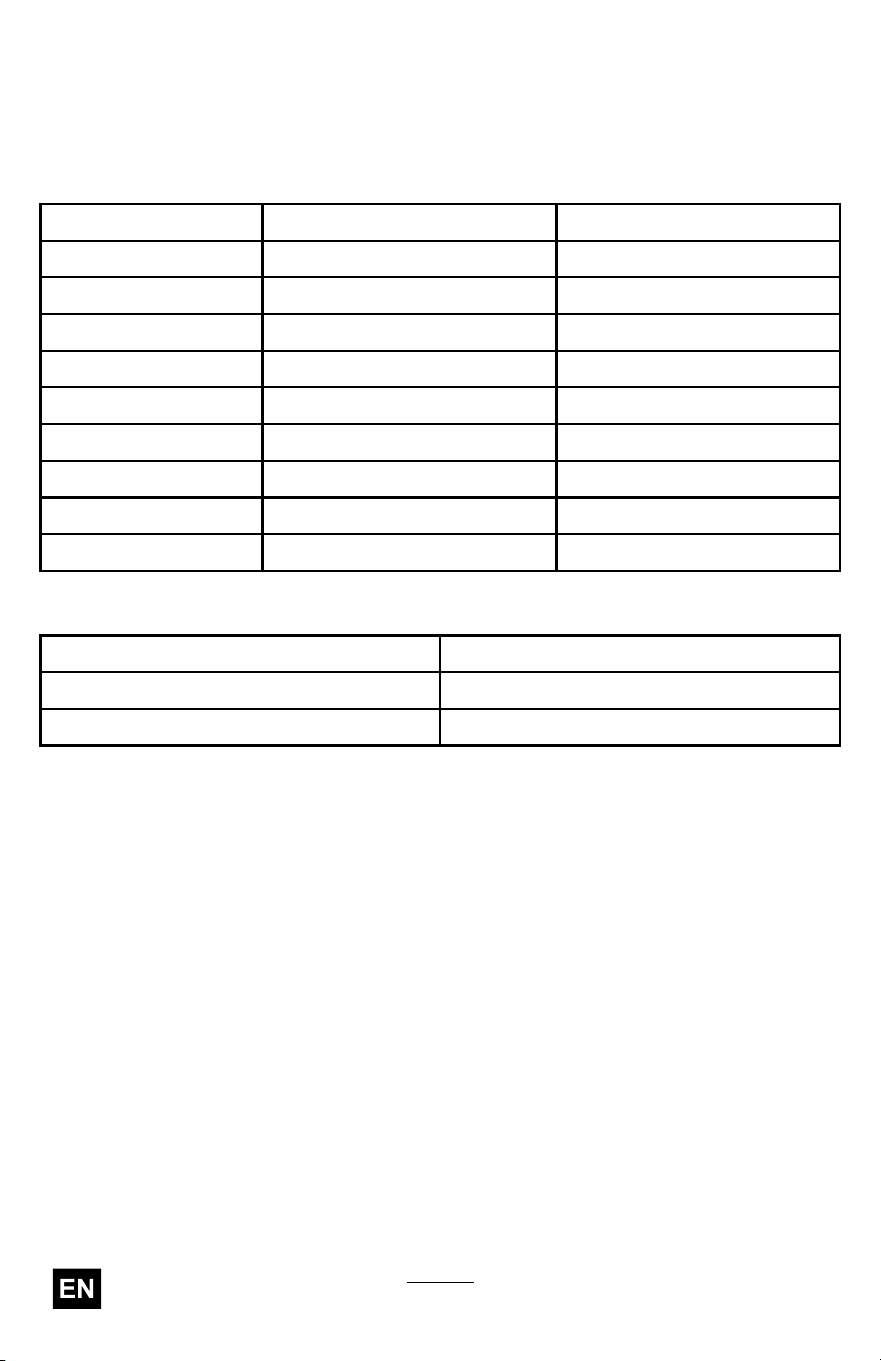
Specications
Battery Pack
Model Battery pack capacity Battery pack weight
88920
2.0 Ah (108 Wh) 1.4 kg (3.06 lb)
88925
2.5 Ah (135 Wh) 1.4 kg (3.10 lb)
88941
4.0 Ah (216 Wh) 2.2 kg (4.76 lb)
88950
5.0 Ah (270 Wh) 2.2 kg (4.93 lb)
88960
6.0 Ah (324 Wh) 2.8 kg (6.28 lb)
88975
7.5 Ah (405 Wh) 2.9 kg (6.45 lb)
88980
8.0 Ah (432 Wh) 3.6 kg (8.00 lb)
66910
10.0 Ah (540 Wh) 3.6 kg (7.98 lb)
66912
12.0 Ah (648 Wh) 4.0 kg (8.73 lb)
Appropriate T emperature Ranges
Charge battery pack at 5°C (41°F) to 40°C (104°F)*
Use battery pack at
-30°C (-22°F) to 49°C (120°F)
Store battery pack/charger at 5°C (41°F) to 40°C (104°F)*
*Charging time will increase if you do not charge the battery within this
range.
Store the tool, battery pack, and battery charger in an enclosed clean,
dry area.
10
Operation
Battery Charge Status
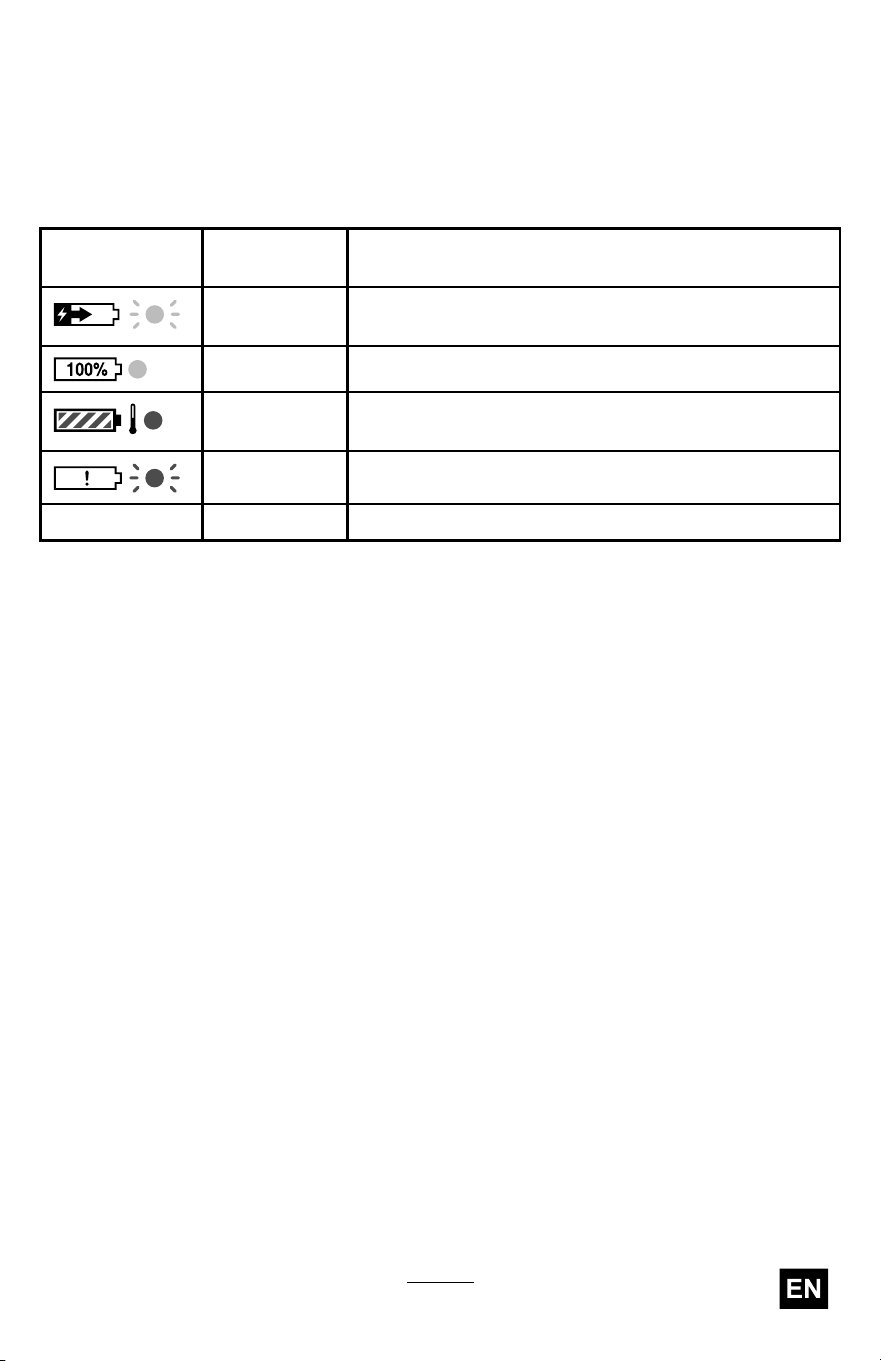
Refer to the following table to interpret the LED indicator light on the
battery charger .
Charger
Symbol
Indicator
Light
Indicates
Green
blinking
Battery pack is charging
Green
Battery pack is charged
Red
Battery pack and/or battery charger is over or under
the appropriate temperature range
Red blinking
Battery pack charging fault*
Of f
No battery pack inserted
Maintenance
Maintenance and servicing are not required under normal conditions.
When you clean the surface of the equipment, wipe it only with a dry cloth.
Do not disassemble the equipment; if it is damaged, contact your
Authorized Service Dealer or distributor .
1 1

Storage
Important: Store the tool, battery pack, and charger only in
temperatures that are within the appropriate range; refer to
Specications ( page 10 ) .
Important: If you are storing the tool for a year or longer , remove the
battery pack from the tool and charge the battery pack until 1 or 2
LED indicators turn green on the battery . Do not store a fully charged
or fully depleted battery . When you are ready to use the tool again,
charge the battery pack until the left indicator light turns green on
the charger or all 4 LED indicators turn green on the battery .
• Disconnect the product from the power supply (i.e., remove all battery
packs) and check for damage after use.
• Clean all foreign material from the product.
• Do not store a machine or charger with a battery pack installed.
• When not in use, store the tool, battery pack, and battery charger out
of the reach of children.
• Keep the tool, battery pack, and battery charger away from corrosive
agents, such as garden chemicals and de-icing salts.
• T o reduce the risk of serious personal injury , do not store the battery
pack outside or in vehicles.
• Store the tool, battery pack, and battery charger in an enclosed clean,
dry area.
12
Preparing the Battery Pack for Recycling
Important: Upon removal, cover the terminals of the battery
pack with heavy-duty adhesive tape. Do not attempt to destroy or
disassemble the battery pack or remove any of its components.
Contact your local municipality or your authorized Authorized
Service Dealer or distributor for more information on how to responsibly
recycle the battery .
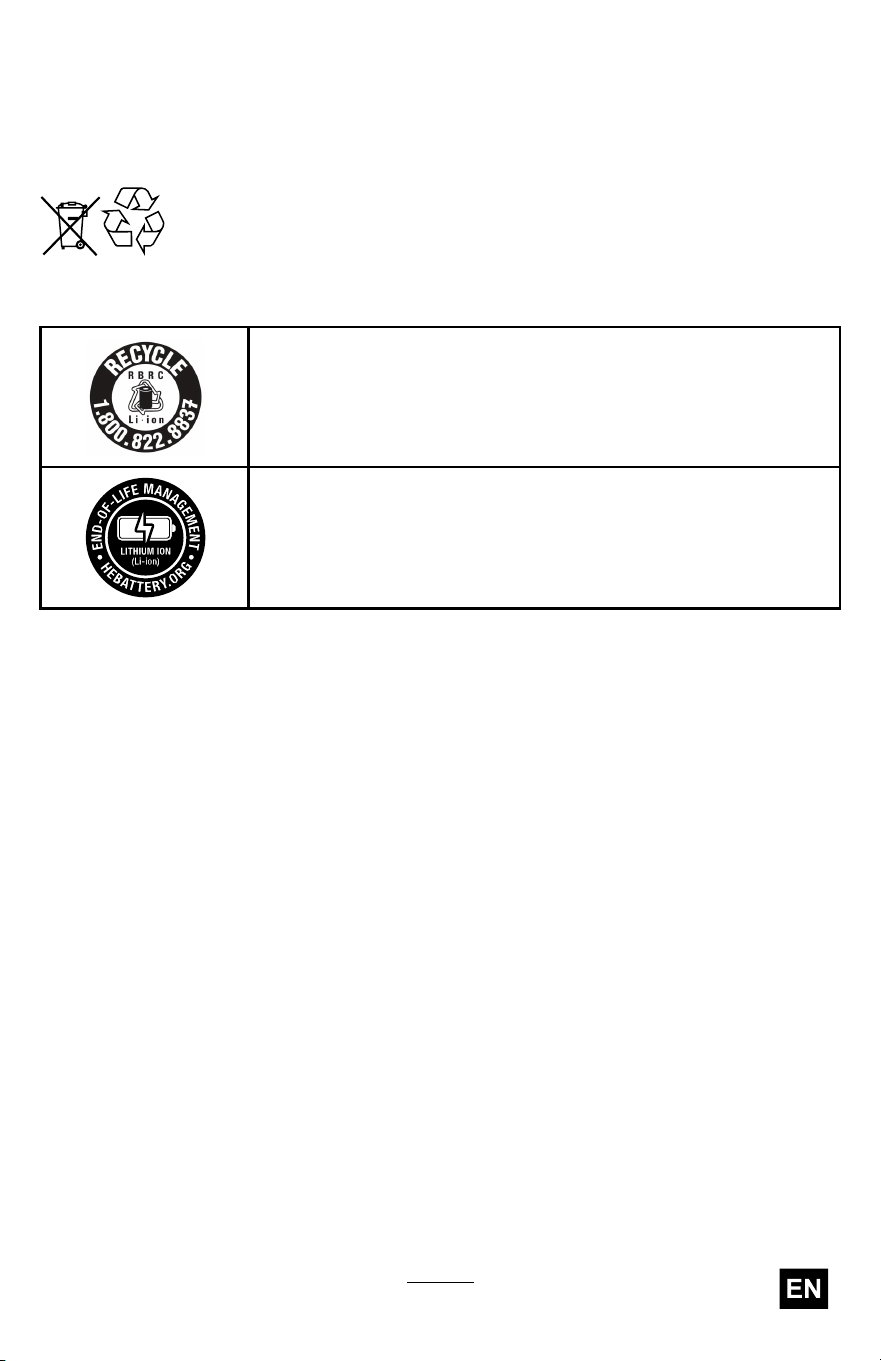
Lithium-ion battery packs labeled with the Call2Recycle seal
can be recycled at any participating retailer or battery recycling
facility in the Call2Recycle program (US and Canada only). T o
locate a participating retailer or facility closest to you, please call
1-800-822-8837 or visit www .call2recycle.org.
Lithium-ion battery packs labeled with the High Energy Battery
(HEB) seal shown here, and any 60V Flex-Force batteries 6.0 Ah
or greater , can be recycled at any participating dealer or retailer
in the Call2Recycle HEB program. T o locate a participating
dealer or retailer closest to you, please visit www .hebattery .org.
If you cannot locate a participating retailer or facility nearby , or have
questions about which recycling program your battery pack may qualify
for , please visit the customer support site listed in the operator ’ s manual
for your tool/equipment for more information on how to responsibly recycle
the battery pack.
If you are located outside of the US and Canada, please contact your
Authorized Service Dealer or distributor for more information on how to
responsibly recycle the battery pack.
13
T roubleshooting
Perform only the steps described in these instructions. All further
inspection, maintenance, and repair work must be performed by an
Authorized Service Dealer or a similarly qualied specialist if you cannot
solve the problem yourself.
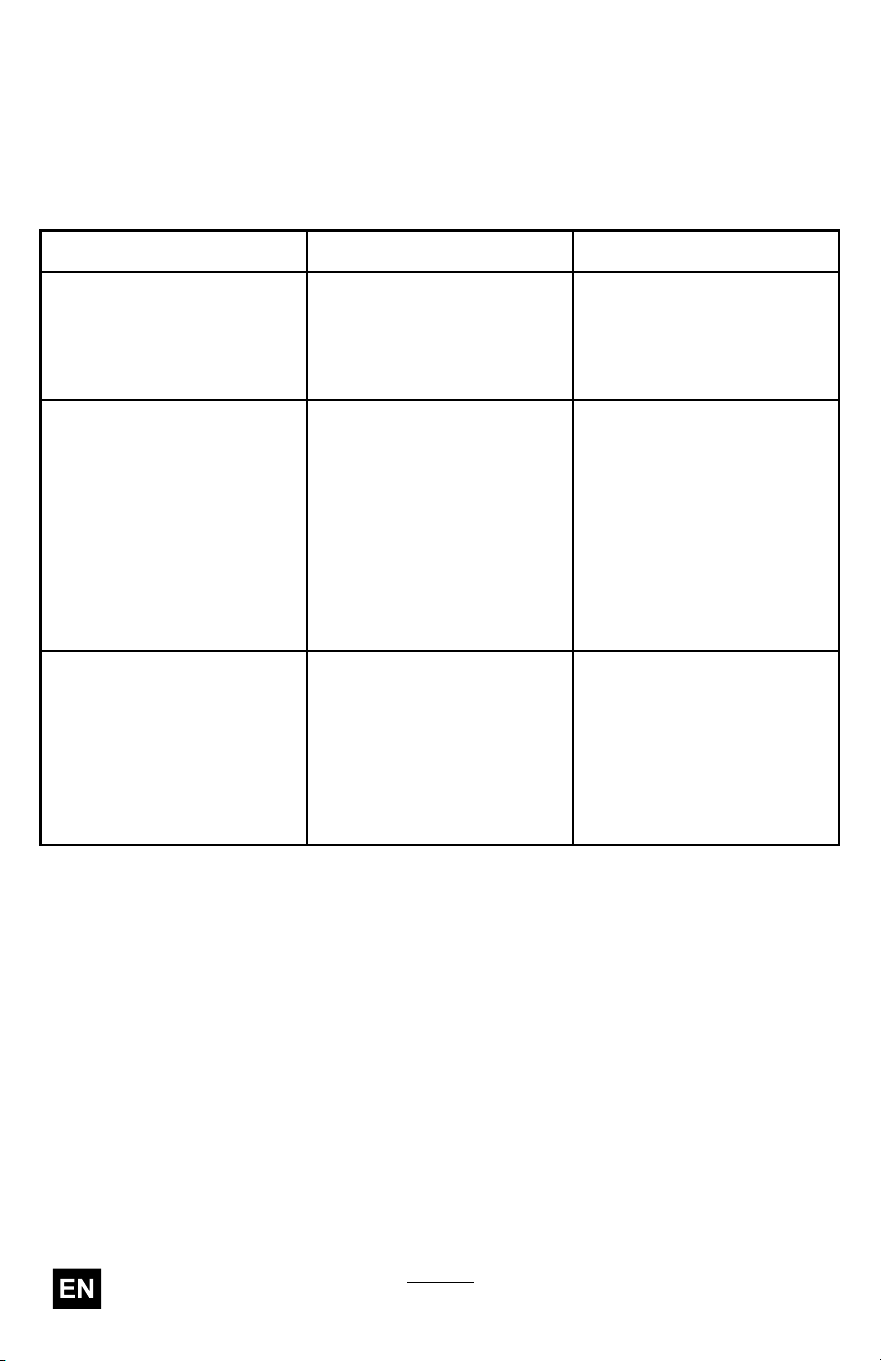
Problem
Possible Cause Corrective Action
The battery pack loses
charge quickly .
1. The battery pack is over
or under the appropriate
temperature range.
1. Move the battery pack
to a place where it is
dry and the temperature
is between 5°C (41°F)
and 40°C (104°F).
1. The battery charger
is over or under
the appropriate
temperature range.
1. Unplug the battery
charger and move it to
a place where it is dry
and the temperature
is between 5°C (41°F)
and 40°C (104°F).
The battery charger is not
working.
2. The outlet that the
battery charger is
plugged into does not
have power .
2. Contact your licensed
electrician to repair the
outlet.
The LED indicator light on
the battery charger is red.
1. The battery charger
and/or battery pack
is over or under
the appropriate
temperature range.
1. Unplug the battery
charger and move the
battery charger and
battery pack to a place
where it is dry and the
temperature is between
5°C (41°F) and 40°C
(104°F).
14
Problem
Possible Cause Corrective Action
1. There is an error in
the communication
between the battery
pack and the charger .
1. Remove the battery
pack from the battery
charger , unplug the
battery charger from
the outlet, and wait
10 seconds. Plug the
battery charger into the
outlet again and place
the battery pack on the
battery charger . If the
LED indicator light on
the battery charger is
still blinking red, repeat
this procedure again.
If the LED indicator
light on the battery
charger is still blinking
red after 2 attempts,
properly dispose of the
battery pack at a battery
recycling facility .
The LED indicator light
on the battery charger is
blinking red.
2. The battery pack is
weak.
2. Contact your
Authorized Service
Dealer or distributor
if the battery is in
warranty , or properly
dispose of the battery
pack at a battery
recycling facility .
1. There is moisture on
the leads of the battery
pack.
1. Allow the battery pack
to dry or wipe it dry .
The tool does not run or
does not run continuously .
2. The battery is not fully
installed into the tool.
2. Remove and then
replace the battery into
the tool making sure
that it is fully installed
and latched.
15

California Proposition 65 W arning Information
What is this warning?
Y ou may see a product for sale that has a warning label like the following:
W ARNING: Cancer and Reproductive
Harm—www .p65W arnings.ca.gov .
What is Prop 65?
Prop 65 applies to any company operating in California, selling products in California, or manufacturing products
that may be sold in or brought into California. It mandates that the Governor of California maintain and publish a
list of chemicals known to cause cancer , birth defects, and/or other reproductive harm. The list, which is updated
annually , includes hundreds of chemicals found in many everyday items. The purpose of Prop 65 is to inform the
public about exposure to these chemicals.
Prop 65 does not ban the sale of products containing these chemicals but instead requires warnings on any product,
product packaging, or literature with the product. Moreover , a Prop 65 warning does not mean that a product is in
violation of any product safety standards or requirements. In fact, the California government has claried that
a Prop 65 warning “is not the same as a regulatory decision that a product is ‘safe’ or ‘unsafe.’” Many of these
chemicals have been used in everyday products for years without documented harm. For more information, go
to https://oag.ca.gov/prop65/faqs-view-all .
A Prop 65 warning means that a company has either (1) evaluated the exposure and has concluded that it exceeds
the “no signicant risk level”; or (2) has chosen to provide a warning based on its understanding about the presence
of a listed chemical without attempting to evaluate the exposure.
Does this law apply everywhere?
Prop 65 warnings are required under California law only . These warnings are seen throughout California in a wide
range of settings, including but not limited to restaurants, grocery stores, hotels, schools, and hospitals, and on a
wide variety of products. Additionally , some online and mail order retailers provide Prop 65 warnings on their
websites or in catalogs.
How do the California warnings compare to federal limits?
Prop 65 standards are often more stringent than federal and international standards. There are various substances
that require a Prop 65 warning at levels that are far lower than federal action limits. For example, the Prop 65
standard for warnings for lead is 0.5 μg/day , which is well below the federal and international standards.
Why don’t all similar products carry the warning?
• Products sold in California require Prop 65 labelling while similar products sold elsewhere do not.
• A company involved in a Prop 65 lawsuit reaching a settlement may be required to use Prop 65 warnings for its
products, but other companies making similar products may have no such requirement.
• The enforcement of Prop 65 is inconsistent.
• Companies may elect not to provide warnings because they conclude that they are not required to do so
under Prop 65; a lack of warnings for a product does not mean that the product is free of listed chemicals
at similar levels.
Why do we include this warning?
Our company has chosen to provide consumers with as much information as possible so that they can make informed
decisions about the products they buy and use. W e provide warnings in certain cases based on its knowledge of the
presence of one or more listed chemicals without evaluating the level of exposure, as not all the listed chemicals
provide exposure limit requirements. While the exposure from our products may be negligible or well within the “no
signicant risk” range, out of an abundance of caution, we have elected to provide the Prop 65 warnings. Moreover ,
if we do not provide these warnings, it could be sued by the State of California or by private parties seeking to
enforce Prop 65 and subject to substantial penalties.
Rev A