Owner Manual
IMPORTANT NOTE:
Read this manual carefully before installing
or operating your new air conditioning unit.
Make sure to save this manual for future
reference.
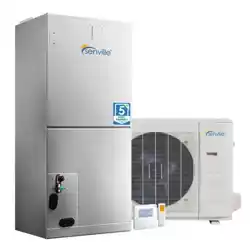
AIR CONDITIONER
AIR-HANDLER

CONTENTS
SAFETY PRECAUTIONS
02
CARE AND MAINTENANCE
12
TROUBLESHOOTING
14
16
INDOOR UNIT PARTS AND MAJOR FUNCTIONS
01
Inside you’ll find many helpful hints on how to use and maintain your air conditioner properly. Just a
little preventive care on your part can save you a great deal of time and money over the life of your air
conditioner. These instructions may not cover every possible condition of use, so common sense and
attention to safety is required when installing, operating and maintaining this product.
Read this manual
02
Safety Precautions
WARNING
CAUTION
Explanation of Symbols
WARNING
This appliance is not intended for use by persons(including children) with reduced
physical, sensory or mental capabilities, or lack of experience and knowledge, unless
they have been given supervision or instruction concerning use of the appliance by
a person responsible for their safety. Children should be supervised to ensure that
they do not play with the appliance.
This symbol indicates the possibility of personnel injury or loss of
life.
This symbol indicates the possibility of property damage or serious
consequences.
If an abnormal situation arises (like a burning smell), immediately turn o the
unit and disconnect the power. Call your dealer for instructions to avoid electric
shock, fire or injury.
Do not insert fingers, rods or other objects into the air inlet or outlet. This may
cause injury, since the fan may be rotating at high speeds.
Do not use flammable sprays such as hair spray, lacquer or paint near the unit.
This may cause fire or combustion.
Do not operate the air conditioner in places near or around combustible gases.
Emitted gas may collect around the unit and cause explosion.
Do not operate your air conditioner in a wet room such as a bathroom or laundry
room. Too much exposure to water can cause electrical components to short
circuit.
Do not expose your body directly to cool air for a prolonged period of time.
If the air conditioner is used together with burners or other heating devices,
thoroughly ventilate the room to avoid oxygen deficiency.
In certain functional environments, such as kitchens, server rooms, etc., the use
of specially designed air-conditioning units is highly recommended.
Do not allow children to play with the air conditioner. Children must be
supervised around the unit at all times.
●
●
●
●
●
●
●
●
●
●
WARNING FOR PRODUCT USE
Turn o the air condtioner and disconnect the power before performing any
cleaning, installation or repairing. Failure to do so can cause electric shock.
It is really important that you read Safety Precautions Before Operation and
Installation. Incorrect installation due to ignoring instructions can cause serious
damage or injury. The seriousness of potential damage or injuries is classified as
either a WARNING or CAUTION.
03
ELECTRICAL WARNINGS
Only use the specified wire. If the wire is damaged, it must be replaced by the
manufacturer, its service agent or similarly qualified persons in order to avoid a
hazard.
The product must be properly grounded at the time of installation, or electric
shock may occur.
For all electrical work, follow all local and national wiring standards, regulations,
and the Installation Manual. Connect cables tightly, and clamp them securely to
prevent external forces from damaging the terminal. Improper electrical
connections can overheat and cause fire, and may also cause shock. All electrical
connections must be made according to the Electrical Connection Diagram
located on the panels of the indoor and outdoor units.
All wiring must be properly arranged to ensure that the control board cover can
close properly. If the control board cover is not closed properly, it can lead to
corrosion and cause the connection points on the terminal to heat up, catch fire,
or cause electric shock.
Disconnection must be incorporated in the fixed wiring in accordance with the
wiring rules.
Do not share the electrical outlet with other appliances. Improper or insucient
power supply can cause fire or electric shock.
If connecting power to fixed wiring, an all-pole disconnection device which has
at least 3mm clearances in all poles, and have a leakage current that may exceed
10mA, the residual current device (RCD) having a rated residual operating current
not exceeding 30mA, and disconnection must be incorporated in the fixed wiring
in accordance with the wiring rules.
●
●
●
●
●
●
●
Do not clean the air conditioner with combustible cleaning agents. Combustible
cleaning agents can cause fire or deformation.
Turn o the device and disconnect the power before cleaning. Failure to do so
can cause electric shock.
Do not clean the air conditioner with excessive amounts of water.
●
●
●
CLEANING AND MAINTENANCE WARNINGS
Turn o the air conditioner and disconnect the power if you are not going to use
it for a long time.
Turn o and unplug the unit during storms.
Make sure that water condensation can drain unhindered from the unit.
Do not operate the air conditioner with wet hands. This may cause electric shock.
Do not use device for any other purpose than its intended use.
Do not climb onto or place objects on top of the outdoor unit.
Do not allow the air conditioner to operate for long periods of time with doors or
windows open, or if the humidity is very high.
●
●
●
●
●
●
●
CAUTION
●
●
WARNING FOR USING FLAMMABLE REFRIGERANTS
Do not use means to accelerate the defrosting process or to clean, other than
those recommended by the manufacturer.
The appliance shall be stored in a room without continuously operating ignition
sources (for example: open flames, an operating gas appliance or an operating
electric heater).
04
For R454B refrigerant charge amount and minimum room area:
The machine you purchased may be one of the types in the table below. The indoor
and outdoor units are designed to be used together. Please check the machine you
purchased.The minimum room area of operating or storage should be as specified
in the following table:
●
●
●
Do not pierce or burn.
Be aware that refrigerants may not contain an odor.
LEAK DETECTION SYSTEM installed. Unit must be powered except for service.
For the unit with refrigerant sensor, when the refrigerant sensor detects
refrigerant leakage, the indoor unit will display a error code and emit a buzzing
sound, the compressor of outdoor unit will immediately stop, and the indoor fan
will start running. The service life of the refrigerant sensor is 15 years. When the
refrigerant sensor malfunctions, the indoor unit will display the error code “FHCC”.
The refrigerant sensor can not be repaired and can only be replaced by the
manufacture. It shall only be replaced with the sensor specified by the manufacture.
Indoor unit Outdoor unit
SENDC-18HF-OG
SENDC-48HF-OG
SENDC-30HF-OG
SENDC-36HF-IG
SENDC-48HF-IG
SENDC-24HF-IG
18K
24K
Hyper Heat
Central System
36K
30K
48K
SENDC-60HF-IG
60K
Model
SENDC-18HF-IG
SENDC-30HF-IG
Products
series
SENDC-24HF-OG
SENDC-60HF-OG
SENDC-36HF-OG
05
TA
min
[ft²/m²]
M
c or
M
REL
[oz/kg]
TA
min
[ft²/m²]
M
c or
M
REL
[oz/kg]
TA
min
[ft²/m²]
M
c or
M
REL
[oz/kg]
TA
min
[ft²/m²]
M
c or
M
REL
[oz/kg]
<=62.7/1.776
12/1.1
60/5.53
66/6.14
73/6.76
79/7.37
86/7.99
93/8.6
105.8/3 99/9.21
112.9/3.2 106/9.83
112/10.44
119/11.06
126/11.67
132/12.29
139/12.9
145/13.51
152/14.13
159/14.74
165/15.36
172/15.97
192/17.81
198/18.43
205/19.04
212/19.66
218/20.27
225/20.88
251/23.34
258/23.96
264/24.57
271/25.18
119.9/3.4
127/3.6
134/3.8
141.1/4
148.1/4.2
155.2/4.4
162.2/4.6
169.3/4.8
176.4/5
179/16.58
185/17.2
183.4/5.2
190.5/5.4
197.5/5.6
204.6/5.8
211.6/6.0
218.7/6.2
225.8/6.4
232.8/6.6
239.9/6.8
231/21.5
238/22.11
245/22.73
246.9/7.0
254/7.2
261/7.4
268.1/7.6
275.1/7.8
282.2/8.0
324/30.10
331/30.71
304/28.26
311/28.87
317/29.48
324.5/9.2
331.6/9.4
338.6/9.6
345.7/9.8
352.7/10.0
289.2/8.2
278/25.8296.3/8.4
284/26.41303.4/8.6
291/27.63310.4/8.8
298/27.64317.5/9.0
Area
formula
M
c
is the actual refrigerant charge in the system in oz/kg
M
REL is the refrigerant releaseable charge in oz/kg
h
inst
is the height of the bottom of the appliance relative to the floor of
the room after installation.
WARNING: The minimum room area or minimum room area of
conditioned space is based on releasable charge and total
system refrigerant charge.
TA
min
is the required minimum room area in ft /m
2 2
63.5/1.8
70.5/2
77.6/2.2
84.6/2.4
91.7/2.6
98.8/2.8
06
1. Installation(where refrigerant pipes are allowed)
- Any person who is involved with working on or breaking into a refrigerant
circuit should hold a current valid certificate from an industry-accredited
assessment authority, which authorises their competence to handle refrigerants
safely in accordance with an industry recognised assessment specification.
- Maintenance and repair requiring the assistance of other skilled personnel shall
be carried out under the supervision of the person competent in the use of
flammable refrigerants.
- That the installation of pipe-work shall be kept to a minimum.
- That pipe-work shall be protected from physical damage.
- Where refrigerant pipes shall be compliance with national gas regulations.
- That mechanical connections shall be accessible for maintenance purposes.
- Be more careful that foreign matter(oil, water,etc) does not enter the piping.
Also, when storing the piping, securely seal the opening by pinching, taping, etc.
- Appliance shall be stored in a well ventilated area where the room size
corresponds to the room area as specifiec for operation.
- Appliance shall be stored in a well ventilated area where the room size
corresponds to the room area as specifiec for operation.
- Joints shall be tested with detection equipment with a capability of 5 g/year of
refrigerant or better, with the equipment in standstill and under operation or
under a pressure of at least these standstill or operation conditions after
installation. Detachable joints shall NOT be used in the indoor side of the unit
(brazed, welded joint could be used).
- In cases that require mechanical ventilation, ventilation openings shall be kept
clear of obstruction.
2. When a FLAMMABLE REFRIGERANT is used, the requirements for installation
space of appliance and /or ventilation requirements are determined according to
- the mass charge amount(M) used in the appliance,
- the installation location,
- the type of ventilation of the location or of the appliance.
- piping material, pipe routing, and installation shall include protection from
physical damage in operation and service, and be in compliance with national
and local codes and standards, such as ASHRAE 15, IAPMO Uniform Mechanical
Code, ICC International Mechanical Code, or CSA B52. All field joints shall be
accessible for inspection prior to being covered or enclosed.
- that protection devices, piping, and fittings shall be protected as far as
possible against adverse environmental eects, for example, the danger of water
collecting and freezing in relief pipes or the accumulation of dirt and debris;
- that piping in refrigeration systems shall be so designed and installed to
minimize the likelihood of hydraulic shock damaging the system;
- that steel pipes and components shall be protected against corrosion with a
rustproof coating before applying any insulation;
- that precautions shall be taken to avoid excessive vibration or pulsation;
- the minimum floor area of the room shall be mentioned in the form of a table
or a single figure without reference to a formula;
- after completion of field piping for split systems, the field pipework shall be
pressure tested with an inert gas and then vacuum tested prior to refrigerant
charging, according to the following requirements:
a. The minimum test pressure for the low side of the system shall be the low side
design pressure and the minimum test pressure for the high side of the system
shall be the high side design pressure, unless the high side of the system can
not be isolated from the low side of the system in which case the entire system
shall be pressure tested to the low side design pressure.
b. The test pressure after removal of pressure source shall be maintained for at
least 1 h with no decrease of pressure indicated by the test gauge, with test
gauge resolution not exceeding 5% of the test pressure.
07
c. During the evacuation test, after achieving a vacuum level specified in the
manual or less, the refrigeration system shall be isolated from the vacuum pump
and the pressure shall not rise above 1500 microns within 10 min. The vacuum
pressure level shall be specified in the manual, and shall be the lessor of 500
microns or the value required for compliance with national and local codes and
standards, which may vary between residential, commercial,and industrial
buildings.
-- field-made refrigerant joints indoors shall be tightness tested according to the
following requirements: The test method shall have a sensitivity of 5 grams per
year of refrigerant or better under a pressure of at least 0,25 times the
maximum allowable pressure. No leak shall be detected.
-- Any servicing shall be performed only as recommended by the manufacturer.
3 . Qualification of workers
Any maintenance, service and repair operations must be required qualification
of the working personnel. Every working procedure that aects safety means
shall only be carried out by competent persons that joined the training and
achieved competence should be documented by a certificate. The training of
these procedures is carried out by national training organizations or
manufacturers that are accredited to teach the relevant national competency
standards that may be set in legislation. All training shall follow the ANNEX HH
requirements of UL 60335-2-40 4th Edition.
Examples for such working procedures are:
• breaking into the refrigerating circuit;
• opening of sealed components;
• opening of ventilated enclosures.
Information Servicing
1. Checks to the area
3. General work area
4. Checking for presence of refrigerant
5. Presence of fire extinguisher
If any hot work is to be conducted on the refrigeration equipment or any associated
parts, appropriate fire extinguishing equipment shall be available to hand. Have a
dry power or CO2 fire extinguisher adjacent to the charging area.
2. Work procedure
All maintenance sta and others working in the local area shall be instructed on the
nature of work being carried out. work in confined sapces shall be avoided.
Prior to beginning work on systems containing flammable refrigerants, safety checks
are necessary to ensure that the risk of ignition is minimised. For repair to the
refrigerating system, the following precautions shall be complied with prior to
conducting work on the system.
Works shall be undertaken under a controlled procedure so as to minimise the risk
of a flammable gas or vapour being present while the work is being performed.
The area shall be checked with an appropriate refrigerant detector prior to and
during work, to ensure the technician is aware of potentially flammable atmospheres.
Ensure that the leak detection equipment being used is suitable for use with
flammable refrigerants, i.e. no sparking, adequately sealed or intrinsically safe.
08
6. No ignition sources
No person carrying out work in relation to a REFRIGERATING SYSTEM which
involves exposing any pipe work shall use any sources of ignition in such a manner
that it may lead to the risk of fire or explosion. All possible ignition sources, including
cigarette smoking, should be kept suciently far away from the site of installation,
repairing, removing and disposal, during which refrigerant can possibly be released
to the surrounding space. Prior to work taking place, the area around the equipment
is to be surveyed to make sure that there are no flammable hazards or ignition risks.
“No Smoking” signs shall be displayed.
7. Ventilated area
Ensure that the area is in the open or that it it adequately ventilated before breaking
into the system or conducting any hot work. A degree of ventilation shall continue
during the period that the work is carried out. The ventilation should safely disperse
any released refrigerant and preferably expel it externally into the atmosphere.
8. Checks to the refrigeration equipment
Where electrical components are being changed, they shall be fit for the purpose
and to the correct specification. At all times the manufacturer’s maintenance and
service guidelines shall be followed. If in doubt consult the manufacturer’s technical
department for assistance. The following checks shall be applied to installations
using FLAMMABLE REFRIGERANTS:
9. Checks to electrical devices
Repair and maintenance to electrical components shall include initial safety checks
and component inspection procedures. If a fault exists that could compromise
safety, then no electrical supply shall be connected to the circuit until it is
satisfactorily dealt with. If the fault cannot be corrected immediately but it is
necessary to continue operation, and adequate temporary solution shall be used.
This shall be reported to the owner of the equipment so all parties are advised.
Initial safety checks shall include:
that capacitors are discharged: this shall be done in a safe manner to avoid
possibility of sparking;
that there no live electrical components and wiring are exposed while charging,
recovering or purging the system;
that there is continuity of earth bonding.
10. Sealed electrical components shall be replaced if it's damage
11. Intrinsically safe components must be replaced if it's damage
the actual refrigerant charge is in accordance with the room size within which
the refrigerant containing parts are installed;
the ventilation machinery and outlets are operating adequately and are not
obstructed;
if an indirect refrigerating circuit is being used, the secondary circuits shall be
checked for the presence of refrigerant;
marking to the equipment continues to be visible and legible, marking and signs
that are illegible shall be corrected;
refrigeration pipe or components are installed in a position where they are
unlikely to be exposed to any substance which may corrode refrigerant
containing components, unless the components are constructed of materials
which are inherently resistant to being corroded or are suitably protected against
being so corroded.
09
12. Cabling
Check that cabling will not be subject to wear, corrosion, excessive pressure,
vibration, sharp edges or any other adverse environmental eects. The check shall
also take into account the eects of aging or continual vibration from sources such
as compressors or fans.
13. Detection of flammable refrigerants
Under no circumstances shall potential sources of ignition be used in the searching
for or detection of refrigerant leaks. A halide torch(or any other detector using a
naked flame) shall not be used.
The following leak detection methods are deemed acceptable for refrigerant
systems. Electronic leak detectors may be used to detect refrigerant leaks but, in the
case of FLAMMABLE REFRIGERANTS, the sensitivity may not be adequate, or may
need re-calibration. (Detection equipment shall be calibrated in a refrigerant-free
area.) Ensure that the detector is not a potential source of ignition and is suitable for
the refrigerant used. Leak detection equipment shall be set at a percentage of the
LFL of the refrigerant and shall be calibrated to the refrigerant employed, and the
appropriate percentage of gas (25 % maximum) is confirmed.
Leak detection fluids are also suitable for use with most refrigerants but the use of
detergents containing chlorine shall be avoided as the chlorine may react with the
refrigerant and corrode the copper pipe-work.
NOTE Examples of leak detection fluids are
- bubble method,
- fluorescent method agents.
If a leak is suspected, all naked flames shall be removed/extinguished.
If a leakage of refrigerant is found which requires brazing, all of the refrigerant shall
be recovered from the system, or isolated (by means of shut o valves) in a part of
the system remote from the leak. See the following instructions of removal of
refrigerant.
14. Removal and evacuation
When breaking into the refrigerant circuit to make repairs - or for any other purpose
conventional procedures shall be used. However, for flammable refrigerants it is
important that best practice be followed, since flammability is a consideration.
The following procedure shall be adhered to:
safely remove refrigerant following local and national regulations;
evacuate;
purge the circuit with inert gas (optional for A2L);
evacuate (optional for A2L);
continuously flush or purge with inert gas when using flame to open circuit; and
open the circuit.
The refrigerant charge shall be recovered into the correct recovery cylinders if
venting is not allowed by local and national codes. For appliances containing
flammable refrigerants, the system shall be purged with oxygen-free nitrogen to
render the appliance safe for flammable refrigerants. This process might need to be
repeated several times. Compressed air or oxygen shall not be used for purging
refrigerant systems.
For appliances containing flammable refrigerants, refrigerants purging shall be
achieved by breaking the vacuum in the system with oxygen-free nitrogen and
continuing to fill until the working pressure is achieved, then venting to atmosphere,
and finally pulling down to a vacuum (optional for A2L). This process shall be
repeated until no refrigerant is within thesystem (optional for A2L). When the final
oxygen-free nitrogen charge is used, the system shall be vented down to
atmospheric pressure to enable work to take place.
The outlet for the vacuum pump shall not be close to any potential ignition sources,
and ventilation shall be available.
10
15. Charging procedures
In addition to conventional charging procedures, the following requirements shall
be followed:
Works shall be undertaken with appropriate tools only (In case of uncertainty,
please consult the manufacturer of the tools for use with flammable refrigerants)
Ensure that contamination of dierent refrigerants does not occur when using
charging equipment. Hoses or lines shall be as short as possible to minimize the
amount of refrigerant contained in them.
Cylinders shall be kept upright.
Ensure that the refrigeration system is earthed prior to charging the system with
refrigerant.
Label the system when charging is complete(if not already).
Extreme care shall be taken not to overfill the refrigeration system.
Prior to recharging the system it shall be pressure tested with oxygen free
nitrogen(OFN). The system shall be leak tested on completion of charging but
prior to commissioning. A follow up leak test shall be carried out prior to leaving
the site.
16. Decommissioning
Before carrying out this procedure, it is essential that the technician is completely
familiar with the equipment and all its detail. It is recommended good practice that
all refrigerants are recovered safely. Prior to the task being carried out, an oil and
refrigerant sample shall be taken in case analysis is required prior to re-use of
recovered refrigerant. It is essential that electrical power is available before the task
is commenced.
a) Become familiar with the equipment and its operation.
b) Isolate system electrically
c) Before attempting the procedure ensure that:
mechanical handling equipment is available, if required, for handling refrigerant
cylinders;
all personal protetive equipment is available and being used correctly;
the recovery process is supervised at all times by a competent person;
recovery equipment and cylinders conform to the appropriate standards.
d) Pump down refrigerant system, if possible.
e) If a vacuum is not possible, make a manifold so that refrigerant can be removed
from various parts of the system.
f) Make sure that cylinder is situated on the scales before recovery takes place.
g)Start the recovery machine and operate in accordance with instructions.
h)Do not overfill cylinders (no more than 80 % volume liquid charge)
i) Do not exceed the maximum working pressure of the cylinder, even temporarily.
j) When the cylinders have been filled correctly and the process completed, make
sure that the cylinders and the equipment are removed from site promptly and all
isolation valves on the equipment are closed o.
k) Recovered refrigerant shall not be charged into another refrigeration system
unless it has been cleaned and checked.
17. Labelling
Equipment shall be labelled stating that it has been de-commissioned and emptied
of refrigerant. The label shall be dated and signed. For appliances containing
FLAMMABLE REFRIGERANTS, ensure that there are labels on the equipment
stating the equipment contains FLAMMABLE REFRIGERANT.
18. Recovery
When removing refrigerant from a system, either for servicing or decommissioning,
it is recommended good practice that all refrigerants are removed safely.
When transferring refrigerant into cylinders, ensure that only appropriate refrigerant
recovery cylinders are employed. Ensure that the correct number of cylinders for
holding the total system charge is available. All cylinders to be used are designated
11
for the recovered refrigerant and labelled for that refrigerant (i. e. special cylinders
for the recovery of refrigerant). Cylinders shall be complete with pressure-relief
valve and associated shut-o valves in good working order. Empty recovery
cylinders are evacuated and, if possible,cooled before recovery occurs.
The recovery equipment shall be in good working order with a set of instructions
concerning the equipment that is at hand and shall be suitable for the recovery of
the flammable refrigerant. If in doubt, the manufacturer should be consulted. In
addition, a set of calibrated weighing scales shall be available and in good working
order. Hoses shall be complete with leak-free disconnect couplings and in good
condition.
The recovered refrigerant shall be processed according to local legislation in the
correct recovery cylinder, and the relevant waste transfer note arranged. Do not
mix refrigerants in recovery units and especially not in cylinders.
If compressors or compressor oils are to be removed, ensure that they have been
evacuated to an acceptable level to make certain that flammable refrigerant does
not remain within the lubricant. The compressor body shall not be heated by an
open flame or other ignition sources to accelerate this process. When oil is drained
from a system, it shall be carried out safely.
1. Transport of equipment containing flammable refrigerants
Compliance with the transport regulations
2. Marking of equipment using signs
Compliance with local regulations
3. Disposal of equipment using flammable refrigerants
Compliance with national regulations
4. Storage of equipment/appliances
The storage of equipment should be in accordance with the manufacturer’s
instructions.
5. Storage of packed (unsold) equipment
Storage package protection should be constructed such that mechanical damage to
the equipment inside the package will not cause a leak of the refrigerant charge.
The maximum number of pieces of equipment permitted to be stored together will
be determined by local regulations.
19. Transportation, marking and storage for units
CAUTION
CAUTION
CAUTION
CAUTION
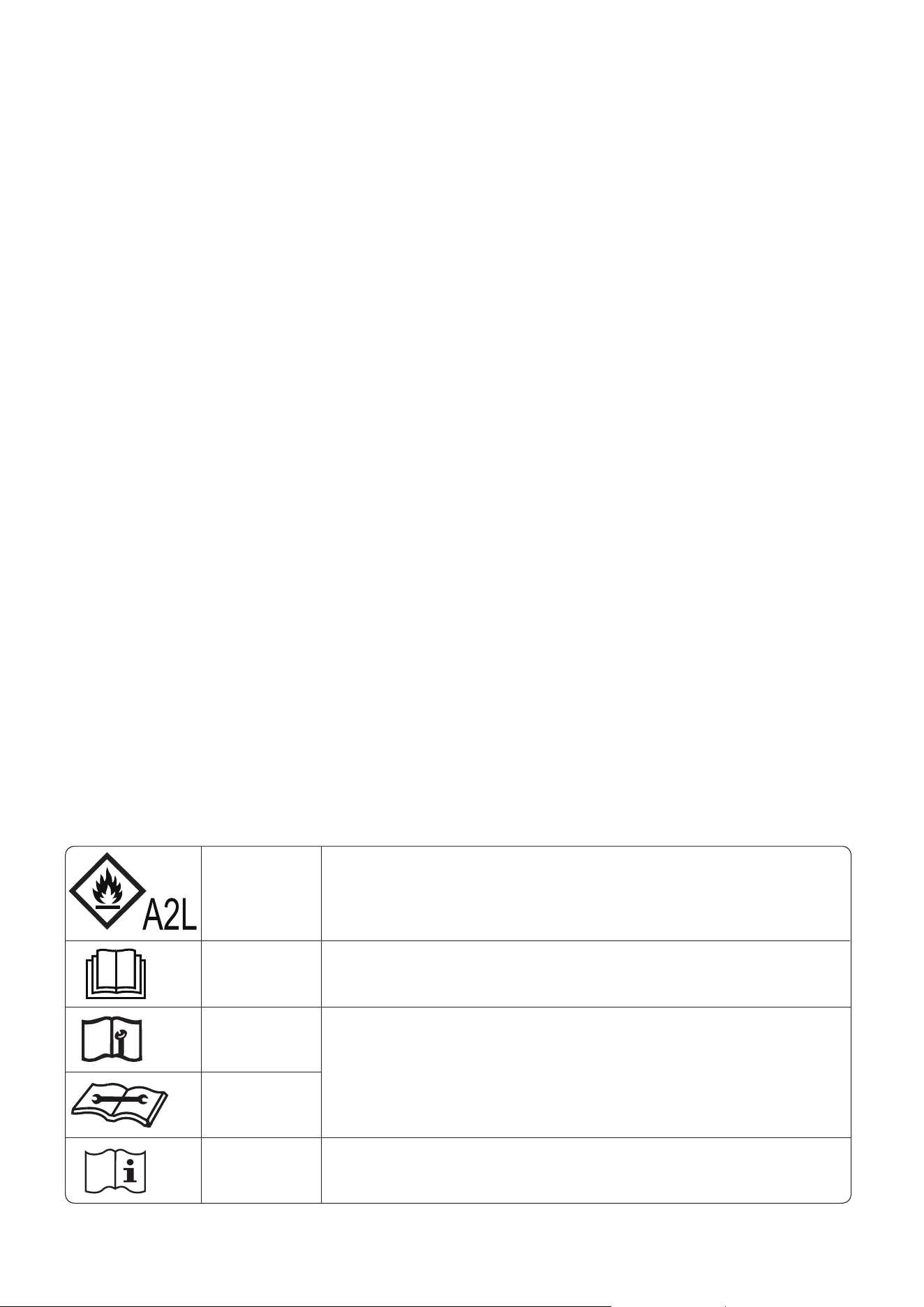
WARNING
This symbol shows that this appliance used a flammable
refrigerant. If the refrigerant is leaked and exposed to an
external ignition source, there is a risk of fire.
This symbol shows that the operation manual should be
read carefully.
This symbol shows that information is available such as
the operating manual or installation manual.
This symbol shows that a service personnel should be
handling this equipment with reference to the
installation manual.
Explanation of symbols displayed on the indoor unit or outdoor unit
12
INDOOR UNIT PARTS AND MAJOR
FUNCTIONS
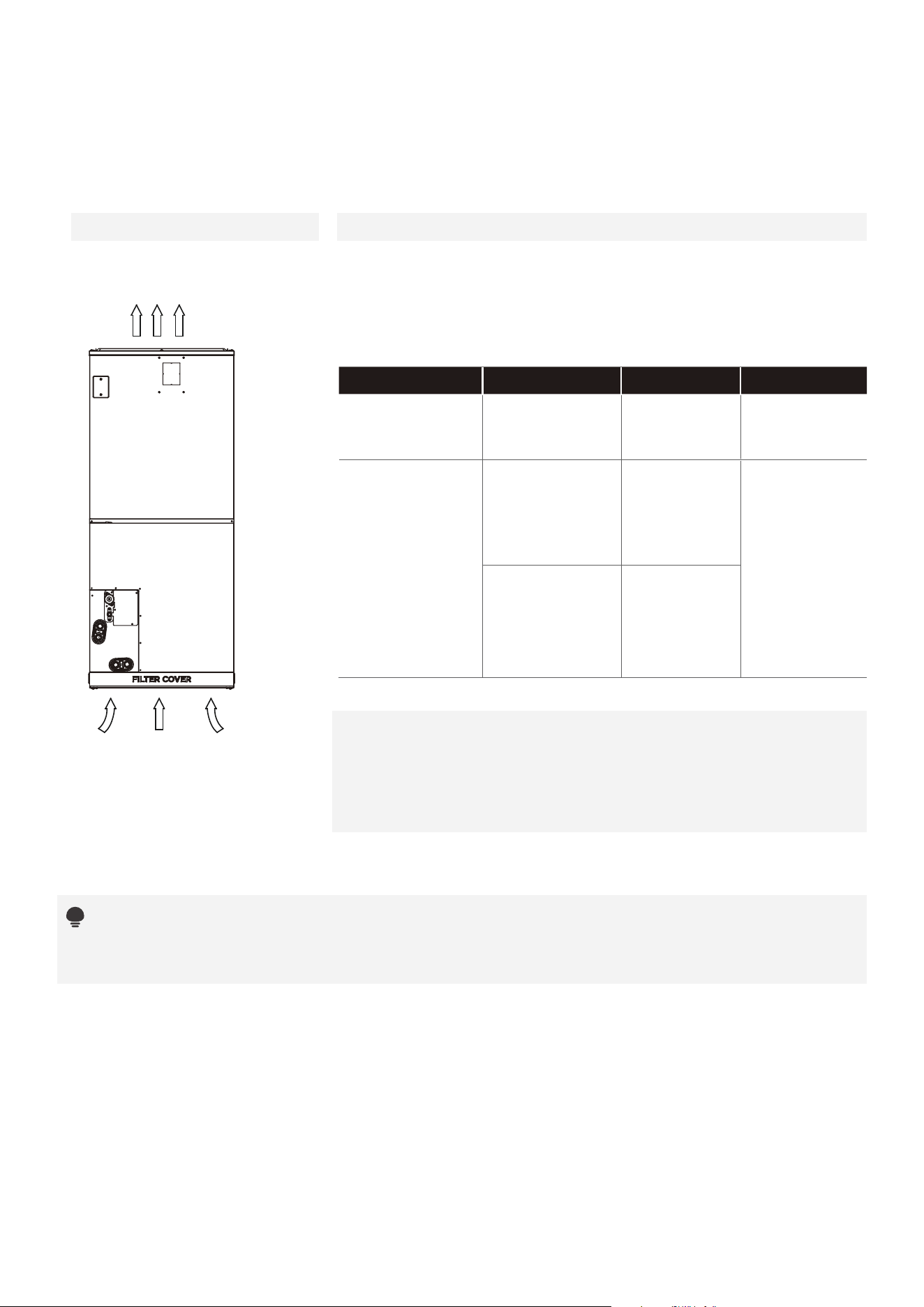
Air outlet
Air inlet
1.1 UNIT PARTS
1.2 OPERATING CONDITIONS
Use the system under the following temperatures for safe and
eective operation. If the air conditioner is used under dierent
conditions, it may malfunction or become less ecient.
COOL mode HEAT mode DRY mode
Room
Temperature
16°C - 32°C
(60°F - 90°F)
0°C - 30°C
(32°F - 86°F)
10°C - 32°C
(50°F - 90°F)
Outdoor
Temperature
0°C - 50°C
(32°F - 122°F)
-30°C - 50°C
(-22°F - 122°F)
(For Hyper
Heat Series)
-30°C - 24°C
(-22°F - 75°F)
(For Hyper
Heat Series)
-25°C - 24°C
(-13°F - 75°F)
(For Regular
Heat Series)
-25°C - 50°C
(-13°F - 122°F)
(For Regular
Heat Series)
FOR OUTDOOR UNITS WITH AUXILIARY ELECTRIC
HEATER
When outside temperature is below 0°C(32°F ), we strongly
recommend keeping the outdoor unit powered at all times to
prevent damage to equipment.
INVERTER SPLIT TYPE
NOTICE
Room relative humidity less than 80%. If the air conditioner operates in excess
of this figure, the surface of the air conditioner may attract condensation.
13
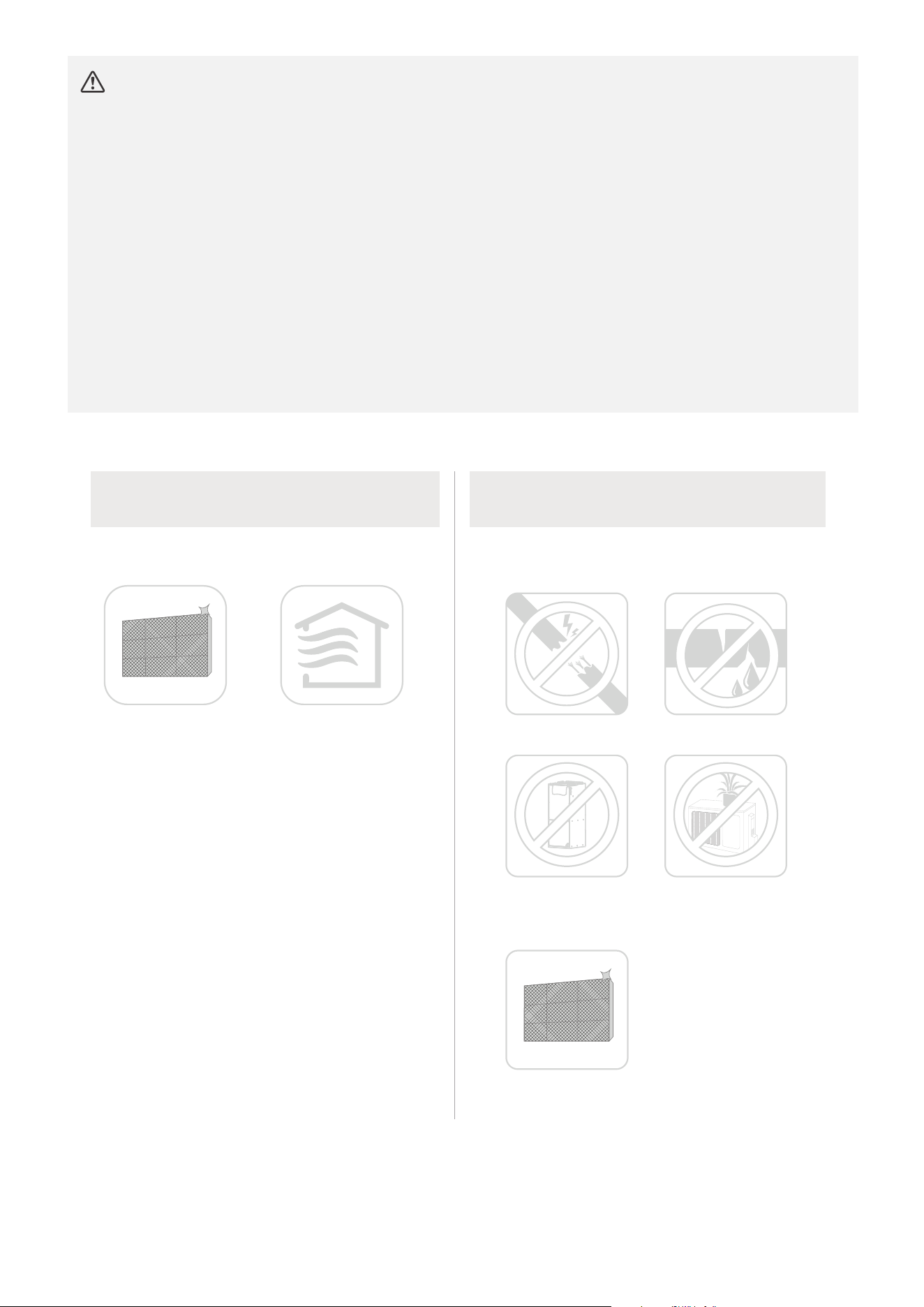
DO NOT place objects near the air inlet and outlet of the unit.
Replace the air filter every 30 to 90 days depending on thickness and MERV.
DO NOT set the unit to excessive temperature levels.
TO FURTHER OPTIMIZE THE PERFORMANCE OF YOUR UNIT, DO THE
FOLLOWING:
• Keep doors and windows closed.
• Limit energy usage by using TIMER ON and TIMER OFF functions.
• Do not block air inlets or outlets.
• Regularly inspect and clean air filters.
1.4 ENERGY SAVING TIPS
•
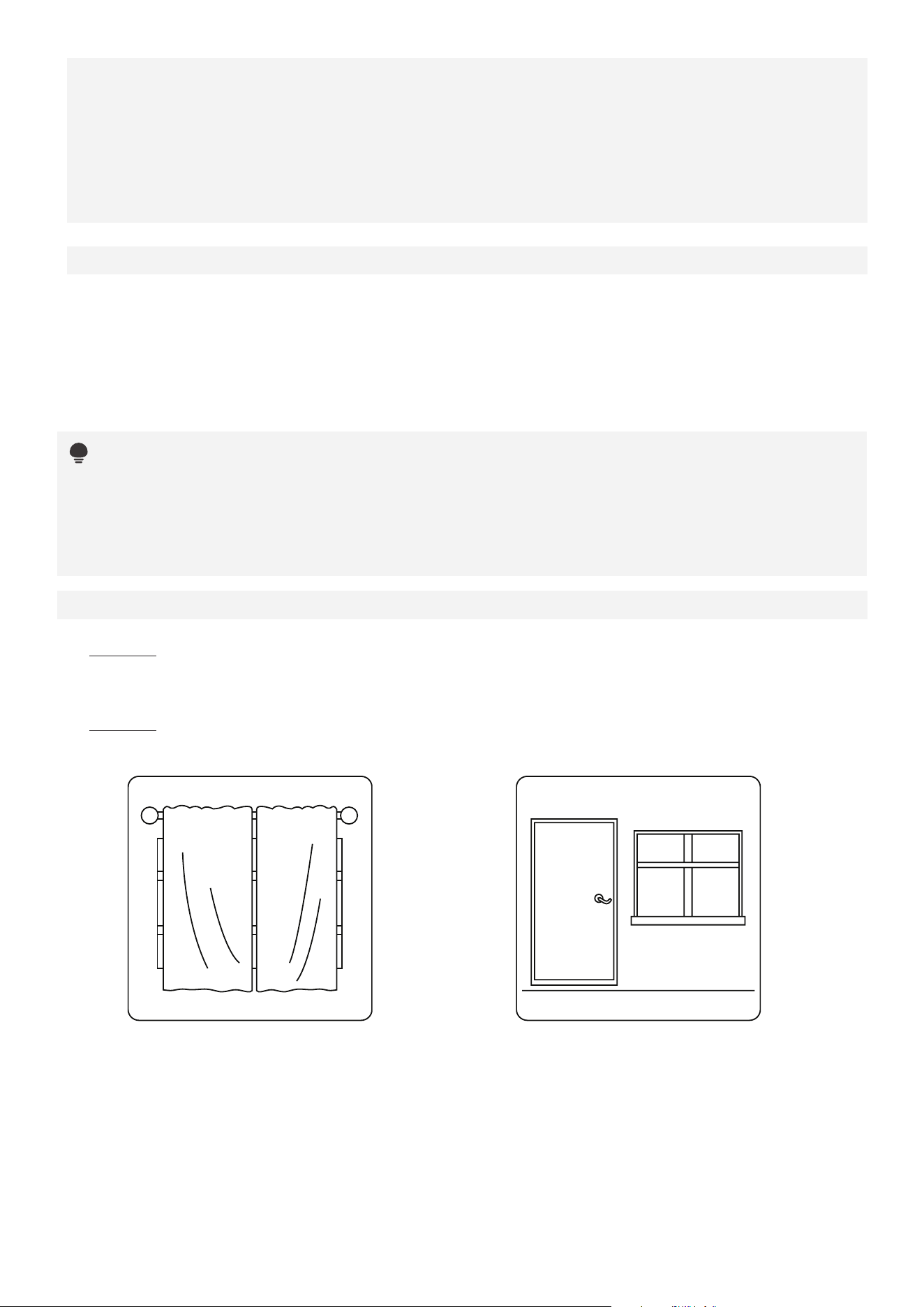
• While cooling, close the curtains to avoid direct sunlight.
• Doors and windows should be kept closed to keep cool or warm air in the room.
•
•
1.3 FEATURES
Refrigerant Leak Detection System
Closing curtains during
heating also helps keep the heat in
Doors and windows
should be kept closed
In the event of a refrigerant leak, the LCD screen will display “EL0C” or “EHC1” or “EHC2” and the LED
indicator light will flash. The default temperature of the first power-on is set to 60 °F for refrigeration
and 86 °F for heating. When the temperature stops, the temperature is set at the room temperature at
that time.
NOTICE
• Under normal working conditions, the switch, wind speed and temperature
can not be adjusted by remote control.
• Requirements of wire controller: Control AUX function for live heating.
14
CARE AND MAINTENANCE
CLEANING YOUR INDOOR UNIT
Always turn o your air conditioner system and disconnect its power supply
before cleaning or maintenance.
Do not use chemicals or chemically treated cloths to clean the unit.
Only use a soft, dry cloth to wipe the unit clean. If the unit is especially dirty,
you can use a cloth soaked in warm water to wipe it clean.
•
•
•
•
•
• Contact an authorized service technician for repair or maintenance. Improper
repair and maintenance may cause water leakage, electrical shock, or fire,
and may void your warranty.
•
• Make sure the drain hose is set up according to the instructions. Failure to do
so could cause leakage and result in personal property damage, fire and
electric shock.
• Make sure that all wires are connected properly. Failure to connect wires
according to instructions can result in electrical shock or fire.
Inspect and clean or replace air filter each month or as required.
NOTICE
BEFORE CLEANING OR MAINTENANCE
CAUTION FOR ALL PIPES INSTALLATION
Do not use benzene, paint thinner, polishing powder or other solvents to
clean the unit. They can cause the plastic surface to crack or deform. Use of
volatile cleaners may cause fire, resulting in injury or death.
Do not use water hotter than 40°C (104°F) to clean the front panel. This can
cause the panel to deform or become discolored.
Do not wash the unit under running water. Doing so creates an electrical
hazard.
Clean the unit using a damp, lint-free cloth and neutral detergent. Dry the
unit with a dry, lint-free cloth.
Do not substitute a blown fuse with a higher or lower amperage rating fuse,
as this may cause circuit damage or an electrical fire. Replacement Fuse must
be identical to one removed.
15
• Before changing the filter or cleaning, turn o the unit and disconnect its
power supply.
• When removing filter, do not touch metal parts in the unit. The sharp metal
edges can cut you.
• Do not use water to clean the inside of the indoor unit. This can destroy
insulation and cause electrical shock.
• Do not expose filter to direct sunlight when drying. This can shrink the filter.
• Any maintenance and cleaning of outdoor unit should be performed by an
authorized dealer or a licensed service provider.
• Any unit repairs should be performed by an authorized dealer or a licensed
service provider.
CAUTION
Maintenance –
Long Periods of Non-Use
If you plan not to use your air conditioner for
an extended period of time, do the following:
Turn on FAN function until
unit dries out completely
Clean all filters
Maintenance –
Pre-Season Inspection
After long periods of non-use, or before
periods of frequent use, do the following:
Check for damaged wires
Check for leaks
Make sure nothing is blocking
all air inlets and outlets
Clean all filters
Maintenance your AC.
16
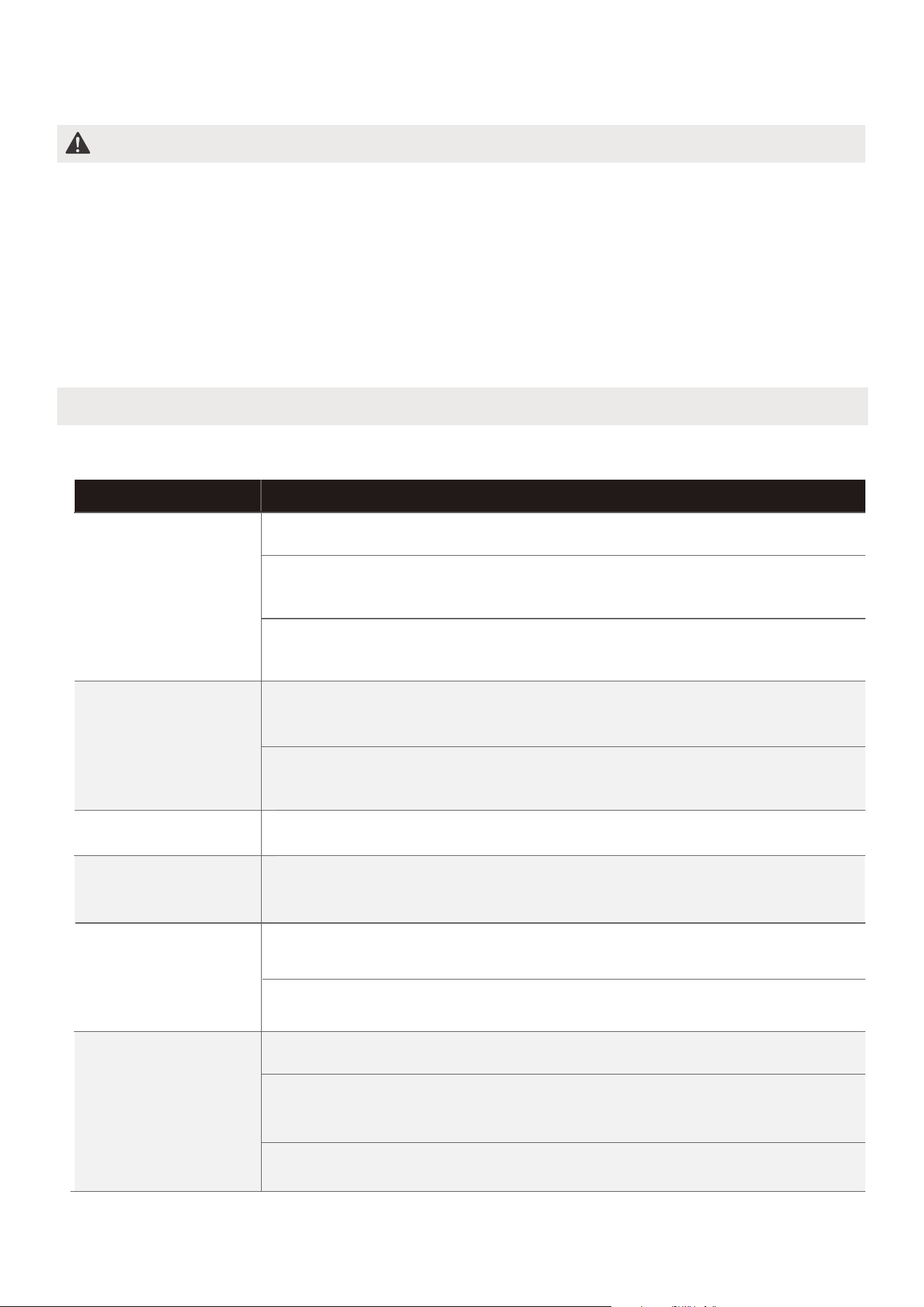
The following problems are not a malfunction and in most situations will not require repairs.
Issue Possible Causes
Unit does not turn
on when pressing
ON/OFF button
The Unit has a 3-minute protection feature that prevents the unit from overloading.
The unit cannot be restarted within three minutes of being turned o.
The unit may change its setting to prevent frost from forming on the unit.
Once the temperature increases, the unit will start operating in the
previously selected mode again.
The set temperature has been reached, at which point the unit turns o the
compressor. The unit will continue operating when the temperature
fluctuates again.
The indoor unit
emits white mist
In humid regions, a large temperature dierence between the room’s air
and the conditioned air can cause white mist.
Both the indoor and
outdoor units emit
white mist
When the unit restarts in HEAT mode after defrosting, white mist may be
emitted due to moisture generated from the defrosting process.
TROUBLESHOOTING
The unit changes from
COOL/HEAT mode to
FAN mode
The indoor unit makes
noises
A squeaking sound may occur after running the unit in HEAT mode due to
expansion and contraction of the unit’s plastic parts.
Both the indoor unit
and outdoor unit make
noises
Low hissing sound during operation: This is normal and is caused by refrigerant
gas flowing through both indoor and outdoor units.
Low hissing sound when the system starts, has just stopped running, or is
defrosting: This noise is normal and is caused by the refrigerant gas stopping or
changing direction.
Squeaking sound: Normal expansion and contraction of plastic and metal parts
caused by temperature changes during operation can cause squeaking noises.
Cooling and Heating Models: If the Operation light and PRE-DEF (Pre-heating/
Defrost) indicators are lit up, the outdoor temperature is too cold and the unit’s
anti-cold wind is activated in order to defrost the unit.
In Cooling-only Models: If the “Fan Only” indicator is lit up, the outdoor
temperature is too cold and the unit’s anti-freeze protection is activated in
order to defrost the unit.
A squeaking sound is heard when the system is OFF or in COOL mode. The
noise is also heard when the drain pump (optional) is in operation.
A power fuse blows or the circuit breaker frequently trips.
SAFETY PRECAUTIONS
If any of the following conditions occurs, turn o your unit immediately!
•
Water or other objects fall into or out of the unit.
•
DO NOT ATTEMPT TO FIX THESE YOURSELF! CONTACT AN AUTHORIZED
SERVICE PROVIDER IMMEDIATELY!
You smell a burning odor.
•
The unit emits loud or abnormal sounds.
•
Common Issues
17
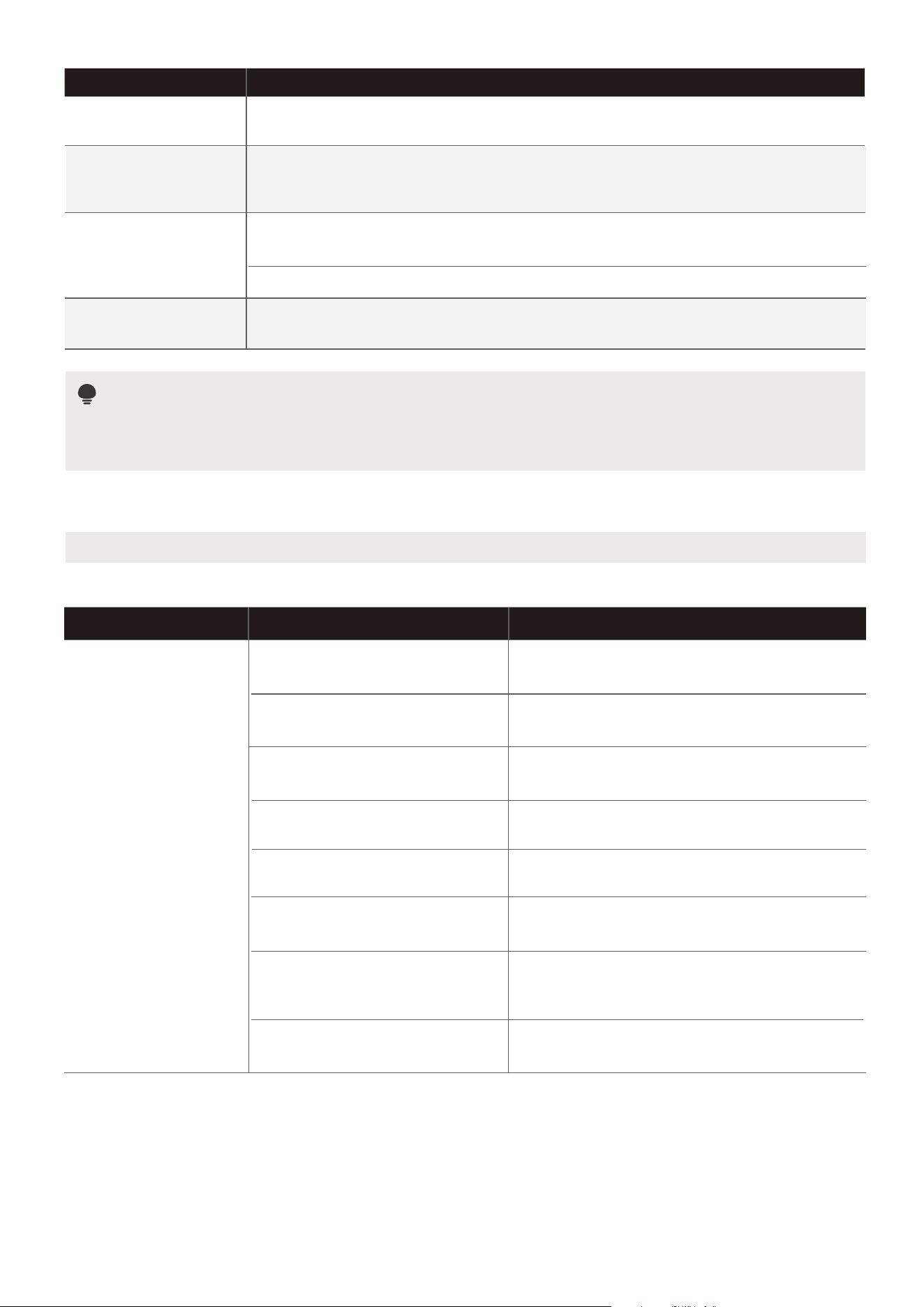
Issue Possible Causes
The outdoor unit
makes noises
The unit will make dierent sounds based on its current operating mode.
Dust is emitted from
either the indoor or
outdoor unit
The unit may accumulate dust during extended periods of non-use, which will be
emitted when the unit is turned on. This can be mitigated by covering the unit during
long periods of inactivity.
The unit emits a
bad odor
The unit may absorb odors from the environment (such as furniture, cooking,
cigarettes, etc.) which will be emitted during operations.
The unit’s filters have become moldy and should be cleaned.
The fan of the outdoor
unit does not operate
During operation, the fan speed is controlled to optimize product operation.
Troubleshooting
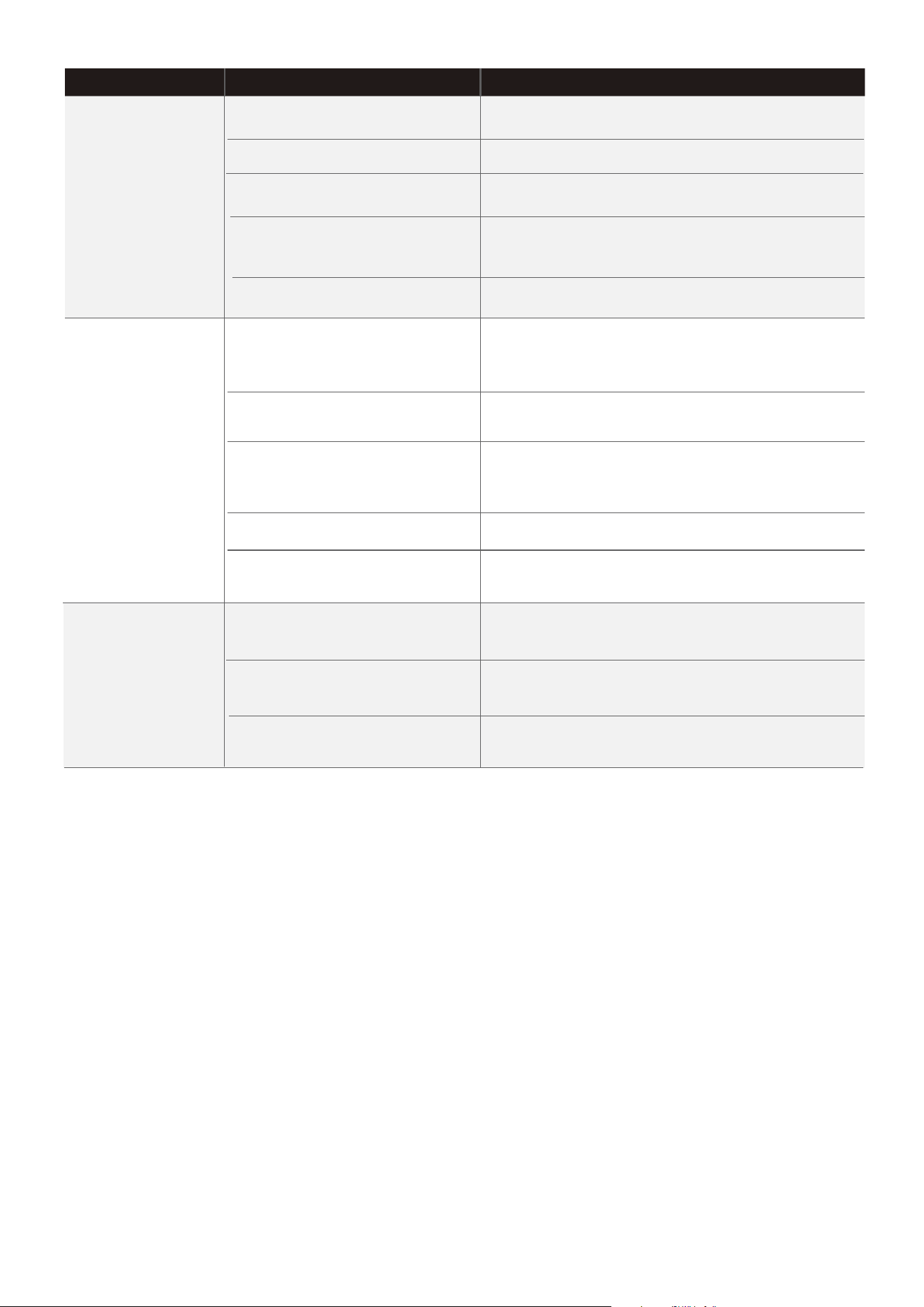
When troubles occur, please check the following points before contacting a repair company.
Problem Possible Causes Solution
Poor Cooling
Performance
Temperature setting may be higher
than ambient room temperature
Lower the temperature setting
The heat exchanger on the indoor
or outdoor unit is dirty
Clean the aected heat exchanger
The air filter is dirty
Remove the filter and clean it according to
instructions
The air inlet or outlet of either
unit is blocked
Turn the unit o, remove the obstruction
and turn it back on
Doors and windows are open
Make sure that all doors and windows are
closed while operating the unit
Excessive heat is generated
by sunlight
Close windows and curtains during periods
of high heat or bright sunshine
Too many sources of heat in the
room (people, computers,
electronics, etc.)
Reduce amount of heat sources
Low refrigerant due to leak
or long-term use
Check for leaks, re-seal if necessary and
top o refrigerant
NOTICE
If problem persists, contact a local dealer. Provide them with a detailed
description of the unit malfunction as well as your model number.
18
Problem Possible Causes Solution
The unit is not
working
Power failure Wait for the power to be restored
The power is turned o Turn on the power
The fuse is burned out
Replace the fuse
The Unit’s 3-minute protection
has been activated
Wait three minutes after restarting
the unit
Timer is activated
Turn timer o
The unit starts and
stops frequently
There’s too much or too little
refrigerant in the system
Check for leaks and recharge the
system with refrigerant.
Incompressible gas or moisture
has entered the system.
Evacuate and recharge the system
with refrigerant
The compressor is broken Replace the compressor
The voltage is too high or
too low
Install a manostat to regulate the
voltage
Poor heating
performance
The outdoor temperature is
extremely low
Use auxiliary heating device
Cold air is entering through
doors and windows
Make sure that all doors and
windows are closed during use
Low refrigerant due to leak or
long-term use
Check for leaks, re-seal if necessary
and top o refrigerant
System circuit is blocked
Determine which circuit is blocked and
replace the malfunctioning piece of
equipment

QS002U-AHU(R454B)
The design and specifications are subject to change without prior notice for product improvement.
Consult with the sales agency or manufacturer for details. Any updates to the manual will be uploaded to
the service website, please check for the latest version.