UNIVERSAL WIRELESS MICROPHONE
UNIVERSAL WIRELESS
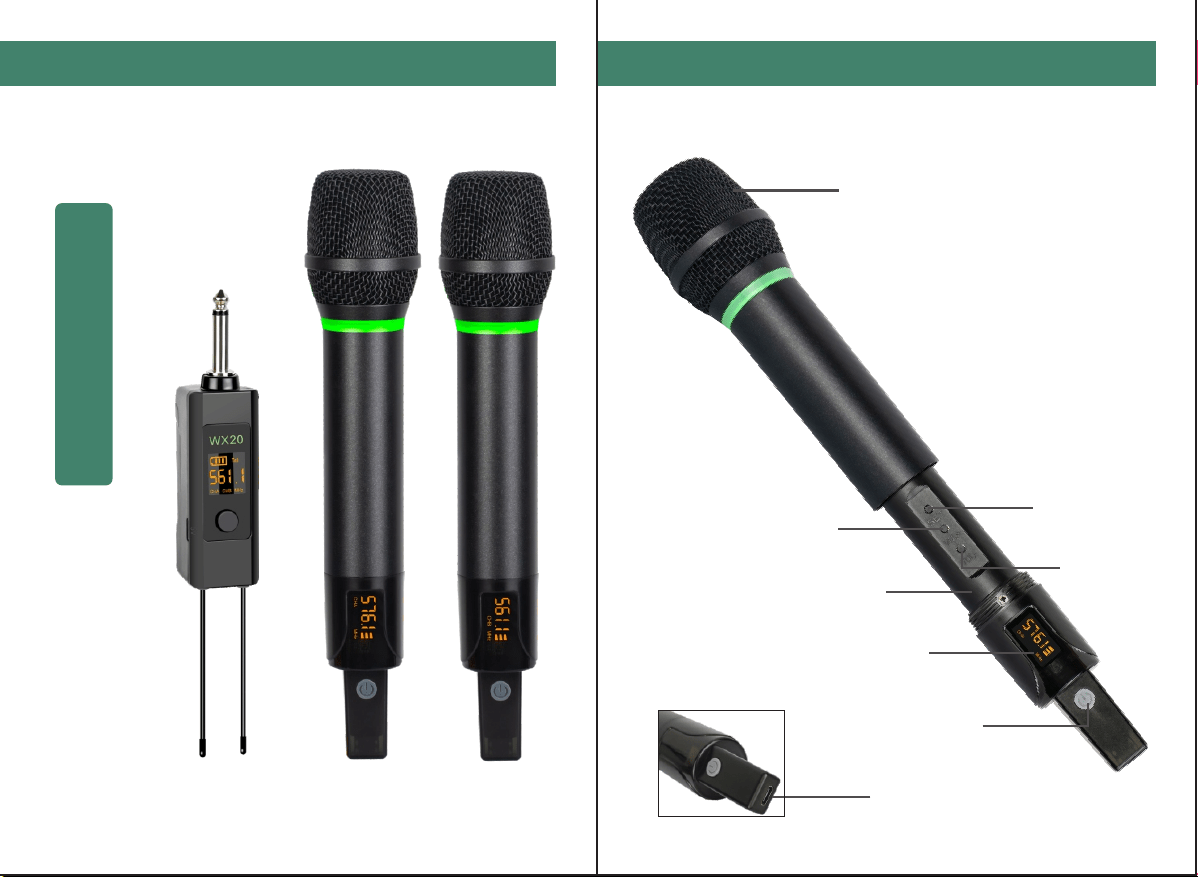
Diagram of the Handheld
Conference Microphone Series
Metal mesh head
Set Button
Volume +
Volume -
Status Display
Switch
18650 Rechargeable
battery compartment
5V charging port
USE MANUAL
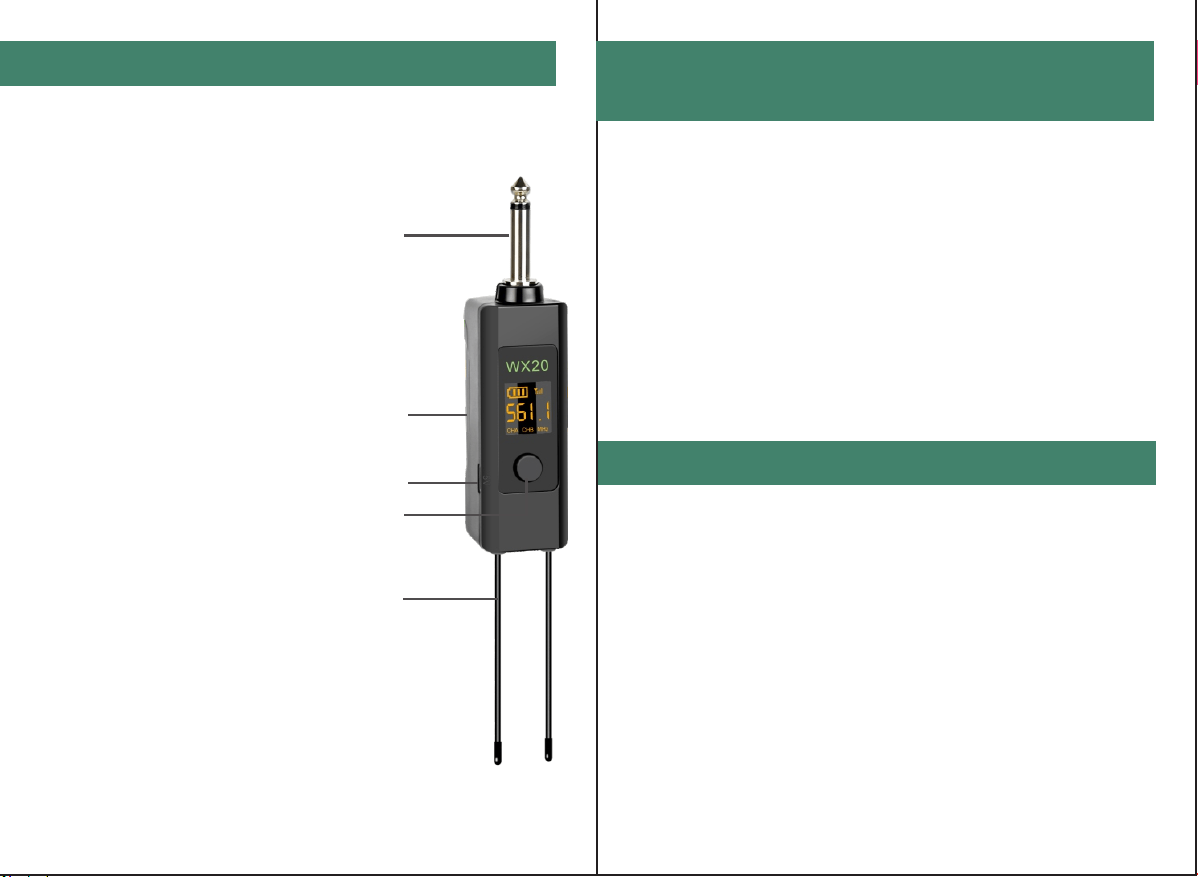
Diagram of the Receiver
⑤
①
②
③
④
1.Audio Output
6.35mm plug
2.Battery Compartment
Insert 18650 rechargeable battery,
open the battery cover and replace
it directly
3.Charging Port
TYPE-C charging port with a
specification of DC 5V.
4.Power Switch
Press and hold this switch for 3
seconds to turn on/off power
of transmitter
5.Receive antenna
Receive the signal from the transmitter
Operating Steps for Handheld Transmitter
and Receiver
1.Long press the power buttons on both the handheld transmitter
and receiver to turn them on. The transmitter will automatically
scan and pair with the receiver; no manual frequency matching
is required.
2.
Unscrew the tail tube of the handheld transmitter, short press the
SET button to change the frequency channel (32 frequency points
for Channel ). After adjustment, the receiver will synchronize
automatically.
Specification Parameters
RF Carrier Frequency Range: 560.1-591.1MHz
Number of Channels: 32
Sensitivity: -60dB
Oscillation Mode: DSP chip frequency locking
Frequency Stability: ±10PPm
RF Power: 5 dBm
Audio Frequency Response: 40~18000Hz
Distortion: <0.5%
Battery Specification: 18650 Li-ion battery
Use distance: about 10 meters
Usage Time: 6 hours

FCC Statement
Note: This equipment has been tested and found to comply with the limits for a Class B digital device, pursuant to part 15 of the FCC
Rules. These limits are designed to provide reasonable protection against harmful interference in a residential installation. This
equipment generates, uses and can radiate radio frequency energy and, if not installed and used in accordance with the instructions,
may cause harmful interference to radio communications. However, there is no guarantee that interference will not occur in a particular
installation. If this equipment does cause harmful interference to radio or television reception, which can be determined by turning the
equipment off and on, the user is encouraged to try to correct the interference by one or more of the following measures:
—Reorient or relocate the receiving antenna.
—Increase the separation between the equipment and receiver.
—Connect the equipment into an outlet on a circuit different from that to which the receiver is connected.
—Consult the dealer or an experienced radio/TV technician for help.
This device complies with part 15 of the FCC Rules. Operation is subject to the following two conditions:(1) This device may not cause
harmful interference, and (2) this device must accept any interference received, including interference that may cause undesired
operation.
Any changes or modifications not expressly approved by the party responsible for compliance could void the user's authority to operate
the equipment.
The device has evaluated to meet general RF exposure requirement. The device can be used be in portable exposure without restriction.