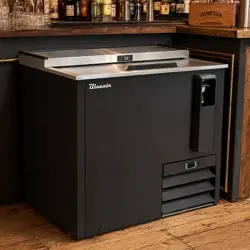
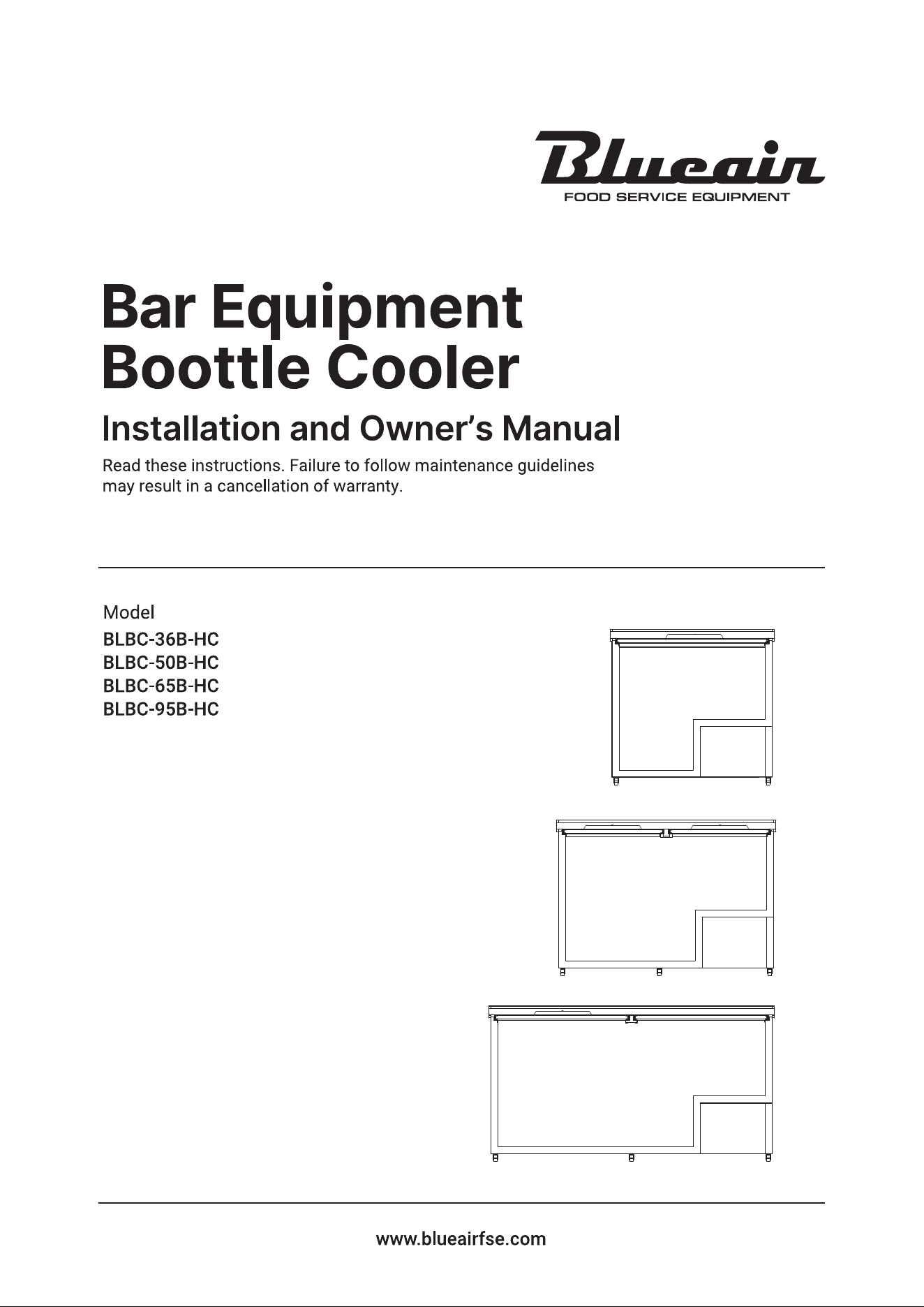

Service and Installation Manual
COMMERCIAL REFRIGERATOR SAFETY
Your safety and the safety of others are very important.
We have provided many important safety messages in this manual and on your appliance. Always read and
obey all safety messages.
Our product instructions will be uploaded on our company official website.
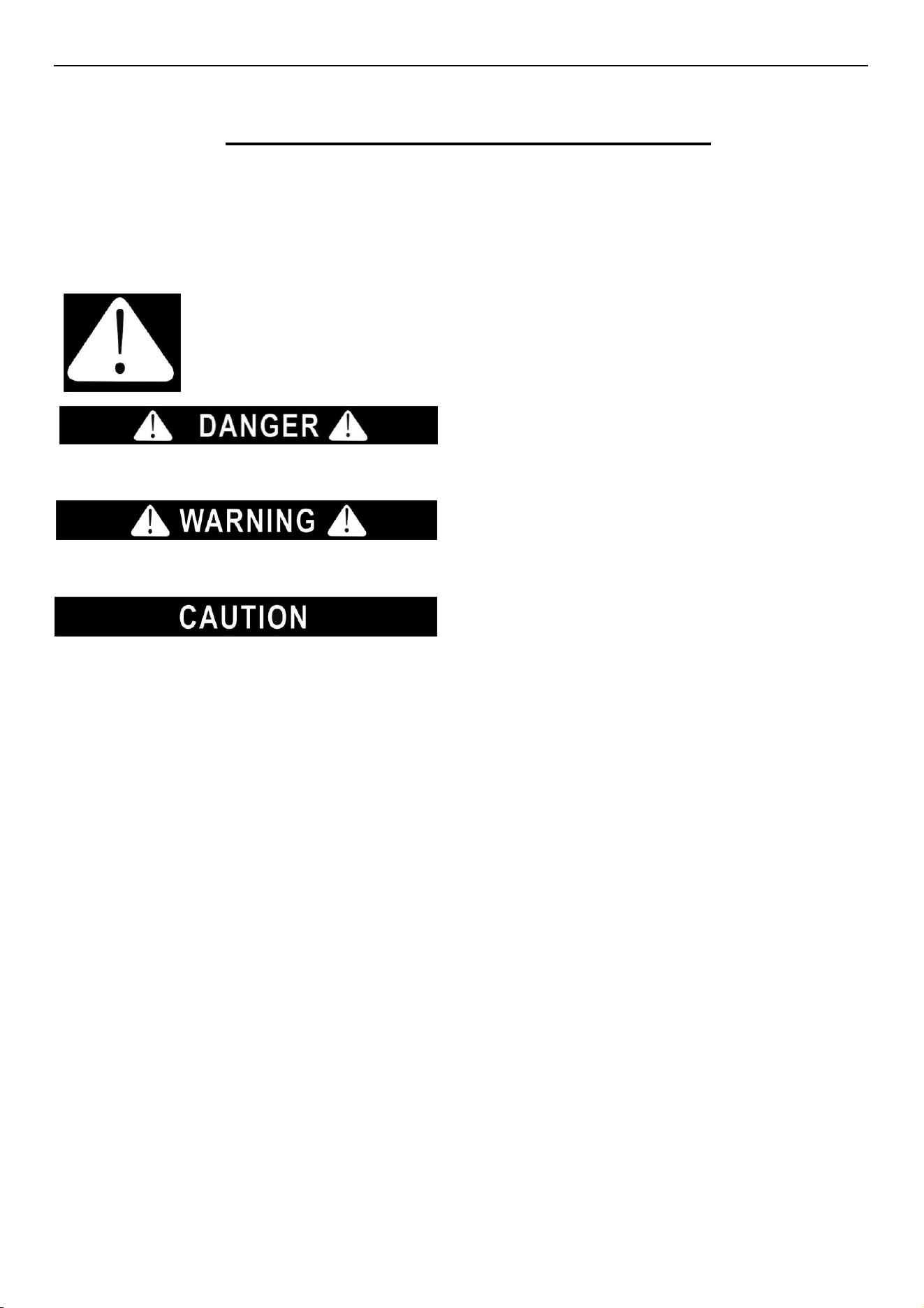
This is the Safety Alert Symbol. This symbol alerts you to potential hazards that can
kill or injure you and others. All safety messages will follow the Safety Alert Symbol
and either the words” DANGER”, “WARNING” or “CAUTION”.
Danger means that failure to heed this safety
statement may result in severe personal injury or
death.
Warning means that failure to heed this safety
statement may result in extensive product damage,
serious personal injury, or death.
Caution means that failure to heed this safety
statement may result in minor or moderate personal
injury, or property or equipment damage.
All safety messages will alert you to what the potential hazard is, tell you how to reduce the chance of injury,
and let you know what can happen if the instructions are not followed.
If the supply cord is damaged, it must be replaced by the manufacturer, its service agent or similarly qualified
persons in order to avoid a hazard.
This appliance is not intended for use by persons (including children) with reduced physical, sensory or mental
capabilities, or lack of experience and knowledge, unless they have been given supervision or instruction
concerning use of the appliance by a person responsible for their safety.
Children should be supervised to ensure that they do not play with the appliance.
This appliance can be used by children aged from 8 years and above and persons with reduced physical
sensory or mental capabilities or lack of experience and knowledge if they have been given supervision or
instruction concerning use of the appliance in a safe way and understand the hazards involved. Children shall
not play with the appliance. Cleaning and user maintenance shall not be made by children without supervision.
Keep the appliance and its cord out of reach of children less than 8 years.
Do not store explosive substances such as aerosol cans with a flammable propellant in this appliance.
The max. loading of shelve is 10kg.
This appliance is intended to be used in house hold and similar applications in this appliance.
--staff kitchen areas in shops, offices and other working environment;
--farm houses and by clients in hotels, motels and other residential type environment;
--bed and breakfast type environment;
--catering and similar non-retail applications.
1
Service and Installation Manual
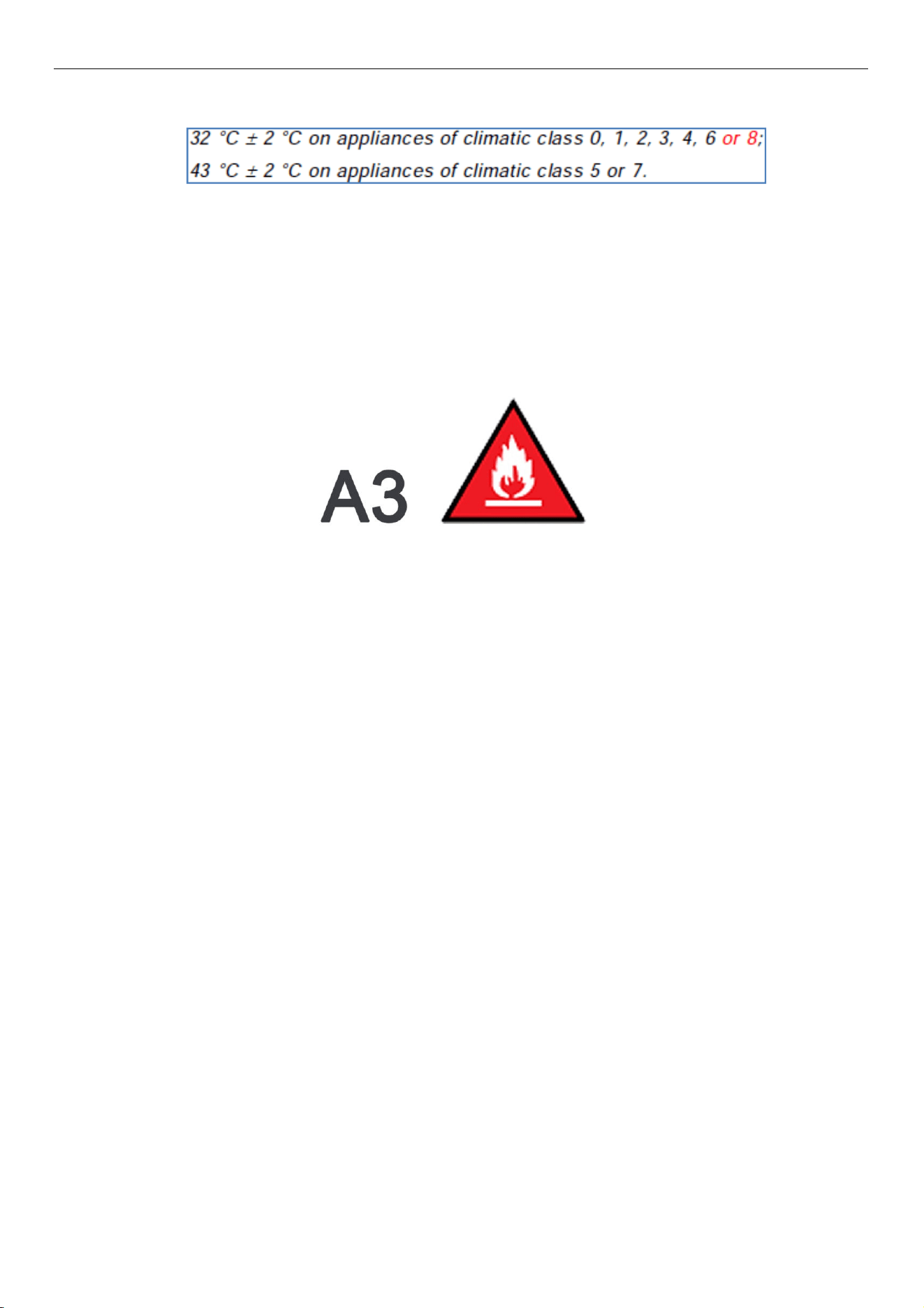
The appliance shall be used at an ambient temperature listed according to it’s climate class:
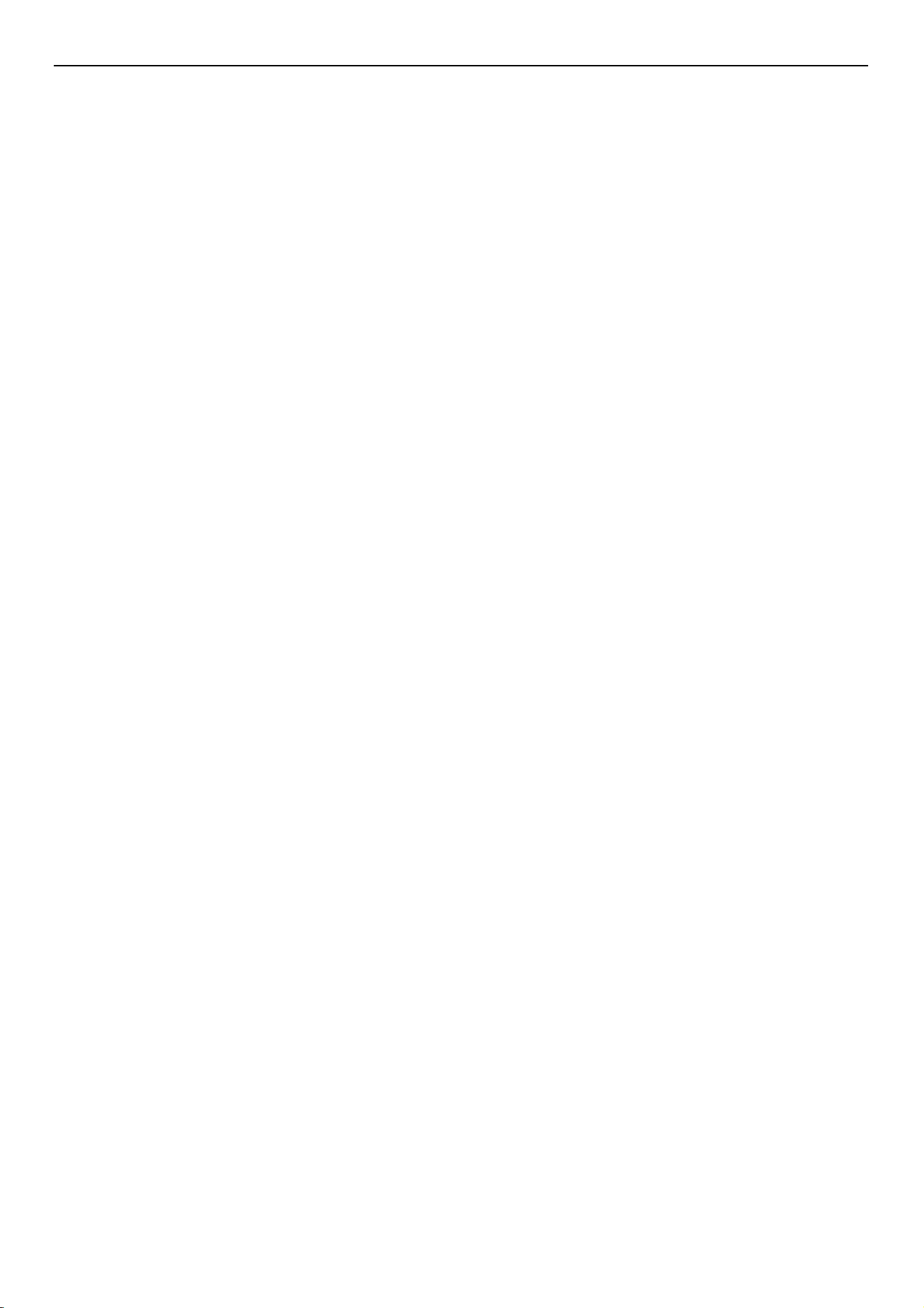
The appliance use flammable insulation blowing gas C5H10, disposal of the appliance shall in accordance with
the regulations of local authorities.
The appliance provided with double-capped fluorescent lamps, the lamp has to be replaced by identical lamps
only.
The key for appliance electric box should be safe kept by qualified persons in order to avoid a hazard.
When positioning the appliance socket-outlets or portable power supplies at the rear of the appliance.
Based on business order(s) to EU market, give true EU authorized representative information on the label with
full business name and full EU address in the marking plate.
If the appliance use flammable refrigerant, such as R600a, R290:
WARNING: Keep ventilation openings, in the appliance enclosure or in the built-in structure, clear of
obstruction.
WARNING: Do not use mechanical devices or other means to accelerate the defrosting process, other than
those recommended by the manufacturer.
WARNING: Do not damage the refrigerant circuit.
WARNING: Do not use electrical appliances inside the food storage compartments of the appliance, unless
they are of the type recommended by the manufacturer.
Handling, moving, and use of the refrigerator or freezer to avoid either damaging the refrigerant tubing, or
increasing the risk of a leak
L’opération, le mouvement et l’utilisation du réfrigérant ou le congélateur doivent éviter les dommages du tuyau
réfrigérant ou le rique de la fuite.
Caution – Risk of Fire or Explosion due to Flammable Refrigerant Used. Follow Handling
Instructions Carefully in Compliance with U.S. Government Regulations
Component parts shall be replaced with like components and that servicing shall be done by factory authorized
service personnel, so as to minimize the risk of possible ignition due to incorrect parts or improper service.
Les pièces de rechange doivent être remplacées par les components relatifs et les opérations doivent être
faites par les professionnels afin de minimaliser le risque d’allumage à cause des parts incorrects ou des
opérations impropres.
CAUTION – Risk Of Fire Or Explosion Due To Puncture Of Refrigerant Tubing; Follow Handling Instructions
Carefully. Flammable Refrigerant Used
DANGER: Risk of child entrapment. Before you throw away your old refrigerator or freezer:
Take off the doors
Leave the shelves in place so that children may not easily climb inside
The instructions shall contain information regarding the maximum loading of each type of shelf.
For appliances which use FLAMMABLE REFRIGERANTS, the instructions shall include information pertaining
to the handing, servicing and disposal of the appliance.
2
Service and Installation Manual
An explanation shall be given of the meaning of the alpha-numeric characters, indicating the climatic class of
the appliance, that are marked on the appliance.
The installation and operating instructions for appliances that use a flammable refrigerant shall indicate that
component parts shall be replaced with like components so as to minimize the risk of possible ignition due to
incorrect parts.
The installation instructions for appliances that use a flammable refrigerant shall indicate the appliance is to
be installed in accordance with the Safety Standard for Refrigeration Systems, ANSl/ASHRAE 15.
Apply the requirements of Annex 101. DVS to appliances using flammable refrigerants: self-contained
appliance., All services shall be done by the accredited persons by the manufacturer according to local
regulation. Services related to breaking into the refrigerating circuit, opening of sealed components are not
allowed to be done in the user condition, must be taken to the designed location WARNING
Do not use means to accelerate the defrosting process or to clean, other than those recommended by the
manufacturer.
The appliance shall be stored in a room without continuously operating ignition sources (for example: open
flames, an operating gas appliance or an operating electric heater.
Do not pierce or burn.
Be aware that refrigerants may not contain an odour. and MISE EN GARDE
Ne pas utiliser de moyens autres que ceux recornrnandés par Ie fabricant pour accélérer Ie processus de
dégivrage ou pour nettoyer l'apparail.
L'appareil doit etre entreposé dans un local ne contenant pas de sources d'inflammation permanentes
(flammes nues, appareil à gaz ou dispositif de chauffage électrique en fonctionnement, par exemple).
Ne pas percer ou brǖler.
Attention, les f1uides frigorigènes peuvent ne pas dégager d'odeur.
- WARNING: Keep clear of obstruction all ventilation openings in the appliance enclosure or in the structure for
building-in.
- WARNING: Do not use mechanical devices or other means to accelerate the defrosting process, other than
those recommended by the manuFacturer.
- WARNING: Do not damage the refrigerant circuit.
- WARNING: Do not use electrical appliances inside the food storage compartments of the appliance, unless
they are of the type recommended by the manufacturer.
For appliances which use flammable insulation blowing gases, the instructions shall include information
regarding disposal of the appliance.
The height of the triangle in the symboI " Caution: risk of fire" shall be at least 15 mm.
The height of the letters used for the marking of the type of flammable insulation blowing gas shall be at least
40 mm.
3
Service and Installation Manual
WARNING
D
o not use means to accelerate the defrosting process or to clean, other than those recommended by
the manufacturer.
The appliance shall be stored in a room without continuously operating ignition sources.
(for exampIe: open flames an operating gas appliance or an operating electric heater.
Do not pierce or burn.
Be aware that refrigerants may not contain an odour.
MISE EN GARDE
Ne pas utiliser de moyens autres que ceux recommendés par le fabrrcant pour accélérer Ie processus
de degivrage ou pour nettoyer I'appareil.
L'appareil doit être entreposé dans un local ne eontenant pas de sources d'inflammation permanerrtes
(flammes nues, appareil à gaz ou dispositif de chauffage electrique en fonctionnernent, par exemple).
Ne pas percer ou brùler.
Attention, les fluides frigorigènes peuvent ne pas dégager d'odeur.
Detection of flammable refrigerants
Under no circumstances shall potential sources of ignition be used in the searching for or detection of
refrigerant leaks. A halide torch (or any other detector using a naked flame)
shall not be used.
The following leak detection methods are deemed acceptable for all refrigerant systems.
Electronic Ieak detectors may be used to detect refrigerant Ieaks but, in the case of FLAMMABLE
REFRIGERANTS, the sensitivity might not be adequate. or might need recalibration. (Detection
equipment shall be calibrated in a refrigerant-free area.) Ensure that the detector is not apotential
source of ignition and is suitable for the refrigerant used. Leak detection equipment shall be set at a
percentage of the LFL of the refrigerant and shall be calibrated to the refrigerant employed, and the
appropriate percentage of gas (25 % maximum) is confirmed.
Leak detection fluids are also suitable for use with most refrigerants but the use of detergents
containing chlorine shall be avoided as the chlorine can react with the refrigerant and corrode the
copper pipe-work.
If a leak is suspected, all naked flames shall be removed/extinguished.
If a leakage of refrigerant is found which requires brazing, all of the refrigerant shall be recovered from
the system. or isolated (by means of shut off valves) in a part of the system remote from the leak.
All services shall be done by the accredited persons by the manufacturer according to local regulation.
Services related to breaking into the refrigerating circuit, opening of sealed components are not allowed
to be done in the user condition, must be taken to the designed location.
Sealed electrical components shall be replaced.
Intrinsically safe components must be replaced.
4
Service and Installation Manual
Item a) DANGER - Risk Of Fire or Explosion. Flammable Refrigerant Used. Do Not Use Mechanical Devices To
Defrost Refrigerator. Do Not Puncture Refrigerant Tubing. and
DANGER-Risque d'incendie ou d'explosion. Fluide frigorigène inflammable utilisé. Ne pas utiliser des moyens
rnécanlques pour déconqeler Ie refrigerateur. Ne pas perforer la conduite de fluide frigorigène.
Item b) DANGER - Risk Of Fire Or Explosion. Flammable Refrigerant Used. To Be Repaired Only By Trained
Service Personnel. Do Not Puncture Refrigerant Tubing. And
DANGER-Risque d'incendie ou d'axplosion. Fluide frigorigène inflammable utilisé. Dolt uniquement être réparé
par un technicien de service formé. Ne pas perforer la conduite de fluide frigoriqène.
Item c) CAUION - Risk Of Fire Or Explosion. Flammable Refrigerant Used. Consult Repair ManuaI/Owner's
Guide Before Attempting To Install or Service This Product. All Safety Precautions Must be Followed. and
ATTENTION-Risque d'incendie ou d'explosion. Fluide frigorigène inflammable utilisé. Consulter Ie guide du
proprietairé ou Ie manuel de réparation avant d'essayer d'installer ou de réparer ce produit. Toutes les
précautions de securite doivent être prises.
Item d) CAUTION-Risk Of Fire Or Explosion. Dispose Of Properly In Accordance With Federal Or Local
Regulations. Flammable Refrigerant Used. and
ATTENTION - Risque d'incendie ou d'explosion. Mettre au rebut contorrnérnent aux règlements fédéraux ou
locaux. Fluide friqorigène inflammable utilisé.
Item e) CAUTION-Risk Of Fire Or Explosion Due To Puncture Of Refrigerant Tubing; Follow Handling
Instructions Carefully. Flammable Refrigerant Used. and
AENION - Risque d'incendie ou d'explosion en cas deperforation d'une canalisation de fluide frigorigène; suivze
attentivement les instructions de manutention. Fluide frigorigène inflammable utilisé.
Item f) DANGER-Risk of Fire or Explosion due to Flammable Refrigerant Used. Follow Handling Instructions
Carefully in Compliance. with National Regulations. and
DANGER-Risque d'incendie ou d'explosion dǖ à l'utilisation d'un fluide frigorigène. Suivez attentivement les
instructions demanutention contorrnérnent aux règlements nationaux.
Note:
a) The marking specified in Item (a) shall be provided on or near any evaporators that can be contacted by the
user.
b) The markings specified in Items (b) and (c) shall be provided near the machine compartment.
c) The marking specified in Item (d) shall be provided on the exterior of the refrigerator.
d) The marking specified in Item (e) shall be provided near any and all exposed refrigerant tubing.
e) The marking specified in Item (f) shall be provided on appliance packaging if factory charqed.
f) All the markings shall be in letters no less than 6.4mm (1/4in) high.
The marking in Item b) shall also contain the symbol "Cauuon, risk of fire" (Fire in a triangle): The color and
format of this sign shall be as shown in Symbol W021 in ISO 7010. The perpendicular height of the triangle
containing the "Caution, risk of fire" sign shall be at least 15 mm (9/16in).
g) Refrigeration tubing or other devices through which the refrigerant is intended to be serviced shall be painted,
colored red. This color shall be present at all places where service puncturing or otherwise creating an opening
in the refrigerant circuit might be expected. In the case of a process tube on a compressor, the color mark shall
extend at least 2.5cm(1 inch) from the compressor.
5
Service and Installation Manual
6
CONTENTS
SPECIFICATIONSEEEEEEEEEEEEEEEEEEEE.EEEEEEEEE.EEE6
CONGRATULATIONS ON YOUR NEW COOLEREEEEEEEEEEEEEE.EEE6
INSTALLATIONEEEEEEEEEEEEEEEEEEEEEEEEEEEE.EEEE..E.6
ELECTRICAL CONNECTIONEEEEEEEEEEEEEEEEEEEEEEEEEEE.....E.7
OPERATION INSTRUCTIONSEEEEEEEEEEEEEEEEEEEEEEEE..EEEE7
STORAGE OF FOOD STUFFS..EEEEEEEEEEEEEEEEEEEEEEEEEEE7
DEFROSTING THE CABINETEEEEEEEEEEEEEEEEEEEEEEEEEEEE7
MAINTENANCEEEEEEEEEEEEEEEEEEEEEEEEEEEE.EEEEEE.7
TROUBLE SHOOTINGEEEEEEEEEEEEEEEEEEEEEEEEEEEEEEEE..10
DISPOSALEEEEEEEEEEEEEEEEEEEEEEEEEEEEEEEEEEEEE.10
SPECIAL PIONTS TO NOTEEEEEEEEEEEEEEEEEEEEEEEEEEEEEE.10
WIRING DIAGRAMEEEEEEEEEEEEEEEEEEEEEEEEEEEEEE..11
SPECIFICATION
CONGRATULATIONS ON YOUR NEW COOLER
Note these instructions apply to all coolers. Installations of equipment may not exactly correspond to your
model.
INSTALLATION
Make sure that the cooler is not damaged on arrival. Your supplier must be notified of any transport damage,
within 24 hours of delivery.
The cooler should be placed in a warm, dry room, with suitable ventilation.
Place the cooler in such a way, as to allow the free circulation of air around it. That is, with at least 100mm
space all around it.
Never place the cooler in strong sunlight. The cooler be placed on a level surface. Make sure that it does not
rock.
If the cooler has been stored or transported cold, it must not be started before the compressor is judged to
have reached a temperature at least 41°F. It is recommended to clean up the cooler before starting it.
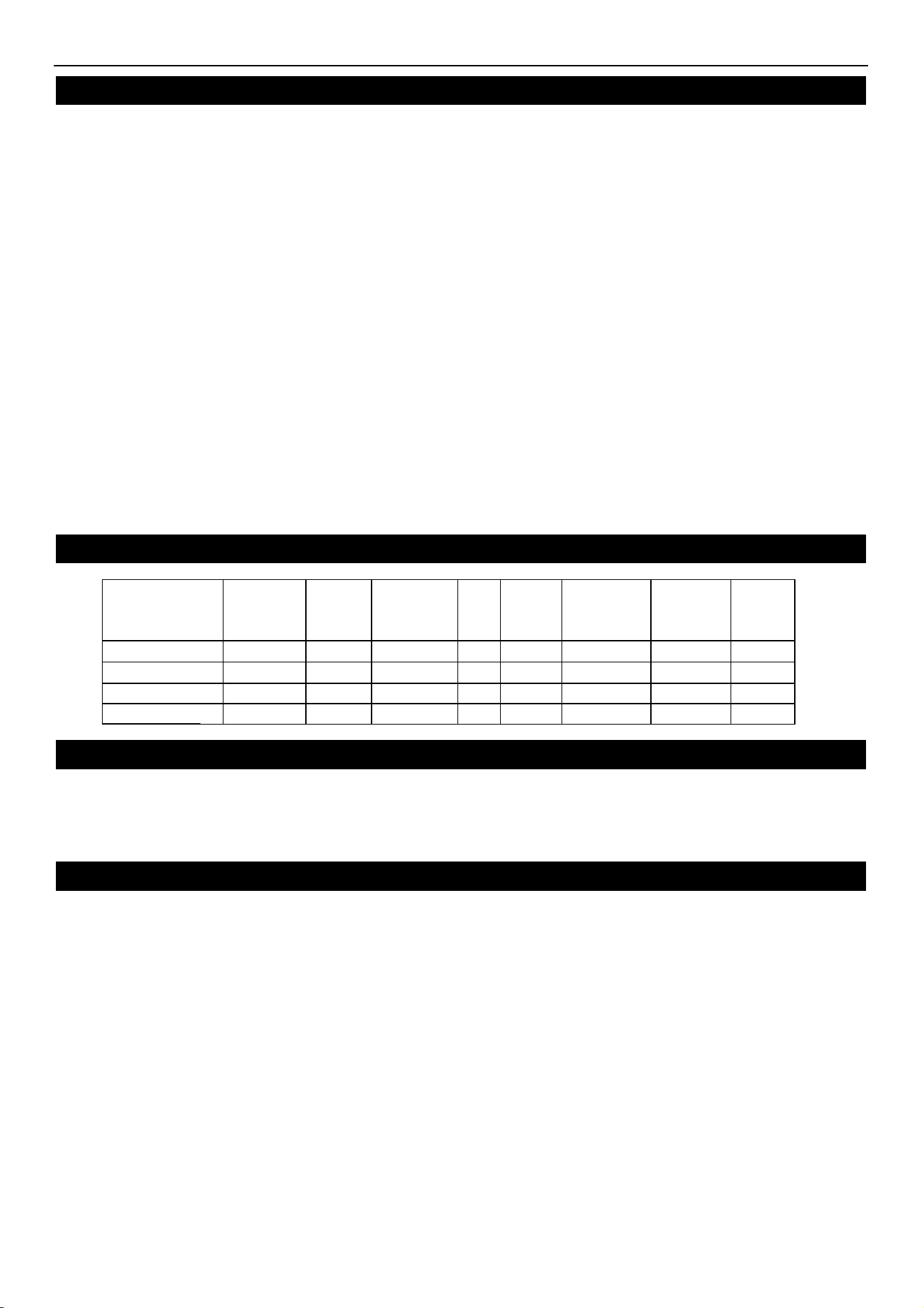
MODEL# V/Hz/Ph
AMPS
STORAGE
CAPACITY
Cu-ft
HP
BTU
CHARGE
OZ
SHIP
WEIGHT
LBS
NEMA
PLUG
BLBC-36B-HC 115/60/1
3.3 9.27 1/4
2
0
00
2.
12
211
5
-
15P
115/60/1
3.3 13.7 1/4
32
00
2.
47
246
5
-
15P
115/60/1
3.3 19 1/4
54
00
3.
17
284
5
-
15P
115/60/1
3.0 29.1 1/3
76
00
3.5
3
394
5
-
15P
BLBC-50B-HC
BLBC-65B-HC
BLBC-95B-HC

Service and Installation Manual
7
ELECTRICAL CONNECTION
The cooler must be connected to a socket with the correct voltage/frequency, as show on the nameplate.
The standard for u.s is 115V/50HZ. Voltage variations of ±10% are acceptable. Greater variations can
damage the cooler, and in such cases the factory warranty is not valid. In the case of extreme voltage
variation, above or below the standard, your local supplier will be able to advise you, what to do.
The cooler requires extra protection according to the Danish Heavy Current Regulations.
This also applies, if a new cooler is replaced, which did not have such protection. The purpose of extra
protection, is to protect the user from dangerous electric shocks, in the case of defect.
OPERATION INSTRUCTIONS
The temperature in the cooler is automatically regulated by a pre adjusted thermostat.
The position of the cooler, the ambient temperature, the number of times the lid is opened and for how long
the lid is opened, all these factors affect the temperature in the cooler, which should therefore not be placed
in sunlight or closed to a heat-radiating surface.
If your cooler is fitted with a lock, the key should be kept out of the reach of children. If your new cooler is to
replace an older one, which is not in use any more, you should remove the lock mechanism, on the old one,
before disposing it.
STORAGE OFF FOOD STUFFS
The cooler is only designed as a conserver, and is the not suited to cold freeze foodstuffs. In other words,
only refrozen food must be placed in the cooler. Next to that the cooler must not be filled beyond the height
limit of the contents line, or in cases where there is no such line, to within 100mm below the lid. This is to
ensure the product temperature less than 36°F.
DEFROSTING THE CABINET
In the course of time, a frost layer will be naturally formed within the cooler.
When this layer is 5-8mm thick, the cabinet should be defrosted the following way:
—remove the plug from the socket;
—open the lid and leave it open;
—loosen the frost layer using a plastic or wooden scraper.
The defrosting process can be speeded up by using bowls of hot water.
Never use sharp or pointed instruments
After final defrosting, the cabinet should be cleaned as described in section: Maintenance. the cabinet
should be thoroughly dried after cleaning.
Service and Installation Manual
8
OPERATION
Do not throw items into the storage area. Failure to heed these recommendations could result in damage to
the interior of the cabinet.
Refrigerated cycle
Refrigerators: During the refrigeration cycle, the evaporator fans wilt run continuously even when one or
more doors are open. The door switch will activate the lights when opened.
1. Every 6 hours, the unit will turn off and to allow the evaporator coil to defrost. The controller now
displays the defrost symbol. When the coil temperature reaches 41°F or after 20 minutes of defrost, the
unit will turn on again.
2. Anti-condensation heaters on door frames work in conjunction with the compressor.
3. The factory setting for the temperature range is 34°F to 38° F.
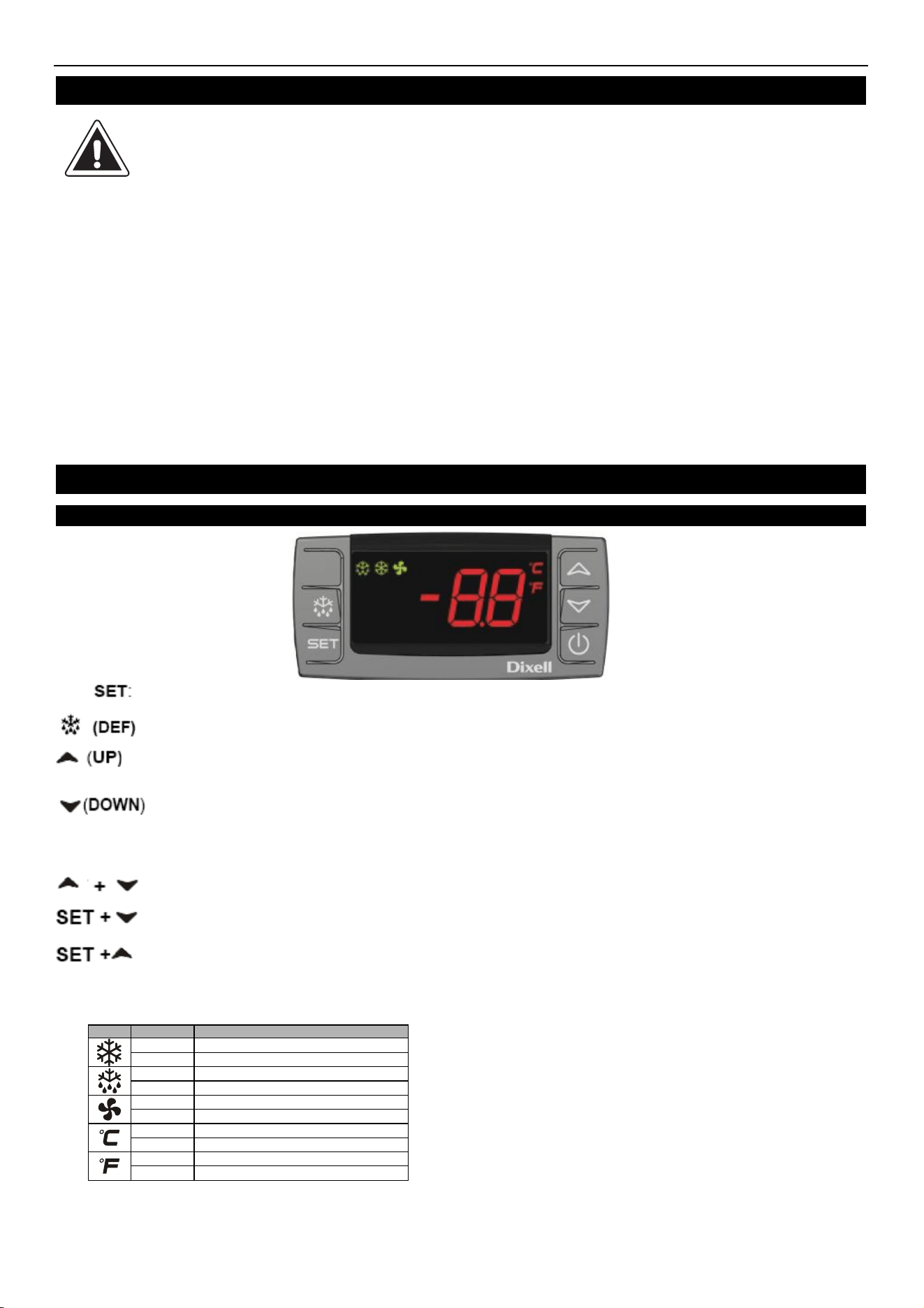
SOLID-STATE THERMOSTAT DESCRIPTIONS
1. FRONT PANEL COMMANDS
To display target set point; in programming mode it selects a parameter or confirms an operation.
To start a manual defrost
To view the latest alarm occurrence; in programming mode it browses the parameter
codes or increases the display value
To view the latest alarm occurrence; in programming mode it browses the parameter
codes or decreases the display value
KEY COMBINATION
To lock & unlock the keyboard
To enter in programming mode
To return to the room temperature display
1.1 Function of LEDS
CAUTION
LED MODE SIGNIFICATO
On Compressor enabled
Flashing Anti-short cycle delay enabled (AC parameter)
On Defrost in progress
Flashing Dripping in progress
On Fans output enabled
Flashing Fans delay after defrost
On Measurement unit
Flashing Programming mode
On Measurement unit
Flashing Programming mode
Service and Installation Manual
9
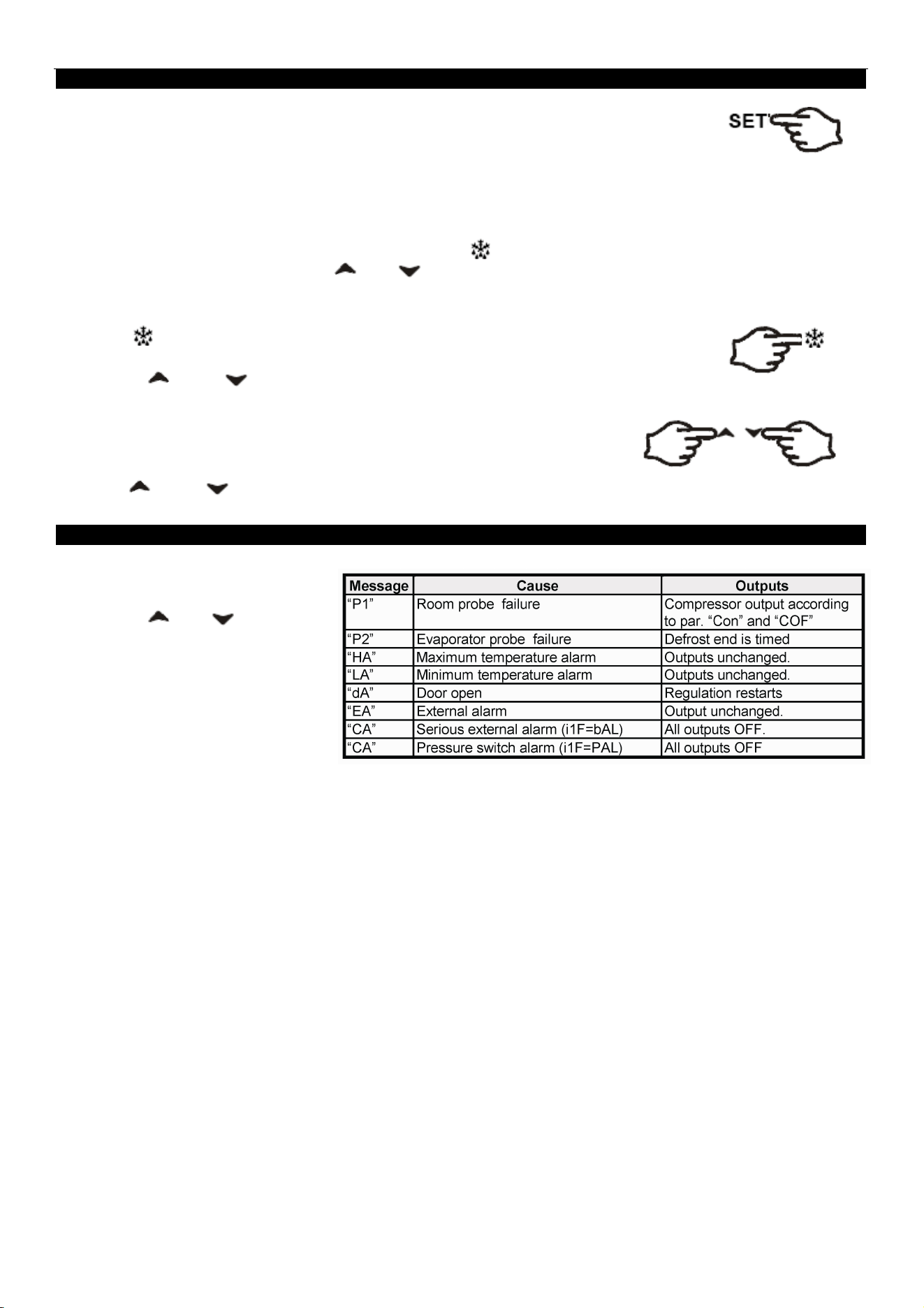
2. MAIN FUNCTIONS
2.1 HOW TO SEE THE SETPOINT
1. Push and immediately release the SET key: the display will show the set point value.
2. Push and immediately release the SET key or wait for 5 seconds to display the
sensor value again.
2.2 HOW TO CHANGE THE SETPOINT
1. Hold the SET key for more than 2 seconds to change the set point value.
2. The value of the set point will be displayed and the LED starts blinking.
3. To change the set value push the or key within 10s.
4. To set a new point value, push the SET key again or wait 10s.
2.3 HOW TO START A MANUAL DEFFROST
Hold the
key for more than 2 seconds and the manual defrost will start
2.4 HOW TO LOCK THE KEYBOARD
1. Hold the and keys for more than 3s.
2. The “POF” message will be displayed and the keyboard will be locked. At this point, it will be possible only
to see the set point or the MAX or Min temperature stored.
3. If a key is pressed more than 3s the ”POF” message will be displayed.
2.5 HOW TO UNLOCK THE KEYBOARD
Hold the and keys together for more than 3s, till the “POF” message is displayed.
3. ALARM SIGNALS
HOW TO SEE THE ALARM AND
RESET THE RECORDED ALARM
1. Hold the or key to
display the alarm signals.
2. When the signal is displayed, hold
the SET key until the “rst” message
is displayed, and push the SET key
again. The “rst” message starts
blinking and the normal temperature
will be displayed.

Service and Installation Manual
10
MAINTENANCE
This cooler can be cleaned using warm water and a mild detergent. Rinse with clean water to finish off.
Never use detergents that contain chlorine.
The lid may be cleaned in the same way as the cooler.
If a condenser and associated fan are fitted at the back bottom of the cooler, they can gather dust and dirt. If
cleaning is necessary, they should be vacuumed with a soft brush.
Please note that the parts behind the protective grille can be hot and rotating.
TROUBLE SHOOTING
If you are having problems with your cooler, please check the following point before calling service
personne
l:
—Is the cooler connected to the power supply?
—Is the socket switch on?
—Is the fuse in the switch cabinet intact?
—Has the earth leak circuit breaker (if there is one) cut out?
—Has there been power cut?
If the cooler is in a place that is very hot or with bad ventilation, make sure to provide adequate ventilation. If
the condenser mentioned in Section Maintenance is not clean, make sure to vacuum it.
If the above points have been checked and the cooler is still not working, please call service personnel.
Inform them the nature of the problem, the type of cooler, serial number and item number (provided on the
nameplate at the back of the cabinet).
Do not open the cabinet, as every opening hastens the thawing point. As s rule, the goods will not suffer
damage at the first 12 hours. If more time passes, the goods must be moved to another cooler.
DISPOSAL
When a worn-out cooler is to be disposed off, this must be done in a correct manner, with respect to the
environment. Please be aware of the rules covering the disposal of such terms; there may be special
requirements or conditions to be observed.
Information about disposal may be obtained from:
—your supplier;
—the relevant authorities (the Local Authority, environmental agencies, etc.).
SPECIAL POINTS TO NOTE
The information contained in these instruction for use, was correct at the term of printing. On account of our
constant produce development, however, we reserve the right to make changes in the cooler described here.
Naturally, we will attempt to keep instructions for use up to date.
If you are in doubt as to the correct use of the cooler, please contact your supplier, who will be able to advise
you.
The producer is not responsible for accident or problems, occurred as a result of wrong connection of the
cooler.
Service and Installation Manual
11
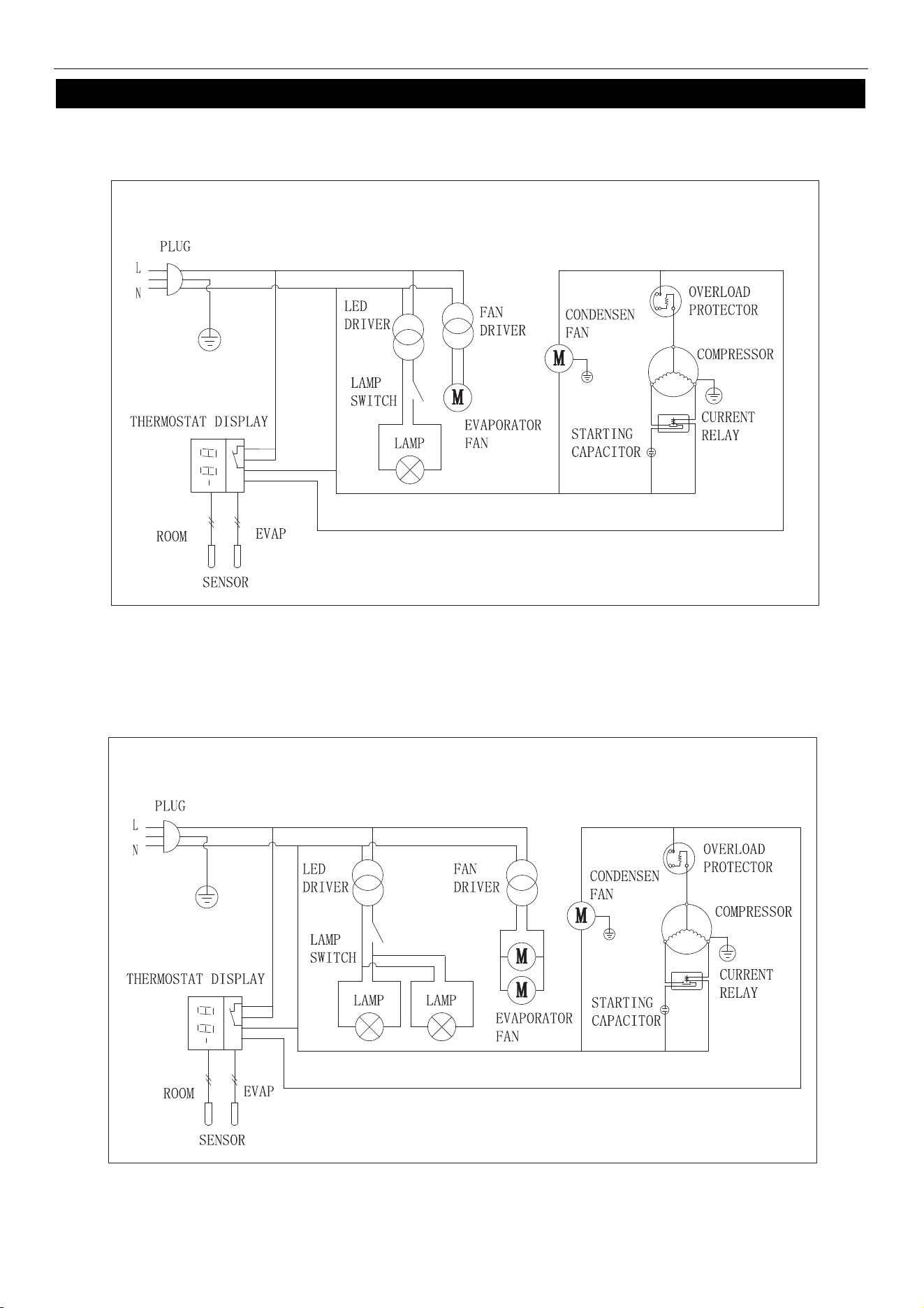
WIRING DIAGRAM
MODEL:
BLBC-36B-HC / BLBC-50B-HC / BLBC-65B-HC
MODEL:BLBC-95B-HC
Service and Installation Manual
12
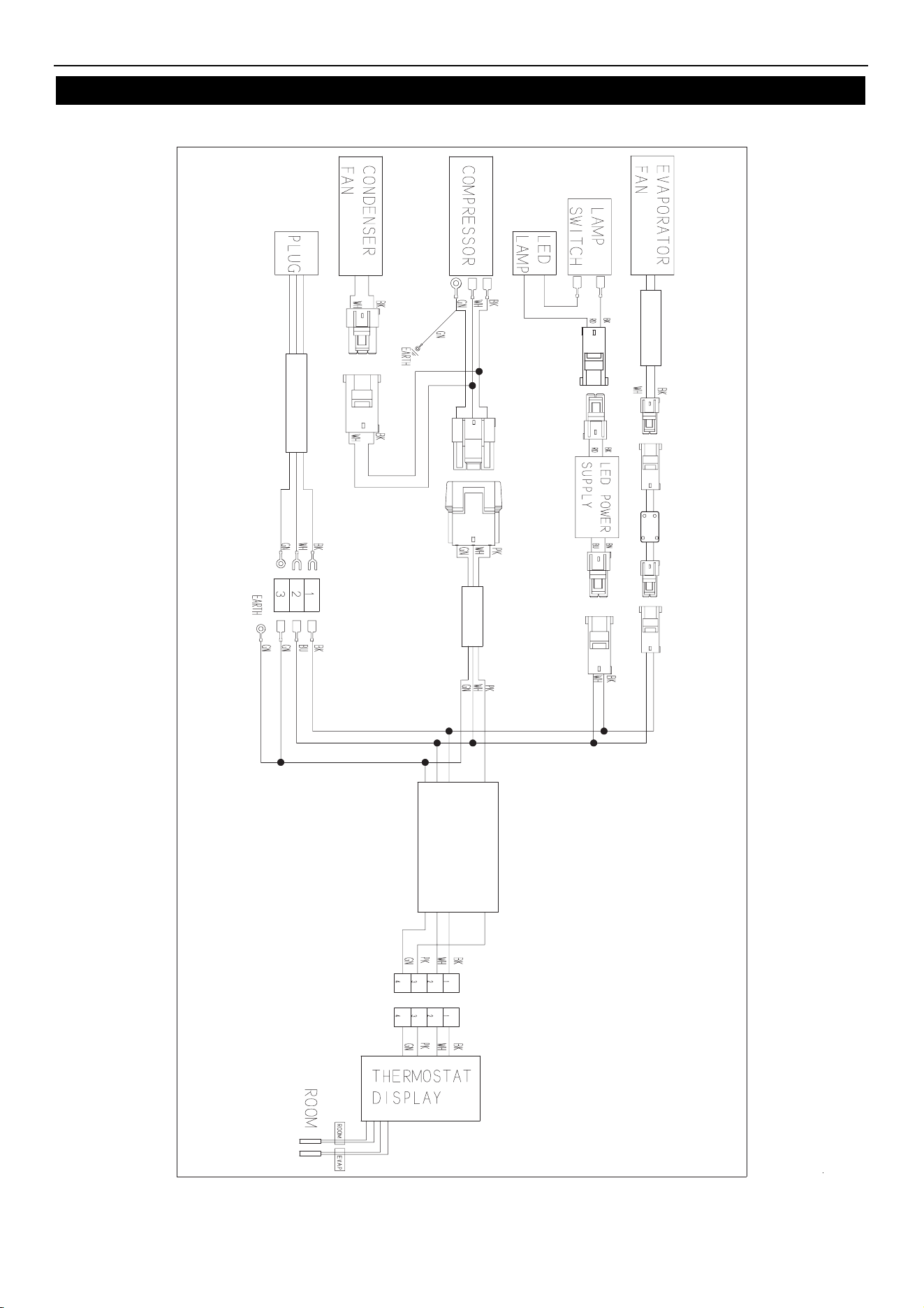
WIRING DIAGRAM
MODEL:
BLBC-36B-HC / BLBC-50B-HC / BLBC-65B-HC
POWER SUPPLY
L
N
1
2
Service and Installation Manual
13
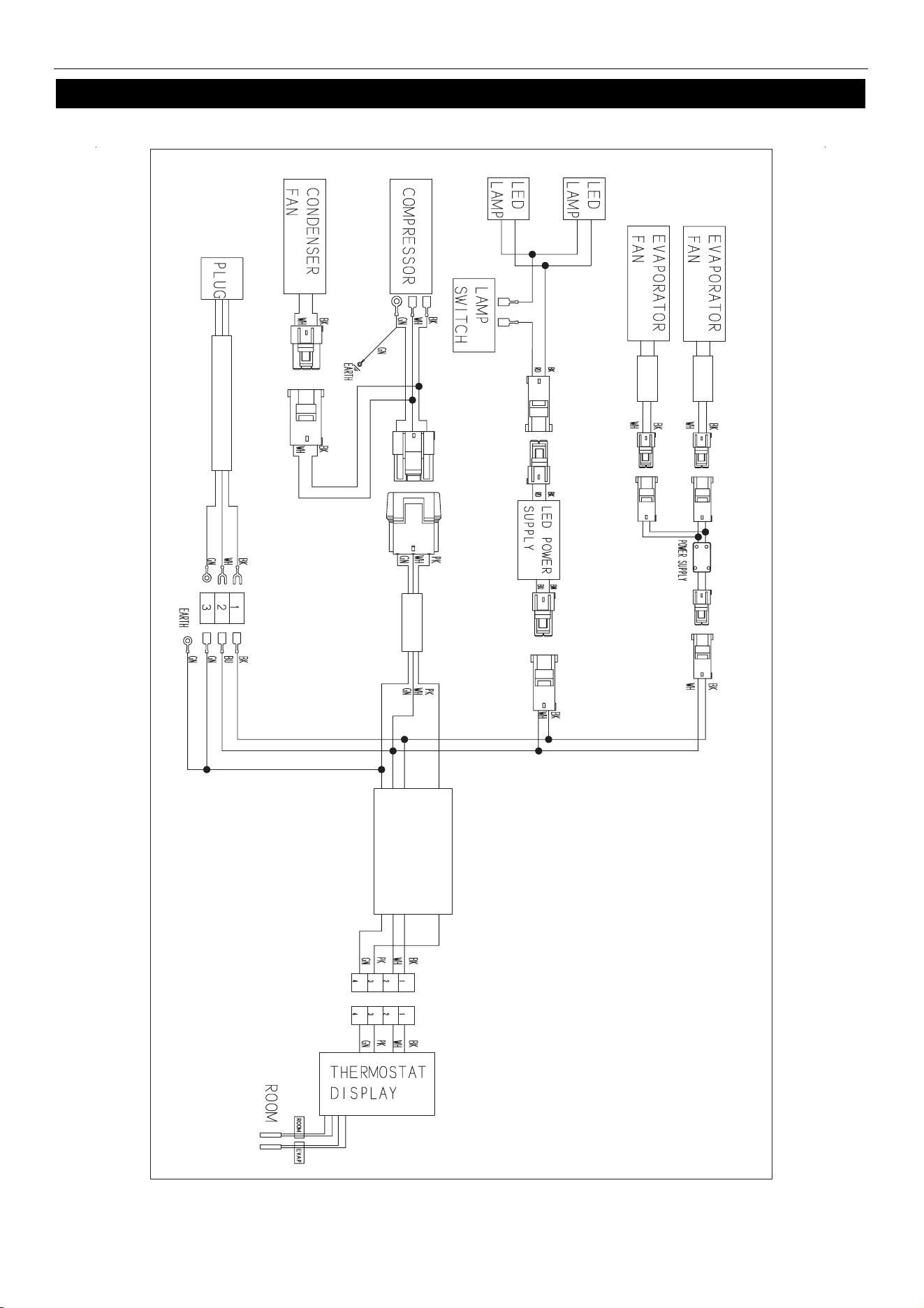
WIRING DIAGRAM
MODEL:
BLBC-95B-HC
L
N
1
2