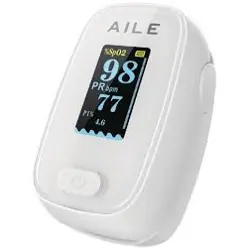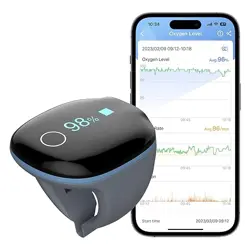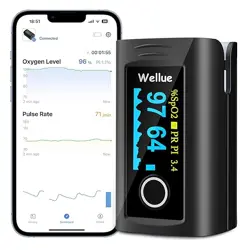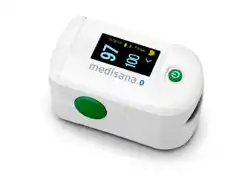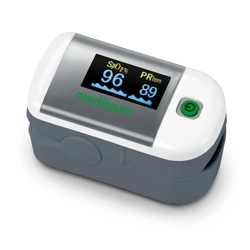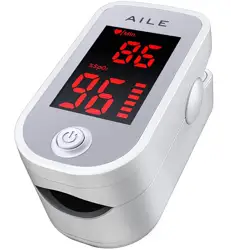
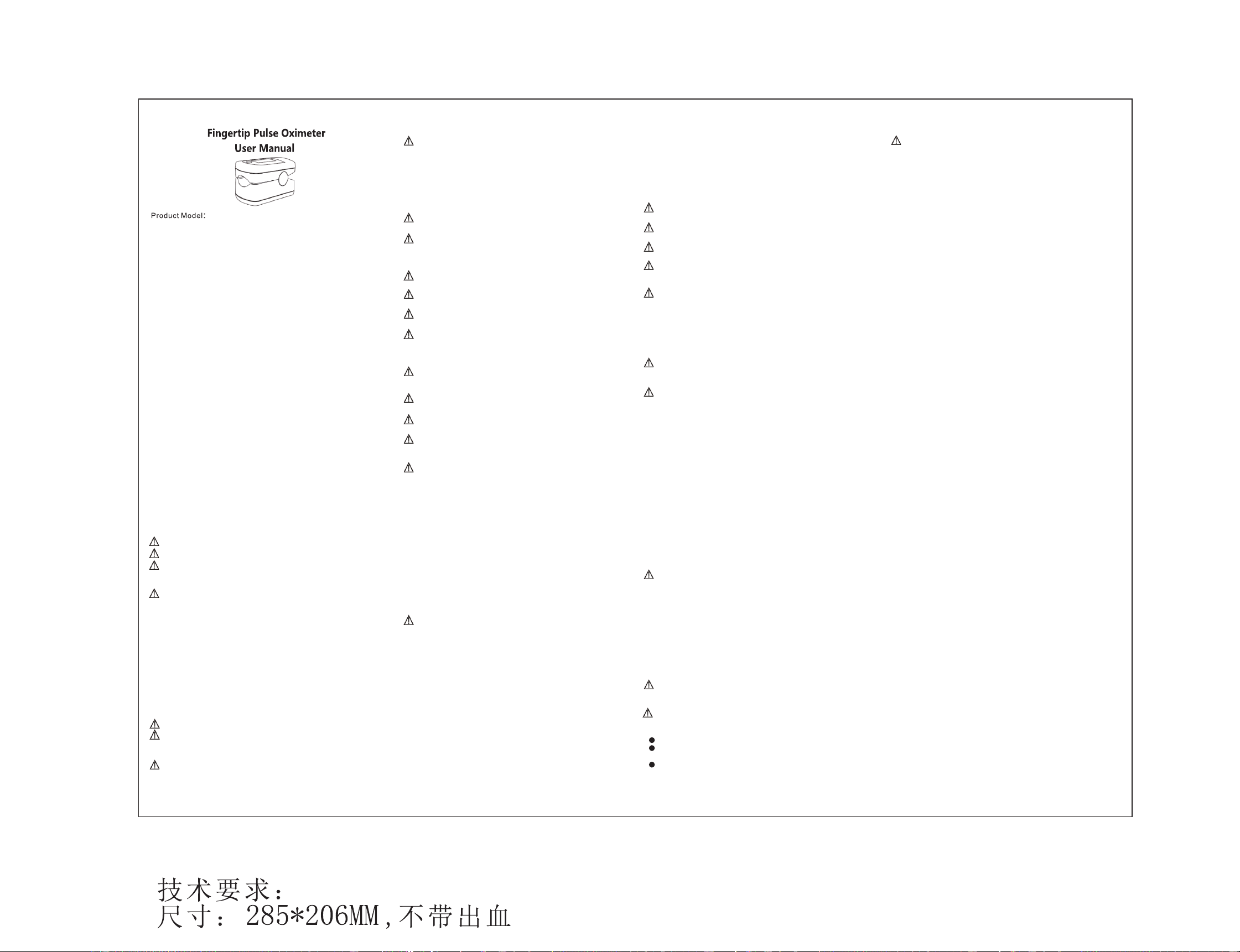
The product is easy to operation, small in volume, light in weight, co-
nvenient in carrying, and adopted the low consumption design, with
strong resistance to ambient light interference ability. 2pcs AAA batt-
eries can be continuously used for 12 hours, and battery voltage can
be indicated. The product is suitable for use in home healthcare, ho-
spital (including internal medicine, surgery, anesthetic, intensive ca-
re and etc.), oxygen bar, community medical centre, sports healthc-
are and etc.
The fingertip pulse oximeter is a portable non-invasive dev
ice inten-
ded for spot-checking of oxygen saturation of arterial hemoglobin
(SpO ) and pulse rate of adult in hospitals, hospital-type facilities,
2
and home environments.
It applies to persons of all colors except infants and neonates.
No special training in the use of the product, but requires the user to
read the instructions before use. Readers are adults, and would be
able to read and understand the operation manual; there are no rea-
ding and understanding barriers.
Intended Use
Measurement Principle
Arterial oxygen saturation is measured by a method called pulse oxi-
metry. It is a continuous, non-invasive method based on the different
spectra absorption of hemoglobin and oxyhemoglobin. It measures
how much light, sent from light sources on one side of the sensor, is
transmitted through patient tissue (such as a finger), to a receiver on
the other side. Two beams of different wavelength of lights (660nm
red and 895nm near infrared light) can be focused onto a human nail
tip through c clamping finger-type sensor. A measured signal obtain-
ed by a photosensitive element, will be shown on the oximeter's disp-
lay through proces
s in electronic circuits and microprocessor.
SpO is a measurement of the functional oxygen saturation.
2
The value of SpO and PR were through average processing.
2
The light (the red light and the infrared light which is invisible)
emitted from the device is harmful to the eyes, so the user and
the maintenance personnel cannot stare at the light.
The device don't have Technical specifications manual, the pr-
oduct specified see the instructions.
Operation Instruction
The finger measured has no pathological change.
①Ambient light radiation
②Patient movement
③Diagnosis test
④Low perfusion
⑤Electromagnetic, such as using the cell phone nearby
⑥Electrical equipment
⑦The fingernail polish
⑧Artery blood is too low to measure, which is caused by shock, anemia,
low-temperature or vasoconstrictor.
⑨Heavy smoking patient may appear instantaneous high CO, causing
the increase of the hemoglobin CO.
⑩Patients with severe jaundice will have high bilirubin, which metabol-
izes CO that shapes significant lever carboxyhemoglobin. Thus causes
high SpO
2.
When the waveform display is not the law (AS-301, AS-302,
AS-303,AS-304) or pulse bar graph does not bounce (AS-3
01-L, AS-302-L,AS-304-L),the displayed SpO or pulse ra-
2
te value is potentially incorrect.Because the waveform is un-
der-normalized, so the signal waveform when the irregular or
display line, the value of SpO and PR displayed may be inc-
2
orrect.
Product Accessories
One lanyard
One instruction manual
Battery Installation
NOTE:
The device will automatically star and the luminous tube lights w-
hen the batteries installed correctl
y.
Please remove the batteries if the pulse oximeter will not be used
for long periods of time.
Cautions:
The battery power is showed in the middle of the screen. Plea-
se replace the Batteries when battery sign shows blank space.
Caution: Batteries polarities must be installed correctly, other-
wise damage might be caused to the device.
Please remove the batteries from the battery compartment if
the pulse oximeter will not be used for a long periods of time.
Follow local governing ordinance and recycling instructions re-
garding disposal of batteries, other electron devices and outer
packing.
Keep the oximeter away from young children, Small items such
as the battery door, battery and lanyard are choking hazards.
Using the Lanyard
Thread the thinner end of the lanyard through the loop which is u-
sed for lanyard. Thread the thicker end of the lanyard through the
thinner end of it, and then pull it tightly.
Keep the pulse oximeter away from young children. Small ite-
ms such as the battery door, battery, and lanyard are choking
hazards.
Do not hang the lanyard from the device's electrical wire.
Maintenance
Cleaning:
Please use medical alcohol to clean the silicone touching the fin-
ger inside of oximeter with a soft cloth dampened with 70% isopr-
opyl alcohol. Also clean the being tested finger using alcohol bef-
ore and after each test.
Do not pour or spray liquids onto the oximeter, and do not allow a-
ny liquid to enter any openings in the device. Allow the oximeter to
dry thoroughly before reuse.
The device requires no routine calibration or maintenance other
than replacement of batteries.
Disinfecting: Damage may be caused by disinfecting. It is recom-
men
ded that the device should be disinfected when doctors think
it is necessary. The device should be cleaned before disinfecting.
Maintenance: Please power up three hours per three months to
prevent the damage of the water vapor, if the device does not wor-
k for a long time or is stored in a moisture environment. Additional
consideration for the maintenance, please follow the hospital ma-
intenance plan.
Clean surface of the fingertips pulse oximeter before it is used
to diagnosis for patient.
Do not use the caustic or abrasive detergent. It is recommended
to keep the device in dry environment. Extreme moisture may aff-
ect product lifetime and cause damage.
Do not pour and spray liquids onto the fingertips pulse oximeter,
accessories, connectors, switch, or do not allow any liquid to ent-
er openings of the oximeter to prevent the damage of the oximeter.
The use life of the device is five years when it is used for 15 meas-
urements every day and 10 minutes per one measurement. Plea-
se stop to use the product and follow local governing ordinance
and recycling instructions regard
ing disposal waste.
The oximeter requires no routine calibration or maintenance
during its life time. Please contact the service representative
if one of the following cases occurs.
The oximeter is calibrated by simulation fingertip pulse oxim-
eter before it leaves the factory, which can display the hemo-
globin saturation.
The device cannot show normally or do not display at all.
The device cannot be powered on (New batteries have been
changed.)
The sensor of the oximeter was damaged seriously and cau-
ses the oximeter stop working properly.
If the sensor is damaged (not light), indicating that the sensor
has been damaged. Please do not continue to use the oximet-
er. And contact your local dealer for processing.
NOTE:
A functional tester cannot be used to assess the accuracy of a pu-
lse oximeter. Clinical testing is used to establish the SpO accura-
2
cy. The measured arterial hemoglobin saturation value (SpO ) of
2
the sensors is compared arterial hemoglobin oxygen (SaO ) valu-
2
e, determined from blood samples with a laboratory CO-oximeter.
The accuracy of the sensors in comparison to the CO-oximeter s-
amples measured over the Spo2 range of 70% - 99%. Accuracy d-
ata is calculated using the root-mean-squared (Arms value) for all
subject, per ISO 80601-2-61 : 2011, Medical el
ectrical equipment
— Part 2-61: Particular requirements for basic safety and essent-
ial performance of pulse oximeter equipment.
A functional tester is used to measure how accurately Fingertip
Pulse Oximeter is reproducing the specified calibration curve and
the PR accuracy.
The model of functional tester is Index2 FLUKE simulator and the
version is v3.00.
Technology
Display Type
LED digitron display
SpO
2
Measurement range: 36% ~ 99%
Resolution:1%
Precision:±2%(70% ~ 99%).Less than 70% no definition
Pulse Rate
Measurement range
:30bpm ~ 250bpm
Resolution:1bpm
Precision:1% or 1bpm choose the bigger one between the two
Low perfusion error
SpO and pulse rate can be shown correctly when pulse-filling
2
ratio is 0.2%.
Resistance to Ambient light interference ability
The deviation between the SpO value measured in the condit-
2
ion of indoor day lighting or interior lights lighting, and that of d-
arkroom is less than ±1%.
Power supply
d.c. 3.0V (2 × AAA alkaline batteries)
Working current
20mA ~ 130mA
Battery life
Not less than 12 hours
Safety type
Interior battery, Type BF
Directi
on sensor
Four directions 4(optional)
Light sensor
Red light(wavelength 660nm ~ 666nm 7mW)
Infrared light(wavelength 890nm ~ 904nm 5.5mW)
Date update cycle
Not more than 12s
Degrees of protection
IP21
NOTE: The information about wavelength range can be especially
useful to clinicians.
Dimensions
Length: 58.5mm Width: 32mm
Height:32mm Weight:30g
Product Features
Do not use the fingertip pulse oximeter in situations where
alarms are required.The device has no alarms of the SpO
2
and pulse.
Operation of the fingertip pulse oximeter may be affected by
the use of an electrosurgical unit.
This fingertip pulse oximeter is neither suitable for continuo-
us monitoring the same site of the same patient nor suitable
for measuring neonate and infant.Check the finger touching
site for every two hours. The finger measured should move
or shift part if the finger skin changes. Some patients, such
as the one with perfusion disorder or sensitive s
kin, may ne-
ed frequent measurement. Long time continuous monitoring
could increase the unexpected change in skin, such as sens-
itive, red, blister or pressure necrosis , etc.
The results may be wrong if you did not insert the finger thor-
oughly in the oximeter
Please use the medical alcohol to clean the finger and the o-
ximeter rubber touched by finger. (The oximeter rubber is m-
edical silicon, which has no toxin, no harmful to human skin
and has passed biocompatibility test.)
Do not use the device in an MRI or CT environment. It may c-
ause errors of measurement data.
Do not use the device in the presence of flammable anesth-
etic mixed with air, oxygen or nitrous oxide.
Portable and mobile RF communications equipment can aff-
ect medical electrical equipment.
These materials that contact with the patient's skin contain
medical silicone and ABS plastic enclosure are all pass the
ISO 10993-5 tests for invitro cytotoxicity and ISO 10993-10
Tests for irritation and delayed-type hypersensitivity.
Temperature may rise in the process of product use, but the
temperature may not exceed 41 degrees and no harm will be
caused to the user.
It is suggested that the device be used indoors or in the env-
ironment where there are no strong light and too much dust.
It is best to store the product in-20℃-+55℃ and ≦93% hum-
idity.
Do not dismount, take apart or maintain the product by self.
Please contact the service provider if there is any problem of
the product.
If the accuracy of the measurement by the device is uncert-
ain, check the patient's vital signs by alternative means first.
Then check the oximeter. Inaccurate measurement may be
caused by the following factors.
Before use, carefully read the user manual.
The LED digitron display oximeter can not change direction and no
waveform display.
③ Read the data display on the screen ( about 3~4s). The bargraph heig-
ht indicates the pulse strength.
④ The device will turn itself off automatically after 8 s idling.
① Open up the battery compartment cover
② Install two AAA batteries into the battery compartment correctly to
match the positive and negative. Slide the battery door cover
horizontally along the arrow
① Press the “power switch” key on front panel to turn the pulse oximete
r power on.
② Place your one finger (forefinger or middle finger) into the cavity of the pulse
oximeter. It is also available to measure if using your other fingers, such as thumb,
ring finger or litter finger.
AS-301
Environment Requirements
Operation temperature: 5-40℃
Ambient humidity: ≤80%
Atmosphere pressure: 86-106 kPa
Storage, transportation condition
Operation temperature:(-20~55)℃
Ambient humidity: ≤93%(no condensation)
Atmosphere pressure:(50~106)kPa
Troubleshooting
Problems Possible Cause Corrective Action
SpO2 or pulse
rate is incorrect
Insert the finger incorrect position Measure again after
reinserting you finger
SpO2 or Pulse
rate is erratic
①Finger might not be in the correct
position
②Finger trembling or patient motion
①Reinsert the finger
②Patient must remain still
The oximeter
does not turn on
①Batteries week or batteries not
installed
②Batteries incorrectly installed
③Damaged oximeter
①Replace the batteries
②Ensure the batteries
are installed correctly
③Contact service
representative
The screen
suddenly shuts
down
①The oximeter is powered off
automatically when no signal of the
finger is detected for long time
②Inadequate power of the batteries
①Normal
②Replace the new
batteries
The oximeter
blackout
The oximeter probe failure The device failure, contact
customer service
AS -301, AS-302
orAS-303,AS-304
displays
waveform with no
SpO2 and pulse
rate
The signal of SpO2 is not integrity or
not correct
Replace a finger and
measure again
The device failure, contact
customer service
AS-301-L,AS-302
-L ,AS-304-L
displays bargraph
with no SpO2 and
pulse rate
The signal of SpO2 is not integrity or
not correct
①Replace a finger and
measure again
②The device failure,
contact customer service
Symbol Definitions
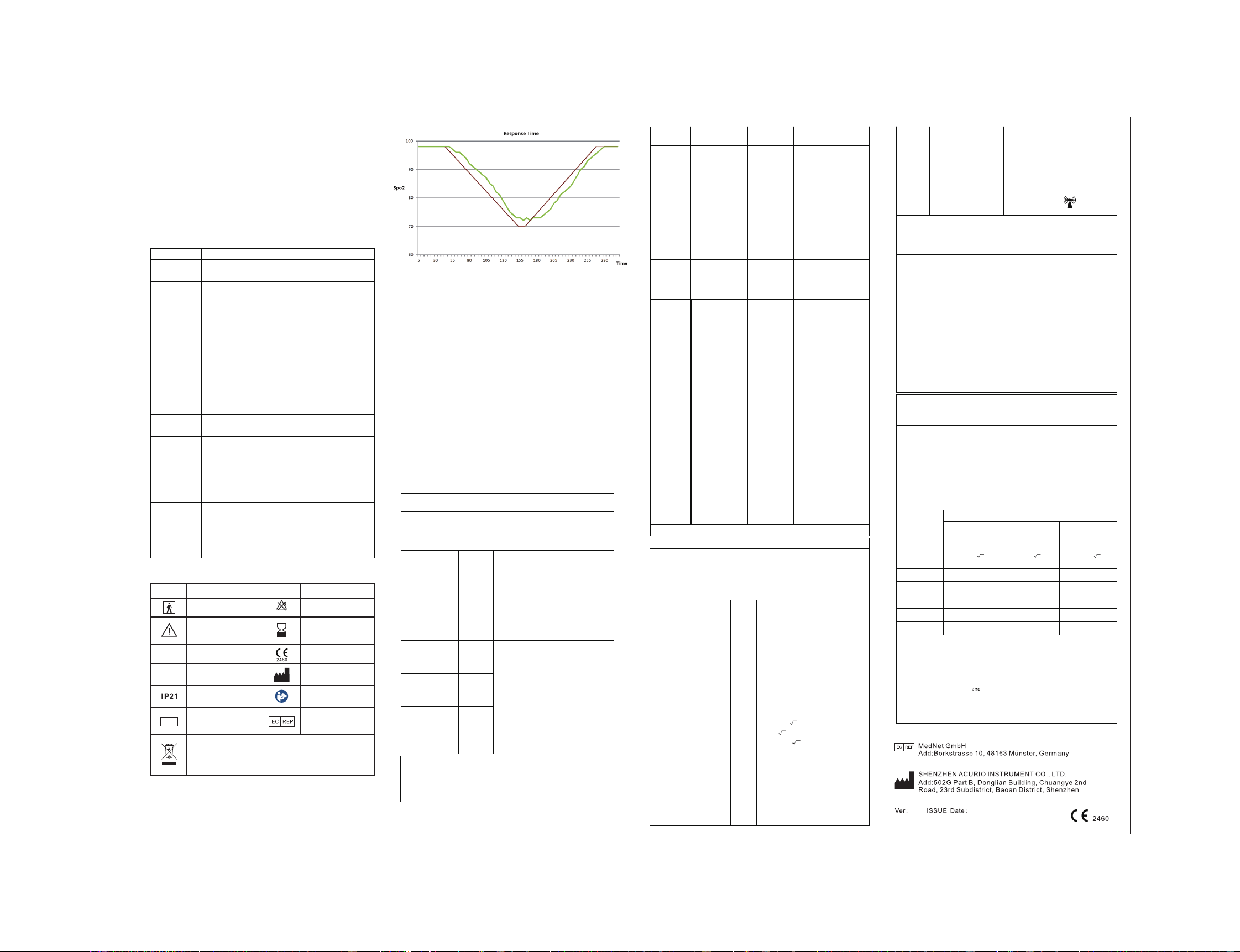
Equipment Response Time
As shown in the following figure.
Response time of normal average is 10.4s
Electromagnetic compatibility
Note: Fingertip pulse oximeter AS-302-L,
comply with the
requireme- nt of Electromagnetic Compatibility in YY 0505-2012.
And IEC 60601-1-2:2007
The user needs to install and use according to electromagnetism
compatibility information which is attached with it.
Portable and mobile RF communication devices may influence
fingertip pulse oximeter AS-302-L、performance. So fingertip
pulse oximeter AS-302-L hould be kept away from the strong
electromag-netic interference, such as adjacent to cellu
lar phone,
mi
c
rowave oven etc, during using. Guidance and manufacturer's
declar ation stated in the appendix.
Warning:AS-302-L should not be used adjacent to or stacked with
other equipment and that if adjacent or stacked use is necessary,
AS-302-L should be observed to verify normal operation in the
confi guration in which it will be used.
Appendix:
Symbol Definitions Symbol Definitions
Type BF Equipment
Attention! Consult
accompanying
documents
Oxygen saturation
Pulse rate(BPM)
Symbol for disposed waste electrical and electron-
ic equipment(Follow local governing ordinance a-
nd recycling instructions regarding disposal of ba-
tteries)
Drip proof
Serial No.
No SpO Alarm
2
Use by date
CE MARK
Manufacture's
information
Follow operating
instructions
Authorized repres-
entative in the Eur-
opean Community
SpO %
2
PR BPM
SN
SpO
2
Guidance and Manufacture’s declaration – electromagnetic immunity
The AS-302-L Fingertip Pulse Oximeter is intended for use in the
Electromagnetic environment specified below. The customer or the user of
AS-302
-
L should assure they are used in such an environment.
Immunity
test
IEC60601 test level
Compliance
level
Electromagnetic
Environment- Guidance
Electrostatic
Discharge
(ESD)
IEC
61000-4-2
±6 kV contact
±8 kV air
±6 kV contact
±8 kV air
Floors should be wood,
concrete, or tile. If the
floor is covered with
synthetic material, the
relative humility should
be at least 30%.
Electrical
fast
transient
/burst
IEC
61000-4-4
±2Kv Power
supply lines
±1kV Input/output
line
Not
Applicable
Main power quality
should be that of a typical
commercial or hospital
environment.
Surge
IEC
61000-4-5
±1 kV Line(s) to
line(s)
±2 kV Line(s) to
ground
Not
Applicable
Main power quality
should be that of a typical
commercial or hospital
environment.
Voltage dips,
short
interrupons
and voltage
variaons on
power
supply input
lines
IEC
61000-4-11
<5 % UT, for 0.5
cycle
(>95% dip in UT)
40 % UT, for 5
cycles
(60% dip in UT)
70 % UT,for 25
cycles
(30% dip in UT)
<5 % UT, for 5s
(>95% dip in UT)
Not
Applicable
Main power quality
should be that of a typical
commercial or hospital
environment.
If the user
of the
AS-302-L
requires continued
operation during power
mains interruptions, it is
recommended that
the
AS-302-L
and be powered from an
uninterruptible power
supply or a battery.
Power
frequency
magnetic
field
(50/60Hz)
IEC
61000-4-8
3A/m 3A/m
Power frequency
magnetic fields should be
at levels characteristic of a
typical location in a
typical commercial or
hospital environment.
Note:UTis the a.c. mains voltage prior to application of the test level.
Guidance and Manufacture’s declaration – electromagnetic immunity
The AS-302-L Fingertip
Pulse Oximeter is intended for use in the Electromagnetic environment
specified below. The customer or the user of AS-302-L should assure they
are used in such an environment.
Immunity
test
IEC60601 test
level
Compli
ance
level
Electromagnetic Environment-
Guidance
Conducted
RF
IEC
61000-4-6
Radiated
RF
IEC
61000-4-3
3 Vrms
150 kHz to 80
MHz
3 V/m
80 MHz to 2.5
GHz
Not
Applica
ble
3 V/m
Portable and mobile RF
communications equipment should be
used no closer to any part of the
AS-302-L including
cables, than the
recommended
separation distance
calculated from the equation applicable
to the frequency of
the transmitter.
Recommended separation distance
d =
P2.1
d =
P2.1
80 MHz to 800 MHz
d =
P3.2
800 MHz to 2.5 GHz
Where:
P is the maximum output power
rating of the transmitter in watts (W)
according to the transmitter
manufacturer
D is the recommended separation
distance in meters (m).
Field strengths from fixed RF
transmitters, as determined by an
electromagnetic site survey,
a
should be
less than the compliance level in each
frequency range.
b
Interference may occur in the
vicinity of equipment marked with
following symbol.
Note 1:Between 80MHz and 800MHz, the higher frequency range applies.
Note 2:These guidelines may not apply in all situations. Electromagnetic
propagation is affected by absorption and reflection from structures, objects
and human bodies.
a
Field strengths from fixed transmitters, such as base stations for radio
(cellular/cordless) telephones and land mobile radios, amateur radio, AM
and FM radio broadcast and TV broadcast cannot be predicted theoretically
with accuracy. To assess the electromagnetic environment due to fixed RF
transmitters, an electromagnetic site survey should be considered. If the
measured field strength in the location in which the
AS-302-L is used
exceeds the applicable RF compliance level above, the AS-302-L
should be observed to verify normal operation. If ab
If abnormal performance is observed, additional measures may
be necessary, such as reorienting or relocating the AS-302-L
b
The frequency range between 150KHz~80MHz,fields strengths should
be less than 3 V/m.
Recommended distance between portable and mobile RF equipment and
fingertip pulse oximeter AS-302-L
The AS-302-L are intended for use in an electromagnetic environment
in which radiated RF disturbances are controlled. The customer or the user o
the
f
AS-302-L can help prevent electromagnetic interference by maintaining
a minimum distance between
portable and mobile RF communications
equipment (transmitters) and the AS-302-L as recommended below,
according to the maximum output power of the
communications
equipment.
Maximum
rated
output
power of
transmitter
W
Separation distance according to frequency of transmitter (m)
150 kHz ~ 80 M
Hz
d =
P2.1
80 MHz ~ 800
MHz
d =
P2.1
800 MHz~ 2.5
GHz
d =
P3.2
0.01 Not Applicable 0.12 0.23
0.1 Not Applicable 0.38 0.73
1 Not Applicable 1.2 2.3
10 Not Applicable 3.8 7.3
100 Not Applicable 12 23
For transmitters rated at a maximum output power not listed above, the
recommended separation distance d in meters (m) can be estimated using the
equation applicable to the frequency of the transmitter, where P is the
maximum output power rating of the transmitter in watts (W) according to the
transmitter manufacturer.
Note 1:Between 80 MHz 800 MHz,the higher frequency range applies.
Note 2:These guidelines may not apply in all situations. Electromagnetic
transmission is affected by obsorption and reflection of structures, objects and
human bodies.
Guidance and Manufacture’s declaration – Electromagnetic emission
The AS-302-L Fingertip Pulse Oximeter is intended for use in the
Electromagnetic environment specified below. The customer or the user of
AS-302-L should assure they are used in such an environment.
Emission test
Complian
ce
Electromagnetic Environment-
Guidance
FR emissions
CISPR 11
Group 1
The AS-302-L Fingertip Pulse
oximeter use RF energy only for their
internal function. Therefore, their RF
emissions are very low and are not likely
to cause any interference in nearly
electronic equipment.
FR emissions
CISPR 11
Class B
The AS-302-L fingertip pulse
oximeter are suitable for use in all
establishments other than domestic and
those directly connected to the public
low-voltage power supply network that
supplies buildings used for domestic
purposes.
Harmonic
emissions
IEC 61000-3-2
Not
Applicable
Voltage
fluctuations/flicker
emissions
IEC 61000-3-3
Not
Applicable
A3 2020.11.19